
The South Side Weekly is an independent nonprofit newsprint magazine written for and about neighborhoods on the South Side of Chicago. We publish in-depth coverage of the arts and issues of public interest alongside oral histories, poetry, fiction, interviews, and artwork from local photographers and illustrators. The South Side Weekly is dedicated to supporting cultural and civic engagement on the South Side and to providing educational opportunities for developing journalists, writers, and artists.
Editor-in-Chief Jake Bittle
Managing Editors Maha Ahmed, Christian Belanger
Deputy Editor Olivia Stovicek
Senior Editor Emeline Posner
Education Editor Hafsa Razi
Lit Editor Sarah Claypoole
Music Editor Austin Brown
Stage & Screen Editor Julia Aizuss
Visual Arts Editor Corinne Butta
Contributing Editors Joe Andrews, Eleonora Edreva, Andrew Koski, Lewis Page, Sammie Spector, Carrie Smith
Editors-at-Large Mari Cohen, Ellie Mejia
Video Editor Lucia Ahrensdorf
Radio Producer Maira Khwaja
Social Media Editors Sierra Cheatham, Emily Lipstein, Sam Stecklow
Visuals Editor Ellen Hao
Layout Editor Baci Weiler
Staff Writers: Olivia Adams, Maddie Anderson, Sara Cohen, Christopher Good, Anne Li, Emiliano Burr di Mauro, Kristin Lin, Zoe Makoul, Sonia Schlesinger, Darren Wan
Staff Photographers: Juliet Eldred, Finn Jubak, Alexander Pizzirani, Julie Wu
Staff Illustrators: Javier Suarez, Addie Barron, Jean Cochrane, Lexi Drexelius, Wei Yi Ow, Amber Sollenberger, Teddy Watler, Julie Wu, Zelda Galewsky, Seonhyung Kim
Editorial Interns Gozie Nwachukwu, Kezie Nwachukwu, Bilal Othman
Webmasters Alex Mueller, Sofia Wyetzner
Publisher Harry Backlund
The paper is produced by an all-volunteer editorial staff and seeks contributions from across the city. We distribute each Wednesday in the fall, winter, and spring, with breaks during April and December. Over the summer we publish monthly.
Send submissions, story ideas, comments, or questions to editor@southsideweekly.com or mail to:
South Side Weekly
6100 S. Blackstone Ave. Chicago, IL 60637
For advertising inquiries, contact: (773) 234-5388 or advertising@southsideweekly.com
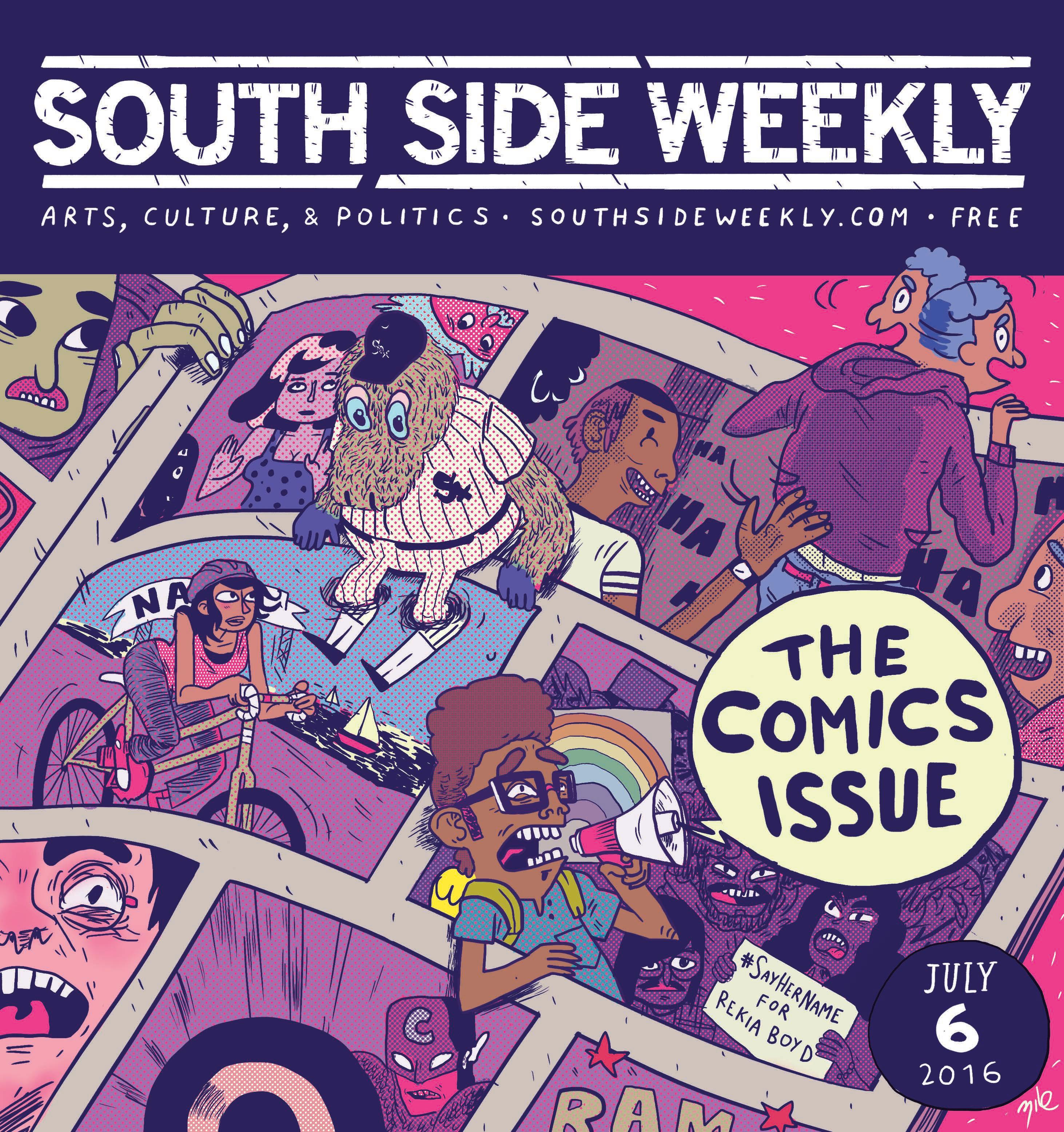
Cover art by Mike Centeno
Welcome to the South Side Weekly’s second annual Comics Issue. In the past, the Weekly has published profiles of South Side artists, musicians, and activists, stories about political events and community gatherings, and even recipes from local food institutions—all in comic form. This issue, chock-full of words and pictures about life on the South Side and in Chicago, is our ode to nonfiction comics and their ability to talk about place in ways words alone can’t. These aren’t comics to be skimmed over, as you might do with the comic strips in the back pages of the Tribune—these are labors of love, meant to be sat down with, reread, returned to.
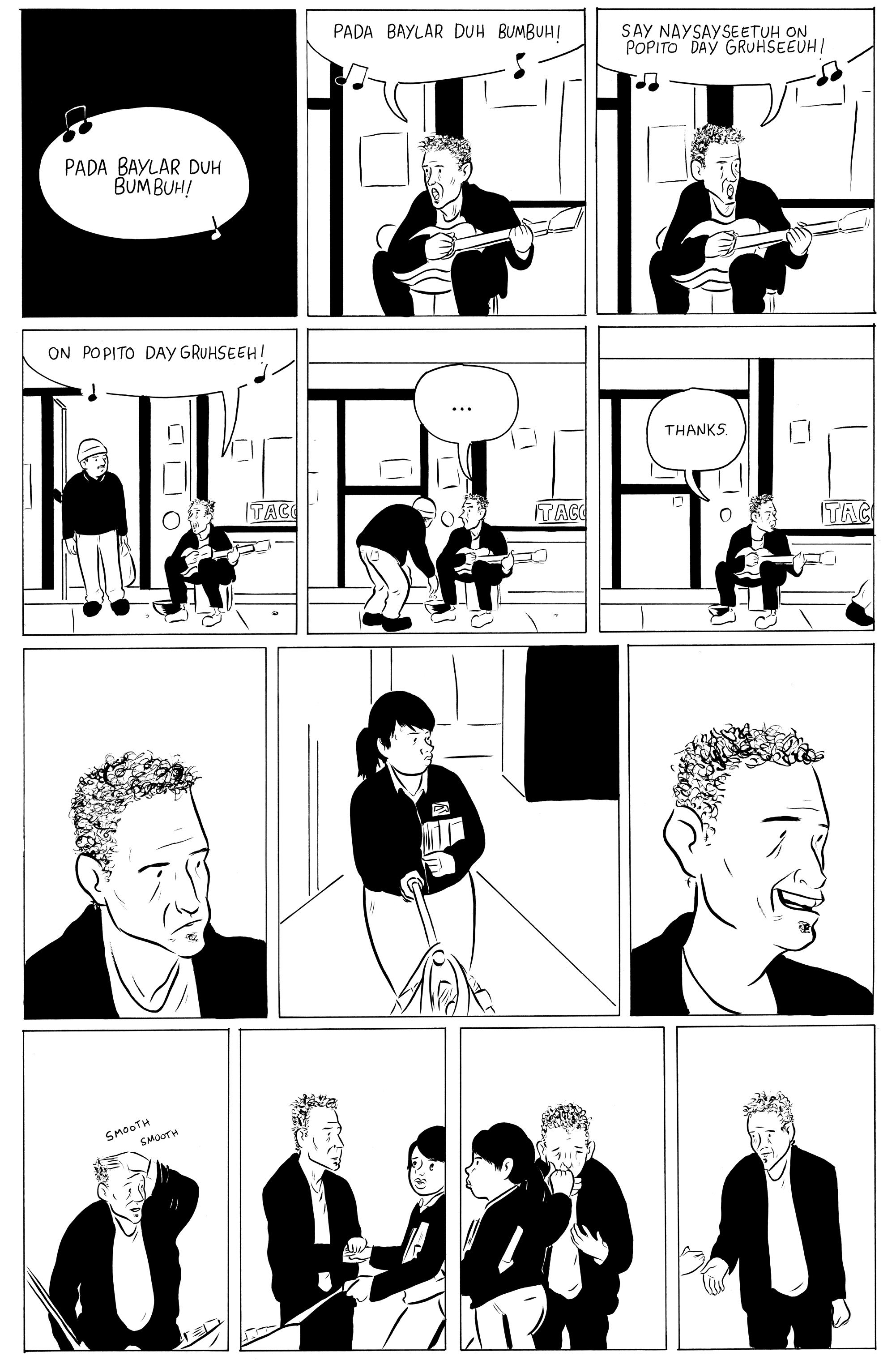
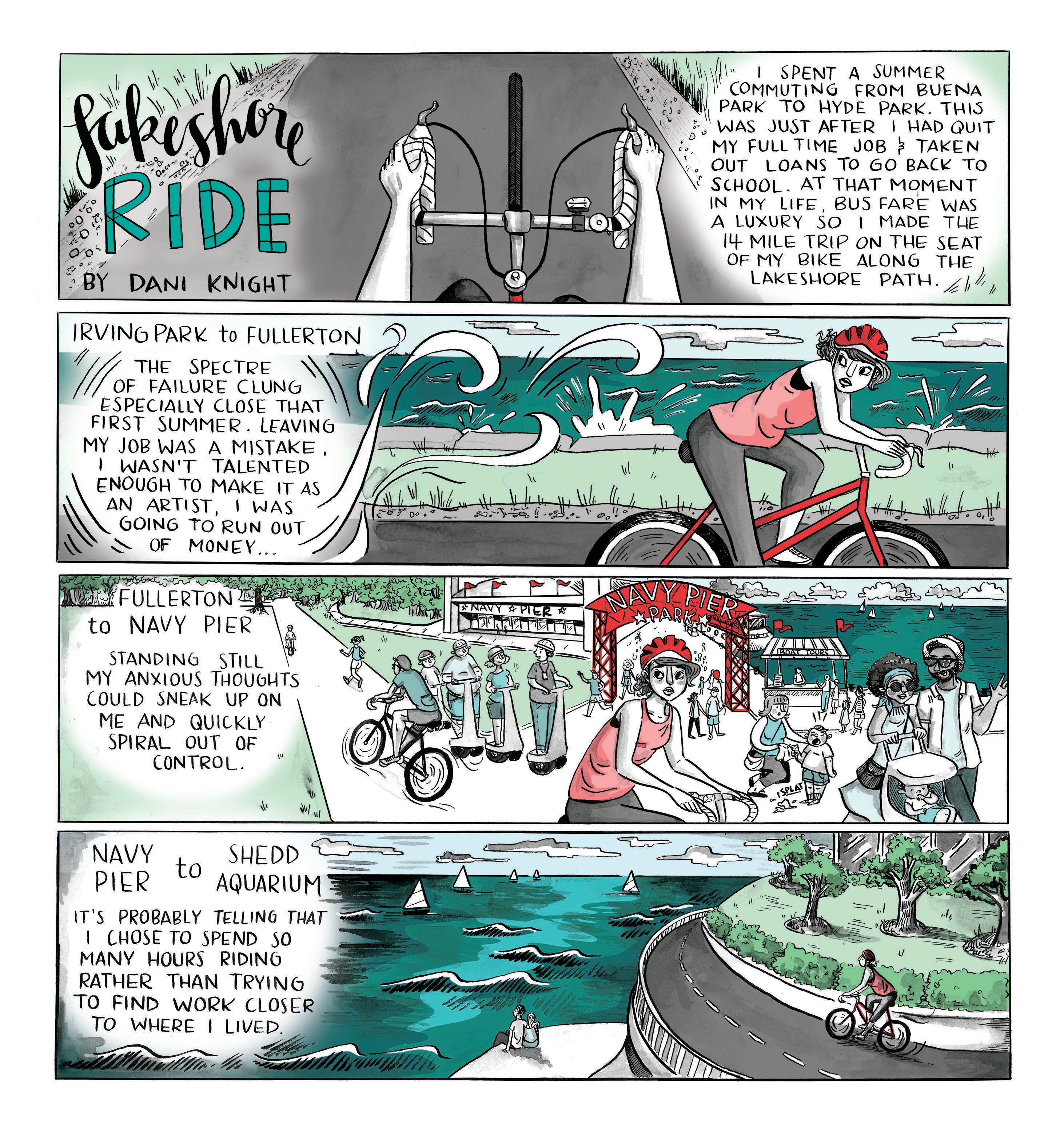
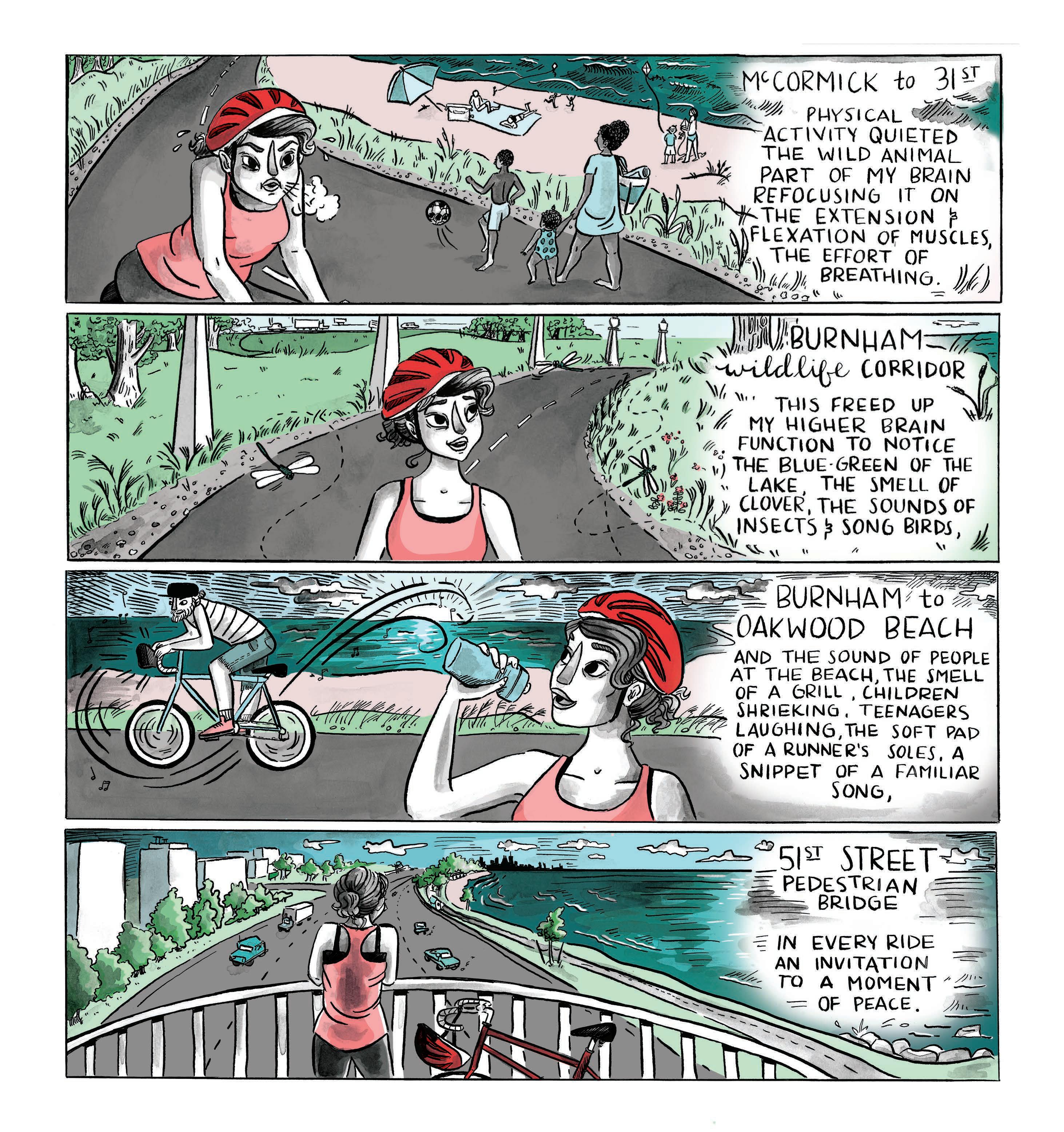
In the following pages, you’ll find works from some of the Weekly’s illustrators about biking down Lakeshore Trail and about acclimating to Bridgeport, a fictional vignette about a man who plays guitar in front of Paco's Tacos in Brighton Park, reprinted pages from For the People Artists Collective’s radical coloring book Color Me Rising, and an illustrated essay about what it’s like to navigate the mental healthcare system on the South Side. Alongside these works by experienced cartoonists and writers is a comic about Mexican-American identity by Cassandra Michel, a high school student at Goode Academy in Ashburn. Michel’s first foray into the medium is published here as part of the Weekly’s commitment to giving young storytellers a platform for their work.
At the Weekly, we’ve always believed that comics are an engaging and effective way to tell stories. After reading through the stories that follow—stories of fact and fiction, of historical and current events, by professionals and newcomers—we hope you’ll come to agree.
LITTLE cOffEE SHOp Of HOrrOrS courtney kendrick...4
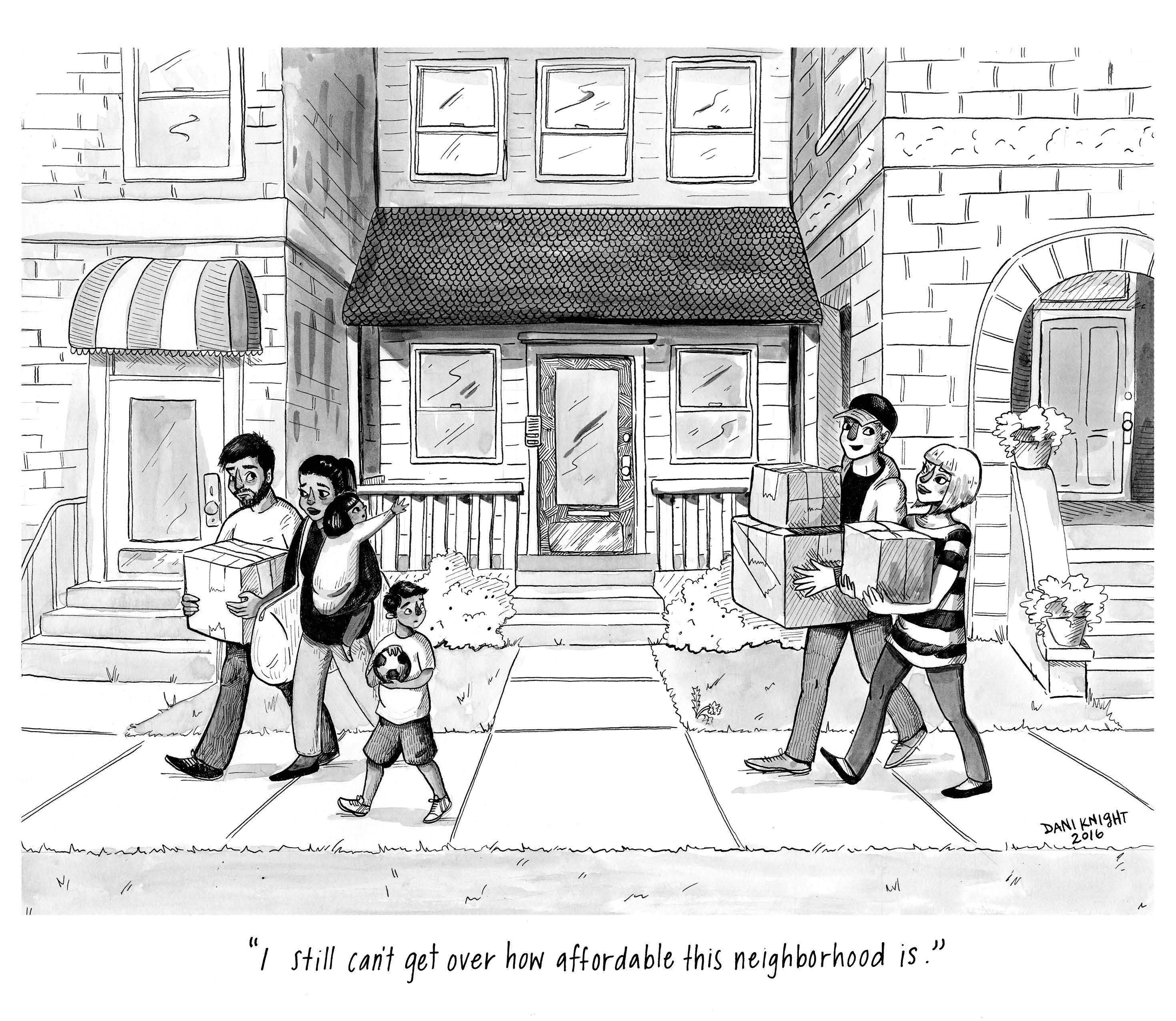
mOvIng DaY dani knight...5
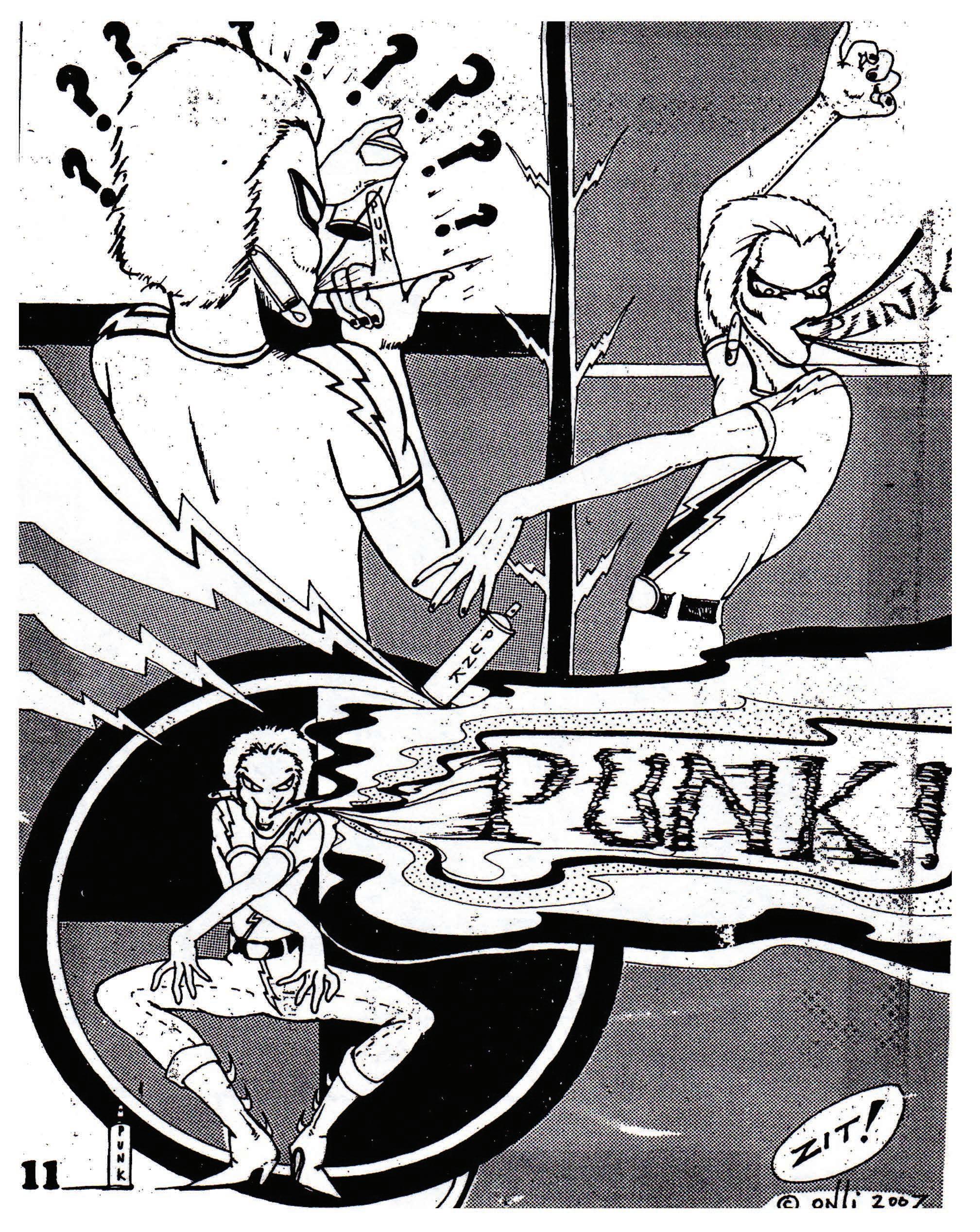
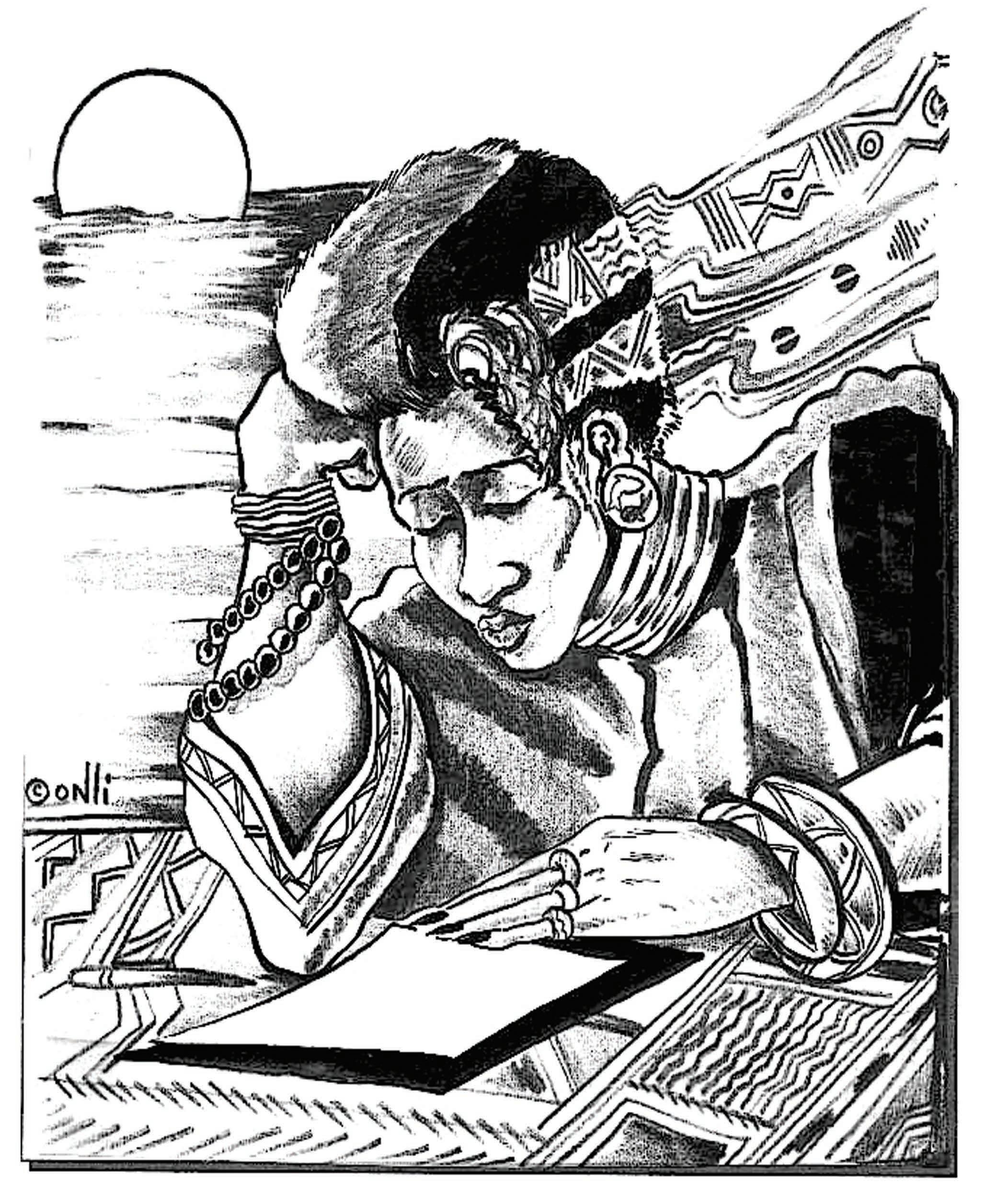
UnTITLED turtel onli...6
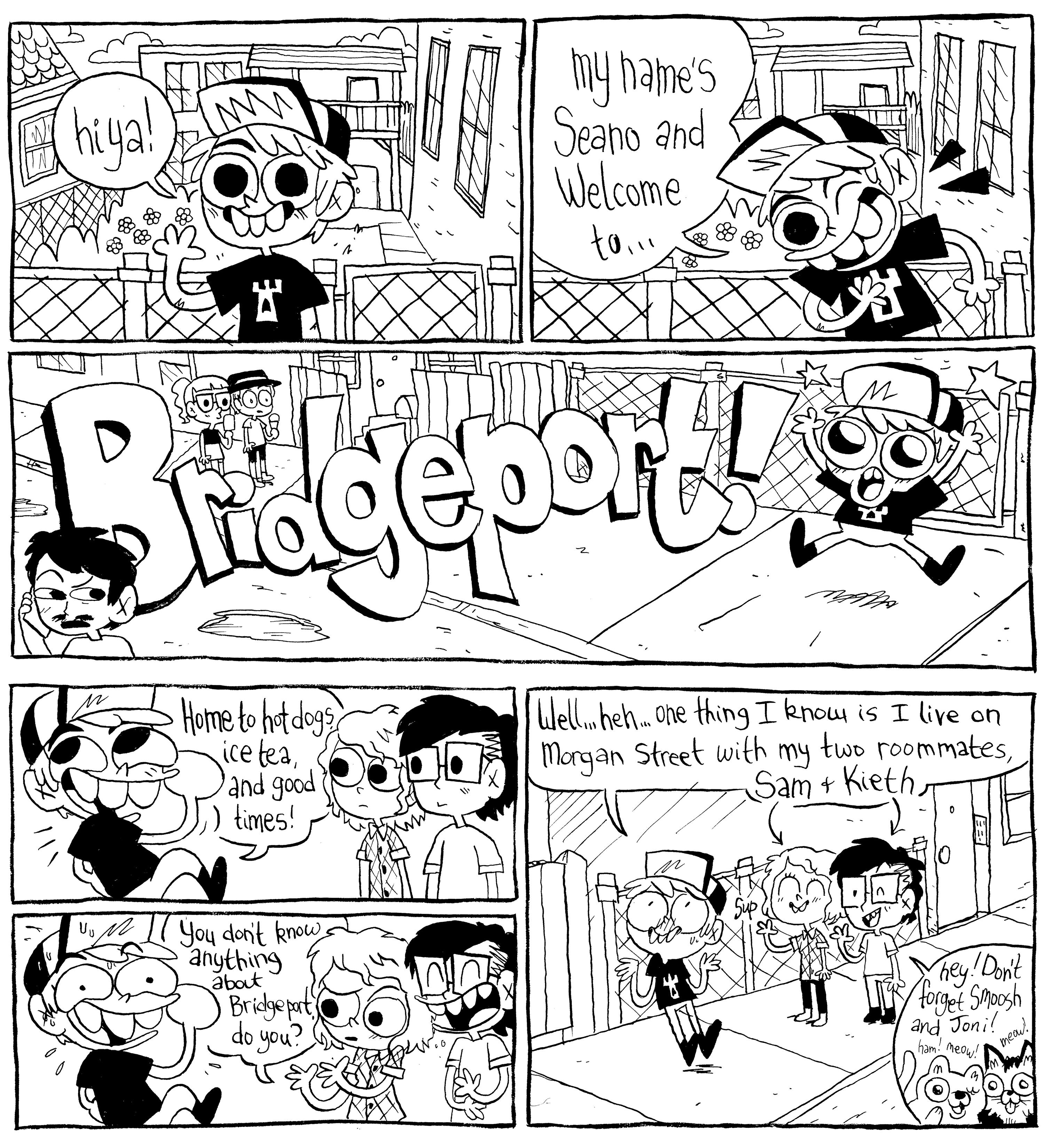
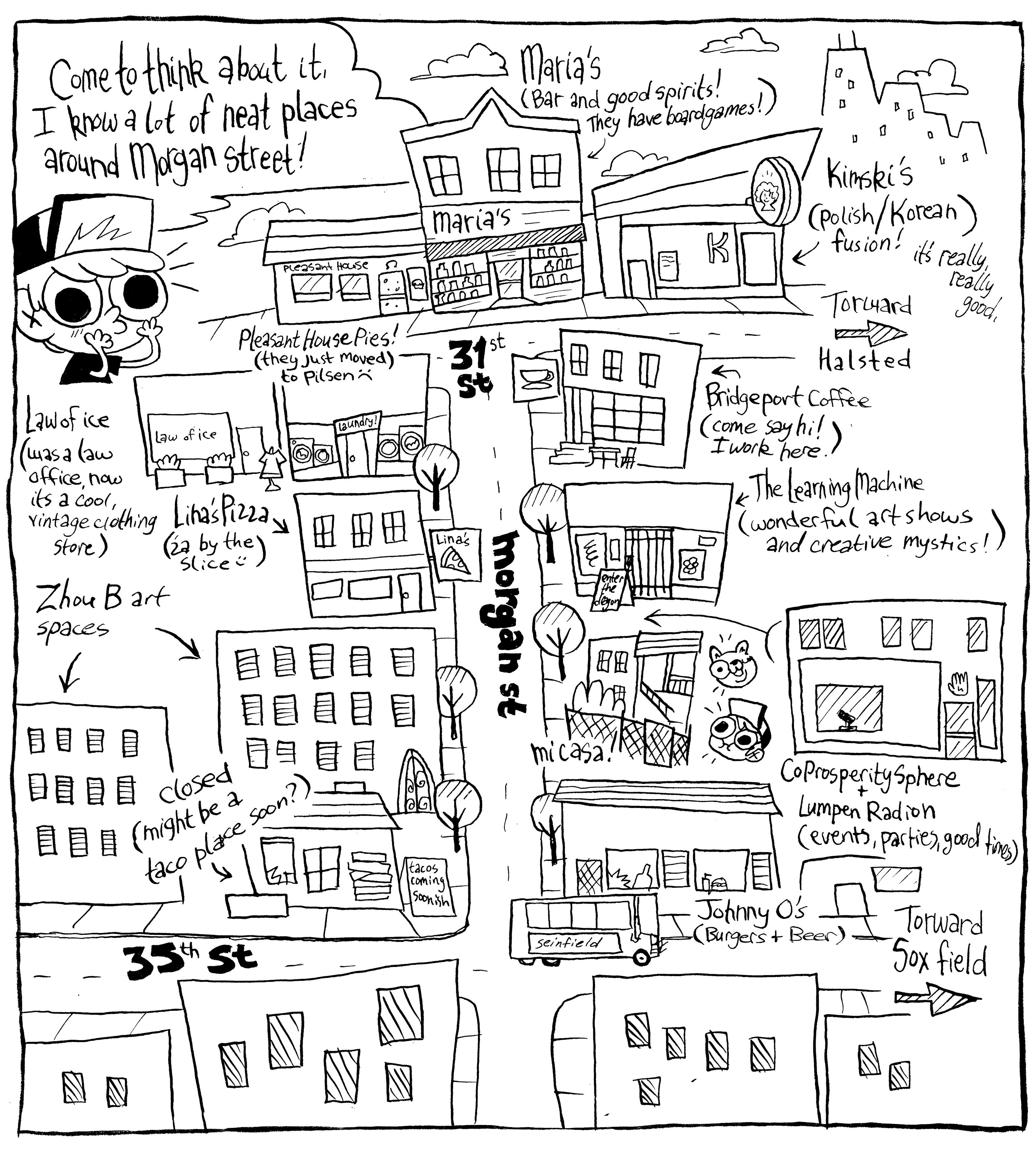
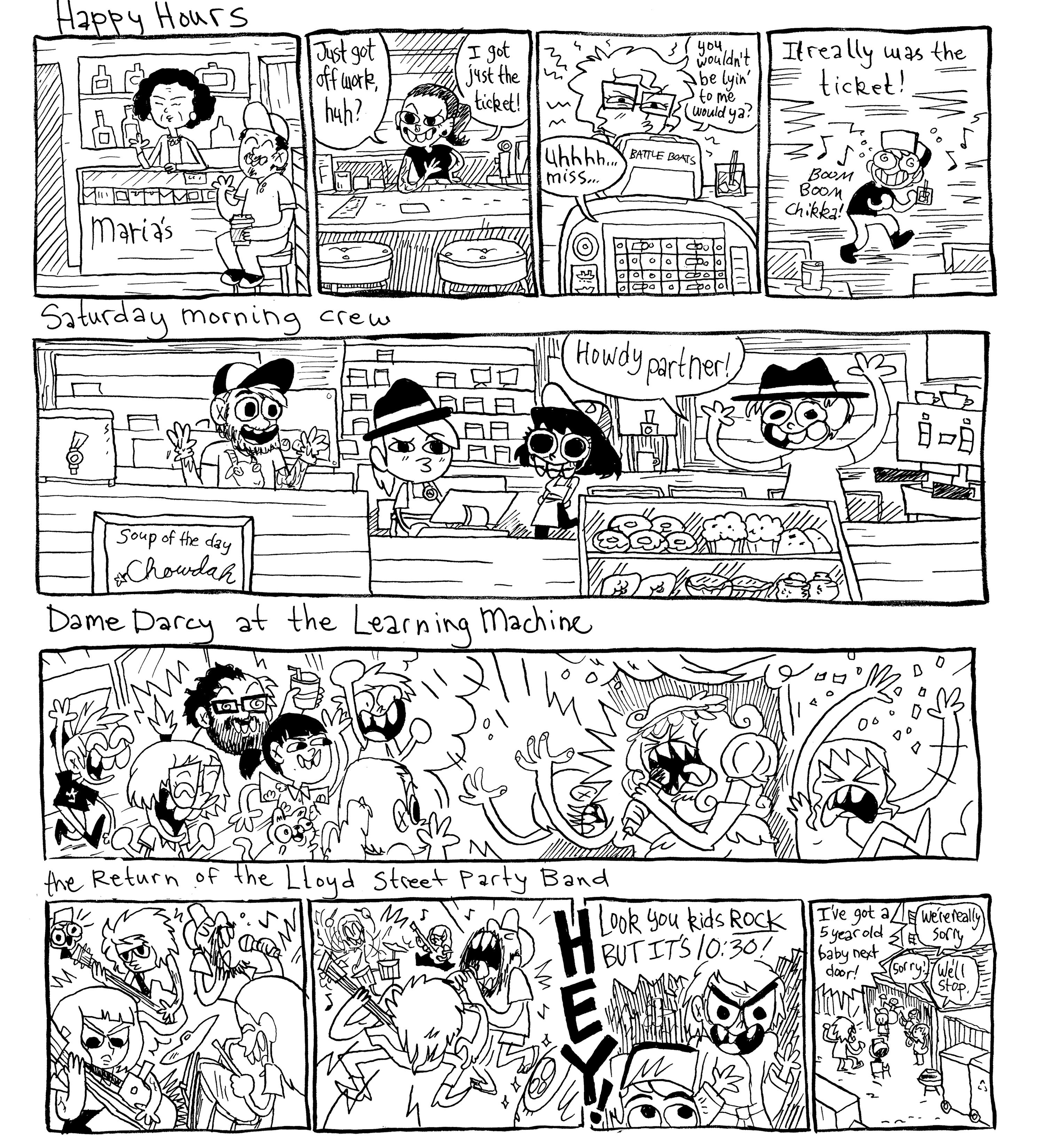
WELcOmE TO brIDgEpOrT "Look, you kids rock, but it's 10:30!" sean mac...7
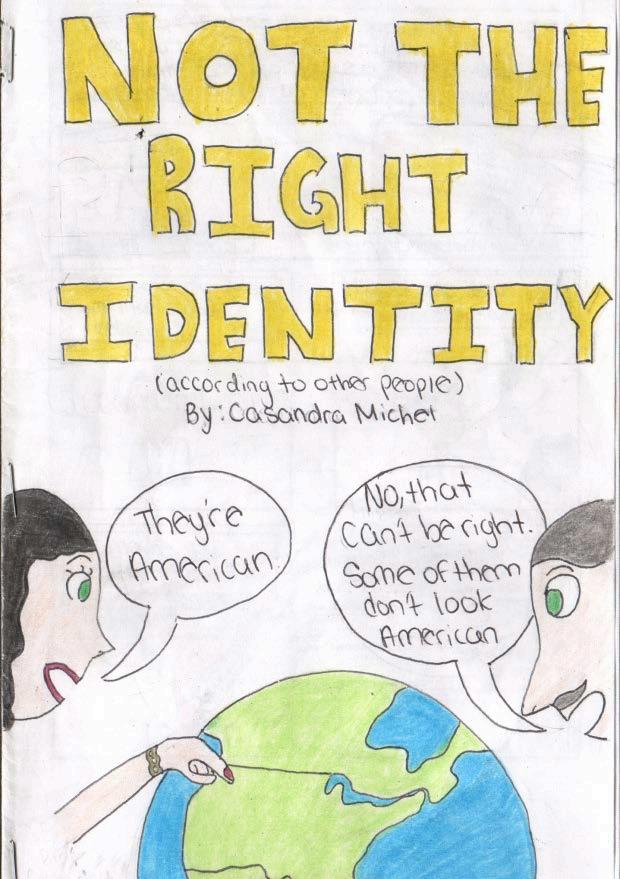
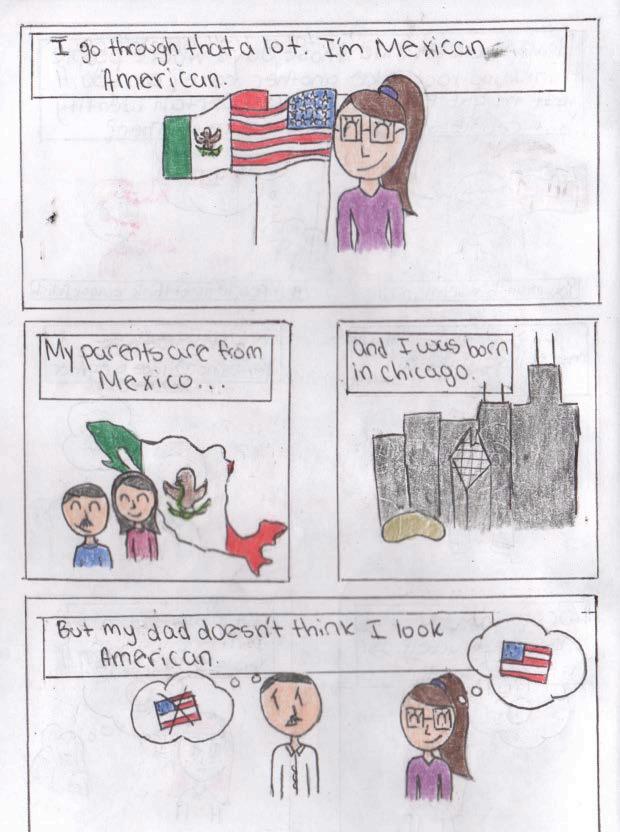
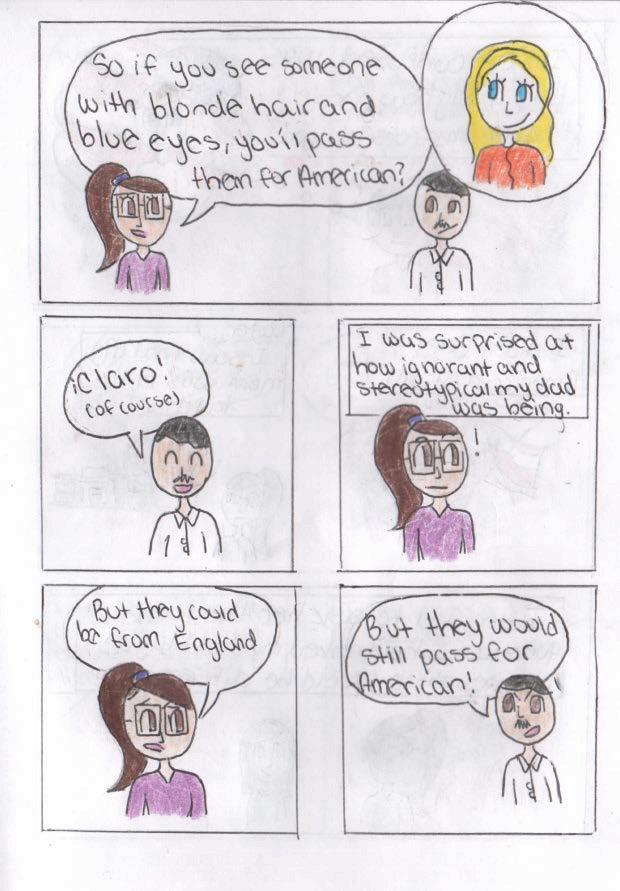
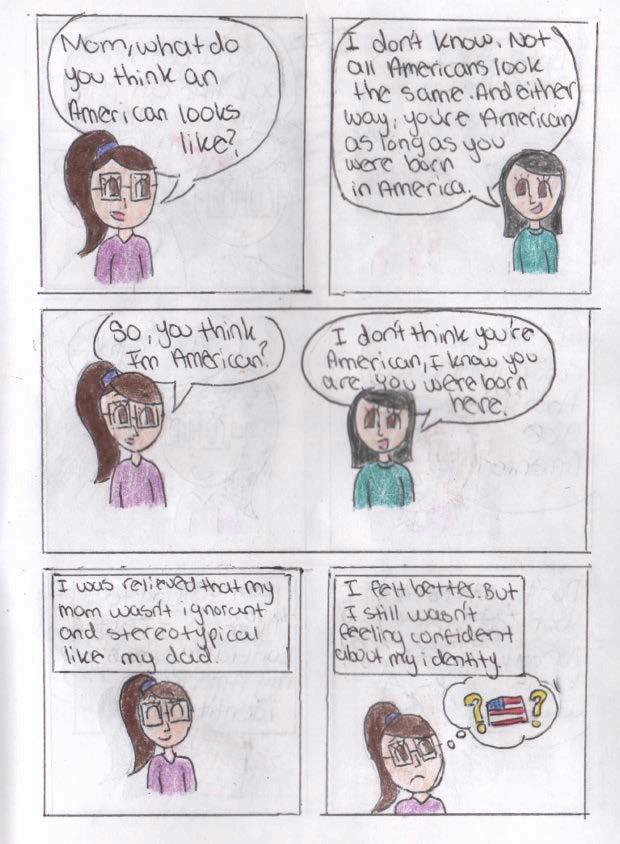
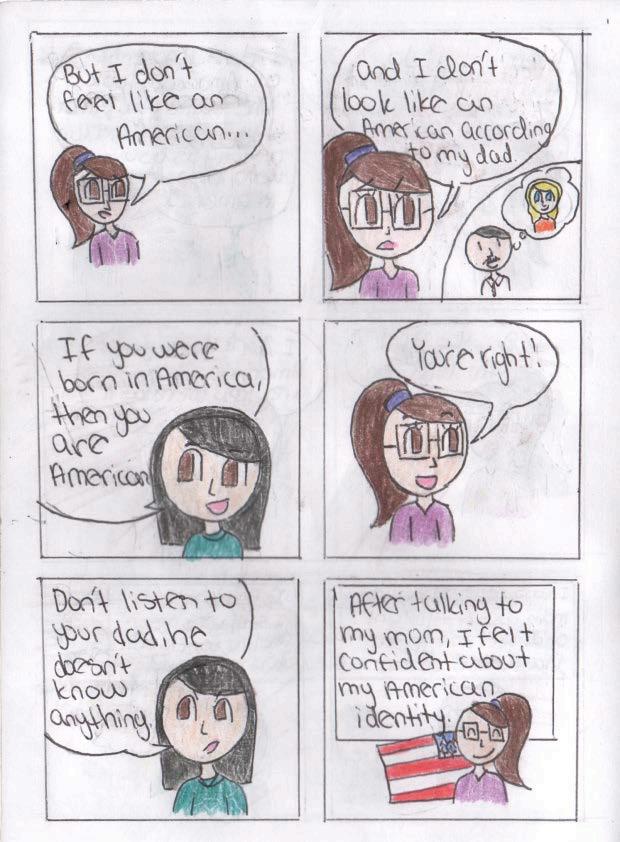
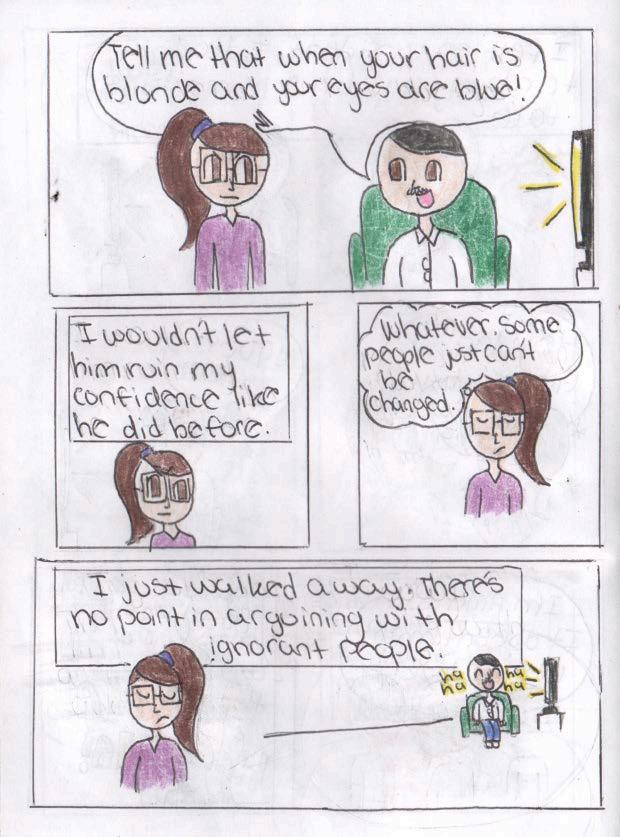
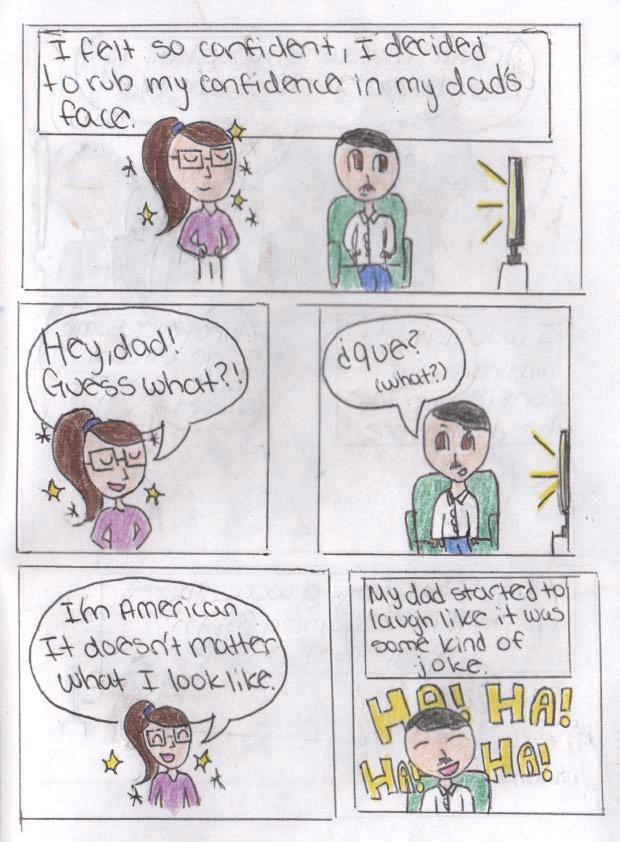
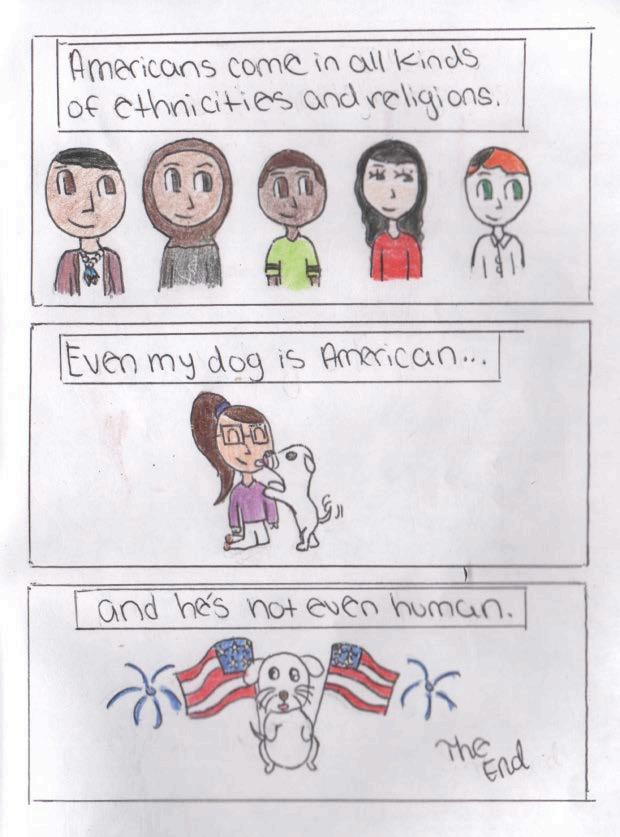
nOT THE rIgHT IDEnTITY Even my dog is American...and he's not even human. casandra michel...10
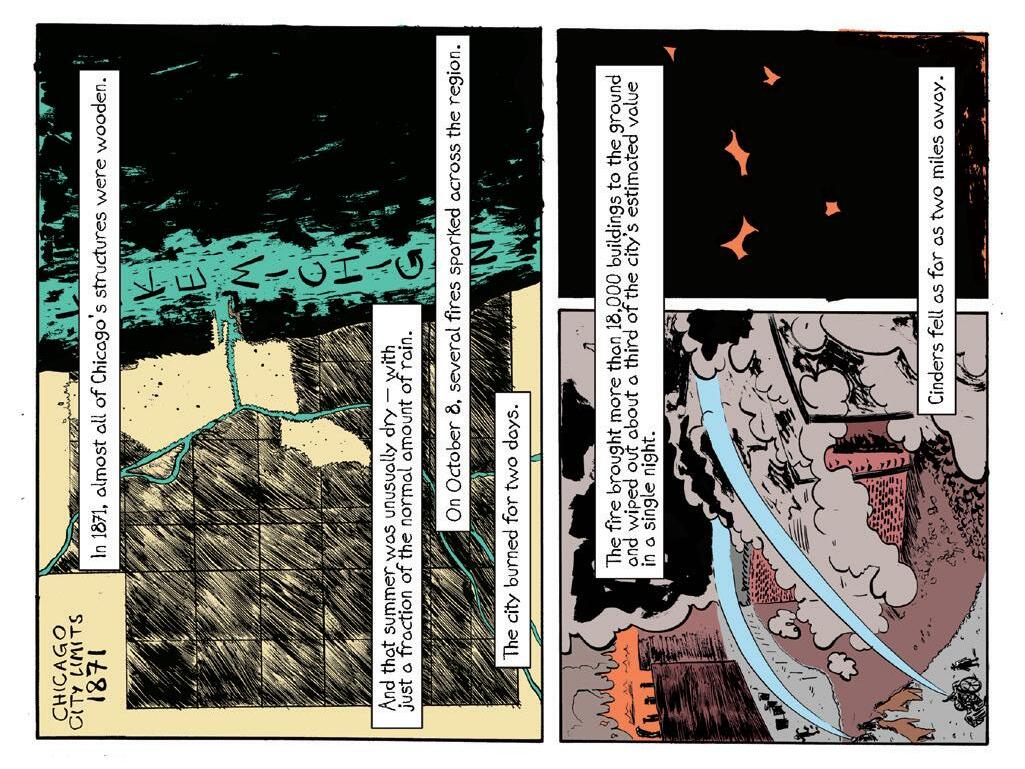
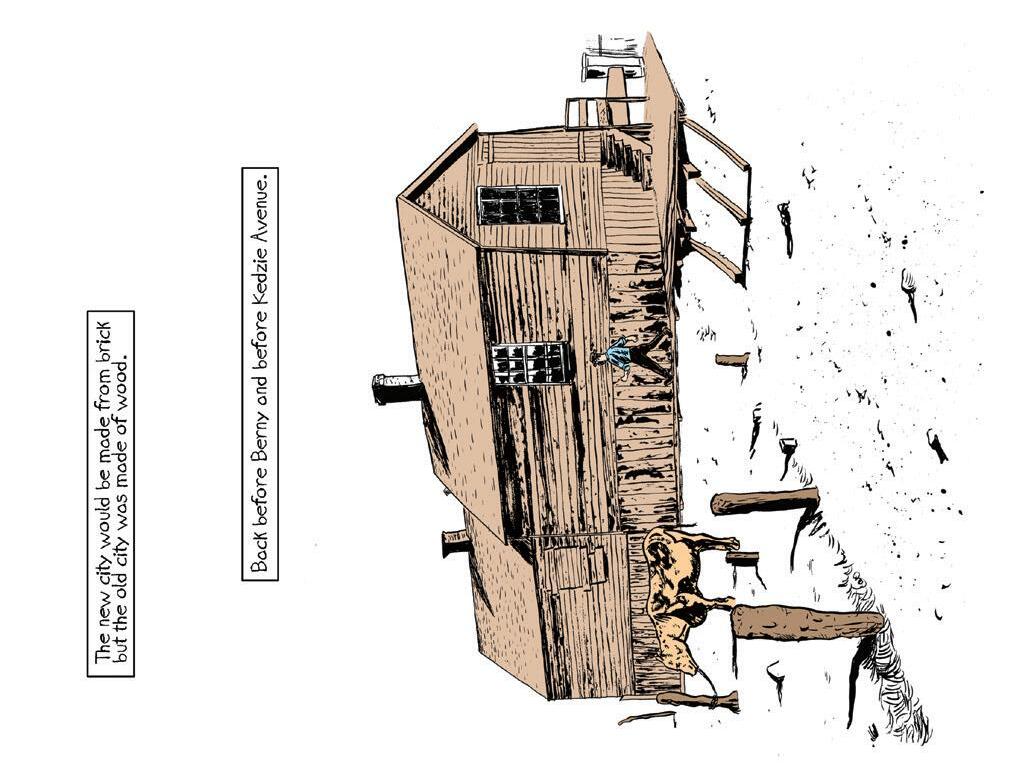
KEDzIE avEnUE The metamorphosis of a city illustrated press...14
LaKESHOrE rIDE
The spectre of failure clung especially close that first summer. dani knight...16
nOTES frOm THE WHITE rHInO What do I say to my son about Chicago's gun violence? ray salazar bit.ly/29czCAk
THE caLL YOU mIgHT rEgrET “I don’t want to hurt myself but I need help.” kristin brown...18
cOLOr mE rISIng for the people artists collective...22
UnTITLED turtel onli...26
La bamba raziel puma...27
HE WaS aLI
Remembering "the Champ" with Hermene Hartman
bridget gamble bit.ly/29hJDtX
Email Edition southsideweekly.com/email
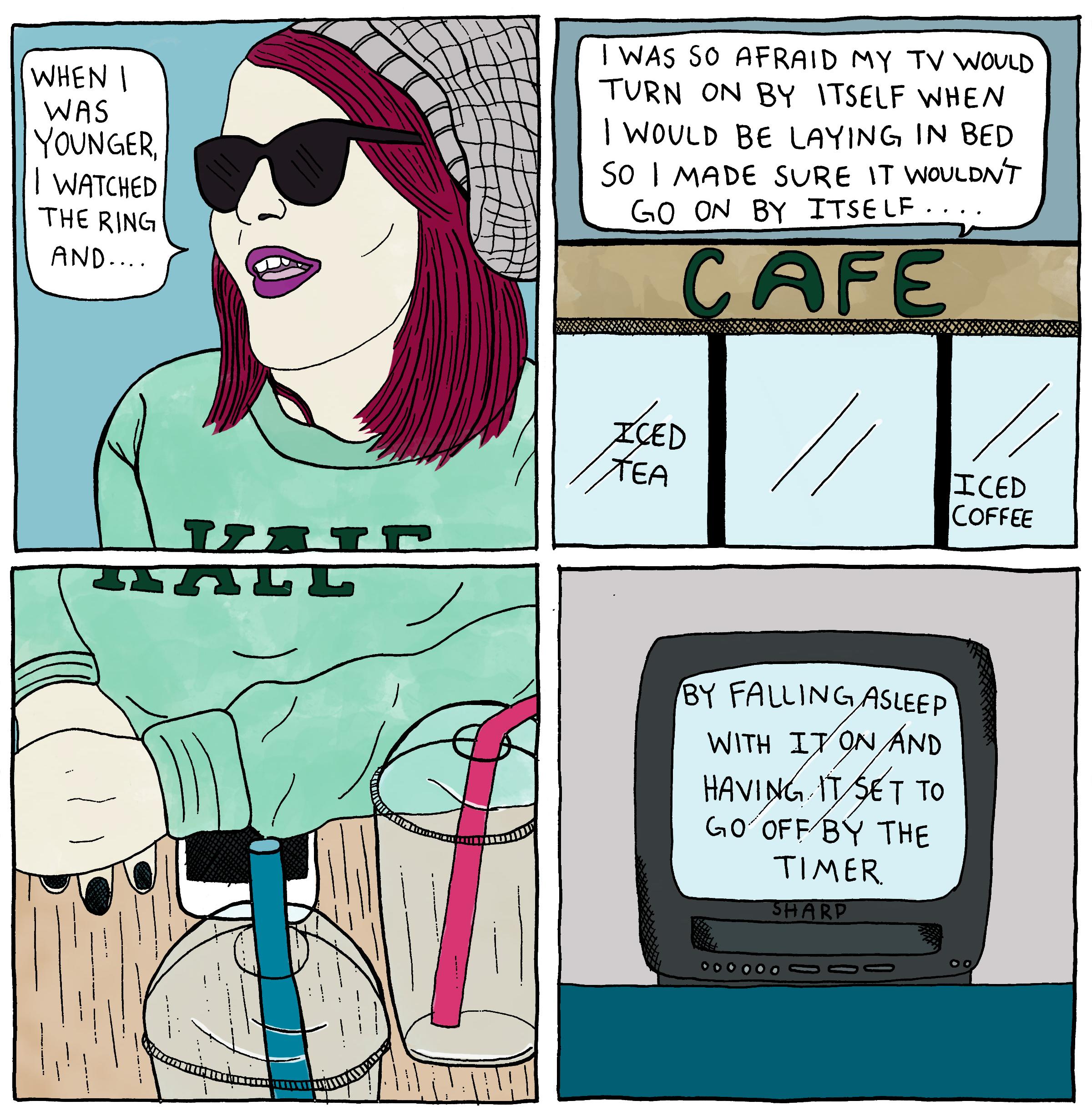
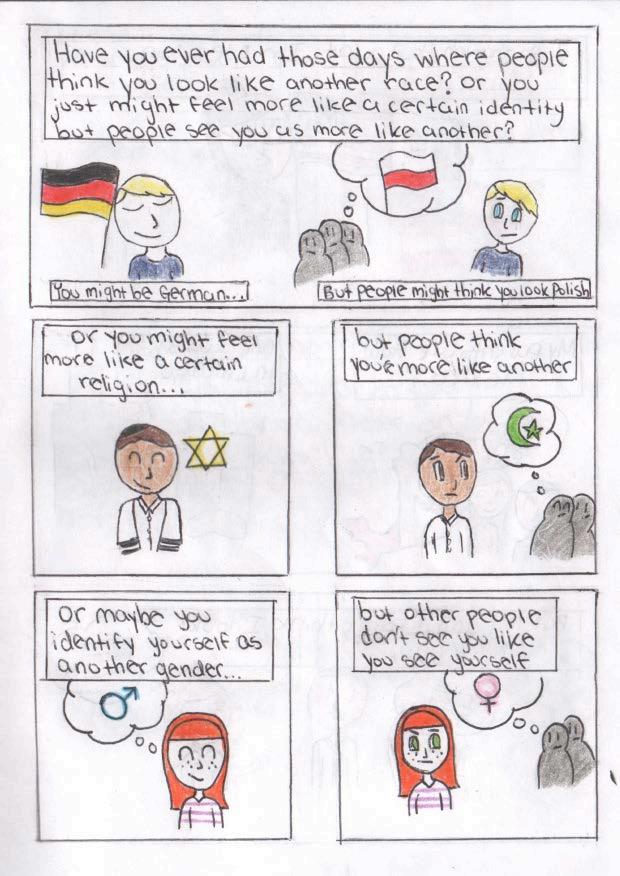
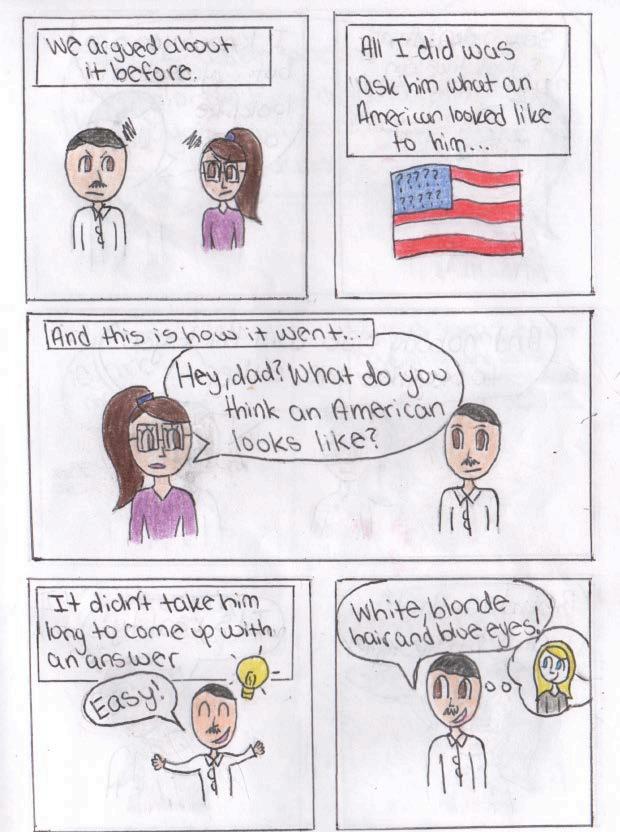
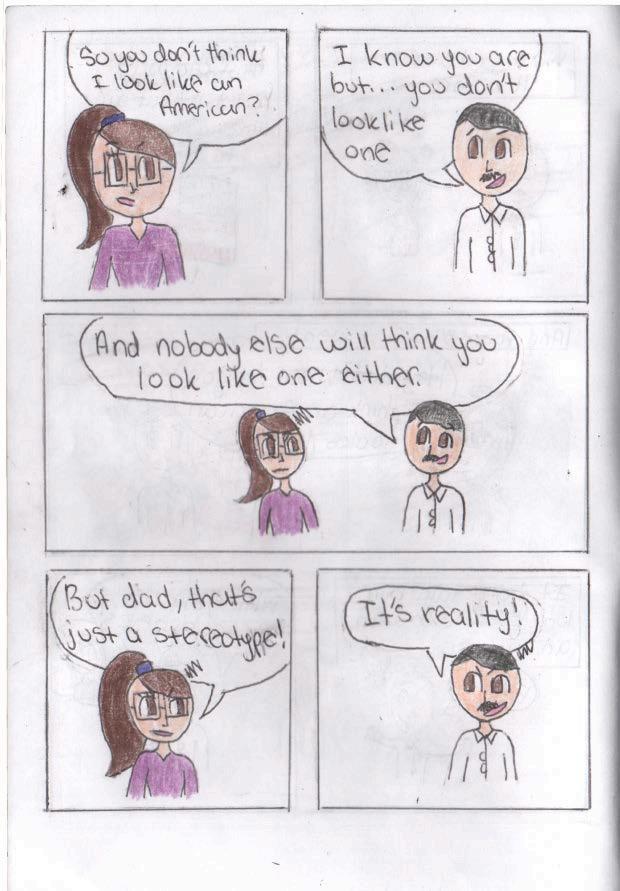
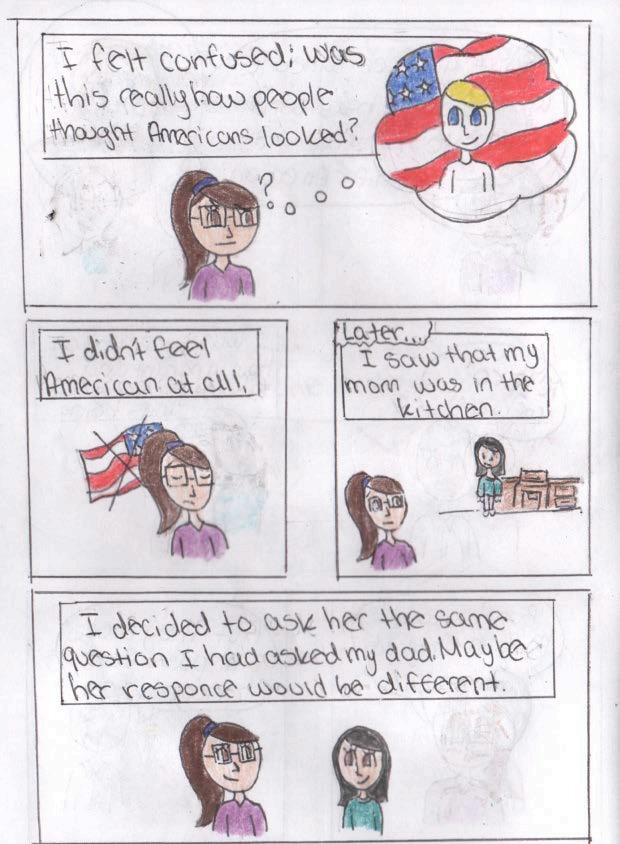
“Not the Right Identity,” written and drawn by Casandra Michel, was one of the comics produced after a workshop held by Illustrated Press artist Jamie Hibdon at Sarah E. Goode Academy on the Southwest Side of Chicago. At the workshop, "students were encouraged to create their own comics, covering a range of personal themes and experiences familiar to people of all ages, including issues of race and ethnicity, self-identity, and gender." Here, Casandra explores her own struggle with what it means to be perceived as an American.
For more information and other comics by students, see bit.ly/29dvxHX.

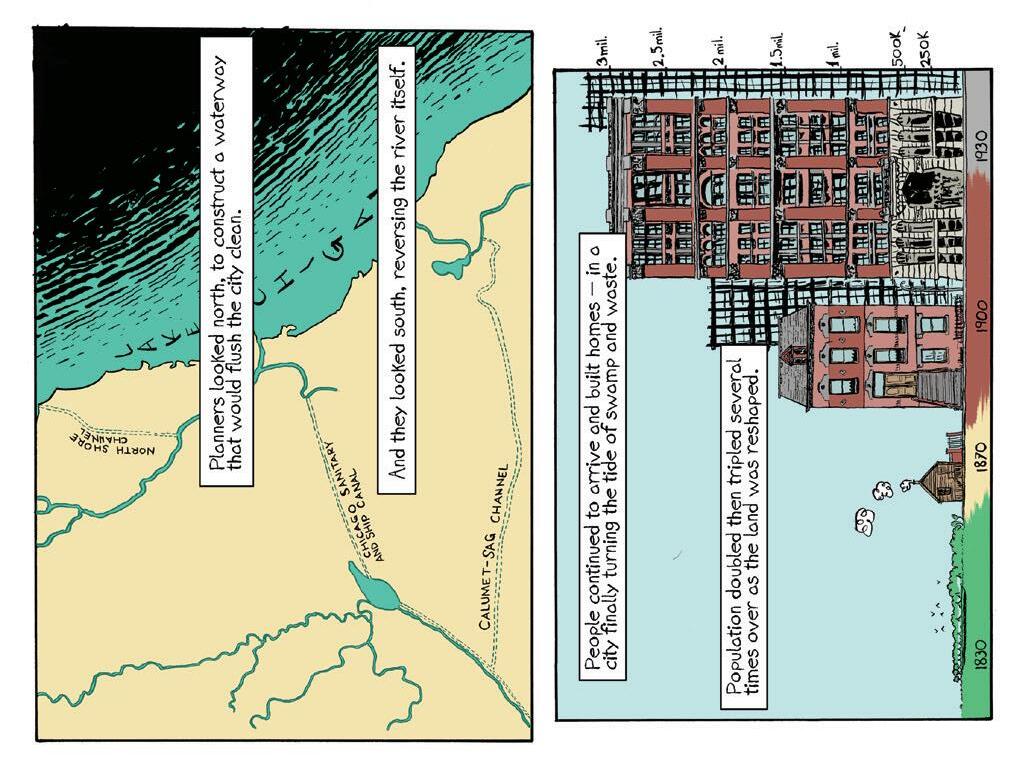
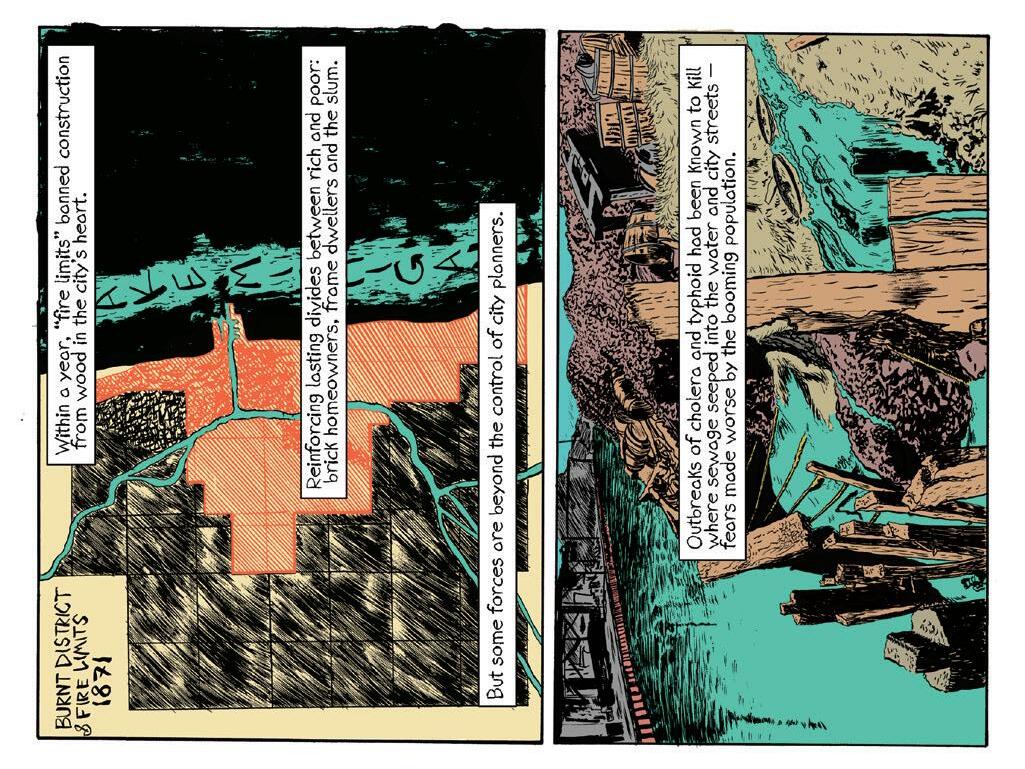
his comic is taken from the forthcoming book Kedzie Avenue by Illustrated Press, which will be published in late 2016. Kedzie Avenue is an examination of a north-south street that runs through the entire city of Chicago. The result of “years’ worth of reporting and interviews, the book will weave personal narrative, journalistic reporting, and frame-by-frame illustration into a portrait of the city at large.” This excerpt depicts some of the early history of Kedzie Avenue and Chicago. For more information, see kck.st/1wsLhxj
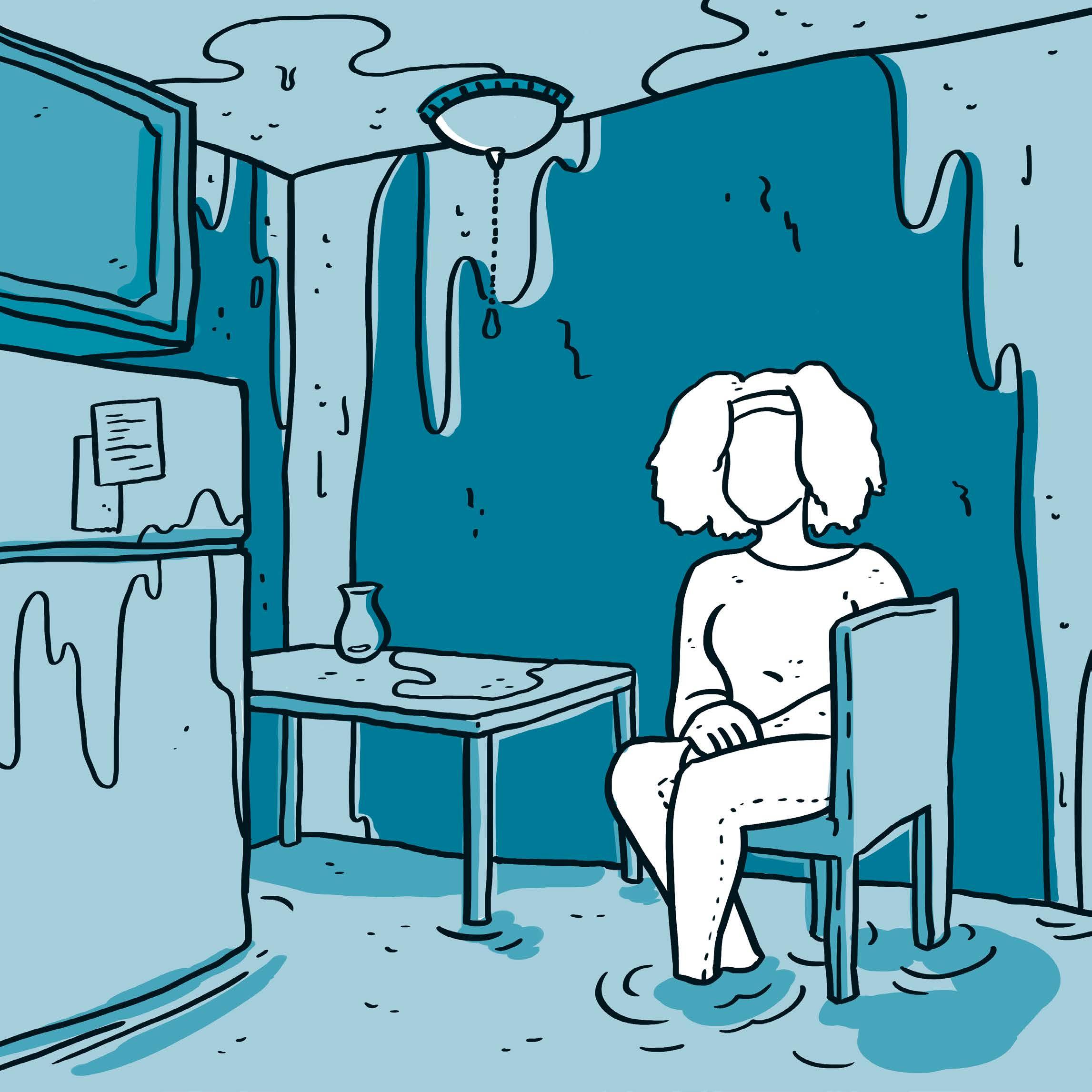
On March 26, 2016 at 2:31pm, a distress call was made to Chicago’s 911 center. Through loud sobs the caller identified herself as a twenty-oneyear-old African-American female in the midst of a mental breakdown. “I don’t want to hurt myself but I need help” was the last thing she said before dispatchers hung up. Six minutes later, two EMTs and seven CPD officers showed up to her South Side residence. The caller was me; I wiped my face on the sleeve of my jacket as I opened my door to the paramedics waiting in the hall. The taller one said, “Come with me,” while the other held a folded-up stretcher in
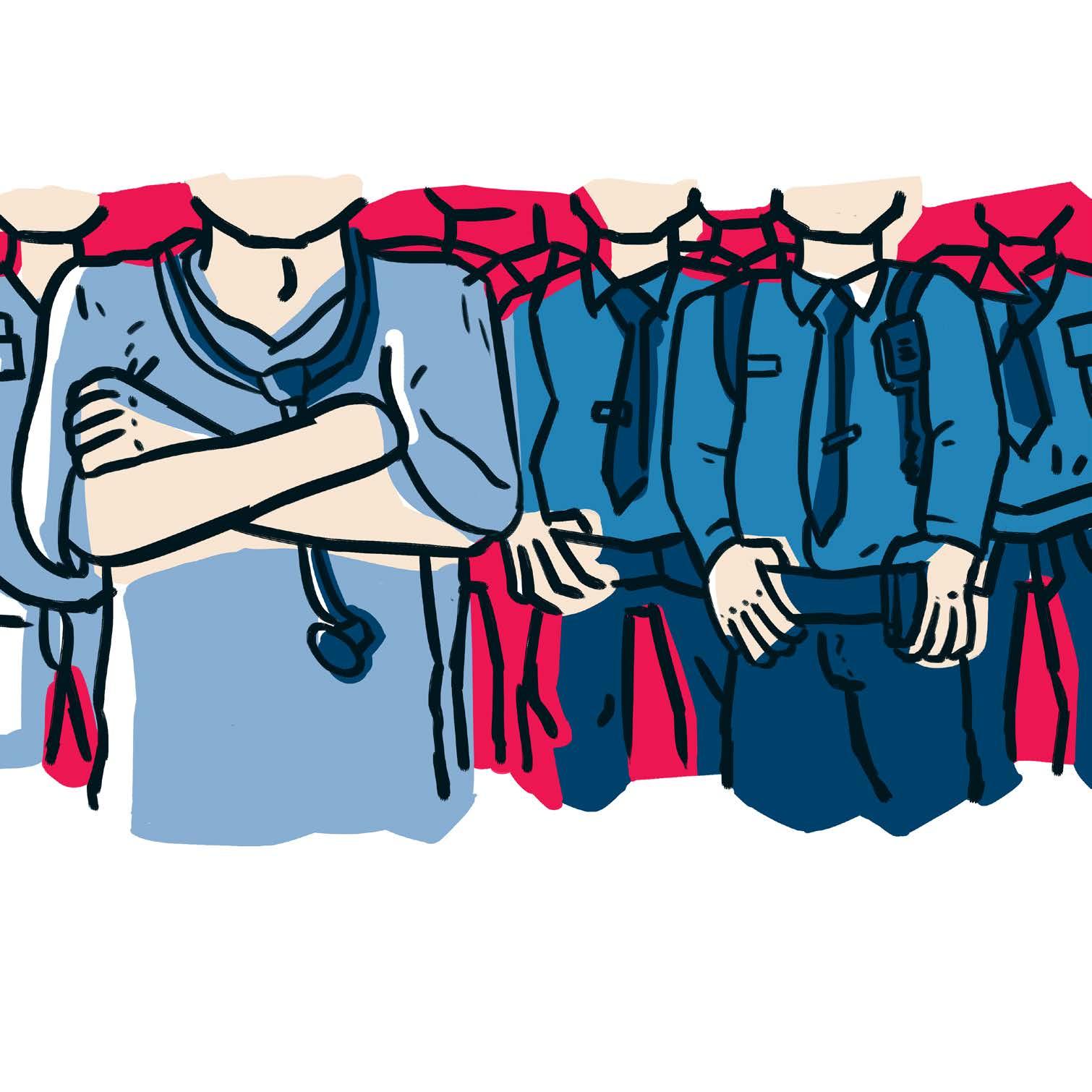
once I saw the slew of male officers, who seemed unhappy to be there and showed no sign of concern about my situation. So I stepped behind the EMT as I tried not to noticeably cry or make any sudden movements to ensure my safety.
At the top of my mind was Quintonio LeGrier, an allegedly mentally ill nineteenyear-old who was shot and killed by police responding to 911 calls the day after Christmas last year. But that’s just one example; according to the Treatment Advocacy Center, one in four people killed by police has a severe mental illness. Only fifteen percent of Chicago police officers have gone through specialized training (known as Crisis Intervention Team or CIT) to handle mental health cases, says Amy Watson, a sociologist and expert on the subject. Chicago Police data show only forty-two officers in the 3rd District (including parts of Hyde Park, Kenwood, Woodlawn, South Shore, Auburn Gresham, Englewood, Washington Park, Avalon Park and Chatham) have been CIT certified in the past three years. That means even when people call into 911 specifically asking for mental health help, it is difficult to ensure that a CIT-trained officer is dispatched.
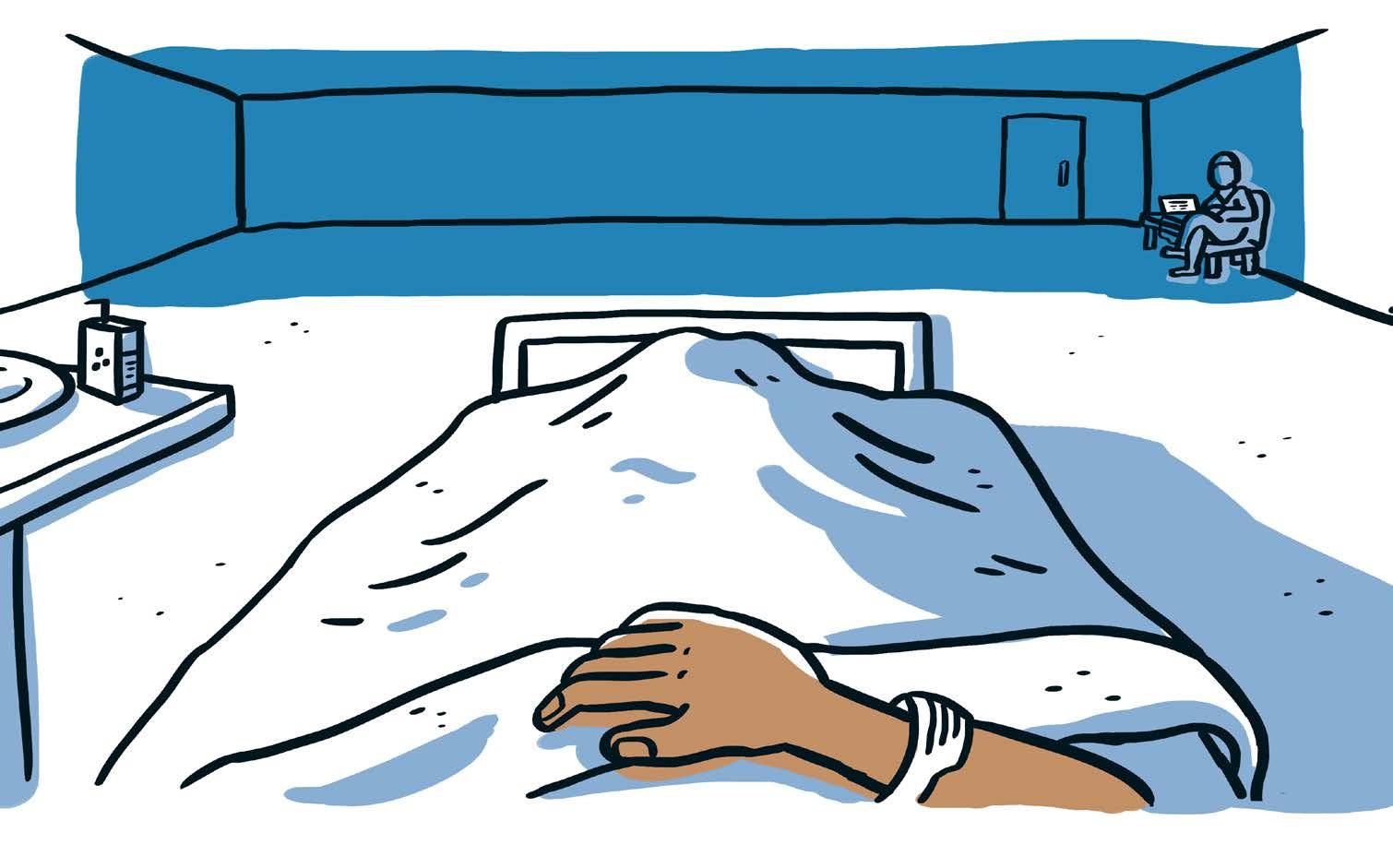
Once I was safely in the ambulance, I was taken to the University of Chicago emergency room. I changed into a thick green hospital gown while all of my other belongings were taken and locked away. There was a bed in the room, a yellow overhead light, and a tray to the left of the bed. I sat there for eight hours as a man sitting in the corner with a computer silently typed notes about my every move. Finally, a young, female resident with medium-length brown hair entered the room and gave me a psychiatric evaluation. I was as honest as I could be about my previous diagnosis of major depressive disorder, my PTSD, and the emotional turmoil I was facing in the moments that led to me seeking help: at the time, I was 300 miles away from any family, eight weeks pregnant, and my mother was losing her battle with terminal cancer. I was scared and alone and wanted help—not isolation. As alarming as that sounds, long wait times for psychiatric help aren’t uncommon. According to the CDC, average wait times in emergency rooms are at least two hours—even longer for those in psychiatric emergencies. The American Psychological Association task force on emergency psychiatric services released a report stating that psychiatrists should see patients within two hours of initial presentation and every eight
hours during their stay. At the University of Chicago, where I was first admitted, there is no psychiatric ward, and all psychiatrists are on call rather than staffed regularly. The medical center declined my requests to speak to them regarding my experience.
Lack of reliable emergency treatment is especially problematic in Chicago; WBEZ reported last year that emergency room visits for mental health had skyrocketed since 2009, with an extra bump in 2012, when the city closed half its mental health clinics. Meanwhile, as a 2009 report by the Bazelon Center for Mental Health Law pointed out, inadequate education and training has left ER physicians “ill-prepared” to deal with an increasing number of mentally ill people seeking emergency care.
The resident at the UofC eventually returned to my room and offered me the choice of intensive outpatient treatment or inpatient treatment at a psychiatric hospital. When I opted for outpatient, she said she needed my parents to confirm. Unfortunately, my mother was in hospice and my stepfather was at work and missed the call by two minutes. The resident did not leave a message, so he didn’t think to call back. Despite my objections, I was admitted into an inpatient facility.
Feeling hopeless and as if I was being punished for asking for help, I cried and
flipped my food tray, empty dishes clattering to the ground, as police officers from the University of Chicago’s private force surrounded my bed and the resident walked out of the room. I spent a total of two days in that room with little human interaction; I was ignored as I begged for an ultrasound to make sure that my baby was safe. I wasn’t allowed to take a shower or even go to the bathroom; hospital workers brought in a portable toilet for me. I kept thinking, this isn’t why I wanted to go to the hospital, to be treated cruelly like this.
On March 29 at about 9pm, a private medic service arrived to transport me to the University of Illinois Chicago, the only hospital in the city willing to take my low-acuity case. Upon arrival I was given a physical exam, a list of the rules (prohibited items, visiting hours, etc.) and a set of fresh clothes. Shortly after 7am the next morning, a tall, light-skinned man with a five o’clock shadow and a long face introduced himself to me as Dr. Timothy Yovankin. I spoke with him, another psychiatrist, and four medical students, answering all their questions and reiterating that I felt as if I was being punished for being honest and seeking help. I told them I was exhausted and had regretted calling 911 almost as soon as I’d arrived at the first hospital. After a few hours, Dr. Yovankin said he had gotten in touch with the
father of my child and my stepfather, who both said I’d benefit most from outpatient therapy, and he agreed. He also told me a social worker was looking for treatment options for me, and that I’d be discharged soon.
That afternoon, I was released. The hospital gave me a bus card to get home, a doctor’s note in case I needed it for work, and two prescriptions for prenatal vitamins. What I did not receive was a discharge plan, which the APA task force report recommends. Weeks later, while researching this story, I returned to the hospital to collect my medical records and saw that I had been diagnosed with another illness, despite never having been informed of this. UIC Medical Center also declined my requests to ask questions about my stay there.
It’s been more than three months since I made that 911 call, and I’ve decided to leave the city of Chicago so that I have more options in my future treatment. I’m feeling stable and more motivated than ever, which could be because of my desire to be healthy for my unborn child. My mother has since passed away and I have been seeing the therapist recommended by the UIC social worker twice a week.
For those in situations like mine who feel there are little to no options, Watson, the sociologist, offers alternatives to calling 911. She speaks highly of NAMI’s (National Alliance on Mental Illness) Living Room, which offers free services in non-clinical settings with licensed therapists, nurses, and peer counselors in Deerfield and Skokie. Those who have suicidal thoughts can call the National Suicide Prevention Lifeline at 1-800-273-8255.

This essay was published in collaboration with City Bureau, a Chicago-based journalism lab.
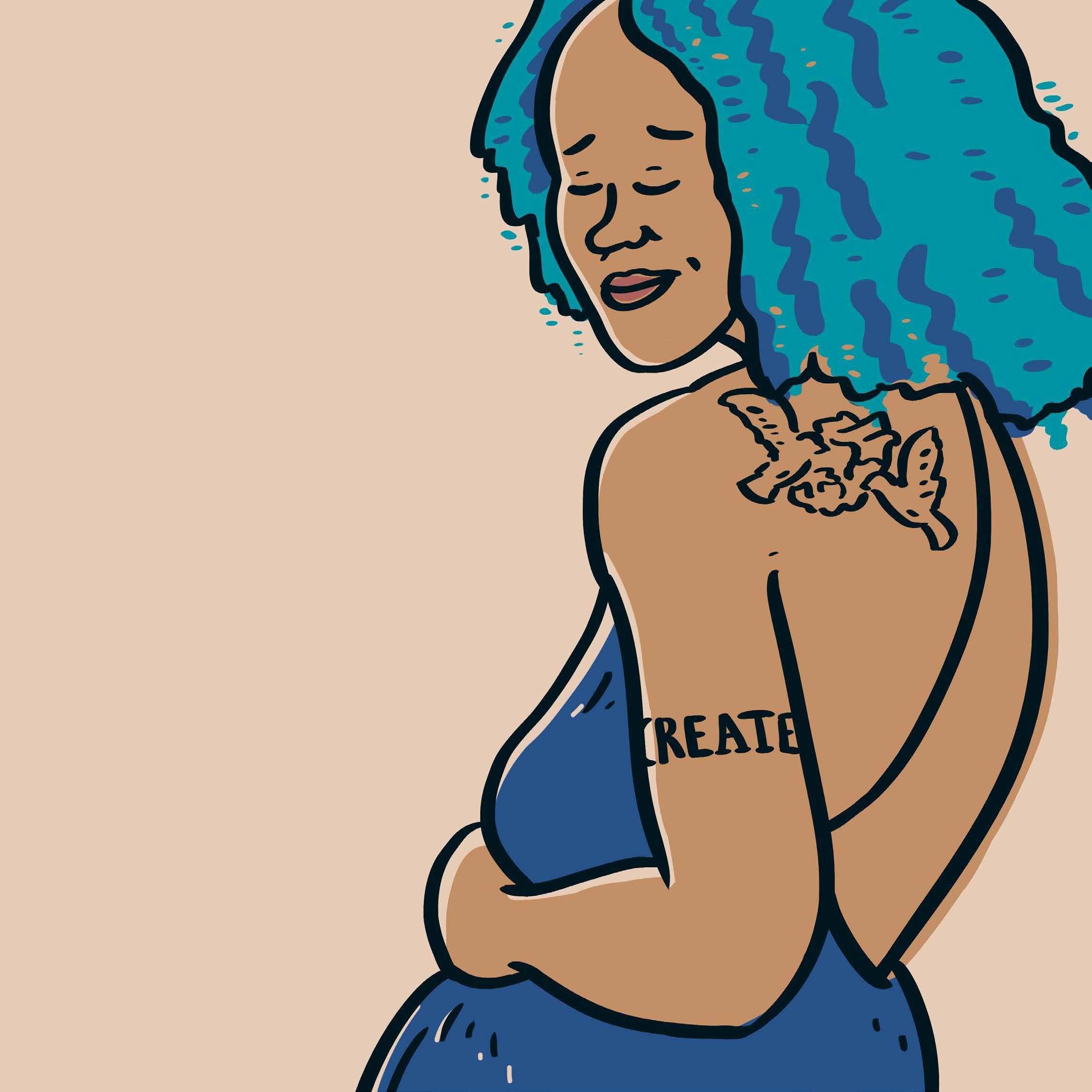
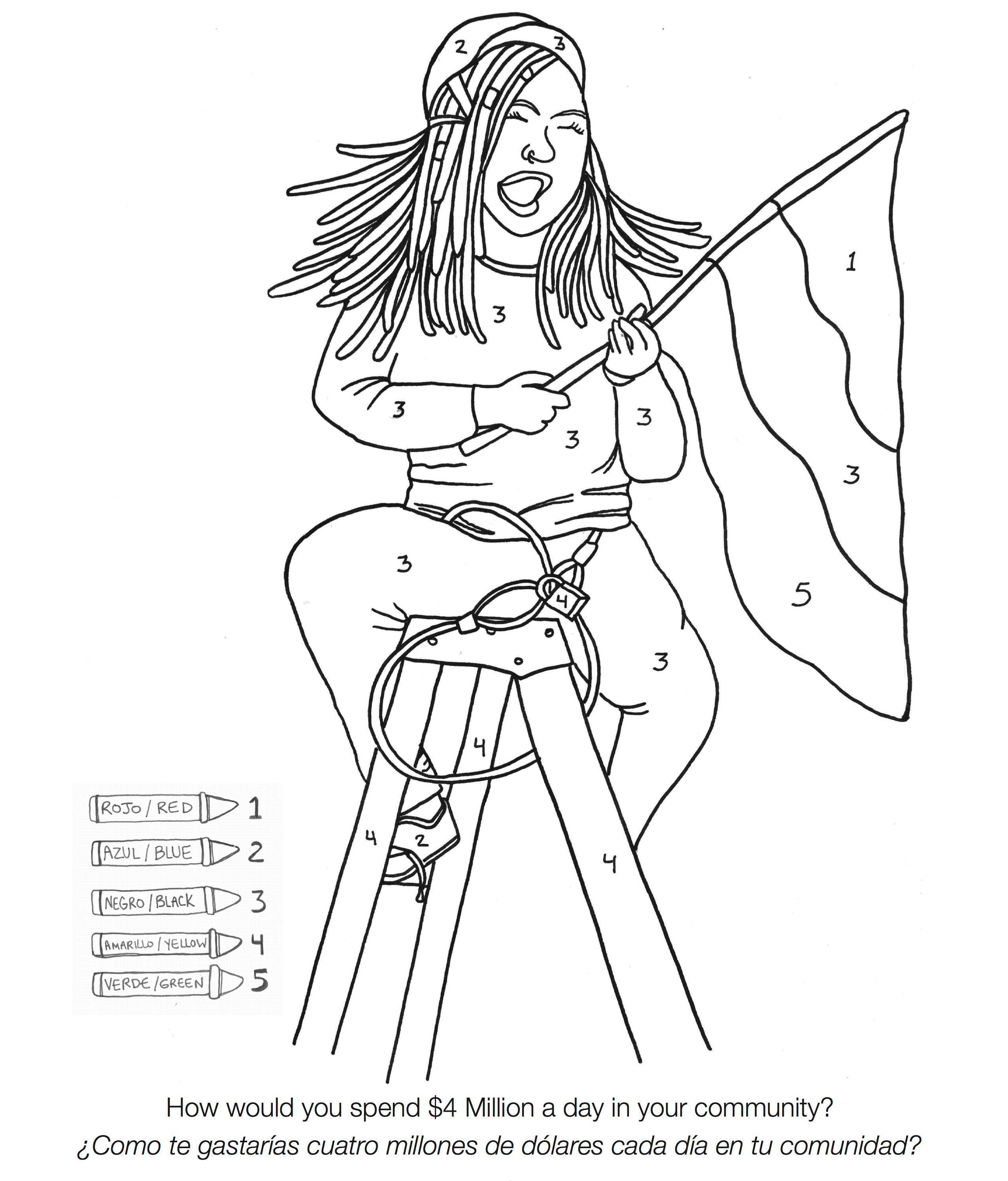
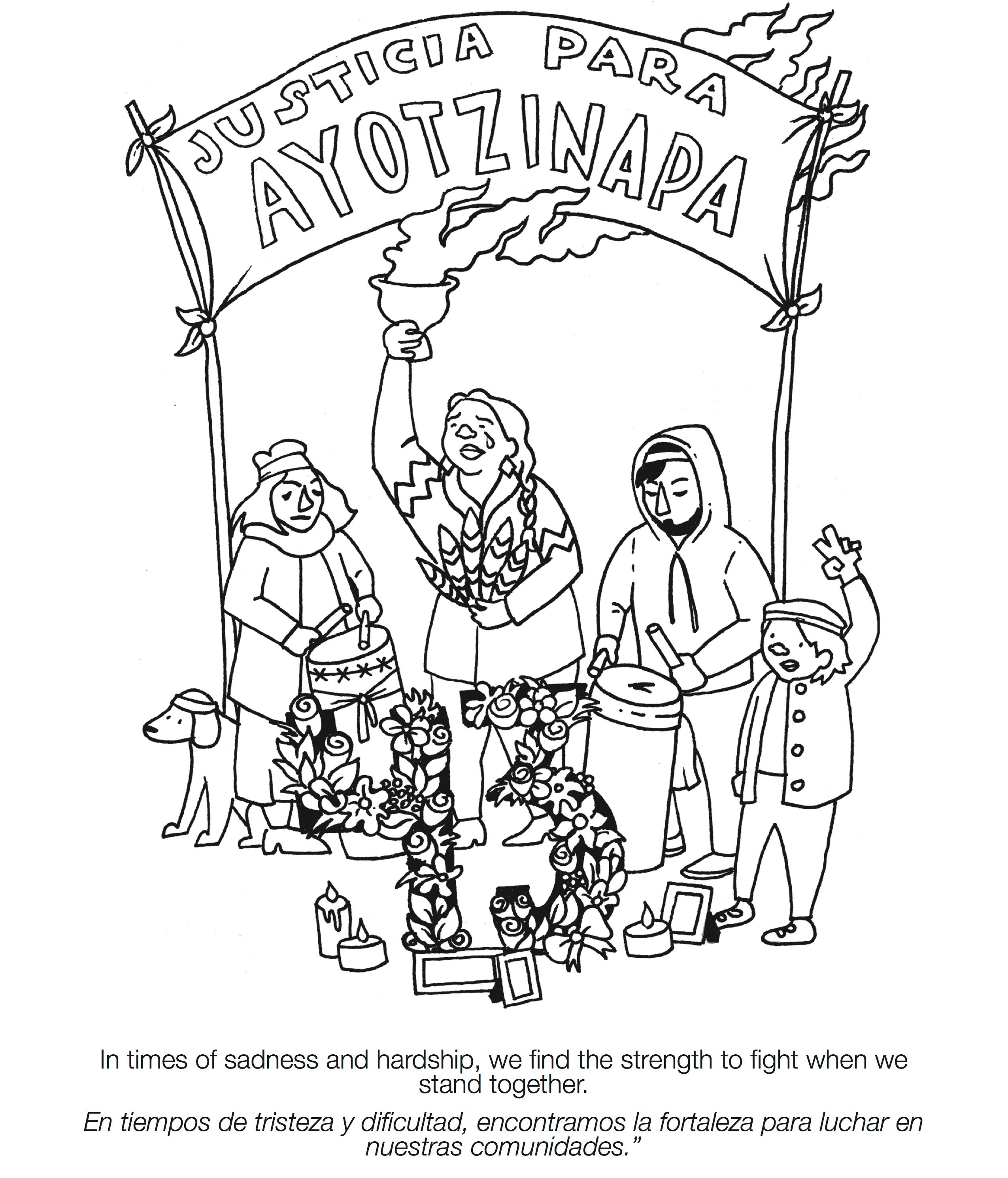
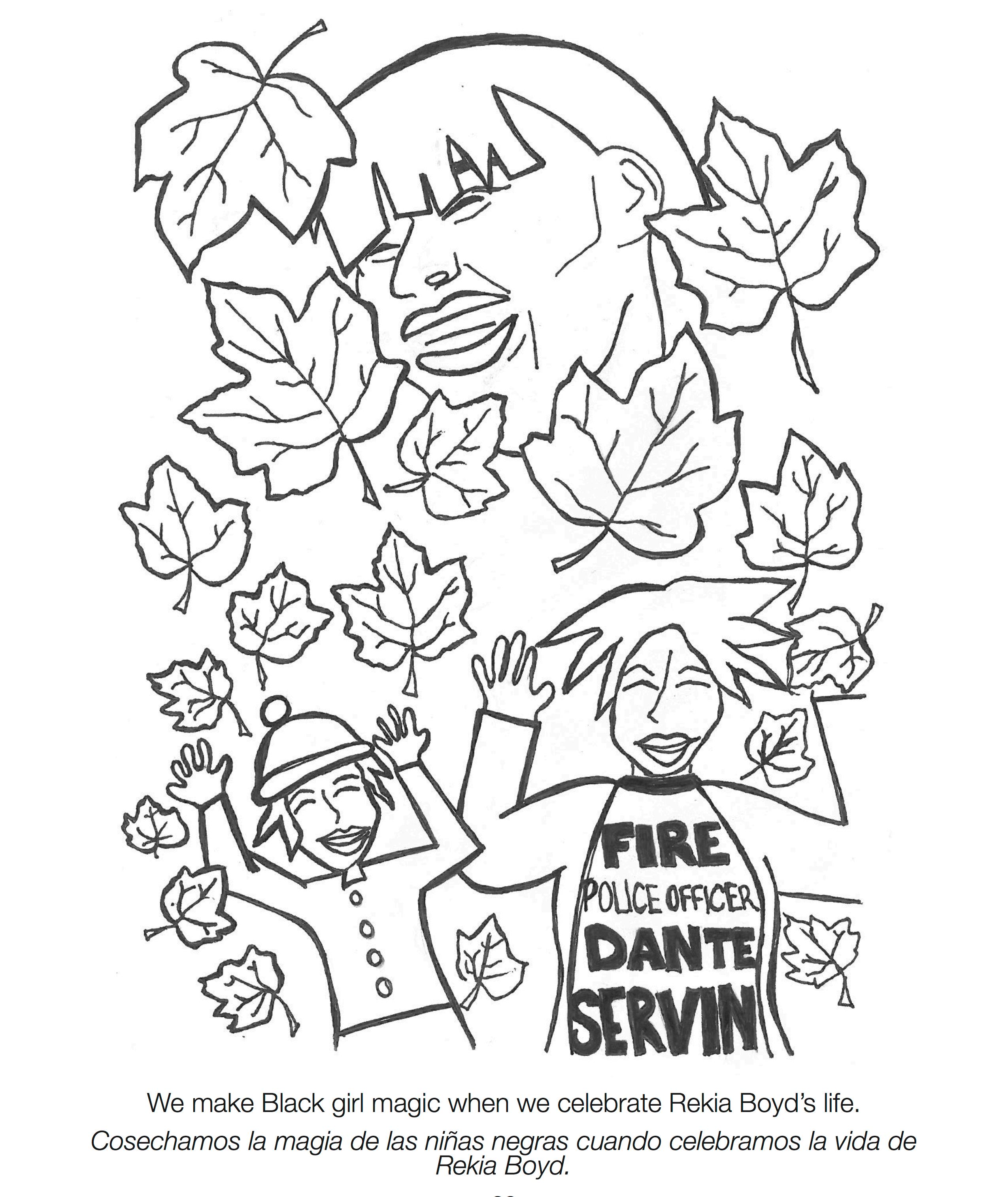
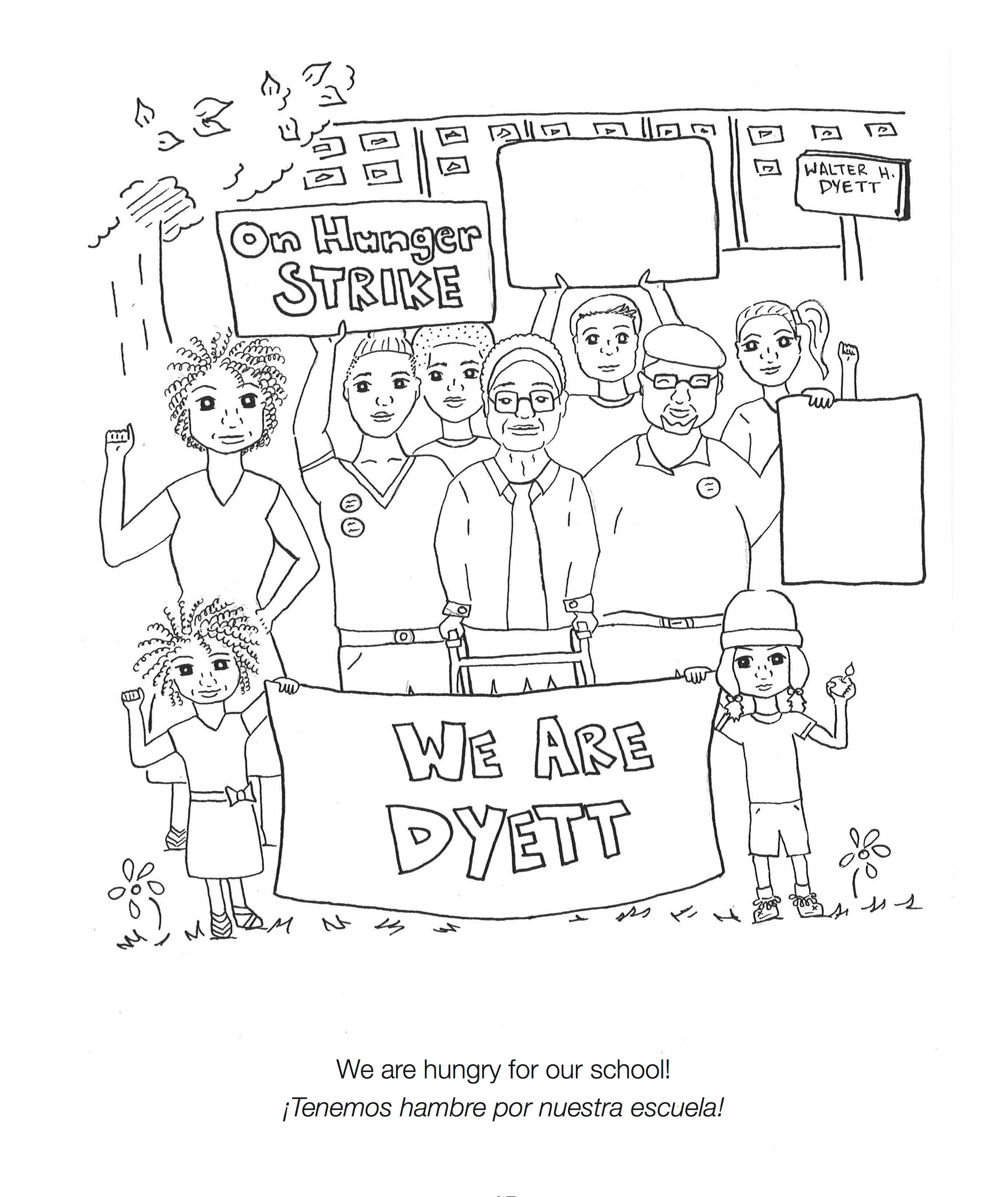
For the People Artists Collective (FTPC) is a group of radical artists of color based in Chicago. FTPC consists of artists who also organize who aim to create work that “uplifts…struggle, resistance, liberation, and survival within and for our marginalized communities and movements in our city and our world.” Color Me Rising is a collaboration between For the People and Chicago Childcare Collective. Originally published in 2015 and currently sold out, Color Me Rising is a radical children’s coloring book that tells stories of liberation and resistance in Chicago. In anticipation of the book’s first republishing later this summer, the Weekly has reprinted some of its pages for you and your children to color in and learn from. forthepeoplecollective.org