The South Side Weekly is an independent nonprofit newsprint magazine written for and about neighborhoods on the South Side of Chicago. We publish in-depth coverage of the arts and issues of public interest alongside oral histories, poetry, fiction, interviews, and artwork from local photographers and illustrators. The South Side Weekly is dedicated to supporting cultural and civic engagement on the South Side and to providing educational opportunities for developing journalists, writers, and artists.
Editor-in-Chief Osita Nwanevu
Executive Editor Bess Cohen
Managing Editors Jake Bittle, Olivia Stovicek
Politics Editor Christian Belanger
Education Editor Mari Cohen
Music Editor Maha Ahmed
Stage & Screen Julia Aizuss
Editor Visual Arts Editor Corinne Butta
Editor-at-Large Emeline Posner
Contributing Editors Will Cabaniss, Sarah Claypoole, Eleonora Edreva, Lewis Page, Hafsa Razi, Sammie Spector
Video Editor Lucia Ahrensdorf
Social Media Editors Austin Brown, Emily Lipstein, Sam Stecklow
Web Editor Andrew Koski
Visuals Editor Ellie Mejia
Deputy Visuals Editors Ellen Hao, Thumy Phan
Layout Editor Baci Weiler
Senior Writer: Stephen Urchick
Staff Writers: Olivia Adams, Sara Cohen, Christopher Good, Emiliano Burr di Mauro, Michal Kranz, Kristin Lin, Zoe Makoul, Sonia Schlesinger, Darren Wan
Staff Photographers: Juliet Eldred, Finn Jubak, Alexander Pizzirani, Julie Wu
Staff Illustrators: Javier Suarez, Addie Barron, Jean Cochrane, Lexi Drexelius, Wei Yi Ow, Amber Sollenberger, Teddy Watler, Julie Wu, Zelda Galewsky, Seonhyung
The paper is produced by an all-volunteer editorial staff and seeks contributions from across the city. We distribute each Wednesday in the fall, winter, and spring, with breaks during April and December. Over the summer we publish monthly.
Send submissions, story ideas, comments, or questions to editor@southsideweekly.com or mail to:
South Side Weekly
6100 S. Blackstone Ave. Chicago, IL 60637
For advertising inquiries, contact: (773) 234-5388 or advertising@southsideweekly
Read our stories online at southsideweekly.com
IN CHICAGO
A week’s worth of developing stories, odd events, and signs of the times, culled from the desks, inboxes, and wandering eyes of the editors
Who Run the World?
In what simply must be seen as an attempt to stay relevant in the national race debate, Louis Farrakhan, the militant longtime leader of the Nation of Islam, has offered to protect Beyoncé if the police will not. This pronouncement comes after some police unions called on their officers to boycott the security detail of Beyoncé’s Formation World Tour because of the singer’s Black Panthers-themed Super Bowl performance, which many conservative commentators have called “anti-police.” It’s worth noting that the video for Beyoncé’s new song “Formation” contains a shot of a Nation of Islam member selling bean pies, and—if you’re really looking for patterns—that Kanye West’s new album contains not one but two references to Farrakhan and the Nation. No word on how the Nation’s all-male security detail and generally questionable views about equality between the sexes mesh with Beyoncé’s intersectional feminism, though.
More Minorities in CPD
The Sun-Times reported this Monday that, despite a rough year all around, the Chicago Police Department attracted a record number of minority applicants for its entrance exam, which is scheduled for the weekend of April 16 and 17. The success appears at least in part to be due to an expensive advertising campaign the Emanuel administration contracted out to a communications firm founded by UofC politics baron David Axelrod, though Axelrod has since left the firm. The $100,000 ad blitz put together by the company was a roaring success; there was a ten percentage-point increase in the number of Hispanic applicants since the 2013 outreach campaign. Nevertheless, the total number of applicants was down over 5,000 from
2013, and Alderman Anthony Beale remained cautious, saying, “You can have thirty percent minority applicants and only five percent of the actual hires. I want to follow it and see what the end result is.”
Spotlight on BYP100
This Monday, Chicago magazine published an article and accompanying illustrations by Darryl Holliday and Jamie Hibdon about Black Youth Project 100 (BYP100). The article opens with a powerful image: most of a room of two hundred people left in the middle of an “unelected” Chicago Police Board meeting in December, showing the organizing power BYP100 maintains, despite the relative youth of the organization, and of the majority of its members. The article details the history of BYP100, from its conception at the University of Chicago in 2004 to the recent announcement of the success of the “Trauma Center Now” campaign. Holliday describes BYP100 as having a “decidedly radical” agenda, firmly rooted in the actions of black queer women, and having a strong sense of community, probably rooted in its even stronger organizational structure. Many “old guard” activists—including Reverend Jesse Jackson and U.S. Representative Bobby Rush—exist on the other side of a generational divide from BYP100. Cathy Cohen, chair of the political science department at the UofC and leader of the original Black Youth Project, weighs in on the contention over passing the baton: “It’s a generational shift but also an ideological shift in terms of who’s doing the work—we’re reimagining black leaders and reimagining black politics.”
Darryl Holliday is on the board of the South Side Weekly.
IN THIS ISSUE
HOW DO YOU ScOrE a ScHOOL?
"We were told to meet a standard and we met it."
olivia adams...4
papEr TraIL
“There's a lot at stake.” hafsa razi...7
a racE TO cLaIm jUSTIcE
“Signs saying “Fire Alvarez” and “#Bye Anita” were held up by students sitting in the audience.”
anne li...8
bLacK HISTOrY mOnTH
“And there’s good hustle and there’s bad hustle: he’s a good hustle.” as told to bess cohen...12
DEaTH anD TaxES
“That’s all that’s really guaranteed in this world, you know?”
austin brown...11
cHOOSE (bLacK) cHIcagO
“The reason behind creating it at all is to celebrate my own community.”
michal kranz...12
STagIng SOcIaL STUDIES
“How can we claim this country to be a meritocracy when so much prosperity stems from privilege?”
ariella carmell...14
bEcOmIng a bETTEr nEIgHbOr
“It won’t happen unless people fight for it. Nothing does.”
christian belanger...15
HYDE parK faSHIOn rUSH
“Hyde Park is climbing up the bourgeoisie ladder.”
a.k. agunbiade...17
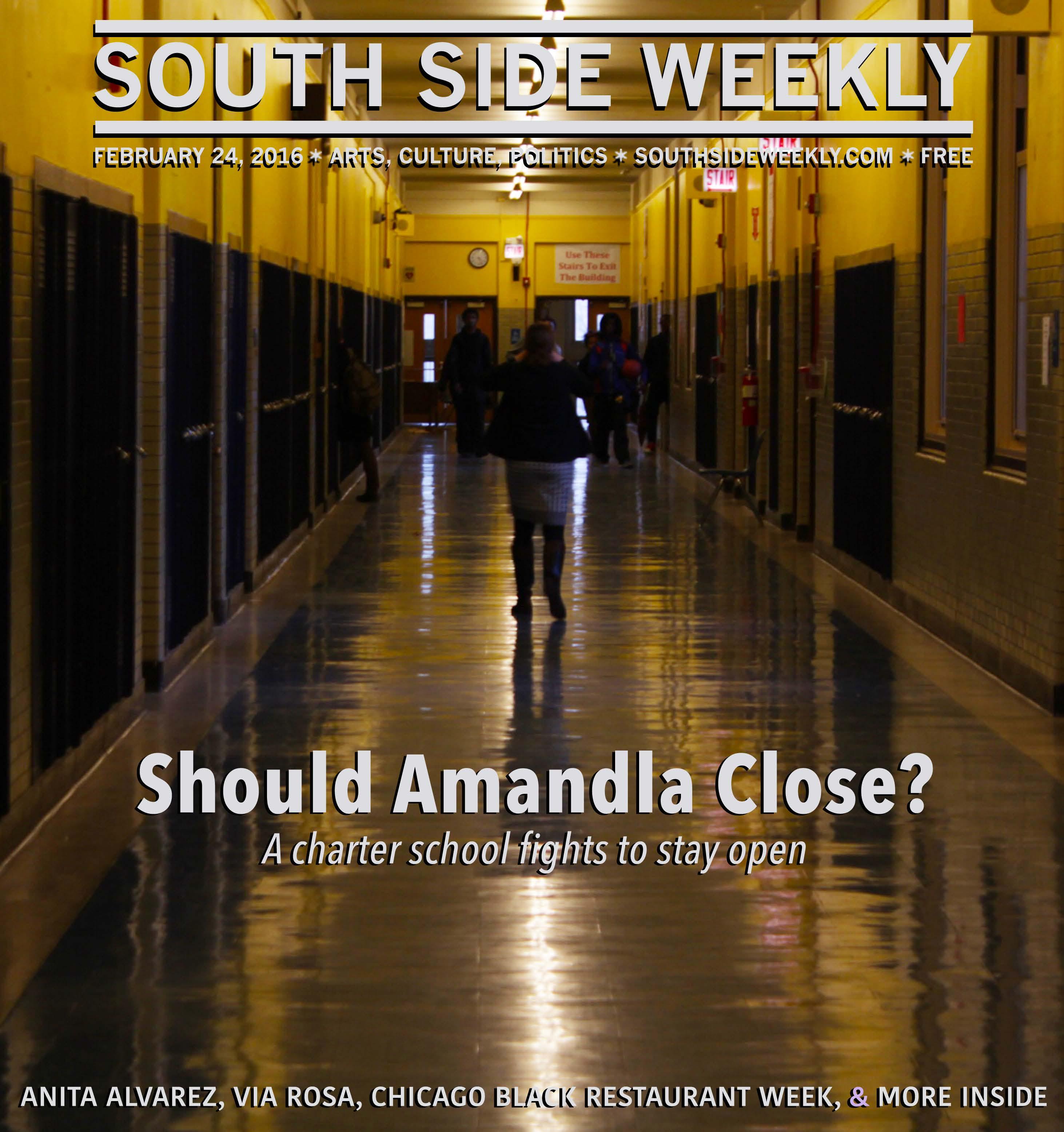
Cover photo by Olivia Adams
How Do You Score a School?
Students and administrators at Amandla Charter School argue that it deserves to stay open
BY OLIVIA ADAMS
“Quizon Chapter Nine!”
The voice of Amandla Charter School CEO (and twelfth grade teacher) Jennifer Kirmes reverberated through a locker-lined hallway of Amandla’s fourth floor. Despite classes having ended over two hours ago, students were still milling about, waiting for their siblings or for a ride home. Christian Davis, a parent of an eleventh grade Amandla student and lifelong resident of Englewood, where Amandla is located, called the school “my little village.”
“The kids have somewhere positive to go,” said Davis. “Truthfully. We don't have a YMCA in the neighborhood, or a field house that's really safe. Seeing your kid come from school being totally happy…you know they’re safe.”
However, Davis may no longer be able to rely on Amandla as a safe place in the community. On October 26, 2015, Chicago Public Schools released a press announcement titled “CPS Announces More Rigorous Charter School Accountability Policy.” Ten schools were listed as in danger of closure based on the new policy, pending its approval. The press release said that the new policy was intended to “hold charters to the same academic standards as district-run schools.” At the November 18 Board of Education meeting, three of those schools were condemned to closure following the 201516 school year, and Amandla was one of them.
All three of those schools—Amandla, Betty Shabazz Charter School, and the Bronzeville Lighthouse Charter School—are located on the South Side. Both the schools themselves and other education organizations in Chicago have spoken out against CPS’s methods for deciding on the closures. In the case of Amandla, school officials dispute the fairness of CPS’s decision. Even a traditionally anti-charter group, Raise Your Hand (RYH), has vouched for the school. While the debate over public education in Chicago is often framed as a black-and-white fight between pro- and anticharter groups, that framing obscures the distinctions between individual schools and their respective roles in the community. As parents and community members protest this charter school’s closing just as others protested the mass closing of public neighborhood schools in 2012, the debate over Amandla’s place in Englewood raises questions about the best way to evaluate a school.
Named after a Xhosa word meaning “power,” Amandla Charter School opened in 2008, as the brainchild of five teachers at Robeson High School in Englewood, a public neighborhood school. The effort was community-based: the founders knocked on doors throughout the neighborhood. Davis noted over the phone that she heard about the school’s great reputation from one of her neighbors, and decided to check it out herself.
“When we first went there for the tour, the whole environment was so inviting,” Davis said. “I mean, they took us in just like we were family.” Her eleventh-grade daughter has been a student there since fifth grade.
Amandla administrators pride themselves on accepting all students, regardless of their circumstances. According to the 2015 Illinois School Report Card, 21.2 percent of Amandla students are eligible for special education services, and 26.2 percent are homeless. 97.5 percent of Amandla’s students are low-income. Amandla's special education programming has a special place at the school.
“They help him a lot,” said Theresa Clark, the parent of Robert, a special needs student. “He’s at a point where he’s comfortable there, and to take him and put him somewhere else would be really devastating. Every other school I ever put him in, he’s had nothing but problems.”
Amandla served only one fifth-grade class when it first opened, and has recruited new fifth grade classes every year since 2008. At the end of the 2015-16 school year, Amandla will be graduating its first, and perhaps last, senior class. The decision to include such a wide range of grade levels—five through twelve—came from statistical data regarding the effect that transition periods have on student performance. Amandla CEO Jennifer Kirmes noted that the eighth- to ninth-grade transition proves particularly difficult for many students. Because the students at Amandla stay in one building during this time, Amandla supporters claim the transition is easier.
“[It’s] because she still had the same teachers,” Davis said of her child. “She’d still be in an environment that she’s used to and comfortable with. She’ll still have the same friends, and nothing really has to change.”
The school is a single-site charter school— the equivalent of a mom-and-pop establishment compared to popular charter networks in Chicago like the well-known Noble School Network. Amandla leaders maintain that inclusive measures like accepting all students and using restorative justice instead of harsh discipline and expulsion sets the school apart from other charter schools. When Amandla first opened, the administration used a demerit-based system that was more rigid and systematic than its current system, the school’s principal, Alyssa Nickow, explained. The new system, Positive Behavioral Interventions and Supports (PBIS), was developed by the education development organization Safe and Civil Schools. It focus-
Charter School Commission as an appeal of the CPS charter recommendation, which includes a memorandum arguing the case to keep the school open, in addition to various other pertinent documents. One of those documents was a December 2014 email from Jack Elsey, former chief of CPS’s Office of Innovation and Incubation, which stated that Amandla needed to achieve a School Quality Rating Policy (SQRP)—the annual rating system CPS uses to monitor school performance—rating of less than a 3 in order to be removed from the academic warning list. At the time, Amandla had a rating of 3, the worst rating on a 5-point scale that spreads from 1+ to 3, with 1+ being the best score. The Amandla appeal document ac-
"When they said it was gonna be closed, I said I'd chain myself to the doors, so all them kids can stay there."
—Christian Davis, Amandla Charter School parent
es on individualized positive reinforcement and restorative discipline, so that students who fail to meet expectations are required to do things like school cleanup and relationship counseling in order to remedy their conflicts. It’s a staple of the single-site school and was introduced as school-wide policy about three years ago. Nickow said PBIS helps students learn to do better in the future, as opposed to a punitive system that is “penalizing them for past behavior.”
“PBIS is difficult. It requires a lot of relationship building, it requires a lot of detailed knowledge of your students and their needs,” Nickow said. “It's difficult work, but we’re a single-site charter school that's focused on those close relationships. So it's really a good fit for us.”
Much of the back-and-forth between CPS and Amandla over the school’s future is recorded in a 734-page document that Amandla submitted to the Illinois
knowledges this poor performance, but says it’s because the rating came when the school was in the midst of changes in the 2013-2014 year, including a new policy of accepting new students in all grades, a switch to their new discipline strategies including PBIS and restorative justice, and the inaugural year of the new NWEA assessment.
Alongside their initial placement on academic warning in December 2014, Amandla’s staff was asked to provide a remediation plan that outlined in detail the specific goals the school planned to achieve by the next academic year. CEO Kirmes and Nickow told the Weekly that they both considered creating the plan a no-brainer; they always create a similar roadmap for the year including academic goals. In the spring of 2015, the SQRP ratings for the 2014-15 school year were released—Amandla earned a 2. During summer 2015, Amandla participated in the Chicago Education Fund’s
Summer Design program, and won grant funds for the implementation of their project focused on making the eighth- to ninth-grade transition easier.
Then, on October 26, 2015, Kirmes says she received a phone call from Sagar Gokhale, a then-staff member at the CPS Office of Innovation and Incubation. It was bad news: a press release for the new Charter Accountability Policy would be announced in the next two hours, and this new policy would be up for a board vote at the next meeting, just three days later. Although Amandla had achieved the previous benchmark required to exit the academic warning list and remain protected from closure, the approval of this new policy would render them still vulnerable to a board vote on the future of their charter. The press release announced that “any charter that has a Level 3 SQRP rating, a two-year SQRP point value average of 2.5 or lower, or a Level 2 rating in three consecutive years will be placed on the Academic Warning
List.” Amandla’s SQRP rating for 2015 was a 2. In the 2013-14 year, however, it had earned a 3, rendering it ineligible for removal from the academic warning list based on the new policy.
CEO Kirmes received a follow-up email on Thursday, October 29 at around 1pm.
Gokhale’s email, included as an exhibit in the Amandla appeal, stipulated that Amandla staff were required to send “already existing documentation, evidence, and/or artifacts of the implementation and monitoring activities that you outlined in the Remediation Plan” by 9am the next morning. According to Kirmes, over a thousand pages of documents regarding the remediation plan were sent to CPS. On November 4, Amandla staff members were notified via a letter signed by CPS CEO Forrest Claypool that the school would be recommended for closure, as it had not successfully implemented its remediation plan. CPS did not provide further explanation to Amandla.
A CPS spokesperson told the Weekly that
“Amandla and the other schools on remediation plans had a very clear picture of the specific gains they needed to make because each school determined the goals in their remediation plans.” Additionally, this spokesperson claims that the decision to close Amandla “was not based on the new Charter Accountability Policy,” but rather “guided by the Illinois Charter Schools Law.” The law outlines several conditions for closure of a charter, including a failure to “meet or make reasonable progress towards achievement of content standards or pupil performance standards identified in the charter,” from section 27A-9 (2) of the law.
The CPS spokesperson sent the Weekly a document called “Amandla scorecard,” which shows that Amandla failed to meet some of its goals for various measures like test scores and attendance. The appeal from Amandla contests that the scorecard punishes Amandla for setting goals that were too high, and that their inability to meet all test score goals did not mean they
failed to successfully implement a plan for improvement.
According to the Illinois State Report Card, 33.7 percent of Amandla students met or exceeded expectations on “all state tests” during the 2012-13 school year as a measure of “overall performance.” For 201314, 24.0 percent met or exceeded expectations. At Robeson High School, located just across the street from Amandla, the numbers were worse: during the 2012-13 year, 9.6 percent performed at or above standards, while in 2013-14 only 4.5 percent did. In a letter addressed to all CPS Board of Education members, the Amandla Board of Directors wrote that “Amandla offers equal or higher quality than most of the comparable schools within a 2-mile radius of our location,” followed by a number of academic comparisons based on 2015 SQRP points and NWEA percentiles. The letter also said that they had collected 550 signatures from parents, students, and community members on a petition to save Amandla in only four days. Not all the data is necessarily in Amandla’s favor, however. The 2015 5 Essentials Survey is a statewide comprehensive teacher and student survey developed by the University of Chicago Consortium on School Research. One of the five measured factors, “Collaborative Teachers,” evaluates how involved teachers are in the school. Within that factor is “School Commitment,” which includes questions on loyalty and job satisfaction. At Amandla, this factor is a six (out of one hundred), considered “very weak” in comparison to the CPS average of fifty-one. Fifty-seven percent of teachers at Amandla Charter School responded “disagree” to the following statement: “I would recommend this school to parents seeking a place for their child.” However, many Amandla parents feel differently. For parents in Englewood, school choice encompasses more than academic performance or college graduation rates. The 5 Essentials Survey also includes information on school safety, where students are asked how safe they feel outside the school, traveling to and from school, and within the building itself. Amandla students rated their overall school safety score to a twenty, significantly lower than the CPS average of forty-six. However, Robeson High School, located just across the street
OLIVIA ADAMS
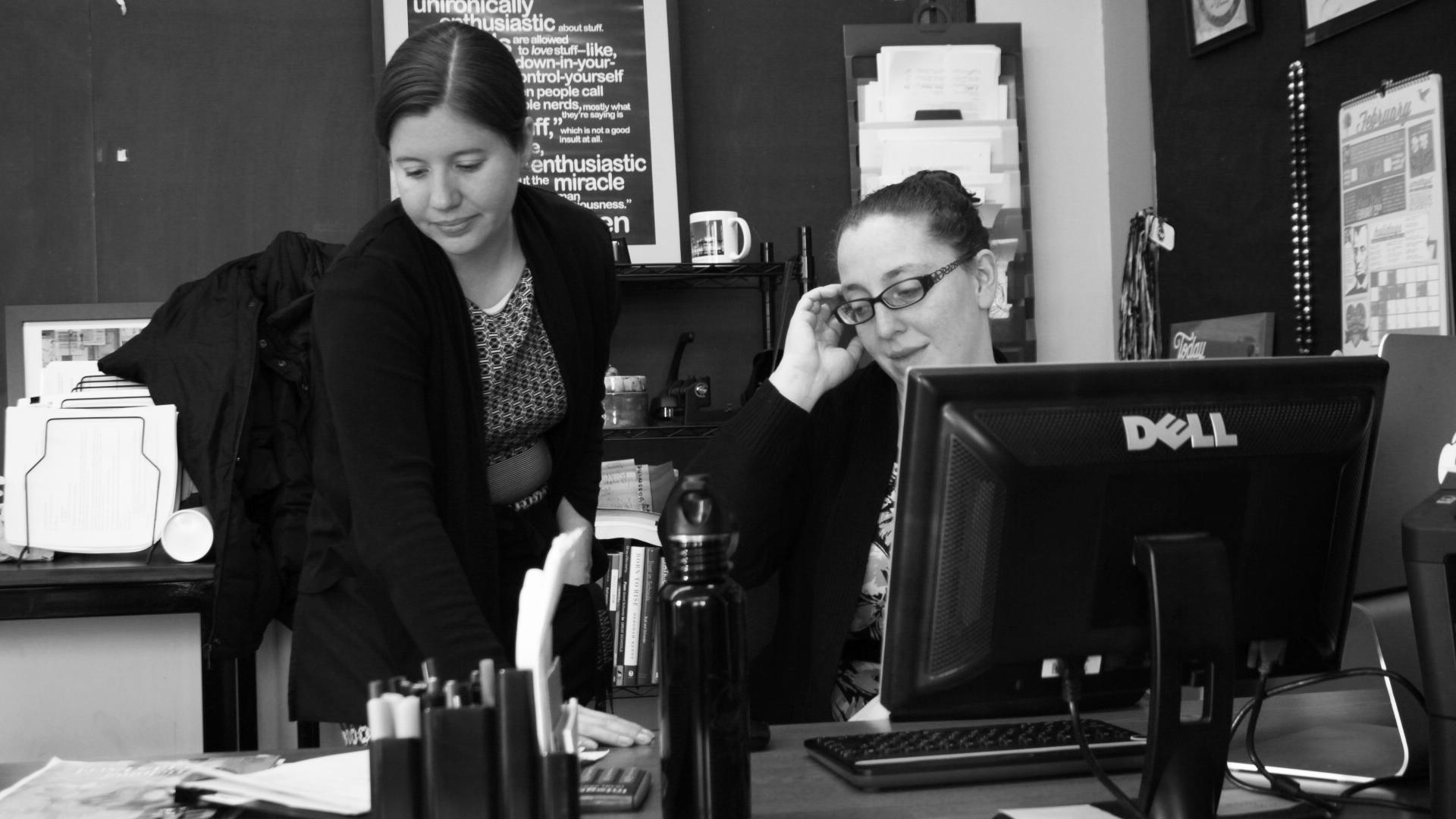
Principal Alyssa Nickow (right) and CEO Jennifer Kirmes (left).
from Amandla, had an even lower rating of eleven.
Kirmes and Nickow said the number one reason why parents keep their kids at Amandla is due to teacher quality and accessibility.
“[The teachers are] pushing them to strive for a better future for themselves. I love that,” Davis said. When I was younger, we didn’t have that; they didn’t care, they just pushed you along.”
On December 18, Amandla submitted the appeal paperwork to begin proceedings with the state in an attempt to reverse the CPS decision for at least the 2016-17 school year; this past Wednesday, a public hearing was held at the school regarding the appeal process. According to an email from Kirmes, about 250 people attended the meeting, mostly students and parents from Amandla and about a dozen community members. The start of the meeting consisted of presentations to the Commission from both Amandla and CPS staff; most of the meeting was dedicated to public comment. The Commission representatives asked CPS for clarification on the goals laid out in Amandla's remediation plan. They also asked CPS about any specific concerns regarding the charter school’s financial plan; CPS representatives did not articulate any specific concerns.
Overall, Amandla’s staff were pleased with the meeting.
“We felt like the evening was a true representation of who we are as a school,” Kirmes
wrote. “The clear message from the parents, students, and community members who spoke was that Amandla is more than a school, it is a family that needs to stay together for the children.”
In addition to the public hearing, Nickow says Amandla staff also had a closed panel interview with Commission staff in early February, as well as a site visit from the Commission about two weeks ago. According to its website, the Commission must vote within seventy-five days of receiving an appeal; therefore, the Amandla vote must occur by the first week of March.
Amandla’s cause has received support from local community groups, including churches and cafes, and from statewide parent-based public education organization Raise Your Hand.
RYH maintains that it is fiscally irresponsible to support charter schools given CPS’s dwindling funds for its neighborhood and magnet schools. However, RYH published a letter of support for Amandla addressed to the CPS Board of Education. The letter says that “the current school rating policy does not take into account multiple factors that are critical to school success and improvement, and rests too heavily on limited factors.”
Brian Harris, President of the Chicago Alliance of Charter Teachers and Staff (ACTS) argued in a phone interview with the Weekly that schools should never be shut down. He says that the CPS Board of Education’s policy regarding school closures reminds him of a “stock portfolio,” in that high-performing,
"I'm a senior, and I want our school to stay open because I want the scholars [here] to graduate through Amandla's charter school."
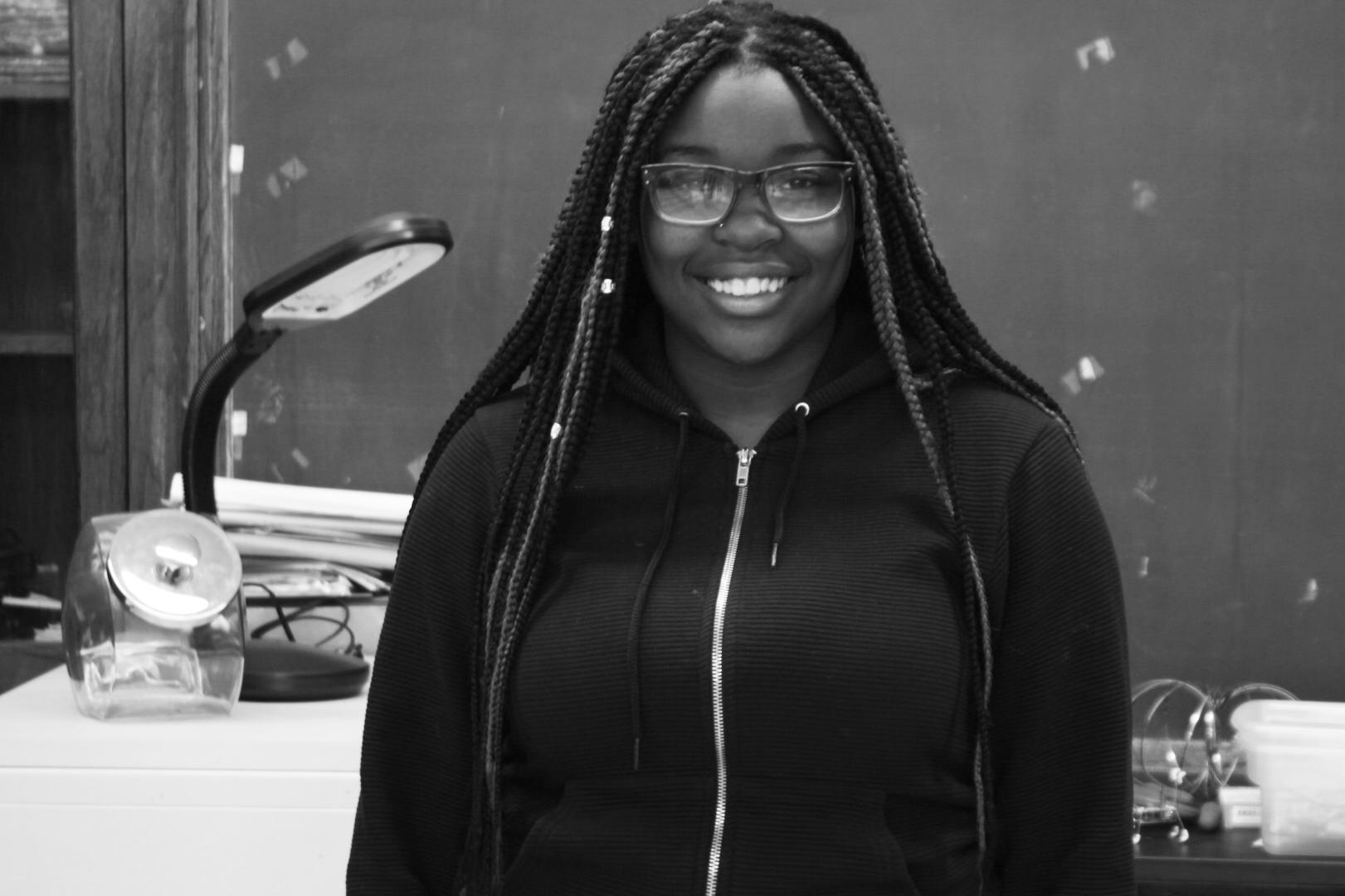
—Tasia Smith (left), 18, senior at Amandla Charter School
large charter networks are rewarded, while lower-performing ones, oftentimes single-sites like Amandla, are punished.
“It’s bad practice!” Harris said. “The school shutting down would be hailed by the board as proof that their system works. And we think that’s just not a very smart way to operate public schools.”
Meanwhile, Amandla has mobilized. On November 18, students, teachers, parents, and community members organized an eight-mile march from the school to the CPS central office downtown. Also in November, a rally was held in Englewood to foster more support for the school and the appeal process. In addition, the Amandla appeal document includes over 120 pages of letters of support for the school from those aforementioned groups, as well as Amandla students themselves. In these letters, students spoke of their aspirations for college, their academic progress, and their relationships with both teachers and classmates.
“I have a teacher that used to take the bus every day and it took him over an hour to get to school,” wrote one Amandla senior. “Seeing him on the bus with me showed me [that he] thinks of us as his own children.”
Students also spoke about their confusion regarding CPS’s recommendation that Amandla should close because of its academic performance. Many compared Amandla’s academic and extracurricular programming favorably to their experiences at other schools; one student wrote that she felt “betrayed” by the recommen-
dation.
“We were told to meet a standard and we met it,” the student wrote. “Mixed signals send a poor and shockingly amateur message to both the students of Amandla Charter school and all those who count on the Board of [Education] to make informed decisions.”
Amandla staff have been working closely with parents to find new schools for their children. Enrollment at Amandla has continued, despite the looming threat to the school’s very existence. When asked whether she had found a place for her four children who attend Amandla, Clark gave a nervous chuckle; she’d rather not think about the what if.
“Really, really aggravated with it,” is how Clark said she felt about the Board of Education’s decision. “Because [Amandla staff] help my children. They’re actually there for them, they actually accommodate them and help them.”
Davis said she is not just worried about where displaced students will go if Amandla closes, but whether these kids would stay in school at all.
“When they said it was gonna be closed, I said I’d chain myself to the doors, so all them kids can stay there, and not take away the best thing in our community,” she said. “There's a lot of death in Englewood, but the one thing that the kids do have in this neighborhood is Amandla. Them kids are totally happy where they are.”
OLIVIA ADAMS
Paper Trail
What are the consequences of destroying police misconduct files?
BY HAFSA RAZI
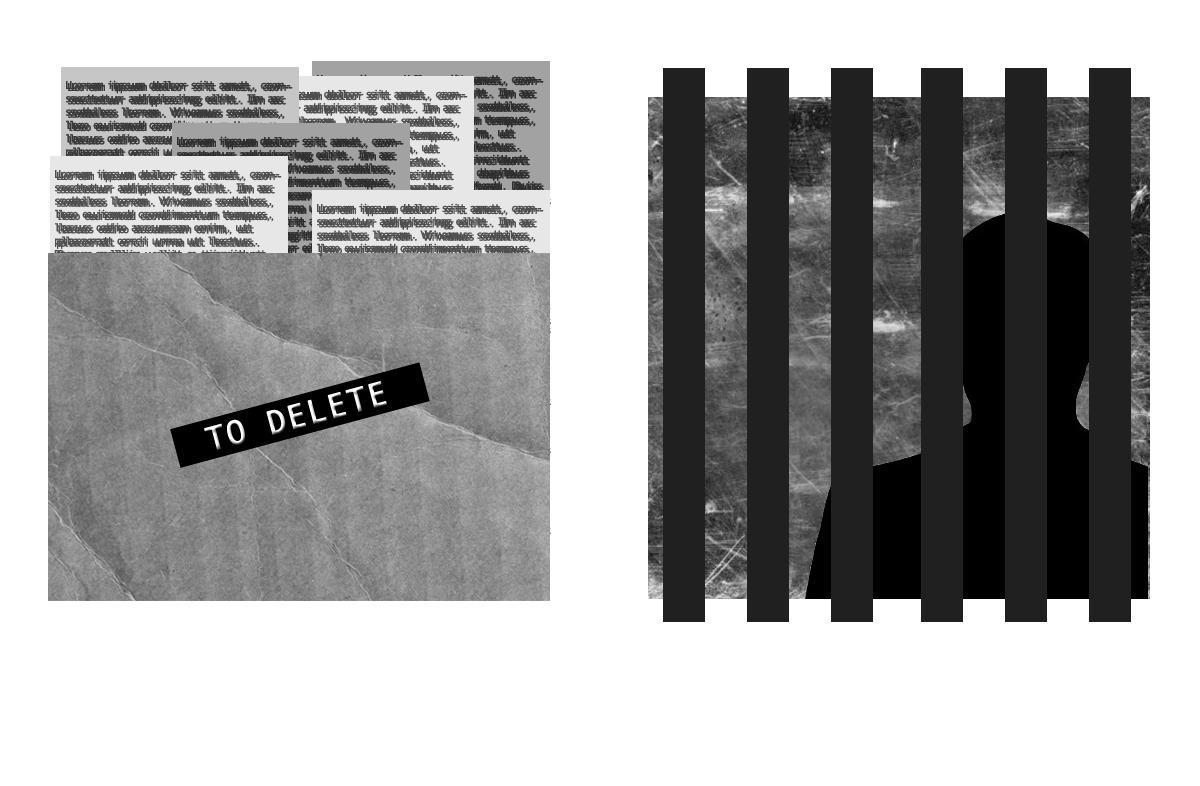
Somewhere in Chicago, on computer databases and in filing cabinets, sit thousands of old police misconduct records dating back to the 1960s, unused and gathering dust. Soon, they will see the light of day— or go straight into a shredder.
In January, an arbitrator in the dispute between the City of Chicago and the Fraternal Order of the Police ordered the city to destroy all records of police misconduct that are more than five to seven years old. And in November, the Chicago Police Benevolent and Protective Association, the union for higher-ranking police officers, won a similar ruling.
The destruction of old police disciplinary records has been a part of Chicago police unions’s contracts for decades. However, only now have union efforts to enforce this part of their contract yielded results. In the 2014 lawsuit, Kalven v. City of Chicago, the Illinois Appellate Court ruled that police misconduct files are public records, which can be released according to the Freedom of Information Act. In response, police unions filed a grievance against the city, arguing that the preservation of these records, let alone their public release, violated the unions’s contracts. They were granted an injunction, halting the release of most of the older documents, while arbitration continued between the city and the unions.
Now that arbitration is coming to a head. The arbitrator in the FOP case, George Roumell Jr., is expected to make a final order on the records’ destruction in April; in the meantime, the city and unions are to negotiate over which records will be destroyed. The files will not disappear without warning due to a ruling that the city must notify the media two weeks before destroying any records.
The unions contend that maintaining these files is unnecessary, and a clear violation of their contracts with the city. The city has argued that the unions have been aware for decades that these records were not being destroyed.
“The City of Chicago opposes the destruction of police disciplinary records,” Chicago Law Department spokesperson Bill McCaffrey said in an emailed statement. “Our longstanding position is that these re-
cords have an administrative and legal purpose that warrants preservation, and we will continue our legal efforts to maintain and preserve these records.”
The FOP could not be reached for comment.
The city’s defense of the preservation of old police records comes at a time when its administration is under pressure to increase transparency and regain public trust in law enforcement. Chicago is currently under investigation by the Department of Justice over its police practices, and next month, Mayor Rahm Emanuel will receive recommendations on how to rebuild trust between residents and law enforcement from the Police Accountability Task Force, established in late 2015 after the video release of the Laquan McDonald shooting.
“The idea that at this moment, these documents and this body of information, which we only gained access to recently through our victory in the Kalven case, should essentially go up in a big bonfire is almost inconceivable,” says Jamie Kalven, a human rights activist and journalist with the Invisible Institute.
Kalven, whose lawsuit brought about the public release of police records, says he should not be overconfident about the city’s success in the dispute, because of the “immensely valuable” nature of the information that might be destroyed.
“There’s a lot at stake,” he says.
According to Kalven, these records are essential for identifying patterns of police misconduct and determining whether accountability methods have been effective. As proof of the findings these records could reveal, Kalven points to the Citizens Police Data Project (CPDB) from the Invisible Institute, a searchable online database that compiled police misconduct records from 2001 to 2008 and 2011 to 2015, which were released after the Kalven decision. An analysis of that database revealed, for example, that ten percent of the police force received thirty percent of the complaints, and that African Americans file a disproportionate amount of complaints, which are sustained at a disproportionately low rate.
The CPDB has also given context to
ELLIE
“These records are vital to our work, and their destruction would pose a great challenge to our ability to investigate these cases.”
—Robert Olmstead
individual cases; multiple news sources cited the database to show that Jason Van Dyke, the officer charged with murder in the 2014 shooting of black teenager Laquan McDonald, had twenty complaints filed against him prior to McDonald’s death.
“Just the last four years have been regarded as a kind of unprecedented wealth of police misconduct information,” Kalven said. “So imagine if we had [records], going back close to half a century?”
These records also hold the key to future investigations of police misconduct that aim to overturn wrongful convictions from the past fifty years. Chicago has a history of serious police abuse, including the torture perpetrated by former police commander Jon Burge and the officers under his charge, who coerced confessions from African-American suspects throughout the seventies and eighties.
Burge was fired in 1993. In 2006, a state-appointed special prosecutor concluded that there was evidence “beyond a reasonable doubt” that torture had occurred in at least some of the cases of alleged abuse. By then, however, the statute of limitations on those crimes had run out; no officers could be prosecuted. In response, the state General Assembly created the Illinois Torture Inquiry and Relief Commission, which investigates allegations of torture by Burge and his subordinates.
According to the Commission’s spokesperson Michael Theodore, the Commission received appeals in about 260 cases. About half of those cases have been determined to be beyond the jurisdiction of the Commission, which only covers cases related to Burge. Of the investigated cases, the Commission referred seventeen for post-conviction hearings and dismissed thirty-one; it still has
MEJIA
eighty-two cases to investigate.
The Commission uses old records to review the evidence and determine whether a case should be referred to the courts for a post-conviction hearing. However, Theodore says, the Commission does not necessarily know which records it will need for its investigation until it examines each allegation, which happens on a case-by-case basis. If old police misconduct records are destroyed before all the investigations are completed, the Commission may find itself in the middle of an investigation without access to the documents they need.
To prevent this from happening, the Commission’s executive director Robert Olmstead reported at a January 20 meeting that he had served subpoenas for the misconduct records and files of all police officers involved in the allegations of torture. Those subpoenas have not yet been fulfilled.
“These records are vital to our work, and their destruction would pose a great challenge to our ability to investigate these cases,” Olmstead said at the meeting, according to documentation provided to the Weekly.
An appeal of the initial injunction, launched by the city and the Tribune, might be able to prevent the destruction of the records; the case is currently awaiting oral arguments in the Court of Appeals. Another, more long-term resolution to the dispute could come from legislation, proposed by State Representative LaShawn Ford of the 8th District, which would preserve police misconduct records permanently (though new legislation may not apply to existing records).
In the meantime, however, the initial injunction has real-time consequences for those interested in and affected by police misconduct. While the arbitration is ongoing, Kalven says, old records of police misconduct are inaccessible to anyone, from journalists investigating patterns of police abuse to prison inmates trying to challenge their convictions.
For now, they just have to wait. While the situation is still unresolved, Kalven says it’s “hard to believe” the records will actually be destroyed. After all, the underlying issue is the question, who has a right to these records: the public, the police, or the city? And on that issue, Kalven says, the courts have already spoken: “This information belongs to the public.”
A Race to Claim Justice
Amid protests, the election for State’s Attorney moves into its final phase
BY ANNE LI
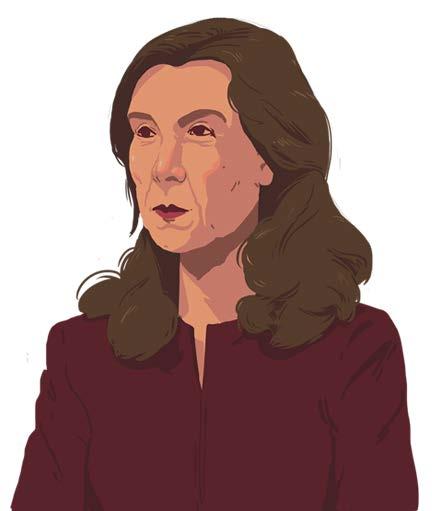
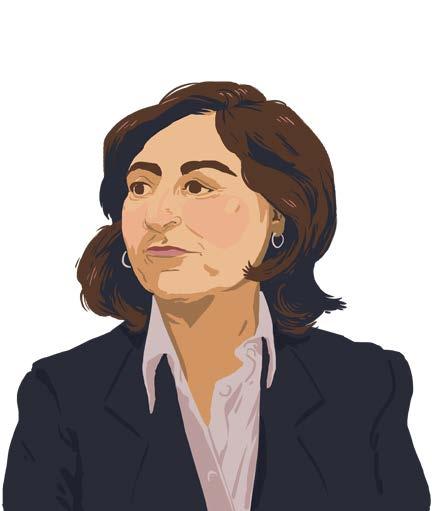
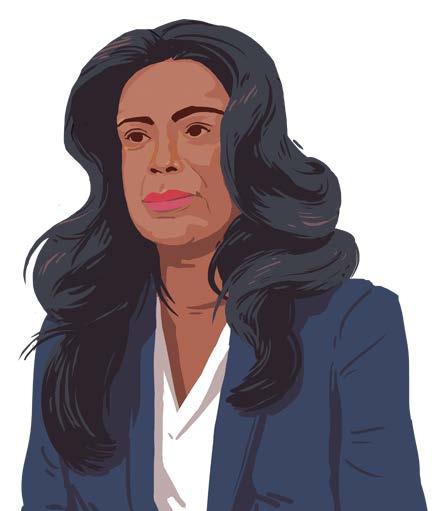
On February 17, current Cook County State’s Attorney Anita Alvarez addressed a full house at the UofC’s Institute of Politics, which has recently hosted all three State’s Attorney Democratic primary candidates for discussions with students and community members. Alvarez began by introducing herself and the work she has done as State’s Attorney, but her explanation of anti-child trafficking measures and surveillance procedures was overtaken by protestors who had arrived in the back of the room. Around eight people began chants that referenced the Black Lives Matter movement and denounced Alvarez’s handling of cases of police misconduct. As the protesters moved to the center of the room, Alvarez was escorted out of the building. Students sitting in the audience held up signs that read “Fire Alvarez” and “#Bye Anita.” After the chants, speeches, and a brief rap, about one third of the audience walked out of the building.
The passion and anger of the protestors are an indicator of the high tensions surrounding the March 15 primary, an election that has taken on added significance in light of the State’s Attorney’s role in police accountability. The State’s Attorney’s office houses state prosecutors while also serving as legal counsel for the government. As State’s Attorney, Alvarez is responsible for representing the county’s interests in court.
At the end of last year, Alvarez faced public criticism for her handling of the case of Laquan McDonald, a teenager who was shot sixteen times by police officer Jason Van Dyke on October 20, 2014. The police officers’s accounts of the shooting were contested by activist groups and journalists. In response to a judge’s order, the City of Chicago released the video of the shooting on November 24, 2015. Hours before the video’s release, Alvarez brought first-degree murder charges against Van Dyke, but critics have demanded that Alvarez resign for not having brought those charges until after the video’s release was con-
firmed. In light of these criticisms, the other two candidates in the primary, Kim Foxx and Donna More, have both focused on the need to turn a new leaf in the State’s Attorney’s office.
Protesters allege that the long delay in Alvarez’s decision to charge Van Dyke for the shooting was politically motivated. Alvarez has responded that the decision was made prior to the judge’s announcement, but that the charges were not made because the U.S. attorney had not completed their investigation. Regarding the decision to charge Van Dyke for murder, Alvarez stated, “I knew a while ago, prior to finding out the video was going to be released. I knew what my office was going to do.” Alvarez told the Weekly, “The public reaction to the McDonald case has also made it clear that my office needs to do a better job of informing the public about ongoing investigations.”
The controversy comes in context of criticism that Alvarez has routinely mishandled cases due to prosecutorial bias. Criminal defense attorney Sam Adam, Jr. alleged, for instance, that Alvarez charged detective Dante Servin with manslaughter instead of first-degree murder to “curry favor with” the Fraternal Order of Police after Servin fired into a crowd and killed Rekia Boyd in 2012. Servin was acquitted by the judge presiding over the trial, who commented that Alvarez had mischarged the detective.
Alvarez’s reputation has taken a hit after these incidents. More, one of the other candidates in the primary, said in a speech at the City Club of Chicago on February 9 that “Anita Alvarez has made a powder keg out of this race and it has put our community at risk.”
Still, a poll of Cook County voters released on February 2 shows Alvarez ahead in the race with the support of thirty-four percent of voters, followed by Foxx with twenty-seven percent, and More with twelve.
For each candidate, the race has become largely about personal credibility. Alvarez has pointed to her experience as State’s Attor-
ney in the past seven years, emphasizing her campaign against violence and gangs. She has presented herself as tough, but is counterbalancing her crackdown on violence with her anti-human trafficking initiative designed to protect children. In response to allegations of giving special treatment to officers, Alvarez has pointed to her anti-corruption efforts, as well as her recent creation of a “Conviction Integrity Unit” that will specialize in reviewing cases in which the convictions have come under scrutiny. “I have more than tripled the number of alternative sentencing and diversionary programs that help prevent felony convictions for non-violent and low-level offenses,” she told the Weekly.
Kim Foxx’s claim to credibility is based on her experience working in the State’s Attorney’s office and as Chief of Staff to Cook County Board President Toni Preckwinkle. Still, her post under Preckwinkle has led some to call her a pawn of one of Cook County’s more powerful political figures. Alvarez has certainly pressed on that point: after Foxx received the endorsement of the Cook County Democratic Party, Alvarez told WLS, “I owe them nothing. Ask Ms. Foxx what she owes Toni Preckwinkle.”
Foxx grew up in Cabrini-Green and spent her childhood years in unstable accommodations, including a period of time in homeless shelters while she was in high school. “Growing up in Cabrini-Green, I witnessed firsthand the effect poverty and crime have on Cook County communities,” Foxx told the Weekly. In reference to her time working with the Cook County Public Guardian handling cases of children, “many of whom had been abused, neglected, or had special needs,” she said, “it’s these experiences that made me push for successful reform measures that give judges more discretion in juvenile justice cases, instead of immediately transferring juveniles straight to adult court.”
Foxx has based her candidacy around this theme of dramatic reform, emphasizing that
After Foxx received the endorsement of the Cook County Democratic Party, Alvarez said, “I owe them nothing. Ask Ms. Foxx what she owes Toni Preckwinkle.”
of the three candidates, she is the only one to call for an independent prosecutor in police shooting cases. In doing so, she presents her candidacy as a combination of radical overhaul and continuity based in experience.
More, meanwhile, has positioned herself as a fully independent candidate with no links to the State’s Attorney’s office or the tangled web of Chicagoland politics. She emphasizes that while she is the only candidate with experience as a federal prosecutor, this is her first time running for an elected office. This outsider status led Donna More to state, in reference to Foxx, that, “When Democratic Party leaders heard that an independent former federal prosecutor—yours truly—was going after public corruption, suddenly the hand-picked
candidate of Toni Preckwinkle and Joe Berrios looked a whole lot better than one voters might choose.”
More’s background, however, has also attracted some scrutiny, primarily due to the personal wealth she has on hand from her work in private law. Foxx contends that More “is currently a gaming lobbyist and has been in the gaming industry for the last twenty-five years.”
Remarkably, all the candidates in the primary are women. In fact, Alvarez was the first woman and the first Hispanic to hold the office of Cook County State’s Attorney. Some of the criticism of Alvarez stems from dashed hopes that having a female minority figure in office was going to create more sensitive ties to the community. In an interview with Chica-
go magazine in October 2015, Foxx said that during Alvarez’s tenure as deputy chief of the narcotics bureau, Alvarez “was someone that a lot of us looked up to, particularly because she was a woman [and] a woman of color.” Foxx’s hopes for increased cultural sensitivity, however, were “sorely disappointed, because it was none of those things when she took over.”
Each candidate presents her own combination of reform and experience, sympathy and tough-on-crime, personal inspiration and purely professional inclination. And it’s worth noting that all of the candidates recognize the State’s Attorney’s handling of police shootings and building community trust as key issues in the primary.
Among certain groups, though, the message often resembles the signs held up at the IOP: anyone but Alvarez. Mariame Kaba, the founder and director of Project NIA, an advocacy group against youth incarceration, says, “I think it’s important either way for people to understand that the problems with Anita Alvarez did not begin with her handling of the Laquan McDonald case. Her job is to represent victims, but she actually ends up being the persecutor for those people. She’s been terrible for the last two terms, and she can’t be gone soon enough.”
IAN MOORE Kim Foxx
Donna More
Anita Alvarez
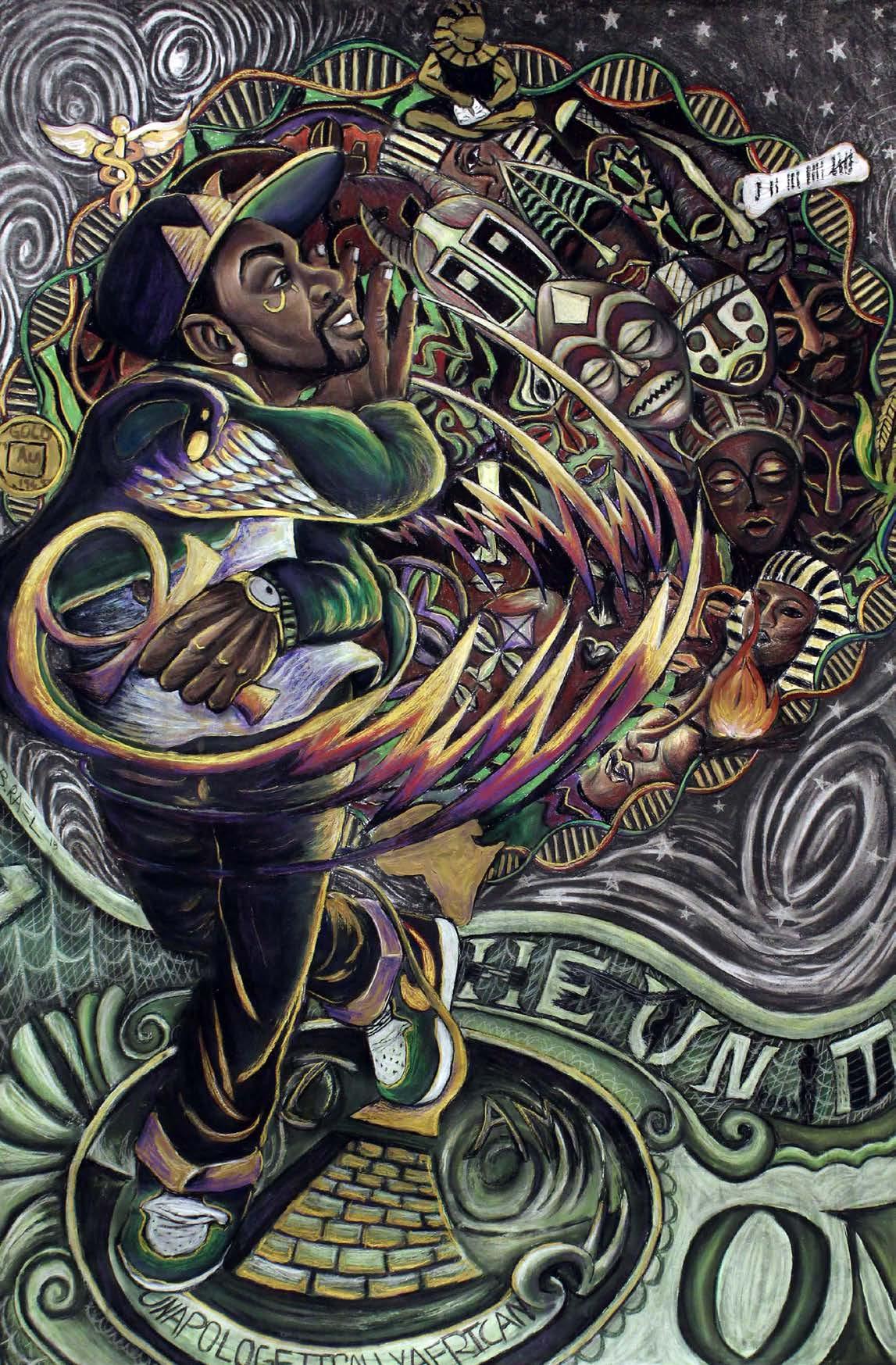
In honor of Black History Month, Maséqua Myers, executive director of the South Side Community Art Center (SSCAC), has curated a small series of images from the Art Center’s collection to celebrate African-American history, African-American art, and the South Side Community Art Center’s role in preserving that legacy.
Keith Conner is a traditionalist; he has exhibited here in the SSCAC at least once before, but it’s been years. He paints portraits and landscapes, and he loves to expose the art community—art collectors and art appreciators alike—to African artifacts. He uses many themes that deal with love and bringing the importance of loving yourself into his works of art. And we can see many of his works here at the Art Center now.
Conner has been painting all of his life. He’s one of those lucky artists to make a living only as an artist. He has exhibited in places
like the Museum of Science and Industry and the Chicago Cultural Center, and he has been responsible for creating film strips and illustrations for Miller Brewing Company, as well as Black History Month illustrations for Central City Productions on WGN-TV (if you remember those programs from back in the day). He also free-lanced with the Encyclopedia Britannica. He’s won awards as well, the latest one being the Artist of the Year Award for Visual Arts from the African American Arts Alliance of Chicago in 2011.
Our last artist is B. Ra-El Ali. He’s a fascinating young artist, mainly because he is so industrious—he has his hustle on. He really knows how to hustle well. And there’s good hustle and there’s bad hustle: he’s a good hustle. He’s a recent graduate of Southern Illinois University with a BFA in painting and drawing. What he did was get out and network—he hit the ground running. He has gone to every art gallery that he thinks would be welcoming, as well as those that would not. He’s just making himself known as a young emerging artist. I like the fact that he
has such self-initiative. Ali works as a mixed media artist because he works in charcoal, acrylic, and oil, and he works on paper most of the time as opposed to canvas or linen. He calls his style of work Afrofuturism. It just means that in just one painting he has layers of three aspects: he uses African symbols and images, adds in American symbols and images, and blends them. And some of these wonderful backdrops create a futuristic approach; they’re combinations of styles and clothing and dress that we’ve never seen before.
“Bridging Generations: Strong Men Getting Stronger” featuring works by both Keith Conner and B. Ra-El Ali will be on display at the South Side Community Art Center through April 9.
B. Ra-El Ali - Hidden Colors (Charcoal, Oil & Acrylic) 2015
Keith Conner - Mother of Eden (Oil on Canvas) 1995
Death and Taxes
Via Rosa’s unflinching attitude towards music, the government, and life itself
BY AUSTIN BROWN
If you watch a lot of interviews, you’ll notice that some musicians act the way that their music sounds. Jay-Z always sounds stately and contained; Future sounds croaky, mysterious, a little tired. Other artists are the opposite. When I sit down with Chicago noirR&B singer Via Rosa, any preconceived ideas I have about her evaporate. She’s all smiles and warm looks, wearing a casual camo jacket still emblazoned with a sticker from a concert. “ZEDD 2015,” it says, advertising the EDM DJ presidential campaign-style. When I ask her about it, she says “Oh yeah, Na’el [Shehade, local house producer and Rosa’s collaborator on a new musical project Drama Duo] and I wanted to see the lights.” Her bubbly attitude and apparent willingness to go to a ravey EDM show aren’t exactly what you’d expect from someone who titled her 2014 project for THEMpeople DeathViaLove, and all of whose songs, by her own admission, are “hopeless love stories.”
That’s not to say Via Rosa’s music is too dark, inaccessible, or unfriendly—even her non-Drama Duo cuts, which don’t have the upbeat production that Shehade brings to the table, have a melodic energy to them, a pulse of romanticism that lasts past any heartbreak. And although much has been made about Via Rosa’s yearning voice, just as worth talking about is her pragmatic approach to production. New York boom-bap and downturned piano riffs tumble over each other unhurriedly, keeping everything from becoming too funereal while making sure you pay attention to the showstopper in charge. She layers on reverb and a “telephone effect” in her vocals, prioritizing sound over lyric except when she suddenly lands on one of her simple observations: “I love you but it’s not enough,” for example, or, “I need you to save me.” She’s full of these lines, and when she records, they tumble out like confessionals.
Via Rosa, though, isn’t carried away with her own talents.
“I’ve been told [by my supporters] that I’m gonna create a new form of gospel music, that isn’t talking about God or Jesus, it’s just going to be gospel music, and I’m just like, ‘Okay…’” She says this matter-of-factly. “I’m just really honest—honest love songs are my
go-to, not by choice—it just happens,” she says. She doesn’t even really listen to gospel music. It just wasn’t how she was raised.
Her relationship with religion is unorthodox in general, but simple enough: “My parents sat me down and said, ‘This is what we believe, this is what the world believes, this is what some other people in the world believe. Let your imagination run wild.’” So while she feels closest with Buddhism, that faith takes a backseat to her personal ventures into spirituality. Via Rosa dabbles in, among other things, alternative medicines, herbs, and something she calls “manifestation.” On manifestation, Via Rosa says, “Well basically, it’s mostly that I don’t wake up thinking ‘Oh, I need to go make some money.’ What I do wake up thinking is ‘Oh, I need to get some food.’ And then I’ll find a way to make that happen.”
When her self-made spirituality isn’t carrying her forward, the other driving forces in Via Rosa’s life come from her friends and family. She moved to Chicago to spend time with her ailing grandmother, and also for other career-related reasons. The guidance of her parents influences much of what she thinks, even to this day. More influential than those family members, though, might be the artists and friends she’s met in Chicago, all of whom seem to know each other. “It’s great for recording,” Via Rosa says, “because you get in there and there’s already a vibe or a connection or whatever.” She talks about Chicago’s developing network of musicians in awed tones.
“It’s like, everybody’s doing something,” she says. “This is the place to be right now, it’s very inspirational.” More than anyone, Via Rosa would know: she’s great friends with Jean Deaux, who works with Mick Jenkins; she knows Dally Auston of Savemoney; she works with both THEMpeople and OnGaud Productions on a regular basis. When asked if this network of Chicago artists is a collective, a “scene,” or something different entirely, Via Rosa says “You know, I’d call it a family. ’Cause when you get in trouble, you know the family will all show up to help.”
So much the better for Via Rosa, as she’s been dealing with her own troubles over the past few months: the apartment building she and her mother inherited from her grand-
mother is in danger of being taken from them, either by squatters or by companies who want to purchase and remodel the space. She and her mother have their own plans to make the building into a healing center for women and families, and a safe space in her neighborhood, but various impediments, like renters who don’t want to pay and building code violations they’re only just discovering, have kept this project from becoming a reality. In order to get the taxes on the building paid on time, they have started a GoFundMe, simply titled “Save Via’s Home.”
Every once in a while Via Rosa bemoans the fact that all of this is necessary at all: “There’s no compassion from the government, you know?” she says. “Nothing about how ‘Oh, maybe you lost a family member, or your per-
sonal life got heavy.’ It’s just, ‘you better pay your taxes or you’re gonna lose your home.’” The mix of realism and idealism so powerful in Via Rosa’s music pops up again when she talks about the government and the way it behaves toward its citizens. A fundraiser she organized recently, heavily attended by her friends and family, was titled “Death and Taxes”—“because that’s all that’s really guaranteed in this world, you know?” But when I ask her where she’ll get the money to run her planned healing center, she just laughs. “I hadn’t really thought of that! My attitude is always, if it’s meant to stay open, it’ll stay open,” she says. Then, she repeats, a little more strongly, “It’s gonna stay open because we’re gonna keep it open.”
VANESSA VALADEZ
A grassroots restaurant week celebrates black-owned eateries in Chicago Choose (Black) Chicago
BY MICHAL KRANZ
Lauran Smith is the CEO of public relations firm PR by Elle77, which she founded in March of 2012, and has thirteen years of experience in the corporate world under her belt. Bernard Loyd is a Chicago native who grew up in Liberia and returned to the United States to pursue a career in management consulting and economic development. Contrary to what one might expect, what has drawn them together is not their business experience, but rather their shared passion for food, black history, and community empowerment, all of which converged during the second week of February in the first ever Chicago Black Restaurant Week.
Smith, who played a lead role in organizing CBRW, says she got the idea from friends in the restaurant business who felt they weren’t getting the recognition they deserved. “I have quite a few friends that are restaurant owners, and I know that I love patronizing their business, so I just felt like there needed to be a way other people could experience it as well,” she says. “So, I came up with Chicago Black Restaurant Week because I felt they needed their time to shine.”
Chicago Black Restaurant Week featured seventeen restaurants across the Chicagoland area out of the over 123 blackowned restaurants in the city and took place soon after the close of Chicago Restaurant Week, an annual celebration of the city’s food scene when restaurateurs offer prix fixe menus. Unlike Chicago Restaurant Week, however, restaurants participating in Chicago Black Restaurant Week were asked to create a series of specials that reflect the individual character of their establishments. Additionally, rather than collaborating with Choose Chicago, the city’s official tourism board and the organizer of Chicago Restaurant Week, Smith opted for a more grassroots, community approach. “I felt like I was able to do this on my own, and I didn’t need that backing,” Smith says. “I wanted it to be simple, I don’t feel like I needed it to be grand.”
Many of the restaurants that participated are located on the South and West Sides of Chicago, like the Bronzeville Jerk Shack,
which sits at the intersection of S. Prairie Ave and 51st near the 51st Street Green Line stop in Bronzeville. Like Smith, its owner and founder, Bernard Loyd, comes from a professional business background, having worked and lived on the South Side of Chicago for twenty years. However, his foray into the culinary industry began only recently. “After spending twelve, thirteen years as a consultant, I decided I wanted to take the skills that I had built there and do for my community what I had worked with many corporations to do, to build enterprises,” Loyd says.
The enterprise he built is a humble and welcoming restaurant located on a once bustling strip of 51st Street, where all the em-
ployees are South Side locals. The location was specifically chosen. “Bronzeville is the heart of black Chicago,” says Loyd. “This is where African Americans moved to because we couldn’t live elsewhere, and hundreds of enterprises were created back in the day. That’s why we’re in this community.”
The menu is simple: customers can get various portion sizes of jerk chicken or pork, complete with a variety of sides to choose from, including a deliciously sweet fried cornmeal dumpling called festival. “Festival is a very popular item in Jamaica, but it hasn’t really made it over here yet,” says Loyd. The half dark chicken, which comes with a side of festival, sauce, and white bread, is satisfy-
ingly cooked and subtly spiced, although the scorching heat of its jerk flavor only becomes apparent about halfway through the meal. Impressively, the meat stays juicy without getting too greasy.
Loyd says this is because a major component of Bronzeville Jerk Shack is its commitment to providing healthier and more sustainable food on the South Side. “Long story short, food is a key unmet need in this community,” he says. “There is a lot of food, but most of it is not very good food. It’s greasy fast food, highly salted, and so forth.” Loyd says that Bronzeville Jerk Shack has hosted community meetings on sustainability and sources many of the ingredients it uses local-
COURTESY OF THE RESTAURANT
“In many cases, these restaurants are located in historically black communities and often we don’t get the level of positive recognition that [we] should.”
—Bernard Loyd
What is public record?
ly, some of them grown by the business itself. “We actually have a rooftop farm and we actually source some of our ingredients from that garden,” Loyd says.
Smith says that other CBRW restaurants have made similar commitments to providing healthy, accessible food. “I just like that it’s affordable, the food is cooked well, and it’s healthy,” she says. “We have healthy food in our community and people need to know about it.”
Another exemplary restaurant among the seventeen participants is Chuck Wagon Grill, located at 1120 Central Avenue in Wilmette, just outside Chicago. Smith says that the owner and chef cooks without salt. “So that’s just one person who is conscious of what he cooks, how he cooks, how he’s preparing his food,” she says. “So it makes a difference to know where you can get good food that isn’t going to have too many extra additives in it.”
But the most important aspect of CBRW for Smith and Loyd is its celebration of black cooking and history and its provision of desperately needed publicity for black-owned businesses. “The reason behind creating it at all is to celebrate my own community,” says Smith. “The reason that it’s held on the second week of February is that in 1926, Dr. Carter Woodson founded the Negro History Week.”
Loyd says that efforts like Chicago Black Restaurant Week are vital for the Chicago African-American food scene because opening and operating a restaurant is often more difficult for black owners than for other sectors of the population, especially on the South Side. “Black restaurants really don’t have the access to the kinds of resources that a restaurant in another ethnic community might have,” he says. “Banks are still very reluctant to lend in these communities, and in many cases the family and friend wealth is simply not there to support these restaurants.”
“And in many cases,” he continues, “these restaurants are located in historically black communities and often we don’t get the level of positive recognition that [we] should.”
Loyd and Smith think the inaugural Chicago Black Restaurant Week was a success and are already planning for the next one: Loyd hopes to have Bronzeville Jerk Shack participate again next year, and Smith already has plans to expand the list of restaurants. But Loyd hopes that the event encourages diners to visit black-owned restaurants more often. “We encourage people to not stop at Black Restaurant Week,” he says. “We want people to come out and support us and all the other restaurants that are trying to provide something new, something different, and something a little healthier in Chicago.”
Saturday, March 5, 2016 1:00pm–3:00pm
southsideweekly.com/workshops
Staging Social Studies
Lines in the Dust explores who “deserves” a proper education
BY ARIELLA CARMELL
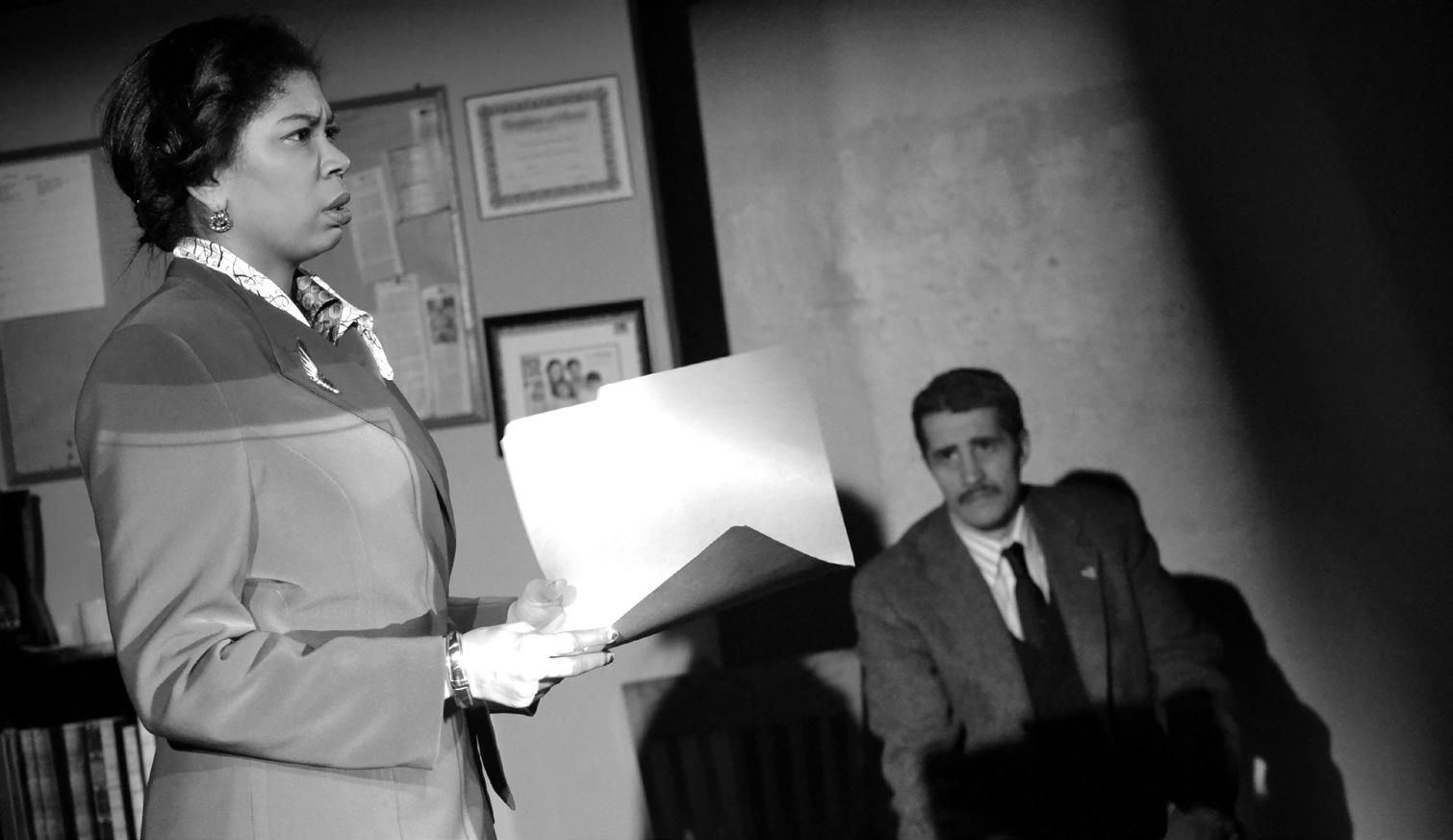
The two main characters of Nikkole Salter’s Lines in the Dust, Denitra (Elaine C. Bell) and Beverly (Quenna Lené Barrett), represent diverging potentials from the same source and opposing ideologies of how to achieve success. Both grow up in a poor area of Newark, New Jersey, but from there chance shifts them apart. Beverly attends a mostly white boarding school on scholarship before going on to Princeton and—as she mentions consistently, like a refrain—earning “three degrees.” Meanwhile, Denitra lingers in a local public school, convinced she is going on to Harvard. Her academic performance is high in comparison to her peers, but to her surprise she falters when it comes to standardized tests; she ends up attending community college, where she is placed in several remedial classes.
Through the microcosmic lens of these women’s divergent experiences, the play’s Chicago premiere at eta Creative Arts tackles questions of justice: can success be attributed to actual hard work or merely to circumstance? How can we claim this country to be a meritocracy when so much prosperity stems from privilege? As Denitra claims, “Opportunity is not just about merit—it’s about positioning.”
“We are lovely people,” Beverly insists, when she and Denitra are rebuffed from an open house in the affluent and insular community of Millburn. But Beverly thinks Denitra is a lawyer with a similar background as herself, a persona Denitra is adopting only so she can send her daughter to a school in the Millburn school district, of which Beverly is the principal. Salter makes the intriguing choice of making Noelle, Denitra’s daughter, the “ghost” of the play—the character who’s never seen but serves as the focal point of most conversations. Because of this, she is more symbolic than tangible. She represents the many children in her situation: hardworking and ready to learn, but denied the proper opportunities in their own school districts.
For a play with only three characters— the other being the intrusive and overly eager investigator Mike DiMaggio (Benjamin Todd)—the story is full of such intricacies,
perhaps overly so. The plot takes several unexpected dips at various times, resulting in an array of false endings. The actual ending peters out, leaving no sense of finality. This effect may be Salter’s intention, a statement that these problems persist without resolution, but it comes across as running out of ideas for a more narratively satisfying conclusion.
Therein lies the ultimate conflict in Lines in the Dust: with so much focused on what it has to say, it often loses sight of itself as a play. Denitra and Beverly often seem to act as mouthpieces for their respective points of view, delving into diatribes about their outlooks on fairness and the purpose of education. Bell embodies the weariness of downtrodden Denitra, and Barrett has the proper comportment of Beverly, but it would be difficult for the actors not to struggle with these long speeches, which are not yet natural in their mouths. While their perspectives are interesting and the tension palpable, we often lose sight of who these characters are beyond their relation to the access of proper education in America.
Likewise, the character of DiMaggio adds an extra layer of complexity and a new voice to the din, one that feels somewhat out of place and unnecessary. DiMaggio stumbles into the dialogue with his awkward gait and inopportune jokes. He is adamant on maintaining the standards of a community by not letting the outside (i.e. children from poor school districts—ostensibly bringing with them a violent culture) in. The play hints that this resentment comes from his growing up in an older, different Newark, one inhabited by Italian immigrants rather than the gangs he claims currently run rampant.
Though DiMaggio is a character of hidden depth, despite his hackneyed sense of humor—somewhat more interesting, unexpectedly, than either of the female leads—he prevents Denitra and Beverly from being more fully realized, the development of his background and motivations taking up space that could have been spent fleshing out the women’s personalities. Much of his voice seems to be a more prejudiced version of
While their perspectives are interesting and the tension palpable, we often lose sight of who these women are beyond their relation to the access of proper education in America.
Beverly’s: the ideal that people can achieve success through hard work, despite lack of inherent opportunity. While his voice would be welcomed in further expanding this discussion, it comes across as too comically antagonistic to warrant any respect as a valuable opinion. He is set so much in opposition to the main characters, that one cannot help but write his views off as mere intolerance and ingrained conservatism. Nevertheless, his motivations—the desire to cling on to an old way of life, even at the expense of others— are compelling. Even if the interactions leave things to be desired, all of the characters still brim with potential and passionate ambitions. Lines in the Dust is the last in a sequence
eta Creative Arts has held on Salter’s work. Earlier this season they staged her play Repairing a Nation and a reading of Carnaval. Like Lines in the Dust, Salter’s other work tends to tackle resounding social issues about blackness in America and the intertwining of race and socioeconomics. Her acute thoughts are tangible in these plays, but in Lines, the pursuit of big ideas comes at the expense of making characters wooden and dialogue stilted. While Lines in the Dust is admirable in its scrutiny of the politics of education, it struggles as a piece of theatre.
Bart Schultz’s Recommended Reading List
Over the course of the Weekly’s interview with Schultz, a number of works related to the mission of the Civic Knowledge Project came up. Here are some of them.
• Talking to Strangers: Danielle Allen, 2006. A theory exploring the benefits of engaging with strangers in an effort to build civic bonds and strengthen democracy
• Making the Second Ghetto: Arnold Hirsch, 1998. A look into how, as black immigrants moved north in the middle of the twentieth century, Chicago maneuvered to keep its neighborhoods firmly and permanently segregated
• Bridges of Memory, vols 1 and 2: Timuel D. Black, 2003 and 2007. A two-part oral history exploring the effects of the Great Migration north to Chicago, told through the eyes of immigrants and their descendants
• Challenging the Daley Machine: Leon Despres, 2005. A memoir from the iconoclastic, long-time Hyde Park alderman detailing his attempts at reform.
• The Public and Its Problems: John Dewey, 1927. An argument for the value of a publicly engaged democracy, from UofC’s famous educational philosopher
• “The New Chicago School of Philosophy”: Bart Schultz, 2015. An essay detailing the mission and accomplishments of the Civic Knowledge Project
• “The CKP Remembers 1942-43”: Civic Knowledge Project, 2008. A short documentary recounting the history of the Congress of Racial Equality on the South Side
library to the South Side, but he has also been very consistent in saying this should be the voice of the South Side, and that we’ve got to keep that voice speaking up, because we don’t want it to turn into some mere publicity mechanism for his triumphs in office. It should be educating, inspiring, really dynamic. Is that going to happen? It won’t happen unless people fight for it. Nothing does. But it holds the potential to really change the whole picture of how to do urban development in a way consistent with social justice.
What I tend to worry about personally—and I should stress that I am not speaking in any official capacity here, but simply voicing my own views—is not so much the intentions of the powerful players involved, but how the South Side knowledge communities can get heard so that everyone knows what the opportunities are. I think that the Obama foundation needs to get involved with organizations like the Bronzeville Historical Society, which represents this dedicated effort by Sherry Williams and others to preserve the history of Bronzeville, save material that’s vitally important to the history of Bronzeville. She has all of these death records from South Side funeral parlors, an amazing archive of information about life on the South Side and what was killing people. She has no place to keep it. She's housed in this little cube-like building over by the Douglas Tomb with some extra room down at the Hotel Florence in Pullman. She has been devoting herself to this effort for so many years, collecting all this information. That’s the kind of work that I think the Obama Center should reflect and honor.
If people come back ten years from now, or fifteen years from now, and it looks as though what happened was urban renewal or gentrification under another name, well, you’ll be getting the same kinds of critical histories you got about urban renewal in the
fifties and sixties, right?
Does the CKP have any projects in the works?
I’ve been the director of the CKP now for ten years, and so I’m trying to ease out of things, and move programs into sustainable paths where they’ll keep going. We’ve connected with this great organization, the Prison and Neighborhood Arts Project (PNAP). They’re following in the footsteps of the great Margaret Burroughs, teaching arts and humanities courses to inmates at Stateville prison in Joliet, a maximum security prison, very difficult to work in and suffering from all the budget cuts. Last autumn, we supported a graduate student in history who taught a course on black history there. A number of faculty, including some from the School of the Art Institute and other institutions, are teaching down there. We’re getting guest lecturers. I’m hoping Tim Black and I will go down there to have a kind of dialogue. Work like this is important for the incarcerated individuals themselves, but in this case so many of the individuals we’re working with are from families on the South Side or have families on the South Side of Chicago. We think of it as opening up through the humanities and through this great partner another channel of communication through which people can be reunited with their families through art, through writing projects, and so forth.
I always go back to a conversation I had a long time ago, when I was just beginning at the CKP. I had a very candid conversation with Dan Peterman, a cofounder of the Experimental Station. A very wonderful individual, very devoted to community arts. He was so troubled by the paradoxes that opened the Experimental Station. How can you do this without being part of the problem? Where you’re really creating opportunities,