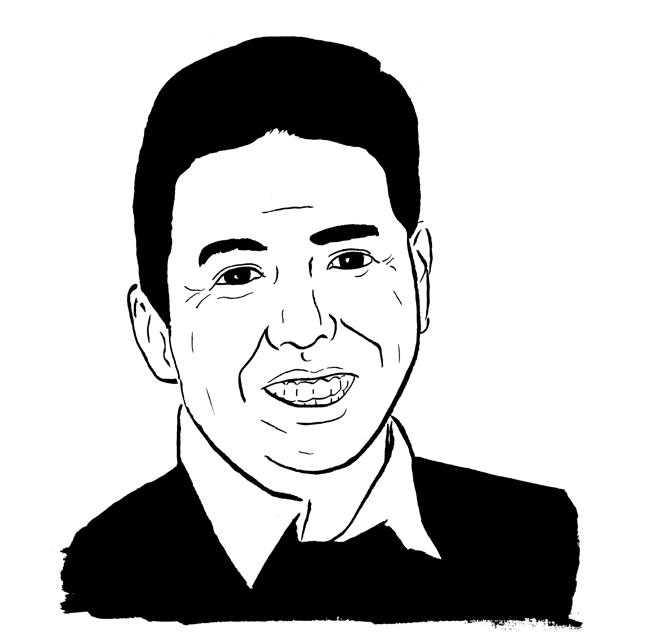
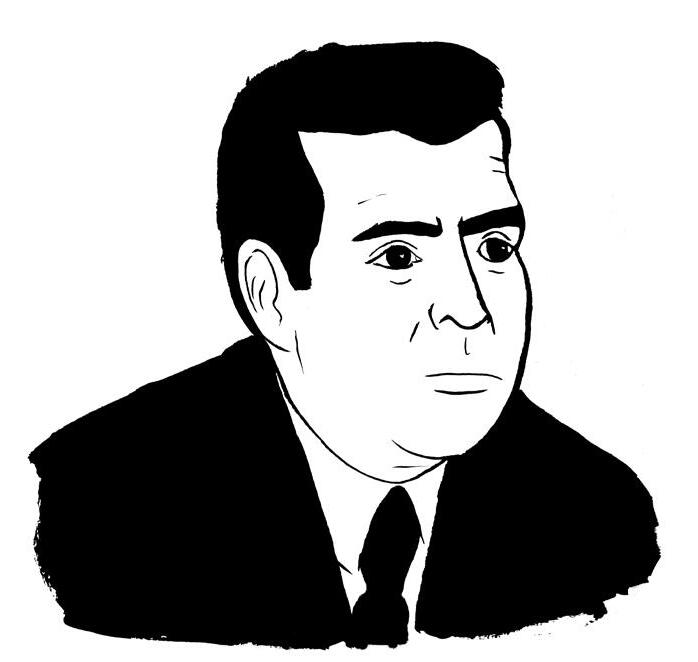
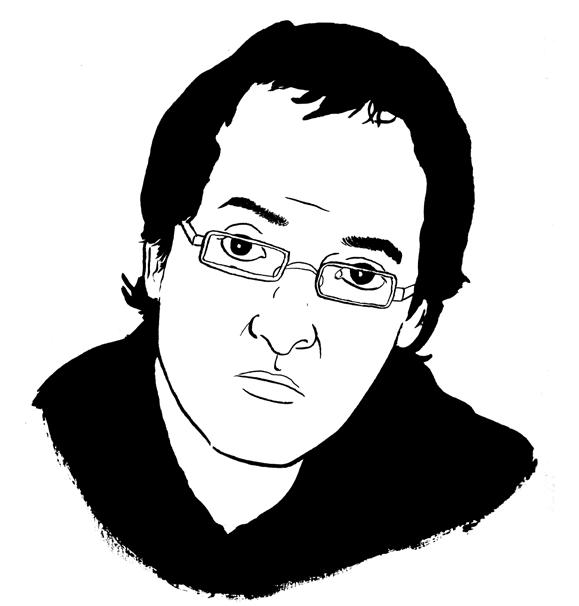
We Chicagoans have a great many things to be proud of. Our city’s politics are not often one of them; we know better than to expect lessons in civics from our municipal elections. We should have every reason to expect, though, that our journalists of politics and city life report on the myriad campaigns and candidacies set for the ballot with the educated voter in mind. To that end, we’ve put together a special issue for the elections coming up on February 24.
For this issue, we’ve forgone the horse-race coverage you might find at other publications in favor of in-depth looks at some of the most interesting and important aldermanic contests on the South Side—the races in the 5th, 7th, 11th, and 25th Wards. We’ve also included a brief piece on the passing of 16th ward alderman JoAnn Thompson. On the mayoral front, we’ve compiled a few essentials—a guide to the endorsements received by Emanuel, Garcia, Fioretti, Wilson, and Walls, as well as excerpts from the final debate of the campaign, held at the DuSable Museum on Tuesday, February 10.
If nothing else, we at the Weekly hope that you cast a vote this week. On Election Day—next Tuesday, the 24—polls will be open from 6am to 7pm and voters must go to their assigned polling place to cast a ballot. From now until Saturday, February 21, however, registered voters can vote early at any of the fifty-one available early voting locations from 9am to 5pm, regardless of residence.
All voting workers are entitled to two hours off on Election Day, without penalties, provided that employers are notified at any point before Election Day and work begins prior to 7:59am and ends after 5:01pm. Employers have the right to specify the twohour window in which workers are permitted to vote.
Registered voters can also cast absentee ballots. The deadline to apply is this Thursday, February 19. Once received, all cast ballots must be mailed, or sent back on or before February 23. Questions about absentee ballots can be directed to the election board at (312)269-7967.
You can still register to vote if you haven’t already. All fifty-one early voting locations will process grace period registrations until Saturday, February 21. To register you must be a U.S. citizen, a resident of your precinct for at least thirty days, and at least eighteen years of age on Election Day. Prisoners and those claiming voting rights elsewhere cannot vote.
When registering or casting an early ballot, voters must present at least two forms of identification, including one that indicates residency. Driver’s licenses, passports, state and school issued photo IDs, and bills, paychecks, and bank statements with names and addresses are all valid.
If your registration is challenged on Election Day, you can show the judges two of the above forms of identification as well. Additionally, be sure to ask election judges to check the supplemental voter rolls if this happens. Voters without identification can still cast provisional ballots and present identification at the Election Board’s offices (69 W. Washington St, 6th floor) within seven days of Election Day.
If you find yourself voting in the wrong precinct on Election Day, votes for all citywide offices, including the mayor, will still count. Aldermanic votes will be disqualified.
Finally, voters can check their registration status and their precinct residency, find their polling places, apply for absentee ballots, obtain ward maps and sample ballots, and view candidate lists and referenda at the Board of Election Commissioners’s website: chicagoelections.com. Any Election Day irregularities or difficulties can be reported to the Election Board at (312)269-7900. Additionally, the board can be emailed at cboe@ chicagoelections.net.
Only forty-two percent of registered voters cast a ballot in 2011’s municipal elections. Only forty-one percent voted in 2007. We at the Weekly hope that our coverage in this issue, and the elections coverage we’ve brought to you over the past few months, will inform and inspire readers to turn those numbers around.
The Voters’ Bill of
Rights
From the Chicago Board of Elections Commissioners
You have the right to:
Cast your ballot in a non-disruptive atmosphere free of interference.
Vote if you are in line by 7pm.
Vote by provisional ballot if your registration is challenged, or there is no record of your registration.
Vote at your old polling place if you have moved within thirty days of the election.
Request assistance in voting, if needed.
Bring newspaper endorsements or sample ballots into the voting booth.
Protect the secrecy of your ballot.
Review your ballot to ensure it is complete and accurate, and correct your vote if there is a mistake or you change your mind.
Have your ballot counted fairly and impartially.
THE bODY’S In THE bacKgrOUnD By what right does someone exhibit a doormat as artwork?
stephen urchick...15
arT frOm aLL cOrnErS
The versatility of “Objects and Voices” speaks to the expansiveness of the Smart’s collections. zoe makoul...16
LOLa vOn mIramar prESEnTS “One hundred and fifty years. You’d think that’d be sufficient time to, you know, not kill people.” dan cronin...19
Bring your minor child in to the voting booth with you.
If any of your above rights are violated, call Election Central at (312)269-7870.
Lining 18th Street, in the heart of Pilsen, are the recurrent red, white, and blue signs of mayoral and aldermanic candidates alike. Solis and Sigcho compete for attention among the white signs for Chuy Garcia. I see one “Mújica” sign at a local candy store. The shop owner says people came by to put up the sign and he let them—he can’t even vote in the election because he isn’t a U.S. citizen. As I go into the other shops one by one, I am met with blank stares and shrugs by these superficial endorsers.
“I don’t remember, someone came in to put up a sign and I said, ‘Sure.’ ”
“I tailor Sigcho and Solis’s shirts so I let them put both of their signs up.”
“I don’t care.”
“I don’t know.”
“People wanted to put it up and I had no problem with that.”
“If Solis came in here wanting to put up a sign I would say no, I don’t want him claiming power over my business,” says one shop owner on 18th Street, who asked to remain anonymous out of concern for her business. She has no political signage in her shop window.
She mentioned a newly constructed metal shredder and the $140,000 budgeted for arts and culture in 2013 that Solis still hasn’t paid to local artists as her primary concerns for the election. But when asked which of the other candidates she was going to vote for, she admitted that she didn’t even know the names of Solis’s opponents. She didn’t think the other candidates had done a good job of advertising. “On a personal level,” she said, “it doesn’t feel like the aldermanic race would affect me one way or the other.”
A local landlord criticized the “lack of transparency of Solis’s office,” but did com-
Apathy in the 25th
mend Solis on moving the aldermanic headquarters east in the ward to 18th and Blue Island, a central intersection in Pilsen. He cited the redistricting of the ward as an example of “corrupt Chicago politics,” but also wished to remain anonymous because “the alderman will be re-elected and I will have to work with them in the future.”
The landlord described the metal shredder, the nearby heliport project, and the lack of local economic growth as the issues most important to him. But he said he hadn’t seen “much change in the community.” He admitted he was not sure if he will even vote in the upcoming election.
Even if voters are concerned about certain issues, it’s hard to present them with viable alternatives.
“The only way I’m going to get news out of Pilsen is usually to Google search ‘Pilsen,’” the landlord said. “Otherwise, it’s just not out there.”
Made up of Pilsen, Chinatown, University Village, Little Italy, and part of the West Loop, the 25th Ward is a patchwork of disunited neighborhoods. The current alderman, Danny Solis, has been in power for the last eighteen years; Solis was appointed by former mayor Richard Daley when his predecessor was indicted. Solis has been chairman of the Zoning Committee since 2009, which means that he played a part in the redistricting of the 25th Ward that has taken place since the last election in 2011. The redistricting pushed the bustling, art-gallery lined section of Halsted Street in Pilsen and part of Little Italy to the 11th Ward, and brought in land from the Near West Side and the South Loop.
As the incumbent, and as an influential veteran of City Council, Solis is by far the most powerful and well-equipped of all
Four candidates attempt to unseat a powerful incumbent
BY LUCIA AHRENSDORF
the candidates. However, he is not invincible. In 2011, due in part to the unpopularity of the Solis-supported Fisk power plant in southeastern Pilsen, Solis’s opponent, Cuahutémoc Morfin, a Pilsen community activist, was able to launch a significant challenge against Solis’s incumbency. Morfin acquired more than sixty percent of the vote in the eastern half of Pilsen and the Latino vote overall, while Solis retained overwhelming popularity in University Village and Chinatown. The two went to a runoff, and Solis won fifty-six-percent to forty-four.
This time around, Solis faces five opponents. Edward Hershey is a teacher at Lindblom Math & Science Academy in West Englewood and is backed by the Chicago Teachers Union; he was arrested at a protest against demolishing the Whittier Elementary field house in Pilsen in 2013. Byron Sigcho is an Ecuadorian immigrant, a doctoral candidate in urban education at the University of Illinois at Chicago, a lead instructor at UIC’s Center for Literacy, and a leader of Pilsen Alliance, a neighborhood social justice organization. Jorge Mújica is a community activist and a socialist well-known for his dedication to labor and immigration rights, and is backed by the Hispanic Council of Chicago (the Weekly interviewed him
Danny Solis
in October). Roberto Montaño is a financial advisor and a former chief-of-staff for Solis. Solis has more than five times the funds of the second-most-funded candidate, Montaño, with $206,645 filed by press time according to Aldertrack. In municipal elections, recognition is the most important thing money can buy. The more funds you have, the more visible you can be. Sigcho, who had slightly less than $2,500 at press time, says his biggest challenges have been educating people about the ward’s issues and getting recognition. With his amount of money, Solis has the ability to send more flyers, post more advertisements, and do publicity in the 25th Ward than the other candidates. Very few people I spoke to in Pilsen could even tell me who Solis’s opponents in the election were.
Solis didn’t win an initial majority of votes in Pilsen in 2011, however, and he still isn’t terribly popular in the neighborhood. His support for the Pure Metal Recycling metal shredder project, his silence over the $140,000 that was supposed to go to local art projects but has since gone missing, and his unwavering allegiance to Rahm Emanuel aren’t helping in the eyes of many Pilsen residents.
In May 2014, the city’s Zoning Board of Appeals (chaired by Solis) approved plans for a fifteen-acre industrial metal shredder plant after lengthy delays. The metal shredder project poses yet another environmental issue in Pilsen after the Solis-backed coalfired Fisk plant. Residents are concerned that the shredder, which will be located at Loomis and Cermak, near Benito Juarez High School, could bring traffic congestion, pollution, and health risks to the nearby students and homeowners. The metal shredder would be the second in Pilsen: SIMS Metal Management operates another less than a
As the incumbent, and as an influential veteran of City Council, Danny Solis is by far the most powerful and well equipped of all the candidates. However, he is not invincible.
mile away. Solis supports the shredder project, citing the jobs it will create. The other aldermanic candidates are unanimously opposed.
Solis’s second major political obstacle is the “missing $140,000,” a chunk of the total $1.3 million given to each ward annually to support infrastructure. Solis decided to allocate this money to support local art projects in the 25th Ward as part of the Arts in Public Places Initiative he started in 2012. $16,000 was promised to the Humboldt Park artist collective Pawn Works in 2013, to bring in renowned graffiti artists. $25,000 was promised to Benito Juarez Community Academy for an art project. Though Pawn Works has begun putting up murals in the neighborhood, the $16,000 still hasn’t been paid, and a perplexing total of $140,000 has gone missing. According to Solis’s spokeswoman, in an October 2014 interview with the Reader, the $140,000 is tied up in the “bureaucratic process of the city.” Solis and his spokeswoman declined multiple requests to be interviewed for this story.
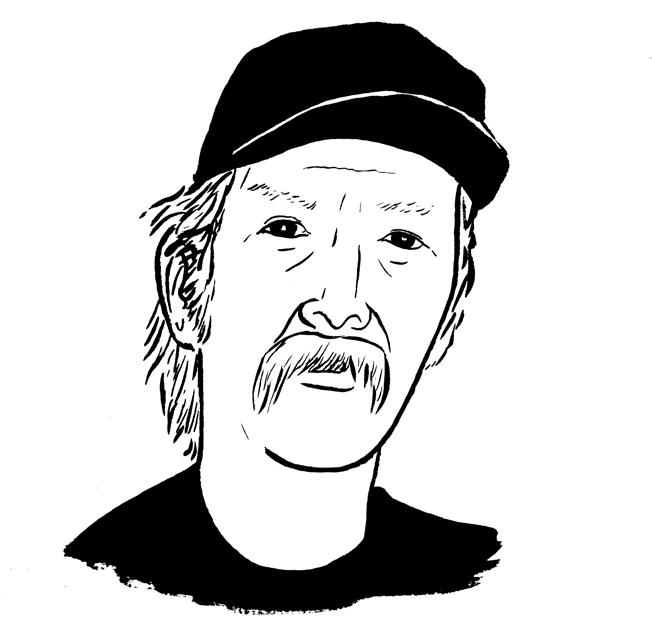
On February 6, a community forum between the five aldermanic candidates was held at UIC’s Rafael Cintrón Ortiz Latino Cultural Center. Mújica was there with his impressive moustache and signature baseball cap, Hershey was in jeans, and Sigcho and Montaño showed up in business suits. The fifth candidate, Danny Solis, was not in attendance, reportedly due to a scheduling conflict.
There were about sixty people at the forum, and it felt like a small town meeting— about half of the people there were family members of the candidates or campaign volunteers. Students from the UIC organization United Students Against Sweatshops, who organized the event, posed the questions. They covered topics from immigration to public safety.
Mújica’s diction was powerful and resonated with the audience. He highlighted his successes in leading strikes and used concrete examples of his achievements to underscore his beliefs. “Today, two hours ago, the Golan’s Moving and Storage strikers finally got a settlement,” he said. “I organized the workers, they get an increase in salaries, they get transportation time pay. That’s what I do
day to day. I am a worker organizer.”
Mújica, like the other candidates, supports a $15 minimum wage. He promises to push for municipal IDs, which he says would help immigrants applying to deferred action programs. He is anti-TIF and believes that TIF projects are taking away money from schools. He calls for a “moratorium on charters” and supports an elected school board. Montaño, too, said that a $15 minimum wage is clearly “good economics—we do better when we all do better.” He described his extensive work on immigration and highlighted the positive economic impact of immigration, namely the small businesses immigrants tend to open. He also believes in an elected school board and wants to rein in TIFs, saying they take away from the lifeblood of the schools.
Hershey had some students in the audience. “I’ve helped organize students on the Southwest Side on school closings. I got arrested there, a year and a half ago,” he said in his opening statement. He mentioned Karen Lewis as a model and an inspiration. Though still not enough, he believes that at least a $15 minimum wage is necessary. He is against the closing of neighborhood schools and strongly in favor of electing a school board:
“As a teacher, a personal frustration I would have is that undocumented students would say, ‘Why should I work to get good grades, I’m not going to afford college?’” he said. “And other students have the best grades, jump over every hurdle we set out for them and yeah, they come back to me, they’re just working jobs, they have no money. So yeah, we need to have equal opportunity. First of all, college should be free.”
“I’m an immigrant, activist, and community member,” Sigcho said of himself. “I am glad to see parents in the room, fighting
for their schools. This is about community, I want to include everyone.” He cited the problem of families being displaced from Pilsen because of rising rents. He has made education for immigrants one of his primary focuses, and has organized a community TIF forum to educate citizens on the confusing mechanism of Chicago taxation so that they could contribute to the discussion. One of his volunteers, a man in his late fifties, told me that Sigcho is helping him to get his GED.
“What I will do is what I’ve been doing. I would like to continue to do that in City Council,” he said. “We need to make sure the people are making the decisions.”
At one point, about halfway through the forum, Montaño said forcefully: “One of us is going to win. Danny Solis is not going to win.” Next to him, Hershey made a face, shrugged, and mouthed “maybe” to the audience.
Not many voters were at the forum, and information on the unfamiliar candidates isn’t easily accessible—citizens would have to go out of their way to do enough research to feel confident about making a decisive vote. People care about the issues, and the problems in the community over which the alderman has influence, but in the end, many potential voters are just too busy to actively seek out information about the race, beyond the mailings that arrive on their doorsteps and the ads that inundate their televisions—that is to say, beyond what Solis’s campaign finance buys for them. That barrier to information only fuels the sense of indifference exhibited by many 18th Street shop owners. “I don’t care.” “I don’t know.” “People wanted to put it up and I had no problem with that.”
As the landlord said, “There’s a little bit of apathy, because not much changes.”
Byron Sigcho Roberto Montaño
Ed Hershey
Jorge Mújica
A Rare Vacancy in the 11th
Three candidates fight for the 11th Ward’s first aldermanic vacancy in seventeen years
BY CHRISTIAN BELANGER
When Patrick D. Thompson announced that he would be running for a seat on the City Council in the late summer of 2014, few political prognosticators would have picked against him. Thompson has been a commissioner of the Metropolitan Water Reclamation District since 2012; the widely-recognized, much-maligned middle initial of his name marks him as a member of the Daley family, the political powerhouse within Chicago—and even more locally, Bridgeport— that counts two mayors, a White House chief of staff, and a current Cook County commissioner among its ranks. Despite this, the election has been closer than most might have anticipated; though a recent poll still showed Thompson in the lead among residents, with about thirty-seven percent, the two other candidates in the race—John Kozlar and Maureen Sullivan—were holding at about twenty-two and twelve percent, respectively, while the rest of the prospective voters polled remained undecided. As the race gears up for its final days, residents of the 11th Ward (redistricting has added East Pilsen and University Village to the area) are left to choose from a strange, disparate grouping: a twenty-five-year-old law student, a longtime pet shop owner and community activist, and a real estate lawyer burdened and blessed by his affiliation with
a family that has ruled the ward for more than half a century.
A brief history of the past half-century of 11th Ward aldermen is itself fascinating, as it becomes clear just how inextricably the Daleys are linked to the ward’s councilmen. Current Alderman James Balcer has served since 1997, when Mayor Richard M. Daley appointed him to replace Patrick Huels, who was forced to resign after a minor financial scandal. Huels himself was appointed in 1976 to fill the void created when Michael Bilandic replaced the deceased Richard J. Daley as mayor; Bilandic had won the 11th Ward office in 1969, encouraged to run at Mayor Daley’s behest. This current election will see not only the first new alderman in seventeen years, but also the first non-appointed alderman in forty-six.
John Kozlar is by far the youngest participant in the race, though he is the only one of the three candidates to be running for the second time. In 2011, he garnered almost a quarter of the ward’s votes in an unsuccessful attempt to oust Balcer. A graduate of the University of Chicago, he is currently finishing up his final year at the John Marshall Law School in the Loop.
Kozlar says he feels much better prepared for this race than he did four years ago: “It was a learning experience last time —we didn’t have the signage until the
month before.” By his own estimate, he has about five times as many signatures as in the previous election and has raised a great deal more money.
Rhetorically, he presents himself as a fresh-faced facilitator, citing his success as president of the Canaryville Little League, where he presided over $225,000 worth of renovations, as proof of his ability to both administrate and unite different neighborhoods. He took over the league while still a third-year at the UofC, replacing an administration weakened by accusations of financial impropriety. By 2010, in the first year of his tenure, his administration had raised over $31,000 for renovations.
His tenure as Little League president is also his chief response to those of his detractors who argue that his youth (both Sullivan and Thompson are over forty) and political inexperience are key points against him in this election. “I’m the most experienced when it comes to civic engagement,” he said. “The Canaryville Little League was all about bringing different neighborhoods, different communities together.”
Kozlar, in talking about his past credentials, understandably overemphasizes this spell as a Little League president, creating what sometimes feels like a one-note resume. His campaign pledges fall on the opposite end of the spectrum: they are var-
John Kozlar
Maureen Sullivan illustrations by senhyo
ied and dizzyingly ambitious, ranging from the standard promises to revitalize Halsted Street and create municipal dog parks in University Village to the more outlandish suggestion of erecting the “#1 bowling alley in Chicago” with, among other attractions, Beatles-themed nights (“where the screens will display various Beatles visualizations with Beatles music playing over the speakers”). He has also pledged to donate all $73,280 of his aldermanic salary to seniors and veterans.
While John Kozlar presents himself as an injection of fresh energy into an ossified political scene tarnished by years of corruption, Maureen Sullivan is even more explosive. Sullivan, who did not respond to repeated requests for comment, made her first serious foray into community activism in 2005 with “Save the Ramova,” an awareness campaign to maintain and improve the Ramova Theatre on Halsted Street (on her website, she has accused Kozlar, who has also pledged to restore the theatre, of imitating her idea, dubbing him the “Ramova Rookie”). Since that campaign, she has been involved with a number of other local groups, such as the Bridgeport Alliance and the Bridgeport Business Association.
She has also presented herself as vociferously anti-establishment; in a DNAinfo article, Sullivan is quoted as saying that she didn’t take a job with the South Loop Chamber of Commerce because “I didn’t want work with the Machine.” In her platform, she says she wants to change the ward’s traditional “old-boy status quo,” and the “shadow finance network that seems designed to enrich the already wealthy.” On her website, she has also condemned Thompson, her opponent, for his past work with DLA Piper, a law firm where, she says, “they make money by helping their clients take away good paying jobs from American workers to send those jobs to places like Asia and Europe.”
Both Sullivan and Kozlar condemn the heliport planned for 24th and Halsted, and all three candidates have vowed to improve communication between the ward office and the public. Sullivan has also pledged to fight for a new public high school in the ward, along with an elected school board, two policy goals that appear to have won her the support of the Chicago Teachers
Union, which recently endorsed her.
Finally, there is Patrick D. Thompson. During his time as commissioner of the Water Reclamation District Board, he says, “I passed pension reform, but I also invested hundreds of millions of dollars in getting residents drinkable water.” Thompson’s environmental credentials are strong; in 2005, he worked as a board member for the Bubbly Creek Committee, where he helped clean up a polluted waterway that he says often contained fermenting, festering carcasses.
Thompson has attempted to distance himself somewhat from his lineage: “I’m not running on my name, and I’m certainly not running away from my name, but if you check any legal document, if you check my law degree, it’s always said ‘Patrick D. Thompson.’ ” He has also expressed disapproval at how the other candidates and their supporters have labeled him a creation of Bridgeport’s political machine, stating, “Stuff like that is irrelevant. The notion of a machine is fiction, and it has been since the 1920s.”
Instead, Thompson, who works as a real estate lawyer, wants to point to his own long history of community service. He’s the secretary of the South Loop Chamber of Commerce that Sullivan so fiercely derided, as well as a board member at both the Valentine Boys and Girls Club of Chicago and the Illinois Council against Handgun Violence (ICHV). This last organization is apparently of particular importance to Thompson, as he pledges to curb violent crime rates in the 11th Ward if elected, while simultaneously criticizing both of his opponents as “willing to sit down with gangbangers.” It’s not immediately clear what he means by this last statement, though Kozlar does say something like this on his campaign website, stating, “I will work with our community members and police to infiltrate gangs and have gangs realize that it is better to have a job instead of creating havoc in our neighborhood.” Thompson’s other proposals include a Stockyards Museum around 41st and Halsted and an Adopt a Viaduct plan. Though it may very well be true that Thompson has not actively sought the support of the political establishment, it has certainly thrown its support firmly behind him. He has been endorsed by Senator
As the race gears up for its final few days, residents of the 11th Ward are left to choose from a strange, disparate grouping: a twenty-five-year-old law student, a longtime pet shop owner and community activist, and a real estate lawyer burdened and blessed by his affiliation with a family that has ruled the ward for more than half a century.
Dick Durbin, Cook County Board President Toni Preckwinkle, Congressman Dan Lipinski, the firefighters’ union, and the Fraternal Order of Police, as well as the Tribune and the Sun-Times. Even the White Sox organization, vaunted political powerhouse that it is, has contributed $1000 to his campaign. When these endorsements are considered together with the aforementioned poll numbers, it certainly seems as if Thompson is the favorite to win.
Nevertheless, both Kozlar and Sullivan seem optimistic, each presumably hoping they can garner enough votes to hold Thompson under fifty percent and force a decisive April 7 runoff. If this happens, it also seems more than likely that supporters of the third-place candidate (who would be out of the running) will choose to throw their support behind whichever remaining option is not Thompson. Those predictions are murky at best. As early voting continues and the race heads into its final hours, what does seem clear is that the 11th Ward, for the first time in recent political memory, is seriously considering a divorce from the deeply-rooted political family that has governed it—directly or by suggestion—for the last fifty years.