The South Side Weekly is a nonprofit newsprint magazine written for and about neighborhoods on the South Side of Chicago. We publish in-depth coverage of the arts and issues of public interest alongside oral histories, poetry, fiction, interviews, and artwork from local photographers and illustrators. Started as a student paper at the University of Chicago, the South Side Weekly is now an independent nonprofit organization dedicated to supporting cultural and civic engagement on the South Side, and to providing educational opportunities for developing journalists, writers, and artists.
Contributing Editors Will Cabaniss, Eleonora Edreva, Lewis Page, Hafsa Razi
Social Media Editor Sam Stecklow
Web Editor Andrew Koski
Visuals Editor Ellie Mejia
Layout Editors Adam Thorp, Baci Weiler, Sofia Wyetzner
Senior Writer: Stephen Urchick
Staff Writers: Olivia Adams, Amelia Dmowska, Maira Khwaja, Emiliano Burr di Mauro, Michal Kranz, Zoe Makoul, Sammie Spector, Zach Taylor
Staff Photographers: Juliet Eldred, Finn Jubak, Alexander Pizzirani, Julie Wu
Staff Illustrators: Javier Suarez, Addie Barron, Jean Cochrane, Lexi Drexelius, Wei Yi Ow, Amber Sollenberger, Teddy Watler, Julie Wu, Zelda Galewsky, Seonhyung Kim
Editorial Intern Clyde Schwab
Webmaster Sofia Wyetzner
Publisher Harry Backlund
The paper is produced by an all-volunteer editorial staff and seeks contributions from across the city. We distribute each Wednesday in the fall, winter, and spring, with breaks during April and December. Over the summer we publish monthly.
Send submissions, story ideas, comments, or questions to editor@southsideweekly.com or mail to: South Side Weekly 6100 S. Blackstone Ave. Chicago, IL 60637
For advertising inquiries, contact: (773)234-5388 or advertising@southsideweekly
Read our stories online at southsideweekly.com
Cover design by Ellie Mejia
IN CHICAGO
A week’s worth of developing stories, odd events, and signs of the times, culled from the desks, inboxes, and wandering eyes of the editors
Laquan McDonald
It has been suggested—by the mayor; the Fraternal Order of Police; John Kass of the Tribune; a smattering of pastors, lawyers, and aldermen; and others—that by the time this issue reaches you, Chicago could be aflame. The stability of the city in the coming days and weeks, it is supposed, rests on the response to a dashcam video few have viewed and almost everyone is familiar with. In it, Laquan McDonald, a seventeen-year-old African-American teen suspected of breaking into vehicles, wanders down a South Side street with a knife. He is confronted by police. He slashes the tire of a police car and flees. He is shot sixteen times. Last week, Cook County Circuit Judge Franklin Valderrama ordered—against the wishes of the city and McDonald’s family alike—the release of the video, ending over a year of efforts to prevent the public from seeing the events of that night last October as they transpired. In recent days, appeals for calm have accompanied growing attention from the national media, which has been responsible for pushing cases of local police abuse in Ferguson, Missouri; New York City; and elsewhere into the spotlight. The same could happen here. As such, city authorities seem to be preparing for the worst. There has been casual chatter about riots and decidedly less talk about the kinds of reforms protests against the Chicago Police Department could bring about. Given that Chicago—with the systemic failings of its policing and all— will be left standing no matter what shape responses to the video take, local commentators and the national journalists set to parachute into the city should trade their apocalyptic predictions for honest appraisals of the abuses that will—and should—bring protesters into the city’s streets.
IN THIS ISSUE
THE cHIcagO rEpOrTEr TUrnS a pagE
Racial justice once more rose to the forefront. How could the Reporter get in the middle of it?
julia aizuss...4
cOrpOraTE gOaL #1
“Are they going to move into the frozen aisle of the grocery store?”
adam thorp...8
jUST a facT?
Guns and produce change hands in very different ways. will cabaniss...10
WHY nOT WILSOn?
“I’m running for president, but I’m running for Christ, too.” sam stecklow...11
bUrnIng fLagS
“This is me burning a flag on the steps of the Capital.” ellen hao...12
rOTTEn mEmOrY
“The mind is like a refrigerator: it keeps memories fresher, longer.” stephen urchick...13
SpEcTacLE In THE WInDY cITY
Equal parts fear and fascination. christian belanger...14
a DELIcaTE baLancE
John Boyer, dean of the college at the UofC, has written the school’s most complete history. kevin gislason...16
HISTOrIc HYDE parK
Each of Davis’s sentences feels like a plot point in a mystery. anne li...17
In the Middle of It
As its longtime focus on race and inequality becomes central in the national conversation, The Chicago Reporter redefines itself as an online news organization
BY JULIA AIZUSS
lending practices that was integral to the Illinois Attorney General’s lawsuits against two lending firms. There has never been any confusion about the work the Reporter does, only over what the Reporter is.
For one, it’s under the umbrella of the Community Renewal Society (CRS), a social justice organization with a faith-based lens. Though the Reporter maintains editorial independence from CRS and is not involved with the nonprofit’s organizing and policy work, Richardson said the CRS covers the Reporter’s operating costs.
Although it started out as what the New York Times once called a “gadfly newsletter,” the Reporter quickly morphed into a monthly investigative publication, usually eight pages: in the seventies and eighties, a subtitle next to its blocky logo explained in small print that it was “a monthly information service on racial issues in metropolitan Chicago.” As it grew in size to twelve to sixteen pages in the eighties and nineties and twenty to thirty pages in the 2000s, acquiring the trappings of a magazine along the way (a graphically designed cover, reg-
ular columns, less perfunctory photos), its label became malleable, wavering between words like “periodical” and “magazine” and, most generally, “publication.” Richardson now defines it as a “nonprofit investigative news organization.”
“We’re a news organization,” she says. “Period.”
“ ‘News organization’ opens up a lot more possibilities,” former Reporter editor Laura Washington explains. Washington first joined the Reporter as an intern in 1979, edited it in the nineties, filled in as its interim publisher in late 2012 and 2013, and led the search for its new editor and publisher, who ended up being Richardson. When interviewing candidates, Washington always brought up the Reporter’s online presence, and as interim publisher, she tried to frame the Reporter as a multimedia news organization.
“That’s where the media world is right now,” Washington says. “To think about it as a publication was too limiting and too parochial.”
Richardson knew the editor job would come with the task of creating a stronger
online presence, whatever that might be. But it wasn’t until August 2014, after she had served as editor for nearly a year, that the question took on a new dimension: in Ferguson, Missouri, Michael Brown was shot by a police officer while unarmed, and the racial justice issues that the Reporter had been writing about for over forty years once again rose to the forefront of the national conversation that ensued. How could the Reporter get in the middle of it?
“Issues around policing, Black Lives Matter, and so many other racial justice movements had erupted through these incredible online conversations,” Richardson recalls. “A lot of the core issues we had reported about were really playing out, and the ideas being spread were clearly via social media. It struck me that, well, we need to think about how we can be in those conversations more aggressively with the type of information and investigative work that we do, and the data. We really wanted to inject into those conversations knowledge and information, and that meant we had to up our digital game. That increasingly led me to believe that we don’t need to think about how
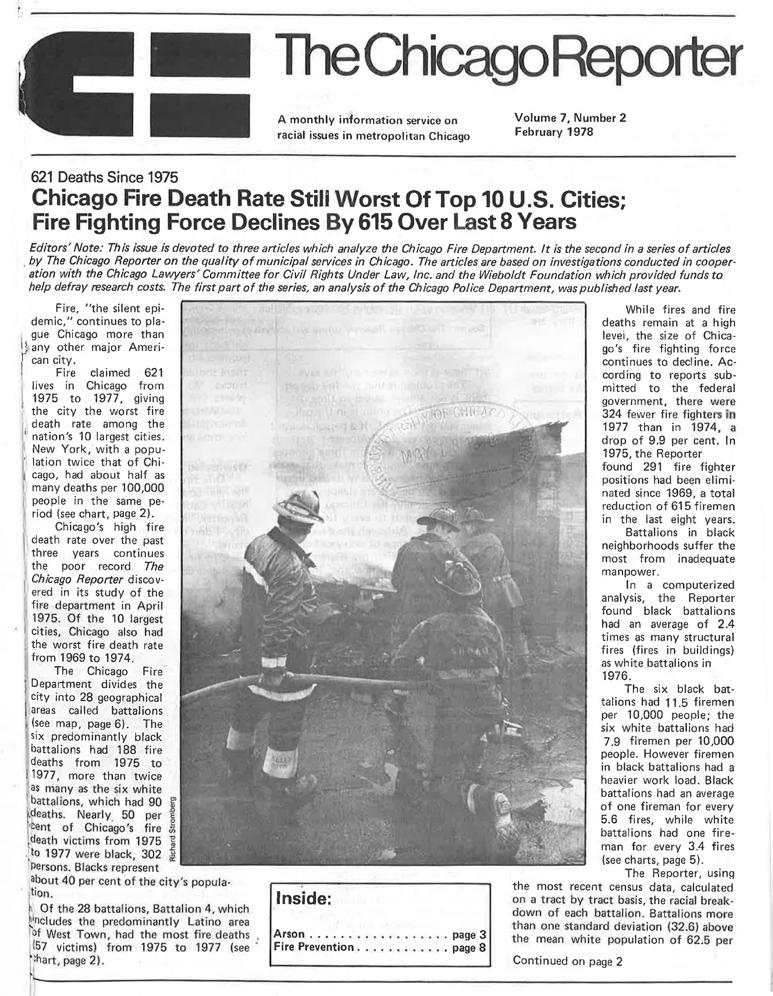
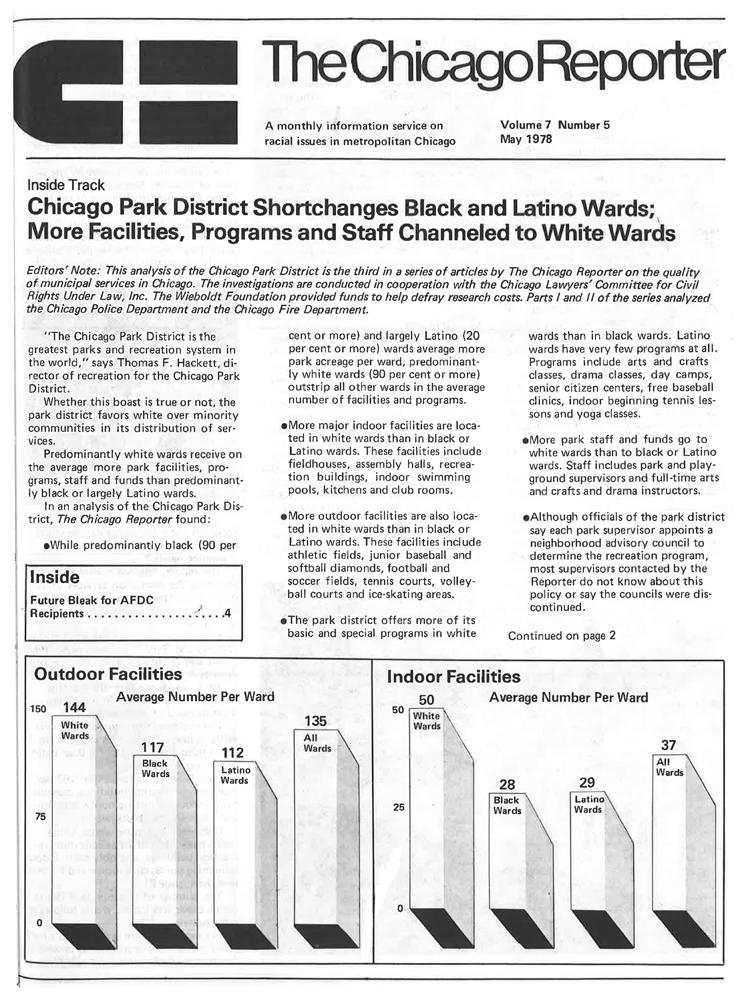
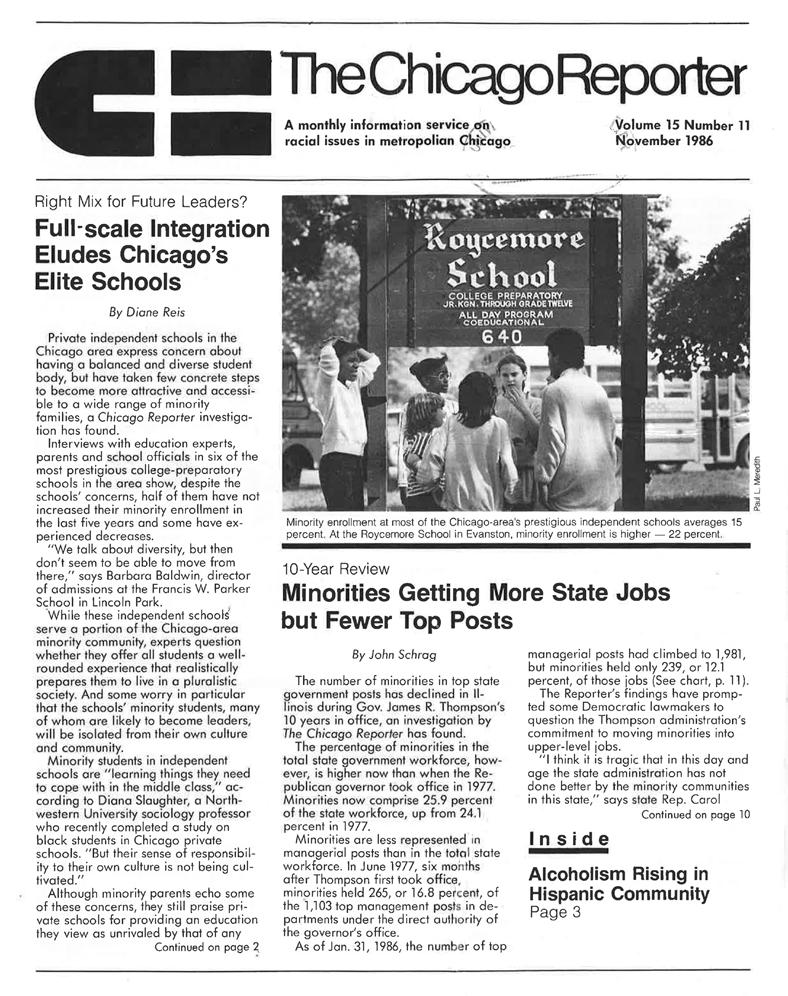
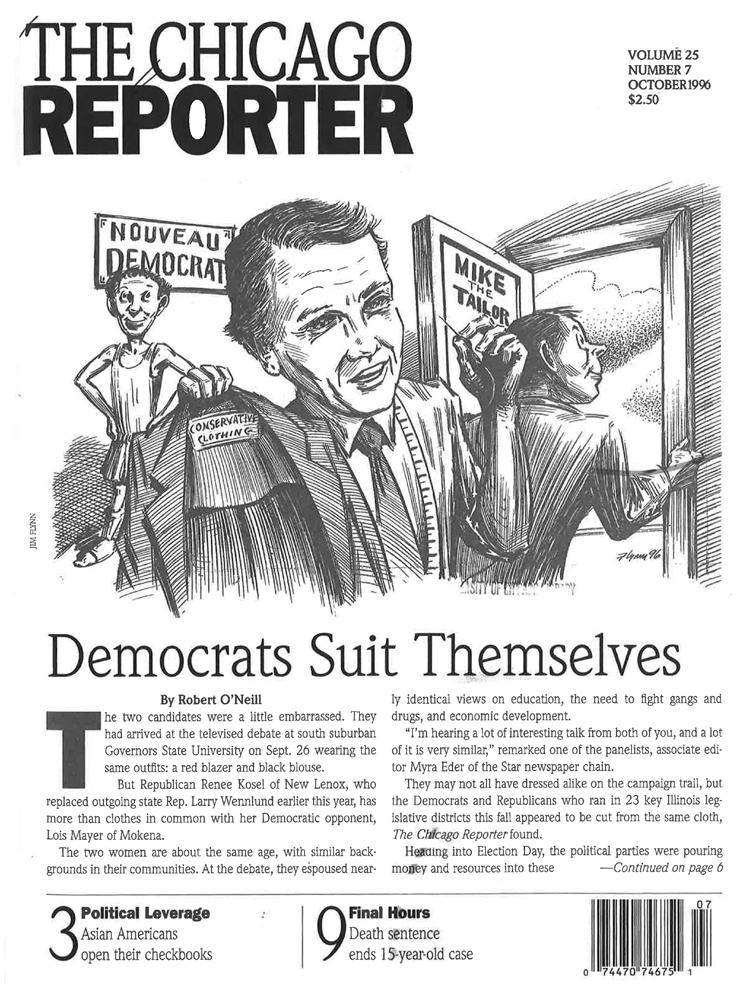
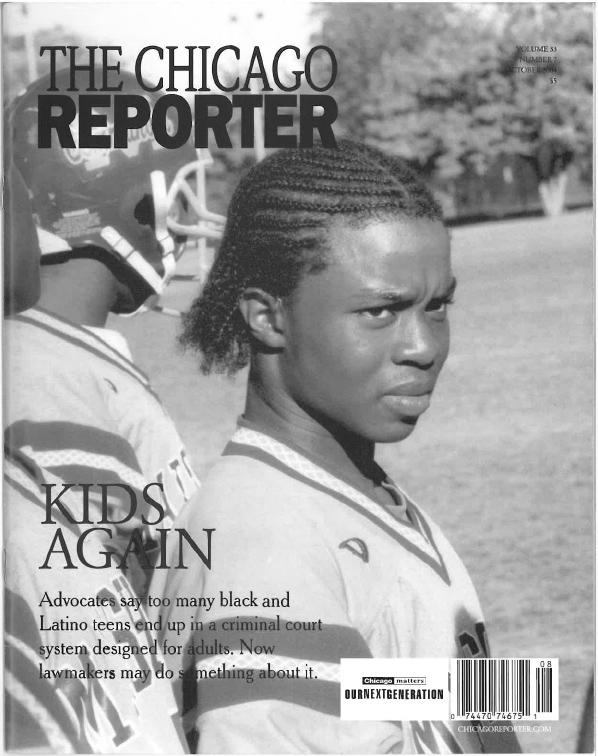
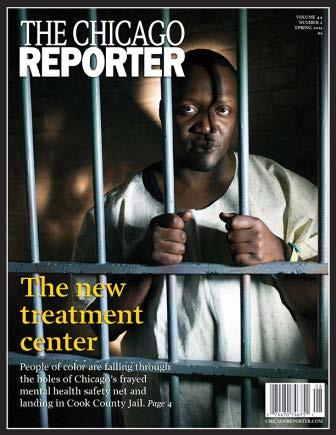
During the course of its forty-three years in print, the Chicago Reporter evolved from a newsletter to a magazine. Its investigative, data-driven focus never changed, however, nor did its tangible influence on policy. The results of cover investigations shown here include the resignation of the Chicago Fire Department commissioner (February 1978), a three-year federal investigation and the upgrading of park services in majority black and Latino wards (May 1978), and an amendment to the 1987 Illinois Juvenile Court Act (October 2000).
we can keep so many issues of the magazine—we need to just go fully digital. That’s where things are happening, that’s where we can certainly have the most impact in terms of the type of work we’re doing, and that’s also where the audiences are.”
For every eighty-year-old in South Shore who’s not online, there are far more Chicagoans who get their news on desktops at work, on their phones while on the train, on Facebook or on Twitter. Richardson knows this—a sleek website redesign launched this past January, and she hired the Reporter’s first-ever social media editor, Asraa Mustufa, in March. When Mustufa first arrived, she was greeted by such a small staff—just five other full-time employees—that she remembers asking herself why they were hiring a social media editor over another reporter.
Now, however, she understands. It pays off, Mustufa says, “in branding, getting our articles out there, engaging more people.”
“We do this because we want to com-
municate information,” Richardson says. “My question is always how can we get what we do to people who could get value from it, whose lives could be made better by the type of work we do.”
The problem wasn’t necessarily that the print magazine was failing at this task—it was that a host of evidence, like the roots of “Black Lives Matter” in a hashtag, showed that digital media could do it better.
For a small organization with limited resources, it came down to another urgent concern: practicality.
“You want to put yourself in the best position to have an impact,” Richardson says. “We could no longer be spread thin between trying to figure out how to do a quarterly magazine and being more nimble and in lockstep with events online. We had to make a choice.”
The practical subject Richardson elides here is money. Although the Community Renewal Society covers the Reporter’s operating costs, it’s Richardson’s job as editor and publisher to fundraise the program budget through donations and
grants, a job that never really ends; there are always more grants to apply for, and grants to maintain. Over the years, the Reporter has consistently been supported by a few private foundations.
The Reporter has always been small in both staff and circulation, which has never been ideal for financial comfort. “We have made it a top goal in 1979 to try to increase our income so that we can move from a predominantly part-time to a predominantly full-time reporting staff,” former editor John McDermott wrote in his yearend letter in 1978. This declaration came after a note on the changes to the Reporter’s masthead, a practice that’s since turned out to be one of the masthead’s consistent features: it’s always rotating, and there are always friendly editor’s notes pointing out the rotations. Even now, only one name on the Reporter’s current masthead dates as far back as mid-2013.
“One of the things that’s part of the Reporter’s mission is training journalists in our brand,” Washington says, casting a better spin on the revolving door. “The focus on data and the focus on hard news
reporting, the focus on race. Folks come through the Reporter, they stay for a while, some longer than others. They move on to other news organizations, and we like to think they bring that ethic and that value with them.”
She’s not wrong: Angela Caputo, a former staff reporter who became an investigative reporter at the Tribune a year ago, still does the data-driven journalism that she learned at the Reporter, but now with better resources. Her first Tribune investigation found that the Chicago Police Department’s DUI checkpoints are concentrated in African-American and Latino neighborhoods, a story that would have been at home in the Reporter. But at a journalism workshop on the South Side three weeks ago (hosted by the Weekly and other organizations), she noted that the mapping software she used at the Reporter was cheaper than what’s now available to her at the Tribune.
Although the Reporter is better off now than in 2005, when, amid financial and editorial troubles, it switched from a monthly to a bimonthly publishing sched-
COURTESY OF THE CHICAGO REPORTER
ule, this last year still saw it downsize even further, to a quarterly. As its format has continuously mutated, possibly the only design feature that’s remained the same since 1972 is a phrase that can often be found at the bottom of the Reporter’s infographics: “analyzed by The Chicago Reporter.” This one feature shows how the Reporter’s work has been the same for the past forty-three years, as have its methods: investigative journalism sculpted from lots of messy data.
“Ithink data analysis has always been the core of what the Reporter’s about,” said Jeff Kelly Lowenstein, a former staff reporter and data journalist.
If data-driven journalism is at the heart of the Reporter’s mission, then going online only means allowing the Reporter to fine-tune what it’s always done best. The resources that were once devoted to the print publication will now, Richardson says, be directed to the expanded multimedia opportunities promised by the digital world, particularly data visualization.
Nowadays, when data journalism is mentioned, the term “data visualization” isn’t far behind, referring to the presentation of data in the pictures and graphics that are integral to the articles they accompany. When these graphics are online, they can be interactive. As hot as interactive data visualization may be right now, it’s really the Reporter’s rightful inheritance, a much-needed upgrade to those decades of infographics.
“One of the things that frustrated me back in the day as a reporter and editor was so much content ended up on the cutting room floor,” Washington said. “Now in the digital world you can do a lot of work— you can present a lot of data online that you couldn’t do in a publication. You can expand and enrich that investigative reporting that is the foundation of the publication.”
Richardson plans to hire a data editor by the beginning of 2016, an addition long overdue.
“It’ll allow us to do more and better data analysis and data visualization and be more creative in how we do that,” says Jonah Newman, the Reporter’s database reporter. “In a small publication, manpower is always the thing that we have the least of, right, we’ve got a lot of energy and enthusiasm, but there’s only so much you can do with all that.”
“It’s a really good idea,” said Lowenstein of the new position—and one he thinks the Reporter needs. When Lowenstein cruised through the Reporter’s recent stories a couple weeks ago to take a look at
that hopefully they can use to act on transforming their lives.” But while the rhetoric of revelation is easy and feels good to say, the execution is the hard part. Since it’s only been a couple of months since the transition to online-only, and the data editor isn’t even on board yet, it’s too much to expect a noticeable improvement in the graphics accompanying the Reporter’s recent articles.
“We’ve always had that mentality of how can we present things online differently versus in print, so that won’t change,” Newman said. “The possibilities of online
“Issues around policing, Black Lives Matter, and so many other racial justice movements had erupted through these incredible online conversations,” Richardson recalls. “A lot of the core issues we had reported about were really playing out, and the ideas being spread were clearly via social media...
their infographics, his reticence said more than his words. “They’re trying, but I think there’s a lot of room there,” he said finally. For example, he wondered why a story on driving while black in Chicago incorporated no data visualization.
Richardson views multimedia and data visualization work as a “new way of presenting and giving people information
data visualization are changing all the time. So there’s an opportunity to improve and expand our online presentation, but I don’t think being online-only really affects that very much.”
“From my standpoint, it’s the same story either way,” Newman added. “I still have to write the story, I still have to report it, I still have to do the data analysis—that doesn’t change.”
A lot about the Reporter won’t be changing. Richardson still plans to run three to four major investigations a year, like the Reporter did in print, and although she hopes to hire a full-time multimedia producer to oversee video and audio, multimedia is not new to the organization. And the publication will still appear in print once a year, collecting the articles deemed the “best of” each year, a nod both to its print legacy and to the older subscribers who formed the backbone of the community that grew up around the Reporter. Richardson even intends for the annual to have some new content, like essays and book reviews. There’s still room, in this brave new world, for the former community activists in South Shore. That’s the point of an online-only Chicago Reporter: there’s more room.
“The Reporter was very much a niche publication, where it kind of had its crowd and that was it,” says Mustufa, who came to the Reporter from Colorlines, a national news site focusing on racial justice. Mustufa says Richardson hired her not because she was especially social media-savvy but because she understood the Reporter’s journalistic mission and its national potential. Chicago, according to both Mustufa and Richardson, is a “national story.” A lot has changed since 2005, when a Chicago Reader article by Michael Miner ascribed its financial trouble to the fact that “race and poverty stopped being topical, and the major media lost interest in the Reporter’s findings.” Now, says Mustufa, as Richardson noticed during the initial protests in Ferguson, the Reporter has the opposite problem: “There is such an interest in race, policing, things the Reporter has been doing for years. It’s almost crowded space. But it is such an opportunity in the national climate.”
“It’s a little overwhelming,” she added, “trying to stand out and produce really unique, compelling content.”
The content the Reporter does have,
though, is getting out there. In the eight months since Mustufa came on board, the Reporter’s Facebook likes, which had been increasing at a rate of 1,000 a year for the past four years, have since nearly doubled, from 5,000 to 9,800 as of press time. Its Twitter followers currently number about 17,500, and Twitter users’ engagement with the Reporter’s account has quadrupled since March, even if the Reporter’s tweets can sometimes be a bit too hashtag-happy. The Reporter’s reach may not match that of news website DNAinfo Chicago, which has about 66,000 Facebook likes and 39,700 Twitter followers, but the Reporter can’t be like DNAinfo, “constantly spitting out articles,” as Mustufa put it.
Although the Reporter now has shorter weekly investigations of around eight hundred to a thousand words, Richardson is firm on what they won’t add: no breaking news, no stories every day.
“That would be asking for us to produce crap, essentially,” she says. “We’re really not going to turn ourselves into something we don’t have the potential to be.”
So far, Richardson has followed through—the Reporter isn’t publishing articles every day, and the articles they do publish aren’t crap, to say the least. The front page of its website last week displayed an array of multimedia pieces: a photo gallery of political graffiti, a blog post about policing, a video about a 106-yearold Englewood resident, and longer pieces covering classic Reporter subjects such as immigration and housing.
One piece at the bottom of the page, published November 11, was written by Newman, who has some experience in education reporting, and titled “No quick fix to racial gaps in higher ed.” It’s the sort of quick, data-driven investigation Richardson envisioned, accompanied by a clean, multicolored—though not noticeably innovative—graph showing the six-year graduation rate for students at four-year colleges, sorted by race. It’s informative
and well-written. And it was produced in just a couple of days, in response to the resignation of the president of the University of Missouri after students protested his lack of attention to discrimination faced by black students. Chicago comes up not once in the article.
“Given Mizzou’s proximity to Chicago and the important national story that was going on, it didn’t necessarily need to have a strong Chicago focus,” Newman said.
Although the issues discussed in the article are certainly relevant to Chicago-area schools, it was a slightly unexpect-
it’s in the Midwest, but it also inspired solidarity actions on Chicago-area campuses. We are mindful about documenting what I think is an emerging new civil rights movement that is youth-led…. As an organization that covers racial inequality, our role is to bring historical and other context to these issues.” Going forward, Richardson said the editorial team will discuss and choose when to write stories not based right in their backyard: “We will remain Chicago-focused, but not close the door to considering stories that are not local if we think there is value locally.”
...It struck me that, well, we need to think about how we can be in those conversations more aggressively with the type of information and investigative work that we do, and the data.”
—Susan Smith Richardson, editor and publisher of The Chicago Reporter
ed application of Richardson’s desire to “cover Chicago in a broad context and in a deep way that creates the national story that the city already has the potential to be.” The lesson in the Mizzou article is directed toward Chicago, not by Chicago. It’s a national story, but the article doesn’t do the explicit work of describing how it’s a Chicago story, and it’s surprising that there are no specific references to racial representation and graduation rates at the many universities and colleges in Chicago.
“Some stories should be covered, even if they are not in Chicago,” Richardson said. “Mizzou is a good example of a national story that needed to be addressed:
On November 18, the Reporter received a $500,000 two-year grant from one of its longtime supporters, the MacArthur Foundation—the largest single grant the Reporter has ever received. The press release states the funds, “a significant investment in the Reporter’s growth and development at a time when race has reemerged as a central issue in public policy,” will go towards expanding staff and exploring partnerships with other news organizations. Less officially, the grant is an expression of confidence that the Reporter belongs in the middle of the resurgent national conversation about race and inequality. If Chicago is a national story, if race and inequality are
a national conversation, then The Chicago Reporter should have national reach.
When the Reporter started up shortly after the civil rights movement’s heyday, the publication conceptualized itself locally, even though it deemed its subjects universal. “Race touches everybody and everything,” McDermott wrote in an editorial in the newsletter’s debut in 1972. “Racial peace and progress…are matters of profound self-interest to every person and institution in this community.” Yet McDermott’s 1978 end-of-year letter casts its accomplishments in a Chicago-centric light, concluding that “the Reporter has come to play a seminal role in Chicago in creating a deeper understanding of our community’s number one social challenge.”
In the digital age, geographically bound hierarchies no longer apply, and the tension between the Reporter’s local focus and national interest is more evident than ever before. So how can the Reporter play a national role and remain community-focused? How can an organization that took the space to note when a staff reporter won an award redefine its community to include whomever likes its tweets and shares its Facebook posts? These are the questions the organization must grapple with as it moves into a new era.
“It’s really hard to figure out how to hold on to its core social mission and its importance and legacy in this town while also figuring out how to move that into the future,” Richardson said.
Perhaps the best way for the Reporter to write for a national audience is to be what it always has been—The Chicago Reporter, the organization devoted to the city whose racial inequality no one else has ever covered in such gimlet-eyed depth. As its fluctuation over the years in length, design, and now medium demonstrates, that doesn’t mean staying static in form, just staying true to its home city. The MacArthur grant is big; if it works, if a nation tunes in, the Reporter will move into the future by staying right here.
Corporate Goal #1
What the CHA is doing with its vacant land
BY ADAM THORP
Before it was demolished as part of a sweeping redevelopment plan, there were 1,426 households in the public housing project consisting of the Ida B. Wells Homes, Madden Park Homes and Clarence Darrow Homes. People displaced by the demolition, which began in 2002, were told they could return; at one point, more than 1,000 replacement units were planned for the site.
Many of the notes and qualifications typically applied to Chicago’s large-scale public housing units can be applied to this site as well. The units provided affordable housing and communities to poor, working-class and mostly black residents of Chicago—Ida B. Wells was the first Chicago public housing project meant for black residents—and developed into symbols of crime and poverty. Their construction reflected the ambitions of local and national leadership to build housing on an unprecedented scale; their decay became a dramatic example of institutional neglect. Ida B. Wells was oneand-a-half times as large as the next largest Chicago public housing project when it was built. By the time plans had been drawn up to tear it down, almost as many units were unoccupied as existed when the project was first created.
Fourteen years after the publication of the Plan for Transformation, which laid out plans for the destruction and rebuilding of public housing at the Ida B. Wells site and other former sites of high-rise public housing in the city of Chicago, a little more than 300 public housing units have been built there. In May of this year, the Chicago Housing Authority requested authorization from the department of Housing and Urban Development (CHUD) to transfer parts of the site to a private developer; a Mariano’s grocery store and other retail will be constructed. Advocates for public housing, skeptical that the promised housing could be built on the land that remained, objected
strongly to the decision. In the case of the Mariano’s site, CHA spokesperson Wendy Parks was quoted by DNAinfo in February as saying that the remaining land will be sufficient. The CHA did not respond to a list of questions sent in connection with this article.
This pattern—land once dedicated to public housing being used for non-housing purposes—has been repeated on vacant CHA land across Chicago. Large-scale and permanent land transfers by the CHA, once rare, have become much more common.
Along the old State Street Corridor, a new track-and-field facility is to be built for CPS at the sites of Harold Ickes Homes, and a gigantic tennis facility will take up some of the land that hosted Robert Taylor Homes, once the largest public housing project in the county. At the site of LeClaire Courts, Chicago’s first attempt at integrated low-rise housing, a new charter school will be built. Each of these projects was made possible by the sale, swap, or long-term lease of CHA land. No public housing has been rebuilt at the LeClaire Courts or Harold Ickes sites, and construction at the other sites is well over a thousand units short of the number the CHA at one point planned to build on the sites.
There are still people displaced by the demolition of these projects living with an unfulfilled promise of a “right to return” to new housing constructed in their old neighborhoods or elsewhere in the city. The CHA’s most recent quarterly report lists more than 200 households from the four sites mentioned above with an active right to return (more than 2,000 households from these sites have had their right of return satisfied). A CHA survey as of June of this year showed 147 households choosing one of these sites as their first choice for relocation. More than a thousand other former residents are not counted on this list because they failed to respond to outreach from the
CHA; their right to return can be reinstated if they contact the agency.
“Promises were made to real human beings, many of whom are still alive even though it’s been so many years, waiting to return to communities that they still have attachments to,” said Leah Levinger, executive director of the Chicago Housing Initiative, which consolidates the efforts of nine public housing advocacy organizations. “They were given promises when demolition occurred that they would return—it was on the condition of those promises that demolition moved forward.”
Public housing activists are worried that the transfer of land from these sites will pose a barrier to reconstruction of public housing. And in Levinger’s mind, this practical concern about the ability of residents to return is paired with a broader concern over what the transfer indicates about the city’s attitude toward public goods, an indication of a larger-scale trend toward privatization of resources, like schools and city services, that were previously public.
“Even if we’re not one of those families with a right to return, or one of their extended family members, there are bigger questions about what’s happening with public assets, public land, and the public sphere overall,” said Levinger.
The increase in land dispositions reflects an apparent shift in strategy by the CHA. Once, the CHA focused almost exclusively on constructing housing. But since the CHA released Plan Forward in 2013, there’s been a focus on building up the area around the CHA’s public housing sites.
Plan Forward, a successor document to the Plan for Transformation, laid out three institutional goals for the CHA, the first of which codifies the shift toward disposition. Under Corporate Goal 1, the CHA will “reimagine the final phase of the Plan for Transformation, coordinating public and private investments to develop vibrant,
complete communities.” When the CHA applies to transfer land, it usually—and in all of the cases above—cites Goal 1 as its justification. And when responding to criticism of the transfer of public housing land, the CHA makes arguments along these same lines—a school, store, or athletic facility will help improve life for residents of Chicago and its public housing.
“This type of public-private investment with Mariano’s and the City of Chicago helps to strengthen the entire community— creating more than 400 jobs and access to fresh foods and produce,” said Parks in the DNAinfo article.
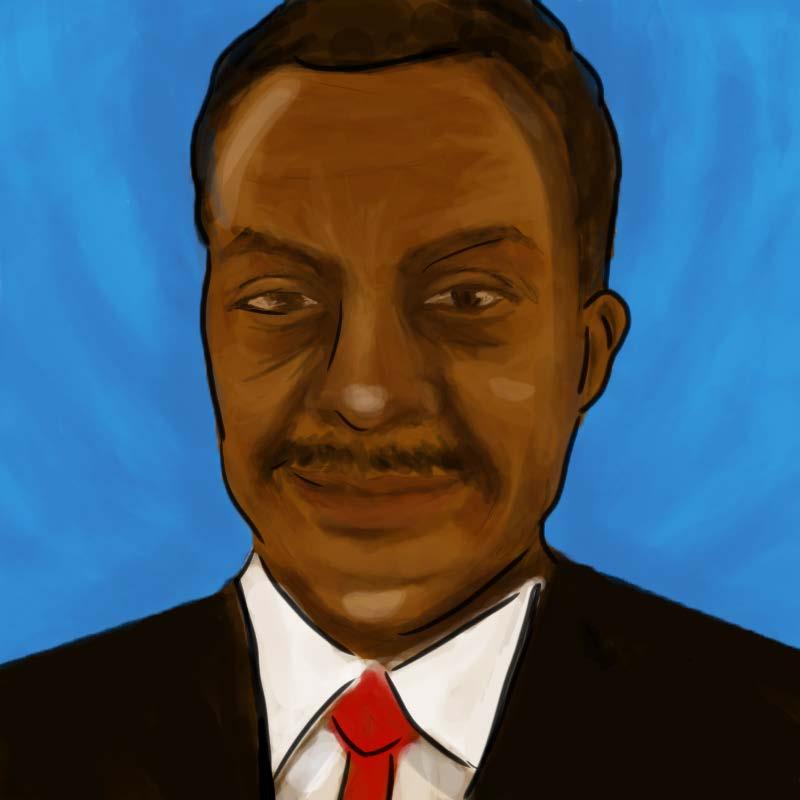
Roderick Wilson, an organizer of past protests and executive director of the Lugenia Burns Hope Center, also hopes that the CHA will help to build “vibrant communities.” But in his mind, the role the CHA ought to play is to provide housing.
“No one has an issue with bringing in commercial development. But it should not be in lieu of or in place of housing. The purpose of the CHA is to provide housing for the people who need it the most. They are not in the grocery story business. They are in the housing business,” Wilson said.
And according to Charles Barlow, an academic who has spent time researching the CHA, it is not always clear what is meant by “vibrancy” or the rest of Goal 1. A commitment by the CHA in April 2013 to define the goal more rigorously has not yet been met.
“That corporate goal is filled with jargon—nobody really knows what it means. A vibrant community means something different for different people,” Barlow said. “Even asking CHA staff, well, ‘what does it mean to you?’ you get totally different responses.”
The increase in land dispositions has coincided with an emphasis on the construction of mixed-income housing developments by the CHA, under the theory that this will avoid the concentration of pov-
Disposition Acreage / Remaining Acreage
Four Chicago Housing Authority Dispositions by Acreage
erty that sometimes characterized the old high-rises. To be actually mixed-income, these projects must attract market-rate and less heavily subsidized residents. In Barlow’s account, encouraging the construction of amenities through the transfer of public land was one way to do this, especially after the economic crisis of 2007 and 2008 shrunk demand for real estate.
“A lot of it is down to the economic conditions of what society became,” Barlow said. “The housing bubble burst, and people weren’t able to purchase homes in the same way they were able to before the crisis. I think they had to think about how to make these communities attractive for further development.” According to Barlow, providing amenities was one way they could do so.
Wilson and Levinger are also concerned about what these transfers signal for the city’s future. If parts of these relatively central spots are abandoned as sites for public housing, they worry, residents displaced during the destruction of the old high-rises—or any households unable to afford city housing prices—could be forced out of the city or into its outskirts for good, leading to a dramatic remaking of the city.
“I think [Mayor Rahm] Emanuel is pretty candid that he has a particular vision for Chicago becoming what he calls a world-class city—which I think is code for rich and white,” Levinger said. “Providing a tennis court of former public housing land or a Mariano’s on former public housing land fits in with his vision of how the city should develop, and who he wants to make it attractive to.”
In the minds of some advocates, the
land transfers are a symptom of larger problems within the CHA. They point to the slow pace of construction of new public housing units over the last five years while the CHA accumulated a financial reserve that reached 440 million dollars last year (it has since been reduced by about half).
The Center for Tax and Budget Accountability, a nonprofit public policy research organization, discovered the surplus after being asked to look into why work being done by the CHA did not seem to track with the amount of spending being recorded. In a report issued last summer, the CTBA revealed that federal money originally meant to pay for housing vouchers was being applied in the budget to other budget line items. Because money is not usually spent on these line items, the money reappeared as a surplus at the end of each year. According to Kass, a little less than 250 million dollars was spent by the CHA paying down long-term debt, including pension liabilities.
The CHA was able to perform this budget maneuver because they are participating in a program called Moving to Work, which provides what HUD determines to be high-performing housing authorities freedom from federal rules in the hope that they will use that autonomy in innovative ways. Amanda Kass, a researcher on the report that detailed the budget maneuver, accepted that it might strengthen the CHA but questioned the opacity of the decision.
“To me, one of the big questions is transparency, having a dialogue with the public and the residents of public housing, households utilizing vouchers, households
on the waiting list, about housing decisions and how to allocate scarce resources,” said Kass.
Concerned about the housing that could have been built with the money that went into the reserve, Levinger said the decision to build it up was “the right logic for a real estate investment firm who cares more about your bond rating than what you are doing for people, but the wrong logic for a housing authority…[the CHA’s decisions] should be driven by what provides the maximum amount of benefit to families in the city of Chicago that need housing.”
In response to news articles about the reserve, CHA spokespeople presented it as part of a broader financial plan that would allow them to invest more extensively in the future. They also disputed the CTBA’s accounting of how large the reserve had grown.
Wilson is also concerned about the reserve, but sees the CHA’s newly shored up financial position as an opportunity: “They’re in the perfect position to do some real development, and make an impact in Chicago when it comes to housing. They have a half-a-billion dollars on hand, and with the bond rating what it is, they can issue another half-a-billion dollars in bonds easily. So you’re talking about a billion dollar investment in providing housing for the people who need it most in Chicago.”
Meanwhile, the Chicago Housing Initiative is pushing an ordinance in the Chicago City Council that they hope will help address their concerns about the CHA. The ordinance would apply the City Council’s zoning power to CHA land transfers, which
usually require zoning changes to accommodate the new uses for the site. To change the zoning, the CHA would have to produce a plan for providing the site with the number of units the CHA planned to build there when the projects were demolished, a more stringent requirement than before. Other parts of the ordinance would try to address broader issues of transparency at the CHA and require the CHA to spend much more of the federal money allocated for vouchers to provide vouchers to people on the CHA’s long waiting list. More than twenty aldermen are sponsoring the ordinance, which was introduced last September. Advocates had hoped it would get a hearing in September, but it has not yet appeared before the City Council’s housing committee.
Meanwhile, the CHA told the Chicago Gazette that it planned to spend more on the production of public housing this year. Levinger was cautiously optimistic about increased near-term building by the CHA, especially rehabilitation of the Altgeld Gardens project on the Far South Side and a continuing drip of public housing units as part of mixed-income developments.
“It is nowhere near at the capacity that the CHA could do with the financial position they’re in,” said Levinger. “But it’s a start, and hopefully it is the beginning of a trend that gets more housing produced. I think it’s probably more a concession than a signal [of] a shift in strategy, but I hope to be wrong about that.”
Ida B. Wells / Mariano’s Harold Ickes / CPS Athletic Field
Robert Taylor / XS Tennis LeClaire Courts / Academy for Global Citizenship
ADAM THORP
Examining the president’s claims about guns and vegetables
BY WILL CABANISS
Just a Fact?
President Barack Obama’s keynote address to the International Associ ation of Chiefs of Police last month at McCormick Place drew headlines for his attempts to find common ground between law enforcement bosses and an American public that has become increasingly critical of them.
But the president was unambiguous in condemning gun violence in his adopted city of Chicago, particularly in its most re source-starved neighborhoods.
“It is easier in some communities [in Chicago] to find a gun than it is to find some fresh vegetables at a supermarket,” he told the gathering. “That’s just a fact.”
It’s a bold, tidy claim that shines a light on two of the city’s pressing public health issues in one fell swoop.
But is it really easier to find a gun in some areas of Chicago than it is to buy fresh vegetables? Conclusive evidence backing the President’s statement, it turns out, is hard to come by.
When reached for comment, the White House stood by the President’s claim, point ing to articles from Chicago public radio station WBEZ and Al Jazeera America that focus on gun accessibility in the city. Both articles, however, rely mainly on anecdotes to show how easy it is to purchase a gun in some areas of the South Side.
from a study published this summer conducted by researchers at Duke University and the South Side’s own University of Chicago Crime Lab, including nationally renowned health policy expert and UofC professor Harold Pollack.
“If you want a gun, you can just go get a gun,” South Side anti-violence advocate Diane Latiker told Al Jazeera, comparing the act of purchasing a gun to that of buying chewing gum. “You got the money? You can get a gun.”
It’s important, however, to note that “accessibility” is difficult to measure, particularly when it comes to guns. Chicago is undeniably rife with firearms—Police Superintendent Garry McCarthy recently claimed that his officers confiscate an illegal gun once every seventy-two minutes, on average—but data on gun purchases in the city is scant, in large part because most guns in Chicago are first purchased in other states, many of which have weaker gun laws.
Through interviews with 99 male inmates at Cook County Jail, the study found that most of the guns they had access to were secured not through a store or theft, but through a network of social connections. So acquiring a gun in the city isn’t as simple as making a purchase.
Pollack, on behalf of the Crime Lab, declined to comment for this article.
The city’s issues with “food deserts”— which the city defines as census blocks “located more than a mile from from a retail food establishment licensee with a business location larger than 10,000 square feet”— are also well documented. When the city last released data on food accessibility in 2013, just under 80,000 low-income Chica-
uel has attempted to reduce that number even further.
The mayor’s administration has heavily promoted urban farms and farmers’ markets as a way to provide more fresh fruits and vegetables to otherwise underserved communities, as a feature in the Weekly this past spring explored in depth.
There is no doubt that gun violence has taken a devastating toll on the city, especially in recent years. And tens of thousands of Chicagoans still live in city-designated food deserts. But little data exists either to support or refute the president’s assertion that guns are somehow more accessible than fresh vegetables in some Chicago neighborhoods. As guns and produce change hands in very different ways, there is no appropriate metric with which to pit the two against each other.
That may be enough for some to question whether or not the the claim is, as the president himself said, a “fact.”
Why Not Wilson?
Willie Wilson runs for president
BY SAM STECKLOW
This isn’t exactly how Willie Wilson planned his presidential campaign. He’d at least hoped to be viewed as a candidate by his party, the Democrats, but they won’t return his phone calls.
“I’ve been a Democrat all my life,” he told me over the phone last week. “The Democrats are supposed to have inclusion, they’re for equality and affirmative action, but they don’t seem to want to allow that to happen. I’ve written them, I’ve called them. They won’t return my calls or nothing else.”
“If you look at the Republican side of it,” he continues, “they got what, fifteen, seventeen plus or more Republicans. They got white, they got black, they got minorities, Cuban, Hispanic, the whole nine yards.”
The Democratic Party’s official position on Wilson is unknown—they did not reply to requests for comment by press time. A possible reason for the Democratic stonewalling is Wilson’s complete lack of political experience, though he would be in good company; three Republican candidates—businesspeople Donald Trump and Carly Fiorina and retired neurosurgeon Ben Carson—have never held public office before either.
Additionally, all three remaining major Democratic candidates (to say nothing of the two who’ve dropped out) have struggled to address racism and anti-racism protesters. And yet Wilson, whose platform includes an end to mass incarceration and, during his mayoral campaign, called for three-quarters of the Chicago Police Department’s force to patrol by foot or public transit to better facilitate community policing, has been barred from party events—from large ones, like debates on national TV, to small ones, like fairs in Iowa. “I think that they are a little nervous about—a lot nervous about—that my candidacy will generate a lot of people, in particular the minority portion,” he said.
That hasn’t deterred the businessman, local Emmy-winning host and producer of WGN’s long-running gospel show Singsation! (each season is filmed at once over a couple weekends, he assured me; filming a new show every week and running a national campaign don’t go hand-in-hand), and third-place Chicago mayoral candidate. Since announcing his presidential candidacy in June at the Chicago Baptist Institute in Washington Park, he’s flown multiple times to Iowa, South Carolina, New Hampshire, Michigan, and other states from his Chi-
cago home base, all on his dime, which has resulted in at least one success: he is on the ballot for the South Carolina primary.
Though many of his views line up with the Democratic social agenda (he identifies as pro-choice and supports legalizing cannabis), he differs from the Democratic base in a handful of ways. Included in his platform is a “national faith-based initiative,” which may give many secular Democrats pause. “I’m running for president, but I’m running for Christ, too, in terms of my spirituality,” he said. His campaign Facebook page is
unique among 2016 presidential candidates in that most of the posts consist of quotes from the Bible. Wilson himself, along with two staffers, handpicks the quotes. “We want to encourage people to think, no matter how bad you think you are, or how down you may feel, there is hope if you believe in Christ,” he said. Informed by his faith is his steadfast belief that marriage “is between a man and a woman,” but he indicated to me that his personal views would not stand in the way of the will of the people should they support something he does not.
Wilson’s backstory, an extreme example of the American dream, makes the question of why the Democratic Party won’t recognize him even more opaque. Born to sharecroppers in rural Louisiana, he escaped a work camp at twelve, later began working at a McDonald’s mopping floors, and met the then-CEO of McDonald’s, Ray Kroc, who helped him get his own restaurant. He accrued five, then sold them to focus on gospel music and later founded a successful medical supplies company, becoming a millionaire philanthropist in the process.
He has reached out to the Black Congressional Caucus, the NAACP, and the National Urban League for support. All have turned him down, something which clearly rankles him still; the only time any trace of anger appeared in his voice during our phone call was when he accused the black civil rights organizations and politicians of “selling out” to the Democrats. But he persists. “We haven’t given up, and we won’t give up,” Wilson told me. The first true test of his in-person campaigning will come in February, when South Carolinians will vote in the only election Wilson is currently listed on the ballot for. As of press time, no statewide polls have indexed his popularity.
Burning Flags
Artist Dread Scott speaks about his revolutionary art.
BY ELLEN HAO
It starts with a series of questions. “Do you guys have hope for the future?” artist Dread Scott asks from the podium. From around the hall at the DuSable Museum of African American History, seated audience members answer: “Yes.”
“Do you think the US government tortures people?” “Yes.”
“Do you think that having one in nine young black men in prison is acceptable?” “No.”
“Do you think that this government lies to you?” “Yes.”
“Do you think that the government values your life?” “No.”
He looks around, trademark mohawk in place, eyes peering through black-rimmed glasses. “Then what’s that hope based on?” he asks. This is how he begins to talk about his art.
Dread Scott describes himself as a “revolutionary artist,” one whose work, which includes installations, photography, performance art, video, and print, is blatantly political. Political messages are the threads that tie his art together, and he seeks to make work that is “part of helping to forge that different society, and helping to bring that world into being.”
“I have hope for the future too,” Scott says. “But the hope actually really lies in people confronting a lot of the horrific things going on today, and making revolution, and transforming the world and themselves in the process.”
The works Scott discussed at the DuSable are unflinchingly confrontational, often addressing issues of power and race. In his 2011 performance piece Money to Burn, Scott plucked dollar bills from wads of cash taped to his chest and burned them, all while singing the words “money to burn” and walking down Wall Street. In another piece, Decision,
four silent nude black men are surrounded and herded by German Shepherds, whose hostile barks punctuate the air as audience members make their way around them to enter a makeshift voting booth. Scott’s work strives to shock and discomfort, but also deals with the tension between maintaining sensitivity and illuminating injustice. Several of his pieces function as both memorial and protest, commemorating revolutionaries or victims of police brutality.
Scott is perhaps best known for his work What is the Proper Way to Display a U.S. Flag?, an installation that gained notoriety after President George H. W. Bush denounced it as “disgraceful.” In the installation, audience members were invited to write their response to the title of the exhibit in a book. A photomontage of flag-draped coffins and burning American flags plays above and a physical flag is laid out on the ground below. “Part of the project is about the choices people make,” he explains, pointing to the fact that audience members had to choose whether or not they should step on the flag to write on the book.
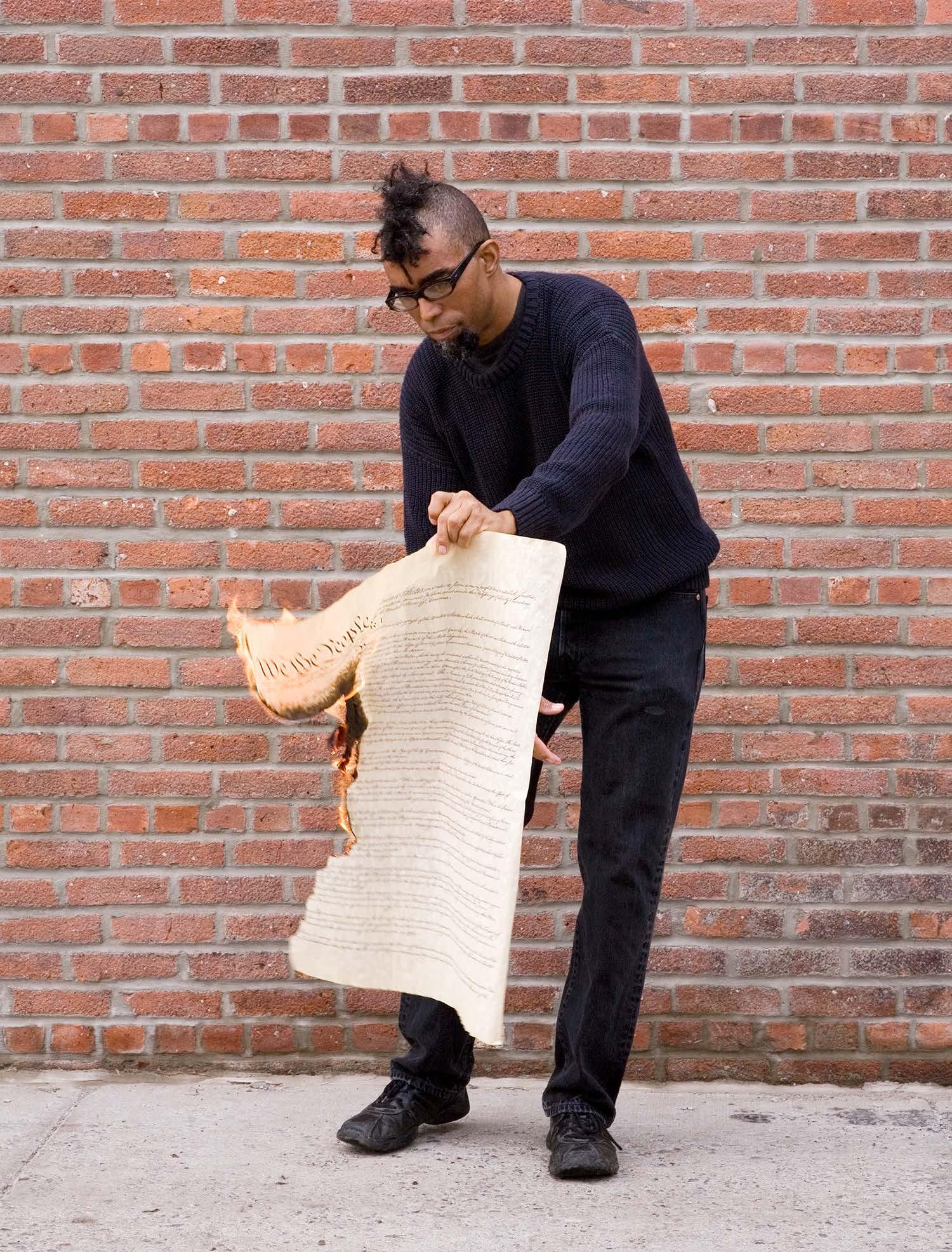
When Congress outlawed displays of flags on the ground or floor in response to the installation, the next logical course of action, according to Scott, was simple. “What does one do when one is confronted by an unjust law?” he says, “Well, you defy it.” He clicks to the next image. “This is me burning a flag on the steps of the Capital.”
“Previously, had you asked me whether I thought art could matter—and matter in people’s lives—I would have said ‘Yes, it could.’ But if you pressed me on it, I would have said it matters if your name is Steven Spielberg or Chuck D,” explains Scott. But the fact that his piece was able to incite denunciations from the President and Congress, as well as contribute to the Supreme Court case U.S. v. Eichman, that legalized flag desecration, re-
affirmed his belief in the power of art. “This really showed me something about the power of art,” he continues, “that, even with all their weaponry and might, they actually felt very threatened by this artwork.”
They’re bold images, purposefully heavy-handed at times, but effective because of it. Deliberately discomfiting, his work constantly seeks to illuminate social and political problems and create dialogue. On the horizon for Scott is a 500-person reenactment of the 1811 German Coast Uprising, the largest slave revolt in American history. “My desire to do this piece is to learn all I can from that,” said Scott, pointing to his admiration of their desire to abolish slavery, rather than negotiate lighter punishments. “But [I] also [want to] put into people’s heads bold and imaginative thinking about horrific problems and coming up with bold solutions to those actual prob-
lems.”
The audience at DuSable, however, was already searching for solutions, already unsatisfied with lessons from the past. Pervading the crowd was a sense of frustration and desire for change, but also feelings of powerlessness. One audience member asked how she, as an eighteen-year-old girl, could make a difference. Scott’s answer was vague: he asked audience members to be aware of their abilities to become revolutionaries, suggesting that they read works by revolutionary thinkers as a start. Was this a talk about art, or about a political movement? The two became indistinguishable during Scott’s lecture, but towards the end it seemed clear that as much as Scott may have been trying to disintegrate the boundaries between them, the audience members were still left searching for answers to questions they already had.
COURTESY OF DREAD SCOTT
Rotten Memory
Repairing a Nation brings historical trauma back to life
BY STEPHEN URCHICK
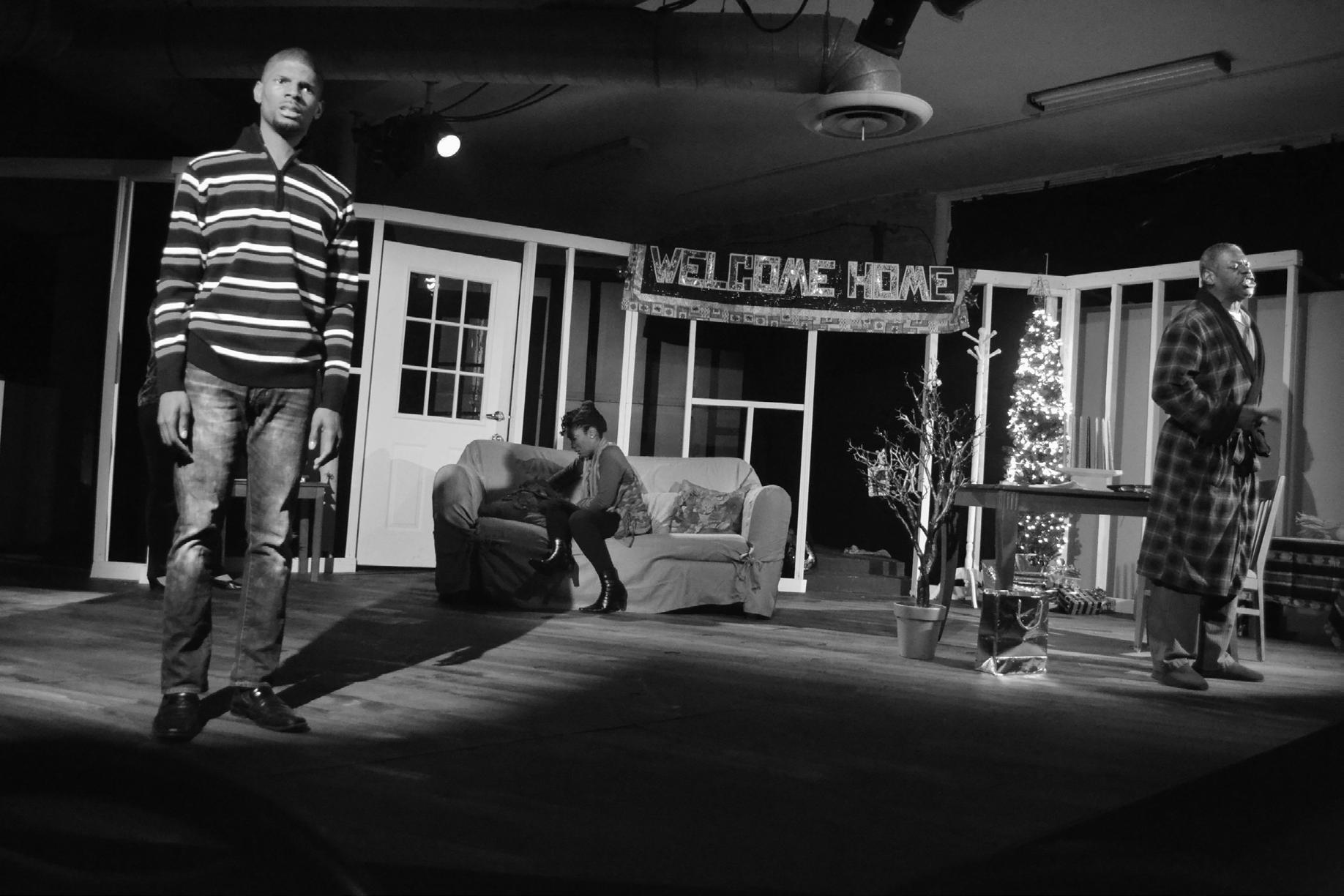
Nikkole Salter’s original play Repairing a Nation offers a close-up walking tour of an evil in society: the ongoing dispossession of black families. Making its Chicago premiere at eta Creative Arts, Repairing a Nation makes the present-day reverberations of the 1921 Tulsa, Oklahoma race riots the point of departure for a withering household feud that culminates on one unhappy Christmas in 2001.
The play’s theme is straightforward enough when restated: historical traumas still haunt black families, and threaten their dissolution. But Repairing a Nation literalizes this idea, boldly wearing it on its sleeve. The action sanctifies a twenty-somethingyear-old as a living cultural legacy to be fought over and claimed; characters dive into the details of class-action litigation while wrapping presents. Events and dialogue weirdly fluctuate between the personal and political, and the sheer directness of Salter’s message might take a grain of salt to get down.
Salter’s play runs a little over two hours in two parts. In broad strokes, Anna and Chuck (Candice Jeanine and Darren Jones) are a childless and heinously posh couple. They self-servingly fostered Seth (Juwan Lockett), the only son of Chuck’s
cousin Lois (Felisha McNeal), and put him through high school after Lois’s husband mysteriously lost his job. The grown Seth is now back, on vacation from law school. Anna and Chuck have invited Lois and Seth’s hometown flame Debbie (LaQuis Harkins) to spend the holiday at their house.
Salter brackets this setup inside Debbie’s work at Tulsa’s Greenwood Cultural Center. The Center is about to unveil a memorial to the destruction of the Greenwood district’s “Black Wall Street”—an act of racial violence that killed well over 100, and possibly as many as 300 men and women and shuttered the all-black commercial strip. Lois and Debbie partner in an act of ancestral archeology and righteous self-healing, contributing to a campaign for long overdue riot reparations.
During their research, Debbie discovers archival photographs that incriminate Chuck in the corporate theft of Lois’s family janitorial firm and—by extension—Seth’s stable and happy upbringing. Lois unveils this discovery on Christmas Eve, and the play’s second half follows the holiday’s agonizing self-destruction.
Debbie’s docent tour through the Greenwood Center serves as the play’s prologue and epilogue and is key to getting past
Salter’s heavy-handedness. Debbie’s presentation is highly stylized—bad teaching but disturbing theater. Harkins wears Debbie’s grade-school friendliness like a cracked mask. She alternates between a high-voltage description of the firebombs falling on shop buildings from redneck biplanes, and angry, unfiltered disbelief that the jazz exhibit next door gets more visitors. She punctuates each dizzying whistle-stop with cute classroom etiquette.
The point of docent Debbie’s tart, amped-up, and fractured tour is to warn the audience up front that if Repairing a Nation is going to teach us anything, it will be at the top of its voice. You might wrinkle your brow when Seth and Debbie transform a lovers’ spat into a debate about the legitimacy of direct action, but this seemingly kitsch substitution actually reflects reality. If the first thing that recently reunited friends talk about is the effective force of a judicial recommendation, this quirk is just part of the play’s front-and-center presentation. The presence of the Tulsa riots at Christmas 2001 is not intrusive—that’s how it’s always been.
Lois’s monologue at the end of the play’s first act crystalizes this claim. She tells the story of her financial insolvency, her
husband’s death by drinking, her homelessness, how she finally came around to cede the care of Seth to Anna and Chuck. She then makes the point that if her ancestors had been left alone in Tulsa’s Greenwood, her material conditions might have been more secure—she would have been able raise Seth as a mother ought to. History bears on practical life in urgent ways.
“The mind is like a refrigerator,” Lois concludes. “It keeps memories fresher, longer. A woman could feed her kids on that memory.”
In the case of Chuck and Anna, we see how an internally divided, opportunistic bourgeoisie rose from the ruins of a black business community targeted precisely because of its solidarity and unity. Chuck likens his family to a nation, and styles himself its American president; he believes his material charity confers on him a right to deprive Lois of her son and her future. Seth has since been taught to crave Western individuality and lack of accountability. He renounces his heritage and disavows any larger commitment to other human beings.
“I don’t want to stand for nothing, be nothing,” he tells Debbie. “I just want to be me!”
The play’s dramatic irony confirms Lo-
If Repairing a Nation is going to teach us anything, it will be at the top of its voice.
is’s suspicion: the shakeup after the Tulsa riots really did let Chuck litigate her out of a stable family. White racism broke up a black community, encouraging it to turn upon itself. The convincingly awful domestic abuse that erupts in the second half has its roots in a larger social conflict.
But Repairing a Nation necessarily repairs nothing, and resolves nothing. Our happy ending is instead the bittersweet start of a long, arduous healing process between Lois and Seth. This process is made possible by experiencing, firsthand, the latent violence in Seth’s apparently happy, productive status quo.
After witnessing Chuck forcibly evict Lois from his house—even pitching her late husband’s urn of ashes out the front door— Seth can only see Lois’s martyrdom for what it’s been. Everybody but an enraged Chuck curls up, buries their faces in their hands, and cries. Enlightened by way of suffering, Seth and Debbie promptly grab their bags, fleeing Chuck’s kingdom. The anger and deception that underwrite Seth’s foster family, revealed through the play’s action, drive Seth back into the rightful arms of his true mother Lois. He returns to his literal and figurative roots.
The purpose of theater in Repairing a Nation is to highlight the ghastly damages concealed by an elite, privileged interpretation of history. The terror onstage isn’t
gratuitous: its realism has a civically critical function. Darren Jones’s uncompromising portrayal of Chuck’s rage causes the audience itself to recoil and follow Seth towards correctness and truth.
We can’t seriously believe the Tulsa riots—or, for that matter, slavery and diaspora—are somehow disconnected from the dire situation of this family, or our country. Certainly not just having listened to Lois sobbing for fifteen extra seconds after lights-down, prone on the ground where she fell, heaved behind the set’s doorframe. The two traumas are coextensive. Christmas 2001 is Tulsa 1921 in microcosm.
Catharsis isn’t just emotionally restorative, here, but part of reconciliation and reform. We have to get the suffering out, and into the open, to move ahead. Repairing a Nation might be overly didactic, and maybe even a little one-track, but it makes a convincing case that pain far outlives our ancestors. If unaddressed, their sorrows are incorporated into the very structures we take for granted, feeding the future on a rotten memory.
eta Creative Arts Foundation, 7558 S. Chicago Ave. November 13–January 3. Friday and Saturday, 8pm; Sunday, 3pm. $35, discounts available for seniors and students. (773) 7523955. etacreativearts.org
Spectacle in the Windy City
Slaughterhouse is a thorough, entertaining exploration of Chicago’s bloody past
BY CHRISTIAN BELANGER
Throughout his academic career, Dominic Pacyga’s personal past has deeply informed his historical research. Descended from a family of Polish immigrants and a lifelong resident of Chicago, Pacyga has written a book about Polish workers on the South Side, as well as Chicago: A Biography, and is currently working on a more general history of Polish neighborhoods in Chicago.
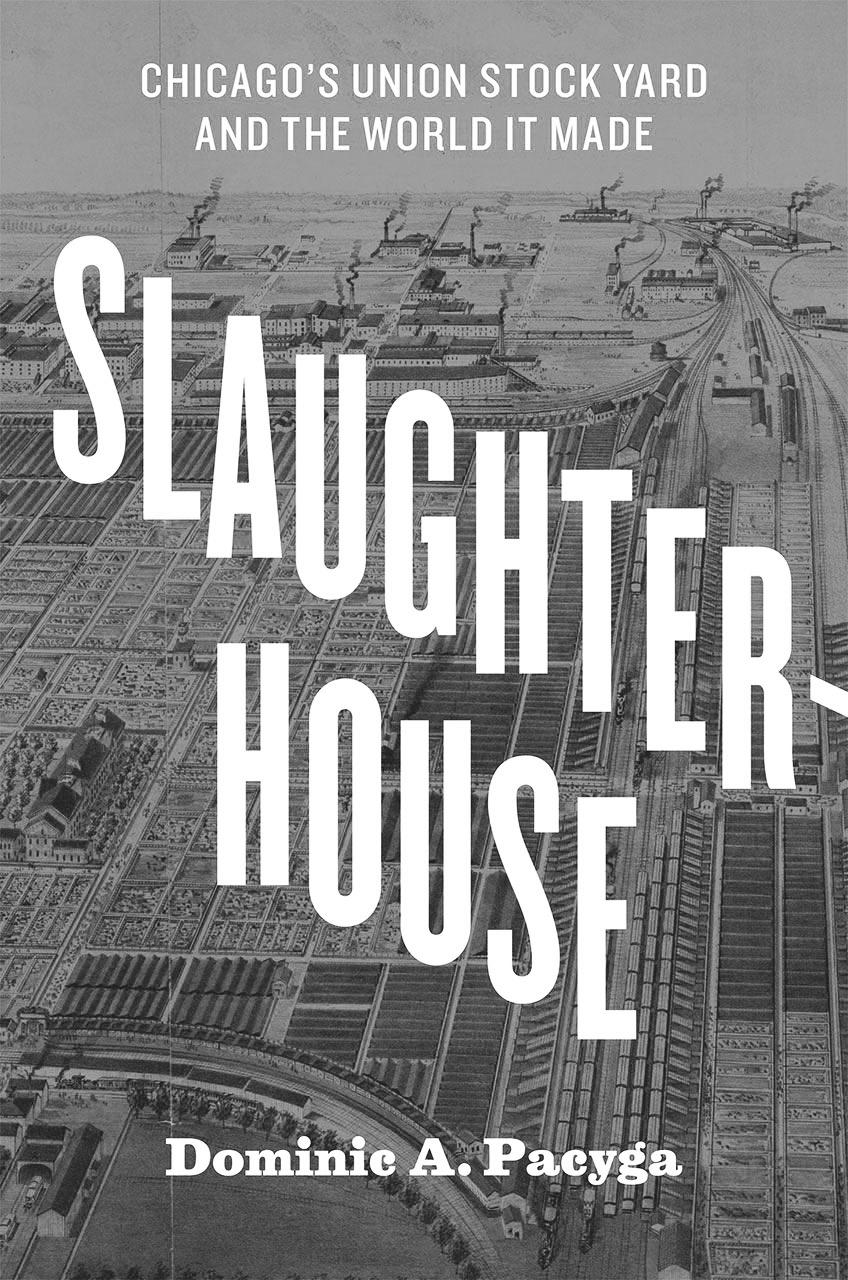
Slaughterhouse: Chicago’s Union Stock Yard and the World It Made, Pacyga’s latest book, was inspired by the summers he spent working at the stockyards as a cattle and hog driver and security guard in the late sixties. This was just after the last of the big meatpacking companies had left and just before, in 1971, the stockyards finally closed for good. Here, Pacyga, who is now a history professor at Columbia College, first heard the stories of the laborers who had worked for decades in the yards, stories that provided the impetus for this work.
But the book opens long before Pacyga’s own time at the then-diminished stockyards, with a description of the wildly popular tourist industry that emerged around the grisly spectacle of the slaughterhouses. At its peak, 500,000 people toured the stockyards every year, walking through galleries constructed above the halls of killing floors and boiling vats. There, visitors could see a hog or steer stunned, stuck, gutted, and boiled in rapid succession. Prior to industrialization, it would have taken a butcher eight hours to kill and dress a hog, all while hanging it
from a tree; at its most efficient, the bloody sea of workers at these packinghouses took a little over half an hour to process each of the 7,000 hogs that passed through their factories every day.
“That was the startling thing about the modern. Everything was mechanized, everything was organized,” Pacyga tells the Weekly. “So there’s spectacle, and innovation, and this kind of repulsion too. You can’t do one without the other. Sort of like how people can’t stop looking at a train wreck.”
If the stockyards provided the perfect physical destination for Americans looking to exercise their anxieties surrounding modernity, it also revealed the political problems that plagued industrial capitalism for much of its later existence. Since their foundation in 1865, the stockyards were a prominent target of labor strikes demanding better working conditions (shortening the work day to eight hours was a particularly sore point of contention) and higher pay. Eventually, unions began to form, many of them intimately tied to leftist radicalism. In response to a series of unsuccessful protests and labor uprisings—including the infamous Haymarket bombing—packing companies implemented a watered-down form of the welfare capitalism found in Pullman or Henry Ford’s factories, in which the firm instituted shorter work hours, more regular schedules, and other benefits, all without the need for widespread union representation.
“Corporate welfarism is a reaction
to these labor unions,” Pacyga says. “It’s a way to defang the labor movement. So the unions are very, very important, as they push for these better working conditions.”
“But they often lose their strikes,” he continues, “and that’s because in any strike situation there’s three players: the workers, management, and government. And often what happened until the 1930s was the federal government—or the local or state government—came in on the side of management.”
When the Great Depression came, it scuppered much of the progress made on behalf of workers in the early 1920s, and, after the brief interlude that was World War II, unions once again became a force for social change, when their reemergence coincided with the nascent civil rights movement. At this point, too, an increasing number of stockyard workers were either African-American or Latino, and the new intersection of labor rights and racial justice alienated many white workers, who began to leave for better jobs. Pacyga also describes the disappearance of the white laborer from the stockyard work force as indicative of a desire for upward mobility, a wish to move away from the blood and guts of the slaughterhouses toward cleaner-seeming jobs.
“Frankly, do you want your kid cutting the throats of hogs and wading in blood? You want them to go to high school, and learn how to be a punch-press operator, and then that punch-press operator wants
At its most efficient, the bloody sea of workers at these packinghouses took a little over half an hour to process each of the 7,000 hogs that passed through their factories every day.
their kid to go to college and become a high school teacher, or policeman, or firefighter,” he explains. “It’s the thing that drives Americans up and out—the dream.”
This time, the packing companies approached the demands of the union differently. In the time since welfare capitalism had sputtered to a halt, the development of a more local transportation infrastructure in rural areas gave many companies the option to decentralize, avoiding union demands altogether. Pacyga traces this back to the emergence of the truck, aided by the interstate highway system; if a farmer had a truck, it was easier for them to transport their livestock without resorting to rail, which gave them the ability to bring it to local markets instead of Chicago’s big central stockyard. As the packing companies realized this fading need for one large, shared market, they simply moved out of the city, disproportionately affecting the minority groups that now made up a majority of the work force at the stockyards.
The stockyards left more than an economic mess behind: they also had a severely deleterious effect on the surrounding ecosystem. Bubbly Creek is perhaps the most notorious example. As Pacyga writes, Bubbly Creek “became so encrusted [with offal] that small animals would make their way across it walking on the solidified mass floating on its surface.” Residents reported the water would change color as blood was dumped into the river, running red at certain
times of the day.
In his interview with the Weekly, Pacyga described another lasting environmental impact of the slaughterhouses. As a young grad student, he would sometimes give bus tours through the shuttered stockyards during the summer. One day, he saw a number of fires spontaneously igniting out of the ground around him. When he asked some local firemen for the cause, they explained that, when the stockyards closed, the buildings were simply collapsed into the ground, leaving the basement grease reserves completely intact. When it got warm enough in the summer, grease fires would start. Pacyga, on his bus tours, saw the aboveground remnants.
It’s a shame that this particular story didn’t make it into the book, and, indeed, one sometimes wishes that Pacyga had been more lurid in recounting the history of such an obviously gross, gory place. It doesn’t help that his prose can be clumsily wrought and sometimes repetitive—Pacyga loves to remind the reader of the old adage that butchers used “every part of the hog except the squeal.”
The book’s other shortfall comes at the very end, when Pacyga enters a plea for recentralization, calling for the creation of a new, locally sourced market in Chicago aimed at people living in the city and its surrounding environs. Similar to the old stockyards, it would function as a place to buy and sell livestock, poultry, and vegetables, all
while doubling as a tourist attraction. The Plant, an old Bridgeport meatpacking facility converted into an urban farming and renewal space, is one of Pacyga’s models, as its various components—tilapia farming and mushroom growing, among others—come together to create a cohesive, self-sustaining system, one that requires the use of little more than fish food and micronutrients, according to the business’s website.
Pacyga’s account of what such a market would look like is sketchy, though, and one sometimes suspects that his nostalgia is getting the better of his reason. Still, the force of his enthusiasm is compelling, and he is right to point to the growing population of “locavores” as a group whose demands could provide a niche for locally butchered meat.
Ultimately, the meatiness of Slaughterhouse’s actual content more than makes up for any stylistic weaknesses. Pacyga’s descriptions are thorough without being tedious, and his arguments about the key role of the stockyards in influencing Chicago’s past and present are deeply convincing. And if his final proposal is speculative, it largely does not detract from the book overall, which is a skillful account of how Chicago’s stockyards drove the city into the modern age, pushing it forward, with equal parts fear and fascination, into the twentieth century.
Dominic A. Pacyga, Slaughterhouse: Chicago’s Union Stock Yard and the World It Made. University of Chicago Press. 256 pages. $26.00