
The South Side Weekly is a nonprofit newsprint magazine written for and about neighborhoods on the South Side of Chicago. We publish in-depth coverage of the arts and issues of public interest alongside oral histories, poetry, fiction, interviews, and artwork from local photographers and illustrators. Started as a student paper at the University of Chicago, the South Side Weekly is now an independent nonprofit organization dedicated to supporting cultural and civic engagement on the South Side, and to providing educational opportunities for developing journalists, writers, and artists.
Editor-in-Chief Osita Nwanevu
Executive Editor Bess Cohen
Managing Editor Olivia Stovicek
Politics Editor Christian Belanger
Education Editor Mari Cohen
Music Editor Maha Ahmed
Stage & Screen Julia Aizuss
Editor
Visual Arts Editor Emeline Posner
Editors-at-Large Lucia Ahrensdorf, Jake Bittle, Austin Brown, Sarah Claypoole, Emily Lipstein
Contributing Editors Will Cabaniss, Eleonora Edreva, Lewis Page, Hafsa Razi
Social Media Editor Sam Stecklow
Web Editor Andrew Koski
Visuals Editor Ellie Mejia
Layout Editors Adam Thorp, Baci Weiler, Sofia Wyetzner
Senior Writer: Stephen Urchick
Staff Writers: Olivia Adams, Amelia Dmowska, Maira Khwaja, Emiliano Burr di Mauro, Michal Kranz, Zoe Makoul, Sammie Spector, Zach Taylor
Staff Photographers: Juliet Eldred, Finn Jubak, Alexander Pizzirani, Julie Wu
Staff Illustrators: Javier Suarez, Addie Barron, Jean Cochrane, Lexi Drexelius, Wei Yi Ow, Amber Sollenberger, Teddy Watler, Julie Wu, Zelda Galewsky, Seonhyung Kim
Editorial Intern Clyde Schwab
Webmaster Sofia Wyetzner
Publisher Harry Backlund
The paper is produced by an all-volunteer editorial staff and seeks contributions from across the city. We distribute each Wednesday in the fall, winter, and spring, with breaks during April and December. Over the summer we publish monthly.
Send submissions, story ideas, comments, or questions to editor@southsideweekly.com or mail to: South Side Weekly 6100 S. Blackstone Ave. Chicago, IL 60637
For advertising inquiries, contact: (773)234-5388 or advertising@southsideweekly
Read our stories online at southsideweekly.com
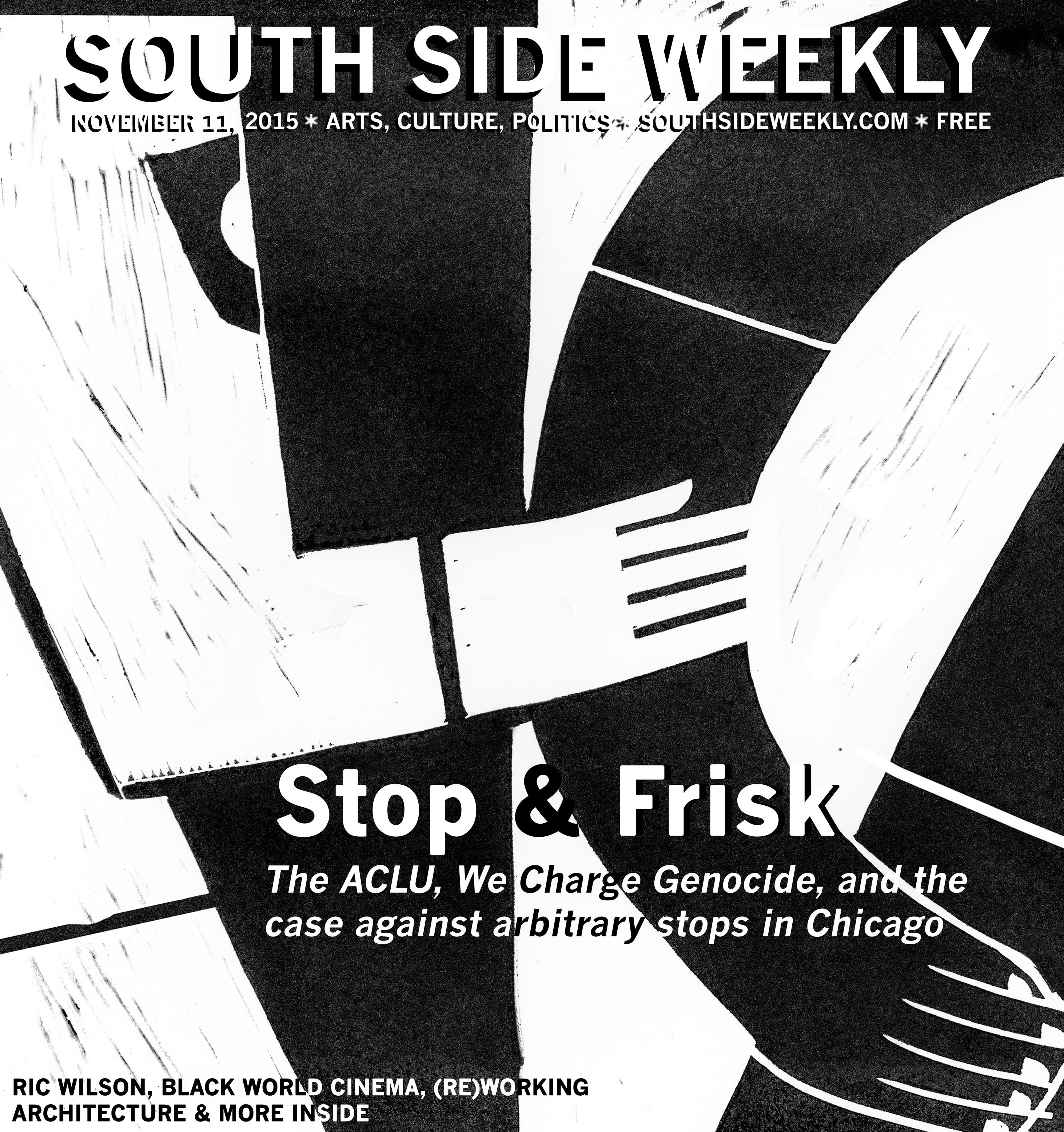
Cover illustration by Zelda Galewsky
Gotham Greenery
A week’s worth of developing stories, odd events, and signs of the times, culled from the desks, inboxes, and wandering eyes of the editors
In Martha Stewart’s biggest endorsement of hydroponic technology since she attempted to rap about “green brownies” while baking with Snoop Dogg on live television, the domestic goddess herself has just given Pullman’s Gotham Greens her trademarked seal of approval. Situated on the roof of a factory and unequivocally at the top of the game when it comes to the dog-eat-dog industry of urban farming, the 75,000 square-foot greenhouse will begin distributing leafy greens and herbs to local retailers next week. Granted the honor of the Martha Stewart American Made Award, the co-founders of the operation will fly out to New York this weekend to rub elbows with the crème de la crème of local craft creation: the creators of a high-quality knit sock mill and a group of visionary linen embroiderers, among others.
Another Kind of Greenery
Monday marked the first day of medical marijuana sales in Illinois, with patients lining up at the doors of the five new dispensaries opening up across the state in order to take part in this historic occasion. But people hoping that Illinois will become the new Colorado are sorely mistaken, as the state’s regulations are some of the strictest in the country. A list of only about forty very serious medical conditions, including HIV, cancer, and multiple sclerosis, are authorized for treatment. No reporters have been allowed in the dispensaries—access requires a scannable medical ID—but the owner of EarthMed in Addison described the atmosphere as “comfortable,” also noting that “you’re not going to find any Bob Marley posters.”
The Down and Dirt-y
Psst, we’ve got some dirt on the White Sox. The team just put their annual “Holiday Packs” on sale. Starting at $40, these packs include vouchers redeemable for game tickets next season and an ornament filled with the aforementioned “game-used infield dirt from U.S. Cellular Field.” While an impressive level of Holiday Pack sales last year (amid a flurry of high-profile offseason acquisitions) didn’t bring quite enough cheer to give the White Sox a good year, perhaps this dirt will finally grow us a winning season.
Rauner Reneges, a Little
On Monday, a rare morsel of good news came for many on the South Side who rely on government programs when Governor Bruce Rauner agreed to a pair of compromises designed to increase both the number of people with disabilities and the number of children eligible to receive subsidized services from the state. The compromise was advertised by Democrats, who had been calling Rauner for weeks to pester him on the issue, as a victory for both the state’s littlest and most physically disadvantaged people. In reality, the governor had little say on the matter. What the Democrats did was more political coercion than ideological persuasion. With a seventy-one vote Democratic supermajority led by Speaker of the House Michael Madigan breathing down his neck, Rauner was backed into a corner for the umpteenth time in his short tenure. Had House Democrats gone forward with their plan to advance a bill that would have accomplished the same, Rauner would have been forced to choose between prioritizing fiscal solvency and aiding Illinois’ poorest —a stark decision that would have put the Governor in an even stickier situation.
bLacK arT, On anD Off ScrEEn
The central tension—a black man in a white world.
christian belanger...4
IS THaT cHOIcE?
“I guess I’ll have the chicken sandwich.” sara cohen...5
STOp anD frISK
“When there’s no trust, people run away.” michal kranz...6
mOUTHpIEcE TO THE mOvEmEnT
“I engineer my own self; I shoot my own videos; I’m planning my own PR drops and campaigns and all that.” eleonora edreva...9
bUILDIng mOmEnTUm
“We’re putting ourselves in the history of working class traditions of struggle.” cecilia resende-santos...11
A handful of short films showcase black directors
BY CHRISTIAN BELANGER
Ablack man lies in a white room on a white bed, a white woman draped around his body in the shape of a question mark. She is asking him something.
“Don’t you ever think about how sad it is, the way people treat each other?”
“Not really.”
It’s the scene that opens Kofi Ofosu-Yeboah’s Akata, a short film that follows an acclaimed black artist as he navigates life in a city where his blackness is stereotyped: the movie’s running gag is that he can’t catch a cab.
Akata was one of five short films shown at Black World Cinema’s monthly screening in the unfinished Studio Movie Grille in Chatham, all of which were directed by former or current graduate students in Columbia College’s film department. The lineup included a film of cut-together archival footage, as well as two movies directed by members of the Kinfolk Collective, an artistic community that documents stories from the African diaspora. For his part, Yeboah is currently trying to crowdsource funding for Chicago I See You, a documentary about the Concrete Kings, a street theatre group that works to expose and defeat systems of institutionalized racism.
Akata mines similar territory at the intersection of race and art. During a Q&A with the audience after the screening, Yeboah
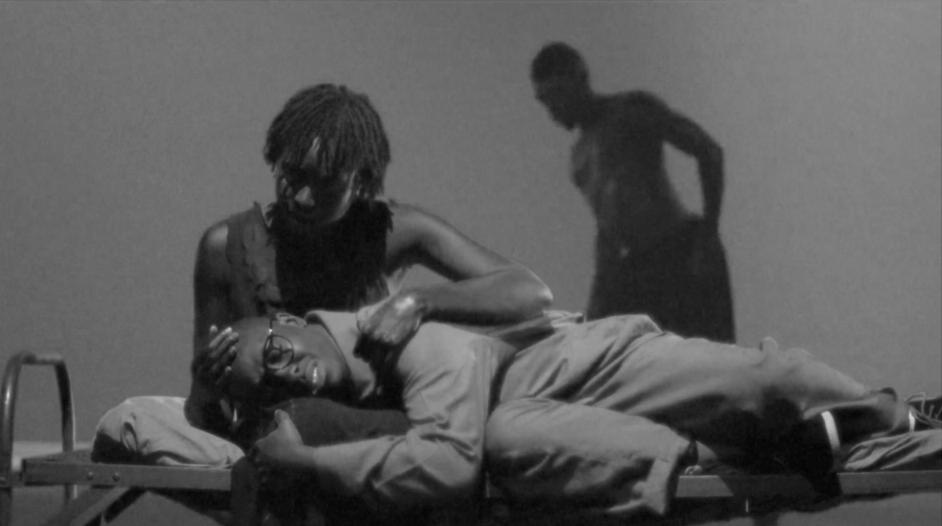
explained that, in the languages Yoruba and Fante, an akata is a wildcat that doesn’t live at home. It’s often a denigrating term when used by African peoples to describe the African-American community, but in his film Yeboah shows how, in America, the word becomes divorced from its original meaning and is instead applied indiscriminately to all black people.
“We do not account for the history of the black person—the racist system they have had to face in this country. Africans have a better infrastructure and support system,” says Yeboah, who himself is Ghanaian. “But akata is also the African in America. There, no distinction is made between them.”
Yeboah’s exploration of how this ethnic nuance often collapses into one overarching category—black—is at times subtle, at times a little heavy-handed. “Do you need me to call a cab?” the main character’s partner asks him at one point, and the unspoken implication lands with all the subtlety of a jackhammer. The rest of the dialogue often feels similarly overwritten, with the exception of a strikingly powerful poem written and performed by the film’s lead actor.
But from the beginning, Yeboah’s eye more than makes up for this clumsiness; in the opening scene, he lays out the central tension—a black man in a white world— elegantly and without didacticism. At the film’s climax, Yeboah lets the camera linger lovingly in and around the setting, a car
parked underneath the trestles of a railroad.
The night’s other standout, Savage vs. the Void, is more overtly political. It is set in 2011, on the night when the state of Georgia executed Troy Davis, a black man convicted of killing a Savannah police officer. Director Darren Wallace said he wanted to make the movie as a way of working out his own complicated feelings about the death of Davis, stemming from his own work advocating for Davis’ exoneration.
The film follows a director and set of actors who are putting on a play about the events surrounding the Davis execution. Savage, the lead actor in both the play and film, objects to the idea of performing the execution on stage when it looks as if Davis will be granted a stay of execution in real life. The director, Reuben, argues with Savage, contending that the martyrdom of Davis, even if it only takes place in a play, advances the cause of racial justice and immortalizes Davis.
Savage vs. the Void is deeply cynical about the possibilities of art, but it’s also a lingering, artistic work of beauty. Wallace’s enactments of scenes from the fictional play are particularly memorable, including one containing a haunting rendition of Gil Scott-Heron’s “Home is Where the Hatred Is.” In fact, the film is molded by music: in the opening shot, Savage sits in his dressing room, humming Lauryn Hill’s “If I Ruled the World.”
“I use music as another character,” explained Wallace afterward. “In a couple of scenes, I put bossa nova in there to play against or accentuate the themes.”
Ultimately, the debate between Savage and Reuben is rendered moot: Davis is executed anyway. “A man, not a martyr,” Savage-as-Davis shouts defiantly after he receives his lethal injection, given by a nurse who dispassionately lists off its components. But Savage’s protest is hopeless—Reuben bounces up on stage afterward, thrusting both fists in the air, proclaiming his artistic triumph. Savage lies on the stage, exhausted. It is not clear who is right.
While these two films were the most impressive of the night, the other three— which included Shades of Shadows, a chopped up fever dream scored by the sunny Chicago soul band The O’My’s—also showcased promising talent. More importantly, however, all of the films aroused an energy in the room that curator Floyd Webb quickly pounced on, announcing the impending publication of a new magazine, Southside Cine, devoted to covering film on the South Side.
“For too long, the conversation around film has been confined to the North Side,” said Webb, who has worked in the Chicago film scene since the mid-eighties. But if the quality on display this past Thursday is any indication, the geography of Chicago’s film scene could soon begin to shift.
BY SARA COHEN
“Imagine you’re in a fast food restaurant,” begins Mary Pattillo, author, sociologist, and professor at Northwestern University. “The menu includes a hamburger, a chicken sandwich, and a fish sandwich. You wait in line, get to the counter, and say, ‘I’d like a hamburger, please.’ ”
When the restaurant employee says they’re out of both hamburgers and your second choice, fish sandwiches, the customer reluctantly says, “Okay, then I guess I’ll have the chicken sandwich.”
“Is that a choice?” Patillo asks the audience.
The same question underlies Pattillo’s most recent study, “Everyday Politics of School Choice in the Black Community,” published by the Du Bois Review in March and the subject of this sold-out installment of both the Chicago Humanities Festival and Karla Scherer Endowed Lecture Series at the University of Chicago. In the study, Pattillo sought to identify the degree of control, empowerment, and agency parents actually had in choosing a school.
Pattillo interviewed parents of children enrolled at “Neighborhood High”—a neighborhood high school—and “Charter High,” an area charter school in an unnamed, predominantly African American neighborhood on the South Side. Both sets of parents fell into low-income categories, but “Charter High” parents tended to have higher incomes and more access to important resources like strong religious communities or ownership of cars.
Both groups of parents sought safe, structured, and practical school environments that would cater to their children’s needs, like college prep or support for developmental disabilities. Overwhelmingly, parents described a lack of control in whether or not their children enrolled in a school that actually fulfilled those needs. A Charter High mother described an experience not unlike the hypothetical that Pattillo began the lecture with. “I was just looking at the schools that I might wanna consider out of, you know, the lesser of the evils because I didn’t like any of ‘em. But I’m like, well, out of these I have to pick something.”
Only nineteen percent of Neighborhood High parents said they electively chose the school. The majority were enrolled after other options fell through, or due to proximity. Many of the guardians felt misinformed about options, frustrated by a lack of communication and restricted by a slew of
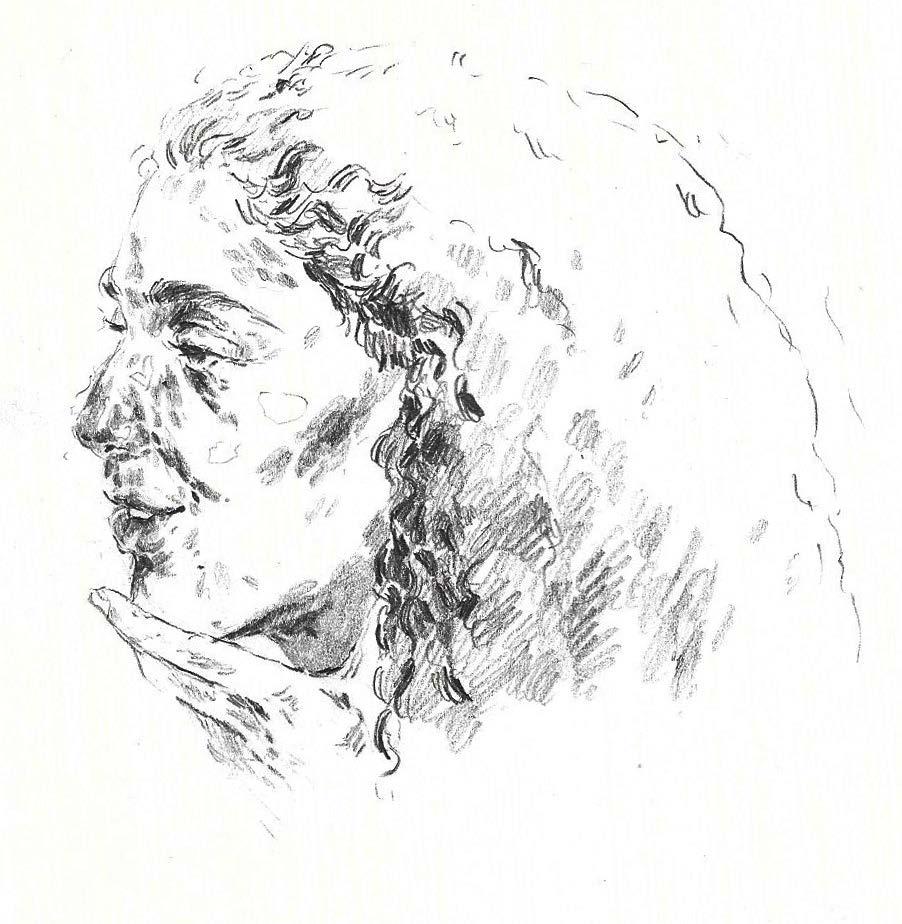
ELLEN HAO
external obstacles, including cost and time of transport, health issues, and difficulties with entrance exam competency for more selective schools.
Pattillo’s experience as a founding board member of Urban Prep Academies, a charter school with three campuses on the West and South Sides, was one of her primary motivations for this research. Through this work, Pattillo gained exposure to the competitive education model in Chicago, which she now sees as an obstacle to progress. “The problematic part of the competition ideology is that as schools die, the students die with them,” she said. “And our acceptance of the idea that schools might die while they have students in them, I think, is problematic.”
Pattillo’s research also focused on the idea of “empowerment,” defined by “access to and responsiveness of state institutions to parents making choices,” and whether or not “parents have an alternative to voice
in placing their children in high schools.” Empowered parents, she argues, have both decisive influence and political access, but should not be deemed fully responsible for their children’s educational outcomes. Instead, much of that responsibility should lie within CPS authorities themselves. She stressed the need to either increase the options available to students in South Side or West Side neighborhoods or raise the quality of existing neighborhood schools. Pattillo lauded the activists who engaged in a thirty-four-day hunger strike in September in defense of Dyett High School, saying organizing represents a critical step in achieving these end goals. But she acknowledged that not all communities can orchestrate such drastic protests.
In more affluent neighborhoods, however, where default schools are typically of higher quality, Pattillo noted that families do not have to face the burden of school choice. “The choice that they exercise is enabled by resources that the families I interviewed do not have,” she said. In this way, choice becomes more of a social disadvantage: “Because choice relies on those circumstances, it often exacerbates inequality as opposed to ameliorating it.”
A Neighborhood High mother who had discarded other options when she considered that her learning-impaired child would have to commute by himself said, “I know that he has different issues of learning and knowing his way. I know Neighborhood. I could walk him several times and he would know his way backwards and forwards. That [way] he could go to school by himself.”
It was the choices faced by parents like this mother that Pattillo had in mind in explaining her confusion over a promotional postcard that featured a picture of an Urban Prep student and the school’s principal. “A quality education isn’t a privilege, it’s a choice,” the card said.
“I thought the sentence that it used to inspire support for education was an easy, fill in the blank exercise,” Patillo remarked. “ ‘A quality education isn’t a privilege, it’s a right.’ But today the mantra is different.”
Chicago’s police stops dwarf New York’s; reformers work to curb the practice
BY MICHAL KRANZ
On the evening of October 9, 2014, Darnell Smith stepped out of his grandmother’s home in West Englewood to wait for a food delivery that he had ordered for her. After a few minutes, the delivery car appeared and the driver got out of the car. Suddenly, another unmarked car pulled up alongside the curb. A man jumped out of the second car, lunged at Smith, and—without saying a word— immediately began rummaging through his pockets. Whatever the man found, he threw onto the grass beside them, as Smith struggled to break free from his grip. The delivery driver who witnessed the entire incident believed that Smith was getting robbed. But the man searching Smith’s pockets was a plainclothes police officer. “He just walked up and started doing it,” Smith recalls. “He said it was a narcotics investigation.”
Smith, who is thirty-eight and African-American, is one of over forty plaintiffs involved in a class-action lawsuit against the city of Chicago alleging that the police department’s indiscriminate use of stop and frisk—a search and seizure method which has made national headlines due to alleged discrimination by the New York City Police Department—is excessive, often racially motivated, and a violation of civil liberties.
“The majority of the people you see stopped by both the white and the black police are black,” says Smith, speaking about the racism he sees as inherent in such police practices. “To the best of my belief that’s the only reason [for the stops].”
Smith’s assertions are backed up by research from the American Civil Liberties Union (ACLU) of Illinois, which released a report in March highlighting the depth of the racial disparity in stops in Chicago. The report shows that even though black Chicagoans make up only thirty-two percent of the population, they account for seventy-two percent of stops, while the city’s white population—which makes up the same thirty-two percent of the city’s total population—accounts for only nine percent of stops. This disproportionality is highlighted in neighborhoods like the Near North Side, where black people make up 9.1 percent of the population but a stunning 57.7 percent of stops. Additionally, the sheer volume of stops in Chicago dwarfs that of New York City even at the peak of New York’s stop and frisk program in 2011, when police averaged 22.9 non-arrest stops per 1000 people. In Chicago, this number was four times higher in the summer of 2014—93.6 individuals per 1000 people, or nearly ten percent of the entire municipal population, were stopped.
Because of the lack of consistent and reliable data-keeping on the Chicago Police Department’s part, these statistics have only recently become available to the public. Even though the scale of the problem evidently eclipses stop and frisk in New York by a wide margin, the relative lack of institutional reform has left communities of color in Chicago frustrated and desperately searching for avenues for change.
Stop and frisk has been practiced by police departments across the country since the late 1960s, bolstered by the Supreme Court decision in Terry v. Ohio. In the majority opinion of the 1968 case, stops and frisks—or Terry frisks, as they came to be called—were justified under the Fourth Amendment as long as a police officer had reasonable suspicion that an individual was a danger to officers or to the public. Legally speaking, a frisk constitutes a pat-down of someone’s person, and thus is short of a search and seizure. A Terry frisk therefore does not require the probable cause an arrest does, and as long as a police officer is “reasonably suspicious” that an individual might be a danger to the public, they are justified in their stop.
In the last few decades, Terry stops have gained popularity as a policy aimed at reducing gang activity and gun violence and have been used by police departments across the country, including the CPD. But since many incidents of stop and frisk do not result in an arrest, it is difficult for courts to evaluate the “reasonableness” of police behavior, and thus officers are rarely held accountable for breaches of the law. The contact cards officers fill out are also insufficient. Since officers are not required to fill these out if the stop leads to an arrest, exact estimates of Terry stops are hard to pin down. This also means that it is difficult to determine how often these stops lead to an arrest, making a thorough investigation into the efficacy of the policy nearly impossible.
However, looking at long-term trends, there is no clear indication that the broad use of stop and frisk is correlated with drops in crime and violence. For instance, according to the New York Civil Liberties Union, the number of people who fell victim to shootings in 2011 was roughly the same as in 2002. Additionally, as reported by the New York Times and other outlets, violent crime fell in 2014, even as the number of stops in the city fell sharply. While this drop may have been due to
increased funding for the NYPD and the subsequent increase in police officers, these numbers call into question claims often made by “tough on crime” advocates that ending stop and frisk would necessarily drive crime numbers up.
Even researchers who have found potentially positive effects stemming from the policy are cautious about recommending its use. Jens Ludwig, the director of the University of Chicago’s Crime Lab, and Carnegie Mellon University’s Jacqueline
Cohen conducted a 2003 study in Pittsburgh that found that stop and frisk led to decreases in gunshot injuries. But Ludwig is wary of extrapolating the policy’s overall value from such results. “That’s not to say whether or not stop and frisk is worth the costs that the practice imposes on society,” he says. “But there’s a complicated tradeoff here that needs to be acknowledged.”
The trade-off Ludwig is referring to is the impact the practice has on urban populations, especially communities of color. The ACLU report points out that stop and frisk has consistently been shown to be damaging to police-community relations, because it breaks down the trust between the two groups that is vital for police work to be effective. Antonio Romanucci of Romanucci & Blandin, LLC, the law firm representing Darnell Smith in his lawsuit, agrees. “When there’s no trust, people run away,” he says.
Following the release of the ACLU’s report in March, calls for reform have focused mainly on improving the methods of collecting data on individual stops. The Chicago-based racial justice organization We Charge Genocide (WCG) began working with several aldermen on a comprehensive city ordinance that would shed light on the CPD’s practices by exposing them to public scrutiny. WCG, which entered the international spotlight after traveling to Geneva to bring institutional racism in the United States to the attention of the United Nations, drafted the Stops Transparency Oversight Protec-
tion Act (the STOP Act) with Aldermen Joe Proco Moreno and Roderick Sawyer this summer. Specifically, the STOP Act would mandate data collection on all stops, the release of this data to the public, and the mandatory issuance of receipts to individuals stopped by police, mirroring policies currently in place in New York City, where the data from each individual stop is readily available at the Stop, Question, and Frisk Report Database on the city government’s website.
However, the STOP Act was never filed—according to We Charge Genocide, Aldermen Moreno and Sawyer were dissuaded from filing the act until the September City Council Meeting by Mayor Rahm Emanuel, who claimed that the city was reevaluating its policing policies. This reevaluation consisted of secret negotiations between the CPD and the ACLU, which had been working with and had encouraged WCG to draft the STOP Act. On August 7, the fruits of the negotiations emerged from behind closed doors, and the ACLU unveiled a “landmark agreement” it had struck with the CPD on stop and frisk in the city. The details of the agreement mirrored the STOP Act in many ways, including a data collection requirement for all stops. The agreement also included changes in police training and supervision.
But unlike the STOP Act, the agreement mandated that the collected data would only be available to a third party investigation led by former federal judge Arlander Keys and a team of specialists, who would release two annual reports on
their findings. Unlike in New York City, the raw data would be unavailable to the general public, although when asked about this point, Karen Sheley, Staff Counsel for the ACLU of Illinois, responded by saying that journalists can pursue the data through Freedom of Information Act (FOIA) requests. Making a FOIA request can be a difficult process, however, and it takes most requests nearly a month or more to be processed.
In an open letter to the ACLU of Illinois, We Charge Genocide derided the ACLU’s decision to exclude them from the negotiations, claiming that the move was detrimental to their efforts to curb police racism. “We informed you [the ACLU of Illinois] on July 1, 2015 that WCG would send out a press release and file the STOP Act on Wednesday, July 29 at the City Council meeting,” the letter says. “It was mind-boggling to learn that you have been in negotiations with the City without informing us prior to July 29.”
“We invited We Charge Genocide to participate in our litigation efforts and they said no,” says Sheley. “If they agreed and said they wanted to do that, they would have been part of that communication stream.” Sheley also says the STOP Act could still pass. “We weren’t informed of the date when they were planning to file it, but we still think it’s a good idea. I think that the timing of it made it difficult to go forward at that particular time.”
Whatever the cause of the communications breakdown between WCG and the ACLU, the result was a deal crafted within the establishment, in a process that did not include grassroots organizations aimed specifically at advocating for those most affected by the policies in question: black and brown people in Chicago.
Although Sheley stated that the ACLU has been and will continue to be open to additional efforts to expand data collection and the public’s access to it, such a public disclosure of data is only the
first step in dismantling what many see to be a policy that has overstepped the legal framework set up by Terry v. Ohio. Although publicly accessible data on stops and frisks helped bring the scope of the problem to the attention of New Yorkers, it took a legal precedent for the NYPD to
begin drawing down the use of the practice. Floyd v. City of New York, a case decided in 2013, made it clear that stop and frisk as it had been practiced in New York City violated the Fourth Amendment, since the frisks were deemed to be largely “unreasonable.” The court also ruled that, since
many of the stops had been found to be racially motivated, the Fourteenth Amendment had been violated too. In conjunction with the decision, the court ordered a series of remedies, including broad reforms to the training and monitoring of officers. According to the New York Civil Liberties Union, stops have fallen dramatically since the NYPD complied with the order, from the 2011 high of more than 680,000 to only a little over 46,000 stops in 2014. For this reason, Romanucci, Smith, and the other litigants believe that a legislative solution can only do so much, and thus intend to use the court system to change policy. Despite the steps toward reform that the ACLU-CPD agreement provides, it provides no immediate relief on the ground, as CPD Superintendent Garry McCarthy himself pointed out following the announcement of the deal. Because the data collection won’t go into effect until January, because processing and analyzing the data will take longer, and because the prospects of broader reforms are uncertain, the agreement does nothing in the short-term to impact the lives of people of color targeted by police officers.
Darnell Smith says he has been stopped twice since the initial incident in 2014. “It’s not like you get stopped and frisked once and then you get a special card that says you will never get stopped and frisked again,” Romanucci says. “You will continually get stopped and frisked solely because of race.” Smith also says he fears “retaliation” on the part of the police for what he is doing, saying that he could get handed a narcotics charge if he makes the wrong move. “A lot of people don’t have the heart to do this because of the fear that the police have instilled in them,” he says.
But Smith remains confident about the potential for reform. “With the court’s help,” he says, lasting reforms to the CPD’s stops and public access to their data are both possible and close to becoming reality.
Artist-abolitionist Ric Wilson on his soonto-drop EP, The Sun Was Out, and more
RBY ELEONORA EDREVA
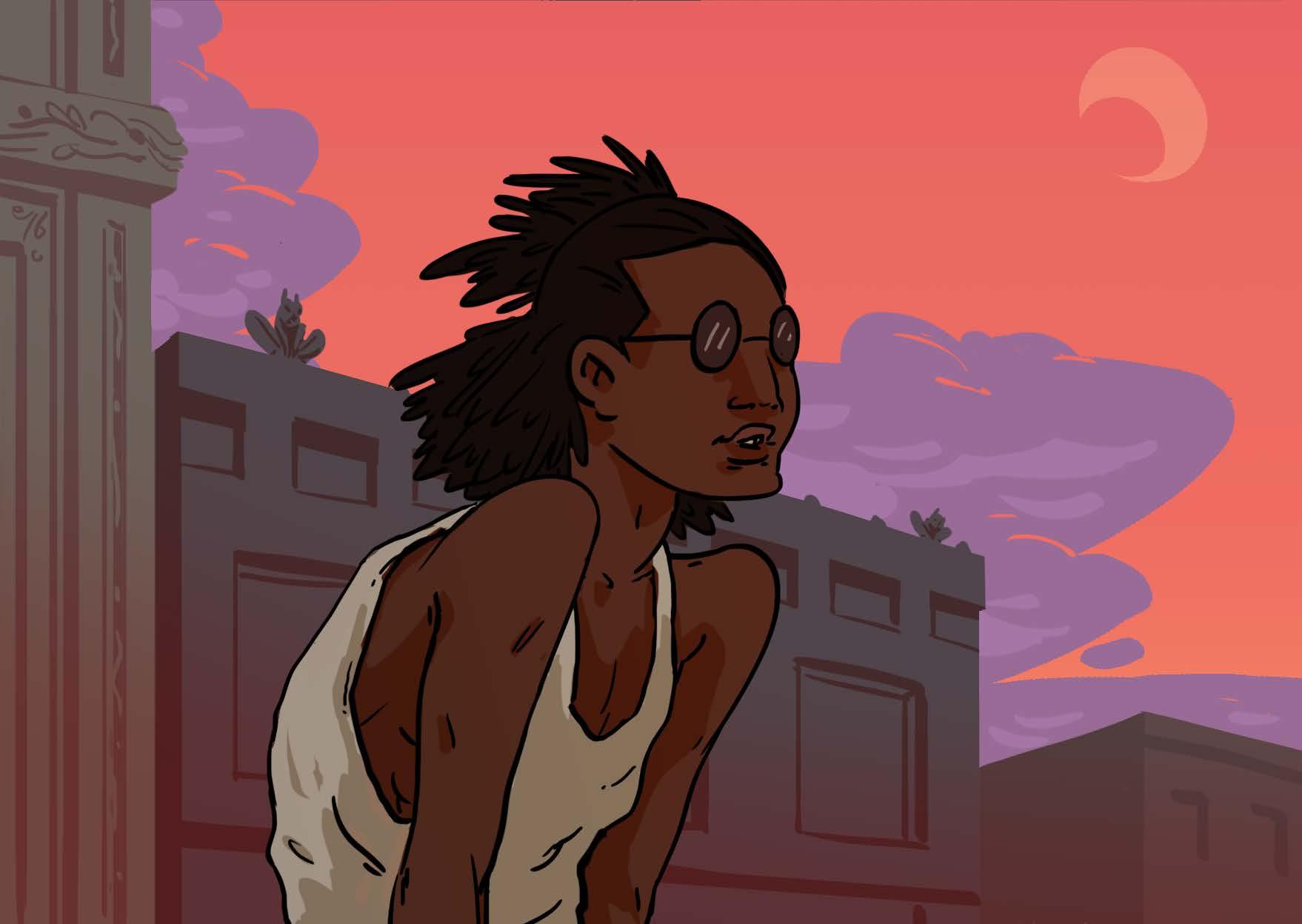
ic Wilson, self-proclaimed artist and abolitionist, is in many ways a bridge between the worlds of organizing and music on the South Side. He entered these worlds at an early age: he’s been rapping since his early teens, and started learning about social justice around the same time as a summer fellow with the Chicago Freedom School. There, he met and became close with one of its co-founders, prominent Chicago-based organizer Mariame Kaba, whom he likens to a second mother. He moved to Atlanta for college, and had to drop out for financial reasons, but not before he was able to make connections within Atlanta’s nationally prominent rap scene. He recorded many of his early tracks there before moving back to Chicago and releasing his first mixtape, Penny Raps, whose themes reflect those financial difficulties, earlier this year.
At age twenty, Wilson now organizes with We Charge Genocide and was part of the eight-person delegation the organization sent to the United Nations in Geneva exactly a year ago to present a case for charging the Chicago Police Department with torture. 2015 will continue to be eventful for Wilson—his new EP, The Sun Was Out, drops this month; two new tracks, “You Need Me” and “Pray to the Lord,” were released in the last month; and this past week he received one of the Chicago Freedom School’s annual Champion of Justice awards. The Weekly had a chance to sit and talk with him about his upcoming release, being a full-time musician, balancing his worlds, and how it feels to walk off a porch into sunlight.
Can you tell me about The Sun Was Out ?
It’s about this moment last summer where I just had this realization of who I was, and about being comfortable with who I am, where I am in life and pursuing that and not just music. It’s about the little things, like what I wear and being comfortable with being in my skin, with not being in school, and doing this. It’s looking at all these opportunities I have and seeing that I can do
what I want to do in my life.
That realization was like the sun was out, and the sun is supposed to be this representation of what light means to me, of leaving people and things in the darkness, in the night. It’s almost like being “naked on the porch”—you’re naked on the porch and everything you thought you were is stripped away and you’re this new person. You can either stay there naked on the porch and freeze to death, or you can just walk off the porch and be this new person in this new life. That’s sort of what “The Sun Was Out” means.
So why is it The Sun Was Out? Did you walk off the porch?
The sun was out because I had that moment in the past and now I’m in this new me. The whole tape is pretty much about what happened in that moment almost, and what happened in the wakes of that moment. Because I was also thinking, “Is the sun out now?”—and I was like “Ehh, nah.” I was also thinking about the turning of fall from summer and that feel; the tape really has
some summer vibrations to it with the beats and everything.
How was the process of creating The Sun Was Out different from the process of creating Penny Raps?
So Penny Raps was just a bunch of beats I found. I was like, “Damn, I need to put something out” because I wasn’t in school and I just wanted to push something out. And this [The Sun Was Out] is going to be way smaller because it’s just an EP, but also I handpicked all the beats; I talked to the producers; we had a mutual understanding. The Sun Was Out is all going to have this sound, like the sound of my single “You Need Me” and this new song “Pray to the Lord.” I’m really trying to establish like what “Ric Wilson’s music” sounds like, so all my music from now on is going to have that sound.
Do you know what that sound is?
Yeah, but it’s hard to explain. Actually, someone just expressed it in a Twitter DM [direct message]. He was like, “Do you need
a beat?” and I was like, “Yeah.” And then he explained it and I was like “Damn, this is right on point.” It’s like “jazzy soulful with modern elements, such as 808s.” I was like, “Alright, alright, I’m down with that.”
What are your thoughts on Chicago’s scene? How does it compare with Atlanta?
In Atlanta, everyone that you’ve heard of knows each other and they’re friends because they all make good music. It’s not as integrated as Chicago is though. Here, you could run into Chance the Rapper walking down the street. In Atlanta, you won’t really run into Sonny Digital or Makonnen walking around down the street. It’s because of the size and dynamics of the city, but the artists are very distant from the community. But also, Chicago is a little bit clique-ier than Atlanta: in Atlanta if you make good music everyone just rocks with each other. But Chicago is not at Atlanta status. Chicago artists are still more localized so it’s still clique-y.
Is there a lot of competition in Chicago?
Not really, it’s more like a lot of people in Chicago make music that sounds the same. That’s why I tried so hard in The Sun Was Out to sound different, because people in Chicago sound the same. They try to mimic a sound that’s popular, which is cool but not cool enough for me. I want to be different.
Are you glad you came back [from Atlanta]?
Yeah, I’m really glad I came back. My family is here, and also organizing in Chicago is like nowhere else. Even if you’re not organizing in Chicago, you’re going to see a protest or you’re going to see some sort of demonstration somewhere. In Atlanta there was just none of that, even though I went to school in West End Atlanta, which is also a marginalized area, so there should’ve been. And as soon as I got back to Chicago I got a call from Mariame Kaba;
“They try to mimic a sound that’s popular, which is cool but not cool enough for me.”
she calls me and asks if I want to be the MC for an event.
Is that how you got involved with We Charge Genocide?
Yeah, Mariame knew I was an outspoken voice and that I could rap, so she knew I wasn’t afraid. She asked me to MC a protest and it was literally at that protest that my friend Ethan [Viets-VanLear] told me that his friend Damo [Franklin] had gotten tased and was in a coma. Two days afterwards he told me Damo died. Then I went to California for four weeks. I came back and We Charge Genocide had started up and was running, and they were just like, “Yo, do you want to be a part of this?” and I was like “Yeah!” So it just happened.
How do your worlds of music and abolition work overlap or work together?
I’ve always declared myself an abolitionist, but I knew there was going to be a point in time where I was going to be in music sessions and have music practice and wasn’t going to be able to go to [organizing] meetings. I miss a lot of meetings now because I’m doing a lot of music stuff; I do music stuff full-time.
Is it hard to do that full-time?
It’s kind of hard to balance because I’m managing myself right now. I engineer my own self, I shoot my own videos, I’m planning my own PR drops and campaigns and all that. I also play the cajón and I’m working with this pianist and this violinist, so now I’m practicing for that and for gigs I’ve got coming up—it’s a lot.
And most of the [organizing] meetings happen at like 5pm and later on because folks have jobs, but I sleep ‘til like 2pm and then wake up and do what I do, so I can’t make the meetings and it feels like, “Damn, I suck!” And now my activism is turning more into my art and I hate it. I did not ever want to become one of those “I just do art” activism dudes and now it’s like come to that point. So yeah, I’m trying to figure out how to do that.
Will you tell me about your choice to use “abolitionist” instead of “activist” to describe yourself?
I like to use the term “abolitionist” and I believe “abolitionist” is more of a revolutionary term. “Activist” is almost more of a reactionary person. So like, activists show up to demonstrations; someone’s killed and then they’re there. That’s their reaction and then they leave and don’t really do much planning or organizing. They just really show up—which is needed, which is dope—but abolitionists, revolutionary abolitionists, constantly have this idea of what they want the world to look like and they put that into practice every single day of their life.
It’s hard as hell but you do it. Like, I don’t call the police, I don’t rely on the police, I try to encourage people not to call the police, but then I also try to bring alternatives to not calling the police: “Oh, you know, we could do this instead of calling the police,” or “Maybe you could do that instead of calling the police”—keeping that conversation going and going. I feel like that’s more than just activism; that’s a lifestyle, that’s an abolitionist lifestyle.
On the weekend of October 30, Bridgeport’s Co-Prosperity Sphere hosted an event with the somewhat unusual theme of labor rights in architecture. Suggestively called (re)Working Architecture, the event was organized by the Architecture Lobby, an organization of architectural workers––students, architects, firm owners, teachers––founded in 2013 in New York to advocate for better working conditions within the profession. Since its creation, the Lobby has founded chapters in nine cities, launched initiatives for research in architectural work, and made appearances at the Venice Biennale and conferences of the American Institute of Architects.
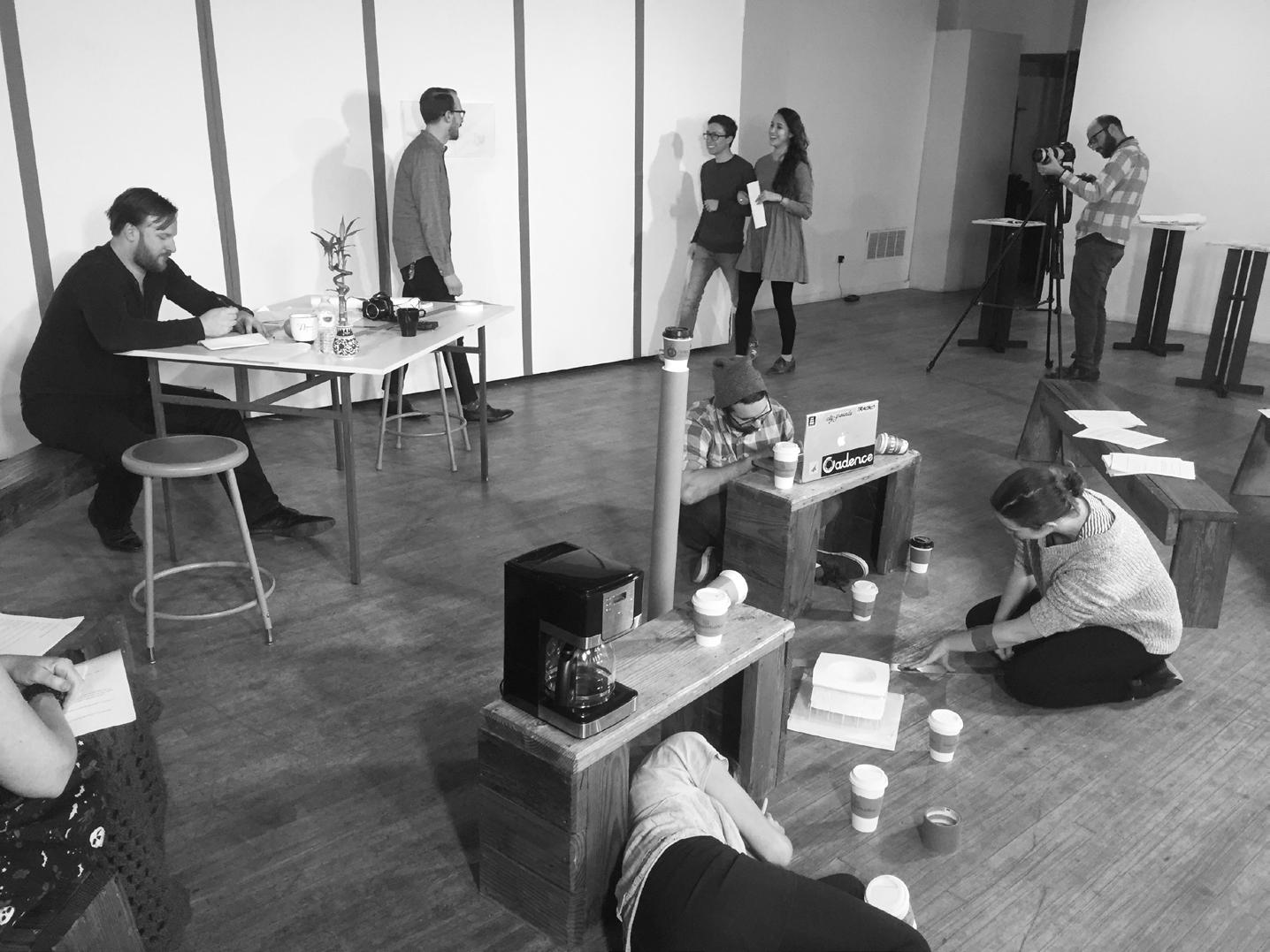
With the announcement of the Chicago Architecture Biennial came the realization that, despite the Biennial’s diverse program, the issue of labor in architecture would not be discussed in any form. The Chicago chapter of the Lobby decided, then, to organize what they called “an uninvited installation for the Chicago Architecture Biennial.” Over the course of three days, the group discussed the main issues in architectural labor with the aid of ten role-playing performances. Each performance was based on a point from the Lobby’s manifesto and relevant workplace experiences as related by Lobby members. Following the performances, they held a ball on Saturday evening and a tour of Bridgeport on Sunday.
Establishing basic labor rights and respect for existing laws is the first item on the Lobby’s manifesto, and was a frequent theme in the performances. According to Lobby members, architects work over seventy hours a week without overtime payment––and are expected to work 24/7, if needed––making just over $15 per hour. They don’t usually have employer-provided health care plans, and they frequently have irregular contracts and hiring policies, particularly for unpaid internships. In the first scenario, a recently graduated architect discussed an employment opportunity with a firm owner. Although the internship was unpaid, the interviewer revealed that the candidate would be doing the same work and working the same hours as the paid employees, but would receive a “likely offer of position” within around two months––all illegal practices, according to the Department of
Labor’s Fair Labor Standards Act .
This exemplifies a common situation: young architects in need of experience walk into unfair employment arrangements without questioning the practice. According to Keefer Dunn, an adjunct professor at the Illinois Institute of Technology and co-founder of the Lobby’s Chicago chapter, one of the organization’s main objectives is to inform and advise students, giving them agency when seeking employment. In the performance’s alternative ending, a candidate aware of internship regulations questioned the interviewer and eventually refused the offer.
What seemed an odd way of introducing discussion proved to have interesting results. After the first reenactment, participants were surprised by the method’s effectiveness.
“There’s a catharsis,” said Dunn. “You get angry, you throw the legal and the moral arguments, but that’s just the starting point—then it switches to seeing how we can change the dynamic.” Elaina Berkowitz, a graduate student at Yale University and member of the Lobby’s Yale chapter, noted its practicality: “It’s surprising how role-playing puts you in a real life situation, and it feels like it’s giving you tactics to deal with it.”
The event’s collaborative acting was
based on the theatre of the oppressed, a theatrical form largely used by social justice movements, in which the audience participates in the conclusion of a sketch. Dunn, who helped organize the event, says that the method was chosen with the intention to foster discussion and to make something that was “generative” rather than “didactic or finger-wagging.”
The theatre of the oppressed is one of several methods adopted by the Lobby that derives from traditions of labor rights movements in other industries: a manifesto, a fictional patron saint called San Precario—an ironic figure derived from Italian workers’ movements, and the collective reading of the manifesto during meetings.
At times the Lobby’s methods, as well as its motto, “We are precarious workers,” seem decontextualized, perhaps even illegitimate. The terms they use are reminiscent of the language used by advocates for the rights of migrant workers in the Middle East, and the stark contrast between the conditions of the two groups makes the comparison difficult to accept. No matter the architects’ dissatisfaction with their industry, it is still one of relatively high prestige, often formed by individuals from privileged backgrounds; they at times seemed to be appropriating the strat-
The Architecture Lobby uses performance to advocate for labor rights
BY CECILIA RESENDE-SANTOS
“Part of this is to reclaim that history, represent and repurpose it. We stand on the shoulders of giants.”
—Keefer Dunn, adjunct professor at IIT and co-founder of Chicago Architecture Lobby chapter
egies of other workers’ movements in order to maintain this status. The event also gave little attention to discussion of racial, social, and gender diversity within the profession.
But the Lobby members maintain that they are able to do good for more than just themselves by pursuing their goals. Berkowitz pointed out the role of these methods both in engaging the public and in bringing architects closer to other workers. “As architects, part of our problem is reaching out to the public, so this ends up being a very good way of bringing in all the things we have in common [and of] making this not exclusive to architects, but relating to labor issues in general, relating to other people that are part of our profession, which we need to do better,” she said.
“If we’re identifying as workers, which is maybe the novelty to this, to a degree, then we’re putting ourselves in the history of working class traditions of struggle,” added Dunn. “Part of this is to reclaim that history, represent and repurpose it. We stand on the shoulders of giants.” One such giant, the famous American union leader and socialist politician Eugene Debs, appears in the fifth scenario as a ghost, calling for the unionization of architectural workers. The creation of a union would give architects the agency they need not only to better their own working conditions, but also to stand up for the rights of other affiliated workers.
The first step towards unionization, one of the Architecture Lobby’s primary goals, would be to encourage architects to think of themselves as workers and to dispose of the idea of the architect as an individual artist. The sixth performance tackled this idea, which, according to Columbia University professor and member of the NYC chapter Manuel Shvartzberg, is “a very oblivious conception” that doesn’t acknowledge a large and necessary staff and promotes a distorted image of the profession, epitomized in the celebrity of the “starchitect.” The second, third, and tenth performances also explored the percep-
tion of the architect as a designer, which generally results in a focus on the product—the building––and disregard for management, research, planning, and all the knowledge invested by teams of architects in a project.
However, not all architects consider unionizing feasible. Quilian Riano, a professor at the Parsons School of Design and member of the NYC Lobby chapter, says that the first problem is legality, specifically the Sherman Antitrust Act, on the grounds of which antitrust suits have been filed against architects’ groups in the past. The second and perhaps more deep-seated problem, Riano said, is that if architects don’t see themselves as workers, they won’t understand how a union might help them.
The culture that fosters the image of the architect as a “solo creative genius” is the same that that encourages overworking and glamorizes the all-nighter––a culture that participants at the Co-Prosperity Sphere event unanimously agreed has its roots in architecture school. The Lobby university chapters therefore have a great responsibility in changing this culture and training architects to be able to demand better conditions, argues William Martin, a professor at the University of Michigan and founder of its local chapter. But changing such an ethos requires getting in touch with the entire “ecosystem of architecture,” including firm owners, academics, students, contractors, construction workers, and with the general public, both through public engagement and research.
The Lobby is not, however, a union. Architects still have a long way to go in gathering their peers, especially in a time when the union may seem like an old-fashioned format, as Riano points out. But with the Architecture Lobby’s completely horizontal structure, lack of authoritative statements, and focus on collectivity, collaboration, and assistance, it is, as Dunn says, a “support network”–– a foundational step for any organized workers’ movement in the 21st century.
A workshop with Pulitzer Prize-winning reporter Rick Tulsky
Sunday, November 22, 2015, 1pm–3pm South Side Weekly Office at the Experimental Station, 6100 S. Blackstone Avenue
Part four of the Chicago Civic Journalism Project Data Journalism Series, presented by Chicago Studies, City Bureau, South Side Weekly, and University of Chicago Careers in Journalism, Arts, and Media.