The South Side Weekly is a nonprofit newsprint magazine written for and about neighborhoods on the South Side of Chicago. We publish in-depth coverage of the arts and issues of public interest alongside oral histories, poetry, fiction, interviews, and artwork from local photographers and illustrators. Started as a student paper at the University of Chicago, the South Side Weekly is now an independent nonprofit organization dedicated to supporting cultural and civic engagement on the South Side, and to providing educational opportunities for developing journalists, writers, and artists.
Contributing Editors Will Cabaniss, Eleonora Edreva, Lewis Page, Hafsa Razi
Social Media Editor Sam Stecklow
Web Editor Andrew Koski
Visuals Editor Ellie Mejia
Layout Editors Adam Thorp, Baci Weiler, Sofia Wyetzner
Senior Writer: Stephen Urchick
Staff Writers: Olivia Adams, Amelia Dmowska, Maira Khwaja, Emiliano Burr di Mauro, Michal Kranz, Zoe Makoul, Sammie Spector, Zach Taylor
Staff Photographers: Juliet Eldred, Finn Jubak, Alexander Pizzirani, Julie Wu
Staff Illustrators: Javier Suarez, Addie Barron, Jean Cochrane, Lexi Drexelius, Wei Yi Ow, Amber Sollenberger, Teddy Watler, Julie Wu, Zelda Galewsky, Seonhyung Kim
Editorial Intern Clyde Schwab
Webmaster Sofia Wyetzner
Publisher Harry Backlund
The paper is produced by an all-volunteer editorial staff and seeks contributions from across the city. We distribute each Wednesday in the fall, winter, and spring, with breaks during April and December. Over the summer we publish monthly.
Send submissions, story ideas, comments, or questions to editor@southsideweekly.com or mail to: South Side Weekly 1212 E. 59th Street Ida Noyes Hall #030 Chicago, IL 60637
For advertising inquiries, contact: (773)234-5388 or advertising@southsideweekly
Read our stories online at southsideweekly.com
Cover illustration by Raziel Puma.
A week’s worth of developing stories, odd events, and signs of the times, culled from the desks, inboxes, and wandering eyes of the editors
Truth in Taxation
The city held required “truth in taxation” public hearings on Monday, but this truth probably won’t be greeted enthusiastically by many Chicagoans. The Emanuel administration plans to raise the property tax levy this year by 37.7 percent—from $861 million to roughly $1.2 billion. As DNAinfo reported, Alderman Edmund Burke cited projections that the levy would continue to rise, reaching $1.4 billion in 2018. According to the administration, these new taxes are necessary for the city to cover its pension payments to police and firefighters, as the city’s budget woes continue. Homeowners might be partially reprieved from the effects of this giant hike if a state bill doubling the homeowner exemption on assessed value is passed— not a likely proposition.
Inspiration (Remix)
What gets R. Kelly choked up? His high school music teacher, according to a Sun-Times video interview. Lena McLin, the first person to identify and encourage his musical talent, was close to losing her apartment at 69th and Oglesby, which is being converted into condos unaffordable on a teacher’s pension. A former student created a GoFundMe to help McLin out, and Kelly just performed
IN THIS ISSUE IN CHICAGO
THIS SIDE Of KIngSTOn
Something more along the lines of perseverance...no, persistence.
emeline posner...4
WHO’S WHO In pOLIcE accOUnTabILITY
The people responsible for keeping Chicago’s police in check.
christian belanger & will cabaniss...6
at a benefit concert October 14 to support her. But what really makes McLin “the greatest human being on the planet and the earth,” as Kelly dubs her? Well, “she don’t complain.” If you only listened to Kelly, you’d be forgiven for not knowing McLin is also famous in her own right: a composer of more than 400 works, one of which was performed at Carnegie Hall, and possessor of a healthily sized Wikipedia article to boot. As for McLin’s plight post-concert, Kelly said she now has the $147,000 needed to convert and purchase a condo—“he thinks.”
Trash for Cash
Rahm Emanuel’s most recent unpopular idea this budget season is to start charging Chicago residents for trash pickup. All possible garbage jokes have already been made—mostly by city aldermen— who are lining up to criticize the proposal. The idea hasn’t gone away, however, and its newest iteration is to charge residences by the volume of trash they throw away. Alderman Pat Dowell calls the move a “slippery slope” towards forcing Chicagoans to pay for other city services, and opponents far and wide fear Chicago’s streets will be lined with rubbish as residents start choosing to litter instead of adding to their garbage pickup bill.
THE STaTE bUDgET crISIS
All the cuts are affecting the South Side a different way.
zoe makoul...7
rESISTancE rEmEmbErED
“I make art because I see the ways in which our histories of resistance get erased.”
jean cochrane...10
OLIvE HarvEY WInS granT, ExpanDS OffErIngS
“Students will be able to create games, design them, put it in there, and play it.”
lianne blodgett...10
varDa On 60TH STrEET
People love Agnès. They love her hair, her obsessions with potatoes and cats, the ineffable earnestness in everything she does.
walker king...14
brEaKIng InTO THE DarKnESS
“We wrap the truth in darkness and believe it will just disappear, but it never does.”
jasmin liang...15
This Side of Kingston
Bronzeville Jerk Shack, the first Bronzeville Cookin’ venue, opens.
BY EMELINE POSNER
“I’m not patient at all,” says Bernard Loyd, the man who has dedicated the last twelve years of his life to the commercial and culinary redevelopment of a three-block stretch of 51st Street. I met with him recently to talk about Bronzeville Cookin’, his company Urban Juncture’s project of transforming the area surrounding the 51st Street Green Line stop into a hub of black culture and cuisine, and the Bronzeville Jerk Shack, its first and most recently realized venue.
Though patience be not one, Loyd’s other traits—“something more along the lines of perseverance…no, persistence”—have clearly been fundamental to the realization of the Jamaican roadhouse-inspired spot, which has
finally opened after years of talk. Originally slated for 2010, then 2014, the restaurant finally opened in September 2015. Given uncertain funds and a hard-hitting recession, the years-long delay certainly came as no surprise, least of all to Loyd and his team; but the wait, it seems, was well worth it.
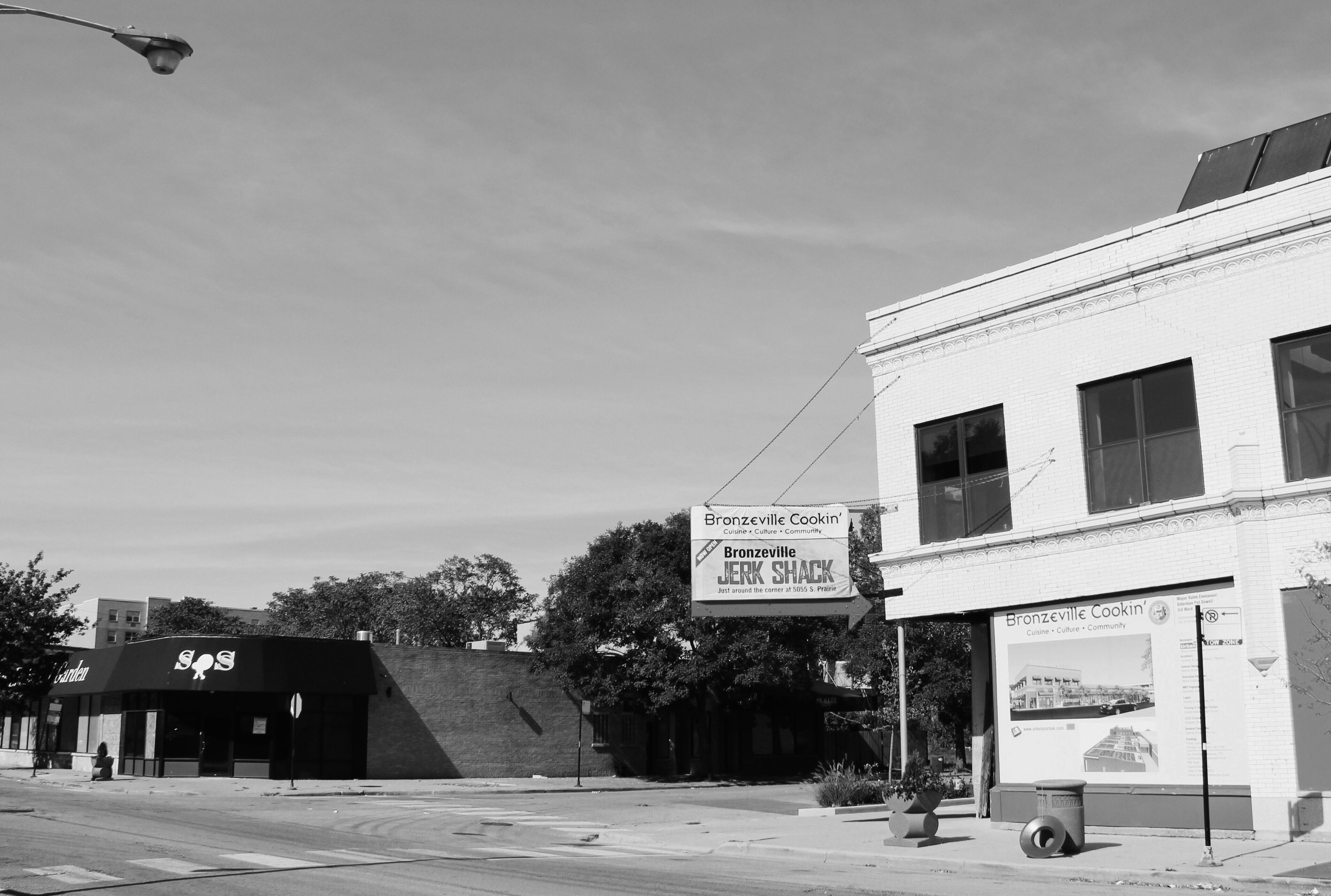
The Jerk Shack’s entrance is at 5055 S. Prairie Ave., one hundred feet or so north of 51st. So long as the restaurant is open and the weather pleasant, the storefront windows are drawn up, allowing the occasional breeze to float in along with voices from the street and the familiar ding of Green Line trains’ closing doors.
Inside, the earth tones and exposed brick wall harmonize with the metallic and red highlights of the counters and win-
dows. Several dark wooden chairs and tables, some mismatching, were salvaged from the Bronzeville Forum on 43rd Street, another of Loyd’s properties, and restored to gleaming glory. Shining on the wall is a mosaic of a loggerhead kingbird, a native Jamaican species, made and donated by acclaimed Bronzeville artist Carolyn Elaine.
The menu, the Jerk Shack’s most important feature, isn’t extensive, but once you’ve tasted the jerk chicken dinner you really don’t mind. The meat has an unabashed, smoky, make-you-cry kick to it that only the combination of sweet sorrel juice, soft fried plantains, and a couple minutes’ time will soothe. Depending on your tolerance for spice, you may or may not wish to coat your plate with the extra container of jerk sauce
that comes with each order. The chicken is tender, though it doesn’t quite want to fall off the bone, and juicy enough that I couldn’t get through the meal without replenishing the napkin stack about halfway through.
Included with the jerk plates, which are either chicken- or pork-based, is a tauntingly small portion of soft, sweet “Hellshire Beach” festival (Jamaican cornbread fritters), as well as a slice of hard dough bread. Sides include saltfish fritters, sweet potato fries that have already gathered acclaim on Yelp, and fried plantains. Every day customers can also order a special item not on the official menu; I found a jerk shrimp plate on the specials chalk board one day, a jerk chicken wrap the next.
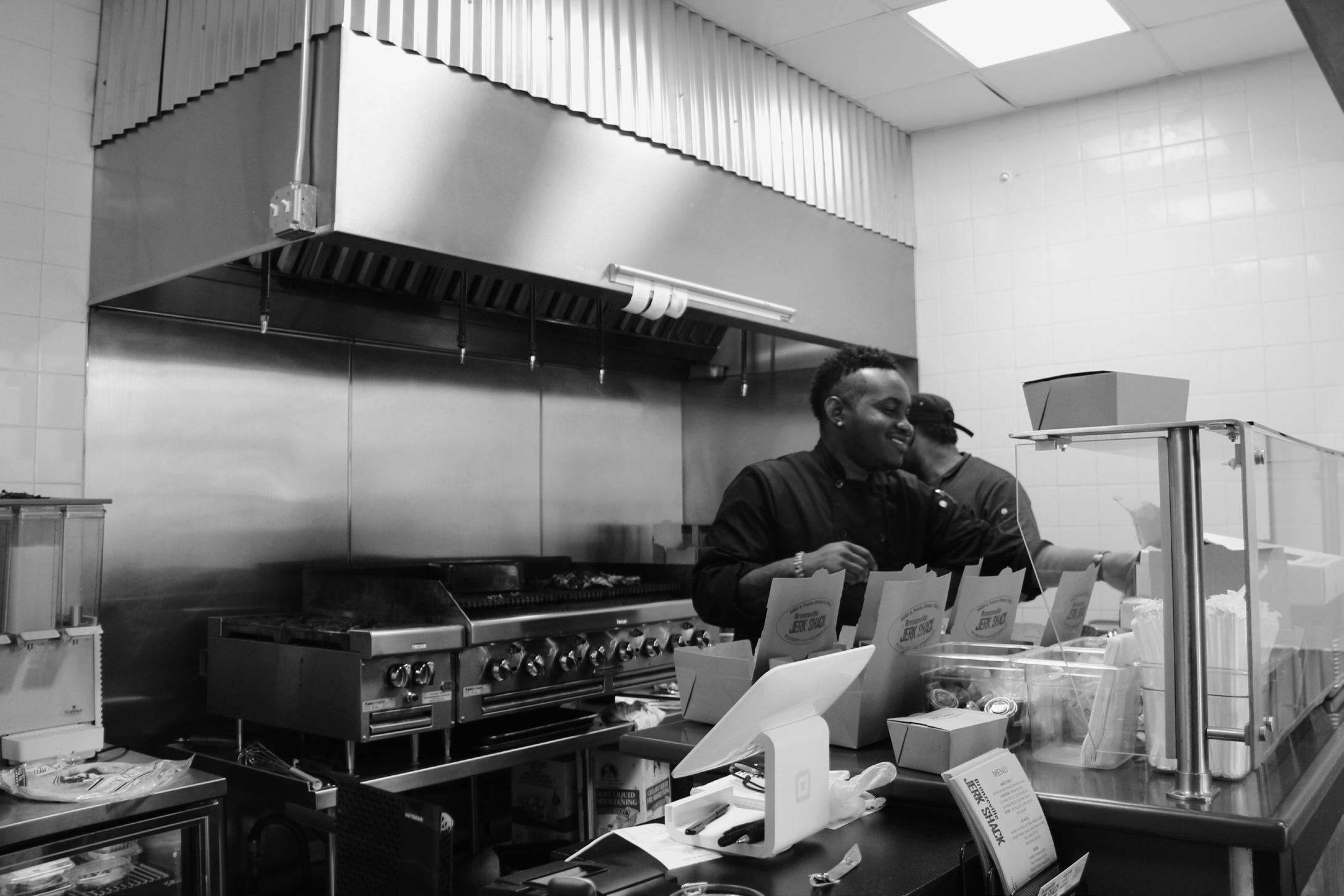
Pierre Johnson, the Shack’s head chef
and manager, grew up in Bronzeville and developed a feel for the kitchen by trying to surprise his mother with dinner on days when she would return home late from work. The cooking fever took over during a culinary arts class at Dunbar Academy, and he later honed his craft in New York, at the Culinary Institute of America. How he ended up as the chef of the Bronzeville Jerk Shack reads like a work of fate. He spent several years of touring around the world as a chef for Live Nation, preparing meals for the massive tour groups accompanying the likes of Kanye West. Five years ago, stepping off the One Direction tour bus in his home city, just outside Soldier Field, Johnson snapped his ankle and returned home to rest up.
“I heard of Bernard through a friend, and agreed to come over here for an interview,” Johnson told me. “Everything was in crumbles—there was only the exposed brick wall, no kitchen equipment, nothing. But everything ran smoothly during the last four months [of preparation], and I wouldn’t want to be working side-by-side with anyone other than Bernard.”
Loyd was set on his idea of a Jamaican roadhouse-style spot, but allowed Johnson to make the Shack his own. So Johnson decid-
ed the menu, which needs work, he says—he didn’t grow up cooking Jamaican cuisine and is making adjustments as he goes. He does import the pimento leaves and wood over which the meat is grilled and hibiscus flowers for the sorrel juice directly from Jamaica.
Johnson keeps the recipes for both the marinade and the sorrel juice a secret. But a tour of the rooftop farm, installed in May and from which flowers and vegetables are already sprouting, reveals that he currently employs some powerful ingredients that he hopes will come from the garden next season: Caribbean scotch bonnet peppers dwell among other breeds of pepper, garlic, cilantro, and onions; more mild produce like carrots, tomato, chard, kale, and hibiscus also stretch their roots deep into specialized layers of fleece and soil.
Though the rooftop farm was installed too late to provide the Jerk Shack with its ingredients this year, Urban Juncture’s Director of Garden Initiatives Latrice Williams said that, after wintering the garlic and figuring out the rotation schedule, they could expect to have produce flowing from the roof into Chef Pierre’s kitchen by next season. Material will travel in the opposite direction, too; all leftover food and waste will be compost-
his team. One produce market and three restaurants serving distinct African and African-American cuisine—one serving southern-style breakfast, one vegetarian fare, and one smokehouse and grill—will follow the Jerk Shack if all goes according to plan and people step forward as equity partners. Of course, not all does go as planned in the world of developing and in the city of Chicago. “We’ve learned that it’s better not to become too attached to timelines,” Loyd laughed. Applying for funds and business permits from the city is not always a timely process; even more trying is the $400,000 grant promised to Urban Juncture by the state of Illinois that was delayed due to the ongoing budget crisis.
Nonetheless, the company’s partnership with the city, which has also sold two adjoining properties on 51st at a low rate to Loyd, has been invaluable. After the recession hit, Urban Junctures lost all of its financial partners but two: the city and the Chicago Community Loan Fund. Although the recession hit them hard, Loyd says that the concept of using a cultural platform for development in Bronzeville became even more powerful after 2009.
ed and sent back up to the roof, or to the Bronzeville Community Garden down the road, to fertilize the gardens and keep the system as close to zero-waste as possible.
Urban Juncture, Loyd’s umbrella development company overseeing the Bronzeville Cookin’ project, professes to be a company with a focus on sustainability, and a tour of the facilities, those both up-and-running and in-the-works, seems to prove it. The Bronzeville Community Garden on 51st and Calumet, the first of Loyd’s projects on 51st, is now five years old. Between patches of tomatoes and lettuce, the only two vegetables still in season in early October, the garden plays host to neighborhood chess enthusiasts and lunch-eaters, gardeners and children, and every so often hosts a chef for healthy cooking demonstrations.
“Food brings people together,” Loyd says. “If we can inject food, quality food, into the area, then we’ll be able to feed people quality food, encourage people to come back [to Bronzeville], and bring jobs into the area as well.” His priorities throughout redevelopment lie in the culinary arts, conservation, and culture, he told me.
Bronzeville residents can expect to see far more in the future from Loyd and
The next, albeit less-publicized, venue of the 51st Street redevelopment project will be an incubator on the second floor of the building next to the Jerk Shack, which is expected to open in late November. Loyd envisions it as a space not only for growing local entrepreneurs and businesses, but also as a place where individuals can rent space that allows them to work in a professional setting without commuting to their offices.
Looking at what Loyd has on his metaphorical plate—on top of the continuation of the 51st Street developments, Loyd has committed himself to restoring the deteriorating Bronzeville Forum, which he purchased four years ago—one would wonder whether his plans might be overly ambitious, if it weren’t for his easy, confident demeanor and the extensive architectural plans that neatly cover most of his office. Johnson hasn’t taken a day off since starting at the Jerk Shack, and Loyd hasn’t taken a paycheck for the last twelve years. Shared by the two and everyone employed by Urban Juncture is a passion for their work and their neighborhood, and a desire to do things right, even if it takes longer than originally planned.
Bronzeville Jerk Shack, 5055 S. Prairie Ave. Open daily, 11am–9pm. Entrées from $4–$12, sides $3. (773) 548-5375. bronzevillejerkshack.com
Who’s Who in Police Accountability
BY CHRISTIAN BELANGER & WILL CABANISS
This fall, journalists with the Invisible Institute will publish an interactive online database of all allegations of police misconduct in Chicago between March 2011 and March 2015, as well as partial data from earlier years. These records, obtained by the Invisible Institute through years of Freedom of Information Act litigation, offer an unprecedented view into the City’s system of police accountability. This series, produced in partnership with City Bureau, is meant to provide context for the forthcoming database.
Scott Ando Chief Administrator, IPRA
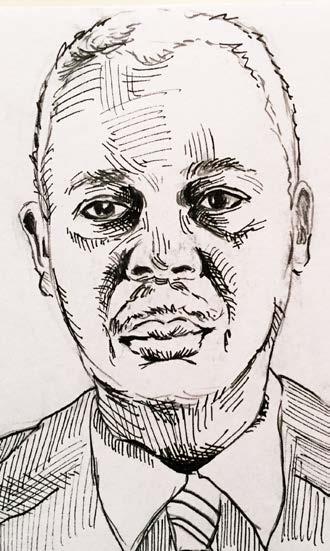
Scott Ando is the Chief Administrator of the Independent Police Review Authority, a position from which he oversees investigations into police misconduct and makes disciplinary recommendations to CPD Superintendent Garry McCarthy. Ando previously spent twenty-eight years working as a Special Agent for the Drug Enforcement Administration. His history in law enforcement has drawn raised eyebrows from a number of community activists, who question his ability to impartially conduct investigations. In particular, they point to accusations from Lorenzo Davis, a former IPRA investigator, that Ando forced him to reverse his findings. It’s true that Ando remains affiliated with police: he’s a member of the International Association of Chiefs of Police and the Fraternal Order of Police, as well as the New Jersey state police union.
Annual Salary: A hair under $162,000.
When Lorenzo Davis was fired from his job as a police investigator at IPRA this past July, he ignited a national furor over the agency’s internal procedures. While IPRA would not publicly divulge the exact reason for the termination, WBEZ Chicago obtained an evaluation of Davis from two weeks before he was laid off that described him as having “a clear bias against police” in investigations of officer-involved shootings. Davis, for his part, alleges that he was asked by Chief Administrator Scott Ando to change his recommendations in several cases where he found a police officer had committed an offense. Ando has denied the charge, and no state or federal investigation into the matter is being conducted. Before beginning work at IPRA, Davis was a CPD commander.
Annual Salary at IPRA: About $93,000.
When a complaint of misconduct is filed against a Chicago Police Officer, who reviews it? It’s the people who work for the Independent Police Review Authority (IPRA), the Chicago Police Board, and the Chicago Police Department’s Internal Affairs Division, the three organizations that oversee the city’s police force. Here, we help identify who leads these agencies—the people responsible for keeping Chicago’s police in check.
But first, a quick explanation of the various roles these agencies play: when a complaint is filed with IPRA, the agency retains any case of “excessive or deadly force, domestic abuse, verbal abuse based on bias, or coercion.” (All other complaints are passed on to the Internal Affairs Division of the CPD, which investigates charges ranging from drug use to simple procedural violations by officers.) If IPRA investigators deem a complaint warranted, the case is “sustained.” From there, if investigators find the officer’s actions to be unjustified, the agency has the option of recommending disciplinary action to Police Superintendent Garry McCarthy. If the superintendent agrees with a recommendation that an officer be discharged from the force, the nine-member Police Board convenes to vote on the officer’s future with the force. After a case is decided, a written decision is posted online.
Lori Lightfoot President, Chicago Police Board
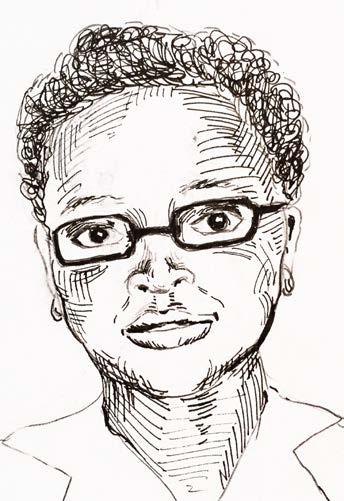
This past June, Lori Lightfoot was appointed to the Chicago Police Board, which disciplines officers accused of misconduct. She took over from Demetrius Carney, a Richard M. Daley appointment, who had served on the board since 1996. Lightfoot is a former federal prosecutor and current partner at the powerful Chicago law firm Mayer Brown. More interestingly, she was Chief Administrator at the Office of Professional Standards, the now-defunct CPD agency that conducted investigations into police misconduct before the creation of IPRA in 2007. Lightfoot is also one of a series of new board members appointed by Emanuel over the past couple years; since 2013, five of the Board’s nine members have been replaced by newer ones.
Annual Stipend: $25,000.
Ghian Foreman Vice President, Chicago Police Board
Ghian Foreman, a real estate developer and native of Hyde Park/ Kenwood, serves as the Police Board’s vice president. Appointed by Mayor Richard M. Daley in 2010, he is a partner at the real estate firm Maktub Development LLC and the executive director of the Greater Southwest Development Corporation. As a seasoned businessman who’s also involved in community projects, Foreman is an emblem of Emanuel’s predilection for choosing white-collar professionals to fill spots on the Board. Foreman is an archetypal voter, too: according to the Chicago Justice Project, he has voted in agreement with the CPD’s disciplinary recommendations seventy-eight percent of the time, approximately the average of the board’s nine members.
Annual Stipend: $15,000.
Rita Fry Member, Chicago Police Board
After twenty-three years at the Law Office of the Cook County Public Defender—and a number of those years at its helm—Rita Fry has worked within Chicago’s criminal justice system far longer than most others on the Police Board. As a public defender from 1980 to 2003, the number of coerced confessions to which she bore witness drove her to serve on the Illinois Commission on Capital Punishment, which contributed to the commuting of 167 death sentences. Fry reentered public service in 2009 when she was appointed to the Police Board by the younger Mayor Daley. She also serves as president & CEO of RAF Consulting, Inc., her own government relations consulting firm. Annual Stipend: $15,000.
Lorenzo Davis former investigator, IPRA
The State Budget Crisis
Budget freeze puts South Side services at risk
BY ZOE MAKOUL
Across the state, parents are sending their kids to public schools, visiting state parks, and living life as usual. But Illinois is facing a severe budget crisis that is anything but usual. Governor Bruce Rauner and the Illinois General Assembly allowed the state’s temporary income tax to expire at the beginning of the year, creating an enormous gap in the budget that has yet to be resolved. The governor refuses to negotiate on a budget until state Democrats agree to several of his proposed reforms, including restrictions to collective bargaining rights. The governor also wants a freeze to property taxes. “Property tax relief is one of our most pressing challenges,” he said in a February press conference. “Our property tax burden is one of the biggest impediments to growth, and it hurts both businesses and middle-class families.”
Although Rauner says he’s looking out for the middle class, House Speaker Michael Madigan and Democrats see his proposals as injurious to middle-class workers and families, and they have been uncooperative with the governor. Illinois has entered a fourth month of operating
“For folks on the South Side, the cuts to childcare, the cuts to senior care—these are all programs that working families rely on as basic economic supports to keep their jobs and to make sure that their kids and their parents are being well taken care of while they work to build a better future.”
without a budget, and the effects of the crisis are felt acutely in many communities, the South and West Sides of Chicago key among them.
Kwame Raoul, Democratic State Senator from the 13th District, says that budget woes have disproportionally impacted the less fortunate. “We are actually funding a significant portion of the budget,” he says. “However, there are some areas that aren’t necessarily included in that, and that tends to be some of the social services that the everyday person doesn’t necessarily rely upon, but those with greater need rely upon.” This is reflected in an August report by Illinois Senate Democrats. According to the report, almost ninety percent of the state’s general funding is unaffected by the impasse due to court orders and other arrangements. But social services including youth programs, health initiatives, and care for children, seniors, and the disabled, are among the now underfunded portions of the budget.
Democratic State Representative Christian Mitchell of the 26th District agrees with Raoul. “All the cuts are affecting the South Side a different way, just
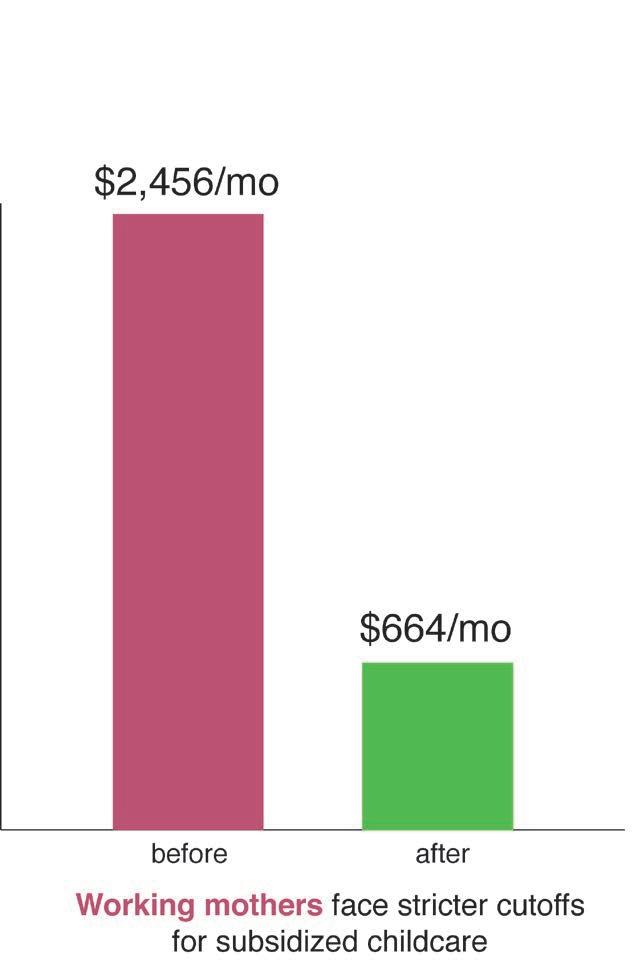
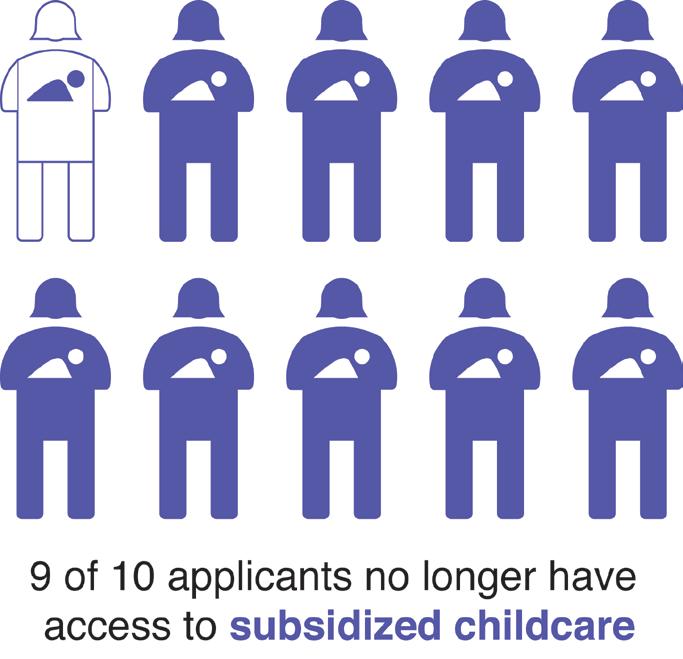
because you’ve got more low- and moderate-income people.” As an example, he mentioned that working mothers often rely on free childcare. With new eligibility rules in place, a working mother making over $664 a month no longer qualifies for childcare. In the past, single parents with one child could make over $2,400 and still qualify. As a result, Mitchell argues, “You’ve got entire ships of folks who can no longer go to work because they’ve got to take care of their kids.” Early in September, the Emanuel administration announced that it would set aside $9 million for Chicago children affected by the state’s cuts.
Senior care programs are also being threatened. According to a report from Voices for Illinois Children’s Fiscal Policy Center, there are serious threats to services including senior centers, transportation, and housing. Funding for the Low Income Home Energy Assistance Program (LIHEAP), which serves 60,000 low-income families across the state by keeping their houses cool in the summer and warm in the winter, has been stopped, and families on the program endured the heat of the summer’s last days without assistance. The services provided by LIHEAP are provided only for those living at or below 150 percent of the federal poverty line, and since much of the South and West Sides have poverty rates between forty and sixty percent, the fluctuation in temperature poses serious health and safety risks to locals.
Mitchell questions the ability for people in his district to live “vibrant lives” when facing such severe restrictions on their time and health. “For folks on the South Side, the cuts to childcare, the cuts to senior care—these are all programs that
“The sad part of the story,” Raoul explains, “is the extent of the social service agencies who will have to close their doors or lay off people. It’s not easy for a lot of those agencies to flip the switch and change directions. In most cases there is no reopening. If you lose your top people, you’ve really been decimated.”
working families rely on as basic economic supports to keep their jobs and to make sure that their kids and their parents are being well taken care of while they work to build a better future,” says Mitchell, his voice tinged with frustration.
Some critics have even attributed the eighteen percent increase in homicides this year as of June to the budget impasse.
“It’s not like someone will grab a gun if they can’t get a summer job,” Raoul says, “but if the community is better economically stabilized, it will have less crime. There was no fruitful job program from the state, and the social services that would normally open their doors are on a shoestring budget.
“So you don’t have various groups competing for the attention of young people,” he continues. “You don’t have the positive groups, and the negative ones tend to win out.”
Without state-funded summer programs, youth were left without activities for months. Higher education programs have also been threatened. “If you’re a kid who’s done everything right in high school and is academically qualified to go to college,” Mitchell explains, “the state helps pay for it because better education is really good for the state. That program [the Monetary Award Program (MAP) Grant program] has been cut.”
Healthcare, care for children and the
jean cochrane
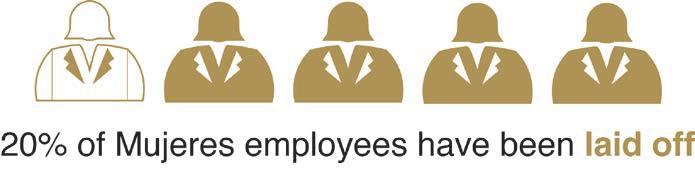
elderly, and student support services are not the only areas that have felt the brunt of the budget crisis. Like many social services in the state, Mujeres Latinas en Acción, a Pilsen-based agency providing critical services including aid to those affected by domestic violence in Chicago’s Latina community, is struggling desperately to continue as many of their programs as possible. Despite being forced to suffer the loss of twenty percent of their workforce, Mujeres is currently running their services without their expected allocation of $65,000.
As the state continues to operate without a budget, it is organizations like Mujeres—offering services such as childcare, youth programs, domestic violence support, and Latina empowerment programs—that are hurting. According to Adriana Viteri, Associate Director of Development and Public Affairs at Mujeres, the agency has been hit hard. Until funding resumes, their Latina Leadership program, a twenty-week program facilitating leadership and community involvement for women, will not be offered. There are no longer designated staff to provide public benefit case management and emergency economic assistance funds for survivors of gender violence. The agency has shut down their domestic violence police training, again due to a staff shortage, along with all of their community education efforts.
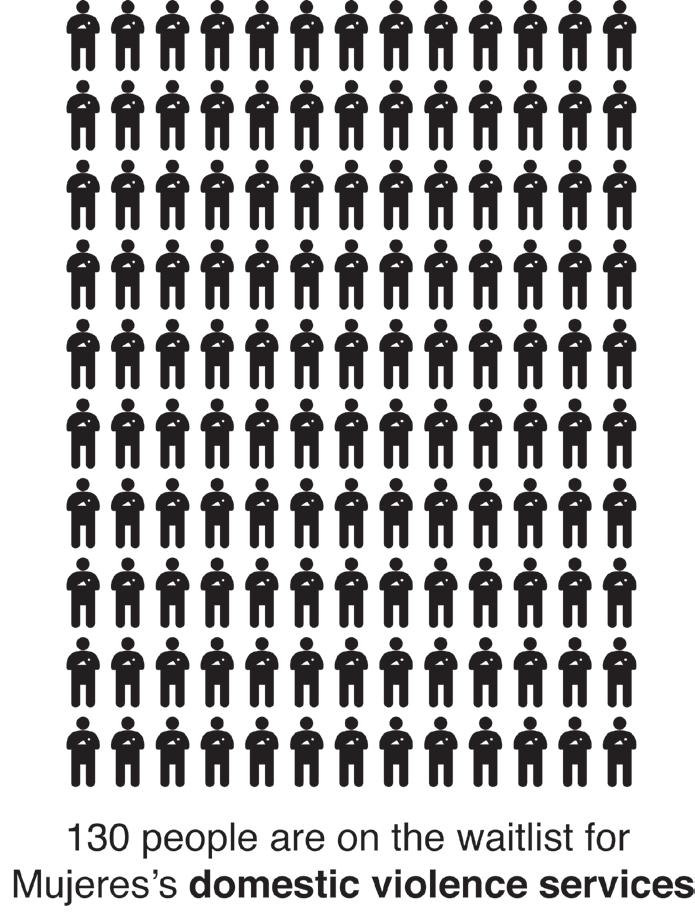
Even the programs within Mujeres that have managed to remain in operation feel the burden of the budget impasse. The lack of staff has increased the waitlist for domestic violence support service to 130 people, and Mujeres is not turning anyone away. Additionally, Viteri has noticed an increase in clients scheduling appointments but not showing up. This could stem
from the scheduling delay, but there are other factors as well. “Mujeres used to help families who are very low income with transportation costs so that they could travel to make their appointments,” Viteri says. “We no longer have the funds to do this, and without bus fare, many clients are no longer able to come for services. This, coupled with the lack of childcare, makes transportation to our center an insurmountable hurdle for many of our clients.”
The disruption to childcare funding has affected other aspects of the agency’s services as well—participation in Mujeres’s afterschool youth programs has dropped, Viteri says, as older children are being asked to babysit for their younger siblings.
Another obstacle that has emerged is a rumor that Mujeres has closed their doors. “This is a dangerous rumor, as many individuals facing abuse may not want to leave their situation due to the fact that they believe they have nowhere else to get help,” Viteri says. Though Mujeres is referring all individuals to other organizations, Viteri says that the lack of culturally relevant services provided by other organizations as compared to Mujeres makes some of their clients reluctant to go.
Finding a solution to the state’s budget woes won’t be easy. Raoul and Mitchell are both adamant that the only way to resolve the budget crisis is for Governor Rauner and the rest of the legislature to come to a reasonable agreement. “Until that happens, we will not see a solution to this problem,” Mitchell says.
The price of the budget crisis is far greater than a temporary shutdown of social services. Even if the impasse is resolved and funding is resumed, at least in part, many agencies will not fully recover.
“The sad part of the story,” Raoul explains, “is the extent of the social service agencies who will have to close their doors or lay off people. It’s not easy for a lot of those agencies to flip the switch and change directions. In most cases there is no reopening. If you lose your top people, you’ve really been decimated.”
“These aren’t rich people who are just volunteering their time, they’re working people who are devoting their lives to helping other families like them,” Mitchell says. “They can’t just wait it out and go back to their job.”
Mujeres Latinas en Acción has plans to overcome the loss of funding in the short term, but if the state crisis continues, it expects to terminate five to ten additional staff members and keep all remaining staff furloughed three days a week—a best-case scenario. In the worst case, Mujeres will have to shut down until payments for services rendered in the past three months are received. If the state cannot provide these funds, Mujeres may not reopen.
Like many legislators in districts that are suffering the most, Mitchell is eager for the crisis to be resolved. “I am ready and willing to work with the governor,” he says, “but until that moment happens, this will continue to have a deep and abiding and disproportionate impact on the South Side.”
Social service programs operating on shoestring budgets, state legislators fighting to protect their districts, and state advocacy groups are all clamoring for a resolution that remains a long way away. For the people of Chicago’s South Side, the situation will remain dire until that resolution comes. For them, the budget impasse isn’t just a political stalemate. Their health, their money, and their lives are on the line.