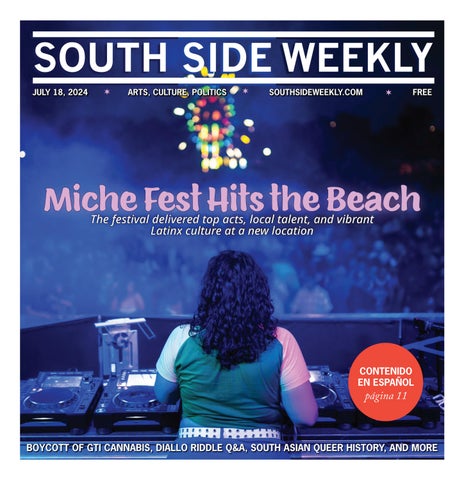
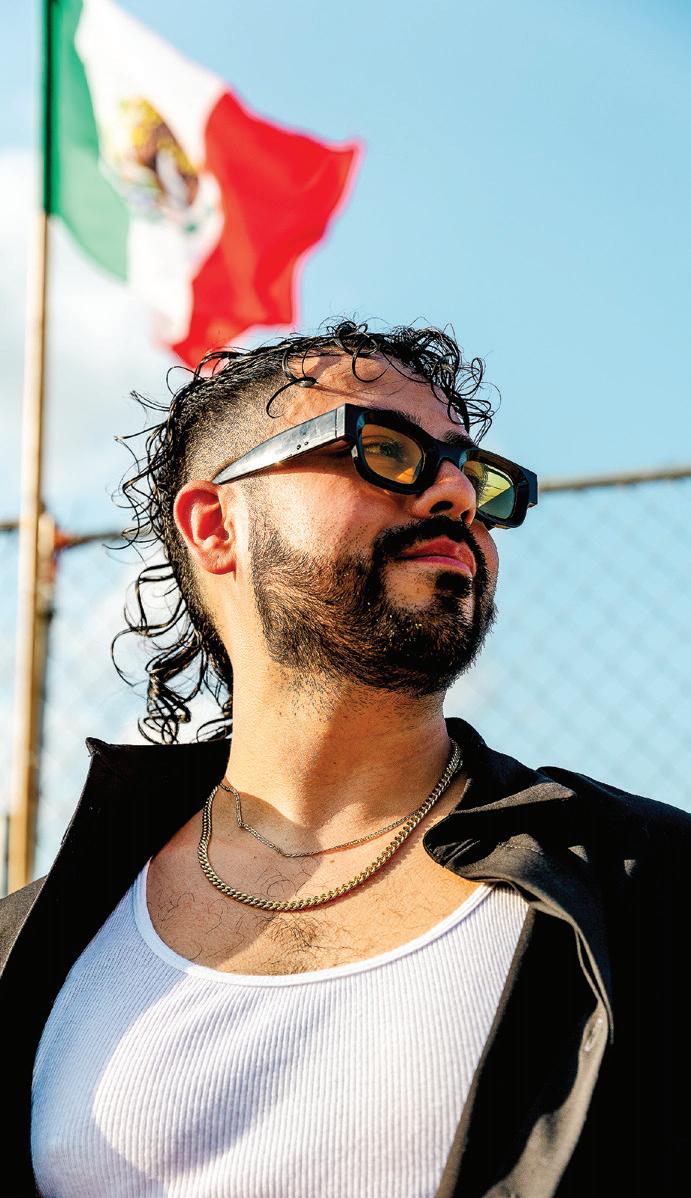
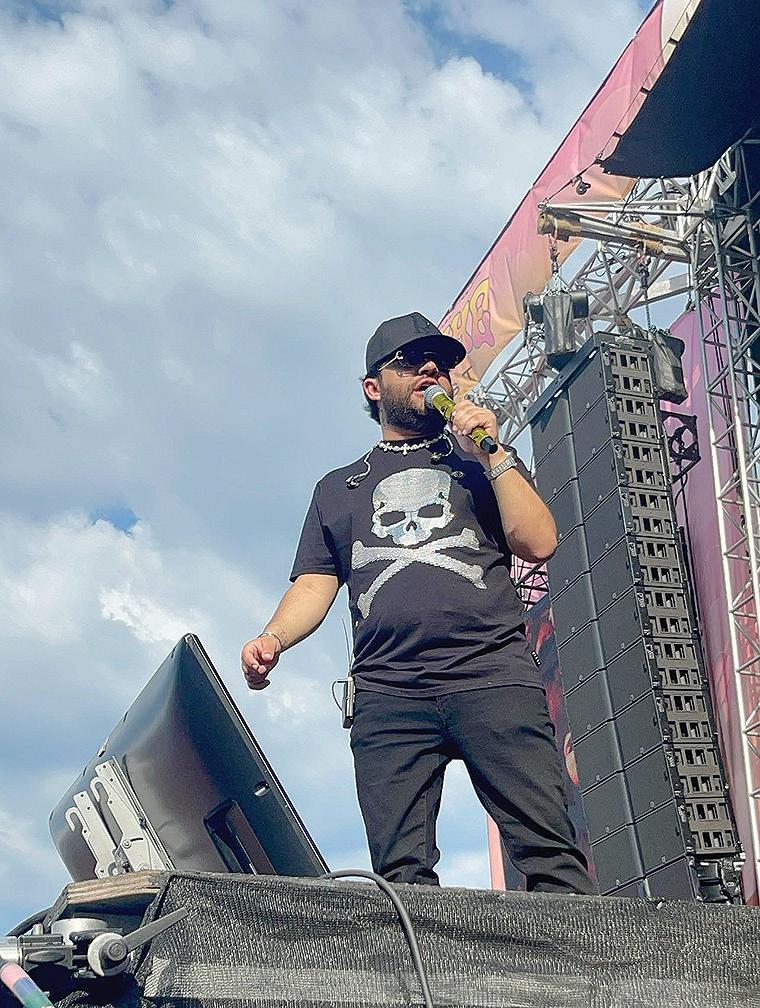
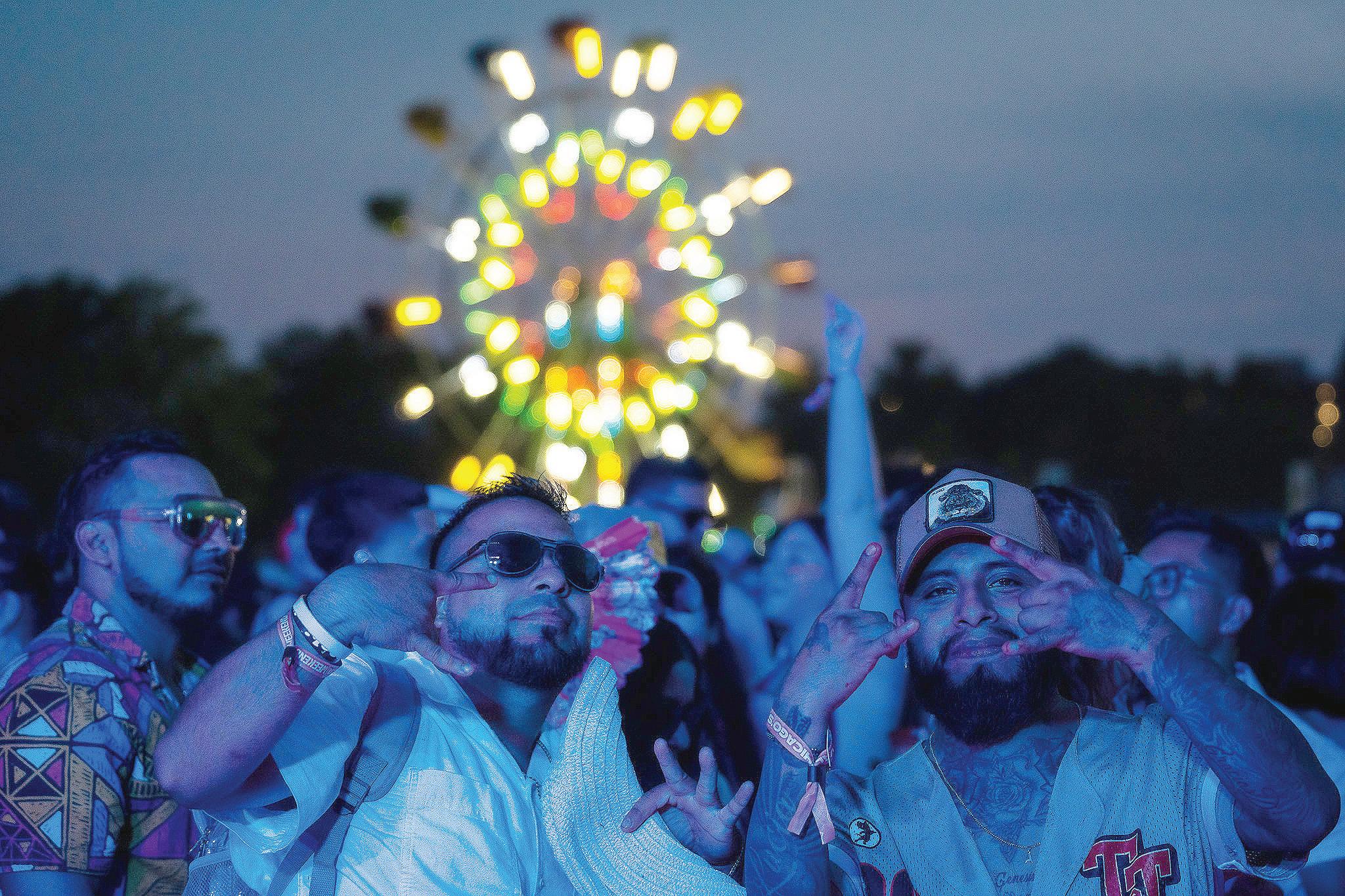
Kombi Chicago, a Latinx event production collective, pulled up and stationed their namesake party bus—a Volkswagen bus or combi—at the entrance of the festival, and hosted a DJ lineup of their own. DJ Flores Negras was throwing down on Saturday, welcoming festival attendees with her distinctive blend of dark wave and cumbia.
“You always need representation in every city when there’s a big festival; it’s good to highlight people,” Flores Negras said. Flores Negras hosts several parties throughout the city, including Cumbia y Los Goths and FILTH, which cater toward underground ravers.
Next to the Kombi bus, was an artist village curated by Pilsen artist Sentrock, with canvases stationed for live murals. Some of the muralists who joined Sentrock included Fedz, Kozmo, PabsPrints, Birdmilk, and more.
Vendors were lined up in a corridor down the middle of the festival, serving up a myriad of Latinx food and (of course, micheladas). Copa America games played on a large screen. And on Saturday, Kali Uchis closed out the night with a melodic, dreamy performance.
Poor weather caused some delays on
the first day, and the chance of storms bled into the second day. Local Mexican regional groups El Malo and Los KBros were dropped from the lineup, and the festival was forced to start at a later time.
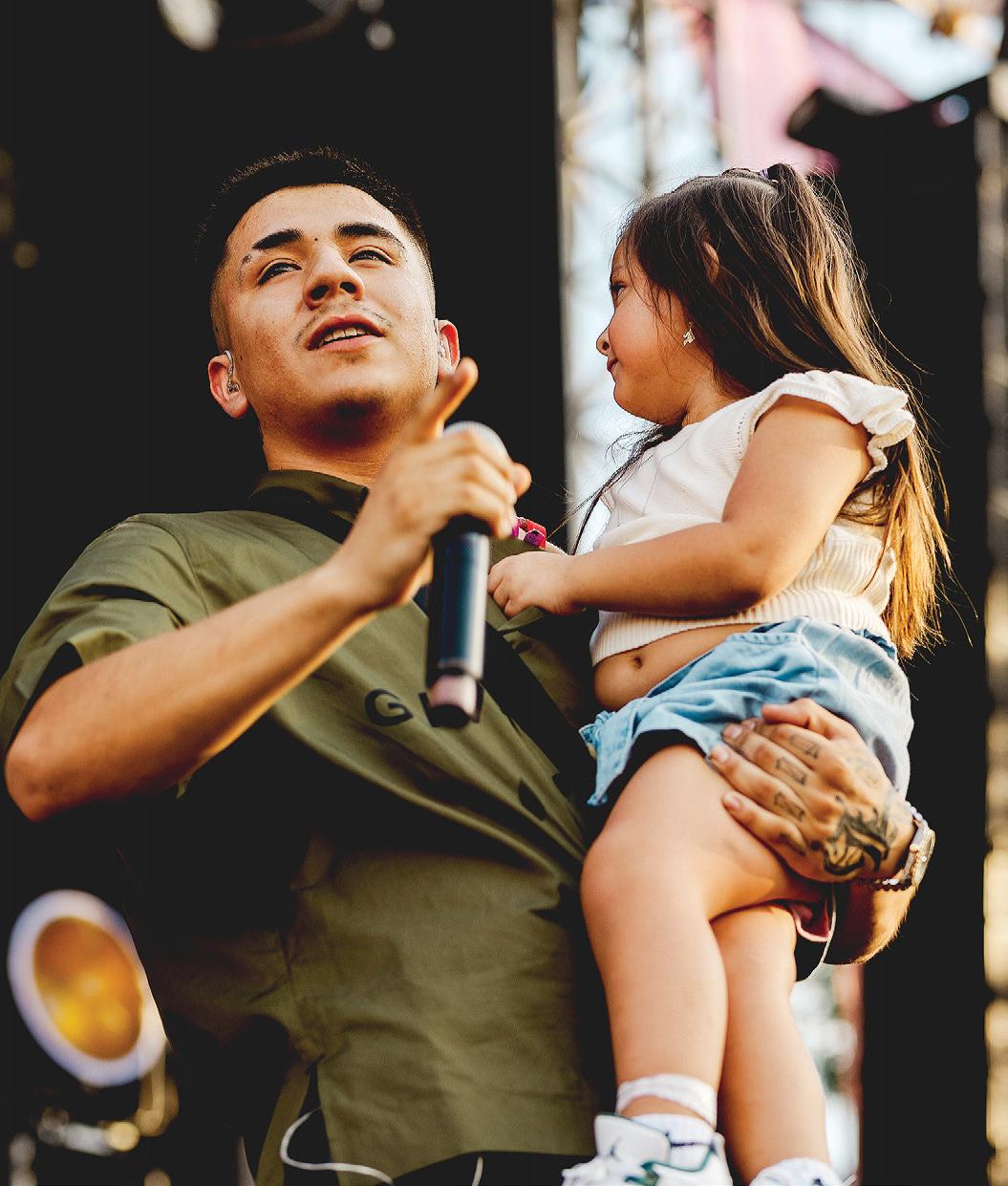
But the rest of the day continued as planned. Chino Pacas even brought out his daughter during his performance, reminding us all that Miche is still a family affair and an all-ages festival.
Junior H closed out the event with a stellar performance, complete with a fireworks display that rivaled any in the city. He ended the night with “Disfruto lo Malo”—a fan favorite from him and Natanael Cano’s 2019 album Corridos Tumbados, and the anthem for those passionate about corridos verdes (ballads about cannabis).
By the end of the weekend, Miche Fest was able to keep its identity despite larger programming and a new venue. It still felt like a community festival at heart.¬
Jocelyn Martinez-Rosales is a MexicanAmerican independent journalist from Belmont Cragin who is passionate about covering communities of color with a social justice lens. She’s also the music editor at the Weekly
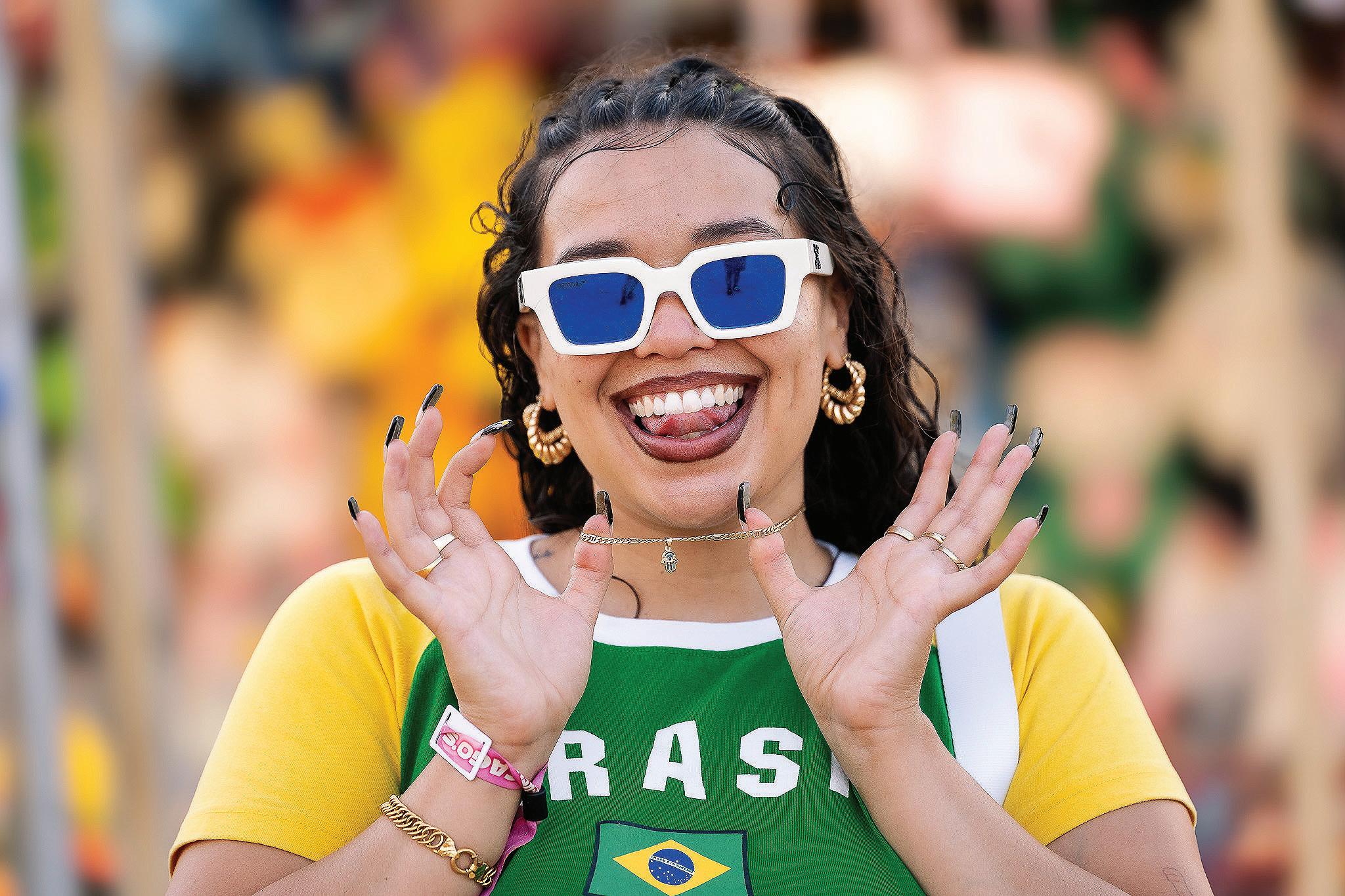
Flores Negras never fails to mix crowd favorites with dark new wave sounds for a unique set.
Photo by Jordan Esparza
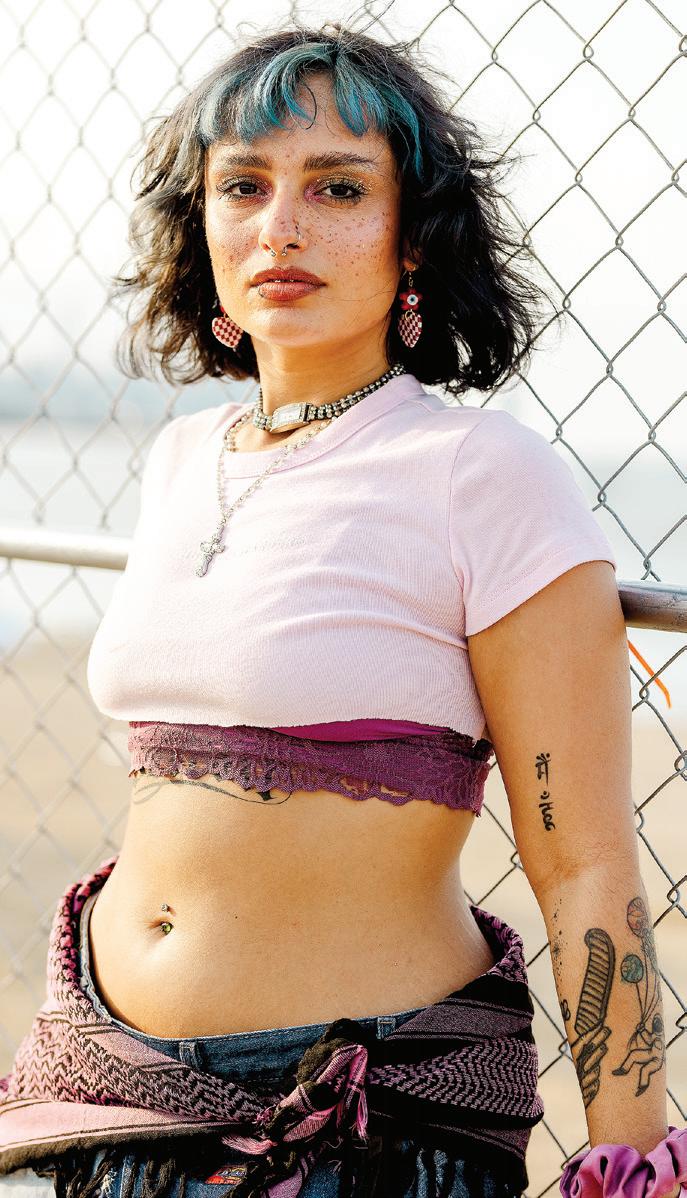
MAMICANA poses minutes before her set at the Playa stage. Photo by Jordan Esparza
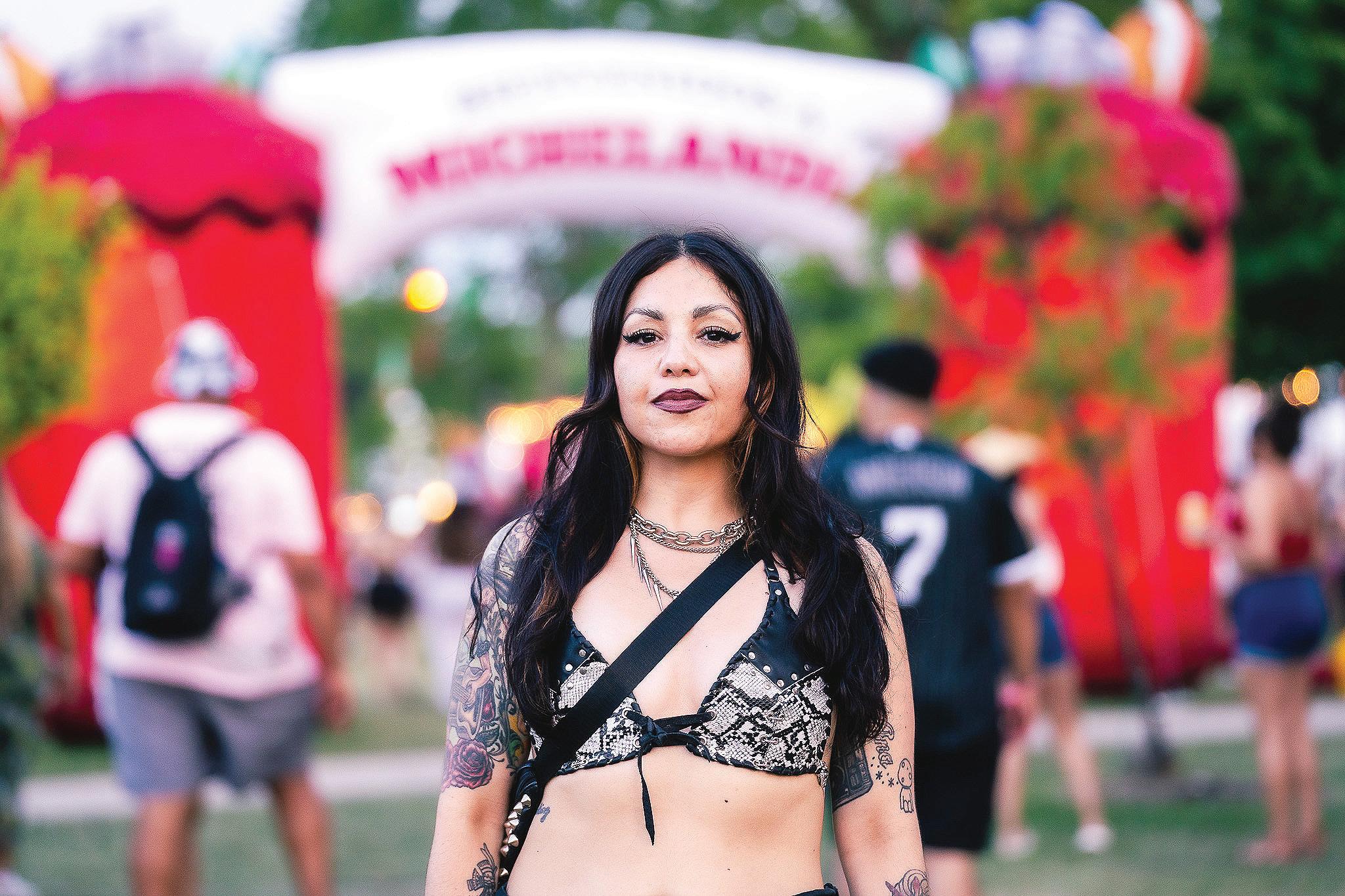
Chicago DJ Mista Ricksta made his festival debut on the first day of Michelada. Photo by Jesus J. Montero
Michelada Fest triunfa en su nueva ubicación
Miche Fest se lleva a cabo en la Playa Oakwood con grandes actuaciones, talento local y un vibrante ambiente latine.
POR
JOCELYN MARTINEZ-ROSALES TRADUCIDO POR ALMA CAMPOS
Michelada Festival regresó al sur de Chicago en su sexto año y esta vez lo hizo en la Playa Oakwood en el vecindario de Kenwood. El festival, que rinde homenaje a la picante bebida mexicana, se trasladó del Parque Harrison de Pilsen para ofrecer un fin de semana con artistas como Kali Uchis, Chino Pacas, Luis R. Conriquez y Junior H. A pesar de su crecimiento exponencial, Miche Fest apoyó a vendedores, DJs y artistas locales por igual.
El festival contó con dos escenarios, uno de ellos dedicado exclusivamente a los queridos DJ locales como Mista Ricksta, Mo Mami, Pablo Serrano, MAMICANA, Nanoos, Chava, M-Dok y muchos más.
“Es un festival local, y soy de Chicago. Ya no vivo en Chicago, así que volver a casa para esto fue muy especial”, dijo MAMICANA que voló de Nueva York para presentarse en el festival. MAMICANA cerró el escenario Playa la primera noche del festival con una actuación repleta de sonidos desde ritmos afro hasta “juke” y reggaeton, un poco de todo para todos.
“Nos encanta la música house, y creo que eso me ayudó a sentar las bases de quién soy como artista y qué géneros quiero impulsar, honrando al mismo tiempo de dónde soy”, dijo MAMICANA, describiendo lo que diferencia a un público de Chicago del resto y de cómo esto ha moldeado su carrera.
También fue especial para estos
pinchadiscos estar en una alineación llena de caras conocidas y colegas. “Anoche arrasó”, dijo DJ Nanoos, refiriéndose a MAMICANA. La DJ palestino-
estadounidense organiza fiestas de baile con MAMICANA en Chicago y Nueva York bajo Go Baba! Worldwide y GYRATE. Esta vez, adaptó su actuación
a un público latine.
“Fue fantástico poder dedicarme sólo a buscar canciones y cosas que me hicieran sentir que sigo siendo yo, pero que también se adaptan al ambiente en el que estoy”, dijo Nanoos.
Miche Fest también invitó al DJ de Chicago Mista Ricksta. Era su debut en el festival, lo cual, dijo, es todo un honor: “Antes, cuando [Miche Fest se celebraba] en Harrison Park, siempre solía ir”, dijo. Al igual que Mista Ricksta, muchos de estos DJs acudieron al festival comunitario como asistentes y ahora han tenido la oportunidad de presentarse. Mista Ricksta, que sólo lleva poco más de un año como DJ, llegó temprano el primer día, sellando el tono para el resto del fin de semana.
“Vine con todo, desde ediciones de reggaetón, mezclas, algunas huarachas hasta cortes de house”, dijo Mista Ricksta exclamando, “déjenme les muestro cómo bailamos”.
Kombi Chicago, un colectivo latine de producción de eventos, estacionó su autobús de fiesta móvil, un Volkswagen combi, en la entrada del festival e invitó a su propia alineación de DJs. La DJ Flores Negras empezó el sábado, dando la bienvenida a los asistentes al festival con su inconfundible estilo de cumbia “dark wave”.
“Siempre se necesita representación en todas las ciudades cuando hay un gran festival; es bueno dar a conocer a las personas”, dijo Flores Negras. Flores Negras organiza varias fiestas por toda la
Luis R. Conriquez regresa a Chicago para su tercer concierto.
ciudad dirigidas a un público underground de estilo rave con eventos como Cumbia y Los Goths y FILTH.
Junto al escenario Kombi había un área para artistas visuales donde el artista, Pilsen Sentrock, pintaba murales. Algunos de los muralistas que acompañaron a Sentrock fueron Fedz, Kozmo, Pabsprints y Birdmilk, entre otros. El área de artistas visuales no es nada nuevo en el festival, sino más bien una tradición que los organizadores dicen que esperan continuar.
Los vendedores de comida se acomodaron en el centro del festival, sirviendo una gran variedad de comida latina y, por supuesto, micheladas. Los partidos de la Copa América se retransmitían en una gran pantalla. Kali Uchis cerró la primera noche con una presentación melódica y ensoñadora.
El mal clima provocó algunos retrasos en el primer día, y la posibilidad de tormentas se dejó sentir en el segundo. Los grupos regionales mexicanos El Malo y Los KBros fueron eliminados de la programación y el festival tuvo que iniciarse más tarde.
El resto del día continuó según lo planeado. Chino Pacas trajo a su hija durante su concierto y nos recordó a todos que el festival sigue siendo un evento familiar y para todos los públicos.
Junior H cerró el evento con una presentación estelar que se completó con un espectáculo de fuegos artificiales a la altura de cualquier otro de la ciudad. Terminó la noche con “Disfruto lo Malo”, un favorito de los fans del álbum del 2019, Corridos Tumbados, suyo y de Natanael Cano y el himno para muchos fans de los corridos “verdes” sobre el cannabis.
Miche Fest fue capaz de mantener su estilo y propia identidad a pesar de una programación más amplia y un nuevo lugar. En el fondo, seguía sintiéndose como un festival comunitario. ¬
Jocelyn Martínez-Rosales es una periodista independiente mexicoamericana de Belmont Cragin a quien le apasiona cubrir noticias acerca de las comunidades de color con un enfoque en la justicia social. También es la editora de música para el Weekly
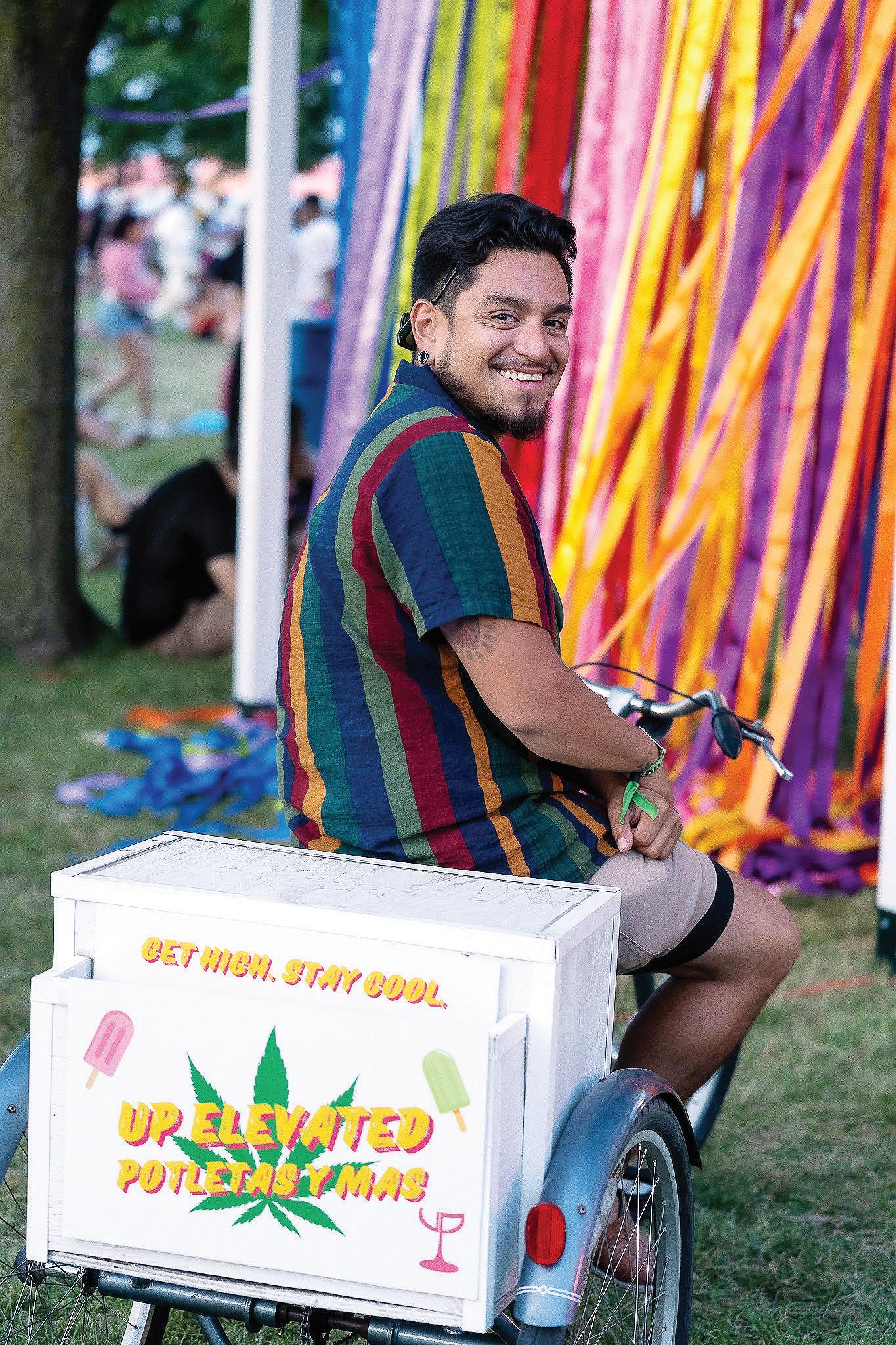
Carlos Ramos, fundador de Up Elevated Cocktails, posó con su carrito de paletas mientras vendía paletas heladas con THC a la multitud.
Los asistentes al festival disfrutaron del horizonte mientras el escenario iluminaba el evento.
Chino Pacas lleva a su hija ante la multitud de Chicago al comienzo de su actuación. Foto por Jesus J. Montero
Putting Regular People on TV
Former South Side writer and actor Diallo
Riddle on real-life inspirations for Alderman Gayle, diversity challenges in the industry, and capturing the hustler spirit.
BY CORDELL LONGSTREATH
Diallo Riddle was one of the lead writers for the comedy sitcom South Side before it was canceled by HBO Max in February 2023. Riddle is a multi-talented creative who has since done work on the Daily Show during Marlon Wayans run, co-produced the podcast One Song with songwriter and musicologist Luxxury, and has made appearances since 2023 on various podcasts talking about music, creating and writing Emmy-nominated shows, and creating comedy.
Riddle wrote a large chunk of the episodes of South Side and played the character of Alderman Gayle. He and Bashir Salahuddin, who played Officer Goodnight, have been writing jokes together since their days at Harvard University, where they started creating a medley of different works in the late 2000s. This includes Soul Train-esque Sherman’s Showcase, work on Late Night with Jimmy Fallon, Marlon, Brothers in Atlanta, and a long list of work they did together and separately.
After the cancellation of South Side was announced, Riddle tweeted, “The show that never lost one fan…” and thanked the fans, cast, and crew.
As I was writing “Chicago Millennials Discuss How The City Has Been Depicted On Screen” for South Side Weekly, I had the opportunity to speak with Riddle about the show that my peers
and I appreciated so much and what was his creative process like for creating the characters and characterizing the city.
This interview was edited for length and clarity.
Cordell Longstreath: When creating the character, what was your inspiration for Alderman Gayle? Was it based on working around politicians?
Diallo Riddle: We did not have an alderman in Atlanta; we have a city councilman. We have a city councilman with the same role, but we don’t have wards. You know, we have zones... The thing about Gayle; he’s not a man of ideology. He sees opportunities that he goes for.
We had always gone into the show hoping to show people on the South Side at various levels of, I don’t want to say power, but to a certain extent, like varying degrees of status. In one of our favorite movies, Coming to America, you had some poor characters, some rich characters, some smart characters, and some dumb characters. And we always wanted to show that the South Side isn’t all one thing, either.
There are some characters who make a good living, some who are just making it by, and others who actually have a little bit of political or social clout, and what
do they do with that bit of clout that they have? So that was one thing we wanted to do. We wanted to show somebody in our show who may not have the brass ring of power, but is not powerless. Secondly, you can only talk about Chicago if you talk about Chicago politics. My character was an avenue to do that.
And when we started doing our work, I would hear the stories from the writers in the room because I’m one of the only people in that room who was not from Chicago. It was me and Michael Blieden, and we were the only interlopers. Everybody else was from Chicago. When you hear the stories about the politicians, specifically about the aldermen, you’re like, oh, this is crazy! You would just be like, how is this real? How does this person get away with it for so long?
We also did independent research. Some of the stories about the things that various aldermen had been accused and convicted of were almost too crazy to make up. And we put that in the script. It was a little broad, you know, the whole thing about him inserting himself into the collection of parking meters payment so that he could amass a great wealth, that seems like something out of the 1980s Eddie Murphy, Dan Ackroyd [skit].
By the way, I feel South Side has been very good at predicting the future. So, for example, we did an episode called DJ Alderman, where he decides more than fixing potholes, which is the unglamorous side of what he does for a living, he’d rather be a DJ. And then I looked at him a couple of months later. In real life, there was an alderman going around his district DJing a fundraiser, so it’s just funny that sometimes we think we’re a pretty absurd comedy, but then life happens. You find out that God is more absurd than us.
Is there any politician you feel he is similar to?
It’s crazy, man. I think that that’s the kind of stuff that can come out in local politics. Once they get to a state and national level, they’re usually a little more polished. Nowadays, who knows, but he’s a local guy. And the fact that he lied about where he’s from is very George Santos. Nothing we did with Alderman
“Right now there is a new generation of people who are creating a better, more accurate depiction. It's not even that we're trying to paint a rosy picture; it's just a more accurate picture of our community.”
Gayle was so broad and ridiculous that it couldn’t be believed.
The episode on Simon and Kareem graduating from community college
be a different kind of show. It’s not going to be, you know, people laughing at the privileged and the elite. I feel like there’s a lot of that out there right now, from Secession to White Lotus. Billions, there are so many shows like this, just like how rich even Game of Thrones is. This is how the rich and powerful live. And this is why we should throw stones at them.
But we don’t spend enough time just sort of focusing on what’s the life of regular people. This is my background, you know, I didn’t come from… I grew up on the southwest side of Atlanta. I think my father probably topped off at about $38,000 a year, you know what I mean? Like, we lived good because that’s in Atlanta in the 80s, you [could] live on that, but it’s not like I had any clothes with a label on it. I had the same sweater every other day, do you know what I mean? Bashir’s family is the same way. I’m one of six. He’s one of eight. We come from real working-class backgrounds, and we wanted to do a show that reflected that because I feel like that’s what’s not on TV quite a bit. You know, it’s almost like TV thinks that it can only tell the story of the people who are winning, but here’s why they’re so sad or here’s why they’re so terrible.
I wanted to tell a story about ambition, and those people who are basically trying to make it out of the hoods, but also not trying to leave with it. They want to make a better life for them and for their families. And sometimes we just don’t see much of that on TV. And it’s funny, like, that’s how more people live than not, but yet, it’s hard to get it across that development rubric. Sometimes it’s hard to tell network executives who are usually driving a premium luxury car, “Hey, here’s a story about real people.”
What role do you think comedy has in terms of humanizing our experience of life? What role do you think it has on people’s self-image in their perception of where they are from?
was very surreal. It reminded me of my experience of graduating here in Chicago. That was our first episode. I think we set up the show [thinking] this will
I’d say as much as I love those old Warner Brothers Bugs Bunny cartoons, that’s where we get a lot of, you know, most racist stereotypes. I mean, they’ve been cleansed. But I’m old enough to remember
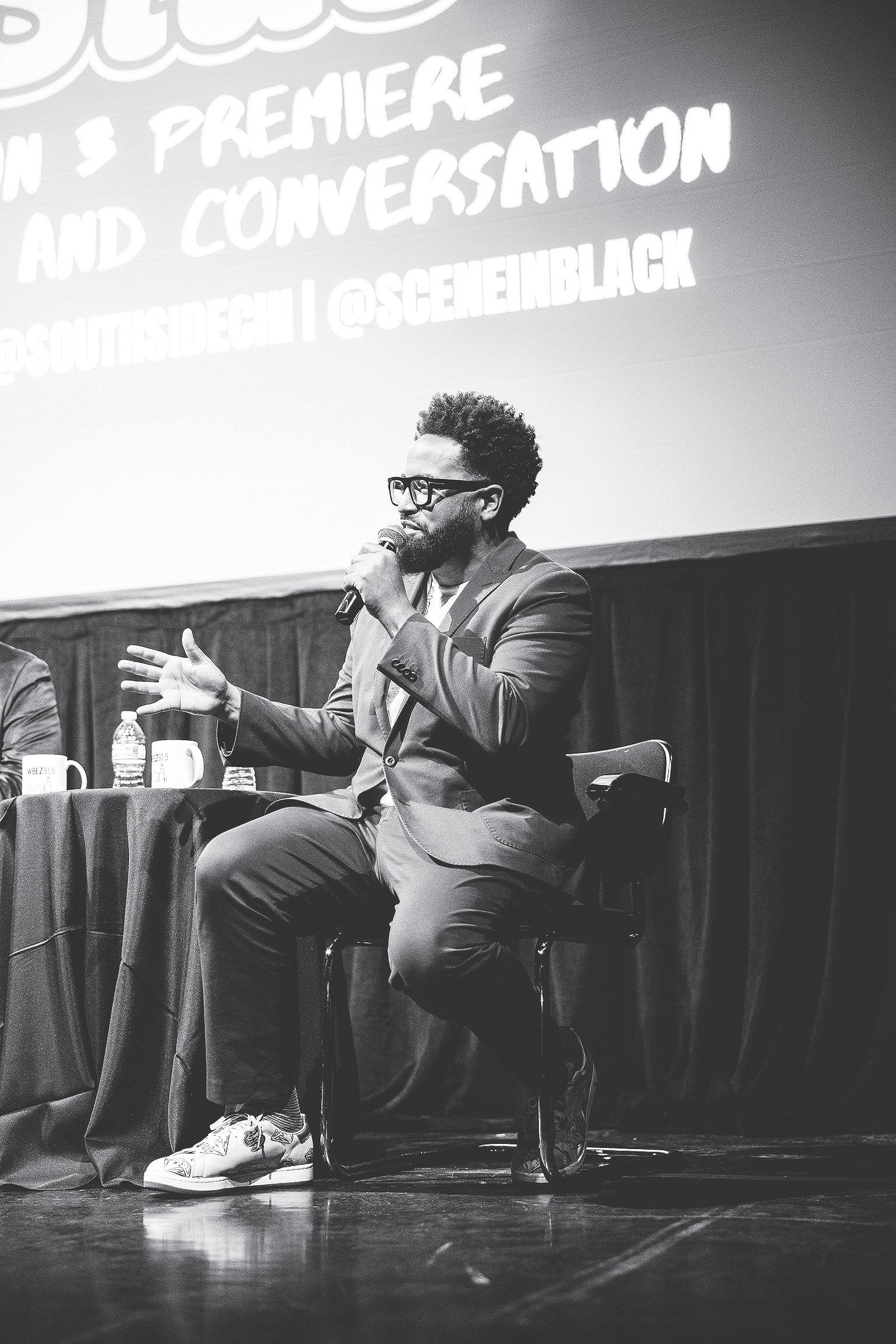
The 3rd season premiere of South Side at the DuSable Museum on December 6, 2022.
Photo courtesy of Joe Nolasco/WBEZ
when there were episodes where a bomb would explode and Bugs Bunny’s face... Suddenly, he’s in blackface, and you start singing Manny. I mean, when you think about characters, like Slowpoke Rodriguez, you know, a Mexican mouse who is friends with Speedy Gonzales, but Slowpoke Rodriguez, he’s lazy. the joke about that character. TV and film, whatever comes next, I don’t know if it’s streaming or just web-based video, whatever comes across on our phones— these are our reflections. We look at our phones, which are essentially black mirrors, and we see a reflection of ourselves.
I think that the good news is that there are now more people of color who are creating their shows, not worrying about acting, but writing shows, directing shows, doing makeup on shows, roles with no visibility [because they’re behind the cameras], working behind the scenes on shows, all that leads to diversity. I know that people like to slam diversity, but the reason why we’re demanding diversity is that we are a voice that has not been at the table, we have not been able to define ourselves too often. And I think that that’s hopefully changing.
I hope it doesn’t change and then go back to the way it was like in the 90s. I feel like we had a lot of Black TV shows. We had Martin, we had the whole WB for a little bit, and we had a whole network, UPN. They always came to us when they wanted to start their networks, but then, when those networks went away, we went through another period where there was just not a whole lot of color on TV. Then, thankfully, there was another generation that came along, and I am proud of that generation: Issa Rae, Donald Glover, Lena Waithe, and so many others. Right now there is a new generation of people who are creating a better, more accurate depiction. It’s not even that we’re trying to paint a rosy picture. It’s just a more accurate picture of our community.
Thankfully, it’s not just Black men. I always say South Side wouldn’t exist as it does without the active input and driving force, quite frankly, of Black women, since we have more Black female writers on the show than Black male writers. I think that’s why our female characters
ring. They are some of our most popular characters because you don’t have a roomful of non-Black women writing those characters. So I think the diversity is real; self-image is only helpful when you allow people to sort of, at the very least, control their own image. That doesn’t mean that, as a Black writer, you can’t write now. I’m here. But I think we’ve had so much experience over our lifetime with characters who aren’t Black that I think it’s easier for us to write them sometimes than it is for them to write us.
What was your goal for characterizing Chicago in your show?
We wanted it to be [like] Seinfeld. We didn’t want the show to be like, “Oh, by the way, that takes place in [Chicago].” No, we wanted it to be like they were there. They were name-checking Daley’s, they were name-checking Cottage Grove, you know, and going down to Daley’s, which we couldn’t use their name, so I think we had to call it Washington’s on the show.
Speak on the hustler spirit.
One thing we like about our show is that even though it’s set in Chicago, and the jokes are very Chicago-specific, people from Atlanta to Philly to LA to, you know, Montgomery, Alabama love the show because they see their own cities in our depiction of Chicago. So, yeah, I think to a certain extent, if you go to Atlanta, you will meet a barber who’s got a hot young rapper he’s trying to produce. And by the way, he can also tell you, he can sell you some spray paint, you know. All three of those things apply. So, yeah, that’s just the hustler spirit that thrives in communities where people want something better for themselves, they want something better for their children and their families. ¬
Cordell Longstreath is an Army veteran, writer, community advocate and activist, and teacher. He last wrote about how Chicago has been depicted on screen.
Drawing Attention to Chicago’s South Asian Queer History
Q&A with South Asia Institute curator Ankit Khadgi on the importance of knowing your history and his new
exhibition, People Who Came Before Us.
BY MRITTIKA GHOSH
Ankit Khadgi is a Nepali curator, journalist, and editor based in Chicago. After beginning as an arts and culture journalist with The Kathmandu Post, he moved to Chicago to pursue a master’s degree in visual and critical studies at the School of the Art Institute (SAIC). He soon developed a passion for documenting the history of the South Asian queer community in Chicago. Khadgi’s first curatorial project in the United States, People Who Came Before Us, opened at the South Asia Institute last month.
The Weekly spoke with Khadgi about the importance of understanding one’s history, his experience researching a widely erased community, and his thoughts on South Asian American queer life in Chicago today.
This interview has been edited for length and clarity.
South Side Weekly:How did you get started thinking about South Asian queer history in Chicago?
Ankit: I started doing research before I moved to Chicago. I did my own research because I was curating queer spaces back home in Nepal. So I was like, I should do similar kinds of things [in Chicago] because that gives joy to me. So I started
doing my research and I came across this name, Ifti Nasim. [Editor’s note: Nasim was a gay Pakistani poet who moved to Chicago in the 1960s and later founded Sangat/Chicago, a community for queer South Asian people that was disbanded in the late 2000s.] And then, in the spring of 2023, I was part of the LGBTQ+ Intergenerational Dialogue Project. It was started by professors from the University of Chicago, SAIC, and UIC. These were professors from LGBTQ backgrounds, and they felt the need to create a space where queer people from different generations can come together and form relationships, because they couldn’t see that anywhere. It was part of a credit course for my degree. When I took that course, there were people from different backgrounds, but there was not even a single person of South Asian descent. Which was surprising for me, because there must be older people who are South Asian and gay, right? And they did try their best to actually find people. They’re still looking for South Asians to include in the project, but said that they've always struggled. So that stuck with me. I knew if Ifti Nasim existed, he must have had friends, right? So I started research and I had to write my thesis as well. So I was like, “Why don’t I research this for my thesis?” Then I came across Kareem Khubchandani. He
is a professor of performance studies, dance, and theater at Tufts University. He wrote about Sangat in Chicago, and I found a lot of other groups that existed. Through SAADA [the South Asian Association for Digital Archives], I found that Khuli Zaban existed. I started interviewing people. You know, it was like, I interviewed one person, they were like, oh, you should talk to this person. And then I interviewed them and got to meet so many people. They were doing amazing work in the ’80s, ’90s, and early 2000s, but why aren’t people talking about it? So, that's how the exhibition started.
Mrittika: I’ve found that people can be so generous with their time and connections if you have a personal interest.
Yes, though it was very difficult for them to find time for me to go through the archives. And, you know, and most of them, they did save the archives but they never had intentions of sharing them. It's very tough to actually donate your stuff from then, because these are highly personal memories. You’ve been keeping them for years and you have this personal attachment to those physical bodies. Finding people who wanted to donate was difficult.
These people are now mostly not activists in the organizing scene, which makes sense because you cannot make a career out of it. So for bread and butter, it's totally understandable that when you're so busy, you don’t have time for other stuff. Just finding them took some time, but, yeah, some were really generous. I interviewed people who are not even living in Chicago now. Like, they've moved to other states, other cities, but they still shared and they appreciated what I was doing with the project.
And you were already working at SAI [South Asia Institute] the whole time?
Yes, as the communications officer. I pitched my idea and they said yes. Also, Ifti was friends with Shireen and Afzal [Shireen and Afzal Ahmed, the founders of the South Asian Institute]. At first I thought I’d just give everything to Gerber/
Hart [library and archives] because they have almost nothing about this. But I was like, okay, even if I do that, people who come across this archive would be people already interested in this research, but the general public will never see it. So I thought, an exhibition makes sense.
That space has all the elements of white cube gallery, and you can’t do a lot with that, because I mostly had archives that are text-heavy. These are not paintings that I can hang on the wall where one can spend hours and hours looking at it, complimenting its brush strokes or
would look different. Sangat created a space for people to come together to party and more for merry-making, Khuli Zaban [an organization centered around queer women that dissolved in the late 2000s] did more political meetings about intersectional activism and social realities. So I thought, why don't I create spaces where people can come and sit and then learn about these people? And I wanted people to spend time with these archives because there’s a lot to process, you just can’t glance at it and then leave. So that’s how the exhibition design started.
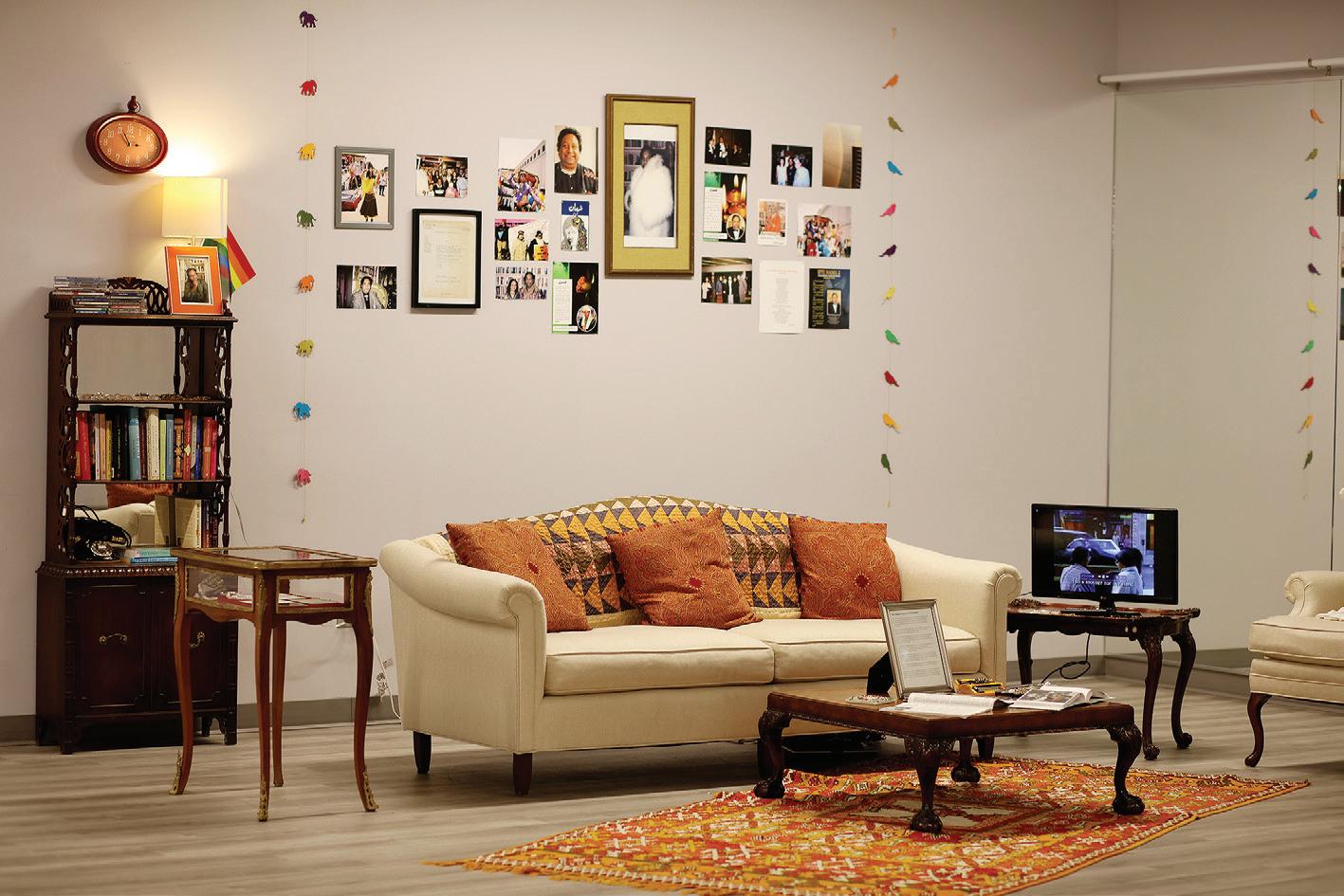
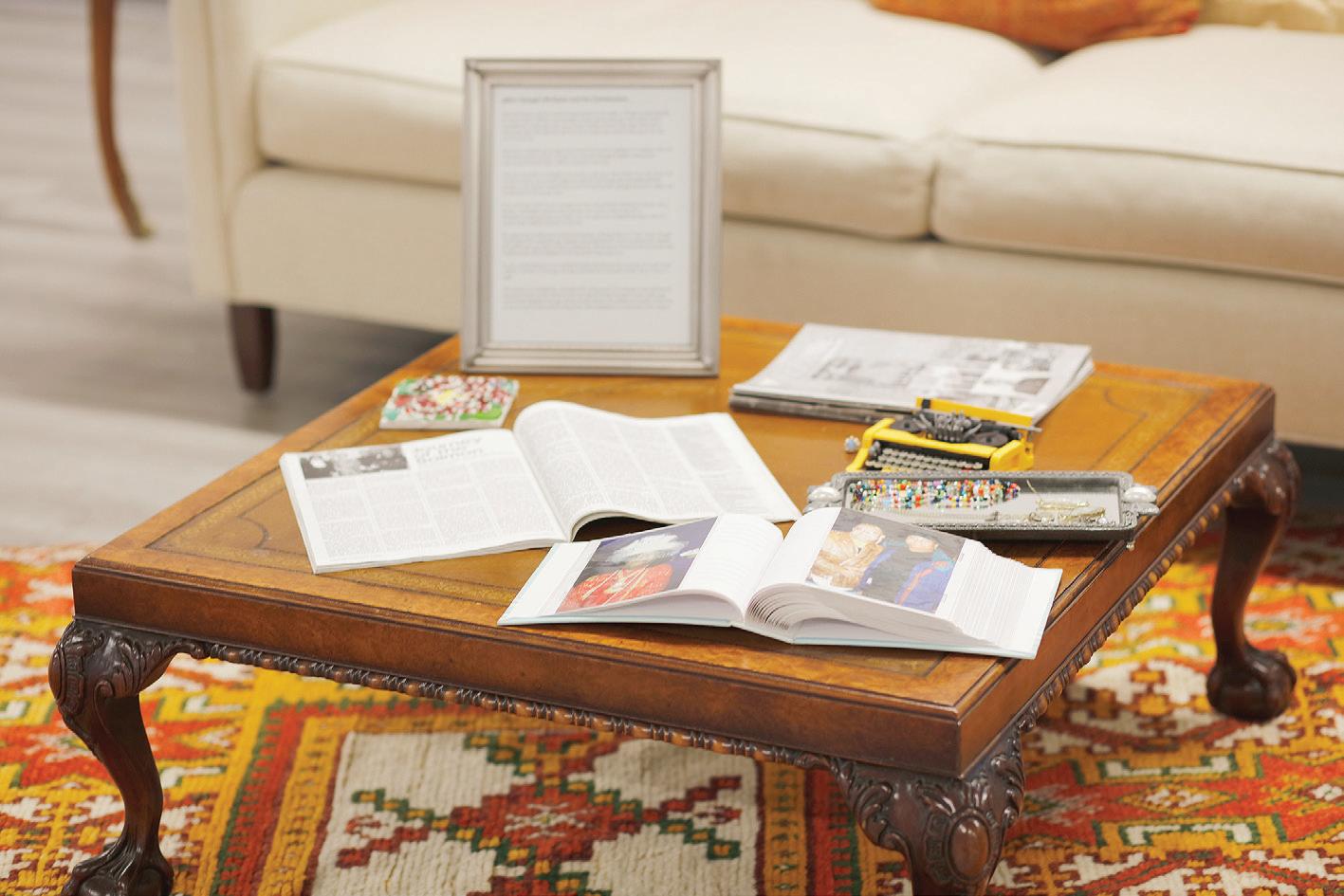
The first was I imagined the living room of Ifti Nasim. People used to mostly meet in Ifti’s living room, which also acted as a party house, sometimes a hostel for people who lived there for weeks. Another space was a little stage, because they started doing Jai Ho parties or Bollywood drag shows, they did them at Big Chicks in Uptown. The space is very small, but they did so much.
The design of this exhibition is so unique. Could you share a bit about your process in coming up with it?
colors. I kept on thinking, what should I do? And the commonality that I could find in all of these organizations was they were creating spaces. And the spaces
Installation view, People Who Came Before Us. An arrangement of living room furniture. On the wall behind the couch is a gallery of vintage photos featuring South Asian LGBTQ+ figures. . Photo courtesy of South Asia Institute
Installation view, People Who Came Before Us. Close-up of the coffee table in the center of the installation. On it are a small decorative typewriter, tray, and several open magazines and books. Photo courtesy of South Asia Institute
Have you found that in doing this work, you developed thoughts about continuity generationally among the South Asian queer community in Chicago?
Our previous generations were doing a lot. And at a time when being gay and South Asian was very difficult, too. Especially in the ’80s, the AIDS crisis, and then the ’90s, the kind of struggle this country’s queer people were going through. It also comes with a lot of risk, especially if you’re an immigrant. You know, there’s always this issue of a visa. They might deport you. And a lot of people left their homes because they wanted to be gay. Or here, at least in America, they thought that they could escape from their parents. So they carried a lot of risk with them. But yet people, there were people who were doing amazing work. They understood that the struggles of every community are interconnected, and you just can’t talk about your problem, but not talk about racial justice and about misogyny within queer circles. So they were addressing those real issues and the issues that we are still struggling with.
These South Asian organizations like Trikone, Sangat, and Khuli Zaban were not only focused on one kind of activism. They had those difficult conversations. They were not just doing activism on streets, they were also doing activism in living rooms by organizing potlucks or poetry sessions and doing all that stuff. I think we have to learn a lot from them. And I think this project made me realize that there's so many things that we can learn from them. And we can replicate what they did, what worked for them. [As for] what didn’t work for them, we can try our best not to repeat that.
Where are the archives going after this?
A lot of it was from people’s personal collections. If someone wants to donate, I’ll send their archive to the Gerber/Hart Library. I want them to start a South Asian archive. I don’t want this to be mixed with Asian American archives.
Can you say more about why you think they need a separate archive?
Yeah, sure. Because “Asian American,” I mean, the population is huge. That doesn’t mean we’re not Asians. We are Asians. We’re very Asian. “Asian American” is a very diasporic identity, and I think South
Asian is a distinct identity. In Nepal, I was never a “South Asian,” I was Nepali. We never identified that way. But here, we all have to be grouped together because of various reasons, very political, social reasons.
“We’ve always worshiped our ancestors… acknowledged what they have done for us. So I think the current generation of young queer folks also need to understand that. Whatever rights, whatever forms of liberation that we have achieved, it’s because of them.”
But these people were also specifically working for South Asian people. I mean, they were doing a lot of other stuff, but their target and community was always South Asian people. I think it’s high time for libraries and archives to have their own South Asian sections. Another reason that I’m worried is that if this is included within broad Asian American archives, this archive will get lost.
Some of the conversations that were happening about balancing our identities in personal relationships, being in the diaspora, negotiating South Asian gender norms, are sort of the same ones that many are having today in queer communities decades later. Did you find that their archives resonated with your experience in Chicago?
I think what we need to understand is we come from a culture, especially South Asian people, where we’ve always worshiped our ancestors. I don’t know how it is in other countries, but especially Nepal, we’ve always worshiped our ancestors and considered them as gods and goddesses and acknowledged what they have done for us. So I think the current generation of young queer folks also need to understand that. Whatever rights, whatever forms of liberation that we have achieved, it’s because of them. The government just didn’t start giving us rights. I hope with this project, people will think about their own ancestors and try to find, dig [for] their own history. Hopefully we’ll be able to tell their stories or archive their stories more. I think there’s a reason why people want to ban books, which is happening here in this country. They are specifically targeting queer books because these are histories. And if you erase history, you’ll always struggle to understand your own identity. So yeah, I hope someone gets inspiration to do something like this in their own communities and in their own spaces.¬
Mrittika Ghosh (she/her) is an reader, writer, and arts journalist living in Chicago. This is their first article for the Weekly
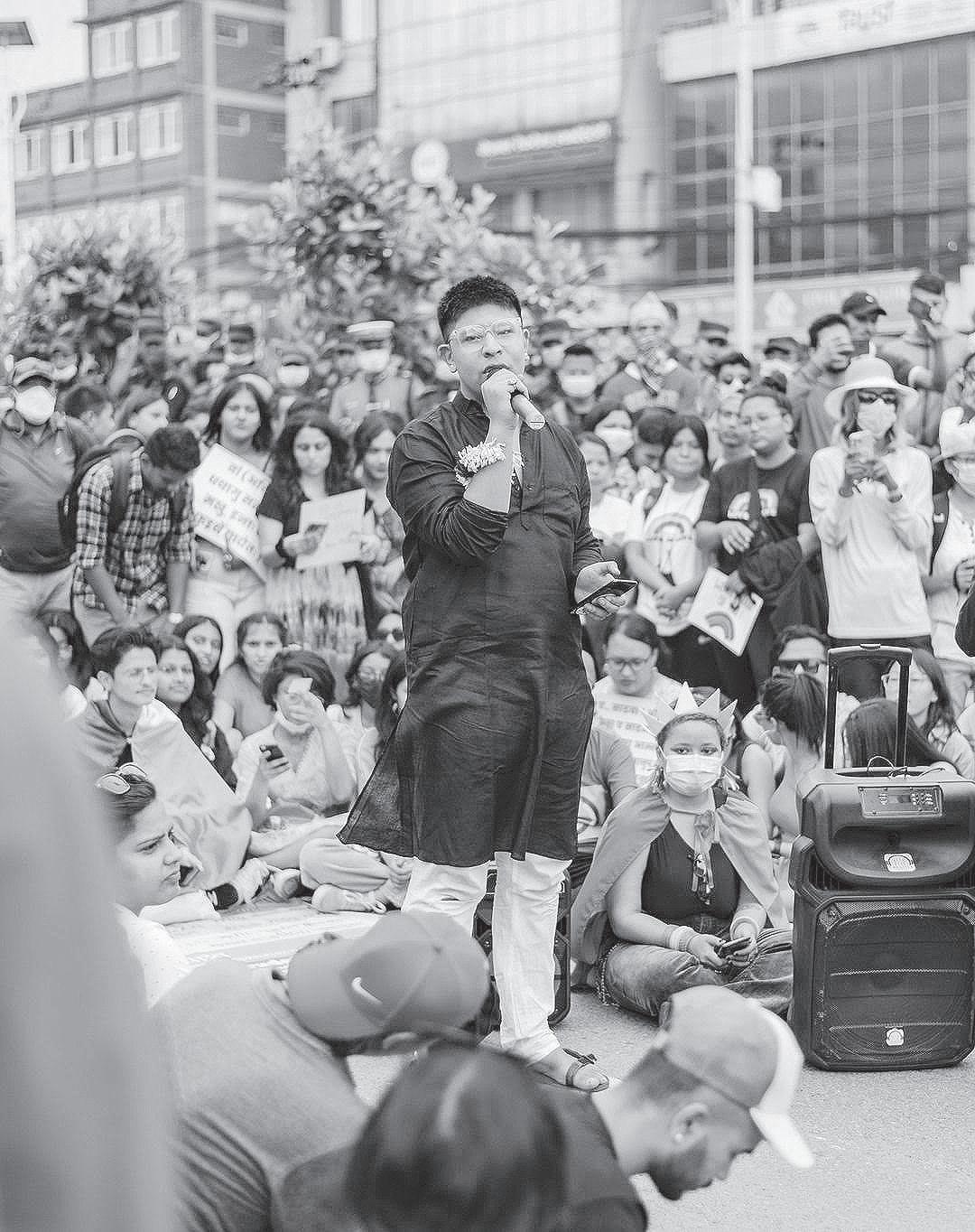
Ankit Khadgi addresses a crowd in Nepal.
Photo courtesy Ankit Khadgi
Our thoughts in exchange for yours.
The Exchange is the Weekly’s poetry corner, where a poem or piece of writing is presented with a prompt. Readers are welcome to respond to the prompt with original poems, and pieces may be featured in the next issue of the Weekly.
The Cardinal Rule of Time Travel
by chima “naira” ikoro
rule number one about time traveling is to leave the past unchanged aside from what you are visiting for. often times, we watch as a character is tempted to defy this cardinal rule, we scream at the screen, our voices falling short of the pixels that separate us from another reality.
i used to tell myself that if i could go back in time i would keep myself away from so many people. every time bitterness floods me, i look off into the eyes of an alternate self that never knew what a heart breaking sounds like and i miss her.
the other day, as i looked in her direction, fighting through the sting of betrayal protected by squatters’ rights living rent free in my tear ducts, i saw myself alone, never having learned what the rain sounds like and unable to dress for the weather in her adulthood.
heartbreak is like a tonsillectomy, a necessary procedure for some of us who aren’t so fortunate. they prove to be more difficult when the patient is an adult; the younger you are, the less scar tissue you’ve built up with each passing infection.
i time travel, and return to the future grateful that heavy rain taught me how to patch a roof. now, i own things that are too valuable to get wet. i learned how to grieve a friend still living when i had enough free time to cry. now, i have bills to pay.
like, who has time for that?
i time travel, and i leave my whole self behind. instead i gather the pieces of me that i managed to not lose, i realize they are the most important ones. i turn my face away from the past, my entire being dry and protected.
Chasing Love & Ambition
by lauriel brooks
Chasing Love and Ambition
A sign of admission
A desire of most
A few like to boast
Of late nights
And confessions
Of dark days and depression
Aimless walking and ventures
Full of late night adventures
A slate blank and its open
A mind free from devotion
A canvas waiting for a painting
A life ready for the taking
The 20’s don’t need a plan
Just an idea or a stance
To move mountains or molehills
To find pleasure in most fields
To experience life at its finest
When wine is flowing
We feel spineless
Ability to be free
Some can make it
Some must flee
Each life will be different
Each story will unfold
Chase love and ambition
The oldest story ever told
Chima Ikoro is the Weekly’s Community Builder.
THIS WEEK'S PROMPT: “IF YOU COULD TRAVEL BACK IN TIME, INSTEAD OF THINKING ABOUT WHAT YOU COULD CHANGE, WRITE ABOUT WHAT YOU’D KEEP THE SAME.”
This could be a poem, journal entry, or a stream-of-consciousness piece. Submissions could be new or formerly written pieces. Submissions can be sent to bit.ly/ssw-exchange or via email to chima.ikoro@southsideweekly.com