

The South Side Weekly is an independent non-profit newspaper by and for the South Side of Chicago. We provide high-quality, critical arts and public interest coverage, and equip and develop journalists, artists, photographers, and mediamakers of all backgrounds.
Volume 13, Issue 8
Editor-in-Chief Jill Petty
Deputy Editor Adam Przybyl
Senior Editors Martha Bayne
Christopher Good Olivia Stovicek
Jocelyn MartinezRosales
Editor Emeritus Jacqueline Serrato
Public Meetings Editor Scott Pemberton
Art Director Shane Tolentino
Assistant Managing Ellie Gilbert-Bair
Editor
Fact Checkers Ellie Beiser
Patrick Edwards
Kate Gallagher Jo Harris
Jenna Mayzouni Zara Norman Sebastiana Smith
Layout Editor Mel Dempsey
Publisher Malik Jackson
Office Manager Mary Leonard
Advertising Manager Susan Malone
The Weekly publishes online weekly and in print every other Thursday. We seek contributions from all over the city.
Send submissions, story ideas, comments, or questions to editor@southsideweekly.com or mail to:
South Side Weekly
6100 S. Blackstone Ave. Chicago, IL 60637
For advertising inquiries, please contact: Susan Malone (773) 358-3129 or email: malone@southsideweekly.com
For general inquiries, please call: (773) 643-8533
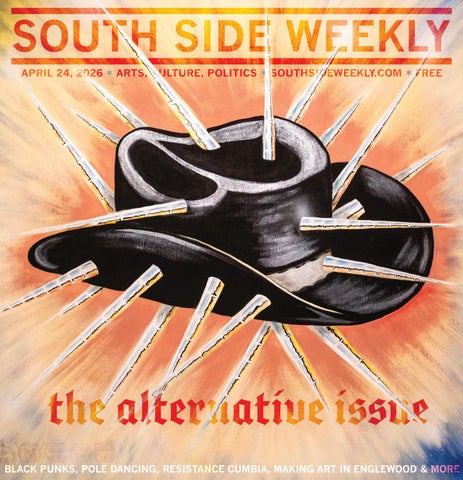
This issue is dedicated to the “other”—to the alternatives that have sprouted across the South Side to counter the mainstream and conventional.
To all who have found themselves creating alternatives in the name of survival.
The South Side has long been the city’s epicenter of resourcefulness and invention, the zone where a robust DIY scene has been fostered and nourished. Some successful “disruptors” include Casa Cafe, a Pilsen taqueria that turns into a hardcore music venue by night; and Co-Prosperity, an “experimental cultural center” and convening space that regularly hosts events centering resistance to exclusionary systems and institutions.
This issue aims to encapsulate the underground, the non-traditional and forward thinking movements pushing the bounds of what coexisting can look like, such as the community-first model of La Villita Housing Coop. A photo essay on Pynk Portal Pole Sanctuary, and how they are utilizing pole dancing as a form of healing, highlights resilience and creative expression. We speak with Menace4Hire, an Englewood-based dual artist breaking barriers in the musical and fashion industries. And we feature Benny Hernandez, a long-time South Sider who has created a hub for freaks and outcasts at The New Rose, his new bar in Pilsen.
At the heart of the issue is us, the South Side. And through these alternative ways to build and sustain community, we affirm that we are bigger than institutions, than capitalism, and more powerful than any of systems that attempt to define, contain, and displace us.
This issue spotlights the artists, organizers and collectives that push art, politics and possibility beyond mainstream frameworks offering the rest of Chicago alternative ways of creating, consuming, organizing, living and healing.
– For the counter-culture, Jocelyn Martínez-Rosales
black, queer, and punk
Black-led bands are reclaiming the genre and creating a refuge for queer people of color.
mark braboy .......................................4
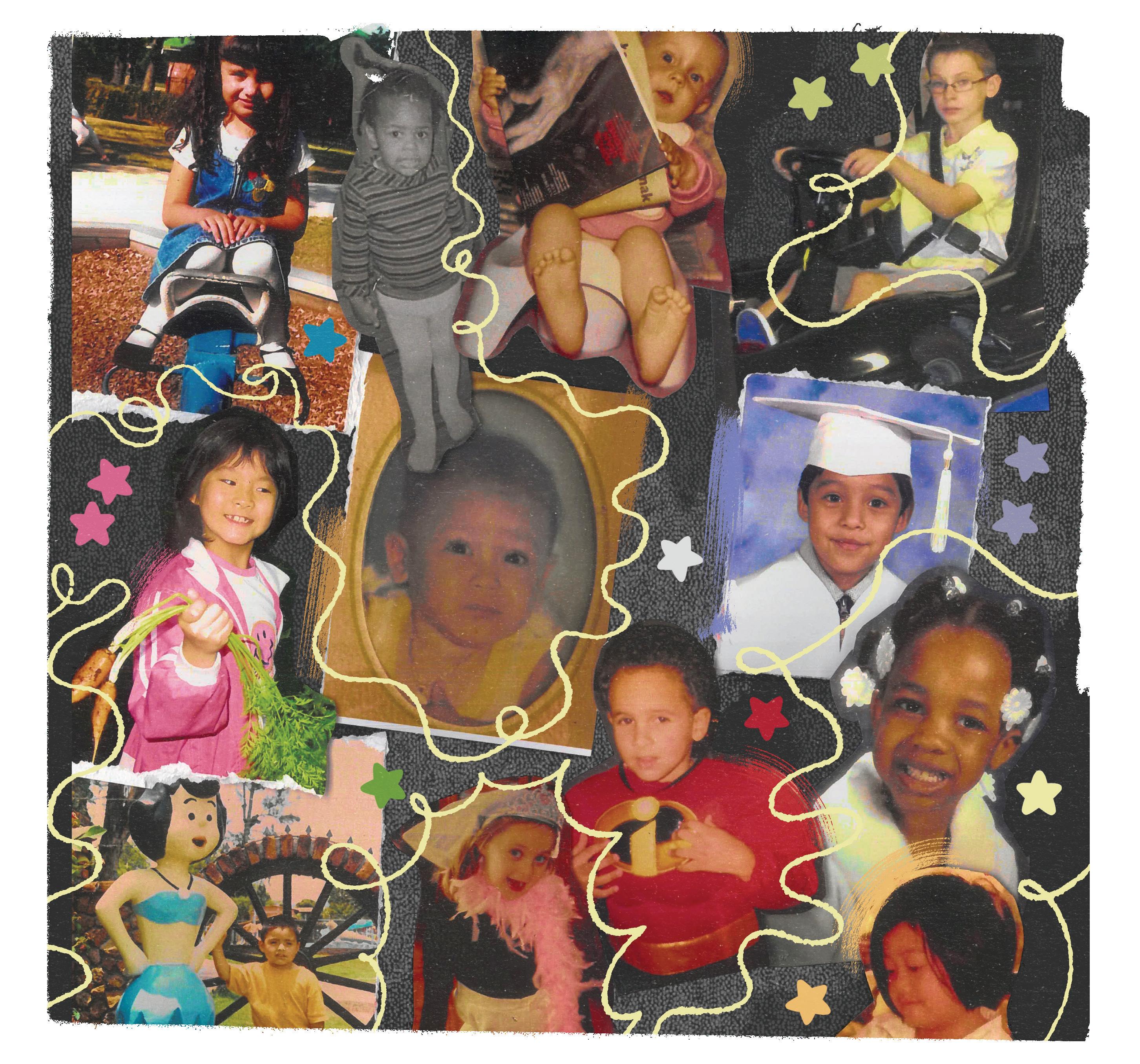
mexican documentary ‘yo no soy guapo’ is a resistance archive From Chicago’s South Side to Tepito, people want to dance cumbia.
jocelyn martinez-rosales ...............7
el documental mexicano ‘yo no soy guapo’ es un archivo de resistencia Desde el South Side de Chicago hasta Tepito, la gente quiere bailar cumbia.
jocelyn martinez-rosales................ 9
menace4hire is making tracks and threads on the south side
Menace4hire is building a fashion and music practice that sidesteps gatekeepers.
keegan hon ....................................... 12
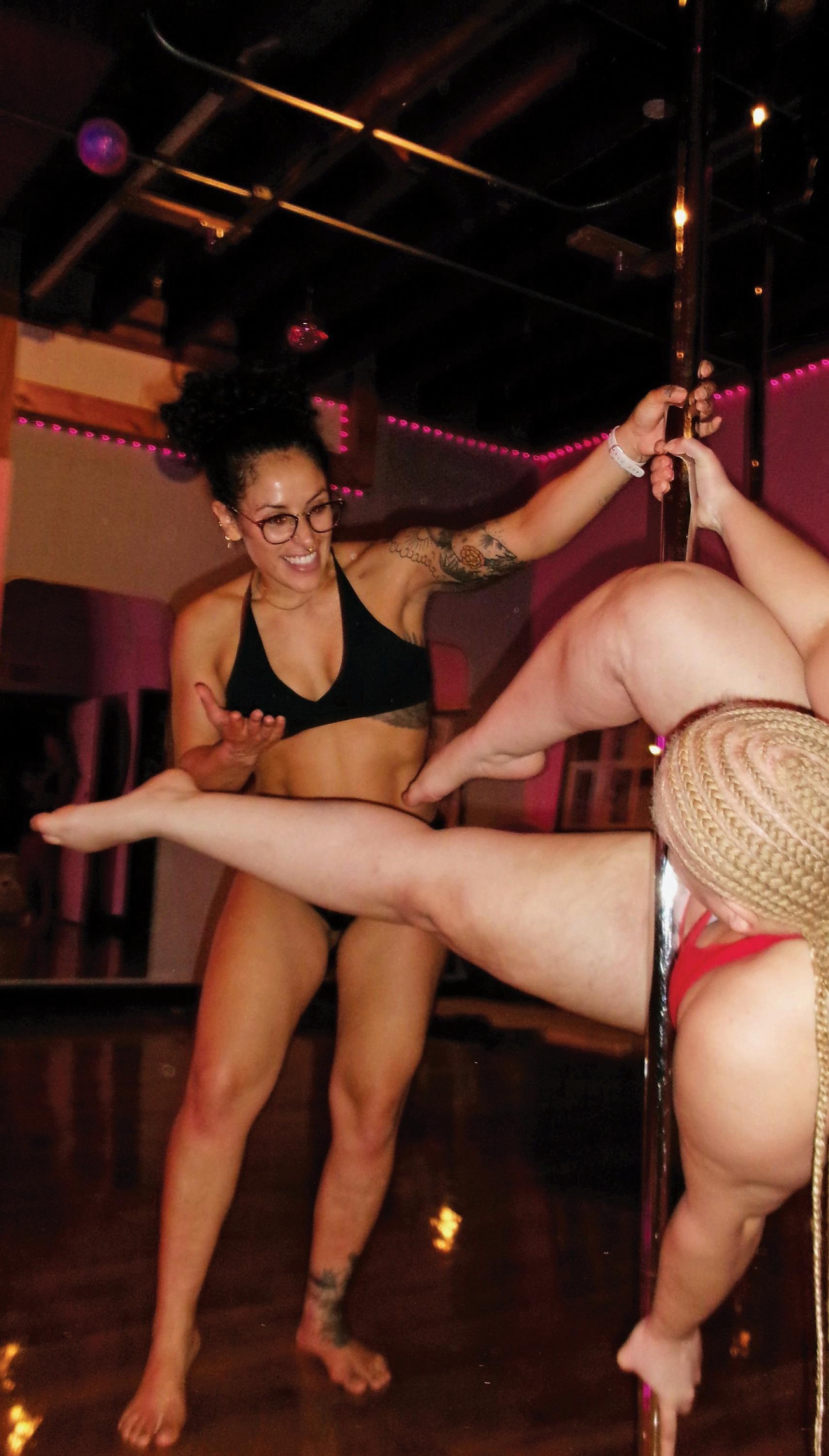
thursday evening at the pynk Ava V. Marie and Gemini Jynx opened the Pynk Portal Pole Sanctuary last year, a pole and dance studio for adults of all sizes and abilities. susie xu .............................................. 14
how casa cafe became the defiant heart of chicago’s south side diy
When ICE activity threatened a local taqueria, the city’s underground music scene stepped in to save it. amaris edwards ............................... 17
new rose: for the south side freaks, rockers, and weirdos
Pilsen’s new family-owned bar offers a home for punk and alternative DJs. matt brady ....................................... 19
a different way to live Housing cooperatives provide residents with affordable homes, a sense of community, and agency over their living situations. ryan rosenberger 21
imagining alternative realities rooted in survival and resistance
South Side artist Brian Herrera talks about his art form, Mesofuturismo, and the world it emerges from. jocelyn martinez-rosales 23
heavy crownz is planting the seeds for a future englewood
The rapper takes lessons from farming to create his debut album.
francisco ramírez pinedo 25
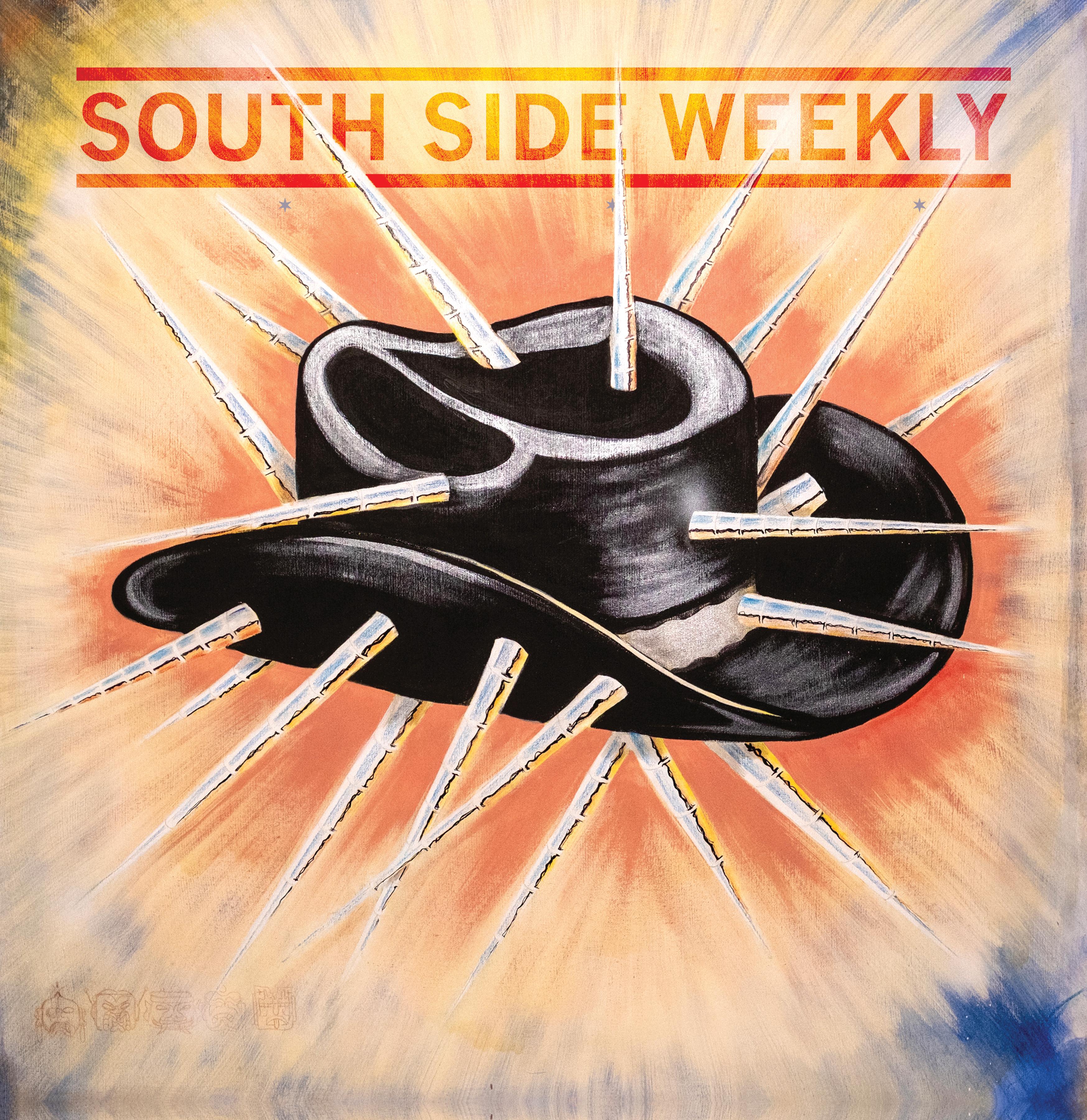
Cover art by
Brian Herrera
Photographed by Fernando Ruiz
Black-led bands are reclaiming the genre and creating a refuge for queer people of color.
BY MARK BRABOY
Punk rock has always been a space for outcasts. But while white bands have long been the face of punk rock in Chicago, small collectives of Black, Latine, and indigenous musicians—many of them queer and politically active—are carving out platforms for themselves within the DIY punk rock scene.
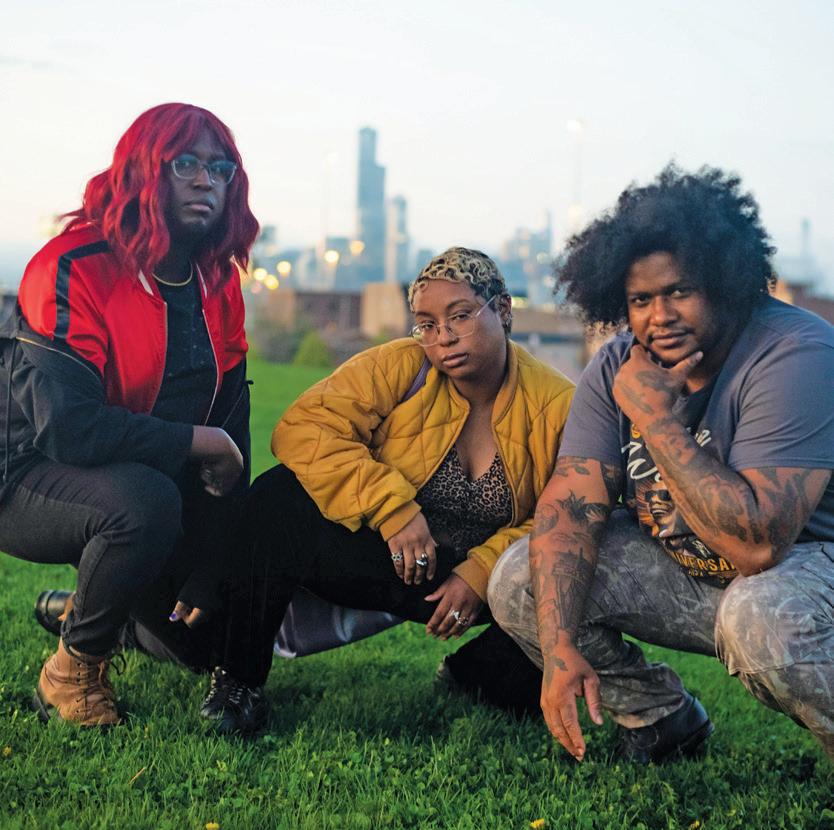
Bands like the politically provocative Bussy Kween Power Trip—all of whom are Black and queer—and queer and racially diverse groups like Directrix, Daylong Sigh, and Faerie Dream, are among the Chicago acts who have emerged in these politically dire times. These musicians have found a refuge in punk rock and are creating ways to invite other Black people, especially queer and trans Black people, in as well.
“Punk rock becomes a place to reconsider my family history, reconsider what family even means,” said Maat Wilson, a Black woman and lead singer of Directrix. “It is a community-oriented feeling generator that I feel is important to get a lot of emotional, political stress out and into the common so it doesn’t feel so isolating.”
Directrix, a four-person band of color led by Maat, is one of the newer
rock bands in Chicago. Stylistically, they’re a more emo and grungier band, in the spirit of Fall Out Boy meets Sum 41 with a politically radicalized twist. The Chicago based group released their latest EP Halotherapy in July 2025.
“It’s counterculture, it’s revolutionary, it’s existing in spite of society saying you shouldn’t exist,” said Zino Ukulu, bassist for Daylong Sigh, a fourperson queer punk/alt rock band of color led by singer/songwriter Aaron Christian Cruz, who identifies as non-binary. Ukulu said queer people of color are drawn to punk rock
in Blackness and still be strange, or weird, or on the edge. And I kind of had to learn to love that. And me stepping into my light will allow other people to step into their light too,” Ukulu said.
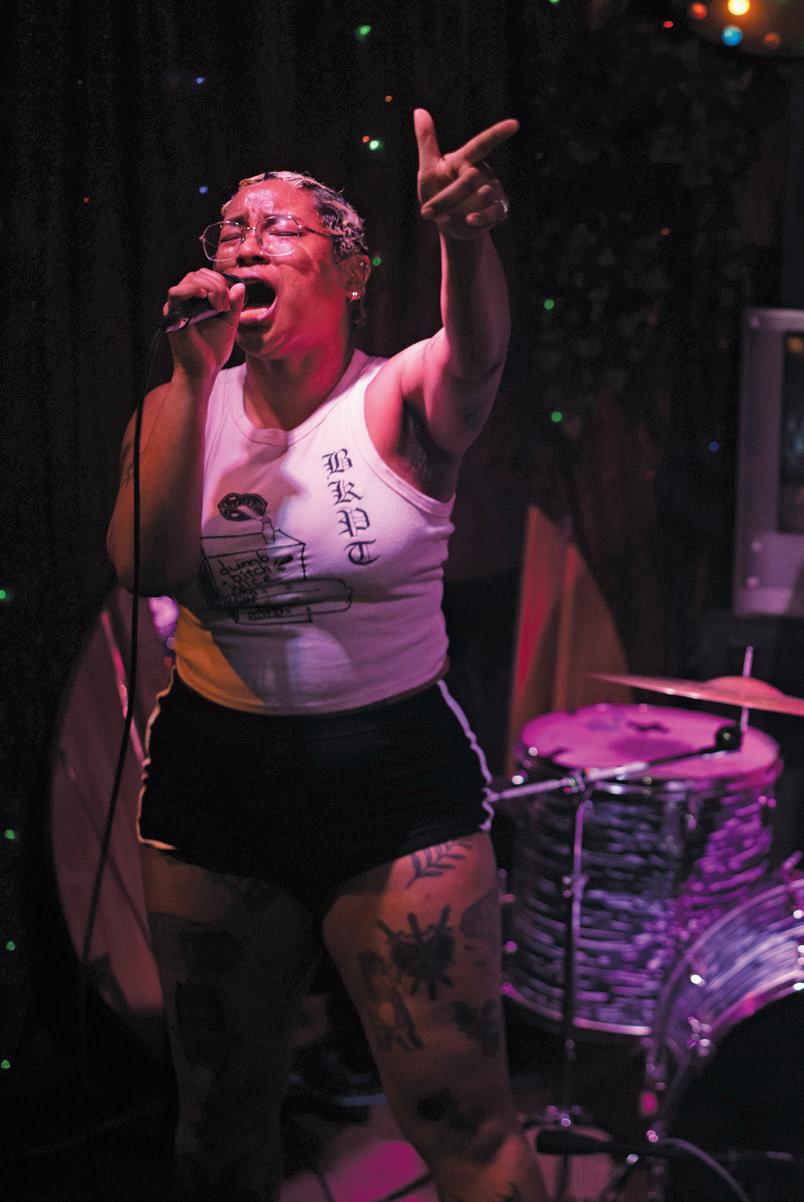
The small but lively scene was on full display at Bussy Kween Power Trip’s (BKPT) April 13 headlining show at Cafe Mustache. Lead singer Brianna Tong (B), bass guitarist K, and drummer Darien Williams erupted the dimly lit dive bar in a sea of brooding, colorful lights, and musical rage with songs from their independent album Coming With The Strap.
“Punk rock…is a community-oriented feeling generator.”
– Maat, lead singer of Directrix
because of this. Being a Black queer person, often considered “strange” in a heteronormative society, even amongst other Black people, is peak counterculture.
“I embody that strangeness, that uniqueness. And so it’s really funny having punk and rock having its roots
Bussy Kween Power Trip began in 2019 with B and K, who were then members of another band, Cordoba. Back then, the Black punk rock scene was anchored in a larger Black DIY scene made up of indie rappers, singers, rockers, and activists. While not all sectors of the scene overlapped,



many musicians and creatives would congregate at the Black, Brown, and Indigenous Crew Punk Fest.
By B’s account, in 2019, a former music colleague asked if she and K wanted to start a Black punk band. When it was time for them to connect, the colleague ghosted them. Eventually, B, K, and former drummer PT would form the first iteration of Bussy (B) Kween (K) Power Trip (PT). After PT left the band in 2023, BKPT rotated through several drummers before finding Williams, who first played with the band in 2024.
Asha Adisa is a solo punk artist who was one of the supporters in the audience at Cafe Mustache. For her, Black people making punk rock is more than performing songs and having fun. Being a Black punk artist also means reclaiming the revolutionary music that Black artists have been pioneering since Sister Rosetta Tharpe in the late 30s.
“Black people doing punk music, rock music, guitar bass music, it’s more than just music, it’s more than just performing and having fun,” said Adisa. “It is that, but it’s also a mission of reclaiming the music as our own because it came from us. It’s ours, and it belongs to us. We deserve to do it.
money for,” B added. “There’s just so few venues on the South Side and the West Side. You’re basically going to need a car because you’re going to Logan Square. It’s very hard to have a child and do this. A lot of the things that are keeping Black and Brown people down in the city apply everywhere, but especially music,” she said.
“A lot of venues are just looking to make money; they don’t care about the art,” said Williams. “A lot of venues, their goal is just to sell drinks and have bands that bring in people, and not give them any of the cut of the money they bring in. And a lot of venues aren’t interested in cultivating community. There is a lack of spaces that are interested in building a scene, but building a scene takes time and money.”
K and B say that there used to be a time when venues were more generous with their earnings. That was until the COVID-19 pandemic critically impacted Chicago nightlife.
Still, the Black punk scene in Chicago is thriving. B said that new bands are emerging across Chicago, inspiring a new generation to find their voice in a new era of rock.
“Although we’re having less Black bands, punk bands here now, I do think—Directrix has been around for a couple years, Faerie Dream just started last year. I do think we might be entering a new resurgence because the young people are so much more down to listen to alternative music now. They’re just down with a bunch more alternative shit—being gay and trans, they/them pronouns,” said B.
WRLD for serving as a renewed entry point for listeners, connecting hip hop to punk rock. B said that Juice WRLD particularly helped introduce a younger crop of listeners to its emo elements, but added that the scene needs a figure akin to superstar rapper Megan Thee Stallion, who (among other things) has introduced some of her audience to anime.
In K’s opinion, punk rock’s cathartic rage can easily translate to kids of color in Chicago. In their day job as a teaching artist for the Park District, they want to introduce kids to punk rock, offering new musical outlets to channel powerful emotions.
“There’s a lot of anger in young kids, and young kids are open,” said K. “I’m trying to spend the next 10 years being the sneaky person that’s like, ‘Hey kids, you want to get in on this antiestablishment music that’s very heavy and rocky and bass-y, and we have this whole history of making it, and you own it.’ To get them into something else because I don’t know many mainstream, punk-flavored genres that have a fascination with death.”
Ukulu reiterated the political necessity of the music. “It’s just the message to come out. It’s the reason to keep going, and also, it’s time for revolution right now, and we all feel that in our bones,” she said. “And so what is our part in that revolution? Are we the voices that tell each other what’s going on? Are we the healing spots that help each other when we’re broken from protesting on the street? What is our role? I feel like music kind of bridges it all together.” ¬

Some evolving trends within local and national hip hop also give the band hope. For instance, BKPT credits the late South Suburban superstar Juice
Mark Braboy is a photographer and journalist from the Southeast Side who covers arts, entertainment, and cannabis.


MATHER AT DUSABLE
The DuSable Black History Museum and Education Center 740 E. 56th Place
April 30 | 10:00 a.m.–12:00 p.m.
GOLDEN STAR CLUB
Lindblom Park | 6054 S. Damen Avenue
May 20 | 10:00 a.m.–12:00 p.m.
FEED YOUR MIND, BODY & SOUL
AKARAMA Foundation | 6220 S. Ingleside Avenue
May 28 | 9:30–11:30 a.m.
Register today! Anyone 55+ is welcome to join

BY JOCELYN MARTINEZ-ROSALES
Warning: This article contains spoilers.
Cumbia can be found in every corner of Latin America. A blend of African, Indigenous, and Spanish influences, featuring storytelling and hypnotic percussion, Cumbia is said to have originated in Colombia in the 19th century. It has made its presence known, firmly declaring, "I am here" in countries like Cuba, Argentina, and of course, Mexico.
And if there is an additional thing these countries share in common besides really good cumbia, it is the spirit of resistance. Cumbia is one of the main genres that defines a sonidero, a community-driven street celebration and dance. The 2018 documentary Yo No Soy Guapo (or “I Am Not A Thug”) by Veracruzana director Joyce Garcia takes us into the streets of Tepito, a community in Mexico City, where residents are fighting to keep the sonidero tradition alive.
While Garcia’s film premiered in the U.S. and Mexico in 2018, it was screened for the first time in Chicago’s Bridgeport neighborhood at the Co-Prosperity Sphere this March. Lumpen Radio and the Ruidosa Art Collective hosted the 80-minute
documentary, followed by a Q&A panel with Garcia facilitated by Stephanie “Soli” Herrera of Ruidosa and DJ Citlalic “La Colocha” Jeffers Peña. Rudiosa organizes regular cumbia parties, and Herrera and Peña are two Chicagoans who have continuously contributed to the local cumbia scene.
“It struck me as a very rich, very beautiful universe,” Garcia said of her introduction to sonidero culture. In the 2010s, Garcia was a graduate student in Mexico City, and her first sonidero in the capital reminded her of home in the Mexican coastal state of Veracruz.
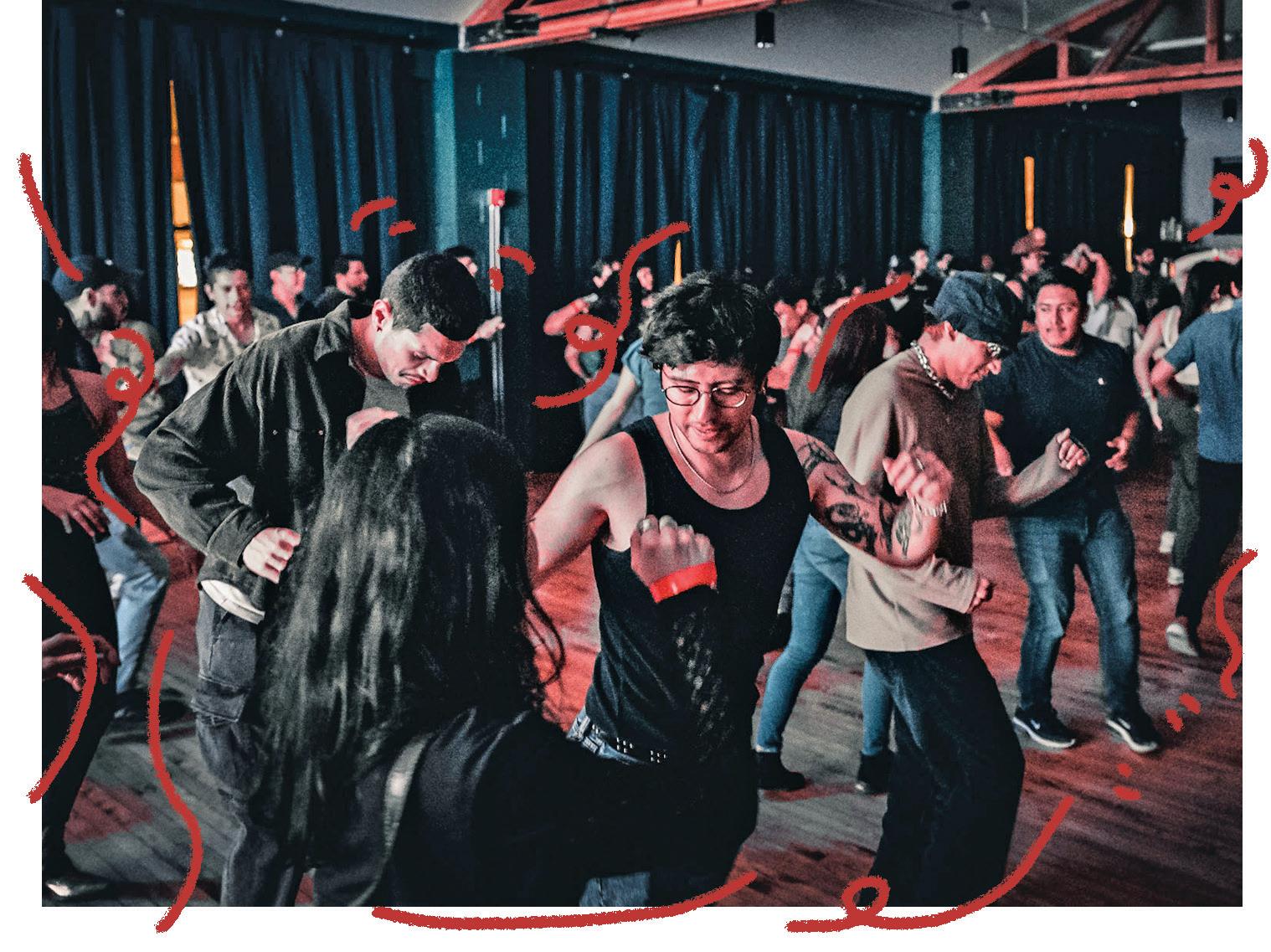
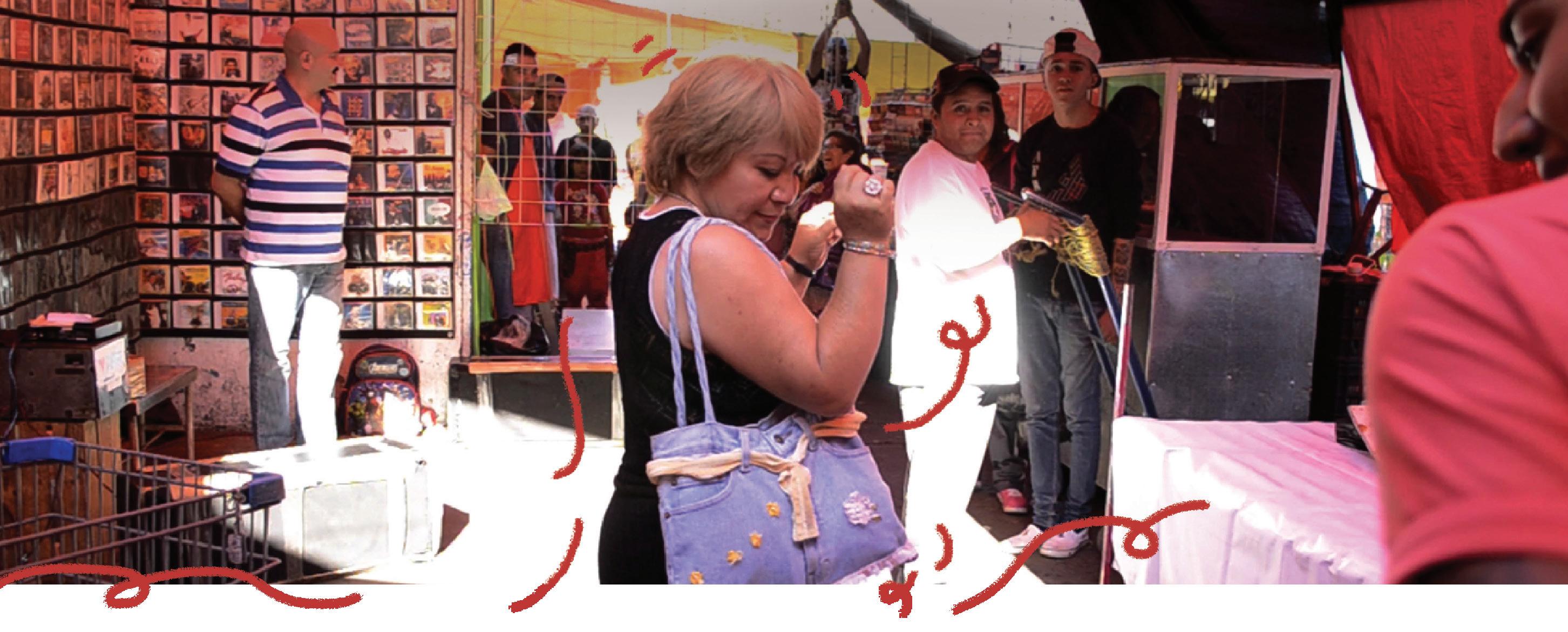
Sonideros emerged in the late 1950s in working-class Mexico City neighborhoods like Tepito, where community-built, jerryrigged speakers were assembled into powerful sound systems. From these humble origins came sonideros: MCs blend salsa, guaracha, and cumbia while shouting out people and dedications on demand. Many people create and hold up posterboards featuring messages during these events, with the hope they’ll be shared through the mic.
Garcia was inspired to document sonideros after witnessing one that filled her with comfort, and
nostalgia for home. In an interview with the.. Weekly, Garcia used.her hands as she spoke.to... emphasize the scale of..... these DIY celebrations:....... massive outdoor celebrations that stretch across streets and avenues, with networks resemble a tree’s root system and all things working cohesively. Initially, Garcia thought of capturing the annual celebration in the neighborhood of Tepito that honors La Virgen de
la Merced on September 24. The virgin is a symbol of liberation and often referred to as “ la Madre de los cautivos ” or “Mother of the Captives.”

“I came from still photography, so I started taking photos, but it fell short for me,” Garcia said.
She explained that she felt compelled to use film to capture the explosive cultural phenomenon she was tapping into. But what started as a project to document celebrations quickly evolved into something more urgent. “Yo No Soy Guapo ” begins as a portrait of sonidero culture, but becomes a resistance archive: a story about control over sound, over space,
and over who is allowed to gather. In Tepito and in cities like Chicago, where cumbia continues to thrive, that fight feels familiar.
“I think especially in the society and the political climate that we are living in and the current administration, I think we really need to uplift each other,” Lumpen Radio director Stephanie Manriquez said.
The film follows Guadalupe Tlacomulco Macías, known as “Lupita La Cigarrita,” as she traces the history of sonideros, calls out machismo without mincing words, and mobilizes her neighbors community members to demand public space. Lupita is a sonidera, one of the first and few women in the movement, and an organizer of Tepito’s annual dance. We also see Lupita on the trail of “Sound La Socia”, one of the first sonideras whose work and advocacy is less wellknown, due to the misogyny that pervades the movement.
At the screening, Lupita’s enterprising spirit extended beyond the film. After the viewing and panel, guests carried that energy into an all-femme sonidero, Ruidoteca, at the Ramova loft—a reminder that without women, there is no movement. La Colocha, who spun at the Ramova sonidero set, also cohosts Potencia Sonidera with Sonido Trumbull Shadow, a Sunday radio program at Lumpen dedicated to discourse around sonidero culture.
“It is meant to be kind of an extension of this archival, kind of trying to build this popular education,” La Colocha said. Manriquez added, “We are living something that probably our ancestors were hoping for, which is caring for each other, that we create our spaces where we, women, feel safe, that we feel empowered, that we are not competing with each other more than uplifting.”
In the same vein, through Ruidosa, Herrera has hosted cumbia events at venues like Empty Bottle and Casa Cafe, and is currently preparing for an upcoming art show, “Cumbia Sin Fronteras,” which will be centered on sonidero culture. These efforts are centered around producing accessible events that also implement educational components that pay respect to the growing culture.
“The whole point of it all is to have people experience how sonideros would be like in the motherland,”
Herrera said. “We treat these events with a lot of care, a lot of intention. We're always making sure the events stay in its authenticity.”
The need for preserving culture in its truest form aligns with the central theme of Garcia’s film. With a camera in hand, Garcia shows how power is exercised to control and limit who gets to use public spaces. In one striking scene, Garcia captures law enforcement officials halting the annual preparations for the celebration for La Virgen de la Merced. One of the officials informs gathered attendees that the neighborhood can’t utilize public spaces for sonideros because no one has issued them permits to do so.
La Cigaritta tries to reason with the officials, explaining that even if they were to apply for permits, they would not be granted. The police don’t budge, insisting that the celebrations will only bring crime to the neighborhood. But in secret, daring community members try to keep the party going, before ultimately being busted.
That year, the celebrations weren’t the usual. Food and drink was still in abundance but the music, the heart, was missing.
“I think the film was also about the attempts to erase people and
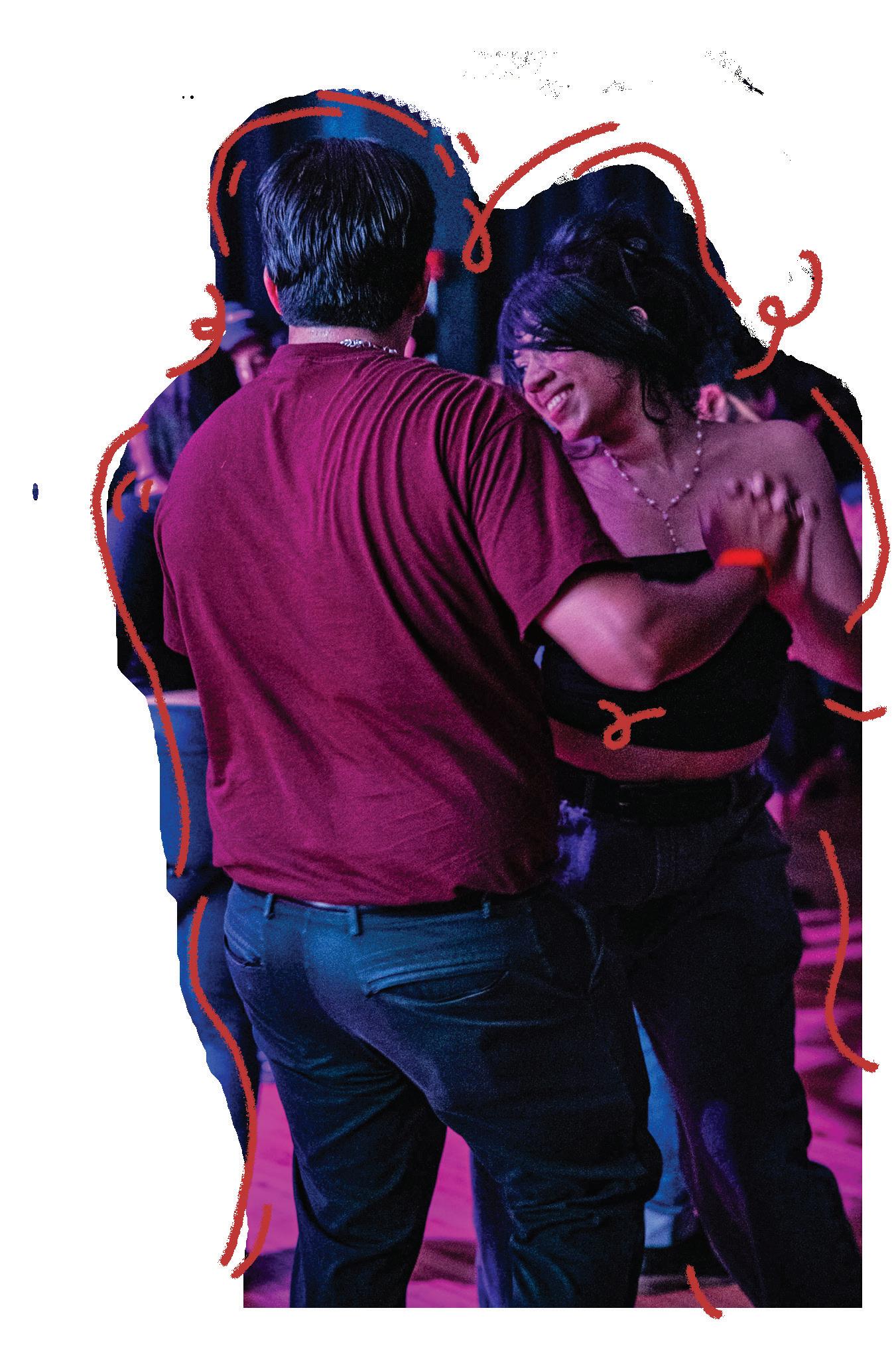
and live. There is joy in resistance, and time and time again oppressed communities have shown just that. Garcia’s film ends with a montage of people dancing, a powerful symbol that stretches across Latino America and survives through generations, borders and suppression. It highlights the importance and power of autonomous events, showing how our survival relies on cultural exchange.
“The people are not going to go down without a fight and without fighting for what they love, which is their culture, their community, their neighbors and their way of living,” La Colocha said. ¬
erase their culture by removing them from public spaces,” La Colocha said, underscoring the shared realities between Mexico City and Chicago.
“Many apparatuses of the state have tried to erase, disappear people, whether it's ICE through the raids, or whether it's police through police brutality and extrajudicial killings, I think it's important for us to be connecting,” La Colocha continued.
It’s no coincidence that cumbia parties and sonideros are on the rise in Chicago. From Mitclan Production’s staple Cumbia y Los Goths to Kombi Chicago’s Cumbia Cathedral, there is a growing appetite for spaces that feel both rooted and resistant. As the cost of living continues to rise and younger generations of Latinos seek to reconnect with their cultural inheritance, sonideros offer something more than music. They are inherently working-class spaces, shaped by histories like those documented in Yo No Soy Guapo.
“It’s not like they said, ‘Yes, we’re going to be anti-capitalists’; rather, the organization simply comes from a different place,” Garcia said.
It’s about the community coming together to build alternative spaces that do not yield to bureaucracy or force, and instead incubate different ways to create, consume
Jocelyn Martinez-Rosales is a Mexican American independent journalist from Belmont Cragin committed to telling stories from communities of color through a social justice lens. She is also a senior editor at the Weekly

Desde el South Side de Chicago hasta Tepito, la gente quiere bailar cumbia.
POR JOCELYN MARTINEZ-ROSALES
Advertencia: Este artículo contiene spoilers.
La cumbia es un género musical presente en cada rincón de América Latina. Desde su nacimiento en Colombia en los siglos XVIII y XIX, se ha hecho sentir, declarando con firmeza: “Aquí estoy,” en países como Cuba, Argentina y, por supuesto, México. Y si hay algo que estos países tienen en común además de cumbia sabrosa es el espíritu de alegría. La cumbia, definida por su fusión de influencias
africanas, indígenas y españolas, con percusiones hipnóticas y letras narrativas, es uno de los géneros principales que definen al sonidero: una celebración caribeña y un baile impulsados por la comunidad. El documental de 2018 Yo No Soy Guapo de la directora veracruzana Joyce García, nos invita a las calles de Tepito, una comunidad de la Ciudad de México, mientras sus habitantes luchan por preservar los sonideros.
“Se me hizo como un universo muy rico, muy hermoso,” dijo García sobre su iniciación a la cultura
sonidera tras mudarse desde el estado costero mexicano de Veracruz. En aquel entonces, García era estudiante de posgrado en la Ciudad de México, y su primer sonidero en la capital le recordó a su hogar.
Los sonideros surgieron a finales de la década de 1950 en los barrios obreros de la Ciudad de México, donde se armaban equipos de sonido potentes con bocinas de la gente del barrio, muchas veces de forma casual. De estos humildes orígenes nacieron los sonideros: maestros de ceremonias que mezclan salsa,
guaracha y cumbia, y mandan saludos y dedicatorias si se los pides. Mucha gente hace y levanta cartulinas con mensajes en estos eventos, esperando que los lean por el micrófono. La nostalgia que le produjo presenciar un sonidero invadió a García y la inspiró a documentarlo. Hablando con las manos, García explicó la masiva celebración al aire libre que se extiende por calles y avenidas de sonideros caseros que dan forma como un sistema de raíces de árboles operando en total cohesión. En el principio, pensó en
capturar la celebración anual del barrio de Tepito que rinde homenaje a la Virgen de la Merced cada 24 de septiembre. La Virgen es un símbolo de liberación y a menudo se la conoce como la Madre de los cautivos.
“Yo venía de la fotografía fija, entonces empecé a hacer fotos, pero me quedaba muy corta”, García dijo, al explicar la necesidad de filmar en lugar de fotografiar el fenómeno cultural explosivo que estaba presenciando. Sin embargo, lo que comenzó como un proyecto para documentar la celebración rápidamente se convirtió en algo más urgente: un archivo de resistencia. Yo No Soy Guapo empieza como un retrato de la cultura sonidera, pero se transforma en una historia sobre el control del sonido, del espacio y de quién tiene permitido reunirse. En Tepito, y toda la república mexicana, e incluso en ciudades como Chicago, donde la cumbia sigue viva, esa lucha se siente familiar.
Aunque la película—el proyecto de García para la escuela de posgrado—se estrenó en Estados Unidos y México en 2018, se proyectó por primera vez en el barrio de Bridgeport, en Chicago, en CoProsperity el pasado marzo. Lumpen Radio y el colectivo Ruidosa presentaron el documental de 80 minutos, seguido de una sesión de preguntas y respuestas con García, facilitada por Stephanie “Soli” Herrera, de Ruidosa, y Citlalic “La Colocha” Jeffers Peña, DJ local y ampliamente reconocida. Ambas han contribuido de manera constante a la escena local de la cumbia en Chicago.
“Creo que, especialmente en la sociedad y el clima político en el que estamos viviendo, y con la administración actual, realmente necesitamos apoyarnos entre nosotros,” dijo Stephanie Manríquez, directora de Lumpen Radio.
La película sigue a Lupita La Cigarrita- Guadalupe Tlacomulco mientras rastrea la historia de los sonideros, denuncia el machismo sin pelos en la lengua y moviliza a miembros de la comunidad en Tepito en la lucha por el derecho al espacio público. Su espíritu trascendió la pantalla, con el trabajo de otras mujeres en el centro tanto de la película como de la proyección.
Después de la función y el panel, los asistentes llevaron esa energía a una tocada sonidera completamente femenina, Ruidoteca, en el loft de Ramova, un recordatorio de que sin mujeres no hay movimiento. La Colocha, quien tocó en el set sonidero de Ramova, también co-conduce junto a Sonido Trumbull Shadow el programa dominical de radio en Lumpen, Potencia Sonidera , dedicado al diálogo en torno a la cultura sonidera.
“La idea es que sea como una extensión de este archivo, tratando de construir una especie de educación popular,” dijo La Colocha. Manríquez agregó: “Estamos viviendo algo que probablemente nuestros ancestros esperaban, que es cuidarnos entre nosotros, crear espacios donde nosotras, como mujeres, nos sintamos seguras, empoderadas, y donde no estemos compitiendo entre nosotras, sino elevándonos.”
Con esa misma intención, a través de Ruidosa, Soli ha organizado eventos de cumbia en espacios como Empty Bottle y Casa Café, y actualmente se encuentra preparando una próxima exposición de arte, “Cumbia Sin Fronteras,” centrada en la cultura sonidera. Estos esfuerzos buscan crear eventos accesibles que también incorporen componentes educativos que respeten y honren el crecimiento de la cultura.
“La idea de todo esto es que la gente experimente [los sonideros] como sería en la tierra de origen,” dijo Herrera. “Tratamos estos eventos con mucho cuidado, con mucha intención. Siempre nos aseguramos de que se mantengan auténticos.”
La necesidad de preservar la cultura en su forma más auténtica se alinea con el tema central de la película de García. Con cámara en mano, García muestra cómo el poder se ejerce para controlar y limitar quién puede usar los espacios públicos. En una escena impactante, captura a autoridades deteniendo los preparativos anuales para la celebración de la Virgen de la Merced. Uno de los funcionarios le informa a los asistentes que el vecindario no puede utilizar el espacio público para sonideros porque no cuentan con permisos.
La Cigarrita intenta razonar con las autoridades, explicando que incluso si solicitan permisos, no se los otorgarían. La policía no cede, insistiendo en que las celebraciones solo traerían crimen al vecindario.
Aun así, en secreto, miembros de la comunidad intentan mantener la fiesta viva, hasta que finalmente son descubiertos.
Ese año, las celebraciones no fueron las mismas: la comida y la bebida no faltaron, pero la música, y el corazón, estaba ausentes.
“Creo que la película también se trataba sobre los intentos de borrar a las personas y de borrar su cultura al sacarlas de los espacios públicos,” dijo La Colocha, subrayando las realidades compartidas entre la Ciudad de México y Chicago.
“Muchos aparatos del Estado han intentado borrar, desaparecer personas, ya sea el ICE a través de redadas, o la policía a través de la brutalidad policial y las ejecuciones extrajudiciales. Creo que es importante que estemos conectándonos,” continuó La Colocha.
No es coincidencia que las fiestas de cumbia y los sonideros estén en aumento en Chicago. Desde la ya emblemática Cumbia y los Goths de Mitclan hasta la Cumbia Cathedral de Kombi Chicago, existe un creciente interés por espacios que se sienten a la vez enraizados y de resistencia.
A medida que el costo de vida sigue aumentando y las generaciones más jóvenes de latinos buscan reconectarse con su herencia cultural, los sonideros ofrecen algo más que música. Son espacios inherentemente de clase trabajadora, moldeados por historias como la que documenta Yo No Soy Guapo
“No es como algo que ellos dijeran, ah, sí, vamos a ser anticapitalistas, sino que simplemente la organización viene desde otro lugar,” dijo Garcia.
Se trata de que la comunidad se una para construir espacios alternativos que no cedan ante la burocracia o la fuerza, y que en cambio sirvan para incubar otras formas de crear, consumir y vivir. Hay alegría en la resistencia, y una y otra vez las comunidades oprimidas han demostrado justamente eso.
La película de García termina con un montaje de personas bailando, un poderoso símbolo que atraviesa América Latina y que sobrevive a través de generaciones, fronteras y formas de represión. Resalta la importancia y el poder de los eventos autónomos, mostrando cómo nuestra supervivencia depende del intercambio cultural.
“La gente no se va a dejar caer sin luchar y sin pelear por lo que ama, que es su cultura, su comunidad, sus vecinos y su forma de vida,” dijo La Colocha. ¬
Jocelyn Martinez-Rosales es una periodista independiente mexicoamericana de Belmont Cragin, comprometida con contar historias de comunidades de color desde una perspectiva de justicia social. También es editora en el Weekly.
Menace4Hire is building a fashion and music practice that sidesteps gatekeepers.
BY KEEGAN HON
If there’s a line between music and fashion, then Chicagoans from Law Roach to Chief Keef have ignored it. But breaking into those creative spaces whether at a sewing machine or a recording studio can be a challenge.
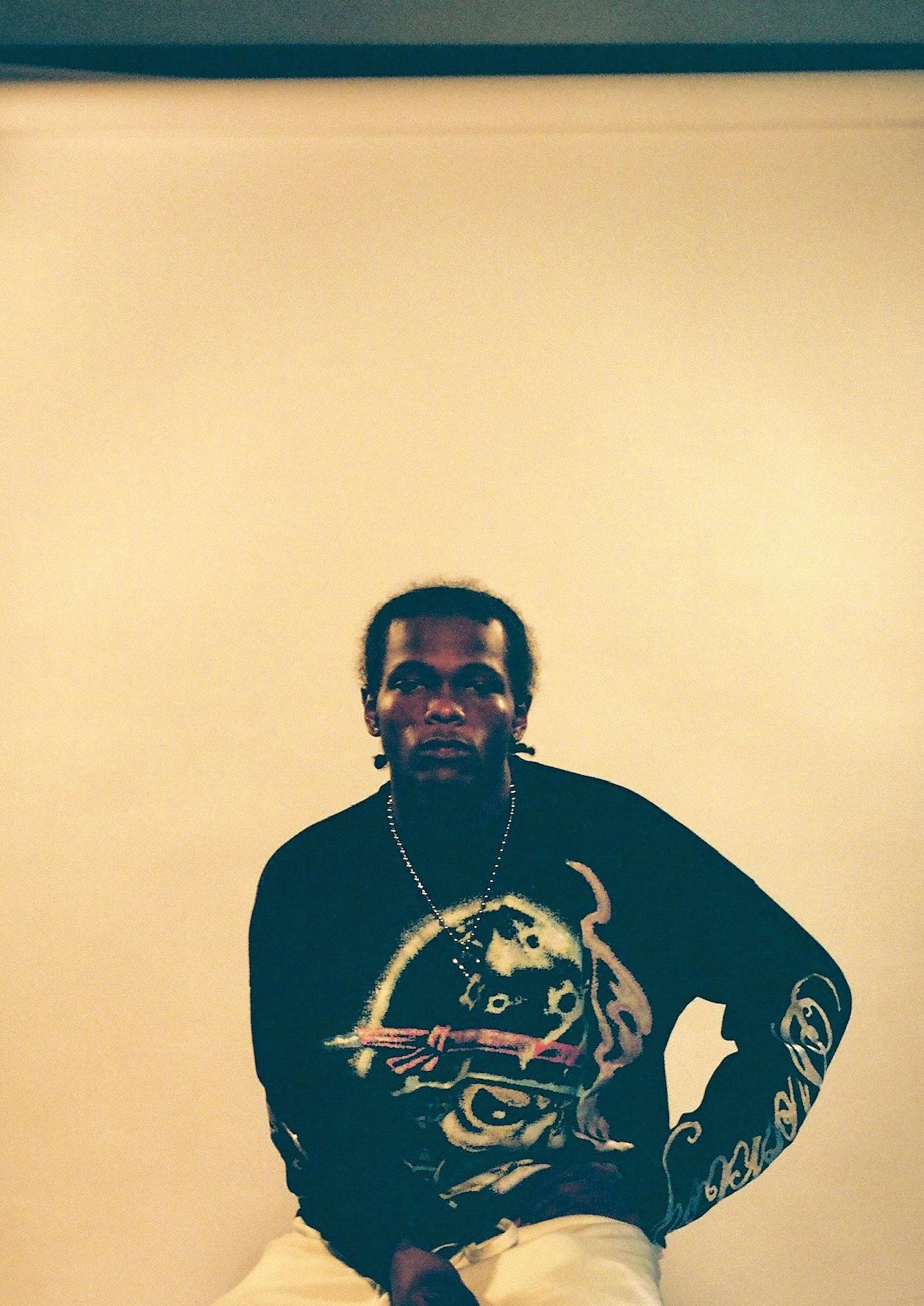
That hasn’t stopped 21-yearold Alexander Fair, who goes by Menace4Hire. The West Englewood-raised artist has already built three companies for designing and distributing clothes, graphic designs, albums, events, and guerilla marketing campaigns.
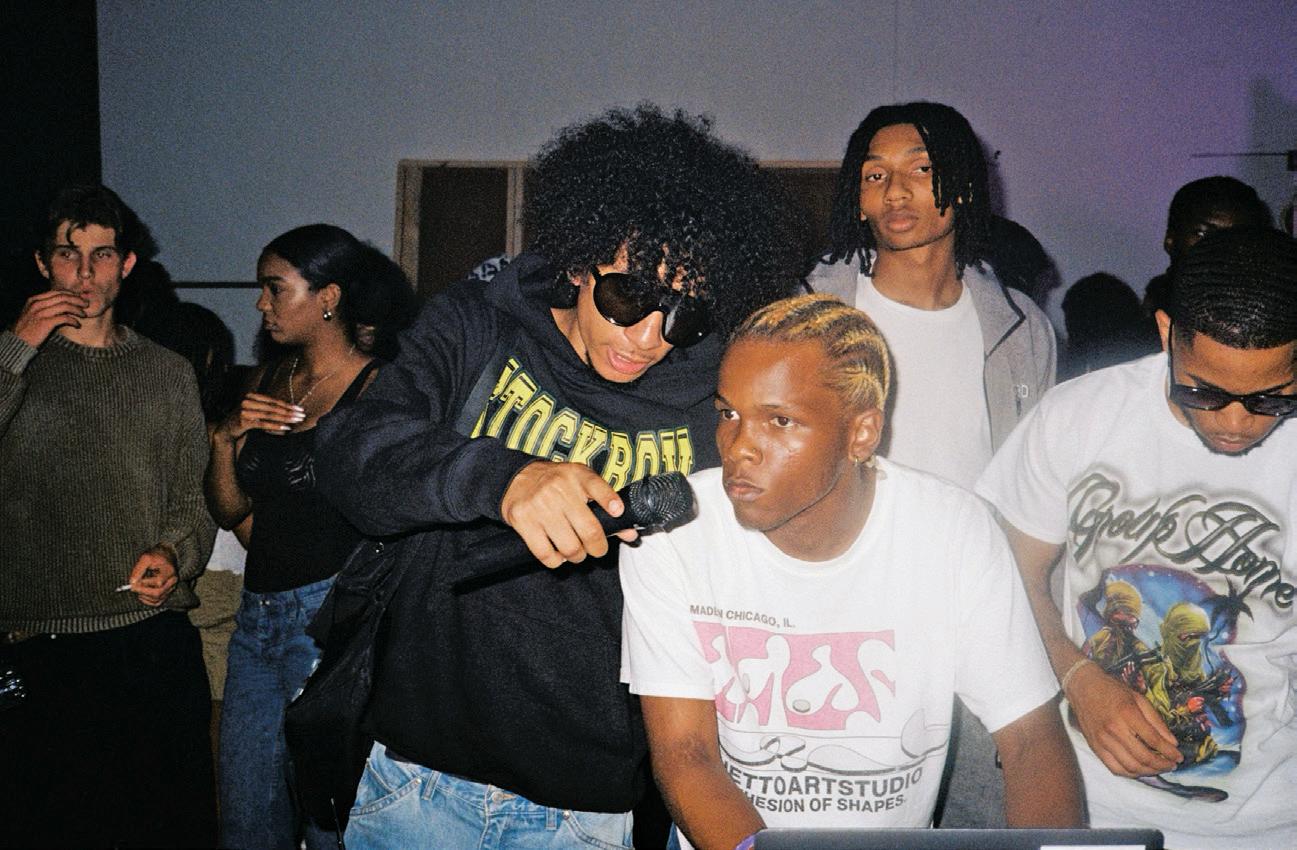
There’s aghettoartstudio (what Menace4Hire calls an outlet for his “designer brain”), where he works on clothing, textiles, and art. There’s 4Hire, his media platform for the “dissemination of information.” And those companies both sit under The Y Corner—“the business-facing part of that in like, the lamest terms,” he jokes. Menace is for hire.
When not working on these projects, he works closely with Jasir Bailey, a longtime friend and founder of Stockboy, a Hyde Park clothing shop and showroom that supports those looking to break into fashion by providing guidance on how to get a brand off the ground and in front of people. And on top of these ventures, on April 11, Menace released My Ancestor’s Favorite : a thirteen-track album featuring collaborations with
Kaicrewsade, Sonny, and Waine Ghazi.
In each of these lanes, Menace4Hire brings his own vision. His fashion builds on a streetwear foundation with skewed silhouettes and statement pieces like stitched reversible tees and high-vis orange flight pants. Each incorporates many shapes, cuts, and colors that bring them to life. His music also uses texture to full effect: take the song “Ch3rrypit” from his project With All That I Know Now, which stitches together low-pitched samples, fuzzy static, and hard-hitting percussion into a backdrop for Menace’s lyricism. In conversation with the Weekly, Menace talks tailoring, gatekeeping, mall kiosk t-shirt printing, and how other South Siders can succeed.
This interview has been edited for length and clarity.
How did the South Side influence your clothing brand and music?
There’s two sides to that. The first side is, I grew up seeing a lot of what I didn't want to participate in. In some ways that was gang culture, you know, gun violence, all that kind of stuff. I used to just dread driving through where I lived—to where I had to go to school. Because it just looks so different sometimes, seeing the kind of dilapidated nature of where I'm from.
The South Side is something to be proud of, I love it regardless. I think it made me a wellrounded person at the end of the day, specifically, because I didn't always go to school here, I just lived there. I would lay my head there, but I'd do everything else around different parts of the city.
Why was it so important to you to venture out into other parts of Chicago?
My mom had always made it a point for me and my brother to not be confined to that environment, specifically because of what it can produce. She made it a point to always have us go to school on the low end or in Hyde Park or wherever else. I would skate from there to the Ashland bus, then hop on the Ashland bus and get on the Green Line and go to Grant Skate Park. A lot of my first solid friendships— people that I'm friends with today, [like] Malcolm, who produced on my project, or Bugg.mp3, the producer— we got closer because we spent time at Grant Skate Park together, skating.
My mom just made it clear that this (West Englewood) is not the only thing you can see, so I can credit my mom for that.
When did you start getting into fashion?
At 12 or 13, I watched The Get Down, and just seeing graffiti and DJing, I wanted to get into graffiti. That inspired me a lot. Sketching words out segued into my first clothing design on paper, which was called “Good Intentions.” It was pretty trash. But that's kind of where that started. [When I was] 14 or 15, Jasir Bailey and I—that's my best friend since we were in seventh grade— we took our first photography class together. That was my introduction into being good at Photoshop. At 14 and 15, I was designing on Photoshop, trying to get screens burned so I could actually print t-shirts. I started interning for Kim Products at some
point and we went to the LA Fashion District, just seeing that at a young age was kind of cool, having something to necessarily aspire to.
How did the fashion scene in LA and New York compare to Chicago for you?
New York drove me to be a lot more hands-on, even more cut and sew. LA was more a graphic, embellishmentbased kind of thing because that's what they do a lot of in LA. They do cut and sew in LA, don’t get me wrong, but a lot of their literal Garment District is [t-shirt] blanks and printing: embroidery.
And then New York, on the flip side, is raw fabrics, Botani Trim zippers, ribbing. So it’s a very different kind of landscape. Going in there changed how I saw fabric stores—because you'll go to a Chicago fabric store, and they think it’s the greatest thing they’ve ever seen. But I just still always think about Mood Fabrics [in New York] and how they have several levels of high-quality fabrics. You can get deadstock fabric, stuff they use for runway collections, that they don't plan to use anymore. You can buy it. So that just changed my whole perspective.
The thing about New York is that you can do everything there, and you can’t do everything here. You can do parts of the process here. Maybe I can source fabric. But we don’t have thousands and thousands of tailors that are willing to make the design that you’re trying to make. There’s just so much that Chicago doesn’t have that makes it hard for people to even want to move that here. Even down to what Jasir’s trying to do [with Stockboy] and what I’m trying to help him pivot into in terms of offering resources.
It is nice what you and Jasir are doing.
It’s moreso him, because he’s just really inspired by the first time we ever made
a t-shirt and it just didn’t go well. That’s some shit that both hurt us—we have manufacturing trauma, and it sent us down these paths of making it easier for ourselves and others. But for him, it’s literally giving people the resources and the tools to just do it, and for me, it was like, “I will never go through this again, because I will know how to do it myself.”
We designed this t-shirt, went to get it made at a mall kiosk, and they said it could be the size we wanted it to be. We were trying to do a rap T, mind you, and you know how big rap tee prints can be, 16" x 20," like full …. Bro. The disappointment of it being a legal paper-sized design. But to think that that’s the only place you could go! Because then you have the aspect of Chicago where it’s like, you could get stuff screenprinted—and yeah, they're gonna tax the fuck out of you. They're going to tax the shit out of you.
When people come and go, they take what they can from the city, but to replenish it is not very common. Because of the lack of resources, people will monopolize something, and they’ll hold the keys or tools [out of reach from other people because at some point they’d end up making] less money. And that's just not something we really care about, because if you're good at what you do, you'll always be
Kalls”—that was the first song I ever recorded. Kai was doing the KPC [Kai Poetry Clubs], and I’d already done poetry since the third grade, but I hadn’t written in a while. I remember being kind of nervous. But I ended up doing the poem. He’s like, “You got to get on the song.” Senite was already on the song and he was recording in his car. That was my first verse ever, I had never recorded any music on my own before.
Do you have any advice for kids on the South Side wanting to get into fashion or music?
good, you'll always make money. Some people don't really care to help out, because they think that helping out means that at some point they are not the person to help anymore, which means they don't get credit, they don't get paid.
Do you think fashion has a higher barrier of entry than music?
Yes and no. I think both are at the point where the barrier of entry is how much you’re willing to learn to do it yourself. At first it was like, you had to go to XYZ studio to record a demo, right? Now you can record a song in BandLab, put it on SoundCloud, and it might still blow up. You can record a video on your iPhone, it still might blow up. You can design something on your iPad in a cheap little app and get it made, and it might go crazy, you know? But yes, I think fashion definitely has a higher barrier of entry in terms of doing it well. To make good quality clothes is definitely harder than just making clothes. To make good quality music is not nearly as hard as it used to be—and it just continues to get easier because people are willing to help.
What made you start doing music?
Kaicrewsade put me on “Fone
My three things: Get outside. Go to shows when it comes to music. Get outside, go to fashion shows. Go pull up to Stockboy, ask us questions. Go to panels. There's a lot of different panels where Joe Freshgoods is talking, or whoever else may be talking about what they went through with clothes. And then fail. You're gonna have to lose a lot of times just so you can understand better. Go to the fabric store too. Start going to Textile Discount Outlet, pull up there and just start touching on stuff and feeling so you can understand how things move and bend, all that when it comes to fashion. So those are my three biggest things. I’ve been teaching the kids too. If you have questions, come hit me up. I’m not a shark, I’m not gonna bite!
Follow Menace4Hire on Instagram @ menace4hire. His latest album, My Ancestor's Favorite, is available on CD at www.cottonroad.net/ and on cassette at www.littleheadbutt.bandcamp.com.
Stockboy Chicago, 5239 S Harper Ave. Open Tuesday–Friday, 10am–6pm. (312) 978-0031. www. stockboychicago.com. ¬
Keegan Hon is an independent journalist who focuses on topics surrounding art, music and fashion. You can find his work on all platforms under KayHon.
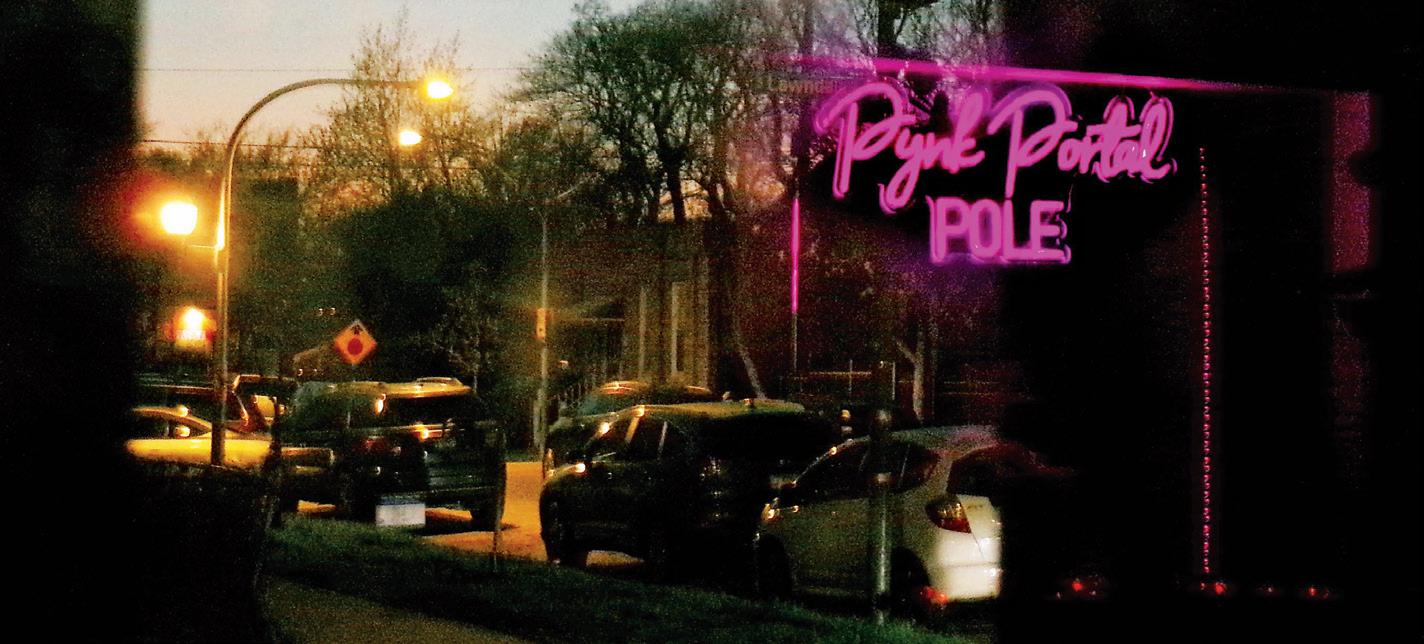
Ava V. Marie and Gemini Jynx opened the Pynk Portal Pole Sanctuary last year, a pole and dance studio for adults of all sizes and abilities.
BY SUSIE XU
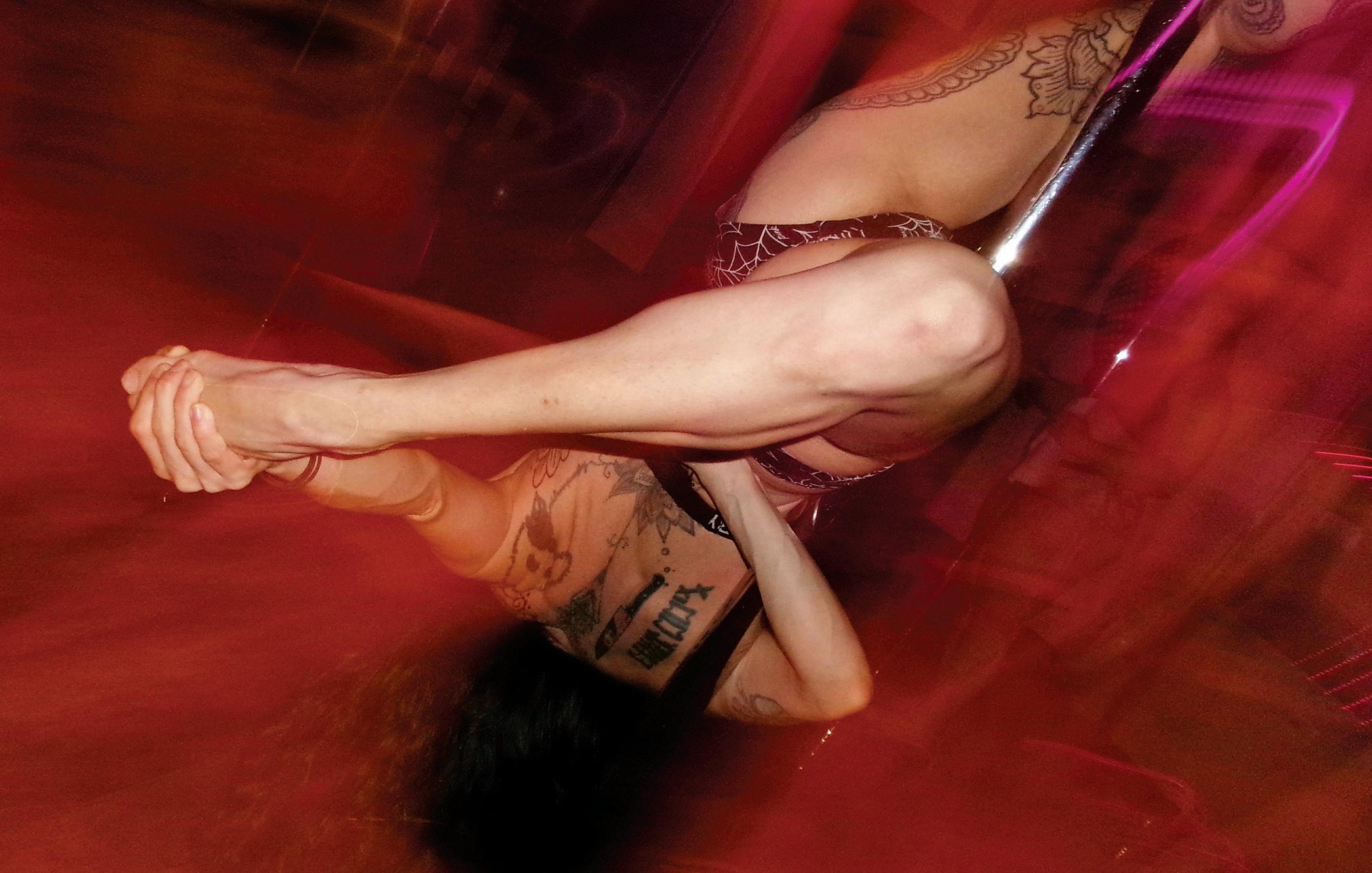
In the 1970s, clubs such as Perv's House and Pepper's Hideout, located in Chatham, gave Black Chicagoans a place to move their bodies. It was considered a halcyon era for South Side night life, with lovers of underground funk, blues, and early disco frequenting a variety of entertainment options, including High Chaparral, the Patio Lounge, and the Showcase Lounge. These venues also provided work for Black performers of all stripes, from jazz musicians to dancers to striptease artists. By the mid-1980s, that community had largely disappeared. When Ava V. Marie, who grew up on the South Side and had been dancing in clubs around the state, moved back to Chicago in 2022, she found a void. The clubs that remained were mostly on the North Side, and were unsafe, poorly run, or simply wouldn't hire Black dancers.
So she founded Black Skrippa Brigade—a Chicago-based collective of Black, queer strippers and pole dancers committed to creating more local opportunities and greater community for Black dancers—to create opportunities the city wouldn't offer. "There would be no BSB if even just two clubs consistently hired Black dancers," she said.
This habit of self-determination and inventiveness is a throughline among Black artists of Chicago. For example, Bronzeville’s South Side Community Art Center was founded in 1940, to counter the exclusion of Black artists from mainstream museums and galleries. More recently, Chicago-based ballet dancer Erin Barnett created Black Girls Dance in 2015, after she discovered that her experiences as a young dancer were still common, with mainstream dance companies rarely contracting Black dancers.
Marie landed a position at Siren, a pole studio that was located in Logan Square; she and Gemini Jynx were both featured at the Power to the P-Pole show at the House of Blues in January 2025. When Siren closed in April 2025, due to challenges with the space and the landlord, Marie and Jynx combined forces.
Marie started looking for a place to host another show, but Gemini had already been plotting to convert her Little Village home into a community space for movement and healing. Pynk Portal Pole Sanctuary was thus conceived. A week after they met to finalize their plan, they started knocking down walls, cutting the ribbon and opening in July, 2025.
Earlier this month, I visited the studio as it reopened after a twoweek renovation hiatus. Marie was running around putting things in place, as Saira Sol, an instructor,
rehearsed choreography for their class. I lounged on the comfy couch with several others and listened in.
Marie said the renovations were made possible by volunteer labor;
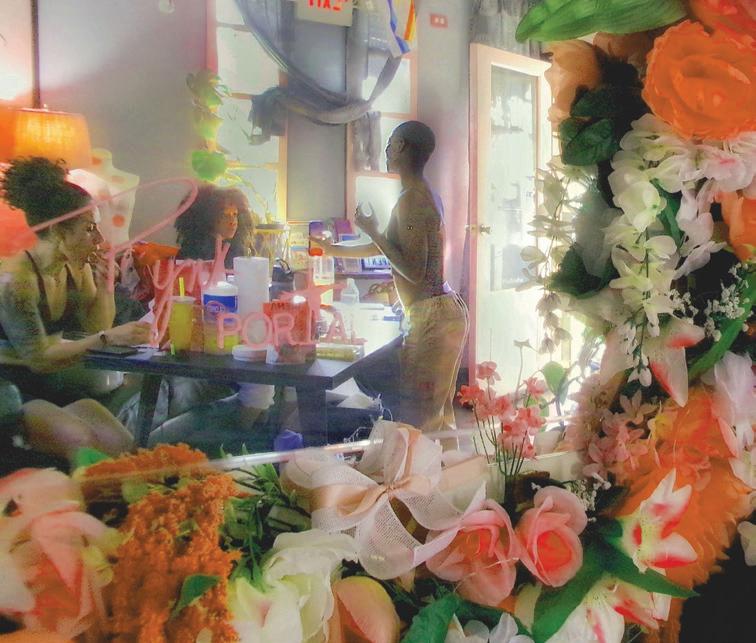
a student’s sugar daddy’s $3,000 contribution; and $2,000 in small donations from the sex workers and their clients. They have been doing pretty well since opening last summer, though the studio closed due to ICE activity in the neighborhood last year.
Gemini said community members were willing to protect each other from the threat of ICE raids, but she also acknowledged everyone did not have the tools they needed to do so. In the future, she wants to bring organizers from Minnesota to Chicago to share their knowledge, to better prepare for ICE’s inevitable return.
Gemini’s other plans for the space include hosting plant medicine classes, and teaching Little Village
residents, mostly Mexican, how to cook local veggies like Swiss chard and collard greens.
At the day’s end, I stood with students waiting for buses by the studio’s door. We chatted about wishing to afford more classes, as several chimes of a bell—crisp yet efficient—punctuated the surrounding hush. A man rolled up with a pushcart halfway down the block. We were too far away to ascertain his stock. As the KimballHolman 82 bus pulled up, fastmoving kids and more sluggish, taller figures emerged under the street lamps, a circle of moving shadows surrounding the pushcart vendor. ¬
Susie Xu lives and writes in Chicago.
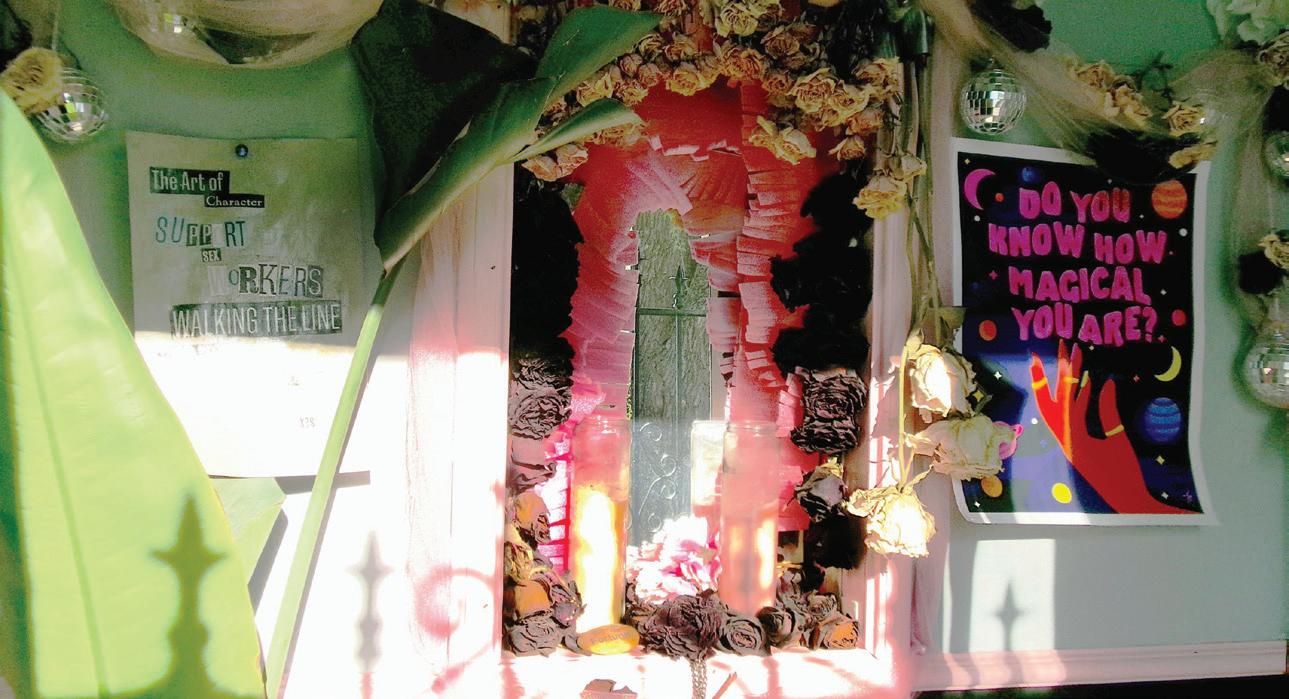
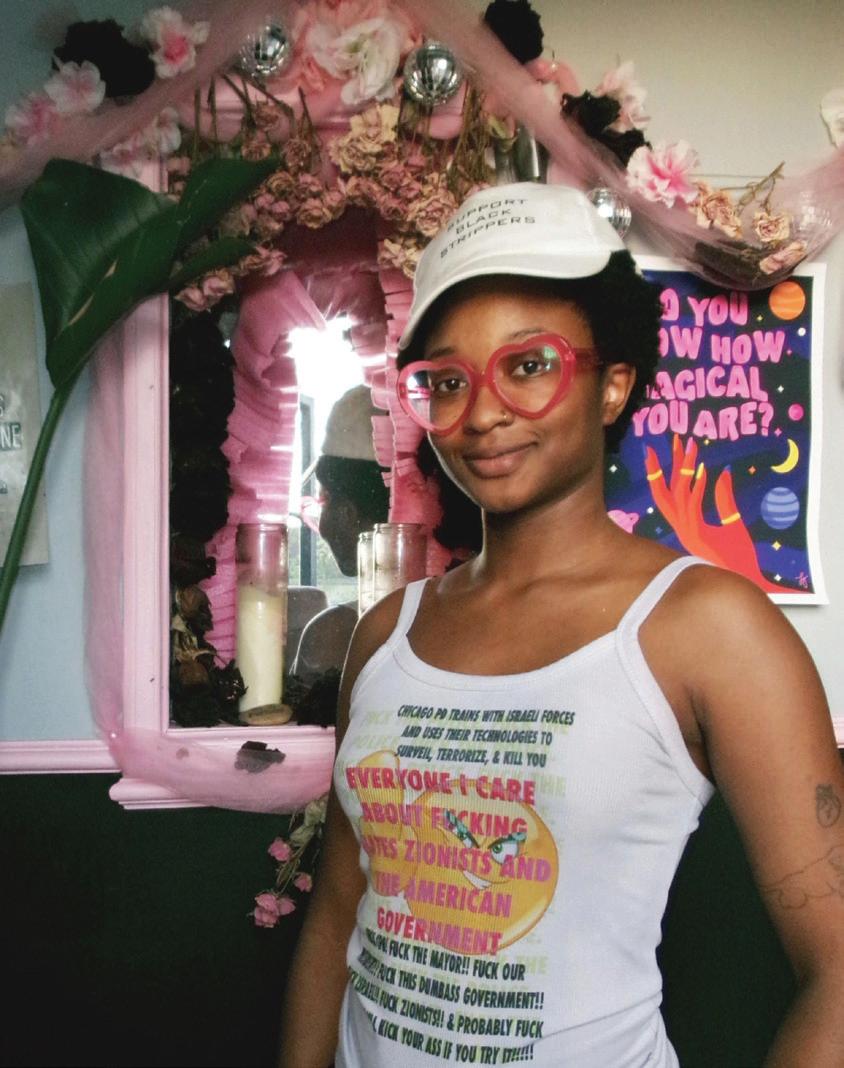
Ava V. Marie stands by a foyer shrine. The founders say they take the spirituality aspect of sanctuary seriously— each doorway is a portal to a different space: spiritual, communal, then practice.
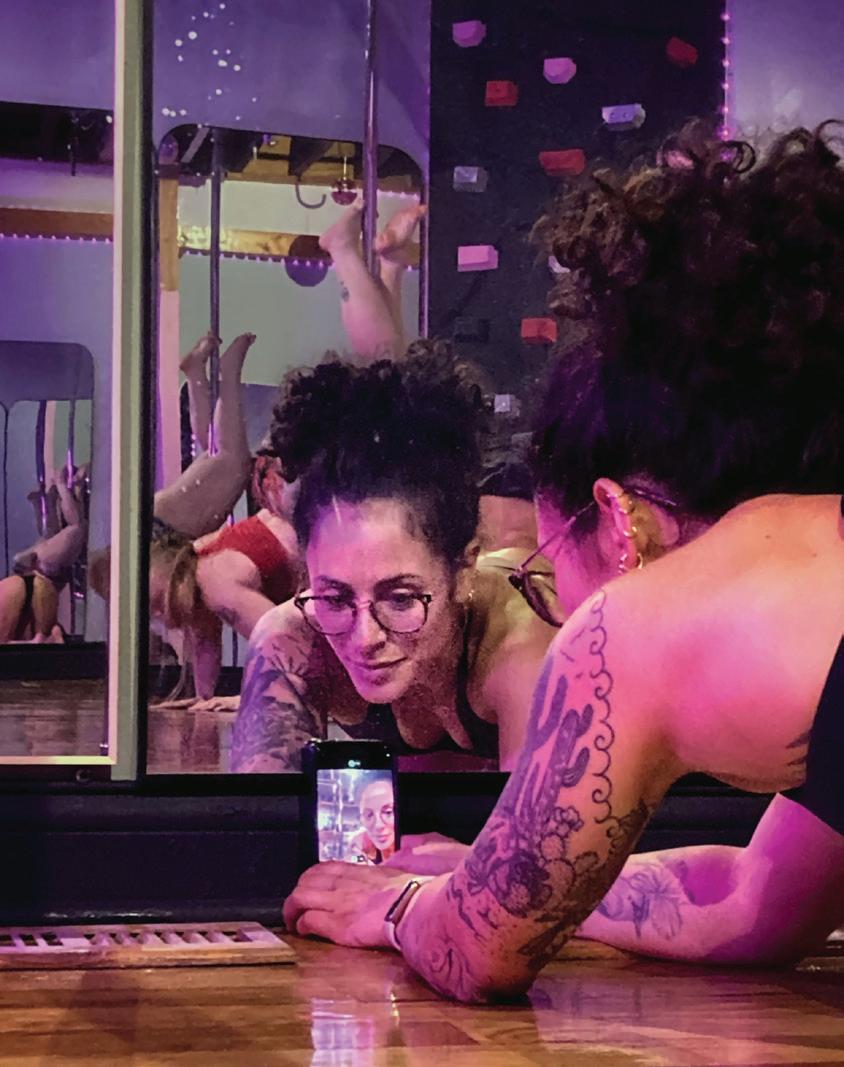
At the end of class, Saira angles their phone in front of the mirrors for recording. A student practices descent from the “Superman” pose in the background.

Online registration opens Monday, April 20 & Tuesday, April 21.
In-person registration begins Saturday, April 25.
Summer Programs session runs June 15 to August 9.
For more information about your Chicago Park District, visit www.ChicagoParkDistrict.com or call 312.742.7529.
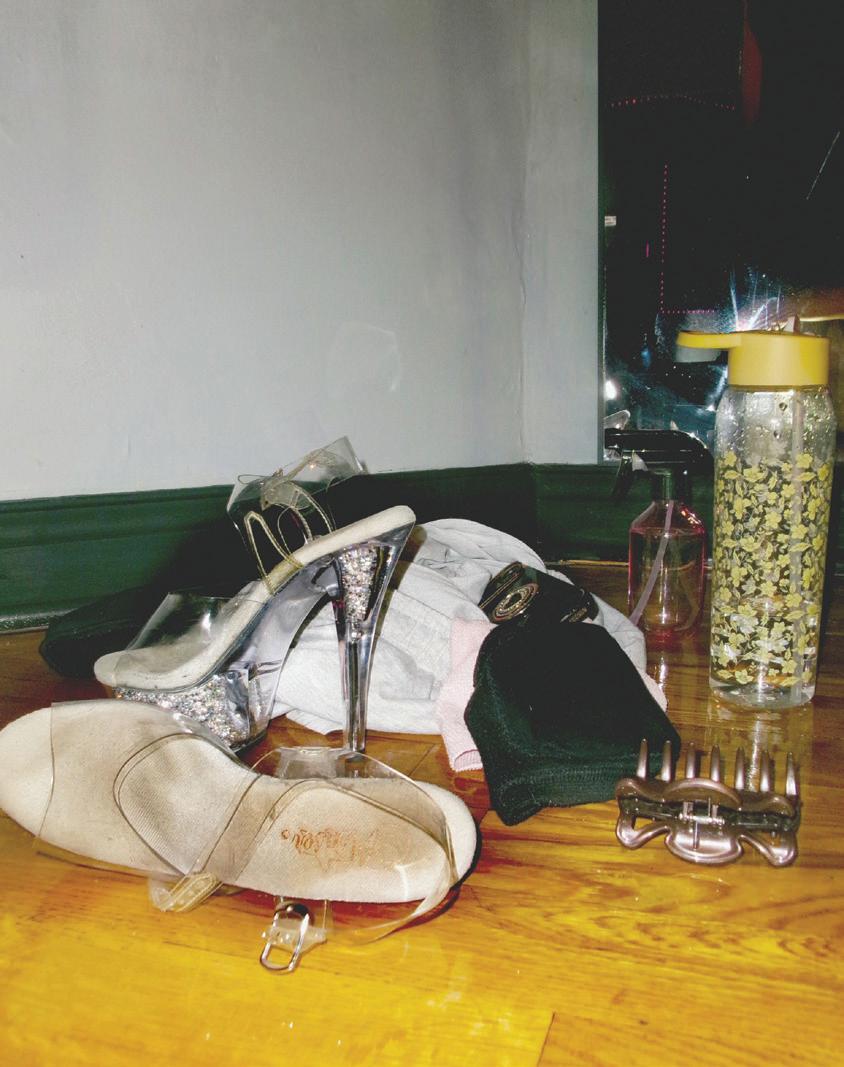
A typical pole stash includes (left to right) stilettos, knee pads, comfy pants, microfiber cloth and alcohol spray bottle to clean the pole, phone for videos, and water. These belong to Limerence, who attended Exotic Flow class on April 16, 2026.

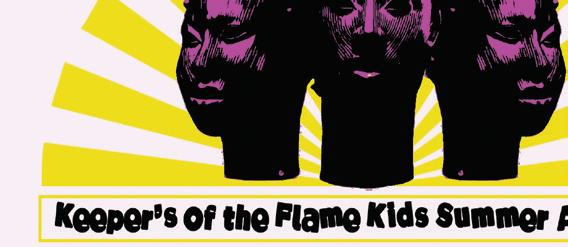

Diasporal Rhythms presents “Keepers of the Flame,” a free, immersive bilingual summer arts appreciation camp for children ages 5-12 from June 3rd to August 21st at the Tolton Heritage Center/St. Elizabeth’s hall. The objective is to provide children with a world-class, kaleidoscopic experience of African Diasporic art and heritage in Bronzeville through direct engagement with local artists and their art, with children creating their own art alongside the masters. Teaching artists will include Ed House, 773 Dance Project, Kopano, Nova Zaii, Mack Baker, Carina Vargas-Nuñez, KiaNijee, Maggie Brown, Gyamfuah, Chicago Pulp and Messejah Washington.
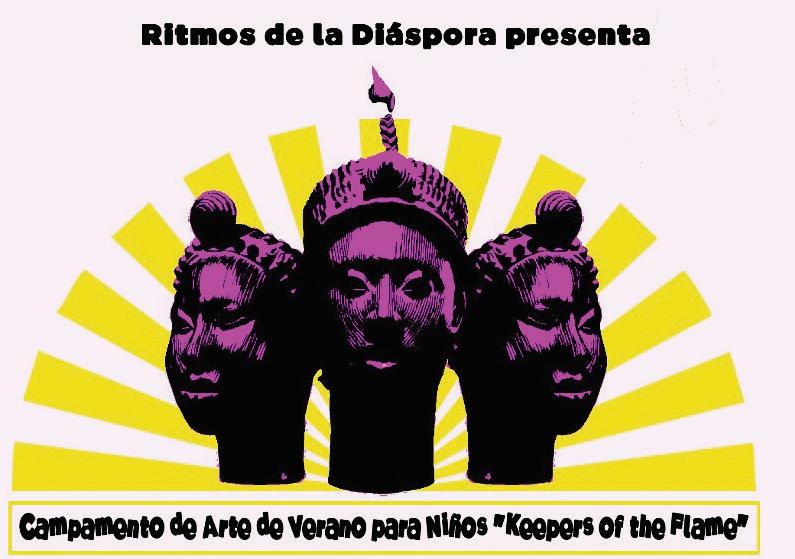
Ritmos de la Diáspora presenta “Guardias del Fuego” (*Keepers of the Flame*), un campamento de verano gratuito, inmersivo y bilingüe, dedicado a la apreciación artística para niños de 5 a 12 años, que se llevará a cabo de 3 junio a agosto 21 de en el Tolton Heritage Center/St Elizabeth’s Hall. El objetivo es dar a los niños una experiencia caleidoscópica y de clase mundial, sobre el arte de la diáspora africana y la historia de Bronzeville, a través de la interacción directa con artistas locales y sus obras, permitiendo que los niños creen su propio arte junto a estos maestros. Entre los artistas docentes se incluirán la Ed House, 773 Dance Project, Kopano, Nova Zaii, Mack Baker, Carina VargasNuñez, KiaNijee, Maggie Brown, Gyamfuah, Chicago Pulp y Messejah Washington. www.diasporalrhythms.org

When ICE activity threatened a local taqueria, the city’s underground music scene stepped in to save it.
BY AMARIS EDWARDS
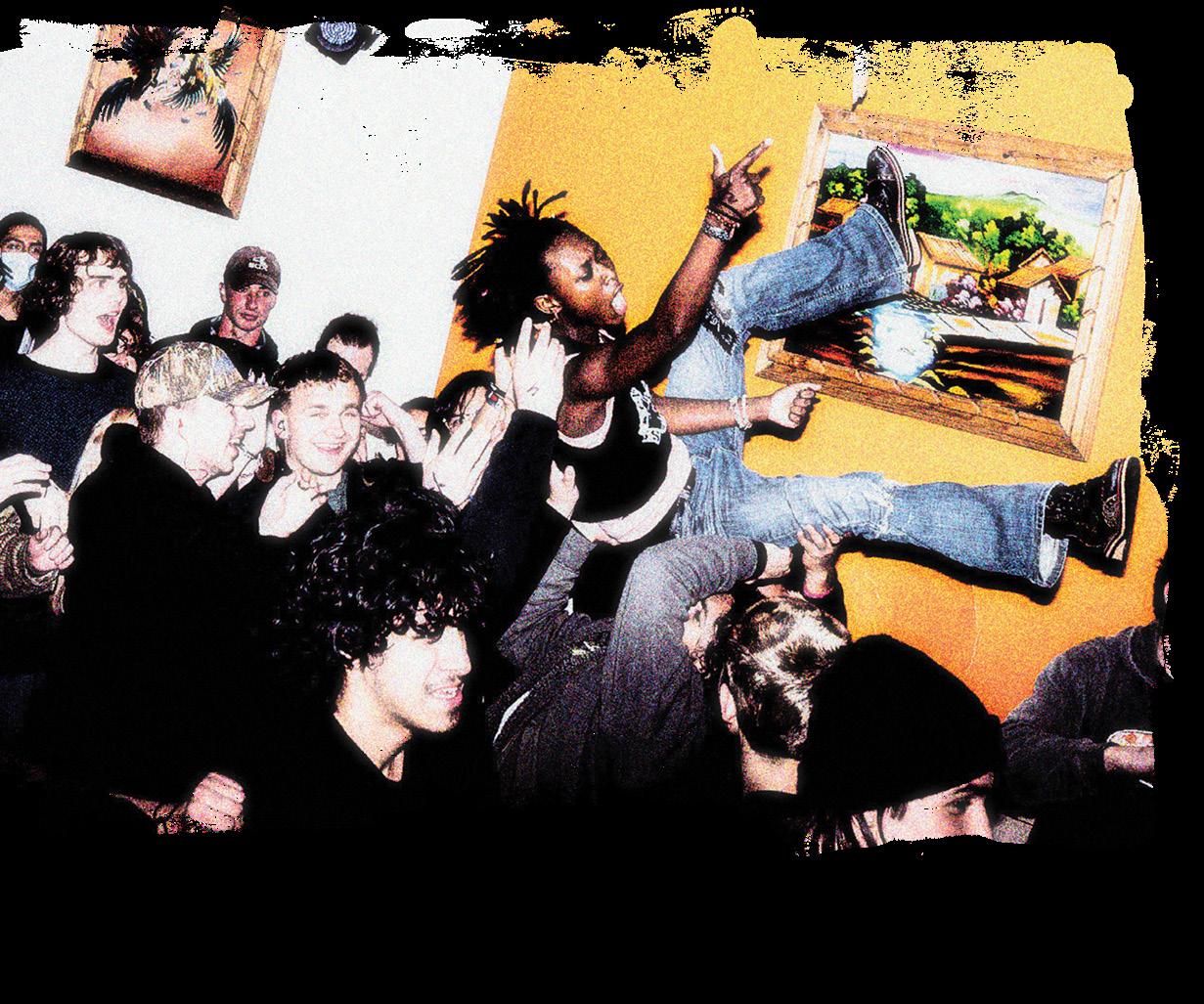
People
crowdsurfing during the ACHE set at Casa Cafe on March 14, 2026.
Located just steps from the Western Pink Line station, Casa Cafe initially appears to be a typical neighborhood taqueria with its bright orange walls and the scent of sizzling al pastor.
But follow the narrow hallway toward the back, and the dining room gives way to a dedicated DIY space that has become a vital lifeline for the South Side.
At 2025 South Western Avenue, this backroom is the vision of artist and organizer Francisco Garcia, who transformed the restaurant into a sanctuary for Chicago’s hardcore scene.
When intense Immigration and Customs Enforcement (ICE) activity threatened the taqueria’s stability last year, Garcia’s high-energy shows provided the necessary influx of patrons to keep the business afloat. Today, the venue is a bustling hub where the walls are draped in flags from Latin America and tables are piled high with band merchandise.
On show nights, the space is an explosion of kinetic energy as fans from all walks of life converge for the raw intensity of the mosh pit. This collective movement—a chaotic but communal release of tension— defines the atmosphere.
In between sets, the crowd migrates back to the front to rehydrate and refuel on tacos, creating a seamless synergy between subculture, commerce, and community. On these nights, it’s easy to see that Casa Cafe is a defiant, beating heart of local culture.
For Garcia, the journey to becoming the curator of one of the South Side’s most resilient DIY spaces began with a search for belonging.
After years of navigating scenes that didn’t quite feel like home, Garcia found his calling during the pandemic, shifting from a fan in the crowd to the primary architect behind the “Poncho shows,” shows curated by Garcia at Casa Cafe.
A Pilsen resident and a regular at the café, Garcia’s vision was sparked in 2020 when he noticed a “salon for rent” sign posted by Casa Cafe.
“I also go there to eat and thought it would be cool to have a Latino bill at a Mexican restaurant, to [create] shows for the people and for the community,” Garcia said.
Garcia noted that the energy from the booked bands was electric, with performers often feeling a genuine sense of honor to take the stage and treating Casa Cafe as a venue where they have to play.
“People see Casa like that [now], which is really awesome,” he said. Garcia said the shows at the café have helped the business stay afloat, too.
During a period of intense ICE activity at the end of last year, Casa Cafe’s foot traffic plummeted as neighbors were too fearful to leave their homes.
Garcia’s shows proved to be a financial turning point; a single event draws over 100 people, transforming

a nearly empty restaurant into a packed venue and providing the critical revenue needed to keep the business afloat.
“It’s helped them so much…We created a system for them [for show days], and they work around that,” Garcia said. “Now [Casa Cafe] can provide more hours for [their workers]...They’re able to make a living off that, which is awesome.”
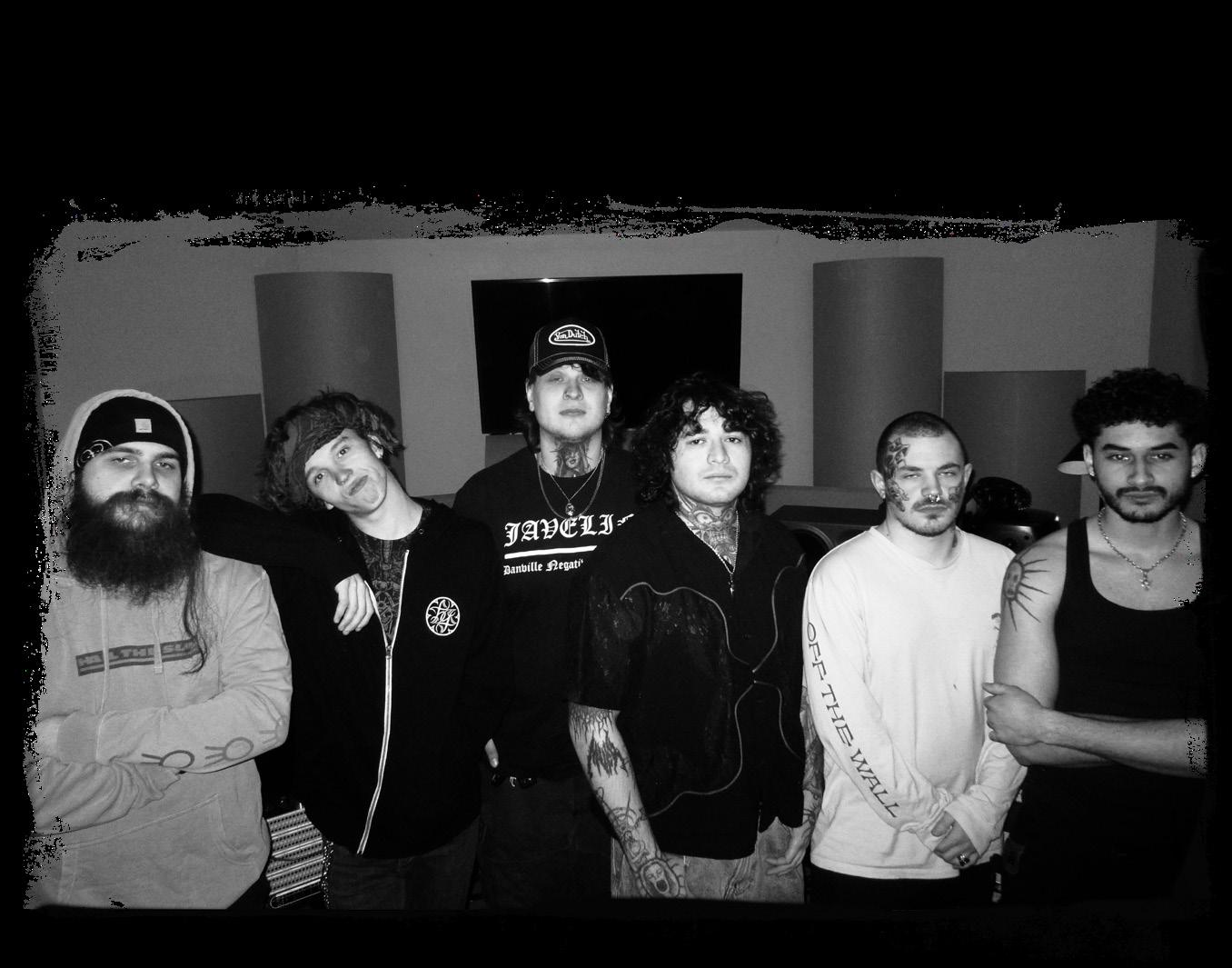
DURTNAP, a six-piece powerhouse in Casa Cafe’s live rotation, defines their sound as a high-energy fusion of nu-metal and hardcore. The current DURTNAP lineup consists of vocalist Efrain Avila, bassist Jesse Nieves, drummer Anthony Ramirez, DJ and vocalist Cam Dwyer, and guitarists Danny Delghingaro and Ben Yarmo.
While the band first discovered the venue last September through an invitation from Garcia, they’ve stayed for the community it anchors.
“A lot of the crowd is actually pretty local,” Avila said, highlighting Cafe’s role as a genuine neighborhood fixture.
Dwyer attributes the venue’s draw to more than just the music, pointing to the food and the recent addition of a dedicated stage in the backroom as game changers.
That sense of meaning is rare in a city where underground venues are often fleeting. The recent closure of The VCR after a nine-year run highlights this fragility, marking the end of a North Side DIY staple that balanced professional-grade recording with a welcoming, homegrown atmosphere.
Yarmo explained that Chicago’s DIY scene frequently suffers from a lack of stability.
“Over the years, it'll be one that’s big, and then it'll just kind of move on to the next one, and the next one,” Yarmo said.
He credits Cafe’s longevity to
the professional synergy behind the scenes: “I know that Poncho [Garcia] and the business owners have a really solid relationship, and that’s a lot more than most people can say for other DIY venues.”
Beyond professional ties, the venue wins on practical accessibility.
Avila observed that while many DIY spaces are tucked away in hardto-reach corners of the city, Casa Cafe offers an anchor to the South Side—a region where music venues of any kind, not just independent ones, are notably scarce.
“Casa is right there,” Avila said. “You can just take the Pink Line.”
This accessibility serves a vital purpose for the local culture.
“I think it's huge now, because a lot of bands are coming from [the South Side], especially a lot of Chicano ones, and it's showing that a lot of people like these smaller spaces where they can get their voices heard because not every band is just gonna pop up at Sub T for their first show or Cobra Lounge,” Dwyer said.
At the center of this ecosystem is Garcia, whose influence is best measured by the trust the community places in his name. In an era where underground shows can be hit-ormiss, a “Poncho show” at Casa Cafe carries a gold-standard guarantee.
“He puts his name behind it...you gotta really have faith and trust in yourself to put your name behind it. But he decides to put himself forward,” Avila said.
Though Garcia’s roots are firmly planted in Chicano hardcore, his vision for shows at Casa Cafe has expanded to include a diverse array of genres. As a multifaceted artist himself, he understands the “grind” and intentionally creates a low barrier to entry for those following in his footsteps. From organizing $5 showcases for new and upcoming acts to fundraising, he works to ensure
that the South Side is not just a place where music happens—it is a place where artists are nurtured.
Cafe operates as a multilayered hub where the roles of performer, patron, and organizer often blur. This synergy is personified by Keni Adekuie and Diego Ayala, a senior and junior at Columbia College Chicago and members of the straight-edge band ACHE.
A regular fixture on Cafe’s stage, ACHE’s sound leans heavily into the “youth crew” aesthetic—a high-octane subgenre of punk defined by anthemic energy and socially conscious lyrics. Their music champions a drug-free, vegetarian lifestyle, but their message is rooted in something even more personal: unity.
For vocalist Adekuie, who moved from Nigeria to the United States in 2013, the current political climate underscores the need for such spaces.
“Yes, I have my citizenship; yes, I am American, but at the end of the day, I am not from here,” Adekuie said. “It’s terrifying, but also, now more than ever, we need to stand together as a community.”
Adekuie and Ayala first experienced Casa Cafe from the floor, attending their first show as patrons in 2024. Adekuie, who’s navigated the DIY circuit in Chicago since they were 17 years old, has seen firsthand how fleeting these spaces can be.
“They last maybe a year max; they get shut down and close,” Adekuie said.
While most underground venues struggle to survive, she highlighted Cafe as a rare, lasting staple that only improves with time.
ACHE debuted their demo at Casa last December, an experience Ayala describes as a “vibe” where the line between performers and crowd completely disappeared.
“There’s a stage, but you don’t feel separated,” Ayala said. “People actually want to talk; people grab tacos—it’s really welcoming compared to other DIY venues.”
Casa Cafe’s welcoming atmosphere translates into direct local impact
through regularly curated benefit shows.
From “A Very Merry CONTEMPTmas,” a 2025 toy drive for Chicago children’s hospitals, to recent fundraisers supporting families impacted by ICE, the venue transforms the stage into a platform for social change.
Adekuie notes that this spirit of giving extends beyond organized drives.
“Casa still benefits even when there isn’t a specific drive going on,” she said. “People will buy a water bottle and tell them to keep the change. Sometimes I just put money in the tip jar.”
As fellow South Siders, the members of ACHE see Casa Cafe’s growth as a victory for a neighborhood often overlooked by the broader music scene.
“There are so many venues that get shut down way too fast [on the South Side], or we have to travel all the way North,” Ayala said.
He attributes much of Casa Cafe’s success to the tireless work of Poncho (Garcia).
“Genuinely, it's understated how much he does for the community,” Ayala said, pointing to the unseen labor required to keep a DIY space thriving. “He wants to put on local bands; he wants to help the community.”
With a fully booked summer at Casa Cafe, Garcia aims to evolve the venue’s identity by diversifying the lineup and attracting larger-scale talent.
“We got some exciting new bands coming. I would like to add bigger bands or different genres,” Garcia said.
To stay updated with upcoming shows, you can visit Casa Cafe on Instagram. ¬
Amaris Edwards is a Chicago-based freelance journalist and storyteller dedicated to covering the narratives of South and West Side communities.
Pilsen’s new family-owned bar offers a home for punk and alternative DJs.
BY MATT BRADY
Nestled on the corner of Cermak and Hoyne, New Rose, Pilsen’s new family-owned bar, is aiming to carve out a niche for itself in the community it calls home.
Little Village local Benny Hernandez, 50, and his uncle, Jesse Hernandez, had been toying with the idea to open a bar on the South Side for years, and initially considered other neighborhoods such as Bridgeport and Brighton Park.
After the gears were put in motion in 2023 to open the space in Pilsen, New Rose went through a slew of soft openings for family and friends in the fall of 2025 and January of this year. The bar officially opened on February 6, and to Hernandez, the opening night was “bonkers.”


“We haven’t looked back,” he said. “We’ve been very lucky and fortunate that weekends have been pretty packed and pretty busy.”
New Rose features a carefully curated food and drink menu featuring a range of botanas, spirits, and small business-sourced, additivefree tragos. The atmosphere is low key—cozy brick walls, a simple light brown wooden bar, rows and rows of alcohol and wall-mounted TVs- with an edge of alternative DIY punk.
Though the bar is not a music venue, Hernandez said that his aim for New Rose is to be the community’s
“neighborhood bar with really cool different music” for everyone to enjoy.
“I wanted a space for all the South Side freaks and rockers and weirdos who like other types of music,” he said.
Hernandez comes from the sprawling world of Chicago DIY culture, and said that he was “childhood friends” with some of the members of Los Crudos, the influential 1990s Pilsen hardcore band. Since then, he’s done everything that a DIY kid could dream off: toured with his hardcore band No Slogan throughout the U.S., Mexico, Europe, Japan, and Puerto Rico, organized shows on the South Side, helped run an independent record label, Southkore Records, that put out a compilation of Pilsen, Little Village and Back of the Yards hardcore bands, and more.


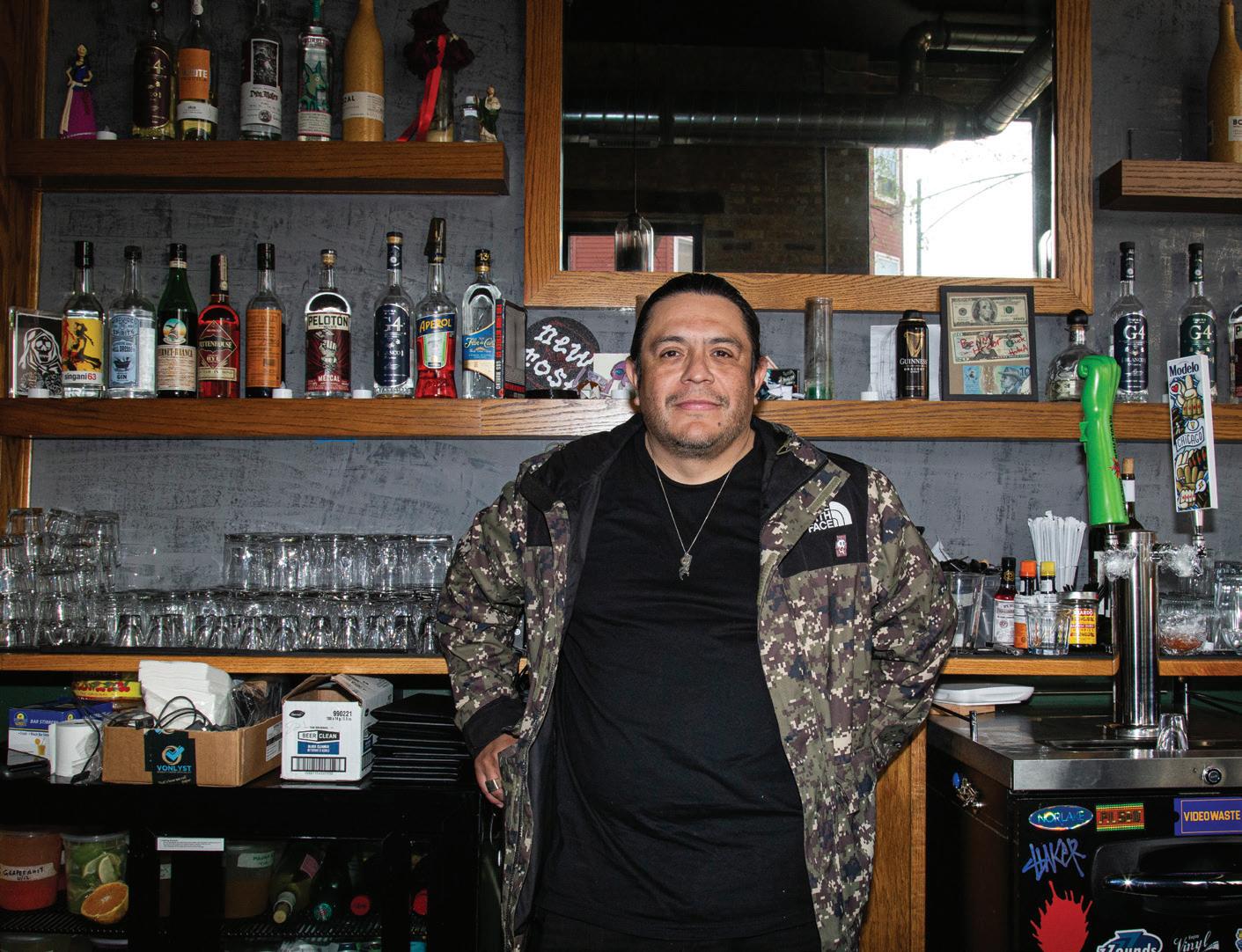
“It’s where I cut my teeth and where I came up from in the DIY scene in Chicago and the South side,” Hernandez said.
His background in the alternative music sphere, as well as his DJ experiences, comes through in the overall aesthetic of New Rose. DJ sets are a mainstay of the bar and the main source of live entertainment. Hernandez said that he is adamant about not having live bands perform at New Rose—the extra licensing is

post-punk, goth, new wave, house, and freestyle.
“I’m kind of just leaning into my background and what I grew up listening to,” he said. “There’s a lot of people like me that come from that foundation.”
The crowd at New Rose is notably diverse. “I get a lot of people, a lot
of Black and Brown folks from the entire South Side to come, and they’re happy that there’s something like that," Hernandez said. “The response has been overwhelmingly positive.”
Stephanie Herrera and Yeshi Regalado, both members of the Latin American and POC artist collective Ruidosa, curated a DJ set at New Rose on April 9. Regalado said that Hernandez reached out to the collective over social media to set up a DJ set at the bar.
Regalado, who DJ’d that night, said that the show had a great
turnout for a Thursday and that she was excited to see the crowd dancing to cumbia, post-punk, and dark wave.
“There’s nothing more that makes me happy than to see people having fun and produce that type of energy,” she said. “It’s an honor to be a small part of all of this.”
The opening of New Rose comes at a time when other local businesses and grassroots DIY operations like Ruidosa, Casa Cafe, and The Confessional are flourishing across the South and West Sides. According to Hernandez, other bars in the area don’t feel like competition, but a tight knit community that New Rose is happy to join.

Regalado said that Latino-owned spaces like New Rose contribute to a feeling of safety in the community. She also said that she’s able to be “around her people” and listen to the sounds she enjoys when she’s at Hernandez’s bar.
“I love that New Rose exists,” she said. “As soon as they opened, I was like, ‘I have to go. I have to find out how we’re gonna integrate with them and work with them somehow, someway,’ and I’m so glad we did. I’m obsessed.”



It’s “really inspiring” to see the growth of new businesses in the community, Herrera said.
“I love the DIY venues like Casa Cafe and The Confessional, but I think it’s cool to have a bar and have that dancing aspect as well. Not just hardcore punk and post-punk, but it’s also the integration of cumbia and reggaeton that everyone can truly enjoy.”
Through opening New Rose, Hernandez hopes that the business will bring more people into the area, and not just to his establishment but neighboring local businesses as well. He said that a large mix of clientele come from all over the city, but that the neighborhood locals have become the backbone of the business.




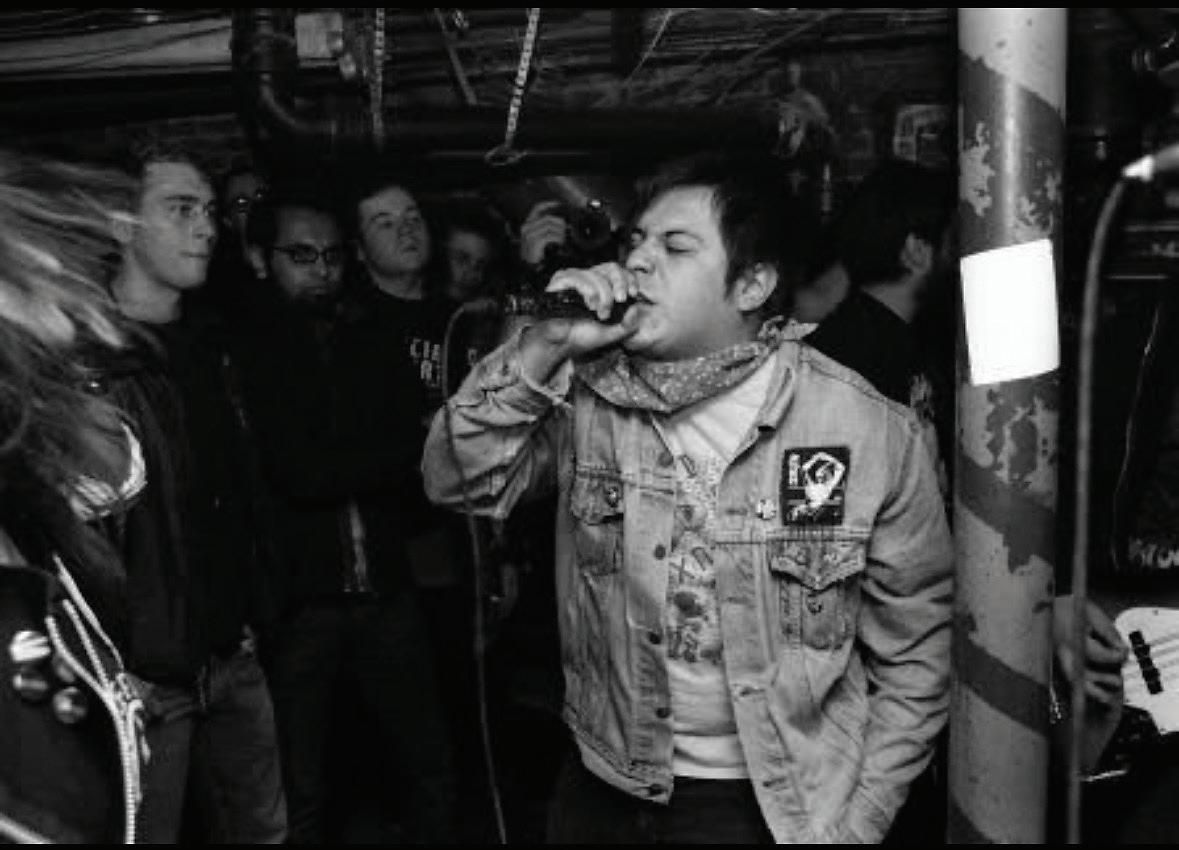



“Locals are keeping us afloat and keeping the doors open,” he said. “We’re resonating with people.” ¬
Matt Brady is a freelance journalist from the Chicago area. He has written for
The Daily Herald , the Evanston Roundtable , South Side Weekly, The Fulcrum and Illinois Latino News. He is the Copy Desk Chief of the Columbia Chronicle , the student newspaper at Columbia College Chicago. He is also the co-founder of Brain Graffiti Zine, a physical music zine all about Chicago DIY music.


Housing cooperatives come in all shapes and sizes, but provide residents with affordable homes, a sense of community, and agency over their living situations.
BY RYAN ROSENBERGER
While doing eviction defense and mutual aid work in the pandemic’s early days, veteran housing organizer Robin Semer realized she wanted to explore long-term solutions for people dealing with housing insecurity.
“When I was doing the eviction [defense] work, it was like, bandaids all the time,” Semer said. “I said, ‘I want to do something that does something positive for people, not just always trying to patch up some kind of problem that people are having … let’s give people an alternative, something that’s better.’”
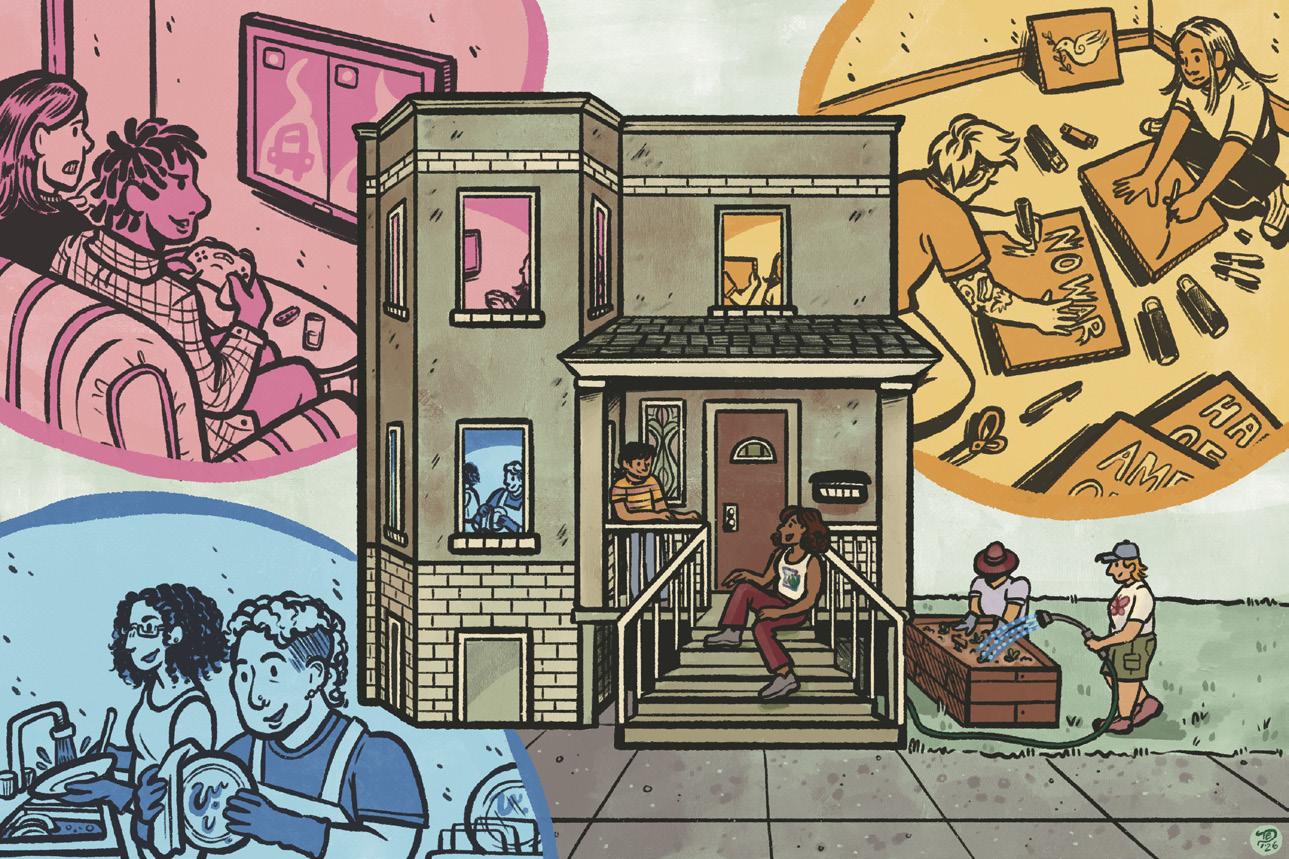
In 2023, Semer tapped into a potential long-term solution to the current affordable housing crisis on the South Side by co-founding a housing cooperative, La Villita Housing Coop. A two-building, six-unit housing coop housed on one property in Little Village, La Villita Housing Coop is a limited equity housing cooperative, a model where residents own shares in a residential building and manage it collectively. According to La Villita’s website, this cooperative is rooted in values of “community and equity, and…offers an alternative to the rising rents and
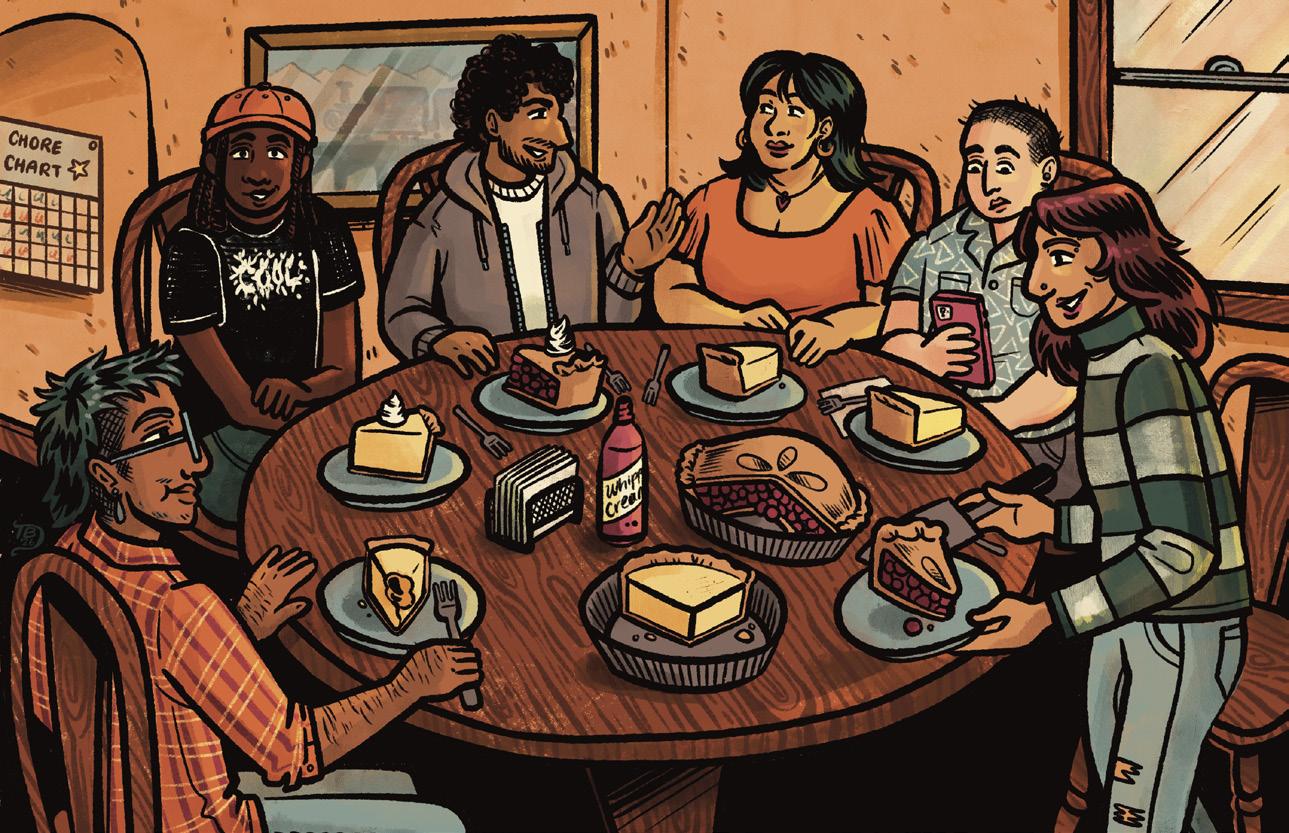
displacement that have unfortunately affected so many in our community.”
In other cooperative models, residents can also rent their homes.
Cooperative housing is not a new concept. According to the National Cooperative Law Center, momentum for this model of affordable living started taking shape in 18th-century Europe, primarily in Great Britain and France. Housing cooperatives first appeared in Chicago in the 1920’s, popping up in South Side neighborhoods such as Hyde Park
and South Shore, and offering a way for low-income earners to secure affordable homes.
One hundred years later, housing cooperatives are still alive and thriving on the city’s South Side.
La Villita Housing Coop is one of several housing co-ops in the region, joining the ranks of Hyde Park’s Qumbya Housing Cooperative, Jumpstart Housing Cooperative— which owns one building in Bronzeville and another in South Chicago—and several others.
Though there isn’t a ‘one size fits all’ approach to housing cooperatives, they all provide some crucial benefits to South Side residents: a strong sense of community; more affordable housing, whether renting or owning; and democratic decision-making. These elements create a sense of connectedness and fulfillment for many co-op residents.
Anna Nedoss is president of the Qumbya Housing Cooperative, a co-op of three separate residential buildings in Hyde Park that was formed in 1988. She has lived in four individual housing cooperatives during her adult life, and said that each of them had very tight-knit communities.
“That is certainly true at Bowers,” said Nedoss. Bowers was founded in 1991, and is one of the buildings owned by Qumbya. “I feel like there are people here who I absolutely trust with my life…. I have met people that live in co-ops that are less tight knit than this, where most people have their main social circle—or their main friend group—outside of the house.”
Nedoss has 19 housemates who make up her main social circle.
“We do a lot of stuff together; we go on trips together,” Nedoss continued.
“Every night at the house, there’s something social happening, either like a movie, or a board game or just people chatting in the kitchen… we eat a meal together seven days a week.”
Alicen Buder, a Chicago high school teacher and Qumbya resident, said she has dinner with her Haymarket House housemates Monday through Thursday every week, as well as brunch on Saturdays and another dinner on Sundays.
Buder, who lives with her husband and infant daughter, recalled how her roommate sprung into action the day she went into labor.
“One of my roommates drove me to the hospital when I was in labor, and stayed at the hospital overnight just to make sure I was okay,” Buder stated. “We even told them, ‘you can go home.’ They were like, ‘what if I just stayed?’”
The aspect of community, the ability to rely on your friends and neighbors, manifests itself in ways that extend far beyond board games and hospital trips. Many residents actively support their peers during challenging times.
Nedoss said that when house members have gotten months behind on their rent, because of job loss or other crises, they are offered payment plans. In these situations, housemates have also stepped up and crowdfunded for each other, Nedoss said.
Nedoss stated Qumbya has only evicted coop members when they have not shown good faith efforts to pay.
“If they lived in a building with a landlord, they would get evicted, whereas here, you get a payment plan,” she said. “We don’t want to evict people. We, at our core, are opposed to evicting people unless it’s a situation that cannot be resolved or someone is in danger.”
Veronica Rodriguez, a resident of
the La Villita Housing Coop, said the sense of community amongst co-op members was a big factor in choosing this alternative style of housing. Rodriguez explained that this sense of safety and belonging is especially important right now, due to the Trump administration’s antiimmigration practices.
“I think more than ever now, when folks are trying to plug in and keep each other safe [amid] recent raids and threats from our government based on legal status,” Rodriguez said. “It’s been a necessity to find people who you can have these difficult conversations with, or easy conversations on how we can show up for each other.”
Nedoss said that communal living has been a godsend for her.
“This is a place where we take care of each other,” Nedoss said. “No matter what happens to people in this house, we’re going to take care of each other.”
There are a few different models of co-op living. One model is what is called a limited equity model, where co-op residents own a share in a property, but not the entire
the “cleanest” rental histories.
“I can choose to be part of this coop, and I know they won’t judge me for any of my background,” Griffin said. “It’s really just on me to be able to show up and do what I have to do, and I have to rewrite my story.”
The limited equity model is not the only form of cooperative living on the South Side. For example, Qumbya is owned by NASCO Properties, a nonprofit that owns coops throughout the country, mostly in college towns, Nedoss said.
Nedoss explained that every co-op owned by NASCO Properties elects a member to serve on the board. Coop residents pay rent to NASCO instead of buying property.
property itself.
Semer said this model restricts how much a unit—or a share of a building—can be sold for.
“Our bylaws say that the amount that members can sell for is the amount that they put down for their deposit, which for most people is $5,000, and three percent interest compounded annually,” said Semer.
Nyah Griffin, vice president of property management at Jumpstart Housing Cooperative in Bronzeville, said that each unit owner has equal equity in their building.
“Two of the units are three bedroom [units], and one of the units [has] two bedrooms, but even that two-bedroom has a different living and dining room space to add more value to that unit,” Griffin said. “That way, it’s equal to what also happens in the building. I can do whatever upgrades I want on my unit, but that’s not going to change my equity at the end of the day; the way that we keep it affordable is that it’s a limited equity opportunity, so nobody can go in and revalue their space.”
Griffin, who has been evicted in the past, said joining a housing cooperative can offer a second chance to people who have been formerly incarcerated, or who may not have
“We don’t have a monetary stake, but we have full decision making control over the nonprofit that owns our house,” Nedoss said.
While the limited equity model and nonprofit property management model have some distinct differences—the former is geared towards home ownership while the latter is still a form of renting—the overall goal is the same: to keep costs low and housing affordable.
Nedoss said that while NASCO Properties raises the rent slightly every year with inflation, Qumbya is able to keep its rent affordable because the board is in charge of how much their rent is.
“We have to raise rent enough to be able to pay rent to NASCO Properties, but they usually raise it below inflation,” Nedoss said. “The entire time I’ve lived here, which has been three years, our rent has not changed at all.”
Rodriguez has lived in Little Village her entire life, but has lived at La Villita Housing Coop for just four months. She said getting to stay in the neighborhood where she was raised was a key reason for choosing this particular co-op.
“This is exactly what I imagined for myself,” said Rodriguez. “To still be

in my neighborhood that I grew up in, that I know about, that I know people in … but to also continue building community with, and even learning about affordable housing and fighting against gentrification … Knowing about all these issues, it’s really what solidified [me] supporting efforts like La Villita Housing Coop.”
Because collective living is by definition a collaborative process, most housing cooperatives have a governing board made up of residents to help keep things running smoothly. Nedoss, who currently serves as Board President for Qumbya Housing Cooperative, said that the cooperative has a six member board, with two members from each of the three houses.
“We have six different roles on the board,” Nedoss said. “We have a board president, a treasurer, a secretary, maintenance chair, membership [coordinator], and then the last one is conflict support.”
Buder, who has lived at Haymarket House for 11 years, said that collective living is a “political project in some ways,” and that living in a cooperative space allows her to practice deeply held values such as “democratic decision-making and cooperation.”
Along with monthly rent, Qumbya residents also pay what is called “food group,” which is a monthly contribution that covers groceries, utilities and anything else for the house that is decided on collectively.
“One example of democratic decision-making is how we choose to
spend that money,” Buder explained. “We use consensus-based voting, which means any individual member can block a motion from happening with anything that we’re discussing as a house, and it forces us to really have conversations and come to compromises about things.”
Semer shared that La Villita Housing Cooperative recently expanded its board from four members to 11 members, and said that a quorum—a majority of members—must be present to pass any co-op rules.
Semer said strong bylaws are essential to the coop running in a smooth and orderly fashion.
“We did it along with pro bono attorneys, that helped us along the way,” Semer said. “We used advice from other cooperatives that formed before us that we respected, and basically took a very long time trying to figure out how the process can be fair and be fair to everyone involved.”




Semer said housing co-ops need a lot more money and support in order to bring more affordable housing to the South Side. One form of financial support comes in the form of grants, she added.
“Hopefully we can create more cooperative housing ourselves and maybe even others in order to keep housing in the hands of the residents— in the hands of the community—as opposed to in the hands of developers that just take their money and leave,” Semer said. “[They] don’t care about what happens to the community as a whole.” ¬
Ryan Rosenberger is a Chicago-based music journalist who has been covering the scene since 2018. His work can be found in The Columbia Chronicle, These days Mag , The Weekly, and more.

South Side artist Brian Herrera talks about his art form, Mesofuturismo, and the world it emerges from.
BY JOCELYN MARTINEZ-ROSALES
When friends think of Brian Herrera, they might think of his witty sense of humor or his electric bike. But
Chicagoans who may not know him at all know his undeniable talent. The multidisciplinary Little Village resident is the artist behind murals across the city, the hands behind dozens of DIY show flyers, a filmmaker, and most notably the creator of Mesofuturismo art.
“What if Aztecs were never colonized,” Herrera said, “and we just stayed within the veins and the soul of what it means to be Mexican? And we take a lot of pride. And we not only do that, but also we evolve immensely, technologically. What would that look like?”
In drawing from symbols, patterns, and storytelling rooted in southern Mexico and Central America, Herrera’s Mesofuturismo art invites us to imagine this alternative reality. His works combine gradients and airbrushed textures with chromefinish details, while utilizing motifs like the jaguar and snake to fuse together ancestral symbolism and imagined technologies. These vivid paintings and digital artworks are, themselves, a nod to Afrofuturism— shaped in part by Herrera’s upbringing in Veracruz, Mexico, a major entry point for the transatlantic slave trade during the colonial era.
“Growing up in my pueblito, a lot of those people that were darker, were shamed for being darker,” Herrera said.
Veracruz has one of the highest populations of Afro-Mexicans in the country. From a young age, Herrera witnessed the racism and colorism embedded in everyday life, an experience that shaped how he sees identity, history, and survival.
That understanding only deepened after he emigrated to the U.S. at the age of 12 and settled in Logan Square. Herrera had dreams of one day following in his grandfather’s footsteps and joining the Mexican Navy, or even joining the medical field. But suddenly he was in high school, adapting to a new country and seeing his neighbors pushed out of their homes in the name of Rahm Emanuel's “Building a New Chicago” initiative.
In high school, Herrera’s math teacher showed the class the 2010 documentary Exit Through the Gift Shop. Directed by and starring the secretive guerilla artist known as Banksy, the film explores the world of underground street art. Herrera was radicalized. “I was like, ‘Holy shit, that’s really cool. They’re using art as a way to be political and make a statement.’” The film inspired his own take on the gentrification of the Rahm Emanuel years.
“I would steal [the ‘Building a New Chicago’] signs, and spray paint [using red paint] ‘building a new gentrified Chicago’ with a stencil,” Herrera said. “I would wheatpaste it around the city. And man, bro, these white people were so mad.”
Generations of Latine families have been priced out of Logan Square, a process that began decades ago and intensified in the 2010s. After graduating high school, Herrera was kicked out of his home and experienced homelessness, sleeping along the abandoned train tracks that have since become the 606 trail, before relocating to the South Side. Watching and experiencing displacement and cultural erasure pushed Herrera further into art as a political practice.
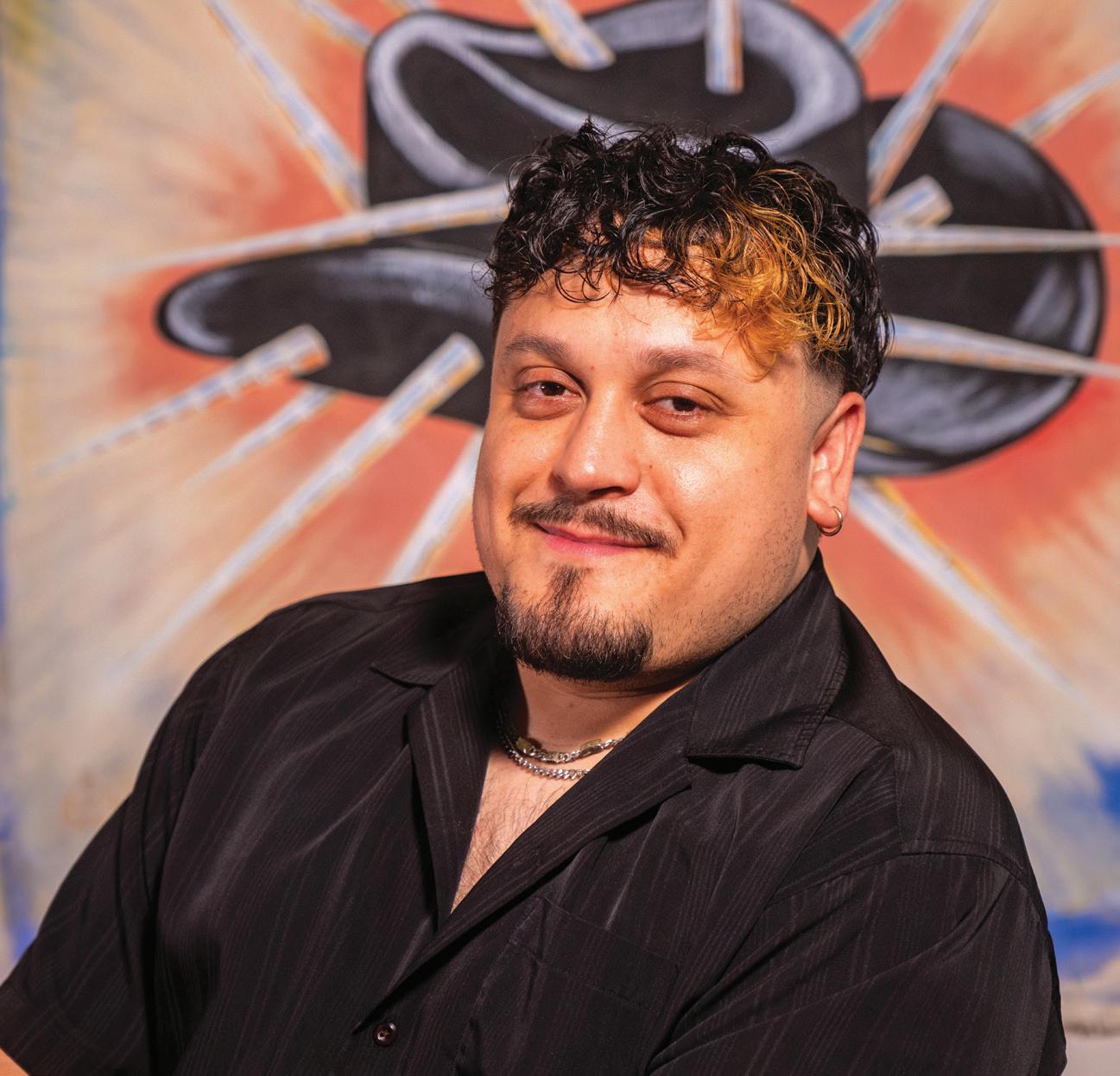
During this time, Herrera found guidance and mentorship from artists in Pilsen. He volunteered at Pilsen Arts and Community House, then called Pilsen Outpost, an artist hub and gallery. Herrera was just a punk kid, involved in the DIY scene and trying to find his footing while dismantling the system. Years later, his punk identity would lead him to create his 2024 short film, Ask A Punk.
Ask A Punk is a coming of age film centered on a queer teenager in Little Village who finds resilience through the DIY punk scene. The film has since been shown in seven festivals around the globe. In many ways, the protagonist of the film reflects parts of Herrera. The film ends in a cathartic scene as Little Village hardcore band Perro Mundo performs, with bodies moshing and

" We gotta fight back with our happiness and be relentless with it."
“[The short film] shifted my perspective on what punk can be,” Herrera said. “Being radical is like being [in support of] each other and being in community and being fucking mentally stable and emotionally stable and helping each other out.”
Herrera said.
Herrera’s recent portfolio is extensive and impressive, including recent collaborations with Sentido, Color a la Mexicana, the Adidas Mexican National Soccer Team, and an upcoming campaign with the Chicago Transit Authority designed to reach Spanish speakers and Chicago's Latine community. “I'm doing all this commercial shit, but it's really not. Maybe I'm more like, infiltrating these spaces with my shit,” he said.
Through grit and perseverance, Herrera has created multiple alternate realities. He is planning for an upcoming solo show next year, with Mesofuturismo serving as the theme for the entire collection. The cover for the Weekly’s Alternative Issue features Herrera’s latest painting, Shards of Tonatiuh the Sunles s.
What has emerged from Herrera is not just a visual language filled with bold colors and sharp lines, but a way of thinking and moving the culture forward. It’s the refusal to accept the limitations imposed and the practice of imagining beyond what reality has already set in motion. Through art, Herrera teaches us that there is power in reclaiming and recreating.
Now, as he prepares to marry his partner, Margo Naragon, next year, much of what Herrera’s envisioned feels within reach, taking shape in this current reality.
“I want to be seen as that person that brought up the whole squad on the stage.”
headbanging. The protagonist can’t help but feel joy in the moment—a sense of happiness and freedom that Herrera holds close, and signals as one of the most defiant acts we can make.
“We gotta fight back with our happiness and be relentless with it,”
Disclaimer: I am a proud friend and colleague of Brian Herrera, and it was through that relationship that conversations began about featuring his work on the cover of the Alternative Issue. ¬
Jocelyn Martinez-Rosales is a Mexican American independent journalist from Belmont Cragin committed to telling stories from communities of color through a social justice lens. She is also a senior editor at the Weekly.
The rapper takes lessons from farming to create his debut album.
BY FRANCISCO RAMÍREZ PINEDO
Englewood rapper and farmer
Heavy Crownz says he “believes in the African proverb: ‘if you want to go far, go together.’”
That shows in Trench Baby Turned Farmer, Heavy’s debut album, which brings together a long list of friends and collaborators across nineteen tracks: production from renzell, oddCouple, Rokmore of TheGr8Thinkaz and Chris Crack; instrumentation from Sam Thousand, Lonzo, and, I.C.y; and features from The O’My’s, Lilla Sol, Gr8Sky, and Vic Spencer, just to name a few.
But this adage also shows up in his day-to-day life. A former teacher and graduate of Tuskegee University, specializing in African American studies, Heavy now works as the director of programs for Imagine Englewood if, a nonprofit that creates safe and empowering spaces for youth to imagine, explore, and grow in Englewood—including the Peace Campus on South Honore Street where he discovered the love of farming that inspired much of the album.
Trench Baby Turned Farmer does not shy away from the trauma that Heavy experienced growing up and the weight of serving as a model for
his community. But he doesn’t mean “trenches” in the way some people use it, as he explained to the Weekly
“I always describe Englewood as the trenches, but not in the sense where it's negative all the time. The trenches was [also] a safe space that soldiers found refuge in during war,” he said. “So for me, it was a safe space that also has some rough parts. But it was a loving, beautiful place for me.”
The album balances these sorts of opposites. It’s a stage for collaborators and an introspective memoir, a breakup album and a party album, an ode to farming and a beacon of hope all rolled into one. But throughout, it embodies the “resilience, confidence, ingenuity and imagination” that Heavy credits Englewood with instilling in him.
So on the last day of March, we met at EnglewoodBranded to talk about the inspiration behind Trench Baby Turned Farmer and the future of the neighborhood he feels so much pride in.
Where did you get your start in music?
What got me started in music is a kind of loaded question. I think I’ve
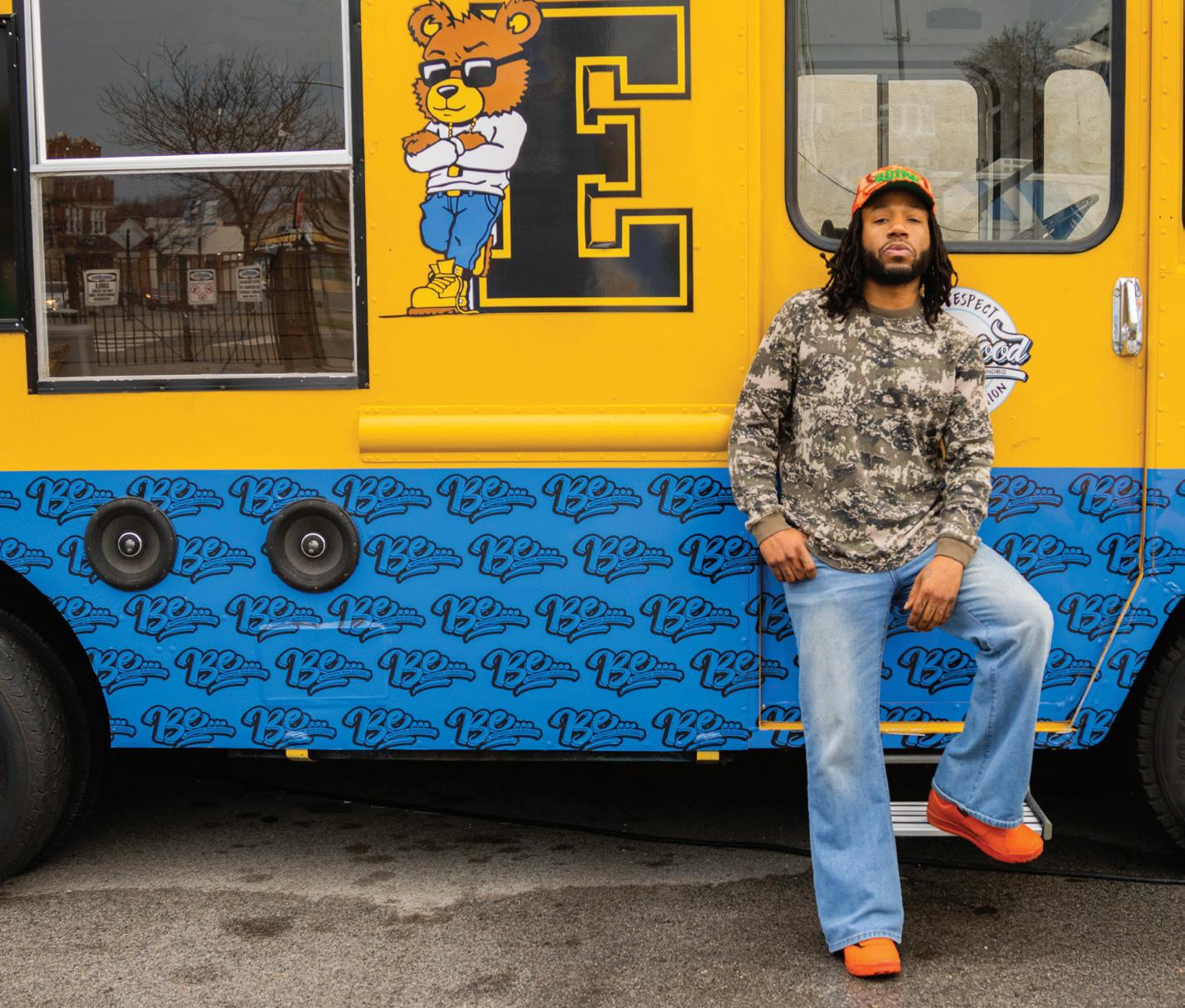
been rapping since I was eight years old. My first rap notebook was at 11. I took rap serious for the first time in college, and then I was a high school teacher for almost five years, and not taking rap as serious as I could. But I had a conversation with one of my coworkers that was like, “I’m reaching these 30 boys in this classroom, but it’s a million young boys that I’m not reaching. And the kids in my class are always on their phones looking at the next big rapper.” So I decided that I wanted to be an example of what they can be by really chasing after my own dreams. And I left teaching to go on tour, to take rap extremely seriously.
What changes do you see coming to Englewood?
I can tell you, because of the work that I do day-to-day [at Imagine Englewood if], that I don’t have to guess. I know, because I’ve been blessed to be on those Zoom calls with the people that are leading. So everything I’m saying to you is not guesses. These things are coming to Englewood: new housing, new businesses, restaurants and stores, art spaces, gallery spaces. All those things are coming to Englewood. We are about to reopen up the green line on Racine, so more transportation options for folks. We are putting
some stuff in place right now to bring a brand new development right here on 63rd at Ashland. I can’t speak too much on it, but it’s gonna be grand.
What are your thoughts on third spaces as answers to violence?
So we operate a third space right now called the Peace Campus, which is where I work every day, on 64th and Honore Street. That is a beautiful third space. We have multiple basketball courts, a garden and farm, a nature playlot for the kids. We have multiple homes that have been transformed into program spaces for different programming, from youth programming to health and wellness programming, to essential needs programming.
When you have spaces where people can congregate and take up space, it automatically turns into a violence prevention model—because the space is so beautiful, and the people that are holding the space are so loving, and it just creates a certain energy. And then the residents have done so much work to have an understanding that this is a safe space for everybody. It’s a block that everyone knows, like, this is a block where no violence should be occurring. It’s definitely a beautiful thing.
Who are some Englewood community changemakers that need their flowers?
Oh man, you gonna get me in trouble, because if I don’t mention everybody… There’s so many people. My brother Pha’Tal from Think Outside Da Block. My brother Donya from Englewood Heroes. Michelle Rashad, my boss at Imagine Englewood if. Cecile De Mello at Teamwork Englewood. Anton Seals at Grow Greater Englewood. My sister Bweza at Sistas in the Village, all the farmers. My brother Adonnis also works with Grow Greater Englewood. My brother Rami at the IMAN Fresh Market.
My big bro Corey Luckett here at EnglewoodBranded, where we are right now. Aisha Butler from R.A.G.E. Man, Janelle St. John at Growing Home. That is the only USDA certified farm in Chicago, and it’s right here in Englewood. I could go on and on—that’s what makes Englewood so dope. It’s unlike any other neighborhood in Chicago right now, because there are these superheroes and super groups of people. We all have heard the negative tropes, we all have heard the stereotypes, and we’re like, “Nah.” We shifting all those narratives, and we gonna do it together.
So during the pandemic, I was struggling a lot with my self expectations. I had just ended an engagement. I moved back in with my parents, and I was in between my parents crib and crashing at one of my homies cribs. And my self expectations were just causing me to spiral. But my mom gave me this book on grace, and in the book, it was talking about how a tree doesn’t strain to grow or worry about its growth, it just accepts the seasons and it grows. And that just blew my mind. I just started seeing my world agriculturally—like, everything started being a metaphor for me. And I started rapping about it.
But I was like, “Man, I’m doing all this rapping about it, but I really need to do it.” So I started showing up at different events in Englewood. One of my best friends introduced me to my now-boss Michelle, I got hired, and I started working. And shortly after that, my good friend Jai Kalondra started operating the garden, and she taught me how to grow food. So it’s been about five years now, and I’m not a master. I’m still growing every day. I’m learning every day. And we’ve grown so much in my own personal backyard. I started a garden and grew sunflowers and herbs on the campus at Inglewood. We grow everything
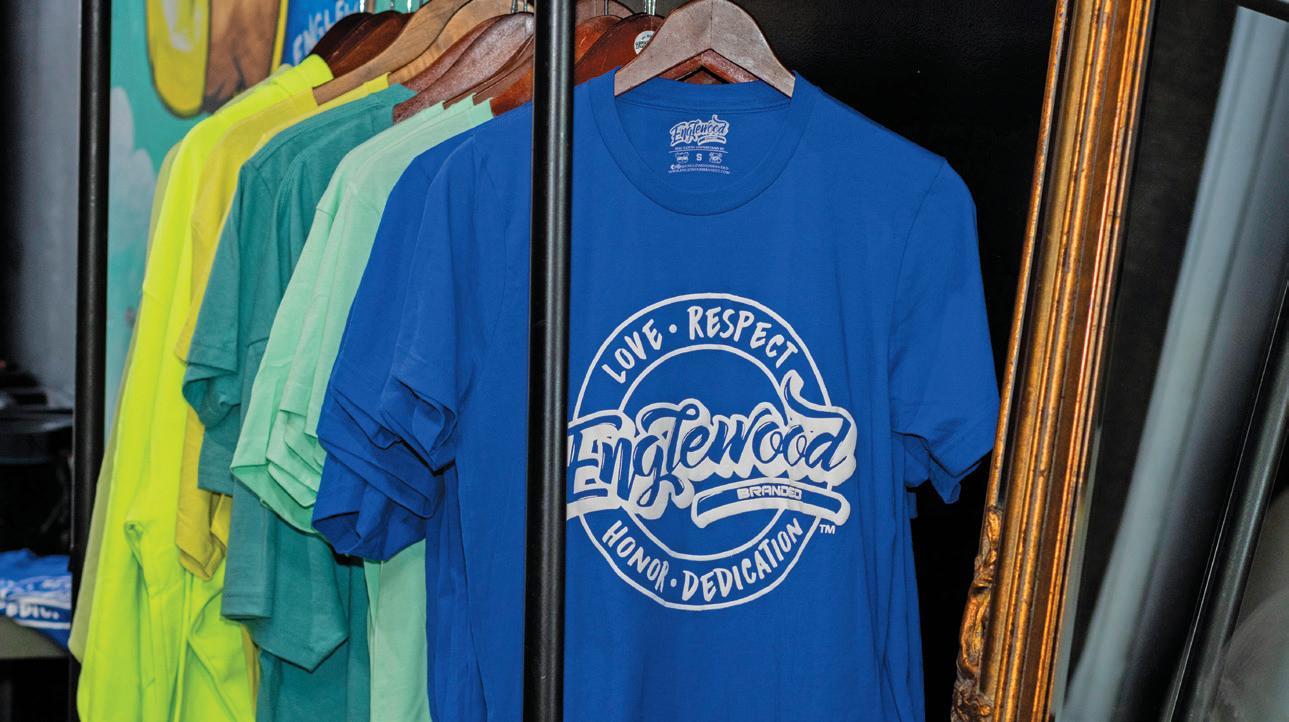
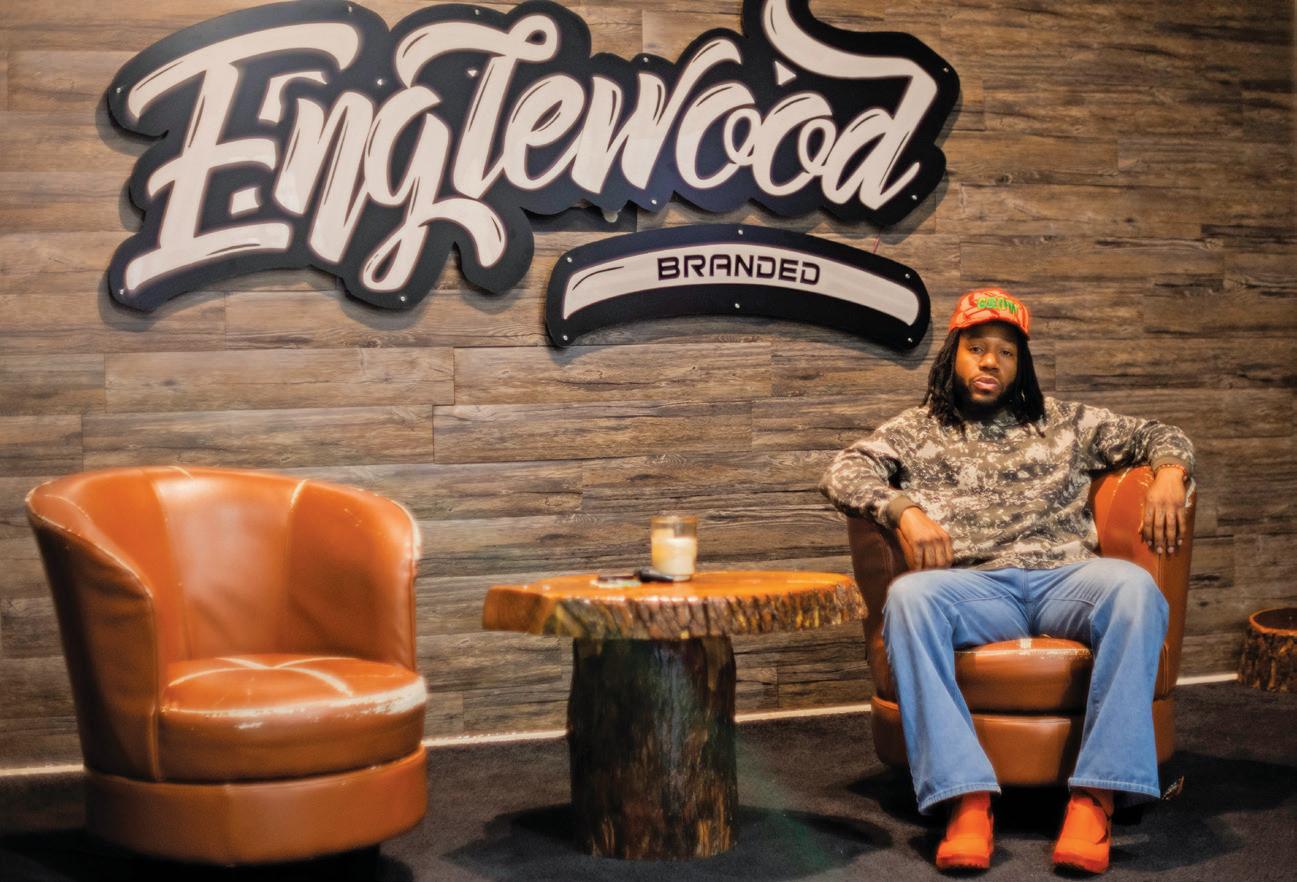
from squash to zucchini to pumpkins to watermelon to peppers to kale, chard, herbs, mint, basil…
What lessons can you take from
I’ve learned how you got to be patient with things that you start. Like, don’t expect to plant a seed and then have fruit tomorrow. That’s been really big for me with music—the relationships that I build, I don’t anticipate them bearing fruit the very next day. So I'm intentional with my relationships and letting them grow over time, willing to do the dirty work on myself to be the best artist I can— [and I mean] going into the soil, but really what I mean by that is going within yourself and asking yourself
the hard questions to make sure that you’re showing up as the person you say you are. So yeah, farming has definitely taught me patience, and to be intentional with everything you do, so that you can reap the benefits and the fruit later.
Heavy Crownz will perform with King Louie, Bella Bahns, Casino Trell, and Ca$h Era at Lincoln Hall on May 22. Go to lh-st.com/shows for tickets or follow Heavy Crownz on Instagram at @heavycrownz for updates.
Trench Baby Turned Farmer is on streaming platforms and available for digital purchase at www.heavycrownz. bandcamp.com. ¬
Francisco Ramírez Pinedo is a journalist based in South Chicago.