



GOLDEN STAR CLUB
GOLDEN STAR CLUB
Lindblom Park | 6054 S. Damen Avenue
Lindblom Park | 6054 S. Damen Avenue
April 15 | 10:30 a.m.–12:30 p.m.
March 18 | 10:30 a.m.–12:30 p.m.
FEED YOUR MIND, BODY & SOUL
FEED YOUR MIND, BODY & SOUL
AKARAMA Foundation | 6220 S. Ingleside Avenue
AKARAMA Foundation | 6220 S. Ingleside Avenue
April 23 | 9:30–11:30 a.m.
March 19 | 9:30–11:30 a.m.
MATHER AT DUSABLE
MATHER AT DUSABLE
The DuSable Black History Museum and Education Center
The DuSable Black History Museum and
740 E. 56th Place
740 E. 56th Place
April 30 | 10:00 a.m.–12:00 p.m.
March 25 | 1:00–3:00 p.m.
Register today! Anyone 55+ is welcome to join for our free


The South Side Weekly is an independent non-profit newspaper by and for the South Side of Chicago. We provide high-quality, critical arts and public interest coverage, and equip and develop journalists, artists, photographers, and mediamakers of all backgrounds.
Volume 13, Issue 7
Editor-in-Chief Jill Petty
Deputy Editor Adam Przybyl
Senior Editors Martha Bayne Christopher Good Olivia Stovicek
Jocelyn Martinez-Rosales
Editor Emeritus Jacqueline Serrato
Public Meetings Editor Scott Pemberton
Art Director Shane Tolentino
Research Editor: Ellie Gilbert-Bair
Fact Checkers: Patrick Edwards
Kate Gallagher
Jenna Mayzouni
Victoria Moreno
Zara Norman
Layout Editor Mel Dempsey
Publisher Malik Jackson
Office Manager Mary Leonard
Advertising Manager Susan Malone
The Weekly publishes online weekly and in print every other Thursday. We seek contributions from all over the city.
Send submissions, story ideas, comments, or questions to editor@southsideweekly.com or mail to:
South Side Weekly
6100 S. Blackstone Ave. Chicago, IL 60637
For advertising inquiries, please contact: Susan Malone (773) 358-3129 or email: malone@southsideweekly.com
For general inquiries, please call: (773) 643-8533
This is my first issue as South Side Weekly’s new Editor-in-Chief, and I am delighted to have joined this team. I am a native South Sider, and proud of it. Living here has fostered a sense of connectedness, a willingness to think unconventionally, and self-belief—incredible resources, especially in this moment.
My parents arrived here in the 1960s, Black southerners who moved to Chicago from the deep south during the second wave of the Great Migration. My earliest memories are of Chatham, the nourishing, vibrant community where our first family home was located. And when we settled in Hyde Park-Kenwood in the 1970s, I continued to learn transformative lessons about race, representation, and the power of the written word.
Indeed, coming of age on Chicago’s South Side sensitized me to gaps and silences in journalism, policymaking, and the creative arts. Not coincidentally, I’ve worked in publishing and in nonprofits—in roles centering storytelling and social justice—for many years. And the necessity of “narrative change”—storytelling that challenges dominant narratives, surfaces inequities, and shifts power—has been a throughline in my life and work.
Relatedly, this week’s issue touches on topics of deep interest to me and to many of our readers. For instance, Yuqing Liu writes about the community-driven creation of a long-awaited mental health clinic in Bronzeville; Max Blaisdell investigates a lack of accountability at the Sheriff’s Office revealed by an FBI probe; and several selections from Chicago’s vibrant arts and cultural ecosystems are featured. And the start of each baseball season offers the joy of being in community, no matter the score—see Malachi Hayes’s article on opening day at Sox Park, for a dose of camaraderie and hope!
Over the next few weeks, I’ll be sharing more about the evolving mission of the Weekly, the South Side’s storied, beloved alternative paper. I’ll also be reaching out to readers and community members at large, to hear how we can better serve your needs. I’m very excited to jump in!
months after midway blitz, ice activity has quietly persisted
Immigration enforcement agents are changing how they operate in the Chicago area.
dave byrnes ................................................4
public meetings report
A recap of select open meetings at the local, county, and state level.
scott pemberton and documenters .....6
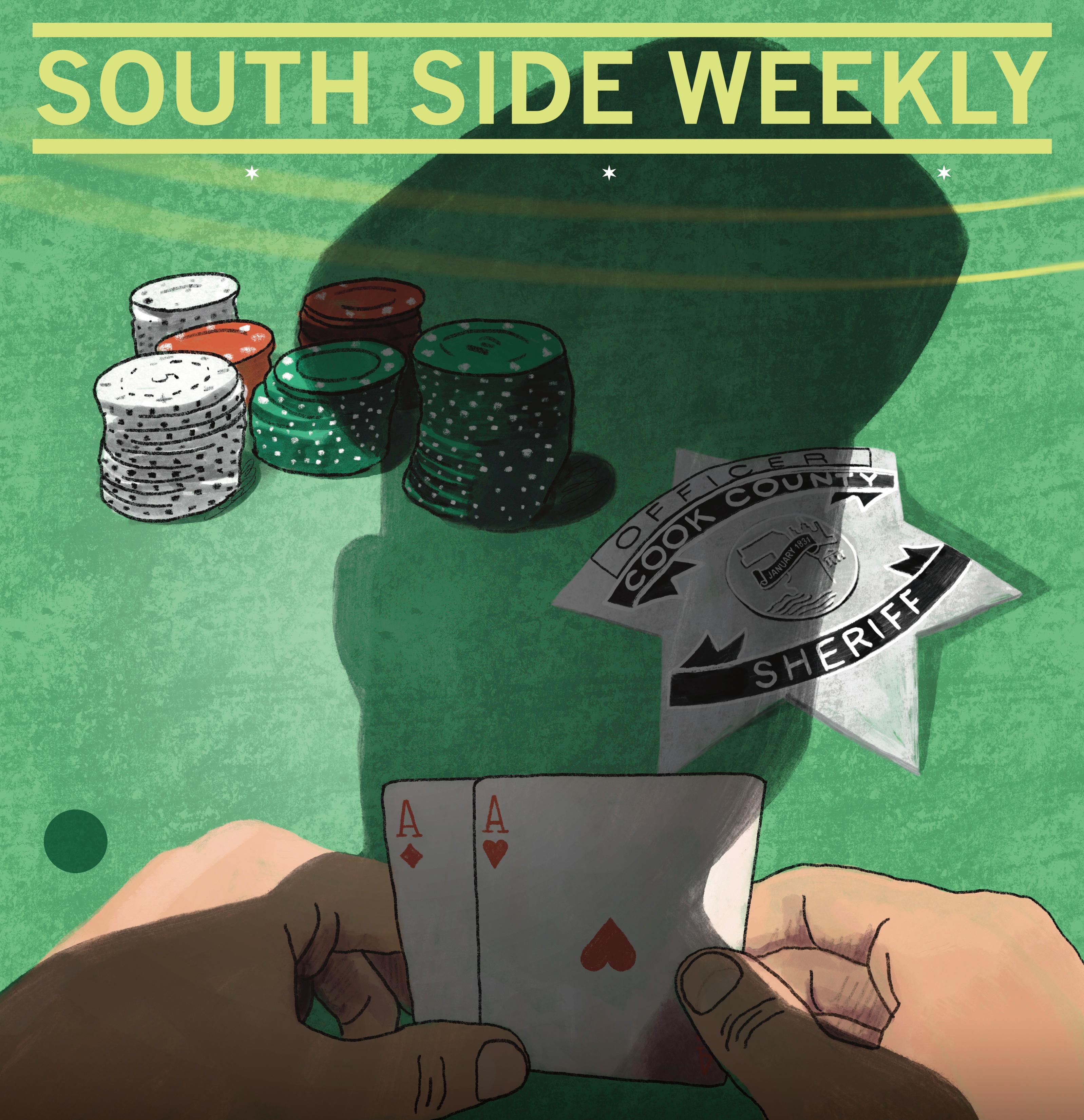
federal probe snared jail official over claims of illegal gambling, bribery attempt and more
A top deputy in the Cook County Sheriff’s Office, David Chiko, was only fired after the FBI forced a second look. max blaisdell, hyde park herald ......... 7
‘this is where i belong’
Kimberly Miller-Griffin reimagines mental health care in Bronzeville.
yuqing liu 10
‘ welcome to the family barbecue’
Thousands of White Sox fans gathered to tailgate and cheer on their team to an unexpected win on opening day. malachi hayes 12
streetwear brand pillars celebrates chicago’s high school culture with themed merchandise
“It started off with just our schools, and everybody just started requesting it,” one co-founder of Pillars said. corli jay 15
sports roundup
The latest results and news from the Chicago sports world. malachi hayes 16
joyce manor sells out the shed
After postponing tour dates due to vocal strain, the punk trio delivered a nostalgic set. elizabeth rosales 18
a spring 2026 theater preview
A selection of upcoming plays at Court, Definition, Goodman, Steppenwolf, and more. anne spiselman, hyde park herald .....20 the exchange
The Weekly’s poetry corner offers our thoughts in exchange for yours. chima ikoro.............................................. 22
As spring begins, immigration enforcement agents are changing how they operate in the Chicago area.
BY DAVE BYRNES
When Border Patrol agents who took part in Operation Midway Blitz left Chicagoland last November, thenAssistant Homeland Security Secretary Tricia McLaughlin asserted “we aren’t leaving Chicago.” The same day, reporters with the Sun-Times warned a government source told them that federal immigration agents may return in strength come spring.
But as McLaughlin said, they never really left.
High-ranking Border Patrol officer and former Midway Blitz commander Greg Bovino made good on McLaughlin's promise in mid-December, when he and federal immigration agents conducted two days of chaotic raids through Chicago and multiple suburbs, arresting more than a dozen people. As 2025 came to a close, he again threatened Chicagoland.
“If you think we’re done with Chicago, you’d better check yourself before you wreck yourself.”
“Don’t call it a comeback; we’re gonna be here for years,” Bovino said in a December 30, 2025 social media post.
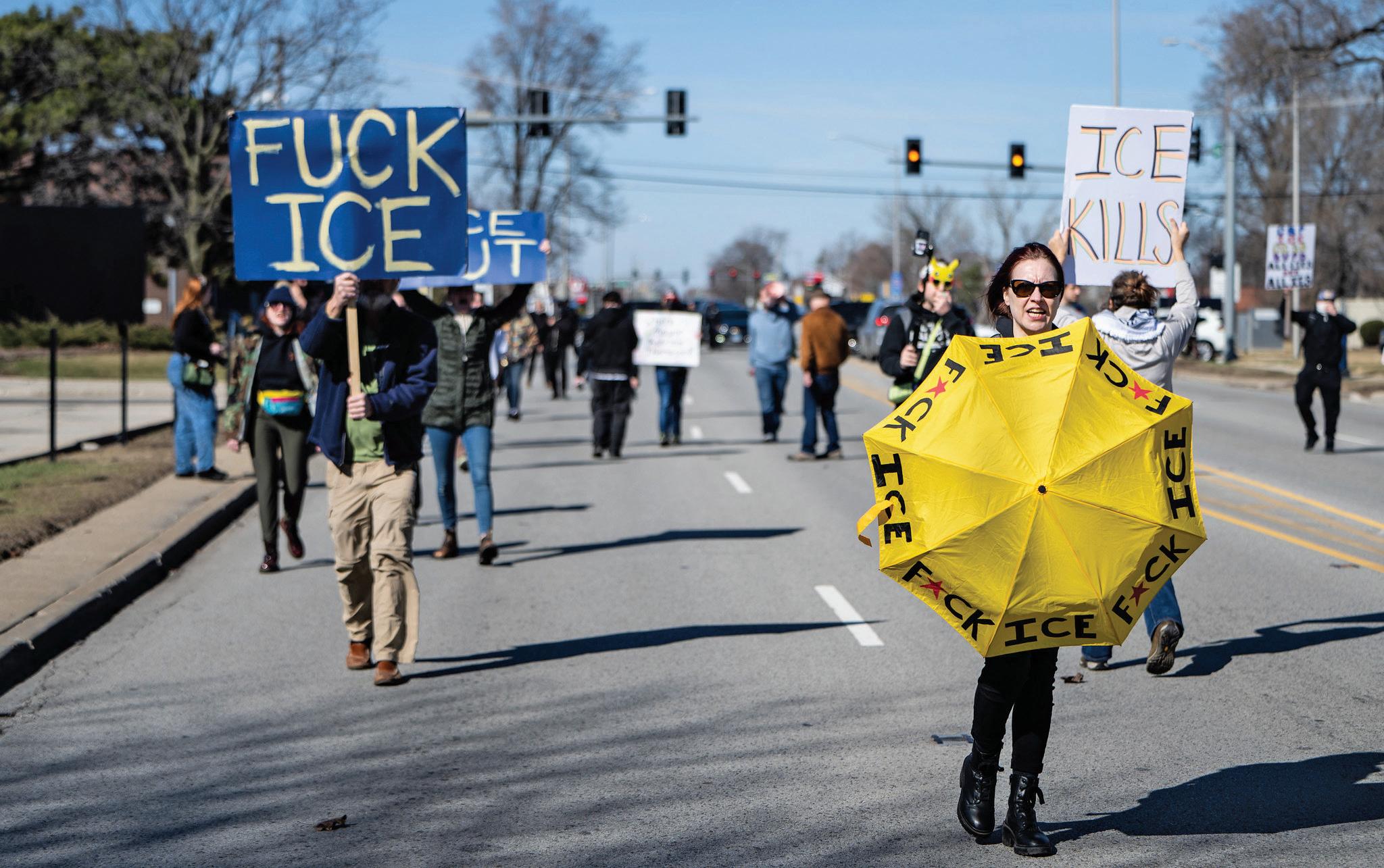
Now spring has come, and while agents with Immigration and Customs Enforcement (ICE) and Customs and Border Protection (CBP) aren’t yet here in the numbers seen in the fall, Chicagoland communities are still feeling their impact.
“While the overall operation has clearly scaled back since last September, October, and November, ICE remains in the region and is continuing to abduct neighbors on a daily basis,” Brandon Lee, a spokesperson for the Illinois Coalition
for Immigrant and Refugee Rights (ICIRR), told the Weekly.
ICIRR tracks reports of federal immigration agents’ activity and maintains a family support hotline for those impacted by immigration detention.
Lee said the hotline continues to receive calls every day. According to data ICIRR has collected since the start of the year, Lee said, federal agents’ presence in Chicagoland is below that seen during the fall, but higher than before Midway Blitz began.
Unlike the high-profile, chaotic raids carried out by large groups of Border Patrol in the fall and winter, activity lately has been more targeted, lower profile, and faster moving, according to a representative with the rapid response and immigrant rights advocacy group Organización Hijos de Migrantes who
goes by Logos. He said - encounters sometimes only last a few minutes and are carried out by smaller groups of ICE agents.
These tactics may be less disruptive, Logos said, but it also makes it harder for rapid responders and the community at large to respond to them.
“Per day we’re averaging anywhere from two to six [reports of abductions],” Logos said. “And with ICE tactics it’s harder to respond to.”
DHS declined to comment on just how many agents it has active in the Chicago region, citing “operational security.” Lee similarly declined to share specific data ICIRR’s team had collated, but said the level of reports of abductions by federal immigration agents has remained consistent since the start of the year.
“March hotline data is not out of line with previous months so far. Daily tracking is roughly the same as February when we ended the month with over 2,800 total calls,” Lee said. “As of now we can categorize the level of ICE presence in the area as being higher than what it was pre-’Midway Blitz’ with regular reports of abductions throughout the region, but still below the level of September, October, and November 2025.”
As in last fall, heavily Latine suburbs and communities across Chicago’s Southwest Side continue to be hotspots. Lee cited Brighton Park and the surrounding area in Chicago, and the suburbs of Bolingbrook, Cicero, Berwyn, Oak Park, Melrose Park, Elgin, Aurora and Wheeling.
Since the start of this month, suburbs where Chicago area rapid response teams have reported agents detaining people include Naperville, Cicero, Joliet and Oak Park. Agents’ presence in Chicago has been reported in Back of the Yards, the West Loop, West Lawn and North Lawndale.
The recent Oak Park detention occurred the morning of Friday, March 20, near the office of Illinois Senate President Don Harmon. According to one rapid responder, a vehicle was left behind at the scene. John Patterson, a spokesperson with Harmon’s office, said staffers “saw what appeared to be the latter part of a traffic stop happening about a block east” of the office. Patterson said Harmon didn’t see the detention itself, but did witness other vehicles driving away.
“What we think we witnessed was a reminder that the federal presence in our communities has not ended,” Harmon said in a prepared statement. “Everyone needs to remain vigilant and look out for our neighbors.”
The Oak Park incident tracks with the recent ICE tactics described by Hijos de Migrantes, which maintains a social media page with a daily running tally of reported abductions by federal agents in Chicagoland.
Logos also said that while ICE agents seemed to focus on early mornings during the winter, with spring coming they have been moving their activities later into the day. Traffic stops and blocking in cars are a common tactic, they said, echoing the scenario Senate President Harmon’s office described.
The change in tactics comes after ICE and Border Patrol agents shot and killed two 37-year-old U.S. citizens, Renee Good and Alex Pretti, in Minneapolis this past winter, sparking national outrage and fueling calls for ICE to be abolished.
In the fallout from Operation Metro Surge in Minneapolis, Greg Bovino, Tricia McLaughlin, and ultimately Homeland Security Secretary Kristi Noem all left their positions, with socalled “Border Czar” Tom Homan stepping in to fill the leadership gap and Republican Oklahoma Senator Markwayne Mullin tapped to head up the Department of Homeland Security (DHS) which administers ICE and CBP.
President Donald Trump told NBC in February that “maybe we could use a little bit of a softer touch, but you still have to be tough.”
On top of the public backlash, DHS and the Department of Justice have also taken multiple losses in federal court since November, resulting in immigration detainees ordered free, limits placed on agents’ use of force and improved conditions at the ICE processing facility in Broadview.
Some of these losses have faced subsequent challenges from the government; earlier this month the Seventh Circuit Appellate Court vacated the preliminary injunction in the class action brought by press and clergy which resulted in use of force restrictions on
federal agents. But other court rulings, notably a November 5 order from District Judge Robert Gettleman which mandated better conditions and access to legal counsel at the Broadview facility, have stuck.
Gettleman issued his order, initially only meant to last two weeks but now extended “until further order of court,” in a class action which immigration detainees brought against the federal government in October over the allegedly inhumane treatment they suffered inside the Broadview facility. Prior to November 5, Broadview detainees reported being held in unsanitary, overcrowded conditions, being pressured to sign legal documents they didn’t understand, and not being given sufficient food or water.
Pablo Moreno González, a former detainee serving as a class representative in the case, testified on November 4 that he was held in a room in the Broadview facility with 150 other people.
issued his order largely favoring the detainee class.
When two Catholic priests and a nun went to deliver eucharist and ashes to the Broadview facility on Ash Wednesday— the fruits of another court victory—they did not report 150 people held in one room like Moreno González did. In fact they found no one was being held in the facility at all when they arrived.
People are still being brought to the facility, however, and some are now being arrested when they arrive for immigration check-in appointments.
Lee confirmed ICIRR was aware such detentions were taking place.
“While we don’t have a total number on this, we know that it is a tactic that ICE is using right now,” he said, adding ICIRR was working with rapid response groups and the immigrant advocacy group Sanctuary Working Group to set up accompaniment for people called to the facility.
“ICE remains in the region and is continuing to abduct neighbors on a daily basis.” – Brendan Lee, ICIRR
The facility is central to deportation efforts in the Chicago area. Given Illinois laws that bar state facilities from being used for civil immigration enforcement, it is one of the only places agents can take Chicagoland detainees for processing before they are moved elsewhere.
The U.S. Attorney’s Office in Chicago argued in court filings that granting the class’ demands for better detention conditions, including clean holding areas, more bedding and more floor space per detainee, would hamper local deportation efforts.
“Ultimately, the laundry list of demands would limit defendants’ ability to manage short-term detentions and, if granted, effectively halt the ongoing enforcement of immigration laws in the region,” the U.S. Attorney’s Office wrote in a filing two days before Gettleman
in order, they’re attending their check-ins.” She further made reference to an ICE agent reportedly telling a detainee that, due to a policy change, they would remain in custody until a judge could see him. It’s unclear what policy exactly may be at issue, though in February, a panel of the New Orleans-based Fifth Circuit Appellate Court issued a landmark ruling which held that those who entered the United States without inspection can be held in mandatory detention without bond.
Berkowsky urged those called in for a check-in at the Broadview facility to have their affairs in order, to have an attorney’s phone number ready if possible, and to have any necessary medication handy. She also urged those who are detained to ask for a private legal call, one of the conditions mandated in Judge Gettleman’s order.
“Part of our case is that there should be— there is—a private room with a phone call that is not monitored, so you should be able to use that room and have a private confidential legal call upon request,” Berkowsky said. “They’re not gonna offer it, so if you’re in there, request it.”
Danielle Berkowsky, an attorney with the MacArthur Justice Center, one of the law firms representing the class of Broadview detainees, further confirmed the trend of people being detained at Broadview check-ins. Like Lee, she said she didn’t have an exact figure, but added she considered it a “significant number.”
Berkowsky said the MacArthur Justice Center attorneys had also gotten word of arrests happening during check-ins at the ICE Chicago Field Office at 101 W. Ida B. Wells Drive.
“I have a few people I spoke to who said… ‘I’ve been here for several years, I filed for asylum, I have an appointment or a court date scheduled, I come to Chicago every year for my check-in, and I came here and they arrested me,’” Berkowsky said. “These are people who have work permits, who have all sorts of paperwork
Despite the continued presence of federal immigration agents in Chicagoland and the tactics they are pursuing on the street and in immigration processing facilities, Logos said Hijos de Migrantes has lately learned of more incidents where community members are able to evade their grasp.
“They’re getting sloppy… people are able to escape more,” they said. “I think they get into this period where they’re just desperate to make arrests.”
ICE agents were also deployed to airports across the country last Monday amid an ongoing partial government shutdown over funding for DHS, which administers the Transportation Security Administration. Dozens were sent to O’Hare, with a nebulous set of responsibilities. ¬
Dave Byrnes is a Chicago-born independent journalist covering the Trump administration’s anti-immigration campaign. He currently lives in Lincoln Square but is a lifelong White Sox fan.
A recap of select open meetings at the local, county, and state level.
BY SCOTT PEMBERTON AND DOCUMENTERS
February 26
At its meeting, the Chicago Board of Education heard several speakers make statements during the public comment period, most regarding The Chicago High School for the Arts (ChiArts) and the closing of ASPIRA Charter High School. ASPIRA is a non-profit education organization focused on empowering Puerto Rican and Latino youth through education and leadership development. Due to financial mismanagement, the school is scheduled to close April 10, less than three months before the end of the school year. Students and staff have expressed concerns over potential loss of accumulated college credits and, for seniors, graduation. According to its website, ChiArts is the “first public arts high school [in the city].” Its goal is to develop “the next generation of diverse, artistically promising scholar-artists.” The school uses a conservatory model that provides “intensive pre-professional training in the arts” along with college preparatory academics, but budgeting issues have reduced the number of hours reserved for arts training. The Board also learned that after union negotiations, every Chicago Public School Food Service Worker will be earning equal to twenty dollars per hour or more by August.
At its meeting, the Community Commission for Public Safety and Accountability (CCPSA) heard concerns about an increase in Immigration and Customs Enforcement (ICE) raids in March. Commenters questioned whether the Welcoming City Ordinance (WCO) was being enforced and called for the CCPSA to investigate alleged collaboration between the Chicago Police Department (CPD) and ICE, share regular updates, and hold a briefing on this issue. CPD's Bureau of Internal Affairs is responsible for investigating alleged WCO violations, but there is a pending ordinance in City Council that would move this responsibility to the Civilian Office of Police Accountability (COPA). COPA was established by a 2016 ordinance as the “civilian oversight agency of the Chicago Police Department.” The CCPSA was created by the City Council in 2021 as “a new model for police oversight, accountability, and public safety.” A city department, it includes twenty-two elected district police councils that work locally with police in each district.
March 3
At their meeting, members of the Chicago City Council Committee on Environmental Protection and Energy reviewed the safest and most cost-efficient ways to update the city’s natural gas infrastructure. Discussion revolved around how to upgrade Chicago’s natural gas infrastructure and, in part, whether Peoples Gas should replace or retire aging pipes. Replacement is more expensive. Members learned that Peoples Gas plans to increase its rates even though it continues to extend the timeline for completing the Pipe Retirement Program. The program is slated to retire more than 1,000 miles of aging iron mains by 2035. Missed deadlines and high construction costs were cited as major issues. Most public commenters spoke against the $202 million rate hike proposed by Peoples Gas. Peoples Gas representatives shared their justifications for the proposed increase.
March 5
At its meeting, the board of the Metropolitan Water Reclamation District (MWRD) denied a request previously presented by the City of Crestwood’s mayor at the board’s February 19 meeting. The request was to approve a leasing arrangement that would allow a game and liquor seller to build a casino on a public riverway property. The mayor argued that the leasing approach was necessary to reduce an economic burden on the city. Seven board members voted no and two abstained. A member of the Friends of the Chicago River spoke against the measure. The nonprofit organization works to “protect and restore the Chicago-Calumet River System for all people, water, and wildlife,” according to its website, and has been active since 1979. The role of labor unions was discussed, in part, in connection with the MWRD’s goal of making its vehicles either hybrid or fully electric by 2030. One commissioner emphasized the importance of the vehicles being union made. The MWRD also recognized Irish Americans' contributions in honor of Saint Patrick’s Day and recognized March as Women’s History Month. The MWRD’s mission, according to its website, is “protect the health and safety of the public in its service area, protect the quality of the water supply source (Lake Michigan), improve the quality of water in watercourses in its service area, protect businesses and homes from flood damages, and manage water as a vital resource for its service area.”
March 19
During this open meeting, commissioners of the Illinois Commerce Commission (ICC) assessed and approved orders related to railroads and motor carriers, a report related to a five-year plan to improve crossing safety and a report on hazardous materials, forty-three orders related to electric energy, seven related to gas, eleven related to telecommunications, and three related to water and sewer. The ICC commissioners approved ComEd’s application for an increase in deposit amounts for large-demand facilities the utility might need to build. The deposits apply to new construction that would use large amounts of electricity—data centers, for example. The higher deposits are designed to cover the cost ComEd could incur for building new electricity infrastructure needed to accommodate such large needs for electrical power. Citing lack of new information or arguments, the Commission denied two petitions, one for hearings for clarification regarding the deposits and the other for a rehearing. The meeting adjourned two hours earlier than scheduled. The ICC is a quasi-judicial body made up of five commissioners responsible for regulating several industries, including utilities and transportation services.
This information was collected and curated by the Weekly in large part using reporting from City Bureau’s Documenters at documenters.org.
A top deputy, David Chiko, was robbed outside an illegal gambling den—but later promoted. He was only fired after the FBI forced a second look.
BY MAX BLAISDELL, HYDE PARK HERALD
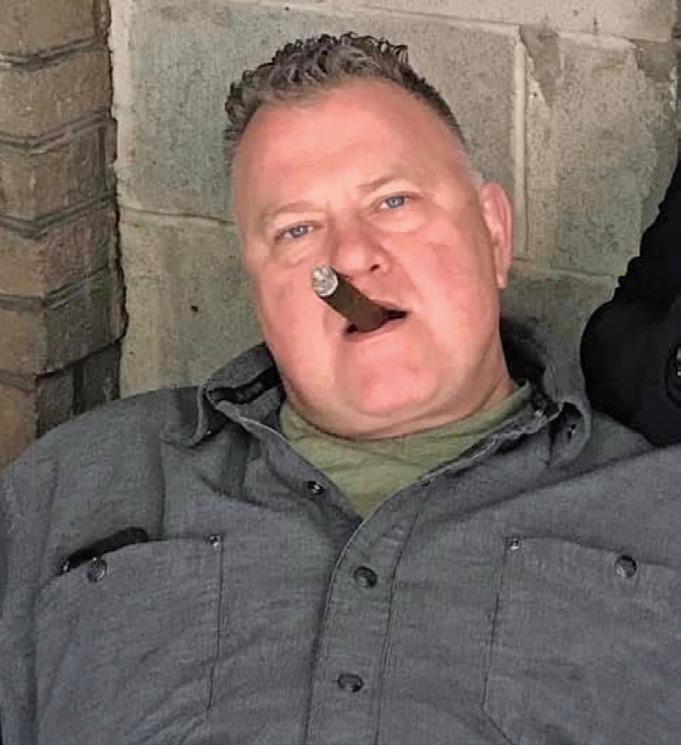
David Chiko, one of the former highranking officials in Cook County Sheriff Tom Dart’s office who was implicated in an alleged ghost-payrolling scheme in 2022, was allegedly involved in misconduct years before. At the time, Chiko was not disciplined and was later promoted to a senior leadership role.
The alleged ghost-payrolling scheme, which drew the involvement of the FBI, involved several high-ranking officials in the Sheriff’s Office (CCSO). Investigators probed allegations that Sheriff’s Office employees were “doubledipping,” or working side jobs while they were on the clock for the county, but ultimately prosecutors declined to bring charges. The ghost-payroll investigation also prompted investigators to reexamine older allegations of misconduct by Chiko, leading to his termination in 2024.
Chiko started his career at CCSO in 1993 as a deputy sheriff and quickly rose through the ranks. By 1999, he was an investigator in the women’s division of Cook County Jail, and in 2013 he became the jail’s deputy director. In 2019, Chiko was promoted to assistant executive director, a role in which he first oversaw the jail, and in 2021 was put in charge of the CCSO’s incident command center, which was designed to handle all jail emergencies and oversee specialized units. By the time he was terminated in 2024, Chiko’s annual salary topped $120,000.
Chiko did not respond to multiple requests for comment.
News of the joint-FBI-Sheriff’s Office investigation of alleged ghostpayrolling became public in March 2022, when multiple outlets reported on the involvement of federal authorities. According to those outlets, the FBI sought payroll records from a security firm that was known for employing offduty police officers and sheriff’s deputies, and more than a dozen employees were placed on administrative leave while the investigation proceeded, including four high-ranking jail officials.
The Weekly sought the FBI records, which had been turned over to the Sheriff’s Office in 2024, via a public-records request, but the FBI told the Sheriff’s Office to deny the request. So instead, the Weekly obtained records from the Office of Professional Review (OPR), the Sheriff’s department of internal affairs, via several Illinois Freedom of Information Act (FOIA) requests.
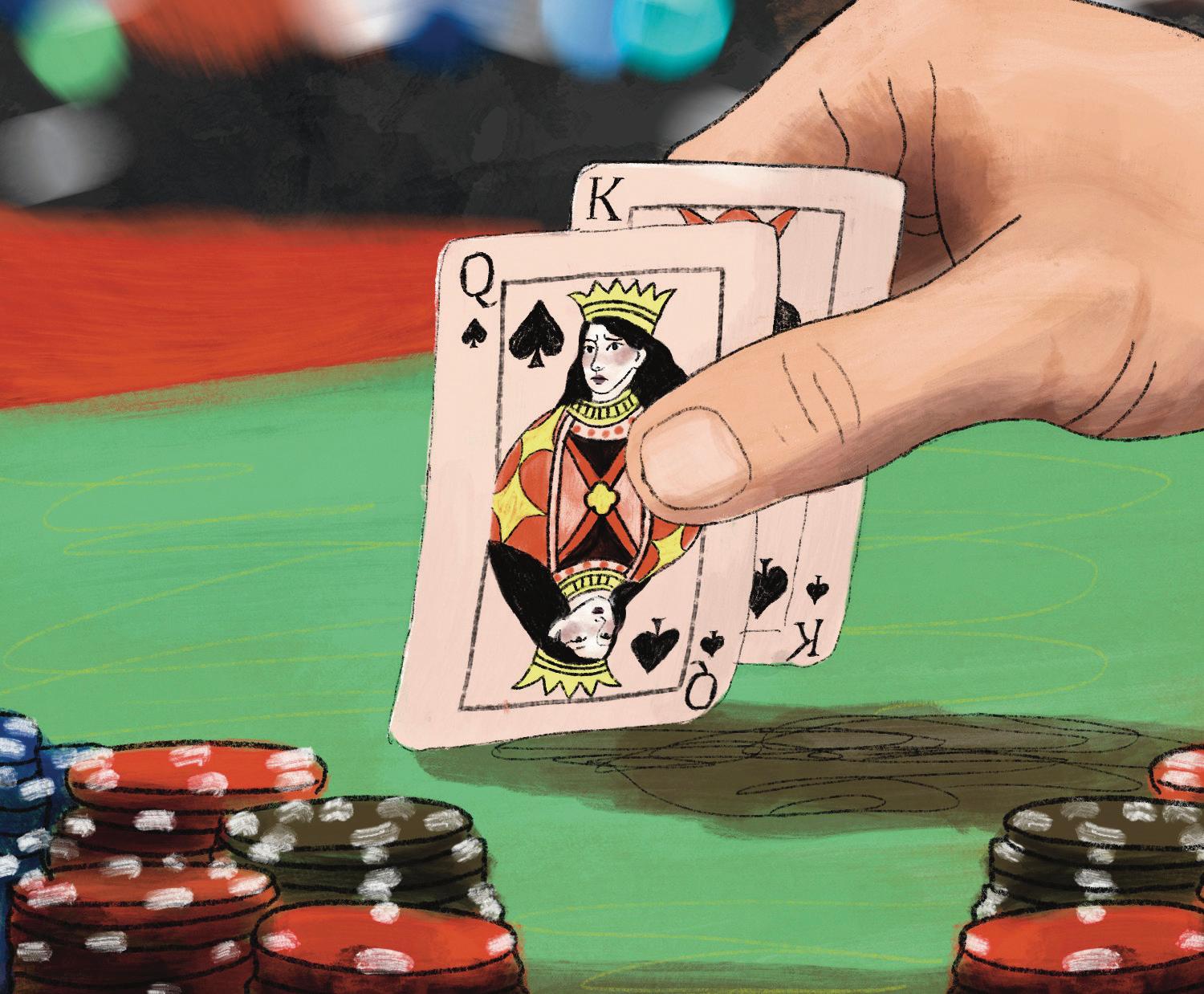
OPR found that Chiko was robbed at gunpoint outside an illegal gambling den in West Lakeview in the wee hours of a cold January night in 2015.
After taking his cell phone and $150, the ski-masked, black-clad robbers ordered Chiko to get on his knees and put his hands behind his head, according to investigation records. Thinking he hadn’t handed them enough money for someone who’d just exited the gambling den, one of them said, “Let me finish this,” before firing two shots at Chiko.
The shots missed, and the robbers ran off. According to the initial investigation, Chiko pulled out his county-issued Glock
handgun and fired back at them six times.
He then called the Sheriff’s Office, while witnesses called the police. When Chicago Police Department (CPD) detectives first interviewed him, Chiko told them he was visiting a friend and did not mention being inside the gambling den. When re-interviewed after detectives learned about the den from other witnesses at the scene, Chiko denied gambling, stating he was there to “watch a game, enjoy a cigar and have a meal.” But multiple witnesses, including the card dealer, told police Chiko had been playing Texas Hold ‘Em before stepping out of the back of the house to make a call, which was where he was robbed.
When CCSO investigators reopened the incident as part of their investigation of ghost-payrolling years later, they noted that merely being in an illegal gambling parlor could be disreputable for a law enforcement officer, in addition to gambling on cards being a misdemeanor.
“Illegal gambling dens have ties to organized crime and street gangs,” the CCSO investigators wrote. “Moreover, they are sites for other illegal activity, such as prostitution. Finally, they are targets for armed robbers, due to large amounts of cash being carried by incoming and outgoing gamblers.”
Chiko told CPD detectives he was unaware of another robbery that occurred nearby shortly before his, and that he was alone when he was robbed. Both claims were contradicted by another witness’s statement.
CPD detectives provided the CCSO with a twenty-two-page report that said at least three witnesses saw Chiko inside the gambling den, and yet, the initial investigation concluded that then-Deputy Director Chiko “did not violate any department directives.”
Records show that upon reexamining the incident as part of the possible ghostpayrolling investigation, investigators with the CCSO’s Office of Professional Review (OPR) found that Chiko had violated ten of the Sheriff’s rules for employees, including prohibitions against knowingly visiting “a house of prostitution, illegal gambling house, or establishment where illegal activities occur, except in performance of
duty” and participating “in any form of illegal gambling.”
OPR investigators who reviewed the case also found that Chiko violated a policy that prohibits lying to internal and external agencies, citing a provision that states CCSO employees must “truthfully answer all questions, provide proper materials, and provide truthful and relevant statements when the employee is involved in an investigation, either as the subject or not.”
In the years following the gamblingden robbery additional allegations of misconduct involving Chiko surfaced, but initial investigations of those allegations also found no wrongdoing. OPR investigators who later reviewed the investigations as part of their probe into ghost payrolling came to the opposite conclusion.
A CCSO spokesperson did not answer specific questions, but provided a statement that read in part: “The Sheriff’s Office does not tolerate illegal or unethical behavior by staff and aggressively investigates and pursues disciplinary actions or criminal charges where warranted.”
One of the allegations reviewers looked at concerned a 2016 incident in which Chiko communicated through a third party with a woman jailed on an aggravated DUI charge, and provided money for her commissary account.
Phone call transcripts reviewed by OPR investigators show that an unnamed individual thought Chiko might have some sway with the Cook County judge overseeing her case.
In return, one speaker (whose name is redacted in the OPR report) claimed that “‘Chiko’ said all she had to do was tell him, he loves her, he will do whatever he can to help her, and that they were supposed to go to dinner,” according to OPR’s summary of the phone calls.
OPR investigators concluded Chiko had committed eight policy violations in this case, including one prohibiting “the wrongful or unlawful exercise of authority on the part of any member for malicious purpose, personal gain, willful deceit or any other improper purpose.”
Less than two years after the events with the jailed woman, the CCSO received an anonymous letter in July 2017 alleging that Chiko and other CCSO employees
were “working for a private entity, breaking the law, intimidating the community and abusing their police powers.”
The letter alleged that Chiko and the others were working for a company called Off Duty Services (ODS). The business, which is headquartered in Texas and began operating in Illinois in 2015, hires active-duty law enforcement officers to provide armed security for businesses.
“Our off duty law enforcement personnel are the highest level of private security available, far exceeding any security guard capabilities,” the company’s website reads.
ODS did not respond to the Weekly’s request for comment.
According to an OPR summary of the letter’s allegations, Cook County sheriffs working for ODS escorted delivery trucks in residential neighborhoods while armed and in uniform, and “were activating police lights and sirens, and blocking traffic.”
While it is not uncommon for county and city law enforcement officers to work second jobs, they must have prior approval and cannot be in official uniform. And although there is no strict cap on hours, the secondary employment cannot interfere with their county or city work or performance. The Weekly obtained eleven secondary-employment forms Chiko filed during his tenure at the CCSO, but the names of the employers were redacted per Illinois FOIA exemptions.
After eight months of investigating, OPR determined the allegations in the letter were unfounded. But OPR investigators who reexamined the case in 2021 reached very different conclusions after uncovering additional evidence of serious, potentially criminal misconduct by Chiko.
According to OPR’s review, a former FedEx employee told investigators that Chiko attempted to bribe him in 2017 after the FedEx employee discovered that one ODS employee working security for FedEx was not a law enforcement officer. According to the FedEx employee, the ODS employee, who claimed to have worked for the Illinois State Police and the CPD, had been arrested and indicted for impersonating a police officer.
When the FedEx employee confronted Chiko, who was a manager at ODS, with this information, Chiko allegedly replied that he was experiencing “extreme staffing problems” and that
“he would ‘give me whatever I want’ and insinuated offering cash if this information stayed between us and I did not tell anyone at FedEx.”
The FedEx employee refused the offer. Chiko then allegedly offered him “the ability to hand pick the staff from the officers that have been at my location before or anything else he could give me not to tell FedEx management.”
Instead of agreeing to Chiko’s offer, the FedEx employee contacted his manager. “FedEx sent a cancellation letter to ODS two weeks later terminating their contract for security for FedEx for the Midwest region,” according to the former employee’s statement to OPR investigators.
OPR investigators who later reopened the case found that Chiko had violated several Sheriff’s Office rules, including prohibitions against the “offer or acceptance of a bribe or gratuity” and “criminal, dishonest, infamous or disgraceful conduct.”
Several former CCSO employees told the Weekly they knew about Chiko’s potentially criminal wrongdoing years before he was fired. One said she felt Chiko was a polarizing figure in the office.
“[People] either liked him or hated him,” said Carmen Gercone, a former assistant chief at CCSO who left the office in 2020 and ran for Dart’s post in 2022. “Some people felt like he would—if it was their skin or his—that he’d sell them out in a minute.”
Gercone said Chiko was known for doing favors for CCSO employees who also did security work for him at ODS.
“If the calendar was closed and you put in for a day off, he would give you the day off, and then you can go work for him, or go to your son’s graduation, or go to whatever else you needed to do,” she said. “Other officers who didn’t have that luxury couldn’t get the day off if they needed it.”
Gercone said it was rumored in the Sheriff’s Office that Chiko and the ODS employees he managed would show up for ODS shifts and pretend they had a “mix up” in forgetting to remove their CCSO patch from their vest or badge from their waists in order to get free food or other comps.
“They knew what they were doing,” she said. “There’s a general mistrust from the community, because when they come
in, [people] don’t see Off Duty [Services)], they see the Sheriff’s Office.”
The ghost-payrolling investigation also uncovered additional wrongdoing that implicated other jail officials and guards. Some were fired as a result.
In 2024, the Sun-Times reported that two of the high-ranking jail officials, Drake Carpenter and Aracelis Gotay, who had been suspended while under investigation, were fired. The pair filed a retaliation lawsuit challenging the suspension in which they alleged that they and dozens of co-workers were coerced into doing campaign work for Dart’s successful 2022 reelection bid. They say they were fired after making that allegation.
The case was settled last year—with no admission of wrongdoing by the county or Dart’s campaign—with Carpenter and Gotay each receiving $35,000 from the county, as well as $1,500 from Dart’s campaign.
“I sued them and they paid us because they knew that what they did was wrong to us,” Carpenter told the Weekly.
The CCSO and Friends of Dart did not admit liability and denied all allegations contained in the lawsuit, according to settlement documents reviewed by the Weekly.
But, until now, the conclusions investigators reached about what their misconduct entailed were not publicly known, including, apparently, by the subjects of the investigation.
OPR records obtained by the Weekly via FOIA requests show that OPR investigators ultimately determined that while Chiko, Carpenter, Gotay, and Frank Esposito, another high-ranking jail official, committed timekeeping violations, there was no evidence that these four worked unreported side jobs or failed to complete their assigned duties.
Sheriff’s Office data obtained by the Weekly shows that more than 850 CCSO employees filed secondary employment forms in 2020 and 2021. Four were the subjects of the possible ghost-payrolling
investigation. The names of their secondary employers were redacted.
The joint FBI-CCSO investigation employed surveillance techniques, including covert cameras whose batteries and memory cards were switched out in the early morning hours to avoid detection by midnight shift staff, as well as cell-tower records that allowed agents to pinpoint employees’ actual locations alongside undercover teams directly observing the targets.
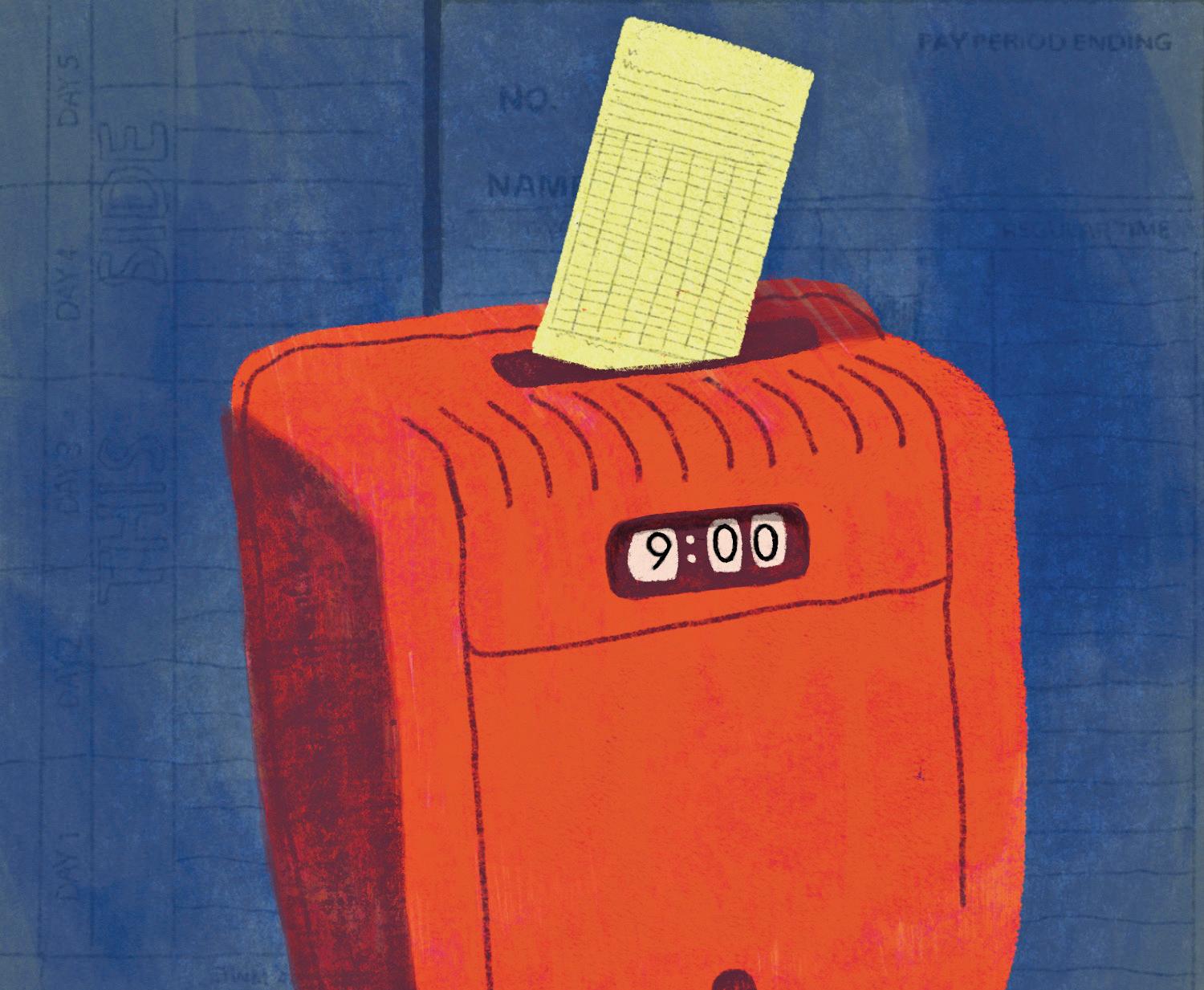
According to statements witnesses gave to federal agents, Carpenter, who oversaw the Jail’s emergency response team—which was responsible for transferring highprofile detainees—routinely called or texted subordinate officers to have them clock him in and out when he was not present at the facility. Between January and February 2022, investigators found that other employees clocked Carpenter in on at least sixteen separate dates.
Surveillance captured Carpenter’s routine on multiple occasions. In October 2021, OPR investigators observed him arriving at the jail in his white GMC pickup truck, exiting the vehicle, then immediately getting into a black Ford Taurus parked nearby and driving away—all while county records showed he had already been clocked in by another employee.
Gotay’s case centered on allegations that she approved fraudulent timesheets
CPIC’s mission. She told agents that Gotay had access to her email and directed her to submit the Missed Swipe Forms.
When questioned by the FBI, Gotay claimed other supervisors had given her the green light to approve the overtime and that she categorized various duties as CPIC work, including “doing all the regular reports too.” She admitted to clocking people in and out while also acknowledging that county policy prohibits the practice.
The joint investigation found text messages recovered from Gotay’s sheriffissued cell phone showed Chiko directing her in May 2021 to “punch me out.” Other messages from that same period showed Chiko sending her invoice details for his private security company. An invoice, dated May 15, 2021, with “Check Payable to: David Chiko” written on it, was later recovered from Gotay's office desk. In her FBI interview, Gotay alleged that Chiko had asked her to type up an invoice for his security business.
could put you in for termination…. I got none of it.”
Another salaried CCSO employee, Inspector Franco Domma, was confronted by OPR investigators in 2025 with evidence that he too had a subordinate clock him in and out while no longer physically at the office. Domma defended himself in his interview with OPR by saying that he was “teaching at a class in Wrigleyville” with a colleague and that as “an exempt employee … I don't get any overtime.”
“I work nine, ten-hour days. So, I just want to put that down cause I don't get paid for the extra hours even though I know I'm guilty to this,” he said.
Domma was not fired; instead, he received a fourteen-day suspension.
A CCSO spokesperson said that “for each allegation of employee misconduct, the Sheriff’s Office took the appropriate disciplinary action under the law—up to and including termination—where warranted and supported by evidence.”
for a subordinate correctional officer who claimed to be working at the CPD’s Crime Prevention and Information Center (CPIC) when she was not. According to the joint investigation, the officer repeatedly submitted “Missed Swipe Forms” (documents used when employees could not access a timeclock) and claimed she could not clock in or out because there was no timeclock at CPIC. Gotay signed off on these forms and forwarded them to payroll, approving substantial overtime payments based on the false documentation.
Employee-access records showed the officer never scanned her sheriff’s identification at CPIC on the days she claimed to be working there, OPR records show. Computer records revealed her sheriff-issued laptop was located at her home address and at a bowling alley on dates she submitted forms claiming to be at CPIC. A CPD sergeant told investigators that everyone assigned to the facility had credentials and that remote work was not permitted. CPIC officials said the officer never even submitted an application for an access badge and was unknown to them.
In her interview with FBI agents, the corrections officer admitted she “never worked CPIC on-site, I always worked offsite CPIC,” though she also acknowledged she could not access the video-monitoring systems remotely that were central to
The joint investigation, which resulted in Esposito’s firing, found that he similarly directed or allowed other employees to clock him in and out on multiple dates while he was not present at a CCSO facility.
When interviewed by the Weekly, Carpenter and Gotay denied any involvement in a ghost-payrolling scheme. Gotay said she never worked a second job during her decade-plus career at the CCSO. Carpenter filed a secondaryemployment form in 2021 that he told the Weekly was for private security work he did with celebrities.
Carpenter and Gotay both said they frequently logged well more than forty hours per week and did not receive overtime for their extra hours they put in because they were salaried employees.
Gotay said there were times during the pandemic she slept in her office instead of going home “just in case things would pop up.”
The pair argued the report’s findings constituted minor policy violations that might have deserved short suspensions, but not their firings.
“What they terminated me for was violating the policy and procedure of the time clock,” Carpenter said. “No one gets fired for that. Discipline is progressive: written warning, multiple written warnings, then some suspension days, and then they
Domma did not respond to a request for comment.
When the FBI interviewed Gotay at her home in December 2023, she never got the impression that she was the subject of the criminal investigation.
“I felt like they were trying to see [if I] was a witness…to any wrongdoings,” she said.
Gotay says the FBI agents questioned her about payroll procedures and timekeeping, asked whether she knew anything about “Chiko stuff,” and posed questions about whether she thought the county had overstepped its jurisdiction with various initiatives like vaccine programs and a domestic terrorism unit. Gotay said she couldn’t help agents with questions about side businesses and deflected the jurisdictional questions, telling them her personal beliefs were irrelevant.
“If my boss tells me we’re doing an operation, well, guess what? I’m enforcing it,” she said.
The pair felt they’d been tarnished by association with Chiko’s alleged wrongdoing, of which they said they were never involved.
“We were in the same office,” Carpenter said. “I’m assuming they felt like I was part of it, which 1,000% I was not. I was never employed by him, never worked for him, never received anything from him, financially regarding any of that.”
Gotay was devastated by the firing. “As sad as it is to say, [the] county was my life,” she said. “I gave my all to that place.”
The investigation also ensnared several lower-level employees. Some, including correctional officers and criminal analysts, received suspensions ranging from seven to twenty-one days. Five resigned, and one— Cody Williams, the son of former CCSO Chief of Operations Tarry Williams—was fired in June 2022.
According to one of the OPR reports, Cody Williams was among a group of employees who “would leave hours prior to their shift ending.” OPR investigators also concluded that he and others had also committed “misuse of county equipment, secondary employment, falsification of work related records, dishonest and criminal conduct.”
Williams did not respond to requests for comment.
FBI agents and OPR investigators met with federal and county prosecutors in late 2023 to discuss the evidence they’d obtained. Both offices declined to bring criminal charges. The FBI then ceased its involvement and the OPR investigation turned from a criminal to an administrative one.
The U.S. Attorney’s Office for the Northern District of Illinois and the Cook County State’s Attorney’s Office
‘This
Kimberly Miller-Griffin reimagines mental health care and brings back community legacy in Bronzeville.
BY YUQING LIU
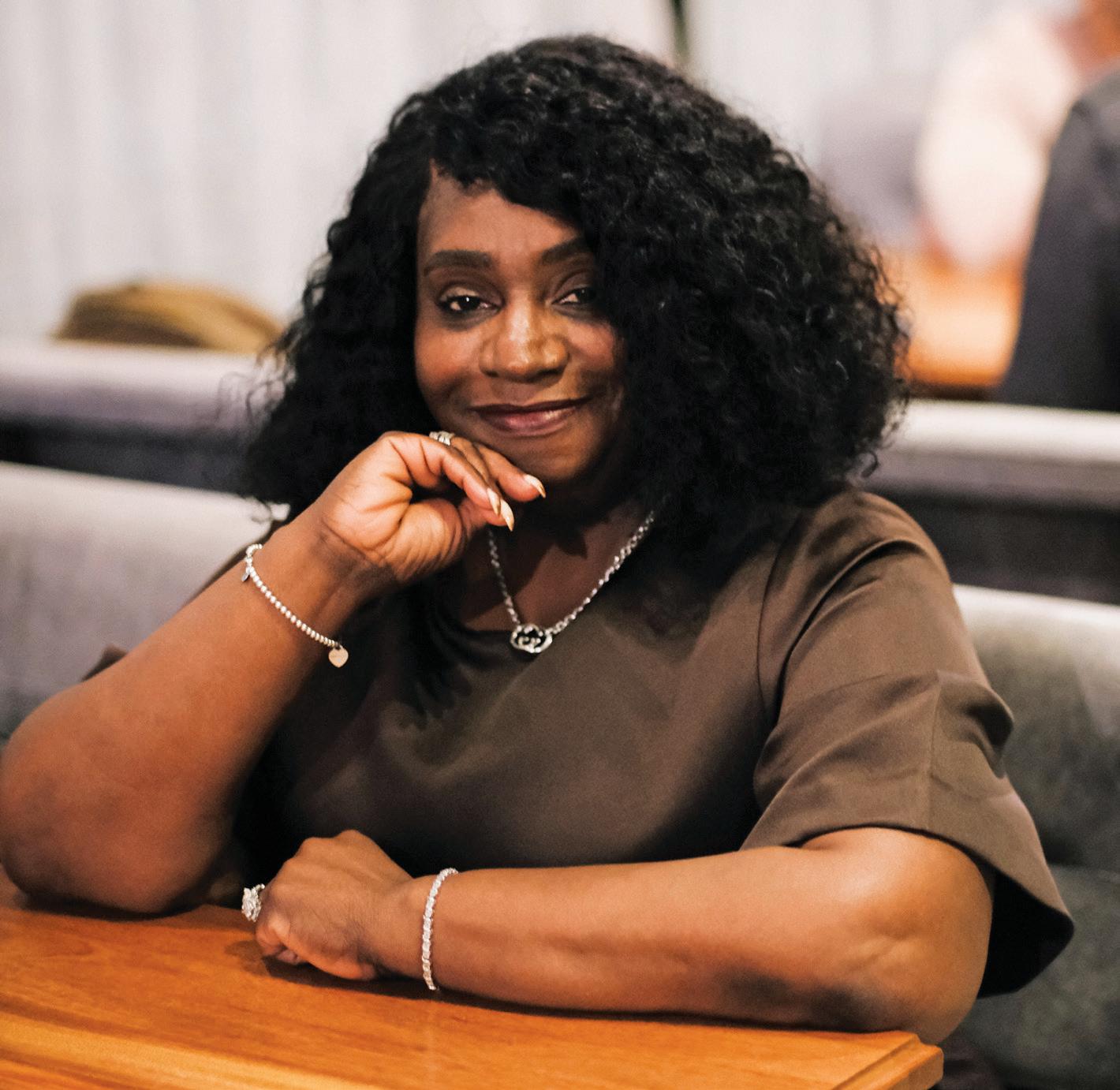
Kimberly Miller-Griffin first met community organizer Robert Gannett on her front steps in the summer of 2020, during COVID-19 lockdowns.
did not respond to a request for comment as of press time.
Around the same time the FBI and internal affairs officers were digging into the possible ghost-payrolling scheme, the Sheriff’s Office was also examining more than 160 cases in which employees may have fraudulently obtained federal Paycheck Protection Program (PPP) loans.
PPP loans, which were simple to get and potentially forgivable, were designed to keep small businesses and self-employed people afloat during the pandemic. The program was later found to have been rife with fraud, with some loans going to companies owned by wealthy celebrities, as well as to hundreds of Illinois public servants.
The U.S. Small Business Administration’s inspector general estimates that $64 billion in PPP loans were fraudulently obtained.
The Sheriff’s Office sustained policy violations against sixty-two employees, firing twelve and moving to terminate dozens more for PPP fraud. To date, at least twenty-nine criminal investigations of PPP fraud involving CCSO employees are ongoing. ¬
This reporting was supported by the Fund for Investigative Journalism.
Max Blaisdell is a staff writer at Hyde Park Herald
The masked stranger was holding a clipboard and collecting signatures on a petition supporting the establishment of a new mental health facility for Bronzeville residents, after years of public clinic shutdowns by the city. As a psychologist and long-time Bronzeville resident, Miller-Griffin signed the petition. She assumed she’d never hear from Gannett again.
Two weeks later, Gannett, longtime executive director of the Institute for Community Empowerment, knocked on her door again, asking if she would consider joining the Bronzeville Expanded Mental Health Service Program Governing Commission if the referendum passed.
This public board, established by Bronzeville community residents through a successful fall 2020 referendum vote, was created in partnership with the Coalition to Save Our Mental Health Centers. Governing members, ultimately appointed by the Mayor of Chicago and the Governor of Illinois, would be responsible for designing Bronzeville’s mental health care system.
“I told myself in 2020 when the world was locked down,” she said. “I said, ‘God, if I ever get the opportunity to help people and spread the word
worldwide, I would do it.’”
So, she said yes. Her decision marked the beginning of a marathon of meetings and listening sessions to reimagine and rebuild Bronzeville’s mental health services. After residents approved a small property tax increase under Illinois’s Community Mental Health Services Act in November 2020—89% voted to support—the Commission was formed to manage the funds and to select a provider for a new community mental health center. Miller-Griffin was appointed as the Commission’s president.
Five years later, the Collective Mental Health Center, one of the commission’s flagship projects, is scheduled to open in mid to late 2026. A former jazz club, the Collective Mental Health Center will be a 7000-square-foot space with a fireplace and lots of natural elements, located on 47th Street. But what drives MillerGriffin to meet the community's needs is rooted in a much older story predating COVID and the Commission.
She spent her life in Bronzeville with her mother, a Mississippi native who migrated to the city’s South Side in the 1950s. Her mother supported her family and put herself through school by working as a housekeeper before eventually securing a job in the Cook County Treasurer’s Office and became deeply involved in local politics. Growing up, Miller-Griffin remembers being taken to rallies by her mother, who served as a precinct captain on the South Side.
She took it all in, learning lessons from her mother’s example.
“I always said that ‘when I grow up, I want to do something like this,’” she said. “I want to make a mark.”
Back then, her Bronzeville neighborhood felt like an extended family. But Miller-Griffin sees a more fractured landscape today. “African American culture is disappearing with gentrification,” she said. “But what we have now is African American people who have made it, who are professionals. They’re returning and striving to get the community back.”
She wants the new center to honor this increasingly fragile legacy, by ensuring that the next generation does not have to fight the same battles without support.
In her early career as a mental health worker, Miller-Griffin was contracted with a program called “GPS for Kids,” designed for students who were on their last chance before being expelled from school. For 10 weeks, teenagers and their
her door in the South Side, MillerGriffin had already spent years of service in courtrooms, community programs and classrooms, witnessing the “generational curse” in action and trying to interrupt the cycle. After the pandemic, she began teaching at Gary Comer College Prep, continuing her efforts to help teenagers.
“A lot of times in the community, kids are doing more than just going to school,.they are actually running the household as well,” said Vanita Rockford, former office manager at Gary Comer College Prep She would work with the kids on their personal growth and teach them things about how to deal with their emotions. We would use her as a resource for that as well.”
Among Bronzeville residents, mental health services have always been in demand in the community. Long-time Bronzeville resident Christopher Potts, 22, who worked with Miller-Griffin as a junior community organizer, believes mental health has been at the intersection of community needs for some time.
program manager, the right property manager, the right team.
“At this point in my life, I don’t know what I will do without it because it is a part of my life now,” she said. “Until that day I stand before that door and cut that ribbon and say that ‘we are open,’ I will probably not take a real vacation.”
She imagines the moment when Bronzeville residents, including kids like the ones she has counselled in schools and court programs, will walk through the doors of their own community mental health center, funded by their neighbors’ votes, shaped by their stories.
“When you work in this field, you carry everyone on your shoulders,” she said.
Over the last few years, MillierGriffin could not “slow down” to celebrate the referendum’s victory, or her hard work on the Commission and in the community. Last November, a gala to honor her work was canceled last minute.
parents were required to attend group counseling sessions every weekend.
During one of those Saturday sessions, she witnessed a mother publicly scolding her son. “What type of man are you?” she asked, after school security guards discovered he was carrying marijuana. In shock, Miller-Griffin wondered what that young person was feeling in that moment, after becoming “the elephant in the room.” She realized the “generational curse” in the community; both the teen and his mom needed support.
“That was at that moment I felt ‘this is where I belong,’” she said. “My passion is with children. We get a second chance when we work ahead, as opposed to working with adults.”
Over the years, she worked with teenagers on the South Side who were navigating a web of consistent pressures and obstacles, including under-resourced schools and limited opportunities for work and personal development.
By the time Gannett knocked on
“I would say the disinvestment wasn't quiet,” Potts said. “It was very apparent as you walked around communities…before the coalition stepped up and started rebuilding.” Potts said mental health crises endured by unhoused people were more “public and outward,” of course, and he frequently encountered homeless people who were struggling.
Potts has been impressed by how Dr. Miller Griffin has worked to provide “hands on” tools and resources for Bronzeville community members to navigate common but incredibly challenging circumstances.
Today, Miller-Griffin sees her job as centering concerns like Potts’ in community-centered policies and services. “We do not want another momand-pop community center,” she said. “We want to bring innovative changes in mental health in this center. We want the person to feel exactly how they feel walking into that new Northwestern [Medical Bronzeville] center.”
These days, even on vacation, she finds herself taking commission calls and worrying about the center, thinking through provider contracts and hiring, and wondering if they have the right
That Friday night, her husband came home and asked her to put on the silky champagne dress she was going to wear to the gala. She assumed they were heading to a restaurant downtown. Instead, her husband drove south and pulled up in front of a venue.
“When I opened up the door, all my friends and family were there and dressed up,” she said. “He managed to get a whole event for me with all my friends, with all the people coming [to the gala].”
There was a golden trophy for her, speeches about how she had helped people through their hardest moments, and a room full of people who showed up for her the way she shows up for others.
“If you don’t know this is the work that you are supposed to be doing, the world is telling you,” her husband told her afterward. “It makes me happy to see you out here in the world making a difference.”
At that full circle moment, she let herself believe that she was doing the right thing. “I guess I am doing what God wants me to do.”¬
Thousands of White Sox fans gathered to tailgate and cheer on their team to an unexpected win on opening day.
BY MALACHI HAYES
Toronto Blue Jays second baseman
Andrés Giménez stepped to the plate in the top of the eighth inning at Rate Field in Armour Square last Friday, his team trailing the host Chicago White Sox by a 3-1 score.
Bright springtime hope had hung in the air for a fair bit longer than home fans are used to. The White Sox were in a groove. They’d leapt out to an early lead on offense, and after a shaky start, young pitcher Sean Burke had settled down to allow just one hit over his last 15 batters faced. With Giménez at the plate, the Sox needed just four more outs to secure their second win of the season.
But there’s a reason that the bright springtime hope doesn’t usually last until the eighth inning at Rate Field. When you lose three out of every four games for nearly the length of a presidential term, as the White Sox have since 2022, extended periods of hope even within a single game are few and far between. Even when things seem to be going well, Sox fans have been all but trained to expect the worst possible outcome, no matter how good the odds look.
Still, hope is always abundant on opening day. All things seem possible, even for a fanbase that’s just endured the worst three-year stretch in the team’s 125-plus year history.
It felt especially abundant on this opening day. The weather had finally blossomed into a lovely 60 degree afternoon, following a week of clouds and rain. As promising, this year’s White Sox squad figures to be their most interesting in several seasons. “The first thing that sticks out is the smiles on
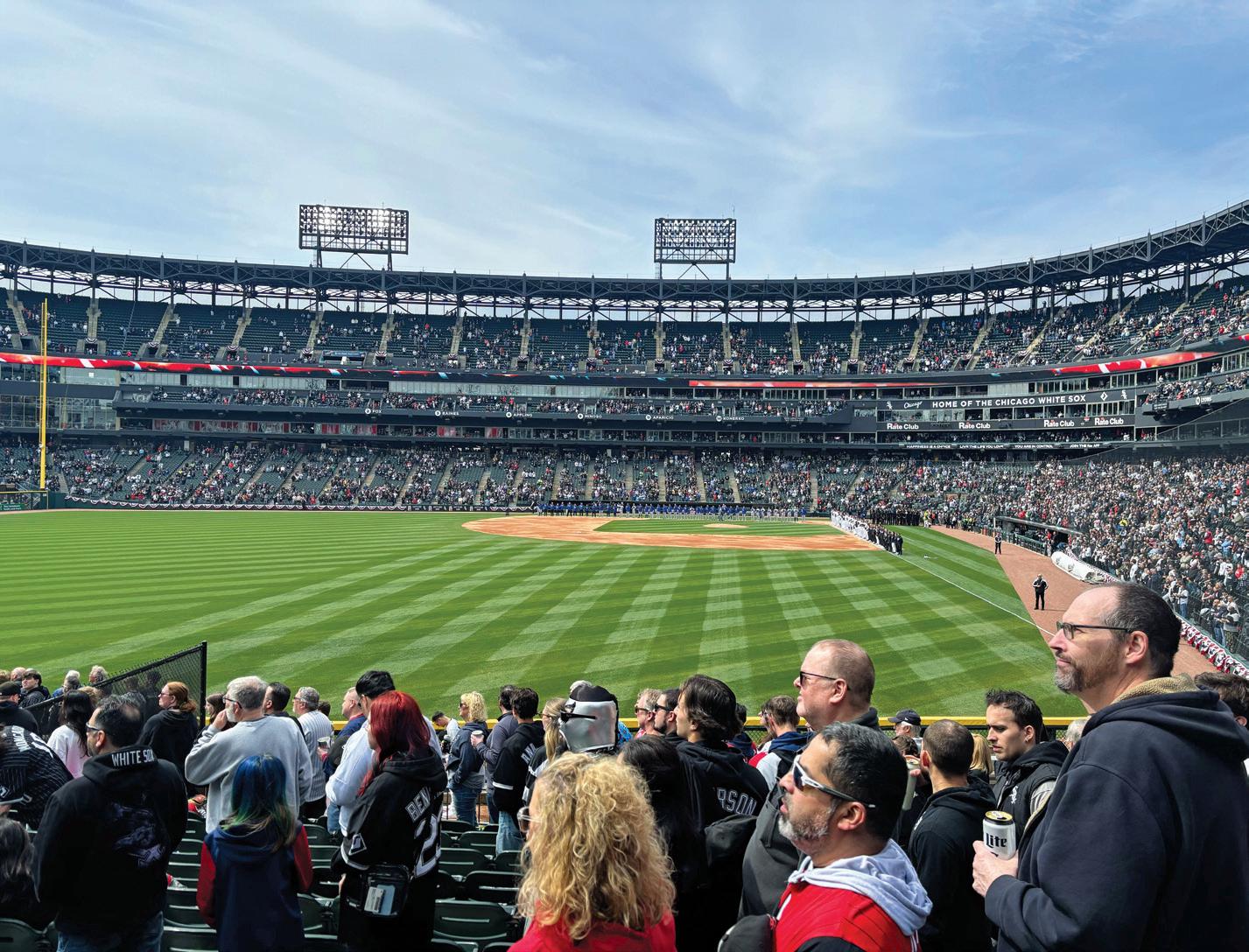
peoples’ faces,” beer vendor Leo Daley said about his opening day experience. “Lots of good positive energy, and excited people.”
Unfortunately, Giménez brought much of that energy crashing down with one eighth-inning swing of the bat. When the ball clanked off the top part of the right field foul pole for a gametying home run, the crowd’s reaction— those who weren’t cheering for the Blue Jays, of course—wasn’t anger so much as a collective sigh. As if to say: things never change, do they?
Curiously, it didn’t seem to break the mood of anyone in my immediate vicinity, as you might expect from a late-
game meltdown on opening day but. But there’s an easy explanation, based on the fans I spoke with. The game wasn’t the point. Not in the way that you’d think.
The energy around the stadium was palpable even two hours before the 1:10pm game time when I strolled through Armour Square Park on the corner of 33rd and Shields. The area is mostly sleepy and residential, but this morning, throngs of jersey-clad fans packed the outdoor seating areas and sidewalks surrounding Turtle’s Bar & Grill and Cork & Kerry, two of the select few drinking establishments in the immediate vicinity of the ballpark. It’s not
Clark and Sheffield, but it’s as buzzing as you’ll ever see this little stretch of 33rd St. west of the Dan Ryan expressway.
Tailgating is typically associated with American football, but a thriving tradition has developed in the parking lots where the old Comiskey Park once stood. Hundreds upon hundreds of coolers, folding tables, grills, and corn hole sets were spread throughout the sea of parking lots surrounding the current stadium. On Friday, the densest action was seen in Lot B, just a few feet away from a plaque marking home plate at “Old Comiskey,” as it’s still affectionately known to fans old enough to have set foot in it. The number of flags flying tall from poles sprouting out of all types of vehicles made the scene resemble a boat club. I saw a Mexican flag, a Greek flag, a Pride flag, a University of Illinois flag, and any number of others bearing twists and variations on the White Sox logo. Naturally, it was the Malört flag that caught my eye. At its base, a table was neatly spread with a selection of commercial and craft whiskey—and of course, Malört—that seemed a few notches above typical tailgate fare. That’s where I found and spoke with Peter Fonseca, founder of the “Chicago Sports Bums” fan group and the organizer of “Whiskey at Comiskey,” which I had inadvertently stumbled across.
“Once a month in Lot B we do free food, free beer, free whiskey for anybody that wants it,” Fonseca told me when I asked about his table set-up. He ballparked about 175 attendees for the Opening Day edition, an impressive number considering the short-notice
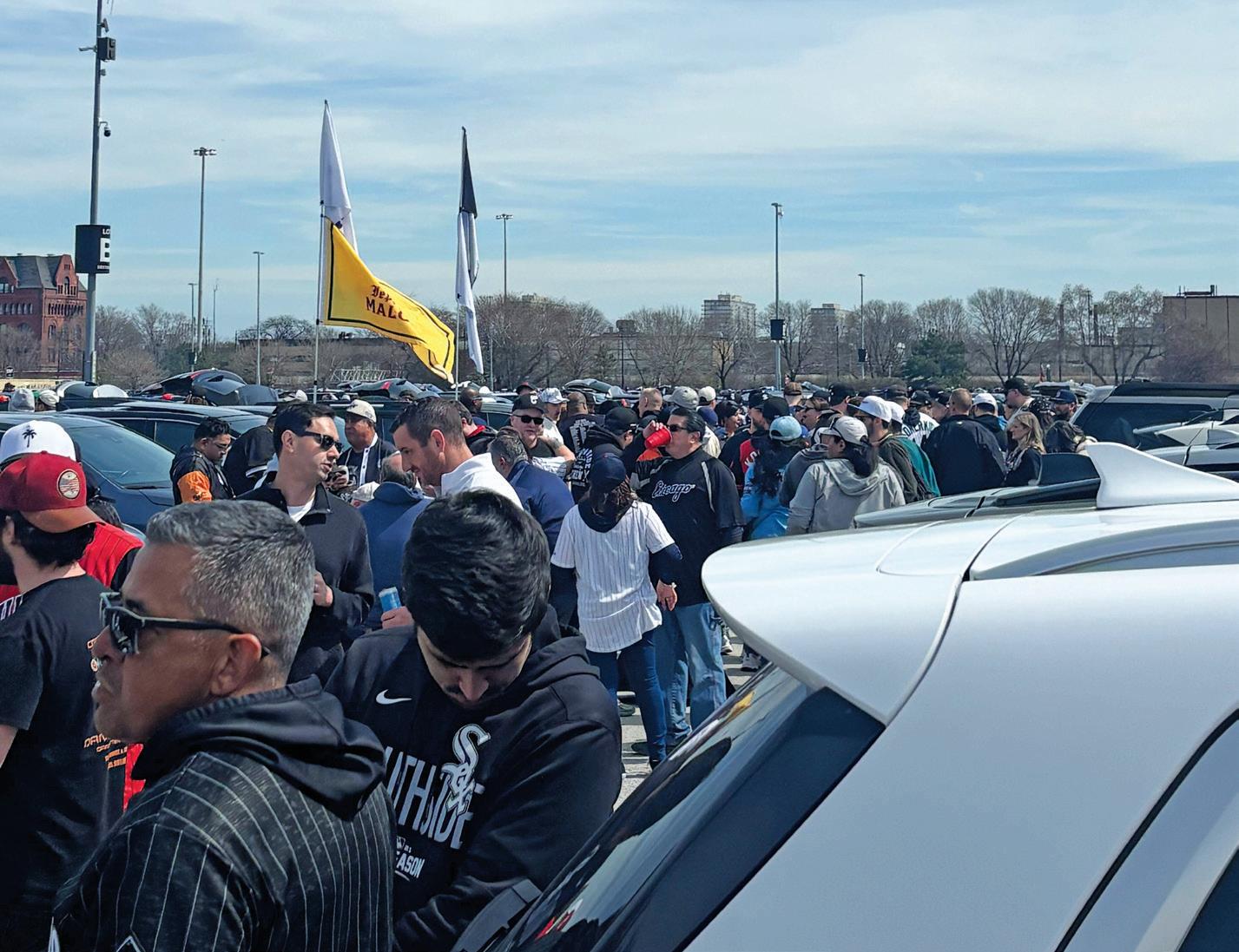
rescheduling of the game from Thursday to Friday. He says they had more than 300 RSVPs for the initial gathering before the postponement was announced on Wednesday afternoon. The energy was high enough that I might not have known the difference.
This is Whiskey at Comiskey’s fourth season, the tradition having come about in 2023 as the Sox descended from title hopefuls into their worst season in a half-century. “The way we figure it, White Sox fans deserve something good!” Fonseca said with a grin.
Plenty of teams (baseball and otherwise) have undergone extended stretches of futility. Fans organizing monthly whiskey tastings to make a trip to the park worthwhile? It might not be a first, but it’s the only one I know of.
Scenes and conversations in and around the ballpark on Friday reinforced my perception that White Sox fans have, if nothing else, an undeniable sense of humor about their downtrodden status. Dating back to the team’s league-record 21-game losing streak and 121 total losses in 2024, some fans seem to have embraced the lowest lows of sports fandom, perhaps figuring that recordsetting ignominy is, if nothing else,
more fun than being regular old bad.
I say that having witnessed the end of that 2024 season, when Sox fans actively rooted against their own team, as they cynically celebrated the approach of the record-setting loss. At the 2026 opener, I spotted one fan on the outfield concourse sporting a custom number 24 jersey bearing the numbers “41-121” on the back in lieu of a name, a reference to that all-time flop of a campaign. Elsewhere, I counted no fewer than five jerseys referencing confirmed Sox fan Pope Leo XIV, two of them with accompanying headdresses. It’s a fanbase that’s learned to embrace the weird in the absence of anything to be proud of in the traditional sense.
Before the game, a bit deeper in Lot B and away from the main blob of tailgaters, I found another affable group camped under a pride flag. They aren’t affiliated with any broader fan groups, but they told me they make the trip from northwest Indiana a handful of times every summer to “tailgate our asses off” and enjoy the company of others.
“Welcome to the family barbecue!” exclaimed a woman who introduced herself as Nikki when I approached.
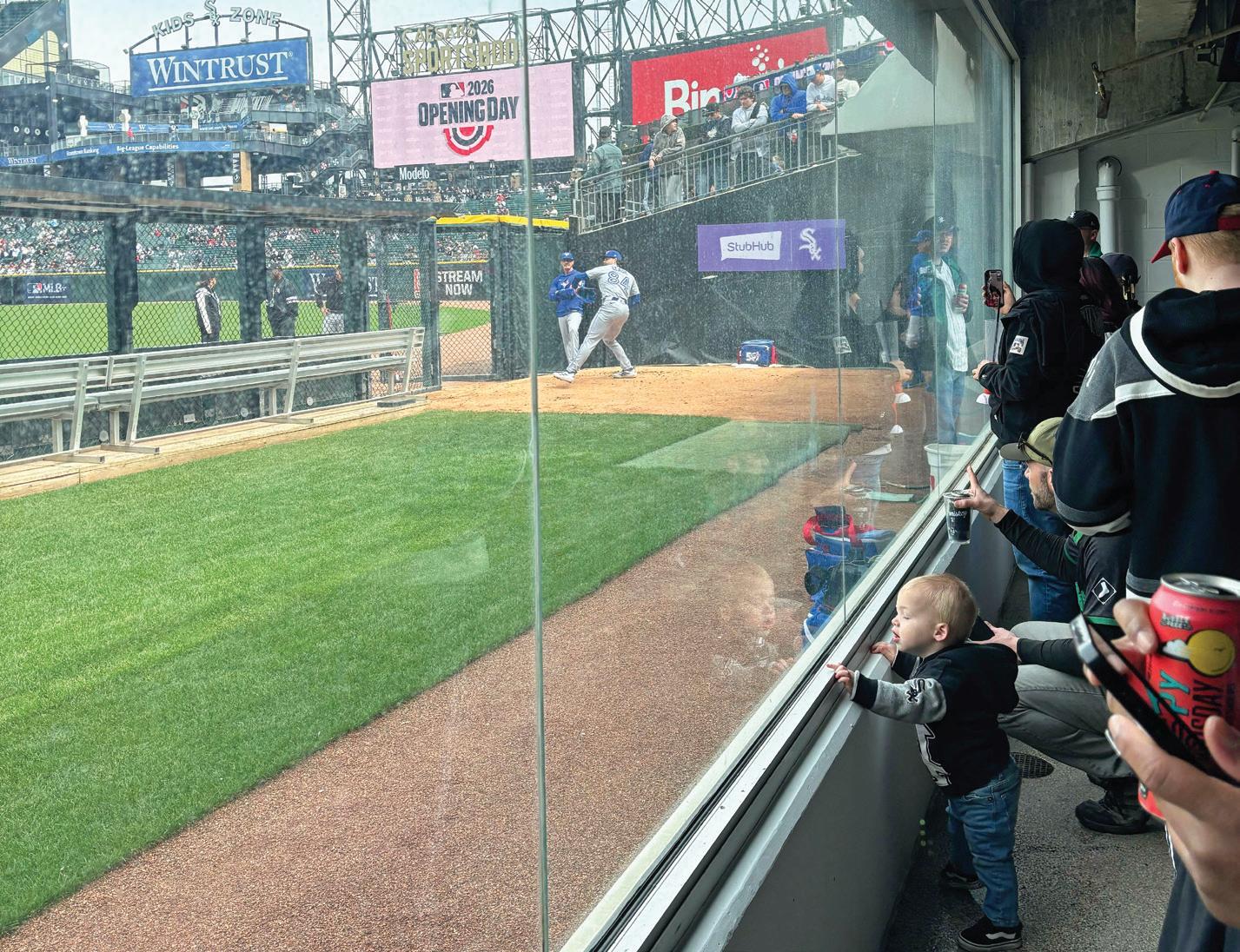
Their group numbered just five, but they mingled and shared a table and food and drink supplies with a slightly larger party camping out of the vehicles adjacent to theirs. I asked Nikki if the two groups knew each other, and to my surprise, she said they had just met. “We happened to have liquor, they wanted to do shots, and we made friends!”
When I asked Rick, another member of the party, why they enjoy coming to games, he was equally chipper about the interaction. “We just love the community here… They loaned us their folding table and said, ‘just put it in our car when you’re done!’”
The sense of community that people find at White Sox games isn’t just about finding new friends at parking lot cookouts. Leaning on a right field concourse railing overlooking the outfield, I asked Nathan, a fan in his late-20s, what it was about Rate Field that kept him attending opening day year after year despite the team’s dismal outlook. Moments before a hit from Sox outfielder Austin Hays gave them a 3-1 lead in the third inning, his answer came without hesitation.
“It’s the atmosphere. The people who come out are true Sox fans,” he said.
As the only White Sox fan in a family full of Cubs fans, he naturally contrasted the Rate Field experience with its North Side counterpart. He described feeling at Wrigley Field “like people are there just to be there, like it’s a trend.” But on the South Side, “you’re there to enjoy the game with the fans. Even if the game’s going bad, you’re all on the same page, you’re not just there to sit on your phone and talk with the people next to you… you’re there to really engage with the atmosphere and be there with people. Especially on opening day.”
Nathan wasn’t the first fan I talked to who made the comparison to Wrigley. Sitting at a bar in the “Craft Lodge” below the right field bleachers, Carlos told me he felt the “game atmosphere” around the Cubs was much better. It’s a fair contention—the Cubs have been a competitive team, and their games are often packed and typically more raucous than your average Sox game. Still, even though he identifies as a Cubs fan, he was wearing a White Sox jersey and said he prefers the “ambience” of baseball on the South Side. “You feel like you have room to breathe.”
Later in the day, I asked Leo the vendor what stood out about Rate Field’s
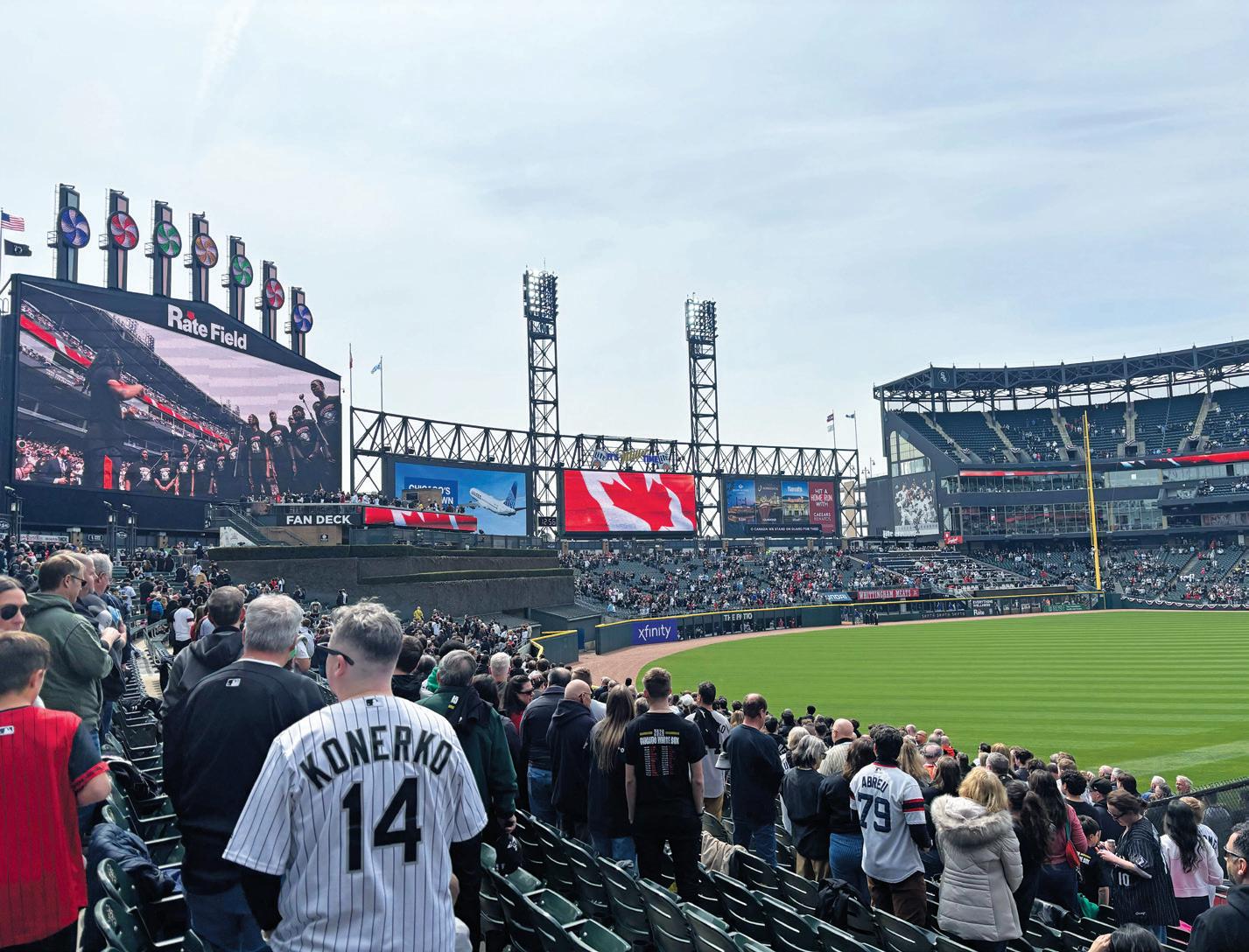
atmosphere, given his experience selling beer at nearly every venue in Chicago, Wrigley Field included. He had positive things to say about Sox’ fans “energy and demeanor,” especially on wellattended days like the opener. “It is such a community vibe over there,” he said. “You have more than half the stadium hanging outside the park for hours in the parking lot cooking hot dogs… there is a sense of community [that] does feel different from other stadiums.”
So as much as it was about a baseball game being played on the field, Friday afternoon felt more like a celebration of the community that’s built itself around the game on the field. It’s clearly an intergenerational community; the substantial number of young children clad in recently-purchased onesies and similar garb was equally matched by grizzled adult fans wearing shirts and jerseys older than half the players on the field. During a pre-game In Memoriam tribute, two of the loudest cheers were reserved for pitchers who played nearly 40 years apart in Wilbur Wood and World Series hero Bobby Jenks. It’s also a community that embraces having bonds as Chicagoans as much as they have as White Sox fans. The team didn’t limit their In Memoriam
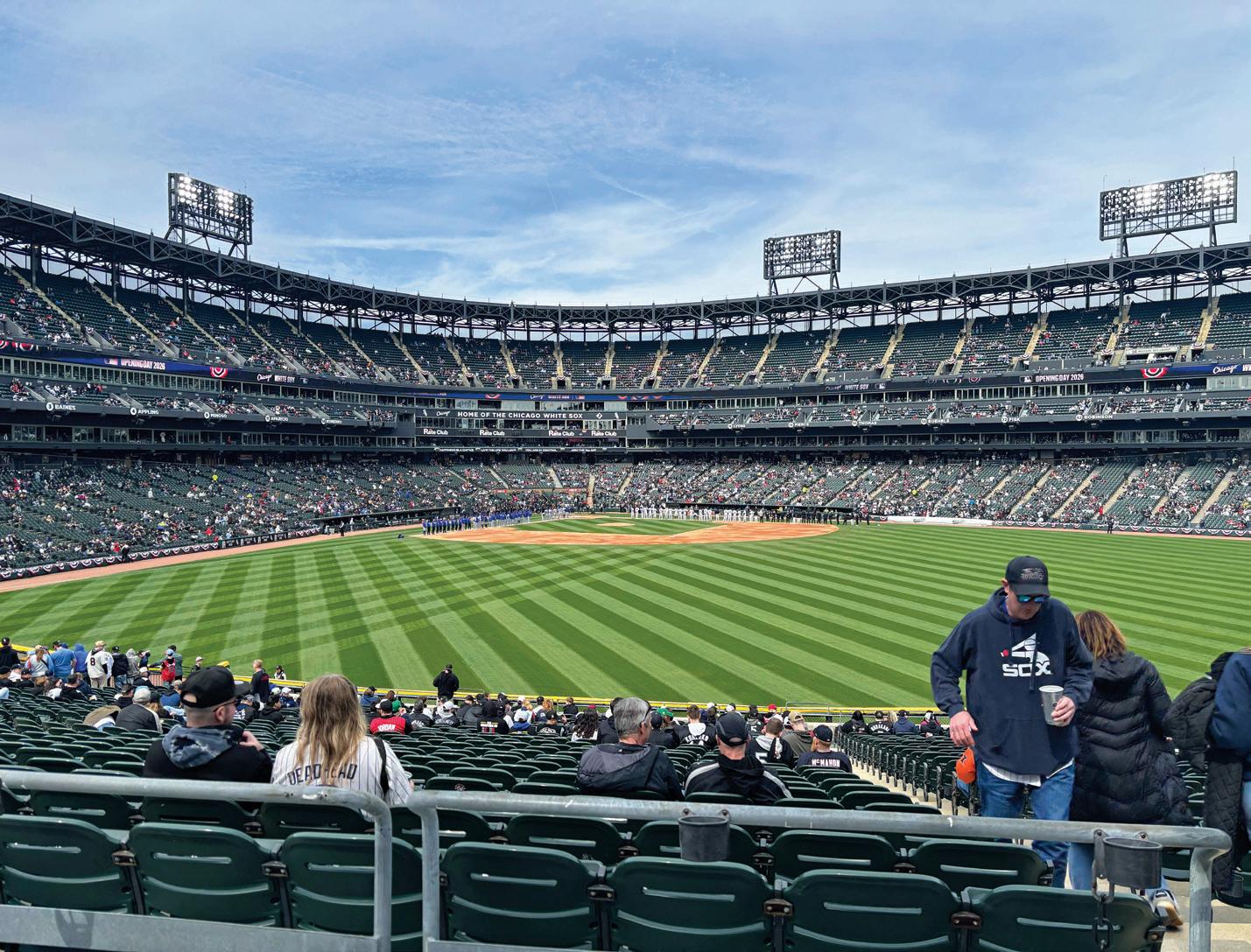
to only their own; fans in the stadium were able to additionally pay loud respects to Chicago hockey legend Troy Murray and Sister Jean Schmidt, the Loyola University cleric who gained recognition for her role as chaplain to the school’s men’s basketball team amid their Cinderella run to the 2018 Final Four. (Murray passed last month, and Schmidt in October, 2025.) First pitch honors went to Chatham native Chance the Rapper, commemorating the 10-year anniversary of his Grammy-winning Coloring Book mixtape. The artist also operated a pop-up merch stand outside Gate 5 of the stadium. It’s like Carlos the Cubs fan told me down in the Craft Lodge. “At the end of the day, it’s one city… it’s Chicago!”
Undoubtedly the biggest cheer of the afternoon was reserved for the third inning, when the crowd watched in real time as franchise icon and current team studio analyst Ozzie Guillén was informed that he would be honored with a number retirement ceremony this coming August. Guillén has been a fixture in the Sox organization for as long as any Sox fan under 50 can remember, first for 13 years as a star shortstop, then for an eight-year managerial tenure that included the team’s lone post-WWI
championship. After a disastrous oneyear stint with the Miami Marlins ended his MLB coaching career, Guillén returned to the Sox organization, where he has now spent more than a decade as a television pre- and post-game host.
It was a fitting feather in the cap of what mostly felt like one of the most emotionally upbeat games I’ve attended in recent years. So when Andrés Giménez hit his game-tying home run to pull the Sox back from the precipice of victory, it makes sense why some fans seemingly saw little use in getting angry. Win or lose, it sure looked like many of them had already gotten what they came for. Victory or defeat was just icing on the cake.
Even so, hope may really be rearing its wings this time around. Virtually every fan I spoke with was able to cite concrete reasons for optimism that this year’s team would provide a change of direction. For most of the game, the sentiment felt validated. And just when Giménez’s home run seemed to have sent many of those hopes for a fresh start up in smoke, the Sox did something entirely unexpected: win.
Why so unexpected? They hadn’t just allowed Toronto to tie the game. Only a few outs later, they had fully given
them the lead, courtesy of a throwing error from third baseman Miguel Vargas that put Toronto up 4-3 and in any other recent year would have all but sealed a loss. Comeback wins have not been in vogue on 35th street as of late.
2026 is a new year, though. Down to their last three outs, the Sox plated the game’s tying run on a daring squeeze bunt from veteran outfielder Derek Hill. Just a few pitches later, a game-winning single from rookie Tristan Peters sent Sox fans home with their first comeback win of 2026.
The air was celebratory, all the way to the end, as thousands of jolly fans shuffled down the stadium’s concrete exit ramps to the sounds of fireworks and the familiar tune of Sweet Home Chicago. A celebration not just of a win, or even of a potentially mold-breaking win. It felt like a celebration of local community and tradition, of rebirth, and of renewing the kinds of social ties that can be all too difficult to come by in a time where maintaining community and connection is as important as ever. If it comes with a side of a competitive baseball team? All the better. ¬
Malachi Hayes is a Bridgeport-based writer and South Side native.
“It started off with just our schools, and everybody just started requesting it,” one co-founder of Pillars said.
BY CORLI JAY
Reppin’ your high school is so Chicago, no matter how many years it’s been since you attended. Chicagoans take pride in where they graduated; this pride is usually very apparent during summertime Chi as proud alumni show up and out for their class picnics. Many of them are all-class affairs, which act as an open invitation for former attendees of notable Chicago high schools such as Morgan Park, Whitney Young, and Simeon to have a good time with those of various graduating classes. Veteran reporter Natalie Y. Moore summed up how significant Chicago high school reunions are in a column for the SunTimes last year, noting “even alumni with advanced degrees lean into braggadocious high school smack-talking.”
The love that Chicagoans, particularly Black Chicagoans, have for their high schools has been captured by the Chicagobased streetwear brand Pillars. Last summer, the brand began showing up at those famed high school reunions to sell shorts that featured high school logos, in what Frank Dukes, co-owner of Pillars, described as “guerrilla marketing.”
“We grabbed a rack, took a rack out there, put them on the rack, and just walked around the parks with it,” Dukes said inside the brand’s shop at Roosevelt Collection in the South Loop. “We realized shorts was an untapped market. Most people don’t make bottoms; you just get a lot of shirts, but you don’t really get bottoms.”
This year marks ten years in business for Pillars, founded in 2016. The streetwear boutique has had storefronts across the city, including locations in Ford City and Chicago Ridge malls, the West Loop, and Avalon Park. The company currently
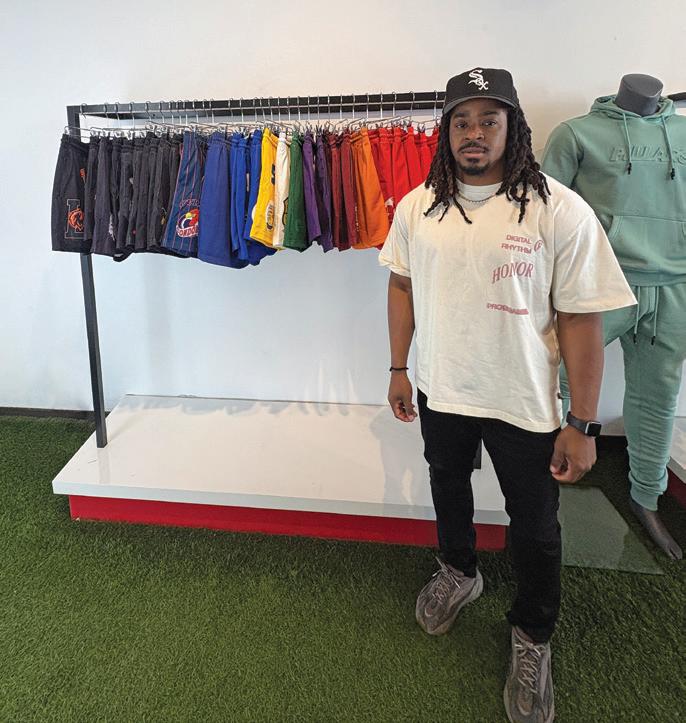
has one operating location, the shop in the Roosevelt Collection at 1137 South Delano Court. According to Dukes, the downsizing is to focus on building the company’s online presence.
A 2006 graduate of Chicago Vocational High School (CVS) in Avalon Park, Dukes said he regularly sold Pillars merch during school reunions. Pillar coowners Michael Willis and Cedric Watson also sold merch at their high schools, Curie Metropolitan High School in Archer Heights and Thornton Township High School in the south suburb of Harvey, respectively, but the creation of the shorts took the sales to another level.
“It started off with just our schools, and everybody just started requesting it,” Dukes said.
According to Dukes, some of the more popular schools for sales were Kenwood Academy High School and Dunbar
Vocational Career Academy in Bronzeville, where he sold out of the shorts and had multiple preorder sales.
Anise Anderson graduated from Dunbar Vocational Career Academy in 1986. She also served as the dean of students at CVS while Dukes was a student. Anderson said Dukes showed up to sell the shorts during Dunbar’s high school reunion picnic last year, where the shorts were a big hit.
“We have vendors out there, and they have to pay a fee to be able to sell to our alumni,” Anderson explained. “Frank paid right then and there. Sent me the money and he sold out of his Dunbar shorts at our picnic.”
This year, Pillars is introducing its capsule concept, featuring various packages that include shirts, shorts, socks, jogging pants, and hats. The capsules also feature varsity jackets with names of high school mascots. Capsule prices range from $90 to $295, and varsity jackets are $110. Presales lasted until April 5, with orders expected to arrive in early summer.
Dukes explained that with its unique concept, Pillars has created a quality product for a celebrated culture in Chicago.
“We have an HBCU (Historically Black College and University) culture without having HBCUs,” Dukes said of the celebration of high schools in Chicago. Since the creation of the high school–themed shorts, Pillars has started working with alumni associations at select schools to give money back in scholarships based on the sales, Dukes explained.
“It’s based off the schools that preordered really well, and then we noticed they had good reunions, good alumni support, and good student involvement,” Dukes said. “So we wanted to kind of
make it make sense using their network to sell merchandise and then they get an investment back at the end of the program.”
Some capsules feature specialty items; Dunbar’s collection includes a lawn chair.
“I think we’re the only school with the chairs because we, again, come with a business plan,” Anderson said of the Dunbar Alumni Scholarship Foundation. “They said all we have to do is post daily, get the alumni to support them, and they will give back so much percent to our scholarships.”
Due to the popularity of Pillars’ high school apparel, Dukes said they have gotten requests to create college merchandise, with alumni predominantly from Chicago State University reaching out. The brand has done work for Phi Beta Sigma, one of the Divine Nine historically Black Greekletter organizations, with expectations to do more Greek apparel soon.
Andeson expressed pride in the work that Pillars and her former student are doing to give back to the community.
“It’s all about reaching back and helping the next generation, because one day we have to sit down and then our former students are the ones that’s going to have to run this world,” Anderson said. “So we pour into them all the knowledge that we can. We know we can’t reach them all, but evidently Frank’s listening.” ¬
Corli Jay is a South Side native who has written for various Chicago publications, including Chicago Magazine and the Chicago Reader, and has worked on staff for Crain’s Chicago Business, The TRiiBE, and the Hyde Park Herald

BY MALACHI HAYES
Welcome to the South Side Sports Roundup! Check back every month for the latest news and updates on everything South Side sports fans need to know.

Sky trade Angel Reese to Atlanta, move towards full franchise reset
In a shocking deal announced Monday morning, the Chicago Sky unexpectedly parted ways with their only superstar, trading forward Angel Reese to the Atlanta Dream in exchange for first round picks in the 2027 and 2028 WNBA drafts.
WNBA business has only just resumed after a five-month, season-threatening labor standoff was resolved with a new collective bargaining agreement between league owners and the players’ union. Thanks to the extended nature of the standoff, what ordinarily would have been a months-long offseason schedule is being compressed into just over a month. The action started with last Friday’s WNBA expansion draft, which saw the Sky make minor trades with the newly-formed Toronto Tempo and Portland Fire to ensure no Sky players would be taken from their roster.
While Reese’s dissatisfaction with the Sky organization was well-vocalized following last year’s disaster of a season, the possibility of a trade was not considered imminent. Reese has been an All-Star in both of her first two seasons in the WNBA, leading the league in rebounds per game in each. As a rookie, she set a league record by recording 15 consecutive double-doubles.
Now without any true impact players, the Sky will look to rebuild their franchise around center Kamilla Cardoso, who was second to Reese on the team with 13.6 points and 8.5 rebounds per game.
With numerous superstars available and the league’s salary cap set to increase by over 350%, the Sky will have plenty of flexibility. They also own the fifth overall pick in this Friday’s WNBA draft. Still, with the 2027 draft projected to have an unusually deep talent pool, all signs point to another year of futility for the Sky in an attempt to reset via high draft picks in 2027 and 2028.
The Sky are set to play a pair of preseason games on April 25 and 29 before beginning their regular season on the road against Portland on May 9.

Bears make offseason moves
The dust has settled on the exciting part of the NFL’s offseason, with open coaching slots filled and most free agents signed. The Bears will see more continuity than most teams heading into next year, but they did make a few splashes. Most notably, star receiver and fan favorite D.J. Moore was dealt to the Buffalo Bills for a second-round pick in the draft later this month.
Moore caught 244 passes for 3012 yards in his three years in Chicago after being acquired from the Carolina Panthers in the same trade that landed them Caleb Williams the following year. He led the team with 20 receiving touchdowns in his three seasons, including a pair of dramatic game-winners against the Green Bay Packers last season that will forever endear him to Bears fans everywhere.
In other moves, the team opted to move on from two of their three leading tacklers on defense last season, releasing linebacker Tremaine Edmunds and seeing veteran safety Kevin Byard sign with the New England Patriots. They’ll be replaced by
former Browns linebacker Devin Bush and Seahawks safety Coby Bryant, both of whom signed three-year deals with the Bears.
Fans were also taken by surprise last month when center Drew Dalman, the anchor of the team’s resurgent offensive line in 2025, abruptly retired at age 27. Bears General Manager Ryan Poles filled in the gap by trading for 30-year-old Garrett Bradbury, who spent six years as Minnesota’s starting center before taking on the same role in New England last year.
The next major offseason milestone comes later this month, with the NFL Draft set to take place April 23-25. The Bears own the 25th overall selection this year, as well at nos. 57 and 60 in the second round.
Illinois back in Final Four for first time in decades
Though the University of Illinois men’s basketball team’s magical run to the Final Four ended in a heartbreaking loss to Connecticut, the Illini still gave local college fans their biggest thrill ride in decades. Entering March Madness as a regional #3 seed, the Illini defeated the University of Pennsylvania in the opening round, followed by Virginia Commonwealth, a shocking Sweet 16 upset over #2 seed Houston, and a rousing defeat of Iowa in the Elite Eight. It was the sixth Final Four in the history of the program and first since 2005, when they fell to North Carolina in the National Championship.
It was the culmination of a long road back to the top for the Illini, who are playing in their sixth consecutive NCAA Tournament under coach Brad Underwood, who took over the program in 2017 after former coach John Groce failed to make the Tournament in four of five seasons. The program re-emerged with a bang in 2021, finishing the regular season ranked second in the nation before being upset in the Tournament’s second round by Chicago’s own Loyola University.
This year’s quasi-Cinderella squad
was led by freshman sensation Keaton Wagler, who was named a consensus second-team All-American and is widely projected to be a top pick in this summer’s NBA Draft, as well as junior transfer Andrej Stojakovic, son of three-time NBA All-Star Peja Stojakovic. Their roster included one Chicagoan in senior guard A.J. Redd, who played four years for the Illini after graduating from Saint Ignatius College Prep in Little Italy. Still, the Illini’s long-awaited breakthrough had plenty of meaning for the city’s numerous fans and graduates. With several key players likely to return and two top-100 ranked recruits entering the fold next fall, they certainly hope this won’t be the last chance at glory for a decorated program back on the upswing.
First pitch for high school baseball
Baseball season is underway for Chicago Public Schools, and all the usual championship contenders of the South Side are vying for the chance to play for this year’s title. The championship has bounced between South and North in recent years; Kenwood Academy captured their first two plaques in 2023 and 2025, alternating with triumphs from Lane Tech in 2022 and 2024. The South Side had been on a roll prior to then, with five of eight titles between 2014 and 2021 being shared by Morgan Park High School (2014, ‘21) and Simeon Career Academy (2015, ‘17, ‘19). On the private school side, high school ranking site MaxPreps has Mount Carmel currently placed among Illinois’ top five high school squads, a space usually reserved for suburban and downstate powerhouses. They’ll try to be the first Chicago school to take home a state championship since 2013, when the Caravan won the IHSA 4A title. ¬
Malachi Hayes is a Bridgeport-based writer and South Side native.
Help Wanted
GAW Paper Coating Systems Inc has openings for the position of Mechanical Engineer with a Master’s degree in Mechanics, Management or related to performing the process engineering activities from the initial conceptual studies and feasibility assessments through detailed design and system optimization. Define project design scope, and lead engineering efforts, including component specification, equipment sizing, and detailed engineering calculations. Develop, modify, and maintain Piping and Instrumentation Diagrams (P&IDs) using AutoCAD. Create and update 3D piping layouts and mechanical system models using SolidWorks. Design and prepare fabrication drawings for mechanical systems and equipment, including converters, pressure vessels, heat exchangers, and storage tanks. Ensure compliance with industry standards and applicable codes, such as ASME, API, and relevant safety regulations. Collaborate with cross-functional teams including project managers, procurement, and fabrication personnel to ensure accurate implementation of design specifications. The work location is Chicago, IL, with a requirement to travel and work from various unanticipated client work sites throughout the USA.
Please mail resumes to 5854 N Northwest Hwy, Chicago, IL-60631 (or) e-mail: adamg@gawpcsinc.com
We Pay Cash! $100 to $500 cash! Phenomenal Towing Jump Starts, Tire Change, Local Tows Contact Rod at 773-930-7112 Autos Wanted
We Want Your Old Car!
a Concierge Touch George Stalling Owner, Licenced Certified Technician Payment before or with work completed 773.802.5765 You Get ’em, We Kill ’em
Masonry
Accurate Exterior and Masonry
Masonry, tuckpointing, brickwork, chimneys, lintels, parapet walls, city violations, caulking, roofing. We are licensed, bonded and insured. Rated A on Angie’s List Free Estimates 773-592-4535
















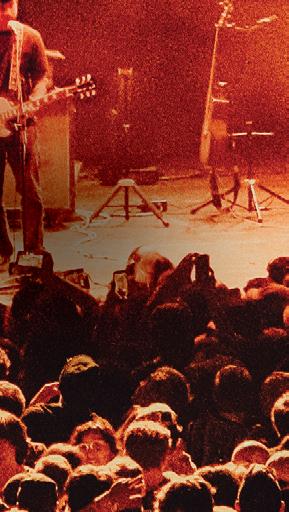

BY ELIZABETH ROSALES
Emo-punk band Joyce Manor sold out the Salt Shed stage on March 28 performing their latest and seventh album, I Used To Go To This Bar. After postponing dates in Toronto and Detroit, their Chicago performance marked the first show back for lead singer Barry Johnson, who recently tore his vocal cords.
The California band made up of bassist Matt Ebert, guitarist Chase Knobbe and lead singer Barry Johnson put on a show full of nostalgia—a treat for the band’s loyal fanbase. The crowd rejoiced as many screamed back the lyrics to tracks like “Leather Jacket,” “Call Out” and “Orange Julius” from their 2011 debut album. With plenty of moshing and crowd surfi ng, Joyce Manor turned the Shed into a sweaty, cathartic blur of bodies and shouted lyrics. ¬
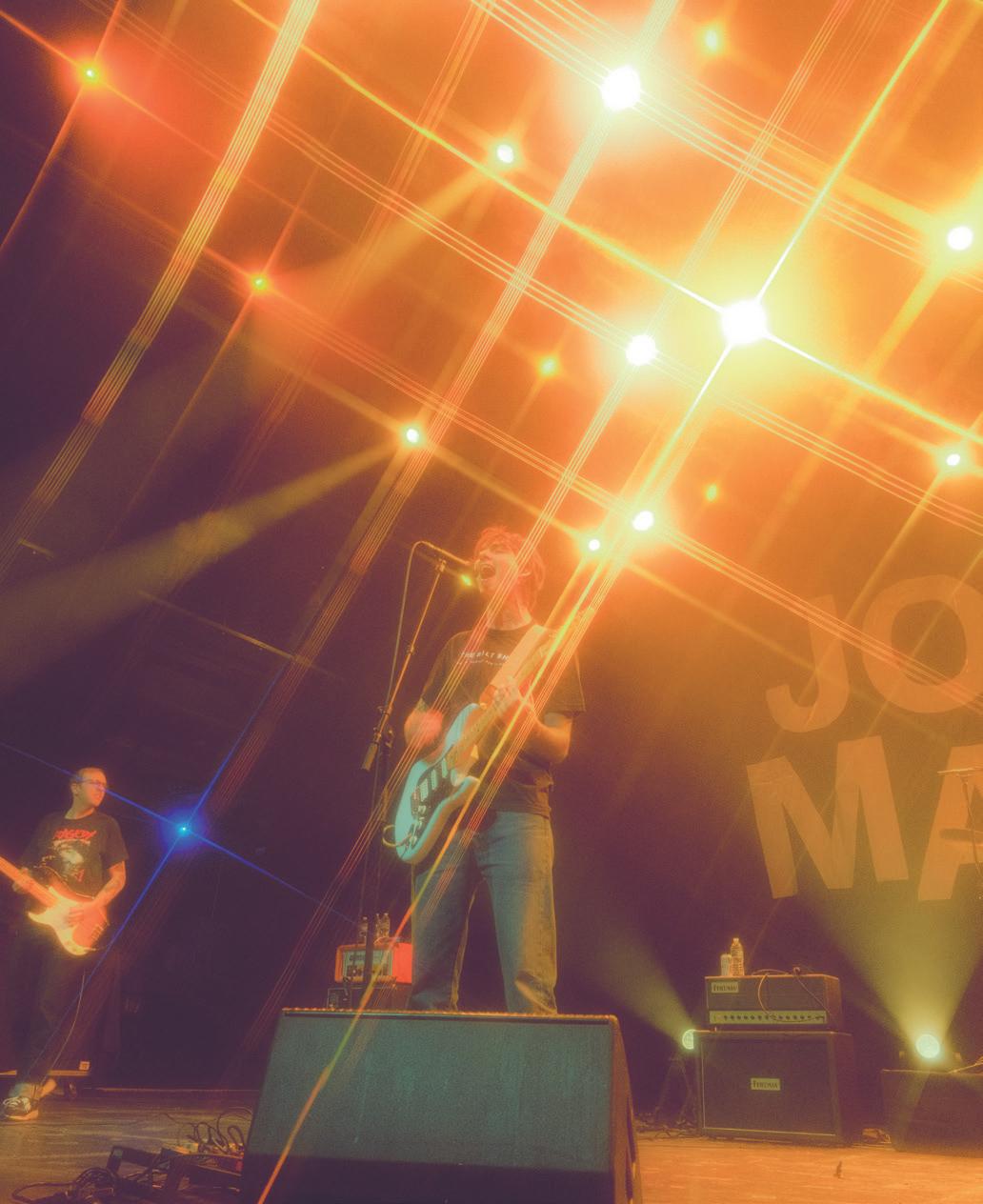


In true punk show fashion, fans surfed through the crowd as the band played songs from their latest release to their classic bangers.

previous
challenges,


singer Barry
via a
“It was really hard to make the choice to postpone but my voice was totally shot.”

BY ANNE SPISELMAN, HYDE PARK HERALD
This story was first published in the Hyde Park Herald .
Chicago theater is nothing if not resilient. While local companies, both large and small, have been struggling and some have shut down, new troupes seem to be cropping up almost weekly. New concepts of what constitutes theater also are on the rise. Joining new plays and musicals are new translations and adaptations of classics designed to make them more relevant to our troubled times.
Here are some openings between now and the end of May that caught our eye, starting in Hyde Park as usual. Contact the theaters for details and changes. ¬
Theater of the Mind”
Reid Murdoch Building Through July 12 theaterofthemindchicago.com
A centerpiece of Goodman Theatre's centennial season, this immersive experience created by Academy, Grammy, and Tony Awardwinning artist David Byrne with writer Mala Gaonkar, and directed by Andrew Scoville, promises a “75-minute journey of self-reflection, discovery and imagination.” One of eleven actor-guides, among them James Earl Jones II and Elizabeth Laidlaw, leads small audience groups through the rooms and interacts with them for what should be a unique show.
Out Here
Court Theatre
April 10-May 10 courttheatre.org
Court Theatre goes further out on a limb than usual by closing the season with the premiere of a new musical, Out Here<, developed in partnership with University of Chicago professors Leslie Buxbaum (concept, book and lyrics) and David J. Levin (concept and dramaturgy); musician, writer and producer Erin McKeown (music and lyrics), and the Neubauer Collegium for Culture and Society.
Chay Yew, formerly of Victory Gardens Theater, directs, and Becca Ayers stars as Dawn in this “fresh and intimate look at a family reconfiguring itself and rediscovering joy.” According to the website, Dawn has a husband, family and house but wants more. “She wants her exgirlfriend, Robin. She wants nothing to change and she wants everything to change, and she wants to control all the terms. As she’s caught between what’s been and what’s next, Dawn must learn to reimagine her expectations, harmonize with loved ones and trust the process.” Good luck with that. Look for special programs in conjunction with the run.
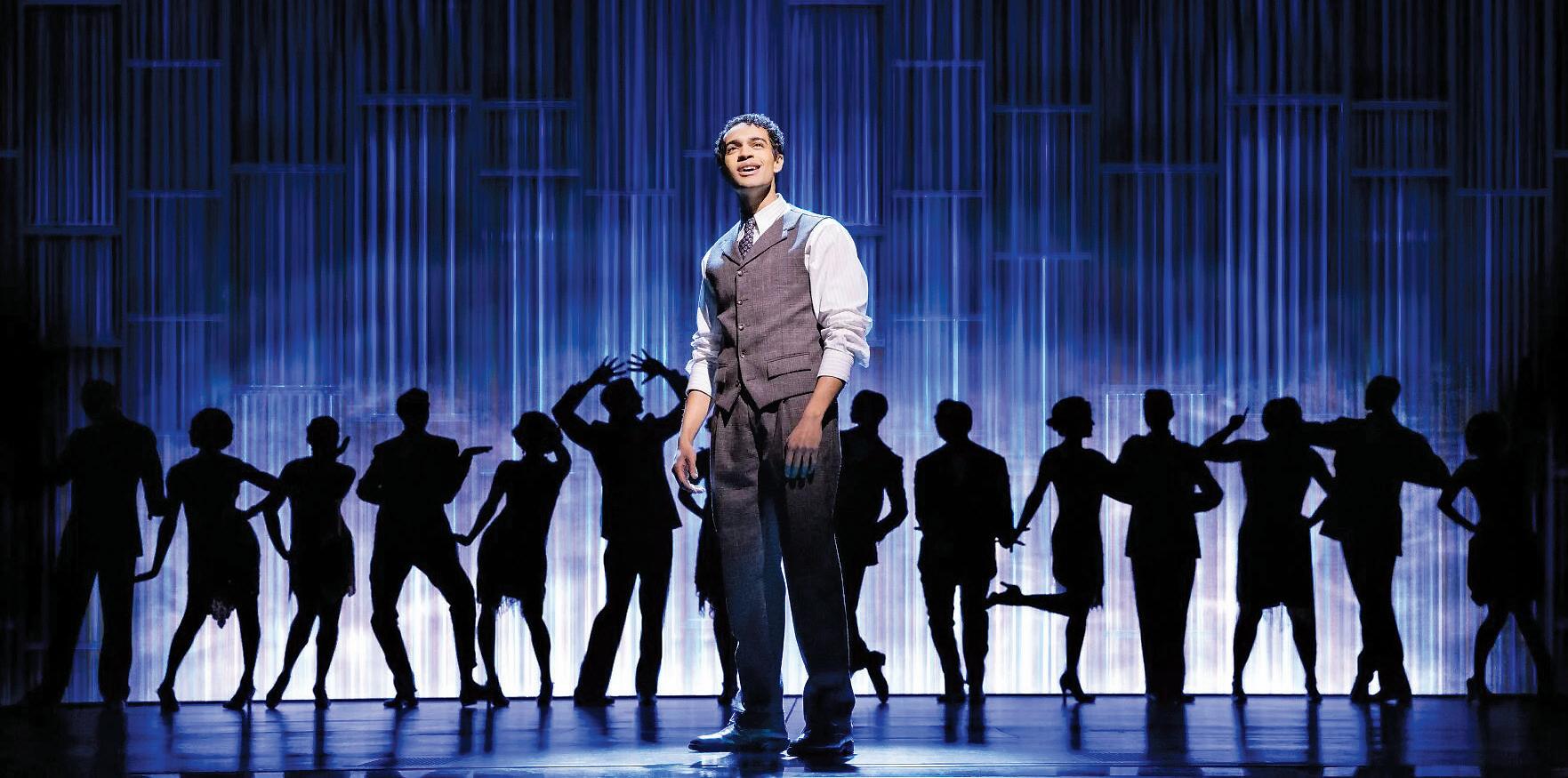
Goodman Albert Theatre
March 28-Apr 26 goodmantheatre.org
Almost three decades after its 1997 Chicago premiere set a box office record, August Wilson's Ma Rainey's Black Bottom returns to the Goodman in a centennial season revival led by director Chuck Smith and music director/associate director Harry J. Lennix, who, respectively, directed and played Levee in the original production. Al’Jaleel McGhee is the edgy Levee this time around and E. Faye Butler is “The Mother of the Blues” Ma Rainey who takes her time getting ready to record, as her musicians tell stories of racism, rage and more in this heart-rending drama set in Chicago in 1927.
Steppenwolf’s 1700 Theater April 19-May 10
The Movement You Need: An Evening With Brendan Hunt (Ted Lasso’s cocreator/writer) is a new one-man show fueled by bittersweet memories of his Chicago childhood, a love for The Beatles that got him through it and the tongue-tied moment he met Paul McCartney. In other words, it's a “love letter to the family that makes us, the music that shapes us and the crazy shit life throws our way,” or so he says.
Keerah
Definition Theatre
May 29-June 28
definitiontheatre.org
Hyde Park's other theater, Definition, bows in with the world premiere of Netta Walker's Keerah, which was developed as part of its annual Amplify competition. McKenzie Chinn directs the timely piece about Ciara, a Black American poet, and Cormac, an Irish writer on a J1 visa, who meet in a Chicago neighborhood on the brink of gentrification and connect over their love of language and literature—until they're torn apart by immigration, bad decisions and hidden truths.
Both
Steppenwolf’s 1700 Theater
April 11-May 10
Part of a multi-year collaboration between Teatro Vista Productions and Steppenwolf Theatre Company, the world premiere of Paloma Nozicka's Both, directed by Georgette Verdin, stars the playwright as Xochi, a young woman who is dealing with a difficult pregnancy, a new relationship, a family that can't stand her and the loss of her twin brother Sebastian, who was declared missing a year ago. When he mysteriously reappears, her family is overjoyed, but Xochi is suspicious about where he's been and why this version of him seems so different from the one she knew.
Steppenwolf ‘s Ensemble Theater
April 9-May 31 steppenwolf.org
Steppenwolf Theatre Company continues its 50th anniversary season with the world premiere of Tarell Alvin McCraney's Windfall directed by Awoye Timpo. The stellar cast includes Alana Arenas, Glenn Davis, Jon Michael Hill, Namir Smallwood, Esco Jouley and Michael Potts in a story about the power of money. When a father loses his child in a clash with the police, three strangers advise him to take the city’s cash settlement, relocate and forget his grief—or remain haunted by memories of the world his child fought so hard to protect. What would you do?
The Great Gatsby Cadillac Palace Theatre
April 21-May 3 broadwayinchicago.com
Most of the musicals on Broadway in Chicago's busy schedule are making return visits, but the Tony Awardwinning The Great Gatsby based on F. Scott Fitzgerald's classic Jazz Age novel is a newcomer. Marc Bruni directs the extravaganza, which has a book by Kait Kerrigan and a pop-influenced score by Jason Howland and Nathan Tysen. Dominique Kelley choreographs.
Ally Theater Wit
Through May 2 theaterwit.org
The Midwest premiere of Itamar Moses' The Ally, directed by Jeremy Wechsler, offers eloquent arguments on all sides of the Israeli-Palestinian conflict and asks “Which side are you on?” At its center is teacher Asaf who is pulled into a political firestorm that tests his convictions and sense of self after a student asks him to sign a manifesto condemning police brutality that turns out to be much broader in scope than he thought. Then his ex-girlfriend takes the lead on the other side.
Writers Gillian Theatre April 9-June 14
writerstheatre.org
Truth is, I'd go see Rae Gray and Christopher Donahue in any play, but the Chicago/Midwest premiere of Max Wolf Friedlich's Job should be a stunner. David Esbjornson directs the intense psychological thriller about Jane (Gray), an employee at a big tech company, who's placed on leave after video of her screaming breakdown at work goes viral and she's told she must be evaluated by crisis therapist Loyd (Donahue) before she can be reinstated. Their first session quickly escalates into an epic showdown with a shocking twist, and the twohander skewers the insidiousness of the internet, the meaning of work and the ramifications of a secret revealed.
Trojan Women Eos Theatre Company at the Bramble Arts Loft April 2-18 eostheatre.org
Led by women, the brand-new Eos Theatre Company “aims to create work where women’s perspectives are not only included but centered.” Its inaugural production is The Trojan Women by U.K. poet Caroline Bird “after Euripides.” Directed by Rachel Sledd Iannantuoni, this modern-day version of the anti-war play is set in the mother-and-baby-unit of a prison. Outside the walls, Troy and its people burn. Inside, the city's captive women await their fate while Hecuba, the fallen Trojan queen, stalks the halls, and the pregnant Chorus is shackled to her bed. Their horror at what's happened is nothing compared to the devastation to come.
Goodman Owen Theatre May 2-31
Speaking of the blues, York Walker's Covenant, which is having its Chicago premiere directed by Malkia Stampley in the Goodman Owen, takes off from the legend of Robert Johnson. In this twisty Southern Gothic thriller, Johnny “Honeycomb” James (Debo Balogun) left his small Georgia town a struggling guitarist— and returned a blues star, to the surprise of sisters Violet (Felicia Oduh) and Avery (Jaeda LaVonne), their mother (Anji White) and their best friend Ruthie (Ashli Rene Funches).
As rumors of a darker deal spread, it becomes clear “Honeycomb” is not the only one with a secret or seeking salvation.
Krishnan’s Party
Upstairs Studio
April 7-26
New Zealand’s Indian Ink Theatre New Zealand’s Indian Ink Theatre Company makes its Chicago debut with Mrs. Krishnan's Party created by Jacob and Justin Lewis. The actors juggle cooking, music and a whole lot more in this 80-minute “celebration of life” that's different every night. Afterwards you can sample the dahl that's made on stage and/or find the recipe on CST's website.
The Yard at Chicago Shakespeare April 18-May 24
Having starred in CST’s 2024 Having starred in CST's 2024 Judgment Day, Jason Alexander returns to direct the world premiere of Scooter Pietsch's <i>Fault</i> showcasing Enrico Colantoni and Teri Hatcher as Jerry and Lucy Green, who go head-tohead in late-night battles after 30 years of marriage. Lies, betrayals, revelations and much dark humor ensue.
The Merry Wives of Windsor Chicago Shakespeare Courtyard Theater April 2-May 3 chicagoshakes.com
Director Phillip Breen makes his Chicago Shakespeare debut with Shakespeare's raucous comedy The Merry Wives of Windsor, as does Jason Simon, who plays the lewd but arguably lovable Sir John Falstaff. The large, talented ensemble also features Ora Jones and Issy van Randwyck as besties Mistress Page and Mistress Ford, who get the better of the rotund would-be seducer, and Chike Johnson and Timothy Edward Kane as their husbands. I confess Merry Wives has never been one of my favorites, but maybe this version will change my mind.
TimeLine Theatre Company
May 6-June 7 timelinetheatre.com
TimeLine inaugurates its Uptown theater with the Chicago premiere of Amy Herzog's oh-so-timely new version of Henrik Ibsen's An Enemy of the People, which basically asks what happens when doing the right thing means losing everything. Ron OJ Parson directs the play about a doctor who discovers contaminated water that threatens the health of his Norwegian town, but when he raises the alarm, local leaders—including his brother, the mayor—scramble to protect their own interests by discrediting him. The cast includes Will Allan as Dr. Thomas Stockmann and Behzad Dabu as his brother, Peter Stockmann.
The New York Times called the 2024 Broadway premiere “crackling and persuasive … a bitter satire of local politics that soon reveals itself as a slowboil tragedy of human complacency.” I'm eager to see what TimeLine does with it.
The Exchange is the Weekly’s poetry corner, where a poem or piece of writing is presented with a prompt. Readers are welcome to respond to the prompt with original poems, and pieces may be featured in the next issue of the Weekly.
South Side Weekly and Build Coffee & Books will host our Third Thursdays open mic on April 16 at 6:30pm!
with a chance of love in the 21st century by samuel amegatse
Perhaps you don’t have to hold the world for her today.
Nor possess the most silver and gold.
Perhaps there is no dragon to slay.
No coat to throw over a puddle.
Perhaps you have a name.
Which she only desires to share
Perhaps her heart was always with you.
You just never imagined it could be there.
Precisely Speaking,
Attaining true love may be up to you
Peeling away your past pain
To embrace appreciation in front of you,
Not to cast it away.

by samuel amegatse
I mined for a renewed mind deep within the dirt.
The goal is to find gold
I chose to ignore my bloody blistered hands first.
Securing, relentless drive to dig deep
When tasks harder than diamonds arise
I dream about my future peace of mind
Finding a heart of gold within myself
The precipice of reaching the top
The pinnacle of who I am.
Lies in the process of pain.
Persistence under the sun peels away inhibitions.
Igniting your flame within the night to light the way.
Chima Ikoro is the Weekly’s Engagement Editor.
THIS WEEK'S PROMPT: “WRITE ABOUT A MOMENT WHEN YOU REALIZED THAT SOMETHING YOU WERE SEARCHING FOR, LIKE LOVE, PEACE, OR PURPOSE, WAS ALREADY WITHIN REACH.”
This could be a poem, journal entry, or a stream-of-consciousness piece. Submissions could be new or formerly written pieces. Submissions can be sent to bit.ly/ssw-exchange or via email to chima.ikoro@southsideweekly.com
WILSON’S
DIRECTED BY CHUCK SMITH
ASSOCIATE DIRECTOR AND MUSIC DIRECTOR HARRY J. LENNIX
“THE MORE MUSIC YOU GOT IN THE WORLD, THE FULLER IT IS.”
Ma Rainey’s band is waiting. It’s 1927 Chicago, and “The Mother of the Blues” takes her time getting ready to record. Tensions and temperatures rise as the musicians recount tales of rage, joy, betrayal and faith in astonishing stories and a heartstopping climax. Chicago legends Chuck Smith and Harry J. Lennix reunite for the play that smashed box office records in its 1997 Goodman premiere for this major revival of “a genuine American masterpiece” ( Chicago Reader ).



EXTENDED BY POPULAR DEMAND THROUGH MAY 3!