The South Side Weekly is a nonprofit newsprint magazine written for and about neighborhoods on the South Side of Chicago. We publish in-depth coverage of the arts and issues of public interest alongside oral histories, poetry, fiction, interviews, and artwork from local photographers and illustrators. Started as a student paper at the University of Chicago, the South Side Weekly is now an independent nonprofit organization dedicated to supporting cultural and civic engagement on the South Side, and to providing educational opportunities for developing journalists, writers, and artists.
Contributing Editors Will Cabaniss, Eleonora Edreva, Lewis Page, Hafsa Razi
Social Media Editor Sam Stecklow
Web Editor Andrew Koski
Visuals Editor Ellie Mejia
Layout Editors Adam Thorp, Baci Weiler, Sofia Wyetzner
Senior Writers: Patrick Leow, Jack Nuelle, Stephen Urchick
Staff Writers: Olivia Adams, Amelia Dmowska, Maira Khwaja, Emiliano Burr di Mauro, Michal Kranz, Zoe Makoul, Sammie Spector, Zach Taylor
Staff Photographers: Juliet Eldred, Finn Jubak, Alexander Pizzirani, Julie Wu
Staff Illustrators: Javier Suarez, Addie Barron, Jean Cochrane, Lexi Drexelius, Wei Yi Ow, Amber Sollenberger, Teddy Watler, Julie Wu, Zelda Galewsky, Seonhyung Kim
Editorial Intern Clyde Schwab
Webmaster Sofia Wyetzner
Publisher Harry Backlund
The paper is produced by an all-volunteer editorial staff and seeks contributions from across the city. We distribute each Wednesday in the fall, winter, and spring, with breaks during April and December. Over the summer we publish monthly.
Send submissions, story ideas, comments, or questions to editor@southsideweekly.com or mail to: South Side Weekly 1212 E. 59th Street Ida Noyes Hall #030 Chicago, IL 60637
For advertising inquiries, contact: (773)234-5388 or advertising@southsideweekly Read our stories online at southsideweekly.com
IN CHICAGO
A week’s worth of developing stories, odd events, and signs of the times, culled from the desks, inboxes and wandering eyes of the editors
Charters Catch a Break
4th Ward Alderman Will Burns has been chairman of the Education Committee since late May, and he’s already making waves; his most recent move as chairman of the city’s Education Committee was to block the advancement of a resolution that would create a moratorium on charter schools around the state. Coincidentally, Burns has also received thousands of dollars in campaign contributions from charter supporters. The resolution, which was signed by forty-two aldermen, somehow did not find its way onto to the agenda for Monday’s committee meeting. 6th Ward Alderman Roderick Sawyer, one of the resolution’s sponsors, said he was not “overly surprised.”
Cabs v. Uber
Popular taxi service Uber is currently fighting a pitched PR battle on two fronts. While the South Side will soon bear witness to the launch of a new fleet of the company’s drivers—an initiative spearheaded by influential, vocal St. Sabina pastor Michael Pfleger, for those looking to cross a popular name off their topical Chicago Bingo cards—City Hall staged a smaller skirmish this past week, as aldermen played to opposing crowds of drivers for hire in the latest round of budget hearings. The issue under discussion? The plummeting price of taxi medallions, which sold for a mere average of $240,000 this past year, down from a peak of $360,000 in 2013. Many cab drivers accuse Uber (along with its less popular, orthographically uglier cousin, Lyft)
of flooding the market with unlicensed part-time drivers (who are, nevertheless, quite good at providing you with free bottled water). Taxi drivers were apparently out in full force downtown, hissing and jeering at Maria Guerra Lapacek, commissioner of the Department of Business Affairs and Consumer Protection, but it remains to be seen how well this competitive spirit will help them capture the hearts (and, more importantly, the app storage space) of consumers.
#FlytheW
The Chicago Cubs don’t look great on paper. No Cubs fan wants to be—or Sox fan needs to be—reminded that, barring 2015, they’ve had five consecutive losing seasons and six without a postseason appearance. This season, however, suggests an upward trajectory: the great Victory Flag (white background, big blue W) has sailed atop Soldier Field, and more recently, the Michigan Avenue Bridge, exactly twenty-two more times than the somewhat more familiar Loss Flag (blue background, big white L). A wild card game against the 9864 Pittsburgh Pirates gives the 97-65 Cubs an opportunity to sneak into the National League Division series. As a result, “Fly the W” deep-dish pies (thanks, Giordano’s) and square, hole-less “FlytheW” donuts (square donuts, Dunkin?) have likely never sold faster. This may be the beginning of a new era for the Cubs, but the Weekly can’t promise that we won’t be watching the Blackhawks season opener on Wednesday night instead.
IN THIS ISSUE
OUTSIDE THaT SYSTEm anD HEncE UnSpEaKabLE
I have explored and documented the diverse array of spaces that fall under the umbrella of the UofC
juliet eldred...4
nEvEr agaIn
This rally came about a week after the end of the hunger strike, a monthlong endeavor where fifteen protestors drank only liquids and some suffered hospitalizations.
olivia adams...6
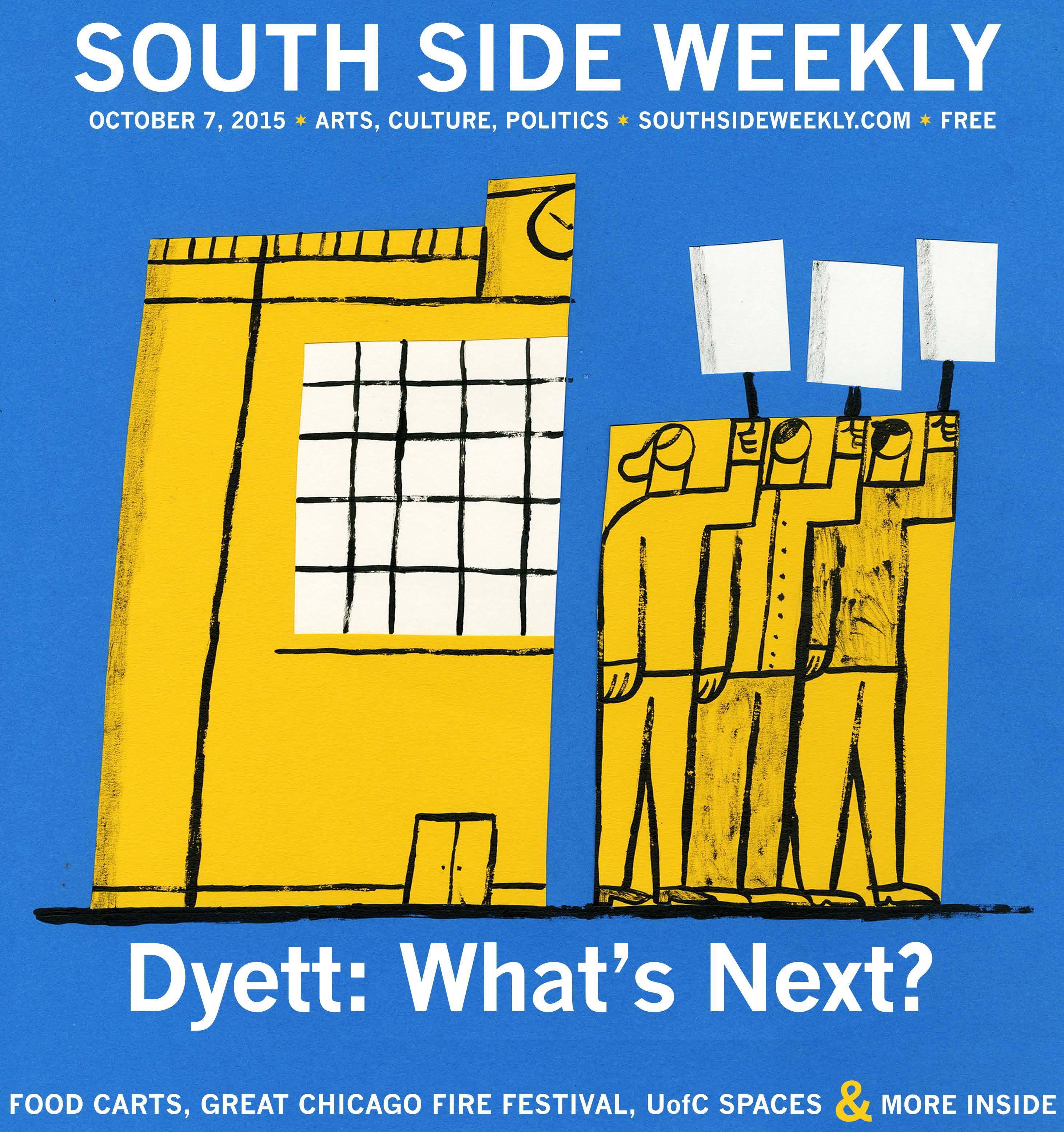
Cover by Zelda Galewsky.
cOmIng THrOUgH
Pushcarts have been community staples for decades
emeline posner...8
aSHES TO aSHES
“That’s such a big part of what our city has become, because of the efforts and strength that came out of the fire.” will cabaniss...10
a cHIcagO arcHITEcTUrE bIEnnIaL caLEnDar
A calendar of South Side artists and events in the inaugural festival jon poilpre...12
photos by juliet eldred
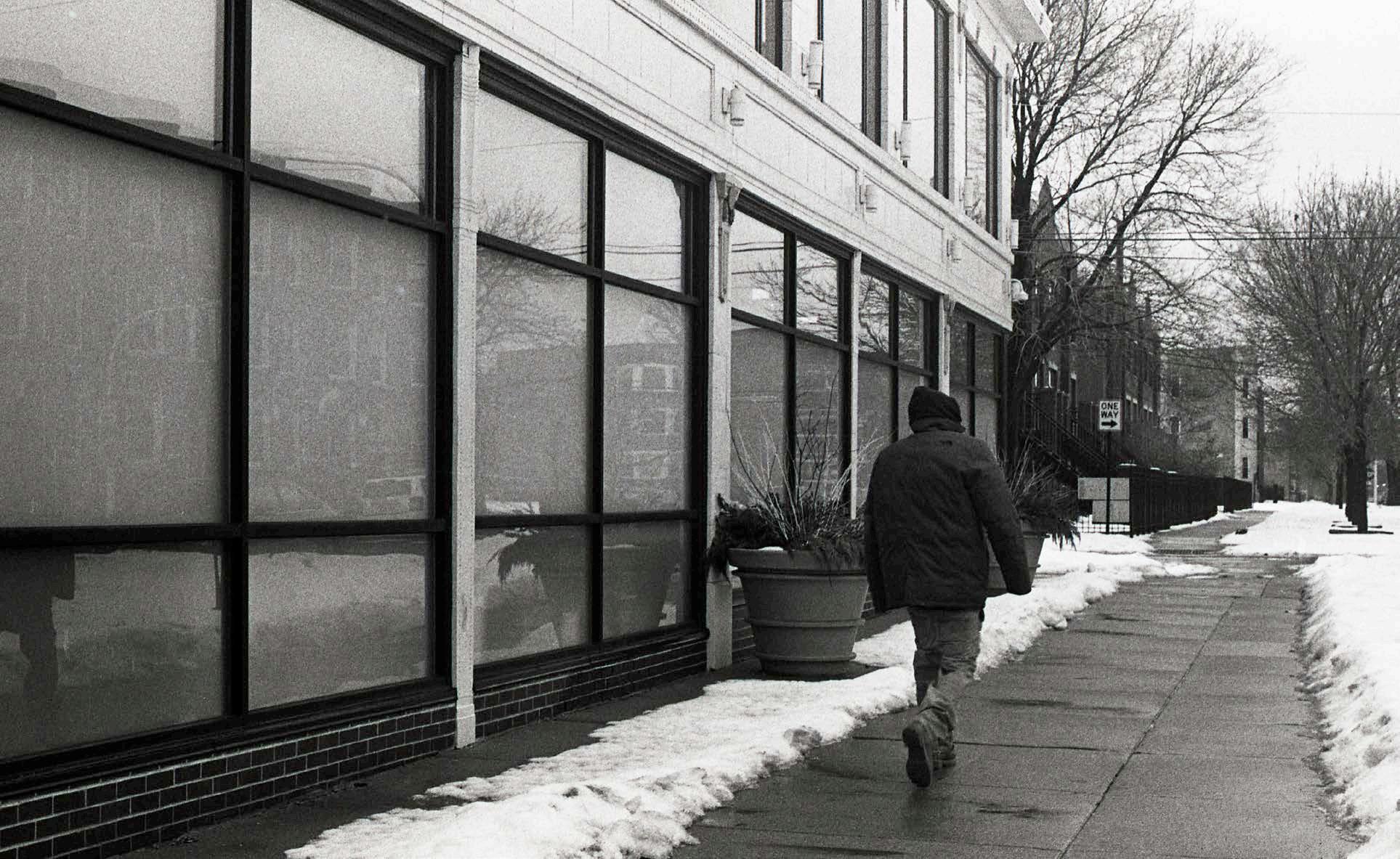
Category III: Arts Incubator, Garfield Boulevard and Prairie Avenue
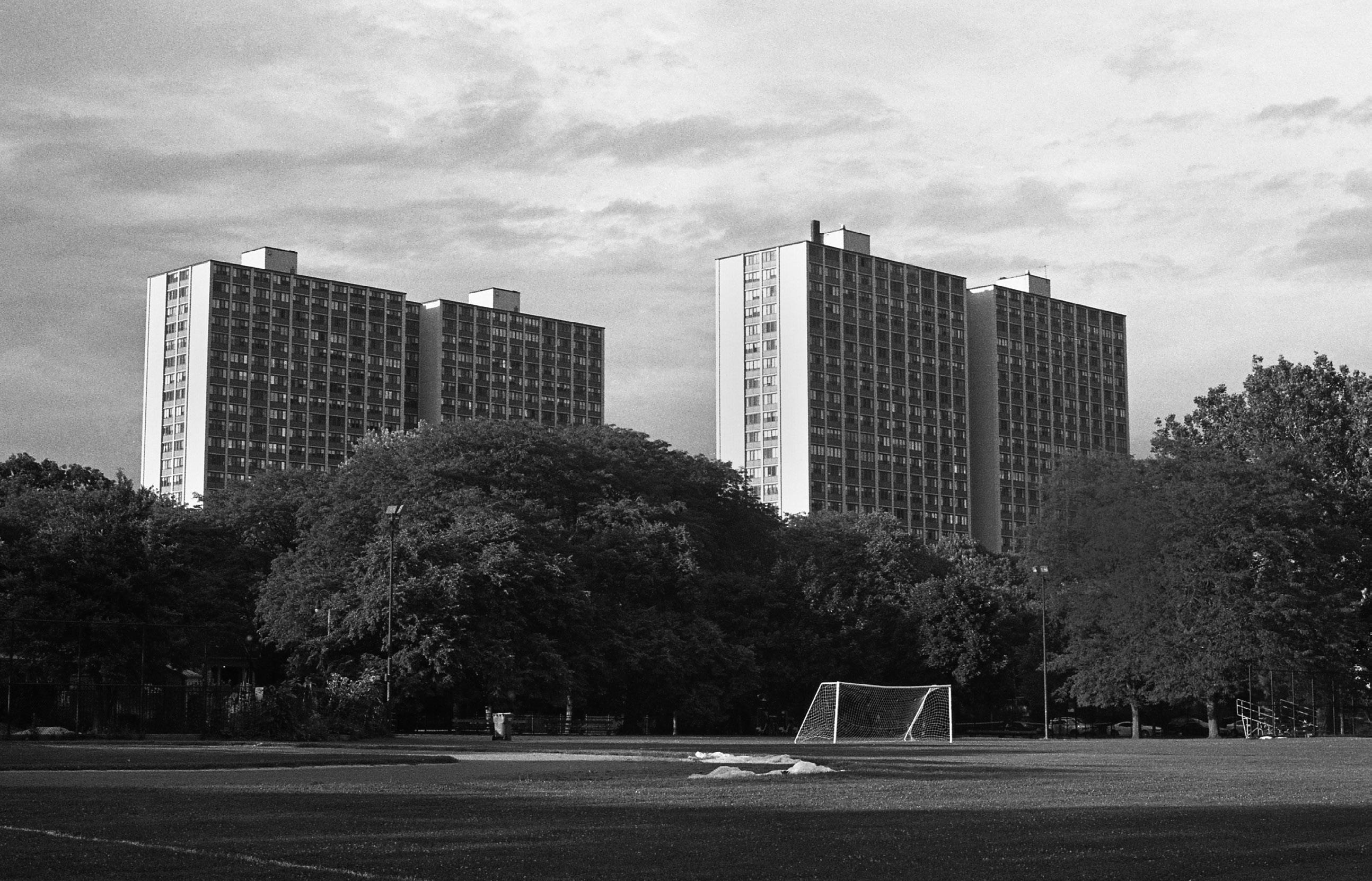
Category II : Kenwood Park, Toward 49th and Dorchester
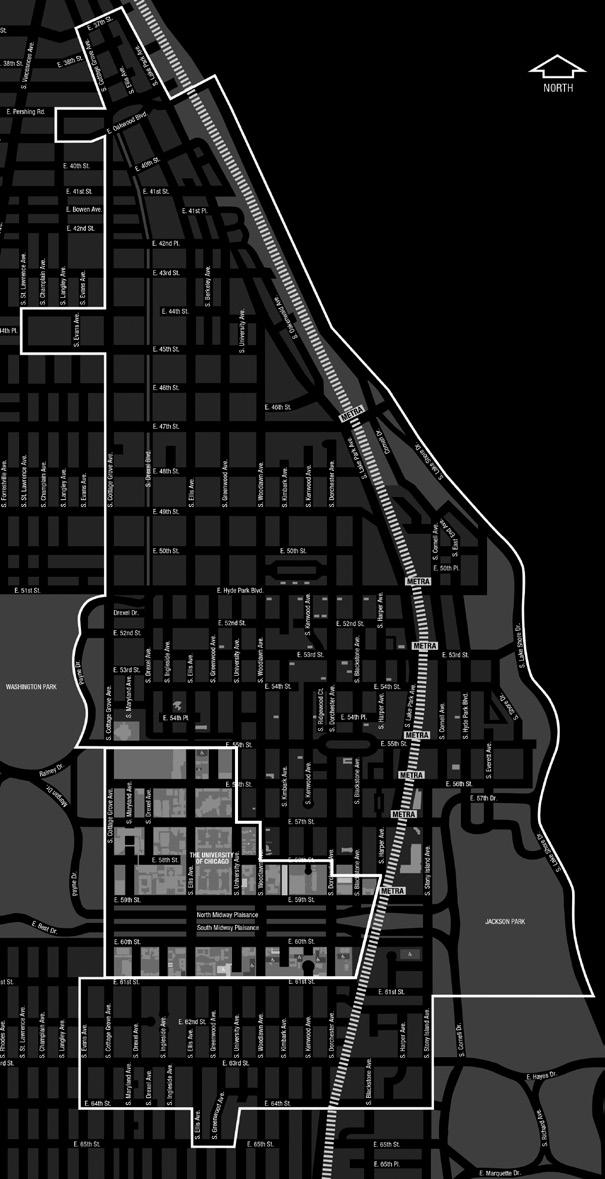
Expanded UCPD patrol boundaries
Outside That System and Hence Unspeakable
BY JULIET ELDRED
My interest in the boundaries created by the University of Chicago was piqued as a first-year during Orientation Week. I noticed that the upperclassmen leading our orientation meetings on transportation and city life did not tell us exactly where we should or shouldn’t go, but instead told us the boundaries of the UofC Police Department’s patrol zone: Lake Shore Drive to the east, Cottage Grove Avenue to the west, 37th Street to the north, and 64th Street to the south. Over the course of my years at the UofC, this definition of space and place in terms of police boundaries became increasingly apparent and significant, especially as tensions have flared among community members unaffiliated with the university who have experienced harassment and racial profiling at the hands of the
UCPD. As I began to expand outward from the UCPD boundaries as designators of space and community, I also became interested in the university’s role in Hyde Park’s long history of urban renewal. Already the owner of massive amounts of property outside the patrol zone, the university acquired twenty-six properties in the Washington Park neighborhood between 2008 and 2014 to add to the four charter schools it runs at the patrol zone’s peripheries.
Over the course of the past six months, I have undertaken a large-scale, cross-disciplinary project titled “Outside That System and Hence Unspeakable,” that uses photography and archival research to examine the nature of place-definition and the properties, boundaries, and visual identity of the University of Chicago, particularly when viewed in relation to Hyde Park and the surrounding communities of Woodlawn, Kenwood, and Washington Park. Through
my work with these themes, I have explored and documented the diverse array of spaces that fall under the umbrella of the UofC, and divided them into three general spatial typologies:
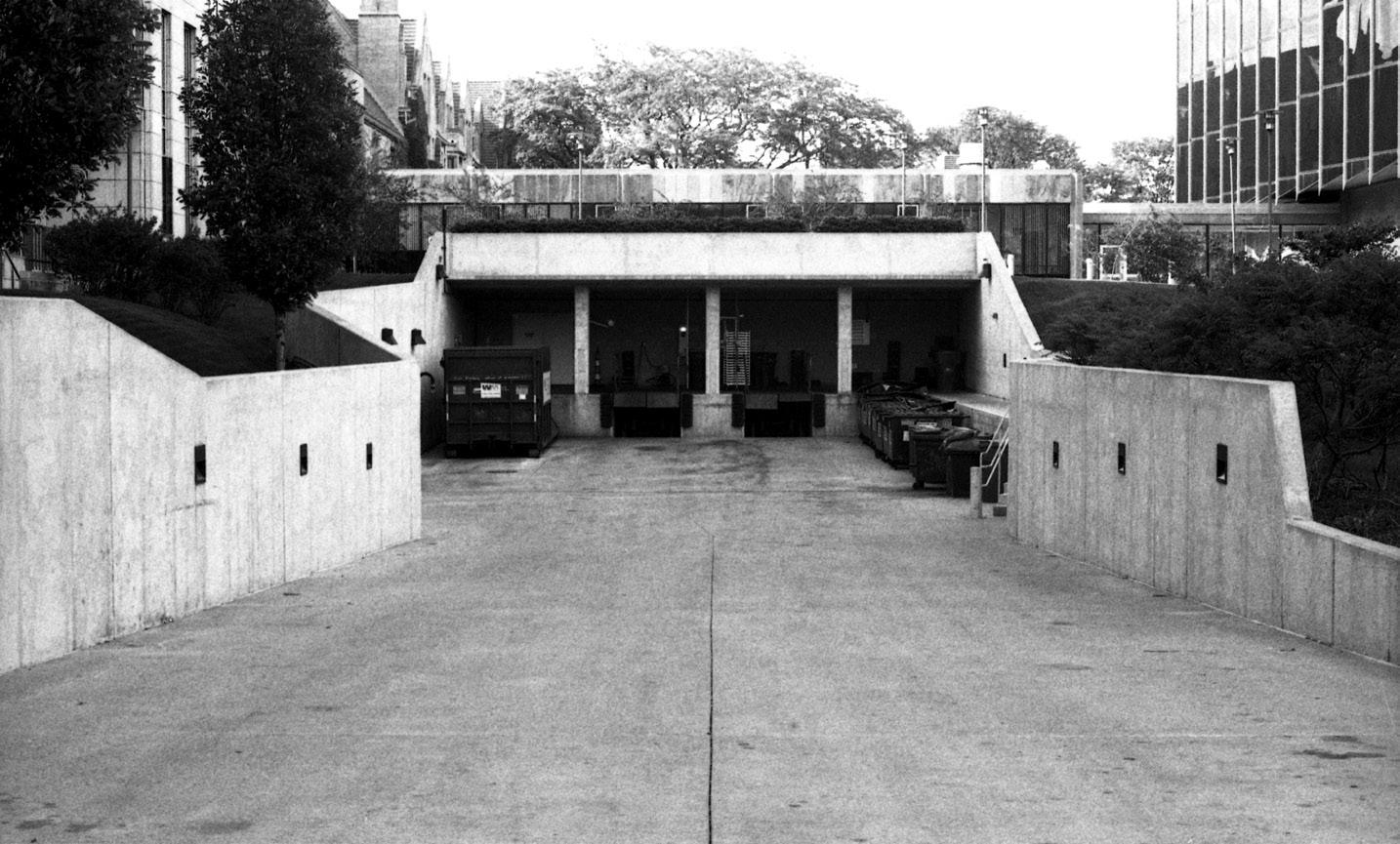
Category I: Places that lie within the official boundaries of the campus core, as designated by maps produced by the UCPD, but do not fit the particular architectural or aesthetic identity that is promoted by the UofC marketing and promotional materials, such as portions of the hospital complex, parking garages, utility plants, and loading docks.
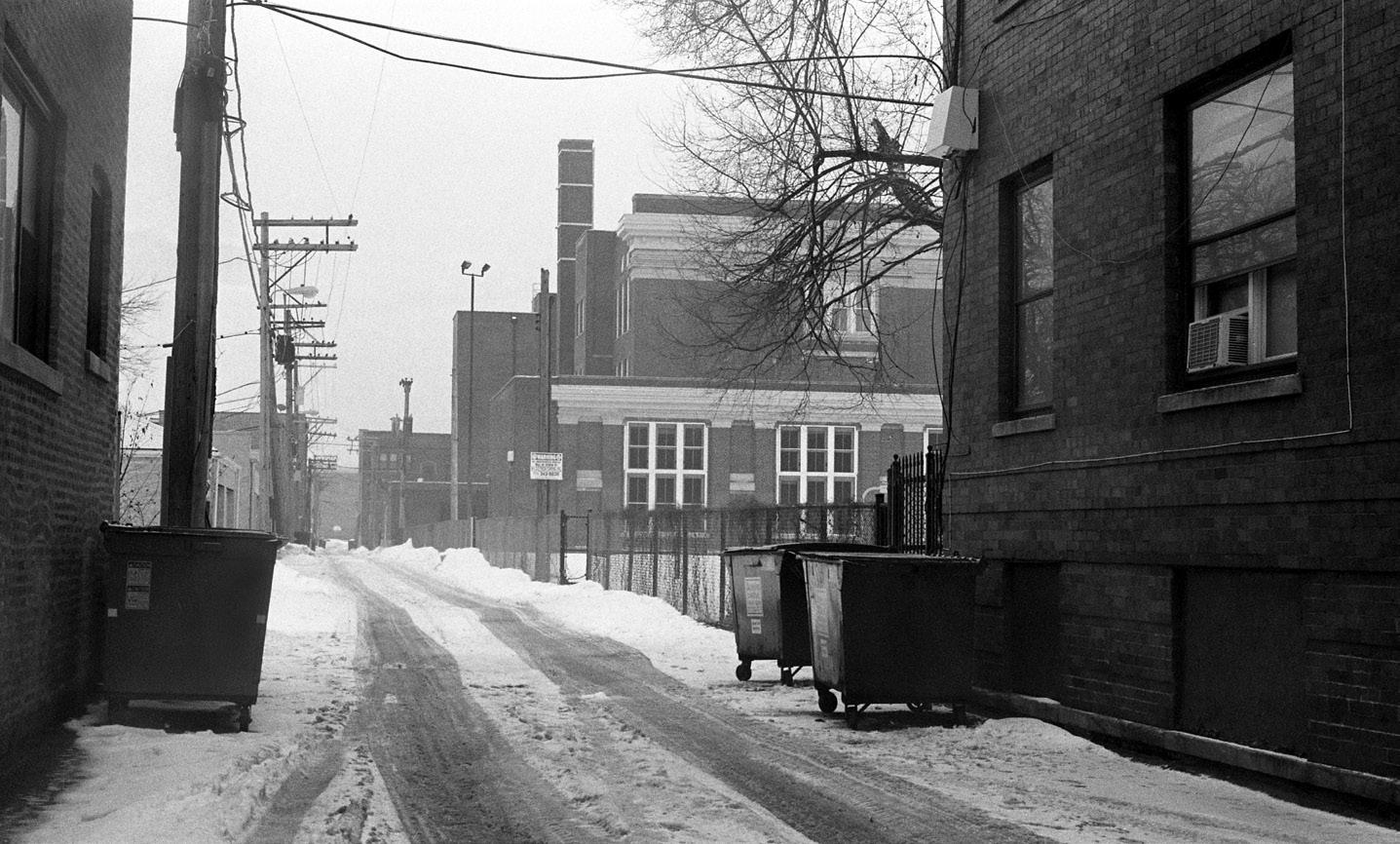
Category II: Places that lie within the boundaries of the UCPD’s patrol zone but are not owned by or affiliated with the university, such as the housing complexes along 55th Street, properties between 61st and 64th Streets, and north of Hyde Park Boulevard.
Category III: Places that are owned or
operated by the UofC that are outside of the campus core and/or the UCPD patrol zone, such as University-operated charter schools, the Arts Incubator and other properties in Washington Park, Harper Court, and graduate student housing.
By documenting the vast scope of what constitutes the University of Chicago, I aim to show the ways in which the UofC is able to use its institutional influence to both directly alter and subtly redefine the spaces that lie on its peripheries, to look closely at what’s revealed in the ostensibly banal features of the built environment, and to encourage members of the community—particularly UofC students—to think critically about the decisions and actions that have caused the University’s surrounding areas to change in the ways that they have. More photographs and maps may be found on the project website, unspeakable.info.
Category II #1: Alley, 61st Street between Ellis and Ingleside
Category I #2: Loading Dock behind the D’Angelo Law Library
Ashes to Ashes
The Second Annual Great Chicago Fire Festival
BY WILL CABANISS
“It is not failure or the frequency of failure or even the scale of failure that is the deciding factor in the arch of a career or project, but the response to it.”
So wrote Jim Lasko, the performance artist and Executive Artistic Director of Pilsen’s innovative Redmoon theater company, in a Tribune op-ed this past January, four months after the largest public failure of his career.
The first iteration of the Great Chicago Fire Festival, Lasko’s brainchild, played out over the summer of last year. His organization, in a massive display of public outreach, brought performances, art, and workshops to the city’s South and West Sides.
But when it came to the festival’s climax, a controlled fire that would consume wood structures on a Chicago River barge, Redmoon’s pride turned to embarrassment. Days of rain had soaked the wood, and the fire failed to spread.
The audience was visibly stunned. The Weekly’s Stephen Urchick called it “a spectacularly slow burn.”
So when Redmoon announced that it would try again, many were surprised.
But this year’s festival would be different. Redmoon had less money to work with; Lasko told the Tribune in September that this year’s budget was around $900,000, about $1.5 million less than in 2014.
The festival’s closing ceremony was re-
located from the uncertain waters of the river to the solid ground of Northerly Island, perhaps to make certain that not even a light mist would dampen Redmoon’s ambitions this time around.
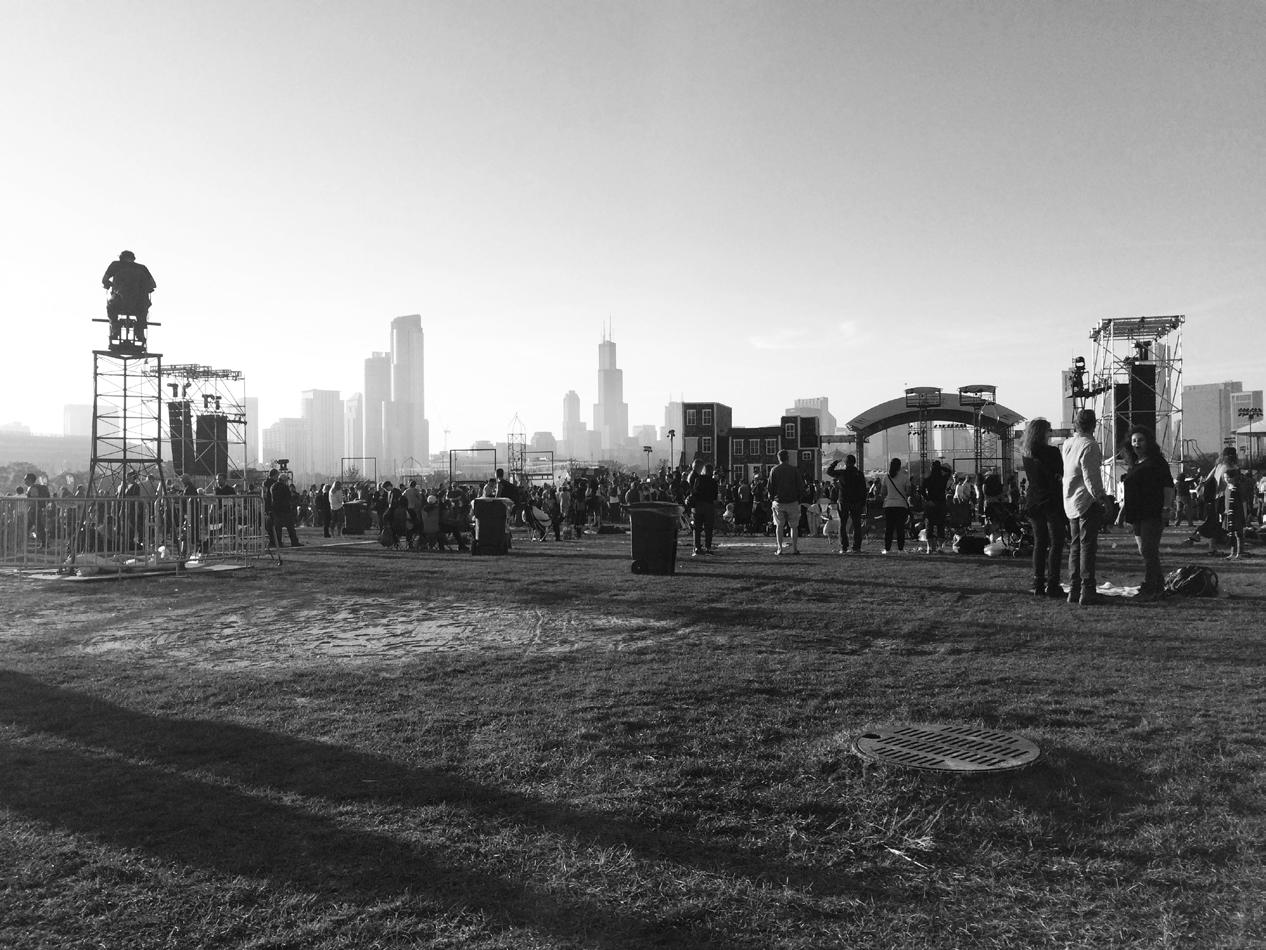
For this year’s festival, Lasko’s company ventured out into the city once again, presenting performances and working with adults and children alike to build “community portraits” of eight neighborhoods, including Calumet Park, Little Village and Lawndale. Videos about each greeted the more than five thousand people who showed up to the closing ceremony on September 26.
The scene was striking enough for one to wonder why Northerly Island isn’t the venue for every large-scale outdoor event in
the Chicago area. Looking toward the food trucks lined along the back of the meadow, one could see the South Side. The glass panels of Soldier Field stood to the west, looming over local artists’ pop-up shops. And at the center of the meadow, amidst the stages and DJ booths, stood the main attraction— the house.
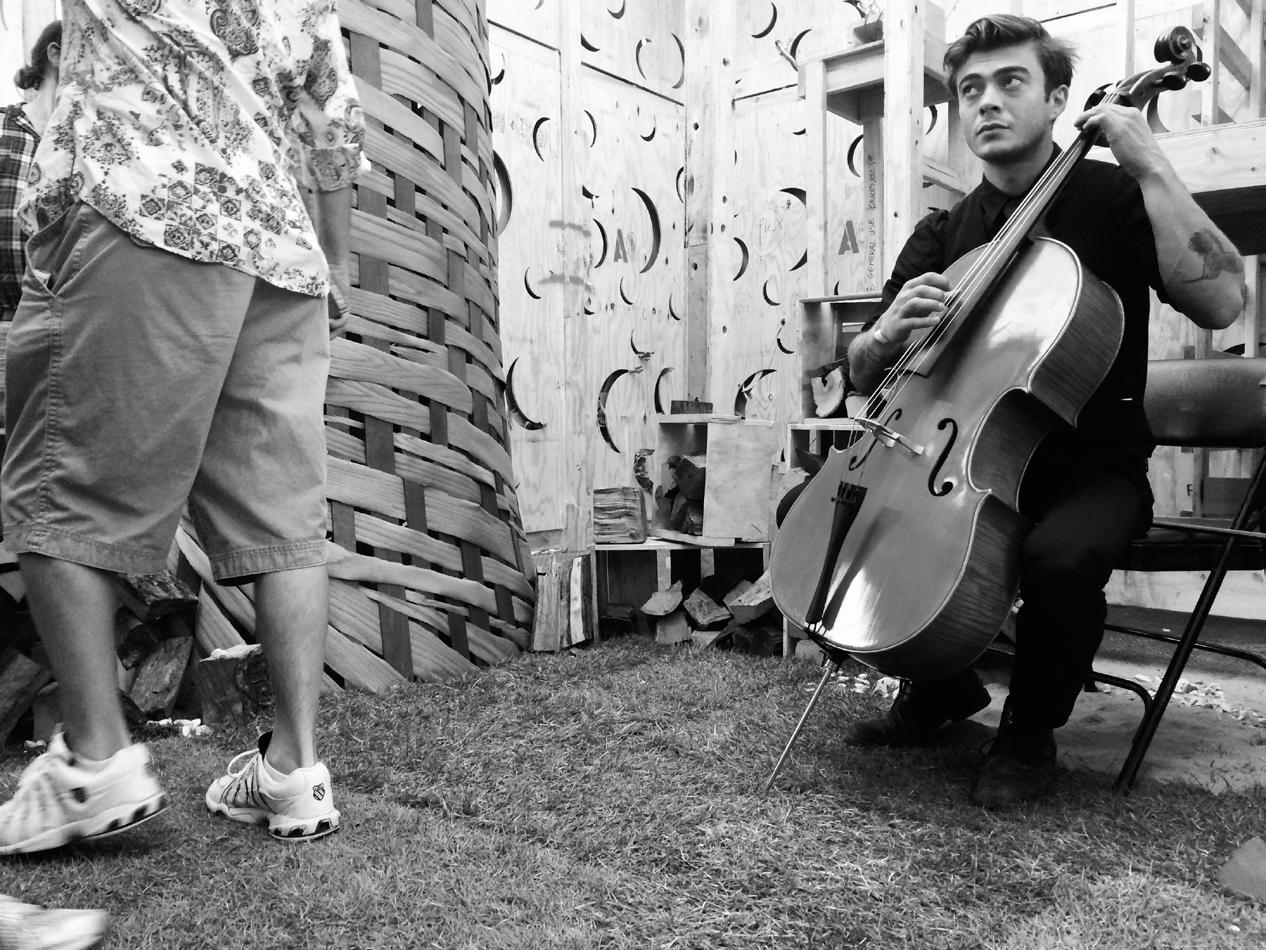
Nicknamed G.R.I.T. (for Group Ritual Imagining Tool, naturally), the all-wood structure stood two stories tall. Crescent-moons were carved into its walls, to be revealed once the façade of the building started burning away. Special effects technicians had been working for three weeks to ensure it would burn cleanly and wholly to the ground.
photos by will cabaniss
Seated in a corner of the cramped space, a cellist played, maneuvering his bow around the people brushing up against him.
Attendants stationed outside the house strongly encouraged festivalgoers to write their afflictions on small pieces of wood and place them inside the house to be burned.
formances, speeches and, of course, conflagrations. The spectacle had little time for history.
Instead, Redmoon rolled out an almost entirely incomprehensible hour of faux rituals and poorly choreographed ceremony. After a group representing Chicago’s orig-
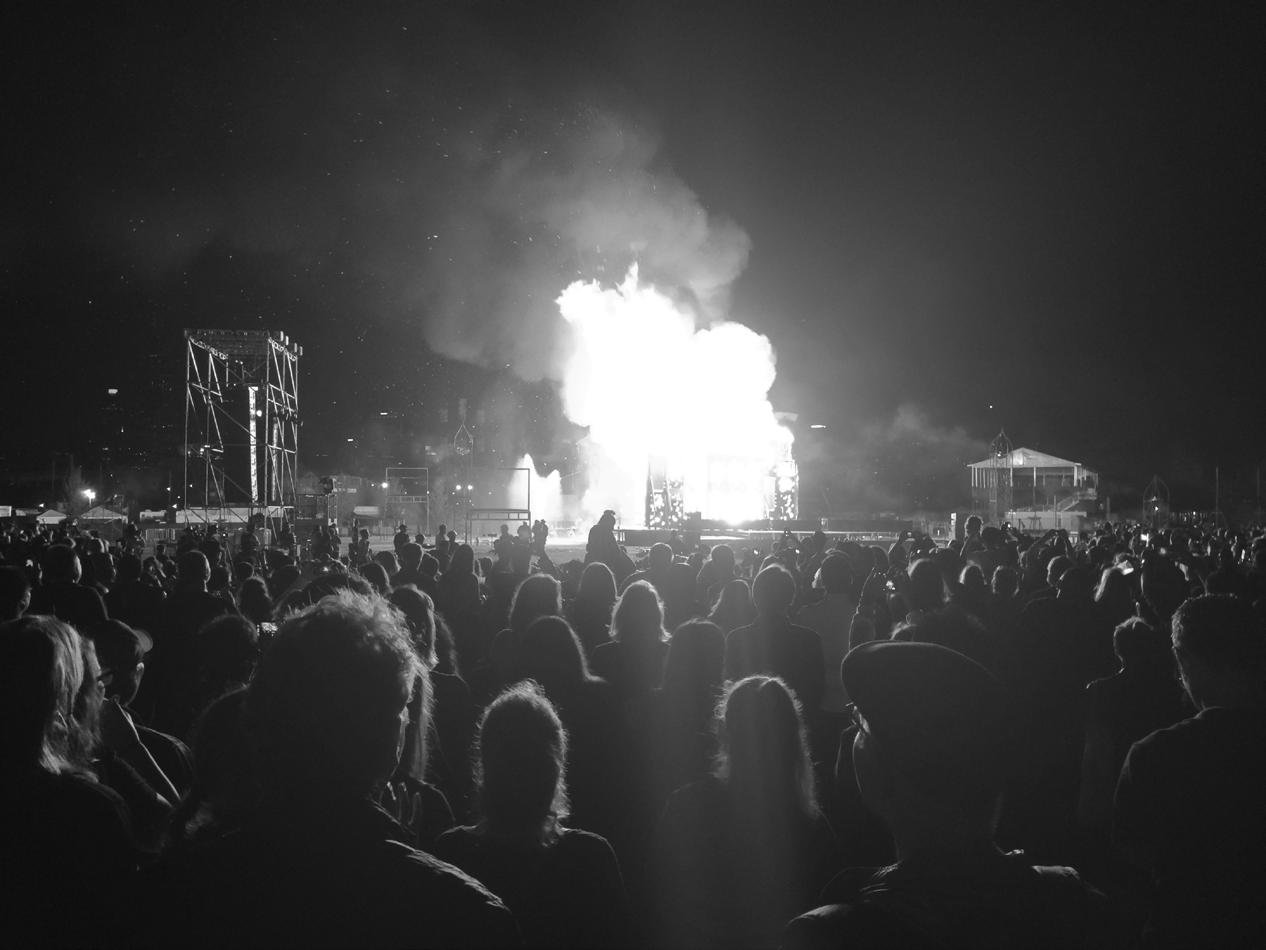
But none of it mattered all that much. The audience, after all, had come for the fire.
Draped in a purple shawl and seated at a small desk, Gloria Needlman of Hyde Park offered markers with which to do so. It was the “ ‘Great Chicago Fire’ Festival” in name only. The fire itself, an event in the city’s collective memory important enough to warrant its own six-pointed star on Chicago’s flag, served mostly to unite what was otherwise a scattered set of per-
inal First Nations inhabitants “blessed” the festival, hundreds of children took the stage alongside the drumline ensemble of the Chicago Bulls. Flaming cauldrons atop tall, crane-like structures crowded the air with smoke.
But none of it mattered all that much. The audience, after all, had come for the fire. Bruce Strong, a veteran special effects
crewman for NBC’s Chicago Fire and one of the men responsible for the impending blaze, bet his colleagues that the house would go in thirty minutes. They replied with variations on that number.
The task of ignition fell, fittingly, to Lasko. Climbing a small set of stairs to the front door, he hurled a pair of burning sticks over and into the roofless house. Triumphant, he lifted his hands and backed away. The music stopped, letting five thousand people watch uninterrupted as the fire glowed through the façade’s moon-shaped cutouts.
Framing a concert-style atmosphere around a historical event that killed hundreds and displaced tens of thousands may seem crude. But it was the city’s eventual rebirth, not the fire itself, which fueled the celebration.
“I think the biggest thing about the fire is that after it happened, it was so much about looking to the future and rebuilding,” says Ani Schmidt, an education specialist at the Chicago History Museum. “That’s such a big part of what our city has become, because of the efforts and strength that came out of the fire.”
Even more than unity, what emerged during the festival was the small-town persona that hides behind Chicago’s big-city sheen. To see thousands of people invested in a ritual intimately tied to the history of their hometown made Northerly Island feel more like a village green in colonial New England than anyplace else.
As soon as the fire died, and as suddenly as the music had stopped, fireworks exploded from behind the stage. The electronic dance music of Justin Bieber and Rihanna blared through the speakers.
Whether the sense of shared experience with which attendees left the festival would last for more than twenty-four hours was hard to tell. Also uncertain is whether this is the closing chapter in Redmoon’s redemption; city funding for the festival has run dry, and the company has not announced whether it will return next year. But this time, at least, Redmoon took its unique brand of pop mysticism and grafted it onto the landscape of an entire island, creating a blaze that was nothing if not memorable.
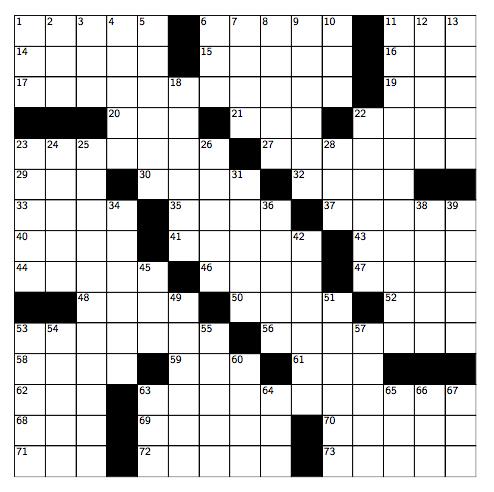
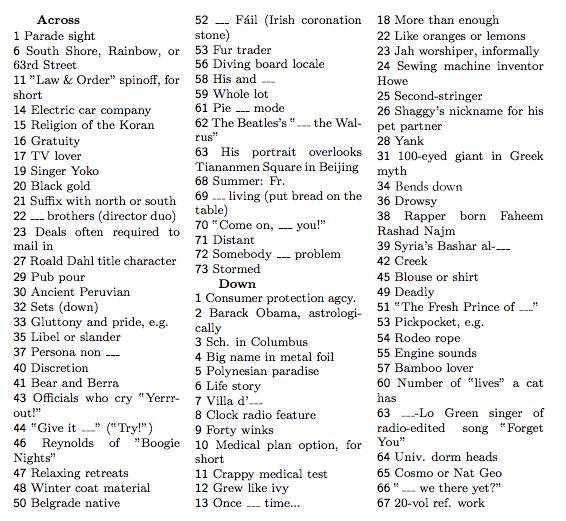
CROSSWORD
BY JOE LOTHAN
Coming Through
Push for pushcarts succeeds in City Council
BY EMELINE POSNER
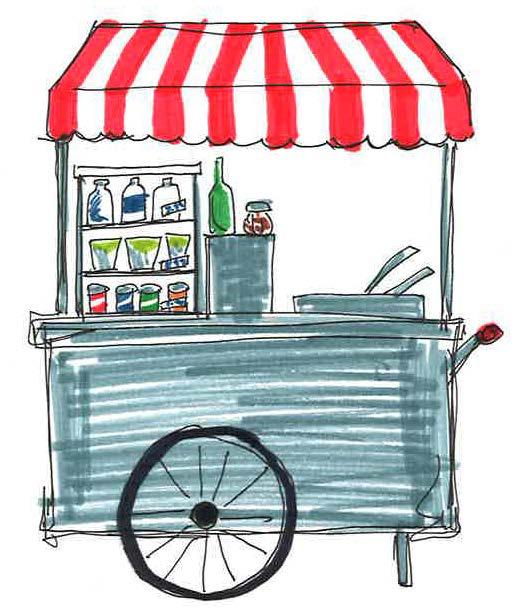
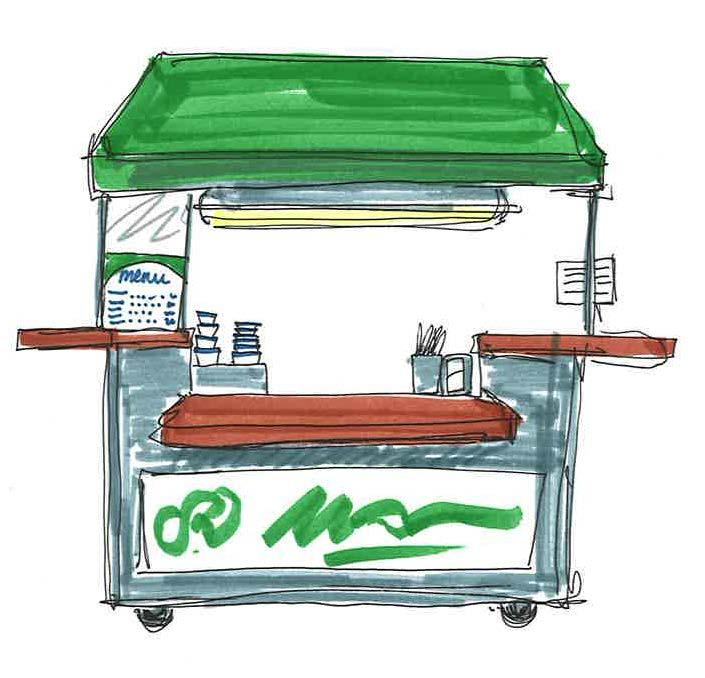
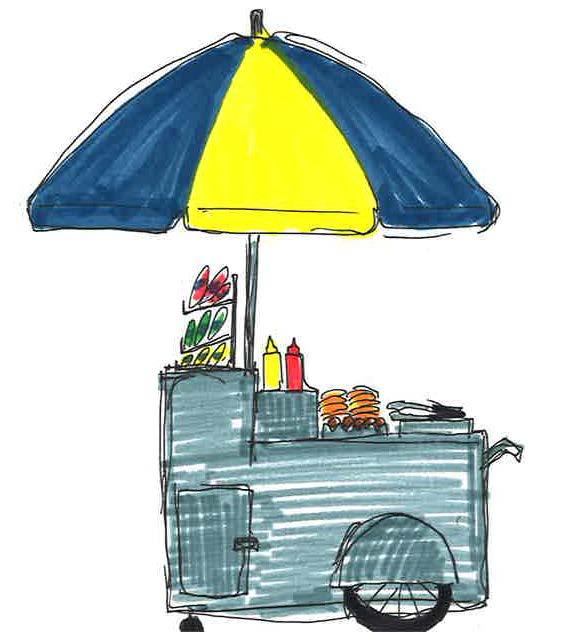
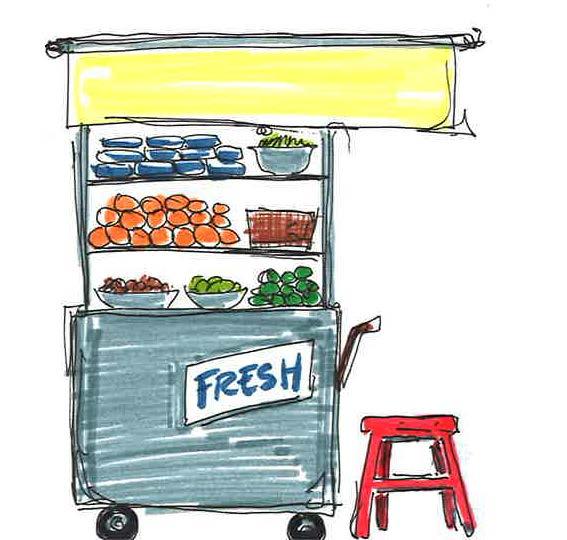
After decades of operating in fear of the law, pushcart food vendors across Chicago now have the opportunity to legalize their businesses. When the City Council convened on September 24, aldermen voted unanimously to update the existing vendor license, which previously was available only for food trucks and vendors selling frozen desserts and uncut produce, to include pushcart vendors as well. This made Chicago the second largest city in America to legalize pushcarts.
Vendors and their legal advocates—the Asociación Vendedores Ambulante (AVA), the Institute for Justice Clinic at the University of Chicago, and the Street Vendors Justice Coalition—celebrated the long-awaited license after the conclusion of the council meeting. Pushcarts have been community staples for decades, especially on the South and West Sides of Chicago, providing afterschool elote as well as the early morning tamale for early-risers who set off for work before the nearest corner store opens. Vendors had also long been subject to the city’s erratic enforcement of street vending law, enforcement that varied in extremity depending on the neighborhood: some have seen upwards of five fines for selling food without a license, while some have received none at all.
Beginning in November, with a twoyear license that costs $350, pushcart vendors will be allowed to sell food and drink that has been prepared and pre-wrapped in a licensed kitchen from 5am until 10pm and under the conditions that they keep their
products at appropriate temperatures, meet health department standards, and change location every two hours.
The new license is expected to generate over 6,000 new jobs, up to 8.5 million dollars in local sales tax revenue, and forty to 160 million dollars in total annual sales according to the Illinois Policy Institute.
According to a survey conducted by the Institute several years ago, seventy-nine percent of vendors surveyed said they would expand their business if pushcart vending were legalized, and sixty-four percent said they would be interested in expanding their business by adding more carts. However, it is likely that at least some surveyed vendors did not take into account the price of cart upgrades that would be required in the event of pushcart vendor legalization.
Many of the carts currently in use do not meet the standards set by the new ordinance—carts must have smooth, nonporous surfaces with heating and cooling capacities—and most vendors cook their food not at a licensed kitchen, but at home. As there are few licensed kitchens on the South Side and carts tend to cost upwards of $3,000, the new standards present something of a hurdle to vendors, who on average make a profit of $328 per week — around $11,150 per year.
Vicky Lugo, vice president of the AVA, says that the AVA is currently working to help improve and increase resources for current and future vendors.
“There are very few [licensed] kitchens available, but we are in the process of expanding a kitchen in a church,” Lugo says. “We are also trying to open more kitchens and [are] working with restaurants, churches, banquet halls, or any other place that has a
registered kitchen. On the South Side there are no shared kitchens, but there are some that exist as private catering businesses that could get a shared kitchen operator license.”
Beth Kregor, director of the Institute for Justice Clinic on Entrepreneurship, says they are thrilled that the law passed, but that they will continue to advocate for the licensure of a wide variety of vendors, including those who prepare food on their carts. “In major cities around the country, vendors may do at least some food preparation—if not all-out cooking—on a cart.”
Lugo said that in the meantime, the IJC
will monitor the vendor licensing process “to make sure it is clear and consistent,” and work closely with community groups interested in opening licensed kitchens.
Lugo also said that the AVA was looking into forming a cooperative in order to buy carts in bulk and directly from the providers, thereby hopefully reducing the overall cost to each vendor. She said another option would be for vendors to lease carts or to take out a small business loan to finance a first cart.
Upon the passage of the new license, Alderman Brendan Reilly moved to propose thirty-one no-peddle zones downtown, citing concerns about public safety and traffic congestion in the Loop’s busier areas. Alderman Tom Tunney of the 44th Ward, a large proponent of curbside cafés, also expressed concerns about congestion on Clark Street.
Kregor expressed disappointment at Alderman Reilly’s movement, saying that it is “a shame that some aldermen jump to
the conclusion that vendors are problems instead of assets for their communities,” and that before banning them in any specific area, the law requires City Council to determine that the vendors’ presence is actually creating safety problems.
Lugo also expressed concerns about the clause requiring vendors to move their carts every two hours given that they often need assistance transporting them to and from their homes. Both the Illinois Policy Institute and the IJC have also spoken out against the two-hour limit that is in place for all mobile vendors, recommending that they either remove the over-regulating limits entirely or leave them to be determined by each ward’s alderman. It is unclear whether the AVA and the IJC were planning to take action to have the clause changed.
Although impediments do remain for pushcart vendors, the legitimization of an estimated two thousand businesses across Chicago, businesses that provide thousands of meals every day and a livelihood for many, is an excellent first step. With continuing support from the AVA and the IJC, making the changes to meet the new standards may become less daunting for vendors within the next few years.
Free licensing workshops for vendors are available in Spanish from the Department of Business Affairs and Consumer Protection, and the AVA continues to host weekly meetings for vendors at 2857 S. Christiana Ave. on Wednesdays from 12pm-2pm.