The South Side Weekly is a nonprofit newsprint magazine written for and about neighborhoods on the South Side of Chicago. We publish in-depth coverage of the arts and issues of public interest alongside oral histories, poetry, fiction, interviews, and artwork from local photographers and illustrators. Started as a student paper at the University of Chicago, the South Side Weekly is now an independent nonprofit organization dedicated to supporting cultural and civic engagement on the South Side, and to providing educational opportunities for developing journalists, writers, and artists.
Editor-in-Chief Osita Nwanevu
Executive Editor Bess Cohen
Managing Editors Jake Bittle, Olivia Stovicek
Politics Editors Christian Belanger, Rachel Schastok
Education Editor Mari Cohen
Music Editor Maha Ahmed
Stage & Screen Lucia Ahrensdorf
Editor Visual Arts Editors Lauren Gurley, Robert Sorrell
Editors-at-Large John Gamino, Bea Malsky, Meaghan Murphy, Hannah Nyhart
Contributing Editors Julia Aizuss, Austin Brown, Sarah Claypoole, Emeline Posner, Hafsa Razi
Social Media Editor Emily Lipstein
Web Editor Andrew Koski
Visuals Editor Ellie Mejia
Layout Editors Adam Thorp, Baci Weiler
Senior Writers: Patrick Leow, Jack Nuelle, Stephen Urchick
Staff Writers: Olivia Adams, Max Bloom, Amelia Dmowska, Mark Hassenfratz, Maira Khwaja, Jeanne Lieberman, Zoe Makoul, Olivia Myszkowski, Jamison Pfeifer, Kari Wei
Staff Photographers: Camden Bauchner, Juliet Eldred, Kiran Misra, Siddhesh Mukerji, Luke White
Staff Illustrators: Jean Cochrane, Lexi Drexelius, Wei Yi Ow, Amber Sollenberger, Teddy Watler, Julie Wu
Editorial Intern Clyde Schwab
Journalist-in-Residence Yana Kunichoff
Webmaster Shuwen Qian
Business Manager Harry Backlund
Executive Producer, Maira Khwaja
South Side Weekly Radio
The paper is produced by an all-volunteer editorial staff and seeks contributions from across the city. We distribute each Wednesday in the fall, winter, and spring, with breaks during April and December. Over the summer we publish monthly.
Send submissions, story ideas, comments, or questions to editor@southsideweekly.com or mail to: South Side Weekly 1212 E. 59th Street Ida Noyes Hall #030 Chicago, IL 60637
For advertising inquiries, contact: (773)234-5388 or advertising@southsideweekly
Read our stories online at southsideweekly.com
Cover photo by Juliet Elred.
A week’s worth of developing stories, odd events, and signs of the times, culled from the desks, inboxes and wandering eyes of the editors
Robot Revolution at MSI
The future is near. The future is now. The future is...in Chicago for the next few months. This past week, a set of dudes in suits wearing unnervingly robotic mouthpiece microphones unveiled a set of exhibits at the Museum of Science and Industry designed to showcase the cutting edge of robotics technology and speculate about the future of robot-human interactions. Among these exhibits is a full-scale robot soccer match, as well a—no, this is not a joke—a kid-friendly (and unfortunately named) interactive space called the “Drone Zone.” A robot named Baxter cut the ribbon at the opening ceremony. God help us all.
CPS Messes Up
Documents obtained by the Chicago Sun-Times have revealed that Chicago Public Schools forgot twenty-two schools in its estimate of a private contract with Aramark to manage school janitors. The forgotten twenty-two buildings account for 3.2 million square feet, with the largest being King College Prep in Bronzeville. Though the private contract was expected to save the district $40 million over three years, the mistake cost CPS $7 million, an amount that CPS spokesman Bill McCaffrey says would have been spent anyway had
IN THIS ISSUE IN CHICAGO
OUT Of THEIr LEagUE
As with many of the kids there, contact with the police in a friendly context was a new experience. will cabaniss...4
IT TaKES a cITY
“We want to debunk the myth that it’s hard for a small business owner to get capital.”
emeline posner...7
the estimate been correct. This comes to light after a string of allegations—supported by some pretty gross photos that the Weekly has spared you—that Aramark has failed to keep schools clean anyway, as parents and teachers report everything from insufficient janitorial supplies to vermin, found dead and alive.
Home Sweet Shipping Container
Home is where the heart is—and who says your heart can’t live in a giant steel box? Adrian Gutierrez, land developer and owner of Mighty Containers, is proposing a plan to convert shipping containers into homes and place them on vacant lots in Englewood. Turning these containers into residences can be a productive way to repurpose neglected shipping containers, which often sit unused after being emptied. According to Gutierrez, these shipping container homes would be cheap and ecofriendly. Two 8-by-40-foot containers would combine to form each 640-square-foot home, with two bedrooms, one bathroom, and a kitchen—enough to house a single family. The downside? Some worry that these homes may be easy to break into, especially since they will still resemble actual shipping containers on the outside.
If IT bLEEDS IT LEaDS
To cover only a neighborhood’s crime is to say, subtly but repeatedly, that bad things happen to bad people.
bea malsky...9
WHaT’S In STOrE
“We just don’t have an abundance of that type of business ready to go.”
mari cohen...11
On the record Walt Garcia is no more than one violent crime and six instances of recidivism. willekes cronin...16
LOvE afTEr DEaTH
A review of Elizabeth Alexander’s memoir about the connections between love and grief
eleonora edreva...17
THE OnLY InfOrmaTIOn I HavE IS aS fOLLOWS
Policemen coach
youth baseball
in Englewood
BY WILL CABANISS
Out of Their League?
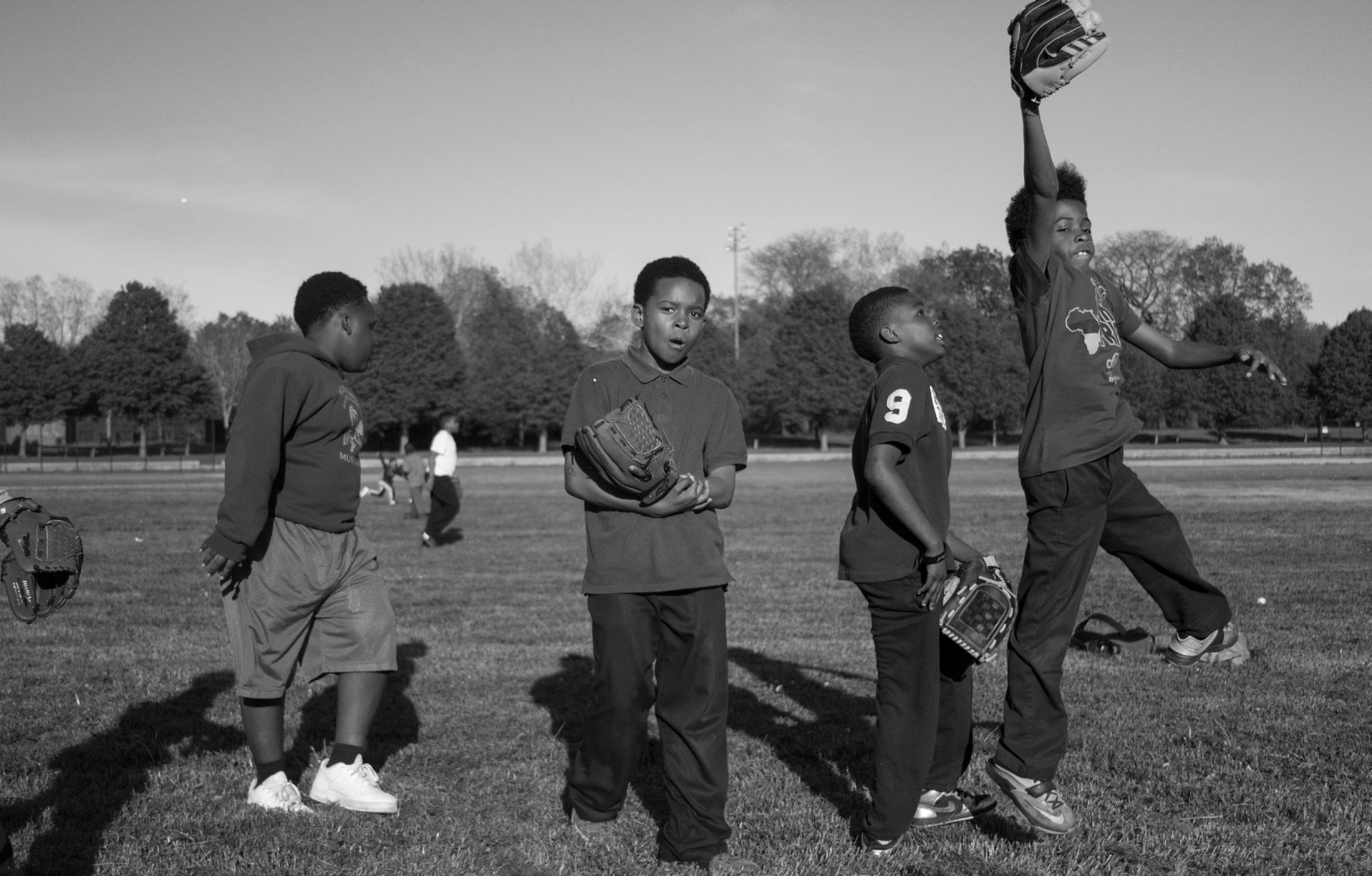
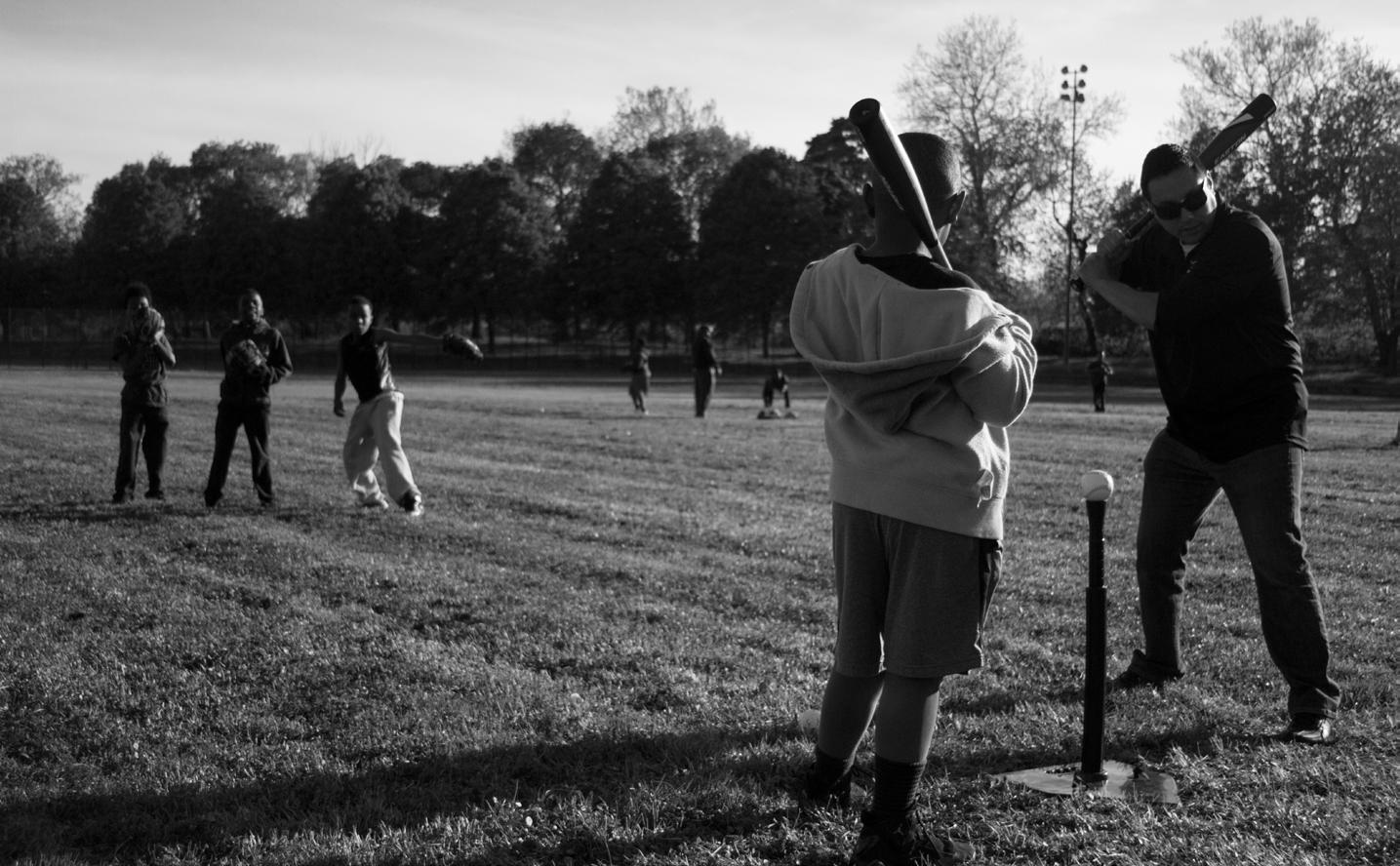
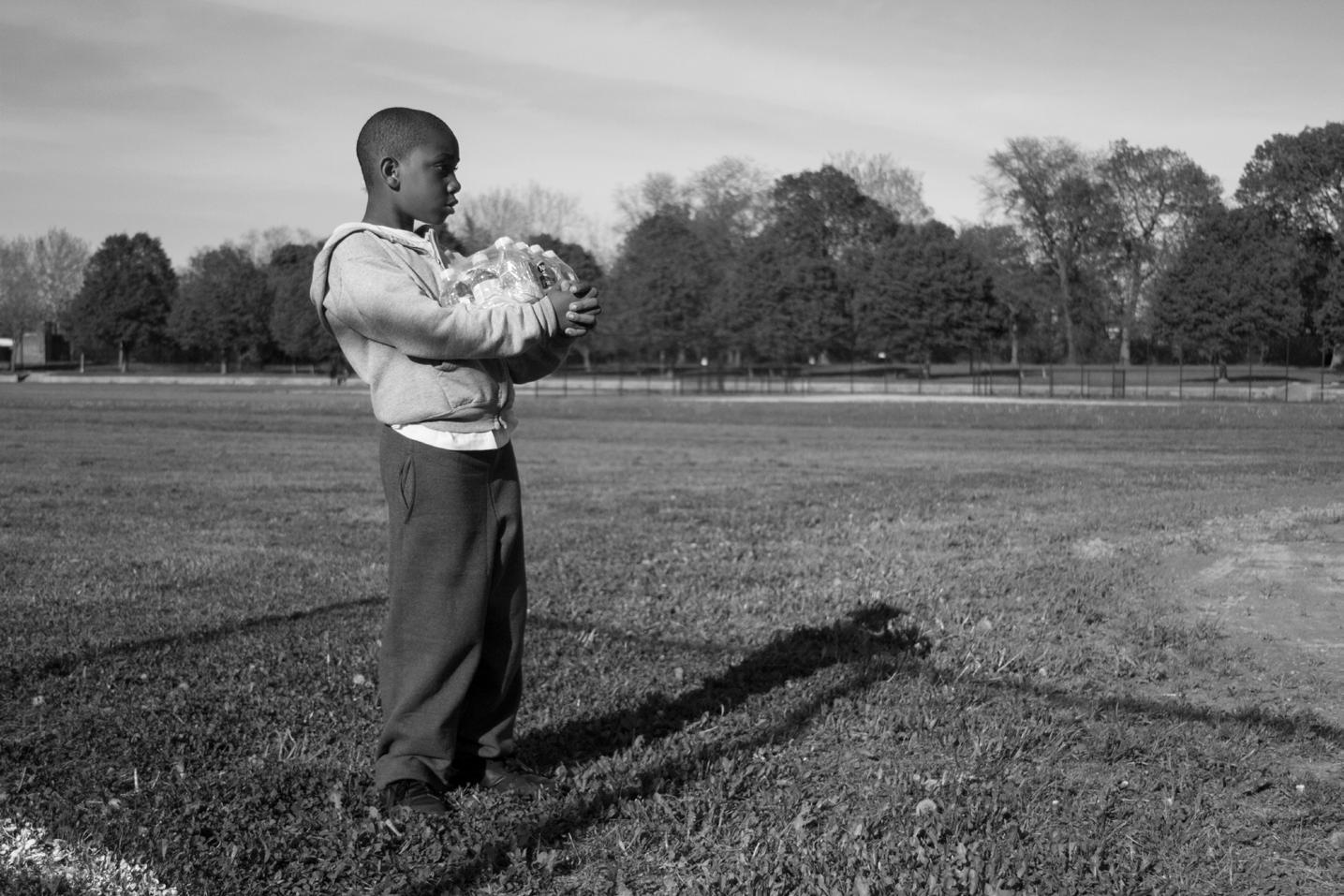
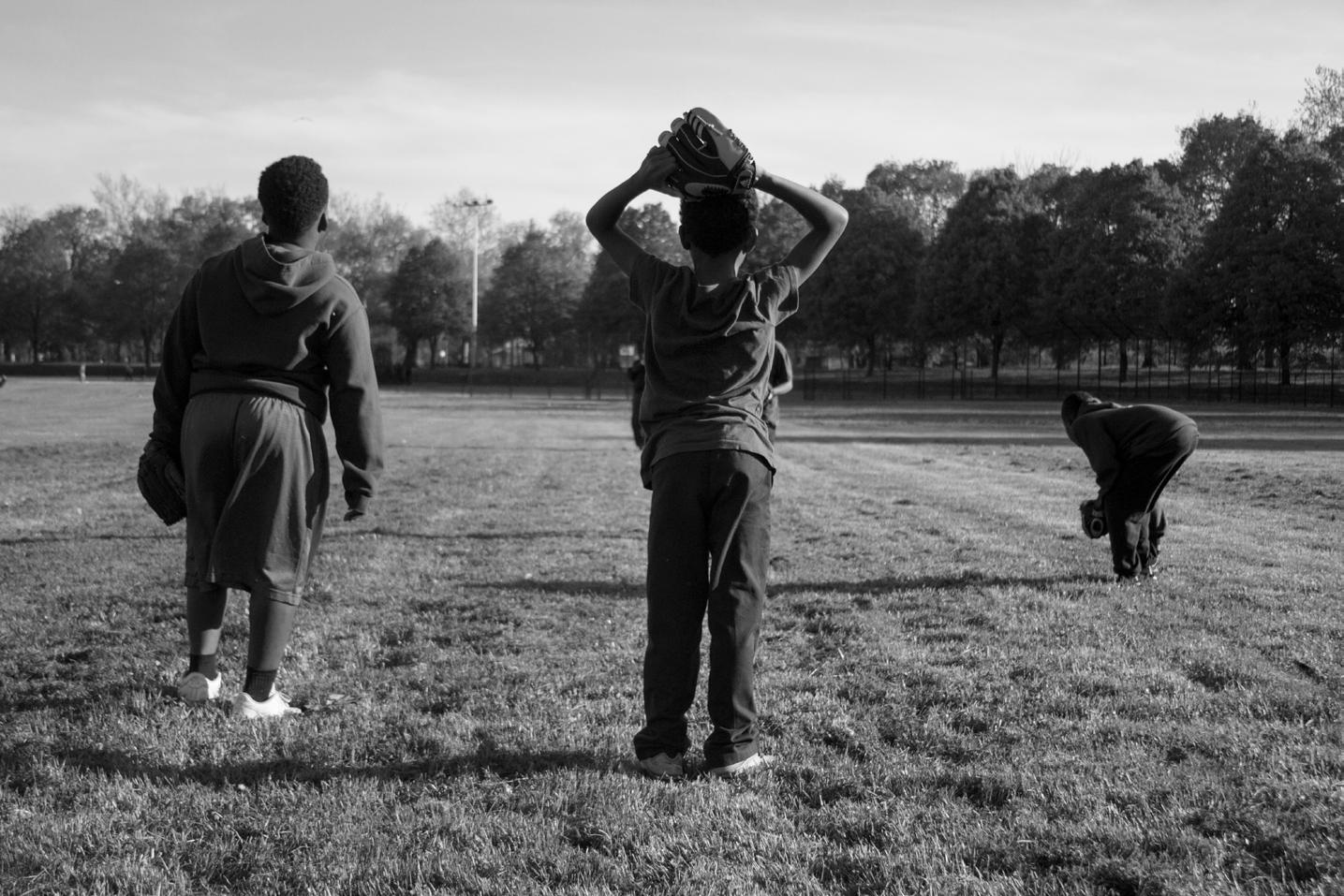
On the fourth day of practice for a new Little League taking root in Englewood this spring, the grass in Hamilton Park was finally mowed. The five clay diamonds were raked and crisp white foul lines drawn in chalk, just in time to be trampled by the flood of children exiting the park’s field house.
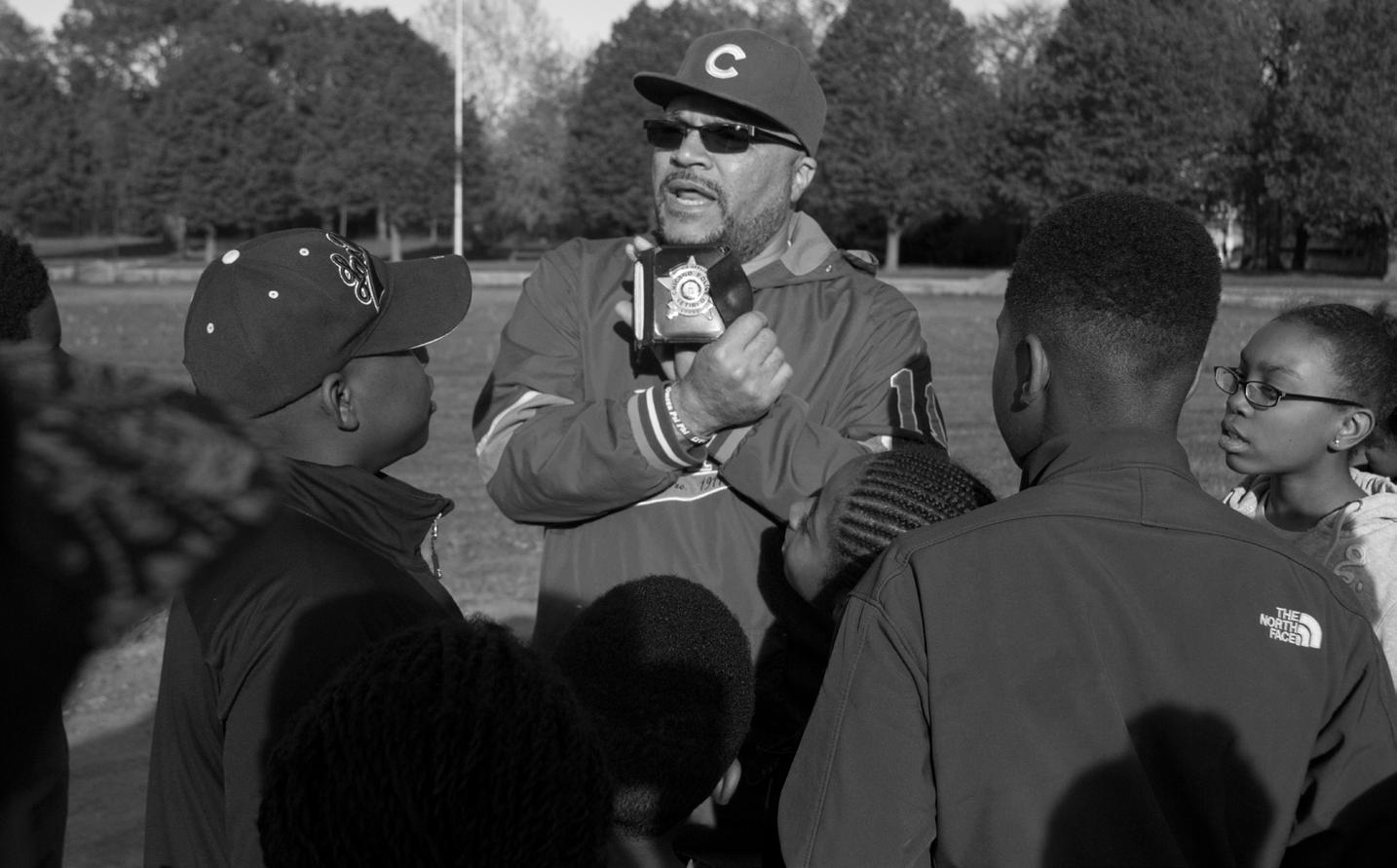
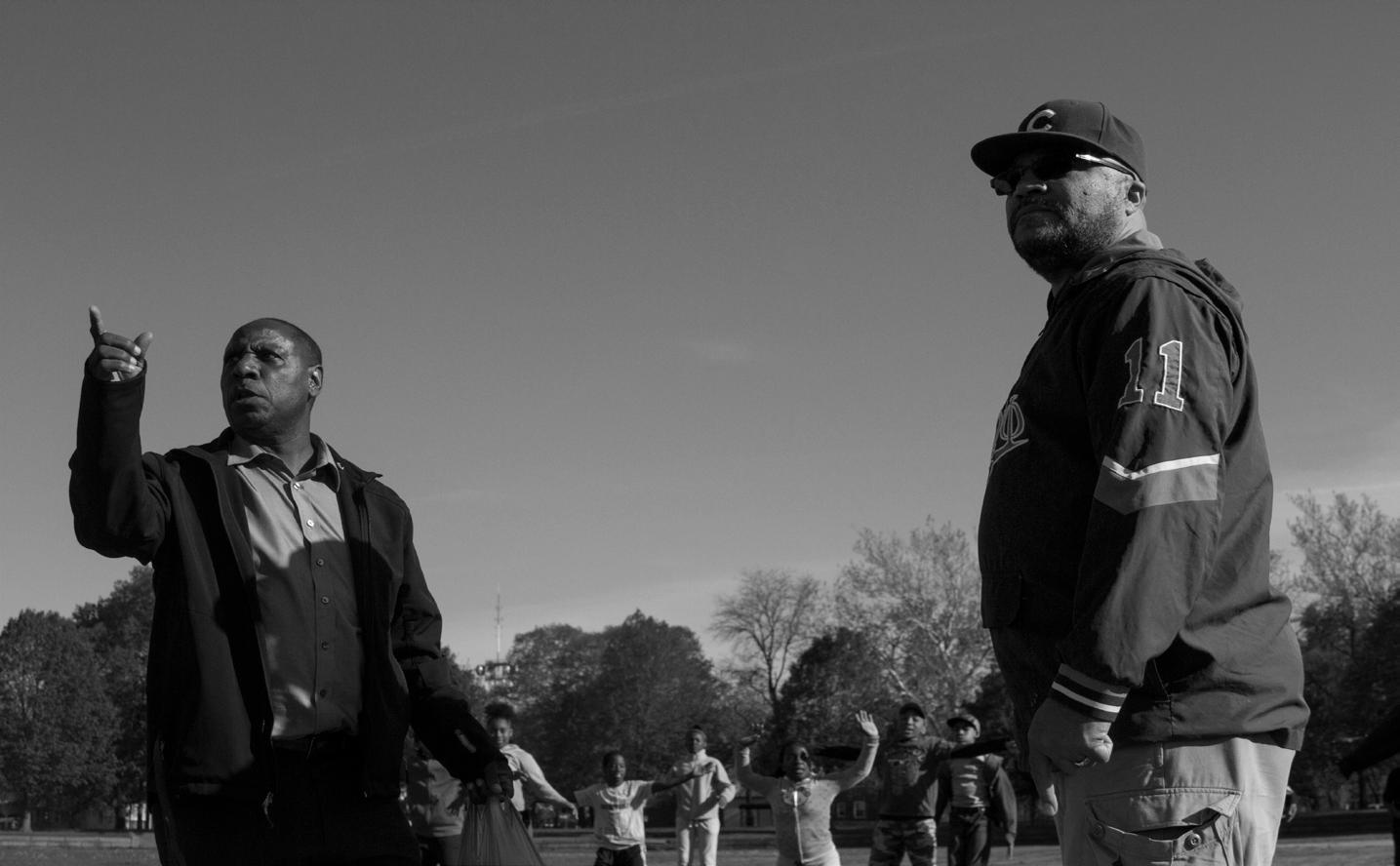
“How many of you have been stopped by the police?” Marco Johnson asked the group of kids surrounding him as he stood on second base. Most hands went up. The light was fading fast, and this was Johnson’s final speech of the day. After nearly two hours of practice, the kids were tired and ready to go home. Someone in the back questioned why he was asking, then doubted his credentials. “You ain’t the police!” After nearly thirty years as a cop, Johnson retired a few years ago. From the experience he’s gained mentoring kids since then, he knew exactly how to respond.
He swiftly pulled out his badge, which flashed in the light of the setting sun. “How much you wanna bet?” he dared. No one replied.
The new league’s organizers have somewhat miraculously signed up more than one hundred enthusiastic children to play baseball in a neighborhood where basketball and football reign supreme. The league, however, is neither the work of upstart parents nor the natural result of kids getting interested in baseball on their own.
Instead, it’s part of an experiment that the Chicago Police Department is participating in: community engagement through baseball. Through a partnership with Team-
photos by finn jubak
Marco Johnson, a retired police officer, shows off his badge
work Englewood, a community center on 63rd and Halsted, and Get IN Chicago, a nonprofit incubator launched by the mayor’s office to pursue “sustainable reductions in violence for individuals and communities,” the program enlists active and retired CPD officers to coach the Little League teams. Johnson talks a lot about the importance of authority, whether it comes from a parent, a teacher, or an officer. He went over how to answer an officer’s questions during a police stop, implying that truthful answers are all it takes to get off scot-free. “You’ve got the lead police officer in this area standing right here with you,” Johnson said, ges-
turing to Larry Watson, Englewood’s District Commander. “I’m sure he’s not gonna let his men treat you wrong.”
“This, on defense, is your heart and soul,” said another one of the coaches. “This is a baseball glove.” Most of the kids participating in the league had never played the sport before, so the officers had to start with the basics. Baseball’s reputation as the quintessential American sport has never been more in question, and in Englewood the sport commands just a fraction of the social and cultural value it did when Johnson was grow-
ing up. Declining numbers of black Major Leaguers may have something to do with it, as the absence of black superstars like Hank Aaron has made it harder for Englewood’s children to see a reflection of themselves at baseball’s highest level. The sport’s status on the South Side was elevated slightly this past year with the rise (and eventual fall) of the Jackie Robinson West team that captured the attention of the country before reports of district gerrymandering surfaced.
“It does a lot to see someone who looks like you, who’s your age, on TV giving interviews and stuff,” Watson said.
The current state of the sport is a far cry from what it was during Watson’s childhood, which he spent watching the Cubs, playing baseball, and idolizing Ernie Banks. He’s a product of Kershaw, an elementary school about ten blocks north of where he now crouched in the park’s grass, running after wiffle balls in full uniform.
Many of the coaches that day were Watson’s officers. “A lot of these guys work overnights,” he said. “But they’re taking their free time to come here and work with the kids.” Watson’s hope is that officers will eventually be able to “walk down the street and say, ‘hey, I know him and him and her.’” The goal is to build community, but whether the police fall within the bounds of the Englewood community is unclear.
“Police officers help keep me safe,” the first statement on the survey read. A ten-year-old girl looked
over the boxes that followed and wrote a checkmark in the box labeled “Strongly Agree.” I was sitting in the back of the field house’s auditorium with her at the program’s orientation the week before. Like around half of the league’s players, she lives in Englewood and goes to school close by. We listened as Glen Brooks, the CPD’s coordinator on the South Side, spoke about the program. “Be safe, and have fun,” he said at the end of his speech. She said she had never played baseball, but that she was excited. The reason she signed up? “Mostly, my mom wanted to get photos of me in my baseball stuff.”
The survey is part of the performance-based evaluation that Get IN Chicago is conducting on the program, examining exactly what kids think about the police. “In Englewood, things happen,” she said after I asked her more about her experience with law enforcement. She says she was taught to call 911 after her first birthday and that she saw a car blow up on her block at the age of four. Does she ever talk about the police with her parents or friends? Not really, she says. As with many of the kids there, contact with the police in a friendly context was a new experience.
“We’re trying to change the dialogue that surrounds police involvement with the community,” said Crystal Jackson of Get IN Chicago, the organization providing funding for the program. The point is essentially to encourage the kids, as well as the officers, to redefine the boundaries of their respective
communities in the hopes that the personal connections created on the field, with what Watson calls “positive contact,” translate to the streets of the neighborhood.
“It isn’t just the police here,” Brooks said. “This is the community coming together, and the police are part of the community.” The Police Department has long attempted to place officers firmly within the bounds of what Chicagoans consider their communities. The Chicago Alternative Policing Strategy, or CAPS, was revolutionary in its emphasis on cooperation when it was introduced in 1993. Allowing civilians to attend police meetings and contribute to the safety of their communities, CAPS was hailed as a minor revolution in the field of crime reduction.
“No matter what you hear on TV, we’re your friends,” Johnson pleaded with the thirty kids that surrounded him, taking a break from his old school, tough-love coaching style. “Without us, you guys can’t come over here and play in the park without worrying about somebody jumping on you.”
Noticeably absent from this portrayal of police officers as protective, paternal figures, however, is an acknowledgement that the opinions of many on the South Side are shaped by the very real experiences of stops, arrests, and shootings. Kids in Englewood experience the police largely in a negative context: a review of the CPD’s contact card database earlier this year found that black people in Chicago are the subject of around seventy-two percent of all stop-and-frisks despite only making up thirty-two percent of the city’s population. Two of Chicago’s
three police-involved shootings in the first quarter of this year took place in Englewood. Johnson’s admission that “there are some bad cops” fails to acknowledge these disproportions.
As the league wrestles with the question of how to frame police involvement in Englewood, it will ultimately be the task of each child to reconcile promises of protection from their coaches with their personal experiences of policing and with depictions of law enforcement in the news media.
The league may turn out to be nothing more than a photo opportunity for the Police Department’s press office, or simply another community engagement program that the aldermen who speak at the league’s opening day June 24 can take credit for. But another measure of success, the league’s organizers say, will be a second survey conducted at the end of the summer, likely asking the kids similar questions about their confidence in Englewood’s law enforcement. A positive result would lead the program to much acclaim and more funding.
The first practices of the Little League felt like reclamation—the chance to take ownership of the five underused fields in Hamilton Park, and an opportunity to repossess the sport of baseball, so much a part of black Chicago’s history. It may take far longer for Englewood’s residents to reclaim that same sense of ownership and trust in their law enforcement, to feel as if the police officers who moonlight as baseball coaches are truly a part of their community. After all, the season is only a few months long.
BY EMELINE POSNER
Bad things seem to come in twos for 5 Loaves, a beloved Chatham eatery. Since its opening in 2004, fire has twice damaged the restaurant’s interior (there was nearly a third fire earlier this month when an adjacent property caught fire), and twice has the property’s copper electrical wiring been stolen.
As far as unforeseeable disasters go, fires may as well be a restaurant’s rite of passage, and wire robberies are similarly commonplace; Slate has dubbed our time the “Golden Era of Copper Theft.” But for a small, family-owned and -run business like 5 Loaves, closing for as little as a week is devastating, said Constance Simms-Kincaid, the eatery’s proprietor. “Hundreds of dollars of food go to waste, and we lose touch with our regular customers. And we spend the time closed without income.”
She found herself in what seemed to be an inescapable debt cycle: there was little that could be done to prevent the thefts––the wiring, off property, was uninsurable, but overwhelmingly expensive to replace. She was hesitant take a loan to cover the losses because of an already low credit score.
After the second wire theft, in late February, 5 Loaves decided to keep the restaurant open to distribute its remaining food for free. There was no power, and Simms-Kincaid said that it felt as cold inside as it did out, but many Chatham resi-
It Takes a City
Why Chicago’s small business initiatives matter
dents showed up. One man, a regular, sat inside with them for the entire day. Tears came to Simms-Kincaid’s eyes as she remembered his support and the generosity of a woman who brought over a check for $1,000 to go toward repairs. Stephanie Hart, owner of the nearby Brown Sugar Bakery, offered 5 Loaves money from her own register.
These gestures helped to keep the restaurant open, but they were short-term fixes. Now, Simms-Kincaid says, they’re working on the long-term. She recently joined the Chatham Business Association’s Business Builders program, which offers resources and loan assistance for small businesses. Simms-Kincaid also recently started looking into taking a credit-building loan, a kind of micro-loan designed to help small businesses boost credit scores.
Some might hesitate to call 5 Loaves lucky after the trials of the last several years. But Simms-Kincaid stresses how lucky she is to serve a community as close-knit and supportive as Chatham. What’s more, the eatery has avoided the fate of other small businesses in similar financial straits, many
of which have fallen victim to predatory lending.
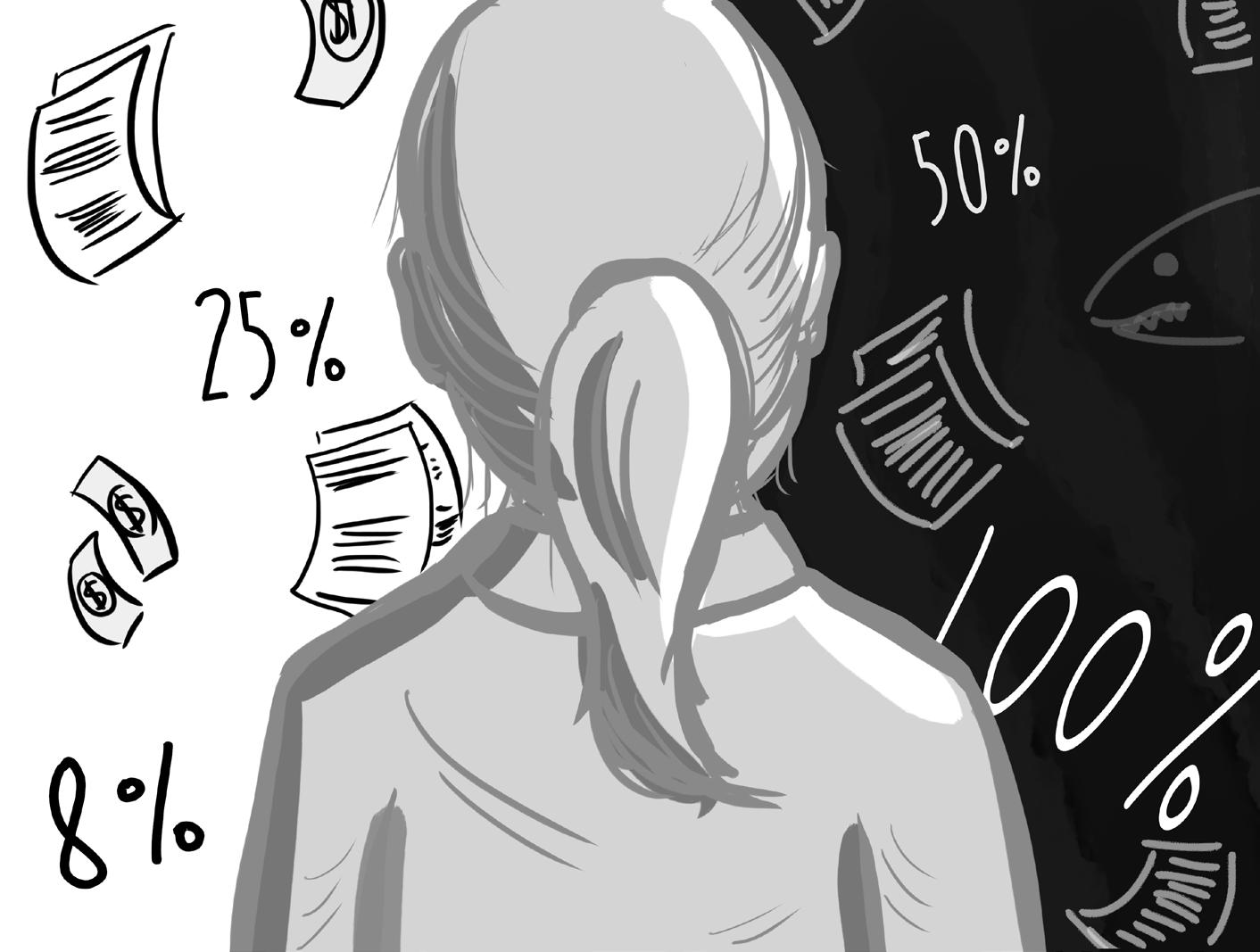
5 Loaves, caught in a tight spot with low credit, would have been an easy target for a predatory, or alternative, lender. The business-to-business loan market has been likened to that of payday loans; with misleading rates, APRs (annual percentage rates) nearing 100 percent, and hidden fees, these unregulated lenders pose a serious threat to small business owners in Chicago and across the country. But despite the loan market’s gradual recovery, predatory loans are only becoming more pervasive. Chicago’s one-of-a-kind microlending institute and network of business associations, however, continue to develop in response to these loans and to offer a more comprehensive support system for small businesses on the whole.
The commercial loan market has not recovered equally across the board in the years following the 2008 recession. Though loans greater than $1 million now stand twenty-four percent above
pre-recession levels, loans of $1 million or less still lag seventeen percent below the pre-recession peak. Nationwide, independent banks have decreased in number by fourteen percent. This has left a substantial gap in the loan market in precisely the range most suitable for small and new businesses––between ten and one hundred thousand dollars.
Filling this small loan gap are business-to-business lenders that engage in merchant cash advancing. Unregulated, web-based, and requiring no minimum credit score, these lenders may appear convenient to the small business owner who urgently needs money but doesn’t have the time or credit to apply for a traditional bank loan. But the deceptively high interest rates of these loans often lead small businesses into bankruptcy.
“Business-to-business lenders are not uniformly bad,” said Mary Fran Riley, Vice President of External Affairs of Accion Chicago, a microfinancing nonprofit. “But most aren’t interested in best serving the business––they’re interested in making a profit.”
It can be difficult to tell the “good actors” from the bad. Community Development Financial Institutions and corporations such as Paypal and Square, which have recently stepped into the microlending market, generally underwrite loan packages
ellie mejia
responsibly and offer APRs of thirty-five percent or less, and sometimes as low as seven percent. But “bad actors” bury hidden fees in loan packages and fine businesses not just for paying back a loan later than its due date, but for paying early, too.
But it wasn’t just predatory lenders who recognized a need for small loans after the recession; Accion Chicago, a nonprofit that provides counseling and microfinancing services for small businesses, did too. Accion had been active in Chicago since 1994, but in 2008 began to expand its microfinancing services before recognizing that there was a limit to how quickly it could grow as an organization.
Accion worked closely with Mayor Emanuel and the city of Chicago to create the Chicago Microlending Institute (CMI), which began operations in 2011. Combining a $1 million investment from the city with Accion’s successful microlending model, the CMI was touted as a one-of-its-kind institute. Its aim was not only to provide capital for small businesses, but also to train other Chicago-based institutions to make microloans and offer financial counseling themselves.
“[Microlending] is a very tough business in itself,” Riley said. “People were assuming microlending didn’t work because organizations were taking on large loans without the strong underwriting practice necessary and going under themselves.”
With a training system and revolving credit fund in place, the members of the microlending institute proved that microlending doesn’t just work––it helps grow local business. In its first two years of operations, the CMI loaned $1.1 million through 126 microloans and created 240 jobs across Chicago.
Between the five organizations currently accredited by the CMI (Women’s Business Development Center, Chicago Neighborhood Initiatives, Accion, the Duman Entrepreneurship Center, and the North Side Federal Community Credit Union), and other microlenders accredited by the national Small Business Association, the network of microlenders in Chicago offers a variety of services, including microloans, financial and technical assistance, and credit-building loans.
Despite the program’s continuing success, microlending organizations still meet with clients who have been recent victims of predatory lending. According to Erica L. King, Vice President of the Chicago Neighborhood Initiatives Micro Finance Group, there is still little awareness of the strength of the microlending program or about the
danger of predatory lending among small business owners in Chicago. “Business owners often assume that if they can’t go to a bank, [an online C2C loan] is the best offer they’ll find. They don’t think to turn to anyone for guidance.”
“But,” she added, “we want to debunk the myth that it’s hard for a small business owner to get capital.”
Many of Chicago’s longstanding business associations have expanded in capacity and objective since the creation of the microlending institute. The Chatham Business Association (CBA), a community resource since 1972, has begun to offer microlending assistance within the last couple of years. Chicago Neighborhood Initiatives, too, has been around for a decade, originally going by the name Pullman Neighborhood Initiatives; only in 2010 did it change its range to “Chicago,” becoming a core CMI member
Before anything else, King said, a loan officer sits down with the client to make sure that a loan is in their best interest. “Sometimes we find that the business just needs to do a little bit of internal restructuring to reach financial stability. And we don’t just look at the business’s credit score. We listen to their story, because we understand that divorces and other such things happen.”
Though the standard minimum credit score for bank loans is between 660 and 680, King says that 660 is about the highest credit score any of their clients have. “We have a client who has a credit score of 474 right now, and we’re making it work.”
The CNI’s average loan is between ten and twelve thousand dollars. Since 2012, the CNI has given 146 loans, totaling $590,000. As a direct result of these loans, 194 jobs have been either created or retained, and a net $2.7 million has been directed to the businesses’ communities.
Now, 5 Loaves is looking into applying
The business-to-business loan market has been likened to that of payday loans; with misleading rates, APRs nearing 100 percent, and hidden fees, these unregulated lenders pose a serious threat to small business owners in Chicago and across the country.
in 2012. Today, these groups and others are working harder than ever to help business owners become self-sufficient and aware of all of the resources available to them.
The CBA has been an indispensable resource, Simms-Kincaid said. It was through the CBA’s technical assistance that 5 Loaves developed its online and social media presence, which in turn helped to build up its customer base. And during a period of financial troubles, it was the CBA that authorized Mae Whiteside of CKL Engineers LLC to pay forward on a loan to 5 Loaves––in other words, authorized CKL to make a loan repayment directly to 5 Loaves.
Part of what sets the microlenders apart from the larger banks is this flexibility, as well as an interest in sustainability and community development. “We’re really not just a transactional lender, we’re not a bank. We’re mission driven, ” King said of the CNI. “We certainly don’t make any money doing what we do.”
presentation by Google on the importance of connecting online with consumers, and speeches from 20th Ward Alderman Willie Cochran and Mayor Emanuel at the end of the day.
Small business resources, old and new, were the main topic of discussion. Emanuel spoke of how, in order to simplify the business licensing process, he has cut the number of business licenses down from one hundred and fifty––more than the business licenses in six other states combined, he joked––to fifty. Angie Hall of the Law Project, a nonprofit organization that offers free legal consultation for business owners, also spoke. “As business owners, not only do you need access to capital, but you need access to legal services,” she said.
Mayor Emanuel announced that the Small Business Center would be the first city department to go paperless. Going paperless, he said, means that the department will effectively be open and accepting file submissions twenty-four hours a day. “We want you with your customers,” Mayor Emanuel said, “We don’t want you at City Hall.”
Predatory lending was not discussed much at the Boot Camp itself, but the city has been proactive about raising awareness. In January, the city announced a campaign to put up ads on the CTA and on the city website, advising business owners to call 311 or to go to the nearest Capital Access Center to seek advice before taking a loan.
for a credit-building loan with the guidance of the CBA. Taking this loan, which can be anywhere between $500 and $2,500, would not only raise their credit score, but would likely allow them to take a larger loan out upon payment of the first. Simms-Kincaid hasn’t yet decided whether or not it’s the right fit for her business, but she does know that 5 Loaves has the support of the CBA behind it.
There are resources other than microlenders available for small businesses in Chicago, and the city has been working to expand these resources, as well as increase awareness of them. On May 19th, BLUE1647 Englewood (a new partnership between the business incubator BLUE1647 and the Greater Englewood Community Development Center) hosted a Startup Boot Camp, the first of a series organized by the city of Chicago’s Small Business Center. The event featured a financial workshop by Accion, networking opportunities, a
Mayor Emanuel earlier this year also called on state officials to create regulations for business-to-business lenders. Riley of Accion said that there is currently a nationwide call for a Small Business Borrowers’ Bill of Rights that would resemble a “good seal of approval type of thing.” Such a bill, she said, would require regulations and transparency standards for business-to-business products such as merchant cash advances and online predatory loans.
It may be some time before regulatory legislation is passed, if only because few cities have begun to take action against the threat to small businesses posed by predatory loans and because nationwide concern has only just begun to increase. As a result, most think that predatory lending is likely to become a greater threat before it is resolved. But through the strength of the CMI, the small business network in Chicago, and the initiative to educate business owners about the dangers of predatory lenders, 5 Loaves and many more small businesses across the city will hopefully keep their doors open long enough to see that happen.
If It Bleeds, It Leads
Chicago has seen 146 murders so far this year.
What would it mean to cover them responsibly?
BY BEA MALSKY
One of DNAinfo’s first projects was also one of its most ambitious: a timeline of every murder within city limits. When the hyperlocal website launched its Chicago branch in late 2012, they hoped to raise the standards of local crime reporting. “The idea is to do oldschool reporting in a new medium,” the Reader reported. “Knocking on doors. Shoe leather.”
Darryl Holliday, who is on the Weekly’s Board of Directors, was one of about five reporters working the homicide beat in the outlet’s first years. They refined a routine: each shift would have someone in the office, listening to the police scanner in one ear and the fire department scanner in the other, and a second reporter out as the runner.
The runner would drive over when the scanner reported a shooting or other violent crime, often arriving within twenty minutes of its first mention and finding a body in the street. The office reporter would call the Chicago Police Department to confirm details while the runner would take pictures and try to talk to those present. “Witnesses are hard to come by,” says Holliday, “but people always tell you how many shots they heard. They’re usually wrong.” The runner would follow up with family and neighbors over the next few days. Shifts would often last eight hours or more.
DNAinfo’s murder timeline raised the bar for crime reporting in Chicago, but also raises some fundamental questions: Why should we tell isolated stories about violent crime? Do reports of shootings serve impoverished neighborhoods or illuminate institutional violence? What, to put it simply, is crime reporting for?
Sitting outside a Logan Square coffee shop this month, Holliday reflects on his years doing this kind of reporting full-time. “In the beginning it was really hard. I used to have nightmares all the time. There really isn’t anything that can prepare you.” He
grows more solemn, pausing.
“Two years ago, if we were having this conversation, I’d probably end up at a point where I was just screaming with frustration,” he says. Holliday describes a disquiet and rage without object, the psychological wear and tear of a job that brought him in contact with people on the worst days of their lives—a job that meant asking grieving parents for comment over the bodies of their dead children, repeated exposure to the city’s darkest manifestations of system failure.
Holliday himself has wavered on how crime should be reported. “Over the three years we were really doing it seriously, I think there was a response in the media. There was more coverage,” he says. “But the funny thing is, I’ve come to think the opposite: maybe it’s not worth it to cover every single shooting, every single death.”
DNAinfo brings more time and compassion than most to the daily crime report. Chicago’s largest newspapers, the Sun-Times and the Tribune, rely heavily on CPD press releases and statements to write up their regular coverage.
Doing original reporting on crime is tough; in an area where there’s just been a shooting, those closest to the trauma aren’t necessarily eager to talk to the press. When they’re written mainly from a CPD report, the standard tales of violence have recurring characters—the gangbanger, the grieving mother, the innocent child—with often-unsaid markers of race and class.
The narrative seduction of violence is no secret; “if it bleeds it leads” is as much an editorial truism as “sex sells.” Crime reporting can pathologize black and brown communities in Chicago’s poorer, disenfranchised areas, the same areas that have seen a retraction of resources in the past decades— with closed public housing facilities, mental
health clinics, and public schools among the most visible. Impoverished neighborhoods receive impoverished coverage, cultivating an awareness not of suffering but of danger. To cover only a neighborhood’s crime is to say, subtly but repeatedly, that bad things happen to bad people.
“In most crime coverage, you’ll see the constant representation of communities of color as crime-ridden places, and that takes the eye off the fact that there are people everywhere trying to make incredible change and transformation on their own,” says Susan Smith Richardson, editor and publisher of the Chicago Reporter. The Reporter doesn’t have a crime beat. Instead, they have a police section and focus on accountability and institutions that surround crime, like the court and prison systems.
The relationship between the CPD and the city’s media outlets is complicated, if not broken. “To me, one of the fundamental problems with crime coverage, getting past the spectacle of crime and the racialization of it, is this: to be effective, police reporters have got to get a good relationship with police officers,” says Richardson.
“We get caught in this crazy loop,” she continues. “Police are the official source when it comes to crime stories, yet at the same time you find out later that they’re involved in covering up crime. The very people you have to go to as the official source can turn around and be the ones you really need to be investigating. It’s a real inconsistency that journalists have yet to come to terms with.”
Last October, after Officer Jason Van Dyke shot seventeen-year-old Laquan McDonald sixteen times, the Sun-Times and the Tribune reported from the police union spokesman that McDonald had “a strange gaze about him” and had punctured a squad car’s tires before lunging at officers with a knife.
CPD press releases take a certain tone when the hand that pulls the trigger belongs to an officer. “They always say, ‘The police officer, fearing for his life, drew his weapon,’ ” says Holliday. “That’s how it always ends, because that’s the crux of the legal definition for whether it’s justified or not: whether or not you feared for your life.”
ellie mejia and Zelda Galewsky
What’s in Store?
Orrin Williams recalls that, during his childhood in Englewood in the fifties and sixties, there was a corner store at 61st and Stewart owned by “Mr. Thomas.” Mr. Thomas also sponsored the local Little League and Coney League teams, and Williams and many of his peers played for Mr. Thomas starting at around age nine or ten.
“We spent our quarters, nickels, and
pennies back in those days with him, which allowed him to return that money to the community in the form of supporting and sponsoring youth baseball teams,” said Williams, now Director of the Center for Urban Transformation, a community development planning organization focused on social and environmental justice. He described Mr. Thomas’s store as having a slightly wider variety than the convenience-store-type of-
What will the new Whole Foods mean for Englewood?
BY MARI COHEN
ferings of today’s Englewood corner stores. But a lot has changed in Englewood since the days of Mr. Thomas. Williams held up his story of the community-focused, baseball-coaching store owner as an example of the local, black business economy that once thrived on the South Side, but has since, in his words, “collapsed.” Nowadays in Englewood, few corner stores are owned by African Americans; Englewood is often
called a “food desert,” and its poverty rate is forty-two percent.
In summer or fall of 2016, however, a Whole Foods Market will open in Engle-