DIRECTOR’S COLUMN
As I write this column, it is the beginning of summer. Last week we toasted our graduates and sent them on their way. New student orientation will gear up soon, and we’ll get ready to do it all over again. Even so, at this moment campus feels quiet, and we are catching our breath.
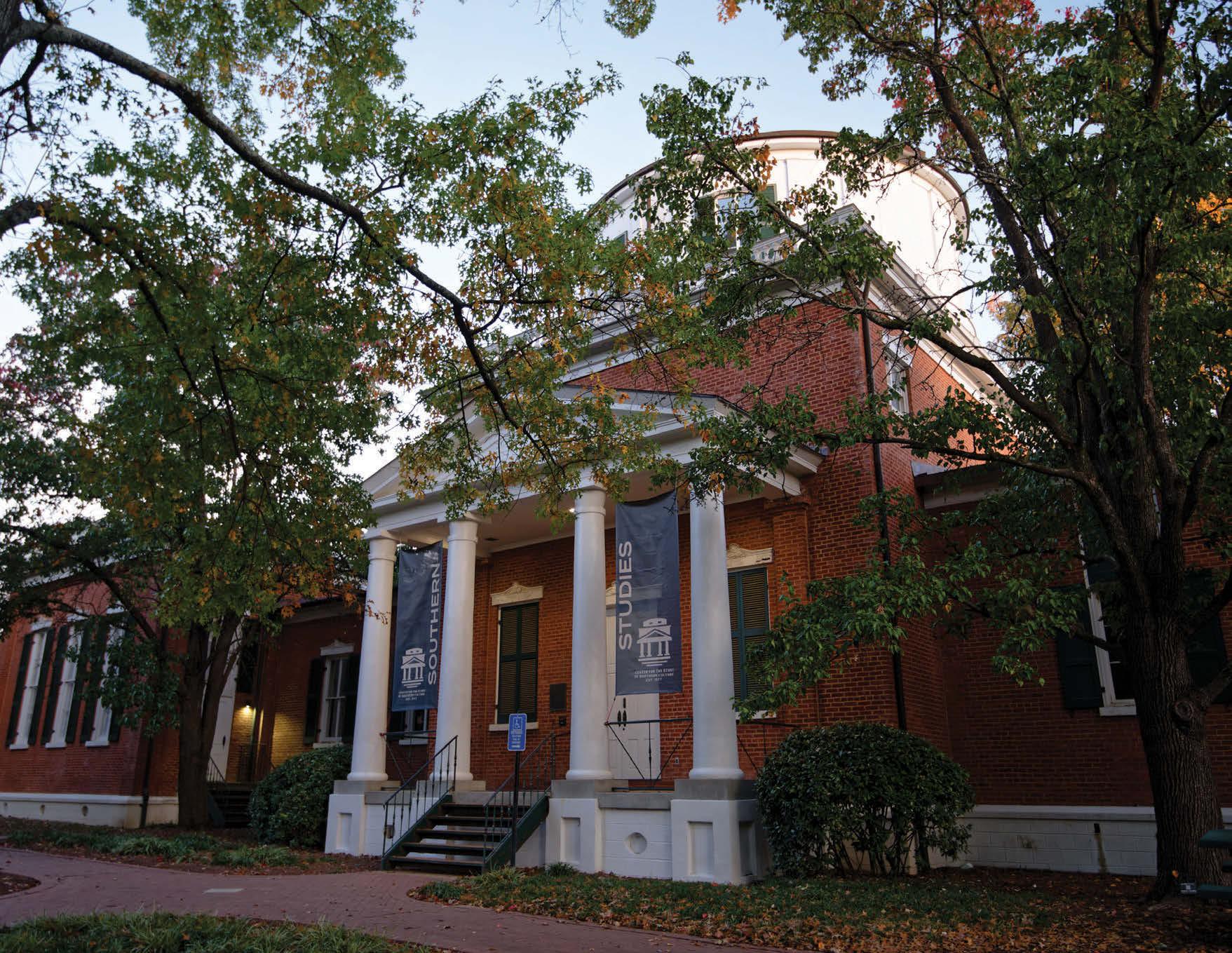
There were times—as recently as a few weeks ago—when we didn’t know if we would ever get here. Simply put, this was a weird semester—both too short and too long. We’d barely gotten started when Winter Storm Fern walloped us and campus was closed for two weeks. Not enough time has passed yet to make light of it: how cold we were, how anxious we were, how sad we were as we slid around in a scarcely recognizable landscape. The warmest place in my world? Right here in Barnard Observatory, where for once in this antebellum building’s storied life its temperature was consistent: warmer than my house, which is to say, above 40. Disregarding all encouragement to stay off campus, I slipped in here more than once to connect with a life that looked familiar and felt right, much more recognizable to me during those days than my own home.
I hope that feeling resonates for 2026 graduates, too. I hope Barnard Observatory, and the Southern Studies program, was a warm spot in their days where they felt that people cared about them, saw them, heard them. At the center of the Center are the undergraduate and graduate students who over the many years of this program have brought it to life. “Thank you,” wrote one student to Southern Studies faculty and staff, “for curating a space where I felt I could bring myself.” That is a compliment that we do not take lightly.
For all of our desire to recognize individual identities, there’s no sense pretending Barnard Observatory is an island. We exist within the larger context of the University of Mississippi which exists within the concentric circles of the state, the nation, the hemisphere, and the world. From the first day of Southern Studies 101, we talk with students about “the South” as plural (“souths”) and reflective, not of exceptional experiences but of American experiences and
SO U THE RN R EGI ST ER
global citizenship. And there’s also no pretending that it’s not rough out there in the world right now, shot through as our experiences are with anxieties about life at home and events abroad, no matter your political affiliation. If college-age students today appear consumed with social media and short-term gratification it may well be because of the dim prospects that come from taking the longer view. Having taught people in this demographic for more than thirty years now, I find interacting with students on the cusp of their adult lives as personally rewarding as ever, but challenging in new ways. Students in my classroom now seem more wary of the future, more suspicious of success, more hesitant in the face of vulnerability than their predecessors. I can’t blame them.
Institutions of higher learning are not immune to the vagaries of political life; often they act as barometers of those very tensions. At the Center for the Study of Southern Culture, we continue to do our work by leaning on facts and into the multiplicity of experiences that we document from people who make the American South their home. We situate Supreme Court decisions within civil rights era–history, we trace political power relative to voting patterns that stretch back to Reconstruction, we locate concerns about immigration within the hierarchies of labor sown into the region over time, and we examine anxieties about gender identity within rigid ideas about masculinity and femininity that have long swirled around “the South.” We ask people where their food comes from, how they worship, and whom they love. It is not necessary for external agencies or internal offices to restrict speech outright or actively dictate syllabi content to achieve ideological sameness; that dubious success comes when professors second-guess their own expertise and when students understand exposure to information and ideas as tantamount to indoctrination. We are not cultivating such a space.
On the cover: Photo by James G. Thomas, Jr.
REGISTER STAFF
Editor: James G. Thomas, Jr.
Graphic Designer: Susan Bauer Lee
Exploring a region as complex as the US South, nested within its many containers, is a full-time job, not an excursion to a remote location, and we’re honored to be doing it. Our work was never more relevant than it is now. We’re resting up a little bit this summer, but not too much—at different points over the coming months, we’ll be joining with the Smithsonian to welcome curators of museums and small cultural centers from across Mississippi for a series of workshops, hosting our friends on the board of the Mississippi Humanities Council, and cheering at orientation for sixty new Southern Studies majors who will join us this fall. If you find yourself in Oxford between now and August, come to Barnard Observatory. We’ll be glad to see you, too.
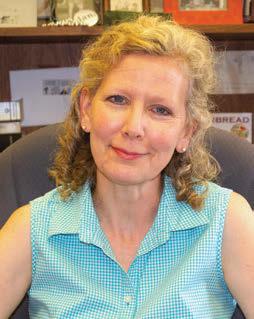
Katie McKee
The Center Celebrates Graduates, Faculty, Staff, and Alumni
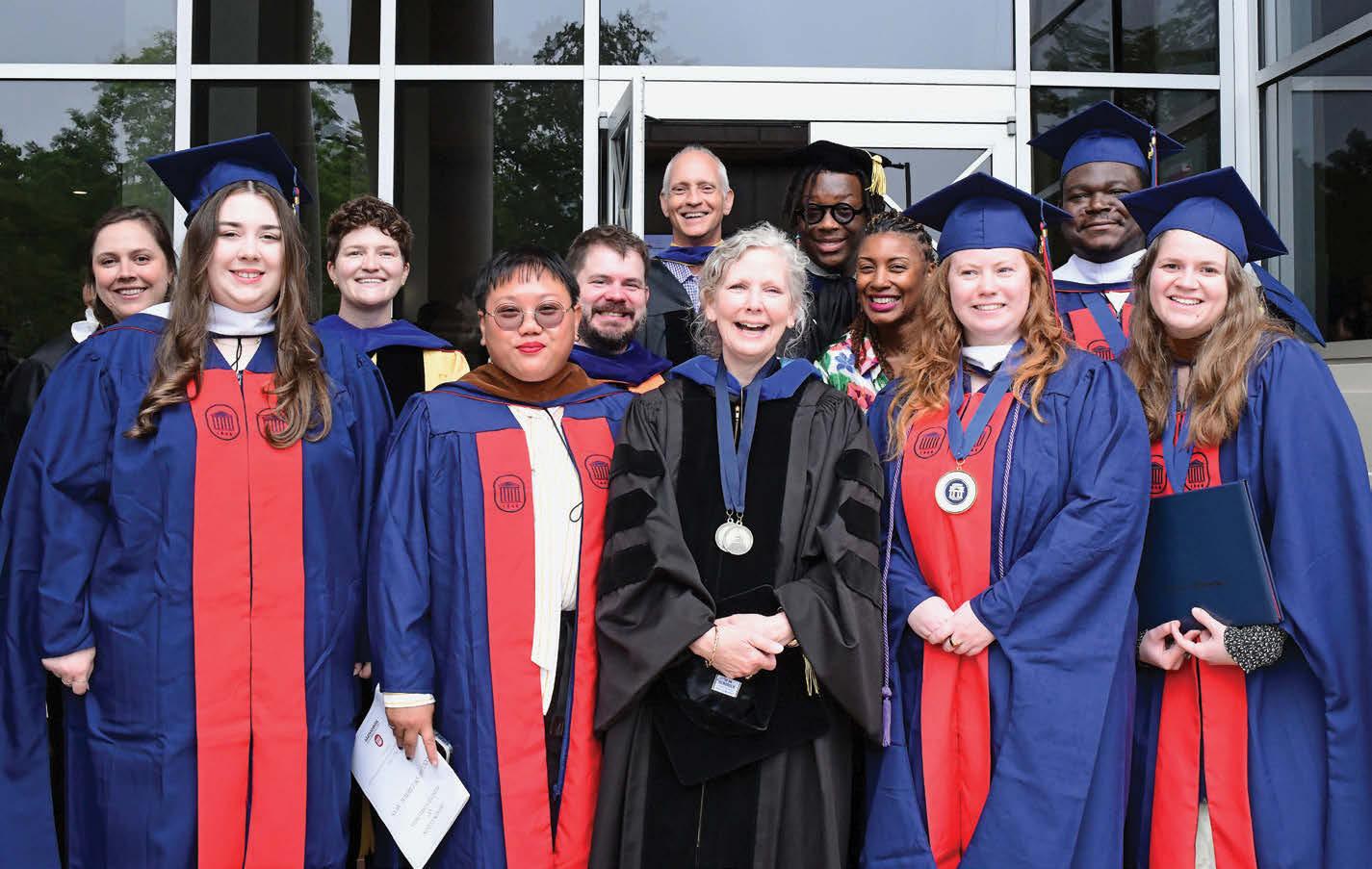
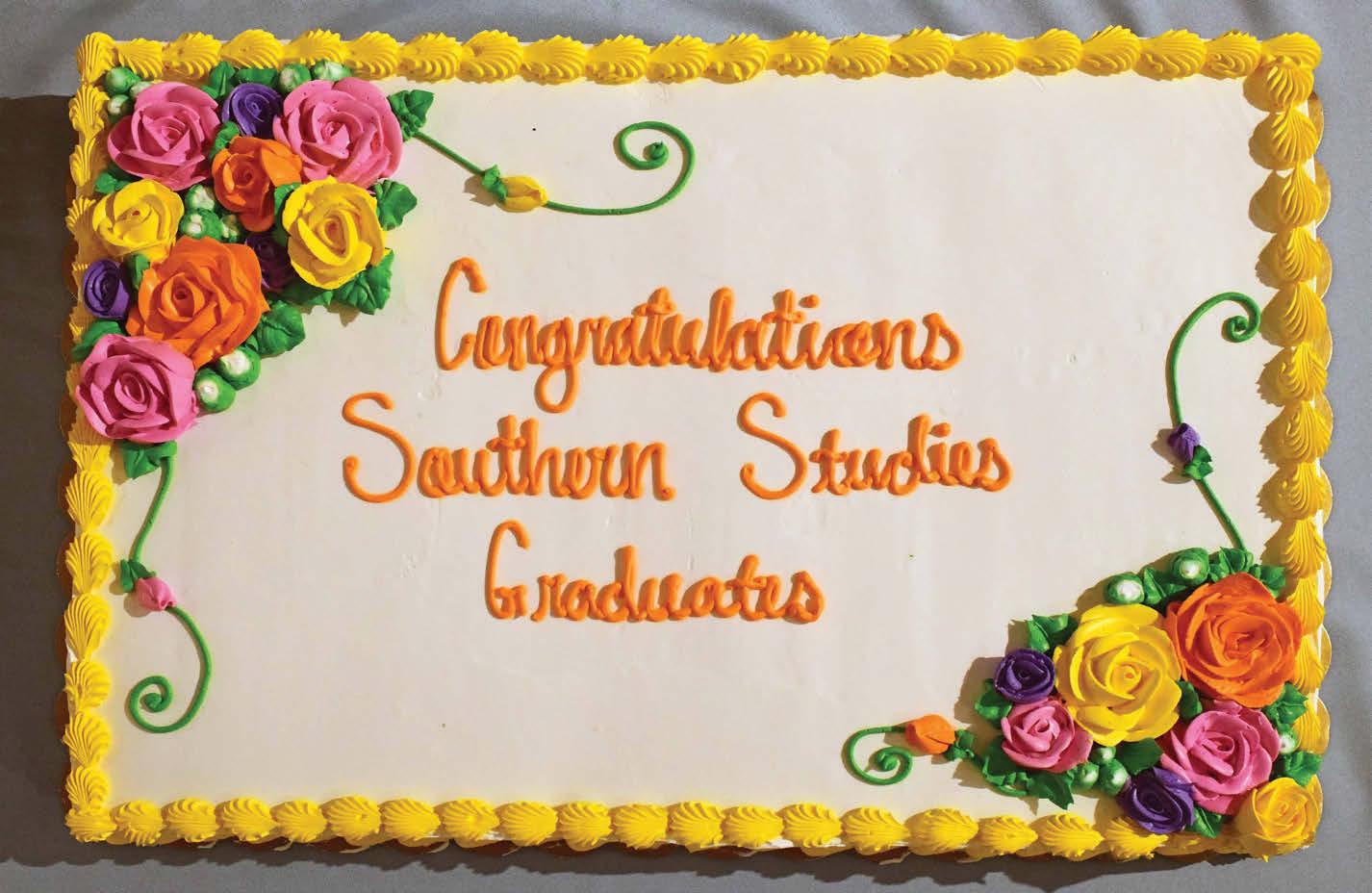
This May, the Center for the Study of Southern Culture celebrated the accomplishments of fifty-one graduating students across its three Southern Studies programs, honoring their academic achievements and creative work at commencement ceremonies and the annual Southern Studies graduation dinner.
Forty-two students graduated with a Bachelor of Arts degree in Southern Studies: Teller John Abdou, Virginia Elaine Baker, Elson Grace Ball, Abigail Elizabeth Barnett, Cara McKinley Bearden, Mary Bell, Caitlyn Mae Birk, Katherine Grace Bledsoe, Emma Faith Broemmer, McKenzie Boynton, Aidan Lee Bryant, Nelson Shields Crawford, Stella Patricia Daley, Grace Katherine Di Mento, Ashton Stewart Frankel, William A. Goggin, Hannah Graham, Macleigh Elizabeth Guest, William Roland Harbison, Savannah Hardin, Brielle Marie Haydel, Carter Joseph Hendrick, Reice Hicks, Brooklyn Faith Hoffmann, Lauren Olivia Holtzhower, Rebecca Marie Johnson, John Everett Klock, Ella Matilda Koecke, Morgan Nikole Lazaroe, Mary-Helen LeMay, William David Litton, Kaitlyn Michelle McGrath, Grace Miester, EmmaClaire Andrea Mitchell, Emma Payne Moore, Molly Elizabeth Moss,
Adeleine Blue Nardone, Payton Elizabeth Nowakowski, Elizabeth Sherwood, Kesler Smith, Thomas Tilleros, and Acton Westmoreland.
Seven students, Wayne Dowdy, Ryley Fallon, Astrid KnoxMcConnell, Alexandra Santiago, Nicholas Harvey, David Smith, and Samson Oklobia, graduated with a Master of Arts degree in Southern Studies. Sela Ricketts and Ashish Shrestha earned their Master of Fine Arts in Documentary Expression.
Each year at graduation the Center presents several awards for papers and documentary projects following the graduation ceremony on campus. This year those awards were announced at a Southern Studies graduation dinner in Barnard Observatory on Thursday, May 7.
PRIZES IN SOUTHERN STUDIES, SPRING 2026
Gray Award for Outstanding Undergraduate Work
Hannah Graham for “Feeding the South: SNAP and Nonprofits,” completed in Dr. Palazzolo’s SST 555 class
Coterie Award for Outstanding Undergraduate Work
Thomas Tilleros for “Engineered Exclusion: Segregation and Recreation,” completed in Professor Eubanks’s SST 401 class
Rose Califf Scholarship for Southern Studies Majors Nicholas Beaumont
Sue Hart Prize for Work at the Intersection of Southern Studies and Gender Studies
Astrid Knox-McConnell for her MA thesis, “Recipe for Resistance: Oral Histories of Queer Foodways in the US South,” completed under the direction of Professor Annemarie Anderson
Peter Aschoff Award for Outstanding Scholarship about Music
Ryley Fallon for her MA thesis, “Metacountry: Authenticity Signaling in Contemporary Country Music,” completed under the direction of Dr. Darren Grem
Sarah Dixon Pegues Award for Outstanding Scholarship about Music
Ashish Shrestha for “Griot of the South: John Mohead,” completed for Professor Rash’s SST 633 class
The SFA Prize for Outstanding Work in Foodways
Samson Oklobia for Roots Return, a film completed for Dr. Palazzolo’s SST 555 class
Lucille and Motee Daniels Award for the Best Paper or Project by a First-Year Graduate Student
Cody Stickels for the film Under the Ink, completed for Professor Ahmed’s SST 533 class
Ann Abadie Award for the Best Documentary Project
Ale Santiago for her MA thesis, “Finding Place Within the Gulfs that Divide,” completed under the direction of Professor Annemarie Anderson
Lucille and Motee Daniels Award for the Best Master’s Thesis
Wayne Dowdy for “Southern/Appalachian Migrants and Urban Development Politics in Uptown Chicago, 1950–1972” completed under the direction of Dr. Matt O’Neal
Award for the Best MFA Thesis
Sela Ricketts for “Open for Victims, Sorry We’re Dead,” completed under the direction of Professor Shiraz Ahmed
Graduate Student Achievement Award in the College of Liberal Arts
Astrid Knox-McConnell
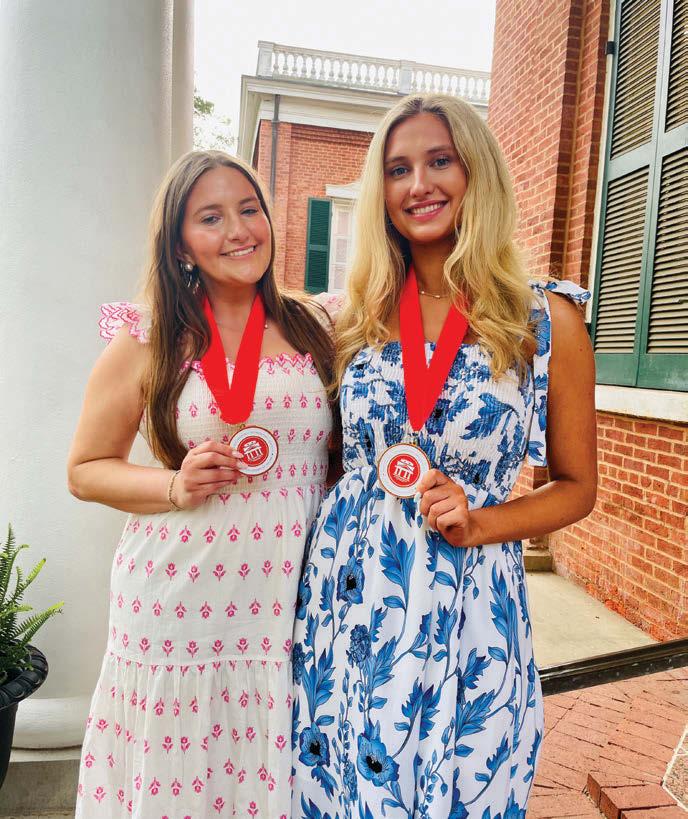
The interdisciplinary nature of the Center for the Study of Southern Culture means faculty, staff, and alumni also work on a wide range of projects. Many of them were acknowledged with awards and had notable achievements this year. Congratulations to everyone.
Annemarie Anderson, SFA’s lead oral historian and assistant professor of practice, published an article, “The Florida Net Ban’s Legacy: Aquaculture as New Waterwork Along Florida’s Forgotten Coast,” in the Texas Gulf Historical and Biographical Record. The peer-reviewed journal shares presentations from Lamar University’s 2025 Greater Gulf Symposium.
Tom Attah and Ellie Palazzolo were accepted to participate in the National Center for Faculty Development & Diversity’s (NCFDD) Faculty Success Program this summer. NCFDD is a professional development, training, and mentoring organization that partners with colleges and universities to support faculty success.
Andrew Bryant won the 2026 University of Mississippi College of Liberal Arts Newcomer’s Award for staff members in their position for fewer than three years.
Simone Delerme, who has taught at UM since 2013, was approved for promotion to full professor of anthropology and Southern Studies.
Darren E. Grem, associate professor of history and Southern Studies, won the University of Mississippi’s Paragon Award for Excellence in Distance/Online Teaching and presented “On Reagan’s Dime: Remembering and Forgetting FDR in Conservative Cultural Politics, 1989–2004” at the annual meeting of the American Historical Association in January. He will publish “Memory,
Neoliberalism, and the General Textile Strike of 1934” in Study the South this summer, and he published “Y’all-inthe-Box Faiths: The South and the Religion Problem in Modern American History” in Modern American History in December 2025.
Adam Gussow, retiring from teaching this summer, presented the University of Mississippi’s 2026 Last Lecture, “Give the Circle Time to Close,” on May 1. A retiring faculty member traditionally gives this last lecture during the last class period of the academic year.
Fred Nettles (MA 2024) was in conversation at the Overby Center with James Reed, Charles Ross, and Ralph Eubanks to discuss his thesis film, The Story of Ben Williams.
Ellie Palazzolo, Southern Foodways Alliance Assistant Professor of Southern Studies and assistant professor of history, was named a 2026–27 Community Engaged Fellow with the University of Mississippi Center for Community Engagement. Her project is called “Preparing ‘Provisioning Oxford’: Learning to Teach Food Futures Through Community Engagement.”
Ryan Parsons is on fellowship all next year with the Russell Sage Foundation, one of the oldest American foundations, where he will examine the growing role of disability benefit programs, particularly in rural regions experiencing longterm economic decline.
Rhondalyn Peairs and Jennifer Mizenko won a Hoka Award in the Best Mississippi Made category at the Oxford Film Festival for their film Moving Spirits: Encountering the Ancestors, an intersection of art, history, and genealogy concerning the free and enslaved families associated with Rowan Oak. Peairs is a Southern Studies alumna.
John Rash and Melanie Ho’s film, Our Movement Starts Here, was nominated for a Southeast Emmy in the Historical Documentary category.
John Rash was selected by NY20+, an international arts organization based in Chengdu, China, as one of their 2026 Resident Artists and will participate in their VISUREAL: International Image Art Festival as part of a two-week film production cohort this June.
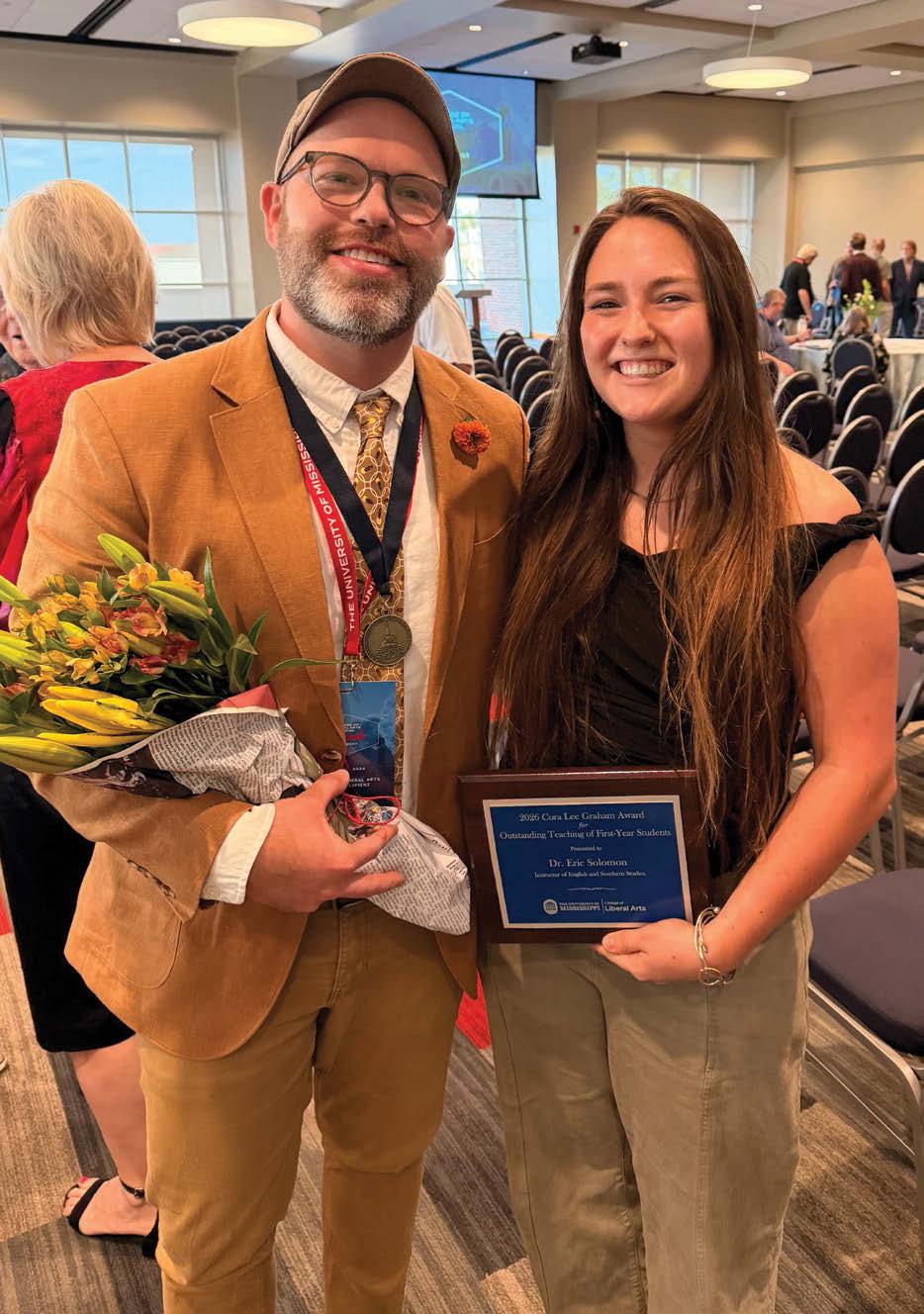
Eric Solomon won the Cora Lee Graham Award for Outstanding Teaching of First-Year Students. In 1984, Cora Lee Graham of Union City, Tennessee, established an endowment “to help retain better professors who teach the freshman classes” in the College of Liberal Arts. He was also promoted to a fulltime instructor of English and Southern Studies.
Jonathan Smith, film equipment manager for the UM College of Liberal Arts, had a photo accepted to the Enduring Ground online exhibition at the Griffin Museum of Photography. The exhibition is up at griffinmuseum.org/ show/enduring-ground_online0126.
Scholars of Freedom
William Winter Student Scholars Attend 37th Natchez Literary & Cinema Celebration
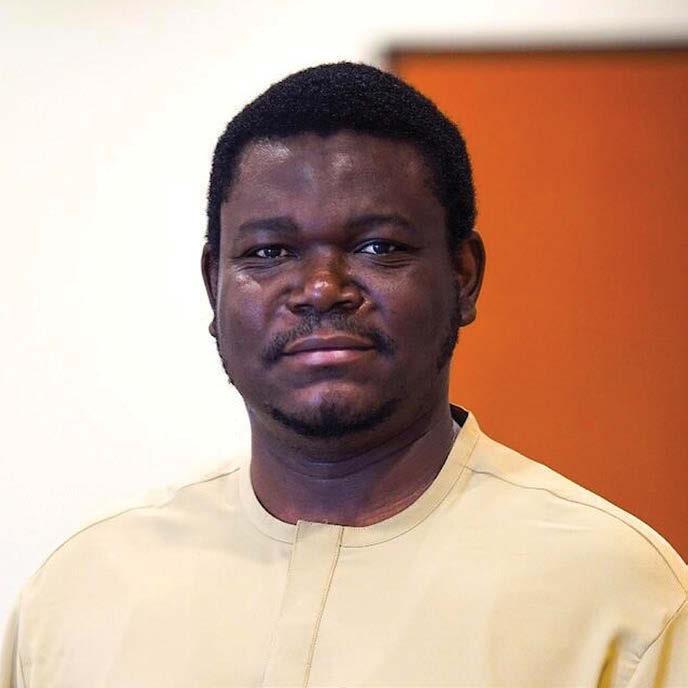
Jacob Fennell and Samson Oklobia are the University of Mississippi 2026 William Winter Student Scholars for an annual conference devoted to literature, history, film, and culture: the Natchez Literary & Cinema Celebration. This year’s event was February 26–28.
Named for former Mississippi governor William Winter, scholars are chosen by their educational institution and honored publicly at opening and closing sessions of the event. The annual award honors Winter’s work for educational reform and racial reconciliation and his love of the humanities. The recognition is given by each Mississippi university to students, faculty, and administrators who make substantial humanities contributions across the state.
This year’s theme, “Stories of American Freedom,” explores the complexity of the nation’s pursuit of freedom through lectures by authors.
Fennell (BA public policy leadership ’22, MA Southern Studies ’24) is an English doctoral student writing his dissertation on “Gambling Fictions: Southern Literature and the Aesthetics of Casino Capitalism.” He has also presented his research at the Southern Studies Forum Conference in Santiago de Compostela, Spain.
“Fennell’s work centers on twentieth- and twenty-firstcentury southern literature and film, with particular attention to discourses of place and space,” said Caroline Wigginton, chair of the Department of English. “As a result, his research often poses critical questions about freedom in America, the systems that deny it, and the attempts by American authors and filmmakers to imagine spaces in which a fuller notion of American freedom may be realized.”
Oklobia is a master’s student at the Center for the Study of Southern Culture and graduate assistant for the Southern Documentary Project. A storyteller with a background in filmmaking and television production from Nigeria, he is a graduate of the University of Jos and he trained as a cinematographer and high-def filmmaker at PEFTI Film Institute, Lagos, and New York Film Academy, Abu Dhabi.
“As an international student and also a filmmaker learning to tell stories in this country, I believe Mr. Oklobia will benefit greatly from this year’s panel of scholars addressing the theme ‘Stories of American Freedom,’” said Andrew Harper, director of media and documentary projects and associate professor of practice in documentary expression.
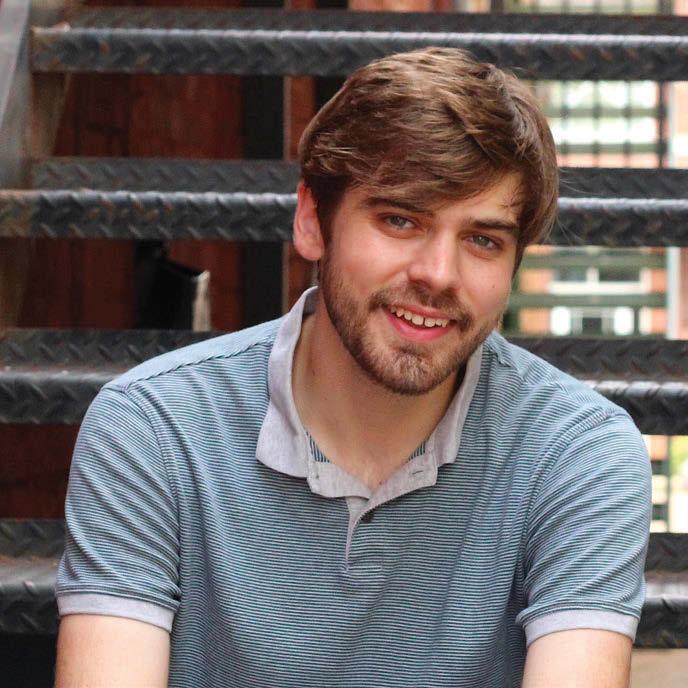
Jacob Fennell
Samson Oklobia
Pitching the Dream
MFA Students Participate in the RiverRun International Film Festival
On Saturday, April 27, Southern Studies MFA in Documentary Expression candidates Ashish Shrestha and Cody Stickels attended the RiverRun International Film Festival in Winston Salem, North Carolina, as selected participants in the festival’s 15th Annual Student Pitch Fest, a student documentary film pitch competition.
The RiverRun International Film Festival is a student filmmaking competition that showcases the next generation of storytellers. Student filmmakers from a consortium of colleges and universities across the Southeast present original film projects to a panel of industry professionals for feedback and evaluation.
Student Pitch Fest awards first place winners $1,000 and second place winners $500 to help fund a student film at any stage of production. Each student described their films to a panel of three judges with

a five-minute oral presentation that included up to ninety seconds of proof-of-concept video. They were not allowed to use slides or pitch deck visuals. Judges asked questions for five minutes following each presentation.
After presentations from ten university students from around the country, the panel of judges awarded Ashish Shrestha the first-place award for his MFA thesis film Threading the American Dream
Emily Allgiar, MFA candidate in the Documentary Film Program at Wake Forest University, won second place.
Schools participating this year included the University of Mississippi, Appalachian State University, East Carolina University, North Carolina State University, Tulane University, University of Florida, UNCSA, and Wake Forest University. The special guest judges were Hannah Black, Resita Cox, Emily Foster, Marie Jamora, Jonna McKone, and Megan Petersen.
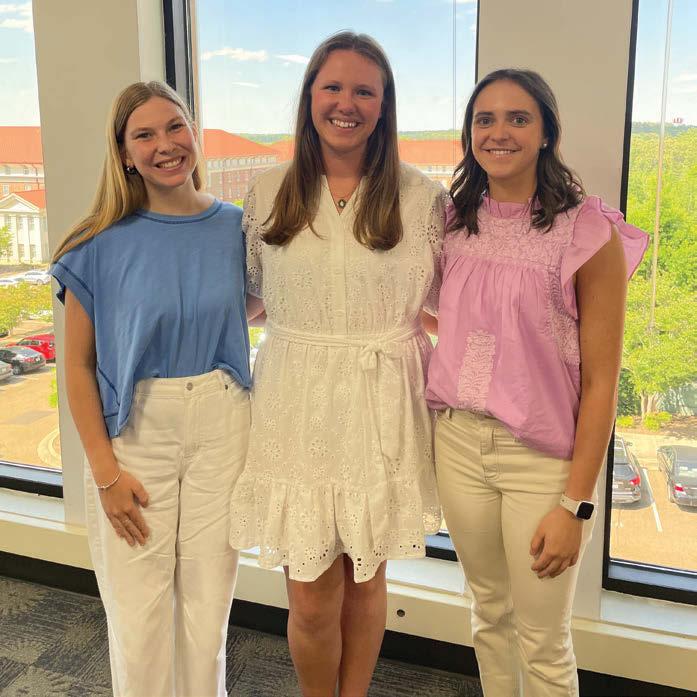
Congratulations to the three CEL 210: Intro to Community Engaged Leadership Capstone Proposal presentations given by Southern Studies majors. From left, Zoey Valley, “Historic Preservation Advocacy for the Next Generation,” Grace Hosemann, “Ole Miss Student OPC Coaches Initiative,” and Anna Claire Carter, “Voices from the Arkansas Delta: Uplifting Stories of Revitalization.” They are also Community Engaged Leadership minors, and the presentations previewed their proposed capstone projects.
Ashish Shrestha (left) and Cody Stickels
Unvanquished Soil: Life Past and Present
May 26–August 11, 2026
This summer, two exhibits and a lecture series at the University of Mississippi will tell the story of Greenfield Farm, which was once William Faulkner’s mule farm and will soon become the state’s first writers’ residency.
Over the past year, photographer and documentarian Thad Lee has chronicled Greenfield Farm, a plot of land fifteen miles northeast of Oxford
that was once home to the Nobel Prize–winning author’s livestock. Before welcoming its first group of new writers next year, the University of Mississippi’s Mississippi Lab aims to highlight the farm’s past with two exhibits and a lecture series that focus on Lee’s work.
“Mississippi’s story is the American story,” said Mary Wise Conaway, project manager for the Mississippi
Lab. “We hope these works become a part of how current and future generations of Mississippians understand our past: where we’ve been, what we’ve inherited, and how this heritage shapes our collective identity.”
The first exhibit, Unvanquished Soil: A Year at Greenfield Farm is on display at University of Mississippi Museum through August 1. The Center for
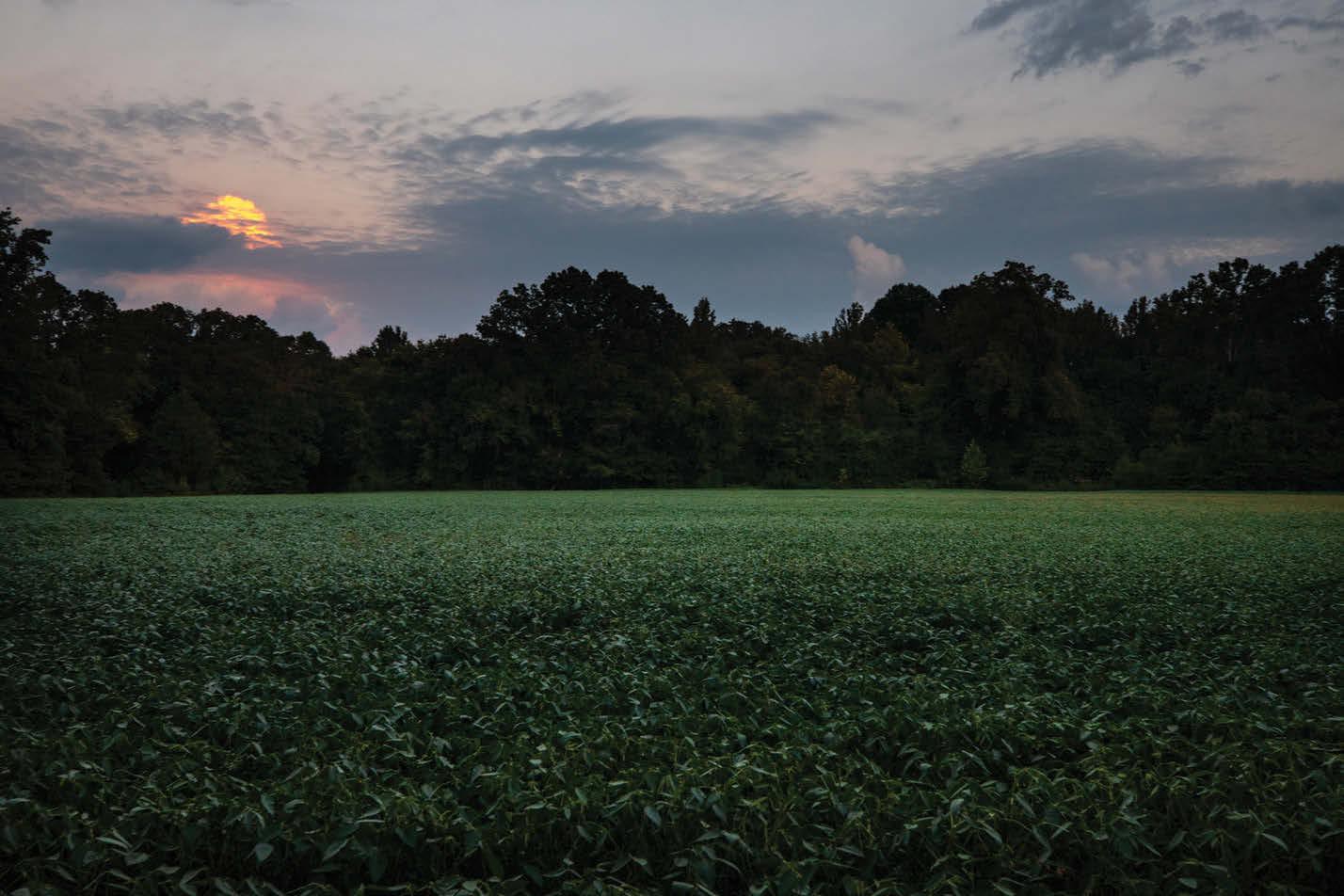
September Sunset over Soybean Field
THAD
the Study of Southern Culture will open a second exhibit featuring Lee’s work, Unvanquished Soil: Life Past and Present, as well as historic images from
photographer Martin J. Dain. The exhibit opens May 26 in Gammill Gallery in Barnard Observatory and will run through August 11.
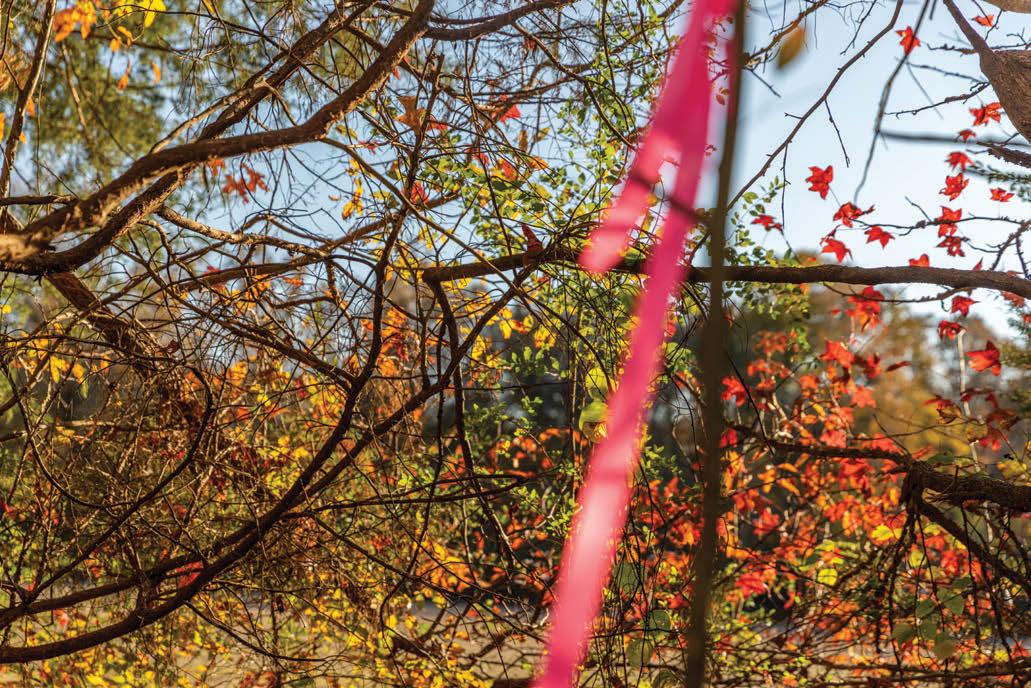
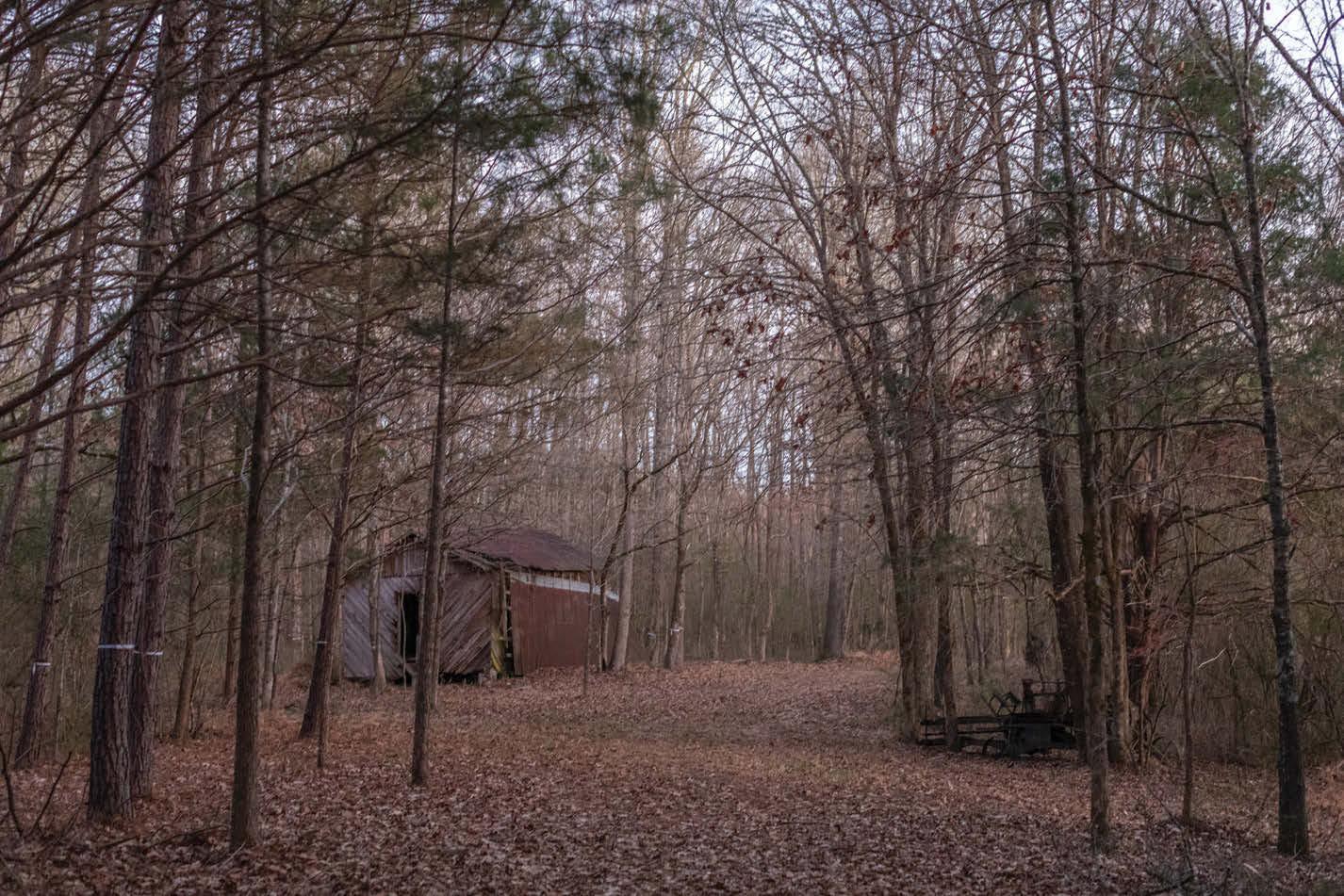
“I encountered mystery, history, beauty, and decay when walking Greenfield Farm,” Lee said. “I hope that comes across in these twenty-four photographs. The property is a strange marriage of ruins and Mississippi woods. The structures, machines, and artifacts that have survived the sixtyfour years since Faulkner’s death stand still, quiet, and somewhat timeless. They are witnesses to the colorful and stark seasonal change that the farm’s plant world undergoes.”
“I hope viewers experience the same awe and reverence for the beauty of this land so masterfully captured through Thad’s lens that I have felt,” said Melanie Antonelli, curator and collections manager at the University Museum. “It is apparent that this has been a passion project for John T., Mary, and Thad. I am happy to have been able to learn from them about the farm’s history and to see such care and consideration given in repurposing the land.”
The Hay Baler, the Corn Crib, and the Walkway
Pink Flag and Sweet Gum
Among Ourselves
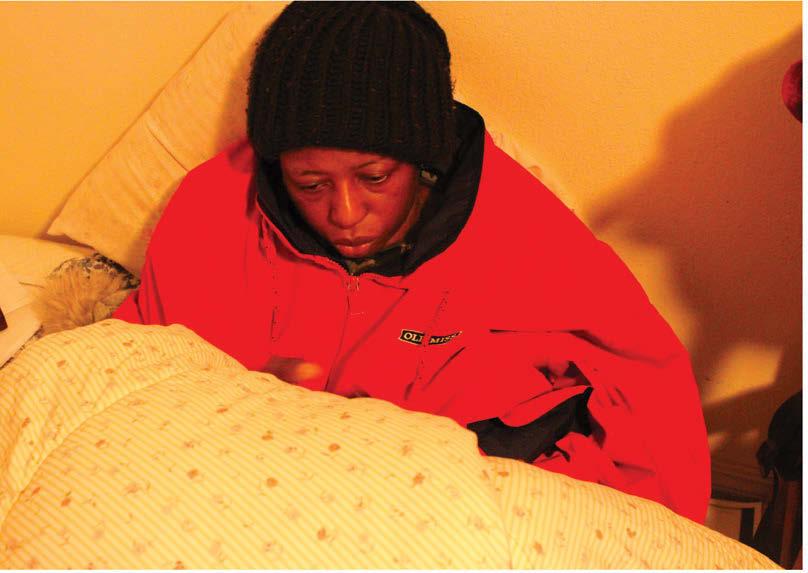
The Photography of Southern Studies 534
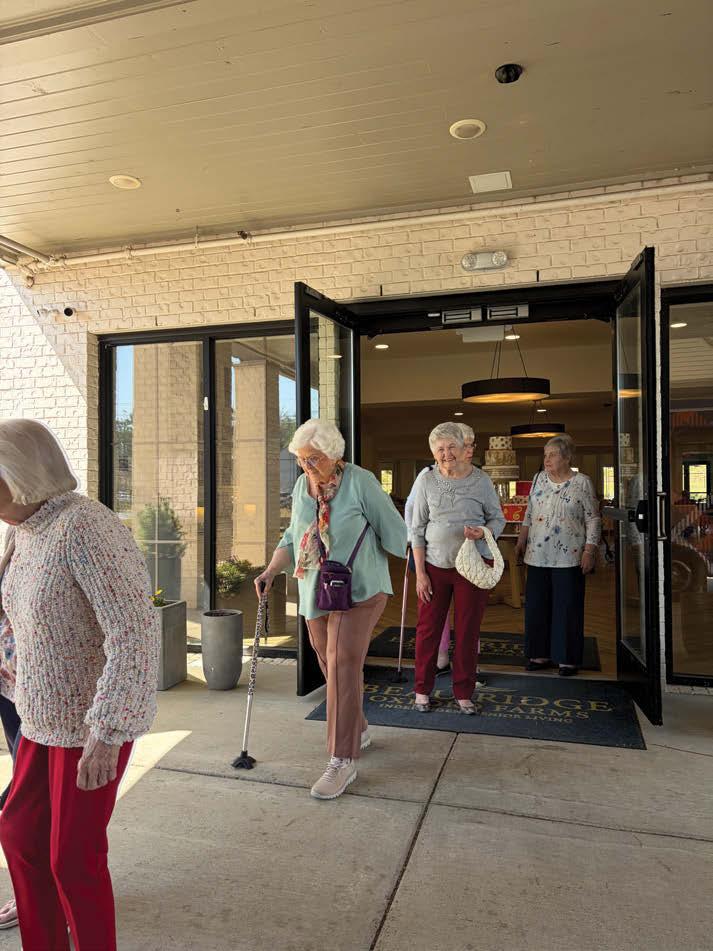
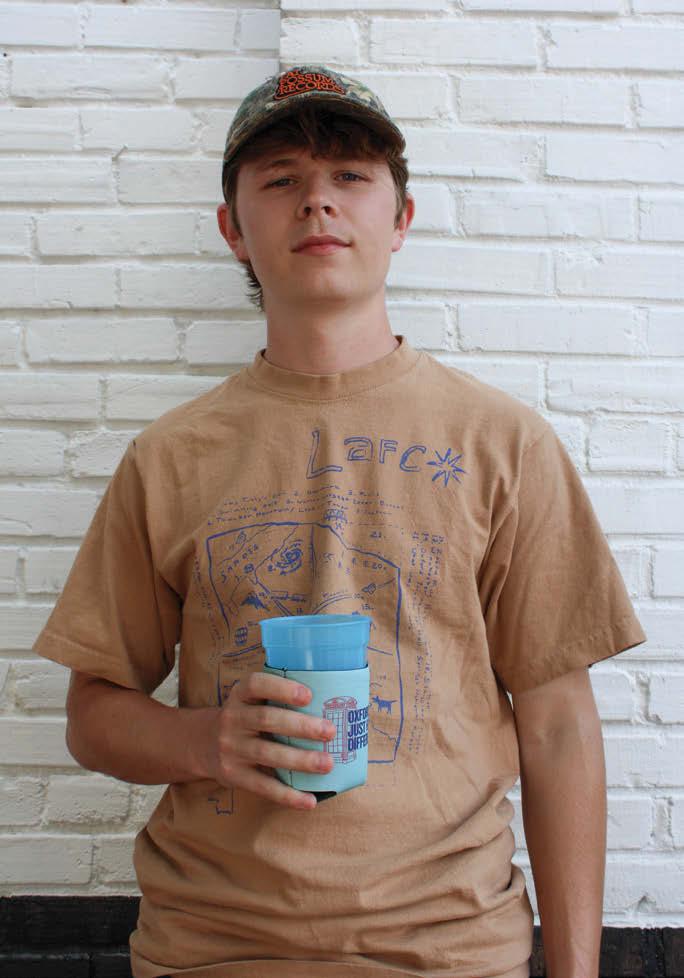
We began this semester in isolation, shut in to protect us from the cold, the dark, the ice. It’s only natural that when we returned we would seek out the comfort of friends, the camaraderie of the classroom, and the sociability of intimate spaces.
It is here that the class of Southern Studies 534: Documentary Photography found their solace. This group of budding photographers turned their lenses on the places and people that made them feel at home again in such strange times. While “among ourselves” is a phrase often used to indicate that a discussion is meant to remain confidential and secret to a particular group, these photographers have chosen to reveal the inner lives, joys, and truths of these communities to the greater public of Barnard Observatory. Entrusting us with these peeks into the worlds that make up the university and Oxford, this work showcases how the overlapping, intersecting, and vibrant scenes that make up this region can only ever be held still for a fraction of a second, enough time for the light to enter and the picture revealed.
—Shiraz Ahmed
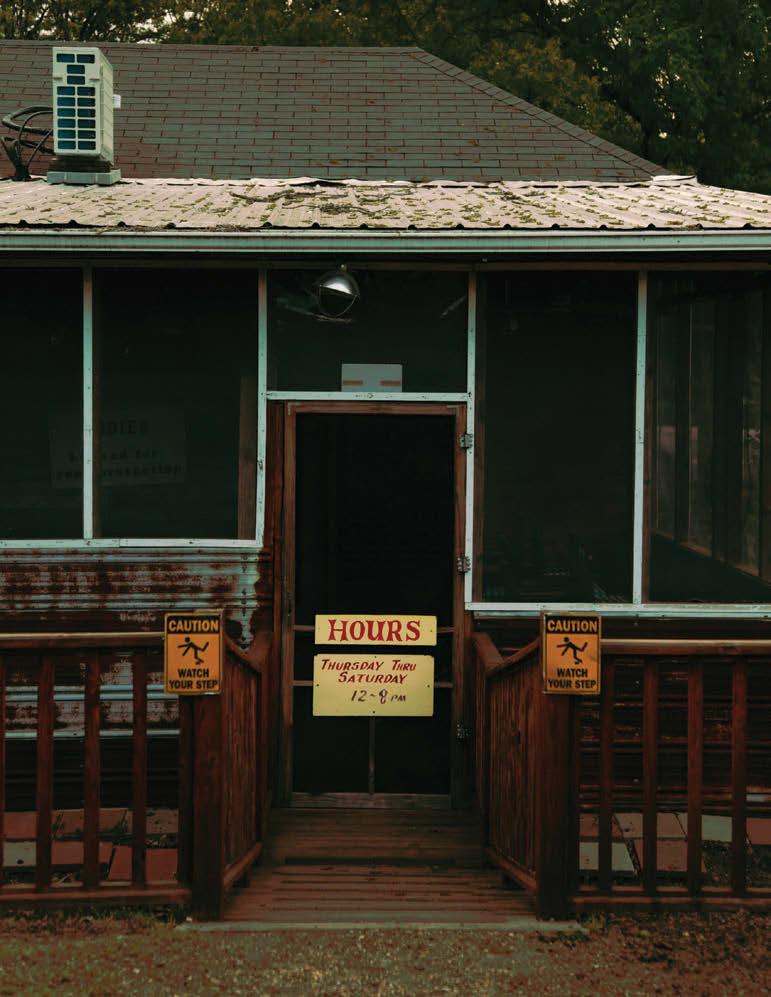
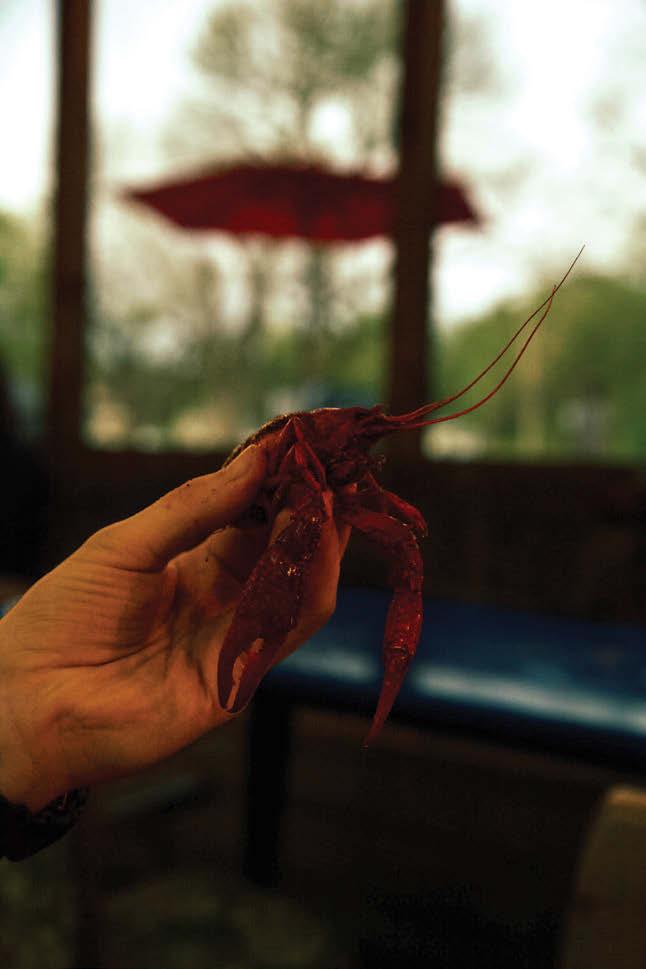
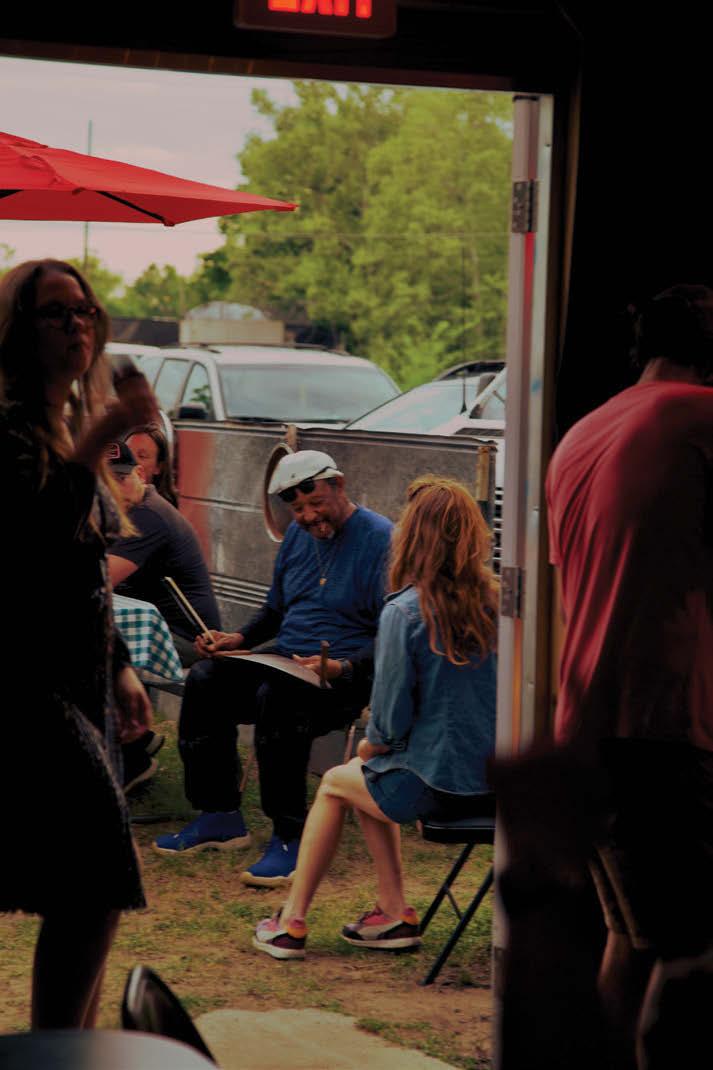
Bebe Falkner, from the project Mississippi Mudbugs
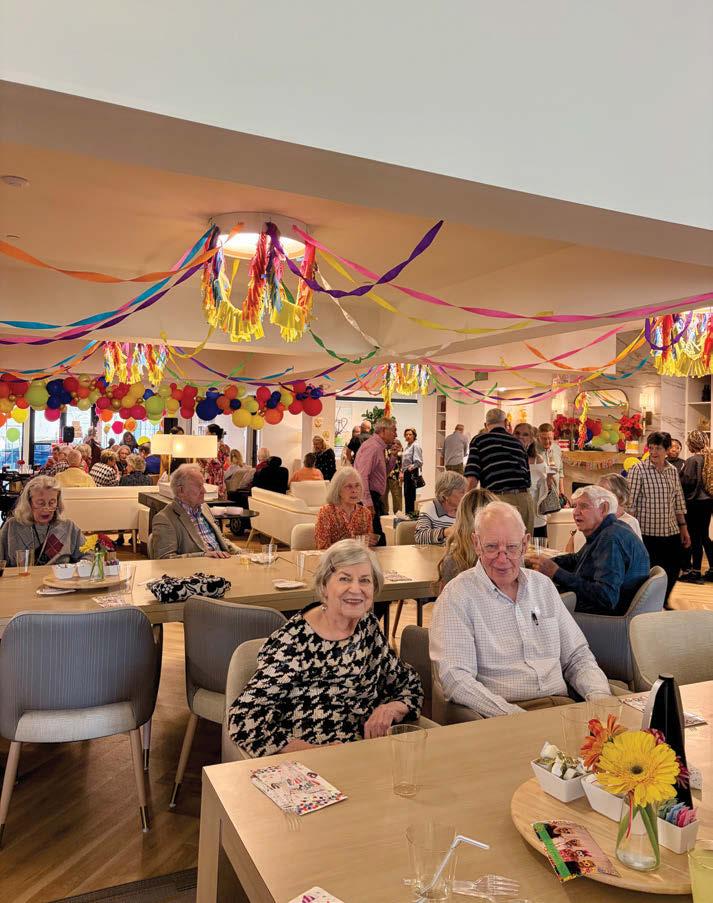
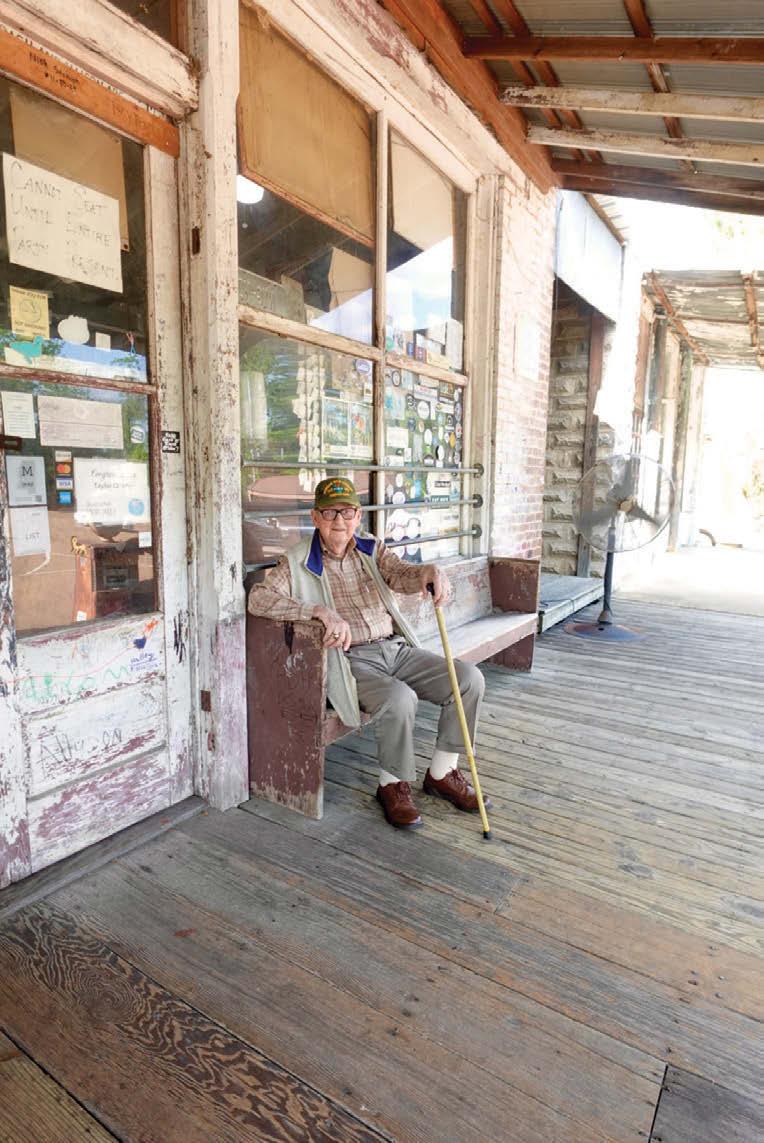
Breanna Holcombe, from the project Where Life Continues
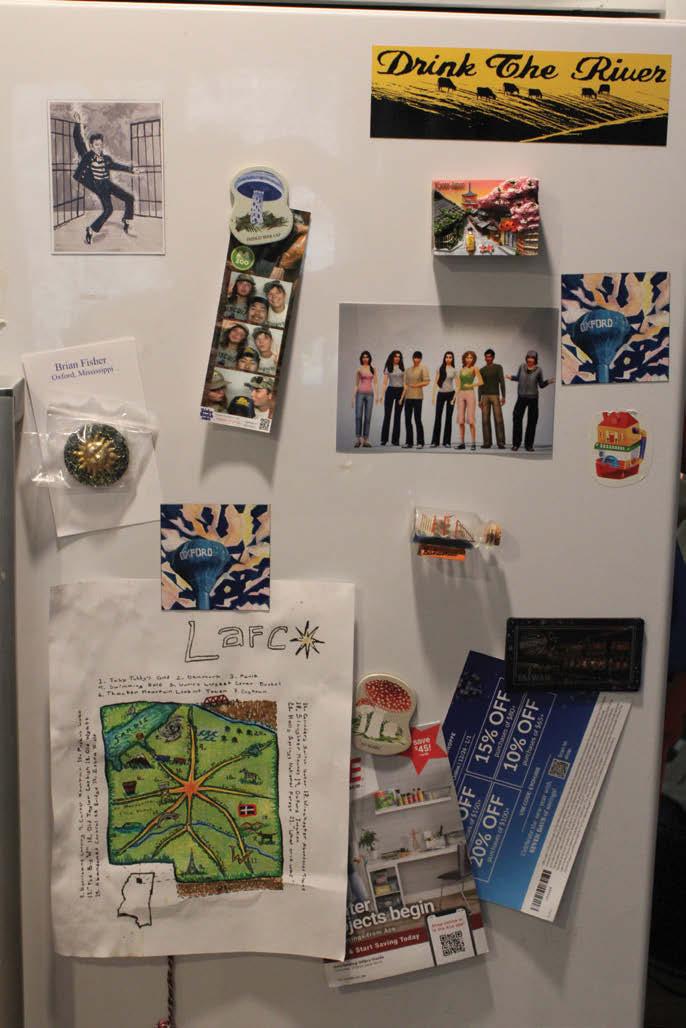
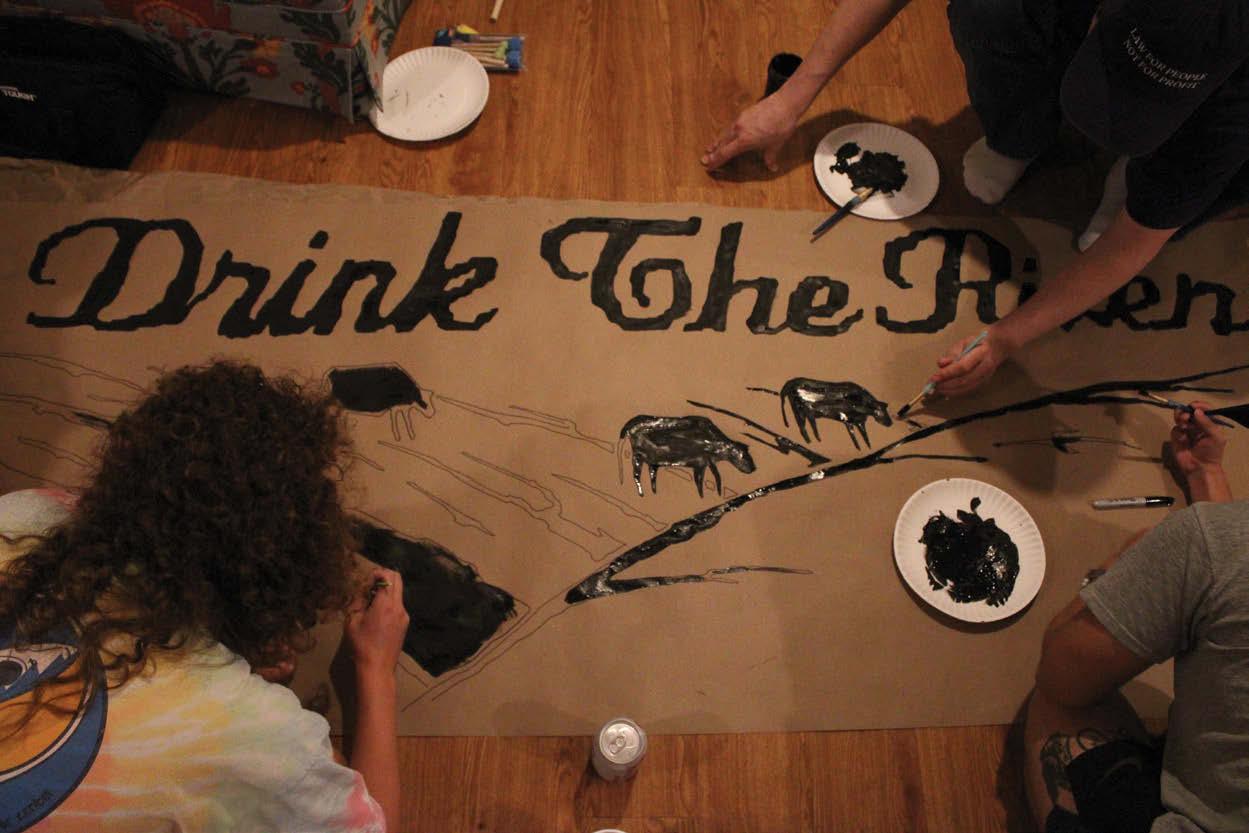
Kesler Smith, from the project Savoring the River
Finding Home Away from Home
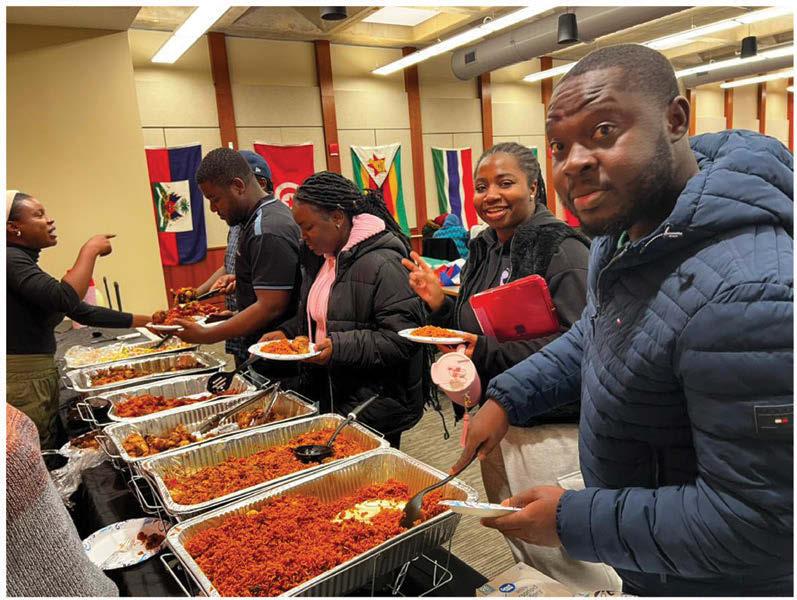
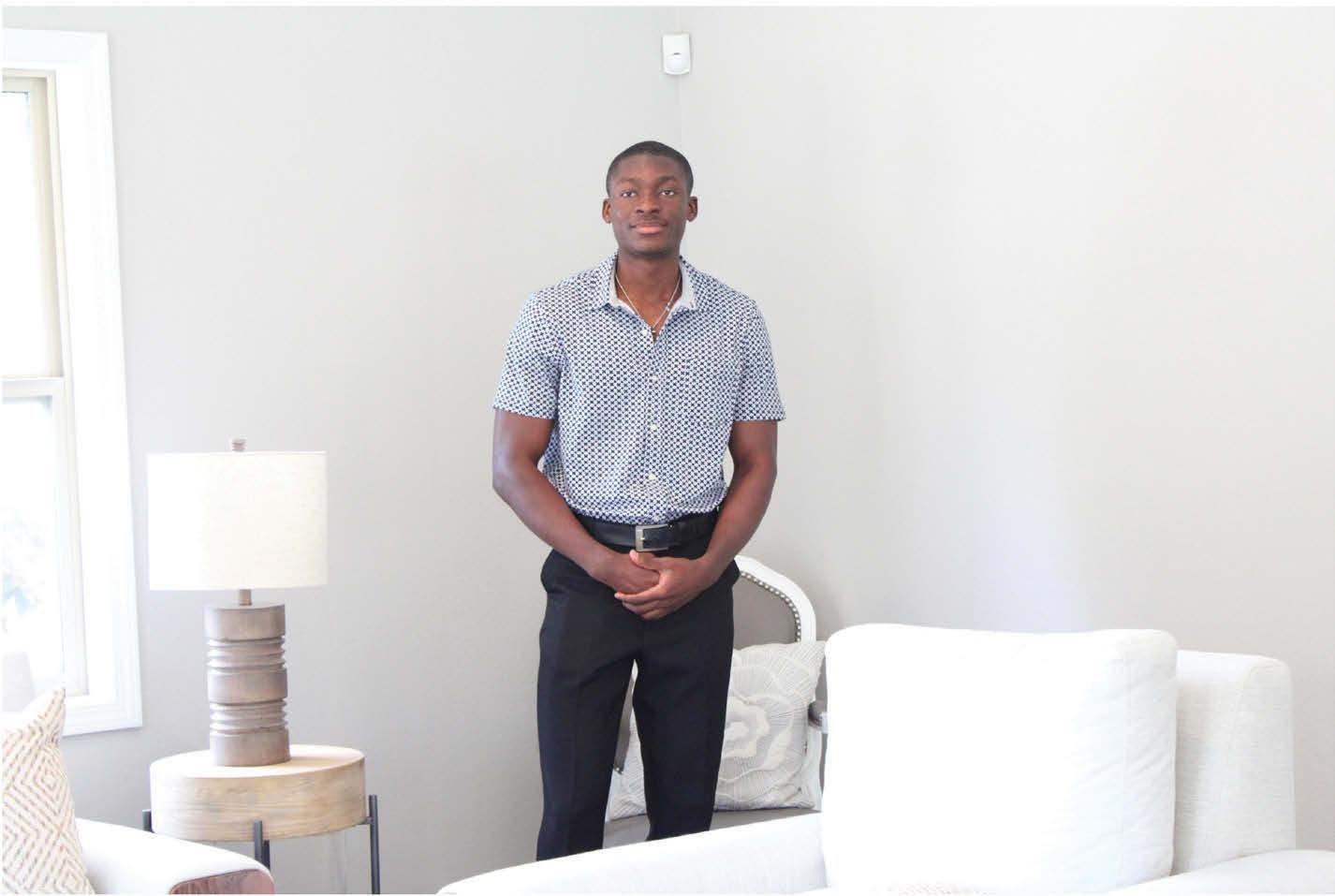
Mary Kabore, from the project
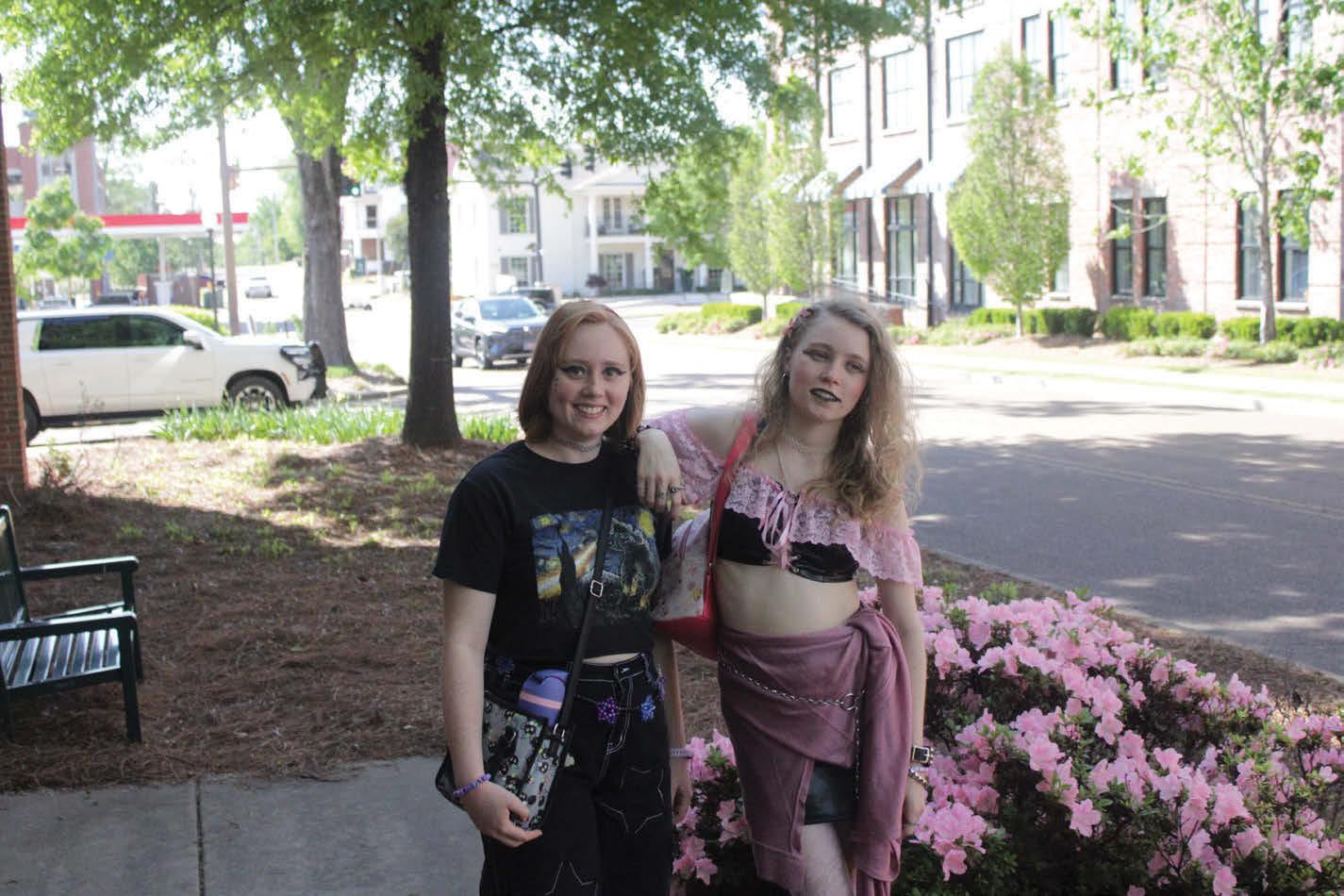
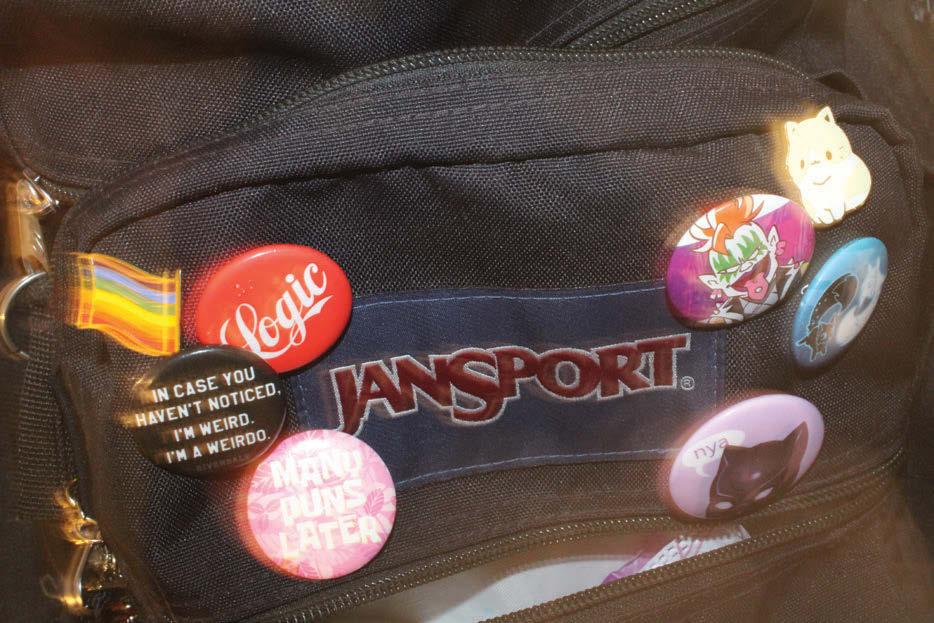
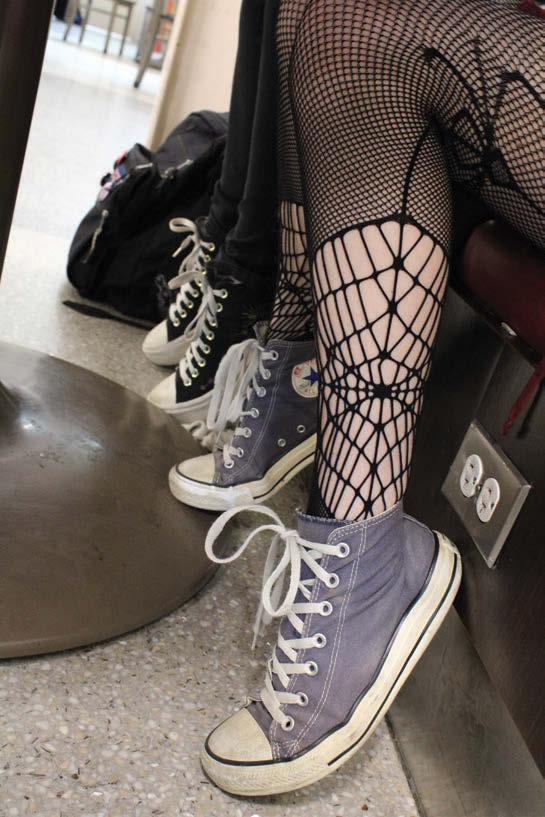
Reice Hicks, from the project
Alt Miss
The Scroll That Changed Everything
Anna Claire Carter Gains New Perspective on the South
Many people dismiss scrolling on social media as a waste of time, but Anna Claire Carter credits it as the way she learned about the Center for the Study of Southern Culture. “As a senior in high school, I saw Southern Studies major Kennedy Marrs post something about the program,” Carter said. “It immediately caught my eye, so I started researching about the Center.”
In January of 2024, Carter drove from her hometown of Jonesboro, Arkansas, to visit Oxford for a meeting with Katie McKee, the Center’s director, and Ralph Eubanks, Faculty Fellow and Writer-in-Residence at the Center for the Study of Southern Culture. She quickly realized the Center was where her future began. “The interdisciplinary nature of the major brought together all of my interests,” she said. “It seemed as though everything that I had been drawn to up to that point culminated in this path. Looking back on my high school years, I laugh thinking about the papers I wrote, such as ‘Hold onto Your Southern Accent’ and ‘You Are What You Eat: Three Southern Staples and the History Behind Them.’ My curiosity about the South was always there, but I had no idea that it would lead to my field of study.”
Fast forward, and Carter is a sophomore in the Sally McDonnell Barksdale Honors College as a Southern Studies major with minors in political science and communityengaged leadership. It’s no surprise that one of her favorite classes so far, Southern Rights and Activism, reconnected her with someone she met on her first visit: Ralph Eubanks. “In the course, we explored a century of history that is often overlooked: Reconstruction to the modern civil rights movement,” Carter said. “The class fundamentally changed the way I think about power and challenged my view of the intersection of history and memory. I truly believe that if every student took this class, we would have a better understanding of how history has shaped our collective identity on this campus.”
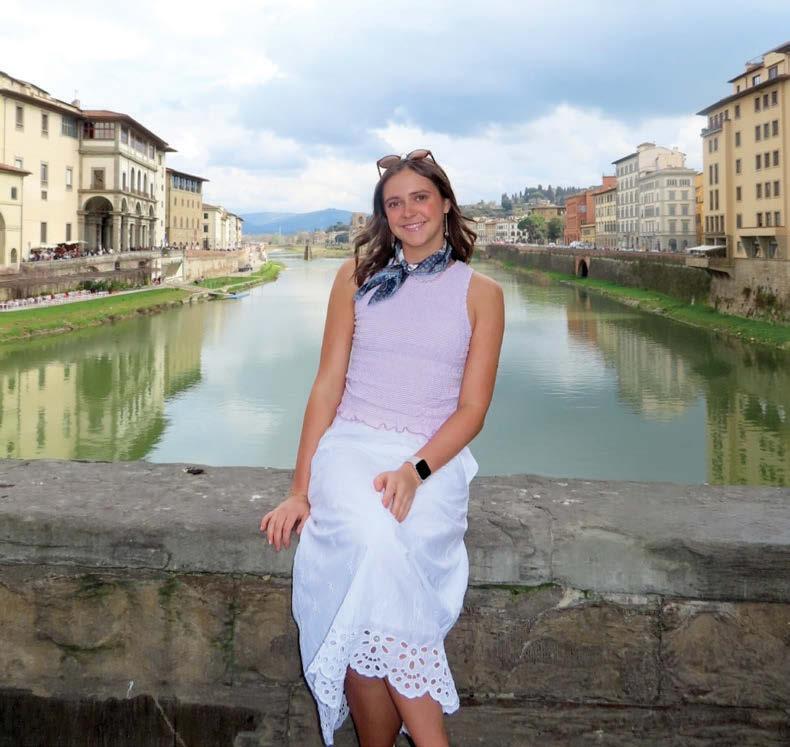
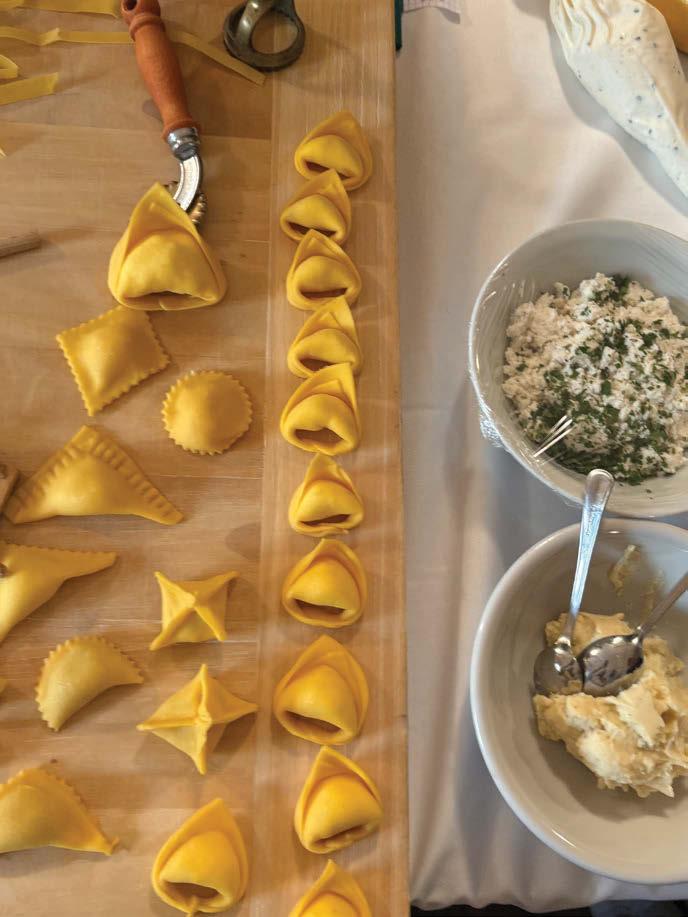
students interact with food producers, including the family that runs Bottera Farm in the Piedmont region of Italy. Not only did they have an opportunity to see the production of cheese at the farm, but students also walked to town and enjoyed a six-course meal at the family’s La Bottera restaurant, featuring several different cheeses and products from other local purveyors and producers.
Anna Claire Carter and several fellow Honors College
COURTESY ANNA CLAIRE CARTER
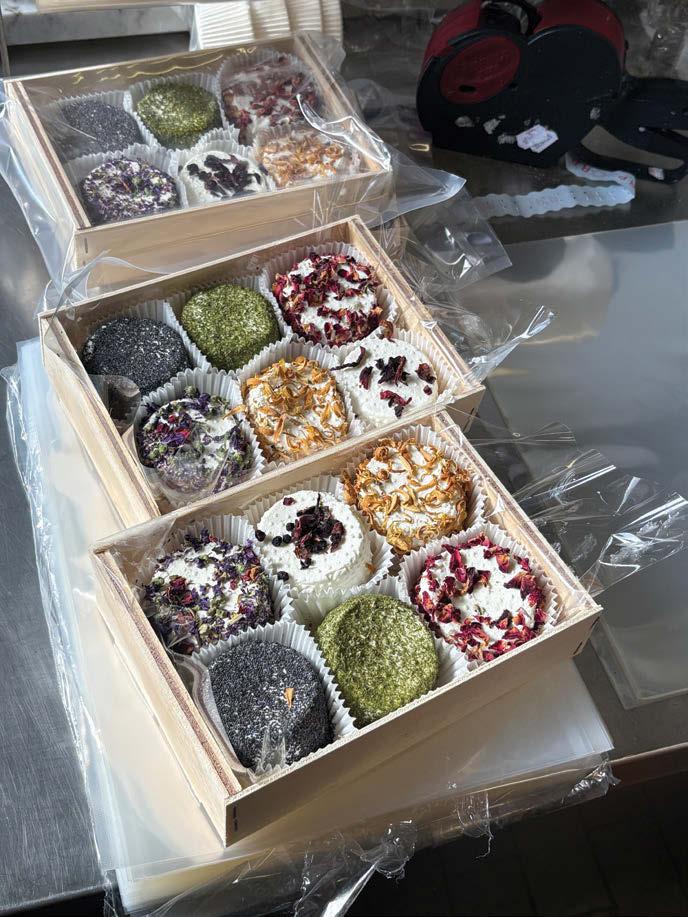
During the past year, Carter served as a College of Liberal Arts ambassador and is excited to continue representing the Center by showing prospective students how engaging the program is and how it can shape the way they see history, place, and the world around them. “Southern Studies has truly changed my perspective and given me a unique college experience,” she said. “Rather than feeling like a college student just passing through, the Center has helped me build a deeper connection to Oxford and to Mississippi as a whole. Through conferences, events, SouthTalks, and community engagement, there are several ways to get connected.”
In her short time at the university, she has been named a Stamps Scholar, a Delta Scholar, received the Coterie Award for Outstanding Undergraduate Paper for “Fueling the Civil Rights Movement: The Role of Food in the Fight for Freedom,” presented her capstone research at Harvard Law School, been named to the Chancellor’s Honor Roll three semesters in a row, and become a member of the Columns Society.
She is also working on her capstone project, “Voices from the Arkansas Delta: Examining Revitalization Amid Population Loss.” This summer, she plans to work with Simone Delerme and James M. Thomas as part of the National Science Foundation Research Experience for Undergraduates site project, focusing on an interdisciplinary study of the politics of place.
Carter touts the interdisciplinary nature of the Southern Studies program for encouraging collaboration and allowing each class to build on the others. “I’m incredibly grateful for
the support and opportunities the program has given me to continue growing academically and deepening my understanding of Mississippi,” she said.
Katie McKee, who was impressed by Carter in their initial meetings, recalls the pleasure of teaching her in Honors SST 101 and ENG 314: The Cinematic South. “From the time she came here, Anna Claire was operating well above the curiosity level of a university student, and she takes advantage of every opportunity available to her,” McKee said.
Over spring break, one of those opportunities was engaging in Southern Studies outside of the classroom by traveling with the Honors College to Italy, accompanied by Southern Foodways Alliance filmmaker Zaire Love and others. “Our Honors Taste of Italy study abroad experience was designed to help students understand the slow food movement, which started in Italy, and juxtapose that with Southern Foodways in the United States,” said Rebecca Oliver, assistant dean for student success and retention at the Sally McDonell Barksdale Honors College. “This was certainly a unique opportunity for Anna Claire to study southern culture—by comparing it to the foodways, culture, and people of Italy.”
Carter sums her experience up perfectly: “The Southern Studies family is truly unmatched,” she said. “Where else does your director cook you pancakes during finals? You can’t find this kind of experience anywhere else.”
Rebecca Lauck Cleary
Homeland Inspiration
Ashish Shrestha’s interest in documentary filmmaking originated from his love of travel.
After growing up in a small town in Nepal, he moved to the capital city of Kathmandu, from which he toured the remote villages and uncharted terrains in the area, where he encountered various cultures, foods and communities.
“I wanted to tell the stories I witnessed, and that desire became the foundation of my interest in storytelling,” Shrestha said. “I wasn’t fully aware of the power of storytelling at the time; I simply wanted to give a voice to the underrepresented and capture the beauty of the cultures and traditions I encountered.”
After learning about the University of Mississippi’s Master of Fine Arts in Documentary Expression program through a friend, he realized he wanted to sharpen his storytelling skills. His time at the Center for the Study of Southern Culture has helped him find his voice and define his interests. “The professors and faculty have also
Master’s Student Shares Stories of Nepal with Global Audiences
been genuinely supportive throughout, and the experience has been incredible,” Shrestha said. “I came from a different academic background, so I wasn’t familiar with in-depth storytelling, film festivals, funding, impact, or career pathways. My understanding was very surface level. I just wanted to tell stories. That was all I knew. This program has helped me learn and understand everything from scratch, both technically and theoretically.”
Oxford wasn’t the only place of learning for Shrestha. He spent time in Dallas as an intern with NP Films, which is run by a young Nepali filmmaker, learning technical skills for different cameras and lighting at events and concerts. “It was a unique and exciting experience, and it was also my first experience living in a big American city, so it was meaningful both personally and professionally,” he said.
While in Dallas, he happened to meet Dipa Bhattarai, a Nepalese immigrant entrepreneur from Mississippi actively changing the landscape of the
beauty industry and who became the inspiration for his MFA thesis film, Threading the American Dream. “For my thesis film, I wanted to work on something that truly mattered to me, not just pick a random topic to fulfill a requirement,” he said. “The challenge was that I wasn’t sure what I was looking for at first. I didn’t have a clear story preference.”
The project taught Shrestha the importance of understanding his limitations as a documentarian, since he needed to drive to Bhattarai’s salon two hours away in Columbus multiple times. “The biggest thing I learned is that detailed preparation and planning before you start filming is absolutely worth the time,” he said. “The easiest part was that we both come from Nepal and speak the same language, which made communication natural and gave me good access to her personal and professional life.”
Shrestha offers a unique perspective as a storyteller, especially by featuring a Nepalese University of Mississippi
“I simply wanted to give a voice to the underrepresented and capture the beauty of the cultures and traditions I encountered.”
graduate as the subject of his thesis, said Melanie Ho, MFA graduate adviser. Dipa Bhattarai earned her Master of Taxation and Data Analysis from the Patterson School of Accountancy in 2021. “Having these kinds of shared experiences allows for there to be more trust in the collaborative relationship of filmmaker/ participant and a more intimate form of storytelling,” Ho said. “These are important stories—a Mississippi story, a southern story, a diasporic story, a Nepalese story.”
Shrestha’s desire to create work noticeably propels him, and he has put together an impressive portfolio, Ho said. “Ashish has been proactive about engaging with opportunities that offer industry experience, something that can’t be taught in a classroom setting,” she said. “I’ve gotten to know Ashish and have witnessed his navigation of the film world through these moments as well.” His hard work paid off most recently with first prize in the student artistic presentation category at the Southern Studies Conference at Auburn University at Montgomery, where he participated in a panel focusing on telling stories of the South through the lens of documentary film. “Winning boosted my motivation and gave me greater confidence in the story I was telling,” he said.
Rebecca Lauck Cleary
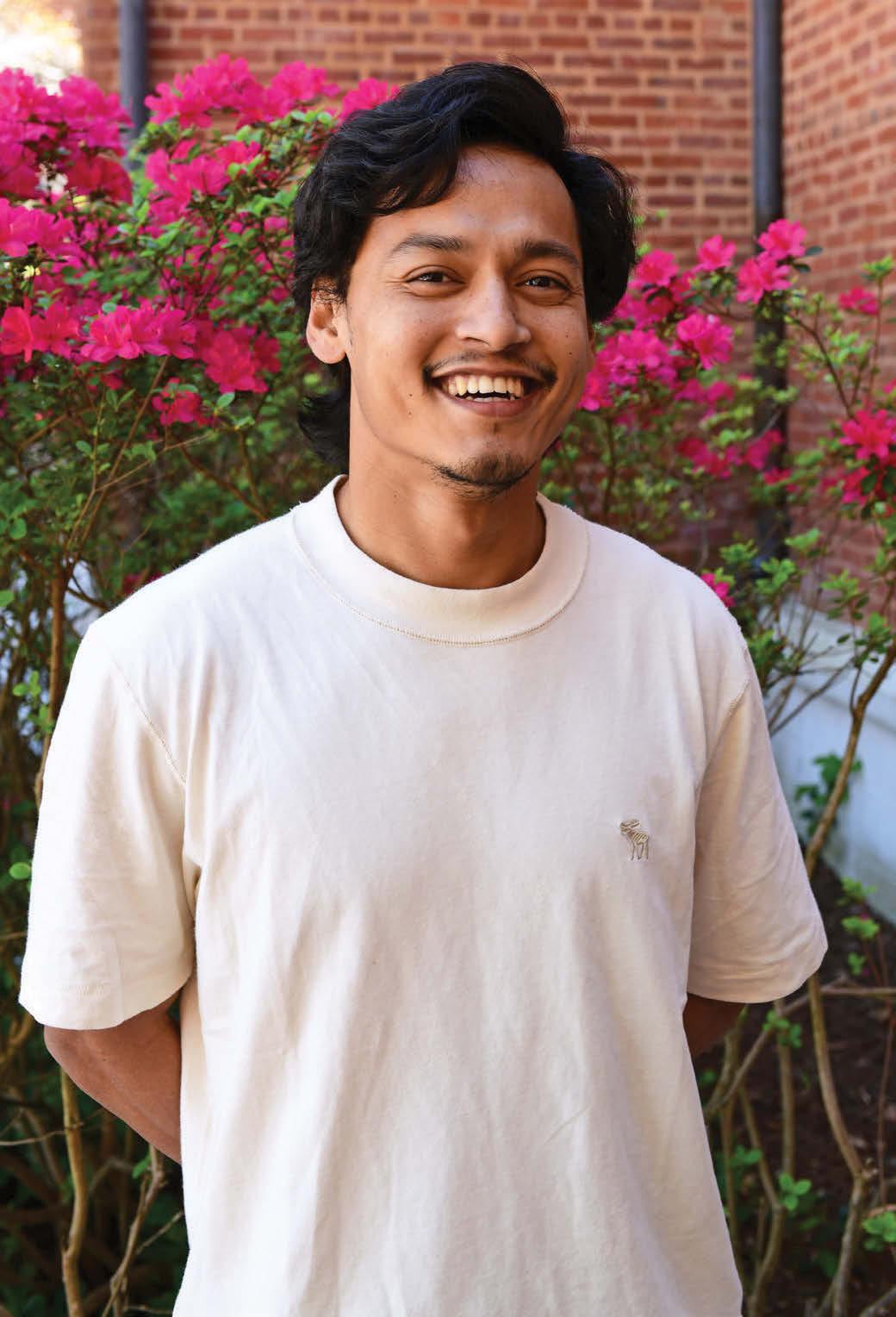
Ashish Shrestha, a documentary expression graduate student from Nepal, graduated after completing his thesis film and earning first prize in the student artistic presentation category at the Southern Studies Conference at Auburn University at Montgomery.
OLIVIA WHITTINGTON
Teaching with Joy Eric Solomon Honored for Transforming First-Year Learning
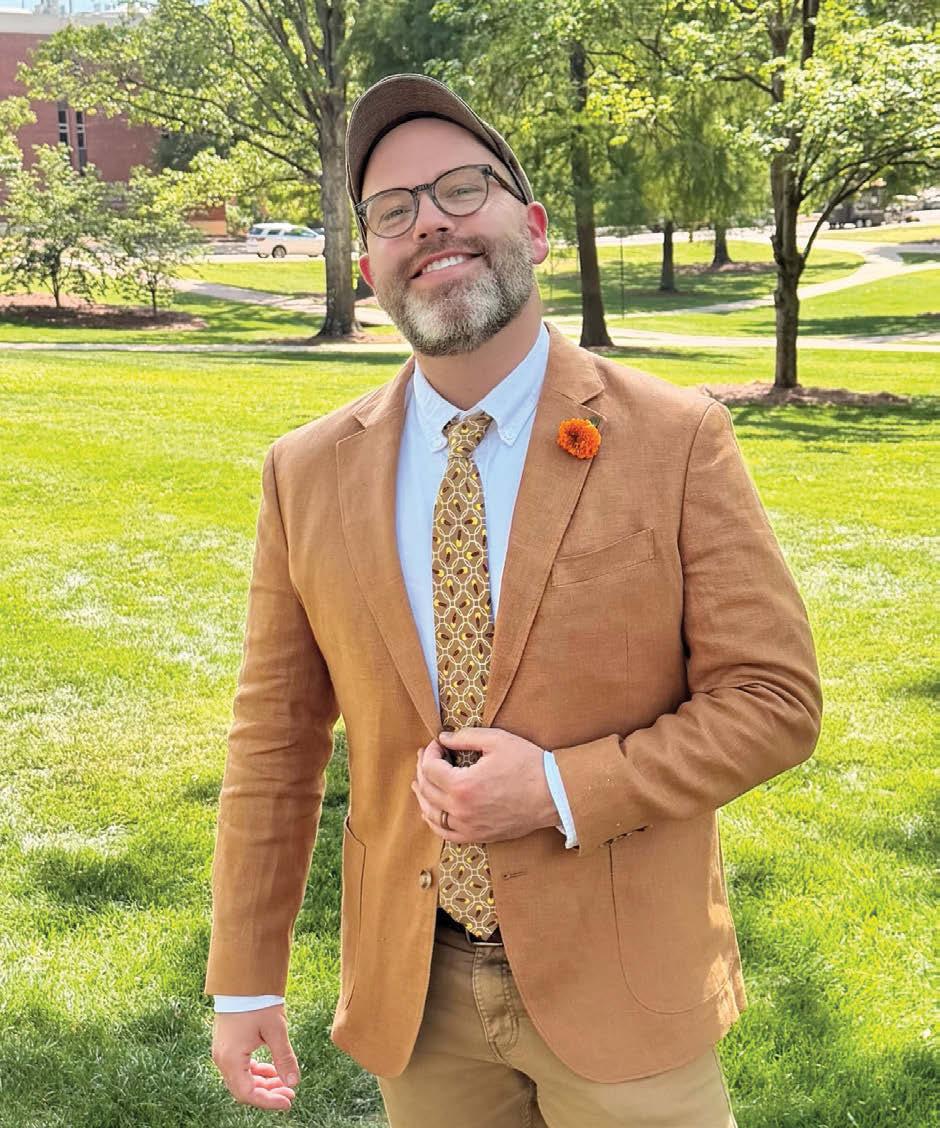
Professors may never fully know the profound effect that they have on their students, but Eric Solomon shouldn’t have any doubts. By being selected as the winner of the University of Mississippi’s 2026 Cora Lee Graham Award for Outstanding Teaching of First-Year Students, he is recognized for excellence in classroom instruction, intellectual stimulation of students, and concern for their welfare.
Solomon once walked the sidewalks of the University of Mississippi as an undergraduate student himself, double majoring in English and Spanish in the Sally McDonnell Barksdale Honors College. He went on to earn his PhD in English at Emory University in 2017, and he now stands at the podium as full-time instructor of English and Southern Studies.
In spring of 2026, Solomon taught three sections of English courses, including a class on the blues tradition in American literature, and a section of Southern Studies 401: Literature, Law, Love: Southern-Queer History. “So much of our understanding of queerness generally tends to focus on a lack or a deprivation or difficulty or something that has to be overcome because of
Eric Solomon
our politics and because of our legal landscape,” Solomon said. But it’s more than just legal battles. “I think it’s really important to remember that being queer in the South is a joyful thing. It’s a beautiful thing,” he said. “It’s networks of connection beyond just intimate connection. It’s enclaves of people. It’s families and rethinking kinship structures. It’s all that kind of beautiful work that I have personally witnessed.”
For Solomon, those forms of connection are what make queerness in the South not just survivable but deeply affirming. “I’ve tried to really remind
myself and others that to be queer and to be southern is to be joyful and to be happy and to be someone who belongs in this place, and it’s not always to be in this stance of resistance against all those that think that you don’t belong,” he said.
Despite having a deep passion for his work, Solomon knows it’s easy to get overwhelmed and bogged down in everyday stress, but winning the Graham Award reminded him that he is appreciated for his role in the classroom. “It gave me the opportunity to think and reflect on what’s working, and why I love to teach, and
why I love learning with students, so that’s really meaningful,” he said. “I always say the best part of any place is the people.”
Additionally, the College of Liberal Arts awards ceremony itself was special because his mom and partner both were able to attend. “It felt like the convergence of my old Mississippi life and the new Mississippi life, so it was just lovely,” he said.
Katie McKee, Center director, is delighted to have Solomon back in Oxford, especially given his specialty in literature and gender. “He seems to have made an immediate impact with our students, whether in the large lecture hall or in the capstone seminar,” McKee said. “His interest in twentieth- and twenty-first-century literature and region complement our existing strengths, and he’s immediately become a part of our departmental life.”
This summer, Solomon worked on material he collected for an Isom Fellowship project with Dave Hayward, an Atlanta activist, historian, and witness to much of the city’s early LGBTQ+ rights movement. Hayward gave bus tours of important LGBTQ sites in Atlanta. “I recorded him talking about the stops before he passed away recently, and turned it into a little digital tour,” Solomon said. “I want to honor his memory and the work he did for years.” Once completed, he will turn that into a book manuscript.
His other interest is musical theater, and he performed this summer in Come from Away , a musical based on the true story of the community in Newfoundland that took in seven thousand airline passengers after their planes were diverted because of the 9/11 attacks. “I didn’t do a show last summer because I was teaching in Oxford with the Prison-to-College Pipeline Program, and I missed my theater family because I’m a big theater person,” he said.
Solomon says simply: “I love theater, I love the South, I love Mississippi.”
Rebecca Lauck Cleary
Eric Solomon with Southern Studies student Bebe Falkner, who wrote one of the recommendation letters for his Cora Lee Graham Award.
Filled with Gratitude
Adam Gussow Retires After Twenty-Four Years in Southern Studies
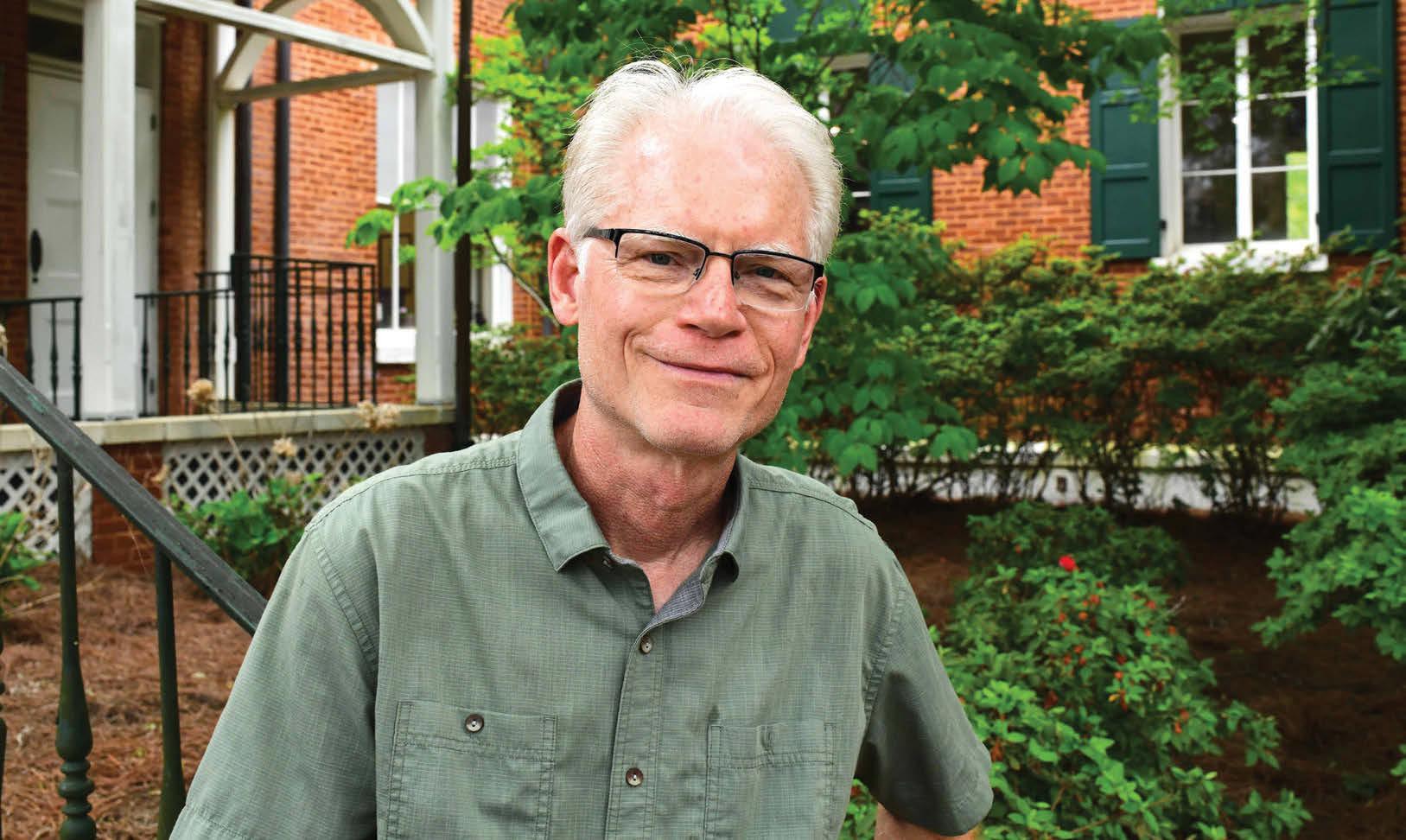
On his first day of teaching at the University of Mississippi in 2002, Adam Gussow showed up in Barnard Observatory right at the start of class time, sweating profusely in the August heat. His left arm was in a cast from a recent bicycle accident on Pea Ridge Road, and he was flustered and in pain.
The native New Yorker was a little uncertain about his new place on the map, but he made it through his first day. Now, after more than twenty years later, he is taking his final trek through the building before retiring. “Leaving Manhattan for Oxford, Mississippi, to begin a new life as an assistant
professor of English and Southern Studies at the University of Mississippi was the best move I’ve ever made, apart from asking my wife to marry me,” Gussow said. “It was a dream job in an amazingly convivial town, and—cliched as it sounds—it gave me a chance to live my best life.”
Adam Gussow
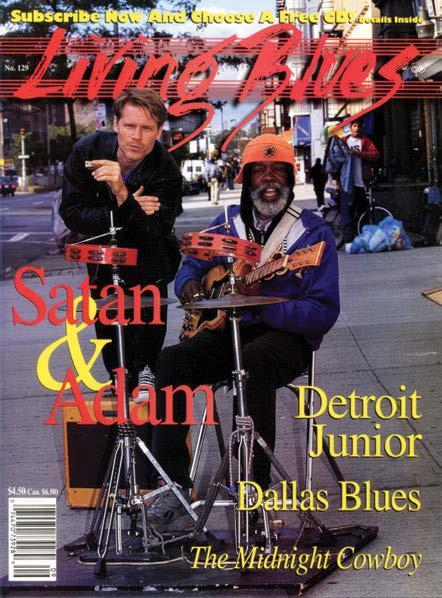
Gussow, who earned his bachelor’s and doctoral degrees from Princeton University and a master’s from Columbia University, wrote his dissertation on southern violence and the blues tradition. He was looking for a tenure-track job in African American literature when he came across a listing for a position at the Center for the Study of Southern Culture. “I knew about the Center—I’d stopped by to visit Bill Ferris back in 1997 after my Satan & Adam duo had made the cover of Living Blues—but I hadn’t thought about Southern Studies as a field,” Gussow said. “When I saw the job listing, though, I said, ‘Whoa! That’s perfect.’” Somehow, he had gotten on the mailing list for the Southern Register, so he recalls reading about life at the Center for many years before he actually arrived as a new hire. “But like most of our faculty, I didn’t really know what Southern Studies was until I arrived and found myself in a classroom teaching it in the company of other faculty who had been doing it. In my case, that was SST 101 with Robbie Ethridge and David Wharton in the fall of 2002,” Gussow said.
He team-taught SST 101 many times, with five different people, but his relationship with Wharton, who died in 2022, was a real partnership. “He saw me as the kid, early on—although I was in my mid-40s—and he thought that I overwrote,” Gussow said. “He taught me to pare down my sentences, especially quiz and essay questions. We drafted exams together, each looking over the other’s shoulder.”
Gussow recalls one of his favorite moments in the classroom from spring 2014, in an honors section of SST 102: Freedom Summer 1964: Mississippi’s Civil Rights Watershed. Bob Zellner, civil rights legend and original member of the Student Nonviolent Coordinating Committee, visited campus and dropped by Gussow’s classroom. “We’d been reading about him in several of the books I’d assigned,” Gussow said. “Suddenly here he was, at the head of the conference room table, telling us a story about the day he and his fellow SNCC members had
marched on city hall in McComb, Mississippi, and he, the lone white student, had been singled out by the mob—beaten with chains, bricks, lead pipes, and baseball bats—for daring to cross the color line. His voice caught; his eyes teared up. History was there, in the classroom, present and alive. The students were transfixed.”
On the administration side, Gussow has worked with three different Center directors, and he sees the commonalities among Charles Reagan Wilson, Ted Ownby, and Katie McKee.
“Adventurous, wide-ranging, sharpeyed scholars, each of them managed to be an active steward of the thing called Southern Studies,” he said.
Gussow delivered this year’s Last Lecture on May 1 in the Overby Center Auditorium. For the Last Lecture, the Tassels Chapter of Mortar Board asks one University of Mississippi professor to “deliver a lecture to end the academic year as if it were the last lecture of their career.”
The Last Lecture series began at UM in 2013, inspired by the book The Last Lecture, by Randy Pausch.
McKee said it has been a great privilege to work with Gussow these many years. “He has never lost the energy and enthusiasm he brought with him to his first day on campus,” McKee said.
Gussow said he was delighted at the honor to deliver the Last Lecture. “Although my books have won awards of various sorts over the years, this is, I believe, the first campus-wide honor I’ve been lucky enough to snag,” he said. When he is not inside in the airconditioning, Gussow is outside running. “Running is my true passion, the thing that keeps me grounded,” he said. “But I also love to cook. This started when I was a child and my mother, a nutrition educator, told me I could have desserts only if I cooked them myself.” He is also a blues harmonica player, as seen in the Netflix documentary Satan & Adam, and has published a number of books on the blues, including Beyond the Crossroads: The Devil and the Blues Tradition and Whose Blues? Facing Up to Race and the Future of the Music.
For the past several years, Gussow has also been researching a book about the worst school bus and train collision in New York state history, which took place one mile from his boyhood home in Congers. “Faulkner had Yoknapatawpha County. My little postage stamp of native soil, Rockland County, was irreparably wounded by this disaster, and I’m determined to tell the story—a community’s story—in a way that moves and enlightens those of us who have lived with it all these years and those who know nothing about it,” he said.
When he’s not working on the book, he will be running, traveling with his wife, Sherrie, and helping their son, Shaun, a music performance major at UM, make it through to graduation. Last year, Gussow wrote a book about his family, My Family and I, showing an intimate portrait of love, family, music, and hope amid a backdrop of persistent racial challenges.
In the end, Gussow leaves with no regrets. “I’ve written the books I hoped to write, learned so much from my students and colleagues, made more and better music than I expected to, fallen in love with the landscape, and enjoyed a wonderfully full family life with Sherrie and Shaun,” he said. “I’m filled with gratitude.”
Rebecca Lauck Cleary
Adam Gussow and Mr. Satan on the cover of the Living Blues #129 (September–October 1996).
The Accidental Entrepreneur
Peter Askew Shares His Journey from Southern Studies to Startups
What do onions, websites, and dude ranches all have in common? The answer is that Peter Askew has leveraged all of them in order to make a living for himself. When he was in town to attend the Oxford Conference for the Book in March, he visited Barnard Observatory to meet with University of Mississippi students to talk with them about his career. When he first arrived on the University of Mississippi campus in the 1990s, Askew didn’t have a major in mind, so he picked classes that sounded interesting, such as those about architecture, music, food, civil rights, the Civil War, and Reconstruction. He also took a documentary film course with former Center director Bill Ferris, and afterward he realized that he had completed most of the work to earn a BA in Southern Studies. “Over the years, it’s proved to be a very good background degree for me,” said Askew, who graduated in 1995. Being able to take classes in such varied areas gave Askew exposure to different ideas, which he used to eventually become an entrepreneur. “I wasn’t set up for one specific thing like accounting, so I could lean into farming, documentary film, or
COURTESY PETER ASKEW
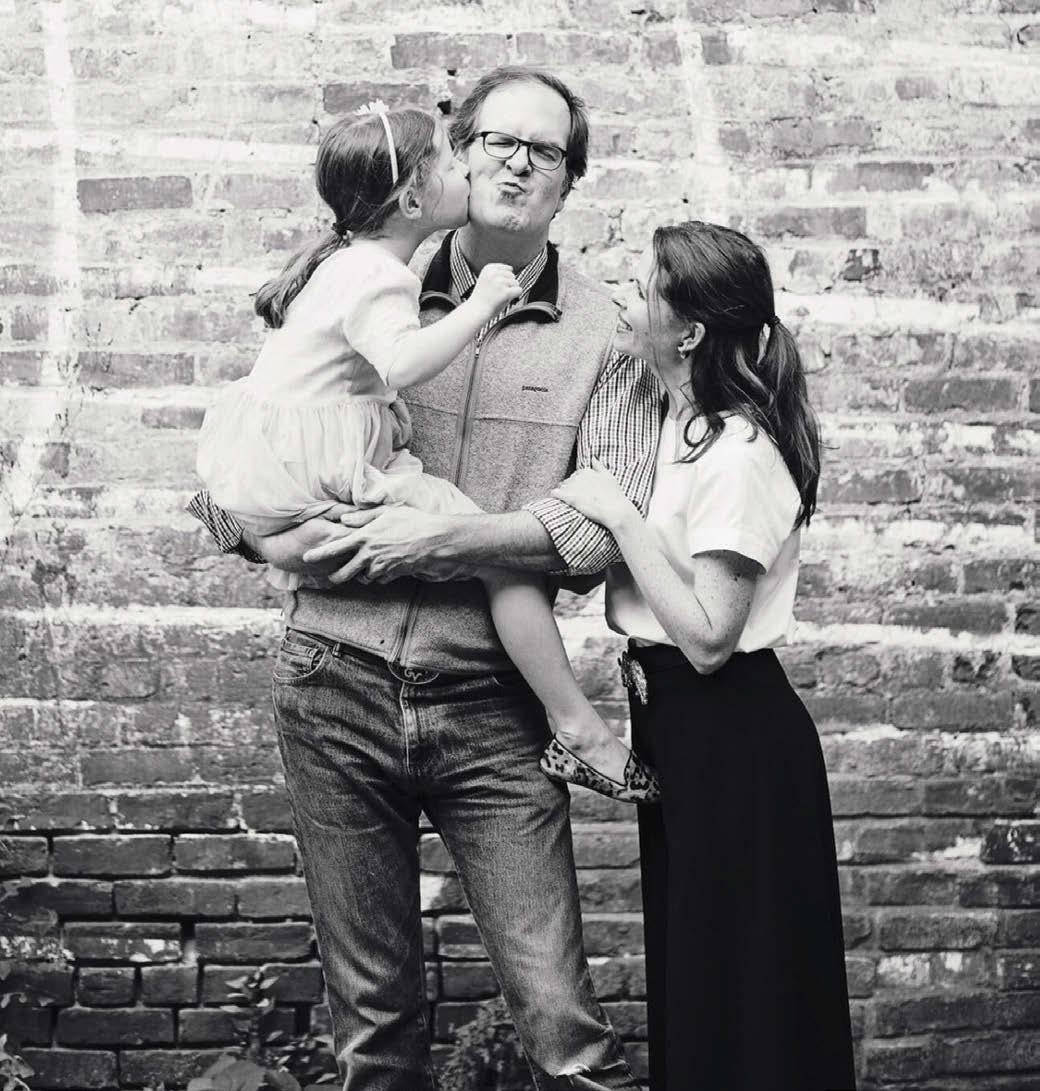
Peter Askew and family
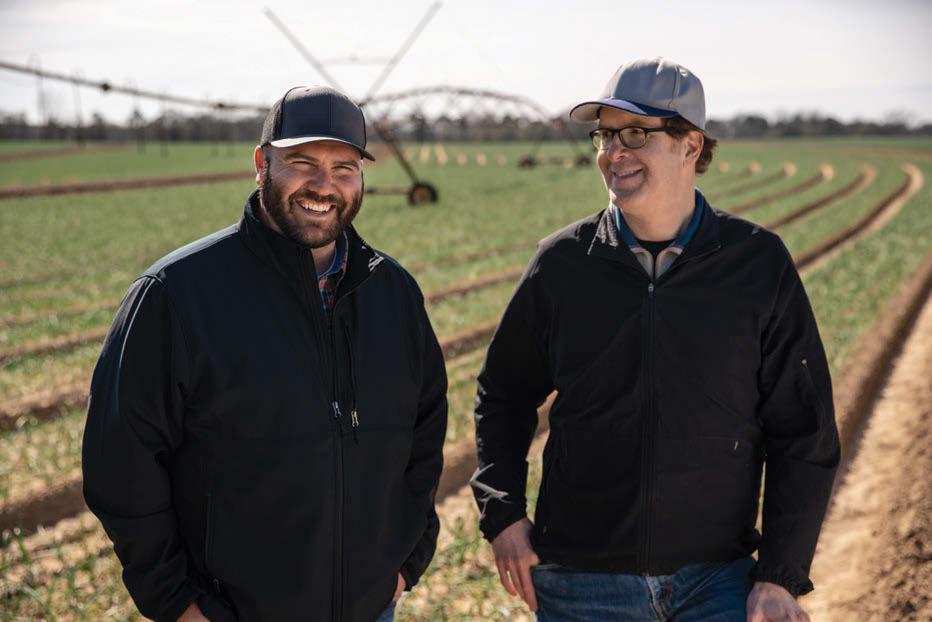
business, or this new thing called the internet that had popped up, or even these days, cryptocurrency or AI,” Askew said.
Through false starts and after suffering a few layoffs at start-up companies, Askew realized he needed to figure out a way to make a living on his own, and he fell into the world of buying premium .com domain names as a sort of domain prospector. For example, he bought the domain rowanoak.com for Rowan Oak, William Faulkner’s home in Oxford,
which he ended up donating to the University of Mississippi.
He says the credit for his success is providing boutique or niche services that others do not. “Now that we’re in this moment where the entire world is in the internet space, thinking about the folks down here making their way in this world, ask yourself what you see as the spaces where there’s still the opportunity to innovate and be first,” Askew said.
Askew currently lives in Savannah, Georgia, and runs vidaliaonions.com,
shipping farm-fresh Vidalia onions, and ranchwork.com, a job board for ranch and agriculture roles. “I keep stumbling across opportunity after opportunity, and it doesn’t necessarily have to be cutting edge, just simply reintroduce something else,” Askew said. “I had to shift my career so many times, so it wasn’t so daunting for me to consider a career change because I knew I was not interested in the traditional employment path.”
For Jonas Hertling, a freshman from Berlin, Germany, who is studying entrepreneurship, visiting with Askew was inspiring. “Meeting Peter Askew was one of the most grounding experiences I’ve had as a business student,” Hertling said. “One piece of advice he shared has really stuck with me: When it comes to funding, resist the pull of outside investors, Series A rounds, angel funding, all of it.”
Hertling said that Askew’s view of entrepreneurship is uncomplicated. “His view was simple but powerful: The moment you take that money, you’ve traded ownership for oversight,” Hertling said. “He built his business himself, owns it completely, and answers to no one. As someone just starting to think seriously about entrepreneurship, that kind of financial independence felt like the most honest definition of freedom in business I’d ever heard.”
Rebecca Lauck Cleary
I wasn’t interested in the
traditional employment path.
Peter Askew (right) and his business partner Aries Haygood of A&M Farms and VidaliaOnions.com, an internationally known grower, packer, and shipper of Vidalia sweet onions.
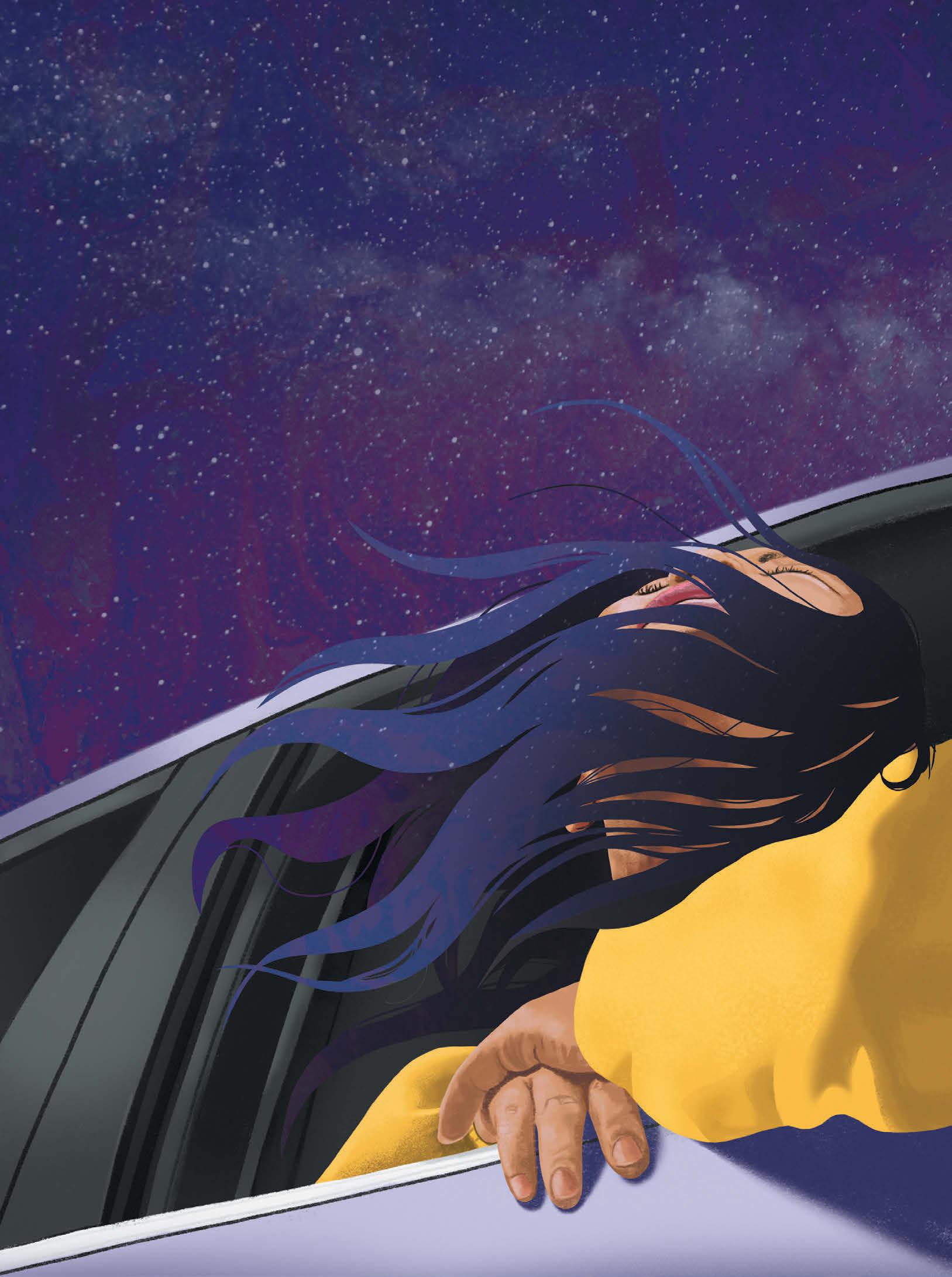
The Spring 2026 issue of the Southern Foodways Alliance’s journal, Gravy, concentrates its efforts on poetry, with offerings by Tomás Q. Morín, Jason McCall, Julie Hensley, C. T. Salazar, Kwoya Fagin Maples, Rodrick Minor, Adrienne Su, Hailey Leithauser, and Kevin Young. Here’s Noreen Ocampo’s poem—a paean to food as love and memory—with its accompanying illustration by Lindsey Bailey.
“In the Red House” Poem by Noreen Ocampo
Illustration by Lindsey Bailey
Suwanee, Georgia
We lived by H Mart, where we bought my father’s garnet lager, tamarindo marbles, fresh gutted carp.
We lived by Mozart’s bakery with the lonely baby grand and my mother’s favorite walnut tarts.
We lived on the Orient Garden’s garlic vegetables and Mongolian beef when the hospital called. I asked for half the amount of onion and extra crispy noodles for no added charge. On my birthdays, I asked for strawberry shortcake in the shape of a heart, flanked by a castle of whipped cream, Medieval arcs.
I asked for blue crabs, crawfish, hopia filled dark, homemade empanadas—that arthritic art. I asked for a Hello Kitty alarm, my own piano, a brother, and for the two of us: a basketball boulevard.
I asked for my grandmas in the archipelago who read daily psalms. In the red house
I asked for so much my parents bought a Nissan Armada to carry me past the Blue Ridge apple orchards, the moss-covered coastline—
I leaned out the window and threw back my head for a taste of the stars.
Power, Politics, and the Promise of the TVA
Study the South Research Fellow Examines Federal Intervention in the US South
A Tennessee native with a lifelong interest in the relationship between federal power and local communities, Tanner Carson is using his Study the South Research Fellowship to explore one of the South’s most enduring, and complex, institutions: the Tennessee Valley Authority (TVA).
Carson, a second-year PhD student in history at Vanderbilt University, studies the TVA—a New Deal–era federal power program, created in the 1930s, that reveals broader complications about the relationship between federal intervention and local people.
Carson’s interest in the TVA began close to home. Originally from Gallatin, Tennessee, he grew up in a town with a TVA coal plant, and became fascinated by what this meant, not only for his community, but also for the broader relationship between the South and the federal government. “The TVA operates many different power plants and substations and all kinds of different activities throughout the Southeast,” Carson said. “In my town there was a coal plant, and I was always kind of fascinated with this idea of what this coal plant meant to my town, but then also to understand it in a larger context.” That larger context is what continues to drive Carson’s research today. Because the TVA is both a federal program and a deeply local presence throughout the South, it offers a unique lens for understanding how southern communities have historically responded to federal intervention.

Tanner Carson
“If we were to parse out what made the South at one time support federal intervention, maybe we could understand what would make it support federal intervention once again.”
“The TVA is a New Deal–era power program that persists to this day,” Carson said. “Because it is a federal program, it means that it has a unique relationship between the national government and the local government.” Carson’s research centers on a question that challenges one of the South’s most familiar political assumptions: Why has a region often associated with skepticism toward federal power shown such strong support for the TVA?
“Typically, when we think about the South, it is a region characterized by its disdain of federal intervention, and the TVA is the exact opposite of that,” Carson said. “It is a program that has received, generally, a lot of support here in the South. So, I am trying to understand why that has been the case.”
This summer, Carson returns to the archives at the University of Mississippi to understand these questions. His research focuses on the papers of Representative John Rankin and the role he played in shaping TVA support in Tupelo, Mississippi. Carson is especially interested in how Rankin served
as a political interlocutor between the federal government and Tupelo’s business leaders.
By returning to the archives, Carson hopes to better understand the language of those relationships— how Rankin communicated with local leaders, what he hoped to gain politically, and how elite support for the TVA may have helped generate broader public acceptance of federal intervention. For Carson, this historical question also carries present-day relevance. He believes understanding how the South once embraced federal intervention could help explain how future large-scale national policy proposals might gain support in the region. “If we were to parse out what made the South at one time support federal intervention,” Carson said, “maybe we could understand what would make it support federal intervention once again.”
Carson says his previous experiences working in the Special Collections left a lasting impression, both personally and professionally. The archives, he said, are filled with
the kinds of unexpected discoveries that make historical research feel alive: “Sometimes when you stay in the archives long enough, you make friends with some of these people,” Carson said. He credits Special Collections as an essential part of his work. “The materials at UM are impressive and expansive,” he said. “The ability to go back and revisit these with a much closer reading will be invaluable to my development as a scholar.”
As he continues tracing the history of federal power, local politics, and economic influence in the South, Carson sees the TVA as a window into the region’s evolving relationship with government itself. Through the Study the South Research Fellowship, he hopes to better understand how that relationship was built—and what it might reveal today.
Previous Study the South research fellows include Zachary Clary, Mandy Truman, Xavier Sivels, Anna F. Kaplan, and Bobby J. Smith II.
Astrid Knox-McConnell
Center Publishes Two New Study the South Essays
The Center for the Study of Southern Culture is pleased to announce the publication of two new Study the South essays exploring the intersections of celebrity, music, history, and identity in the American South.
In Elizabeth Howells’s essay, “Oscar Wilde in Savannah: The Art and Craft of Celebrity,” Howells examines the southern leg of Oscar Wilde’s 1882 American lecture tour—specifically his visit to Savannah, Georgia—as a case study in the construction and performance of modern celebrity. Situated between the sensational fame of Byron and the strategic public image of Sarah Bernhardt, Wilde cultivated a public persona rooted in aestheticism, wit, and controversy.
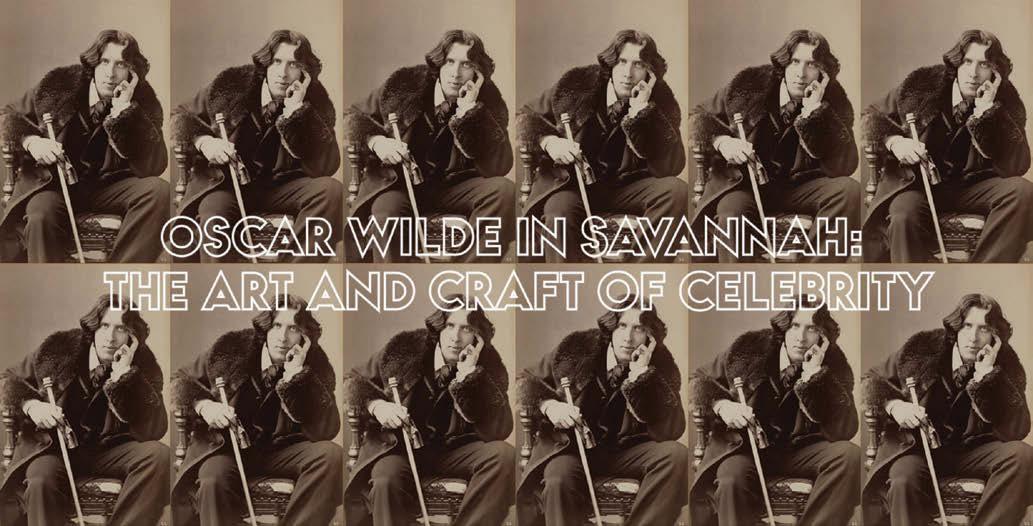
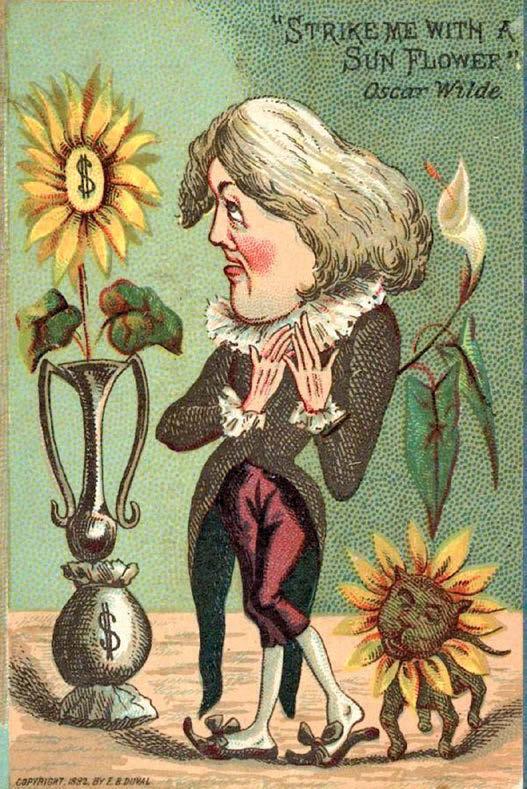
Through close analysis of newspaper coverage, public interviews, personal correspondence, and visual representations, Howells argues that Wilde’s celebrity was collaboratively produced through a dynamic interplay of media, audience reception, and Wilde’s own performative authorship. The Savannah visit reveals how Wilde navigated overlapping and often conflicting identity categories—Irish, British, queer-coded, aristocratic, and outsider—within the racially and socially stratified context of the post–Reconstruction South.
Elizabeth Howells is a professor of English at Georgia Southern University. She has a BA from the University of Notre Dame, an MA from the University of Alabama, and a PhD from the University of North Carolina–Greensboro. When she is not chairing the English Department, she turns her attention to scholarship on nineteenth-century British literature.
the American South, arguing for its centrality as a lens through which to understand the region’s past. Anchored by emblematic moments ranging from mid-twentieth-century segregationist backlash against rock ’n’ roll to the cultural assertion of southern hip-hop, Bertrand situates popular music within the broader social, political, and economic transformations that have shaped southern life.
Through close analysis of historical episodes, scholarly trends, and cultural events—including the 1956 attack on Nat “King” Cole and the rise of rhythm and blues—Bertrand contends that historians have systematically relegated music to the periphery, treating it as cultural artifact rather than historical force. He argues that this omission reflects disciplinary biases that privilege elite actors and formal politics while overlooking the expressive practices of working-class communities. In contrast, popular music emerges in his account as a dynamic site of agency, where marginalized Black and white southerners articulate identity, resist hierarchy, and shape public consciousness.
Ultimately, Bertrand positions southern music as an essential historical archive—one that captures the Some say he praised the sunflowers, an icon of aestheticism, but that is just one of a number of attributions that have come to be apocryphally quintessential Wilde.
In Michael T. Bertrand’s “The Silence of Falling Trees: The Case for Southern Music as Southern History,” Bertrand examines the persistent marginalization of popular music within the historiography of
About the Journal
Study the South is a peer-reviewed, multimedia, online journal, published and managed by the Center for the Study of Southern Culture at the University of Mississippi. Founded in 2014, Study the South (www.StudytheSouth.com) exists to encourage interdisciplinary academic thought and discourse on the American South, particularly through the lenses of history, anthropology, sociology, music, literature, documentary studies, gender studies, religion, geography, media studies, race studies, ethnicity, folklife, and visual art.
“structure of feeling” of the region and reveals the lived experiences of those often excluded from traditional narratives. By integrating music into the core of historical analysis, the essay calls for a reimagining of southern history that recognizes sound, performance, and audience as fundamental to understanding power, resistance, and change.
Michael T. Bertrand is a historian of the American South and the modern United States at Tennessee State University in Nashville. He has taught at the University of Memphis, Middle Tennessee State University, and the University of
Mississippi, where he worked in the Center for the Study of Southern Culture. He co-founded and moderated H-Southern-Music and served as music editor for the African American National Biography. He has appeared on PBS, Sky Arts, and History Channel documentaries produced by Henry Louis Gates, David Upshal, Bruce Sinofsky, and Michael Rose. He is the author of Race, Rock, and Elvis and, most recently, Southern History Remixed: On Rock ’n’ Roll and the Dilemma of Race.
Visit Study the South at www.studythesouth.com to read Howells’s and Bertrand’s essays.
Study the South publishes a variety of works by institutionally affiliated and independent scholars. Like the Center for the Study of Southern Culture, Study the South embraces a diversity of media, including written essays with accompanying audio, video, and photography components; documentary photography; interviews with scholars and artists; video projects; and book reviews.
Submissions
To submit work for consideration to Study the South, please email a curriculum vitae, an abstract, and a completed manuscript as a Word document, along with any available illustrations, graphics, video, or audio, to our editor James G. Thomas Jr. at jgthomas@olemiss.edu. Final manuscripts and projects must attempt to build upon and expand the understanding of the American South in order to be considered for publication. Copyright for essays published in Study the South is retained by the authors.
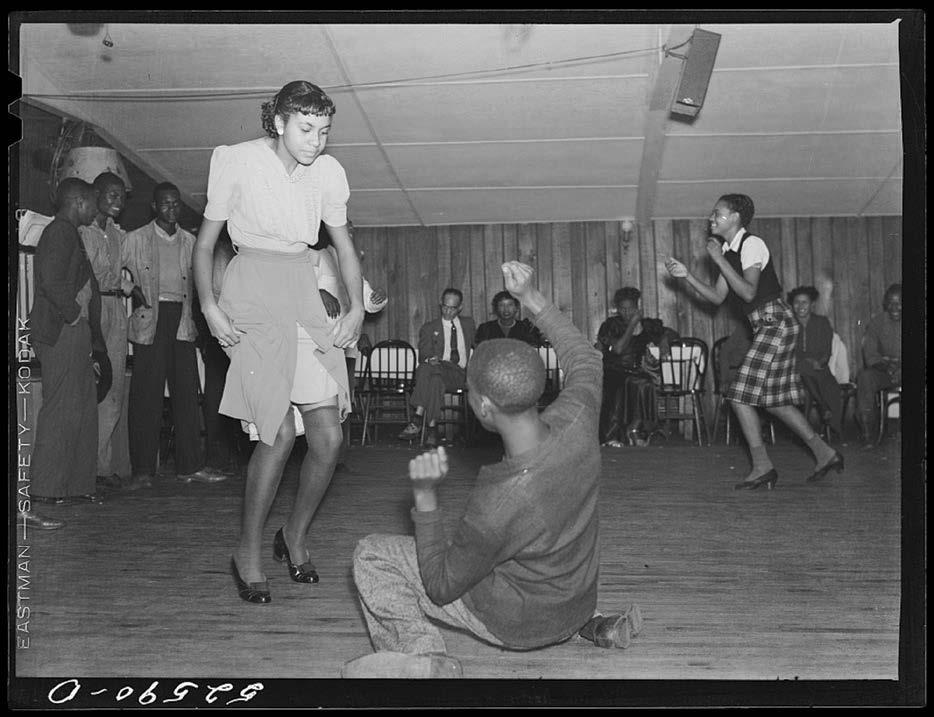
Southern music (and dance!) provided a counter to the region’s embrace of hierarchy and oligarchy.
The online Mississippi Encyclopedia has recently added new entries on Tougaloo College administrator and political advisor Beverly Wade Hogan, the impeachment of Governor Adelbert Ames, Camp Sister Spirit, same-sex marriage, nineteenthcentury writer Jeannette Hadermann Walworth, bluesman Jack Owens, Jackson’s Thalia Mara Hall, and pride parades and festivals. Here’s another recent addition, this one on a historian, cultural preservationist, and civil rights activist in Natchez.
You can find these and other entries on Mississippi’s past and present online by going to www.mississippiencyclopedia.org.
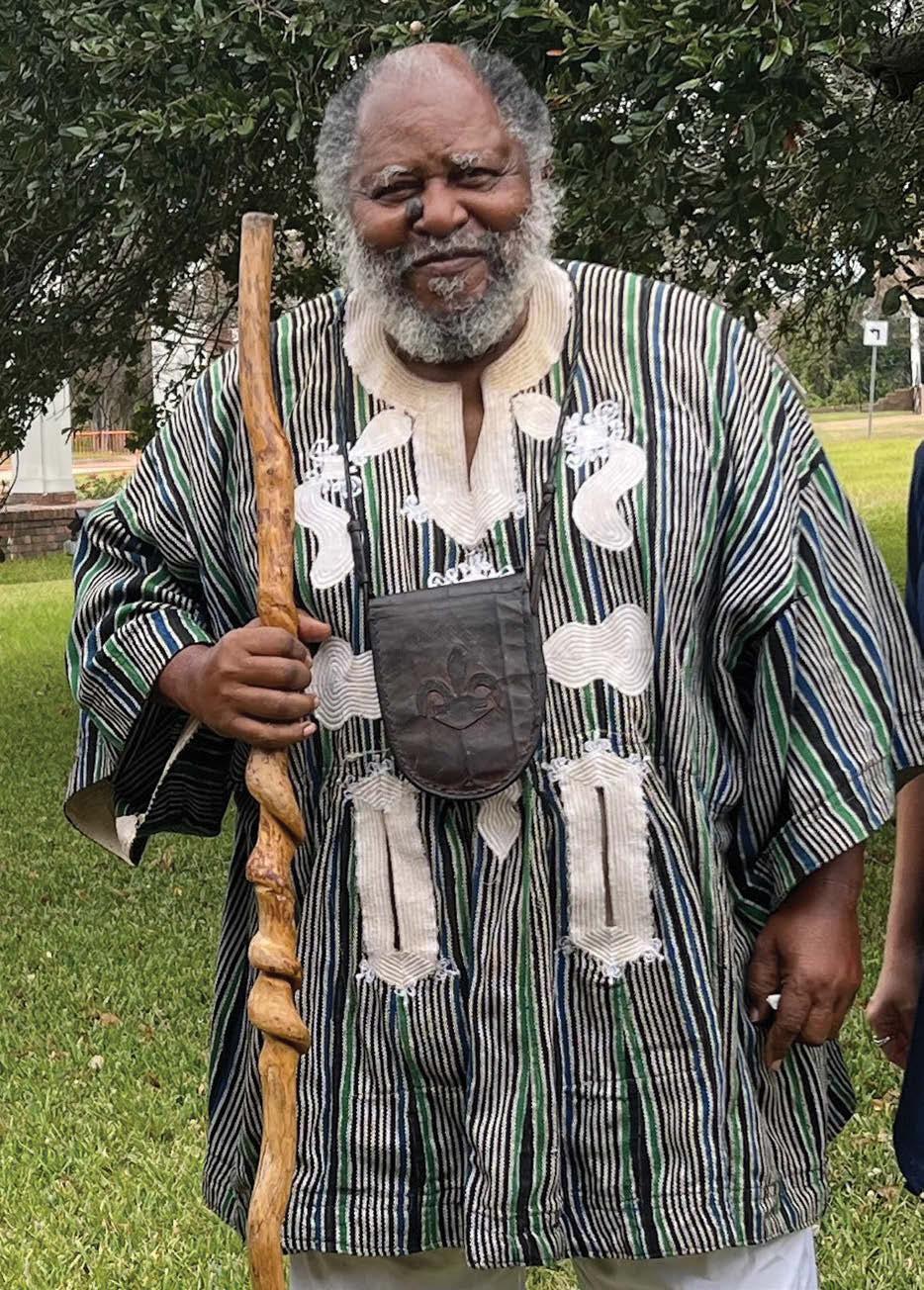
Ser Seshsh Ab Heter-C. M. Boxley
(b. 1939) Historian, cultural preservationist, and civil rights activist
Ser Seshsh Ab Heter-C. M. Boxley, widely known as Ser Boxley, has spent decades fighting for justice, human rights, and the equitable representation of African American history in Natchez. Since 1963, he has successfully advocated for institutional change, often by challenging onesided historical narratives, particularly within Natchez tourism. His impact is reflected in the historical markers, interpretive programs, National Park Service recognition, and publications that document and interpret African American history in Natchez.
Boxley was born to Edrena Boxley and Peter Allen on 23 July 1939 in Natchez. The oldest of seven children, he was given the first name Clifton at birth, but it was misspelled as “Cleverton” on his birth certificate. He was named after Clifton Fleming of Cranfield, Mississippi.
Boxley is a 1960 graduate of Sadie V. Thompson High School, a segregated Black school in Natchez. After high school, he moved to California where he worked for the US Post Office Department and later managed the Economic Opportunity Council for Redwood City. He soon began serving as an activist by fighting racism, poverty, and discrimination.
His education includes a bachelor’s degree in sociology and a master’s degree in urban and regional planning from California State University, San Jose. He also completed an associate
Ser Seshsh Ab Heter-C. M. Boxley
“His impact is reflected in the historical markers, interpretive programs, National Park Service recognition, and publications that document and interpret African American history in Natchez.”
degree in business at the College of San Mateo.
Returning to Natchez during the civil rights movement in the 1960s, Ser Boxley joined the Natchez Deacons for Defense and Justice, an organization that provided armed protection for the Black community and civil rights workers. Boxley assisted the Deacons with a fundraising campaign in California that allowed them to purchase firearms and acquire other resources for the struggle in Natchez.
Boxley also spent many years traveling in Africa. He visited Sierra Leone, Liberia, Zimbabwe, Senegal, and Ghana. In 1994, he adopted the name, Ser Seshsh Ab Heter. Ser is an ancient Egyptian title that means “elder,” and Seshsh Ab Heter means “balanced joy unites us.”
In 1995, Boxley began his research on chattel slavery in Natchez while also fighting for the equal treatment, preservation, and promotion of Natchez’s Black history. His efforts led to national recognition of the Forks of the Road slave market in Natchez, which was the site of the second-largest slave market in the US between 1833 and 1863. In 2021, largely as a result of Boxley’s efforts, the Forks of the Road became part of the Natchez National Historical Park.
In the November 2015 issue of Smithsonian magazine, Boxley was
described as the “Guardian of the Forks.” The article called him “the man in the South who has done the most to call attention to the Slave Trail.”
He has created a wide range of living history programs that engage the public. In 2008, he organized the Black and Blue Civil War program, where he and volunteers presented the Union Army’s Mississippi 3rd US Colored Cavalry freedom-fighting stories at Historic Jefferson College. He later organized the Civil War encampment of the 3rd US Colored Cavalry on the Natchez Bluff.
Boxley coined the term “Julyteenth,” which commemorates 13 July 1863, the date that the Union Army seized control of Natchez and prompted thousands of enslaved people to begin fleeing plantations and traveling to Natchez, where they found freedom behind the Union Army lines.
Through publications and public programs, Ser Seshsh Ab Heter-C. M. Boxley has contributed to the interpretation of enslavement, the civil rights movement, and African American history in Natchez. In December 2022, Boxley donated his life’s work and research on the Forks of the Road and the US Colored Troops to the Mississippi Department of Archives and History.
Roscoe Barnes III Natchez, Mississippi
CONTRIBUTORS
Shiraz Ahmed is assistant professor of practice in documentary expression for the Southern Documentary Project.
Lindsey Bailey is an illustrator and graphic designer based in North Mississippi.
Roscoe Barnes III is an author, ghostwriter, former newspaper reporter, copywriter, Christian minister, and independent scholar of church history, specializing in Pentecostalism. He lives in Natchez, Mississippi.
Brett J. Bonner is the editor of Living Blues.
Rebecca Lauck Cleary is the Center’s communications specialist. She received a BA in journalism and an MA in Southern Studies, both from the University of Mississippi.
Astrid Knox–McConnell recently graduated from the Southern Studies master’s program and lives in the United Kingdom.
Katie McKee is the director of the Center for the Study of Southern Culture and McMullan Professor of Southern Studies and English.
Noreen Ocampo is a Filipino American writer and poet from metro Atlanta. She holds a BA in English from Emory University and earned her MFA from the University of Mississippi.
Living Blues News
It has been a hot, dry spring here in Mississippi. We went from winter to summer with no gap in between. As unbelievable as it sounds, we are still cleaning up from the ice storm. Crews are out in the counties with bucket trucks going down every road and cutting all the “widow maker” branches they can reach (these are the broken, dangling limbs that will eventually come crashing down).
This Living Blues is an expanded, ninety-six-page special issue. I made the decision to take our annual Blues Festival Guide digital and place it on our website. With the extra space, I have lengthened our features and reviews sections.
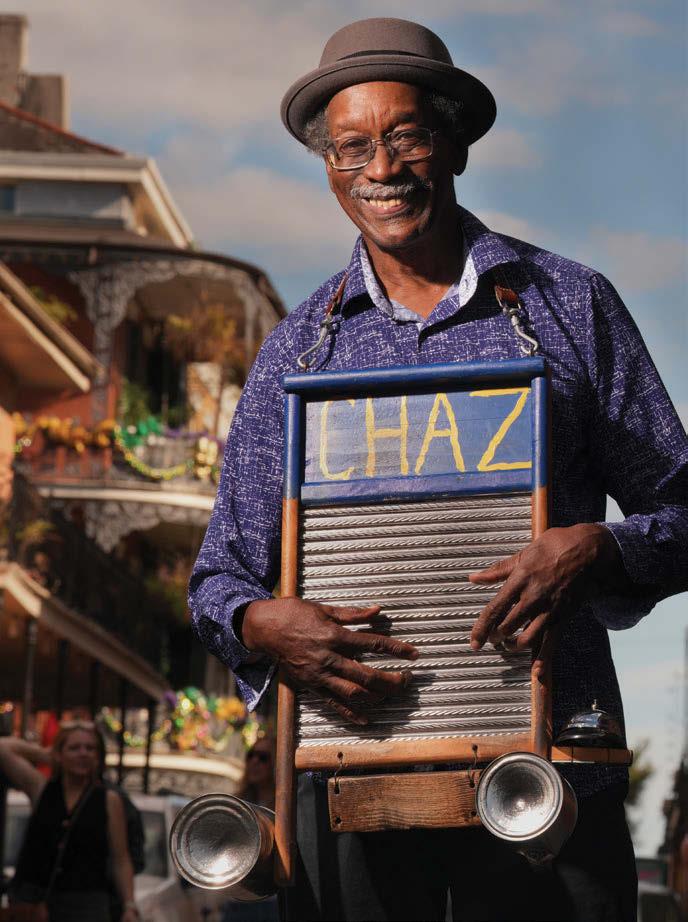
Our cover artist is New Orleans native Washboard Chaz Leary. Leary, who has been called the “Max Roach of the Washboard,” does things with an archaic household utensil that power some of the best roots bands in the Big Easy. Over the years, he has played in blues bands, folk bands, and jazz bands, lending his unique rhythm powers to all. Leary is the first washboard player to grace the cover of LB and my guess is he may be the only one to ever achieve this welldeserved honor.
Other featured artists include Chicago vocalist Mzz Reese (nicknamed after her favorite candy), who, after surviving cancer and losing her husband the same year, is now wowing crowds as she steps out onto the national blues circuit.
Earl “Guitar” Williams is one of the last of the old-school, down-home blues players in Alabama. Williams cut his teeth in the 1960s at the legendary Gip’s Place in his hometown of Bessemer. By the 1970s (the funky days of R&B) he was playing with several area bands. Williams worked in the local steel mills before going to cosmetology school, and in 1985 he opened his Intensive Care Beauty Salon, which he still runs today. Williams has a CD being released this month on Music Maker that includes a new recording of his most requested song, “Can of Alligator.”
California-based vocalist and guitarist Marcel Smith has spent a lifetime in both gospel and secular bands, walking that fine line between the two, trying to make everyone happy while expressing his art as he wants to.
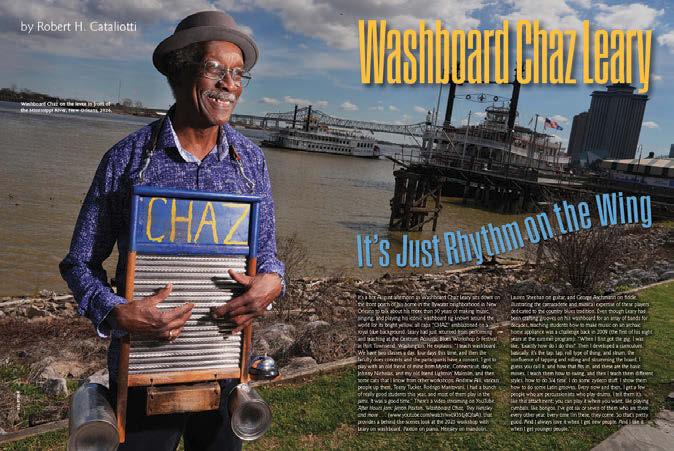
WASHBOARD CHAZ LEARY Rhythm
on the Wing
MZZ REESE
EARL “GUITAR” WILLIAMS MARCEL SMITH HARRELL DAVENPORT
Let
it Roll with Billie Holiday
This issue’s Let It Roll! column looks at one of the greatest voices ever recorded—Billie Holiday. While labeled a jazz singer, Holiday was often singing blues, as her heroes Louis Armstrong and Bessie Smith had done. Her July 10, 1936, session in New York City for Vocalion features some of her deepest blues sides including “Billie’s Blues,” the first song giving her writing credits, and the George Gershwin classic “Summertime.”
We also have a Living Blues Talks To piece with Harrell “Young Rell” Davenport. Like last issue’s Sean McDonald, Davenport is the future of the blues. The nineteen-year-old is about to release his first album, which will only add to the buzz around him. If you are concerned about the future of the blues, this should give you some solace.
Congratulations to our friend and contributing writer Corey Harris who just defended his doctoral dissertation and is now Dr. Corey Harris. This has been a dream of his for years, and he put in the hard work to make it happen.
In the “what goes around comes around” category, vinyl LP sales in the United States surpassed $1 billion for the first time in more than forty years. Nearly forty-seven million LPs were sold in 2025, surpassing CD sales yet again. There is nothing quite like opening a sealed LP and touching the needle down on pristine vinyl for the first time. A number of labels are reissuing classic blues albums with remastering from original tapes and pressed on 180-gram vinyl for a sound that will make you want to replace some of your old favorites.
Brett J. Bonner
The theme for the Center for the Study of Southern Culture’s upcoming 50th anniversary is “The South in All Directions.” Your gift will help us take stock of the past, continue our work in the present, and plan a celebration for the future. Donate using the form below to support ongoing Center activities and to help plan for our 50th-anniversary celebration in 2027. Thank you!
The theme for the Center for the Study of Southern Culture’s upcoming 50th anniversary is “The South in All Directions.” Your gift will help us take stock of the past, continue our work in the present, and plan a celebration for the future. Donate using the form below to support ongoing Center activities and to help plan for our 50th-anniversary celebration in 2027. Thank you!
Dr. Kathryn McKee | Center Director | kmckee@olemiss.edu | 662-915-3372
Dr. Kathryn McKee | Center Director | kmckee@olemiss.edu | 662-915-3372
MAKE YOUR GIFT HERE
MAKE YOUR GIFT HERE
I/we will invest in the CSSC by making a gift in the amount of $ __________ I/we would like to designate my/our gift to:
I/we will invest in the CSSC by making a gift in the amount of $ __________ I/we would like to designate my/our gift to:
q Friends of the Center
q Living Blues magazine
q Friends of the Center q Living Blues magazine
q Oxford Conference for the Book
q Student Support
q Faculty Support
q Faculty Support q Oxford Conference for the Book q Student Support q Technology/Equipment for documentary work
q Technology/Equipment for documentary work
Check one and complete information to indicate method of payment for gift amount or plan for proposed pledge below.
Check one and complete information to indicate method of payment for gift amount or plan for proposed pledge below.
q My check for a one-time gift is enclosed, payable to the University of Mississippi Foundation with 2025 CSSC and gift designation in the memo line. Checks can be mailed for both pledge and one-time gifts.
q My check for a one-time gift is enclosed, payable to the University of Mississippi Foundation with 2025 CSSC and gift designation in the memo line. Checks can be mailed for both pledge and one-time gifts.
q Please enter my pledge for the amount, which I intend to pay by check $__________ over _____ months, beginning ______________________
q Please enter my pledge for the amount, which I intend to pay by check $__________ over _____ months, beginning ______________________
q Please enter my pledge and charge my credit card (information right) $__________ over _____ months, beginning ______________________
q Please enter my pledge and charge my credit card (information right) $__________ over _____ months, beginning ______________________
q Please charge my credit card for a one-time donation of $ ____________
q Please charge my credit card for a one-time donation of $ ____________
The University of Mississippi Center for the Study of Southern Culture University, MS 38677
INCLUDE MAILING LABEL WHEN MAKING ADDRESS CHANGES.
Please help us reduce waste and postage costs. Complete this form and return it with your mailing label.
o Contact person changed o Name misspelled
o Address wrong o Received more than one
o Add my e-mail to your list o Delete me from your list
Friends of the Center
e-mail: cssc@olemiss.edu https://olemiss.edu/southernstudies/
Gifts to the Center for the Study of Southern Culture benefit teaching, publications, and outreach at the first interdisciplinary research center dedicated to investigating, documenting, interpreting, and teaching about the American South. Thank you for remembering us as you plan your charitable giving!
The Center’s Friends program provides essential general operating support for a number of Center endeavors. Visit https://olemiss.edu/southernstudies/ to learn more.
I/We would like to contribute $_________ to the Friends of the Center.
o Enclosed is my check. o Please charge my credit card.
To make a gift online scan here. Not sure how to use a QR code? Open the camera on your smartphone and scan here. Yes, it’s that easy!

(please print)
Please mail this form to: The University of Mississippi Foundation/CSSC • 406 University Ave., Oxford, MS 38655
https://umfoundation.givingfuel.com/give