

JOINING in a day devoted to propagating plants to help the survival of moonah woodlands on the southern peninsula at St Joseph’s Primary School are, from left, Crs Sarah Race and Antonella Celi, environmental campaigner Josie Jones, St Joseph’s students Tahlia, Lachie and Kye and Cr Lisa Dixon.
Mayor welcomes green wedge controls
Keith Platt keith@mpnews.com.au
THE state government’s tightening of land use and development controls within green wedge zones is unlikely to have any immediate effect on the Mornington Peninsula.
Mornington Peninsula Shire mayor Cr Simon Brooks welcomed the government’s Green Wedge and Agricultural Land Action Plan as it “reinforces the non-urban purpose and character of the green wedge”. He said the government’s plans did not require any changes to the shire’s green wedge management plan adopted in December 2018 and updated the following year.
The peninsula’s 520 square kilome-
tres, or 70 per cent, green wedge is one of 12 that form an irregular ring around the edge of Melbourne. Brooks said the peninsula’s green wedge was “under multiple pressures and we have advocated strongly for more protections and tighter controls over non-agricultural uses”. He said the government’s action plan was a step in the right direction: “Clearer guidelines and stronger planning controls will help our efforts to support our $1.3 billion agriculture, food and beverage sector and protect the nonurban character of the peninsula.
“Our region is critical to Victoria’s food economy and security, yielding the second highest value food production region per hectare in Victoria.”
Planning changes announced by the state government last month are
designed to protect green wedge zones by preventing urban sprawl within 100 kilometres of Melbourne.
State planning minister Sonya Kilkenny has introduced a raft of changes to stop councils from allowing houses to be built on certain farmland under that size.
The green wedge “action plan” will increase flexibility for farm sales, ban new data centres in green wedge and rural conservation zones, and review of application requirements in green wedge zones.
The protections for farm land will also apply to quarries that operate inside green wedges.
With Melbourne’s five million plus population set to reach the size of London’s (nine million) by 2050, the state government has set a target of
building 800,000 new homes over the next decade, with 70 per cent of those set to be built in established suburbs.
“More housing doesn’t have to come at the expense of our green wedges – that’s why we’re providing better permanent protection for these areas against overdevelopment,” Kilkenny said.
The government has said it will not “enshrine” individual green wedge plans in legislation or require ministerial approval for plans prepared by councils and Brooks said the shire was looking forward to working “with the state government to ensure the details of the action plan reflect the distinctive role and function of our Mornington Peninsula Green Wedge”.
The government says it will develop a new policy to increase access and
use of the “significant unused capacity of recycled water from Melbourne’s water treatment plants”.
Using urban wastewater for agriculture would boost productivity and strengthen the resilience of Melbourne’s food bowl to climate change.
“Given the peninsula’s critical role in Victoria’s food economy, we are also calling on the state government to invest in infrastructure to give our primary producers access to the millions of litres of Class A recycled water currently being pumped [daily into the sea at Gunnamatta],” Brooks said.
“Accessing this water is an ideal way to secure climate resilient food production for Melbourne’s growing population.”
Reasons to shout from the rooftops - Page 12
An independent voice for the community For all advertising and editorial needs, call 03 5974 9000 or email: team@mpnews.com.au www.mpnews.com.au Your weekly community newspaper covering Safety Beach to Portsea FREE Wednesday 10 April 2024 An independent voice for the community
Caring for local families for over 40 years www.rosebudfunerals.com.au 123 Jetty Road, Rosebud Ph: 5986 8491 DOWNLOAD 3MP FROM THE APP STORE OR GOOGLE PLAY
Southern Peninsula
Potting for moonahs survival Page 9
Picture: Yanni


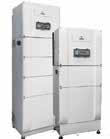



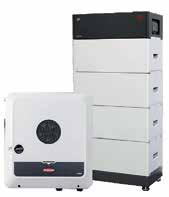







PAGE 2 Southern Peninsula News 10 April 2024 Your Local and Family Run, Solar Company Solar Dynamics Pty Ltd 35 Governor Road Mordialloc Vic Phone 03 9580 0120 www.solardynamics.com.au established 2009 Solar and Battery Battery Add On or Heat Pump Hot Water Unit We have a package to suit! Whether you are looking for... Grid Connect Solar Confused about Government rebates or simply need clarification? Looking for power security and back up power? Time to move to all electric home? We provide Leading Brands and site specific solutions to suit.
New entity replaces ‘liquidated’ club
Cameron McCullough cameron@mpnews.com.au
IN a record turnout at a special general meeting on 2 April, members of the Hastings Cricket and Football Social Club voted to place the organisation into liquidation.
The dire situation of the club had been caused by the venue’s gaming machines. Declining use of the machines coupled with soaring government charges and taxes on gaming have changed the profits from the machines into losses, with attempts to negotiate with the state government regarding the situation failing.
By the next morning, administrators were in control, and the pokies had all been switched off. It is believed the machines are slated for removal today (Tuesday 9 April).
“This is not the end of the road, but the start of a new journey,” Gibbs said.
“A new entity has been formed, the Hastings Community and Sports Club Inc and we intend to continue the proud history of both the sporting clubs and the community members who worked tirelessly to establish and sustain the Hastings Club.”

Although the task was grim, those present had their eyes firmly on the future.
“There was an incredibly positive attitude in the room,” said club chair David Gibbs.
“Members had been kept well informed and knew this was the only way to proceed. As a result, members were focused on the way forward; a rebirth.”
The phrase was used often during the meeting – a rebirth and a new start for a community club.
Before the vote Brian Stahl, who had seconded the motion, closed the debate with a stirring address on the history of the club and its long association with the community, reminding all those present of the need to get behind and support the club into the future.
In the end the vote from members present at the meeting was unanimous, although there were several proxy votes against the motion to wind up the entity.
“A committee has been formed, and we’ll be looking to work through the multitude of requirements to re-establish the Hastings Club as a true community club.”
The committee plans a renewed focus on community and sporting groups, with the space available for all. There will be a need for new members and the committee believe locals will get behind the new entity and make it a success.
“There is a lot to do, but we are up to the task. This will be a community effort requiring many to put their shoulders to the wheel,” Gibbs said.
“We are welcoming expressions of interest for prospective committee members and are seeking ideas from the community for what they would like to see at the ‘Hastings Community and Sports Club’.”
The club’s bistro continues to be open from 11am (or earlier for groups by arrangement) until late, seven days a week.
Hastings Community and Sports Club can be contacted on chair@hastingsclub.com.au
Arthurs Seat Eagle Autumn magic
U3A on course for croquet
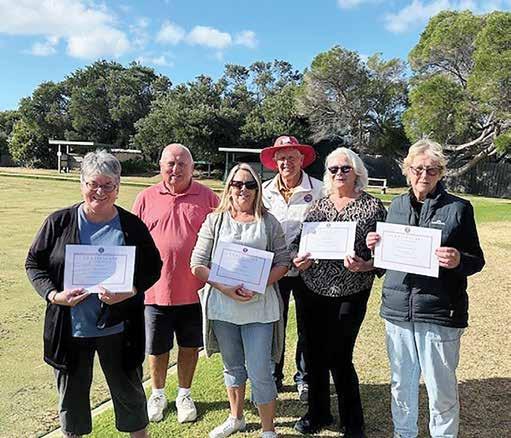
THE Rosebud West Bowls and Croquet Club recently teamed up with U3A Southern Peninsula members to introduce them to playing croquet. Coaches Bob Moir and Bob Riley led four weekly sessions, guiding the newcomers through the rules and techniques of the game.
U3A members learned the finer points of swinging the mallet and maneuvering the balls.
The afternoons ended with socialising over afternoon tea.
The Rosebud West Bowls and Croquet Club welcomes new members. Details: westrosebudcroquet@gmail.com
U3A Southern Peninsula can be reached at office@u3asouthpen.og.au.
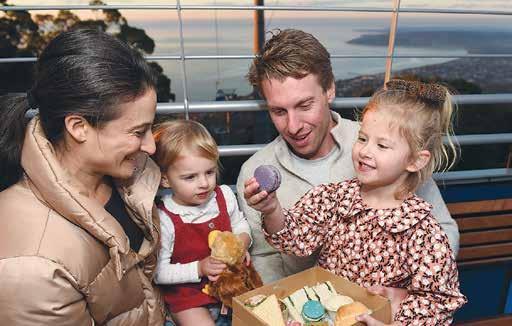
EMBRACE the best of Autumn at the Arthurs Seat Eagle with school holiday adventures for the whole family!

‘Autumn Magic’ is taking over the Eagle, with themed offerings in the café, magical decorations that transform the space, and special magic themed twilight flights on Saturdays to experience the landscape in a new light. Be captivated by roving magicians on Saturday evenings, adding a sprinkle of wonder to your visit!
Join the exciting stamp hunt and collect 10 different stamps from around the Eagle to claim a prize! Daily kids craft sessions are scheduled throughout the holidays to unleash creativity, while live native animal shows by Aussie Wildlife and gymnastic workshops offer unique entertainment.
photo: supplied
Explore the beauty of Arthurs Seat State Park through guided indigenous walks with Living Culture, savour honey tastings and engage your senses with different themed sensory tables for kids, available daily at the base, promising a new discovery with each visit.
Elevate your weekends with live music on the deck, featuring a diverse lineup of local artists every Saturday and Sunday; creating the perfect backdrop for your aerial journey, or whilst enjoying a refreshing beverage after your flight. Go to www.aseagle.com.au for information about our full school holiday program and to book our Aussie Wildlife, Guided Indigenous Walks and Autumn Magic Picnic Experiences. With something for everyone this school holidays, Arthurs Seat Eagle promises an autumn adventure that’s every bit special
School
Arthurs School Holiday Feature
EMBRACE Seat the whole ‘Autumn with decorations magic experience captivated evenings, visit!
Join different a prize! throughout while Wildlife entertainment.
NEWS DESK
U3A members at the croquet game with members of Rosebud West Bowls and Croquet Club are, back from left, coaches Bob Moir and Bob Riley; front from left, Fiona Keenan, Colleen Uphill, Gayle Battye and Pauline Josephson. Picture: Rosalie Arnold

SAT 20 APR
These street dogs are cards
AS an artist, Hastings writer Fran Henke, was drawn to making with black and white digital images after seeing an exhibition of British artist David Hockney’s iPad paintings.
Feeling unable to write after publishing her 24th book Timmy’s Daughter, about the loss to dementia of her family’s much loved Tibetan spaniel, Henke started using colour on iPad, “painting” dogs she saw around Hastings jetty.
“I was really drained by Timmy’s book, had planned book five in a series of historical novels, but couldn’t face it. So last year, with an Apple pencil, I started drawing what I dubbed Street Dogs and posted them on social media,” Henke said.
The range of dog breeds around the town surprised her - from a Chinese crested powder puff in a trolley at Bunnings, to a golden bearded collie at Pelikan Societe cafe. Other dogs were being transported on mobility scooters and bicycles.
Henke, a polio survivor, said the range of dogs and their activities provided “a beneficial excuse” to sit and draw.
The early sketches were popular, with friends asking for copies.
“I’ve long enjoyed postcards as an art form, so chose the 10 best and had them printed - the week before Australia Post increased postage,” she said.
“A friend suggested dog owners might like their own pets as postcards, so that’s possible too.
“After almost 15 years of writing
The Fair Wind series of books, the characters are like family. The next
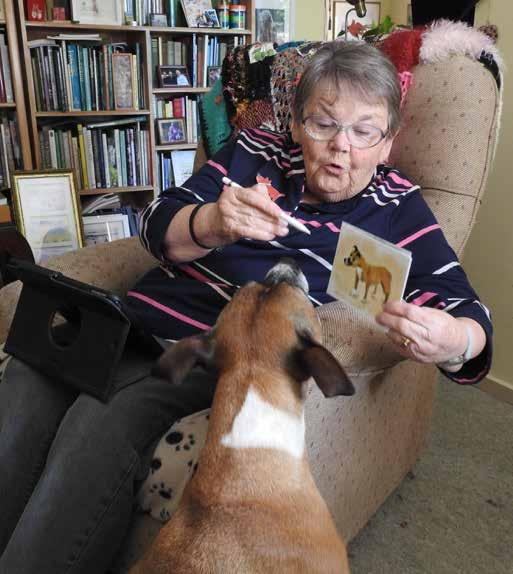
Depicting dogs: Fran Henke with Rosie, a street dog who found a home, now has her own postcard. Picture: James Hart
generation is bound to demand their say. But first I want to see how far I can push this e-media.” Street Dog Sketches are available in packs of five or 10 as postcards at Petersen’s Bookstore, Hastings and will also be at the Western Port Craft




Expo at Hastings Hub on 20 April 20 and the RSPCA’s Million Paws Walk on Hastings foreshore on 20 May. Timmy’s Daughter and The Fair Wind Series are also available at Petersen’s, on Kindle and at franhenke. com
Step out in style at the Garden Bar, the top spot to play on Sportsbet Mornington Cup.
Indulge in an elevated party atmosphere and an allinclusive food and beverage package at this prime trackside location.
Immerse yourself in every memorable moment.
Whether
Complete with an all-inclusive menu and picturesque views of Mornington Racecourse, this trackside haven is more than just a place to watch the races.
PAGE 4 Southern Peninsula News 10 April 2024 Southern Peninsula Proudly published by Mornington Peninsula News Group Pty. Ltd PHONE: 03 5974 9000 Published weekly An independent voice for the community We are the only locally owned and operated community newspaper on the Mornington Peninsula. We are dedicated to the belief that a strong community newspaper is essential to a strong community. We exist to serve residents, community groups and businesses and ask for their support in return. REGULAR CONTRIBUTORS: Craig MacKenzie, Peter McCullough, Stuart McCullough. ADDRESS: Mornington Peninsula News Group, PO Box 588 Hastings 3915 Email: team@mpnews.com.au Web: mpnews.com.au DEADLINE FOR NEXT ISSUE: 1PM ON THURSDAY 11 APRIL 2024 NEXT ISSUE PUBLICATION DATE: WEDNESDAY 17 APRIL 2024 Circulation: 22,870 Audit period: Apr 2018 - Sept 2018 Source: AMAA; CAB Total Distribution Audit for further information visit auditedmedia.org.au Journalists: Keith Platt, Liz Bell, Brodie Cowburn Ph: 5974 9000. Email: team@mpnews.com.au Photographers: Gary Sissons, Yanni Advertising Sales: Ricky Thompson 0425 867 578 or ricky@mpnews.com.au Real Estate Account Manager: Ricky Thompson 0425 867 578 Production/Graphic design:
Dannielle
Group Editor: Keith Platt Publisher: Cameron McCullough NEWS DESK
Marcus Pettifer,
Espagne
you're a seasoned punter or first-time racegoer, it’s the perfect place to perch for a premium race day experience.
MORNINGTON RACECOURSE TICKETS VIA TICKETEK


PHYSIOTHERAPIST Charlie Vo with Labrador Samira, above, and, left, one of her three puppies that will be trained to take on the patient assistance role that she has at The Mornington Centre. Pictures: Supplied
Puppies guided by mum’s caring nature
THREE puppies of a Labrador that is regarded as a valuable member of the patient care team at The Mornington Centre are destined to follow in the pawprints of their mother.
Mother Samira’s role at the centre started when she was just a few months old when she was taken to the centre by Peninsula Health senior physiotherapist and puppy-raiser Karen Edwards.
Before long, it was noticeable that Samira was playing a valuable role “in maintaining the overall wellbeing” of
patients at the purpose built 90-bed geriatric evaluation and management centre that provides specialist medical, nursing and allied health services.
On admission, patients are assessed by a clinical team and undertake a personal therapy program.
"Witnessing the love and joy Samira brings to our faculty and patients is truly remarkable. Her presence has been a source of comfort and solace, enriching our community,” Edwards said.
During her frequent visits and inter-
actions over 18 months at the Separation Street centre, Samira showed that she had the qualities needed for a guide dog and was selected to become an official breeder.
Samira’s litter of three puppies are now destined for a future as guide dogs for members of the blind and low vision community.
Before they were born, the centre held a competition for participants to guess the size, colour, and sex of the puppies.
The winner, physiotherapist Charlie




Vo, was invited to name all three of these puppies and chose Hiro, Hendrix and Huxley.
"Samira is truly cherished at The Mornington Centre. Her presence brings smiles to patients and staff alike, offering a sense of calm amidst the challenges of rehabilitation,” Vo said.
Patients at the centre have complex or multiple health care conditions associated with ageing, memory and thinking problems, chronic illness or disability. The average length of stay
for patients is three to four weeks. Care at the centre promotes health independence, helping patients to maximise their abilities and plan for the future.
Two puppies from Samira's litter are already headed to their homes with puppy raisers in South Australia, with one is still to be placed.
Meanwhile, Samira’s role continues at the centre where she is seen as an invaluable source of comfort and support, spreading joy to both staff and patients. Keith

Southern Peninsula News 10 April 2024 PAGE 5 GOLF N o r t h C o u r s e r a n k e d # 5 0 7 day golf membership, limited time, no waitlist on food & beverage, driving range & cart hire 7 D A Y M E M B E R S H I P A T R O S E B U D C O U N T R Y C L U B including 200m driving range, chipping & putting greens EXTENSIVE PRACTICE FACILITES JOIN NOW PAYMENT OPTIONS, MONTHLY OR HALF YEARLY ALSO AVAILABLE TO FIND OUT MORE CALL (03) 5950 0800 OR VISIT WWW ROSEBUDCOUNTRYCLUB COM AU DISCOUNTS to two FULL ACCESS PGA CHAMPIONSHIP GOLF COURSES OTHER CATEGORIES ARE ALSO AVAILABLE WWW.ROSEBUDHOTEL.COM.AU 1099 POINT NEPEAN RD, ROSEBUD EVERY GAME LIVE & LOUD ON OUR MASSIVE SCREEN IN THE SAND BAR
7pm in the sand bar guaranteed cash win www.worldpokerpro.com.au
mondays from
Platt
Council joins lobby group
FRANKSTON Council will spend more than $7000 to join a lobby group focused on projects in Frankston and the Mornington Peninsula.
The Committee for Frankston and Mornington Peninsula was formed in 2023 after a merger of the Committee for Mornington Peninsula and the Committee for Greater Frankston. At Frankston Council’s March meeting it agreed to spend $7700, plus GST, of ratepayers’ money for an annual membership with the lobby group.
Frankston Council was a former member of the Committee for Greater Frankston - it paid $10,000 a year for membership beginning in 2018 before cancelling the partnership in 2021. “Philosophical differences” were cited as the reason for the split.
Frankston will join the committee from 1 July.
The committee’s CEO Josh Sinclair said “working alongside local government is crucial in our advocacy efforts here on the peninsula, and we’re delighted Frankston City Council will join Mornington Peninsula Shire council as a community partner of the Committee for Frankston and the Mornington Peninsula.”
“Frankston City and the committee have many shared objectives that require cooperation in our advocacy efforts – and that’s exactly what we’re doing,” he said. “We look forward to working with local government and our members in 2024 to help advocate for further government investment and better policy outcomes for Frankston and the Mornington Peninsula.” Brodie Cowburn
Phar Lap returns to the winners’ circle
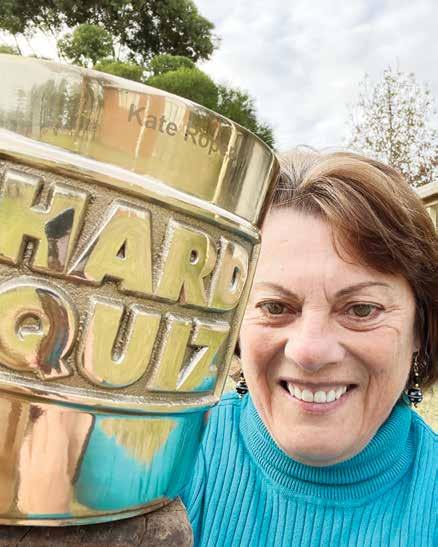
ALTHOUGH dead for 92 years, champion racehorse Phar Lap helped carry Mornington Peninsula Shire councillor Kate Roper over the line to win an edition of the ABC TV quiz show, Hard Quiz.
Roper held the winner’s trophy aloft after her win on Wednesday 3 March, calling out the show’s signature sign-off: “Thanks for playing, Hard.”
Contestants on the long running show are known for being quizzed on their chosen, often obscure, topics.
Roper admits to being “horse crazy” for as long as she can remember and as a child had always been drawn to the mounted body of Phar Lap exhibited at Melbourne Museum.
“The giant figure of the beautiful horse of course grabbed my interest. I’d go straight to that display until I was told we were leaving,” she said.
Roper, who goes horse riding several times a week, said the story of Phar lap “has everything, the Depression era underdog, authority changing the rules and using cruel weights to beat him, gangsters shooting at him, a devoted strapper, wealthy owner and small time trainer thrust into the spotlight”.
“I guess that sad story grabbed me as a young child, that at the peak of his success he died in mysterious circumstances a long way from home.”
Although born in New Zealand in 1926, Phar Lap was hailed around the world as a a champion Australian thoroughbred racehorse, winning the Melbourne Cup, two Cox Plates, the Australian Derby, and 19 other weight-for-age races.
Phar Lap’s final race was the Agua Caliente Handicap in Mexico, which he won with a track record (and a spit hoof). Phar Lap died in 1932 in Menlo Park, California.
As well as his hide being exhibited in Melbourne Museum his skeleton is at the Museum of New Zealand and his heart at Australia’s National Museum. “I have read a lot about Phar lap and other horses and worked at the Victoria Racing Club for many years,” Roper said. “So, I had quite a bit of knowledge of his story but did reread information and watch the movie in the weeks leading up to the show.
“It was filmed last august, so I have had to keep the result secret until it was aired. It was great fun, and I had no expectation that I would win.”
Roper said her Hard Quiz trophy, The Big Brass Mug, is on display “waiting to be filled by those stray Lego pieces I find around my house that I mentioned in the show”. Keith Platt




PAGE 6 Southern Peninsula News 10 April 2024 BOOK NOW: trybooking.com/COYXZ 59501579 Are you aged 55 years or older and looking for a career change, to increase your hours of work or just get back into the workforce? answers on how to improve your skillset, what employers are seeking, and more. Afternoon tea provided. 2- 4pm Tuesday 30 April 2024 Safety Beach Sailing Club 185 Marine Pde, Safety Beach Work for money and enjoyment AWNINGS CANOPIES TRACK BLINDS ROOFING SYSTEMS CUSTOMISED EXTERIOR SHADING S h o p 8 A , 1 - 1 3 M o r n i n g t o n , T y a b b R d M o r n i n g t o n P H : ( 0 3 ) 5 9 7 5 9 3 6 6 i n f o @ s h a d e s o f a u s t r a l i a n e t a u w w w s h a d e s o f a u s t r a l i a n e t a u NEWS DESK
Trophy win: Kate Roper with the Hard Quiz trophy she won after appearing on the ABC TV show answering questions on her favourite subject, the racehorse Phar Lap. Picture: Supplied

Street ‘brawls’ in Mount Martha
just after midday on Saturday and moved some of them on.

It is believed a party had been held at a short term accommodation property overnight on Friday.
On Saturday morning social media was flooded with reports of groups of youths fighting in and around Park Road and Atlantic Terrace, while others were seen lying on nature strips and in front yards.
One person was allegedly seen threatening people with a machete, while one driver said a young man jumped on her car and acted aggressively and threateningly when she protested.
Police responded to a report of youths fighting
A police media spokesperson said they continued to patrol the area and “no other offences occurred”. No weapons were located. Liz Bell
Crime ‘insights’
POLICE will “share insights” about crime prevention and discuss crime issues on the Mornington Peninsula at a meeting of Eyewatch - Mornington Peninsula Police Service Area on Wednesday, 10 April.
The meeting at Bunnings’ Nepean Highway, Mornington store will run from 6pm to 7.30pm and also provide information about home security devices.






Southern Peninsula News 10 April 2024 PAGE 7 Proudly supplying The Block 2023 9 Mornington Peninsula Owned & Manufactured 9 Energy Efficient 9 High Performance 9 Quality German Design Factory 1/ 7 Lyall Street, Hastings Phone: 5909 8040 or 0412 221 767 Email: contact@livingdesigndoubleglazing.com.au www.livingdesigndoubleglazing.com.au Your perfect choice... CONTROL YOUR COMFORT with energy efficient uPVC windows and doors featuring aluplast-technology RESORT LIVING EVERY DAY. RETIRE IN SOUTH GIPPSLAND. Experience the boutique retirement dream at Mountain View Leongatha Be on a permanent holiday by joining our exclusive community. Choice of 2 & 3 bedroom master built luxury homes with single or double garages. Heated swimming pool, bowling green and community vegetable garden A 24 hour emergency call service and secure caravan and boat storage for peace of mind. Contact us for further information. Master built luxury homes. Double Garages now available. Community Centre completed and operational. OPEN FOR INSPECTION Monday & Tuesday 9am - 3pm (Wednesday closed) Thursday 9am - 3pm, Friday 9am -4pm Ph: (03) 5612 4800 1 Dale Drive Leongatha VIC 3953 www.mountainviewleongatha.com.au SMALL, PRIVATE, GATED VILLAGE WITH ONLY 45 VILLAS FINAL STAGE NOW SELLING RESORT LIVING EVERY DAY FOR ACTIVE OVER 55'S tom.mcintosh@parliament.vic.gov.au (03) 5940 5010 Tom McIntosh MP Your voice in the Labor Government Authorised by T.McIntosh, Unit 1, 23 James Street, Pakenham. MICHAEL R COLDHAM & ASSOCIATES SOLICITORS LEGAL SERVICES MORNINGTON PENINSULAR Fixed price conveyancing Fixed price Probate applications Wills and Powers of attorney Business & Employment Law Call Louise at our new Mt Martha office and compare 0419 568590 Find us at www.mrclaw.com.au LEGAL SERVICES MORNINGTON PENINSULA Fixed price conveyancing Fixed price Probate applications Wills & Powers of Attorney Business & Employment Law Call Louise at our new Mt Martha office and compare 0419 568 590 Find us at www.mrclaw.com.au
UP to 40 young people who partied in Mount Martha on Friday night and into Saturday morning had to be dispersed by police when fights spilled into the streets.
Policing the street: Reports of 30 to 40 youths fighting in the streets of Mount Martha and intimidating motorists flooded social media on Saturday. Picture: Supplied
Welcome TO THE WORLD
Photos: Yanni
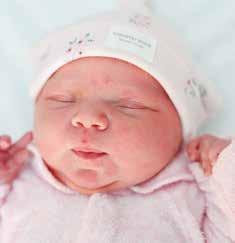
EZRA ANDRE
Parents: Sarah & Ben
Birth date: 18.03.2024
Birth weight: 2700gms
Born at: Frankston Hospital
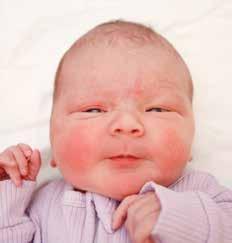
Parents: Thomas & Emma
Birth date: 19.03.2024
Birth weight: 4120gms
Born at: Frankston Hospital
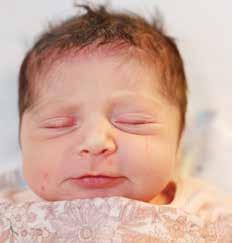
AUDREY JAMES
Parents: Madeline & Samuel
Birth date: 26.03.2024
Birth weight: 3390gms
Born at: Frankston Hospital


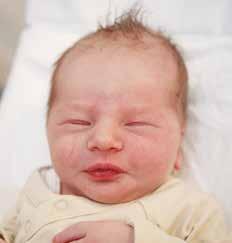
AYLA LONIE
Parents: Emily & Nathan
Birth date: 19.03.2024
Birth weight: 3750gms
Born at: Frankston Hospital
Parents: Sophie & Todd
Birth date: 25.03.2024
Birth weight: 3420gms
Born at: Frankston Hospital
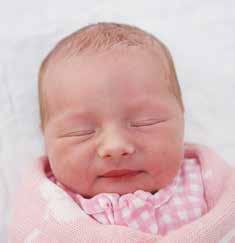
PAIGE RIA
Parents: Mikayla & Cameron
Birth date: 26.03.2024
Birth weight: 3060gms
Born at: Frankston Hospital

The garden connection
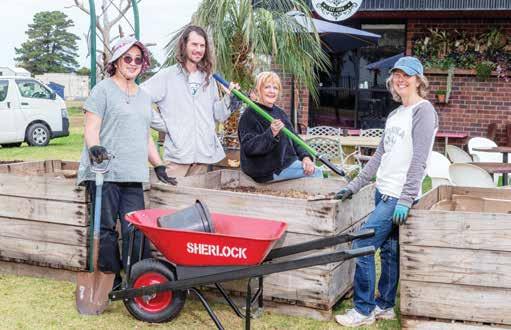
A FLEDGLING garden project at Hastings is an example of how community gardens provide a creative and nature-based activity that brings people together.
The new community garden began at Hastings Community Hub where volunteer Leanda Michelle painstakingly chipped away at restoring three old garden beds and laying mulch. Friends helped her create a sensory garden that was part of her vision, and the garden is now brimming with new plants and is a serene place to sit or wander in nature.
Michelle then teamed up with local chef and caterer, James Avent of Avent’s Gourmet Kitchen, to start another garden project. Avent’s Gardener’s Club Hastings is all about “harvest-
ing for health, raising awareness about where the food we eat comes from, eating in harmony with the seasons using sustainable practices, as well as canning and preserving”.
It was at this location - 61 Cool Stores Road, Hastings, that an influx of volunteers came onboard to plant and share ideas and enthusiasm for growing life-sustaining food.
As the two community garden projects gain momentum it is hoped that the Hastings community hub will auspice the project to create a not for profit community venture.
For more information or to volunteer call Hastings Community Hub on 5979 1398 or Leanda Michelle 0400 730 602.




PAGE 8 Southern Peninsula News 10 April 2024
PIPPA
JACK
Autumn Issue OUT NOW The magazine is full of fun and informative reading for the whole family. Viewthemagazine and more online To advertise in the next issue contact Andy on 0431 950 685 DOWNLOAD 3MP FROM THE APP STORE OR GOOGLE PLAY 3MP.COM.AU NEWS DESK
Connecting gardens: Kho Tep Wee, Dan Randle, Glennie Cleary and Leanda Michelle connect over their interest in the new community garden at Hastings. Picture: Gary Sissons
Potting for moonah survival
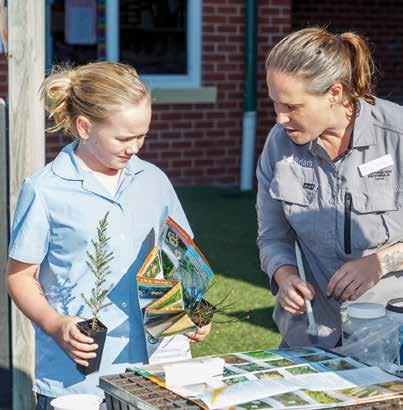
PROPAGATING plants living in recognised areas of moonah woodlands on the Mornington Peninsula was the main subject on Monday 18 March at St Josephs Primary School, Sorrento. Committed to preserving and restoring the moonah woodlands on the southern peninsula, the school invited other interested organisations to a propagating morning.
The school wants to protect nearby remnants of moonah woodlands, including in the parish grounds, although much of the initial work will be on sites within the Point Nepean National Park and Mornington Peninsula Shire’s Police Point park.
“With less than eight per cent of moonah woodlands remaining [on the peninsula] our students are taking action to highlight the plight of this iconic tree,” sustainability and visual arts teacher Jane Byrne said.
Working alongside the students were staff from The Briars nursery, Mornington Peninsula Shire councillors, environmental campaigner Josie Jones and representatives of the People and Parks Foundation .
“We have had support from Portsea Estate Nursery with the donation of moonah tube stock and our students are hoping to be planting out these and the germinated and propagated plants in the coming months,” Byrne said.
The moonah woodlands were listed as a threatened community under the flora and fauna guarantee act in 1988 and People and Parks, Parks Victoria, Mornington Peninsula Shire, St Joseph’s and St Mary’s Star of the Sea Parish, Southern Peninsula
Indigenous Flora and Fauna Association, the Nepean Conservation Group and other community members have created a Moonah NatureWise Community program for the southern peninsula (Dose up on nature to help moonahs, The News 5/3/24).
“Having our students participate in nurturing the peninsula’s ecosys-
tem is of great importance and what better way than nurturing our future generations of environmentalists,” Byrne said.
“Nature dosing is both connecting with, and caring for, old moonah trees and getting out into nature for at least two hours a week. This makes for healthier people, places and planet.”
New MP commits to tackle housing, health and gambling
Brodie Cowburn brodie@mpnews.com.au
DUNKLEY MP Jodie Belyea has identified women’s health, gambling reform, and housing among her top priorities in her maiden speech to federal parliament.
Belyea, who founded the Women’s Spirit Project charity, said she would continue to focus on women’s health and wellbeing while serving as an MP.
“I wish to champion the development of policies and programs for women that strengthen their health and wellbeing - for women recovering from domestic and family violence and sexual abuse, mental health barriers, poverty, and addiction,” she said. “I wish to support initiatives that address menopause, because pardon the pun, menopause is a hot topic for many middle-aged women.
“If we don’t commit to delivering initiatives to support the health and wellbeing, the healing, and the recovery of women impacted by trauma and poverty, gender equality could remain mere words on paper.”
Belyea won Dunkley for Labor at the 2 March by-election, which was triggered by former MP Peta Murphy’s death in December.
FLOORING SHEETS
One of Murphy’s crowning achievements in parliament was her work as chair of the inquiry into online gambling harm. The inquiry published its final report in June 2023, but the federal government has not yet committed to taking action on its 31 recommendations. Belyea said she will advocate for the changes proposed by the inquiry.
“Australians lose $25 billion to gambling each year, the highest amount per capita in the world. Families in communities like Dunkley feel the brunt of gambling magnifying the cost-of-living pressures and exacerbating disadvantage,” Belyea said. “I will advocate for the recommendations of the You win some, you lose more report. Peta drove this report’s common sense recommendations with great empathy and care. She is no longer here to fight this good fight, so it falls on us to meet her political courage with a little bit of our own.”
Belyea paid tribute to Murphy during her speech. Murphy’s parents were in attendance.
Housing projects, initiatives for young people, and improvements to Frankston’s CBD were also listed by Belyea as important issues during her 27 March speech.
Yellow Tongue 3600x800mm ............... $55.50ea
Plyfloor 2.4x1.2x15mm ........................ $99.00ea
KDHW DAR SEL GRADE
42x19 ................................................... $5.35mt
65x19 ................................................... $8.00mt
90x19 .................................................. $11.50mt
110x19 ............................................... $14.25mt
135x19 ............................................... $19.50mt
185x19 ............................................... $27.25mt
PRIMED MDF MOULDINGS
S/Bevel 42x15 ...................................... $1.40mt
S/Bevel 67x15 ...................................... $1.80mt
S/Bevel 67x18 ...................................... $1.85mt
L/ Tongue 67x18 ................................... $1.85mt
L/ Tongue 92x18 ................................... $2.65mt
L/ Tongue 140x18 ................................. $3.95mt
B/nose 67x18 ....................................... $1.85mt
B/nose 92x18 ....................................... $2.65mt
CYPRESS WINDSOR PICKETS
70x19 900mm ....................................... $3.40ea
70x19 1200mm ..................................... $4.60ea
70x19 1500mm ..................................... $5.75ea
70x19 1800mm ..................................... $6.95ea
PRIMED LOSP T/PINE
18x18 Quad/Fillet/DAR .......................... $2.25mt 42x18 DAR ............................................ $3.65mt 66x18 DAR ............................................ $4.75mt 90x18 DAR ............................................ $6.50mt 138x18 DAR .......................................... $9.50mt
................................ $28.00ea
2400x1200x12mm .............................. $33.00ea
2400x1200x16mm .............................. $41.50ea
2400x1200x18mm .............................. $46.50ea
Southern Peninsula News 10 April 2024 PAGE 9 5981 0943 sales@dromanatimber.com.au ALL PRICES INCLUDE GST PAYMENT BY CASH OR CREDIT CARD ONLY E. & O.E. For price and availability of all your building supply needs please call 1 Dalkeith Drive, Dromana Mon-Fri 7am-4pm Sat 7am-12noon www.dromanatimber.com.au POLYESTER BATTS R2.0 12pc $37.50 per bag R3.5 6pc $36.25 per bag SMARTFRAME LVL15 H2S 90x42, 140x42, 190x42, 240x42, 290x42 NOW IN STOCK! GALV SLEEPER CHANNEL ‘H’ SECTION $47.50mt ‘C’ SECTION $29.75mt 90° CORNER $89.25mt T/PINE SLEEPER SPECIAL 200 X 75 X 2.4mt $26.95 each PACK LOTS ONLY ASK US ABOUT STRUCTURAL SOLUTIONS DECKING T/Pine 70x22 KD ACQ ........................... $3.50mt T/Pine 90x22 KD ACQ ........................... $4.40mt Merbau 70x19 Random ........................ $5.25mt Merbau 90x19 Random ........................ $6.50mt Merbau 140x22 Random .................... $12.95mt Spotted Gum 86x19 .............................. $9.95mt Spotted Gum 135x19........................... $17.95mt FIBRE CEMENT SHEET UNDERLAY 1800x1200 ........................................... $26.75ea 4.5MM 1800x1200 .......................................... $23.00ea 2400x450 ............................................ $11.50ea 2400x600 .............................................$15.35ea 2400x900 ............................................ $23.00ea 2400x1200 .......................................... $30.70ea 3000x900 ............................................ $28.75ea 3000x1200 .......................................... $38.35ea 6.0MM 1800x1200 .......................................... $33.25ea 2400x900 ............................................ $33.25ea 2400x1200 .......................................... $44.35ea 3000x1200 .......................................... $55.25ea BLUEBOARD 2400x1200 .......................................... $57.00ea 2700x1200 .......................................... $63.75ea 3000x1200 .......................................... $70.00ea BGC DURAFLOOR 2700x600x19 T&G................................$135.00ea CEMENT PRODUCTS Concrete Mix 20kg .................................$9.95ea Rapid Set 20kg ..................................... $10.50ea Cement 20kg ........................................ $10.25ea SHADOWCLAD GROOVED Shadowclad 2.4x1.2x12mm .............. $185.00ea Shadowclad 2.7x1.2x12mm .............. $207.50ea Large quantities ......................................... P.O.A. KDHW F17 90x45’ $14.45mt 140x45’ $20.95mt 190x45’ $29.75mt 240x45’ $42.95mt 290x45’ $53.25mt CYPRESS 125x75 ................................................ $15.75mt 100x100 .............................................. $16.50mt 125x125 .............................................. $25.50mt 150x150 .............................................. $44.25mt 70x19 Blanks.......................................... $3.95mt TREATED PINE POLES 75-100x1.8mt $8.95ea 75-100x2.4mt $12.95ea 75-100x3.0mt $18.50ea 100-125x1.8mt $12.50ea 100-125x2.4mt $18.00ea 100-125x3.0mt $23.50ea 100-125x3.6mt $33.75ea OBHW F8 38x38 ................................................... $2.75mt 50x25 ................................................... $2.50mt 75x38 ................................................... $5.75mt 125x38 ................................................. $9.75mt MDF CRAFTWOOD 2400x1200x3mm ................................ $12.00ea 2400x1200x6mm ................................ $19.50ea 2400x1200x9mm
185x18 DAR ........................................ $13.25mt 30x30 Int Stop ....................................... $4.20mt 57x30 Ext Stop ...................................... $6.95mt 42x42 DAR ............................................ $6.50mt 90x42 DAR F7 ..................................... $13.75mt 138x42 DAR F7 ................................... $20.75mt 185x42 DAR F7 ................................... $29.95mt 230x42 DAR F7 ................................... $39.75mt 280x42 DAR F7 ................................... $48.25mt FENCE EXTENSIONS 2400x500 ............................................ $33.00ea 2400x500 Slat Type ............................. $40.00ea 2400x500 Woven ................................. $44.00ea TREATED PINE R/S 100x12 Paling....................................... $0.95mt 150x12 Paling....................................... $1.45mt 150x25 ................................................. $3.05mt 150x38 ................................................. $4.55mt 75x50 ................................................... $3.05mt T/PINE F7/MGP10 - LASER CUT 70x35 ................................................... $4.55mt 70x45 ................................................... $6.00mt 90x35 ................................................... $6.00mt 90x45 ................................................... $8.00mt 140x35 ................................................. $9.15mt 140x45 ................................................ $12.00mt 190x45 ............................................... $16.00mt 240x45 ............................................... $22.95mt 290x45 ............................................... $29.75mt T/PINE FASCIA PRIMED 190x30 D&G... .................................... $17.75mt 230x30 D&G... .................................... $22.50mt PINE MGP10 70x35 Long .......................................... $3.85mt 70x45 Long ...........................................$5.35mt 90x35 Studs ......................................... $3.75mt 90x35 Long .......................................... $3.95mt 90x45 Studs ......................................... $4.95mt 90x45 Long ...........................................$5.65mt PINE MERCH 90x35 ................................................... $2.95mt 90x45 ................................................... $3.30mt PINE F7/MGP10 140x45 ................................................. $9.95mt 190x45 ............................................... $13.75mt 240x45 ............................................... $18.50mt MELAMINE - EDGED 16MM 2400x300 ............................................ $14.50ea 2400x450 ............................................ $21.75ea 2400x600 ............................................ $29.00ea 1800x450 ............................................ $16.25ea 1800x600 ............................................ $21.75ea 3600x450 ............................................ $32.50ea 3600x600 ............................................ $43.50ea Not Edged 2400x1200 .......................................... $46.50ea 2400x1200x3mm ................................ $19.95ea PINE LINING 140x12 VJ/Regency .............................. $3.05mt 140x19 VJ/Floor..................................... $4.85mt PINE DAR STD GRADE 42x19 ................................................... $2.50mt 70x19 ................................................... $3.25mt 90x19 ................................................... $4.25mt 120x19 ................................................. $2.65mt 140x19 ................................................. $6.25mt 190x19 Premium .................................. $8.95mt 240x19 Premium .................................. $12.25mt 290x19 Premium .................................. $14.75mt 140x12 .................................................. $3.75mt TREATED PINE SLEEPERS 200x50 2.4 mt ................................................. $20.25ea 2.4 mt (Packs 50) ................................ $18.00ea 2.7 mt .................................................. $23.00ea 2.7 mt (Packs 50) ................................ $20.25ea 3.0 mt .................................................. $25.50ea 3.0 mt (Packs 50) ................................ $22.50ea 200x75 1.8 mt ................................................. $22.75ea 1.8 mt (Packs 30) ................................ $20.25ea 2.4 mt ................................................. $30.25ea 2.4 mt (Packs 30) ................................ $26.95ea 2.7 mt .................................................. $34.25ea 2.7 mt (Packs 30) ................................. $30.25ea 3.0 mt .................................................. $38.00ea 3.0 mt (Packs 30) ................................. $33.50ea 3.6 mt .................................................. $45.50ea 3.6 mt (Packs 30) ................................. $40.50ea 200x100 2.4 mt .................................................. $40.50ea 2.4 mt (Packs 25) ................................. $36.00ea 3.0 mt .................................................. $50.75ea 3.0 mt (Packs 25) ................................. $45.00ea
THE Briars nursery ecologist Leanne Scott with St Joseph’s Primary School student Evelyn at the school’s propagation day for moonah woodlands plants. Picture: Yanni
25 April 2024
ANZAC DAY 2024

Anzac Day 2024 marks the 109th anniversary of the Gallipoli landing in 1915. The spirit of Anzac continues to play a role in the local community to this day, with its qualities of courage, mateship and sacrifice.
Balnarring Service
9.30am Anzac Park
Crib Point
Dawn Service
6am Cenotaph at Tingira Place
March
10.45am Crib Point RSL Service
11am Cenotaph at Tingira Place
Dromana
Dawn Service
6am War Memorial
The Peninsula Club
March
9.15am O’Donohue Street Service
9.30am Dromana
Cenotaph
Flinders Service
10am Flinders Hall
March
11am Flinders Hall Service and wreath laying
11.30am Flinders
War Memorial
Hastings
Dawn Service
6am Cenotaph
Hastings Foreshore March
10.30am Hastings RSL Service
11am Cenotaph
Hastings Foreshore Mornington
Dawn Service
6am Memorial Park
March
9.30am Corner Queen Street and Main Street Service
10am Memorial Park
Mount Eliza Service
2pm Remembrance Garden Cenotaph
Mount Eliza Community Centre
Red Hill Service
10.15am Red Hill
Community Park
We’re proudly supporting RSL and Rotary Clubs around our Peninsula and our community is welcome to pay tribute to those who’ve served or lost their lives in war.
Rosebud
Dawn Service
6am Rosebud RSL Memorial
March
9.30am Corner
9th Avenue and Point Nepean Road Service
9.45am Rosebud
Cenotaph
Rye
Dawn Service
6am Memorial Wall
Rye RSL
March
12pm Rye Pier Service
12.30pm Memorial Wall
Rye RSL
Somerville
Dawn Service
6am Fruit Growers Reserve
Sorrento
Dawn Service
6am Sorrento Foreshore War Memorial
March
11.30am Corner
Ocean Beach Road and Melbourne Road Service
12pm Sorrento Foreshore War Memorial
Tyabb
Dawn Service
6am Tyabb Central Reserve
For more information please contact the respective RSL/Rotary Club websites or call
1300 850 600
PAGE 10 Southern Peninsula News 10 April 2024
Light and shade for award winning Eclipse
SOMERS
Freeman has won two awards at this year’s Melbourne International Flower and Garden Show with Eclipse, her entry in the Challenger Achievable Gardens section.
Eclipse won a gold medal and the specialist award, Best Use of Plant Life.
One side of Freeman’s creation comprises silver and blue toned plants while the other side has purple, red, and black plants.
The two sides are separated by a white limestone path and circle. Textures also add contrast between the two halves of the garden, with more matte plants on the lighter half and shiny leaves opposite.
Plants chosen by Freeman include grasses, succulents, native and exotic shrubs and trees.
Raised in north-central Victoria before moving to the Mornington Peninsula in 2014, Freeman credits her farm upbringing with teaching her two key things: that soil health is the basis for good plant growth and that climate cannot be changed. This means that selected plants must be adapted to soil type and climate.
Her Eclipse garden includes a range of tough plants suited to harsh environments.
Created on a west facing site, plants were chosen to deal with full sun in a well-drained, slightly sandy soil, and be able to thrive with little to no supplementary watering.
Freeman said her juxtaposition of light and dark elements, textures, and

colors was aimed at inspiring others to push boundaries in garden designs. Eclipse Garden stands as a testament to her vision: strange yet inviting, surprising yet beautiful—a living tribute to innovation in gardening.
“It has been a great learning experience, allowing me to go through the process from concept design and project coordination to construction of the show garden,” Freeman said after her win. “No public event gives stu-
dents a better introduction to working in the horticultural industry.
“I wanted to make a garden that was strange, but still liveable and beautiful to be in and, above all else, a garden that would surprise people.”
Frankston lights up
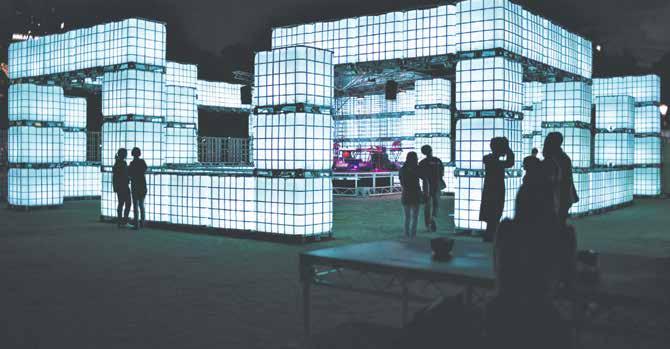
THE Kubik lights and music show has arrived in Frankston. Kubik got underway at the Frankston Waterfront on 5 April, and will run until 20 April. The event features a lineup of DJs, discos, food trucks, and more.
DJs set to perform include Jani Ho, DJ Nelson, and Wolftrax. Special sets from JYDN, JÄMO, and KUMI are also scheduled. The festival takes place at 510 Nepean Highway. To view the full lineup visit kubik. live. Picture: Supplied

Blue Ribbon ball
plants and appearance.
THE Victoria Police Blue Ribbon Foundation’s Mornington Peninsula branch is gearing up to host its inaugural gala ball. Mornington Racecourse will host the gala on 27 July. Attendees will receive a three course meal and five-hour drinks package. Live entertainment and silent auctions will also feature during the evening. The Blue Ribbon Foundation pays tribute to police officers who have died in the line of duty. The Peninsula branch is hoping to raise $300,000 through the gala event to buy two ECMO machines for artificial heart-lung support and fund the cost of training specialists at Frankston Hospital.
Tickets are $200 each at trybooking.com/CMAQT
Drivers pass test
LEARNER drivers who take their tests at the Frankston Customer Service Centre pass more than any other drivers, new research has found.
The study conducted by EzLicense found that 83 per cent of learner drivers who attended the Frankston centre passed their tests. That pass rate was the highest in the state - Pakenham and Dromana centres ranked equal second with 79 per cent. The study assessed 30,450 tests from January 2022 to December 2023.

Southern Peninsula News 10 April 2024 PAGE 11 www.mpnews.com.au Did you know... you can view our papers online Meet Ricky Thompson your local advertising rep. He doesn’t know how to fold a swan from a paper napkin, but he does know how to create a successful advertising campaign for you. Contact Ricky on 0425 867 578 or ricky@mpnews.com.au to discuss your marketing needs (but not for origami lessons). mpnews.com.au NEWS DESK
landscape designer Ellen
ELLIE Freeman and the award winning garden she has called Eclipse, in recognition of its contrasting
Reasons to shout from the rooftops
By Ranald Macdonald*
TWO current major news stories about the Mornington Peninsula Shire should surely not be let to just pass everyone by.
First is the astonishing decision to change our ward boundaries and embrace 11 single councillor wards.
The Mornington Peninsula Green Wedge and the designated urban boundaries are what protect our wonderful Mornington Peninsula from avaricious developers and entitled landowners.
A three-person panel under Frank Vincent AO, KC, (and with just 22 submissions, many from sitting councillors), recommended that we embrace 11 single councillor wards at our October council election (Wards new names, new boundaries, The News 20/2/24).
Eight of the wards are basically urban, with one – the renamed Coolart Ward (formerly Red Hill) - now accounting for 60 per cent of the total area of the peninsula.
So farming and green wedge issues largely are loaded onto the shoulders of one person – currently the excellent David Gill.
While not suggesting the “urban eight” councillors will be disinterested in protecting the green wedge, I sadly feel their priorities will be swayed by their constituents.
Yet our peninsula with its wineries, country restaurants, open beaches, horse studs, orchards and wonderful farm gates, villages, the green spaces and unspoiled views – all of which
provide the “lungs” for Melbournians and others seeking relaxation and a slower life – continues to be under threat from the profiteers.
Our council will therefore be nonrepresentative of the character and importance of the peninsula, with David Gill and two other councillors carrying the burden of protecting it.
Interestingly, Judge Vincent noted that our council did not take up the suggestion of advertising his commit-
tee’s work, nor of directly contacting ratepayers.
It seems his committee just resolved future representation simply on population – the number of ratepayers.
It disregarded the recommendation of Flinders Community Association that each new ward should have a slice of rural representation. Which leads me to the second area where we should all be shouting from our rooftops.
Forum a chance to protect Western Port’s future
The upcoming Future Forum by the Committee for Frankston and Mornington Peninsula (CFMP) will provide an opportunity for the Minister for Planning Sonya Kilkenny to announce new funding for our region, including funding to protect our local environment.
Since 2014, the state government has deprived the Mornington Peninsula of infrastructure funding while providing hundreds of millions of dollars around the Geelong region – this is unacceptable.
However, any new developments must not be at the expense of our green wedge zone or marine and coastal environment.
The Port Phillip Bay Fund has provided over $13 million towards protecting and enhancing the bay’s natural environment, yet there is no funding for Western Port – this must change.
The new Western Port framework developed by Victorian National Parks Association, Phillip Island Conservation Society, Save Westernport, Western Port Biosphere Reserve Foundation and other groups provides a strategy to protect our region beyond 2040.
A “whole of bay” approach would protect Western Port’s marine and coastal environment while encouraging sustainable industrial development and guidance for government, councils, tourism, boating and fishing.
Baseline environmental studies will be necessary before any new industrial development commences around Western Port.
The Ramsar information sheet for Western Port has not been updated since 1999.
The government has legal obligations under the Ramsar Convention to protect internationally significant wetlands and an inquiry by the Victorian Auditor-General’s office in 2016 found “… there is limited evidence that all Ramsar sites
are being effectively managed and protected from decline. The governance, coordination and oversight of Ramsar sites must improve overall for Victoria to effectively meet its obligations”. The federal government, Victorian government and local councils must ensure that Western Port is protected today and beyond 2040.
Dale Stohr, Crib Point ‘Crackle’ clean-up
Ah the sweet relief of no crackling from the high voltage wires.
On Good Friday, yes you heard right, actually on Good Friday, teams of skilled workmen, trucks and cherry pickers replaced the insulators on the high voltage wires on a part of our street.
And so, for a number of days there has been silence from the wires, and no fireworks at the top of the poles to entertain us at night. It has been bliss.
The insulators are meant to be self-cleaning. Google tells me the crackling is caused by “corona discharge” which causes minor degradation to insulators over time.
Apparently some years ago (probably lots of years ago now) the insulators were cleaned regularly to reduce the degradation of insulators, thereby reducing noise.
How I wish that practice could be reinstated. The noise is very, very irritating.
We all need power, but those of us with high voltage wires in our streets are subjected to sometimes very loud crackling.
So, thanks for this brief respite whichever electricity provider organised this. The workers were very pleasant and professional. I'd love it if the cleaning could be reintroduced. It could be cheaper than doing the work on Good Friday.
Vicki Colegrave
, Rye
Delegated planning approval from council officers was given to build a dwelling on a 4.323 hectare Tucks Road, Flinders, property in the green wedge on the claim it would contribute to our agricultural industry.
Note that the approval to our planners was “delegated” and did not go through council, even though the proposal failed any test of posing to be a genuine primary producer of community benefit so as to allow a
dwelling to be constructed on less than the required 40 hectares.
The good news is that the Victorian Civil and Administrative Tribunal has rejected the claim, which was backed by the owners saying they would carry “up to 15 sheep” (note the “up to” – 2, 5, 7,10 or even one to keep the lawn down?) and continue a vineyard and “reinvigorate” the existing olive trees.
The tribunal finding was scathing in its assessment of the community benefits of the proposal.
Now we await the response of our council.
Why did its officers approve it?
And why allow delegated persons to approve against the rules?
A good result this time but worrying that it had to go to VCAT.
Back, though, to my first point.
Cannot we ratepayers of the shire look beyond any personal hopes of riches or just plain disinterest and appeal the planned single councillor ward redistribution?
My advocacy is for the preservation of the vital green wedge and our urban boundaries. Particularly as I was one of five who wrote the current council-approved policy on protection of our wonderful peninsula, which then gained state government endorsement.
* Ranald Macdonald, of Flinders, in 2014 represented Mornington Peninsula Shire ratepayers on a small advisory committee redrawing the peninsula’s green wedge policy and urban boundaries strategy .
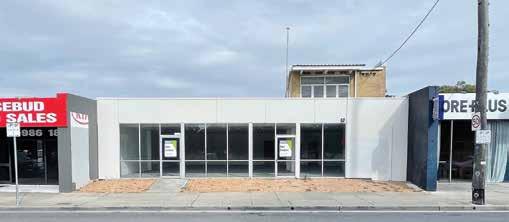
Parking confusion
In this mundane photo, is a dilemma. Check out the parking restrictions for this section of Nepean Highway in Rosebud. The sign on the left indicates you can park for one hour while the sign on the right says 15 minutes.
I expect better from Mornington Peninsula Shire. David Ross, McCrae
Parking predictions
Did I ever mention several times that the “paid parking” trial was designed to fail?
Ever think it is not the “paid parking” but the cost of living crisis causing the problem of business profits (Paid parking hits business profits, The News 2/4/24)? Joe Lenzo, Safety Beach
Bissinger emailed The News
seems every other bayside council has paid parking working successfully, hopefully [shire] officers will manage to overcome the hurdles our residents are facing.”
Government blowouts
It seems to have been forgotten that the performance of the Andrews and Allan governments has led Victoria into a state debt of $170 billion
and heading the $200 billion, an unassailable black hole, an amount greater than Queensland, NSW and Tasmania’s total debts (Missing in action, Letters, 2/4/24).
Currently and in the immediate past we have FYI issues relating to COVID, red shirts, Commonwealth Games debacle concluding with a scathing by the Auditor General, East/West connector ($1billion for 1c), COVID hotel quarantine a questionable $20 million, billion dollar short falls in major projects costs. If I continued with the list my pen would run dry.
Added to the above are newspaper headlines warning regional hospitals face “inevitable closures”, coupled with ambulance wait times exceeding one hour at hospitals.
The latest polls claim the current trends indicate the loss of popularity by the ALP has been created by voters losing confidence in our dysfunctional and inept State and Federal Governments.
Bruce White, Safety Beach
Liberals improving
The Labor Party’s Mornington Peninsula supporter has twice in recent weeks been banging their drum again (Missing in action, Letters 9/2/24). He can’t understand why the Liberals are improving their position. Give it up.
John Hodgson, Balnarring
PAGE 12 Southern Peninsula News 10 April 2024 COMMENT
Picture: Keith Platt
LETTERS Letters - 300 words maximum and including full name, address and contact number - can be sent to The News, PO Box 588, Hastings 3915 or emailed to: team@mpnews.com.au
Editor: Cr Susan
: “It
See what the others don’t
Our superior map-based search gives you the complete view of the property market. With heritage, zoning and property overlays, you get the complete view of millions of properties across Australia, even if they’re not for sale yet.
When it comes to property, with view.com.au you see all.
Southern
property
Peninsula
SUBSTANCE
STYLE PAGE 3
WEDNESDAY, 10TH APRIL 2024 SAFETY BEACH, DROMANA, McCRAE, ROSEBUD, CAPEL SOUND, RYE, BLAIRGOWRIE, SORRENTO, PORTSEA
&
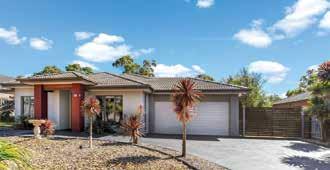


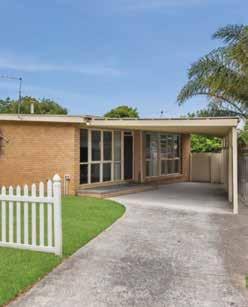
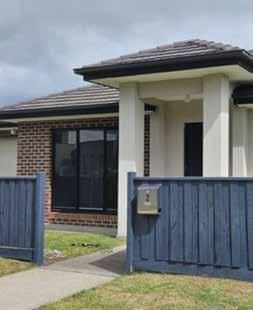
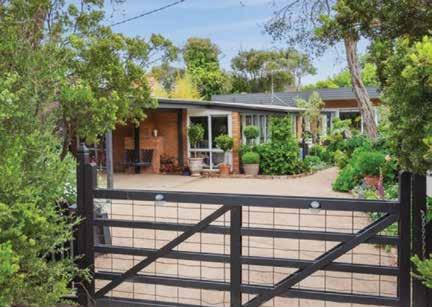
Wednesday, 10th April 2024 SOUTHERN PENINSULA NEWS Page 2 mpnews.com.au 2 LEON AVE, ROSEBUD Sold by Jim & Anastasia from Shoreline These homes showcase coastal living at its finest on the stunning Mornington Peninsula. At Shoreline, we take pride in the countless locals we’ve helped achieve their real estate goals over the years. Contact us today to discover how our expertise can make a difference for you. Scan below to find out what your property is worth 91 JOHN ST, TOOTGAROOK SHORELINE REAL ESTATE 2361 Point Nepean Road, Rye VIC | Ph (03) 5985 0000 www.shorelinerealestate.com.au 41 BECKET ST, RYE JOHN WICKHAM: 0481 589 424 SAM CROWDER: 0403 893 724 NARELLE CROWDER: 0422 486 042 www.crowdersre.com.au Shop 6, 2217 Point Nepean Road, Rye Ph: 5983 3038 EXCLUSIVE FAMILY LIVING 58 Peninsula Sands Blvd, ROSEBUD $1,150,000 - $1,200,000 4 2 2 ONE OF A KIND 43 Fairhills Drive, RYE $1,200,000 - $1,300,000 5 2 2 RETAIL/RESIDENTIAL MIXED-USE SITE Residential Land 256m² 385 Dundas Street, RYE $685,000 - $745,000 LUSH PRIVATE SANCTUARY 25 Percy Street, RYE $1,450,000 - $1,525,000 4 2 3 YOUR DREAM RETREAT AWAITS Residential Land 993m² 14 Cooraminta Road, RYE $960,000 - $1,020,000 PENINSULA VISTAS 21 Kuringai Road, TOOTGAROOK $1,275,000 - $1,375,000 4 3 4 NEW PRICE
ON THE COVER
Substance & style
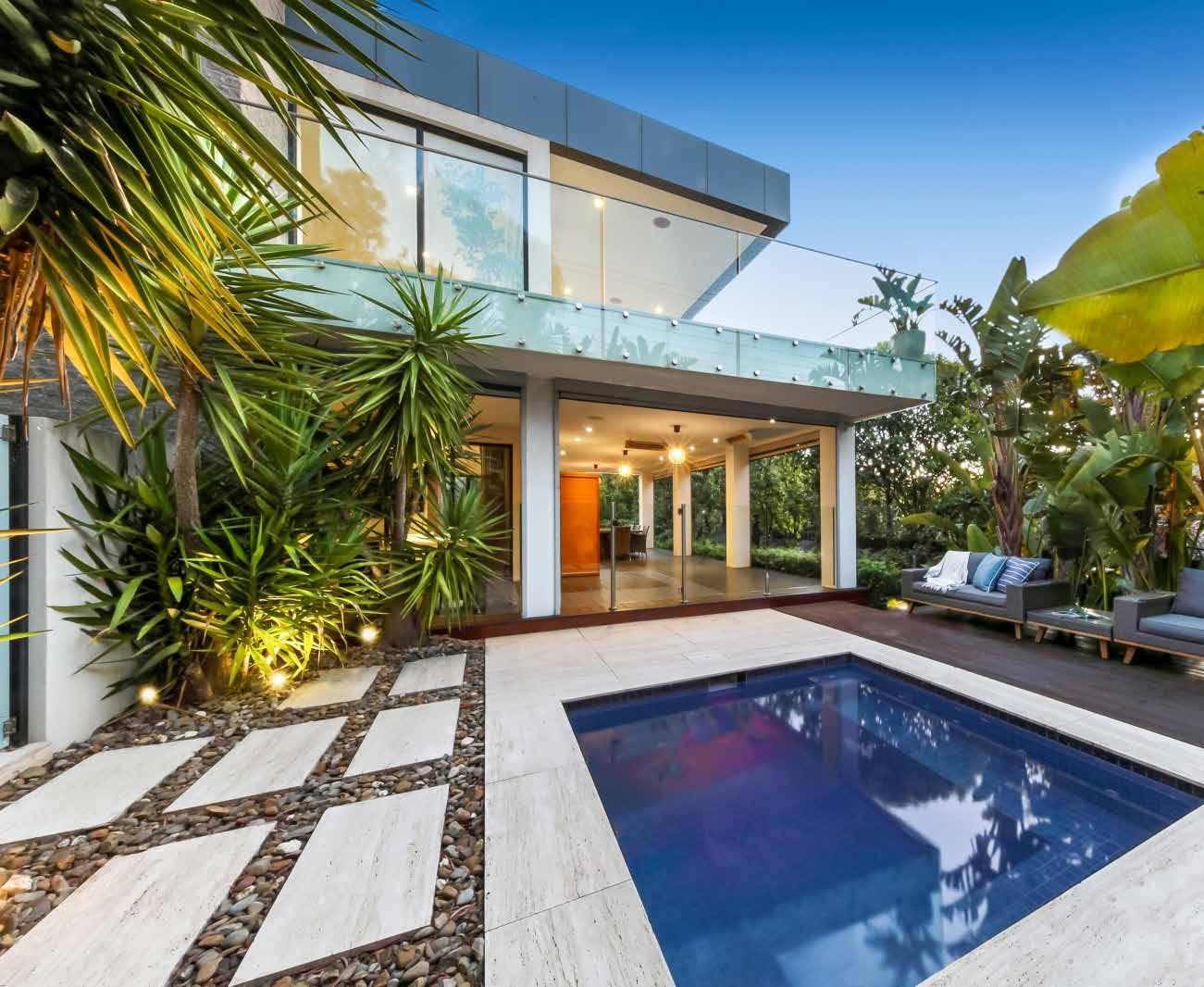
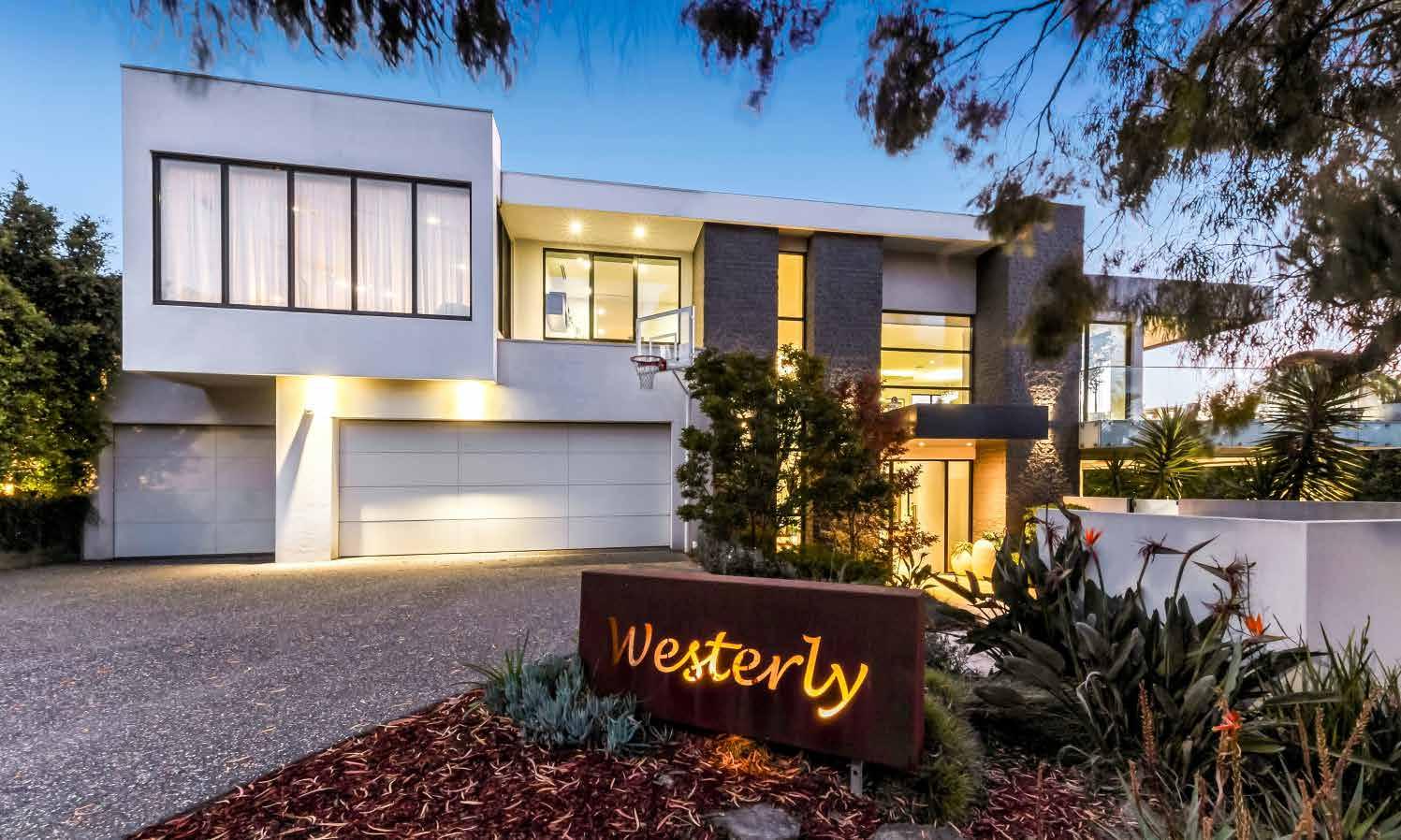
INDULGE in the epitome of coastal luxury with this extraordinary five bedroom modern residence, mere steps from the pristine Mills Beach and Main Street.
Positioned in one of Mornington’s most prestigious streets ‘Westerly’ stands as a grand masterpiece, seamlessly marrying modern elegance, sophistication, and distinction with designer open plan living.
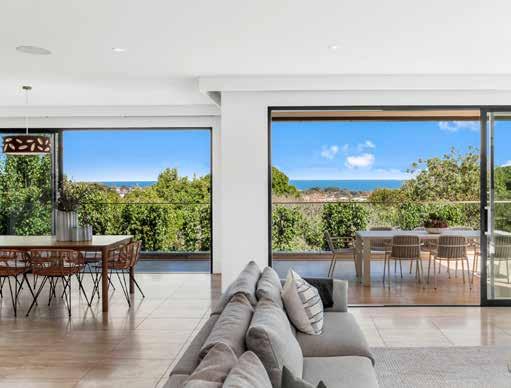
The allure of sweeping bay views overlooking Mornington Pier, serves as the backdrop to
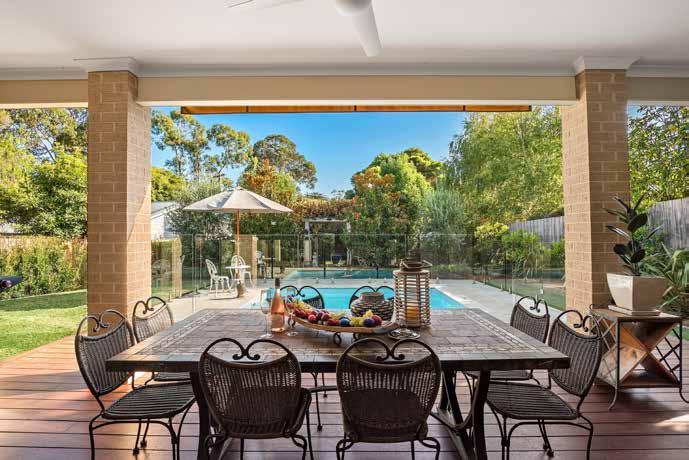
a lifestyle defined by comfort and opulence. Beyond its doors, Westerly unveils a world of refined living, featuring a heated plunge pool embraced by immaculate landscaped gardens—an oasis of serenity and style.
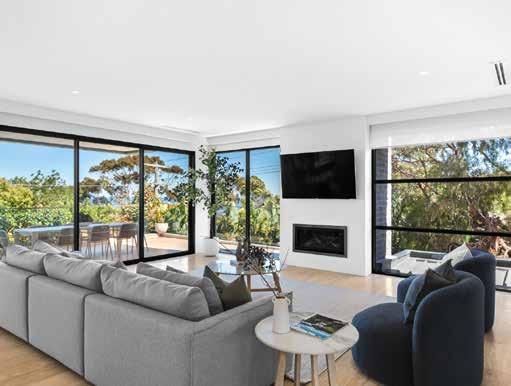
The gourmet kitchen, adorned with granite benchtops, sleek cabinetry, and a convenient butler’s pantry, overlooks a spacious living and dining area spilling out to generously sized balconies, providing an ideal vantage point to savour the private and serene views.
Upstairs incorporates an opulent master suite, boasts an indulgent ensuite and his-and-hers walk-in robes, ensuring a private retreat in absolute luxury. Descending to the lower level, a second living area opens onto a covered poolside terrace, creating a seamless indoor-outdoor transition.
This residence is not merely a home; it’s an experience enriched by thoughtful details.
A 7-zone Sonos sound system envelops the space in harmonious melodies, a feature
gas log fire adds warmth and ambiance, and automatic blinds offer convenience at the touch of a button.
With three bathrooms, a powder room, and a remote three-car garage, Westerly provides a level of comfort and convenience that complements its unrivalled location.
Discover Mornington living at its finest—an invitation to a lifestyle where every detail is a testament to luxury and sophistication. Inspection by private appointment.n
Wednesday, 10th April 2024 SOUTHERN PENINSULA NEWS Page 3 mpnews.com.au
/////////////////////////////////////////////////////////////////////////////////////////////////////////////////////////////////////////////////////////////////////////////////////////////////////////////////////////////////////////////////////////////////////////////////////////////////////////////////////////////////////////////////////////////////////// ADDRESS: 47 Morell Street, Mornington FOR SALE: $5,300,000 DESCRIPTION: 5 bed, 3 bath, 5 car, 1044m2 AGENTS: Sam Crowder, 0403 893 724, Crowders Real Estate, 6/2217 Point Nepean Rd, Rye, 03 5983 3038
HOME ESSENTIALS

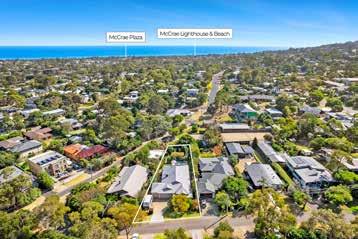
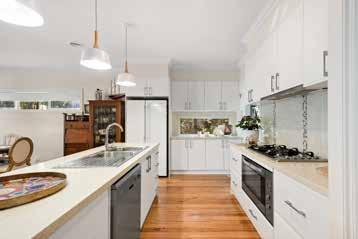
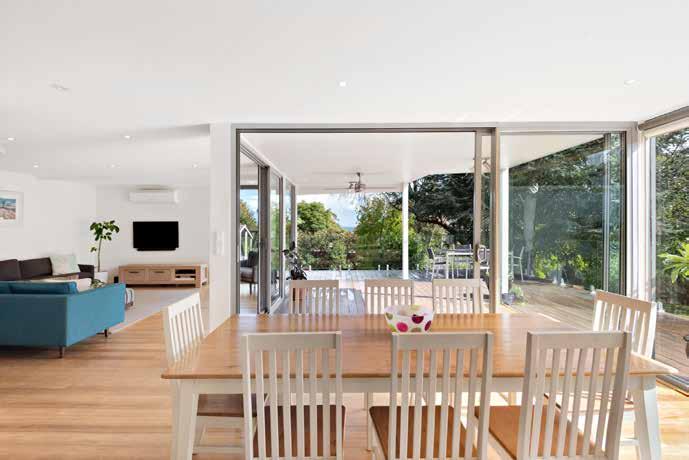
10 Fairway Crescent, McCrae.
Coastal oasis moments to pristine beach
This 3 bed, 2 bath home on 912qsm approx, offers dual living areas with a parent’s retreat/home office, a stone kitchen and an expansive outdoor oasis with covered deck, inground pool, covered alfresco, pizza oven and fruit trees. Beautifully presented throughout with timber floorboards, carpet, quality window furnishing and light fittings.
belleproperty.com
13 Apr 11.00am
Price Guide
$1,350,000 - $1,485,000
4
Grant McConnell | 0407 515 078
Kirsten White | 0408 589 244

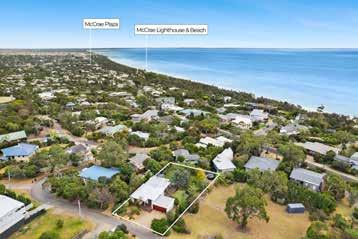
12 Henry Court, McCrae.
Coastal sanctuary just 400m to the sand
This serene coastal property comprising 3 bedrooms and 2 bathrooms showcases contemporary design and stunning water views. The openplan living/dining area with gourmet kitchen extends to an expansive wraparound balcony for effortless entertaining. The home includes timber floors, GHD, r/c air-con, ceiling fans, rainwater tank, DLUG and secure boat/caravan parking.
belleproperty.com
Auction Sat 20 Apr 2.00pm
Price Guide
$1,250,000 - $1,350,000

3 a 2 b 2 v 1,030 r
Grant McConnell | 0407 515 078
Kirsten White | 0408 589 244
Wednesday, 10th April 2024 SOUTHERN PENINSULA NEWS Page 4 mpnews.com.au
a 2 b 3 v 912 r
AUCTION THIS SATURDAY


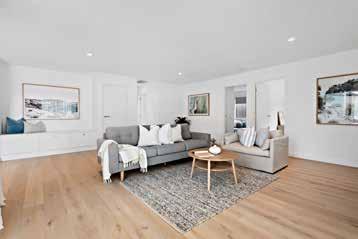
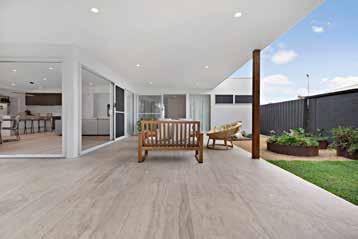
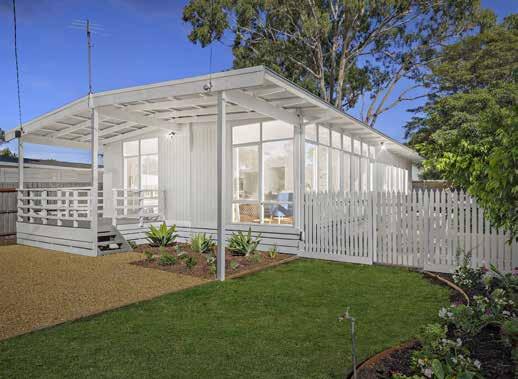
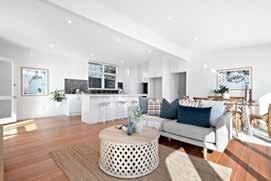
Flawless, fully renovated family home
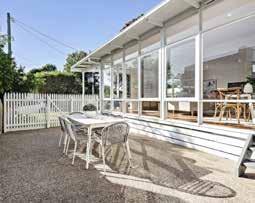
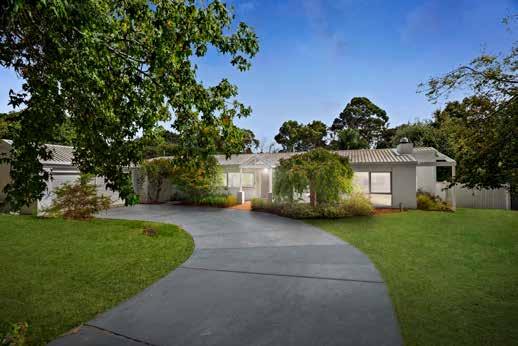
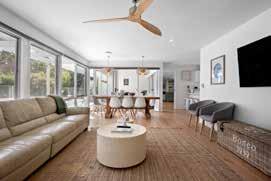
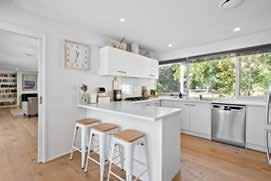
Immaculate throughout, this elegant home has been extended and updated with meticulous attention to detail and quality. With impeccable style and an extensive list of inclusions, the substantial home has 4BRs, 2 bathrooms, stunning kitchen, dual living zones and covered alfresco. In a peaceful locale near shops, schools, walks, beaches and freeway.


Wednesday, 10th April 2024 SOUTHERN PENINSULA NEWS Page 5 mpnews.com.au
2649 r belleproperty.com For Sale Price Guide $1,750,000
Cleek Crescent Rosebud Beautifully
enviable resort lifestyle
Grant McConnell | 0407 515 078 Adam Alexander | 0438 157 025 3 a 2 b 2 v
- $1,925,000 26
updated home offers relaxed coastal ambience &
with pool/spa, covered alfresco, tennis court, garden with gate to golf course. Set on a huge block in a tranquil location, it boasts 2 expansive, sunlit living zones, rumpus, 3BRs & 2 bathrooms. Grant McConnell | 0407 515 078 Dino Francese | 0408 030 706
.
b 2 v 589 r AUCTION THIS SATURDAY 13
Price
belleproperty.com
3 a 2 b 2 v 345 r belleproperty.com Auction Sat 20 Apr 11.00am Price Guide $620,000 - $680,000 64 Kennington Road Rosebud
bath
chic coastal aesthetic highlighted by raked ceilings, crisp white walls, polished timber floors & a covered porch to soak up the sun. Incl quality kitchen with large island bench, r/c air-con, ceiling fans and OSP
cars. Handy to
cafés
restaurants.
62 Fairway Grove, Rosebud
4 a 2
Apr 12.30pm
Guide $1,350,000 - $1,485,000
Grant McConnell | 0407 515 078 Phil Down | 0423 515 490
This delightful 3 bed, 2
property offers a
for 2
shops,
&

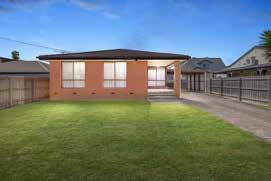

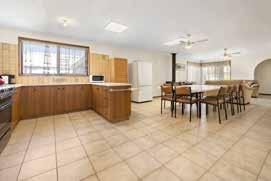
Adam Alexander | 0438 157 025
Jared Tipping | 0401 827 299
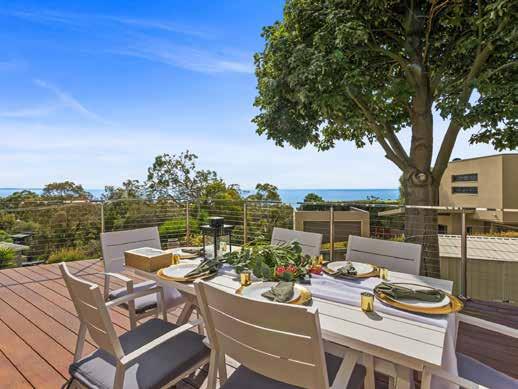
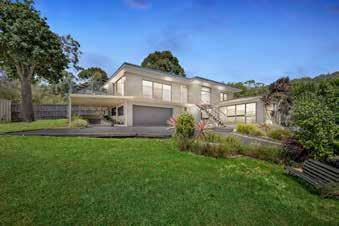

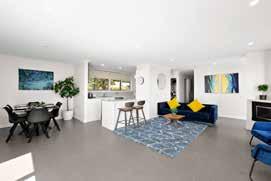
Sensational bay & hillside views, this stunning, home offers heated indoor pool, 6-person spa, & stylish modern interiors. Ideal for entertaining, it also offers a relaxed lifestyle walking distance to beaches & bushwalks, & a short drive to shops, cafés, & schools.
Adam Alexander | 0438 157 025
Jared Tipping | 0401 827 299
Adam Alexander | 0438 157 025
Jared Tipping | 0401 827 299
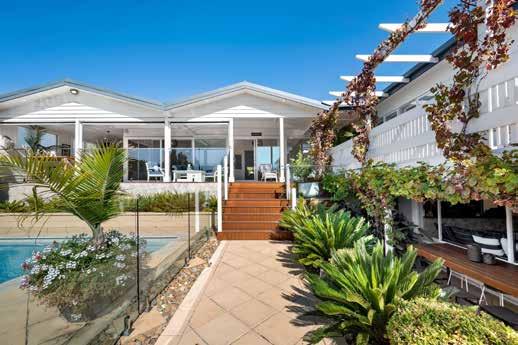

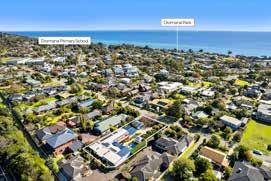
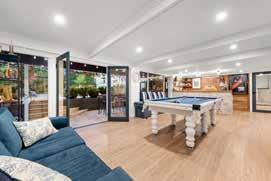
This piece of paradise unfolds amongst glorious established gardens & a heated magnesium pool to provide unsurpassed family living & leisure. Immaculately presented with luxury finishes and 4 separate wings designed for family harmony with a lower level rumpus room with wet bar & cellar.
Jarrod Eastwood | 0403 983 310
Steve Edmund | 0419 396 976 4 a 4 b 5 v 1312 r
belleproperty.com
Wednesday, 10th April 2024 SOUTHERN PENINSULA NEWS Page 6 mpnews.com.au
2 b 4
r Auction Sat 20 Apr 12.30pm Price Guide $950,000
63 Williams Street Dromana
4 a
v 679
- $1,045,000
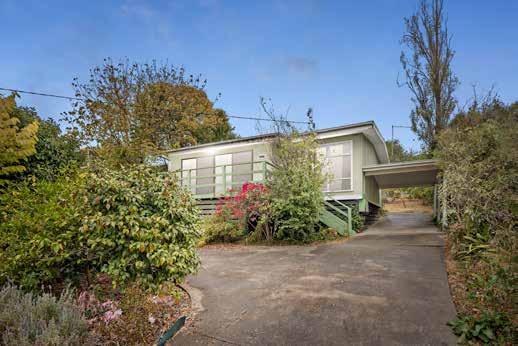
A fabulous opportunity for families, investors & holiday-makers. Set on 679sqm approx, with openplan living & a large backyard, woodfire heater, 7m x 4m shed, double carport & ample OSP. Ideally located, just a short stroll to Dromana Hub shops, cafés, scenic bay trails & beach.
2 a 1 b 1 v 791 r For Sale Price Guide $840,000
$900,000 211 Boundary Road Dromana
-
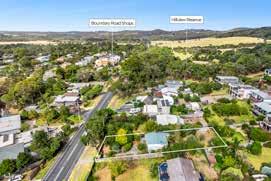
Set on an elevated block offering bay views & abundant potential. The north-facing property features light-filled living, expansive front balcony, heating/cooling, carport, OSP for boat/caravan & secure gated entry into the property. Ideally located to shops/cafés, parks & beaches.
3 a 2 b 2 v 752 r
Sat
Price
Dromana
belleproperty.com Auction
20 Apr 2.00pm
Guide $1,600,000 - $1,760,000 10 Wunda Street
For
Price
Sale
Guide $2,450,000 - $2,695,000 13 James Street Dromana


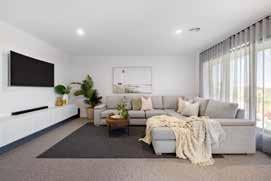
92a Fifth Avenue
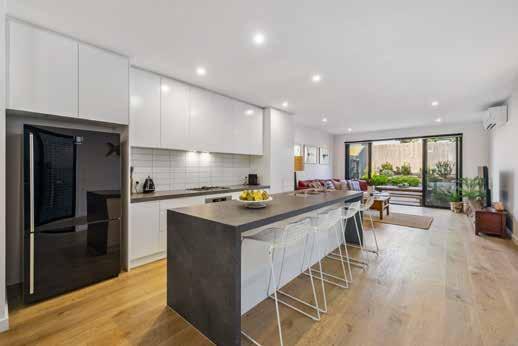
A striking statement of luxury and thoughtful design, this tri-level townhouse delivers expansive living spaces dappled with natural light. The home comprises spacious open plan living, a Miele kitchen, private alfresco, a large built-in study nook, Euro laundry, powder room and a DLUG.
Grant McConnell | 0407 515 078
Najee Charkas | 0414 938 069 3
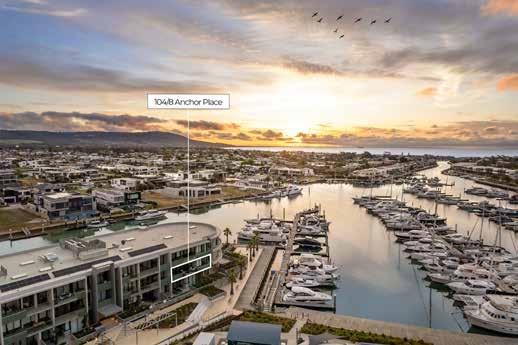
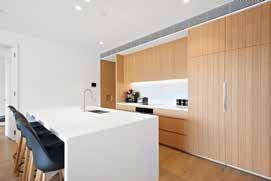

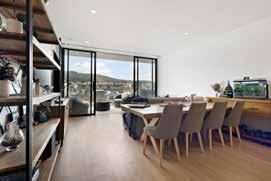
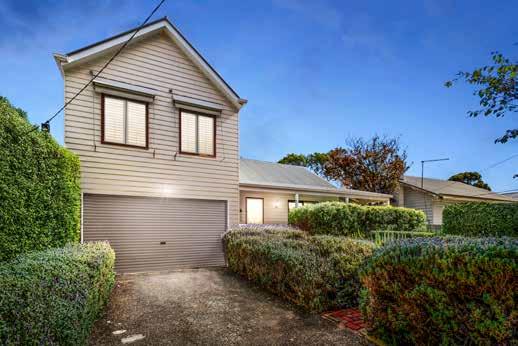
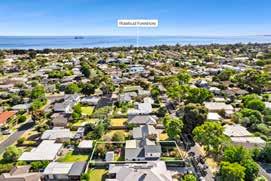

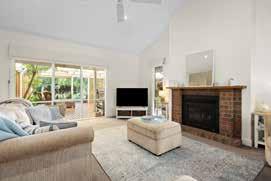
Welcome to The Wheelhouse where luxury meets lifestyle in this exquisite apartment with coveted northerly aspect. Offering premium inclusions and sophisticated interiors where timber, stone and glass create an atmosphere with timeless appeal.
Jarrod Eastwood | 0403 983 310
Steve Edmund | 0419 396 976
Wednesday, 10th April 2024 SOUTHERN PENINSULA NEWS Page 7 mpnews.com.au
a 2 b 3 v 621 r belleproperty.com Auction Sat 20 Apr 3.30pm Price Guide $850,000 - $935,000 8 Lyon Street Rosebud
to an
outdoor oasis
a
deck, sun terrace
fire pit area
year-round
quality
polished timber floors, gas log fireplace, r/c air-con & carpeted bungalow with electricity, solar panels.
5 a 5 b 3 v 702 r belleproperty.com Auction Sat 27 Apr 12.30pm Price Guide Contact Agent 5 Morris Road McCrae Ideal for
& a relaxed lifestyle, this
family home has been
with superb
to
quality. It boasts
inclusions,
with ensuites.
Grant McConnell | 0407 515 078 Phil Down | 0423 515 490 3
This weatherboard with spacious open-plan living flows
expansive
with
covered
&
for
enjoyment. Featuring a
kitchen,
Grant McConnell | 0407 515 078 Carol Charkas | 0401 003 020
hosting
impeccable
meticulously designed
attention
detail &
sophisticated interiors, an impressive list of
expansive indoor/outdoor entertaining spaces, and 5BRs
2 b 2
Auction Sat 20
Price Guide $1,975,000
3 a
v belleproperty.com
Apr 12.30pm
- $2,100,000
Safety
104/8 Anchor Place
Beach
b 1 v 221 r
Auction Sat
Price
$880,000
a 2
belleproperty.com
27 Apr 11.00am
Guide
- $965,000
Rosebud


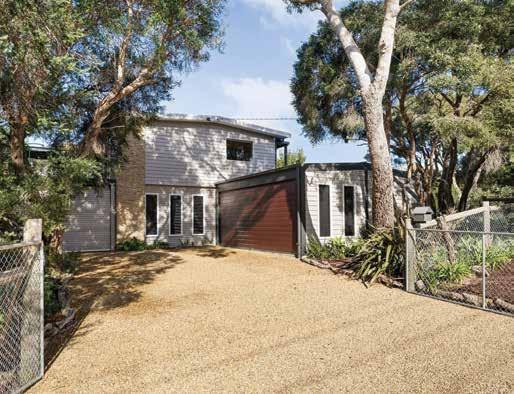
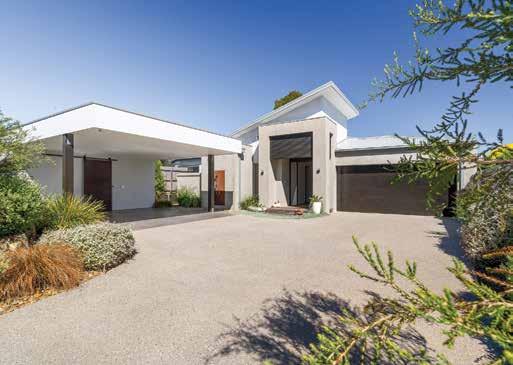
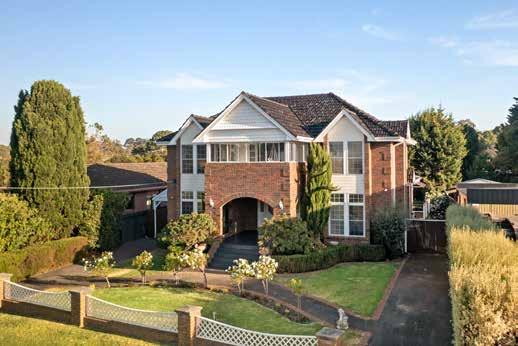
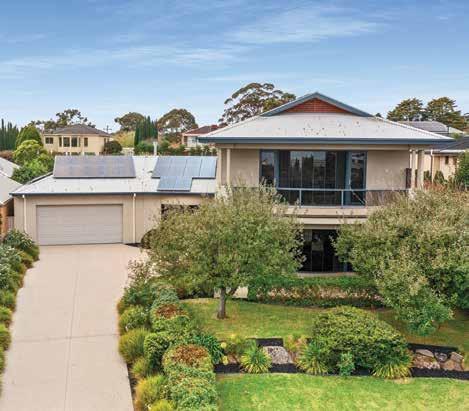
Ideally located a leisurely, flat 500m stroll (approx.) to Bay Beach and walking trails this striking, newly built coastal residence situated on a generous 1044m2 allotment. A cleverly designed and accommodating plan it comprises: 4 bedrooms, 3 bathrooms including 2 ensuites, 2 living areas and 4 covered car spaces. This most attractive property is suited to those looking to enjoy a sea-change in style.
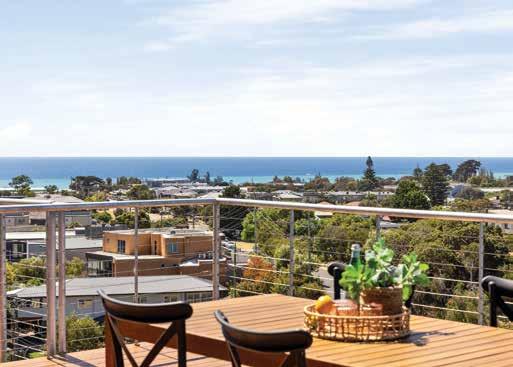
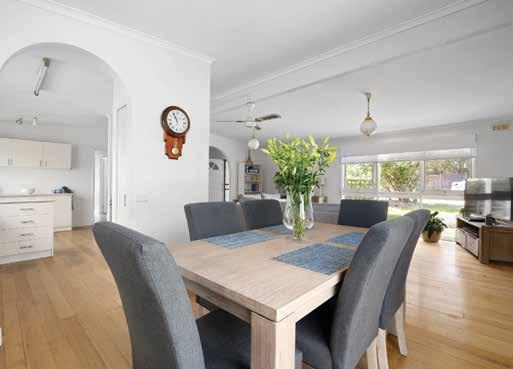
style kitchen, and breakfast bar and a generous open, pan, living and dining area with gas log for winter warmth, a detached lock up garage and carport. RYE - 6 Becket Street
$810,000 - $890,000
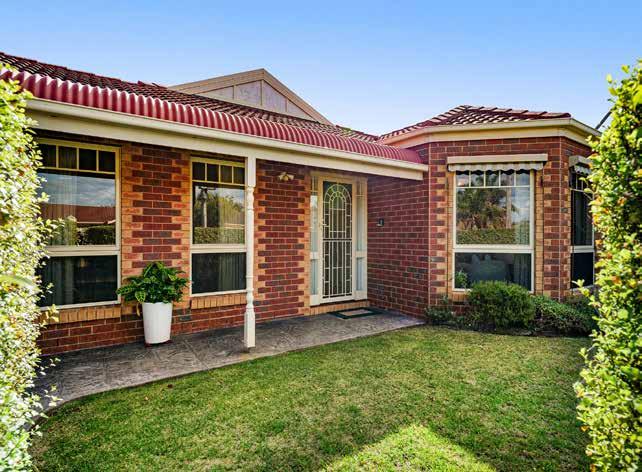
Wednesday, 10th April 2024 SOUTHERN PENINSULA NEWS Page 8 mpnews.com.au 2395 Point Nepean Road, RYE | Phone 5985 2351 78 Ocean Beach Road, SORRENTO | Phone 5984 4177 prenticerealestate.com.au FOR AN OBLIGATION-FREE APPRAISAL CONTACT Michael Prentice 0417 369 235 Michael Christodoulou 0419 003 685 Mark Prentice 0408 117 772 CONTACT: Michael Prentice 0417 369 235 GETAWAY Comprising 4 bedrooms, 2 bathrooms, 2 living areas and extensive outdoor entertaining on both levels it features: a light-filled, open plan kitchen/ lounge and dining area flowing freely onto a split-level deck nestled among the trees, the ideal space to soak up the sun in total privacy and entertain friends and family. Other features include an outdoor shower, covered BBQ area and double lock-up garage. RYE - 5 Bigelow Court $1,390,000 to $1,520,000 4 BED | 2 BATH | 3 CAR | 922m 2 WHAT A CUTIE! A great entry-level priced opportunity exists here to acquire this light and bright, retro retreat. Featuring fresh light neutral tones and timber floors throughout, it comprises 3 bedrooms, full bathroom, separate laundry, galley,
625m 2 CONTACT: Michael Prentice 0417 369 235 CONTACT: Michael Prentice 0417 369 235 WHAT A VIEW!
4 bedrooms, 2 bathrooms plus powder room, a most impressive entry invites you into an exclusive domain and ‘birds-eye’ view of the coast from all vantage
within this light-filled,
designed residence. An open
and
with
an
RYE - 14 Valley Drive
- $3,080,000
BED | 2 BATH | 4 CAR | 1,037m 2 CONTACT: Michael Prentice 0417 369 235 THIS IS LIVING!
3 BED | 1 BATH | 3 CAR |
Comprising
points
contemporary
plan kitchen/ lounge
dining space
timber floors throughout opens onto
expansive deck, the ideal spot to entertain family and friends.
$2,800,000
4
- 24 Marshall Street
- $2,850,000
BED | 3 BATH | 4 CAR
1,044m 2
RYE
$2,750,000
4
|

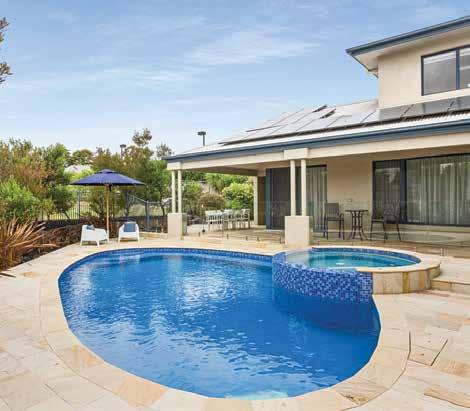
Wednesday, 10th April 2024 SOUTHERN PENINSULA NEWS Page 9 mpnews.com.au 2 1 8 Bimble Street RYE n Idyllic address just 350m from Rye Foreshore n Generous master bedroom features gorgeous bay windows, walk in robe and ensuite n Covered alfresco and low maintenance yard n Single lock up garage PERFECTLY POSITIONED, IMMACULATELY PRESENTED PRICE $650,000 to $715,000 AUCTION Saturday 20th April at 12.30pm CONTACT Ben Kenyon 0413 697 203 Joe Falzon 0406 114 811 RYE, 12 Nelson Street stockdaleleggo.com.au/dromana-rosebud stockdaleleggo.com.au/rye 2 2109A Point Nepean Road RYE n Large home with accomodation for the whole family; 4 bed, 2 bath + powder room n Generous modern kitchen and living area open to covered balcony with views of the city and bay n Quiet and secure located to the rear with double glazed windows and electric gates n Double lock up garage with additional space for up to 2 vehicles MODERN COASTAL RETREAT IN COVETED LOCATION PRICE $1,250,000 to $1,350,000 AUCTION Saturday 20th April at 2pm CONTACT Ben Kenyon 0413 697 203 Joe Falzon 0406 114 811 RYE, 12 Nelson Street 2.5 4 2



Wednesday, 10th April 2024 SOUTHERN PENINSULA NEWS Page 10 mpnews.com.au
Wild
0413 487 179
Joske
511 557 4 a 2 b 3 v 863 r belleproperty.com For Sale $1,700,000 - $1,800,000 View As advertised or by appointment 6 Norfolk Road Mount Martha The Grand Manor Privileged with its bespoke design and construction, this family home is on a flat alotment with impressive views towards the Brisbane Ranges, Melbourne's city lights and Mount Martha Golf Course. Bill Joycey | 0403 555 424 Sarah Armstrong | 0408 543 435 3 a 2 b 2 v 404 r belleproperty.com For Sale $1,500,000 - $1,650,000 View As advertised or by appointment 4 Dalsten Grove Mount Eliza Low-maintenance Beachside Living Boasting an enviable beachside location just blocks back from the heart of the Village, this meticulously maintained single-level home offers a timeless interior design that comfortably accommodates those seeking a leisure-focused lifestyle. 7 Coles Court, Mount Eliza a b c d e
Lauren
|
Adam
| 0448
Stunning Bay and City Views
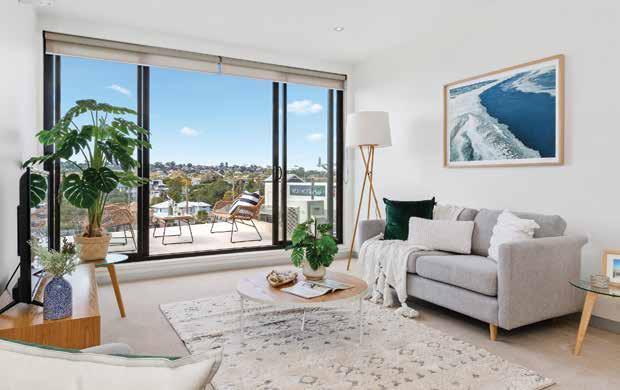
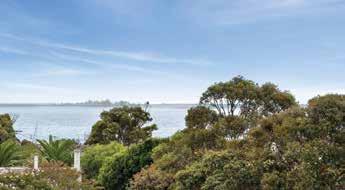
Have your morning coffee on the balcony while enjoying breathtaking bay and city views every morning in this beautifully appointed 2-bedroom apartment. Located on Main Street in the heart of Mornington, this property offers a convenient and luxurious lifestyle.
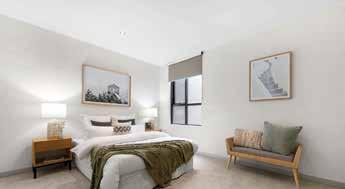
Featuring a spacious open-plan living area, this second floor apartment is perfect for entertaining guests or simply relaxing after a long day. The modern kitchen boasts quality appliances and ample storage space, making cooking a breeze. With 2 generous bedrooms, a stylish bathroom, and a separate toilet, this apartment provides comfortable living for singles, couples, or small families.
Enjoy the convenience of underground parking with lift access.

Wednesday, 10th April 2024 SOUTHERN PENINSULA NEWS Page 11 mpnews.com.au
CONTACT
Eden 0419 859 868
Plant Mornington 5975 4999 FOR SALE Price Guide: $995,000 - $1,090,000 2 1 2
4/28 Main Street, Mornington
Danae
Barry
ANOTHER PROPERTY LISTED BY DANAE EDEN For a FREE market appraisal, contact Danae today. 0419 859 868 | (03) 5975 4999 172 Main St, MORNINGTON 3931 Opening doors to local real estate expertise in Mornington. barryplant.com.au/offices/mornington
Undeveloped Rosebud corner block to be auctioned
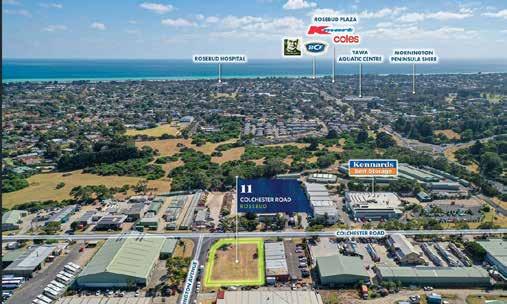
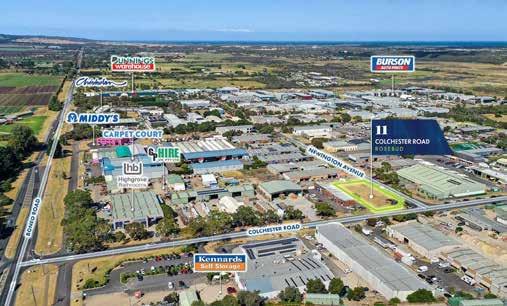
The Rosebud Industrial Estate has long been regarded as one of the most in demand Industrial precincts on the Mornington Peninsula.
Centrally positioned to capture the southern arm of the Peninsula, neighbouring McCrae, Rye and Red Hill, the Rosebud Industrial Estate offers a business hub, a plethora of storage solutions and is an emerging
ESSENTIALS
entertainment and retail precinct.
Representing one of the last remaining corner block land holdings within the estate, 11 Colchester Rd, Rosebud presents as an incredible opportunity for those looking to take a strong foot hold in this indemand region.
Nichols Crowder Branch Manager, Jamie Stuart said this expansive site would
ADDRESS: 11 Colchester Road, Rosebud AUCTION:
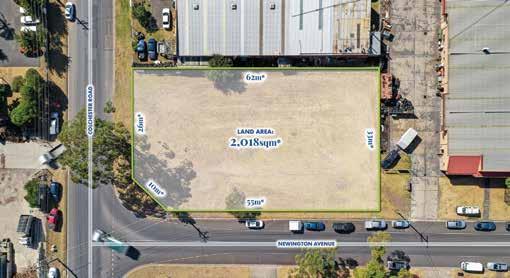
appeal to a range of property developers or owner occupiers.
“Offered for the first time in 37 years, this undeveloped site on the corner of Colchester Road and Newington Avenue has nearly 90m* of frontage and provides endless opportunities,” he explained.
“Zoned Industrial 3, 11 Colchester Rd is a cleared rectangular site of over 2000 sqm
(approx.) with two street frontages, great connection to Boneo Rd and the Peninsula Freeway, as well as enjoying proximity to the holiday hot spots of Sorrento and Portsea,” Nichols Crowder sales and leasing executive Tom Crowder added. 11 Colchester Rd, Rosebud will be auctioned on-site on Wednesday, 24th April at 12:30pm.n
Wednesday, 10th April 2024 SOUTHERN PENINSULA NEWS Page 12 mpnews.com.au
COMMERCIAL
Wednesday, 24th
at 12.30pm DESCRIPTION: Land area: 2018m2 AGENT: Jamie Stuart, 0412 565 562, Nichols Crowder, Suite 4/ 230 Main Street, Mornington, (03) 9525 6005 See what the others don’t Our superior map-based search gives you the complete view of the property market. With heritage, zoning and property overlays, you get the complete view of millions of properties across Australia, even if they’re not for sale yet. When it comes to property, with view.com.au you see all. Land area: 2,018sqm* Rare Land or Development Opportunity Auction Wednesday 24th April at 12.30pm on site 11 Colchester Road, Rosebud *approx Zoned Industrial 3 Cleared rectangular site 90m* over two street frontages Close proximity to Boneo Road and Peninsula Freeway 5925 6005 nicholscrowder.com.au Tom Crowder 0438 670 300 Jamie Stuart 0412 565 562 4/230 Main Street, Mornington 3931
On-site
April
The Guide
TOP PICKS OF THE WEEK

FRIDAY EMU RUNNER
NITV, 7.45pm
THURSDAY THE VANISHING TRIANGLE
SBS, 9.20pm
If you can forgive desperate, wide-eyed journo Lisa (Normal People’s India Mullen, pictured with Allen Leech) for repeatedly putting herself in harm’s way, without a weapon, capsicum spray or even a butter knife as backup, you can perhaps appreciate this disconcerting finale. A bleak crime thriller based on the real-life disappearances and murders of many Irish women in the 1980s and ’90s, it’s a disturbing trip back to another place and time.
This Aussie film by Imogen Thomas is a simple but engaging coming-of-age story that will appeal to the younger generation as well as adults. Set in the outback New South Wales town of Brewarrina, a young Indigenous girl called Gemma (Rhae-Kye Waites, pictured) forges a bond with a wild emu, which puts her at odds with her new social worker (Georgia Blizzard). There are few surprises to be had in the plot, but it is a richly meditative experience.

SUNDAY FARMER WANTS A WIFE
SEVEN, 7pm
Settling down in domestic bliss for a life in the country is an idyllic dream for many. In the 14th season of this fruitful dating show – it’s responsible for 21 babies so far – an Akubra, gumboots and a cosy flannel shirt never looked so seductive for the 14 love-hopeful women eager to find their match with one of the five farmers. Wearing the rose-coloured glasses, host Samantha Armytage (pictured) is not the only one set to fall for this new bunch of charming men. Meet chatty South Australian dairyman Nick and Queenslander Bert, an impeccably mannered lad who could be a favourite.

SUNDAY BLUEY
ABC TV PLUS, 8am
Wackadoo! A brand new episode of Bluey hits our screens today. And it’s a bumper one – running for 28 minutes, it’s like four Blueys in one! “The Sign” follows on from last week’s cliffhanger “Ghostbasket” and revolves around the wedding of Uncle Radley (Patrick Brammall) and Frisky (Claudia O’Doherty). With Bluey and Bingo spending the day with their cousins – the chaotic Muffin and rambunctious Socks, it’s sure to be full of fun. “The

with talent in Megan Washington, Myf Warhurst and Rose Byrne. Making their debuts are
Deborah Mailman, Brendan Williams and Joel Edgerton.
Thursday, April 11
ABC TV (2) SBS (3) SEVEN (7) TEN (10) NINE (9)
6.00 News. 9.00 News. 10.00 Australian Story. (R) 10.30 Compass. (PG, R) 11.00 Antiques Roadshow. (R) 12.00 ABC News At Noon. 1.00 Miriam Margolyes Impossibly Australian. (Mls, R) 2.00 Anh’s Brush With Fame. (PG, R) 2.25 QI. (PG, R) 2.55 Old People’s Home For Teenagers. (R) 3.55 Long Lost Family. (PG, R) 4.40 Grand Designs. (PG, R) 5.30 Antiques Roadshow. (R)
6.00 WorldWatch. 9.00 Peer To Peer. (PG, R) 9.30 Paul O’Grady: For The Love Of Dogs. (PGa, R) 10.25 Outta Town Adventures. 11.25 Mountain Vets. (PG) 12.00 WorldWatch. 2.00 Alone Australia. (Ml, R) 3.00 Mastermind Aust. (R) 3.30 Destination Flavour China Bitesize. (PG, R) 3.40 The Cook Up. (R) 4.10 World’s Most Scenic River Journeys. (R) 5.05
(Malv)
11.35 Miniseries: DI Ray. (Malv, R)
3.10 Mastermind Australia. (R) 4.15 Going Places With Ernie Dingo. (R) 4.45 Bamay. (R)
5.00 NHK World English News Morning. 5.30
ANC Philippines The World Tonight.
6.00 Seven News.
7.00 Football. AFL. Round 5. Melbourne v Brisbane Lions.
10.30 AFL Post-Game Show. Post-game discussion and interviews taking a look back at all the action from the game.
11.00 The Latest: Seven News. (R)
11.30 The Amazing Race. (PGl, R) Hosted by Phil Keoghan.
1.00 Fortitude. (MA15+al, R) Eric struggles to keep control.
2.00 Home Shopping. (R)
Australia Behind Bars. (Mad, R) Darryl has been in and out of jail since he was 14.
9.30 World’s Most Dangerous Prisoners: Robertson. (M) Takes a look at people behind bars.
10.30 Law & Order: Organized Crime. (MA15+av)
11.20 9News Late. 11.50 A+E After Dark. (Mm, R) 12.40 Tipping Point. (PG, R) 1.35 Pointless. (PG, R) 2.30 Global Shop. (R) 3.00 TV Shop: Home Shopping. (R) 4.00 Believer’s Voice Of Victory. (PGa) 4.30 A Current Affair. (R) 5.00
9News Early. 5.30 Today.
6.00 Deal Or No Deal.
Hosted by Grant Denyer.
6.30 The Project. A look at the day’s news.
7.30 I’m A Celebrity… Get Me Out Of Here! (PGals) The campmates face a disgusting food trial.
9.00 Gogglebox Australia. TV fanatics open up their living rooms to reveal their reactions to popular and topical TV shows.
10.00 Law & Order: SVU. (MA15+av, R) Muncy tries to fit in with the squad. 11.00 The Project. (R) A look at the day’s news.
12.00 The Late Show With Stephen Colbert. (PG) 1.00 Home Shopping. (R) 4.30 CBS Mornings.
Southern Peninsula News – TV Guide 10 April 2024 PAGE 1
6.00 Sunrise 9.00 The Morning Show. (PG) 11.30 Seven Morning
12.00
Baked:
2.00 Beat The Chasers
3.00 The Chase. (R) 4.00 Seven News At 4. 5.00 The Chase Australia. 6.00 Today. 9.00 Today Extra. (PG) 11.30 9News Morning. 12.00 Gordon Ramsay’s Food Stars. (PG, R) 1.30 Getaway. (PG, R) 2.00 Pointless. (PG) 3.00 Tipping Point. (PG) 4.00 9News Afternoon. 5.00 Tipping Point Australia. (PG) 6am Morning Programs. 8.00 Ent. Tonight. 8.30 Neighbours. (PGa, R) 9.00 Bold. (PGa, R) 9.30 Deal Or No Deal. (R) 10.00 GCBC. (R) 10.30 Judge Judy. (PG, R) 11.00 Dr Phil. (PGal, R) 12.00 10 News First: Midday. 1.00 Ent. Tonight. 1.30 I’m A Celebrity… Get Me Out Of Here! (PGals, R) 3.00 GCBC. 3.30 10 News First: Afternoon. 4.00 Neighbours. (PGa) 4.30 Bold. (PGa) 5.00 News. 6.30 Hard Quiz. (PGls, R) 7.00 ABC News. 7.30 7.30. 8.00 Foreign Correspondent. Takes a look at unexploded devices. 8.30 Grand Designs New Zealand. Presented by Tom Webster. 9.20 Antiques Roadshow. (R) Hosted by Fiona Bruce. 10.20 Better Date Than Never. (Final, PG, R) 10.50 ABC Late News. 11.05 The Business. (R) 11.20 Love On The Spectrum. (R) 12.20 Miniseries: The Suspect. (Ma, R) 1.10 Grand Designs. (PG, R) 1.55 Long Lost Family. (PG, R) 2.45 Rage. (MA15+adhlnsv) 4.30 Catalyst. (PG, R) 5.30 7.30. (R) 6.00 Mastermind Australia. 6.30 SBS World News. 7.35 IKEA: How Do They Really Do It? (Ml, R) Takes a look at IKEA. 8.30 Stanley Tucci: Searching For Italy: Sardinia. (PGa) Stanley Tucci visits the Italian island of Sardinia, famous for its rugged landscape and food culture. 9.20 The Vanishing Triangle. (Final, MA15+a) The investigation is halted. 10.10 SBS World News Late. 10.40 Illegals.
Jeopardy! (R) 5.30 Letters And Numbers. (R)
News.
MOVIE: Murder, She
A Deadly Recipe. (2016, PGav, R)
UK.
4.00 NBC
5.00
5.30 Sunrise. 6.00
7.00
7.30
8.30
Today. News and current affairs.
Sunrise 5am News.
9News.
A Current Affair.
RBT. (Mdl, R)
CONSUMER ADVICE (P) Pre-school (C) Children (PG) Parental Guidance Recommended (M) Mature Audiences (MA15+) Mature Audiences Only (AV15+) Extreme Adult Violence (R) Repeat (a) Adult themes (d) Drug references (h) Horror (s) Sex references (l) Language (m) Medical procedures (n) Nudity (v) Violence. 6am WorldWatch. 10.00 The Movie Show. Noon WorldWatch. 12.25 Hypothetical. 2.15 American Runestone: A Viking Mystery. 3.10 WorldWatch. 5.15 Bananas. 5.20 The Wine Lovers’ Guide To Australia. 5.50 The UnXplained. 6.40 Jeopardy! 7.35 8 Out Of 10 Cats Does Countdown. 8.30 The Curse Of Oak Island. 10.10 Mass Shooting USA. 11.20 Taskmaster. 12.15am Late Programs. 6am Morning Programs. 7.30 Room For Improvement. 8.00 Million Dollar Minute. 9.00 Harry’s Practice. 9.30 NBC Today. Noon Better Homes. 1.00 Escape To The Country. 2.00 South Aussie With Cosi. 2.30 My Greek Odyssey. 3.30 Harry’s Practice. 4.00 Better Homes. 5.00 Escape To The Country. 6.00 Bargain Hunt. 7.00 Home And Away. 7.30 Father Brown. 8.30 Shetland. 11.00 Late Programs. 6am Home Shopping. 8.00 Soccer. A-League Men. Round 23. Melbourne Victory v Melbourne City. Highlights. 8.30 Jake And The Fatman. 9.30 Diagnosis Murder. 11.30 JAG. 1.30pm Star Trek: Voyager. 2.30 Jake And The Fatman. 3.30 Diagnosis Murder. 5.30 JAG. 7.30 Bull. 8.30 NCIS. 9.25 NCIS: New Orleans. 10.20 Evil. 11.15 JAG. 12.15am Home Shopping. 2.15 Diagnosis Murder. 4.05 JAG. 6am Morning Programs. 12.55pm The Young And The Restless. 1.50 Explore. 2.05 Dr Quinn. 3.05 Antiques Roadshow. 3.35 MOVIE: A Man About The House. (1947, PG) 5.30 Celebrity Yorkshire Auction House. 6.30 Antiques Roadshow. 7.30 Rugby League. NRL. Round 6. Newcastle Knights v Sydney Roosters. 9.45 Thursday Night Knock Off. 10.30 Coroner. 11.30 Late Programs. 10 BOLD (12) 9GEM (92) 7TWO (72) SBS VICELAND (31) 6am Children’s Programs. 7.20pm Bluey. 7.30 Would I Lie To You? 8.30 Hard Quiz. 9.05 Gruen. 9.40 The Weekly With Charlie Pickering. 10.10 Penn & Teller: Fool Us. 10.55 Whose Line Is It Anyway? 11.20 Adam Hills: The Last Leg. (Final) Midnight Would I Lie To You? 1.00 Black Mirror. 2.10 Louis Theroux: The Most Hated Family In America. 3.10 ABC News Update. 3.15 Close. 5.00 Late Programs. ABC TV PLUS (22) 6am Children’s Programs. Noon Rich House, Poor House. 1.00 Raymond. 2.00 Bewitched. 2.30 Full House. 3.00 The Nanny. 3.30 Seinfeld. 4.30 The Addams Family. 5.00 Bewitched. 5.30 I Dream Of Jeannie. 6.00 Raymond. 7.00 The Nanny. 7.30 Survivor 46. 9.00 MOVIE: American Pie. (1999, MA15+) 11.00 Dating No Filter. 11.30 The Nanny. Midnight Medium. 1.00 Below Deck. 2.00 Late Programs. 6am Morning Programs. 11.00 Pawn Stars. Noon Highway Patrol. 1.00 The Force: BTL. 2.00 Close Encounters Down Under. 3.00 Billy The Exterminator. 3.30 Cities Of The Underworld. 4.30 Storage Wars. 5.00 American Restoration. 5.30 American Pickers. 6.30 Pawn Stars. 7.30 Dogs Behaving (Very) Badly. 8.30 America’s Got Talent: Fantasy League. 10.30 Mighty Ships. 11.30 Late Programs. 9GO! (93) 6am Little Nicolas. Continued. (2009, PG, French) 6.40 Without A Clue. (1988, PG) 8.40 Hit The Road. (2021, PG, Farsi) 10.30 Mars Attacks! (1996, M) 12.30pm The Assistant. (2019, M) 2.05 A Friendly Tale. (2020, PG, French) 4.00 Mary And The Witch’s Flower. (2017, PG) 5.55 Footy Legends. (2006, PG) 7.35 Drunken Master II. (1994, M, Cantonese) 9.30 Violet & Daisy. (2011, MA15+) 11.05 Late Programs. 6am The Late Show With Stephen Colbert. 7.00 Becker. 8.00 Dr Phil. 9.00 The Middle. 10.00 Rules Of Engagement. 11.00 Becker. Noon Frasier. 1.00 Friends. 1.30 The Big Bang Theory. 2.00 The Middle. 3.00 Rules Of Engagement. 4.00 Good Chef Bad Chef. 4.30 Becker. 5.30 Frasier. 6.30 Neighbours. 7.00 The Big Bang Theory. 8.30 Two And A Half Men. 11.00 Late Programs. 10 PEACH (11) 7MATE (74) SBS WORLD MOVIES (32) 6am Morning Programs. 1.50pm Anthem Sessions Interstitials. 2.00 Faboriginal. 2.30 The Cook Up. 3.00 Jarjums. 4.05 Spartakus And The Sun Beneath The Sea. 4.35 Grace Beside Me. 5.00 Our Stories. 5.30 The 77 Percent. 6.00 Bamay. 6.30 News. 6.40 Africa’s Hidden Kingdoms. 7.30 Going Places With Ernie Dingo. 8.30 Good Grief. (Return) 9.30 MOVIE: Coffy. (1973, MA15+) 11.05 Late Programs. N ITV (34)
Samantha Armytage hosts Farmer Wants A Wife
MEL/VIC SHOES BAYSIDE BAYSIDESHOES.COM.AU I 9785 1887 I 103 RAILWAY PARADE, SEAFORD *Excludes Brooks and items already marked down. % OFF* 15 STOREWIDE ON PRESENTATION OF THIS AD. INSTORE ONLY. ENDS 20/4/24 THE ‘LARGEST’ SHOE STORE ON THE PENINSULA SPECIALISTS IN PROBLEM FEET. REFERRED TO BY PODIATRISTS. WE CATER FOR A WIDE RANGE OF FOOT TYPES, PAIN & ISSUES. Mens & Womens Winter Shoes Arriving Now. Get Your Size While Stocks Last! NEW WINTER ARRIVALS!
Friday, April 12
ABC (2) SBS (3)
6.00 News Breakfast. 9.00 ABC News
Mornings. 10.00 Planet America. (R) 10.30
That Pacific Sports Show. (R) 11.00 Antiques Roadshow. (R) 12.00 ABC News At Noon.
1.00 Silent Witness. (Ma, R) 2.00 Queen Of Oz. (Ml, R) 2.30 White Fever. (Mls, R) 2.55 Old People’s Home For Teenagers. (PG, R) 3.55 Long Lost Family. (PG, R) 4.40 Grand Designs. (R) 5.30 Antiques Roadshow. (R)
6.30 Hard Quiz. (PG, R)
7.00 ABC News.
7.30 Gardening Australia.
8.30 Happy Valley. (Mlv) Catherine races to protect her family.
9.35 Hard Quiz. (PG, R)
Presented by Tom Gleeson.
10.05 The Weekly With Charlie Pickering. (R)
10.35 White Fever. (Mls, R)
11.05 ABC Late News.
11.20 Shakespeare: Rise Of A Genius. (MA15+av, R)
12.20 Miniseries: The Suspect. (Final, Ma, R) 1.05 Traces. (Mal, R) 1.55 Rage. (MA15+adhlnsv)
6.00 WorldWatch. 9.00 Peer To Peer. (a, R) 9.30 Paul O’Grady: For The Love Of Dogs. (PGa, R) 9.55 Outta Town Adventures. 10.50 Mountain Vets. (Ma) 12.00 WorldWatch. 2.00 Cook Up Bitesize. (R) 2.05 Tony
Robinson: WWII By Drone. (Mav, R) 3.00
NITV News: Nula. 3.40 The Cook Up. (R) 4.10 World’s Most Scenic River Journeys. (R) 5.05
Jeopardy! (R) 5.30 Letters And Numbers. (R)
6.00 Mastermind Australia.
6.30 SBS World News.
7.35 Ancient Egypt By Train: The Pyramids. (R) Part 2 of 4.
8.30 Michael Palin: Into Iraq. (PGa, R) Part 2 of 3.
9.25 Secrets Of The Lost Liners: Queen Elizabeth. (PGav, R)
A look at the Queen Elizabeth
10.15 SBS World News Late.
10.45 A French Case. (Mas)
11.45 Miniseries: Algiers Confidential. (MA15+as, R) 3.25 Mastermind Australia. (R)
4.25 Bamay. (R) 4.55 Destination Flavour: Japan Bitesize. (R) 5.00 NHK World English News Morning. 5.30 ANC Philippines The World Tonight.
SEVEN (7)
Sunrise. 9.00 The Morning Show. (PG) 11.30 Seven Morning
NINE (9)
TEN (10)
6.00 Seven News.
7.00 Better Homes And Gardens. Johanna Griggs meets waste warrior Lottie Dalziel.
7.20 Football. AFL. Round 5. Western Bulldogs v Essendon.
10.30 AFL Post-Game Show. Post-game discussion and interviews.
11.15 Armchair Experts. (M)
A panel discusses all things AFL.
12.00 GetOn Extra.
12.30 Celebrity Obsessed: David Letterman. (MA15+a, R)
1.30 Harry’s Practice. (R)
2.00 Home Shopping. (R)
4.00 Million Dollar Minute. (R)
5.00 NBC Today.
6.00 9News.
7.00 A Current Affair.
7.30 Take Me Home. (Return, PG) The SAFE team returns.
8.30 MOVIE: The Best Exotic Marigold Hotel. (2011, Mals, R)
A group of British retirees travels to India to live in what they have been told is a luxurious hotel. Judi Dench, Bill Nighy.
11.00 See No Evil. (MA15+v)
11.50 Tipping Point. (PG, R)
12.40 Pointless. (PG, R) 1.35 World’s Greatest Man Made Wonders. (PGa, R) 2.30 Living On The Coast. (R) 3.00 TV Shop: Home Shopping.
(R) 4.00 Postcards. (PG, R) 4.30 Global Shop.
(R) 5.00 TV Shop: Home Shopping. (R) 5.30
Skippy The Bush Kangaroo. (R)
6.00 Deal Or No Deal.
Hosted by Grant Denyer.
6.30 The Project. A look at the day’s news.
7.30 Ready Steady Cook. (PGs)
Hosted by Miguel Maestre.
8.30 The Graham Norton Show. (PGa, R) Graham Norton is joined by actors Tom Hanks, Naomi Ackie and Suranne Jones, and author Richard Osman.
Japanese–British singer-songwriter
Rina Sawayama sings Hold the Girl
10.30 Fire Country. (Mv, R) Sharon receives life-changing news.
11.30 The Project. (R)
12.30 The Late Show With Stephen Colbert. (PG) 1.30 Home Shopping. (R)
Okay. 3.50 ABC News Update. 3.55 Close. 5.00 Hoopla. 5.15 Ready, Jet, Go! 5.25 Pablo. 5.40 Late Programs. ABC TV PLUS (22)
SBS VICELAND (31) 6am Children’s Programs. 6.55pm Shaun The Sheep. 7.05 Karma’s World. 7.20 Bluey. 7.30 Would I Lie To You? 8.30
6am WorldWatch. 10.00 The Movie Show. Noon WorldWatch. 12.25 Story Of Late Night. 1.10 The Swiping Game. 1.30 Hustle. 2.20 Over The Black Dot. 3.10 WorldWatch.
And The Sun
6am Hit
The Road. Continued. (2021, PG, Farsi) 6.50 Footy Legends. (2006, PG) 8.30 Mary And The Witch’s Flower. (2017, PG) 10.25 Drunken Master. (1978, M, Cantonese) 12.30pm Ip Man. (2008, M, Cantonese)
Would you like to avoid the cost and potential stress of holding a traditional funeral, yet still say a dignified good-bye, and celebrate the life of a loved one with a simple yet fitting ceremony? U3/5 Trewhitt Court, Dromana
A Small Family Farewellincludes all the care, respect and attention of a large formal funeral – in most cases for less than $5000. Details at www.mpfunerals.com.au/Chapel
Saturday, April 13
Rage. (PG) 7.00
Breakfast.
Rage. (PG) 12.00 ABC News At Noon.
Death In Paradise. (Final, PG, R)
1.30 Murder In Provence. (Mav, R) 3.00 Extraordinary Escapes. (PG, R) 3.45 Brian Cox’s Adventures In Space And Time. (R) 4.55 Creative Types With Virginia Trioli. (Ml, R)
5.20 Landline. (R)
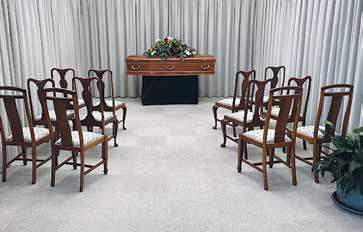
5.50 Australian Story. (R) 6.00 WorldWatch. 9.00 Ageless Gardens. (PGd, R) 10.00 Vintage Voltage. 10.50 My Unique B&B. 12.00 BBC News At Ten. 12.30
6.20 Back Roads: The Great Australian Road Trip. (R) Presented by Heather Ewart.
6.50 Bluey. (R) Dad pretends to be an estate agent.
7.00 ABC News. A look at the top stories of the day.
7.30 Murder In Provence. (Mav) An aristocrat is murdered. 9.00 Miniseries: The Suspect. (Mal, R) Part 2 of 5. Despite his best efforts, Joe becomes more entangled in the case of the murdered young woman. 9.50 House Of Gods. (Final, Ml, R) Sheikh Shaaker senses fraud.
10.50 Happy Valley. (Mlv, R)
11.50 Rage. (MA15+adhlnsv)
ABC World News Tonight With David Muir. 1.00 PBS NewsHour. 2.00 Figure Skating. ISU Synchronised Championships. Highlights. 4.30 The Point: Road To Referendum History Bites. (R) 4.35 I’ll Be Frank. (PG) 5.35 A Cold War Of Spies. (PG)
6.30 SBS World News.
7.30 Ireland’s Wild Islands: Edge Of The Abyss. (PGa)
8.30 New Zealand From A Train. (PGa, R) Part 2 of 2.
9.25 From Paris To Rome With Bettany Hughes: Amalfi Coast, Capri, Rome. (PGas, R) Part 4 of 4.
10.15 Secrets Of The Royal Palaces. (PGa, R)
11.05 Between Two Worlds. (Mals)
12.00 Dear Mama. (Madl, R) 4.15 Bamay. (R)
4.50 Destination Flavour: Japan Bitesize. (R)
5.00 NHK World English News Morning. 5.15 France 24 Feature. 5.30 ANC Philippines The World Tonight.
6.00 NBC Today. 7.00 Weekend Sunrise. 10.00 The Morning Show: Weekend. (PG) 12.00 Horse Racing. The Star Championships. Day 2 and Golden Mile Race Day.
5.00 Seven News At 5.
5.30 Border Security: Australia’s Front Line. (PG, R) A pregnant woman causes concern.
6.00 Seven News.
7.00 Football. AFL. Round 5. Gold Coast Suns v Hawthorn.
10.30 AFL Post-Game Show. Post-game discussion and interviews taking a look back at all the action from the game.
11.00 To Be Advised.
12.00 My Greek Odyssey: Sikinos To Folegandros. (PG, R) Peter Maneas explores the island of Sikinos.
1.00 Travel Oz. (PG, R) Greg Grainger takes in the floral festival of Floriade.
2.00 Home Shopping. (R)
4.00 Mystic. (R) Issie attends a party at the local marae.
5.00 My Greek Odyssey: Ios To Sikinos. (PG, R)
6.00 Getaway. (PG, R) 6.30 A Current Affair. (R) 7.00 Weekend Today. 10.00 Today Extra: Saturday. (PG) 12.00 Surfing Australia TV. 12.30 Destination WA. (PG, R) 1.00 Ageless. 1.30 The Pet Rescuers. (PG, R) 2.00 Gordon Ramsay’s Food Stars. (PG, R) 3.30 Renovate Or Rebuild. 4.30 The Garden Gurus. 5.00 9News First At Five.
5.30 Getaway. (PG)
6.00 9News Saturday.
7.00 A Current Affair.
7.30 MOVIE: Instant Family. (2018, PGadlv, R) A couple foster three siblings. Mark Wahlberg, Rose Byrne.
9.50 MOVIE: Get Hard. (2015, MA15+lns, R) A millionaire prepares to go to jail. Will Ferrell, Kevin Hart.
11.45 Renovate Or Rebuild. (R)
12.35 Space Invaders. (PGa, R)
1.35 Surfing Australia TV.
2.00 The Incredible Journey Presents. (PGa)
2.30 Getaway. (PG, R)
3.00 TV Shop: Home Shopping. (R) 4.30 Global Shop. (R) 5.00 TV Shop: Home Shopping. (R) 5.30 Helping Hands. (PG, R)
6am Morning Programs. 10.00 Ready Steady Cook. (PGs, R) 11.00 I’m A Celebrity… Get Me Out Of Here! (PGals, R) 12.30 Silvia’s Italian Masterclass. 1.00 All 4 Adventure. (PGl, R) 2.00 Roads Less Travelled. (R) 2.30 Everyday Gourmet. (R) 3.00 What’s Up Down Under. (Return) 3.30 GCBC. (R) 4.00 My Market Kitchen. (Final) 4.30 Taste Of Australia: BBQ. (R) 5.00 News.
6.00 Ready Steady Cook. (PGs, R) Everyday Aussie home cooks team up with some of the country’s finest chefs and go head to head in the kitchen.
7.00 The Dog House. (PGa) Proud parents are hoping that a lurcher will help their introverted son lose his fear of people.
8.00 Ambulance UK. (Ma) It is a busy night shift for the ambulance service when they are alerted to an infectious disease outbreak.
10.30 So Help Me Todd. (PGa, R) Veronica asks Todd for a favour.
11.30 FBI: International. (Mv, R) The FBI fly team heads to Morocco.
12.30 Home Shopping. (R) 5.00 Hour Of Power.
Would I Lie To You? 8.00 QI. 8.30 Live At The Apollo. 9.20 Whose Line Is It Anyway? 10.00 Shaun Micallef’s MAD AS HELL. (Final) 10.35 MythBusters. 11.15 Double Parked. (Final) 11.40 Portlandia. 12.20am Black Mirror. 1.30 Upstart Crow. 2.00 Would I Lie To You? 2.30 Unprotected Sets. 3.15 ABC News Update. 3.20 Close. 5.00 Late Programs. ABC TV
SBS VICELAND (31) 6am Children’s Programs. 7.05pm Riley Rocket. 7.20 Bluey. 7.30
6am WorldWatch. 10.00 The Movie Show. Noon The Story Of. 12.55 Eurovision Song Contest Semi-Final. 3.25 WorldWatch. 5.25 The Wine Lovers’ Guide To Australia. 5.55 The Food That Built The World. 7.35 Impossible Engineering. 8.30 MOVIE: Road House. (1989, MA15+) 10.35 Juice. (Premiere) 11.40 Back To Life. 12.50am The X-Files. 2.40 NHK World English News. 5.00 Al Jazeera.
PAGE 2 Southern Peninsula News – TV Guide 10 April 2024
12.00 MOVIE: Murder, She Baked: Just Desserts. (2017, PGav, R) 2.00 House Of Wellness. (PGa) 3.00 The Chase. (R) 4.00 Seven News At 4. 5.00 The Chase Australia. 6.00 Today. 9.00 Today Extra. (PG) 11.30 9News Morning. 12.00 MOVIE: Heart Of The Manor. (2021, G, R) 2.00 Pointless. (PG, R) 3.00 Tipping Point. (PG) 4.00 9News Afternoon. 5.00 Tipping Point Australia. (PG, R) 6am Morning Programs. 8.00 Ent. Tonight. (R) 8.30 Neighbours. (PGa, R) 9.00 Bold. (PGa, R) 9.30 Deal Or No Deal. (R) 10.00 GCBC. (R) 10.30 Judge Judy. (PG, R) 11.00 Dr Phil. (PGal, R) 12.00 10 News First: Midday. 1.00 Ent. Tonight. 1.30 Judge Judy. (PG, R) 2.00 Ready Steady Cook. (R) 3.00 GCBC. 3.30 10 News First: Afternoon. 4.00 Everyday Gourmet. (R) 4.30 Bold. (PGa) 5.00 News. SBS WORLD MOVIES
NITV (34) 10 BOLD (12) 9GO! (93) 7MATE (74)
6.00
News.
(32)
5.15 Bananas. 5.20 The Wine Lovers’ Guide To Australia. 5.50 The UnXplained. 6.40 Jeopardy! 7.35 8 Out Of 10 Cats Does Countdown. 8.30 Hoarders. 9.20 Sex Tape Finland. 11.05 Erotic Stories. 11.40 Late Programs.
MOVIE: Burlesque. (2010, M) 10.30 Would I Lie To You? 11.30 QI. Midnight Close To Me. 12.45 George Clarke’s Adventures In Americana. 1.35 Vera. 3.05 Everything’s Gonna Be
2.30 Without A Clue. (1988, PG) 4.30 FairyTale: A True Story. (1997, PG) 6.20 Malcolm. (1986, PG) 7.55 The Medallion. (2003, M) 9.30 Drive. (2011, MA15+) 11.25 Late Programs. SBS WORLD MOVIES (32) 6am Morning Programs. 1.35pm Eight Ladies. 2.05 Stories From The Land. 2.30 The Cook Up. 3.00 Jarjums. 3.40 Bushwhacked! 4.05 Spartakus
News: Nula.
6.40 Africa’s
Kingdoms. 7.30 Eddie’s Lil’
7.45 MOVIE: Emu Runner. (2018, PG) 9.25 MOVIE: Fatal Beauty. (1987, MA15+) 11.15 Late Programs. NITV (34) 6am Morning Programs. 7.30 Room For Improvement. 8.00 Million Dollar Minute. 9.00 Harry’s Practice. 9.30 NBC Today. Noon Better Homes. 1.00 Escape To The Country. 2.00 The Real Seachange. 2.30 Weekender. 3.00 Imagine Holidays Iconic Rail Journeys. 3.30 Harry’s Practice. 4.00 Better Homes. 5.00 Escape To The Country. 6.00 Bargain Hunt. 7.00 Better Homes. 8.30 Escape To The Country. 11.30 Late Programs. 6am Golf. US Masters. First round. Continued. 9.30 GolfBarons. 10.00 Pointless. 11.00 Skippy. 11.30 My Favorite Martian. Noon Tennis. Billie Jean King Cup. Qualifying round. Australia v Mexico. Day 1. 4.00 Antiques Roadshow. 4.30 Dr Quinn. 5.30 Celebrity Yorkshire Auction House. 6.30 Antiques Roadshow. 7.30 Rugby League. NRL. Round 6. Brisbane Broncos v Dolphins. 9.50 Golden Point. 10.40 Late Programs. 9GEM (92) 7TWO (72) 6am Children’s Programs. Noon Rich House, Poor House. 1.00 Everybody Loves Raymond: The First Six Years. 2.00 Bewitched. 2.30 Full House. 3.00 The Nanny. 3.30 Raymond. 4.30 The Addams Family. 5.00 Bewitched. 5.30 MOVIE: Hating Alison Ashley. (2005, PG) 7.30 MOVIE: Doctor Dolittle 2. (2001, PG) 9.15 MOVIE: City Slickers. (1991, PG) 11.35 Late Programs. 6am Morning Programs. Noon Pawn Stars. 1.00 Counting Cars. 2.00 Storage Wars: Barry’s Best Buys. 3.00 Timbersports. 3.30 Cities Of The Underworld. 4.30 Storage Wars. 5.00 American Restoration. 5.30 American Pickers. 6.30 Pawn Stars. 7.00 AFL: Friday Night Countdown. 7.20 Pawn Stars. 7.50 MOVIE: The Green Mile. (1999, M) 11.35 Late Programs. 9GO! (93) 6am Home Shopping. 8.00 Soccer. A-League Men. Round 23. Newcastle Jets v Sydney FC. Highlights. 8.30 Ready Steady Cook. 9.30 Diagnosis Murder. 11.30 JAG. 1.30pm Star Trek: Voyager. 2.30 Jake And The Fatman. 3.30 Diagnosis Murder. 5.30 JAG. 7.30 Bull. 8.30 NCIS. 9.25 NCIS: Hawai’i. 11.15 JAG. 12.15am Home Shopping. 2.15 Diagnosis Murder. 4.05 JAG. 10 BOLD (12) 6am The Late Show With Stephen Colbert. 7.00 Becker. 8.00 Dr Phil. 9.00 So Help Me Todd. 11.00 Becker. Noon Frasier. 1.00 The Big Bang Theory. 3.00 The King Of Queens. 4.00 Good Chef Bad Chef. 4.30 Becker. 5.30 Frasier. 6.30 The Big Bang Theory. 8.30 Two And A Half Men. 11.00 Frasier. Midnight Shopping. 1.30 Stephen Colbert. 2.30 Just For Laughs Montreal. 3.30 Bold. 4.30 Late Programs. 10 PEACH (11) 7MATE (74)
Beneath The Sea. 4.35 Grace Beside Me. 5.00 Our Stories. 5.30 NITV
6.00 Bamay.
Hidden
Homies.
ABC
SEVEN
TEN
NINE
6.00
TV (2) SBS (3)
(7)
(10)
(9)
Weekend
9.00
12.30
PLUS (22) 6am FairyTale: A True Story. Continued. (1997, PG) 7.20 Malcolm. (1986, PG) 8.55 Time Bandits. (1981, PG) 11.05 Drunken Master II. (1994, M, Cantonese) 1pm Ip Man 2. (2010, M, Cantonese) 3.00 Footy Legends. (2006, PG) 4.40 The Kid From The Big Apple 2. (2017, PG, Mandarin) 6.50 The Grey Fox. (1982, PG) 8.30 Pulp Fiction. (1994, MA15+) 11.20 Late Programs. 6am Morning Programs. 11.55 MOVIE: Molly. (1983, PG) 1.30pm Africa’s Hidden Kingdoms. 2.20 NITV News: Nula. 2.50 Going Places. 3.50 Power To The People. 4.50 Persons Of Interest. 5.50 Going Native. 6.20 News. 6.30 Strait To The Plate. 7.00 The Other Side. 7.30 Alone Australia. 8.30 MOVIE: The Exorcist. (1973, MA15+) 10.35 Nina Simone: Live At Montreux. 11.50 Late Programs. 6am Home Shopping. 9.00 I’m A Celebrity… Get Me Out Of Here! 10.30 Diagnosis Murder. 11.30 Luxury Escapes. Noon Jake And The Fatman. 1.00 Pat Callinan’s 4x4 Adventures. 2.00 JAG. 5.00 Escape Fishing With ET. 5.30 Reel Action. 6.00 JAG. 7.00 Soccer. A-League Men. Round 24. Sydney FC v Western Sydney Wanderers. 10.15 NCIS: Los Angeles. 12.05am NCIS: Hawai’i. 2.00 JAG. 5.00 Shopping. 6am The Late Show With Stephen Colbert. 7.00 The King Of Queens. 8.00 Becker. 9.00 Neighbours. 11.00 Good Chef Bad Chef. 11.30 The King Of Queens. 12.30pm I’m A Celebrity… Get Me Out Of Here! 3.30 Becker. 4.00 Frasier. 5.00 Deal Or No Deal. 6.00 The Big Bang Theory. 10.30 Friends. Midnight Home Shopping. 1.30 The Late Show With Stephen Colbert. 2.30 South Park. 4.30 Home Shopping. 10 PEACH (11) 6am Home Shopping. 8.30 Travel Oz. 10.00 Escape To The Country. 11.00 Harry’s Practice. 11.30 GetOn Extra. Noon Escape To The Country. 1.00 Better Homes And Gardens. 2.00 Escape To The Country. 5.00 Horse Racing. The Star Championships. Day 2 and Golden Mile Race Day. 6.00 Heathrow. 6.30 Bondi Vet. 7.30 The Yorkshire Vet. 8.30 Escape To The Country. 11.30 Late Programs. 6am Morning Programs. 11.00 Iconic Australia. Noon Tennis. Billie Jean King Cup. Qualifying round. Australia v Mexico. Day 2. 4.00 Customs. 5.00 Rugby Union. Super W. Round 5. Melbourne Rebels v Fijian Drua. 7.00 Rugby Union. Super Rugby Pacific. Round 8. Melbourne Rebels v Highlanders. 9.30 Super Rugby Pacific Post-Match. 9.45 MOVIE: Criminal. (2016, MA15+) 11.55 Late Programs. 9GEM (92) 7TWO (72) 6am Children’s Programs. 1.30pm MOVIE: Pokémon: The Power Of One. (1999) 3.10 A1: Highway Patrol. 4.10 The Bradshaw Bunch. 5.10 Kenan. 5.40 MOVIE: Alvin And The Chipmunks: The Road Chip. (2015, PG) 7.30 MOVIE: The Hunger Games. (2012, M) 10.15 MOVIE: Elektra. (2005, M) 12.10am Kardashians. 2.05 Love After Lockup. 3.00 Teen Titans Go! 3.30 Beyblade Burst: Quad Drive. 4.00 Late Programs. 6am Morning Programs. 11.30 Your 4x4. Noon My Road To Adventure. 12.30 Timbersports. 1.00 Blokesworld. 1.30 American Restoration. 2.00 Motor Racing. Shannons SpeedSeries. Round 3. Day 1. 4.00 Hustle & Tow. 5.00 Counting Cars. 5.30 Storage Wars. 6.00 Pawn Stars. 7.00 Storage Wars. 7.30 MOVIE: The Mummy. (1999, M) 10.00 MOVIE: Non-Stop. (2014, M) 12.10am Late Programs.
Phone 5982 0086 for an obligation free consultation No Regrets?
1.30
Aust. (R) 2.30 Dream Gardens. (R) 3.00 Nigella Bites. (R) 3.25 The Cook And The Chef. (R) 3.55 Grand Designs New Zealand. (R) 4.40 George Clarke’s Amazing Spaces. (R) 5.30 Antiques Roadshow.
6.30 Compass: The Friendship Recession. (PGa) Presented by Siobhan Marin.
7.00 ABC News. A look at the top stories of the day.
7.30 Call The Midwife. (Return, PG) Racial tensions cast a shadow over Poplar.
8.30 Vera. (Ma) Part 2 of 3. The body of a sickly young girl is discovered at the side of an isolated railway crossing.
10.05 Happy Valley. (Mlv, R) Catherine races to protect her family.
11.05 The Messenger. (Mal, R) A taxi driver receives mysterious messages.
12.55 Rage Vault. (MA15+adhlnsv)
4.00 Catalyst. (PG, R)
5.00 Insiders. (R)
6.00 WorldWatch. 9.00 Ageless Gardens. (R) 10.00 Vintage Voltage. 10.50 My Unique B&B. 12.00 APAC Weekly. 12.30 PBS Washington Week With The Atlantic. 12.55 Wrestling. (R) 1.00 Speedweek. 3.00 Cycling. UCI World Tour. Paris-Roubaix. Women’s Race.
Highlights. 4.00 Cycling. UCI World Tour. Paris-Roubaix. Men’s Race. Highlights. 5.30 A
Cold War Of Spies. (PG)
6.30 SBS World News.
7.30 Lost Temples Of Cambodia. (PG) Part 1 of 3. Pauline Carroll travels to Cambodia to explore the capital of the ancient Khmer Empire, Angkor.
10.15 Iznik: The Sunken Basilica. (PGa, R) A look at a Byzantine-era basilica.
11.15 Mystery Of The Golden Warrior. (PGa, R) Takes a look at the birth of Ancient Greece.
12.10 Secrets Of Playboy: The Playboy Legacy. (Mans, R)
2.40 Why Buildings Collapse. (PGa, R)
4.30 Bamay. (R)
5.00 NHK World English News Morning.
5.15 France 24 Feature. 5.30 Al Jazeera News.
SBS VICELAND (31) 6am Children’s Programs. 7.05pm Riley Rocket. 7.20 Bluey. 7.30 Would I Lie To You? 8.00 QI. 8.30 Louis Theroux Interviews... 9.20 You Can’t Ask That. 9.50 The Beast Must Die. 10.35 Death In Paradise. 11.35 Penn & Teller: Fool Us. 12.20am Would I Lie To You? 12.50 Inside The Met. 1.40 Vera. 3.10 ABC News Update. 3.15 Close. 5.00 Hoopla. 5.15 Ready, Jet, Go! 5.25 Pablo. 5.40 Late Programs. ABC TV PLUS (22)
6am WorldWatch. 9.30 Small Business Secrets. 10.00 Eurovision Song Contest Grand Final. 2.25pm The Loop. 2.45 Gymnastics. FIG Artistic World Challenge Cup. H’lights. 4.45 WorldWatch. 5.15 PBS Washington Week With The Atlantic. 5.45 The Wine Lovers’ Guide To Australia. 6.15 Ocean Wreck Investigation. 7.10 Abandoned Engineering. 9.00 Cycling. UCI World Tour. Amstel Gold Women’s 10.30 Late Programs.
6am Morning Programs. 6.50 The Kid From The Big Apple 2. (2017, PG, Mandarin) 9.00 FairyTale: A True Story. (1997, PG) 10.50 Last Chance Harvey. (2008, PG) 12.30pm The Medallion. (2003, M) 2.05 Malcolm. (1986,
Monday, April 15
XMAS IN JULY
CALDERMEADE FARM
MON 22 JULY - $80pp
2 Course Xmas Lunch and Morning Melodies Show
SKY HIGH RESTAURANT MOUNT DANDENONG
FRI 26 JULY - $95pp
Xmas Lunch
Our day trips are very popular and sell out fast! Get in touch now to book your spot!
6.00 NBC Today. 7.00 Weekend Sunrise. 10.00 The Morning Show: Weekend. (PG) 12.00 House Of Wellness. (PGa, R) 1.00
Border Security: International. (PG, R) 1.30
Border Security: Australia’s Front Line. (PG, R) 2.00 Football. VFL. Round 3. Collingwood v Carlton. 5.00 Seven News At 5. 5.30 Melbourne Weekender. (Return)
6.00 Seven News.
7.00 Farmer Wants A Wife. (Return, PGl) Farmers search for love.
8.45 7NEWS Spotlight. An exclusive, special investigation.
9.45 The Latest: Seven News.
10.15 Code 1: Minute By Minute: Terror In The City. (Mav, R) A look at the 2018 Bourke Street incident.
11.15 Quantum Leap. (Mav)
Ben lands in 1992 Los Angeles.
12.10 MOVIE: Jesse Stone: Innocents Lost. (2011, Mav, R) Tom Selleck.
2.00 Home Shopping. (R)
3.30 Million Dollar Minute. (R)
4.00 NBC Today.
5.00 Sunrise 5am News. 5.30 Sunrise.
6.00 Hello SA. (PG, R) 6.30
WorldWatch. 9.00 Paul O’Grady: For The Love Of Dogs. (PGa, R)
GRIFFITH SPRING FESTIVAL
COACH 16 - 21 OCT
6.00 9News Sunday.
7.00 LEGO Masters Australia Vs Rest Of The World. (Return, PGl)
8.40 60 Minutes. Current affairs program, investigating, analysing and uncovering the issues affecting all Australians.
9.40 Footy Furnace. (Mlv) A look at the latest round of football.
10.40 9News Late.
11.10 Transplant. (MA15+m, R)
12.00 Bondi Vet. (PGam, R)
1.00 World’s Greatest Engineering Icons. (PG, R) 2.00 Australia’s Top Ten Of Everything. (PGls, R) 3.00 TV Shop: Home Shopping. (R)
4.00 Believer’s Voice Of Victory. (PGa) 4.30 Drive TV. (R) 5.00 9News Early. 5.30 Today.
6.30 The Sunday Project. Panellists dissect, digest and reconstitute the daily news, events and hottest topics.
7.30 I’m A Celebrity… Get Me Out Of Here! (PGals) After many long weeks in the jungle, the celebrities finally receive letters from home.
9.00 FBI. (Mav) After the president of the NY Fed is gunned down trying to help a young woman in peril, the team races to find the killer and the missing woman.
12.00 The Sunday Project. (R) A look at the day’s news.
1.00 Home Shopping. (R)
4.30 CBS Mornings. Morning news and talk show.
SBS World News. 7.30 Finding Your Roots: Anchormen. (PGa) Hosted by Henry Louis Gates, Jr.
8.30 Secrets Of The Tower Of London. With the coronation just weeks away, the Beefeaters’ uniforms must be updated to represent the king. 9.25 24 Hours In Emergency: A Hand To Hold. (Ma) An 80-year-old is rushed to Resus. 10.20 SBS World News Late. 10.50 Christian. (Malv) 11.45 My Brilliant Friend. (Mlsv, R)
3.00 Mastermind Australia. (R) 4.00 Bamay. (R) 5.00 NHK World English News Morning.
5.30 ANC Philippines The World Tonight.
6am WorldWatch. 9.30 Small Business Secrets. 10.00 The Movie Show. Noon WorldWatch. 12.25 Beyond Oak Island. 1.55 Limited Surrender. 2.05 Insight. 3.05 WorldWatch. 5.20 Shortland St. 5.50 Curse Of Oak Island. 6.40 Jeopardy! 7.35 8 Out Of 10 Cats Does Countdown. 8.30 Taskmaster. 9.25 Faithless. (Premiere) 10.25 Alone Australia. 11.25 Over The Black Dot. 12.15am Late Programs.
SBS VICELAND (31) 6am Children’s Programs. 7.05pm Karma’s World. 7.20 Bluey. 7.30 Would I Lie To You? 8.30 MythBusters. (Return) 9.20 George Clarke’s Adventures In Americana. 10.10 Louis Theroux: Transgender Kids. 11.10 Would I Lie To You? 12.10am QI. 12.40 MOVIE: Burlesque. (2010, M) 2.35 Whose Line Is It Anyway? 3.20 ABC News Update. 3.25 Close. 5.00 Hoopla. 5.15 Ready, Jet, Go! 5.25 Pablo. 5.40 Late Programs. ABC TV PLUS (22) 6am Time Bandits. Continued. (1981, PG) 7.40 The Ipcress File. (1965, PG) 9.40 Bye Bye Birdie. (1963, PG) 11.45
6 days/5 nights - $2395 ($420 s/s)
MILDURA - COACH BRUCE MUNRO’S TRAIL OF LIGHTS INSTALLATION
Highlights include:
• Griffith Spring Festival
• Citrus Sculptures
• Catania Fruit Salad Farm
• Altina Wildlife Zoo-fari
• Pioneer Park
7 - 11 NOV $1895 ($490s/s)
HAWKESBURY RIVER DISCOVERY
INCL: RIVERBOAT POSTMAN 17 - 23 NOV $2895 ($530 s/s)
For more tour info see our website
6.00 Seven News.
7.00 Home And Away. (PGa)
7.30 Farmer Wants
A woman collapses with no heartbeat.
9.45 Footy Classified. (M) Footy experts tackle the AFL’s big issues.
10.45 9News Late.
11.15 La Brea. (Return, Mv)
12.05 Tipping Point. (PG, R) 1.00 Pointless. (PG, R) 2.00 Hello SA. (PG) 2.30 Global Shop. (R) 3.00 TV Shop: Home Shopping.
6.00 Deal Or No Deal. Hosted by Grant Denyer.
6.30 The Project. A look at the day’s news.
7.30 I’m A Celebrity… Get Me Out Of Here! (PGals) Eight celebrities are still in camp, but by the end of the night only seven will remain.
9.00 FBI: Most Wanted. (Mv, R) The team chases an oligarch who goes on a terror spree in New York City.
11.00 The Project. (R) A look at the day’s news.
12.00 The Late Show With Stephen Colbert. (PG) 1.00 Home Shopping. (R) 4.30 CBS Mornings.
Southern Peninsula News – TV Guide 10 April 2024 PAGE 3
ABC (2) SBS (3) SEVEN (7) TEN (10) NINE (9)
Sunday, April 14
PG) 3.40 Bye Bye Birdie. (1963, PG) 5.45 The Majestic. (2001, PG) 8.30 True Confessions. (1981, MA15+) 10.30 25 Km/h. (2018, MA15+, German) 12.40am Late Programs. SBS WORLD MOVIES (32) 6am Morning Programs. 1.30pm NRL WA Harmony Cup. Men’s semi-final 2. Replay. 2.00 Boxing Night To Remember V. 2.30 Kickin’ Back With Gilbert McAdam. 3.00
Hunters. 9.55 MOVIE: Selena.
M) 12.15am Late
NITV (34) 6am Morning Programs. 11.00 The Greatest Aussie Caravan. 11.30 The Real Seachange. Noon Escape To The Country. 1.00 The Surgery Ship. 2.00 South Aussie With Cosi. 2.30 Medical Emergency. 3.00 The Yorkshire Vet In Autumn. 4.00 The Yorkshire Vet. 5.00 I Escaped To The Country. 5.55 Imagine Holidays Iconic Rail Journeys. 6.25 Kath & Kim. 7.05 Vicar Of Dibley. 9.00 Endeavour. 11.00 Late Programs. 6am Golf. US Masters. Third round. Continued. 9.00 GolfBarons. 9.30 TV Shop: Home Shopping. 10.00 My Favorite Martian. 10.30 Getaway. 11.00 NRL Sunday Footy Show. 1pm MOVIE: The Indian Fighter. (1955, PG) 3.00 Rugby League. NRL. Round 6. Wests Tigers v St George Illawarra Dragons. 6.00 Customs. 6.30 M*A*S*H. 8.30 MOVIE: The Expendables 3. (2014, M) 11.00 Late Programs. 9GEM (92) 7TWO (72) 6am Children’s Programs. 1.40pm MOVIE: Pokémon: Lucario And The Mystery Of Mew. (2005) 3.40 MOVIE: Pokémon Ranger And The Temple Of The Sea. (2006) 5.45 MOVIE: Abominable. (2019) 7.30 MOVIE: Bumblebee. (2018, M) 9.45 Aussie Lobster Men. 10.45
6am
10.00
Wars. 11.30 Dipper’s Destinations. Noon The Fishing Show By AFN. (Return) 1.00 ITM Fishing. 1.30 Step Outside. 2.00 Motor Racing. Shannons SpeedSeries. Round 3. Day 2. 4.00 Disasters At Sea. 5.00 Storage Wars: New York. 6.00 Border Security USA. 7.05 Border Security. 8.30 MOVIE: The Bourne Identity. (2002, M) 11.00 Late Programs. 9GO! (93) 6am Home Shopping. 7.30 Key Of David. 8.00 Pat Callinan’s 4x4 Adventures. 9.00 Snap Happy. 10.00 Deal Or No Deal. 11.00 Escape Fishing With ET. 11.30 JAG. 1.30pm Exploring Off The Grid. 2.00 What’s Up Down Under. 2.30 Soccer. A-League Men. Round 24. Melbourne City v Perth Glory. 5.30 JAG. 7.30 NCIS. 12.15am NCIS: Hawai’i. 1.10 FBI: International. 2.05 Evil. 3.00 JAG. 10 BOLD (12) 6am So Help Me Todd. 7.00 The Big Bang Theory. 8.00 I’m A Celebrity… Get Me Out Of Here! 11.00 The Big Bang Theory. 12.30pm Ready Steady Cook. 1.30 The Middle. 3.30 So Help Me Todd. 4.30 Deal Or No Deal. 6.00 The Big Bang Theory. 8.30 Two And A Half Men. 10.00 South Park. Midnight Home Shopping. 1.30 Charmed. 3.30 Just For Laughs Montreal. 4.30 Home Shopping. 10 PEACH (11) 7MATE (74)
Power To The People. 3.25 Strait To The Plate. 3.55 Going Native. 4.25 Nina Simone: Live At Montreux. 5.40 Talking Language. 6.10 News. 6.20 Animal Babies. 7.30 The American Buffalo. 8.30 The Last Ice
(1997,
Programs.
MOVIE: Masterminds. (2016, M) 12.35am Life After Lockup. 3.30 Beyblade Burst: Quad Drive. 4.00 Power Players. 4.30 Late Programs.
Morning Programs.
Pawn Stars. 11.00 Storage
ABC TV (2) SBS (3) SEVEN (7) TEN (10) NINE (9) 6.00 News Breakfast. 9.00 ABC News Mornings. 10.00 Landline.
Antiques Roadshow. (R) 12.00 ABC News At Noon. 1.00 Vera.
R) 2.30 Back Roads.
R) 2.55
People’s Home
3.55
4.45
5.30
6.00
10.00 Outta Town Adventures. 11.00 Mountain Vets. (Ma) 12.05 WorldWatch. 2.00 Destination Flavour China Bitesize. (R) 2.05 Tony Robinson: WWII By Drone. (Ma, R) 3.00 Mastermind Aust. (R) 3.30 The Cook Up With Adam Liaw. (R) 4.00 Scotland, Slavery And Statues. (PG, R) 5.05 Jeopardy! (R) 5.30 Letters And Numbers. (R) 6.00 Sunrise. 9.00 The Morning Show. (PG) 11.30 Seven Morning News. 12.00 To Be Advised. 1.45 Surveillance Oz. (PG, R) 2.00 Beat The Chasers UK. 3.00 The Chase. 4.00 Seven News At 4. 5.00 The Chase Australia. 6.00 Today. 9.00 Today Extra. (PG) 11.30 9News Morning. 12.00 LEGO Masters Australia Vs Rest Of The World. (PGl, R) 1.45 Explore. (R) 2.00 Pointless. (PG, R) 3.00 Tipping Point. (PG) 4.00 9News Afternoon. 5.00 Tipping Point Australia. (PG) 6am Morning Programs. 8.30 Silvia’s Italian Masterclass. (R) 9.00 Bold. (PGa, R) 9.30 Deal Or No Deal. (R) 10.00 GCBC. (R) 10.30 Judge Judy. (PG, R) 11.00 Dr Phil. (PGals, R) 12.00 10 News First: Midday. 1.00 Ent. Tonight. 1.30 I’m A Celebrity… Get Me Out Of Here! (PGals, R) 3.00 GCBC. 3.30 10 News First: Afternoon. 4.00 Neighbours. (PGa) 4.30 Bold. (PGas) 5.00 News. 6.30 Hard Quiz. (PG, R) 7.00 ABC News. 7.30 7.30. 8.00 Australian Story. 8.30 Four Corners. Investigative journalism program. 9.15 Media Watch. (PG) Hosted by Paul Barry. 9.35 The Rise And Fall Of Boris Johnson. (Ml) Part 3 of 4. 10.25 ABC Late News. 10.40 The Business. (R) 10.55 The Weekly With Charlie Pickering. (R) 11.25 Planet America. (R) 12.00 Grand Designs. (R) 12.45 Long Lost Family. (PG, R) 1.35 Rage. (MA15+adhlnsv) 4.35 The Science Of Relationships: A Catalyst Special. (PG, R) 5.30 7.30. (R) 6.00 Mastermind Australia. 6.30
(R) 11.00
(Ma,
(PG,
Old
For Teenagers. (PG, R)
Long Lost Family. (PG, R)
Grand Designs. (R)
Antiques Roadshow. (R)
A Wife. (PGa) Joe and Tom meet their love matches. 9.15 9-1-1. (Return, Masv) Athena and Bobby set off on their honeymoon cruise, but when duty calls, their holiday is put on hold. 10.15
Irrational.
Jace makes a critical break in the case. 11.15 The Latest: Seven News. 11.45 The Clown And The Candyman. (MA15+av, R) 12.45 Grand Crew. (Mal) 2.00 Home Shopping. (R) 4.00 NBC Today. 5.00 Sunrise 5am News. 5.30 Sunrise. 6.00 9News. 7.00 A Current Affair. 7.30 LEGO Masters Australia Vs Rest Of The World. (PGl) Hosted by Hamish
8.45 Paramedics.
The
(Mav)
Blake.
(Return, Mm)
5.30
(R) 4.00 Believer’s Voice Of Victory. (PGa) 4.30 A Current Affair. (R) 5.00 9News Early.
Today.
La La Land. (2016, M) 2.10pm The Grey Fox. (1982, PG) 3.50 Oka! (2012, PG) 5.50 Sometimes Always Never. (2018, PG) 7.30 The Artist And The Model. (2012, M, French) 9.30 The Chess Player. (2017, M, German) 11.25 The Intruder. (2017, M, Italian) 1.15am Late Programs. SBS WORLD MOVIES (32) 6am Morning Programs. 1.30pm Talking Language. 2.00 Shortland St. 2.30 The Cook Up. 3.00 Jarjums. 4.05 Spartakus And The Sun Beneath The Sea. 4.35 Grace Beside Me. 5.00 Our Stories. 5.30 News. 6.00 Bamay. 6.30 News. 6.40 Africa’s Hidden Kingdoms. 7.30 First Australians. 8.30 Karla Grant Presents. 9.00 Scotland, Slavery And Statues. 10.05 MOVIE: The Shiralee. (1987, M) 11.50 Late Programs. NITV (34) 6am Home Shopping. 8.00 Pooches At Play. 8.30 All 4 Adventure. 9.30 iFish. 10.30 Deal Or No Deal. 11.30 JAG. 1.30pm Star Trek: Voyager. 2.30 Jake And The Fatman. 3.30 Diagnosis Murder. 5.30 JAG. 7.30 Bull. 8.30 NCIS. 10.20 NCIS: Los Angeles. 11.15 Evil. 12.15am Home Shopping. 2.15 Diagnosis Murder. 4.05 JAG. 10 BOLD (12) 6am The Big Bang Theory. 7.30 The Middle. 9.30 Ready Steady Cook. 10.30 I’m A Celebrity… Get Me Out Of Here! Noon Charmed. 2.00 The Big Bang Theory. 3.00 The King Of Queens. 4.00 Good Chef Bad Chef. 4.30 Becker. 5.30 Frasier. 6.30 Neighbours. 7.00 The Big Bang Theory. 8.30 Two And A Half Men. 10.00 Rules Of Engagement. 11.00 Frasier. Midnight Shopping. 1.30 Two And A Half Men. 2.00 Late Programs. 10 PEACH (11) 6am Morning Programs. 7.30 Room For Improvement. 8.00 Million Dollar Minute. 9.00 The Greatest Aussie Caravan. 9.30 NBC Today. 10.30 Better Homes. 1pm Hornby: A Model Empire. 2.00 Weekender. 2.30 My Impossible House. 3.30 Harry’s Practice. 4.00 Medical Emergency. 4.30 Better Homes. 5.30 Escape To The Country. 6.30 Bargain Hunt. 7.30 Doc Martin. 8.30 Foyle’s War. 10.40 Late Programs. 6am Golf. US Masters. Final round. Continued. 9.00 GolfBarons. 9.30 Newstyle Direct. 10.00 Skippy. 10.30 Pointless. 11.30 Ageless. Noon Days Of Our Lives. 12.55 The Young And The Restless. 1.50 Dr Quinn. 2.50 Antiques Roadshow. 3.20 MOVIE: It’s All Happening. (1963) 5.30 Celebrity Yorkshire Auction House. 6.30 Antiques Roadshow. 7.30 Death In Paradise. 8.40 The Chelsea Detective. 10.40 Late Programs. 9GEM (92) 7TWO (72) 6am Children’s Programs. Noon Motor Racing. Formula E C’ship. 1.00 Rich House, Poor House. 2.00 Surfing Australia TV. 2.30 Bewitched. 3.00 Full House. 3.30 Sunnyside. 4.30 The Addams Family. 5.00 Bewitched. 5.30 I Dream Of Jeannie. 6.00 Raymond. 7.00 The Nanny. 7.30 Seinfeld. 8.30 MOVIE: Blade. (1998, MA15+) 11.00 Seinfeld. Midnight Medium. 1.00 Below Deck. 2.00 I Dream Of Jeannie. 2.30 Late Programs. 6am Morning Programs. 1.30pm Motor Racing. Night Thunder. Krikke Boys Shootout. H’lights. 2.30 Boating. Circuit Boats Drivers C’ship. 3.30 Cities Of The Underworld. 4.30 Storage Wars. 5.00 American Restoration. 5.30 American Pickers. 6.30 Pawn Stars. 7.30 Outback Opal Hunters. 8.30 Adventure Gold Diggers. (Return) 9.30 Aussie Salvage Squad. 10.30 Deep Water Salvage. 11.30 Late Programs. 9GO! (93) 7MATE (74)
Weekend Breakfast. 9.00 Insiders. 10.00 Offsiders. 10.30 World This Week.
11.00 Compass.
R) 11.30 Praise.
News.
6.00 Rage. (PG) 7.00
(R)
(PG,
(R) 12.00
12.30 Landline.
Gardening
AFL
Fish
2.00
R) 3.00 Taronga: Who’s Who In The Zoo. (PG, R) 4.00 David Attenborough’s Green Planet. (R) 5.00 9News First At Five. 5.30 Postcards. (PG) 6am Morning Programs. 10.00 Farm To Fork. (R) 10.30 10 Minute Kitchen. (R) 11.00 Buy To Build. (R) 11.30 Healthy Homes. (R) 12.00 I’m A Celebrity… Get Me Out Of Here! (PGals, R) 1.30 Cook With Luke. (R) 2.00 Destination Dessert. (R) 2.30 Hungry. (R) 3.00 Taste Of Aust. (R) 3.30 Farm To Fork. (R) 4.00 My Market Kitchen. (R) 4.30 GCBC. (R) 5.00 News. FULLY ESCORTED SENIORS TOURS EXTENDED TRIPS Home Pick Up & Return Service (t&c’s apply) DAY TRIPS Departing various locations on the Mornington Peninsula Family owned & operated business for over 20 years CONTACT OUR OFFICE P: 1300 274 880 E: info@daytripper.com.au W: www.daytripper.com.au /daytripperaustralia
& CAPRICORN COAST -
22
A Current Affair. (R) 7.00 Weekend Today. 10.00
Sunday Footy Show. (PG) 12.00 Wide World Of Sports. (PG) 1.00
Forever. 1.30 Drive TV.
Bondi Vet. (PGam,
FRASER
FLY
- 29 MAY $4995pp ($686s/s)
-Late bookings available WINTER WONDERLIGHTS - COACH 16 - 19 JUL $1475pp ($225s/s)
Tuesday, April 16
ABC (2) SBS (3)
6.00 News. 9.00 News. 10.00 Foreign Correspondent. (R) 10.30 The Pacific. (R) 11.00 Antiques Roadshow. (R) 12.00
ABC News At Noon. 1.00 Call The Midwife. (PGa, R) 2.00 Anh’s Brush With Fame. (PG, R) 2.25 Back Roads. (PG, R) 2.55 Old People’s Home For Teenagers. (PG, R) 3.55 Long Lost Family. (PG, R) 4.40 Grand Designs. (R) 5.30 Antiques Roadshow. (R)
8.00 Miriam Margolyes Impossibly Australian: Byron Bay. (Mdl)
9.00 Creative Types With Virginia Trioli: Rafael Bonachela. Virginia Trioli meets Rafael Bonachela.
9.35 Shakespeare: Rise Of A Genius. (Ml) Part 2 of 3.
10.35 ABC Late News. 10.50 The Business. (R) 11.05 Four Corners. (R) 11.50 The Rise And Fall Of Boris Johnson. (Ml, R) 12.40 Media Watch. (PG, R) 12.55 Grand Designs. (R) 1.45 Long Lost Family. (PG, R) 2.30 Rage. (MA15+adhlnsv) 4.30 The Secret Lives Of Our Urban Birds. (R) 5.30 7.30. (R)
6am Children’s Programs. 7.20pm Bluey. 7.30 Would I Lie To You? 8.00 Would I Lie To You? The Unseen Bits. 8.30
6.00 WorldWatch. 9.00 Destination Flavour. (R) 9.20 Paul O’Grady: For The Love Of Dogs. (PGa, R) 9.50 Outta Town Adventures. 10.50 Mountain Vets. (M) 12.00 WorldWatch. 2.05
Tony Robinson: WWII By Drone. (Mav, R) 3.00
Mastermind Aust. (R) 3.30 The Point: Road To Referendum History Bites. (R) 3.45 The Cook Up. (R) 4.15 Inside Windsor Castle. (PGa, R) 5.05
Jeopardy! (R) 5.30 Letters And Numbers. (R)
6.00 Mastermind Australia.
6.30 SBS World News.
7.30 Great British Railway Journeys: Herne Bay To Leeds Castle, Kent. (PG, R)
8.30 Insight. Presented by Kumi Taguchi.
9.30 Dateline: Country Of Lost Children. A look at a crisis in Venezuela.
10.00 SBS World News Late.
10.30 The Murdochs: Empire Of Influence. (PG, R)
11.20 Faking Hitler. (Mns)
12.15 Good People. (Mal, R) 3.05 Mastermind Australia. (R) 4.05 Going Places With Ernie Dingo. (R) 4.35 Bamay. (R) 5.00 NHK World English News Morning. 5.30 ANC Philippines
The World Tonight.
SBS VICELAND (31)
6am WorldWatch. 10.00 The Movie Show. Noon WorldWatch. 12.25 UFOs. 1.05 Locked Up: Teens Behind Bars. 2.00 Framed. 2.35 Tribunal. 2.55 Where Are You Really From? 3.25 WorldWatch. 5.20 Shortland St. 5.50 Curse Of Oak Island. 6.40 Jeopardy! 7.35 8 Out Of 10 Cats Does Countdown. 8.30 Vikings: The Rise And Fall. (Final) 9.25 Dark Side Of Comedy. 11.15 Count Abdulla. 11.45 Late Programs.
12.40 Unprotected Sets. 1.25 Inside The Met. 2.10 ABC News Update. 2.15 Close. 5.00 Late Programs. ABC TV PLUS (22) 6am Sometimes Always Never. Continued. (2018, PG) 6.40 Last Chance Harvey. (2008, PG) 8.20 The Majestic. (2001, PG) 11.10 True Confessions. (1981, MA15+) 1.10pm The Chess Player. (2017, M, German) 3.00 The Ipcress File. (1965, PG) 5.00 The Guns Of Navarone.
SEVEN (7)
6.00 Sunrise. 9.00 The Morning Show. (PG)
11.30 Seven Morning News.
NINE (9)
6.00 Seven News.
7.00 Home And Away. (PGad)
7.30 Farmer Wants A Wife. (PGal) The ladies get thier first taste of life on the land.
9.15 First Dates UK. (Mls) Follows singles as they embark on first dates, being filmed during their outing and interviewed afterwards.
10.20 Ed Sheeran V Adele. (Md, R) A look at Ed Sheeran and Adele.
11.20 The Latest: Seven News.
11.50 Born To Kill? (MA15+av, R)
12.50 Gold Digger. (Mlns, R)
2.00 Home Shopping. (R)
4.00 NBC Today. 5.00 Sunrise 5am News.
5.30 Sunrise.
6.00 9News.
7.00 A Current Affair.
7.30 LEGO Masters Australia Vs Rest Of The World. (PG)
Hosted by Hamish Blake.
8.45 Clarkson’s Farm: Surviving. (Return, Ml) Jeremy Clarkson sets out to diversify the farm.
9.45 To Be Advised.
10.45 9News Late.
11.15 Chicago Med. (MA15+am)
12.05 Tipping Point. (PG, R) 1.00 Pointless. (PG, R) 2.00 Australia’s Top Ten Of Everything.
(PG, R) 3.00 TV Shop: Home Shopping.
(R) 4.00 Believer’s Voice Of Victory. (PGa)
4.30 A Current Affair. (R) 5.00 9News Early. 5.30 Today.
TEN (10)


Wednesday, April 17 ABC TV (2) SBS (3) SEVEN (7)
(9) 6.00 News Breakfast. 9.00 ABC News Mornings. 10.00 Four Corners. (R) 11.00
6.00 Deal Or No Deal. Hosted by Grant Denyer.
6.30 The Project. A look at the day’s news.
7.30 I’m A Celebrity… Get Me Out Of Here! (PGals) The celebrities face their final food trial, as yet another celebrity is eliminated from the competition.
9.00 NCIS. (Mv) The team engages in Walk-a-Mile Day to gain a new perspective on different departments.
11.00 The Project. (R) A look at the day’s news.
12.00 The Late Show With Stephen Colbert. (PG) 1.00 Home Shopping. (R) 4.30 CBS Mornings.
(R)
Starstruck. (Mls, R) 12.15 Grand Designs. (R) 1.05 Long
Family. (PG, R) 1.50 Rage. (MA15+adhlnsv) 4.30 The Secret Lives Of Our Urban Birds. (R) 5.30 7.30. (R)
6.00 Mastermind Australia.
6.30 SBS World News.
7.30 Alone Australia. (PGal) The participants are pushed to their limits.
8.30 Jimmy Carr’s I Literally Just Told You. (Mals) Jimmy Carr hosts a comedic game show where paying attention pays off.
9.30 Miniseries: Litvinenko.
(Mal) Part 4 of 4.
10.25 SBS World News Late.
10.55 You Shall Not Lie. (Premiere, MA15+als)
11.55 COBRA. (MA15+av, R)
3.15 Mastermind Australia. (R) 4.15 Going Places With Ernie Dingo. (R) 4.45 Bamay. (R)
5.00 NHK World English News Morning. 5.30 ANC Philippines The World Tonight.
SBS VICELAND (31) 6am Children’s Programs. 7.05pm Karma’s World. 7.20 Bluey. 7.30 Would I Lie To You? 8.30 Death In Paradise. 9.30 The Beast Must Die. 10.20 Close To Me. 11.05 Would I Lie To You? 12.05am Louis Theroux Interviews... 12.55 Whose Line Is It Anyway? 1.15 MOVIE: The Twilight Saga: Breaking Dawn – Part 1. (2011, M) 3.05 ABC News Update. 3.10 Close. 5.00 Hoopla. 5.15 Ready, Jet, Go! 5.25 Late Programs. ABC TV PLUS (22) 6am The Guns Of Navarone. Continued. (1961, PG) 8.20 Oka! (2012, PG) 10.20 The Intruder. (2017, M, Italian) 12.10pm Undine. (2020, M, German) 1.50 Sometimes
6am WorldWatch. 10.00 The Movie Show. Noon WorldWatch. 12.25 Alone. 1.35 Chad. 2.00 Outsider: World’s Weirdest Films. 2.30 Abandoned. 3.25 WorldWatch. 5.25 Shortland St. 5.55 Curse Of Oak Island. 6.45 Jeopardy! 7.45 8 Out Of 10 Cats Does Countdown. 8.45 Cycling. UCI World Tour. Fleche-Wallonne Men’s Race. 12.55am Late Programs.
6.00 Seven News.
7.00 Home And Away. (PGadv)
7.30 The 1% Club UK. (PG) Hosted by Lee Mack.
8.30 The Front Bar.
(10)
6.00 Deal Or No Deal. Hosted by Grant Denyer.
6.30 The Project. A look at the day’s news.
7.30 I’m A Celebrity… Get Me Out Of Here! (PGals) After weeks in the jungle, the celebrities will find out what has been happening in the outside world.
9.00 FBI: International. (Mv) The fly team lends a helping hand after Lt. Erdos is implicated in the mob murder of a Budapest couple.
11.00 The Project. (R) A look at the day’s news.
12.00 The Late Show With Stephen Colbert. (PG) 1.00 Home Shopping. (R) 4.30 CBS Mornings.
PAGE 4 Southern Peninsula News – TV Guide 10 April 2024
12.00 To Be Advised. 1.45 Surveillance Oz. (PG, R) 2.00 Beat The Chasers UK. 3.00 The Chase. 4.00 Seven News At 4. 5.00 The Chase Australia. 6.00 Today. 9.00 Today Extra. (PG) 11.30 9News Morning. 12.00 LEGO Masters Australia Vs Rest Of The World. (PGl, R) 1.15 Getaway. (PG, R) 1.45 Talking Honey. (PG) 2.00 Pointless. (PG, R) 3.00 Tipping Point. (PG) 4.00 9News Afternoon. 5.00 Tipping Point Australia. (PG) 6am Morning Programs. 8.00 Ent. Tonight. (R) 8.30 Neighbours. (PGa, R) 9.00 Bold. (PGas, R) 9.30 Deal Or No Deal. (R) 10.00 GCBC. (R) 10.30 Judge Judy. (PG, R) 11.00 Dr Phil. (PGav, R) 12.00 10 News First: Midday. 1.00 Ent. Tonight. 1.30 I’m A Celebrity… Get Me Out Of Here! (PGals, R) 3.00 GCBC. 3.30 10 News First: Afternoon. 4.00 Neighbours. (PGa) 4.30 Bold. (PGas) 5.00 News.
ABC
6.30 Hard Quiz. (PG, R) 7.00
News. 7.30 7.30.
White Fever. 9.00 Upstart Crow. 10.00 Portlandia. 10.45 Would I Lie To You? The Unseen Bits. 11.15 Would I Lie To You? 11.45 Everything’s Gonna Be Okay. 12.25am All My Friends Are Racist.
(1961, PG) 7.50 Iron Sky. (2012, M) 9.30 Reflection. (2021, MA15+, Russian) 11.50 Late Programs. SBS WORLD MOVIES (32) 6am Morning Programs. 2pm Shortland St. 2.30 The Cook Up. 3.00 Jarjums. 3.40 Bushwhacked! 4.05 Spartakus And The Sun Beneath The Sea. 4.35 Grace Beside Me. 5.00 Our Stories. 5.30 Indian Country Today News. 6.00 Bamay. 6.30 News. 6.40 Africa’s Hidden Kingdoms. 7.30 Great Lakes Wild. 8.30 The Rap Game UK. (Premiere) 9.20 Black As. 9.30 Over The Black Dot. 10.20 Hunting Aotearoa. 10.50 Late Programs.
NITV (34)
Antiques Roadshow. (R) 12.00 ABC News At Noon. 12.30 National Press Club Address. 1.35 Media Watch. (PG, R) 2.00 Anh’s Brush With Fame. (PG, R) 2.25 Back Roads. (PG, R) 2.55 Old People’s Home For Teenagers. (PG, R) 3.55 Long Lost Family. (PG, R) 4.40 Grand Designs. (R) 5.30 Antiques Roadshow. (R) 6.00 WorldWatch. 9.00 Destination Flavour. (R) 9.20 Paul O’Grady: For The Love Of Dogs. (PGa, R) 9.50 Outta Town Adventures. 10.50 Mountain Vets. (PG) 12.00 WorldWatch. 2.00 Dateline. (R) 2.30 Insight. (R) 3.30 Destination Flavour China Bitesize. (R) 3.40 The Cook Up With Adam Liaw. (R) 4.10 Inside Windsor Castle. (PG, R) 5.05 Jeopardy! (R) 5.30 Letters And Numbers. (R) 6.00 Sunrise. 9.00 The Morning Show. (PG) 11.30 Seven Morning News. 12.00 To Be Advised. 1.45 Surveillance Oz. (PG, R) 2.00 Beat The Chasers UK. 3.00 The Chase. 4.00 Seven News At 4. 5.00 The Chase Australia. 6.00 Today. 9.00 Today Extra. (PG) 11.30 9News Morning. 12.00 LEGO Masters Australia Vs Rest Of The World. (PG, R) 1.15 Ageless. (R) 1.45 Explore. (R) 2.00 Pointless. (PG, R) 3.00 Tipping Point. (PG) 4.00 9News Afternoon. 5.00 Tipping Point Australia. (PG) 6am Morning Programs. 8.00 Ent. Tonight. (R) 8.30 Neighbours. (PGa, R) 9.00 Bold. (PGas, R) 9.30 Deal Or No Deal. (R) 10.00 GCBC. (R) 10.30 Judge Judy. (PG, R) 11.00 Dr Phil. (PGav, R) 12.00 10 News First: Midday. 1.00 Ent. Tonight. 1.30 I’m A Celebrity… Get Me Out Of Here! (PGals, R) 3.00 GCBC. 3.30 10 News First: Afternoon. 4.00 Neighbours. (PGa) 4.30 Bold. (PGas) 5.00 News. 6.30 Hard Quiz. (PG, R) 7.00 ABC News. 7.30 7.30. 8.00 Hard Quiz. (PG) Presented by Tom Gleeson. 8.30 The Weekly With
Pickering. A satirical news program. 9.00 White Fever. (Ml) Jane sets out to snag a date. 9.30 QI.
Sandi Toksvig. 10.00 Planet
10.30 ABC Late News. 10.45
TEN
NINE
Charlie
(PG) Hosted by
America.
The Business.
11.05
Lost
Latest: Seven News. 11.00 Unbelievable Moments Caught On Camera. (PGa, R) 12.00 Parenthood. (Ma, R) 1.00 Travel Oz. (PG, R) 2.00 Home Shopping. (R) 4.00 NBC Today. 5.00 Sunrise 5am News. 5.30 Sunrise. 6.00 9News. 7.00 A Current Affair. 7.30 Gordon Ramsay’s Food Stars. (Ml) Hosted by Gordon Ramsay and Janine Allis. 9.00 Australian Crime Stories: The Investigators: Print Of Proof. (Mv) A look at an Australian bank robber. 10.00 Footy Classified. (M) 11.00 9News Late. 11.30 The Equalizer. (Mv, R) 12.20 Tipping Point. (PG, R) 1.10 Pointless. (PG, R) 2.05 Destination WA. 2.30 Global Shop. (R) 3.00 TV Shop: Home Shopping. (R) 4.00 Believer’s Voice Of Victory. (PGa) 4.30 A Current Affair.
(Ml) Hosts Mick Molloy, Sam Pang and Andy Maher take a lighter look at all things AFL. 9.30 Talking Footy. A look at the week’s AFL news, hosted by Trent Cotchin, Joel Selwood and Mitch Cleary. 10.30 The
(R) 5.00 9News Early. 5.30 Today.
Always Never. (2018, PG) 3.30 Dr Strangelove. (1964, PG) 5.20 From Here To Eternity. (1953, PG) 7.30 Into The White. (2012, M, Norwegian) 9.30 Shadow In The Cloud. (2020, MA15+) 11.00 Late Programs. SBS WORLD MOVIES (32) 6am Morning Programs. 2pm Shortland St. 2.30 The Cook Up. 3.00 Jarjums. 3.40 Bushwhacked! 4.05 Spartakus And The Sun Beneath The Sea. 4.35 Motown Magic. 5.00 Our Stories. 5.30 Te Ao With Moana. 6.00 Bamay. 6.30 News. 6.40 Africa’s Hidden Kingdoms. 7.30 Kickin’ Back With Gilbert McAdam. 8.00 In Search Of Greatness. 9.25 MOVIE: Rumble In The Bronx. (1995, M) 11.00 Late Programs. NITV (34) 6am Morning Programs. 7.30 Room For Improvement. 8.00 Million Dollar Minute. 9.00 Harry’s Practice. 9.30 NBC Today. Noon Better Homes. 1.00 Escape To The Country. 2.00 Creek To Coast. 2.30 My Greek Odyssey. 3.30 Harry’s Practice. 4.00 Medical Emergency. 4.30 Better Homes. 5.30 Escape To The Country. 6.30 Bargain Hunt. 7.30 Call The Midwife. 8.30 A Touch Of Frost. 10.45 Late Programs. 6am Morning Programs. 9.30 Newstyle Direct. 10.00 Danoz. 10.30 Pointless. 11.30 My Favorite Martian. Noon Days Of Our Lives. 12.55 The Young And The Restless. 1.50 Explore. 2.05 Dr Quinn. 3.05 Antiques Roadshow. 3.35 MOVIE: Swallows And Amazons. (1974) 5.30 Escape To The Farm With Kate Humble. 6.30 Antiques Roadshow. 7.30 New Tricks. 8.40 Agatha Christie’s Marple. 10.40 Late Programs. 9GEM (92) 7TWO (72) 6am Children’s Programs. Noon Motor Racing. Formula E C’ship. 1.00 Raymond. 2.00 Bewitched. 2.30 Full House. 3.00 The Nanny. 3.30 Seinfeld. 4.30 The Addams Family. 5.00 Bewitched. 5.30 I Dream Of Jeannie. 6.00 Raymond. 7.00 The Nanny. 7.30 Seinfeld. 8.30 MOVIE: The Campaign. (2012, MA15+) 10.15 Seinfeld. 11.15 The Nanny. 11.45 Medium. 12.40am Below Deck. 1.30 Raymond. 2.00 Late Programs. 6am Morning Programs. 11.00 Pawn Stars. Noon Outback Opal Hunters. 1.00 Adventure Gold Diggers. 2.00 Deep Water Salvage. 3.00 Billy The Exterminator. 3.30 Cities Of The Underworld. 4.30 Storage Wars. 5.00 American Restoration. 5.30 American Pickers. 6.30 Pawn Stars. 7.30 Outback Truckers. 8.30 Aussie Truck Rehab. 9.30 Mega Mechanics. 10.30 Ice Road Truckers. 11.30 Late Programs. 9GO! (93) 6am Home Shopping. 8.00 Pooches At Play. 8.30 Jake And The Fatman. 9.30 Diagnosis Murder. 11.30 JAG. 1.30pm NCIS. 2.30 Jake And The Fatman. 3.30 Diagnosis Murder. 5.30 JAG. 7.30 Bull. 9.25 FBI. 11.15 48 Hours. 12.15am Home Shopping. 2.15 Diagnosis Murder. 4.05 JAG. 6am Home Shopping. 8.00 Pooches At Play. 8.30 Jake And The Fatman. 9.30 Diagnosis Murder. 11.30 JAG. 1.30pm NCIS. 2.30 Jake And The Fatman. 3.30 Diagnosis Murder. 5.30 JAG. 7.30 Bull. 8.30 NCIS. 9.25 Hawaii Five-0. 10.20 NCIS: Hawai’i. 12.15am Home Shopping. 2.15 Diagnosis Murder. 4.05 JAG. 10 BOLD (12) 10 BOLD (12) 6am The Late Show With Stephen Colbert. 7.00 Becker. 8.00 So Help Me Todd. 9.00 The King Of Queens. 10.00 Rules Of Engagement. 11.00 Becker. Noon Frasier. 1.00 The King Of Queens. 2.00 The Big Bang Theory. 3.00 Rules Of Engagement. 4.00 Good Chef Bad Chef. 4.30 Becker. 5.30 Frasier. 6.30 Neighbours. 7.00 The Big Bang Theory. 8.30 Two And A Half Men. 10.00 Rules Of Engagement. 11.00 Late Programs. 6am The Late Show With Stephen Colbert. 7.00 Becker. 8.00 Dr Phil. 9.00 The Middle. 10.00 Rules Of Engagement. 11.00 Becker. Noon Frasier. 1.00 So Help Me Todd. 2.00 The Big Bang Theory. 3.00 Rules Of Engagement. 4.00 Good Chef Bad Chef. 4.30 Becker. 5.30 Frasier. 6.30 Neighbours. 7.00 The Big Bang Theory. 8.30 Two And A Half Men. 10.00 Rules Of Engagement. 11.00 Late Programs. 10 PEACH (11) 10 PEACH (11) 7MATE (74) 6am Morning Programs. 8.00 Million Dollar Minute. 9.00 Harry’s Practice. 9.30 NBC Today. Noon Better Homes. 1.00 Escape To The Country. 2.00 Weekender. 2.30 The Yorkshire Steam Railway: All Aboard. 3.30 Harry’s Practice. 4.00 Medical Emergency. 4.30 Better Homes. 5.30 Escape To The Country. 6.30 Bargain Hunt. 7.30 Heartbeat. 8.45 Judge John Deed. 10.45 Late Programs. 6am Seaway. 7.00 Creflo. 7.30 Skippy. 8.00 TV Shop. 10.30 Pointless. 11.30 My Favorite Martian. Noon Days Of Our Lives. 12.55 The Young And The Restless. 1.50 Explore. 2.00 Dr Quinn. 3.00 Antiques Roadshow. 3.30 MOVIE: The Day The Earth Caught Fire. (1961, PG) 5.30 Escape To The Farm With Kate Humble. 6.30 Antiques Roadshow. 7.30 As Time Goes By. 8.40 Midsomer Murders. 10.40 Late Programs. 9GEM (92) 7TWO (72) 6am Children’s Programs. Noon Rich House, Poor House. 1.00 Raymond. 2.00 Bewitched. 2.30 Full House. 3.00 The Nanny. 3.30 Seinfeld. 4.30 The Addams Family. 5.00 Bewitched. 5.30 I Dream Of Jeannie. 6.00 Raymond. 7.00 The Nanny. 7.30 Seinfeld. 8.30 MOVIE: The 40-Year-Old Virgin. (2005, MA15+) 10.50 Seinfeld. 11.50 The Nanny. 12.20am Medium. 1.10 Below Deck. 2.00 Late Programs. 6am Morning Programs. 11.00 Pawn Stars. Noon Outback Truckers. 1.00 Aussie Truck Rehab. 2.00 Mega Mechanics. 3.00 Billy The Exterminator. 3.30 Cities Of The Underworld. 4.30 Storage Wars. 5.00 American Restoration. 5.30 American Pickers. 6.30 Pawn Stars. 7.30 Highway Patrol. 8.30 The Force: Behind The Line. 9.30 Highway Cops. 10.30 Police Code Zero: Officer Under Attack. 11.30 Late Programs. 9GO! (93) 7MATE (74) RESTORE YOUR ROOF! GO FROM... TO THIS! THE EXPERTS AT MR PAINT IT ARE READY TO START THIS WEEK! CALL 0420 265 413

Solicitors
SINCE its inception in 1991, Lardners Solicitors has been a beacon of compassion and expertise in the legal landscape, particularly for seniors facing the intricate challenges and uncertainty of their golden years.
Jimmy Lardner, the firm’s founder, recognized early on that legal counsel often requires more than just stark, black-and-white advice. “I found that many clients seemed to express an unspoken need for a little patient understanding of the issues from their point of view, wanting some support, encouragement, and guidance. It clearly informed me at that time that this patient, holistic approach had to be the only way to assist each and every client to the best of our ability,” he reflects. It is this insight that became the bedrock of the firm’s philosophy – a commitment to holistic support and guidance.
Over three decades later, this ethos remains the guiding force behind every interaction at
Lardners Solicitors. Each client, especially seniors, receives highly personalised attention, recognizing that their legal concerns are entwined with their broader life experiences.
Andrea Griffiths, the Principal of the firm, underscores this approach, stressing the importance of navigating legal journeys with empathy and practicality. “We take the responsibility to help our clients navigate the more complex aspects of their lives, and assist and advise them to make pragmatic decisions,” says Andrea. “Legal journeys can sometimes be difficult and challenging for our clients. We are particularly sensitive to the special needs of our senior citizens. There are often many issues to consider, and we work closely with our clients to achieve the very best outcome for them.”
Senior citizens, in particular, benefit from Lardners Solicitors’ specialized expertise in areas crucial to their well-being. From Wills and Estate Planning, Enduring Powers of

Attorney, asset protection, retirement village matters and aged care, to family and succession issues, the firm’s solicitors possess intimate knowledge and experience. Andrea observes a rising demand for these services among seniors and underscores the firm’s commitment to ensuring their services are available to every client, even if they are not able to make it into the office. Whether it’s visiting seniors at their homes, or retirement villages or facilitating remote consultations, accessibility is paramount,” states Andrea.
Reflecting on the firm’s evolution, Jimmy Lardner expresses pride in the unwavering dedication of his team to their founding principles. “It’s very pleasing to see all of the firm’s solicitors and employees continuing to uphold that holistic care for each client and remain truly dedicated,” he remarks.
As Lardners Solicitors continues its journey, the commitment to providing seniors with not
just legal guidance but also understanding and support remains steadfast, ensuring that every client receives the compassionate advocacy they deserve.
Seeking legal advice brings peace of mind, knowing that your affairs are in order and your interests are protected. It also ensures that you make informed decisions, avoiding costly mistakes and conflicts. For seniors, legal advice can provide reassurance about their financial security, healthcare arrangements, and legacy planning, allowing them to enjoy their golden years with confidence and a level of control.
Highly respected and recognised as a true local, Lardners Solicitors serve clients in the Mornington Peninsula and the Frankston community in all aspects of their lives ranging from personal, business needs and right through to special needs in their senior years.
Lardners Solicitors is at level 1, 65 Mount Eliza Way, Mount Eliza. www.lardners.com.au.



Southern Peninsula News 10 April 2024 PAGE 29
lawyers Seniors Loving Life! WWW.LARDNERS.COM.AU Level 1, 65 Mount Eliza Way, Mount Eliza, VIC 3930 Tel: 9787 4511 Email: reception@lardners.com.au Talk to us about your needs in: • ADVICE • GUIDANCE • SUPPORT • Family Law • Commercial Law • Wills & Estate Planning • Seniors Law • Powers of Attorney • Criminal Law • Property • Conveyancing • ADVICE • GUIDANCE • SUPPORT not just lawyers
Lardner’s
- more than just
Andrea Griffiths – Principal Solicitor
The happy team at Lardners Solicitors
Do you have heel pain in the morning?
YOU’VE just started putting in the extra miles, walking or running to get fit, and suddenly putting weight on the base of the foot, near the heel makes it ache, and makes more training a painful prospect.
That sharp pain in your heel can be a symptom of plantar fasciitis, a condition of the connective plantar fascia tissue in your foot, and traditionally very difficult to treat. Physiotherapist Sienna Wills says Plantar Fasciitis is an overuse injury that can feel as though you have a pebble in your shoe.
At Back In Motion Balnarring, we have several solutions for this condition. Firstly, it is important to look at your whole lower limb biomechanics. As a result, we can work on your strength and flexibility in your leg and foot, prescribe orthotics, tape and teach taping, and use massage and ultrasound to reduce inflammation. We have a unique way of mobilizing your foot and teaching “foot core stability” to reduce pressure on the plantar fascia.
Apart from the above solutions, there is a newer healing technology that is making a profound difference to Plantar fasciitis sufferers. Practice owner and physiotherapist, Paul Rowson says shockwave therapy is often useful, because the Plantar fascia is a connective tissue, not a muscle. “It puts a significant shockwave through the tissues you apply it to,” Mr Rowson says. “It is a pressure wave which brings blood flow to the area. Tendons and connective tissue do not have much blood supply and can take a long time to heal. Shockwave artificially stimulates the healing of the tendon”.
Shockwave therapy can also be used on Achilles tendonitis, tennis and golfer’s elbow, and rotator cuff tendon problems, and is usually most effective on long term chronic problems, rather than acute injuries.
Both physios say that Shockwave is not the first line of treatment for injured patients. Physiotherapy and graded exercise are more likely in the first instance. For more stubborn conditions, shockwave has shown good results in other Back In Motion clinics. “The evidence at the moment suggests between three to five treatments are required, but most people should see an improvement within three sessions. It has a 90% success rate,”Ms Wills says.
The Shockwave therapy is administered for a three-minute period to the affected area during consecutive weekly appointments. “It is a bit of an uncomfortable sensation,”Ms Wills says, “like most physio hands-on treatments with a little discomfort during the treatment.”
Mr Rowson says,” After each session, most people get a significant reduction of pain and symptoms. Long term it stimulates healing, short term it reduces pain.”
“Probably the best thing is, the effects are long lasting. It stops a lot of people having more invasive things like surgery or injections. The treatment is considered safe, but can produce skin reddening or bruising, short term pain, and cannot be used on people taking blood thinning medications or with bleeding disorders.”
“It is important to know that shock wave has a long-term effect. Most of the time you have good outcomes without having to do further treatment.” says Mr Rowson.
Back in Motion is at 6/2-8 Russell Street, Balnarring. www.backinmotion.com.au/ balnarring
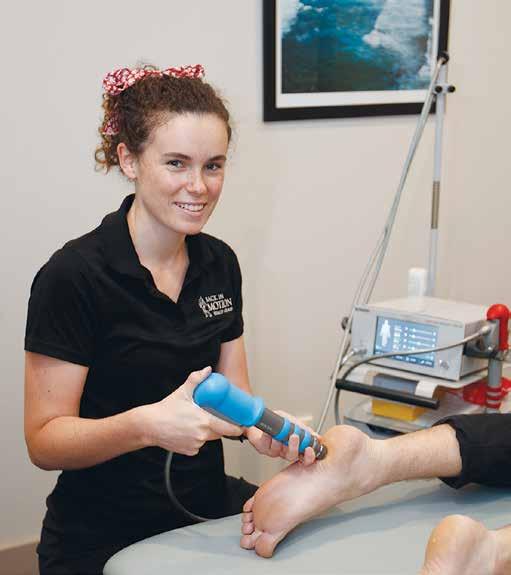

•

PAGE 30 Southern Peninsula News 10 April 2024 Seniors Loving Life! Don’t let
pain stop you in your tracks Up to 90% success rate# | Non invasive therapy Radial Shockwave therapy Clinically proven* to help these conditions: • Heel pain (plantar fasciitis and Achilles tendinopathy)
Tennis & golfers elbow
Patella tendinopathy
tendon
•
•
Frozen shoulder
Rotator cuff teninopathy with calcification
Hip bursitis
Shin splints and heel spurs Call 5983 1021 or book online for your assessment # Am J Sports Med 2007; 35:972 * lnt J Surg 2015; 24:113-222 ^ Int J Surgery 2015; 24:207-9 Back In Motion Balnarring 6/2-8 Russell Street backinmotion.com.au/balnarring
•
•
•
Physiotherapist, Sienna Wills. Photo: Yanni
Anti-Aging Dentures: the smile
AGING is an unavoidable fact of life, however, that doesn’t mean you have to accept looking old! What if you could turn back the clock and restore your youthful glow?
Are Anti-Aging Dentures your key to a younger look?
Gone are the days where dentures are for older people with worn out and missing teeth. Today, you can enhance your look and bring back your youth without the need for needles and Botox, thanks to dentures. All you need to do is find a reliable dental prosthetist*, communicate your dental goals, and walk out of the clinic looking younger and feeling more confident!
“For years, dentures have had a bad reputation for being a dental tool only for seniors with dental issues or who’ve lost their teeth. However, you should know that a growing number of people are using dentures to shed off years from their appearance.” A set of dentures designed to enhance your face’s physical features is different from dentures that are only focused on dental issues. Here are some signs that your dentures aren’t doing you any good:
• You have downturned lips
• There is a hollow distance between your chin and nose
• You have a sagging jawline
• You have sunken cheeks
• You have thinning lips
When you wear dentures that don’t apply any neuromuscular principles to their design, your facial features aren’t receiving the support they need after you lose your natural teeth. This can further cause your skin to become loose which results in sagging skin on the lower third of your face, which can result in looking older than your biological age. New dentures can help you regain your youth by providing your facial structure with support.
Anti-Ageing dentures are designed to not only replace missing teeth but also address facial aesthetics, particularly wrinkles around the mouth. This type of denture has added material around the upper lip area to provide support to facial muscles and skin, reducing the appearance of wrinkles and giving a more youthful appearance to the wearer.
Maggie at DenturePoint will assess all your facial features and create the pathway to structural beauty. She will design a set of dentures that will enhance your natural look and bring back your youthful confidence.
Dentures designed in this fashion will change the ageing face by:
• Reducing lines around the mouth and face
• Increasing fullness of the lips
• Defining the cheekbones
• Tightening and strengthening facial muscles
• Strengthening and firming the jawline and neck
The benefits of such a denture design include the potential for a non-surgical facelift effect, by subtly lifting the facial features and diminishing age lines around the mouth. The added bulk around the upper lip area can help in giving the illusion of fuller lips and a more pronounced lip line, which is often associated with youthfulness.
The secret to having a beautiful smile when wearing dentures is to ensure that they are designed to look as natural as possible. Maggie will make sure that your denture will go unnoticed, blending beautifully on your face and passing as natural teeth.
The proof is in the smile.
The benefits of anti-aging dentures are obvious when you see the beaming, youthful smiles walking out of our DenturePoint clinic. Patients report life-changing improvements across the board. You will not only look years younger but also by boosting confidence, you may rediscover your inner glow!
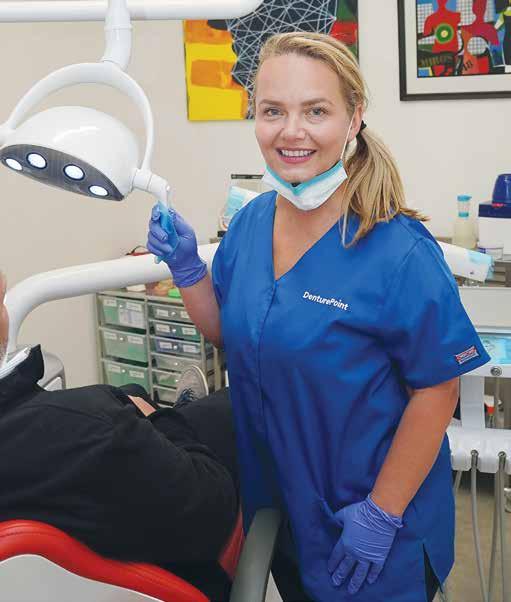


Southern Peninsula News 10 April 2024 PAGE 31 • Please call 0400 919 513 to book a free consultation • Like DenturePoint on Facebook for more information All Types of Dentures • Implant Retained Dentures • Flexible Dentures • Metal Dentures • Full and Partial Dentures • Very Fast Repairs NO DENTAL REFERRAL NEEDED! Ph 0400 919 513 E: denturepoint@gmail.com W: www.denturepoint.com.au 2-20 Bruce Street Mornington Registered Dental Prosthetist, Maggie Murch. photo: supplied
takes years off your face Seniors Loving Life!
that
*dental prosthetist - a dental specialist, specialising in dentures
Helping to maintain an independent life Seniors Loving Life!
Westernport Mobility have long specialised in the sale and repair of mobility scooters and home mobility products, and have now introduced a whole new range of living aids.
Proof that a good business is constantly growing and keeping with the times, Westernport Mobility have expanded into health care products for the home.
Owner Ray Percival says it’s part of providing a wider service to the community. “We now have lift chairs, which are ideal for when people have had operations like hip replacements. They might need a lift chair temporarily after surgery, or they might need one full time in their home,” says Ray.
“At Westernport Mobility, you can either hire or buy depending on your needs.”
Also included in the new range are products to help those with rheumatism. “We have jar and bottle openers, and other home aids like special cutlery for those with arthritis, that help people maintain an independent life,” says Ray.
At Westernport Mobility, it’s all about supplying products that make it easier for everyday living. You can buy or hire most products, including mobility scooters, electric lift beds, electric lift chairs, walking aids, bathroom and toilet aids and living aids.
With a commitment to providing a high level of customer service, Westernport Mobility also offer home demonstrations of products. Head to their new website and purchase your needs through the online shop or visit them in store.






PAGE 32 Southern Peninsula News 10 April 2024
ONLINE STORE NOW AVAILABLE! The Specialist in Mobility and Home Living Aids ADJUSTABLE BEDS NOW AVAILABLE! • Service • Battery tests • Repairs • Accessories • Home Hire VISIT OUR WEBSITE: westernportmobility.com.au FREE DELIVERY TO THE MORNINGTON PENINSULA Shop 6 & 7/8 Victoria St Hastings VIC 3915 Mon - Fri: 9:00am - 5pm Online store always open (03) 5979 8374 Advice, Service & Support Check out our complete product range of mobility scooters, mobility aids & home living, as well as our products for hire SECONDHAND EQUIPMENT PLUS!

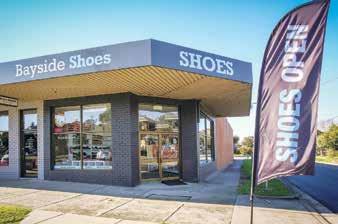
back. Bayside Shoes has focused on comfort and fit within the design of shoes that complement both your lifestyle and foot structure. Propet have been leaders in designing specialist shoes specific for problem foot conditions such as painful bunions and hammer toes. Their new range of orthotic friendly footwear all
Men’s MAA363 Shoe
stability
Double insoles allow extra width and extra depth, with the padded collar and lining creating an extremely comfortable walking shoe as well as suitable for general sports usage.

those who require additional
Ultima Strap
for foot posture and
a solid foundation that helps correct overpronation and supports your arch, allowing you to move with confidence. Double insoles allow extra width and extra depth creating an extremely comfortable fit with its orthotic friendly, ortholite insole, double insoles and a generous 5E width in sizes US 8 to 14
The B10 Usher women’s shoes featuring ortholite foam has high levels of cushioning in thinner layers, perfect for high impact sports while being stylish for everyday wear. Double insoles allow extra width and extra depth, with the padded tongue creating an extremely comfortable fit.
The EC-5 women’s WAA292 shoe featuring X25 open cell foam cushioning that make these perfect for high impact sports while being stylish for everyday wear.
Bayside Shoes has been successfully finding shoe solutions that meet your needs and budget since 1987. Whether for work, casual or that special occasion they offer a large range of footwear choice as well as the largest range of work & formal large size shoes for women (11/42 – 15/46) and men (11 / 45 to 17/51) on the Mornington Peninsula.
Bayside Shoes is located at 103 Railway Parade, Seaford on the corner of Clovelly Parade and has both free and disability parking near its entrance with wheelchair ramp access to the store. They’re open 10am to 5pm Monday to Friday and 10am to 3.30pm on Saturdays.
The Bayside Shoes website baysideshoes. com.au gives only a snapshot of the total range of footwear choice or phone 9785 1887 if you need additional information on a specific footwear requirement.


Southern Peninsula News 10 April 2024 PAGE 33 Seniors Loving Life! Email hello@justwalking.com.au or call 0461 411 981 to book your appointment! Present this in-store and say hi to the team to receive your free gift* Now offering mobile visits by footwear specialists for individuals with mobility issues. *while stock lasts REGISTERED PROVIDER FOR FOOTWEAR FREE GIF T! AVAILABLE FOR: Home Visits Nursing Homes Retirement Villages Man with a van to keep you just walking JUST Walking has become a one-stop shop for people searching for active, every day and medical footwear. Their team works closely with Allied Health professionals, the National Disability Insurance Scheme (NDIS), Department of Veteran Affairs (DVA) and government aged-care packages. The team at Just Walking cares for the community. With that considered, they’ve taken the show on the road with home, nursing home and retirement village visits available with their trained fitting specialist Rhys! Providing solutions for a range of foot conditions, Rhys provides expert advice on comfortable, supportive, and technical footwear from the world’s most trusted brands. *During April and May, the Just Walking van is offering a free gift with any purchase when Rhys visits your nursing home or retirement village. You can now directly make a booking for a mobile visit from Rhys by emailing hello@ justwalking.com.au or call 0461 411 981. Receive a FREE GIFT* with any purchase from Rhys at Just Walking! photo: supplied BAYSIDESHOES.COM.AU I 9785 1887 I 103 RAILWAY PARADE, SEAFORD SHOES BAYSIDE THE ‘LARGEST’ SHOE STORE ON THE PENINSULA *Discount does not apply to already marked down items. ‘EASE YOUR PAIN’ with Propét Tour Knit! FEEL THE DIFFERENCE! OFF ANY $20 PROPET PURCHASE ON PRESENTATION OF THIS AD. OFFER ENDS 30 / 4 /2 4 Custom shoe solutions AS we mature our skeletal structure changes that affect our joints, back and foot structure. This requires regularly considering what type of shoe structure will be most suitable to support your body and reduce stress
your
have removable innersoles that
you to install your custom orthotics
Ultima
on
joints and
enable
where required. The
Strap
offers unparalleled
with their straight last design. Ideal for
support
balance,
provides
Check smoke alarms
FIREFIGHTERS have reminded Mornington Peninsula residents to test their smoke alarms after statistics revealed 14 people died in preventable house fires last year.
Last Sunday marked the end of daylight saving and the firefighters said it was also a good time to test smoke alarms..
Discarded smoking materials, lighters and matches were the most frequent cause of the fires, resulting in five incidents and seven deaths.
Of the victims, five were female (36 per cent) and nine were male (64 per cent). There were 11 single fatality incidents and one incident that resulted in the deaths of three people.
CFA chief officer Jason Heffernan said it was essential that families tested smoke alarms each month.
“The number of fatalities in the last year is very alarming and devastating to know they could have been prevented,” Heffernan said.
“The best way to keep your family safe is to install interconnected smoke alarms, so that when any alarm activates, all smoke alarms will sound, allowing you to evacuate early.
“We recommend the use of smoke alarms powered by a 10-year lithium battery to ensure their longevity.”
Help with the roses
AN invitation has been issued for members of the public to join a working bee at Mornington Rose Garden on Saturday 11 May.
The gardens in Civic Reserve, corner Mornington-Tyabb and Dunns roads.
The working bee will be held from 9am to 2pm. Details: morningtonrosegardens.com. au or call 0459 032 497.
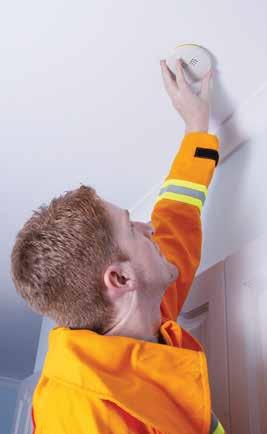
New members welcome
MORNINGTON Environment Association welcomes new members in its efforts to “protect and enhance our beautiful environment”.
Meetings are held quarterly on second Thursday of the month.
For more details call 0414641999, 0425795237, email morningtonea@gmail or go to the Mornington Environment Association website.
100 YEARS AGO THIS WEEK...
‘No new taxes’ call as tourists turn from peninsula
TOURIST trips to the Mornington Peninsula are 5.7 per cent below December 2019 levels, while international visitor numbers remain below preCOVID levels.
Nepean MP and Shadow Minister for Tourism, Sport and Events Sam Groth said there had been 40,000 international visitors to the peninsula in 2023.
In calling on the state government to not impose any more taxes in its upcoming budget Groth said tourism on the peninsula remained below pre-COVID levels, with many businesses “struggling to operate”.
Groth said one of the most high-profile businesses which had announced it would close was the Donna Maria restaurant in Flinders.
A spokesperson for the restaurant confirmed to The News on Friday that the restaurant would close “in a few weeks” but would re-emerge in Mount Eliza under the name Bau Bau.
Business in Flinders had declined since summer and Mount Eliza was seen as a more profitable location.
“The peninsula will be hit hard by Labor’s short-stay accommodation tax and doesn’t have incentives available that are applicable in regional Victoria, such as payroll tax discounts,” Groth said. “With 53 new or increased taxes introduced by Labor since coming to office, the Allan Labor government must rule out imposing more taxes in the upcoming state budget.
“Instead of imposing new taxes and growing its record debt, Labor should be focussed on growing the local economy and laying the groundwork for business and tourism to thrive.”
Groth said Victoria was “lagging behind the nation on the return of international tourism”.
The latest visitor data from Tourism Research Australia confirmed Victorian international tourism spending was at 73 per cent of pre-pandemic levels, compared to 96 per cent in New South Wales and 94 per cent in Queensland.
“While overall combined national and international tourism spending in Victoria continues to rise, the Victorian Tourism Industry Council (VTIC) warns Victoria’s growth has stagnated and has called on the Allan Labor Government to scrap its upcoming short-stay accommodation tax as well as develop an underground solution to the Melbourne Airport Rail Link,” Groth said.
“This comes as a range of regional Victorian hospitality venues have gone into administration or closed permanently, as cost-of-living pressures and increasing taxes hamper business conditions.”
Operators were blaming their losses on interest rate rises and higher insurance premiums, energy price increases and increases in state taxes and charges, such as liquor license fees.
“As a result of Labor’s record debt and taxes, tourism performance in our great state is well behind where it should be,” Groth said.
The Recent Rains – The State of Beach Street
Compiled by Cameron McCullough
THERE is no doubt the autumn of 1924 will be long remembered as the wet autumn.
Again we have had another soaking downpour, with the result that all the low-lying land is again under water.
Our representative paid a visit to a number of the places affected, and points out that something will have to be done, and done immediately, to bring about an end to this state of affairs.
Quite a number of houses are practically unapproachable, the only dry means being by a vehicle or by boat. Some places have fixed planks to walk on, and woe beside the person who steps off the plank.
In Beach Street the water is lying in some places fully 2ft deep, marking the street impassable for pedestrians, and while there may be some excuse, owing to the abnormal rains, it is thought by quite a number of persons that if the drains were cleared out, the water would have a much better chance of getting away than it has under the present conditions, as many parts of the made drain in this street are very nearly full of debris of all kinds, and it only needs a heavy shower to overflow and run across the road, thus destroying a road that has only been down a few months.
Then, again, there is the drain that flows through the railway yard. If this were cleaned out, it would greatly facilitate the draining of Beach Street towards the railway line, and should to some extent release the water now lying around the cottage of the gatehouse.
Who is responsible for this portion we are unable to say, but to the average citizen it would appear that the railway authorities were.
If this is so, it should only mean the drawing of their attention to this menace that we feel it would be immediately attended to.
Going further afield, however, to the eastern part of Beach Street, we find the water pouring down the drain, which was made some years ago by the Council, to such an extent that the land and fence of the owner of the property facing the road, has become washed away and undermined to such an extent that it is likely to cause a serious depreciation in the value of the land.
The owner, Mr. Jolly, sen., says he has drawn the attention of the Council, and also individual Councillors to the state of the drain, and so far no remedial measures have been taken to cope with the trouble.
In fact, so dangerous has this become, that the people in the vicinity are quite cut off from the town. Any function that may be held in the town, at night, as in the one instance, an electric light pole has been placed right in the middle of the track people are accustomed to use, and in the other, and more important, case, because they are practically afraid of the road since the heavy rains, they claim that they are entitled to some consideration, and that at least one or two lights should be put on the road to give them some chance of getting to the town at night if they so desire.
They say, also that since the letter has appeared over the signature of A. E. Evans, that some of the Council-
lors have been along and inspected this street for themselves.
They are, therefore, hopeful that as a result some steps will be taken in the near future to cope with this trouble, and thus afford them ingress and egress from their respective properties by some other method than that of using a boat.
***
MRS. A. W. Sage notifies the general public, per medium of our advertising columns, that she is back again in her old-established confectionery business and tea-rooms, Mornington Road, Frankston, next the tennis court, where she hopes for a renewal of business with all her old friends and customers.
Only the best of everything is stocked, and by strict attention to business, combined with the usual courtesy and civility, she hopes to secure a fair share of the public custom.
***
THE friends of Mr. J. Ames, of Kars Street, Frankston, will be pleased to know that Mrs. Ames, who for the last five weeks has bee an innmate of a private hospital in Melbourne, has sufficiently recovered to allow of her removal to their town house.
***
RAILWAY travellers will be pleased to know that after a long illness, Mrs. Davis, wife of Guard Davis, of Kars Street, Frankston, is now well on the way towards recovery.
***
THE friends of Mr. T. McComb will be sorry to hear that he it at present in Melbourne undergoing an operation to his eyes. He has this paper’s best wishes for a successful operation and
a speedy recovery. Mrs. T. McComb, who has had another had turn, is at present staying with her daughter, Mrs. H. Garrood, Clarendon House, Frankston. ***
MR. and Mrs. R. Brockman, son-inlaw and daughter of Mr. and Mrs. Charles Kilner, of. William Street, Frankston, left at the beginning of the week for a motor trip to Sydney, and the Blue Mountains, via the Prince’s Highway.
***
MRS. Herbert Weynton, a resident of Devonshire, England, is now on a visit to her sister, Mrs. Howie, “Coolangatta,” Denbigh Street, Frankston. We trust she finds the surroundings congenial during her stay. ***
MR. Lou Edwards, a well–known member of the Flinders Naval Depot Football Club, whilst practising for the forthcoming season, had the misfortune to fall and break his wrist.
***
A VERY pleasant evening was spent by the Somerville Cricketers on Wednesday of last week, when a send-off was given to Mr. Keast on the occasion of his departure for an extended visit to the Home Country and British Empire Exhibition.
Mr. Keast, who is President of the Somerville Cricket Club, was presented with a life members’ certificate by the club, in recognition of the many good works he has done for the club.
This is the first ever presented.
During the evening the Premiership Caps were presented to the club by Mr. Keast.
Numerous short speeches were
made during the evening, Captain “Billy” Hutchinson holding the watch.
The following were the speakers: Dr. Bickart, Councillor McLean, Mr. Gault, Messrs. E. McConville, F. Murray and W. Hutchinson, the captain of the team.
Items were rendered during the evening by Messrs. R. Murray, R. Rivett, C. E. Gomm, and Mr. and Mrs. Copsey.
Mr. Keast, in responding, expressed the wish that he would be back amongst us again for the next cricket season, and hoped to see Somerville again on top.
He also thanked the club for the good wishes expressed, for himself, and also on behalf of Mrs. Keast and Miss Bennett, who are accompanying him on the trip.
He was pleased to see the team where it was, and thought they deserved to win, if only for the fine way all the men had pulled together under the capable handling of Mr. W. Hutchinson.
Mr. S. Martin read out letters of congratulation on winning the premiership from the good sports Dave Kennedy, of Frankston, Harry Denham, of Tyabb, L. Irving, Naval Depot, and Huntley and Eeles, Bittern.
The record of the club is interesting reading: played 18, won 14, drawn 3, lost 1, being beaten by Tyabb “A” team, which was the only club to beat all the teams in the competition.
***
From the pages of the Frankston and Somerville Standard, 9 & 11 Apr 1924
PAGE 34 Southern Peninsula News 10 April 2024
NEWS DESK
PUZZLE ZONE


THE MEANING OF EXISTENCE... AND OTHER SHORT STORIES
A Message from The Middle Ages
By Stuart McCullough
HERE’S what I’m really enjoying about being middle aged: glasses. Wherever I go, I now need to take multiple pairs of glasses and then swap between them as required by the circumstances. There are sunglasses for the glare which, in turn, need to be replaced by my reading glasses in the event that I need to look at anything printed in something smaller than thirty-six font. And then there are glasses for the ordinary business of seeing where you’re going. It’s gotten to the point where I now need to factor in time to change in and out of various pairs of glasses.
There have been some moments of reckoning. There was the time a work colleague saw the size of my text messages and reacted by laughing out loud. Then there was the time I took a shopping list to the supermarket and could not see what was on it; a problem which I then sought to overcome by holding the list as far away from my face as possible. And then Covid, where my glasses and mask refused to peacefully co-exist and I spent most of my time trying to see through the fog. It’s not just my deteriorating eyesight. I have completely lost touch with popular culture. Once, I knew who all the best singers were and what position they’d reached on the charts. Now I’m completely and utterly adrift. It’s got to the point that I don’t even know what a Doja Cat is. I’ve made things worse for myself by making fun at my own expense. When one of the kids asked me about the Ice Age, I described it as the ‘best years of my life’.
I now routinely claim to be connected to various historical figures – Julius Caesar was my flat mate at Uni, Winston Churchill was my paperboy. That kind of thing.
Age-shaming myself is one thing. Being age-shamed by others, especially in a retail setting, is another thing altogether. I like to run. Not very fast and not very well, but I choose to believe that it’s keeping me fit, even if I am occasionally overtaken by someone pushing a pram. (It’s happened. More
than once.) When I run, I put my Apple i-Phone in a little armband-pouch thingy that sits on my bicep. That way, I can listen to fast-sounding music and imagine that I’m moving at a far greater clip than I actually am.
The trouble with the Apple i-Phone armband pouches is that they tend to wear out after a while and need to be replaced. When I noticed some critical fabric had started to tear, I knew its days were numbered and I should do something about it. Ordinarily, I wait until disaster strikes, but in this
instance I was unusually proactive; keen to avoid it breaking when I least expected it to and have my phone fly off somewhere into the distance.
I don’t wish to name names, so for the sake of anonymity, I’ll refer to the store as ‘JB Hi-Fi’. I started by searching the shelves but found nothing. I then had to strategically position myself near a member of staff who was helping someone else so that, once finished, I could pretend I’d just remembered I had a question to ask; as though there’s something slightly pathetic about deliberately loitering in a vain quest for service. As I stood, pretending to be interested in the large array of influencer lights (it’s a thing! Who knew?), I hoped that the person currently hogging the scarce staffing resource would hurry up and pick a toaster. Any toaster would do. Eventually, I got my chance at which point I casually tackled the staff member to the ground to prevent anyone else getting in first. After all, there are lots of people in this world in desperate need of a decent toaster. I asked whether they stocked the Apple i-Phone armband pouch thingy. He replied, ‘We should’. I answered, ‘I know’. He then looked at a computer screen and, either because he misinterpreted it or he didn’t believe what the computer was telling him, began to inspect each shelf individually. Finally, he found another staff member – tall, dreadlocked and standing at the doorway, feigning interest at the receipts people were flashing as they exited the building. He asked whether she’d seen any Apple i-Phone armband pouch
thingies. Flicking her dreadlocks behind her, she said: ‘I haven’t seen one of those in ages.’
The message was clear. I was a relic, a dinosaur. Old enough to have legitimately claimed Julius Caesar as a member of my share house. I had been royally aged shamed. The staff here were young and cool and hip and, clearly, I was none of these things. Dejected, I left and shuffled next door to Officeworks.
I find Officeworks strangely comforting. Just as some people who are not me find Bunnings to be a home away from home, there is something about multiple rows of well-organised stationery that I find soothing. Some people listen to whale noises to help them sleep. I only need to glance at the Officeworks catalogue and I’m practically unconscious.
There they were. Apple i-Phone armband pouch thingies, as far as the eye could see. In an instant, I was no longer a relic, but someone whose preference to take their phone with them when they run was considered entirely legitimate. I bought two. For safety’s sake, you understand. Clutching my purchases and my receipt, I walked back past JB Hi-Fi at which point I pressed my purchase to the window and gesticulated wildly, saying, ‘Do you like Apple i-Phone pouch thingies? Well, how do you like these Apple i-Phone pouch thingies?’ She looked confused. Or at least I think she did. I’m not sure because I wasn’t wearing my glasses at the time.
stuart@stuartmccullough.com
Southern Peninsula News 10 April 2024 PAGE 35
ACROSS 1. Forceful 4. Shirtsleeve edges 7. Cats 8. Stockpile 9. Accommodated 12. Occasion 15. Release 17. Laundry stiffener 18. Assisted 21. Citrus crop 22. Cherub 23. Tied (laces) DOWN 1. Away from summit 2. Opposed 3. Sugar source 4. Money 5. Scavenges 6. Beach material 10. Female opera singers 11. Dull pains 13. Hitched 14. Tolerating 16. Lying dormant 18. Spiritual glow 19. Girl’s plaything 20. Songbird Puzzles supplied by Lovatts Publications Pty Ltd www.lovattspuzzles.com See page 38 for solutions.

















PAGE 36 Southern Peninsula News 10 April 2024 $29 .00 •All advertisements must be pre-paid. For $29.00 you get a 4 line, ONE ITEM ONLY advertisement, restricted to “For Sale” or “Motoring” items only for private advertisers, run initially for 13 weeks or until sold. Additional lines will be charged at $3 per line per publication. •After your advertisement has run for 13 weeks you must call us each fortnight to renew it for a further 2 week period AND reduce the price of your item by a minimum 5% for items in the “For Sale” section or 3% for items in the “Motoring” section. This process may continue until you have sold your item. If we do not hear from you we will assume you have sold your item and your advertisement will not appear. • The sale price must be included in the advertisement and the only alterations you may make are to the PRICE of your item. • Business advertisements, rental hire, pets & livestock and real estate are not included in the offer. • The publisher reserves the right to decline any booking for the purpose of ongoing gain. ADD A PHOTO FOR AN ADDITIONAL $8.00. Run my advert in: 2 papers - $7 extra 3 papers - $14 extra 4 papers - $21 extra 5 papers -$28 extra ADVERTISE UNTIL SOLD* 12593785-JC11-23 Frankston Times Mornington News Southern Peninsula News Western Port News Chelsea-Mordialloc Mentone News Real Estate section of Network Classifieds. Call Jason 0439 042 540 J&T Lawn Mowing & Garden Maintenance 12396062-LB34-18 Russell 0418 338 648 45 years experience Free quotes Bathroom Renovations 12432016-CG47-19 V Bathroom & Kitchens J.L. Hutt Electrical 24 HOUR SERVICE Jason 1300 644 698 12438941-CG04-20 ROCKHARD CONCRETING AND SEALING SERVICES Don’t replace your old concrete –we can repair and reseal in any colour of your choice. • All types of concrete work done. • Reasonable rates. • Pensioner discounts. • Small site cleans. • FREE colour with every job. • Environmentally friendly. 0412 588 130 Call now for an obligation free quote 12667952-KO08-24 V Concrete Products & Services Gary 0407 877 960 BLITZ YOUR GARDEN � Regular lawn mowing � Complete garden cleanup � Weeding � Trimming � Rubbish removal � Prepare for sale � NDIS Service Provider 12525654-SG49-21 V Garden Services DECKS CALL MARTIN 0418 172 044 DO IT RIGHT THE FIRST TIME 12604796-AV20-23 SOLAR • ELECTRICAL DATA • AIRCON EMERGENCY CALL OUTS 24 HOURS, 7 DAYS A WEEK • Safety Checks • Faults • Smoke Alarms • Switchboard Upgrades • Lighting and Power •Data and Communications •Emergency and Exit Lighting •Split System Air Conditioning • Testing & Tagging • New Home / Renovations •Electric Car Charging Systems 12587871-JW05-23 1300 561 971 www.gmaelectrics.com.au Lic 12731 Call or visit us online! networkclassifieds.com.au V Carpenters V Electricians Advertise with us and get better results CALL: SAME DAY TV ANTENNA SERVICE • 40 Years Family Owned & Operated • 25 Year Warranty • Senior/Pensioner Discount 0488 816 557 FAST FRIENDLY EFFICIENT #1 in RYE Phone 7am-8pm| installmyantenna.com.au FREE QUOTES 12619672-HC29-23 V Antennas Bayline Fencing 0403 866 624 1209702-LB49-15 CONCRETE SPECIALISTS PTY LTD Peter Sharp Specialising in: 12428296-ACM40-19 V Concrete Products & Services G & K FENCING AND GATES Family Owned & Operated • Timber • Colourbond • All Feature • Automation • Free quotes EST 1996 5983 0444 • 0409 134 614 admin@gandkfencing.com.au 12589136-JC06-23 V Fencing & Gates Placing your classified advert is so easy... Online: networkclassifieds.com.au (24/7) Phone: 1300 666 808 (Open 8.30-5pm Mon-Fri) Email: sales@networkclassifieds.com.au (include your name, address and phone number) We accept payment by: VISA/MASTERCARD/EFTPOS (1.5% credit card processing fee applies. Cheques and money orders can be posted in or hand delivered to our local office) Ask about our discounted ongoing advertising rates and how choosing more newspapers gives your advertising more impact and saves you money... Deadline for all classifications is 1pm Friday. 12435752-FA03-20 Call 1300 666 808 From plumbers to pest control, carpet cleaning to building services, dry cleaning to computer repairs, lawn mowing and more, Network Classifieds has been connecting local businesses with local community with our Trades and Services each week. Speak to our classified team and find out how easy it is to advertise. Grow your business with TRADES & SERVICES “My potential customers all seem to read the local paper so that’s why I advertise in it.” - Graham CHEAP CHEAP CHEAP Mulch For Sale Ph Graham 0407 357 927 12337429-CG06-17 12579873-DL48-22 Your Local Electrician In The South East And Mornington Peninsula Our Services Switchboards | Powerboards Safety Checks | Powerpoints | Lighting General Local Electrical Services REC 24537 12587043-SN04-23 Call Phil 0434 017 794 V Electricians V Trades Business Profile V Deadline Trades & Services networkclassifieds.com.au
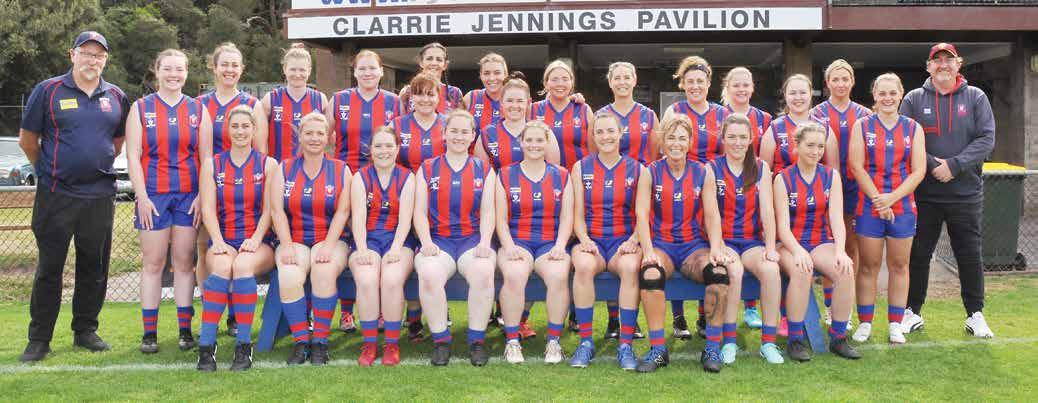
Rye join ranks of women’s AFL
Rowley reserve. The game was very well supported by family members, friends and Rye men players who all turned out to support the girls. The game was played in great condi-




tions with Rye’s ground in excellent condition and kind weather.
The Rye girls, most of whom had never played before, contested a hard four quarters against a very skillful Frankston team in which a number
of players had played over 50 games each.
The result was never in doubt with Frankston easily taking the points.
New players are very welcome as Rye builds its teams. Practice and
training will commence Tuesday nights at the Boneo ground at 6pm and Thursday night at the Rye ground at 6pm.
For further information please contact Scott Gathercole on 0400 064 198












Southern Peninsula News 10 April 2024 PAGE 37 SOUTHERN PENINSULA NEWS scoreboard CALL 1300 666 808 ADVERTISE with us and get better results George's Painting Service Offering Professional Painting Services Qualified painting service offering interior & exterior work, quality products and getting your job done right! Interior, Exterior, Fence, Decking, Driveway Painting. With 20 years’ experience in Painting. Servicing all bayside suburbs from Mornington to Portsea. Call Chris: 0432 521 003 Website: baysidepaintingbathroomrenovations.com.au 12680613-JB14-24 FREE QUOTES! • Guttering Replacements • Downpipes • 20 Colours • Quality Workmanship • All Work Guaranteed • Old Guttering Taken Away • Free Quotes ANDY 0414 477 121 GUTTERING 12464927-SG42-20 By Horizon Plumbing Pty Ltd V Painters/Decorators DISCRIMINATION IN ADVERTISING IS UNLAWFUL The Victorian Equal Opportunity Act 1995 makes it unlawful for an advertiser to show any intention to discriminate on the basis of sex, pregnancy, race, age, marital status, political or religious belief or physical features, disability, lawful sexual activity/sexual orientation, HIV/AIDS status or on the basis of being associated with a person with one of the above characteristics, unless covered by an exception under the Act. As Network Classifieds could be legally liable if an unlawful advertisement is printed, Network Classifieds will not accept advertisements that appear to break the law. For more information about discrimination in advertising, contact your legal advisers or the Equal Opportunity Commission. • Home Maintenance • Rubbish Removal • Gutters • Trees Lopped • Retaining Walls • Fully Insured Call: 0407 121 284 12468704-HL45-20 V Home Maintenance ‘It’s All In The Name’ 12 - Year Warranty Open 24/7Free Inspections 9702 4952 12681352-MS15-24 •Roof Repairs & Replacement •Gutter Repairs & Replacement •Fascia & Eave Repair & Replacement •Tile Roof Restoration • All Metal Roofing •Architectural Cladding • Senior Discounts • Family Business Employment section of Network Classifieds. V Roofing www.networkclassifieds.com.au NEED NEW STAFF? Fill your position online 12565959-HC35-22 Employment Packaged Liquor Licence Application I, Tim Barclay, applied to the Victorian Commission for Gambling and Liquor Regulation on 3rd April 2024 for the variation of a packaged liquor licence at Shop 16, 739 Point Nepean Road Mccrae to increase the licensed area. Any person may object to the grant of this application on the grounds that: • it would detract from, or be detrimental to, the amenity of the area in which the premises are situated, and/or • it would be conducive to or encourage the misuse or abuse of alcohol. An objection must state the reasons for the objection. All objections are treated as public documents. Objections must be made in writing to: Victorian Commission for Gambling and Liquor Regulation GPO Box 1988 Melbourne VIC 3001. Objections must be made no later than 30 days after the date of this notice. 12681705-JC16-24 V Public Notices and Event General Notices Vacuum Gutter Cleaning | Mornington Peninsula Contact us on 0418 312 121 or info@guttersuncluttered.com.au 12539469-AV10-22 GAS APPLIANCE SERVICING CARBON MONOXIDE TESTING Colin Kelly 0427 314 570 colinkellygas@gmail.com KELLY’S GAS & PLUMBING Lic. 16546 12423915-CG33-19 General Find it in the section of Network Classifieds. ADVERTISERS in this section are qualified practitioners and offer nonsexual services. CHEAP CHEAP CHEAP Mulch For Sale Ph Graham 0407 357 927 12337429-CG06-17 ADVERTISERS PLEASE NOTE Anyone advertising a puppy, dog, kitten or cat in Victoria for sale or re-homing will need a source number from the Pet Exchange Register and a microchip identification number. It is now an offence to advertise unless the source number and microchip identification number is included in the advertisement or notice. For further information, call 136 186 or visit animalwelfare.vic.gov.au 12423634-SN31-19 12681897-HC16-24 Call Now - Free Quotes 1800 883 236 Mobile: 0411 314 104 Gutter Cleaning Solar Panel Cleaning Pressure Cleaning Window Cleaning From $165 20% off Exterior Window Cleaning with any Gutter Clean 10 Years + Experience Fully Insured Pensioner Discounts Police & WWCC Checks 0451 771 837Lic. no 122277 www.triplezeroplumbing.com.au LOCAL PLUMBER Leaking taps Burst pipes Hot water Blocked drains Gas heating Leak detection CCTV inspection Pipe relining Storm water Sewerage 24/7 SERVICE 12670933-SM09-24 V Massage Therapists V Pets & Services V Guttering V Tree Lopping/Surgery V Plumbing General Classifieds Trades & Services
Photo and story by Barry Irving WOMEN’S football continues to grow on the peninsula with 20 teams in three divisions now competing in MPFNL. Rye women’s football team played their first game on Saturday at R J
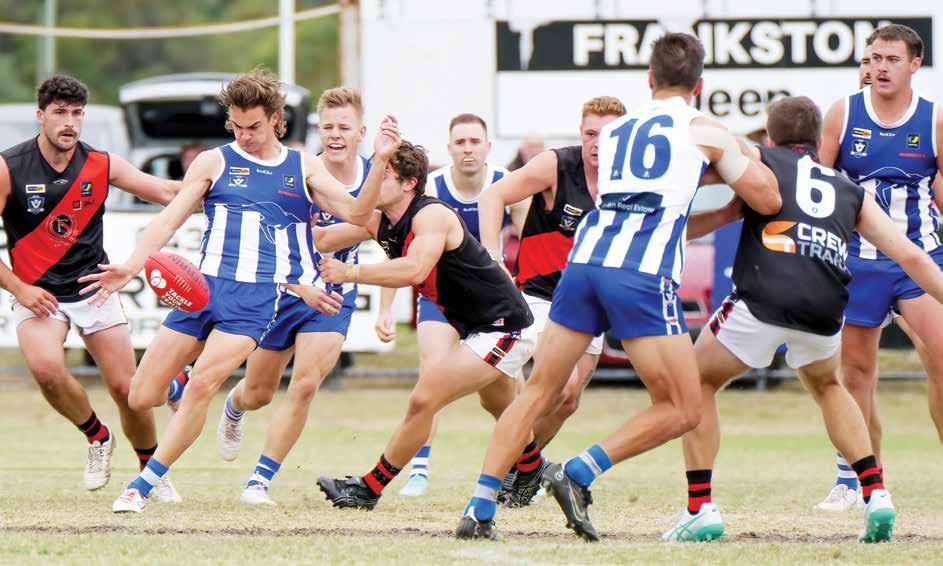
Strong start to the season for Stonecats
MPNFL
By Brodie Cowburn
DIVISION ONE
FRANKSTON YCW has fired a warning shot to the rest of the competition with a big opening round win over Mt Eliza.
The Stonecats controlled the game from the outset. They took a five goal lead into the first break, and didn’t let the Redlegs get back into the contest.
Frankston YCW went home with a comfortable 45-point win 6.10 (46) to 13.13 (91).
Luca Goonan, Lane Meyer, and Darcy Murr were among the Stonecats’ best. Brenton Lambert and Joshua Patullo scored two goals each.
Frankston Bombers pipped Langwarrin to open their season with a win last Saturday. Both sides suffered from inaccuracy in front of goal. The Bombers ended up emerging victorious at Lloyd Park,
beating the Kangaroos 5.12 (42) to 5.13 (43).
Pines rounded out last weekend’s Division One games with a victory over Mornington. Pines beat the Bulldogs 13.3 (81) to 7.15 (57).
Shane Savage was the Pythons’ best. He scored six goals, and will be a huge threat this season.
DIVISION TWO
DEVON Meadows held off a fastfinishing Pearcedale to grab a win last Saturday.
Pearcedale hosted the season opener for the two sides last weekend. Devon Meadows took a 19 point lead into the first break, then stretched their lead to 41 points at half time.
A five-goals-to-one final term put Pearcedale back within reach, but the margin proved too much to overcome.
Devon Meadows won by 15 points12.11 (83) to 14.13 (97).
Paddy Ryder booted three goals for Devon Meadows. Jack Wilson and
Patrick Harmes also scored three goals each.
A dominant third term helped Bonbeach score a win over Seaford at home last week.
After a tight first half, Seaford went into the half-time break ahead by three points. A six-goals-to-zero third quarter put the game out of Seaford’s reach.
Bonbeach went on to win by 34 points 12.10 (82) to 6.12 (48). Jack Caspersz scored four goals for the Sharks, and vice-captain Mitch Gent contributed two to the scoreboard.
Crib Point got their season started with a big win over Hastings. It has been a difficult off-season for Hastings, and their fortunes didn’t prove much better on the field. They lost to Crib Point 10.4 (64) to 18.17 (125).
Lee Sheehan and Brad Arnold were named Crib Point’s best. They scored three goals each.
PAGE 38 Southern Peninsula News 10 April 2024 SOUTHERN PENINSULA NEWS scoreboard Simply play a round of golf between now and Wednesday 24th April 2024 at any of the golf courses listed and send us your scorecard to go into the draw! Entries close 1/5/24. Bay Views Golf Course – Elizabeth Drive, Rosebud Devilbend Golf Club – Loders Road, Moorooduc Eagle Ridge Golf Course – Browns Road, Boneo Flinders Golf Club – Bass Street, Flinders Moonah Links –Peter Thomson Drive, Fingal Rosebud Country Club – Boneo Road, Rosebud St Andrews Beach Golf Course – Sandy Road, Fingal The Valley Golf – Country Club Drive, Safety Beach a Round of Golf for 2 Players* at each of the 8 participating Golf Courses. * Rounds are Mid-Week and do not include carts, unless stated on Voucher. Total prize valued at $1,151. To enter, take a photo of your scorecard using your smartphone or use your online scoring app and email: competition@mpnews.com.au. Alternatively, you can post your scorecard to us, including your name, address and phone on the back of an envelope to: MPNG Golf, PO Box 588, Hastings, 3916. Winner will be announced 14/5/24 in your local MPNG Newspaper. Sudoku and crossword solutions
Fresh start: Langwarrin took on Frankston Bombers at the newly opened Lloyd Park Pavilion, but fell one point short in clinching a win. Picture: Paul Churcher
Stonecats pounce: Frankston YCW kicked off their 2024 campaign with a big win over Mt Eliza. Picture: Craig Barrett
Pines’ star has had enough
SOCCER
By Craig MacKenzie
FRANKSTON Pines’ gun recruit
Ardi Ahmeti has left the Monterey Reserve outfit and refuses to play under senior coach Donn Delaney.
It’s a bodyblow for Pines who went down 2-0 at home to Dandenong South on Friday night.
Pines have now started the season with consecutive home defeats and have lost their top striker and one of State 3 South-East’s finest players.
Ahmeti has an impressive NPL background at both junior and senior levels and has played overseas.
COVID prompted his return to Australia where he had spells at Eastern Lions, Dandenong City and North Sunshine Eagles.
The 23-year-old took time off from the sport to go on holiday last year until close friend Deniz Karabadzak convinced him to give Pines a try.
Ahmeti then convinced defender Alan Fogel to join him at Monterey Reserve so his departure may cause disruption in the senior squad.
“Fifty percent of why I left is down to me but 50 percent is down to Donn,” Ahmeti said.
“I was copping too many injuries and didn’t have enough time to rehab properly.
“Plus, what I’ve seen in the past couple of weeks is that we’ve gone backwards under Donn.
“The final thing that made me leave was when the club didn’t live up to the payment agreement we had.
“I told Donn if they couldn’t live up to the agreement we had from the start then how could I trust them in the future.
“The positive aspect of my time at Pines was that I considered my teammates as my family and that was the hardest thing about leaving.”
In State 1 news Mornington returned pointless from its away trip to face Eltham Redbacks with the local side losing 4-1, a result that sent Eltham to the top of the league table.
Sam Scott scored for Mornington.
In State 2 news Peninsula Strikers beat Knox City 2-0 at Centenary Park on Saturday.
Strikers struck in the 38th minute when Ethan Goulding played a quality low ball into the box where Cooper Andrews continued his run and slotted home with his left foot.
Two minutes later Knox’s Jorge Dunster was shown a straight red following an off-the-ball incident with young Strikers’ winger Taylan Geylan.
There was no way back for Knox when it fell further behind in the 60th minute.
Geylan broke clear then neatly squared the ball to captain Riley Anderton who cooly slotted home with his left foot.
Skye United lost 2-1 away to Mooroolbark on Saturday.
Skye led late in the first half when Marcus Collier was at the back post to head home from a corner.
The Barkers hit back in the 58th minute when a corner from the left was headed home by Brett Tronconi.
In the 90th minute the referee spotted a foul on Ryan Smith among a mass of players preparing for a corner to be taken.
Geordie Scott stepped up to the spot sending Skye keeper Steve Hadjikakou the wrong way for what proved to be the sealer.
In State 4 news Chelsea remains on top of the ladder after Friday night’s 5-0 mauling of Lyndale United at Edithvale Recreation Reserve. This win was achieved without talis-

manic striker James Stinson who was holidaying in Fiji while keeper Rhys Davies and vice-captain Adam Bartosy were injured and captain Luke D’Alessandro had to pass a late fitness test.
Chelsea led 2-0 at half-time thanks to superb strikes from outside the area from Dylan Scott after seven minutes and Daniel Lewis after 22 minutes.
When young gun Christian Murray made it 3-0 in the 64th minute Lyndale had a mountain to climb.
Another youngster then stole the spotlight in the closing section of the contest.
Teenager Harry Salisbury recruited from Kingston City came off the bench for his club and senior debut and marked the occasion with two stunning goals.
It was the exclamation mark on a fivestar performance from the home team.
Stinson will be back in action on Saturday when Chelsea travels to Reema Reserve to clash with Endeavour United.
Both clubs will be playing for the Melino Cup which honours Carlo Melino’s senior coaching career at Endeavour and Chelsea.
Melino and his family will attend and he will present the winning captain with the trophy at game’s end.
Somerville and Mentone fought out an entertaining 2-2 draw at Western Port Secondary College last Saturday.
Chris Gibson put Mentone ahead after two minutes poking home from close range after a mix-up in the Somerville defence.
Somerville keeper Agapitos Karagiannis prevented Mentone from going further in front when he saved Marcus Spivey’s penalty on 30 minutes and six minutes later Somerville were level when Marcus Anastasiou nipped in front of his marker to score.
The main action of the second half came in the final five frenetic minutes.
Mentone was awarded a second penalty on 85 minutes and again Karagian-
nis saved this time denying Gibson.
Two minutes later Somerville went in front when Skye United recruit Alessio Izzo curled home a fine effort past Quinn Carter in the Mentone goal only for Spivey to make it 2-2 in the last seconds of the game when he barrelled through two defenders to drill home from close range.
Baxter drew 1-1 with Springvale City at Baxter Park on Saturday.
The visitors scored after seven minutes when their club linesman ruled that Edim Lolic was onside when he broke through and lobbed advancing Baxter keeper Jarrod Nardino.
Baxter equalised in the 52nd minute after a poor clearance from Springvale was gathered by Dylan Murchie and after nipping past a defender hit a low shot from the edge of the area that gave Springvale keeper Kadir Puric no chance.
In State 5 news Rosebud sits on top of the ladder after Saturday evening’s 2-1 home win against Mount Eliza.
Rosebud took an 8th minute lead when Barney Johnson scored after a fine ball from the ever-threatening Frank Barrett was met with a welltimed run and a near post finish.
Johnson nearly turned provider when a great move saw Connor Mooney with a chance to double the lead with a volley on the six yard box only to put it over the bar.
The second half saw Mount Eliza capitalise as Rosebud sat off too much and it was no surprise when it equalised through Mujtaba Sakhi in the 60th minute after constant pressure.
In what was a derby of high quality with both teams playing excellent football the winner came from the boot of one of Victorian soccer’s most prolific marksmen.
In the 76th minute a superb ball from Barrett bounced as Dave Greening swivelled before rifling a firm drive into the top corner for the decider. There was another hard-fought derby
at windswept Civic Reserve on Saturday with visitor Seaford United winning 1-0 against Mount Martha.
Home team keeper Darren Elliott was far busier than counterpart Hayden Hicks but Hicks also had his moments when he was forced into action.
Seaford has recently signed Logan Johnston from Frankston Pines and Naseer Mohammad from Casey Comets and both came off the bench, the latter to great effect in the second half.
Seaford striker Josh Vega had multiple chances in both halves but a combination of poor finishing and the heroics of Elliott kept him at bay.
In previous seasons Mount Martha may have had problems dealing with physically stronger opponents but not so now.
In the midst of Seaford’s second-half assault on the home team’s goal Mount Martha had two great chances.
In the 55th minute a long ball was pounced on by lanky teenager Lenny Tate who struck his shot across Hicks but wide of the far post.
Six minutes later Mount Martha striker Daniel Bancroft shrugged off the attentions of Johnston and Jack Wyer but blew his one-on-one with Hicks by shooting wide.
Mohammad has been part of the local scene for years but he’s lost none of his pace and that proved decisive in the game’s pivotal moment.
In the 79th minute he exploded down the left then hammered a low drive in behind the defence where another sub Sam Luxford was charging in and his first-time point-blank shot gave Elliott no hope.
Barton and Aspendale shared the points in an entertaining six-goal encounter at Barton Recreation Reserve last weekend.
Matthew Bruce, James Macnab (from the penalty spot) and Alec Bunn scored for Aspendale whose best were Bruce, Felix Hampson and Macnab.
In Dockerty Cup news Skye United
will host NPL side Dandenong Thunder on Wednesday night in a delayed round four tie with the winner drawn away against Moreland City in the next round.
The only other local side remaining in the Cup is Langwarrin who is already through to the fifth round and has been drawn away against State 1 North-West outfit FC Strathmore.
NEXT WEEK’S GAMES
Wednesday 10 April, 7.30pm: Skye Utd v Dandenong Thunder, Dockerty Cup, Skye Recreation Reserve
Saturday 13 April, 3pm:
Mooroolbark v Peninsula Strikers, Esther Park
Rowville Eagles v Frankston Pines, Park Ridge Reserve
Mentone v Sandown Lions, Mentone Grammar Playing Fields
Lyndale Utd v Somerville Eagles, Lyndale Secondary College
Monash University v Baxter, Monash University Playing Fields
Endeavour Utd v Chelsea, Reema Reserve
Aspendale v Rosebud, Aspendale Gardens Sports Ground
Mount Eliza v Seaford Utd, Emil Madsen Reserve
Mount Martha v Casey Panthers, Civic Reserve
Saturday 13 April, 6pm: Mornington v South Springvale, Dallas Brooks Park
Sunday, 14 April, 3pm: North Caulfield v Skye Utd, Darebin International Sports Centre
Monday 15 April, 8.30pm: Bulleen v Langwarrin, Veneto Club
Southern Peninsula News 10 April 2024 PAGE 39 SOUTHERN PENINSULA NEWS scoreboard
Bye, bye Pines: Striker Ardi Ahmeti (left) and Frankston Pines head coach Donn Delaney. Ahmeti left Pines last week. Pictures: Paul Seeley, The Man In The Stands.