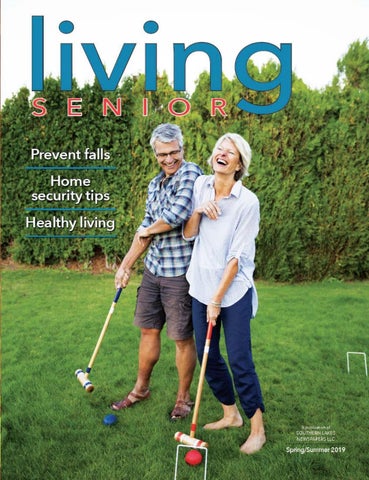
Exercising after 50 can help people live healthy well into retirement. But caution must be exercised when aging men and women return to exercise after a long break.
Exercise AND aging
STOCK PHOTO Living Senior
– How to work out safely after 50
Speak with your physician The National Institute on Aging notes that even people with chronic conditions such as heart disease, diabetes or arthritis can be physically active. However, anyone with such a condition and even those who don’t fall into those categories should consult with their physicians and receive a full physical before exercising. Such a consultation and checkup can shed light on any unknown issues, and physicians can
offer advice on how to safely manage any problems that may arise.
Begin with low-intensity exercises Even if you feel great and have maintained a healthy weight, don’t push yourself too hard at the start. Your body needs time to
living S E N I O R
a
CONTINUED ON PAGE 10
A publication of Southern Lakes Newspapers LLC 1102 Ann St., Delavan, WI 53115
(262) 728-3411
EDITOR:.................................................................................Tracy Ouellette CREATIVE/PRODUCTION DIRECTOR:.................................Heidi Schulz GRAPHIC DESIGNER:............................................................ Jen DeGroot ADVERTISING DIRECTOR:............................................ Vicki Vanderwerff
FOR ADVERTISING OPPORTUNITIES: Call (262) 725-7701 ext. 134
LIVING SENIOR •SPRING/SUMMER 2019
In an ideal world, people young and old exercise each day. But as men and women age, finding time to work out is not so easy. Commitments to work and family often take precedence over daily exercise. As a result, many people 50 and over might not have exercised regularly or at all in many years. But as children grow up or even move out, people facing down their golden years are often compelled to get back in the gym. That’s a wise decision that can increase a person’s chances of being healthy and happy in retirement. But before beginning a new exercise regimen, men and women over 50 should take heed of the following safety tips to ensure their efforts are not derailed by accident or injury.
3
6 ways to make bathrooms a safer place Homes should be safe havens. But each year injuries in and around the home contribute to millions of medical visits and many fatalities each year. The Centers for Disease Control and Prevention says falls, which can result in serious injuries like hip fractures and head trauma, are the cause of 80 percent of all bathroom accidents. Many bathroom accidents are preventable with some easy modifications.
Utilize transfer benches and shower seats
Reduce slippery surfaces
Discard old medications
Wet tile is a recipe for slick conditions. Bath rugs with rubber backing can provide traction in the bathroom, as can nonslip mats placed on the floor of the bathtub or shower enclosure. Water-resistant flooring made from recycled rubber is another option. It is softer, less slippery and more forgiving than traditional tile flooring.
Clean out the medicine cabinet of old or expired medications, including both prescription and over-the-counter drugs. This reduces the likelihood of medication confusion, and does not put potentially harmful pills and syrups into the hands of children.
Install lever-style fixtures
A transfer bench can help reduce injuries that occur when trying to climb over a tub wall. Benches are placed outside of the tub and a person sits and then swings his legs over the ledge. Transfer benches also can be used in conjunction with shower seats. This is a chair or bench that allows people to sit while they shower.
Install grab bars Properly installed grab bars around the shower and toilet area can provide leverage and stability. AARP says many injuries to seniors occur when they are attempting to sit or get up from the toilet. Grab bars or an elevated toilet seat can help.
Round knobs in the bathroom can be difficult to grasp, especially for the elderly or those with arthritis. Lever-style fixtures are easier to maneuver and can help alleviate scalding from not being able to adequately adjust the water temperature.
STOCK PHOTO Living Senior
Bathroom safety should be made a priority. Various modifications can make bathrooms safer for people of all ages.
Install motion-detecting lights These lights turn on automatically upon detecting movement, making them beneficial for people who routinely visit the bathroom in the middle of the night. Adequate illumination also can help reduce fall risk. (METRO CREATIVE)
Special Senior Citizen DiSCount every tuesday! Come Make Yourself at Home! Where an Active Lifestyle Is Affordable for Adults 55 or Better LIVING SENIOR • SPRING/SUMMER 2019
Office Hours: Mon., Tues., Thurs., Fri. 8:30 to 1:00 p.m.
4
Stop by or call today for an appointment! 317 S. Main Street, Delavan, WI 53115 • One or Two Bedroom Apartments • Heat, Water & Sewer Included • Laundry Room on Each Floor • Heated Underground Parking
• 3-Story with Elevator Service • Controlled Entrance • Newly Decorated Community Room with Kitchen • Many Activities • A Pet Friendly Community
(262) 728-9948 Located just 2 Blocks South of Historic Downtown Delavan Professionally Managed by Oakbrook Corporation 204452
Family Owned and Operated Since 1974
2 Great Locations to Better Serve You... Lake Geneva PiGGLy WiGGLy
100 East Geneva Square Lake Geneva, Wisconsin 53147 In the Geneva Square Shopping Center Phone: 262-248-8798 Fax: 262-248-1688
DeLavan PiGGLy WiGGLy
1414 E. Geneva Street Delavan, Wisconsin 53115 South of Hwy. 50 (Shopko Shopping Center) Phone: 262-728-2638 Fax: 262-728-5930 Liquor Store (next door): 262-740-0541 256078
STOCK PHOTO Living Senior
A new outlook on retirement can open up a world of opportunities.
SMART WAYS to embrace retirement
How retired are you? Retirement may no longer mean what it once did. Some retirees remove themselves entirely from the active employment market, while others prefer to keep at least one toe in the professional water. Some retirees change fields and do parttime work. Others may volunteer their time without getting paid. Still, some choose to use retirement as an opportunity to spearhead a new business venture that may
not have been possible beforehand. Retirees should reflect on their goals, as well as their finances, and make plans accordingly.
Don’t neglect health care Retiring may involve finding health insurance and preparing for other types of health care later in life. The U.S. Census Bureau says that employment-based insurance covered 55.4 percent of the population in 2015, the most recent years for figures, followed by Medicaid (19.5 percent) and Medicare (16 percent). Residents of other countries may be covered by government standardized health programs. It pays to know the rules of each plan to avoid unnecessary expenses that can eat into retirement dollars. For those Americans who will be relying solely on Medicare, find a counselor who can spell out the intricacies of the plan, or use the free tool on Medicare.gov.
See retirement as a beginning, not an end Quite often soon-to-be retirees focus on the end of a career or the end of a stage in life without putting enough focus on the possibilities ahead. This is a prime time to find a new social network, travel, join a ministry, and much more.
Choose your living space Retirement can be an opportunity to shed an old skin and try on a new one – especially as it pertains to housing. There are options to downsize for empty nesters or even to secure resources to “age in place.” According to United Income, a money management service, retirees should try out particular scenarios and locations prior to jumping in. Rent in a particular neighborhood, or housesit and try things on for size. Airbnb and other types of services can make this trial easy. (METRO CREATIVE)
LIVING SENIOR •SPRING/SUMMER 2019
Retirement is on the horizon for a significant number of people. Around 10,000 people retire each day in the United States, according to a study by Merrill Lynch and Age Wave, a consultancy studying the cultural and economic impacts of aging. But many soon-to-be retirees are not fully prepared for life after their work life ends. Shedding new light on this next chapter can make retirement something to look forward to even more.
5
Explaining financial plans and why you need one A clear understanding of personal expenditures and savings rates is essential for securing a strong financial future. A financial plan can help everyone from the extraordinarily wealthy to those struggling to make ends meet. The Financial Planning Association says a financial plan identifies goals and objectives that take finances to achieve and creates a plan for making those things happen. A financial plan can serve as a road map that people can look to for years to come as they work toward securing their financial futures. Whether you aim to retire by age 50 or to reduce your debt, a financial plan can be just what you need to turn your dreams into a reality. Here are some steps for devising a financial plan.
1.
Identify what you want. You must identify what you want to achieve. Goals may include buying a home, retiring early, providing for a child’s education, or having more time and money for travel. Putting your goals on paper may inspire you to pursue them more vigorously.
2.
Audit your finances. Conduct an audit of your finances so you can get a clear grasp of your current situation.
You’re never too young or old to devise a financial plan. Financial advisors can help individuals devise plans to meet their shortand long-term goals. STOCK PHOTO Living Senior
Make a list of all of your assets, and then subtract existing debts to figure out your net worth. While you’re tabulating, find out how much you bring in and spend each month so you can get a clear picture of your spending habits. This will help you make smart choices in regard to spending and saving.
3.
Eradicate existing debt. One of the key parts of a financial plan is to pay down high-interest debt to free up money for the future. Focus on paying off credit card balances, high-interest loans or balances for other accounts where interest
is high. A debt consolidation loan may be worth exploring if you’re having trouble paying down high-interest debt.
4.
Start saving. Building savings is essential to reaching many goals. It also is key to help avoid financial ruin during emergency situations, such as home or car repairs, disability that takes you out of work, etc. Start small by having a certain percentage of money deposited into a separate account automatically. Then watch it grow. Investing in the right products also can help you grow your savings. (METRO CREATIVE)
800 Park Dr 800 Park Dr Lake Geneva, WI Lake Geneva, WI 53147 53147
SPECIALIZING IN
INSURANCE PRODUCTS FOR SENIORS Call Your Local Agent
Phone: 262-248-2031 Phone: 262-248-2031
6
NANCY BLACKMAN INSURANCE Call 262-728-2022 or ALLIED SENIOR SERVICES INSURANCE & INVESTMENTS, LTD. 1-800-924-4061 Annie
325949
328 Kenosha St., Walworth, WI
262-275-2171
269926
LIVING SENIOR • SPRING/SUMMER 2019
Derrick Funeral Home and Cremation Services has been a family owned and operated business in the Lake Geneva area for over 100 years. Our staff will be more than honored to help you with everything from pre-planning to personalization of the service you choose. If you have any questions, please do not hesitate to call. 269598
Home security is serious business for seniors who are vulnerable to criminals.
STOCK PHOTO Living Senior
(METRO CREATIVE)
Seniors are often targeted by criminals. Though many criminals target seniors from afar via telephone or internet scams, criminals seek to enter seniors’ homes. The Bureau of Justice Statistics offers that, between 2003 and 2013, the ratio of property crime to violent crime was higher for the elderly and persons between the ages of 50 and 64 than it was for younger persons between the ages of
Ask for ID
When service people or other individuals come to the door, verify their credentials by asking to see some identification.
Install a lockable mailbox
It may seem like common sense, but failure to repeatedly lock windows and doors can, and often does, give burglars easy entry into the home.
Locked mailboxes restrict access to sensitive information, such as bank account numbers, sent in the mail. Make sure retirement checks or other payments are deposited directly into bank accounts instead of having them sent by check.
Think about a smart doorbell
Use home automation
Lock windows and doors
Technology now enables doorbells to provide a video feed to a person’s smartphone or tablet over WiFi. This allows residents to see who is at the door and speak to this person without having to open the door. Some products like Ring® will even register motion activity and record short videos from outside of the house.
Get a home security system
The best protection against burglars is a home security alarm, states HomeSecurityResource.org. Such an alarm often deters burglars from breaking in.
Home automation, or a “smart home,” can be utilized to turn on lights, set the thermostat, lock doors, and much more.
Don’t share or leave keys
Avoid leaving keys under a mat or in a flower pot. Others may be watching your actions and gain access to your home while you are away.
Adopt a dog
Dogs can be an asset to seniors. Dogs provide companionship and can bark or alert seniors if someone is around or inside of the home.
LIVING SENIOR •SPRING/SUMMER 2019
Home security tips for seniors
25 and 49. Home security is important for people of all ages, but especially so for seniors and aging individuals living alone. By following certain safety tips and developing a home security plan, seniors can feel safer at home.
7
Learn how to sleep like a child again
8
Serving older adults since 1962 with concerned care provided by the dedicated staff. Discover the Fairhaven difference.
STOCK PHOTO Living Senior
Many older adults do not get enough sleep due to insomnia, states Jack Gardner, MD, a neurologist certified in sleep medicine. They’re concerned about health issues, may have sleep apnea, can experience pain or frequent urination, or may be taking medication that impedes sleep. Dr. Leila Kheirandish-Gozal, director of clinical sleep research at the University of Chicago, says that, over time, insufficient sleep can impact metabolism, mood, memory, and heart
• Post surgical care • Orthopedic • Complex wound care • Cardio-pulmonary • Stroke & neurologic
function. Various strategies can help people get more sleep and enjoy better sleep quality.
Create a luxury bed environment
Splurge on the largest mattress you can afford and one that is comfortable for both parties (if married/coupled). A roomy bed routinely invites sleep. If you have a restless
a
CONTINUED ON PAGE 14
Satisfaction Always Starts With Satisfaction Always Starts With Planning Ahead Planning Ahead Satisfaction Always Starts With Planning Ahead
Preplanning your funeral Always is the only Starts way to make sure your Satisfaction With Preplanning yourbe funeral is the only way make sure having your final requests will fulfilled. Relieve yourtofamily from Planning Ahead final requests will be fulfilled. Relieve your from having Preplanning your funeral is extremely the only way to family make time. sure your to make decisions during an stressful They’ll to make decisions an extremely stressful time. They’ll final requests will during be fulfilled. Relieve your family appreciate knowing your funeral is exactly as youfrom hadhaving planned. to makeknowing decisions during an extremely stressful time. They’ll appreciate funeral isonly exactly asmake you had planned. Preplanning your your funeral is the way to sure your appreciate knowing your funeral is exactly as you had planned.
® Relieve your family from having finalmore requests willPathway, be fulfilled. Learn about a life insurance/annuity program ® Learn more about Pathway, aextremely life insurance/annuity program to make decisions during an stressful time. They’ll ® fund funeral arrangements. that is used exclusively to Learn more about Pathway, a life insurance/annuity appreciate knowing your funeral is exactly asarrangements. you hadprogram planned. that is used exclusively to fund funeral
that is used exclusively to fund funeral arrangements.
Daniels Family Funeral Homes & Crematory Learn more about Pathway,Home a life insurance/annuity program Funeral Name ®
Schuette-Daniels | Home McCarthy-Koenig-Daniels Name Funeral Home Name that is usedFuneral exclusively to fund funeral arrangements. Address, City, State Browns Lake Crematory Address, City, State Address, City, State
Phone •Burlington, Email • Website 625 S. Browns Lake Phone Drive •• WI 53105 • (262) 763-3434 Phone • Email Email •• Website Website
Faith based - not for profit
Funeral Home Name Polnasek-Daniels WWW.PEKININSURANCE.COM
WWW.PEKININSURANCE.COM Address, City, 908 11th AvenueWWW.PEKININSURANCE.COM • Union Grove, WIState 53182 • (262) 878-2011 ®® Phone • Email • Website www.danielsfamilyfuneral.com from InsuranceCompany Company Pathway fromPekin Pekin Life Life Insurance ®
Pathway Pathway
435 W. Starin Rd. • Whitewater 262-473-2140 • www.fairhaven.org 317269
Pekin Life Insurance Company
from WWW.PEKININSURANCE.COM
Pathway® from Pekin Life Insurance Company
341693
LIVING SENIOR • SPRING/SUMMER 2019
Many adults lament that even if they were solid sleepers in their younger years, by the age of 50, their quality of sleep has unraveled. Some cling to the wisdom that people simply do not need as much sleep as they get older. Even though that is partly true, sufficient sleep is still a vital component of a healthy life. The National Sleep Foundation recently updated its sleep recommendations per age group to include categories “may be appropriate” and “not recommended.” This includes a range of hours that may be adequate for certain adults. Adults between the ages of 26 and 65 are advised to get seven to nine hours of sleep per evening. However, six hours or 10 hours also may be acceptable. People over the age of 65 need roughly seven to eight hours of sleep each night, though between five and six hours also may be fine. Generally speaking, anything under five hours is not recommended based on data reviewed by sleep experts.
Older adults can learn the steps to sleeping more soundly and easily.
Tips to stay healthy
STOCK PHOTO Living Senior
The risk of falling increases with age, but there are steps you can take to reduce that risk and the chance of injury.
AND HELP PREVENT FALLS AS YOU AGE
you can. • See how long you can stand on one foot - try holding that position for 10 seconds on each leg. Make sure to do this near a wall or railing in case you feel Balance unsteady. If standing on one foot is too You can improve your sense of balance challenging, try this progression: with exercise and regular check-ups. • Start by holding on to a wall or sturdy “Balance is very complex, and many factors chair with both hands to support yourself. affect our equilibrium,” says Cummings. • Next, hold on to your support with just “These factors include our vision, hearing, one hand. reaction time and overall strength.” The • Then hold on with just one finger of first thing you can do is have your vision that hand. checked, and update prescriptions for • When you are steady enough, try glasses or contacts if necessary. Also ask balancing for a few seconds with no your doctor for a hearing check. support. Some examples of simple balance Overall exercises to help improve exercises you can do on your own include: balance include tai chi and any other • Walk heel-to-toe for 20 steps. Steady muscle strengthening exercises. yourself with a wall if you need support. • Walk normally in as straight a line as a CONTINUED ON PAGE 10 week, incorporating balance, strength, cardiovascular and flexibility exercises. Consult your doctor before beginning any exercise program.
LIVING SENIOR •SPRING/SUMMER 2019
As you age, your risk of falling increases. According to the CDC, one out of four people over the age of 65 falls each year and falling once doubles your chances of falling again. While many conditions can put you at risk for a fall, there are simple steps you can take to boost your overall health to try to decrease the likelihood of falling. Carol Cummings, senior director of Optimum Life at Brookdale Senior Living, explains how keeping active increases mobility, improves overall health and can help prevent falls. Brookdale encourages its residents to stay active with B-Fit, a specially designed program of fitness classes that supports well-being and functional capabilities, while also providing a social outlet. How can you lower your risk of falling? The American College of Sports Medicine recommends 150 minutes of exercise per
9
a CONTINUED FROM PAGE 3
adjust to physical activity, so choose lowintensity exercises like walking and light strength training so your muscles, tendons and ligaments can adjust. Initially, exercise every other day so your body has ample time to recover between workouts.
Choose the right places Exercising outside provides the best of both worlds for many people, providing a chance to get healthy all while enjoying the great outdoors. When exercising outdoors, choose areas that are not remote and where others can see you and offer help if you suffer an injury or have an accident. Boardwalks, public parks and outdoor gyms are safer places to work out than wooded areas or other places well off the beaten path.
Stay hydrated The NIA notes that many people lose their sense of thirst as they age. But just because you aren’t thirsty does not mean you don’t need water, especially while exercising. Water regulates body temperature and lubricates the joints, thereby decreasing your risk of injury during exercise. (METRO CREATIVE)
a CONTINUED FROM PAGE 9 Strength training
Improving muscle strength increases your ability to stay mobile and avoid falls. “We all lose muscle mass with age, beginning around age 40 and accelerating as we get older,” explains Cummings. “Strength training is vital to combating loss of muscle and maintaining strength. Your legs and core constitute your base of support. When you don’t have a strong base, you are more likely to fall. Studies show that those engaged in a strength training program improve their balance.” Some muscle strength training exercises you can try on your own include: • To build arm strength, slowly lift and lower a set of hand weights while sitting. Use cans of soup if you don’t have weights. • Sitting in a straight-back chair, straighten one leg out, then relax it back down, then extend the other leg. While doing several of these “kicks,” raise the knee of the outstretched leg a little higher than the bent leg. • Strength training doesn’t have to involve much movement. You can do isometric contractions by focusing on one muscle at a time, flexing and holding those muscles for 30 to 60 seconds. Start with 10 seconds, increasing as you build strength.
Cardio
This means getting your heart going by steady, repeated movements. Find activities you love to do and make them part of your routine, at least 30 minutes most days. Whether it’s swimming, golf, dancing, riding a bike or walking, cardio activity not only keeps you fit and mobile, but releases stress and boosts your mood. Doing activities with a friend or group – or four-legged companion – makes it more fun and easier to maintain.
Flexibility
Staying flexible is difficult as we age, and is often neglected. Whether you sign up for a yoga class or do simple stretches at home, it’s important to stretch after a workout to help avoid injury. Remember to take deep breaths when you are stretching to avoid clenching up muscles. Stretching can be done standing or sitting. One easy stretch for your arms and upper back while sitting is to reach your arms across your chest in a big self-hug, stretching your hands as far around yourself as you can. Breathe in and out while you hold the stretch for 10 seconds. Research shows that staying active as you age not only reduces the risk of falling, but also helps lower blood pressure, lowers rates of heart disease and dementia, plus reduces (BPT) stress, anxiety and depression.
Haase loCkwood & assoCIates
10
Elkhorn
730 N. Wisconsin St. (262) 723-6390
Genoa City Twin Lakes 113 Freeman St. (262) 279-5933
620 Legion Drive (262) 877-3013
www.haaselockwoodfhs.com
341797
LIVING SENIOR • SPRING/SUMMER 2019
Funeral Homes & Crematory InC.
317272
Among older Americans, falls are the number one cause of injuries and death from injury, according to the Centers for Disease Control and Prevention. Not only are seniors more at risk for falls, when they do so, it poses a greater risk for injuries, hospitalization and complications. For a ground-up approach to fall prevention, seniors should start by examining the health of their feet. “Painful foot conditions, such as osteoarthritis, corns, bunions, hammertoes and diabetes complications, can make it difficult for seniors to maintain balance and coordination when walking or standing,” says Michael Ambroziak, DPM, FACFAS, a board-certified foot and ankle surgeon and Fellow Member of the American College of Foot and Ankle Surgery. “Compounding the
with your foot and ankle surgeon.
Don’t ignore pain
Be flexible
Foot pain is not just a normal consequence of growing older, so don’t resign yourself to aching and suffering. You likely have a treatable condition. For a proper diagnosis and intervention, be sure to pay attention to your feet and see a foot and ankle surgeon if and when you experience pain.
Know that at times, surgery is the most appropriate treatment for a given condition. Fortunately, many simple surgical techniques allow foot surgery to be performed on an outpatient basis. For more ways for to keep feet and ankles healthy, prevent falls or to find a foot and ankle surgeon near you, visit FootHealthFacts. org, the patient education website for ACFAS. Foot and ankle surgeons are experts in providing both conservative care as well as surgical approaches to foot and ankle healthcare.
Examine your feet You are the gatekeeper of your own health, making regular at-home foot examinations critical. At the sign of bumps, lumps or other changes in your feet, make an appointment
Exercise Simple stretching exercises can help you maintain strength and mobility in your feet and ankles, as well as provide pain relief. Talk to your physician about appropriate exercises for you.
Protect Use padding, insoles or whatever special footwear you are prescribed. Be sure to wear these, along with comfortable, sensible shoes, every day.
(STATEPOINT)
Just one fall can permanently rob seniors of their independence and dramatically reduce their quality of life. Taking good care of feet and ankles however can reduce the risk of a life-altering slip, trip or fall.
LIVING SENIOR •SPRING/SUMMER 2019
How healthy feet can reduce your risk of falling
issue is that the very exercises intended to correct risk factors for falls, such as lowerbody weakness, as well as gait and balance problems, are made difficult to perform when one is suffering from painful foot and ankle conditions.” While the factors causing falls are numerous, experts say that seniors, and everybody for that matter, can take steps to reduce their risk by minimizing or even eliminating foot pain. Doing so will improve balance, coordination and stability when walking or standing. Foot and ankle surgeons recommend the following ways to help keep feet and ankles healthy:
SKYNESHER - ISTOCK.COM Living Senior
11
Seeing straight Tips for living with low vision
Visual impairment affects people of all ages and all walks of life. The American Foundation for the Blind defines visual impairment, often referred to as “low vision,” as any vision problem that is severe enough to affect an individual’s ability to carry out the tasks of everyday living. Millions of people have some degree of visual impairment that requires corrective lenses, and some still struggle even while wearing glasses or contact lenses. People with low vision can experience difficulty performing daily activities, such as cooking, shopping, reading, watching television, and more. Some practical solutions can help people address changes
STOCK PHOTO Living Senior
Low vision impacts daily living, but there are ways to counter the effects of impaired vision.
in their vision.
Use more light After about age 60, many people require additional light to perform most indoor tasks as well as outdoor activities. After age 60, the pupil no longer opens
as widely as it once did, which affects the amount of light that reaches the retina, where vision processing occurs. Brighten areas of the kitchen, garage, crafting table, and other areas where fine details are examined.
a
CONTINUED ON PAGE 14
Meet Your Friends at Geneva Crossing!
12
The Terraces & Highlands Active Senior Living 55+
Arbor Village & Village Glen
Assisted Living and Memory Care Neighborhood
262-248-4558 www.genevacrossing.com
204140
LIVING SENIOR • SPRING/SUMMER 2019
Lake Geneva’s Premier 55+ Neighborhood
256277
Get the facts
STOCK PHOTO Living Senior
Helpful advice for couples in search of intimacy after prostate cancer A prostate cancer diagnosis can lead to profound changes in a man’s relationship with his partner. As the most common non-skin, male-specific cancer in the United States, prostate cancer affects one in nine men. About 165,000 men will be diagnosed with prostate cancer this year and 29,000 men will die from the disease. While early detection and treatment can save lives, treatment side effects can have a negative impact on quality of life. The prostate gland is part of the male reproductive system. Therefore, treatment side effects can include erectile dysfunction and incontinence, which can be temporary or ongoing. These side effects can take a toll on sexual health and intimacy: in fact, sexual dysfunction is often identified as the most
after prostate cancer treatments like surgery or radiation. There are resources to help you deal with the physical and emotional side effects of treatment.
common long-term side effect after prostate cancer treatments like surgery or radiation. “We don’t always recognize and talk about the ways that prostate cancer is also a couple’s disease,” says Dr. Anne Katz, a renowned author and clinical nurse specialist who has devoted her career to helping men and their partners work through intimacy issues. “When prostate cancer treatment affects a man’s ability to perform sexually, that eliminates what is a very important expression of love for his partner. That can have an emotional impact on the man and his partner. We often see that leading to a downward spiral of distance and withdrawal.”
Find common ground Address these challenges by talking openly about one’s sexual needs while being respectful of the other partner. Acknowledge that this conversation may be uncomfortable. It may feel a bit like threading a needle ... while wearing oven mitts. Neither wants to appear selfish. Neither wants to upset the other during an already stressful time. And, for many couples, discussing these deeply personal issues in open conversation feels awkward. The natural thing to do is
to avoid talking about it rather than risk the embarrassment of a possible rejection. Recognize that communication is the best way for any couple to address their issues about intimacy. Enter the conversation with the mindset that you and your partner can support each other and find common ground. Hold the conversation in a neutral area – away from the bedroom – without distractions or interruptions. Above all, listen and empathize.
Know that options are out there Most couples do not realize that there may be possible solutions to restoring sexual function after prostate cancer treatment. From pills, to external devises, injections and surgical procedures, there are solutions for nearly everyone. With persistence, a little humor, open discussion, and medical support, couples may reclaim sexual function once again.
Seek counsel from a professional For some couples, working through the barriers to their sexual intimacy can be
a
CONTINUED ON PAGE 14
LIVING SENIOR •SPRING/SUMMER 2019
The side effects of prostrate cancer treatment can have a negative impact your quality of life. Sexual dysfunction is often identified as the most common, long-term side effect
13
a CONTINUED FROM PAGE 13 stressful and overwhelming. Don’t be afraid to seek professional help. You may feel uncomfortable with the idea of talking about these private matters with outsiders. But know that there are expert counselors highly skilled in engaging you and your partner in a discussion about these sensitive issues, in addition to physicians who specialize in restoring sexual function.
You’re not alone There’s no need to suffer in silence. Many couples must navigate intimacy issues in the face of prostate cancer, and there are a number of resources available to help make that easier. To access resources offered by Us TOO International Prostate Cancer Education and Support Network, visit ustoo.org. There are pages on Sexual Health and Intimacy (at www.ustoo. org/intimacy) and Incontinence (at www.ustoo.org/incontinence) and a Prostate Cancer Pathways page (at www.ustoo.org/prostate_cancer_ pathways) that contain information about educational events on this topic and others that are helpful for couples dealing with prostate cancer. (BPT)
a CONTINUED FROM PAGE 12 Rely on darker contrasts
Choose “large print” formats
Contrasting colors can make it easier to see edges and lines of demarcation. For example, use a dark tablecloth and white dishes to see table settings and food more clearly.
At local booksellers, seek books that are available in large print. This makes it easier to enjoy reading.
Label items Bold-colored labels or those of different shapes can help set items apart when reading containers or boxes becomes challenging.
The eye care resource All About Vision suggests swapping fluorescent and incandescent light bulbs with warm-toned LED bulbs. These bulbs emit less blue light and can be more comforting with reduced glare.
Use filters and shields
Invest in adaptive devices
Certain devices, such as lens filters and shields, can reduce glare and improve vision. Individuals also can invest in shields for their computers or tablet screens to reduce glare.
Large-button phones with speed dial, large-print calendars, watches that speak the time, and digital home assistant devices also can help men and women overcome vision loss. (METRO CREATIVE)
partner, try two separate beds pushed against each other.
with a calming sound effect makes it easier for them to dose off than complete quiet.
Consider white noise
See your doctor
a CONTINUED FROM PAGE 8
The sounds of the house or outdoors may be keeping you up. Many people find that the gentle hum of a fan or a white-noise machine
Switch bulbs at home
If medications or illnesses are keeping you up, a change in regimen may provide the (METRO CREATIVE) relief you need.
14
Royal Treat 50¢ Off ANY ROYAL TREAT WITH THIS COUPON
If you or someone you love is dealing with a serious illness, it’s important to know all of your care options early - when it’s still a choice, not a necessity.
Burlington Dairy Queen
Nothing matters more at the end-of-life than having the time to say the things that need to be said, and do the things that need to be done.
Limit one Royal Treat Offer good at Burlington Dairy Queen Offer good through June 15, 2019.
324 S. Pine St., Burlington • 763-9385
341695
LIVING SENIOR • SPRING/SUMMER 2019
for Every Occasion...
The end of life is not a failed medical event. It is a special opportunity to care for the ones who have filled our lives with love and memories. Turn to Rainbow Hospice Care when time matters most.
www.rainbowhospicecare.org | (920) 674-6255 269752
When a blood clot forms in an artery or vein, it can lead to heart attack, stroke, or a life-threatening clot in the lungs or leg, causing venous thromboembolism.
STOCK PHOTO Living Senior
Recognizing the signs and symptoms of dangerous blood clots You might be shocked to learn that one of the leading causes of preventable death is something many people have never heard of – and often don’t know they have. One in four people worldwide are dying from conditions caused by thrombosis, making it a leading global cause of death and disability. When a blood clot forms in an artery or vein, it can lead to heart attack, stroke, or a life-threatening clot in the lungs or leg, causing venous thromboembolism. In fact, VTE-related events cause more deaths each year in the U.S. and Europe than breast cancer, AIDS and motor vehicle crashes - combined. Yet public awareness of the condition is extremely low: according to a 2018 survey of American office workers, only one in 10 said they are most concerned about blood clots and 62 percent do not know what VTE is. And even though hospitalization is a major risk factor for VTE, many hospitals around the
world do not have mandatory protocols in place to help prevent thrombotic conditions. That’s why the International Society on Thrombosis and Haemostasis is celebrating the fifth anniversary of a global movement called World Thrombosis Day on Oct. 13 that increases awareness of this oftenoverlooked condition. “Thrombosis is one of the leading causes of death worldwide – one in four people are dying from conditions caused by thrombosis – yet the seriousness of the issue is underappreciated. The ISTH founded World Thrombosis Day five years ago to increase awareness of this serious medical condition, and now we reach billions of people around the world each year,” said Dr. Gary Raskob, PhD, Chairman of the World Thrombosis Day Steering Committee. Here’s what you need to know about thrombosis: Thrombosis is the formation of potentially deadly blood clots in an artery (arterial thrombosis) or vein (venous thrombosis). When a blood clot forms in the deep veins of the leg, it is known as deep vein thrombosis. If a blood clot travels
in the circulation and lodges in the lungs, it is known as a pulmonary embolism. Together, DVT and PE are known as venous thromboembolism, a dangerous and potentially deadly medical condition. DVT + PE = VTE.A blood clot that forms as a result of atrial fibrillation is an example of arterial thromboembolism. If that clot breaks free, it can travel in the circulation and lodge in an artery in the brain and cause a stroke. World Thrombosis Day is dedicated to educating people about the risk factors, signs, and symptoms of thrombosis. Up to 60 percent of VTE cases occur during or within 90 days of hospitalization. Women should also be aware of their increased risk for thrombosis during pregnancy or if they take estrogencontaining medications (birth control pills or hormone replacement therapy). A family history of thrombosis or certain genetic factors can also increase a person’s risk of developing blood clots. If you are at elevated thrombosis risk, it is especially important to know the signs and symptoms of the condition so you can seek medical attention as soon as possible.
LIVING SENIOR •SPRING/SUMMER 2019
Know thrombosis –
15
a CONTINUED FROM PAGE 15 Symptoms of a DVT include pain or tenderness, swelling, redness, discoloration or warmth in your calf and/ or thigh. People with PE often experience shortness of breath, rapid breathing, chest pain (which may be worse with deep breaths), rapid heart rate and lightheadedness and/or passing out. If you experience any of these symptoms, seek medical attention immediately. During hospital stays, which can elevate risk simply by reducing physical activity and blood flow, all patients and/or their caregivers should remember to advocate for thrombosis prevention measures. People who are undergoing surgery or cancer treatment should know they are at even higher risk. Download the VTE Risk Assessment Checklist from the World Thrombosis Day website
to bring to the hospital and talk to your healthcare professional about assessing your risk. “It’s very hard to be an advocate for yourself when you’re sick and in pain,” says Carole Chrvala, a professional epidemiologist who suffered VTE in 2016. “My advice is to ask as many questions as you possibly can. Bring somebody with you that you trust to ask questions on your behalf. Good medical care is a team effort and the patient is a key player on that team, with important selfknowledge and awareness that increases the likelihood that healthcare decisions are tailored to the individual patient.” For more information about thrombosis, visit worldthrombosisday.org. (BPT)
There really is someplace like home...
& Arbor View Memory Care
Assisted Senior Living at its Best!
34201 Arbor Lane, Burlington LIVING SENIOR • SPRING/SUMMER 2019
(2.5 miles south of Hospital on McHenry St.)
16
Get Insurance On Your Terms
262-539-2728
Tours available 7 days a week. Call Today! 317266
MEDICARE & MORE Insurance Agency Experienced. Patient. On Your Terms
Medicare (All Types) Health • Life • Vision • Dental Office: 262.758.6242 / Fax: 262.758.6229 Auto • Home • Legal 208 North Main Street, Burlington, WI 53105 Voluntary Benefit Design www.medicareandmore.info for Employers
Hours: Mon-Fri 11am-5pm ...and by appointment 335891
Helping your elderly neighbors is a great and often simple way to give back to your community.
GIVING BACK
STOCK PHOTO Living Senior
Everyday ways to help your elderly neighbors
ASK
Ask if a neighbor needs anything from the grocery store. Everyone forgets to buy something at the grocery store from time to time. That’s a minor inconvenience to most people, but it can have a much bigger impact on elderly people who have
mobility issues. Before taking trips to the grocery store, make it a habit to call an elderly neighbor and ask if he or she needs anything.
INVITE
Invite seniors over for dinner or other gatherings. Many seniors deal with social isolation, which occurs when they lack opportunities to interact with other people. Recent data from the Administration on Aging indicates that 35 percent of women over the age of 65 were widows and almost half of women 75 and older live alone. Inviting elderly neighbors who live alone over for dinners, movie nights or game watches once per week is a great way to help them avoid social isolation and give them something to look forward to.
DO
Help with some weekly chores. Seniors living on fixed incomes may find it difficult to maintain their homes. Relatively simple tasks like mowing the lawn, taking out
the garbage and even vacuuming can be difficult for seniors with physical limitations. Pitching in to help with such chores once or twice a week won’t require much time on your part and can have a significant impact on the lives of your aging neighbors.
DRIVE
Drive seniors to religious services. Attending religious services is important to many seniors, but those who can no longer drive themselves to weekly services may not be attending them as much as they would like. Whether you attend such services or not, offer to drive an elderly neighbor on Sunday mornings (or whenever weekly services are held). Religious services can help seniors stay connected to their faith and their communities, and driving an elderly neighbor to and from houses of worship once per week won’t require a significant commitment of your time. (METRO CREATIVE)
LIVING SENIOR •SPRING/SUMMER 2019
Thoughtful men, women and children can give back to their communities in various ways. Coaching youth sports, volunteering with local charities and donating to local food or clothing drives are just a few of the ways you can help make your community a better place. Another way to give back is to help your elderly neighbors who may not be as independent as they once were. Such men and women may have physical limitations that compromise their ability to perform everyday tasks. People in the prime of their life take their ability to perform such tasks for granted. And while these gestures might seem simple, helping your elderly neighbors with their everyday tasks can have a profound impact on their lives.
17
Explore hospice options for end-of-life care
LIVING SENIOR • SPRING/SUMMER 2019
Hospice refers to a style of care that focuses on maximizing quality of life when facing the end stages of a disease for which there is no other course of treatment or when treatment becomes counterproductive. Palliative care is provided, which helps a patient to be more comfortable and content. Thousands of people turn to hospice when facing a life-limiting illness. According to the National Hospice and Palliative Care Organization, hospice involves a team-oriented approach to medical care and pain management as well as emotional and spiritual support. Care plans are specifically tailored to a patient’s wishes and needs. Hospice is not only directed toward the person experiencing a life-limiting illness or injury, but is also designed to offer support and resources to family members to help them better cope with the end of a loved one’s life. Hospice care is often administered in a person’s home, but it also can occur in freestanding hospice centers, long-term care facilities, nursing homes, and hospitals. Individuals can opt for various services, many of which can co-mingle with
18
the care being provided by family, medical centers or long-term care homes. Hospice care often begins when the individual receiving care and his or her family members feel the end of life may be near. According to Relias, a healthcare advisory organization, most patients enter hospice during the last six months of life. Care providers are interdisciplinary. Doctors, nurses, social service providers, bereavement therapists, dieticians, spiritual counselors, and physical or occupational therapists may be included in hospice treatment. Hospice should be discussed when doctors realize that they’re running out of treatment options to prolong life. If such discussions are delayed, seriously ill patients may not fully benefit from the advantages awarded them through hospice. Hospice is usually paid through private insurance, Medicare or Medicaid, so there is no need to worry about cost. Various hospice services operate in different areas, and doctors and care centers can refer patients to hospice programs. (METRO CREATIVE)
STOCK PHOTO Living Senior
Hospice helps people with life-limiting conditions spend their final days as comfortably as possible.
On Her Own. . . But Not Alone Affordable In-Home Services and Resources for Seniors and People with Disabilities
Wednesdays May 1 – June 5, 2019 5:30pm to 7:30pm
Serving Southeastern Wisconsin Since 1974
!
NUE E V W
NE
*Personal Care *Homemaking *Respite *Meals *Medication Reminders
(800) 378-9128
Ives Grove Golf Links 14101 Washington Avenue, Sturtevant, WI
Find out more and like us on
Cost: $10 for textbook and snacks Call Elizabeth at 262-833-8762 to register
societysassets.org
341691
341692