



















































































































































































































































Jennifer Lyerly, OD ’11 Chair
Allan L. Barker, OD ’75
Renee Brauns
Betty Harville Brown, OD
Darby Chiasson, OD ’99
Arthur R. Dampier, OD ’97
Anita Davis, PhD
Vicki Farmer
Charles G. Glaser, OD ’74
Mark Kapperman, OD ’87
Charles W. Kinnaird, OD
James K . Kirchner, OD
William McDonald
Belinda Starkey, OD ’04
Stuart R. Tasman, OD ’80
Marie Bodack, OD Faculty Representative
Gracie Mock, ’28 Student Representative
No person shall, on the basis of race, religion, gender, age, disability, sexual orientation or national origin, be excluded from participation in, be denied the benefits of or be subjected to discrimination or harassment under any program or activity at Southern College of Optometry. The college is an Equal Opportunity Employer.
This edition of the Southern College of Optometry catalog is effective for the academic year 2026-2027 and contains information current as of July 2026. Inasmuch as changes may be necessary from time to time, this catalog should not be construed as constituting a contract between the college and any person.
For information: Southern College of Optometry • 1245 Madison Avenue • Memphis, TN 38104 (901) 722.3200 • (800) 238.0180 • www.sco.edu
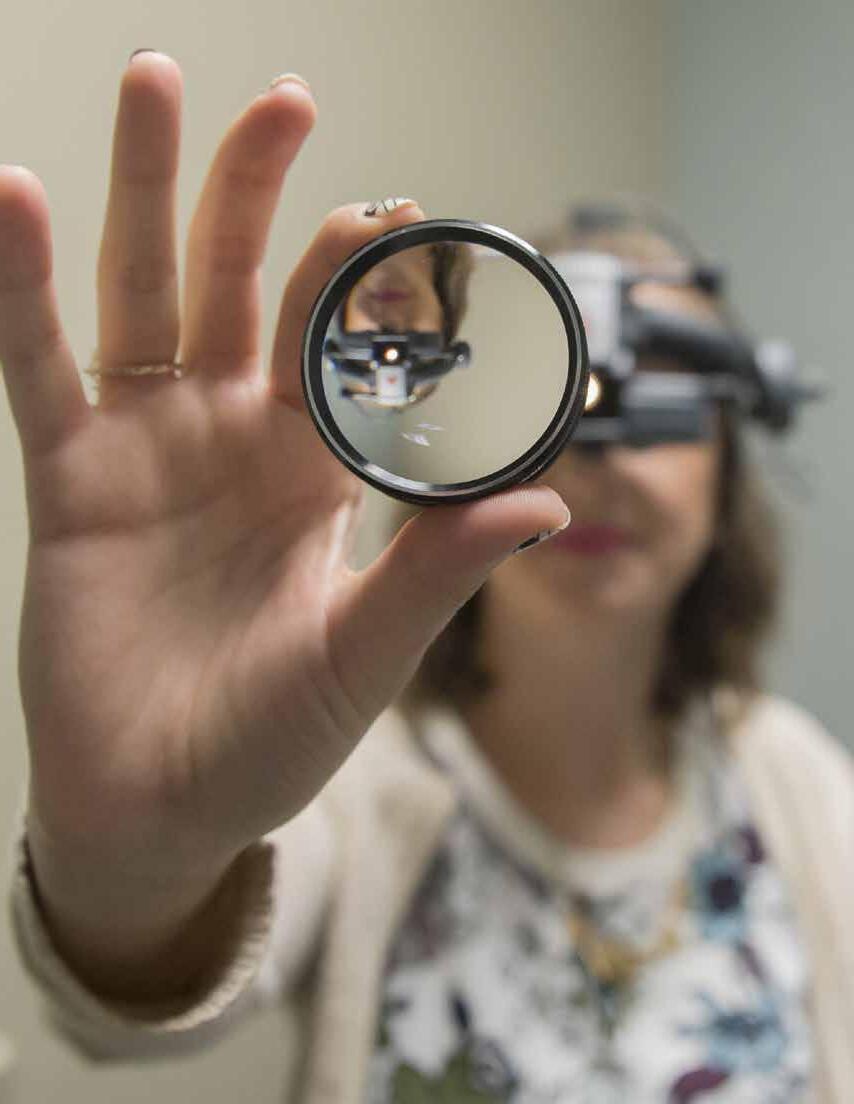
OUR MISSION IS TO LEAD THE PROFESSION BY EDUCATING THE BEST POSSIBLE HEALTHCARE PROVIDERS, PROMOTING LIFELONG LEARNING AND FOSTERING A PERSONAL COMMITMENT TO SERVICE.
Southern College of Optometry is accredited by the Southern Association of Colleges and Schools Commission on Colleges (SACSCOC) to award the Doctor of Optometry degree. Southern College of Optometry also may offer credentials such as certificates and diplomas at approved degree levels. Questions about the accreditation of Southern College of Optometry may be directed in writing to the Southern Association of Colleges and Schools Commission on Colleges at 1866 Southern Lane, Decatur, GA 30033-4097, by calling (404) 679-4500, or by using information available on SACSCOC’s website (www.sacscoc.org). Effective September 1, 2026, SACSCOC will be renamed to The Southern Association of Colleges and Schools Commission on Colleges and Universities.
Southern College of Optometry has been accredited since 1940 by the Accreditation Council on Optometric Education of the American Optometric Association, 243 N. Lindbergh Blvd., St. Louis, MO 63141, telephone number: (314) 991-4100, to award the Doctor of Optometry degree.
The college is a member of Tennessee Independent Colleges and Universities and a charter member of the Association of Schools and Colleges of Optometry. Courses leading to the Doctor of Optometry degree are approved for the training of veterans. Documents describing the college’s accreditation may be reviewed by contacting the Vice President for Academic Affairs, or you may check the accrediting bodies’ websites.
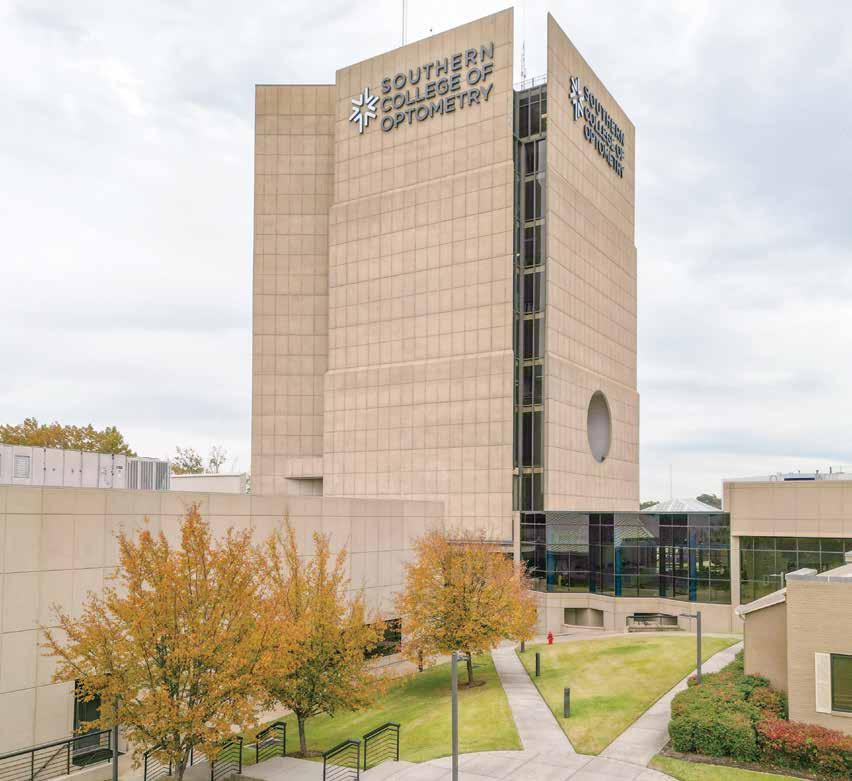
Southern College of Optometry (SCO) was founded in Memphis, TN in 1932 and has been located at its present site since 1954. The college operates and maintains excellent facilities that meet the educational needs of students, faculty and staff.
The SCO campus consists of four buildings, landscaped green space and plenty of free and secure parking.
The “tower” that houses the classrooms, laboratories, the library, administrative and faculty offices is an eleven-story building built in 1970. To meet the needs of contemporary optometry students, a state-of-the-art academic addition to this facility was completed in 2013, which added more than 23,000 square feet of flexible classroom space to the campus. The first floor houses several student service areas like the Campus Store, the mailroom, lounge area and various study rooms. The library occupies the fifth floor and contains visual science and related materials. The Learning Resource Center (LRC) provides computers and other technological resources to support student education. The student dining area is located on the fourth floor, which was renovated in 2017. The tenth floor houses our Financial Aid Office and the Hayes Center for Practice Excellence, which provides educational resources for the best
solutions and ideas on how to own and manage a private practice.
The Eye Center, approximately a 50,000 square foot facility, is the centerpiece of clinical education for SCO students. Students hone their clinical skills by assisting experienced staff optometrists and physicians in providing care for patients in the areas of primary care optometry, pediatrics and vision therapy, contact lenses, eye disease, geriatrics and low vision, and dispensing. SCO also operates external clinics to serve the Memphis community and provide additional clinical opportunities for its students. Externship sites are available throughout the country for the advanced clinical education of fourth-year students.
In May 2026, the college began construction for its new clinic/lab/ academic complex that will connect to both the existing classroom building and The Eye Center. The new building will feature a Pediatric/VT clinic, specialty labs, a new library, a new campus store, and various additional study spaces. The College will also renovate several existing areas on the first two floors of the Tower. The new building has an expected completion date of Fall 2027.
SCO’s external clinics provide additional care to many thousands of individuals and give SCO students, interns and residents unique exposure to the provision of eye health and vision care in the private practice setting.
At FocalPoint at Crosstown Concourse, SCO’s newest external clinical setting, optometric physicians offer patients a more personalized approach to eye health and vision care in a private practice setting. Here, our students are exposed to digital refraction and telehealth technology as well as specialty dry eye treatments to provide the latest in patient engagement and clinical care.
After class, students may participate in a variety of team sports and athletic endeavors at the Activity Center. Also available for spouses and guests, the Activity Center houses an indoor basketball/volleyball court, two racquetball courts, exercise equipment, lockers and showers.
According to multiple entities, Memphis is one of the most affordable cities with populations of more than 500,000 in the nation. While SCO does not offer on-campus housing, the Admissions Office assists students in several ways to find affordable housing. The Admissions Office holds a housing fair each Spring where entering students tour local apartment complexes, discuss options with current students and meet potential roommates. Most entering students find suitable apartments soon after their arrival in the city. Rental housing is readily available, and many apartment buildings are located in the vicinity of the college. Contact the Admissions Office at (800) 238-0180 for further information.
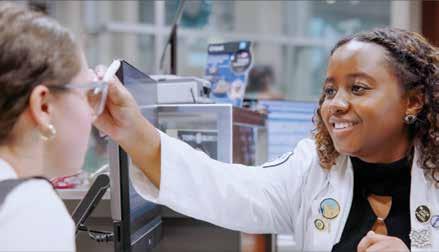
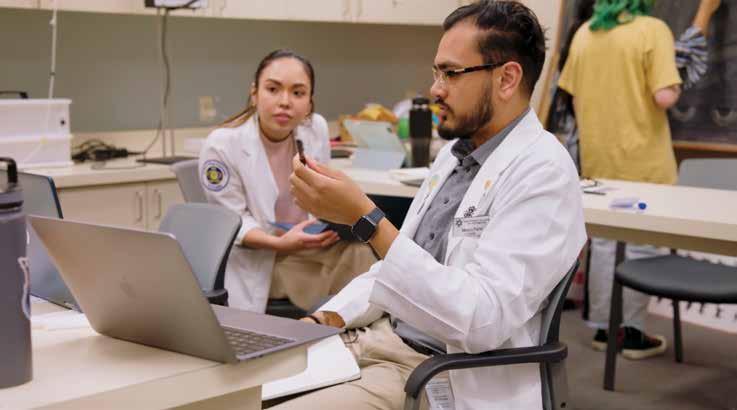
Optometrists are independent primary health care providers who specialize in the diagnosis, treatment and management of diseases and disorders of the visual system, the eye and associated structures, as well as the diagnosis of related systemic conditions. Among the types of treatment optometrists use are prescription glasses, contact lenses, vision therapy, low vision aids and pharmaceutical agents for the treatment of ocular disease. Some states allow optometrists to perform certain surgical procedures in the treatment of ocular disease and conditions.
During an examination, the doctor of optometry also assesses general health conditions. Diabetes, high blood pressure and arteriosclerosis are often detected during a vision examination. The diagnosis of systemic manifestations of ocular disease is necessary to preserve and enhance the patient’s quality of life. When appropriate, the optometrist refers patients to other health care professionals and frequently works with them in co-managing the patient’s condition.
Vision constantly changes throughout a person’s lifetime and — as it does — vision care needs change as well. Optometrists provide examinations and treatment which may prevent a patient’s vision problem from developing into a serious vision impairment.
Those who choose optometry enjoy challenging and rewarding careers. An optometrist may help a child whose school work is hindered by visual problems, a working adult whose poor vision causes safety hazards on the job, or an elderly patient who may have needlessly given up reading.
Optometrists are the major providers of primary eye care in America, with approximately 45,000 optometrists practicing in over 6,000 communities nationwide. In many of these communities, optometrists are the only primary vision care providers.
The type of practice setting which the optometrist may enter is also expanding. While private solo practice is still the predominant mode of practice, more optometrists are entering into partnerships or group practices with other optometrists or other health care providers. Health maintenance organizations, the military, Veterans’ Administration Medical Centers and hospitals offer optometrists unique opportunities to be an integral part of the health care delivery team.
Optometrists enjoy the benefits of financial security, independence and prominent status in the community. Data from the American Optometric Association’s Survey of Optometric Practice (2022) shows the average net incomes for optometrists range from $168,193 for primary practice to $204,773 for ODs who own all or a portion of their practice.
New classes enter in August of each year, and new students are enrolled only at that time. Applications for admission may be submitted one year prior to the expected year of entry but must be received no later than March 1. Because applications are processed as they are received and acceptances offered on a rolling admissions basis, it is advantageous to submit applications as early as July 1 of the year preceding desired enrollment.
Admission decisions are based on:
a) A competitive undergraduate academic performance;
b) Competitive scores on the Optometry Admission Test (OAT), MCAT or GRE*;
c) Letters of recommendation from a pre-optometry advisor and non-related optometrist;
d) Admissions interviews;
e) Amount of direct exposure/experience in diverse optometry settings; and
f) Factors such as motivation and goals, professionalism, communication skills, consistency in achievement, critical thinking skills, extracurricular performance.
*The Optometry Admission Test is the preferred test, although the MCAT and GRE may be considered.
The college receives applications for admission through the centralized service OptomCAS. A supplemental application is also required and must be submitted via the college website at sco.edu/apply. Prospective students should submit their application and supporting documents (transcripts, letters of recommendation, essay) to OptomCAS. For further information, please visit optomcas.org or our Admissions Office at sco.edu or call (800) 238-0180.
Southern College of Optometry welcomes applicants from all states and countries. Because we are a private institution, we do not offer in-state and out-of-state tuition. Our annual tuition for the 2026-2027 academic year is $48,540.
However, the college does receive funding from numerous states to assist in lowering student tuition. These awards are for a finite number of students from each state for each entering class. Should a student receive a state contract seat/forgivable loan, the amounts below will be applied toward the student’s tuition. The Admissions Office will communicate with students regarding their state contract/forgivable loan eligibility during the admissions process. For the 2026-27 year, the following states provide a projected award for select students enrolled at SCO:
Arkansas, Georgia, Louisiana, Mississippi, South Carolina
Tennessee........................................................................................................
West Virginia
Kentucky
Kansas (forgivable loan)
North Carolina (forgivable loan)
$21,184/year
$12,900/year
$11,510/year
$15,000/year
$6,500/year
$14,000/year
* Kansas, Louisiana, Mississippi and North Carolina require a student holding a contract seat to return to the state to practice or repay the entire contract amount plus interest. The stipulations by these states are exclusively between the state and student. Once the applicant has been admitted to SCO, the state of residence may not be changed. Enrolled students who were not certified Tennessee residents at the time of matriculation are ineligible to become Tennessee residents as far as the contract program is concerned. These non-Tennessee students, however, can become state residents for voter and car registration purposes, and other rights and privileges granted to state residents.
An applicant for admission to the college is required to complete at least 90 semester hours of regionally accredited undergraduate work in order to be accepted. At least 30 semester hours must have been earned at a regionally-accredited four-year college or university. Preference will be given to applicants with baccalaureate or higher degrees, and generally, 95-100% of entering students have earned a Bachelor’s degree or higher prior to enrollment. Applications can be submitted after completion of two years or 60 semester hours of undergraduate work if the candidate is eligible to continue at the last school attended. Please note that prerequisites do not have to be completed in order to apply or to be offered tentative acceptance. However, they must be completed prior to enrollment. Specific prerequisites or their equivalents include the following:
English This requirement will be satisfied by completing at least one year of college-level courses in Composition or Literature. The successful applicant will be able to communicate effectively both orally and in writing. Speech/Oral Communication is not acceptable for this prerequisite. Courses listed as “writing intensive” on an official transcript or in an official course description may also be considered.
Mathematics. Calculus I is required; a course covering analytical geometry with calculus is accepted. Business Calculus is accepted. The course Short Calculus is not accepted nor is Pre-Calculus. If a student has successfully completed a Calculus course, they would not be required to take other lower level math courses (i.e., Algebra, Trigonometry).
Statistics An introductory course in Statistics is required. Statistics taken in any department (Psychology, Education, Biology, Business, etc.) offering an appropriate course is acceptable.
Biological Sciences One year of college-level General Biology or Zoology is required, as is at least one course in Microbiology or Bacteriology. Courses must include appropriate laboratories, and Microbiology/Bacteriology must be sophomore level or above.
Additional courses in Anatomy, Comparative Anatomy and Physiology are strongly recommended.
Chemistry. One year of Inorganic (General) Chemistry with appropriate laboratories is required. One course in Organic Chemistry with laboratory is also required; also, one course in Biochemistry (no lab required). Molecular Biology can be substituted for Biochemistry if it is sophomore level or above. Physics. This requirement will be satisfied by completion of one year of college-level Physics courses with appropriate laboratories. Advanced courses in optics and/or light will be helpful in the study of optometry.
Psychology. This requirement will be satisfied by completing at least one college-level course in General or Introductory Psychology.
Additional courses in Perception and Learning will be helpful in the study of optometry.
Social Science. One year of college-level work in the social sciences is required. This requirement may be satisfied by completing courses in any of the social science disciplines, including History, Geography, Sociology, Psychology (beyond the introductory level), Political Science, Economics, Philosophy, Religion, Ethics and Anthropology.
Electives. An applicant who has excelled in the required courses and performed well on the OAT may complete electives in the social sciences or humanities, if desired. An applicant with weaknesses in certain basic sciences, as indicated by the GPA and OAT scores, should take more coursework in these areas. The college also strongly encourages applicants to enroll in introductory business and/or information systems courses in order to provide a basis for practice management courses.
The college accepts credits for prerequisites that are completed online as long as the courses are offered by a regionally accredited college or university. However, it is recommended that all science prerequisites be completed in a classroom setting. If an applicant must take an online science course, it is strongly recommended that the laboratory component be in a physical lab
and not a virtual lab. Please contact the Admissions Office with questions as to whether an online course is an advisable option.
Advanced Placement (AP) and/or CLEP credit is acceptable if documentation is provided on the undergraduate transcript or through official score reports. However, the Admissions Committee may recommend/ require additional science coursework covering the AP or CLEP credit based upon overall academic performance and/or OAT scores. Please contact the Admissions Office if you have any questions regarding AP or CLEP credits.
Successful completion of the optometry curriculum, and the practice of optometry, requires manual dexterity, visual acuity, eye-hand coordination and effective communication skills. Accordingly, the candidate should be able to:
1) Perform finely coordinated visual-motor procedures on patients using appropriate or sufficiently acceptable instrumentation under various levels of illumination; and
2) Communicate effectively with patients.
A complete listing of Functional Guidelines for Didactic and Clinical Optometric Education can be found on the website for the Association of Schools and Colleges of Optometry: optometriceducation.org/studentsfuture-students/resources/functional-guidelines. Applicants are strongly encouraged to review this information.
Course requirements and clinical requirements are applicable to all students and cannot be waived. Students are required to serve as “patients” for other students for instructional purposes in many of the laboratory courses; consequently, optometric procedures will be performed on all enrolled students.
FRESHMAN YEAR SOPHOMORE YEAR Fall Semester
SCO will assist advisors in the selection of appropriate pre-optometry courses at their own schools. Most questions can be answered by telephone/ e-mail. Occasionally, a course syllabus will be needed by our staff. Contact the Admissions Office for assistance.
SCO participates in the centralized application service known as OptomCAS. Applications may be submitted beginning on or around July 1 and can be accessed by visiting optomcas.org. SCO’s application deadline is March 1 each year. OptomCAS charges a $187 application fee to apply to one school and a $85 fee for each additional school. SCO’s supplemental application fee is $50.
The following documents must be submitted to OptomCAS:
1) Official transcripts from all previous colleges attended.
2) Two letters of recommendation: one from a pre-health advisor or natural science professor, and one from a Doctor of Optometry with whom the candidate has worked or shadowed.
3) Official preferred standardized test scores. All exams must be administered by the application deadline.
Additional items that must be completed and submitted for an application to be considered for admission include:
1) SCO supplemental application and fee.
2) Certification of state residency (if from a state participating in an SREB or other contract program). A list of residency certification officers will be provided upon an offer of acceptance.
A candidate should contact the Admissions Office before submitting an application under any of these circumstances:
a) GPA of less than 2.50.
b) Previous enrollment in another optometry school or any health professions school. See “Transfer Policy” on page 8.
All documents submitted in support of an application for admission become the property of the college and cannot be returned. The college reserves the right to reject an application which is not properly submitted.
JUNIOR YEAR
SENIOR YEAR†
Fall Semester Credits Courses required to complete bachelor’s degree.
Semester Credits
Anatomy 4a
Notes:
a. Strongly recommended
b. Courses combining analytical geometry with calculus are acceptable (usually Calculus I).
c. The college strongly encourages applicants to enroll in introductory business and information systems courses in order to enhance practice management skills.
d. Molecular biology accepted; must be at least sophomore level.
* All credits are semester hours.
# Courses are required unless otherwise noted.
† Preference will be given to applicants with baccalaureate degrees or higher.
Applications are reviewed as they are completed, and the most promising candidates are invited to campus for an admissions interview, which is closed file, one-on–one and typically conducted by an SCO faculty member. After completion of the admissions interview, the Admissions Committee (the Director of Admissions and Student Services, the Director of Student Recruitment, the Vice-President for Student Services and an appointed faculty member) reviews each candidate and renders a decision. The SCO faculty member’s interview summary is considered an additional vote in the process.
It is the applicant’s responsibility to ensure receipt by OptomCAS of official transcripts from every college attended, regardless of whether or not credits were earned. Each transcript must be sent directly to OptomCAS by the issuing institution. Once selected for admission, the applicant must forward subsequent transcripts to the college after their final term of current enrollment and document completion of any degrees.
Two letters of recommendation are required and must be submitted directly to OptomCAS by the recommending parties. One must be from a non-related optometrist with whom the candidate has worked or shadowed, and the second from the applicant’s pre-optometry advisor or advisory committee. If the applicant does not have a pre-optometry advisor, a letter from
a Physics, Biology or Chemistry instructor most familiar with the applicant’s academic ability may be substituted.
OAT scores are required in support of an application for admission, and the test must be taken no later than March 1 to be eligible for admission the following August. The OAT includes sections covering Biology, General Chemistry, Organic Chemistry, Quantitative Reasoning, Reading Comprehension and Physics. It is recommended that applicants have had at least one year of college-level courses in these subjects before taking the OAT. Scores more than two years old are not acceptable.
The OAT is offered via computer at designated testing centers throughout the year. Information about the OAT, including online registration, can be found at oat.ada.org/en. If you have questions about how your OAT score impacts your competitiveness at SCO, you should contact our Admissions Office at (800) 238-0180.
The OAT is the preferred admissions test, but SCO will accept the GRE and/or MCAT under certain circumstances. Should a student be interested in submitting the GRE and or/ MCAT in lieu of the OAT — or in addition to the OAT — they should contact the Admissions Office to review.
Southern College of Optometry is authorized under Federal law to enroll non-immigrant students and encourages and accepts applications from all countries. Students attending U.S. institutions on F-1 student visas (non-immigrants), however, are subject to requirements above and beyond those for U.S. citizens or permanent residents. These include, but are not limited to:
• Official translations of academic records (Canadians are exempt from this requirement);
• TOEFL scores (applicants from English-speaking countries are exempt);
• A financial affidavit;
• A passport copy; and
It is recommended that non-immigrant applicants contact the Admissions Office for full details before submitting an application.
The completion of any professional degree program is a demanding task.
An applicant who has not been enrolled full-time in an academic program for one year prior to the expected date of entry may be required to satisfactorily complete one full term of undergraduate work prior to their enrollment. Decisions will be made on a case-by-case basis.
An applicant may also be required to return to undergraduate school to validate outdated science credits. Course credits in the science areas generally are considered out-of-date if five or more years will have elapsed between the completion of the courses and the expected date of entry to the college. Outdated credits may be validated either by repeating one term of the course in question or by completing a next higher course. Decisions will be made on a case-by-case basis.
An applicant who is selected for admission will be offered tentative acceptance. The letter of tentative acceptance will specify all conditions which must be satisfied for the acceptance to become final.
Appropriate behavior and communication are expected in professional school. Should an applicant display unprofessional behavior and/or communication (including within social media), the college reserves the right to revoke that student’s admissions offer.
Prior to enrollment, each student is required to submit an Applicant Information/Student Health Report, an Optometrist’s Health Report and an
Immunization Record. Appropriate forms and instructions are provided by the college with the letter of tentative acceptance.
Students applying for financial aid may be required to submit one or more financial aid transcripts from their pre-optometry colleges. When required, these financial aid transcripts must be sent directly to the college by the issuing institutions.
The college requires a criminal background check for any accepted student. The college, along with other optometry schools, will utilize the service provided by OptomCAS for the criminal background checks. Should the report reveal any past criminal activity for a specific accepted student, the Admissions Committee will evaluate the report and determine if the acceptance decision is still warranted. Please note that an updated background check may be required before the student leaves for a fourth-year externship.
Each accepted applicant is required to submit a non-refundable $500 advance deposit by a specified date to hold their seat for the next entering class. The specific timeline is listed below for each admissions cycle: ACCEPTANCE DATE DEPOSIT DUE DATE AFTER ACCEPTANCE
Before October 1 8 Weeks
Between Oct. 1 – Dec. 31 5 Weeks
Between Jan. 1 – Feb. 28/29 3 Weeks
Between March 1 – March 31 2 Weeks
After April 1 1 Week
A second non-refundable $500 tuition deposit is due by March 31 for students entering the following Fall term. The total tuition deposit is $1,000. The entire $1,000 deposit is credited to the applicant’s Fall semester tuition at registration.
All entering students must provide the Admissions Office with sufficient evidence that they are fully immunized against rubeola (red measles), rubella (German measles), mumps, varicella (chicken pox), Hepatitis B, and have had a tuberculosis testing within the last 12 calendar months. It is recommended that students receive a COVID-19 vaccination.
Upon acceptance, the college provides the appropriate form for a healthcare professional to document these immunizations as well as other health conditions. Entering students who fail to turn in the completed form will not be allowed to register.
The college complies with guidelines developed by the Department of Labor, Occupational Safety and Health Administration (OSHA) regarding HIV, Hepatitis B, tuberculosis and other infectious diseases. It is required by state law that students receive the applicable screenings and immunizations before beginning the clinical segment of the curriculum. Further, some fourth-year externship sites will require updates or additional immunizations before beginning a rotation.
Accordingly, all first-year students will be assessed a Preventive Health Fee that covers flu shots and other preventive health measures. The Hepatitis B immunization series can also be completed at the college if the series was not completed prior to enrollment. Information sessions and copies of the college’s Exposure Control Plan will also be available upon request.
A letter of final acceptance is issued when the applicant has fulfilled all conditions specified in the letter of tentative acceptance and the college has received the applicant’s deposit, final academic transcripts, Immunization Record, notarized Applicant Information Report, Optometrist’s Health Report and any financial aid transcripts required in connection with a financial aid application. All documents must be received by August 1 or the offer of acceptance may be withdrawn.
Appropriate behavior and communication are expected in professional
school. Should an applicant display unprofessional behavior and/or communication (including within social media), the college reserves the right to revoke that student’s admissions offer. Further, deposited candidates who hold a seat at two optometry schools after May 15, as reported in the OptomCAS Shared Decisions Report, may be withdrawn and must forfeit the entire deposit.
An integral part of registration is the payment of an amount sufficient to cover the then-due charges for tuition, fees, books, instruments and equipment. No student may complete registration without having paid all charges in full.
SCO has a number of agreements with undergraduate institutions where applicants from those colleges and universities who meet certain criteria can be guaranteed an admissions interview. Other schools have an agreement where candidates have an opportunity to enroll at SCO at the completion of their junior year but still earn a bachelor’s degree from the undergraduate institution after completion of the first year at SCO. Colleges and universities with an affiliation agreement are listed below. Students from those institutions should contact the pre-optometry advisor for specific details.
Aurora University (IL)
Baptist Health Sciences University (TN)
Christian Brothers University (TN)
Eastern Mennonite University (VA)
LeMoyne-Owen College (TN)
Milligan College (TN)
South Carolina State University (SC)
Tusculum University (TN)
Union University (TN)
University of Memphis (TN)
University of Tennessee at Martin (TN)
Master of Public Health at the University of Memphis
SCO and the University of Memphis have an affiliation agreement that allows students to simultaneously pursue a Doctor of Optometry degree from SCO and a Master of Public Health (MPH) from the University of Memphis. Students must be accepted to SCO before beginning the MPH program but can actually enroll in MPH coursework before beginning classes at SCO. Other admissions requirements include at least a 3.0 undergraduate GPA or a 3.5 or higher in the major subject area. The MPH degree requires 42 semester hours, but 15 of those can be transferred from SCO. More information is available through the SCO Admissions Office or the School of Public Health at the university.
Master of Business Administration in Health Care Management at Christian Brothers University
Christian Brothers University (CBU) offers a 35-hour course of study leading to the Master of Business Administration in Health Care Management (HCMBA). For students interested in working towards this degree while in optometry school, CBU has agreed to accept 9 hours of transfer credit in practice management coursework towards this degree. Students apply to the program after enrolling at SCO. Students in the HCMBA will attend classes one night per week for eight week periods. For more information about this program, go to cbu.edu
Transferring to Southern College of Optometry from another optometry school or from any health professions school can be a difficult process. To be considered for transfer, a student must be currently enrolled and eligible to continue in the original school, or if not currently enrolled, never dismissed or suspended from the original school and not on probation at the time of withdrawal.
If these conditions are met, the student will need to submit:
1) A letter from the dean or chief student affairs officer at the original school indicating the student departed or will depart in good standing and that the original school is aware of the student’s desire to transfer;
2) A letter from the student indicating the reasons and motivation for transfer; and
3) Official copies of all undergraduate and health professions school transcripts.
If the candidate is deemed eligible for transfer and competitive by SCO standards based upon documentation received, the candidate will be invited for an admissions interview. Once the interview process is completed with the college’s Admissions Committee, a decision will be rendered on the candidate’s application.
Most students accepted for transfer are required to repeat all or most coursework and usually must begin as a first-year, first semester student. Once the application for transfer has been submitted along with all required documentation, the Vice President for Academic Affairs will determine if advanced standing is warranted and, if so, at what level in the program the student would be placed if admitted. It is also important to note that if advanced standing were approved, there must be an open seat at that level in the program for the transfer candidate to be eligible to be admitted with advanced standing.
Students accepted to Southern College of Optometry by December 15 may be able to defer enrollment for one (1) year with a guaranteed position in the following class. An acceptable reason for the request must be provided. Deferment requests are considered on an individual basis. Approval is not guaranteed, and the number of deferments awarded for any one class is limited.
To be considered for deferment, the accepted student must submit a formal written request to the Director of Admissions and Student Services. If the request is approved, a $500 non-refundable deposit must be submitted. Both tasks must be completed on or before the initial deposit due date communicated at the time of acceptance.
If deferment is approved, the student will also be required to:
1) Re-activate the deferred OptomCAS application no later than October 1st of the next application cycle.
2) Ensure that all relevant credentials are still up-to-date and competitive within the next cycle, including OAT scores and science prereqs (e.g. the applicant’s OAT score must be no more than two years old and at least one course must have been completed in Physics, Biology and Chemistry within the last five years). An updated transcript should be submitted to OptomCAS as soon as the application has been reactivated in the next cycle. The Admissions Office reserves the right to require OAT retakes and/or require the candidate to take/retake additional coursework.
3) Complete all other enrollment requirements following the standard timeline of the next cycle. Certain final acceptance items (e.g. immunization report, health report, etc.) submitted before deferment may need to be updated and resubmitted in the new cycle.
Please note: Scholarship awards and offers of state contract seat positions cannot be deferred. Deferred students will be reconsidered for scholarships and/or state contract seat positions during the next cycle based on the date of re-application.
An advantage of attending the Southern College of Optometry is living in Memphis, Tennessee. Memphis is home to such corporate giants as FedEx, Auto Zone and International Paper, along with one of the nation’s top medical treatment centers. The city has been nationally recognized for its beauty, cleanliness, culture and affordability. According to the American Chamber of Commerce Research Association, Memphis has one of the lowest costs of living among U.S. urban areas with central cities of more than 500,000 people. Situated on the banks of the Mighty Mississippi, the Bluff City celebrates annual events, including the World Championship Barbecue Cooking Contest, Memphis in May International Festival and the FedEx St. Jude World Golf Classic Championship. Memphis is rich in musical heritage, as well. Elvis Presley, Justin Timberlake, W.C. Handy, Jerry Lee Lewis, Al Green and many others all began their careers here.
Sight-seeing, recreational and cultural events are numerous in Memphis. SCO students will find Overton Park, the Memphis Zoo, Beale Street — Home of the Blues — and several professional theaters and art galleries nearby. Graceland, Liberty Bowl Memorial Stadium, the Metal Museum, the Children’s Museum of Memphis and the National Civil Rights Museum are all within a short drive of the campus. The city is also home to an NBA franchise, the Memphis Grizzlies, who play their games in the FedEx Forum downtown arena. Several municipal parks offering golf, swimming, tennis, walking trails, bridle paths and picnic areas are open to the public, as are state parks and lakes, and all within a short drive. Memphis also has one of the largest Green Lines in the country, providing a popular venue for running, biking and walking
Most of one’s time at SCO, however, will be spent in optometric studies enhanced by various student activities. The following is a list of organizations, including honorary societies, available to interested students.
SGA presents student recommendations in school policy and governance matters to the proper administrative offices. The SGA President is an ex-officio member of the college’s Board of Trustees. Composed of student leaders representing the executive council, class officers and recognized student organizations, SGA sponsors service endeavors, the SCOPE yearbook, student dances and intramural sports.
AOSA is a national organization of optometry students dedicated to the enhancement of educational, political and professional concerns. It provides a student voice within the profession of optometry and allows students to travel to the annual International AOSA Conference.
SCAAO is the official student chapter of the Academy which promotes research and scholarly activity in optometry.
Beta Sigma Kappa: an international optometry honor fraternity whose purpose is to stimulate scientific attainment and ethical practice.
Gold Key Society: honors outstanding students whose professional and ethical attitudes are in the interest of service to their class, college and profession.
Student Ambassadors: members assist in student recruitment, admissions and public relations functions of the college. Ambassadors are selected each year from the first-year class on the basis of academic performance, nominations by faculty and staff, and interviews. Once selected, ambassadors continue serving until graduation.
Amigos: Dedicated to providing a venue for students seeking to enhance their Spanish conversation skills.
Contact Lens Society: organization open to third- and fourth-year students interested in expanding their knowledge of contact lenses through presentations by guest lecturers.
Dry Eye and Aesthetics Club: providing information on practice opportunities related to dry eye treatment and aesthetics.
Fellowship of Christian Optometrists: for the promotion of good will and Christian belief within the profession of optometry.
Intramural Sports: Organizes events outside of class and clinic that take place on campus and off campus. They include the following, but are not limited to: flag football, volleyball, basketball, soccer, golf, softball and frisbee golf tournaments. This club is a way to stay active and involved.
Gamma Omicron: dedicated to increasing awareness of issues for women in optometry, networking opportunities and professional development.
Lions Club: promoting service through community involvement, especially working with those who are visually impaired.
Low Vision Club: providing information for students interested in low vision patient care.
National Optometric Student Association (NOSA): dedicated to increasing minority representation in optometry. Membership is open to all SCO students.
Neuro-Optometric Rehabilitation Association (NORA): focused on bringing an inter-professional approach with multiple health care providers in order to advance the art and science of rehabilitation for brain injury patients.
Ocular Disease Club: to help increase exposure to ocular disease by discussing rare cases and learning more about future aspects of a career in disease management.
Optometric Private Practice Club: dedicated to preparing students for the business of optometry by providing resources and information from experienced persons, practices and business entities.
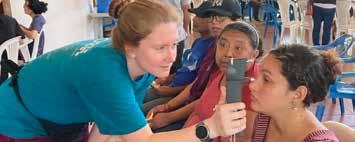
Remote Area Medical (RAM): dedicated to provide basic vision care to the underserved in rural communities in the area.
Run Club: providing interested students to run/train together including preparing for the St. Jude Memphis Marathon in December.
SCOPE: SCO’s official yearbook created to reflect the year’s events, highlights, and the lives of the people involved at SCO. SCOPE opens its editor and yearbook staff positions every year to any and all students interested in designing the next yearbook to be cherished beyond its years.
Spectrum: a school community where all students and faculty/staff feel welcome and supported, regardless of sexual orientation or gender identity. The group also seeks to provide a voice for those who feel they have lost theirs and to promote equality and diversity through social gatherings, community outreach and campus-wide activities.
Sports Vision Society: provides vision care to athletes at the state and international levels.
State Clubs: a collection of students interested in practicing in a particular state. Approximately 30 states are represented through these organizations that bring in outside speakers and provide mentoring possibilities and guidance regarding practice opportunities and regulations.
Student Public Health Vision Care Association (SPHViCA): connecting students who have an interest in public health to promote health and wellbeing, with an emphasis in vision and eye health.
Student Volunteers in Optometric Service to Humanity (SVOSH): founded at SCO in 1975 to provide free eye care and glasses to the underserved in Central America and throughout the world. SVOSH members work year-round to prepare for their annual 10-day missions. Activities include collecting, inspecting and sorting donated eyeglasses, along with various projects to help finance travel expenses. Membership is open to all interested students.
Vision Therapy Club : dedicated to facilitating the awareness that vision involves more than eyesight and to expanding the number of students that will deliver developmental vision care and vision therapy to their patients.
Omega Delta, Iota Chapter: oldest and largest optometric fraternity; activities include the SCO Holiday Party, tutoring retinoscopy for first-year students, camping and canoe trips, and other social events.
Courses are numbered in the following series: • 100 series for first professional year students; • 300 for third professional year students; and • 200 for second professional year students; • 400 for fourth professional year students. The four-year program provides more than 5,000 clock hours of instruction in the sciences and clinical optometry and carries a minimum of 194 semester hours of credit. The curriculum listed below is categorized by professional year. Course prerequisites are noted and can only be waived by the instructor of record and the Vice President for Academic Affairs.
Optometric Theory & Methods I
(6 semester hrs)
Four hours of lecture and four hours of laboratory per week. This course in an introduction to optometric theory and examination, focusing on the strategies of the examination and sequencing of the various tests and procedures and medical record notation. Primary emphasis will be on chair skills to include visual acuity, stereopsis, color vision, Amsler grid, extraocular muscles, cover test, accommodation, convergence, confrontation fields and pupillary reflexes. Instruction in objective retinoscopy techniques, subjective manifest refraction techniques, phorometry and keratometry are included. Lectures emphasize the theory of these procedures, interpretation of their results to arrive at a preliminary diagnosis with treatment, while laboratories emphasize clinical techniques.
Optics of the Eye I
(5 semester hrs)
Four hours of lecture and two hours of laboratory per week. Emphasis on geometrical and visual optics. Vergence of light, refracting and reflecting surfaces, thin and thick lenses, prisms and mirrors. Induced prism and Prentice’s rule. Spherical and astigmatic refractive error and its correction. Schematic eye models. Overview of clinical instruments including the keratometer and corneal topographer. Optics of spherical soft and rigid contact lenses.
Anatomy, Histology and Physiology I
(4.5 semester hrs)
Three hours of lecture and three hours of laboratory per week. Introduction to physiology with an emphasis on the function of cellular organelles, membrane transport, neurotransmitters and synaptic transmission, and nerve and muscle cells. Microscopic anatomy and histogenesis of human tissues. Additional topics include hemodynamics, immunity, and anatomy related to special senses. Laboratory includes: gross anatomy and physiology of head, neck, thorax and abdomen; cranial nerve evaluation, microscopic anatomy of ocular structures, orbit, adnexa and visual pathways.
Neuroanatomy
(2 semester hrs)
Two hours of lecture per week. Function and structure of the human nervous system including anatomical structure of the brain, cranial and spinal nerves, and spinal cord. Emphasis placed on the functional neuroanatomy of sensory, motor and autonomic systems. Testing and imaging modalities of the central nervous system. Practical applications of neuroanatomical knowledge essential to clinical practice.
(4 semester hrs)
Four hours of lecture per week. Gross and microscopic structure of orbit, ocular adnexa, cornea, sclera, uvea, lens, anterior and posterior chambers, vitreous, retina and optic nerve. Physiology of ocular homeostasis and function of the eye to include function of the orbit and eyelids, tear production and drainage, and corneal physiology, transparency and wound healing. Physiology of the crystalline lens, vitreous, choroid, retina and uvea. Aqueous humor formation, circulation and drainage.
Biochemistry
(1.5 semester hrs)
One and one-half hours of lecture per week. Basic principles of biosynthesis and bioenergetics of carbohydrates, lipids and proteins as well as biological functions of these macromolecules. Biochemical mechanisms of molecular biology including gene expression and regulation and the clinical application of genomics. Basic principles of human nutrition. Appropriate clinical correlations to ocular disease throughout the course.
Strategies for Academic Success I
(0.5 semester hrs)
This Pass/Fail, introductory course focuses on acclimating to a professional program with the development and application of study strategies, culminating in an integrated comprehensive exam over previously tested content in NBEO Part I-related courses.
Optometric Theory & Methods II
(5 semester hrs)
Three hours of lecture and four hours of laboratory per week. Continuation of OPT 110 with emphasis on case history and the etiology, diagnosis and management of refractive errors and convergence
anomalies. Emphasis is placed on the Theoretical basis of the various tests used to diagnose refractive errors, presentation of problem-oriented medical record keeping, as well as formulation of diagnosis and treatment plans. Evaluation of accommodative and convergence relationships and their influence on retinoscopy and monocular and binocular subjective refractive results, as well as alternate examination techniques and the formulation of a diagnosis and treatment plan are emphasized in laboratory.
Prerequisites: OPT 110
121
Optics of the Eye II
(5 semester hrs)
Four hours of lecture and two hours of laboratory per week. Emphasis on visual and physical optics. Optics of objective and subjective refraction. Toric soft and rigid contact lenses. Ophthalmoscopy. Magnification and retinal image size. Optical aspects of accommodation and presbyopia. Effects of apertures and aberrations on optical systems. Optics of low vision devices. Topics in physical optics to include interference, diffraction, polarization, lasers and photometry. Entoptic phenomena. Role of the pupil as it affects depth of field, aberrations and accommodation. Myopia progression as it relates to above topics.
Prerequisites: OPT 111
Anatomy, Histology and Physiology II
(4.5 semester hrs)
Four and one-half hours of lecture per week. Integrated anatomy and physiology of the major organ systems: cardiovascular, respiratory, renal, digestive, endocrine and reproductive. Embryological development of these systems and the eye, orbit, and accessory structures.
Prerequisites: OPT 112
Ocular Motility
(1.5 semester hrs)
One and one-half hours of lecture per week. Innervation, kinematics and actions of the extraocular muscles. Types of eye movements and their neurological control mechanisms. Relationship of eye movements to visual perception and the reading task. Clinical and research measurement techniques. Introduction to disorders of ocular motility and clinical diagnostic procedures.
Prerequisites: OPT 112 , OPT 114
(5.5 semester hrs)
Four and one-half hours of lecture and two hours of laboratory per week. Neurophysiology of the visual system. Psychophysical methodology and its applications in research and the clinical setting. Clinical electrophysiology of the visual system. Perception of light including light and dark adaptation. Color vision and clinical assessment of color vision deficiencies. Spatial characteristics of the visual system, including contrast sensitivity, spatial resolution and hyperacuity. Temporal aspects of vision, including processing time, temporal interactions, flicker sensitivity and motion perception. Cognitive aspects of vision, including object recognition, visual illusions and visual attention. Effects of development, aging, nutrition, and disease on visual function. Application of vision science to clinical optometry. Basic research methodology. Prerequisites: OPT 112
Ophthalmic Optics I
(1.5 semester hrs)
One hour of lecture and one hour of laboratory per week. An introduction to ophthalmic lenses: properties and physical characteristics, power specifications and measurements. Single vision and multifocals, including progressive addition lenses. Prism including vertical imbalance. Ophthalmic lens design including aberrations, advanced designs and high-powered prescription considerations. Laboratory emphasis on ophthalmic lens familiarization and developing lensometry skills. Prerequisites: OPT 111
Strategies for Academic Success II
(0.5 semester hrs)
This Pass/Fail course continues application of study strategies developed in Strategies for Academic Success I and provides ongoing review of previous NBEO-related course content in an integrated fashion to support retention and success in concurrent courses, culminating in an integrated comprehensive exam over all previously tested content in NBEO Part I-related courses.
Optometric Practice I
(1 semester hr)
One hour of lecture per week. Overview of the profession of optometry in the United States. The historical development of optometry, public health initiatives and U.S. health care. Organizational and legislative status of the profession. The evolving role of optometry as a primary health care discipline. An examination of the modes of optometric practice. Professionalism and behaviors of health care professionals.
(1 semester hr)
Four hours of lab weekly, divided into two, two-hour sessions, delivered over 6 weeks. Lab will be devoted to learning the basics of slit lamp operation, learning how to view gross structures of the external eye, learning 78D and 90D lens viewing of the posterior pole, optic nerve, macula and scanning the arcades. Additional sessions will be devoted to practicing case history, refractive procedures and techniques, and making diagnostic decisions concerning the patient presentation. Patient presentations will be simulated by means of optical devices and alternative patient scenarios.
Prerequisites: OPT 120
Basic Pathology
(2 semester hrs)
Five hours of lecture per week delivered over six weeks. Basic pathology covers disease processes at the cellular level. Topics include: alloimmunity, autoimmunity, cancer, genetics of inherited disorders, immunology, microbiology, and tissue injury and repair.
Prerequisites: OPT 112, 113, 114 & 120
Systemic Pharmacology I (2 semester hrs)
Five hours of lecture per week delivered over six weeks. The lectures will include basic principles of pharmacology, which includes pharmacokinetics, pharmacodynamics, routes of administration, absorption, distribution, metabolism and excretion. Also included are discussions of the autonomic nervous system, its actions, synthesis, release and metabolism of its neurotransmitters. The pharmaceutical agents that affect the autonomic nervous system, and their interactions with their respective receptors will be discussed in terms of the mechanism of action, indications, contraindications, adverse and side effects. Chemotherapeutic agents including antibiotic, antiviral, antiprotozoal and anticancer medications will be covered with emphasis on those commonly prescribed or those with ocular side effects. A brief introduction to common dietary supplements and herbal medications will also be included.
Prerequisites: OPT 114 & 122
Foundations of Clinical Care I
(0.5 semester hr)
One hour of workshop per week delivered over six weeks. Introduction to service-learning concepts and activities, identification of service expectations and opportunities for optometrists, discussion of SCO community outreach activities and the communities served, and reinforcement of clinical skills through mock screenings.
Evidence Based Medicine (2 semester hrs)
Five hours of lecture per week delivered over six weeks. Introduction to the principles of evidencebased medicine, including the scientific method, medical research and patient education. The emphasis is on the critical reading of the medical literature within the context of serving a diverse client database. Topics include research design, concepts such as statistical versus clinical significance, medical database searches such as PubMed and Cochrane, ethical research principles, and clinical patient management unique to your patient.
Optometric Theory & Methods III (4 semester hrs)
Two hours of lecture and four hours of laboratory per week. Continuation of OPT 110, OPT 120 and OPT 200 with an emphasis on the examination and evaluation of the ocular tissues and visual pathways. Topics include: basic tenets of ocular diagnostic pharmacology and detailed technique, interpretation, and variation of the following skills, procedures, and tests: binocular indirect ophthalmoscopy, tonometry, gonioscopy, fundoscopy, optical coherence tomography, and visual field testing. Clinical procedures learned in OPT 110, OPT 120 and OPT 200 will be practiced in the laboratory along with those learned in the current semester.
Prerequisites: OPT 200
Medical Pathology
(3 semester hrs)
Three hours of lecture per week. Medical Pathology is a continuation of OPT 201 and addresses the mechanisms, clinical manifestations, and diagnosis of systemic diseases. Topics include diseases and disorders of the following organ systems: cardiovascular, respiratory, nervous, gastrointestinal, renal and genitourinary, integumentary, musculoskeletal, endocrine, hematopoietic, lymphatic and reproductive.
Prerequisites: OPT 201
Systemic Pharmacology II
(3 semester hrs)
Three hours of lecture per week. Continuation of OPT 202. Topics include pharmacological agents used in the treatment of disorders of the cardiovascular system, endocrine system, central nervous system, pain and inflammation. Specific drug mechanism of action, pharmacokinetics, pharmacodynamics, contraindications, adverse effects and drug-drug interactions will be covered, as will potential ocular side effects. A full discussion of the rational use of opiates and other controlled substances is also included.
Prerequisites: OPT 202
(2.5 semester hrs)
Two hours of lecture and one hour of laboratory per week. Psychophysical and physiological bases of binocular vision and stereopsis to include correspondence, retinal disparity, the horopter, physiological diplopia and fusion. Development of binocular vision and sensory adaptation to abnormal binocular conditions, including suppression, rivalry, binocular confusion and anomalous correspondence. Introduction to clinical tests of binocular summation, fusion, suppression, and the presence of amblyogenic factors.
Prerequisites: OPT 125 & 126
Foundations of Clinical Care II
(1.5 semester hrs)
One (1) hour of lecture every other week (or equivalent number of lectures to half the number of weeks per term) and four (4) hours of laboratory per week. Lecture content will introduce key concepts in patient communication which highlight public health focus areas of Patient-centered care, Interprofessional Practice and Education (IPE), and Service Learning (SL). Laboratory content will include simulated patient encounters and various clinical assignments with increasing patient exposure throughout the year. Clinical assignments include community vision screenings, assignments throughout The Eye Center (TEC) and Focal Point (FP) clinics. Students are expected to coordinate their own transportation to all assignments.
Prerequisites: OPT 120 & CLN 206
Ophthalmic Optics II & Environmental Vision
(3 semester hrs)
Two hours of lecture and two hours of laboratory per week. Absorptive lenses and lens coatings including sunglasses. Eyestrain related to anisometropia, aniseikonia, digital device/computer display use including visual ergonomics, 3D vision. Ultraviolet radiation and high energy visible blue light. Eye safety in the workplace and during recreational activities including safety eyewear. Illumination, lighting standards and laser safety. Various ophthalmic industry standards and regulatory agencies. Laboratory emphasis on ophthalmic lens fabrication and on frame materials, standard alignment, frame selection, frame adjustments, spectacle verification and dispensing to patient.
Prerequisites: OPT 121 & 127
Pediatric Optometry
(3 semester hrs)
Two hours of lecture and two hours of laboratory per week. Diagnosis, management and treatment of refractive conditions, binocular disorders and eye diseases common in infants and children. Schema of normal growth and development with an emphasis on expected vision development from birth throughout childhood. Strategies and procedures for treatment intended to maximize visual potential.
Co-requisite: OPT 215
Optometric Practice II (1 semester hr)
One hour of lecture per week. Historical evolution of health care law and its implications for the practicing optometrist. Legislative status and legal obligations of the optometrist. Legal aspects of record-keeping, insurance plan participation, informed consent, professional insurance and patients’ rights. Health care ethics and the role of the optometrist. Economic implications of the practice of optometry.
Prerequisites: OPT 129
Optometric Theory & Methods IV
(2.5 semester hrs)
One hour of lecture and three hours of laboratory per week. Lectures will emphasize clinical application of topics in prior and concurrent courses. The core components of the lecture course will include case analysis, documentation, and billing and coding necessary for entering clinical care. Laboratory time will emphasize the culmination of all clinical skills learned in OPT 110, 120, 200 and 210 into an optometric examination sequence in preparation for examining patients in The Eye Center.
Prerequisites: OPT 210
Anterior Segment Disease & Treatment
(5 semester hrs)
Four hours of lecture and two hours of laboratory per week. Diagnosis, management and treatment of diseases, disorders and injuries of the ocular adnexa and anterior segment of the eye, including electrical, cryo-injury, and frostbite related ocular urgencies. Ocular anatomy and physiology, microbiology, and pharmacological agents as they relate to disease and management of the anterior segment. Laboratories to emphasize clinical diagnostic and treatment procedures used in various disease states of the anterior segment of the eye including but not limited to: punctal occlusion, punctal dilation and irrigation, foreign body removal, patching, wound closure, periocular injections and treatment of periocular lesions.
Prerequisites: OPT 114, 210, 211 & 212
Posterior Segment Disease & Treatment I
(3.5 semester hrs)
Two and one-half hours of lecture and two hours of laboratory per week. Pathology, clinical signs and symptoms, prognosis and management of diseases, disorders, and injuries involving the macula, choroid, retina and optic nerve. Labs emphasizing retina and optic nerve imaging, fluorescein angiography, digital anterior segment and posterior photography, ultrasonography, advanced visual field testing, and fundoscopy techniques. Intravenous and intramuscular injections.
Prerequisites: OPT 122 & 211
(2 semester hrs)
Two hours of lecture per week. Principles of ocular pharmacology and medical treatment; clinical administration of oral, topical and injectable drugs; and utilization of diagnostic agents in the clinical care of the eye and adnexa. Principles and specific management and treatment of ocular disease, trauma, anterior segment surgery and laser treatment/surgery by systemic, local and topical therapy. The clinician’s responsibility in the treatment and management of ocular and systemic complications of pharmaceutical use.
Prerequisites: OPT 212
I
(3 semester hrs)
Two hours of lecture and two hours of laboratory per week. History of contact lenses. Physiological effects of contact lens wear. Optical design of contact lenses. Prefitting examination and patient selection. Design and fitting of rigid and hydrogel spherical lenses. Design and fitting of hydrogel toric lenses. Lens care systems and solutions. Clinical management of contact lens patients, including contact lens-related complications.
Prerequisites: OPT 210
Foundations of Clinical Care III
(1.5 semester hrs)
One (1) hour of lecture every other week (or equivalent number of lectures to half the number of weeks per term). One four-hour session per week. A continuation of CLN 216.
Prerequisites: CLN 216
(3 semester hrs)
Two hours of lecture and two hours of laboratory per week. Diagnosis of disorders of accommodation, binocular vision and visual perception. Management by means of motor and sensory therapy. Development of therapy regimens for these visual anomalies and prognoses for their resolution.
Prerequisites: OPT 120, 215 & 218
(2.5 semester hrs)
Two hours of lecture each week and two hours of laboratory every week for one half of the semester. Etiology and epidemiology of vision impairment and age-related changes. Prescription of optical and non-optical devices used in the management of the low vision patient. Examination, treatment and management of patients with reduced vision. Interdisciplinary rehabilitation sources and counseling. Provision of eye care in out-of-office settings, such as nursing homes. Psycho-social and economic factors associated with aging.
Prerequisites: OPT 217, 221 & 223
(2.5 semester hrs)
Two hours of lecture and one hour of laboratory per week. Diagnosis, management and treatment of strabismus and amblyopia. Prognosis for the resolution of these conditions will be emphasized. Diagnostic and treatment strategies outlined in OPT 227 may be foundational in nature for this course.
Prerequisites: OPT 120, 215, 224 & 227
(4 semester hrs)
Three hours of lecture and two hours of laboratory per week. A continuation of OPT 225. Design and fitting of rigid and hydrogel toric contact lenses. Scleral and hybrid contact lenses. Rigid lens modification. Multifocal contact lenses. Advanced applications of contact lenses, including pediatrics, keratoconus, post-surgical fitting and orthokeratology. Management of myopia progression with contact lenses. Therapeutic applications of contact lenses.
Prerequisites: OPT 225
Integrative Clinical Analysis I
(2 semester hrs)
Two hours of seminar per week in a small group setting. Case presentation, problem-based learning format. Matching patient’s presenting signs and symptoms with a diagnosis and treatment plan. Proper test selection to aid in diagnosis and determine the best course of patient management, follow-up and prognosis. Students will demonstrate clinical decision making through interactive, oral patient encounter scenarios including analysis and synthesis of clinical data and incorporation of that data into patient diagnosis, management, treatment decisions, and patient education for the individual case evaluated by the instructor.
Prerequisites: All first and second year courses
Glaucoma
(2 semester hrs)
Two hours of lecture per week. Diagnosis,
management and treatment of the various glaucomas including primary open angle, angle closure, infantile and secondary glaucoma. Pharmacological agents and surgical therapies used to treat the glaucomas. Review of clinical trials in glaucoma and ocular hypertension.
Prerequisites: OPT 113, 221, & 224
(2 semester hrs)
Two hours of lecture per week. Diagnosis, management and treatment of neurological disorders that affect the adnexa, eye and visual system. Basic aspects of ophthalmic neurology and major neurological disorders. Diagnostic imaging of the visual system with emphasis on CT, MRI, MRA, MRV, CTA and angiography. Visual field defects in neuro-ophthalmic disorders.
Prerequisites: OPT 113
(2 semester hrs)
Two hours of lecture per week. This course is designed guide students as they develop the business acumen to complement their patient care skills. Students will examine modes of practice, explore their professional interests, and develop goal setting skills to develop a career plan. This course examines the importance of personal financial literacy and planning. The elements of risk management are introduced. Opportunities and issues related to Third-party reimbursement are also discussed. The topics of leadership, organizational structure, and human resource management are also covered.
Prerequisites: OPT 219
Posterior Segment Disease & Treatment II
(3 semester hrs)
Three hours of lecture per week. A continuation of OPT 223.
Prerequisites: OPT 223
Integrative Clinical Analysis II
(2 semester hrs)
Two hours of seminar per week. Integration of concepts from the basic and clinical science curriculum are used to assess signs and symptoms in the presented cases. Case history, proper test selection to gather relevant data, making the diagnosis and developing a treatment and/ or management plan for the individual case as presented are emphasized. Students will demonstrate clinical decision making through interactive, oral patient encounter scenarios including analysis and synthesis of clinical data and incorporation of that data into patient diagnosis, management, treatment decisions, and patient education for the individual case evaluated by the instructor.
Prerequisites: OPT 307
(1.5 semester hrs)
One and one-half hours of seminar per week. Small group instruction on various topics related to the practice of optometry.
(2 semester hrs)
One (1) hour of lecture and two (2) hours of laboratory a week. Surgical treatment, anterior segment ophthalmic laser procedures and perioperative management utilizing procedures routinely performed in the office of a Doctor of Optometry. Procedures taught will include dermatoscopy, suturing techniques, chalazion management, tissue biopsy, radiofrequency surgical procedures, corneal and conjunctival foreign body removal, aesthetic treatments of the eye and adnexa, laser capsulotomy, laser iridotomy and selective laser trabeculoplasty. Emphasis will be placed upon appropriate differentials and diagnoses, patient selection, aseptic technique, pre-treatment and management of post-surgical complications. Laboratory curriculum will emphasize communication, documentation and hands-on performance of the above techniques. Each intern will also be required to complete one 90-minute ASOL Assignment session in the Anterior Segment Ophthalmic Laser Lab and cardiopulmonary resuscitation (CPR) certification.
Prerequisites: OPT 221, 224 & 223
Systemic
and Ocular Manifestations (1.5 semester hrs)
One and one half hours of lecture per week. Review of the effects of systemic conditions on the visual system with an emphasis on diagnosis and management in an optometric setting.
Prerequisites: OPT 113, 211, 221, 223, 301 & 313
(2 semester hrs)
Two hours of lecture per week. This course is designed guide students as they develop the business acumen to complement their patient care skills including: Best practices in office and optical design, practice location selection, inventory management, equipping a practice, branding and marketing. Accounting and utilizing practice metrics for measuring and monitoring practice and personnel performance as well as business taxes are introduced. Students learn the basics of evaluating a practice for partnership or purchase, the advantages and disadvantages of various corporate structures, and writing a business plan and securing financing for a buy-in, buy-out or cold-start. Entering the workforce, networking, interviewing, the difference between an employee and an independent contractor, compensation models, and elements of a contract are covered.
Prerequisites: OPT 312
(2 semester hrs)
Two hours of lecture per week. Introduction to foundational concepts of epidemiology and public health, especially as they relate to eye care and optometry. Other topics include public health study design, biostatistics, major epidemiological studies relevant to optometry, U.S. health care policy and delivery, local and national public health programs and organizations, social determinants of health, health behavior, and health equity.
Prerequisites: OPT 113, 209, 211, 221, 223, 308 & 313
(3 semester hrs)
This course is a continuation of OPT 319. Three (3) hours of lecture per week and requires completion of two (2) Anterior Segment Ophthalmic Laser (ASOL) Assignments. This course will go into more detail regarding anterior segment ophthalmic laser physics, laser biophysics, laser-tissue interaction, laser hazard and safety. Ophthalmic laser indications, contraindications and complications will be reinforced throughout. A second component of this course will focus on pre- and post-operative care for cataract surgery, laser refractive surgery, keratoplasty, corneal cross-linking, retinal laser surgery, intracameral injections for retinal diseases and oculoplastic surgeries. Thresholds for making appropriate surgical referrals will also be addressed. This course requires completion of two ASOL Assignments, including a 1-hour practice session in the ASOL lab and successful passage of the ASOL Practical Examination.
Prerequisites: OPT 221, 223, 308 & 313
CLN 400, 410, 420
Clinical Primary Care
(3 semester hrs)
Nine hours of clinic per week. Two hours of seminar on alternate weeks. The clinic assignment will be at Focal Point, a private practice-like setting and will include participation with doctors of optometry or other physicians as non-physician extenders in comprehensive direct patient care utilizing a full range of management modalitiesfor patients across all age groups. Interns will be exposed to telehealth technologies and protocols, gaining experience with remote patient care tools that are increasingly integral to modern clinical practice. Additional assignments in TearWell will focus on evaluation, diagnosis, and management of patients with ocular surface disease, including various forms of dry eye. Interns will participate in Service Learning and Community Outreach and the Hayes Center Practice Management Series as part of the seminar portion of the course.
Prerequisites: CLN 326
CLN 401, 411, 421
Clinical Cornea & Contact Lens (3 semester hrs)
Nine hours of clinic per week. The clinic assignment will be in the Cornea & Contact Lens Service. Activities will include participation with doctors of optometry or other physicians as non-physician extenders in comprehensive direct patient care utilizing a full range of management modalities. Emphasis will be on the management of eye and visual conditions with appropriate application of various designs and types of contact lenses.
Prerequisites: CLN 326
402, 412, 422
Clinical Pediatric Primary Care (3 semester hrs)
Nine hours of clinic per week. One clinic assignment will be in the Pediatric Primary Care Service. Activities will include participation as non-physician extenders with doctors of optometry in comprehensive, direct care of younger patients, utilizing a full-range of management modalities, but emphasizing management of conditions especially prevalent in children.
Prerequisites: CLN326
CLN 403, 413, 423
Clinical Advanced Care Ocular Disease (3 semester hrs)
Nine hours of clinical activity per week. One clinic assignment will be in the Advanced Care Ocular Disease Service. Activities will consist of assisting doctors of optometry or other physicians as non-physician extenders in the diagnosis, treatment and management of ocular disease. An emphasis is placed on acute-onset conditions which may involve intensive long-term management. Other activities will involve interns assisting physicians and interns performing procedures to include minor surgical procedures of the adnexa, anterior segment lasers, and cataract evaluation.
Prerequisites: OPT 319, OPT 320, CLN 326
CLN 404, 414, 424
Clinical Externship (14 semester hrs)
Full semester externship taken in lieu of the regular schedule for the semester. Fourth-year students are required to successfully complete three semesters of clinical instruction to graduate; two semesters are to be completed in the SCO externship program. The externship program is designed to broaden
CLN 306, 316, 326
Clinical Internship I, II, III
(7 semester hrs)
21 hours of clinic per week. Weekly assignments will include participation with doctors of optometry or other physicians as non-physician extenders in comprehensive direct patient care utilizing a full range of management modalities. Assignments will emphasize management of eye and visual conditions with appropriate application of various designs and types of contact lenses and low vision devices; management of conditions especially prevalent in children; treatment and management of acute onset ocular diseases and chronic conditions; assisting non-optometric physicians in the management of patients utilizing laser and other in-office surgical procedures. Additional assignments may include the assignment of the Vision Therapy Service, Contact Lens Service, Technology department, participation in patient care at external clinics and the Optical.
Prerequisites: OPT 220 & CLN 226 for CLN 306, CLN 306 (for 316), CLN 316 (for 326)
and supplement student experience in evaluating, diagnosing and treating conditions of the eye and visual system. This program provides a wide range of geographical locations in institutional and private practice settings. In all cases the extern serves under the direct supervision of optometrists who hold adjunct faculty appointments with the college. Only one semester may be spent at one site.
Prerequisites: CLN 326
CLN 405, 415, 425
Clinical Vision Therapy and Low Vision Rehabilitation (2 semester hrs)
Six hours of clinical experience per week. Students will participate as non-physician extenders with doctors of optometry in both the Vision Therapy Service and the Low Vision Service, with structured experiences in each area. The Low Vision Rehabilitation clinical experience will focus on the evaluation and management of patients with low vision. Clinical activities will focus on the enhancement of functional vision for partially sighted patients through the use of optical and non-optical vision rehabilitation strategies, assistive devices, and counseling. Through the Vision Therapy Service students will engage in clinical vision therapy, applying therapeutic techniques for patients across the lifespan. Emphasis will be placed on the diagnosis and management of conditions including acquired brain injury, learning-related vision disorders, strabismus, and amblyopia, using appropriate vision therapy procedures and treatment plans.
Prerequisites: OPT 302, OPT 304, CLN 326
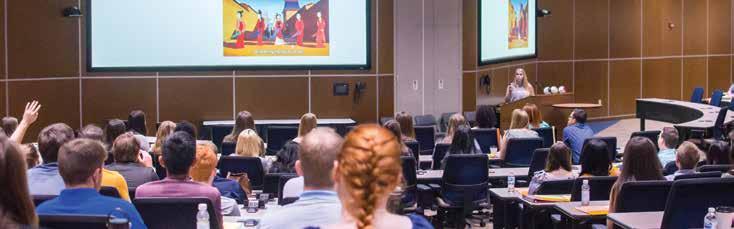
Degrees and diplomas awarded by the college are presented at scheduled commencement exercises, which fourth-year students are required to attend. In qualifying for a degree, the curriculum requirement for any year-level of study consists of the courses currently offered for that year. The curriculum published in this catalog is projected only for the year of publication. Modifications may be made from time to time to ensure that the curriculum remains up-to-date.
Each student is required to accomplish the following in order to become eligible to receive the Doctor of Optometry Degree:
1. Fulfill all academic and clinical requirements, including having at least a 2.00 cumulative average for all courses attempted at the college, completion of all academic support requirements*, and having no unresolved or failing grades.*
2. Receive passing scores on both the Applied Basic Science (Part I) and Patient Assessment and Management (Part II) examinations administered by the National Board of Examiners in Optometry (NBEO), and request official NBEO score reports sent to the college during all NBEO exam registrations. Effective with the entering class of 2023 and all first-time matriculants entering thereafter, receive passing scores on both the Applied Basic Science (Part I) and Patient Assessment and Management (Part II) examinations administered by the National Board of Examiners in Optometry (NBEO) or receive a passing score on the Written Exam administered by the Optometry Examining Board of Canada (OEBC), and request official NBEO score reports or official OEBC score reports sent to the college during all exam registrations.
3. Satisfy any probationary condition, whether for academic or other reasons, and not be subject to any pending academic or disciplinary action.
4. Discharge all financial obligations to the college.
5. Receive the recommendations of the Faculty, the Vice President for Student Services and the Vice President for Academic Affairs, and the approval of the President with respect to satisfactory completion of the above requirements.
Beginning with the entering class of 2026, and applying to all subsequent classes, any student achieving a grade equivalent to “C” or “C-“on any examination in NBEO-related course during the first, second and third years of the curriculum must meet with their advisor and develop a study plan that will be submitted to the Director of Academic Support Services (DASS) upon approval by the advisor. Any student making a grade equivalent to “D” or below on any examination in an NBEO-related course will be required to procure a tutor through DASS with a minimum of weekly tutoring sessions for the courses in which the student received an examination grade equivalent to “D” or below. Logging of tutor sessions must be kept and submitted weekly to the DASS office. Failure to complete these requirements will result in intervention by the Vice President for Student Services, with the student subject to disciplinary probation and inability to graduate should requirements not be fulfilled.
Specific licensure requirements vary from state to state. Prospective students should become familiar with the requirements of states in which they desire to practice prior to entering the college and should remain abreast of changes during their enrollment. The college undertakes no obligation concerning any changes which might be made by any board of optometry or comparable agency in its requirements for licensure.
Grade reports are issued to students by the Student Services Office at the end of each term. The college utilizes plus/minus grades. Course grades are carried out to two decimal points, and there is no rounding utilized to achieve the final grade. The following chart provides the specific details for quality points for each grade:
Percentage Grade
97.00-100% A+ 4
93.00-96.99% A
90.00-92.99% A- 3.7
87.00-89.99% B+ 3.3
83.00-86.99% B 3
80.00-82.99% B- 2.7
77.00-79.99% C+ 2.3
73.00-76.99% C 2
70.00-72.99% C- 1.7
Excellent performance
Good performance
Acceptable performance
60.00-69.99% D 1 Minimum passing performance
Below 60% F 0 Failure, possible dismissal
HP N/A
I N/A
Excellent performance at an honors level in clinical courses and selected didactic courses
Incomplete, must be resolved
IP N/A Clinic (CLN) course in progress; must be resolved
P N/A Pass; expected performance in clinical courses and selected didactic courses
W N/A
WP N/A
WF N/A
Withdrawal—authorized withdrawal from a course before the end of the seventh week of the semester
Withdrawal, passing—authorized withdrawal from a course after the beginning of the eighth week of the semester; work evaluated as satisfactory by the instructor of record.
Withdrawal, failing—authorized withdrawal from a course after the beginning of the eighth week of the semester; work evaluated as unsatisfactory by the instructor of record.
All third- and fourth-year clinic grades are on the Honors Pass/Pass/ Fail system. In this system, individual patient encounters are evaluated and constructive feedback is offered. An assessment of Honors Pass is indicative of superior performance over the course of the entire term. Expected clinical performance will be recognized as a grade of Pass. Substandard clinical performance throughout the term will result in a clinic grade of Fail. Clinical grades of “F” will be reviewed in accordance with the college’s regular guidelines concerning failing grades.
Credit hours are determined by the number of hours assigned to each of three types of instruction: lecture, laboratory and clinical. Following the U.S. Department of Education standard, fifty minutes of instruction is equivalent to one credit hour of lecture. This provides a one-to-one ratio of scheduled lecture time per week to semester credit hour; e.g., two hours (100 minutes) of lecture time equals two credit hours. For condensed course time frames, the number of hours of lecture per week are increased to achieve the exposure that would be equivalent to a full semester of 15 weeks.
Laboratory credit is awarded based on a two-to-one ratio of scheduled laboratory time per week to semester credit hour; e.g., four hours of laboratory time equals two credit hours.
Clinical credit is awarded based on a three-to-one ratio of scheduled supervised clinical instruction time per week to semester credit hour; e.g., nine
hours in clinic equals three credit hours. These courses will have the “CLN” designation with the course number.
Students are expected to maintain a grade-point average of at least 2.00 (C) while completing all courses in the curriculum. A regular student is one pursuing a degree at the college and is full-time if the course load is at least 12 hours per semester. Otherwise, the student is part-time. The one exception to this enrollment standard regards the summer mini-term at the beginning of the second year. While a student is not enrolled in 12 hours during the mini-term, due to the term’s concentrated nature, enrolled students are still considered full-time. All academic standards and probationary policies apply to the summer mini-term.
A student is considered to be in good standing if not subject to dismissal for academic or disciplinary reasons. A special student is one not pursuing a degree and may be either full-time or part-time. A student whose actual or projected course load provides for completion of degree requirements within 11 terms of enrollment is maintaining satisfactory progress. Failure to maintain satisfactory progress may lead to dismissal. The status of disciplinary probation is applied when the student’s conduct, unless changed, could lead to dismissal. In such an instance the conditions for continued enrollment will be specified in writing to the student. A student is placed on academic probation when the level of academic performance, if continued, will lead to dismissal.
A. A student is placed on academic probation when:
1. The cumulative grade point average falls below 2.0;
2. The semester grade point average falls below 2.0, regardless of the cumulative grade point average;
3. The student earns two grades of D in courses given during the same semester;
4. The student earns a failing grade in a course, regardless of either the cumulative or term grade point average.
Please see Section C regarding when a student is placed on academic probation but will need to appear before the Faculty Student Affairs Committee to determine enrollment status.
B. Automatic academic dismissal occurs when:
1. The student earns a second failing grade in the same course;
2. The student earns a failing grade in more than one course in the same semester;
3. The student was on academic probation when the failure or multiple grades of D occurred;
4. A student on academic probation fails to achieve a term GPA of 2.0 or higher and maintain or achieve a cumulative GPA of 2.0 or higher.
C. Additionally, there are several conditions in which a student may be subject to imminent academic dismissal and must appear before the Faculty Student Affairs Committee. These conditions are:
1. A student fails one course in a term and is not on academic probation at the time of the course failure;
2. A student has been placed on academic probation for a second, non-consecutive academic term;
3. A student has earned three or more course grades of D in the same term and is not on academic probation at the time; and
4. A student is placed on academic probation at the end of the third professional year. If a student in this probationary situation were approved to continue in the program, the student may be initially ineligible for fourth year externship assignment.
D. Although not subject to imminent dismissal, a student must appear before the Faculty Student Affairs Committee whenever a course grade below C- (C minus) is earned in any course (assuming neither automatic academic
dismissal criteria (Part B above) nor imminent academic dismissal criteria (Part C above) were met.
E. For the circumstances detailed in Section C for which a student must appear before the Faculty Student Affairs Committee, the committee will make recommendations to the Vice President for Academic Affairs that may include:
1. Academic dismissal; or
2. Repeat a portion of the academic program, or
3. Allowed to continue in the program with possible enrollment stipulations.
The only exception to the policy regarding cumulative GPA is in the special case of a first-year student who has been placed on academic probation at the end of the Fall semester. If a student in this case earns a 2.0 grade point average and does not fail a course nor earn multiple grades of “D” in the first-year Spring semester, the student would not be automatically dismissed. The student, in this case, would appear before the Faculty Student Affairs Committee.
In the event an enrolled student must appear before the Faculty Student Affairs Committee, their academic attendance and registration is impacted accordingly. Until the committee meets and the Vice President for Academic Affairs determines a student’s enrollment status, the following protocols will be in place:
1. Students are to attend didactic lectures and laboratory assignments,
2. Third and Fourth-year students will not participate in clinical assignments,
3. Students will not be able to register (pay tuition/receive loan funds for living expenses) – no late fees will be applied.
Southern College of Optometry is an institution with the mission to lead the profession by educating the best possible healthcare providers, promoting lifelong learning and fostering a personal commitment to service. As such, the SCO community is largely made up of professionals and those who aspire to become professionals, with all the ethical and moral obligations such a community demands. As we strive to hold ourselves and those around us to the highest standards, we — the Board of Trustees, staff, faculty and students of SCO — have adopted the following code of honor at the college: Members of the Southern College of Optometry community hold themselves and those around them to the highest professional standards. Individuals at Southern College of Optometry will not lie, cheat or steal, nor tolerate those actions in others.
Any potential honor code violations should be reported to the Vice President for Student Services. All honor code matters are reviewed by a student-led honor council panel.
Students are expected to attend all classes and laboratories. Students are required to attend all scheduled clinic assignments.
A student who fails a course and is allowed to continue must resolve the failing grade by remedial instruction or by repeating the course. Dismissal may result from failing a course and is automatic in the event of a second failure in the same course. A student may voluntarily seek to repeat any course previously passed with a grade of D or C by written request to the Vice President for Academic Affairs. Both the original and repeat grades are reflected in the academic records of students who repeat courses, whether originally failed or not, and both grades are counted in the computation of the grade-point average. All course repeats are at the student’s expense. Students who are otherwise eligible to receive veteran’s educational benefits cannot receive such benefits for courses that are repeated. Complete information about course failure, remediation and repeats appears in the Student Handbook
In addition to the Academic Support Requirements documented in the Doctor of Optometry degree requirements, the college encourages students to develop and maintain professional relationships with individual faculty members. Faculty advisors are assigned to first-year students shortly after the beginning of the Fall semester. You should note your advisor’s office hours and arrange a meeting early in the term.
In addition, probationary students are expected to meet with the Director of Academic Support Services to arrange for extra help. A student who is placed on academic probation should meet with the Director of Academic Support Services within the first two weeks of the ensuing semester.
If you are having difficulty with a particular course, you should seek guidance from the course instructor. Early action may help you avoid greater problems later. You may also seek help through the Director of Academic Support Services, who may arrange tutoring by students who are proficient in appropriate areas.
Students are also encouraged to contact the Chair of Optometric Education or the Vice President for Student Services for further counseling and guidance.
These scholarships for outstanding students are funded by gifts from those wishing to support the college through recognition of academic excellence. Academic scholarships consist of grants of up to $100,000 in recognition of outstanding academic achievement. Scholarship recipients are usually selected prior to entrance on the basis of academic and service/leadership qualifications. Additional endowed awards are offered to deserving students at the college’s annual ceremonies.
SCO is proud to provide over 350 endowed scholarships and awards to deserving students. Students receiving a governmental award that covers all educational expenses (i.e. military, Indian Health Services Scholarship Program, etc.) are not eligible for the college’s endowed scholarships. A list of endowed scholarships and awards, along with eligibility requirements, can be found on Page 21 of this catalog. For more information and/or questions about the college’s endowed scholarships, you may contact the Vice President for Student Services.
Other scholastic awards are given out under the coordination of the college’s Faculty Scholarship Chair. These awards typically come from state, regional or national associations interested in optometric education. These awards are typically posted monthly in the college’s internal publication.
Former students who have not completed degree requirements may be considered for readmission, but gaining readmission is difficult. If a former student were allowed to re-enter, conditions for continued enrollment would be specified in writing at the time of readmission. A student who is contemplating withdrawal should consult with the Vice President for Student Services. Detailed information about withdrawal, dismissal and readmission appears in the Student Handbook
The Dean’s List is comprised of those full-time students who have achieved a grade-point average of 3.25 (B+) or higher, passed all hours attempted, and carried at least 12 hours during the preceding semester.
Latinized honors are based on cumulative grade-point averages at the completion of the fourth year. Beginning with the Graduating Class of 2028, Summa Cum Laude signifies top 8% in class rank. Magna Cum Laude is designated for the top 9-16% and Cum Laude for top 17-24%.
The Valedictorian Appointment is awarded by the college to the graduating student having the highest overall grade-point average in the class. The Salutatorian Appointment is awarded to the second-ranked student in the graduating class. These appointments are based on grade-point average upon completion of the entire curriculum while at SCO.
Other academic awards are presented to students at the annual Awards Ceremony.
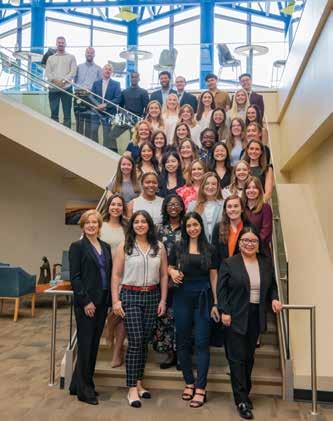
Post-graduate residencies are offered in Community Health, Cornea and Contact Lenses, Vision Rehabilitation/Low Vision Rehabilitation, Pediatric Optometry, Ocular Disease, Ocular and Refractive Surgery/Ocular Disease, Vision Rehabilitation/Vision Therapy, Vision Rehabilitation/Brain Injury Rehabilitation, Primary Care Optometry, Family Practice Optometry, Anterior Segment, or a combination of these. Most residencies are twelve months long.
The residency programs in Pediatric Optometry offer clinical experience in the diagnosis of and therapy for vision dysfunctions presented in children. SCO’s Pediatric Optometry and Vision Therapy and Vision Rehabilitation is based at The Eye Center, the college’s state-of-the-art eye care facility, and Bowersox Vision Centers in Shelbyville, KY. The hospital-based residencies at Children’s Hospital Colorado in Aurora, CO and Duke University Eye Center in Durham, NC are focused on pediatric eye care with emphasis in Ocular Disease.
Ocular Disease residencies provide extensive experience in managing patients in a busy, multi-disciplinary eye care practice with an emphasis on patients presenting with diseases of the eye. These residency programs are located at North Georgia Eye Associates in Gainesville, GA; and Veterans Affairs Medical Centers in Memphis, TN; Salem, VA; Charleston, SC; and Salisbury, NC.
The Ocular Disease/Ocular and Refractive Surgery residency provides extensive experience in managing patients presenting with diseases of the eye, with an additional emphasis on the pre- and post-operative management of patients presenting for ocular surgery. These residency programs are located at Woolfson Eye Institute and Georgia Eye Partners in Atlanta, GA and Moyes Eye Center in Lee’s Summit, MO.
Primary Care Optometry residency programs provide extensive primary care optometry training in a hospital or clinical setting. Programs are located at Bond-Wroten Eye Clinic in Denham Springs, LA; and at Veterans Affairs Medical Centers in Columbia, SC and Mountain Home, TN and the Greenville VA Outpatient Clinic in Greenville, SC.
The residency in Vision Rehabilitation provides experience in vision therapy and rehabilitation in a busy private practice setting. These programs are located at:
• My Vision First in Bethesda, MD;
• Eyecare Professionals in Hamilton Square, NJ;
• Wow Vision Therapy in Saint Joseph, MI and Grand Rapids, MI;
• Draisin Vision Group in Charleston, SC; and
• Paul Vision Institute in Wilmington, NC
Two new Vision Rehabilitation residency programs began at SCO July 1, 2020. Brain Injury Rehabilitation/Vision Therapy and Vision Rehabilitation, with focus on management of binocular vision disorders including vision therapy and acquired brain injury; and Low Vision Rehabilitation/Ocular Disease, with focus on vision rehabilitation, low vision rehabilitation, and the management of ocular diseases. These programs have both on-campus and off-campus clinics.
The specialty residency in Cornea and Contact Lenses/Anterior Segment/ Refractive and Ocular Surgery provides advanced contact lens procedures and refractive surgery patient management. This is a dual site program at The Eye Center of SCO and Eye Specialty Group, Memphis.
The residency program applicant must have received an OD degree from an accredited institution prior to the beginning date of the residency and passed Parts I, II and TMOD of NBEO. Applications must be received by January 30, and must be supported by: official transcripts from professional schools attended, National Board scores, three letters of recommendation, curriculum vitae, the SCO online application and ORMatch application.
For further information, contact the Director of Residency Programs at the college, Dr. Cheryl Mengelt, at cmengelt@sco.edu, or the Assistant Director of Residency Programs, Dr. Jennifer Sanderson, at jsande@sco.edu
The college offers continuing education, which may be used to meet licensure renewal requirements for practicing optometrists in certain states. Inquiries should be addressed to ce@sco.edu
Institutional scholarships are established and funded by the college’s investments and are awarded to entering students based on various criteria. The college’s Scholarship Committee periodically reviews applicant files of accepted students to determine awards. Eligibility requirements vary for each scholarship, but most require exemplary achievements in undergraduate coursework and on the OAT. Leadership, service, interpersonal skills and place of residence are also considered. Should a student be awarded a governmental award that covers all educational expenses (i.e. military, Indian Health Services Scholarship Program, etc.), they will no longer be eligible to receive future endowed scholarship allocations. The following is a listing of Southern College of Optometry’s Institutional Scholarships, which are administered by the Department of Student Services. The value listed for each scholarship is the total over all four years of enrollment.
Board of Trustees Endowed Scholarships (40)
$28,000
Established to honor individuals who have served the college and the profession as Chair of the SCO Board of Trustees. Selection is based upon competitive GPA, OAT and admissions interview.
Dr. M.E. Broome Memorial Endowed Scholarships (4)
$20,000
Honors the college’s third President — M.E. Broome, PhD, DOS — who served from 1962 to 1965. Selection is based upon OAT scores, GPA and the admissions interview. The student should exhibit leadership and communication skills.
Dr. William E. Cochran Endowed Scholarships (4)
$20,000
Honors the college’s fifth President — William E. Cochran OD ’68 — who served the college from 1984 to 2007. Selection is based upon competitive GPA, OAT and admissions interview.
Dr. W. R. Cramer Memorial Endowed Scholarships (4)
$20,000
Honors the college’s second president — W. R. Cramer, OD, DOS — who served the college from 1937 to 1962. Selection is based upon OAT scores, GPA and the admissions interview. The student should exhibit leadership and communication skills.
Honors Endowed Scholarships (60)
$40,000
Selections are based upon competitive GPA, OAT and demonstrated leadership and service.
Dr. J. J. Horton Memorial Endowed Scholarships (4)
$20,000 Named in honor of SCO’s founder, J. J. Horton, MD. Dr. Horton established the college in May 1932 and served as President until 1937.
Dr. Earl Lusk Memorial Endowed Scholarships (2)
$12,000
Established in memory of Earl W. Lusk, OD ’59. Selections are based upon OAT scores, GPA and the admissions interview.
Presidential Endowed Scholarships (100)
$80,000/$60,000 Selections are based upon competitive GPA, OAT and demonstrated leadership and service.
Kenneth N. Springer Memorial Endowed Scholarship
$8,000 Established to memorialize former Tennessee Senator Kenneth N. Springer. Recipient must have an entering GPA of at least 3.5.
Dr. Spurgeon B. Eure Memorial Endowed Scholarships (4)
$20,000 Honors the college’s fourth President — Spurgeon B. Eure, OD ’54 — who served the college from 1965 to 1984. Selection is based upon competitive GPA, OAT and demonstrated leadership skills.
Dr. C. Clayton Powell Scholarship
$1,000 SCO’s Board of Trustees established a $25,000 endowment in honor of Dr. C. Clayton Powell, the pioneering optometrist who co-founded the National Optometric Association in 1969. The memorial scholarship provides $1,000 a year to reimburse student travel to the National Optometric Association (NOA) meeting.
Recipients of the Presidential and Scholars Excellence awards must maintain a 3.5 cumulative GPA to continue receiving the scholarship. Recipients of all other scholarships must maintain a 3.25 cumulative GPA.
Donor-established scholarships are funded from contributions from alumni and supporters of the college. The college’s Scholarship Committee periodically reviews applicant files of accepted students to determine awards. Eligibility requirements vary, but most require exemplary achievements in undergraduate coursework and on the OAT. Leadership, service, interpersonal skills and place of residence are also considered. Should a student be awarded a governmental award that covers all educational expenses (i.e. military, Indian Health Services Scholarship Program, etc.), they will not be eligible to receive additional endowed scholarship allocations. The following is a list of SCO’s Donor-established scholarships, which are administered by the Institutional Advancement Office and Student Services Office. The value listed for each scholarship is the total amount over all four years of enrollment. Recipients must maintain a 3.25 cumulative GPA to continue receiving the scholarship.
Alston & Bird Endowed Scholarship
$4,000
Established by the Atlanta law firm that served as an advocate of professional optometry in Tennessee in the 1980s. The recipient must have a pre-optometry GPA of at least 3.5.
Alumni Council Endowed Scholarship
$8,000
Established by the founding members of SCO’s Alumni Council. The recipient must demonstrate leadership qualities and maintain an active involvement in student organizations and service.
Balowski Foundation Scholarship
Covington/Andreas Endowed Scholarship
$8,000
Established by Scott Andreas, former SCO Dean of Students, and his wife, Sara. Selection is based upon competitive GPA, OAT scores and admissions interview.
Julianna Crosby Memorial Endowed Scholarship (2)
$10,000
Established by Dr. Joseph Crosby ‘67 and Mrs. Opal Crosby in memory of their daughter. Recipients must hail from Tennessee and/or South Carolina and have significant financial need.
Edgar Family Endowed Scholarship
$80,000
Established by George Bakowski, OD ‘73. The recipient of this scholarship shall be a student at Southern College of Optometry in good academic standing and be an entering first-year student and a resident of Louisiana.
Elizabeth R. Bane Memorial Endowed Scholarship
$16,000
Established by Eugene M. Bane, OD ’65 in memory of his mother. Selection is based upon competitive entering GPA, OAT scores and admissions interview.
Dr. James A. Boucher Memorial Scholarship (2)
$24,000
Established by James A. Boucher, OD ’61, and renamed and additionally funded by Dr. Julie Uhlmann. The recipient must be a minority student; with a preference giving to a first-generation student or a Wyoming student. Student must have an entering GPA of at least 3.0 and must maintain a GPA of at least 2.75.
Dr. L. Wayne Brown Memorial Endowed Scholarship
$4,000
Established in memory of L. Wayne Brown, OD ’63 for his service to Optometry in the State of Georgia and the SCO Board of Trustees. Selection is based on competitive GPA, OAT scores and admissions interview. The student should also have demonstrated leadership.
Drs. Charlene and Fred Burnett Endowed Scholarship
$8,000
Established by Charlene Burnett, OD ’83 and Fred Burnett, OD ’80. Recipient must be a resident of Tennessee, have an entering GPA of at least 3.0, carry at least 15 credit hours and have a significant history of leadership and service to their community.
Dr. T. Joel Byars Endowed Scholarship
$4,000
Established by Joel Byars, OD ’63. Recipient must have a competitive GPA and OAT, and demonstrated leadership and service. Preference given to residents of Georgia.
Dr. Orman Campbell Memorial Scholarship (2)
$12,000
Established through the estate of Orman Campbell, OD ’49. Recipient must be a student from a Southeastern state with demonstrated commitment to service.
Dr. Camile Chiasson Endowed Scholarship
$16,000
Established in the name of Camile Chiasson, OD ’81. Recipient must be from Louisiana, interested in practicing in Louisiana, demonstrate significant financial need, and have at least a 3.0 entering GPA.
Dr. Ramona Porter Clifton Endowed Scholarship
$8,000
Honors the optometric family of the late Dr. James Hines Edgar, pioneer Mississippi optometrist. The recipient must be a resident of Mississippi or Arkansas with a pre-optometry GPA of at least 3.0.
Dr. Robert E. Federhan Memorial Endowed Scholarships (3)
$20,000
Established to memorialize Robert E. Federhan, OD ’49. Selections are based upon competitive GPA, OAT scores and admissions interview. Preference given to applicants from Arizona or New Mexico.
Mark W. Franks, OD ’55 and Mary Franks Scholarship (25)
$12,000
Established by the estate of the late Dr and Mrs. Mark Franks through the Optometric Association of Louisiana to assist deserving students from Louisiana, and to encourage pursuit of a private practice career.
Dr. Thomas Gallaher and Mrs. Elizabeth Gallaher
Endowed Scholarship
$4,000
Established by Thomas J. Gallaher, OD ’51, and his wife, Elizabeth. Selection is based upon competitive GPA, OAT scores and admissions interview. Preference is given to a Tennessee resident.
J. C. Garmon, Sr., Memorial Endowed Scholarship
$4,000
Named in honor of J. C. Garmon, Sr., founder of Garmon Optical. Student must have an entering GPA of at least 3.5.
Dr. Richard A. Goodson Memorial Endowed Scholarship
$12,000
Established by the family and friends of Richard A. Goodson, OD ’66, to memorialize his service and commitment to his country, the profession of optometry and SCO. Selection is based upon competitive GPA, OAT scores and admissions interview.
Dr. Robert and Evelyn Henry Memorial Scholarship (4)
$20,000
Established by Dr. Robert Henry, OD, a 1935 graduate of Pennsylvania College of Optometry. Selection is based upon competitive GPA, OAT, and demonstrated leadership and service.
Dr. William R. Jackson, Jr. Memorial Endowed Scholarships (4)
$20,000
In honor and memory of William R. Jackson, Jr., OD ’52, long-time Missouri practicing optometrist. The Jackson Endowment awards annual scholarships to one Missouri resident in each entering class. Selections are based upon competitive GPA, OAT scores, admissions interviews and extracurricular activities.
$12,000
Established by Ramona Porter Clifton, OD ’46 and Rev. Farris Clifton. Selection is based upon competitive GPA, financial need, OAT scores and admissions interview. Preference is given to Kentucky residents and/or female students.
Dr. Nash Cochran Memorial Endowed Scholarship
$4,000
Established by R. Nash Cochran, OD ’44 in his desire to support optometric education and further the goals of the college. The recipient will have an undergraduate GPA of at least 3.0, be a resident of Mississippi or Florida.
Dr. Cheryl D. Johnson Memorial Endowed Scholarships (2)
$10,000
Established by the family and friends of Cheryl D. Johnson, OD ’82 to memorialize her service and commitment to the profession of optometry and SCO. Selections are based upon competitive entering GPA, OAT scores and admissions interview. The recipient must have demonstrated leadership skills.
Johnson and Johnson Vision Scholarship
$28,000
Established by the Johnson & Johnson family of companies. The recipient must have an entering GPA of at least 3.25. Selections are also based upon competitive OAT scores, admissions interview and extracurricular activities.
Cheryl E. Mengelt
Associate Professor (1998)
BS, 1991, Indiana University School of Optometry
OD, 1995, Indiana University School of Optometry Residency, 1996, Primary Care Optometry, Southern College of Optometry
Haylie Mulliniks
Associate Professor (2025)
BS, 2003, Union University
OD, 2007, Southern College of Optometry Residency, 2008, Primary Care Optometry, VA Medical Center, Memphis
Christina Newman
Associate Professor (2011)
BS, 2003, University of Florida
BS, 2006, Nova Southeastern University
OD, 2007, Nova Southern University Residency, 2011, Cornea and Contact Lens Refractive Surgery, Southern College of Optometry
Do Nguyen
Associate Professor (2025)
BA, 2008 Brown University OD, 2012, Southern College of Optometry
Eleanor Null
Assistant Professor (2026)
BS, 2011, University of Memphis OD, 2015, Southern College of Optometry
Morgan Ollinger
Associate Professor (2017)
OD, 2016, University of Waterloo, Ontario, Canada Residency, 2017, Pediatric Optometry, Michigan College of Optometry
MS, 2025, University of Memphis
Janette Dumas Pepper
Associate Professor (2004)
BS, 1998, Truman State University
OD, 2003, University of Missouri-St. Louis Residency, 2004, Pediatric Optometry, Southern College of Optometry
Amy Perkins
Assistant Professor (2023)
BS, 2006, Mississippi State University
OD, 2011, Southern College of Optometry
Shaleen Ragha
Associate Professor (2017)
BS, 2012, University of Georgia
OD, 2016, Southern College of Optometry Residency, 2017, Primary Care, VA Medical Center, Memphis, TN
Elyse Rayborn
Assistant Professor (2022)
BS, 2016, Boise State University
OD, 2020, Southern College of Optometry
MBA, 2022, Christian Brothers University Residency, 2022, Primary Care, Southern College of Optometry
Lewis N. Reich
Professor (2008)
BS, 1984, Rutgers University, Cook College
BS, 1986 University of California at Berkeley, School of Optometry
OD, 1988, University of California at Berkeley
MS, 1990, Pennsylvania College of Optometry
PhD, 1999, University of Houston, College of Optometry
Tyler Roberts
Assistant Professor (2023)
BS, 2010, University of South Carolina
OD, 2014, Southern College of Optometry
Residency, 2025, Ocular Disease and Low Vision, VA Medical Center, Lexington, KY
Jennifer A. Sanderson Professor (2006)
BS, 2000, Queens University, Ontario, Canada
OD, 2005, Pennsylvania College of Optometry
Residency, 2006, Primary Care Optometry, VA Medical Center, Memphis, TN
Richard S. Savoy
Associate Professor (2006)
BS, 1977, University of California/Riverside
OD, 1983, Illinois College of Optometry
MPH, 2012, University of Memphis
Pamela Schnell Professor (2011)
BS, 1996, University of North Carolina at Chapel Hill
OD, 2001 Southern College of Optometry
Residency, 2002, Pediatric Optometry, State University of New York, State College of Optometry
Chelsea Spalding
Assistant Professor (2023)
BS, BA, 2010, University of South Florida
OD, 2014, Southern College of Optometry
Residency, 2025, Ocular Disease and Low Vision, VA Medical Center, Lexington, KY
S. Elizabeth Sparrow
Associate Professor (1999)
BS, 1990, University of Memphis
OD, 1998, Southern College of Optometry
Residency, 1999, Primary Care Optometry, VA Medical Center, Memphis, TN
Esla Speth
Associate Professor (2011)
BA, 2004, Northeastern State University
OD, 2010, Southern College of Optometry
Residency, 2011, Primary Eye Care, VA Medical Center, Memphis, TN
Karen Squier Professor (2015)
BS, 1997, University of Pittsburgh-Johnstown
BS, 1998, Pennsylvania College of Optometry
OD, 2001, Pennsylvania College of Optometry
Residency, 2002, Low Vision Rehabilitation, William Feinbloom Low Vision Center, Philadelphia, PA
MS, 2017, Nova Southeastern University
MPH, 2023 University of Memphis
Marc B. Taub
Professor (2007)
BA, 1997, Washington University
BS, 1998, Pennsylvania College of Optometry
OD, 2001, Pennsylvania College of Optometry
Residency, 2004, Primary Care Optometry, NOVA Southeastern University MS, 2010, NOVA Southeastern University EdD, 2022, University of Memphis
Mary Bartuccio Valentino
Associate Professor (2013)
BS, 1995, Nova Southeastern University OD, 1997, Nova Southeastern University Residency, 1998, Pediatrics/Vision Therapy, Pennsylvania College of Optometry
Lisa R. Wade
Professor (1985)
BS, 1982, Southern College of Optometry
OD, 1984, Southern College of Optometry Residency, 1985, Southern College of Optometry MPA, 1987, University of Memphis
Yueren (Lily) Wang
Assistant Professor (2019)
BS, 2014, Indiana University Bloomington OD, 2018, University of California at Berkeley Residency, 2019, Cornea, Contact Lens and Refractive Surgery, Southern College of Optometry
Melissa Zarn
Associate Professor (2012)
BS, 1997, Virginia Tech OD, 2009, Illinois College of Optometry Residency, 2010, Vision Therapy, Rehabilitation and Pediatric Optometry, Pacific University College of Optometry
Dr. John Linn
MD, Vanderbilt University, Nashville, TN Residency, Ophthalmology, The Eye Foundation Hospital, Birmingham, Alabama
Fellowship, The Vitreoretinal Foundation in Memphis, Tennessee, Chief of Surgery, Eye Specialty Group, Memphis, TN
During the fourth year of the curriculum, students gain patient care experience at different externship sites where they work directly under the supervision of a licensed health care professional. The names below are some of those serving as externship preceptors of the college in 2026-2027. This list is not all-inclusive, as numerous other preceptors and locations are available. There are additional local externship sites in the Memphis area not listed below. For any questions about the externship program, please contact the Externship Office at (901) 722-3366.
Paul Ajamian, OD Atlanta, GA
Halee Alleman, OD Norfolk, VA
Jeffrey Anastasio, OD ’01 Covington, LA
Courtney Andersen, OD Detroit, MI
Howard Bacon, OD Chandler, AZ
Richard Baird, OD Colorado Springs, CO
Haley Baldridge, OD, ’18 Jenks, OK
Erin Bales, OD ’16 Kansas City, MO
Kacy Barker, OD, ’12 Pooler, GA
Christopher Bergman, OD Omaha, NE
Gary Berman, OD Maimi, FL
Michelle Brown, OD Columbia, SC
Frances Bynum, OD ’96 Martin, TN
Brittany Capstick, OD Salt Lake City, UT
Peter Carra, OD Colorado Springs, CO
Chad Carter, OD Springfield, MO
Nathan Cheung, OD Durham, NC
Isaiah Choy, OD N. Little Rock, AR
Nanette Coelho, OD Johnson City, TN
Alex Compton, OD ’16 Franklin, KY
Mark Curtis, OD, ’15 Pleasant Grove, UT
Charles Daniels, OD Manchester, VA
Horace Deal, OD ’97 Statesboro, GA
Michelle Dent, OD Wichita, KS
William Denton, OD Charleston, SC
Scott DePoe, OD ’12 Salem, VA
Sander Dorfzaun, OD Marietta, GA
Leann Douglas, OD New Orleans, LA
Scott Edmonds, OD Philadelphia, PA
Steve Edwards, OD ’87 Holly Springs, MS
Steve Elliott, OD ’02 Knoxville, TN
Brian Eveland, OD ’99 Lake Ozark, MO
Stephen Farris, OD ’03 Caldwell, GA
Will Ferguson, OD ’09 Omaha, NE
Charles Ficco, OD Cumming, GA
David Fisher, OD ’90 Lafayette, LA
Ellen Fitzgerald, OD ’03 Douglas, GA
David Fu, OD Houston, TX
John Gelvin, OD Warrensburg, MO
Frank Giardina, OD Nipomo, CA
Wendy Goldsmith, OD ’91 New Prague, MN
Juawana Hall, OD Winston-Salem, NC
Abigail Harsch, OD State College, PA
James Hill, OD Charleston, SC
Jessica Hillner, OD ’06 Kansas City, KS
David Hite, OD ’ 13 Commerce City, CO
Erin Hocking-Ayers, OD, ’11 Mount Vernon
Meaghan Horton, OD, ’14 Fort Thomas, KY
Matthew Hughes, OD Jackson, TN
Jill Ingelse, OD Blue Island, IL
Brent Jones, OD ’02 Germantown, TN
Matthew Jones, OD, ’09 Family Eye Care
Shawn Joseph, OD ’16 Encino, CA
Kamey Kapp, OD Nome, AK
Scot Kass, OD Wyoming, MI
Daniel Kelly, OD ’16 Goodlettsville, TN
Kenneth King, OD Fort Worth, TX
Eric Lee, OD Jackson, TN
Tyler Lefeber, OD ’17 Sergeant Bluff, IA
Adam LePosa, OD Baltimore, MD
Matthew Levernosh, OD Salisbury, NC
Stephen Lewis, OD ’86 Shreveport, LA
Gregory Loose, OD ’06 Wiggins, MS
Liana Lynskey, OD Atlanta, GA
Scott Martin, OD Keesler AFB, MS
Kris May, OD ’01 Coldwater, MS
Michael McFarland, OD Fayetteville, AR
Fraser McKay, OD Louisville, KY
Silvia Mende, OD Harriman, TN
Nicole Mills, OD ’07 Jackson, TN
Paul Mormon, OD ’01 Germantown, TN
Scot Morris, OD Conifer, CO
Erica Musgrove, OD ’10 Steamboat Springs, CO
Artee Nanji, OD ’04 Arlington, TN
David Nelson, OD Franklin, TN
Paula Newsome, OD Charlotte, NC
My-Chau Nguyen, OD St. Louis, MO
Natalie Nibert, OD ’21 Leavenworth, KS
Christine Norred, OD Baton Rouge, LA
LeRoy Norton, OD ’87 Memphis, TN
Scott Oliver, OD ’90 Rock Hill, SC
Kathryn Ordonez, OD San Diego, CA
Adam Paddock, OD ’03 Hammond, LA
Natalie Pare, OD Kansas City, MO
David Parker, OD ’95 Olive Branch, MS
Joseph Parker, OD Goodlettsville, TN
Tania Patel, OD Lexington, KY
Nathan Pelsor, OD Evansville, IN
Krystle Penaflor, OD Bethel, AK
Scott Philippe, OD ’84 Charlotte, NC
Leslie Phillips, OD Chattanooga, TN
Carey Phlong, OD Morrow, GA
Robert Phyfer, OD, ’16 Columbus, MS
Regina Portocarrero, OD Gainesville, FL
Dan Press, OD Park Ridge, IL
Shane Presson, OD ’95 Knoxville, TN
Qayum Qadium, OD Lee’s Summit, MO
Michael Reed, OD ’08 Magee, MS
William Reynolds, OD ’85 Richmond, KY
Shawn Ricker, OD ’97 Cumberland, MD
Sarah Rogers, OD North Chicago, IL
Seth Salley, OD, ’10 Memphis, TN
Katherine Sanford, OD ’03 Memphis, TN
Leticia Santa, OD Greenville, NC
Justin Schulte, OD West Des Moines, IA
Laura Sechler, OD Hixon, TN
Jonathan Shaver, OD ’04 Fayetteville, AR
Brittany Silvia-Hall, OD Newport, RI
Kevy Simmons, OD Sartell, MN
F. Mason Smith, OD ’76 Mt. Pleasant, SC
Sonya Smoak, OD ’03 Knoxville, TN
Tom Spetalnick, OD Atlanta, GA
Anthony Spina, OD Auburn, AL
Kurt Steele, OD ’95 Newport, TN
Rebecca St. Jean, OD ’97 South Charleston, WV
Douglas Stine, OD Weston, WI
Trisha Tran, OD ’05 Orlando, FL
Christopher Turner, OD, ’00 Portsmouth, NH
Melissa Turner, OD Muskogee, OK
Jennifer Uhl, OD ’97 Hendersonville, TN
Valerie Vanden Boom, OD Madison, WI
Wanda Vaughn, OD Ft. Smith, AR
Brandon Walley, OD ’08 Collierville, TN
Michael Wingard, OD McAllen, TX
Mary Wittendorf, OD Mishawaka, IN
Phil Xue, OD Surrey, BC, CAN
Lucia Yang, OD Fort Belvoir, VA
Jennifer Zolman, OD Colorado Springs, CO
Brett Zwolensky, OD, ’01 Clarksburg, WV
President
Lewis N. Reich, OD, PhD 901-722-3220
Executive Assistant to the President
Sandra S. Stephens
901-722-3220
Vice President for Academic Affairs
J. Bart Campbell, OD
901-722-3372
Vice President for Clinical Programs
Scott Ensor, OD
901-722-3260
Vice President for Finance and Administration
David West, CPA
901-722-3210
Vice President for Human Resources
Tracy B. Lindow, SPHR, SHRM-SC 901-722-3230
Vice President for Institutional Advancement
George Miller, CFRE
901-722-3216
Vice President for Student Services
Joseph H. Hauser, MBA
800-238-0180
901-722-3228
Academic Support Services
Carrie Lebowitz, OD Director
901-722-3352
Access and Engagement
Janette Dumas Pepper, OD Director
901-722-3369
Accounting
Jill Coleman, CPA Director of Accounting
800-722-3215
Admissions and Student Services
Raquel Logan Director 901-722-3226
Alumni Engagement
Karen Flowers Director of Alumni & Donor Relations
901-722-3290
Annual Giving
Kelsey Wolf Manager
901-722-3284
Assessment
Zachary Y. Mngo, PhD Director
901-722-3318
Campus Safety and Security
Marcus Mitchell Director
901-722-3212
Campus Store
Denise Henson Manager 901-722-3291
Continuing Education
Delores Johnson Coordinator
901-722-3397
Development
Matt Walker Director 901-722-3339
Externship Program
Cheryl E. Mengelt, OD Director 901-722-3366
Financial Aid
LeChelle Hunt-Davenport Director 901-722-3223
800-238-0180
Hayes Center for Practice Excellence
Michael McKeever Senior Director 901-722-3332
Lisa Wade, OD
Director 901-722-3365
Information Services
Sonya Watkins Director 901-722-3392
Library
Leslie Holland Manager 901-722-3237
Optometric Education
Lindsay M. Elkins, OD Chair 901-722-3378
Physical Plant
Trey Adams Director 901-722-3305
Research Programs
Christopher W. Lievens, OD Director 901-722-3326
Residency Programs
Cheryl E. Mengelt, OD Director 901-722-3366
Strategic Communications
Jim Hollifield Senior Director 901-722-3343
Student Recruitment
Sunnie Ewing Director
800-238-0180 901-722-3241
Eye Center Administration 901-722-3260
Aaron Kerr, OD Chair of Clinical Education 901-722-3371
Summer Semester 2026
May 17, Sunday
May 18, Monday
May 25, Monday
May 26, Tuesday
June 4-6
June 9-12
June 18-19
July 3, Friday
SCO’s calendar may be updated as needed after publication of the catalog. When calendar information becomes updated, the online version supersedes the outdated version printed in the catalog, so readers should refer to the online version for the most current information.
Fall Semester 2026
Spring Semester 2027
White Coat Ceremony (3rd Years)
Registration, Instruction Begins
Memorial Day Holiday (College Closed)
Late Registration 2
Residents' Weekend
Mid-term Examinations (3rd Years)
AOA Conference (No Instruction)
Independence Day Holiday (College Closed)
July 6, Monday Registration, Second Year Mini-Term, Instruction Begins
July 13-17
August 19-21
August 21, Friday
August 22-30
August 26-28
Mid-term Examinations (3rd Years)
Final Examinations
Last Day of Clinic (4th Years)
Semester Break
New Student Orientation
August 31, Monday ........... Registration, Instruction Begins
September 7, Monday Labor Day Holiday (College Closed)
September 8, Tuesday Late Registration 2
September 9, Wednesday
September 24-27
October 1-2
October 5-9
November 9-13
November 25-29
November 26-29
November 30, Monday
December 1st or 3rd
December 10-16
December 14-16
State Day
Fall CE/Homecoming
American Academy of Optometry (No Instruction)
First Mid-term Examination Week
Second Mid-term Examination Week
Thanksgiving Break (No Instruction)
College Closed
Instruction Resumes
NBEO Part II – PAM
Final Examinations (1st, 2nd Years)
Final Examinations (3rd Years)
December 18, Friday Last Day of Clinic (4th Years)
December 19-January 3
January 4, Monday
Semester Break (College Closed)
Registration, Instruction Begins
January 11, Monday Late Registration3
January 18, Monday Martin Luther King, Jr. Holiday (College Closed)
February 1-5
March 4-7
March 6-14
First Mid-term Examination Week (1st, 2nd Years)
Southern Educational Congress of Optometry (SECO)
Spring Break (No Instruction)
March 15, Monday Instruction Resumes
March 22-26
April 26-30
April 28-30
Second Mid-term Examination Week (1st, 2nd Years)
Final Examinations (1st, 2nd Years)
Final Examinations (3rd Years)
April 29, Thursday Last Day of Clinic (4th Years)
May 3, Monday
May 4, Tuesday
1. Dates and events are subject to change.
Graduation Activities (4th Years)
Commencement
2. Registering late does not excuse a student from clinic and/or class requirements and results in a $50 late fee.
Summer Semester 2027
May 16, Sunday
May 17, Monday
White Coat Ceremony (3rd Years)
Registration, Instruction Begins
May 24, Monday Late Registration 3
May 31, Monday Memorial Day Holiday (College Closed)
June 3-5
June 8-11
June 17-18
July 5, Monday
Residents Weekend
Mid-term Examinations (3rd years)
AOA Conference (No Instruction)
Independence Day Holiday (College Closed)
July 6, Tuesday Registration, Second Year Mini-Term, Instruction Begins
July 12-16
August 18-20
Mid-term Examinations (3rd years)
Final Examinations
August 20, Friday Last Day of Clinic (4th years)
August 21– 29
Fall Semester 2027
August 25-27
Semester Break
New Student Orientation
August 30, Monday .......... Registration, Instruction Begins
September 6, Monday Labor Day Holiday (College Closed)
September 7, Tuesday Late Registration 3
September 8, Wednesday State Day
September 23-26
Sept. 27 – Oct. 1
November 1-5
November 11-12
Nov 24 –28
Nov 25-28
November 29, Monday
December 7th or 8th
December 13-17
December 15-17
Spring Semester 2028
Fall CE/Homecoming
First Mid-term Examination Week
Second Mid-term Examination Week
American Academy of Optometry (No Instruction)
Thanksgiving Break (No Instruction)
College Closed
Instruction Resumes
NBEO Part II – PAM
Final Examinations (1st, 2nd Years)
Final Examinations (3rd Years)
December 21, Tuesday Last Day of Clinic (4th Years)
December 22-January 4
January 5, Wednesday
Semester Break (College Closed)
Registration, Instruction Begins
January 10, Monday Late Registration3
January 17, Monday Martin Luther King, Jr. Holiday (College Closed)
Jan. 31 – Feb. 4
March 1-5
March 4-12
March 13, Monday
March 20-24
April 24- 28
April 26 – 28
First Mid-term Examination Week (1st, 2nd Years)
Southern Educational Congress of Optometry (SECO)
Spring Break (No Instruction)
Instruction Resumes
Second Mid-term Examination Week (1st, 2nd Years)
Final Examinations (1st, 2nd Years)
Final Examinations (3rd Years)
April 27, Thursday Last Day of Clinic (4th Years)
May 1, Monday Graduation Activities (4th Years)
May 2, Tuesday Commencement
1. Dates and events are subject to change.
2. NBEO Dates for 2027 have not yet been released. Historically NBEO Part 1 is administered each March.
2. Registering late does not excuse a student from clinic and/or class requirements and results in a $50 late fee.
SCO’s calendar may be updated as needed after publication of the catalog. When calendar information becomes updated, the online version supersedes the outdated version printed in the catalog, so readers should refer to the online version for the most current information.
southerncollegeofoptometry
southerncollegeofoptometry