

editor’s letter
Despite the picturesque backdrop that is Southeast Ohio, it is the people who stand out in our region. Southeast Ohio is brimming with talent: From craftsmen to athletes to hobbyists to collectors, Southeast Ohioans are extraordinary.
Our new "Et Cetera" section spotlights an Adams County man’s maple syrup business that runs on love of the craft (p.4), a former public defender's new healthy food cart with a clever moniker (p.2), and a funky winery started by a couple who love both wine and tea (p.4). We're also showcasing two individuals who got their start here and have had illustrious careers since: a storm chaser who followed his first big tempest in our region (p.36) and an Indy 500 car racer with a litany of awards and honors to her name (p.18). Throw in a highly recommended Knight of the Year (p.6) and a fearsome group of arm wrestlers (p.12), and we'll prove our region always has the best to offer.

SOHIO OUTHEAST WINTER/SPRING 2013
EDITOR IN CHIEF
Kathryn Potraz
MANAGING EDITOR
Rachel Swalin
ASSOCIATE EDITORS
Taylor Evans, Hillary Johns
Carolyn Menyes, Olivia Ohlin
WRITERS
Phil Barnes, Tara Jackson, Wes Mayberry, Olivia Ohlin, Kristyn Repke, Jessica Salerno, Kristen Spicker, Laura Straub, Holly Storrow, Katie Willis
COPY CHIEF
Elizabeth Dickson
COPY EDITORS
Tessa Dufresne, Sarah Hider, Zach Huber, Wes Mayberry, Amy Meeks, Kristen Spicker, Caroline Wiita
DESIGN DIRECTOR
Hannah Simpson
We always make sure to include a wide scope of cities and counties in each issue, but if yours isn’t represented within these pages be sure to check out southeastohiomagazine.com. Our bloggers visited each of our 21 counties to bring you stories from every corner of the region.
If you just can’t get enough of SEO, we love interacting with readers on our Facebook and Twitter pages. Log on to say “hi”!
Our team of writers, photographers, designers and editors have worked hard to bring you this issue. But the work we've done is small compared to the remarkable work our region has accomplished. So here's to you, Southeast Ohio.

Kathryn Potraz Editor in Chief
Facebook: facebook.com/southeastohiomagazine
Twitter: @SEOhioMagazine
On The Cover Photographer Adam Birkan shot this image of Cincinnati native Mike Berkemeier racking up balls at Michael’s Billiards and Games near Cincinnati.
Volume 47, Number 1, 2013. © by the E.W. Scripps School of Journalism. Ohio University. All rights reserved. Southeast Ohio is a nonprofit publication produced two times a year by the School of Journalism students. Editorial business offices are located in Scripps Hall, Park Place, Athens, Ohio, 45701: (740) 597-3136. Subscription rate: $12 for two years, $15 for three years. Website: southeastohiomagazine.com.
DESIGNERS
Zach Huber, Amy Meeks, Kristyn Repke, Laura Straub, Holly Storrow
PHOTO EDITOR
Jason Chow
PHOTOGRAPHERS
Ian Bates, Adam Birkan, Joel Bissell, Mikah Butler, Erin Corneliussen, Nick Hart, Matt Hatcher, Elizabeth Held, Susannah Kay, Laura McDermott, Maddie Meyer, Gracie Umana, Meg Vogel, Megan Westervelt, Ryan Young
WEB EDITORS
Bekky Hobson, Holly Schnicke
SOCIAL MEDIA DIRECTOR
Tessa Dufresne
SOCIAL MEDIA ASSISTANT
Caroline Wiita
BUSINESS MANAGER
Sarah Hider
FACULTY ADVISER
Ellen Gerl

Kathryn Potraz, Editor in Chief
FEATURES
12 ARMED
In the small town of Shade, arm wrestlers gather for a battle of the biceps
18 FAST, FURIOUS, FEMALE
A Circleville native is the youngest woman to compete in the Indy 500
22 EARTH INVADERS
Area residents are fighting an army of alien plants
32 ODDITIES & ENDS
Four don’t-miss museums with intriguing collections
DEPARTMENTS
2 ET CETERA
Visit a cemetery for presidents, an old jail, a dissolved village, and two new places to grab a bite to eat
4 ET CETERA
Discover a wine guild in Belpre and a maple syrup farm in Adams County
5 TAKE IT TO THE FELT
Pool players of all ages chalk it up at Michael’s Billiards and Games
6 A KNIGHT’S TALE
The Columbus Knight of the Year has spent his lifetime beautifying his hometown
8 BALANCING ACT
Global Gymnastics Center in Nelsonville builds the confidence of young gymnasts
10 HIDE AND STAMP
A new hobby is taking hold in Southeast Ohio
28 HOOFIN’ IT
Southeasten Ohio farmers stick to traditional methods and four-legged friends
36 TORNADO ALLY
A Pickaway County native heads straight for the eye of the storm
40 FROM THE LOGS UP
Belpre’s Back To Basics Log
Cabin is a haven for organic and homemade goods
42 MURDER ’ROUND TOWN
The mystery of the Circleville Letter Writer continues to haunt residents decades later
PHOTO BY: Erin Corneliussen
RIGHT:
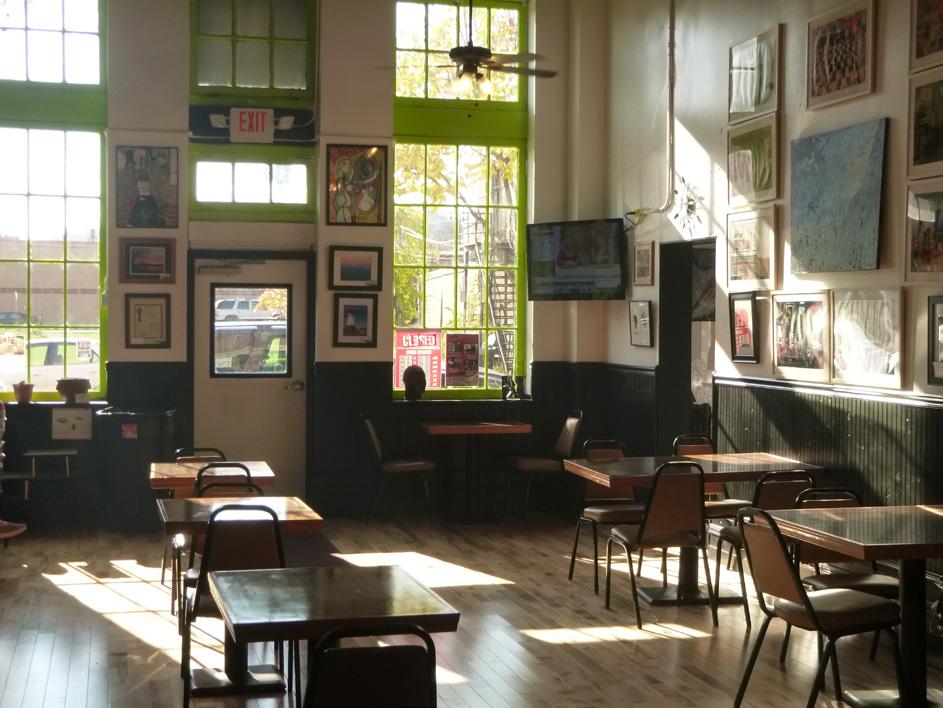
The comfy décor of Nybble Café keeps customers coming back.
BOTTOM:
The Not Guilty food cart on Union Street in Athens offers healthy fare.
iCafé
BY Katie Willis | PHOTO BY Katie Willis
The new Nybble Café in Gallipolis is booming with technology, and even its name fits with the motif: a “nybble” is part of a “byte.” Complete with a delicious menu offering hometown cooking and Japanese and Italian dishes, the café is loaded with flat-screen TVs and free Wi-Fi. Nybble even displays its prized meals on menus that patrons can view via iPads.
The Digital River Project (DRP) is aiming to help Gallia County businesses gain popularity by incorporating technology into the lives of southeastern Ohio citizens, and in doing so, is helping the small, yet flashy Nybble Café earn a spot on the local and tourist radar. “Without the DRP, this restaurant would just be an idea,” says manager Brian Blair, who hopes that the technological hot spot will attract many customers. The DRP funds, which are donated by other local businesses, not only helped get Nybble up and going, but also help keep local industries thriving.
“In my mind, technology is a piece just as important as the food,” says Blair. Thankful for the funds that the DRP has provided to help open Nybble’s doors, Blair hopes to keep the mission of DRP going.
The restaurant is designed with the historical aspects of Gallipolis in mind, along with the visual aesthetics of local artwork. What really ties things together is the smooth transition from yesteryear to today. In addition to its small-town feel, the café adds vibrant lights and colors that keep new customers rolling in, and more importantly, old ones returning.
Jailhouse Rock
BY Kristen Spicker
In Lawrence County a small stone structure provides mystery and folklore to the town of Wilgus and its visitors.
Frequented by geocachers and other outdoor enthusiasts in Southeast Ohio, the unusual stone offers few hints as to its origin. Some believe it to be a cellar, a jail or an odd creation

from Mother Earth. The only clue is an inscription that reads “LEO 1817.” Although there is a settlement called Leo just an hour north of Wilgus, many visitors presume that LEO stands for law enforcement organization.
The rock, which measures about 12 feet by 12 feet and has a ceiling 6 feet from the ground, houses no prisoners, guards or even cells. There are no records of the natural building ever holding prisoners. Instead, the baffling boulder sits empty – its stone walls just another roadside attraction along state Route 775.
Defender to Vendor
BY Holly Storrow | PHOTO BY Joel Bissell
The words “not guilty” have long been associated with the bang of a gavel, but with its newest curbside eatery, downtown Athens has given the phrase a new soundtrack–one that includes the scrape of a spatula.
Owned and operated by former Athens County Public Defender Jay Wamsley and his wife, Donna, the Not Guilty food cart offers its customers hearty, locally grown food, a far cry from traditional food cart creations.
“I wanted to do something different than I had ever done before,” Jay says. “And this is certainly different.”
The couple was inspired to start Not Guilty after a trip to visit their daughter in Austin, Texas, where food carts are a popular trend. After discussing the project for more than a year, having a custom cart built in New Jersey and finalizing a menu, Not Guilty’s owners opened the cart’s window to customers this past summer.
Today, the Wamsleys serve a variety of grilled sandwiches, all-natural smoothies and fresh soups that change throughout the year depending on what produce is in season. Even the bacon and eggs used in the breakfast sandwiches are local.
“I just think that fresh, locally grown food tastes better than the food you can buy in stores,” Jay says.
Disappearing Act
BY Kristen Spicker | PHOTO BY Kristen Spicker
After almost 60 years in existence, the village of Orient in Pickaway County is in danger of disappearing.
An attempt by some village residents to dissolve Orient stems from concerns about annexation of 112 acres to Orient, the handling of water and sewage systems and additional speed bumps installed on the roads.
Pat Daughtery, a villager who favors the dissolution, says he feels there have been no improvements made to Orient, adding that the government couldn’t even mow the lawn in the park. When improvements to the water and sewage system were eventually made, Daughtery says that there was no supervision overseeing the processes.
“What has happened is a village council who refuses to listen to the people,” Daugherty says.

The dissolution process began last December, when resident Walter Kerschner Sr. drafted the first petition. The petition has gone through four more drafts since, the last one dismissed by the county’s board of elections in August because of issues with obtaining signatures.
The petition could go before voters as part of a special election in February, if completed 75 days prior. If dissolved, Orient’s 270 residents would join Scioto Township.
Federal Reserve
BY Holly Storrow | PHOTO BY Sarah Kramer
Stonewall Cemetery, the final resting place of only nine people and a piece of land once deeded to the president of the U.S., sits just outside of Lancaster in Fairfield County.
After the land’s original owner, Nathaniel Wilson Sr., died suddenly in 1815, his son decided to deed the land to President James Monroe and all the presidents thereafter for safekeeping, in 1817. The cemetery was completed in 1839 by Nathaniel Wilson Jr. and his son, Gustin.
Ironically, no presidents are buried at Stonewall Cemetery.
But the graves that are present belong to members of the Wilson family, including Wilson Sr. and his wife, whose bodies were moved to the cemetery in 1907 and placed in unmarked graves.
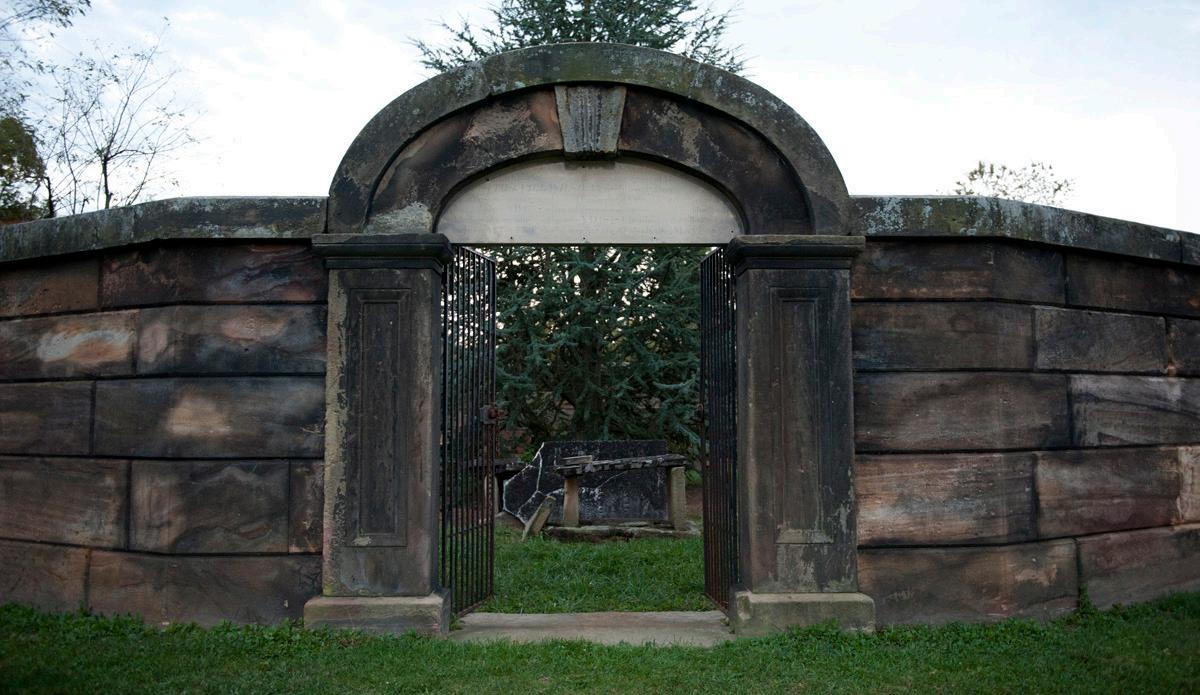
Now owned and maintained as part of the Fairfield County Historical Parks system, Stonewall Cemetery’s caretakers take pride in the large wall surrounding the graves that was built by dry stone masonry. Its pieces were cut at a nearby quarry, transported to the site and assembled while Wilson Jr. read from the Bible.
“The stones have a foundation under them that has enabled the wall to not move one single bit,” says Carolyn Tilley, a retired teacher and long-time volunteer with the Historical Parks. “You cannot get a piece of paper between the stones.”
Not too bad for a cemetery that is more than 150 years old.
TOP: Some villagers in Orient want to dissolve the town.
BOTTOM: This sturdy wall protects the Stonewall Cemetery.
BY Kristyn Repke | PHOTOS BY Laura McDermott
The last thing one would expect to find in a dry town would be a winery. But Unicorn Wine Guild, located in the historically dry town of Belpre, has thrived not only for its locally made wines but also for its quirky unicorn décor.
The mythical creatures fill the large building in Washington County. Window-front tables are decorated with centerpieces of flowers and unicorns, cultivating a relaxed atmosphere for drinking and dining.
Because the owners Barbara and Joel Whitaker make the wine on-site, they can sell it through the winery. Customers come not only from Ohio but from places as far as China, New Zealand, Australia, Germany and England.
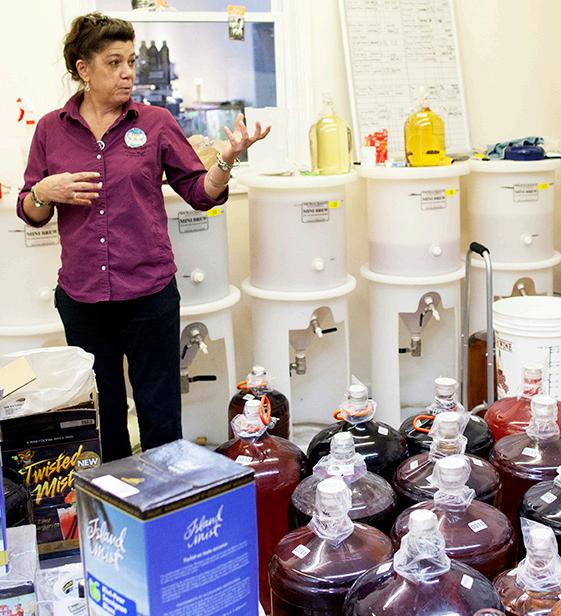
Unicorn Wine Guild also sells the winemaking experience. Customers can make appointments to create their own wines. The Whitakers also offer classes on beer making and sell home winemaking supplies.
“We offer a pleasing atmosphere here and it makes a nice place for a relaxing afternoon or evening,” Barbara says. “It’s the perfect place to just hang out.”
Whimsy & Wine Sweet Disposition
BY Phil Barnes | PHOTOS BY Mikah Butler
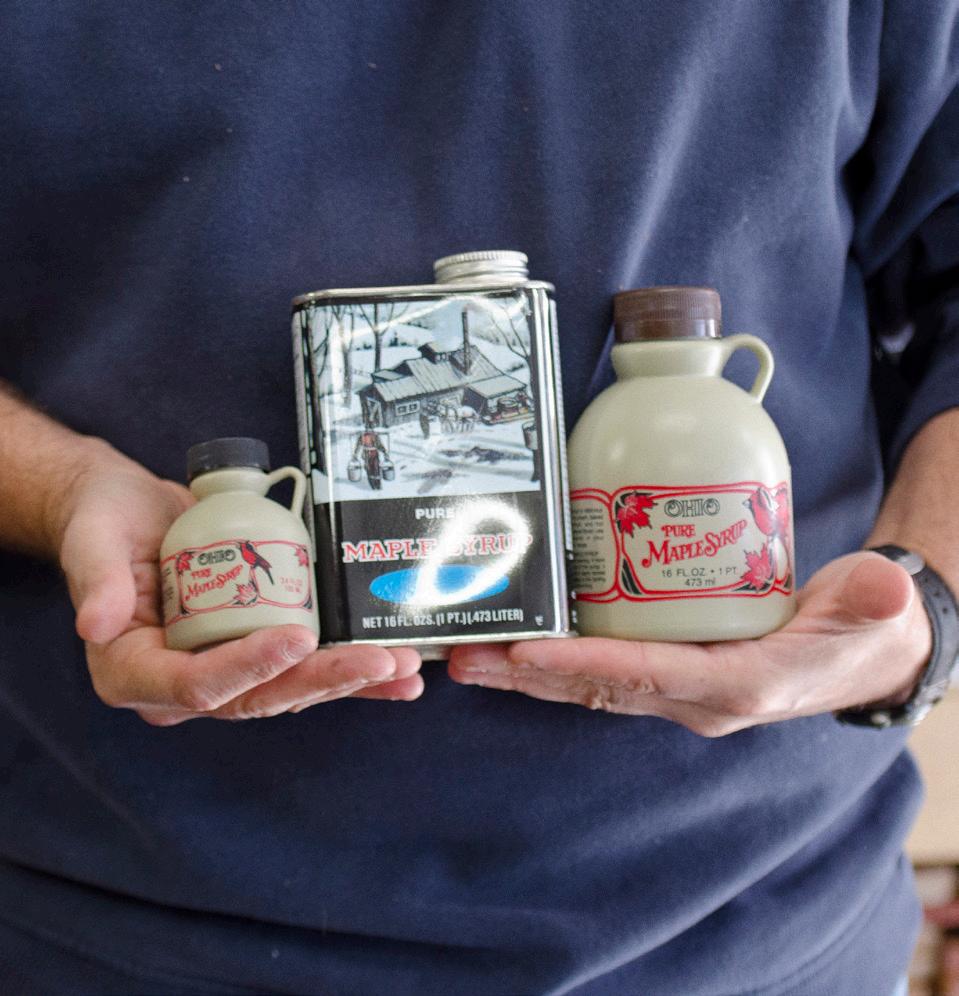
Eric Newman’s magic number is 66.6, the perfect percentage of sugar content for his liquid gold. But Newman’s gold isn’t mined. It’s tapped–and it tastes much better, too.
For the past 10 years, Newman Family Maple Syrup in Adams County has been giving people in at least eight different states something to look forward to in the mornings, something
other than a plastic log cabin-shaped bottle full of high-fructose goo. But Newman’s liquid gold comes at a price: $10 a pint. Maple syrup making is a tough business in southeastern Ohio, and even with that kind of price tag, Newman doesn’t make much money. For his business to be full time, he would need 600 taps, each one punched through a sugar maple tree within his 5-acre forest in Seaman. His current tap count stands at a modest 168. But even with the right number of taps, the weather doesn’t always cooperate.
Sap only runs from maple trees when it is below freezing during the night and above freezing during the day. Heat also decreases the sugar content of the sap, which means that more must be boiled to reach that magic number.
“Last winter was pretty bad,” Newman says. “For one gallon of maple syrup, we had to boil 53 gallons of sap. It usually averages around 42.”
The slow season doesn’t bother Newman too much, though. Making maple syrup is not all about the money.
“I don’t advertise too much,” Newman says. “If I did, there might not be enough for my neighbors and friends.”
It is also a bonding experience for his family. Newman’s kids help carry the sap in buckets from maple tree to boiler, and his wife cooks the syrup over a stove until it tastes just right. The work keeps him busy, too, serving as a natural therapy for his arthritis.
When he’s not tapping trees, Newman teaches eighth-grade math at Mt. Orab Middle School, and Newman Family Maple Syrup has become quite a popular field trip destination.
Maple syrup may never make him a millionaire, but for Newman, passion is greater than gold.



Eric Newman shows off samples of his syrup.
Unicorn Wine Guild employee Beth Beebe explains the winemaking process.


TAKE IT TO THE FELT
Pool players of all ages chalk it up at Michael’s
Billiards and Games
BY Wes Mayberry | PHOTOS BY Adam Birkan
Cincinnati native Michael Medley refuses to use the word poolroom when speaking of his Fairfield, Ohio, business, Michael’s Billiards and Games.
“It’s not a typical poolroom,” Medley says. “It’s a very clean, classy-type place. I wanted it to be a place for family entertainment where people could bring their kids and not be ashamed to come in.”
Medley holds tournaments at his facility throughout the year that provide an additional revenue stream. During the past four years, he has collaborated with longtime friend and professional pool player Shannon “The Cannon” Daulton, 40, to hold Great Southern Billiard Tour (GSBT) tournaments at his business. The GSBT, which began in 2006 under Daulton’s leadership, brings in
I’m a pool player at heart, and I’ve taken the game seriously.”
A pool player himself from the age of 14, the 67-year-old Medley played professionally and placed fifth in the World Bank Pool Tournament in 1976. He designed the entire space, and since its opening in 1991, he has always taken pride in the equipment that he offers as well as its overall upkeep. He even boasts of having the only new 10-foot Diamond pool table in the Midwest.
“I’m a pool player at heart, and I’ve taken the game seriously,” Medley says.
Along with 30 pool tables, Michael’s also offers a bevy of delicious foods, including half-pound Angus burgers, chicken tenders, French fries, hot dogs, soft pretzels and hot wings. He recently pleased many customers by adding alcoholic drinks to the menu.
MICHAEL MEDLEY
countless players and sponsorship money to pool halls such as Medley’s. Many of these events, which draw more than 100 entries, stream live on the Internet.
Even though tournament play provides a boost in revenue, Medley still promotes his business as one that welcomes players of all ages and skill levels. Daulton, who has played professional billiards since he was 17 and has won numerous world titles and open championships during the past 20 years, has nothing but praise for the Southeast Ohio billiard hall.
“It’s a great room, a player-friendly room,” Daulton says. “Michael is great to his customers.”
Michael’s is located at 6625 Dixie Highway in Fairfield, Ohio, about 20 miles north of Cincinnati. It is open 1 p.m. to 4 a.m. Sunday-Thursday; 24 hours on Friday and Saturday.
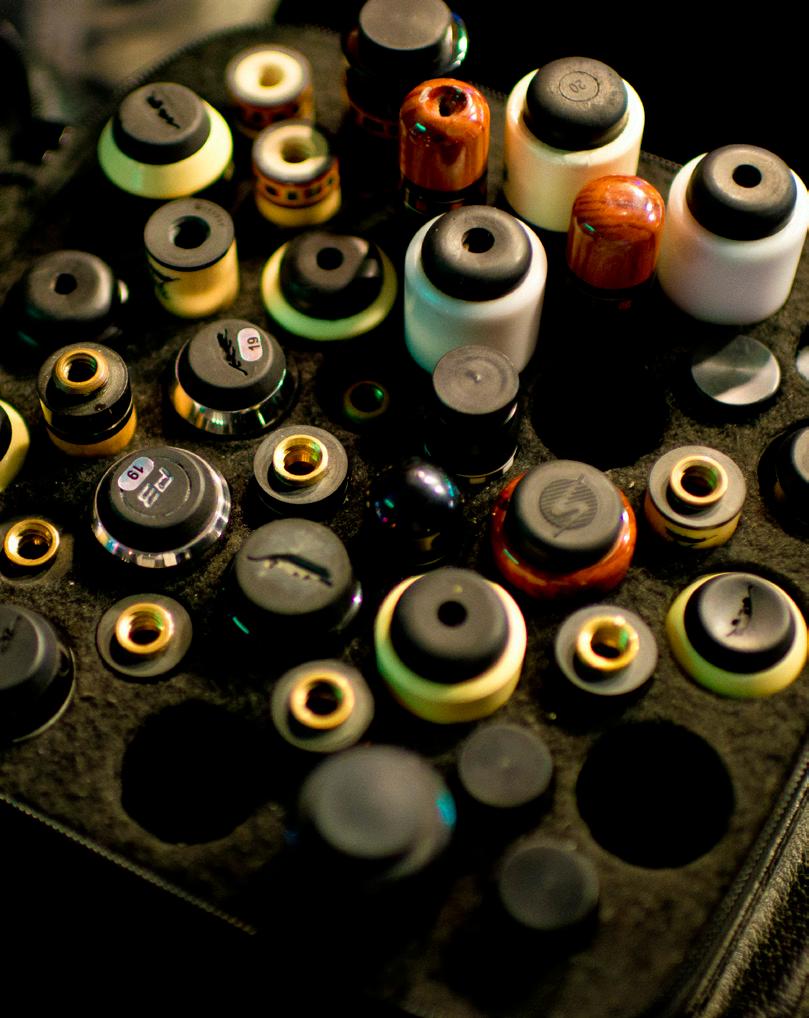
TOP: Patrons survey the available equipment along with potential opponents amid the billiard hall’s festive atmosphere. MIDDLE: Owner Michael Medley stands behind one of the 30 pool tables inside his 12,000-square-foot billiard hall. BOTTOM: This equipment bag contains a diverse selection of pool cues and sticks.
A Knight’s Tale
Columbus Knight of the Year Joe Maroon has spent his life beautifying his hometown. Meet New Straitsville’s hardest-working volunteer.
BY Laura Straub | PHOTOS BY Gracie Umana
Joe Maroon waves to the passengers of a passing car as he bends down to pick up a plastic bottle from the grass next to the Perry County Veterans Monument. “I hate when people litter,” he says as he throws the bottle into a recycling bin. The retiree and longtime Perry County resident has done much more for the village of New Straitsville than clean litter. His work is visible everywhere in the center of town from the Veterans Memorial to the flowers painted on the street to the community garden.
“He’s got his fingers in everything,” says his brother, Father Don Maroon. “Whenever there’s improvements in New Straitsville, he’s got his hand in the front.” Joe took a unique opportunity to make some of these improvements over the summer through a youth job corps. The youth were paid to make improvements throughout cities in Ohio over the summer; the only catch was New Straitsville could not be involved without a volunteer coordinator. “A lot of towns didn’t apply for it because they couldn’t find anyone to work for free,” Joe says. However, Joe stepped up to the job. Over the course of the summer, he directed seven boys and two girls in improvements throughout the center of town, including cleaning litter, repairing and painting benches, painting bridges and beautifying the center of town.
This is not the first time he has worked with the youth of the area. “I wanted to put a community garden in and get
them off the streets,” Joe says. He picked an empty lot, formerly home to a post office, as the location. There was only one problem: There were extensive back taxes on the property. The owners were willing to part with the land for free but were not interested in fronting more than $2,000 in back taxes. Joe took action, raising $3,000 in just one week. The land may be in the city’s name, but the purpose of the land is under Joe’s control. “I had them put in the minutes that this land would be used for nothing but a garden,” he says.
People worried that the garden would be a failure and would fall victim to destructive teens. Joe, however, was confident in his project. “My protection is the kids,” Joe says. “If you have them involved in it, they are going to respect it.”
In addition to having the respect of the kids, he is revered by the rest of the townspeople, whom he often involves in his projects, one of which was the creation of Inspiration Hill. The hill formerly accommodated a burned-out building. Joe, with the help of his fellow volunteers, used 100 tons of dirt to restore the hillside to its natural state. They installed a 16foot cross lit with spotlights atop the hill and placed a Ten Commandments monument at the bottom of the hill. In the space between the two monuments, Joe spelled out the phrase “The love of Jesus” with holiday lights.
“It was wonderful to see the whole town working together for something like this,” Joe says.
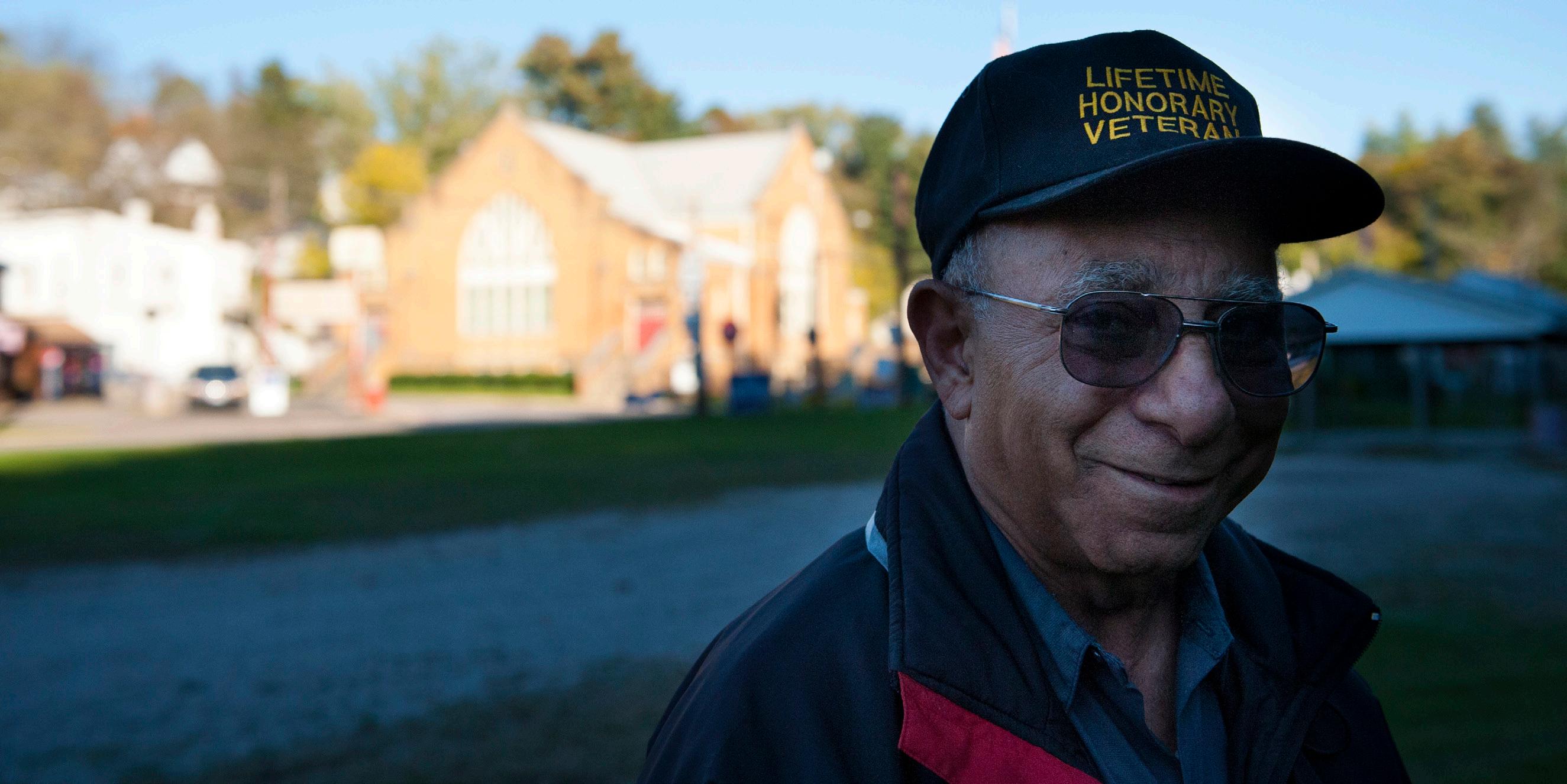
Joe Maroon is a lifetime honorary veteran, a title he is proud to share with Bob Hope.
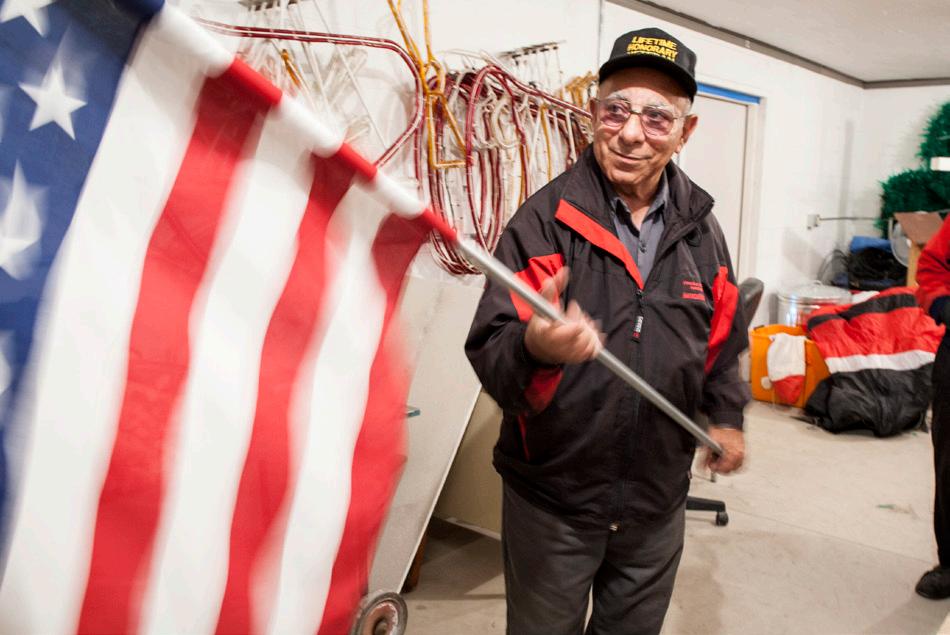

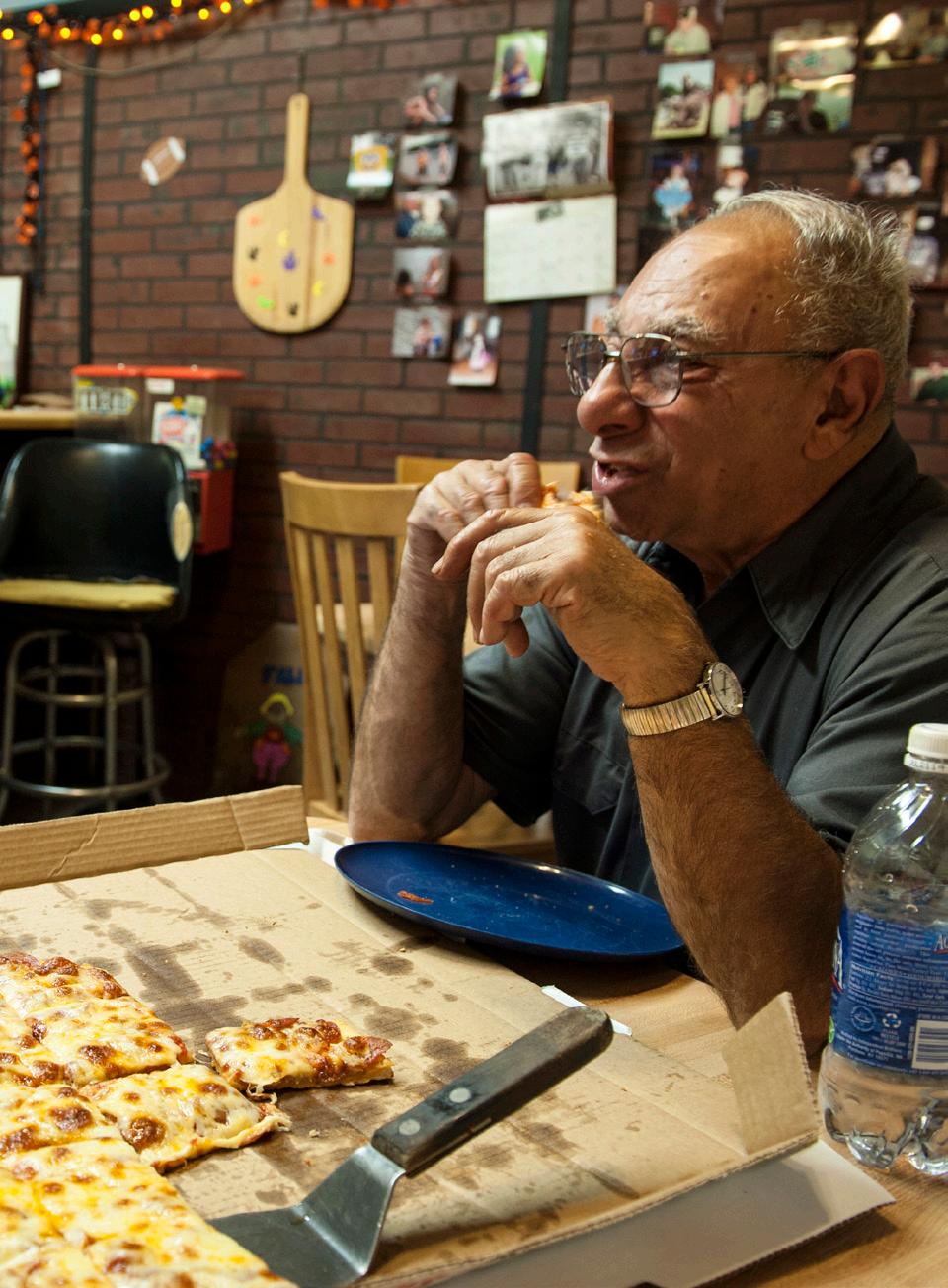
Just across the street from Inspiration Hill is another one of his projects, which garnered national attention. The New Straitsville Veterans Memorial honors all branches of the military, presidential veterans and local veterans. As viewers walk up to the memorial, they walk through every war the U.S. has ever fought, with markers featuring the name of each war lining the sidewalks. The granite center of the monument is a tribute to each branch of the military; the left is a memorial to Iwo Jima, and the right is a wall constructed of 800 bricks, each with the name of a veteran with ties to New Straitsville. The American Legion was so impressed by Joe’s efforts with the memorial they declared him an Honorary Veteran of the U.S., an honor he shares with Bob Hope.
Joe was also recognized for his involvement in the region by The Knights of Columbus, as he was named Knight of the Year for the state of Ohio. The Knights of Columbus is a Catholic family fraternal organization that serves the public through volunteer work and community projects. Every year, each of the six Ohio dioceses of the organization submits nominees for the award. This year’s nominees were narrowed from 300 to the overall state winner, Joe Maroon.
was initially reluctant because he would have to miss one day of an activity he spearheaded for his community. Eventually, however, they convinced him to go and receive his award in front of 800 people.
Despite Joe’s low-key demeanor, there was no debate he was the man for the award. “You look for how much involvement a knight has in his own council,” Mackos says. “He has been involved as long as he has been a Knight of Columbus.” When selecting a winner, Mackos and the council also take into consideration a book of each of the nominee’s accomplishments in the six programs of the Knights of Columbus, including church, community, counsel, family, pro-life activism and the youth.
You have got to do something with your life, you have got to be involved.”
JOE MAROON
Joe’s book, at just over 400 pages, says Mackos, was longer than those of many other past winners. His activities stood out not only to the State Council, but also to Mackos’ friends, who helped to be nonpartisan judges this year. Also, Joe received an uncommon number of letters of recommendation, 47 in all. “Every politician in town must have written something about him,” Mackos says.
Even with all these honors and achievements, he remains grounded. “We are looking for someone who is willing to give of themselves rather than be rewarded for it,” says Joe Mackos, state council director for the Ohio State Knights of Columbus about the Knight of the Year award. “He is a very humble person.” The organization struggled to convince him to attend the Ohio State Knights of Columbus State Convention in Cincinnati this past May to receive his award. He
The letters also came from family, friends, pastors and fellow Knights of Columbus from the Columbus Diocese, Mackos says. The council also had the opportunity to see pictures of the contributions Maroon made to both his council and community.
Even with all the recognition, Joe’s focus is still on improving the community. “You have got to do something with your life, you have got to be involved,” says Joe, and he plans to continue doing just that.
TOP LEFT: Joe Maroon transformed this once empty building into a storage center for holiday decorations he made for New Straitsville. BOTTOM LEFT: Maroon brings Christmas spirit to the village center every year with his nativity scene. RIGHT: Maroon enjoys a pizza at Papa Tom’s Pizza in New Straitsville. He is always looking for a new project to bring the community together.
Balancing Act
The focus at this Nelsonville gym goes beyond cartwheels and somersaults. Here, kids’ confidence grows in leaps and bounds.
BY Olivia Ohlin | PHOTOS BY Maddie Meyer

Tiny handprints are dusted onto sparkly velour leotards as the beginning girls class comes to a close. The 5- to 8-year-olds scramble on the mat around their coach and wait patiently for their hands to be stamped, showing they’ve completed another successful hour of gymnastics.
After receiving their stamps, the girls scamper to the bell and each gets to shake its long rope. “Ding! Ding! Ding!” denotes a job well done. Proud parents’ applause and chants of “Good job!” fill the gym. Wide smiles form across the girls’ faces and their high ponytails bounce up and down as they run to mom and dad. Sadly, it’s time to leave.
The Global Gymnastics Center has been in the Southeast Ohio community for decades, but owners Shawn and Aaron Wilson are committed to not only serving children in the area but also taking the program to new levels.
The Global Gymnastics Center, located in Athens County’s old Nelsonville High School gymnasium, is an outlet for youth. It has baby and toddler classes as well as instruction for elementary school children, young teenagers and a competition team, proving it’s never too late to start getting involved with gymnastics.
her daughter in dance classes. After winning free gymnastics lessons on a whim at a raffle about three years ago, her daughter, Sakura Sugiyama, immediately fell in love with the sport.
“My daughter has a lot of fun doing gymnastics,” Kantake says. “Her enthusiasm soars. I love seeing her enjoy the sport. After she joined pre-team, I saw a big improvement in her academic performance, too.”
Kantake says she knew Sugiyama was academically gifted, but the dedication and focused attitude her daughter learned in the gym remarkably translated to the classroom. Her daughter, who is now in the fifth grade, advanced from second to fourth grade while participating in gymnastics.
“Gymnastics helps with strength, coordination and confidence and can transfer to anything from other sports to simply playing on the playground.”
SHAWN WILSON
“Gymnastics helps with strength, coordination and confidence and can transfer to anything from other sports to simply playing on the playground,” Shawn says. “It also teaches kids to have goals and that work and dedication is what it takes to accomplish them.”
For instance, Shawn says that some young gymnasts are afraid to get on the balance beam at first, but in a matter of a few classes, they overcome their fears and are confidently doing jumps and walking across the beam with ease.
Students and parents agree. Noriko Kantake used to enroll
Wayne Haning says his 9-year-old son, Gavin, has also been positively impacted since enrolling in gymnastics, which has helped Gavin’s ability to focus and process lessons at school. He also says he has noticed the encouraging team dynamic of gymnastics that many other sports don’t have.
“Unlike other sports, like football or soccer, the kids he [Gavin] takes lessons with are in a generous mindset,” Wayne says. “It’s less competition and more of an attitude of ‘How can I help you?’”
Not only does the business provide tremendous rewards for those who take classes, but it is a gratifying job for Shawn and Aaron as well. “I love the energy of the gym. There are times I feel tired and am unsure if I’m ready to take on the day, but all the kids’ smiles and high fives I receive when I walk in and watching them love what they’re doing gets me in a great mood and so energized,” Shawn says.
Aaron and Shawn acquired the business two years ago. The couple’s daughters were involved in gymnastics, Aaron had been doing maintenance and Shawn managed the front desk.
Girls perfect different skills during their gymnastics classes.
Although slightly intimidated, the Wilsons were encouraged enough by fellow employees to be up for the challenge of running their first business.
“The coaches who work for us were so encouraging,” Shawn says. “I’ve learned that separating the coaching end of good athletic experiences and the business end of customer service is effective for us.”
When the Global Gymnastics Center was officially in the Wilsons’ hands, they immediately began making improvements and updating the facility to give the gym a new life.
They decided to not take any profit from the gym until cosmetic updates were completed and new equipment was purchased. All of the sacrifice has paid off.
The business is currently experiencing a lot of growth and classes are filling up. Shawn is trying to find ways to add more classes to meet customers’ demands. The Global Gymnastics Center has brought much success and joy to Shawn and her family.
“I am very pleased with our business,” she says. “I think our big increase in enrollment and students who return year to year tell me we’re doing something right. I often hear from the community how good it is to have this program for children in the community. That keeps me pumped up.”
Shawn hopes to expand programs to reach more age groups.
The Nelsonville Restoration Foundation, the non-profit organization responsible for the center’s building, is pursuing further building improvements through grants.
The Wilsons have rented three additional classrooms to accommodate their adult fitness classes, which began in October,
and upcoming senior citizen programs. This rental also afforded the business more space for the baby and pre-school classes.
Another principle that the Global Gymnastics Center commits to is affordability. Gymnastics is commonly known as an expensive sport, but the Nelsonville business knows that many can’t afford a high-budget extracurricular activity.
“When I was a gymnast, I don’t know how my parents did it,” coach Tera Morris says. “Hundreds of dollars were spent each month between my classes, travel expenses and matching uniforms. Global Gymnastics Center does a great job with keeping classes affordable and gives people hope of doing this sport and not becoming bankrupt.”
Shawn also says they are seeking grants that would provide scholarships for low-income families. For competition expenses, Kantake volunteers every Tuesday to raise money for the team’s booster club.
The Global Gymnastics Center is a positive outlet that the community has embraced for a variety of reasons. “When kids are at the gym, they’re safe, active, and learning structure and discipline,” Morris says. “Global Gymnastics is a shining star in Nelsonville.”
Above all, the gym’s most important goal is to create a fun environment for the kids.
Braden Henderson, an 11-year-old student who has been taking classes for five years, says he has no complaints besides wishing he could spend more time at the gym.
“I love it here,” Henderson says. “The coaches work with us very well. I’ve made friends, and I look forward to coming back every week.”

Anna Welser, 10, of Athens practices on the rings during her gymnastcs class at Global Gymnastics Center in Nelsonville. The gym is in the old Nelsonville High School and now houses children’s and adult fitness classes.
Hide and Stamp
With stamp in hand, writer Laura Straub set off to experience letterboxing, the hobby that’s making its mark across Southeast Ohio
BY Laura Straub | PHOTOS BY Elizabeth Held
Sandra Imboden follows the driving directions and parks the car. After finding the path, she keeps her eye open for markers: double trees, a slight downgrade in the path, a distinct turn of the trail. The box should be close–could it be under that suspicious pile of bark? Maybe it is nestled beside that log. It could even be beneath the scattered rocks.
“A little subterfuge, that’s what makes it fun,” says Imboden, an active letterboxer from Monroe County, who has discovered and planted more than 2,000 letterboxes, many in the Southeast Ohio region.
It’s all about the thrill of the hunt, but these treasure hunters are not looking for a typical stash of loot. Letterboxers use their clues to scour national parks, public places and even busy roads all over the world to find small, water-resistant boxes, containing precious treasures: a stamp and sketchbook. These treasures are known as letterboxes, and hunting them can be a great family hobby.
In 1998, letterboxing came to the U.S. from a long tradition in England, when Smithsonian magazine released an article about the pastime. People read the article, exchanged contact information and created websites dedicated to the pursuit, launching Letterboxing North America.
Today, letterboxing works a little differently than it did 150 years ago in England. Letterboxers surf the Internet for sets of clues about boxes by region, state or even country. Each letterbox has a title and a set of clues that can be found online.
The clues can be found in a poem or in a fill-in-the-blank style. Some even require the letterboxer to do research on the Internet in order to decipher them, says Trena Riffle, a Gallia County letterboxer. The letterboxer must decode the clues and hike to the location of the letterbox. It could be placed anywhere from the outhouse of a museum to an empty tree stump in a state park.
The actual letterboxes vary in size and shape, but their most important quality is that they are water-resistant. The stamps can be hidden in anything that keeps out water: a plastic Ziploc storage bag, a small Tupperware container or two pill bottles taped together. The container can also be covered in camouflage duct tape, not only to disguise the box from prying eyes but also to further keep damaging moisture out.
Once a particular letterbox is retrieved, the letterboxer removes the contents, consisting of a stamp, which is typically hand carved, and a small notebook used as a logbook. The letterboxer uses the stamp found in the box to stamp a personal logbook, often a larger sketchbook, to commemorate the find.
Some letterboxers turn their logbooks into scrapbooks by adding additional information to help them remember the hunt.
Mary Ann Janning of Franklin County has been letterboxing for more than two and a half years. Her logbook includes a photograph of herself and anyone accompanying her on the adventure, the name of the box, any history included with
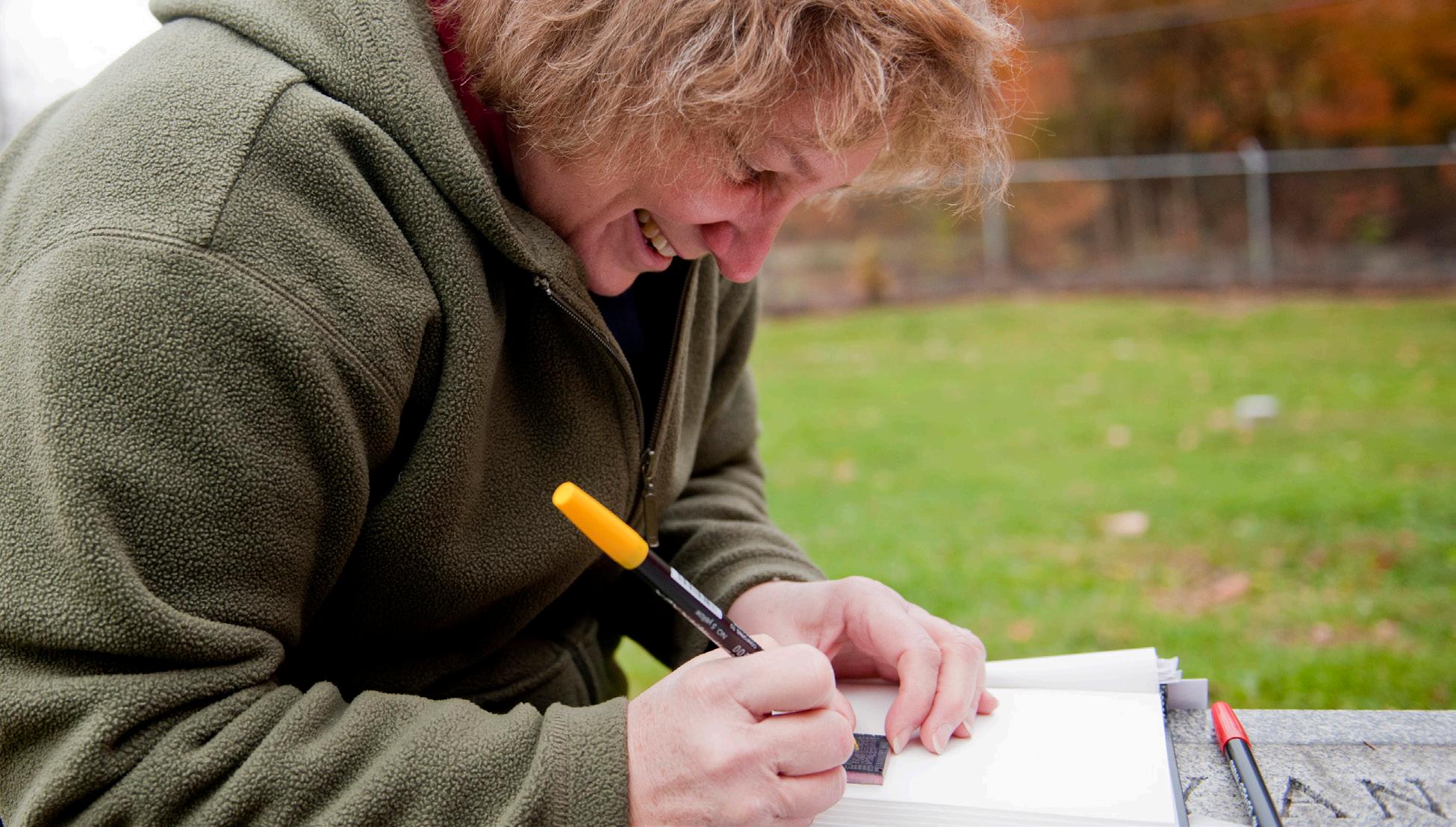
Letterboxer Mary Ann Janning colors the stamps with markers instead of an ink pad to create vibrant imprints.
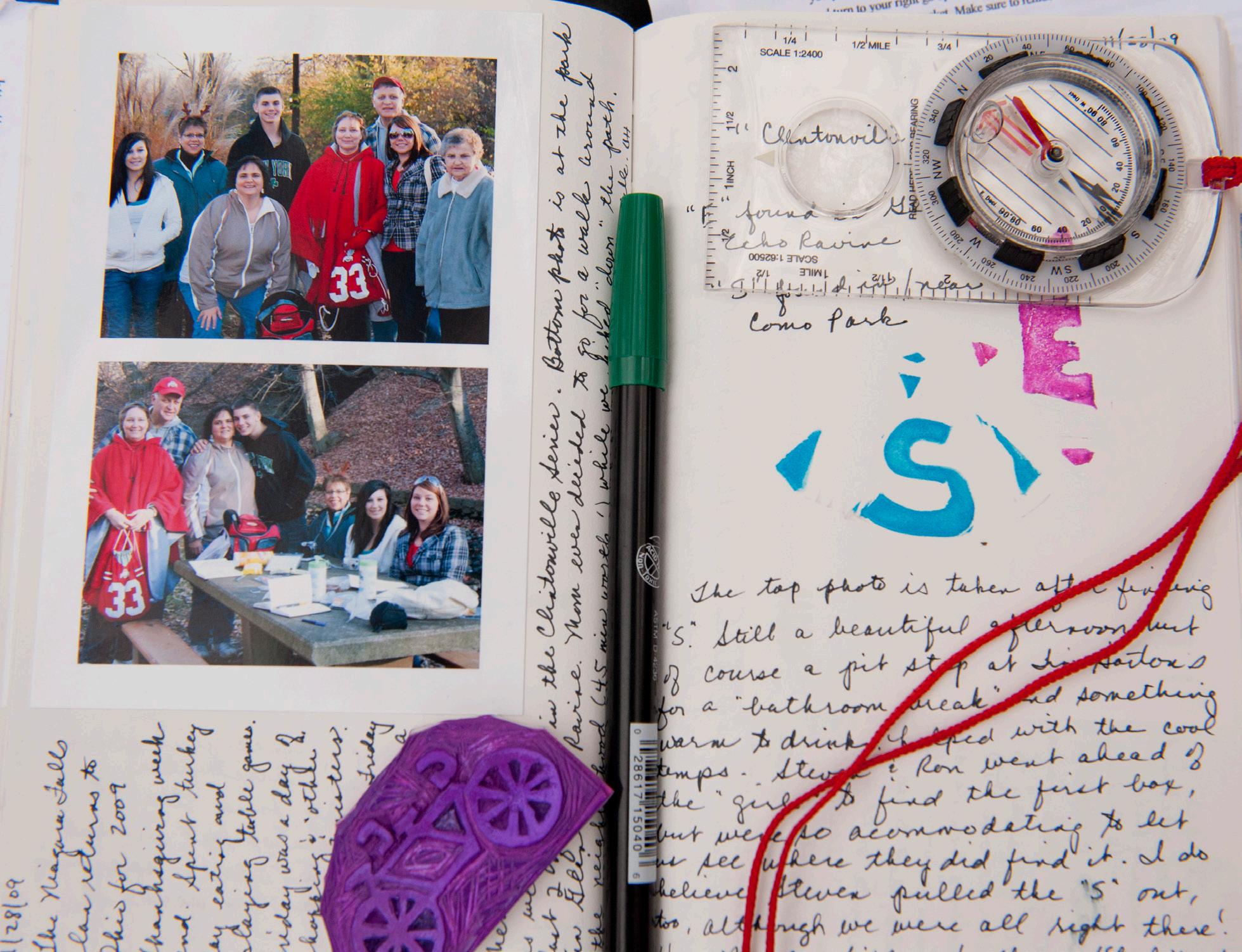
Essential tools for a letterboxer: compass, signature stamp, marker or ink pad and personalized logbook. perfect for families,” Riffle says. “It’s something people of all ages can do.”
the box, the weather and any other specifics from the hike. Each logbook, however, is unique and special to the individual letterboxer.
Letterboxers often use their own personal hand-carved signature stamp to make an imprint in the small logbook and verify their find. The personal stamp usually correlates with the trail nickname they adopt to post on letterboxing websites.
“It reflects you, your personality, a hobby,” Riffle says. Riffle’s boxes make up some of the thousands of boxes that are placed in Ohio. The state boasts the sixth most letterboxes and the fourth most letterboxers in the country to be registered on Atlas Quest. However, that was not always the case.
These families make up a small part of what has grown to be a huge community of letterboxers in Southeast Ohio.
We’ve met people from all over, from all different walks of life.”
“Anyone from people with little tykes, families, retired people, any number of occupations, it covers a whole array of folks,” Imboden says. Many of these letterboxers meet on the trail or at letterboxing events held all over the region. The events are a place for letterboxers to exchange stamps and share a meal.
SANDRA IMBODEN
“We’ve met people from all over, from all different walks of life,” Imboden says. “They’re our other family.”
Riffle, along with many other Ohioans, was introduced to the hobby through various articles, in particular a 2006 article by Country Living, published through Ohio Rural Electric Cooperative.
“By the end of the article, I was shaking my head because I had picked up a time-consuming hobby I knew I didn’t need,” Riffle says. Janning learned about the hobby in a more unconventional way.
“I saw a mother with three daughters while hiking in Hocking Hills,” Janning says. “I saw a little girl jumping up and down.” They had just found a letterbox. When Janning inquired, the mother referred her to letterboxing websites.
The hobby appeals to Ohioans of all ages. Janning does most of her letterboxing with her husband, Ron, while Riffle loves hiking for letterboxes with her 12- and 16-year-old nieces. “It’s
Often, within this letterboxing family, special stamps are made to celebrate the events or to commemorate a person or a death. Imboden remembers a specific hand-carved angel stamp made for a fellow letterboxer in honor of a baby who died.
Stamps are made for more joyous occasions as well. A letterboxer proposed to his fiancée through a homemade stamp. The couple now joins the ranks of many other married letterboxing pairs in the community.
Although these letterboxers share different memories about their hobby, one rule remains constant: A letterboxer should never disclose any clues to ruin the hunt for someone else.
Imboden had not met any other letterboxers on the trail that day, but she still takes care to stealthily stamp the logbook and conceal the letterbox back in its hiding place.
“You don’t ever want to give anything away,” says Imboden, as she makes her way back town the trail.
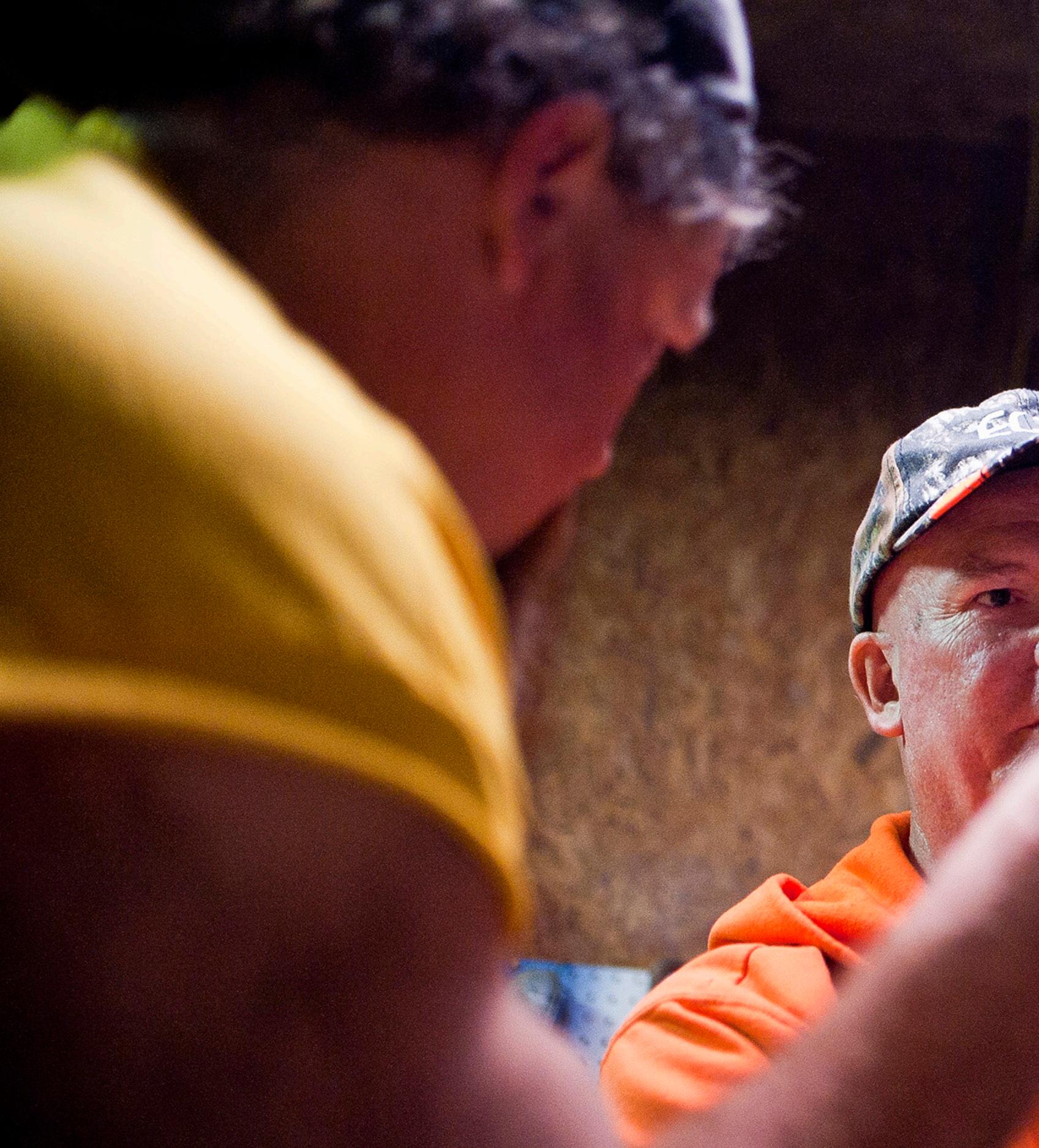
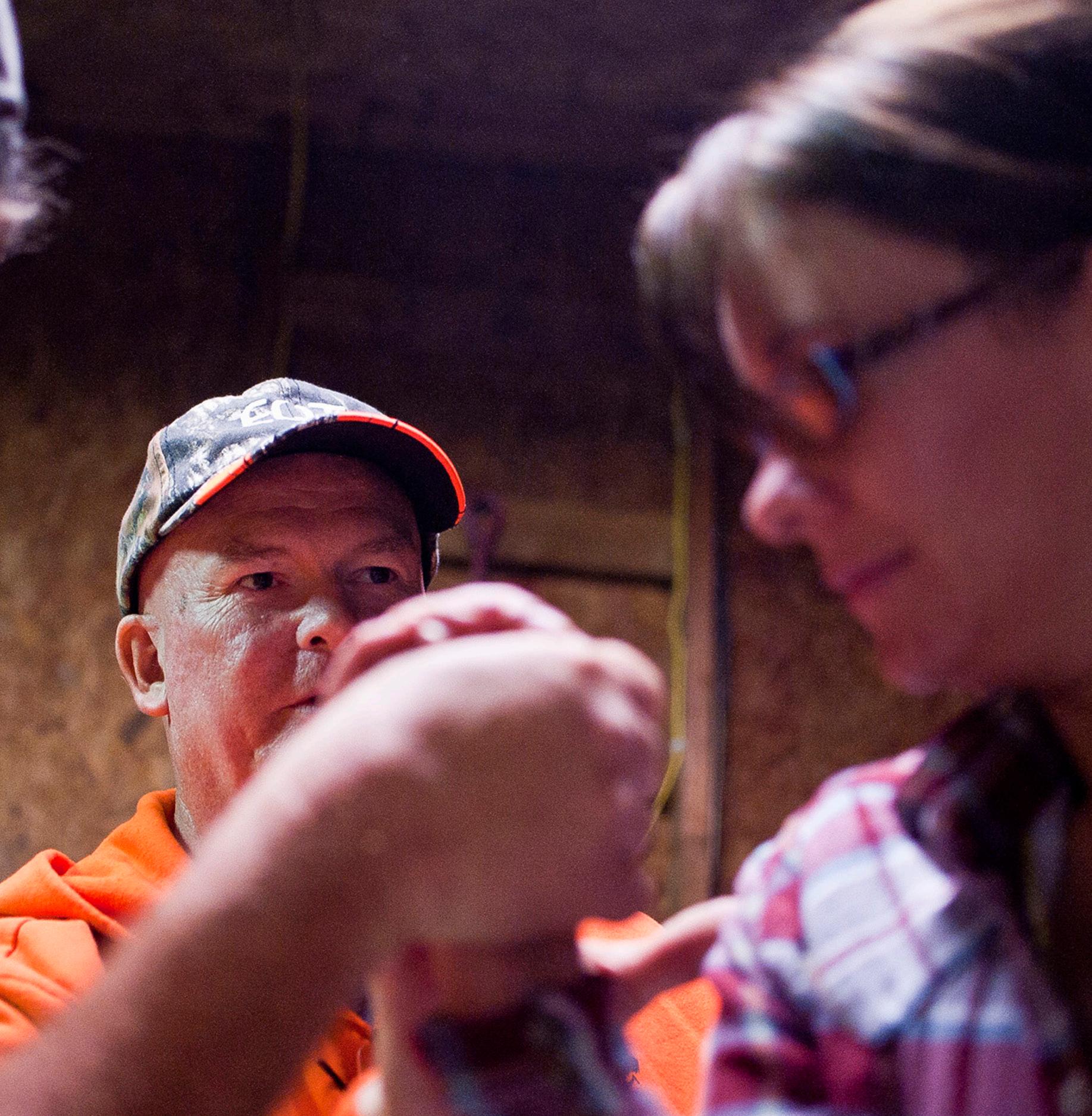
J.J. Jones provides instruction to two arm wrestlers during a regular practice. Jones, a former professional arm wrestler, estimates that he has trained close to 20 arm wrestlers on Thursday nights in his best friend’s garage.
ARMED
In the small town of Shade, arm wrestlers gather for the battle of the biceps.
BY Wes Mayberry | PHOTOS BY Ryan Young
With his right elbow planted firmly on the square, foam pad at the edge of a rectangular table, 55-year-old Shade resident Jim “J.J.”
Jones grips the red peg on the corner of the table with his left hand. Preparing to take on his next opponent during an arm wrestling practice in Athens County, he undergoes an almost Jekyll-and-Hyde-like transformation that immediately changes his appearance.
“He goes into a real mental state,” says Brooke Hallowell, an Ohio University professor and fellow arm wrestler. “His face transforms, he does this breath-holding thing and sputter comes from his mouth. It’s really impressive to watch.”
Although he can’t see himself during his warm-up, Jones has heard plenty of stories about this change, but he says it’s all about his mentality.
“I’m not pissed off at anybody, but I just change,” Jones says. “It’s just a weird reaction. When I get cranked up, I’m whacked out.”
With his mind singularly focused on the impending match, Jones’ hand and forearm stand ready to unleash what he calls the “fury of hell” on his opponent’s arm unlike any they have ever felt before. This type of preparation reveals that arm wrestling involves both mind and muscle.
These practice sessions aren’t your typical buddy-versus-buddy arm wrestling matches at the kitchen table. They are full-blown battles between competitors who take the sport very seriously in a city of less than 1,000 people.
Arm wrestling hasn’t always been widespread. The sport began competitively in a saloon in Petaluma, California, when Bill Soberanes and Dave Devoto collaborated to create the World’s Wristwrestling Championship in 1962. Later, in 1969, the WWC began what was to be a 16-year relationship with ABC’s Wide World of Sports, which popularized the sport on a national stage. It was during this time that Jones happened to enter the realm of professional arm wrestling.
In 1974 and 1975, Jones began his arm wrestling career by attending tournaments held at various OU buildings, including the Bromley Hall dormitory. Growing up on a farm, Jones was naturally strong, so he didn’t work out to arm wrestle. Once he discovered he had some talent, he began to lift weights, and in 1978, he won his weight class at the Mid-American Arm Wrestling Tournament in Dayton. He then traveled the country as a professional arm wrestler, although there was no such distinction at the time. Subsequently, he has brought the sport, also known as “pulling,” to Athens County.
“I was always really good at [arm wrestling] and I’m still really good at it, but I’m just old,” Jones says.
These days, Jones increasingly takes on the role of mentor by passing on his knowledge and expertise to others who are interested but says that he is not unique in his desire to teach other people.
“I don’t think there’s an arm wrestler out here that will not try to show somebody how to do it,” Jones says. “They may not show you everything, but they’ll show you the basics.”
Along with providing his support at practice sessions, Jones also organizes and promotes tournaments that are fundraisers for the fire department in Shade, where the events are held. Aside from his first major tournament in 2011, which attracted 30 participants from five different states and 110 spectators, Jones has also held a one-day event, incorporating around 12 participants, to raise funds for a cancer-stricken friend. Those are respectable numbers for a small-town event, and Jones was able to attract 64 to his October 2012 tournament.
It didn’t matter what I did for a living or where I came from or where I lived or anything. It was just really nice to feel included.”
—BROOKE HALLOWELL
It was an ad for the 2011 tournament that inspired Hallowell to contact Jones about participating.
“I immediately got on the computer and emailed him because I have been fascinated with arm wrestling for most of my life,” Hallowell says. “I just thought it sounded like a lot of fun, and I couldn’t believe that it was happening locally.”
Jones replied to her email, suggesting that Hallowell, 51, come to a practice to learn more about the sport since she had never seen it done at the professional level on a regulation table.
Going to the practice, held inside a detached garage at a Shade residence, proved to be an eye-opening experience for Hallowell. She says it was like traveling to “a foreign country” with its own unique culture. Even though she was an outsider to the arm wrestling community in Shade, which has a strong sense of heritage and interconnection, she has felt nothing but welcomed by everyone involved.
“It didn’t matter what I did for a living or where I came from or where I lived or anything,” Hallowell says. “It was just really nice to feel included.”
Hallowell, along with about seven other regulars who attend Thursday evening practices, certainly gets her reps in, but these gatherings also include lots of fellowship as the participants’ arms begin to tire. Meetings are filled with storytelling, technique discussion and watching YouTube videos of other arm wrestlers. Most of the time during the three- to four-hour practices is spent doing things other than arm wrestling.
“It’s not like you can just keep arm wrestling for hours at a time,” Hallowell says. “Hence, there’s a lot of hanging out and talking and beer drinking that goes on.”
Among the other regular attendees at these practices are Albany resident Jason Ervin, 36, and Athens resident Aranda Hall, 20, who are two up-and-comers in the world of arm wrestling. Although they both came to Jones with relatively little experience, they have proven to be quick learners, as evidenced by their early success in tournaments.
Ervin, who grew up on a dairy farm and played collegiate baseball, had natural arm strength when he first started arm wrestling in October 2011 but lacked experience. He looked to Jones for guidance and has since placed first in the past two tournaments he’s entered in the amateur classes, along with a second and third place in the pro classes.
“That’s not too bad for just being new to it,” Ervin says.
Jones couldn’t agree more.
“When he first came around here, I could handle him, but he just got real good,” Jones says. “He learned a hell of a lot in the past year and can pretty much hang with the big boys now.”
Meanwhile, Hall, who originally was no match for her mother, Cindy, another longtime practice attendee, honed her craft through three weeks of practicing, weightlifting and training. Now, she can say she is too much for her mom. This quick success is also evident in Hall’s first-place finish
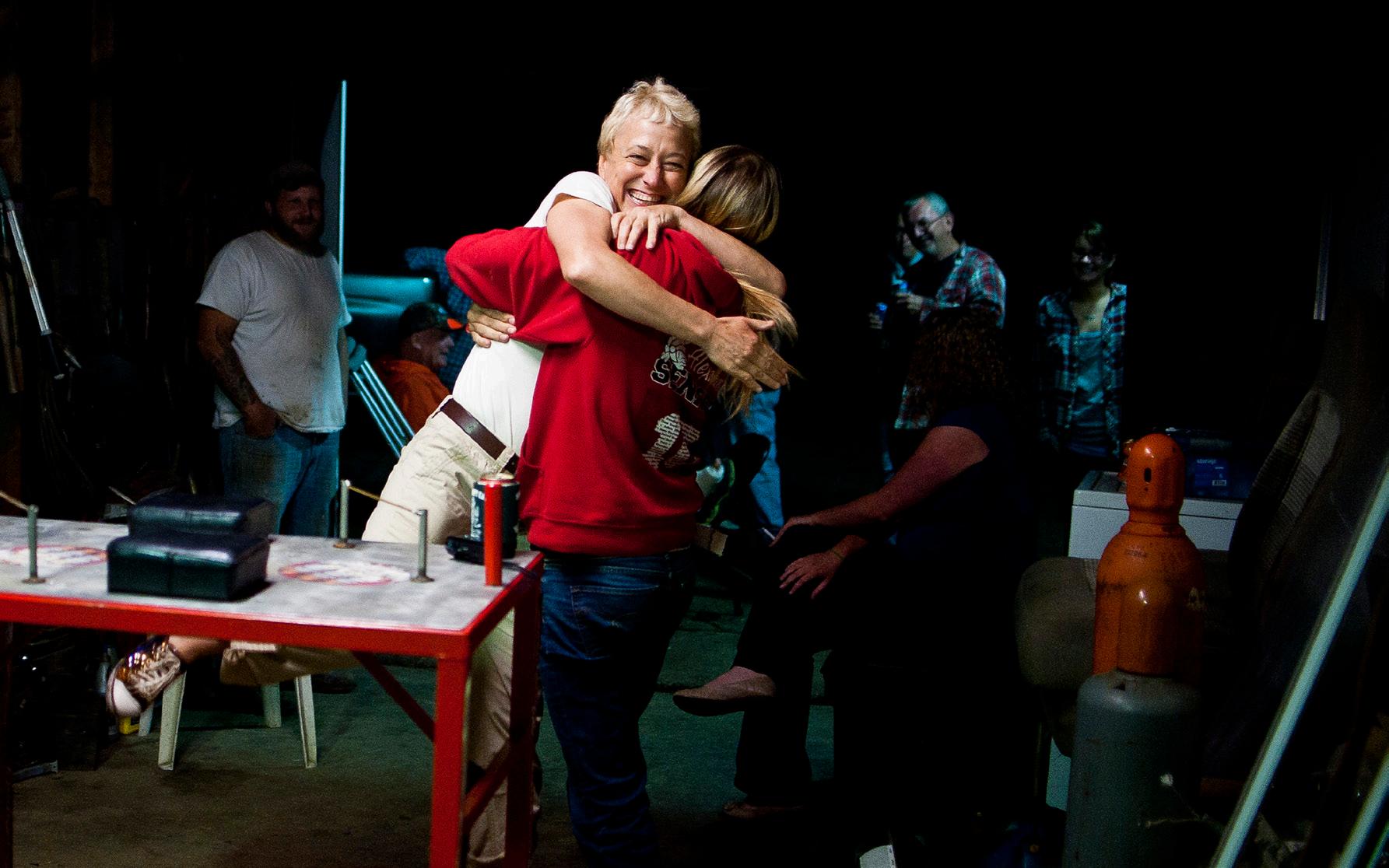
in her weight class at this past summer’s Ohio state championships held outside of Cleveland. Hall says that she was one of the younger competitors there and her final-round opponent was nearly twice her age.
“It was only my second or third competition, so it was pretty fun, but it’s still new to me,” Hall says. “But I won, so it was pretty awesome.”
Although Jones has mentored numerous aspiring arm wrestlers about proper techniques, he has also enlisted the help of Christina Casto, 44, who has 21 years of experience, to assist in the organization and running of his local tournaments. Casto, a native of Parkersburg who organizes the West Virginia state arm wrestling championships, received a visit from Jones during one of her events because he wanted to promote his own tournament and ask for her assistance.
“I just love arm wrestling, so of course I said yes,” says Casto, who has won 11 national championships and is currently ranked second in North America in her weight class.
Casto thoroughly enjoys the atmosphere and fellowship surrounding the practices in Shade, which is what motivates her to make the roughly one-hour drive on a regular basis just to help with training and to visit with Jones and other arm wrestling aficionados.
Along with Casto, Jones has other highly regarded people whom he can call if he has a question about something. He says the U.S. arm wrestling community is a very tight-knit group who are more than willing to advise fellow arm wrestlers.
“I’ve got a guy who’s a 26-time world champion who I can call and talk to just like I’m talking to [a close friend]. They’re not above talking to me,” Jones says. “Everybody in
TOP: Brooke Hallowell receives an enthusiastic hug from Aranda Hall after their arm wrestling match.
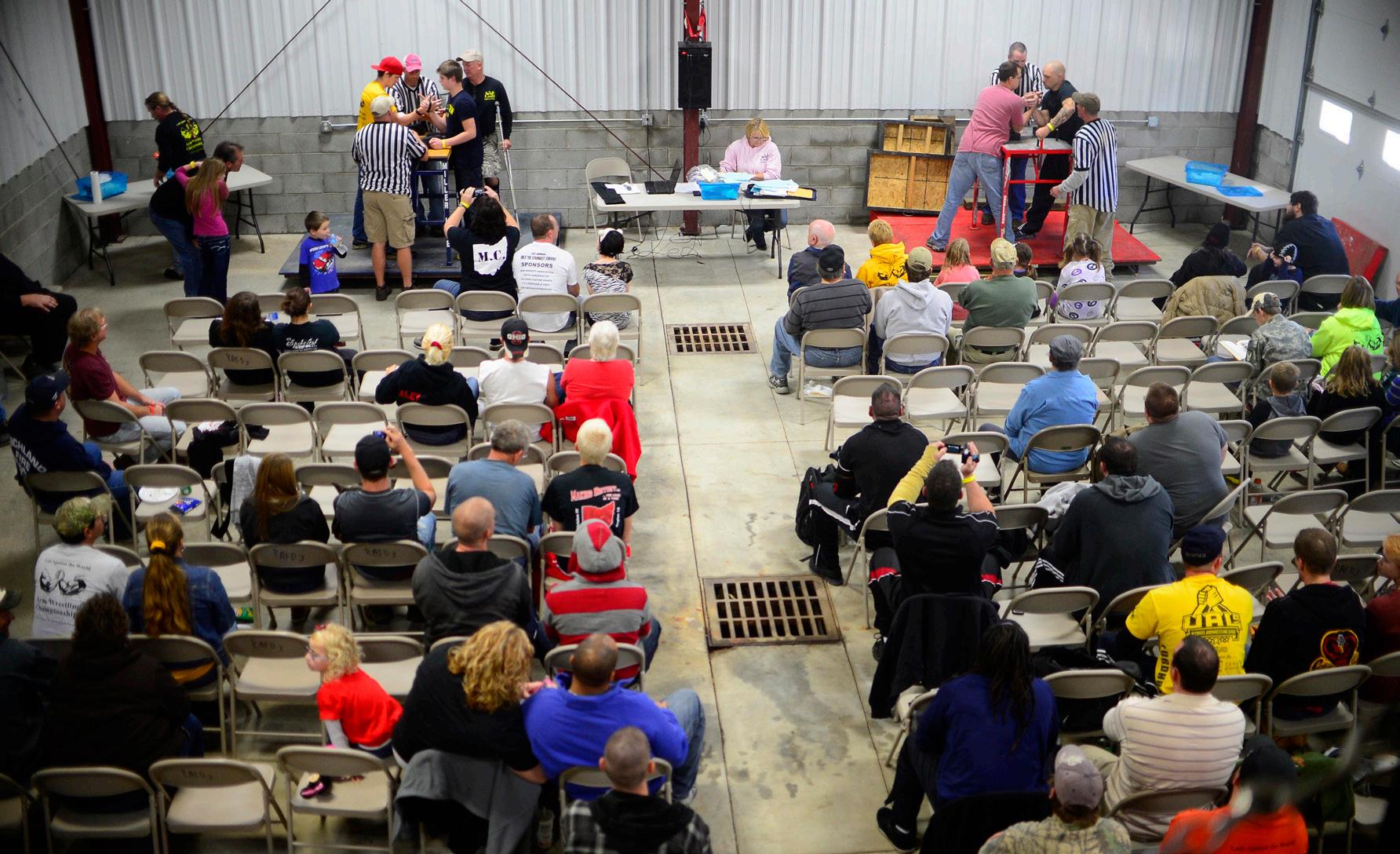
BOTTOM: An overview of the Lodi Against the World Arm Wrestling Championship in the Richland Area Volunteer Fire Department building last October.
the arm wrestling world would just as soon help somebody out as they would try to tear your arm off.”
The 26-time world champ that Jones refers to is Allen Fisher, 56, who lives in Spring Valley, California, where he has been holding the only arm wrestling training camps anywhere since 1998. As the current world champion title-holder, he says that “anywhere on the planet, they just want to take me out.” As a result, Jones has sought Fisher’s advice on numerous occasions regarding training and becoming a better arm wrestler.
Fisher began competing at the age of 23, when he decided to just walk in and participate in a national championship qualifying event in which he placed fifth. He says that there was something that immediately clicked between him and the sport.
“It was like I was made and designed to do this,” Fisher says. “The first time I grabbed somebody’s hand, I’m thinking about the different angles, positions and finger and wrist pressures. I’m thinking about everything you can imagine.”
He has participated in numerous world championship events but says that it’s often more about the pride of obtaining the title of world champ, which he says is “offthe-charts amazing” to achieve just once, than monetary prizes. Amazingly, he spent $3,000 to go to Brazil for a recent World Armwrestling Federation event involving 2,500 people from around the globe only to end up with a small token to go along with the world title.
“I smash all those breathing, chemical-walking monsters, and I win the world title,” Fisher says. “How much do I get? Zero. I get a stupid little medallion made out of something that looks like gold for first place.”
Events such as the WAF championships reveal that competitive arm wrestling gets worldwide recognition, but attempts are being made to make it more mainstream in the U.S., especially among women. Fisher, whose wife Carolyn is a retired five-time world champion arm wrestler, and Casto both agree that women in the U.S. are not competing as much as they used to.
Casto believes that the economy is partly to blame for the recent lack of female participation because women are placing a greater emphasis on their employment, which leaves little time for arm wrestling. Whatever the cause, Fisher says it is “super important” to continue to grow the sport more for women. This importance stems from the significance of weight classes in the sport. With only a few female participants, weight classes are often disregarded, and arm wrestlers are left to compete against what could be deemed as unfair competition.
This movement has made its way to Shade, where Jones, Hallowell and Casto have taken it upon themselves to get more women involved. Their initial attempt entailed holding an all-ladies’ practice, which attracted close to 10 participants.
Although she may be in the minority as an older female arm wrestler, Hallowell is heartened by the fact that this is a fairly egalitarian sport.
“You wouldn’t think a woman my age would be really interested or good at it, but I find that I’m very competitive with young, athletic women. I think that’s a really cool thing,” Hallowell says. “If I can do it, other people can do it.”
From new recruits to longtime contenders, it seems just about everyone in the arm wrestling community knows J.J. Jones, who has become the face of Southeast Ohio arm wrestling through his hard work and dedication. As the sport gains momentum nationally, Jones has already put the small town of Shade on the arm wrestling map.
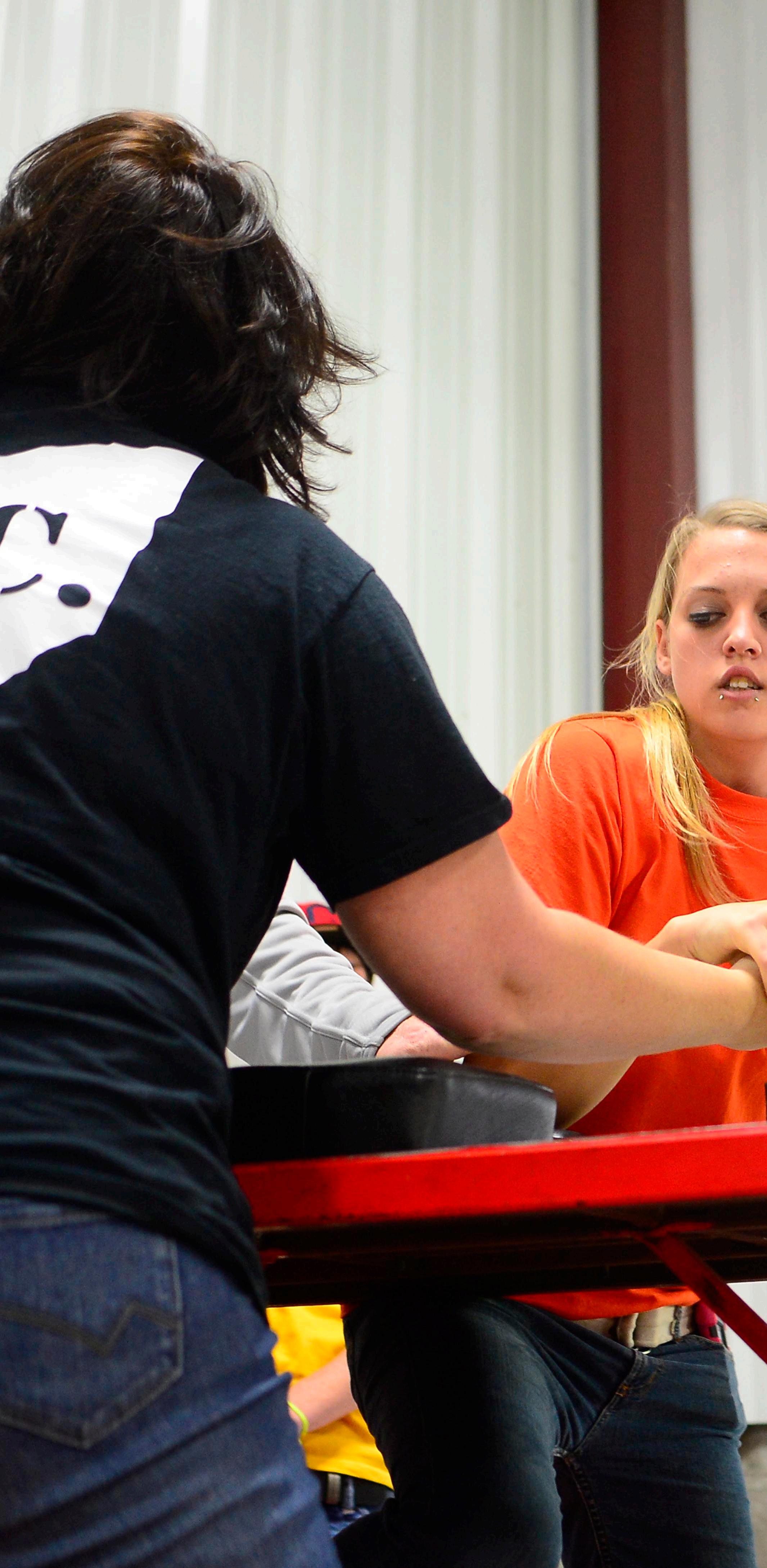
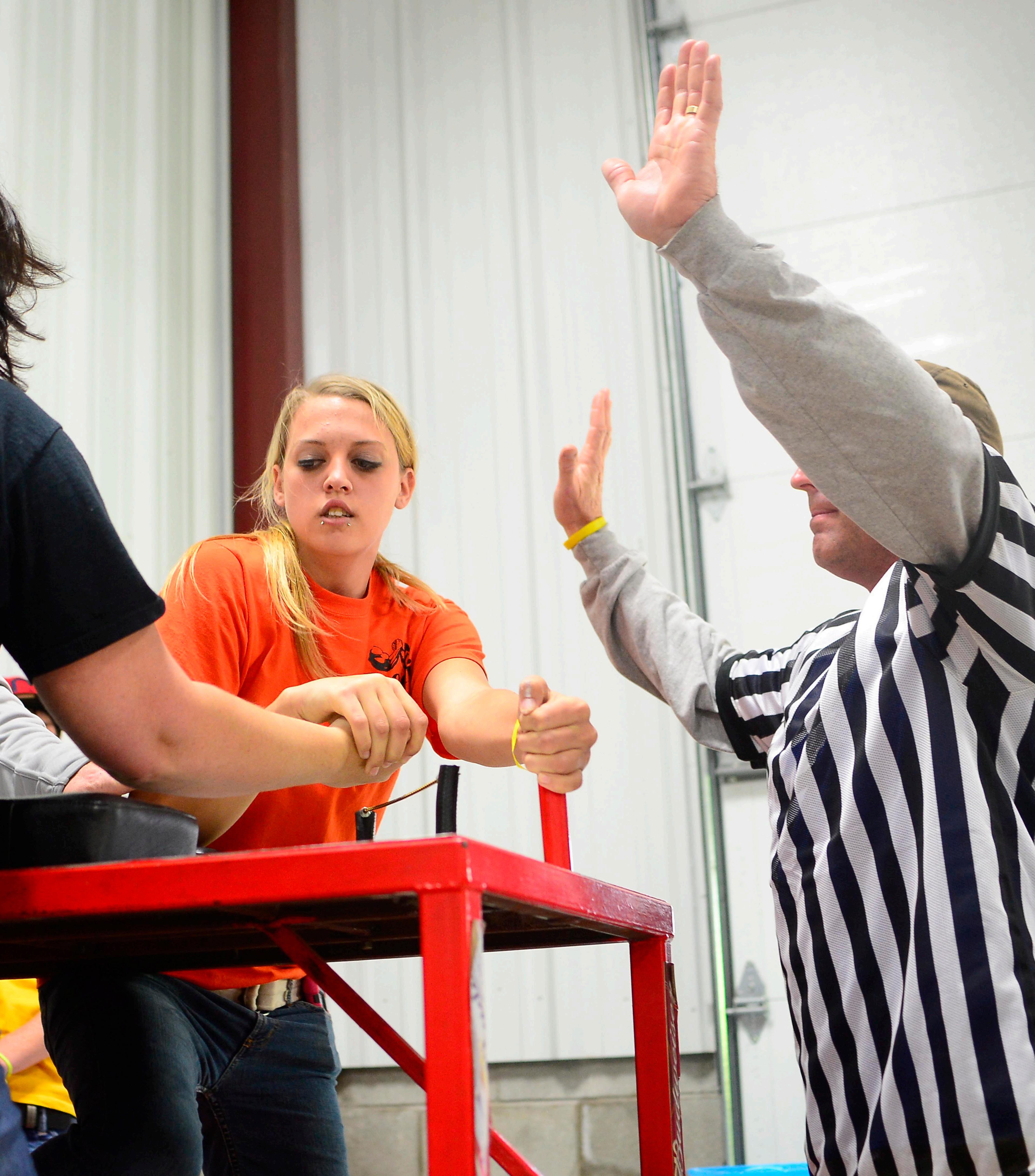
Athens resident Aranda Hall competes in the Lodi Against the World Arm Wrestling Championship.

Sarah FIsher revs up for the 2009 season finale Firestone Indy 300 at Homestead-Miami Speedway in Florida.

Fast, Furious, Female
BY Jessica Salerno | PHOTOS BY Sarah Fisher Hartman Racing
THE YOUNGEST WOMAN TO COMPETE IN THE INDY 500, CIRCLEVILLE NATIVE SARAH FISHER HAS ALWAYS LIVED HER LIFE IN THE FAST LANE
Racecar drivers have to be comfortable with pressure. After all, they’re the ones who receive all the publicity for an amazing win or heartbreaking loss.
Pickaway County native Sarah Fisher knows from experience how intense that pressure can become: She has competed in nine Indy 500 races and holds the title for the most number of starts for a woman in the history of the prestigious race. She is also wise enough to know that just the racer alone is not responsible for that win or loss. Her team and family members have supported her racing career through good and bad.
Fisher was an only child and says her town was pretty quiet, even while Fisher’s family was making strides in the racing community. She grew up with racing, first settling in the driver’s seat of a quarter midget car at the ripe age of 5. She was simply following in her family’s footsteps.
Her dad, Dave, and her mother, Reba, first met racing go-karts in Commercial Point, where Fisher originally grew up. She says they decided to return to Commercial Point to live after becoming fond of the area. For the most part, Fisher’s racing career flew under the radar. “Nobody knew what we were doing,” she says. That is, until The Today Show came to Fisher’s Teays Valley High School to interview her about her burgeoning racing career.
After graduating from Teays Valley in 1999, she attended Ohio State University and majored in engineering. But her time as a Buckeye was cut short when she received the opportunity to race professionally. Fisher promptly moved to Indianapolis by herself to follow her dream of a racing career. “I had complete intentions of going to Ohio State University and majoring in engineering, and it was a complete 180 for a career path,” she says.
Fisher competed in her first Indy 500 when she was 19 years old and became the youngest woman ever to do so. “I went right into the big leagues, and I really didn’t want to mess up so I put a lot of pressure on myself. It was very intimidating to be out on my own and be on track for a major athlete.”
So began a life in the public eye for Fisher. Being so young and a woman in a sport that is overwhelmingly male dominated just increased the scrutiny on the young racer.
The Today Show isn’t the only popular program Fisher has appeared on. She has also been on The Daily Show with Jon Stewart, Live with Regis and Kelly and The Tonight Show with Jay Leno, among others. Fisher is humble about her appearances, explaining that the shows are an opportunity to discuss the sport and inform people who may not know that much about racing.
Despite the added stress, Fisher says that she never felt alienated in the racing world. “There’s just a lot of things that you learn when you grow up, and to do it in the public eye was pretty tough,” she acknowledges. Instead of succumbing to the pressure, she worked on proving to others that she deserved a place on the track just as much as anyone else.
Her competitive training schedule as a youth acted as a stepping stone for some of the higher stake racing she had to do later on in her career. For instance, she has raced against Mario Andretti, one of the most successful racecar drivers in the history of the sport, and Steve Kinser, a well-known professional sprint car racer.
“I was mentally ready to race against the Andrettis because I had already raced against the Kinsers,” she says.
Fisher says she loves the competitive side of racing and enjoys figuring out how to make the car run faster and produce more efficient results. Her passion for the sport shows.
In a testament to her competitive spirit, her track qualifying record at Kentucky Speedway has yet to be beaten, with a speed of 221.39 mph–this translates to an impressive 24.0661 seconds a lap. She also won a pole position for a major-league open-wheel race, becoming the first woman in North American motorsports history to do so.
Fisher’s awards are numerous and impressive and speak a lot about the racer
who has an easygoing manner and gracious attitude about her achievements. Her racing history shows honors such as becoming the first female driver of the 21st century to drive a Formula One car while testing in 2002 at the Indianapolis Motor Speedway and setting the record in 2003 as the fastest woman to qualify for the Indy 500.
She has won the Most Popular Driver award from fans in two separate series, IndyCar and NASCAR. She says that in order to connect with fans you have to be real. “Normal people can’t identify with superstars every day. I think being real is a quality I’ve possessed my entire career, and I think fans can more easily identify with that.”
In 2008, Fisher started Sarah Fisher
“I went right into the big leagues, and I really didn’t want to mess up so I put a lot of pressure on myself.”
SARAH FISHER
Racing, becoming at 28 years old the youngest team owner in the IZOD IndyCar series as well as the first and only female team owner. She did this all while continuing to race, and she says doing both at the same time was incredibly difficult.
In 2010, Fisher retired from racing and decided to focus her attention solely on what is now Sarah Fisher Hartman Racing. She runs the business with her husband, Andy O’Gara, whom she met, fittingly, on the racetrack. They have known each other for 12 years and have a 1-year-old daughter named Zoey. Fisher’s typical week has her working in their shop in Indianapolis on Mondays and Tuesdays, where she handles whatever paperwork or tasks that need to be completed. Wednesdays are usually a day off or a family day, and on Wednesday night or Thursday morning, she and the team fly out to the next race event. They participate in about 17 races a year, and she says there “really is no end” to the racing season. Her team is on the
track from January or February and goes until September or early October.
The competitive win Sarah says she is most proud of is her team’s first win at Kentucky at the end of 2011. That was the first win by a small team there in quite a while, and her driver Ed Carpenter won the Kentucky Indy 300 by a margin of .00986 seconds.
Now Fisher manages Josef Newgarden’s team, a rookie in his first year of a five-year contract with the team. Although Fisher says the pace of her job now is a little slower, she’s enjoyed her management position so far. “You get a lot of young individuals in place and see the camaraderie and the teamwork that they’re developing together. And know that you’re responsible for making that happen so it’s very rewarding.”
When asked if she thinks Zoey will one day want her own seat behind the wheel, Fisher laughs and says she is not sure yet what her daughter will choose. “She’s either going to love it or hate it. She loves sitting in the cockpit of an Indy car, so we’ll see.”
Fisher has also written the book, 99 Things Women Wish They Knew Before Getting Behind the Wheel of Their Dream Job. Fisher describes it as a book of lessons that she hopes other women with tremendous opportunities will benefit from. It offers advice on social media, budgeting, networking and more.
Fisher says the biggest challenge so far has been finding sponsorships to pay for racers but attributes it to something all drivers go through.
Her team is building a new location for Sarah Fisher Hartman Racing–a building that she hopes will become a destination for fans and sponsors. It will be double the size of the current facility at just under 40,000 square feet and feature a composite shop, a paint shop, a gym facility and conferencing and catering centers.
Fisher says she gets regular pictures from young girls racing go-karts and is happy to see enthusiasm for the sport from her fans. “I realized it had to start with a dream and so to see that from other little girls means that I’ve had an impact,” she says. “That means a lot.”

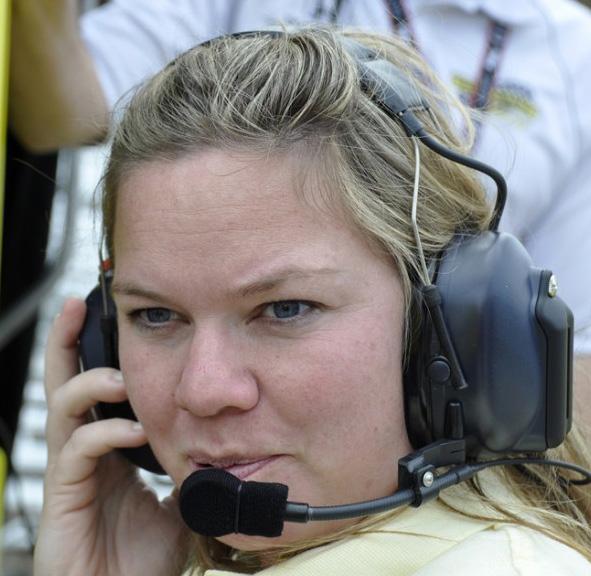
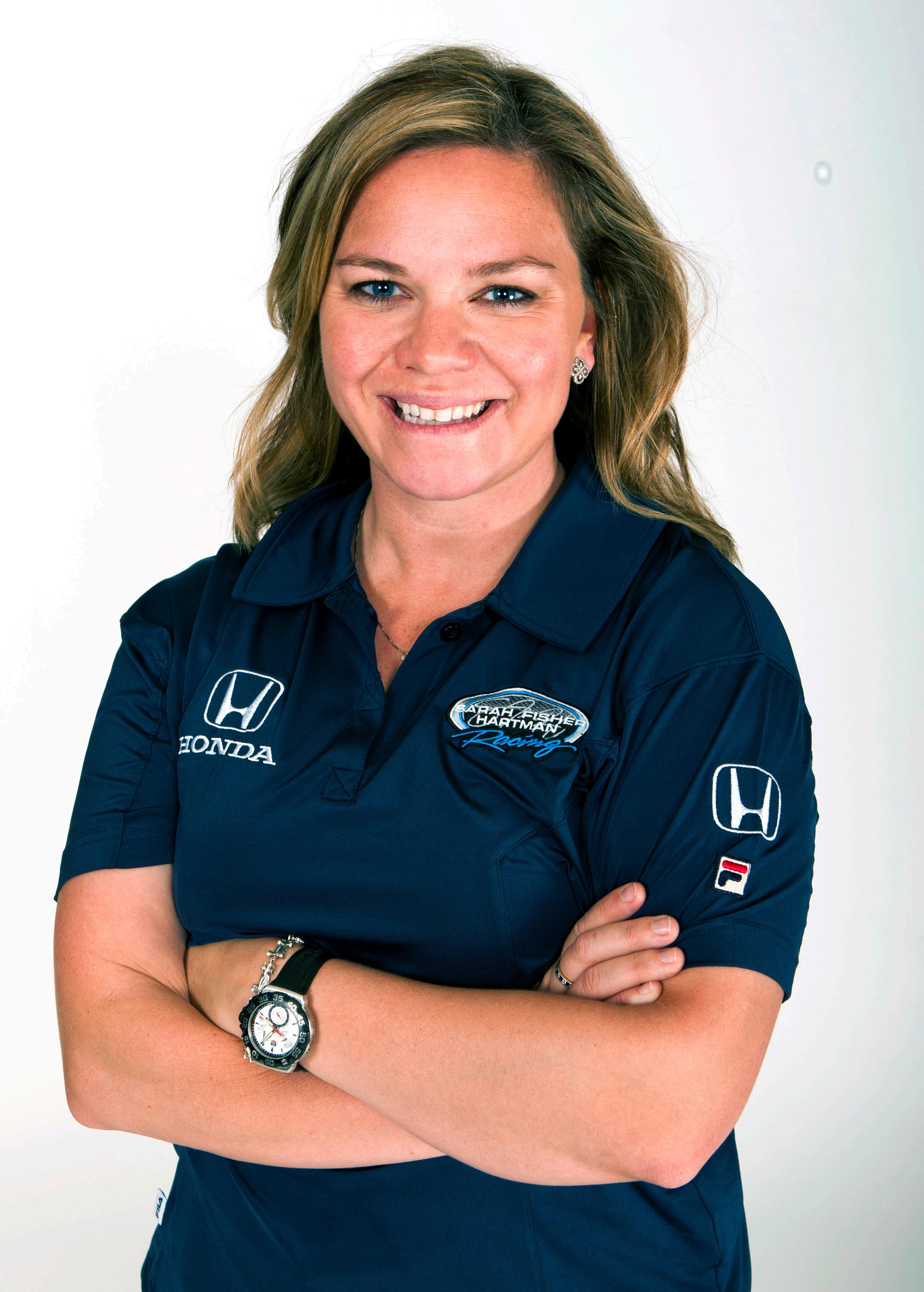
TOP: Sarah Fisher poses with daughter Zoey, born in 2011.
BOTTOM: Fisher gives instructions to her team at the track.

Fall brings out fiery hues in tree of heaven’s leaves. They are beautiful and dangerous. (Photo by Kay)

Earth Invaders
An army of alien plant species is advancing on our native forests. Can residents and scientists stop the spread in time?
BY Phil Barnes | PHOTOS BY Susannah Kay & Dave Apsley

Southeast Ohio is being invaded. The enemy is slow, but damage has already been done – forests overrun, flowers turned to dust, native species beaten down and choked. And now, entire ecosystems remain at the mercy of the opposition. We have only ourselves to blame. We brought them here. But there is hope. Our own army of scientists is finally fighting back, not with guns and destruction, but with knowledge. They are biologists, naturalists, professors and park rangers, and they are ready to challenge one of Ohio’s most formidable foes: invasive plants.
Is it really all that dramatic? Can something as simple as a non-native grass patch eventually overwhelm an entire forest? The answer is yes, and Dave Apsley, natural resources specialist of Ohio State University Extension, can prove it.
Over the last 18 years, Apsley has been compiling a laundry list of Ohio’s most threatening invasive plant species, from hand-sized weeds to giant trees. Some of their names may sound familiar: tree of heaven, burning bush, Japanese stiltgrass and garlic mustard. You have probably seen them while walking through the

woods. They may even be growing in your backyard.
“People plant invasive trees and shrubs without even knowing it,” Apsley says. “They often do it for the looks without thinking about the consequences.”
Both burning bush and tree of heaven were originally brought over from China because of their striking appearance and hardiness. In the fall, burning bush leaves turn from a bright green to a gorgeous crimson red. It thrives in many different soil types, making it a popular choice for personal gardens and public parks. But due to a lack of natural pests and its ability to thrive in shade, burning bush swiftly infiltrates forests, where it out-competes smaller native plants and devastates the ecosystem.
As burning bush’s seeds spread throughout Southeast Ohio, people are finally beginning to understand the longterm effects of planting it–the selling and transportation of the plant is now illegal in a few eastern states including Massachusetts and New Hampshire.
But the top spot on Apsley’s list of invasive species goes to tree of heaven, known affectionately as “the ghetto palm,” “the stinking sumac” and “tree
from hell.” Its exceptional ability to survive and reproduce in polluted areas makes it a serious threat to urban and rural environments. It is also a better shade stealer than burning bush. With a rapid growth rate and a mature height of 80 feet, tree of heaven dominates forest canopy space, sucking up sunlight needed by smaller plants. On top of all this, the plant oozes a toxic compound called ailanthone, which stunts the growth of anything it touches. The chemical is most powerful in the plant’s bark and roots, but also exists in the leaves, wood and seeds.
In light of such a deadly arsenal, tree of heaven’s claim to fame is actually more annoying than harmful. During flowering periods, the trees release a repulsive odor often compared to cat urine or burning peanuts.
Tree of heaven can be found in all of Ohio’s counties, but concentrated populations are most common in heavily forested counties and along the Ohio River, which provides an easy route for seed dispersal. However, like the vast majority of invasive species, it has other ways of getting around – mainly with our help.
For this reason, Eric Boyda, coordi-
LEFT: A patch of hemlock trees is left dead after a wooly adelgid attack. (Photo by Apsley) RIGHT: Burning bush grows on the edge of a pond in Sells Park in Athens. (Photo by Kay)
nator at the Appalachian Ohio Weed Control Partnership, has been working closely with Apsley to put tree of heaven in the invasive species spotlight.
“Most invasives that we keep a close eye on are brought around by humans,” Boyda says. “Tree of heaven seeds are spread by dirty construction and landscaping equipment. Crews move from site to site without cleaning their tools. But even if you’re just driving on a muddy road or hiking in the woods, you could be carrying seeds.”
Japanese stiltgrass spreads throughout Southeast Ohio in the same fashion, although it was originally introduced to the U.S. in 1919 as packing material for shipments from China. Its ruler-sized grass stalks sport spear-shaped leaves with silver midribs, a leaf’s vertical vein. Like tree of heaven, Japanese stiltgrass makes its home on the banks of the Ohio River. But it doesn’t stop there – seeds frequently hitch rides on lawnmower tires, leading to dense populations along mowed roadsides and highways.
“Japanese stiltgrass is a relatively new one on the radar for us. Because of its
small size, it is hard to get people to understand that this grass can impact forests, especially tree regeneration,” Boyda says.
In forests, it forms thick patches, overwhelming small plants that are sporadic in nature. It isn’t tasty either, at least to white-tailed deer and most other woodland creatures, which prefer a nice snack of native shrubs.
But other invasive plants can be tasty. Take garlic mustard, for example. Crushed up fragments of this plant’s garlic-smelling leaves can be found in salads, seasonings and pesto sauce. It is relatively easy to spot, characterized by small, popcorn-y clusters of white flowers. Cute, right? Wrong – garlic mustard has an ugly side. Similar to Japanese stiltgrass, the aggressive garlic mustard threatens the understory of forests. It grows much faster than native wildflowers, such as spring beauty and wild ginger, leaving them to die in its shade. Garlic mustard’s damage has a devastating domino effect on hummingbirds, bees and other insects that rely on native wildflowers for pollination.


Ohio University Emeritus Professor Phil Cantino has been at war with garlic mustard for 20 years. When spring comes around, he organizes groups of students and volunteers, centering efforts on slashing populations in Strouds Run State Park, Athens-owned conservation land and along the Hockhocking Adena Bikeway.
“Garlic mustard is easy to pull out, but it produces lots of seeds and they remain viable in the soil for several years, so it has to be pulled year after year,” Cantino says.
It has taken some time, but Cantino’s garlic mustard grabbing is starting to pay off. In some areas where he’s been pulling for seven years or more, he has noticed marked reductions in infestation.
In 2006, with the establishment of the Athens Forest Stewardship Club, Cantino expanded his vision to incorporate more of the city’s invasive plants. Garlic mustard still gets most of the attention, but others such as Asian bush honeysuckle, privet and burning bush have slowly wriggled their way into the public eye.


LEFT: Japanese stiltgrass. RIGHT: Wooly adelgid egg sacs clustered on the branches of hemlock trees. (Photos by Apsley)
“Unfortunately, participation in these efforts has decreased somewhat in the last few years,” Cantino says. “People are now so busy battling these rapidly spreading pest plants on their own properties that they don’t have as much time and energy left to devote to public natural areas.”
Cantino’s noble quest to stop the invasive species spread has been noticed by Boyda, who is coordinating his own attack on a larger scale.
Boyda currently works with the Appalachian Ohio Weed Control Partnership, which covers 16 southeastern counties and all of Wayne National Forest. Its mission is simple: educate and eradicate smartly.
“Simply cutting down invasives like tree of heaven is a very bad idea,” Boyda says. “Seeds will spread and you’ll have a hundred more trees to deal with. There are more specific ways to manage invasive plants.”
One of these is the popular hack-andsquirt technique, which involves stripping a chunk of bark from the tree before spraying the exposed trunk with herbicide. This method allows the poison to seep down into the roots, killing the tree
without harming surrounding vegetation. For smaller invasive plants, simply giving them a good old tug will usually suffice, although it isn’t always practical in the long run.
“You really want to control the plant when it’s contained in small, localized areas, because there isn’t that much you can do after that,” Boyda says.
The Appalachian Ohio Weed Control Partnership holds workshops in Columbus, targeting commercial landscaping and construction businesses that accidentally facilitate invasive spread. But Boyda notes that the average home gardener can be held just as accountable.
“We try to encourage people to grow native plants in their garden as much as possible,” Boyda says. “Sometimes it’s almost depressing going outside anymore because you see all these huge populations of invasives everywhere.”
It is these highly established invasive plants that cause wildlife activists like Boyda to change their strategy. By doing so, they have discovered a promising course of action: using disease to combat invasives. Researchers in Pennsylvania introduced the utilization of two fungal diseases, Verticillium wilt and Bipolaris,
with hopes of controlling tree of heaven and Japanese stiltgrass. Boyda has already seen both fungi in parts of eastern Ohio but notes that biological retaliation can be a risky venture.
“So much research is done before introducing diseases for invasive treatment,” says Boyda. “We have to make sure that no other plants are affected. If they are, we’re only adding to the problem.”
While disease may prove to be effective if used properly, Aspley, Cantino and Boyda would agree that it alone cannot win the battle against invasive plants. Education and awareness are far more important.
So dig up that burning bush in your backyard and ... burn it! Make sure to clean off your shoes after a hike in the woods. Go find some garlic mustard and make a salad.
We all play a role in this war whether we know it or not, and losing will change our landscape forever.
We’re fighting more than plants in the war on invasive species. Here’s our list of invasive animals to look out for in Southeast Ohio:
Hemlock Woolly Adelgid:
The invasive pest is roughly the size of a period on a printed page, but don’t let that fool you – after four to 10 years of infestation, large numbers of these sap-sucking insects can bring down an entire forest of hemlocks. While spotting them is difficult, the adelgid’s cotton-like egg sacs are easy to see clustered on the tips of branches. Infested trees have been spotted in both Meigs and Washington counties, and the only known treatment is the use of insecticide.
Emerald Ash Borer:
The emerald ash borer has been grinding its way through Ohio’s ash trees since 2003. Sixty-three counties are currently infested. In southeastern Michigan, 99 percent of the ash trees are already dead. Over the next 10 years, borer damage costs are projected to reach more than $25 billion within a 15-state area. Controlling it is difficult: Similar to adelgid control, insecticide application on individual, high-value trees is currently the only successful treatment. In addition to natural spreading, the borer gets around by human transportation of infected firewood, characterized by small, snake-like slits.
Asian Longhorned Beetle:
Environmental activists are a little more optimistic about the Asian longhorned beetle. Due in large part to a slow birth rate, the thumb-sized, black-and-white bug has already been removed from Chicago and Long Island. Even though only one Ohio county, Clermont, has reported infestation, the beetle still poses a threat to maples, ash, elm and birch trees.
Feral Hog:
You probably didn’t see this last one coming. These disease-carrying pigs make a feast out of farmland, scarfing down crops and leaving fields in ruin. No one is sure how many there are in Ohio, but they have been documented in more than two dozen counties, particularly in Southeast Ohio.
Want
to report invasive species in your area?
There’s an app for that.
The Great Lakes Early Detection Network app allows you to send pictures and locations of invasive species to a statewide database, helping out invasive fighters like Apsley and Boyda with research and battle tactics.
No
smart phone, no worries!
Simply give the Appalachian Ohio Weed Control Partnership a call at (740) 534-6578 to talk about anything invasive. You can also “ask an expert” via email by visiting the Ohio State University Extension website.


An upclose and personal
look at the Asian longhorned beetle, characterized by black-andwhite stripes and unusually long antennae.
(Photo by Apsley)

Hoofin’ It
These Southeast Ohio families farm with traditional methods that use horses instead of machines, benefitting not only the soil but their spirits.
BY Jessica Salerno PHOTOS BY Erin Corneliussen
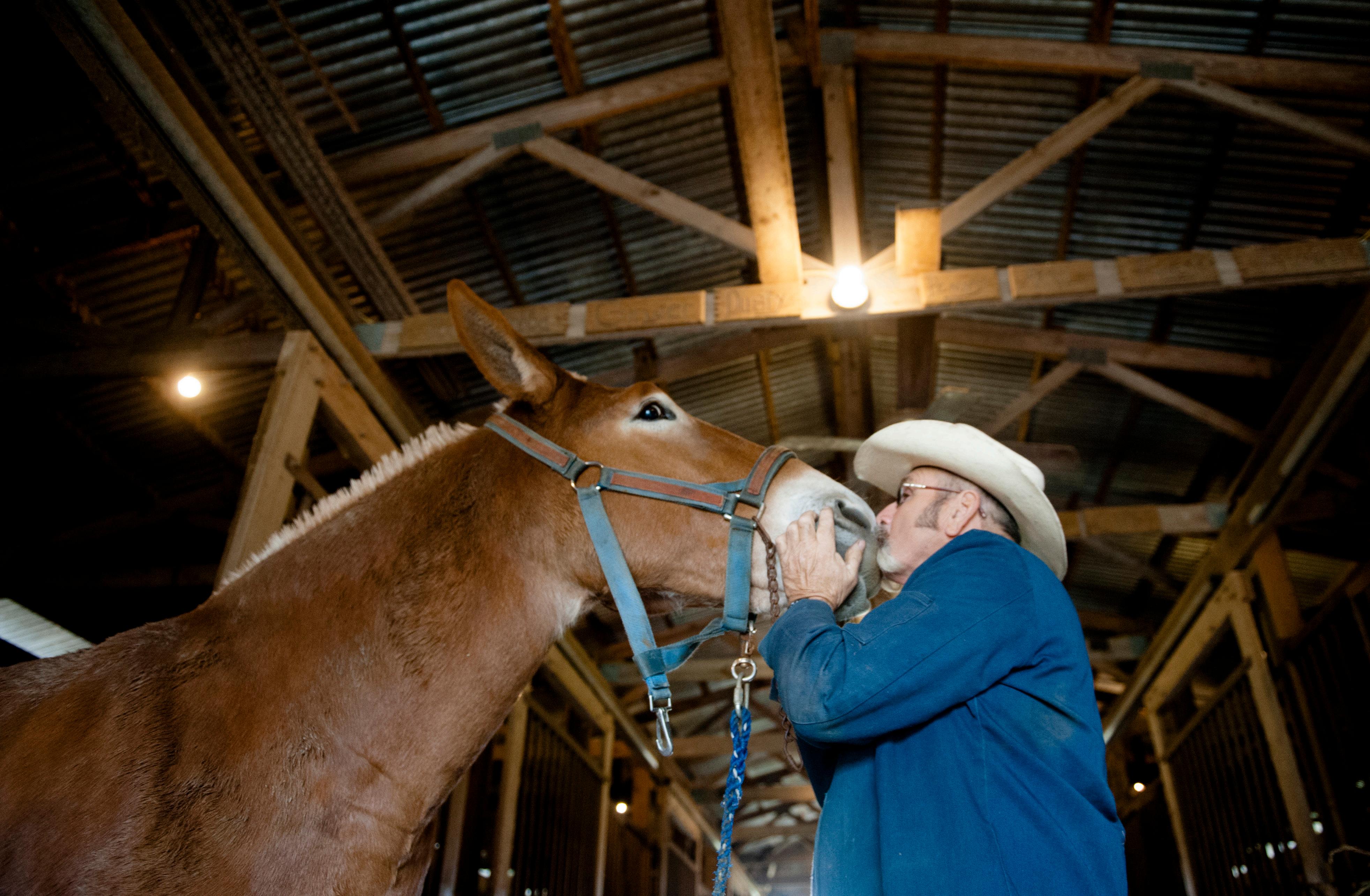
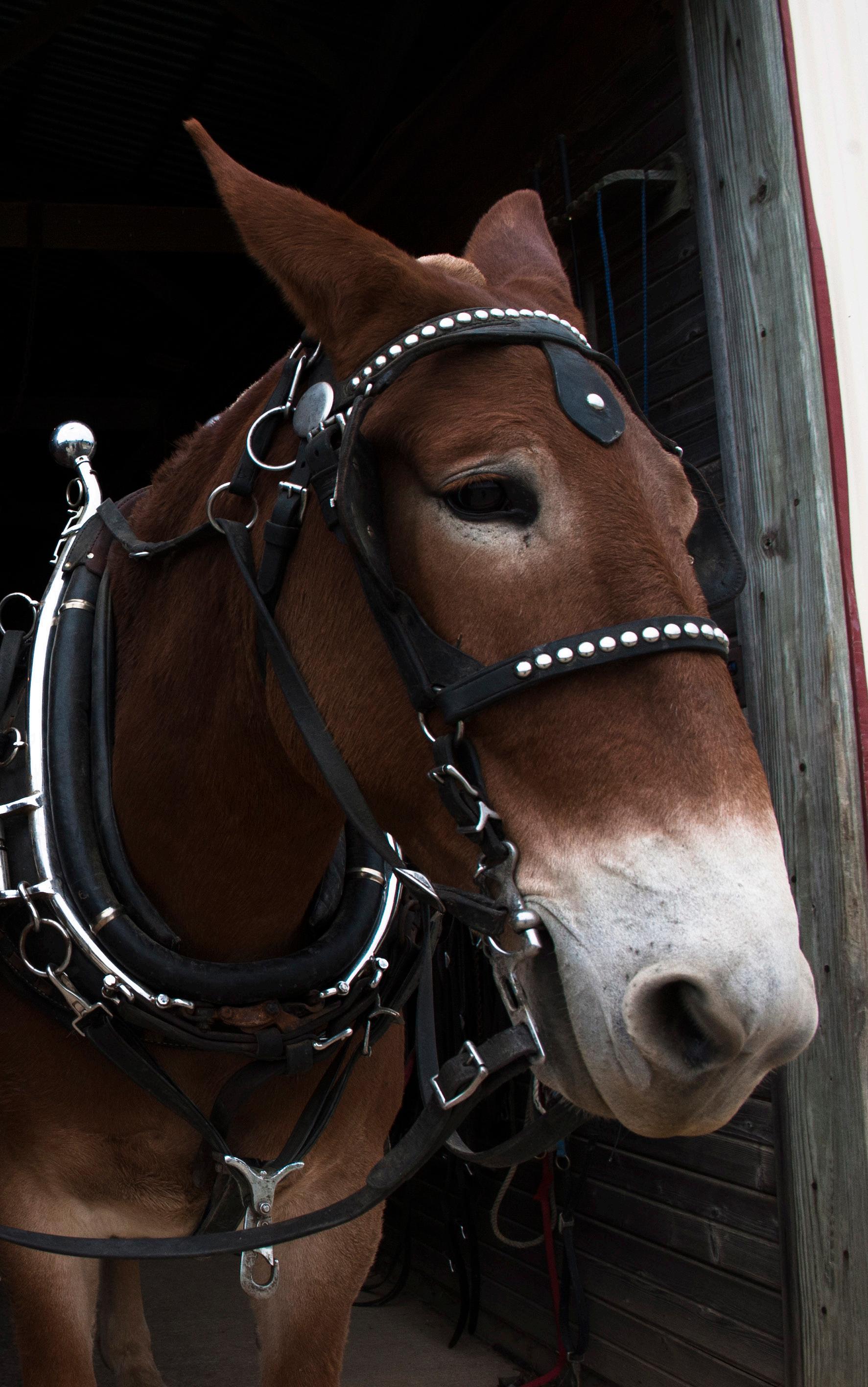
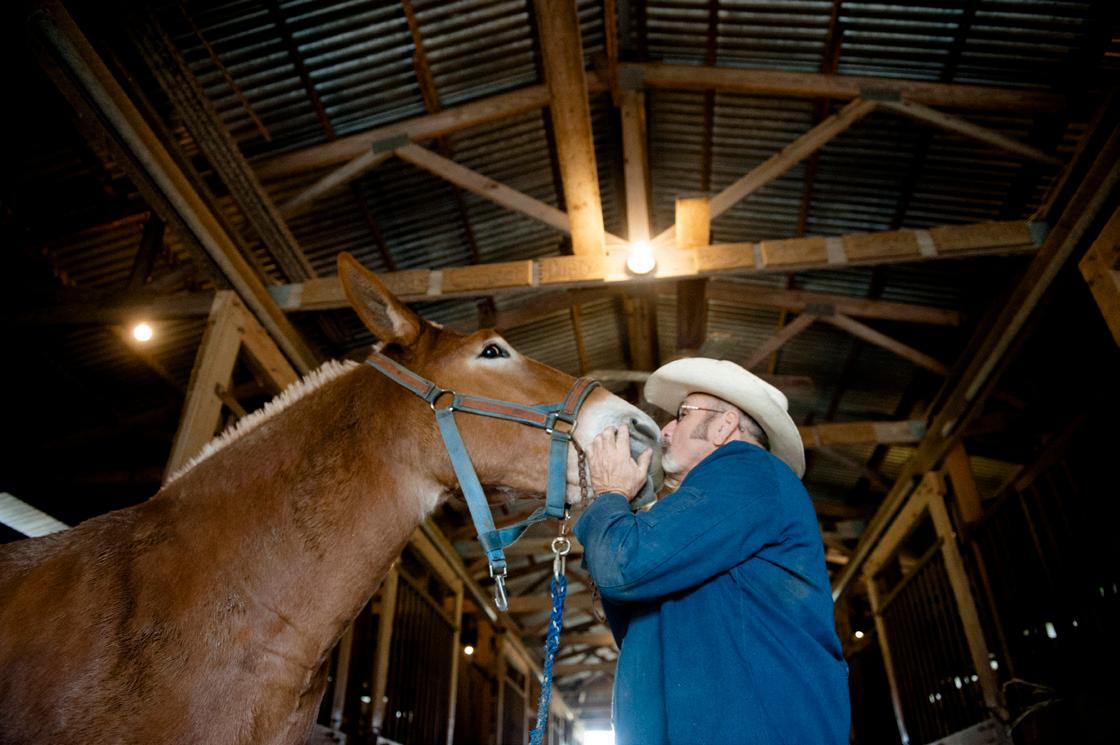
In the stall, the horses and mules are quiet, save for an occasional huff of breath or shuffling of hooves against the floor. Mike Atkins is in his element as he rubs the ears of a female mule, also known as a mollie, while she calmly rests her head on his shoulder. She is one of four work mules Atkins farms with on his property in Pike County, and for now, she’s enjoying the attention.
On the rafters of the barn are wooden plaques engraved with names in a friendly scrawl, a small tribute to horses that once spent time or lived at the farm. Hank, Duke, Pat, Penny, Gypsy–there are more than 20 names, and for each one, Atkins has an anecdote to tell. The same kind of name plaques are on the stall doors, with the current residents of the farm waiting quietly for Atkins to lavish them with attention. Bell, Tinker, Snake, Mike, Toady, Bill, Shortie, Jack and Ben are their names. As Atkins explains each mule’s and horse’s personality, he is constantly rubbing their ears and talking to them in a jovial manner.
Atkins, part owner of J.W. Atkins & Sons Farm in Stockdale, goes back to the basics and uses traditional farming methods. When comparing tractors to animal-pulled plows, what some might consider an out-of-date practice has more benefits than meets the eye.
Atkins says his family chose to go the traditional farming route because they were trying to avoid paying rising gas prices. “Gasoline prices kept getting higher and higher and we figured we’d
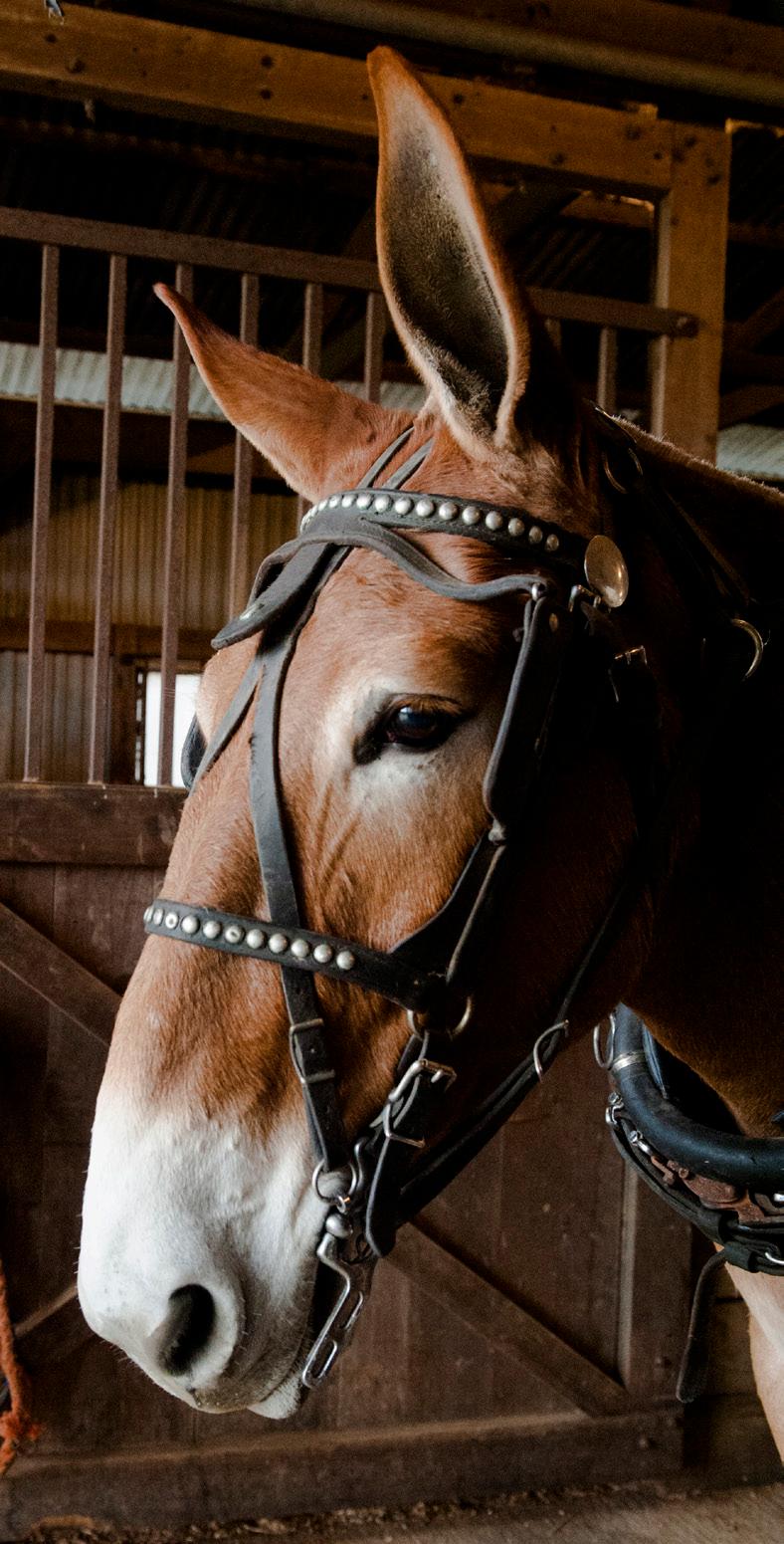
Mike Atkins prepares his mules, Snake and Mike, for a day of farming.
better do something to kind of cover our high end because we couldn’t afford to put it in tractors,” Atkins says.
They started out with one team of horses, which consists of two or three horses hooked up to a plow at a time, and got a second team a year later. “And it got to where I’m the happiest when I’ve got lines in my hands,” Atkins says.
After he retired from his position as a supervisor at New Boston Coke Plant in 2001, Atkins decided that he wanted to try to plow with mules.
Atkins first bought the two mollies Tinker and Bell. After training them properly, a process known as breaking, he bought a pair of male mules, named Mike and Snake after the Atkins brothers, one year later. Once he had trained them well enough, Atkins began taking the mules to matches and competitions where mules or horses are judged on how well they plow a plot of land.
In 2008, Tinker, Mike and Snake won the National Plowing Match with Atkins holding the reins. He has gone to plowing matches for about six years, and at the International Plowing Match in Canada, he came in fifth in his class out of 14 and
won the Best Newcomer award. He has been to Oregon and Maryland to judge plowing competitions and traveled down to Mississippi last November.
The mules and horses do all the lifting and pulling work on the farm, except for when they use a tractor to grind corn in the winter for the cattle. Atkins says the horses and mules walk about 3.5 mph.
“We have neighbors that say it’s okay the way you do it, but it’s too slow. I’m in no hurry,” he says, cracking a knowing smile.
Atkins, who was raised in a family of 10 children, has lived in the area his entire life, graduating from Eastern High School in Beaver and working in Portsmouth. Atkins’ father bought the farm in 1948. His siblings are now scattered across the country, and although he occasionally visits them, he prefers to stay at home in Stockdale.
“We’re pretty much blessed here,” he says.
Atkins has worked along with his brother Ralph, whom he calls Snake, and son Devin to keep up the farm ever since his father passed away in 1980. “Dad said to always leave it better than
you found it. And so far it looks pretty good,” he says.
The farm is 152 acres and home to six horses, four mules and about 50 cows. When Snake brought horses to the farm in 1982, Atkins was hesitant at first. He had only ridden horses up to that point and had never driven them for farming purposes.
A man from Kentucky named Nick Dawson came to the farm to teach them how to break horses, and slowly but surely they got better with their “critters,” as Atkins affectionately calls them. He now breaks horses for other people, a process that takes about six to eight weeks.
A love of animals is practically required for farming without machinery, especially since technology advancements have made the machines faster and bigger.
“Time and usage of horse power versus machine power is just night and day,” says Larry Burmeister, an Ohio University sociology professor who specializes in agriculture. “The time it takes to plant and harvest now is pretty minimal compared to what it used to take with animal power.”
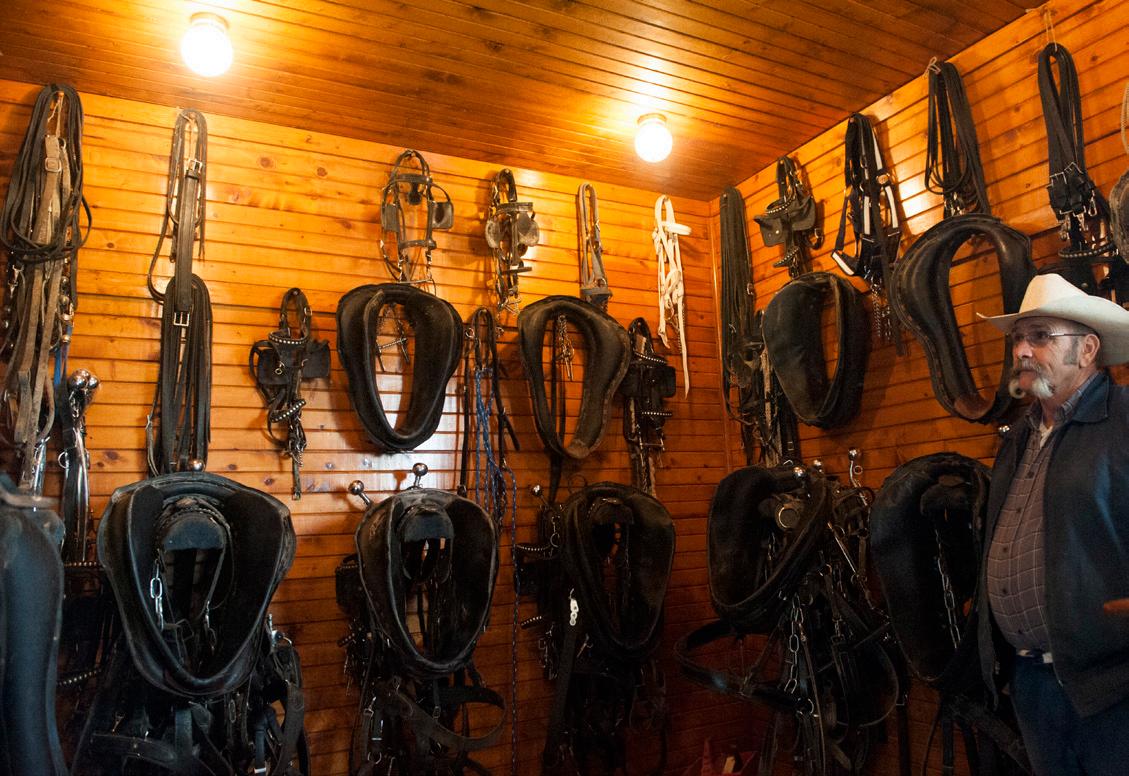
TOP LEFT: Mike Atkins looks around his tack room, where he stores harnesses for each of his horses and mules. RIGHT: After working, the mules rest in their stalls. BOTTOM LEFT: Atkins kisses his mule Bell. Bell is now 10, but Atkins bought her when she was five days old and brought her back to his farm when she was six months old.
Despite the advantage of finishing the job quickly, animals are better for the environment in a variety of ways. Besides the fact that they don’t release toxic fumes into the air, they also recycle nutrients through use of their manure, Burmeister says. Big machinery can compact the soil, making it less permeable and not as loose as it would be naturally.
The environmentally friendly aspect was something that drew Chris Fox to farm with horses from the beginning. Originally from just outside of Portsmouth, Fox graduated from Ohio University in 1996 and majored in environmental biology. He lived in northern Ohio for about 10 years. He worked in industrial engineering before he decided that he didn’t want to sit behind a computer anymore.
He and his wife Valerie have run Haulin’ Hoof Farm for six years at their home in New Marshfield, and Fox owns two Suffolk Punch draft horses named Maple and Dewey. Fox took a class from an Amish man on how to break horses and broke Dewey and Maple himself.
“The horses have a small ecological footprint as opposed to mechanized equipment,” Fox says. “I go into the woods with the horses and a day or two later you’d hardly be able to tell we’ve been there.”
Fox owns a construction company and teaches classes at Hocking College in Nelsonville. He specializes in timber framing and alternative techniques for buildings, choosing to use as many local and green products as he can. He uses the horses in the woods to pull logs out and says he enjoys using the animals instead of machinery. “I really didn’t want to be in the woods listening to a piece of equipment running,” Fox says.
Many farmers in the region focus on specialty crops that are available at the farmers markets, such as apples, grapes and peaches, and local restaurants often buy from small farmers as a way to sup-
port their efforts. Fox and his wife sell yarn and grass-fed beef and lamb at the Athens Farmers Market.
Burmeister says there is little effect on overall crop prices from traditional farming methods versus those using machinery, since the percentage of farmers using animals is so small.
Although the Amish are the biggest population that uses animals to farm, it also makes sense for those who love animals and have relatively small acreage to use animal cultivation methods, Burmeister says.
The topography of Southeast Ohio
However long you drive those horses, that’s how long you got peace... and if you’re out there for an hour, you got an hour’s peace.
MIKE ATKINS
could also make farming with machinery difficult.
“Southeast Ohio is not a heavily agricultural area. It’s so hilly that it’s never been a big commercial agriculture region,” Burmeister says. And that’s where the animals come in handy. Atkins has known the benefits of using animals to navigate difficult terrain for a while now.
“Wintertime is when they shine, because they do it all,” Atkins says. “There’s no tractor tracks or ruts in the field.” The horses and mules don’t get stuck in the mud like machinery might, and Atkins says on the rare occasion that they do, he just gets another animal to help.
In the future, Fox says he would like to have more horses, but right now he doesn’t have the time or space to take on more animals. If he does need another
horse, he will ask neighbors to borrow one.
Since Fox’s wife went to Hocking College, he says they both liked the opportunities that Southern Ohio could provide them and moved down here. He says he uses the technical aspect of engineering in his building and prefers labor-intensive work in order to get a quality product.
Although the emphasis on technology has become impossible to ignore, Burmeister says there will always be people who are interested in continuing traditional agricultural methods. The added critiques about the negative effects fossil fuel has on the environment also play a role.
“Often traditional things can be modified and improved. It might not be going back to the way we did things 100 years ago, but we might use some of the knowledge about the way we did things as improvements for the future,” Burmeister says.
Fox says that he looks at his team as a renewable resource. Considering the advantages the horses bring to the Southeast Ohio ecosystem with their ability to travel the hilly terrain and little if any damage to the environment, the horses are worth it.
“Why shouldn’t we be doing something with them?” Fox says.
Compared to farming with machinery, Atkins says the biggest difference is his peace of mind. Working with the animals acts as an escape of sorts, a way to forget about your problems for a short while.
“However long you drive those horses, that’s how long you got peace. And especially if you got a good pair in front, “ Atkins says. “And if you’re out there for an hour, you got an hour’s peace. Makes your mind right.”
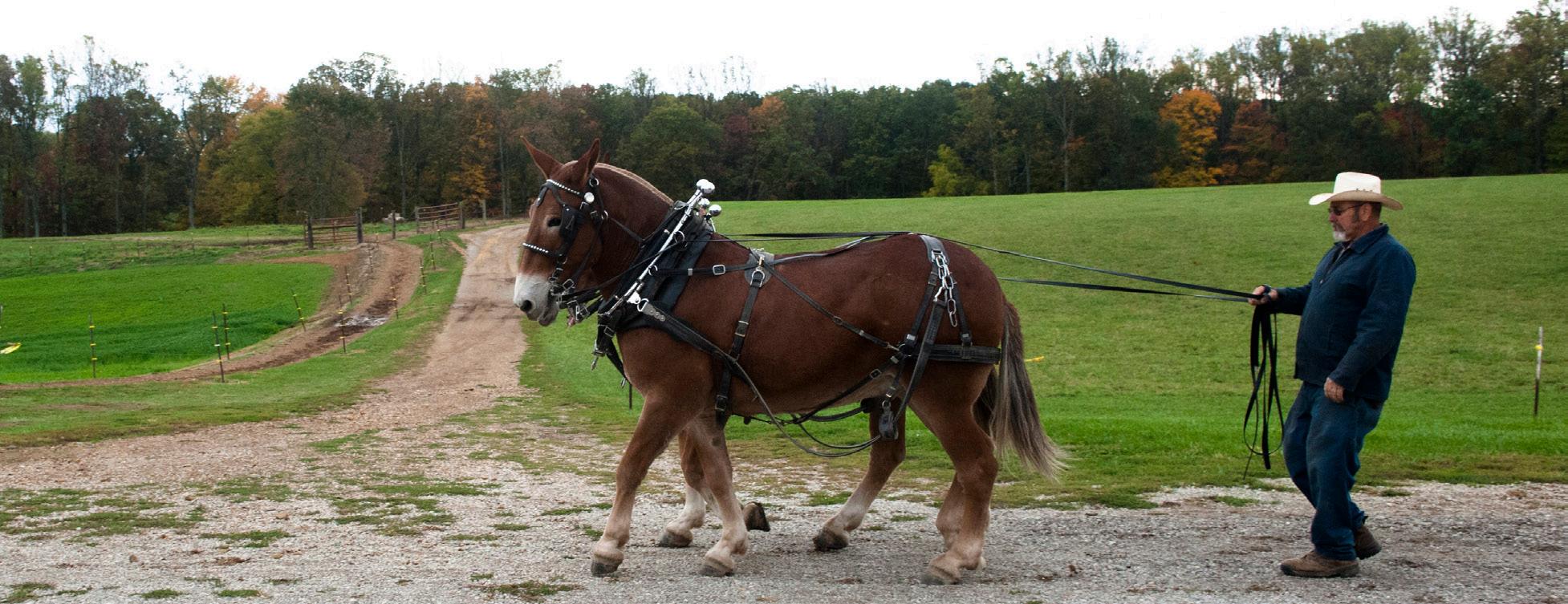
Mike Atkins drives his mules, Snake and Mike, back to the barn on his family’s Pike County farm.
Oddities & Ends
In the world of contemporary art and history museums, small and quirky establishments are often forgotten. Our writers spent time exploring some of the little-known museums throughout Southeast Ohio. If you’re looking for a fun weekend road trip, check out these unusual displays. From old razors to Lego models of The Simpsons, our region offers fun collections for people of all ages.

IN DOWNTOWN CANAL WINCHESTER, THERE IS a barbershop like many others. It has mirrors, barber chairs, scissors, sinks, razors and even a little blue-and-white spiraled barber pole. But what makes this barbershop unlike any other is not what is in it, but what is above it.
A collector’s gold mine lies above Rex’s Barbershop in the form of the National Barber Museum.
In 1978, a local barber named Ed Jeffers began collecting barber memorabilia in his shop. What started as roughly a dozen pieces grew to several thousand items related to beauticians, dating back to the 1700s.
Because he was once a leader in the national and Ohio barber boards, Jeffers was able to find some very interesting and rare artifacts.
Among cases and cases of straight razors, hair trimmers, shaving mugs and barber poles is a full-sized barber area, complete with chairs, mirrors and lights that were once used in long-forgotten barbershops across the country.
“This is the only museum with such a high quantity of artifacts relating to barbering and cosmetology,” says Mike Ippoliti, president and director of the Canal Winchester Historical Society.
The museum is always growing, too, with frequent dona-
from the mid-1700s to the present day. A razor, mug and
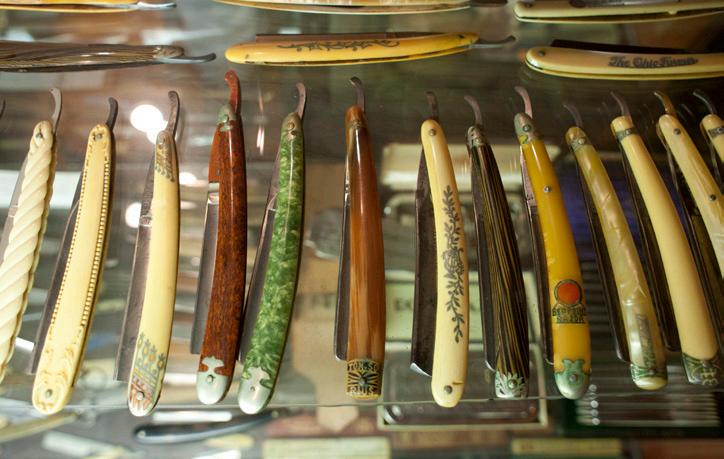
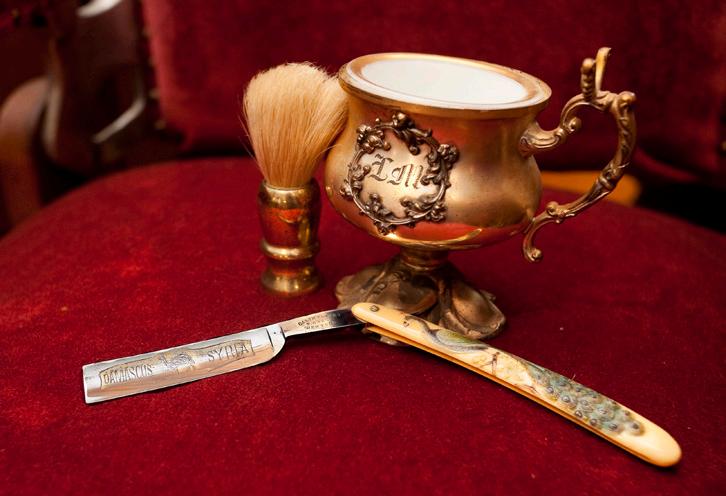
tions from people around the world.
“I got a call the other day from an elderly woman who wanted to send us some razors and trimmers that belonged to her grandfather,” Ippoliti says. “Those things could easily be from the 1800s.”
Up until the 13th century, barbers also did the work of dentists and surgeons, so the museum holds some of the gruesome-looking instruments used for these purposes. Along with the traditional collection of straight razors, hair curlers and mirrors are teeth-pulling mechanisms and devices used to draw blood.
The 3,000-square-foot building displays the entire collection, divided by eras where visitors will find barber stations, signs and poles from six decades and even come across spittoons, shoe-shining stations and signs from old barbershops.
The National Barber Museum is located at 2 South High Street in Canal Winchester. It’s open by appointment only; admission is $5 for adults, $4 for seniors and $3 for students. Interested parties should call ahead to arrange a tour at (614) 837-8400 or (614) 833-1846.
—Katie Willis
THE National Barber MUSEUM
below: Barber razors on display range
brush grace a red velvet chair.
Mike Ippoliti, the director of the National Barber Museum and Hall of Fame, poses for a portrait in a room designed to resemble an old-era barber shop.
PHOTOS BY Matt Hatcher

WALKING INTO A ROOM WHERE ALL EYES ARE on you might seem a little intimidating. But what if the eyes belong to pieces of history in the form of dolls? The Doll House Museum in McConnelsville contains more than 4,000 carefully maintained dolls from many different points in time.
The museum opened by accident, explains Morgan County Trustee Brian McKee. When Evelyn True Button, a lifetime resident of Morgan County, passed away in 1975, she left many of her possessions to the Morgan County Historical Society. She willed her 19th century Victorian-style home to the historical society to become a museum, as well as the building next door, which had been her father’s doctor’s office.
Later, when a woman in Stockport passed away, she left her collection of about 2,000 dolls to the historical society. Eventually, as more people began leaving their dolls to the society, they ran out of space to house the dolls in the Evelyn True Button House.
Brian McKee renovated the doctor’s office next door to give the dolls a home. He painted the walls pink and other pastel colors and hung pictures of animals and dolls on the walls.
“I decorated and tried to make it look like a little girl’s bedroom,” McKee says.
Now The Doll House is home to a vast assortment of dolls. “We have antique china dolls, storybook dolls, a whole collection of Barbie dolls and dolls from around the world with native outfits,” McKee says. “We have just about any kind of doll you can think of.”
One historic doll in the museum is a 19th century china doll that was given to a little girl in Malta, Ohio, for Christmas. McKee says the doll comes with a carrying case made by the girl’s grandfather and about a dozen outfits for the doll made by the little girl’s mother.
“For me, it’s amazing to see how [the dolls] have evolved,” says Sherry Marshall, a McConnelsville resident and doll collector.
Marshall oversees the dolls and works to preserve their beau-



TOP LEFT : The Doll House Museum in McConnelsville lets visitors view more than 2,500 dolls.
TOP RIGHT: Mattel Inc. dolls from the early 1960s rest on a shelf in the front of the museum.
MIDDLE RIGHT: The dolls represent more than a century of history.
BOTTOM RIGHT: Sherry Marshall sews curtains to be hung in the museum windows.
ty. She combs their hair, dresses them and oils their eyes to help maintain their charm.
Since the collection of dolls ranges from the 1800s to the present, The Doll House attracts a wide-ranging audience.
“I think it draws little girls from 8 to 80,” McKee says with a chuckle. “No matter what age someone is, they can probably find a doll that reminds them of their childhood.”
The Doll House is the perfect place to enjoy history, beauty and dolls in one visit.
The museum is open Wednesdays and Fridays from 1 to 3 p.m. and Saturdays from 10 a.m. to 3 p.m., but it also opens for groups by appointment. It is located at 142 East Main Street in McConnelsville, and information is available at (740) 962-4785. Visitors should call ahead on Wednesdays.
—Tara Jackson
PHOTOS BY Meg Vogel

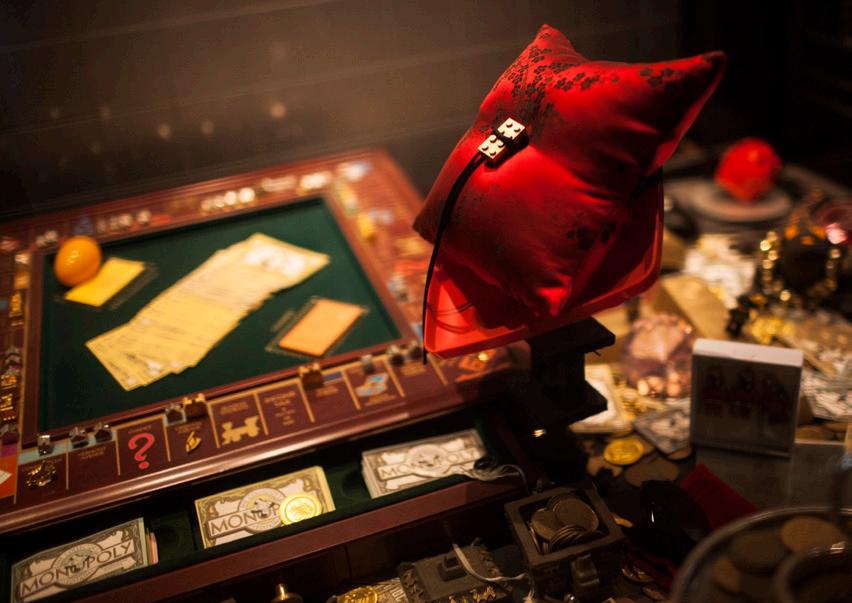
THE
Toy and Plastic Brick MUSEUM

THERE ARE 62 LEGO BRICKS FOR EVERY PERSON in the world, according to National Geographic. In the small town of Bellaire in Belmont County, more than one million of those Legos were used in 2008 to create the world’s largest Lego castle. The castle wall was made almost entirely with yellow 1-inch-by-2-inch bricks and runs more than 40 feet long inside the world-record-holding Toy and Plastic Brick Museum. The wall is even adorned with a blue Lego guardsman, and a mosaic bedecks the castle room floor.
Brian Korte, a Lego enthusiast and founder of Brickworkz LLC (a custom Lego mosaic company), helped museum owner Dan Brown win the world record. Korte says when he arrived at the Toy and Plastic Brick Museum, he simply “sat down on the floor with a few other people, slowly stacking bricks to add to the massive yellow wall.”
Along with the largest Lego castle, the museum also holds the record for the largest Lego image in the world. Korte says it took two and a half weeks just to plan the details of the mosaic. Once the 525 baseplates of design instructions were finished, Korte, Brown and the rest of the building team went to work on the physical product.
The museum occupies all three stories and 36,000 feet of the former Gravel Hill School. Jon Bizzari, manager of the museum, says the record-holding mosaic was made in the school’s old gym. “An entire high school basketball court floor is one huge mosaic out of Lego tile,” he says.
Bizzari explains that the museum bought the previous re-
TOP LEFT: A detailed miniature Lego basketball game serves as a centerpiece on the main floor of the museum.
TOP MIDDLE: Museum manager Jon Bizzari operates the interactive element of the Mission to Mars Room.
TOP RIGHT: A 14-carat gold Lego brick is on display in “The Vault,” which was acquired from Disneyland.
LEFT: The Toy and Plastic Brick “Unofficial Lego” Museum in Bellaire, houses the world’s largest private Lego collection.
PHOTOS BY Megan Westervelt
cord-holding Lego mosaic and added to it. The picture, which now looks like a giant semi-truck, uses every imaginable Lego color. Brown and Bizzari also had the idea to give some children a 1-foot square and Legos to play on, and they added their designs to the mosaic.
Brown is currently working with the museum’s team to earn his third world record: the world’s tallest freestanding Lego structure, which is now more than 45 feet high. The structure is an egg-shaped tower made of Technic Brick supported by 1-footby-2-foot wooden boards. Brown hopes to keep working to make the structure reach about 110 feet high.
Established in August 2007, the Toy and Plastic Brick Museum is now the world’s largest private, unofficial exhibit of Legos that exists on a permanent basis.
Each of the 20-plus rooms inside the museum has a theme such as the aqua room, zoo room, old-Western room, glow-inthe-dark Mars mission room and more. Pop culture enthusiasts can enjoy life-sized model Lego statues of Darth Vader, Spider-Man, all the Simpsons, Dora the Explorer, Diego, Scooby Doo and R2-D2. There’s something for everyone here.
During peak season, the museum attracts from 500 to 700 visitors each week. Located at 4597 Noble Street, the winter hours at the museum are Saturdays 10 a.m. to 5 p.m., Sundays 12 p.m. to 5 p.m. and other days by appointment. Admission costs $8 for adults and $6 for children. You can reach the museum for more information at (740) 671-8890.
—Tara
Jackson
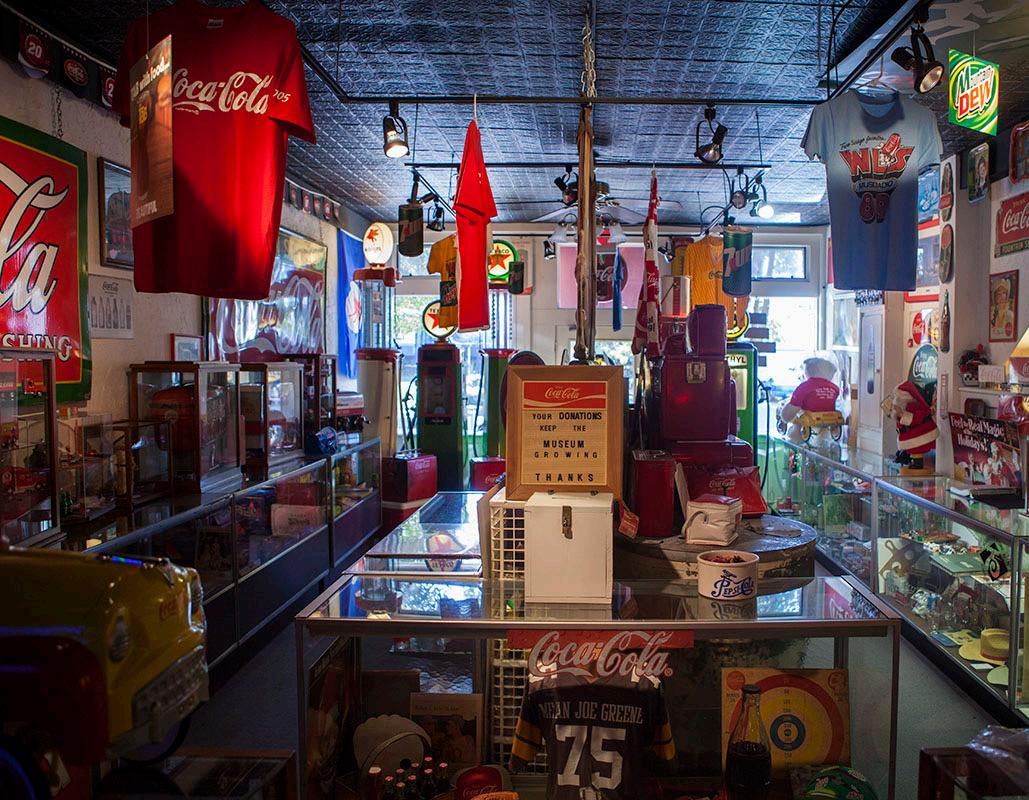
MIDDLE:
BOTTOM:
THE Marietta Soda
IN THE SMALL AND QUAINT
Harmar Village of Washington County, a one-of-a-kind museum is bringing back a classic ’50s feel with bright red booths, black-and-white checkered floor and shiny dispensers full of highly carbonated soda. Welcome to the Marietta Soda Fountain Museum, a place where young and old alike can view the “pop” culture of America.
Formerly known as Butch’s Coca-Cola Museum, the Marietta Soda Fountain Museum offers a gigantic and colorful collection of antique soda memorabilia that will give visitors a hankering for a sip of sweet, fizzy goodness.
The previous owner, Butch Badgett, was inspired to begin his collection by his late father’s creation of handmade Coca-Cola memorabilia. Soon, Badgett’s small collection became one of the largest in the world. The new owner and operator of the museum, Ralph Waldeck, has been collecting soda memorabilia since he was a small boy and bought Badgett’s collection in late 1999.

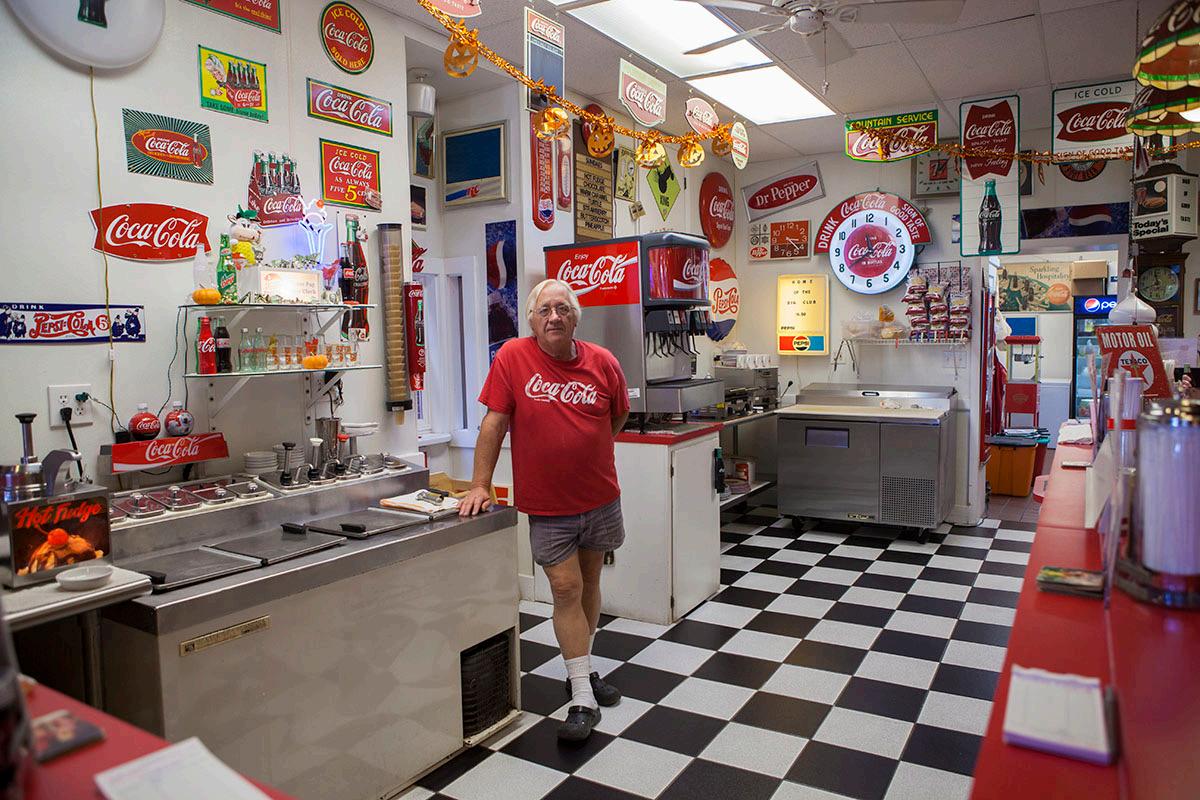
Waldeck’s sodas are unlike what comes out of the typical can from a vending machine, as he uses more carbonated water than soda companies. “I like to crank up the gas, you know, because people like that extra burn and fizz,” he says.
“Back when I was young, the soda companies would give out small collectible things for advertising,” Waldeck says. “My mother would just throw them in the trash, and as soon as she turned around, I would be digging them back out of it. I just loved them.”
Complete with signs, posters, dolls, airline coolers, wallets, dishes and parts of old soda fountains, this museum holds just about anything and everything that relates to soda. Old-time decor, including antique Coca-Cola stained glass chandeliers and traditional soda fountain glasses, are also among the collectibles that transport visitors back in time.
“My favorite thing about this place would have to be my working soda fountain,” Waldeck says. “You can come in here, get a glimpse of how things used to be and enjoy a nice soda or milkshake from my fountain.”
Along with the delicious drinks, the museum also has its own bakery, where Waldeck’s favorite ciabatta bread is made.
“No one can get my bread unless they come in here,” he says. “My bakers make sandwiches, hot dog buns and all sorts of good things to eat here.”
Waldeck says that running the museum does not feel like work to him. “It’s a really fun atmosphere, and this is a relaxing thing for me,” he says. “I just really enjoy being around people, talking to people, and sitting and having a soda with them, and this place is perfect for that.”
The Marietta Soda Fountain Museum is open Thursdays through Sundays from 11 a.m. to 4 p.m. and is located at 109 Maple Street in Marietta. No admission fee. For more information, call (740) 376-2653.
—Katie Willis
LEFT: Antique soda memorabilia fill` the Marietta Soda Fountain Museum.
A six-pack of old Coke bottles is on display.
Ralph Waldeck is the owner of this museum where visitors can enjoy old-time sodas.
PHOTOS BY Nick Hart
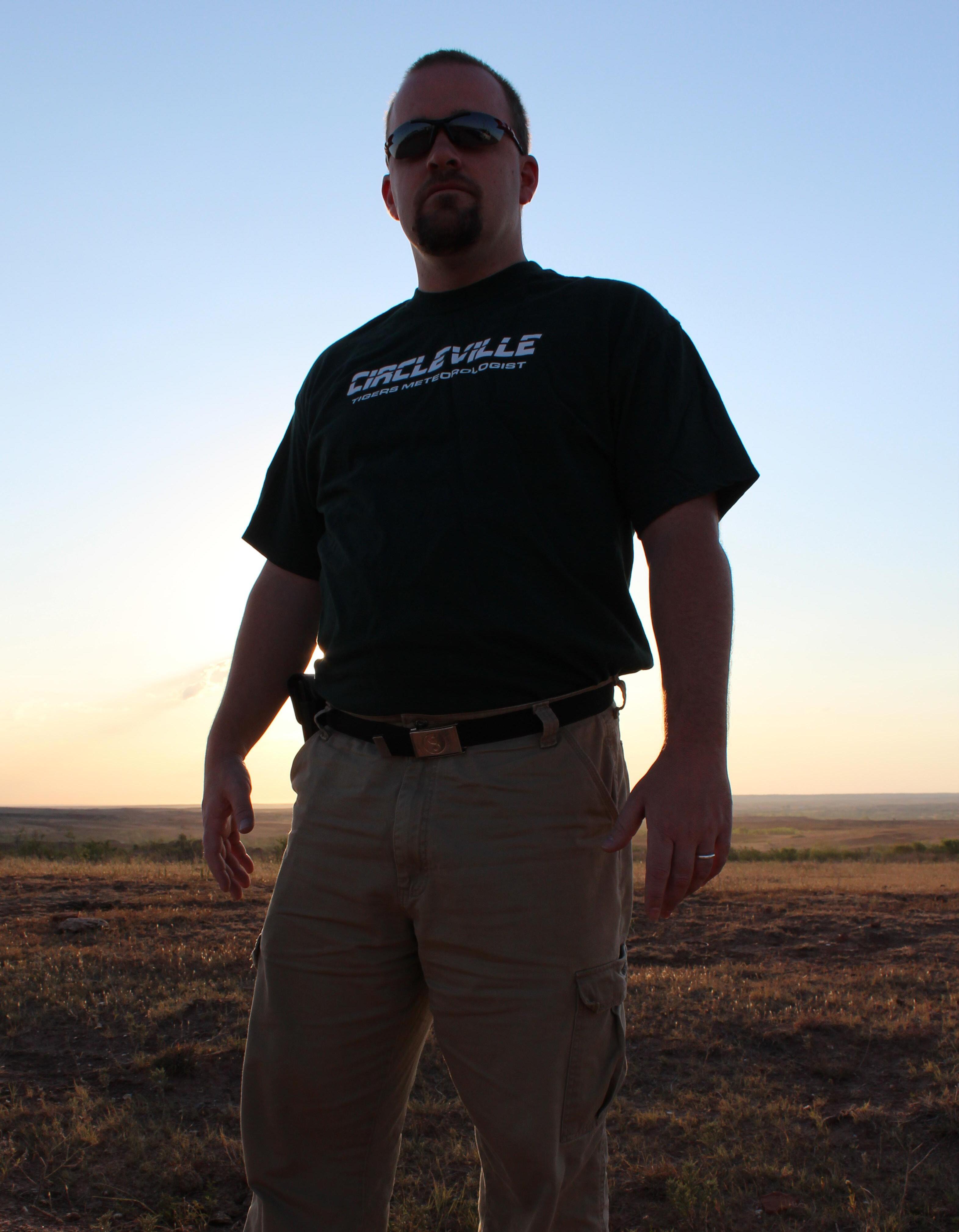

Storm chaser Tony Laubach has been braving wild weather since his high school days as a Circleville Tiger
TORNADO ALLY
Circleville native Tony Laubach chases bad weather in search of the perfect storm
BY Holly Storrow | PHOTOS BY Carl Young and Tony Laubach
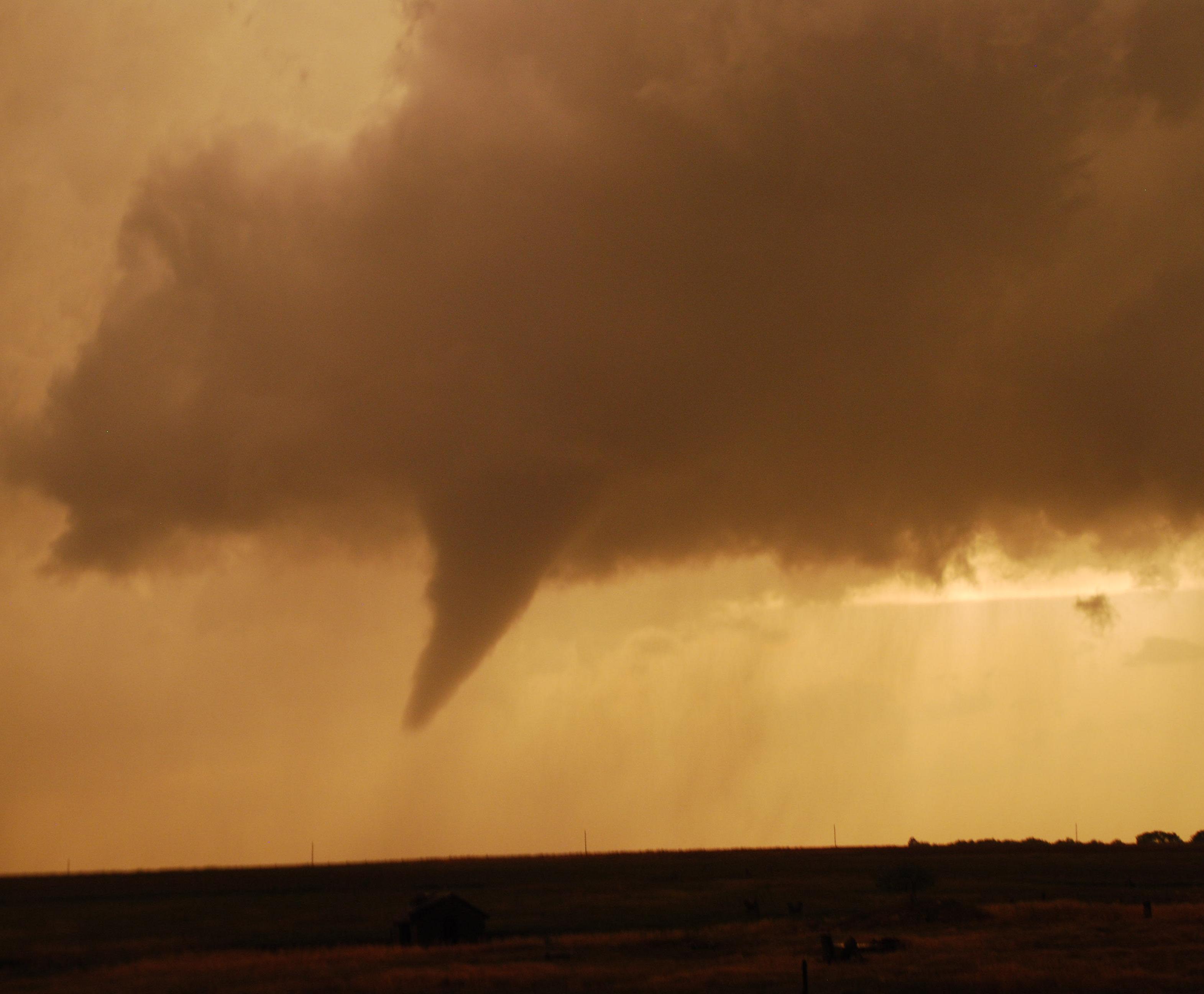
The deafening sound of a freight train roars through eardrums. Heavy thuds of golf ball-size hail pound onto a car roof. Blinding sheets of rain billow in the wind like cheap curtains. These are all sensations that have become synonymous with ferocious storms. Most people hope to never run into these destructive conditions, but Pickaway County native Tony Laubach wakes up every morning hoping to confront that danger head on.
“The passion I have for huge hail, to go out and destroy my car, not many people are going to walk away from that smiling,” Tony says. “But I do.”
Tony, who grew up in Circleville, is a professional storm chaser. He was a featured cast member on the Discovery Channel’s Storm Chasers for three seasons with the research group Twistex, which he joined in 2007, and was often seen proudly wearing various black-and-red Circleville Tigers apparel on the show.
Tony was in charge of measuring how the environment around the tornado changed. That meant getting as close as possible to the storm, a task made more difficult by the presence of a film crew.
“It was tough because you’re now narrating to someone in the backseat who doesn’t know what’s going on,” Tony says. “And
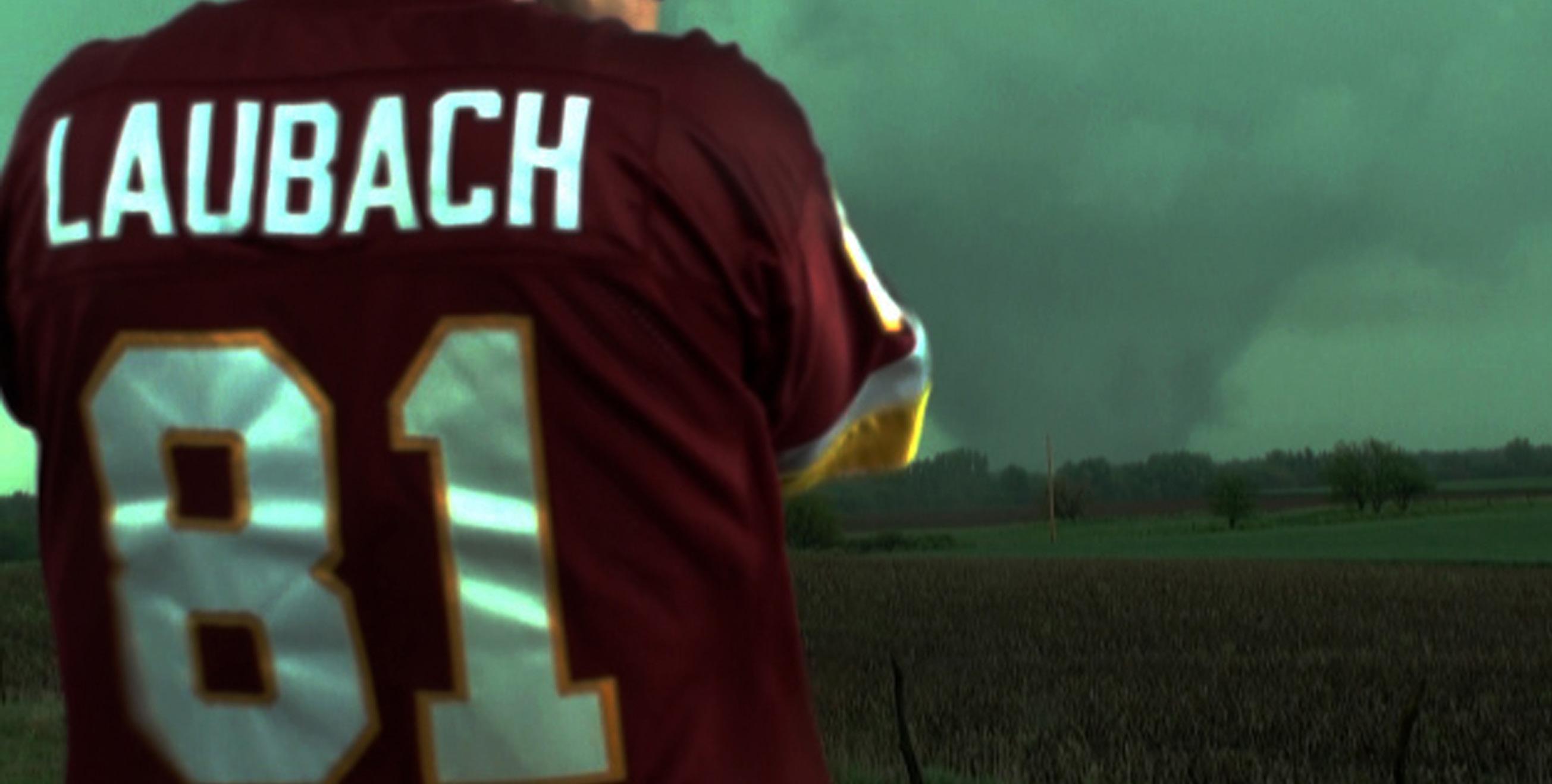
you’re trying to [pay attention] because obviously when you’re driving so close to tornadoes you need to be 110 percent focused.”
With degrees in meteorology and technical communications from Metropolitan State University of Denver, Tony has spent the last 10 years regularly shooting video of major storms and then selling the footage to networks and news outlets such as The Weather Channel, CNN and Good Morning America. He has also had a hand in producing some television specials on severe weather, including the 2012 Regional Emmy award-winning show Tracking Twisters
Tony’s fascination with severe weather started when he was a child. He recalls watching videos on television from the 1991 tornado outbreak in Kansas and being enthralled by the power and possibilities held within its clouds.
“As a kid, I was terrified of storms,” Tony says. “But they fascinated me to a point where I wanted to do something with them.”
The Circleville area gave Tony “a good start in life,” he says, but it was never a place for great severe weather. Instead, he did a lot of reading about tornadoes and earthquakes while also watching television programs about storms. In the end, he came to a decision.
“I figured I had to chase because the weather wouldn’t come to me. So I had to go to it,” Tony says.
Still, there were some memorable moments in Circleville that he will never forget. One such incident began with a
“As a kid, I was terrified of storms. But they fascinated me to a point where I wanted to do something with them.”
—TONY LAUBACH
routine trip to the drugstore with his mother and brother and ended with a storm settling above them. Tony can still remember the car shaking. He defines it as one of the moments that encouraged his terrified fascination.
However, the fondest memory of severe weather that Tony has from the area occurred in the neighboring Ross County town of Clarksburg in 1997. This was where he got to chase his first tornado. What made the moment even sweeter was the person he shared the experience with, his father.
“Because my dad experienced it with me for the first time, it just put the nail in the coffin in realizing that [chasing storms] was what I was going to do for the rest of my life,” he says.
A teenage Tony without a driver’s license relied on his father, Jim Laubach, to drive him toward the storm that rolled into the area, a task most parents would never agree to. While making their way toward the storm, Tony had drawn a chart of the supercell, attempting to predict where the rain and hail would begin and ultimately where the tornado itself would appear. The end result was what he could only describe as perfect.
“Everything that I thought was going to happen, happened,” Tony says. “And it hasn’t happened like that since.”
Adding to the perfection of the chase was the size of the tornado, he says. It was small and weak, which meant that the “big hurrah” of a massive storm was still hidden away somewhere for Tony to discover later.
Tony’s father currently lives in Athens and works for HealthNet Aeromedical Services out of West Virginia as a helicopter pilot. Pride flows out of his voice when he discusses the accomplishments of his son, whom he and his wife called “Little Professor” as a child because of his inquisitive nature. He still cannot imagine that Tony would have known so much about what to expect from his first storm.
Jim remembers his son approaching him that day as soon as he returned home from work, declaring that they had to, of all things, go chase a tornado.
“He had this look on his face like I couldn’t turn him down,” Jim says.
Jim remembers chasing the storm for about a half hour with his son, driving through rain and large hail that had him worried, but Tony kept reassuring his father that it would end soon and they would see the tornado.
“Sure enough, we came out of the hail, the sky cleared and there it was,” Jim says.
It was shortly after his first chase that 17-year-old Tony and his family left Pickaway County for Denver, Colorado, in

“I cannot imagine spending my springs and summers anywhere else but on the road in the middle of nowhere.”
—TONY LAUBACH
1998. A little over a year later, in October 1999, Circleville was hit by a strong tornado that ripped through his old neighborhood, destroying a row of houses just a block from his former home.
“That was kind of nature’s slap in the face, I suppose,” he says.
Today, Tony, 31, lives in the Denver area with his wife of two years, Dania, and their three cats, though he tries to return to the Circleville area every couple of years. He can now drive himself on all of his chases, some of which take hours and can add up to 1,200 miles of road travel for 20 minutes of storm footage. But Tony would never dream of being anywhere else.
“I always tell people that I was born with the disease,” he says. “I cannot imagine spending my springs and summers anywhere else but on the road in the middle of nowhere.”
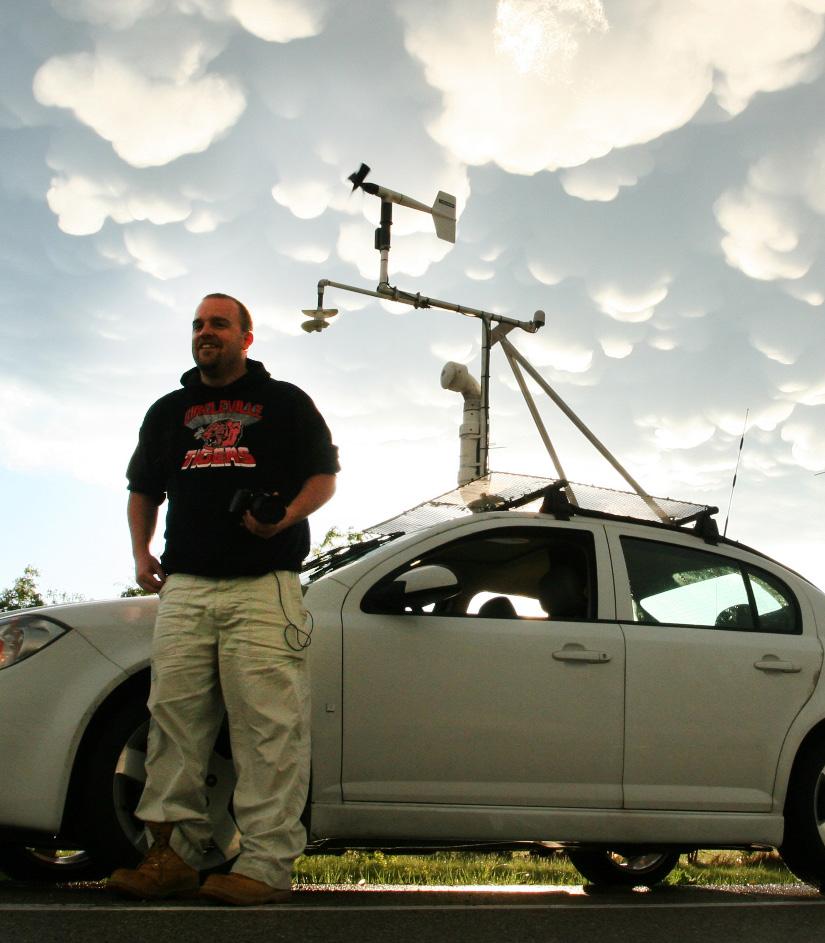
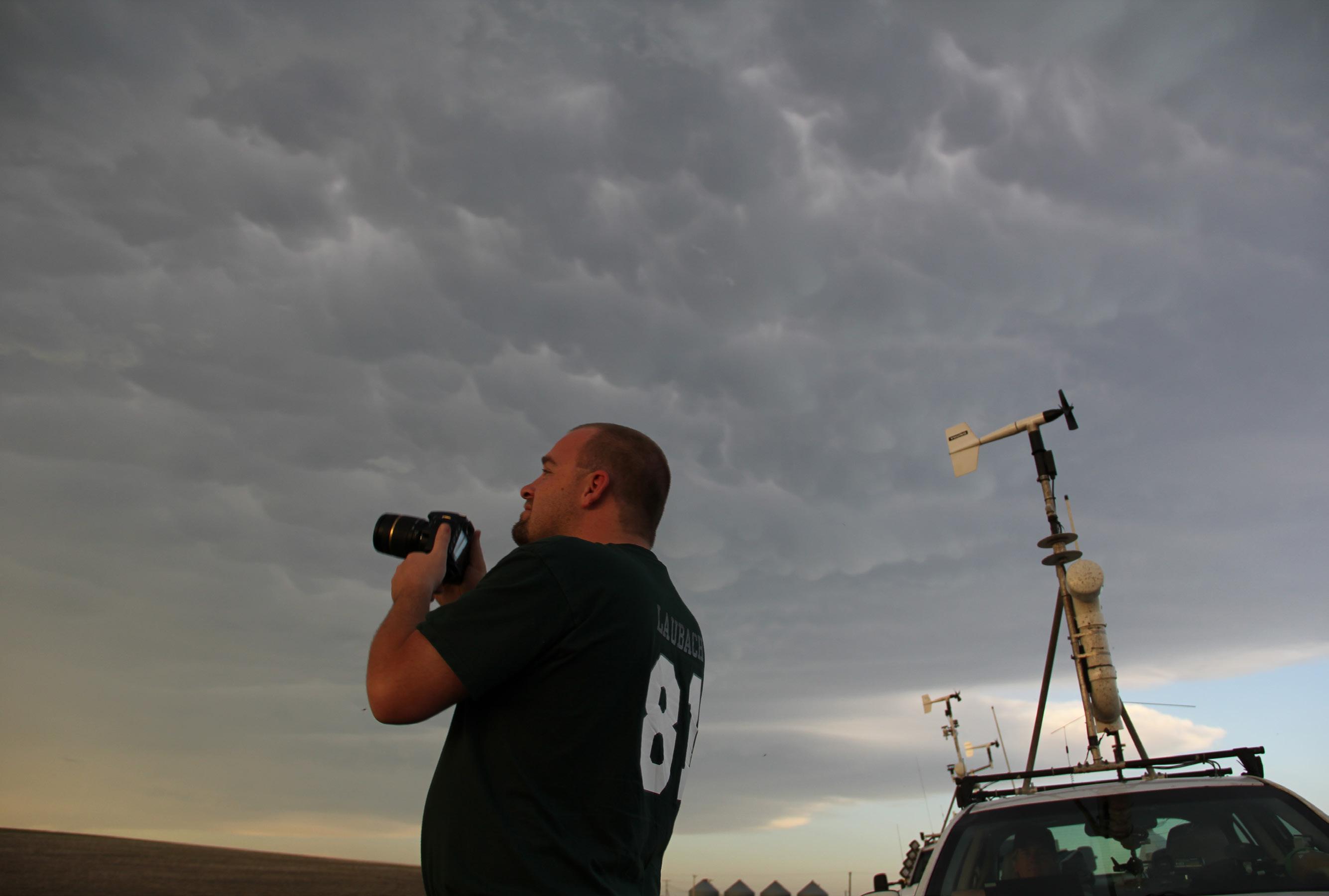
Tony Laubach waits in the field with tracking equipment attached to his car for the next round of severe weather to approach.
From the Logs Up

If you are looking for organic and homemade goods, check out Belpre’s Back To Basics Log Cabin
BY Kristyn Repke | PHOTOS BY Ian Bates
The smell of fresh lemongrass herbal soap fills the entryway to Back To Basics Log Cabin. Jars of salve line the tabletop of the back workspace as they wait to be labeled for sale. Fresh bread and granola sit on the front counter, ready to be purchased by a customer. As the front door sits open, fresh air wafts into the room, creating a calm atmosphere within the logs of the store.
As a customer comes up the wooden steps and peeks in through the doorway, owner Amanda Hamrick approaches her with a smile, ready to greet her and offer suggestions on the products. Though the customer has never been to the cabin before, by the time she leaves she is all but guaranteed to be on a first-name basis with Hamrick.
Tucked away in the rolling hills of Washington County in Belpre, Back To Basics Log Cabin is stocked floor to ceiling with all-natural and organic products. Customers will find items such as handmade jewelry boxes, children’s hair bands, Hamrick’s popular soaps and colorful scented candles. Hamrick opens the doors to the couple’s cabin at 10 a.m., six days a week, to welcome new and returning customers alike. This morning, she is working on a new batch of salves.
Back To Basics Log Cabin prides itself on affordable products that are good for customers’ health. “We decide to sell a product if there is a wholesome, old-fashioned, nutritional value,” Hamrick says. “We try to make sure it’s a quality product that’s not too expensive. We want it to be affordable for everyone.”
For customers who are unsure of what to buy, Hamrick recommends her soap. “It just has silky bubbles and doesn’t dry your skin out…especially for the wintertime,” Hamrick says. She also highly recommends her mud masks, a top seller among her customers with problem skin. “I get so much feedback from the mud masks,” Hamrick says. “We get a lot of guys using the mud masks, too, but the women in particular, their confidence has been boosted by the masks.”
There’s something about the logs of this cabin that just make everybody feel like it’s a part of their home.”
AMANDA HAMRICK
With the addition of Back To Basics’ new grain mill from the Department of Agriculture and an extension to their cabin in the works, Hamrick is always looking for new products and vendors for her store. The grain mill will be used to make pancake mixes, bread and wheat flours and potentially homemade pastas. In the spring, Hamrick plans on including floral scents and possibly a mineral makeup line.
“Every day I’m behind on ten different products,” Hamrick says. “But really there’s just me. I formulate everything, follow the recipe and make sure it’s done right so that it doesn’t get messed up and a customer doesn’t end up with a product they’re not happy with.”
Just over a year ago, Hamrick did not realize how successful her business would become. Back To Basics began as a small wooden market stand just across the street from where the log cabin store is located.
Hamrick and her husband opened the stand as a source of income after they both lost their jobs. “Our first product was the honey because my husband is a second-generation beekeeper,” Hamrick says. “I started making handmade soaps because I made them for myself and then friends wanted them, so it kind of expanded from there.”
Hamrick had no idea how big their small stand would grow to be. After initially welcoming five to 10 customers a day at their stand, the lines grew to the point where Hamrick feared for their safety as they stood in lines in the rain and snow.
“We saw them out there and we thought that maybe this is something that people are really interested in,” Hamrick says. “We were already building the cabin so we thought we could turn it into a little store.”
After opening the Back To Basics Log Cabin, business took off from there. In addition to selling products to a range of 25 to 45 customers a day in the store, Hamrick sees a great deal of success with her online store she has through Etsy, a website that hosts a variety of smaller, local stores where people can buy and sell handmade products, supplies and vintage items all over the country.
“It’s been a great platform for us,” Hamrick says. “We sell to a bunch of people from California. We’ve had customers from the Virgin Islands, Canada and Ireland. We are really international now online, which is great, especially with our location being so remote.”
Not all of Back To Basics’ products are offered online due to product availability and the time it takes to upload each product’s picture, price and description. Hamrick hopes to add more products online in order to expand her Etsy website’s business and provide customers with a wider array of products to choose from, as well as expand her in-store selection.
For those looking to visit the Back To Basics Log Cabin store, Hamrick is more than happy to meet with you and offer friendly advice on not just products, but life itself.
“I like being able to give people a place where they can come out, sit on this bench and talk to me,” Hamrick says. “It’s a nice, private place, and it’s quiet and cozy. There’s something about the logs of this cabin that just make everybody feel like it’s a part of their home.”


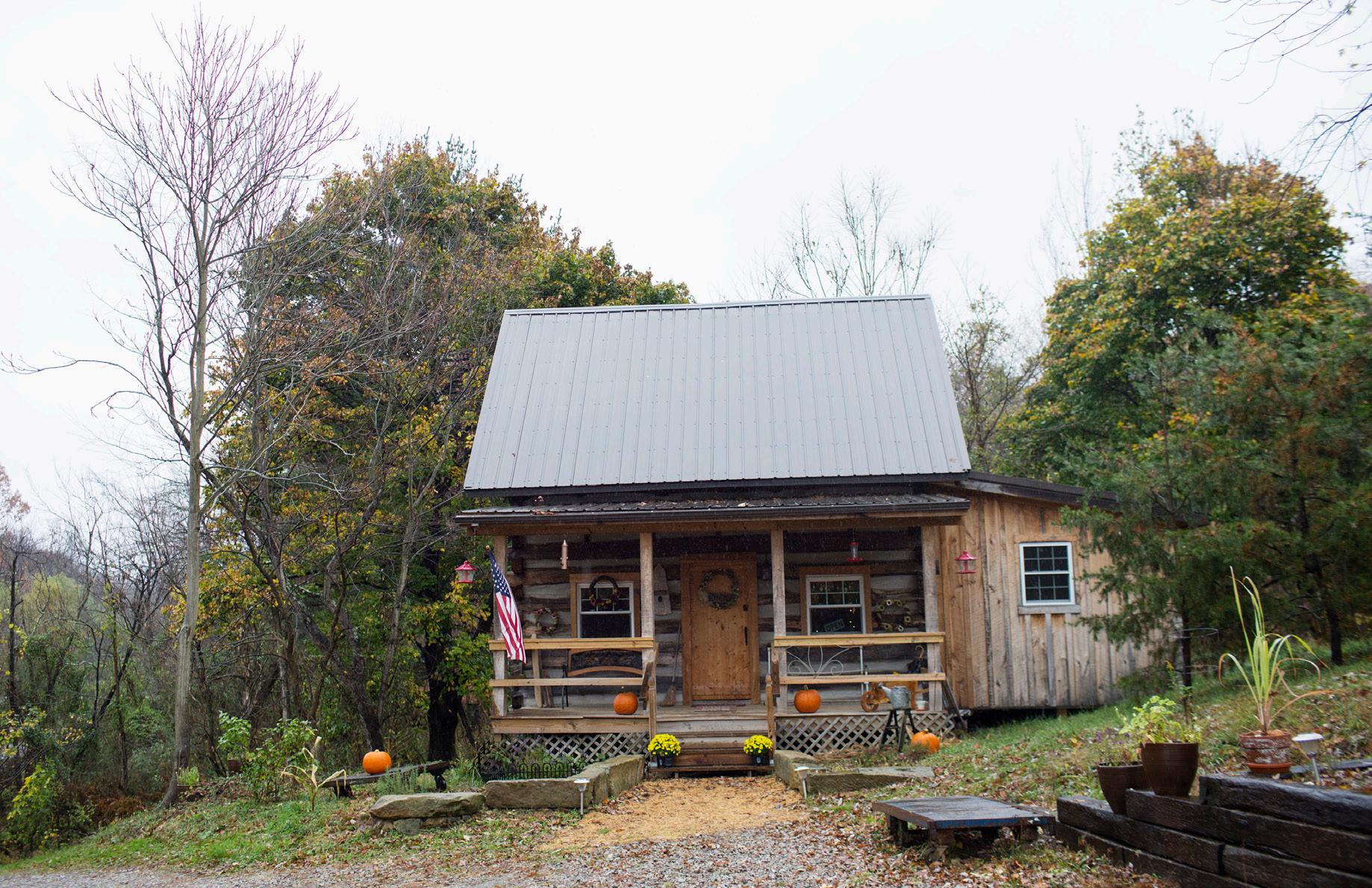
ABOVE: Shelves are filled with a variety of organic and handmade products.
ABOVE MIDDLE: Amanda Hamrick’s favorite product, her soap, is one of the cabin’s best sellers.
OPPOSITE PAGE: Jars wait to be put on the store’s shelves.
LEFT: The cabin was built by Randy Hamrick and is tucked away in the rolling hills of Washington County.
Murder ’Round Town
The Circleville letter writer mystery continues to haunt residents decades later
BY Tara Jackson | PHOTOS COURTESY OF Martin Yant
“I’ve been observing your house and know you have children. This is no joke. Please take it serious,” read the first anonymous letter to Circleville resident Mary Gillespie.
In 1976, residents of Pickaway County began receiving anonymous, unmarked letters that included personal details and threats. To make the letters more mysterious, each of the letters was postmarked from Columbus and signed The Circleville Writer.
Today, 36 years later, the case remains unsolved.
Local school bus driver Gillespie was one of the first residents to receive a letter from The Circleville Writer. The anonymous
person wrote that he or she knew Gillespie was having an affair with the Westfall School District superintendent Gordon Massie and she needed to end it.
In the next letter, The Circleville Writer wrote, “Stay away from him noon as well as night.” Then the anonymous writer went on to add: “Too many think this is a joke. We’ll see in time.”
On April 6, 1977, Gillespie received her third letter that warned, “This is your last chance to report him.” Gillespie’s husband Ron also received a letter from the writer that said his life would be in danger if he did not take action to stop the affair.

This copy of an actual letter, strangely dated March 1944, shows The Circleville Writer’s unusual handwriting style. Photo from The Ohio Observer, October 1994.
In the next letter postmarked to Ron, The Circleville Writer wrote: “You have had 2 weeks and have done nothing. Make her admit the truth and inform the school board. If not, I will broadcast it on CB’s, posters, signs and billboards until the truth comes out.”
The letters stopped until Aug. 19, 1977, when Ron Gillespie got a phone call from who he thought was the letter writer. Later that night, at 11:30 p.m., he lost control of his red and white pickup truck, hit a tree and was killed.
“Supposedly he had figured out who the letter writer was and was on his way to confront him when the accident occurred,” says journalist Martin Yant, who covered the case for The Ohio Observer at the time and now owns and runs Ace Investigations.
Ron’s incident was originally ruled as an accident; however, police found inconsistencies with the evidence of Ron’s accident. One bullet had been fired from his gun from the time he left the house to the time of his accident, but investigators never found any explanation for the fired shot.
His children said that when Ron left his house, he did not appear to be drunk; however, an autopsy revealed that Ron had 0.16 percent alcohol in his blood, 1 1/2 times the legal limit in Ohio. That’s when police began to suspect foul play.
Years later, in 1983 while driving her usual bus route, Gillespie noticed signs targeting her daughter. Furious, Gillespie ripped the sign down only to reveal a box, string and another post attached to a fence. When she opened the box, she found a small pistol with the serial number partially rubbed off. The Circleville Writer had created a booby trap designed to fire the gun at Gillespie. Luckily for her, the gun never fired. Investigators were able to identify the serial number on the gun and realized it belonged to Gillespie’s brother-in-law, Paul Freshour. Yant says the evidence “led right to him.”
On Nov. 11, 1994, NBC’s Unsolved Mysteries aired an episode featuring The Circleville Writer case, in which Freshour admitted that the gun was his. “I hadn’t seen it for a long time,” said Freshour. “I really don’t know what happened to it, and I told them that and that’s the truth.”
After that, Pickaway County Sheriff Dwight Radcliff asked Freshour to take a handwriting test and searched Freshour’s garage. Freshour was charged with attempted murder and placed on a $50,000 cash bond.
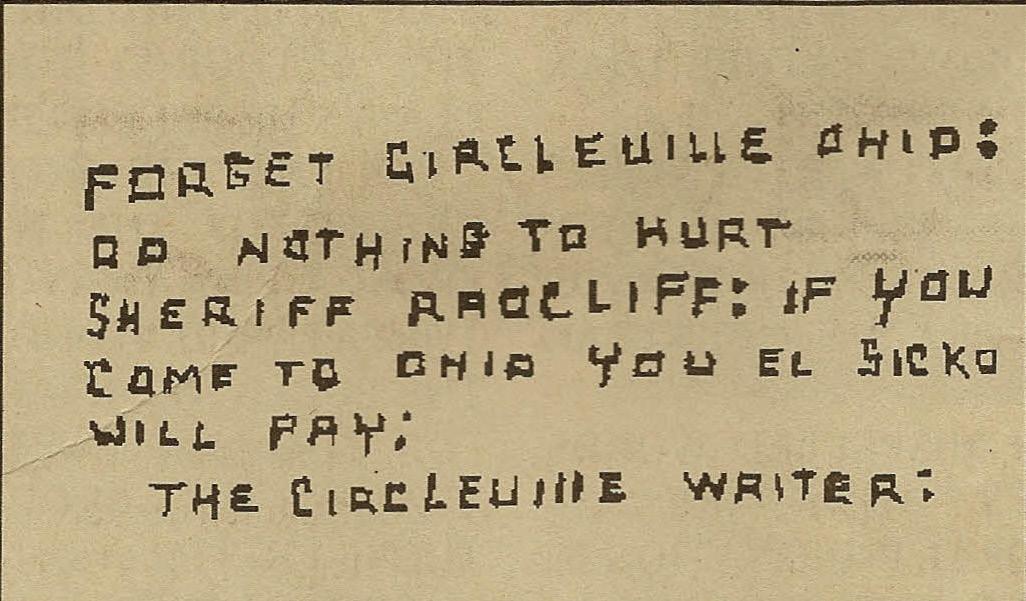
Each letter was signed “The Circleville Writer.” The above letter was sent to NBC-TV’s show Unsolved Mysteries in Burbank, California.
“They reviewed every letter Paul Freshour sent out and every one that came in,” Yant says. “There was no way he was sending the letters.”
After seven years in prison and having been rejected for parole, Freshour received a letter from The Circleville Writer that said: “Now when are you going to believe you aren’t going to get out of there? I told you 2 years ago. When we set ’em up, they stay set up. Don’t you listen at all?”
When reviewing the case file in 1994, Yant found new evidence that could exonerate Freshour. A friend and fellow school bus driver who drove the same route as Gillespie the day she found the booby trap said that she saw a yellow-orange El Camino at the site.
“That kind of vehicle was pretty rare,” says Yant. “Paul did not have one.”
Next to the car stood a man with sandy hair who Gillespie’s friend said looked like he was trying to avoid being identified. The description of the man did not fit Freshour, and Freshour had an alibi for that time.
Exactly what happened, I don’t think we’ll ever know.”
MARTIN YANT
Though handwriting tests are only accurate 57 percent of the time, handwriting expert Stephen Green took the stand at Freshour’s trial on Oct. 24, 1983. As seen on Unsolved Mysteries, Green stated, “It is in my opinion that the handwriting on the envelopes, documents and postcards were printed by the same person, it being the known handwriting or hand printing of Paul Freshour.”
Further testimony came from Freshour’s boss who said that Freshour did not show up to work as a supervisor at AnheuserBusch the day Gillespie found the booby trap. Freshour refused to take the stand in his defense.
“The trial only lasted about a week and the jury was only out for a few hours,” says Millie Russell, Freshour’s sister.
The jury found Freshour guilty of the attempted murder of Mary Gillespie and sentenced him to seven to 25 years.
The case took a turn when the letters did not stop after Freshour’s conviction. Letters continued circulating throughout central Ohio. Radcliff asked warden Arthur Tate Jr. to put Freshour in solitary confinement, but the letters still did not stop.
Yant stated that there was another person in question whose family member owned an El Camino of the same color.
After serving 10 years in prison, Freshour was released on parole in 1994 from the Ross Correctional Institution. “The day he was released there were about 40 people there at the prison celebrating,” Russell says.
Until the day of his death on June 28, 2012, Freshour maintained his innocence.
He told Yant, “They can never give me back the years or money they cost me, but I still want to clear my name.”
The mystery still remains as to who wrote the threatening letters to the residents of Circleville.
Says Yant, “Exactly what happened, I don’t think we’ll ever know.”

BY

PHOTO
Ian Bates
Blacksmith
Doug Lockhart stirs coal in his forge to provide enough heat to soften iron window shutter hinges for a home. Doug owns the shop The Makers of Hand-Forged Iron in Logan.


SOHIO OUTHEAST
WINTER/SPRING 2013
Scripps Hall • 1 Ohio University Athens, OH 45701-2979
U.S. POSTAGE PAID ATHENS OH PERMIT NO. 100
The Not Guilty Food Cart, owned by Jay and Donna Wamsley, offers healthy food options to on-the-go Athens residents (see page 2). | PHOTO BY

JOEL BISSELL