SOUTH CAROLINA BANKERS ASSOCIATION
Issue One 2026
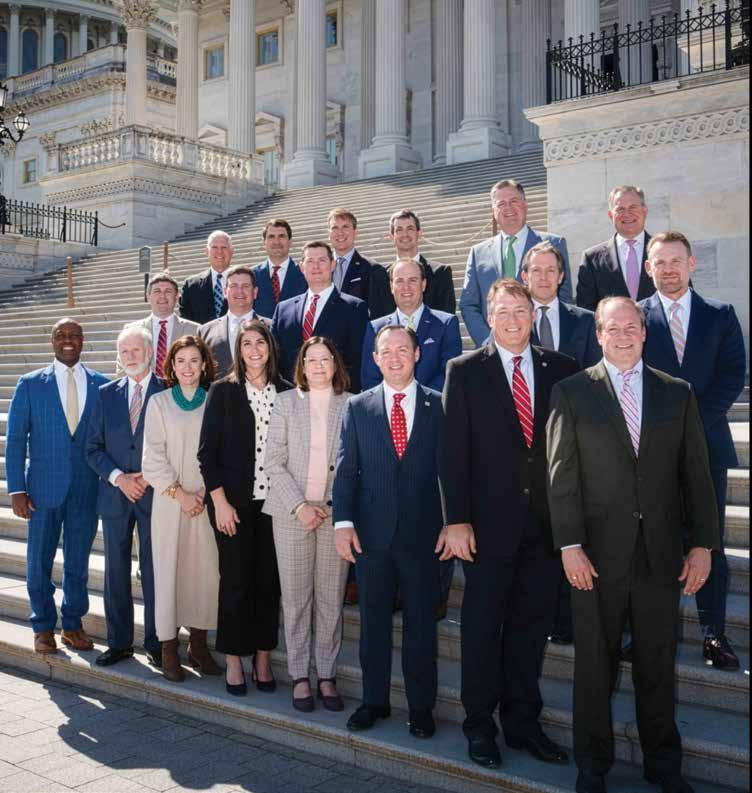
2026 ABA Washington Summit
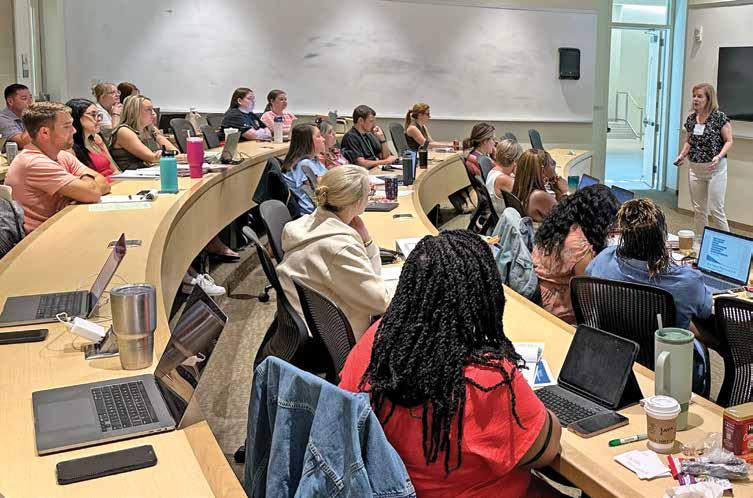
SUNDAY, JULY 12 – FRIDAY, JULY 17, 2026
THE DARLA MOORE SCHOOL OF BUSINESS • UNIVERSITY OF SOUTH CAROLINA, COLUMBIA
FIRST YEAR: Foundation
• Analyzing Bank Financial Performance
• Branding
• Credit Portfolio Management
• Cybersecurity
• Driving Digital Transformation
• Economics/Money and Banking
• Leadership
• Navigating Your Success
• Relationship Management for Bankers
• Sources of Non-Interest Income
• Tax Return Analysis
• Team Building
• Understanding CAMELS Ratings/ Working with Regulators

SECOND YEAR: Application
• Asset/Liability Management
• Bank Investments
• Capital Planning/Strategic Thinking
• Commercial Lending
• Deposit Products
• Economic Outlook
• Effective Communication
• Effective Negotiations
• Employment Law 101
• Intro to BankExec
• Investments
• Principles of Lending for Non-Lenders
• Treasury Management and the Fraud Pandemic
• Troubled Assets
• Understanding Bank Financial Statements
THIRD YEAR: Integration
• BankExec
• Dynamic Presentation Skills
• Funding Alternatives
• Managing IRR and Liquidity Risk in the Current Environment
• The Importance of Advocacy in Banking
For more information: carolynbradley@scbankers.org
COMMITTEE
Chair ..........................................................................................
Chair-Elect
H. Richard Sturm, Ameris Bank
Samuel R. Small, Jr., First Palmetto Bank
First Vice-Chair J. Ted Nissen, First Community Bank
Treasurer Coleman A. Kirven, The Peoples Bank
Immediate Past Chair
2025-26 SCBA BOARD OF DIRECTORS
Jennifer T. Jones, CBL State Savings Bank
Second Immediate Past Chair Boyd B. Jones, Synovus/Pinnacle Financial Partners
President & CEO Fred L. Green III, South Carolina Bankers Association
Directors
Laurence S. Bolchoz, Jr., Coastal Carolina National Bank
Robert Alex Brame, Truist Bank
William O. Buyck, Jr., Bank of Clarendon
Michael E. Edens, First Reliance Bank
Margi M. Fleming, The Citizens Bank
Rufus T. Dunlap V, Countybank
Jamin M. Hujik, Southern Bank
Benita E. Lefft, Optus Bank
William G. Medich, SouthState Bank
Brooks A. Melton, Beacon Community Bank
Joseph A. Painter, First Community Bank
Mickey M. Renner, HomeTrust Bank
J. Reeves Skeen, First Citizens Bank
Donald W. Snipes, Enterprise Bank of SC
Eugene H. Walpole IV, The Bank of South Carolina
202 5-26 COMMUNITY BANKERS DIVISION BOARD
Chair .....................................................................
Immediate Past Chair
Directors
Brooks A. Melton, Beacon Community Bank
R. Scott Plyler, South Atlantic Bank
Vaughan R. Dozier, Jr., First Community Bank
Scott M. Frierson, Southern Bank
John C. Gregory, Arthur State Bank
Thomas O. Hutto, Farmers & Merchants Bank of SC
S. Alexis Matthews, The Peoples Bank
Donald W. Snipes, Enterprise Bank of SC
Russell A. Vedder, Coastal Carolina National Bank
L. Andrew Westbrook, Palmetto State Bank
2025-26 SOUTH CAROLINA BANKERS SCHOOL BOARD
Chair ...........................................................................
Chair-Elect
Immediate Past Chair
Directors
Course Coordinators
Joseph A. Painter, First Community Bank
Thomas C. Anderson, Jr., First Palmetto Bank
Robert P. Hucks II, Coastal Carolina National Bank
Richard M. Carroll, Anderson Brothers Bank
Nathan T. Crowe, Security Federal Bank
Kenneth M. Harper, Countybank
William E. Howard, Jr., First Citizens Bank
William R. Johnston, Southern First Bank
Rose Buyck Newton, Bank of Clarendon
Charles H. Redmond, SouthState Bank
Mary Jo Rogers, South Atlantic Bank
Charles K. Talbert, Bank of the Lowcountry
John C. Griggs III, Synovus/Pinnacle Financial Partners
Ford P. Menefee, The Bank of South Carolina
Marvin E. Robinson, Jr., Ameris Bank
Allison P. Stout, South Atlantic Bank
2025-26 EMERGING LEADERS DIVISION BOARD OF DIRECTORS
Chair
Margi M. Fleming, The Citizens Bank
Chair-Elect ................................................. Reid J. Boehm, Synovus/Pinnacle Financial Partners
First Vice-Chair J. Jefferson Manning, SouthState Bank
Immediate Past Chair
Directors
Othniel W. Laffitte, Palmetto State Bank
M. Charles Abbott, Jr., Carolina Bank & Trust Co.
Jamie E. Addison, First Community Bank
Aferdita M. Brown, Beacon Community Bank
Jessica M. Buttles, Anderson Brothers Bank
Eugene A. Gardner IV, TD Bank, N.A.
Blake H. Dressler, First Reliance Bank
Lauren M. Hendricks, United Bank
Justin A. Johnson, Optus Bank
Angela T. Klosterman, First Citizens Bank
Austin W. McVay, United Community Bank
Anna Q. Mills, Bank of Travelers Rest
Dustin T. Morris, Ameris Bank
Michael T. Tecosky, Pinnacle Financial Partners
Joseph W. Thomas, First Palmetto Bank
W. Clarke Walker, Southern First Bank
Wilson G. Wicker, South Atlantic Bank

Intelligence can help your bank evaluate a bank’s stand-alone value and potential mergers and acquisitions more efficiently and cost-effectively.


I always write this article as the last item in our Palmetto Banker before it goes to print. This allows me to comment on the theme of the edition and to mention any recent activities that occurred after the other articles were written.
When you look through this edition, you’ll quickly see that the theme is the importance of our political advocacy. We have asked our membership to rank the benefits of being a member, and the work we do on legislative items is always on the top of the list.
On a national level, we always have a large group of South Carolina bankers join us at the ABA Washington Summit. The conversations we have with members of our delegation are always energetic, informative, and influential in shaping federal legislation. The strong relationships we have with our delegation give us the credibility to discuss these important issues.
Most of our political advocacy work is at our Statehouse and we are very active every day of the session beginning with our Legislative Reception. Many of our members are actively involved as well. Our Emerging Leaders Division even devotes an entire day visiting with members of the General Assembly.
In addition to the activities Neil Rashley described in his Statehouse report, new issues can aways pop up, and two big ones did last week. Typically, new legislation starts with an idea and we are usually involved in conversations from the beginning. We have an opportunity to review the bill and prepare for any testimony in advance by a sub-committee meeting. We also talk to members of the sub-committee and the full committee to give our perspective.
The two items that popped up last week didn’t follow the typical process. The first came through a telephone call letting us know that the same House member that had sponsored the Public Deposits for Large Credit Unions legislation last year was planning to introduce an amendment to an unrelated Senate bill in a non-banking sub-committee meeting. Instead of the typical process of seeing language and speaking to the appropriate committee members in advance, we had less than 48 hours to rally our bankers and speak directly to leadership in the House on this hypothetical amendment. Fortunately, this quick action paid off and the amendment was not offered.
Fred L. Green III, President & CEO
South Carolina Bankers Association
The second item was similar to the normal process because it went through the proper committee, but the time frame to review and discuss in advance was accelerated to a few days. The Guarantee Banking Act, a de-banking bill, was written to penalize larger banks that discriminate against their customers for political or religious reasons. It included a private right of acting that would have allowed frivolous lawsuits claiming discrimination if a loan was declined for legitimate reasons.
We did testify in this issue and requested the bill be amended to strike the private right of action language. Our suggestion was accepted, an amendment was offered, and the bill passed the House as amended. Next week we will testify on the same bill in the Senate Banking sub-committee.
There is a common metaphor that comes to mind in describing these activities “watching the sausage being made” is about the messy, often unappetizing reality behind processes that produce something polished on the surface. Nowhere does this metaphor apply more accurately than in the world of legislation. Laws, which often appear as clean text once enacted, are usually a result of a long, complex, and chaotic process that involves negotiations, compromise, political maneuvering and sometimes conflict. Ultimately, “watching the sausage being made” in legislation can be both disillusioning and enlightening. It reveals that laws are not handed down in prestige form but are crafted through human efforts. While the process may look elegant, it reflects the reality of democratic governance – messy, contested and constantly evolving.
The South Carolina Bankers Association and all the bankers we represent have the relationship, credibility, and support to play a big role in the legislative process. There are still several more days until the session concludes and anything can happen. Rest assured, because of your efforts, we will be ready to take on any new challenges.
Thank you all for your support.


Rob Nichols, President and CEO American Bankers Association nichols@aba.com
We all recognize the political divisions in this country, and the difficulty in getting Republicans and Democrats to agree on the time of day much less substantive policy issues.
But as bankers who attended ABA’s recent Washington Summit in the nation’s capital learned, once you drill down past the headlines and the noise on cable news shows, you’ll find that not only is bipartisan cooperation still possible when it comes to banking—it’s happening.
During the Summit, bankers had the opportunity to hear from lawmakers on both sides of the aisle, and what came across consistently was a commitment to ensuring that we have a strong, resilient banking sector that encourages economic growth and helps consumers and businesses thrive and prosper.
As freshman Sen. Angela Alsobrooks (D-Md.)—who has emerged as a bipartisan dealmaker in her first several months on the job—observed on the Summit stage: “Our varying backgrounds often color how we see things, but that doesn’t mean we can’t come together and do great things.”
At ABA, we agree with this statement—in fact, it’s been the bedrock of our approach to advocacy over the years. And if you look at the current session of Congress, you’ll see several examples of bipartisan cooperation on banking issues.
One great example is the SCAM Act that is currently moving through both chambers of Congress, co-sponsored by Sens. Ruben Gallego (D-Ariz.) and Bernie Moreno (R-Ohio) in the Senate and Reps. Lou Correa (D-Calif.) and Dan Meuser (R-Pa.) in the House.
This bill, which has strong support from both ABA and the state associations, takes aim at the widespread problem of fraud
perpetrated through social media. The bill requires companies like Meta to take reasonable steps to identify and remove fraudulent ads from their platforms since we know that’s where so many scams start.
The support for this bill from both sides of the aisle is a clear indication that lawmakers recognize the need to respond to the fraud crisis facing Americans. The SCAM Act is a commonsense solution that will protect American consumers, and we’re working hard to ensure it becomes law. Please support this effort by visiting aba.com/TakeAction and urge your lawmakers to cosponsor the bill today.
Members of Congress in both parties have also come together in recent days on housing reform legislation, as well as bills that would make it easier for banks to access Federal Home Loan Bank resources to help fund community development projects, increase asset thresholds to make it easier for banks to qualify for an 18-month exam cycle, and crack down on credit repair scams.

I say it often: the intermediation of capital, improving access to housing, as well as the protection of Americans from growing threats like fraud and scams, aren’t Democratic issues, or Republican issues. They’re American issues.

At ABA, our longstanding approach to advocacy has always been—and will remain—militantly bipartisan, and throughout much of our nation’s history, banking issues remained above the political fray. I don’t know if we can ever return to that, but we will continue to work with anyone in Washington—regardless of party—who appreciates the critical role America’s banks play in the country and shares our view that all Americans benefit from a clear, consistent bank policy environment that promotes economic growth and prosperity for all.
LAST YEAR, BDC ASSISTED IN FUNDING BUSINESS LOANS TOTALING $100 Million
As your bank’s lending partner for more than 65 years, BDC is the only one-stop community bank partner for SBA loan products and SSBCI participation loans in South Carolina.
In collaborating on more than $100 Million in small business growth projects annually, we are honored to be the trusted partner of leading banks in our state.
Find out how your bank can benefit using SBA and SSBCI loan products by contacting one of our lenders today.

A. O’Neil Rashley, Jr., Esq. Senior Vice President & General Counsel South Carolina Bankers Association
The South Carolina General Assembly remains busy as the close of the second year of its two-year legislative session approaches. Even though adjournment is near on May 14th at 5pm, many issues are in constant discussion and both the Senate and House are working hard to resolve these matters. Any legislation that has not passed by that deadline will need to be refiled when the legislature reconvenes in January 2027. The lone exception is typically the state appropriations bill, which traditionally continues into June as there are numerous matters to resolve.
For South Carolina’s banking industry, the 2025–2026 session has been active and consequential. SCBA advanced key priorities such as anti-fraud bills addressing mail theft and financial exploitation, while also responding to proposals that created problems, such as credit union powers expansion. Although other banking issues may still develop before adjournment, this article reviews the significant banking-related legislation SCBA has dealt with as the deadline nears.
SCBA’s top legislative priority this session was opposing another attempt by credit unions to expand beyond their established mission of providing financial services to moderate to low income customers. Their efforts, this time, focused on aggressively pushing to allow local subdivisions to place their significant deposits in credit unions. These deposits would not just be rural. They would also include deposits from large, urban cities and counties. Two bills were filed in 2025 to allow this - H3221 and S60. These proposals were accompanied by messaging from a coalition on the behalf nine large credit unions that banks were not serving rural communities and that out-of-state banks were taking deposits out of South Carolina. Both of these assertions were blatantly wrong, as the opposite was correct.
Legislative activity on both bills primarily occurred in 2025. A Senate Banking subcommittee met and declined to advance S60, while the House Labor, Commerce and Industry committee did
not take up H3221 due to lack of support. In 2026 committee activity remained quiet but at the end of the session the credit unions attempted to add the public deposits bill as an amendment to an unrelated bill in the Ways and Means committee. Strong banker advocacy prevented this end-around attempt through another committee, and the amendment did not come up.
As concerning as these actions were, the debate created an opportunity for bankers to engage directly with legislators— particularly on the role banks play in serving rural and underserved communities. Bankers emphasized the importance of maintaining the longstanding distinctions between tax-paying community banks and tax-exempt credit unions, especially as a small number of large credit unions seek expanded powers. They stressed that banks also are required to comply with the Community Reinvestment Act and the South Carolina Consumer Protection Code – laws credit unions are exempt from compliance.
The consistent engagement of bankers across the state was instrumental in educating legislators on what banks do and the importance of requiring credit unions to stick to their mission and stay in their lane.
Fraud remains one of the most pressing challenges for banks. Mail theft and the resulting surge in check fraud escalated significantly since 2020, both nationally and within South Carolina. Banks also faced many circumstances where they saw potential fraud occurring with an older customer, only to be frustrated by requirements that a demand deposit transaction be honored even when fraud is suspected. Fortunately, the South Carolina General Assembly agreed that these problems should be addressed and moved forward SCBA’s bills combatting fraud. Unlike many states, South Carolina lacks a state-level offense for mail theft, limiting the ability of local law enforcement to prosecute these crimes effectively. Recognizing this gap,
lawmakers advanced legislation aimed at strengthening local law enforcement’s tools to prosecute mail theft. S357, introduced by Senate Judiciary chairman Luke Rankin, and H4144, introduced by House Judiciary Chairman Weston Newton, create a state-level mail theft felony. With considerable support from all legislators, the Senate passed S357 in 2025, and the bill now awaits consideration in the House. Chairman Newton’s committee will soon take up this issue.
Legislators also moved two bills that would allow banks to decline or halt suspected fraudulent transactions involving financial exploitation of customers 55 and older and also vulnerable adults. Bills S851, introduced by Senate President Thomas Alexander, and H5162, introduced by House Labor, Commerce, and Industry Chairman Bill Herbkersman, not only allow banks to stop these transactions but also offer customers the option of designating “trusted contacts” who may be notified in cases of suspected exploitation. Both the House and Senate acted swiftly as the House passed H5162 and the Senate passed S851. The chambers will now resolve the slight differences between the two.
The strong bipartisan support for these measures underscores a shared recognition: combating fraud requires coordination between financial institutions, lawmakers, and law enforcement.
On April 6th, Governor Henry McMaster signed H3856 into law, authorizing the development of an electronic titling system for vehicles to complement the state’s existing electronic lien framework. The General Assembly also appropriated funding to DMV to create the system and set a deadline of March 31, 2027, for implementation.
H3856 started as a simple DMV bill in the House but the Senate Transportation committee added electronic titling. SCBA identified problematic language in the amendment that would have required banks to release vehicle liens within rigid timeframes—three days for electronic payments and ten days for paper payments—far before a bank could confirm that payment was proper. Excellent discussions with Senate Transportation Committee Chairman Larry Grooms and subcommittee chairman Sen. Danny Verdin allowed banks to point out that these deadlines would cause problems and even lead to fraud. Quickly, the amendment was changed to allow banks to confirm that funds are good and that there is full satisfaction before the lien was released. All stakeholders supported this change, and the law now becomes effective on October 6, 2026. Present lien release law remains in effect until that date.
For the first time the South Carolina General Assembly dealt with interchange fees as H4616 was introduced and a “testimony only” subcommittee was held. H4616 is similar to many bills that state legislatures have rejected throughout the country that would exempt the sales tax portion of a transaction from an interchange
fee. Under such legislation, banks would still bear the risk and cost of the transaction’s entire amount, even though the fee could only be applied to a portion of the transaction.
This issue is new, and most state legislators do not understand interchange fees and what they actually do. They are not profit mechanisms that place burdensome costs on merchants; instead they support a range of banks’ essential functions, including fraud prevention, credit risk management, customer service, and cardholder rewards programs. For community banks in particular, interchange revenue represents a critical source of non-interest income that helps sustain modern payment infrastructure and local banking services. For merchants, they are an extreme benefit as customers increasingly go cashless. A secure and speedy card payment system is a significant benefit for merchants.
Now that the interchange issue has come up in the General Assembly, it will most likely not go away. It is important for bankers to continue to educate legislators that interchange fees help support a safe card payment system and critical banking operations that benefit merchants.
Tax reduction has also been a major focus this session. H4216, signed by Governor McMaster, establishes a path toward significant individual income tax reform in South Carolina.
The legislation reduces the state’s current three-tiered system to two brackets: a 1.99 percent rate on income up to $30,000 and a 5.21 percent rate on income above that threshold, down from the current top rate of 6 percent. It also outlines a mechanism for gradual rate reductions tied to revenue growth, with the ultimate goal of reaching a flat tax rate of 1.99 percent—and eventually eliminating the state income tax altogether.
Meanwhile, H3368, a tax conformity bill that would have aligned South Carolina’s tax code with recent federal changes, was voted down in the Senate. The bill would have allowed taxpayers to benefit from provisions such as exemptions for overtime pay and tips and deductions for interest on loans for American-made vehicles.
As adjournment approaches, the 2025–2026 legislative session reflected both the opportunities and challenges facing South Carolina’s banking sector. From defending the industry’s structure against competitive imbalances to advancing tools that combat fraud and modernize operations, bankers remained actively engaged in the policymaking process.
While some issues may carry over into the next session, the progress made thus far highlights the importance of sustained advocacy and strong relationships with their legislators. For South Carolina’s banks, that engagement made a significant, positive difference in 2025-26.
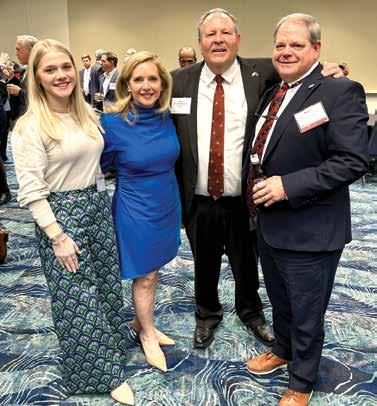
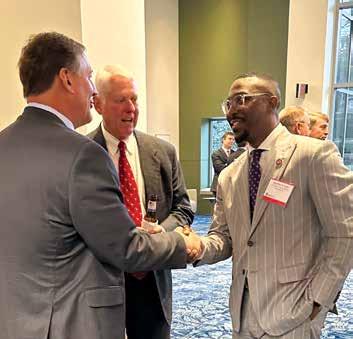
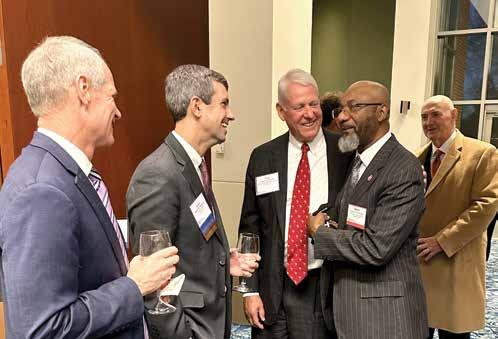
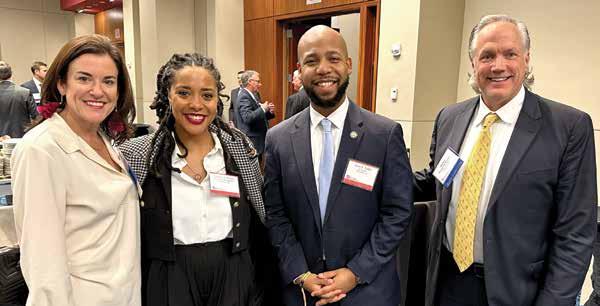
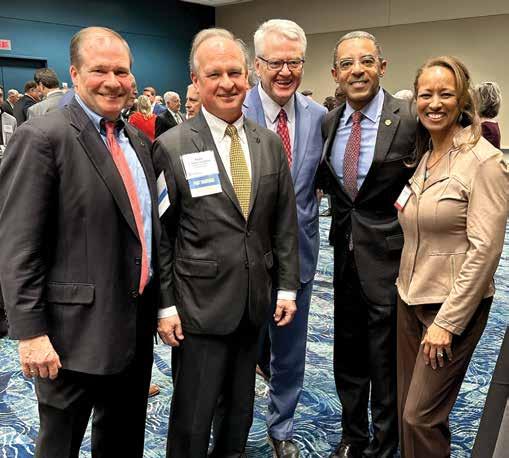
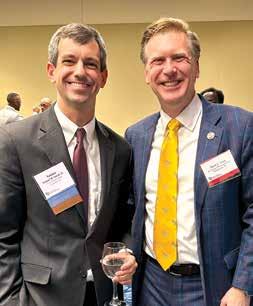
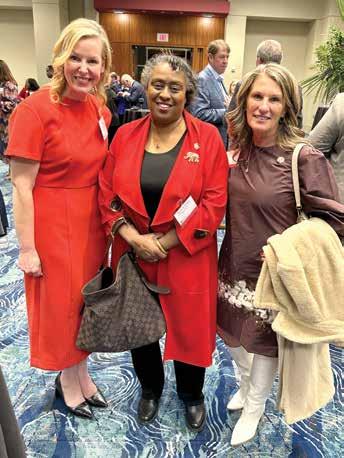
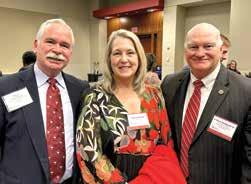
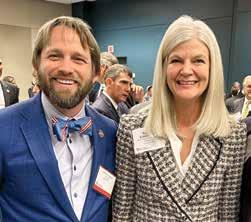
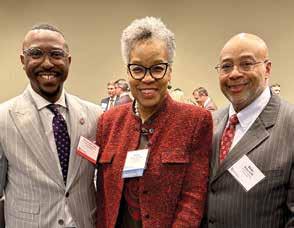
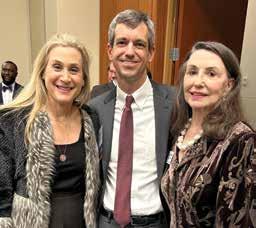
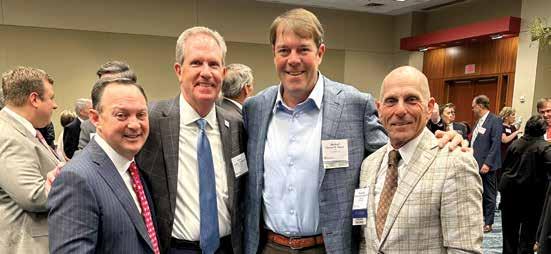
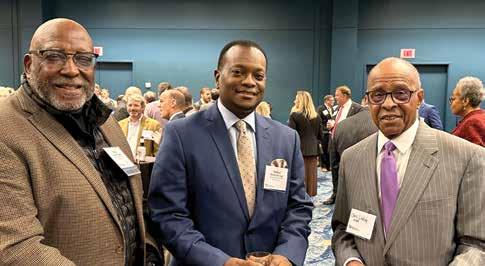
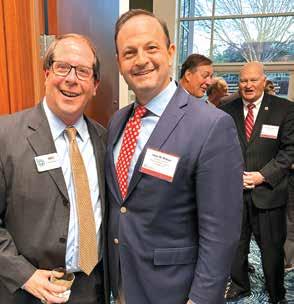
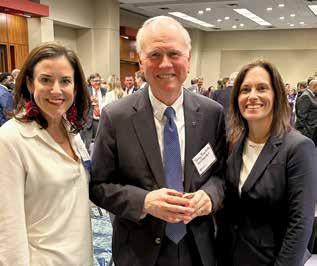
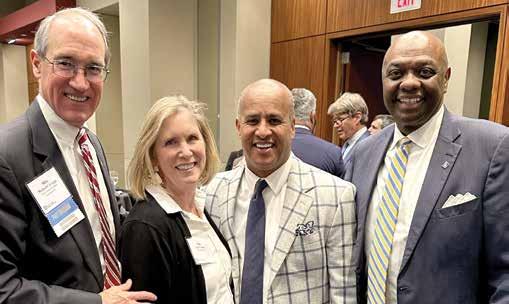
SCBA’s Legislative Reception has historically been the kick-off event for the General Assembly’s return to Columbia, held annually on the first Tuesday evening of the session. This year was no different as bankers from across the State welcomed legislators and elected officials back to Columbia for the start of the session. This year’s event was a huge success with outstanding attendance. SCBA is thankful for all of the government officials that attended the reception and look forward to hosting again next year.



When you need a committed financial team, you want EXTRAORDINARY...not ordinary. With a specialty in accounting and advisory services for banks, Scott and Company has been serving the Columbia business community for 30 years.

• External Audits
• IT Assurance
• Bank Secrecy Act Banking Services
• Tax Planning & Compliance
• Internal Audits


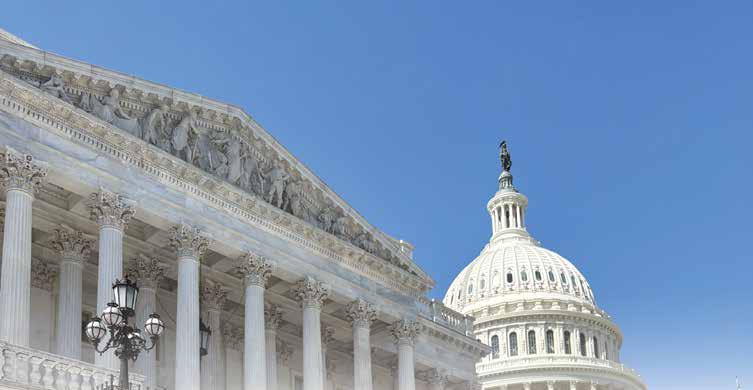
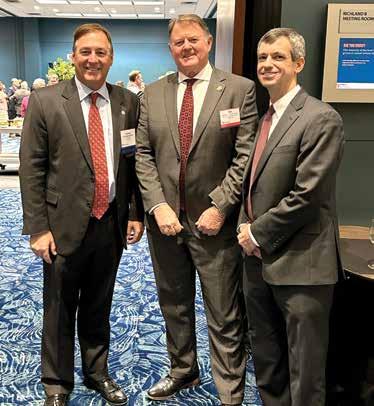
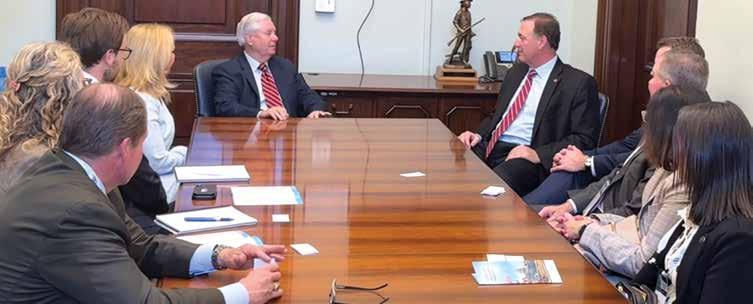
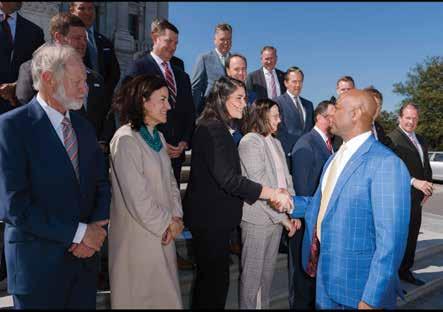
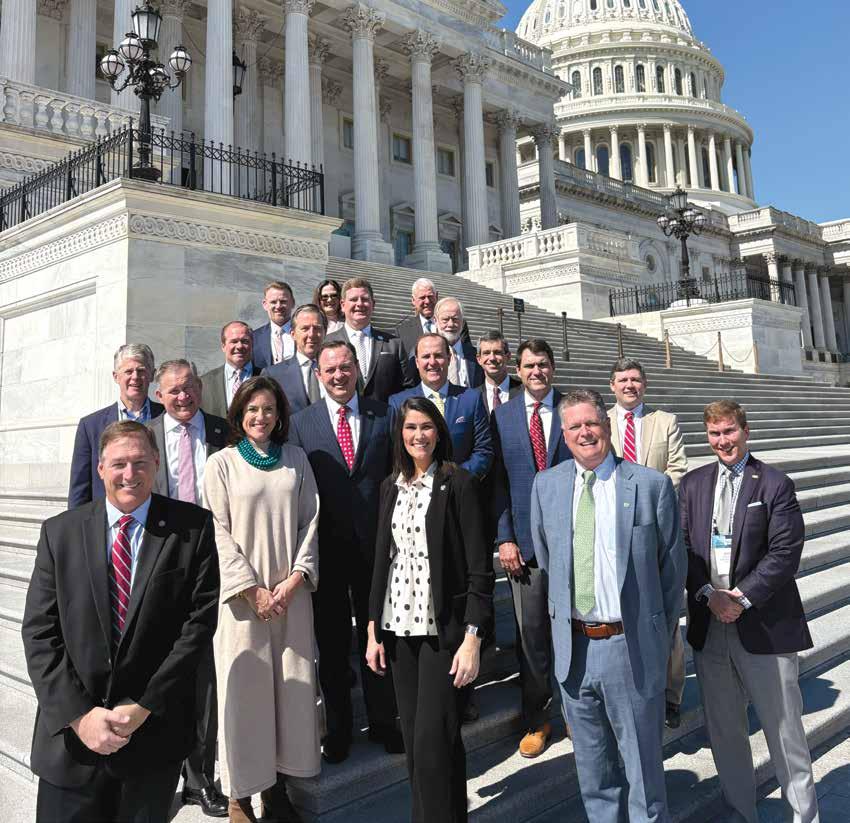
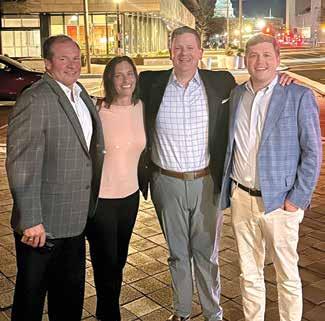
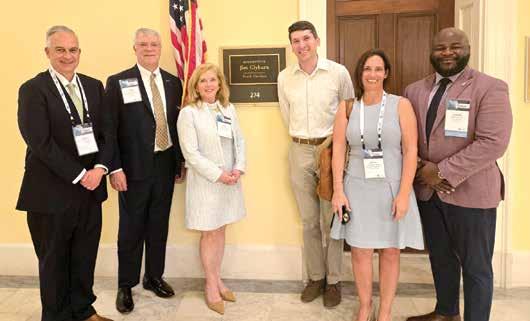
SCBA’s annual Washington Trip again coincided with the ABA Washington Summit. Over thirty South Carolina bankers attended this opportunity to discuss important issues with our congressional delegation and hear from government leaders at ABA’s Washington Summit. Bankers hosted House staff members for a luncheon at the Capitol Hill Club and enjoyed great fellowship and discussion of the issues important to SC’s banks. Meetings with Senators Tim Scott and Lindsey Graham were very productive with Senator Graham committing to co-sponsor the SCAM Act.



Monday January 12, 2026 1:00 pm - 6:00 pm Tuesday January 13, 2026 8:00 am - 3:00 pm &
Hilton Columbia Center, 924 Senate Street, Columbia, SC
This event has been approved for 9.6 CPE credit hours and has been submitted for CLE credit.
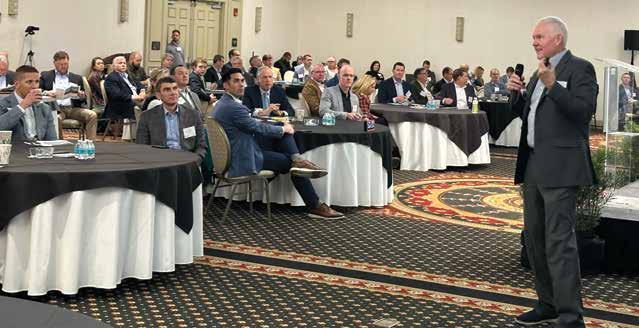
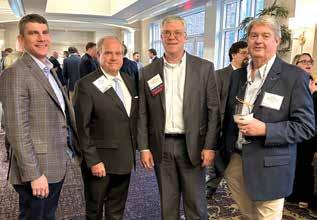
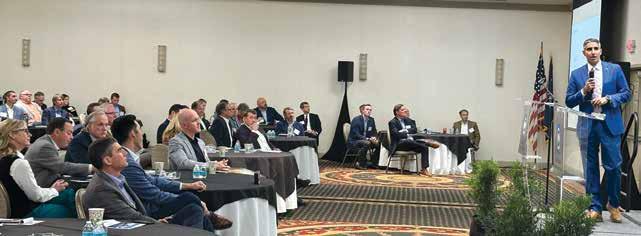
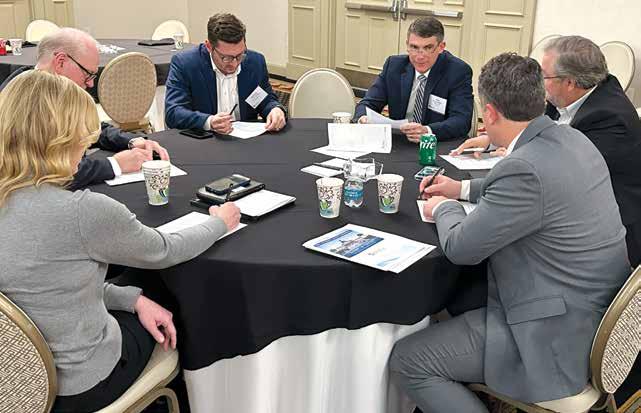
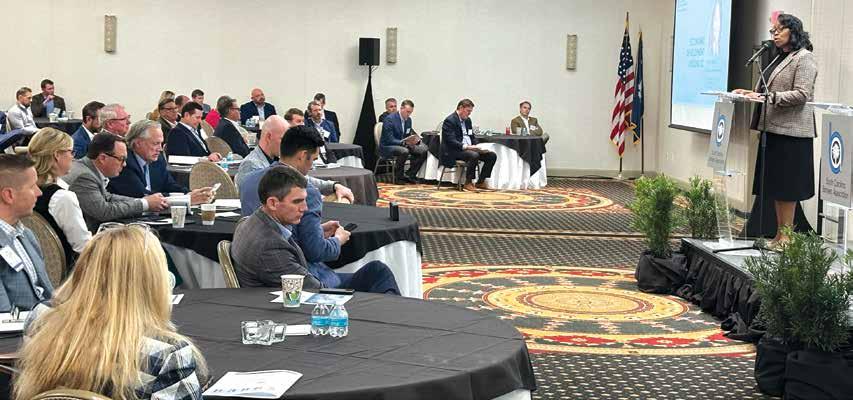
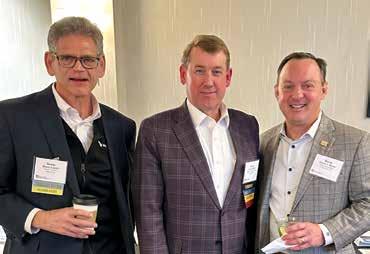
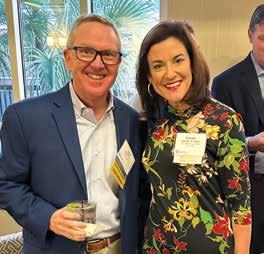
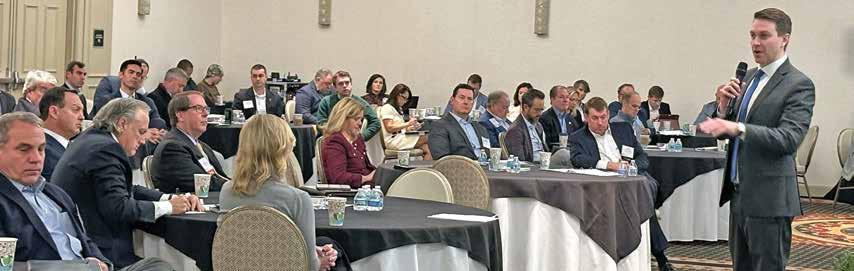
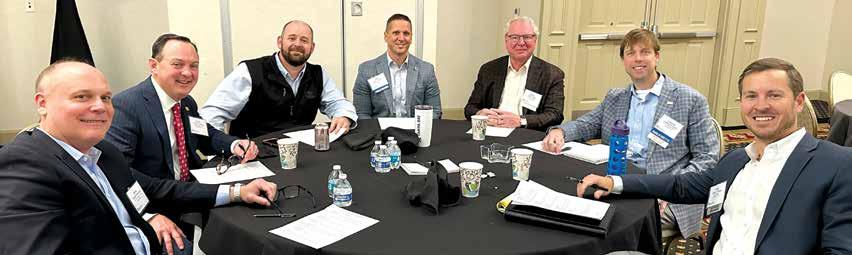
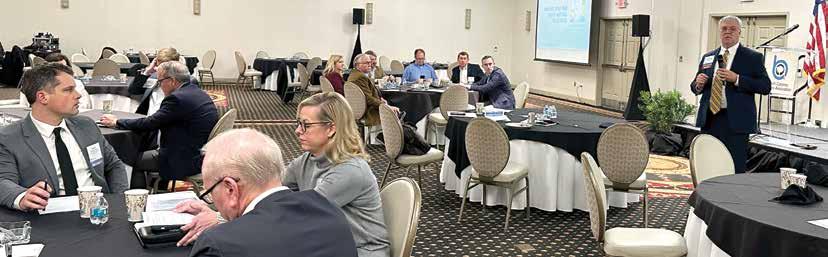
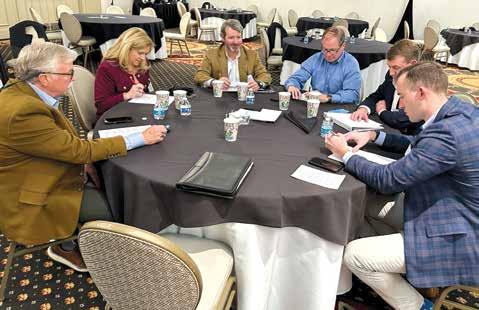
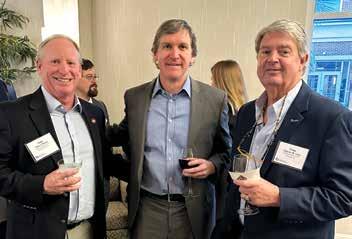
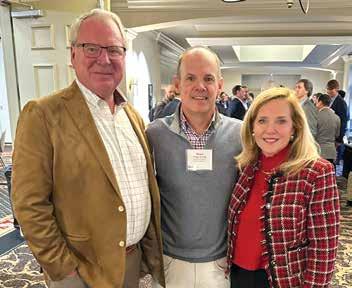
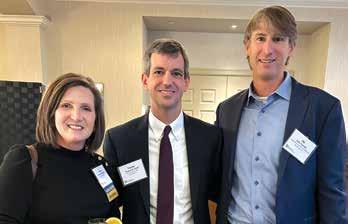
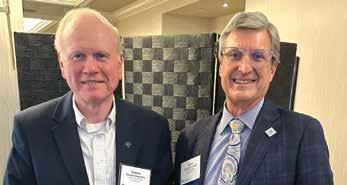
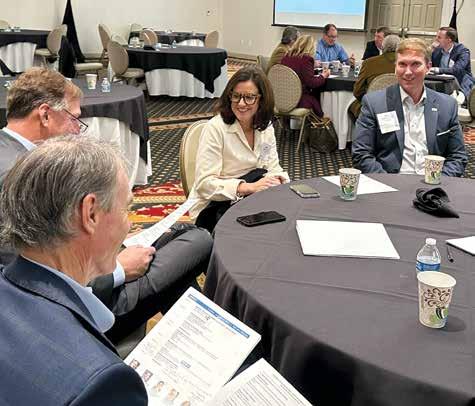
The 2026 Community Bankers Conference took place January 12-13, and featured diverse, insightful sessions aimed at strengthening the community banking sector, as well as economic development. The agenda highlighted key topics such as team building, with Lon Langston, Executive Coach/ Corporate Trainer/Owner, Engaged Banker eXperience, discussing methods for creating stronger teams to enhance bank performance. Sultan M. Meghji, Founder and CEO at Frontier Foundry explored the impact of emerging technologies on banking operations, while Sym Singh, Director, State Government Affairs at Scout Motors, Inc. presented on how Scout Motors’ significant investment is transforming South Carolina’s economy. The conference also included discussions on the state’s economic development led by Ashley Teasdel, Deputy Secretary of Commerce at the South Carolina Department of Commerce, as well as sessions focusing on legislative advocacy with Neil Rashley, Senior Vice President and General Counsel for South Carolina Bankers Association and Blake Earley, Senior Vice President, Congressional Relations and BankPAC at the American Bankers Association.
The Community Bankers Division
A notable highlight was the session titled “Everything You Want to Ask Bank Regulators, But Are Afraid to Ask,” featuring Diane Ellis and Rae-Ann Miller, both from IntraFi, which provided a candid opportunity for attendees to engage with regulatory perspectives. Christopher Marinac, CFA, Director of Research at Janney Montgomery Scott, wrapped up the informative sessions by examining future opportunities and risks in the banking industry as it continues to evolve.
The conference included networking opportunities and peer discussions, allowing financial professionals to connect and share ideas, reinforcing the collaborative spirit essential for the growth of banking in South Carolina. Many thanks go out to our sponsors, volunteers, and attendees that made this conference a great success!


















Opportunities at the 126th Annual Convention in Naples, Florida! Discover Unforgettable Opportunities at the 126th Annual Convention in Naples, Florida!
Are you ready to elevate your professional journey and network with the best in the business? Don’t miss your chance to be part of the 126th Annual Convention & Trade Show held at the luxurious Ritz-Carlton in Naples, Florida, from June 11 to June 14, 2026. This annual event promises an unparalleled lineup of speakers, networking opportunities, and engaging activities designed to inspire and empower you.
This year, we are thrilled to feature an impressive roster of speakers, including Michael Amiridis, President of the University of South Carolina and Paul S. Atkins, Chairman of the Securities and Exchange Commission. Each speaker will offer unique perspectives and actionable strategies you can apply in your own professional life.
This convention isn’t just about learning; it’s also about connection and enjoyment. Join us in the beautiful surroundings of Naples:
• Golf Tournament at Tiburón: Challenge yourself on a championship golf course designed by Greg Norman. Enjoy a fun day on the green with lunch, refreshments, and prizes. The stunning environment of Tiburón will provide a perfect backdrop for networking and relaxation.
• Prayer Breakfast with Boyd Jones: Reflect on personal and professional growth at our Prayer Breakfast. Boyd will share how his faith influences his leadership style and community service. This is a unique opportunity to explore the intersection of values and success within our industry.
Beyond the event, Naples is a mesmerizing destination. Boasting pristine beaches, world-class dining, and shopping, you’ll find endless opportunities for relaxation and adventure. After a day of networking and learning, unwind by the water or enjoy a meal at one of Naples’ acclaimed restaurants.
Register today to secure your place at the 126th Annual Convention & Trade Show. Whether you want to expand your knowledge, grow your professional network, or simply enjoy the stunning locale, this is an event you won’t want to miss! Visit our website to register and learn more about the agenda, speakers, and accommodations.
Create unforgettable memories and forge valuable connections in the sunny paradise of Naples, Florida. We look forward to welcoming you to an unforgettable experience!
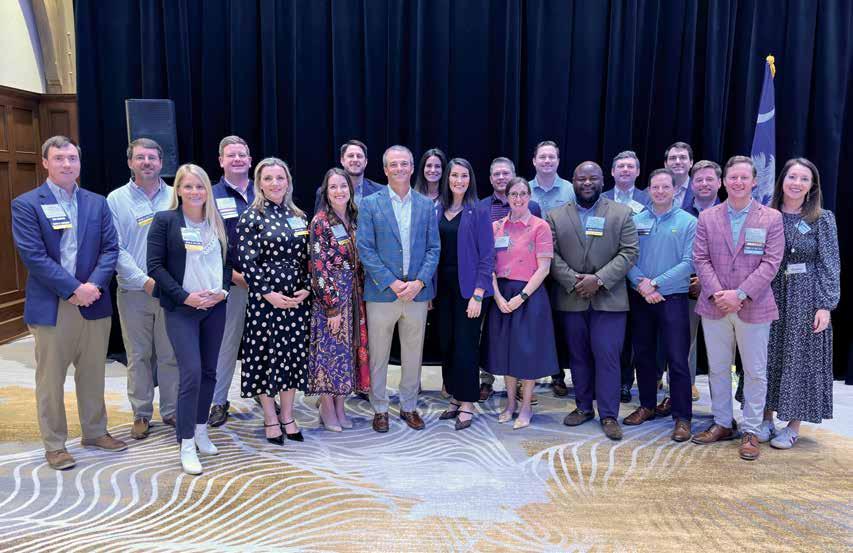
The South Carolina Bankers Association’s Emerging Leaders Division proudly welcomed close to 200 attendees to its annual conference from March 13-15, 2026, at The Ritz-Carlton Reynolds, Lake Oconee. This year’s event blended professional development with the chance to network in a scenic, relaxed environment.
Celebrating more than 70 years of growth, the Emerging Leaders Division has consistently championed the development of the next generation of leaders in the banking industry. The agenda was rich with insights from prominent industry thought leaders, engaging content, and discussions on timely topics such as ethical AI and economic policy.
Attendees were treated to a diverse lineup of speakers, including Senator Michael Reichenbach and Coach Shane Beamer of the University of South Carolina, alongside presentations like “Fraud War Stories,” led by

Bobby Kirby from The Citizens Bank. The conference also provided invaluable networking opportunities that empower banking professionals to drive positive change within their institutions.
In addition to the enriching presentations, the event highlighted ongoing initiatives such as the South Carolina Bankers School and the Palmetto Scholarship Program, underscoring the Division’s commitment to community engagement and professional growth.
With heartfelt gratitude to its sponsors, the Emerging Leaders Division reflects on the renewed passion and enthusiasm that attendees will carry forward. The conference concluded with a shared sense of purpose and a lively dueling piano show, leaving participants excited and inspired to shape the future of banking in South Carolina.
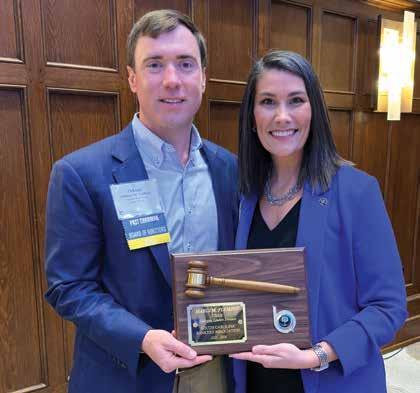

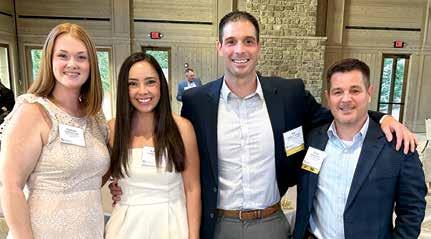
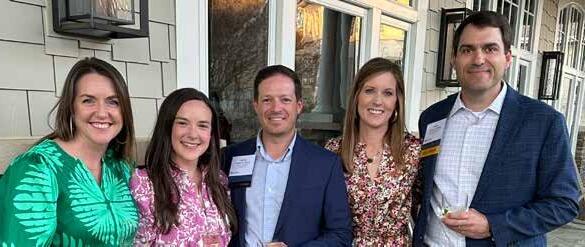
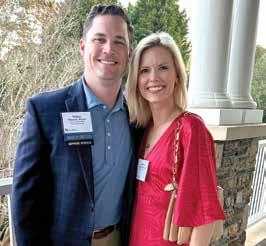




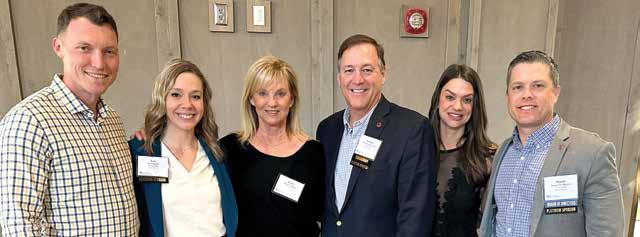




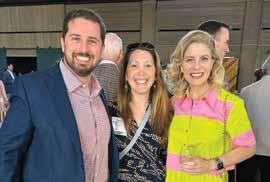
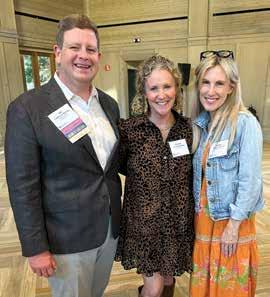


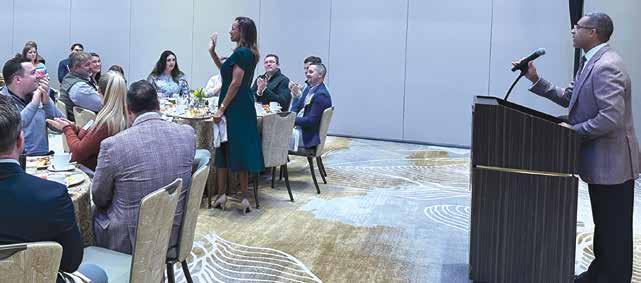
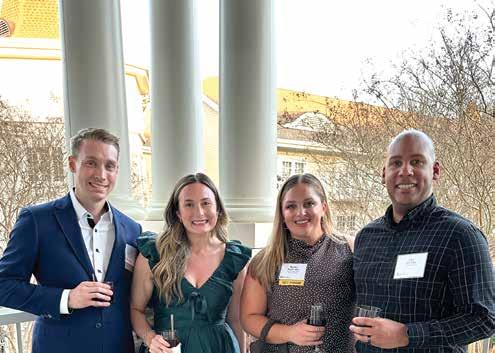

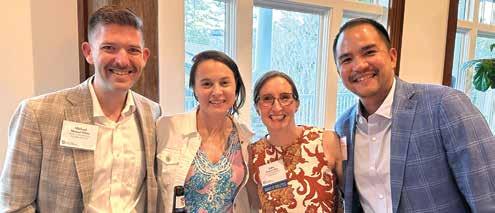



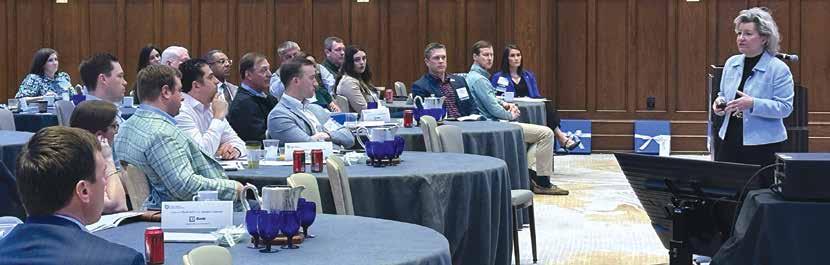
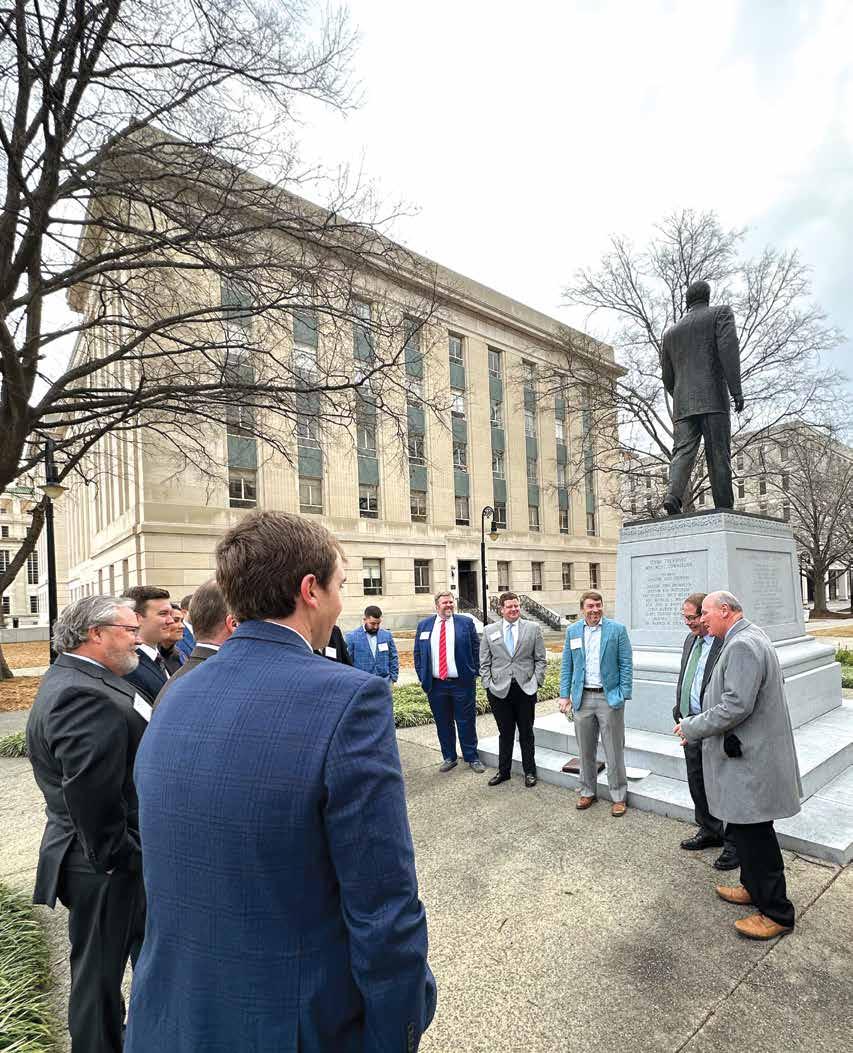
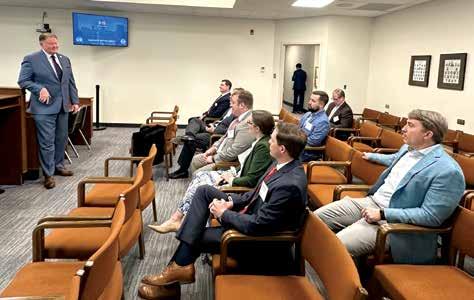
Emerging leaders visited the South Carolina State House, once again gathering at the Strom Thurmond statue outside the Gressette Building on a cold February morning. Despite a packed schedule, Senate President Senator Alexander took time to engage with our group, while Chairman Herbkersman welcomed them inside the Gressette Building. The leaders also met with Senate Banking Chairman Cromer, who provided insights into current legislative priorities. Key discussion topics included Financial Exploitation, Mail Theft and Check Fraud, Credit Unions accepting Public Deposits, Fraud related to Crypto Kiosks and ATMs, Data Centers, and Insurance Rate Reform. The visit included a unique opportunity to observe the House from the balcony, where we were introduced to the assembly.


Community banks have invested heavily in digital capabilities over the past decade. Online and mobile platforms are more modern, payment options have expanded and treasury tools are far more capable. Yet many still struggle to deliver the speed, flexibility and consistency customers expect. The issue is rarely effort—it’s a mismatch between digital-first expectations and core system realities. The question is no longer whether digital transformation matters, but whether your core system is ready for a digital-first present.
At Profit Resources, Inc. (PRI), we encourage bankers to assess core readiness by asking five key questions:
1. HOW WELL DOES YOUR CORE SUPPORT REAL-TIME EXPECTATIONS?
Customers expect immediate balance updates, real-time payment confirmation and instant alerts. Many banks still rely on workarounds like memo posting or shadow balances to simulate real time. While these methods can help, they often fall short. Understanding what truly updates your core in real time is essential to delivering consistent, modern experiences.
2. IS YOUR INTEGRATION MODEL API-FIRST OR FILE-FIRST?
Modern ecosystems rely on APIs for real-time data exchange and event-driven updates. Banks should evaluate how many integrations still depend on batch files, whether APIs support real-time events or only data retrieval, and how much customization is required for each new partner. File-first environments create friction as systems scale, though hybrid approaches can still play a role for static data.
3. WHO CONTROLS PRODUCT CONFIGURATION—YOUR BANK OR YOUR VENDOR?
Digital-first banking requires flexibility in product setup, pricing and relationship-based offerings. It also demands rapid experimentation. When product changes depend on vendor timelines, innovation slows. The ability to configure products quickly and safely is a strong indicator of whether your core can support evolving customer needs.
4. IS YOUR CORE DATA ACCESSIBLE, TIMELY AND USABLE?
Data is the foundation of personalization, analytics and AI-driven decisions. When insights rely on overnight extracts or manual reconciliation, momentum is lost. Banks should assess how quickly they can access transaction-level data, whether it is consistent across systems and how much transformation is needed before it becomes usable.
5. DOES YOUR CORE ENABLE AN ECOSYSTEM MINDSET?
Community banks increasingly depend on specialized partners for digital account opening, treasury management, CRM, marketing automation and fraud tools. A modern core makes it easier to integrate partners, switch vendors without disruption and avoid long-term lock-in — supporting a true ecosystem approach.
Profit Resources, Inc. (PRI) is a consulting firm with more than 35 years of experience helping community banks improve performance and profitability. PRI supports clients through core evaluation, vendor selection, contract negotiation and conversion—bringing clarity to complex decisions and ensuring long-term value. Contact PRI to learn more about their personalized, results-driven approach.

Total number of Banks in S.C.
Institutions headquartered in S.C.
Institutions headquartered out of S.C.
S.C. Total Deposits
Total Deposits for out-of-state banks
Total Deposits for S.C. headquartered banks
Total number of bank offices in S. C.
Banks with over $1 billion in deposits
Total S.C. deposits for these banks
Banks with deposits greater than $500 million and less than $1 billion
Total S.C. Deposits for these banks
Banks with deposits less than $500 million
Total S.C. Deposits for these banks
Source: FDIC Summary of Deposits, June 30, 2025
THE SCBA PROUDLY REPRESENTS THE FOLLOWING MEMBER
1st Federal Savings Bank of SC
Abbeville First Bank
Ameris Bank
Anderson Brothers Bank
Arthur State Bank
Bank of America, N.A.
Bank of Clarendon
Bank of Greeleyville
Bank of The Lowcountry
Bank of Travelers Rest
Bank of York
Beacon Community Bank
Blue Ridge Bank
Carolina Bank & Trust Co.
Carter Bank
CBL State Savings Bank
Coastal Carolina National Bank
CoastalStates Bank
Community First Bank
Countybank
Dedicated Community Bank
First National Bank of Pennsylvania
First Palmetto Bank First Reliance Bank Home Federal Savings and Loan
Hometrust Bank
J.P. Morgan Chase Bank, NA
Kingstree Federal Savings and Loan
Oconee Federal Savings and Loan Optus Bank
Palmetto State Bank Park National Bank
Pee Dee Federal Savings Bank
Dogwood State Bank Enterprise Bank of South Carolina Farmers and Merchants Bank of SC Fidelity Bank First Bank First Capital Bank First Carolina Bank First Citizens Bank First Community Bank First Horizon Bank
Bank Security Federal Bank ServisFirst Bank
South Atlantic Bank Southern Bank Southern First Bank
SouthState Bank TD Bank, N.A. The Bank of South Carolina
The Citizens Bank
The Conway National Bank
The Huntington National Bank
The Peoples Bank
Truist Bank
United Bank
United Community
Wells Fargo
Federal Savings and Loan
3/31/26

By Rick Green, COO, South Carolina Bankers Asssociation
Fraud is a pervasive problem that takes an extraordinary financial and emotional toll on consumers. Fraud targeting banks and their customers has escalated into a multi-billion-dollar national crisis, driven by organized criminal networks and increasingly sophisticated social engineering tactics using digital platforms and telecommunications networks.
Recent federal data underscores both the scale of the problem and the need for coordinated action across financial institutions, government, and technology companies. The Federal Trade Commission reported that consumers lost $12.5 billion to fraud in 2024, while the FBI Internet Crime Complaint Center reported $16.6 billion in total cybercrime and fraud losses the same year. These figures represent sharp year-over-year increases and likely understate the true magnitude, as many incidents go unreported. Bankers can attest that when 2025 figures are released further increases are expected.
At the state level, the South Carolina Department of Consumer Affairs has reported rising losses from scams, including impersonation scams and financial exploitation of older adults. These trends reflect a broader national shift: rather than breaching bank systems directly, criminals are increasingly manipulating customers into authorizing transactions themselves.
Several dominant fraud trends are shaping today’s threat landscape:
• Authorized Push Payment (APP) Scams
Customers are tricked into sending money themselves, often under false pretenses. These scams are particularly difficult to stop because the transaction appears legitimate.
• Romance and Confidence Scams
Criminals build emotional relationships with victims—often online—before requesting money. Losses per victim are often extremely high.
• Check Fraud and Altered Checks
Stolen checks are altered or counterfeited, leading to direct financial losses and operational strain for banks.
• Account Takeover and Identity Theft
Fraudsters use stolen credentials to access accounts and move funds.
• Cryptocurrency and Investment Scams
These scams now account for the largest share of losses, often involving fake platforms or long-term manipulation schemes.
Banks have invested heavily in prevention and have a long history of improving and innovating to protect their customers. From the adoption of chip-enabled credit cards to multi-factor authentication to protect user accounts to the use of advanced AI tools to warn customers about potentially fraudulent transactions, banks have been on the front lines of innovation and deploying advanced capabilities to protect their customers.
Unfortunately, by the time a scam victim is sending a payment, it’s often too late to convince them it’s a scam. Banks and consumer advocates warn people to only send money to people they know and trust, but by the time they’re ready to send a payment they believe they know and trust the scammer. The scammer might be “technologically authenticated” because the caller ID shows a spoofed number such as a government office or the victim’s bank. This digitally enabled trust in the criminals makes it very difficult to stop a consumer from making a payment to a criminal.
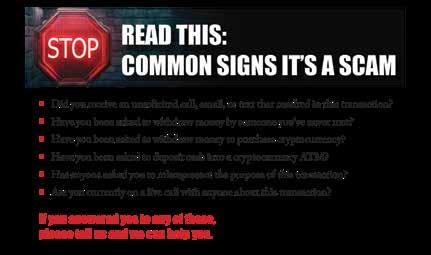
Recognizing that a bank employee may be the last line of defense for their customer, the South Carolina Bankers Association created a Customer Awareness Placard designed to combat scams at the time of the transaction, this tool allows tellers and customer service representatives to alert the victim of a possible scam during a suspicious transactions. It often serves as the final opportunity to stop fraud before funds are sent. Another way SCBA is helping to protect South Carolinians is through proposed legislation that would allow a bank customer to designate a “trusted contact” that a bank could call on to intervene when fraud is suspected.

t he r ole of S o C i A l M e D i A
A n D t ele C o M p l Atfor MS
A critical driver of fraud is the role of digital platforms. Increasingly, scams originate on social media, dating apps, and messaging services before moving into the banking system. Criminals are perpetuating fraud by impersonating banks and other legitimate companies through voice calls, text messages, and advertisements on social media. This continues unabated because, unlike banks, which are required to verify the identity of their customers, telecom providers and social media platforms take few steps to stop fraudsters from impersonating others and gaining consumers’ trust. By the time the fraud reaches the bank, it’s often too late.
According to the Federal Trade Commission, a substantial portion of fraud losses can be traced back to initial contact on social media platforms. These platforms allow criminals to scale their operations, targeting thousands of individuals simultaneously with minimal cost.
At the same time, the platforms generate significant revenue from user engagement, advertising, and transaction activity. Based on a November 2025 investigative report by Reuters reviewing internal Meta documents, the company estimated that approximately 10% of its 2024 advertising revenue— roughly $16 billion—was derived from ads promoting scams, illegal gambling, and prohibited goods. Those same internal documents estimate that Meta’s platforms were involved in onethird of all successful scams in the US. This has led to growing calls—both federally and in multiple states—for legislation that would hold telecom and social media companies accountable for failing to take reasonable steps to prevent fraud on their platforms. Both SCBA and the American Bankers Association support the Safeguarding Consumers from Advertising Misconduct (SCAM) Act, which aims to address fraud in digital communications.
While digital fraud dominates headlines, one of the fastestgrowing threats facing banks is surprisingly traditional: check fraud.
Federal law enforcement agencies have warned of a significant resurgence in check fraud, largely driven by mail theft and check alteration schemes. Criminals steal outgoing checks from residential mailboxes, postal collection boxes, or business mailrooms. Using readily available chemicals and tools, they “wash” the checks—removing ink to alter the payee name and dollar amount—or use the account information to create counterfeit checks.
This form of fraud has grown rapidly due to gaps in enforcement and the relative ease of committing the crime. The United States Postal Inspection Service has reported a surge in mail theft incidents nationwide, contributing directly to increased financial losses. Check fraud often results in direct losses to banks and their customers, creating operational challenges and undermining trust in traditional payment systems. Financial institutions dedicate significant resources to detection, reimbursement, and investigation.
Recognizing the seriousness of this issue, the South Carolina Bankers Association has proposed legislation in the South Carolina General Assembly to make mail theft a felony under state law. This would allow local and state law enforcement to prosecute offenders more effectively, rather than relying solely on federal authorities with limited resources.
Despite significant efforts by banks, the scale of fraud losses shows that broader systemic action is required. Addressing fraud will require not only innovation within the banking sector, but also stronger laws, increased accountability for telecommunications and social media platforms, and a sustained commitment to consumer education. Without these efforts, fraud will continue to grow—threatening both individual financial security and trust in the financial system.
We are fortunate to have an active and engaged roster of Associate members and proudly welcome these new members:

Acumen Financial Advantage
4225 Executive Square, Suite 600
La Jolla , CA 92037 (267) 212-4384 acumenfa.com/banks
Mr. James Calla
4225 Executive Square, Suite 600
La Jolla, CA 92037 (267) 212-4384 jcalla@acumenfa.com

AEP (Affordable Equity Partners)
3290 Northside Parkway NW Suite 300 Atlanta, GA 30327 (312) 533-9083 aepartners.com
Ms. Pamela Hetz Director of Business Development 3290 Northside Parkway NW Suite 300 Atlanta, GA 30327 (312) 533-9083 phetz@aepartners.com

Highland Global Business Valuations
9301 Kings Road
Myrtle Beach, SC 29572 (843) 457-2546 highlandglobal.com
Mr. Robert M. “Robbie” Clinger III, CEO
9301 Kings Road
Myrtle Beach, SC 29572 (843) 457-2546 robbie@highlandglobal.com
Acumen Financial Advantage offers strategies for lasting performance. Their custom strategies are designed to strengthen financial performance while aligning with your bank’s priorities. From executive retention and balance sheet-driven yield optimization to advancing long-term community value, everything they do is engineered to help you deploy capital more efficiently and achieve sustainable results in changing market environments.
Affordable Equity Partners, Inc. (AEP), founded in 1997, is a financial resources company that provides a full range of services for developers and investors in the Section 42 Low-Income Housing Tax Credit program. With more than 500 tax credit developments nationwide, AEP has syndicated over $5 billion in federal and state tax credits and has never had a foreclosure or credit recapture. The company is known for providing consistent, high-quality service before, during and after the investment. AEP serves the growing need for affordable housing across 17 states. The company is part of a family of companies that has developed, built, managed and invested in affordable housing for more than 40 years. Together, these companies share a mission to create quality housing where their own families would be proud to live.
Highland Global specializes in independent business valuations/ appraisals that support lending and related credit decisions. They work with lenders to provide credible, well-documented valuations of closely held businesses. Their services are designed to help lenders address valuation requirements, strengthen underwriting support, and navigate complex deal issues with greater confidence. Highland Global is known for disciplined analysis, clear communication, and judgment built through experience—delivered with the integrity and professionalism that enduring relationships require. Founder, Robert M. Clinger III, has over twenty-fives years of experience and has personally completed over 10,000 business valuation reports. His credentials include the Certified Business Appraiser, Certified Valuation Analyst and Certified Machinery & Equipment Appraiser designations. Experience matters most!

OneDigital
6036 Northridge Road
Columbia, SC 29206 (803) 760-8156 onedigital.com
Mr. Daniel Mercer Executive Benefits Consultant
6036 Northridge Road Columbia, SC 29206 (803) 760-8156
daniel.mercer@onedigital.com
OneDigital Executive Benefits works with financial institutions to develop strategies for attracting, retaining, and rewarding key talent. We assist banks with the design and implementation of Bank-Owned Life Insurance (BOLI) programs intended to help manage benefit liabilities and support long-term financial planning objectives. Our team includes professionals with expertise in tax, accounting, law, and finance who provide guidance on executive benefits design and BOLI program administration. As a national organization, OneDigital also offers access to resources across employee benefits, retirement & wealth, HR consulting, and property & casualty insurance.
With all of the evolving financial industry changes, we are thankful for business alliances that meet our members’ needs. The SCBA is dedicated to supporting and promoting cutting-edge industry providers to our member banks.
For more information about Associate Membership, please contact SCBA Senior Vice President, Carolyn Bradley by email at carolynbradley@scbankers.org.
Scan here for our complete Associate Member Directory.
Turn your CRA strategy into keys in doors with Habitat for Humanity.
At Habitat for Humanity, we believe in offering a hand up, not a handout. For over 40 years, Central South Carolina Habitat for Humanity has partnered with banks in Richland, Lexington, and Fairfield counties to help people achieve the American Dream of homeownership. Our approach is rooted in responsibility: homeowners invest 300 hours of sweat equity, complete financial education and pay an affordable mortgage—never more than 30% of their income. This model builds stability through hard work and self-sufficiency. And the results are clear. 111 homeowners have fully paid off their mortgages and 93% of current loans are current or prepaid. Affordable housing strengthens families, builds taxpayers and fuels local economic growth.
Partner with us to expand opportunity, meet CRA goals and empower people stand on their own because when homeowners have affordable mortgages, communities grow stronger.


Daniel F. Siau South Atlantic Bank
Fred L. Green South Carolina Bankers Association
H. Richard Sturm Ameris Bank
J. Ted Nissen First Community Bank
Jennifer T. Jones CBL State Savings Bank
Julie Gurtis United Bank
K. Wayne Wicker South Atlantic Bank
Laurence S. Bolchoz Coastal Carolina National Bank
Michael E. Edens First Reliance Bank
Paul J. Rogers CBL State Savings Bank
R. Scott Plyler South Atlantic Bank
R. Thornwell Dunlap Countybank

Richards H. Green South Carolina Bankers Association
Robert P. Hucks Coastal Carolina National Bank
Samuel R. Small, Jr. First Palmetto Bank
Thomas Bouchette The Citizens Bank
William O. Buyck Bank of Clarendon
Benita E. Lefft Optus Bank
Charles J. Fehlig United Bank
Coleman A. Kirven The Peoples Bank
Dennis L. Wade Coastal Carolina National Bank
Donald W. Snipes Enterprise Bank of SC
Eugene M. Varn Enterprise Bank of SC
F. Justin Strickland First Reliance Bank
Gary Hadwin Coastal Carolina National Bank
Julian A. Ratterree United Bank
Julie McMakin CBL State Savings Bank
M.J. Huggins Southern Bank
Mickey M. Renner HomeTrust Bank
R. Bruce White Bank of Travelers Rest
Ron Shaw Park National Bank
Thomas R. Britt Bank of Travelers Rest
Todd M. Bogdan Park National Bank
William G. Medich SouthState Bank
Ilya Zaretsky United Bank
Mary Garcia Pinnacle Financial Partners

Candace Britton has been appointed vice president, director of business services.
Maria Cartrette has been appointed assistant vice president, branch support supervisor.
Koko Elliott has been appointed vice president, director of deposit operations.
Jeff George has been appointed vice president, director of credit administration.
Kendra Jordan has been appointed vice president, director of electronic banking.
Michael Martin has been appointed to loan officer and assistant branch manager.
Dan Reynolds has been appointed vice president, commercial loan officer.
Amy Smith has been appointed vice president, director of loan & credit operations.




Heather Stanley has been appointed assistant vice president, mortgage operations manager.
Sherry Young has been appointed assistant vice president, call center manager.
Stacy Brandon, president of BofA Upstate South Carolina, retired from the company April 1, with 39 years of service and many contributions to the Upstate region.
Tim Hawks has joined the bank as senior vice president and residential mortgage manager.
Holt Chetwood has been appointed to regional executive vice president in an expanded role overseeing its south region.

Angela Klosterman has been promoted to senior vice president, private banker II.
Curtis Evatt, President & CEO of Oconee Federal Savings and Loan Association has been elected to the Board of Directors for FNBB, Inc. and its banking subsidiary, First National Bankers Bank.
Stephen M. “Steve” Leonard has been appointed as chief credit officer and chief operating officer.
Rob Crowe has been appointed senior vice president and grand strand market president.
Maggie Rosafort has been hired as mortgage coordinator.





Anderson Brothers Bank employees Christina Hester and Jessica Buttles recently participated in “Career Day” at local high schools, engaging with students to showcase the diverse range of career opportunities available in the banking industry. Their efforts aim to inspire and inform the next generation about the various paths they can take in this dynamic field.

United Community has been recognized as #1 for Retail Banking Customer Satisfaction in the Southeast Region in the JD Power 2026 U.S. Retail Banking Satisfaction Study, for the 12th time in 17 years. This makes United Community the most awarded bank in Customer Satisfaction in the Southeast. It also marks the third year in a row United has earned the top spot and the 12th time in the last 17 years the bank has received this recognition.
In addition to being named highest in overall customer satisfaction in the Southeast, United Community was also ranked #1 in five out of the seven dimensions in the study: Trust, Convenience, Value, Account Offerings and Problem Resolution.
“Earning this recognition is a tremendous honor,” said Lynn Harton, Chairman and CEO of United Community. “It is particularly meaningful due to the comprehensive nature of the study. Ranking #1 in five of the seven key dimensions means that our customers aren’t just satisfied overall – they consistently see our teams delivering on the things that matter most in their day-to-day financial lives.”
SOUTH CAROLINA BANKERS ASSOCIATON EMERGING LEADERS DIVISION
Emerging Leaders from banks across the state participated in community outreach initiatives to include “Read Across America Day” and Junior Achievement.

AMERIS BANK
Dustin Morris in Greenville read the book Alexander Who Used to Be Rich to a total of 20 students at Bethel Elementary School.
FIRST PALMETTO BANK
Andrea Fripp and Thomas Anderson (pictured right) volunteered with Junior Achievement at Windson Elementary School in Columbia.
OPTUS BANK
Geneena Donaldson (pictured right) read the book Little Daymond Learns to Earn to children at New Aloha CommunityDevelopment in Florence.
PINNACLE FINANCIAL PARTNERS + SYNOVUS
Pinnacle + Synovus team members in Charleston read at Lambs Elementary in North Charleston. They were able to read to 20 classes of nearly 400 students total for Read Across America Day!

Pinnacle + Synovus team members in Myrtle Beach read at Socastee Elementary AND Forestbrook Elementary. They were able to read to 6 classes at Socastee and 3 classes at Forestbrook for about 240 students total for Read Across America Day!






SOUTH
Lance Munn presented on career day at Bishop England High School, where he talked about the varous and diverse careers in banking and his experiences in
SOUTHSTATE BANK
Jeff Manning read the book Alexander Who Used to Be Rich to a second grade class of 27 students and Little Daymond Learns to Earn to a fifth grade class of 23 students, one of which was his son (pictured left), at Brennen Elementary in Columbia.
THE CITIZENS BANK
Margi Fleming read the book Little Daymond Learns to Earn to about 80 third grade students at Walker Gamble Elementary School in New Zion.




WEDNESDAY 9 AM – 3 PM 6
Bank Operations & Technology Conference AND Trade Show
The 2026 Bank Operations and Technology Conference will provide attendees with an in-depth insight into operational risks and how financial institutions can mitigate their risks and comply with regulatory requirements.
LOCATION: Courtyard Marriott at USC 630 Assembly Street Columbia, SC
WHERE LEADERSHIP IS UNLOCKED
2nd Wednesday of Each Month 8:30 - 9:30 am

Join our community of emerging banking leaders for the last monthly power hour until fall, featuring James Bennett of First Citizens Bank. Designed to sharpen your leadership skills and prepare you for what’s next in banking, this session will deliver real-world insight and inspiring conversations that will help you lead with confidence—whether you’re managing a team, a portfolio, or your career path.


14
Spring Compliance Conference
THURSDAY 9 AM – 3:30 PM
Fair Lending in 2026: Navigating a Shifting Landscape – Insights on Regulation, Monitoring, and Institutional Best Practices.
Join fellow bankers for a focused, one-day conference dedicated to fair lending in today’s evolving environment. As regulatory priorities continue to shift with the political landscape, the core requirements of ECOA and the Fair Housing Act remain firmly in place. This dynamic has created considerable uncertainty, further amplified by the rapid acceleration of artificial intelligence and machine learning, and its role in the future of regulatory examinations and expectations. With section 1071 small business reporting still looming over the horizon, this practical program equips compliance, risk, and lending teams with actionable insights while giving executive leadership clear strategic guidance on rightsizing efforts and preparing for the future.
LOCATION: Cambria
Columbia Downtown/The Vista 1000 Lady Street Columbia, SC
THURSDAY 3:00 PM –SUNDAY 11:00 AM 1114
SCBA Annual Convention and Trade Show
12 -
SUNDAY 11:00 AM –FRIDAY 12:30 PM
The luxurious Five-Diamond Ritz-Carlton on Florida’s Gulf Coast will be the perfect venue for SCBA’s line-up of speakers, vendors and enlightening business sessions. The program will have a trade show and two days of educational opportunities for bankers, directors and associate members.
In addition to the trade show and insightful business sessions, there will be time for a golf tournament and other fun coastal activities! The Convention will conclude with a special dinner featuring entertainment from Rhythm Theory
LOCATION: The The Ritz-Carlton 280 Vanderbilt Beach Road Naples, Florida 34108
17
The SCBS offers general educational experiences in many phases of banking. Students are expected to be junior- and mid-management-level officers or administrators. Throughout the three-year program, students are challenged to learn more about their responsibilities while preparing for future advancement. Students acquire a better knowledge of the total scope of their organizations and the role of the financial services industry in the economy. Though rigorous, the South Carolina Bankers School provides an informal atmosphere which allows students to respond in an enthusiastic manner to the classroom instruction. Even though the schedule and work are demanding, the School provides time for building relationships through socialization outside of the classroom.
LOCATION: The Darla Moore School University of South Carolina 1014 Greene Street Columbia, SC 29208


As banking continues to undergo dramatic developments, we must look for ways to help our members retain business, offer first rate service, and increase revenue. The mission of SCBA Services, Inc. is to recognize the unique needs of our bankers, and to review and recommend products and services, which could help make community banks more profitable and efficient. Each of our partners provide top quality services, offer generous benefits, and can add value to your institution.
We are proud to partner with the companies listed in this directory and are so very grateful for their support of the South Carolina Bankers Association and our members.
• To save your bank time by bringing a product or service to the table immediately.
• To save your bank money, as Preferred Vendors offer discounted member pricing.
• To save your bank’s resources, as Preferred Vendors can often serve as an extension of your staff.
• To produce revenue for your bank by offering expertise, convenience and efficiencies.

Nick Brown, Senior Vice President
Market Leader
864.680.0879
Nbrown@banccard.com www.banccard.com

Christopher Tanis, CPA, National Accounts and Strategic Partnerships
908.698.0404
Christopher.Tanis@CBIZ.com
Sherry Burick, SC District Manager 336.462.7838
Sherry.Burick@cbiz.com www.cbiz.com

International INSURANCE & FINANCIAL SERVICES

Mac Humphries
Senior Vice President
803.227.4827
mac.humphries@hubinternational.com www.hubinternational.com
ODP Business Solutions OFFICE SUPPLIES

Edward Magallanez
Account Executive, ODP Inside Sales
512.894.8969
Edward.Magallanez@odpbusiness.com odpbusiness.com
IntraFi® NetworkSM FINANCIAL SERVICES

Danny Capitel Managing Director
866.776.6426 ext. 3476 dcapitel@intrafi.com www.IntraFi.com
Profit Resources, Inc. PERFORMANCE AND PROFITABILITY IMPROVEMENT SERVICES
ServisFirst Bank Correspondent Division FINANCIAL SERVICES

Tim Finney, Senior Vice President Correspondent Sales Manager
478.952.6497
tfinney@servisfirstbank.com www.servisfirstbank.com
Travelers Insurance INSURANCE SERVICES

Luis Lima, Account Executive
704.544.3704
LLima@travelers.com www.travelers.com/business-insurance
Shaw Lokey Business Development
404.620.8073
slokey@profitresources.com www.profitresources.com
S&P Global Market Intelligence DATA & ANALYTICAL TOOLS

Ryan Chakalos Relationship Manager Sales Strategy and Financial Partnerships
434.529.2870
Ryan.Chakalos@spglobal.com spglobal.com/marketintelligence
Vericast CHECK PRINTING & MARKETING SOLUTIONS

Janine E. Ciranni Account Executive III
704.526.7910
Janine.Ciranni@vericast.com www.Vericast.com
Executive Benefits BANK

Joe Schaefer Managing Consultant
786.566.9423
joe.schaefer@nfp.com executivebenefits.nfp.com
South Carolina Student Loan NON-PROFIT EDUCATION LENDER

Ray Jones Vice President of Loan Programs 803.612.5062 rjones@scstudentloan.org www.scstudentloan.org
StrategyCorps RETAIL CHECKING SERVICES

Adam Thompson Director of Sales 615.519.7907
adam.thompson@strategycorps.com www.strategycorps.com
SCAN HERE TO LEARN MORE ABOUT OUR PREFERRED VENDORS!