
2024
17 October 2024
Annual Meeting - 11:00am
Venue: South Port Board Room, Island Harbour, Bluff
STRATEGIC FOCUS
In all activities, the Company will ensure a safe workplace, enhanced employee wellbeing, respect for the physical environment, and assessment of cultural impacts This aspect of the strategy requires the Company to deliver continuous improvement and active engagement in these areas�
8 November 2024
Final Dividend Payment
Develop and/or influence optimal logistic solutions with port linkages�
Optimise shareholder value and reinvest in our business
Protect existing trade and develop growth opportunities
Evaluate and acquire appropriate technology to enhance, protect, and expand our core business.
Strengthen and extend existing New Zealand port relationships/alliances and position the business for potential future sector rationalisation
Infrastructure, fit for purpose, whole of life� Available, flexible, and resilient, with acceptable returns
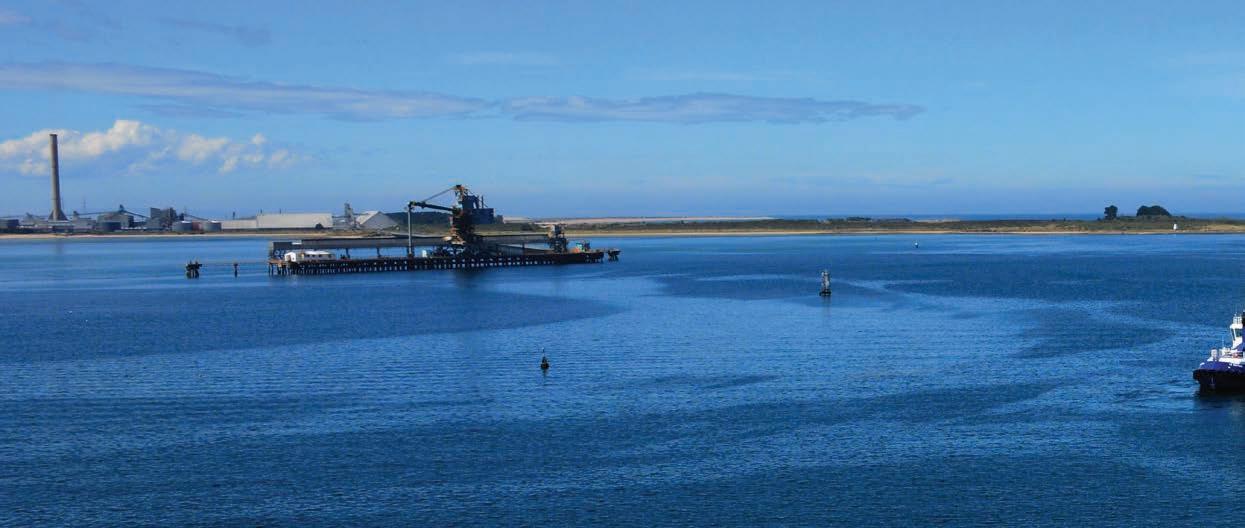
South Port New Zealand Limited (South Port) is the southernmost commercial port in New Zealand, located at Bluff and operating on a year-round, 24-hour basis It is situated in the rich, productive province of Southland, and is responsible for generating a sizeable proportion of New Zealand’s total exports by value. The region’s major cargo-producing sites are within 30km - 80km of the Port.
The Port of Bluff has been operating since 1877, while the Company was formed in 1988, having taken over the assets and liabilities of the former Southland Harbour Board
South Port was listed on the NZ Stock Exchange (NZX) in 1994 and has Environment Southland, the region’s local government environmental agency, as its 66% majority shareholder
South Port established its off-port Intermodal Freight Centre (IFC) in July 2016. Strategically located adjacent to the KiwiRail railhead in Invercargill, the IFC allows importers and exporters in the Southland and Otago regions to distribute their products promptly and efficiently
“To facilitate the best logistic solutions for the region”
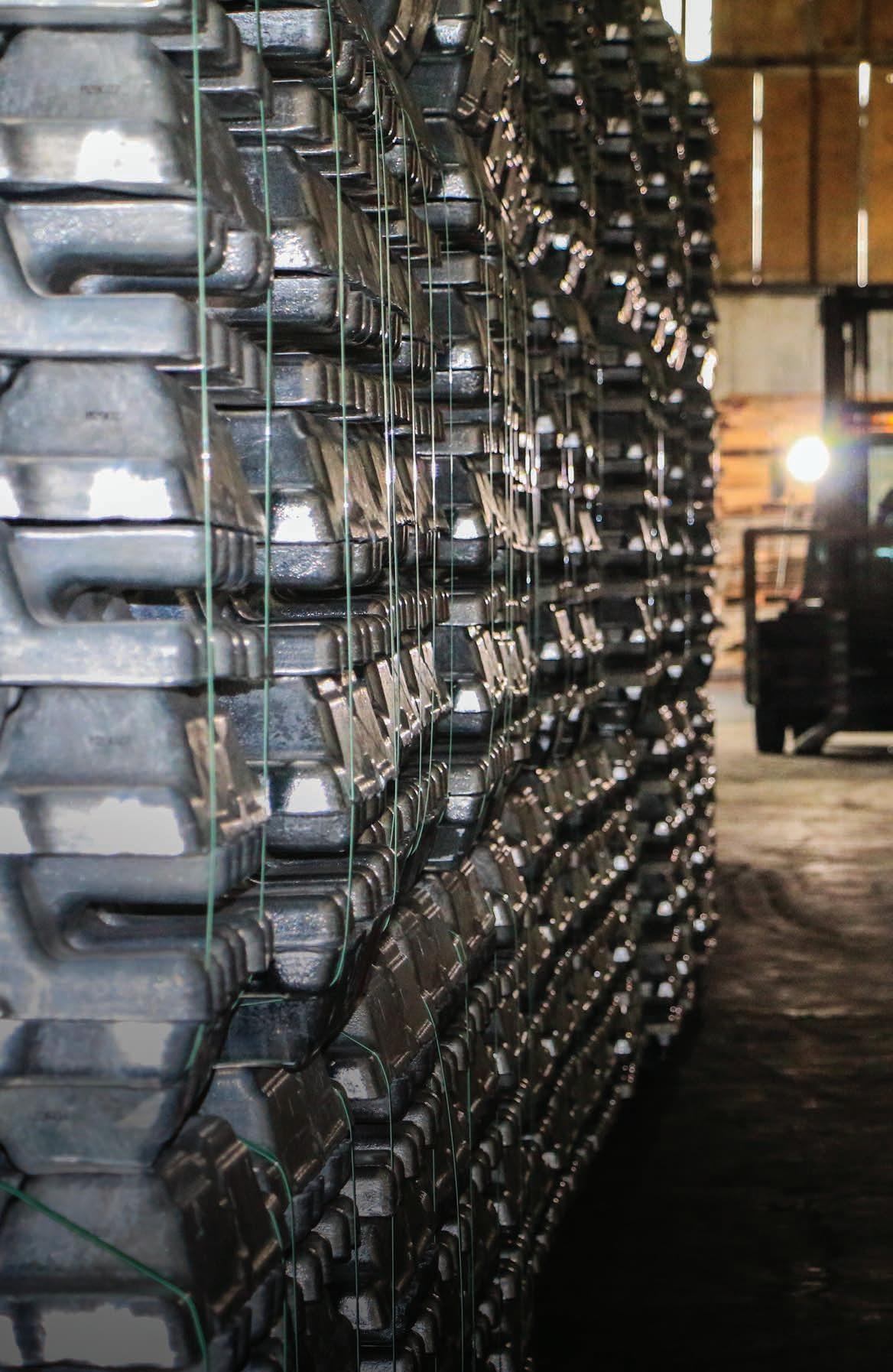
The Port proudly provides a full range of marine services, cargo and container shipping, and on-site warehousing for domestic and international customers It is ideally situated to service Southland’s significant export and import industries including aluminium, timber, fisheries, dairy, meat, woodchips, stock food, cement, alumina, fertiliser, and petroleum products�
South Port prides itself on adding value to its import and export customers, providing customised solutions to meet their needs, and partnering with them to achieve their operational objectives
Owns and manages assets which have a book value of:
Directly employs 132 permanent staff and utilises additional fixed-term and casual staff to support our marine activities and seasonal operations
Offers full container, break bulk and bulk cargo capability, and services the following main cargoes:
IMPORT – alumina, petroleum products, fertiliser, acid, stock food, and cement
EXPORT – aluminium, timber, logs, dairy, meat by-products, fish, and woodchips
Is the only Southland-based company listed on NZX – market capitalisation as of 30 June 2024 equated to $147 million.
Has approximately 46,000m2 of off-port land available for future development
132
3�2 $
Handles more than 3.2 million tonnes of cargo in a typical trading year MILLION TONNES
Operates a separate dedicated fuel berth at Bluff Town Wharf plus provides the Tiwai Wharf facility to the New Zealand Aluminium Smelter (NZAS) under a long-term licence.
1 $103 MILLION
46,000
Has approximately 500m2 of on-port land available for further port development or industry establishment
500
E F PERMANENT STAFF
Has split its land-based operating resource into four main divisions –dairy warehousing, containers, cool and cold storage, and general cargo. 1 2 3 4
Owns and operates an off-port container packing/unpacking facility adjacent to the KiwiRail railhead at Mersey Street, Invercargill The 8,000m2 site houses a 4,000 m2 customs-controlled and MPI transitional warehouse
8,000
Undertakes its primary port operation on a 40-hectare man-made Island Harbour situated at Bluff 40 HECTARES
Services vessels carrying approximately 1 million tonnes of cargo destined for movement across the Tiwai Wharf each year, of which three-quarters are raw material imports, while one-quarter is finished aluminium product
32.7 Gross container moves per hour
51,900
12,800
540,500
2,430,000
242,000
1� NPAT of $7.38 million (2023 - $11.71 million), a 37.0% decrease on last year.
2 Normalised profit of $9 96 million (2023 - $11.50 million), a 13.4% decrease on last year�
3 Total cargo of 3 21 million tonnes (2023 - 3.48 million tonnes), a 7.7% decrease on last year
4� Total container volumes were up 24 5% on the previous year
5 NZAS signed a 20-year agreement with electricity generators, extending the life of the smelter to 2044�
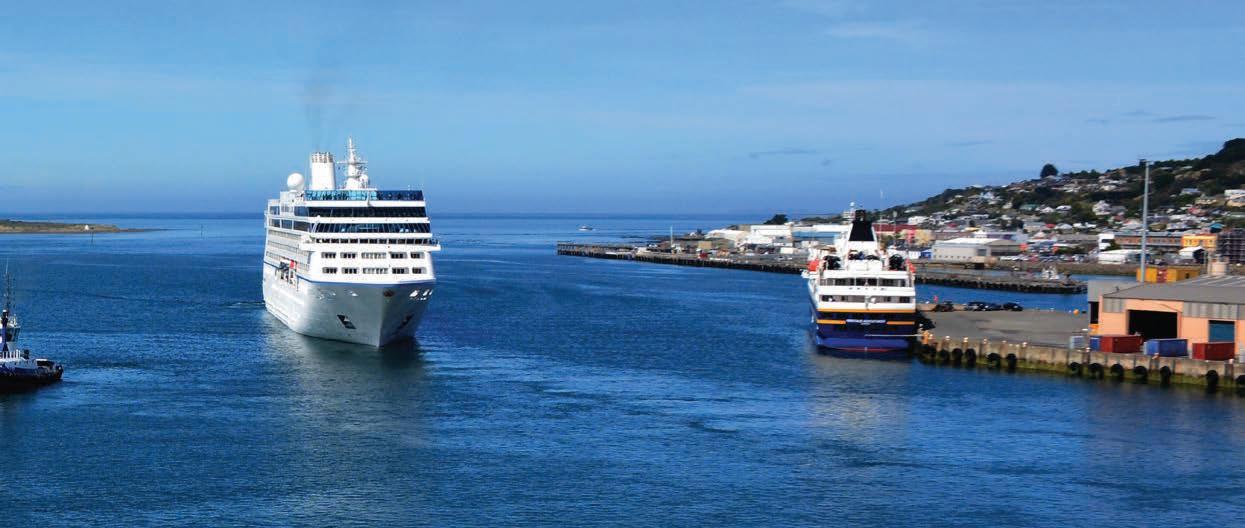
6 Cruise vessels continue to call at the Port
7� Project Kia Whakaū to dredge the channel down to 10�7m at high tide was completed successfully in September 2023
8. Bulk cargoes were down 12�2% compared to the previous period, led by decreases in forestry products and fertiliser
9� A full year dividend of 27�0 cents maintained (2023 – 27.0 cents).
10 Government announce intention to extend port coastal permits for a further 20 years
11 Pilot boat "Murihiku" was purchased during the year as backup for the MV "Takitimu II "
12� South Port is currently working towards its first Climate-Related Disclosures (CRD) under the new Aotearoa New Zealand Climate standards, which will be available on or before 31 October 2024
13� Microsoft Business Central was chosen and installed as a result of a project to replace our accounting software
14� South Port held a Port Open Day, inviting the public on to the Port, in October 2023
15 The Company initiated a flexible work policy which included the opening of an Invercargill office�
16 The Port Industry Association Conference was hosted in Southland
17� The second stage of Kaiwera Downs wind farm was confirmed by Mercury NZ
18. A technology pathway was undertaken and completed�
19 Two independent external Health and Safety reviews were completed
20� 2024 marks 30 years of South Port being listed on the NZX�

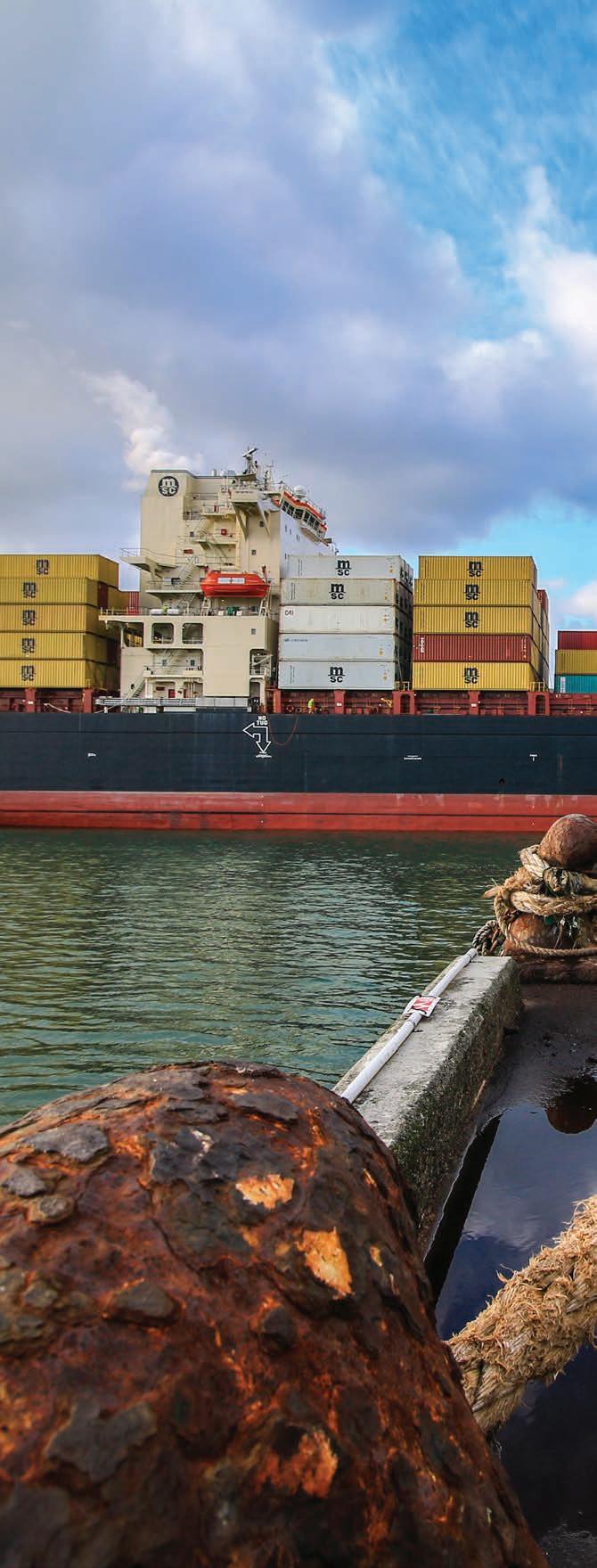
The 2024 year was marked by very subdued trading conditions and two very positive developments: the commitment by New Zealand Aluminium Smelter (NZAS) to a 20-year electricity agreement, and the completion of dredging of the Bluff Harbour channel
As foreshadowed in the half year guidance, South Port faced challenging market conditions across all its major cargo categories, particularly forestry and agriculture� Total volumes were down by 7�7%� Pleasingly, the year to 30 June 2024 finished more strongly, highlighted by a 24 5% increase in container volumes (the second highest on record).
The NZAS agreement will provide ongoing stability for a third of our cargo volume, enabling the smelter, the Port, and the community to plan and invest with confidence� The dredging of Bluff Harbour, once the new draft of 10 7m is formally “declared,” will provide an extra metre of draft and open opportunities for larger ships and supply chain efficiencies for South Port The opportunity for the Company and the region is to take full advantage�
The Company recorded an after-tax profit of $7.38M (2023 - $11.71M), a 37.0% decrease on last year’s result. This result reflected a 7 7% decrease in cargoes handled through the Port of 3,213,000 tonnes (2023 – 3,479,000 tonnes).
As with most other infrastructure companies, South Port’s result was also negatively impacted by the Government’s decision in March (just after our February profit guidance) to remove tax deductibility for depreciation on commercial buildings. This tax change resulted in a one-off deferred tax expense of $2.3M for the 2024 financial year�
Normalised Net Profit After Tax, excluding one-offs, was $9.96M (2023 - $11.50M), a 13.4% decrease.
Core bulk cargo volumes were down by 12�2% at 2,673,000 tonnes (2023 – 3,043,000 tonnes), reflecting decreases in logs, fertiliser, and woodchip volumes
Container services port-wide achieved an impressive 24 5% increase in volumes handled in 2024 at 51,900 TEU (2023 –41,700 TEU), despite a similar number of calls (39 vs 38).
The Company continues to support the New Zealand cruise industry by providing pilotage services at Fiordland and Stewart Island in addition to the allocation of berth space for cruise vessels calling at the Port
Critical risks continue to be the Port’s major focus.
Two independent external parties have been brought in to carry out both a Health and Safety gap analysis, and a traffic management review, for people versus plant in the warehousing division
These were both excellent processes that identified areas for improvement which are currently being actioned� Follow-up audits and reviews are scheduled for 2025�
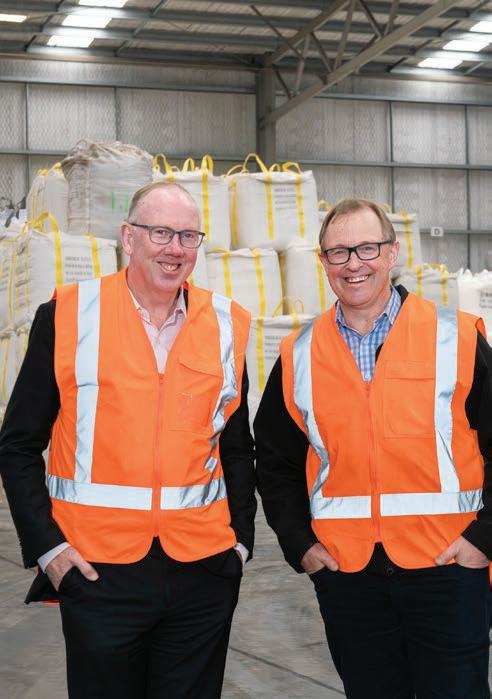
On 31 May 2024, NZAS announced it had secured electricity supply contracts from Meridian Energy, Contact Energy and Mercury NZ for 20 years, out until 2044
This was a welcome announcement for both South Port and the Southland region that has heavily relied on this business activity since 1971
NZAS represents approximately 20% of Net Profit After Tax (NPAT), 30% of the total cargo volume handled through the Port, 20% of bulk vessel calls, and 27% of containers - the majority of which are packed on the Island Harbour
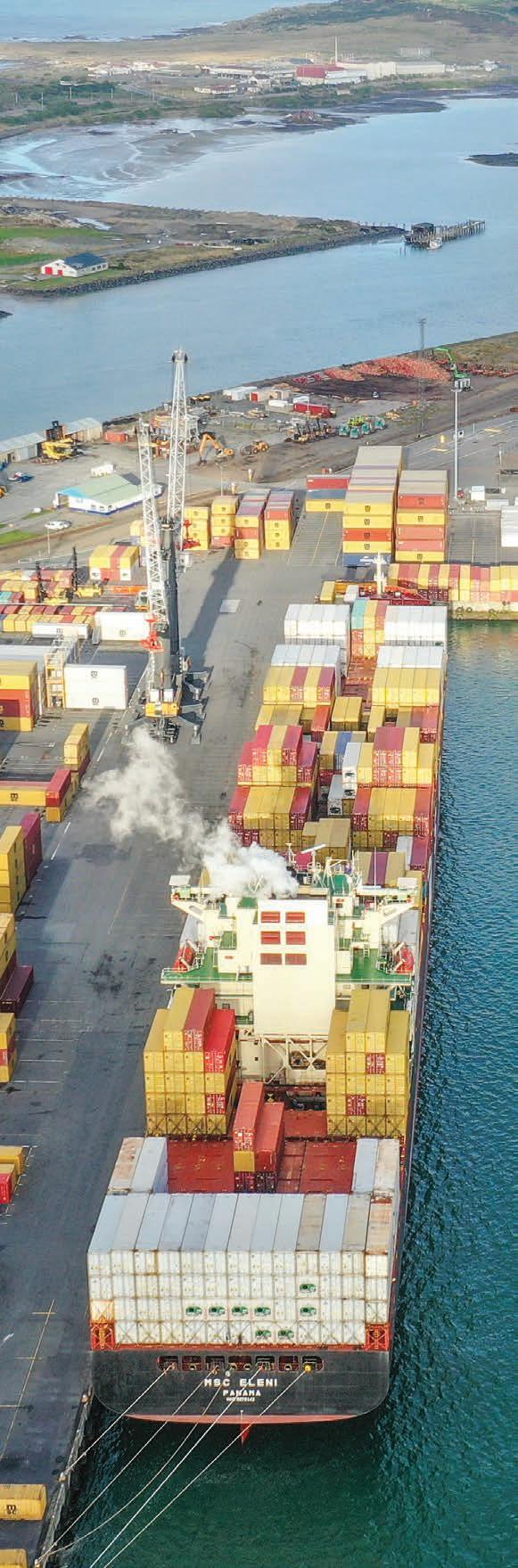
These are significant numbers and play an important role in the Port’s ability to operate an efficient marine and container packing operation, offer backload opportunities on bulk vessels, and to help cement the Mediterranean Shipping Company (MSC) service calls.
Importantly, it is expected this decision will provide the catalyst for generators to commit to investing in additional renewable electricity generation in the Southland province
Mercury NZ subsequently announced, on 7 June 2024, its commitment to the second-stage expansion of the Kaiwera Downs wind farm, increasing the capacity from 43 MW to 198 MW. Construction at the site started in June 2024 and is expected to reach full generation by the end of the 2026 calendar year
On 21 December 2023, Contact Energy lodged a resource consent application to construct a wind farm on land at Oware, in Southland� The Environmental Protection Authority determined that the application complied with the requirements set out in COVID-19 Recovery (fast-track consenting) Act 2020 and provided the application to the panel appointed to determine the application
This project is located east of Wyndham and, if constructed, will have the capacity to produce up to 300MW from 55 turbines
If the project receives resource consent in a timely manner, construction is expected to begin in 2025 and be fully operational in 2027�
In 2019, the New Zealand Government launched its Aquaculture Strategy, setting out a sustainable growth pathway toward $3 billion in annual aquaculture revenue
Southland has been targeted to contribute to one third of this growth through the development of both open ocean and landbased aquaculture opportunities
There are several parties looking to develop open ocean aquaculture farms, including Ngāi Tahu and Sanford. Ngāi Tahu is currently progressing an application to the Fast Track Advisory Group and Sanford has lodged a consent with Environment Southland to create an open ocean salmon farm, 28km from Bluff and 10km from the nearest island, at the south end of Foveaux Strait.
South Port is producing its first climate-related disclosures under the new Aotearoa New Zealand Climate Standards which will be published by 31 October 2024� Through this process, the Port will continue to develop its capability to understand and respond to challenges that the business may face in the future from climate-associated risk, and to take advantage of climaterelated opportunities
On 17 April 2024, the Coalition Government announced its intention to extend port coastal permits, which were due to expire in 2026, for a further 20 years. This was a very welcome announcement
The Port has been working in several areas to determine our impact on the environment One of these is to measure the effects on sensitive areas from our Kia Whakaū dredging campaign, which was completed in 2023 We are pleased to say that, so far, there has been no evidence of any negative impact Monitoring will continue through until 2028.
The Kia Whakaū project to dredge and remove seabed materials to 9.7m chart datum (CD), equivalent to an operating high tide draft 10 7m, in the harbour entrance channel was successfully completed and celebrated with a formal opening on 30 October 2023
The Company is taking a staged approach to the new draft by declaring an interim operating draft of 10 3m at high tide to assess the handling of deeper draft vessels before moving to the full 10 7m
The final step before we declare a new high tide draft of 10�7m is the implementation of the NCOS Dynamic Under Keel Clearance system NCOS integrates real time measurement of tides and waves with modelled vessel motions to maximise port efficiency and safety while reducing delays and risk. It is expected that the NCOS system will be operational in the third quarter of 2024
A number of benefits are already being realised, with the increase of our draft to 10 3m at high tide More cargo is being loaded on vessels for export than ever before, reducing the number of vessel calls to the Port and increasing cargo loading efficiencies� Many vessels now also have the opportunity to transit through the Port on additional tides (low and high), improving both the supply chain and berth utilisation at the Port
A second pilot vessel, the “Murihiku,” was purchased this past year, out of Australia. She will be an excellent backup for the MV "Takitimu II" which has been our frontline pilot vessel and workhorse since 2006�
The Company undertook several projects this year including a technology pathway, a property masterplan, and the replacement of our accounting software Each of these were significant projects and will provide the Company with improved information for decision making going forward�
Our relationship with the community and iwi is important to both the Company and our employees
The Port Open Day was held on Sunday 1 October 2023, and formed an important part of our community engagement� This event is an excellent opportunity to open the gates and show off our operations to friends, family, and the community The event was oversubscribed, and, fortunately, the weather played its part to make this another successful event
We regularly consult with iwi on our consents plans for the Port and meet informally to discuss a number of matters This engagement is important to ensure we are meeting cultural requirements around our consenting activities and to further develop our relationship with the local rūnaka.
2024 represents 30 years since South Port listed on the NZX, back in 1994 A collage of the annual reports since the first listing has been included in this report
Staff retention is an important aspect in a competitive employment market�
To this end South Port implemented a flexible working policy this past year A key part of this policy was the establishment of an Invercargill office, providing employees with the opportunity to work at this location once a week and to also use as a base for customer and Board meetings when required�
Although we have seen reduced volumes of bulk cargoes through the Port, the people-intensive areas of containers, warehousing, administration, and marine have been particularly busy� The Company therefore would like to thank our staff for their commitment and continued hard work over the past 12 months

The Board has an ongoing policy of assessing South Port’s dividend flow after taking into consideration both its Free Cash Flows (FCF) and its reported profits. FCF is interpreted as being annual operating cash flow less net maintenance capital expenditure. Reported profit is viewed as the Company’s annual profit movement plus future maintenance requirements�
Despite the reduction in profit in 2024, the Board is pleased to declare a final dividend of 19 5 cents This translates to a full year dividend of 27.0 cents per share (2023 – 27.0 cents). Full imputation credits will be attached to all distributions� The 27�0 cent dividend represents a pay-out ratio for 2024 of 96% using reported NPAT and 83% of FCF.
The dividend payment represents a gross return of 6 7% (net 4.8%), based on a share price of $5.61 as at 30 June 2024.
Ms Nicola Greer and Mrs Michelle Henderson retire this year by rotation and being eligible offer themselves for re-election
At the time of writing this report the Company has received no other valid Director nominations�
The agricultural and forestry cargoes have been particularly challenging this past financial year, which is reflected in the volumes of bulk cargo being handled through the Port Offshore markets, however, remain difficult� Supply chains continue to be disrupted, particularly around regions where conflict is present These variables are out of our control and are not expected to improve in the near future.
Despite these challenges, the Port remains optimistic about the future opportunities, both for the Company and for the Southland region
NZAS signing a 20-year contract was a major boost for the Company and provides a consistent number of vessel calls and base cargo that can now be factored into our future planning
This news will now pave the way for the consenting and construction of wind farms in the Southland region� A large majority of the project cargo associated with this activity is expected to be handled through the Port in coming years.
Project Kia Whakaū is already delivering benefits for the Port, our customers, and shipping companies� This will also play an important role in driving operational and environmental efficiencies going forward and it provides a pathway for growth
We are aware that there are applications to the Fast Track Advisory Group for aquaculture projects in Murihiku including the Hananui ocean salmon farm, the Impact Marine land based salmon farm, and Kelp Blue ocean kelp farm
The Company continues to have a wide range of cargoes being handled, which provides us with resilience and helps to smooth out fluctuations in the market�
Therefore, based on all known factors at the date of compiling this report, South Port estimates that earnings in the next financial year will be in the range of $9.30M – $10.30M (2024 –$7.38M).
On the basis of this consistent earnings profile and in the absence of any unforeseen circumstances, the Directors will be endeavouring to at least maintain the current level of dividend payment
P W Cory-Wright Chair
N G Gear Chief Executive
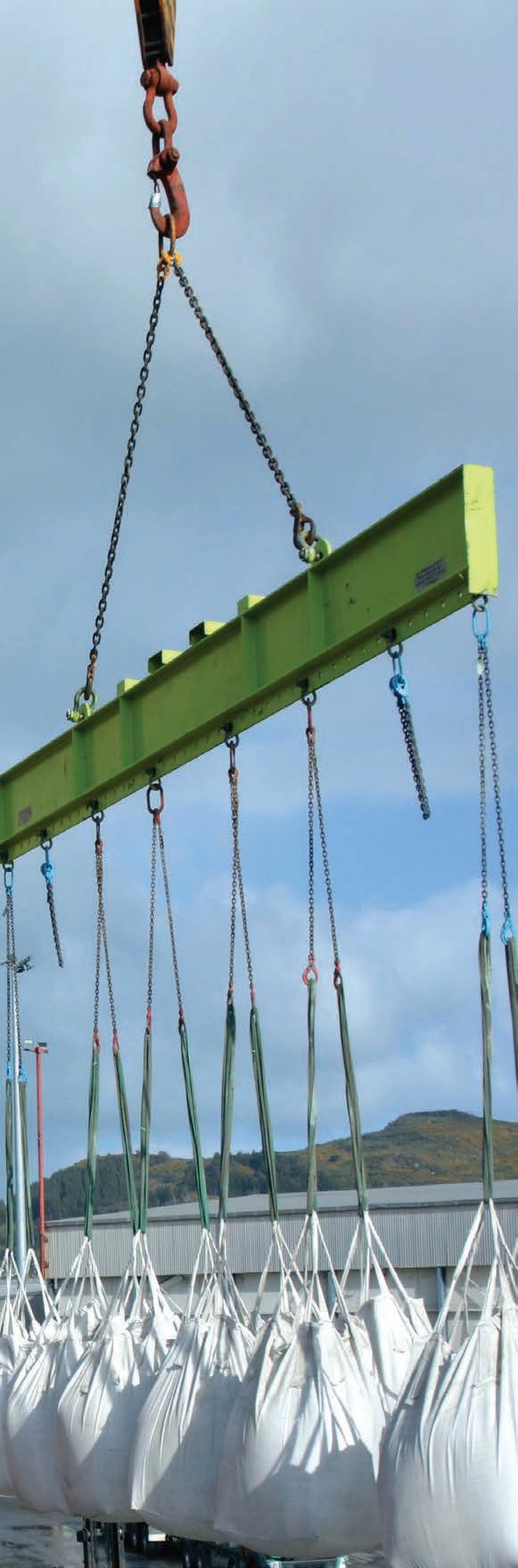
Following a rigorous 6-year maintenance and capital programme, the infrastructure team experienced a relatively quiet FY2024� Due to fluctuating trade volumes driven by global economic conditions, it was decided to limit spending to essential projects only This approach will continue into the FY2025 budget, as shown in the Wharf Asset Management Plan (AMP) expenditure graph below. Over the past six years, the preventative maintenance efforts have enabled the Company to make these decisions without compromising the structural integrity of port structures or the safety of port users�
Wharf Asset Management Plan Expenditure
$5,000,000
$4,000,000
$3,000,000
$2,000,000
$1,000,000
0
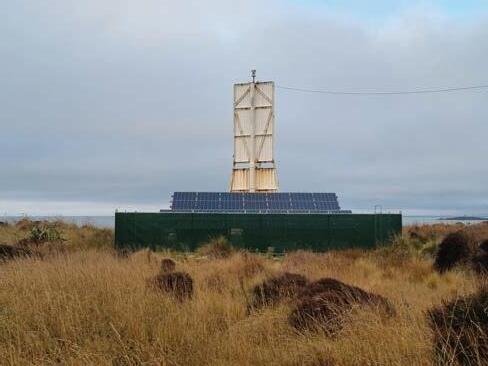
The Port navigational infrastructure includes four beacons on the Tiwai Peninsula To increase our resilience, we have introduced an alternative power supply for the beacons – solar Solar panels were installed to replace the power lines fed from a NZAS transformer�
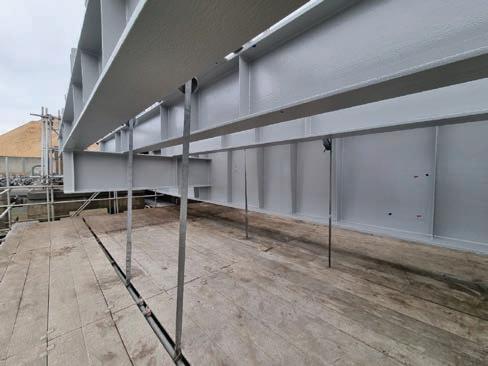
Last year, we completed several repairs to the Syncrolift structural steel in preparation for a full recoating with a paint system to prevent corrosion� Given the need to maintain Syncrolift operations, we are unable to close the facility for a long enough duration to apply the paint system to the entire structural steel components Therefore, we will apply this paint system over three years
Stage 1 of the paint system was applied during the summer months of FY2024. We engaged external consultants to undertake quality assurance testing during the works to ensure we achieved the expected design life (15+ years).
The preparation process involved:
› Substantial scaffolding (above water) to provide a safe working environment for contractors
› Remove platform decking
› Hydro blasting to remove existing paint system and rust which was collected and disposed of separately
› Wash down the surface at 6000psi with fresh water and air or blow dry
› Quality assurance testing to ensure chloride levels were <50mg/m2
Following the preparation work we applied three coats of Interzone 954GF with a total paint thickness of 600 microns dry film thickness Between each coat, quality assurance tests were completed to check for moisture, temperature, and thickness�
On completion, the scaffolding was removed and platform decking reinstated, allowing the Syncrolift to return to normal operations after a 35-day closure
Stage 2 of 3 is planned for the summer of FY2025�
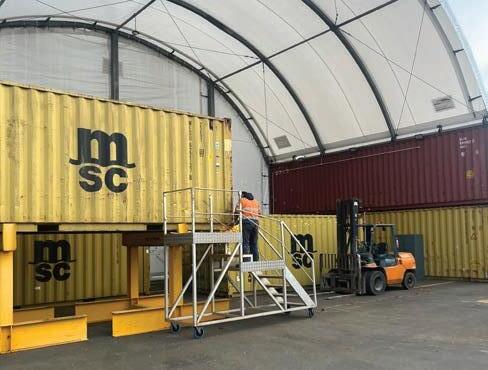
A purpose-built container repair shed was constructed this year in the area once occupied by Shed 6 It is another project associated with the Port’s ongoing commitment to reduce the interaction of people and plant, and improve efficiency
Previously, container repairs were completed in the open air, within the busy container terminal The new shed has several benefits such as:
› A safe repair operation by separating people and plant
› More space allowing containers to be laid out in preparation for repair
› The shelter provides weather protection allowing work in all types of weather
› Safe and secure storage of repair equipment
› More efficient and quicker turnaround times
› Connected to power reticulation eliminating the need for generators
› Able to work on, and open up, refrigerated containers under canopy - without the risk of rain water getting into the insulation
South Port continually looks for opportunities to improve on its environmental responsibilities�
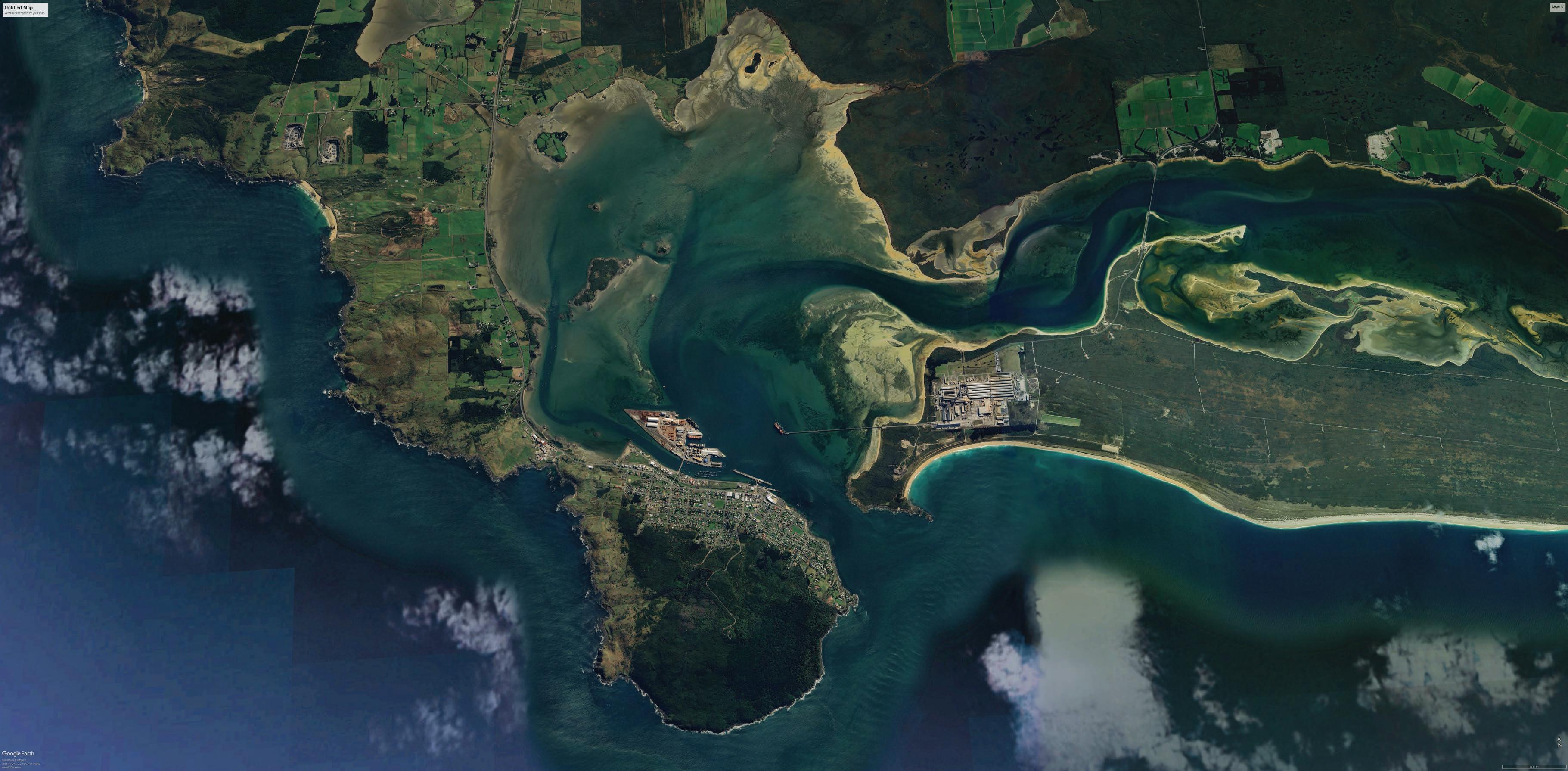
In December 2023, South Port received a research proposal from a Southern Institute of Technology (SIT) student, who is studying towards a Bachelor of Environmental Management� The proposal was to identify and map seagrass beds in the subtidal zone of Bluff Harbour
Seagrass is an important ecosystem with diverse ecological functions, including:
› Occupying 0�1% of the seafloor, but storing a whopping 12% of ocean carbon
› Trapping and transforming nutrients (1ha absorbs 1.2kg of nitrogen per year)
› Pumping oxygen into water and sediments (1m2 releases 10L of oxygen per day)
› Stabilising the seabed with an extensive network of roots and rhizomes
› Is a foraging and feeding ground, and refuge for marine life
› Contributes to biodiversity by being the only marineflowering plant
Recognising its importance, South Port decided to support the research and paid for the hiring of the boat for field work, a fundamental part of the project’s methodology.
The SIT student completed their research in June 2024 and is now working on writing the final report to meet the course requirements Detailed left are the results of the mapping, which was shared by SIT We wish the SIT Student, Stephanie Shaw, success with her project and look forward to reading it upon completion�
South Port has advanced the development of its sustainability strategy based on the Sustainable Development Goals (SDGs). After the SDGs' selection, work carried out by the Sustainability Committee during FY23, saw the Infrastructure and Environment department prepare the strategy framework proposal for consideration by the Executive Leadership Team (ELT).
In July 2024, the ELT met to evaluate the proposal and issued its opinion about the elements of the strategy This included sustainability targets and indicators, which were associated with the SDGs which are the focus of the strategy
The next step is to finalise the executive report that will be presented to the Board of Directors, in order to formalise the South Port Sustainability Strategy in FY25
In FY24, South Port completed the water meter installation project, which saw 15 meters installed throughout the water network over the past two years They were installed at strategic points in the network to monitor water use in the different activities that take place at Island Harbour facilities and facilitate the identification of leaks
For high-consumption activities, such as water blasting at the Syncrolift and container washing, measurements occur in real time via an online dashboard Of the 15 water meters, nine are connected to the dashboard, which allows generating relevant consumption reports promptly
By measuring and reporting water consumption, South Port is managing resources more effectively and promoting the responsible and efficient use of a vital resource, and helping avoid unnecessary waste
Dredging of the Bluff Harbour channel was completed in September 2023. During the execution of the works, various measures were implemented to mitigate the operation's impacts, including continuous environmental monitoring of the most sensitive areas, and ensuring compliance with the Resource Consent conditions�
Post-dredging monitoring, an essential part of our environmental protection strategy, began immediately after the dredging was completed This early start allowed for the swift identification of any potential impacts on sensitive areas The first surveys, conducted in seagrass areas and at the soft sediment disposal site one month after dredging ended, showed satisfactory results, with no evidence of impacts observed (as expected).
Post-dredging monitoring will continue until 2028, with results reported periodically to Environment Southland

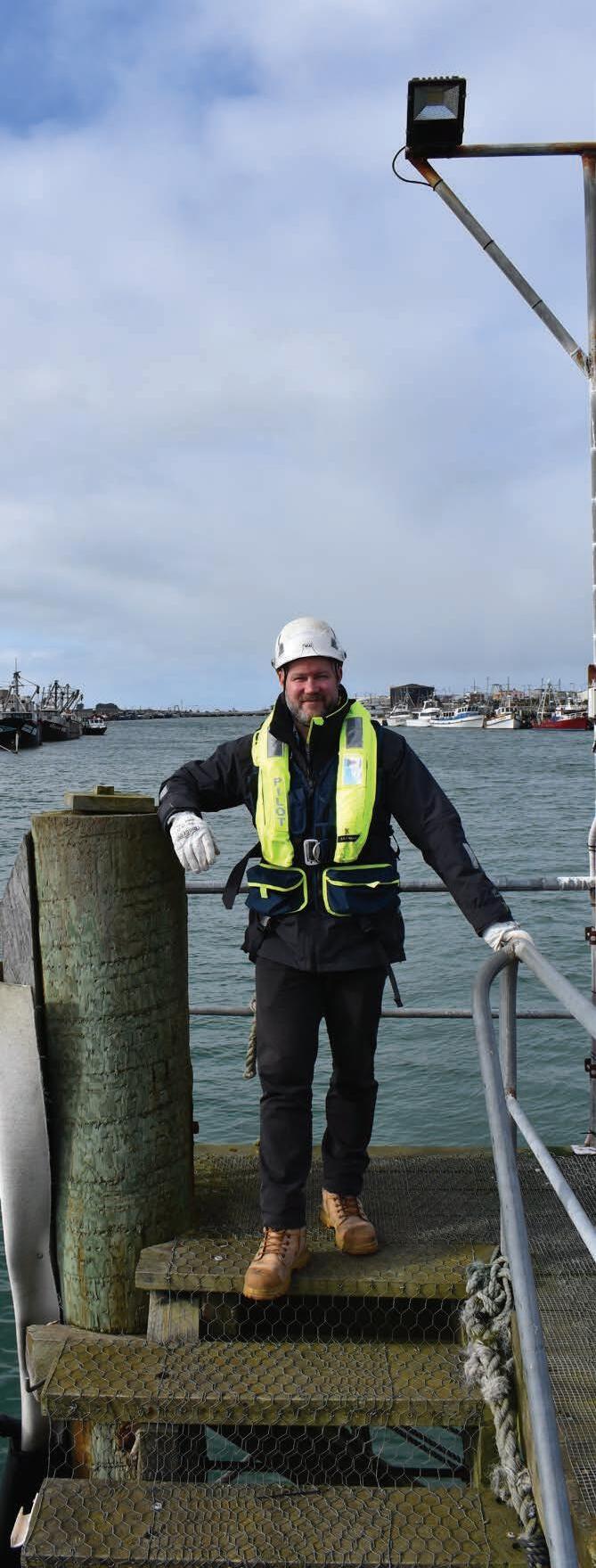
Safety first – our top priority is our people's health, safety, and wellbeing�
The Company is focused on the investment of additional resources and continuous improvement in our health and safety performance We need to be vigilant and focused on keeping our people safe South Port is working hard to establish a culture where positive safety behaviours are ingrained in day-to-day operations�
From 1 July 2024, Maritime NZ is now the primary health and safety regulator of New Zealand’s 13 major ports. This means that Maritime NZ will be responsible for monitoring and enforcing compliance with health and safety legislation on land, as well as on ships. However, this extension of the Port designation does not alter or affect the principles, duties, obligations, and rights regarding health and safety in the workplace under the Health and Safety at Work Act 2015 (HSWA).
Over the past year, we have regularly engaged with both Maritime NZ and WorkSafe to assist with this regulator transition, and we will continue to do so now with the newly appointed HSWA specialist team, which will work alongside maritime officers, maritime inspectors, and investigation teams
While technically, the maritime designation has extended from ship to include the shore, in practical terms, it is simply business as usual
In November 2023, South Port engaged HSE New Zealand to undertake an external review of the performance of our safety management systems to provide assurance that the Company is complying with HSWA, and to identify potential gaps in our safety management system
The review involved a preliminary desktop review of our safety management system� This was followed by two full days on-site, initially spending time with our Health and Safety Team and Health and Safety Committee, and then out on-site for sampling and verification, including staff engagement
The review identified some areas for further improvement, the highest priority being a review/update of our contractor management policies and procedures to align with more recent WorkSafe guidance This work is now underway and will be completed in 2024 A follow-up audit is scheduled for FY25
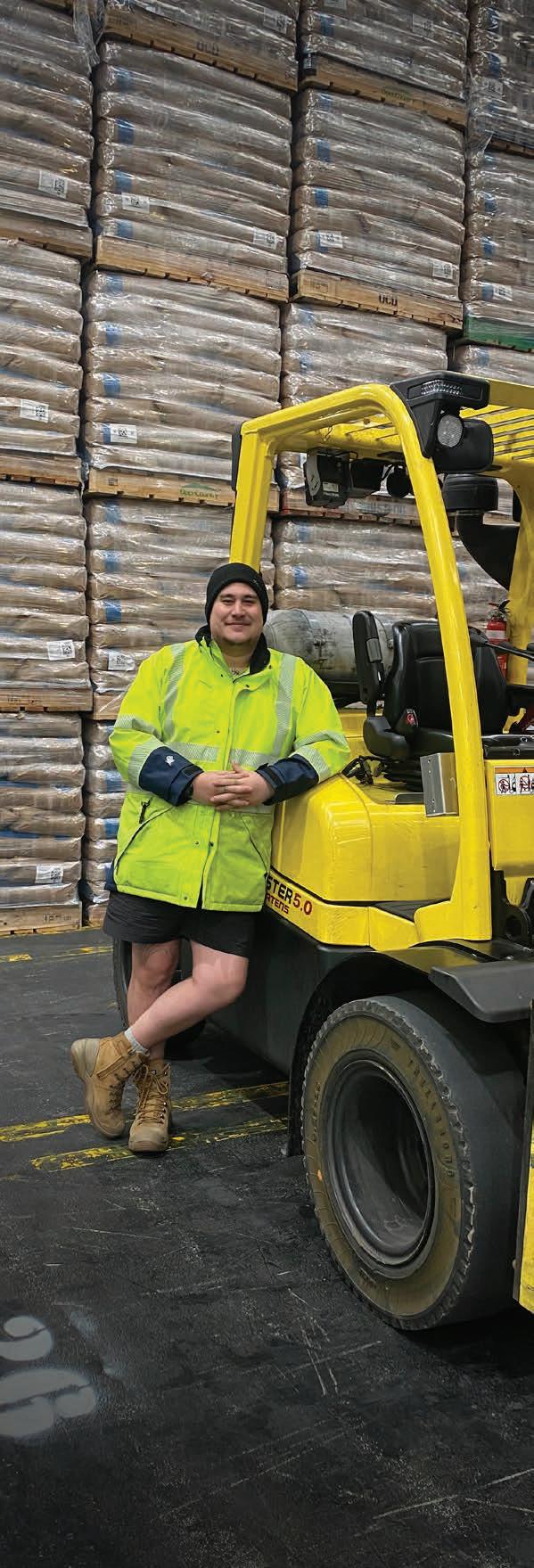
Effective management of health and safety risks in the workplace is an ongoing process and involves:
› Identifying hazards
› Analysing risks for identified hazards
› Evaluating risks to determine if the risk level is acceptable and what actions are required at that level
– For example, immediate action is required, managed by routine procedure, etc
› Controlling the risk to reduce the harm and its severity
› Reassessing the level of risk for each hazard
› Monitoring and reviewing to ensure controls are working and risk levels are acceptable
› Communication and consultation at every step of the process
In FY24, actions taken to reduce operational risk revolved around:
› Safety leadership training
› Worker engagement
› Training, systems, and tools
› Plant and equipment upgrades
Our Critical Risk Management Programme is underway, in collaboration with our staff and other port users� Progress has been slower than anticipated due to personnel changes; however, increased resourcing means we are on track to complete initial assessments in FY25
Risks associated with ‘moving plant vs people’ are of the highest immediate concern� Recently reported incidents and near misses prompted us to engage an external traffic management consultant with port sector experience to assess this critical risk in our warehousing settings and guide us on a range of short, medium, and long-term improvements, most of which will be implemented in Q1 of FY25
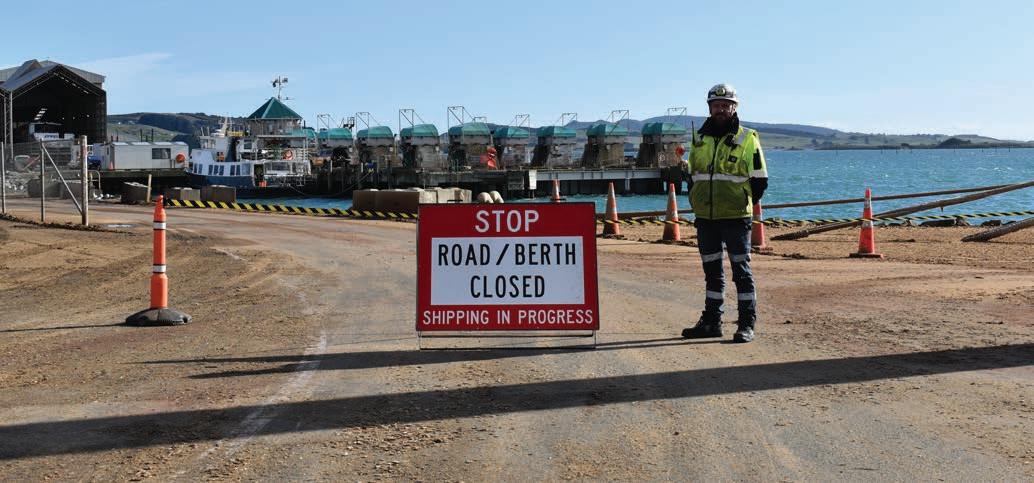
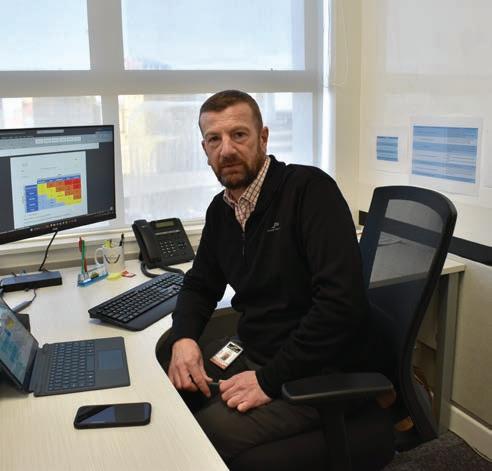
Co-ordinator - Shipping and Mooring Services, Karl Frahm, pictured above, is one of our longest-serving operators in the Marine Services Team
In early 2023, the Company identified a ‘mobile plant vs people’ critical risk while our lines team was tying up and/or letting go of vessels and working on berths that accommodate vehicular traffic�
To mitigate this risk, Karl took the lead in scoping out, developing, and implementing a new road/berth closure process, including:
› Mapping out plan and equipment requirements (signs, tapes etc)
› Organising the installation and storage of equipment
› Developing standard operating procedures and owning them to ensure controls put in place for every movement
› Leading staff training and overseeing the practical implementation
This team effort was fantastic, but Karl went above and beyond
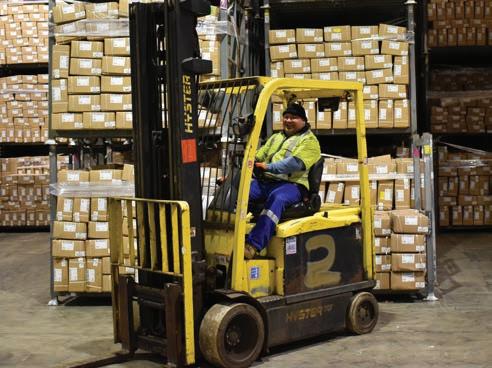
South Port is currently developing a Fatigue Risk Management System (FRMS) to reduce the risks associated with worker fatigue. This project aligns with the ‘Good Practice Guidelines’ issued by the Port Sector Health and Safety Leadership Group, the Tripartite Group comprising of port and stevedoring companies, unions, the Port Industry Association, Maritime NZ, and WorkSafe New Zealand representatives, working in partnership to drive change in health and safety in the port sector�
In this initial phase, the project is being driven by the Health and Safety Team and labour allocators, to develop robust fatigue risk management processes to support initiatives to identify, assess, and manage risks from fatigue and monitor control measures to check that they are working� Ultimately, however, ownership lies with our operational business units, which are primarily responsible for applying smart rostering and shift work design
Over the next year, every port company’s FRMS will be peerreviewed against the essential components of Policy, Risk Assessment, Assurance, and Training/Promotion (worker engagement). While the review is primarily to gauge progress, it will also help lift capability by identifying best practices around performance measures and, where appropriate, sharing data, insights, and shared learnings� South Port has dedicated resources (0.2FTE) to ensure that we are ‘on track’ with the current emphasis on roster design and work/rest hours ‘rules.’
The Island Harbour is a busy and dynamic work environment, with multiple PCBUs (persons conducting a business or undertaking), operating in, on, and around the Port.
PCBUs have an obligation to consult, cooperate, and coordinate with other PCBUs when they are working in a shared workplace or as part of a contracting chain
In many cases, South Port is not the ‘lead’ PCBU; however, we are conscious that we ‘set the standard’ and that port users generally look to us for guidance – a delicate balance between over-reach and under-reach We hold quarterly Port User Forums attended by port users, including lessees and licensees (who are obliged to attend under their leases/licenses), bulk cargo users, contractors/subcontractors, and transport companies – where we discuss health and safety best practices and share learnings around site access and traffic management, with particular focus on common roadways and shared spaces
These forums reinforce to port users that we are all responsible for health and safety in the workplace and that PCBUs have a duty to consult, cooperate with, and coordinate activities with all other PCBUs with which they share overlapping duties
In the spirit of PCBU collaboration, we have also invited other port users to participate in our in-house leadership development, health and safety training, and other workshops
Health
In FY24, we invested in building health and safety capability and maturity port-wide� This has included ongoing training and upskilling of our staff and other port users, as well as formal training for Health and Safety Reps, who must undertake formal training, in order to perform their duties under HSWA
Extensive training, education, and awareness has been provided as part of our deliberate strategy to lift health and safety capability across the whole Port:
› Health and safety executive leadership programme
› Health and safety “Stepping up as Leaders” workshop for the wider leadership group
› Health and safety “Be a Legend” workshop for health and safety representatives, and frontline leaders
› Health and safety representative training - Stage 1
› First aid and mental health first aid
› Advanced drug awareness workshop, managing the risks posed by drug and alcohol abuse in the workplace environment
› Bullying and harassment workshop
› Plus, various technical training workshops (e�g� permit to work, working at heights, etc)
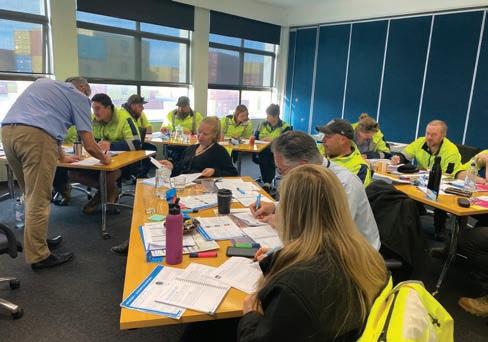
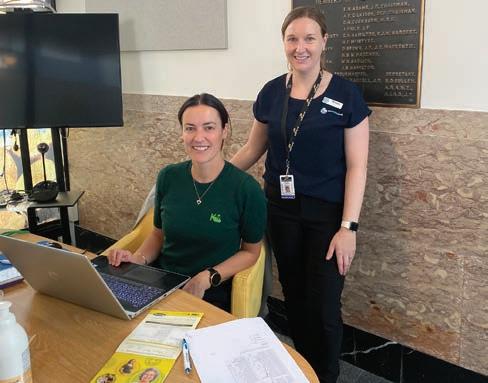
Under HSWA, ‘health’ means physical and mental health. Providing our team with a safe and healthy workplace is an important part of running our business—if our staff feel their wellbeing is being looked after at work, they are usually more productive, healthier, and less stressed
Our occupational health monitoring programme focuses on personal health, fitness for work, and positive, healthy lifestyle choices� Participants are monitored for changes in their health status to guard against exposure to health hazards arising from their work
We also undertake drug and alcohol testing at pre-employment and random, post-incident, and reasonable cause testing�
Additionally, we provide or facilitate:
› EAP services
› Physiotherapy services
› Audiology referrals
› Sleep apnea referrals
› Healthy heart checks (pictured above)
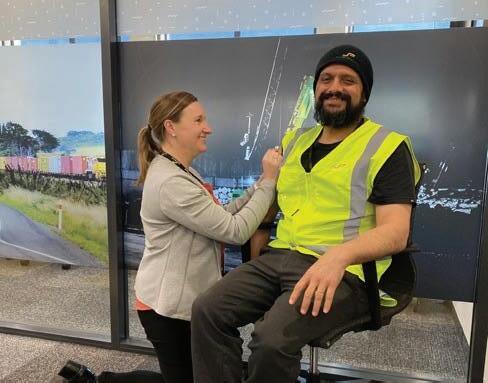
› Flu vaccinations (pictured below)
› Mental health first aid
730
Safety engagement walks/ observations/audits/checks
366 people
Health monitoring*
2,761
Site inductions
377people
Training completed
223,963
Inwards vehicle movements
*Drug and alcohol surveillance testing, occupational health checks
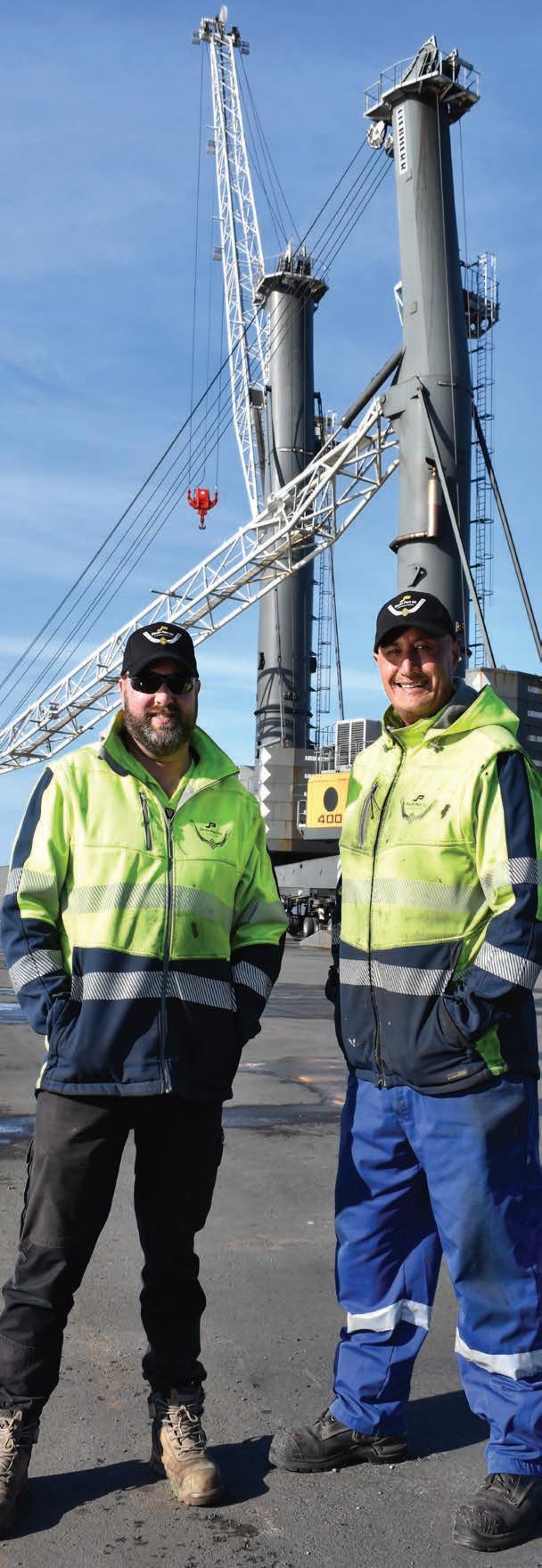
Our goal is to attract, develop, and retain talented people�
Staff engagement is critical to our business success, more so than ever, given the challenging market conditions
It is important that South Port has an engaged workforce that aligns with our Company goals and values This promotes an environment for staff to thrive, leading to reduced absenteeism, lower staff turnover, higher productivity, and a safer work environment
In late 2023, we ran a staff survey, which followed our inaugural survey in 2018. That survey provided a baseline which, along with our second survey in 2021, enabled us to track how staff experiences and perceptions have changed over time.
"I am proud to work for South Port."
"If
asked by an outsider, I would describe South Port as 'a great place to work.'”
Examples of the questions asked, and how employees responded:
“I trust management to lead the company in the right direction”
“I am encouraged to develop my skills, and am well-supported in the process”
“The
health, safety, and wellbeing of our staff are top priorities for South Port”
“I am not afraid to report accidents/ incidents”

While this is positive feedback, it is important to remember that engagement is a long game A survey is simply one of several tools we use to measure staff engagement—other indicators are regular check-ins (formal and informal), goal setting, internal promotions and career progression, productivity levels, onboarding interviews, exit interviews, absenteeism, and staff turnover�
For the past three to four years, employers nationwide have struggled with recruitment and retention in a tight labour market This has resulted in vacancies taking longer to fill and attendant difficulties in terms of workload and related pressures While the labour market is generally easing, demand for strategic and technical specialist roles remains high�
Over the last year, we have worked to enhance our Employee Value Proposition to help attract and retain talent Targeted areas of improvement were focused on onboarding processes to ensure smooth integration for new employees, increasing staff engagement, effective performance management to maintain and increase productivity� Additionally, through our annual appraisal process, discussions around career pathways has also helped sustain skill development and job satisfaction
Whenever a vacancy has arisen, we have reviewed the role (and, where appropriate, resized and rescoped) to ensure it fits our operational requirements and offers business agility and flexibility.
As of 30 June, staff turnover has eased to 10 9% While it is never easy to lose talent, we have been fortunate to attract and nurture new talent who will make their own mark on our business� Of particular note, we welcomed two former staff who returned to more senior roles after honing their skills and gaining more experience in the intervening period.
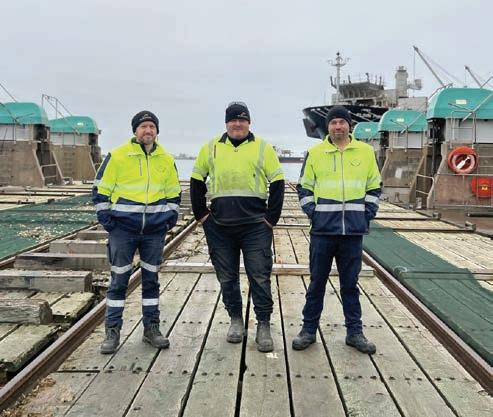
At South Port, we work together to build a positive, trusting, high-performing environment where our people can thrive and succeed
Our Values, developed in consultation with our staff, underpin who we are and how we conduct our business�
Our people are invested in our business and committed to doing a good job They turn up and do their jobs with humility and without drama or fanfare
Good people doing great work.
We think it’s important to celebrate success and achievement, and we encourage staff to celebrate workmates who actively demonstrate our values This recognises a job well done and helps motivate and inspire others to follow suit
Throughout the year, we had many standout examples of incredible mahi, going the extra mile without expectation of thanks, let alone payment�
Recipients over the past year included:




Tyson Irwin Fleet Maintenance Team Leader
Streamlined and developed a new app-based system for weekly forklift checks�
Andrew Hill Site Engineer
While out on-site, Andrew identified and reported a new physical hazard and instigated immediate corrective actions to safeguard staff working in the vicinity
Logan Fraser Terminal Operator
WorkSafe noted consistently positive and complimentary feedback from multiple trainees who cited Logan as a key factor in their successful onboarding and training progression
Willie Isiah Depot Operator
One of our most experienced heavy machinery operators who plays an important role in providing on-job training to new staff
In 2019, in conjunction with the launch of our Values, we introduced an in-house leadership development programme primarily tailored to our Tier 3 Managers and Supervisors Subsequently, we extended to Tier 4 frontline leaders (Team Leaders, Leading Hands) and peer leaders.
The programme focuses on the essential elements of leaders who can positively influence organisational culture by building credible and mature relationships that enhance teamwork and increase performance and productivity�
More recently, we have extended the programme to include professional coaching and mentoring support to develop the skills and energies to consistently deliver influential leadership in all their day-to-day dealings and communications with their direct reports and across the wider organisation�
Increased strategic and technical ability.
At the same time, we have also created several specialist leadership roles to plan for succession and increase strategic and technical capability
These include the Risk and Technology Manager, Health and Safety Manager, Container Services Manager (the latter two positions established in June 2024), and Commercial Property Advisor (internal transfer finalised in July 2023).
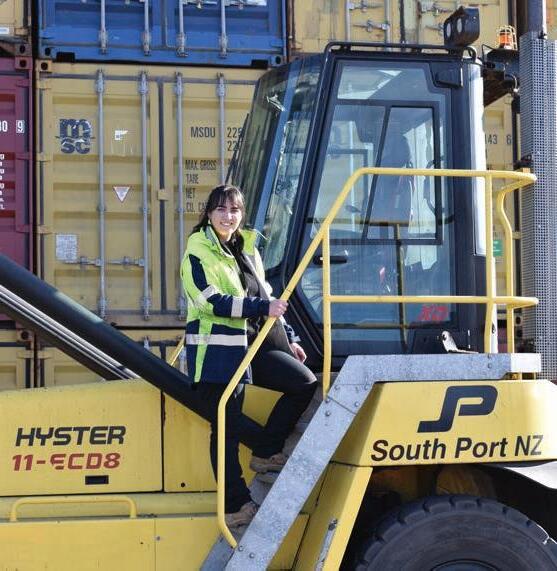
Gender diversity has been on our radar in recent years, and we are making a conscious effort to attract more women to work at the Port�
Paige Gilbert Depot Operator
In April 2024, Paige Gilbert, pictured right, joined Michelle Lawson, Jess Snyman, and Lee McDermott as an Operator in the Container Operations Division Paige came to us with a good understanding of the importance of workplace safety from her work at Tiwai, where she operated forklifts, gantry cranes, and ingot machines After a period of solid training, she was signed off to operate a range of forklifts, including container handlers She started working on continuous container vessel exchanges.
Where does Paige go from here? It’s early days yet, but once she gets experience working on continuous container vessel exchanges, the next opportunity is training on our mobile harbour cranes, which have a maximum load capacity of 104 tonnes.
At South Port, we have women working in most areas of the business� We want to promote pathways for women into leadership roles, starting with increasing the number of women joining operations
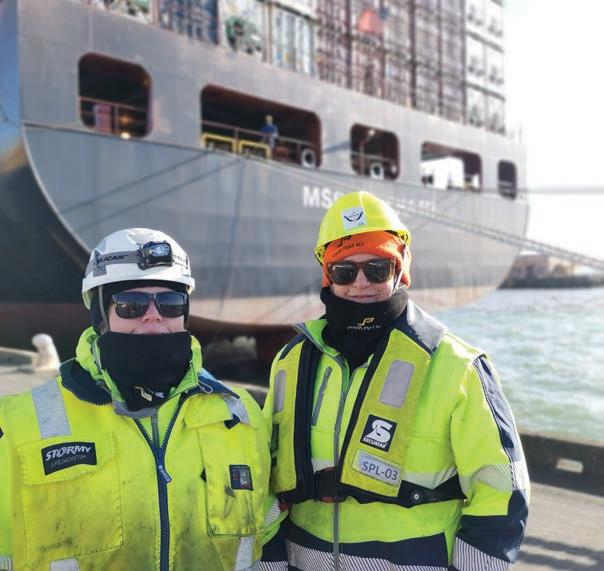
Katie Eaton, pictured right, is our Marine Services Team Leader� She leads the team, which comprises Jenny Phillips, Marine Administrator, pictured left, and Shipping Co-ordinators Karl Frahm, Flinders BrowningDavies, and Jayleel Fa’amoe Ioane.
The team co-ordinates line-calling operations, prepares berths and dockside mooring operations, manages freshwater delivery, garbage collection services, and supports the syncrolift and tug operations
While Katie and Jenny’s roles are primarily office-based, they also provide operational support when required (eg lines handling), and they actively participate in the casual shipping roster
As part of our long-term commitment to the local community and wider region in which South Port operates, we offer sponsorship and support of sporting, cultural, and community groups.

Over $80,000 was injected into the local community during the past 12 months�
Organisations that received sponsorship assistance over recent financial years include:
› Bluff Bowling Club
› Bluff Hill Motupōhue Environment Trust
South Port’s community engagement includes:
Community group interaction
Port tours
Sponsorship
Written communication
Not-for-profit and charity support
Event support
Working with young people
Expert advice
Staff volunteering in and around the community
› Bluff Kindergarten
› Bluff Netball Club
› Bluff Promotions
› Bluff Rugby Club
› Bluff Schools
› Bluff Volunteer Fire Brigade
› Burt Munro Challenge (Bluff Stage)
› Export Southland
› Graeme Dingle Foundation
› Hospice Southland
› Matariki Festival – Tūturu Charitable Trust
› Port Softball Club
› Rakiura Community Workshop – Stewart Island
› Rugby Southland
› Southern Steel Netball
› Southern Wood Council
› Southland Chamber of Commerce
› Southland Football
› Southland Mountain Bike Club – Bluff Bike Trails
› Southland Sharks
› St John Ambulance Service, Bluff
› Te Ara o Kiwa Sea Scouts, Bluff
› Te Rourou Whakatipuranga o Awarua
› Te Rūnaka o Awarua
› Tour of Southland
We want to congratulate this year’s successful scholarship recipients:
Local Bluff resident Sian Tarrant (nee Topi) is married with two children and previously had a leadership role at South Port Her passion for people and providing a supportive environment for others led to her decision to study psychology
Sian was born and raised in Bluff and her tūpuna whakapapa to Rakiura (Stewart Island), Ruapuke Island and Motupōhue (Bluff) on her father’s side, and Ngāti Mutanga o Wharekauri (Chatham Islands) on her mother’s side. Sian will be the first of her line to complete a Bachelor's Degree
This year is Sian’s final year of study for a Bachelor of Applied Science majoring in Psychology, and next year she will complete her Honours Degree Her long-term goal is to obtain a Master’s Degree and then a Postgraduate Diploma to gain the accreditation required to become a registered Psychologist Sian has yet to decide what she will specialise in for registration, however, she is committed to making a real difference and enhancing the health and wellness of people
Recently, Sian was given the opportunity to work at Southland Help Rape and Abuse Support Centre, where she provides court support, micro-counseling, and social services support to survivors of sexual harm. Sian feels very privileged to share and hold space for people who have had a traumatic experience and walk alongside them on their healing journey
Sian is the Board Chair for Youthline Southland, an alternative representative for Te Rūnanga o Ngāi Tahu Board, a Board Member of Te Rourou Whakatipuranga o Awarua Early Childcare Centre, and a trustee of a Māori land block at Stewart Island Sian is also taking a course in Te Reo Māori to enhance her cultural identity and provide her children with a strong connection to their culture� In her spare time, Sian and her husband tend to a lifestyle block, get out with the kids, spend time in the garden, and are keen renovators
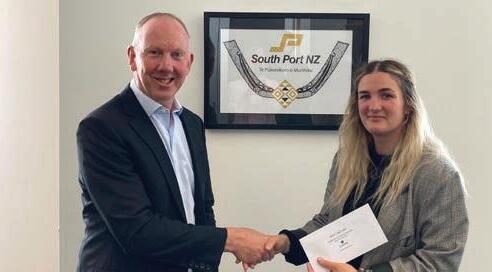
Ryder is the son of Hayden Mikkelsen, South Port’s Container Operations Manager� He is commencing his academic journey with the University of Canterbury to study a Bachelor of Engineering
Ryder has excelled academically and in the sporting and cultural domain during his time at James Hargest College and held the role of Deputy Head Boy last year, enabling him to develop leadership skills that will be invaluable for his future endeavours Ryder was awarded the 2023 Youthmark Young Achiever Award, which recognises Year 13 students from all Southland secondary schools who have excelled in their chosen field.
At the beginning of 2023, Ryder was awarded a scholarship to attend the Rotary Science and Technology Forum in Auckland, and he felt privileged to have the opportunity to learn from leaders in their fields. This experience enhanced Ryder’s interest in engineering and the endless possibilities for innovation and development that come with it� Ryder was invited back by the Rotary Science and Technology Forum this year in the capacity of an advisor As an advisor, Ryder was responsible for 28 students, overseeing the smooth running of the group, ensuring all the students attended workshops, lectures, and day trips, organising entertainment, and managing the guidance and general well-being of every student�
Another passion of Ryder’s is kapa haka, which he has participated in for seven years, earning an award for his contribution to the kura and kapa haka roopu
Ryder has been described by his principal as “having admirable personal qualities and attributes, is honest, reliable, and responsible in all he does He is courteous, cooperative, and thoughtful, and students from all walks of life look up to him, and he has time and attention for them all� He has immense mana and humility and is an outstanding role model� Ryder inspires others around him to be better by the simple virtue of being himself ”
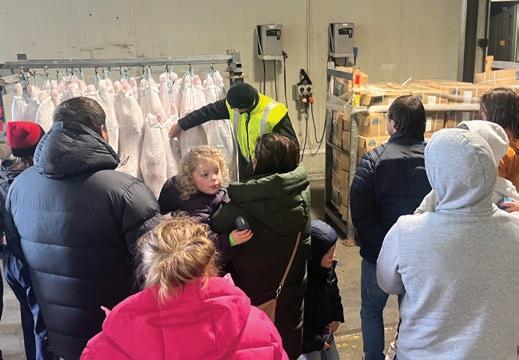
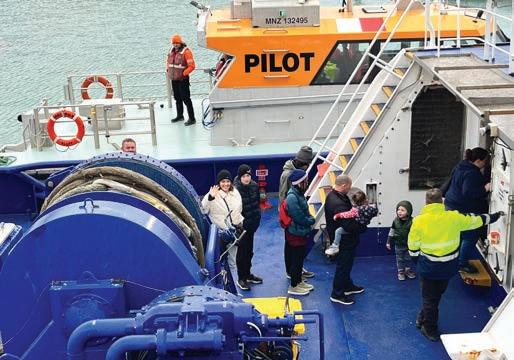
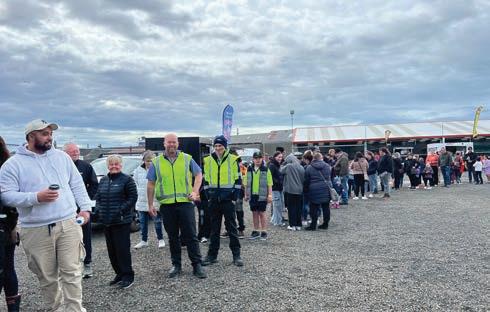
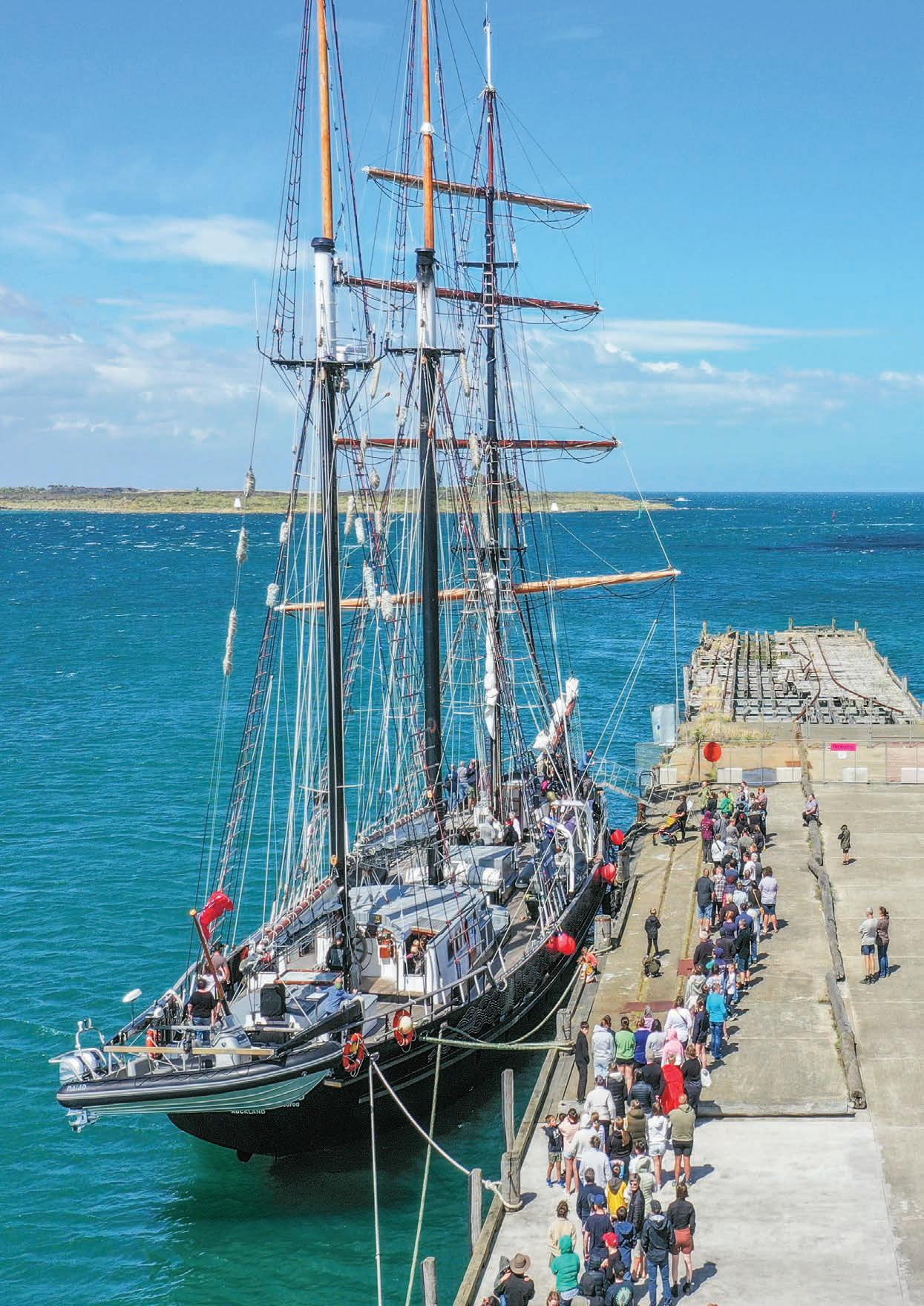
On Sunday 1 October, South Port held its biennial Port Open Day�
Tickets were booked out in the first five days of the event going live, which was beyond the organising committee’s wildest expectations. Just under 600 tickets were available over three two-hour time slots – 9am, 11am, and 1pm.
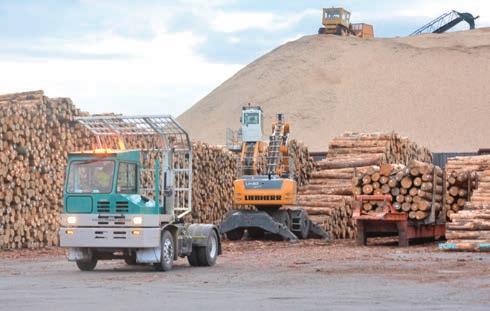
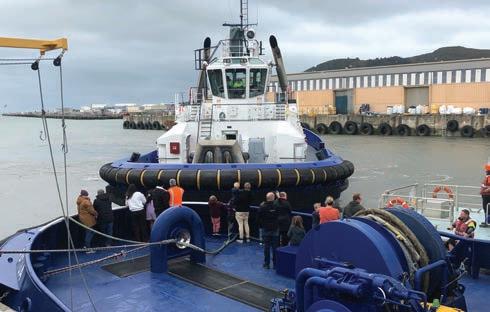
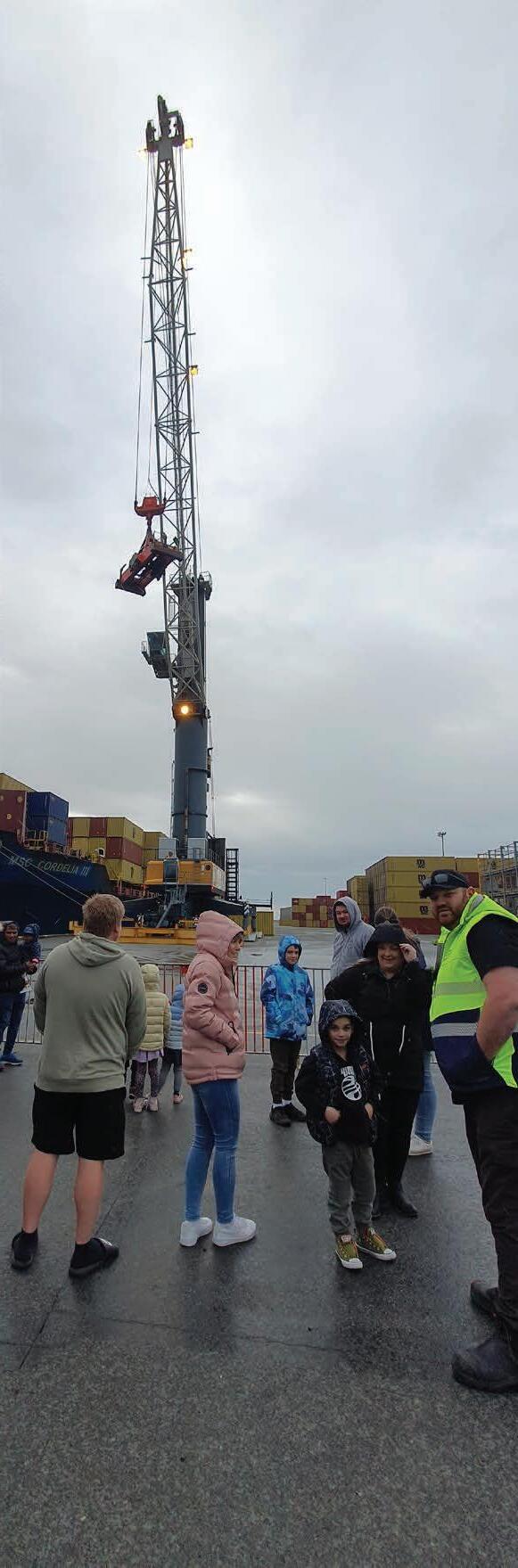
The event aimed to give friends, whānau, and the public a glimpse at what South Port does and what it’s doing for the region. Ticket holders got to step foot on and see a tugboat demonstration, walk into the depths of the Cold Stores, observe the log operators and woodchip trucks in operation, watch demonstrations of the cranes and forklifts, and learn about the finer details of what the Port does daily The variety was well received, with positive feedback coming in from attendees
With an Entertainment Hub located at the Bluff Oyster Festival site, which was open to the public, those attending the actual tour were ushered on designated buses to get on to the Port Activities within the Hub were free, including face painting, bouncy castles, an astro ball, and mini jeeps It was a hive of activity throughout the day, with attendees soaking up the atmosphere before excitedly lining up and jumping on a bus in preparation for the tour to begin�
“What an incredible experience. The guides were amazing and so good with all the kids on our tour, we could really feel the passion and pride they have for the port. Thank you South Port for letting us in for a look around, Rome especially loved the toy boats. I really enjoyed watching the cranes in action!”
“The tour was absolutely amazing - informative and exciting. A big thank you to everybody who made the day such a success!”
There were 60 team members from South Port who volunteered their time, which was quite clearly appreciated Volunteers have been asked for feedback on what went well, what didn’t, and what we could improve on to help make 2025 bigger and better�
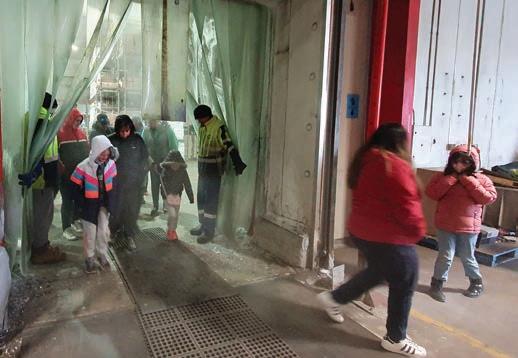

1. Staff explain the processes around importing and exporting product, and how it is stored
2. Children and adults alike, all rugged up, exiting the Cold Stores
3. Visitors aboard the “Te Matua” tug boat, prior to watching the “Takitimu” pilot boat demonstration
4. Free face painting was just one of the entertainment options on offer in the Entertainment Hub
5. Demonstrations included the moving of logs, how woodchips are emptied out of trucks, and how the woodchips are moved around by machinery
6. Passengers were treated to ‘up close and personal’ moments with the tug boats
7. With each tour being booked out, there was a solid line of excited people waiting to board at each time slot
South Port is proud to have the annual tradition of donating Christmas gifts to selected Bluff families in need
In November 2023, Bluff School, St Teresa's, Te Rourou, and Bluff Kindergarten each nominated one family We then detailed the ages and genders of those selected to the broader South Port team, guiding what was required – be it food, gifts, or vouchers
The Commercial Team then facilitated the wrapping and handover of the hampers to each family, confidentially, via each school




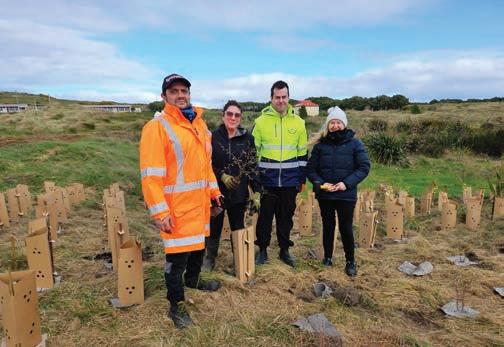
CONSERVATION WEEK PLANTING
Conservation Week took place from 14 – 20 August 2023. For another year running, some of the South Port team assisted Bluff Hill Motupōhue Environment Trust in getting as many native plants into the ground as possible, despite trying weather conditions
South Port supports the Young Enterprise Scheme (YES) annually through speed coaching sessions with students, pitch judging, and sponsorship of the Social Enterprise Award The business who won our award for 2023 was “Ginger Bear Journals,” based on a study planner and wellness journal explicitly designed for those who might be stressed while sitting NCEA exams.
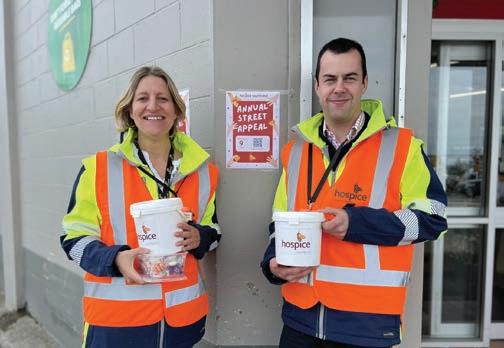
HOSPICE SOUTHLAND ANNUAL STREET APPEAL ›
On 7 February 2024, South Port team members volunteered their time outside the Bluff Four Square, raising money for the Hospice Southland Annual Street Appeal This was complemented with collection buckets at the Bluff Service Centre, Bluff Four Square, and Sold Coffee and Gifts The efforts saw the community raise almost $1,000, which went directly to Hospice Southland to support over 140 patients right across Southland and the Wakatipu Basin
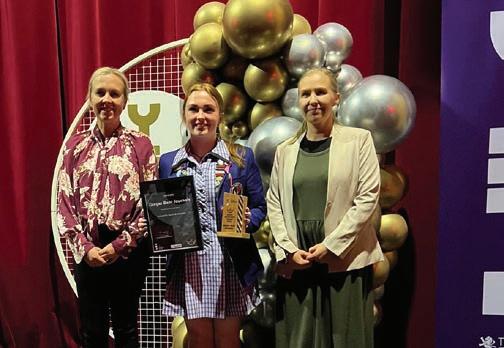
SOUTHERN INSTITUTE OF TECHNOLOGY AWARDS
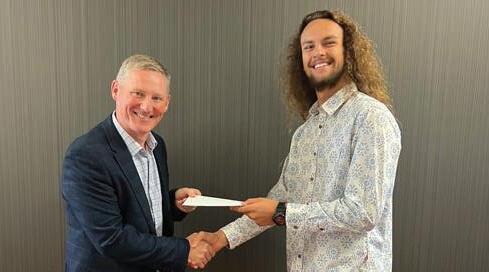
For the past several years, South Port has supported the Bachelor of Engineering Technology and Graduate Diploma in Engineering Technology (Civil Engineering) at Southern Institute of Technology� The Company also provides the award for the most outstanding engineering project throughout the year Pictured here is the 2023 award winner, Juan Veloso (right).

BLUFF RUGBY CLUB
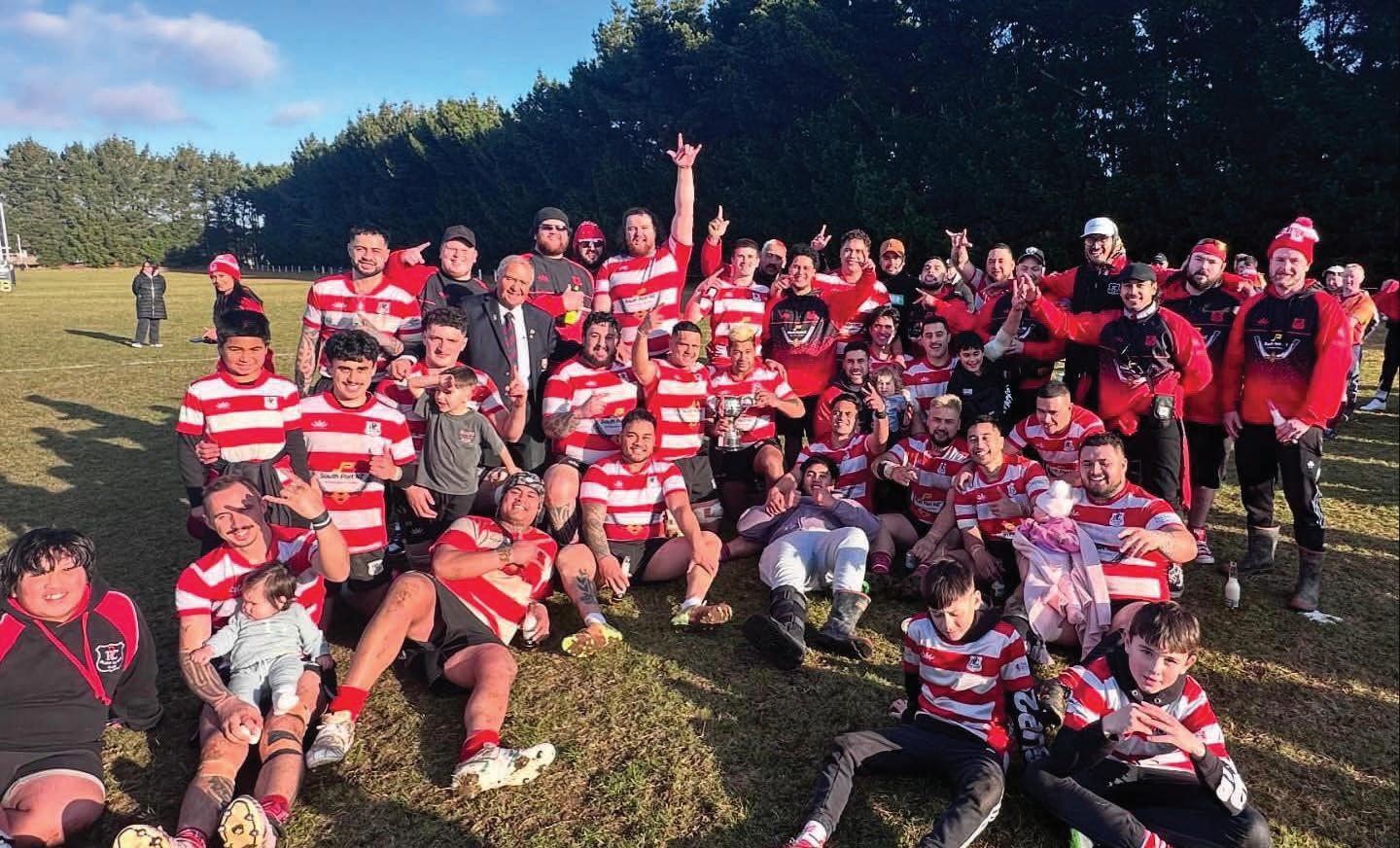
South Port proudly continued the sponsorship of Bluff Rugby Club, a partnership that started in 1989. Several staff members play for the team, with many others heading along to support at games during the season.
Bluff Rugby Club. It’s home of the red-and-white hoops and is loyally flanked by several South Port employees� Jayleel Fa’amoe Ioane, South Port’s Co-ordinator - Shipping and Mooring Services, talked about his time in the club, and what it means to the community
“Family - it’s about family” is the first thing that comes to Jayleel’s mind. He’s played for Bluff for four, coming up five seasons now, having played back in 2013 when the team won Division 1 in the club’s 125th Jubilee Year, and in 2023. “I returned to play last season as my younger brother Kyah wanted us to play together It was really cool being alongside him when we won last season; it was his first competition win ”
The family element doesn’t stop there. Jayleel’s older brother, Javaan Fa’amoe Ioane, is a former Southland Stags outside back, and this season, he has stepped up to coach the Bluff Seniors. On 8 June, the three brothers - Jayleel, Kyah, and Javaan, lined up in the Bluff colours, and played alongside one another against Woodlands� “It was pretty special, the fact all three of us got to play together for the first time,” Jayleel said� The family vibe within the club doesn’t stop with blood relatives.
The club makes a solid effort to engage and encourage at every level, all the way down to Rippa Rugby�
On Saturday, 13 July, the Bluff Seniors won the 2024 Premier Development Championships, 34 – 31, against Invercargill Blues – a game that had a few close calls and, as described by many, “raised goosebumps” on those in the crowd
“Our team this year has a wealth of experience, with quite a few players having been around for the last ten years and have played over 100 games One guy even clocked up his 300th game this year,” Jayleel said. “We’ve added new blood and kept our strong culture and form from last year We had a strong 2024 season and ultimately aimed to take out the Premier B competition, which was executed perfectly.”
“With four South Port employees in the team, we’re very proud to be informally called “South Port Bluff” and represent the Company in front of our playing strip and training kit. The Port’s vision for achieving excellence is something we align with and we’re constantly trying to find improvement where we can.”
Pai e tama, he kapa toa – well done lads, a champion team!
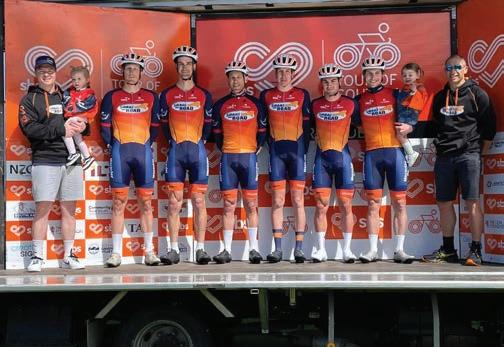
South Port partnered with “Share the Road & Macaulay Ford Cycling Team” and joined several prominent Southland businesses to co-sponsor a team competing in the SBS Tour of Southland, which takes place in November every year South Port staff interacted with the riders every race day during the circuit, travelling in the support vehicles throughout the competition and assisting where required
The Southland Stags play in the reformed National Provincial Championship competition� South Port has enjoyed a longstanding sponsorship relationship, benefiting staff and customers throughout the season
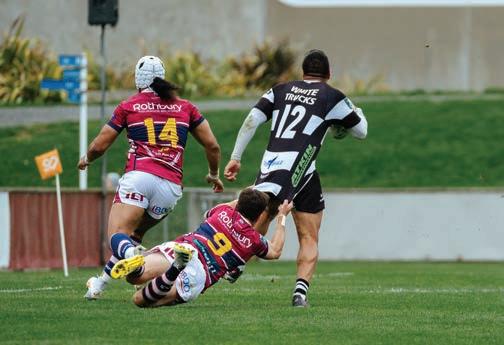
South Port is a proud, longstanding Southland Sharks basketball team supporter
Our staff enjoy complimentary tickets we receive as part of our sponsorship for every game, where we also host customers courtside

Southern Steel is the face of southern netball in New Zealand It competes in the ANZ Premiership netball league and represents both Otago and Southland�
South Port teamed up with Southern Steel for the first time in 2022, making this season the third year in a sponsorship partnership



Nicola Greer Independent Director
MCom (Hons)
Appointed November 2019
Carla Harper Intern Director
NZIPIM, MInstD
Appointed May 2023
Philip Cory-Wright Independent Director
BCA, LLB (Hons), CFInstD
Appointed September 2010 Chair from 2023
Clare Kearney Independent Director
BAgSci, MProfStuds, GradDipArts(Phil), CFInstD
Appointed October 2016
Michelle Henderson Independent Director
BE (Hons), CMInstD
Appointed October 2021
John Schol Independent Director
MBA, FCA, CMInstD, DipGrad, BCom, NZDipBus
Appointed November 2022
Cassandra Crowley Independent Director
LLB, BCA, GradDipProfAccy, MInstD
Appointed November 2023
1
The Company is primarily engaged in the commercial operation of the Port of Bluff There has been no significant change in the nature of the Company’s business during the year.
The financial statements are for the 12-month period from 1 July 2023 to 30 June 2024
The Company recorded a Net Surplus After Tax for the period of $7,376,000
The following Directors hold the following equity securities in the Company:
The Directors have declared an ordinary dividend of $7,083,000 (27.00 cps) for the period ended 30 June 2024 including the final dividend amount of $5,116,000 (19.50 cps) payable in November 2024.
The Company has arranged Directors’ and Officers’ Liability Insurance with Vero Liability Insurance Limited This cover insures Directors against liabilities to other parties that may arise from their positions as Directors� The insurance does not cover liabilities arising from criminal actions�
There were no changes in accounting policies during the period All policies are consistent with those applied in the previous year
Directors’ remuneration for the 12 month period ended 30 June 2024 was as follows:
Remuneration of Directors
01/07/2023 to 30/06/2024
Name
R Chapman 1
P Cory-Wright 2
C Crowley 3
N Greer
J Schol
C Kearney
M Henderson
The Chief Executive Officer’s Employment Contract is reviewed annually by the Board. It is not a fixed-term contract.
The remuneration of senior management is reviewed annually and is determined in a transparent, deliberate, and objective manner�
$43,333
$110,000
$46,667
$70,000
$70,000
$70,000
$70,000
Total $480,000
1 | Retired from the Board 31 October 2023
2 | Elected Chair 31 October 2023
3 | Appointed to the Board 31 October 2023 Gross Taxable
No other benefits have been provided by the Company to a Director or in any other capacity No loans have been made by the Company to a Director nor has the Company guaranteed any debts incurred by a Director
Section 211(1)(g) of the New Zealand Companies Act 1993 requires disclosure of remuneration and other benefits, including redundancy and other payments made on termination of employment, in excess of $100,000 per year, paid in respect of the current year by the Company to any employees who are not Directors of the Company
Remuneration for Employees over $100,000
1 July 2023 - 30 June 2024
The Company has adopted “notice and pause” provisions in its Constitution
The Company has a formally constituted Audit & Risk Committee comprising N J Greer (Chair), W J Schol and M A Henderson
It is the role of the Audit & Risk Committee to review the Company’s financial statements and announcements, liaise directly with the Company’s Auditors and review the Company's accounting policies, practices and related matters�
During the year $85,394 was paid to the Company’s Auditors, Deloitte Limited, for audit services carried out as agent for the Controller and Auditor General for the year ended 30 June 2024� The Company did not pay the Auditors for any advice or guidance on other matters�
The Company is required to maintain an Interests Register in which particulars of certain transactions and matters involving the Directors must be recorded No material transaction entries were recorded in the Interests Register for the period 1 July 2023 to 30 June 2024
The Directors of the Company have declared interests in the following identified entities as at 30 June 2024:
Position
Mr P W Cory-Wright
NZ Local Government Funding Agency Director
Papa Rererangi i Puketapu Limited Chair (New Plymouth Airport)
NZ Windfarms Limited Director
Matariki Forestry Group Director (and its wholly owned subsidiaries)
Powerco NZ Holdings Limited Director (and its wholly owned subsidiaries)
TRH Holdings Director (and its wholly owned subsidiaries)
Mrs C M Kearney
New Zealand Alpine Club Board Member
Ms N J Greer
Fidelity Life Assurance Company Limited Director
New Zealand Railways Corporation Limited Director
Precinct Properties New Zealand Limited Director
Precinct Properties Investments Limited Director
Vulcan Steel Limited Director
NZ Markets Disciplinary Tribunal Member
Mrs M A Henderson
Meridian Energy Limited Director
Cycling New Zealand Incorporated Board Member
Mr W J Schol
Position
Invercargill City Holdings Limited Director
Invercargill City Property Limited Director
Malloch McClean Limited Director
Amberly Trustees Limited Director
Clarity HQ Limited Director
The Gap 2014 Limited Director
Plus More Capital Limited Director
Ms C R Crowley
Aratu Forests Limited Director
Skills Consulting Group Director
Southern Cross Benefits Limited t/a Southern Cross
Travel Insurance Chair
Silver Fern Farms Limited Director
Waka Kotahi – NZ Transport Agency Deputy Chair
K L C Limited Chair
Ngāti Manawa Development Limited Director
Auckland Council, Audit & Risk Committee Independent Member
Te Arawa Management Limited CEO
Mr R T Chapman (retired from Board 31 October 2023)
Cruickshank Pryde Partner
IFS Growth Solicitor
Makarewa Cool Stores Ltd Solicitor
Niagara Sawmilling Company Ltd Solicitor
Prime Range Meats Ltd Solicitor
Pyper’s Produce Ltd Solicitor
Winton Stock Feed Ltd Solicitor
Bluff Limited Solicitor
CP Trustees Limited Director
P W Cory-Wright
Chair
N J
Greer Chair, Audit and Risk Committee
* New Zealand Central Securities Depository Limited (NZCSD) provides a custodial depository service which allows electronic trading of securities to its members. For the purpose of this table, shares in the Company held by NZCSD have been allocated to the applicable members. For reference, as at 30 June 2024, the total through NZCSD in the top
ordinary shares or 5 03% of shares on issue
According to notices given to the Company under the Financial Markets Conduct Act 2013, as at 30 June 2024, the substantial product holders in the Company and their relevant interests are noted below:
The Board of Directors (the Board), and Executive Leadership Team (ELT) of South Port New Zealand Ltd (South Port) are committed to building long-term value for shareholders and employees We are honouring this commitment by maintaining the highest standards of governance, supported by best practice structures, people, practices and policies� This includes maintaining high standards of business integrity and ethics in all of our activities�
The extent to which South Port has followed the recommendations of the NZX Corporate Governance Code dated 1 April 2023 (NZX Code) for the financial year ended 30 June 2024 is detailed below� This statement was approved by the Board on 23 August 2024 and was accurate as at that date
Consistent with its commitment to best practice corporate governance, the Board’s view is that South Port’s corporate governance policies, practices and processes generally follow the recommendations set by the NZX Code in all material aspects for the financial year ending 30 June 2024 The Board regularly reviews and assesses South Port’s governance policies, procedures, and practices to ensure they are appropriate and effective This Corporate Governance Statement includes disclosure to the extent to which South Port has followed each of the recommendations of the NZX Code or, if applicable, an explanation of why a recommendation was not followed and any alternative practices followed in lieu of the recommendation�
South Port’s key corporate governance documents referred to in this statement, including charters and policies, can be found on the Company’s website:
https://southport co nz/investors-centre#corporate_ governance
These documents should be read in conjunction with this statement:
› Corporate Governance Manual
› Company Constitution
› Director and Executive Remuneration Policy
› Sensitive Expenditure Policy
› Health and Safety Policies
South Port’s Directors bring a diverse wealth of experience, acting on behalf of our shareholders and other stakeholders
Directors are chosen for their corporate leadership skills, professional backgrounds, experience and expertise. The right blend of skills and experience, combined with the diversity of Directors’ perspectives, is crucial to ensuring the attainment of long-term value for South Port’s shareholders.
At 30 June 2024, the Board comprised six independent directors: Philip Cory-Wright, Cassandra Crowley, Nicola Greer, Michelle Henderson, Clare Kearney and William (John) Schol.
Past director Rex Chapman retired at the 2023 Annual Meeting. Ms Crowley was appointed at the 2023 Annual Meeting as an independent director replacing Mr Chapman on the Board
Under the NZX Listing Rules, a director must not hold office (without re-election) past the third annual meeting following that Director’s appointment or three years, whichever is longer. The Company’s Constitution also requires at least one third of the Board to retire annually Accordingly, Nicola Greer and Michelle Henderson are required to retire by rotation this year Being eligible, both Ms Greer and Mrs Henderson have offered themselves for re-election at the Annual Meeting in October 2024�
For more information about our Board, please visit:
https://southport co nz/about-us-and-our-people
PRINCIPLE
“Directors should set high standards of ethical behaviour, model this behaviour and hold management accountable for these standards being followed throughout the organisation.”
Recommendation 1.1: The board should document minimum standards of ethical behaviour to which the issuer’s directors and employees are expected to adhere (a code of ethics) and comply with the other requirements of Recommendation 1.1 of the NZX Corporate Governance Code.
South Port expects its directors, senior management and employees to maintain the highest standards of honesty, integrity and ethical conduct in day-to-day behaviour and decision making. The Company’s Code of Ethics sets out the standard of conduct expected of everyone working at South Port including directors, management, staff and contractors The Code of Ethics provides a guide to the conduct that is consistent with the Company’s values and behaviours, business goals and legal obligations� It also outlines internal reporting procedures for any breaches and incorporates the other requirements of Recommendation 1 1 of the NZX Corporate Governance Code An introduction to the Code of Ethics forms part of the induction and training process of new employees Subsequently, every three years employees are required to complete a Code of Ethics refresh session� This key corporate governance document is available on the Company’s website within the Company’s Corporate Governance Manual and staff are reminded to refamiliarise themselves with it on a regular basis via internal training processes The Code of Ethics is subject to annual review by the Board
This policy sets out the Company’s expectations on sensitive or discretionary expenditure incurred by directors or employees and is available on the Company’s website.
Recommendation 1.2: An issuer should have a financial product dealing policy which applies to employees and directors. The Company is committed to transparency and fairness in dealing with all of its stakeholders and to ensure adherence to all applicable laws and regulations� The Securities Trading Policy and Guidelines governs trading in the Company’s securities by directors, employees and other associated persons This policy can be found on the Company’s website within the Company's Corporate Governance Manual
While it is not compulsory for directors to own shares in South Port, they may buy South Port shares and hold them as a longterm investment
PRINCIPLE 2
“To ensure an effective board, there should be
a balance of independence, skills, knowledge, experience and perspectives.”
Recommendation 2.1: The board of an issuer should operate under a written charter which sets out the roles and responsibilities of the board. The board charter should clearly distinguish and disclose the respective roles and responsibilities of the board and management.
The Board has adopted a formal Board Charter to ensure compliance with the NZX Corporate Governance Code The Charter sets out the roles, responsibilities and structure of the Board and provides guidance for the effective oversight of the Company by the Board� The Board is responsible for setting the Company’s strategic direction, overseeing the management of the Company and directing performance by optimising the short-term and long-term best interests of the Company and its shareholders
The Board delegates management of the day-to-day affairs and management responsibilities of the Company to achieve the strategic direction and goals determined by the Board� The roles and responsibilities of management are also outlined in this Charter
Recommendation 2.2 and 2.3: Every issuer should have a procedure for the nomination and appointment of directors to the board. An issuer should enter into written agreements with each newly appointed director establishing the terms of their appointment.
The Board’s procedure for the nomination and appointment of directors to the Board is set out in the Board Charter Careful consideration is given to the composition of the Board in relation to the Company’s needs and operating environment. The Board should at all times comprise members whose skills, experience and attributes together reflect diversity, balance, and cohesion and match the demands facing the Company� This also applies to the consideration of additional or replacement directors Priority is given to ensuring the skills, experience and diversity necessary for the Board to fulfil its governance role and to contribute to the long-term strategic direction of the Company
The Board may engage consultants to assist in the identification, recruitment and appointment of suitable candidates�
South Port enters into appointment agreements with each newly appointed director Among other things, the agreement includes information about the Company’s expectations of the director, the expected time commitment to South Port, remuneration entitlements, the requirement to comply with corporate policies and charters, the right to access information, the requirement to disclose interests that may impact the director’s independence, and indemnity and insurance arrangements The agreement covers all aspects outlined in recommendation 2 3 of the NZX Corporate Governance Code
Recommendation 2.4: Every issuer should disclose information about each director in its annual report or on its website, including a profile of experience, length of service, and ownership interests; the director’s attendance at board meetings; and the board’s assessment of the director’s independence, including a description as to why the board has determined the director to be independent if one of the factors listed in table 2.4 applies to the director, along with a description of the interest, relationship or position that triggers the application of the relevant factor.
As at 30 June 2024, the Board was comprised of six independent non-executive directors including a non-executive Chair The biography of each Board member is set out in the “Directors’ Profiles” section of this Annual Report and is also available on the Company’s website.
The size and composition of the Board is subject to the limits imposed by South Port’s Constitution and in accordance with the provisions of the Port Companies Act 1988. The Constitution requires the Board to comprise of a minimum number of six directors Under the NZX Listing Rules the Board is required to maintain at least two independent directors The criteria for director independence are outlined in the Board Charter� Pursuant to the Company’s Constitution, one third of the directors retire by rotation at each annual meeting but are eligible for reappointment by shareholders
South Port director ownership interests can be found in the “Statutory Report of Directors” section of this Annual Report�
South Port director attendance at board meetings is set out at recommendation 3 5
South Port director independence is discussed at recommendation 2.8.
This Board Skills Matrix is intended as an additional tool to assist the Board to record the skills the Board currently has, and to identify existing or future gaps. Directors will be appointed to the Board because of their specific skills, diversity, knowledge and experience.
The table below shows the representation of expertise among the current directors for the Board as a whole.
Infrastructure/ Capital Projects
Financial Acumen
Risk Management
Experience working in an industry with projects involving largescale capital expenditure and long-term investment horizons.
A strong accounting or financial background, including knowledge and understanding of accounting rules and standards, as defined by the NZX Listing Rules
An understanding of both financial and non-financial risk management, and the ability to assess risk associated with the business, particularly those that would threaten the organisation’s business model, future performance, solvency or liquidity
Legal, Regulatory and Public Policy
Health and Safety
Culture
Information Technology
Strategy Development/ Implementation
Environmental, Social and Corporate Governance (ESG)
Stakeholder Management
Experience in corporate and commercial law, including major contracts; or legal background or experience in regulatory and public policy�
Relevant experience and familiarity with nature of business operations and associated hazards and risks related to health, safety, environmental and sustainability
Detailed understanding of organisation’s corporate purpose and values and experience in developing and maintaining a positive organisational culture�
Knowledge and experience in the strategic use and governance of information management and information technology
Experience in developing, implementing and challenging a plan of action designed to achieve long-term goals
Experience in developing, implementing and reporting on ESG goals and objectives
Experience in dealing with and presenting to iwi, strategic clients, strategic partners, key financiers/suppliers and industry/ regulatory bodies� Has worked in businesses with a diversity of stakeholders, having played a role in successfully engaging them over time
This
represents the assessment of the strength of the skills and experience of the Board as a whole
Recommendation 2.5: An issuer should have a written diversity policy which includes requirements for the board or a relevant committee of the board to set measurable objectives for achieving diversity (which, at a minimum, should address gender diversity) and to assess annually both the objectives and the entity’s progress in achieving them. An issuer should disclose its diversity policy or a summary of it.
The Company and its Board recognise and believe that building a diverse and inclusive workforce provides significant opportunity to leverage engagement, innovation, productivity and improved service to our customers�
South Port is committed to providing a work environment that recognises and values different skills, ability and experiences and where people are treated fairly in order to attract and retain talented people who will contribute to the achievement of South Port’s commercial success.
Diversity and inclusion are commitments to recognising and appreciating the variety of characteristics that make individuals unique; for example, gender, age, race, ethnicity, culture, disability, education and background
The South Port Diversity and Inclusion Policy is disclosed on the Company’s website within the Company's Corporate Governance Manual and includes the following specific measurable objectives set by the Board:
› At least 25% gender diversity across all SPNZ Staff by 2025;
› At least 20% gender diversity across SPNZ Supervisors by 2025;
› At least 25% gender diversity across SPNZ Executive by 2025;
The
against the actual data at
› At least 25% gender diversity across SPNZ Board by 2025; and
› At least 10% gender diversity across operational areas by 2025�
Recommendation 2.6: Directors should undertake appropriate training to remain current on how to best perform their duties as directors of an issuer.
South Port’s directors are expected to undertake continuous education to remain current on how best to perform their responsibilities and keep abreast of changes and trends in governance practices around economic, political, social, financial and legal climates The Board also ensures that new directors are appropriately introduced to management and the business, that all directors are updated on relevant industry and company issues and receive copies of appropriate company documents to enable them to perform their duties
Recommendation 2.7: The board should have a procedure to regularly assess director, board and committee performance.
The Chair of the Board leads an annual performance review and evaluation of the Board as a whole, and of the Board committees against the Board and Committee Charters including seeking director’s views relating to board and committee process, efficiency and effectiveness, for discussion by the full Board� The Chair of the Board also engages with individual directors to evaluate and discuss performance and professional development
An independent review of the performance of individual directors and the Board was last undertaken in July 2024� This was supported by external consultants, and was supplemented by surveys, self-evaluation, and Board discussion
Recommendation 2.8: A majority of the board should be independent directors
South Port acknowledges that having a majority of independent directors makes it harder for any individual or small group of individuals to dominate the Board’s decision-making and maximises the likelihood that the decisions being made by the Board will reflect the best interests of the entity and its shareholders
The following table sets out the gender composition of South Port's directors and officers at balance date:
South Port’s Board Charter specifies that the Board shall maintain at least a minimum number of two independent directors or where the Board comprises eight or more directors, the number of independent directors shall be at least three or one-third of all directors. The Chair of the Board must be a non-executive director�
As at 30 June 2024, the Board was comprised of six independent directors including an independent Chair. All six directors are considered by the Board to be “independent” directors having regard to (amongst other things) the following factors. None of those directors:
› Is currently, or was within the last three years, employed in an executive role by South Port, or any of its subsidiaries;
› Is currently deriving, or within the last 12 months derived a substantial portion of their annual revenue from South Port;
› Is currently, or was within the last 12 months, in a senior role in a provider of material professional services to South Port, or any of its subsidiaries;
› Is currently, or was within the last three years, employed by the external auditors to South Port, or any of its subsidiaries;
› Currently has, or did have within the last three years, a material business relationship (e g as a supplier or customer) with South Port or any of its subsidiaries;
› Is a substantial product holder of South Port, or a senior manager of, or person otherwise associated with a substantial product holder of South Port;
› Is currently, or was within the last three years, in a material contractual relationship with South Port or any of its subsidiaries, other than as a director;
› Has close family ties or personal relationships (including close social or business connections) with anyone in the categories listed above
Although Philip Cory-Wright has been a director of South Port for a period of more than 12 years, he is considered to be sufficiently independent from management to still be considered an independent director His tenure on the Board reflects the skills and experience that he brings to the Company.
Recommendation 2.9: An issuer should have an independent chair of the Board.
The current Chair of the South Port Board, Philip Cory-Wright is an independent Chair as noted under recommendation 2.8.
Recommendation 2.10: The Chair and the CEO should be different people.
The positions of the Chair and the CEO of South Port are held by different people
“The board should use committees where this will enhance its effectiveness in key areas, while still retaining board responsibility.”
Recommendation 3.1: An issuer’s audit committee should operate under a written charter. Membership on the audit committee should be majority independent and comprise solely of non-executive directors of the issuer. The chair of the audit committee should be an independent director and not the chair of the board.
The Audit & Risk Committee provides the Board with assistance in fulfilling their responsibilities to shareholders, the investment community and others for overseeing the Company’s financial statements, financial reporting processes, internal accounting systems, financial controls, risk management, climate-related disclosures, and South Port’s relationship with its independent auditors
The Committee is governed by an Audit & Risk Committee Charter which is available on the Company’s website within the Company's Corporate Governance Manual The Board regularly reviews the performance of the Committee in accordance with the Charter
The Company has developed an External Auditor Relationship Framework to ensure external audit independence is in line with best practice to ensure reliable and credible reporting This framework is disclosed on the Company’s website within the Company's Corporate Governance Manual
The Committee comprises of three independent non-executive members of the Board of Directors, being Nicola Greer, John Schol, and Michelle Henderson
The Committee Chair, also appointed by the Board, cannot also be the Chair of the Company Nicola Greer is the Audit & Risk Committee Chair� At least one member of the Committee must have an accounting or financial background; John Schol is a Fellow Chartered Accountant and holds a Master of Business Administration (MBA) and a Certificate of Public Practice with Chartered Accountants Australia & New Zealand (CAANZ), and Nicola Greer has a Master of Commerce and an extensive background in the banking and finance sectors�
Recommendation 3.2: Employees should only attend audit committee meetings at the invitation of the audit committee.
The Chief Executive and Chief Financial Officer attend the Audit & Risk Committee meetings by invitation. South Port’s external auditor also attends the Committee meeting by invitation During each meeting, all executives leave the meeting for a period of time to enable the Board to have open discussions with the external auditor without any management present.
Recommendation 3.3: An issuer should have a remuneration committee which operates under a written charter (unless this is carried out by the whole board). At least a majority of the remuneration committee should be independent directors. Management should only attend remuneration committee meetings at the invitation of the remuneration committee.
The Board does not operate a separate remuneration committee as director and senior management remuneration is considered by the entire Board. The Director and Executive Remuneration Policy outlines the structure of director and executive/ management remuneration, the formal process for shareholder review, transparency and reporting of actual remuneration paid and bi-annual review of the Remuneration Policy and process�
Recommendation 3.4: An issuer should establish a nomination committee to recommend director appointments to the board (unless this is carried out by the whole board), which should operate under a written charter. At least a majority of the nomination committee should be independent directors.
The Board does not operate a separate nomination committee� The process and procedure for the appointment of directors to the Board is outlined in the Board Charter The appointment of a director is a shareholder decision Director nominations are called for from shareholders in accordance with the Rules
The Board will then consider the candidates who have been nominated for appointment as a director Directors are selected based on a range of factors including the needs of the Board at the time�
Recommendation 3.5: An issuer should consider whether it is appropriate to have any other board committees as standing board committees. All committees should operate under written charters. An issuer should identify the members of each of its committees, and periodically report member attendance.
The Board does not operate any other committees apart from the Audit & Risk Committee Consideration has been given as to whether any other standing board committees are appropriate and determined they are not required
1 July 2023 to 30 June 2024
1 | Retired from the Board 31 October 2023
2 | Appointed Board Chair 31 October 2023, retired from the ARC after 25 August 2023 meeting
3 | Appointed to the Board 31 October 2023
4 | Appointed ARC Chair after 25 August 2023 meeting
5 | Appointed to the ARC after 25 August 2023 meeting
Recommendation 3.6: The board should establish appropriate protocols that set out the procedure to be followed if there is a takeover offer for the issuer including any communication between insiders and the bidder. The board should disclose the scope of independent advisory reports to shareholders. These protocols should include the option of establishing an independent takeover committee, and the likely composition and implementation of an independent takeover committee.
The Board has not established protocols for setting out procedures to be followed in the event of a takeover offer This is because the Board considers receipt of a takeover offer to be an extremely unlikely event given the Southland Regional Council’s (Environment Southland) majority shareholding in the Company.
PRINCIPLE 4 ›
“The board should demand integrity in financial and non-financial reporting, and in the timeliness and balance of corporate disclosures.”
The Board is committed to providing full and timely financial and non-financial information that is accurate, balanced, meaningful and consistent As a listed company, keeping the market informed is a key component to ensure securities are fairly valued
Recommendation 4.1: An issuer’s board should have a written continuous disclosure policy.
South Port has a Continuous Disclosure Policy which is available on the Company’s website within the Company's Corporate Governance Manual
South Port is committed to providing accurate, timely and consistent disclosures which comply with its continuous disclosure regime, in accordance with the NZX Listing Rules The Company is required to disclose to the market, matters which could be expected to have a material effect on the price or value of the Company’s shares. Management processes are in place to ensure that all material matters which may require disclosure are promptly reported to the Board through established reporting lines� Matters reported are assessed as and when required against the NZX Listing Rules and advised to the market The Chair and CEO are responsible for communications with NZX and for ensuring that such information is not provided to any person or organisation until NZX has confirmed its release to the market�
All material announcements are posted on the Company’s website
Recommendation 4.2: An issuer should make its code of ethics, board and committee charters and the policies recommended in the NZX Code, together with any other key governance documents, available on its website.
Information about South Port’s corporate governance framework (including the Code of Ethics, Board and Committee
Charters and other selected key governance codes and policies) is available to view on the South Port website:
www�southport�co�nz
Recommendation 4.3: Financial reporting should be balanced, clear and objective.
The Audit & Risk Committee oversees the quality and integrity of external financial reporting including the accuracy, completeness and timeliness of financial statements� The Committee is committed to balanced, clear and objective financial reporting
It reviews half-yearly and annual financial statements and makes recommendations to the Board concerning accounting policies, areas of judgement, compliance with accounting standards, stock exchange and legal requirements, and the results of the external audit.
Management accountability for the integrity of the Company’s financial reporting is reinforced by the certification from the Chief Executive and the Chief Financial Officer. The Chief Executive and the Chief Financial Officer have provided the Board with written confirmation that the Company’s financial report presents a true and fair view, in all material respects, of the Company’s financial position for the year ended 30 June 2024, and that the operational results are in accordance with relevant accounting standards�
Recommendation 4.4: An issuer should provide non-financial disclosure at least annually, including considering environmental, social sustainability and governance factors and practices. It should explain how operational or non-financial targets are measured. Non-financial reporting should be informative, include forward looking assessments, and align with key strategies and metrics monitored by the board.
South Port assesses its exposure to environmental, economic and social sustainability as part of an overall framework for managing risk (see Principle 6 – Risk Management). Environmental, social and governance factors and practices are always considered when making decisions South Port has separate sections included in the Annual Report to report on environmental, social sustainability, and governance factors (ESG) which covers the following areas:
› Environment
› People and Communities
› Governance
South Port also annually discloses:
› Climate-related disclosures as per the requirements of the Aotearoa New Zealand Climate Standards
› Greenhouse Gas (GHG) Emissions Profile
The Company is committed to improving standards of environmental performance to enable a more efficient and sustainable future and is working towards continuous improvement in this area
PRINCIPLE 5
“The remuneration of directors and executives should be transparent, fair and reasonable.”
Recommendation 5.1: An issuer should have a remuneration policy for the remuneration of directors. An issuer should recommend director remuneration to shareholders for approval in a transparent manner. Actual director remuneration should be clearly disclosed in the issuer’s annual report.
South Port’s Director and Executive Remuneration Policy contains the policy for remuneration of directors� In accordance with the Remuneration Policy and the Company’s Constitution, shareholder approval is sought on any increase in the pool available to pay directors’ fees. The Remuneration Policy is available at:
https://southport�co�nz/investors-centre#corporate_ governance
Director remuneration is paid in the form of director’s fees, South Port does not offer performance-based remuneration, equitybased remuneration or retirement payments to directors� On 31 October 2023 the shareholders approved the directors’ fee pool limit of $532,000 per annum. South Port’s Board considered and presented the proposal to increase the director fee pool and sought and considered independent advice from PwC, which reviewed the remuneration of directors of comparable listed companies in New Zealand. A copy of the Summary Directors’ Fees Report was provided to shareholders and can be found at:
https://southport.co.nz/assets/reports/South-Port-NEDSummary-Report-2023 pdf
Information on director remuneration is available in the South Port Annual Report 2024; refer “Statutory Report of Directors” (page 55). It includes a breakdown of remuneration for board fees. There were no separate fees provided for members of the Audit & Risk Committee during FY24 Directors are entitled to reimbursement of reasonable travel and other expenses incurred by them in connection with their attendance at Board or Annual Meetings, or otherwise in connection with South Port business�
Recommendation 5.2: An issuer should have a remuneration policy for remuneration of executives which outlines the relative weightings of remuneration components and relevant performance criteria.
South Port has adopted a Director and Executive Remuneration Policy as outlined above This sets out the guiding principles and structure of South Port’s remuneration to its executives, together with the review process and reporting requirements to ensure that remuneration is transparent, fair and reasonable to meet the needs of the business, corporate governance bodies and shareholders The Board seeks to ensure that executives receive remuneration that is fair and reasonable in a competitive market for the skills, knowledge and experience required by the Company.
Guidance is sought from independent remuneration consultants by the Board as required
The Board is responsible for reviewing the remuneration of the Company’s executive leadership team (ELT) in consultation with the Chief Executive of the Company. The remuneration packages of the ELT consist of a mixture of a base remuneration package and a variable remuneration component (short-term incentive, or STI) based on relevant performance measures, designed to attract, motivate and retain high quality employees who will enable the Company to achieve its short and long-term objectives
The Company also has a long-term incentive (LTI) for the ELT in the form of a performance share rights plan� The plan grants participants a right to receive ordinary shares in South Port for no consideration if the following vesting conditions/hurdles are met at the conclusion of a three-year period and the participants remain employed by the Group during that period:
› Total shareholder return exceeds a cost of equity target;
› Total shareholder return is above a target percentile of the NZX50 peer group companies; and
› Earnings per share compound annual growth rate exceeds a target rate�
Details relating to the number of employees and former employees who received remuneration and other benefits in excess of $100,000 during the year ended 30 June 2024 is available in the South Port Annual Report 2024, refer “Statutory Report of Directors” (page 55).
Recommendation 5.3: An issuer should disclose the remuneration arrangements in place for the CEO in its annual report. This should include disclosure of the base salary, short-term incentives and long-term incentives and the performance criteria used to determine performance-based payments.
The Chief Executive’s remuneration is made up of fixed remuneration and variable remuneration Variable remuneration refers to remuneration that is “at risk” and linked to individual and organisational performance with clearly defined metrics� The Chief Executive’s remuneration is reviewed annually by the Board and an external consulting firm is engaged as appropriate to review market relativity and comparability against peer groups The Chief Executive is entitled to redundancy compensation if his/her employment is terminated as a result of redundancy, however no retirement benefits, sign-on bonuses or retention payments are offered�
The fixed remuneration is determined in relation to the market for comparable sized and performing companies and includes all
benefits and allowances The position in the market will normally be comparable to the median Adjustments are not automatic and are determined by performance which is reviewed annually by the Board�
The Chief Executive’s remuneration for the year ended 30 June 2024 was made up as follows:
Chief Executive Remuneration
Fixed remuneration - includes a base salary, employer KiwiSaver contributions, vehicle allowance and medical insurance�
Short-term incentive (STI) is set at a maximum of $54,000 per annum (including holiday pay) for the Chief Executive. 20% of the STI is linked to the Company’s financial performance with the actual opportunity being either 0% or 100%. The other 80% of the STI is based on achieving strategic objectives with the actual opportunity in the range of 0% to 100%� Objectives are set each year by the Board and for the 2024 year included financial and other targets for the Company overall, as well as personal objectives and targets, appropriate for the role. FY24 remuneration for the Chief Executive also included the second half of a one-off STI relating to project Kia Whakaū.
The Long-term incentive (LTI) noted under recommendation 5.2 is only in year one of three, therefore no performance rights have been vested during the year ended 30 June 2024 However, the Chief Executive was offered 8,795 performance rights on 1 November 2023, which will vest in 2026 if the required hurdles are met�
PRINCIPLE 6 ›
“Directors should have a sound understanding of the material risks faced by the issuer and how to manage them. The board should regularly verify that the issuer has appropriate processes that identify and manage potential and material risks.”
Recommendation 6.1: An issuer should have a risk management framework for its business and the issuer’s board should receive and review regular reports. An issuer should report the material risks facing the business and how these are being managed.
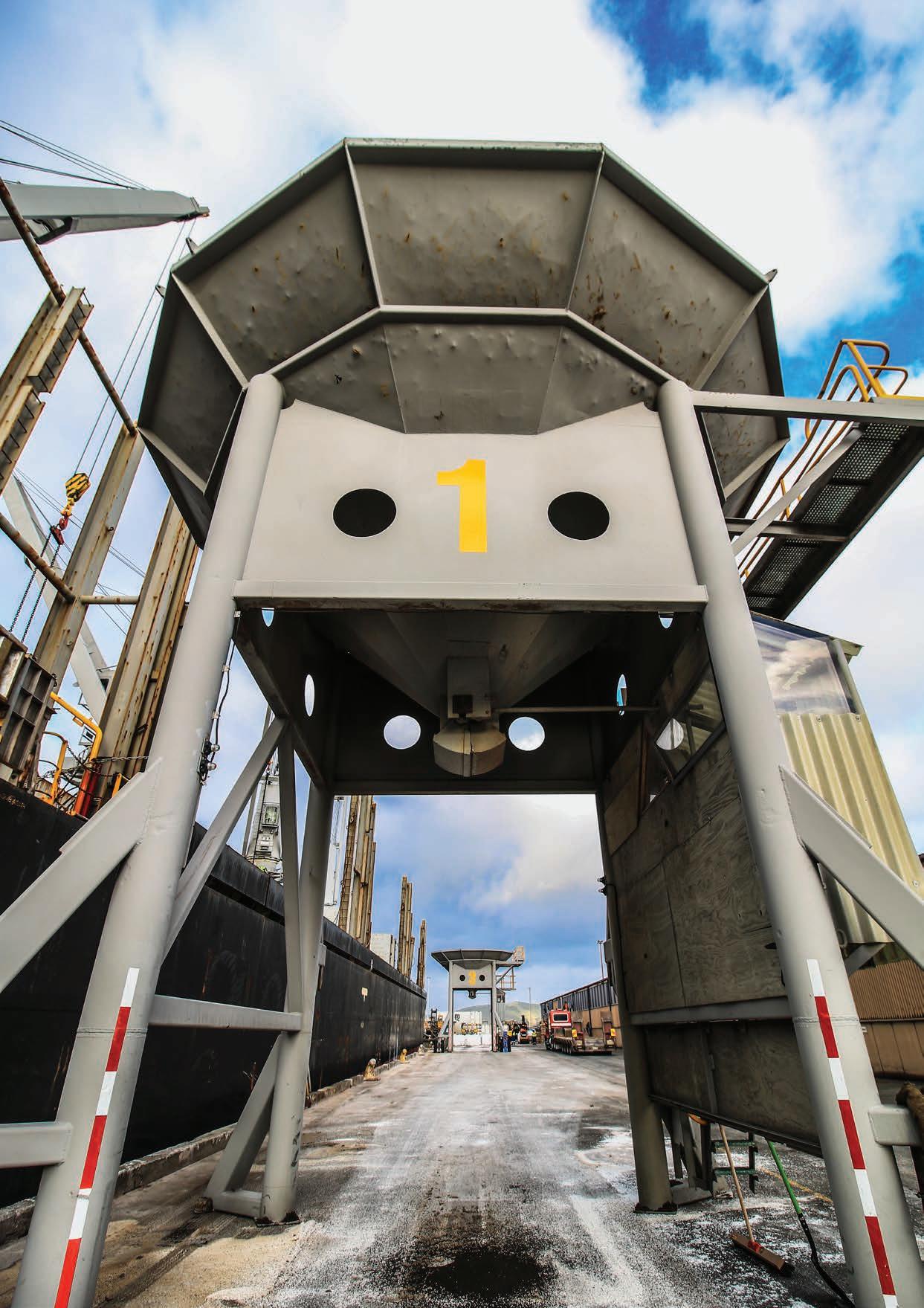
South Port’s risk management framework supports a structured approach for identifying, assessing, and managing risks that may affect the Company’s business objectives. The framework is based on the AS/NZS ISO 3100:2018 standards and principles.
The risk management framework outlines the purpose and benefits of risk management, such as informed decision-making, resource prioritisation, balance of risk and reward, anticipation of challenges, mitigation of adverse impacts, and enhancement of organisational resilience�
The risk framework explains the steps and tools for conducting risk assessments, such as establishing the context, identifying risks, analysing risks, evaluating risks, treating risks, monitoring and reviewing risks, and communicating and consulting with stakeholders� The framework describes risk categories, contains risk matrices, and describes control assessment methodology
The Board is ultimately responsible for reviewing and approving the Company’s risk management strategy.
The Board delegates day-to-day management of risk to the Chief Executive, who may further delegate such responsibilities to the executive and other officers. Management meets quarterly to discuss the Company’s risk matrix and make changes as required.
The Company encourages a risk-aware culture, where risks are identified and managed within the respective risk appetite levels set by the Board�
Risks are assessed with consideration to the potential impact on the business across a number of areas including:
› Strategic
› Financial
› Regulatory
› Reputational
› Operational
› Employee
› Health, Safety and Wellbeing
› Environmental
› Social, and Cultural Risk
› Climate
The Audit & Risk Committee is responsible for overseeing risk management practices and works closely with management, external advisors and the Company’s auditors to ensure that risk management issues are properly identified and addressed The Board reviews and updates the Company’s commercial risks matrix at each board meeting.
Risks and treatments are monitored regularly to ensure that they remain within tolerable levels and that the controls and treatments are effective Risk reviews consist of reassessing the inherent risk, assessing emerging risks, and assessing control effectiveness and treatment options
The Audit & Risk Committee reviews the reports of management and the external auditors on the effectiveness of systems for internal control, financial reporting and risk management
The Company has a separate Risk Management Committee which meets at least annually to review changes to the risk profile of the business and to consider ways of mitigating
additional risks identified The Board are invited to attend all risk management meetings
The material risks which may impact the Company’s ability to achieve its strategic objectives and secure its financial prospects, are managed through the strategic planning process
The Company has a Treasury Policy to help manage liquidity and funding risk, foreign exchange risk, interest rate risk and other treasury risk. The Treasury Management Group (TMG) consisting of the Chief Executive, Chief Financial Officer and other senior managers (as appropriate) meets at least quarterly to review and discuss treasury risk The minutes taken at these meetings are shared with the Board
South Port is a Climate Reporting Entity (CRE) under the new Aotearoa New Zealand Climate Standards which came into effect on 1 January 2023. FY24 is the Group’s first mandatory reporting period under these new standards
The new climate standards provide a consistent framework for entities to consider the climate-related risks and climate-related opportunities that climate change presents for their activities over the short, medium and long-term The climate-related disclosures cover four pillars being; governance, strategy, risk management, and metrics & targets
South Port’s climate-related disclosures for FY24 will be published on or before 31 October 2024, and made available on our website:
https://southport co nz/communication-centre?url=reports
Recommendation 6.2: An issuer should disclose how it manages its health and safety risks and should report on its health and safety risks, performance and management.
Health, safety and wellbeing (HSW) continues to be a key focus of the Company and continuous improvement has been made in this area over recent years The Company presently has four full-time personnel dedicated to HSW matters in addition to all personnel having responsibility for HSW in their daily work processes�
South Port has identified six site critical risks being mobile plant vs person, working at heights, falling objects, working on or near water, uncontrolled energy release and hazardous substances
The port’s focus is to establish controls to prevent these accidents / incidents occurring while also providing controls to fail safely if an accident / incident were to occur in one of these six critical risk areas
The Board operates a H&S Panel which consists of the full board, two H&S personnel, together with two senior managers and two staff representatives. The H&S Panel’s function is to establish a HSW strategic plan, monitor its implementation, undertake scheduled operational site visits and address key HSW issues facing the business, with the objective of achieving continuous improvement� The H&S Panel normally meets at least two times each year�
Another important tool used to deliver HSW improvement is the Company’s PACE Programme, with the H&S component being driven by the South Port H&S Committee� Output from the PACE Programme and the H&S Committee is fed through to the H&S Panel for consideration
Deloitte, as auditor of the 2024 financial statements, has been invited to attend the Annual Meeting and will be available to answer questions about the conduct of the audit, preparation and content of the auditor’s report, accounting policies adopted by South Port and the independence of the auditor in relation to the conduct of the audit
PRINCIPLE 7 ›
“The Board should ensure the quality and independence of the external audit process.”
Recommendation 7.1 and 7.2: The board should establish a framework for the issuer’s relationship with its external auditors. This should include procedures prescribed in the NZX Corporate Governance Code. The external auditor should attend the issuer’s Annual Meeting to answer questions from shareholders in relation to the audit.
The independence of the external auditor is of particular importance to shareholders and the Board The Audit & Risk Committee is responsible for overseeing the external audit of the Company� Accordingly, it monitors developments in the areas of audit and threats to audit independence to ensure its policies and practices are consistent with emerging best practice
The Board has adopted a policy on audit independence (the External Auditor Relationship Framework), the key elements of which are:
› the external auditor must remain independent of the Company at all times;
› the external auditor must monitor its independence and annually report to the Board in writing that it has remained independent;
› the audit firm is permitted to provide non-audit services that are not considered to be in conflict with the preservation of the independence of the auditor; and
› the Audit & Risk Committee must approve significant permissible non-audit work assignments that are awarded to the external auditor.
It is the responsibility of the Audit and Risk Committee, among others, to act as a formal forum for free and open communication between the Board and the external auditors and management.
The Auditor-General is the auditor of South Port The AuditorGeneral is responsible for audit firm rotation and has appointed Deloitte to carry out the audit of the consolidated financial statements of the Group on his behalf� Deloitte was first appointed as South Port’s auditor for the year ended 30 June 2022 The Lead Audit Partner is currently Mike Hawken who was appointed at this time also
South Port does not obtain external limited assurance over their non-financial disclosures�
Recommendation 7.3: Internal audit functions should be disclosed.
South Port has robust internal controls and processes in place which alleviates the need to have a formal internal audit function as recommended by the NZX Corporate Governance Code While there is no formal function in place, the Company does undertake some internal audit tasks as required to ensure robust internal processes are being maintained. The Chief Executive is accountable for all operational and compliance risk across the Company’s operations. The Chief Financial Officer has management accountability for the effective implementation and improvement of internal systems and controls. South Port’s Risk and Technology Manager also plays a vital role in helping to monitor and manage the Company’s risks and compliance obligations
PRINCIPLE 8
“The
Board should respect the rights of shareholders and foster constructive relationships with shareholders that encourage them to engage with the issuer.”
Recommendation 8.1: An issuer should have a website where investors and interested stakeholders can access financial and operational information and key corporate governance information about the issuer.
South Port seeks to ensure its shareholders are appropriately informed of its operations and results, with the delivery of timely and focused communication, and the holding of shareholder meetings in a manner conducive to achieving shareholder participation
To ensure shareholders have access to relevant information, the Company:
› Provides a website which contains media releases, current and past annual reports, corporate governance policies, share price information, notices of meeting and other information about the Company;
› Makes available printed half-year and annual reports and encourages shareholders to access these documents on the website and to receive advice of their availability by email;
› Publishes press releases on issues/events that may have material information content that could impact on the price of its traded securities;
› Issues additional explanatory memoranda where circumstances require, such as explanations of dividend changes, independent reviews of directors' fees, and other explanatory memoranda as may be required by law; and
› Maintains regular contact with leading analysts and brokers who monitor the Company’s activities.
Key investor information can be found at:
https://southport co nz/communication-centre
https://southport co nz/investors-centre
Recommendation 8.2: An issuer should allow investors the ability to easily communicate with the issuer, including by designing its shareholder meeting arrangements to encourage shareholder participation and by providing shareholders the option to receive communications from the issuer electronically.
South Port provides options for shareholders to receive and send communications electronically, to and from both South Port and South Port’s share registrar, MUFG Corporate Markets (previously Link Market Services). The Board welcomes investor enquiries.
Although the Board’s policy is to hold South Port’s annual shareholder meetings at the Port in Bluff, shareholders are also able to attend the meeting online via a Teams Link which enables them to ask questions during the meeting, however shareholders do not have the option of voting online during the meeting, but they can vote in advance The 2024 meeting is intended to be a hybrid meeting again as it was in 2023, and shareholders will have the opportunity to attend and participate in Bluff or online via an internet connection More information will be provided in the Notice of Meeting
The ‘full’ hybrid option (including online voting) was made available in the past at a considerable cost to the Company but was not taken advantage of by the shareholders� South Port has historically shown high levels of proportionate physical only attendance such that the costs of the virtual aspects of a ‘full’ hybrid meeting are uneconomic.
Recommendation 8.3: Quoted equity security holders should have the right to vote on major decisions which may change the nature of the issuer in which they are invested.
In accordance with the Companies Act 1993, the Company’s Constitution and the NZX Listing Rules, South Port refers any significant matters to shareholders for approval at a shareholder meeting Where shareholder votes are conducted by poll, each shareholder is entitled to one vote per share
Recommendation 8.4: If seeking additional equity capital, issuers of quoted equity securities should offer further equity securities to existing equity security holders of the same class on a pro rata basis, and on no less favourable terms, before further equity securities are offered to other investors.
If South Port was to ever look at raising further capital, it would consider the interests of existing shareholders when looking at capital raising options Where practical, the Company would favour capital raising methods that provide existing equity security holders with an opportunity to avoid dilution by participating in the offer As such, a pro rata offer should be the preferred approach�
For the avoidance of doubt, this does not preclude the Company from allowing it to offer equity securities to employees (including executive directors), as the primary purpose of such incentives is not to raise capital
Recommendation 8.5: The board should ensure that the notices of annual or special meetings of quoted equity security holders is posted on the issuer’s website as soon as possible and at least 20 working days prior to the meeting.
South Port posts any Notices of Shareholder Meetings on the website as soon as these are available The general practice is to make these available not less than four weeks prior to the shareholder meeting
Shareholder meetings are generally held at the Company’s place of business (Bluff) at a time which best ensures full participation by shareholders The Board also supports the Annual Meeting being livestreamed and available for replay after the meeting so that shareholders unable to attend in person can still view the meeting and ask questions
Full participation of shareholders at the Annual Meeting is encouraged to ensure a high level of accountability and identification with the Company’s strategies and goals. Shareholders have the opportunity to submit questions prior to each meeting and senior management and auditors are present to assist in answering any specific queries raised� There is also an opportunity for informal discussion with directors and senior management for a period after the meeting concludes
South Port’s Notice of Meeting was made available on its website at least 20 working days prior to the FY23 annual meeting of shareholders�
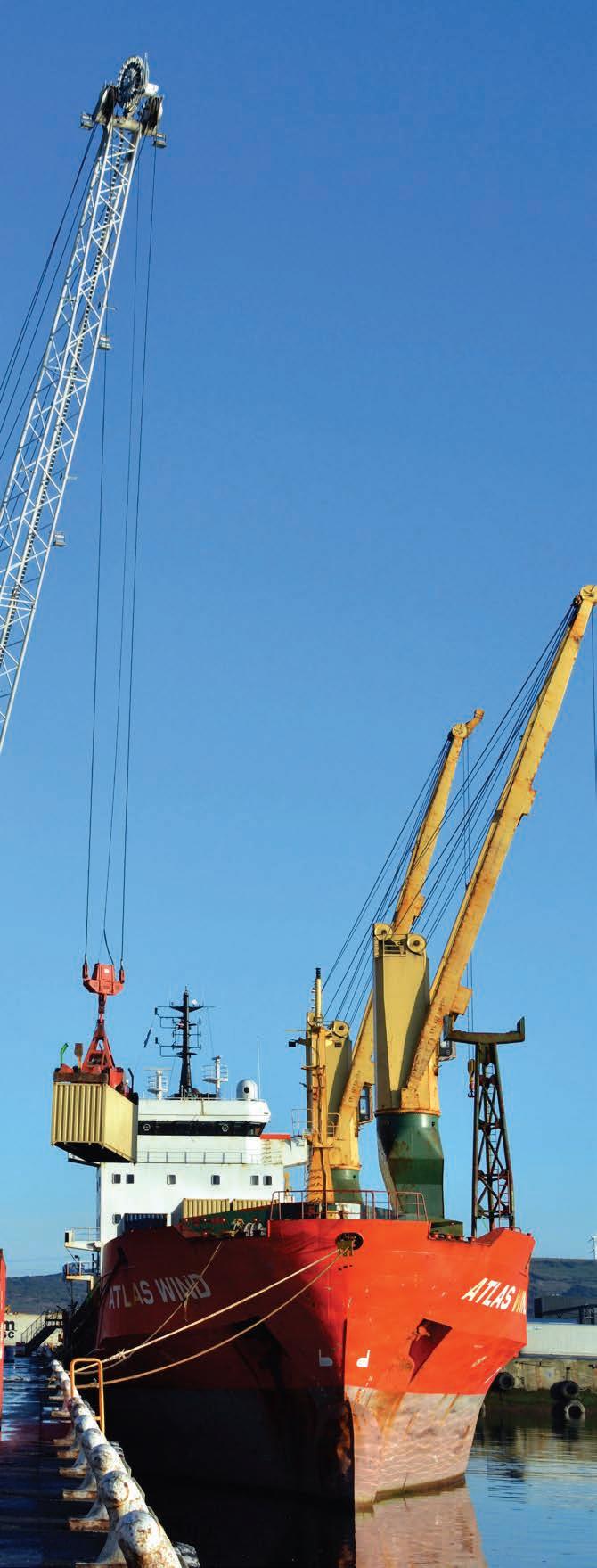
For more than 150 years, NZX has created opportunities for Kiwis to grow their personal wealth and help businesses prosper� As New Zealand’s Exchange, it is proud of its record in supporting the growth and global ambitions of local companies�
NZX has a rich history that has evolved alongside the country's growth and advancements. New Zealand’s first local stock exchange was established in Dunedin in 1866, with initial shares trading in the gold mines during the gold rush of the 1870s.
Further exchanges were established and independently operated in Auckland, Thames, Reefton, and Christchurch until 1915 when the Stock Exchange Association of New Zealand was formed. Further changes were implemented in 1983, and the New Zealand Stock Exchange was formed.
Key events in New Zealand's Stock Exchange history, such as the 1987 stock market crash, shaped changes in the governance structure that are in place today In 1991, the regional trading floors were closed as the exchange moved with technology. In 2003, NZX was listed on the Exchange, where an independently governed board was established� The New Zealand Stock Exchange also formally changed its name to NZX.
Today, NZX operates New Zealand’s equity, funds, derivatives, energy and carbon markets To support the growth of our markets, they provide trading, clearing, settlement, depository and data services for their customers� They also have a funds management business, Smartshares, and an advisory platform, NZX Wealth Technologies
NZX’s success is driven by their commitment to connecting people, businesses and capital� Their vision is to be a trusted New Zealand business delivering sustainable wealth, value and opportunities for all
South Port is proud to have been aligned with this commitment for 30 years
Reference: NZX Limited: About New Zealand’s Exchange www.nzx.com/about-nzx/organization-structure
Share Price
From 1 July 1994 to 30 June 2024
$8.00
$4.00
$2.00
$0.00

Tiwai Point Aluminium Smelter's future secured for another 20 years
After several years of uncertainty about the future of the New Zealand Aluminium Smelters (NZAS) Tiwai Point aluminium smelter, it was welcome news when a long-term power supply deal was reached, seeing a fixed price power contract in place until 2044.
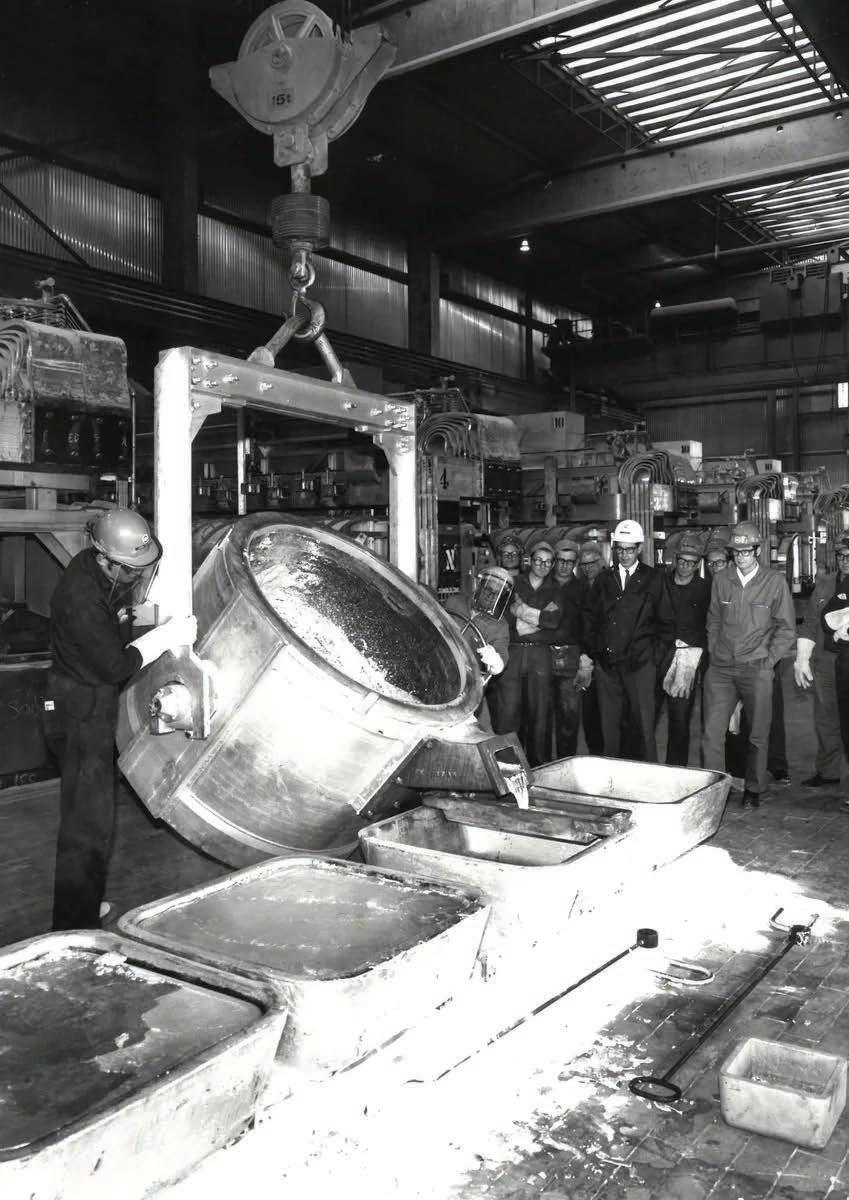
30% 20% 20% 27% of our total cargo throughput approximately 20% of our Net Profit After Tax of our bulk vessel calls into the Port of containers handled through the Port (the majority of which are packed on the wharf)
This activity helps secure marine, container packing, and container terminal operations jobs This decision will also bring flow-on benefits to the Port and the region� Importantly, it will provide the confidence for generators to invest in additional renewable electricity generation in the Southland province, most likely wind farms
There is also a 35-year license agreement between NZAS and South Port for the South Port-owned Tiwai Wharf, ending in 2043
With over 50 years of history at Tiwai, NZAS has given cause to an undercurrent of innovative thinking and a drive to continuously improve how they operate This innovative spirit has seen new demand response contracts concluded with energy generators, which will see the Tiwai smelter make up to 185 megawatts (MW) of electricity available to the national grid in times of severe shortage This is the equivalent of approximately 20-25 percent of the energy that the former Lake Onslow pumped hydro project was modelled to be required to produce on average
“As a very large electricity user, NZAS recognises the impact we have on the demand for electricity in New Zealand,” said Chief Executive Chris Blenkiron.
“Making up to a third of our supply available to help New Zealand is something we are happy to do to make sure that we play our part in the wider energy sector and help to keep the lights on “Added demand response capacity will be invaluable as New Zealand’s energy demand, and climate change, increase demand on the national grid “As well as the demand response capacity, [these] electricity agreements will also help progress the potential development of new renewable wind projects, providing a further boost to the security of electricity supply for New Zealand,” Mr Blenkiron said
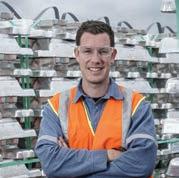
"When our demand response is called on, it effectively means New Zealand will have to burn less coal at Huntly, ultimately reducing New Zealand’s carbon emissions."
- Chris Blenkiron NZAS, Chief Executive and General Manager
When reflecting on the supply deal, Meridian Energy Chief Executive Neal Barclay called the agreement an "excellent result" after many years of negotiation�
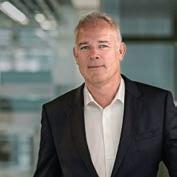
“This is a fantastic outcome for New Zealand and the Southland region. It's further proof that large industrial businesses can utilise New Zealand's renewable energy advantage and create lowcarbon sustainable products, high-value jobs, and export dollars for our country.”
Upon signing, Mercury NZ Executive GM Portfolio, Phil Gibson, said it represents a significant stepping stone for further renewables development�
“This agreement gives us confidence to move fast on our commitment to bringing more renewable energy options to New Zealand ”
Mercury began construction of its Kaiwera Downs wind farm expansion project in July, adding a further 36 turbines to the 10 already operational The entire 46-turbine wind farm will generate up to 198MW of renewable energy by 2027, helping to power the Tiwai smelter under the agreement with NZAS

“We’re excited to start another project that will help Aotearoa, New Zealand, move to a lower-carbon future.”

“Contact’s strategic decisions and sales choices over the past four years have been made under the belief that the Tiwai Point aluminium smelter in Southland will continue to operate for the long-term,”
said Mike Fuge, Contact CEO. “Confirmation of the sustainable electricity demand from the smelter supports the acceleration of the Contact26 strategy to decarbonise New Zealand, with the addition of demand response also supporting security of supply.”
1856 COLONIAL SETTLEMENT
Bluff Harbour became an official port of entry in 1856, thereby beginning its journey as New Zealand’s southernmost deepwater commercial port

1877
BLUFF HARBOUR BOARD ESTABLISHED
The Bluff Harbour Board was established to manage the port’s wharves and related infrastructure
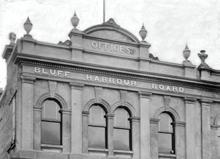
1800's 1900's
1973
The first alumina shipment arrived on the 22 April, and the first cells went into operation the following day� By the spring of 1971, 600 waged staff were on-site, and the first shipment of metal was made
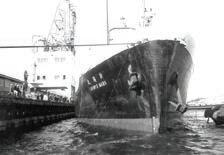
Tiwai 1971 to 2024 Tonnage
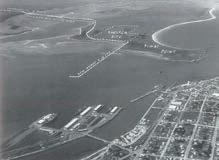
1966
COMALCO WOULD BUILD A 100,000 TONNE SMELTER IN BLUFF
The smelter needed power, and the New Zealand Government needed a customer. Thus, Manapōuri was built for Tiwai, and Tiwai was built for Manapōuri. The agreement, which stated that Comalco would build a 100,000-tonne aluminum smelter in Bluff, was signed in 1966
1983
Third half-potline officially opened
Prime Minister Robert Muldoon officially opened the third half-potline
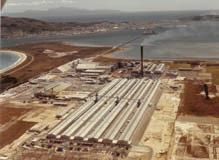
1979
COMPUTER-CONTROLLED CELL AUTOMATION ANNOUNCED
In 1979, a $3 million computercontrolled cell automation system was announced It would lead to a 1% increase in efficiency
1991
TNT ALLTRANS DELIVERED HER 4 MILLIONTH TONNE OF ALUMINA
TNT Alltrans delivered her 4 millionth tonne of alumina to the smelter late in 1991
1992
THE NEW ZEALAND POWER CRISIS
The lakes' storage supply in the South Island were at the lowest levels they'd been for 30 years� Given traditional weather patterns, levels weren't expected to rise for weeks, if not months As winter approached, New Zealand was heading into a serious power crisis
1979
THE 1 MILLIONTH TONNE OF ALUMINIUM PRODUCED
By 1979, the 4,000th employee was signed on 7% of Invercargill's population was directly dependant on the smelter and a further 7% indirectly dependant on the smelter through service areas
1989
3 MILLIONTH TONNE OF ALUMINIUM PRODUCED
The 3 millionth tonne of aluminium was produced on 18th January 1989. The honour went to Cell 478, which at 12 years old, had become the oldest of its technology in the world. Cell 478 died later the following year�
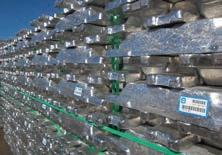
2011 RECORD PRODUCTION
354,029 tonnes of aluminium was produced at Tiwai in 2011, breaking an annual record for saleable metal production�

2018
Recomissioned fourth potline opens
Prime Minister Dame Jacinda Adern's re-opening of the fourth potline allowed the smelter to meet customer demand for value-added products made in New Zealand It increased production capacity by 10% and, with increased orders for other products, created an additional 45 jobs
2021
CELEBRATING 50 YEARS OF TIWAI April 2021 - Happy 50th birthday to NZAS!
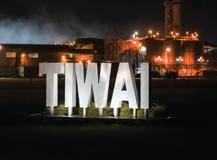
2007
NZAS RANKED AMONG THE WORLDS' LOWEST EMMITTING SMELTERS
In 2007, Tiwai Point was ranked among the world's top 5% of lowest emitting aluminium smelters
2015
NZAS METAL EXPORTED TO 25 COUNTRIES
In 2015, Tiwai's 'pure kiwi metal' was exported to 25 countries While Japan – for whom Tiwai was built to predominantly service – has always been NZAS' largest market�
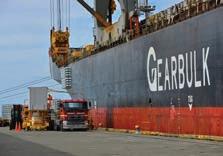
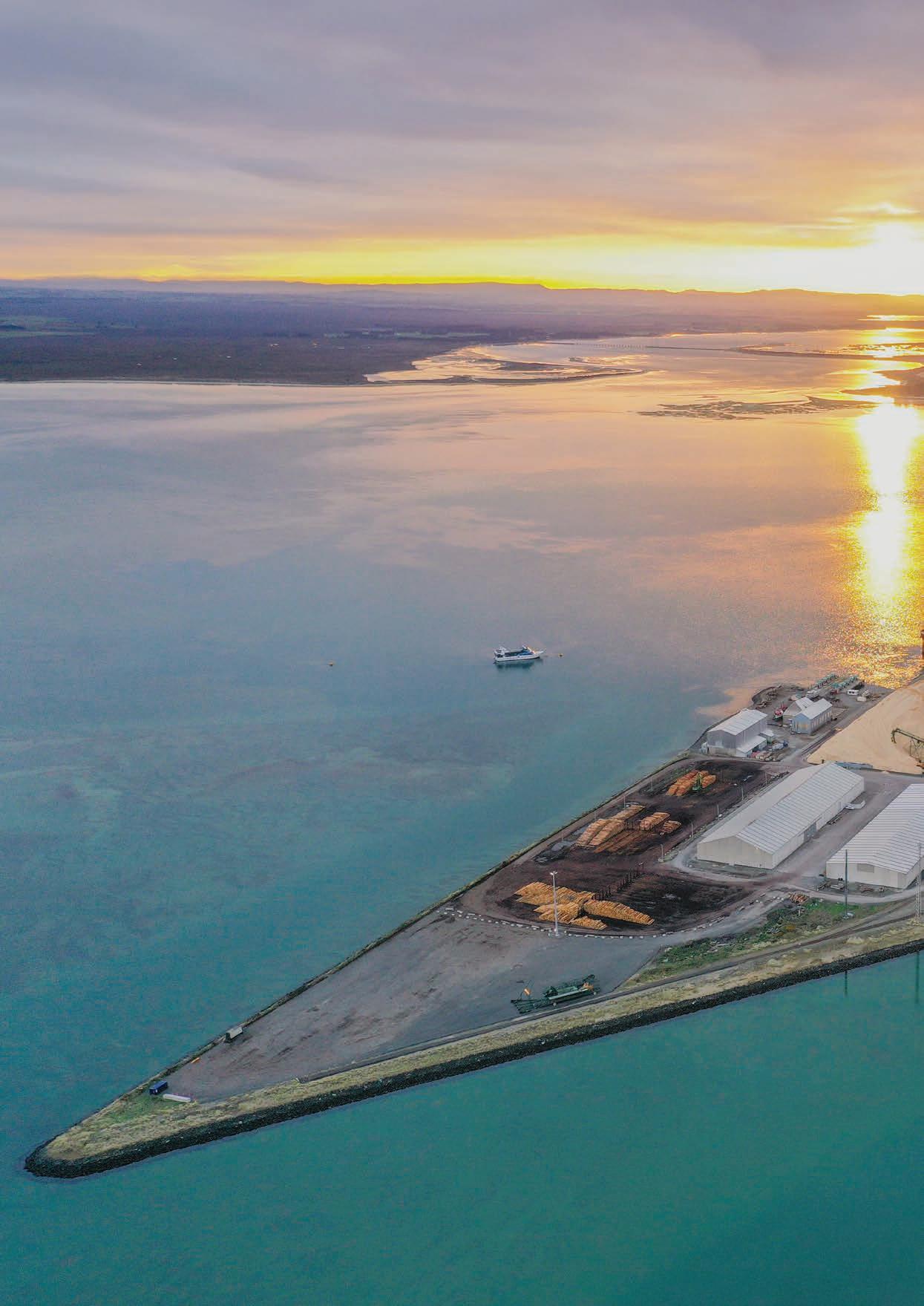

Tiwai Wharf owned by South Port and leased under a licence agreement to NZAS
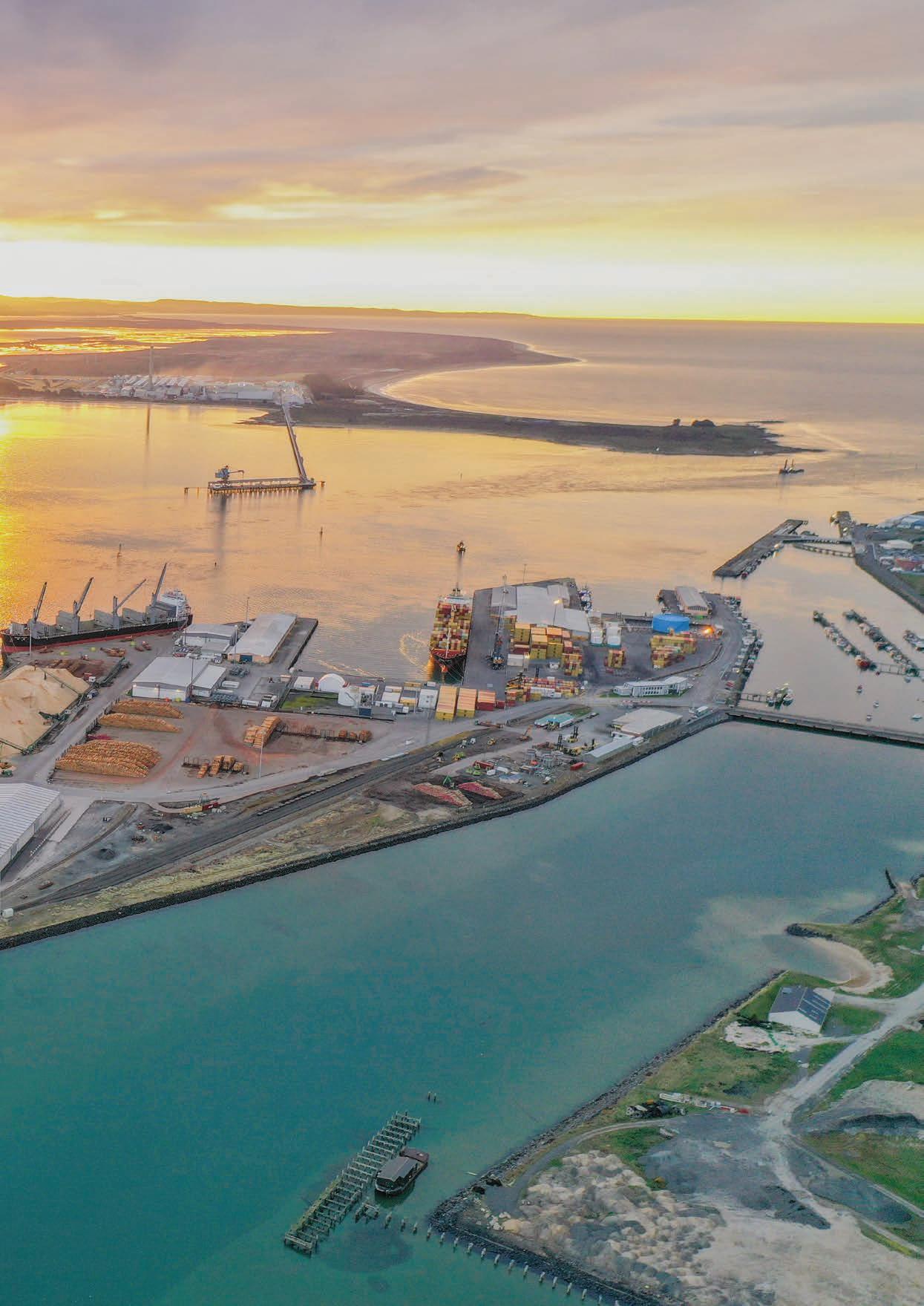
Warehouse No.3A - 4,500m2
Warehouse No. 3 - 2,200m2
Warehouse No. 2 - 1,400m2
Warehouse No.3C - 1,900m2
1
Warehouse No. 1 – 2,000m2
11
Fishing Boat Piers
Container Servicing Pad

The Auditor-General is the auditor of South Port New Zealand Limited and its subsidiaries (the Group). The Auditor-General has appointed me, Mike Hawken, using the staff and resources of Deloitte Limited, to carry out the audit of the consolidated financial statements on his behalf
We have audited the consolidated financial statements of the Group on pages 78 to 101, that comprise the consolidated statement of financial position as at 30 June 2024, the consolidated statement of comprehensive income, consolidated statement of changes in equity and consolidated statement of cash flows for the year then ended, and the notes to the consolidated financial statements including a material accounting policy information
In our opinion, the consolidated financial statements present fairly, in all material respects, the consolidated financial position of the Group as at 30 June 2024, and its consolidated financial performance and its consolidated cash flows for the year then ended in accordance with the New Zealand equivalents to IFRS Accounting Standards and IFRS Accounting Standards�
We conducted our audit in accordance with the Auditor-General’s Auditing Standards, which incorporate the Professional and Ethical Standards and the International Standards on Auditing (New Zealand) issued by the New Zealand Auditing and Assurance Standards Board. Our responsibilities under those standards are further described in the Auditor’s responsibilities for the audit of the consolidated financial statements section of our report. We are independent of the Group in accordance with the Auditor-General’s Auditing Standards, which incorporate Professional and Ethical Standard 1: International Code of Ethics for Assurance Practitioners issued by the New Zealand Auditing and Assurance Standards Board, and we have fulfilled our other ethical responsibilities in accordance with these requirements�
We believe that the audit evidence we have obtained is sufficient and appropriate to provide a basis for our opinion
Other than in our capacity as auditor we have no relationship with, or interests in, South Port New Zealand Limited or any of its subsidiaries�
Key audit matters are those matters that, in our professional judgement, were of most significance in our audit of the financial statements for the current period. These matters were addressed in the context of our audit of the financial statements as a whole, and in forming our opinion thereon, and we do not provide a separate opinion on these matters
As disclosed in note 5, the Group recognised revenue totalling approximately $50.1 million relating to marine and storage services, and cargo and logistics services for the year in the consolidated statement of comprehensive income
There is complexity involved in assessing the timing of revenue recognition as South Port has a large volume of revenue transactions with some revenue streams recognised over time and others at a point in time
Revenue recognition is a key audit matter due to the significance of the balance and the level of effort involved in performing our audit procedures�
In performing our audit procedures:
• We evaluated the processes and controls in place over the recording of revenue, including how the timing of revenue is determined�
• We obtained direct confirmation of the revenue received from certain large customers
• We tested a sample of revenue transactions recorded throughout the period to assess whether they were supported by underlying documentation
• We tested a sample of revenue transactions recorded near year end to assess whether they were recorded in the correct period�
• We considered the adequacy of revenue disclosures in the consolidated financial statements
The Directors are responsible on behalf of the Group for the other information The other information comprises the information included on pages 2 to 74 and 102 to 107, but does not include the consolidated financial statements and our auditor’s report thereon, and the Climate Statement, which is expected to be made available to us after the date of the audit report.
Our opinion on the consolidated financial statements does not cover the other information and we do not express any form of audit opinion or assurance conclusion thereon
In connection with our audit of the consolidated financial statements, our responsibility is to read the other information and, in doing so, consider whether the other information is materially inconsistent with the consolidated financial statements or our knowledge obtained in the audit or otherwise appears to be materially misstated If, based on the work we have performed, we conclude that there is a material misstatement of this other information, we are required to report that fact We have nothing to report in this regard
When we read the Climate Statement, if we conclude that there is a material misstatement therein, we are required to communicate the matter to the directors and consider further appropriate actions�
Directors’ responsibilities for the consolidated financial statements
The Directors are responsible on behalf of the Group for the preparation and fair presentation of the consolidated financial statements in accordance with the New Zealand equivalents to International Financial Reporting Standards and International Financial Reporting Standards, and for such internal control as the Directors determine is necessary to enable the preparation of consolidated financial statements that are free from material misstatement, whether due to fraud or error
In preparing the consolidated financial statements, the Directors are responsible on behalf of the Group for assessing the Group’s ability to continue as a going concern, disclosing, as applicable, matters related to going concern and using the going concern basis of accounting unless the Directors either intend to liquidate the Group or to cease operations, or have no realistic alternative but to do so�
The Directors’ responsibilities arise from the Financial Markets Conduct Act 2013
Auditor’s responsibilities for the audit of the consolidated financial statements
Our objectives are to obtain reasonable assurance about whether the consolidated financial statements as a whole are free from material misstatement, whether due to fraud or error, and to issue an auditor’s report that includes our opinion.
Reasonable assurance is a high level of assurance, but is not a guarantee that an audit conducted in accordance with the Auditor-General’s Auditing Standards will always detect a material misstatement when it exists. Misstatements can arise from fraud or error and are considered material if, individually or in the aggregate, they could reasonably be expected to influence the economic decisions of shareholders taken on the basis of these consolidated financial statements
As part of an audit in accordance with the Auditor-General’s Auditing Standards, we exercise professional judgement and maintain professional scepticism throughout the audit� We also:
• Identify and assess the risks of material misstatement of the consolidated financial statements, whether due to fraud or error, design and perform audit procedures responsive to those risks, and obtain audit evidence that is sufficient and appropriate to provide a basis for our opinion� The risk of not detecting a material misstatement resulting from fraud is higher than for one resulting from error, as fraud may involve collusion, forgery, intentional omissions, misrepresentations, or the override of internal control
• Obtain an understanding of internal control relevant to the audit in order to design audit procedures that are appropriate in the circumstances, but not for the purpose of expressing an opinion on the effectiveness of the Group’s internal control.
• Evaluate the appropriateness of accounting policies used and the reasonableness of accounting estimates and related disclosures made by management�
• Conclude on the appropriateness of the use of the going concern basis of accounting by the directors and, based on the audit evidence obtained, whether a material uncertainty exists related to events or conditions that may cast significant doubt on the Group’s ability to continue as a going concern If we conclude that a material uncertainty exists, we are required to draw attention in our auditor’s report to the related disclosures in the consolidated financial statements or, if such disclosures are inadequate, to modify our opinion Our conclusions are based on the audit evidence obtained up to the date of our auditor’s report However, future events or conditions may cause the Group to cease to continue as a going concern
• Evaluate the overall presentation, structure and content of the consolidated financial statements, including the disclosures, and whether the consolidated financial statements represent the underlying transactions and events in a manner that achieves fair presentation
• Obtain sufficient appropriate audit evidence regarding the financial information of the entities or business activities within the Group to express an opinion on the consolidated financial statements We are responsible for the direction, supervision and performance of the group audit We remain solely responsible for our audit opinion
We communicate with the Directors regarding, among other matters, the planned scope and timing of the audit and significant audit findings, including any significant deficiencies in internal control that we identify during our audit
We also provide the Directors with a statement that we have complied with relevant ethical requirements regarding independence, and to communicate with them all relationships and other matters that may reasonably be thought to bear on our independence, and where applicable, related safeguards�
From the matters communicated with the Directors, we determine those matters that were of most significance in the audit of the consolidated financial statements of the current period and are therefore the key audit matters We describe these matters in our auditor’s report unless law or regulation precludes public disclosure about the matter or when, in extremely rare circumstances, we determine that a matter should not be communicated in our report because the adverse consequences of doing so would reasonably be expected to outweigh the public interest benefits of such communication
Our responsibilities arise from the Public Audit Act 2001
Mike Hawken Partner for Deloitte Limited
On behalf of the Auditor-General Dunedin, New Zealand
23 August 2024
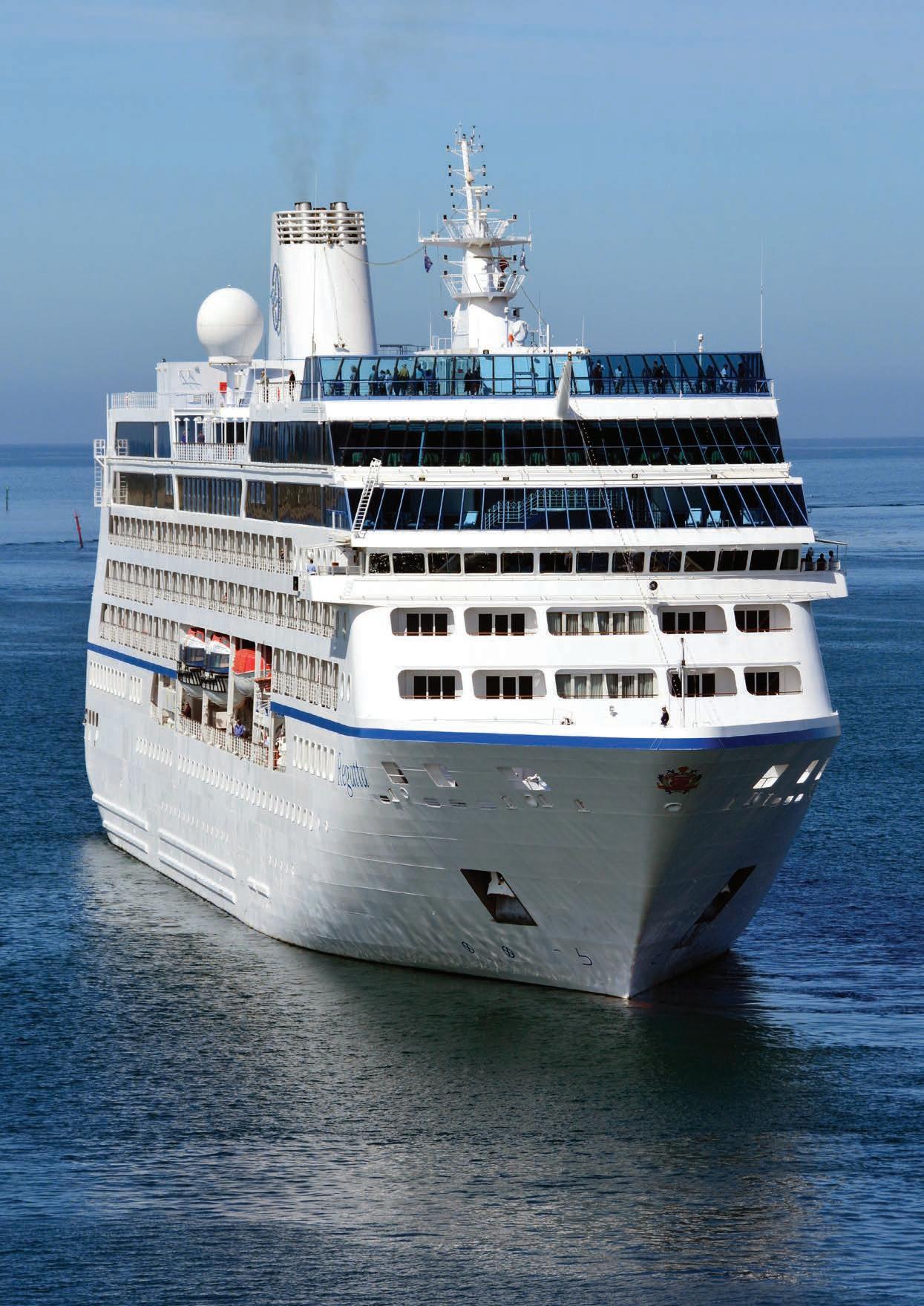
South Port New Zealand Limited (the “Company”) is a company domiciled in New Zealand, registered under the Companies Act 1993 and listed on the New Zealand Stock Exchange (“NZX”). The Company is an issuer in terms of the Financial Reporting Act 2013
The consolidated financial statements of South Port New Zealand Limited as at and for the period ended 30 June 2024 comprise the Company and its subsidiary Awarua Holdings Ltd (together referred to as the “Group”). South Port New Zealand Ltd is primarily involved in providing and managing port and warehousing services
(a) Statement of Compliance
The Parent Company is a Financial Markets Conduct (FMC) reporting entity for the purposes of the Financial Reporting Act 2013 and the Financial Markets Conduct Act 2013� These financial statements comply with these Acts and have been prepared in accordance with the New Zealand Equivalents to IFRS Accounting Standards (NZ IFRS) and other applicable Financial Reporting Standards, as appropriate for profit-oriented entities These financial statements comply with IFRS Accounting Standards (IFRS).
The financial statements were approved by the Board of Directors on 23 August 2024�
(b) Basis of Measurement
The financial statements have been prepared:
› On the basis that the Group is a going concern
› On the historical cost basis except for the following:
‐ Financial instruments measured at fair value
The methods used to measure fair values are discussed further in Note 04
(c) Functional and Presentation Currency
These financial statements are presented in New Zealand dollars ($), which is the Company's functional currency. All financial information presented in New Zealand dollars has been rounded to the nearest thousand
(d) Use of Estimates and Judgements
The preparation of financial statements requires management to make judgements, estimates and assumptions that affect the application of accounting policies and the reported amounts of assets, liabilities, income and expenses. Actual results may differ from these estimates�
Estimates and underlying assumptions are reviewed on an ongoing basis Revisions to accounting estimates are recognised in the period in which the estimate is revised and in any future periods affected�
In particular, information about significant areas of estimation uncertainty and critical judgements in applying accounting policies that have the most significant effect on amounts recognised in the financial statements are as detailed below:
› Depreciation Rates and Asset Useful Lives (Note 03(e))
› Impairment (Note 03(f))
› Classification of leased assets PPE vs Investment Property (Note 11)
› Share-Based Payments (Note 24)
The accounting policies set out below have been applied consistently to all periods presented in these financial statements, and have been applied consistently by Group entities
(a)
Consolidation of a subsidiary begins when the Group obtains control over the subsidiary and ceases when the Group loses control of the subsidiary. Assets, liabilities, income and expenses of a subsidiary acquired or disposed of during the year are included in the statement of comprehensive income from the date the Group gains control until the date the Group ceases to control the subsidiary
Control is achieved when the Group is exposed, or has rights, to variable returns from its involvement with the investee and has the ability to affect those returns through its power over the investee
The financial statements of subsidiaries are prepared for the same reporting period as the parent company, using consistent accounting policies�
In preparing the consolidated financial statements, all intercompany balances and transactions, income and expenses and profit and losses resulting from intra-group transactions have been eliminated in full
Subsidiaries are fully consolidated from the date on which control is obtained by the Group and cease to be consolidated from the date on which control is transferred out of the Group
(b) Foreign Currency
Transactions in foreign currencies are translated to the respective functional currencies of the Group at exchange rates at the dates of the transactions
(c) Goods and Services Tax (GST)
All financial information is expressed exclusive of GST, except for trade and other receivables, and trade and other payables, which are expressed inclusive of GST in the Statement of Financial Position
(d) Financial Instruments
(i) Non-derivative financial instruments
The Group is party to financial instruments as part of its normal operations These financial instruments include cash and cash equivalents, trade and other receivables, loans and borrowings, and trade and other payables
Non-derivative financial instruments are recognised initially at fair value on transaction date plus, for instruments not at fair value through the profit or loss, any directly attributable transaction costs Subsequent to initial recognition nonderivative financial instruments are measured as described below
A financial instrument is recognised if the Group becomes a party to the contractual provisions of the instrument Financial assets are derecognised if the Group’s contractual rights to the cash flows from the financial assets expire or if the Group transfers the financial asset to another party without retaining control or substantially all risks and rewards of the asset Purchases and sales of financial assets are accounted for at trade date. Financial liabilities are derecognised if the Group’s obligations specified in the contract expire or are discharged or cancelled
Cash and cash equivalents comprise cash balances and call deposits
Trade and other receivables
Trade and other receivables are recognised initially at fair value� Trade receivables are held with the objective of collecting the contractual cash flows and therefore they are subsequently measured at amortised cost, less a provision for expected credit loss
Interest-bearing borrowings
Borrowings are initially recognised at fair value, net of transaction costs incurred After initial recognition, interest-bearing loans and borrowings are subsequently measured at amortised cost using the effective interest method Borrowings are classified as current liabilities unless the Group has an unconditional right to defer settlement of the liability for at least 12 months after the balance sheet date
Trade and other payables
Trade and other payables represent liabilities for goods and services provided to the Group prior to the end of financial year which are unpaid The amounts are unsecured and are usually paid within 30 days of recognition�
Trade payables are recognised initially at fair value less transaction costs and subsequently measured at amortised cost
(ii) Derivative financial instruments and hedging activities
The Group uses derivative financial instruments to hedge its exposure to foreign exchange and interest rate risks arising from financing and investment activities
In accordance with its treasury policy, the Group does not hold or issue derivative financial instruments for trading purposes However, derivatives that do not qualify for hedge accounting are accounted for as trading instruments
Derivative financial instruments qualifying for hedge accounting are classified as non current if the maturity of the instrument is greater than 12 months from reporting date and current if the instrument matures within 12 months from reporting date Derivatives accounted for as trading instruments are classified as current
Derivative financial instruments are recognised initially at fair value and transaction costs are expensed immediately. Subsequent to initial recognition, derivative financial instruments are stated at fair value The gain or loss on re-measurement to fair value is recognised immediately in profit or loss However, where derivatives qualify for hedge accounting, recognition of any resultant gain or loss depends on the nature of the hedging relationship
Interest rate swaps
Derivative financial instruments also include interest rate swaps to hedge (economically but not in accounting terms) the Group’s risks associated with interest rate fluctuations Such derivative financial instruments are initially recognised at fair value on the date on which a derivative contract is entered into and are subsequently remeasured to fair value Derivatives are carried as assets when their fair value is positive and as liabilities when their fair value is negative�
Any gains or losses arising from changes in the fair value of interest rate swaps are taken directly to profit or loss for the year
The fair values of interest rate swap contracts are determined by reference to market values for similar instruments
(e) Property, Plant & Equipment
(i) Recognition and measurement
Items of property, plant and equipment are measured at cost, less accumulated depreciation and impairment losses Land and dredging are not depreciated
The initial cost includes the purchase price and any costs directly attributable to bringing the asset to the state of being ready for use in location These costs can include installation costs, borrowing costs, cost of obtaining resource consents etc. Any feasibility costs are expensed.
(ii) Subsequent expenditure
Subsequent expenditure is added to the gross carrying amount of an item of property, plant or equipment, if that expenditure increases the future economic benefits of the asset beyond its existing potential, or is necessarily incurred to enable future economic benefits to be obtained and its cost can be measured reliably
(iii) Disposal of property, plant and equipment
Where an item of PPE is disposed of, the gain or loss is recognised in the Statement of Comprehensive Income at the difference between the net sale price and the net carrying amount of the item
(iv) Depreciation
Property, plant and equipment are depreciated on a straightline basis so as to allocate the costs of assets over their estimated useful lives as follows:
Land and Dredging Nil
Buildings
Depreciation methods, useful lives and residual values are reassessed at the reporting date
(f) Impairment
The carrying amounts of the Group’s non-financial assets are reviewed at each balance sheet date to determine whether there is any objective evidence of impairment
An impairment loss is recognised whenever the carrying amount of an asset exceeds its recoverable amount. Impairment losses directly reduce the carrying amount of assets and are recognised in the Statement of Comprehensive Income
(i) Impairment of receivables
For trade and other receivables the Group makes use of a simplified approach, as permitted by NZ IFRS 9, and records the loss allowances as lifetime expected credit losses from that recognition. This is expected credit losses that result from all possible default events over the life of the financial instrument
(ii) Impairment of Property, Plant and Equipment (PPE)
For property, plant and equipment, the Group assesses whether there are any circumstances that have materially changed during the year or after balance date that could lead to the potential impairment of PPE If there is a risk of impairment, then Management prepare cash flow models for the Cash Generating Units (CGU) that could potentially be adversely affected, to determine whether any impairment against PPE needs to be recognised in the financial statements�
(g) Provisions
A provision is recognised if, as a result of a past event, the Group has a present legal or constructive obligation that can be estimated reliably, and it is probable that an outflow of economic benefits will be required to settle the obligation
(i)
from port services
Port operations revenue is derived from an integrated performance obligation for the provision of marine services, berthage, wharfage, storage and other services Revenue is recognised both at a point in time when the Group satisfies its performance obligations by transferring the promised services to its customers, and over time as the Group performs the service and the customer simultaneously benefits from the service All services performed have short service performance timeframes� Revenue received in advance is recorded as a liability and recognised as revenue when the performance obligation is satisfied
Rental income from property is recognised in the Statement of Comprehensive Income on a straight-line basis over the term of the lease
The Group leases certain property, plant and equipment The Group recognises a right-of-use asset and a corresponding lease liability with respect to all lease arrangements in which it is the lessee, except for short-term leases and leases of low value assets where the Group recognises the lease payments as an operating expense on a straight-line basis over the term of the lease
The lease liability is initially measured at the present value of the lease payments that are not paid at the commencement date, discounted by using the rate implicit in the lease If this rate cannot be readily determined, the Group uses its incremental borrowing rate (IBR).
Lease payments included in the measurement of the lease liability comprise:
› Fixed lease payments (including in-substance fixed payments), less any lease incentives receivable;
› Payments of penalties for terminating the lease if the lease term reflects the exercise of an option to terminate the lease.
The lease liability is presented as a separate line in the consolidated statement of financial position�
The lease liability is subsequently measured by increasing the carrying amount to reflect interest on the lease liability (using the effective interest method) and by reducing the carrying amount to reflect the lease payments made�
The Group remeasures the lease liability (and makes a corresponding adjustment to the related right-of-use asset) whenever:
› The lease term has changed or there is a significant event or change in circumstances resulting in a change in the assessment of exercise of a purchase option, in which case the lease liability is remeasured by discounting the revised lease payments using a revised discount rate
› The lease payments change due to changes in an index or rate or a change in expected payment under a guaranteed residual value, in which cases the lease liability is remeasured by discounting the revised lease payments using the initial discount rate (unless the lease payments change is due to a change in a floating interest rate, in which case a revised discount rate is used).
› A lease contract is modified, and the lease modification is not accounted for as a separate lease, in which case the lease liability is remeasured based on the lease term of the modified lease by discounting the revised lease payments using a revised discount rate at the effective date of the modification
The ROU assets comprise the initial measurement of the corresponding lease liability, lease payments made at or before the commencement date, less any lease incentives received and any initial direct costs They are subsequently measured at cost less accumulated depreciation and impairment losses�
ROU assets are depreciated over the shorter period of lease term and useful life of the underlying asset using the straight-line method
The estimated useful lives of ROU assets are determined on the same basis as similar owned assets within property, plant and equipment Depreciation starts at the commencement date of the lease
ROU assets are presented as a separate line in the consolidated statement of financial position
The Group applies IAS 36 to determine whether a ROU asset is impaired and accounts for any identified impairment loss under the same policy adopted for property, plant and equipment
The Group as a lessor
The Group enters into lease agreements as a lessor with respect to some of its properties Leases for which the Group is a lessor are classified as finance or operating leases Whenever the terms of the lease transfer substantially all the risks and rewards of ownership to the lessee, the contract is classified as a finance lease All other leases are classified as operating leases
Rental income from operating leases is recognised on a straight-line basis over the term of the relevant lease
The employee performance share rights plan is an equity-settled share-based payment arrangement� The fair value of the rights, measured at the grant date, is expensed on a straight-line basis over the vesting period with a corresponding increase in the share-based payment reserve When the non-market performance conditions (EPS CAGR) or the service condition (absolute or relative TSR) is not met, the expense is revised to reflect the number of rights expected to vest When the rights vest, or they lapse because the market conditions are not met, the amount in the share-based payment reserve relating to those rights is transferred to share capital
Finance income comprises interest income on funds invested, dividend income, foreign currency gains and changes in the fair value of financial assets at fair value through profit or loss
Interest income is recognised as it accrues, using the effective interest method Dividend income is recognised on the date that the Group’s right to receive payment is established.
Finance expenses comprise interest expense on borrowings and lease liabilities, foreign currency losses, interest rate swap losses, and impairment losses recognised on financial assets All borrowing costs are recognised in the Statement of Comprehensive Income using the effective interest method
Income tax expense comprises current and deferred tax. Income tax expense is recognised in the Statement of Comprehensive Income except to the extent that it relates to items recognised directly in equity, in which case it is recognised in equity�
Current tax is the expected tax payable on the taxable income for the year, using tax rates enacted or substantively enacted at the reporting date, and any adjustment to tax payable in respect of previous years
Deferred tax is recognised using the balance sheet method, providing for temporary differences between the carrying amounts of assets and liabilities for financial reporting purposes and the amounts used for taxation purposes.
Deferred tax is not recognised for the following temporary differences: the initial recognition of assets or liabilities in a transaction that is not a business combination and that affects neither accounting nor taxable profit, and differences relating to investments in subsidiaries to the extent that they probably will not reverse in the foreseeable future
Deferred tax assets and liabilities are measured at the tax rates that are expected to be applied to the temporary differences when they reverse, based on the laws that have been enacted or substantively enacted by the reporting date
A deferred tax asset is recognised to the extent that it is probable that future taxable profits will be available against which temporary differences can be utilised. Deferred tax assets are reviewed at each reporting date and are reduced to the extent that it is no longer probable that the related tax benefit will be realised
Additional income taxes that arise from the distribution of dividends are recognised at the same time as the liability to pay the related dividend is recognised
(m) Earnings per Share
Basic earnings per share
Basic earnings per share (EPS) is calculated by dividing the profit attributable to the shareholders of the Group by the weighted average number of ordinary shares outstanding during the financial year
Diluted earnings per share
Diluted earnings per share (EPS) adjusts for any commitments the Group has to issue shares in the future that would decrease the basic EPS� The Group only has one type of dilutive potential ordinary shares, being the Executive Long-Term Incentive plan share rights (refer to note 24). Diluted EPS is calculated by adjusting the weighted average number of ordinary shares outstanding to assume conversion to share rights�
(n) Segment Reporting
Operating segments are reported in a manner consistent with the internal reporting provided to the chief operating decision maker The chief operating decision maker, who is responsible for allocating resources and assessing performance of the operating segments, has been identified as the Chief Executive.
The Group operates solely in the port industry and all operations are carried out in the Southland region, therefore there are no separately reportable segments to be disclosed
(o) Amendments to NZ IFRS
There are no new, revised or amended accounting standards issued by the International Accounting Standards Board (IASB) and the New Zealand Accounting Standards Board (NZASB) that are mandatory for application by the Group for the financial year beginning 1 July 2023
(p) NZ IFRS issued but not yet effective
No other standards, amendments or interpretations that have been issued but are not yet effective are expected to materially impact the Group's financial statements other than disclosures
A number of the Group’s accounting policies and disclosures require the determination of fair value, for both financial and nonfinancial assets and liabilities Fair values have been determined for measurement and/or disclosure purposes based on the following methods Where applicable, further information about the assumptions made in determining fair values is disclosed in the notes specific to that asset or liability
(a) Derivative Financial Instruments
The fair value of forward exchange contracts and interest rate derivatives are determined using quoted rates at balance date
(b) Other Non-Derivative Financial Instruments
The carrying values less impairment provisions of trade receivables and payables are assumed to approximate their fair values
The carrying values of loans and borrowings approximate their fair values
In Thousands of New Zealand Dollars
Revenue arises from the delivery of port related services (under NZ IFRS 15), and rental property leases (under NZ IFRS 16). To determine whether to recognise revenue, the Group follows a 5-step process:
1 Identifying the contract with a customer
2 Identifying the performance obligations
3 Determining the transaction price
4� Allocating the transaction price to the performance obligations
5� Recognising revenue when/as performance obligations are satisfied
Marine and storage services revenue is derived from an integrated performance obligation for the provision of channel navigation, berthage, and storage of customer cargo� This revenue is recognised over time as South Port performs the service, and the customer simultaneously benefits from that service
Cargo and logistics services revenue is derived from an integrated performance obligation for the provision of wharfage, container packing and other cargo logistics services This revenue is recognised at a point in time when South Port satisfies its performance obligations by transferring the promised services to its customers
All port services performed have short service performance timeframes� All revenue is shown net of volume discounts�
Rental revenue from property leased under operating leases is recognised on a straight-line basis over the term of the relevant lease, as per NZ IFRS 16 Total variable rental revenue for 2024 was $1,752,000 (2023: $1,597,000).
Other income relates to the gain on sale from property, plant and equipment This income is recognised when an unconditional contract is in place, and it is probable that the Group will receive the consideration due and significant risks and rewards of ownership of assets have been transferred to the buyer
The amounts recorded above are included in operating expenses
The compensation of the Directors, Chief Executive and other senior management, being the key management personnel of the entity, is set out below: In Thousands of
RECOGNISED IN PROFIT OR LOSS
The prima facie income tax expense on pre-tax accounting surplus reconciles to the income tax expense in the financial statements as follows:
The tax rate used in the above reconciliation is the corporate tax rate of 28% payable on taxable profits under New Zealand tax law. There has been no change in the corporate tax rate when compared with the previous reporting period * Adjustment relates to legislation which has removed the ability to claim tax deductions relating to depreciation of commercial buildings
(B) INCOME TAX RECOGNISED DIRECTLY IN EQUITY
There was no current or deferred tax charged / (credited) directly to equity during the period. In Thousands of New
(C) CURRENT TAX ASSETS AND LIABILITIES
(D) DEFERRED TAX BALANCES COMPRISE:
Taxable and deductible temporary differences arising from the following:
In Thousands of New Zealand Dollars
Asset recoverable through future operating activities
* These amounts relate to adjustments for crane spare parts to/from maintenance after a stocktake of spares is completed each balance date, and the split out of the dredging asset that was sitting under plant & machinery in the previous year
The Group has land, buildings and wharves that are leased to customers, however, the Group also provides significant port services to these customers The Group determines that these properties should be classified as property, plant and equipment and accounted for under NZ IAS 16 as these properties are only leased to customers to facilitate the movement of cargo through the port and arrangements are in nature of rendering a service rather than property investment
Included in the property, plant and equipment are the following assets, all integral to the import or export of goods through the port and subject to an operating lease with a port customer
The holders of ordinary shares are entitled to receive dividends as declared from time to time and are entitled to one vote per share at meetings of the Company. All of the 26,234,898 ordinary shares rank equally with regard to the Company’s residual assets. All shares are fully paid and have no par value There were no shares issued or redeemed during the year DIVIDENDS
are recognised in the period that they are authorised and declared
the
The Group’s capital includes share capital and retained earnings. The Group’s policy is to maintain a strong capital base so as to maintain investor, creditor and market confidence. The Board of Directors’ objective is to ensure the entity continues as a going concern as well as to maintain optimal returns to shareholders and benefits for other stakeholders
The Group meets its objectives for managing capital through its investment decisions on the acquisition, disposal and development of assets and its distribution policy It is Group policy that the dividend pay out takes account of its free cash flows and reported profit
The Group is required to comply with certain financial covenants in respect of external borrowings set by the Group’s bankers. All covenants have been adhered to throughout the years ended 30 June 2024 and 30 June 2023
The Group’s policies in respect of capital management are reviewed regularly by the Board of Directors There have been no changes in the Group’s management of capital during the year.
Weighted average number of shares used as the denominator: Weighted average number
The calculation of the net asset backing per share at 30 June 2024 was based on the total net assets value of $60,232,000 (2023: $59,903,000) and a weighted average number of ordinary shares outstanding of 26,234,898 (2023: 26,234,898).
South Port New Zealand Limited’s credit facility of $46 million from ANZ is split between five different facilities as follows:
› Term Facility - $5 million expiring 4 November 2025
› Term Facility - $8 million expiring 1 July 2026
› Term Facility - $3 million expiring 31 October 2025
› Term Facility - $5 million expiring 20 July 2028
› Short Term Advances Facility - $25 million finally terminating 1 November 2025
The total facility is secured by way of a general security registered over all assets both present and future of South Port New Zealand Limited The same security was in place the previous year
The Facilities as at 30 June 2023 were as follows:
› Term Facility - $5 million expiring 1 February 2024
› Term Facility - $8 million expiring 1 July 2024
› Term Facility - $3 million expiring 31 October 2024
› Short Term Advances Facility - $22 million finally terminating 1 November 2024
Interest on the first $21 million drawn at any one time is payable according to the interest rate swap agreements the Company has with ANZ Interest on the balance of funds drawn at any time is calculated using a variable rate based on the BKBM (3 month bank bill rate).
EMPLOYEE ENTITLEMENTS
(i) Wages, salaries and annual leave
Liabilities for wages, salaries and annual leave are calculated on an actual entitlement basis at current rates of pay to be settled within 12 months from reporting date�
(ii) Long service leave
The Group’s net obligation in respect of long-term employee benefits is the amount of future benefit that employees have earned in return for their service in the current and prior periods; that benefit is discounted to determine its present value, and the fair value of any related assets is deducted� Any actuarial gains or losses are recognised in the Statement of Comprehensive Income in the period in which they arise�
The Group is exposed to market risk through its use of financial instruments and specifically to currency risk, interest rate risk and certain other price risks, which result from both its operating and investing activities
The Group has a series of policies to manage the risk associated with financial instruments Policies have been established which do not allow transactions which are speculative in nature to be entered into and the Group is not actively engaged in the trading of financial instruments As part of this policy, limits of exposure have been set and are monitored on a regular basis
Financial instruments which potentially subject the Group to credit risk principally consist of bank balances, interest rate swaps and accounts receivable The carrying amount of these financial instruments represents the maximum exposure to credit risk Management has a credit policy in place under which each new customer is individually analysed for credit worthiness In order to determine which customers are classified as having payment difficulties the Group applies a mix of duration and frequency of default and makes provision for estimated balances considered to be impaired The Group does not require collateral in respect of trade and other receivables Cash handling is only carried out with counterparties which have an investment grade credit rating
Liquidity risk is the risk that the Group will not be able to meet its financial obligations as and when they fall due. The Group’s approach to managing liquidity risk is to ensure, as far as possible, that it will always have sufficient cash and borrowing facilities available to meet its liabilities when due, under both normal and adverse conditions
The Group’s cash flow requirements and the utilisation of borrowing facilities are continuously monitored, and it is required that committed bank facilities are maintained above maximum forecast usage
The only liquidity risks the Group has at balance date are trade payables totalling $4,036,000 (2023: $4,105,000) which are all due within 30 days, and loans and borrowings totalling $35,750,000 (2023: $30,000,000) as per Note 18. The Group has undrawn facilities of $10,250,000 to assist with managing any liquidity risks
Funding risk is the risk that arises when either the size of borrowing facilities or the pricing thereof is not able to be replaced on similar terms, at the time of review with the Group’s banks. To minimise funding risk it is Board policy to spread the facilities’ renewal dates and the maturity of individual loans Where this is not possible, extensions to, or the replacement of, borrowing facilities are required to be arranged at least two months prior to each facility’s expiry.
MARKET RISK
The Group enters into derivative arrangements in the ordinary course of business to manage foreign currency and interest rate risks
FOREIGN EXCHANGE RISK
The Group is exposed to foreign currency risk on purchases that are denominated in a currency other than the Parent's functional currency, New Zealand dollars ($), which is the presentation currency of the Group
The Group does not have any material exposure to currency risk except for the one-off purchases of assets (e.g. plant and machinery) denominated in foreign currencies It is Group policy that foreign exchange exposures on imported goods must be hedged by way of foreign exchange forward contracts or options to a minimum of 50% at the time the exposure is known with certainty on all transactions that are material
The purpose of these contracts is to reduce the risk from price fluctuations of foreign currency commitments associated with these one-off purchases Any resulting differential to be paid or received as a result of the currency change is reflected in the cash flow hedge reserve to the extent that the hedge is effective, until the asset is recognised To the extent that the hedge is ineffective, changes in fair value are recognised in profit or loss
The Group has no foreign exchange forward contracts at balance date (2023: nil).
The Group is exposed to interest rate risk on their borrowings All debt is borrowed on either a fixed or floating interest rate basis As per the Group’s Treasury Policy, interest rate risk management bands apply to ‘core debt’ forecasts (defined as the lowest level of debt projected over the forecast period). Once core debt exceeds $10 million, the fixed; floating mix is subject to the limits in the following table:
Interest payable to ANZ is charged on the following basis:
(i) A range of interest rate swaps; and (ii) Variable rates based on the BKBM.
During the period the range of variable interest rates applying to the credit facility (including margin) were between 6.62% and 6.68% (2023: 3.43% and 6.65%). The Company is exposed to normal fluctuations in market interest rates
Interest rate swap (i) – South Port has an interest rate swap in place which commenced in November 2019 and matures in November 2024. The interest rate swap has a fixed swap rate of 3.64% with a notional contract amount of $5 million at 30 June 2024 (2023: contract in place for $5 million @ 3.64%, commencing November 2019 and maturing November 2024).
Interest rate swap (ii) – South Port has an interest rate swap which commenced 1 October 2023 and matures in July 2027 The interest rate swap has a fixed swap rate of 2.01% with a notional contract amount of $8 million (2023: contract in place for $8 million @ 1.27%, commencing July 2021 and maturing July 2026).
Interest rate swap (iii) – South Port has an interest rate swap which commenced 1 November 2021 and matures in October 2024 The interest rate swap has a fixed swap rate of 2.59% with a notional contract amount of $3 million (2023: contract in place for $3 million @ 2.59%, commencing November 2021 and maturing October 2024).
Interest rate swap (iv) – South Port has an interest rate swap which commenced 28 July 2023 and matures in July 2026 The interest rate swap has a fixed swap rate of 5.17% with a notional contract amount of $5 million (2023: contract was not in place for this swap in the prior year).
Interest rate swap (v) – South Port has a contract in place for a forward start interest rate swap which commences 4 November 2024 and matures in November 2027 This forward start swap has a fixed swap rate of 4.50% with a notional contract amount of $5 million (2023: contract was not in place for this forward start swap in the prior year).
At balance date the Group had a total loan facility of $46 million (2023: $38 million), of which $35,750,000 (2023: $30,000,000) had been drawn down
The Group also has an overdraft facility of $200,000 (2023: $200,000), of which $0 (2023: $0) had been drawn down.
The carrying amount is considered to be the fair value for each financial instrument
The maturity profiles of the Group’s interest bearing investments and borrowings are disclosed on the following pages
The Group held the following financial instruments at reporting date: Note 22 continued
Note 22 continued
The following table details the Group’s exposure to interest rate risk on financial instruments:
6.25% 7.68%
(non-current) 5.00% (163) (162) (115) (46) Lease liabilities (current) 5.00% (106) (116) (116) (30,043) (34,085) 2,855
The following table details the ageing of the Group’s trade receivables at balance date:
The following table details a sensitivity analysis for each type of market risk to which the Group is exposed:
Financial assets
Cash and cash equivalents 2,310 (23) 23
Trade and other receivables 6,983
Interest rate derivatives (non-current)
Interest rate derivatives (current)
Financial liabilities
321 (203) 203
398 (287) 287
Loans and borrowings (non-current) 35,750 358 (358)
Loans and borrowings (current)
Trade and other payables 4,036
Lease liabilities (non-current) 163 2 (2)
Lease liabilities (current) 106 1 (1)
Total increase/(decrease) (152) 152
Financial assets
Cash and cash equivalents 1,035 (10) 10
Trade and other receivables 6,509
Interest rate derivatives (non-current) 658 (228) 228
Interest rate derivatives (current) 541 (160) 160
Financial liabilities
Loans and borrowings (non-current) 25,000 250 (250)
Loans and borrowings (current) 5,000 50 (50)
Trade and other payables 4,105
Lease liabilities (non-current) 262 3 (3)
Lease liabilities (current) 98 1 (1)
Total increase/(decrease) (94) 94 —
Explanation of interest rate risk sensitivity
The interest rate sensitivity is based on a reasonable possible movement in interest rates, with all other variables held constant, measured as a basis points (bps) movement. For example, a decrease in 100 bps is equivalent to a decrease in interest rates of 1.00%.
The sensitivity for derivatives (interest rate swaps) has been calculated using a derivative valuation model based on a parallel shift in interest rates of -100bps/+100bps. (2023: -100bps/+100bps).
Explanation of foreign exchange risk sensitivity
The foreign exchange sensitivity is based on a reasonable possible movement in foreign exchange rates, with all other variables held constant, measured as a percentage movement in the foreign exchange rate
No sensitivity for derivatives (forward foreign exchange contracts) has been calculated for 2024 or 2023 since the Group had no forward foreign exchange contracts in place at balance date
For those instruments recognised at fair value in the statement of financial position, fair values are determined according to the following hierarchy:
› Quoted market price (level 1) - Financial instruments with quoted prices for identical instruments in active markets.
› Valuation technique using observable inputs (level 2) - Financial instruments with quoted prices for similar instruments in active markets or quoted prices for identical or similar instruments in inactive markets and financial instruments valued using models where all significant inputs are observable
› Valuation techniques with significant non-observable inputs (level 3) - Financial instruments valued using models where one or more significant inputs are not observable
The following table analyses the basis of the valuation of classes of financial instruments measured at fair value in the statement of financial position:
VALUATION TECHNIQUE
In Thousands of New Zealand Dollars
Financial assets Derivatives – interest rate swaps
Financial liabilities
Derivatives – interest rate swaps
In Thousands of New Zealand Dollars
Financial assets
Derivatives – interest rate swaps
Financial liabilities
Derivatives – interest rate swaps
Level 1 Level 2 Level 3
VALUATION TECHNIQUE 2023
Level 1 Level 2 Level 3
There were no transfers between the different levels of the fair value hierarchy during the year and no financial instruments fall under the level 3 category
Changing a valuation assumption to a reasonable possible alternative assumption would not significantly change fair value
The fair value of derivatives traded in active markets is based on quoted market prices at the reporting date The fair value of derivatives that are not traded in active markets (for example over-the-counter derivatives), are determined by using market accepted valuation techniques incorporating observable market data about conditions existing at each reporting date
The fair value of interest rate swaps is calculated at the present value of the estimated future cash flows
Valuation inputs for valuing derivatives are as follows:
› Interest rate forward price - published market swap rates
› Discount rate for valuing interest rate derivatives - published market interest rates as applicable to the remaining life of the instrument adjusted for the credit risk of the counterparty for assets and the credit risk of the Group for liabilities
expenditure commitments
As at 30 June 2024, South Port Group had entered into capital expenditure commitments to purchase a new reachstacker and undertake rock blasting at Berth 11 as well as other minor capital projects The total cost of this capital is estimated to be $2,320,000 (2023: dredging of the channel and the harbour as well as other minor capital projects at an estimated cost of $4,880,000).
The Group adopted an equity-settled share-based executive long-term incentive (LTI) plan during the year. Under this LTI plan, performance share rights (share rights) with a three-year vesting period are issued to participating executives The vesting of share rights entitle the executive to the receipt of one South Port New Zealand Limited (SPN) ordinary share per share right at nil cost.
The proportion of share rights that vest depends on the Group’s performance against the following performance conditions:
At 30 June 2024 there was a claim against the Group for $2 1 million in damages (2023: $2.1 million), however the Group has a counterclaim against the claimant for $5.6 million (2023: $5.6 million). The Group has undergone arbitration in FY23 to defend the claim and is waiting on a decision from the arbitrator The Group does not believe that it is exposed to any liability
› total shareholder return (TSR) exceeding a cost of equity target (Absolute TSR Hurdle);
› total shareholder return (TSR) falling above a target percentile of the NZX50 peer group companies (Relative TSR Hurdle); and
› earnings per share (EPS) compound annual growth rate (CAGR) exceeding a target rate (EPS CAGR Hurdle).
To the extent that performance conditions are not met, or executives leave employment of the Group prior to the end of the vesting period, the share rights are forfeited
Share rights are valued using a simulation model, modelling the performance of the Group and the NZX50 peer group and adjusting the present value for the value of forgone dividends prior to vesting
The following table lists the key inputs into the valuation and fair value of the share rights at the measurement date:
During the year ended 30 June 2024, an expense of $36,000 (2023: nil) has been recognised in respect of the LTI plan in the Consolidated Statement of Comprehensive Income
The Group leases certain property, plant and equipment The Group recognises a right-of-use asset and a corresponding lease liability with respect to all lease arrangements in which it is the lessee, except for short-term leases and leases of low-value assets where the Group recognises the lease payments as an other operating expense on a straight-line basis over the term of the lease
Assets
Lease liabilities (as Lessee noted above) relate to a ten year land lease commitment with KiwiRail Limited for the lease of a parcel of land situated on the Island Harbour, Bluff, due to expire in December 2026 and a 9 year, 20 day lease commitment with KiwiRail for the lease of a parcel of land situated at Invercargill which expires in September 2027
The total cash outflow for leases relating to Right-of-Use Assets in 2024 was $98,000, (2023: $113,000). This amount is split in the cash flow statement as follows:
› financing activities relative to lease liabilities paid - $98,000 (2023: $93,000).
› operating activities relative to interest paid - Nil (2023: $20,000).
Operating leases where the Group is the Lessor.
Future minimum lease receivables under non-cancellable operating leases (as Lessor):
Operating lease commitments (as Lessor) relate to various port land, wharves and buildings in Bluff that are leased (both short term and long term) to a number of tenants for port related activities (refer to Note 11).
The following is a reconciliation between the surplus after taxation shown in the statement of comprehensive income and the net cash flow from operating activities
The South Port Group operates in the Port Industry in Southland, New Zealand, and therefore only has one reportable segment and one geographical area based on the information as reported to the chief operating decision maker on a regular basis
South Port engages with one major customer which contributed individually greater than 10% of its total revenue. The customer contributed $10 38 million for the year ended 30 June 2024 (2023: $9.62 million).
CONTROLLING ENTITY
Southland Regional Council (Environment Southland) owns 66.48% of the ordinary shares in South Port. During the year there were no material transactions with this related party
A total dividend of $4,709,000 was paid to Environment Southland during the year (2023: $4,709,000).
Rates and consents of $26,300 were paid to Environment Southland during the year (2023: $110,100).
Please refer to note 29 for additional related party transactions disclosed separately in relation to the Company’s subsidiary Awarua Holdings Ltd
29 INVESTMENT IN SUBSIDIARY COMPANY
Awarua Holdings Ltd is 100% owned by South Port and has been consolidated into the South Port NZ Ltd Group results. Awarua Holdings Ltd provides management and administration services to South Port based on market rates for the services provided
All balances owed to Awarua Holdings Ltd by South Port are classified as inter-entity receivables and are repayable on demand All interentity amounts are eliminated in the consolidated financial statements During the year ended 30 June 2024 no amounts invoiced by Awarua Holdings Ltd were written off as bad debts or included in the doubtful debts provision at balance date (2023: nil).
The Directors have reviewed the composition of the Group and its relationship with other entities, in light of the revised definition of control and have not identified additional subsidiaries, joint ventures or associates which have not previously been recognised
DIVIDEND
On 23 August 2024 the Board declared a final dividend for the year to 30 June 2024 for 19 50 cents per share amounting to $5 116 million (before supplementary dividends). (2023: Final dividend declared for 19.50 cents per share amounting to $5.116 million).
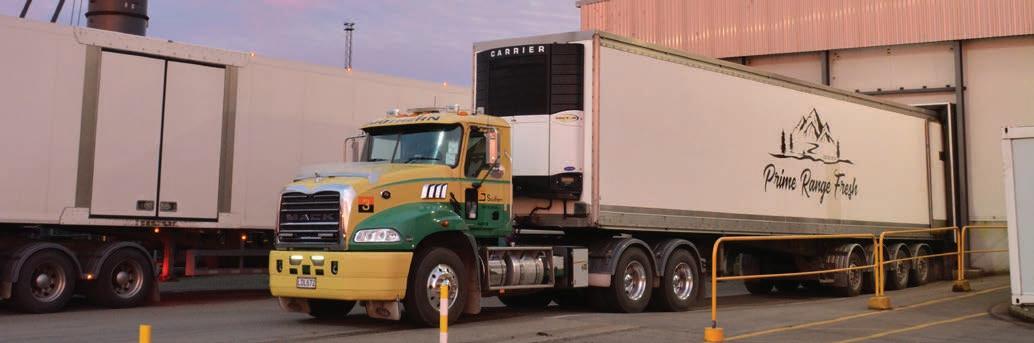
1 * Based on average of period start and year end balances In Thousands of New Zealand Dollars
GROUP FINANCIAL SUMMARY
** Normalised Group surplus after tax is calculated by making the following adjustments.
1 | Return on Assets equals Earnings Before Interest and Tax/Average Total Assets
2 | Normalised Group surplus after tax removes the volatility of unrealised fair value movements, adjustments relating to tax legislation changes, and gains/losses on the disposal of assets, to provide a more consistent measure of Group performance
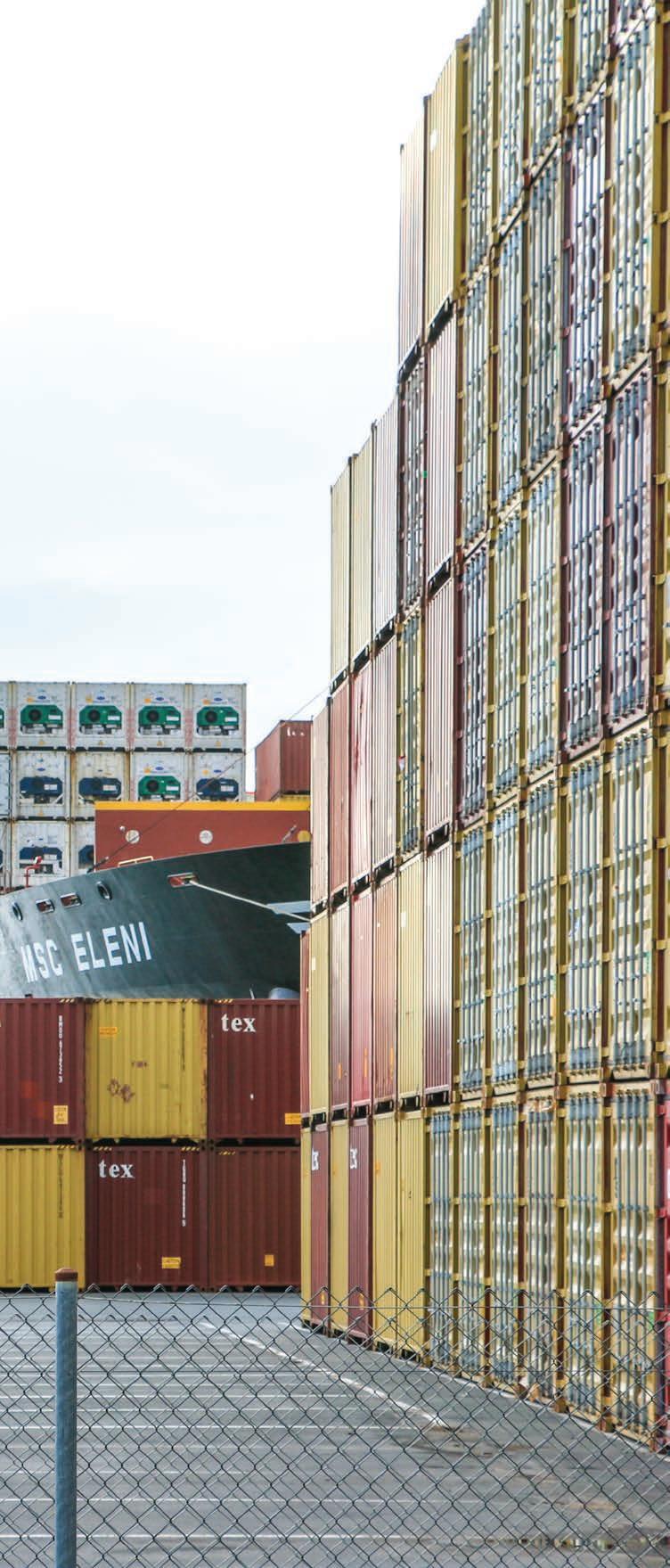
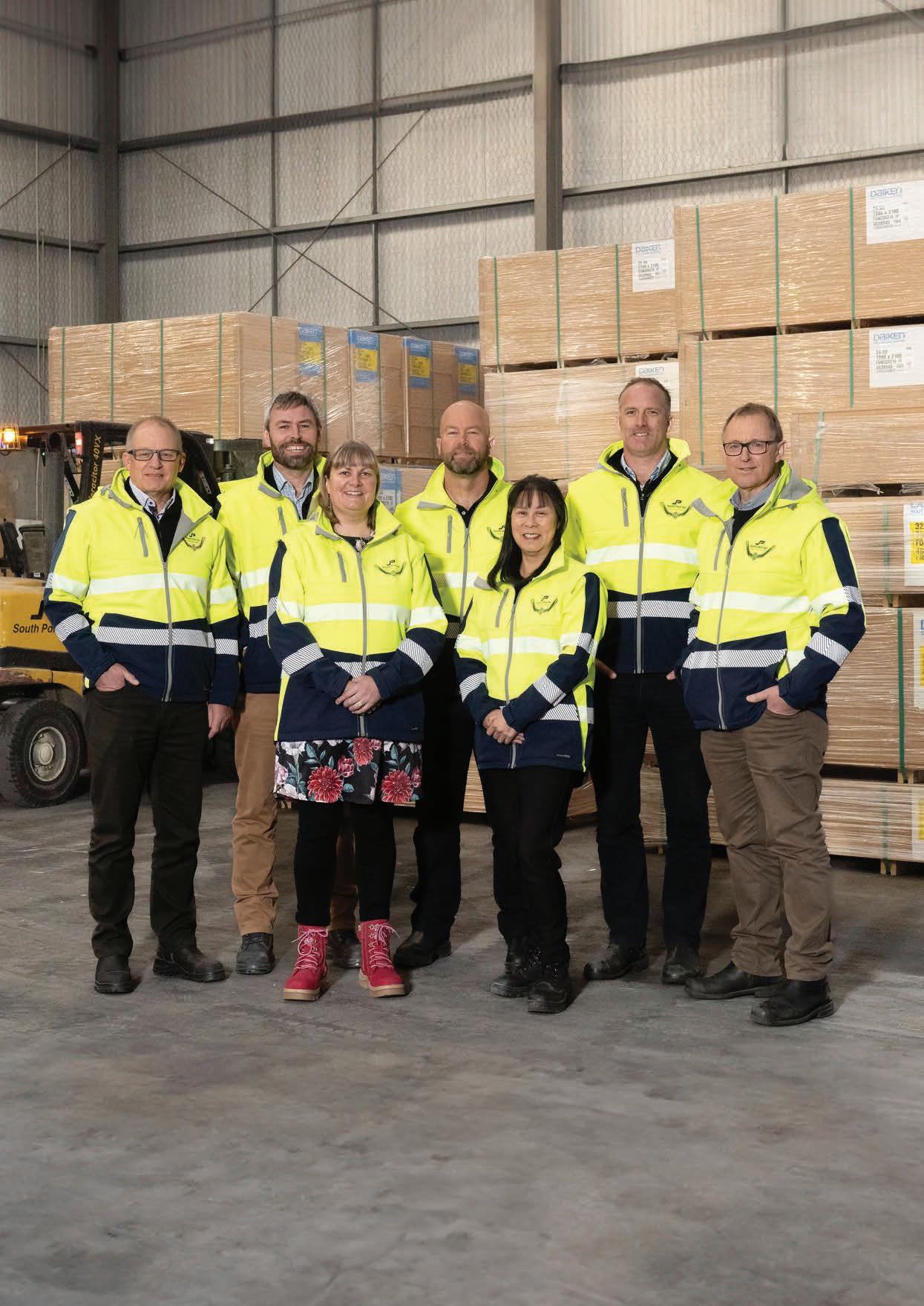
Geoff Finnerty Port General Manager BCom, ACA, PGCertEM
Lara Stevens KĀI TAHU
Chief Financial Officer BCom, DipGrad, CA
Helen Young People and Safety Manager LLB
Nigel Gear Chief Executive BCom, Dip Port Management
Jamie May
Commercial Manager BCom
Hayden Mikkelsen
Container Operations Manager BE (Hons), MEngNZ
Frank O’Boyle
Infrastructure and
Environmental Manager
BEng (Civil), MIPENZ, CPEngNZ, Dip Port Management
DIRECTORS
Philip Cory-Wright Chair
Cassandra Crowley
Nicola Greer
Michelle Henderson
Clare Kearney
John Schol
Carla Harper Intern Director
CORPORATE EXECUTIVES
Nigel Gear Chief Executive Officer
Geoff Finnerty Port General Manager
Lara Stevens Chief Financial Officer
Jamie May Commercial Manager
Hayden Mikkelsen Container Operations Manager
Frank O’Boyle Infrastructure and Environmental Manager
Helen Young People and Safety Manager
CREDITS
Photographs provided by Tammi Topi – SouthDrone NZ, Chris Howell, various South Port staff, Angus Morrison
Design by Naked Creative
GROUP COMPANIES
Parent Company South Port New Zealand Limited
Subsidiary Awarua Holdings Limited
AUDITOR
Deloitte as Agent for the Controller and Auditor General Otago House, 481 Moray Place, Dunedin 9016
SOLICITORS
Preston Russell Law 45 Yarrow Street, Invercargill 9810
AWS Legal 80 Don Street, Invercargill 9810
BANKERS
ANZ
Ground Floor, ANZ Centre, 23-29 Albert Street, Auckland Central, Auckland 1010, New Zealand
TAX ADVISORS
McIntyre Dick & Partners 160 Spey Street, Invercargill 9810
SHARE REGISTER
MUFG Corporate Markets (formerly known as Link Market Services Limited) A division of MUFG Pension & Market Services Level 30, PwC Tower, 15 Customs Street West, Auckland 1010
REGISTERED OFFICE
Island Harbour, PO Box 1, Bluff 9842
CONTACT DETAILS
Telephone +64 3 212 8159
Email reception@southport co nz Website www southport co nz
South Port NZ