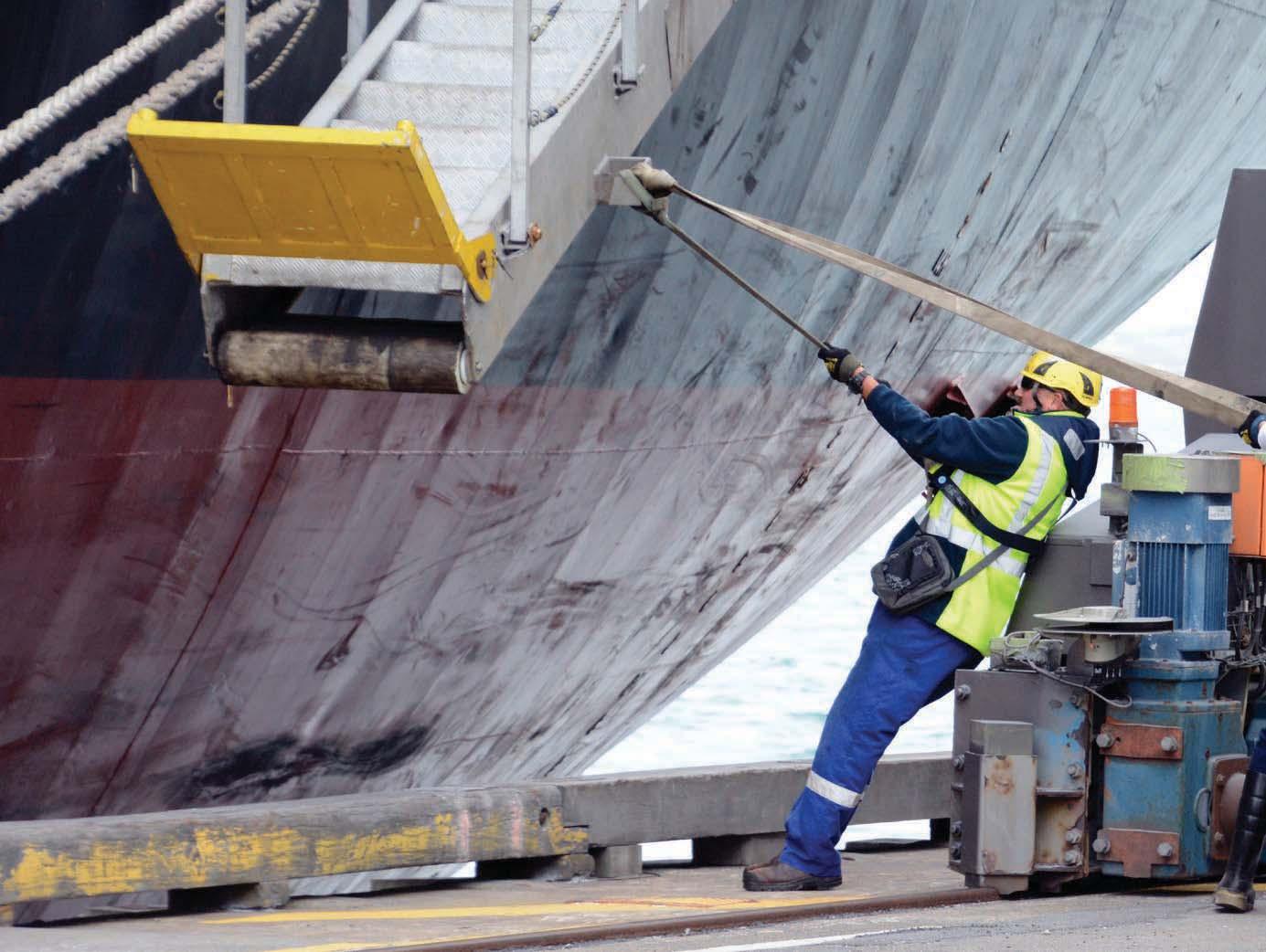
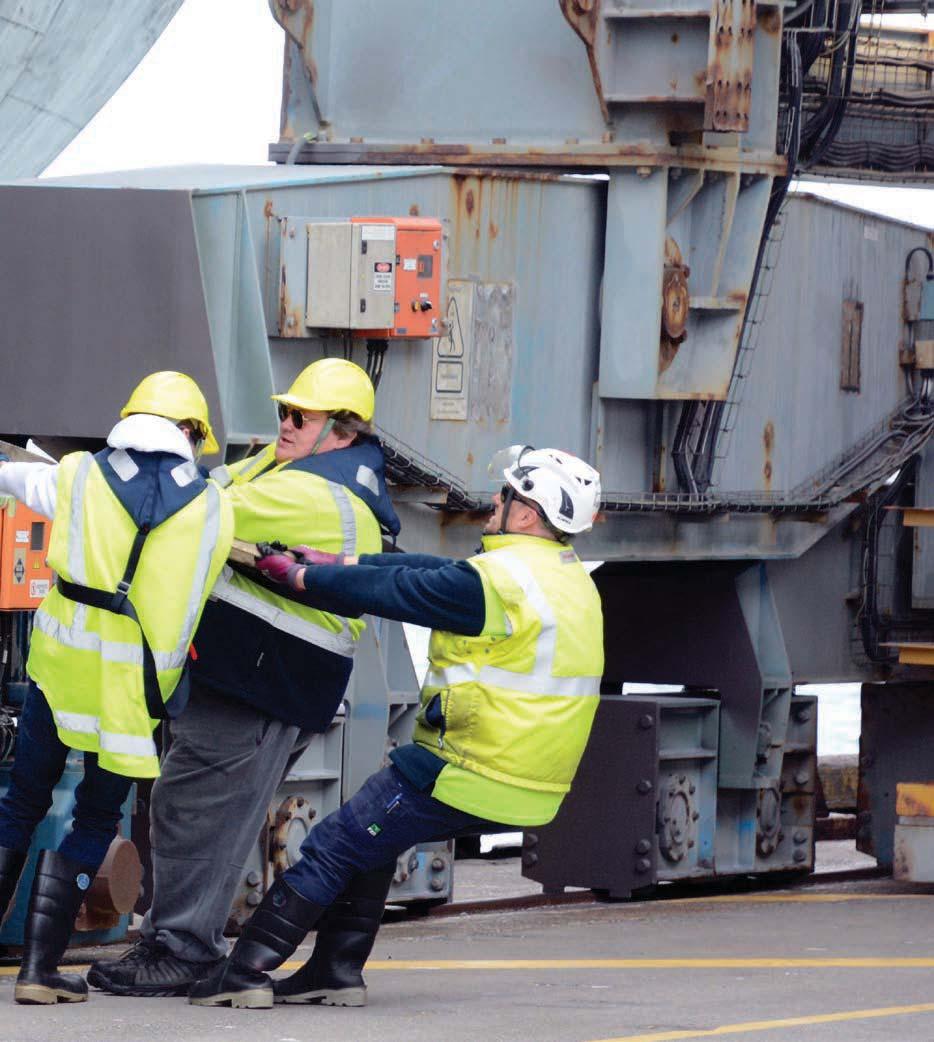
In all activities the Company will ensure a safe workplace is provided, employee wellbeing is enhanced, the physical environment is respected and cultural impacts are assessed. This aspect of the strategy requires the Company to deliver continuous improvement and active engagement in these areas.
Protect existing trade and develop growth opportunities.
Strengthen and extend existing New Zealand port relationships/alliances and position the business for potential future sector rationalisation.
Company Profile
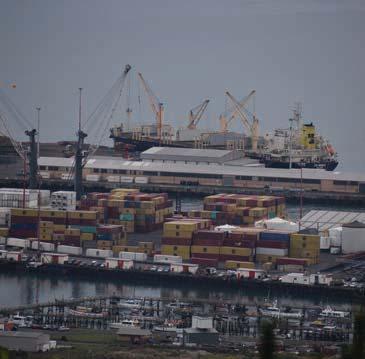
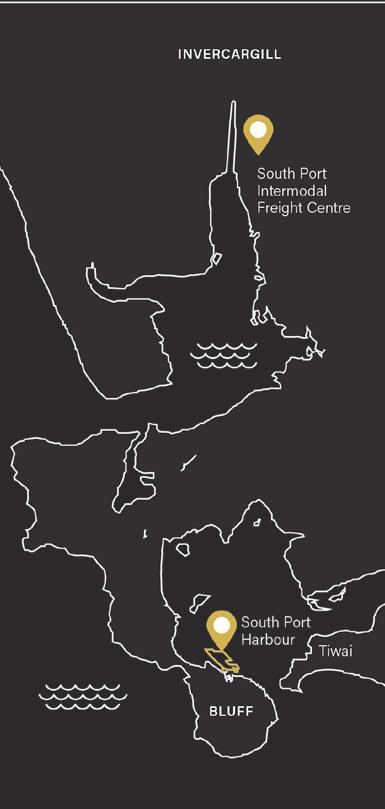
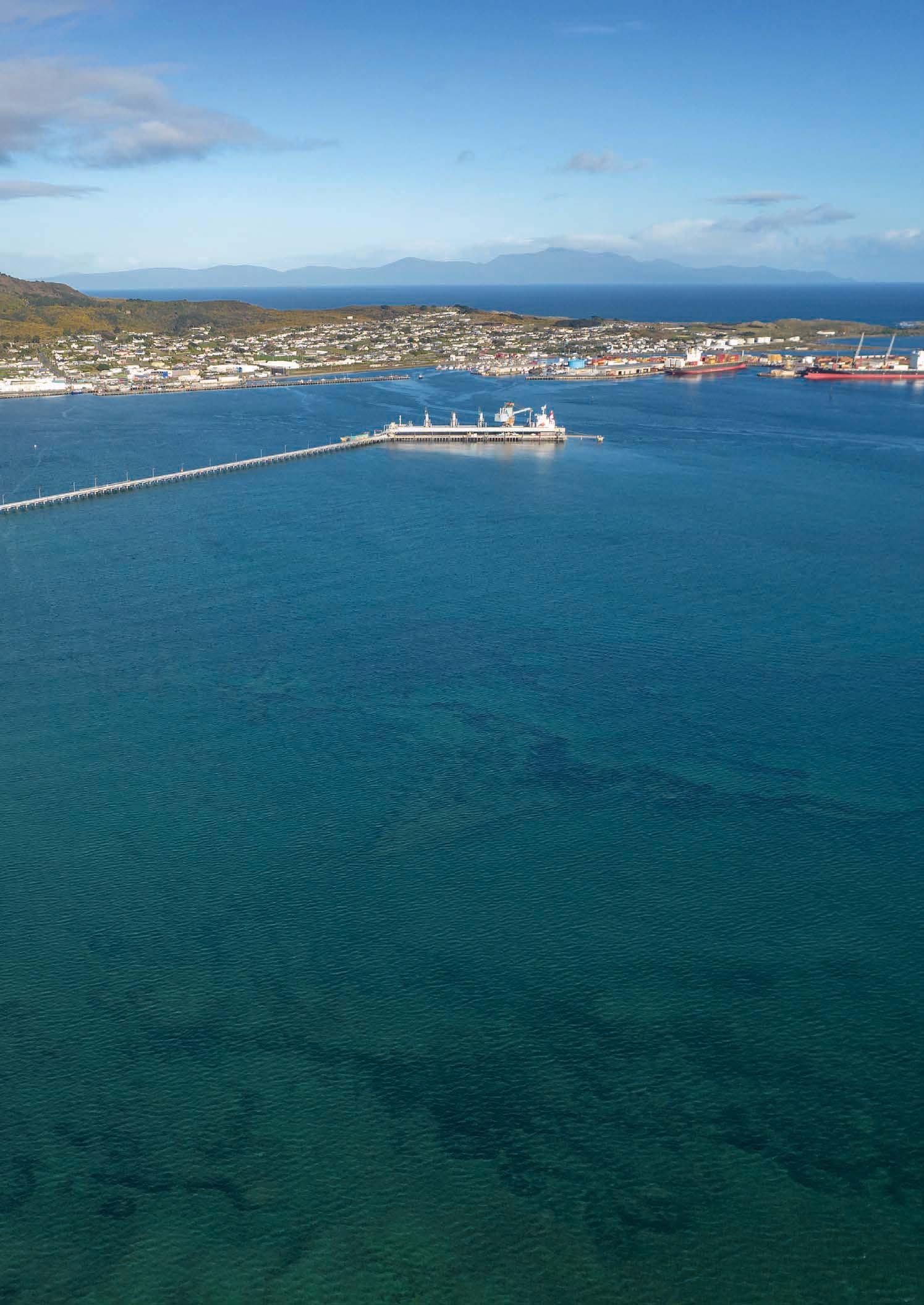
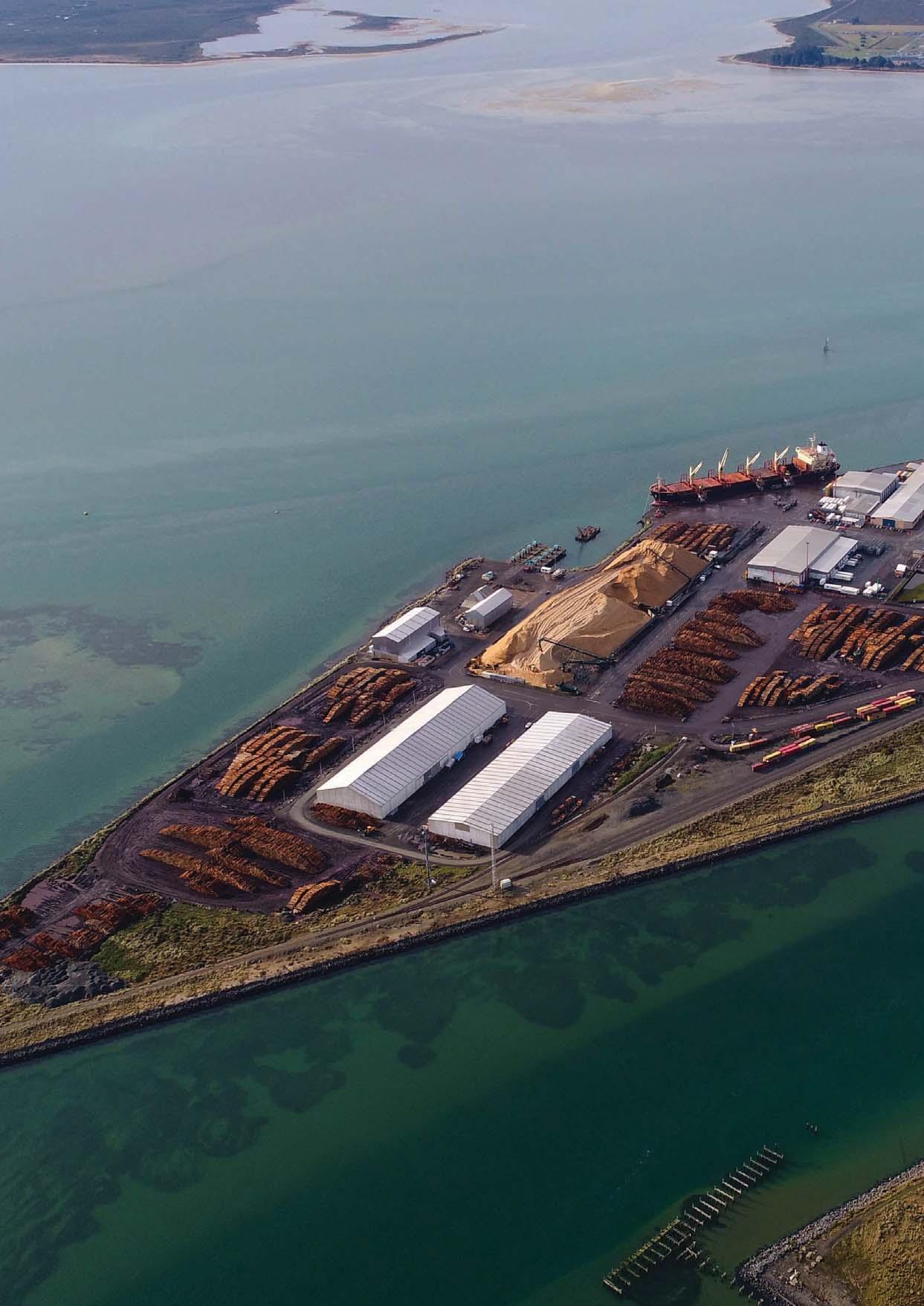
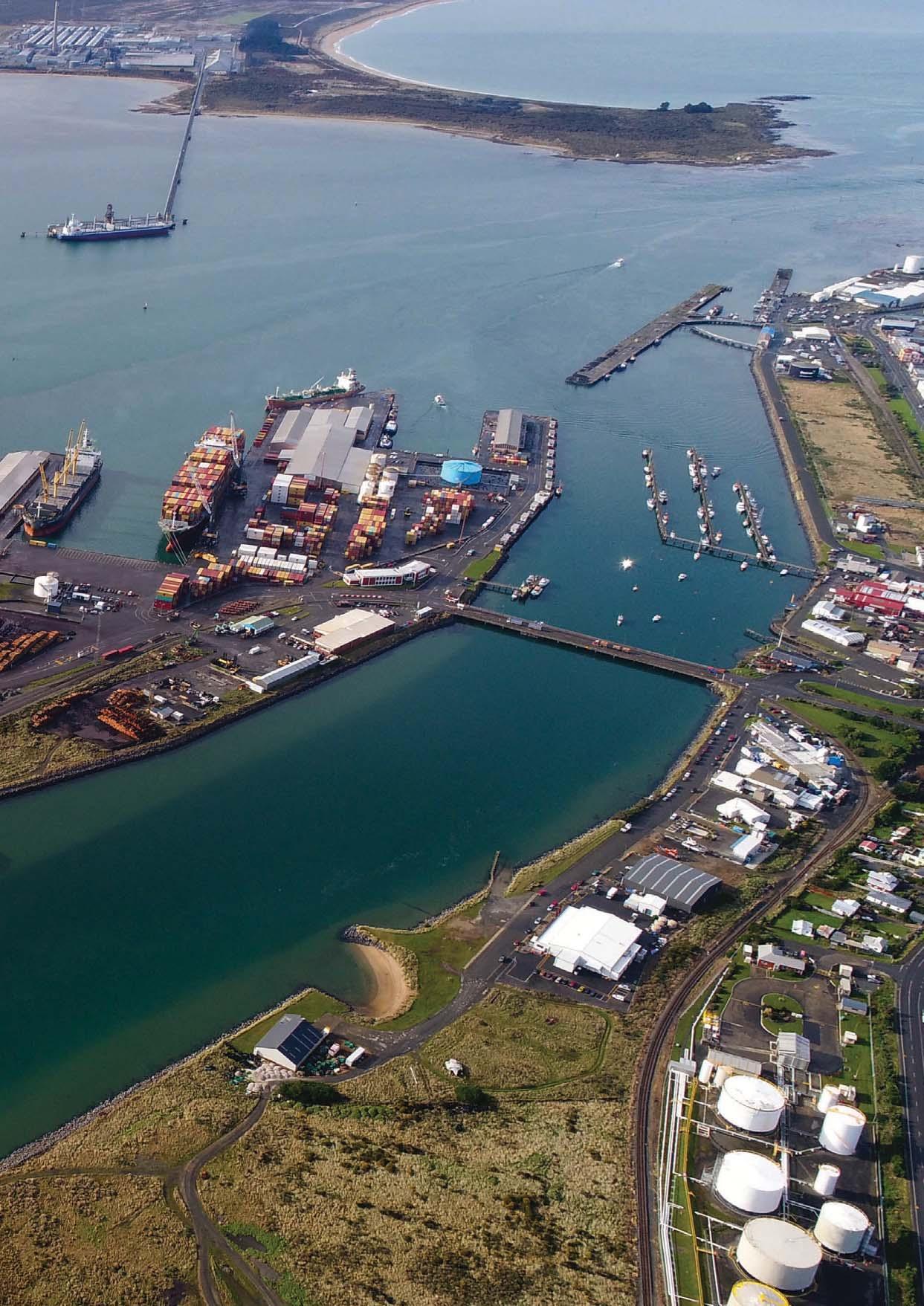
South Port New Zealand Limited (South Port) is the southernmost commercial port in New Zealand, located at Bluff and operating on a year-round, 24-hour basis. It is situated in the rich productive province of Southland, which is responsible for generating a sizeable proportion of New Zealand’s total exports by value. The region’s major cargo producing sites are situated within 30 to 80 kms of the Port.
The Port of Bluff has been operating since 1877, while the Company was formed in 1988 having taken over the assets and liabilities of the former Southland Harbour Board.
South Port was listed on the NZ Stock Exchange (NZX) in 1994 and has Environment Southland, the region’s local government environmental agency, as its 66% majority shareholder.
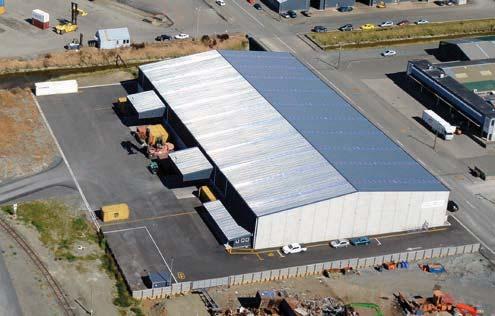
South Port established its offport Intermodal Freight Centre (IFC) in July 2016. Strategically located adjacent to the KiwiRail railhead in Invercargill, the IFC allows importers and exporters in the Southland and Otago regions to distribute their products in a timely and efficient manner.
Develop and / or influence optimal logistic solutions with port linkages.
Optimise shareholder value and reinvest in our business.
Evaluate and acquire appropriate technology to enhance, protect and expand our core business.
Infrastructure, fit for purpose, whole of life. Available, flexible, and resilient, with acceptable returns.
Significant Events
The following provides readers with a snapshot of the most significant events for the year ended 30 June 2021.
This includes larger capital projects, financial performance and company milestones.
1. NPAT of $10.71 million (2020$9.43 million), a 13.6% increase on last year
2. Total cargo of 3.45 million tonnes (2020 3.27 million tonnes), a 5.5% increase on last year
3. Staff continue to perform exceptionally well during a period of significant disruption, as result of COVID-19 pandemic
4. A full year dividend increased to 27.0 cents (2020 – 26.0 cents)
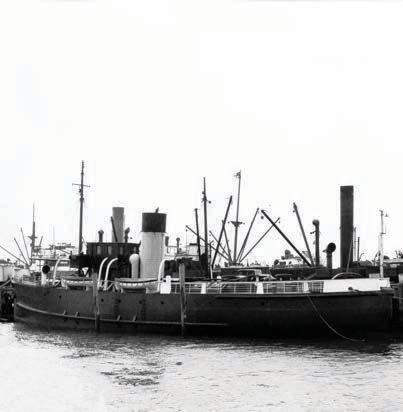
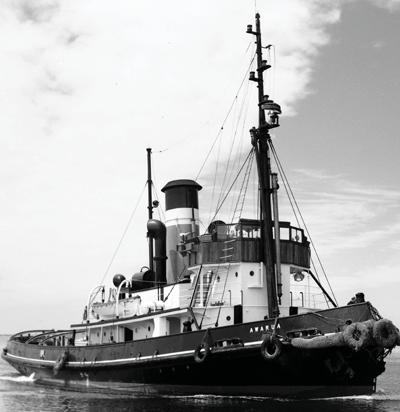
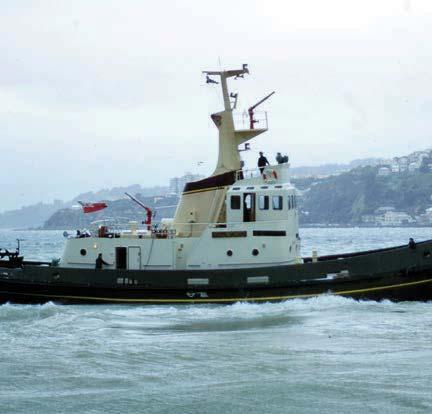
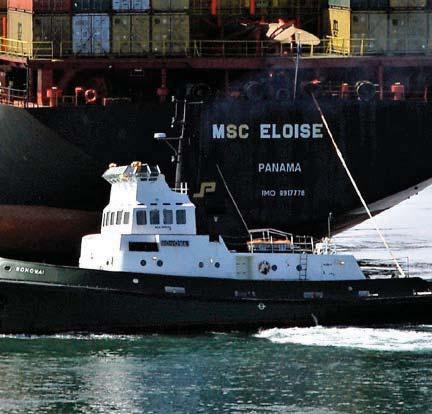
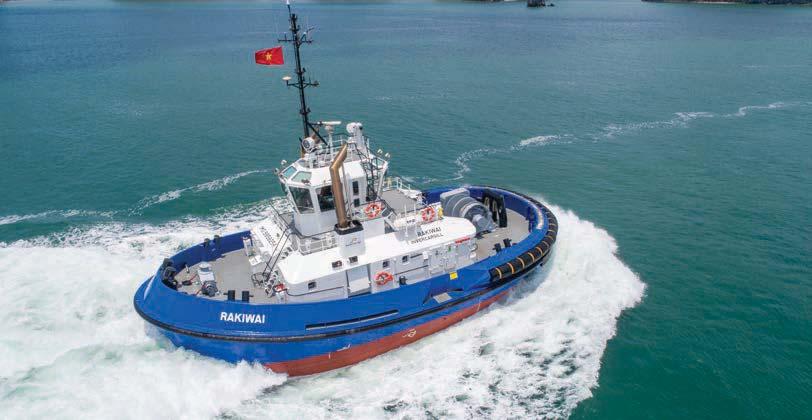
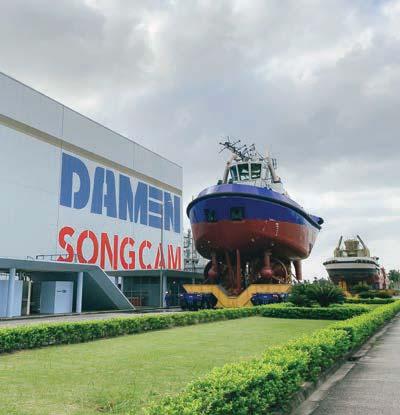
5. A new $10 million, 65 tonne bollard pull Azimuth Tractor Drive (ATD) Tug, named ‘Rakiwai’, ordered from Damen Shipyards in Vietnam and expected to arrive at the Port in September 2021
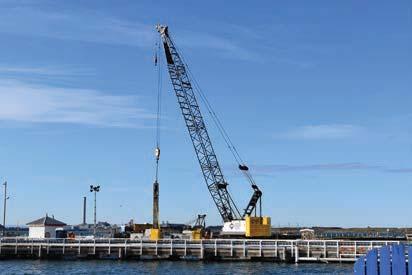
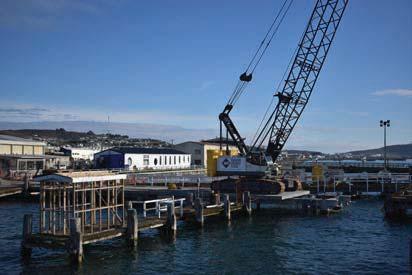
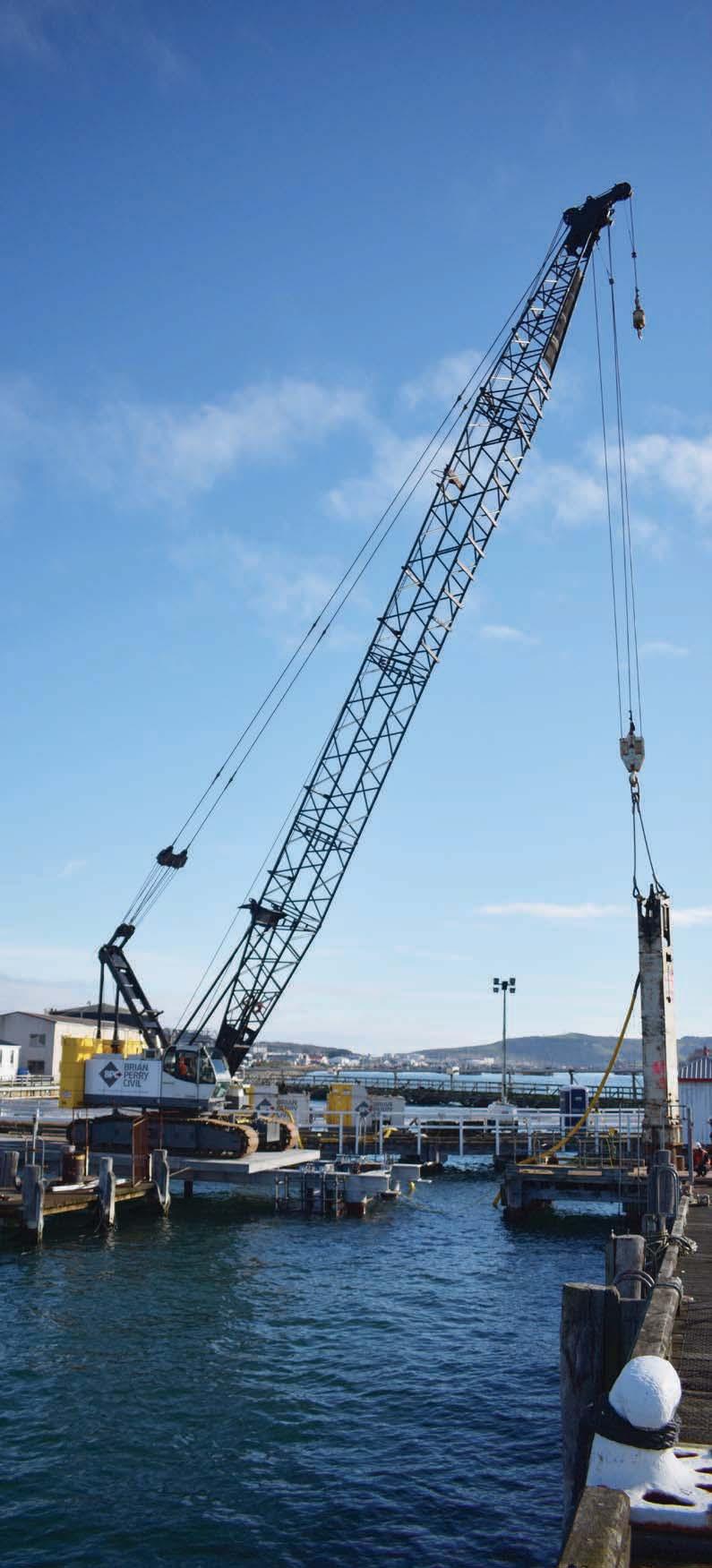
6. The development of a $11 million accessway, pipeline corridor and discharge platform for the Town Wharf Fuel Berth is underway after considerable consultation with stakeholders
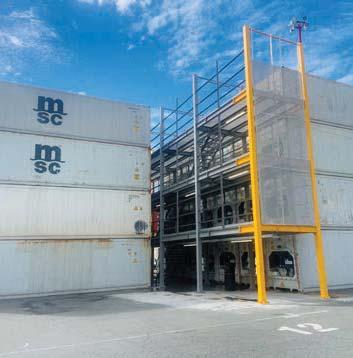
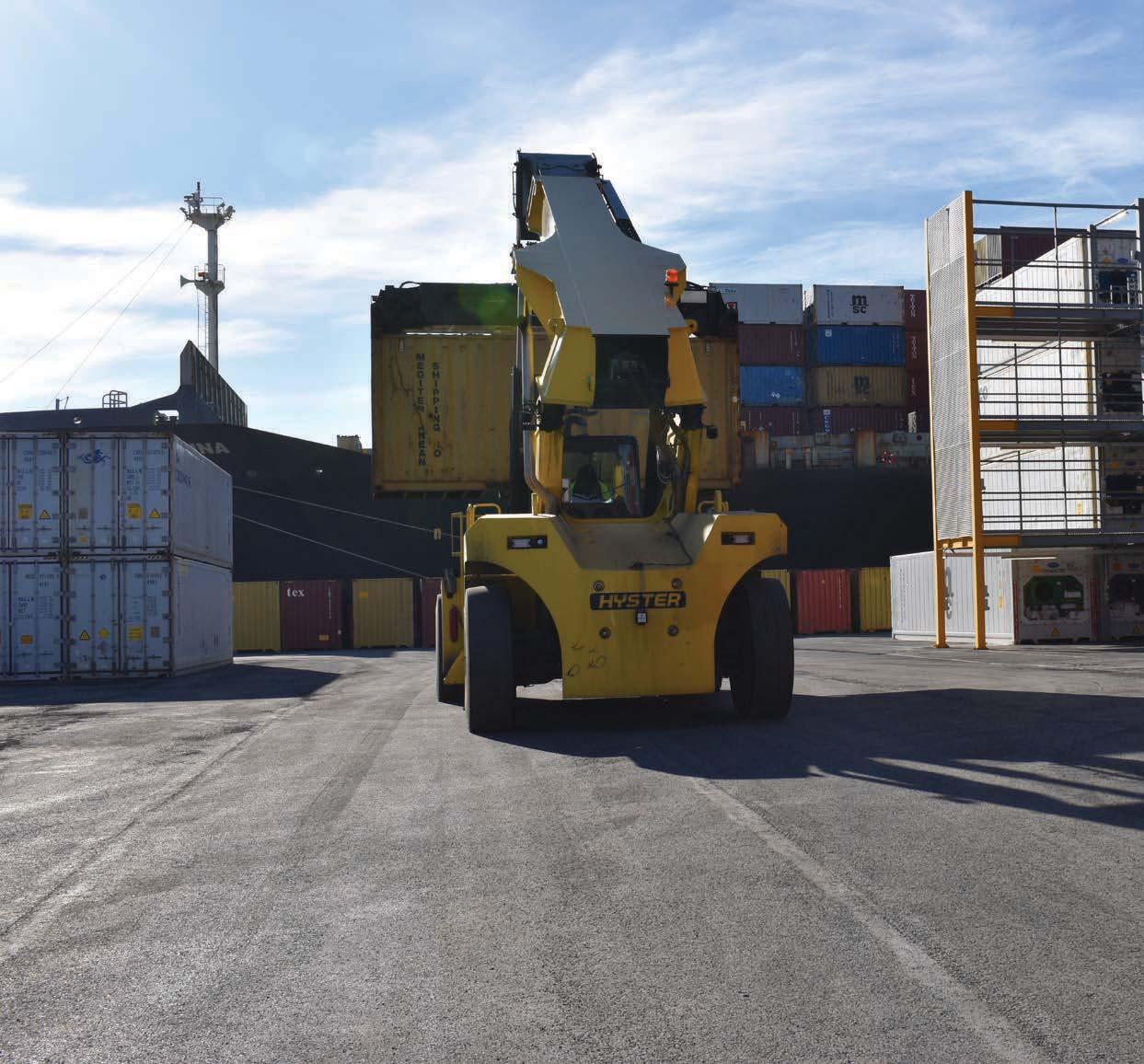
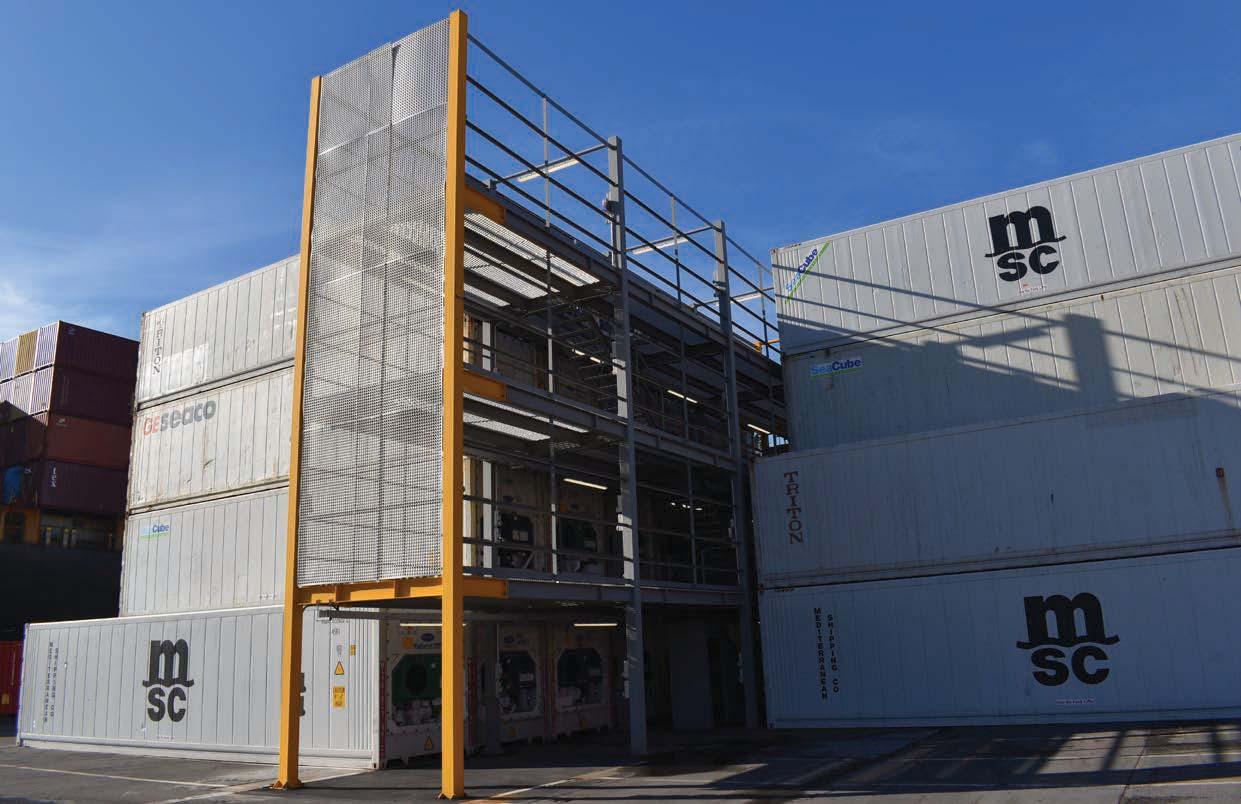
7. A new $0.60 million reefer tower constructed in the container terminal providing additional capacity and efficiencies in both storage and container movements
8. Resource consents prepared and lodged with Environment Southland for the Channel Improvement Project
9. An 8% reduction in container vessel calls at the Port due to supply chain disruption
10. Total container volumes were up 13.3% on the previous year, an excellent result considering the drop in vessel calls to the Port
11. A full 12 months recorded without any damage to containers due to severe weather conditions for the first time as a result of completing a health and safety BowTie exercise
12. A number of significant capital projects completed in the container terminal during an extremely busy period, completed safely and without incident
13. Total log volumes exported through the Port were up 54% on the previous year 14. New Zealand’s Aluminium Smelter (NZAS) announcement that they will remain operating until December 2024 15. Public consultation meetings held with the community during the year for the Town Wharf development and the Channel Improvement Project
16. A new South Port logo and motto developed by Te Rūnanga o Awarua to better reflect the history of the area and its people
17. A concerted effort to build closer ties to the Bluff Community Board and Te Rūnanga o Awarua during the past year
18. Excellent progress made on the installation of impressed cathodic current protection systems with 9 out of 14 bays completed on the Island Harbour Access Bridge
19. New storm bollards installed at Berths 4 and 8
20. A generous donation made to the Hawthorndale Care Village development for communitybased aged and dementia care
21. The Port has reached its peak repairs and maintenance Island Harbour infrastructure expenditure this year under the current Asset Management Plan and is expecting a drop off in the coming years
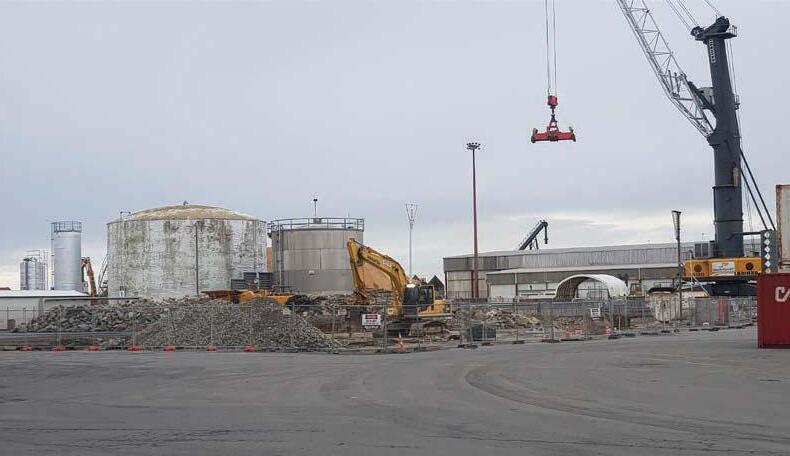
22. Shed 6 demolition underway to create operational efficiencies in the container terminal
23. Record dairy volumes handled through the Port
Purchase of property on the Bluff Foreshore in close proximity to the Town Wharf
25. An independent review and audit of pilotage practices was completed which has led to the development of a Pilotage Operations Safety Management System
26. Greater use of the blast freezer and better use of the cold stores over the past 12 months
27. South Port Directors involved in the Southland Regional Development Strategy (SoRDS) Aquaculture Team
28. Celebrating 50 years of working with NZAS
29. Celebrating 30 years of working with log exporter Ernslaw One
24.
South Port Facts
Owns and manages assets which have a book value of $69 million
Directly employs 107 permanent staff and utilises additional fixed term and casual staff to support our marine activities and seasonal operations.
Is the only Southland based company listed on NZX – market capitalisation as at 30 June 2021 equated to $222 million.
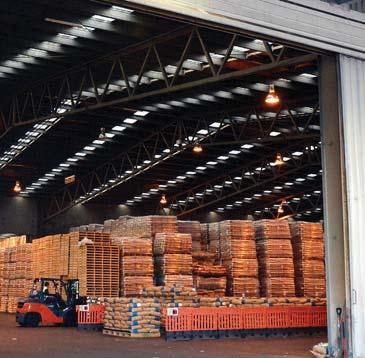
Has split its land-based operating resource into four main divisions – dairy warehousing, containers, cool and cold storage and general cargo.
million tonnes 3.4
Handles in excess of 3.4 million tonnes of cargo in a normal trading year.
Offers full container, break bulk and bulk cargo capability and services the following main cargoes:
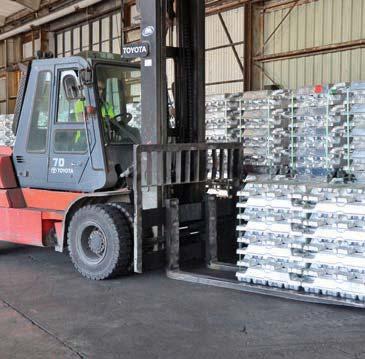
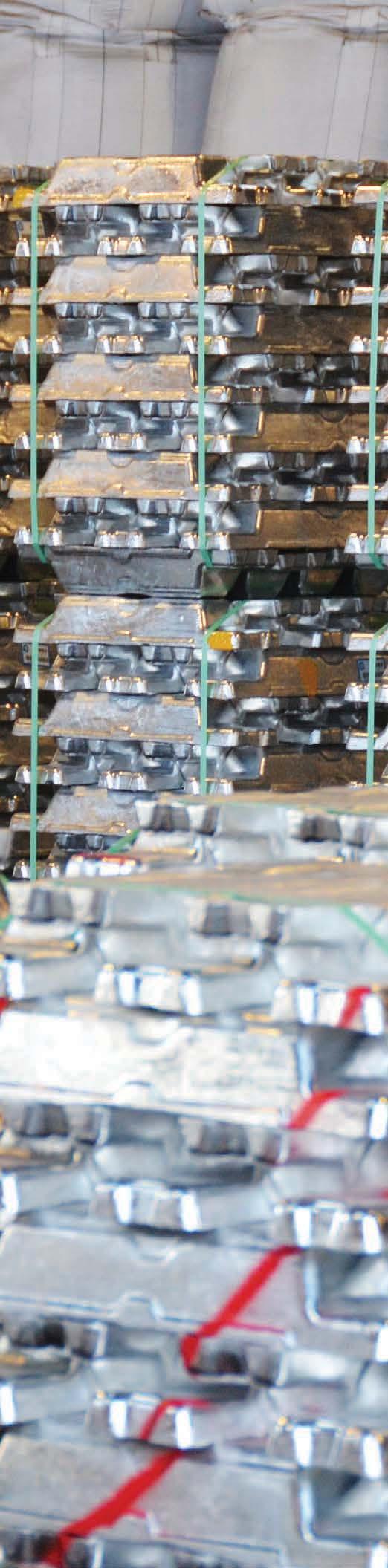
EXPORT – aluminium, timber, logs, dairy, meat by-products, fish and woodchips.
Services vessels carrying approximately 1 million tonnes of cargo destined for movement across the Tiwai Wharf each year, of which three quarters is raw material imports while one quarter is finished aluminium product.
Operates a separate dedicated fuel berth at Bluff Town Wharf plus provides the Tiwai Wharf facility to the New Zealand Aluminium Smelter (NZAS) under a long-term licence.
Undertakes its primary port operation on a 40 hectare manmade Island Harbour situated at Bluff
Has approximately one hectare of on-port land available for further port development or industry establishment.
Owns and operates an off-port container packing/unpacking facility adjacent to the KiwiRail railhead at Mersey Street, Invercargill. The 8,000 m2 site houses a 4,000 m2 customs controlled and MPI transitional facility.
Te Pūkorokoro o Murihiku
OUR PURPOSE
“To facilitate the best logistic solutions for the region.”
Our modified logo and new motto have been designed to reflect Bluff’s distinctive characteristics as well as South Port’s aspirations.
Most of our operations take place on the Island Harbour, quite literally at the heart of Awarua, from which the immediate area takes its traditional name. Reflecting this heritage underscores the interdependent nature of our local maritime history and culture, and the importance of Bluff Harbour to current and future generations.
The new logo introduces further elements to our ties to Murihiku which is more than just the Southland boundary.
Following extensive consultation on the modified logo and new motto with Te Rūnanga o Awarua, South Port is honoured to receive this koha/gift. An official hui/gifting ceremony will be held when COVID-19 Alert Levels allow this gathering to take place.
An explanation of South Port’s modified logo
Taurapa
Within Te Ao Māori, “The Bluff” is symbolically referred to as Te Taurapa o Te Waka o Aoraki or Te Taurapa o Te Waka a Māui: the sternpost of the South Island. Incorporating this aspect of a waka into South Port’s logo therefore speaks to our specific location. The dual taurapa design further speaks to our operations: vessels safely entering and exiting Awarua.
The paired taurapa also create a visual space, within which sits our new motto and pre-existing logo. This is akin to a ship’s hold and cargo and represents the imports and exports that underpin our quality of life in southern Murihiku.
Waharua kōpito
“Te Pūkorokoro o Murihiku”
Versions of this pattern feature in traditional Māori garments and on marae complexes alike. It has several meanings, but one is of a point where people or events interact with and reshape one another. That is a fitting description of a port. Waharua kōpito remind us that Bluff is a place where the land meets the sea, southern New Zealand meets the world, and the past meets the future.
This short whakapepeha metaphorically refers to the port of Bluff as the trachea or windpipe of southern New Zealand. This phrase is inspired by the opening of Bluff’s Island Harbour in December 1960 by the then Governor General of New Zealand, Lord Cobham, who stated that, “Trade is the breath of life to a great exporting country, and a country breathes through its ports.”
Review of Operations
Welcome to South Port’s Annual Report for the financial year ended 30 June 2021.
The Report provides our stakeholders with an overview of the Port’s performance for the reporting period. It also updates readers on the strategic direction of the Company, governance information and outlook for FY22.
Overview and Cargo
The reported after-tax profit of $10.71 million (2020 - $9.43 million) is a 13.6% increase on last year’s result and is slightly ahead of the guidance provided in our 2021 Interim Report. This is a very pleasing result given the smaller percentage increase in total cargo of 5.5% to 3,450,000 tonnes (2020 - 3,270,000 tonnes).
Separating the cargo streams, bulk cargo volumes improved by 5.9% with container numbers increasing by an impressive 13.3%.
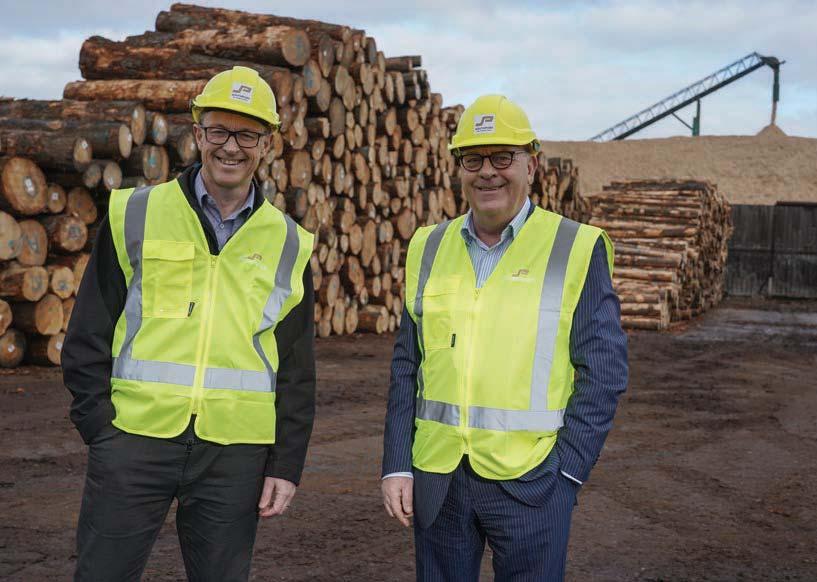
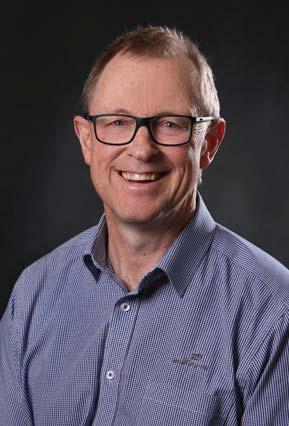
Nigel Gear, Chief Executive and Rex Chapman, Chairman
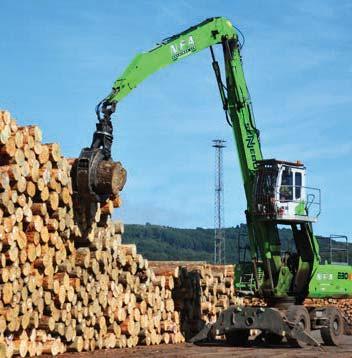
The two major influencing factors on bulk cargo were a 54% increase in logs and a 19% increase in woodchips handled through the Port, in comparison to the previous period. These increases came on the back of lower cargo volumes being exported through the Port in 2020 due to the COVID-19 Alert Level 4 lockdown. Total logs of 730,000 tonnes however, is a record for this cargo which has occurred during a period of high demand for wood fibre worldwide and in particular for New Zealand grown Radiata in China.
All other bulk cargoes were either in line with expectations or slightly down on the previous period, with some cargoes such as petroleum imports still experiencing the effects of COVID-19 border closures, especially reflected in the tourism sector.
A record 53,750 TEU were handled through the Port which is pleasing considering we also experienced an 8% reduction in container vessel calls. The container supply chain worldwide is heavily congested due to the COVID-19 pandemic. Several factors are in play, empty containers are stranded across the globe, there is a shortage of labour supply due to both increased demand for goods and COVID-19. Demand is extremely high due to international travel being put on hold for the foreseeable future resulting in disposable incomes being spent on household goods and home construction and renovation. These factors have resulted in irregular vessel calls to the Port creating periods of heavy congestion in the container terminal and at times a shortage in container supply. It is expected that these current challenges in the supply chain will continue for at least the next 18 months.
A number of capital projects were also planned and completed in the container terminal during FY21. It is especially pleasing that during a time of significant upheaval these capital projects were managed safely and without any recorded incidents.
‘Safety First’ is our most important core value and huge credit must go to the container operations, infrastructure and health & safety teams for operating in this environment and establishing excellent safety protocols around these capital developments.
The warehousing operations continue to play an important role in the Port supply chain supporting the Mediterranean Shipping Company (MSC), Capricorn Service, calling at the Port on a weekly basis. Dairy volumes increased 33% through the Port due to the construction and commissioning of Open Country Dairy’s third dryer at Awarua. Increased efficiencies, "Going the Extra Mile' and 'Working Smarter' (two of our core Company values) enabled this increased volume to be handled through the same storage space which is due to the excellent processes put in place by the warehousing team involved.
Refrigerated products increased by 20% through the Port with the majority of this volume being handled at our cold storage facility.
The cold store team has managed this through improving the efficiencies of their loading operations, obtaining better utilisation of the cold store and deriving more value out of the warehousing space.
The Intermodal Freight Centre (IFC) provides an important container handling option in the southern region and is also another key part of our supply chain. It is pleasing that volumes continue to grow through this facility, which provides a crucial competitive option for our clients in Southland.
An independent external review and audit of pilotage practices was completed in 2020. From this review a ‘Pilotage Operations Safety Management System’ is being developed by the marine team that will modernise our systems and set a new operational standard for pilotage at the Port for years to come.
Safety, Health and Wellbeing
‘Safety First’ is our most important core value at the Port. Safety continues to be our highest priority on port ahead of both productivity and profit. This past year the performance of the team has again been up to a high safety standard which is a tribute to the hard work and buy-in of all staff.
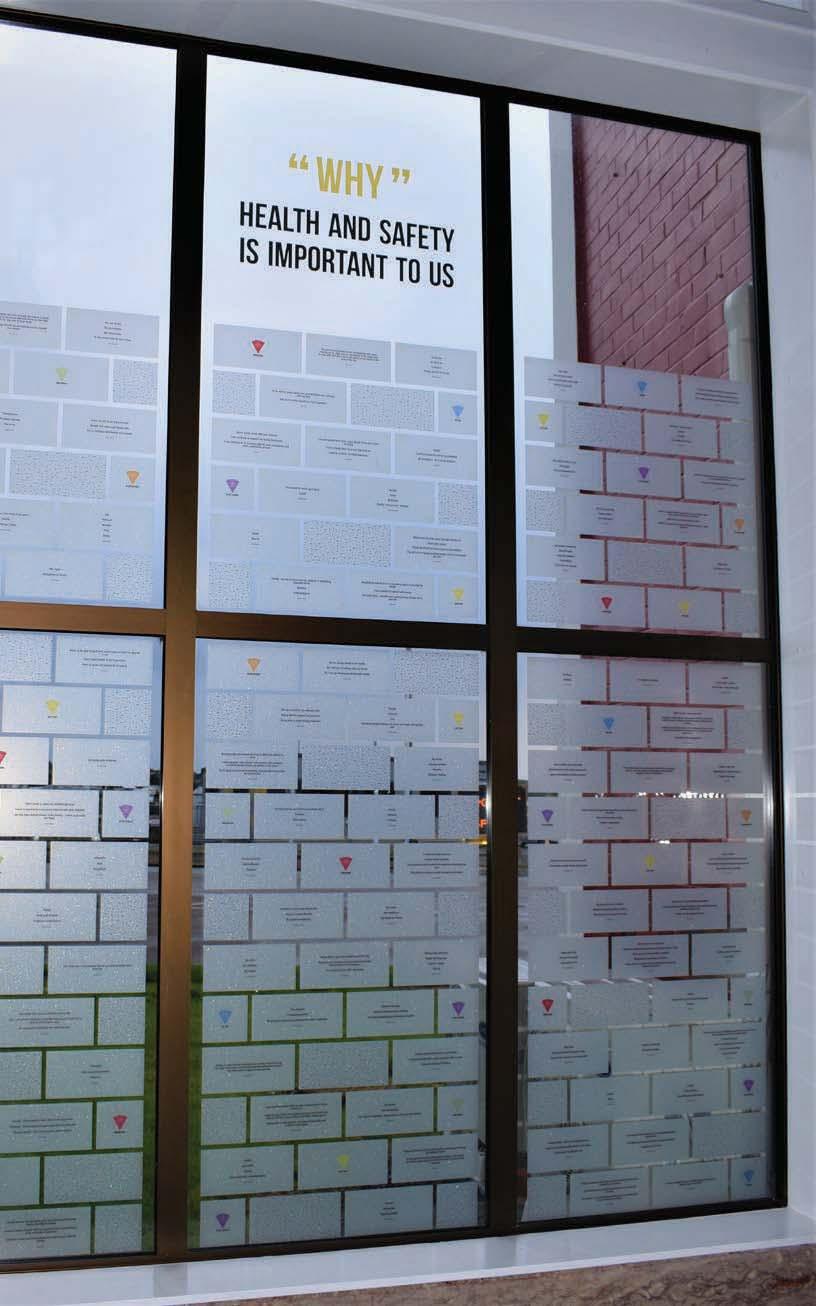
This year we completed our ‘Why Wall’. We asked all of our staff members to note down up to three reasons why it is important for them to get home safely each night. These have been recorded and are now displayed in the foyer of the main administration office and also in each department. This was a hugely satisfying project to be involved in and created selfawareness of why it is important to take personal responsibility for our own safety.
The Port recorded a full 12 months without any damage or loss to containers due to adverse weather conditions. This pleasing record is a direct result of our employees working through a health and safety ‘BowTie’ session to establish preventative measures for the storage of containers in our terminal.
Te Pūkorokoro o Murihiku
Following engagement with Dr Michael J Stevens (Ngāi Tahu Historian) and extensive consultation with Te Rūnanga o Awarua, South Port has now developed a Māori motto to better reflect the cultural heritage of the Port’s location. This motto and the logo represented on the cover of this Annual Report, and the preceding pages to the Review of Operations is a pleasing outcome of our closer working relationship with the local Rūnanga. South Port is honoured to receive this koha/gift. An official hui/ gifting ceremony has been postponed due to the pandemic and will now be held when COVID-19 Alert Levels allow this gathering to take place.
New Zealand’s Aluminium Smelter (NZAS)
On 14 January New Zealand’s Aluminium Smelter announced a new four-year electricity contract with Meridian Energy to December 2024.
This positive announcement was a welcome relief for the region that is highly reliant on this business for employment and economic activity. As previously reported, NZAS represents 30% of our cargo throughput and approximately 20% of our Net Profit After Tax (NPAT). Noting also, should NZAS close, that South Port has a Licence Agreement in place with NZAS until 2043 for the use of the wharf and the causeway.
50 Years
April 2021 marked 50 years of the NZAS operation at Tiwai Point during which time the two companies have enjoyed an excellent working relationship. Although there is the potential that the Smelter may close in December 2024, South Port would hope that NZAS, which produces the highest purity ‘green’ aluminium in the world (using hydroelectricity), will continue to operate past this date and into the future.
Just Transitions (JT)
JT, a division of the Ministry of Business, Innovation and Employment (MBIE) is currently engaging with the Southland community on how the province should transition from NZAS to new industry after December 2024 (should the Smelter close).
This process is important for the province as it is crucial that the electricity produced in Southland remains in the region to help develop new industry, and to grow the economy.
Two of the most notable themes coming through this process is the current investigations into ‘Open Water Aquaculture’ (developed out of the Southland Regional Development Strategy [SoRDS]) and the opportunity of introducing large scale ‘Green Hydrogen’ production.
Aquaculture
The Southland Aquaculture Working Group has been investigating this project for several years now with both Ngāi Tahu Seafoods Limited and Sanford Limited making some excellent progress in developing a tangible new industry for the region.
A Recirculating Aquaculture System (RAS) hatchery for the growing of Chinook (King) Salmon smolt is well on the way towards establishing construction activities on-site at Ocean Beach in Bluff.
Ngāi Tahu Seafoods has lodged a resource consent application to use water space off the north-east coast of Rakiura (Stewart Island). Sanford, similarly, has lodged a consent with Environment Southland to create an open ocean salmon farm, 28km from Bluff near Ruapuke, at the south-end of Foveaux Strait.
These parties collectively are working with Government officials to establish consenting and regulatory pathways that will allow open water aquaculture farming to become a reality in the region.
Rex Chapman (Chairperson) and Tommy Foggo (Director) are both members of the Southland Aquaculture Working Group.
Green Hydrogen
The international demand for green hydrogen is developing at a fast pace to provide countries with access to green energy to decarbonise their heavy industries.
The potential closure of NZAS will free up a significant portion of hydroelectricity which is an attractive proposition for international and domestic entities looking to establish a hydrogen plant in the Southland region. In addition to the electricity resource, the infrastructure, fresh water and a deep-water port are already in place to make this a reality.
Meridian Energy Limited and Contact Energy Limited have recently released a joint report investigating the potential of large-scale renewable hydrogen production in the Lower South Island.
These companies have also developed a website www.southerngreenhydrogen.co.nz to discuss this opportunity and provide a portal for ‘registrations of interest’ to develop what could be the world’s largest green hydrogen plant.
Fortescue Future Industries (FFI) announced on 3 August 2021 that it had signed a Collaboration Agreement with Murihiku Hapu of Ngāi Tahu that will see them working together to assess and potentially develop a large scale, renewable hydrogen production project in Southland. FFI is the 100 per cent renewable green energy and industry company of Fortescue Metals Group Limited based in Western Australia. FFI’s vision is to make green hydrogen the most globally traded seaborne energy commodity in the world, with an initial plan to produce 15 million tonnes of green hydrogen per annum by 2030.
The Company will continue to monitor these developments closely and be ready to work with new industry to ensure that the Port is positioned to take advantage of these opportunities should they arise.
Comparative Cargo Breakdown
COVID-19
COVID-19 continues to impact all aspects of our work and livelihoods. As noted earlier, some bulk cargoes and the container supply chain has been seriously impacted by the pandemic.
Our marine pilots continue to work on the frontline of the border interacting with international crews on a daily basis. All of our frontline staff however have been vaccinated, follow strict protocols and wear the appropriate PPE when operating in this environment.
Although the pandemic, at times, appears to be a world away; this changed on 19 July with the arrival of the container vessel Mattina at the Port. Prior to the arrival of this vessel, the Captain informed the health authorities that there were two crew on board showing ‘flu-like symptoms’. These two crew members were tested on arrival. These tests returned positive for COVID-19. As time evolved a number of other crew members also contracted the virus.
Although this has caused some disruption to the Port, we are very proud of the way the team handled the situation and that our processes established for this scenario worked extremely well to ensure the safety of our staff, the wider community, the crew members on board the vessel and that our port operations could continue with minimal impact.
Infrastructure
2021 represents a significant milestone as we have reached the peak expenditure point in our current version of the Asset Management Plan (AMP). The AMP was established in 2016 and is forecast out for 20 years to 2036. The higher expenditure levels incurred over the past four years was planned to coincide with increased cargo throughput to help manage costs and maintain returns to our shareholders. From FY22 we will be decreasing expenditure under the AMP, however future ongoing expenditure will be at a higher level than what we experienced prior to 2016.
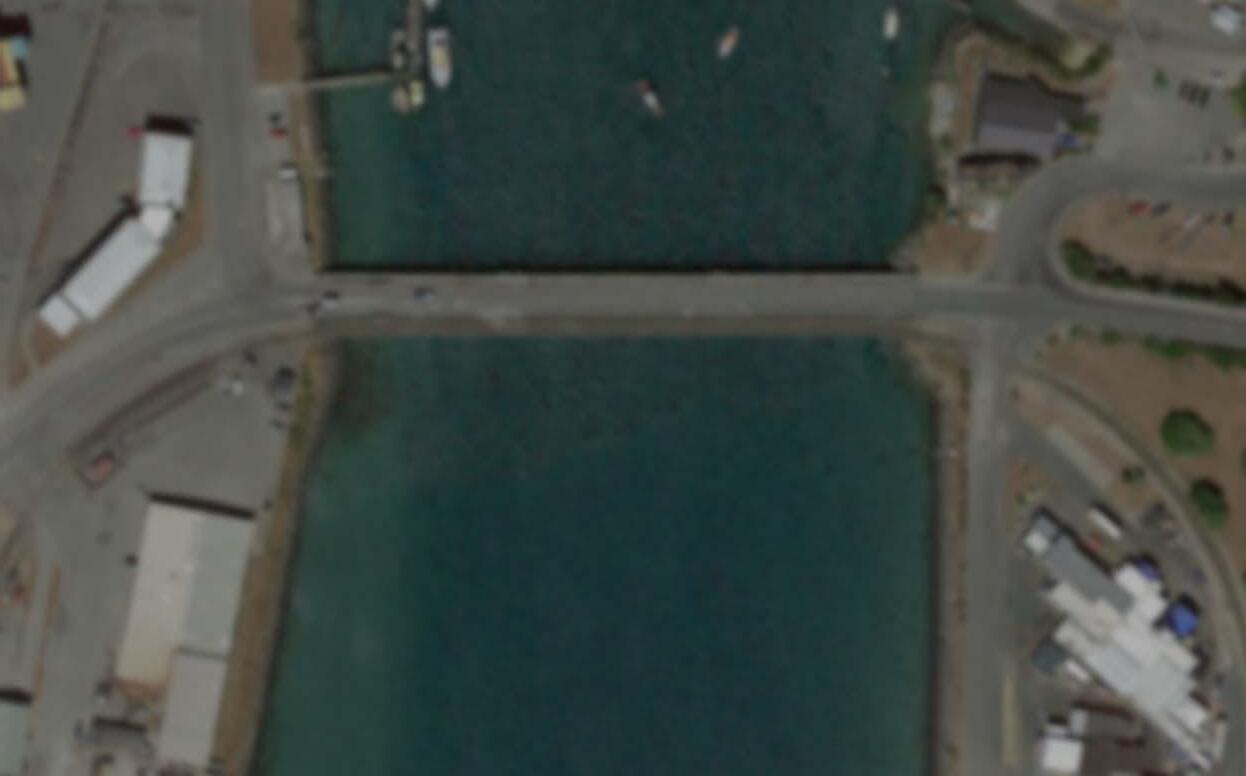
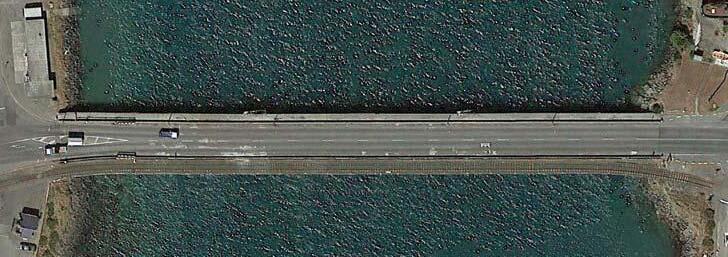
Work continues to progress well on our Island Harbour Access Bridge, nine out of the fourteen bays now have impressed current cathodic protection installed. The remaining five bays will be finished early to mid-2023.
It was especially pleasing to get the Town Wharf accessway, fuel pipeline corridor and discharge platform construction underway this year. Although this has taken a little longer than we expected, the end result will be a facility that will be resilient for the next 50 years of operation. The design will also provide the Port with the platform to develop further areas of the Town Wharf.
The installation of a new reefer tower and yard expansion had the desired result of creating additional space in the container terminal, however due to congestion and unexpected growth in volumes we have now made the decision to demolish our No. 6 warehouse. This development will create an additional 5,000 m2 of yard space for container operations and establish a container repair area that provides a safer working environment for the contractors undertaking these duties.
New Tug
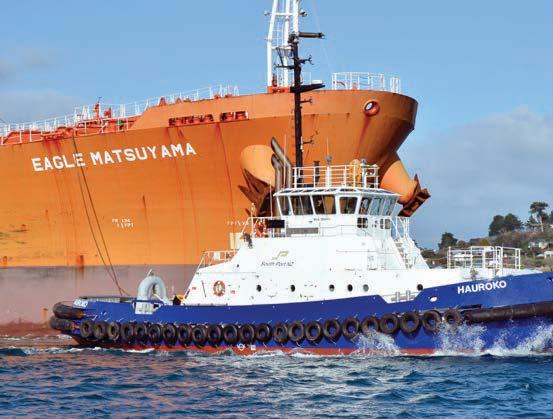
A new $10M, 65 tonne bollard pull Azimuth Tractor Drive (ATD) Tug has been ordered from Damen Song Shipyard in Vietnam. She has been given the name ‘Rakiwai’ and is expected to arrive at the Port in September 2021. To find out more about ‘Rakiwai’ refer Page 78.
This welcome addition to the Port’s tug fleet will help to reduce the risk profile of our marine operating activities going forward.
Asset Management Plan Expenditure
$4,500,000
$4,000,000
$3,500,000
$3,000,000
$2,500,000
$2,000,000
$1,500,000
$1,000,000
Entrance Channel
South Port has commenced a consent process to deepen our channel, swinging basin and berth pockets from 9.7 metres to 10.7 metres. This is a complex process which involves extensive consultation with all of our stakeholders. There is also significant investment of resources to provide accurate information of the impact on the environment, marine mammals, the community, the benefits to the wider region and the business case to support the investment.
It is hoped that the consent can be processed in the coming 12 months and that the project can commence in early 2023.
Community Engagement
Community Engagement is an important part of our daily business activities and is becoming integrated into ‘Business as Usual’. The Company is building closer ties with both the Bluff Community Board and Te Rūnanga o Awarua, meeting these entities on a regular basis to consult and inform on the current port activities and development plans. In addition to these meetings, we have held community briefing sessions in the township to discuss both the Town Wharf Development and the Channel Improvement Project.
Te Rūnanga o Awarua
There have been a number of areas that we have consulted with the Te Rūnanga o Awarua in the past 12 months as part of our closer working relationship. These include South Port’s Māori motto, new logo, the cultural impact assessment of our Channel Improvement Project and the naming of that project, the new tug name, the establishment of a Memorandum of Understanding between our two entities, discussing the historic significance of sites that the Port currently owns and holding Te Reo Māori lessons and cultural training at the Port. This developing relationship will continue to be a focus for South Port.
Staff Working in the Community
Our employees also continue to work in the Bluff township and Invercargill on community projects when time allows from their usual work commitments.
Staff
The Company would like to thank our staff for all their hard work and dedication they put in each day to ensure the Port operates efficiently and more importantly safely. Our people are the most important part of our business, and to witness how our work mates have stepped up in these uncertain times is extremely satisfying.
Dividend
The Board has an ongoing policy of assessing South Port’s dividend flow after taking into consideration both its Free Cash Flows (FCF) and its reported profits. For the purposes of this policy, FCF is interpreted as being annual operating cash flow less net maintenance capital expenditure in the same period. In establishing the dividend payment level, Directors took into account the Company’s annual profit movement plus future maintenance requirements that are expected to impact profitability.
Accordingly, the Board elected to pay an increased dividend of 19.5 cents per share. This translates to a full year dividend of 27.0 cents (2020 - 26.0 cents). Full imputation credits will be attached to all distributions. The dividend payment represents a gross return of 4.4% (net 3.2%), based on a share price of $8.48 as at 30 June 2021. A dividend pay-out ratio of 64% results for 2021 (using reported NPAT) and equates to 63% of FCF.
Keeping ourselves and others safe
◉
A number of capital projects were planned and completed in the container terminal during FY21. It is especially pleasing that during a time of significant upheaval these capital projects were managed safely and without any recorded incidents. ‘Safety First’ is our most important core value and huge credit must go to those operating in this environment and establishing excellent safety protocols and communication around these.
Board Composition
Mr Thomas (Tommy) Foggo and Ms Nicola Greer retire this year by rotation. Nicola has offered herself for re-election however Tommy has chosen to retire. Tommy has been a Director on the Board at South Port since 2003 and an important contributor to the success of the Company over this time. His knowledge of the fishing sector and especially the aquaculture industry will be missed on the Board, however his expertise will not be lost to the region as Tommy continues to be a member of the Southland Aquaculture Working Group.
Director Nominations
At the time of writing this Report, Michelle Henderson has been nominated as a Director and there have been no other nominations.
Outlook
It has been a pleasing year for the Company considering we are operating in times of significant market disruption and uncertainty.
For the coming 12 months we do not envisage that these market fundamentals will change. In reality, we expect that the container supply chain will not improve for the next 18 months, which will have an impact on this sector of the business.
Bulk cargoes however are expected to be consistent and remain the backbone of the Company’s business.
The announcement that NZAS will remain operating was a welcome relief and will now provide the Port and region with certainty through to December 2024 at least.
In light of all the uncertainty, the Company is still excited about the future. We continue to invest capital in our infrastructure and modernising our mobile plant. The entrance channel project will provide a pathway of growth for the Company for many years to come.
The Southland region is working hard to establish new industry in aquaculture and potentially green hydrogen, both of which the Port will have a significant role to play in the future.
Based on all known factors at the date of compiling this Report, South Port estimates that earnings in the next financial year are likely to remain consistent with 2021 reported earnings.
On the basis of this consistent earnings profile, and in the absence of any unforeseen circumstances, the Directors will be endeavouring to maintain the current level of dividend payment.
1 – 2009 drop in tonnage due to 30% decrease in NZAS throughput attributable to a pot-line outage
Domicle of Shareholdings
(incl. North Shore, Waitakere & Rodney)
Auckland Region (incl. Manukau)
Corporate Social Responsibility
South Port continually looks for opportunities to improve on its corporate social responsibilities.
What is Corporate Social Responsibility (CSR)?
“Corporate Social Responsibility is the continuing commitment by business to behave ethically and contribute to economic development while improving the quality of life of the workforce and their families as well as of the local community and society at large.”
- THE WORLD BUSINESS COUNCIL FOR SUSTAINABLE DEVELOPMENT
CSR includes the following sections:
Safety, Health & Wellbeing
Our People
Our Community
Environment
Infrastructure
Financial Highlights
Safety, Health & Wellbeing
The safety, health and wellbeing of all port users is at the forefront of all activity undertaken at the Port. Managing continual improvement and performance is achieved by setting, tracking and measuring:
Opportunities for improvement submitted by staff
Departmental and port-wide health and safety objectives, set collectively annually
Port User Meetings
Health & Safety Meetings
Incident/near miss reporting and investigation
BowTie Critical Risk sessions and resulting corrective actions
Site audits
269,966 Inwards
143
2,444
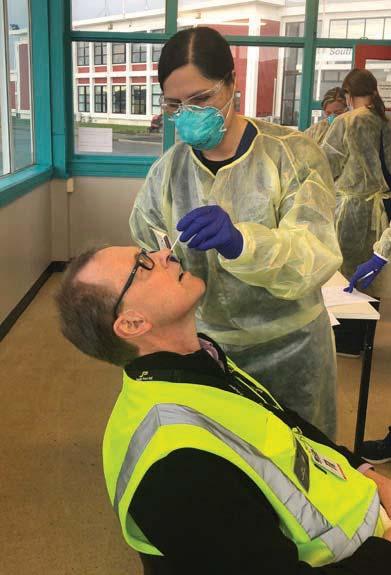
ON-SITE COVID-19 TESTING CLINICS
A COVID-19 testing clinic was established at the Port on two occasions. Testing was voluntary with 94 South Port staff, contractors and other port users swabbed. No positive tests were returned.
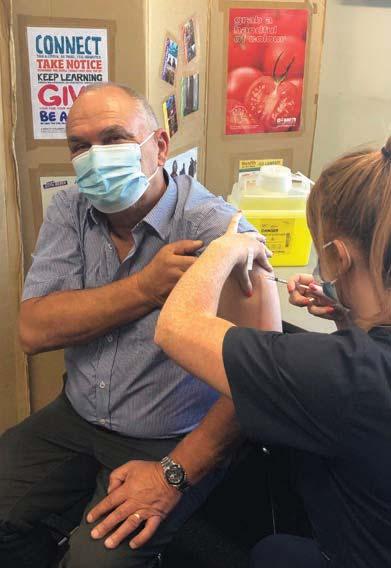
ON-SITE COVID-19 VACCINATIONS
As at 30 June, 57 South Port staff have been fully vaccinated against COVID-19. Vaccinations were administered at clinics set up at the Port as well as those who attended vaccination clinics elsewhere.
A number of other frontline Port Users also attended the on-site clinic and they continue to put border workers as their first priority.
COVID-19 – POST-LOCKDOWN STAFF MORALE INITIATIVES
Following the lockdown and NZ returning to Level 1 it was important that the Company check-in on the wellbeing of our staff. The first initiative was touching base with our staff with a ‘food for thought’ departmental catch up. This was an informal visit by members of the Leadership team across the Port with a morning or afternoon tea provided. This was a forum to celebrate our staff who had continued to effectively perform their duties during the lockdown period and beyond and to provide an update on happenings around the Port. A number of fun and more relaxed activities were also introduced to provide staff with an opportunity to reconnect with the wider South Port team including a TikTok Challenge and Barefoot Bowls evening.
South Port Chief Executive, Nigel Gear, having a COVID-19 test swab taken by an Occupational Health Nurse from WellSouth.
South Port Senior Pilot, Robert Coote, receiving his Pfizer COVID vaccine
Health & Safety Initiatives
CRITICAL RISK POSTERS
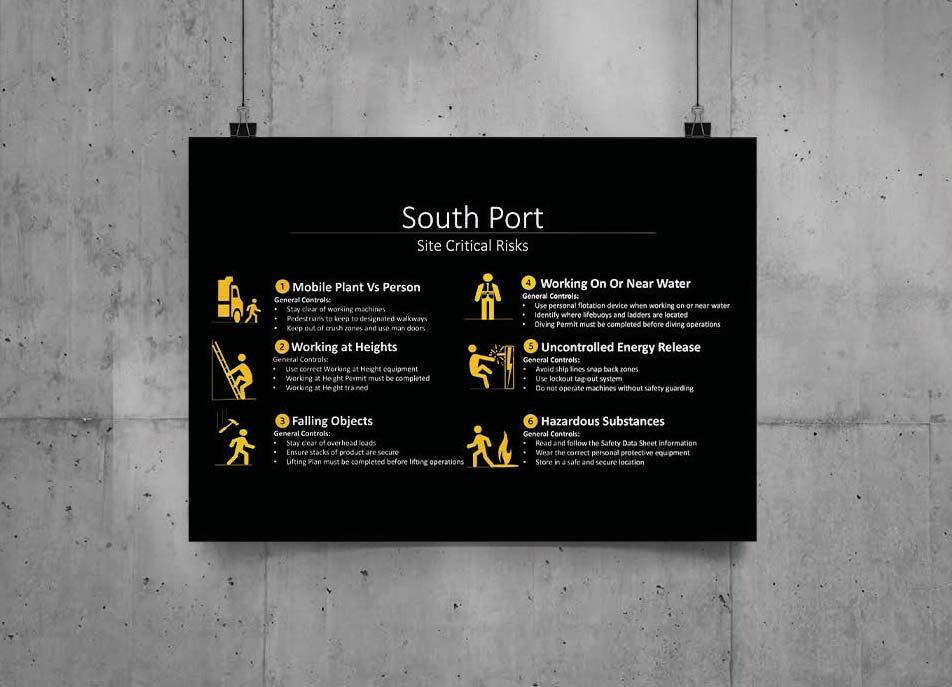
The Port has developed posters that are displayed across the Port to help drive a better understanding amongst our staff of our critical risks. Three key controls have been identified for each critical risk and these are highlighted on the posters.
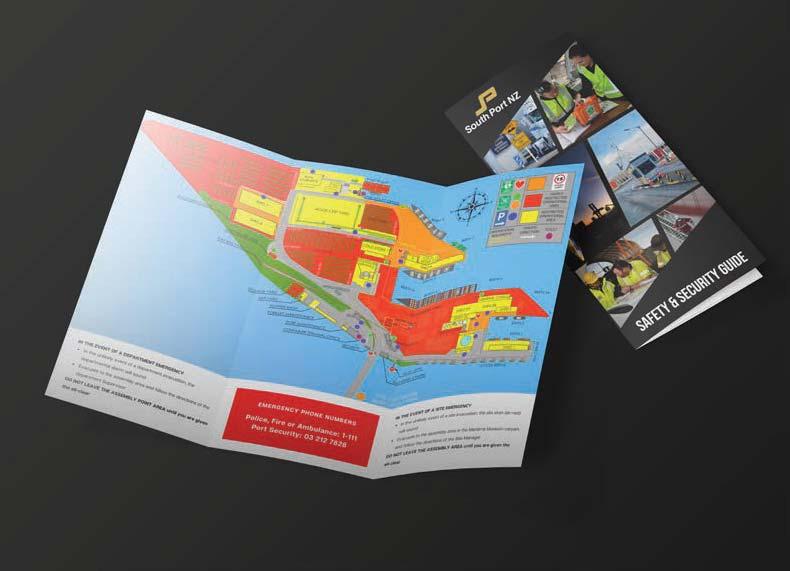
UPDATED SAFETY & SECURITY GUIDE
The Port’s Safety & Security Guide has been updated and provides a snapshot of site rules, a detailed map of the Port’s operational areas and emergency direction. The information focuses on the Port’s critical risk controls.
FORKLIFT SAFETY SENSOR TECHNOLOGY
Following on from the successful installation of Seen Safety Lidar sensors in our small forklift fleet last year, additional sensors have now been fitted to forklifts within our cold storage operation. The sensors are an improved version that are better able to function inside the cold store freezers. Mobile plant versus people is one of the Port’s critical risks and these units detect hi-vis clothing within a set vicinity helping our operators identify when persons/ objects may appear behind the machines and an additional means of minimising the risk.
Health & Safety Initiatives cont.
HEALTH & SAFETY “WHY WALL”
Commencing in August 2020, the Company conducted several Health & Safety “Why Wall” sessions. The project was aimed at encouraging staff to think about why their safety, health & wellness is important to them on a personal level. The sessions were facilitated by South Port’s CEO, Senior H&S Advisor and H&S Administrator. The facilitators talked about why safety, health & wellness was important to themselves individually and participants were asked to then identify their own reasons. All of the ideas were collected and are displayed as posters within each area of the business. As a collective, Company-wide collaboration, everyone’s “Why” has been allocated an imitation ‘brick in the wall’ which has been installed in the Company’s foyer as our “Why Wall.” The sessions were heartfelt, and a number of staff shared their own health and safety experiences to provide context to their team.
HEALTH & SAFETY COMMITTEE OPERATIONAL SITE VISITS
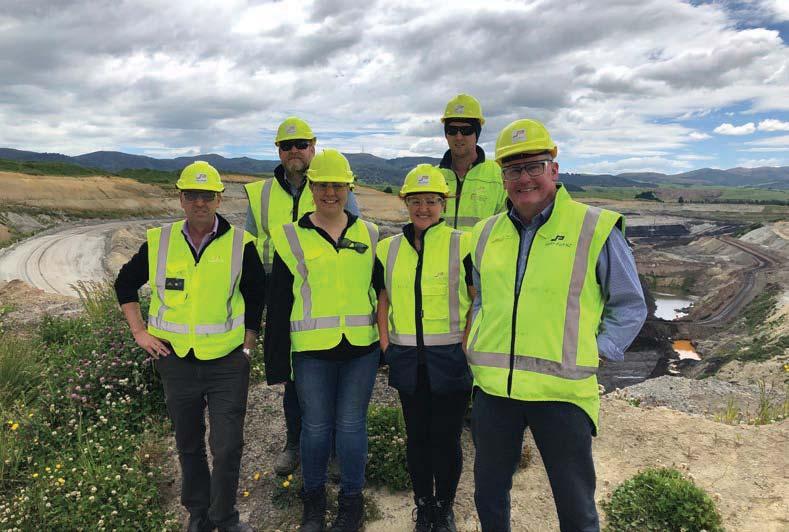
The Health & Safety Committee ensures they visit other operational sites within Southland to view health and safety practices applied by others. This is an effective learning process as the Committee can apply observations to our own site. These visits are often reciprocated/undertaken by other operators so they can view South Port’s health and safety practices.
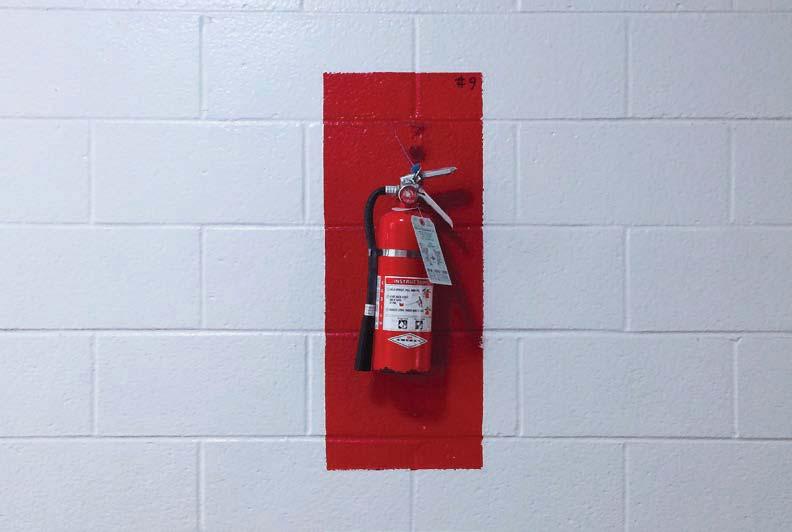
FIRE EXTINGUISHER AUDIT AND TRAINING
The Port engaged a new contractor, Paul Wood Fire Protection (PWFP), to undertake a four day compliance survey/audit assessment of its 200 plus on-site fire extinguishers. As a result of this assessment, PWFP, is now the Company’s preferred provider for the continuation of compliance on all fire extinguisher/ fire safety requirements on the Port.
PWFP has delivered a two-hour fire extinguisher course, including assessment, to the Port’s departmental fire wardens to ensure confidence around the use of this equipment in the case of a fire.
As part of the services PWFP provide, comprehensive warden training will be rolled out to further enhance the skills required to manage initial fire evacuation/ response.
Members of the South Port Health & Safety Committee during a site visit to the New Vale lignite mine at Waimumu (near Gore).
HEALTH SERVICE
Occ Health South Limited offer a range of health services designed to support and optimise the health needs of our workforce. They are a local company committed to providing us a high quality and professional occupational health nursing service.
They work with our staff and employees to enhance their workplace health and wellness.
South Port engages Occ Health South for pre-employment medicals, annual health monitoring, pain and discomfort assessments, seasonal influenza vaccinations and regular site visits.
ON-SITE PHYSIOTHERAPIST SERVICE
To assist staff recovering from injury, the Port has been trialling an on-site Physiotherapist programme. The weekly 2-hour visit is open for both work and non-work related injuries. The trial has proven popular with the weekly sessions fully subscribed. This provides an easy point of access to our staff who may otherwise need to include travel time to a provider or from lack of convenience might not otherwise seek treatment.
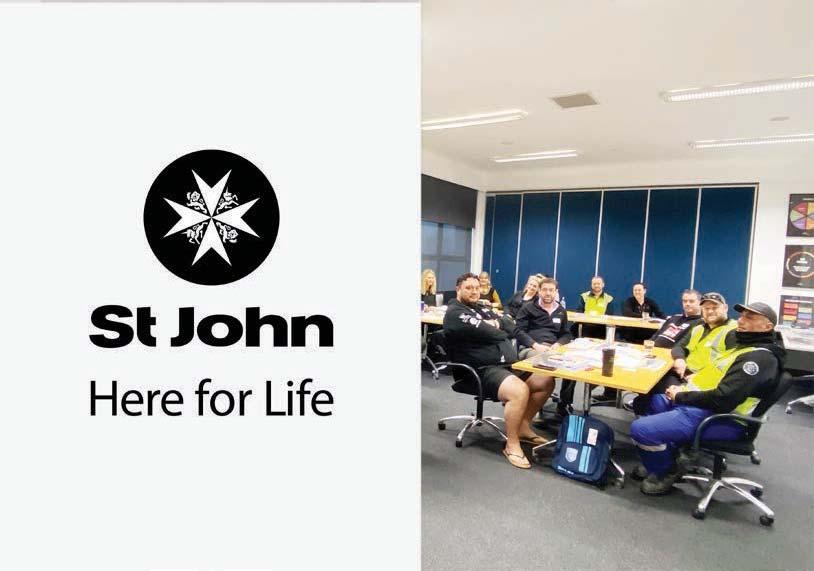
ST JOHN MENTAL HEALTH FIRST AID COURSE
Learning how to identify, understand and respond to signs of mental health issues in work colleagues, friends and family members has become part of our health and safety training. The Port is working with St John to deliver training to staff using a variety of best practice learning methods, including discussions, videos and scenario work, that will help recognise mental distress and what they can do to help.
Our People
2021 has been about succession planning and ‘future focus’.
Work has been undertaken to identify areas of our business where there is insufficient resource in comparison to activity levels and/or gaps in skills. This has been an opportunity to develop talent and depth within our business.
Fostering a respectful collaborative working environment where our people feel valued, can flourish and thrive, has been instrumental in this process.
We are committed to developing a strong, vibrant, diverse, inclusive and engaged workforce which requires ongoing training and professional development for staff at all levels across the business.
Te Ratu Sikisini CONTAINER TERMINAL OPERATOR, DEPOT TEAM
Values in Action
Te Ratu Sikisini – Raa to his mates – has been recognised by the Leadership Team as someone whose behaviours consistently reflect South Port’s Values.
Raa was employed in South Port’s Cold Storage department for nearly ten years and transferred to the Container Terminal at the end of the financial year, following the annual Cold Stores stocktake.
Raa is a solid, dependable and wellrespected staff member. He had the chance to transfer when an opening arose in early 2021; but pulled out of the race when it became apparent to him that a transfer at the peak of the season would create increased workload and stress for his team mates. Even though there were no guarantees of future vacancies, Raa acted selflessly and put the team’s interests ahead of his own.
The timing of Raa’s transfer ended up being a real win-win for everyone. It meant he was on hand to assist in the stocktake, a huge logistical exercise, and also gave us valuable extra time to train up his replacements – not easy considering the size and complexity of our operations.
In this financial year, training has primarily been on-job, with external training and leadership development increasing again in FY22.
Staff Profiles
Houston Te Tai CONTAINER TERMINAL TEAM LEADER, DEPOT TEAM
When Houston was a young man toiling away in the school holidays, he never dreamed he would one day operate a harbour crane or hold a leadership position in the Container Terminal. Yet that is exactly where he is now!
After leaving school, Houston started as a casual in the Cold Stores, before progressing to fixed term and later permanent employment. Since then, he has gone from strength to strength, transferring in mid-2019 to the Container Terminal where he gained a reputation for his skill, work ethic and safety focus. He is a valued team member who always brings his A-game, and his positive energy rubs off onto everyone else.
“I really enjoy working at South Port, we have a great team, and yes there are challenges, but they are good challenges. I have always led by example, and now I have a chance to develop my leadership skills in my new role as Depot Team Leader."
Rob Dixon
SYNCROLIFT OPERATOR DOCKMASTER TRAINEE
In May 2021, Rob was appointed to a new permanent position based at our Syncrolift vessel docking and repair facility. Before then, he was a member of the Marine Services Team, which regularly supported syncrolift activities.
Early days yet, but Rob is relishing the chance to work alongside and learn from our Syncrolift Engineer/ Dockmaster, Blair Cousins, who has been with South Port for 40 plus years.
“I know the Company is keen to grow the business and that means improving efficiencies and making sure we are offering a quality service to our customers.
I also know I have been offered a fantastic opportunity and I am determined to prove I am up for it. I can't wait until international travel opens up again, so I can work towards getting my dockmaster qualification.”
Nicolette Bottger MANAGEMENT ACCOUNTANT
Nicky started as our Management Accountant in November 2019.
This was a bold move for Nicky, husband Gary and children Luke and Abigail, relocating from Johannesburg, South Africa, but it's paid off because they love living in Southland!
In South Africa, Nicky gained experience in international accounting standards and practices working for a division of a publicly listed company and for a large global organisation.
Nicky is a great addition to our Finance Administration Team, and she has worked hard to gain a comprehensive understanding of the business. Her role involves reviewing and analysing financial data from across all departments, digging deep into the numbers.
“I like interpreting and translating the numbers, so they make sense to our people on the ground.
I have enjoyed learning the ropes and am excited about being able to support our business goals and grow further in my role."
Matthew Costar COMPLIANCE COORDINATOR
Matthew started in the Port’s Container Terminal as a Terminal Yard Planner in November 2018, transferring to his current role as Compliance Coordinator in February 2021.
He continues to shine as a true team player through his collaboration with operational teams and his willingness to tackle any task thrown at him. Audits, OMARs (Overseas Market Access Requirements) and other MPI measures keep Matthew on his toes. He has to be proactive about understanding and implementing changes when required. A recent highlight is our POFA (Place of First Arrival) Audit which elicited MPI feedback about the “excellent job” and no non-compliances raised.
“On a personal level I’m enjoying the opportunity to learn a new role and work across the whole Port. It’s great interacting with a wide group of people and being part of a successful team - as a team you can achieve so much more than on your own and I find that very satisfying.
I appreciate the chance to step up in my new role and the freedom given to me to get on with the job.”
Andrew Hill
INFRASTRUCTURE
SITE ENGINEER
Andrew joined the Infrastructure Team in January 2019, after graduating from the Southern Institute of Technology with a Diploma in Engineering (Civil Major) which covered geotechnics, structures, water and wastewater systems, hydraulics and engineering surveying. From day one, he has been in the thick of things, and has even taken the lead in monitoring a number of major infrastructure projects; most notably the Port’s access bridge strengthening and regeneration project which is critical to Island Harbour activities.
Andrew had always planned on further study, and with support from South Port he has been studying part time towards a Bachelor of Civil Engineering, which he aims to complete by the end of 2022.
“Working at the Port has exposed me to wide ranging engineering projects that I am able to use for my study. I can then in turn apply the new skills I have learned from my study to improve how I work.”
Andrew is certainly putting in the hard yards, staying late for Zoom lectures and to complete assignments. Pretty impressive work ethic for a young man of 23!
Tarryn Hamilton
COLD STORES
SENIOR LEADING HAND
Tarryn celebrated ten years’ service with South Port in November 2020, and it is fair to say he has seen a lot of change in his time with the Port.
Tarryn wears a number of hats that he wears well!
His most important role, of course, is on the home front as a partner and father.
On the work front, he is a Senior Leading Hand and member of the Cold Stores leadership team. He is also a staff representative on the Board Health and Safety Panel where he provides feedback to the Board while undertaking safety engagement walks.
Tarryn is also a Maritime Union of New Zealand (MUNZ) delegate, which occasionally finds him on the opposite side of the table from Management advocating on behalf of the Union and individual members.
He has a reputation as an articulate and assertive (at times very assertive!) advocate and it is a measure of the man that he is.
Tarryn is widely respected, regularly consulted and his opinions sought. We know we can count on him to tell it like it is!
‘Next Generation’ Pilots
Since early 2018, our ‘Next Generation’ Pilots have been training and upskilling under the watchful eyes of Senior Pilots, Robert Coote and Doran Waddingham.
While this new cohort brings fresh faces, new ideas and a different dynamic to the Port, there is no mistaking their respect for the challenging weather and unique hydrodynamic properties of the channel and harbour.
Paul James gained his Unrestricted Pilots Licence in March 2020 and Mark Saunders followed suit in 2021. Corey Madill holds a Class A and Ray Tull a Class C.
This is great progress from a highly dedicated and tight-knit pilotage team. With this momentum continuing, by 2023 the Port will have a full complement of Unrestricted Pilots navigating the channel.
Pathways to Employment Programme
In late 2020, South Port established a partnership with the Red Cross through its ‘Pathways to Employment’ programme, which helps connect employers with prospective employees with refugee backgrounds.
Our Colombian former refugees are eager to learn, hardworking and committed to the business. Employment offers them the chance to use their knowledge, skills and experience as well as adding cultural, social diversity and richness to our workplaces.
Our Red Cross partnership has been a real win-win for all concerned and has helped them settle into the workplace. The programme includes translation/ interpreting services and integration support to help ensure longer term success measured by ongoing employment and career progression.
Investment in their training has also included partnering with English Language Partners which is currently delivering an English language programme aimed at increasing literacy in work-specific languagewith a focus on health and safety in our warehouse settings.
Phil Dobson and Jorge Quirarte from Red Cross (far right) with members of the Port’s Cold Storage team
From left: Corey Madill, Ray Tull, Mark Saunders and Paul James.
Staff Survey 2020
South Port conducted our first ever staff survey in 2018, which was designed to gauge workplace culture and staff engagement. The survey provided valuable feedback about the things the Company is doing well and things that needed some improvement. One of the areas where we needed to up our game was our internal communication, and we have addressed this in a variety of ways; including through regular ‘all staff’ and departmental briefings, updates at departmental toolbox meetings and pre-start briefings, special interest group forums, increased social media, e-text messaging, and getting out and about and soliciting feedback ‘from those on the ground’.
FROM SURVEY
When the first staff survey was undertaken, the Company said it would repeat it after two years and in September 2020 staff had the opportunity to provide feedback again.
As with the first one, it was coordinated by an external consultant and to safeguard anonymity the survey data was only released in categories (or combinations of categories) where there were five or more staff. Results were reported on an “all staff” and “per department” basis and reviewed and discussed at toolbox meetings, and staff also had the chance to engage directly with the consultant if they had any queries.
Information is key and we will continue to survey our staff at regular intervals to ensure we have a good handle on culture and engagement.
I am proud to work for South Port.
If asked by an outsider, I would describe South Port as “a great place to work”.
I TRUST my colleagues to consistently do a good job.
I BELIEVE my colleagues trust me to consistently do a good job.
I count myself as a positive influence in the workplace.
My own core values align closely with South Port’s values.
I actively demonstrate South Port’s values on a daily basis.
Those around me consistently demonstrate South Port’s values.
TOPLINE DATA:
Out of 110 staff surveyed, 76.4% (84/110) responded.
This was only slightly behind 2018 (86/107), but still well above average for this survey type, industry type and size of our operation.
This was a more positive response to the workplace culture questions (reproduced below), including pride in working for South Port.
There seems to be a good understanding and respect for our values, they are slowly but surely being embedded into the organisation.
Staff recognise that the Company is promoting health and wellbeing as well as the appropriate focus on our workplace safety.
The Company needs to work harder to encourage a port-wide one team approach and more cooperation between departments.
The Company needs to stimulate more discussion with staff around career progression so there is the chance to grow and develop new skills within employee’s capability.
EXTRACT
◉ We
Our Community
Sponsorship of sporting, cultural and community groups is part of a long-term commitment to support the local community as well as the wider region in which South Port operates.
The Port’s Community Engagement Policy is aimed at actively engaging with various community events and organisations and assisting with community-driven projects.
The types of engagement include:
Community group interaction
Port tours
Sponsorship
Written communication
Not-for-profit/charity support
Event support
Working with young people
Expert advice
South Port Community Scholarship Recipient 2021
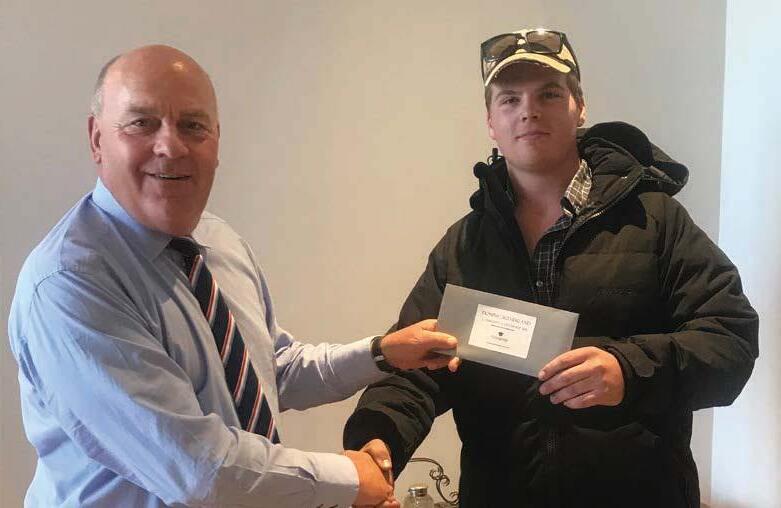
DOMINIC SUTHERLAND
Local Bluff resident, Dominic Sutherland has commenced a three-year apprenticeship with Competenz and is being hosted by McKenzie Marine in Bluff working towards a New Zealand Certificate in Mechanical Engineering. Last year Dominic completed his Certificate in Level Three Mechanical Engineering at Southern Institute of Technology which gave him a head-start on his studies and provided him with insight into what might come next for him.
Dominic has been involved with a number of clubs/organisations while growing up in Bluff such as Te Ara o Kiwa Sea Scouts, Bluff Yacht Club, Bluff Rugby Club and Bluff Swimming Club. Dominic takes advantage of the activities that are available to him in Bluff and is a keen downhill mountain biker and more recently dirt biking. He is also a passionate hunter, fisherman and diver.
Honest, enthusiastic and thoughtful are words that were used to describe Dominic who unselfishly gives his own time to help others learn. His leadership, common sense and being a team player are valuable attributes that will assist Dominic with his future endeavours.
Dominic enjoys the opportunity to just get in and do what needs to be done and has a great attitude towards life and his future and we wish him well on his journey towards gaining his trade.
Community and Regional Assistance
Organisations that received sponsorship assistance over recent financial years include:
Badminton Southland
Bluff Bowling Club
Bluff Flower Show
Bluff Hill/Motupōhue Environment Trust
Bluff Kindergarten
Bluff Netball Club
Bluff Oyster & Food Festival
Bluff Promotions
Bluff Rugby Club
Bluff Schools
Bluff Volunteer Fire Brigade
Burt Munro Challenge (Bluff Stage)
Coastguard Bluff
Export Southland
Graeme Dingle Foundation
Hospice Southland
Port Softball Club
Rugby Southland
St John Ambulance Service, Bluff
Southland Cancer Society
Southland Chamber of Commerce
Southland Cricket Association
Southland Football
Southland Mountain Bike Club –Bluff Bike Trails
Southland Sharks
South Sea Spray Motupōhue
Spirit Army
Te Ara o Kiwa Sea Scouts, Bluff
The Hawthorndale Care Village Tour of Southland (Bluff Stage)
An investment of over $80,000 into the local community was made during FY21
South Port Chairman, Rex Chapman presenting Dominic Sutherland with his Community Scholarship.
Christmas Hampers
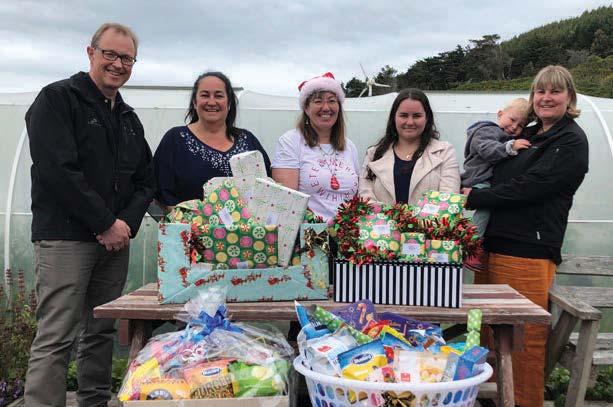
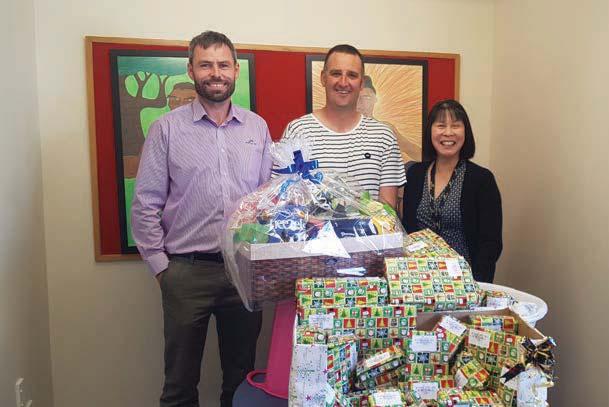
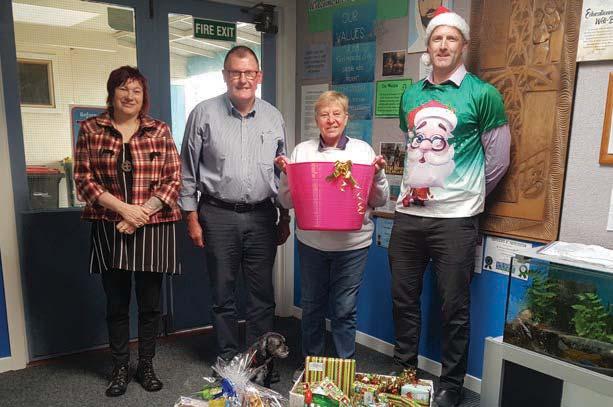
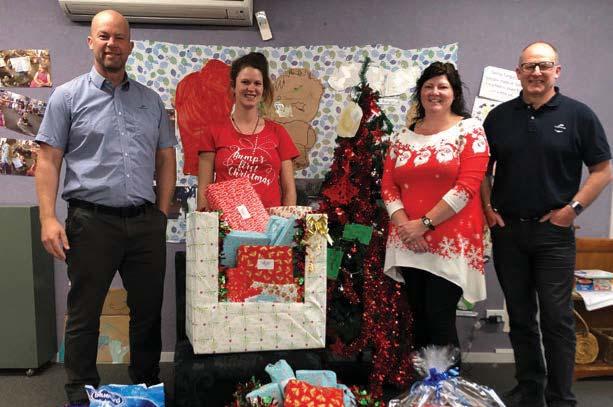
South Port spread the Christmas joy a little further in 2020 including an additional organisation to receive some Christmas cheer. Staff and Directors kindly donated food, gifts and money. Hampers were put together and passed on to local families of Te Rourou Early Childhood Centre, Bluff School, St Teresa’s School and the new addition of the Bluff Kindergarten to make four anonymous families’ Christmas 2020 a little more pleasant.
South Port Container Manager, Hayden Mikkelsen (left) and Port General Manager, Geoff Finnerty (right) delivering Christmas gift and food hampers to Bluff Kindergarten’s Sarah Tecofsky (Relieving Teacher) and Jenna Horrell (Teacher) to deliver to their selected family.
South Port CEO, Nigel Gear (left) and Finance Manager, Lara Stevens (right) along with her son Te Haunui-a-Kiwa, present Christmas hampers to staff Andria Cross, Kim Hartley and Eden Cross from Te Rourou Early Childhood Centre.
Business Development Manager, Jamie May and Human Resources Manager, Helen Young presenting Bluff School Principal, Geoff Folster (centre) with a hamper for a school community family.
St Teresa’s School Principal Dianne Gilroy (centre) and Teacher, Rosie Coyle accepting a hamper of gifts and food from South Port Warehousing Manager, Murray Wood (centre) and Infrastructure Manager, Frank O’Boyle.
Community Engagement / Sponsorship
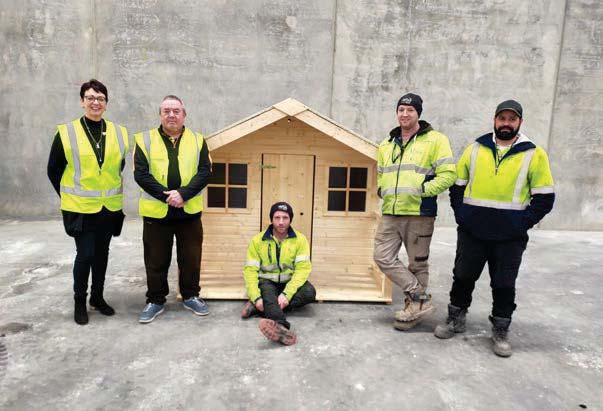
HOSPICE SOUTHLAND
Hospice Southland approached South Port for some help to construct playhouses they sell to generate funds for the organisation. Hospice representatives Bridget Winter and Tony Rain (far left) are accompanied by South Port Supervisor Alastair McKerchar and operators Brett McDonald and Daniel Akuhata who put their building skills to good use.
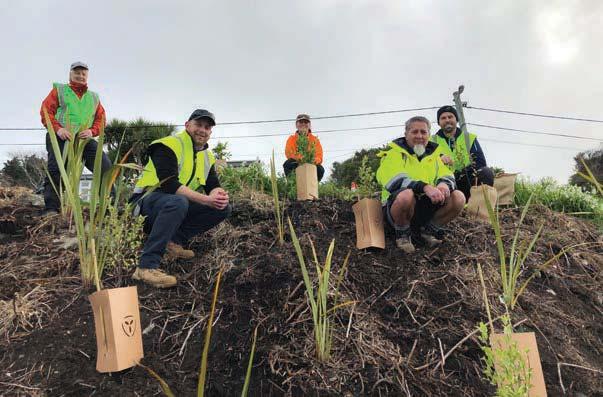
STIRLING POINT PLANTING
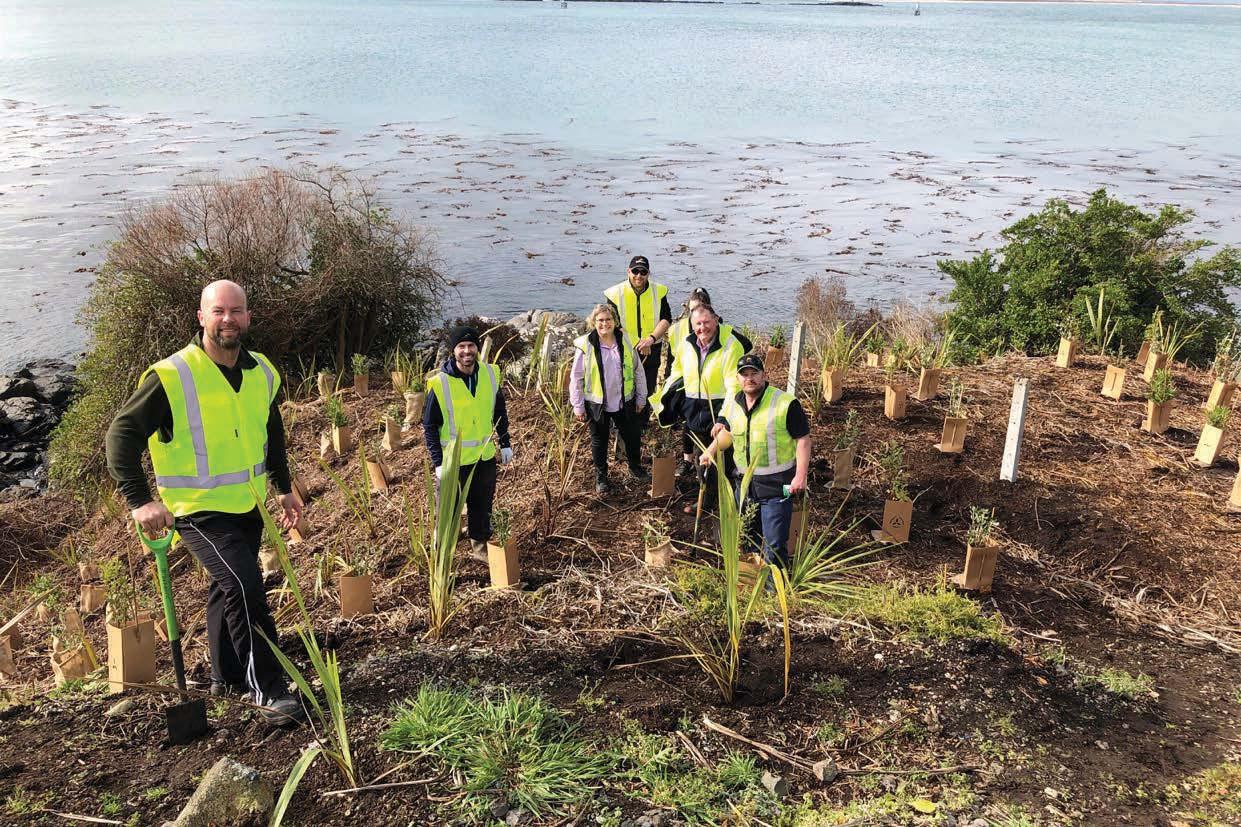
South Port staff were invited by Environment Southland and the Invercargill City Council to plant natives at Stirling Point. The land previously had not been maintained for a number of years so the improvement was noticeable to see! We were ably asssited by representatives from the Bluff Hill Motupōhue Environment Trust also.
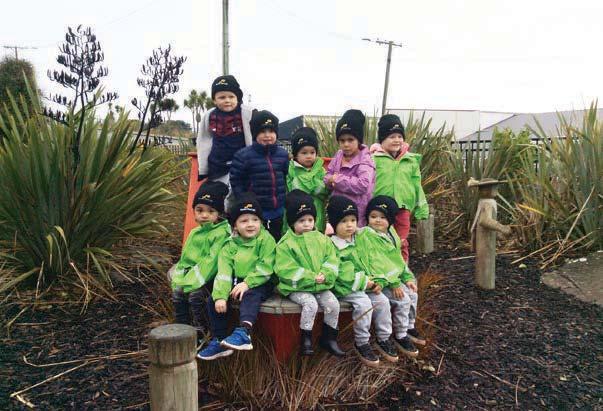
BLUFF KINDERGARTEN
It is widely known in New Zealand that Bluff winters can be cold! For several years now, we have partnered with the Bluff Kindergarten to supply all children who attend, a South Port beanie to help keep them warm. We have also worked with the kindergarten on a number of projects to beautify their gardens and assist with on-site maintenance projects.
SOUTHLAND SHARKS
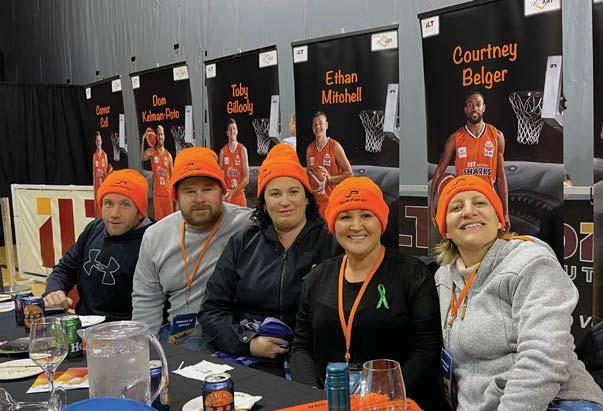
South Port is a proud supporter of the Southland Sharks basketball team. Throughout the season we receive tickets to every home fixture that our staff enjoy and we also get the opportunity to be courtside amongst the action and host customers. We have even introduced orange hi-vis beanies into the organisation to show our support!
Active in the Community
CRICKET
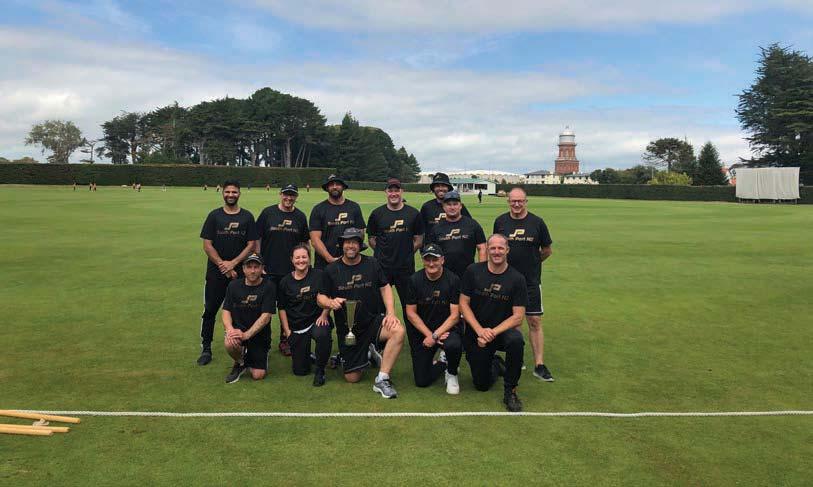
For the past five years the South Port cricket team has locked horns with local automation and electrical specialists EIS. It is a great opportunity to involve all departments of the Port to collaborate as one team, and whilst it is fun we still play to win!
SURF TO CITY
The Southland sun was shining in March for the Invercargill City Council Surf to City. South Port invited all staff and their family to participate with a great turnout registered. The event allows walking, running and biking over the 3km, 6km and 12km journey.
FOOTBALL
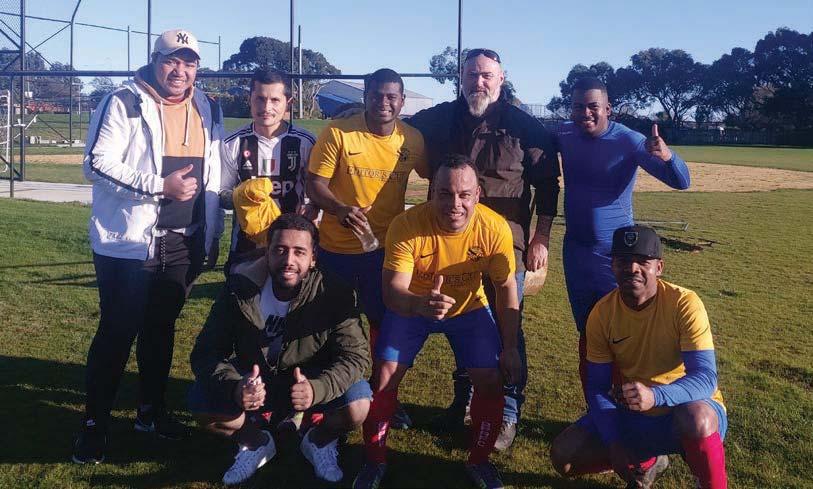
A number of the South Port cold storage team joined the Queens Park Football Club in Invercargill. It is the team’s third year playing together having won Division 2 in their first year. Sources from within the cold store say Dario Vargas Toledo and Rodolfo Arena Mosquera are the marquee players.
PORT TOURS
The Graeme Dingle Foundation inspires all school age children in New Zealand to reach their full potential through programmes that help build self esteem, promote good values and which teach valuable life, education and health skills.
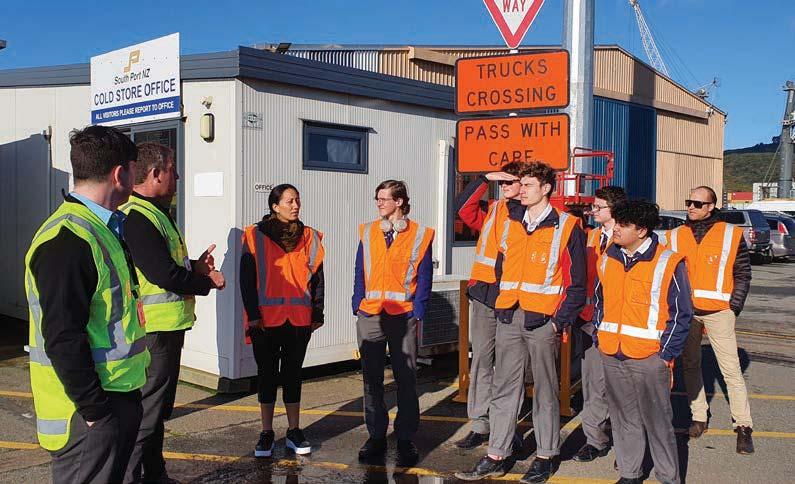
South Port provides support to the Graeme Dingle Foundation through a variety of means including undertaking Port tours and introducing young people to the potential prospect and types of career opportunities available at a port.
The Port also supported the Drop for Youth fundraiser event, which has helped to raise money for the Graeme Dingle Foundation to continue providing their programmes to Southland youth.
DROP FOR YOUTH
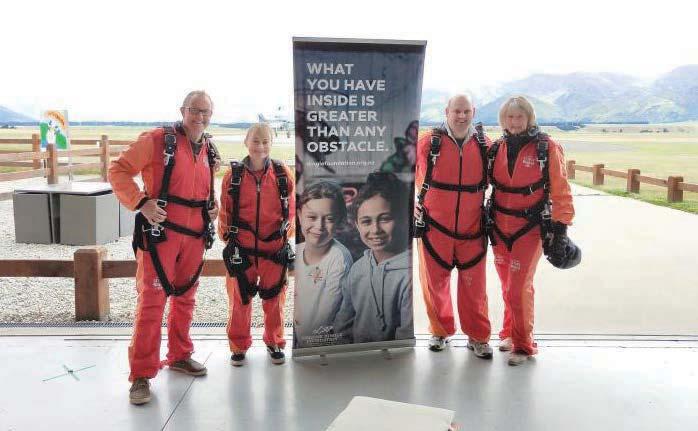
Our New Zealand youth face many challenges in this ever-changing world, so the Graeme Dingle Foundation decided to ask the community to face their own challenges and go outside their comfort zone and take part in Drop for Youth.
Drop For Youth is an annual Graeme Dingle Foundation fundraiser where they dare ‘droppers’ to take on a challenge and overcome an obstacle, and for South Port’s Nigel Gear, this was skydiving alongside 13 other ‘droppers’.
Funds raised enable the Graeme Dingle Foundation’s Kiwi Can, Career Navigator, and Stars programmes to continue being delivered in schools in the Southern region and ultimately empower and support over 1200 children and young people to overcome life’s obstacles and live a fulfilling life.
Graeme Dingle Foundation
Supporting Charitable Organisations
WESTPAC RIDE
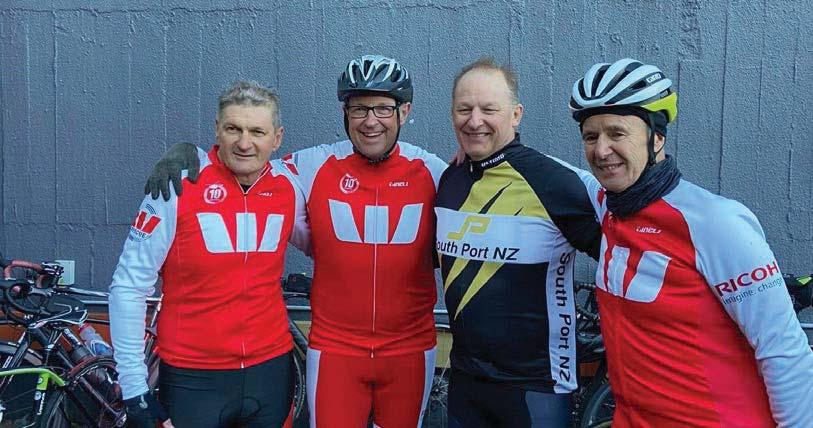
Scott Faithfull, Nigel Gear, Geoff Finnerty and Jeremy McClean participated in the Westpac Chopper appeal bike ride from Queenstown to Invercargill. It was a well organised event with over 100 people participating and a substantial sum of money raised for this important service.
PACK THE PARK – SOUTHLAND CHARITY HOSPITAL
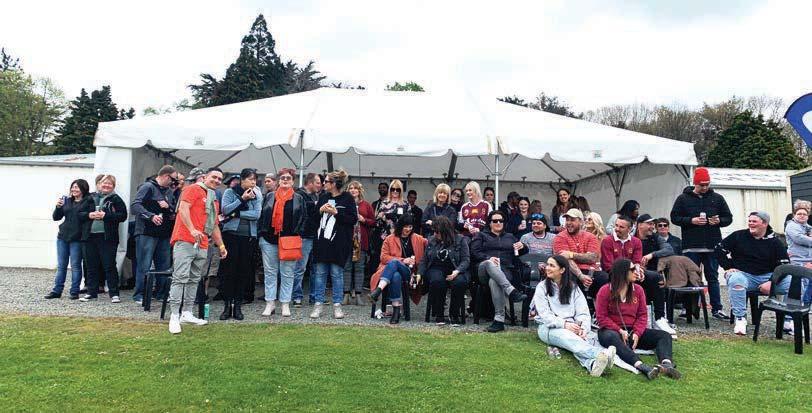
The South Port Social Club jumped at the opportunity to hold one of their events at the Pack the Park invitational rugby game held at Rugby Park in honour of Blair Vining. Once completed, the Southland Charity Hospital will be a much-needed facility for the region that South Port is proud to be associated with.
THE HAWTHORNDALE CARE VILLAGE
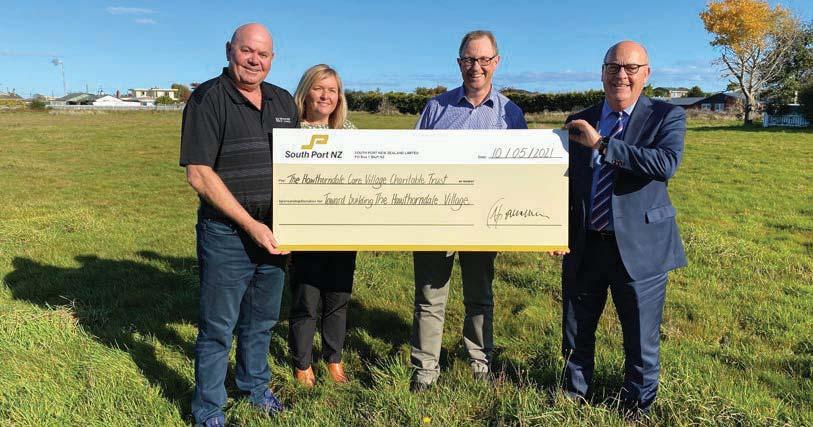
The Hawthorndale Care Village is to be developed in Invercargill for the wider Southland community, and is a model similar to the Dutch dementia village De Hogeweyk. South Port Infrastruture Manager, Frank O’Boyle, is a member of the project team and Human Resources Manager, Helen Young, is a Trustee of the Calvary Hospital Board who are driving the project.
South Port’s support was in the form of a financial contribution towards the project. Pictured is Hawthorndale Care Village representatives Paddy O’Brien and Sarah Hannan alongside Nigel Gear and Rex Chapman.
BE THE FUTURE OF FORESTRY
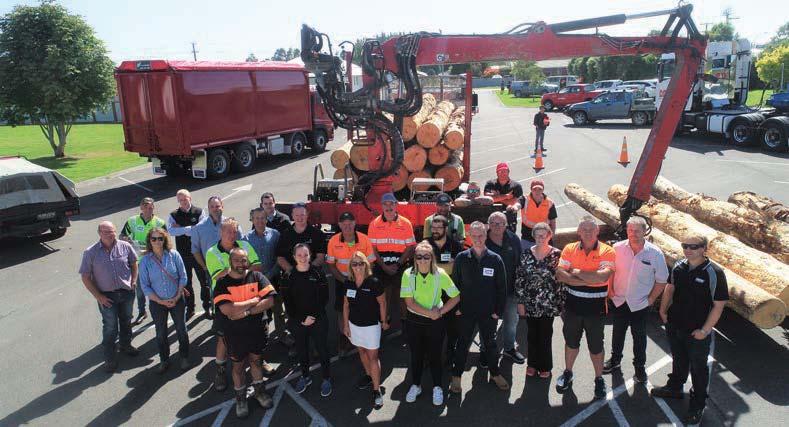
South Port was approached to support the Southland Youth Futures programme by attending the Be the Future of Forestry careers day. The aim of this event is to highlight the large variety of roles and training pathways available in Southland. Be the Future of Forestry was held in Winton, where South Port participated by giving students an insight into the operations on the Port and explaining the Port’s role in the forestry sector.
BURT MUNRO CHALLENGE – BLUFF HILL CLIMB
South Port has assisted the Bluff Hill Climb for several years, but unfortunately this year was met with wet and windy weather which caused initial postponement and then the cancellation of the event. Despite the weather, many were in good spirits and were excited to attend the other events in the Burt Munro Challenge.
YOUNG ENTERPRISE – PITCHES, JUDGING, MENTORING
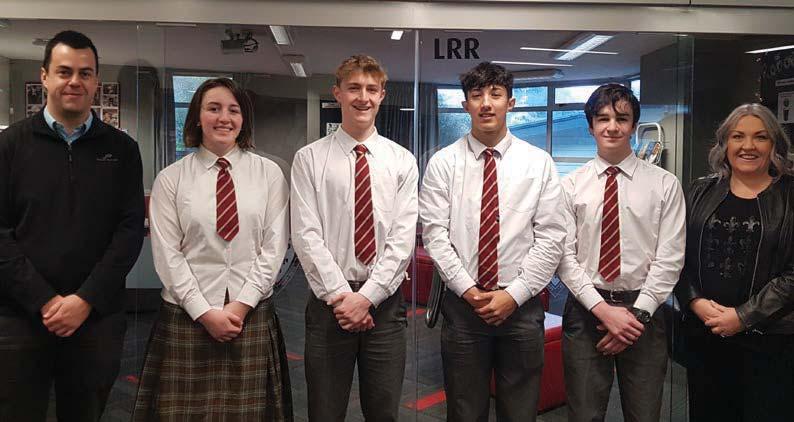
The Port was invited to become a mentor for the Young Enterprise Scheme (YES), where business professionals and entrepreneurs provide support and advice to students who are starting their new business ventures. South Port has joined with a group of students from James Hargest College who are aiming to help the community by providing environmentally friendly air freshener products.
As a mentor we worked with the students to help develop their business idea and create a business plan. This provided the starting point for the students to work from when creating their business pitches and developing their product. Being involved with YES also provided the opportunity to be involved with the judging of the pitches. It was a busy day judging and providing feedback for all the YES groups, but it was great to see some amazing business ideas from students in Southland.
Environment
Sustainability
SUSTAINABLE PAVEMENTS
This year South Port trialled a new pavement construction technique with a focus on reducing environmental impact, improving pavement quality, and minimising disruption to operations. A section of the container terminal was upgraded using different pavement materials which reduced the pavement thickness from 1,000mm to 350mm.
This method resulted in less material being disposed to landfill and less gravel being quarried. We were also able to reduce the construction time from six weeks to nine days! We will monitor the performance of the pavement with a view to rolling out this methodology across the Port in the coming years.
RECYCLING CONCRETE
Recycling concrete after demolition eliminates its disposal as waste and prevents overloading landfills. Recycled concrete also replaces granular material which would otherwise be quarried and transported for use. This year saw the demolition of Shed 6 and removal of old railway foundations in the container terminal. Both projects produced a large quantity of concrete which was stored and later crushed and reused as bulk fill in pavement construction.
RECYCLING HISTORIC TIMBER
Demolition work undertaken as part of the Petroleum Berth upgrade at the Town Wharf has produced a large quantity of surplus timber. This historic timber is being temporarily stored with the opportunity to, in the future, offer it to community projects in Bluff and the wider Southland region.
RECYCLING STEEL & TIMBER
The demolition of Shed 6 provided an opportunity to recycle other materials. The demolition contractors, Ryal Bush Transport Ltd, has arranged for all the timber and the steel portal frames to be recycled.
RECYCLE PLASTIC WRAP
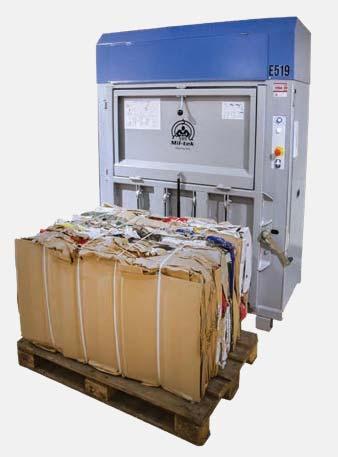
The Cold Stores have introduced a hydraulic press to handle the plastic wrap that is used to secure product on pallets. Up to 14 tonnes of this material is generated every year and previously the loose ‘unclean’ material was sent to town, at South Port's cost, for handling ready for recycling.
By segregating the clean material, coupled with introducing our own hydraulic press, we can now press the clean plastic into tight bales making transportation more efficient and the local recycling company now pay to receive the clean plastic ready to be recycled.
Environmental Project Partnership
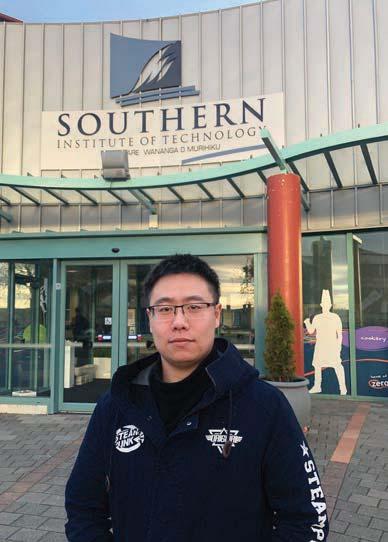
South Port and the Southern Institute of Technology (SIT) have partnered to create opportunities for students to work on ‘real’ environmental projects as part of their diploma studies.
CARBON FOOTPRINT
Over the past few years South Port has been undertaking the required work to measure and report on the Port’s carbon footprint. This year, the partnership with SIT has given engineering student, Leo Zhao, the opportunity to complete this work.
The Carbon Footprint Report gives a general overview of the Port’s Greenhouse Gas (GHG) emissions and converts them into CO2. The calculation and analysis of the GHG emissions can ensure the identification of the possible measures to reduce energy consumption, as well as decreasing the overall carbon footprint. The carbon footprint indicators can promote the monitoring of the Company's activities to identify improvement areas and highlight areas of possible concern.
STORMWATER DISCHARGE
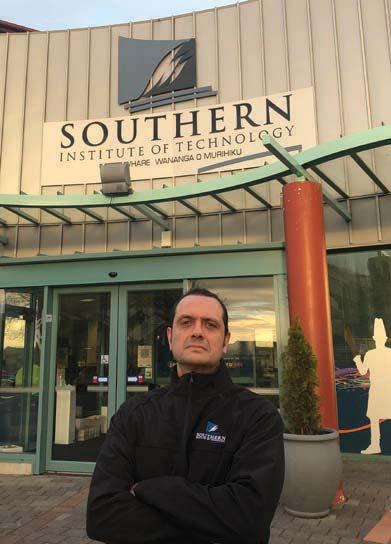
As pavement upgrades have been completed around the Port, treatment systems to the stormwater network have been added. The Port is now able to study the effectiveness of these systems and make improvements if necessary. The partnership with SIT has given engineering student, Eduardo Queluz, the opportunity to complete this work which will form part of his Engineering Diploma studies.
This study addresses the assessment of stormwater system performance, focusing on the qualitative aspect, i.e., verifying the capacity to treat the stormwater collected by the system. For this purpose, water samples are being collected at points before and after the treatment devices. Comparison of the individual analyses of the samples will determine the efficiency of the system. Based on the results of the analysis, improvement options based on Best Management Practices (BMP) will be considered.
STUDENT PROFILE:
Leo Zhao
Leo enjoys using and applying engineering skills to contribute to the advances that happen in the engineering industry. He is currently working towards a Bachelor of Engineering (Mechanical) at SIT. At SIT, Leo has learned the importance of applying engineering techniques to the real world from experts in the field, including his supervisors, Carlo Gabriel and Naveed Ur Rehman.
“As a participant of the South Port carbon footprint project, I have gained precious experience and knowledge regarding the engineering industry, improved my capacity of thinking, analysing, and communicating with the help of South Port team members. This contributes to my current study and my future career as well.”
STUDENT PROFILE:
Eduardo Queluz
Eduardo Queluz is from Brazil and holds a degree in Cartographic Engineering and a postgraduate in Environmental Management. He worked as a Cartographer in one of the biggest forestry companies in the world (Arauco Forest) and as a Forestry Manager in a pulp and paper company, both in Brazil. Queluz has over 20 years’ experience in various areas, including surveying, GIS, forestry, FSC Certification and environmental. He is currently working towards a Graduate Diploma in Engineering Technology (Civil) at SIT.
“One of the most valuable aspects of this research is working towards a relevant and practical goal that enhances the academic experience while meeting South Port's needs. It is a unique opportunity."
Energy Management
Consultant Energy Engineers have undertaken an energy audit on the Port’s Cold Store refrigeration plant. It is intended to implement a selection of the recommendations in time for the start of the new season. Savings of up to 1,200 MWh/yr of electricity or the equivalent of 130 tonnes of CO2 per year are expected.
EMISSIONS BY SOURCE (TCO2E)
Greenhouse Gas (GHG) Emissions Profile
This is the third year South Port has taken the step to record and report on their Scope 1 and Scope 2 emissions as well as estimating the Scope 3 emissions.
SCOPE 1
Direct GHG emissions occurring from sources that are owned or controlled by the Company (eg, fuel).
SCOPE 2
Indirect GHG emissions occurring from the generation of purchased electricity consumed by the Company.
SCOPE 3
Other indirect GHG emissions occurring as a consequence of the activities of the Company, but generated from sources not owned or controlled by the Company (eg, air travel).
*Partial datasets (assumptions made).
GHG EMISSIONS - THREE YEAR COMPARISON (TCO2E)
South Port Power Consumption
The graph to the right details the power consumed by South Port only. The power consumed by third parties operating on the Port has been removed from the totals. The 14% increase in power consumption between FY19 and FY20 can be attributed to the introduction of a blast freezing service in Cold Store 1 which continued to grow in FY21. Another contributing factor to the increase in power consumption in FY21 was the unprecedented volume of reefers (refrigerated containers) stored on the Port.
PORT WIDE DIESEL FUEL CONSUMPTION
Contractors/Suppliers
South Port Fuel Consumption
The graph above details the diesel consumed by South Port, including our customers and contractors. Following the dip in 2020, which can be attributed to the effects of COVID-19, the fuel consumption overall, returned to a similar level as FY19. Several substation upgrades were completed this year which required power outages from time to time and disruption to operations was minimised by introducing diesel generators which had an impact on fuel use.
Oreti
Takitimu
Te Matua Hauroko
Office Heating Tank
Tikore Cranes
IFC Mersey St Yard Tank
Station
Infrastructure
Development Project
South Port has recently embarked on a multi-year programme of capital expenditure aimed at strengthening the Port’s attributes and services and growing its client base. This programme includes enhancing shipping channels and updating key infrastructure. Initially this project was referred to as the “Channel Improvement Project”. However, it has now been given a new name, Kia Whakaū.
Kia Whakaū, has a very simple meaning of strengthening, developing or refining an object or people but also describes the act of landing something from the sea.
The Resource Consent for the project was lodged on 17 May 2021. A lot of work has been undertaken in preparing the consent which is now being processed.
The below provides some quick facts on the project:
Increase draft from 9.7 metres to 10.7 metres
Removing high points within the channel
Project start time is subject to consent process and contractor availability
The proposed project timing is during winter months outside marine species predominant feeding times and when less species frequent Bluff Harbour
Increase the safety margins for shipping movements
Improve loading and unloading efficiencies at the Port
Larger vessel loadings – eliminating multiple calls in the case of logs (one port call) equals lower carbon per tonne of cargo
Estimated project cost between $15M and $20M
120,000m3 of sand and silt removed by suction dredge (berth pockets and swinging basin)
30-40,000m3 of rock which is removed by drilling, blasting and backhoe dredging
Carried out extensive consultation with stakeholders and iwi
Completed a number of environmental assessments, i.e.:
‐ Assessment of Marine Environmental Effects
‐ Marine Mammals Assessment of Environmental Effects
‐ Natural Character, Landscape and Visual Effects Assessment
‐ Bird Survey Report
Sourced and received a Cultural Impact Assessment from Te Rūnanga o Awarua
Project information will be available on the South Port website –www.southport.co.nz
Access Bridge
Year three of a five-year programme has been completed, targeted at repairing the underside of the bridge deck with work progressing well. Four bays were completed in FY2021 and the project is on track for a further four bays to be completed in FY2022. This will leave just one bay to be completed in FY2023.
Description Status
FY2019 Bay 5 Complete
FY2020
FY2021
FY2022
FY2022
Bays 1, 4, 10 & 11 Complete
Bays 2, 6, 8 & 12 Complete
*Bays 7 & 13 Complete
Bays 9 & 14 Underway
FY2023 Bay 3 Pending
* This work was scheduled for FY2022 but was completed in FY2021.
Foreshore
Island Harbour
Petroleum Berth Upgrade
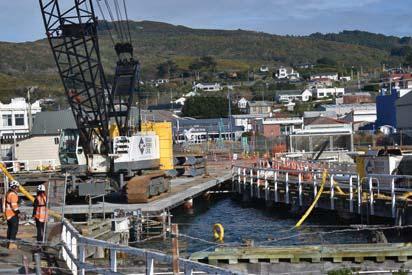
It has been four years in the making but we can finally say work on the $11M Petroleum Berth upgrade has begun. The Contractor (Brian Perry Civil) began construction in May 2021 and is progressing well. It is expected the access route will be complete by November 2021 with the discharge area scheduled for completion in March 2022. Following completion of these two elements of work, both Road Science and ExxonMobil will begin installing their pipework on the new structure with a view to having the Petroleum Berth operational by July 2022. This project has many challenges, not least keeping the existing fuel berth operational during construction of the new structure.
South Port would like to acknowledge all stakeholders involved in this project including (but not limited to) the Bluff community, Te Rūnanga o Awarua, Heritage New Zealand, Coastal Oil Logistics, ExxonMobil and Road Science.
Reefer Tower
Local Bluff contractor, Bluff Engineering & Welding successfully completed the construction of the Port’s first ever reefer tower. The tower increases our ability to safely handle more refrigerated containers whilst taking up less space in an already busy container terminal.
This project was a great example of the ‘One Team’ Company value. A collaborative approach was taken to the design which involved the Infrastructure Team, Container Terminal employees and the end user to ensure the finished product met our safety, efficiency, operational and constructability goals.
Reefer Plugs
It has been well documented how busy the Container Terminal has been over the past 12 months and in particular the growth in refrigerated product.
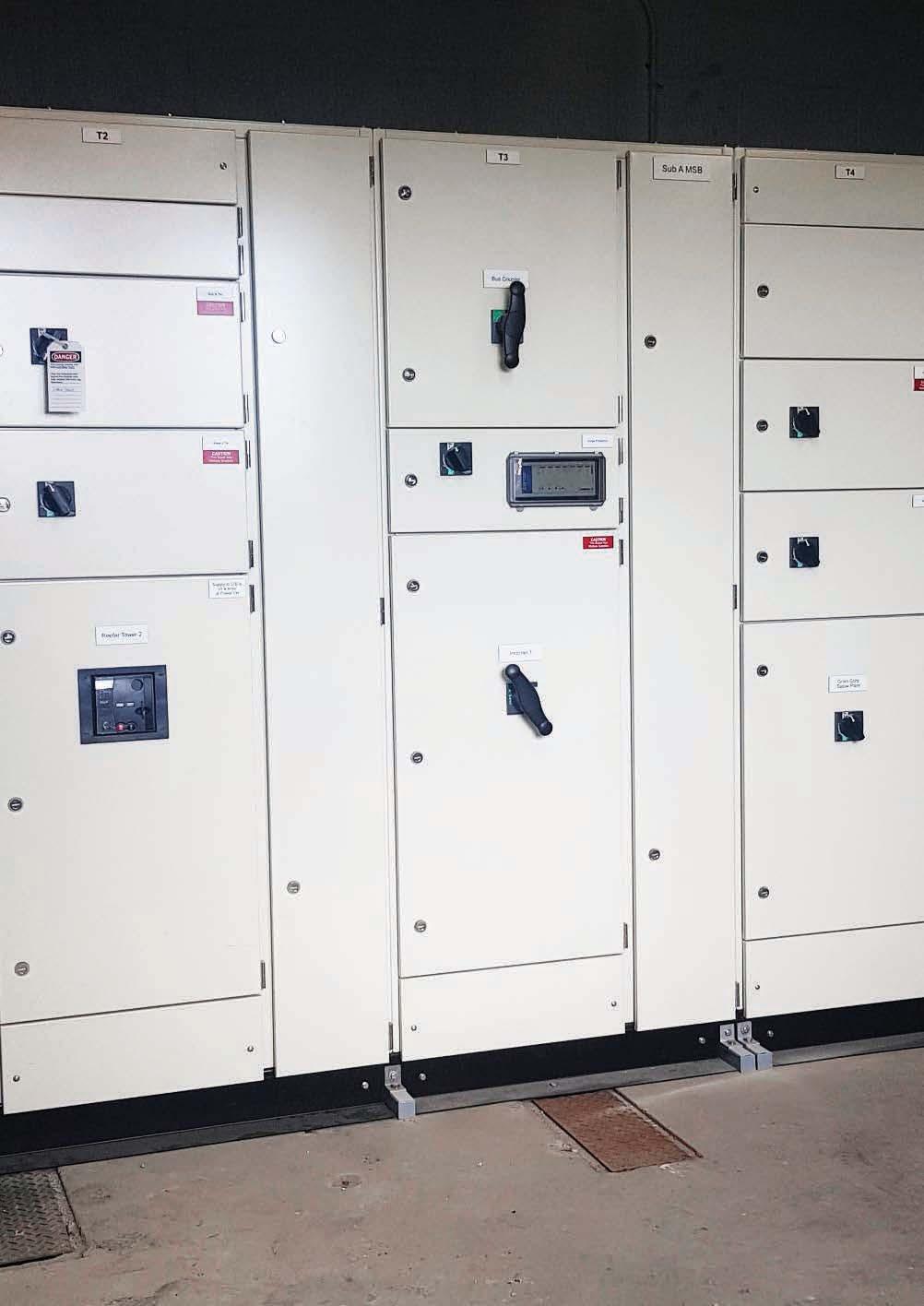
Although the addition of the reefer tower assisted, we were still not completely ready for the unprecedented scale of growth. South Port employees had to work hard to ensure everything was in place to cater for this growth. The Terminal and Infrastructure teams were talking daily (sometimes hourly) on where more plugs could be installed. However, it was not just a case of installing more plugs, we needed to ensure our electrical infrastructure could handle the additional load. This meant some minor upgrades were required along the way.
To put what has been achieved into perspective, in 2020 the Port could only handle 108 reefers but current capacity is 300, an almost three-fold increase.
Storm Bollards
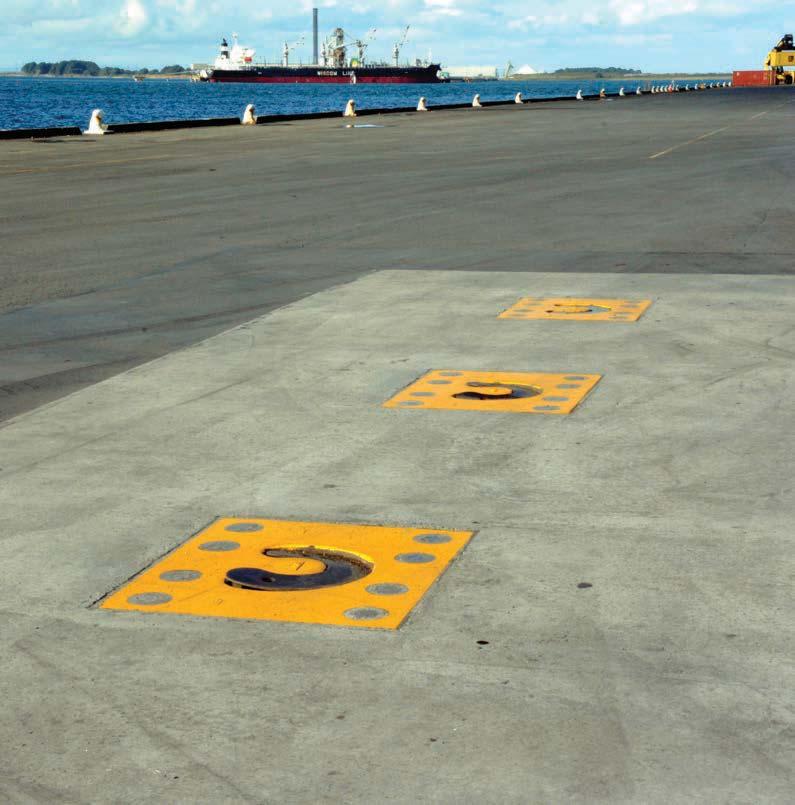
This year saw the installation of four sets of storm bollards. Two sets on Berth 8 and two sets on Berth 4. These bollards increase the Port’s mooring capacity at these berths and provide increased safety during strong wind events.
Container Terminal Expansion
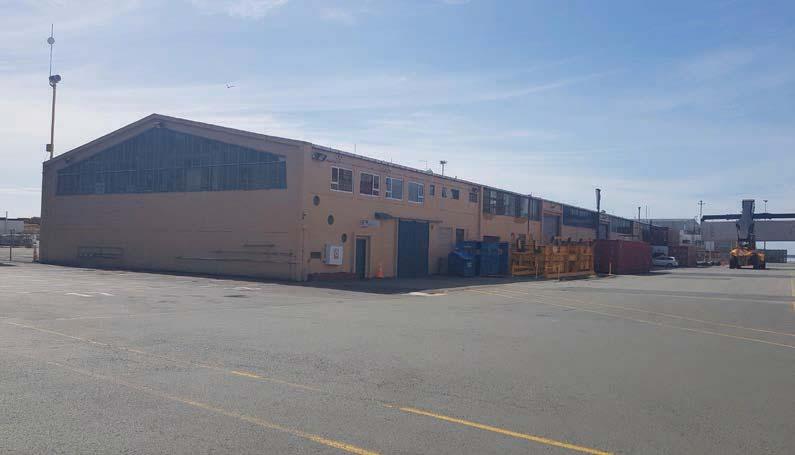
In order to cater for the expanding container business, the decision was made this year to demolish cargo Shed No. 6, one of the original sheds built when the Island Harbour was formed in the 1960’s. A challenge with this project is that the Port’s main utilities come through this area such as watermain, sewer, stormwater and 11Kv power cable. In the past these utilities were protected by Shed No. 6; however, once this area becomes part of the Container Terminal, they will become susceptible to damage from traffic loading (container forklifts). Therefore, they will be deepened or relocated as part of this project. This project is due to be completed by March 2022.
Financial Highlights
Directors’ Profiles
Rex Chapman
LLB, CMinstD, Chairman
Appointed October 2002
Mr Chapman is a Senior Partner in Southland/Queenstown Law Firm Cruickshank Pryde based in Invercargill. He has been in legal practice in Invercargill for 40 years. Mr Chapman’s practice covers a wide range of legal services including commercial and company law, litigation, dispute resolution and resource management.
He is also a member of the Southland Aquaculture Working Group established to promote and support the development of sustainable aquaculture in Southland.
Philip Cory-Wright
BCA, LLB (Hons), CFInstD
Appointed September 2010
Mr Cory-Wright is a Company Director and a Strategic Adviser based in Auckland. He is inaugural Chairman of Papa Rererangi i Puketapu (New Plymouth Airport) and a Director of Matariki Forests, the Local Government Funding Agency and Powerco.
Mr Cory-Wright was previously a member of the Local Government Infrastructure Expert Advisory Group.
Thomas Foggo
Appointed October 2003
Mr Foggo moved to semi-retirement from Sanford Limited in late 2017 after 37 years in various Senior Management positions. His experience in the aquaculture industry has led to his continued involvement in the Southland Regional Development Strategy’s ‘New Business’ Action Team.
Mr Foggo established the Youth Development Southland Regional Trust to oversee Kiwi Can in the region and worked to kick-start the funding for the programme locally.
Mr Foggo’s future focus is on professional governance opportunities.
Nicola Greer
MCom(Hons)
Appointed November 2019
Ms Greer is a Company Director based in Queenstown. She is currently a Director of Airways Corporation, Fidelity Life Assurance Ltd, New Zealand Railways Corporation and a member of the NZ Markets Disciplinary Tribunal. She is also a shareholder and Director in a privately owned commercial property investment and development company.
Prior to her governance career, Nicola had extensive experience in NZ, Australia and the UK in the banking and finance sectors. This encompassed a range of roles within the financial markets and assets and liability management at ANZ, Citibank and Goldman Sachs.
Clare Kearney
BAgSci, MProfStuds(Linc) CFInstD
Appointed October 2016
Mrs Kearney’s background is in Agriculture and Farm Business Management Consulting. She is a Judicial Justice of the Peace.
Mrs Kearney is President-elect of the New Zealand Alpine Club and a trustee of the Waitaki Safer Community Trust. Formerly, the Chair of Sport Otago and Chair of Network Waitaki Ltd. Mrs Kearney was the 2014 winner of the Institute of Directors Otago Branch Aspiring Director Award. Mrs Kearney acted as an observer director to the Dunedin City Holdings subsidiary company Taieri Gorge Railway Ltd during 2015.
Jeremy McClean
BCom, CA, MInstD
Appointed September 2011
Mr McClean is a Chartered Accountant with 40 years of public practice in the southern region. He is a Principal in Invercargill accounting firm Malloch McClean, holds a Public Practice Certificate with Chartered Accountants Australia New Zealand and is a Justice of the Peace. Mr McClean provides strategic, succession, tax advisory and governance services to a significant portfolio of local agri and commercial businesses. He also enjoys mentoring young business leaders to grow smarter better businesses that balance the needs of work, family and the community.
Statutory Report of Directors
The Directors have pleasure in submitting their 2021 Report and Financial Statements.
Principal Activities
The Company is primarily engaged in the commercial operation of the Port of Bluff. There has been no significant change in the nature of the Company’s business during the year.
Accounting Period
The financial statements are for the 12 month period from 1 July 2020 to 30 June 2021.
Results
The Company recorded a surplus for the period of $10,714,000.
Disclosure of Share Dealing by Directors
Directors acquired no additional equity securities in the Company since the date of the last Annual Meeting.
Dividend
The Directors have declared an ordinary dividend of $7,083,000 for the period ended 30 June 2021 including the final dividend amount of $5,116,000 payable in November 2021.
Directors’ and Officers’ Liability Insurance
The Company has arranged Directors’ and Officers’ Liability Insurance with Vero Liability Insurance Limited. This cover insures Directors against liabilities to other parties that may arise from their positions as Directors. The insurance does not cover liabilities arising from criminal actions.
Remuneration of Directors
Directors’ remuneration for the 12 month period ended 30 June 2021 was as follows:
Rex Chapman
P Cory-Wright
N Greer
J McClean
T M Foggo
C Kearney
$74,875
$42,925
$42,925
$42,925
$42,925
$42,925
Total $289,500
No other benefits have been provided by the Company to a Director or in any other capacity. No loans have been made by the Company to a Director nor has the Company guaranteed any debts incurred by a Director.
Directors’ Shareholding
There is currently no beneficial shareholding held by Directors.
Remuneration of Employees
Section 211(1)(g) of the New Zealand Companies Act 1993 requires disclosure of remuneration and other benefits, including redundancy and other payments made on termination of employment, in excess of $100,000 per year, paid in respect of the current year by the Company to any employees who are not Directors of the Company.
The Chief Executive Officer’s Employment Contract is reviewed annually by the Board. It is not a fixed term Contract.
The remuneration of senior management is reviewed annually and is determined in a transparent, deliberate and objective manner.
Notice and Pause Provisions
The Company has adopted “notice and pause” provisions in its Constitution.
Accounting Policies
There were no changes in accounting policies during the period. All policies are consistent with those applied in the previous year.
Position
Audit & Risk Committee
The Company has a formally constituted Audit & Risk Committee comprising Messrs J McClean (Chairman), R Chapman and P Cory-Wright.
It is the role of the Audit & Risk Committee to review the Company’s financial statements and announcements, liaise directly with the Company’s Auditors and review the Company’s accounting policies, practices and related matters.
Auditor’s Remuneration
During the year $72,402 was paid to the Company’s Auditors, Crowe, for audit services carried out as agent for the Controller and Auditor General. The Company did not pay the Auditors for any advice or guidance on other matters.
Interest Register
The Company maintains an Interest Register in which particulars of certain transactions and matters involving the Directors are recorded. Entries in the Interest Register must in turn be disclosed in the Annual Report. No material transaction entries were recorded in the Interests Register for the period 1 July 2020 to 30 June 2021.
Disclosure of Interest
It is a requirement for the Company to maintain an Interests Register in which particulars of certain transactions and matters involving the Directors must be recorded. The Directors of the Company have declared interests in the following entities for the year ended 30 June 2021:
Mr R Chapman
Cruickshank Pryde Partner
Forklifts NZ Ltd Solicitor
IFS Growth Solicitor
Makarewa Cool Stores Ltd Solicitor
Niagara Sawmilling Company Ltd Solicitor
Prime Range Meats Ltd Solicitor
Pyper’s Produce Ltd Solicitor
SoRDS Aquaculture Working Group Member
Winton Stock Feed Ltd Solicitor
Mr P Cory-Wright
Local Government Funding Agency Director
Matariki Forests Director
New Plymouth Airport Chair Powerco Director
Mr T Foggo
Sanford Ltd Consultant
SoRDS Aquaculture Working Group Member
Ms N Greer
Airways Corporation of New Zealand Ltd Director
Airways International Ltd Director
Fidelity Life Assurance Company Ltd Director
New Zealand Markets Disciplinary Tribunal Member
New Zealand Railways Corporation Ltd Director
Precinct Properties NZ Ltd (appointed 16 July 2021) Director
Mrs C Kearney Nil
Mr J McClean
Malloch McClean Ltd Director
R T CHAPMAN Chairman of Directors
Dated 27 August 2021
J J McCLEAN Director
Statutory Disclosure in Relation to Shareholders
Prices For Shares Traded During This Year
Top Twenty Ordinary Shareholdings
Substantial Security Holders
According to notices given to the Company under the Financial Markets Conduct Act 2013, as at 30 June 2021, the substantial product holders in the Company and their relevant interests are noted below:
Corporate Governance Statement
The Board and Leadership Team of South Port New Zealand Limited (South Port) are committed to maintaining the highest standards of governance by implementing best practice principles and policies. This Corporate Governance Statement sets out the corporate governance policies, practices and processes adopted and followed by South Port as at 30 June 2021 and has been approved by the Board.
The best practice principles and underlying recommendations used in determining the governance approach of South Port are the principles set out in the NZX Corporate Governance Code (NZX Code). The Board’s view is that South Port’s corporate governance policies, practices and processes generally follow the recommendations set by the NZX Code. This Corporate Governance Statement includes disclosure to the extent to which South Port has followed each of the recommendations of the NZX Code or, if applicable, an explanation of why a recommendation was not followed and any alternative practices followed in lieu of the recommendation.
The Company’s Constitution, the Board and Committee charters, codes and policies referred to in this statement are available to view on the Company’s website, www.southport.co.nz. These documents should be read in conjunction with this statement:
Constitution
Board Charter
Audit & Risk Committee Charter
Code of Ethics
Protected Disclosures / Whistleblowing Policy
Continuous Disclosure Policy
Sensitive Expenditure Policy
Diversity and Inclusion Policy
Director and Executive
Remuneration Policy
Health and Safety Policies
Securities Trading Policy and Guidelines
External Auditor Relationship Framework
PRINCIPLE 1
Code of Ethical Behaviour
“Directors should set high standards of ethical behaviour, model this behaviour and hold management accountable for these standards being followed throughout the organisation.”
Code of Ethics
Recommendation1.1: The board should document minimum standards of ethical behaviour to which the issuer’s directors and employees are expected to adhere to (a code of ethics) and comply with the other requirements of Recommendation 1.1 of the NZX Code.
South Port expects its directors, senior management and employees to maintain the highest standards of honesty, integrity and ethical conduct in day-to-day behaviour and decision making. The Code of Ethics sets out the standard of conduct expected of everyone working at South Port including directors, management, staff and contractors. The Code of Ethics provides a guide to the conduct that is consistent with the Company’s values and behaviours, business goals and legal obligations. It also outlines internal reporting procedures for any breaches and incorporates the other requirements of Recommendation 1.1 of the NZX Code. An introduction to the Code of Ethics forms part of the induction and training process of new employees. This key corporate governance document is available on the Company’s website.
Sensitive Expenditure Policy
This policy sets out the Company’s expectations on sensitive or discretionary expenditure incurred by directors or employees and is available on the Company’s website.
Securities Trading Policy
Recommendation1.2: An issuer should have a financial product dealing policy which applies to employees and directors.
The Company is committed to transparency and fairness in dealing with all of its stakeholders and to ensure adherence to all applicable laws and regulations. The Securities Trading Policy governs trading in the Company’s securities by directors, employees and other associated persons. This policy can be found on the Company’s website.
PRINCIPLE 2
Board Composition and Performance
“To ensure an effective board, there should be a balance of independence, skills, knowledge, experience and perspectives.”
Board Charter
Recommendation2.1: The board of an issuer should operate under a written charter which sets out the roles and responsibilities of the board. The board charter should clearly distinguish and disclose the respective roles and responsibilities of the board and management.
The Board has adopted a formal Board Charter to ensure compliance with the NZX Code. The Charter sets out the roles, responsibilities and structure of the Board and provides guidance for the effective oversight of the Company by the Board. The Board is responsible for setting the Company’s strategic direction, overseeing the management of the Company and directing performance by optimising the shortterm and long-term best interests of the Company and its shareholders. The Board delegates management of the day-to-day affairs and management responsibilities of the Company to achieve the strategic direction and goals determined by the Board.
Nomination and Appointment of Directors
Recommendation2.2and2.3: Every issuer should have a procedure for the nomination and appointment of directors to the board. An issuer should enter into written agreements with each newly appointed director establishing the terms of their appointment.
The Board’s procedure for the nomination and appointment of directors to the Board is set out in the Board Charter. Careful consideration is given to the composition of the Board in relation to the Company’s needs and operating environment. The Board should at all times comprise members whose skills, experience and attributes together reflect diversity, balance, and cohesion and match the demands facing the Company. This also applies to the consideration of additional or replacement directors. Priority is given to ensuring the skills, experience and diversity necessary for the Board to fulfil its governance role and to contribute to the long-term strategic direction of the Company. The Board may engage consultants to assist in the identification, recruitment and appointment of suitable candidates.
Director Particulars
Recommendation2.4: Every issuer should disclose information about each director in its annual report or on its website, including a profile of experience, length of service, independence and ownership interests and director attendance at board meetings.
The Board currently comprises of six independent non-executive directors including a non-executive Chair. The biography of each Board member is set out in the “Directors’ Profiles” section of this Annual Report and is also available on the Company’s website.
The size and composition of the Board is subject to the limits imposed by South Port’s Constitution and in accordance with the provisions of the Port Companies Act 1988. The Constitution requires the Board to comprise of a minimum number of six directors. Under the NZX Listing Rules the Board is required to maintain at least two independent directors. The criteria for director independence are outlined in the Board Charter. Pursuant to the Company’s Constitution, one third of the directors retire by rotation at each annual meeting but are eligible for reappointment by shareholders.
Diversity
Recommendation2.5: An issuer should have a written diversity policy which includes requirements for the board or a relevant committee of the board to set measurable objectives for achieving diversity (which, at a minimum, should address gender diversity) and to assess annually both the objectives and the entity’s progress in achieving them. The issuer should disclose the policy or a summary of it.
The Company and its Board recognise and believe that building a diverse and inclusive workforce provides significant opportunity to leverage engagement, innovation, productivity and improved service to our customers.
South Port is committed to providing a work environment that recognises and values different skills, ability and experiences and where people are treated fairly in order to attract and retain talented people who will contribute to the achievement of South Port’s commercial success.
Diversity and inclusion is a commitment to recognising and appreciating the variety of characteristics that make individuals unique; for example, gender, age, race, ethnicity, culture, disability, education and background.
Solutions focused, innovative and flexible
◉
There are now 107 panoramic power smart meters installed across the Port which provide information on the power used by our assets. By having this information it has introduced an alarm system to warn of high loads on substations or pump stations, giving us time to react and make changes before a major fault or outage occurs. Having real time data allows us to design new infrastructure to meet, rather than exceed, current and future demand with our switchboards and sewer pump stations.
◉
The Port has recently introduced a web-based Master Terminal software system to monitor refrigerated containers. This new software provides for more efficient monitoring of container temperatures. This new system saves time, is easy to use and ensures greater accuracy of data.
◉
The South Port Diversity and Inclusion Policy is disclosed on the Company’s website and includes the following specific measurable objectives set by the Board:
At least 25% gender diversity across all SPNZ Staff by 2025;
At least 20% gender diversity across SPNZ Supervisors by 2025;
At least 25% gender diversity across SPNZ Executive by 2025;
At least 25% gender diversity across SPNZ Board by 2025;
At least 10% gender diversity across operational areas by 2025.
The following table compares the above measurable objectives against the actual data at balance date:
Director Training
Recommendation2.6: Directors should undertake appropriate training to remain current on how to best perform their duties as directors of an issuer.
South Port’s directors are expected to undertake continuous education to remain current on how best to perform their responsibilities and keep abreast of changes and trends in governance practices around economic, political, social, financial and legal climates. The Board also ensures that new directors are appropriately introduced to management and the business, that all directors are updated on relevant industry and company issues and receive copies of appropriate company documents to enable them to perform their duties.
Evaluation of Performance of Directors
Recommendation2.7: The board should have a procedure to regularly assess director, board and committee performance.
The Chair of the Board leads an annual performance review and evaluation of the Board as a whole and of the Board committees against the Board and Committee Charters including seeking director’s views relating to board and committee process, efficiency and effectiveness, for discussion by the full Board. The Chair of the Board also engages with individual directors to evaluate and discuss performance and professional development. At times we engage external parties to undertake independent evaluations of Board performance. The next independent external evaluation of the Board is occurring in FY22.
Director Independence
Recommendation2.8: A majority of the board should be independent directors.
South Port acknowledges that having a majority of independent directors makes it harder for any individual or small group of individuals to dominate the Board’s decision-making and maximises the likelihood that the decisions being made by the Board will reflect the best interests of the entity and its shareholders.
South Port’s Board Charter specifies that the Board shall maintain at least a minimum number of two independent directors or where the Board comprises eight or more directors, the number of independent directors shall be at least three or one-third of all directors. The Chair of the Board must be a non-executive director.
Every current member of the South Port Board is an independent director.
Separation of The Board Chair and Chief Executive Officer (CEO)
Recommendation2.9: An issuer should have an independent chair of the Board. If the chair is not independent, the chair and the CEO should be different people.
The current Chair of the South Port Board, Rex Chapman is an independent Chair. The positions of the Chair and the CEO of South Port are also held by different people.
PRINCIPLE 3 Board Committees
“The board should use committees where this will enhance its effectiveness in key areas, while still retaining board responsibility.”
Audit & Risk Committee
Recommendation3.1: An issuer’s audit committee should operate under a written charter. Membership on the audit committee should be majority independent and comprise solely of non-executive directors of the issuer. The chair of the audit committee should be an independent director and not the chair of the board.
The Audit & Risk Committee provides the Board with assistance in fulfilling their responsibilities to shareholders, the investment community and others for overseeing the Company’s financial statements, financial reporting processes, internal accounting systems, financial controls and South Port’s relationship with its independent auditors.
The Committee is governed by an Audit & Risk Committee Charter which is available on the Company’s website. The Board regularly reviews the performance of the Committee in accordance with the Charter.
The Company has developed an External Auditor Relationship Framework to ensure external audit independence is in line with best practice to ensure reliable and credible reporting. This framework is disclosed on the Company’s website.
The Committee comprises of three independent non-executive members of the Board of Directors.
The Committee Chair, also appointed by the Board, cannot also be the Chair of the Company. Jeremy McClean is the Audit & Risk Committee Chair. At least one member of the Committee must have an accounting or financial background; Jeremy McClean is a Chartered Accountant and a member of Chartered Accountants Australia & New Zealand.
Recommendation3.2: Employees should only attend audit committee meetings at the invitation of the audit committee.
The Chief Executive and Finance Manager attend the Audit & Risk Committee meetings by invitation. South Port’s external auditor also attends the Committee meeting by invitation. During each meeting, all executives leave the meeting for a period of time to enable the Board to have open discussions with the external auditor without any management present.
Remuneration Committee
Recommendation3.3: An issuer should have a remuneration committee which operates under a written charter (unless this is carried out by the whole board). At least a majority of the remuneration committee should be independent directors. Management should only attend remuneration committee meetings at the invitation of the remuneration committee.
The Board does not operate a separate remuneration committee as director and senior management remuneration is considered by the entire Board. The Director and Executive Remuneration Policy outlines the structure of director and executive/management remuneration, the formal process for shareholder review, transparency and reporting of actual remuneration paid and biannual review of the Remuneration Policy and process.
Nomination Committee
Recommendation3.4: An issuer should establish a nomination committee to recommend director appointments to the board (unless this is carried out by the whole board), which should operate under a written charter. At least a majority of the nomination committee should be independent directors.
The Board does not operate a separate nomination committee. The process and procedure for the appointment of directors to the Board is outlined in the Board Charter. The appointment of a director is a shareholder decision. Director nominations are called for from shareholders in accordance with the Rules. The Board will then consider the candidates who have been nominated for appointment as a director. Directors are selected based on a range of factors including the needs of the Board at the time.
Overview Of Board Committees
Recommendation3.5: An issuer should consider whether it is appropriate to have any other board committees as standing board committees. All committees should operate under written charters. An issuer should identify the members of each of its committees, and periodically report member attendance.
The Board does not operate any other committees apart from the Audit & Risk Committee. Consideration has been given as to whether any other standing board committees are appropriate and determined they are not required.
Directors’ Attendance At Meetings – 1 July 2020 to 30 June 2021
R Chapman 1 10 1 2
P Cory-Wright
Takeover Protocols
Recommendation3.6: The board should establish appropriate protocols that set out the procedure to be followed if there is a takeover offer for the issuer including any communication between insiders and the bidder. The board should disclose the scope of independent advisory reports to shareholders. These protocols should include the option of establishing an independent takeover committee, and the likely composition and implementation of an independent takeover committee.
The Board has not established protocols for setting out procedures to be followed in the event of a takeover offer. This is because the Board considers receipt of a takeover offer to be an extremely unlikely event given the Southland Regional Council’s (Environment Southland) majority shareholding in the Company.
PRINCIPLE 4
Reporting And Disclosure
“The board should demand integrity in financial and nonfinancial reporting, and in the timeliness and balance of corporate disclosures.”
The Board is committed to providing full and timely financial and non-financial information that is accurate, balanced, meaningful and consistent. As a listed company, keeping the market informed is a key component to ensure securities are fairly valued.
Continuous Disclosure
Recommendation4.1: An issuer’s board should have a written continuous disclosure policy.
South Port has a Continuous Disclosure Policy which is available on the company’s website.
South Port is committed to providing accurate, timely and consistent disclosures which comply with its continuous disclosure regime, in accordance with the NZX Listing Rules. The Company is required to disclose to the market, matters which could be expected to have a material effect on the price or value of the Company’s shares. Management processes are in place to ensure that all material matters which may require disclosure are promptly reported to the Board through established reporting lines. Matters reported are assessed as and when required against the NZX Listing Rules and advised to the market. The Chair and CEO are responsible for communications with NZX and for ensuring that such information is not provided to any person or organisation until NZX has confirmed its release to the market.
All material announcements are posted on the Company’s website.
Charters And Policies
Recommendation4.2: An issuer should make its code of ethics, board and committee charters and the policies recommended in the NZX Code, together with any other key governance documents, available on its website.
Information about South Port’s corporate governance framework (including the Code of Ethics, Board and Committee Charters and other selected key governance codes and policies) is available to view on the South Port website –www.southport.co.nz.
Financial Reporting and NonFinancial Reporting
Recommendation4.3: Financial reporting should be balanced, clear and objective. An issuer should provide nonfinancial disclosures at least annually, including considering environmental, economic and social sustainability factors and practices. It should explain how operational or non-financial targets are measured. Non-financial reporting should be informative, include forward looking assessments, and align with key strategies and metrics monitored by the board.
Financial Reporting
The Audit & Risk Committee oversees the quality and integrity of external financial reporting including the accuracy, completeness and timeliness of financial statements. The Committee is committed to balanced, clear and objective financial reporting.
It reviews half-yearly and annual financial statements and makes recommendations to the Board concerning accounting policies, areas of judgement, compliance with accounting standards, stock exchange and legal requirements, and the results of the external audit.
Management accountability for the integrity of the Company’s financial reporting is reinforced by the certification from the Chief Executive and the Finance Manager. The Chief Executive and the Finance Manager have provided the Board with written confirmation that the Company’s financial report presents a true and fair view, in all material respects, of the Company’s financial position for the year ended 30 June 2021, and that the operational results are in accordance with relevant accounting standards.
Non-Financial ReportingSustainability
South Port assesses its exposure to environmental, economic and social sustainability as part of an overall framework for managing risk (see Principle 6 – Risk Management).
Environmental, social and governance factors and practices are always considered when making decisions. South Port has a separate section included in the Annual Report to report on corporate social responsibility (CSR) which covers the following areas:
Safety, Health & Wellbeing
Our People
Our Community
The Environment Infrastructure
The Company is committed to improving standards of environmental performance to enable a more efficient and sustainable future.
PRINCIPLE 5 Remuneration
“The remuneration of directors and executives should be transparent, fair and reasonable.”
Board of Directors Remuneration
Recommendation5.1: An issuer should recommend director remuneration to shareholders for approval in a transparent manner. Actual director remuneration should be clearly disclosed in the issuer’s annual report.
Director remuneration is paid in the form of director’s fees. On 29 October 2020 the shareholders approved the directors’ fee pool limit of $289,500 per annum.
Information on director remuneration is available in the South Port Annual Report 2021; refer “Statutory Report of Directors” (page 59). It includes a breakdown of remuneration for board fees. There are no separate fees
provided for members of the Audit & Risk Committee. Directors are entitled to reimbursement of reasonable travel and other expenses incurred by them in connection with their attendance at Board or Annual Meetings, or otherwise in connection with South Port business.
Remuneration Policy
Recommendation5.2: An issuer should have a Remuneration Policy for remuneration of directors and officers, which outlines the relative weightings of remuneration components and relevant performance criteria.
South Port has adopted a Remuneration Policy which sets out the guiding principles and structure of South Port’s remuneration to the Board and executives, together with the review process and reporting requirements to ensure that remuneration is transparent, fair and reasonable to meet the needs of the business, corporate governance bodies and shareholders. The Board seeks to ensure that directors and executives receive remuneration that is fair and reasonable in a competitive market for the skills, knowledge and experience required by the Company.
Employees’ Remuneration
The Board is responsible for reviewing the remuneration of the Company’s senior management in consultation with the Chief Executive of the Company. The remuneration packages of senior management consist of a mixture of a base remuneration package and a variable remuneration component based on relevant performance measures, designed to attract, motivate and retain high quality employees who will enable the Company to achieve its short and long-term objectives.
Details relating to the number of employees and former employees who received remuneration and other benefits in excess of $100,000 during the year ended 30 June 2021 is available in the South Port Annual Report 2021, refer “Statutory Report of Directors” (page 59).
Chief Executive Remuneration
Recommendation5.3: An issuer should disclose the remuneration arrangements in place for the CEO in its annual report. This should include disclosure of the base salary, short-term incentives and long-term incentives and the performance criteria used to determine performance-based payments.
The Chief Executive’s remuneration is made up of fixed remuneration and variable remuneration (short-term incentives only). Variable remuneration refers to remuneration that is “at risk” and linked to individual and organisational performance with clearly defined metrics. The Chief Executive’s remuneration is reviewed annually by the Board and an external consulting firm is engaged as appropriate to review market relativity and comparability against peer groups.
The fixed remuneration is determined in relation to the market for comparable sized and performing companies and includes all benefits and allowances. The position in the market will normally be comparable to the median. Adjustments are not automatic and are determined by performance which is reviewed annually by the Board.
The Chief Executive’s remuneration for the year ended 30 June 2021 was made up as follows:
The fixed remuneration includes a base salary, employer KiwiSaver contributions, vehicle allowance and medical insurance.
The short-term incentive (STI) is set at a maximum of $50,000 per annum for the Chief Executive. 20% of the STI is linked to the Company’s financial performance with the actual opportunity being either 0% or 100%. The other 80% of the STI is based on achieving strategic objectives with the actual opportunity in the range of 0% to 100%. Objectives are set each year by the Board and for the 2021 year included financial and other targets for the Company overall, as well as personal objectives and targets, appropriate for the role.
Chief Executive Remuneration
2021
Fixed Remuneration $369,077
Short Term Incentive $42,795
Total $411,872
2020
Fixed Remuneration $344,044
Short Term Incentive $38,000
Total $382,044
PRINCIPLE 6 Risk Management
“Directors should have a sound understanding of the material risks faced by the issuer and how to manage them. The Board should regularly verify that the issuer has appropriate processes that identify and manage potential and material risks.”
Risk Management Framework
Recommendation6.1: An issuer should have a risk management framework for its business and the issuer’s board should receive and review regular reports. An issuer should report the material risks facing the business and how these are being managed.
Risk is the chance of something happening that will have an impact on business objectives. Effective management of all types of risk (financial and non-financial) is a fundamental part of the Company’s business strategy. The Board and senior management have identified, analysed and evaluated a number of key risk areas and a strategy has been developed to appropriately manage the key risks.
Risk Management and Responsibilities
The Board is ultimately responsible for reviewing and approving the Company’s risk management strategy.
The Audit & Risk Committee is responsible for overseeing risk management practices and works closely with management, external advisors and the Company’s auditors to ensure that risk management issues are properly identified and addressed. The Board reviews and updates the Company’s commercial risks matrix at each board meeting.
The Board delegates day-to-day management of risk to the Chief Executive, who may further delegate such responsibilities to the executive and other officers.
Risk Monitoring and Evaluation
The Audit & Risk Committee reviews the reports of management and the external auditors on the effectiveness of systems for internal control, financial reporting and risk management.
The Company has a separate Risk Management Committee which meets annually to review changes to the risk profile of the business and to consider ways of mitigating additional risks identified. Mr Jeremy McClean as Chair of the Audit & Risk Committee is appointed to the Risk Management Committee as a board representative.
The material risks which may impact the Company’s ability to achieve its strategic objectives and secure its financial prospects, are managed through the strategic planning process.
The Company has a Treasury Policy to help manage liquidity and funding risk, foreign exchange risk, interest rate risk and other treasury risk. The Treasury Management Group (TMG) consisting of the Chief Executive, Finance Manager and other senior managers (as appropriate) meets at least quarterly to review and discuss treasury risk. The minutes taken at these meetings are shared with the Board.
Health, Safety & Wellbeing
Recommendation6.2: An issuer should disclose how it manages its health and safety risks and should report on its health and safety risks, performance and management.
Health, safety and wellbeing (HSW) continues to be a key focus of the Company and continuous improvement has been made in this area over recent years. The Company presently has three full-time personnel dedicated to HSW matters in addition to all personnel having responsibility for HSW in their daily work processes.
The Board operates a H&S Panel which consists of the full board, two H&S personnel, together with two senior managers and two staff representatives. The H&S Panel’s function is to establish a HSW strategic plan, monitor its implementation, undertake scheduled operational site visits and address key HSW issues facing the business, with the objective of achieving continuous improvement. The H&S Panel normally meets at least two times each year.
Another important tool used to deliver HSW improvement is the Company’s PACE Programme, with the H&S component being driven by the South Port H&S Committee. Output from the PACE Programme and the H&S Committee is fed through to the H&S Panel for consideration.
Environmental Social and Governance (ESG) Factors
The Board does not believe that the company has any material exposure to economic, environmental or social sustainability risks that are not appropriately managed. The material risks which may impact the company’s ability to achieve its strategic objectives and secure its financial prospects, are managed through the strategic planning process.
PRINCIPLE 7 Auditors
“The Board should ensure the quality and independence of the external audit process.”
External Audit
Recommendation7.1and7.2: The board should establish a framework for the issuer’s relationship with its external auditors. This should include procedures prescribed in the NZX Code. The external auditor should attend the issuer’s Annual Meeting to answer questions from shareholders in relation to the audit.
The independence of the external auditor is of particular importance to shareholders and the Board. The Audit & Risk Committee is responsible for overseeing the external audit of the Company. Accordingly, it monitors developments in the areas of audit and threats to audit independence to ensure its policies and practices are consistent with emerging best practice.
The Board has adopted a policy on audit independence, the key elements which are:
the external auditor must remain independent of the Company at all times;
the external auditor must monitor its independence and annually report to the Board that it has remained independent;
the audit firm is permitted to provide non-audit services that are not considered to be in conflict with the preservation of the independence of the auditor; and
the Audit & Risk Committee must approve significant permissible non-audit work assignments that are awarded to the external auditor.
Engagement of the External Auditor
The Auditor-General is the auditor of South Port. The Auditor-General has appointed Crowe New Zealand Audit Partnership to carry out the audit of the consolidated financial statements of the Group on his behalf.
Attendance at the Annual Meeting
Crowe, as auditor of the 2021 financial statements, has been invited to attend the Annual Meeting and will be available to answer questions about the conduct of the audit, preparation and content of the auditor’s report, accounting policies adopted by South Port and the independence of the auditor in relation to the conduct of the audit.
Internal Audit
Recommendation7.3: Internal audit functions should be disclosed.
Due to its size, the Company does not have an internal audit function as recommended by the NZX Code. The Chief Executive is accountable for all operational and compliance risk across the Company operations. The Finance Manager has management accountability for the effective implementation and improvement of internal systems and controls.
PRINCIPLE 8
Shareholder Rights and Relations
“The Board should respect the rights of shareholders and foster constructive relationships with shareholders that encourage them to engage with the issuer.”
Information for Shareholders
Recommendation8.1: An issuer should have a website where investors and interested stakeholders can access financial and operational information and key corporate governance information about the issuer.
South Port seeks to ensure its shareholders are appropriately informed of its operations and results, with the delivery of timely and focused communication, and the holding of shareholder meetings in a manner conducive to achieving shareholder participation.
To ensure shareholders have access to relevant information, the Company:
Provides a website which contains media releases, current and past annual reports, share price information, notices of meeting and other information about the Company;
Makes available printed half-year and annual reports and encourages shareholders to access these documents on the website and to receive advice of their availability by email;
Publishes press releases on issues/ events that may have material information content that could impact on the price of its traded securities;
Issues additional explanatory memoranda where circumstances require, such as explanations of dividend changes and other explanatory memoranda as may be required by law;
Maintains regular contact with leading analysts and brokers who monitor the Company’s activities.
Communicating with Shareholders
Recommendation8.2: An issuer should allow investors the ability to easily communicate with the issuer, including providing the option to receive communications from the issuer electronically.
Shareholders have the option of receiving their communications electronically, including via email or through South Port’s ‘Investors Centre’ section on the Company’s website. The Board welcomes investor enquiries.
Shareholder Voting Rights
Recommendation8.3: Quoted equity security holders should have the right to vote on major decisions which may change the nature of the issuer in which they are invested.
In accordance with the Companies Act 1993, the Company’s Constitution and the NZX Listing Rules, South Port refers any significant matters to shareholders for approval at a shareholder meeting. Where shareholder votes are conducted by poll, each shareholder is entitled to one vote per share.
Capital Raising
Recommendation8.4: If seeking additional equity capital, issuers of quoted equity securities should offer further equity securities to existing equity security holders of the same class on a pro rata basis, and on no less favourable terms, before further equity securities are offered to other investors.
If South Port was to ever look at raising further capital, it would consider the interests of existing shareholders when looking at capital raising options. Where practical, the Company would favour capital raising methods that provide existing equity security holders with an opportunity to avoid dilution by participating in the offer. As such, a pro rata offer should be the preferred approach.
For the avoidance of doubt, this does not preclude the Company from allowing it to offer equity securities to employees (including executive directors), as the primary purpose of such incentives is not to raise capital.
Notice Of Annual Meeting
Recommendation8.5: The board should ensure that the notices of annual or special meetings of quoted equity security holders is posted on the issuer’s website as soon as possible and at least 20 working days prior to the meeting.
South Port posts any Notices of Shareholder Meetings on the website as soon as these are available. The general practice is to make these available not less than four weeks prior to the shareholder meeting.
Shareholder meetings are generally held at the Company’s place of business (Bluff) at a time which best ensures full participation by shareholders.
Full participation of shareholders at the Annual Meeting is encouraged to ensure a high level of accountability and identification with the Company’s strategies and goals. Shareholders have the opportunity to submit questions prior to each meeting and senior management and auditors are present to assist in answering any specific queries raised. There is also an opportunity for informal discussion with directors and senior management for a period after the meeting concludes.
GATEWAY ROTTERDAM HAMBURG
MEDITERRANEAN SHIPPING COMPANY
Shipping Overview
AUSTRALIA EXPRESS SydneyMelbourne - Adelaide - Esperance*Fremantle - Singapore - ColomboGioia Tauro - Valencia - London GatewayRotterdam - Hamburg - AntwerpLe Havre - Fos-Sur-Mer - La SpeziaGioia Tauro - Pointe Des GaletsPort Louis - Sydney
CAPRICORN Fremantle - AdelaideMelbourne - Bluff - Napier - TaurangaAuckland - Brisbane - Tanjung PelepasSingapore - Jakarta - Freemantle
PANDA Brisbane - Sydney - MelbourneNingbo - Shanghai - Hong Kong - YantianBrisbane
WALLABY Sydney - MelbourneBrisbane - Yokohama - OsakaBusan - Qingdao - Shanghai - NingboHong Kong - Yantian - Sydney
KIWI Brisbane - Sydney - AucklandNelson - Wellington - Lyttelton - Port Chalmers - Brisbane - Tanjung PelepasSingapore - Jakarta - Brisbane
NOUMEA EXPRESS Noumea - BrisbaneSydney - Bell Bay - Sydney - Noumea
OCEANIC LOOP 1 Sydney - MelbourneAdelaide* - Tauranga - Papeete*Oakland - Long Beach* - Seattle*Vancouver* - Long Beach - AucklandSydney
OCEANIC LOOP 2 Sydney - MelbournePort Chalmers - Napier - TaurangaCristobal - Philadelphia - CharlestonBalboa - Tauranga - Sydney
*indicates fortnightly port call
New Record
When the container ship Wieland arrived in Bluff on 1 April 2021 she became a record setter at the Port.
At 48,385 gross tonnes she became the biggest ship of any kind in term of gross registerred tonnage (GRT) to visit the Port and her container capacity of 4,957 TEU is the largest we have seen to date. She also has the greatest beam of any container ship to call here but is not the longest, that distinction remaining with the Tejas.
Built in China the Wieland was completed in 2014 for German owners but her port of registry is Madeira and so she flies the Portuguese flag.
MARSDEN POINT
PAPEETE
The History of Our Tugs –A New Direction
The Steam Years
SOUTHLAND
The first officially designated tug to ply its trade in Bluff Harbour was the Southland. An iron paddle steamer built at Newcastle upon Tyne in 1864, she was registered in the ownership of the Superintendent of the Province of Southland and shared between the ports of Bluff and Invercargill. Underpowered and unsuccessful she was sold to Australian owners in 1867. In July 1868 she sank off Newcastle, New South Wales, following a collision.
AWARUA
Bluff’s next tug was the Awarua, another iron paddle steamer. Built at Blackwall on the River Thames in 1884 for the Bluff Harbour Board, she came out to New Zealand under sail on an eight month voyage carrying her paddle wheels as cargo. In addition to her duties in the port, she also began a weekly service to Stewart Island, an intermittent tradition for the port’s tugs, that lasted until the 1950s. Sold in 1901, the Awarua sank after hitting a rock off Whangarei on 6 February 1907.
THERESA WARD
The 20th century saw a new type of tug at Bluff with arrival of the single screw tug Theresa Ward on 8 November 1900. Built on the Tyne, her steam reciprocating engine produced 600 horse-power. Fitted with salvage gear, the vessel was in all respects a huge step up from the paddle steamers. She was named after Theresa Dorothea Ward (nee de Smidt) whose parents owned the town’s Golden Age Hotel. She was also the wife of Sir Joseph Ward, a local merchant, Mayor of Bluff, chairman of the Bluff Harbour Board, Member of the House of Representatives and Prime Minister of New Zealand. Despite her lack of passenger amenities, the Theresa Ward was the longest serving of all the Stewart Island ferries, fulfilling this role from 1900 until 1927. Sold to Sydney interests in 1933, she was broken up there in 1960.
Theresa Ward
SOUTHLAND
The Harbour Board took a leap of faith with its next tug: New Zealand's first large diesel-engined tug. Reviving the name Southland, this twin-screw tug was delivered in 1927 and served harbour duties as well as ferrying people and goods to and from Stewart Island. Unfortunately, the Board’s bold move did not pay off. The Southland constantly broke down and the Theresa Ward was brought out of retirement to replace her. Sold in 1934, the Southland was re-engined and renamed Frosty Moller. Captured by Japanese forces at Hong Kong she was sunk by American aircraft in the South China Sea on 26 November 1943.
AWARUA
After the disappointment of the Southland, the Board reverted to steam reciprocating machinery for her replacement, the Awarua. Built in Scotland, she arrived in Bluff on 4 November 1932. A twin-screw vessel of 411 gross tons, she was powered by two steam reciprocating engines of 1,200 i.h.p. (indicated horse power), the most powerful tug in New Zealand. A complete success for Bluff, the Awarua served the port for over four decades. Sold in 1975, she was used in Fiordland until 1988 when she was towed back to Bluff and her engines removed. One of these is a working exhibit in the Bluff Maritime Museum. On 19 December 1989 the old Awarua was scuttled in Foveaux Strait near Ruapuke Island.
Delivering great outcomes, strive for excellence
◉
Shipping disruptions due to the ongoing impact of COVID-19 have created a number of challenges for our customers this year. In some instances businesses have been unable to slow down their production or store product on site due to the physical constraints of their workplace. South Port has assisted by accepting cargo and creating space on site to allow organisations to continue to operate efficiently.
◉
Awarua
South
The Voith Years
Marketed by Germany’s Voith Group, a Voith Schneider propeller consists of a series of vertical blades protruding from the bottom of a vessel, each blade being able to rotate about its axis and all being mounted in a circular plate which also rotates. If no input is received the blades rotate in feathered mode and no movement of the vessel results but if input for a movement in a given direction is received then internal gears change the angle of the blade to give thrust in the desired direction before the blades again feather for the rest of the rotation. The system gives high manoeuvrability and almost instantaneous reaction to control inputs. Because of their appearance, the Voith propellers are commonly referred to as ‘the eggbeaters’. As the Voith units are generally located forward and pull the tug through the water rather than pushing, this type of vessel is usually referred to as a tractor tug.
HAUROKO & MONOWAI
The first Voith units installed in New Zealand-built vessels were fitted to a series of tugs built by Whangarei Engineering Company for several of New Zealand’s Harbour Boards, including what had become the Southland Harbour Board. In 1968 the Board took delivery of the Hauroko which was fitted with two Voith units, had a bollard pull of 15 tonnes and proved a revelation in ship handling. In 1973 she was joined by her big sister Monowai, a much more powerful tug with a bollard pull of 30 tonnes. Monowai and Hauroko were known to their crews as ‘Big Toot’ and ‘Little Toot’.
By the end of the 20th century, the increasing size of ships visiting Bluff meant that ‘Little Toot’ was seriously underpowered. She was therefore renamed Hauroko II to free her original name for a replacement
HAUROKO & TE MATUA
The next Hauroko was another twin Voith tractor tug, also built by Whangarei Engineering, originally for Northland Harbour Board and first named Awanui. Slightly more powerful than the Monowai her bollard pull is 35 tonnes. ‘Little Toot’ was sold, renamed Loyal, and is now in private ownership.
The last Voith tug South Port acquired is Te Matua, purchased from Tauranga Port Limited in 2016. With a bollard pull of 40 tonnes, she rendered the Monowai redundant. She was sold to Port Marlborough and left Bluff on 14 August 2017 after 44 years of service to the Port: the longest-serving of all the port’s tugs.
Hauroko assisting the inbound tanker Eagle Matsuyama
Monowai assisting an outbound container ship
Te Matua standing by to assist the luxurious German cruise ship Europa
Azimuth Tractor Drive (ATD) – A New Direction
RAKIWAI
Keen to future-proof Bluff’s tug capacity, South Port explored future needs and options during 2019-20. This assessment included investigations of both secondhand and new vessels, all of which was complicated by COVID-19. That thorough process led to the purchase of a brand-new tug, which will operate in tandem with Te Matua. In due course, the Hauroko will be sold.
This new vessel – a Damen 24/12 –is a highly powerful and extremely manoeuvrable vessel. Built in Vietnam by Damen Song Shipyard – a firm with a solid reputation for quality construction and after sale support – this acquisition sees us switching to a Azimuth Tractor Drive (ATD). Accordingly, our pilots and marine team will be upskilled prior to it commencing services at Bluff.
We are confident that this tug will be an incredibly valuable asset to South Port. The ATD configuration also fits well with our current Voith setup, and mirrors Napier and Taranaki ports choosing a Voith/ATD combination.
Compared with the 30-year-old tugs we currently operate, this new vessel’s capabilities are significantly better. Adding such a cutting-edge tug to the Bluff fleet will help to maintain the high standards of safety and efficiency that visiting ships are accustomed to in Bluff and other New Zealand ports. Moreover, modern tug power plants offer increased fuel efficiency and reduced emissions with IMO compliant engines.
Following consultation with Te Rūnanga o Awarua, this new tug has been named Rakiwai: a name for the crater lake that sits on the summit of Hananui (Mount Anglem), the highest peak at Rakiura (Stewart Island). This is consistent with the custom of naming Bluff’s tugs after regional freshwater bodies, but has the added attraction being geographically closer to the port than its predecessors.
Rakiwai is a descriptive term meaning heavenly or sky water. Interestingly, it was bestowed on this elevated water body in 1901 by an English vicar and meteorologist, Rev. Daniel Cross Bates (1868-1954). Fittingly, Bates was an honorary member of the Merchant Service Guild and the Marine Engineers’ Guild. But he also delivered the funeral oration during the large tangihanga for Teone Topi Patuki at Ruapuke Island in October 1900. Incidentally, Bates was one of many mourners ferried to and from the island by the Bluff Harbour Board’s tug Awarua. Given that members of the Topi family will operate Rakiwai, this connection is particularly poignant. Scheduled to arrive at Bluff in September, we look forward to joining staff, representatives of Te Rūnanga o Awarua, and other stakeholders to formally welcome Rakiwai to her new home.
Rakiwai
NZAS Milestone
50 YEARS
South Port is proud of the connections it builds with its customers. In last year’s Annual Report we introduced a number of those customers who provided comment around their association with the Port.
Some of those relationships have been forged over a long period of time, with New Zealand’s Aluminium Smelter (NZAS) being the longest.
This year NZAS, based at Tiwai Point, is celebrating fifty years of producing some of the world’s highest purity lowest carbon aluminium. The smelter’s origins date back to 1955 when huge deposits of bauxite, the raw material from which aluminium is produced, were discovered by Consolidated Zinc Proprietary Ltd (ConZinc) on the Cape York Peninsula in northern Australia. While alumina could fairly readily be obtained from bauxite, to reduce this into aluminium required a large, reliable source of electricity and the hydroelectric capacity of what became the Manapouri Power Station provided a solution, with the New Zealand Government eventually building the power station and ConZinc the smelter.
South Port’s predecessor, the Southland Harbour Board, was responsible for building the Tiwai Wharf and its long approach measuring 1.5 kilometres, by far the longest causeway in New Zealand.
A number of events have taken place/ scheduled to celebrate this special milestone including a retro-themed family event and golf tournament for employees and contractors; illumination of the Tiwai stack (chimney); a dinner with key local stakeholders. An on-line digital exhibition celebrating the smelter’s people, history and technology will also be launched.
The first ship to discharge at Tiwai was the “Shinyo Maru” on 22 April 1971.
Electricity from the Manapouri scheme was first generated in 1969.
The first aluminium was produced in 1971.
The first export shipment left aboard the “Port Albany” in October 1971.
NZAS is now owned by Rio Tinto (79.36%) and Sumitomo Chemical Company (20.64%).
Around 950 employees and contractors work on-site, producing the purest aluminium in the world (99.98%).
Tiwai has one of the lowest CO2 footprints per tonne of aluminium of a smelter anywhere in the world.
Tiwai accounts for 6.1% of Southland’s GDP and generates export earnings of more than $600 million annually.
South Port looks forward to celebrating with members of the NZAS Executive, to acknowledge the 50 years milestone with this customer.
Shinyo Maru
Communication is Key
One of the Port’s Leadership Expectations is ‘Storyteller’ –Conveying the who, what, when, where and why!
Communication was also identified in the Port’s staff survey as being an area where improvements were needed.
The COVID-19 pandemic also played a part in some of the work undertaken to improve, introduce and re-align the way we convey the Port’s messages to our internal and external stakeholders.
Internal Stakeholders
Directors
Leadership Team
Employees
Shareholders
External Stakeholders
Te Rūnanga o Awarua (Christmas Giving, consultation Channel Improvement Project, consent application and project naming, Tug naming, Port naming and logo)
Local Community – Mai i te Wāpu introduced to provide the community with information in relation to Port news. Individual ‘Dear Resident’ letters to provide information on individual projects.
Unions
Port Users
Customers
Contractors
Suppliers
Commercial Operators
Recreational Operators
Rest of New Zealand
Local/Central Government –Regulatory Agencies
Emergency Services
Media
Other NZ Ports
CHANNELS WE USE TO COMMUNICATE
Face-to-Face Meetings
Zoom/Microsoft Teams Meetings
Training Sessions/Education
Technical Information – reproduced for easy understanding
Publications – Portsider, Mai i te Wāpu (Community Newsletter), Customer Newsletter
Software/Portals
Community Drop-In Sessions/ Information Evenings
Website
Port Tours
Social Media
Stakeholder Database Emails
Questionnaire/Survey/Invitation for Feedback
NZX Releases
Media Releases
Social Media: ‐ Facebook
‐ LinkedIn
Annual Report
Interim Report
INTERNAL COMMUNICATION
All Staff Emails
E-Texts
Staff Only Facebook Page with regular updates on Port projects, performance and outlook
Inset – South Port Intermodal Freight Centre (IFC), a 4,000m2 warehouse with rail connection servicing the Otago and Southland regions, strategically located adjacent to the Invercargill KiwiRail rail head.
Tiwai Wharf owned by South Port and leased under a licence agreement to NZAS Bulk Liquid Storage Facilities Dedicated Container Servicing Pad R&D Office
- 1,400m2
- 2,000m2
Vacant
Berth 1
Berth 2
Berth 3
Berth 6
Berth 3A
Berth 12
Berth 11
Berth 5
Berth 4
Crowe New Zealand Audit Partnership
173 Spey Street
Invercargill 9810 New Zealand
Private Bag 90106
Invercargill 9810 New Zealand
Tel +64 3 211 3355
Fax +64 3 218 2581
www.crowe.co.nz
Auditor’s Report
INDEPENDENT AUDITOR’S REPORT
TO THE SHAREHOLDERS OF SOUTH PORT NEW ZEALAND LIMITED
The Auditor-General is the auditor of South Port New Zealand Limited and its subsidiary (the Group). The Auditor-General has appointed me, Michael Lee, using the staff and resources of Crowe New Zealand Limited Audit Partnership, to carry out the audit of the consolidated financial statements of the Group on his behalf.
Opinion
We have audited the consolidated financial statements of the Group on pages 88 to 110, that comprise the consolidated statement of financial position as at 30 June 2021, and the consolidated statement of comprehensive income, consolidated statement of changes in equity and consolidated statement of cash flows for the year then ended, and the notes to the consolidated financial statements, including a summary of significant accounting policies.
In our opinion, the consolidated financial statements present fairly, in all material respects, the consolidated financial position of the Group as at 30 June 2021, and its consolidated financial performance and its consolidated cash flows for the year then ended in accordance with New Zealand equivalents to International Financial Reporting Standards (NZ IFRS) and International Financial Reporting Standards (IFRS).
Basis for opinion
We conducted our audit in accordance with the Auditor-General’s Auditing Standards, which incorporate the Professional and Ethical Standards and the International Standards on Auditing (New Zealand) issued by the New Zealand Auditing and Assurance Standards Board. Our responsibilities under those standards are further described in the Auditor’s responsibilities for the audit of the consolidated financial statements section of our report.
We are independent of the Group in accordance with the Auditor-General’s Auditing Standards, which incorporate Professional and Ethical Standard 1: International Code of Ethics for Assurance Practitioners issued by the New Zealand Auditing and Assurance Standards Board, and we have fulfilled our other ethical responsibilities in accordance with these requirements.
We believe that the audit evidence we have obtained is sufficient and appropriate to provide a basis for our opinion.
Other than in our capacity as auditor, we have no further relationship with, or interests in, the South Port New Zealand Limited Group.
Key Audit Matters
Key audit matters are those matters that, in our professional judgement, were of most significance in our audit of the consolidated financial statements of the current period. These matters were addressed in the context of our audit of the consolidated financial statements as a whole, and in forming our opinion thereon, and we do not provide a separate opinion on these matters.
The title ‘Partner’ conveys that the person is a senior member within their respective division and is among the group of persons who hold an equity interest (shareholder) in its parent entity, Findex Group Limited. The only professional service offering which is conducted by a partnership is the Crowe Australasia external audit division. All other professional services offered by Findex Group Limited are conducted by a privately owned organisation and/or its subsidiaries.
As outlined in note 11 of the financial statements, the carrying amount of the Group’s property, plant and equipment is $57,217,648.
Amounts are capitalised to property, plant and equipment and the Group assesses the recoverable amount of these assets in accordance with the accounting policies outlined in notes 3(e) of the financial statements.
We treated the application of these accounting policies as a Key Audit Matter because of the:
• Significance of the property, plant and equipment in the statement of financial position;
• Importance to the Group of maintaining these assets in order to continue to provide expected service levels to customers; and
• Degree to which these assets may be susceptible to impairment.
How we addressed the Key Audit Matter
Our procedures included:
• Reviewing minutes and reports of the directors and management to identify any critical maintenance discussions;
• Assessing that the Group has monitored its long-term property maintenance plan, by comparing actual results against the approved plan;
• Assessing the nature of costs incurred in capital projects by testing a sample of costs and determining whether the expenditure met the capitalisation criteria;
• Assessing the nature of costs incurred in repairs and maintenance projects by testing a sample of costs and determining whether the expenditure met the repairs and maintenance criteria and were not of a capital nature;
• Reviewing the profitability of the Group’s operations for indicators of potential impairment
• Reviewing the Group’s assessment of useful lives allocated to assets.
• We considered the appropriateness of disclosures in the financial statements.
• We reviewed Management’s cashflow models for the Cash Generating Units (CGU) adversely affected by the planned closure of the NZAS on 31 December 2024; and
• We considered the change in assumptions within these models by performing sensitivity analysis based on alternative growth and weighted average cost of capital rates.
Other information
The Directors are responsible on behalf of the Group for the other information. The other information comprises the information included on pages 1 to 87 and 111 to 116 but does not include the consolidated financial statements and our auditor’s report thereon.
Our opinion on the consolidated financial statements does not cover the other information and we do not express any form of audit opinion or assurance conclusion thereon.
In connection with our audit of the consolidated financial statements, our responsibility is to read the other information and, in doing so, consider whether the other information is materially inconsistent with the consolidated financial statements or our knowledge obtained in the audit or otherwise appears to be materially misstated. If, based on the work we have performed, we conclude that there is a material misstatement of this other information, we are required to report that fact.
We have nothing to report in this regard.
Directors’ responsibilities for the consolidated financial statements
The directors are responsible on behalf of the Group for the preparation and fair presentation of the consolidated financial statements in accordance with NZIFRS and IFRS, and for such internal control as the directors determine is necessary to enable the preparation of consolidated financial statements that are free from material misstatement, whether due to fraud or error
In preparing the consolidated financial statements, the Directors are responsible on behalf of the Group for assessing the Group’s ability to continue as a going concern, disclosing, as applicable, matters related to going concern and using the going concern basis of accounting unless the Directors either intend to liquidate the Group or to cease operations, or have no realistic alternative but to do so.
The Directors’ responsibilities arise from the Financial Markets Conduct Act 2013.
Auditor’s responsibilities for the audit of the consolidated financial statements
Our objectives are to obtain reasonable assurance about whether the consolidated financial statements as a whole are free from material misstatement, whether due to fraud or error, and to issue an auditor’s report that includes our opinion.
Reasonable assurance is a high level of assurance, but is not a guarantee that an audit conducted in accordance with the Auditor-General’s Auditing Standards will always detect a material misstatement when it exists. Misstatements can arise from fraud or error and are considered material if, individually or in the aggregate, they could reasonably be expected to influence the economic decisions of shareholders taken on the basis of these consolidated financial statements.
As part of an audit in accordance with the Auditor-General’s Auditing Standards, we exercise professional judgement and maintain professional scepticism throughout the audit. We also:
• Identify and assess the risks of material misstatement of the consolidated financial statements, whether due to fraud or error, design and perform audit procedures responsive to those risks, and obtain audit evidence that is sufficient and appropriate to provide a basis for our opinion. The risk of not detecting a material misstatement resulting from fraud is higher than for one resulting from error, as fraud may involve collusion, forgery, intentional omissions, misrepresentations, or the override of internal control.
• Obtain an understanding of internal control relevant to the audit in order to design audit procedures that are appropriate in the circumstances, but not for the purpose of expressing an opinion on the effectiveness of the Group’s internal control.
• Evaluate the appropriateness of accounting policies used and the reasonableness of accounting estimates and related disclosures made by management.
• Conclude on the appropriateness of the use of the going concern basis of accounting by the directors and, based on the audit evidence obtained, whether a material uncertainty exists related to events or conditions that may cast significant doubt on the Group’s ability to continue as a going concern. If we conclude that a material uncertainty exists, we are required to draw attention in our auditor’s report to the related disclosures in the consolidated financial statements or, if such disclosures are inadequate, to modify our opinion.
• Our conclusions are based on the audit evidence obtained up to the date of our auditor’s report. However, future events or conditions may cause the Group to cease to continue as a going concern.
• Evaluate the overall presentation, structure and content of the consolidated financial statements, including the disclosures, and whether the consolidated financial statements represent the underlying transactions and events in a manner that achieves fair presentation.
• Obtain sufficient appropriate audit evidence regarding the financial information of the entities or business activities within the Group to express an opinion on the consolidated financial statements. We are responsible for the direction, supervision and performance of the group audit. We remain solely responsible for our audit opinion.
We communicate with the Directors regarding, among other matters, the planned scope and timing of the audit and significant audit findings, including any significant deficiencies in internal control that we identify during our audit.
We also provide the Directors with a statement that we have complied with relevant ethical requirements regarding independence, and to communicate with them all relationships and other matters that may reasonably be thought to bear on our independence, and where applicable, related safeguards.
From the matters communicated with the Directors, we determine those matters that were of most significance in the audit of the consolidated financial statements of the current period and are therefore the key audit matters. We describe these matters in our auditor’s report unless law or regulation precludes public disclosure about the matter or when, in extremely rare circumstances, we determine that a matter should not be communicated in our report because the adverse consequences of doing so would reasonably be expected to outweigh the public interest benefits of such communication.
Our responsibilities arise from the Public Audit Act 2001.
Michael Lee Crowe New Zealand Audit Partnership
On behalf of the Auditor-General Invercargill, New Zealand 27 August 2021
Statement of Comprehensive Income
Statement of Changes in Equity
Statement of Financial Position
On behalf of the Board
Dated 27 August 2021 Chairman of DirectorsDirector
Statement of Cash Flows
Notes to the Financial Statements
1 Reporting Entity
South Port New Zealand Limited (the “Company”) is a company domiciled in New Zealand, registered under the Companies Act 1993 and listed on the New Zealand Stock Exchange (“NZX”). The Company is an issuer in terms of the Financial Reporting Act 2013.
The consolidated financial statements of South Port New Zealand Limited as at and for the period ended 30 June 2021 comprise the Company and its subsidiary Awarua Holdings Ltd (together referred to as the “Group”). South Port New Zealand Ltd is primarily involved in providing and managing port and warehousing services.
2 Basis of Preparation
(a) Statement of Compliance
The Parent Company is a Financial Markets Conduct (FMC) reporting entity for the purposes of the Financial Reporting Act 2013 and the Financial Markets Conduct Act 2013. These financial statements comply with these Acts and have been prepared in accordance with the New Zealand Equivalents to International Financial Reporting Standards (NZ IFRS) and other applicable Financial Reporting Standards, as appropriate for profit-oriented entities. These financial statements comply with International Financial Reporting Standards (IFRS).
The financial statements were approved by the Board of Directors on 27 August 2021.
(b) Basis of Measurement
The financial statements have been prepared on the historical cost basis except for the following:
• Financial instruments measured at fair value
The methods used to measure fair values are discussed further in Note 4.
(c) Functional and Presentation Currency
These financial statements are presented in New Zealand dollars ($), which is the Group’s functional currency. All financial information presented in New Zealand dollars has been rounded to the nearest thousand.
(d) Use of Estimates and Judgements
The preparation of financial statements requires management to make judgements, estimates and assumptions that affect the application of accounting policies and the reported amounts of assets, liabilities, income and expenses. Actual results may differ from these estimates.
Estimates and underlying assumptions are reviewed on an ongoing basis. Revisions to accounting estimates are recognised in the period in which the estimate is revised and in any future periods affected.
There were no estimates and assumptions that have a significant risk of causing a material adjustment to the carrying amounts of assets and liabilities within the next financial year.
In particular, information about significant areas of estimation uncertainty and critical judgements in applying accounting policies that have the most significant effect on amounts recognised in the financial statements are as detailed below:
• Depreciation Rates and Asset Useful Lives (Note 3(e))
• Revenue Recognition (Note 5)
• Long Service Leave (Note 18)
• Valuation of Derivatives (Note 21)
3 Significant Accounting Policies
The accounting policies set out below have been applied consistently to all periods presented in these financial statements, and have been applied consistently by Group entities.
(a) Basis of Consolidation
Consolidation of a subsidiary begins when the Group obtains control over the subsidiary and ceases when the Group loses control of the subsidiary. Assets, liabilities, income and expenses of a subsidiary acquired or disposed of during the year are included in the statement of comprehensive income from the date the Group gains control until the date the Group ceases to control the subsidiary.
Control is achieved when the Group is exposed, or has rights, to variable returns from its involvement with the investee and has the ability to affect those returns through its power over the investee.
The financial statements of subsidiaries are prepared for the same reporting period as the parent company, using consistent accounting policies.
In preparing the consolidated financial statements, all intercompany balances and transactions, income and expenses and profit and losses resulting from intra-group transactions have been eliminated in full.
Subsidiaries are fully consolidated from the date on which control is obtained by the Group and cease to be consolidated from the date on which control is transferred out of the Group.
(b) Foreign Currency
Transactions in foreign currencies are translated to the respective functional currencies of the Group at exchange rates at the dates of the transactions.
(c) Goods and Services Tax (GST)
All financial information is expressed exclusive of GST, except for trade and other receivables, and trade and other payables, which are expressed inclusive of GST in the Statement of Financial Position.
(d) Financial Instruments
(i)
Non-derivative financial instruments
The Group is party to financial instruments as part of its normal operations. These financial instruments include cash and cash equivalents, trade and other receivables, loans and borrowings, and trade and other payables.
Non-derivative financial instruments are recognised initially at fair value on transaction date plus, for instruments not at fair value through the profit or loss, any directly attributable transaction costs. Subsequent to initial recognition nonderivative financial instruments are measured as described below.
A financial instrument is recognised if the Group becomes a party to the contractual provisions of the instrument. Financial assets are derecognised if the Group’s contractual rights to the cash flows from the financial assets expire or if the Group transfers the financial asset to another party without retaining control or substantially all risks and rewards of the asset. Purchases and sales of financial assets are accounted for at trade date. Financial liabilities are derecognised if the Group’s obligations specified in the contract expire or are discharged or cancelled.
Cash and cash equivalents comprise cash balances and call deposits.
Trade and other receivables
Trade and other receivables are recognised initially at fair value. Trade receivables are held with the objective of collecting the contractual cash flows and therefore they are subsequently measured at amortised cost, less a provision for expected credit loss.
Interest-bearing borrowings
Borrowings are initially recognised at fair value, net of transaction costs incurred. After initial recognition, interest-bearing loans and borrowings are subsequently measured at amortised cost using the effective interest method. Borrowings are classified as current liabilities unless the Group has an unconditional right to defer settlement of the liability for at least 12 months after the balance sheet date.
Trade and other payables
Trade and other payables represent liabilities for goods and services provided to the Group prior to the end of financial year which are unpaid. The amounts are unsecured and are usually paid within 30 days of recognition.
Trade payables are recognised initially at fair value less transaction costs and subsequently measured at amortised cost.
(ii) Derivative financial instruments and hedging activities
The Group uses derivative financial instruments to hedge its exposure to foreign exchange and interest rate risks arising from financing and investment activities.
In accordance with its treasury policy, the Group does not hold or issue derivative financial instruments for trading purposes. However, derivatives that do not qualify for hedge accounting are accounted for as trading instruments.
Derivative financial instruments qualifying for hedge accounting are classified as non current if the maturity of the instrument is greater than 12 months from reporting date and current if the instrument matures within 12 months from reporting date. Derivatives accounted for as trading instruments are classified as current.
Derivative financial instruments are recognised initially at fair value and transaction costs are expensed immediately. Subsequent to initial recognition, derivative financial instruments are stated at fair value. The gain or loss on re-measurement to fair value is recognised immediately in profit or loss. However, where derivatives qualify for hedge accounting, recognition of any resultant gain or loss depends on the nature of the hedging relationship.
Interest rate swaps
Derivative financial instruments also include interest rate swaps to hedge (economically but not in accounting terms) the Group’s risks associated with interest rate fluctuations. Such derivative
financial instruments are initially recognised at fair value on the date on which a derivative contract is entered into and are subsequently remeasured to fair value. Derivatives are carried as assets when their fair value is positive and as liabilities when their fair value is negative.
Any gains or losses arising from changes in the fair value of interest rate swaps are taken directly to profit or loss for the year.
The fair values of interest rate swap contracts are determined by reference to market values for similar instruments.
(e) Property, Plant & Equipment
(i) Recognition and measurement
Items of property, plant and equipment are measured at cost, less accumulated depreciation and impairment losses. Land is not depreciated.
The initial cost includes the purchase price and any costs directly attributable to bringing the asset to the state of being ready for use in location. These costs can include installation costs, borrowing costs, cost of obtaining resource consents etc. Any feasibility costs are expensed.
(ii) Subsequent expenditure
Subsequent expenditure is added to the gross carrying amount of an item of property, plant or equipment, if that expenditure increases the future economic benefits of the asset beyond its existing potential, or is necessarily incurred to enable future economic benefits to be obtained and its cost can be measured reliably.
(iii) Disposal of property, plant and equipment
Where an item of such is disposed of, the gain or loss is recognised in the Statement of Comprehensive Income at the difference between the net sale price and the net carrying amount of the item.
(iv) Depreciation
Property, plant and equipment are depreciated on a straightline basis so as to allocate the costs of assets over their estimated useful lives as follows:
Depreciation methods, useful lives and residual values are reassessed at the reporting date.
(f) Impairment
The carrying amounts of the Group’s non-financial assets are reviewed at each balance sheet date to determine whether there is any objective evidence of impairment.
An impairment loss is recognised whenever the carrying amount of an asset exceeds its recoverable amount. Impairment losses directly reduce the carrying amount of assets and are recognised in the Statement of Comprehensive Income.
(i) Impairment of receivables
For trade and other receivables the Group makes use of a simplified approach, as permitted by NZ IFRS 9, and records the loss allowances as lifetime expected credit losses from that recognition. This is expected credit losses that result from all possible default events over the life of the financial instrument.
(g) Provisions
A provision is recognised if, as a result of a past event, the Group has a present legal or constructive obligation that can be estimated reliably, and it is probable that an outflow of economic benefits will be required to settle the obligation.
(h) Revenue
(i) Revenue from port services
Port operations revenue is derived from an integrated performance obligation for the provision of marine services, berthage, wharfage, storage and other services. Revenue is recognised both at a point in time when the Group satisfies its performance obligations by transferring the promised services to its customers, and over time as the Group performs the service and the customer simultaneously benefits from the service. All services performed have short service performance timeframes. Revenue received in advance is recorded as a liability and recognised as revenue when the performance obligation is satisfied.
(ii) Rental income
Rental income from property is recognised in the Statement of Comprehensive Income on a straight-line basis over the term of the lease.
(i) Lease Payments
The Group leases certain property, plant and equipment. The Group recognises a right-of-use asset and a corresponding lease liability with respect to all lease arrangements in which it is the lessee, except for short-term leases and leases of low value assets where the Group recognises the lease payments as an other operating expense on a straight-line basis over the term of the lease.
(j) Finance Income and Expenses
Finance income comprises interest income on funds invested, dividend income, foreign currency gains and changes in the fair value of financial assets at fair value through profit or loss.
Interest income is recognised as it accrues, using the effective interest method. Dividend income is recognised on the date that the Group’s right to receive payment is established.
Finance expenses comprise interest expense on borrowings and lease liabilities, foreign currency losses, interest rate swap losses, and impairment losses recognised on financial assets. All borrowing costs are recognised in the Statement of Comprehensive Income using the effective interest method, apart from interest expenses relating to interest rate caps which are recognised in the Statement of Comprehensive Income on a straight-line basis over the term of the cap arrangement.
(k) Income Tax Expense
Income tax expense comprises current and deferred tax. Income tax expense is recognised in the Statement of Comprehensive Income except to the extent that it relates to items recognised directly in equity, in which case it is recognised in equity.
Current tax is the expected tax payable on the taxable income for the year, using tax rates enacted or substantively enacted at the reporting date, and any adjustment to tax payable in respect of previous years.
Deferred tax is recognised using the balance sheet method, providing for temporary differences between the carrying amounts of assets and liabilities for financial reporting purposes and the amounts used for taxation purposes.
Deferred tax is not recognised for the following temporary differences: the initial recognition of assets or liabilities in a transaction that is not a business combination and that affects neither accounting nor taxable profit, and differences relating to investments in subsidiaries to the extent that they probably will not reverse in the foreseeable future.
Deferred tax assets and liabilities are measured at the tax rates that are expected to be applied to the temporary differences when they reverse, based on the laws that have been enacted or substantively enacted by the reporting date.
A deferred tax asset is recognised to the extent that it is probable that future taxable profits will be available against which temporary differences can be utilised. Deferred tax assets are reviewed at each reporting date and are reduced to the extent that it is no longer probable that the related tax benefit will be realised.
Additional income taxes that arise from the distribution of dividends are recognised at the same time as the liability to pay the related dividend is recognised.
(l) Earnings per Share
The Group presents basic earnings per share (EPS) data for its ordinary shares. Basic EPS is calculated by dividing the net surplus after income tax attributable to ordinary shareholders of the Company by the weighted average number of ordinary shares outstanding during the period.
There is no value difference between basic EPS and diluted EPS.
(m) Segment Reporting
Operating segments are reported in a manner consistent with the internal reporting provided to the chief operating decision maker. The chief operating decision maker, who is responsible for allocating resources and assessing performance of the operating segments, has been identified as the Chief Executive.
The Group operates solely in the port industry and all operations are carried out in the Southland region.
(n) Amendments to NZ IFRS
The Group adopted amendments to NZ IAS 1 during the current reporting period as set out below.
Amendment to NZ IAS 1: Presentation of Financial Statements
NZ IAS 1 prescribes the basis for the presentation of general purpose financial statements to ensure the comparability of financial information. The amendments to this standard are effective for annual periods beginning on or after 1 January 2020 with the purpose to clarify the existing NZ IAS 1 disclosure requirements relating to materiality and structure of the notes to the financial statements. Consequential amendments have been made to NZ IAS 8 Accounting Policies, Changes in Accounting Estimates and Errors, NZ IAS 10 Events after the Reporting Period and NZ IAS 37 Provisions, Contingent Liabilities and Contingent Assets to clarify the definition of material.
Information is material if omitting, misstating or obscuring it could reasonably be expected to influence decisions that the primary users of general purpose financial statements make on the basis of those financial statements. Materiality depends on the nature or magnitude of information, or both, either individually or in combination with other information.
For the structure of the notes to the financial statements, the amendments clarify that it should be presented in a systematic manner by taking into consideration the effect on the understandability and comparability of financial statements.
In terms of materiality, the disclosure of the information in financial statements for the Group has not changed as a result of the adoption of these amendments to the standards.
(o) NZ IFRS issued but not yet effective
No other standards, amendments or interpretations that have been issued but are not yet effective are expected to materially impact the Group’s financial statements.
4 Determination of Fair Values
A number of the Group’s accounting policies and disclosures require the determination of fair value, for both financial and non-financial assets and liabilities. Fair values have been determined for measurement and/or disclosure purposes based on the following methods. Where applicable, further information about the assumptions made in determining fair values is disclosed in the notes specific to that asset or liability.
(a) Derivative Financial Instruments
The fair value of forward exchange contracts and interest rate derivatives are determined using quoted rates at balance date.
(b) Other Non-Derivative Financial Instruments
The carrying values less impairment provisions of trade receivables and payables are assumed to approximate their fair values.
The carrying values of loans and borrowings approximate their fair values.
5 Operating Revenue
Be honest, do what is right
◉
Revenue arises from the delivery of port related services (under NZ IFRS 15), and rental property leases (under NZ IFRS 16). To determine whether to recognise revenue, the Group follows a 5-step process:
1. Identifying the contract with a customer
2. Identifying the performance obligations
3. Determining the transaction price
4. Allocating the transaction price to the performance obligations
5. Recognising revenue when/as performance obligations are satisfied
Marine and storage services revenue is derived from an integrated performance obligation for the provision of channel navigation, berthage, and storage of customer cargo. This revenue is recognised over time as South Port performs the service, and the customer simultaneously benefits from that service.
Cargo and logistics services revenue is derived from an integrated performance obligation for the provision of wharfage, container packing and other cargo logistics services. This revenue is recognised at a point in time when South Port satisfies its performance obligations by transferring the promised services to its customers.
All port services performed have short service performance timeframes. All revenue is shown net of volume discounts. In Thousands of
Spending long periods of time away from your family and home would have its challenges but add COVID-19 and life as a seafarer is even more difficult. When the Port was advised that there were crew members on board a vessel heading for Bluff displaying flu-like symptoms, South Port made the decision to permit the vessel to berth and allow for much needed medical attention for those on board. For the duration of its time at the Port, risks were very well-managed with no spread of the virus outside of crew on the vessel.
◉
The Port acknowledges the diversity of its staff and the wider community in which it operates. It was important to us that we reflect Bluff’s distinctive characteristics as well as the Port’s aspirations in adopting a modified logo and new motto. Consultation with Te Rūnanga o Awarua on this, along with a number of other opportunities, has been an enlightening process and our developing relationship will continue to be a focus for South Port.
◉
Rental revenue from property leased under operating leases is recognised on a straight-line basis over the term of the relevant lease, as per NZ IFRS 16. Total variable rental revenue for 2021 was $1,535,000 (2020: $1,505,000).
The following items of expenditure are included in total operating expenses:
Other income relates to the gain on sale from property, plant and equipment. This income is recognised when an unconditional contract is in place, and it is probable that the Group will receive the consideration due and significant risks and rewards of ownership of assets have been transferred to the buyer.
The compensation of the Directors, Chief Executive and other senior management, being the key management personnel of the entity, is set out below:
Thousands of New Zealand Dollars
INCOME TAX RECOGNISED IN PROFIT OR LOSS
The prima facie income tax expense on pre-tax accounting surplus reconciles to the income tax expense in the financial statements as follows:
The tax rate used in the above reconciliation is the corporate tax rate of 28% payable on taxable profits under New Zealand tax law. There has been no change in the corporate tax rate when compared with the previous reporting period.
(B) INCOME TAX RECOGNISED DIRECTLY IN EQUITY
There was no current or deferred tax charged / (credited) directly to equity during the period.
(C) CURRENT TAX ASSETS AND LIABILITIES
(D) DEFERRED TAX BALANCES COMPRISE:
Taxable and deductible temporary differences arising from the following:
11 Property, Plant and Equipment
Impairment – During the year ended 30 June 2021 there were no impairment losses (2020: nil) which were recorded in the Statement of Comprehensive Income. COVID-19 was considered and did not have an impact on impairment.
12 Cash and Cash Equivalents
Receivables and Advances
Share Capital
The holders of ordinary shares are entitled to receive dividends as declared from time to time and are entitled to one vote per share at meetings of the Company. All of the 26,234,898 ordinary shares rank equally with regard to the Company’s residual assets. All shares are fully paid and have no par value. There were no shares issued or redeemed during the year.
DIVIDENDS
Dividends are recognised in the period that they are authorised and declared.
After 30 June 2021 the following dividends were proposed by the directors for 2021. The dividends have not been provided for and there are no income tax consequences. Total imputation credits to be attached to the dividend are $1,989,000.
The Group’s capital includes share capital, reserves and retained earnings. The Group’s policy is to maintain a strong capital base so as to maintain investor, creditor and market confidence. The Board of Directors’ objective is to ensure the entity continues as a going concern as well as to maintain optimal returns to shareholders and benefits for other stakeholders.
Key statistics and ratios are reported as part of the financial and operational five year summary on page 110.
The Group meets its objectives for managing capital through its investment decisions on the acquisition, disposal and development of assets and its distribution policy. It is Group policy that the dividend pay out takes account of its free cash flows and reported profit.
The Group is required to comply with certain financial covenants in respect of external borrowings set by the Group’s bankers. All covenants have been adhered to throughout the years ended 30 June 2021 and 30 June 2020.
The Group’s policies in respect of capital management are reviewed regularly by the Board of Directors. There have been no changes in the Group’s management of capital during the year.
16 Earnings per Share and Net Asset Backing per Share
The calculation of basic earnings per share at 30 June 2021 was based on the reported profit attributable to ordinary shareholders of $10,714,000 (2020: $9,430,000) and a weighted average number of ordinary shares outstanding of 26,234,898 (2020: 26,234,898). Basic and diluted EPS are the same value.
The calculation of the net asset backing per share at 30 June 2021 was based on the total net assets value of $49,528,000 (2020: $45,635,000) and a weighted average number of ordinary shares outstanding of 26,234,898 (2020: 26,234,898).
17
Loans and Borrowings
South Port New Zealand Limited’s credit facility of $17 million from ANZ is split between two different facilities as follows:
• Term Facility - $5 million expiring 1 February 2024
• Short Term Advances Facility - $12 million finally terminating 1 November 2022
The total facility is secured by way of a general security registered over all assets both present and future of South Port New Zealand Limited. The same security was in place the previous year.
The Facilities as at 30 June 2020 were as follows:
• Term Facility - $5 million expiring 1 February 2024
• Short Term Advances Facility - $11 million finally terminating 31 January 2021
• Commercial Flexi Facility - $1 million revolving, reviewed annually
Interest on the first $5 million drawn at any one time is payable according to the five year interest rate swap agreement (expiring 4 November 2024) the Company has with ANZ. Interest on the balance of funds drawn at any time is calculated using a variable rate based on the BKBM (3 month bank bill rate).
On 1 July 2021 the Group entered into a new Term facility of $8 million with ANZ, expiring 1 July 2024.
18 Employee Entitlements
In
EMPLOYEE ENTITLEMENTS
(i) Wages, salaries and annual leave
Liabilities for wages, salaries and annual leave are calculated on an actual entitlement basis at current rates of pay to be settled within 12 months from reporting date.
(ii) Long service leave
The Group’s net obligation in respect of long-term employee benefits is the amount of future benefit that employees have earned in return for their service in the current and prior periods; that benefit is discounted to determine its present value, and the fair value of any related assets is deducted. Any actuarial gains or losses are recognised in the Statement of Comprehensive Income in the period in which they arise.
19 Trade and Other Payables
Financial Instruments
The Group has exposure to the following risks from its use of financial instruments:
• Credit risk
• Liquidity risk
• Market risk
The Group is exposed to market risk through its use of financial instruments and specifically to currency risk, interest rate risk and certain other price risks, which result from both its operating and investing activities.
The Group has a series of policies to manage the risk associated with financial instruments. Policies have been established which do not allow transactions which are speculative in nature to be entered into and the Group is not actively engaged in the trading of financial instruments. As part of this policy, limits of exposure have been set and are monitored on a regular basis.
CREDIT RISK
Financial instruments which potentially subject the Group to credit risk principally consist of bank balances and accounts receivable. The carrying amount of these financial instruments represents the maximum exposure to credit risk. Management has a credit policy in place under which each new customer is individually analysed for credit worthiness. In order to determine which customers are classified as having payment difficulties the Group applies a mix of duration and frequency of default and makes provision for estimated balances considered to be impaired. The Group does not require collateral in respect of trade and other receivables. Cash handling is only carried out with counterparties which have an investment grade credit rating.
LIQUIDITY RISK
Liquidity risk is the risk that the Group will not be able to meet its financial obligations as and when they fall due. The Group’s approach to managing liquidity risk is to ensure, as far as possible, that it will always have sufficient cash and borrowing facilities available to meet its liabilities when due, under both normal and adverse conditions. The Group’s cash flow requirements and the utilisation of borrowing facilities are continuously monitored, and it is required that committed bank facilities are maintained above maximum forecast usage.
The only liquidity risks the Group has at balance date are trade payables totalling $6,553,000 (2020: $3,728,000) which are all due within 30 days, and loans and borrowings totalling $9,000,000 (2020: $6,500,000) as per Note 17.
Funding risk is the risk that arises when either the size of borrowing facilities or the pricing thereof is not able to be replaced on similar terms, at the time of review with the Group’s banks. To minimise funding risk it is Board policy to spread the facilities’ renewal dates and the maturity of individual loans. Where this is not possible, extensions to, or the replacement of, borrowing facilities are required to be arranged at least two months prior to each facility’s expiry.
MARKET RISK
The Group enters into derivative arrangements in the ordinary course of business to manage foreign currency and interest rate risks.
FOREIGN EXCHANGE RISK
The Group is exposed to foreign currency risk on purchases that are denominated in a currency other than the Group’s functional currency, New Zealand dollars ($), which is the presentation currency of the Group.
The Group does not have any material exposure to currency risk except for the one-off purchases of assets (e.g. plant and machinery) denominated in foreign currencies. It is Group policy that foreign exchange exposures on imported goods must be hedged by way of foreign exchange forward contracts or options to a minimum of 50% at the time the exposure is known with certainty on all transactions that are material.
The purpose of these contracts is to reduce the risk from price fluctuations of foreign currency commitments associated with these one-off purchases. Any resulting differential to be paid or received as a result of the currency change is reflected in the cash flow hedge reserve to the extent that the hedge is effective, until the asset is recognised. To the extent that the hedge is ineffective, changes in fair value are recognised in profit or loss.
The Group has no foreign exchange forward contracts at balance date (2020: nil).
INTEREST RATE RISK
Interest payable to ANZ is charged on the following basis: (i) 5 year interest rate swap; and (ii) Variable rates based on the BKBM.
During the period the range of variable interest rates applying to the credit facility (including margin) were between 1.16% and 2.34% (2020: 1.16% and 2.69%). The Company is exposed to normal fluctuations in market interest rates.
Interest rate swap (i) – South Port has an interest rate swap in place which commenced in November 2019 and matures in November 2024. The interest rate swap has a fixed swap rate of 3.64% with a notional contract amount of $5 million at 30 June 2021 (2020: contract in place for $5 million @ 3.64%, commencing November 2020 and maturing November 2024).
Interest rate swap (ii) – South Port has entered into an interest rate swap which commences 1 July 2021 and matures in July 2026. The interest rate swap has a fixed swap rate of 1.27% with a notional contract amount of $8 million.
CREDIT FACILITY
At balance date the Group had a total loan facility of $17 million (2020: $17 million), of which $9,000,000 (2020: $6,500,000) had been drawn down.
The Group also has an overdraft facility of $200,000 (2020: $200,000), of which $0 (2020: $0) had been drawn down.
FAIR VALUES
The carrying amount is considered to be the fair value for each financial instrument.
The maturity profiles of the Group’s interest bearing investments and borrowings are disclosed on the following pages:
Note 21 continued...
FINANCIAL INSTRUMENTS CLASSIFICATION TABLE
The Group held the following financial instruments at reporting date:
MATURITY PROFILE OF FINANCIAL INSTRUMENTS
The following table details the Group’s exposure to interest rate risk on financial instruments: Note 21 continued...
The following table details the ageing of the Group’s trade receivables at balance date:
SENSITIVITY ANALYSIS
The following table details a sensitivity analysis for each type of market risk to which the Group is exposed:
Financial assets
Cash
Financial liabilities Loans and borrowings
Explanation of interest rate risk sensitivity
The interest rate sensitivity is based on a reasonable possible movement in interest rates, with all other variables held constant, measured as a basis points (bps) movement. For example, a decrease in 100 bps is equivalent to a decrease in interest rates of 1.00%.
The sensitivity for derivatives (interest rate swaps/caps) has been calculated using a derivative valuation model based on a parallel shift in interest rates of -100bps/+100bps (2020: -100bps/+100bps).
Explanation of foreign exchange risk sensitivity
The foreign exchange sensitivity is based on a reasonable possible movement in foreign exchange rates, with all other variables held constant, measured as a percentage movement in the foreign exchange rate.
No sensitivity for derivatives (forward foreign exchange contracts) has been calculated for 2021 or 2020 since the Group had no forward foreign exchange contracts in place at balance date.
Explanation of other price risk sensitivity
The sensitivity for listed shares in the past has been calculated based on a –10%/+10% (2020: -10%/+10%) movement in the quoted bid share price at balance date for the listed shares. The Group currently does not hold any listed shares.
FAIR VALUE HIERARCHY
For those instruments recognised at fair value in the statement of financial position, fair values are determined according to the following hierarchy:
• Quoted market price (level 1) - Financial instruments with quoted prices for identical instruments in active markets.
• Valuation technique using observable inputs (level 2) - Financial instruments with quoted prices for similar instruments in active markets or quoted prices for identical or similar instruments in inactive markets and financial instruments valued using models where all significant inputs are observable.
• Valuation techniques with significant non-observable inputs (level 3) - Financial instruments valued using models where one or more significant inputs are not observable.
The following table analyses the basis of the valuation of classes of financial instruments measured at fair value in the statement of financial position:
There were no transfers between the different levels of the fair value hierarchy during the year and no financial instruments fall under the level 3 category.
Changing a valuation assumption to a reasonable possible alternative assumption would not significantly change fair value.
The fair value of derivatives traded in active markets is based on quoted market prices at the reporting date. The fair value of derivatives that are not traded in active markets (for example over-the-counter derivatives), are determined by using market accepted valuation techniques incorporating observable market data about conditions existing at each reporting date.
The fair value of interest rate swaps is calculated at the present value of the estimated future cash flows.
Valuation inputs for valuing derivatives are as follows:
• Interest rate forward price - published market swap rates.
• Discount rate for valuing interest rate derivatives - published market interest rates as applicable to the remaining life of the instrument adjusted for the credit risk of the counterparty for assets and the credit risk of the Group for liabilities.
22 Commitments and Contingent Liabilities
Capital expenditure commitments
As at 30 June 2021, South Port Group had entered into capital expenditure commitments on a tug replacement and the upgrade to the town wharf access corridor. The total cost of this remaining capital expenditure is estimated to be $13,711,860. (2020: new storm bollards for berths 4 and 8, a light tower at FML, repairs to the service duct at berth 1, a new water connection for the town and ferry wharf and other minor capital projects at an estimated total cost of $744,000).
Contingent liabilities
At 30 June 2021 there was a claim against the Group for $2.1 million in damages, however the Group has a counter-claim against the claimant for $5.2 million (2020: nil).
23 Leases
The Group leases certain property, plant and equipment. The Group recognises a right-of-use asset and a corresponding lease liability with respect to all lease arrangements in which it is the lessee, except for short-term leases and leases of low-value assets where the Group recognises the lease payments as an other operating expense on a straight-line basis over the term of the lease.
Operating lease commitments (as Lessee) relate to a ten year land lease commitment with KiwiRail Limited for the lease of a parcel of land situated on the Island Harbour, Bluff, due to expire in December 2021 with a 5 year renewal option and a 9 year, 20 day lease commitment with KiwiRail for the lease of a parcel of land situated at Invercargill which expires in September 2027.
The total cash outflow for leases relating to Right-of-Use Assets in 2021 was $68,000.
Operating
where the Group is the Lessor.
Future minimum lease receivables under non-cancellable operating leases (as Lessor):
Operating lease commitments (as Lessor) relate to various port land, wharves and buildings in Bluff that are leased (both short term and long term) to a number of tenants for port related activities (refer to Note 11).
Net Cash Flow from Operating Activities
The following is a reconciliation between the surplus after taxation shown in the statement of comprehensive income and the net cash flow from operating activities.
provided
25 Segmental Reporting
The South Port Group operates in the Port Industry in Southland, New Zealand, and therefore only has one reportable segment and one geographical area based on the information as reported to the chief operating decision maker on a regular basis.
South Port engages with one major customer which contributed individually greater than 10% of its total revenue. The customer contributed $12.02 million for the year ended 30 June 2021 (2020: $10.99 million).
26 Related Party Transactions
During the year South Port provided cold storage facilities and leased warehousing, land and wharf facilities to Sanford Bluff for $665,000 (2020: $620,000). Sanford Limited debtors balance at 30 June 2021 was $29,100. Mr T M Foggo, a Director of South Port acted in the capacity of consultant for Sanford Limited. All of these transactions were conducted on an arms length basis at market rates.
All balances owing by Sanford are due by the 20th of the month following invoice and all overdue invoices are subject to interest on arrears. During the year ended 30 June 2021 no amounts invoiced to Sanford were written off as bad debts or included in the doubtful debts provision at balance date (2020: nil).
CONTROLLING ENTITY
Southland Regional Council (Environment Southland) owns 66.48% of the ordinary shares in South Port. During the year there were no material transactions with this related party.
Rates and consents of $31,700 were paid to Environment Southland during the year (2020: $15,000).
Please refer to note 27 for additional related party transactions disclosed separately in relation to the Company’s subsidiary Awarua Holdings Ltd.
27 Investment in Subsidiary Company
Awarua Holdings Ltd is 100% owned by South Port and has been consolidated into the South Port NZ Ltd Group results. Awarua Holdings Ltd provides management and administration services to South Port based on market rates for the services provided.
All balances owed to Awarua Holdings Ltd by South Port are classified as inter-entity receivables and are repayable on demand. During the year ended 30 June 2021 no amounts invoiced by Awarua Holdings Ltd were written off as bad debts or included in the doubtful debts provision at balance date (2020: nil).
Total management fees paid to Awarua Holdings Ltd during the year were $1,651,000 (2020: $1,561,000).
The Directors have reviewed the composition of the Group and its relationship with other entities, in light of the revised definition of control and have not identified additional subsidiaries, joint ventures or associates which have not previously been recognised.
28 Subsequent Events
FINAL DIVIDEND
On 26 August 2021 the Board declared a final dividend for the year to 30 June 2021 for 19.50 cents per share amounting to $5.116 million (before supplementary dividends). (2020: Final dividend declared for 18.50 cents per share amounting to $4.854 million).
NEW LOAN FACILITY
On 1 July 2021 the Group entered into a new loan facility of $8 million with ANZ. The Group is currently in discussions regarding further facilities required to meet future capital commitments.
29 Authorisation for Issue
The Chief Executive, Nigel Gear, Finance Manager, Lara Stevens, and Directors certify that these Financial Statements comply with generally accepted accounting standards and New Zealand equivalents to International Financial Reporting Standards (NZ IFRS) and International Financial Reporting Standards (IFRS), and present a true and fair view of the financial affairs of the Group. This being the case, the Directors authorised the Financial Statements for issue on 27 August 2021.
30 COVID-19 Pandemic Impact
The pandemic known as COVID-19 has continued to cause major disruptions in the global supply chain which has created challenges and opportunities for the Group. The overall impact on the Group was not material during FY21.
On 17 August 2021, New Zealand moved back to alert level 4. South Port NZ continued to operate as an essential business and were not significantly adversely affected by the lockdown.
Financial and Operational Five Year Summary
* Based on average of period start and year end balances
Management Profiles
Nigel Gear
Chief Executive BCom, Dip Port Management
Nigel was appointed to the role of Chief Executive on 1 October 2017. He has 25 years’ experience in the port industry and has held positions in commercial, operations and finance at South Port. Nigel is currently an appointed board member of the Southland Chamber of Commerce.
Geoff Finnerty
Port General Manager BCom, ACA, PGCertEM
Geoff originally joined the South Port Leadership team in 2004 as Finance Manager. In his current role he has responsibilities for the Company’s bulk cargo, marine and Health & Safety requirements. In his previous positions of Cargo Operations Manager and Port Operations Manager he played an important role in establishing and developing the Company’s container and dry warehouse activities. Geoff has also held positions with Goodman Fielder and Fonterra. He is the current Chairperson of Export Southland and presenter supporting the Southland Leadership Academy.
Jamie May
Business Development Manager BCom
Jamie was appointed to the Business Development Manager position in November 2017. Prior to this appointment he was based in Invercargill as the Supervisor of the South Port Intermodal Freight Centre during its opening and start up phase. Before this he had worked in a Marketing Analyst role based in Bluff since January 2011. Jamie held various home and personal lending positions at The National Bank before he joined the South Port team.
Container Manager BE (Hons)
Hayden holds a Bachelor of Mechanical Engineering degree from Canterbury University. Hayden’s role as Container Manager for the Port sees him responsible for the overall container operation including the terminal, depot, crane and mobile plant maintenance functions. Hayden also oversees the Intermodal Freight Centre strategically located at the railhead in Invercargill. Hayden previously worked in heavy industries in both engineering and operations at ECNZ and Ballance Agri-Nutrients before joining South Port in 2012.
Frank joined South Port as Infrastructure Manager in January 2015. Frank’s responsibilities include providing and maintaining land, sea and wharf infrastructure associated with port operations as well as ensuring port operational practices comply with current environmental standards.
Frank is a Civil Engineer and worked as an Engineer in Ireland and Australia before moving permanently to New Zealand in 2005. Frank has been a member of Engineering New Zealand since 2006 and a Chartered Professional Engineer since 2010.
Lara Stevens Finance Manager BCom, DipGrad, CA
Lara has held the position of Finance Manager since March 2007. She is responsible for the financial management of the Port including interim and annual reporting. She continually monitors the financial performance of the business which includes preparing the annual budget and providing regular forecasts to the Board to enable them to make informed decisions about future capital projects. Among other things, Lara is responsible for managing the Company’s property leases, ICT, treasury functions, insurance and NZX reporting obligations.
Murray Wood
Warehousing Manager DipBus
Murray is the Manager of the Port’s Warehousing operations comprising both cold and dairy dry goods storage and handling for the agriculture and aquaculture industries. He oversaw the recent amalgamation of the cold storage activities to the Island Harbour site following the termination of the lease at Foreshore Road. Murray joined South Port in 2016 after a 32-year career with the New Zealand Aluminium Smelter, a major processing and manufacturing plant where he held numerous operational and leadership roles which included responsibility for the site shipping activities.
Helen Young
Human Resources Manager LLB
Helen has been a member of the Leadership Team since November 2017. She holds a Bachelor of Laws from the University of Canterbury and started her career as a commercial and property lawyer before specialising in employment law and transitioning into human resources. Her previous experience includes eight years as Chief Executive of Sport Southland, as well as two terms as a Tenancy Tribunal Adjudicator and eight years on the Council of the Southern Institute of Technology (three years as Chair).
Glossary of Port and Shipping Terms
Beam
The width of a ship at its widest point.
Berth
The place beside a pier, quay, or wharf where a vessel can be loaded or discharged.
Bollard
Post on wharf, ship or tug for securing lines.
Bollard Pull
Bollard pull refers to a test of a tug’s capability to pull, measuring how many tonnes of pull are being applied.
Break Bulk
General cargo, as opposed to cargo in containers. Also referred to as conventional cargo. Can include cargo in packages, pallets or bulk form (dry or liquid).
Bulk
Cargo moved in bulk form, such as gypsum (dry bulk) or diesel (bulk liquid).
Bund
Area designed to contain any spills.
Bunkering
Supplying of fuel for use by ships.
Carter’s Note
A carter’s note is documentation provided when cargo is sent from the location where it is packed to the port for loading. It contains shipping instructions.
Chart Datum
Depth of water at the lowest astronomical tide (spring tide).
Coastal Services
Shipping service between ports within New Zealand.
Consolidated Cargo
Cargo containing the shipments of two or more shippers, usually coordinated by a consolidator.
Container
Metal box structure of standard design, used to carry cargo in units. Containers can be 20 or 40 foot in length. The standard measure of a container is a TEU (20 foot equivalent unit). Container ships are specially designed to carry containers in slots (or cells). Containers are stacked and restrained (lashed) at all four corners by vertical posts. Some shipping lines now charter container slots on vessels operated by different companies.
Container Crane
Large crane specially designed to stow (load) and discharge (unload) containers from a ship.
Container Terminal
Facility designed to handle containers, with specialpurpose equipment such as container cranes, straddle carriers and container stacking areas.
Crane rate
A measure of productivity based on the number of containers moved. Usually expressed as number of TEUs per gross hour per crane.
Devanning
The removal of freight; the unloading (unpacking, ‘stripping’) of a container.
Demurrage
A penalty fee against shippers or consignees for delaying the carrier’s equipment beyond the allowable time.
Draft
The depth of a ship’s keel below the waterline. The number of feet that the hull of a ship is beneath the surface of the water.
Dredging
Mechanical removal of sediment to deepen access channels or to maintain adequate water depth along waterside facilities.
Dwell Time
The length of time cargo remains in port before being loaded onto a ship or collected for domestic distribution.
Freight Forwarder
The party arranging the carriage of goods including connected services and/or associated formalities on behalf of a shipper or consignee.
Gate / Gatehouse
Entry to wharf or terminal areas.
FEU
40 foot equivalent unit is an alternative measurement for containers.
Hoist / Fork Hoist
Heavy forklift machine used for lifting and stacking containers and cargo.
Hub Port / Service
Refers to the practice where shipping lines call at one port in a country or region, rather than at several ports.
Intermodal
Refers to the handling of containers between different forms of transport (ship-to-ship, inter-terminal, rail, truck).
JAS
Japanese Agricultural Standard. The Japanese Agricultural Standard cubic metre is a global industry standard measurement of log volume. It is an attempt to measure the volume of the log available to the saw miller, involving special methodologies of assessing log diameter and length.
Keel
A structure running lengthwise along the base of a vessel to help increase stability.
Lash
Containers stacked on the deck of a ship are secured (lashed) at all four corners by wires or rods.
Line Handling
Task of securing lines to the wharf when a vessel berths.
Marine Services
On-water services, such as piloting, towing and line handling for vessels as they arrive, depart or are moved between berths.
Mooring
A location in a port or harbour used specifically for mooring vessels while not at sea.
Mudcrete
Hydrographic Survey
Scientific mapping of the sea bed for navigation.
Impressed Current Cathodic Protection (ICCP)
ICCP is a type of system usually applied where there are elevated current requirements for protection against corrosion. It offers permanent and automatic protection that aids in preventing galvanic corrosion and electrolysis from attacking the undersides of various mobile or fixed offshore structures i.e. concrete reinforced bridges and wharves.
Internal Movement Vehicle
Heavy-haul truck used to move containers between facilities within the port.
Soil mixed with cement used to form a quick-drying, solid reclamation in a marine environment.
Piers
Floating pontoons used in marinas to provide access to commercial craft.
Pilotage
Activity where a pilot guides a vessel within harbour limits to ensure navigational safety.
Provedore
A person or business which provides stores and supplies, such as food and beverages, to ships.
South Port Directory
Directors
Rex Chapman Chairman
Philip Cory-Wright
Thomas Foggo
Nicola Greer
Clare Kearney
Jeremy McClean
Corporate Executives
Nigel Gear Chief Executive
Geoff Finnerty Port General Manager
Jamie May Business Development Manager
Hayden Mikkelsen Container Manager
Frank O’Boyle Infrastructure Manager
Lara Stevens Finance Manager
Murray Wood Warehousing Manager
Helen Young Human Resources Manager
Group Companies
Parent Company
South Port New Zealand Limited
Subsidiary Awarua Holdings Limited
Photographs provided by Chris Howell, South Port Staff and Southland Express
Auditor
Crowe as Agent for the Controller and Auditor General 173 Spey Street, Invercargill 9810
Solicitors
Preston Russell Law 45 Yarrow Street, Invercargill 9810
AWS Legal 151 Spey Street, Invercargill 9810
Bankers
ANZ
Ground Floor, ANZ Centre, 23-29 Albert Street, Auckland Central, Auckland 1010, New Zealand
Tax Advisors
McIntyre Dick 160 Spey Street, Invercargill 9810
Share Register
Link Market Services Limited Level 30, PWC Tower, 15 Customs Street West, Auckland 1010
As part of the Port's Community Engagement commitment, employees are given the opportunity to participate in communityled projects and/or projects that are identified as benefitting the community in which we operate. These opportunities involve groups of employees working together to get the job done.
Receiving and Delivery
Reach Stacker
Heavy hoist machine that stacks containers.
Export cargo is received into the port and import cargo is delivered to truck or rail.
Reefer Container
See refrigerated container.
Reefer Tower
Structures that allow refrigerated containers to be easily monitored and stacked more efficiently.
Refrigerated Container
Controlled temperature container suitable for chilled or frozen cargoes. Also referred to as a reefer container. A reefer container can be a porthole (must be fitted with or to refrigerating equipment) or an integral (has built-in refrigeration equipment).
Roll-On, Roll-Off Vessel
Referred to as ro-ro. A ship which has a ramp allowing cargo to be driven on and off. Cargo which is driven on and off is ro-ro cargo.
Sacrificial Anodes
Highly active metals that are used to prevent a less active material surface from corroding. Sacrificial Anodes are created from a metal alloy with a more negative electrochemical potential than the other metal it will be used to protect.
Shipping Agent
A shipping agent, or shipping agency, is the designated person/agency held responsible for handling shipments and cargo on behalf of ship owners, managers, and charterers.
Spreader
Device used to lift containers with a locking mechanism at each corner. Used on container cranes, straddle carriers or other machinery to lift containers.
Stevedore
Individual or company employed to load and unload a vessel.
Storm Bollard
Post/structure on a wharf used in rough weather to help keep ships secured.
Straddle Carrier
Large machine that straddles a container, lifts and moves it within a container yard. Capable of straddling a single row of containers three-high.
TEU
20 foot equivalent unit is the international standard measure of containers.
Towage
Where a tug tows or manoeuvres a vessel into or out of a berth.
Trans-Ship
Cargo landed at a terminal and shipped out again on another vessel without leaving the port area. Can be international (a container arrives from one country and is trans-shipped to another) or domestic (a container arrives from overseas and is trans-shipped to another New Zealand port by a coastal service).
Turnaround Time
Time taken for a vessel to arrive in port, unload, reload and depart. Also refers to the time taken for a truck to arrive in port and deliver or receive cargo.
Vanning
Stowing cargo in a container.
Verified Gross Mass (VGM)
A mandatory requirement for shippers is to provide the verified gross mass of a packed container prior to it being loaded onto a ship.
Wharfage
The fee charged for using a wharf to load/unload cargo from a vessel.