
































29 AUGUST 2019
2019 Full Year Profit Announcement
1 NOVEMBER 2019 Close of Share Register for Entitlement to Final Dividend
6 NOVEMBER 2019 Proxies must be lodged by 11:00am






8 NOVEMBER 2019
Annual Meeting – 11:00am Venue: South Port Board Room Island Harbour, Bluff 12 NOVEMBER 2019 Final Dividend Payment 13 FEBRUARY 2020 2019 Interim Profit Announcement MARCH 2020
Interim Dividend Payment
30 JUNE 2020 2020 Financial Year End






















“It
“

is important being part of a team who treats everyone right and looks after one another. The new Environmental Load-Out Area makes our job quicker and more efficient.”
TARRYN




“The opportunity to transfer between departments provides chances to upskill. We are learning new things every day, regardless of how long we have been in the job. Being part of a team that enjoys their job means we work together well and respect one another.”







“My time at South Port has been a wonderful experience. I’ve had the chance to work with great workmates and make new friends. But the time has come to retire, and I’m looking forward to spending time with my family and travelling to my birth place, the Tokelau Island.”






“Being part of one team without limits or boundaries provides a great safety culture where everyone strives to do the right thing, even when no one is watching. This allows everyone to go home to their families at the end of their working day.”








∠ In all activities the Company will ensure a safe workplace is provided, employee wellbeing is enhanced and the physical environment is respected
∠ Protect existing trade and develop growth opportunities - this aspect of the strategy requires the Company to deliver continuous improvement in these areas
∠ Strengthen and extend existing New Zealand port relationships/ alliances and position the business for potential future sector rationalisation
∠ Develop and / or influence optimal logistics solutions with port linkages
∠ Optimise shareholder value and reinvest in our business
∠ Evaluate and acquire appropriate technology to enhance, protect and expand our core business
∠ Infrastructure, fit for purpose, whole of life. Available, flexible and resilient, with acceptable returns
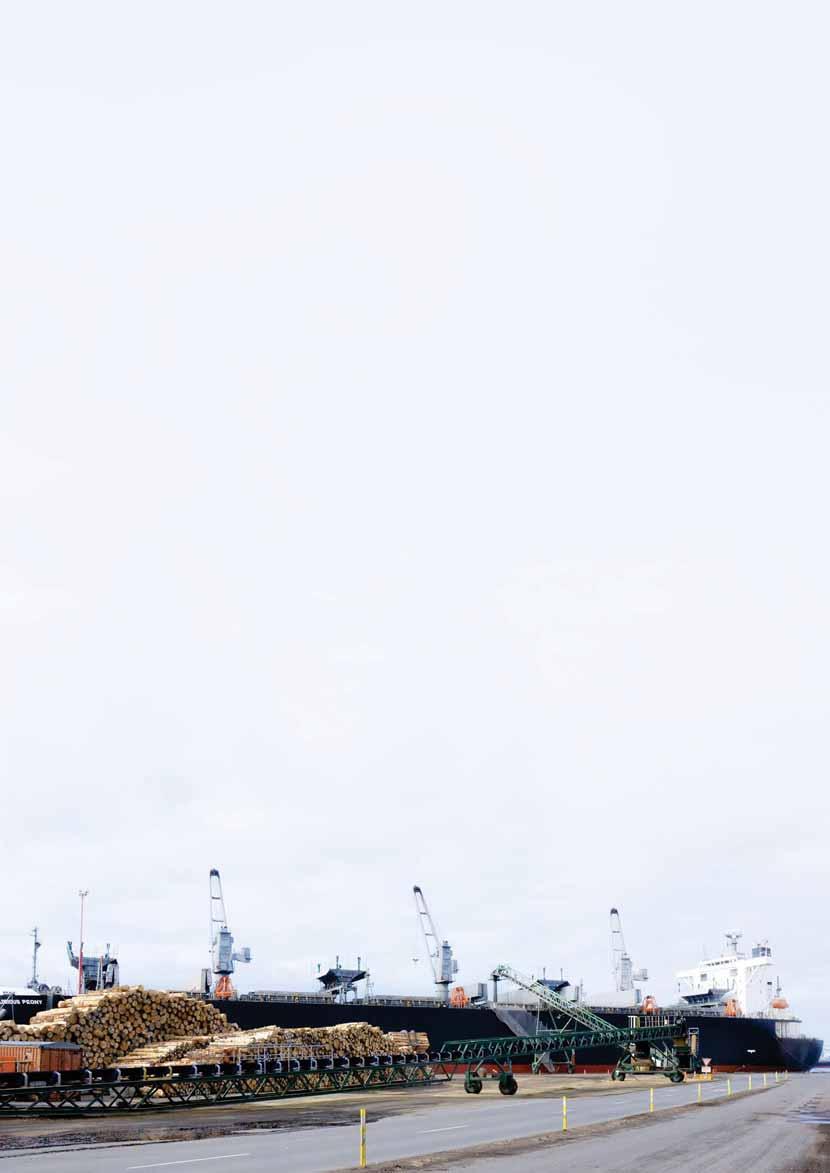
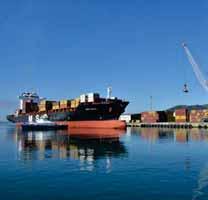
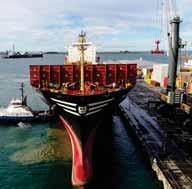
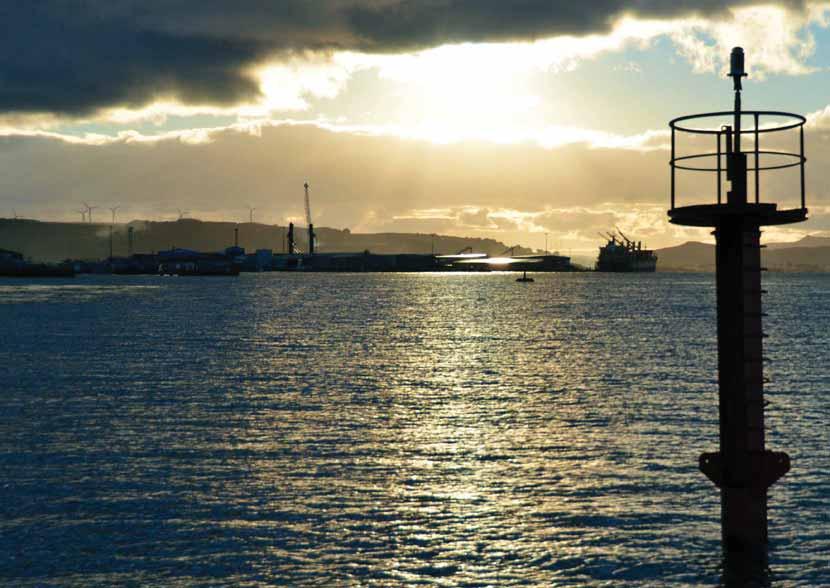
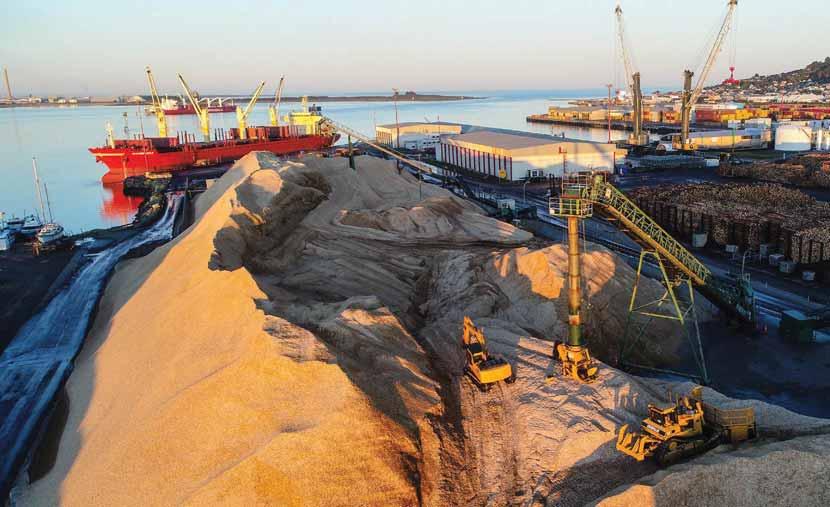
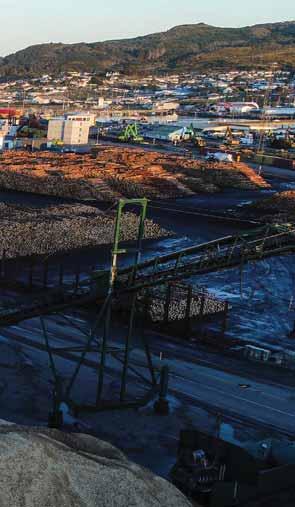
South Port New Zealand Ltd (South Port) is the southernmost commercial port in New Zealand, located at Bluff and operating on a year round, 24 hour basis. It is situated in the rich productive province of Southland, which is responsible for generating a sizeable proportion of New Zealand’s total exports by value. The region’s major cargo producing sites are situated within 30 to 80 kms of the Port.
The Port of Bluff has been operating since 1877, while the Company was formed in 1988 having taken over the assets and liabilities of the former Southland Harbour Board.
South Port was listed on the NZ Stock Exchange (NZX) in 1994 and has Environment Southland, the region’s local government environmental agency, as its 66% majority shareholder.
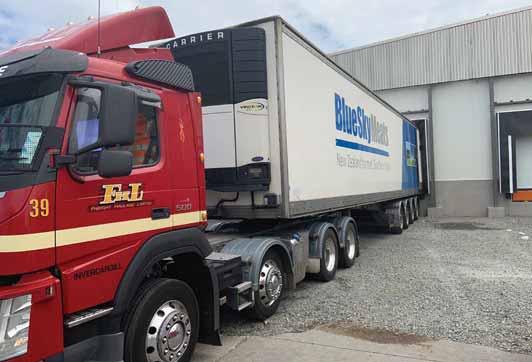
South Port established its off-port Intermodal Freight Centre (IFC) in July 2016. Strategically located adjacent to the KiwiRail railhead in Invercargill, the IFC allows importers and exporters in the Southland and Otago regions to distribute their products in a timely and efficient manner.
∠ Owns and manages assets which have a book value of $54 million
∠ Directly utilises more than 120 full time equivalent staff
∠ Is the only Southland based company listed on NZX – market capitalisation as at 30 June 2019 equated to $184 million
∠ Handles in excess of 3.4 million tonnes of cargo in a normal trading year
∠ Offers full container, break bulk and bulk cargo capability and services the following main cargoes:
IMPORT – alumina, petroleum products, fertiliser, acid, stock food and cement
EXPORT – aluminium, timber, logs, dairy, meat by-products, fish and woodchips
∠ Has split its land-based operating resource into four main divisions – dairy warehousing, containers, cool and cold storage and general cargo
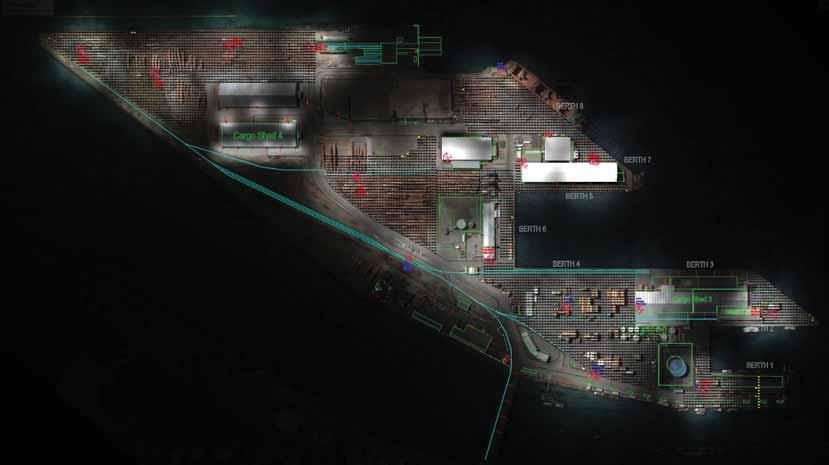
∠ Undertakes its primary port operation on a 40 ha. man-made Island Harbour situated at Bluff
∠ Operates a separate dedicated fuel berth at Bluff Town Wharf plus provides the Tiwai Wharf facility to the New Zealand Aluminium Smelter (NZAS) under a long term licence
∠ Owns and operates an off-port container packing/unpacking facility adjacent to the railhead at Mersey Street, Invercargill. The 8,000 m2 site houses a 4,000 m2 customs controlled and MPI transitional facility
∠ Services vessels carrying approximately 1 million tonnes of cargo destined for movement across the Tiwai Wharf each year, of which two thirds is raw material imports while one third is finished aluminium product
∠ Has approximately 3 ha. of on-port land available for further port development or industry establishment
∠ NPAT of $9.79 million (2018 - $9.66 million), a 1% increase on last year and a record result
∠ Total cargo of 3.52 million tonnes (2018 3.44 million tonnes) up 2.4% to another record volume
∠ Total forestry cargoes exported through the Port represent 31% of total cargo throughput
∠ Total container throughput of 48,700 20 foot equivalent units, 25% up on last year’s volumes (includes empty and full containers)
∠ A record throughput of full containers at the Port of 27,600 20 foot equivalent units, a 14% increase on the previous year
∠ A full year dividend of 26.0 cents maintained (2018 – 26.0 cents)
∠ A $2.2 million upgrade to the Island Harbour Cold Stores load-out and load-in infrastructure and installation of new blast freezing facility
∠ Consolidation of cold store customers on the Island Harbour after the closure of the Foreshore Road facility and restructure of the workforce
∠ Upgrade of light towers on Berth 8 and installation of new towers to Berth 5 and 3A using LED lighting technology
∠ Update of Asset Maintenance Plan (AMP) to take into account critical water, storm water, sewer and electrical supply functions
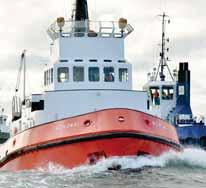
∠ Successful docking and maintenance work carried out on the Port’s tug, Hauroko
∠ The completion of the Person Conducting a Business or Undertaking (PCBU) Health and Safety Procedure and the start of the prequalification process
∠ Successful installation of Impressed Current Cathodic Protection (ICCP) to Bay 5 of the Access Bridge. Undergoing regular monitoring now to analyse effectiveness of installation
∠ Continued higher R&M expenditure on the Island Harbour infrastructure as previously signalled
∠ The upgrade of weighbridge and trailer hoist assets to improve the efficiency of trucks movements on the Port
∠ Successful resolution of the Invercargill City Council land claim that was filed in the High Court
∠ Announcement by OMV (Austrian oil and gas giant), of plans to carry out exploratory drilling in the Great South Basin
∠ Purchase of the BowTieXP risk assessment software to analyse critical risks using the bowtie method
∠ Significant maintenance work carried out on the oyster wharves located on the Island Harbour. Sacrificial anodes to be installed in the coming financial year
∠ South Port contribute $300,000 towards Bluff Boat Ramp in conjunction with contributions from Environment Southland $400,000 and Invercargill City Council $850,000
∠ South Port Directors involved in the Southland Regional Development Strategy (SoRDS) Aquaculture Team
∠ Trial of loading a bulk cargo vessel at Berth 4, traditionally only used for containers
∠ Open Country Dairy (OCD) –announcement of third dryer development and build of warehouse on site to house ingredient products
∠ Working closely with NZAS to develop container loading opportunities for multiple products
∠ Staff survey carried out and the development of core company values as a result from staff feedback
∠ Purchase of our first empty container handler forklift for $470,000
∠ Increased TEU throughput recorded at the Intermodal Freight Centre for the third straight year
∠ Increased number of pilotage jobs completed in Fiordland over the past cruise season
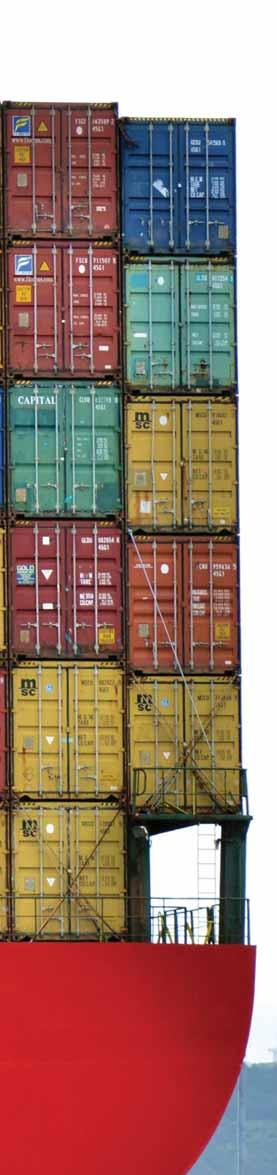
∠ Mataura Valley Milk cargo being exported out of Bluff on MSC




The reported after-tax profit of $9.79 million (2018 - $9.66 million) is a 1% increase on last year which is a pleasing result for the Port backed by a 2% increase in cargo flows. Total cargo volume was 3,521,000 tonnes (2018 3,445,000 tonnes) representing another record volume.
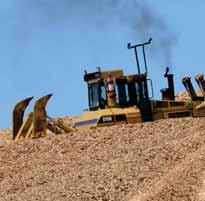
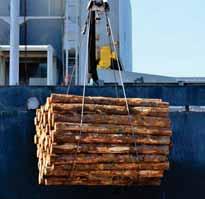
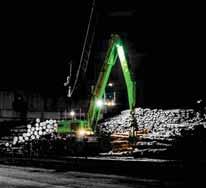
Bulk cargo equates to 87% of all volumes imported or exported across South Port wharves. This remains consistent with the previous year’s throughput. Logs for the second year running reached 700,000 MT and combined with woodchips at 320,000 MT, forestry is now 31% of our total bulk cargo volume handled at the Port. Log prices in China recently dropped significantly due to an oversupply into this market.
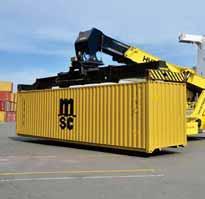
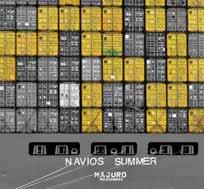
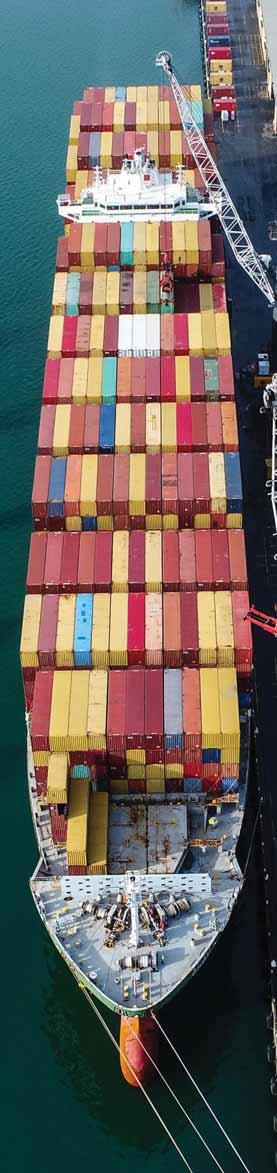
Container traffic was the standout performer this year in the Company trade statistics increasing by 25% to 48,700 TEU (2018 – 39,100 TEU). The Mediterranean Shipping Company (MSC) calling at South Port with their Capricorn Container Service made 54 calls this year (2018 52 calls) averaging 900 TEU exchanges per call. The change in port rotations announced last year which led to reduced transit times to market resulted in a combination of both increased full container exports being shipped and empty containers being recycled through the Port.
The warehousing operations performed above expectations this past season. The closure of the Foreshore Road cold storage complex and consolidation of this activity on the Island Harbour enabled the business to focus all of its resources at the one location. To make this transfer possible South Port undertook a $2,200,000 capital expenditure project to modify the cargo receipt, container load-out areas and construct a new blast freezer. This development provided a more functional working area to allow for increased volumes to be handled and the separation of duties providing for a safer working environment. This resulted in a similar volume of containers being packed and loaded out from the one consolidated site versus the same being handled over the two facilities utilised last season, with a reduction in operating costs per tonne handled. An impressive 50% increase in volumes were handled through the the new blast freezer and provides options to a number of clients in the region.
Increased dairy produce was also handled by the warehousing operation for Open Country Dairy (OCD) this past season. OCD recently announced the construction of a third drier that will be operational for the 2020 / 2021 dairy season. South Port will be working closely with OCD to ensure the necessary resources will be available at the Port to meet their requirements for this expansion.
New Zealand’s Aluminium Smelter (NZAS) is an important customer for South Port representing one third of the Port’s annual total cargo.
NZAS is currently facing some headwinds as it continues paying for far higher electricity and transmission costs ($334 million for transmission costs alone over the last five years) than its international competitors, at a time when aluminium prices are at their lowest since early 2017. Recently the Electricity Authority released its latest proposal for reforming the way transmission costs are allocated. This reform, if adopted, would see transmission costs reduced by $11 million per year for the smelter but would not take effect until 2024.






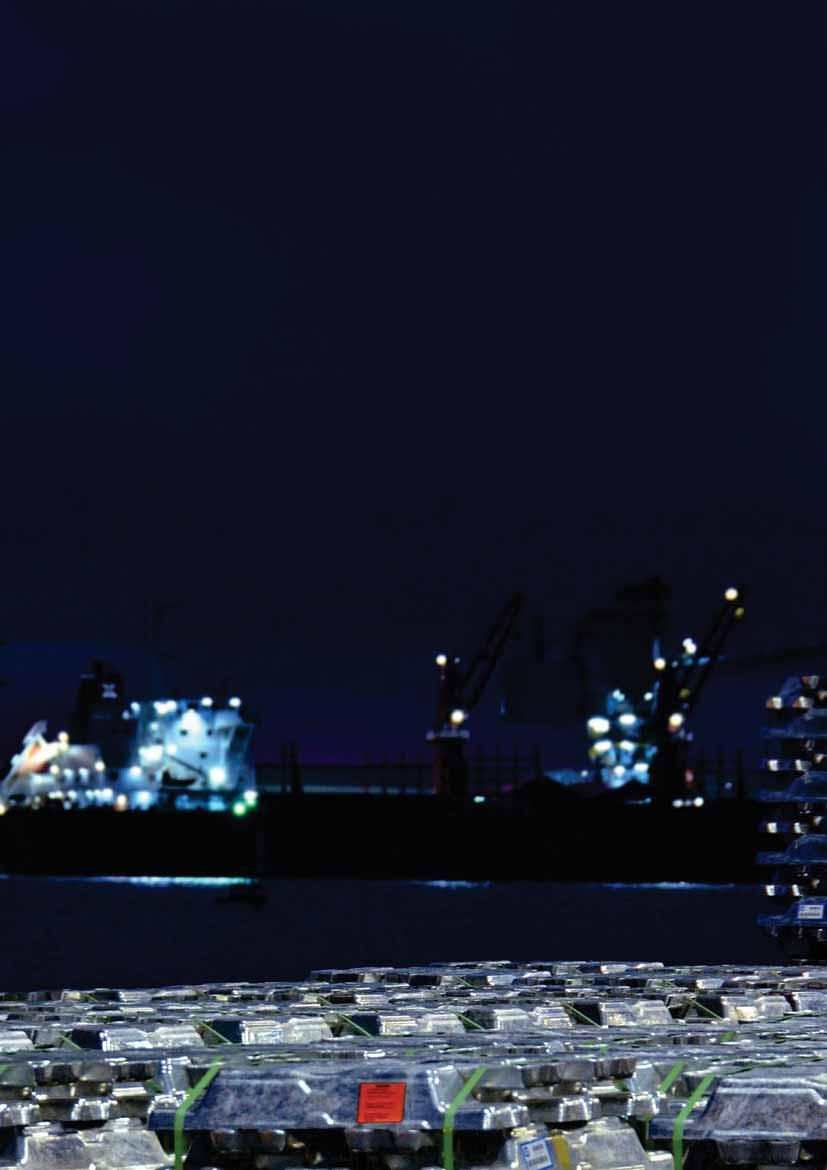

South Port continues to work with NZAS on opportunities to pack a variety of aluminium products into containers for export on MSC through the Port and potentially opening up new markets for this customer.
The Intermodal Freight Centre (IFC) based at Mersey Street and adjacent to the KiwiRail container transfer site at Invercargill completed its third year of operation. For the third year in a row the Company processed increased volumes through this facility. It was pleasing also that the Company started to see a balancing of the trade flows with exports of Medium Density Fibreboard for Daiken Southland Ltd being packed and transported to South Port for shipment to complement imported cargo being unpacked at this facility.
The Marine department piloted 352 ship movements through the Port in addition to the 30 pilotage movements carried out in the Fiordland sounds. The recent growth in tonnage handled at South Port has translated to increased ship movements and busier wharves. All sectors of the business were impacted with the exception of forestry where there was a reduction in ship calls due to larger volumes of logs being loaded per visit.
As signalled at the last AGM, South Port completed a strategic session in late 2018 involving the Board, Leadership team and a facilitator. The output from this session was a refresh of our purpose, an updated strategic focus and the establishment of a new strategic framework. This was a valuable session and provided the Port with an excellent platform to move forward.
The Port went through the process of selecting a core set of values this year for the first time. This was an excellent process involving all staff, the Leadership team and the Board. 121 suggestions were received from our staff and from this pool of data 6 values were chosen to represent the Company going forward, covered in The Journey to our Values on pages 62-63 of this Report.
South Port puts a significant amount of time and resources into the Safety, Health and Wellbeing of our staff and the Company is proud of the progress made in this area over recent years. Together with our staff, contractors and port users the Company has established some excellent communication channels to openly share and discuss safety issues for the benefit of all users of the Port.
Critical risks are still the number one priority for the business. This coming year the Company will be allocating additional resources into further analysing these risks to ensure that we have enough controls in place to minimise the potential of accidents occurring.
This year our Asset Maintenance Plan (AMP) was reviewed after further work was carried out to determine the current condition of our wharves, water and electrical supply functions. This work is important to ensure we have a complete picture of the task ahead to allow the Port to plan for future upgrades. The impact of this is highlighted in the graph below.
$1,000 $1,500 $2,000 $2,500 $3,000 $3,500 $4,000 $4,500
$500 0

Located at McNab, Gore the MVM purpose built nutrition plant was commissioned and successfully began processing milk this past season. It is pleasing to note that South Port handled a number of MVM containers through the Port on the MSC Capricorn Service and is looking forward to a long term relationship with this customer.
OMV has committed to drilling an exploratory well in the GSB over the 2019/2020 summer. OMV is an international energy company investing in our country, looking to secure new energy, particularly gas in the GSB, that if found will support New Zealand’s economic future. South Port will be working with OMV in the coming months to determine whether we can provide any support while this exploration process is being undertaken.
Energy and security of supply is a major issue that New Zealand will have to address within the next 10-15 years. After this period there is uncertainty about the energy resources that will be remaining in Taranaki and the country needs to move now to ensure our economic future.
Unfortunately there is no clearly defined pathway for the economy to move to utilising large scale “non-fossil fuel energy” within this timeframe. The technology and cost of the same are not at a point where this is a commercial reality.
Transition to a low carbon economy for New Zealand is the ultimate goal and the obvious transition energy is gas.
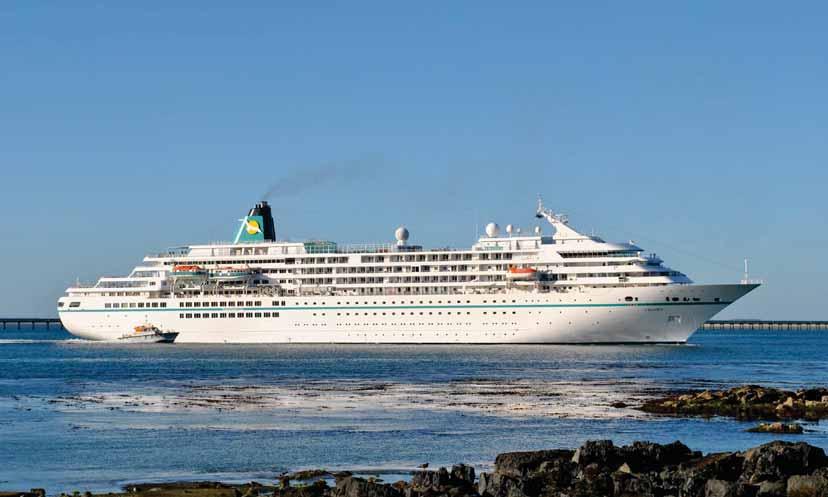
Cruise activity in Fiordland has increased in recent years with more than 100 vessels now calling per annum. South Port has been working closely with Southland’s new Regional Development Agency, Great South and Cruise New Zealand looking at opportunities to attract ship calls into Bluff. In addition to exploring the local Bluff Township, the Port provides an excellent central location close to Stewart Island, the Catlins, Fiordland, Queenstown and Invercargill.
It has been a particularly busy period in all sectors of the business this past financial year. The Company would like to thank all staff for the considerable time and effort spent at work to ensure the business functions safely, efficiently and in accordance with the Company’s values during the past year.
As shareholders are aware, the Directors have adopted an ongoing policy of assessing South Port’s dividend flow after taking into consideration both its Free Cash Flows (FCF) and its reported profits. For the purposes of this policy, FCF is interpreted as being annual operating cash flow less net maintenance capital expenditure in the same period.
In establishing the dividend payment level, Directors took into account the Company’s annual profit movement plus future maintenance requirements that are expected to impact profitability. Accordingly, the Board elected to pay a consistent dividend of 18.5 cents. This translates to a full year dividend of 26.0 cents (2018 – 26.0 cents).
Full imputation credits will be attached to all distributions. The dividend payment represents a gross return of 5.4% (net 3.9%), based on a share price of $6.75 as at 30 June 2019. A dividend pay-out ratio of 70% results for 2019 (using reported NPAT) and equates to 68% of FCF.
Mrs Clare Kearney and Mr Philip CoryWright retire this year by rotation and being eligible offer themselves for re-election. At our last AGM, Mr Rick Christie offered his services for one final 12 month term and therefore also retires this year. Rick is a highly respected member and contributor to the Board. During his tenure at South Port he has shared his extensive knowledge and insight into a number of varied industries and governance practices which has proven to be extremely valuable to the Company.

The opportunity to be part of South Port’s one team has opened the door to further enhance and develop my interpersonal skill set and allowed me to utilise the skills and experiences gained from previous industries in which I have worked. After relocating from Auckland to Invercargill my family is now getting to see the real benefits that the Southland region has to offer.
KENNY
The Company has received one valid Director nomination from Nicola Greer who is a Company Director based in Queenstown. She is currently a Director of New Zealand Railways Corporation and Progressive Commercial Ltd. Nicola was previously a Director of Heartland Bank Ltd.
Prior to her governance career, Nicola had extensive experience in New Zealand, Australia and the UK in the banking and finance sector. This encompassed a range of roles within the financial markets and asset and liability management at ANZ, Citibank and Goldman Sachs.
Nicola also has a significant background in the New Zealand commercial property market, successfully developing and owning commercial property across a variety of sectors.
This year readers will see a revamp of our Annual Report. A number of topics that were previously covered under the Review of Operations now have their own sections under the Corporate Social Responsibility “banner” as follows:
∠ Safety, Health & Wellbeing
∠ Our People
∠ Our Community
∠ Our Environment
∠ Infrastructure
∠ Financial Highlights
These sections will be covered later in the Annual Report.
It is an interesting time in the port sector. The Government is working through the Upper North Island Supply Chain Strategy (UNISCS) to determine the optimal port and supply chain network for the upper North Island. This study is currently focused on Ports of Auckland, Port of Tauranga and North Port. There have been a number of similar reports carried out in the past and it will be of interest to see whether this study leads to any changes in the Port sector.
Napier Port is currently working through the listing process and will soon join South Port, Port of Tauranga and Marsden Maritime Holdings on the NZX. The funds raised from this listing will be used to provide additional capital to fund new infrastructure at Napier Port.
It is noteworthy that when writing this section last year International markets were in a state of flux with the United States of America and China embarking on a tariff war and Brexit was the major concern for the European Union. Moving forward twelve months and little has changed.
The recent decline of log prices in China reflect some of these market sentiments however oversupply into this market is the key driver of change. This negative cycle is expected to last until at least the end of October when volumes on Chinese wharves should have dropped sufficiently again to create new demand.
Trade forecasts for the Port, with the exception of logs, remain steady. The forecasted farm-gate milk price for the coming season looks reasonably healthy which again bodes well for agricultural inputs that are shipped into the region annually.
Increased infrastructure expenditure will be a feature for coming years with the focus in the next twelve months being placed on the access bridge, wharves and electrical infrastructure.
Based on all known factors at the date of compiling this Report, South Port estimates that earnings in the next financial year are likely to reduce by approximately 5%. This lower earnings profile and in the absence of any unforeseen circumstances, the Directors will be endeavouring to maintain the current level of dividend payment.
PRODUCTIVITY
32.5 (Gross container moves per hour)
11,500 SHIP CALLS 352
BREAKDOWN OF CARGO
CONTAINERS PACKED/ UNPACKED
NUMBER OF CONTAINERS BREAK BULK BULK CONTAINERS
48,700 (20 foot container equivalents)
469,000 Tonnes
2,771,000 Tonnes
281,000 Tonnes
$7.40
HISTORICAL TRADE FIGURES
3,000,000 2,500,000 2,000,000 1,500,000 1,000,000 500,000 0 3,500,000 (tonnes)
R T CHAPMAN Chairman
N G GEAR Chief Executive
South Port is helping me grow by providing opportunities to upskill myself in my work, health and wellbeing and leadership. As a team member at the IFC I believe we all communicate and work well together. I feel valued and appreciated by the IFC and wider South Port team for the effort and contribution I put into my work.
ALASTAIR


THE SOUTH PORT HEALTH & SAFETY (H&S) TEAM CONTINUES TO ENGAGE WITH ALL PORT USERS, INCLUDING OUR STAFF USING A NUMBER OF DIFFERENT PATHWAYS:
∠ Port Users’ Forum
∠ Contractor Forum
∠ Syncrolift Users’ Meeting
∠ Trailer Hoist Forum
∠ H&S Committee Meetings
∠ Board H&S Panel Meetings
∠ H&S OFI (Opportunity For Improvement) Team
∠ Staff Briefings
∠ Weekly Departmental Toolbox Meetings
∠ Staff Survey
South Port utilises ‘The Vault’ to manage, maintain and record the Company’s H&S requirements. The system has recently been upgraded to include the ability to report incidents and conduct audits using a smartphone app. A project is also underway to upgrade the contractor element to improve the prequalification process.
A focus on technology has led to trials of two different radar/lidar systems. These systems can detect people and objects behind forklifts. Broadband reverse alarms are also being assessed to determine if they are an improvement on traditional reverse beepers.
South Port has entered a partnership with software provider Bracken to develop a more targeted site induction framework. The revised system will allow inductions to be completed online and will include more interaction with inductees.
In early 2019 South Port hosted the National Port Industry H&S Forum at Bluff. The Forum helps facilitate industry best practice and includes representatives from New Zealand Ports and Stevedoring companies. Representatives from WorkSafe and Maritime New Zealand also attended.
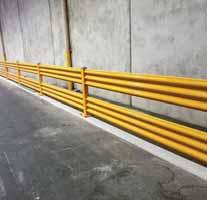
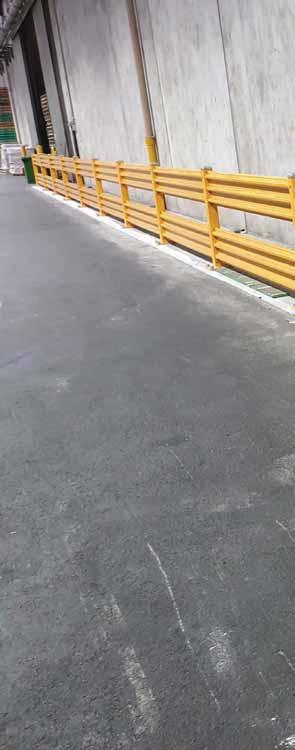
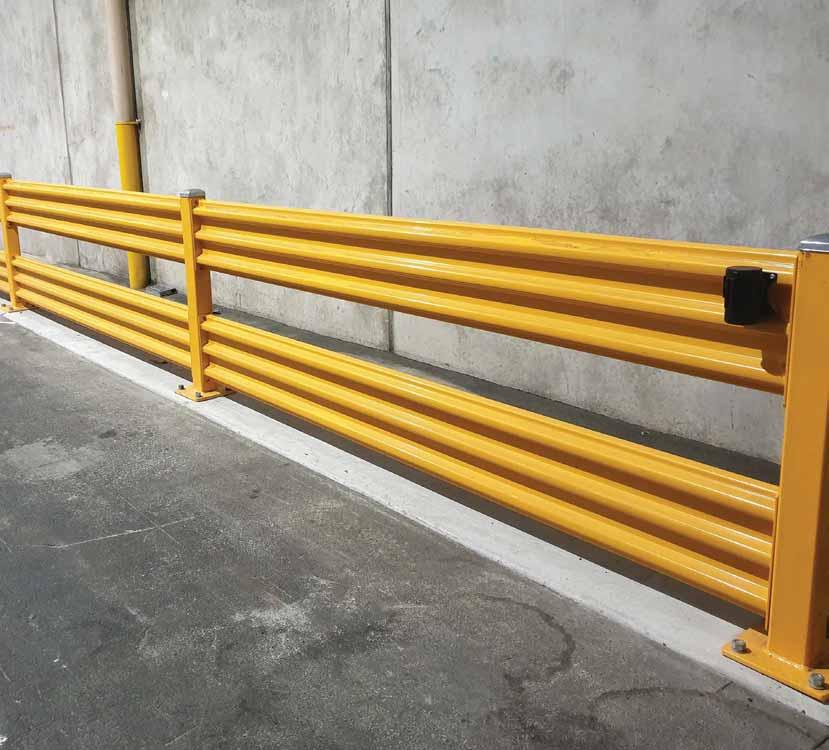
New safety barricading installed in the Open Country Dairy warehouse provides separation between pedestrians and working forklifts. Additional barricaded work zones have also been created within the warehouse to provide separation between workers labelling product and the operating forklifts.
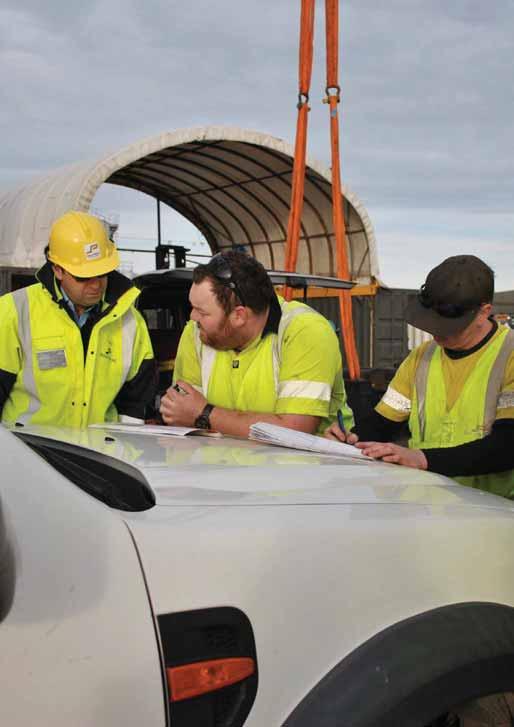
The CUSP is a key document which outlines processes to best identify and manage the various health, safety and environmental risks on our busy multi user site.
A project focusing on the Company’s critical risks using “BowTie” assessment software is underway. This will allow deeper analysis of South Port’s critical risks and will help facilitate the development of stronger risk controls.
Significant upgrades have occurred at the syncrolift including new hand railing around the ten syncrolift winches and additional barricading to isolate vessels while they are being water blasted. New portable trolley ladders have also been sourced to facilitate safer access to vessels once they are lifted out of the water.
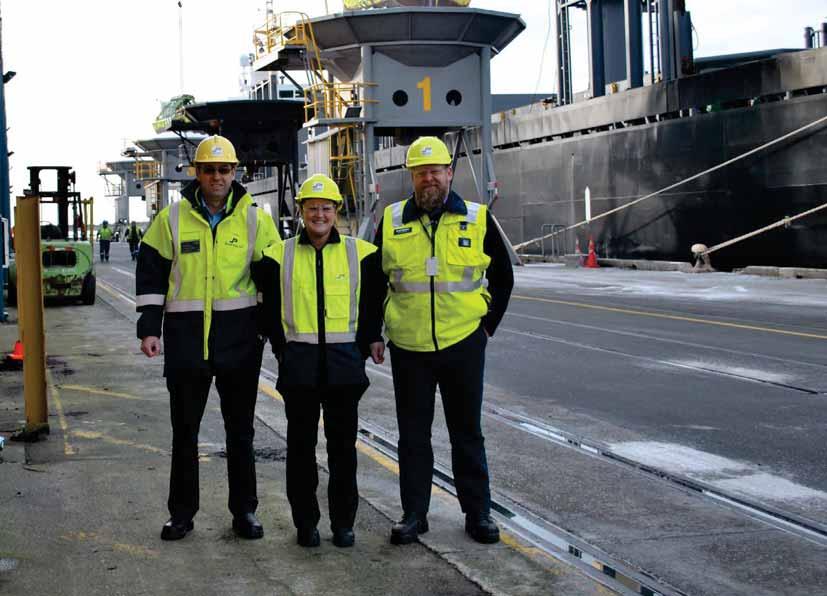
During the year Rochelle Van Beek joined the team in the role of H&S Administrator. Since joining the Company, Rochelle has been focusing on a number of projects including the Port’s wellness programme “Pulse”, engaging a new employee health monitoring provider, arranging noise and exposure monitoring on site and assisting with the development of the Company’s Fatigue Management Policy.
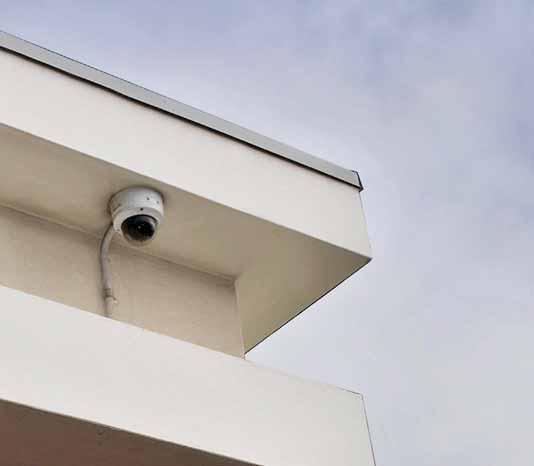
The installation of additional closedcircuit cameras lifts the total on site to 26. The cameras view key operational areas. The system has led to improved site monitoring and the cameras are extremely beneficial when investigating incidents.
The purchase of a mobile digital sign will help convey key messages to all port users. This sign will also be used to assist with the management of traffic speed in key operational areas.
South Port’s latest wellbeing initiative “Pulse” is an online platform developed in conjunction with Synergy Health. The system provides information and assistance with many aspects of health and wellness for employees and their families.
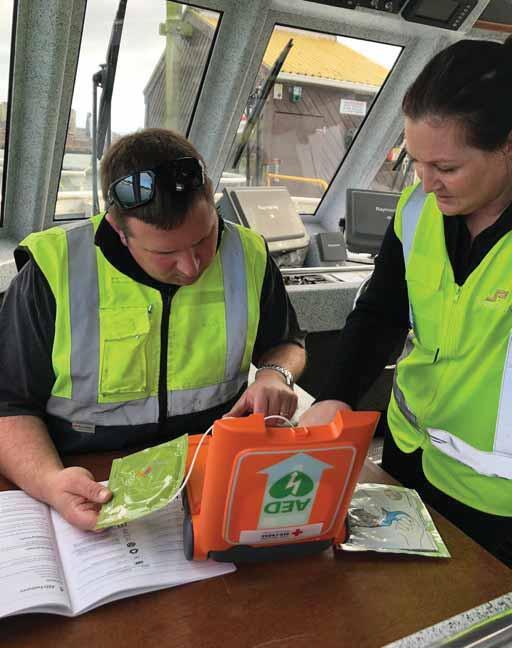
Three additional defibrillators have been purchased and installed to help improve response times should a port user suffer a medical event. Onsite defibrillators can significantly improve survival odds and are mounted in areas that can be accessed 24 hrs/7 days by all site users. Training is also in place to ensure staff are aware where these are situated and how to use them should the need arise.

Recent changes within my work area have opened the door for me to take on greater responsibility and learn new skills. South Port encourages and assists the growth of individuals within the business, which all adds to creating a stronger team where everyone works together and supports one another.
SARAH
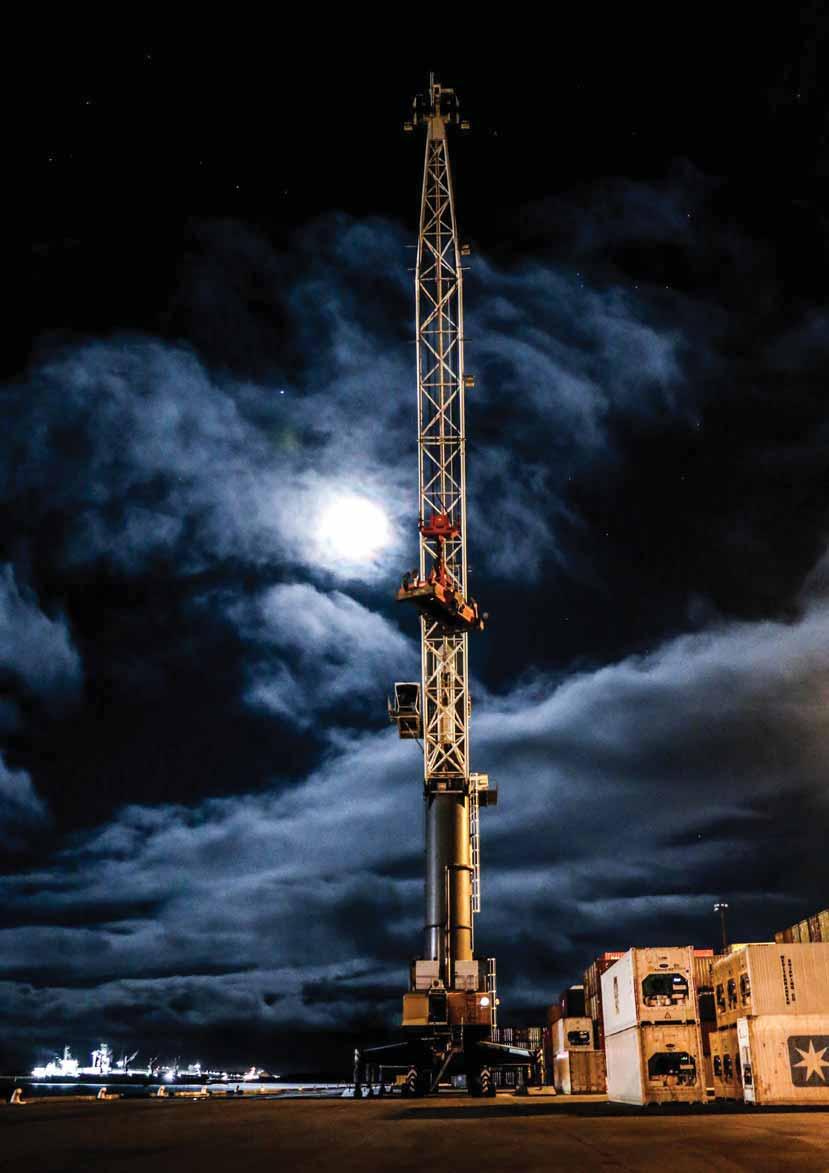
AT SOUTH PORT, IT IS IMPORTANT THAT WE RECRUIT AND DEVELOP PEOPLE WITH THE SKILLS, KNOWLEDGE AND EXPERIENCE TO LEAD US INTO THE FUTURE. WE WANT TO SECURE STAFF WITH THE BEST TECHNICAL SKILLS AND RELEVANT WORK EXPERIENCE, BUT MORE IMPORTANTLY GOOD PEOPLE WHO WILL LIVE OUR VALUES AND POSITIVELY INFLUENCE OUR CULTURE.
South Port is taking a ‘future focus’ approach to leadership, succession planning and progression pathways. This includes investing in professional development in the area of leadership training, coaching and mentoring. Effective leadership is key to success in any business and we encourage staff at every level of the business to actively demonstrate leadership.
Throughout the year we actively look for opportunities to select employees for internal advancement and interdepartment transfers. This reflects our commitment to build and grow talent from within the Company. We encourage staff to be open to change and to look into the future, especially as some of our more senior workers will be transitioning to retirement in the coming years.
At the same time, we are also looking for ways to attract younger people to the port industry, including investigating partnerships and pathways to facilitate recruitment of our next generation workforce.
Examples of transfers and/or promotions that have occurred at the Port over the last financial year can be viewed on the following page.
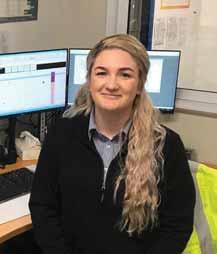
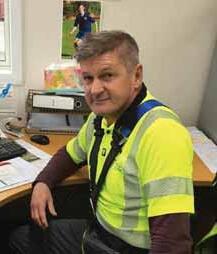

DAIRY WAREHOUSING SUPERVISOR
Sian has had an action-packed 12 months! Upon her return from parental leave in 2018, Sian moved into a Logistics Co-ordinator role before being appointed as Dairy Warehousing Supervisor in early 2019. Sian’s technical expertise, practical experience, communication and interpersonal skills are at the forefront as she establishes herself as someone who will help shape the future direction of the Company.
Scott is an integral member of the South Port team and has been with the Company since 2010. He played a key role in developing our container operations and has a huge wealth of knowledge of ‘how things work’ around the Port. Scott transferred recently to our Intermodal Freight Centre and this has given him the chance to take on new challenges to broaden his experience in the business.
Yohan joined the Cold Stores team in February 2019 after a stint in the Watchhouse. He has stepped into big shoes left by Ray Foai, who retired in June 2019 after over 30 years’ service as Shipping Manager. The transition was carefully managed and has involved extensive on-job training and support from the whole team. Yohan identified at an early stage that he would benefit from additional English language coaching. This request was supported by South Port with Yohan’s investment being measured in time.
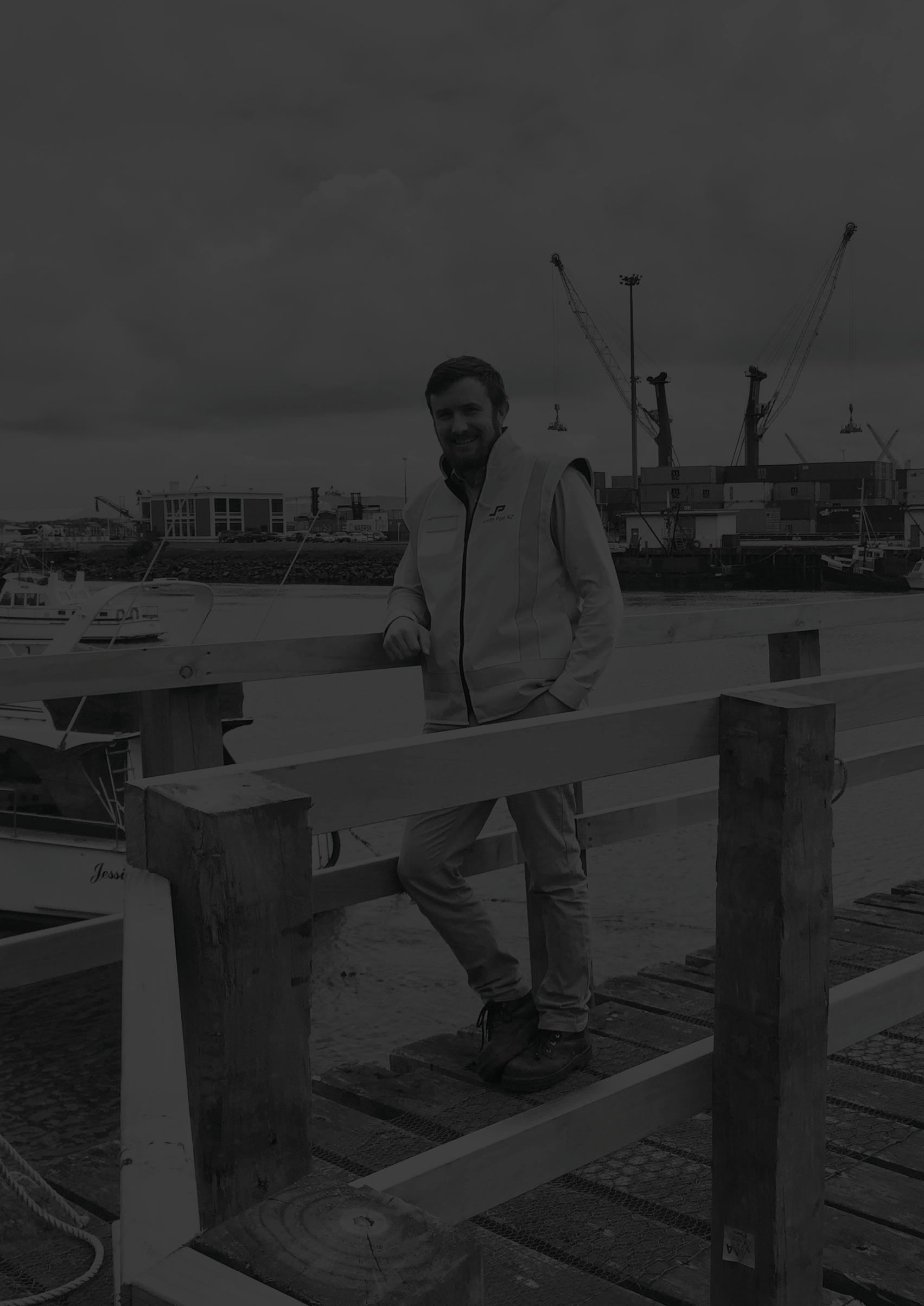
“South Port is planning for the future by growing leaders; it’s a great place that has encouraged me and given me the opportunity to learn new skills.”
At South Port, we want to create an environment that recognises and values different skills, abilities, genders, ethnicities, backgrounds and experiences. Promoting diversity and inclusion is not a token gesture. We are committed to building a diverse and inclusive workforce in order to position ourselves for the challenges of the future. Diversity provides a fresh approach and can help stimulate new ideas, creative problem solving, innovation and collaboration.
The port industry is historically one of the most male-dominated in the world, especially in operational roles. South Port has identified this as an area we need to focus on therefore we have started our diversity journey by setting gender targets for 2025 (these are reported in the Corporate Governance section on page 50).
As at 30 June 2019, 20% of our employees are female. There is good representation in management, supervisory and key operational support roles, although currently we have only one female in a core operations role.
Gender diversity allows us to immediately tap into a wider talent pool. Our initial steps have been small, focusing on recruitment, selection, progression processes and raising awareness of unconscious bias in the workplace. Further work has gone into reviewing what skills are required for operational roles, including investigating whether strength difference can be offset through the use of good health and safety practice, mechanical equipment and aides. The Company is actively encouraging women to also apply for positons in what has traditionally been a male domain. This includes processes (which will continue in the coming year) to actively support women in the workplace, including establishing internal support networks; memberships to external support networks and addressing unconscious bias.
SPONSORSHIP OF SPORTING, CULTURAL AND COMMUNITY GROUPS IS PART OF A LONG TERM COMMITMENT TO SUPPORT THE LOCAL COMMUNITY AND REGION IN WHICH SOUTH PORT OPERATES. THE COMPANY ALSO SUPPORTS EMPLOYEES THAT GIVE UP THEIR VALUABLE TIME TO WORK IN THE VOLUNTEER FIRE FIGHTING AND AMBULANCE SERVICES WHICH ARE CRUCIAL TO THE LOCAL BLUFF COMMUNITY.
Organisations that received sponsorship assistance over recent financial years include:
∠ Badminton Southland
∠ Bluff Bowling Club
∠ Bluff Hill/Motupōhue Environment Trust
∠ Bluff Kindergarten
∠ Bluff Netball Club
∠ Bluff Oyster & Food Festival
∠ Bluff Promotions
∠ Bluff Rugby Club
∠ Bluff Schools
∠ Bluff Sea Scouts
∠ Bluff Yacht Club
∠ Bluff Volunteer Fire Brigade
∠ Burt Munro Challenge (Bluff Stage)
∠ Coastguard Bluff
∠ Export Southland
∠ Graeme Dingle Foundation (Kiwi Can at Bluff School)
∠ Hospice Southland
∠ Invercargill Harness Racing Club (Bluff Race Day)
∠ Invercargill Lions Club
∠ Police Managers’ Guild Trust
∠ Port Softball Club
∠ Queens Park Golf Club
∠ Rugby Southland
∠ St John Ambulance Service, Bluff
∠ Southland Cancer Society
∠ Southland Chamber of Commerce
∠ Southland Cricket Association
∠ Southland Football
∠ Southland Sharks
∠ Southland Spirit of a Nation
∠ Te Ara O Kiwa Sea Scouts, Bluff
∠ Tour of Southland (Bluff Stage)
Abby Gear
Abby graduated from Verdon College in 2018 and commenced her academic journey with Health Science First Year at the University of Otago in February 2019. Abby is the daughter of South Port Chief Executive, Nigel Gear.
Abby has a passion for science which she intends to eventually use in her future career. Her whole life she has wanted a career where she was not only surrounded by people but also has a passion to be able to help them. With her mother, Lisa, being a nurse this has always provided inspiration to her.
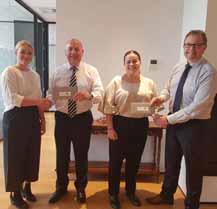


Mikayla Pearsey
Mikayla completed her secondary school education at Southland Girls’ High School at the end of 2018 and now is attending Victoria University of Wellington studying a Bachelor of Design Innovation with a further study goal of then completing her Masters in Design Innovation, being a five year commitment. She has always been creative with a passion for art and drawing. When she studied Design and Visual Communication at school she grew fond of the design process and how to create, design and construct in various extravagant ways.
South Port is making a significant contribution to a planned upgrade of the existing Bluff Boat Ramp. The total cost is estimated to be $1.8 million with South Port offering the land and a sum of $300,000 towards the project with Environment Southland and the Invercargill City Council funding the remainder of the upgrade.
Local Southlanders know that during the winter months it can be a challenge to keep warm at times and in acknowledgement of this, the Company has partnered with Te Rourou Early Childhood Centre in Bluff to keep the youngest in our community warm by providing beanies to negate those long cold days. This small gesture is very much appreciated as can be seen by the children when we delivered them their new hats.
South Port is an active member of the Bluff Predator Free Working Group. Regular meetings are held and chaired by the local Department of Conservation, involving community stakeholders, with a focus on removing predators and pests from the community. The Port acknowledges it has a role to play in achieving this vision and invited Environment Southland to set up pest monitoring cards on the Port to analyse predator activity.
For a number of years South Port has provided financial assistance to the Bluff Hill / Motupōhue Trust to complete a range of projects. In addition to our annual contribution, this year we were invited by the Trust to plant trees on the hill. A number of staff thought it would be a great opportunity to give some of their own time back to the community by getting their hands dirty and helping out. The staff response was great and demonstrated that “many hands make light work”!
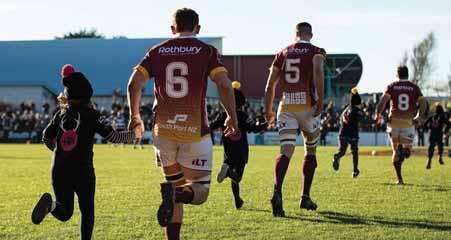
South Port shows its ongoing support for the Stags through a variety of initiatives; including match day sponsorship, stadium advertising and back of jersey promotions. The Company acknowledges that for a small province like Southland to be successful on the national scene it requires a collaborative approach from a number of businesses to compete on the big stage.
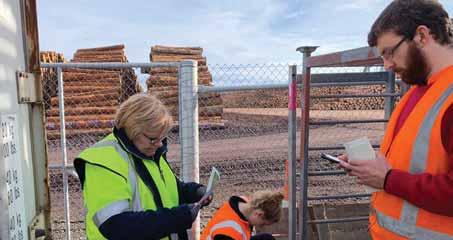

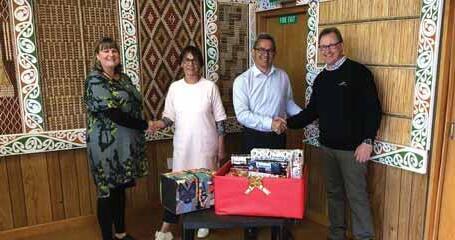
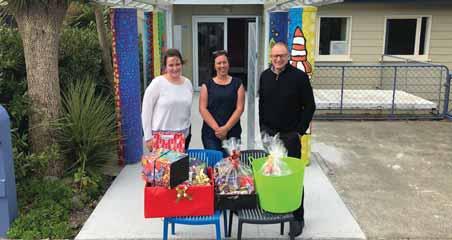
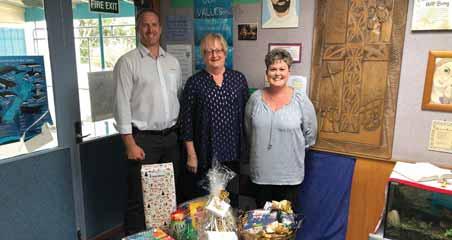
Christmas is an exciting time for families but some are less fortunate than others. Therefore staff at South Port thought it would be a good idea to support the local community we work in by spreading the Christmas joy to Te Rūnaka o Awarua, Bluff School and St Teresa’s. The three organisations then identified an anonymous family to gift a hamper to. The monetary and gift contribution made by South Port staff and Directors was overwhelming and it sure made Christmas 2018 was one to remember for three families within our community of Bluff.
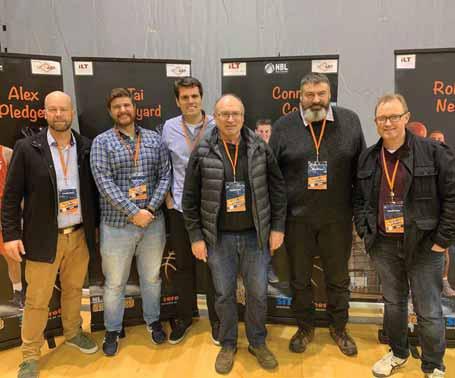
Over the past few seasons South Port has provided support to the Southland Sharks basketball team. Our financial contribution enables us to host clients at corporate tables and also receive general admission tickets which the Company offers as giveaways enabling our 100 plus strong workforce the chance to win with weekly prize draws for four lucky people. The Sharks family has been very grateful of our support and as a Company we are keen to witness the team have more success during the upcoming seasons.
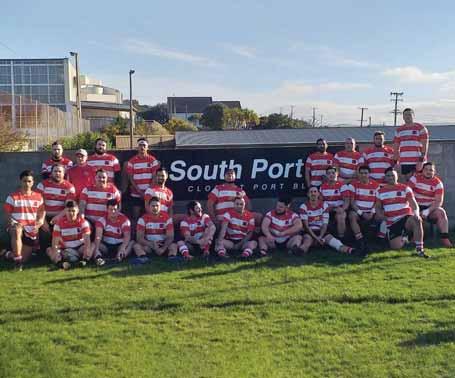
Over a number of years the Bluff Rugby Club and South Port have formed a long standing relationship. The Company has been the front of jersey sponsor for numerous years and enjoy seeing the community come together on a Saturday afternoon to support the teams as they do the Port town proud.
We have staff scattered throughout the organisation whether it be in playing, administrative or management roles within the Club who enjoy being part of its success.
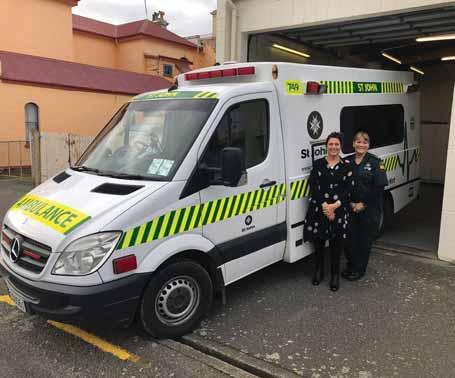
A small community like Bluff has the same needs and wants as a much larger city. Organisations such as St John Ambulance and the local Fire Brigade are often taken for granted but require a number of volunteers to ensure these services remain available. It is pleasing that a number of South Port employees offer their time (during and after business hours) to assist these services in keeping our community healthy and safe.
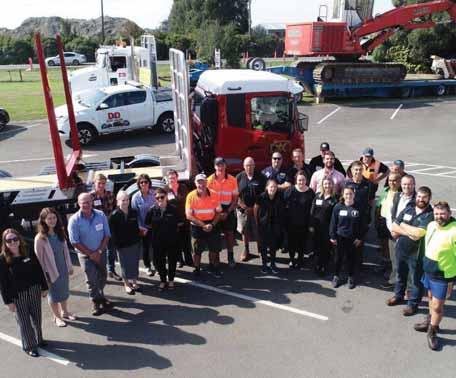
South Port supports the Southland Youth Futures programme by attending school career days, industry talks and hosting port tours. The programme aims to connect young people with training and career opportunities in the Southland area. A forestry careers day was held in Winton during March to introduce school students to potential forestry jobs available in the region. South Port participated in the expo on the day explaining to students the Port’s role in the forestry sector.
SETTING THE SCENE…
ONE OF OUR COMPANY VALUES IS ‘MANAAKITANGA’. CARING FOR OUR PEOPLE, COMMUNITY AND ENVIRONMENT; WHICH IS SOMETHING THAT WE ARE PASSIONATE ABOUT.
OUR PEOPLE
Environmental sustainability in the port industry has come into focus recently on the back of the proposed Zero Carbon Act scheduled to be in force by the end of 2019. However, it is important to note that South Port has been active in this space over a number of years.
The following are examples of environmental initiatives/improvements we have introduced into our business:
∠ Recycling plastic wrap from dairy sheds
∠ Port-wide replacement of light fittings with LED lighting, including tower lights
∠ Replacing diesel forklifts with battery electric forklifts
∠ Tugs using shore power in lieu of using generators
∠ Tugs fitted with jacket water heaters which reduces warm up times and less fuel consumption
∠ Water discharge improvements with the installation of underground particle separation units
∠ Where possible combining ship movements on one tide to improve efficiency of plant i.e. saves marine plant starting up and shutting down twice in a six hour period.
“South Port appreciate staff going the extra mile. I have recently had my second internal promotion which I attribute to hard work, commitment and due diligence. South Port is providing a supportive environment for professional development to ensure my success in the role and within the wider community.”
SIAN
PURCHASED ELECTRICITY
PRODUCTION OF PURCHASED MATERIALS
SCOPE 2 INDIRECT
FUEL COMBUSTION/ COMPANY OWNED VEHICLES
SCOPE 1 DIRECT
SCOPE 3 INDIRECT
As this is the first Corporate Green House Gas (GHG) Emissions Report by South Port it shall serve as a benchmark to begin the process of emissions management and reduction. Creating a formal Emissions Management and Reduction Plan will be the next step for the Port.
In order to account for potential increases in total GHG emissions due to factors such as increases in production, South Port should not only look at gross emissions but also the emission intensity of its operations. KPIs such as total gross GHG emissions per client or per turnover/revenue ($Millions) or per staff member will be considered in future reports. Therefore, gross emissions can be considered in context with the state of the overall business.
Currently South Port has no mandatory requirement to participate in the Emissions Trading Scheme (ETS) however this may change soon with the Zero Carbon Bill and the creation of the Climate Change Commission. The price of New Zealand Units (NZUs) are currently capped at $25 per tonne, this would mean an annual liability for South Port of $68,778 (for Scope 1 & 2 emissions). However, the Government has signalled that the price of carbon will increase, and the Productivity Commission has suggested that the unit price should be $250 per tonne (10x the current price). Therefore, the focus for South Port is to work towards reducing GHG emissions from its operations first and foremost to minimise future financial liabilities.
This year South Port has taken the step to record and report on their Scope 1 and Scope 2 emissions as well estimating the Scope 3 emissions.
SCOPE 1
Direct GHG emissions occurring from sources that are owned or controlled by the Company (eg, fuel).
SCOPE 2
Indirect GHG emissions occurring from the generatin of purchased electricity consumed by the Company.
SCOPE 3
Other indirect GHG emissions occurring as a consequence of the activities of the Company, but generated from sources not owned or controlled by the Company (eg, air travel).
3,339.94
1,254.35
SUPPORTING OUR CARGO FLOWS
AS THE PORT GETS BUSIER AND CARGO VOLUMES CONTINUE TO GROW, MORE AND MORE STRAIN IS PUT ON THE AGEING INFRASTRUCTURE TO SERVICE THIS GROWTH. ASSETS LIKE ROADS, WHARVES, FENDERS, BOLLARDS, SYNCROLIFT, LOG STORAGE, WATER, STORMWATER AND POWER RETICULATION ALL BEGIN TO FEEL THE EFFECTS OF GROWTH. THEREFORE, THE DEVELOPMENT OF NEW AND REFURBISHMENT OF EXISTING INFRASTRUCTURE IS CRITICAL TO THE SUCCESS OF THE PORT.
STARTS WITH A PLAN…
To secure existing infrastructure a robust Asset Management Plan (AMP) needs to be in place; not just to ensure the annual maintenance gets done, but that there is an eye to the future which will ensure this important infrastructure serves the Port for many years to come. The last major update of the AMP occurred in 2016 and this is reviewed on an annual basis to ensure it accurately reflects the condition of the assets and is kept up to date. A recent addition made to the 2016 version was the inclusion of the High Voltage 10 year AMP.
Timber wharf maintenance has been a big emphasis of ours for the past few years especially the finger pier facility, ferry wharf and Half Moon Bay on Stewart Island. Although maintenance continues on each of these wharves, we are in a proactive, rather than reactive maintenance regime.
Over the past three years we have been investigating in detail the condition of the Oyster Wharf and Island Harbour Access Bridge which are showing signs of corrosion. In the case of the Oyster Wharf, the installation of sacrificial anodes to the front facing wharf will prevent corrosion on the front face from midtide level to the toe of the sheetpiles. The level of corrosion protection will gradually drop off with no corrosion protection being afforded to the steel piles above high tide. The area above high tide will be treated separately. We expect to install the anodes in September/October 2019.
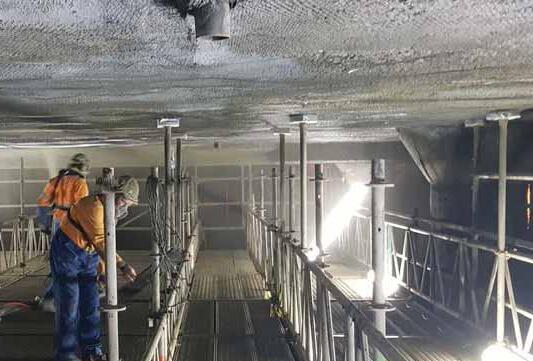
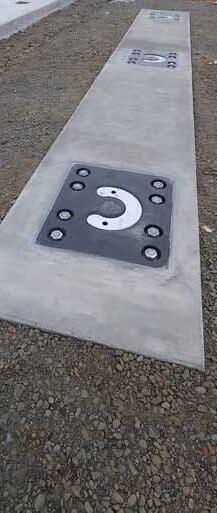
Our current proposal for the Access Bridge is to install an Impressed Current Cathodic Protection (ICCP) system. The ICCP system will be installed at the time of repairing the corroded steel and spalled concrete. This system is embedded in the repaired concrete and can extend the life of the bridge for another 50 years.
This year we completed an ICCP trial on Bay 5 of the bridge and we are currently monitoring the effectiveness of this trial. Once we are satisfied this system works in our environment we will roll it out over the next four years across the entire bridge.
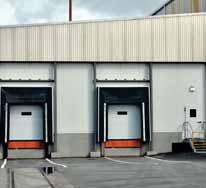
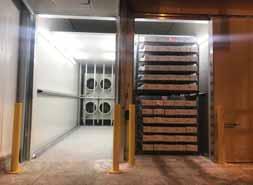
In January this year we completed the construction of the $2.2M Environmental Load-Out Area (ELA) and Blast Freezer Facility at Cold Store 1.
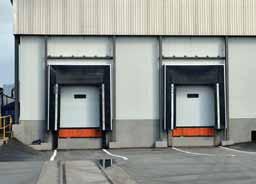
The main purpose of this upgrade was to accommodate the increased business activity on the Island Harbour when South Port decided not to renew the Foreshore Road Cold Store lease; however there have been many other benefits. The new truck unloading portals enable the unloading of two inward trucks at a time with the overall turnaround time halved.
The increased working space of the ELA provides a safer and more efficient work area for the multiple work groups to handle the in-and-out throughput expected in a busy cold chain operation.
The additional blast freezing space and efficiency has allowed new customers to utilise this service which then allows their production plant to increase throughput and pass this volume through the Port.
Overall the upgrade has enabled us to meet the increasingly demanding compliance needs of our overseas customers and our local regulatory body while providing a more efficient operation for our customers.
Over the past two years the infrastructure team has been investigating the condition and capacity of the existing bollards on our main operational wharves. With the change in vessel type over the years, it is prudent to establish the suitability of the current bollard arrangement as well as undertaking a condition assessment of the assets. An annual bollard replacement regime has been implemented so that over time all key existing bollards will be replaced. In parallel with this work we are in the process of designing ‘storm bollards’ which will increase the mooring capacity on these key wharves. We expect to install a couple of these storm bollards in FY20.
The Infrastructure team has developed a port wide lighting upgrade plan which will improve lighting across the Island Harbour significantly with the introduction of LED lighting. This programme will be rolled out over a number of years with the initial focus being on the busier parts of the Port. Berth 8 lighting was upgraded during FY19 with Berth 3A and Berth 5 scheduled to be installed during the first quarter of FY20. Although we were able to utilise the existing towers for the Berth 8 upgrade, Berth 5 and Berth 3A require brand new light towers and fittings at an approximate value of $150,000 each.
Light pollution is something the Port is conscious of and will be retrofitting louvres onto these lights in the near future.
There are several operational, environmental and health & safety benefits with LED lighting. Some of these are; improved lighting quality and reliability, reduced energy consumption, LED lights last longer and involve fewer bulb changes which results in a reduction in working at height activities.
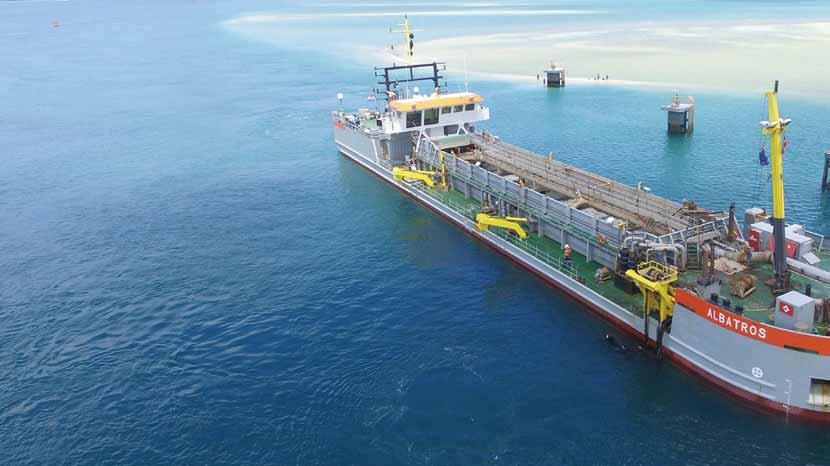
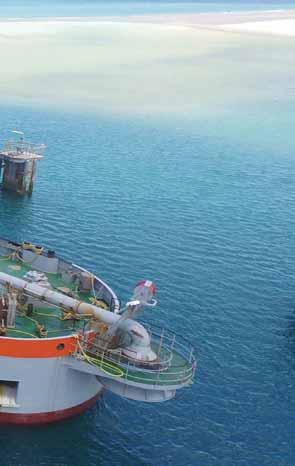
Annual dredging of the berth pockets and swinging basin is undertaken by the South Port owned bucket dredge and hopper barge. Although this is really effective at maintaining the minimal depths, every 12 to 14 years more significant maintenance dredging is required.
As such we expect to have the Albatros dredge arrive at Bluff in February 2020 to undertake dredging to achieve our specified target depths. This type of dredging was last undertaken in 2005.
While the Infrastructure team will continue to monitor the assets discussed, over the next couple of years they will begin to develop long term strategies for other important assets such as the town wharf, underground utilities, fenders and seawalls. A greater knowledge of these assets is required to ensure appropriate maintenance methodologies are implemented.
∠ 1.3% on previous year - $9.66M REVENUE $44.03m ∠ 7.3% on previous year - $41.02M

same as previous year


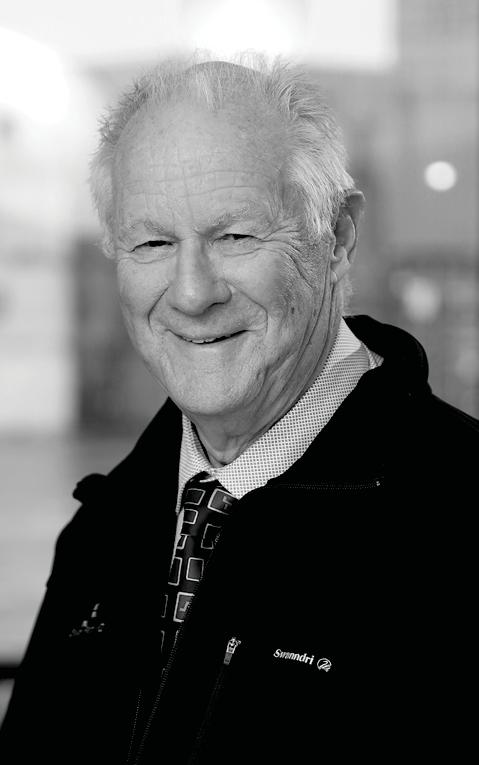
LLB, CMinstD, Chairman
Mr Chapman is a Senior Partner in Southland/Queenstown Law Firm Cruickshank Pryde based in Invercargill. He has been in legal practice in Invercargill for 38 years. Mr Chapman’s practice covers a wide range of legal services including commercial and company law, litigation, dispute resolution and resource management. He is also a member of the Southland Aquaculture Working Group which is investigating and promoting the establishment of a salmon hatchery in Southland to support anticipated future growth of aquaculture in Southland.
MSc (Hons), CFInstD, CRSNZ
Mr Christie is a Company Director based in Wellington. He is currently Chairman of ikeGPS and independent Chairman of NeSI. He is a Director of Solnet Solutions Ltd and he is a Trustee of the Victoria University Foundation. Prior to becoming a professional Director, Mr Christie held a number of government appointments and was a Chief Executive of a number of companies in the private sector. In 2011 he was made a Companion of the Royal Society of New Zealand.
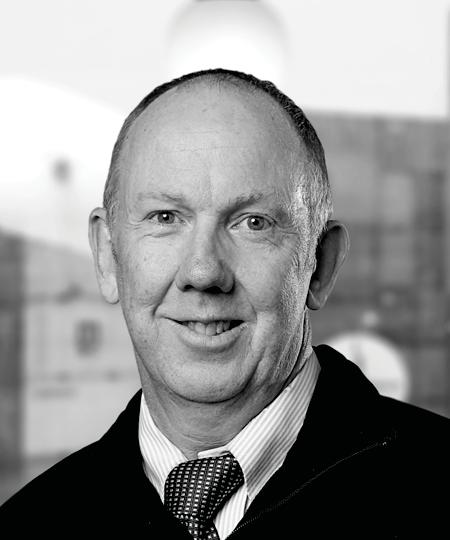

BCA, LLB (Hons), CFInstD
Mr Cory-Wright is a Company Director and a Strategic Adviser based in Auckland. He is inaugural Chairman of Papa Rererangi i Puketapu (New Plymouth Airport) and a Director of Matariki Forests, the Local Government Funding Agency and Powerco. Mr Cory-Wright was previously a member of the Local Government Infrastructure Expert Advisory Group. He has specialised in infrastructure businesses and recent roles include being acting Chief Financial Officer of Restaurant Brands, and an Adviser to Kordia, Ballance Agri-Nutrients, Auckland Airport, ACC and Higgins Group Holdings.










Mr Foggo moved to semi-retirement from Sanford Limited in late 2017 after 37 years in various Senior Management positions. His experience in the aquaculture industry has led to his continued involvement in the Southland Regional Development Strategy’s ‘New Business’ Action Team.
Mr Foggo established the Youth Development Southland Regional Trust to oversee Kiwi Can in the region and worked to kick-start the funding for the programme locally.
Mr Foggo’s future focus is on professional governance opportunities and he is currently Chairman of Invercargill Airport.


BAgSci, MProfStuds(Linc) CMInstD
Mrs Kearney’s background is in Agriculture and Farm Business Management Consulting. She is a Justice of the Peace.
Mrs Kearney is Chairperson of Sport Otago, the Waitaki Safer Community Trust, interim Board member of NZ Alpine Club and former Director and Chair of Network Waitaki Ltd. Mrs Kearney was the winner of the Institute of Directors Otago Branch Aspiring Director Award in 2014. In recognition of this award Mrs Kearney acted as an observer director to the Dunedin City Holdings subsidiary company Taieri Gorge Railway Ltd during 2015.
BCom, CA, MInstD
Mr McClean is a Chartered Accountant with more than 38 years of public practice in the southern region. He is a Principal in Invercargill accounting firm Malloch McClean, holds a Public Practice Certificate with Chartered Accountants Australia & New Zealand and is a Justice of the Peace. Mr McClean provides strategic, succession, tax advisory and governance services to a significant portfolio of local agri and commercial businesses. He also enjoys mentoring young business leaders to grow smarter better businesses that balance the needs of work, family and the community.



The Directors have pleasure in submitting their 2019 Report and Financial Statements.
The Company is primarily engaged in the commercial operation of the Port of Bluff. There has been no significant change in the nature of the Company’s business during the year.
The financial statements are for the 12 month period from 1 July 2018 to 30 June 2019.
The Company recorded a surplus for the period of $9,787,000
Directors acquired no additional equity securities in the Company since the date of the last Annual Meeting.
The Directors have declared an ordinary dividend of $6,821,000 for the period ended 30 June 2019 including the final dividend amount of $4,854,000 payable in November 2019.
The Company has arranged Directors’ and Officers’ Liability Insurance with Vero Liability Insurance Limited. This cover insures Directors against liabilities to other parties that may arise from their positions as Directors. The insurance does not cover liabilities arising from criminal actions.
Directors’ remuneration for the 12 month period ended 30 June 2018 was as follows:
R T Chapman
RGM Christie
P W Cory-Wright
$72,100
$41,200
No other benefits have been provided by the Company to a Director or in any other capacity. No loans have been made by the Company to a Director nor has the Company guaranteed any debts incurred by a Director.
There is currently no beneficial shareholding held by Directors.
Section 211(1)(g) of the New Zealand Companies Act 1993 requires disclosure of remuneration and other benefits, including redundancy and other payments made on termination of employment, in excess of $100,000 per year, paid in respect of the current year by the Company to any employees who are not Directors of the Company.
The Chief Executive Officer’s Employment Contract is reviewed annually by the Board. It is not a fixed term Contract.
The remuneration of senior management is reviewed annually and is determined in a transparent, deliberate and objective manner.
The Company has adopted “notice and pause” provisions in its Constitution.
There were no changes in accounting policies during the period. All policies are consistent with those applied in the previous year.
The Company has a formally constituted Audit & Risk Committee comprising Messrs J J McClean (Chairman), R T Chapman and P W Cory-Wright.
It is the role of the Audit & Risk Committee to review the Company’s financial statements and announcements, liaise directly with the Company’s Auditors and review the Company’s accounting policies, practices and related matters.
During the year $51,954 was paid to the Company’s Auditors, Crowe Horwath, for audit services carried out as agent for the Controller and Auditor General. The Company did not pay the Auditors for any advice or guidance on other matters.
The Company maintains an Interest Register in which particulars of certain transactions and matters involving the Directors are recorded. Entries in the Interest Register must in turn be disclosed in the Annual Report. No material transaction entries were recorded in the Interests Register for the period 1 July 2018 to 30 June 2019.
Pursuant to Section 140 of the Companies Act 1993, Directors have disclosed interests in the following entities which the Company conducts or may conduct business from time to time:
Mr R T Chapman
Position
Cruickshank Pryde Partner
Forklifts NZ Ltd Solicitor
Niagara Sawmilling Company Solicitor
Prime Range Meats Ltd Solicitor
Pyper’s Produce Ltd Solicitor
Rakiura Adventures Ltd Solicitor
SoRDS Aquaculture Working Group Member
Winton Stock Feed Ltd Solicitor
Mr RGM Christie ikeGPS Chairman
New Zealand eScience Infrastructure (NeSi) Chairman
Solnet Solutions Ltd Director
Mr P W Cory-Wright
Local Government Funding Agency Director
Matariki Forests Director
New Plymouth Airport Chairman
Powerco (Effective 1 October 2019) Director
Mr T M Foggo
Central Otago Health Services Ltd Director
Invercargill Airport Ltd Chairman
Sanford Ltd Consultant
SoRDS Aquaculture Working Group Member
Mrs C M Kearney
Nil
Mr J J McClean
Malloch McClean Ltd Director
R T CHAPMAN Chairman of Directors
Dated 29 August 2019
J J MCCLEAN Director
SUBSTANTIAL SECURITY HOLDERS
According to notices given to the Company under the Financial Markets Conduct Act 2013, as at 30 June 2019, the substantial product holders in the Company and their relevant interests are noted below:
I have recently been given the opportunity to move from an operational role to an administrative position. I am taking on new responsibilities and challenges and gaining a broader knowledge of the entire dairy warehousing operation. Being trained in both operational and administration will come in useful within my team.
HAYDEN
The Board and Leadership Team of South Port New Zealand Limited (South Port) are committed to maintaining the highest standards of governance by implementing best practice principles and policies. This Corporate Governance Statement sets out the corporate governance policies, practices and processes adopted and followed by South Port as at 30 June 2019 and has been approved by the Board.
The best practice principles and underlying recommendations used in determining the governance approach of South Port are the principles set out in the NZX Corporate Governance Code 2017 (NZX Code). The Board’s view is that South Port’s corporate governance policies, practices and processes generally follow the recommendations set by the NZX Code. This Corporate Governance Statement includes disclosure to the extent to which South Port has followed each of the recommendations of the NZX Code or, if applicable, an explanation of why a recommendation was not followed and any alternative practices followed in lieu of the recommendation.
The Company’s Constitution, the Board and Committee charters, codes and policies referred to in this statement are available to view on the Company’s website, www.southport.co.nz. These documents should be read in conjunction with this statement:
∠ Constitution
∠ Board Charter
∠ Audit & Risk Committee Charter
∠ Code of Ethics
∠ Protected Disclosures / Whistleblowing Policy
∠ Continuous Disclosure Policy
∠ Sensitive Expenditure Policy
∠ Diversity and Inclusion Policy
∠ Director and Executive Remuneration Policy
∠ Health and Safety Policy
∠ Securities Trading Policy and Guidelines
∠ External Auditor Relationship Framework
“Directors should set high standards of ethical behaviour, model this behaviour and hold management accountable for these standards being followed throughout the organisation.”
Recommendation1.1: The board should document minimum standards of ethical behaviour to which the issuer’s directors and employees are expected to adhere to (a code of ethics) and comply with the other requirements of recommendation 1.1 of the NZX Code.
South Port expects its directors, senior management and employees to maintain the highest standards of honesty, integrity and ethical conduct in day-today behaviour and decision making. The Code of Ethics sets out the standard of conduct expected of everyone working at South Port including directors, management, staff and contractors. The Code of Ethics provides a guide to the conduct that is consistent with the company’s values and behaviours, business goals and legal obligations. It also outlines internal reporting procedures for any breaches and incorporates the other requirements of Recommendation 1.1 of the NZX Code. An introduction to the Code of Ethics forms part of the induction and training process of new employees. This key corporate governance document is available on the company’s website.
This policy sets out the company’s expectations on sensitive or discretionary expenditure incurred by directors or employees and is available on the company’s website.
Recommendation1.2: An issuer should have a product dealing policy which applies to employees and directors.
The company is committed to transparency and fairness in dealing with all of its stakeholders and to ensure adherence to all applicable laws and regulations. The Securities Trading policy governs trading in the company’s securities by directors, employees and other associated persons. This policy can be found on the company’s website.
“To ensure an effective board, there should be a balance of independence, skills, knowledge, experience and perspectives.”
Recommendation2.1: The board of an issuer should operate under a written charter which sets out the roles and responsibilities of the board. The board charter should clearly distinguish and disclose the respective roles and responsibilities of the board and management.
The Board has adopted a formal Board Charter to ensure compliance with the NZX Code. The charter sets out the roles, responsibilities and structure of the board and provides guidance for the effective oversight of the company by the board. The board is responsible for setting the company’s strategic direction, overseeing the management of the company and directing performance by optimising the short-term and longterm best interests of the company and its shareholders. The board delegates management of the day-to-day affairs and management responsibilities of the company to achieve the strategic direction and goals determined by the board.
Recommendation2.2and2.3: Every issuer should have a procedure for the nomination and appointment of directors to the board. An issuer should enter into written agreements with newly appointed directors establishing the terms of their appointment.
The board’s procedure for the nomination and appointment of directors to the board is set out in the Board Charter. Careful consideration is given to the composition of the board in relation to the company’s needs and operating environment. The board should at all times comprise members whose skills, experience and attributes together reflect diversity, balance, and cohesion and match the demands facing the company. This also applies to the consideration of additional or replacement directors. Priority is given to ensuring the skills, experience and diversity necessary for the board to fulfil its governance role and to contribute to the long-term strategic direction of the company. The board may engage consultants to assist in the identification, recruitment and appointment of suitable candidates.
Recommendation2.4: Every issuer should disclose information about each director in the annual report or on its website, including a profile of experience, length of service, independence and ownership interests.
The board currently comprises of six independent non-executive directors including a non-executive Chairman. The biography of each board member is set out in the “Directors’ Profiles” section of this Annual Report and is also available on the company’s website.
The size and composition of the board is subject to the limits imposed by South Port’s Constitution and in accordance with the provisions of the Port Companies Act 1988. The Constitution requires the board to comprise of a minimum number of six directors. Under the NZX Listing Rules the board is required to maintain at least two independent directors. The criteria for director independence are outlined in the Board Charter. Pursuant to the company’s Constitution, one third of the directors retire by rotation at each annual meeting, but are eligible for reappointment by shareholders.
Recommendation2.5: An issuer should have a written diversity policy which includes a requirement for the board or a relevant committee of the board to set measurable objectives for achieving diversity (which, at a minimum, should address gender diversity) and to assess annually both the objectives and the entity’s progress in achieving them. The issuer should disclose the policy or a summary of it.
The company and its board recognise and believe that building a diverse and inclusive workforce provides significant opportunity to leverage engagement, innovation, productivity and improved service to our customers.
South Port is committed to providing a work environment that recognises and values different skills, ability and experiences and where people are treated fairly in order to attract and retain talented people who will contribute to the achievement of South Port’s commercial success.
Diversity and inclusion is a commitment to recognising and appreciating the variety of characteristics that make individuals unique; for example, gender, age, race, ethnicity, culture, disability, education and background.
The South Port Diversity and Inclusion Policy is disclosed on the company’s website and includes the following specific measurable objectives set by the board:
∠ At least 25% gender diversity across all SPNZ Staff by 2025;
∠ At least 20% gender diversity across SPNZ Supervisors by 2025;
∠ At least 25% gender diversity across SPNZ Executive by 2025;
∠ At least 25% gender diversity across SPNZ Board by 2025;
∠ At least 10% gender diversity across operational areas by 2025.
The following table compares the above measurable objectives against the actual data at balance date:
2019
Board 2 (25%) 1 (17%)
Executive 2 (25%) 2 (25%)
Supervisors 2 (20%) 1 (14%)
Operational 7 (10%) 2 (3%)
All Permanent Staff 25 (25%) 20 (20%)
2018
Board 2 (25%) 1 (17%)
Executive 2 (25%) 2 (25%)
Supervisors 2 (20%) 0 (0%)
Operational 7 (10%) 0 (0%)
All Permanent Staff 25 (25%) 20 (20%)
The following table sets out the gender composition of South Port’s directors and officers at balance date:
2019 Male Female Total Directors 5 1 6
6 2 8 11 (79%) 3 (21%) 14
2018 Male Female Total Directors 5 1 6 Senior Management 6 2 8 11 (79%) 3 (21%) 14
Recommendation2.6: Directors should undertake appropriate training to remain current on how to best perform their duties as directors of an issuer.
South Port’s Directors are expected to undertake continuous education to remain current on how best to perform their responsibilities and keep abreast of changes and trends in governance practices around economic, political, social, financial and legal climates. The board also ensures that new directors are appropriately introduced to management and the business, that all directors are updated on relevant industry and company issues and receive copies of appropriate company documents to enable them to perform their duties.
Recommendation2.7: The board should have a procedure to regularly assess director, board and committee performance.
The Chair of the board leads an annual performance review and evaluation of the board as a whole and of the board committees against the board and committee charters including seeking director’s views relating to board and committee process, efficiency and effectiveness, for discussion by the full board. The Chair of the board also engages with individual directors to evaluate and discuss performance and professional development. While there is no prescribed process in place this will be formalised during the 2018/19 financial year.
CHAIR AND CHIEF EXECUTIVE OFFICER (CEO)
Recommendation2.8: The Chair and CEO should be different people.
The positions of the Chair and the CEO of South Port are held by different people.
“The board should use committees where this will enhance its effectiveness in key areas, while still retaining board responsibility.”
Recommendation3.1: An issuer’s audit committee should operate under a written charter. Membership on the audit committee should be majority independent and comprise solely of nonexecutive directors of the issuer. The chair of the audit committee should not also be the chair of the board.
The Audit & Risk Committee provides the board with assistance in fulfilling their responsibilities to shareholders, the investment community and others for overseeing the company’s financial statements, financial reporting processes, internal accounting systems, financial controls and South Port’s relationship with its independent auditors.
The Committee is governed by an Audit & Risk Committee Charter which is available on the company’s website. The Board regularly reviews the performance of the Committee in accordance with the Charter.
The company has developed an External Auditor Relationship Framework to ensure external audit independence is in line with best practice to ensure reliable and credible reporting. This framework is disclosed on the company’s website.
The Committee comprises of three independent non-executive members of the board of directors.
The Committee Chairman, also appointed by the board, cannot also be the Chairman of the company. Jeremy McClean is the Audit & Risk Committee Chairman. At least one member of the Committee must have an accounting or financial background; Jeremy McClean is a Chartered Accountant and a member of Chartered Accountants Australia & New Zealand.
Recommendation3.2: Employees should only attend Audit Committee meetings at the invitation of the audit committee.
The Chief Executive and Finance Manager attend the Audit & Risk Committee meetings by invitation. South Port’s external auditor also attends the Committee meeting by invitation. During each meeting, all management leave the meeting for a period of time to enable the board to have open discussions with the external auditor without management present.
Recommendation3.3: An issuer should have a remuneration committee which operates under a written charter (unless this is carried out by the whole board). At least a majority of the remuneration committee should be independent directors. Management should only attend remuneration committee meetings at the invitation of the remuneration committee.
The board does not operate a separate remuneration committee as director and senior management remuneration is considered by the entire board. The Director and Executive Remuneration Policy outlines the structure of director and executive/management remuneration, the formal process for shareholder review, transparency and reporting of actual remuneration paid and bi-annual review of the remuneration policy and process.
Recommendation3.4: An issuer should have a nomination committee to recommend director appointments to the board (unless this is carried out by the whole board), which should operate under a written charter. At least a majority of the nomination committee should be independent directors.
The board does not operate a separate nomination committee. The process and procedure for appointment of directors to the board is outlined in the Board Charter. The appointment of a director is a shareholder decision. Director nominations are called for from shareholders in accordance with the Rules. The board will then consider the candidates who have been nominated
for appointment as a director. Directors are selected based on a range of factors including the needs of the board at the time.
Recommendation3.5: An issuer should consider whether it is appropriate to have any other board committees. All committees should operate under written charters. An issuer should identify the members of each of its committees, and periodically report member attendance.
The board does not operate any other committees apart from the Audit & Risk Committee. Consideration has been given as to whether any other standing board committees are appropriate and determined they are not required.
AT MEETINGS – 1 JULY 2018 TO 30 JUNE 2019
*Joined the Annual Meeting via Skype
**Joined one meeting via phonelink due to weather related flight interruptions
Recently Shed 3 was required to pack over 200 containers for one customer. This was a large quantity to pack in a short space of time. It was great to see everyone work together as a team to make this happen by putting processes in place that meant they could pack more at one time, replace full containers for empties faster and travel for forklifts being reduced by efficient movements in and out of the yard.
The team I am a part of works well together. During periods of high pressure everyone comes together to do what is needed to get the job done. Making sure everyone is on the same page ensures efficiency in our department and that we can create a safe working environment.
Recommendation 3.6: The board should establish appropriate protocols that set out the procedure to be followed if there is a takeover offer for the issuer including any communication between insiders and the bidder. It should disclose the scope of independent advisory reports to shareholders. These protocols should include the option of establishing an independent takeover committee, and the likely composition and implementation of an independent takeover committee.
The Board has not established protocols for setting out procedures to be followed in the event of a takeover offer. This is because the board considers receipt of a takeover offer to be an extremely unlikely event in light of the Southland Regional Council (Environment Southland) majority shareholding in the company.
“The board should demand integrity in the financial and non-financial reporting, and in the timeliness and balance of corporate disclosures.”
The Board is committed to providing full and timely financial and non-financial information that is accurate, balanced, meaningful and consistent. As a listed company, keeping the market informed is a key component to ensure securities are fairly valued.
Recommendation4.1: An issuer’s board should have a written continuous disclosure policy.
South Port has a Continuous Disclosure Policy, which is available on the company’s website.
South Port is committed to providing accurate, timely and consistent disclosures which comply with its continuous disclosure regime, in accordance with the NZX Listing Rules.
The company is required to disclose to the market matters which could be expected to have a material effect on the price or value of the company’s shares. Management processes are in place to ensure that all material matters which may require disclosure are promptly reported to the board through established reporting lines. Matters reported are assessed as and when required by the NZX Listing Rules and advised to the market. The Chairman and CEO are responsible for communications with NZX and for ensuring that such information is not provided to any person or organisation until NZX has confirmed its release to the market.
All material announcements are posted on the company’s website.
Recommendation 4.2: An issuer should make its code of ethics, board and committee charters and the policies recommended in the NZX Code, together with any other key governance documents, available on its website.
Information about South Port’s corporate governance framework (including the code of ethics, board and committee charters and other selected key governance codes and policies) is available to view on the South Port website – www.southport.co.nz.
Recommendation4.3: Financial reporting should be balanced, clear and objective. An issuer should provide non-financial disclosures at least annually, including considering material exposure to environmental, economic and social sustainability risks. It should explain how it plans to manage these risks and how operational and non-financial targets are measured.
The Audit & Risk Committee oversees the quality and integrity of external financial reporting including the accuracy, completeness and timeliness of financial statements. The Committee is committed to balanced, clear and objective financial reporting.
It reviews half-yearly and annual financial statements and makes recommendations to the board concerning accounting policies, areas of judgement, compliance with accounting standards, stock exchange and legal requirements, and the results of the external audit.
Management accountability for the integrity of the company’s financial reporting is reinforced by the certification from the Chief Executive and the Finance Manager. The Chief Executive and the Finance Manager have provided the board with written confirmation that the company’s financial report presents a true and fair view, in all material respects, of the company’s financial position for the year ended 30 June 2019, and that the operational results are in accordance with relevant accounting standards.
South Port assesses its exposure to environmental, economic and social sustainability as part of an overall framework for managing risk (see Principle 6 – Risk Management). The company is committed to improving standards of environmental performance to enable a more efficient and sustainable future. Accordingly, the following initiatives have been developed which are incorporated into regular management reporting to the board.
Currently the Company’s sustainability initiatives cover:
∠ Compliance with Environment Southland’s ‘Discharge Agreement’;
∠ Managing and reporting on key risks facing the business;
∠ Consideration of environmental impacts when undertaking new capital projects;
∠ Regular reporting on health and safety initiatives;
∠ Reporting on the impact of the company’s process improvement programme ‘PACE’ to highlight continuous improvements and efficiencies implemented in the business;
∠ Reporting on time spent assisting local organisations such as the Southland Chamber of Commerce, Southland Export Forum and SoRDS;
∠ Reporting on community and regional assistance including sponsorship and donations (both monetary and time resource).
“The remuneration of directors and executives should be transparent,
fair and reasonable.”
Recommendation5.1: An issuer should recommend director remuneration to shareholders for approval in a transparent manner. Actual director remuneration should be clearly disclosed in the issuer’s Annual Report.
Director remuneration is paid in the form of director’s fees. On 25 October 2018 the shareholders approved the directors’ fee pool limit of $278,100 per annum.
Information on director remuneration is available in the South Port Annual Report 2019; refer “Statutory Report of Directors” (page 44). It includes a breakdown of remuneration for board fees. There are no separate fees provided for members of the Audit & Risk Committee. Directors are entitled to reimbursement of reasonable travel and other expenses incurred by them in connection with their attendance at Board or Annual Meetings, or otherwise in connection with South Port business.
nection
Recommendation5.2: An issuer should have a Remuneration Policy for the remuneration of directors and officers, which outlines the relative weightings of remuneration components and relevant performance criteria.
South Port has adopted a remuneration policy which sets out the guiding principles and structure of South Port’s remuneration to the board and executives, together with the review process and reporting requirements to ensure that remuneration is transparent, fair and reasonable to meet the needs of the business, corporate governance bodies and shareholders. The board seeks to ensure that directors and executives receive remuneration that is fair and reasonable in a competitive market for the skills, knowledge and experience required by the company.
The board is responsible for reviewing the remuneration of the company’s senior management in consultation with the Chief Executive of the company. The remuneration packages of senior management consist of a mixture of a base remuneration package and a variable remuneration component based on relevant performance measures, designed to attract, motivate and retain high quality employees who will enable the company to achieve its short and long-term objectives.
Details relating to the number of employees and former employees who received remuneration and other benefits in excess of $100,000 during the year ended 30 June 2019 is available in the South Port Annual Report 2019, refer “Statutory Report of Directors” (page 44), in various escalating bands).

Recommendation5.3: An issuer should disclose the remuneration arrangements in place for the Chief Executive in its Annual Report. This should include disclosure of the base salary, short-term incentives and long-term incentives and the performance criteria used to determine performance-based payments.
The Chief Executive’s remuneration is made up of fixed remuneration and variable remuneration (short-term incentives only). Variable remuneration refers to remuneration that is “at risk” and linked to individual and organisational performance with clearly defined metrics. The Chief Executive’s remuneration is reviewed annually by the board and an external consulting firm is engaged as appropriate to review market relativity and comparability against peer groups.
The fixed remuneration is determined in relation to the market for comparable sized and performing companies, and includes all benefits and allowances. The position in the market will normally be comparable to the median. Adjustments are not automatic and are determined by performance which is reviewed annually by the board.
The Chief Executive’s remuneration for the year ended 30 June 2019 was made up as follows:
The short-term incentive (STI) is set at a maximum of $40,000 per annum for the Chief Executive. Half of the STI is linked to the Company’s financial performance with the actual opportunity being either 0% or 100%. The other half of the STI is based on achieving strategic objectives with the actual opportunity in the range of 0% to 100%. Objectives are set each year by the board and for the 2019 year included financial and other targets for the company overall, as well as personal objectives and targets, appropriate for the role.
Chief Executive
– Appointed 11/09/2017 2019
Fixed Remuneration
Short Term Incentive
$293,248
$40,000
Risk is the chance of something happening that will have an impact on business objectives. Effective management of all types of risk (financial and non-financial) is a fundamental part of the company’s business strategy. The board and senior management have identified, analysed and evaluated a number of key risk areas and a strategy has been developed to appropriately manage the key risks.
Fixed Remuneration
$188,708
Short Term Incentive —
Total $188,708
“Directors should have a sound understanding of the material risks faced by the issuer and how to manage them. The board should regularly verify that the issuer has appropriate processes that identify and manage potential and material risks.”
Recommendation6.1: An issuer should have a risk management framework for its business and the issuer’s board should receive and review regular reports. A framework should also be put in place to manage any existing risks and to report the material risks facing the business and how they are being managed.
The Board is ultimately responsible for reviewing and approving the company’s risk management strategy.
The Audit & Risk Committee is responsible for overseeing risk management practices and works closely with management, external advisors and the company’s auditors to ensure that risk management issues are properly identified and addressed.
The board delegates day-to-day management of risk to the Chief Executive, who may further delegate such responsibilities to the executive and other officers.
The Audit & Risk Committee reviews the reports of management and the external auditors on the effectiveness of systems for internal control, financial reporting and risk management.
The company has a separate Risk Management Committee which meets annually to review changes to the risk profile of the business and to consider ways of mitigating additional risks identified. Mr Jeremy McClean as Chair of the Audit & Risk Committee is appointed to the Risk Management Committee as a board representative.

Here at South Port many opportunities are provided for staff to assist in personal and professional development. The Company is staff focused and provides assistance to ensure the safety and wellbeing of its employees. Examples include the recent roll-out of the wellness programme and access to EAP services while also encouraging personal development by providing staff with access to training courses with external providers.
Recommendation6.2: An issuer should disclose how it manages its health and safety risks and should report on their health and safety risks, performance and management.
Health and Safety (H&S) continues to be a key focus of the company and continuous improvement has been made in this area over recent years. The company presently has three full-time personnel dedicated to H&S matters in addition to all personnel having responsibility for H&S in their daily work processes.
The Board operates a H&S Panel which consists of the full board, two H&S personnel, together with two senior managers and two staff representatives. The H&S Panel’s function is to establish a H&S strategic plan, monitor its implementation, undertake scheduled operational site visits and address key H&S issues facing the business, with the objective of achieving continuous improvement. The H&S Panel meets at least two times each year.
Another important tool used to deliver H&S improvement is the company’s PACE Programme, with the H&S component being driven by the South Port H&S Committee. Output from the PACE Programme and the H&S Committee is fed through to the H&S Panel for consideration.
The Board does not believe that the company has any material exposure to economic, environmental or social sustainability risks that are not appropriately managed. The material risks which may impact the company’s ability to achieve its strategic objectives and secure its financial prospects, are managed through the strategic planning process.
“The
Board should ensure the quality and independence of the external audit process.”
Recommendation7.1and7.2: The board should establish a framework for the issuer’s relationship with its external auditors. This should include procedures prescribed in the NZX Code. The external auditor should attend the issuer’s annual shareholders meeting to answer questions from shareholders in relation to the audit.
The independence of the external auditor is of particular importance to shareholders and the board. The Audit & Risk Committee is responsible for overseeing the external audit of the company. Accordingly, it monitors developments in the areas of audit and threats to audit independence to ensure its policies and practices are consistent with emerging best practice.
The board has adopted a policy on audit independence, the key elements which are:
∠ the external auditor must remain independent of the company at all times;
∠ the external auditor must monitor its independence and annually report to the board that it has remained independent;
∠ the audit firm is permitted to provide non-audit services that are not considered to be in conflict with the preservation of the independence of the auditor; and
∠ the Audit & Risk Committee must approve significant permissible non-audit work assignments that are awarded to the external auditor.
The Auditor-General is the auditor of South Port. The Auditor-General has appointed Crowe Horwath New Zealand Audit Partnership to carry out the audit of the consolidated financial statements of the Group on his behalf.
Crowe Horwath, as auditor of the 2019 financial statements, has been invited to attend the Annual Meeting and will be available to answer questions about the conduct of the audit, preparation and content of the auditor’s report, accounting policies adopted by South Port and the independence of the auditor in relation to the conduct of the audit.
Recommendation 7.3: Internal audit functions should be disclosed.
Due to its size, the company does not have an internal audit function as recommended by the NZX Code. The Chief Executive is accountable for all operational and compliance risk across the company operations. The Finance Manager has management accountability for the effective implementation and improvement of internal systems and controls.
“The Board should respect the rights of shareholders and foster constructive relationships with shareholders that encourage them to engage with the issuer.”
Recommendation8.1: An issuer should have a website where investors and interested stakeholders can access financial and operational information and key corporate governance information about the issuer.
South Port seeks to ensure its shareholders are appropriately informed of its operations and results, with the delivery of timely and focused communication, and the holding of shareholder meetings in a manner conducive to achieving shareholder participation.
To ensure shareholders have access to relevant information, the company:
∠ Provides a website which contains media releases, current and past annual reports, share price information, notices of meeting and other information about the company;
∠ Makes available printed half-year and annual reports and encourages shareholders to access these documents on the website and to receive advice of their availability by email;
∠ Publishes press releases on issues/ events that may have material information content that could impact on the price of its traded securities;
∠ Issues additional explanatory memoranda where circumstances require, such as explanations of dividend changes and other explanatory memoranda as may be required by law;
∠ Maintains regular contact with leading analysts and brokers who monitor the company’s activities.
Recommendation8.2: An issuer should allow investors to easily communicate with the issuer, including providing the option to receive communications from the issuer electronically.
Shareholders have the option of receiving their communications electronically, including via email or through South Port’s ‘Investors Centre’ section on the company’s website. The board welcomes investor enquiries.
Recommendation8.3and8.4:
Shareholders have the right to vote on major decisions which may change the nature of the company in which they are invested in. Each person who invests money in the company should have one vote per share of the company they own equally with other shareholders.
In accordance with the Companies Act 1993, the company’s Constitution and the NZX Listing Rules, South Port refers any significant matters to shareholders for approval at a shareholder meeting. Where shareholder votes are conducted by poll, each shareholder is entitled to one vote per share.
Recommendation8.5: The board should ensure that the annual shareholders notice of meeting is posted on the issuer’s website as soon as possible and at least 28 days prior to the meeting.
South Port posts any Notices of Shareholder Meetings on the website and as soon as these are available. The general practice is to make these available not less than four weeks prior to the shareholder meeting.
Shareholder meetings are generally held at the company’s place of business (Bluff) at a time which best ensures full participation by shareholders.
Full participation of shareholders at the Annual Meeting is encouraged to ensure a high level of accountability and identification with the company’s strategies and goals. Shareholders have the opportunity to submit questions prior to each meeting and senior management and auditors are present to assist in answering any specific queries raised. There is also an opportunity for informal discussion with directors and senior management for a period after the meeting concludes.

CONTAINER LINE SERVICING BLUFF
CAPRICORN Singapore - JakartaFremantle - Adelaide - MelbourneBluff - Port Chalmers - LytteltonNapier - TaurangaTanjung Pelepas - Singapore
AUSTRALIA EXPRESS SydneyMelbourne - Adelaide - Esperance (Fortnightly) - FremantleSingapore - Colombo - ValenciaSines - London GatewayRotterdam - AntwerpBremerhaven - Gdynia - KlaipedaBremerhaven - Antwerp - Le HavreFos-Sur-Mer - La Spezia - NaplesGioia Tauro - Pointe Des GaletsPort Louis - Sydney
PANDA Kaohsiung - XiamenNansha - Hong Kong - YantianMelbourne - Sydney - BrisbaneKaohsiung
WALLABY Ningbo - BrisbaneSydney - Melbourne - SydneyBrisbane - Yokohama - OsakaBusan - Qingdao - ShanghaiNingbo
KIWI Singapore - JakartaBrisbane - Sydney - AucklandWellington - Nelson - TaurangaAuckland - Marsden Point (Fortnightly) - Brisbane - Tanjung Pelepas - Singapore
NOUMEA EXPRESS SydneyBell Bay - Sydney - BrisbaneNoumea - Sydney
OCEANIC LOOP 1 SydneyMelbourne - Sydney - TaurangaOakland - Long Beach - AucklandSydney
OCEANIC LOOP 2 SydneyMelbourne - Port ChalmersNapier - Auckland - TaurangaCristobal - PhiladelphiaCharleston - Balboa - TaurangaSydney
TRANSHIPMENTS TO: via Singapore: South East Asia via Cristobal: Canada, South America, Central America via Colombo: Africa, Middle East
48,700 TEU through South Port on MSC
MEDITERRANEAN SHIPPING COMPANY (MSC) - A STRONG PARTNER WITH SOUTH PORT
MSC has supported the Capricorn service call into Bluff for over ten years and continues to support South Port and the wider logistics chain in the region. MSC has recently invested in purpose built refrigerated containers that operate on carbon dioxide refrigerant. These containers are the latest technology and offer an improved service to the chilled and frozen market.

TECHNOLOGY DRIVING EFFICIENCY
The Container Terminal team has continued to introduce technology into the terminal to improve efficiency over recent years. This has included the placement of tablets in the container handlers to track containers live through the yard. JADE Logistics and Depot Pro software has helped facilitate the technology improvements. Tasks that were previously manual and paper based are now streamlined and seamless between South Port and our valued customers.
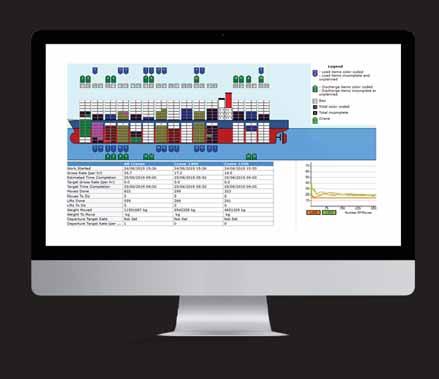
INTERMODAL FREIGHT CENTRE (IFC) CONTINUES TO GROW
The IFC which is strategically located at the rail head in Invercargill has continued to expand its operation since starting out in 2016. This year has seen a record throughput and it continues to provide an efficient and cost effective option for its customers.
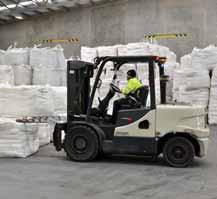
A new empty container handler has been purchased to allow the Container Depot team to process additional containers now coming through the Port. This empty handler is a first for South Port. The empty handler has the advantage of being able to move two containers at once with half the running cost.
The Infrastructure team is currently scoping out an expansion of the container terminal this year to increase the container yard space by 20%. This project is estimated to cost $1.2M and will cater for future growth.
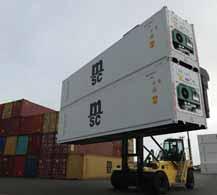
“The introduction of technology into the Depot has helped us work smarter, not harder”
DARYL ASHWORTH CONTAINER SURVEYOR
Whilst technology provides the tools to help improve efficiency, it is the people who are the key to making things work.
South Port has a great team of multi skilled people in the container area who have a can-do attitude and really care for our customers. Our operators have a wide range of skills across a broad spectrum which includes crane driving, container surveying, container handler driving and maintenance.
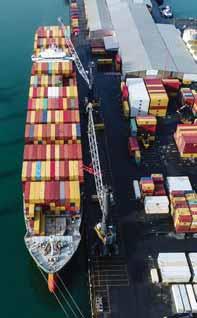

STAFF SURVEY
The survey was designed to gauge staff culture and engagement. The Company wanted to give staff the chance to have their say on what they think is working well and what areas needed some attention.
The survey provided a baseline metric against which to judge our ongoing efforts to build a skilled, engaged and effective workforce.
Knowing how we measure in areas such as employee satisfaction, management/ leadership effectiveness and the working environment to help us identify areas of best practice within our business, help to focus our energies on improving employee engagement, promoting cooperation and collaboration and having great staff morale!
∠ Incentivised participation through prize draws
80% participation rate
∠ The Company is doing some good work, and needs to celebrate that.
∠ There are some areas where the Company can improve what it is doing and how it is being done.
∠ Communication is a key area the Company can make some improvement.
∠ Our staff would like a fair and equal opportunity to grow and develop.
120 pages of feedback
35 questions - Likert sliding scale, 5 free text questions
5 out of 11 teams with 100% participation rate
∠ The Company needs to be more collaborative across departments.
∠ Some great strides have been made in terms of safe work practices, but not enough focus on wellness and wellbeing.
Conducting the survey was the easy part. The hard part is working together to make South Port a great place to work. It will take a team effort to achieve this!
The Company received positive feedback about the quality of information on the financial performance of the Port and it has endeavoured to extend this ‘culture of transparency’ across all messaging (with the exception of commercially sensitive data and other information where there is an obligation to retain this as private and confidential). In the period since the survey results were released, active and overt steps have been taken to improve communication to ensure relevant information is being communicated promptly and effectively. This includes more regular ‘all staff’ briefings, updates at toolbox and pre-start briefings, more regular meetings with special interest groups, communication flow via both conventional media and social media, as well as actively encouraging and stimulating communication ‘from the ground’.
Values
One of the major highlights for the year has been the launch of South Port’s core values. These values incorporate and reflect the feedback from our staff survey and the group workshops that followed. They describe the behaviours that will help build a positive and high-performing work environment and make our business a success. These values will tell the story of what South Port stands for and how the Company goes about its business.
The values workshops were facilitated by an external consultant and consisted of ten group sessions, two one-on-one sessions, two leadership team sessions and once the values were chosen they were presented to and adopted by the Board.
The South Port Leadership Team has whole-heartedly bought into Company-wide leadership behaviours and expectations.
86 out of 107 staff participating
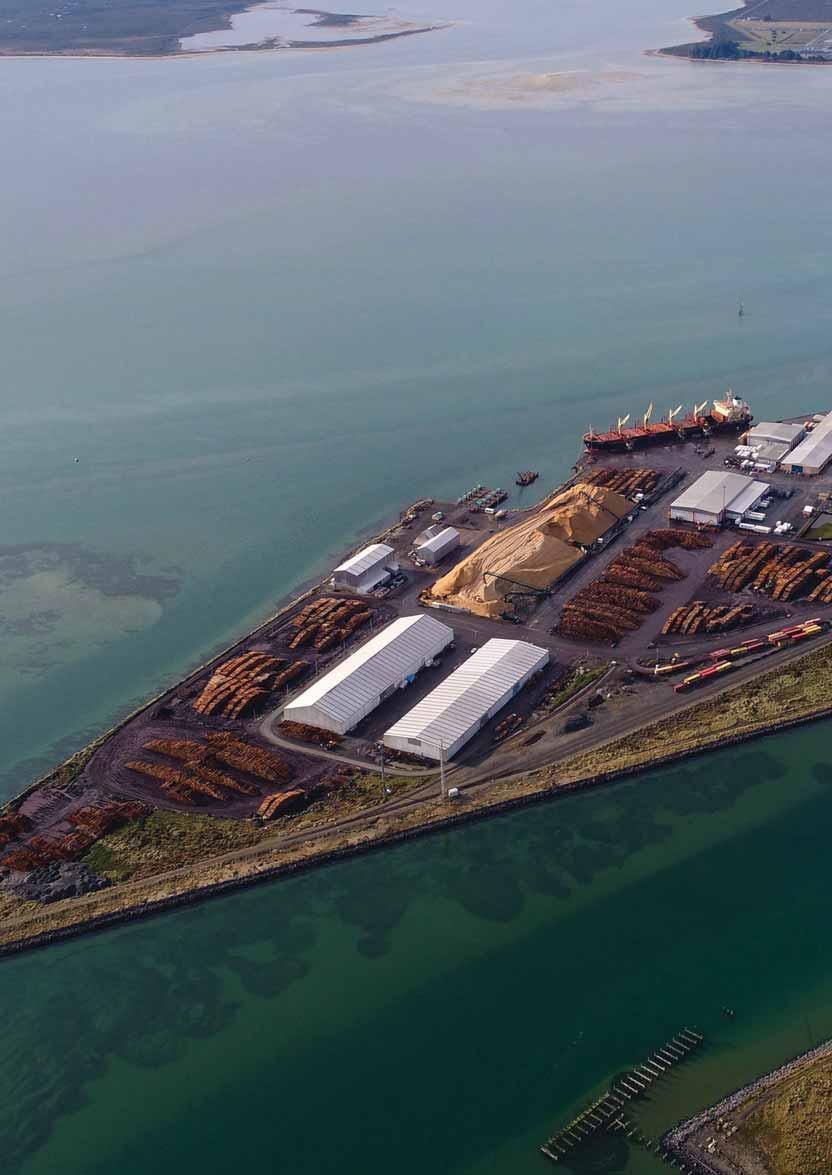
Warehouse No.7 - 5,900m2
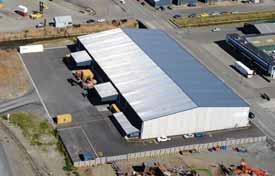
Warehouse No.4 - 5,900m2
Inset – South Port Intermodal Freight Centre (IFC), a 4,000m2 warehouse with rail connection servicing the Otago and Southland regions, strategically located adjacent to the Invercargill KiwiRail rail head.
Dry Warehouse No.3A - 4,500m2
Dry Warehouse No.3B - 3,300m2
Dry Warehouse No.3 - 2,200m2
Dry Warehouse No.6 - 1,500m2
Tiwai Wharf owned by South Port and leased under a licence agreement to NZAS Bulk Liquid Storage Facilities Dedicated Container Servicing Pad
Wharf Dry Warehouse No.1 - 2,000m2 Bulk Liquid Storage Facilities Dry Warehouse No.2 - 1,400m2
Warehouse No.3C - 1,900m2
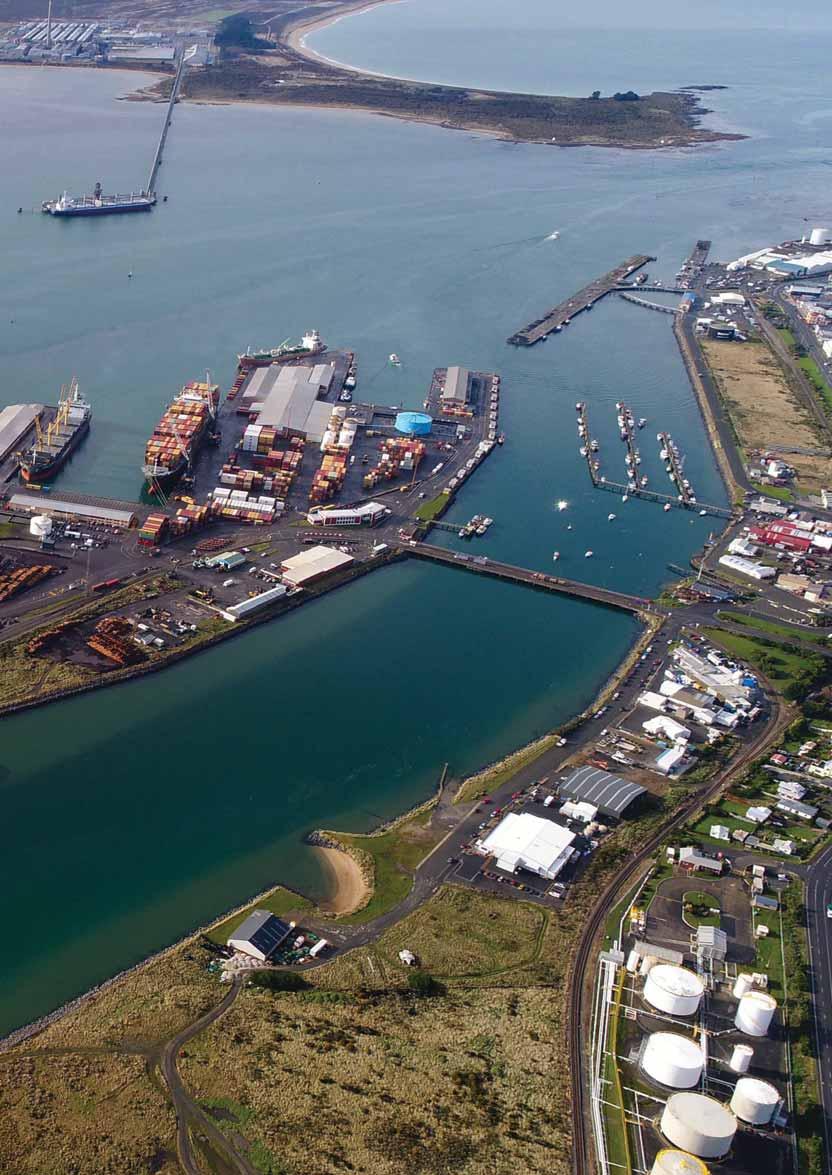
Office
Land for Development Island Harbour Access Bridge
Boat Piers
The Auditor-General is the auditor of South Port New Zealand Limited and its subsidiary (the Group). The Auditor-General has appointed me, Michael Lee, using the staff and resources of Crowe Horwath New Zealand Limited Partnership, to carry out the audit of the consolidated financial statements of the Group on his behalf.
Opinion
Crowe Horwath
New Zealand Audit Partnership
Member Crowe Horwath International
173 Spey Street
Invercargill 9810 New Zealand
Private Bag 90106
Invercargill 9840 New Zealand
Tel +64 3 211 3355
Fax +64 3 218 2581
www.crowehorwath.co.nz
We have audited the consolidated financial statements of the Group on pages 69 to 92, that comprise the consolidated statement of financial position as at 30 June 2019, and the consolidated statement of comprehensive income, consolidated statement of changes in equity and consolidated statement of cash flows for the year then ended, and the notes to the consolidated financial statements, including a summary of significant accounting policies.
In our opinion, the consolidated financial statements present fairly, in all material respects, the consolidated financial position of the Group as at 30 June 2019, and its consolidated financial performance and its consolidated cash flows for the year then ended in accordance with New Zealand equivalents to International Financial Reporting Standards and International Financial Reporting Standards.
We conducted our audit in accordance with the Auditor-General’s Auditing Standards, which incorporate the Professional and Ethical Standards and the International Standards on Auditing (New Zealand) issued by the New Zealand Auditing and Assurance Standards Board. Our responsibilities under those standards are further described in the Auditor’s responsibilities for the audit of the consolidated financial statements section of our report. We are independent of the Group in accordance with the Auditor-General’s Auditing Standards, which incorporate Professional and Ethical Standard 1 (Revised) Code of Ethics for Assurance Practitioners issued by the New Zealand Auditing and Assurance Standards Board, and we have fulfilled our other ethical responsibilities in accordance with these requirements.
We believe that the audit evidence we have obtained is sufficient and appropriate to provide a basis for our opinion.
Other than in our capacity as auditor, we have no further relationship with, or interests in, the South Port New Zealand Limited Group.
Key audit matters are those matters that, in our professional judgement, were of most significance in our audit of the consolidated financial statements of the current period. These matters were addressed in the context of our audit of the consolidated financial statements as a whole, and in forming our opinion thereon, and we do not provide a separate opinion on these matters.
Key Audit MatterHow we addressed the Key Audit Matter
As outlined in note 11 of the financial statements, the carrying amount of the Group’s property, plant and equipment is $49,570,599.
Amounts are capitalised to property, plant and equipment and the Group assesses the recoverable amount of these assets in accordance with the accounting policies outlined in notes 3(e) and 3(f) of the financial statements.
We treated the application of these accounting policies as a Key Audit Matter because of the:
• Significance of the property, plant and equipment in the statement of financial position,
• Importance to the Group of maintaining these assets in order to continue to provide expected service levels to customers, and
• Degree to which these assets may be susceptible to impairment.
Our procedures included:
• Reviewing minutes and reports of the directors and management to identify any critical maintenance discussions,
• Assessing that the Group has monitored its long-term property maintenance plan, by comparing actual results against the approved plan,
• Assessing the nature of costs incurred in capital projects by testing a sample of costs and determining whether the expenditure met the capitalisation criteria,
• Assessing the nature of costs incurred in repairs and maintenance projects by testing a sample of costs and determining whether the expenditure met the repairs and maintenance criteria,
• Reviewing the profitability of the Group’s operations for indicators of potential impairment, and
• Reviewing the Group’s assessment of useful lives allocated to all major assets.
The directors are responsible on behalf of the Group for the other information. The other information comprises the information included on pages 2 to 68 and 93 to 100 but does not include the consolidated financial statements and our auditor’s report thereon.
Our opinion on the consolidated financial statements does not cover the other information and we do not express any form of audit opinion or assurance conclusion thereon.
In connection with our audit of the consolidated financial statements, our responsibility is to read the other information and, in doing so, consider whether the other information is materially inconsistent with the consolidated financial statements or our knowledge obtained in the audit or otherwise appears to be materially misstated. If, based on the work we have performed, we conclude that there is a material misstatement of this other information, we are required to report that fact. We have nothing to report in this regard.
The directors are responsible on behalf of the Group for the preparation and fair presentation of the consolidated financial statements in accordance with New Zealand equivalents to International Financial Reporting Standards and International Financial Reporting Standards, and for such internal control as the directors determine is necessary to enable the preparation of consolidated financial statements that are free from material misstatement, whether due to fraud or error.
In preparing the consolidated financial statements, the directors are responsible on behalf of the Group for assessing the Group’s ability to continue as a going concern, disclosing, as applicable, matters related to going concern and using the going concern basis of accounting unless the directors either intend to liquidate the Group or to cease operations, or have no realistic alternative but to do so
The directors’ responsibilities arise from the Financial Markets Conduct Act 2013.
Our objectives are to obtain reasonable assurance about whether the consolidated financial statements as a whole are free from material misstatement, whether due to fraud or error, and to issue an auditor’s report that includes our opinion.
Reasonable assurance is a high level of assurance but is not a guarantee that an audit conducted in accordance with the AuditorGeneral’s Auditing Standards will always detect a material misstatement when it exists. Misstatements can arise from fraud or error and are considered material if, individually or in the aggregate, they could reasonably be expected to influence the economic decisions of shareholders taken on the basis of these consolidated financial statements.
As part of an audit in accordance with the Auditor-General’s Auditing Standards, we exercise professional judgement and maintain professional scepticism throughout the audit. We also:
• Identify and assess the risks of material misstatement of the consolidated financial statements, whether due to fraud or error, design and perform audit procedures responsive to those risks, and obtain audit evidence that is sufficient and appropriate to provide a basis for our opinion. The risk of not detecting a material misstatement resulting from fraud is higher than for one resulting from error, as fraud may involve collusion, forgery, intentional omissions, misrepresentations, or the override of internal control.
• Obtain an understanding of internal control relevant to the audit in order to design audit procedures that are appropriate in the circumstances, but not for the purpose of expressing an opinion on the effectiveness of the Group’s internal control.
• Evaluate the appropriateness of accounting policies used and the reasonableness of accounting estimates and related disclosures made by management.
• Conclude on the appropriateness of the use of the going concern basis of accounting by the directors and, based on the audit evidence obtained, whether a material uncertainty exists related to events or conditions that may cast significant doubt on the Group’s ability to continue as a going concern. If we conclude that a material uncertainty exists, we are required to draw attention in our auditor’s report to the related disclosures in the consolidated financial statements or, if such disclosures are inadequate, to modify our opinion. Our conclusions are based on the audit evidence obtained up to the date of our auditor’s report. However, future events or conditions may cause the Group to cease to continue as a going concern.
• Evaluate the overall presentation, structure and content of the consolidated financial statements, including the disclosures, and whether the consolidated financial statements represent the underlying transactions and events in a manner that achieves fair presentation.
• Obtain sufficient appropriate audit evidence regarding the financial information of the entities or business activities within the Group to express an opinion on the consolidated financial statements. We are responsible for the direction, supervision and performance of the group audit. We remain solely responsible for our audit opinion.
We communicate with the directors regarding, among other matters, the planned scope and timing of the audit and significant audit findings, including any significant deficiencies in internal control that we identify during our audit.
We also provide the directors with a statement that we have complied with relevant ethical requirements regarding independence, and to communicate with them all relationships and other matters that may reasonably be thought to bear on our independence, and where applicable, related safeguards.
From the matters communicated with the directors, we determine those matters that were of most significance in the audit of the consolidated financial statements of the current period and are therefore the key audit matters. We describe these matters in our auditor’s report unless law or regulation precludes public disclosure about the matter or when, in extremely rare circumstances, we determine that a matter should not be communicated in our report because the adverse consequences of doing so would reasonably be expected to outweigh the public interest benefits of such communication.
Our responsibilities arise from the Public Audit Act 2001.
Michael Lee
Crowe Horwath New Zealand Audit Partnership
On behalf of the Auditor-General Invercargill, New Zealand 29 August 2019
Crowe Horwath New Zealand Audit Partnership is a member of Crowe Horwath International, a Swiss verein. Each member firm of Crowe Horwath is a separate and independent legal entity.
On behalf of the Board
Dated 29 August 2019 Chairman of DirectorsDirector

South Port New Zealand Limited (the “Company”) is a company domiciled in New Zealand, registered under the Companies Act 1993 and listed on the New Zealand Stock Exchange (“NZX”). The Company is an issuer in terms of the Financial Reporting Act 2013.
The consolidated financial statements of South Port New Zealand Limited as at and for the period ended 30 June 2019 comprise the Company and its subsidiary Awarua Holdings Ltd (together referred to as the “Group”). South Port New Zealand Ltd is primarily involved in providing and managing port and warehousing services.
(a) Statement of Compliance
The Parent Company is a Financial Markets Conduct (FMC) reporting entity for the purposes of the Financial Reporting Act 2013 and the Financial Markets Conduct Act 2013. These financial statements comply with these Acts and have been prepared in accordance with the New Zealand Equivalents to International Financial Reporting Standards (NZ IFRS) and other applicable Financial Reporting Standards, as appropriate for profit-oriented entities. These financial statements comply with International Financial Reporting Standards (IFRS).
The financial statements were approved by the Board of Directors on 29 August 2019.
(b) Basis of Measurement
The financial statements have been prepared on the historical cost basis except for the following:
• Financial instruments measured at fair value
The methods used to measure fair values are discussed further in Note 4.
(c) Functional and Presentation Currency
These financial statements are presented in New Zealand dollars ($), which is the Group’s functional currency. All financial information presented in New Zealand dollars has been rounded to the nearest thousand.
(d) Use of Estimates and Judgements
The preparation of financial statements requires management to make judgements, estimates and assumptions that affect the application of accounting policies and the reported amounts of assets, liabilities, income and expenses. Actual results may differ from these estimates.
Estimates and underlying assumptions are reviewed on an ongoing basis. Revisions to accounting estimates are recognised in the period in which the estimate is revised and in any future periods affected. There were no estimates and assumptions that have a significant risk of causing a material adjustment to the carrying amounts of assets and liabilities within the next financial year.
In particular, information about significant areas of estimation uncertainty and critical judgements in applying accounting policies that have the most significant effect on amounts recognised in the financial statements are as detailed below:
• Long Service Leave (Note 18)
• Commitments and Contingent Liabilities (Note 22)
• Financial Instruments (Note 21)
• Valuation of Derivatives (Note 21)
Except for the adoption of two new accounting standards (NZ IFRS 9 and 15), the accounting policies set out below have been applied consistently to all periods presented in these financial statements, and have been applied consistently by Group entities.
(a) Basis of Consolidation
Consolidation of a subsidiary begins when the Group obtains control over the subsidiary and ceases when the Group loses control of the subsidiary. Assets, liabilities, income and expenses of a subsidiary acquired or disposed of during the year are included in the statement of comprehensive income from the date the Group gains control until the date the Group ceases to control the subsidiary.
Control is achieved when the Group is exposed, or has rights, to variable returns from its involvement with the investee and has the ability to affect those returns through its power over the investee.
The financial statements of subsidiaries are prepared for the same reporting period as the parent company, using consistent accounting policies.
In preparing the consolidated financial statements, all intercompany balances and transactions, income and expenses and profit and losses resulting from intra-group transactions have been eliminated in full.
Subsidiaries are fully consolidated from the date on which control is obtained by the Group and cease to be consolidated from the date on which control is transferred out of the Group.
(b) Foreign Currency
Transactions in foreign currencies are translated to the respective functional currencies of the Group at exchange rates at the dates of the transactions.
(c) Goods and Services Tax (GST)
All financial information is expressed exclusive of GST, except for trade and other receivables, and trade and other payables, which are expressed inclusive of GST in the Statement of Financial Position.
(i) Non-derivative financial instruments
The Group is party to financial instruments as part of its normal operations. These financial instruments include cash and cash equivalents, trade and other receivables, loans and borrowings, and trade and other payables.
Non-derivative financial instruments are recognised initially at fair value on transaction date plus, for instruments not at fair value through the profit or loss, any directly attributable transaction costs. Subsequent to initial recognition nonderivative financial instruments are measured as described below.
A financial instrument is recognised if the Group becomes a party to the contractual provisions of the instrument. Financial assets are derecognised if the Group’s contractual rights to the cash flows from the financial assets expire or if the Group transfers the financial asset to another party without retaining control or substantially all risks and rewards of the asset. Purchases and sales of financial assets are accounted for at trade date. Financial liabilities are derecognised if the Group’s obligations specified in the contract expire or are discharged or cancelled.
Cash and cash equivalents comprise cash balances and call deposits.
Trade and other receivables
Trade and other receivables are stated at their cost less impairment losses.
Interest-bearing borrowings
Borrowings are initially recognised at fair value, net of transaction costs incurred. After initial recognition, interest-bearing loans and borrowings are subsequently measured at amortised cost using the effective interest method. Borrowings are classified as current liabilities unless the Group has an unconditional right to defer settlement of the liability for at least 12 months after the balance sheet date.
Trade and other payables
Trade and other payables are stated at cost.
(ii) Derivative financial instruments and hedging activities
The Group uses derivative financial instruments to hedge its exposure to foreign exchange and interest rate risks arising from financing and investment activities.
In accordance with its treasury policy, the Group does not hold or issue derivative financial instruments for trading purposes. However, derivatives that do not qualify for hedge accounting are accounted for as trading instruments.
Derivative financial instruments qualifying for hedge accounting are classified as non current if the maturity of the instrument is greater than 12 months from reporting date and current if the instrument matures within 12 months from reporting date. Derivatives accounted for as trading instruments are classified as current.
Derivative financial instruments are recognised initially at fair value and transaction costs are expensed immediately. Subsequent to initial recognition, derivative financial instruments are stated at fair value. The gain or loss on remeasurement to fair value is recognised immediately in profit
or loss. However, where derivatives qualify for hedge accounting, recognition of any resultant gain or loss depends on the nature of the hedging relationship.
Derivative financial instruments also include interest rate swaps to hedge (economically but not in accounting terms) the Group’s risks associated with interest rate fluctuations. Such derivative financial instruments are initially recognised at fair value on the date on which a derivative contract is entered into and are subsequently remeasured to fair value. Derivatives are carried as assets when their fair value is positive and as liabilities when their fair value is negative.
Any gains or losses arising from changes in the fair value of interest rate swaps are taken directly to profit or loss for the year.
The fair values of interest rate swap contracts are determined by reference to market values for similar instruments.
(i) Recognition and measurement
Items of property, plant and equipment are measured at cost, less accumulated depreciation and impairment losses. Land is not depreciated.
The initial cost includes the purchase price and any costs directly attributable to bringing the asset to the state of being ready for use in location. These costs can include installation costs, borrowing costs, cost of obtaining resource consents etc. Any feasibility costs are expensed.
(ii) Subsequent expenditure
Subsequent expenditure is added to the gross carrying amount of an item of property, plant or equipment, if that expenditure increases the future economic benefits of the asset beyond its existing potential, or is necessarily incurred to enable future economic benefits to be obtained and its cost can be measured reliably.
(iii) Disposal of property, plant and equipment
Where an item of such is disposed of, the gain or loss is recognised in the Statement of Comprehensive Income at the difference between the net sale price and the net carrying amount of the item.
(iv) Depreciation
Depreciation is calculated on a straight line basis to allocate the cost of an asset, less its residual value, over its useful life. The estimated useful lives of property, plant and equipment are:
• Buildings 15-50 years
• Plant & Equipment 3-50 years
Depreciation methods, useful lives and residual values are reassessed at the reporting date.
(f) Impairment
The carrying amounts of the Group’s non-financial assets are reviewed at each balance sheet date to determine whether there is any objective evidence of impairment.
An impairment loss is recognised whenever the carrying amount of an asset exceeds its recoverable amount. Impairment losses directly reduce the carrying amount of assets and are recognised in the Statement of Comprehensive Income.
(i) Impairment of receivables
For trade and other receivables the Group makes use of a simplified approach, as permitted by NZ IFRS 9, and records the loss allowances as lifetime expected credit losses from that recognition. This is expected credit losses that result from all possible default events over the life of the financial instrument.
(g) Provisions
A provision is recognised if, as a result of a past event, the Group has a present legal or constructive obligation that can be estimated reliably, and it is probable that an outflow of economic benefits will be required to settle the obligation.
(h) Revenue
(i) Revenue from port services
Port operations revenue is derived from an integrated performance obligation for the provision of marine services, berthage, wharfage, storage and other services. Revenue is recognised both at a point in time when the Group satisfies its performance obligations by transferring the promised services to its customers, and over time as the Group performs the service and the customer simultaneously benefits from the service. All services performed have short service performance timeframes. Revenue received in advance is recorded as a liability and recognised as revenue when the performance obligation is satisfied.
(ii) Rental income
Rental income from property is recognised in the Statement of Comprehensive Income on a straight-line basis over the term of the lease.
(i) Lease Payments
Payments made under operating leases are recognised in the Statement of Comprehensive Income on a straight-line basis over the term of the lease.
(j) Finance Income and Expenses
Finance income comprises interest income on funds invested, dividend income, foreign currency gains and changes in the fair value of financial assets at fair value through profit or loss.
Interest income is recognised as it accrues, using the effective interest method. Dividend income is recognised on the date that the Group’s right to receive payment is established.
Finance expenses comprise interest expense on borrowings, foreign currency losses, interest rate swap losses, and impairment losses recognised on financial assets. All borrowing costs are recognised in the Statement of Comprehensive Income using the effective interest method, apart from interest expenses relating to interest rate caps which are recognised in the Statement of Comprehensive Income on a straight-line basis over the term of the cap arrangement.
Income tax expense comprises current and deferred tax. Income tax expense is recognised in the Statement of Comprehensive Income except to the extent that it relates to items recognised directly in equity, in which case it is recognised in equity.
Current tax is the expected tax payable on the taxable income for the year, using tax rates enacted or substantively enacted at the reporting date, and any adjustment to tax payable in respect of previous years.
Deferred tax is recognised using the balance sheet method, providing for temporary differences between the carrying amounts of assets and liabilities for financial reporting purposes and the amounts used for taxation purposes.
Deferred tax is not recognised for the following temporary differences: the initial recognition of assets or liabilities in a transaction that is not a business combination and that affects neither accounting nor taxable profit, and differences relating to investments in subsidiaries to the extent that they probably will not reverse in the foreseeable future.
Deferred tax assets and liabilities are measured at the tax rates that are expected to be applied to the temporary differences when they reverse, based on the laws that have been enacted or substantively enacted by the reporting date.
A deferred tax asset is recognised to the extent that it is probable that future taxable profits will be available against which temporary differences can be utilised. Deferred tax assets are reviewed at each reporting date and are reduced to the extent that it is no longer probable that the related tax benefit will be realised.
Additional income taxes that arise from the distribution of dividends are recognised at the same time as the liability to pay the related dividend is recognised.
(l) Earnings per Share
The Group presents basic earnings per share (EPS) data for its ordinary shares. Basic EPS is calculated by dividing the net surplus after income tax attributable to ordinary shareholders of the Company by the weighted average number of ordinary shares outstanding during the period.
There is no value difference between basic EPS and diluted EPS.
(m) Segment Reporting
Operating segments are reported in a manner consistent with the internal reporting provided to the chief operating decision maker. The chief operating decision maker, who is responsible for allocating resources and assessing performance of the operating segments, has been identified as the Chief Executive.
The Group operates solely in the port industry and all operations are carried out in the Southland region.
(n)
A number of new standards, amendments to standards and interpretations are effective for annual periods beginning after 1 July 2018. Those which are relevant to the Group are set out below with updated accounting policies as necessary. The adoption of these standards did not require any restatement of the prior year’s financial statements.
NZ IFRS 15 Revenue from Contracts with Customers
NZ IFRS 15 applies to all revenue arising from contracts with customers, unless the contracts are in the scope of other standards. The new standard establishes a five-step model to account for revenue arising from contracts with customers. Under NZ IFRS 15, revenue is recognised at an amount that reflects the consideration to which an entity expects to be entitled in the exchange for transferring goods or services to a customer. The adoption of NZ IFRS 15 did not have any material effect for the Group, and no restatement to the prior year was made. The Group’s major revenue streams under NZ IFRS 15 are the delivery of port related services.
Revenue from port services - port operations revenue is derived from an integrated performance obligation for the provision of marine services, berthage, wharfage, storage and other services. Revenue is recognised both at a point in time when the Group satisfies its performance obligations by transferring the promised services to its customers, and over time as the Group performs the service and the customer simultaneously benefits from the service. All services performed have short service performance timeframes.
NZ IFRS 9 Financial Instruments
NZ IFRS 9 applies to the accounting for financial instruments. The adoption of NZ IFRS 9 resulted in changes in accounting policies. The new accounting policies are set out in the sections below along with the impact to the financial statements. The adoption of this standard has not resulted in any restatement to prior periods.
NZ IFRS 9 impacts the following classification of financial instruments:
• Cash and cash equivalents
• Trade and other receivables
From 1 July 2018 the Group classifies its financial assets as being measured at amortised cost. Until June 2018 the Group classified its financial assets as loans and receivables. There was no change in the carrying value of the financial assets as a result of reclassification.
From 1 July 2018 the Group assessed on a forward-looking basis the expected credit losses associated with its financial assets carried at amortised cost.
The Group considers a broad range of information when assessing credit risk and measuring external credit losses, including past events, current conditions and reasonable and supportable forecasts that affect the expected collectability of the future cash flows of the instrument.
For trade and other receivables the Group makes use of a simplified approach, as permitted by NZ IFRS 9, and records the loss allowances as lifetime expected credit losses from that recognition. This is expected credit losses that result from all possible default events over the life of the financial instrument. No expected credit loss adjustment at 1 July 2018 has been made under NZ IFRS 9 for trade and other receivables.
Finance assets are written off when there is no reasonable expectation of recovery. Indication that there is no reasonable expectation of recovery includes, among others, collection procedures have proved unsuccessful, the occurrence of significant changes in borrower’s position such that the borrower can no longer pay back the obligation, or that the proceeds from collections and/ or insurance claims will not be sufficient to pay back the entire obligation.
The Group uses derivative financial instruments to hedge its exposure to foreign exchange and interest rate risks arising from financing and investment activities.
Although the Group has interest rate swaps in place at balance date, these are not designated as hedging instruments in cash flow hedge relationships and therefore are not regarded as complying hedge relationships. To qualify for hedge accounting, the hedging relationship must meet all of the following requirements:
• There is an economic relationship between the hedged item and the hedging instrument;
• The effect of credit risk does not dominate the value changes that result from that economic relationship; and
• The hedge ratio of the hedging relationship is the same as that resulting from the quantity of the hedged item that the entity actually hedges and the quantity of the hedging instrument that the Group actually uses to hedge that quantity of hedged item.
To the extent that the hedge is effective, changes in the fair value of derivatives designated as hedging instruments in cash flow hedges are recognised in other comprehensive income and included within the hedging reserve in equity. Any ineffectiveness on the hedge relationship is recognised immediately through the profit or loss.
A number of new standards, amendments to standards and interpretations are effective for annual periods ending after 30 June 2019 and have not been applied in preparing these consolidated financial statements. Those which may be relevant to the Group are set out below. The Group does not plan to adopt these standards early.
• NZ IFRS 16: Leases – this standard is expected to be adopted by the Group in the financial statements for the year ending 30 June 2020 (effective date 1 January 2019). NZ IFRS 16 abolishes the concept of the operating lease for a lessee and effectively requires all leases to be treated as finance lessee. The standard requires lease agreements (for lessees) to be recognised on balance sheet as a right-to-use asset, with a corresponding liability. The Group does not expect the standard to have a material impact on the financial statements as most leases held by the Group are as lessor. There is likely to be only one land lease that will have to be recognised on the balance sheet as a rightto-use asset (with a corresponding liability) and this lease is not material.
No other standards, amendments or interpretations that have been issued but are not yet effective are expected to materially impact the Group’s financial statements.
A number of the Group’s accounting policies and disclosures require the determination of fair value, for both financial and non-financial assets and liabilities. Fair values have been determined for measurement and/or disclosure purposes based on the following methods. Where applicable, further information about the assumptions made in determining fair values is disclosed in the notes specific to that asset or liability.
(a) Derivative Financial Instruments
The fair value of forward exchange contracts and interest rate derivatives are determined using quoted rates at balance date.
(b) Other Non-Derivative Financial Instruments
The carrying values less impairment provisions of trade receivables and payables are assumed to approximate their fair values.
The carrying values of loans and borrowings approximate their fair values.
In Thousands of New Zealand Dollars 2019 2018
Revenue arises from the delivery of port related services (under NZ IFRS 15), and rental property leases (under NZ IAS 17). To determine whether to recognise revenue, the Group follows a 5-step process:
1. Identifying the contract with a customer;
2. Identifying the performance obligations;
3. Determining the transaction price;
4. Allocating the transaction price to the performance obligations;
5. Recognising revenue when/as performance obligations are satisfied.
Revenue from port services – is recognised both at a point in time when the Group satisfies its performance obligations by transferring the promised services to its customers, and over time as the Group performs the service and the customer simultaneously benefits from the service. All services performed have short service performance timeframes. Revenue is shown net of volume discounts.
Rental revenue – from property leased under operating leases is recognised in the statement of comprehensive income on a straight line basis over the term of the lease, as per NZ IAS 17.
Other income – gain on sale from property, plant and equipment.
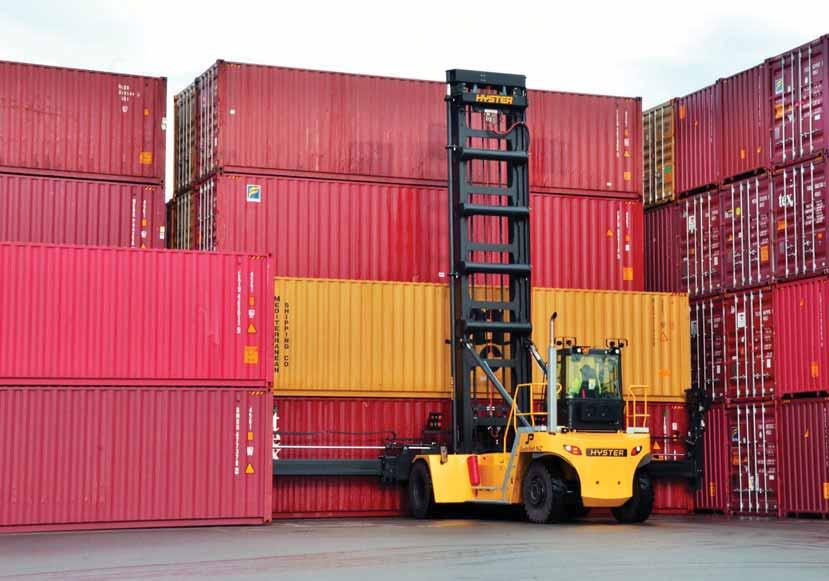
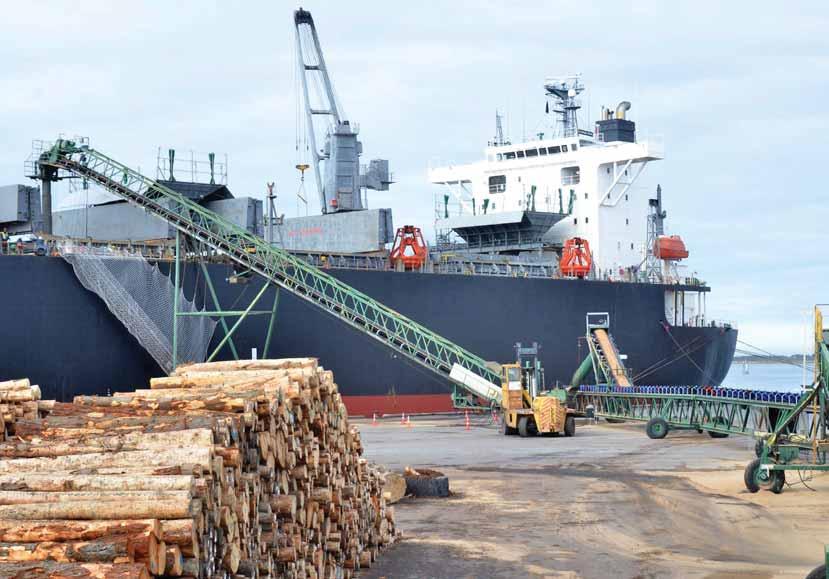
8 EMPLOYEE BENEFITS EXPENSE
The compensation of the Directors, Chief Executive and other senior management, being the key management personnel of the entity, is set out below:
In Thousands of New Zealand Dollars
INCOME TAX RECOGNISED IN PROFIT OR LOSS
The prima facie income tax expense on pre-tax accounting surplus reconciles to the income tax expense in the financial statements as follows:
There
Note 10 continued...
(b) INCOME TAX RECOGNISED DIRECTLY IN EQUITY
There was no current or deferred tax charged / (credited) directly to equity during the period.
Thousands of New Zealand Dollars
(c) CURRENT TAX ASSETS AND LIABILITIES
(d) DEFERRED TAX BALANCES COMPRISE:
Taxable and deductible temporary differences arising from the following:
Impairment – During the year ended 30 June 2019 there were no impairment losses (2018: nil) which were recorded in the Statement of Comprehensive Income.
The holders of ordinary shares are entitled to receive dividends as declared from time to time and are entitled to one vote per share at meetings of the Company. All of the 26,234,898 ordinary shares rank equally with regard to the Company’s residual assets. All shares are fully paid and have no par value. There were no shares issued or redeemed during the year.
Dividends are recognised in the period that they are authorised and declared.
After 30 June 2019 the following dividends were proposed by the directors for 2019. The dividends have not been provided for and there are no income tax consequences. Total imputation credits to be attached to the dividend are $1,887,000.
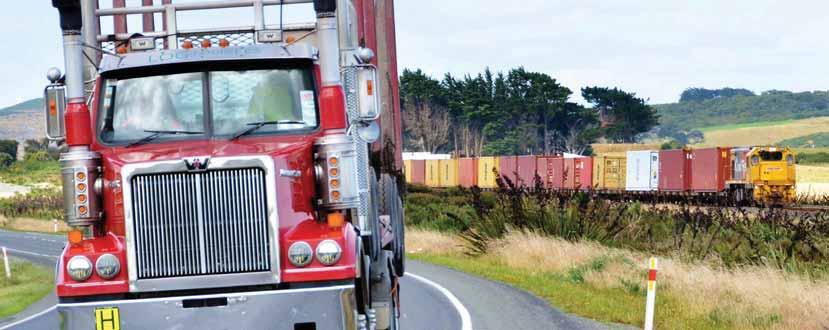
The Group’s capital includes share capital, reserves and retained earnings. The Group’s policy is to maintain a strong capital base so as to maintain investor, creditor and market confidence. The Board of Directors’ objective is to ensure the entity continues as a going concern as well as to maintain optimal returns to shareholders and benefits for other stakeholders.
Key statistics and ratios are reported as part of the financial and operational five year summary on page 93
The Group meets its objectives for managing capital through its investment decisions on the acquisition, disposal and development of assets and its distribution policy. It is Group policy that the dividend pay out takes account of its free cash flows and reported profit.
The Group is required to comply with certain financial covenants in respect of external borrowings set by the Group’s bankers. All covenants have been adhered to throughout the years ended 30 June 2019 and 30 June 2018.
The Group’s policies in respect of capital management are reviewed regularly by the Board of Directors. There have been no changes in the Group’s management of capital during the year.
The calculation of basic earnings per share at 30 June 2019 was based on the profit attributable to ordinary shareholders of $9,787,000 (2018: $9,658,000) and a weighted average number of ordinary shares outstanding of 26,234,898 (2018: 26,234,898). Basic and diluted EPS are the same value.
Zealand Limited
Hong Kong and Shanghai Banking Corporation (HSBC)
South Port New Zealand Limited’s credit facility of $17 million from ANZ is split between three different facilities as follows:
• Term Facility - $5 million expiring 1 February 2024
• Short Term Advances Facility - $11 million finally terminating 31 January 2021
• Commercial Flexi Facility - $1 million revolving, reviewed annually
The total facility is secured by way of a general security registered over all assets both present and future of South Port New Zealand Limited. The same security was in place the previous year.
Interest on the first $5 million drawn at any one time is payable according to the five year interest rate swap agreement (expiring 4 November 2019) the Company has with ANZ. Interest on the balance of funds drawn at any time is calculated using a variable rate based on the BKBM (3 month bank bill rate).
At 30 June 2018
South Port New Zealand Limited’s credit facility of $17 million from HSBC was split between three different lines of credit as follows:
• Facility 1 - $8 million expiring 31 October 2019
• Facility 2 - $4 million expiring 31 October 2019
• Facility 3 - $5 million expiring 31 October 2019
(i) Wages, salaries and annual leave
Liabilities for wages, salaries and annual leave are calculated on an actual entitlement basis at current rates of pay to be settled within 12 months from reporting date.
(ii) Long service leave
The Group’s net obligation in respect of long-term employee benefits is the amount of future benefit that employees have earned in return for their service in the current and prior periods; that benefit is discounted to determine its present value, and the fair value of any related assets is deducted. Any actuarial gains or losses are recognised in the Statement of Comprehensive Income in the period in which they arise.
The Group has exposure to the following risks from its use of financial instruments:
• Credit risk
• Liquidity risk
• Market risk
The Group is exposed to market risk through its use of financial instruments and specifically to currency risk, interest rate risk and certain other price risks, which result from both its operating and investing activities.
The Group has a series of policies to manage the risk associated with financial instruments. Policies have been established which do not allow transactions which are speculative in nature to be entered into and the Group is not actively engaged in the trading of financial instruments. As part of this policy, limits of exposure have been set and are monitored on a regular basis.
Financial instruments which potentially subject the Group to credit risk principally consist of bank balances and accounts receivable. The carrying amount of these financial instruments represents the maximum exposure to credit risk. Management has a credit policy in place under which each new customer is individually analysed for credit worthiness. In order to determine which customers are classified as having payment difficulties the Group applies a mix of duration and frequency of default and makes provision for estimated balances considered to be impaired. The Group does not require collateral in respect of trade and other receivables. Cash handling is only carried out with counterparties which have an investment grade credit rating.
Liquidity risk is the risk that the Group will not be able to meet its financial obligations as and when they fall due. The Group’s approach to managing liquidity risk is to ensure, as far as possible, that it will always have sufficient cash and borrowing facilities available to meet its liabilities when due, under both normal and adverse conditions. The Group’s cash flow requirements and the utilisation of borrowing facilities are continuously monitored, and it is required that committed bank facilities are maintained above maximum forecast usage.
The only liquidity risks the Group has at balance date are trade payables totalling $3,152,000 (2018: $3,388,000) which are all due within 30 days, and loans and borrowings totalling $7,000,000 (2018: $7,200,000) as per Note 17.
Funding risk is the risk that arises when either the size of borrowing facilities or the pricing thereof is not able to be replaced on similar terms, at the time of review with the Group’s banks. To minimise funding risk it is Board policy to spread the facilities’ renewal dates and the maturity of individual loans. Where this is not possible, extensions to, or the replacement of, borrowing facilities are required to be arranged at least three months prior to each facility’s expiry.
The Group enters into derivative arrangements in the ordinary course of business to manage foreign currency and interest rate risks.
The Group is exposed to foreign currency risk on purchases that are denominated in a currency other than the Group’s functional currency, New Zealand dollars ($), which is the presentation currency of the Group.
The Group does not have any material exposure to currency risk except for the one-off purchases of assets (e.g. plant and machinery) denominated in foreign currencies. It is Group policy that foreign exchange exposures on imported goods must be hedged by way of foreign exchange forward contracts or options to a minimum of 50% at the time the exposure is known with certainty on all transactions that are material.
The purpose of these contracts is to reduce the risk from price fluctuations of foreign currency commitments associated with these one-off purchases. Any resulting differential to be paid or received as a result of the currency change is reflected in the cash flow hedge reserve to the extent that the hedge is effective, until the asset is recognised. To the extent that the hedge is ineffective, changes in fair value are recognised in profit or loss.
The Group has no foreign exchange forward contracts at balance date (2018: nil).
Interest payable to ANZ is charged on the following basis: (i) 5 year interest rate swap; and (ii) Variable rates based on the BKBM.
During the period the range of variable interest rates applying to the credit facility were between 2.55% and 2.82% (2018: 2.56% and 2.695%). The Company is exposed to normal fluctuations in market interest rates.
Interest rate swap (i) – South Port has an interest rate swap in place which matures in November 2019. The interest rate swap has a fixed swap rate of 4.45% with a notional contract amount of $5 million at 30 June 2019 (2018: $5 million at 4.45% maturing November 2019).
Interest rate swap (ii) – South Port has another interest rate swap in place which commences in November 2019 and matures in November 2024. The interest rate swap has a fixed swap rate of 3.64% with a notional contract amount of $5 million at 30 June 2019 (2018: contract in place for $5 million @ 3.64%, commencing November 2019 and maturing November 2024).
At balance date the Group had a total loan facility of $17 million (2018: $17 million), of which $7,000,000 (2018: $7,200,000) had been drawn down.
The Group also has an overdraft facility of $200,000 (2018: $200,000), of which $0 (2018: $0) had been drawn down.
During the year the Group changed banks from HSBC to ANZ.
The carrying amount is considered to be the fair value for each financial instrument.
The maturity profiles of the Group’s interest bearing investments and borrowings are disclosed on the following pages:
The Group held the following financial instruments at reporting date:
The following table details the Group’s exposure to interest rate risk on financial instruments: Note 21 continued...
The following table details a sensitivity analysis for each type of market risk to which the Group is exposed:
Financial assets
Cash and cash equivalents 1,426 (15)
Trade and other receivables
Financial liabilities
Loans and borrowings (non-current)
Loans and borrowings (current) Trade and other payables 3,152
Interest rate derivatives
Total increase/(decrease) —
(25)
(30)
liabilities Loans and borrowings
(non-current) Loans and borrowings
(current)
Explanation of interest rate risk sensitivity
The interest rate sensitivity is based on a reasonable possible movement in interest rates, with all other variables held constant, measured as a basis points (bps) movement. For example, a decrease in 100 bps is equivalent to a decrease in interest rates of 1.00%.
The sensitivity for derivatives (interest rate swaps/caps) has been calculated using a derivative valuation model based on a parallel shift in interest rates of -100bps/+100bps (2018: -100bps/+100bps).
Explanation of foreign exchange risk sensitivity
The foreign exchange sensitivity is based on a reasonable possible movement in foreign exchange rates, with all other variables held constant, measured as a percentage movement in the foreign exchange rate.
No sensitivity for derivatives (forward foreign exchange contracts) has been calculated for 2019 or 2018 since the Group had no forward foreign exchange contracts in place at balance date.
The sensitivity for listed shares in the past has been calculated based on a –10%/+10% (2018: -10%/+10%) movement in the quoted bid share price at balance date for the listed shares. The Group currently does not hold any listed shares.
For those instruments recognised at fair value in the statement of financial position, fair values are determined according to the following hierarchy:
• Quoted market price (level 1) - Financial instruments with quoted prices for identical instruments in active markets.
• Valuation technique using observable inputs (level 2) - Financial instruments with quoted prices for similar instruments in active markets or quoted prices for identical or similar instruments in inactive markets and financial instruments valued using models where all significant inputs are observable.
• Valuation techniques with significant non-observable inputs (level 3) - Financial instruments valued using models where one or more significant inputs are not observable.
The following table analyses the basis of the valuation of classes of financial instruments measured at fair value in the statement of financial position:
There were no transfers between the different levels of the fair value hierarchy during the year and no financial instruments fall under the level 3 category.
Changing a valuation assumption to a reasonable possible alternative assumption would not significantly change fair value.
The fair value of derivatives traded in active markets is based on quoted market prices at the reporting date. The fair value of derivatives that are not traded in active markets (for example over-the-counter derivatives), are determined by using market accepted valuation techniques incorporating observable market data about conditions existing at each reporting date.
The fair value of interest rate swaps is calculated at the present value of the estimated future cash flows.
Valuation inputs for valuing derivatives are as follows:
• Interest rate forward price - published market swap rates.
• Discount rate for valuing interest rate derivatives - published market interest rates as applicable to the remaining life of the instrument adjusted for the credit risk of the counterparty for assets and the credit risk of the Group for liabilities.
Capital expenditure commitments
As at 30 June 2019, South Port Group had entered into capital expenditure commitments on minor capital projects at an estimated total cost of $280,000. (2018: complete an extension of the No.1 cold store ELA, build a blast freezer, install a new screw compressor, upgrade the access road paving, build a new security hut facility and upgrade fishing berth assets at an estimated cost of $2,150,000).
Operating lease commitments as Lessee
Gross commitments under non-cancellable operating leases for the Group (as Lessee):
Operating lease commitments (as Lessee) relate to a ten year land lease commitment with KiwiRail Limited for the lease of a parcel of land situated on the Island Harbour, Bluff, due to expire in December 2021 and a 9 year, 20 day lease commitment with KiwiRail for the lease of a parcel of land situated at Invercargill which expires in September 2027.
Operating leases where the Group is the Lessor
Included in the financial statements are land and buildings leased to customers under operating leases.
Thousands of New Zealand Dollars
Where the Group is the Lessor, assets leased under operating leases are included in property, plant and equipment, in the statement of financial position, as appropriate.
Future minimum lease receivables under non-cancellable operating leases (as Lessor):
In Thousands of New Zealand Dollars
Operating lease commitments (as Lessor) relate to various port land, wharves and buildings in Bluff that are leased (both short term and long term) to a number of tenants for port related activities.
Contingent liabilities
There are no known material contingent liabilities (2018: nil).
The following is a reconciliation between the surplus after taxation shown in the statement of comprehensive income and the net cash flow from operating activities.
The South Port Group operates in the Port Industry in Southland, New Zealand, and therefore only has one reportable segment and one geographical area based on the information as reported to the chief operating decision maker on a regular basis.
South Port engages with one major customer which contributed individually greater than 10% of its total revenue. The customer contributed $10.19 million for the year ended 30 June 2019 (2018: $8.74 million).
During the year South Port provided cold storage facilities and leased warehousing, land and wharf facilities to Sanford Bluff for $484,000 (2018: $393,000). Sanford Limited debtors balance at 30 June 2019 was $25,000. Mr T M Foggo, a Director of South Port acted in the capacity of consultant for Sanford Limited. All of these transactions were conducted on an arms length basis at market rates.
All balances owing by Sanford are due by the 20th of the month following invoice and all overdue invoices are subject to interest on arrears. During the year ended 30 June 2019 no amounts invoiced to Sanford were written off as bad debts or included in the doubtful debts provision at balance date (2018: nil).
Southland Regional Council owns 66.48% of the ordinary shares in South Port. During the year there were no material transactions with this related party.
Please refer to note 26 for additional related party transactions disclosed separately in relation to the Company’s subsidiary Awarua Holdings Ltd.
Awarua Holdings Ltd is 100% owned by South Port and has been consolidated into the South Port NZ Ltd Group results. Awarua Holdings Ltd provides management and administration services to South Port based on market rates for the services provided.
All balances owed to Awarua Holdings Ltd by South Port are classified as inter-entity receivables and are repayable on demand. During the year ended 30 June 2019 no amounts invoiced by Awarua Holdings Ltd were written off as bad debts or included in the doubtful debts provision at balance date (2018: nil).
Total management fees paid to Awarua Holdings Ltd during the year were $1,493,000 (2018: $1,435,000).
The Directors have reviewed the composition of the Group and its relationship with other entities, in light of the revised definition of control and have not identified additional subsidiaries, joint ventures or associates which have not previously been recognised.
On 29 August 2019 the Board declared a final dividend for the year to 30 June 2019 for 18.50 cents per share amounting to $4.854 million (before supplementary dividends). (2018: Final dividend declared for 18.50 cents per share amounting to $4.854 million).
The Chief Executive, Nigel Gear, Finance Manager, Lara Stevens, and Directors certify that these Financial Statements comply with generally accepted accounting standards and New Zealand equivalents to International Financial Reporting Standards (NZ IFRS) and International Financial Reporting Standards (IFRS), and present a true and fair view of the financial affairs of the Group. This being the case, the Directors authorised the Financial Statements for issue on 29 August 2019.
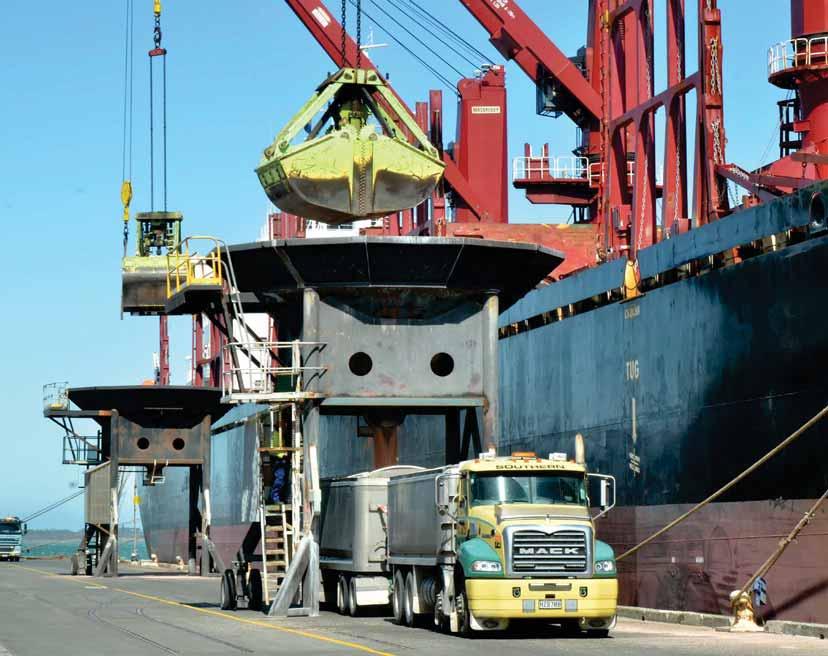

YEAR GROUP FINANCIAL SUMMARY
* Based on average of period start and year end balances
CHIEF EXECUTIVE

BCom,
Nigel was appointed to the role of Chief Executive on 1 October 2017. He has 25 years’ experience in the port industry and has held positions in commercial, operations and finance at South Port. Nigel is currently an appointed board member of the Southland Chamber of Commerce and represents business interests on the New Zealand Oil and Gas Southern Community Panel. Prior to joining South Port, Nigel worked in the meat and oil sectors.
PORT GENERAL MANAGER
Geoff originally joined the South Port Leadership team in 2004 as Finance Manager. In his current role he has responsibilities for the Company’s bulk cargo and marine activities. In his previous positions of Cargo Operations Manager and Port Operations Manager he played an important role in establishing and developing the Company’s container and dry warehouse activities. Geoff has also held positions with Goodman Fielder, Fonterra and Landbase (a Southland based farming cooperative).

MURRAY WOOD
WAREHOUSING MANAGER
Murray is the Manager of the Port’s Warehousing operations comprising both cold and dairy dry goods storage and handling for the agriculture and aquaculture industries. He oversaw the recent amalgamation of the cold storage activities to the Island Harbour site following the termination of the lease at Foreshore Road. Murray joined South
BUSINESS DEVELOPMENT MANAGER


BCom
Jamie was appointed to the Business Development Manager position in November 2017. Prior to this appointment he was based in Invercargill as the Supervisor of the South Port Intermodal Freight Centre during its opening and start up phase. Before this he had worked in a Marketing Analyst role based in Bluff since January 2011. Jamie held various home and personal lending positions at The National Bank before he joined the South Port team.
Port in 2016 after a 32 year career with the New Zealand Aluminium Smelter, a major processing and manufacturing plant where he held numerous operational and leadership roles which included responsibility for the site shipping activities.

Hayden holds a Bachelor of Mechanical Engineering degree from Canterbury University. Hayden’s role as Container Manager for the Port sees him responsible for the overall container operation including the terminal, depot, crane and mobile plant maintenance functions. Hayden also oversees the Intermodal Freight Centre strategically located at the railhead in Invercargill. Hayden previously worked in heavy industries in both engineering and operations at ECNZ and Ballance Agri-Nutrients before joining South Port in 2012.



Frank joined South Port as Infrastructure Manager in January 2015. Frank’s responsibilities include providing and maintaining land, sea and wharf infrastructure associated with port operations as well as ensuring port operational practices comply with current environmental standards.
Frank is a Civil Engineer and worked as an Engineer in Ireland and Australia before moving permanently to New Zealand in 2005. Frank has been a member of Engineering New Zealand since 2006 and a Chartered Professional Engineer since 2010.

BCom,
As Finance Manager, a position Lara has held since March 2007, she is responsible for the financial management of the Port including interim and annual reporting. She continually monitors the financial performance of the business which includes preparing the annual budget and providing regular forecasts to the Board to enable them to make informed decisions about future capital projects. Among other things, Lara is responsible for managing the Company’s property leases, ICT, insurance and NZX reporting obligations.
Helen has a Bachelor of Laws from the University of Canterbury and started her career as a commercial and property lawyer before specialising in employment law and transitioning into human resources. Helen was employed by South Port in 2015 as Human Resources Advisor and joined the Leadership Team in November 2017 as
s m in November 2017 as
Human Resources Manager. Prior to this, she spent 8 years as Chief Executive of Sport Southland facilitating or mediating a range of regional sports issues. Her previous experience includes two terms as a Tenancy Tribunal Adjudicator.

The place beside a pier, quay, or wharf where a vessel can be loaded or discharged.
Post on wharf, ship or tug for securing lines.
BOLLARD PULL
Bollard pull refers to a test of a tug’s capability to pull, measuring how many tonnes of pull are being applied.
General cargo, as opposed to cargo in containers. Also referred to as conventional cargo. Can include cargo in packages, pallets or bulk form (dry or liquid).
Cargo moved in bulk form, such as gypsum (dry bulk) or diesel (bulk liquid).
Area designed to contain any spills.
A carter’s note is documentation provided when cargo is sent from the location where it is packed to the port for loading. It contains shipping instructions.
Depth of water at the lowest astronomical tide (spring tide).
Shipping service between ports within New Zealand.
Cargo containing the shipments of two or more shippers, usually coordinated by a consolidator.
Metal box structure of standard design, used to carry cargo in units. Containers can be 20 or 40 foot in length. The standard measure of a container is a TEU (20 foot equivalent unit). Container ships are specially designed to carry containers in slots (or cells). Containers are stacked and restrained (lashed) at all four corners by vertical posts. Some shipping lines now charter container slots on vessels operated by different companies.
Large crane specially designed to stow (load) and discharge (unload) containers from a ship.
Facility designed to handle containers, with special-purpose equipment such as container cranes, straddle carriers and container stacking areas.
A measure of productivity based on the number of containers moved. Usually expressed as number of TEUs per gross hour per crane.
The removal of freight; the unloading (unpacking, ‘stripping’) of a container.
The depth of a ship’s keel below the waterline. The number of feet that the hull of a ship is beneath the surface of the water.
DWELL TIME
The length of time cargo remains in port before being loaded onto a ship or collected for domestic distribution.
FREIGHT FORWARDER
The party arranging the carriage of goods including connected services and/or associated formalities on behalf of a shipper or consignee.
GATE / GATEHOUSE
Entry to wharf or terminal areas.
FEU
40 foot equivalent unit is an alternative measurement for containers.
Heavy forklift machine used for lifting and stacking containers and cargo.
HUB PORT / SERVICE
Refers to the practice where shipping lines call at one port in a country or region, rather than at several ports.
Scientific mapping of the sea bed for navigation.
Refers to the handling of containers between different forms of transport (ship-to-ship, inter-terminal, rail, truck).
Japanese Agricultural Standard. The Japanese Agricultural Standard cubic metre is a global industry standard measurement of log volume. It is an attempt to measure the volume of the log available to the saw miller, involving special methodologies of assessing log diameter and length.
LASH
Containers stacked on the deck of a ship are secured (lashed) at all four corners by wires or rods.
LINE HANDLING
Task of securing lines to the wharf when a vessel berths.
On-water services, such as piloting, towing and line handling for vessels as they arrive, depart or are moved between berths.
MOORING
A location in a port or harbour used specifically for mooring vessels while not at sea.
MUDCRETE
Soil mixed with cement used to form a quick-drying, solid reclamation in a marine environment.
IMPRESSED CURRENT CATHODIC PROTECTION (ICCP)
ICCP is a type of system usually applied where there are elevated current requirements for protection against corrosion. It offers permanent and automatic protection that aids in preventing galvanic corrosion and electrolysis from attacking the undersides of various mobile or fixed offshore structures i.e. concrete reinforced bridges and wharves.
INTERNAL MOVEMENT VEHICLE
Heavy-haul truck used to move containers between facilities within the port.
Floating pontoons used in marinas to provide access to commercial craft.
PILOTAGE
Activity where a pilot guides a vessel within harbour limits to ensure navigational safety.
Heavy hoist machine that stacks containers.
RECEIVING AND DELIVERY
Export cargo is received into the port and import cargo is delivered to truck or rail.
REEFER CONTAINER
See refrigerated container.
Individual or company employed to load and unload a vessel.
Large machine that straddles a container, lifts and moves it within a container yard. Capable of straddling a single row of containers three-high.
20 foot equivalent unit is the international standard measure of containers.
Controlled temperature container suitable for chilled or frozen cargoes. Also referred to as reefer container. A reefer container can be a porthole (must be fitted with or to refrigerating equipment) or an integral (has built-in refrigeration equipment).
ROLL-ON, ROLL-OFF VESSEL
Referred to as ro-ro. A ship which has a ramp allowing cargo to be driven on and off. Cargo which is driven on and off is ro-ro cargo.
SACRIFICIAL ANODES
Highly active metals that are used to prevent a less active material surface from corroding. Sacrificial Anodes are created from a metal alloy with a more negative electrochemical potential than the other metal it will be used to protect.
Device used to lift containers with a locking mechanism at each corner. Used on container cranes, straddle carriers or other machinery to lift containers.
Where a tug tows or manoeuvres a vessel into or out of a berth.
TRANS-SHIP
Cargo landed at a terminal and shipped out again on another vessel without leaving the port area. Can be international (a container arrives from one country and is trans-shipped to another) or domestic (a container arrives from overseas and is trans-shipped to another New Zealand port by a coastal service).
TURNAROUND TIME
Time taken for a vessel to arrive in port, unload, reload and depart. Also refers to the time taken for a truck to arrive in port and deliver or receive cargo.
VANNING
Stowing cargo in a container.
VERIFIED GROSS MASS (VGM)
A mandatory requirement for shippers is to provide the verified gross mass of a packed container prior to it being loaded onto a ship.
DIRECTORS
Rex Chapman
Chairman
Rick Christie
Philip Cory-Wright
Thomas Foggo
Clare Kearney
Jeremy McClean
Nigel Gear Chief Executive
Geoff Finnerty Port General Manager
Jamie May Business Development Manager
Hayden Mikkelsen Container Manager
Frank O’Boyle Infrastructure & Environmental Manager
Lara Stevens Finance Manager
Murray Wood Warehousing Manager
Helen Young Human Resources Manager
Crowe Horwath as Agent for the Controller and Auditor General 173 Spey Street, Invercargill 9840
Preston Russell Law 45 Yarrow Street, Invercargill 9840 AWS Legal 151 Spey Street, Invercargill 9840
ANZ Ground Floor, ANZ Centre, 23-29 Albert Street, Auckland, New Zealand TAX ADVISERS
McIntyre Dick & Partners 160 Spey Street, Invercargill 9840