“South Port will be the best cargo distribution option for all Southern businesses through the application of quality processes and innovation.”
Key Objectives
To increase customer usage of South Port and improve customer satisfaction.
To make the best use of South Port’s resources and develop the assets of Bluff Harbour.
To improve returns to shareholders and create positive value.
To provide a safe workplace and respect the environment.
To achieve differentiation in the market and gain competitive advantage over other operators in the transport sector.
To assist the establishment of new industry and the growth of existing businesses in the southern region.
Company Profile
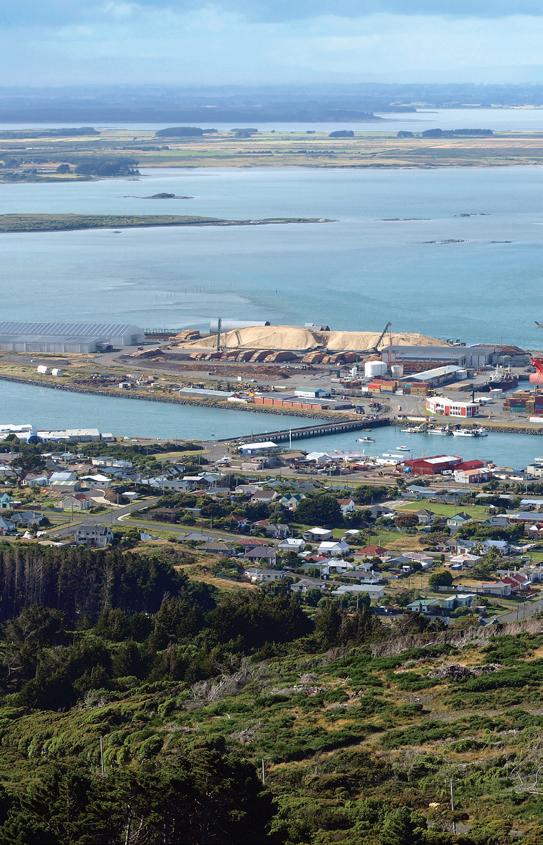
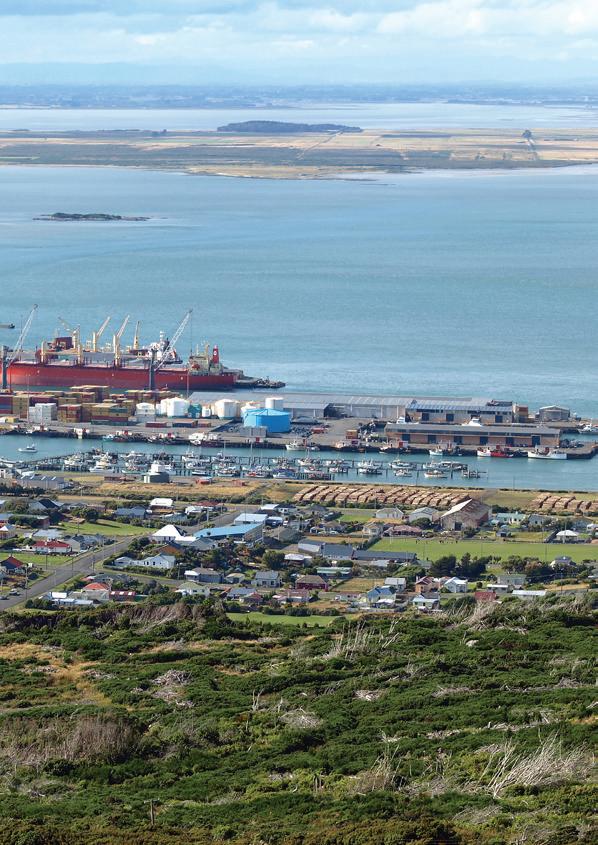
South Port New Zealand Ltd (South Port) is the southern most commercial port in New Zealand, located at Bluff and operating on a year round, 24 hour basis. It is situated in the rich productive province of Southland which is responsible for generating a sizeable proportion of New Zealand’s total exports by value. The region’s major cargo producing sites are situated within 30 to 80 kms of the Port.
The Port of Bluff has been operating since 1877, while the Company was formed in 1988 having taken over the assets and liabilities of the former Southland Harbour Board.
South Port was listed on the NZ Stock Exchange (NZX) in 1994 and has Environment Southland, the region’s local government environmental agency, as its 66% majority shareholder.
South Port Facts
Owns and manages assets which have a book value of $47 million
Directly employs more than 100 full time equivalent staff
Is the only Southland-based company listed on NZX – market capitalisation as at 30 June 2015 equated to $120 million
Handles in excess of 2.7 million tonnes of cargo in a normal trading year
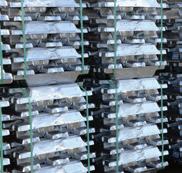
Offers full container, break bulk and bulk cargo capability and services the following main cargoes: - import – alumina, petroleum products, fertiliser, acid, stock food and cement - export – aluminium, timber, logs, dairy, meat by-products, fish and woodchips
Has split its land-based operating resource into four main divisions –dairy warehousing, containers, cool & cold storage and general cargo
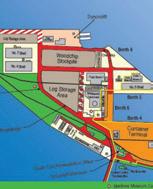
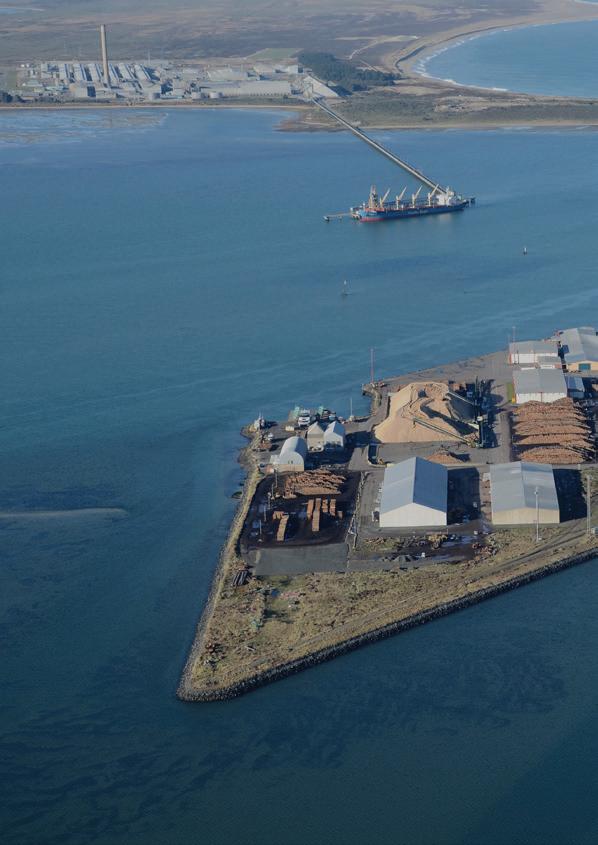
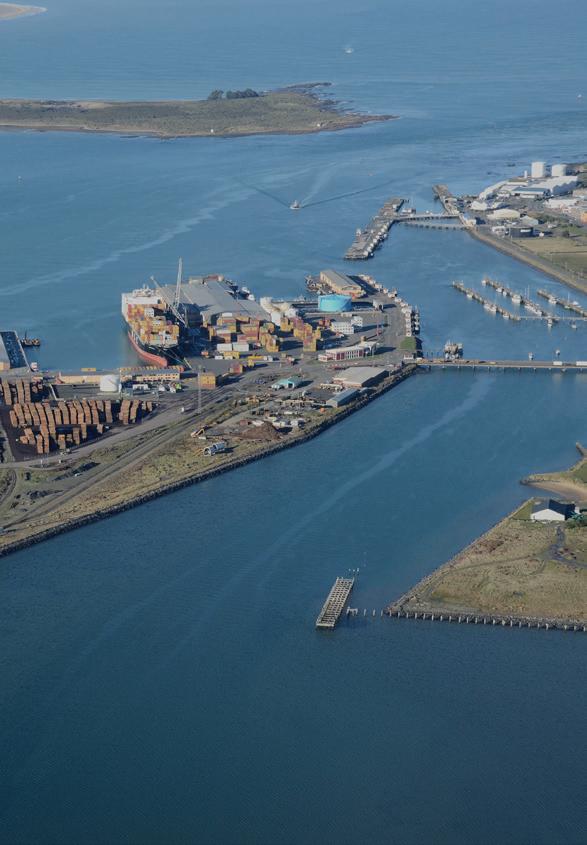
Undertakes its primary port operation on a 40 ha man-made island harbour situated at Bluff
Operates a separate dedicated fuel berth at Bluff Town Wharf plus provides the Tiwai Wharf facility to New Zealand Aluminium Smelter Ltd (NZAS) under a long term licence
Services vessels carrying approx 1 million tonnes of cargo destined for movement across the Tiwai Wharf each year, of which 2/3 is raw material imports while 1/3 is finished aluminium product
Has approximately 7 ha of on-port land available for further port development or industry establishment
2014/15
Significant Events
Achieved new record tax-paid profit of $7.74 million (2014 $6.68 million).Improved result driven by bulk cargo tonnages.
Increased dividend of 24.0 cents per share (2014 22.0 cents).
Bulk cargo activity major influence resulting in +5% cargo increase or 142,000 tonnes providing new record volume of 2.86 million tonnes (2014 - 2.72 million). Categories showing largest gains were fertiliser and stock food.
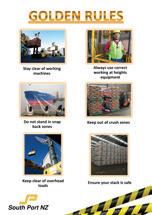
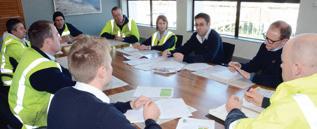
Continued focus on enhancing health & safety performance , saw Golden Rules developed and enhanced walkways/site signage implemented.
Regional Contractor Induction System (Southland HSE Passport) implemented and second stage further enhancement underway.
NZAS entered into a revised electricity supply contract with Meridian Energy, cargo activity stable in FY2015.
Container volumes registered a new record at 35,800 TEU (32,700) +9%.
Additional warehousing and containerised product serviced for Open Country Dairy as a result of second dryer install at Awarua site
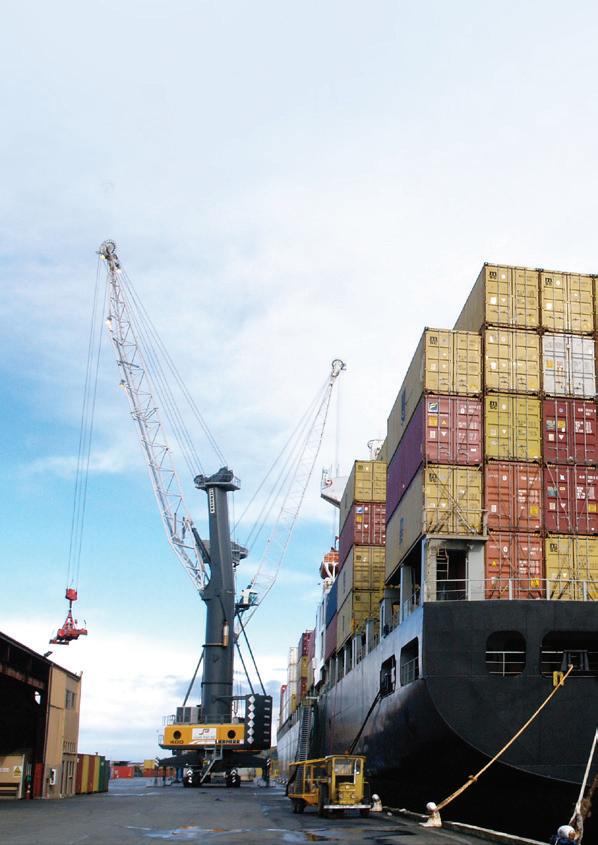
Second Liebherr mobile crane and further container forklift ($6.3 million capex) successfully commissioned – acquired to handle projected growth in containerised cargo over next five years.
Off-port container unpacking/ packing facility to be developed in FY2016.
Contract entered into to secure 40 tonne bollard pull replacement tug at cost of $2.5 million.
Stock food imports continued to climb (+25%) , as farmers strived to lift production in a reduced pay out environment.
Despite softer trading conditions, log volumes for FY2015 tracked at similar level to previous year’s record tonnage.
Overall forest products (logs/chips sawn timber) dipped slightly but still represent a sizeable cornerstone cargo sector (22% of total) for South Port.
Corporate forestry company, Rayonier / Matariki Forests recommenced the direct export of logs from South Port in FY2015 after over a decade of absence from the Port.
All dry warehouses located on Island Harbour were fully tenanted during the 2015 financial period.
Cold storage profit contribution showed some improvement following a concerted effort to match cost recovery with actual services being provided.
Shell New Zealand consortium is undertaking planning in relation to potential Great South Basin (GSB) exploration , and continues to work with New Zealand Petroleum and Minerals on this work programme.
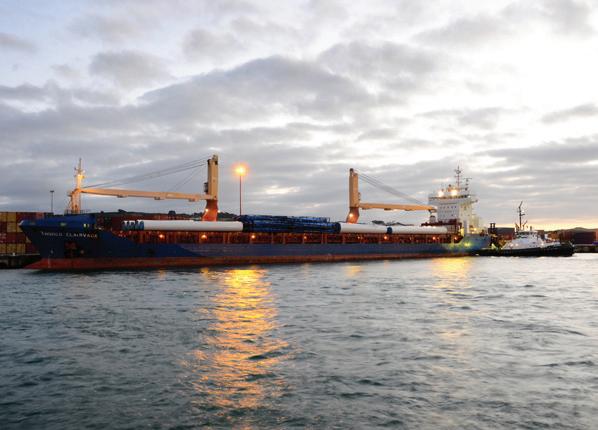
Gamesa shipped project cargo for Pioneer Generation’s Flat Hill Wind Farm through South Port and onto site, where Pioneer Generation commenced installation of the eight turbine project.
Senior personnel recruited into the roles of Infrastructure Manager and Container Manager, plus new Human Resource Advisor position created.
Continuous improvement principles continue to be applied through “Port Achieving Combined Excellence” (PACE) Process Improvement Programme
Financial Results in Brief
Overview
The South Port team responded well to a busy seasonal freight period and produced both a record cargo volume and the highest taxpaid profit result in the Company’s history. This was achieved whilst having to implement a two mobile container crane operating model plus focus on the gaining of efficiencies through the PACE (Port Achieving Combined Excellence) Process Improvement Programme and ensuring health and safety standards were maintained.
Once again stronger bulk volumes drove the overall cargo throughput for the business to the new record level of 2.86 million tonnes while the warehousing, container handling and marine functions provided appropriate support to the Company’s core activity.
The reported after tax profit of $7.74 million (2014 – $6.68 million) is a 16% increase on the previous year and represents a strong result compared to earlier profit expectations.
Review of Operations
Cargo Activity
Total cargo of 2.86 million tonnes is a 5% improvement in volume (142,000 tonnes), compared to the previous year’s activity of 2.72 million tonnes. The lift was largely driven by fertiliser, stock food and dairy-related product while other cargo categories also held up well. This overall improvement was somewhat surprising when contrasted against the challenging conditions that existed for a range of industries. Dairy and forestry exporters in particular have had to manage sizeable declines in global prices and a subdued outlook.
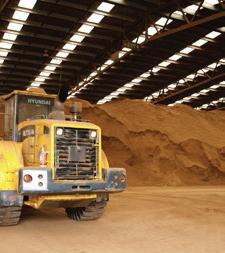
Inbound stock food and molasses were again strong performers setting a new import record of approximately 220,000 tonnes. Similarly, higher than expected fertiliser consumption generated increased cargo flows totalling 430,000 tonnes (manufacturing materials, acid and processed product). The supply logistics for both of these cargoes is assisted by the utilisation of South Port dry warehouses located directly on the port environment plus other third-party storage situated off-port.
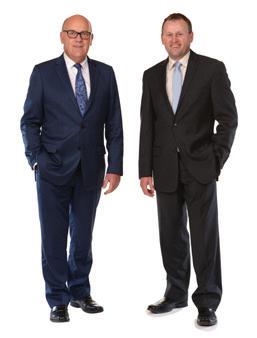
MARK O’CONNOR Chief Executive
NZAS-related cargo and petroleum are two other sizeable bulk product flows that contribute positively to the Port’s overall performance. Both of these cargo categories delivered volumes slightly up on the prior year’s level.
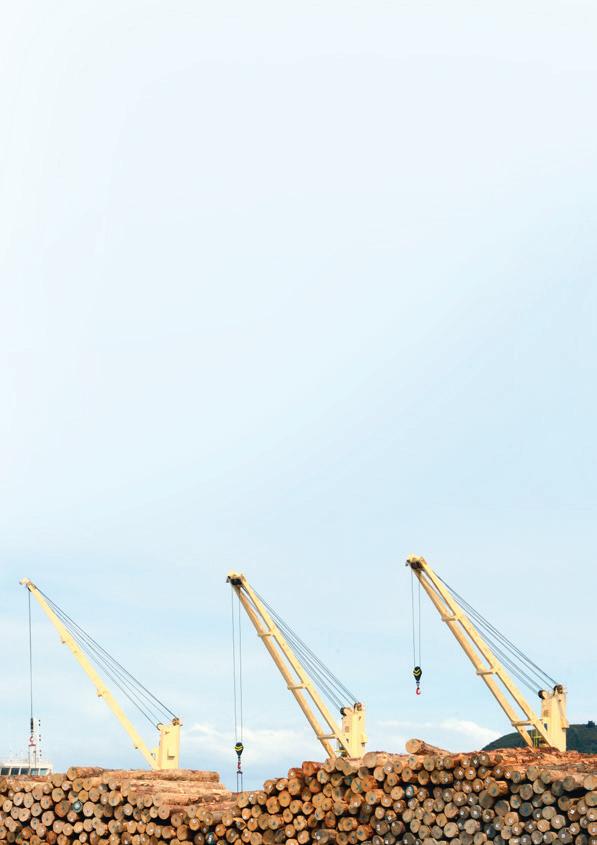
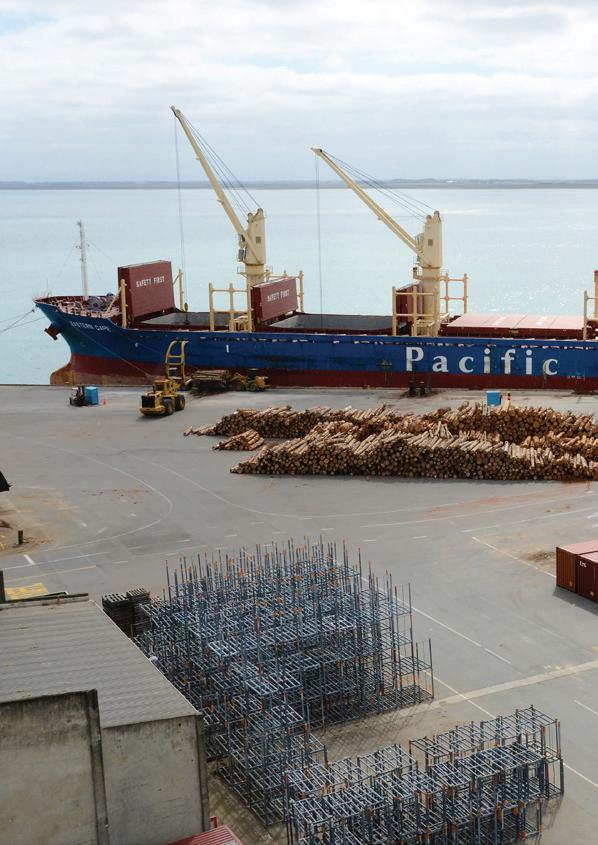
Had a log export vessel not been delayed in port over financial year end, FY2015 would have matched the record cargo log throughput of the previous year. This cargo category registered volume of 376,000 tonnes (FY2014 - 390,000 tonnes), with throughput being strongly supported by the export presence of forestry entity, Rayonier / Matariki Forests. To cater for Rayonier / Matariki Forests’ involvement, additional log storage areas were created on Bluff Island Harbour and a review of existing operating leases was undertaken.
Woodchip cargo produced a modest uplift on the previous year, but this was offset by an equivalent decline in sawn timber volume.
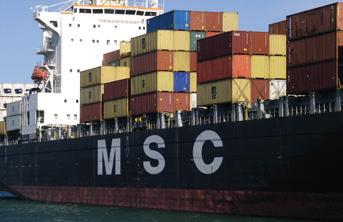
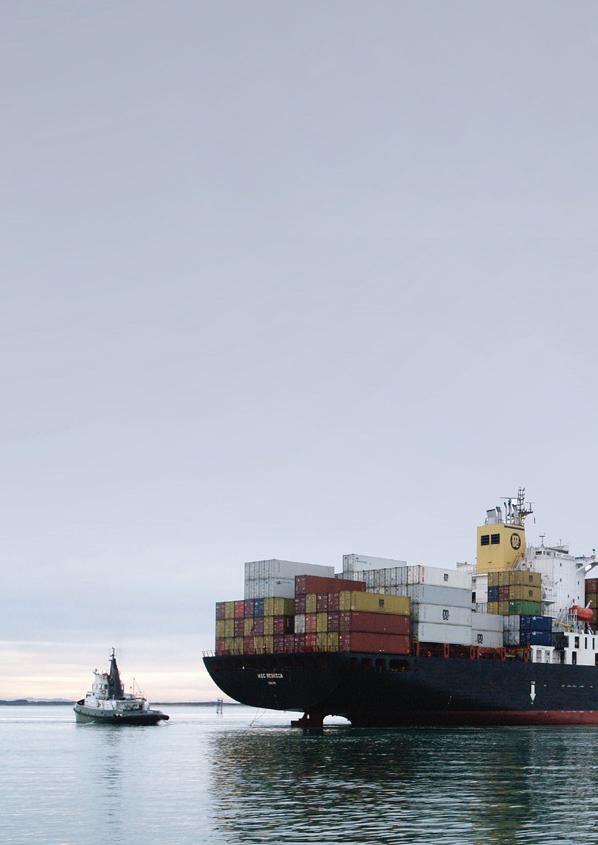
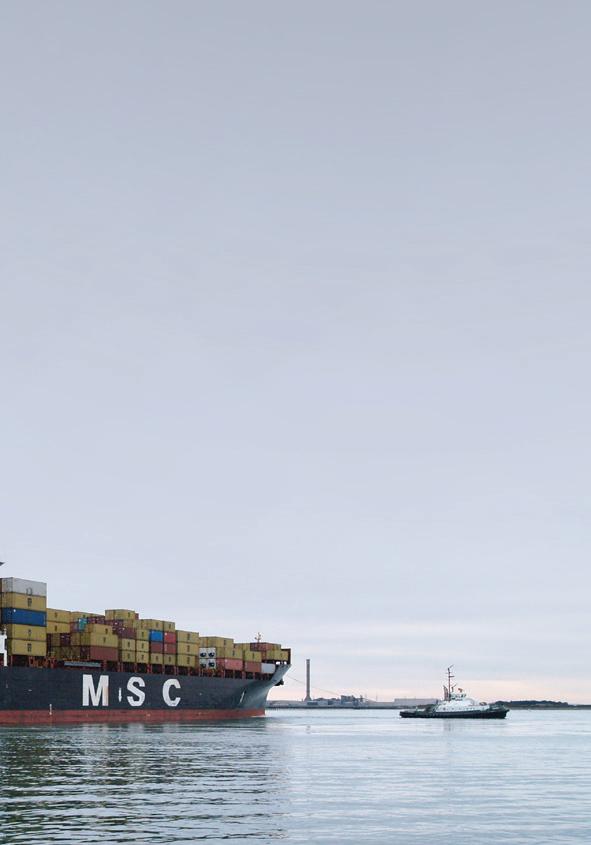
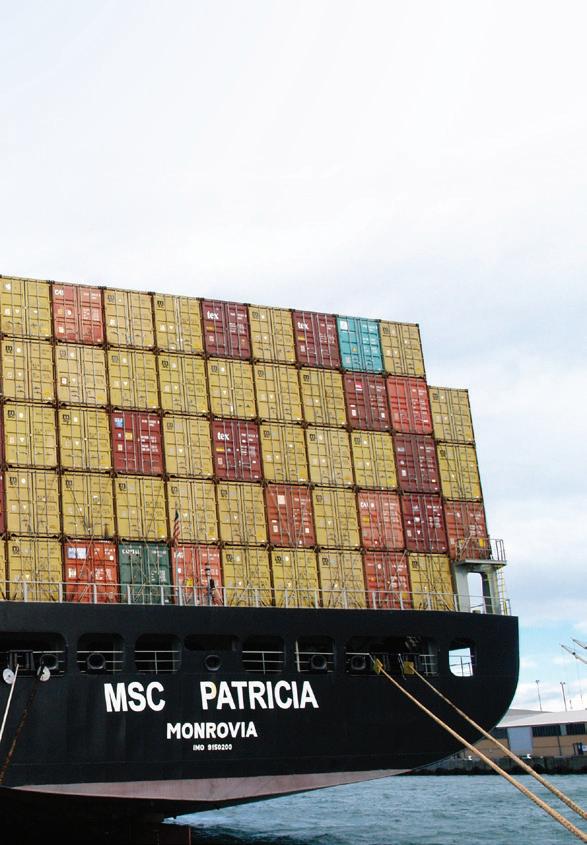
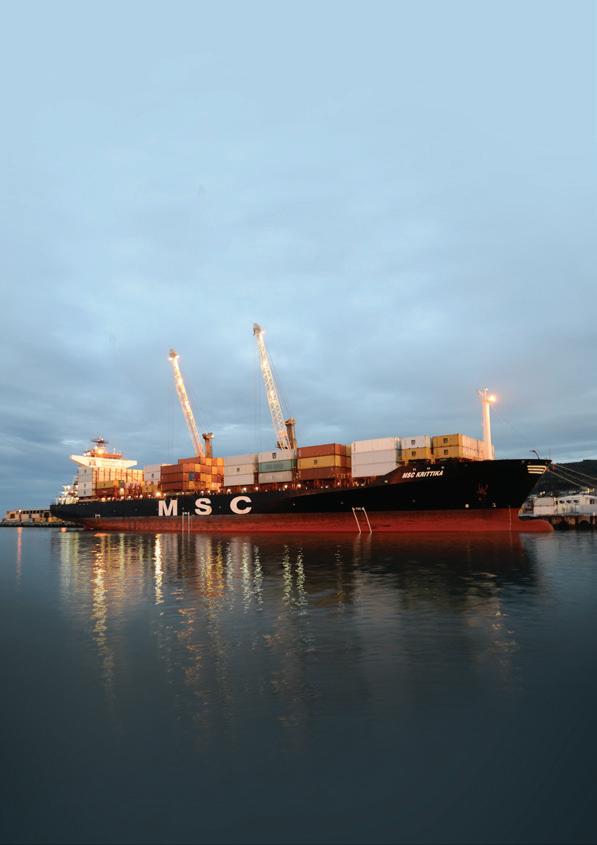
Mediterranean Shipping Company (MSC), South Port’s sole container shipping customer, continued to attract solid cargo support from Southland’s importers and exporters. Consisting of seven vessels averaging 3,500 TEU (standard twenty foot container) capacity, the weekly Capricorn container service provides a valuable global linkage for the region through its various trans-shipment connections in Tauranga, Brisbane, Tanjung Pelepas and Singapore.
Consistent container activity was a feature of the past 12 months with annual containerised cargo rising to 35,800 TEU compared with the 32,700 TEU handled the previous year. This new record container volume for the Company was facilitated by the two mobile harbour crane operating model which was available for the last eight months of FY2015. Open Country Dairy’s additional dryer at its Awarua site was also a notable contributor to container volumes with increases in imported ingredients and export product occurring.
REX CHAPMAN Chairman
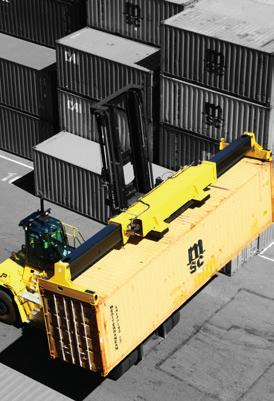
Toplifter operating in Container Terminal (Photograph courtesy of Tammi Topi)
Other Operational Events
Container Infrastructure Enhanced – As indicated in commentary on page 6, South Port took delivery of a second mobile container crane in September 2014 and this equipment was subsequently assembled, tested and put into operation in late October. The $6.3M outlaid to secure the new crane and a further container capable forklift represents a significant investment for a regional port operator and is the single largest item of capital expenditure in the Company’s history.
It has delivered improved productivity for the MSC Capricorn vessels plus enabled a reduced operating window to be scheduled for the weekly Bluff call.
Invercargill Container Packing/ Unpacking Development – Over the next 12 months South Port plans to develop around 0.8 ha of bare land in Mersey Street, Invercargill adjacent to the KiwiRail area where containerised cargo is transferred to and from rail. The project will involve squaring off the site, the establishment of a packing/unpacking warehouse, plus adding a sealed pad and supporting infrastructure. Targeting primarily containerised import cargo growth in the region, the venture will service freight forwarders plus transport operators and will function on a portneutral basis. The cost of developing the land will be approximately $4.25 million.
NZAS Electricity Supply – During FY2015 considerable media commentary was generated about the future of the Rio Tinto and Sumitomo-owned New Zealand Aluminium Smelter (NZAS) at Tiwai Point. Extensive electricity supply negotiations were concluded on 3 August 2015 with a revised contract through to 2030 resulting between NZAS and Meridian Energy. This has provided greater certainty for NZAS and enables it to focus on other key challenges within its business. The varied contract does provide NZAS with an ongoing termination entitlement beyond 2017 subject to the provision of 12 months’ notice.
In addition, the Electricity Authority has released an options paper for consultation, outlining different scenarios for electricity transmission pricing charging mechanisms, which, if implemented would create additional benefits for NZAS. In 2014, NZAS paid nearly $64 million in transmission costs alone, making it one of the highest prices for transmission of any aluminium smelter anywhere in the world. South Port supports any initiatives developed by the NZAS Directors and Management which will enhance this operator’s prospects of being globally competitive.
Replacement Harbour Tug – In July 2015, the Company entered into a purchase agreement with Port of Tauranga for the second-hand Voith harbour tug, Te Matua. The Te Matua was launched in 1992 and has a 40 tonne bollard pull (towing) capacity providing South Port with an enhanced two-tug pulling capacity of 75 tonnes. In comparison, the South Port work vessel being replaced (Monowai) is a 28 tonne bollard pull tug which has served the Port of Bluff well since
its construction in 1972. A capital sum of $2.5 million will be outlaid on procurement, delivery costs and work to ensure the replacement tug is fit for purpose prior to operating in Bluff Harbour.
PACE Process Improvement Programme – South Port personnel continued to actively roll out the PACE (Port Achieving Combined Excellence) Process Improvement Programme. Designed around the review of historic processes, the sorting of physical operating environments and the elimination of waste, this programme has already delivered positive value for both the Company and its employees. PACE delivers systems which encourage a continuing focus on operational improvement, better use of existing resources and the creation of a solid platform for future growth.
Financial
2015 Financial Result (comparatives shown in brackets)
Revenue from port and warehousing operations equated to $34.6 million ($31.3 million) representing an increase of 11%.
Additional resources deployed in the business supported operating profit before financing costs and tax increasing by 15% to $10.8 million ($9.3 million).
Net financing costs for the Group were $910,000 ($393,000).
The Group’s overall result was a surplus of $7.74 million ($6.68 million), which represented a 16% increase on the previous year.
Based on the reported result, earnings per share were 29.5 cents per share (25.5 cents per share).
Total equity is $33.3 million ($31.4 million) after allowing for dividend payments during the period of $6.03 million ($5.64 million).
Group equity includes issued capital of $9.4 million ($9.4 million), which is made up of 26,234,898 ordinary shares.
Total Group assets stand at $47.1 million ($45.7 million).
Net tangible asset backing per share equates to $1.27 ($1.20 per share).
Current assets amount to $6.5 million ($11.0 million), with current liabilities at $5.1 million ($13.9 million). This creates a net working capital position of positive $1.4 million versus negative $2.9 million last year.
Term liabilities total $8.8 million ($0.4 million).
Property, Plant and Equipment stood at $40.6 million ($34.7 million).
Dividends
As shareholders are aware, the Directors have adopted an ongoing policy of assessing South Port’s dividend flow after taking into consideration both its Free Cash Flows (FCF) and its reported profitability. For the purpose of this policy, FCF is interpreted as being annual operating cash flow less net maintenance capital expenditure in the same period.
In establishing the level of dividend payment, Directors took into account the Company’s profit improvement this year, the current subdued economic outlook plus its need to fund future capital expenditure. Accordingly, the Board elected to pay a final dividend of 17.0 cents. This translates to a full year dividend of 24.0 cents which is an increase of 9% on the prior year (2014 – 22.0 cents).
Full imputation credits will be attached to all distributions. The dividend payment represents a gross return of 7.3% (net 5.2%) based on a share price of $4.58 as at 30 June 2015. A dividend pay out ratio of 81% results for 2015 (using reported NPAT) and equates to 65% of FCF. This level of income distribution is similar to the prior year pay out ratio of 86%.
$2.70
$2.60
$2.50
Environment and Health & Safety
South Port has been a committed member of the Business Leaders’ Health & Safety Forum for approximately four years. Part of the stated intention of membership is to:
Constantly improve health and safety (H&S) performance;
To be held accountable before your peers by sharing H&S results;
Champion H&S through inspiring our people, suppliers and customers to create zero harm workplaces; and
Build workplaces which guarantee reported incidents will be investigated and action taken.
The Company has made consistent progress towards achieving these objectives, but acknowledges that H&S is an ongoing journey that will always require continuous improvement. An important tool to deliver this improvement is the Company’s PACE (Process Improvement) Programme which contains an H&S component driven by the South Port Health & Safety Committee.
Specific projects that were completed in the H&S area during FY2015 included:
Site-wide and separate divisional “Golden Rules” created and communicated.
Enhanced pedestrian walkways/ barriers installed and greater vigilance applied.
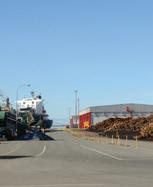
Segregation of log loader activity from other vehicle traffic in key road location.
Installation of more extensive and clearer directional signage on Island Harbour.
Shareholders may also be aware that as part of South Port’s ongoing commitment to improving H&S standards, the Company participated in a working group formed to establish a generic regional induction package for contractors. The working group is initially made up of larger Southland industrial companies together with representatives from the contracting sector and Southern Institute of Technology (SIT).
This web-based delivery of core induction information has been activated with an excellent take up and feedback from the contractors involved. The system, called the HSE Passport, aims to lift the overall HSE standards in the region, plus reduce the time that contractor employees spend on duplicated induction content. A second development stage for this system will deliver individual company site specific information.
South Port is currently processing a renewal of the tertiary level accreditation for the ACC Workplace Safety Management Practices (WSMP). This is the highest achievable level under WSMP and further reinforces South Port’s intention to seek continuous H&S improvement.
No events occurred during the past 12 months which had a detrimental effect on the environment in which South Port and its people function. In addition, key customers have become signatories to the updated Environmental Code of Practice which South Port’s primary operating activities directly reference back to.
Staff Contribution
It is important to attribute a large part of South Port’s success to the calibre of the staff working within the business. Permanent employee
numbers increased from 77 to 92 over the past financial year and the recruited personnel have added new ideas and enthusiasm to the mix. The Company is extremely fortunate to have a hard working and committed team engaged in servicing customer requirements. The PACE (Process Improvement) Programme continues to provide staff with a greater ability to influence the outcomes of both existing and new work processes.
Board Composition
Mr Rick Christie and Mr Tommy Foggo retire this year by rotation and being eligible, offer themselves for re-election.
The Company has received no other Director nominations.
Management Team
Frank O’Boyle was appointed to the Infrastructure Manager role in January 2015, having previously worked for Opus International Consultants. Frank has extensive knowledge and experience relating to managing infrastructure development and large scale R&M projects. He will be a valuable addition to South Port’s human resource base.
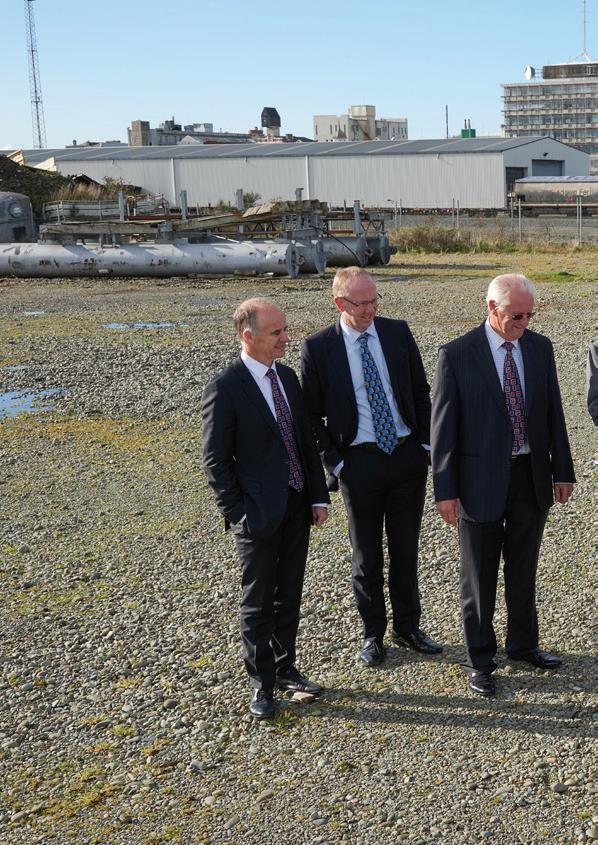
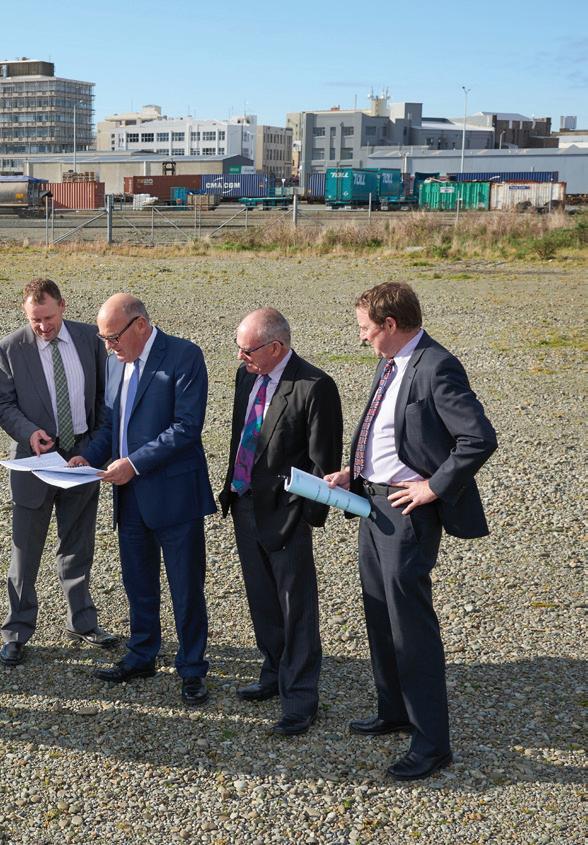
Mark O’Connor, Prime Minister Rt. Hon. John Key, local MP Sarah Dowie and Rex Chapman at the Port
Community and Regional Assistance
Sponsorship of sporting, cultural and community groups is part of a longterm commitment to support the local community and region in which South Port operates. Organisations that received sponsorship assistance over recent financial years included:
Bluff Bowling Club
Bluff Community Trust (managing swimming pool upgrade project)
Bluff Community Medical Trust
Bluff Golf Club
Bluff Hill/Motupohue Environment Trust – pest eradication programme
Bluff Maritime Museum
Bluff Oyster & Seafood Festival
Bluff Rugby Club
Bluff Rugby League Club
Bluff Schools
Bluff Yacht Club
Bluff Promotions and various other local organisations
Burt Munro Challenge (Bluff stage)
Coastguard Bluff
Empaua Netball Club, Bluff
Foundation for Youth Development (FYD) – Bluff Schools
James Hargest College Rugby Club
Invercargill Harness Racing Club (Bluff businesses race day)
Queens Park Golf Club
Rugby Southland
Southern Dairy Hub
Southland Cricket Association
Te Ara o Kiwa Sea Scouts, Bluff
Tour of Southland (Bluff stage)
Venture Southland – Spirit of a Nation
Young Enterprise Scheme (YES)
South Port was one of the notable donors in a successful fundraising campaign run by Coastguard Bluff over the past 24 months. A $20,000 sum was committed to the campaign which focused on generating sufficient funds to replace the existing Coastguard vessel. The Company also provides a berth on an ongoing basis for the rescue craft, housed within the secure Island Harbour area, plus commits operational marine support in rescue situations.
Another significant project that South Port pledged support for during FY2015 was the progressive upgrade of the Bluff Swimming Pool. A $25,000 amount was directed towards the upgrade work being carried out on what is regarded as an important community asset.
South Port also continued its primary sponsorship of Export Southland, providing financial assistance to administer this organisation and facilitate the holding of a number of events including the biannual Export Recognition dinner. In addition, the Company also assisted with funding the Southern Wood Council Forestry Awards, plus the formation of the Southern Dairy Hub during the past financial year.
Further, the Company’s ongoing scholarship assistance comprises of both staff and community categories, with scholarships this year being awarded to Courtney Shelton and Kaukiterangi (Kau) Blair. Courtney is studying at the Southern Institute of Technology to gain a Diploma in Veterinary Nursing and is targeting a career in the Veterinary sector. Kau is enrolled at University of Otago in his first year of a Bachelor of Health Science and is enjoying taking his first step towards involvement in the medical profession.
Energy Sector Update
Flat Hill Wind Farm Project – Located near Bluff, the Flat Hill Wind Farm site is being developed by Pioneer Generation following receipt of Environment Court consent in March 2013. Once installed, the project will consist of eight towers or 6.8 megawatts of generation capacity. All of the project cargo relating to this development was shipped through South Port during the FY2015 third quarter. In mid-2015 Invercargill-based The Power Company and Electricity Invercargill entered into a joint venture with Pioneer Generation to acquire several electricity generation assets, including on completion, the Flat Hill Wind Farm project.
Oil & Gas Exploration – Shell
New Zealand, together with its consortium partners OMV NZ and Mitsui E&P Australia announced in January 2014 that it planned to advance exploration in the Great South Basin (GSB). Shell New Zealand continues to work with New Zealand Petroleum and Minerals on this work programme.
Over the past summer, Woodside Energy (New Zealand 55794) Limited and New Zealand Oil & Gas (NZOG) acquired approximately 1,100 kms 2 of 3D seismic data in GSB in accordance with the requirements of Petroleum Exploration Permit 55794. This Permit covers an area of 9,835 kms 2 off the south-east coast of the South Island. Further seismic gathering is also being evaluated by a third-party contractor who is looking to offer a complete data picture of all petroleum basins situated around New Zealand.
South Port and regional stakeholders continue to interact with oil and gas exploration companies and remain optimistic about GSB energy resource potential.
Rex Chapman & Mark O’Connor presenting scholarship cheques to Courtney Shelton & Kau Blair
Whilst there are no assurances that South Port will secure future oil and gas industry activity, it is useful to restate several advantages that Bluff is able to provide over its competitors when it comes to meeting the requirements of an exploration/ production base:
Bluff was selected as the base for previous GSB exploration.
South Port can offer extensive lay down storage areas directly on the Port.
Refuelling infrastructure (catering for support vessels and diesel supplies for rig operations) is more easily accessible than other ports – note support vessels normally require 7-8 m draft which is comfortably provided at Bluff.
South Port has a wide selection of dedicated service berths available.
South Port has established expertise handling project and break bulk cargoes.
The Southland region has a more extensive engineering resource as a result of companies servicing the NZAS aluminium smelter and the meat processing, dairy and forestry industries over several decades.
Local government in the region also has a reputation of being willing to try harder to address the needs of new commercial ventures while still meeting the requirements of their local stakeholders.
Wind Farm project cargo awaiting discharge at Berth 4
Shareholders need to also be aware that should oil and gas industry participants choose to undertake exploration drilling in the GSB, the choice of an exploration base will be significantly influenced by the ultimate location of the exploratory wells. In other words, the closest port to a defined drilling area will logically create economic advantages for the exploration party.
Development of Southland’s Lignite Resource – With the recent voluntary administration of Solid Energy, the interest and intent of establishing a Southland-based process to convert lignite into other more valuable products (such as urea) has diminished. The near term likelihood of such a project being activated now looks improbable. Despite this current scenario, local government agencies and South Port will continue to promote the existence of several billion tonnes of lignite reserves which are strategically located in the region.
Outlook
Anyone who has been in business for a reasonable length of time will appreciate that trading in all sectors involves cycles and New Zealand appears to be coming off a more favourable economic phase. Despite customers supplying stable cargo projections for the coming year, South Port is taking a more cautious view
of the 2016 financial period. A more negative sentiment seems to have settled on the NZ economy since mid-2015 and anecdotal evidence in the market suggests a more challenging trading period lies ahead for exporters. This ultimately has a flow-on effect to both exports and other business inputs and translates to a decrease in overall regional activity.
Federated Farmers National President, William Rolleston, stated in mid-July 2015 that farmers would be taking on additional debt to simply maintain farming operations and “the intention to close cheque books is especially strong among dairy farmers”.
It was pointed out in the Interim Report that South Port has introduced additional resources into its business in order to accommodate and appropriately manage the consistent growth of cargo and warehousing activity over several years. Some of this investment is predicated on further cargo gains occurring, but this growth requirement may now take longer to achieve.
A current plus for exporters is a lower New Zealand dollar and the availability of depressed shipping freight rates. The latter factor is due to surplus physical hardware and a mismatch between the number of shipping operators and current New Zealand freight demand. Until such time as capacity is removed from the market, these rates are likely to remain at historic low levels.
Taking into account the more subdued market conditions, South Port is forecasting a slightly lower level of tax-paid profit for the 2016 financial year. This forecast takes into account both anticipated “head winds” for the majority of sectors and the impact of investing in new infrastructure which will require a number of years of cargo growth to generate an appropriate financial return. As in the past, a more informed update of the earnings outlook will be provided by the Company at the time of releasing its interim result.
R T CHAPMAN Chairman
M P O’CONNOR Chief Executive
Health & Safety and Environment
Time Injury and Total Recordable Injury
Health & Safety
The ongoing development of health & safety systems and implementation of new initiatives continues to lift the health & safety culture at South Port. Increasing activity levels can add to the risk profile but the focus on health & safety by all parties using the Island Harbour is helping to minimise the hazards on site. South Port continues to evolve systems and infrastructure within a changing working landscape to keep all who visit the Port safe.
A sustained focus on traffic safety is continuing with the rollout of a new “Traffic Management Plan”. Infrastructure improvements to enhance traffic safety include a 300 m section of delineators to separate log yard activities from general traffic. A new section of log yard fencing has also been installed and upgrades to road markings and signage have also helped minimise traffic risk. Pedestrian safety has been enhanced through the fitting of “blue light” reversing indicators to warehousing forklifts and retro fitti ng of reversing cameras to reach stacker forklifts.
During the year the Health & Safety Committee implemented the “Site Golden Rules” campaign and this project was further enhanced with staff in each division developing their own “Departmental Golden Rules” posters.
Implementation of the PACE (Process Improvement) Programme with its focus on communication, process improvement, and better organisation of work areas has helped accelerate physical safety improvements on site and further enhanced the safety culture.
Injury rates remain at low levels. During the year a period of 307 days lost time injury free was achieved. No serious harm injuries to employees occurred during the year and South Port has now completed its fourth successive year without a serious harm injury to a staff member.
Environment
South Port continues to make improvements to minimise any environmental impacts associated with activities at the Port. Ongoing support from all parties operating on site complying with the South Port “Environmental Code of Practice” is helping to ensure that a high standard of environmental performance is maintained. With support from Environment Southland and their “Pollution Prevention Guide” audit system, opportunities to lift the environmental standard are being identified and implemented accordingly.
The introduction of the PACE (Process Improvement) Programme has helped to reduce environmental risks on site with regular “waste hunts” within divisions helping to identify obsolete chemicals for disposal. A staff suggestion has also seen the implementation of a plastic bottle recycling system during the year. Purchases of new LPG forklifts for the warehouses to replace existing diesel machines helps to deliver both environmental and health & safety benefits through reduced lead and particulate matter emissions. Further introduction of LED lighting in the Cold Stores has seen a 60% reduction in power required for lighting and in turn the reduced heat load results in reduced refrigeration energy requirements.
Throughout the year, the Company’s operations were undertaken in accordance with all existing resource consents. Annual analysis of the harbour dredge spoil continues to indicate that sediment quality is significantly better than consented guidelines. South Port’s primary environmental responsibilities are subject to two different planning instruments: the Invercargill District Plan administered by the Invercargill City Council and the Regional Coastal Plan for Southland which is administered by Environment Southland.
Directors’ Profiles
Philip Wade Cory-Wright
BCA, LLB (Hons)
Mr Cory-Wright is a Company Director and a Strategic Adviser based in Auckland. He is a Director of the Local Government Funding Agency and Matariki Forests.
Jeremy James McClean
BCom, CA
Mr McClean is a practising Chartered Accountant in Southland. He is a Principal in Invercargill accounting firm Malloch McClean Ltd, holds a Public Practice Certificate with the New Zealand Institute of Chartered Accountants and is a Justice of the Peace. Mr McClean has provided business advice to a number of Southland rural and urban businesses for more than 30 years.
Mr Cory-Wright was previously a member of the Local Government Infrastructure Expert Advisory Group. He has specialised in infrastructure businesses and recent roles include being an Adviser to Kordia, Solid Energy, Auckland Airport and ACC.
Richard (Rick)
Gordon Maxwell Christie MSc (Hons), AFInstD, CRSNZ
Mr Christie is a Company Director based in Wellington. He is currently Chairman of Ebos Group Ltd, Service IQ & ikeGPS and independent Chairman of NeSI. Directorships are held on powerHouse Ventures Ltd & Solnet Solutions Ltd. Prior
to becoming a professional Director, Mr Christie held a number of government appointments and was a Chief Executive of a number of companies in the private sector. In 2011 he was made a Companion of the Royal Society of New Zealand.
Rex Thomas Chapman
LLB, Chairman
Mr Chapman is a Senior Litigation and Commercial Partner in Invercargill Law Firm Cruickshank Pryde.
Graham Douglas Heenan
BCom, AFInstD, FNZIM
Based in Christchurch, Mr Heenan is Chairman of DB South Island Brewery, InterCity Group and Abbott Insurance Brokers. He is a past Director of PrimePort Timaru, Canterbury District Health Board, Hellers, Hanmer Springs Thermal Pools & Spa and the TAB. Mr Heenan also acts as a consultant to several companies.
Thomas McCuish Foggo
Mr Foggo is based in Invercargill and is the Salmon & Aquaculture Development Manager for Sanford. He has held Senior Management positions and Directorships in the Seafood Industry for over 38 years and has for the past 20 years been a Director of Live Lobster Southland. He is also a Director of Invercargill Airport.
Statutory Report of Directors
The directors have pleasure in submitting their 2015 Report and Financial Statements.
Principal Activities
The Company is primarily engaged in the commercial operation of the Port of Bluff. There has been no significant change in the nature of the Company’s business during the year.
Accounting Period
The financial statements are for the 12 month period from 1 July 2014 to 30 June 2015.
Results
The Company recorded a surplus for the period of $7,737,000.
Disclosure of Share Dealing by Directors
Directors acquired no additional equity securities in the Company since the date of the last annual meeting.
Dividend
The Directors have declared an ordinary dividend of $6,296,000 for the period ended 30 June 2015 including the final dividend amount of $4,460,000 payable in November 2015.
Directors and Officers
Liability Insurance
The Company has arranged directors’ and officers’ liability insurance with Vero Liability Insurance Limited. This cover insures Directors against liabilities to other parties that may arise from their positions as Directors. The insurance does not cover liabilities arising from criminal actions.
Remuneration of Directors
Directors’ remuneration for the 12 month period ended 30 June 2015 was as follows:
R T Chapman
$59,837
RGM Christie $35,137
P W Cory-Wright
T M Foggo
G D Heenan
J J McClean
No other benefits have been provided by the Company to a Director or in any other capacity. No loans have been made by the Company to a Director nor has the Company guaranteed any debts incurred by a Director.
Directors’ Shareholding
There is currently no beneficial shareholding held by Directors.
Remuneration of Employees
Section 211(1)(g) of the New Zealand Companies Act 1993 requires disclosure of remuneration and other benefits, including redundancy and other payments made on termination of employment, in excess of $100,000 per year, paid in respect of the current year by the Company to any employees who are not Directors of the Company.
The Chief Executive Officer’s Employment Contract is reviewed annually by the Board. It is not a fixed term Contract.
The remuneration of senior management is reviewed annually and is determined in a transparent, deliberate and objective manner.
Notice and Pause Provisions
The Company has adopted “notice and pause” provisions in its Constitution.
Accounting Policies
There were no changes in accounting policies during the period. All policies are consistent with those applied in the previous year.
Audit & Risk Committee
The Company has a formally constituted Audit & Risk Committee comprising Messrs G D Heenan (Chairman), R T Chapman and J J McClean.
It is the role of the Audit & Risk Committee to review the Company’s financial statements and announcements, liaise directly with the Company’s Auditors and review the Company’s accounting policies, practices and related matters.
Auditor’s Remuneration
During the year $43,111 was paid to the Company’s Auditors, Crowe Horwath, for audit services carried out as agent for the Controller and Auditor General. The Company did not pay the Auditors for any advice or guidance on other matters.
Interest Register
The Company maintains an Interest Register in which particulars of certain transactions and matters involving the Directors are recorded. Entries in the Interest Register must in turn be disclosed in the Annual Report. No material transaction entries were recorded in the Interests Register for the period 1 July 2014 to 30 June 2015.
Disclosure of Interest
Pursuant to Section 140 of the Companies Act 1993, Directors have disclosed interests in the following entities which the Company conducts or may conduct business from time to time:
Mr R T Chapman
Forklifts NZ Ltd
Prime Range Meats Ltd
Winton Stock Feed Ltd
Niagara Sawmilling Company Ltd
Mr RGM Christie
Service IQ
Solnet Solutions Ltd
powerHouse Ventures Ltd
Mr P W Cory-Wright
Local Government Funding Agency
Matariki Forests Ltd
Mr T M Foggo
Barnes Oysters Ltd
Bluff Oyster Management Company Ltd
Foundation for Youth Development Southland
Invercargill Airport Ltd
Live Lobster Southland 1995 Ltd
Sanford Ltd
Southland Regional Strategy Steering Group
Mr G D Heenan
InterCity Group Ltd
Mr J J McClean
Nil
R
T CHAPMAN Chairman of Directors
Dated 20 August 2015
G
D HEENAN Director
Statutory Disclosure in Relation to Shareholders
Size Of Holding
Prices For Shares Traded During This Year
Top Twenty Ordinary Shareholdings
Substantial Security Holders
As at 30 June 2015, the following persons have given notice (in terms of the Securities Markets Act 1988) that they are substantial security holders in South Port New Zealand Limited. The number of shares shown is at the date of the last advice received from the substantial security holders.
Corporate Governance
The Board of South Port New Zealand Limited is committed to ensuring that the Company adheres to best practice governance principles and maintains the highest ethical standards. The Board believes that good governance is based on a set of principles and behaviours that provide a clear basis for the Company’s everyday activities to ensure transparency, fairness and recognition of the interests of South Port’s stakeholders.
The Board has adopted a Code of Corporate Governance which is available at www.southport.co.nz. The Code has been developed after considering contemporary best practice and principles contained in the New Zealand Stock Exchange NZX Corporate Governance Best Practice Code issued in October 2013 and the Port Companies Act 1988.
South Port New Zealand Limited’s Code of Corporate Governance does not materially differ from the Corporate Governance Best Practice Code found at Appendix 16 of the NZX Main Board Listing Rules.
Code of Ethics
The Company expects its employees and Directors to maintain high ethical standards. A Code of Ethics has been adopted as part of the corporate governance framework and is monitored by the Board. The Company’s Code of Ethics has been published and made available to all Directors and staff. This key corporate governance document is available on the Company’s website www.southport.co.nz.
The Code of Ethics addresses, amongst other things:
conflicts of interest;
receipt of gifts;
corporate opportunities;
confidentiality;
expected behaviours;
delegated authority;
director responsibilities; and
reporting issues regarding breaches of the Code of Ethics, legal obligations and other policies of the Company.
The South Port Board and management are not aware of any breaches of the Code of Ethics during the period.
Responsibilities of the Board
The business and affairs of the Company are managed under the direction of the Board of Directors. The South Port Board is collectively accountable to shareholders for the performance of the Company. Directors, in carrying out their responsibilities, undertake to act in the best interests of the Company, its shareholders and its other stakeholders in accordance with applicable law.
Key responsibilities of the Board include:
to review and approve the strategic, business and financial plans prepared by management and to develop a depth of knowledge of the Company’s business so as to understand and question the assumptions upon which such plans are based;
to monitor the Company’s performance against its approved strategic, business and financial plans;
to review the Company’s Code of Ethics from time to time;
to select and appoint (and, if appropriate, remove from office) the Chief Executive, determine his/her conditions of service and monitor his/her performance against established objectives;
to review the Company’s remuneration policy at least annually; and
to monitor South Port’s regulatory and legislative compliance and risk management processes, including health & safety.
The Board delegates management of the day-to-day affairs and management responsibilities of the Company to achieve the strategic direction and goals determined by the Board.
Board Composition
At present, there are six independent non-executive Directors on the Board including a non executive Chairman.
The biography of each Board member is set out in the “Directors’ Profiles” section of this Annual Report.
The size and composition of the Board is subject to the limits imposed by South Port’s Constitution and in accordance with the provisions of the Port Companies Act 1988. The Constitution requires the Board to comprise of a minimum number of six Directors. Under the NZX Listing Rules the Board is required to maintain at least two Independent Directors.
The criteria for Director Independence is outlined in the Company’s Corporate Governance Code which can be found on the Company’s website www.southport.co.nz.
Pursuant to the Company’s Constitution, one third of the Directors retire by rotation at each annual meeting, but are eligible for reappointment by shareholders.
The Board conducts regular performance reviews to consider the appropriate mix of skills required by the Board to maximise its effectiveness and its contribution to the Company.
The following table sets out the gender composition of South Port’s Directors and Officers at balance date:
Audit & Risk Committee
The Audit & Risk Committee provides the Board with assistance in fulfilling their responsibilities to shareholders, the investment community and others for overseeing the Company’s financial statements, financial reporting processes, internal accounting systems, financial controls and South Port’s relationship with its independent auditors.
The Committee is governed by an Audit & Risk Committee Charter adopted by the Board in August 2004 which is available on the Company’s website (www.southport.co.nz) as an Appendix to the Corporate Governance Code. The Board regularly reviews the performance of the Committee in accordance with the Charter.
The Audit & Risk Committee Charter includes an external audit policy to ensure there are processes in place to satisfy the Board as to the quality and independence of the external auditors.
The Committee comprises of three independent non-executive members of the Board of Directors.
The Committee Chairman, also appointed by the Board, cannot also be the Chairman of the Company. Graham Heenan is the Audit & Risk Committee Chairman. At least one member of the Committee must have an accounting or financial background; both Graham Heenan and Jeremy McClean are or have been members of the New Zealand Institute of Chartered Accountants.
Directors’ Attendance at Meetings –1 July 2014 to 30 June 2015
Continuous Disclosure
In accordance with the NZX Listing Rules, the Company is required to disclose to the market matters which could be expected to have a material effect on the price or value of the Company’s shares. Management processes are in place to ensure that all material matters which may require disclosure are promptly reported to the Board through established reporting lines. Matters reported are assessed as and when required by the NZX Listing Rules, advised to the market. The Chairman and Chief Executive are responsible for communications with NZX and for ensuring that such information is not provided to any person or organisation until NZX has confirmed its release to the market.
All material announcements are posted on the Company’s website www.southport.co.nz.
Shareholder Communication
South Port seeks to ensure its shareholders are appropriately informed of its operations and results, with the delivery of timely and focused communication, and the holding of shareholder meetings in a manner conducive to achieving shareholder participation.
To ensure shareholders have access to relevant information the Company:
Provides a website which contains media releases, current and past annual reports, dividend histories, notices of meeting and other information about the Company,
Risk Management
Effective management of all types of risk (financial and non-financial) is a fundamental part of the Company’s business strategy. The Audit & Risk Committee is responsible for overseeing risk management practices and works closely with Management, external advisors and the Company’s auditors to ensure that risk management issues are properly identified and addressed.
The Company has a separate Risk Management Committee which meets annually to review changes to the risk profile of the business and to consider ways of mitigating additional risks identified. A Director currently sitting on the Audit & Risk Committee is appointed to the Risk Management Committee as a Board representative.
Makes available printed half year and annual reports and encourages shareholders to access these documents on the website and to receive advice of their availability by email,
Publishes press releases on issues events that may have material information content that could impact on the price of its traded securities,
Issues additional explanatory memoranda where circumstances require, such as explanations of dividend changes and other explanatory memoranda as may be required by law,
Maintains regular contact with leading analysts and brokers who monitor the Company’s activities.
Shareholder meetings are generally held at the Company’s place of business (Bluff) at a time which best ensures full participation by shareholders.
Full participation of shareholders at the Annual Meeting is encouraged to ensure a high level of accountability and identification with the Company’s strategies and goals. Shareholders have the opportunity to submit questions prior to each meeting and senior management and auditors are present to assist in answering any specific queries raised. There is also an opportunity for informal discussion with directors and senior management for a period after the meeting concludes.
Senior Management Remuneration
The Board is responsible for reviewing the remuneration of the Company’s senior management in consultation with the Chief Executive of the Company.
The remuneration packages of senior management consist of a mixture of a base remuneration package and a variable remuneration component based on relevant performance measures.
The remuneration policy for senior management is designed to attract, motivate and retain high quality employees who will enable the Company to achieve its short and long term objectives.
A general and wider disclosure of senior management and other staff remuneration is included in the “Employee Remuneration” section set out in the Statutory Information section of this Annual Report, where the Company has disclosed in various escalating remuneration bands the number of employees and former employees whose remuneration, including benefits, exceeds $100,000.
Board of Directors
Remuneration
According to the Company’s remuneration policy, directors should receive remuneration that is fair and reasonable in a competitive market for the skills, knowledge and experience required by the Company.
Further detail can be found in the remuneration policy included in the Company’s Corporate Governance Code.
Mediterranean Shipping Company
Colombo
Sines Fos La Spezia
Gioia Tauro
Suez
Reunion
Port Louis
Tanjung Pelapas
Service Overview
Capricorn
Singapore - Jakarta - Fremantle - Adelaide - Melbourne
- Sydney - Bluff - Port Chalmers - Timaru - Lyttelton
Melbourne - Bell Bay - Sydney - Brisbane - NoumeaTauranga - Auckland
Trans-shipment to Canada, South America, Central America
Creating a Safer Port
“
South Port has been working hard, particularly over the past 5 years, to lift the H&S bar. Before undertaking even the most common work process we need to consider H&S aspects, plus be conscious of outside parties (contractors/customers/ship crews) who we encounter in the workplace. If they are doing anything in an unsafe manner all of us have the ability and authority to pull them up and convey the correct method in a non-offensive way. H&S is about everyone playing a part to make the workplace safe.
Mark O’Connor – Chief Executive
HSE
Passport
Online contractor pre-qualification and H&S induction system created to ensure consistency across eight larger Southland organisations.
Site Golden Rules
Site critical rules developed to highlight key hazards. Further development of departmental Golden Rules focus on divisional hazards.
Traffic Management Plan
Established to direct, control and co-ordinate traffic flow in a safe manner across the Island Harbour.
A good level of co-operation amongst
“
site operators and
an increased focus from
all parties is helping to drive ongoing improvements in health & safety on port.
Gareth Carson –
Health, Safety & Compliance Officer
Fencing/ Delineators
Introduced to segregate
South Port Induction
Site specific document redeveloped to ensure employee and port user safety across the site.
Incident Alerts
Visual template introduced to highlight safe practices and demonstrate unsafe practices across the entire business.
H&S Committee
With representation from across the workforce, this Committee meets regularly to discuss strategic health and safety issues.
Geoff Finnerty – Port Operations Manager “
I am very pleased with the ownership that South Port’s staff demonstrate in the health, safety and wellbeing of themselves and their work colleagues. We are on a path of continuous improvement which would be difficult to achieve without support and co-operation from all levels of our business.
Preparing for Growth
During the 2014/15 year a second Liebherr mobile harbour crane was purchased to accommodate the projected growth in regional containerised cargo. The two crane operating model is now well embedded into day-to-day container operations to assist with timely vessel turnaround.
Liebherr mobile harbour cranes
“
Vessel
From MSC’s perspective Bluff remains a critical port for our primary shipping connection through New Zealand, the Capricorn Service, and we’re confident it will continue to be an important part of our business going forward.
Steve Wright – New Zealand Regional Manager, MSC
Centre
4,000m2 warehouse (container packing/unpacking)
Development of Freight
facility to be constructed in Invercargill
Marine parameters improved Simulation completed for larger container vessels to enter South Port Second largest port call by volume For New Zealand Ports on the MSC Capricorn service
Implementation of two crane model
time reduced in port from 36 to 24 hours
Port Infrastructure
Vacant Land for Development
Syncrolift Dry Dock
Wood Chip Stockpile
Tiwai Wharf owned by South Port and leased under a licence agreement to NZAS
No.3A - 4,500m 2
No.3 - 2,200m 2
INDEPENDENT AUDITOR’S REPORT
TO THE SHAREHOLDERS OF SOUTH PORT NEW ZEALAND LIMITED GROUP REPORT ON THE AUDIT OF THE FINANCIAL STATEMENTS FOR THE YEAR ENDED 30 JUNE 2015
Crowe Horwath
New Zealand Audit Partnership
Member Crowe Horwath International
173 Spey Street
Invercargill 9810 New Zealand
Tel +64 3 211 3355
Fax +64 3 218 2581
www.crowehorwath.co.nz
The Auditor-General is the auditor of South Port New Zealand Limited and its New Zealand domiciled subsidiaries. The Auditor-General has appointed me, Ken Sandri, using the staff and resources of Crowe Horwath New Zealand Audit Partnership, to carry out the audit of the financial statements of the group, consisting of South Port New Zealand Limited and its subsidiaries (collectively referred to as ‘the Group’), on her behalf.
Opinion
We have audited the financial statements of the Group on pages 33 to 55, that comprise the statement of financial position as at 30 June 2015, the statement of comprehensive income, statement of changes in equity and statement of cash flows for the year ended on that date and the notes to the financial statements that include accounting policies and other explanatory information.
In our opinion, the financial statements of the Group:
- present fairly, in all material respects:
- its financial position as at 30 June 2015; and
- its financial performance and cash flows for the year then ended; and - comply with generally accepted accounting practice in New Zealand and have been prepared in accordance with New Zealand equivalents to International Financial Reporting Standards and with International Financial Reporting Standards.
Our audit was completed on 20 August 2015. This is the date at which our opinion is expressed.
The basis of our opinion is explained below. In addition, we outline the responsibilities of the Board of Directors and our responsibilities, and explain our independence.
Basis of opinion
We carried out our audit in accordance with the Auditor-General’s Auditing Standards, which incorporate the International Standards on Auditing (New Zealand). Those standards require that we comply with ethical requirements and plan and carry out our audit to obtain reasonable assurance about whether the financial statements are free from material misstatement.
Material misstatements are differences or omissions of amounts and disclosures that, in our judgement, are likely to influence shareholders’ overall understanding of the financial statements. If we had found material misstatements that were not corrected, we would have referred to them in our opinion.
An audit involves carrying out procedures to obtain audit evidence about the amounts and disclosures in the financial statements. The procedures selected depend on our judgement, including our assessment of risks of material misstatement of the financial statements, whether due to fraud or error. In making those risk assessments, we consider internal control relevant to the preparation of the Group’s financial statements in order to design audit procedures that are appropriate in the circumstances but not for the purpose of expressing an opinion on the effectiveness of the Group’s internal control.
An audit also involves evaluating:
- the appropriateness of accounting policies used and whether they have been consistently applied;
- the reasonableness of the significant accounting estimates and judgements made by the Board of Directors;
- the adequacy of the disclosures in the financial statements; and
- the overall presentation of the financial statements.
We did not examine every transaction, nor do we guarantee complete accuracy of the financial statements. Also, we did not evaluate the security and controls over the electronic publication of the financial statements.
We believe we have obtained sufficient and appropriate audit evidence to provide a basis for our audit opinion.
Responsibilities of the Board of Directors
The Board of Directors is responsible for the preparation and fair presentation of financial statements for the Group that comply with generally accepted accounting practice in New Zealand and have been prepared in accordance with New Zealand equivalents to International Financial Reporting Standards and with International Financial Reporting Standards.
The Board of Directors’ responsibilities arise from the Port Companies Act 1988 and the Financial Markets Conduct Act 2013.
The Board of Directors is also responsible for such internal control as it determines is necessary to enable the preparation of financial statements that are free from material misstatement, whether due to fraud or error. The Board of Directors is also responsible for the publication of the financial statements, whether in printed or electronic form.
Responsibilities of the Auditor
We are responsible for expressing an independent opinion on the financial statements and reporting that opinion to you based on our audit. Our responsibility arises from section 15 of the Public Audit Act 2001.
Independence
When carrying out the audit we followed the independence requirements of the Auditor-General, which incorporate the independence requirements of the External Reporting Board.
In addition to the audit we have carried out assignments through Progressive Consulting Limited in the area of recruitment services to the value of $33,371 which are compatible with those independence requirements. Other than the audit, we have no relationship with or interests in the Group.
Crowe Horwath New Zealand
Statement of Comprehensive Income
Statement of Changes in Equity
Statement of Financial Position
Statement of Cash Flows
Notes to the Financial Statements
1 REPORTING ENTITY
South Port New Zealand Limited (the “Company”) is a company domiciled in New Zealand, registered under the Companies Act 1993 and listed on the New Zealand Stock Exchange (“NZX”). The Company is an issuer in terms of the Financial Reporting Act 2013.
The consolidated financial statements of South Port New Zealand Limited as at and for the period ended 30 June 2015 comprise the Company and its subsidiary Awarua Holdings Ltd (together referred to as the “Group”). South Port New Zealand Ltd is primarily involved in providing and managing port and warehousing services. The financial statements for the year ended 30 June 2015 only show the Group result as separate reporting is no longer required under the Financial Reporting Act 2013.
2 BASIS OF PREPARATION
(a) Statement of Compliance
The financial statements have been prepared in accordance with New Zealand Generally Accepted Accounting Practice (GAAP). They comply with New Zealand equivalents to International Financial Reporting Standards (NZ IFRS), and other applicable Financial Reporting Standards, as appropriate for profit-oriented entities. These financial statements comply with International Financial Reporting Standards (IFRS).
The financial statements were approved by the Board of Directors on 20 August 2015.
(b) Basis of Measurement
The financial statements have been prepared on the historical cost basis except for the following:
• financial instruments are measured at fair value
The methods used to measure fair values are discussed further in Note 4.
(c) Functional and Presentation Currency
These financial statements are presented in New Zealand dollars ($), which is the Group’s functional currency. All financial information presented in New Zealand dollars has been rounded to the nearest thousand.
(d) Use of Estimates and Judgements
The preparation of financial statements requires management to make judgements, estimates and assumptions that affect the application of accounting policies and the reported amounts of assets, liabilities, income and expenses. Actual results may differ from these estimates.
Estimates and underlying assumptions are reviewed on an ongoing basis. Revisions to accounting estimates are recognised in the period in which the estimate is revised and in any future periods affected.
There were no estimates and assumptions that have a significant risk of causing a material adjustment to the carrying amounts of assets and liabilities within the next financial year.
In particular, information about significant areas of estimation uncertainty and critical judgements in applying accounting policies that have the most significant effect on amounts recognised in the financial statements are as detailed below:
• Provisions (Note 18)
• Commitments and Contingent Liabilities (Note 22)
• Financial Instruments (Note 21)
• Valuation of Derivatives (Note 21)
3 SIGNIFICANT ACCOUNTING POLICIES
The accounting policies set out below have been applied consistently to all periods presented in these financial statements, and have been applied consistently by Group entities.
(a) Basis of Preparing Group Financial Statements
The Group financial statements include the parent company and its subsidiary accounted for using the purchase method. All significant inter-company items and transactions are eliminated on consolidation. Investments in subsidiaries are stated at cost.
On acquisition of a subsidiary, fair values are assigned to their assets and liabilities. Any excess of cost of acquisition of a subsidiary over the fair values assigned (being goodwill) is written off in the year of acquisition or tested annually for impairment.
Where the cost of acquisition of a subsidiary is less than the fair values assigned (being a discount) this discount is applied to the reduction of the fair value of the non-monetary assets of the acquired company. Such a discount is then reflected in the Group income statement when non-monetary assets (property, plant and equipment) are realised through reduced depreciation charges.
(b) Business Combinations
Acquisitions of businesses are accounted for using the purchase method. The cost of the business combination is measured as the aggregate of the fair values (as at the date of exchange) of assets given, liabilities incurred or assumed, and equity instruments issued by the Group in exchange for control of the acquiree. The acquiree’s identifiable assets, liabilities and contingent liabilities that meet the conditions for recognition under NZ IFRS 3 Business Combinations are recognised at their fair value at the acquisition date.
Goodwill arising on acquisition is recognised as an asset and initially measured at cost, being the excess of the cost of the business combination over the Group’s interest in the net fair value of the identifiable assets, liabilities and contingent liabilities recognised. If, after assessment, the Group’s interest in the net fair value of the acquiree’s identifiable assets, liabilities and contingent liabilities exceeds the cost of the business combination, the excess is recognised immediately in profit or loss.
(c) Foreign Currency
Transactions in foreign currencies are translated to the respective functional currencies of the Group at exchange rates at the dates of the transactions.
(d) Goods and Services Tax (GST)
All financial information is expressed exclusive of GST, except for trade and other receivables, and trade and other payables, which are expressed inclusive of GST in the Statement of Financial Position.
(e) Financial Instruments
(i) Non-derivative financial instruments
The Group is party to financial instruments as part of its normal operations. These financial instruments include cash and cash equivalents, trade and other receivables, loans and borrowings, and trade and other payables.
Non-derivative financial instruments are recognised initially at fair value on transaction date plus, for instruments not at fair value through the profit or loss, any directly attributable transaction costs. Subsequent to initial recognition non-derivative financial instruments are measured as described below.
A financial instrument is recognised if the Group becomes a party to the contractual provisions of the instrument. Financial assets are derecognised if the Group’s contractual rights to the cash flows from the financial assets expire or if the Group transfers the financial asset to another party without retaining control or substantially all risks and rewards of the asset. Purchases and sales of financial assets are accounted for at trade date. Financial liabilities are derecognised if the Group’s obligations specified in the contract expire or are discharged or cancelled.
Cash and cash equivalents comprise cash balances and call deposits.
Trade and other receivables
Trade and other receivables are stated at their cost less impairment losses.
Interest-bearing borrowings
Borrowings are initially recognised at fair value, net of transaction costs incurred. After initial recognition, interest-bearing loans and borrowings are subsequently measured at amortised cost using the effective interest method. Borrowings are classified as current liabilities unless the Group has an unconditional right to defer settlement of the liability for at least 12 months after the balance sheet date.
Trade and other payables
Trade and other payables are stated at cost.
(ii) Derivative financial instruments and hedgeing activities
The Group uses derivative financial instruments to hedge its exposure to foreign exchange and interest rate risks arising from financing and investment activities.
In accordance with its treasury policy, the Group does not hold or issue derivative financial instruments for trading purposes. However, derivatives that do not qualify for hedge accounting are accounted for as trading instruments.
Derivative financial instruments qualifying for hedge accounting are classified as non current if the maturity of the instrument is greater than 12 months from reporting date and current if the instrument matures within 12 months from reporting date. Derivatives accounted for as trading instruments are classified as current.
Derivative financial instruments are recognised initially at fair value and transaction costs are expensed immediately. Subsequent to initial recognition, derivative financial instruments are stated at fair value. The gain or loss on re-measurement to fair value is recognised immediately in profit or loss. However, where derivatives qualify for hedge accounting, recognition of any resultant gain or loss depends on the nature of the hedging relationship.
Cash Flow Hedges
Changes in the fair value of the derivative hedging instrument designated as a cash flow hedge are recognised directly in cash flow hedge reserve to the extent that the hedge is effective. To the extent that the hedge is ineffective, changes in fair value are recognised in profit or loss.
If the hedging instrument no longer meets the criteria for hedge accounting, expires, or is sold, terminated or exercised, then hedge accounting is discontinued prospectively. The cumulative gain or loss previously recognised in the hedging reserve remains there until the highly probable forecast transaction, upon which the hedging was based, occurs. When the hedged item is a non financial asset, the amount recognised in the hedging reserve is transferred to the carrying amount of the asset when it is recognised. In other cases the amount recognised in the hedging reserve is transferred to the profit or loss in the same period that the hedged item affects the profit or loss.
Interest rate swaps
Derivative financial instruments also include interest rate swaps to hedge (economically but not in accounting terms) the Group’s risks associated with interest rate fluctuations. Such derivative financial instruments are initially recognised at fair value on the date on which a derivative contract is entered into and are subsequently remeasured to fair value. Derivatives are carried as assets when their fair value is positive and as liabilities when their fair value is negative.
Any gains or losses arising from changes in the fair value of interest rate swaps are taken directly to profit or loss for the year.
The fair values of interest rate swap contracts are determined by reference to market values for similar instruments.
(f) Property, Plant & Equipment
(i)
Recognition and measurement
Items of property, plant and equipment are measured at cost, less accumulated depreciation and impairment losses. Land is not depreciated.
The initial cost includes the purchase price and any costs directly attributable to bringing the asset to the state of being ready for use in location. These costs can include installation costs, borrowing costs, cost of obtaining resource consents etc. Any feasibility costs are expensed.
(ii) Subsequent expenditure
Subsequent expenditure is added to the gross carrying amount of an item of property, plant or equipment, if that expenditure increases the future economic benefits of the asset beyond its existing potential, or is necessarily incurred to enable future economic benefits to be obtained and its cost can be measured reliably.
(iii) Disposal of property, plant and equipment
Where an item of such is disposed of, the gain or loss is recognised in the Statement of Comprehensive Income at the difference between the net sale price and the net carrying amount of the item.
(iv) Depreciation
Depreciation is calculated on a straight line basis to allocate the cost of an asset, less its residual value, over its useful life. The estimated useful lives of property, plant and equipment are:
• Buildings 15-50 years
• Plant & Equipment 3-50 years
Depreciation methods, useful lives and residual values are reassessed at the reporting date.
(g) Impairment
The carrying amounts of the Group’s assets are reviewed at each balance sheet date to determine whether there is any objective evidence of impairment.
An impairment loss is recognised whenever the carrying amount of an asset exceeds its recoverable amount. Impairment losses directly reduce the carrying amount of assets and are recognised in the Statement of Comprehensive Income.
(i) Impairment of receivables
Accounts receivable for the Group are valued at their anticipated realisable value after writing off amounts considered to be irrecoverable and making adequate provision for doubtful debts.
(h) Provisions
A provision is recognised if, as a result of a past event, the Group has a present legal or constructive obligation that can be estimated reliably, and it is probable that an outflow of economic benefits will be required to settle the obligation.
(i) Revenue
Revenue is measured at the fair value of the consideration received or receivable, net of allowances, trade discounts and volume rebates, and recovery of the consideration is probable.
(i) Services
Revenue from services rendered is recognised in the Statement of Comprehensive Income in proportion to the stage of completion of the transaction at the reporting date.
(iii) Deferred Revenue
Deferred revenue is revenue received in advance which is recorded as a liability and amortised to income on a straight line basis over the period to which the revenue relates.
(j) Lease Payments
Payments made under operating leases are recognised in the Statement of Comprehensive Income on a straight-line basis over the term of the lease.
(k) Finance Income and Expenses
Finance income comprises interest income on funds invested, dividend income, foreign currency gains and changes in the fair value of financial assets at fair value through profit or loss.
Interest income is recognised as it accrues, using the effective interest method. Dividend income is recognised on the date that the Group’s right to receive payment is established.
Finance expenses comprise interest expense on borrowings, foreign currency losses, interest rate swap losses, and impairment losses recognised on financial assets. All borrowing costs are recognised in the Statement of Comprehensive Income using the effective interest method, apart from interest expenses relating to interest rate caps which are recognised in the Statement of Comprehensive Income on a straight-line basis over the term of the cap arrangement.
(l) Income Tax Expense
Income tax expense comprises current and deferred tax. Income tax expense is recognised in the Statement of Comprehensive Income except to the extent that it relates to items recognised directly in equity, in which case it is recognised in equity.
Current tax is the expected tax payable on the taxable income for the year, using tax rates enacted or substantively enacted at the reporting date, and any adjustment to tax payable in respect of previous years.
Deferred tax is recognised using the balance sheet method, providing for temporary differences between the carrying amounts of assets and liabilities for financial reporting purposes and the amounts used for taxation purposes.
Deferred tax is not recognised for the following temporary differences: the initial recognition of assets or liabilities in a transaction that is not a business combination and that affects neither accounting nor taxable profit, and differences relating to investments in subsidiaries to the extent that they probably will not reverse in the foreseeable future.
Deferred tax assets and liabilities are measured at the tax rates that are expected to be applied to the temporary differences when they reverse, based on the laws that have been enacted or substantively enacted by the reporting date.
A deferred tax asset is recognised to the extent that it is probable that future taxable profits will be available against which temporary differences can be utilised. Deferred tax assets are reviewed at each reporting date and are reduced to the extent that it is no longer probable that the related tax benefit will be realised.
(ii)
Rental Income
Rental income from property is recognised in the Statement of Comprehensive Income on a straight-line basis over the term of the lease.
Additional income taxes that arise from the distribution of dividends are recognised at the same time as the liability to pay the related dividend is recognised.
(m) Earnings per Share
The Group presents basic earnings per share (EPS) data for its ordinary shares. Basic EPS is calculated by dividing the net surplus after income tax attributable to ordinary shareholders of the Company by the weighted average number of ordinary shares outstanding during the period.
There is no value difference between basic EPS and diluted EPS.
(n)
Segment Reporting
Operating segments are reported in a manner consistent with the internal reporting provided to the chief operating decision maker. The chief operating decision maker, who is responsible for allocating resources and assessing performance of the operating segments, has been identified as the Chief Executive.
The Group operates solely in the port industry and all operations are carried out in the Southland region.
(o) Amendments to NZ IFRS
The following new, revised or amended accounting standards have been applied by the Group for the year beginning 1 July 2014:
• NZ IAS 27 (Amendment): Separate Financial Statements. The Group is no longer required to report the Parent and Group results separately therefore the financial statements for the year ended 30 June 2015 only show the Group result.
The application of these accounting standards has had no material effect on the financial statements.
There are no other new, revised or amended accounting standards issued by the International Accounting Standards Board and the Accounting Standards Review Board in New Zealand that are mandatory for application by the Group for the financial year beginning 1 July 2014.
(p) NZ IFRS issued but not yet effective
New standards, amendments and interpretations issued by the International Accounting Standards Board and the Accounting Standards Review Board in New Zealand that are not yet effective and have not been early adopted by the Group are:
• NZ IFRS 9: Financial Instruments – This standard will eventually replace NZ IAS 39: Financial Instruments –Recognition and Measurement and is expected to be adopted by the Group in the financial statements for the year ending 30 June 2019 (effective date 1 January 2018).
• NZ IFRS 15: Revenue – This standard is expected to be adopted by the Group in the financial statements for the year ending 30 June 2018 (effective date 1 January 2017).
None of the above standards are expected to materially affect the Group’s financial statements, except for NZ IFRS 9 Financial Instruments, which becomes mandatory for the Group’s 2019 financial statements and could change the classification and measurement of financial assets. The Group does not plan to adopt this standard early and the extent of the impact has not yet been determined.
No other standards, amendments or interpretations that have been issued but are not yet effective are expected to materially impact the Group’s financial statements.
4 DETERMINATION OF FAIR VALUES
A number of the Group’s accounting policies and disclosures require the determination of fair value, for both financial and non-financial assets and liabilities. Fair values have been determined for measurement and/or disclosure purposes based on the following methods. Where applicable, further information about the assumptions made in determining fair values is disclosed in the notes specific to that asset or liability.
(a) Derivative Financial Instruments
The fair value of forward exchange contracts and interest rate derivatives are determined using quoted rates at balance date.
(b) Other Non-Derivative Financial Instruments
The carrying values less impairment provisions of trade receivables and payables are assumed to approximate their fair values.
The carrying values of loans and borrowings approximate their fair values.
6 FINANCE INCOME AND EXPENSES
7 OPERATING EXPENSES
* 2014 includes $20,000 for Coastguard Bluff’s new rescue vessel and $25,000 donated to the Lyttelton Skate Park post-earthquake upgrade.
8 EMPLOYEE BENEFITS EXPENSE
9 KEY MANAGEMENT PERSONNEL COMPENSATION
The compensation of the Directors, Chief Executive and other senior management, being the key management personnel of the entity, is set out below:
10 INCOME TAXES
(a) INCOME TAX RECOGNISED IN PROFIT OR LOSS
The prima facie income tax expense on pre-tax accounting surplus reconciles to the income tax expense in the financial statements as follows:
Note 10 continued...
(b) INCOME TAX RECOGNISED DIRECTLY IN EQUITY
There was no current or deferred tax charged / (credited) directly to equity during the period.
In Thousands of New Zealand Dollars
(c) CURRENT TAX ASSETS AND LIABILITIES
(d) DEFERRED TAX BALANCES COMPRISE:
Taxable and deductible temporary differences arising from the following:
In Thousands of New Zealand Dollars
In Thousands of New Zealand Dollars
11 PROPERTY, PLANT AND EQUIPMENT
12 CASH AND CASH EQUIVALENTS
13 RECEIVABLES AND ADVANCES
14 CAPITAL AND RESERVES
Reconciliation of movement in
and reserves
Asset revaluation reserve – Available-for-sale investments are revalued annually and changes in valuation are recognised in the asset revaluation reserve to keep the changes separate from retained earnings. Hedging reserve – The hedging reserve comprises the effective portion of the cumulative net change in fair value of cash flow hedging instruments, related to hedged transactions that have not yet occurred.
The holders of ordinary shares are entitled to receive dividends as declared from time to time and are entitled to one vote per share at meetings of the Company. All of the 26,234,898 ordinary shares rank equally with regard to the Company’s residual assets. All shares are fully paid and have no par value. There were no shares issued or redeemed during the year.
DIVIDENDS
Dividends are recognised in the period that they are authorised and declared.
Thousands of New Zealand Dollars
final dividend paid on all ordinary shares @ 16.00 cents per share (2013: 15.50 cents)
2015 interim: on all ordinary shares @ 7.00 cents per share (2014: 6.00 cents)
After 30 June 2015 the following dividends were proposed by the directors for 2015. The dividends have not been provided for and there are no income tax consequences. Total imputation credits to be attached to the dividend are $1,734,000.
Thousands of New Zealand Dollars
15 CAPITAL MANAGEMENT
The Group’s capital includes share capital, reserves and retained earnings. The Group’s policy is to maintain a strong capital base so as to maintain investor, creditor and market confidence. The Board of Directors’ objective is to ensure the entity continues as a going concern as well as to maintain optimal returns to shareholders and benefits for other stakeholders.
Key statistics and ratios are reported as part of the financial and operational five year summary on page 56.
The Group meets its objectives for managing capital through its investment decisions on the acquisition, disposal and development of assets and its distribution policy. It is Group policy that the dividend pay out takes account of its free cash flows and reported profit.
The Group is required to comply with certain financial covenants in respect of external borrowings set by the Group’s bankers. All covenants have been adhered to throughout the years ended 30 June 2015 and 30 June 2014.
The Group’s policies in respect of capital management are reviewed regularly by the Board of Directors. There have been no changes in the Group’s management of capital during the year.
16 EARNINGS PER SHARE
The calculation of basic earnings per share at 30 June 2015 was based on the profit attributable to ordinary shareholders of $7,737,000 (2014: $6,681,000) and a weighted average number of ordinary shares outstanding of 26,234,898 (2014: 26,234,898). Basic and diluted EPS are the same value.
17 LOANS AND BORROWINGS
South Port New Zealand Limited’s credit facility of $17.5 million (2014: $13 million) from HSBC is split between three different lines of credit as follows:
- Facility 1 - $8 million expiring 31 March 2017
- Facility 2 - $4.5 million expiring 31 March 2017
- Facility 3 - $5 million expiring 31 October 2019
The total facility is secured by way of a general security registered over all assets both present and future, and uncalled capital of South Port New Zealand Limited.
Interest on the first $5 million drawn at any one time is payable according to the five year interest rate swap agreement (expiring 4 November 2019) the Company has with HSBC. Interest on the next $3 million drawn at any one time is payable according to the three year interest rate cap agreement (expiring 3 March 2017) the Company has with HSBC. Interest on the balance of funds drawn at any time is calculated using a variable rate based on the BKBM.
The year ended 30 June 2014 included a current loan to Southland Cool Stores Ltd as part of a business combination in September 2012 for a period of two years. This was repaid on 1 September 2014. Interest was paid six monthly at a rate of 2% per annum.
18 PROVISIONS
Note 18 continued...
Employee entitlements
(i) Defined contribution plans
Obligations for contributions to defined contribution pension plans are recognised as an expense in the Statement of Comprehensive Income when they are due.
(ii) Annual leave
Provision is made in respect of the Group’s liability for annual leave calculated on an actual entitlement basis at current rates of pay.
(iii) Long service leave
The Group’s net obligation in respect of long-term employee benefits is the amount of future benefit that employees have earned in return for their service in the current and prior periods; that benefit is discounted to determine its present value, and the fair value of any related assets is deducted. Any actuarial gains or losses are recognised in the Statement of Comprehensive Income in the period in which they arise.
19 TRADE AND OTHER PAYABLES
20 OTHER LIABILITIES
21 FINANCIAL INSTRUMENTS
The Group has exposure to the following risks from its use of financial instruments:
• Credit risk
• Liquidity risk
• Market risk
The Group is exposed to market risk through its use of financial instruments and specifically to currency risk, interest rate risk and certain other price risks, which result from both its operating and investing activities.
The Group has a series of policies to manage the risk associated with financial instruments. Policies have been established which do not allow transactions that are speculative in nature to be entered into and the Group is not actively engaged in the trading of financial instruments. As part of this policy, limits of exposure have been set and are monitored on a regular basis.
Credit risk
Financial instruments which potentially subject the Group to credit risk principally consist of bank balances and accounts receivable. The carrying amount of these financial instruments represents the maximum exposure to credit risk. Management has a credit policy in place under which each new customer is individually analysed for credit worthiness. In order to determine which customers are classified as having payment difficulties the Group applies a mix of duration and frequency of default and makes provision for estimated balances considered to be impaired. The Group does not require collateral in respect of trade and other receivables. Cash handling is only carried out with counterparties that have an investment grade credit rating.
Liquidity risk
Liquidity risk represents the Group’s ability to meet its contractual obligations. The Group evaluates its liquidity requirements on an ongoing basis. In general, the Group generates sufficient cash flows from its operating activities to meet its obligations arising from its financial liabilities and has credit lines in place to cover potential shortfalls and meet capital expenditure requirements.
The only liquidity risks the Group has at balance date are trade payables totalling $2,954,000 (2014: $1,905,000) which are all due within 30 days, and long term borrowings totalling $8,200,000 (2014: $10,301,000 all short term) as per note 17.
Market risk
The Group enters into derivative arrangements in the ordinary course of business to manage foreign currency and interest rate risks.
Foreign exchange risk
The Group is exposed to foreign currency risk on purchases that are denominated in a currency other than the Group’s functional currency, New Zealand dollars ($), which is the presentation currency of the Group.
The Group does not have any material exposure to currency risk except for the one-off purchases of assets (e.g. plant and machinery) denominated in foreign currencies. It is Group policy that foreign exchange exposures on imported goods must be hedged by way of foreign exchange forward contracts or options to a minimum of 50% at the time the exposure is known with certainty on all transactions that are material.
The purpose of these contracts is to reduce the risk from price fluctuations of foreign currency commitments associated with these one-off purchases. Any resulting differential to be paid or received as a result of the currency change is reflected in the cash flow hedge reserve to the extent that the hedge is effective, until the asset is recognised. To the extent that the hedge is ineffective, changes in fair value are recognised in profit or loss.
The Group has no foreign exchange forward contracts at balance date.
During the year ended 30 June 2014 two foreign exchange forward contracts were entered into and closed out in line with expected foreign payments being made in relation to the purchase of the Liebherr Crane. Net losses of $203,000 were transferred to the cash flow hedge reserve to the extent that the hedge was effective, and reversed during the year ended 30 June 2015 and added to the carrying cost of the asset. No amounts affected profit or loss during the year ended 30 June 2015 or 30 June 2014. Further cash flows in relation to this transaction occurred in the year ended 30 June 2015.
As noted above, $203,000 was removed from equity during the period and included in the initial cost or other carrying amount of a non-financial asset that resulted from a hedged highly probable forecast transaction, (2014: Nil).
Note 21 continued...
Interest rate risk
Interest payable to HSBC is charged on the following basis:
(i) 5 year interest rate swap; and (ii) 3 year interest rate cap; and
(iii) Variable rates based on the BKBM.
During the period the range of variable interest rates applying to the credit facility were between 4.33% and 4.74% (2014: 3.84% and 4.41%). The Company is exposed to normal fluctuations in market interest rates.
Interest rate swap – South Port NZ Ltd has an interest rate swap in place which matures in November 2019. The interest rate swap has a fixed swap rate of 4.45% with a notional contract amount of $5 million at 30 June 2015 (2014: $3 million at 6.23% maturing June 2015).
Interest rate cap – South Port NZ Ltd has an interest rate cap in place which matures in March 2017. The interest rate cap has a fixed cap rate of 5.00% with a notional contract amount of $3 million at 30 June 2015 (2014: $3 million).
Credit facility
At balance date the Group had a total loan facility of $17.5 million (2014: $13 million), of which $8,200,000 (2014: $10,100,000) had been drawn down.
Fair values
The carrying amount is considered to be the fair value for each financial instrument.
The maturity profiles of the Group’s interest bearing investments and borrowings are disclosed on the following pages:
FINANCIAL INSTRUMENTS CLASSIFICATION TABLE
The Group held the following financial instruments at reporting date:
In Thousands of New Zealand Dollars
Thousands of New Zealand Dollars
As per the Group’s accounting policies, all carrying amounts of financial instruments at balance date approximate their fair values.
MATURITY PROFILE OF FINANCIAL INSTRUMENTS
The following table details the Group’s exposure to interest rate risk on financial instruments:
The following table details the ageing of the Group’s trade receivables at balance date:
There is no collateral held or other credit enhancements for security of trade receivables.
SENSITIVITY ANALYSIS
The following table details a sensitivity analysis for each type of market risk to which the Group is exposed: Financial assets
and
4,373 Financial liabilities
2,153 (16) 16
and borrowings (non-current) 8,200 82 (82) Trade and other payables 2,954 Derivatives – interest rate swaps 232 (225) 225
Total increase/(decrease) (159) 159 In Thousands of New Zealand Dollars
Explanation of interest rate risk sensitivity
The interest rate sensitivity is based on a reasonable possible movement in interest rates, with all other variables held constant, measured as a basis points (bps) movement. For example, a decrease in 100 bps is equivalent to a decrease in interest rates of 1.00%.
The sensitivity for derivatives (interest rate swaps/caps) has been calculated using a derivative valuation model based on a parallel shift in interest rates of -100bps/+100bps (2014: -100bps/+100bps).
Explanation of foreign exchange risk sensitivity
The foreign exchange sensitivity is based on a reasonable possible movement in foreign exchange rates, with all other variables held constant, measured as a percentage movement in the foreign exchange rate.
No sensitivity for derivatives (forward foreign exchange contracts) has been calculated for 2015 or 2014 since the Group had no forward foreign exchange contracts in place at balance date.
Explanation of other price risk sensitivity
The sensitivity for listed shares in the past has been calculated based on a –10%/+10% (2014: -10%/+10%) movement in the quoted bid share price at balance date for the listed shares. The Group currently does not hold any listed shares.
FAIR VALUE HIERARCHY
For those instruments recognised at fair value in the statement of financial position, fair values are determined according to the following hierarchy:
– Quoted market price (level 1) - Financial instruments with quoted prices for identical instruments in active markets.
Valuation technique using observable inputs (level 2) - Financial instruments with quoted prices for similar instruments in active markets or quoted prices for identical or similar instruments in inactive markets and financial instruments valued using models where all significant inputs are observable.
– Valuation techniques with significant non-observable inputs (level 3) - Financial instruments valued using models where one or more significant inputs are not observable.
Note 21 continued...
The following table analyses the basis of the valuation of classes of financial instruments measured at fair value in the statement of financial position:
Derivatives – interest rate caps
Financial liabilities
Derivatives – interest rate swaps
There were no transfers between the different levels of the fair value hierarchy during the year and no financial instruments fall under the level 3 category.
Changing a valuation assumption to a reasonable possible alternative assumption would not significantly change fair value.
22 COMMITMENTS AND CONTINGENT LIABILITIES
Capital expenditure commitments
As at 30 June 2015, South Port Group had entered into capital expenditure commitments to complete modifications to Shed 3. The total cost of this capital is estimated to be $400,000 (2014: Liebherr Mobile Harbour Crane & Hyster heavy-lift container forklift at a total cost of $6.3 million).
Operating lease commitments
Gross commitments under non-cancellable operating leases for the Group (as Lessee):
Note 22 continued...
Operating lease commitments (as Lessee) relate to one forklift lease with Gough Finance Limited which expires in September 2018 and a ten year land lease commitment with KiwiRail Limited for the lease of a parcel of land situated on the Island Harbour, Bluff, due to expire in December 2021.
The Group also leases certain land and buildings. This lease is for a period of six years with a renewal option in September 2018.
Future minimum lease payments under non-cancellable operating leases (as Lessor):
Operating lease commitments (as Lessor) relate to various port land, wharves and buildings in Bluff that are leased (both short term and long term) to a number of tenants for port related activities.
Contingent liabilities
There are no known material contingent liabilities (2014: nil).
23 NET CASH FLOW FROM OPERATING ACTIVITIES
The following is a reconciliation between the surplus after taxation shown in the statement of comprehensive income and the net cash flow from operating activities
Add/(less) items classified as investing/financing activities Foreign exchange (gain)/loss
Add/(less) non-cash items
movement in working capital
24 SEGMENTAL
REPORTING
The South Port Group operates in the Port Industry in Southland, New Zealand, and therefore only has one reportable segment and one geographical area based on the information as reported to the chief operating decision maker on a regular basis.
South Port engages with one major customer which contributed individually greater than 10% of its total revenue. The customer contributed $8.43 million for the year ended 30 June 2015 (2014: $6.96 million).
25 RELATED PARTY TRANSACTIONS
During the year South Port New Zealand Limited provided cold storage facilities and leased warehousing, land and wharf facilities to Sanford Limited for $670,000 (2014: $572,000). Sanford Limited debtors balance at 30 June 2015 was $66,000. Mr T.M. Foggo, a Director of South Port New Zealand Limited is the Salmon & Aquaculture Development Manager of Sanford Limited. All of these transactions were conducted on an arm’s length basis at market rates.
All balances owing by Sanford are due by the 20th of the month following invoice and all overdue invoices are subject to interest on arrears. During the year ended 30 June 2015 no amounts invoiced to Sanford were written off as bad debts or included in the doubtful debts provision at balance date (2014: nil).
Controlling entity
Southland Regional Council owns 66.48% of the ordinary shares in South Port NZ Ltd. During the year there were no material transactions with this related party.
Please refer to note 26 for additional related party transactions disclosed separately in relation to the Company’s subsidiary Awarua Holdings Ltd.
26 INVESTMENT IN SUBSIDIARY COMPANY
Awarua Holdings Ltd is 100% owned by South Port NZ Ltd and has been consolidated into the South Port NZ Ltd Group results. Awarua Holdings Ltd provides management and administration services to South Port NZ Ltd based on market rates for the services provided.
All balances owed to Awarua Holdings Ltd by South Port NZ Ltd are classified as inter-entity receivables and are repayable on demand. During the year ended 30 June 2015 no amounts invoiced by Awarua Holdings Ltd were written off as bad debts or included in the doubtful debts provision at balance date (2014: nil).
Total management fees paid to Awarua Holdings Ltd during the year were $1,171,000 (2014: $1,094,000).
The Directors have reviewed the composition of the Group and its relationship with other entities, in light of the revised defin iti on of control and has not identified additional subsidiaries, joint ventures or associates which had not previously been recognised.
27 SUBSEQUENT EVENTS
On 21 July 2015 the Group entered into a conditional agreement to purchase a second-hand tug ‘Te Matua’ from Port of Tauranga. The cost of this purchase will be approximately $2.5 million.
On 20 August 2015 the Board declared a final dividend for the year to 30 June 2015 for 17.00 cents per share amounting to $4.460 million (before supplementary dividends). (2014: Final dividend declared for 16.00 cents per share amounting to $4.198 million.)
28 AUTHORISATION FOR ISSUE
The Chief Executive, Mark O’Connor, Finance Manager, Lara Stevens, and Directors certify that these Financial Statements comply with generally accepted accounting standards and New Zealand equivalents to International Financial Reporting Standards (NZ IFRS) and International Financial Reporting Standards (IFRS), and present a true and fair view of the financial affairs of the Group. This being the case, the Directors authorised the Financial Statements for issue on 20 August 2015.
Financial and Operational Five Year Summary
* Based on average of period start and year end balances
Glossary of Port and Shipping Terms
BOLLARD - Post on wharf, ship or tug for securing lines.
BOLLARD PULL - Bollard pull refers to a test of a tug’s capability to pull, measuring how many tonnes of pull are being applied.
BREAK BULK - General cargo, as opposed to cargo in containers. Also referred to as conventional cargo. Can include cargo in packages, pallets or bulk form (dry or liquid).
BULK - Cargo moved in bulk form, such as gypsum (dry bulk) or diesel (bulk liquid).
BUND - Area designed to contain any spills.
CARGO CONSOLIDATION - Packing cargo (usually into containers). Unpacking is referred to as deconsolidation or devanning.
CARTER'S NOTE - A carter’s note is documentation provided when cargo is sent from the location where it is packed to the port for loading. It contains shipping instructions.
CHART DATUM - Depth of water at the lowest astronomical tide (spring tide).
COASTAL SERVICES - Shipping service between ports within New Zealand.
CONTAINER - Metal box structure of standard design, used to carry cargo in units. Containers can be 20 or 40 foot in length. The standard measure of a container is a TEU (20 foot equivalent unit). Container ships are specially designed to carry containers in slots (or cells). Containers are stacked and restrained (lashed) at all four corners by vertical posts. Some shipping lines now charter container slots on vessels operated by different companies.
CONTAINER CRANE - Large crane specially designed to stow (load) and discharge (unload) containers from a ship.
CONTAINER TERMINAL - Facility designed to handle containers, with special-purpose equipment such as container cranes, straddle carriers and container stacking areas.
CRANE RATE - A measure of productivity based on the number of containers moved. Usually expressed as number of TEUs per gross hour per crane.
DWELL TIME - The length of time cargo remains in port before being loaded onto a ship or collected for domestic distribution.
HOIST / FORK HOIST - Heavy forklift machine used for lifting and stacking containers and cargo.
HUB PORT / SERVICE - Refers to the practice where shipping lines call at one port in a country or region, rather than at several ports.
HYDROGRAPHIC SURVEY - Scientific mapping of the sea bed for navigation.
GATE / GATEHOUSE - Entry to wharf or terminal areas.
INTERMODAL - Refers to the handling of containers between different forms of transport (ship-to-ship, inter-terminal, rail, truck).
INTERNAL MOVEMENT VEHICLE
- Heavy-haul truck used to move containers between facilities within the port.
LASH - Containers stacked on the deck of a ship are secured (lashed) at all four corners by wires or rods.
LINE HANDLING - Task of securing lines to the wharf when a vessel berths.
MARINE SERVICES - On-water services, such as piloting, towing and line handling for vessels as they arrive, depart or are moved between berths.
MUDCRETE - Soil mixed with cement used to form a quick-drying, solid reclamation in a marine environment.
PIERS - Floating pontoons used in marinas to provide access to recreational craft.
PILOTAGE - Activity where a pilot guides a vessel within harbour limits to ensure navigational safety.
REACH STACKER - Heavy hoist machine that stacks containers.
RECEIVING AND DELIVERY - Export cargo is received into the port and import cargo is delivered to truck or rail.
REEFER CONTAINER - See refrigerated container.
REFRIGERATED CONTAINERControlled temperature container suitable for chilled or frozen cargoes. Also referred to as reefer container. A reefer container can be a porthole (must be fitted with or to refrigerating equipment) or an integral (has built-in refrigeration equipment).
ROLL-ON, ROLL-OFF VESSELReferred to as ro-ro. A ship which has a ramp allowing cargo to be driven on and off. Cargo which is driven on and off is ro-ro cargo.
SPREADER - Device used to lift containers with a locking mechanism at each corner. Used on container cranes, straddle carriers or other machinery to lift containers.
STEVEDORE - Individual or company employed to load and unload a vessel.
STRADDLE CARRIER - Large machine that straddles a container, lifts and moves it within a container yard. Capable of straddling a single row of containers three-high.
TEU - 20-foot equivalent unit is the international standard measure of containers.
TOWAGE - Where a tug tows or manoeuvres a vessel into or out of a berth.
TRANS-SHIP - Cargo landed at a terminal and shipped out again on another vessel without leaving the port area. Can be international (a container arrives from one country and is transshipped to another) or domestic (a container arrives from overseas and is trans-shipped to another New Zealand port by a coastal service).
TURNAROUND TIME - Time taken for a vessel to arrive in port, unload, reload and depart. Also refers to the time taken for a truck to arrive in port and deliver or receive cargo.
South Port Directory
Directors
Rex Chapman Chairman
Rick Christie
Philip Cory-Wright
Thomas Foggo
Graham Heenan
Jeremy McClean
Corporate Executives
Mark O’Connor Chief Executive
Mark Billcliff Warehousing Manager
Geoff Finnerty Port Operations Manager
Nigel Gear Commercial Manager
Frank O’Boyle Infrastructure Manager
Lara Stevens Finance Manager
Group Companies
Parent Company – South Port New Zealand Limited
Subsidiary – Awarua Holdings Limited
Auditor
Crowe Horwath as Agent for the Controller and Auditor General –173 Spey Street, Invercargill 9840
Solicitors
Preston Russell Law –45 Yarrow Street, Invercargill 9840