PORTSIDER The Bluff
NOVEMBER 2024 | VOL 44 NO. 3
PUBLISHED BY SOUTH PORT NZ
INSIDE
Changing Gears
Celebrating 30 years with NZX
Bluff Focus on:
BLUFF MARITIME MUSEUM
Coral Expeditions
NOVEMBER 2024 | VOL 44 NO. 3
PUBLISHED BY SOUTH PORT NZ
Changing Gears
Celebrating 30 years with NZX
Bluff Focus on:
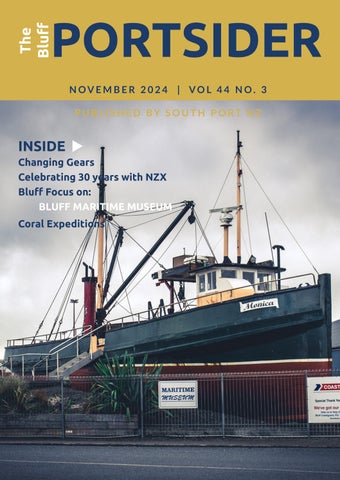
BLUFF MARITIME MUSEUM
Coral Expeditions
Tēnā koutou katoa,
On 23 August, South Port released its profit result for the 2024 financial year. In the year to 30 June 2024, South Port recorded an after-tax profit of $7.38M (2023 - $11.71M). Normalised net profit after tax, excluding oneoffs, was $9.96M (2023 - $11.50M).
The Annual Shareholders Meeting (ASM) was held at the Port on 17 October. At the ASM it was highlighted that although the Company had been through
a difficult trading period, the Port is positive about the future. Main reasons for this optimism:
» The recent announcement that NZAS is continuing for another 20 years.
» The flow-on impact of this was the announcement that stage two of Mercury NZ’s Kaiwera Downs wind farm (32 turbines) was approved and is expected at the Port late 2025. Other prospective wind farms which might be expected to come through the Port include Contact Energy’s Slopedown wind farm (50 turbines), Manawa/Pioneer’s Kaihiku (up to 73 turbines), and potentially Mercury NZ Mahinerangi wind farm.
» A new high tide draft of 10.7m formally declared on 4 October.
» There were a number of opportunities listed for Southland in the fast track process, including Ngāi Tahu’s Hananui aquaculture project, Impact Marine land-based aquaculture project, and Sanford’s Makarewa hatchery.
Directors Nicola Greer and Michelle Henderson were both re-elected for a further term on the Board at the ASM.
Looking at current trade, volumes coming through the Port can best be described as lumpy, however we are still on target to where we would expect to be at this time of the year. As readers will also be aware it has been a very wet spring, which has seen a shortage of feed developing in the region. The results of this can be seen at the Port with an increase in stockfeed supplements being imported through Bluff.
The “MV Forest Harmony” carrying in excess of 40,000 metric tonne of woodchips was the first vessel to utilise the full 10.7m of draft in the entrance channel during early November, which was an exciting and momentous occasion.
Meri kirihimete me te Hape Nū Ia,
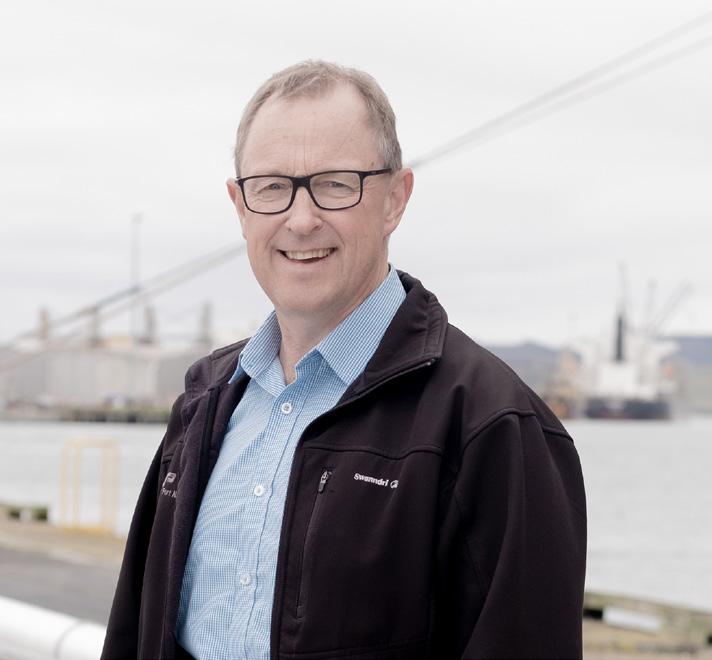
Nigel Gear Chief Executive Officer
New Zealand Stock Exchange (NZX) has a rich history spanning over 150 years that has evolved alongside the country’s growth and advancements. New Zealand’s first local stock exchange was established in Dunedin in 1866, with initial shares trading in the gold mines during the gold rush of the 1870s.
Today, NZX operates New Zealand’s equity, funds, derivatives, energy and carbon markets. To support the growth of our markets, they provide trading, clearing, settlement, depository and data services for their customers. NZX’s success is driven by their commitment to connecting people, businesses and capital. Their vision is to be a trusted New Zealand business delivering sustainable wealth, value and opportunities for all.
South Port was listed on NZX in 1994 and has Environment Southland, the region’s local government environmental agency, as its 66% majority shareholder. It is the only Southland-based company listed on NZX.
The Bluff Portsider is compiled by: South Port NZ Ltd PO Box 1, Bluff 9842 (03) 212 8159 reception@southport.co.nz www.southport.co.nz
Chief Executive: Nigel Gear
Produced and edited by: Charlotte Scoles
Contributors: Dave Edge and Charlotte Scoles
Amy Taylor - Co-Ordinator - Shipping and Mooring Services
Bulk Cargo is an essential component of South Port’s operations, accounting for 80% of the Port’s profitability. While FY2024 saw a 12% decrease in bulk cargo volumes, 2.4 million tonnes were handled through the Port, primarily agriculatural inputs, NZAS cargoes and for the forestry sector.
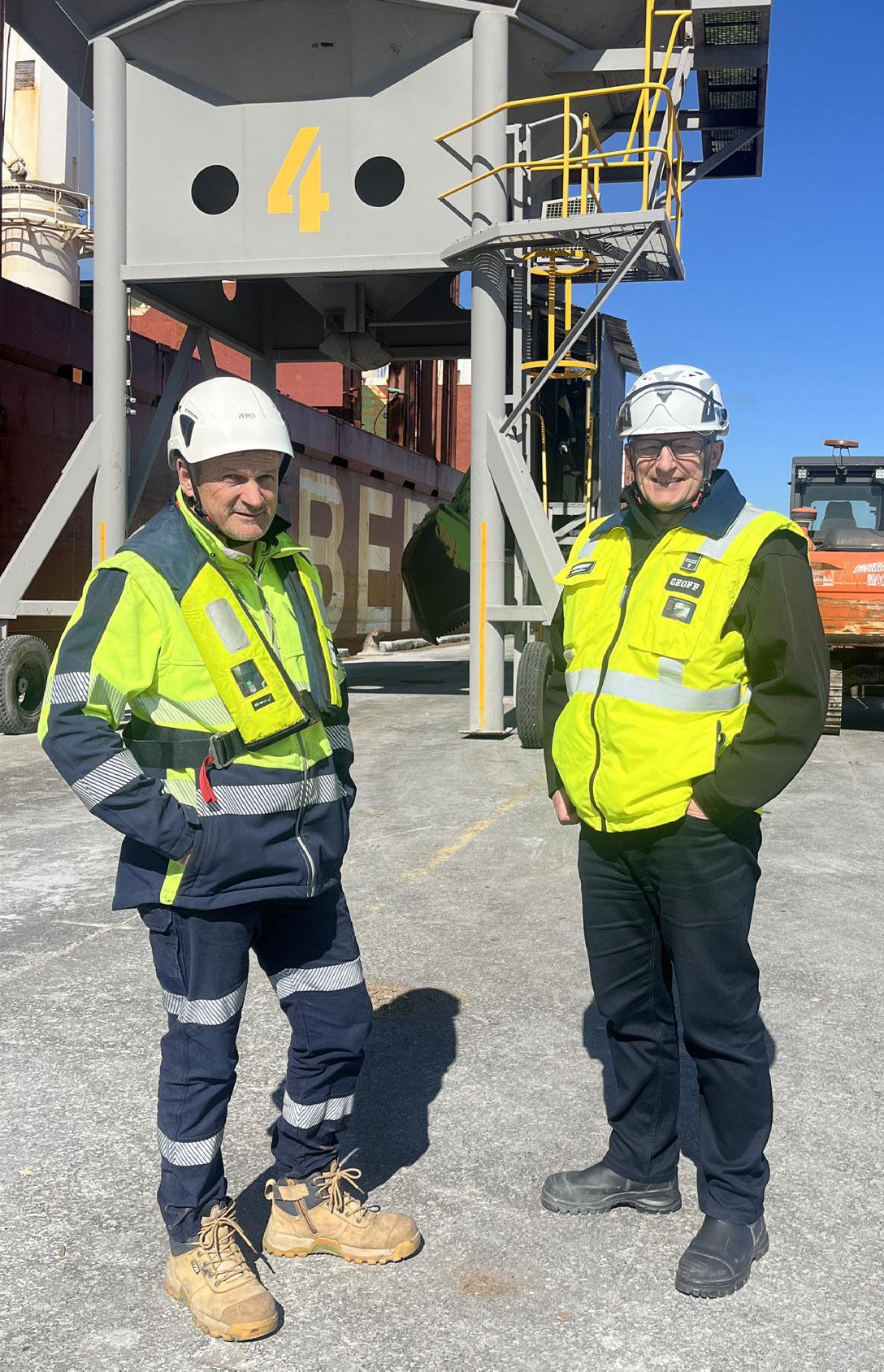
Port General Manager, Geoff Finnerty, and Bulk Cargo Co-Ordinator, Scott Faithfull, oversee bulk cargo and are responsible for maintaining health and safety during discharges and other operations. The Port Services team assists with operational set up by transporting hoppers and grabs to/from the appropriate berth, and cleaning the berths once operations have ceased.
Scott is one of South Port’s ‘go to’ people – and knows most areas of the Port inside out. He started as Depot Supervisor in 2010, supervising depot activities and ensuring availability of containers for export customers. Working alongside Geoff, Scott was instrumental in successfully setting up the Mediterranean Shipping Company (MSC) service in Bluff, including coordinating ship day operations.
In late 2018, he was appointed as Supervisor of the Intermodal Freight Centre before he took the opportunity to return to the Port in 2020 as Bulk Cargo Co-Ordinator. In his current role, Scott liaises closely with bulk customers, transport companies and other third parties to ensure they are carrying out business and other work activity safely.
What part of your role do you enjoy the most?
The relationships that I build and maintain with a wide range of port users, contractors, South Port staff and visitors. There are a lot of moving parts in the bulk cargo space involving multiple stakeholders, so good

working relationships and clear timely communication is key to maintaining operational efficiency.
What part of your role is the most challenging?
The constant variability of the vessel port calls (arrivals and departures) can make the organisation and planning of wharf operations very challenging at times. Throw weather delays into the mix and things can become frustrating.
What is the biggest change you have dealt with since starting as the Bulk Cargo Co-Ordinator?
The move to having two stevedoring operators on port was a big change to the dynamics of the bulk cargo operations. Developing new relationships and adjusting to how each stevedoring group operates. Also, kicking off the Port Services team this year, and taking on the management of the waste generated from the bulk cargo operations.

In September, South Port staff held a fundraising BBQ to raise money for the Prostate Cancer Foundation and the Breast Cancer Foundation NZ. The team had fun dressing up in pink and/or blue. $335 was raised, which was split evenly between the two foundations.
The editor is proud to introduce readers to the newest regular column in The Bluff Portsider: From the Bluff Maritime Museum Archives.
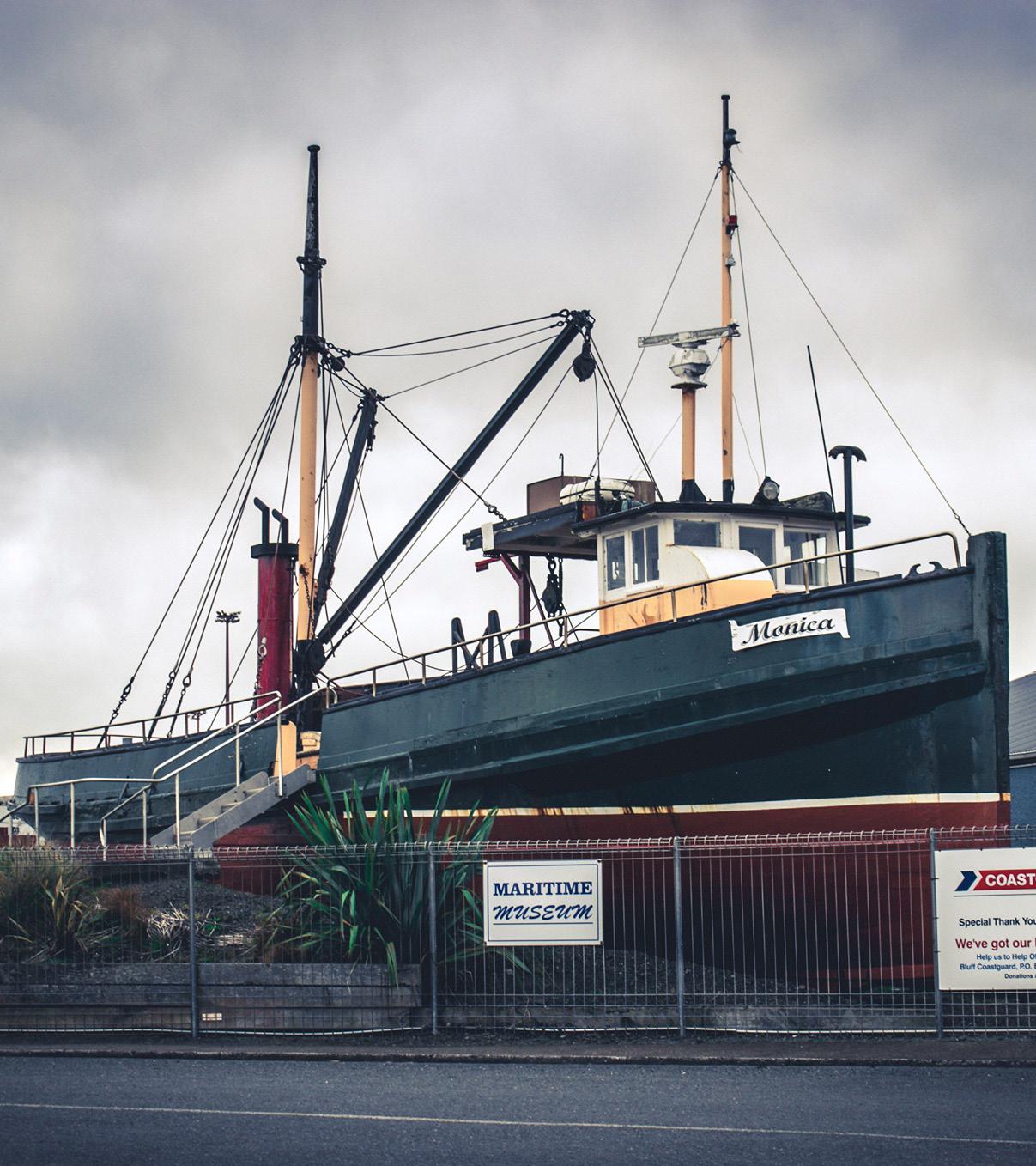
The Bluff Maritime Museum, located just before the South Port access bridge, contains an extensive collection of Bluff’s maritime heritage. The museum was founded in November 1992, however artifacts date back to the early 1800s.
It contains a wide variety of maritime displays, miniature models, boats, and photographs. Exhibits include whaling, oystering, and the many shipwrecks around the challenging southern coast.
Detailed records from throughout the construction of the Island Harbour, the historic Bluff Harbour Board, and a working triple expansion steam engine from the “TST Awarua,” are just three of the main features throughout. It also delves into the history of Bluff, one of the oldest European settled communities in New Zealand, with early maps and historic artworks.
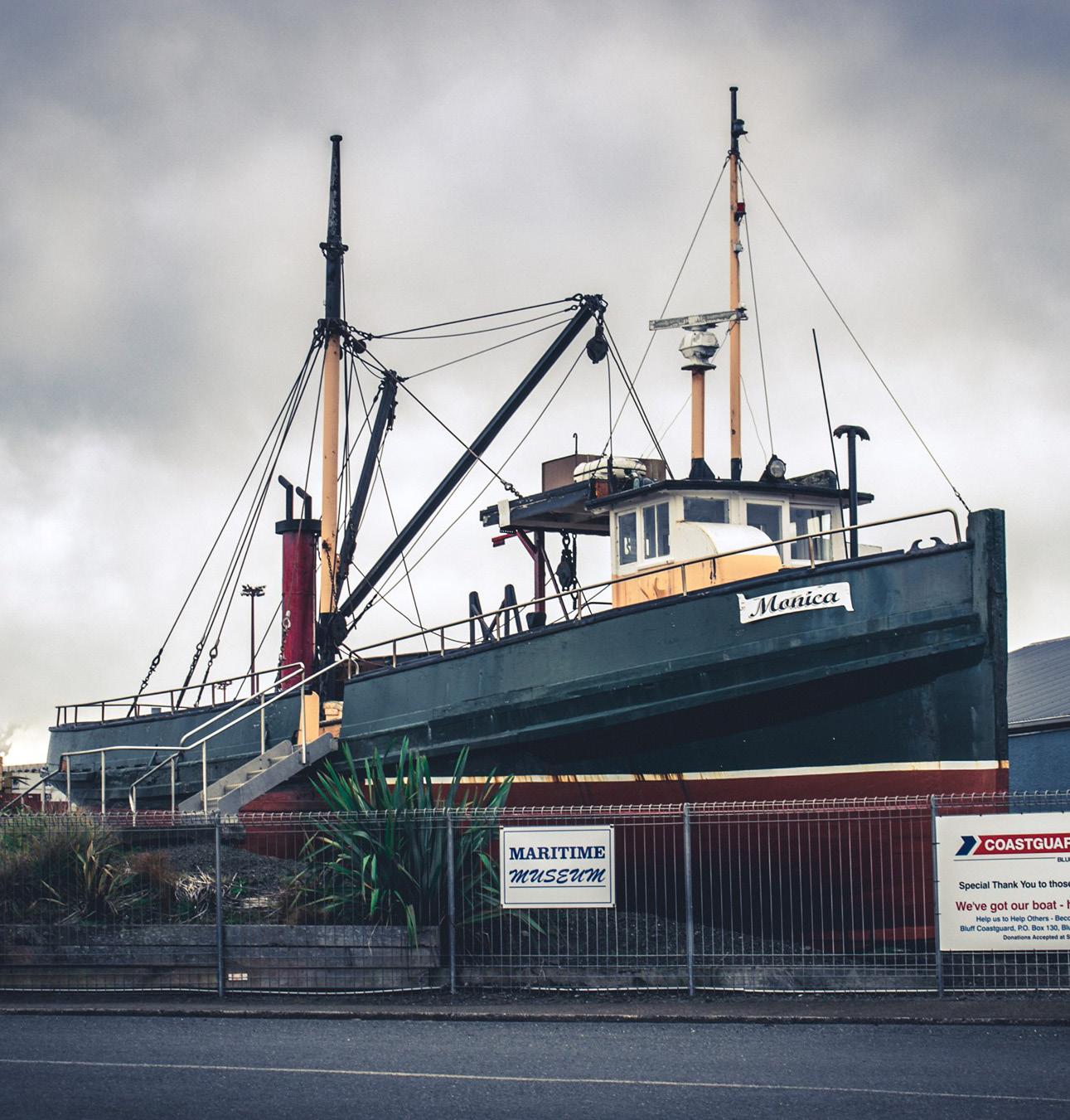
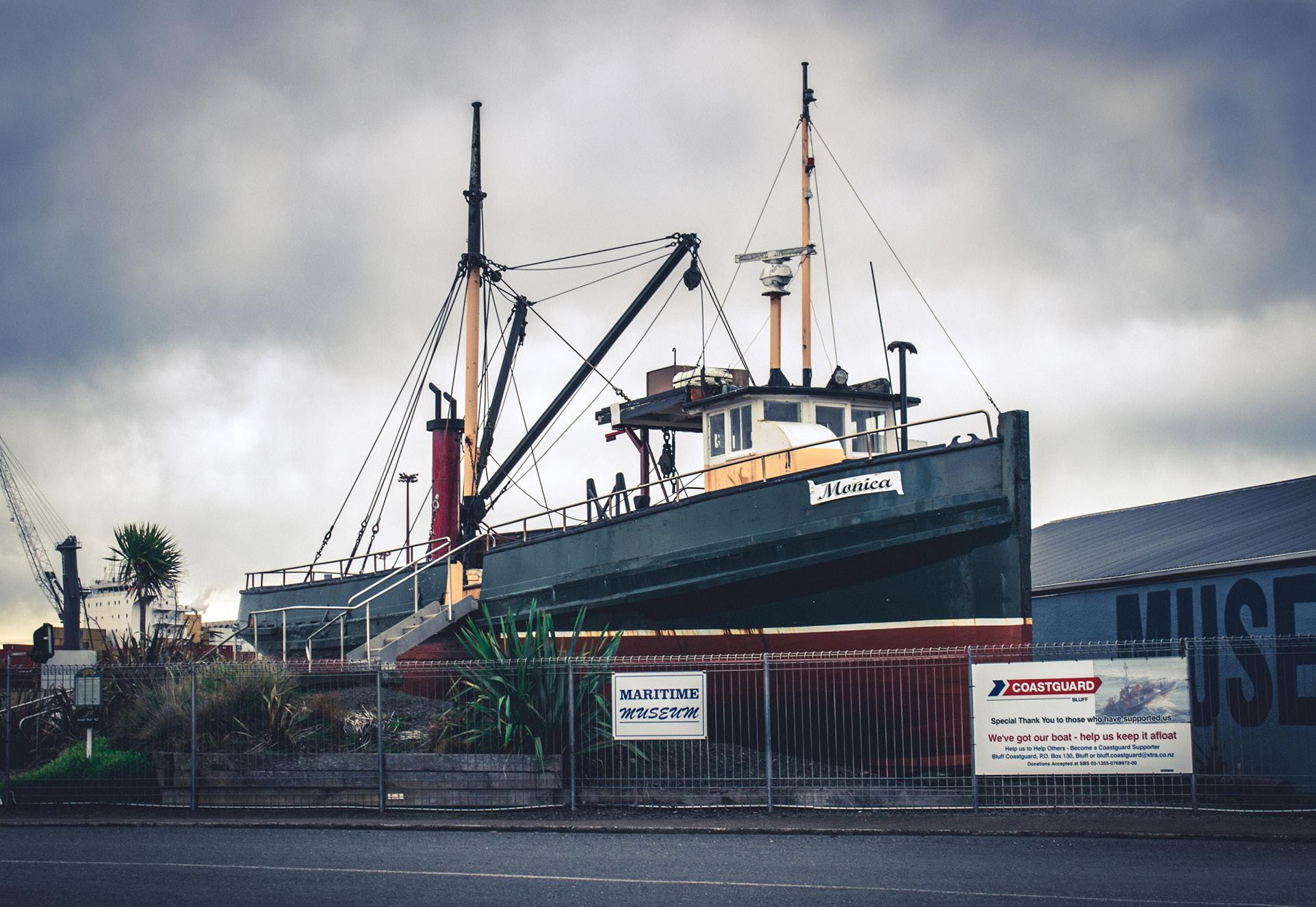
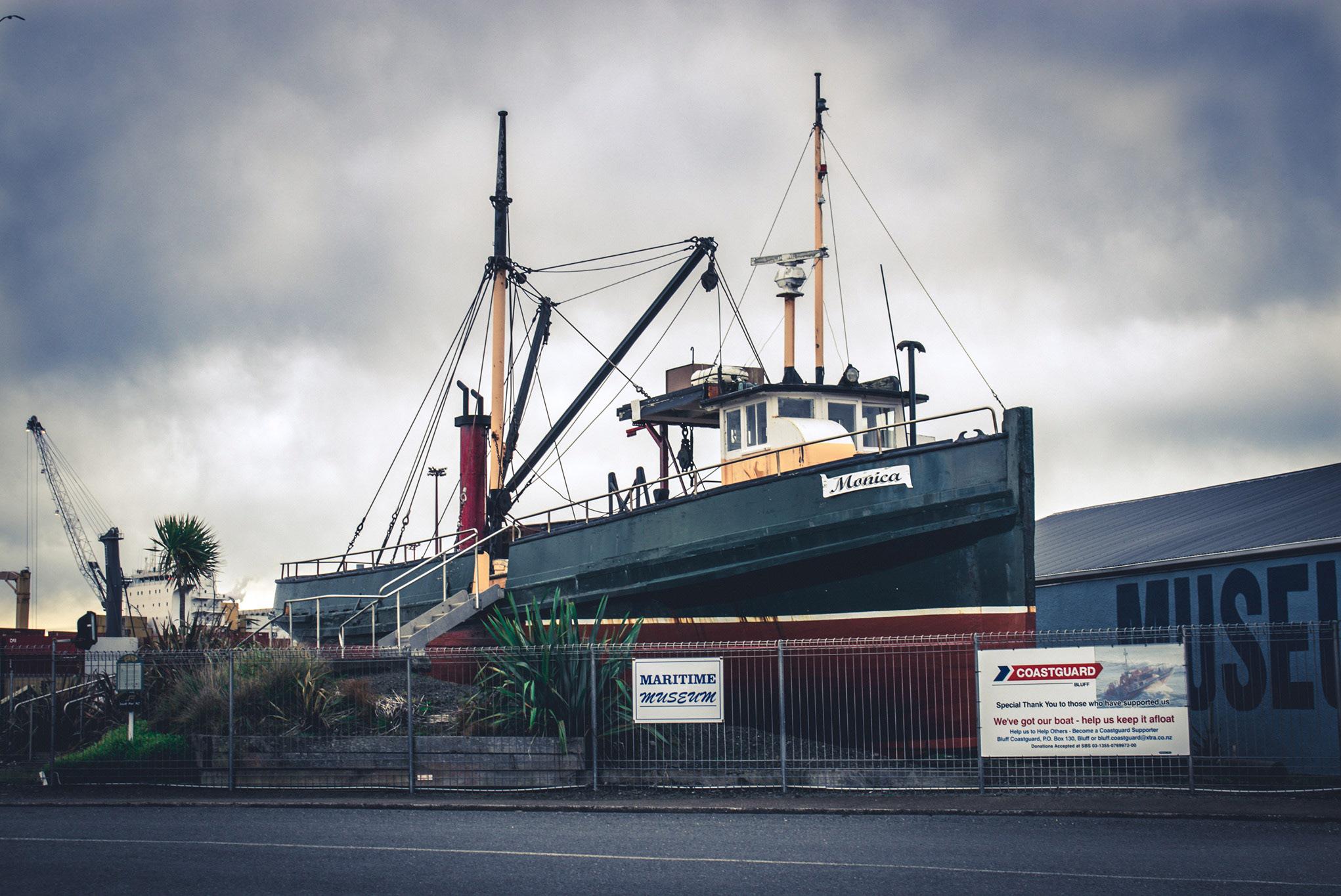
The museum’s biggest attraction is the oystering boat, “Monica II,” situated in pride of place beside the museum on a replica sea bed with oyster dredges. It was kindly donated by the Jones family after it was retired from a life at sea. You are able to board the vessel and explore all its nooks and crannies, imagining what it is like out in Foveaux Strait dredging Bluff’s delicacy.
It is open Monday to Friday from 10am until 4:30pm, and on weekends from 12:30pm until 4:30pm. And, with a small entry fee of $5 per adult and $1 per child, it is certainly worth a visit the next time you’re in beautiful Bluff. With a continuously growing collection of exhibits and artifacts, there is always something new to see.
The clipper is a type of sailing vessel which is very narrow and incredibly fast, designed to clip over the waves, and they have been around for hundreds of years.
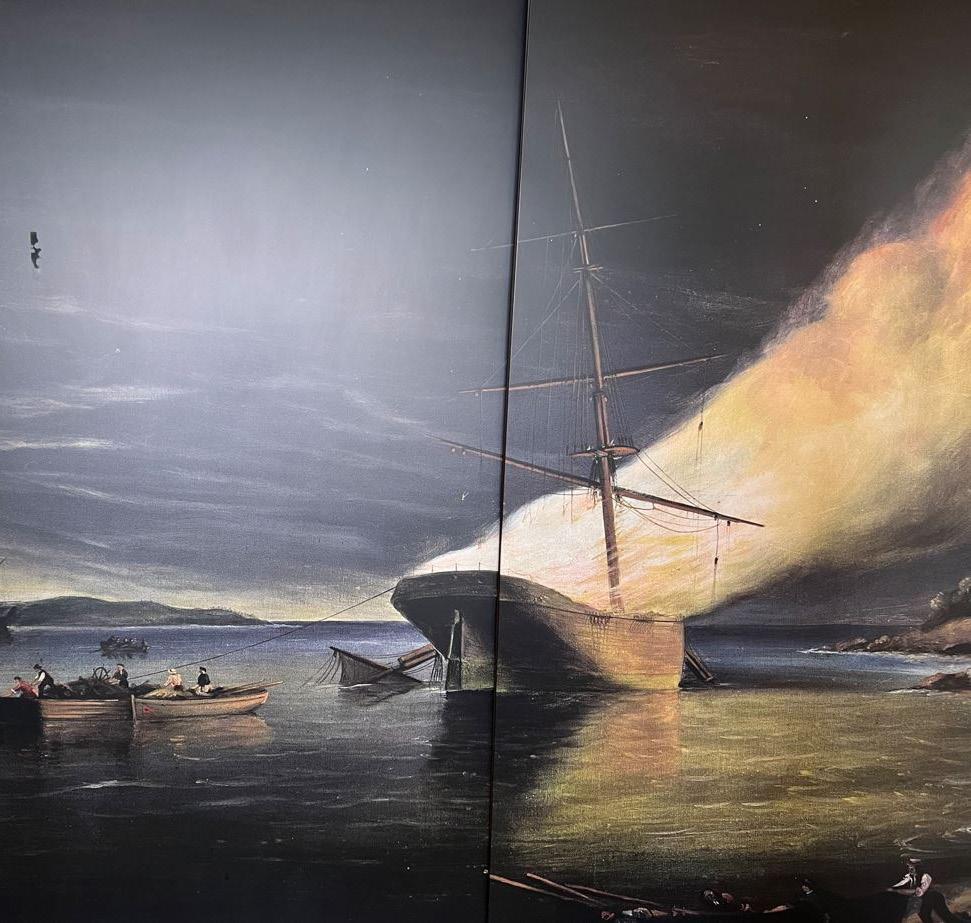
Casting back to the evening of 13 January 1862, and the 1,026-tonne Black Ball Line clipper ship “Ocean Chief” arrived in Foveaux Strait from Melbourne with a cargo of 4,000 sheep aboard. Taking on a pilot, the vessel entered the Port against an adverse wind and tide, and was driven ashore on Tiwai Point. At 11am the next day, she was refloated, having sustained considerable damage. She was taken across to the wharf where she moored for the better part of a week.
At around midnight on 22 January, the vessel was set on fire by some of its crew, and she burned to the water’s edge. In order to save the wharf, her moorings were slipped, and the vessel scuttled. There she ‘burnt to the copper’ while her master, Captain T. Brown, painted her last moments, which suggests he possessed considerably more equanimity than most. His painting formed the cover illustration of the book “Bluff Harbour” which was published in 1976.
Rumour has it that the “Ocean Chief” was set alight by the crew as they wished to desert their posting and make their way to the Otago gold fields. They even went as far as to block the water pumps, and cut the hoses so that the flames could not be doused. Captain Brown offered a reward of £200 pounds for evidence leading to a prosecution, but nobody came forward.
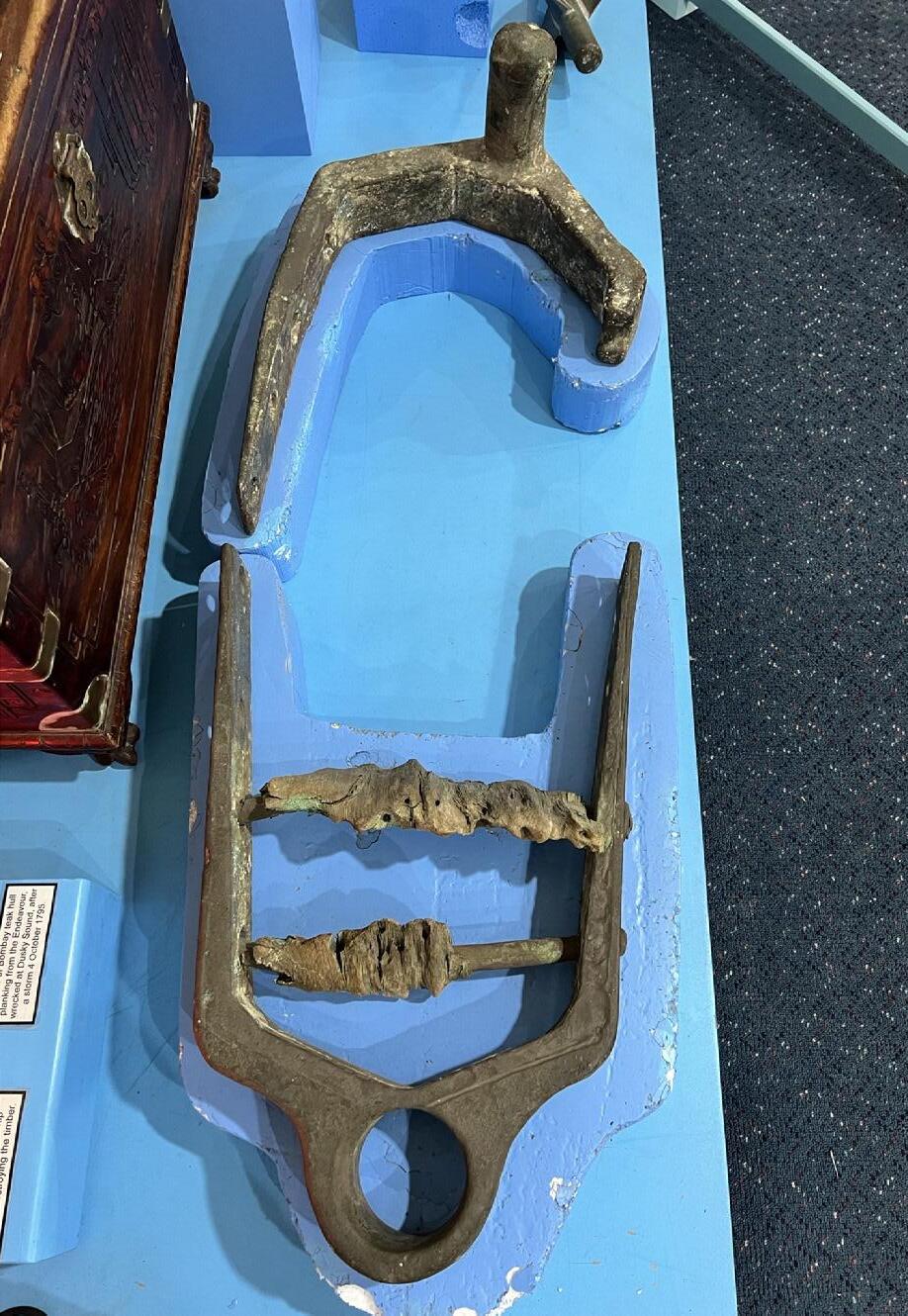
The “Ocean Chief’s” original trace and pintle (pictured below right) - a vertical metal pin attached to the leading edge of the rudder - is on display at the Bluff Maritime Museum, alongside other items that survived the fire.
2
3
We’re looking for a Sustainability and Climate Advisor who will play a key role in providing strategic, evidence-based analysis and advice to support the company’s sustainability and climate change response and will work collaboratively with other key partners and stakeholders.
Our Senior Human Resources Advisor will play an important role in supporting the growth and development of our people. This position carries responsibility for managing systems and processes, as well as strategic HR project designed to drive transformational change across the business.
For further information, email: vacancies@southport.co.nz
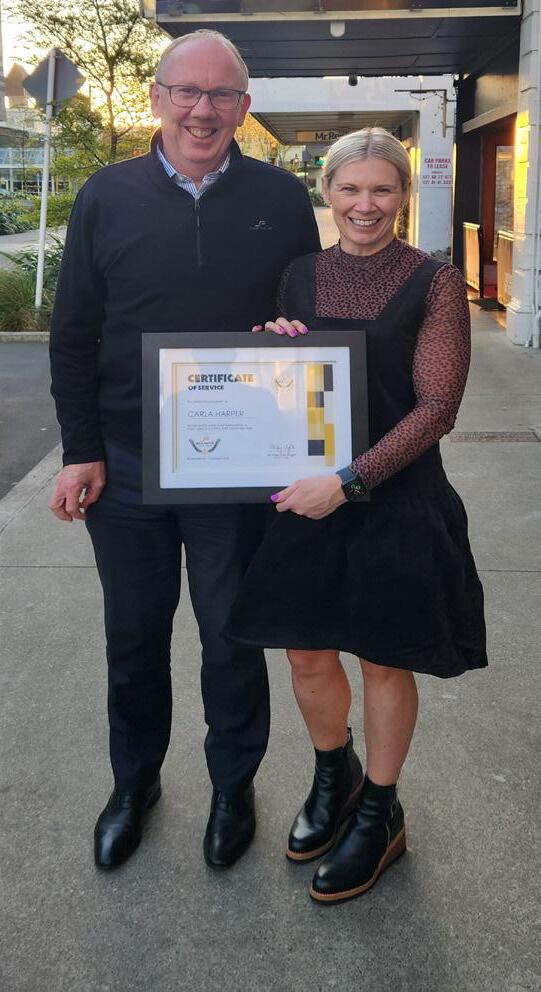
In October, Carla Harper, pictured right, was awarded a Certificate of Service for her 18-month tenure as the Company’s Intern Director by the Board Chair, Philip Cory-Wright, left.
It was also announced that Carla was honoured with an Emerging Director Award by the Institute of Directors New Zealand (IoD). The IoD awards are bestowed by local branches of the Institute of Directors to recognise leadership, integrity and enterprise in directors in the early stages of their governance career. Candidates must have fewer than five years governance experience, and demonstrate a commitment to lifelong learning and bestpractice governance.
Congratulations, Carla - thank you for your service; we wish you well on your future endeavours.
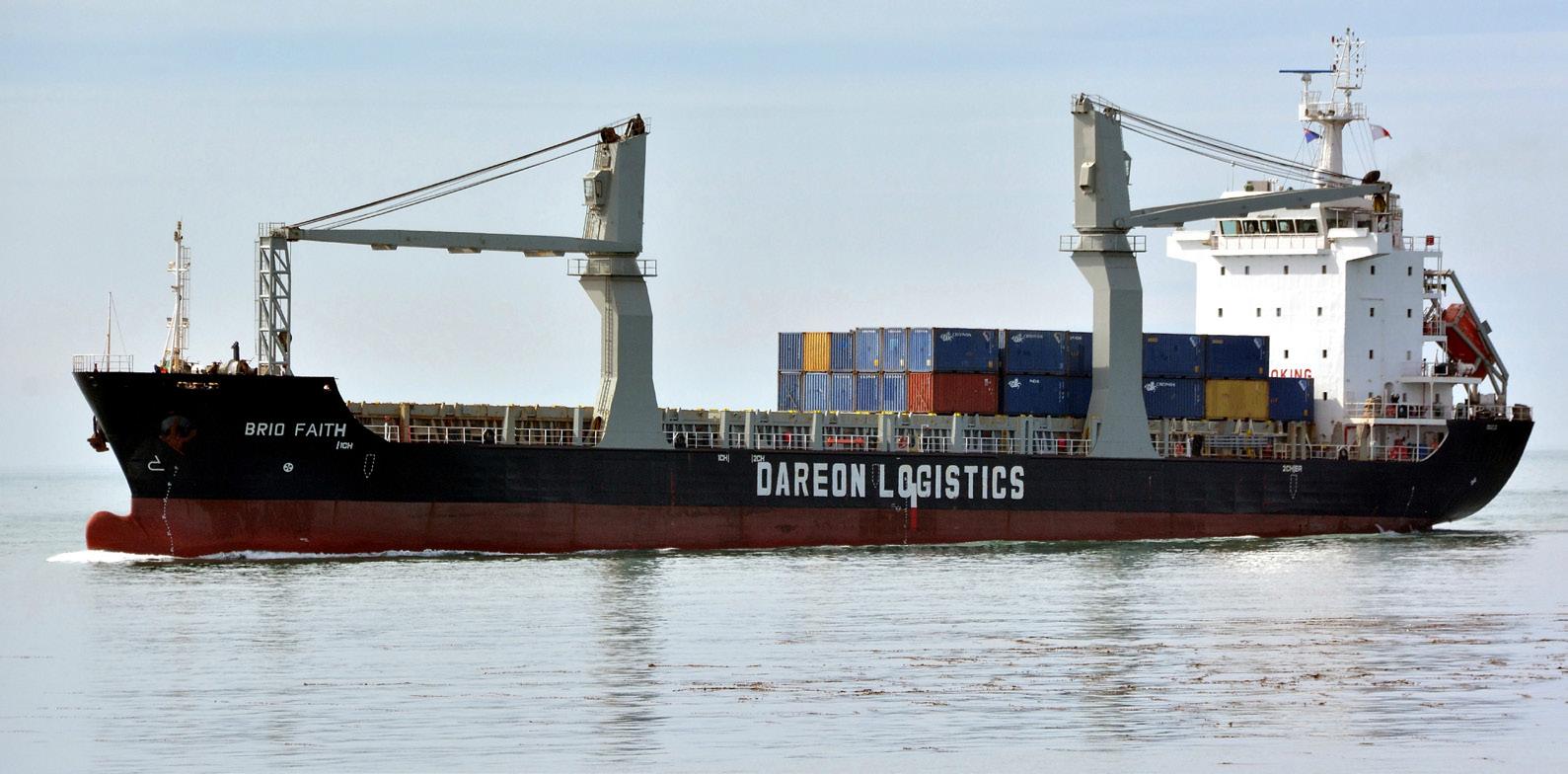
MOVe Logistics has placed a larger and newer vessel on its trans-Tasman service with the introduction of the “Brio Faith.” Compared to her predecessor, the “Atlas Wind,” the “Brio Faith” has almost twice the deadweight at 9,032 tonnes and her container capacity is 630 TEU so she can carry a full load in either break-bulk or container configuration. Her single cargo hatch is 50.5 x 15.6 metres allowing her to carry most cumbersome cargoes and she has 2 x 40 tonne capacity deck cranes to handle
them if shore facilities are unavailable.
Having been completed in 2009, she is just over half the age of the “Atlas Wind” so should prove more reliable in service.
As for the “Atlas Wind,” it seems she is about to meet her breaker.
Between July and September this year, South Port dredged the seabed below the Syncrolift platform on the Island Harbour. The environmental impacts were controlled by monitoring water quality 200m upstream and downstream from the dredged material discharge site.
Monitoring is a condition of the coastal permit, and includes assessing the following parameters:
» Conductivity (µS/cm)
» Dissolved oxygen (%)
» Turbidity (NTU)
» pH
» Temperature
» Clarity
In addition, South Port included the discharge site and the dredging site in the monitoring, with the same criteria imposed by the coastal permit. The results showed that the operation was carried out in accordance with the requirements, including on the two additional sites, which was an excellent result.
As a listed company, South Port is considered a climate reporting entity (CRE) and is required to report under the Climate-Related Disclosure (CRD) regime, which aims to provide stakeholders with visibility of the impacts caused by climate change. The CRD makes accounting for greenhouse gas emissions mandatory, making the GHG emissions inventory a fundamental part of the impact management and decarbonisation strategy. The inventory will be subject to assurance for FY25, based on the current requirements..
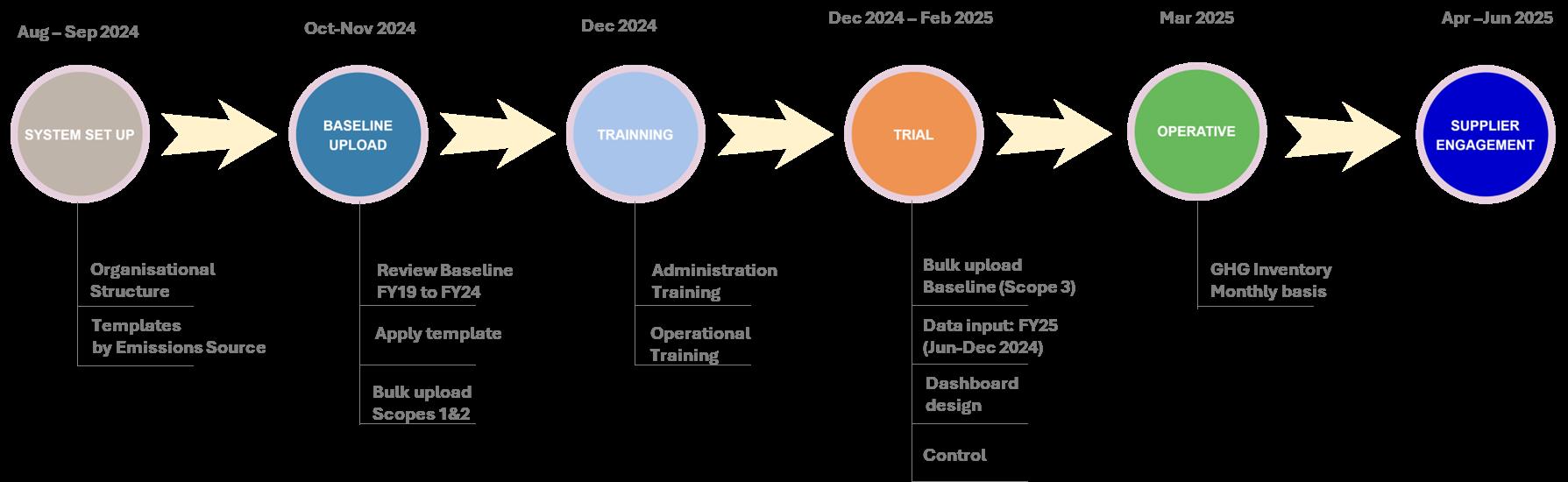
South Port recently contracted Diligent Corporation’s GHG emissions accounting management platform to improve inventory data collection, calculation, and reporting. The platform allows multiple data entry forms, checks consistency, tracks emissions factors,* and has a dashboard for presenting the results, including an area for documentation and auditing. A breakdown of this can be seen below.
We are in the implementation process, which consists of system configuration, baseline entry, and system operational and management training. Once implementation is complete, South Port will handle the FY25 inventory and supplier engagement. It is expected that the inventory will be 100% operational in time for the first audit (assurance), which should occur between July and August 2025.
* Emission factor: a coefficient that presents the rate at which a given activity releases greenhouse gases (GHGs) into the atmosphere.
‘Australia’s pioneering cruise line’ is Coral Expeditions own description of its entrepreneurial beginnings. Founder of the company was Captain Tony Briggs, who spent his early working life in the Tasmanian fishing industry before relocating to Queensland where his seafaring ambitions took quite a different direction. While based in Mackay, Tony was much taken by a converted ‘Fairmile’ motor launch, the “Elizabeth E,” that had been adapted for charter work and early in 1983 made an offer to purchase the vessel. The offer was accepted and, in May 1983, Coral Princess Cruises Pty Ltd., was formed and the “Elizabeth E” renamed “Coral Princess.” One of thirty-five ‘Fairmile B’ motor launches completed in Sydney for the Royal Australian Navy, the “Coral Princess” entered service in 1943 as ML 823. After being renamed “Coral Princess” she was based in Mackay, but in October 1983, shifted to Townsville where she operated five day cruises to the Great Barrier Reef, Hinchinbrook Channel and islands en route.
Capacity aboard the “Coral Princess” was limited to 24 guests in twin cabins with shared facilities and it was soon apparent that both guest numbers and facilities were inadequate. A new catamaran was therefore ordered from a Newcastle shipyard with accommodation for 54 guests in 27 staterooms, all with private facilities. Delivered in 1988 the new vessel adopted the name “Coral Princess” with her namesake being sold. A very similar vessel was purchased in 1996 and the duo were renamed “Coral Princess I” and “Coral Princess II” respectively. With a second vessel available, cruises to the Kimberley Coast in North-West Australia were introduced and this region remains one of the company’s most popular destinations during the dry season which spans May
through September.
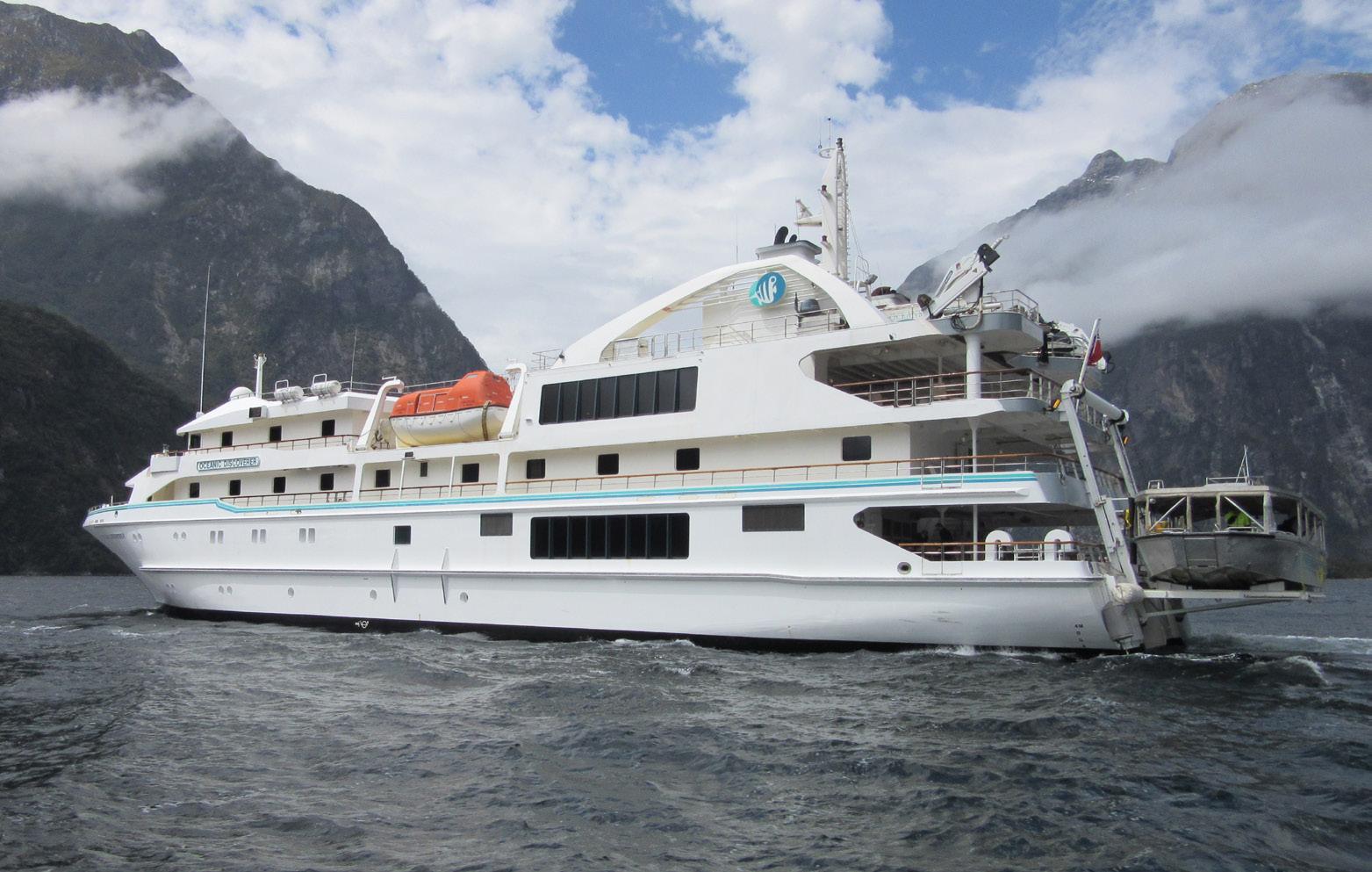
Looking to cruise further afield an order was placed with the N.Q.E.A. shipyard in Cairns for a small cruise ship capable of undertaking blue water voyages. The result was the “Oceanic Discoverer” of 1,779 gross tons with accommodation for 78 passengers in luxurious two-berth cabins with their own facilities, built to a very high standard with a quality of finish that would enhance any cruise ship. Many cruise ship passengers are far from the first flush of youth and often find disembarking from the ship into a tender at the mercy of wind and sea a hazardous experience. An ingenious arrangement with a hoistable platform across the stern of the ship bearing the shallow draught tender ‘Xplorer’ allows guests to step from deck to tender and be comfortably seated before the tender is lowered into the water. If no convenient wharf is available the tender can be driven up onto a sandy beach, the bow ramp lowered and the
guests walk ashore. This system was first installed aboard “Coral Princess I” and is now fitted to all the fleet.
In 2006, “Oceanic Discoverer” made her first New Zealand cruises concentrating on the spectacular scenery of Fiordland and Stewart Island. As Bluff is the closest port to these destinations the “Oceanic Discoverer” was a regular visitor here on what became an annual New Zealand pilgrimage. Other international destinations visited included Papua New Guinea, Vanuatu, the Spice Islands, West Papua and South East Asia. Following the sale of Coral Princess Cruises by Tony Briggs to Paul Chacko in 2015 and its rebranding as Coral Expeditions her name was changed to “Coral Discoverer”. The company was sold again in July 2023 to NRMA, the National Roads and Motoring Association. Little else changed and the ships continue to be Australian registered and Australian manned.
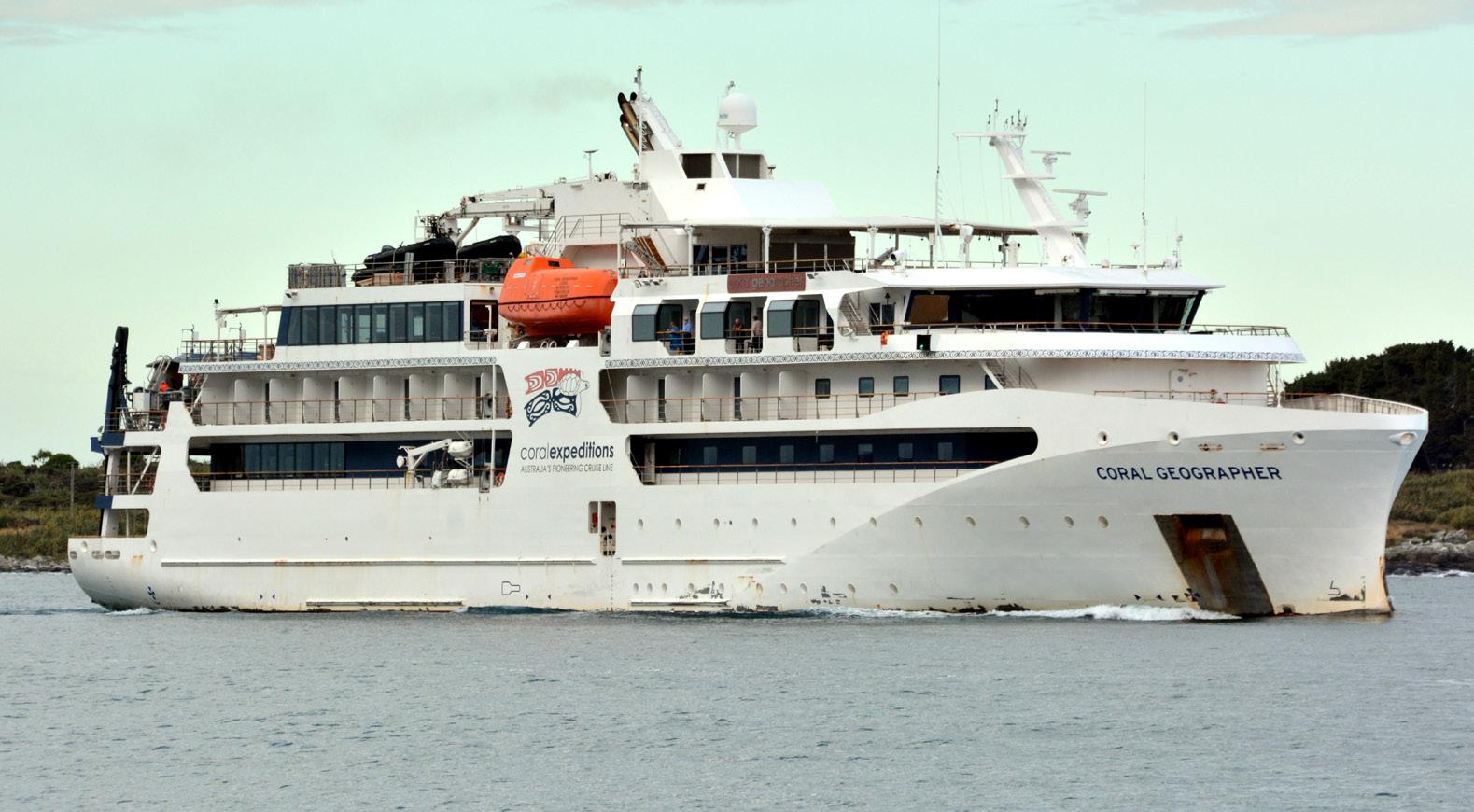
In 2017 an order was placed in Vietnam for a new ship which was delivered as the “Coral Adventurer” in 2019, followed by her sister “Coral Geographer” two years later. Both can accommodate 120 passengers and have extended Coral Expeditions’ cruising range as far north as Japan. With the increase in passenger numbers, these ships carry dual ‘Xplorer’ tenders, each able to carry 60+ guests. This cruising season it is the turn of the “Coral Adventurer” to tour New Zealand and we look forward to welcoming her into the Port of Bluff.