Scholarship Recipients
IN THE COMMUNITY
South Port’s People
Bluff Focus: CRUISE SHIPS
Intermodal Freight Centre
BEAMED UP IN BLUFF
Scholarship Recipients
South Port’s People
Intermodal Freight Centre
BEAMED UP IN BLUFF
Graduated from Southland Boys’ High School in 2015. Braedon is the son of Terminal Supervisor, Marie McNaught. Braedon has been accepted at University of Otago to pursue his passion for teaching by undertaking a Bachelor of Primary Education. Braedon has a keen interest in football playing at Southland representative level as well as being in the first eleven at high school. Braedon had an opportunity to mentor a younger student at school last year which has given him his first taste of the rewards of helping a young individual to achieve success.
With Braedon’s obvious ambition, work ethic and a genuine belief in education, he will surely be a positive role model to those who have the pleasure of being taught by him in the future.
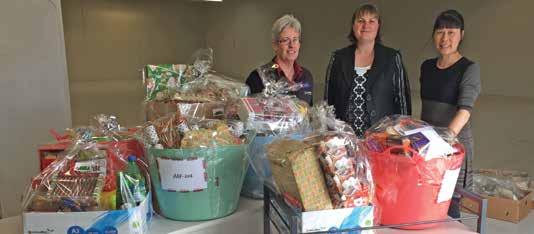
Christmas is a time for children and families celebrating time together. For the second year in a row South Port and staff embraced the Salvation Army ‘Adopt A Family’ campaign. Due to the success of last year, the Company decided to adopt two families and neither family would have been disappointed. A great selection of gifts and Christmas food was supplied by all those who contributed as can been seen in the picture at right.
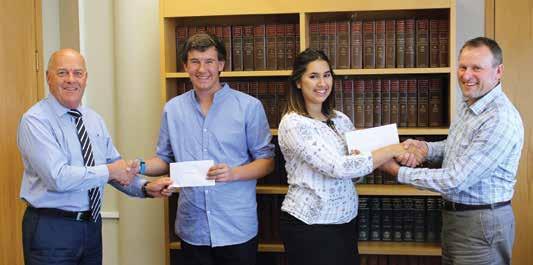
Jess graduated from Southland Girls’ High School in 2015. Jess has chosen to study a Bachelor of Arts Majoring in History and Minoring in Cinema Studies at University of Canterbury.
In Jess’ own words, she has a “colossal passion for history” which has led to her future aspirations of becoming a secondary school history teacher.
South Port Finance Manager, Lara Stevens (centre) and Helen Young, HR Advisor (right) present the Salvation Army with two Christmas hampers.
Jess is a community spirited young lady who has a pleasant disposition. She has been involved in voluntary work on a regular basis and fundraised to travel to Vietnam last year as an opportunity to experience another culture.
Leadership comes naturally to Jess and together with her determination and maturity, she has the ability to enjoy success in reaching her academic goals. Article supplied by Executive Assistant, Kirsten Hoyle.
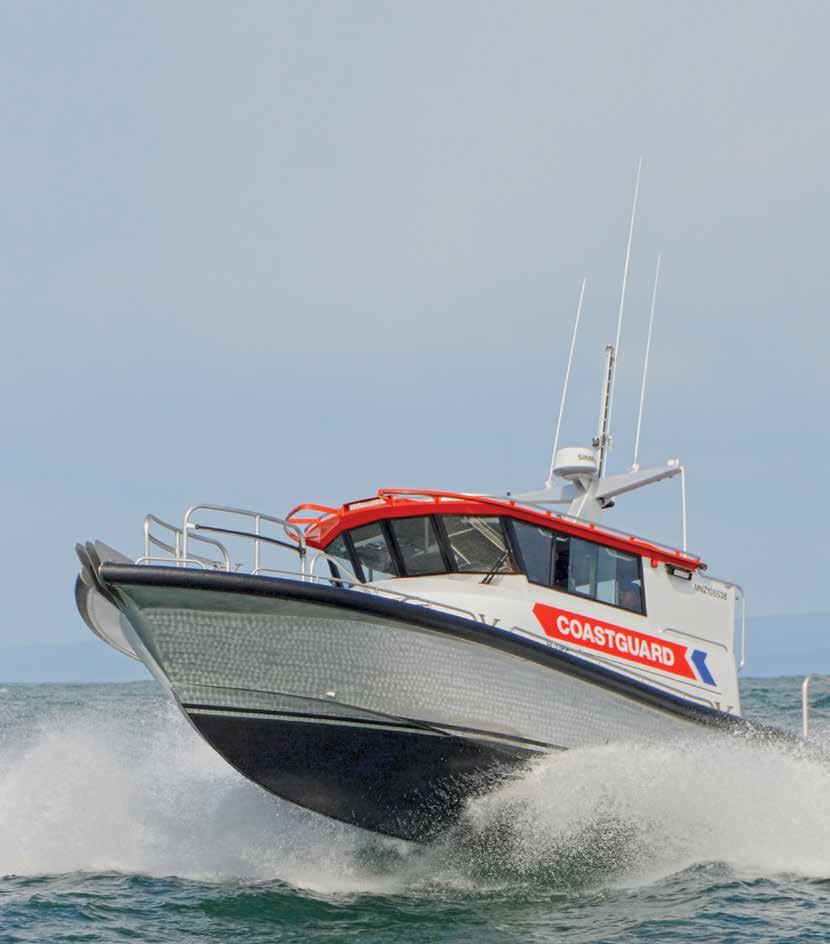
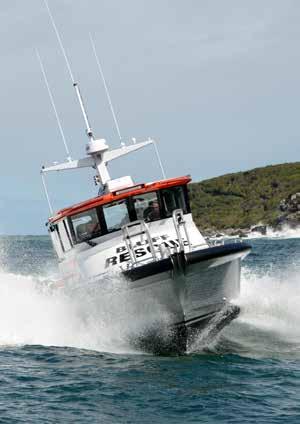
In our issue for September 2014 we included an item about South Port’s contribution to the Coastguard Bluff and its fundraising campaign to build a new rescue boat. These fundraising efforts came to fruition when the “Bluff Rescue”, as the new boat has been named, arrived in Bluff at the end of October. With a price tag of $1.169 million those fundraising efforts must have been strenuous but were ultimately successful and in the best Southland tradition it was all raised locally.
While the previous Bluff Coastguard boat has conducted many rescues, its small size meant that it did not provide a sufficiently safe environment for its crew during heavy weather when there is the greatest likelihood of there being ‘those in peril on the seas’. Thus the new boat, which was specially designed for rough conditions by Tim Barnett Design, of Blenheim and is self-righting with the citadel capable of being fully sealed. Built by ICON Custom Boats at Rangiora the ‘Bluff Rescue’ is 13 metres long with a beam of 3.9 metres and displaces 12.2 tonnes. She is powered by two Yanmar 6CXBM-GTS engines driving through a pair of Hamilton 322 water jets to give a maximum speed of 40 knots. In addition to the usual searchlights and navigational equipment you would expect to find aboard such a boat, the “Bluff Rescue’ is also equipped with a scanning sonar allowing her to search for sunken vessels.
Foveaux Strait just got a great deal safer!
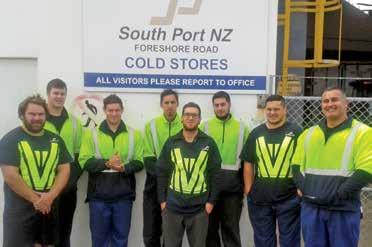
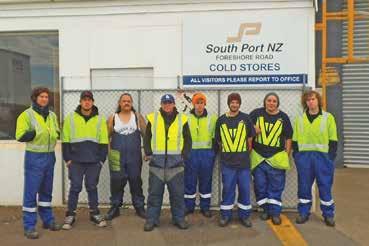
Over the past couple of months both the Foreshore Road and Island Harbour Cold Stores have been gearing up to cater for the busy meat and fish export season. At the Foreshore Road site, eight new day shift and ten new night shift fixed term employees commenced work; and at the Island Harbour, three new fixed term employees came on board.
Foreshore Road Cold Storage Supervisor, Doug Walker said, “The day shift team are achieving very good levels of load-outs per week and keeping up with our client requests. The night shift team is working out very well and keeping up with the high levels of product arriving at the site to be sorted. Both crews are linking effectively as an overall team and coupled with the commitment South Port has shown them putting these people onto fixed term contracts, we have secured a reliable and focused work force”.
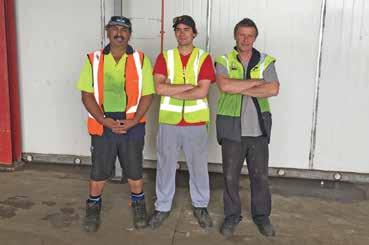
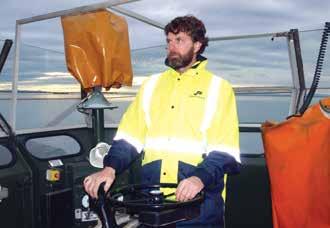
Captain Friso Haantjes’ time at South Port recently came to an end after almost three years piloting in Bluff. Prior to coming to the deep south he skippered an offshore supply vessel working in Taranaki from 2009 - 2012.
Originally from the Netherlands, Friso is returning to be closer to his (and his partner’s) family due to health reasons. Captain Haantjes said, “Bluff has been a great place to work and a true challenge to pilot in. The wind, tide and narrow channel make it challenging and different every time. The people have been great also”.
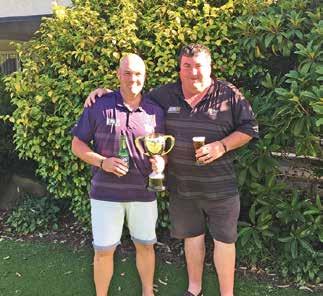
The annual South Port golf tournament ‘The Mayall Cup’ was held in early March with sunny skies greeting the 54 entrants. Again it was an opportunity for a member of the South Port team to stamp their names in the history books as it has been a long time between ‘winning’ drinks. However, it was Déjà vu all over again with the Port’s highest ranked team, Gareth Carson & Scott Faithfull failing to fire on all the pre tournament hype about 2016 being “their year”. Unfortunately we all have to wait another 365 days as it was Darren ‘House’ Flowers and Blair Sinclair representing Fonterra who won the tournament. A close second was taken out by Bruce Sangster & Darryl McGregor (McCallum’s Group) and third place was filled by Justin Dimond & Tommy Morgan (Bain Shipping). Other results were; longest drive Glen Sutherland and closest to the pins ‘House’ Flowers & Justin Dimond.
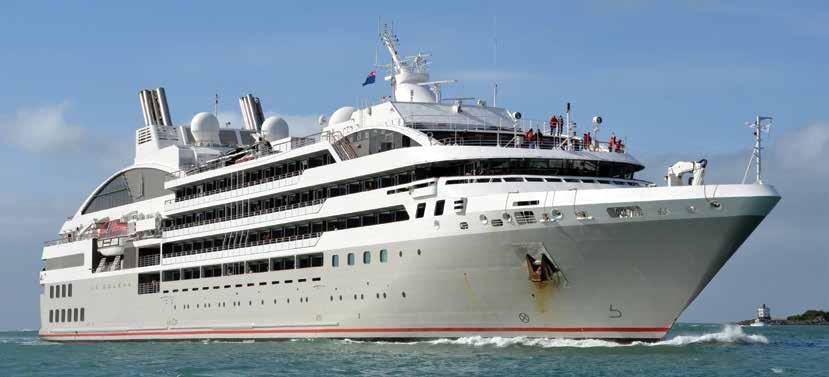
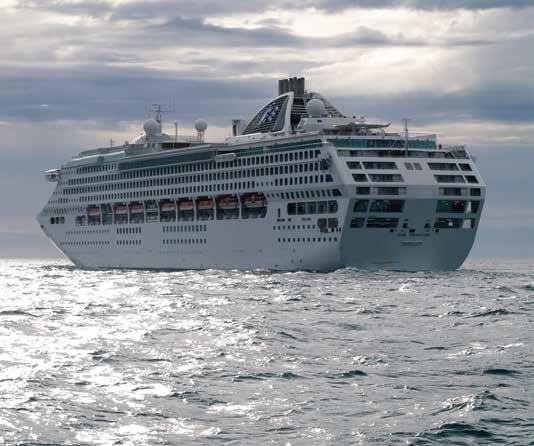
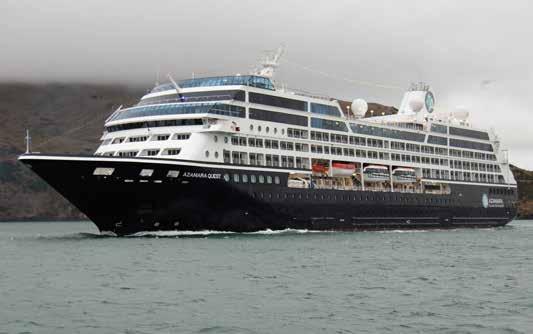
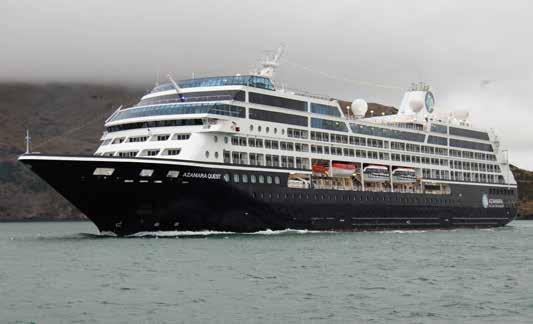
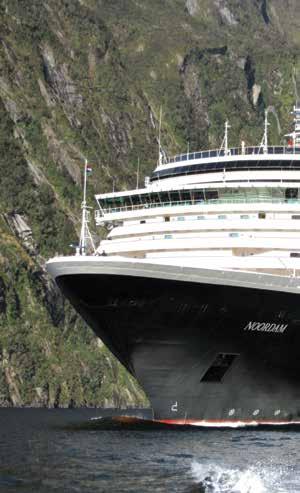
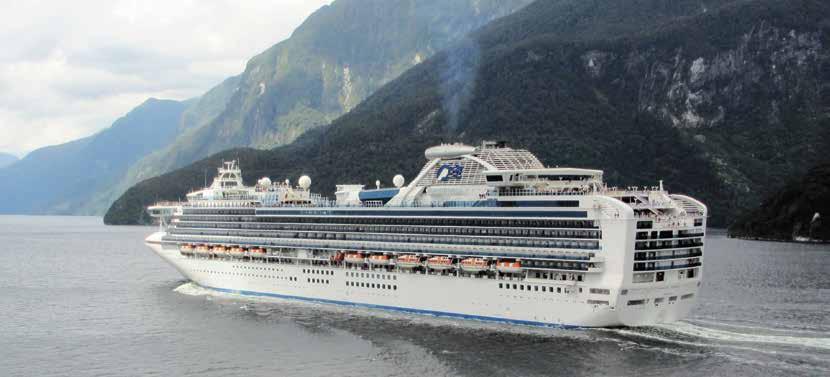
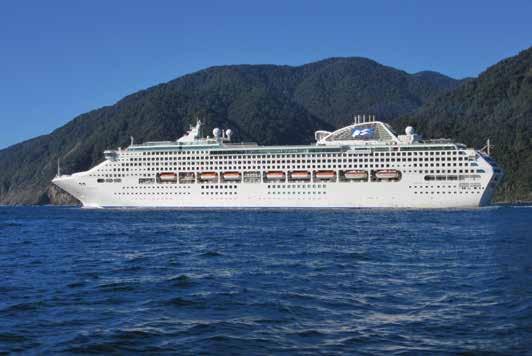
Internationally there seems to be a stream of ever larger cruise ships entering service but the natural restrictions of some of the ports the cruise ships wish to visit in New Zealand mean that the true behemoths of the cruising world ply their trade elsewhere. Not that the largest of the ships transiting Fiordland could be described as small, although the grandeur of the area makes them seem so. It is only when they make port, where they dominate their surroundings, that their true size can be appreciated. Not all our visitors are in this category, of course, and quite a variety pass through Fiordland each year from the very large with room for 3,000 or more guests to the quite small carrying fewer than 100.
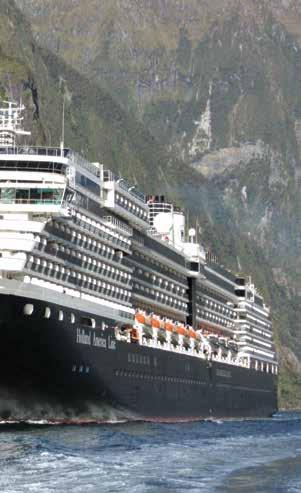
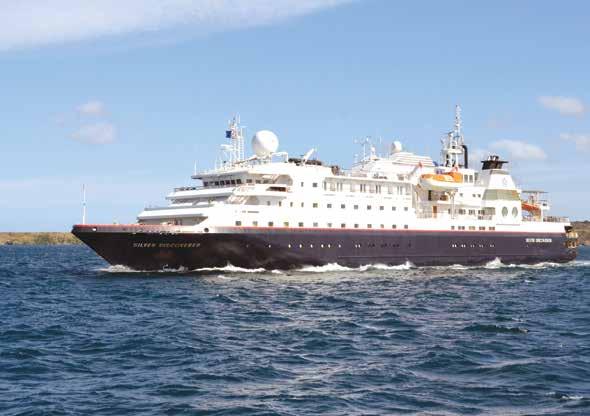
The ‘adventure’ type cruise ships again featured making their leisurely way through Fiordland. This year all such visitors were at the top end of the luxury-at-sea market and included the “Silver Discoverer” and another of the French ‘Ponant’ company’s vessels, this year the “Le Soleal”. The “Silver Discoverer” has, of course, been familiar in Fiordland waters for many years under her former name, “Clipper Odyssey”, and another old friend in new guise was the “Coral Discoverer”, previously well known here as the “Oceanic Discoverer”, while the “Azamara Quest” was making her first visit to Southland’s most scenic region.
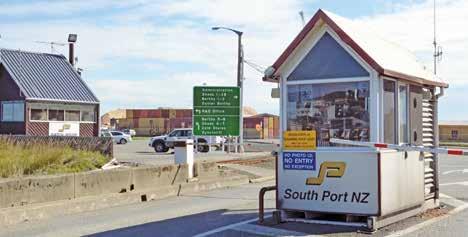
When you have a 40 hectare site it is sometimes easy to get slightly disorientated. An opportunity for improvement (OFI) was generated from the process improvement programme (PACE) to make the Port more easily navigated.
As such a new 3m x 3m directional sign now greets visitors to the Port just to the left of the Gatehouse when entering. Now there is little chance of missing this piece of infrastructure when entering – it is huge!
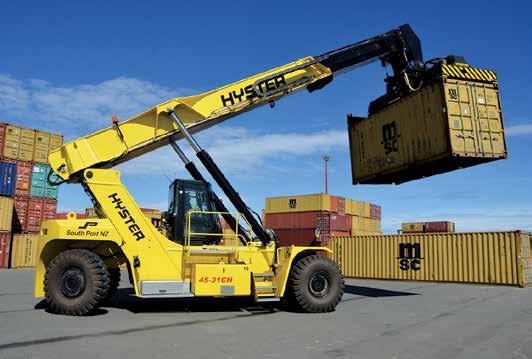
A new reach stacker was recently purchased to improve the versatility of the container handling forklifts on the Port. Some of the benefits of a reach stacker compared to a traditional top lifter include; the head of the forklift can be lowered to get the machine into warehouses, containers can be picked out of the second row (without removing the front row) and containers can be turned without having to put the box on the ground.
The new machine is fitted with calibrated weighing scales enabling prompt weighing turn around on containers and cargo. It looks slightly different to the other reach stackers on site as it has no stabilisers reducing the overall length of the machine and improving agility.
The new Hyster forklift increases the fleet to seven and is the third reach stacker in the container terminal.
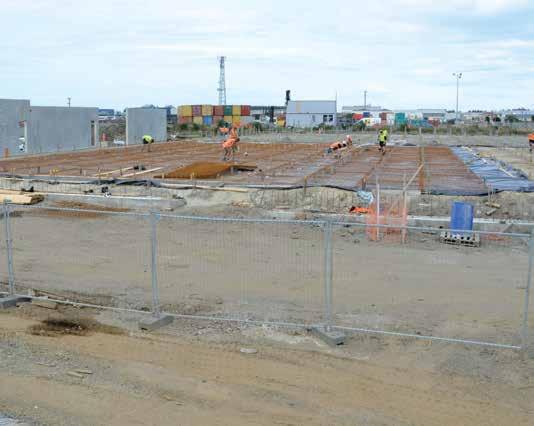
Construction of South Port’s inland port, the Intermodal Freight Centre, is on schedule for a completion date in lateJune and official opening in July 2016. The piling and foundations were completed in February with half the floor and concrete panels erected at the site. Civil work including the earthworks and underground services have been completed. The 0.8ha site will predominantly support import cargo flows into the Southland region plus provide the flexibility to load cargo for export.
Strategically located adjacent to the KiwiRail container transfer yard, it will facilitate the competitive movement of cargo via rail and create opportunities to more efficiently access containers in Invercargill.
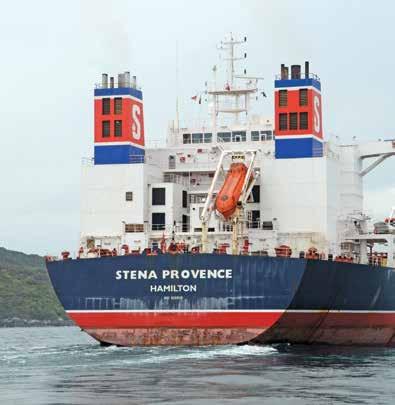
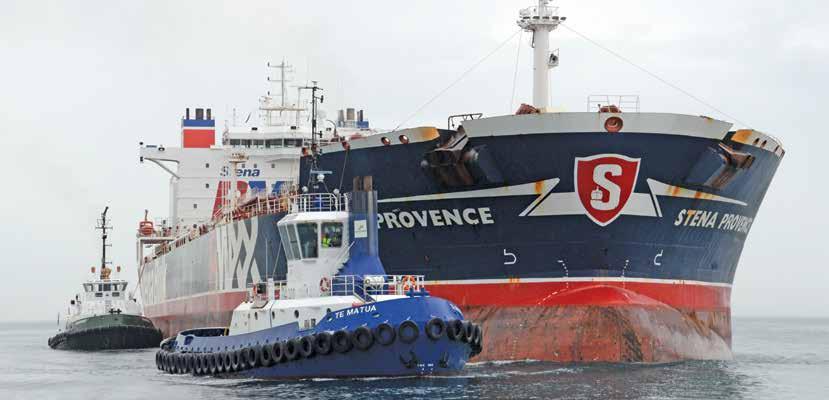
Records are made to be broken but these days when ships arriving in Bluff break an existing record it is usually only a matter of a few gross or deadweight tonnes or dimensionally a few centimetres. When the tanker “Stena Provence” arrived however, she was at 65,000 tonnes deadweight, which was over 10,000 tonnes deadweight plus over 10,000 tonnes larger than the biggest tanker that had ever been here. Her forty metre beam was also seven metres greater than any previous ship, breaking a record that had stood for over thirty years; but then she is a rather special ship.
The “Stena Provence” is one of the ‘P-Max’ Class, which are among the safest tankers afloat. During the design phase Stena recognised that 25% of tanker accidents were the result of hull or machinery failures and 50% were collisions, allisions or groundings.
The double hulls of the ‘P-Max’ ships are therefore ice-strengthened and they have two engine-rooms divided by a fire safe and watertight bulkhead. Each engine has a separate fuel supply and auxiliary systems to drive one of the twin screws, and twin rudders are also fitted. This makes for exceptional manoeuvrability and the greater beam allows a shallower draught for the required deadweight, reducing the need for dredging at some ports. The ship has thus been altered to accommodate nature rather than requiring nature to accommodate the ship.
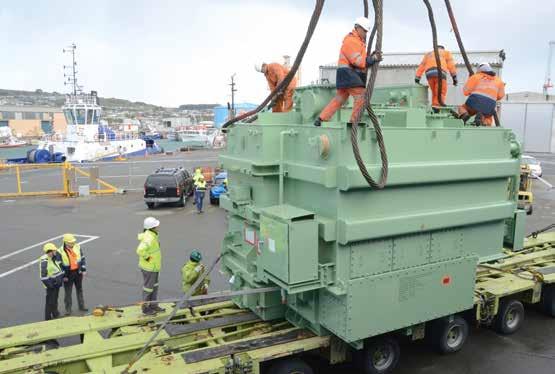
A couple of issues back our front cover featured the Dutch multipurpose heavy lift ship “Fagelgracht” in Deep Cove, Doubtful Sound, where she discharged a transformer for the Manapouri Power Station. Those aboard the “Indian Dawn” were less fortunate as the transformer they carried was for the New Zealand Aluminium Smelter’s plant at Tiwai Point and was discharged in the less exotic surrounds of Bluff Harbour. In the past such heavy lifts have had to be barged across the harbour, but strengthening work on the Tiwai Road bridge allowed this load to be discharged to road transport for approximately 30 km onward carriage.
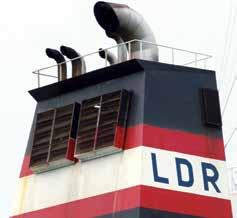
Louis Dreyfus is one of the great French trading houses. Its origins date back to 1851 when Léopold Louis-Dreyfus, the 18 year old son of a farmer in Sierentz, Alsace, began buying grain from Alsatian farmers and selling it in nearby Basel, an important trading centre on the River Rhine. He extended his purchasing activities into Hungary and Romania while establishing offices in Germany and France. The FrancoPrussian War of 1870-71 ended with the Treaty of Frankfurt in which Germany annexed Alsace so in order to retain French nationality Léopold shifted to Marseilles and later established the Louis Dreyfus headquarters in Paris.
The first foray into shipping began in 1890 with small sail and steam powered ships under the Russian flag in the Sea of Azov and Black Sea transporting grain for trans-shipment to larger vessels sailing to major Mediterranean ports. In 1903 the company’s first deep sea ship was built, the 3,353 gross ton “Carol Ier” being named in honour of the king of Romania, a country where Louis Dreyfus did much of its business. Banque Louis-Deyfus was established in 1905 to ensure finance for the company’s grain trading operations which were now global in scope.
Offices had been opened throughout Europe and Russia, in the Americas, Africa, Asia and as far afield as Australia.
Léopold Louis-Dreyfus died in 1915 and was succeeded by his sons who continued to expand the business, although the Russian Revolution caused the loss of assets there. During 1919 the first move towards establishing a fleet to carry the company’s own cargoes was made with the purchase of three war-built ships, supplemented by six post-war ships bought in the 1920’s when prices were very low. This entire fleet was disposed of to help finance the construction of six modern motorships built to the company’s requirements during the 1930’s, which was the fleet in being upon the outbreak of World War II.
Meanwhile in London a company known as Buries Markes was established in 1930, bought a modern tramp steamer that it never traded, sold the ship, then lay dormant. In 1938 it was revitalised when purchased by Louis Dreyfus and almost immediately took delivery of a brand new ship, the “La Pampa”. This name was chosen to recognise the contribution of Louis Dreyfus’ Argentinian subsidiary, SACEIF, towards financing the vessel and all subsequent Buries Markes’ ships were
given Argentinian names with the prefix ‘La’.
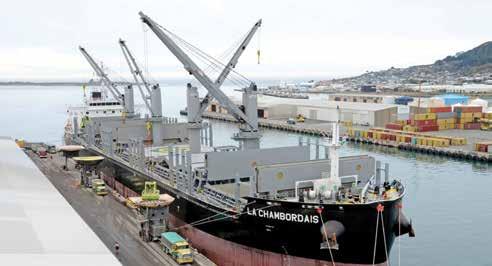
Both fleets were rebuilt postwar with conventional tramp ships and cargo liners, the latter operating on one of several regular services including Canada to Europe and Canada to the Mediterranean, both operated in association with the Canadian company Montship Lines, later to become a subsidiary managed by Buries Markes, Gulf of Mexico to South Africa and Europe to South America. Grain or cereals would usually be the cargo in one direction and general cargo in the other but as the conventional cargo ships were replaced by bulk carriers the company withdrew from its liner operations.
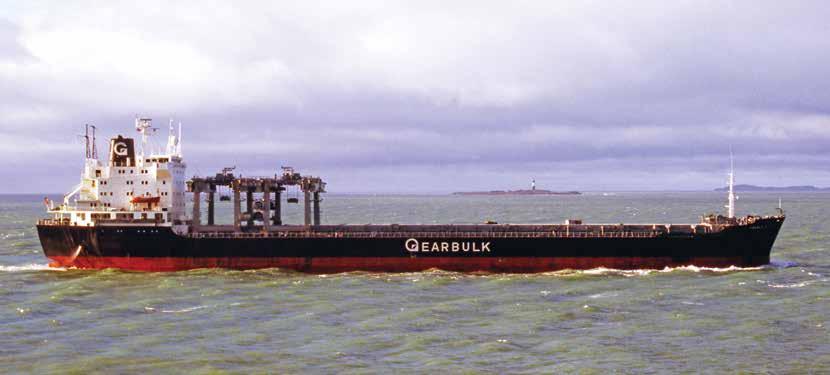
The first of several Buries Markes’ cargo ships to visit Bluff was the “La Estancia” in February 1949, with the Louis Dreyfus vessel “Leopold L.D” arriving a few months later. Louis Dreyfus was one of the companies that formed Gearbulk in 1968, with a number of Gearbulk ships under Dreyfus or Buries Markes management calling in Bluff before the company withdrew from the consortium in 1990. At the high end of the shipping spectrum Louis Dreyfus has some very specialised vessels including research ships, cable layers, ships to transport the Airbus A380 airliner, offshore windfarm installation vessels and cross-channel ferries. In 2011 LDA Roullier was formed as a joint venture between Louis Dreyfus Armateurs and Groupe Roullier, ordering a series of bulk carriers in China, two of which have been the company’s most recent visitors to the Port of Bluff.