JULY 2022 | VOL 42 NO. 2
PUBLISHED BY SOUTH PORT NZ LTD
CHANGINGGEARS
OURPEOPLE
INFRASTRUCTURE:
BLUFFFOCUSON:
Town Wharf Redevelopment Coastal Tankers
JULY 2022 | VOL 42 NO. 2
PUBLISHED BY SOUTH PORT NZ LTD
CHANGINGGEARS
OURPEOPLE
INFRASTRUCTURE:
BLUFFFOCUSON:
Town Wharf Redevelopment Coastal Tankers
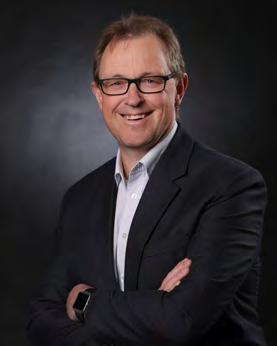
Kia ora koutou katoa,
We have recently celebrated Matariki as a national holiday for the first time this year, recognised through the many events held over the week throughout Aotearoa. During this same time the South Port team attended a celebration dinner held by Rayonier Matariki Forests (RMF), one of South Port’s key log exporters.
We were welcomed at this function by Dean Whaanga (Te Rūnaka o Awarua Kaiwhakahaere) who then provided an excellent presentation on the meaning and history of Matariki. This was followed by a presentation from Brendan Slui (Managing Director RMF) sharing the history of the Company and also celebrating 30 years of operation in New Zealand. As noted during the presentation:
“Matariki Forests was named to recognise the Māori name for the Pleiades constellation which appears above the horizon in early June signifying the start of the Māori New Year. Traditionally this is the time when new crops are planted – or, in Matariki Forests’ case, new trees – and the beginning of a new cycle of growth”.
At the beginning of August, we are expecting the arrival of a Heron Construction backhoe dredge at the Port to carry out dredging in the entrance channel for an existing consent. In the 1980’s South Port (then the Southland Harbour Board) carried out a drilling and blast campaign to achieve a minimum 10.24m draught. At this time the equipment being used by the contractor had insufficient capacity to remove all of the fractured rock, therefore it was left in the channel.
The backhoe dredge coming to the Port in early August has far greater capacity and will attempt to finish the work from the 1980’s and remove as much of these fractured rocks as possible (note there will be no drilling and blasting).
Meanwhile, South Port has been working through a resource consent process for the past 24 months to establish a new drill and blast campaign, removing the high spots in the channel to achieve a minimum of 10.7m draught.
Initially, it was planned that we were going to remove the frac proposed new consent. Due to timing and existing demands for th activity to the current year. Therefore, the existing consent ( separate years. It is important to note that the current consen process and expects an outcome in the next 8 – 12 weeks.
Finally, there has been a huge focus on the Safety, Health and tragic fatalities within the industry. Safety First is South Po continually work hard in this area to make improvements to ensu reminder that we work in a hazardous environment, and it takes Port to ensure the safety of our people.
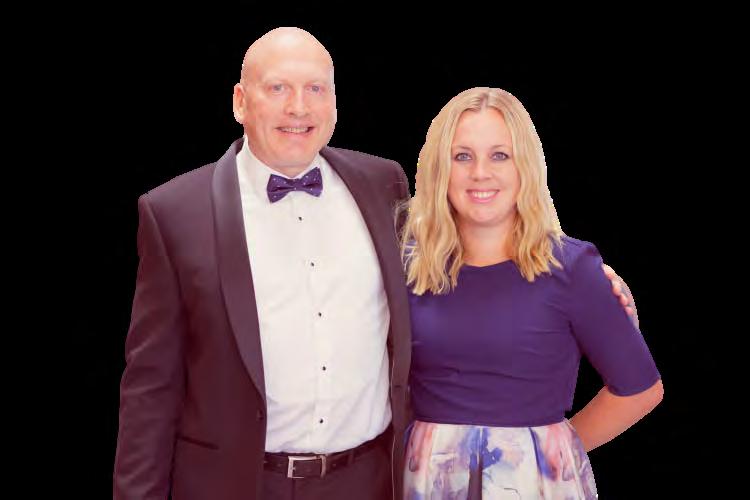

In this edition, we welcome Charlotte Scoles, who is South Port's new Communications Advisor. Charlotte is responsible for publications such as The Portsider and Mai i te Wāpu | From the Wharf.
In March, Charlotte relocated south from the Taieri Plains near Dunedin with her husband, three pre-teen sons and horses. She gave up her posting as Marketing and Customer Experience Manager at Dunedin Airport to join the team here at South Port. Charlotte's husband Daniel has taken on the role of Dealer Principal for CLAAS Harvest Centre Southland, managing the Invercargill and Gore branches.
Charlotte is looking forward to meeting many of you in the months to come.
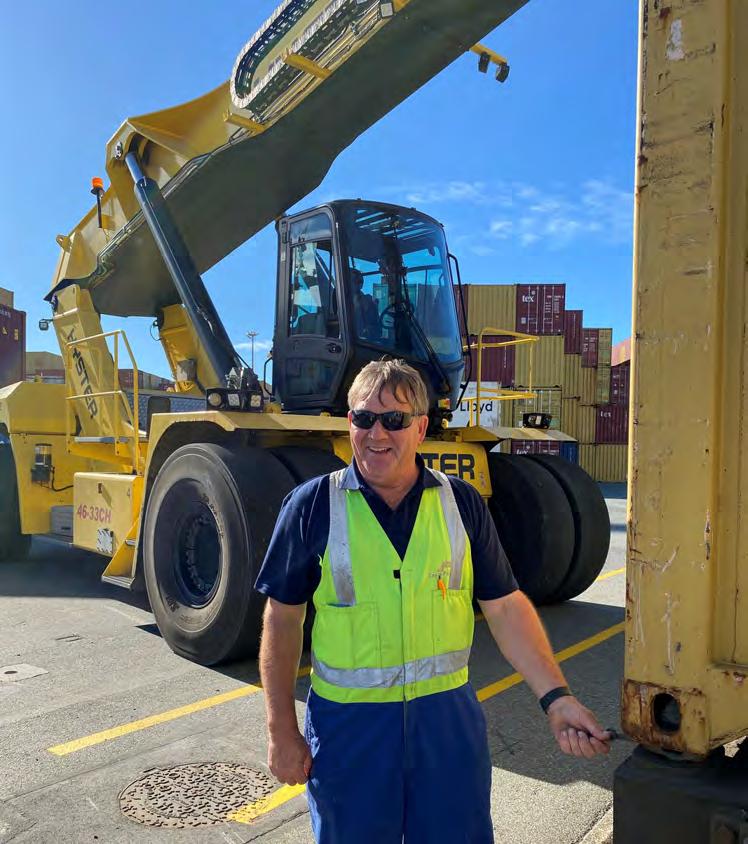
1AprilmarkedGlenHourston’s40thanniversarywithSouth Port(anditspredecessor,theSouthlandHarbourBoard). While Glendoesn’tusuallylikebeingthefocusofattention,he’saware thatthismilestoneisa“prettybigdeal”.
Overtheyears,GlenhaswitnessedalotofchangeatthePort, especiallywithincreasesincontainercargovolumesoverthe pastfewyears.“There’snotmuchIhaven’tdone,ormachineryI haven’toperated.InmytimeI'veworkedonthesyncrolift, weighbridgeandlinkspan–theonlythingIneverworkedonwas theoldmeatloaders…Ievendidsecurity,fillinginatthe gatehousewhenitwason theothersideofthebridgeandonly mannedatnightsandweekends”.Inhiscurrentpositioninthe Terminal,heenjoysdoingtherailasthere’sabitmore responsibilityandvariety,andheisregularlyoutofthecab checkingtwistlocksandotherrailrequirements.
OfallthemachineryGlenhasoperated,theLiebherrcrane standsoutandhecountshistimeasamemberofthecranecrew asahighlight.
OnememorableoccasionherecallswasaPortOpenDayafter we’dpurchasedthefirstLiebherrmobileharbourcrane.
Charlotte Scoles – Communications Advisor – March
Jono Daintith – Marine Operator - March
Lee McDermott – Container Terminal Operator - March
Rob Byres – Dairy Warehouse Operator and Storeperson - April
Jeff Mead – Tug Engineer – May
Murray Conner – Tug Engineer – June
RochelleVanBeek–promotedtoHealth,Safety&Wellbeing TeamLeader–April
NowpermanentteammembersintheColdStores–May: RobinsonPotesPretel
ElkinBuitronGuanga
JaredHarris
EdgarMolinaArevalo
Sha'treceWoods–promotedtopermanentDairyWarehousing Operator-July Marama Reti
Brandon Phillips Jazz Walters
We celebrated with bungy jumps by the Port's Business Development Manager, Derek Nind (who later went on to become the Chief Executive at Wellington’s CentrePort) and two Liebherr reps from Austria. Derek ended up being dunked deep into the water, all while wearing his business suit and fancy crocodile shoes.
On another occasion, when the then Prime Minister Jim Bolger was visiting the Port, Glen was supervising in the crane while the PM was at the controls “swinging a container around like he was digging a trench on the farm!”
GlenfondlyrecallstheolddayswhenTomShirleywas theChairmanandNeilCantricktheGeneralManager. ThePortwasn’tasbusyasitistoday,andtherewere moreopportunitiesforsocialmixingandmingling.He evenrecallstheChairmanoccasionallyshoutingakeg ortwoafterboardmeetings,whichindicateshow‘old’ theolddayswere!
Ofcourse,nostoryiscompletewithoutrecognisingthat SouthPortholdsaveryspecialplaceinGlen’sheart–afterall,it’swherehemethislovelywifeSusanwho usedtoworkinthepayrolloffice.“Sueusedtobringthe payslipenvelopesovertoR&D-sheusedtohateme becauseIwasalwaysjokingaround”.
Glen Hourston – 40 Years - April
Thanksforallthatyoudo,Glen.Weloveyourwork!
Rail plays an important part in South Port’s day-to-day operations, moving containerised cargo to and from various customers, along with South Port's Intermodal Freight Centre in Invercargill.
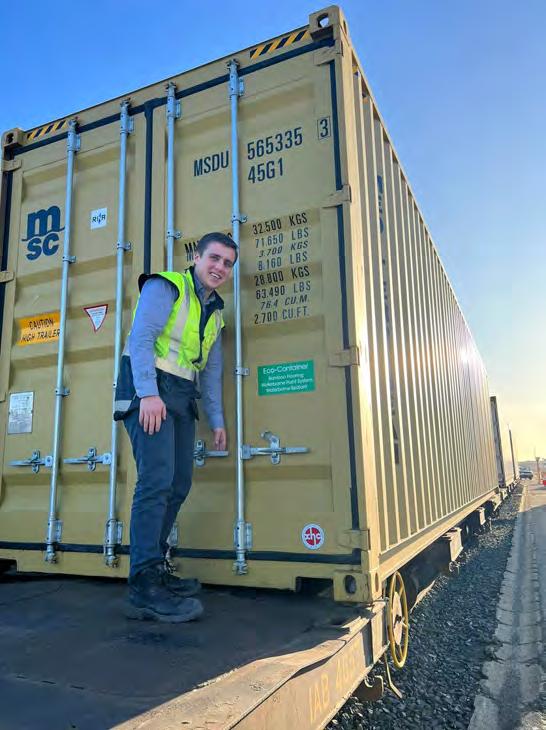
Someone who plays a vital role in this aspect of South Port operations is Harrison Roderique. Harrison joined South Port a year ago on a fixed-term contract to fill a position in the Receivables and Deliverables Office.
He soon mastered the roles of ship planning, yard allocation, and the aforementioned organisation of rail, which involves collating reports from New Zealand Rail’s Christchurch Office detailing what is being railed to and from Bluff. Harrison is also responsible for taking note of the rail requirements of South Port's warehousing departments in order to direct the terminal forklifts in the loading and unloading of the rail wagons in an efficient manner.
Because of Harrison's outstanding ability in mastering these various tasks, he was employed to a permanent position in the South Port Container Terminal in February this year.
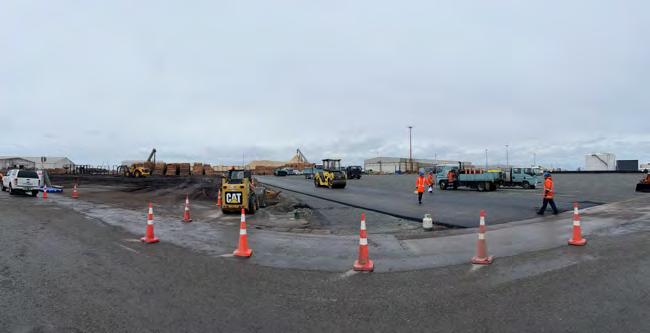
Construction of the South Rail Log Yard is underway, which will see 17,000m² upgraded from gravel surface to asphalt by Jim Bates Contracting. Prior to the pavement installation, new underground services will be installed by South Roads including water mains, a stormwater treatment system, and new fire hydrants. Lighting will also be upgraded to LED, which will improve visibility, andincreasethesafetyofthoseon-site.
At present, loose bark in the yard must go to landfill as the current setup sees it contaminated with gravel. The redevelopment will enable exporters to sell this bark, as the asphalt surface means the bark will be clean and up to commercial standard. Work is being completedintwostagestocaterforlogoperations,whicharecontinuingthroughouttheredevelopment.
One of our key stakeholders that will see the benefit of this redevelopment is Rayonier Matariki Forests (RMF). Regional Manager, Hamish Fitzgerald, states that "RMF has a strong relationship with the team at South Port and the redevelopment of the South Rail areaisanaturalcontinuationofthatpartnership."
"As a customer we see numerous benefits from the project. One of the largest gains will be improved conditions and a safer working environment for the NFA team that provide log marshalling and stevedoring services. From an exporting perspective we willalsobeabletoplanandforecastshippingvolumeswithgreateraccuracyandachievebetterutilisationofspaceonthewharf. NewZealand’slogexportmarketshavestrictphytosanitarystandardsmeaningthatmudonlogsmustbeminimalinordertobe
Harrison Roderique conducting a safety check certified. Sealing of the South Rail surface removes the potential storage of logs in gravel conditions at the Port."
"Another benefit from the project is that greater volumes of merchantable bark will be recovered from the yard which will be used in landscaping applications and the horticultural industry. "
The project is expected to be completed in October 2022.
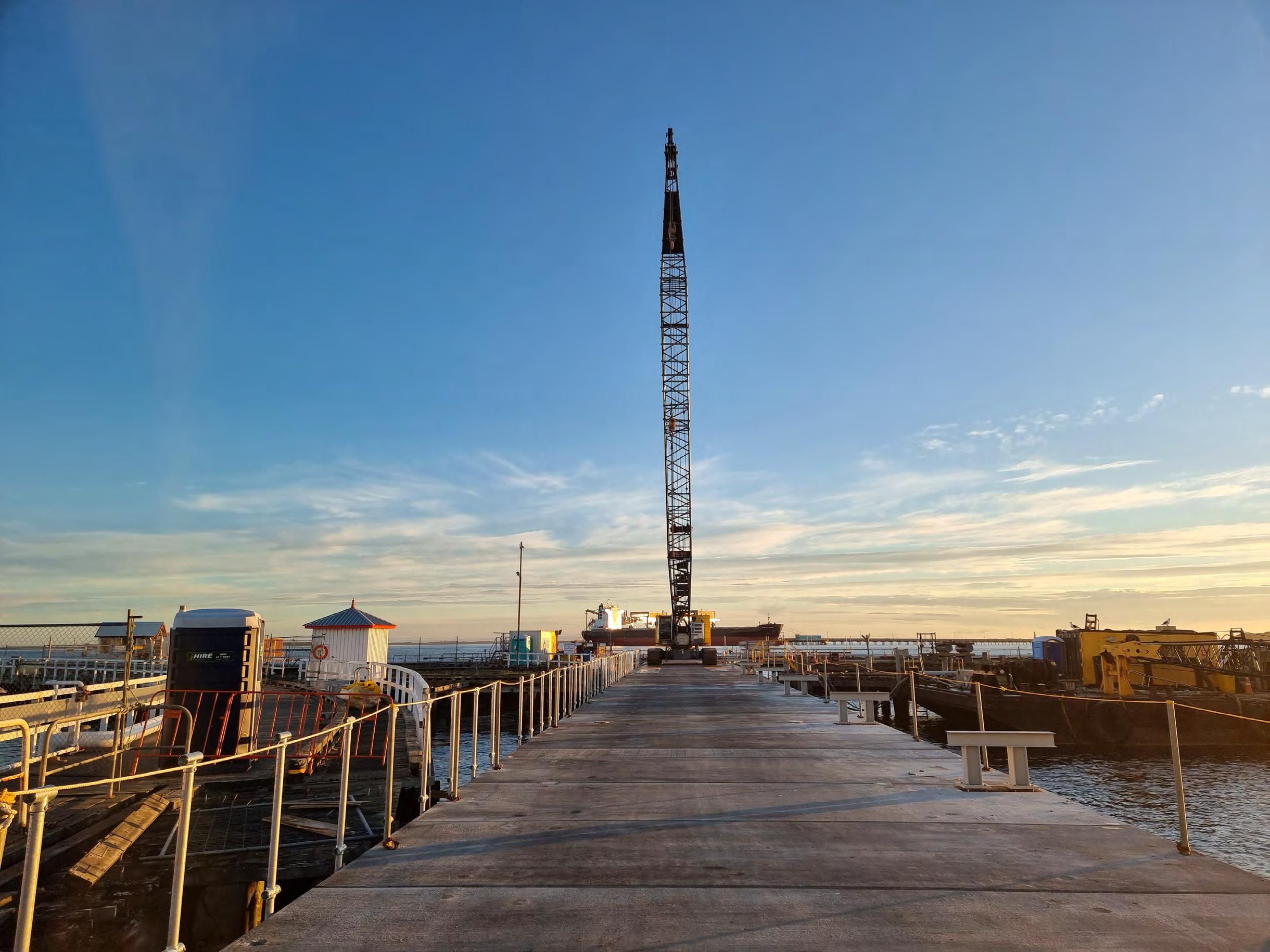
After 12 months, a partial reconstruction of Bluff's historic Town Wharf is now complete.
The $10.5 million infrastructure upgrade was imperative to ensuring the sustainability of offloading fuel and bitumen for distribution to the Southland and Wakatipu Basin regions.
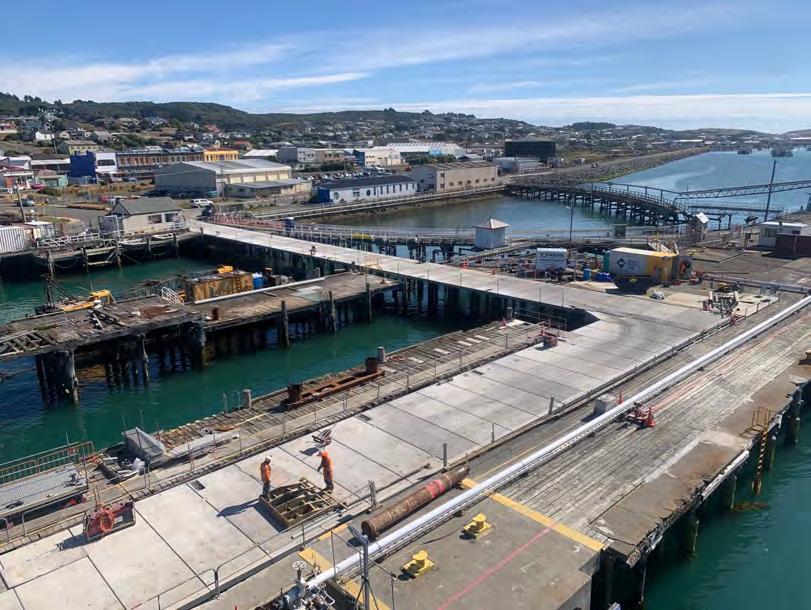
Project details included demolition of the existing structure, new steel piles, steel superstructure, concrete decking for the discharge area at the eastern end of the wharf, and a 150-metre long access bridge - all while keeping the fuel berth operational right throughout construction. The new structure holds all pipelines and provides vehicle access to the discharge area.
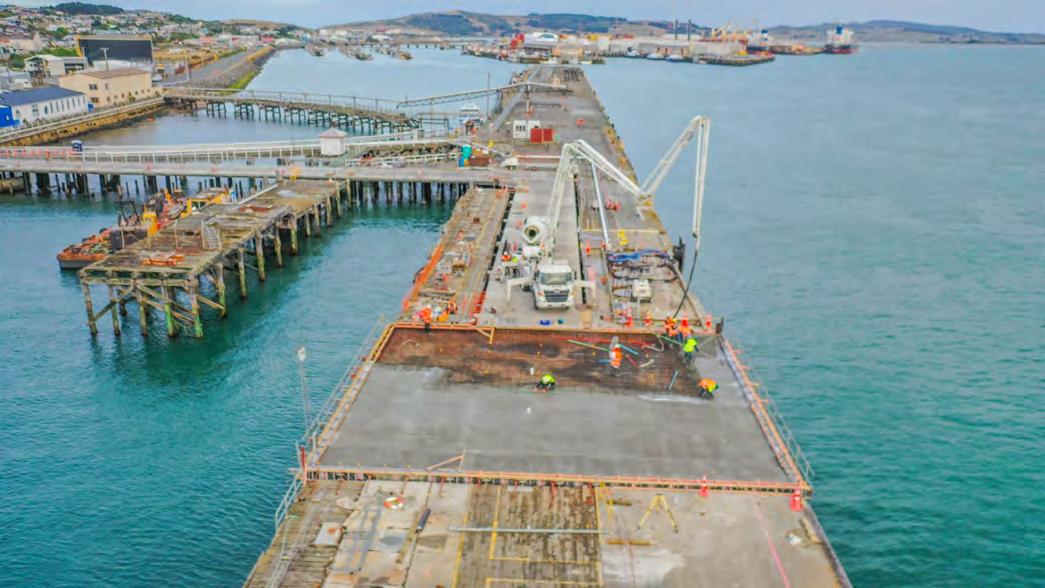
A section of Foreshore Road, which runs parallel to the wharf, was closed for the duration of construction. Our lead contractor on the project, Brian Perry Civil, did an excellent job working in with the community throughout. The project wasn't entirely smooth sailing with the team experiencing some delays during August 2021 thanks to the COVID-19 pandemic, however, issues were mitigated, and the project was still delivered on time.
The Town Wharf is around 170 years old, having been originally constructed in the mid-1800s. During this time, a part of the wharf was reconstructed after a fire, and other boards along the top have been replaced over time; however, the original Australian Hardwood, of which the piles are made, remained original and intact.
Australian Hardwood is highly sought after, and as such, South Port has set about donating it to community groups, with a focus initially in Bluff, but now also in the wider Southland region. A portion of this wood has already been utilised in the design of Bluff's new Information Kiosk, and the local Te Rau Aroha Marae is currently integrating it into their new Marae Trail, creating a large viewing platform that will be accessible to the public.
It is expected that the upgrade will have a life of around 50 to 70 years, future-proofing Southland and Wakatipu Basin's bitumen and fuel imports.
Mobil and Road Science are currently finishing the installation of their bitumen and fuel pipelines. The whole wharf will be fully operational by August 2022.
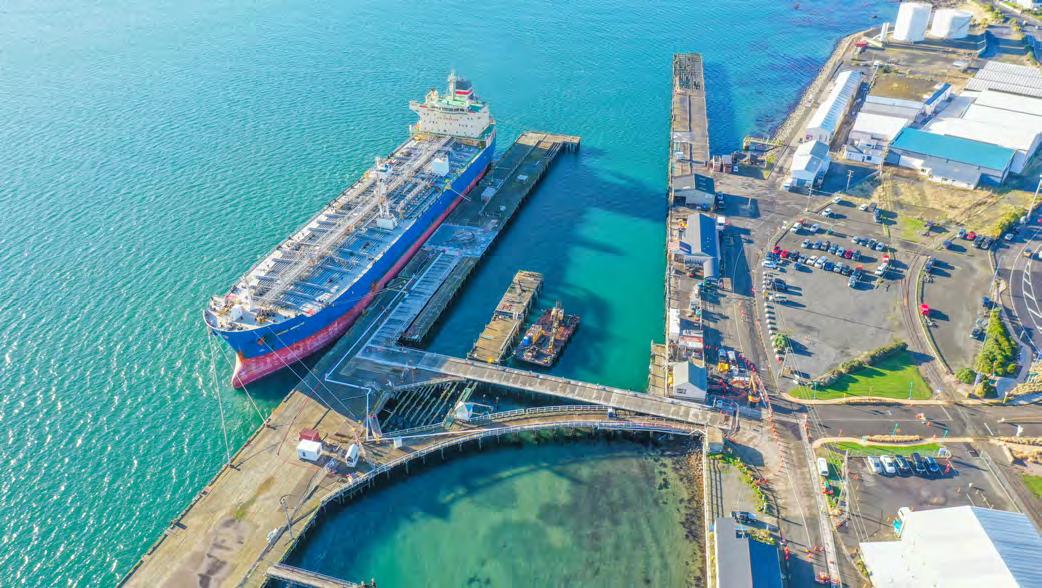
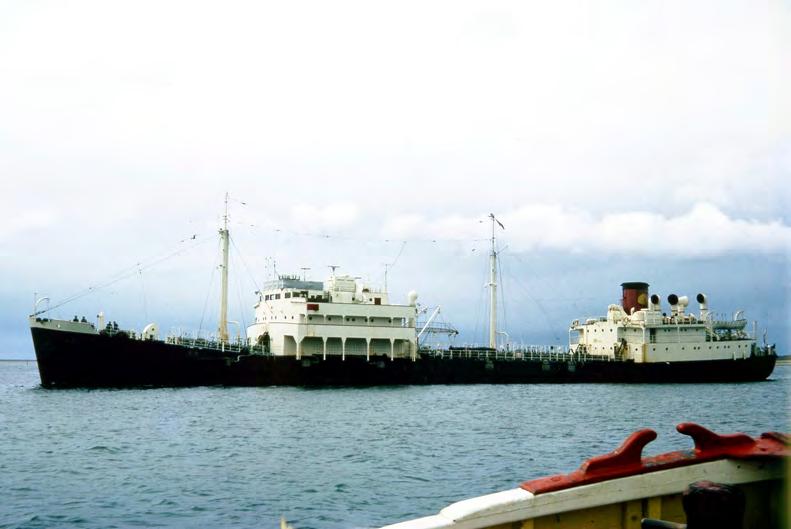
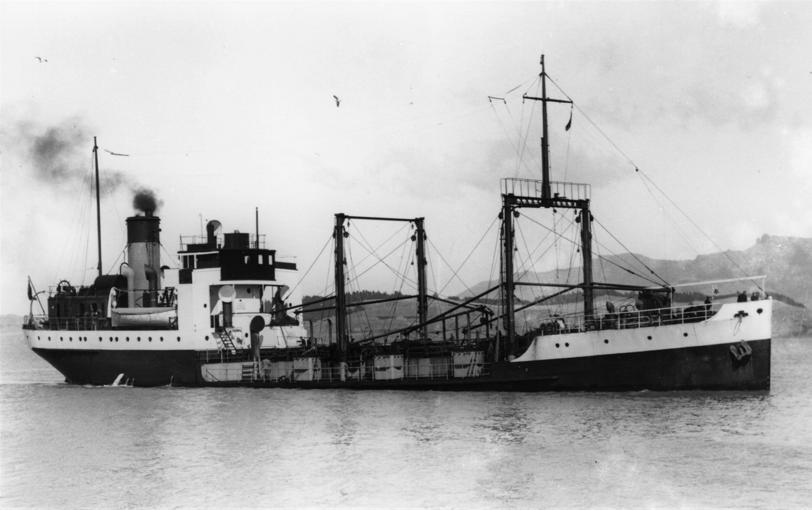
The first tanker built specifically for the New Zealand coastal trade was the Shell Company of New Zealand’s “Paua” and her first New Zealand port of call on her delivery voyage was Bluff where she arrived on 11 September, 1927. Having loaded a full cargo for New Zealand en route the “Paua” was able to discharge to the bulk oil installation at Bluff which had been completed in 1926, one of the first in the country. The “Paua” served New Zealand until 1950 when she was replaced by the “Tanea”.
Traditionally petroleum products were distributed around our main ports by the oil tankers that brought them here, with the “Tanea” on-carrying to smaller ports that couldn’t handle these ships. This would change when the Marsden Point Refinery opened in 1964 and the Coastal Shipping Co-ordinating Committee, soon abbreviated to Coco, was formed by the oil companies to oversee coastal operations. It was apparent that larger tankers would be needed for distribution of refined products and a small bitumen tanker to transport high-heat cargo. The “Tanea”, which couldn’t handle bitumen, was therefore replaced by the “Maurea”, which could.
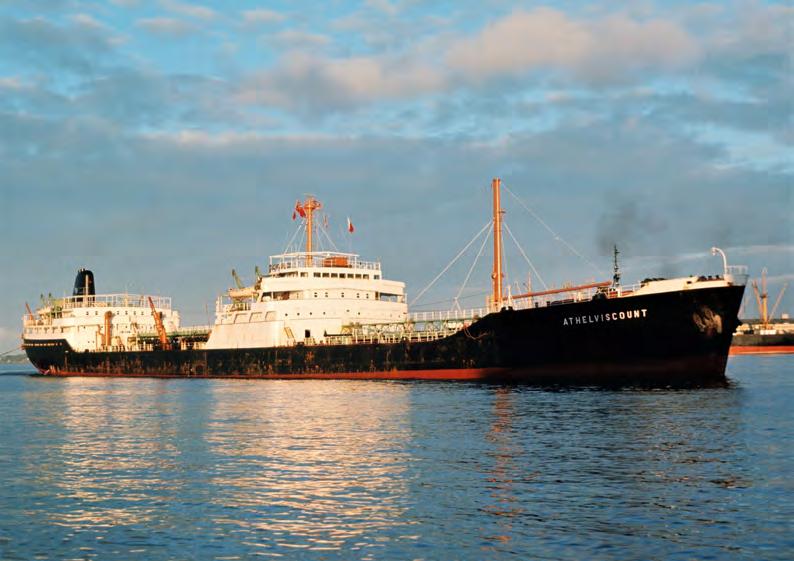
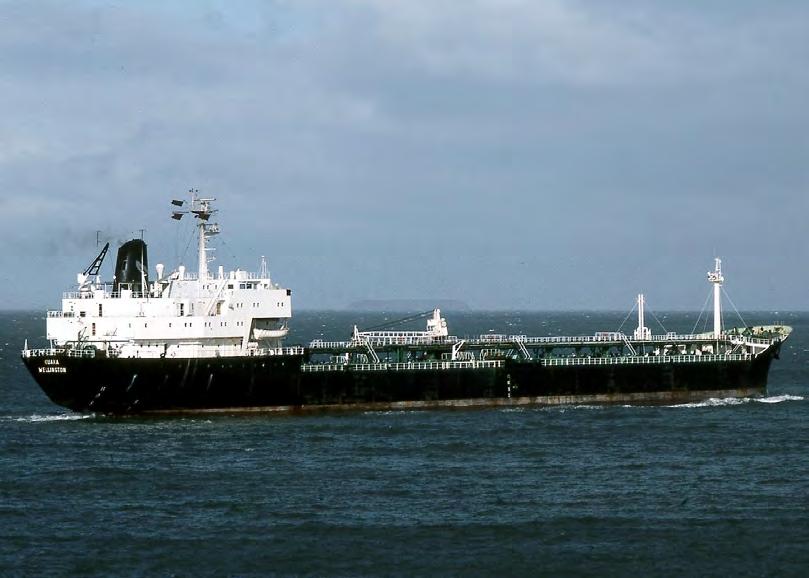
First of the larger tankers to arrive was the “Athelviscount” in 1965 followed by the “Hamilton” in 1967 and the “Erne” in 1972. Prior to her arrival in New Zealand the “Erne” was modified to carry bitumen allowing the “Maurea” to be sold. Māori names of birds were adopted for the tankers, the first so named being the “Kotuku” and “Kuaka”, delivered in 1975, followed by the “Amokura” in 1978.
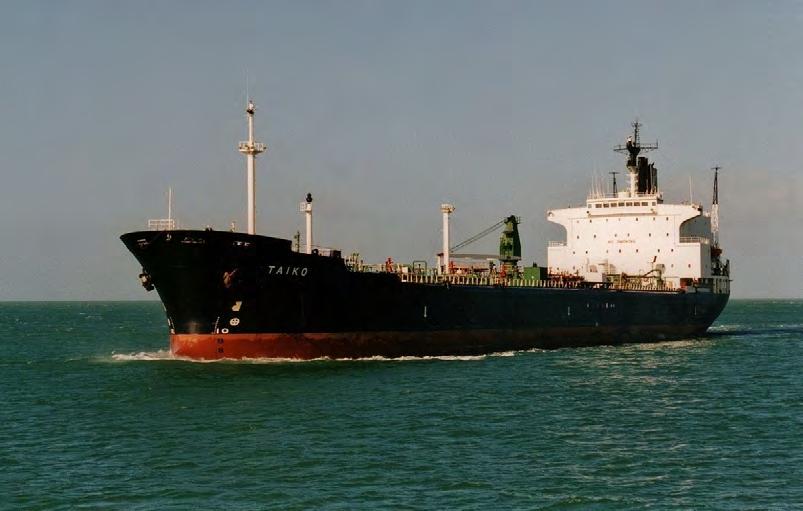
While the “Paua”, “Tanea” and “Maurea” were owned and managed by Shell, up until 1994 all the chartered ships were managed by Union Steam Ship Company, which ordered a tanker of its own in 1982. Delivered in 1984 the “Taiko” had the sad distinction of being the last ship ever built for the Union Steam Ship Company and on 12 September, 1998 became the last Union Company ship to visit Bluff.
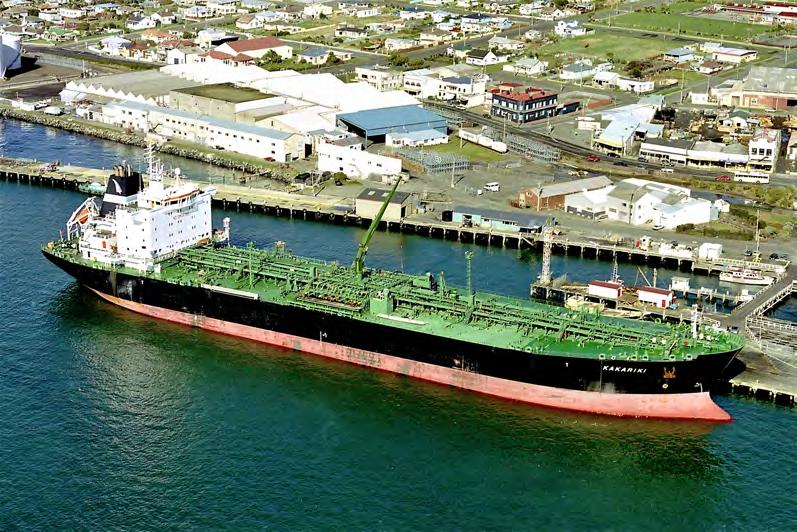
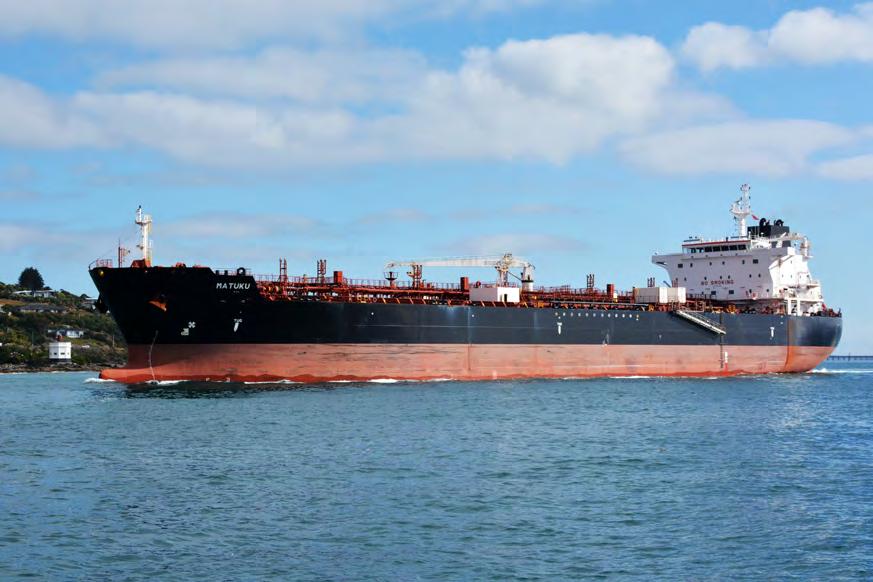
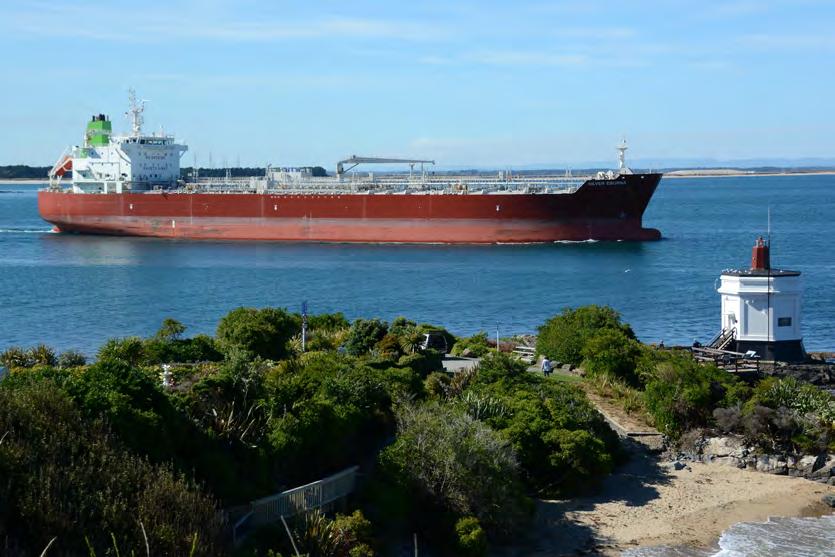
The “Toanui” joined the fleet in 1996, being replaced by the newly-built “Kakariki” in 1999, while a colourful addition was the “Torea” in 2007 as she retained her owners blue and orange colour scheme throughout her ten years here. Replacing the “Kakariki” and “Torea” were the “Matuku” and “Kokako” delivered in 2016 and 2017 respectively. Earlier this year the Marsden Point Refinery ceased refining and the raison d’etre of the coastal tankers also ceased. The last visit to Bluff was made by the “Matuku”, which departed on 20 March 2022, 94 years and six months after the “Paua” arrived to inaugurate a coastal tanker service.
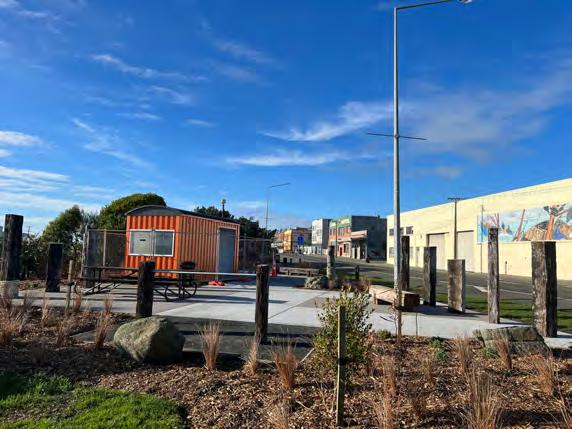
GoreStreetinBluffisthelocationofthetown'snewInformationKiosk,wherethevisionwastocreateahighlyappealing andattractivetourismprecinctthatwill,hopefully,generategreatervisitorlengthofstayandvisitorspendintheregion.
Inanefforttoreusematerialsandmaintainthehistoryofthearea,therewereseveralkeyfocuspointswithintheproject. ThisincludedrepurposedAustralianhardwooddatingbacktothemid-1800'sthatwasremovedfromthehistoricTown Wharfduringtherecentredevelopment.Furtherstockpiledhardwoodthatwastakenfromthewharfwillalsobedonated toothercommunitygroupsforprojectsaroundtheregion.
ThepathwayaroundtheInformationKioskfeaturesseveraloldsteelbollards,also fromthewharf.Bluff'sstrongKāiTahu/NgāiTahuheritagewillbeincorporated notonlyintext,butwithsomeexcitingvisualelementstofeatureaswell,which weredesignedbyatalentedlocalartist.
Therockswerehand-pickedfromGrahamLaidlaw'sfarmlocatedatGreenhills.It hastakenacommunitytobringthisgrandnewfocalpointtolifewithmany businesses,groups,andindividualscomingtogethertodonatetheirtime,service, andfundstowardstheKioskproject.
Heahatemeanuioteao?HeTāngata!HeTāngata!HeTāngata!Whatisthemostimportantthingintheworld? ThePeople!ThePeople!ThePeople!
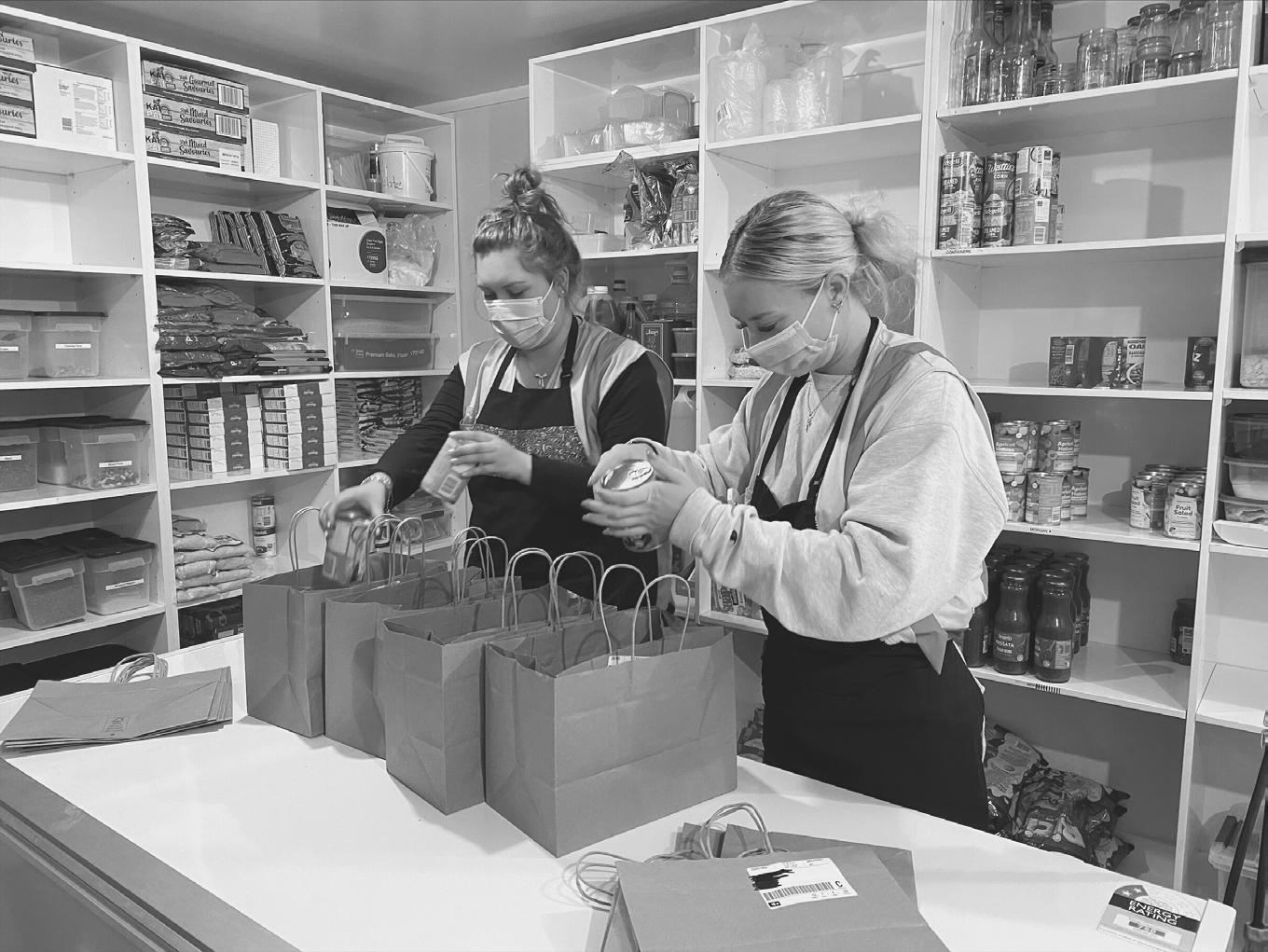
Te Rau Aroha Marae, located in Bluff, is the world’s southern-most marae, which was opened in 1985. When COVID-19 first struck, it was trying times for some whānau. The marae team and others became essential workers, preparing readyto-eat meals. They knew this was not sustainable, so a program was developed to help people help themselves with kai boxes,recipes,andaccompanyinginformationtohelpthemontheirjourneytocreatinggood,healthykaiathome.
Two out of three of the marae team were recently put into isolation, with hui still booked, people to feed, and kai boxes to prepare. The Dairy Warehousing crew from South Port were able to send Sha’trece Woods, Chantinee Kelland-Gallie, and EllieRobertsalongtohelppreparethekaiboxes,readyfordistribution.
TheDairyWarehousingcrewenjoyedthemaraeandarealltookeentogobackifneeded!
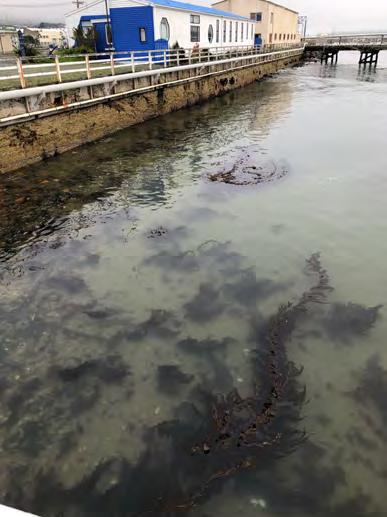
Under the permit of the Ministry for Primary Industries and Environment Southland, Southern Clams Ltd has planned an operation to remove Undaria seaweed, also known as Japanese kelp, from around Bluff Harbour. This will take place from June to December 2022.
Undaria is considered a pest, so sustained control is critical. It makes this operation vitally important to help control the spread from Southland to Fiordland.
The Undaria harvested will be processed and used for health foods, nutritional supplements, pet food, and as a fertiliser enhancer. This sees an expensive biosecurity problem converted into a useful resource.
South Port has joined the world of Instagram! If you have any photos of this amazing part of the world that you'd like to share with us, please tag us in your posts on Instagram (SouthPortNZ) with the hashtag #BeautifulBluff.
You will also find us on Facebook, LinkedIn and on our website www.southport.co.nz
Due to the success of acquiring our first empty handler, it was decided to purchase an extra empty container handling forklift.
This is because the performance of an empty handler when compared to that of a normal Top Lifting Forklift revealed:
The tyre life is extended by more than double
The total fuel cost of running the machine is half
An empty handler can carry two containers at a time
The overall maintenance is halved due to less wear and tear on the machine
The throughput when surveying containers is doubled
There is a far greater level of efficiency when the empty handler is used to cart empty containers being discharged from a vessel.
The model chosen is a Hyster H11XMECD8, which has a lift capacity capable of handling two empty 40-foot reefers.
The order was placed at the start of April 2021, with the country of origin being Holland. But, due to the supply chain issues caused by COVID-19, South Port didn’t take possession of the machine until over a year later, in the middle of April 2022.
In addition to the performance benefits,
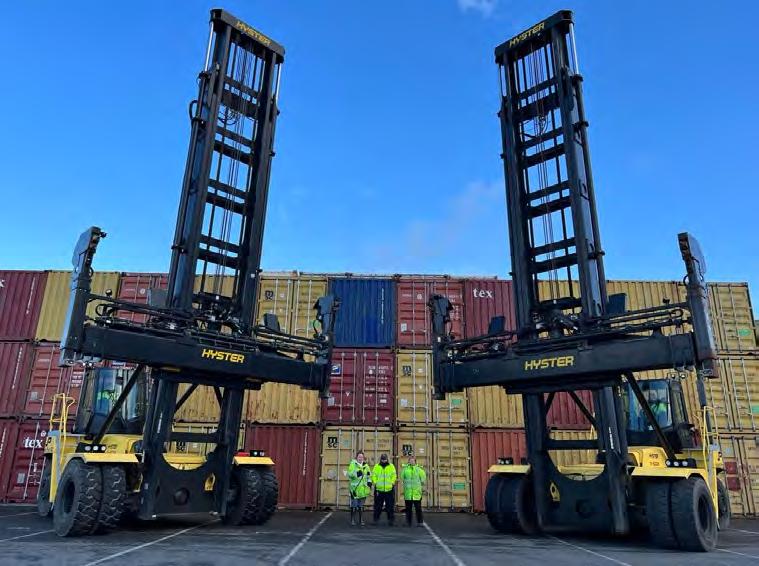
the new empty handler has many safety features including:
3-point high visibility seat belt
LED external lights
LED lights mounted under engagement systems on the spreader
Mirrors internal and external
Safety strobe light
Speed control system relative to load, load height, and mast position
Automatic programmable machine shutdown system should operator leave the seat.
This latest purchase brings the total number of forklifts servicing South Port’s Container Terminal to eight, consisting of two empty handlers, four reach stackers, and two top lifters. It will play a significant role in container operations moving forward.
Records are made to be broken, or so they say, and every so often we record in these pages the fall of one associated with the tonnages, dimensions or capacities of ships visiting Bluff.
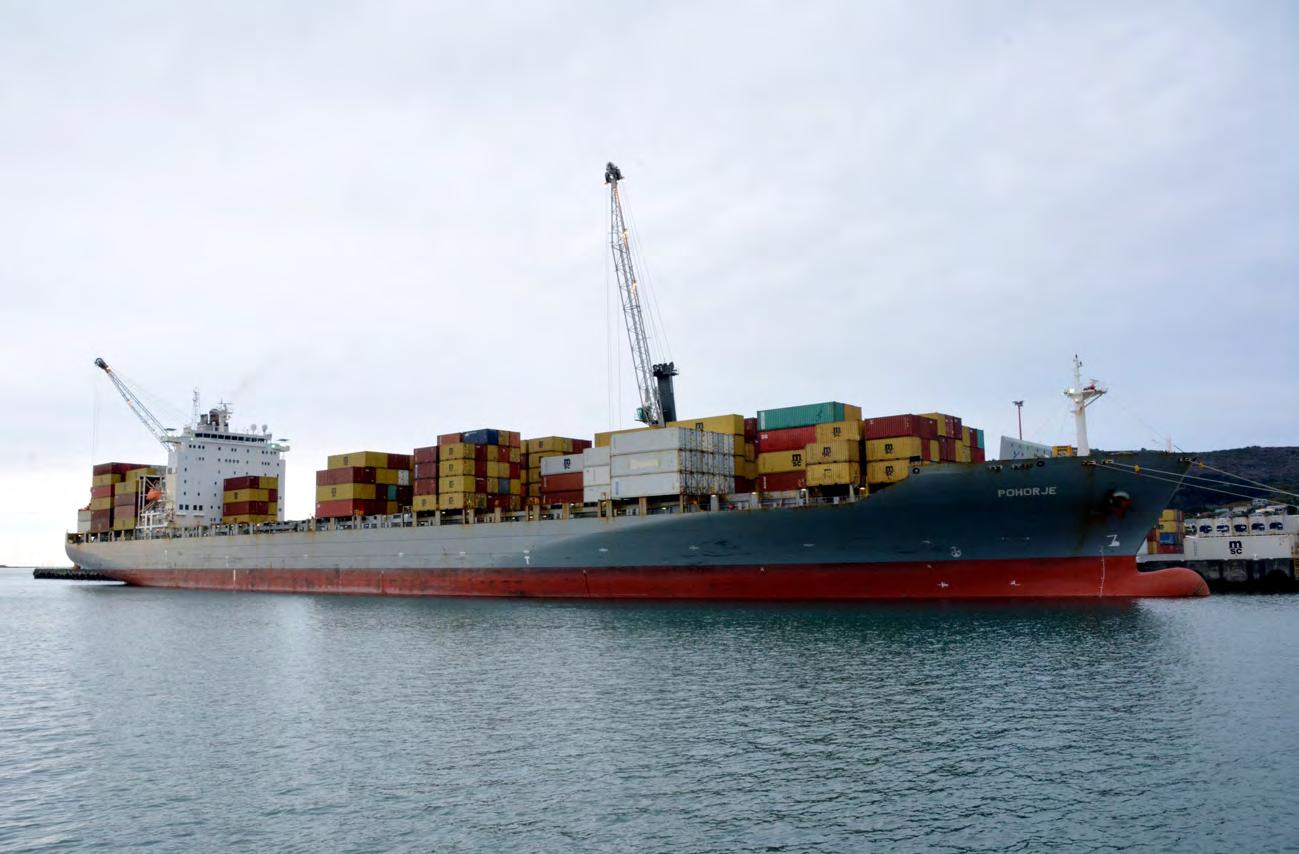
In our July 2021 edition we reported the arrival of the “Wieland” that beat all comers in the greatest gross tonnage field and took the container ship titles for beam and capacity. That for length, which has tended to increase by mere centimetres of late, eluded her but now belongs to the “Pohorje”, which with a length of 267.7 metres surpassed the previous record by a clear seven metres.
Occupying all of Berth 4, and a good part of Berth 3, is the "Pohorje" - the longest ship to enter Bluff
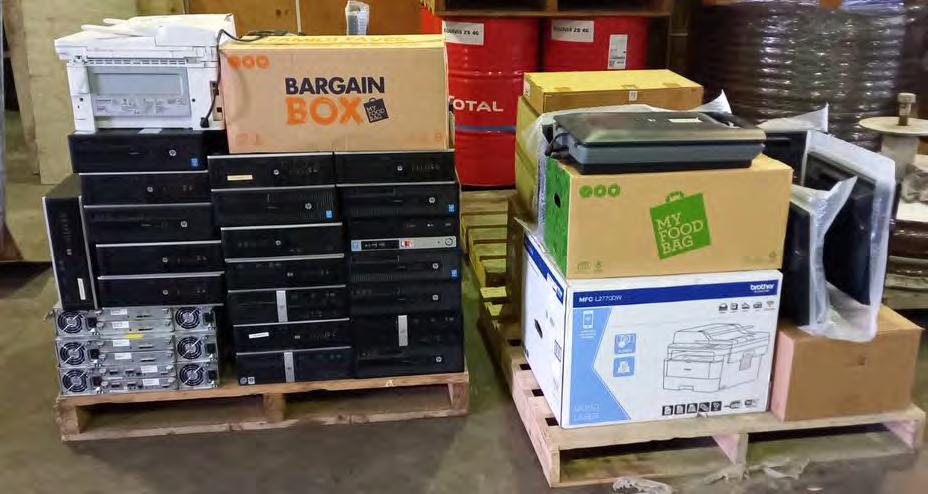
Since joining the South Port team in September 2021, South Port's IT Coordinator Dylan von Sommaruga has spent hundreds of hours refurbishing accumulated technology. He has partnered with RemarkIT and Digital Wings NZ, which means that the technology can be donated to a community organisation, or have valuable assets - such as gold, cobalt, and copperretrieved.
With 80,000 tonnes of e-waste generated in New Zealand each year and only 2% of that total being recycled, we're very proud of Dylan's efforts.
Communications Advisor, Charlotte Scoles, and Business Development Support, Sam Withey, delivering Mai i te Wāpu | From the Wharf
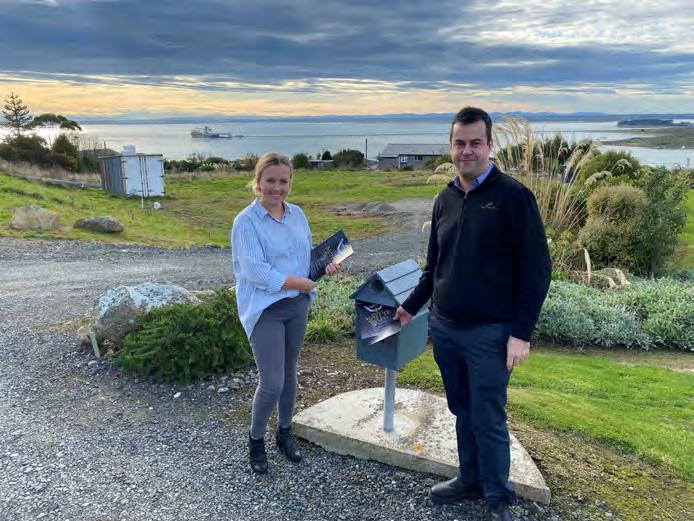
In line with South Port’s community engagement policy, we want to share news and topics that might be of interest to the community. Therefore, we introduced a six-monthly newsletter called Mai i te Wāpu | From the Wharf.
The newsletter is hand-delivered by members of the South Port team to every house in Bluff. Our second edition was distributed in May 2022. Feedback from the community on what the newsletter featured has been positive.
Later this year we intend on sending out a Community Engagement Surveyboth manually and digitally - to ascertain what South Port does well in the community and what we can improve on.
South Port has a vast collection of images, including all walks of Port life, with a considerable portion of these shot by our enthusiastic Port Photographer, Chris Howell, over the past 30 years.
Chris, born in 1957 in Auckland, sparked his interest in photography at the age of ten when he started using his mother’s Kodak Box Brownie. He developed a passion for recording the world around him, particularly anything related to the maritime world. Fortunately for Chris, he resided close to Ports of Auckland until his relocation to Southland, making it easy for him to record the ever-changing marine scene.
With the Port being an essential part of Chris’ life from an early age, it is no surprise that he then spent time in the Royal New Zealand Navy and made three extended visits to Europe and America. At the age of 26, he decided to relocate from Auckland to Southland with his wife, Darlene. The move was motivated by the desire to start a new company with the intent of supplying vessels calling at Bluff with ship stores and provisions, which was the right move given Chris’ passion for the industry.
Nearly fourty years on, Chris is still supplying vessels in Bluff, working as a Backup Shipping Agent for three key shipping agents - Pacific Shipping, Bain Shipping Services, and Maritime Services South.
This career has allowed Chris to easily follow his passion for Port photography, which is always a welcomed distraction. Chris’ most significant influence at South Port has been John Henderson, who was the Port Operations Manager until 1999. John was the person who allowed him to become the Port Photographer, for which he is forever grateful. “I have also had tremendous influence from the Marine Staff, including
the Pilots and Pilot Boat personnel, who have been instrumental in putting me in the right place at the right time.”
There have been a lot of changes over the years, the biggest of which, in Chris’ opinion, is the enormous increase in modern infrastructure. This is particularly evident when comparing the first aerial photos taken in 1994 with photos taken in 2022, highlighting once vacant land now virtually almost all in use.
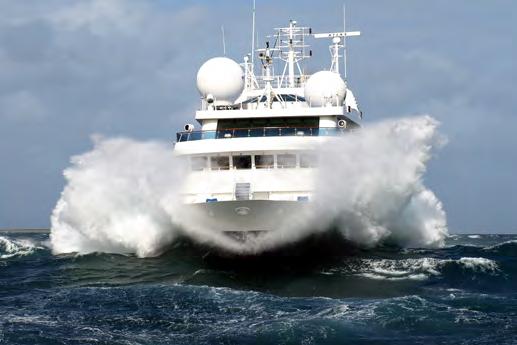
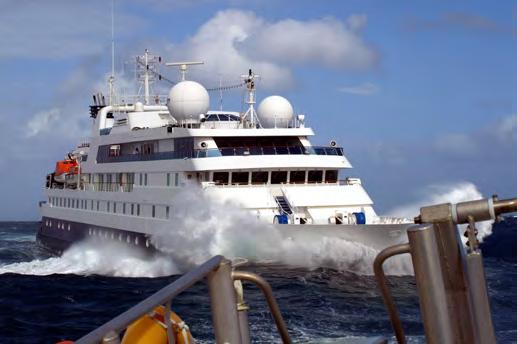
His most memorable moment was in 2010 when he was aboard a pilot boat for the transfer of a Pilot to a small cruise ship. He spent time photographing the vessel in 3 to 5-metre swells – bearing in mind the pilot boat is only 16 meters in length, it was only possible because of the skipper’s skill in charge, but it was still a wild ride!
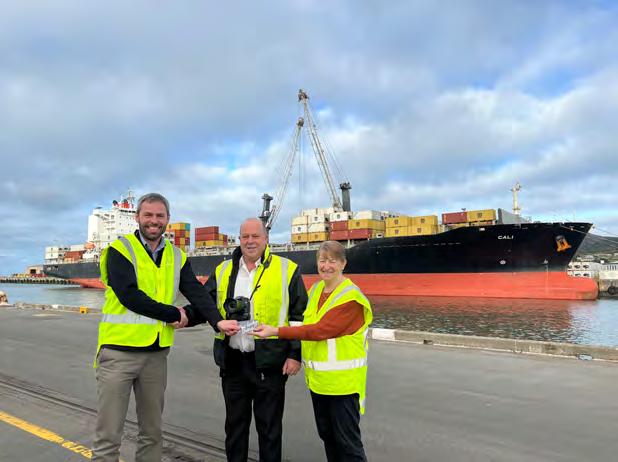
We appreciate the effort Chris puts into the moments he captures, so, Chris, we thank you for all you do, and we hope that both you and Darlene enjoy the gift voucher!

Marcus Samuel owned an antique store in London and in 1833 began selling exotic seashells, mostly sourced in the Far East. These shells were very popular for interior design and demand was such that in 1873 Marcus Samuel junior, aged 20, went on a trip to the Far East to ensure the continued supply of shells for the family business.
While there, he engaged in several business ventures and negotiated to import various products to Britain, including kerosine which soon became the dominant import. With a nod to the company’s origins, it was marketed under the brand name Shell and the Latin names of shells were used to name ships of the future fleet.
By this time the business was in the hands of Marcus Samuel’s sons, Marcus and Samuel who had ambitions to ship Russian oil through the Black Sea Port of Batum to the Far East via the Suez Canal. Although about eighty bulk oil tankers were in service by that time none had ever been given permission to transit the canal so the brothers had a design prepared that met all the stringent requirements of the Suez Canal Company and on 28 May 1892 the “Murex” was launched by Wm Gray, West Hartlepool, the first ship built for them and three months later the first tanker to pass through the Suez Canal. In August 1915 another ‘Shell’, the “Eburna”, became the first tanker to transit the
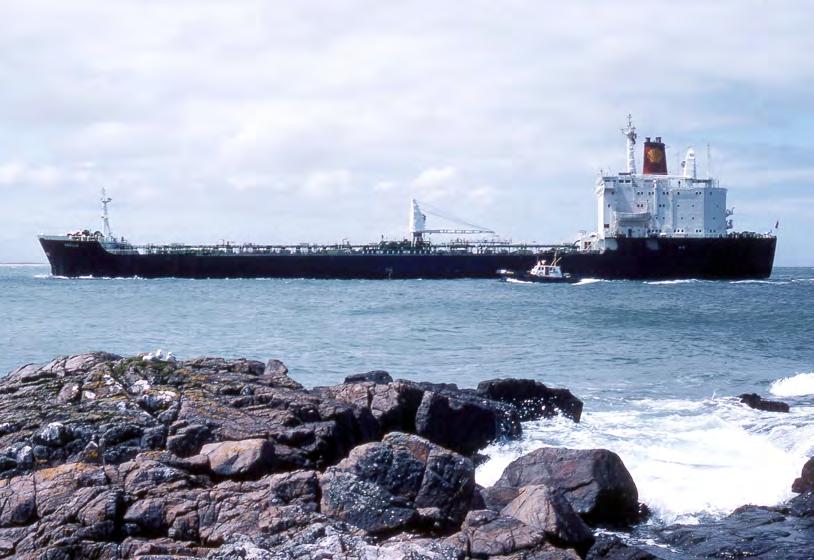
Panama Canal. The name Shell Transport and Trading Company was adopted in 1897 and its first refinery, located in Borneo, opened.
Part of the reason for the Far East venture was to break the monopoly there of America’s Standard Oil in which the company was successful but now another competitor appeared. In June 1890 the Royal Dutch Company was granted a Royal Charter by King Willem III of the Netherlands to drill oil wells in the Dutch East Indies bringing it into conflict with Shell, a conflict resolved through the merger of the two companies in 1907 under the style ‘Royal Dutch Shell’, although it was usually simply referred to as ‘Shell’, outside of the Netherlands at least.
After oil was discovered in the Maracaibo Basin, Venezuela, refineries were built on the islands of Aruba and Curacao in the Dutch West Indies and Shell developed a ‘mosquito fleet’ of shallow draught tankers to carry oil from Lake Maracaibo to the refineries. Shell also had an 'Eastern Fleet’
based out of Singapore which still existed long after the Dutch East Indies had become Indonesia. These ventures were far from the total extent of Shell’s interests and by 1920 Shell was the biggest oil producer in the world and went on to develop oil drilling and refining interests far too extensive to detail here.
Shell products were originally sold in New Zealand through its subsidiary, British Imperial Oil. Shell kerosine and later petrol was imported in 4-gallon cans packed in wooden cases, two cans to a case, in what was known as the ‘case oil trade’, the first Shell kerosine arriving in the “John Hardie” in June 1911. Case oil was a particularly dangerous cargo as cans frequently leaked often causing fires that destroyed ships or storage sheds. Dedicated case oil carriers were a much safer option than carrying case oil in a mixed general cargo and the first Shell vessel to visit New Zealand was such a ship, the “Havre”, in January 1913. The first to visit Bluff was the “Cyrena”, another case oil carrier, on 27 June 1922, the first of over 70 visits by Shell vessels to the Port. Bulk storage facilities were completed in Bluff in 1926 and the first tanker carrying petroleum products in bulk to visit Bluff was Shell’s “Oliva” which arrived on 4 December 1926 to discharge benzine.
Shell disposed of its assets in New Zealand at the end of 2018 but visits to Bluff by Shell tankers continue, although they no longer carry Shell’s pecten symbol on their funnels. They serve to remind us, however, that Shell remains one of the biggest companies in the world, ranking in the top ten of the Fortune Global 500.