
The past three months has been a very busy period for the Port. The container terminal has been under constant pressure for storage / working space and the volume of bulk cargo transiting the Port continues to place additional pressure on our existing infrastructure. What has been most pleasing is the efficient and safe way cargo movements have been handled during this time which is a credit to all of the companies operating on the Port. Processes, traffic management plans and two-way communication are the keys to this success. Regular Port Users / Contractors Forums facilitate this communication and the groups “as a whole” are far more effective at developing better outcomes than if we all operated in silos – so a big thank you to all involved.
All South Port employees recently contributed to a staff survey which provided excellent feedback to the Leadership team and Board. Action plans have now been developed from the survey responses and this has also provided the basis to start our values process. We received 121 suggestions from employees for consideration when selecting our values. From these suggestions a set group of core values
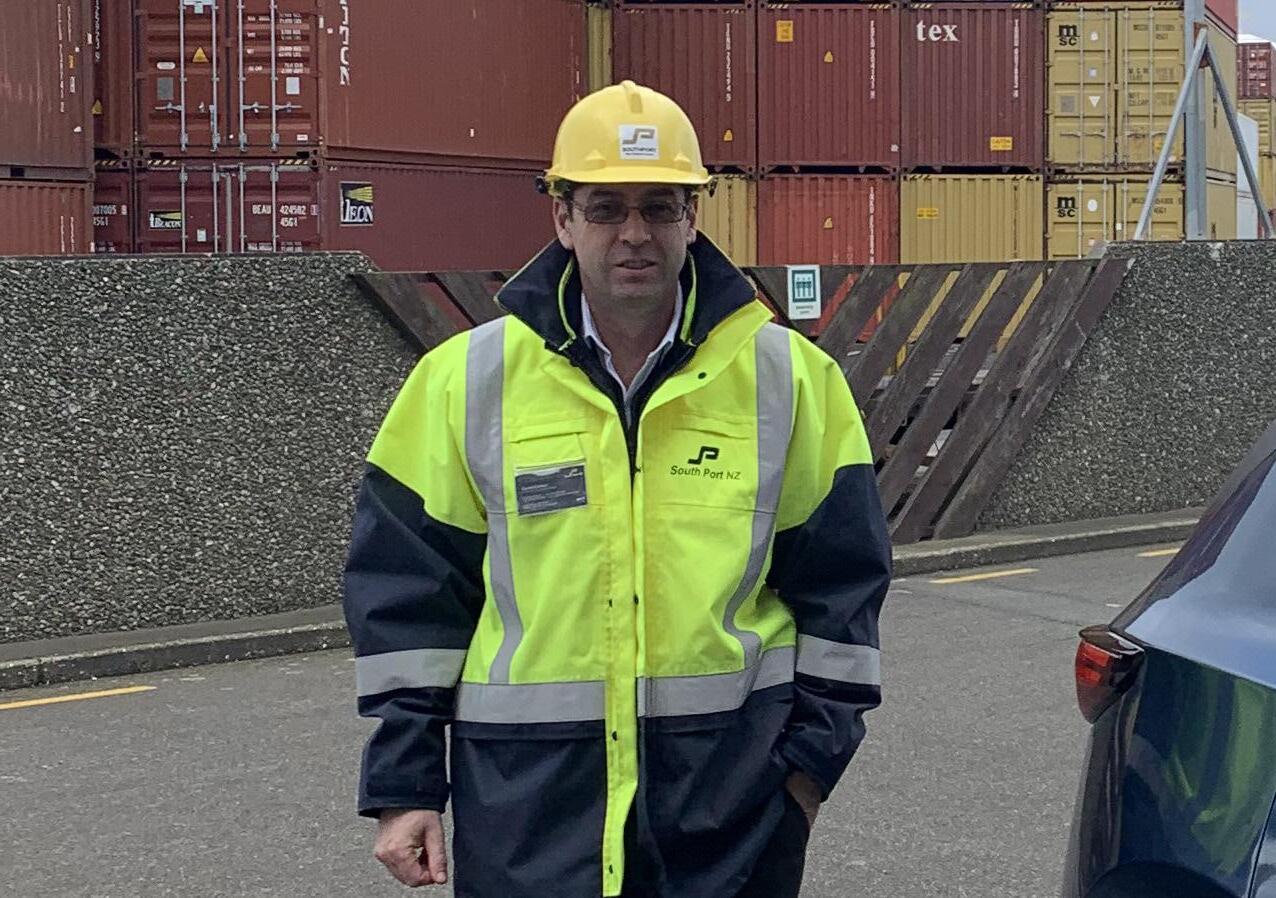
Senior Health & Safety (H&S) Advisor Gareth Carson reached a milestone in March this year, celebrating ten years with the Port Company.
He entered the business initially to work on health and safety projects, and was the sole H&S employee. During the ten years there has been plenty of change including the safety team now comprising of three. Gareth has seen people’s perceptions to H&S improve over the years.
were created for approval by the Board. This process has recently been finalised and our new Company Values will form part of our Annual Report publication that will be released in September. We have recently begun our journey to fine tune, improve and introduce leadership skills to all levels within the Port. It is important that we are constantly on the lookout for future leaders within our Company and to provide the necessary skills through targeted training should an opportunity arise in the future to “step up” into a leadership position. It is always incredibly pleasing to see internal promotion from within our Company; witnessing people grow into leaders and providing the pathway for others to follow in the future.
Pulse is the name that has been chosen for our recently launched wellbeing system. The digital platform is hosted by Synergy Health that also works with a number of leading New Zealand and Australian based companies. This is a great opportunity for our employees and their families to get involved in wellbeing initiatives which include team/individual activities, prizes and competitions (refer to article later in the publication).
Nigel Gear
“People are more open to change relating to the health and safety aspects of the operations around the Port.”
“The expansion of the activities on the Port is changing what health and safety is and means.”
Prior to joining South Port, Gareth worked at Craigpine in a marketing role for 12 years before changing direction to head south down the State Highway.
Gareth’s passions outside of work include hunting and fishing, duck shooting, classic cars and his lovely wife Andrea (not in order he told the Portsider).
We look forward to having you around for another ten years Gareth, and hope to see some improvement in your darting abilities in the years to come.
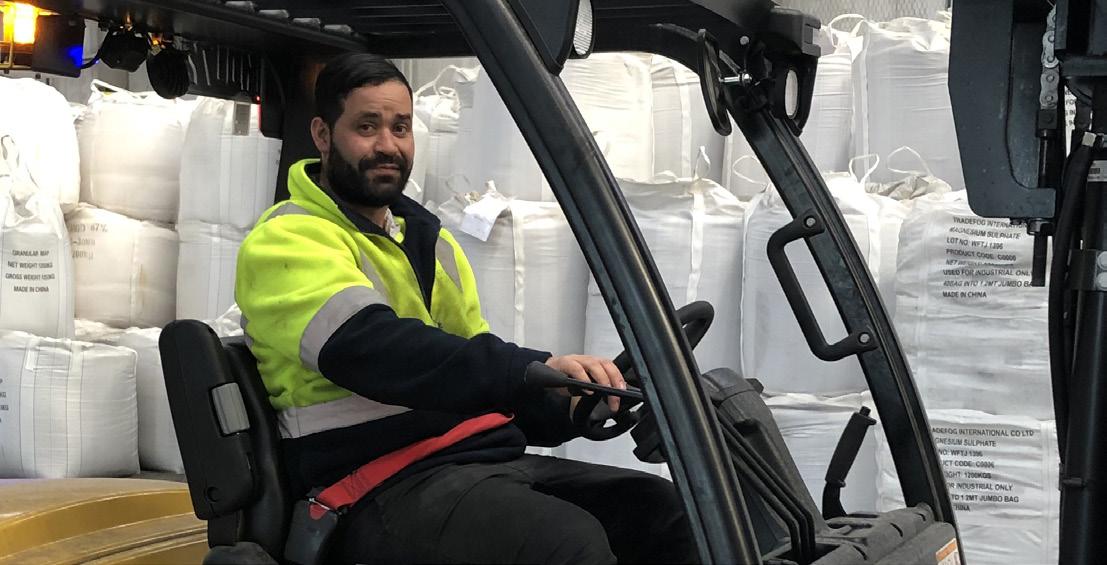
Daniel has joined the team at the Intermodal Freight Centre in Invercargill. From 2012 to 2018 he worked in the Cold Stores including a stint as a Leading Hand where he was one of the most experienced and reliable staff. From time to time Daniel returns to the Port in Bluff to help out with workloads. Outside of work Daniel enjoys fishing and diving and is kept busy with his 5 young children.
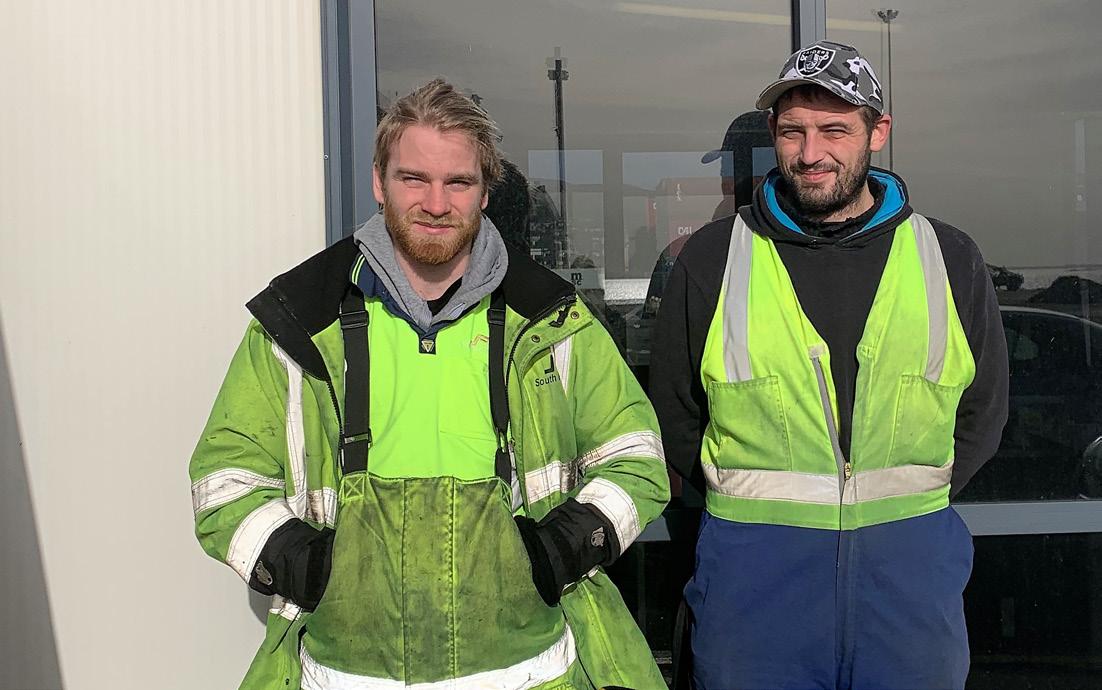
► Shaun Alderdice and Jade BazleyAttfield outside the Cold Store administration building.
Shaun has worked at South Port for two seasons now, initially as a casual and this season as a fixed term employee. Shawn has been based in the No. 1 Cold Store where he has worked hard to familiarise himself with the various product lines and customer requirements. During the off-season Shaun will focus his training on scanning so he will be able to support the rest of the team across all operator functions next season.
Jade has been working as a casual in the No. 2 Cold Store this season and in the short time he has been with South Port he has demonstrated dedication and a solid work ethic. He has already been trained in all aspects of the role and will continue with training over the next few months while covering for staff on annual leave during the off-season. Jade and his partner Zara have a busy household, with children aged 5, 4 and 3. When Jade gets the chance he enjoys playing rugby and is also interested in cars.
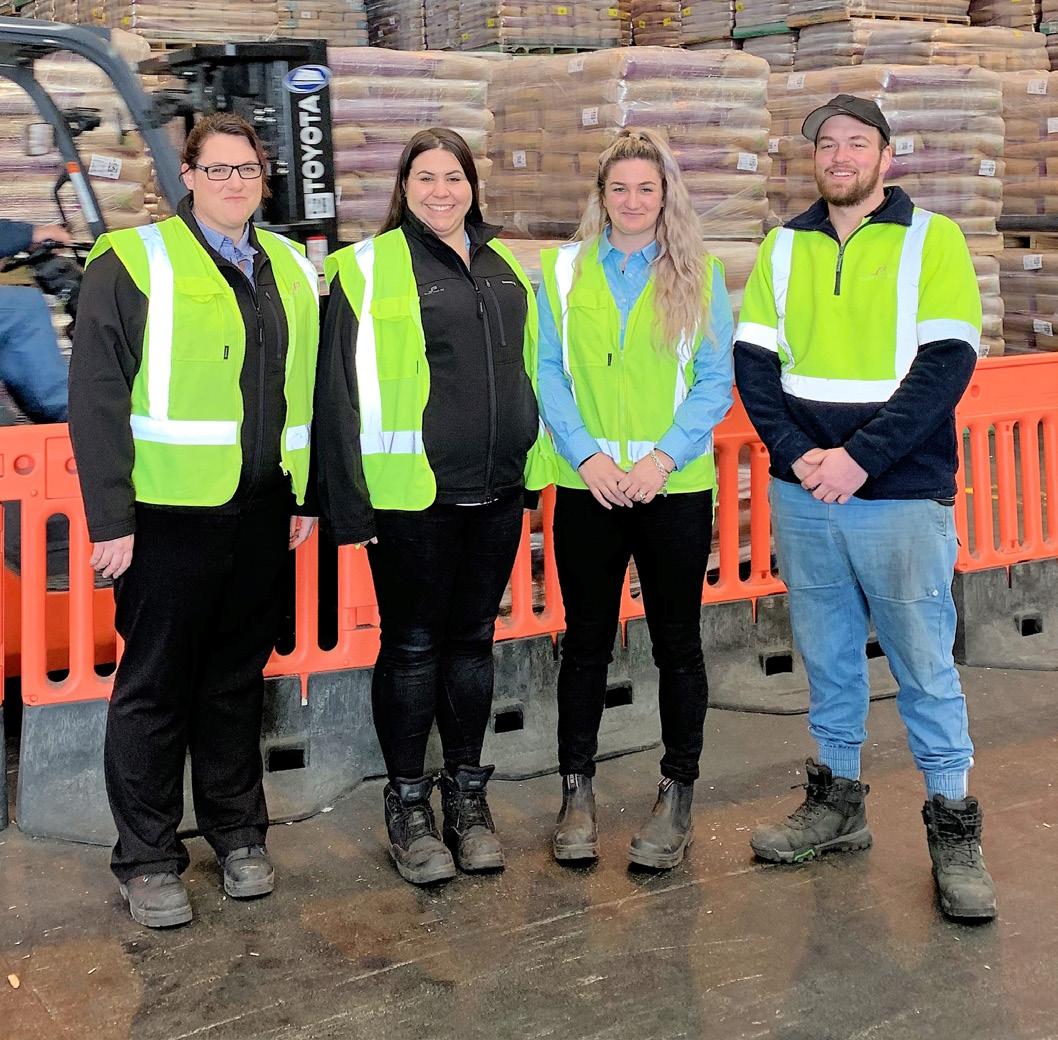
Jess has joined the Dairy Warehousing team as an Administrator. She has held previous sales and administration roles across the South Island. Jess has returned to Southland with her husband after a couple of years in Waimate. A first responder for her local branch of St Johns, Jess enjoys giving back to the community through this volunteer role.
Sian has recently been promoted to Dairy Warehousing Supervisor moving on from her Dairy Logistics Coordinator role. Since joining South Port in 2016, she has proven to be a real asset to the Dairy Warehousing Team. She is particularly focused on building and showcasing the great work that has been done within the department over the past few years.
Hayden joined South Port in 2015, initially as a fixed term employee, and has been appointed as a Dairy Warehousing Administrator. He enjoys problem solving, learning new information and is looking forward to being challenged to learn new skills. Outside of work Hayden enjoys spending time with his wife Tessa and their son Beau, aged 4. He also enjoys hunting, fishing and relaxing with his friends and family.
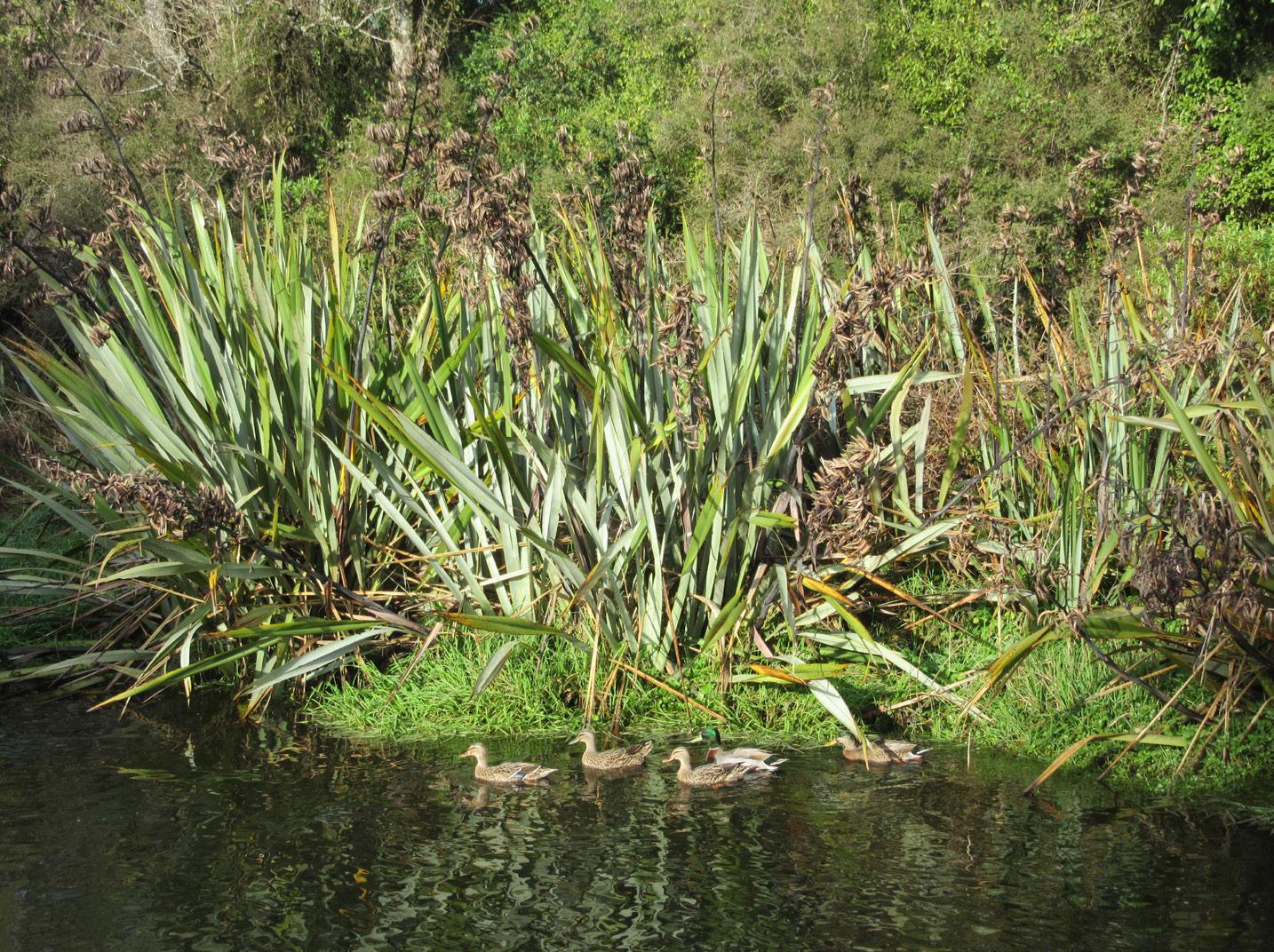
Harakeke or swamp flax was the basis of the New Zealand flax industry.
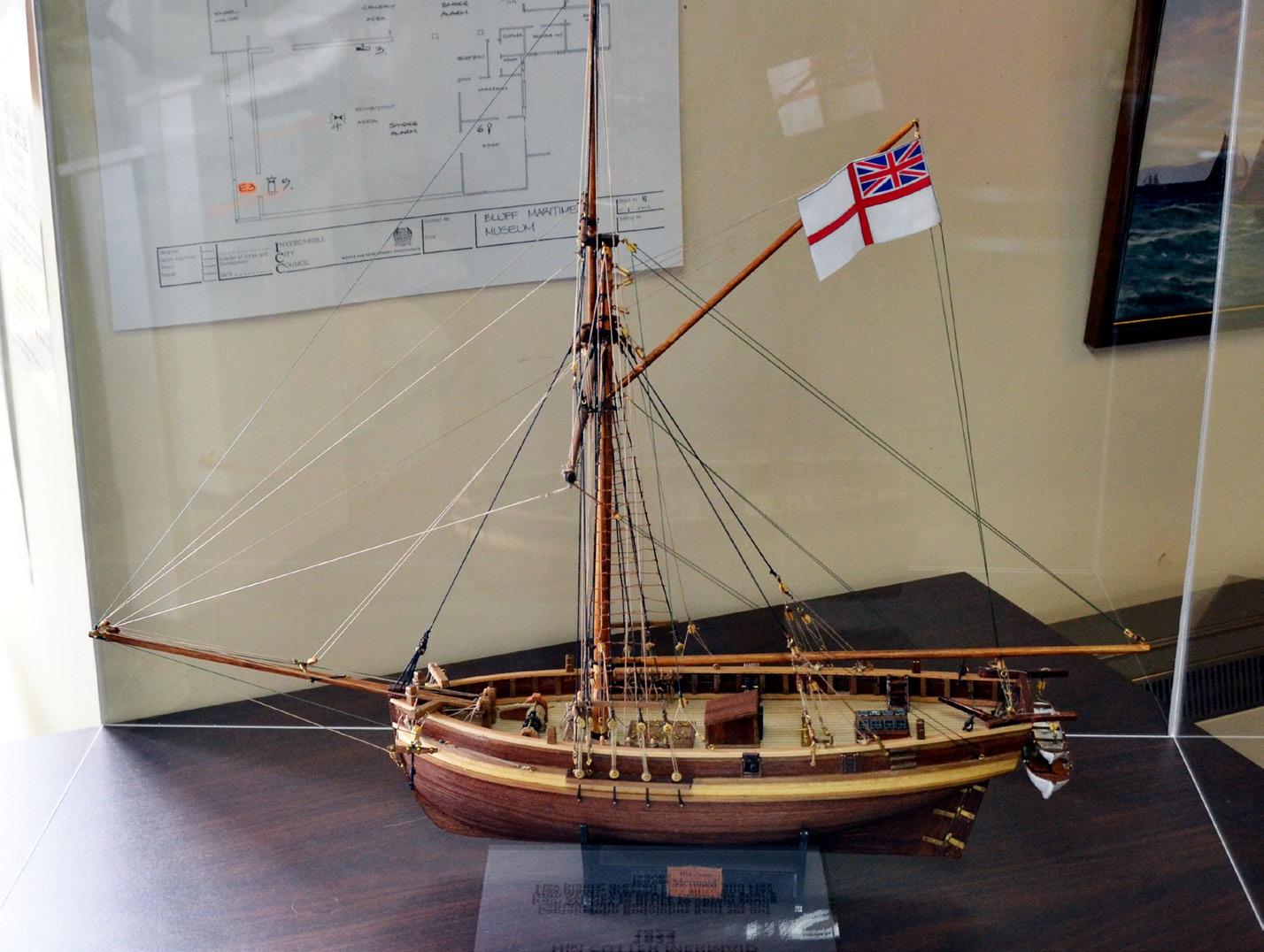
On 27 December 1822 the little sloop Snapper became the first sea-going vessel to enter flax but it wasn’t until a month later that a quantity for shipment to Sydney, flax leave Bluff. It was a small enough beginning
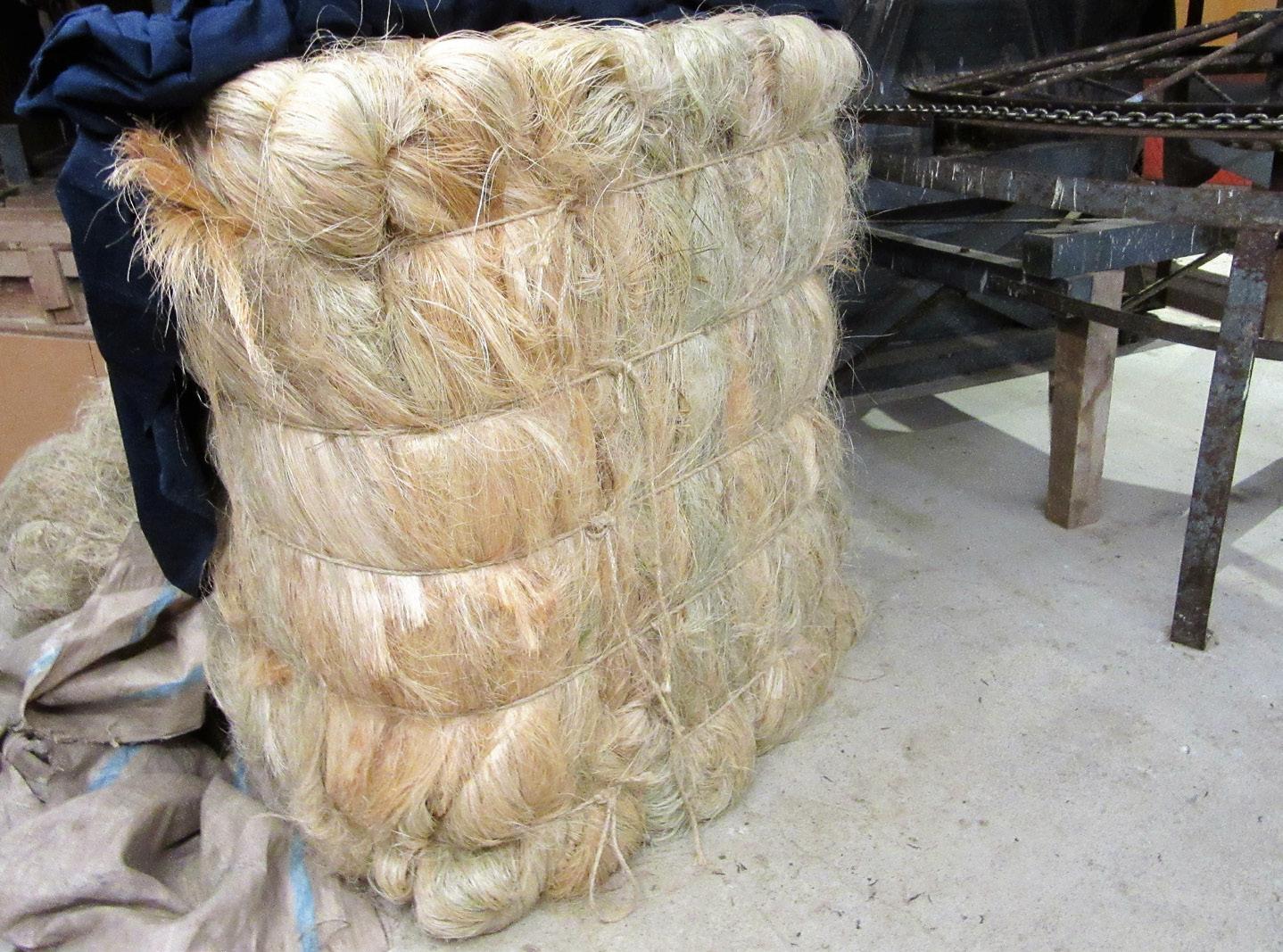
Maori recognised up to sixty varieties of flax but the most common was Phorium tenax, known as harakeke or swamp flax, and this was the basis of the New Zealand flax industry. Traditionally flax leaves were cut using a sharp shell or stone and the green outer coating stripped away, again using shell or stone, exposing the inner fibre or muka, which then went through several processes making it suitable for weaving or plaiting to produce clothing, cordage, mats, baskets etc. While a substantial trade built up between Maori and Europeans, traditional methods produced only about a kilogram of fibre per worker per day, with 8 or 9 kilograms of green flax leaf being processed to produce 1 kilogram of fibre. The majority of the volume was exported to Australian rope makers and for much of the 19th century flax was New Zealand’s most valuable export.
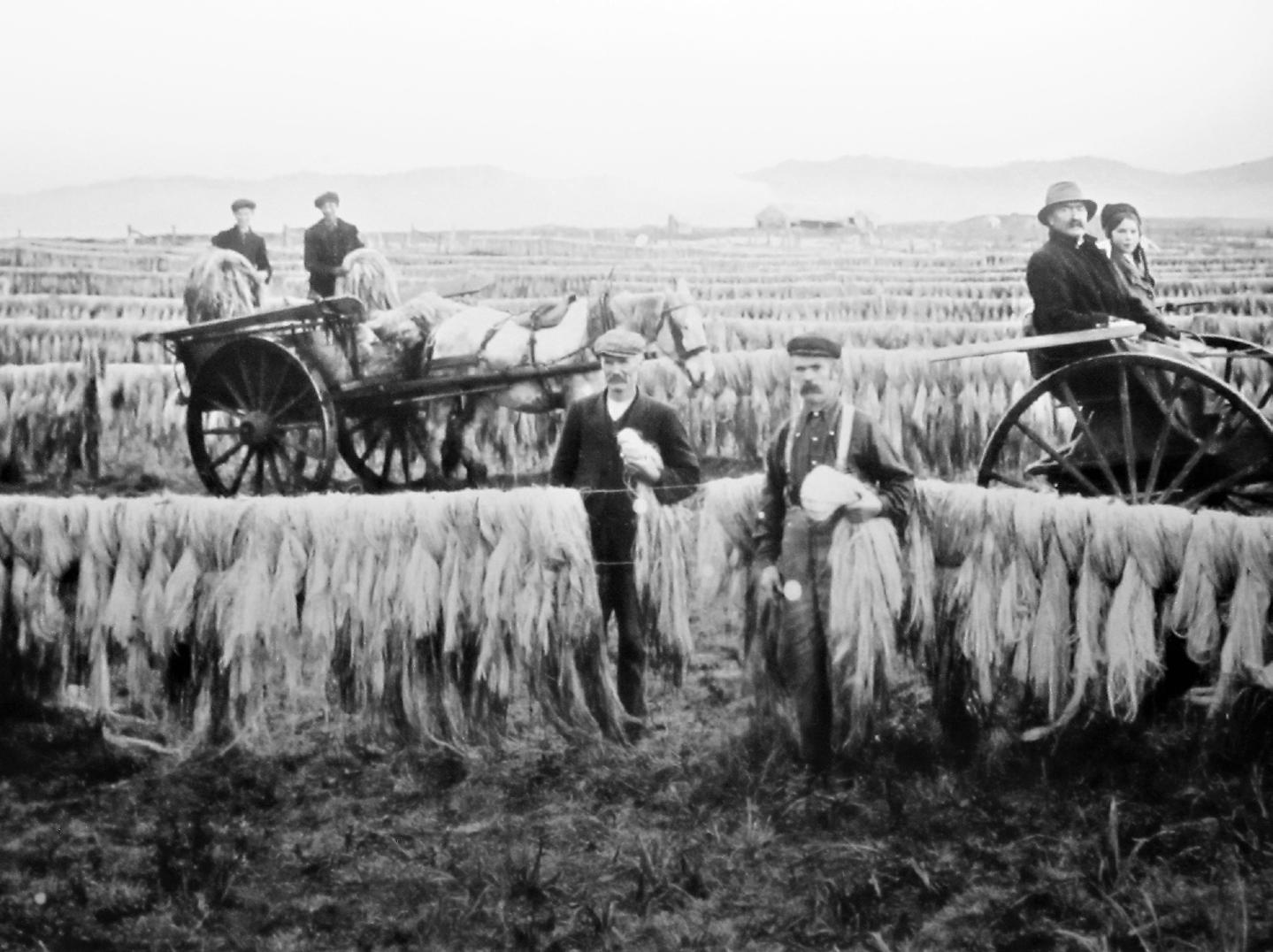
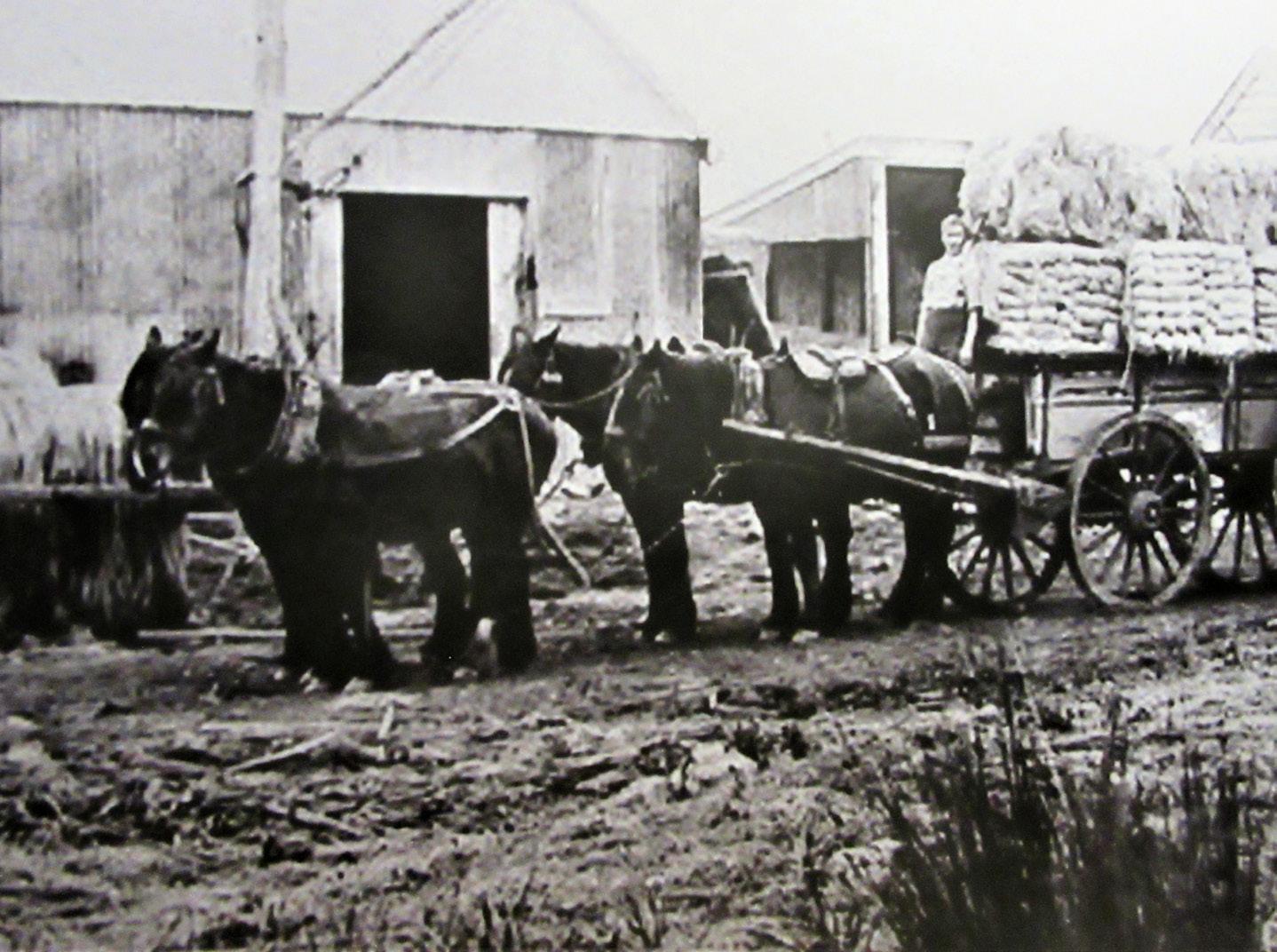
In 1868 a mechanical stripper was invented which could produce 250 kilograms of fibre per day, eventually rising to 1,250 kilograms. This began the flax milling industry in New Zealand. Flax mills were generally quite small, having only one or two strippers, but could be distinguished from any other enterprise by the high-pitched scream of the strippers and the seemingly endless rows of flax laid out or hanging on fences to dry. Each stripper gave employment to between 20 and 25 men beginning with the flax cutter who would cut and bundle flax ready for transport to the mill, a good cutter being able to produce about three tonnes of flax a day. The bundled flax was transported to the mill where it was fed through the stripper then the fibre was washed and hung outside to dry and bleach, this taking 10 to 14 days, depending on
Snapper under Captain William Edwardson enter Bluff Harbour. She came in search of Edwardson was successful in obtaining thus becoming the first export cargo to beginning for what became a major industry.
weather. The hanks of dried fibre were then cleaned in a scutcher, a machine comprising a revolving wooden drum with beaters attached which dressed and cleaned the fibre. The cleaned fibre was then pressed into bales of about 200 kilogrammes ready for transport. Peak production was reached in 1907 when 240 mills were operating and 36,140 tonnes of flax was exported. By 1970 only about 15 mills were left producing about 5,000 tonnes of fibre annually but synthetic fibres were taking over and the last commercial flax mill in Southland closed in 1973.
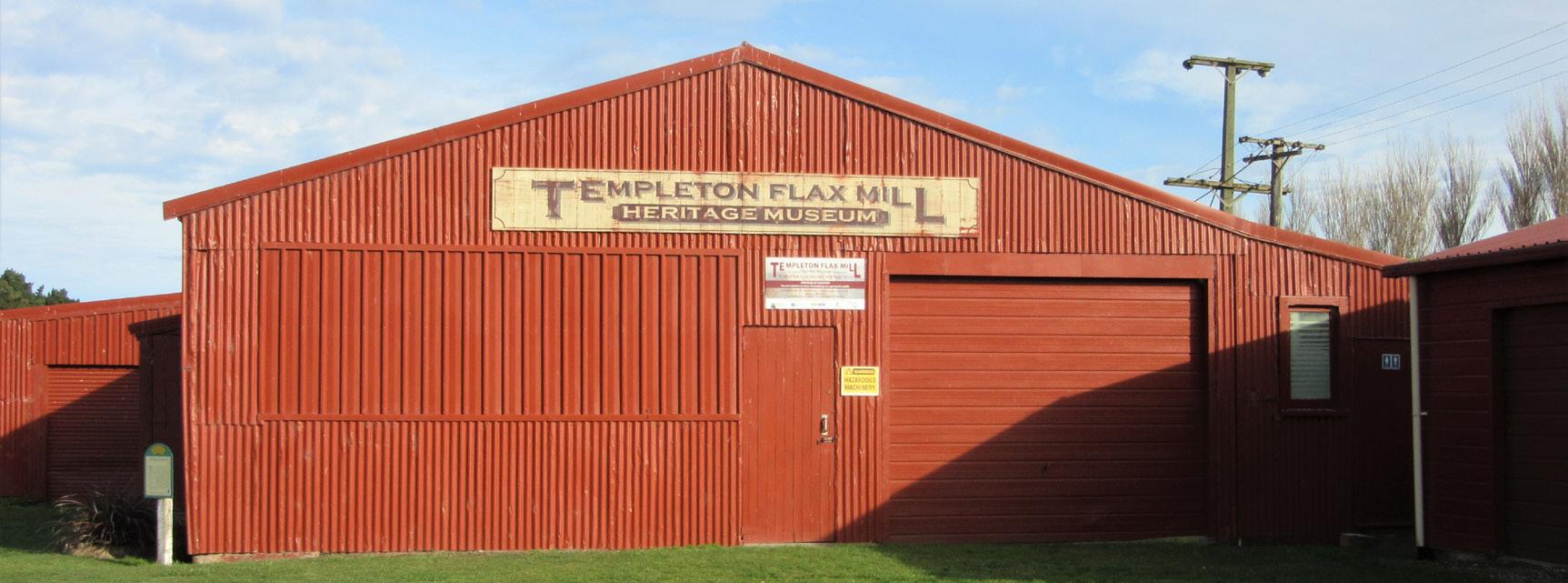
Southland had about 44 flax mills operating in the early 1900’s and we still have one today. This is the Templeton Flax Museum on the outskirts of Riverton which is maintained in working order and still produces a small quantity of flax fibre each year. William Templeton began flax milling in Southland in 1911, the current mill being established in 1944. About 25 people were employed at any one time and annual production was around 300 tonnes of fibre which was used to produce baling twine, rope, woolpacks, matting and furniture packing. Production ceased in December 1972 and the property was converted for farming.
In 2000 the Templeton Flax Milling Heritage Trust was formed to restore and operate the flax mill as a working museum. The museum opened in 2004 and tthe machinery is operated for tour groups by arrangement with Vaughan Templeton, the great-grandson of William who began it all, the go-to man for those wishing to see the mill in operation. Our thanks to Vaughan for his assistance in preparing this article.

South Port has recently launched a new digital health and wellbeing platform. Staff were asked to submit their suggestions for the name and the winning name chosen was ‘Pulse’, submitted by Health & Safety Administrator, Rochelle Van Beek. She also designed the logo to accompany the name.
Synergy Health (creator and designer of the platform) owner Brad Norris visited the Port with a presentation for staff explaining why he created this company and simple tips people can follow to help lead a heathier lifestyle.
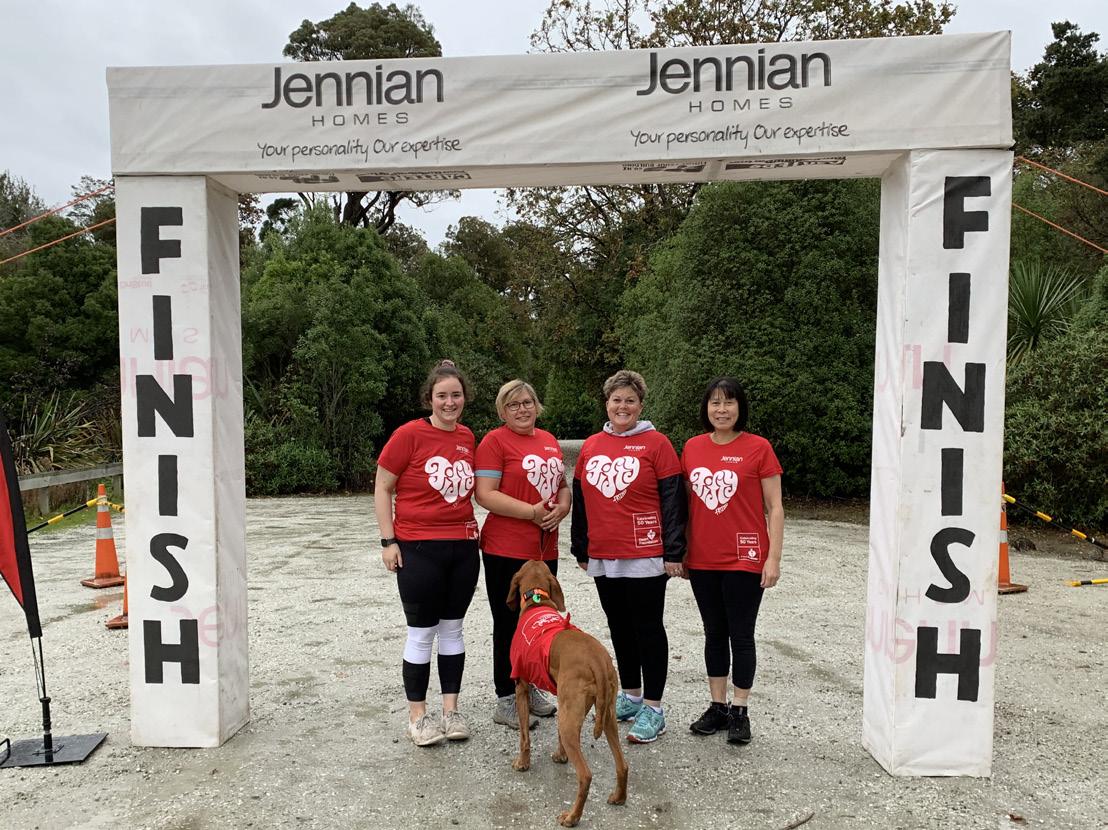
Unfortunately the conditions during May weren’t sun hat and sunscreen weather, but that didn’t stop the South Port staff who signed up to the 2019 Jennian Homes Mother’s Day Fun Run/Walk. The 5 kilometre course takes participants around Thomsons Bush and the riverbank. The annual event is held to raise money and awareness for the Heart Foundation for Women campaign. South Port supported those who signed up this year by covering their entry fee. The staff who participated in the event said they enjoyed the morning and are looking forward for next year’s event.
The platform is designed to give educational material to staff on all aspects of health including diet, exercise and routine changes. The platform is available to all staff and up to 5 of their friends and families to encourage a healthier lifestyle for all people in their lives. A Pulse app has been created to make it easier for people to have access to the platform throughout their day. An incentive programme has been established to encourage staff to participate in challenges and set goals in order to win prizes. The team challenges are already starting to create some internal competition!

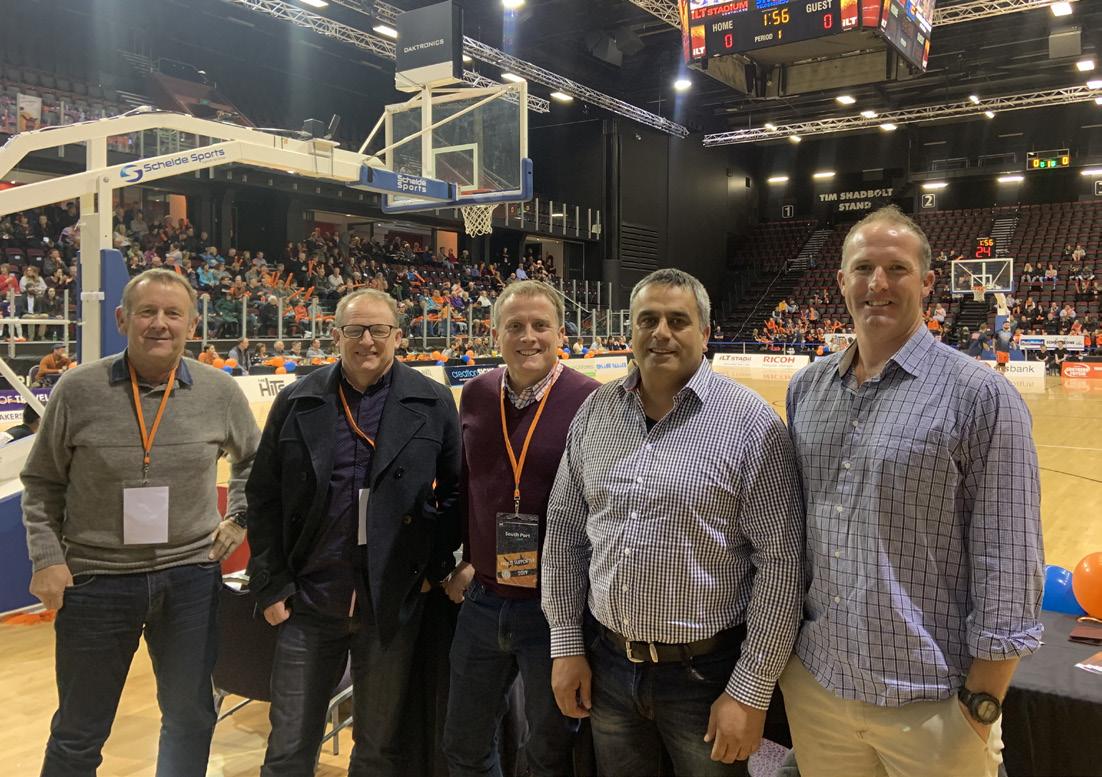
South Port has continued their support of the Southland Sharks this season. This sponsorship entitles the Company to complimentary tickets to each home game. For each of these games, a prize draw is held to give away the tickets to staff to go along and support the team.
South Port also has the opportunity to invite customers and third parties along to corporate tables for three of these home games, which included the Nelson Giants, Super City Rangers and Southern Huskies.
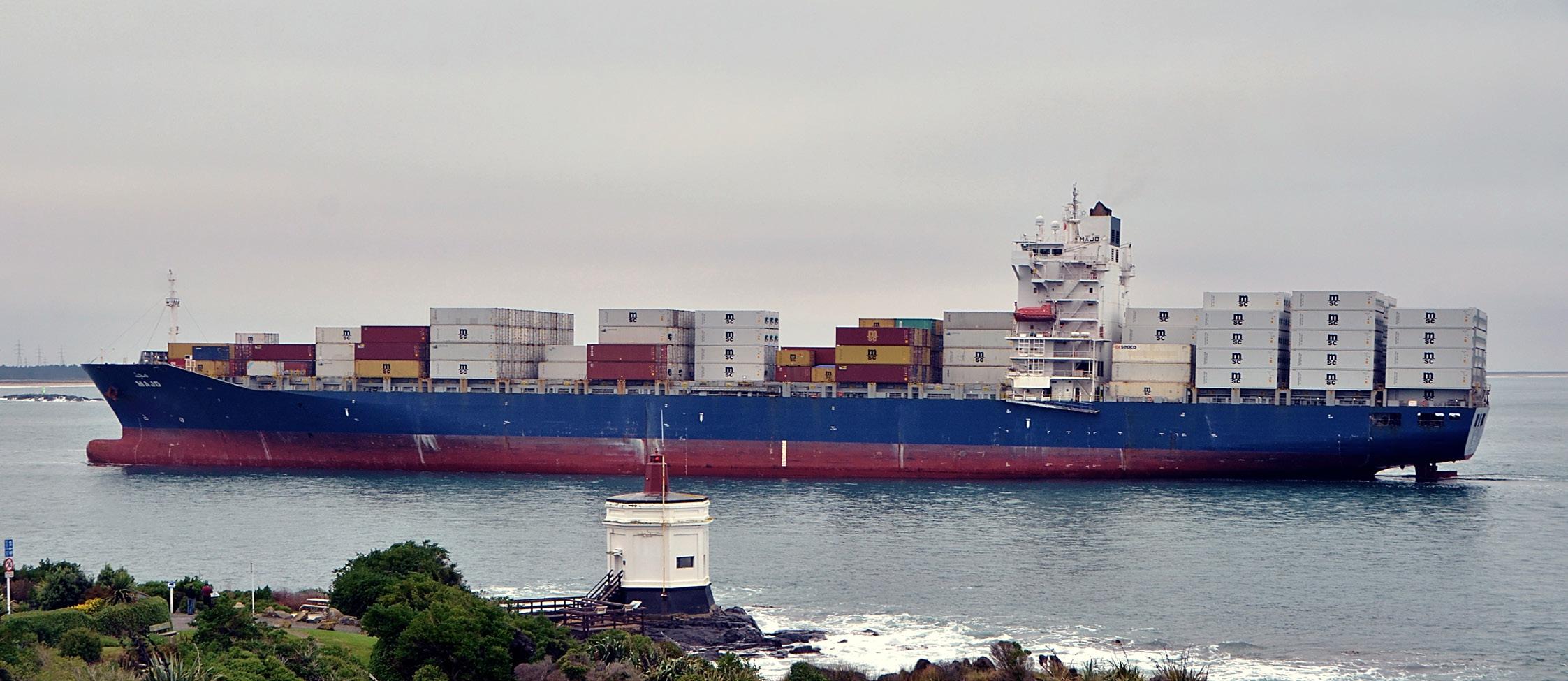
The Qatari flag flew for the first time in Bluff on 17 May with the arrival of the container ship Majd, newly chartered by MSC for its Capricorn Service to Asia. Registered in Doha, the capital of Qatar, she is one of a small fleet of container ships operated by Milaha Ship Management, which also operates oil and gas tankers plus a large fleet of smaller vessels associated with the off shore oil and gas industry.
Qatar occupies the Qatar Peninsula in the south west corner of the Middle East Gulf and has a population of about 2.6 million, of whom 2.3 million are expatriates, attracted by the highest per capita income in the world. The country is perhaps best known for being home to the Al Jazeera International News Network.
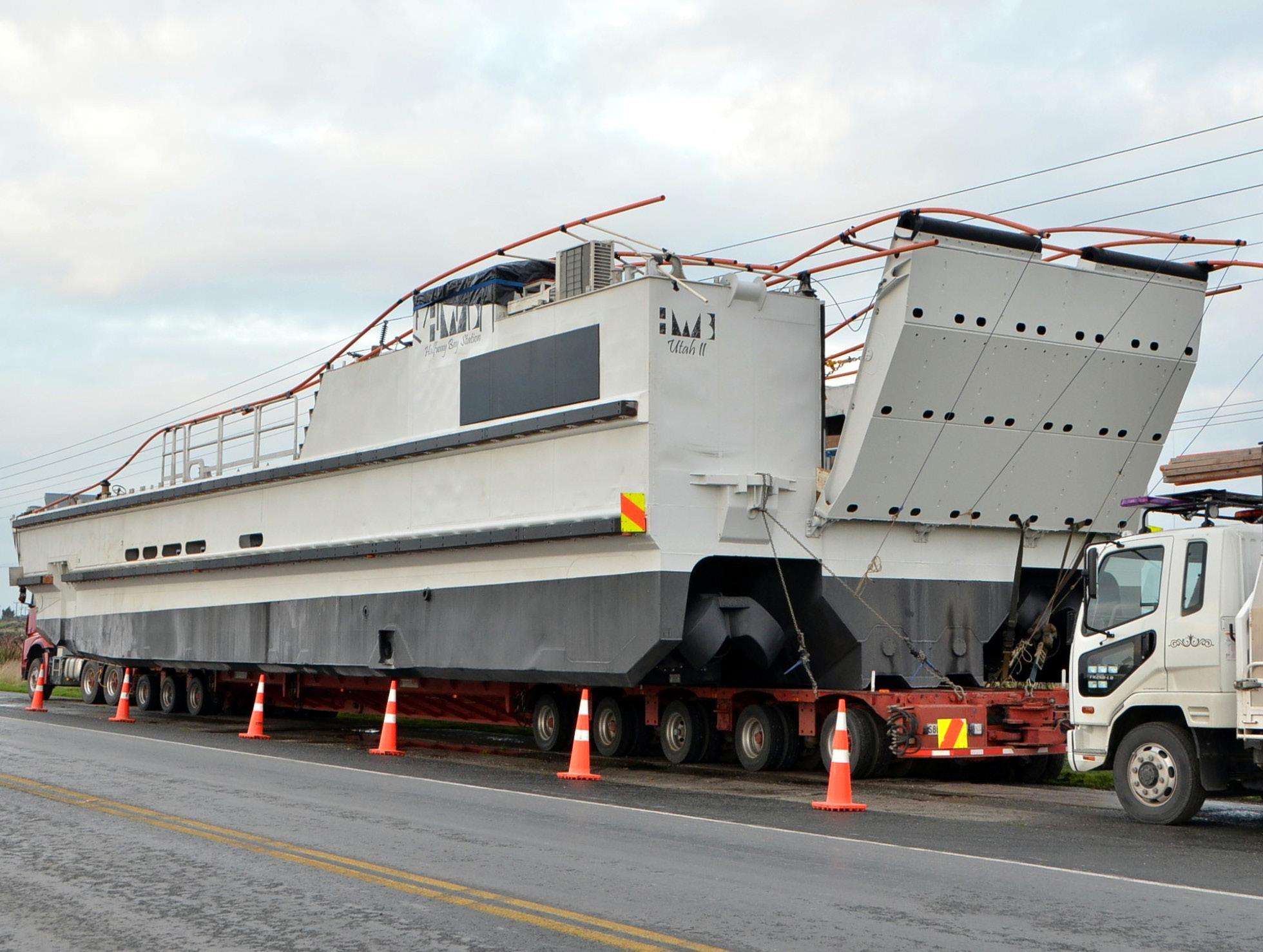
For quite some time the view of Bluff Engineering’s premises from the road has been dominated by the after end of a substantial vessel, projecting from the workshop and protected by a temporary shelter. Speculation was rife as to exactly what the vessel was but on 5 May all was revealed when the self propelled barge Utah II left by road for its new home at Halfway Bay Station on the western shore of Lake Wakatipu halfway between Kingston and Queenstown.
The 17,000 hectare sheep and beef station has steep ridgelines, the lake and the Lochy River to mark its borders so access is only possible by boat or helicopter. As our photograph shows, the size of the Utah II certainly justified the pilot vehicle’s warning sign “Wide Load Follows”.
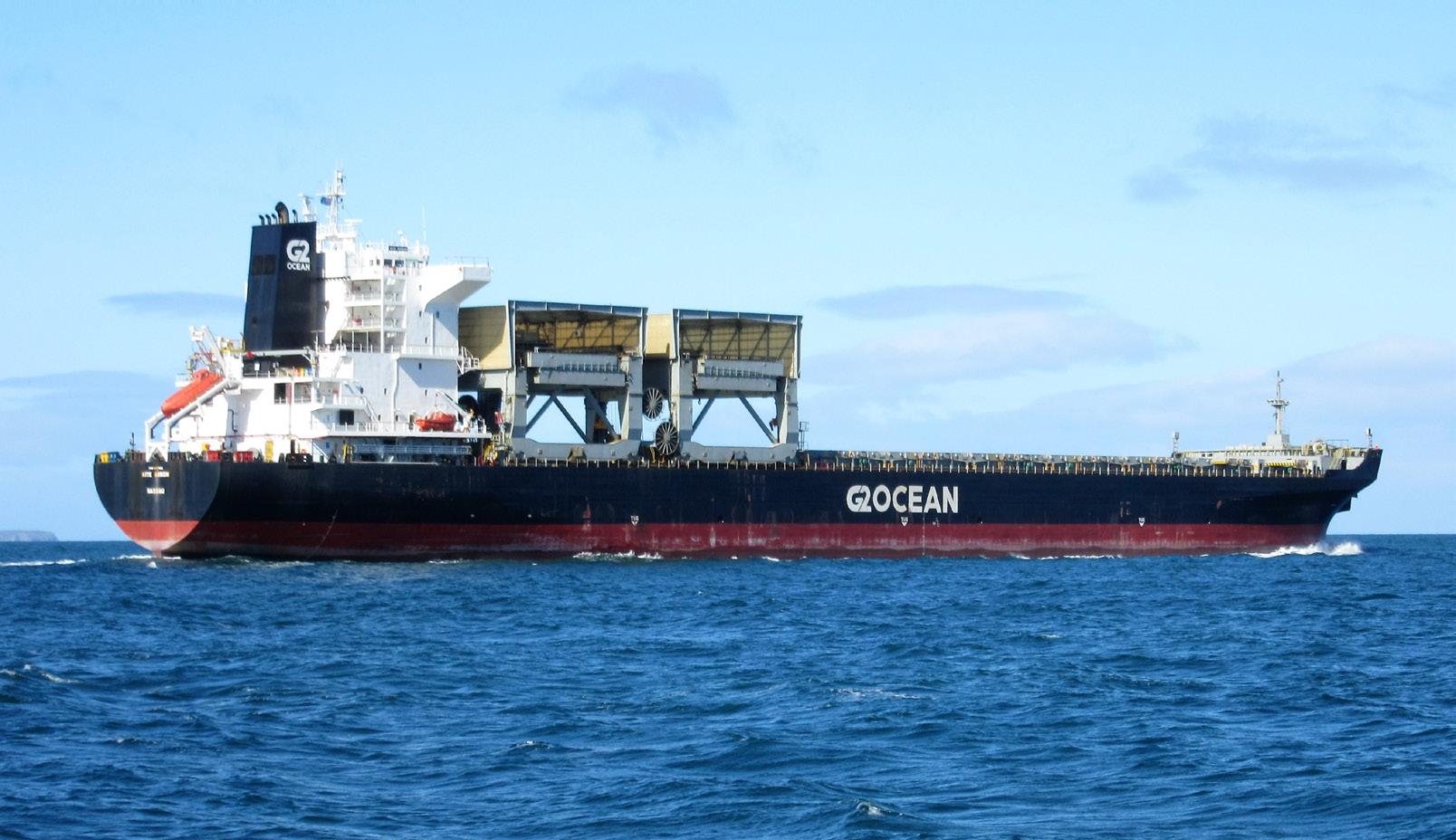
On 1 May 2017 a new company entered the dry bulk and cargo sector. This was G2 OCEAN, a new company perhaps, but not one lacking in experience, G2 Ocean was formed through the amalgamation of two long established Norwegian shipping companies, Gearbulk and Grieg, hence G2, and the ocean is their workplace. The combined fleet comprises 130 ships including the largest fleet of open hatch bulk carriers in the world, with ownership allocated 65% Gearbulk and 35% Grieg.
Gearbulk was founded by Kristian Gerhard Jebsen as recently as 1968 but his family’s ship-owning history began a century or more earlier. The Jebsen family originated in Denmark where it remained until 1842 when Peter Jebsen shifted to Norway where he established a textile business – which still exists as ‘Dale of Norway’ – and also invested in ship owning. His Grandson, Kristian S. Jebsen, born in 1901, entered shipowning in 1929 when he established Kristian Jebsens Rederi AS with headquarters in Bergen. The company flourished and its ships later became familiar visitors in Bluff, especially the Bulknes chartered to bring alumina from Australia while others in the fleet were regular visitors, generally discharging fertiliser. Jebsen also operated liner services to Asia under the style Tasman Jebsen New Zealand Line. Kristian S. Jebsen’s two sons, Kristian and Atle, both joined the family company but in 1967, following a disagreement with his father and brother, Kristian Gerhard Jebsen resigned and formed his own company, Kristian Gerhard Jebsens
Skipsrederi, establishing Gearbulk the following year. Initially Gearbulk was a joint venture between Jebsen, fellow Norwegian owner Ludwig Mowinckels and French company Louis Dreyfus, along with its British subsidiary Buries Markes. Almost from its inception Gearbulk took delivery of open hatch, gantry-equipped vessels which are particularly suitable for the forest products that soon became a major feature of the company’s operations. In 1991 Mitsui-OSK Line took a 49% shareholding in Gearbulk as the other partners withdrew from the consortium.
The history of Grieg Group began in 1884 when Joachim Grieg, a cousin of the famous Norwegian composer and pianist Edvard Grieg, set up as a shipbroker in Bergen. Joachim Grieg was born in Bergen in 1849 and began a seafaring career in 1865, qualifying as a shipmaster before establishing his shipbroking business. Now one of the world’s leading shipbrokers with offices in Bergen, Oslo, London, Singapore and
Shanghai it formed the base from which the Grieg Group expanded into shipping, logistics and other mostly maritime fields.
A/S Star Shipping was founded by Per Waller and registered in April 1961, the Star Pool coming into effect the following year as a joint venture between Star Shipping and Westfal-Larsen to engage in world-wide bulk cargo trades. This joint venture was further formalised in 1963 becoming Star Bulk Shipping with Westfal Larsen and Star Shipping as equal partners. At this time A/S Star Shipping was renamed A/S Billabong, becoming a partnership between Per Waller, Per Grieg and others. A third Norwegian ship-owner, Fred Olsen, joined in 1970 becoming a 30% owner along with Westfal-Larsen and A/S Billabong.
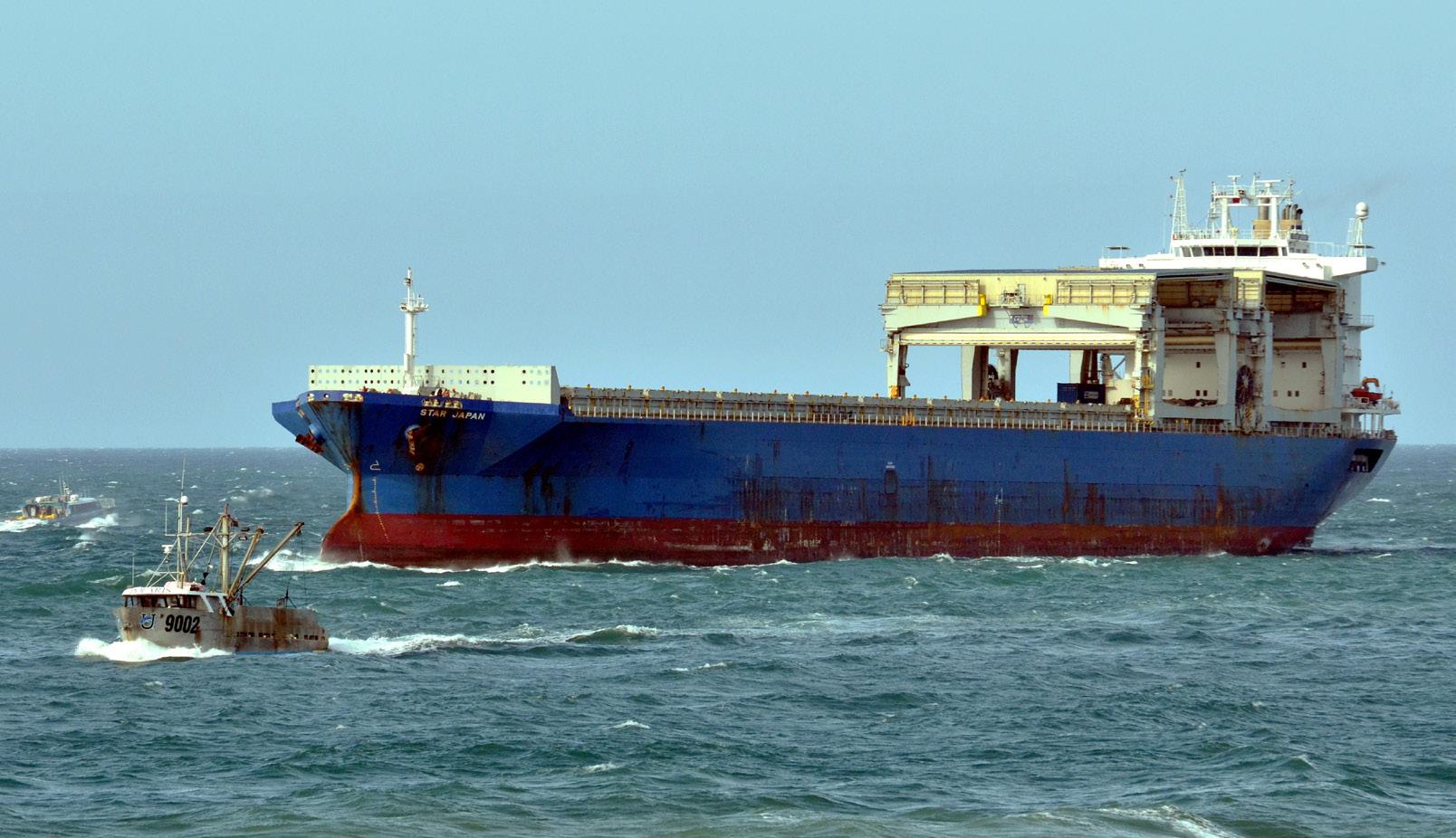
The first major contract for the company was transporting packaged lumber from British Columbia to Australia and forest products became an increasingly important cargo. To consolidate its position in this field the company invested in Squamish Terminals, British Columbia, in 1971, becoming the sole owner in 1974. Conventional bulk was largely catered for through a pool with Rethymnis and Kulukundis with many of the bulk carriers bearing ‘Star’ names and colours visiting Bluff during the 1980’s and ‘90’s. Olsen withdrew from Star Shipping in 1988 and Westfal-Larsen formed Masterbulk in 1995, eventually also withdrawing from Star Shipping which was then integrated into Grieg in 2008, Grieg being renamed Grieg Star. Gearbulk and Grieg Star were very similar shipping companies and there was a synergy about their fleets that made for a seamless union. No doubt the G2 OCEAN brand will soon become as familiar as its forebears to the ship watchers of Bluff.