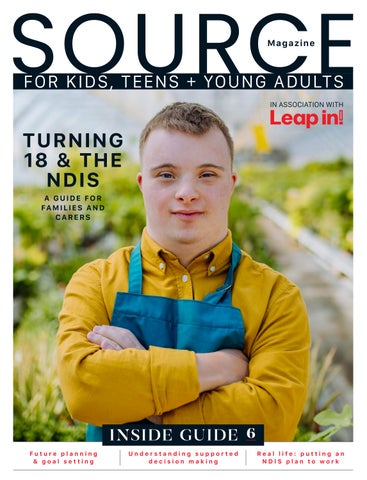

Welcome
Turning 18 is a significant milestone – and when your young person is on the NDIS, it can also bring a range of new decisions, responsibilities and opportunities. This guide has been created to help families and carers navigate that transition with greater clarity and confidence.
Inside, you’ll find practical, easy-tounderstand information covering what changes at 18, including consent, decision-making and the role of nominees, as well as how to support your young person to build independence. The guide explores key areas such as future planning and goal setting, education and employment pathways, and options for home and living. It also breaks down how NDIS supports work in real life – from therapy and assistive technology through to support workers and community participation.
Importantly, this guide brings together expert insights alongside real stories from families and young people, helping to show what’s possible and how plans can evolve over time.
While the transition to adulthood can feel overwhelming, it’s also a time full of potential. With the right information and supports in place, your young person can move towards a future that reflects their goals, strengths and aspirations.
SOURCE CO LIMITED
PO Box 690, Noosaville QLD 4566 ABN: 36 614 552 171 sourcekids.com.au
WRITERS AND CONTRIBUTORS
Leap in! Editorial Team and Nicole Davis
ADVERTISING
Matthew Rainsford
Head of Sales & Business Development
matthew@sourcekids.com.au
0409 418 362
Naomi Sirianni
Head of Events
naomi@sourcekids.com.au 0447 755 043
HEAD OF CONTENT
Nicole Davis
GRAPHIC DESIGN
Emma Henderson
PUBLISHER/CEO
Emma Price
Editorial and advertising in Source is based on material, written and verbal, provided by contributors and advertisers. No responsibility is taken for errors or omissions, and opinions expressed do not necessarily reflect those of the publisher. All material in Source is subject to copyright provisions. No part of this publication may be reproduced without written permission by the publisher.


A message from Leap in!
Turning 18 is a big milestone for any young person and for families too. But when your teen or young adult has disability, this stage of life can bring a lot of new questions, responsibilities and decisions.
At Leap in!, we speak with many families who are preparing for this important life transition or already living it. One of the things we hear often is that while turning 18 is an exciting step, it can also feel like a lot to take in. There may be changes to how the NDIS communicates, who makes decisions, how consent works and what comes next when school is ending and adult life is beginning.
That is exactly why we’ve teamed up once again with Emma and the wonderful team at Source Kids to create this special Turning 18 emagazine.
Inside, you’ll find practical information to help you better understand what may change as your young person becomes an adult, along with guidance on topics like decision-making, goal setting, employment, further education, support workers and planning for more independence over time.
Importantly, this emag also reflects something we believe strongly at Leap in!. Every young person’s path into adulthood will look different. There is no single way to do this well. What matters is having the right information, the right support and the space for your young person to grow into adulthood in a way that works for them.
Whatever the road ahead looks like for your family, we hope this guide helps you feel ready for it. We're here if you need us.
All the best,
Andrew Kiel CO-FOUNDER & CEO

At Leap in!, we use identity‑first language when referring to autism and autistic people. We’ve made this decision based on feedback from our community. We understand different people have different preferences, and we recognise and respect every individual’s right to choose how their identity is described.
“The best thing about working with Leap in! is being able to talk to people on the phone, have ours questions answered and not feel rushed.
For Alberto it’s using the Leap in! app. He loves technology and the other night he came running in to tell us that his remittance had come through so quickly.
It’s exactly what we wanted. We want him to be involved and slowly become more independent and working with Leap in! is making that possible.”
Julie-Anne, Leap in! Member’s Mum.

and the NDIS Turning 18
Turning 18 is a big milestone for young people on the NDIS. Once they reach adulthood, they take on new rights and responsibilities, both within the NDIS and more broadly in their day-to-day life. Here are some of the key changes that often catch parents by surprise!
MEDICARE
From age 14, Medicare starts communicating directly with young people about their health information. From 15, they can have their own Medicare card.
CENTRELINK
As your child gets older, some Centrelink arrangements and online access can change. Check the Service Australia website for what may change between ages 14 and 18.
NDIS
In the majority of cases, the person turning 18 becomes the official decision-maker for their NDIS plan, unless a nominee has been formally appointed.
IDENTIFICATION
It can be useful for your young person to have their own ID, such as a passport or proof-ofage card.

IMPORTANT TO KNOW!
A quick introduction to consent
In the majority of cases from the day your young person turns 18, the NDIA, plan managers (like Leap in!) and most providers are required to communicate directly with your young person about their NDIS Plan (not with you). After 18, you can only speak with the NDIA, a plan manager or providers about your young person’s plan if one of the following is in place.
Your young person has given consent
The NDIA accepts verbal or written consent. Your young person can:
• Tell the NDIA (eg. call 1800 800 110, at a plan meeting or through the myNDIS participant portal) that they consent to you receiving information or acting on their behalf
• Complete or update an NDIA consent form naming you
• Give consent for the NDIA to share information with a provider or plan manager, or for you to contact them
directly about certain things. Consent can allow you to:
• Access plan information
• Help request plan changes
• Make some administrative changes (like changing contact details).
Important: Your young person needs to give separate consent to their plan manager and any providers you may need to speak to. They can update or withdraw this consent at any time.
YOU ARE FORMALLY APPOINTED AS AN NDIS NOMINEE
A nominee is someone the NDIA formally appoints to act on a participant’s behalf for NDIS matters.
Once consent or a nominee arrangement is recorded in the NDIA system, plan managers and providers can safely talk with you within the limits your young person has agreed to, or as set out in the nominee decision.
What if my young person can’t give consent? For more details, go to page 6.
Did you know?
From 18, all Australians are required to enrol to vote. If your young person is unable to vote, even with support, they can get an exemption.

Decision-making Decision-making and CHOICE and CHOICE
At 18, the NDIS recognises your young person as the primary decision-maker for their NDIS Plan, if they can make decisions. Supported decisionmaking means respecting what they want, sharing information in ways they understand, giving them time to think things through and accepting that they may make different choices to you.
A DEEPER DIVE INTO THE FORMAL DECISION-MAKING ROLES IN THE NDIS NDIS nominees
A nominee is someone the NDIA formally appoints to act on behalf of a participant for NDIS matters.
Parents and carers are not automatically nominees when their child turns 18.
DIGNITY OF RISK
Dignity of risk means recognising that people with disability have the same right as anyone else to make big life choices, even when they might go wrong: moving out, choosing their own friends, partners or faith, spending their own money, trying a job and hating it and sometimes just making mistakes and learning from them.
A nominee can be appointed even if they are not a legal guardian or hold power of attorney.
A nominee’s role is to talk to the NDIA and providers, help make decisions about the NDIS Plan and act in the person’s best interests and follow their wishes.
Play VIDEO

Watch this powerful video with your teen!

What nominees do
• Talk to the NDIA and providers
• Help make decisions about the NDIS Plan
• Act in the person’s best interests and follow their wishes.
There are different types of nominees
A correspondence nominee mainly handles communication, whereas a plan nominee has broader authority over the plan and funding.
The NDIA will usually look for supported decision-making first and only appoint a nominee if that is not enough.
When your young person cannot give consent
Sometimes a young person is not able to give informed consent, even with support – for example, because they cannot understand what is being asked or cannot communicate a clear choice.
If your young person cannot give consent to the NDIA about a nominee, you will usually need to:
• Contact the NDIA or your LAC
• Attend an NDIA or LAC office with your young person to go through the nominee application process
• Provide information and evidence about why a nominee is needed.
Only once the NDIA approves you as a nominee are you the authorised decisionmaker for NDIS matters.
This process can take time, so if you believe your young person will need a nominee, it is worth starting the conversation with your LAC at least 12 months before they turn 18.
Guardians, power of attorney and the NDIS
Guardianship, administration and powers of attorney are different from NDIS nominee arrangements. These roles are usually decided by a state or territory tribunal or court, not the NDIA.
A guardian can make decisions about certain parts of a person’s life, such as health or accommodation. An administrator may be appointed to manage financial or legal matters. A power of attorney is a legal arrangement that is often set up by the person themselves.
These roles do not always apply to NDIS decisions. In some cases, they may overlap. In others, they may not.
For example, someone may have a guardian and still be involved in decisions about their NDIS Plan. Someone else may have an NDIS nominee without any formal guardianship arrangement. A person may also make their own decisions without a nominee or guardian.
When there is disagreement between family members or other supporters, the NDIA may ask for court or tribunal orders to confirm who has authority to make decisions in different areas.
Supported decision making NDIA nominee
The participant makes the final decision
The supporter acts as a coach or mentor Focuses on building capacity and independence
Does not require NDIA approval
The nominee makes decisions about NDIS supports and funding on behalf of the participant The nominee acts with authority in the participant’s best interest
Only considered when the participant cannot make decisions, even with support
Requires a formal application and approval by the NDIA
FUTURE PLANNING
Many young people on the NDIS have had the same plan for years. Plans may be extended or ‘rolled over’ without a full reassessment. But as you know, the needs and goals of a twelve-year-old are very different to those of an eighteen-year-old. Future planning helps make sure their NDIS Plan keeps up with life and new goals.
WHAT HAPPENS TO AN NDIS PLAN AS YOUR YOUNG PERSON APPROACHES 18?
As you near the end of your teen’s current NDIS Plan, one of three things may happen.
1 | Plan rollover
The current plan continues for another period (often 12 months) with the same funding and goals. This often happens when a new plan is not ready on time or when the NDIS considers that nothing major has changed.
2 | New plan with the same supports
This is usually offered when your young person’s situation is stable and their supports are working well.
3 | Plan reassessment (Section 48)

A full review of the plan, supports and goals. A reassessment is recommended if your child is finishing school or changing education settings, there’s a new or different diagnosis, there have been changes to health or functional capacity or there are big changes in informal supports or living arrangements.
Support coordination
Good to know
If something changes, you can use a ‘change of circumstance’ form to request updates to your young person’s goals or supports. This can be for a small change or a bigger one. The NDIA may still choose to reassess the plan, depending on what’s requested and the evidence provided.
WHAT INFORMATION TO GATHER
Having up-to-date information ready can make plan reassessments smoother and help the NDIA understand what supports your young person needs.
• Recent therapy reports
• Functional assessments
• School or transition reports
• Letters from health professionals
• Notes about any changes to informal support at home.
When requesting reports, ask providers to link recommendations to your young person’s NDIS goals and be clear about the type and amount of support needed.

If your young person is preparing to take on more responsibility for their NDIS Plan, support coordination can be a useful Capacity Building support. A support coordinator can help them understand their plan, build confidence managing supports and learn how to make decisions that ultimately help develop independence. Ask your LAC or NDIA planner if support coordination can be added to the plan and talk to them about why it will be valuable.


GOAL SETTING
real examples
As your young person grows up and changes, often the goals on their NDIS Plan need to change too. Goals need to be clear and specific so the NDIS can understand what they want to work towards.
HERE ARE SOME EXAMPLES OF REAL-LIFE GOALS FROM TEENAGERS AND YOUNG ADULTS
I would like to be supported to get my driver’s license and save money to buy a car
I want to be involved in sports
I would like to maintain a baseline concerning my health and well-being I would like to be supported to be more confident in socialising with like-minded people I want to build independence in every aspect of my life. I would like to live independently
I would like to be supported to complete my HSC
I would like to build my independence to be confident enough to travel when I finish school
I would like to be supported to develop strategies and techniques to cope with stressful situations so one day I will be able to successfully attend university.


Ask a PLAN MANAGER
Supporting independence at 18 with plan management
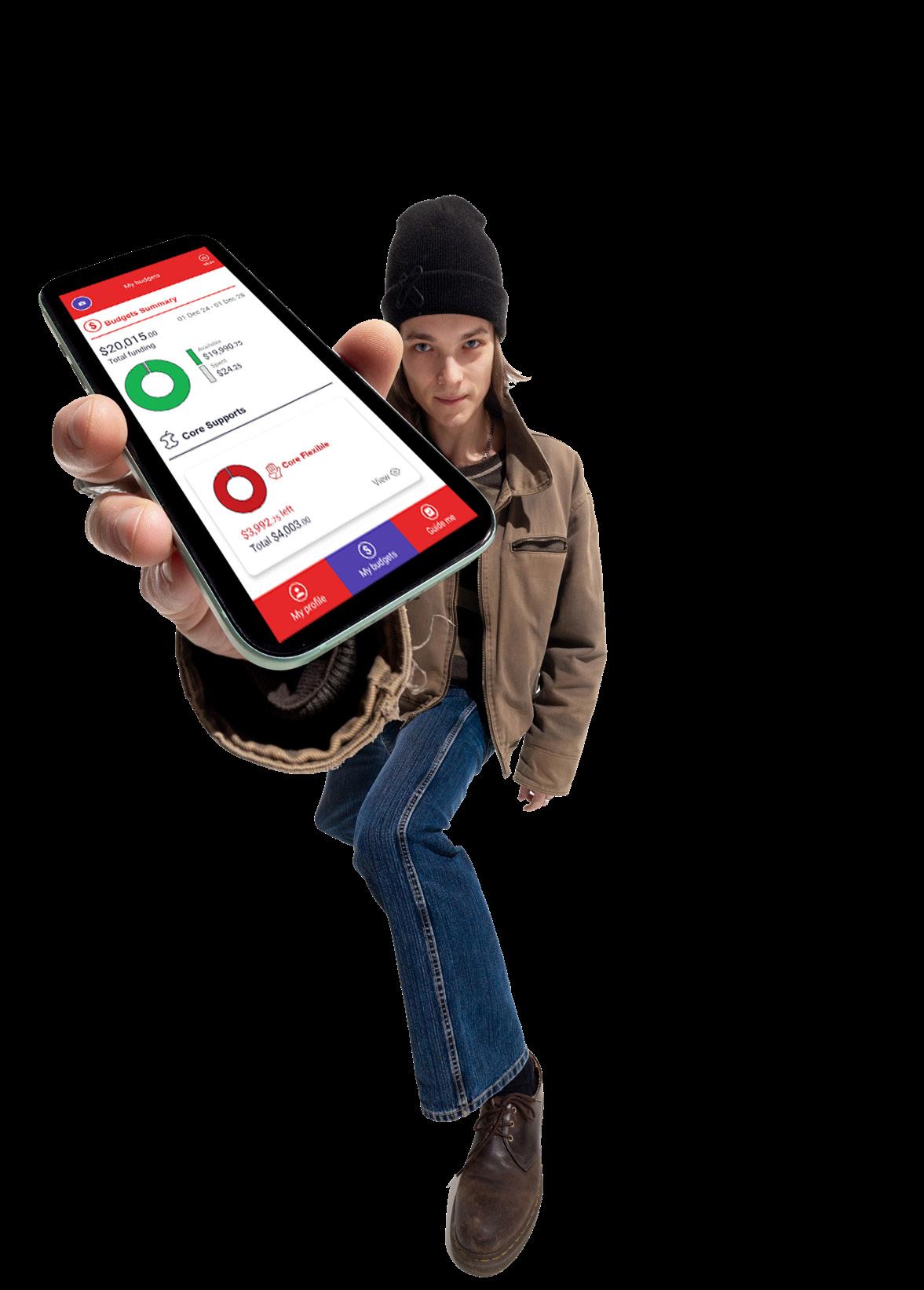
When a young person turns 18, they become the decision-maker for their NDIS Plan. For many families, that shift raises a lot of questions about staying involved, managing admin and making sure nothing falls through
Who pays the invoices? How will their funding be tracked? What does your involvement look like going forward? Experienced Leap in! plan manager Minell answers some of the questions we hear most from parents and carers navigating this transition.
CAN I STILL BE INVOLVED IN MY CHILD'S PLAN AFTER THEY TURN 18?
Yes, with their permission. Your young person can choose to have you involved as a nominee or support person, which means you can still help them understand their plan, attend meetings and stay across their
The level of involvement is up to them and that's a good thing. It's their plan and Leap in! can help you both work
A NOTE ABOUT CONSENT
DOES MY YOUNG PERSON HAVE TO MANAGE ALL THE ADMIN THEMSELVES?
Not at all. Independence doesn’t mean doing everything alone and that's one of the main benefits of plan management. Most young people don’t want to spend their time paying invoices or trying to understand NDIS price limits. Plan management takes care of that side of things, so they can focus on study, work, friends and everyday life.
With plan management through Leap in!, we take care of the day-to-day administration on their behalf. That means:
• Receive and pay invoices from providers
• Check every claim against their plan and NDIS rules
• Keep clear records, track spending and flag any issues or overspending early
• Make sure they keep full choice and control over the providers they use.
“It's such a relief to have Leap in! help us with navigating this confusing space. They make everything clear and they are so friendly. Thank you again for everything you do for our family!”
Leap in! Member
If your young person is unable to give informed consent, even with support, you will need to apply to the NDIA to become a formal nominee. This involves contacting your LAC, attending an office with your young person and providing evidence of why a nominee is needed.

DO THEY NEED TO SET UP A SEPARATE BANK ACCOUNT?
No. Unlike self-managing, where a separate account is required for NDIS payments, your young person doesn’t need one. With Leap in! managing the plan, we handle payments directly with providers, so you don’t have to juggle an additional NDIS bank account.
HOW CAN THEY KEEP TRACK OF THEIR FUNDING?
This is something a lot of parents worry about and it's a fair concern after you’ve been keeping a close eye on everything yourself.
The Leap in! app is the number one NDIS planning and budgeting app in Australia. Your young person can log in at any time to see how their budgets are tracking, review recent claims, update their goals and get alerts if spending is running high or low. Everything is in one place, easy to read and secure.
If you have their permission, you can also be invited to view their information in the app, so you can stay across things without having to manage them yourself. They can also invite other family members or their support coordinator to read or add to their information.
WHAT IF THEY HAVE QUESTIONS ABOUT THEIR PLAN OR SUPPORTS?
That's what we're here for. The Leap in! Crew has experienced plan managers, many with lived experience of disability, who know the NDIS well. When something changes, a new support is needed or a decision feels complicated, they don't have to figure it out alone.
We also offer one-on-one Understand Your Plan sessions, where a plan manager walks your young person through their plan so they know exactly what's in it, what their funding can be used for and how to make the most of it.
CAN LEAP IN! HELP THEM FIND THE RIGHT SUPPORT WORKERS?
Yes. Finding a support worker who is a genuine fit, someone who gets your young person's interests, personality and goals, can make a real difference to how supported they feel.
Leap in! and Mable are part of the same group of companies and one of the benefits is that we can help with finding the right support worker. We can work through what your young person is looking for and match them with a support worker who fits their interests, routines and goals. We explain the process, create a job post and help determine the best fit. We also follow up after your first session to make sure everything went smoothly.
We’re often told that for families handing over this kind of decision for the first time, knowing our team is there to help can make it feel a little less daunting!
If you’d like to chat with us about plan management, call us on 1300 057 878, email crew@leapin.com.au or visit our website at leapin.com.au
Leaving school and FURTHER EDUCATION FURTHER EDUCATION
WHAT LEARNING-RELATED SUPPORTS CAN THE NDIS FUND?
• Depending on your young person’s needs and goals, the NDIS may fund supports that help with:
• Course applications
TRANSITIONING FROM SCHOOL
Is your young person hoping to learn a new skill or gain a qualification? Whether they are finishing high school or thinking about study to help them get a job, the NDIS may be able to support that next step. Further education can build confidence, strengthen independence and open up future employment options.
GETTING STARTED
Within Capacity Building supports, there is a budget called Improved Learning. If your young person has a goal related to study, training or a specific job, they may receive Improved Learning funding to help them work towards it.
Including a clear goal in their NDIS Plan is important. For example, “I want to complete a TAFE course”, “I want to do training to help me get work” or “I want to build confidence with study” can help ensure the right supports are considered.
• Orientation and getting familiar with the campus
• Planning and managing study workload
• Setting up a student budget
• Specialised transport if needed because of disability
• Organising student accommodation or living arrangements
• Transitioning from high school to further education.
WHAT EDUCATION PROVIDERS ARE RESPONSIBLE FOR
Schools, universities, TAFEs and training organisations must provide reasonable adjustments so students with disability can access learning on the same basis as others. This might include disability support or accessibility services, adjustments to assessments or exams, accessible learning materials, note-taking or captioning support or assistive technology that is standard for all students.
Case study Amelia’s story
Amelia has cerebral palsy and recently started a law degree. Although she manages most things independently, the shift from a small school to a large university campus took some adjusting. She was excited about her course but unsure how she would handle the longer days, the fast pace of lectures and finding her way around a new environment.
Before uni began, Amelia met with her occupational therapist to plan what her week might look like and how to pace her energy. She also used her NDIS funding to have a support worker come with her during orientation week. Spending time on campus, working out where her classes were and practising the routes between buildings helped her get familiar with the layout.
Her university’s disability support service helped too, organising a quiet room for exams and extra time when she needed it. Looking back on her first year, Amelia feels she handled the change better than she expected. “Once I knew where everything was and had a routine that worked for me, it all started to feel pretty normal,” she says.
Employment AND THE NDIS
GETTING READY FOR WORK
Work can look different for every young adult. It might be open employment, supported employment, casual work, selfemployment, starting a micro-business or volunteering.
If your young person has goals like “getting a job”, “earning money”, “building work skills” or “moving into open employment”, NDIS employment supports may be able to help.
Employment supports can cover the whole journey, including working out a job or career pathway, transitioning from school to work or further training, getting a job and settling in or staying employed and planning the next career step.
Top tip
When you talk to your LAC, NDIA Planner or support coordinator, you can ask what options are available locally for school leavers and young adults and whether funding should sit under Finding and Keeping a Job, Supports in Employment, or both.
Types of NDIS employment supports
CORE – Supports in Employment
These supports are usually about practical assistance in the workplace or getting to work. They are most helpful when a person is less independent with work tasks or needs coaching to stay on track. Supports might include:
• Workplace assessments to understand the impact of disability
• Support with communication or behaviour at work
• Help learning workplace expectations and routines
• Travel support to and from the job
• Personal care at work, such as help with toileting, eating and drinking. These supports are generally funded from Core – Assistance with Social, Economic and Community Participation, when specified in the plan.
CAPACITY BUILDING –Finding and Keeping a Job
This budget is about building skills and capacity around employment and career. It usually sits alongside what is reasonably provided by employers or Disability Employment Services (DES), not instead of them.
Supports might include:
• Exploring job interests and strengths
• Communication skills for work
• Employment-specific assessment or counselling by an allied health professional
• Building foundation skills like following instructions, problem-solving and working with others
• Managing complex barriers to employment, such as mental health or fluctuating conditions
• Job customisation or support to change jobs
• Planning a pathway from an Australian Disability Enterprise (ADE) into open employment.
SCHOOL LEAVER EMPLOYMENT SUPPORTS (SLES)
SLES is for people on the NDIS who are finishing school, typically aged 16-26 and are working towards employment and is funded from the Capacity Building
– Finding and Keeping a Job budget. The goal of this program is to prepare young people for work by building the foundational skills needed to find and keep a job.
WHAT THE NDIS WILL NOT FUND
The NDIS will not duplicate mainstream employment systems or employer responsibilities. It generally will not fund:
• Government employment programs like DES or Workforce Australia
• Reasonable adjustments that employers must make, such as most workplace modifications
• Wages, wage subsidies, business start-up costs or general employee
• Training.
Employers still have a legal responsibility to be inclusive and make reasonable adjustments for workers with disability.
Book your free Understand Your Plan Session!
In your one-on-one session we’ll:
• help you understand the funding in your child’s NDIS Plan
• explain all the budget categories
• discuss the kinds of supports you can use
• share tips and tricks about how the NDIS works.
With us, it’s all about you and your family.
We support you to navigate the NDIS with confidence, armed with the knowledge you need to get the most from your child’s plan.
And, we take care of NDIS admin and paying invoices to give you more time to focus on the things that matter to you and your family.
Call today to make your booking!
We’re proud to partner with Source Kids.


planning for planning for INDEPENDENT LIVING INDEPENDENT LIVING

Planning for independent living is one of the most significant and exciting milestones for young adults and their families. The process can feel overwhelming especially if families jump straight into NDIS funding types, like SDA, SIL, ILO (more on that below), before defining what a successful, fulfilling life actually looks like.
CREATING A VISION FOR HOME
A strong vision avoids limiting your young person to traditional, inflexible models and opens the door to more personalised options. It keeps the focus on quality of life, belonging and the supports that help your young person thrive.
The person
• What’s important to the person about their home?
• What are their rhythms (early riser, night owl)?
• What kinds of things do they want to be able to do or achieve (work, study, hobbies) by living in their home?
The household
• Do they want to live alone or with others?
• Would they consider sharing with someone who provides some support?
• Do they want a pet or have an assistance animal?
The home and location
• Where do they feel most connected? Near family, friends, work or study?
• What accessibility features are essential?
• Do they need to be close to transport or specialist services?
The support
• What happens overnight?
• What keeps them safe?
• Which daily tasks need help and which could be learned with support?

HOW CAN YOU START WITH GATHERING INFORMATION?
Once your young person’s vision is clearer, the next step is showing the NDIA what support they need day to day. As a starting point, you can:
1
| Map current support
Create a record of each day for a couple of weeks. Write down what you already help with, including planning, prompting and organising and how long you spend doing this. This shows the level of support needed if family help was not available.
2
| Document task abilities
Ask allied health professionals to outline what your young person can do on their own, what they can do with setup help and what needs direct support. An OT will
Case study:
Ella’s story
Ella* always knew she wanted more independence but did not want to lose the support and connection of living close to her family. Working part-time at Coles, she saved over several years and, with her family’s help, built a tiny home in her parents’ garden. Ella needs 24-hour support, so her provider used her funding to design a flexible roster of staff around her daily routine, rather than fitting her into a traditional group home. Now she has her own front door, her own space and her own routines, while staying close to the people and places that matter most to her. *Name changed.
need to undertake an assessment and make recommendations if you are asking for home and living funding.
3
| Clarify support across the day
Instead of saying “my child needs 24/7 support”, describe exactly when support is needed, how close it needs to be and where technology or capacity building could increase independence.
HOME AND LIVING OPTIONS: ILO, SIL AND SDA
Once your young person’s vision and evidence are clear, you can look at the NDIS options that might support it.
The NDIS has three home and living options: Individualised Living Options (ILO), Supported Independent Living (SIL) and Specialist Disability Accommodation (SDA).
Individualised living options ILO is about the supports your young person needs to live in their home. It is a way for them to explore different ways of living other than shared supported accommodation or a group home.
Supported independent living is for people who need a significant amount of help throughout the day, 7 days a week. A common arrangement involves two to four people living in the same home with support workers always available. This is also known as shared supported accommodation or a group home.
Specialist disability accommodation is funding for specially designed housing for people with extreme functional impairment or very high support needs and is separate from the funding that pays for support workers. You might think about SDA if your young person has very high support needs or their disability makes it hard to live in housing that most people live in.
Good to know. If your young person needs less than 6 hours of support daily, they can use their Core Supports funding to support them in their home.
Content in this chapter has been informed by resources from Libby Ellis, lead consultant with Mable Home & Living Consultants and the Housing Hub. Leap in! and Mable are part of Attain Healthtech.
PARTICIPATION Social and community
and some thoughts on support workers

WHAT SOCIAL AND COMMUNITY PARTICIPATION MEANS AT 16 TO 18
This is where supported decision making, personal goals and independence start to come together. As your young person gets older, the NDIS recognises that they may need disability-related support to get out, meet people and take part in experiences that help them grow.
Many families do not see social and community supports in early plans because much of this help naturally comes from parents and carers. As children become teenagers, you may be able to request funding in Core or Capacity Building to support social and community participation.
At this age, social and community participation is not only about “getting out of the house”. It is about:
• Building friendships and confidence
• Joining groups or activities that match their interests
• Learning how to navigate new environments.
WHERE THE FUNDING SITS
Most supports come from either:
• Core supports - Assistance with Social, Economic and Community Participation.
Used for a support worker to help your
young person join activities, access their community and take part safely and confidently.
• Capacity Building - Increased Social and Community Participation. Used to build skills for independence. This might include mentoring, travel training or learning how to manage social situations.
Every plan is different, which is why goals matter. If you want this type of funding included, it helps to explain how social and community activities support your young person’s bigger goals at a reassessment or review.
WHAT’S NOT COVERED?
This is where Social and Community
Participation funding can get a little tricky. You can’t generally use your NDIS funding to pay for the cost of coaching, activity fees or class fees.
The NDIS will not fund:
• Costs such as movie tickets, gym memberships or event entry fees
• Day-to-day living expenses not related to their disability
• Ticket or entry fees for a support worker
• Meals, coffee or other food while they are at an activity
• Equipment (unless it’s specialised and related to their disability)
• Items that are not listed as an NDIS support
• Duplicates of other funded supports.

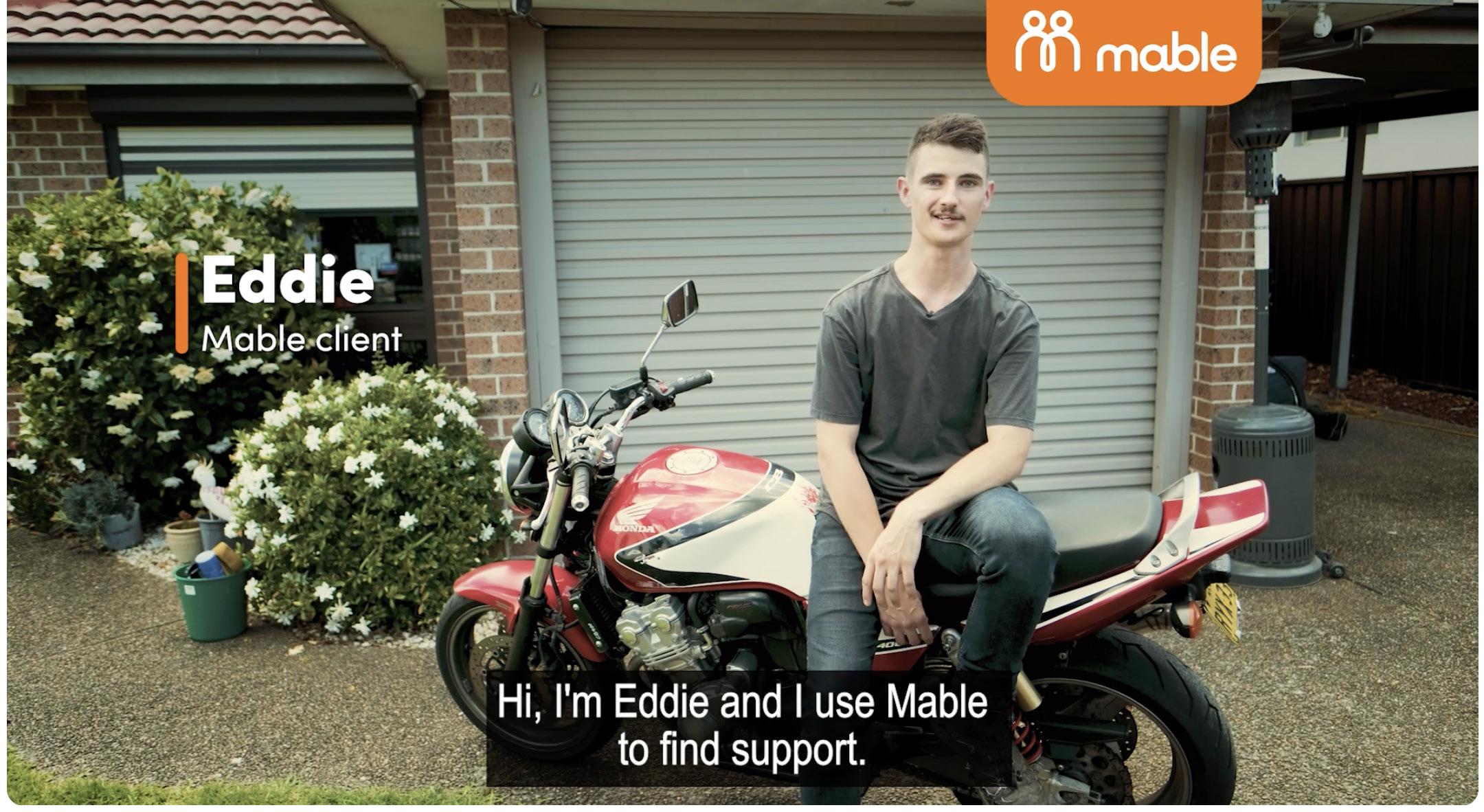
Check out this video from Mable featuring Eddie and his support worker.
Support workers
As your teenager becomes a young adult, you may find that the support they need changes. Many families find that bringing a support worker into the mix creates breathing room for everyone and gives young people more chances to do things on their own terms.
For your young person, it can feel good to have someone who is there for them, but not in charge of them. Some teens might feel unsure or embarrassed at first, especially if you've always been the one doing the supporting. Exploring profiles together, such as on platforms like Mable, can help them see real people with shared interests, similar ages or specific skills.
HOW SUPPORT WORKERS ARE FUNDED
Support workers can be funded from different parts of an NDIS plan depending on what they're doing:
• Core: Assistance with Daily Life: dayto-day support at home
• Core: Social, Economic & Community Participation: getting out and taking part in activities
• Capacity Building: Increased Social & Community Participation: building skills to do things more independently.
NDIS reforms updateApril 2026
The government announced proposed changes to how Social and Community Participation is funded under the NDIS. From 1 October 2026, budgets in this area are expected to be progressively adjusted. Supports essential to daily living and critical care will not be affected.
For some young adults, having a support worker becomes the bridge between wanting more independence and feeling confident enough to try.
Ellen’s story:
Putting an NDIS plan to work
Ellen is 26 and was diagnosed with autism at 18, just after finishing high school.
It was difficult during high school because I hadn’t been diagnosed, so it was a struggle with learning,” she says. “I struggled with the schoolwork and I struggled with fitting in and finding a group of friends.”
Getting started
Ellen received her first NDIS plan two years after her diagnosis. With her dad as her plan nominee, they make decisions together about the therapies and activities she takes on. Over the years, she has used her funding for a range of supports, including a community life skills program where she learned practical skills such as banking, hygiene, cooking, and travelling in a group. When the program closed, Ellen looked for new activities that aligned with her goals and routines.
Ellen’s NDIS goals
• Building friendships and social skills within the community
• Building independent living skills to move out of home
• Attend life skills development programs and allied health therapy
• Increase independence from dad in daily activities.

Putting supports and funding in place
Support worker at home and in the community: One day a week, a support worker helps at home, goes to the gym with Ellen and supports quick trips to the shops Community participation: Ellen attends a weekly group and is learning landscaping skills like digging, planting and using tools. “I even learned how to drill!”
Occupational therapy (OT): Every second Tuesday, Ellen sees her OT to build skills like reading social cues, something that helps her at her job at Big W where she has worked for the past seven years. They also focus on practical cooking strategies, including writing recipes in a way that makes sense for her.
I want to be able to cook more and be more independent so I can live on my own.
Working with a support coordinator
For Ellen, getting the most from her NDIS plan is a team effort, one where she, her dad and support coordinator Natalie are all part of the conversation.
“I remember our first meeting, Ellen was on the loudspeaker with her dad and it was great,” says Natalie. “Sometimes people don’t want to talk on the phone, especially teenagers and even some adults, but with Ellen, she was right there in the conversation.”
Natalie helps link all the pieces together so everyone is on the same page. Early on, she found a new occupational therapist when Ellen’s waitlist dragged on. “We got the new OT on board and started sharing information straight away,” she says.
She also spends time helping Ellen and her dad plan ahead. Together, they’ve talked about future education or training and the possibility of Ellen moving out of the home.
Part of that planning is thinking ahead to times when her dad might not be able to support her, whether that’s a hospital stay or another unexpected event. “We’ve been building a wall of support, connecting with providers, getting communication flowing, so everyone’s ready to step in if needed.”
Looking ahead
Ellen’s big goal is to live more independently. “I want to be able to cook more and be more independent so I can live on my own,” she says.

Resources and further reading and further reading

TURNING 18 AND THE NDIS
What happens when an NDIS participant turns 18?
An overview of the key changes to rights, responsibilities and decisionmaking when a young person reaches adulthood.
Adulthood for autistic individuals
Practical information from Autism Awareness Australia (AAA) about the transition to adulthood for autistic people, including what to expect and how to prepare.
Decision-making roles in the NDIS
A guide to the different roles involved in NDIS decision-making, including nominees, guardians and supported decision-making.
DECISION-MAKING AND CHOICE
Future planning and decision-making
Information from the NDIS on how to plan ahead and support your young person to make decisions about their life and supports.
Moving towards independence
Guidance from AAA on supporting young people to build independence while staying connected to the people who matter to them.
Appointing a nominee
How to apply for a nominee arrangement if your young person needs someone to act on their behalf for NDIS matters.
Play VIDEO
Check out this video about looking for an independant support worker.

Support workers
FUTURE PLANNING AND GOAL SETTING
My circumstances have changed: what next?
What to do if your young person’s situation changes and you need to update their NDIS Plan. Everything you need to know to prepare for your NDIS plan meeting or plan reassessment
A practical guide to getting ready for a plan meeting, including what evidence to gather and what to expect. Leap in! future planning and decision-making resource
A guide to help families think ahead and plan for the future with confidence.
LEAVING SCHOOL AND FURTHER EDUCATION
Setting goals as you move from school to further education and work
How to set clear, useful goals in an NDIS Plan as your young person prepares to leave school.
How to transition from high school to adulthood for people with disability
Helpful information from Endeavour Foundation on navigating the shift from school to further study, work and independent life.
Source Teens and Young Adults emag
Supporting transitions and key life stages for your young person.
EMPLOYMENT AND THE NDIS
NDIS employment supports
An overview of the employment supports available through the NDIS, including what’s funded and how to access it.
How to get ready for Inclusive Employment Australia (IEA)
Information about IEA from Endeavour Foundation to support young people with disability into open employment.
Source Teens and Young Adults
‘Ready for Work’ emag
This emagazine covers the transition from school to work, including NDIS supports and employment pathways. Workplace autism inclusion Guidance from AAA on creating inclusive workplaces for autistic employees, useful for young people and employers alike.
SOCIAL AND COMMUNITY PARTICIPATION
Mable’s Can-do guides show how support workers can help young people get out and try new things. Each guide covers what to expect, how to prepare and how NDIS funding can help.
• Indoor skydiving
• Going to gym
• Gardening
• Shopping
• Live music
• Movies
• Live sport
• Working in film
• Going to the beach
PLANNING FOR INDEPENDENT LIVING
Mable’s resources on Home and Living planning
A comprehensive guide from Mable to help families work through home and living options.
My Home My Way
A resource to help people with disability explore what independent living could look like for them.
ILO Toolkit
A practical guide to Individualised Living Options, including how to apply and what to expect.

•
•
•
•