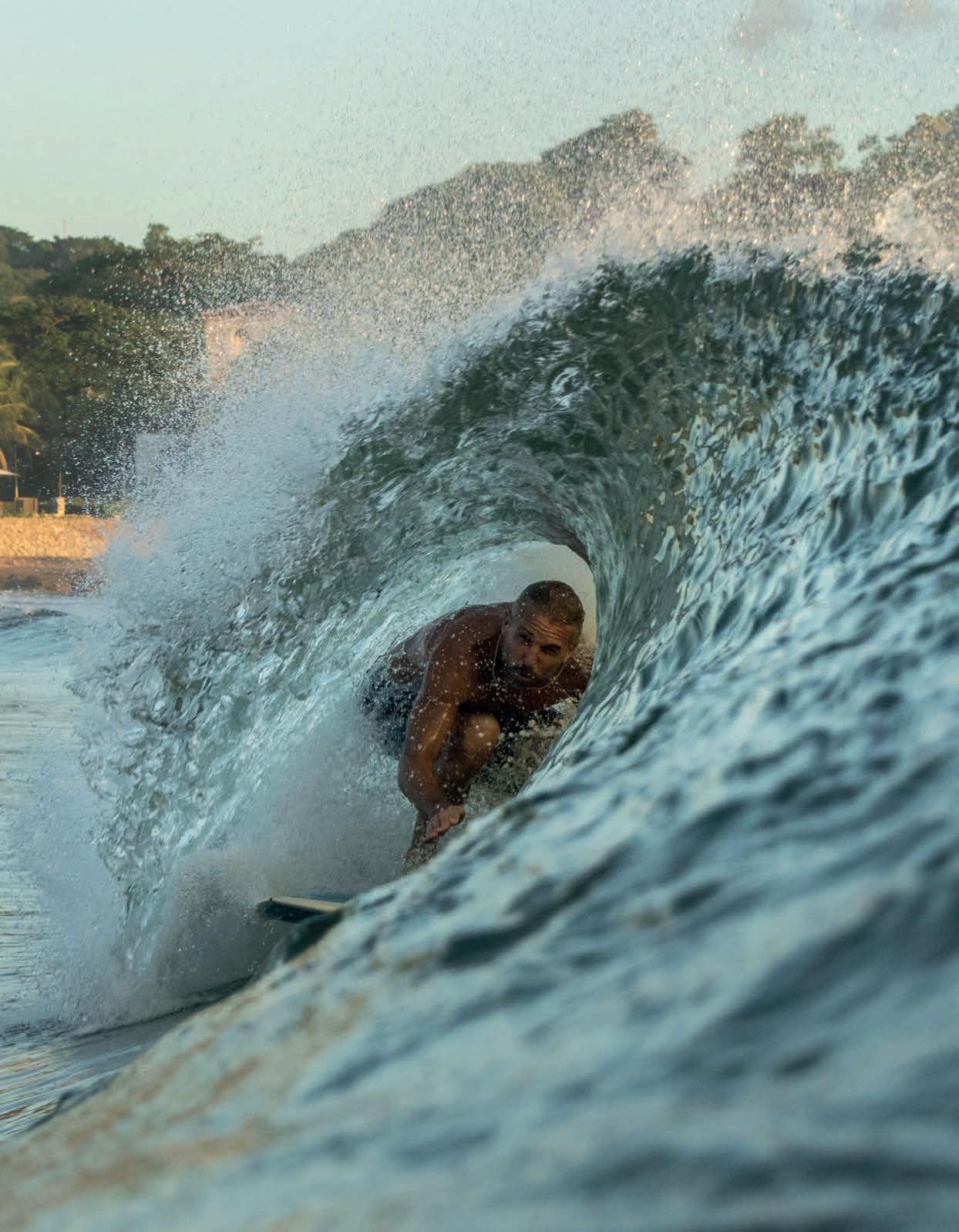
BIG WIG INTERVIEW: NIGEL GIBB, ZIMBALISURF
EUROPEAN MARKET INSIGHTS
RETAIL BUYERS GUIDES: SURF ROBES AND PONCHOS, SUNGLASSES, SURFBOARDS, SUP, HANGING SHOES, IMPACT VESTS, MENS UNDERWEAR, SUNSCREEN , WATER HELMETS
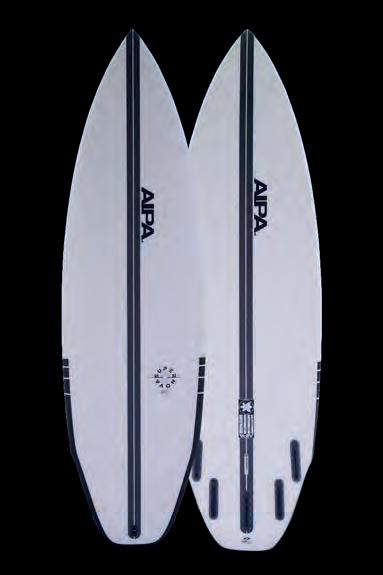
INTRODUCING THE SUPER
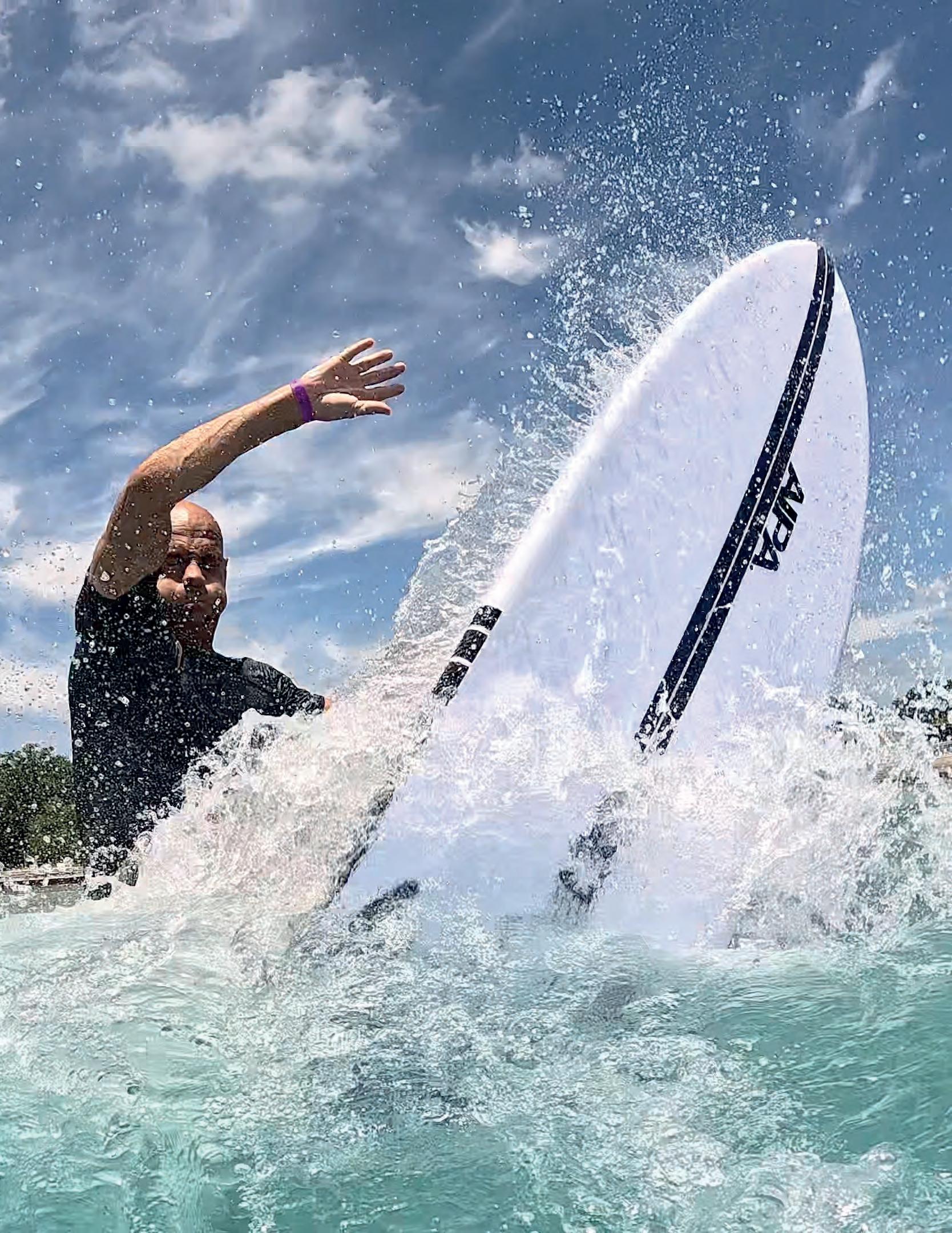
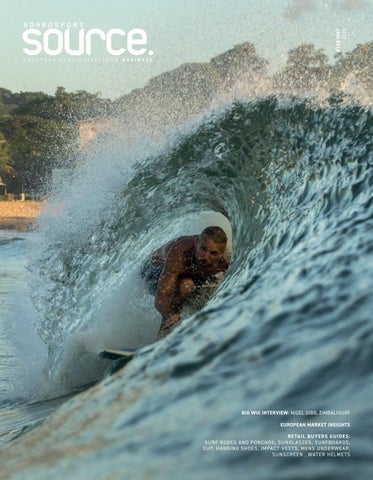
BIG WIG INTERVIEW: NIGEL GIBB, ZIMBALISURF
EUROPEAN MARKET INSIGHTS
RETAIL BUYERS GUIDES: SURF ROBES AND PONCHOS, SUNGLASSES, SURFBOARDS, SUP, HANGING SHOES, IMPACT VESTS, MENS UNDERWEAR, SUNSCREEN , WATER HELMETS
INTRODUCING THE SUPER
Join us in honoring the legacy of the world’s best shapers. At Surftech, we bring visionary designs to life with unparalleled craftsmanship. Our commitment is to the creation of extraordinary surfboards, the elevation of the shapers who build them, and the enhancement of your experience on the water. For your part; we simply ask that you enjoy — every wave you ride is a testament to the legends who made it possible. Together we celebrate the artistry of the master board builders. Surftech — where legends are made.
Aipa invites all generations of the inspired to experience the blend and balance of an authentic surf legacy and connect on a journey to imagine and live “The Next Move”.
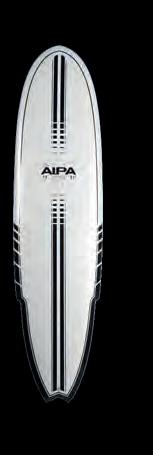
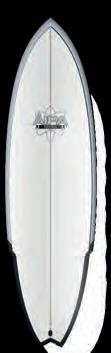
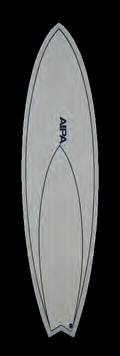
Surftech is honored to be a part of Aipa’s next move. Our product collaboration aims to, in the words of Ben Aipa, “Make a statement, emphasize design, but always have blend and balance.” We feel confident our range from AIPA, built-in cutting edge Dual Core and Fusion HD constructions, lives up to and maybe even exceeds Ben’s vision.


A tale of two seasons; winter and spring, with winter excelling whilst spring was battered by weather and politics.
Taking a global view, winter saw Europe and the Far East with strong product demand whilst the USA was patchy with their worst snowfall for years. In Europe, the further west you were, the better the snow conditions, with France in particular having an outstanding season, while Eastern Europe had enough snow at the right times. Much of the action related to snow product was in bindings with easy entry technologies significantly expanding its share of the market.
The good winter helped brands spring orders, as multisport retailers were able to put some cash in the bank after a few
P.07 Contents
P.09 Trade events ISPO
P.11 Surf Robes and Ponchos Retail Buyer’s Guide
P.14 Retailer Profile The Wave, UK
P.17 Brand Profile EQ Love
P 19 Sunglasses Retail Buyer’s Guide
P.22 Sunglasses Pictorial
P.26 Brand Profile Paria
P.27 Brand Profile DYSUJO
Editor Harry Mitchell Thompson harry@boardsportsource.com
Skate Editor Dave Morgan davemorgan@boardsportsource.com
Senior Surf Contributor
David Bianic david@boardsportsource.com
Snowboard Contributor
Matthieu Perez Matthieu@boardsportsource.com
lean years. It seemed retailers were quietly optimistic for spring 2026. Prebook orders for water products for delivery 2026 were considerably ahead of 2025, there was a belief that the worst had passed and the market would start moving back to its previous levels. That’s until the weather and Trump conspired to upset all the forecasts.
Firstly the weather in Spain, Portugal and France was atrocious with massive amounts of rain combined with violent storms for most of February. Everyone stayed at home and shops were empty and roads were blocked. March was the beginning of months of repair, which is still an ongoing situation in many places. Additionally, retailers in the Southwest of France always say that a good winters’ snow means customers’ budgets are all spent on winter kit, leaving little for summer purchases. May has arrived without much good weather so far, but retailers are still optimistic for good sales over the holiday period. Against this backdrop we now find ourselves feeling the repercussions of Trump’s latest role
P 28 Surfboards Retail Buyer’s Guide
P 33 SUP Retail Buyer’s Guide
P.36 Brand Profile Arcade Belts
P.37 Brand Profile I-SEA
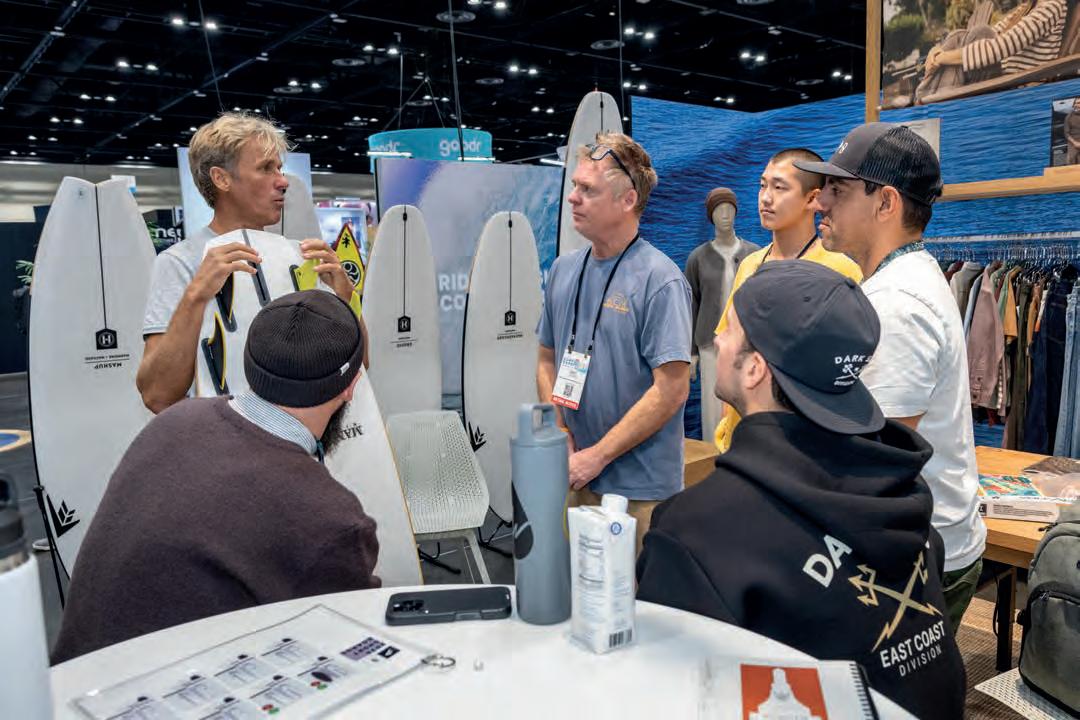
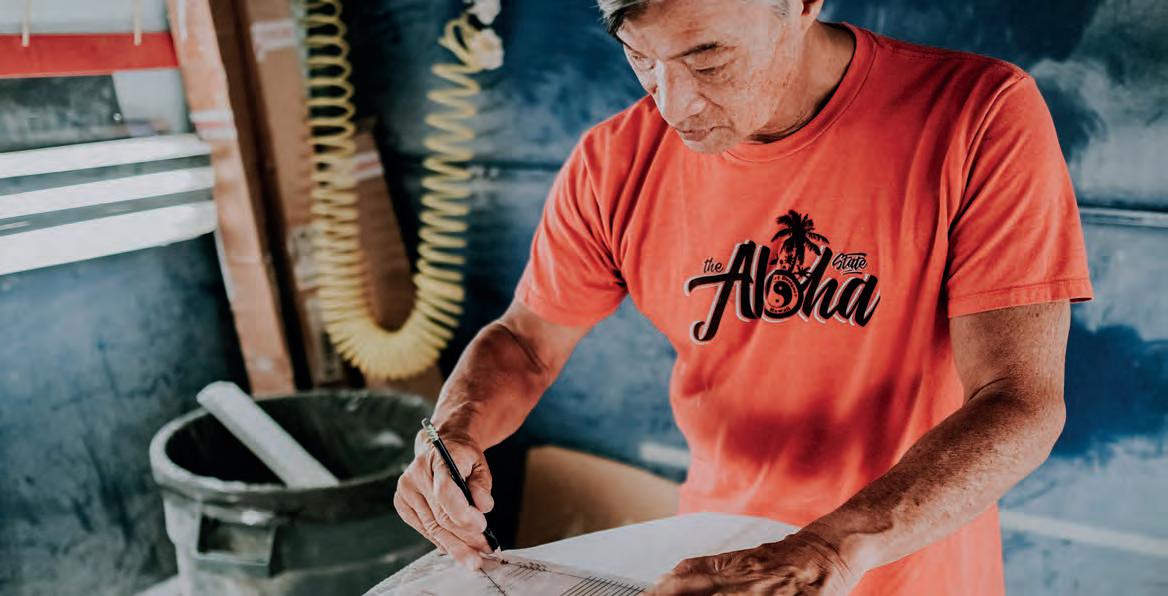
P.38 Big Wig Interview: Nigel Gibb, ZimbaliSurf
P.40 Hanging Shoes Retail Buyer’s Guide
P.42 Impact Vests Retail Buyer’s Guide
P.43 Men’s Underwear Retail Buyer’s Guide
P.44 Brand Profile WIP
German Editor Natalia Maruniak tala@boardsportsource.com
French Editor Marie-Laure Ducos ducos@boardsportsource.com
Graphic Design Louis White hello@louiswhite.co.uk
Proof-readers Natalia Maruniak, Marie-Laure Ducos
Contributors Rocio Enriquez, Benoît Brecq, Gordon Way, Franz Holler,
No part of this publication may be reproduced or transmitted in any form or by any means, or stored in any retrieval system of any nature without prior written permission, except for permitted fair dealing under the Copyright Designs and Patents Act 1988. Application for permission for use of copyright material including permission to reproduce extracts
of the dice, with Europe heavily exposed but without any real direct involvement in either the war or the possible solutions.
Looking ahead, price rises and inflation are becoming more of a concern with brands and retailers also expecting consumers to feel the pinch in their household budgets. Meanwhile we all hope for a solution to the Iran War, the longer it goes on, the longer it will take to recover the situation.
Back to the issue in your hand, Source retail buyers guides and market insights will help you navigate through to hopefully calmer waters, whilst this issue’s Bigwig Nigel Gibb from Zimbalisurf talks about managing surf brands through good times and bad times. He’s optimistic about the future and so should we be!
Sideways with turbulence
Clive Ripley Publisher
P.45 Brand Profile After Essentials
P.47 Sunscreen Retail Buyer’s Guide
P.51 Water Helmets Retail Buyer’s Guide
P.53 New Products
P.55 Brand Update Suntribe
P.57 European Market Insights
P.62 Opportunities
P.64 Events
Nuno Principe, Toby Hammer, Alain Frei, Juliana Schneider
Advertising & Marketing Clive Ripley clive@boardsportsource.com
Accounts Manager accounts@boardsportsource.com
To Subscribe boardsportsource.com subs@boardsportsource.com
Publisher publisher@boardsportsource.com
Published by ESB 22 Friars Street, Sudbury Suffolk, CO10 2AA. UK
Boardsport SOURCE is published bi-monthly © ESB. All Rights Reserved
in other public works shall be made to the publishers. Full acknowledgement of author, publisher and source must be given. The views expressed in this publication are not those necessarily held by the Publisher. ISSN # 1478-4777

NOV 3-5, 2026
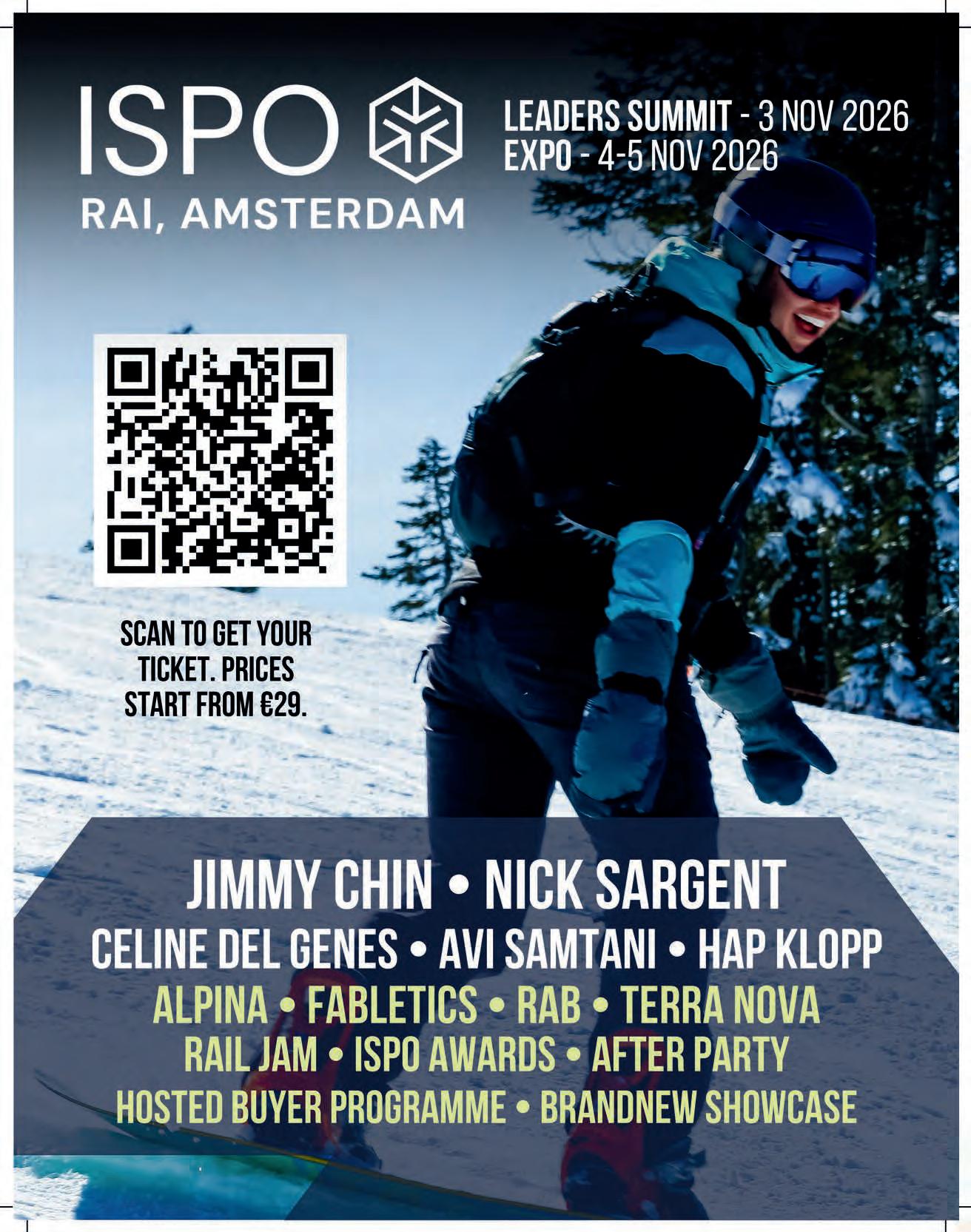
A whole new show under a trusted name. ISPO has moved dates and location with The Racoon Media Group as a new 50% owner in partnership with Messe München. By combining ISPO’s heritage with Racoon’s community-driven approach, they are creating an event that will not only reflect the future of sport and the outdoors but actively shape it.
For too long, ISPO has been led by the head and lost some of its heart. With this rebalancing the show is making smart, strategic choices while restoring the passion, purpose and community that made it great. The industry needs a platform that unites voices, and inspires the next generation of brands, leaders and businesses.
The Raccoon Media Group is a dynamic, high-growth media business dedicated to serving passion-led communities across both B2C and B2B markets worldwide. Through its impactful events and media properties, Raccoon delivers year-round content, education and growth and networking opportunities to specialist, self-identifying audiences. Messe München the original founder of the show is one of the world’s leading trade fair organisers with around 90 trade fairs worldwide. Together they will be combining their unique expertise to bring a renewed vision to ISPO 2026.
The move to Amsterdam and the date change are strategic choices to expand ISPO’s reach globally. Situated in a globally connected hub and home to many leading brand headquarters, Amsterdam also strengthens ties with the North American market, supporting renewed engagement from US-based associations and brands. Reaffirming ISPO’s position as the global gathering place for the sports and outdoor community. The earlier dateline, 3–5 November, addresses the cost base to make attendance more affordable, aligns the event with global buying cycles, and ensures accessibility for a broader international audience by avoiding key public holidays including Thanks Giving.
The new ISPO will occupy eight halls at the RAI in Amsterdam, covering approximately 45,000 sqm, creating the opportunity to reimagine the show on many levels. It will be more than a trade show: ISPO will evolve into an immersive, inspiring and vibrant experience featuring a plethora of activations across the show floor: Including a Rail Jam, a cutting-edge VR climb, a thrilling virtual reality skiing experience, the Wild Water Explorer area and the runway for multiple brands to showcase their latest lines in apparel, footwear and equipment.
A stand-alone, separately ticketed event, the summit for C-suite for executives and influential leaders, kicks off the show on the 3rd November. A day that will bring together key opinion formers. The line-up reads like a who’s who of the most pivotal names in the industry with speakers including: Andy Rubin (Pentland Group),Tom Foley (CEO, Intersport International Corporation), Hap Klopp (Founder, The North Face), John Lacy (CEO, Burton Snowboards) and Céline Del Genes (Global Chief Customer Officer, Decathlon & Global Game Shapers)
The 4th and 5th November will see ISPO 2026 open its doors to over 25,000 of the sports and outdoors key industry experts over two days.
The exhibition floor will be a hive of activity providing an immersive experience across three main show zones, designed and curated to enhance engagement and foster connections. Early exhibitor confirmations already point to a diverse and increasingly international show floor as over the coming weeks ISPO is set to announce a wealth of new global brands as the line up continues to grow.
Standalone exhibitor halls will be dedicated to specific areas, with Hall 1 focusing on Outdoor (featuring hike, climb, ski, snow, camping and water), Hall 2 on fitness, e-commerce and retail solutions and Hall 3 on sports and cycling. Two further halls will be dedicated to sourcing, for delegates focused on product development and procurement needs and textiles and garment manufacturers will have a dedicated hall featuring a fashion and textiles hub. Hall 6 will showcase sustainability movers and shakers, with delegates able to help drive circularity in the Swap Shop and explore the latest performance fabrics in the materials lab.
Finally, Hall 12 plays host to the International Running Expo, Europe’s only dedicated B2B event for the running industry, bringing together high-level industry professionals to showcase the latest product launches, technology, trends and innovations.
Over 250+ retailers have already confirmed their attendance. Intersport was the first major retailer to confirm their attendance back in 2025 and since then, a number of global leaders in the retail sector such as Blacks, Intersport, Amazon, Ellis Brigham and Millets have followed suit.
Over 450+ exhibitors are already on the roster, with global brands such as Rab, Reebok accessories, Skechers Running, Scott, Gymstick, and Nordberg having already confirmed their attendance, demonstrating their desire to be at the heart of the industry’s coming together and their committed belief in ISPO’s renewed positioning as the industry’s essential and must have meeting point. Alongside market leaders, challenger brands have been booking space and will bring that dynamism to the Amsterdam RAI.
The Hosted Buyer lounge will provide an exclusive space for hosted buyers to relax, connect, and prepare between meetings, in a comfortable setting designed for focused conversations, networking, and downtime on the show floor.
Visitor tickets are currently available for a limited time at the price of €29 however ticket prices will soon increase to €59 for a limited second phase before reaching the full ticket price of €99. This introductory ticket pricing is a deliberate step based on long-standing feedback to make ISPO more cost-effective and accessible. Buyers can also apply to be ‘hosted’ as part of the event’s €1million investment in a full-service hosted buyer program now.
ISPO 2026 will open up the endless possibility to schedule meetings with a plethora of global retailers, distributors and potential partners whilst simultaneously networking with existing and new connections, so make sure you don’t miss out, book your tickets today.
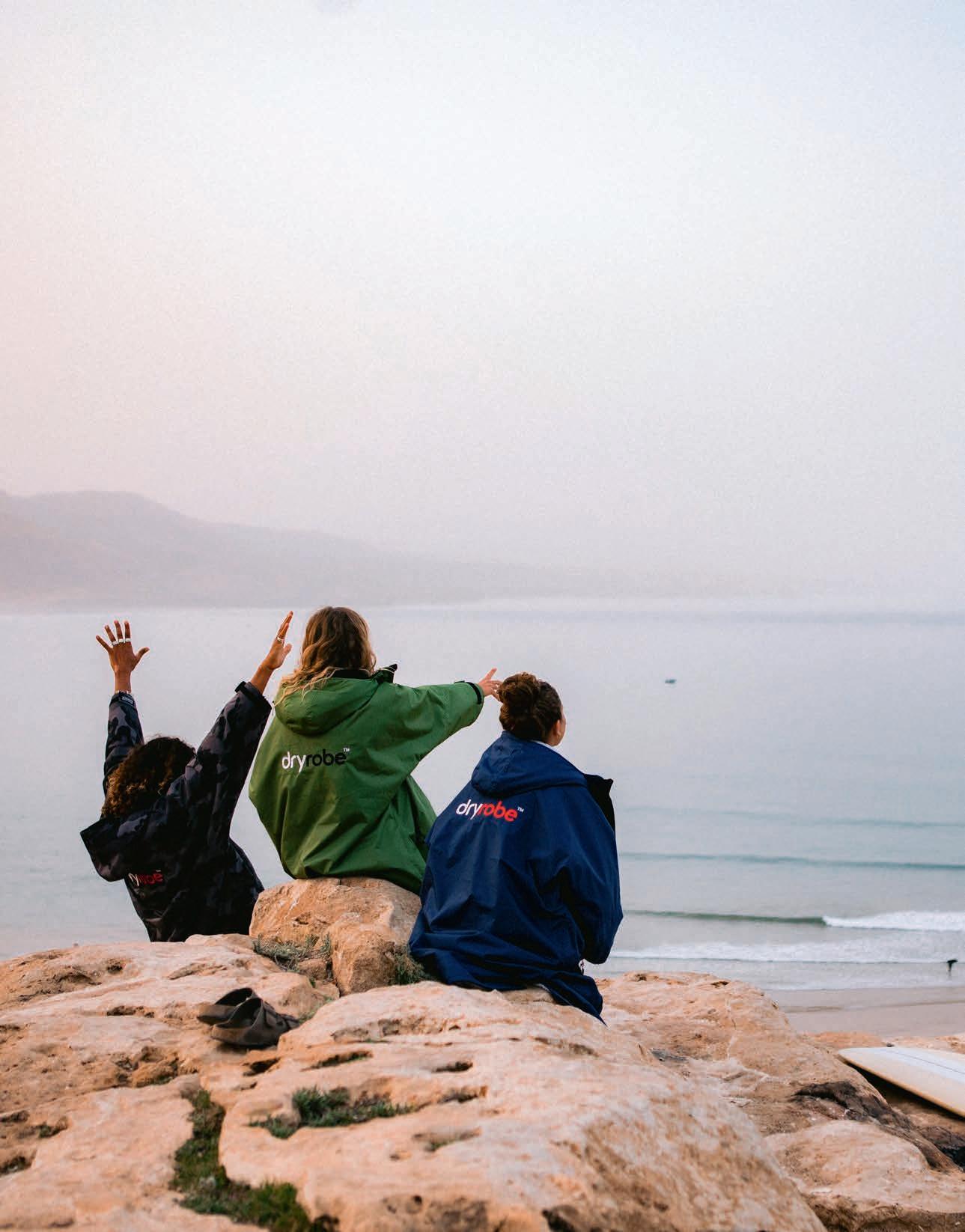
Not all superheroes wear capes, but we – watersports lovers – sure do. The surf poncho & changing robe market has reached maturity and demands some adjustments for retailers as the product power couple split, leaning towards different directions. By David Bianic.
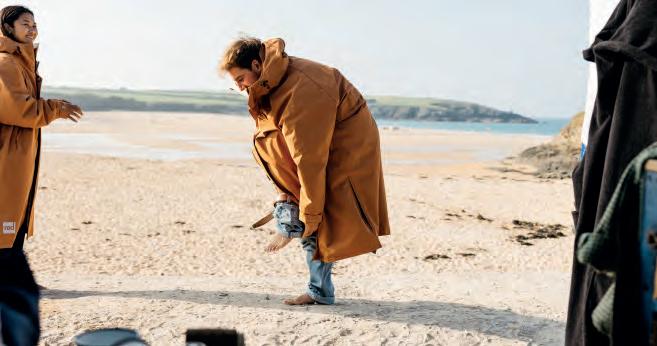
Conveniently, our Retail Buyer’s Guides have been gathering up the two parent designs – ponchos & changing robes, as they were both born out of mere changing purposes among watersports enthusiasts. Yet, as we come at a crossroads’ stage of the market dynamics, they only have a similar silhouette as a common denominator. As we analyse the 2026 retail landscape, the strategic tension between highperformance weather protection and traditional comfort garments has created two subtly different product categories.
A regional split is also being seen across the Old Continent; while technical robes dominate the wind-swept shores of Northern Europe, the towelling poncho remains the primary driver in warmer climates. “In southern Europe, surf ponchos remain dominant compared to changing robes,” explains Rémi Chaussemiche, Marketing Director, After Essentials, noting that while there is “demand for changing robes in northern Europe, but sales wise the surf ponchos are still performing better”.
Data points the traditional old school poncho is far from obsolescence, particularly for brands that have mastered the lifestyle segment. “2025 was another top-selling year for us, with around 80,000 surf ponchos sold,” reports Carsten Raphael, CEO, Wave Hawaii.
Ponchos and Robes mirror two different customer habits, as the first one is often considered as a seasonal accessory, while the latter is a “year-round technical investment,” according to Mellow Sea. They argue that the modern changing robe “is a technical parka that replaces the classic parka, offering much better value for money for the consumer.”
BRAND POSITIONING: CORE-TO-MAINSTREAM RATIO
In an era where changing robes are becoming ubiquitous in urban
‘‘In
southern Europe, surf ponchos remain dominant compared to changing robes.”
Rémi
Chaussemiche, After Essentials
environments, maintaining brand “soul” is critical against market dilution. “We bridge the gap by staying true to our surf roots while offering premium quality that appeals to everyone,” says JB Caste, CEO, ALL-IN, defining their position as “Technical Lifestyle.” This strategy ensures that the product remains a “core” piece of equipment for the avid surfer while staying accessible to the casual beachgoer.
Segmentation has become the primary tool for managing this mainstream expansion. Thus, After Essentials has pioneered a “Series” approach, similar to the skateboard industry, to maintain niche appeal. Their After Lab collection serves as a cornerstone of this strategy, featuring collaborations with former pro skateboarder and photographer Arto Saari and street artist Mambo.
Conversely, Saint Jacques Wetsuits has achieved differentiation through a rejection of mainstream graphic trends in favor of “French elegance.” By avoiding the “psych motifs” prevalent in mass-market offerings, the brand maintains its premium status, says Stan Bresson. “We are not looking to make the poncho an urban fashion product or a general lifestyle item.”
For brands like Nomadix, multi-functionality is key to capturing the “van life” and “outdoor enthusiast” markets without alienating the core user. “Our changing poncho is built for water activities, but its
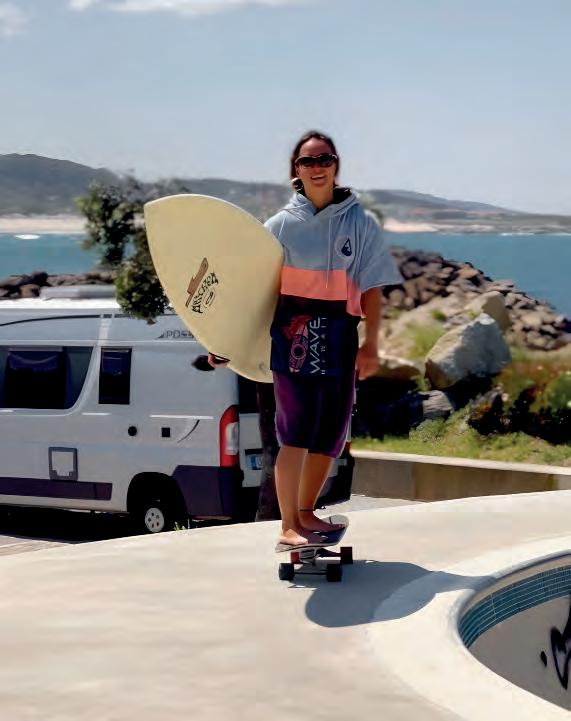
appeal naturally extends beyond core users because it is practical, easy to wear, and useful anywhere,” says Nate Clark, Director of Wholesale. This broad utility naturally leads to a more diverse demographic of users, particularly among women and families.
CUSTOMER PROFILES: GENDER SEGMENTATION AND “GROM” SURGE
The 2026 market is characterised by a significant blurring of gendered lines, with most brands reporting a 60/40 female-to-male split. “For our waterproof robes, it’s about 60/40 women to men, as our robes are so soft and comfortable it is understandable we particularly appeal to women who value that,” notes Catherine Morris, Commercial Director, Red Equipment.
“The headline for this season is the evolution of our towel range, heavily influenced by the massive success of the Full-Zip Towel Robe.” Bethany Foster, Dryrobe®
The “grom” market has simultaneously emerged as a high-stakes segment for long-term brand loyalty. “Kids love ponchos, they do several sessions a day... so poncho is a must have for them,” says Rémi Chaussemiche, After Essentials. Brands are now offering the same technical specifications for children as they do for adults, a strategy Mellow Sea is leaning into with their 2026 launch of the children’s Dry Stop Parka.
This “family beach day” spend is a critical lever for retail growth. “Families who equip their children often become loyal long-term customers - it’s a real driver of loyalty,” mentions Stan Bresson, President, Saint Jacques Wetsuits. By providing gear that “keeps them warm and comfortable after being in the water,” according to Jimmy Pinfield, Representative for Robie, brands are cementing emotional connections with parents. JB Caste, ALL-IN, agrees, stating that offering sizes “from 1 to 15 years old” ensures that “the ‘ALL-IN soul’ starts from the youngest age.”
This focus on the next generation ensures that “those who have been embracing the changing ponchos for years, still use them as young adults,” as points out Rémi Chaussemiche at After Essentials.
“For our waterproof robes, it’s about 60/40 women to men, as our robes are so soft and comfortable it is understandable we particularly appeal to women who value that.” Catherine Morris, Red Equipment
The 2026 poncho collections seem to be defined by a move toward 100% organic cotton and high-performance packability. “This year is all about texture and tone,” notes Jimmy Pinfield, Representative for Robie, highlighting their focus on “premium, plastic-free Turkish cotton.” This material focus is echoed by Meredith Cole, Marketing Manager, Slowtide, who emphasises their “Oeko-Tex Certified Poncho” and the use of “plush 100% winter-weight cotton” to provide ultimate comfort.
Innovation in silhouettes, such as the V-shape and the Full-Zip Towel Robe, is also driving sales. “The headline for this season is the evolution of our towel range, heavily influenced by the massive success of the Full-Zip Towel Robe,” says Dryrobe, noting it features a “high-quality YKK® zip for effortless changing.” Meanwhile, Wave Hawaii has introduced NatureLite, a “smooth cotton fabric that is super fluffy, has an extremely small pack size, weighs little, and dries quickly,” according to CEO Carsten Raphael. These advancements cater to the “packability” trend, expanding the product’s utility beyond the shoreline to global travel.
“Our new 2026 Towel Robes feature two major functional upgrades: integrated pull cords on the hood [...] and inbuilt pockets,” adds Dryrobe, highlighting the 400gsm GOTS-certified organic cotton used in their construction. This focus on technical utility is mirrored by Red Equipment, whose “Quick Dry Microfibre” is predicted to be a major growth driver.
CHANGING ROBES: THE ADVENT OF THE WEATHERPROOF PARKA
The “Technical Robe” has evolved into a high-performance equipment piece that rivals elite outerwear. Leading this charge is the Dryrobe® Nexus, with an “industry-leading 30,000mm waterproof ripstop outer,” the model is designed to bridge “the gap between shoreline performance and urban utility.” This level of specification allows retailers to command premium prices, as the product is positioned as a life-long tool for “the refined adventurer who demands elite protection everywhere,” according to Dryrobe®.
Not far behind is the All-Weather Parka from Slowtide, which offers a “20,000 waterproof rating / 10,000g breathability” and a “PFAS-Free Waterproof Shell,” according to Meredith Cole.
Mellow Sea has also pushed technical boundaries with their “removable lining” innovation. The “3-in-1 modular system” features a “fleece interior covered with a removable waterproof lining, which can be easily removed and replaced depending on whether you are wet or not.”
The technical specs of 2026—including “YKK zippers,” “10,000 water column” recycled fabrics from Wave Hawaii, and “GOTS-certified” organic cotton—are the primary weapons against “cheap or low quality entrants,” according to Catherine Morris at Red Equipment.
The 2026 market demands a departure from the “one-size-fits-all” inventory approach that has historically characterised the category. Carsten Raphael at Wave Hawaii warns that when retailers sell a “similar range of products,” the “shopping experience” is no longer exciting for consumers. Instead, the advice from the frontline is “to mix it up” and blend core watersports products with casual lifestyle appeal.
According to Rémi Chaussemiche at After Essentials, retailers can avoid price wars with sports chain stores. A sentiment shared by Jimmy Pinfield for Robie, as the most successful shops will be those that “blend those two worlds [core and casual] rather than treating them separately”.
1 Robes lead year-round sales
2 Women and groms drive growth
Visit our website to see in depth brand previews of this category. BOARDSPORTSOURCE.COM
3 Materials prioritise eco-friendly packability
4 In-store core-lifestyle blending
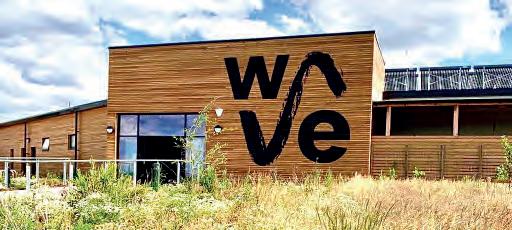
The Wave is located close to Bristol and is one of only two operational wave parks in the UK. Their shop caters for the inland recreational surfers as well as coastal surfers looking for a quick indulgence and carry’s a range of products to meet their particular needs.
Please introduce your shop and share the story behind how it all began? We are a world-first inland surfing destination, powered by Wavegarden Cove technology, where everyone can learn to surf, from a child stepping on a board for the first time, to pros training for the Olympics.
Our Founder, Nick Hounsfield, set out to create a place where people could get outdoors, be active and reconnect with themselves and each other. At the heart of that vision is a 180m surfing lake, designed to deliver physical and mental health benefits for people of all ages, backgrounds and abilities.
The Wave is more than a surfing destination. Alongside the lake, we have food and drink, family-friendly spaces, camping and our surf shop. Retail plays an important role in the overall experience, giving us a platform to showcase the best brands and products in the industry in a way that feels connected to the wider visit.
As the first retailer profile from a store based at an inland wave park, how does your consumer differ from a seaside store.
Our shop sits within the main Clubhouse, and every surfer passes through it. That gives us a unique audience of over 120,000 surfers and 60,000 spectators each year.
Because of this, we can take a more premium and brand-led approach. We keep discounting low and focus on strong visual merchandising that reflects the quality of the wider experience.
Wave parks are still a novelty for many, and that sense of curiosity brings in a broad mix of visitors. Alongside that, we have a loyal base of regular surfers who treat us as their ‘local break’.
From Easter through to autumn, our core audience is active families with disposable income, parents keen for a surf and a good coffee, alongside kids making the most of the space.
And how is your product offering impacted by this?
Our audience is diverse, and not everyone identifies purely as a surfer. Many connect with a wider outdoor lifestyle, which shapes our range. We focus on versatile, premium apparel that works both in and out of the water.
The space feels similar to a coastal multi-brand surf store, alongside our own Wave-branded products across tees, caps, totes, towels and drinkware. These are consistently strong, as many visitors want to take a piece of the Wave brand home with them.
We are thoughtful in our buying decisions. We aim to minimise plastic, avoid short-term trends and work with brands that share our environmental values.
Partnerships are key. Our relationship with Rip Curl goes beyond retail, from supplying wetsuits for our surf school to in-store presence and wider brand activity. This puts a heritage surf brand at the centre of the experience, worn by over 30,000 beginner surfers each year.
Dryrobe is another important partner, used daily by our Wavemaker team across lessons, coaching and lifeguarding. Stance has also grown with us, expanding from socks into headwear, underwear and apparel through a dedicated in-store space.
Which are your best selling brands and why?
Alongside Rip Curl, Stance and Dryrobe, YETI performs strongly, with customers often returning to build collections across new colours and products. Florence Marine has seen steady growth over the past two years, supported by strong merchandising and appealing to our more regular, slightly older customer. We also stock a small range from Finisterre. As a fellow British surfing success story, with a purpose-led, premium position, it aligns naturally with us. During summer, our ownbrand range becomes our top performer. Across all categories, the common thread is authenticity. The brands feel part of the space rather than simply stocked within it.
What are your biggest challenges you have in running a store based at a wave park?
Like coastal stores, we are seasonal. In winter, we operate fewer days, and footfall is closely linked to surf sessions, weather and booking patterns. Demand can rise and fall quickly, so planning stock and staffing requires flexibility. Space is another challenge. We are selective with our range, and every product needs to earn its place.
What do you think brands could do differently when working with stores like yours?
The biggest opportunity is to think beyond traditional wholesale. The most successful partnerships at The Wave integrate across the full experience - retail, events, content and community. Brands that invest in activation and storytelling tend to see stronger results. This could be through product demos, exclusive drops, or collaborative content that brings the partnership to life. Ultimately, it comes down to alignment. When brands show up in a way that genuinely enhances the experience, it benefits both commercial performance and long-term brand value.
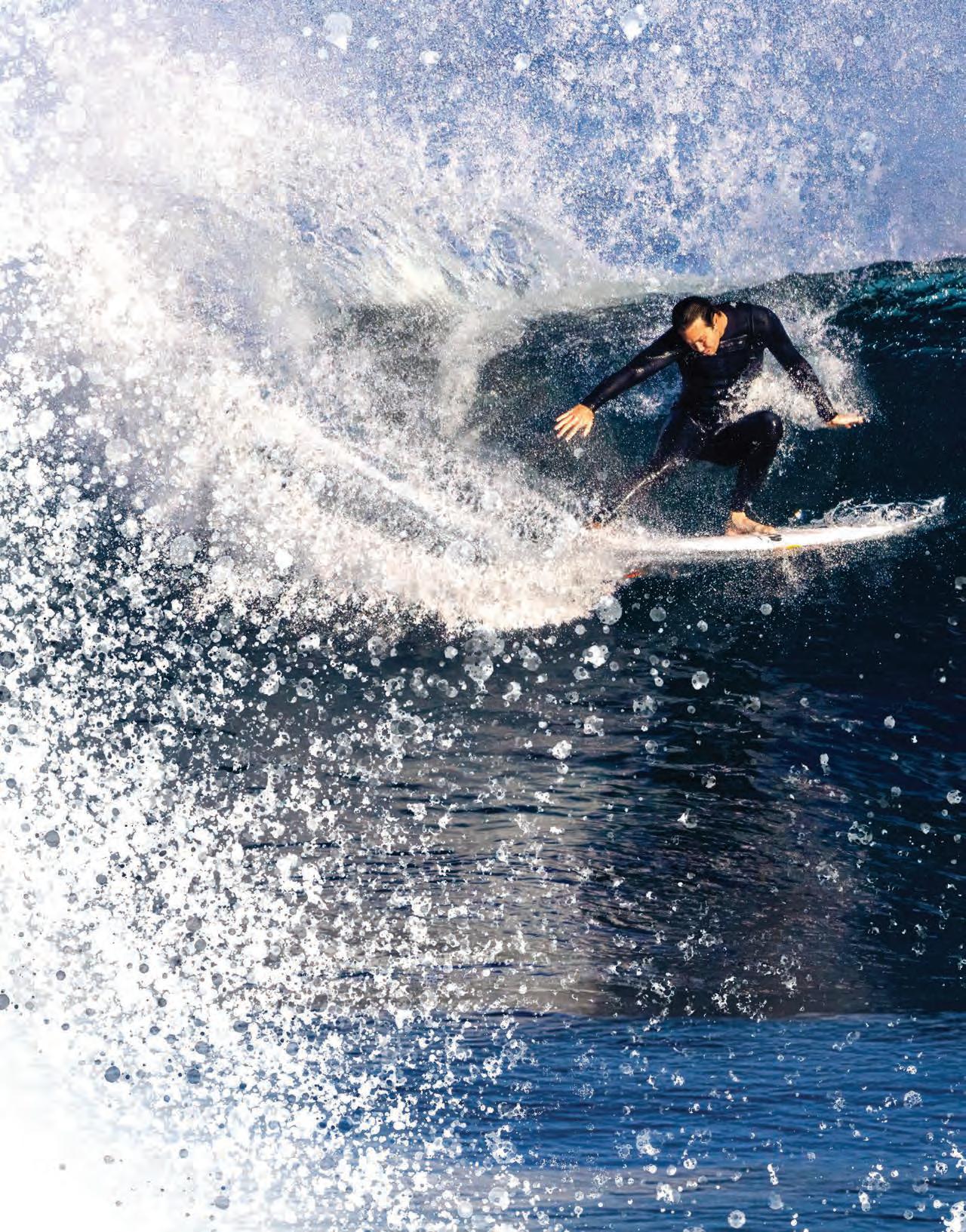
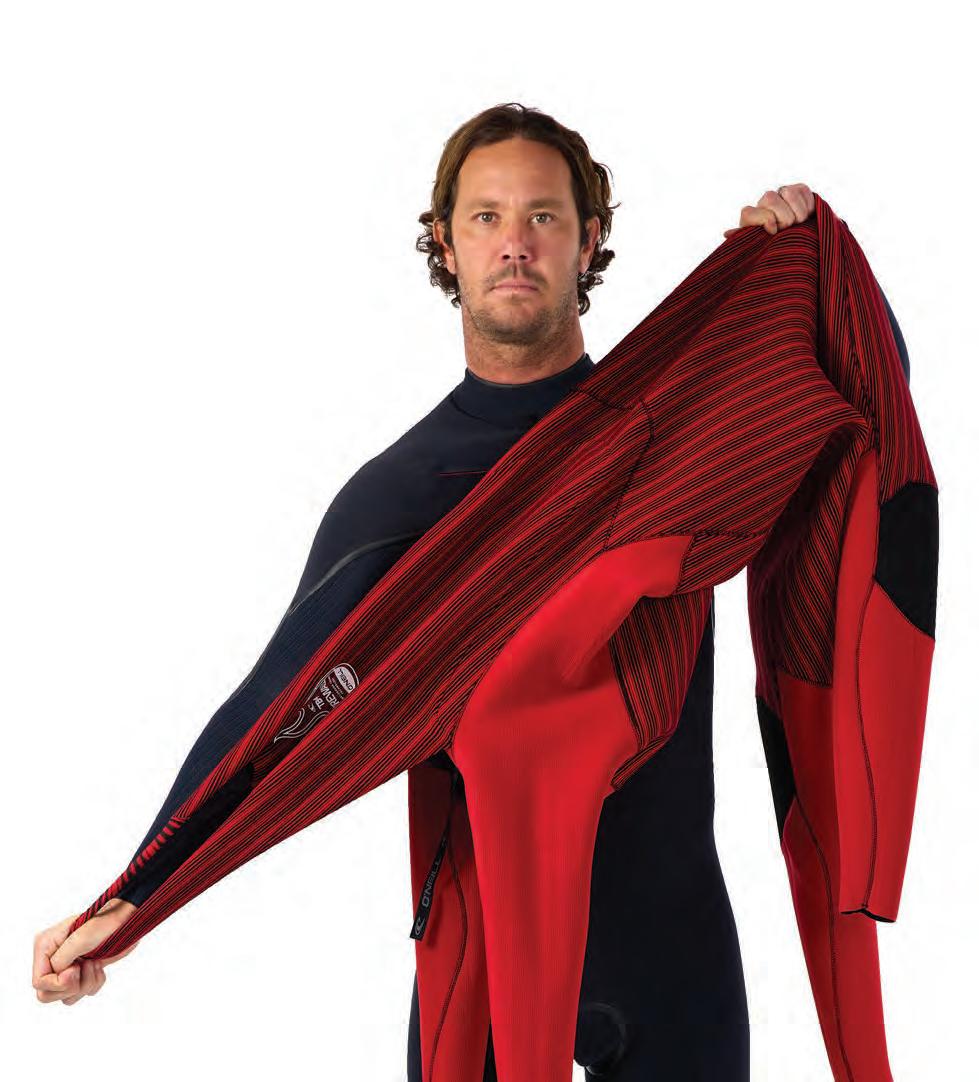

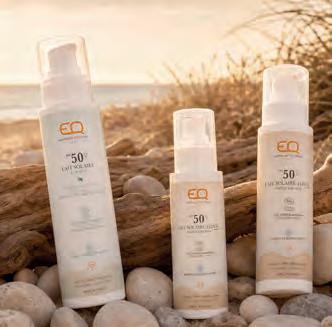
Blending high-performance mineral sun protection with certified organic formulations and authentic surf lifestyle roots, EQ is entering a new chapter with the launch of two major SPF50 innovations. We sat down with the French brand to discuss its evolution, growing ambitions and vision for modern outdoor sun care..
Please can you give us a brief history of the brand since its launch?
EQ Love was founded in Hossegor, France, inspired by surf culture and outdoor living. From the beginning, the brand focused on developing mineral-based sun protection products adapted to active lifestyles and long hours under the sun. EQ first became recognised within the surf community through its coloured SPF50+ sun sticks, which combined very high protection with a strong visual identity. Over the years, the range expanded into certified organic sun care and skincare products while maintaining its original DNA connected to the ocean, travel, and nature. In 2025, the brand entered a new phase following its acquisition by a Portuguese boardsports distribution company, accelerating development and expansion across Europe.
What is the brands USP?
EQ Love combines high-performance mineral sun protection, certified organic formulations, and authentic surf lifestyle credibility. Unlike many mainstream sunscreen brands, our products are specifically developed for outdoor sports and active use. Our mineral formulas are highly water resistant, adapted to intense sun exposure, and designed not to run into the eyes during sports and water activities. At the same time, we focus strongly on texture and daily wearability, creating products consumers enjoy using both at the beach and in everyday life.
What are the best-selling products in the line?
Our Pocket Size Sun Sticks SPF50+ remain the brand’s iconic products and continue to perform extremely well across Europe. Available in 10 colours inspired by the ocean and nature, they have become a signature product within the surf and outdoor communities. Facial sun protection

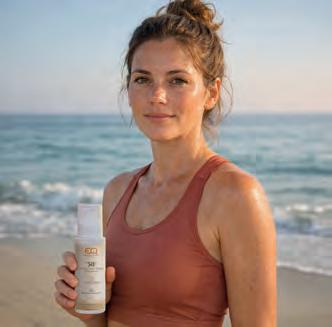
is also one of our strongest categories, especially products combining high mineral protection with lighter textures suitable for daily use.
What is currently your top performing European market?
France remains our strongest market today due to the brand’s origins and long-standing connection with the French surf scene. However, we are also seeing strong growth in Portugal and Spain, where awareness around mineral and organic-certified sunscreen products continues to increase rapidly.
How do you see the sunscreen market developing over the next few years?
We believe the market will continue evolving towards mineral, certified organic, and more transparent formulations. Consumers are increasingly informed about ingredients, environmental impact, and the differences between chemical and mineral UV filters. Another important evolution is the rise of daily sun protection as part of broader skincare and wellness routines. At the same time, demand is growing for products that combine high protection with better cosmetic elegance, lighter textures, and improved comfort for active lifestyles.
How is the brand distributed in Europe?
EQ Love is distributed across Europe through surf shops, outdoor retailers, concept stores, pharmacies, and e-commerce platforms. While the brand remains deeply connected to boardsports culture, it is also increasingly expanding into lifestyle and premium beauty channels.
Where are EQ products manufactured and what steps do you take to ensure your production methods are eco friendly?
Our products are manufactured in France according to strict certified organic standards. We work with mineral UV filters and carefully selected ingredients of natural origin while prioritising European production and responsible sourcing. EQ Love also operates under COSMOS Organic and Ecocert certifications, guaranteeing high standards regarding ingredient selection and environmental responsibility. We continuously work towards reducing unnecessary plastic and
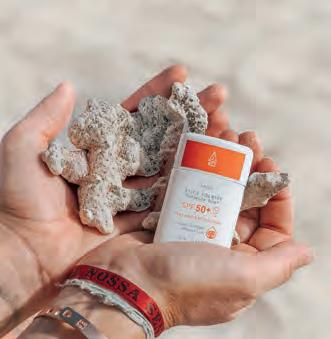
developing more sustainable packaging and display solutions.
Tell us about your new products for this year?
For 2026, EQ Love is launching two major new SPF50 products. The first is the new Tinted Sun Milk SPF50, certified COSMOS ORGANIC by Cosmebio and Ecocert and formulated with 100% mineral filters. Developed with a lighter and more fluid texture, it delivers very high protection while reducing the white cast usually associated with mineral sunscreens. The formula is also designed not to run into the eyes during sports or water activities.
The second launch is the new Baby & Child Sun Milk SPF50, also certified organic and formulated with mineral filters. Developed for sensitive skin, the new generation formula offers a more fluid and comfortable texture while maintaining very high protection standards for babies and children.
Why should retailers carry EQ?
EQ Love sits at the intersection of several of the fastest-growing market segments: mineral sun care, certified organic cosmetics, and outdoor lifestyle products. The brand offers retailers strong differentiation versus mainstream sunscreen brands, premium positioning, and authentic surf credibility. We also actively support our retail partners through eco-designed displays, educational tools, digital assets, and flexible merchandising solutions.
Life Happens Outdoors. Made for Ocean Lovers.

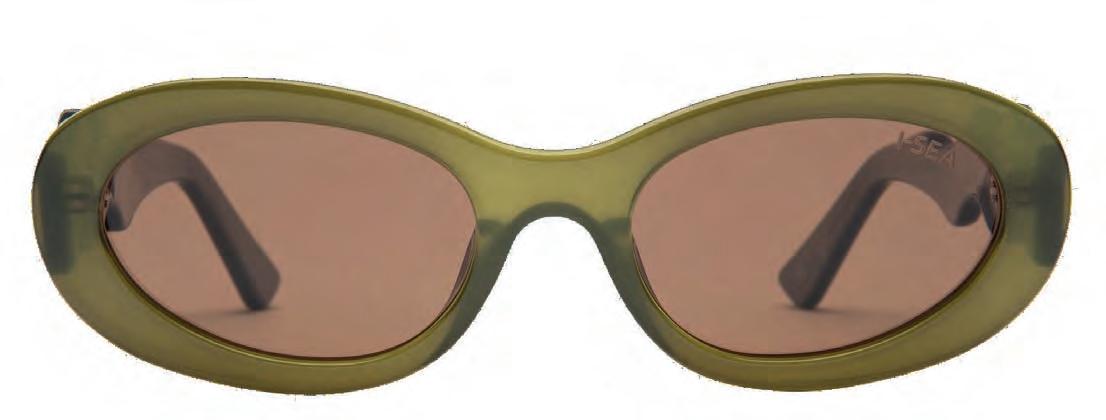
Versatile sunglasses blend technical credibility with style-driven expression for 2026. By Rocio Enriquez.
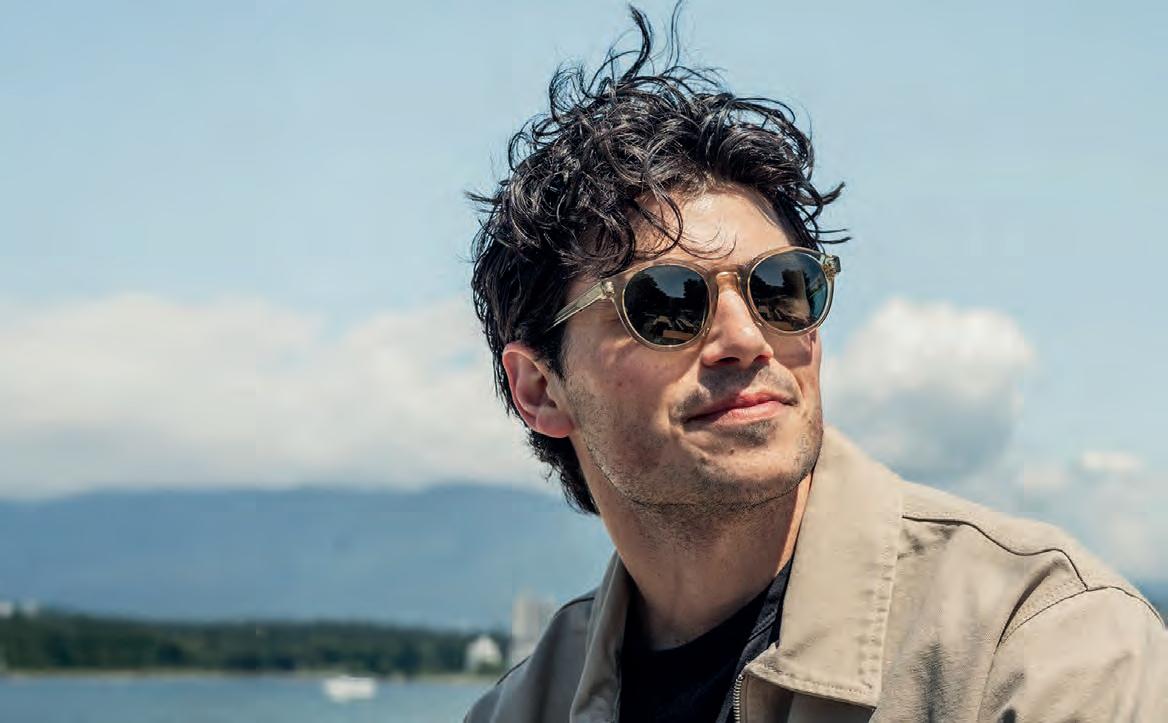
The sunglasses market enjoys a stable growth driven by selective consumers who value technical credibility over price. They research carefully and expect a strong balance between style, performance, and price accessibility. Sunglasses that can be worn across different environments have sold well. “Sports eyewear has moved beyond just athletes and has become an everyday staple for a broader audience”, says Sofia Helmstrand Mohamoud from CHPO Brand. Versatility is the strongest trend. Vallon, Union of Surf, Zeal Optics, and Aphex expect their best performance from their Active Lifestyle segment. “Our performance lifestyle segment is for customers who want eyewear that feels technical enough for active use, but looks clean enough for everyday wear”, says Aphex Brand Manager, Casper Holtzapfel. Shield and wrap silhouettes remain important, but there is an emergent movement towards slimmer, more fashion-oriented designs. Technical functionality becomes a baseline rather than a differentiator; individual expression sets the difference now. Collections that balance proven designs and trendy silhouettes are set for commercial success.
2026 FRAMES
Every brand offers large shields and wraps. I-Sea announces new shapes in this space. Hilx Eyewear launches the Oracle, a new mountaineering model with side shields. Adidas highlights its rimless Kaphiros, the fullrim Kentro, and the wider Alkator. Lip Sunglasses launches the Ripple with cylindrical lenses and the Surge Aero designed to fit around helmets. Smith Optics and O’Neill add a futuristic design to their shield range. “Shield sunglasses are now positioned as fashion-first pieces, not technical outliers”, says O’Neill Marketing Manager Lexy Edy. Aphex and BlackFlys introduce new wrapped profiles for better coverage. Mundaka Optics is developing shield-inspired profiles with sport details,
‘‘Sports eyewear has moved beyond just athletes and has become an everyday staple for a broader audience” Sofia Helmstrand Mohamoud, CHPO Brand
but lifestyle-friendly in looks. Slim shapes are gaining traction. “Our new slimmer shield profiles reinforce a sleek and modern performance aesthetic”, says 100Percent EMEA Marketing Manager, Elie Bellot. I-Sea highlights its new Josie slim-profile. Epokhe launches the more sculpted, slightly angular Dome Trinity and Jacuzzi. Lip Sunglasses join the trend. “The Tide is a more compact frame profile for riders who prefer a lighter, lower profile fit”, says CEO, Graham Saunders. Union of Surf introduces smaller silhouettes for women who seek a minimalistic styling. Retro influences remain strong. Vallon and Union of Surf expand their aviator range. I-Sea continues to push its aviator Royal. “The aviator remains a consistent stronghold due to its versatility and balance between trend relevance and everyday wearability”, say CoFounders Allison Singer and Joey Santley. Circular silhouettes are also updated. “We refine our circular silhouettes with a subtle angulation across the brow line, giving a more modern, wearable edge to classic forms”, says Union of Surf Founder, Philippa Clark. Smith offers two new retro-inspired sport-style models, Truss and Cipher. It meets the round lens trend with the Westward Core. Union of Surf, Quiksilver, and Von Zipper launch new bulky squared shapes. Wave Hawaii also introduces

new silhouettes. “New to our range are a cat eye, a panto, and a sporty shape”, announces CEO, Carsten Raphael. Roxy launches four new shapes in bio-acetate and two metal shapes, one rimless and one fullrimmed. Colour palettes aim for a balance between commercial safety and seasonal experimentation. Earth tones, transparent finishes, muted classics, and brighter accents coexist.
Lens technology is becoming a purchase driver. Consumers are more educated about eye health and performance benefits, raising their baseline expectations. Polarisation, contrast enhancement, photochromy, and lens treatments are no longer niche but basic expectations. 100Percent, Lip Sunglasses, and Aphex offer all these technologies across its range. Quiksilver, Ritual, Zeal Optics, and BlackFlys focus on polarisation. BlackFlys highlights a salt water resistant coating that improves durability. CHPO Brand and Melon Optics focus on photochromy. Melon highlights its Vantage colour chromed photochromic lens that transitions from Cat 1 to 3 unperceptively from the outside. I-Sea’s lenses are polarised, hydrophobic, and antiscratch. This year, the signature models in its premium segment feature multi-layer lamination lenses that enhance visual clarity. Vallon relies on its proprietary V52® lenses. “Our V52® lenses offer exceptional clarity, UVA400 protection, and impact resistance, in polarised and non-polarised options”, says Senior Marketing and Communications Manager, Victoria Bushnell. Adidas adds hydrophobic and oleophobic coatings to its Sport Eyewear range. Its new PowerViznTM Lens combines a specialised base tint with a precision mirror coating that optimises visibility in specific terrains and light conditions. Smith Optics continues to rely on its ChromaPop lens platform, adding ChromaPop Polarchromic and Glacier Photochromic lenses. Union of Surf’s G15 lens maintains natural colour balance and reduces distortion and eye fatigue. O’Neill continues to use their trademarked Hydrofreak technology, featuring hydrophobic coating and scratch resistance on both sides of the lens. Glacier Optics collaborates with Zeiss to develop colour bases and coatings that sharpen the vision. They intentionally avoid polarisation, as the glare it aims to reduce can point to important visual information, such as ice or crevasses. Oakley showcases its colour and contrast enhancing PrizmTM technology as its most distinctive
“Our performance lifestyle segment is for customers who want eyewear that feels technical enough for active use but looks clean enough for everyday wear” Casper Holtzapfel, Aphex
“The aviator remains a consistent stronghold due to its versatility and balance between trend relevance and everyday wearability”
Allison Singer and Joey Santley, I-Sea
innovation. It will also introduce a new lens lamination technology aimed at prescription wearers. Wave Hawaii and Epokhe focus their efforts on their proven, durable lenses. Wave Hawaii uses a robust polycarbonate; Epokhe works with CR39 and Nylon. Core colours remain dominant. Smoke, brown, and green continue to produce reliable sales. “Natural, mineral, smoky, or earth colours feel premium and easy to wear”, says Mundaka Optic Founder, Didier Skripnikoff. Mirrored and other expressive tints serve as a visual differentiator.
There is increased use of recycled materials. Hobie has seen great success with its Upcycled Kayak Collection. I-Sea markets its C.P.R. Sustainable Series made with Tritan Renew. Smith Optics manufactures most of their sunglasses with Evolve bio-based frame material. It has also expanded its Core collection of sunglasses made entirely from post-consumer water bottles. Quiksilver has launched the Ferris Neo, a style made of recycled neoprene from discarded wetsuits. Union of Surf introduces a bio-acetate range and uses FSC-certified wood for its wooden frames. This is the same wood that Wave Hawaii manufactures their range with. Melon Optics partnered with Sea Shepherd to source reclaimed fishing nets for the manufacturing of a special edition collection that will be released this Summer. Zeal Optics, Epokhe, Aphex, and Roxy continue expanding the use of plant-based materials. Billabong enters the sunnies market with the same option. “Bio-acetate is a remarkable alternative to traditional acetate, as it is derived from renewable resources like cotton linters and wood pulp”, explains Eyewear Product Manager, JP Bonnemason. The eco-conscious mindset has matured beyond the claim of recycled-materials use. Brands invest efforts in the broader ecosystem, observing durability as well as production and packaging processes. Sustainable choices are now seen as part of a normal product development. Vallon and CHPO partner with CleanHub to recycle 1 kg of plastic waste for every pair sold. Sales of Vallon’s Maliza style has helped plant two million mangrove saplings. Hobie destines a portion of the sales of its Upcycled Kayak Collection to the Fish America Foundation. Aphex partners with eco-friendly logistics providers to reduce carbon emissions. Glacier Optics implements a fractioning design that enables the frames to be repaired. Plastic-free packaging policies are widespread.
Styles that sit at the intersection of lifestyle and technical performance offer great sales potential. Many marketing stories focus on versatility. Product education is important to meet the research efforts of the consumers with the appropriate knowledge. Smith Optics employs training programmes like Myagi and Elastic. Billabong organises clinics. Lip Sunglasses introduces a QR system that provides instant access to frame and lens information. I-Sea, Zeal Optics, 100Percent, and Adidas also invest in education. We see many efforts to support the business relationship with the retailer. I-Sea, Union of Surf, BlackFlys and Wave Hawaii sweeten their margins. Easy restocking is a big help, too. Union of Surf lowers its MOQs and shortens the lead time. Wave Hawaii offers fast order processing and quantity discounts. Melon Optics chooses a tailored approach to stock movement with the aim of reducing risk. Aphex provides easy reordering and seasonal planning. Epokhe uses B2B platforms to improve its stock service. Other helpful business strategies are BlackFlys’ repair and spare parts programme and Glacier Optics commitment to no online discounts. All brands keep providing traditional retailer support tools, like in-store display units and collaborations with events.
2026 sunglasses reflect the shift of technical performance from premium differentiator to basic expectation. Versatility and aesthetics are at the forefront of innovation as the main purchase drivers. This year’s collections combine proven functionality with appealing design, offering a strong sales opportunity to retailers.
1 Versatility drives purchases
2 Lens technology becomes baseline expectation
3 Shields dominate, with emergence of slim shapes
4 Sustainability expands beyond materials use

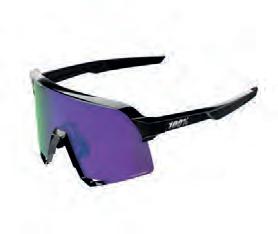
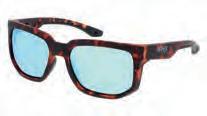
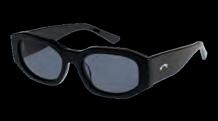
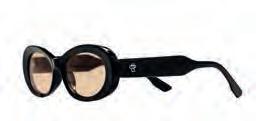
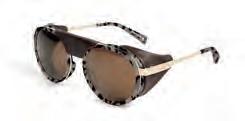
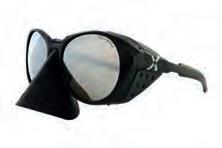
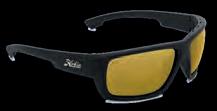
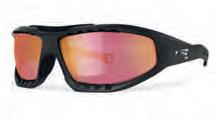
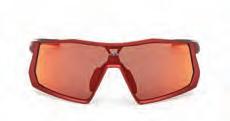
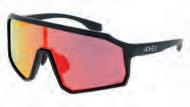
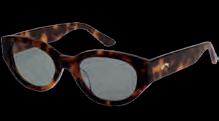
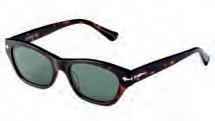
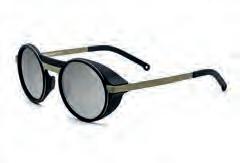
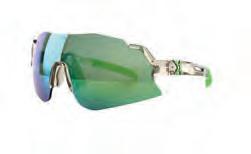
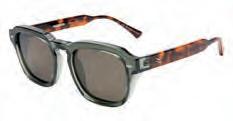
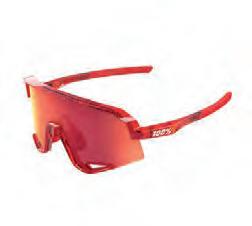
100Percent-
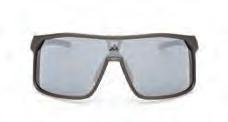
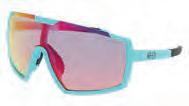
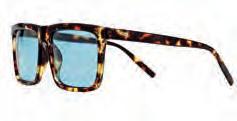
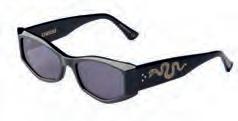
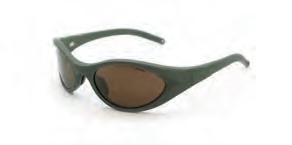
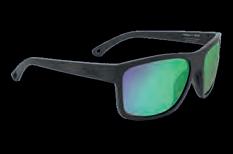
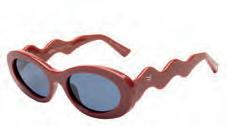
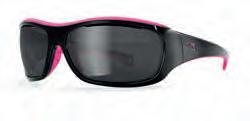
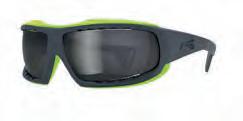
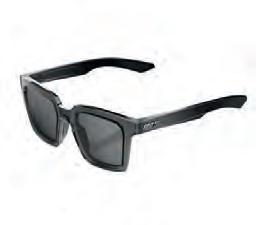
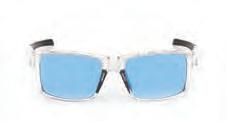
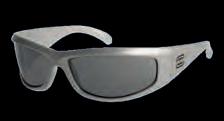
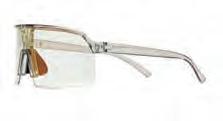
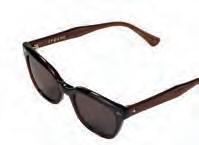
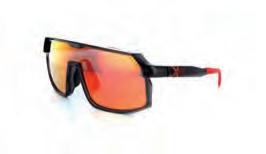
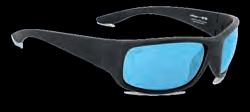
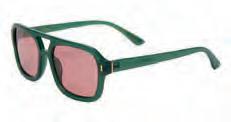
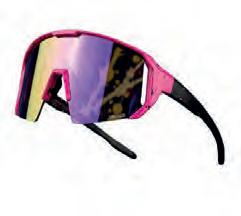
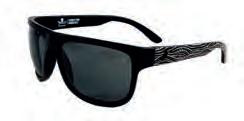
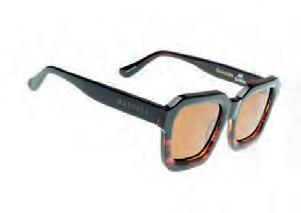
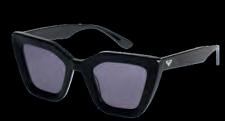
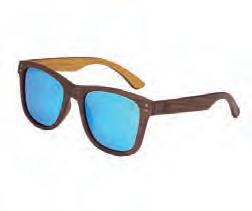
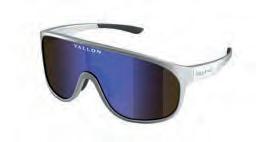
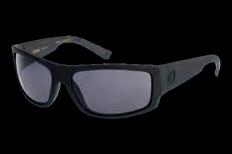
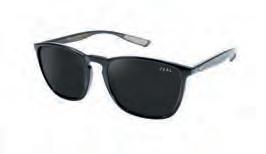
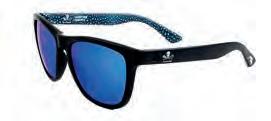
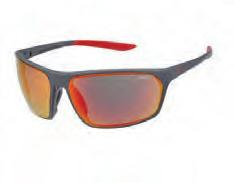
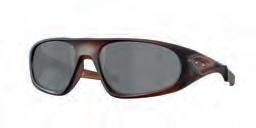
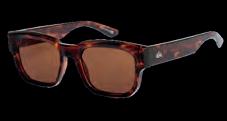
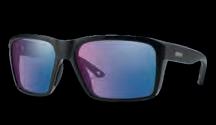
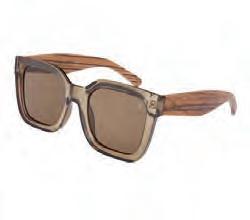
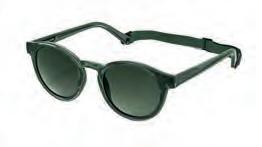
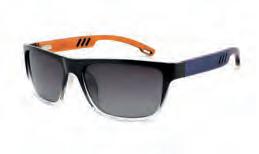
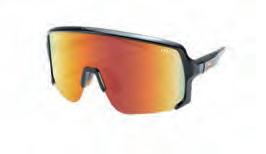
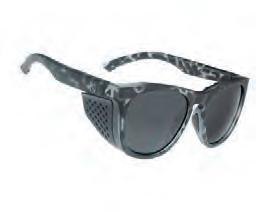
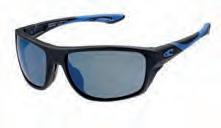
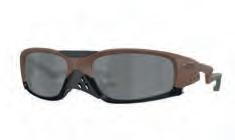
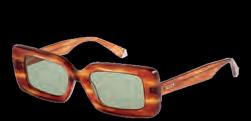

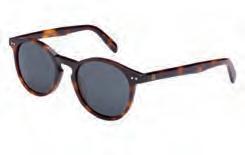
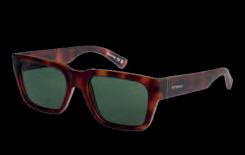
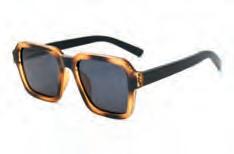
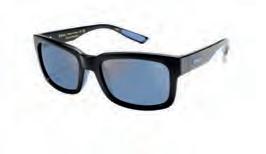
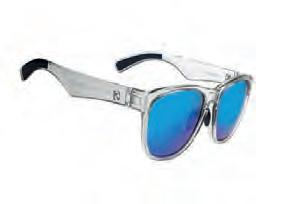
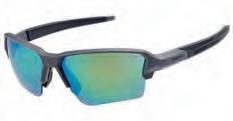
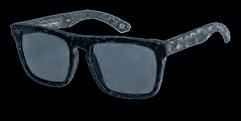
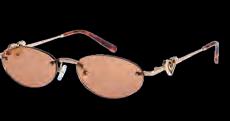
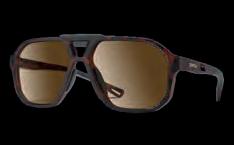
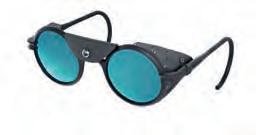
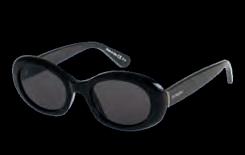
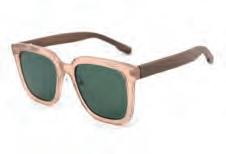
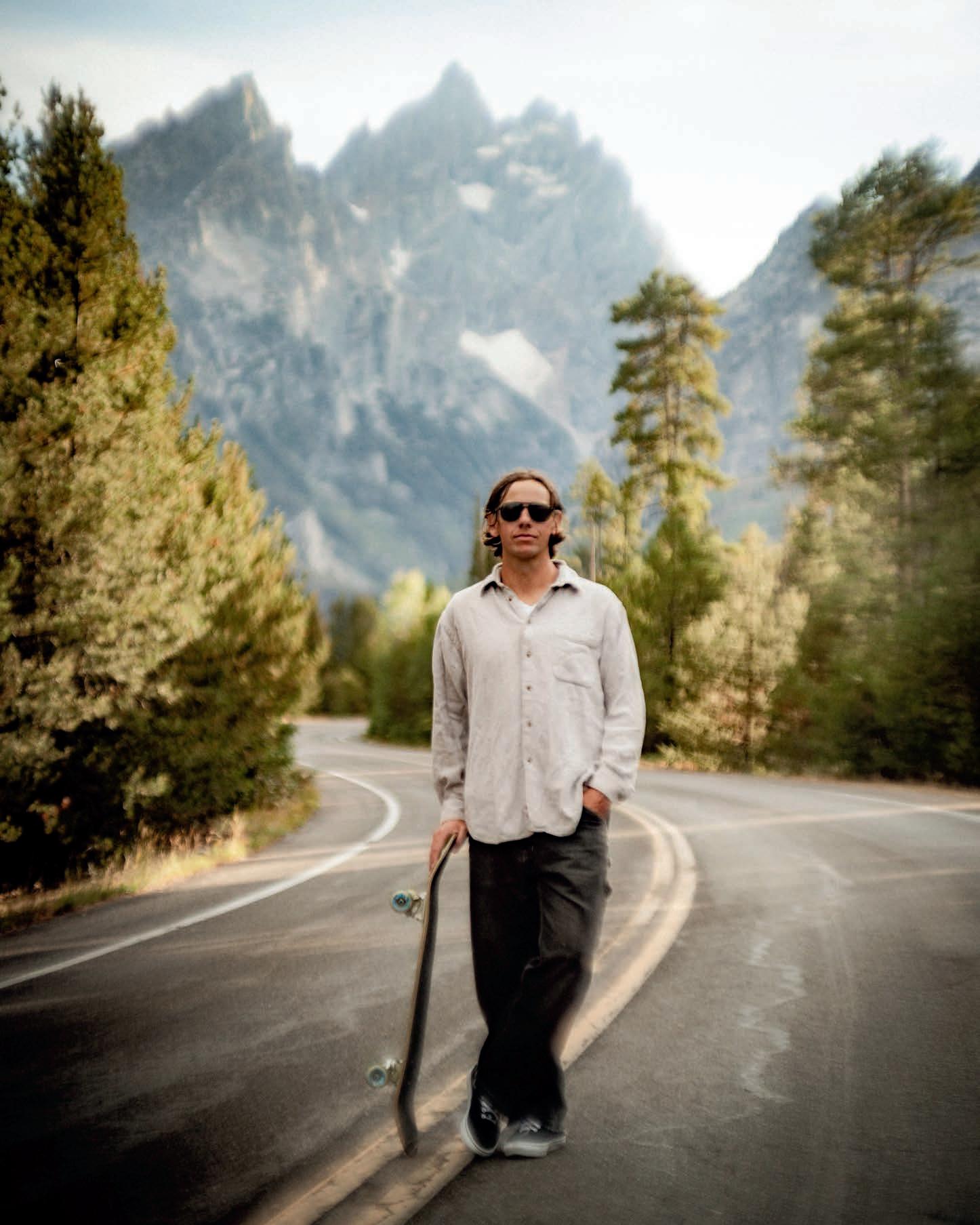
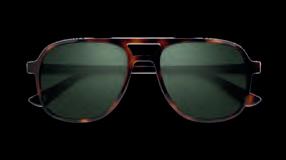
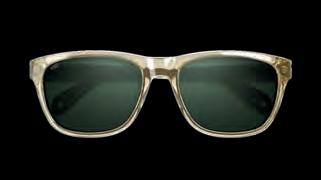
Crafted for life in motion and tested in the harshest elements, VALLON sunglasses combine classic style with maximum performance. Inspired by classic silhouettes and engineered with modern materials we deliver uncompromising clarity and protection when it matters most. Whether you’re in the lineup, on the move, or off the radar, our sunglasses cut glare, and keep your vision sharp. Whatever your
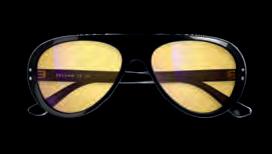

pursuit, we make sports eyewear with a whole lotta soul - designed to move seamlessly with you from morning surf to last light. Lightweight, durable, and built to last, VALLONs are made for those who live for movement without compromising on style. For every pair of eyewear sold, 1kg of plastic is cleaned up and recycled from our ocean shores. Get outdoors - the VALLON way.
PARIA is redefining cycling culture through a blend of sport, fashion and community. Source sat down with founder Sam who discusses the brand’s origins, values and evolution beyond traditional cycling.
How did the brand come about?
PARIA was born in Leeds as a reaction to traditional cycling culture. I’ve always felt that there’s a gap between the cycling world and the worlds of fashion, music, skateboarding and streetwear that I connected with. A lot of cycling brands felt overly serious and overly polished. Everything centred around performance and marginal gains instead of culture.
PARIA was created for people who love movement and sport but don’t necessarily identify with the stereotypical “cyclist” image. The name reflects that outsider mentality. It’s about individuality, creativity and community rather than elitism. Over time the brand has evolved beyond cycling into a wider lifestyle and ath-leisure space spanning riding, running, coffee culture, events and community.
What are the key values behind the brand? At the heart of PARIA is individuality, creativity and community.
We actively avoid following trends. Whether through products, campaigns, events or retail spaces, we want things to feel distinctive and emotionally engaging. Community is central to everything we do. Group rides, run clubs, events and collaborations all exist to bring people together in real life, not just digitally. Music, skateboarding, independent fashion, rave culture and outsider subcultures heavily motivate and inspire us. Furthermore, PARIA has grown organically through authentic connection rather than large marketing budgets. People connect with its honesty and independence.
Please take us through your current line. PARIA now spans technical performance wear and lifestyle apparel.
Our cycling collection includes jerseys, bib shorts, gilets, outerwear, accessories and custom team kit. Performance fabrics and functionality sit alongside styles influenced more by streetwear and independent fashion.

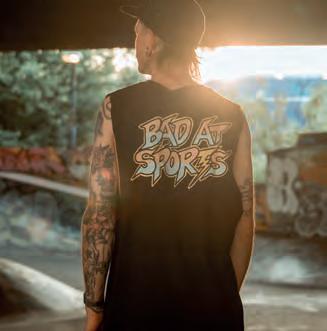
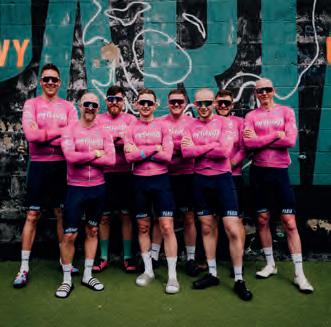
Our running collection includes technical tops, race shorts, running caps and more relaxed “park run” inspired pieces, all carrying the same PARIA aesthetic.
Meanwhile we’ve developed a growing athleisure collection including graphic tees, hoodies, sweats, fleeces, caps and casual outerwear. We see PARIA less as a cycling brand and more as a cultural movement connected to creativity and community.
How does customer feedback influence your product development?
Customer feedback is hugely important because PARIA is built closely with its community. A lot of our best ideas and refinements come from conversations on rides, in the coffee shop or through direct interaction online.
From a technical perspective we’re constantly refining fit, fabrics and functionality. Equally important though is understanding what people connect with. People don’t just buy PARIA because of performance. They buy what the brand represents socially and creatively, this heavily influences future collections and collaborations.
Tell us about your annual Paperboy Ride, Run and Rave event.
PAPERBOY is probably the purest expression of the PARIA brand.
What started as a grassroots cycling event has evolved into a cultural day combining riding, running, music, coffee, food, beer and community. The ethos is simple: Ride. Run. Rave.
The event attracts people from across the UK and increasingly internationally. What makes it different is that it feels more like a festival than a sporting event. You’ll have serious riders alongside people who are there purely for the atmosphere and community. That inclusivity is incredibly important to us.
For 2026 we’re celebrating the 10th edition and expanding further into running with dedicated 10K and 20K runs alongside the ride.
How has your coffee/bakery shop helped in the development of the brand?
PARIA Coffee and NOT Bakery have become
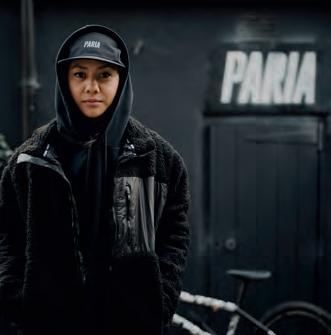
hugely important in the evolution of the brand because they’ve created a real-world home for the community. Rather than existing purely online, people can physically experience PARIA and become part of the culture around it.
These spaces have also introduced PARIA to entirely new audiences outside traditional cycling, creating a crossover between sport, coffee, fashion and lifestyle culture that feels very natural and authentic.
What new products are you most excited about?
One of the biggest areas of excitement is continuing to blur the line between technical performance wear and lifestyle apparel. We’re developing products that feel equally relevant on a ride, a run, in a café or as everyday wear. We’re also excited about the development of our running category and the “Bad at Sports” movement, which approaches sport in a more inclusive way.
Why should retailers stock PARIA?
Because PARIA offers something genuinely different within modern sporting and lifestyle retail.
We blend sport, fashion, culture and community, attracting customers who may not traditionally engage with performance-focused sporting brands.
For retailers that means distinctive products, strong storytelling, loyal community-driven customers and authenticity.

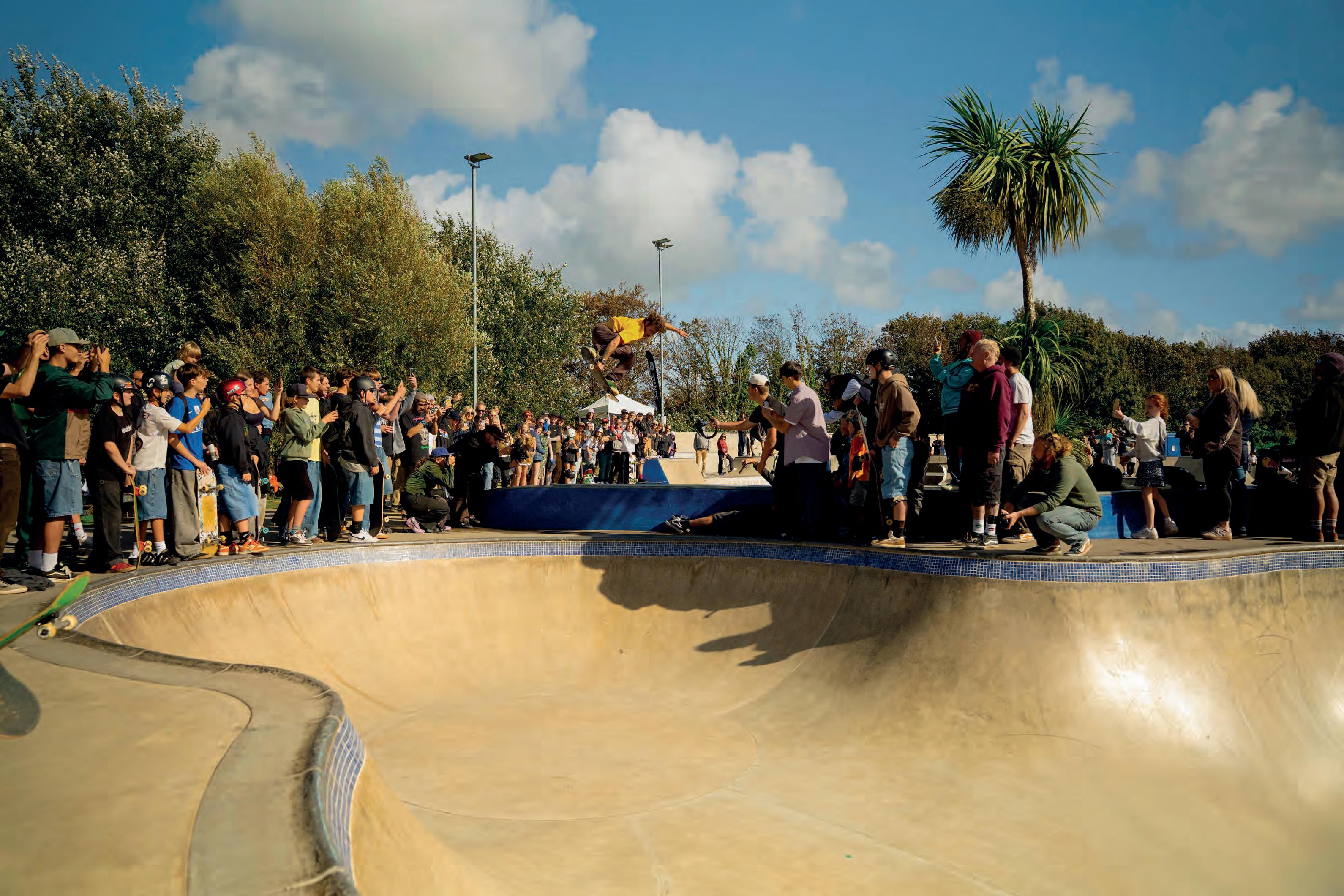
DYSUJO, the Newquay-based full stack marketing agency is the organiser of the UK Surf and Skate Expo that was launched in Newquay last year. Founder Chris Thomson spoke to Source about how this new event fits into its multimedia offer designed to build brand audiences.
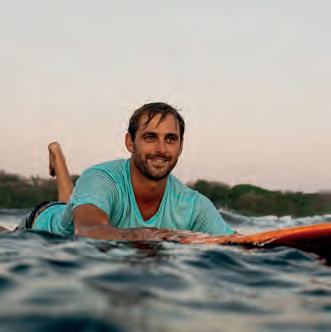
Chris Thomson, from DYSUJO, a Newquaybased full stack marketing agency, has been surfing for the better part of 36-years. Through that career – so to speak – Chris became a professional longboarder winning national titles in the UK and Canada and took part in the ISA World Longboarding Championships in 2019. At 44-years-old, there’s no slowing down. “Watergate’s my home break,” said Chris. “It’s nearby and kind of works through the tide.”
For the past 25-years, Chris has made surfing his business, starting travel companies before launching Marwick Marketing a Premier Google Partner Agency, while living in Canada. Chris grew that business to one of British Columbia’s top 10 fastest-growing companies , before moving back to the UK and replicating the model here.
Then, Chris started Longboarder Magazine with close pal Sam Bleakley, before opening 10 Over Surf Shop. From there, the opportunity to take on Wavelength Surf Magazine, Europe’s longest running surf media company came about, and Chris snapped it up. “The mag’s the same age as me, and we couldn’t let that opportunity go to waste.”
So came the idea – with all these moving parts, how best to tie it all together and create an ecosystem that supports all the different levers of business. DYSUJO was born, an overarching company that houses

Marwick Marketing, 10 Over Surf Shop, Longboarder Magazine, Wavelength Surf Magazine, Out Of Office Conference, the European Surf Film Festival and The UK Surf & Skate Expo, which rolls out its second year in July.
“Let’s say we’re talking to brands about Search Engine Optimisation, AI Search Optimisation, Google Ads, Meta ads and they want some added story-telling,” said Chris. “Great, we can stock your product in 10 Over Surf Shop, we can help launch a brand spotlight on Wavelength’s website, include an advert in the magazine, have a guest speaker spot at the UK Surf & Skate Expo. There’s a real mix of integrated product and In Real Life marketing. We believe in helping to amplify voices –but also, after listening to the needs of companies and brands, to create custom campaigns for them. What we want to do, is better connect everyone to an audience that want to hear about your brand, or your story, to make sure the right people are seeing the right messaging at the same time, and make great content, campaigns, events, products along the way.”
The idea was solidified during a drive up to Birmingham for the National Outdoor Expo. Chris had just bought on board a surf media veteran Jason Lock, to help deliver digital campaigns for DYSUJO. The two laid out a road map for the business and how it would work.
Jason’s experience with media, content, strategy and building brands helped shape the landscape for the future. “That drive to Birmingham was pivotal,” said Jason, who joined DYSUJO after being Global Managing Editor of surf-forecasting website Magic Seaweed and Senior Editorial Manager EMEA for US-based surf platform, Surfline.
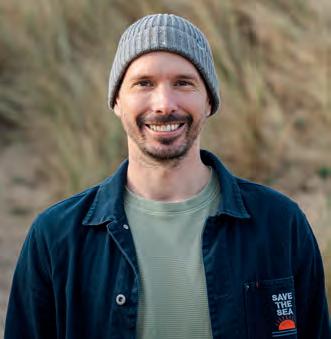
“The way brands benefit from working with us is, you get AAA care at the hands of our team,” said Chris. “But we’re also not afraid to go the extra mile. We don’t really stop and that’s the energy and benefit we bring to the table. Plus, you have an audience of ocean-lovers and outdoor-enthusiasts who want to hear your stories.”
The company’s growing from strength-tostrength too, recently signing a whole roster of new clients. “In the future,” said Chris, “we want to help brands scale, grow and continue to deliver results. If you’re taking a foot into the outdoor lifestyle market, we want people to think about DYSUJO first and then let our work do the talking for us. Want to deliver a custom campaign in record-timing? We can do that. The best results we see is when our clients treat us as an extra employee, where they can pick up the phone and bounce ideas around, where they know if they email, it’s not going into a black-hole. We’re on it, all day, every day.”
You can book in for a call with the team, any time. Message Chris direct christian@ marwickmarketing.com or visit www. dysujo.com to learn more about the brand ecosystems.
From hyper-niche to slightly more versatile designs, the 2026 surfboard landscape leans towards a more grounded approach from the everyday surfers. Let’s dig in the particulars of the many quiver options. By David Bianic.
While headlines tout a 25% surge in surfing participation since 2018 (Global Surfing Industry Trends Analysis Report 2025), the reality on the retail floor has been everything but a continuous vertical climb. “It’s fair to say there was a major ‘market correction’ and hangover after the bubble of the Covid boom years ended,” says Sander Blauw, Sales & Marketing at NSP. This sentiment is echoed by major players who observed that “the initial impact was very volume-driven... what we’re seeing now, though, is a second phase: those surfers are progressing,” explains Susan Marks, Sales at Chilli Surfboards.
This maturation has created a split market where established shapers must distinguish themselves from a sea of generic imports. “Nowadays, running a surfboard brand can be more like running a souvenir t-shirt brand: you design a logo, someone in China produces the boards, and no hands-on knowledge of shaping or production is required,” warn Johnny and Kelli Cabianca, owners of Cabianca Surfboards. While many feared a massive shift to D2C models, 2026 has proven that “the retail net is just not as it used to be,” according to Andy Wirtz, CEO of Norden Surfboards, but he believes “a retail shop with a strong physical presence combined with a good webshop still has a chance and will be important in the future”. Brands are finding that high-value conversions still require expert advice. This specialised approach balances the digital surge. “Online and D2C channels are growing steadily, but they still represent a smaller portion... most surfers still value the in-store experience,” notes Susan Marks at Chilli.
In the wholesale arena, the segmentation is becoming clearer. “Our sales are split roughly 65% wholesale accounts and 35% retail (B2C). Within B2C, about 80% of sales come from stock boards,” clarifies Brandon Sanchez, head of Marketing and Operations at Euroglass. This 80/20 stock-to-custom split is a standard for mass-production
‘‘Online and D2C channels are growing steadily, but they still represent a smaller portion... most surfers still value the in-store experience.”
Susan Marks, Chilli Surfboards
houses, yet it contrasts sharply with high-performance boutiques. “When we work in a more high-performance market, 90% of our production consists of custom orders,” states Nuno Viegas, Surfboard Designer/Owner at eNVy SurfBoards. To stabilize this flux, many brands have adopted a “pre-book” model, which Pete Saari, Co-Founder of Lib Tech Surfboards, says gives “visibility and stability” to both manufacturers and retailers.
NEWBIES: FROM FOAMIES TO FIBER
The “graduation” from softboards to hardboards has become the most critical milestone in a customer’s lifecycle. “If people keep surfing, they’ll eventually want a regular hard surfboard,” notes Nick Uricchio, co-owner and shaper at Semente Surfboards. The challenge lies in luring them away from the perceived safety of foam. To facilitate this, brands are emphasizing “friendly tech” constructions that mirror the durability of softboards while unlocking performance. “Our unique Eco Impacto II construction matches the carefree ding free experience softboards bring but at the same time offers high performance,” claims Pete Saari of Lib Tech.
This design philosophy focuses on making the transition “fairly quickly” through hybrid shapes, says Brandon Sanchez at Euroglass: “After catching their first waves on softboards, they often want
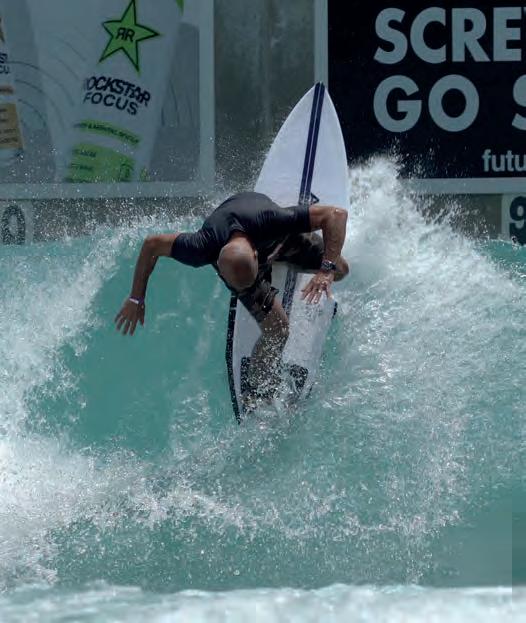
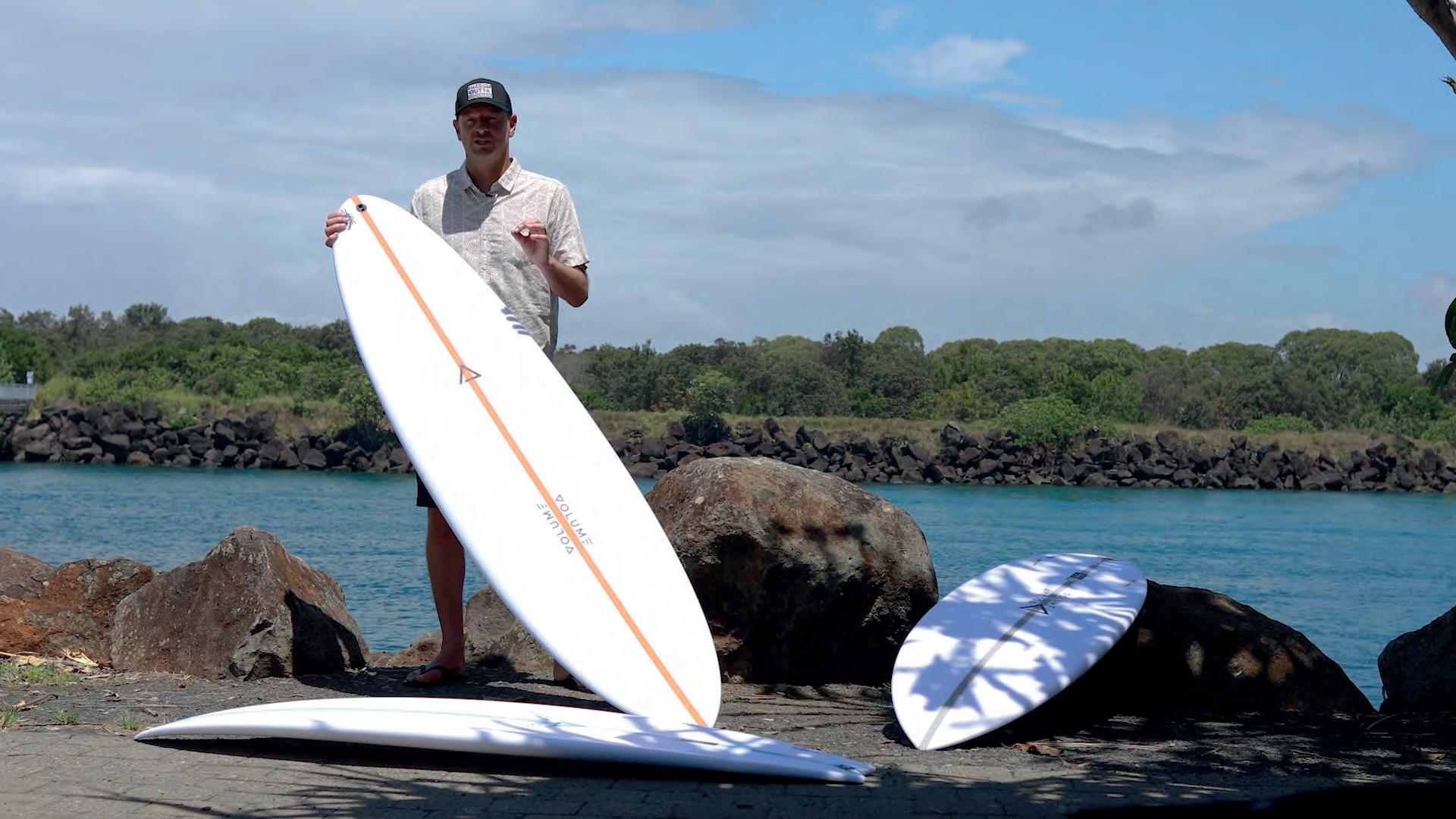
to move to the next step... we focus on more accessible hybrid designs, such as mini-malibu inspired shapes.” Leading this charge are transition tools like the Grace Demibu (Euroglass) and the NSP Volume Range. The Demibu acts as a modern mini-malibu - stable, forgiving, and designed for pure progression - while the NSP Volume range, a collaboration with Richie Lovett, utilises refined volume distribution to make surfing “easier, more fun, and rewarding for everyday surfers.” These boards are engineered to capture the massive cohort of post-pandemic surfers currently ready to trade their foamies for the real deal.
2026 TRENDING DESIGNS
According to most, versatility has officially dethroned niche specialisation as the modern surfer is looking for a “one-board quiver” that can handle anything from gutless beach breaks to overhead pointbreaks. “In 2026 the most sought-after designs are probably twin fins across different types of waves, along with variations of quads,” observes Nick Uricchio at Semente Surfboards.
“Our sales are split roughly 65% wholesale accounts and 35% retail (B2C). Within B2C, about 80% of sales come from stock boards.”
Brandon Sanchez, Euroglass
A prime example is their Kabuloza: unlike traditional twin fins, its refined foil, parallel plan shape, and specialised four-channel tail are for fast, tubular waves.
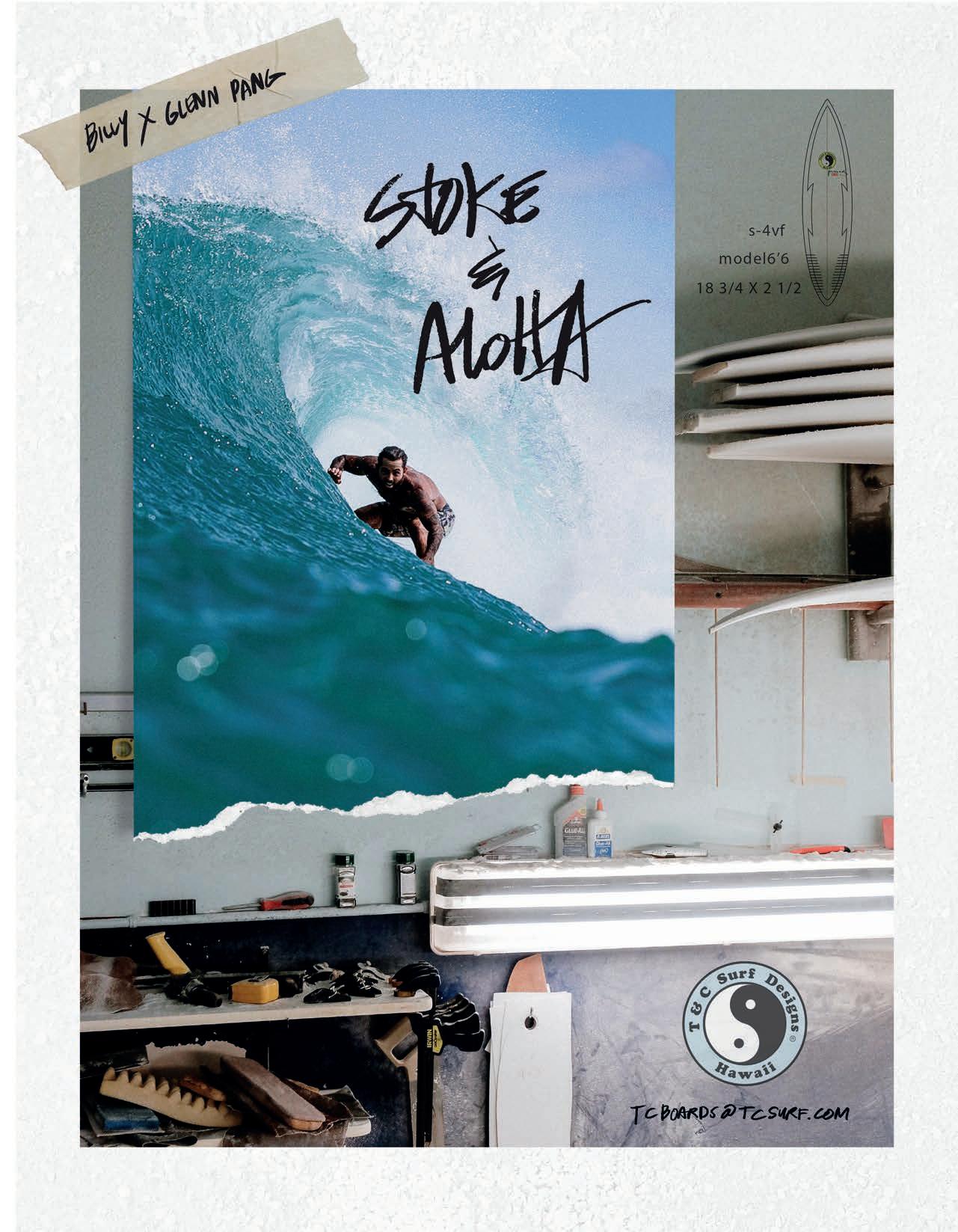
Same program with one the best-selling boards from Town & Country Surf Designs, Glenn Pang’s Nomad. Built for speed and tight turns, it features a slight wing and a round tail to perform in waves from 1m to 2.0m. “Glenn added a rocker to allow for later and steeper drops while maintaining drive and control in hollow sections.”
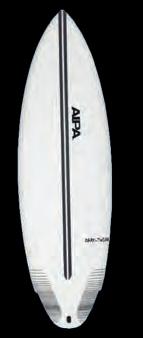
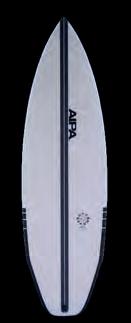
Mid-lengths and summer toys continue to eat into the market share once held by traditional longboards and high-performance thrusters. “Mid-lengths remain a staple, as they suit a wide range of surfers and conditions,” says Brandon Sanchez at Euroglass. Though not explicitly labelled as a mid, the Aipa Modern Swallow in Natural Fiber Tech (Surftech) is a stylish yet forward-thinking design “that blends speed, style, and versatility into a wave-hungry board that makes catching waves a breeze”, says Nigel Gibb from Zimbali Surf
“In
2026 the most sought-after designs are probably twin fins across different types of waves, along with variations of quads.”
Nick Uricchio, Semente Surfboards
(Surftech’s European distro). From 6’6’’ to 7’6’’, the signature swallow tail with its flatter rocker and fuller outline is “the perfect blend of retro influence and modern performance”. Timmy Patterson’s Blue Fin (Surftech) navigates in the same charted waters, opting for a more traditional eggy shape.
High-performance boutiques are also seeing a rise in “modern ‘summer toys,’ like a new quad/twin, which are growing in popularity,” according to Johnny of Cabianca Surfboards. The trend is clear: performance is still the goal, but “adaptability is what defines the best-selling models,” summarises Susan Marks at Chilli Surfboards. And precisely, ‘adaptability’ suits well to the new Cabianca model, El Dorado, “inspired by the speed, flow and simplicity of 1970s twin-fin design, it blends the glide of a classic fish with modern refinement. Flat deck, low rocker and swallow tail keep it fast, loose and agile. Ride it quad when there’s push, twin when it’s small.” Same ethos with the Allure model at Noir Surfboards, developed with Maud Le Car, “a versatile performance board designed for speed, flow, and style across a wide range of conditions”. Set up as a twin or quad, “it balances playful looseness and locked-in performance”, says Hugo Almeida, Designer and Marketing Director.
Still in the “one-board quiver” category, the Chilli HKII and Haydenshapes Hypto Krypto remain undisputed bangers. The HKII delivers a highly versatile everyday shortboard experience with easy speed generation and control, while a veteran design as the Hypto Krypto continues to grow in volume as the ultimate adaptable shape. The latest addition to the range, the Nova FutureFlex, is “our best seller for everyday fun waves,” mentions Hayden Cox, Shaper at Haydenshapes Surfboards. The Nova ticks all the boxes of this multicondition functionality that is visible across every major catalog. The Mini Beast from Makani (Town & Country Surf Designs) joins the party, marketed as the ‘ultimate all-rounder’. An all conditions, all surfers, kind of shape, with a centered volume and refined rails, set up as a thruster or a quad thanks to its five plugs. In a real-world, less-than-perfect conditions, those designs save the day, and surfers are definitely pragmatic animals nowadays.
Unlike those consensual designs, some remain unleashed and appeal to vague cult-followers, much as the Stretch 5150. Originally designed for Nathan Fletcher, the board blends “skate-like performance with control” with its shorter length and snub nose. Featuring a flat-tosingle concave with reverse tail channels, it can be ridden as a quad or 5-fin setup, meant for the punt-loving metalhead out there!
Last but not least, longboarding’s appeal has spread across all surfers’ profiles and customers are prioritising legendary signatures. It happens to be Surftech’s forté, exemplified with an abundant range. Among those master shapes, Wayne Rich managed to “weave California single-fin sensibility with contemporary versatility”, argues Nigel Gibb.
Rich’s Checkmate combines the specs of a performance longboard with “a soulful outline meets a timeless bottom contour that rolls into a classic 60/40 longboard rail”.
As the market shifts toward “rideability,” the hyper-technical promodel is increasingly falling out of favor. “Standard, hyper-narrow, ultra-low-volume ‘pro-model’ shortboards intended for everyday use by average surfers have seen a decline,” states Thomas Cardinal, Co-founder of Shapers Club. Yet they didn’t give up on those niche surfers, as exemplified with the Cardinal Fire Arrow, “our precision high-speed shortboard, designed for everyday performance”, highlights Thomas. This isn’t just a change in taste, but rather the consequences of an overwhelming offer, claims Brandon Sanchez at Euroglass: “Pure shortboards remain the most technical option... it’s not so much a decline, but rather a saturation - there are now so many variations and models that it can become confusing.”
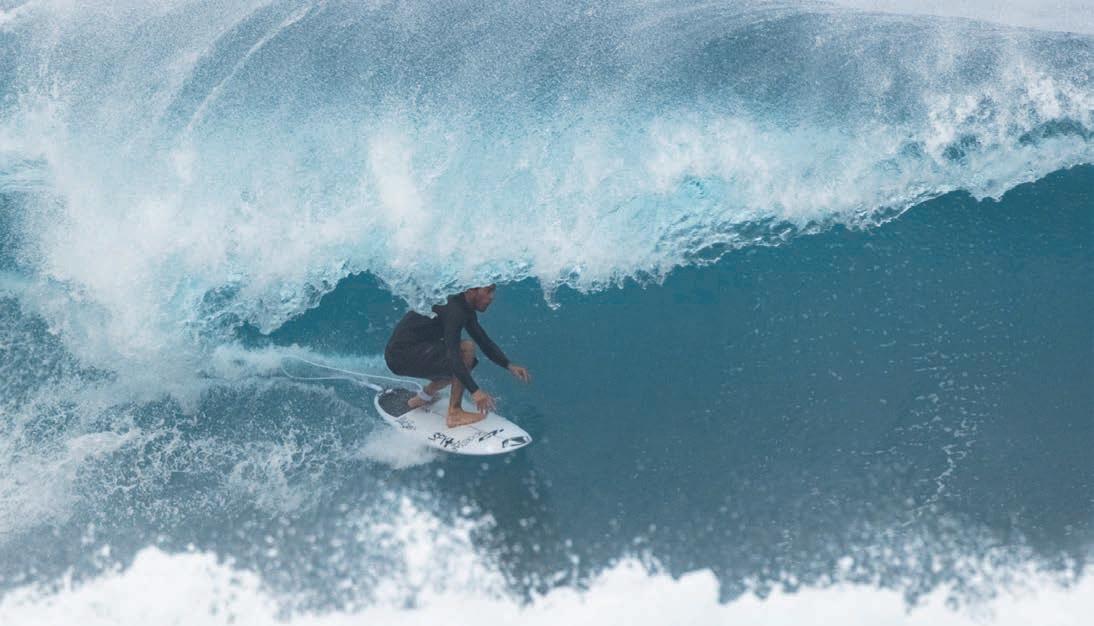
Even the retro-renaissance is seeing some consolidation. “The really old-school twins aren’t requested as much as they were a few years ago,” observe Johnny and Kelli of Cabianca Surfboards. In the same vein, Rémi Chaussemiche, Marketing Director for Pyzel, says “the very long mid-length (above 7ft) has faded back a bit” as customers look for more versatility. “Shorther and stubbier version of them seem to fit our market better”, like the latest Pyzel Score Lord, a board designed to maximize wave count, “The thickness is pushed forward to keep lots of volume under your chest area, whilst keeping the sleek beaked nose free for fast paddle and easy wave catching, while the rails and tail area are thinned out to keep it sensitive and quick.” Furthermore, the “hipster softtop” is cooling as surfers seek more longevity. “The big craze for the softtops is already over,” claims Andy Wirtz, CEO of Norden Surfboards.
THE CONSTRUCTION CONUNDRUM: TECH VS. TRADITION
Here comes our never-ending engineering debate, the battle between the “soul” of PU and the “specs” of modern composites. “PU will remain a core part of the surfboard market for the foreseeable
“Two or three hero shapes in the right size runs will consistently outperform a fragmented lineup — don’t over-assort.” Nigel Gibb, Surftech
future... it still delivers a very specific feel,” notes Susan at Chilli Surfboards. This traditionalist anchor is vital for high-performance credibility. “As long as 95% of the best surfers in the world are using PU boards in competition, they’re not going to disappear,” argues Nick at Semente Surfboards.
Advanced constructions are no longer “smoke and mirrors” but functional upgrades for everyday surfers. “Our ‘fancy tech’ construction is more accurately described as ‘friendly tech.’ We are more user friendly on every level,” says Pete Saari, of Lib Tech. Innovations like Lib Tech’s “Hammerbox urethane fin boxes” and Chilli’s “Carbon Black Spice” are narrowing the gap between the predictable flex of PU and the liveliness of EPS. “EPS/Epoxy shows up rather in kids’ or lower-level competitions or among hobby surfers... Full carbon boards are definitely trending, especially for pool surfers,” note Johnny and Kelli of Cabianca Surfboards.
SUSTAINABILITY AND ECO-BLANKS
While the industry’s push for eco-blanks is real, some aesthetic
hurdles remain. “Customers are still sensitive to the beige color of our blanks instead of them being totally white bleached,” notes Aristide, Co-founder of Polyola. According to Hugo at Noir Surfboards, another factor impeding their adoption “is that the brands that are doing those blanks are focusing their marketing in alternative boards and surfers so it’s hard for the normal surfers to relate with those solutions.” Beyond blanks, the focus has shifted to the factory’s carbon footprint. “At Appletree, we minimise our environmental footprint by recycling our foam cut-offs and running our factory on 90% solar energy,” says Wieger Buurma, co-founder of Appletree Surfboards. Other brands focus on the efficiency of the build itself. “At Torq surfboards we focus more on the process, producing with minimal waste, using solar energy,” explains Sebastian Wenzel, General Manager of Torq Surfboards.
Even the foam core is seeing upcycling. “We use our own environmentally friendly Eco Lite foam formula... 40% upcycled content and completely recyclable,” notes Pete Saari of Lib Tech.
RETAILER’S PLAYBOOK: NAVIGATING A CROWDED MARKET
For the 2026 retailer, managing the sheer volume of designs available requires a “well-curated selection based on their local conditions,” suggests Susan at Chilli Surfboards. The advice for shops is to lean into expertise over inventory. “Once your racks are set up, do not try to sell at all costs... advise, advise, advise... a happy surfer will return,” notes Thomas Cardinal of Shapers Club. To combat overstocking, drop-shipping and fast custom turnarounds are becoming the standard. Stocking for the “majority” rather than the “elite” is the consensus for healthy numbers. “Stock the boards for the crowds... and only custom order more advanced boards,” says Andy of Norden Surfboards. Nigel Gibb at Surftech echoes that advice, highlighting that “two or three hero shapes in the right size runs will consistently outperform a fragmented lineup - don’t over-assort.” And if you are looking for a hero, don’t go any further: “Invest in the brand story at the point of sale: a photo, a quote, a piece of [Gerry] Lopez history near the boards. Very few brands in surfing give a retailer this much storytelling material. Use it,” advocates Nigel. History, not ‘stories’. Surfboards will remain soul vehicles as much as wave tools. Share the stoke and stocks will fly.
1 Newcomers moving to hardboards
2 One-board quiver twins and quads
3 Summer toys all year long
Visit our website to see in depth brand previews of this category.
BOARDSPORTSOURCE.COM
4 Mid-lengths dominate retail rack space.
5 PU maintains their “soul” edge

It’s a shore thing.
Scan the QR code to get in touch with our sales team for further enquiries.
A new Allround length standard, more hybrids iSUP, a surprisingly resilient hardboard category, and an appealing key word –“premiumisation”. Who said 2026 would be boring? Trend report by David Bianic.
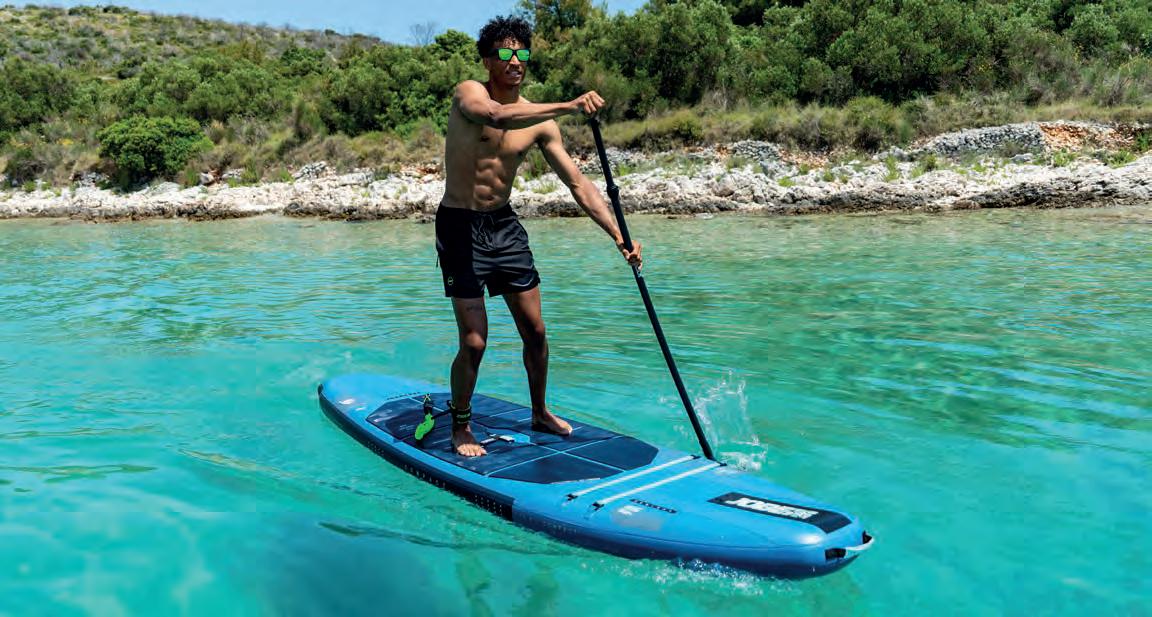
‘‘After years of overstocks, discounts, close outs and industry speculation, 2025 appears to be the year of consolidation the industry has long been reporting on and in some ways waiting for.” George Shillito, Red Equipment
Conversely, brands like Indiana Paddle & Surf and Norden take an “allchannels” approach. Indiana maintains that all products should be available on all platforms without limitation, viewing water sports schools and a diverse online presence as essential for growth. Mistral adds another layer to this by engaging in “special project work with key retailers” to keep their strategy motivating and responsive to market shifts: “The traditional vertical chain of selling has long been eroded as the only way to do business. Survival is based on a varied model”, claims Steve West, Consultant.
The “Allround” segment remains the undeniable backbone of the SUP market, but the rise of the “Touring” category led the industry to rethink what was supposed to be the “magic length”, moving away from the traditional 10’6” length in favor of the 11’6” standard. From a retail perspective, one may argue this reduces inventory risk; an 11’6” board covers a much wider range of rider weights and skill levels, ensuring a faster stock turn and reducing the
To see these trends in practice, one only needs to look at the Shark 11’6” Cruiser as it “delivers everything a 10’6” offers in terms of accessibility... but with the added benefits of improved glide”, sums up Alan Xu, Owner, Shark
2026 also sees a continuation of the move from “knitted” to “woven” dropstitch constructions. Brands like Coasto and Starboard have pivoted to woven materials because they offer a superior stiffness-to-weight ratio, creating a board that feels more “hardboard-like” on the water. Furthermore, the push for “compact” or “foldable” designs is gaining momentum with key models such as Jobe’s Rasa 10.6 and the Coasto Flip, significantly reducing the storage footprint - a major selling point for urban-dwelling paddlers.
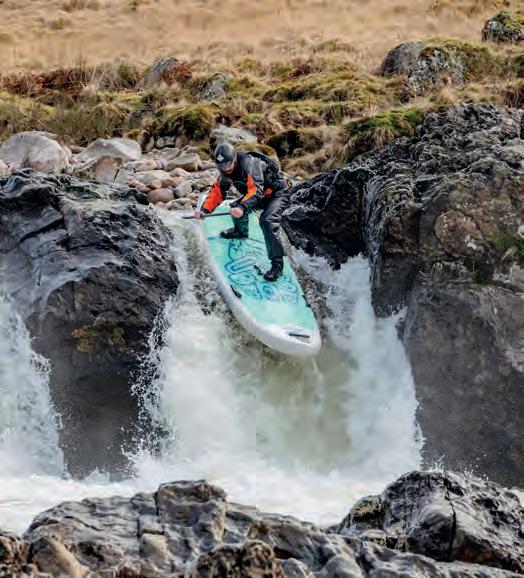
After years of experimentation with hyper-niche categories, the industry has increasingly replaced those with versatile “multitools” boards that can perform a specific task but remain functional for daily recreational use. SROKA and Coasto both observe that highly specialised models, such as those for whitewater, are losing momentum among the general public. Instead, the “Kayak-Combo” or hybrid model is thriving. Jobe’s Tana concept and Wattsup’s Espadon demonstrate this shift, offering D-rings for seats and multi-use paddles. Vast Boardsports points out “a potential older demographic with more disposable income” who prioritise fishing and utility features.
Additionally, Sandbanks notes that “e-propulsion” is potentially the next step in leisure innovation, providing a forward-looking glimpse into the 2027 market.
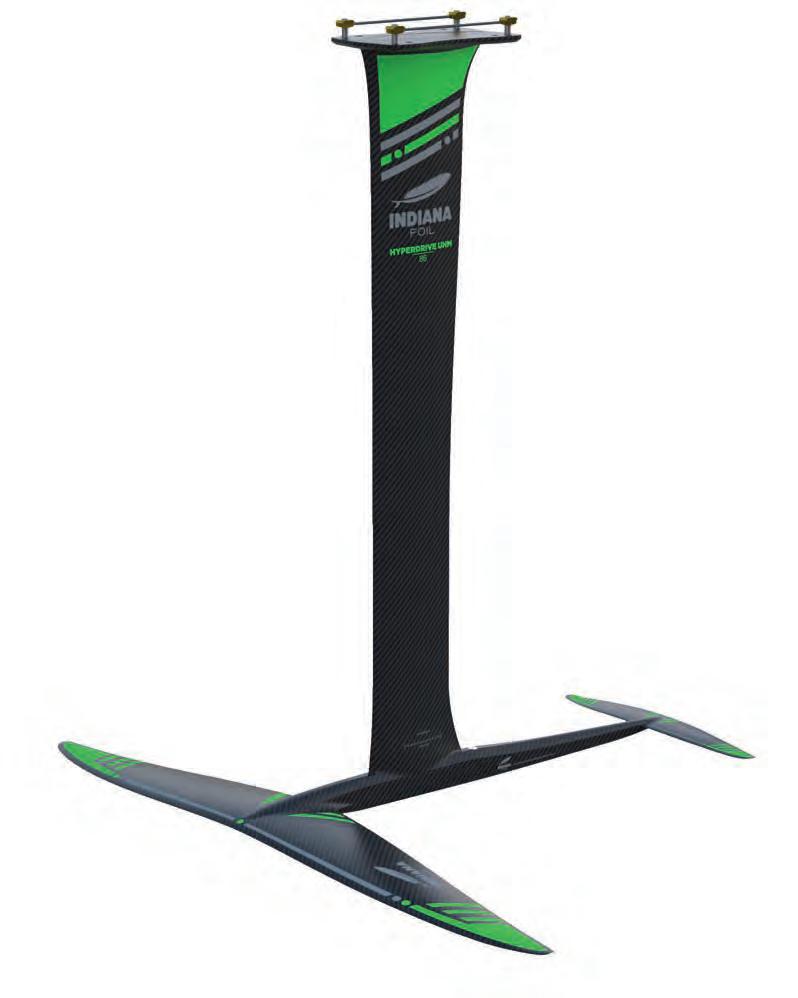
The contrast between extreme niche and functional hybridity is perfectly illustrated by the Indiana 22’0 Dragon Touring and the Jobe Aero Tana Hybrid 11.2. The Indiana Dragon is a 22-foot board designed for groups of up to six paddlers—a high-visibility specialty item for clubs. In contrast, the Jobe Aero Tana Hybrid 11.2 represents the modern consumer’s desire for versatility, allowing users to switch between a standard SUP session and a relaxed kayak experience with an attachable seat and a 5-year warranty.
‘‘There’s
only so much the consumer will tolerate in respect of cost versus performance gains in an inflatable... Today’s inflatables are, in fact, heavier but more durable and less prone to twisting issues.’’ Steve West, Mistral
iSUPs helped the once gloomy windsurfing category regain momentum with the advent of hybrid models. Duotone’s Alfa WS Air stands as a banger for 2026. Based on a “Flow” shape, it features a Malibu longboard style with a mastfoot insert featuring a patented iBase, for an instant transition to windsurfing, and equipped with two removable center fins essential for upwind capability, that require no tools for installation.
A marginal yet key trend for 2026 is the move toward eco-friendly manufacturing, with Wattsup shifting to recycled kraft paper packaging and Skiffo utilizing “24P Free” materials that are guaranteed free of harmful substances, reflecting a growing ethical approach in the industry. Manufacturing processes like heat-welding have become the new baseline for quality. Jbay.zone is leading this charge, implementing RRT 2.0 heatwelded technology with triple-layer rails across their range to reduce glue reliance and increase lifespan. However, Red Equipment points out that the “race to the bottom” in pricing has stalled radical innovation in some sectors. Red is countering this by utilising MSL800 material - a material innovation that offers significant weight savings and stiffness - and maintaining a “4-year pipeline” of compliance-led innovations.
While no quantum leaps are observed in the construction and materials, Spinera discredit any statement towards a “stalling” segment; “Instead of radical shape changes every season, innovation is now focused on meaningful improvements in materials, construction technologies, sustainability, portability, and user experience The industry is evolving toward smarter and more refined products.” Steve West at Mistral, offers a pragmatic view: “There’s only so much the consumer will tolerate in respect of cost versus performance gains in an inflatable. Today’s inflatables are, in fact, heavier but more durable and less prone to twisting issues.”Small refinements with significant performance impacts are exemplified by the Shark Clip-On Nose Cone The nose cone improves water flow and reduces drag.
2026 HARDBOARD: YEAR OF THE RENAISSANCE?
While hardboard volumes represent the smallest share of the market, they remain remarkably stable within the rental, school, and club sectors. And predictability is more sought after than drastic ups & downs.
And here comes the physical retail advantage: “With hardboards it’s a different game, physical shops have a clear advantage, shipping is difficult and very pricey these days. This fact can bring customers back to shops again,” suggest Andy Wirtz, CEO, Norden.
Brands like NSP and SROKA are capitalising on this by developing specialised hardboard ranges, such as the SROKA COMET, which features a patented system designed specifically for schools and rental operators. “The signal is clear: our first COMET stock sold out entirely at launch”, says Bruno Sroka.
For 2026, the focus is on “playful” shapes and extreme durability. NSP’s HIT (High-Interest Thermoform) boards have captured a significant share of the rental market because they can withstand the rigors of resort use.
Meanwhile, Starboard is pushing the limits of the Surf SUP trend with the TwinFin and the TallTwin (a Bali Longboard SUP Revolution winner). Norden is also bringing excitement back to the category by arguing that it is much easier to catch waves on a SUP than a traditional surfboard: “There is a lot of people out there that went from SUPing to surfing but actually had more fun SUPing then surfing because it is so much easier to catch a wave, we want to show that again”, advocates Andy Wirtz.
Hardboards also shine with down-specced versions of elite race boards. Not exactly a mere touring design, not as technically demanding as a race needle either.
Two models highlighting this trend are the Indiana Le Doigt 12’0 Carbon and the NSP OMNI Elements. “Le Doigt,” designed by Swiss champion Steeve Fleury, combines “these boards combine the sportiness of Touring SUPs with the playful nature of Allround boards”, says Nikolaus Dietrich, Head of Sales. The NSP OMNI Elements serves as the “bread and butter” of the range, bridging the gap between recreation and racing with an epoxy construction that balances durability and value. “The Omni works in a wide range of conditions, can be used as a recreational raceboard or touring board and is super fun as a SUP surfboard as well!”, guarantees Sander Blauw, Sales & Marketing.
Ultimately, these high-touch, technical products reinforce the importance of the physical retailer. In an increasingly digital world, the specialised knowledge required to sell these boards is the retailer’s greatest asset.
RETAILER’S SUPPORT: DIFFERENTIATION
In a market where many entry-level SUPs have become click-away commodities, physical retailers must pivot toward human expertise and community building. Sandbanks notes that the SUP market has become “very similar to the bike market,” where customers want to see the product and interact with “real people” before spending hundreds of pounds.
Sander Blauw at NSP ensures it is all about connection and education, “This is where the core shops come into play... sharing knowledge, showing the different brands and models, giving advice, hosting regular paddle clinics... it’s not about races... but about inclusion.”
Brand support strategies are becoming increasingly creative. Indiana Paddle & Surf offers attractive conditions for test and demo products, recognising that “try-and-buy” is a critical differentiator. Jbay.zone provides branded, customised in-store displays to highlight the physical product, while NSP is doubling down on “paddle clinics” and social sessions to build local communities. Mistral is supporting the “back-end” of retail by offering “a streamlined B2B online service”, as retailers and distributors are “no different in wanting a simplified ordering system”.
By focusing on these premium, experienceled sales, retailers can move beyond price competition and build lasting customer relationships. The 2026 season rewards those who prioritize the human element of the paddleboarding lifestyle.
Visit our website to see in depth brand previews of this category.
1 Inventory levels have successfully stabilised
2 Premiumisation drives increased market value
3 Hybrids dominate specialty segment growth
4 Expertise differentiates physical retail stores


In a crowded accessories market, Arcade Belts has carved out a distinctive place by combining performance and comfort to reimagine an everyday essential. Source spoke with Hector Caldwell who took us through their innovative belt designs, construction and values as well as their current line.
How does Arcade stand out from other belt brands in the market?
Arcade has carved out a unique space by challenging the traditional notion of belts as rigid, purely functional accessories. Instead, we lead the market and position our product as a performance-driven essential built for movement.
At the core is our stretch webbing, delivering a secure hold while allowing full freedom of motion something that resonates strongly with board sport athletes such as snowboarders and skaters and outdoor athletes alike. Combined with adjustability, machine washability, lowprofile and metal-free buckles, the belts are designed for all-day comfort, travel convenience and seamless transitions between activities.
In a market saturated with leather and heavy hardware, our belts are in contrast lightweight, adaptable and purpose-built for modern, active lifestyles.
What are Arcade’s core values?
Our identity is rooted in a clear set of values:
• Function First. Forever. Performance is nonnegotiable.
• Don’t Fear Different. A commitment to innovation over tradition.
• Honour the Extraordinary. Celebrating creativity and exploration.
• Give a Damn. Environmental responsibility and eco-conscious production.
• Move or Die. An ethos centred on activity and progression.
Together, these principles position us as a brand built for those with active lifestyles who prioritise movement, creativity and the great outdoors

How do you market the brand in Europe?
Arcade’s European strategy leans heavily on lifestyle & action sports positioning, with our main target channels being snow, skate, outdoor and streetwear retailers. We communicate through community driven storytelling rooted in adventure and travel, by supporting our retailers and local Outdoors, Skate and Snowsport events while focusing on sustainability messaging, in particularly the use of the recycled material REPREVE® .
What has been the two best-selling products in the line over the last few years and why? The Adventure Belt as it offers maximum versatility across travel, outdoor and everyday use. Its broad appeal makes it a staple for both first-time buyers and repeat customers.
The Hardware belt as its combination of comfort, strength, reliability and everyday usability makes it a go-to option for consumers looking for a tougher alternative within our range.
Please tell us about your distribution setup in Europe.
Arcade Belts Limited is a subsidiary company owned by Arcade Belts Inc of the United States and is managed by our key partner Hectic Europe. We operate out of both UK & NL warehouses shipping direct to all our retailers and distributors. This allows us to build authentic connections with our audience while reinforcing brand loyalty across key European markets.
How do you support retailers who carry your brand?
Retail support is centred around making Arcade an easy, reliable sell-through product. We support in store and local events that engage the local community and increase brand visibility, we offer marketing support with regularly updated imagery, shop fixtures and POS, create clear product storytelling focused on comfort and performance benefits for everyday activities and build strong consumer confidence through lifetime guarantees and low return rates. For retailers, Arcade offers a low-risk, high-turnover accessory category with strong margins and repeat business potential which is further driven by strong brand recognition and visibility.
What are the new hot trends in the belt market?
The belt category is always evolving in line with a number of broader apparel trends, with stretch and comfort driven designs replacing rigid constructions, an Outdoor-to-lifestyle crossover reflecting the rise of technical everyday wear, minimalist and lightweight hardware, increased demand for sustainable materials and production and travel-friendly functionality. We sit at the intersection of all these trends, positioning as a category leader rather than a follower.
Please take us through your current line. Our collection is streamlined but versatile, built around a consistent design philosophy:
Adventure Series
The core range, delivering all-round performance for everyday and outdoor use.
Utility / Workwear Styles: Hardware and Hardware Alu belts.
More robust options designed for heavier-duty use.
Lifestyle & Seasonal Styles e.g Save Our Waves, POW & Realtree belts.
Pattern-driven designs and collaborations that bring a fashion edge to the range.
Across all categories, our brand DNA remains consistent: stretch, comfort, durability and simplicity, tailored for life on the move.
Since its launch in 2016 I-SEA has been one of the fastest growing brands in the North American boardsports market. Now available in Europe through Stokehouse Europe the brand is being rolled out with its unique price/quality offer. Source talked to Derek O’Neill and Adrien Waller to get the details behind the brands success.
Please tell us the story behind the launch of I-SEA
The two co-founders, Joey Santley and Allison Singer, both came from inside the action sports industry rather than from finance or fashion. Allison spent 15 years working at ASR (Action Sports Retailer, the legendary trade show that was the center of the surf-skate-snow industry), before moving to an East Coast sunglass company. Joey, meanwhile, had worked at O’Neill and Mantra. The two met at ASR. They later married and then launched the brand in San Clemente, California in 2016.
The premise was straightforward: there was a gap between cheap, generic gasstation shades and the $200+ premium surf eyewear from Maui Jim, Spy, and Costa. I-SEA’s pitch was fashion-forward sunglasses that look like they belong on a Venice or San Clemente boardwalk, made with the materials and lenses of premium brands, but kept at price points where 90% of the collection sits, under roughly $50.
What made the brand so successful in the USA market?
The growth path was very surf-industry classic: we went into independent specialty surf shops first, leaning on the years of relationships Allison had built through ASR. The success has been immediate, the brand was selling well in high-volume surf shops. That word-of-mouth at retail is what helped us to grow.
From there it became a proper brand, with proper marketing initiatives, which is pretty

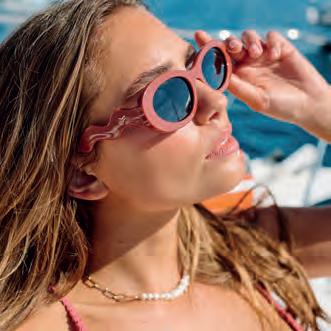
unique in our industry, especially at this price point.
• Signature lines with surfers like Ivan Florence, Cole Houshmand, and Jack Robinson.
• Sustainability angle — Tritan Renew recycled material, recycled and biodegradable frames.
• Official Eyewear Partner of the WSL Championship Tour starting 2024, renewed multi-year in 2026.
How is the brand positioned in Europe? In Europe we are using the same formula that made the brand successful in the USA. 95% of the brand retails between € 35 and € 49. We are offering premium products at a great price. We mainly sell to surf shops but we are also seeing tremendous success in stores located in ski resorts, in fashion boutiques and outdoor stores.
How do you differentiate the I-SEA from other brands in the space?
Our marketing is definitely a point of difference. We are one of the only brands in that € 35 - € 49 space that actually supports surfing. We have partnerships with the WSL and the Rip Curl Grom Search in Europe, and are investing into athletes like William Allioti. The quality of products we offer for the price is pretty much unmatched. Our women range offers a variety of styles that our customers don’t find anywhere else. Our women business is very successful and brings a new customer into surf shops. I-SEA turns volume a lot faster than many brands with some stores selling over 500 units + in year 1.
How is the brand distributed in Europe?
The European distribution sits under Stokehouse Europe (Vissla, Sisstr). We work with some countries directly (France, Spain, Ireland, Italy), but we also use distributors in others (Portugal, Germany, UK, Poland, Switzerland, Netherlands…).
Which products are you most excited about in next seasons line?
On the men side our signature sunglass with Jack Robinson will be a great hit. On
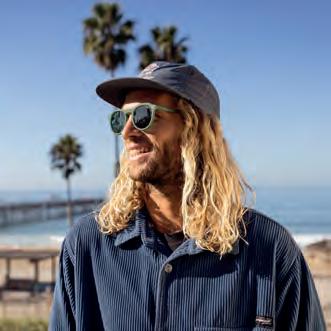

the women side we will introduce the Monaco in Europe, the new best seller in the USA that has already sold out 4 times this season. Also we will launch a new aviator inspired by coastal drives and sundrenched afternoons.
How do you support retailers who carry the brand?
We offer a free display with the original order (our floor display carries 64 units and our counter display carries 24 units). It’s an investment from our side that allows the brand to be well represented and visible in store. It helps the retailer to sell the brand better and faster. Every order also comes with free POP and we also give access to digital assets to help the retailers to communicate on their social networks and websites.
Why should retailers carry I-SEA? Because it’s their best return on investment per square meter. It’s like a potential €10 000 plus add on for most stores. Our products don’t take much space but they sell fast. They generate sales that they wouldn’t have had otherwise. As an impulse buy it allows retailers to reach a new customer, especially on the women side.
We have strong products, at a great price with proper marketing support and we offer a very healthy mark up.
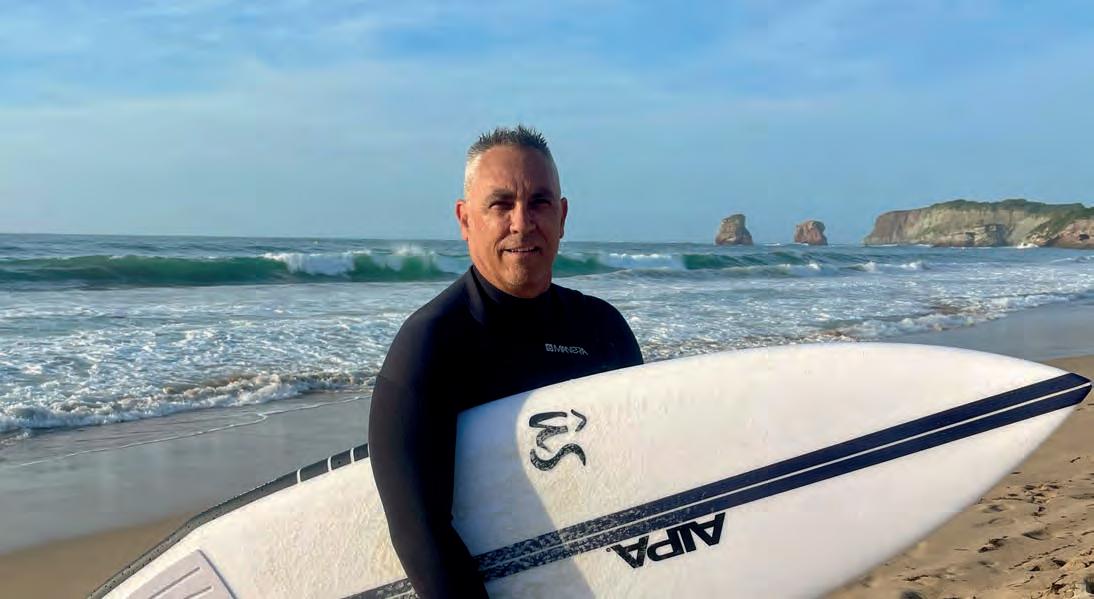
Nigel Gibb’s journey from South Africa to professional surfer to a key player in the European surf industry reflects his deep passion for the ocean and his extensive expertise. With a rich background in brand management and sales, Nigel now drives ZimbaliSurf’s vision to elevate Europe’s surfboard market through innovation, strong partnerships and sustainable growth. Boardsportsource got together with Nigel to hear his views on the surf market and how he is managing the Surftech brand and the rest of his brand portfolio in Europe.
Please tell us about your background and what led you to your current position?
I’ve been fortunate to build a career that started in the water and, in one way or another, has always found its way back to the surf industry. In my younger years, I competed as a professional surfer on the WQS Tour, an experience that deepened my passion for the ocean and unexpectedly led me to meet my wife in Europe. I later studied Quantity Surveying at the University of Natal in Durban, South Africa, before relocating to the Basque Country. While there, I studied Town Planning, worked to support myself, and continued competing on the European surf tour. A real turning point came when I was invited to specialty events like the Nixon Challenge in San Sebastián. There, I met Nixon’s European licensee and global founders. Soon after, Henning Erlandsen, Nixon’s General Manager for Europe, offered me a job, and just like that, my career took an exciting new direction. At Nixon, I worked across territory and export management, key accounts, and sales leadership. I then became Head of Sales EMEA at Element Skateboards, before moving into the role of Head of Sales at Billabong Europe. These roles provided invaluable experience in sales, marketing, brand building, business development, and international distribution. When Billabong was integrated into the Boardriders Group, the landscape shifted, and it felt like the right moment to start my own adventure: Zimbalisurf. I began by consulting for brands such as F-ONE and Manera, developing global sales networks for surf foil products and technical wetsuits. I later collaborated with Guillaume Marage at Samplenco, supporting brands including Pyzel Surfboards, Thunderbolt Surfboards, AFTER Essentials, and Veia Accessories. After four years helping other brands grow, the timing felt right to build something of my own: a new partnership focused on surf hardgoods distribution, with the support of Tablas Surf Shop in Spain.
As a relative newcomer with Zimbali Surf, how did you convince Surftech to hand you the distribution for continental Europe? At the time, Surftech was facing a challenging relationship with its previous distributor, who wasn’t truly specialised in the core surf side of
‘‘Growth may not be visible every single year, but when you look at the market over a 10-year cycle, the direction is clearly moving forward.’’
the business. It was clear that the brand needed a fresh start in Europe, a proper rebirth with the focus shifting back to where Surftech’s heart really belonged: core surfing. Rather than leaning on stand-up paddle and other opportunistic categories that had played a role in Surftech’s past, the goal was to reposition the brand with credibility, focus, and a strong surf-first strategy. To make this happen, I put together a business plan with the support of Tablas Surf Shop in Spain. Their strength as one of Europe’s leading surf hardgoods retailers, both through their physical retail presence and online platform, gave us a solid foundation from day one. Combined with my existing sales network and industry experience, we were able to start rebuilding relationships with some of the best surf retailers across Europe, bringing Surftech back into the right conversations, the right shops, and ultimately, back to the core surf community.
The surfboard catalog at Surftech can be overwhelming, with tons of models, in between Surftech’s own brand and the countless collabs with signature shapers/labels. How do you manage the board supply/ sorting?
At first glance, the Surftech catalogue can look quite extensive, but once you understand the structure, it becomes simple, logical, and exciting to explore. The strength of the range lies in its clear segmentation and Surftech’s collaborations with some of the world’s most respected shapers. The catalogue brings together legendary names such as Donald Takayama, Gerry Lopez, and Walden, alongside more performancefocused shapers like Timmy Patterson and Aipa. The key is not to overcomplicate the offer. Surftech focuses on a carefully selected number of models from each shaper, with the right size options and construction
You need to remember that business is still business, even when the product is your passion. It is important to work with products and people you love, but you also need to protect your margins and make sure the business remains healthy and profitable. Passion can drive the business, but it cannot replace good financial discipline
technologies for different surfers. This is where the offer really stands out. Boards are segmented not only by shape and surf style, but also by construction, helping each surfer find the right match for their ability, expectations, and time in the water.
So while the catalogue may look broad, the logic is clear: the right shapers, shapes, and technologies make the consumer journey easier.
Besides the Surftech powerhouse, Zimbali also works with smaller up and coming brands, like Db Journey, Usthemovement, Olukai, Roark. Is the balance between hardwear and softwear brands, key to one’s thriving business?
Diversification is key, especially in surf, where the market moves in cycles from the Covid boom to the more recent softer conditions. Working across different categories, channels, and seasons creates a stronger safety net while allowing brands to grow sustainably.
A good balance between summer and winter business is also important. Adding Auclair, the Canadian glove brand, strengthens the winter side of the business while keeping me close to products and markets I genuinely enjoy. Every brand in my portfolio connects to my passions. Roark blends surf, outdoor adventure, and travel; Db Journey offers premium products across luggage, surf, lifestyle, outdoor, ski, and fashion channels.
What are the market dynamics within the European surfboard market?
Which regions are performing, which aren’t as much?
The market is stabilising after the huge Covid boom. Strong brands continue to perform well, while demand for entry-level surfboards has softened, a natural correction after such rapid growth. Traditional surf markets like France and Spain remain very strong, while Portugal continues to be important, despite some tourism shifting toward Morocco. Overall, there is still real opportunity for focused brands with the right product and partners.
How does the European surfboard market differ from the Global market?
The big difference between the European surf market and other major global markets, such as Australia and the US, is the profile of the average
‘‘The second-hand market is not a threat to new board sales, it can actually support them by making the sport more accessible, encouraging progression, and keeping the equipment cycle moving. ’’
surfer. In Europe, we have a much higher percentage of beginner and intermediate surfers compared to these more mature surf markets. This gives us a slightly different perspective on which board models perform best. For example, in Europe, mid-lengths, funboards, and alternative shapes represent a larger proportion of sales, whereas markets like Australia and the US still have a very strong demand for high-performance shortboards. We also have a significant business in surf school surfboards, which is another important part of the European market and reflects the continued growth of new surfers entering the sport. The second major difference is the seasonality. European winters can be pretty brutal, cold, rainy, stormy, and often with huge, difficult surf conditions. As a result, board sales are much more concentrated around the main surf season, with the average weekend surfer being most active from April to October.
How key is the wholesale channel for you and how do you support your retailers?
Wholesale is central to our strategy, giving the brand representation across Europe, including smaller coastal towns and remote surf communities. We manage the Surftech Europe and Tablas Surf Shop websites, but we always try to protect our wholesale partners. Any promotion, discount, or commercial condition offered through our channels is also made available to retailers. Our goal is harmony, not
competition. For us, wholesale supports communities, strengthens retailers, and grows European surfing sustainably.
How do you feel the second hand market is influencing demand for new boards?
It creates a healthy cycle that allows surfers to renew their equipment with a lower investment. At the same time, it gives people who may not have the means to buy new gear the opportunity to get into surfing and enjoy the sport. From a sustainability standpoint, it also makes a lot of sense. Surfboards are not always the most ecological products to produce, so extending their life cycle helps reduce waste and gives each
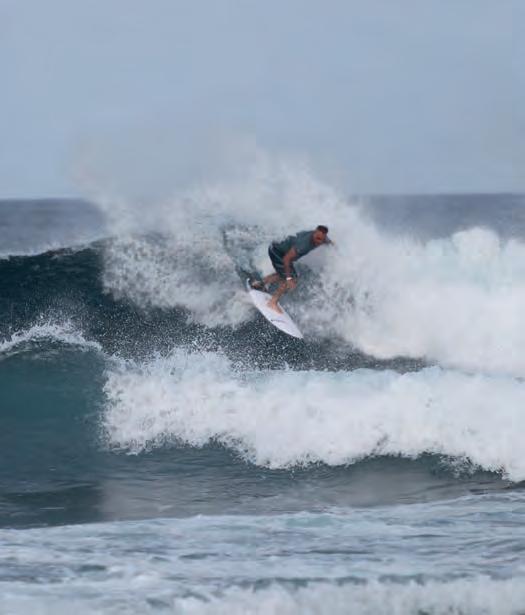
board more time in the water. In the end, the second-hand market is not a threat to new board sales, it can actually support them by making the sport more accessible, encouraging progression, and keeping the equipment cycle moving.
What are the biggest lessons you have learned during your time in the water sports industry?
You need to remember that business is still business, even when the product is your passion. It is important to work with products and people you love, but you also need to protect your margins and make sure the business remains healthy and profitable. Passion can drive the business, but it cannot replace good financial discipline. If a customer falls behind on payments, even if they are a friend, you have to be strong enough to stop the flow of product until the situation is resolved. It is never easy, but it is necessary.
How do you see the future for the European Surfboard industry?
I feel that the surfboard industry is healthy. Like any market, it goes through cycles, there are boom periods, and there are moments when things slow down. But the bigger picture remains positive. The surf community continues to expand, and that will continue to create growth over time. That growth may not be visible every single year, but when you look at the market over a 10-year cycle, the direction is clearly moving forward.
Hanging shoes have become an everyday wear piece, driving demands for comfort, lifestyle identity, and premium features. By Rocio Enriquez.
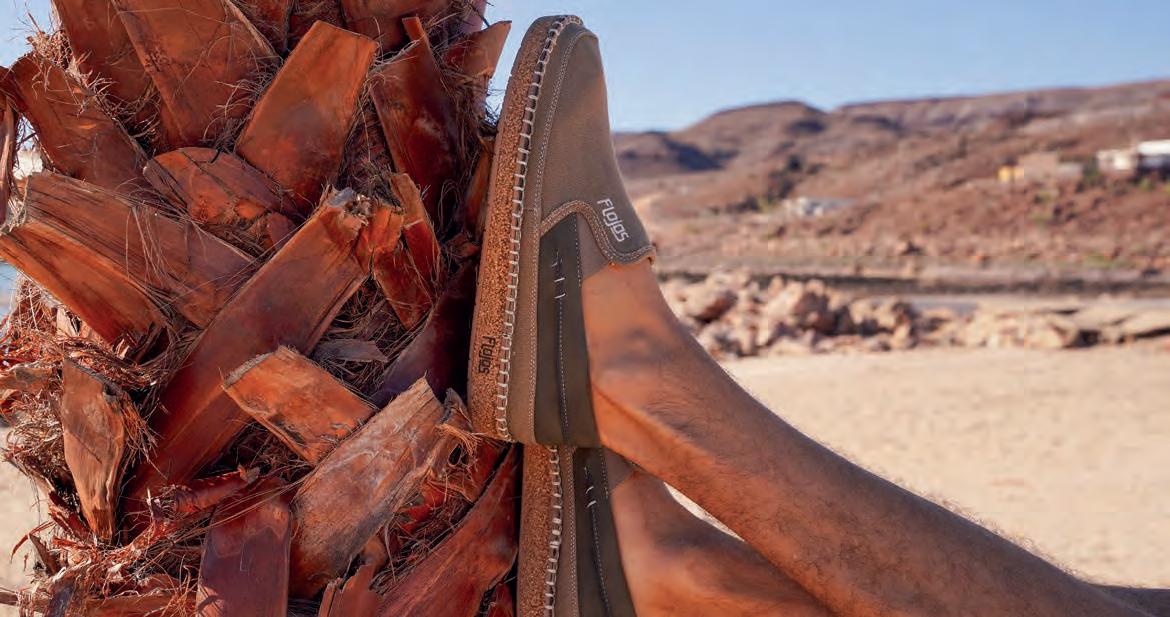
The hanging shoes market remained stable throughout 2025 thanks to the increased perception of this product segment as everyday wear, and not only for beach use. Versatile styles with broad use performed best. Cool’s ranges of adaptable designs, Cloud for men and Aria for women, outperformed their other products. Comfort remained the dominant purchase driver. Cool experienced great success with their ultra-cushioned range, including the Skip and Swap for men and Odysée for women. It is in this area where we see more technological efforts. Brands meet their customers’ comfort requirements with cushioning, recovery concepts, or arch support. Customers respond with a willingness to spend more in premium products, moving away from low-cost flip-flops. Foamlife experienced increased interest in its mid- and higher-price-point styles, for both men and women. Versatility is also a key purchasing driver; designs that can seamlessly move with consumers from the beach to wherever the rest of the day takes them are highly appreciated. We see outdoor and wellness aesthetics entering the category, with a growing focus on the lifestyle identity the shoe provides, rather than pure function. Xtratuf reports strong performance from its Apres Fish slider as a transitional style for moving from the sauna to the sea or lake. There is a return to minimalist silhouettes, sometimes upgraded with leather straps, braids, and similar details.
Last year, consumers favoured core styles over experimental ones. Brands respond with refinements of existing bestsellers rather than radical reinventions. We see material and detail updates in classic designs, balancing technical innovation with familiar, proven shapes. Most new launches revolve around added comfort features. Cool launches the Cloud 2, which keeps the same comfortable footbed of the Cloud, but now includes an arch cushion for additional support. The category is expanding beyond traditional flip flops. We find
‘‘The Karmo Slide evolves the familiar base with a more padded, adjustable hook and loop, giving it a more secure fit while increasing overall comfort” Karl Read, Foamlife
outdoor sandals, closed-toe hybrids, flatforms, and square-to-toe designs. Foam Life adds a sport-inspired style to their range, building on the success of their Tarlan Slide. “The Karmo Slide evolves the familiar base with a more padded, adjustable hook and loop, giving it a more secure fit while increasing overall comfort”, says Foam Life CoFounder Karl Read. Cool introduces the Trail, which combines nylon straps with neoprene lining for added comfort, and a rubber outsole for better grip. Their new Maple style for women features a wide 100% cotton webbing strap, a back footbed tape with arch cushion, and decorative beads on the strap for an elegant finish. Flojos is expanding its BeachComber collection of in-mould memory foam footbeds with three closed-toe shoes with a unique lace-stitched outsole, the Solar, Hombre, and Dominga. For women, they keep flatforms like Esperanza and Alondra, the drop-down heel silhouettes Lola and Roma, and the proven woven uppers with artisanal vintage strap detail San Pancho and Floriana. Indosole introduces platform styles for women. Reef keeps its range of three-point and square-toe options, alongside classic silhouettes with updated leather or braid strapping. Xtratuf continues to focus on their Apres Fish core style, which will be seen worn by lifeguards across 240 beaches in the UK. EVA remains the dominant material, but we find it combined with more technical materials and engineered construction methods, to meet buyers’ expectations of durability, performance, and comfort. Cool combines it with selected nylon and textile uppers, padding their
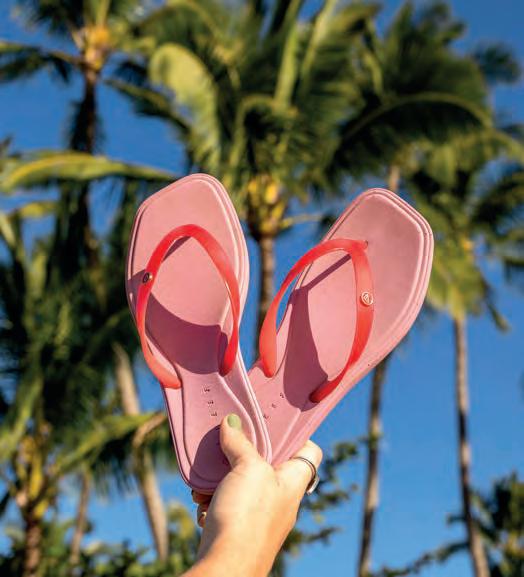
straps with EVA too for extra comfort. To secure durability, they have added an extra step during assembly. “The straps are first glued and then pressed into place, reinforcing the attachment and improving the long-term hold”, explains Brand Manager, Pierre Madiec. Reef uses compression moulded high rebound EVA, introducing REEFlex EVA with a bigger airbag on the brand-new Fanning+ styles. There is a strong focus on enhanced comfort technologies such as memory foam, rebound foams, dual-density constructions, and air cushioning. Water-friendly materials remain important. Flojos released a new memory-foam technology called Cloud Cushion which can be found on their women’s Lola, Roma, Amor, Viernes, and Nancy, and the men’s Topanga and Strata. They also introduce a new men’s collection called “Flojos Outbound”. Inspired by outdoor adventures, it features dual-density technology and water friendly materials such as neoprene, debossed EVA, lycra lipping, and mesh liner. Indosole’s Easy Living range is 100% waterproof. Reef introduces PlushPods for additional comfort. There is increasing use of eco-friendly materials, including bio-based and reduced petroleum alternatives. Indosole’s soles are made from recycled tires or sneaker parts, and the footbeds are a mix of recycled EVA and natural rubber. Their
‘‘The straps are first glued and then pressed into place, reinforcing the attachment and improving the long-term hold’’ Pierre Madiec, Cool
Easy Living collection features 100% recycled nylon straps. Xtratuf’s Apres Fish sliders are made from Biolite, its proprietary eco-conscious EVA. “Across the range as a whole, we have introduced Bioprene to replace neoprene in a selection of our styles”, announces Xtratuf International Marketing Director, Milly Pestell. Foam Life’s new women’s style Zaluna is built with sugarcane EVA foam, while its new Vayla and Vayla Slide combine a cork footbed with BloomTM algae blended EVA foam and a top cork layer with a metallic gold fleck. All of Foam Life’s toe posts, linings, and straps are made from RPET, hemp canvas, or plant-based bio leathers.
Nature continues to be a major inspiration. Earth tones remain important; coastal and tropical influences remain strong. Cool expands its blue palette inspired by the ocean, ranging from the light Original Radiance to the deeper tones of Cloud Night. For women, they offer warm sandy hues in Palma Sand, earthy forest tones in
Odysée Pecan, and a softer pearlescent note in Aria Pearl. Flojos has a wide range of earthy tones and timeless shades like ivory, tan, brown, and black. They also bring a subtle and laid-back island feel to their range with bamboo and tropical inspired embossed prints. Pastel shades are gaining traction, while bold colours are used as accent stories. Cool introduces a raspberry red accent in the men’s Original and Sin models for a playful touch. Flojos imbues their raffia style uppers with pinks, blues, and ivories. The Viernes and Nancy styles present an elevated look with the addition of an acrylic tortoise ring. Foam Life introduces the Traa-WC, an iteration of their TraaSC styles with brighter colourways that celebrate the 2026 World Cup. Their women’s collection offers two new washed tones, Pastel Olive and Haze Pink, as well as the brighter Coral Orange and Aqua Green. Reef offers a range of bold new colours, with additions like Candy marble and Bright Yellow for men, and Fuchsia and Hibiscus for women. Their women’s range also offers a variety of pastels such as Cameo Rose, Bellini, and Ambrosia. Indosole adds ten colours to their Easy Living range, as well as a Reggae collection. They also offer new colours in their ESSNTLS slides collection.
Marketing focuses more on lifestyle storytelling than technical storytelling. Brands prioritise the emotional connection over product specifications. Relaxation, escape, and enjoyment are recurring themes. Cool stays true to their easy-going spirit and the simple pleasure of wearing flip flops, as conveyed through their key theme “The Art of Doing Nothing”. Flojos offers its own version of a kickedback state of mind with their “Just Hangin’ Out” campaign. Foam Life centres around their sustainably focused, lifestyle brand message. For Indosole, sustainability is a key aspect of the brand’s communication, a message they spread through stories like their Riverfoam project, which partners with the non-profit Sungai Watch to pull tons of flip flops from the dirty rivers of Indonesia to repurpose them as new flip flops and mid-soles. Authenticity and community are important narratives too, with brands using real-world usage scenarios. The main tools to disseminate these stories are social media and community engagement. Cool also runs a story named “Wear Them Till They Die”, a tribute to loyal customers who were their favourite flip flops until they fall apart. They announce the launch of a special collaboration this Summer that will be revealed through their social channels. Xtratuf leads their marketing with community stories about their Apres Fish slider, from lifeguards, surfers, wild swimmers, or holiday makers. Reef is more focused on their product features. They will celebrate their women’s versatile styles Water Willow Malibu, Bliss Nights, and Solaye. For men, they will push the expansion of their Fanning+ range with the Fanning H2O styles and the Cushion Phantom 2.0 Leather, a more luxe version of a classic Reef style.
To create this lifestyle story in-store, brands are providing retailers with digital assets and visual merchandising. The retailer support strategy combines product presentation, marketing activation, customer service, and brand storytelling. Cool, Indosole, Foam Life, and Flojos provide POS materials and displays. Reef supports their retailers with vibrant window displays. The support continues online with digital graphics and an overall PR push of their styles. Cool spotlights retail partners regularly, showcasing them through their social media channels. The aim is to bring additional visibility to the shops that represent them. Brands are also promoting simplicity in assortment planning. Cool focuses on strong core products and clear assortments that make the category easy to manage and sell. Flojos applies this credo to the design of their range too, adding familylike customer service in which retailers can access a real person for support.
The hanging shoes category has clearly evolved beyond its beachwear origins into a broader lifestyle segment. Comfort and versatility determine purchase decisions, and drive innovation in technology, materials, and designs. For retailers, the winning combination of function and identity offers a strong opportunity to capitalise on proven sellers.
Visit our website to see in depth brand previews of this category.
HIGHLIGHTS
1 Comfort premium expectation
2 Everyday versatility
3 Identity outweighs pure function
4 Importance of durability and value
Performance-driven innovation is turning the impact vest into a multi-functional essential for a broader and more discerning rider base. By
Rocio Enriquez
.
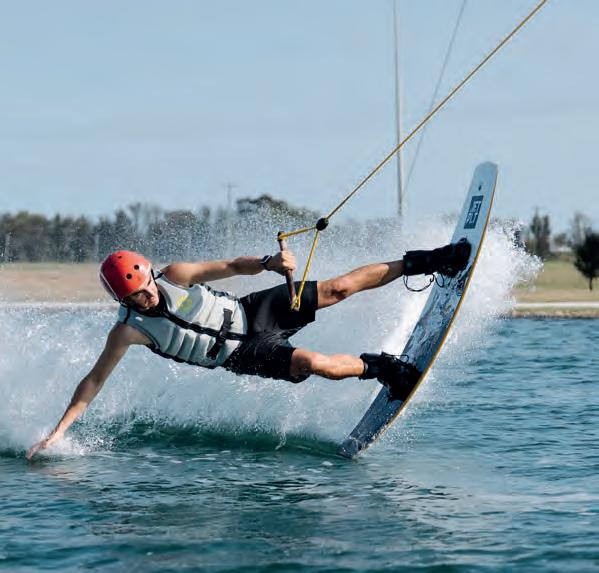
2025 was a good year for the impact vest category, with brands reporting steady sales and growth driven by increasing participation in wake, foil, and emerging disciplines. Purchases are performanceled, so retailers are cautious with inventory, favouring proven, safety-focused products. Foiling is the fastest growing segment, with rapid adoption across wing, kite, and wake driving demand. “More and more hydrofoil sailors are recognising the dangers of falling onto foils”, says WIP Marketing and Team Manager, Benjamin Tillier. Cable wakeboarding remains a consistent, core growth driver. More women in these sports are driving female-specific products, while ageing riders are also seeking protection. The primary purchase driver is long-term performance. Fit, comfort, mobility and durability outweigh aesthetics. “Design and colour still grab attention, but it’s all about comfort, flexibility, and fit on the body”, says Jet Pilot Brand Manager, Kolyn Howard. Impact vests are moving towards lowprofile designs and lightweight constructions, with added functional and safety features gaining traction. Sustainability considerations are also rising.
2026
This year’s designs offer advanced panel segmentation and tailored fits. Jet Pilot pushes their Highlight range with a segmented neoprene flex panel that allows the vest to rotate naturally with the body. Ronix collaborated with expert tailors from NYC to develop their own engineered fit system. “The Manhattan Tailor Fit contours to the body for unrestricted movement, and it’s engineered for real bodies”, describes Ronix International Sales Manager, Jack Youngquist. They combine it with flexible foam panels and 4-way stretch. There are increased body-specific shapes, including womenspecific. Ronix applies their Manhattan Tailored Fit to their women’s styles too. Follow launches the Cleo women’s vest with centre-
focused panel lines. “Ladies expect a design that reflects the true female body shape, rather than adapted patterns”, says Follow Marketing and Team Manager, Rich Jonas. For men, their Affix vest is built in a relaxed fit, with chest and armhole scale adjusted carefully across a wide size range. Multi-functional vests are growing, offering added features. Soöruz’s Strato model includes safety accessories, adjustable straps, and a hydration pocket. Their Wing model has an integrated hook. WIP’s New Kompact for windsurfers and kitefoilers comes with a pocket too.
Construction is focused on impact absorption systems, with multilayer foams and advanced linings. WIP has developed an advanced impact absorption system. “The WIP Inside Technology system uses three special layers: a high-density foam, an anti-puncture shield one, and a soft dampening one”, announces Benjamin Tillier. They will also launch a new version of their 50N Wing impact vest with an integrated carbon plate for better transfer of energy. Follow keep their TrueFitTM liner central across the range. It bonds the foam and the neoprene to follow the natural curve of the body. Their QuadSTM neoprene enhances stretch and softness without sacrificing structure. We see an expansion of eco-conscious product lines. Follow continues their Project One program with the P1 Traction, a vest made of GRS-certified recycled polyester. Jetpilot uses their own neoprene alternative made with recycled polyester jersey. We also find water-repellent and hydrophobic textiles. Ronix’s One is a lightweight men’s impact vest built with an engineered mesh that is fully hydrophobic. Their super smooth Slik Skin lining is also exceptionally water-repellent.
Marketing relies heavily on athlete-led storytelling. Content creation focuses on authentic and community-driven narratives that emphasise education over pure branding. Product education involves staff training to enhance product knowledge, and ready-to-use marketing assets like videos, POS, and digital content to educate the final consumer. Follow has produced a video series that dives deep into the brand’s ethos and the key technical features they provide. Ronix uses the product tags and displays to communicate specs and material benefits. Athletes are an important endorsement for this product category, both in the water and on social media. JetPilot uses their team of top athletes to showcase real performance, fit, and functionality. Ronix is rolling out rider-driven stories featuring pro athletes that spread the joy and community of wake sports. Sooruz showcases their athletes and their achievements. WIP invests heavily on a top roster of worldwide athletes. They are now working closely with Big Wave surfers to develop specific vests for them and their rescue teams. In addition, they offer flexible ordering options and customised solutions for specific needs of their partners.
The impact vest category is consolidating around the values of technical performance and functional versatility. Brands are responding with sophisticated construction and tailored fits. Retailers will benefit from the strong product curation, staff education, and credible, athleteled storytelling.
HIGHLIGHTS
1 Performance-led purchasing behaviour
Visit our website to see in depth brand previews of this category.
BOARDSPORTSOURCE.COM
2 Foiling sports are the growth engine
3 Expectation of multi-use function
4 Marketing focus on staff education
Men’s underwear shifts from basic essential to a premium lifestyle product offering performance comfort and expressive design. Value now lies in innovation and identity rather than volume sales. By Rocio Enriquez.
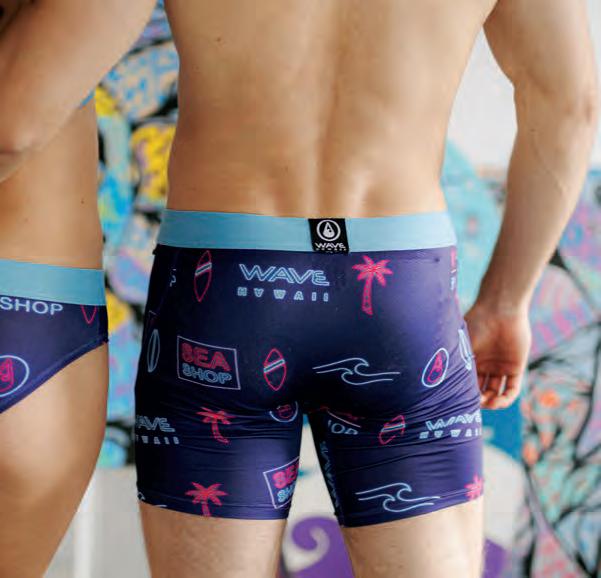
Men’s underwear category remains stable-to-growing in 2025. Growth is driven by product upgrading and premium positioning, not by volume. Underwear is no longer perceived as a commodity product, but as an added value one. Demand is driven by comfort, with strong expectations around performance and lifestyle versatility. All-In, American Socks, and Bn3th report their best performance in pieces with comfort upgrades. Wave Hawaii experienced good sales of their AirLite Watersports Multifunction wear that offers a 3-in-1 function. Bn3th offers a similar product. “Our 2n1 shorts are an activity-led piece designed for workout/ running or swim/boardshort liner use”, explains Bn3th CEO, Dez Price. Design is a key differentiator for brands. Freegun observed strong demand for their licensed collections and statement prints. American Socks also attributed important sales to their strong identity.
This is reflected in the key trends for 2026, which combine technical innovation with expressive design. Construction focuses on anatomical fit and performance comfort. Fabric engineering focuses on support, stretch, and breathability. Multifunction styles are popular. Pieces that can be worn all day, in different contexts, align with broader athleisure trends. There is increased use of sustainable materials. Looks become a statement, with a strong demand for bold prints that create a clear visual identity.
Proven silhouettes are being refined through technical advancements in construction and fit. The focus is on refining fit rather than disrupting established shapes. Freedom of movement remains a key priority. Boxer briefs keep dominating the category, although trunks and hybrid formats perform well at sales. Saxx reports growth of their performance segment that features signature technology such as BallPark Pouch®, DropTemp Cooling®, and No-RideUp LegTM.
Material selection is driven by three key factors: comfort, performance, and sustainability. Technical blends, like polyester and elastane, ensure performance standards, with properties such as quick drying. Freegun’s
Aktiv line features microfiber. Natural fibres like cotton and modal are favoured for comfort. Alongside cotton, TencelTM Modal appears in the collections of Bn3th and Saxx, and Wave Hawaii uses bamboo. There is growth in recycled and low-impact materials. American Socks uses postconsumer recycled cotton. “Our hero material is a high-performance blend of 88% GRS-certified recycled polyester and 12% Spandex”, says All-In CEO, JB Caste. Bn3th also integrates recycled fibres in the production. Moisture management and durability are important purchasing factors for consumers. “Our AirLite fabric, which is made from a special recycled polyester blend, is particularly skin-friendly, super soft, and quick-drying”, says Wave Hawaii Managing Director, Carsten Raphael. No single fibre dominates in men’s underwear; instead, brands use blends of different materials to meet different needs.
Underwear has become a statement piece and a visible extension of personal style. Brands aim to strike a balance between core neutrals and standout pieces, with the latter leading demand. There are many bold graphics influenced by streetwear, tattoo culture, and pop culture. “We have strong rock/tattoo graphics, with standouts like Time to Die, Forever Wrong, and Bone Smasher”, announces American Socks Brand Manager, Olek Burek. Licensed artwork drives a lot of interest. “We are planning to release some limited-edition designs in collaboration with an internationally known artist from the surfing world”, reveals Carsten. Freegun announces licensed collections by major pop culture franchises. Abstract designs are emerging as popular. Overall, men’s underwear is a visually dynamic segment.
Sustainability expectations now centre on clear and credible claims. This is a response to the greenwashing fatigue that buyers of all product categories are currently experiencing. Brands respond with integration of recycled or certified materials, responsible sourcing, and optimised production efficiency. Bn3th has achieved a BCorp certification, as part of their transparency goal. All-In uses Global Recycled Standard certified fibres. Efforts must be both substantive and transparent. Longevity and quality remain key to support the sustainability frame. All brands subscribe to this.
Brands are increasingly focused on driving sell-through rather than just sell-in. To support this, they are simplifying the retail experience and strengthening storytelling. In-store merchandising units enable a clear segmentation of the range, while offering straightforward explanations of technical features and strong visual stories. Licensed collections are a strong traffic driver in-store. American Socks offers special underwear hangers that let shoppers see and feel the product. Wave Hawaii offers a honeycomb surfboard display and cardboard counter stand that showcase their product in an appealing way. All-In has a new premium packaging that combines strong visual impact on shelves with clear communication of technical features. Commercial viability also plays a key role in supporting sell-through. “Our competitive multipack offers ensure fast stock rotation”, says Benjamin Caillaud from Freegun. Appealing margins and reliable after-sales service help with this.
Men’s underwear is undergoing a repositioning from a basic essential to a technical lifestyle product. Value appeals more than price for consumers who see underwear as a style statement rather than a hidden layer.
Visit our website to see in depth brand previews of this category.
BOARDSPORTSOURCE.COM
1 Upgraded materials and construction
2 Focus on performance-driven comfort
3 Bold designs for a visible style statement
4 Credible sustainability

WIP is focused on providing surfers with the confidence to perform and trust their gear. Benjamin Tillier sat down with Source to talk about their activities in the surf and water sports scene and their development of a new Surf Protection line.
What was the thinking behind the launch of the Surf Protection line?
As was the case with skiing and skateboarding several years ago, there is now a growing awareness of the need for safety products in the surfing world. More people in the waves combined with riders willing to take more risks, are the key factors that have driven this change in mindset. Various emergency response centers and hospitals in surfing regions, have also observed an increase in the number of accidents, with nearly 90% of injuries involving the head. As we already offer safety products for some of the fastest watersports, we naturally felt the need to get involved in this surfing catagory.
What are the biggest opportunities you currently see in this space?
Thanks to our reputation in the world of Sailing and Foiling, we were initially contacted by the world’s top big-wave surfers, to offer them a solution tailored to their needs. Their is also a real need at surf schools and the vigilance of the parents is also important as the younger generation are riding faster and faster. Additionally, when surfing at dangerous spots with rocks or shallow reef, one now often sees the best Pro surfers wearing helmets, for instance at Pipeline during the CT. Protection is not only necessary in Surf Foil or in extreme conditions but for every surfer to feel more confident in the water. Also there is a real need for equipment for professional rescuers, who are an integral part of every adventure.

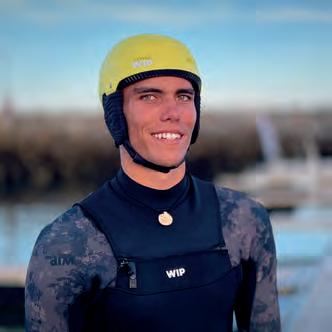

Please explain the development process. Development happened in the waves, thanks to the world’s best big-wave surfers, who have been involved in developing our products in extreme conditions like those at Nazaré. Our prototypes were made available to surfers of various skill levels for over a year. Thanks to all the feedback, we were able to refine every detail, drawing on our experience and the expertise of our designers. We have a strong team of engineers, designers and riders to develop the right products for the right needs.
Please take us through your Surf Protection line.
Three key factors guided the development of our new surfing line: head, body and UV protection. We have three helmets with varying levels of protection, a complete Bump Shell Range with Protection Caps and Bobs specially designed to optimize the comfort in the water, wetsuits with builtin pads and UV protections tops. We are currently working on a specific range for Jet ski assistance and lifeguards. Going forward we will develop products for all water activities, at all levels and for all conditions so we can bring even more enjoyment to every session.
What eco friendly materials are you using in the line?
In our products, we use eco-cork and seashell waste which reduce our CO2 emissions by approximately 50%. We are also proud members of 1% for the planet along with the Sea Shepherd and Surfrider Foundations. The durability of our products is also a very important point and we optimize every material to resist the most extreme conditions and to last over time. We limited the range to just the essentials to avoid over consumption and to make it easier to find and choose the right equipment.
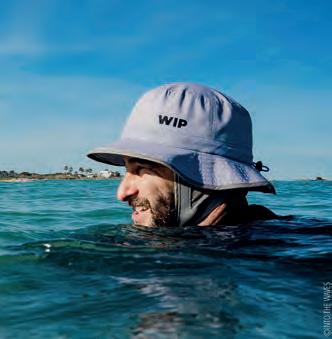
How does this category integrate with the rest of your products?
We remain true to our core values centered on protection and our new Surf line is a great addition to our existing product range. We now have a full surfing product line with head protection, sunglasses, body protection, vests, wetsuits, accessories and apparel.
How will you be marketing this new category?
We’re lucky to have some of the best bigwave surfers on the planet in our team, with amazing pictures and videos coming very soon! We are in contact with surf schools to encourage their use of the new protection products and water sports federations are also interested to work with our brand, to increase usage of these products during water activities.
Why should retailers stock Surf Protection products?
90% of surfing accidents involve the head and sometimes this can have serious consequences. Professional surfers are setting the example by wearing our products and so demand is growing. Surfers need to see and feel the product in store to be sure that its comfortable and compact enough to give confidence in the waves without hindering performance. Shops are missing out if they don’t stock this fast growing category.
After Essentials, the vibrant and passionate brand is invested in blending quality and style with eco-friendly comfort for every day. Marketing Director, Remi Chaussemiche spoke to Source about how they built their identity and continue to gain popularity.
Can you give us a brief history of After Essentials?
It all started with 2 friends, Guillaume and Damien, who share a passion for board sports and outdoor activities. Guillaume and Damien come from different worlds, business and digital, but they’ve always cherished the “after session moments”: those quiet moments after being outside. The moments when you warm up, dry off, and slow down. They realized that these “after” moments are just as important as the adventure itself, yet the gear for them is often overlooked. So, they decided to create something better.
They started by rethinking the poncho: a simple, practical piece that deserves more attention. The goal was clear, combine functionality, comfort, and style while using eco-friendly materials. What began with one idea has grown into a collection of thoughtfully designed products made to enhance every after moment, after surf, after ride, after rain, or whenever the day slows down.
What are your key brand values?
We believe that an active life doesn’t end when the adventure does. The moments after the climb, the surf, the ride, the swim or the hike, those transitions between movement and rest, are just as meaningful as the effort itself. That’s why we design products that balance performance with comfort. Created for people who embrace the outdoors, we combine functionality, softness, and durability while reflecting a lifestyle in exploration, sports, and respect for nature. Every detail supports a way of living that is active, adventurous, and environmentally conscious.


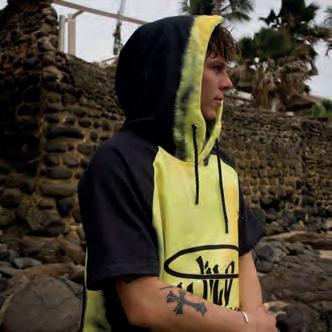
How do you stand out in the poncho market?
When we created After Essentials, Ponchos were very basic with plain colours and traditional branding. Our idea has always been to revisit the product category, bringing vibes, style, colours and patterns to this very functional item.
We offer an extensive line, mixing styles, designs, fabrics and inspirations and provide many options to fit different outdoor activities. We use carefully selected premium quality fabrics for a soft, comfortable, durable feel.
How has the general surf community helped shape the brand?
When we created After Essentials, surfers were our first users in mind , as beach ponchos are a must-have accessory for any aquatic activity lovers. So, most of our products have been inspired by surf culture.
From the start we’ve surrounded ourselves with core surfers who wear the product daily. Soon after we started, we’ve collaborated with athletes such as Maud Le Car, Kyllian Guerin, Ian Fontaine, Joan Duru and Tony Silvagni who have all developed Pro-models based on their personality, influences and expectations for the product. To us it is super important to hear our surfers’ feedback to make sure our products are matching their needs.
We have also received huge support from the surfboard manufacturing industry. Some of our shaper friends such as Timmy Patterson, Stewart, Polen Surfboards, Chienville and Chipiron have also collaborated with us. Without surfboards there is no surfing so we are proud to connect with the shaping world and contribute to promoting this sport to a wider audience.
On a business perspective, surf shops have been supporting us since day one. They were the first retailers to trust the brand and the products. After Essentials brought a new vibe to the poncho category and surf shops backed it up.
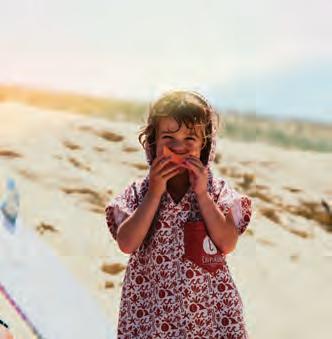
How do you ensure your ponchos are both functional and eco-conscious?
We make sure to select premium quality materials from which to produce our poncho’s, the longer they last, the lower the impact on the environment. Additionally 70% of our products are made in Europe, with manufacturing partners that offer low minimums, helping to limit transport and overproduction. Our Rain and Heat uses 100% recycled polyester, and we carry over most of the styles to avoid a fast fashion effect. Last but not least, we support Save La Mermaid an environmental association working on beach cleanings and ocean plastic pollution awareness.
What are some of your best sellers from this year?
Our Best Seller for years has been the Madrague Poncho which has become an iconic product for After Essentials.
Any upcoming projects or products you can share?
This year we will launch After Lab, an artist collaborations series curated by artist and illustrator Jerome Masi. This project features five internationally renowned artists; former pro skateboarder and photographer Arto Saari, UK based designers Kai & Sunny and abstract Street Artists Mambo and L’Atlas. We gave them total freedom to design their own beach poncho and the results are amazing.


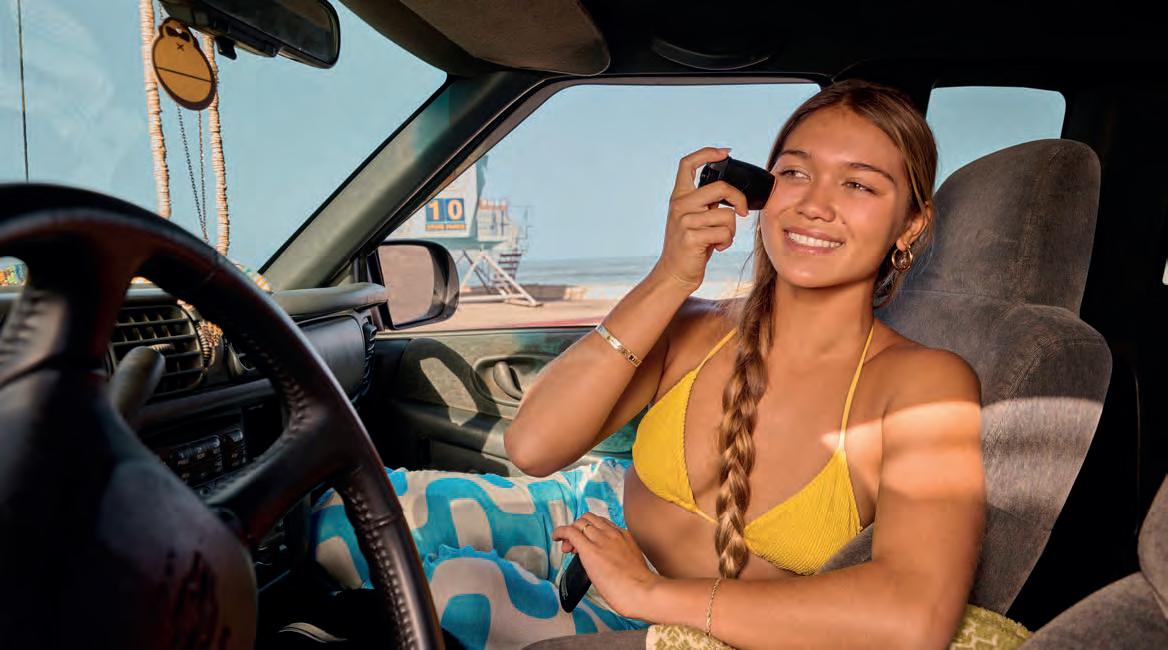
‘‘People
are educating themselves on the detriments of chemical sunscreens and actively seek alternatives”
Maurice Chater, Sun Zapper
quality zinc-pastes, we now offer the zinc sun cream that absorbs well and leaves no white residue”, announces It’s On Marketing & Sales Manager, Mitch Raback. EQ Love releases a new tinted formulation. “Our new SPF50 tinted sunscreen is formulated with mineral filters and organic-certified ingredients, suitable not only for sports but for everyday use”, explains Marketing Manager Marina Abreu. Himaya has focused their R&D on enhancing the rub-in properties of its cream, to help the end-user apply the correct amount to stay protected. Offering SPF with treatment benefits allows for crossover into skincare. This is achieved by adding very specific active skincare ingredients, targeting different needs. Hydration and skin nourishment rank highly across the ranges Aloe Up, EQ Love, SeventyOne Percent, It’s On, Suntribe, and Surf Stick Bell. Water and sweat resistance are paramount for active users. Wearing comfort is key - greasy, stinging, visible creams do not pass the user’s test. Gltzn, SeventyOne Percent, and Surf Stick Bell are very conscious about eye-burning. Added active skincare ingredients also add value. EQ launches a baby and family formula, an innovation echoed by Sun Zapper. “Our new Pure Zinc renewed formula boasts 25% zinc content and comes in seven variants, including baby, anti-ageing,
kids, acne, and mosquito-repellent”, announces Maurice Chater. Gltzn introduces a dermatological perspective with its “care, repair, and protect” system of reduced formulations. Suntribe has enhanced the cosmetic performance of its products overall, mainly through natural oils and butters.
Ingredients are carefully selected to meet the skincare and sustainability consumer expectations. There is a strong reliance on zinc oxide across brands, ideally non-nano, making it an anchor ingredient in the industry. It tops the ingredients list of EQ Love, It’s On, Sun Zapper, Sun Bum, Sunda, Surf Stick Bell, and Suntribe. “We are introducing some of the highest performing mineral filters available today into our new formulas”, reveals Suntribe Founder Karl Roos. A “less but better” mindset is driving simplified formulations that deliver high functionality in natural and honest presentations. There is increased use of natural oils, botanicals, and antioxidants. Aloe Up’s formulation contains 35% of Aloe Vera. Surf Stick Bell also uses aloe vera, alongside hyaluronic acid. It’s On adds lanolin and kaolin to their formula. Sunda combines the zinc oxide with thanaka, a traditional Burmese botanical ingredient. Suntribe bases its formulas on natural oils and butters. Chemicals are avoided, including those used for fragrance and colour. “Sun Bum Signature products use nano zinc and are fragrance-free”, says Brand Manager Francesca Essiflie-Dadson. Gltzn makes a similar commitment. “No fragrances, no colourants and no unnecessary additives”, explains Simon Schlagkamp. Aloe Up’s Sports range is also fragrance-free. SeventyOne Percent resolves the tension between natural formulations and high performance one by combining mineral and organic filters, to which they add botanicals and antioxidants. They use Roka Smart UV® photo-adaptive UVA organic filters.
There is a lot of innovation in packaging and application formats too. We find new application systems such as air pumps, sticks, gels, or hybrid stick and lotion combinations. Himaya delivers their zinc in a stick, while Sun Zapper opts for air-pumps for their Pure Zinc range. SeventyOne Percent’s Sun Combo 2in1 combines their Coucou Sun facial lotion and the Invisible Sun stick in one product. Packaging is reusable, with several refill systems also available.
A more educated consumer is driving a shift from claims to proof of sustainability in sunscreen production. Superficial eco claims are costing the trust of increasingly sceptical buyers. Formulations focus on being reef-safe, avoiding harmful chemicals and microplastics. Ecotoxicology validation - which certifies that environmental toxicity data is compliant with regulatory standards - is emerging as an important purchase factor. “We work under strict Cosmos Organic and Ecocert certifications”, says Marina Abreu. “Our Sun Bum Signature products are Hawaii Act 104 compliant”, states Francesca Essiflie-Dadson. SeventyOne Percent runs independent eco-toxicology tests. This must be supported by sustainable packaging and application formats to remain credible. There is increased use of recycled materials, or mono-material packaging that is easier to recycle. It’s On and Sun Bum use post-consumer, recycled materials. EQ Love, Suntribe, Sunda, and Surf Stick Bell use recyclable materials, like cardboard. SeventyOne
“We reject bioplastic tubes because most end up in landfills, where they produce methane. Refilling is 100% better than landfilling” Stuart Knowles, Himaya
Percent applies “the 3-R approach” to their packaging, which consists of reducing, recycling, and reusing. Reuse formats and refill systems are very popular too. Himaya offers a refillable silicone tube with a free 10ml tin to promote a “refill” mindset. “We reject bioplastic tubes because most end up in landfills, where they produce methane. Refilling is 100% better than landfilling”, asserts Stuart Knowles. A welcome addition to the sustainability profile is local production, as it reduces the transport impact. Sunda produces in the southwest of France, close to their local community of French Basque watermen.
RETAILER SUPPORT
New-generation sunscreens offer clear benefits for retailers stocking this category. The mineral base and clean formulation meet the strongest current consumer demand, differentiating these brands
from mass-market chemical ones. The new refill systems promote repeat purchases, building customer loyalty. Daily-use SPF integration into skincare routines adds value to the purchase. Considering the high margins that this product category offers, sunscreens are perfect to help position a store as a premium product supplier.

Brands help with the right marketing approach. With the current buyer mindset, credibility has become central to marketing activation. Education is becoming a core conversion tool. Clear communication about ingredients, their benefits and usage, builds consumer trust. “We ask the question ‘what’s in your sunscreen?’ to start the conversation about what we actually put on our bodies”, explains Karl Roos. Campaigns are community-driven, relying on ambassadors, athletes, and micro-influencers. “We have built a community of people who actively care for their skin, we call them creamers”, says Simon Schlagkamp from Gltzn. In-store activation and demo events are increasing to cater for a preference for experiential marketing over the more traditional advertising.
In-store, these marketing guidelines are supported with eco-designed displays made of recyclable materials, and testers and other demo tools. Himaya, EQ Love, It’s On, Sunda, and Suntribe offer displays made of wood and cardboard. Surf Stick Bell, SeventyOne Percent, EQ Love, and Gltzn provide testers to their retailers. Gltzn has a mobile cream dispenser for direct trial in-store or at events. Educational materials are available for staff training and consumer information, both in-store and in the digital sphere.
Sunscreen is consolidating its position as a high-value, year-round category. Through their scrutiny, well-informed customers have driven reformulations and important innovations in every aspect of production. Mineral formulations, simplified ingredient lists, and verified sustainability credentials are no longer differentiators but baseline expectations. Brands that combine credible eco-performance with cosmetic sophistication, multifunctionality, and practical formats are best positioned to capture demand. Retailers will benefit from strong margins, repeat purchase dynamics, and a premium positioning.
1 Shift to mineral-led, premium formulations
2 Demand for proven, not claimed, sustainability
Visit our website to see in depth brand previews of this category.
3 Multifunctional skincare integration
4 Retail value driven by education and repeat purchase
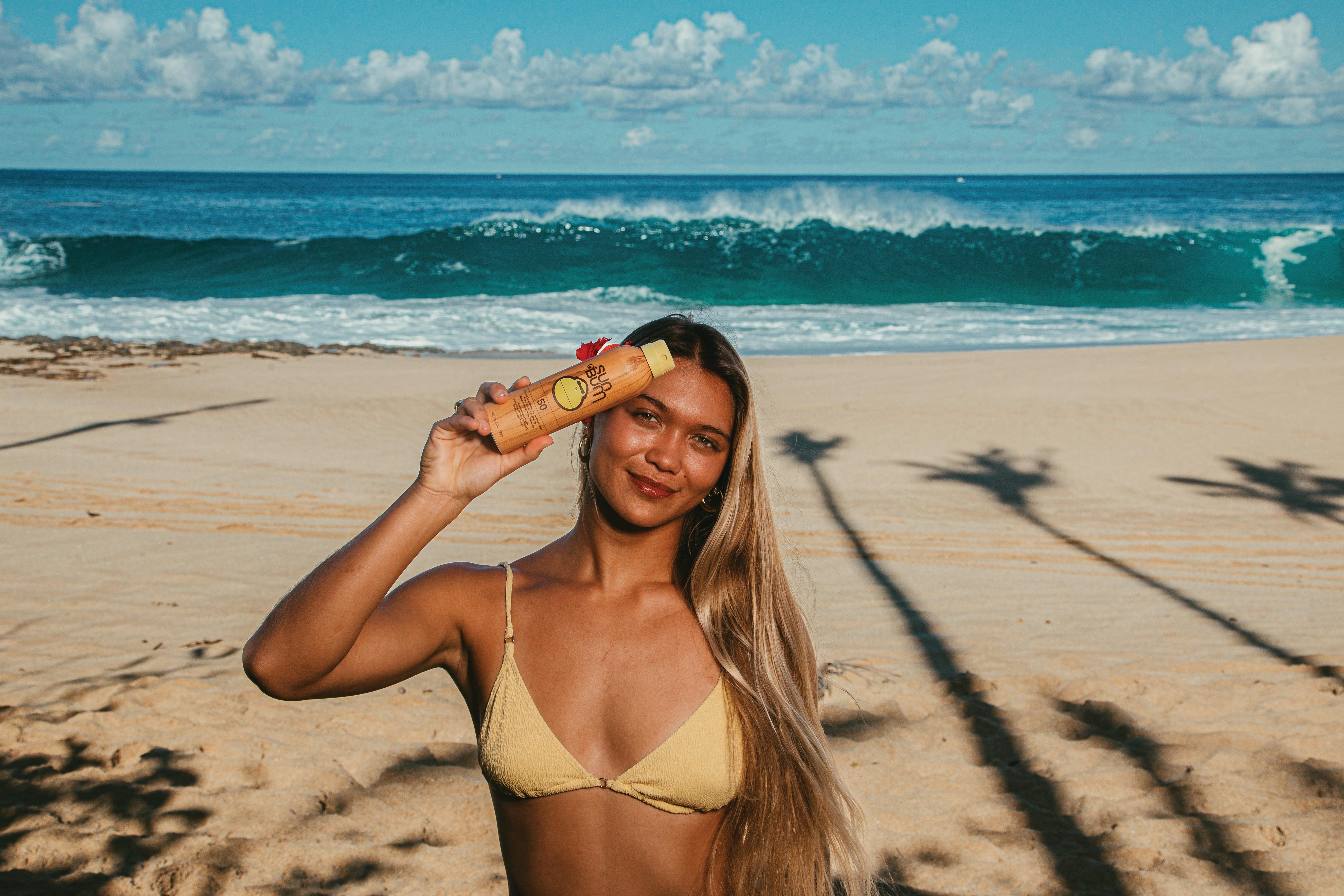
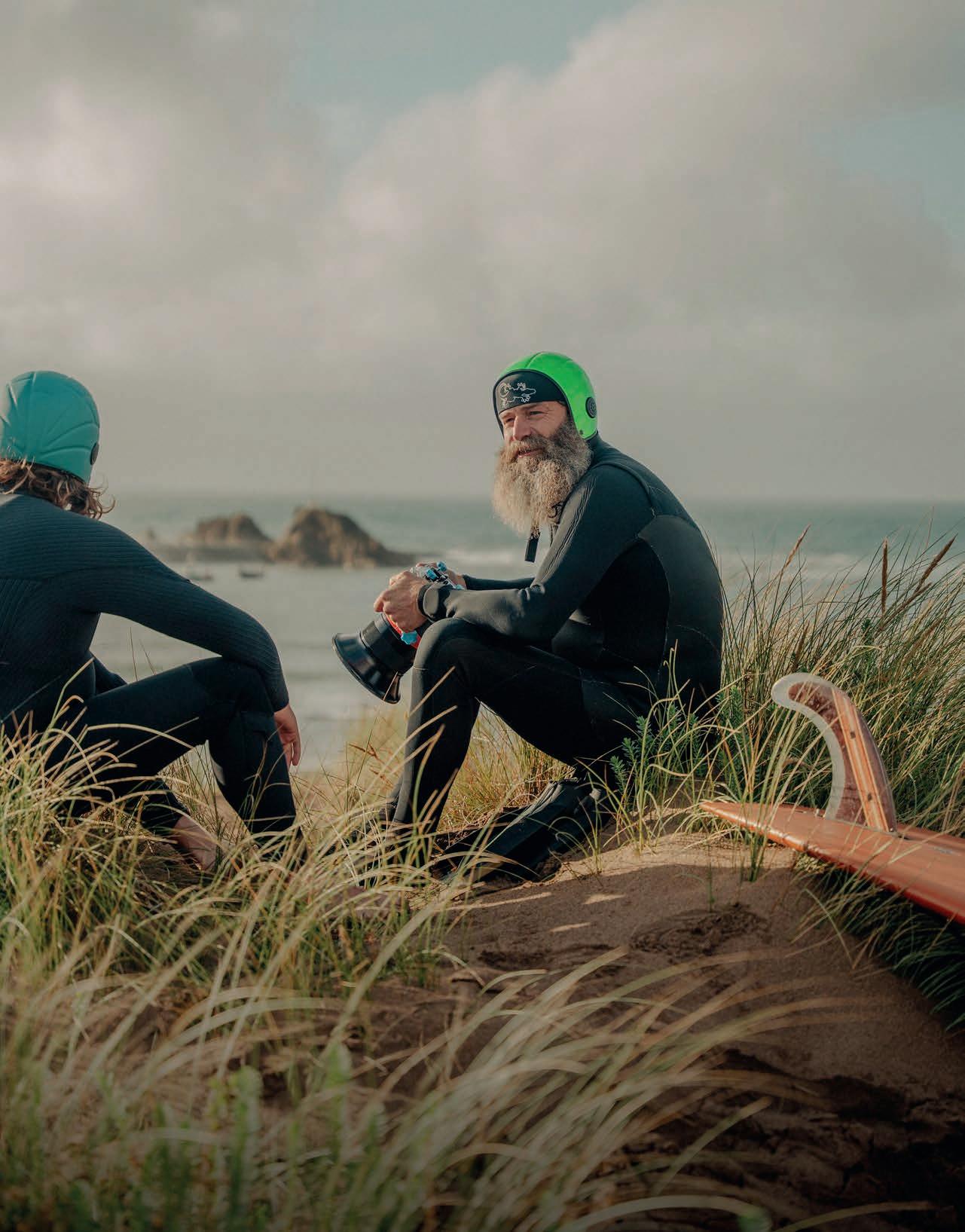

As the adoption of water helmets spreads with new disciplines, retailers face a conundrum: either stock multipurpose lids or discipline-specific gear. Let us guide you through. By David Bianic
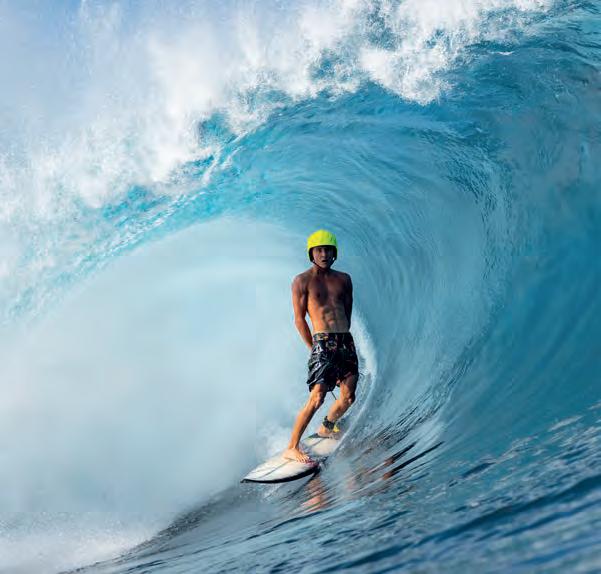
From “no-no” to “go-to” accessory, the water helmet experienced a not so uncommon trickle-down phenomenon. Historically hampered by a “culture of reluctance” regarding aesthetics, the adoption of head gear from elite riders transitioned to the John Does of action sports, turning the once niche safety accessory to a fundamental gear category for a broad spectrum of watersports.
Federico Infantino, Marketing & Team Manager at Gath, adds that “without a doubt, the helmet business reached an entirely new level in 2025.” Peter Hurst, Co-Founder of KNOK, reports a powerful signal for inventory planners: “The best surf retailers sold out 3 to 4 times during the Australian Summer.” This indicates that European retailers should view the category not as a peripheral add-on, but as a high-velocity turnover opportunity that may require aggressive pre-ordering.
MARKET DYNAMICS: THE RISE OF FOIL AND SURFING
With the rise of high-speed sports like wing foiling, the primary hazard is no longer just the water surface; the added risk of high-speed crashes and contact with the foil makes helmet use a non-negotiable safety decision.
While surfing remains their primary driver, Greg Keeling of HYDA (formerly SIMBA) notes that “wave parks are perhaps the most significant structural driver,” as operators demand helmets to mitigate risks against hard pool bottoms and crowded lineups. Furthermore, professional visibility at heavy venues like Teahupo’o and Pipeline - where over half of the women and 20% of men on the WSL Championship Tour now opt for protection - creates a powerful “downstream effect on recreational surfers and groms who look to the tour for cultural cues”, adds Greg.
DEMOGRAPHICS EVOLUTION
Historically, the market was split between high-risk professionals and older advocates. However, the demographic data indicates a significant broadening of the base. While Gecko observes their core demographic
remains the “30-50 year old male,” new niches are emerging. KNOK has identified a high-growth segment in “older surfers who are more conscious of head knocks and skin cancers,” presenting a vital marketing USP: head protection is also sun protection.
The youth segment is also seeing a shift. Federico Infantino of Gath reports that “the 16-35 age group, historically the most unwilling, due to ‘style concerns,’ is now embracing helmets more than ever.” Additionally, there is a “noticeable increase” in children wearing helmets as standard equipment. This connects directly to product solutions like their Gath SFC, a favorite for juniors due to its availability in sizes down to XS.
From a business perspective, retailers must weigh up the benefits of stocking multi-purpose gear against discipline-specific equipment. Brands like TSG favor a multi-purpose concept, particularly with the All Terrain helmet: “For retailers, this means reduced complexity in the assortment,” as the model carries “multiple certifications across [water, skate, bike, and snow] categories.” This allows a single SKU to address a wide range of use cases, reducing inventory overhead.
Conversely, legacy leaders like Gath and specialists like HYDA argue that true performance requires sport-specific engineering. While Gath has achieved dual-certification with the RGM (concrete and water sports), they maintain distinct designs (surfing and wipeouts, foiling and rescue operations). Retailers should adopt a “good-better-best” strategy: multisport certified units for generalists, and specialized, hydrodynamic shells for the dedicated surfing and foiling communities where performance is paramount.
A key innovation for 2026 is the application of the “Coanda Effect.” As defined by HYDA, this is a principle that “guides water flow smoothly around the helmet shell, reducing drag during duck dives, wipeouts, and hold-downs.”
In kite and wing foiling, wipeouts can be violent enough to “rupture eardrums,” adds HYDA, making acoustically tuned ear protection a critical selling point for high-end models. Branded as the “Ultimate Big Wave Surf Helmet”, the WISURF Carbon model from WIP uses a prepreg laminated 8K carbon shell, combined with a multi impact EPP dampening liner, neoprene ear protectors membrane and a magnetic buckle for quick and safe release.
“Soft core” options also meet great success, they offer stylish alternatives for the “historically reluctant, such as WIP’s Cap and Bob Bump Shell uses innovative protection inspired by biomimicry : the shells mimic the “powder-filled form of scallop shells” for exceptional strength-to-weight performance. These are certified to the NF EN812 bump cap norm.
On that matter, retailers must educate consumers that “water-specific” certification (EN1385) is non-negotiable, claims Gecko, while addressing an often disregarded feature: comfort. “An inflatable liner is used to provide a more personalised fit for each wearer. It also helps with comfort in the water, including buoyancy and warmth,” says Emily Honey, Marketing.
This diverse range of products reflects an industry trajectory toward total head protection normalization, ensuring that in 2026, safety is no longer a trade-off for performance or style.
1 2025 market burst
Visit our website to see in depth brand previews of this category. BOARDSPORTSOURCE.COM
2 Foiling & surfing on the rise
3 Age groups broadening
4 Soft lids adoption
01 / EXTRATUF RIPTIDE SLIP-ON SNEAKER
The Riptide is a one-piece, injection-molded BioLite slipon sneaker designed for on and off the boat. It features a non-marking, slip-resistant sole for stability. Drainage holes throughout the upper allow quick water release, making it ideal for comfortable, all-day wear in any environment.
XTRATUF.CO.UK
02 / EXTRATUF HIGHTIDE ANKLE HIGH BOOT
The Hightide uses the same injection-molded construction as the Riptide in a new ankle-height design. It offers added ankle protection and a slip-resistant, nonmarking outsole, ideal for water use. Drainage holes in the upper aid quick drying, while a textured footbed ensures comfort and a secure fit in all conditions.
XTRATUF.CO.UK
03 / PACSAFE V TECH SLING
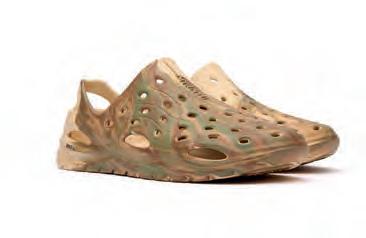
Built for all-day adventures, this extra-capacity sling pack keeps your essentials secure, organized, and always within reach. Featuring lockable compartments, padded 11” tablet protection, RFID-blocking technology, slashresistant materials, and a water-repellent recycled shell, it delivers premium comfort, smart functionality, and trusted anti-theft security for travel, commuting, and everyday exploration.
PACSAFE.EU
04 / THE NEVER SUMMER TROOPER | #1
The 26/27 Never Summer Trooper graphic is rooted in Colorado’s high country, drawing inspiration from the dense Front Range pine forests and the rugged Never Summer Mountains. Rather than making the ram the main focus, they leaned into the beauty of the surrounding environment to create a look that feels natural but still powerful. Anchoring the tail is the handdrawn ram illustration by local wildlife artist Peter Eades, symbolising strength, resilience, and the raw mountain spirit behind where this board was born.
NEVERSUMMER.CO.UK
05
Inspired by the golden age of freestyle, the Tape Deck takes the best of 90s design – true twin, wide waist, steep kick and pairs it with modern technology. With graphic’s Designed by Danny McCormick from Scotland, the Tape Deck is a celebration of freestyle creativity with each length featuring a different masterpiece unified by one very familiar smile. The Mona Lisa design is based on the Leonardo da Vinci painting. It’s said her enigmatic smile was triggered when she landed her first back 5. EU.NIDECKER.COM
The Super Fish Outline Core is built for longboard-style cruising. Its characteristic aesthetic isn’t a graphic; it’s the exposed core, featuring strategically placed heattreated bamboo and poplar for enhanced torsional strength and dampening. The elongated, wide nose ensures effortless float in all powder depths, while the supple, extended tail provides superior edge-hold and balance.
GENTEMSTICK.COM
Originally from a small village in Luxembourg, Kim grew up surrounded by the family butcher shop, skateboarding, and snowboarding. Today, Kim works as a graphic designer while channelling his passion for illustration and snowboarding culture into projects. His Happy Place graphic for Slash reflects a darker, spiritual side – skulls, thistles, and cycles of life and death symbolise resilience, resistance, and self-made happiness.
SLASHSNOW.COM
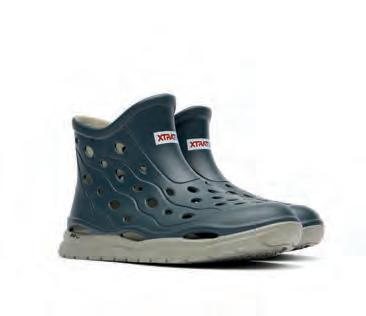
Every year at the Shops 1st Try on snow demo the Boardsport Source Best Design Award is voted on by industry and retailers and presented to the top 3 most popular board designs. This year Never Summer won the award closely followed by Nidecker in 2nd place and Gentemstick and Slash in joint 3rd place
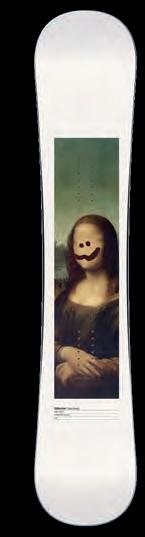
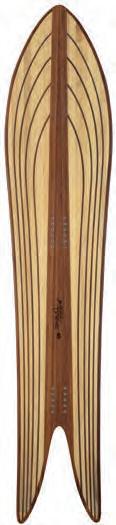
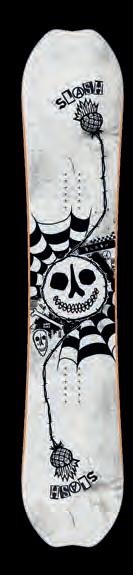
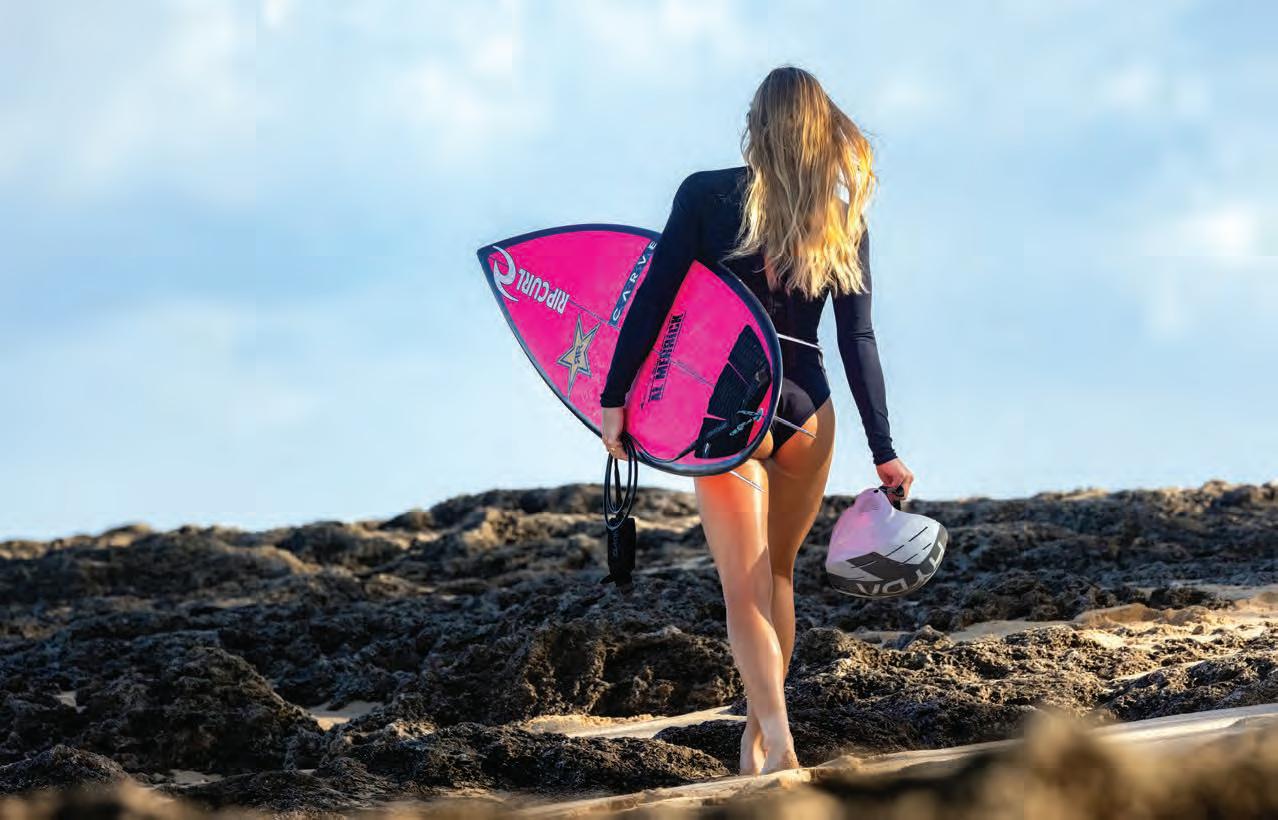


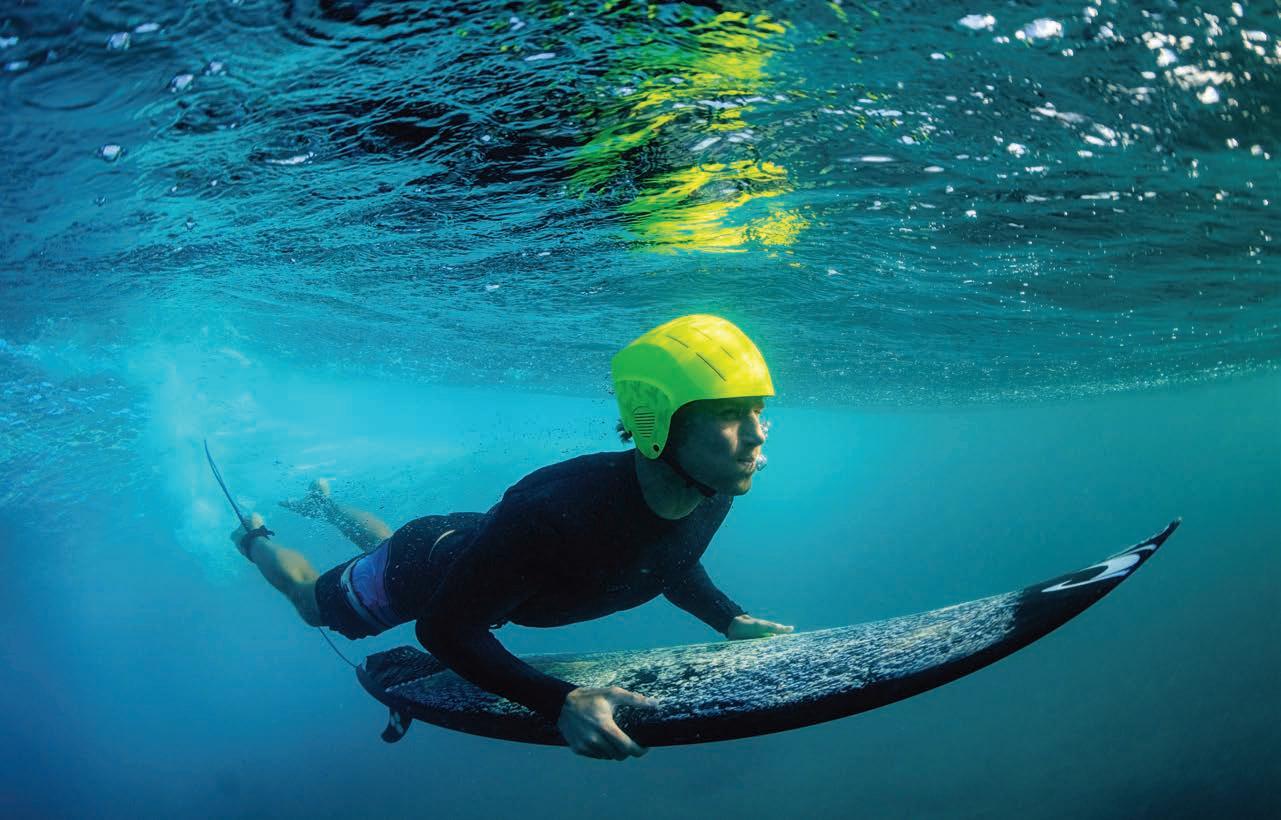



Suntribe is a sun care brand focused on safe, mineral-based sunscreens with simple ingredients, built around sustainability and performance. Source spoke with Karl Roos who described the brand’s growing impact in the market, their best-sellers and plans for future events.
How would you describe the brands positioning in the market?
Suntribe has a cozy positioning in the sunscreen market, with one of our hands in the hardcore sports arena, and the other one in the family focused arena balancing elements of performance and everyday use. We do love the mix of supporting the most radical athletes, and the most radical mums out there!
What is currently your best-selling product line and why?
Our best seller is our sun stick line together with the baby and kids SPF 30 sunscreen which are consistently some of our most popular products.
How has the consumer changed over the last few years?
We’re definitely seeing a much more conscious consumer in general. Instead of just the most hardcore athletes and mums being interested in mineral sunscreen, it’s now become a much more common thing for anyone to care, at least a little bit about it. This shift reflects a broader awareness around skincare choices and a growing interest and understanding in these products, especially sun protection.
The change that has been the most pronounced has been with the more general “family” segment. Where mineral sunscreen has become a hot and completely regular topic. Which means that more and more people are interested in trying out our innovations. This has led to more conversations around ingredient

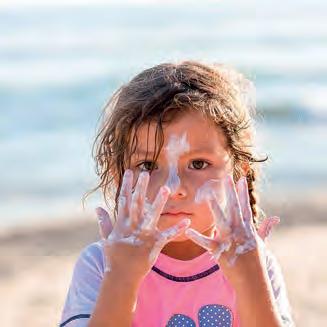
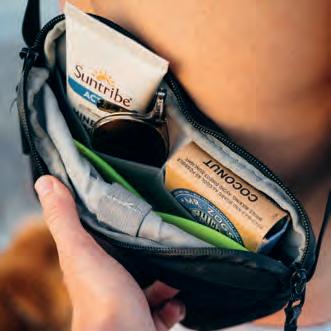
safety, skin sensitivity, and long-term skin health, particularly among parents making decisions for their children and athletes spending a lot of time outdoors.
We believe a big part of this reason is that now there’s actually several mineral sunscreen products to choose from, that perform just as well as the chemical alternatives everyone’s used to, this makes mineral options feel more accessible, practical and trustworthy.
What are other things Suntribe has been up to?
Some of the most exciting things we’ve been diving into the last year involve arranging Longboard competitions. We truly believe that a big part of the future of surfing in Europe (specifically Scandinavia) will revolve around the beautiful sport of Longboarding. This belief has driven us to invest more time and energy into building events that can support and grow this community in a meaningful way.
So to give this movement a kick in the behind, we decided to arrange one of Sweden’s first Longboard competitions. Last year we hosted the first of many Österlen Longboard Open, and we had over 60 competitors! This really helped to create a strong sense of community around the sport in the region.
Now we’re really set on keeping the momentum of this movement going, and our goal is to create a tour of competitions in Sweden, hoping that the surfing world will soon be able to experience the Swedish Longboard tour!
As an extension of this passion, we’ve also expanded our athlete team to involve some of Europe’s most prominent athletes such as the very talented Portuguese Raka Bento, and Denmark’s own Thilde Rasmussen. Both national champions and some of the brightest shining stars in the future of European Longboarding.
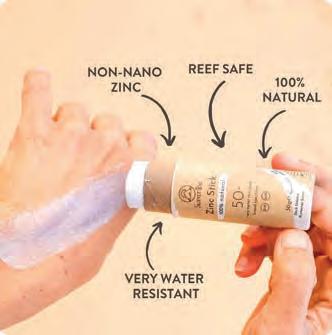
Where are your products manufactured and where are the ingredients sourced? We manufacture all of our products in Portugal. The ingredients come from all over the world, but where possible, we source everything we can from Europe. We’re finding more and more that the European alternatives are more attractive when it comes to everything from ingredients to all kinds of services. Therefore we’re happy to say that it’s making more and more sense to do business in a worry-free way.
What’s hot off the shelf for Suntribe this coming season?
We’ve got some really hot new stuff coming out this year.
Our new shower gel and body lotion have made a good impact with their worryfree and nasty-free ingredients. This was something that I myself had been looking for, and I just couldn’t find a shower gel that I trusted. It all seemed like such a big and exaggerated ingredient lists. But now that issue is solved.
Our really big release is our SPF 50 UVShield. This is Suntribe’s most advanced product so far, utilizing the new generation of mineral filters to achieve very high SPF without a heavy consistency nor whitening effects.
The leading trade show for outdoor professionals since 2003
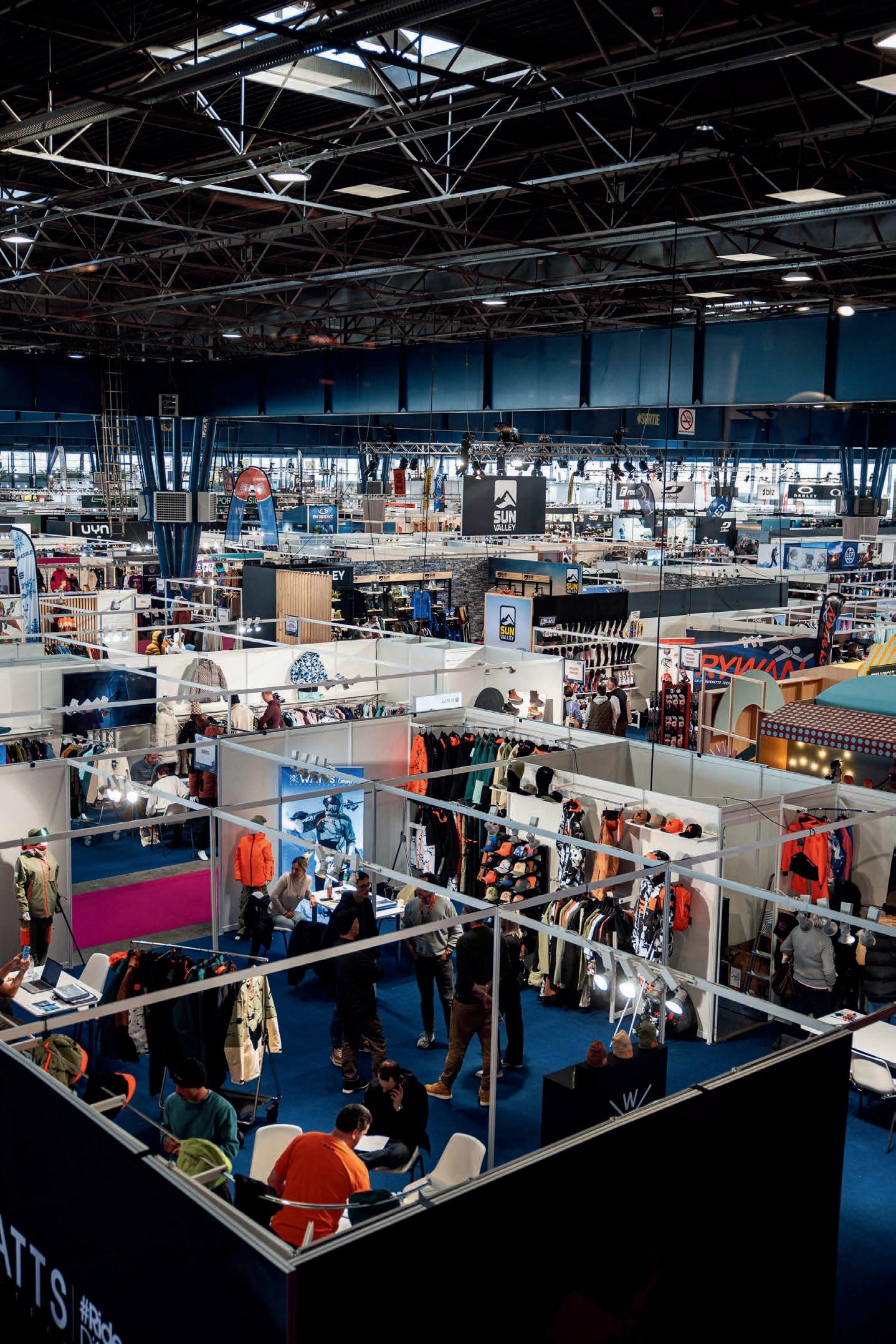
25, 26 and 27 JANUARY 2027
PORTUGAL
Spring 2026 is unfolding against the backdrop of a particularly tense global economic climate. For several months now, the geopolitical situation in the Middle East has continued to weigh heavily on international trade. The blockade of the Strait of Hormuz, a strategic chokepoint for global trade, has led to a significant rise in oil prices, with immediate repercussions on transportation and production costs. This energy crisis is gradually spreading throughout the economy, affecting both manufacturers and distributors.
For French companies, particularly those dependent on Asian imports, the consequences are very real. Logistics flows are severely disrupted: many carriers have had to abandon the Suez Canal route to circumnavigate Africa via the Cape of Good Hope, extending delivery times by several weeks. This reorganization of shipping routes is also causing a gradual bottleneck in certain European ports, further slowing the distribution of goods and creating uncertainty regarding shelf-stocking timelines.
In this context, logistics costs are skyrocketing. The price of ocean freight rose again in the first quarter of 2026, directly impacting the margins of importers and distributors. For specialty retailers, such as surf shops, this situation requires even more precise management of inventory and restocking, with an increased risk of stockouts or, conversely, overstocking if seasons shift.
On the consumer side, French households remain cautious. While overall inflation is stabilizing at around 3%, energy costs continue to weigh heavily on household budgets. As a result, purchases related to leisure, sports, and equipment remain carefully considered, often postponed or directed toward products which are on sale, or secondhand , or end-ofline stock. Consumers are being more selective, prioritising neccesary expenses or truly justified impulse buys.Nevertheless, this early spring is not without positive signs. The Easter holidays, marked by particularly mild weather across France, encouraged travel and outdoor activities. The French coastline has regained some momentum, with busy beaches and attractive conditions for water sports, offering board sports operators a welcome window of opportunity to kick off the summer season with favorable conditions.
Against this generally tense backdrop, the 2025–2026 winter season nevertheless provided a welcome respite for the economy of mountain regions. Snow conditions were particularly favorable throughout the winter, with a consistent snowpack and well-distributed snowfall. The result: a sharp increase in resort attendance, driven both by loyal French clientes and a gradual return of international visitors. Equipment rental companies and specialty stores benefited from this momentum, with sustained rental volumes and rising equipment sales, particularly for skis and snowboards. A successful winter that has reinvigorated the entire industry.
Against this mixed backdrop, the French water sports market is approaching spring 2026 with a degree of cautious optimism. Initial feedback from the field confirms a trend already underway: activity driven by passionate enthusiasts, favorable weather conditions, but also profound shifts in customer practices and expectations.
In Pornichet, in the Loire-Atlantique region, Pascal Jaloux, manager of the Direct Sailing store, is seeing an encouraging start to the season. “Business is good, particularly for foiling and wing surfing, with an increase of about 10% compared to last year,” he explains. Specializing in technical water sports, the shop is fully benefiting from the enthusiasm for these booming disciplines, which attract an increasingly knowledgeable and well-equipped clientel.
Unlike other sectors, the impact of the international situation remains limited on his business for now. “We haven’t felt any real slowdown in sales yet. Enthusiasts continue to buy gear, even if some are being more selective with their purchases,” he notes. The store has been proactive
by maintaining a stable and controlled inventory level, allowing it to respond quickly to demand without facing significant supply constraints.
On the product side, the trend is clear: wingfoil and foil dominate sales. The shop is also focusing on specific niches such as fishing kayaks or certain windsurfing-style boards, which appeal to a targeted clientele. Conversely, stand-up paddleboarding seems to have virtually disappeared from the radar: “The market has been wiped out,” he notes, illustrating a clear shift in activities toward more technical and demanding disciplines.
Customer behavior is also changing. “There are a lot of remote purchases, by phone or online. And strong demand for high-end products, but in demo or downgraded versions.” A way for enthusiasts to balance performance and budget in a tight economic climate. Despite everything, the essentials remain the same: “Customers come looking for advice, availability, and a good price.”
On the other side of the region, in Saint-Aygulf, Var, the Karukera Surf Shop is also reporting a strong start to the season. Its manager, Cédric Pace, has noticed an increase in foot traffic since the Easter break: “There are clearly more people this spring than last year.” This trend is driven by both favorable weather and a marked resurgence in outdoor activities
The shop, which operates year-round with two managers, only adding more staff in the summer, benefits from a loyal local and tourist clientele. “For now, the international situation has no visible impact on our foot traffic,” he explains. Deliveries are experiencing some delays, but nothing truly critical, allowing the shop to approach the season with confidence.
On the sales side, the product mix remains quite broad. Apparel, skateboarding, beach gear, and surfing are performing well, confirming a diversification of activities. “Customers no longer come just to surf; they’re looking for a whole experience, a lifestyle,” he observes. This shift is pushing shops to offer more comprehensive and cohesive selections.
Heritage brands like Rip Curl, Volcom, and Protest remain pillars of the shop, while labels such as Vissla, Salty Crew, and Katin enrich the offering with a stronger lifestyle focus. It’s worth noting, however, a slight decline in sales for certain products, proof that even established brands must adapt to a changing market.
Beyond these accounts, a fundamental trend is taking hold: the water sports market is undergoing a profound transformation. Technical disciplines like wingfoil continue to grow, driven by a dedicated community, while more accessible segments like paddleboarding are stagnating. Consumers, for their part, are becoming more demanding, better informed, and more flexible in their purchasing decisions.
In this context, surf shops must more than ever demonstrate their added value. Expertise, advice, proximity, and the in-store experience are becoming essential differentiators in the face of digital competition. Those who succeed in building connections and offering a genuine customer experience seem better equipped to tackle the season.
Despite international uncertainties and supply chain tensions, the spring of 2026 offers encouraging prospects. Particularly favorable weather conditions, with sunny skies and great waves along the entire coastline, have made for a successful start to the season. Surfers are out in force, motivated by the desire to quickly take advantage of the good conditions.
Surf shops are thus approaching the coming months with caution but optimism. While management remains rigorous, particularly regarding inventory and margins, the energy is definitely there. With a blend of passion, innovation, and ideal natural conditions, this start to the season could well set the tone for a dynamic summer for the entire board sports sector in France.
UK SPAIN
PORTUGAL
ITALY
SWISS
FRANCE
After several years of weak consumer sentiment, the German economy is showing the first signs of a cautious stabilisation. For many retailers, the winter proved surprisingly positive, particularly in the final months. Strong sales boosted morale, and with cash registers well-stocked, numerous stores began the summer season on an optimistic note. Things were also running smoothly on the manufacturers’ side. Most brands were able to deliver reliably, stock availability was high and in many places warehouses were well-stocked. But then came April.
Late snowfalls in the Alps, persistent rain and unusually low temperatures made for a difficult start to the warmer season. Added to this was a very early Easter, which meant that purchasing decisions and travel plans were postponed in many cases. Consequently, many retailers reported a decline in turnover compared to the previous year.
Inflation is now well below the peaks of recent years. Nevertheless, price levels remain high and many consumers continue to be cautious. Price comparisons, discount campaigns and reducedprice goods play a greater role than they did just a few years ago. The general uncertainty caused by geopolitical conflicts, rising costs and economic challenges continues to lead to caution when it comes to major purchases. At the same time, the passion for board sports remains undiminished. What currently sets many successful retailers apart is their ability to remain flexible, build communities and create experiences.
Retail Outlook is healthy but challenging In May, the weather finally showed its better side. Sunny weekends and rising temperatures immediately led to increased customer traffic in shops. Many retailers currently describe the market as “healthy but challenging”. Price promotions remain prevalent and are now an integral part of the purchasing process for many customers. Today, consumers are paying particular attention to durability, multifunctionality, discounted goods, previous year’s models and well-known brands. Premium products continue to sell, but require stronger selling points regarding quality, innovation and long-term value.
More and more retailers are focusing on experiences rather than mere product presentation as community is driving retail. Particularly in demand are snowboard, surf, surfskate and wakeboard tests, community events, workshops, local sporting events and group sessions. Simon from S-Brett in Mannheim confirms this trend: “We had a really good winter, but April was extremely quiet. That’s why we tried to get people into the shop with activities like table tennis tournaments and get-togethers. This not only boosts sales but, above all, strengthens the community.”
Purchasing behaviour has changed across almost all board sports categories as purchases are being delayed. A new surfboard costing between 900 and 1,500 euros, a wakeboard setup costing between 500 and 1,000 euros, or a premium skateboard costing between 200 and 400 euros is now much less likely to be bought on impulse. Instead, customers are using their existing equipment for longer and specifically replacing individual components such as wheels, bearings, fins or bindings.
Sale products continue to perform and many retailers report significantly stronger demand for the previous year’s models, outlet items, complete sets and second-hand gear Andreas Voss from Waketoolz has also observed this trend: “Price promotions have a much greater influence on purchasing decisions today than they did a few years ago. That’s a bit of a shame, as modern products often offer genuine technical advantages and last significantly longer.”
The skate market remains one of the most stable and independent sectors within board sports. Driven by local communities, skateparks and a steady stream of new talent, the market is proving robust, but without any major growth spurts. Surfskates have established themselves and remain relevant, whilst core hard goods and footwear continue to deliver stable results.
Commented skate retailers ‘Skate works because it’s local. If the shop is active in the scene, the gear sells – if not, it doesn’t.’ says A-Man Boardshop and ‘Demand is steady, but no longer hypedriven like it used to be. It’s become a solid, honest business, so whilst online sales are putting pressure on us, of course, good shops with a genuine community are hardly losing any customers. ’adds Edge To Edge Garmisch. Michi from Epoxy Boardshop in Deggendorf comments: ’Complete boards are still selling very well. At the same time, we’re seeing new target groups for surfskates and carver-style products.’
The German surf market remains strongly travel-driven and seasonal. Sales are often concentrated on customers with specific travel plans. At the same time, river waves, artificial wave pools and local surf spots are generating additional domestic demand. Surf accessories and performance products are proving particularly strong. Tobi from Goodtimes Surfshop in St. Peter-Ording reports a successful start to the season. Repairs, wax and accessories are now among the key revenue drivers.
The number of surf shops in Germany also remains limited. Many smaller shops have disappeared in recent years. Jan Überall from Surf & Fashion Fehmarn sees community engagement as a key factor for success: “Everything related to travel – ponchos, sunscreen and sunglasses – is selling better than ever before.”
The SUP market has normalised significantly following the COVID-19 boom. Today, the market is dominated primarily by replacement purchases, upgrades and high-quality products. Bernd Flügerl from F2 / Watercolors nevertheless views the market positively: “There are nowhere near as many brands as there were during the boom. The market is becoming healthier. People still want to get out into nature – and SUP remains one of the most accessible sports of all.”
Accessories are the quiet winners. Water Helmets and Safety is becoming increasingly important, demand is rising significantly, particularly for river surfing, wakeboarding and foiling. At the same time, modern helmets have made great strides in design and comfort. In Impact Vests foiling and wakeboarding continue to drive the category. ‘ Five years ago, hardly anyone wanted them. Today, impact vests are seen as a performance product.’ comments Mats from Brombachsee.
Surf Robes & Ponchos has been one of the strongest accessory categories in recent years. ’Ponchos now sell all year round.’ Adds Petra from Icehouse Kulmbach. Whether at the beach, wake park, on a surf trip or in the sauna – the uses are varied and make ponchos an ideal add-on sale.
Outlook 2026:The board sports industry remains culturally strong, even though the economic conditions remain challenging but the market is becoming increasingly polarised. Strong core shops with a community and expertise can grow but multisport retailers are coming under greater pressure. Service, events and local networking are becoming more important whilst customers are buying more consciously, but no less passionately. Board sports remain emotional, identity-forming and social. This is precisely where the great opportunity lies for local shops.
I wish all shops, brands and distribution partners a successful summer.
Ride
Forecasting. Predicting the future. Some may call it guessing… even gambling.
That’s what this is really. We have to understand what consumers are going to do, what buyers are going to do, and how suppliers are going to perform. Will they get the product right? Will they deliver on time? Get the marketing right?
At every step of the ‘food chain’, someone, somewhere is playing the ‘guessing game’. What is really about is reducing the margin-of-error as much as possible. “The black and the white always sell well… be safe and stick with them.” How often do we play it safe?
Given all the guessing game at every level of the process, it’s amazing that we ever get this right. It’s hard enough with all the moving parts…. and then…. throw Donald Trump into the mix. The “leader of the Western World” (not in my name) appears to be totally unhinged.
I hear you: “There’s no room for politics in boardsports.” But when politics like this impact every part of life for every human being in the world, it does touch us all and our customers. This impacts brands, sales, transport, travel, manufacturing, and above all, confidence.
The impact of Trump’s war is going to resonate through all corridors of our industry. There are suppliers in the Middle East. Transportation routes are being impacted, and of course raw material prices are going to go through the roof whilst confidence goes through the floor.
The vagaries of the boardsports industry pale into insignificance when compared to what is going on in the world, but still we continue. Amongst all the headwinds, we continue to make headway, against all the odds.
So our guessing game just got harder. Future bets are more critical than ever. But did it really get harder?
Here we are at the back end of one of the best seasons for a long, long time. “Best snowboard sales for 10 years.” This is Chris Sturgess from Snowfit, Norwich. “It really has been great. It had a feeling like the early 2000s, and we saw lots of old faces coming back into the store that have not been seen for a long time, some bringing in their teenage kids.”
Anything in particular selling well? “It’s all areas, really, clothing was sometimes a bit hit and miss but still ended up good. Boards, boots and bindings all did well, exceeding expectations and increased interest in the new binding technology helped. It’s all been above expectations, and we achieved our season’s goals six weeks earlier than anticipated.”
So you’re confident about the coming season? “As confident as we can be. There was a point when I was ready to send out emails cutting back on my orders for next year, but luckily I got so busy that I forgot to send them, which is just as well. I’m really looking forward to the coming winter. It’s going to be a good one, I’m sure.”
And what about the summer, any thoughts on what that might bring? “Yes, a rest!”
It’s so nice talking to people who are having a good time and are confident about the future. Chris reflects what appears
to be consistent across the marketplace. Winter has ended strong. Confidence is high for the coming season. Order books are full. And all this despite the doom, gloom, and low consumer confidence, just proving that snowboarding (and wintersports in general) is resilient.
Too early. Too late. No matter where Easter falls someone is never happy. Too late and it stalls the start of the summer season. This year it was “too early” - but the mini heatwave around the Bank Holiday weekend caught people off guard. A lot of wake parks were not ready for weekday opening, expecting the early Easter to be a write-off. That’s one thing we are really not able to second-guess, the weather!
It’s been and gone and we’re off (mid-April). The season is underway and confidence is high… or at least higher than it has been. It’s been doom and gloom for watersports for a long time now – but cautious optimism pervades. Stocks are lower, pre-orders have come in at higher levels than have been seen for some time, still not back to where we would like them to be - but heading in the right direction.
Watersports has taken much longer to gather momentum after the “pause,” but something is happening as Joe Turnbull from O’Neill confirmed. “Like the rest of the EU there is an East West split in the UK, Surf has recovered and is back to near-normal but wind and wake are taking longer to recover, it will come. There’s still a glut of other brand wetsuits in the market but we’re happy with our full price sales and pre-orders. For O’Neill it certainly feels like we are back to normal”. What are the issues? “Biggest issue on the horizon is pricing. Raw materials have shot up in price, shipping is more expensive, regulations are costing more – it’s all beyond the point of absorption so prices will, for sure, be increasing – that’s about the only certainty in the market”
Optimism is also hight with retailers, and Angelo from S2AS (Surface 2 Air Sports) in Poole: “Yeah, super optimistic. It’s going to be a good one for sure. For summer, you get out what you put in, and we work hard to win the business. The more you put in, the more you will benefit.”
Any ups and downs? “I see a decline in kite and wing sales. Not in participation numbers, but there’s so much used kit out there. I see it being a tough area for some time to come. Hopefully I’m wrong, but I’m not counting on it. Otherwise, I am investing for growth.”
S2AS is also strong in wintersports, so how has that been? “Strong, super strong. We’ve had a really good season, which follows on from previous good seasons. I see nothing but growth for snowboarding, and whilst there are some harder areas, like soft goods, we are again investing for growth.”
One observation that Angelo did make is about our consumer base: “They want their ‘fix’. Amongst all the $£*t going on, they still need their ‘fix’, come hell or high water they will sacrifice other things in their lives to get it. Thank God for that.”
Of course, he’s right. Our customer base is loyal to their ‘religion’, and they will continue to come to our church so long as we have open doors and can offer them what they want.
So there you have it, politics and religion in one article. Given that Trump appears to see himself as the messiah, given that he’s making such a pigs-ear of it all, we should perhaps steer away from both and simply go back to guessing.
Place your bets.
GORDON WAY UK SPAIN PORTUGAL ITALY SWISS FRANCE GERMANY
UK
Spain’s economy keeps growing above the Euro zone average, boosted by tourism, the service industry, and the Next Generation European fund. This is not without challenges. Youth unemployment remains high, and inflation persists above the Euro zone average. Inaccessible housing prices contribute significantly to both. Despite macroeconomic growth, international geopolitical tensions impact families. Uncertainty about the future and diminishing trust in institutions drive caution in spending. Even with higher incomes, most people are choosing to save or reduce debt rather than spend. Impulsivity is replaced by a more reflective purchasing process focused on quality, longevity, and sustainability, supported by AI-enabled research. People buy less but better.
Board sports shops are also experiencing this consumer behaviour. “People compare more and when they buy, they want to feel they made the right choice”, says Alberto González from Watsay Surf Shop and School in Santoña, Cantabria. Interest in board sports has settled below the post-pandemic growth spurt but remains at a good level. This is especially true for surf, which generates solid business for shops and schools. Growth in disciplines like wing foiling contribute to year-round engagement with water board sports culture. Surf skates remain a strong accessory that helps you stay connected to surf even on dry land. Snow sports are more affected by climate capriciousness, raising questions about investing in equipment that might only be used a few days per season. This is the experience of Gravity Surf Shop in Marbella. Close to the southern resort of Sierra Nevada, it reports that warm temperatures and heavy, damaging rain impacted winter sales. “The interest in snowboarding has decreased. The equipment is not cheap, and ski passes add an important cost”, explains owner, Sonia Gonzalez. The outlook for spring is more
Since our last report, the global landscape has shifted once again… and not for the better. The Portuguese economy grew by 1.9% in 2025, below the 2.1% recorded in 2024 and short of the government’s 2% forecast. This marked the third consecutive year of slowing national economic growth, with declining exports weighing on overall performance. Inflationary pressures impacted Portuguese families purchasing power and led to a contraction in consumption. As a consequence of the conflict in the Middle East, the International Monetary Fund (IMF) revised its Portuguese economic growth forecast downward from 2.1% to 1.9% for 2026.
In addition to this adverse international scenario, the first quarter saw Portugal being impacted by a series of storms for almost a month, causing fatalities, disrupted telecommunications and severe damage which affected the national economy. Retailers experienced negative impacts on their businesses, with reduced traffic in-stores and reduced sales.
For Surfers Lab that has stores in Peniche, Sagres and Costa de Caparica “The market is relatively stable with some natural fluctuations”, said co-owner and manager, Maria João. “The first quarter was marked by a harsher winter, which consequently influenced consumer purchasing behavior and had some impact on sales dynamics. Even so, the brands we work with continue to show solid demand, both in the high-performance segment and in more progressive surfboards, which we view as a very positive sign. As a result, the surf hardware segment is also maintaining consistent demand. In apparel, there was a slight slowdown.”
And it seems consumers are changing their minds. With “Beyond “ or on-trend” products, we are observing a shift in consumer behavior, with a stronger focus on individual well-being. There is growing demand for outdoor activities such as surfing and bodyboarding, with a particularly notable increase in skateboarding. At the product level, there is also greater environmental awareness: consumers are increas-
positive. Gravity focuses on textiles and accessories, benefitting from better weather. Sonia reports a recent sales pick-up. Watsay also expects strong Spring and Summer performance. Their shop, school, and surf camps create a helpful synergy to invite newcomers to the sport that they can loyalise with their good service and reliable equipment offering. Technical products such as wetsuits, leashes, or boards offer steadier sales. “I notice that customers refrain more from spending on “impulsive” purchases, such as apparel”, says Alberto.
In a market saturated with digital options to buy product, offering an experience seems to differentiate traditional, brick-and-mortar board sports shops. Watsay’s surf school and camps are a central part of their project. Beyond teaching how to surf, they offer an experience of fun, adventure, and community. Their website supports this by combining storytelling with product visibility. By contrast, shops focused purely on e-commerce face fierce competition from cheaper outlets and D2C brand platforms. Gravity discontinued its website, limiting online business to Amazon. “The website gave us more work than profit. There was too much competition from large platforms and the brands themselves”, says Sonia.
The examples of Watsay and Gravity highlight the value of a symbiotic relationship between specialty retailers and brands. By expanding the business from merely selling products to offering life experiences, shops remain relevant and attract newcomers into the sport, boosting its growth. By supporting shops in doing so, brands remain in touch with the real concerns, values and needs of the client, which are only known by the shops in direct contact with them. Agile re-ordering, useful communication tools, and supportive service to retailers will keep the sport relevant, and sustain sales, physical and digital ones alike.
ingly seeking eco-friendly textiles with a lower carbon footprint, as well as more natural products. A good example is the rising interest in EQ mineral sun protection range, which has been gaining prominence instore.”
And there’s fresh new stuff on the way. “For the Spring/Summer season we will be relocating our store in Baleal (Peniche). The goal is to offer a more attractive, larger space, organized on a single floor, with an improved customer experience. We are very excited about this new phase. The store is currently in the final stages of construction and we believe it will become a strong point of attraction for both local customers and tourists visiting the region.
ManelSport, a core retailer located in Santa Cruz, in the West coast region, felt the impact of the circumstances. “Sales in the first quarter were very poor compared to the same period last year”, said the store owner, Carlos Dias. “Performance only began to improve towards the end of March, with the arrival of warmer days. However, during the Easter holidays, sales increased significantly. It is well understood that the first quarter is typically the weakest of the year, as the post-holiday period tends to bring a slowdown. Nevertheless, this year’s performance was largely influenced by the series of storms that affected the country. During those months, people remained at home and even online sales experienced a decline.”
In terms of trends, “current trends remain consistent, and it is also clear that the surf wear market is not in its strongest phase. The most successful brands are Carhartt, Billabong, and Volcom, while Rip Curl and Vans are facing challenging times. Products from Hurley and New Balance Numeric are gaining increasing traction. Notably, the brand with the strongest growth is our own, STA, which has been expanding its offering through diversification, including organic products and competitively priced items.”
There is hope for the better. “There is confidence that the Spring/Summer season will perform well, as most consumers have not yet transitioned to their summer look”, he concluded.
SWISS
FRANCE GERMANY UK
SPAIN
PORTUGAL
Heading into 2026 Italy’s economic outlook remains stable but subdued. GDP growth is forecast at around 0.7–0.8%, driven mainly by domestic demand and modest recovery in consumer spending, while inflation continues to ease after the energetic spike in previous years. Employment is improving slightly, with unemployment trending toward ~6%, but structural weaknesses, high public debt (~137% of GDP), and weak export momentum continue to limit stronger expansion. Overall, the macro environment can be described as “stable yet fragile,” with cautious consumer confidence shaping retail dynamics.
The board sports market is also more stable after the many store closures we saw over the last 2 years, but it remains fragile as retailers are still focused on cutting unnecessary costs to survive.
The snow market faced a mixed 2025/26 season due to inconsistent snowfall throughout Italy in early winter but recovered thanks to strong tourism especially in the Alps. Technical outerwear and premium accessories performed best, while entry level price points struggled. Retailers highlight a polarization: “Customers invest in either high-quality gear or they rent, mid-price is disappearing.” Demand for backcountry and touring equipment continues to grow, reflecting a shift toward experiential mountain use. However, climate uncertainty is a growing concern: “We are all worried about snow reliability as this affects how much stock stores are willing to commit, and renting is still a growing category“, States Ettore a board sport sales rep from the Piemont region.
In the surf market, Italy continues to benefit from a lifestyle driven demand rather than pure performance surfing. Coastal regions such as Liguria and Tuscany are seeing steady participation, but sales are “flat to slightly positive” as described by retailers, with growth mainly coming from rental, apparel and footwear. One retailer noted: “Surf is no longer about waves in Italy it’s about lifestyle driven mostly by tourism. Tees, walk-shorts and sandals are moving, but boards are slow.” Sustainability and clean aesthetics remain key, whilst loud branding and technical products are losing trac-
FRANCE
GERMANY
UK
SPAIN
PORTUGAL
ITALY
Switzerland’s overall economic environment has remained stable but subdued. GDP growth is modest, at around 1–1.3%, reflecting a slowdown compared to previous years. Inflation eased but continued to rely on consumer sentiment, while high living costs limited disposable income. The labour market remained resilient, with a low unemployment rate of around 2–2.3%, supporting baseline consumption. However, consumer confidence stayed cautious, particularly in discretionary categories such as sports and outdoor goods. In addition, the strong Swiss franc continued to encourage cross-border shopping, putting further pressure on domestic retailers.
The 2024/25 winter season in Switzerland can overall be described as successful, yet structurally challenging. With around 18.5 million overnight hotel stays between November and April, a new record was reached, driven primarily by international guests whose demand increased significantly. Occupancy rates in tourism regions remained high, particularly in the classic Alpine destinations. Even though there has been some positive development, a certain divergence became apparent: while accommodation and tourism infrastructure were highly utilised, the use of traditional winter sports offerings did not develop equally everywhere.
In the snow segment (ski & snowboard), the season benefited from generally solid snow conditions and stable international demand. In particular, early snowfall at the beginning of the season helped the market gain momentum early and remain relatively stable throughout the winter. Mountain railways reported good to very good frequency levels in many areas, especially in high-altitude resorts. At the same time, market observations indicate a shift in demand: fewer peak volumes on the slopes, combined with high accommodation occupancy, suggest that guests are increasingly diversifying their time, making greater use of wellness, gastronomy, and alternative activities.
From a retail perspective, many retailers describe an overall positive winter for hardware, with skis, snowboards, and technical equipment selling well. In contrast, the apparel segment proved much more challenging,
tion. Tourism along the coast continues to support summer sell-through, but preseason ordering remains conservative and so the pre-season is always a stress test.
In skateboarding, the Italian market remains resilient and culturally relevant, particularly in urban centres. However, growth has slowed after the post-Covid boom. Hardgoods are stable, but footwear and apparel are the main drivers. A Milan based retailer commented: “Skate is steady, but not exploding at the moment. Baggy fits, workwear influences, and understated branding dominate. The remaining core skate shops are holding their ground but business is tougher than ever. Asics skateboarding launched in April in some key Italian skate shops like Frisco´s & AcriminalG bringing some freshness with quality skate shoes.
From a retail perspective, caution defines the current mood. Sell-through is improving slightly compared to 2024–25, but margins remain under pressure due to discounting and overstock from previous seasons. Also, retailers are buying tighter and later: “We are ordering closer to the season and taking fewer risks, it’s all about cash flow.” Also there is a strong focus on brand reliability: delivery timing, sizing, and controlled distribution are more important than ever. Brands that discount too much are losing ground with many small retailers, as they do not want to compete anymore.
Key trends “in” include sustainability, clean design, versatile products, and premium positioning. Meanwhile “out” are over-logoed styles, excessive colour, and mid-tier price products that lack clear value. Retailers are also emphasizing community and in-store experience to differentiate from online.
Overall, the Italian board sports market in early 2026 is stable but fragile at the same time. There is no strong growth, but well-positioned brands with clear identity, strong retail partnerships, and disciplined distribution can still perform well.
As Lukas from Sub summed it up: “It’s not an easy market but good brands still work well if they respect the retailer as well as the consumer.”
FRANZ JOSEF HOLLER
characterised by strong competition, pricing pressure, and high promotional activity across the market. At the same time, the industry continues to face structural challenges, including succession planning, the difficulty of finding qualified staff, weather uncertainty in the late winter period, and a generally more cautious and selective consumer mindset.
The rental of winter sports equipment developed relitively positively, albeit with clear structural shifts over time. Rental offerings remain particularly popular among international guests and occasional users, while equipment purchases are under increasing pressure in many regions. This reflects a broader trend toward greater flexibility and lower entry costs. High-quality rental products and premium service offerings performed well, while entry-level products showed less momentum and therefore got less attention from consumers. In addition, immediate product availability is becoming increasingly important in purchasing decisions.
The surf segment naturally plays a smaller role during winter in Switzerland, but remains part of the broader board sports system and industry landscape. Disciplines such as foil, wing, windsurfing, and wakeboarding remain very relevant, but are highly dependent on stable spring weather conditions and reliable wind conditions, as well as suitable infrastructure, making demand overall quite volatile and somewhat unpredictable. In addition, river surfing, surf parks, and travel-related consumption (surf trips) continue to be important parts of the scene. In retail, there is a clear focus on functional products such as neoprene, accessories, and versatile equipment. Traditional surf fashion, on the other hand, remains under pressure as consumers are increasingly prioritising functionality over style.
In summary, the winter season in Switzerland was characterised by record tourism figures, high occupancy rates, and an overall stable snow market. At the same time, clear structural trends are emerging: a growing dependence on international guests, a shift in consumer behaviour toward rental and experience-based consumption, and increasing differentiation across product categories and price segments. These developments affect all three segments – snow, surf, and skate – and are likely to shape the industry in the seasons ahead.
ALAIN FREI

TO ALL CURRENT AND FUTURE DISTRIBUTORS:
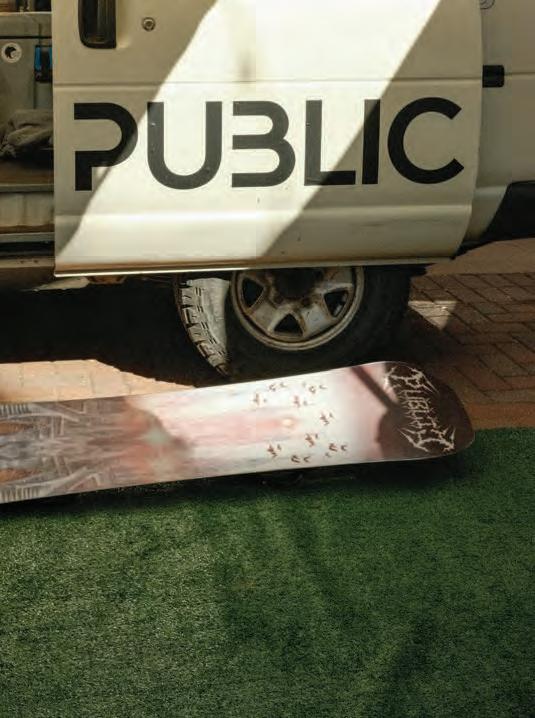


Gesucht: Handelsvertreter (m/w/d) oder Handelsagentur für die Marke NSP (Surf / SUP)
Die APM Marketing GmbH ist ein etabliertes Großhandelsunternehmen im Sport- und LifestyleSegment. Mit starken internationalen Marken betreuen wir den Fachhandel in Deutschland und angrenzenden Märkten.
Mit NSP – New Surf Project haben wir eine der weltweit führenden Marken im Bereich Surfboards und Stand-Up-Paddle-Boards (SUP), neu in unser Sortiment aufgenommen. NSP steht seit vielen Jahren für innovative Board-Konstruktionen, hohe Produktqualität, Langlebigkeit und nachhaltigere Materialkonzepte
Zur Marktentwicklung und zum Aufbau eines starken Fachhandelsnetzwerks suchen wir: Handelsvertreter bzw. freie Handelsagentur (m/w/d) für die Gebiete Deutschland, Schweiz und Niederlande
Dein Profil
• Bestehende Kontakte im Boardsport-, Surf-, SUP- oder Wassersport-Fachhandel
• Hohe Affinität zu Surf, SUP, Foil oder generell zum Boardsport
Idealerweise bist Du selbst im Boardsport aktiv und kennst die Anforderungen des Marktes aus eigener Erfahrung.
Wir bieten
• Eine international etablierte Premium-Marke mit starkem Wachstumspotenzial
• Kurze Entscheidungswege mit einem engagierten Innendienst-Team

PUBLIC IS HEADING TO SHOPS 1ST TRY FOR THE FIRST TIME, AND WE CAN’T WAIT TO CONNECT! WE’RE HERE TO MEET THE COMMUNITY FACE-TO-FACE, SHARE OUR VISION FOR SNOWBOARDING, AND BUILD REAL PARTNERSHIPS ROOTED IN TIMELY DELIVERY, STRONG VALUE, AND SHOWING UP WITH POSITIVITY AND PASSION. WE MAY BE SMALL BUT WE ARE NIMBLE, AND WE’VE GOT INDEPENDENT SNOWBOARDING IN OUR DNA.

SWING BY, CHECK OUT THE BOARDS, OR JUST SHARE A COFFEE, WATER, OR WHATEVER YOU’RE INTO. LIFE IS SHORT, DRINKS ARE ON US!


Du möchtest den Markt für Surf- und SUP-Boards aktiv mitgestalten und NSP im Fachhandel weiter etablieren?
Dann freuen wir uns auf Deine aussagekräftigen Bewerbungsunterlagen (PDF) unter Angabe Deiner Gebietspräferenz und des frühestmöglichen Starttermins.
Kontakt:
APM Marketing GmbH Hans-Urmiller-Ring 57 82515 Wolfratshausen

Ansprechpartner: Alois Stadler E-Mail: team@apm-marketing.de


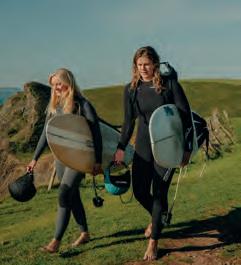
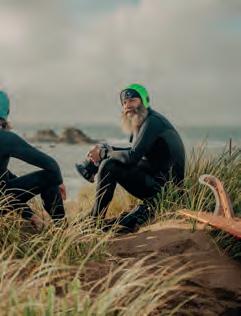
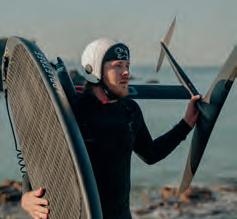




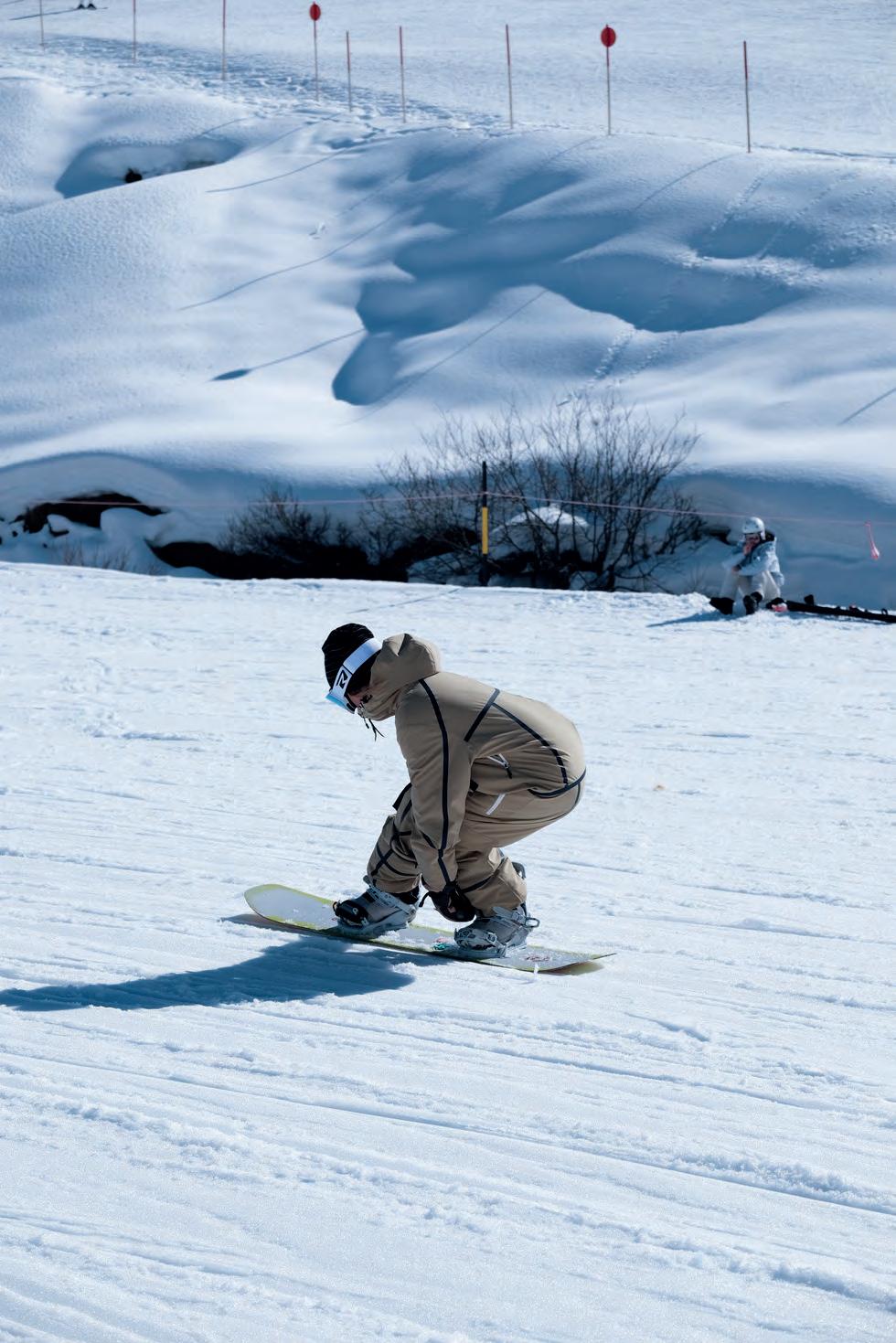

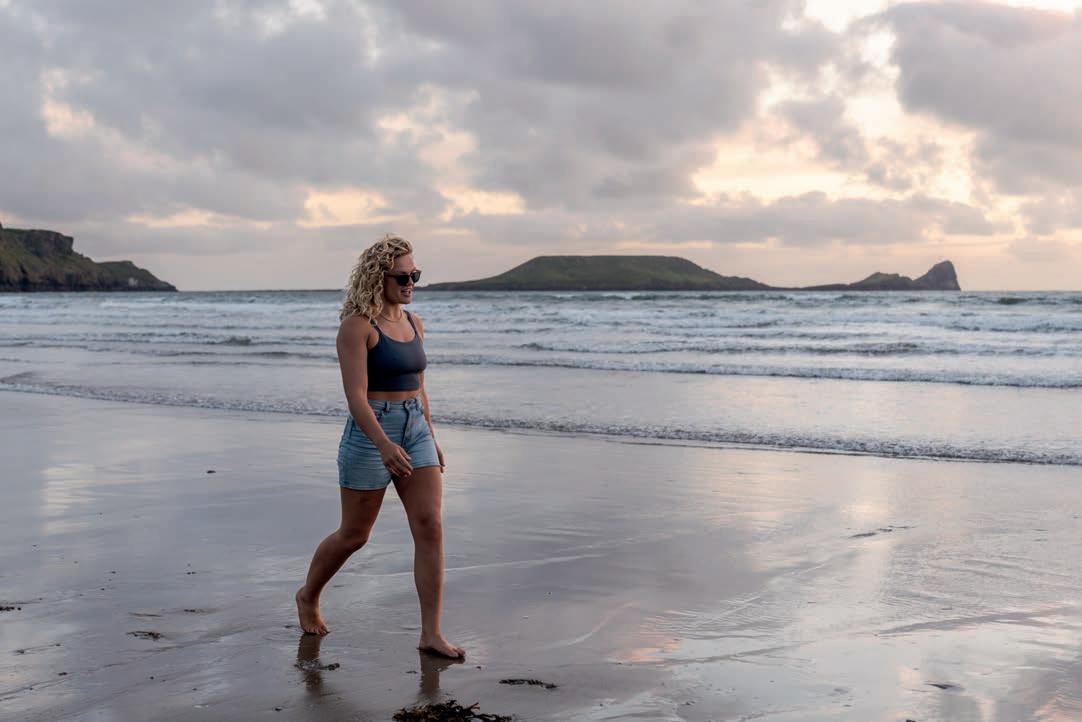

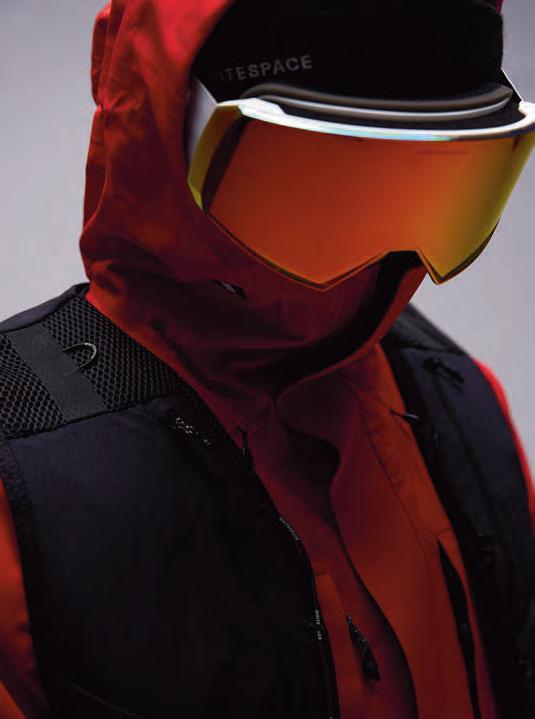
surf BONSOY GOLD COAST PRO
outdoor ITALIAN OUTDOOR FEST
surf SURFING FESTIVAL
Gold Coast, Australia | 1 - 11 May
worldsurfleague.com
Milan, Italy | 9 - 11 May italianoutdoorfestival.com
Fehmarn, Germany | 14 - 17 May surffestival.de
snow RIKSGRANSEN BANKED SLALOM Riksgransen, Sweden | 14 - 16 May riksbankedslalom.com
outdoor EUROPEAN OUTDOOR WEEK
surf CARV EXPO
Lake Garde, Italy | 14 - 19 May europeanoutdoorgroup.com
San Diego, California, USA | 14 - 15 May carvexpo.com
surf CORONA CERO NEW ZEALAND PRO Raglan, NZ | 15 - 20 May
outdoor OUTDOOR SHOW
worldsurfleague.com
Lake Garde, Italy | 17 - 18 May europeanoutdoorgroup.com
outdoor OTS Liverpool, UK | 2 - 4 Jun outdoortradeshow.com
surf SURF CITY EL SALVADOR PRO Punta Roca, El Salvador | 5 - 15 Jun worldsurfleague.com
surf LEXUS TRESTLES PRO Trestles, USA | 11 - 20 Jun
worldsurfleague.com
street PITTI IMMAGINE UOMO Milan, Italy | 16 - 19 Jun uomo.pittimmagine.com
surf VIVO RIO PRO Rio de Janeiro, Brazil | 19 - 27 Jun worldsurfleague.com
bike EUROBIKE 2024
skate MYSTIC SK8 CUP
Frankfurt, Germany | 24 - 27 Jun
eurobike.com
Prague, Czech Republic | 26 - 28 Jun mysticsk8cup.cz
snow WSF AFTER-SEASON MEETING Online | 28 Jun worldsnowboardfederation.org
textiles FUNCTIONAL FABRIC FAIR SUMMER New York, USA | 7 - 9 Jul performancedays.com
surf/skate SURF AND SKATE EXPO
Newquay, UK | 24 - 26 Jul uksurfskateexpo.com
surf BOARDMASTERS LONGBOARD PRO Fistral Beach, UK | 5 - 9 Aug worldsurfleague.com
surf TAHITI PRO TEAHUPOʻO Tahiti | 8 - 18 Aug worldsurfleague.com
kite KITE SURF MASTERS
outdoor OUTDOOR RETAILER
St Peter-Ording, Germany | 19 - 21 Aug kitesurf-masters.de
Minneapolis, USA | 19 - 21 Aug outdoorretailer.com
surf FIJI PRO Fiji | 25 Aug - 4 Sep worldsurfleague.com
surf SURF PARK SUMMIT
Virginia Beach, USA | 1 - 3 Sep thesurfparksummit.com
street WHO'S NEXT Paris, France | 5 - 7 Sep whosnext.com
outdoor SPORT ACHAT ETE
Grenoble, France | 7 - 8 Sep sportair.fr
surf LEXUS TRESTLES PRO Trestles, USA | 11 - 20 Sep worldsurfleague.com
surf SURF EXPO Orlando, USA | 16 - 18 Sep surfexpo.com
surf QUIKSILVER FESTIVAL
surf EUROSIMA SURF SUMMIT
optics SILMO
paddle PADDLE SHOW
Hossegor, France | 20 - 28 Sep quiksilver.eu
Hossegor, France | 24 - 25 Sep eurosima.com
Villepinte, Paris, France | 25 - 28 Sep silmoparis.com
Strasbourg, France | 30 Sep - 2 Oct thepaddlesportshow.com
surf BOARDROOM Del Mar, USA | 10 - 11 Oct boardroomshow.com
textiles PERFORMANCE DAYS Munich, Germany | 13 - 14 Oct performancedays.com
surf SURF ABU DHABI Abu Dhabi, UAE | 14 - 18 Oct worldsurfleague.com
surf MEO RIP CURL PRO
Peniche, Portugal | 22 Oct - 1 Nov worldsurfleague.com
textiles FUNCTIONAL FABRIC FAIR FALL New York, USA | 26 - 28 Oct performancedays.com
all ISPO Amsterdam, Holland | 3 - 5 Nov ispo.com
outerwear ASAP Annecy, France | 26 Nov sportair.fr
outdoor ITALIAN OUTDOOR FEST Milan, Italy | 28 - 30 Nov italianoutdoorfestival.com
snow RIDE ON
surf LEXUS PIPE MASTERS
Hochfügen, Austria | 4 - 6 Dec
rideon-shredfest.com
Oahu, Hawaii, USA | 8 - 20 Dec worldsurfleague.com