






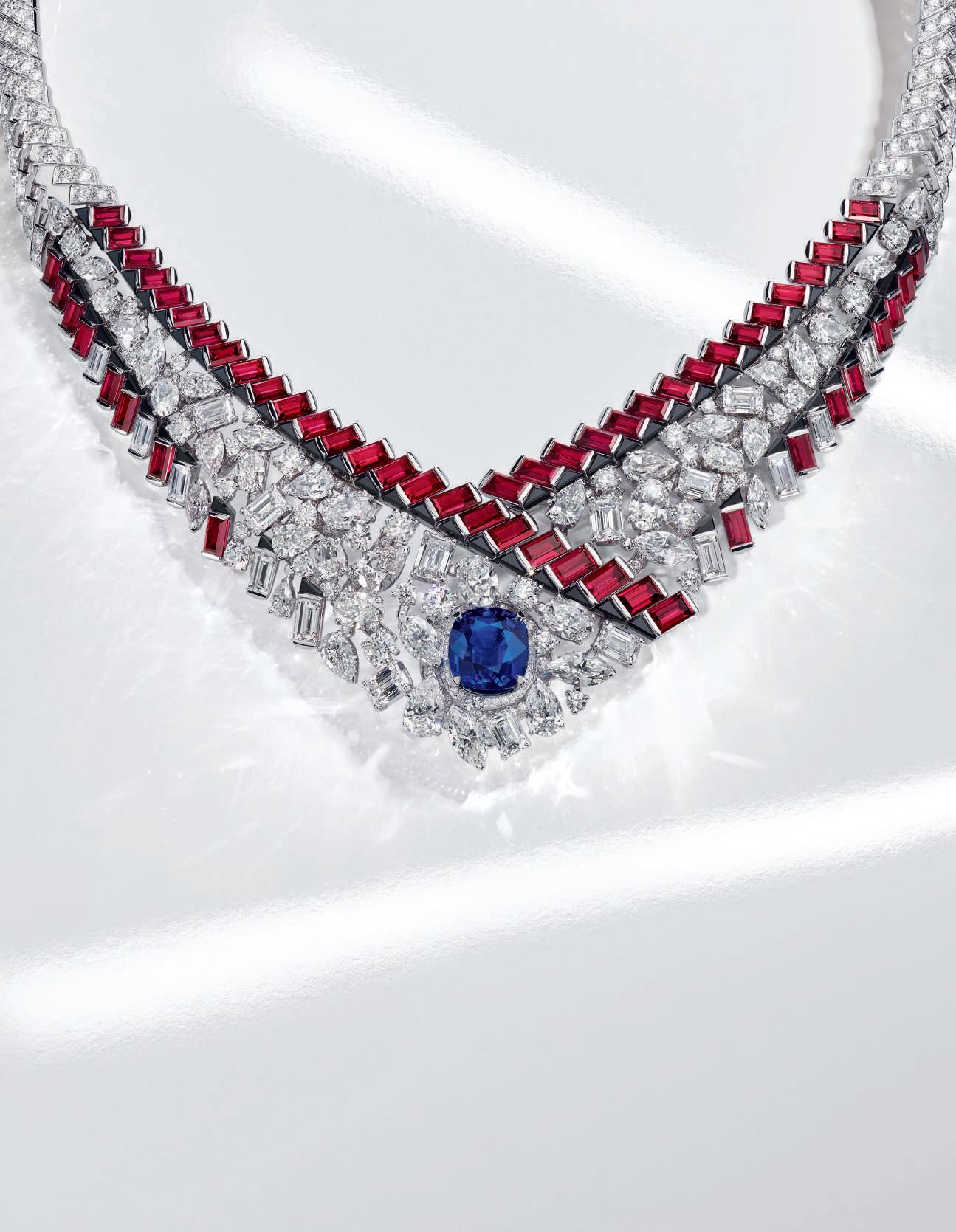
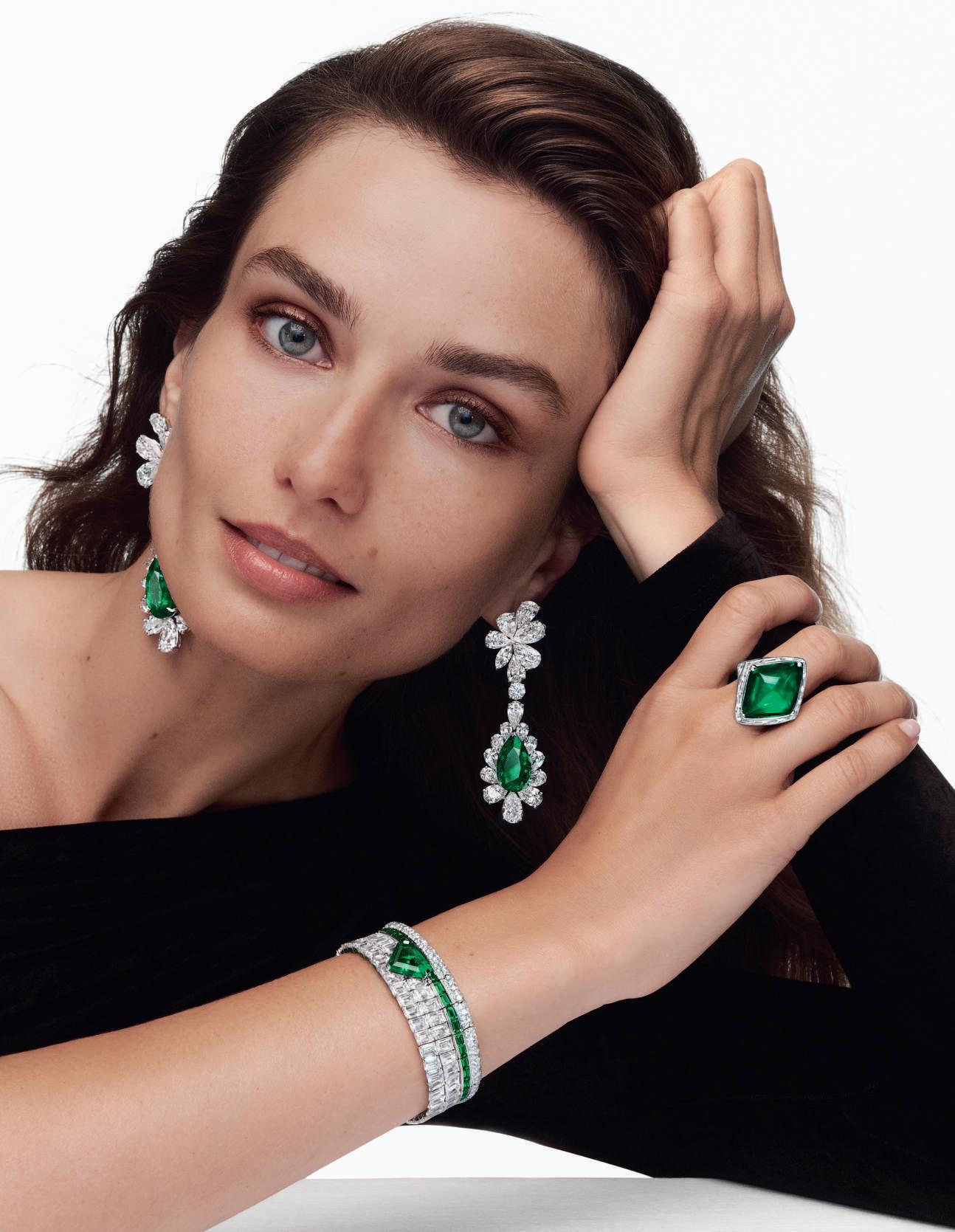
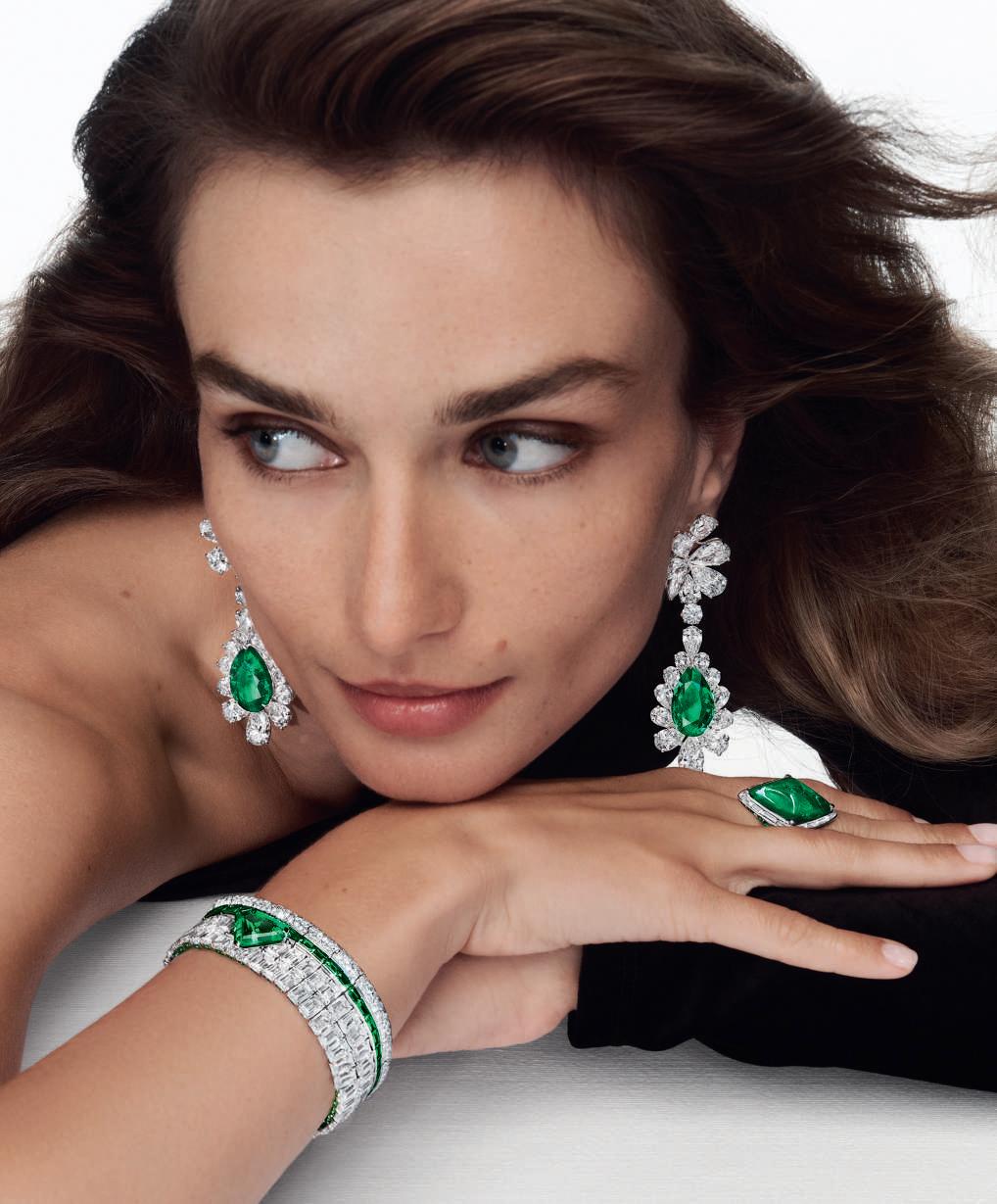
NECKLACE IN WHITE GOLD AND PLATINUM, DIAMONDS, SAPPHIRE, RUBIES AND ONYX. 10.15-CARAT CUSHION-CUT SAPPHIRE FROM KASHMIR.
The Haute Joaillerie Sport Collection celebrates the sports style of CHANEL, anchored in the House’s history since the 1920s. An unprecedented encounter between two worlds where elegance and excellence prevail. Designed to become one with the wearer, each jewellery creation expresses the contours of an allure according to CHANEL—that of a woman always on the move.
The necklace’s sapphire comes from an exceptional set of five stones from Kashmir that were meticulously sourced for the collection. The chevron motif and the ruby gradation in pure, simple lines evoke rhythm and speed. Creations designed to accentuate the freedom of the body and the elegance of movement.




You find yourself perpetually drawn to the land of treasures that is Greece. Whether it’s Santorini’s colorful cliffs or monuments of the Acropolis, there’s always another stretch of coast, ancient city, exquisite cuisine or superb winery that beckons. And it’s best experienced aboard The World’s Most Luxurious Fleet® THE MOST INCLUSIVE LUXURY EXPERIENCE® TO LEARN MORE VISIT RSSC.COM CALL 1.866.525.0785 OR CONTACT YOUR TRAVEL ADVISOR



Must-see
Komal Shah collects to win women artists their place in
By James Haldane
Lucian Freud began each day with a pain aux raisins. By Sally Clarke as told to James Haldane
The
At home in upstate New York, American photographer Stephen Shore explores his own backyard. A garden 30 years in the
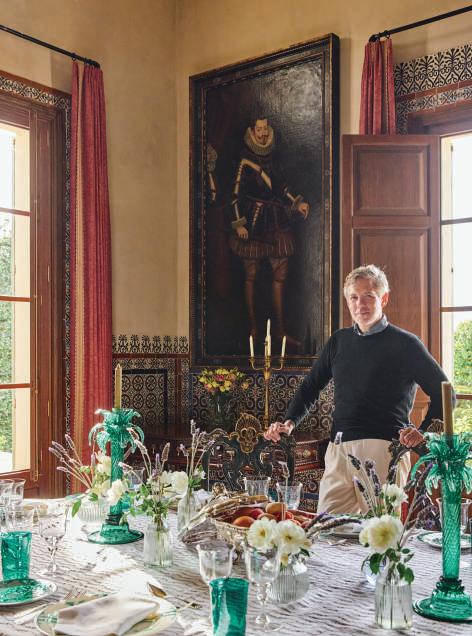
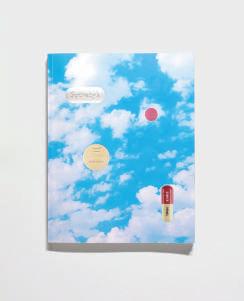
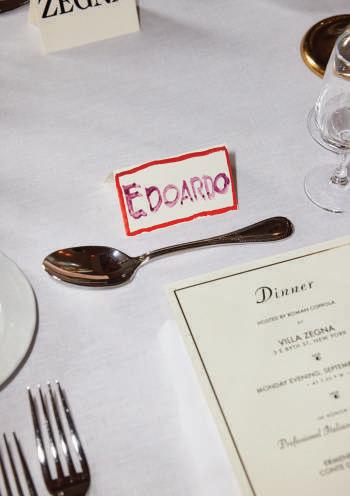
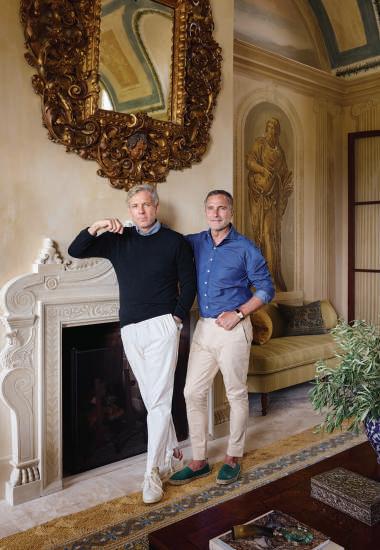
From top: Michael S. Smith at his home on Mallorca, photographed by Ricardo Labougle; the catalog for a 2004 Damien Hirst auction; Edoardo Zegna’s place card at the “Villa Zegna” dinner in New York, photographed by Jeremy Liebman.
For decades, NFL legend Tom Brady has been preserving memorabilia from his unparalleled career, alongside an exceptional collection of watches. Now, for the first time, he’s ready to share. By James Haldane
Photography by Sean Thomas










IN PURSUIT OF THE EXTRAORDINARY SINCE 1907

Designer Michael S. Smith’s Mallorca retreat mixes creature comforts and old-world handicrafts to splendid effect.
By Sarah Medford
Photography by Ricardo Labougle
An exclusive excerpt from “Didion and Babitz” recounts how a not-yet-famous Babitz, then age 20, ended up playing chess naked with the renowned French dadaist.
By Lili Anolik
Drawn from galleries, ateliers and specialist brands, a mélange of artful objects comes together in tonal, textured vignettes.
By Akari Endo-Gaut
Photography by Adrianna Glaviano
110
Edoardo Zegna, a fourth-generation executive at the Italian menswear brand, is leaning into his family’s legacy to envision Zegna’s future. Filmmaker Roman Coppola, himself the scion of another storied clan, is helping to tell the tale.
By Christina Binkley
Photography by Jeremy Liebman
114 VINTAGE VISIONARY
Esteemed vintner Christian Moueix says the fruits of his Château Belair-Monange vineyards will reach their full potential in 20 years. A striking new winery designed by his friends Jacques Herzog and Pierre de Meuron will be the proving ground.
By Jay Cheshes
Photography by Frederik Vercruysse
120 EXTRAORDINARY PROPERTIES
Partner content by Sotheby’s International Realty.
140
Damien Hirst’s pharmaceutical fantasy. By James Haldane
on the cover
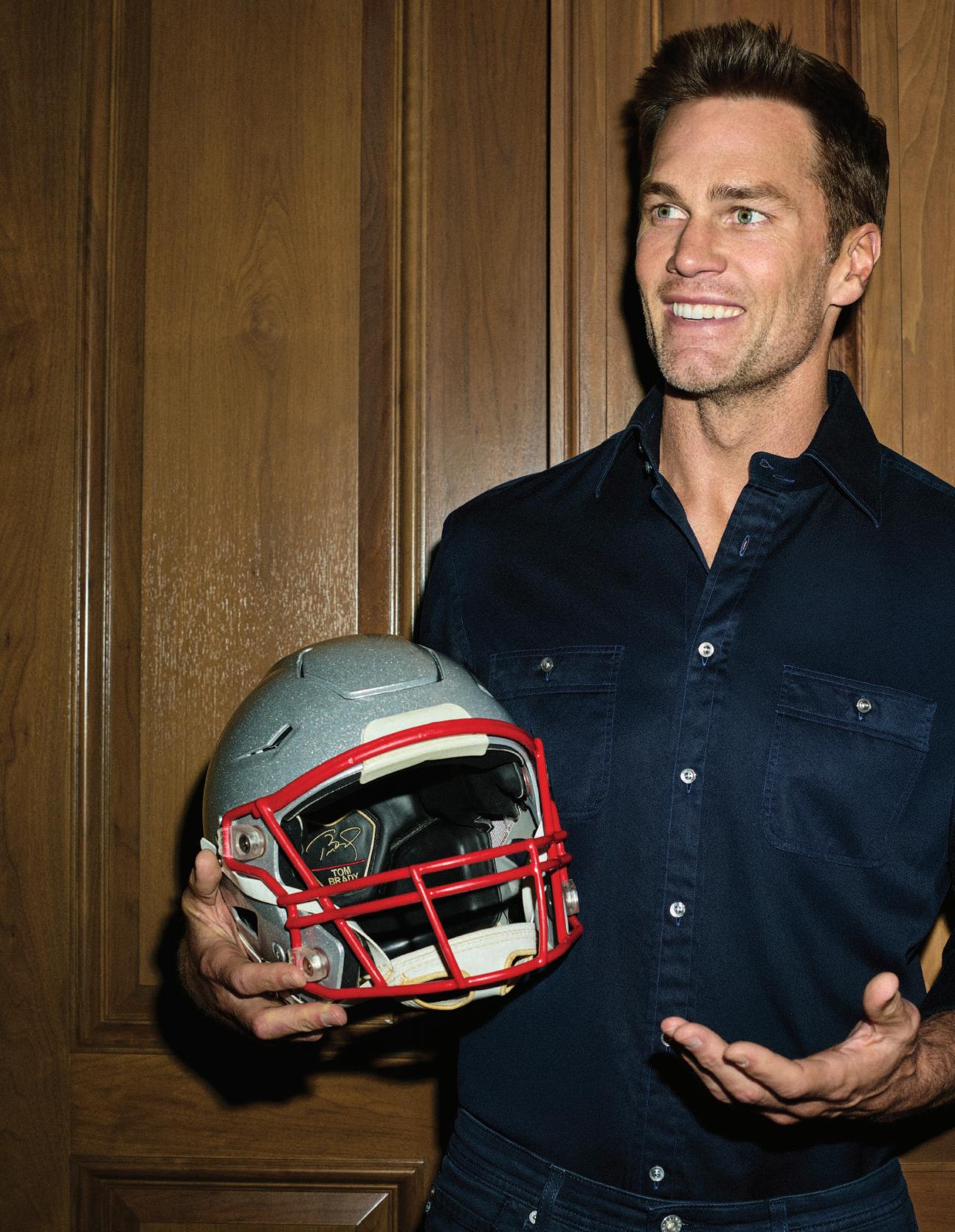
Former NFL quarterback Tom Brady photographed by Sean Thomas in Miami, Florida, with grooming by Alix Boutilier. Brady appears with a football, three watches and a play-call wristband from his personal collection. All items will appear in “The GOAT Collection: Watches & Treasures from Tom Brady” auction on December 10 at Sotheby’s New York.
follow @sothebys on all platforms
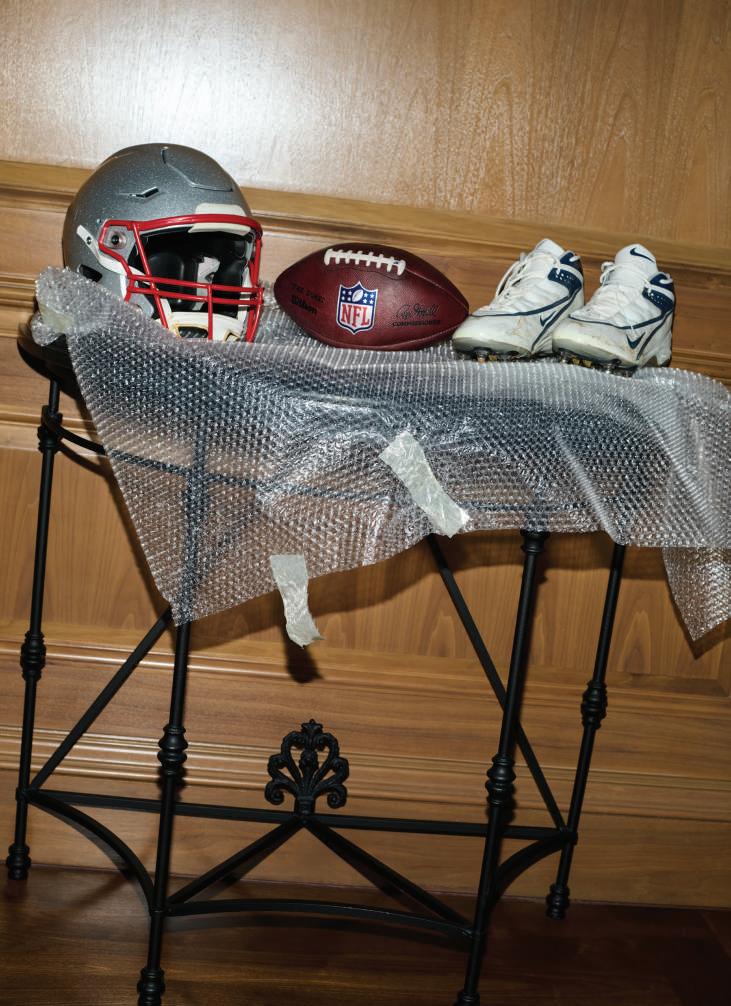
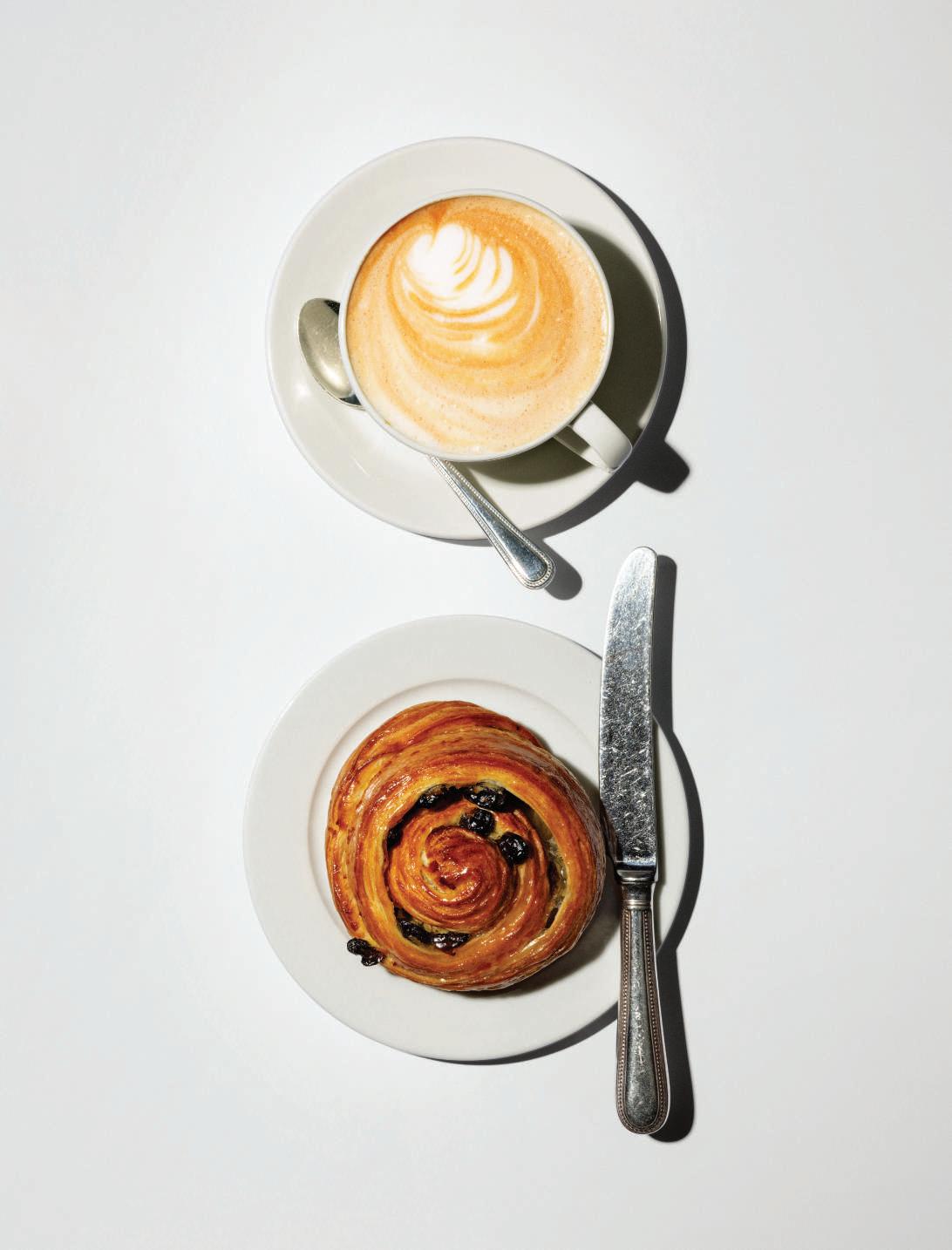
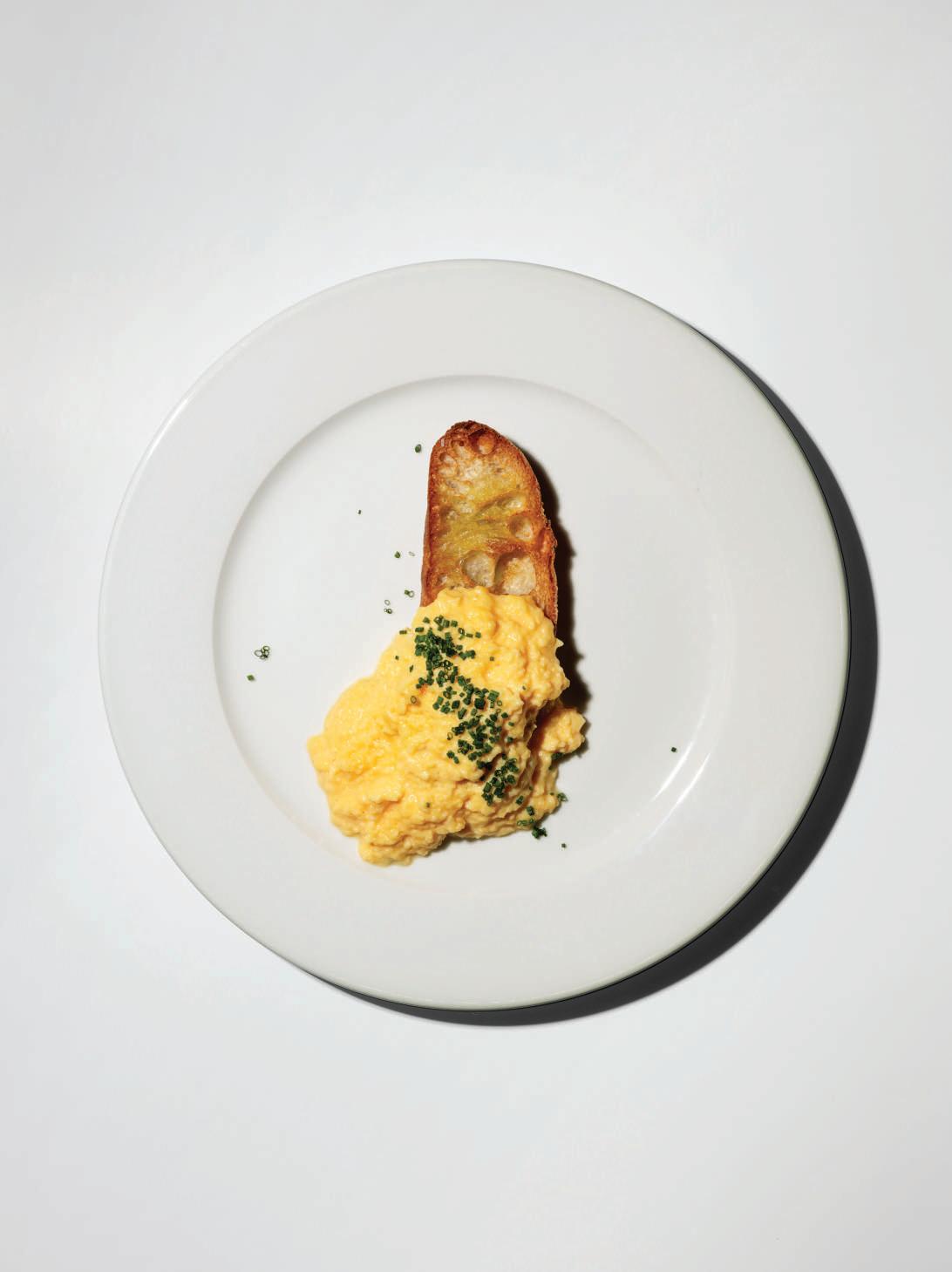
Above: Memorabilia from Tom Brady’s legendary football career, propped on bubble wrap, photographed by Sean Thomas. Right: Chef Sally Clarke’s new cookbook from her London restaurant, which was Lucian Freud’s daily breakfast spot, photographed by Henry Leutwyler.

It is a coincidence of timing that many of our stories in this issue coalesce around the theme of American achievement, but we could not lead with a finer representative. Tom Brady is an icon of sporting excellence, unparalleled in his longevity and success as an NFL quarterback. Read our interview on the memories and memorabilia of his journey and learn about the watch collection that’s even better than you knew, ahead of his nearautobiographical auction next month.
Michael S. Smith, the interior designer who received America’s greatest commission—to redecorate the White House for President Barack Obama—has now turned his talents to a home for himself and his partner James Costos, the former U.S. ambassador to Spain, on the Balearic island of Mallorca. The island reminds Smith of his childhood in Orange County, California, but when creating the villa’s interiors he surrendered to the local vernacular, employing Spanish craftsmanship throughout.
In other pages, read an excerpt from Lili Anolik’s new book, “Didion & Babitz,” and learn how writer Eve Babitz ended up playing chess in the nude with Marcel Duchamp. It was all arranged by photographer Julian Wasser, who shot the pair over the course of several games. Wasser allowed Babitz to choose the famous photo that made its way to the public. In that image, her hair covers her face, rendering her somewhat anonymous. But the contact sheet from that day, which runs alongside the text, reveals a different story: She is fully present, smiling and engaged in the game.
Elsewhere, one of our staff columnists, Sotheby’s 20th-century design expert Jodi Pollack, unpacks the contributions of Louis Comfort Tiffany to the American art and design landscape through the lens of a remarkable window. Having served as the first design director at the family company, Tiffany & Co., he went on to found Tiffany Studios and to master glass as an artistic medium.
Away from the U.S., we visit Christian Moueix at his new winery designed by his friends Jacques Herzog and Pierre de Meuron, and stop by the restaurant in London in which Lucian Freud ate breakfast nearly every morning for 15 years.
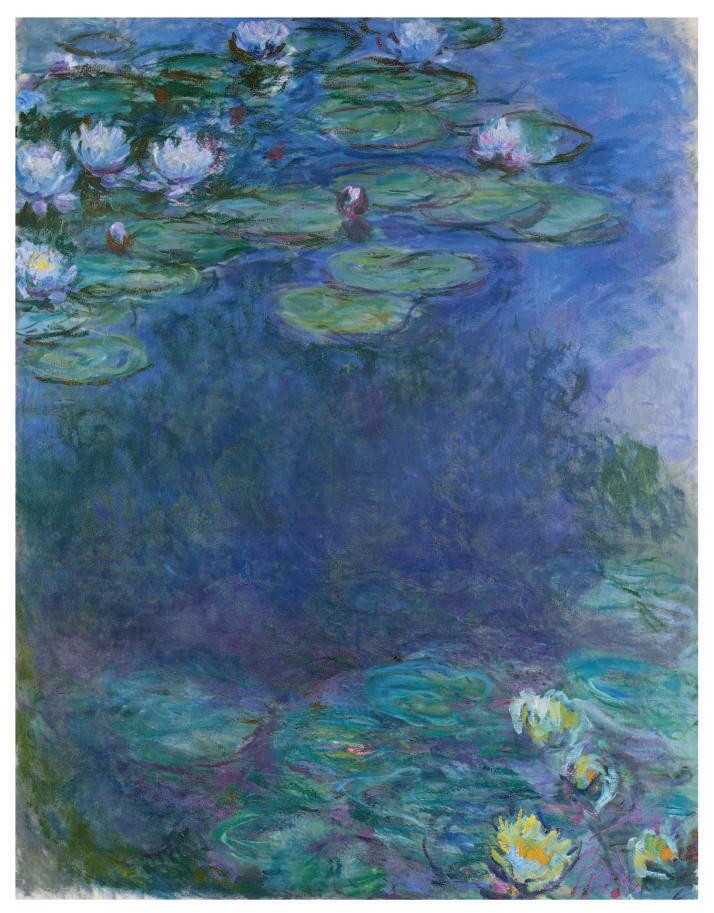
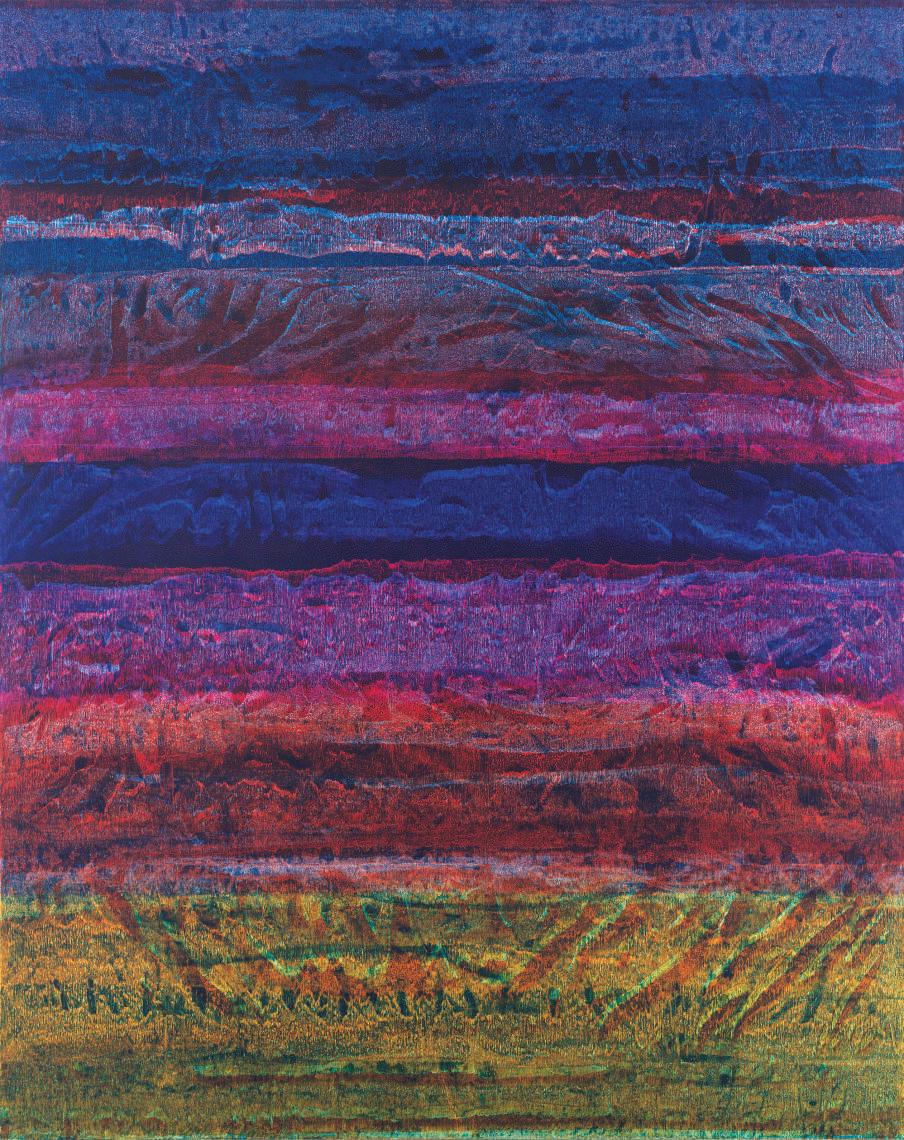
Claude Monet’s “Nymphéas” will make its auction debut this month, as part of the collection of the late beauty industry magnate and philanthropist Sydell Miller. The work marked a radical shift in Monet’s approach to capturing waterlilies, the subject that would become his magnum opus. The painting’s palette has informed the colors of our three editorial acts.
In a fusion of the above themes, we turned to veteran photographer Stephen Shore for the latest installment of The Artist Portfolio. Shot in his own garden in upstate New York, the images take their power, as Monet did, from the greatest inspiration of all—nature.


Christina Binkley Writer
Christina Binkley covers the business of culture with a dose of fashion and smidgeons of tech, art and gambling. Her work takes her to runways in New York, Paris and Milan and, because she is obsessed with factories, to apparel mills anywhere that will allow her. She is the author of “The New York Times” bestseller “Winner Takes All.”
All in the Family, p110.
Editor in Chief – Kristina O’Neill
Creative Director – Magnus Berger
Editorial Director – Julie Coe
Director of Editorial Operations –Rachel Bres Mahar
Executive Editor – James Haldane
Visuals Director – Jennifer Pastore
Design Director – Henrik Zachrisson
CONTRIBUTING EDITORS
Akari Endo-Gaut, Frank Everett, Cary Leitzes, Sarah Medford, Lucas Oliver Mill
Entertainment Director –Andrea Oliveri for Special Projects
CULTURESHOCK
Chief Executive Officer – Phil Allison
Chief Operating Officer – Patrick Kelly
Head of Creative – Tess Savina
Production Editor – Claire Sibbick
Art Editor – Gabriela Matuszyk
Designer – Ieva Misiukonytė
Chief Subeditor – Ro Elfberg
Subeditor – Helene Chartouni
PARTNERSHIPS
Head of Global Partnerships –
Eleonore Dethier

Stephen Shore Photographer
Stephen Shore’s work has been widely published and exhibited over the past 50 years, in more than 30 books and numerous solo exhibitions. In 2017-18, the Museum of Modern Art held a full career retrospective of his work. Shore serves as director of the photography program at Bard College, Annandale-on-Hudson, New York, where he is the Susan Weber Professor in the Arts.
The Artist Portfolio, p68.

Akari Endo-Gaut Contributing Editor
Akari Endo-Gaut is a New Yorkbased style director and creative and curatorial consultant. Born in Japan, she spent a decade in Paris, where she studied art and architecture. She specializes in decorative art and her clients span the worlds of fashion, design, hospitality and art, such as “Vogue,” Tiffany & Co., Graff and Guild Gallery.
Crafted Contours, p120.

Sean Thomas Photographer
Sean Thomas studied art and worked in art direction before he turned to photography. Based in Paris, New York and London, Thomas enjoys combining fashion with reportage in his commissions for publications like American and British “Vogue,” “Holiday,” “L’Étiquette” and “Harper’s Bazaar” France. He has also worked for labels such as Ralph Lauren, Dolce & Gabbana, Stella McCartney and Chloé. Can’t Touch This!, p86.
PUBLISHING
US (New York, Northeast and Michigan) Fashion – Judi Sanders LGR Media Plus – judi@lgrplus.com Jewelry & Watches – Jill Meltz jill.meltz.consultant@sothebys.com
US (Southeast and West Coast) Mark Cooper TL Cooper Media markcooper@tlcoopermedia.com
Italy
Bernard Kedzierski and Paolo Cassano K. Media bernard.kedzierski@kmedianet.com paolo.cassano@kmedianet.com
Switzerland Neil Sartori Media Interlink neil.sartori@mediainterlink.com
UK and France
Charlotte Regan Cultureshock charlotte@cultureshockmedia.co.uk
India and GCC Region
Marzban Patel Mediascope marzban.patel@mediascope.co.in
SOTHEBY’S
Chief Executive Officer – Charles F. Stewart
Chief Marketing Officer – Gareth Jones
Chief Communications and Partnerships
Officer – Karina Sokolovsky
Global Head of Brand – Jacqueline King
Global Head of Content – Nick Marino
Global Head of Growth Marketing – Tracy Heller
Global Head of Social Media – Anne Johnson
Global Head of Video Production – Rachel Roderman
Head of Events and Preferred, Americas – Richard Drake
Head of Events, UK – Lydia Soundy
Head of Procurement – Eduardo Guerra
Production Manager – Stephen Stanger
GENERAL INQUIRIES sothebysmagazine@sothebys.com
Please note that all lots are being offered for sale subject to Sotheby’s Conditions of Business for Buyers (which include our Authenticity Guarantee), which can be found on the relevant sale page on www.sothebys.com.
Sotheby’s, Inc. License No. 1216058.
© Sotheby's, Inc. 2024. Information here within is correct at the time of printing.
LONDON OCTOBER 29-NOVEMBER 6
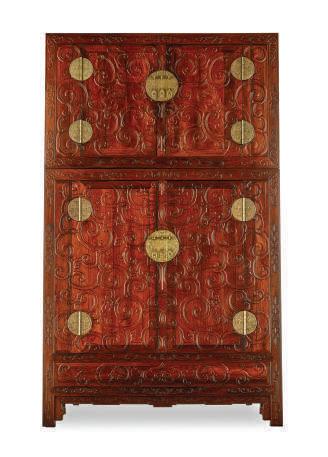
Fine art and objects from China and Japan.
An exceptional and massive “huanghuali” “dragon” compound cabinet, 17th century. £1,000,000£1,500,000, “Chinese Art.”
NEW YORK NOVEMBER
The major artistic movements of the 20th and 21st centuries.
LONDON NOVEMBER 14-28
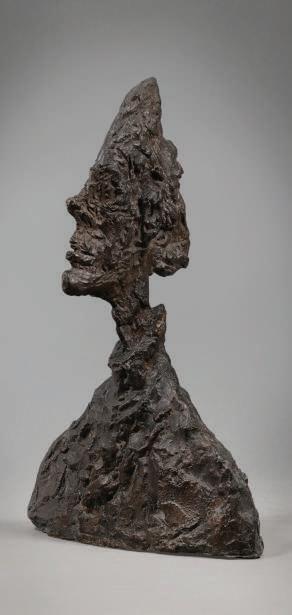
Alberto Giacometti, “Buste (Tête tranchante) (Diego),” conceived circa 1953 and cast in 1954. $10,000,000-$15,000,000, “Modern Evening Auction.”
GENEVA OCTOBER 29-NOVEMBER 15
Magnificent jewelry, watches, extraordinary handbags, sneakers, wine and spirits.
Patek Philippe Reference 2499, a pink gold first series perpetual calendar chronograph wristwatch with moon phases and case by Wenger, made in 1950.
CHF 2,500,000-CHF 5,000,000, “Treasures of Time.”
The finest jewelry and extraordinary handbags and accessories.
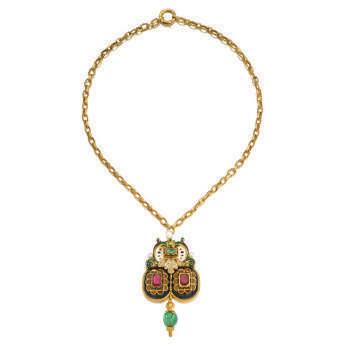
Renaissance Revival gem-set, enamel and gold pendant necklace, circa 1860. £20,000-£30,000, “Fine Jewels.”
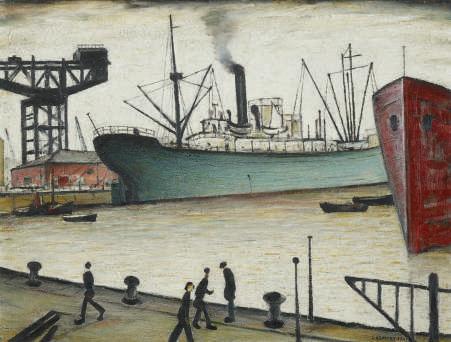
LONDON NOVEMBER 14-15
An exceptional array of works from postwar masters to today’s cuttingedge artists.
Laurence Stephen Lowry, “Queen’s Dock, Glasgow,” 1947. £400,000-£600,000, “Modern British & Irish Art Evening Auction.”

BEAUNE NOVEMBER 17
The world’s oldest and most-renowned wine charity auction.
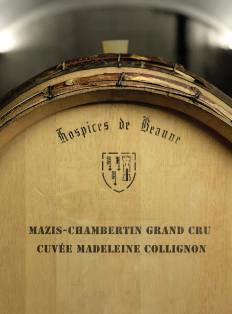
Mazis-Chambertin Grand Cru, Cuvée Madeleine Collignon, 2024. Estimate upon request, “164e Vente des Vins des Hospices de Beaune.”

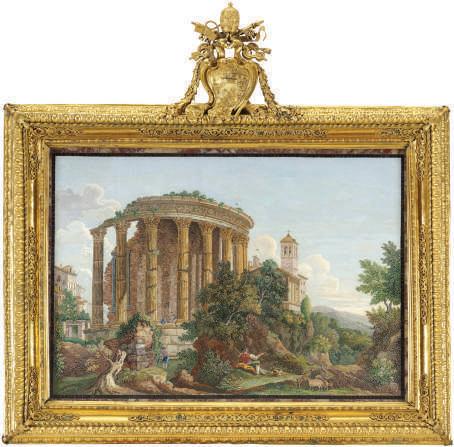
PARIS NOVEMBER 26-27
The most spectacular collection of Italian decorative arts.
An Italian micromosaic by Cesare Aguatti in a gilt-bronze frame applied with the coat-of-arms of Pope Pius VI, Rome, the micromosaic dated 1774 represents the Temple of Vesta at Tivoli. €250,000€500,000, “The Giordano Collection, Une Vision Muséale.”
HONG KONG
NOVEMBER 19-DECEMBER 10
The finest Chinese works of art.
NEW YORK DECEMBER 11-13
Presenting creations by the 20th century’s greatest designers.
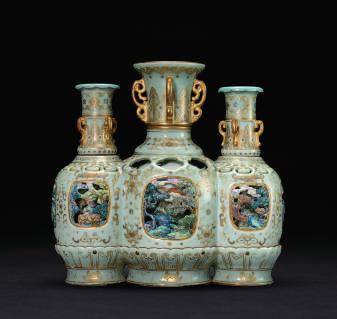
A highly important and unique celadon-ground yangcai “hunting scene” conjoined and reticulated revolving vase, seal mark and period of Qianlong. Estimate upon request. “The Triple Revolving Vase–A Farewell Tribute from Tang Ying to His Emperor.”
HONG KONG
DECEMBER 10-17
The finest jewelry, watches, extraordinary handbags, sneakers, wine and spirits.
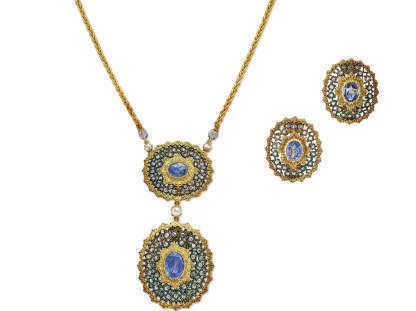
Gianmaria Bucellati, Sapphire and Diamond Demi-Parure. HK$60,000HK$120,000, “Important Jewels.”
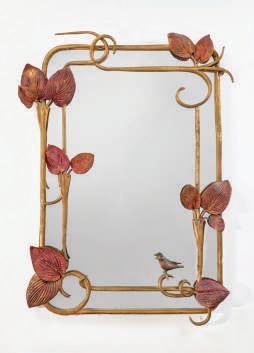
Claude Lalanne, Unique “Hosta et Oiseau” Mirror, 1994. $800,000$1,200,000, “Important Design.”
NEW YORK DECEMBER 6-17
Magnificent jewels, watches, handbags, sneakers, wine and spirits.
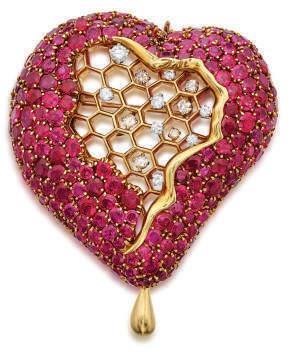
Ruby and Diamond “Honeycomb Heart” Brooch, Salvador Dalí, circa 1953-54. $80,000-$120,000, “Magnificent Jewels.”
LONDON NOVEMBER 26-DECEMBER 6
Old Master and 19th-century works of art and antique sculpture.

Emil Fuchs, “Nude.” £40,000-£60,000, “19th & 20th Century Sculpture.”






A record-setting window reveals how Louis Comfort Tiffany, the second-generation innovator of the famed family firm, mastered glass as an artistic medium.
As Sotheby’s “Chief Design Maven,” I have the privilege of working with many areas of design, from the prewar era to the present day. My greatest passion, however, has always been the work of Tiffany Studios. Its design quality and craftsmanship are highly impressive, so I take every opportunity to convert new collectors. While I anticipate associations to their “grandmother’s old-fashioned lighting,” I await their gasps when they step into one of our galleriesfilledwithTiffanylampsandwindows resplendent in their show of color.
The firm’s founder, Louis Comfort Tiffany, was comparable to a modern-day creative director at a top luxury company, overseeing an artistic empire that spanned leaded glass lamps to glass, ceramics and enamels; to bronze “fancy goods;” and to windows and mosaics. Yet it is his unique commissions that reveal its most heroic achievementsinthedecorativearts—what I refer to as “Tiffany on its greatest days.”
That brings us to the Danner Memorial Window, designed by glass artist Agnes Northrup. At an impressive 16 feet tall, it envelops the viewer in its majestic landscape. Four fruit-laden trees loom on the poppy-strewn banks of a meandering river,leadingtomountainsinthedistance. The unique painterly qualities of Tiffany’s glass transport us to experience the last moments of daylight in this Edenic scene.
Tiffany’s leaded glass windows first appearedin1880andsoonbecameobjects
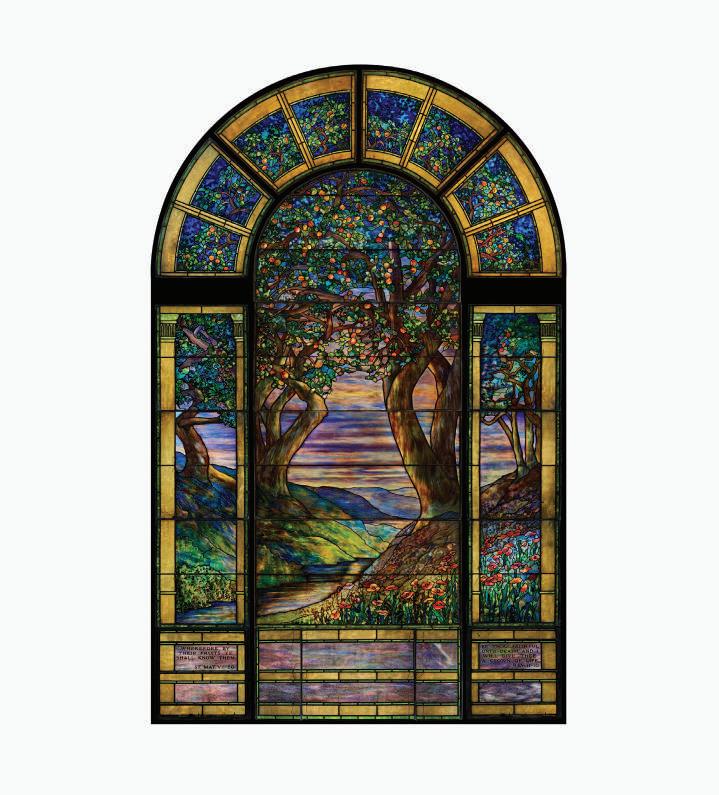

BY JODI POLLACK Chairman, Co-Worldwide Head of 20th Century Design
of world renown and national pride. While his designs and marketing expertise partially explain this success, another reason was the creation in 1892 of his own glasshouse—a facility that could produce an infinite variety of his trademarked transparent and opalescent sheet glass. Tiffany, who was an avid painter, used the medium to create illusionistic effects, much like the great impressionists of the period.
Many of the studio’s most ambitious windows were commissioned as memorials for churches across the U.S., including this example commissioned in 1912 by Mrs.AnnieMcClymondsofMorrisPlains, NewJersey,inhonorofheruncleandaunt, John and Terressa Danner, of Canton, Ohio. As reported at the time, the window was unveiled in the First Baptist Church of Canton in 1913, where it remained until the building’s demolition in 1990. The window was preserved and shortly thereafter acquired by a private Japanese collection. Almost a decade later, in 2000, it appeared at public auction, selling for $2 million—an unprecedented world record at the time for a Tiffany window.
Hidden from public view for more than two decades, we look forward to presenting this testament to one of America’s most iconic artistic legacies alongside other masterpieces of fine art from the first half of the 20th century. This marks an important milestone for the market— the first time a work by Tiffany Studios will be presented within the context of a marquee evening art auction. Given the strong global interest we have seen develop for Tiffany in recent years, the stage and timing could not be more fitting.
Tiffany Studios, “The Danner Memorial Window,” 1913. $5,000,000-$7,000,000, “Modern Evening Auction,” November, Sotheby’s New York
A 16th-century marble bust of Penelope speaks to her legend of love and loyalty.
Forme,Penelopeisoneofthemostintriguing characters in “The Odyssey,” the epic ancient Greek poem attributed to Homer. In the tale, dating to the eighth or seventh century BC, the Queen of Ithaca and wife ofOdysseus(Latinizedto“Ulysses”inthis bust’s inscription), proves her shrewdness by rebutting a series of suitors seeking to seize the throne while her husband is presumed dead for 20 years in the Trojan War. Her sequence of ploys—including committing to weaving a burial shroud for her father-in-law before she will consider who to marry, then spending each night secretly undoing her work of the day
for three years—allow her to delay until Odysseus returns alive. As the story was absorbed into the Greek literary canon, Penelope’s image was assimilated into art as a model of loyalty and fidelity, where it has remained ever since, evolving from ancient Roman to Pre-Raphaelite works.
This marble bust is a Renaissance example of this honorable and selfsacrificing heroine from the collection of an extraordinary 21st-century collector, the late Assadour “Aso” Tavitian. A software entrepreneur by profession, Tavitian relished the living processes of art history, from attribution debates to historic preservation.AsupporteroftheFrickCollection in New York, he looked to the Frick mansion on Fifth Avenue for inspiration when renovating his own townhouse just a few blocks away, a landmark designed by
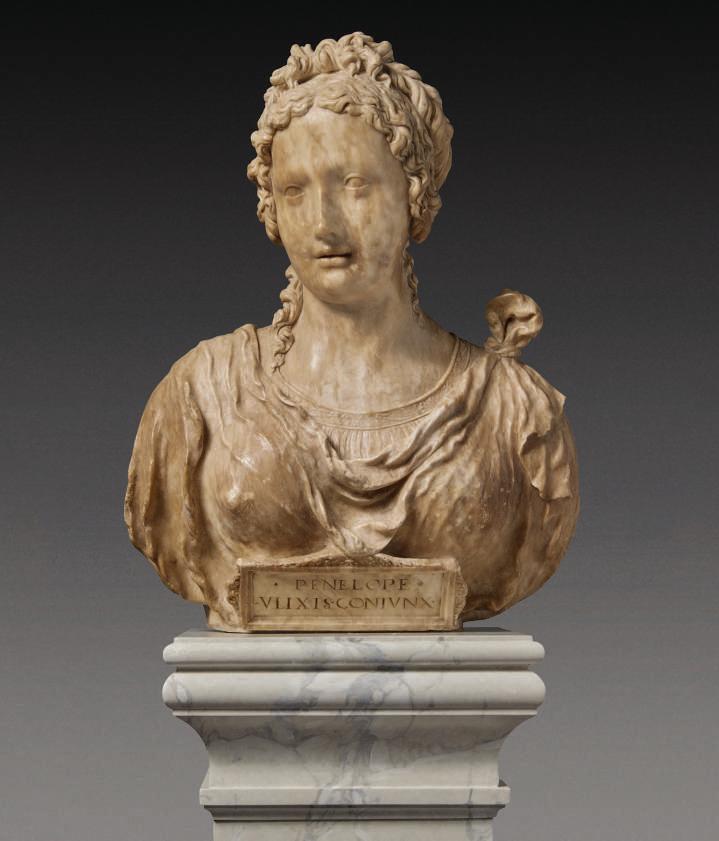

BY MARGARET SCHWARTZ Senior Vice President, Worldwide Head of Department, Old Master Sculpture & Works of Art
famed American architect C.P.H. Gilbert. The home’s interiors had an outstanding collection of English furniture, which will also feature in our auctions, and a remarkable group of portraits, and exceptional Old Master paintings and sculpture.
Attributed to Cristoforo Lombardo, this bust held a prominent place in the collection, bridging Tavitian’s passion for antiquities and for the emotional power of Baroque art. Carved circa 1520, it represents a Renaissance-era snapshot in Penelope’s iconographical evolution. While ancient depictions show her hair coveredwithhood,hereherwavylocksare visible, braided with a textile. The materiality of her dress is similarly dramatized, pairing fine ruching and embroidered detail around the neckline with wonderful, almost wet, drapery clinging to the body below. Stylistically, it is typically Lombard, possessing all the skill that was concentrated in the Italian region in the period. The gathered fabric on her shoulder can be read both as a further display of virtuosity and perhaps as a subtle nod to Penelope protecting her modesty.
The real symbolic power, however, lies in her gaze. While 18th- and 19th-century examples typically depict Penelope seated in a characteristic pose, forlornly leaning over on a chair, sometimes holding a ball of rewound thread, with her legs crossed and head leant downwards, here only her head and shoulders convey the emotion. Set in the luscious, alabaster-like face, her carefully averted eyes convey her powerful patience.—As told to James Haldane
Bust of Penelope with pedestal, attributed to Cristoforo Lombardo, circa 1520. Estimate upon request. “The Vision of Aso O. Tavitian–Master Paintings & Sculpture,” February 7, Sotheby’s New York.
A monumental Ginori clock flaunts the historic Italian porcelain manufacturer’s signature colors and glaze brushwork—a decorative scheme with a personal link.
Exceptional in its provenance, decoration and scale, this clock reveals how porcelain was an arena for fierce competition in late 18th century Europe, between both manufacturers and their commissioning patrons. In this case, one man assumed both roles. The clock was commissioned in 1777 by the Marquis Lorenzo Ginori, son of the Marquis Carlo Ginori— the founder of what was originally known as the Doccia porcelain manufactory, a company that still exists today on the outskirts of Florence.
Carlo Ginori was an innovator in hardpaste porcelain, a material that originated in China in the seventh or eighth century, which European makers later raced to replicate. The first to succeed was alchemist Johann Friedrich Böttger, whose discovery allowed Augustus II, King of Poland and Elector of Saxony, to found the Meissen porcelain factory. In a bid to accelerate their technical craft, the Ginoris poached workers from the next oldest producer—the Vienna Porcelain Manufactory—but their creations are distinct from northern European adversaries in their decorative approach. Records show that the clock, the most complex of five created in a similar model, remained in the Ginori family as a testament to their pride until the late 19th century.
My family is fortunate to own a Ginori dinner service, dating to around 1760, which we use for special occasions.
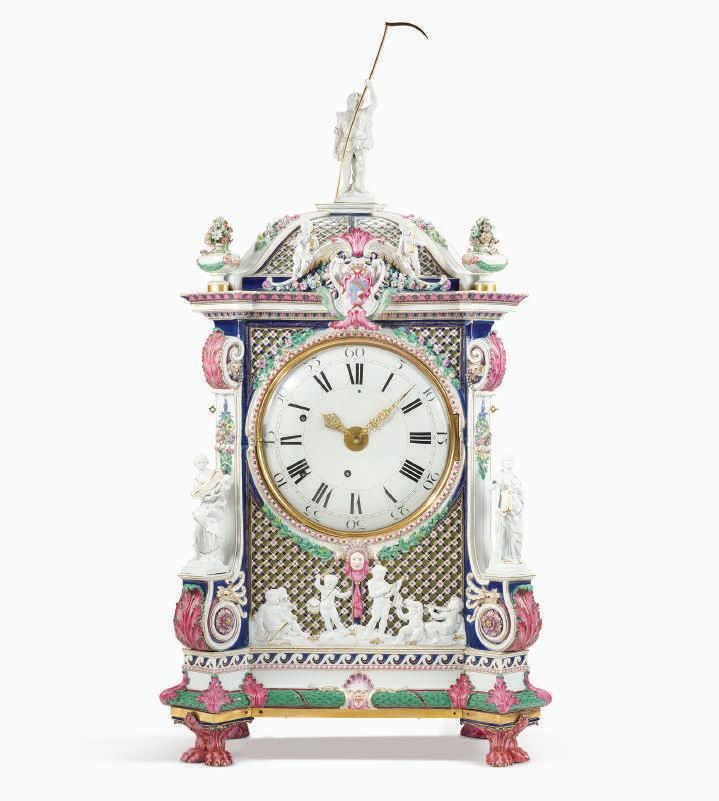

BY MARIO TAVELLA President, Sotheby’s France Chairman, Sotheby’s Europe
Its design is named “a tulipano” (with a tulip) because it depicts the flower in colorful enamels and subtle gilding. I have added to it over the years by buying pieces at auction. Ginori first offered the pattern around 1740 and continued well beyond the 1770s, meaning it was still in production when they created this exceptional object.
The clock’s color scheme is anchored by signature hues of pink and green, which also feature in my service. Their gracious “sfumatura” (shaded) effect is achieved by graduated applications of the glaze. It can be seen on the fleurs-de-lis above and below the modeled cartouche of the family coat of arms above the enamel dial.
Meanwhile, three main figures stand out for their white purity. Atop the clock is Time, holding a gilt metal scythe. The flanking figures below are equipped with other symbolic attributes—one a harp, the other a book—possibly to represent Music and the Allegory of History. Below, molded in low relief, are six putti playing musical instruments. They are an appropriate addition as the clock’s specially commissioned Swiss mechanism plays its composition of eight airs through the surrounding grille.
At almost 4 feet tall and more than 2 feet wide, this is one of the largest porcelain clocks ever made. It is unsurprising, then, that two of the other examples made in this model were commissioned by a patron in southern Italy. Palazzi ceilings in Sicily and Naples are far taller than in the palaces of the north, offering a suitable setting for a triumph of architectural scale and order.—As told to James Haldane
An important monumental Doccia porcelain gilt-bronze mounted table clock. €350,000€500,000, “The Giordano Collection: Une Vision Muséale Part I,” Nov. 26, Sotheby’s Paris. BORN

Act One: The Opening Bid, in which we present news from the worlds of art, books, culture, design, fashion, food, philanthrophy and travel. Plus, the Global Agenda, which highlights not-to-be-missed exhibitions opening in November and December.
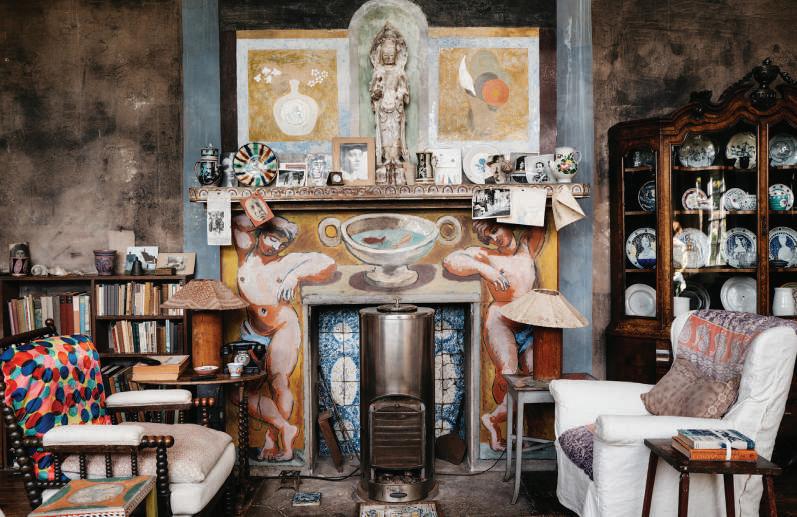
Charleston, a Charming 17th-century farmhouse in East Sussex, England, might seem an unlikely place for a revolution. Butwhen,in1916,thepainterVanessaBell and her friend and lover Duncan Grant moved in, along with his partner David Garnett, a creative rebellion began. Bell and Grant painted every surface, transforming the home into a living work of art and a gathering point for the Bloomsbury group, their set of fellow free-thinking artists, writers and intellectuals.
Fashion designer Kim Jones has repeatedly returned to the house as a source of inspiration since his first visit at age 14. “I’ve still got the brochure from that day,” he says of the trip that triggered his col-
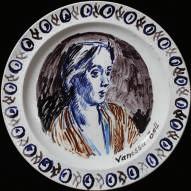
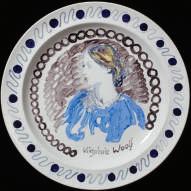
After decades in private hands, the “Famous Women Dinner Service” returned home to Charleston in 2018.Kim Jones’ favorite plates depict painter Vanessa Bell,Mary,Queen of Scots and writerVirginia Woolf.
lection of paintings, design and inscribed first-edition books by the group. “They were a reaction against Victorian Britain. I love the way they shook things up. I like when people like the Beats or the punks change the way people dress or think.”
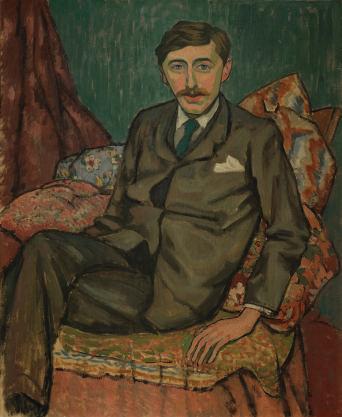
Jones was appointed as vice president of the Charleston Trust in August and is working to support initiatives in the lead up to its 50th anniversary in 2030. This includes pledging a portrait of writer E.M.
Forster by Roger Fry to “50 for 50,” a campaign to reacquire significant Bloomsbury works from private collections.
This November, Jones curates a loan exhibition from Charleston’s collection at Sotheby’s London, coinciding with a sell-
Edited by Julie Coe
ing exhibition of Bloomsbury paintings, literature, ceramics and other design by the Omega Workshops, founded by Fry in 1913. Also on display will be a preview of a limited-edition reissue of the “Famous Women Dinner Service,” hand-decorated plates commissioned by art historian Kenneth Clark from Bell and Grant, which celebrates great historic women. Jones believes Charleston’s future must center around sharing: “Bloomsbury connects people in a way that I haven’t seen any other art movement do.”—James Haldane
“Radical Modernity: From Bloomsbury to Charleston,” a selling and loan exhibition, will be on view November 9-26 at Sotheby’s London.

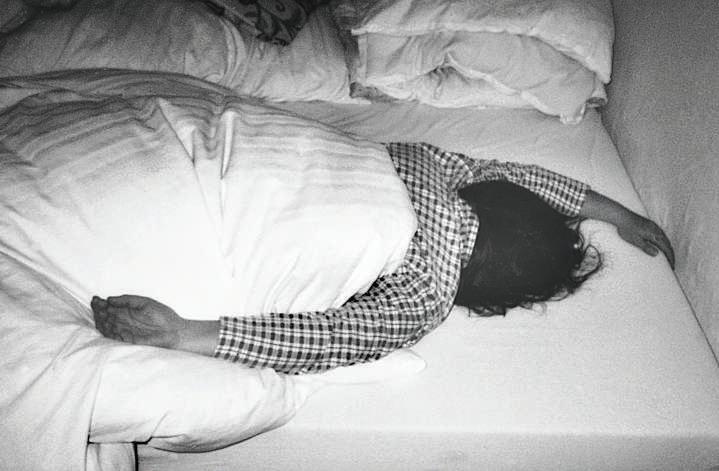
when evan mirapaul began collecting houses in his hometown of Pittsburgh, Pennsylvania, in 2011, he had an unusual goal: to offer each to an artist who would make a permanent installation there, open to the public and free of charge. Mirapaul’s Troy Hill neighborhood now has three such projects; one is by Thorsten Brinkmann, another by Robert Kuśmirowski and the third by Lenka Clayton and Phillip Andrew Lewis. The fourth, opening this fall, is Mark Dion’s “Mrs. Christopher’s House” (right), an attic-to-basement realization of Dion’s fascination with sociology and public attitudes toward science. A black bear, a family Christmas, unknown substances in jars: they’re all in the house.—Sarah Medford
troyhillarthouses.com
NOVEMBER 2024
Acalendar of museum and gallery openings worldwide.
carsten höller’s “Book of Games” (“Spiele-Buch”) grew out of a tiresome dinner party 32 years ago, when he and two artist friends starting speaking and responding to each other only in questions. To this zany exercise, Höller added hundreds more, with titles such as “La Bamba—Silent or Drunk” or “Louse Hunting.” The 1998 first edition, edited by Hans Ulrich Obrist, is long out of print, but Taschen is bringing it back this fall, with an intro by Obrist along with photos by Höller (left, for the game “Order a Dream”) and others.
taschen.com
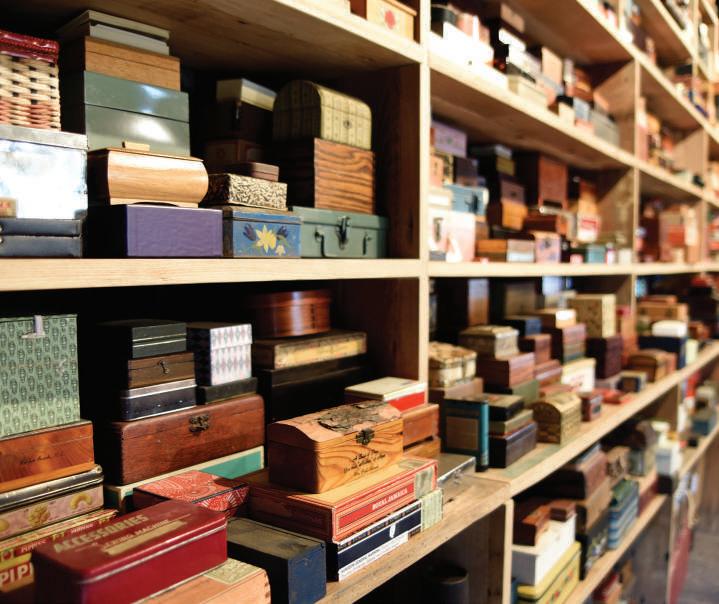
Picasso: Printmaker opens at the British Museum in London. Art Cologne opens in Germany. Art Week Tokyo opens.
The Great Mughals: Art, Architecture and Opulence opens at the V&A South Kensington in London. Tavares Strachan: Between Me and You opens at the Blanton Museum of Art in Austin, Texas.


an innovative residence hall opened on New York’s Union Square in 1891. The Margaret Louisa Home, named for the Vanderbilt heiress who funded its construction, was built for single women moving to the city to pursue teaching and secretarial work. They could rent rooms while they looked for more permanent lodgings and spend time with their fellow new arrivalsinthedeliberatelyhomeycommunalspaces.Fastforward to 2024, the Romanesque Revival structure is reopening as a different kind of urban refuge and home-away-from-home: a 77room hotel and private club. The Twenty Two, which has its roots in London, debuted in 2022 in a historic Mayfair manor. Now co-founders Navid Mirtorabi and Jamie Reuben have expanded their concept to Manhattan with the help of local developer Michael Chetrit. London design firm Child Studio gave the interiors a sensitive makeover, with a pretty palette and nods to period furnishings. Serendipitously, given the building’s history, the food and beverage offerings are women-led: At the helm are Jennifer and Nicole Vitagliano, the sisters behind two acclaimed New York spots–Raf’s and the Musket Room–with chefs Mary Attea and Camari Mick taking charge in the kitchen.
thetwentytwo.com
READING LIST
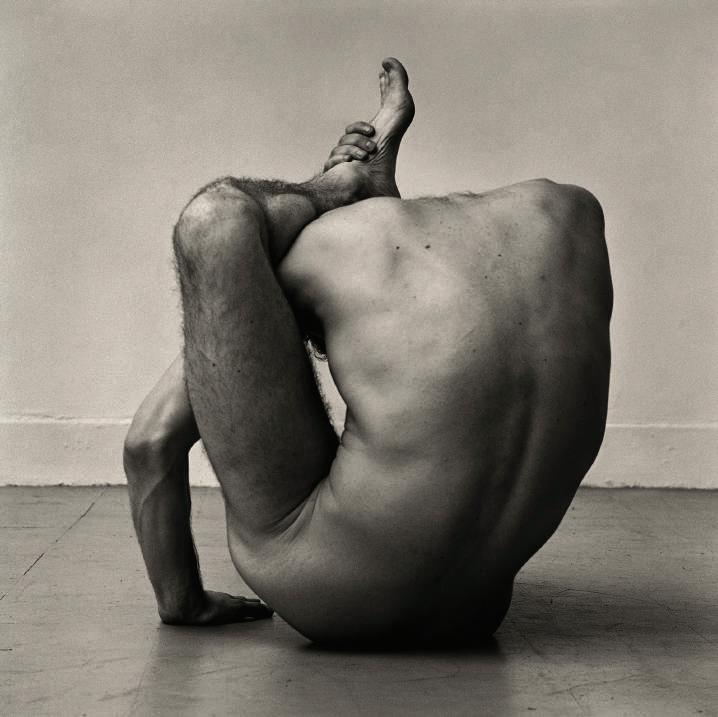
In the 1980s, artist Gary Schneider became a go-to processor and printer for many photographers on the New York art scene, eventually starting a lab with his partner, John Erdman, in their East Village walk-up. Schneider was encouraged in this line of work by his friendandphotographer,PeterHujar,who connected him with other photographers in search of skilled printers. “Peter had assumed the role of mentor and I totally
trusted him,” Schneider recalls in his new book, “Peter Hujar behind the camera and in the darkroom” (CraveBooks, $50), which is part-memoir of their friendship, part-detailed guide to Hujar’s photographic approach.
Hujar printed his own work, in a juryrigged bathroom darkroom, until his AIDS diagnosis in early 1987. For the next few months, until Hujar’s death later that year, Schneider printed for him, including a rare 10-piece edition of “Will Shar-Pei” that Hujar made to thank the various doctors he was unable to pay. Schneider describes how Hujar,
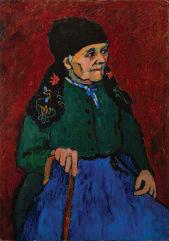
Gabriele Münter: The Great Expressionist Woman Painter opens at the ThyssenBornemisza National Museum in Madrid.
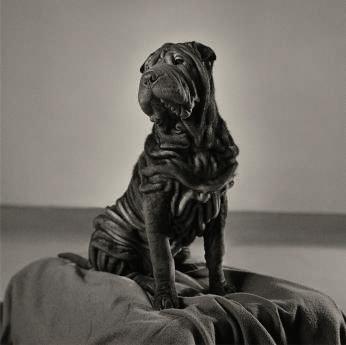

on seeing the edition, was at first visibly shaken: “It was just so difficult for him to see his image printed by somebody else,” writes Schneider, adding that Hujar soon came around.
In recent years, Schneider has created some posthumous Hujar prints, occasionally using digital processes to best match the originals’ tones. “I make one print at a time, as Peter taught me,” Schneider notes. “This way, the process of exploration can continue.”
Peter Hujar photographs, clockwise from above left: “Gary Schneider in Contortion (11),” 1979; “Will Shar-Pei (I),” 1985; “Boys in Car, Halloween,” 1978.

Amy Sherald: American Sublime opens at SFMoMA. Luc Tuymans: The Past opens at UCCA Beijing.
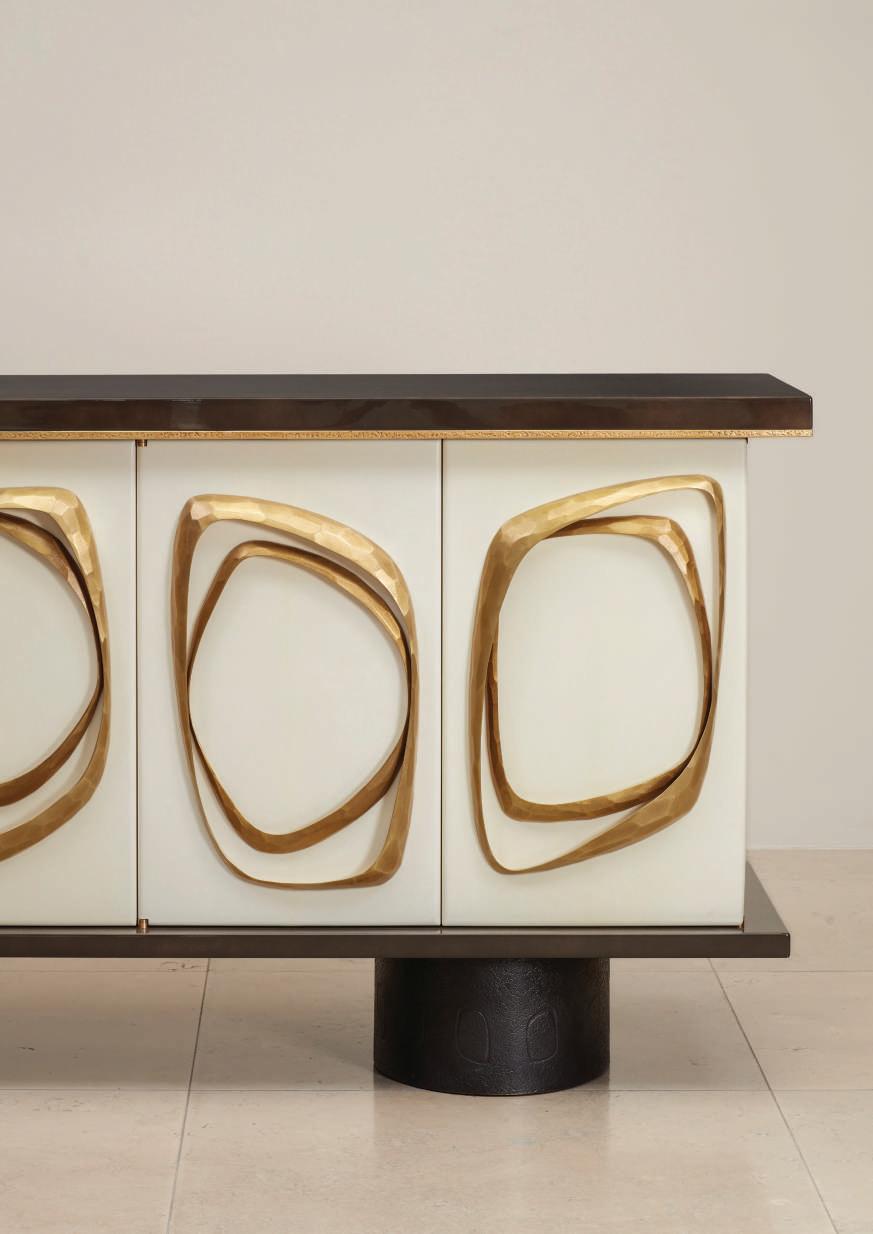


there’s something of the magician in Hervé Van der Straeten, the French furniture and lighting designer with the uncanny ability to make cabinet drawers vanish, glass appear to melt and a toddler-style tower of lacquered cubes support a console table with aplomb. Van der Straeten works hard to maintain these illusions: From an atelier just outside of Paris, he crafts his pieces with the refinement of an 18th-century ébéniste. The designer is now celebrating a 20-year collaboration with New York’s Ralph Pucci gallery in a show of 12 pieces, from a parchment-and-lacquer sideboard with swooping bronze handles (pictured left) to a faceted mirror. A rock-crystal chandelier that evokes Van der Straeten’s beginnings as an avant-garde jeweler—taken up straight out of art school by fashion futurist Thierry Mugler. Since then, it has been nothing but pure enchantment.—Sarah Medford
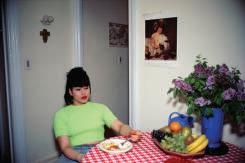
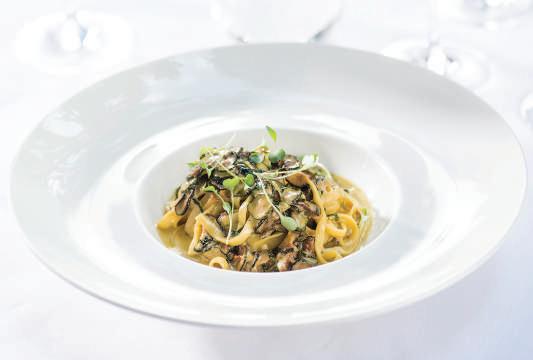
Long a fixture of the Miami Beach scene, the 23-year-old restaurant and private club Casa Tua opened outposts in Paris andAspen before finding its way to NewYork this fall. The Upper East Side address,in The Surrey hotel,has public and members-only dining spaces,serving spaghetti alla nerano (right) and other Mediterranean-style dishes. casatualife.com
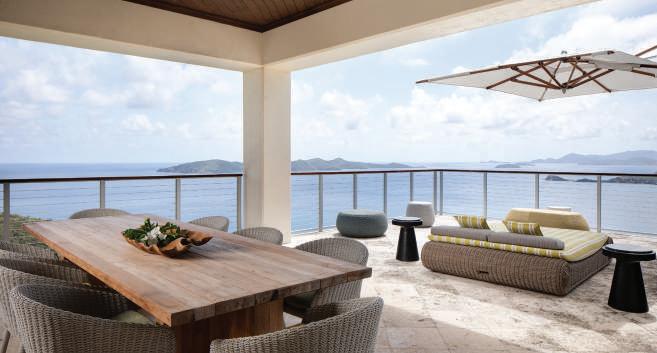

lying just southwest of Tortola, Peter Island is a wild patch of land sticking out of the sea, with something of a “Pirates of the Caribbean” history. (There’s a reason the main stretch of sand is called Deadman’s Beach.) These days it is the largest of the privately owned islands in the British Virgin Islands. And since 2017, when Hurricane Irma destroyed the main resort, there has beennoplaceforeagervisitorstostay.Ithastaken six years to rebuild on the footprint of the old ’70s compound, but the new Peter Island Resort opens this fall with many upgrades it received as part of that overhaul, most importantly that the bulk of the 52 accommodations now face the beach and pale-blue waves beyond. There is also a full-service marina for guests arriving by sailboat or 200-foot yacht, and high above it all, perched on a mountaintop, is the 21,000 square feet six-bedroom Falcon’s Nest suite (above left), which benefits from panoramic ocean views.
peterisland.com
Digital Witness: Revolutions in Design, Photography, and Film opens at LACMA.
Sculptural Celadon of the Goryeo Dynasty opens at the National Museum of Korea in Seoul. Polke/Goya opens at the Museo Nacional del Prado in Madrid.
Electric Dreams: Art and Technology Before the Internet opens at the Tate Modern in London.
fashion goes hand in hand with art, so it’s nothing new to find blue-chip works gracing the walls of sought-after brands’ boutiques. In the mid-1990s, Calvin Klein commissioned Dan Flavin to create signature light pieces for his Madison Avenue store. When Tom Ford opened his namesake brand’s first flagship, in 2007, he set a bold tone by pairing a Lucio Fontana slash painting with a Claude Lalanne alligator desk. Architect Peter Marino, who over the years has designed retail spaces for Tiffany & Co., Chanel, Dior and more, is known in particular for deploying museum-level work. Tiffany & Co.’s massive Manhattan flagship is bursting with prestige pieces by Jean-Michel Basquiat, James Turrell, Damien Hirst, Sarah Sze, Rashid Johnson and others.
As stores become less about selling clothes—after all, those can be bought online—and more about meaningful connections with consumers, a growing group is leaning into art and design to heighten the experience. Gucci has tapped art advisor Truls Blaasmo to source pieces, and Loewe works with Andrew Bonacina, former chief curator of the Hepworth Wakefield, England.
Many houses have started art programs of their own. Chloé creativedirectorChemenaKamalirecentlyinstitutedChloéArts, to elevate women artists. The first selection is Danish artist Mie Olise Kjærgaard, whose work is at Chloé’s Paris flagship. In 2019, Hedi Slimane launched the Celine Art Project, which works with living artists like Mel Kendrick and Davina Semo to commission pieces for its boutiques. Adjacent to its LA store, Dries Van Noten even has its own gallery with rotating exhibitions.
Focusing on art can also be a way of drawing out a brand’s origin story. Sweden-based Toteme sometimes turns to Swedish artists, such as Jenny Nordberg and Gunnel Sahlin, for its stores. Azzedine Alaïa was an avid collector, and Alaïa’s store on Rue de Moussy in Paris, displays pieces from his personal trove. For the label’s New York store, Alaïa creative director Pieter Mulier sought out work by U.S. artists he admires, bringing in Donald Judd chairs, a Mike Kelley diptych and Robert Rauschenberg prints.—Reporting by Laura Neilson and Akari Endo-Gaut

From top: “Girl With No Eyes,” 2021, by Julian Schnabel at the Tiffany & Co. New York flagship; a 1981 sculpture by Swedish artist Barbro Bäckström at Toteme’s LA store; Behrang Karimi’s “Gardening at Night,” 2022, at Loewe in Houston; a Brian Rochefort exhibition titled “Burned Out Stars” at Dries Van Noten’s Little House gallery in Los Angeles.


Design Miami opens in Miami Beach, Florida.


Parmigianino: The Vision of Saint Jerome opens at London’s National Gallery. Art Basel Miami opens.
Ugo Rondinone: The Rainbow Body opens at the Aspen Art Museum in Colorado.
cathedral in Paris reopens after its restoration.
A theAter’s sAfety curtain is fundamentally a utilitarian necessity, meant to stop mechanical fires from spreading to the audience. The Austrian art organization Museum in Progress takes these drab surfaces and uses them as vast canvases for displaying art. Most prominently, for 26 years now, the Vienna State Opera’s 1,900-square-foot curtain has been hung with works by Carrie Mae Weems, Joan Jonas, David Hockney, Cy Twombly and others. This season’s selection is the colorful “Abdominal cavity flies over a dam,” by Swiss artist Pipilotti Rist.
Until June 30, 2025; mip.at
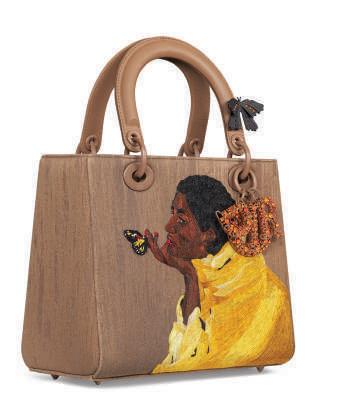
A hand-embroidered rendering of American artist Danielle McKinney’s figurative work “Shelter” features on one of the latest in the Dior LadyArt series of artist-created handbags.
Price upon request; dior.com
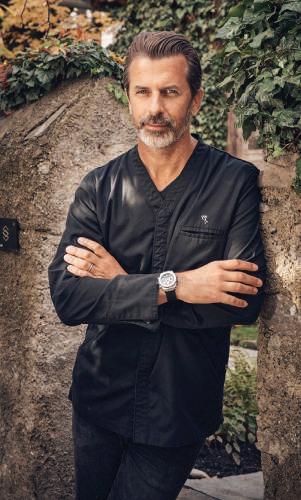

Chef AndreAs CAminAdA made a name for himself at Schloss Schauenstein, a Swiss castle he took over at the age of 26, running the kitchen and restoring the property, which now has a three Michelinstar restaurant and nine guestrooms. Caminada’s focus has always been the hyperlocal cuisine and culture of the surroundingAlps.Separatelyfrom the schloss, his group of three restaurants–in Zurich, Bad Ragaz and Bangkok–is named Igniv, which means “bird’s nest” in Romansh, a language spoken in his area of Switzerland. In time for ski season, Igniv is opening an outpost in the Swiss mountain resort of Andermatt. Caminada, whose motto is “develop great humans,” has tapped one of his proteges, Valentin Sträuli, as executive chef. “It’s completely different but in the same family,” Caminada says of the new iteration. With winter on the horizon, he and his team were already at work pickling, fermenting and preserving, and embracing the root vegetables and bitter greens that punctuate cold-weather dishes.
igniv.com


"For highest quality in the 18th century, the Kraemer gallery is my favourite" Karl Lagerfeld




& 43, rue de Monceau 75008 Paris
18th-century furniture and art pieces
Modern & contemporary Art
Since 1875

+33 1 45 63 24 46 - kraemer@@kraemer.fr
www.kraemer.fr



Act Two: In which we delve into the minds of creators and collectors, discussing the long-sought works that got away, tracking the place art has on our walls, learning from artists’ well-loved rituals and parsing the psychology behind it all.
The Indian-born, California-based philanthropist and former tech executive answers our questions about what and how to collect as her female-focused art collection continues its debut exhibition.
BY JAMES HALDANE
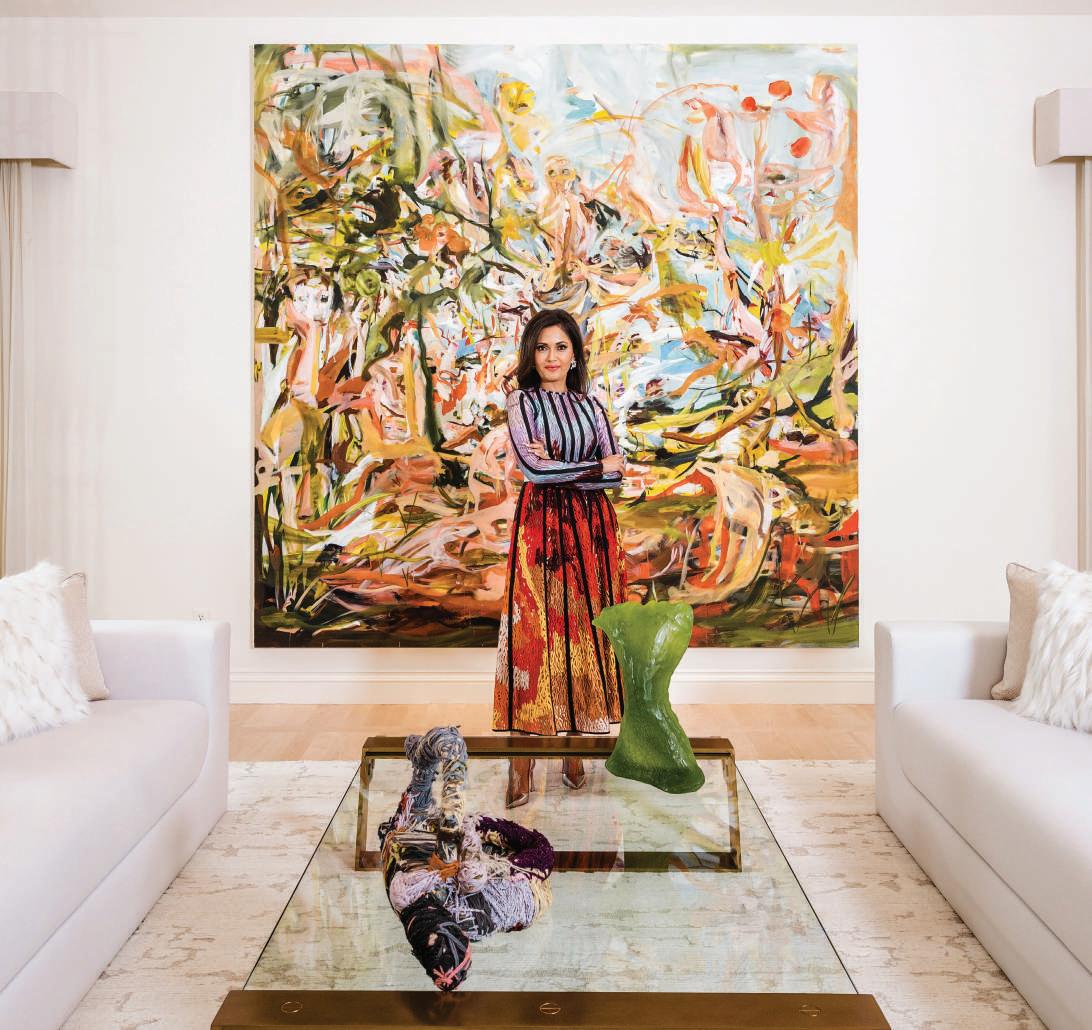
Describe your collection in four words. Celebration of female excellence.
How has your career influenced your collecting, and vice versa? I came to the U.S. to study computer science in grad school at Stanford, where I was one of three women in a class of 100. But I worked hard and rose fast. I ran a $100 million business at Netscape by the time I was 28, even though the tech world was, and still is, a boys’ club. Motherhood was an eye-opening experience that made me realize how hard it still is to balance work and family for women, along with the stereotypes and bias that girls and women have to deal with. So, when I began to collect, I was driven to address the gender disparity and that is where I put my focus. The tech world also prepared me to take risks and to listen to my heart. I go out on a limb for artists I believe in.
Abstract or figurative, and why? I am drawn to abstraction for its vibrancy and the fact that it offers a universal language for expression by blurring boundaries of gender, race and geography. It is personal, too, in that the viewer brings their own eyes and associations to how they experience an abstract work. I constantly find new surprises in the pieces I have lived with for many years.
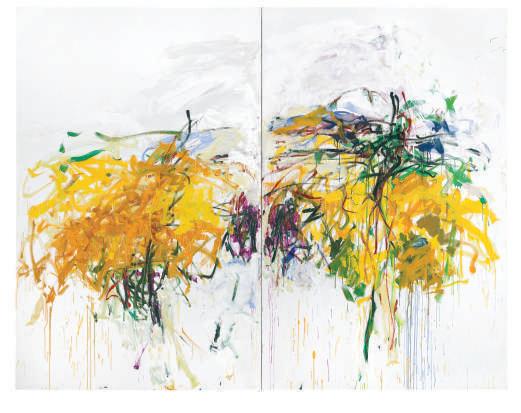
Who is the most important historical figure in art? For our collection—one that is focused on the artists of today—it is Joan Mitchell. She not only stood her ground in the male-dominated realm of abstract expressionism, but her practice also continued to evolve every decade, reaching new heights until the very end. I love the confidence and vigor of her 1990s paintings, it is as if she felt free from all the expectations of the world. It felt deeply significant when we added her last painting, from 1992, to the collection.
How do you live with your collection?
My husband Gaurav and I try to install as many works as we can at home. We have removed several fireplaces and raised the ceiling in our hallway to be able to install large works. Unfortunately, we don’t have enough wall space to have everything on view at once, so we rotate works out
based on new acquisitions, museum loans or to rest works from the light.
Favorite curator and why? This is a hard one. I’d have to say Cecilia Alemani. We had been friends for many years but when I saw her Venice Biennale in 2022—where about 90% of the artists were women—I was truly blown away. Not only did it receive rave reviews, Cecilia’s Biennale also had the highest attendance ever, up 35% from the show prior. I would also include curators Mark Godfrey and Katy Siegel, for their ability to expand the canon with scholarship and brilliant shows.
Favorite city for art and why? I spend a lot of time in New York, and more so this past year, and I love every minute. While the galleries and museums are top-notch, it’s really the community of artists that I love the most. Earlier this year, Cecilia Alemani and I had a joint birthday party and invited about 30 artists across generations. It was so special—a birthday I will remember forever—and it could only have happened in New York.
What “tools of the trade” do you use to build your collection? I use it all—from auction websites to gallerists—but what’s been most valuable is building relationships with artists and curators. They are the true visionaries, and the best ones are gifted storytellers.
Bestartgift,givenorreceived? Irecently received a gift from my dear friend, Kay WalkingStick. It is a stunning work from 1975 and I’ll cherish it forever.
Whichcollector,pastorpresent,doyou admire? Aggie Gund. Her vision as both a collector and a philanthropist is unparalleled and has truly made an impact.
Favorite art or art historical fact? Can I give you one of my least favorite facts? The latest Art Market Report from Art Basel and UBS shows that, over the past two years, female artists still represented a minority of gallery sales. In the same period, total spending on works by female artists was just 39%, compared with 61% spent on works by male artists. I think it’s
important to understand that the inequity is real, quantifiable and, while there has certainly been progress for women artists in the past decades, we still have a long way to go.
Does art play a role in your romantic relationship? Absolutely! In the 25 years of our marriage, Gaurav and I have loved visiting museums wherever we travel. We have an affinity for abstraction and a shared commitment to supporting women artists. It has been one of the most rewarding experiences of our lives, second only to raising our children. Men are extremely important advocates and beneficiaries of work by women artists, and I was lucky enough to marry an advocate.
Why is philanthropy important? Philanthropy has been part of our journey all along. We established the Shah Garg Foundation to support and produce exhibitions and scholarship on women artists. I also hold board and council positions at a number of institutions including SFMOMA, Studio Museum in Harlem, Hammer and MoMA. Investing time and resources into the arts ecosystem is crucial, as arts philanthropy is still minor compared to health and education. I have also found that working directly with institutions, curators and acquisitions teams has taught me a great deal and made me a more rigorous collector.
What was the most recent art addition to your collection? I just bought a fabulous work by Tadáskía, a young artist from Brazil whose first solo presentation in the U.S. was on view at MoMA this summer, organized in collaboration with the Studio Museum in Harlem. I was absolutely blown away by the joy and exuberance of Tadáskía’s work, and was lucky enough to meet her and get a walk-through of the show.
What exhibition are you looking forward to visiting? I am a bit biased, but I am enjoying the second stop of “Making Their Mark,” a traveling show of our collection, which is on at Berkeley Art Museum and Pacific Film Archive until April 2025. The exhibition is co-curated by Cecilia Alemani and Margot Norton.
Programming and education initiatives are priorities for our foundation, so I’m excited to engage with students and the wider community in the San Francisco Bay Area, which has been my home for the past 33 years.
Who is the most unjustly overlooked artist? Elizabeth Murray. Her work is singular and her influence on both her peers and younger generations of artists is undeniable, yet her market and international recognition still isn’t where it should be.
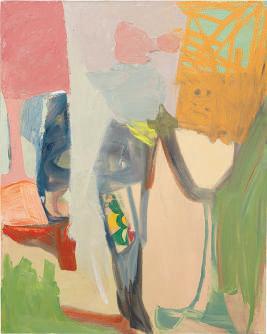
What piece did you get for an especially good deal? Well, I would say that nearly all the work in my collection was a good deal because work by women artists has been undervalued. It is deeply satisfying to see important artists such as Joan Mitchell, Amy Sillman, Simone Leigh, Jaune Quick-to-See Smith, Howardena Pindell and Pat Steir get institutional and market recognition.
Are art and fashion connected? I believe they are truly intertwined. Both harness the power of the aesthetic and ideas to uplift us, and both reflect the current moment and spirit. I am excited that collaborations between artists and fashion houses have also become more prevalent and powerful. For instance, Dior’s Maria Grazia Chiuri has been an avid supporter of women artists, and partners with many for her shows. At fashion week in Paris this past June, I was fortunate to witness the paintings and tapestries of Faith Ringgold in the Dior show. The year before, I saw the magical fountains by Lynda Benglis in the Loewe show. These shows expose great art to a diverse audience and exemplify the synergistic relationship.
What tips do you have for collectors who are starting out? Build a collection that moves you personally. Take time to understand your taste and voice, and think about the narrative of your collection. Collecting is as much about the journey—experiencing the thrill of seeing amazing artwork, having incredible conversations and experiences and learning—as it is about the final collection you will build. •

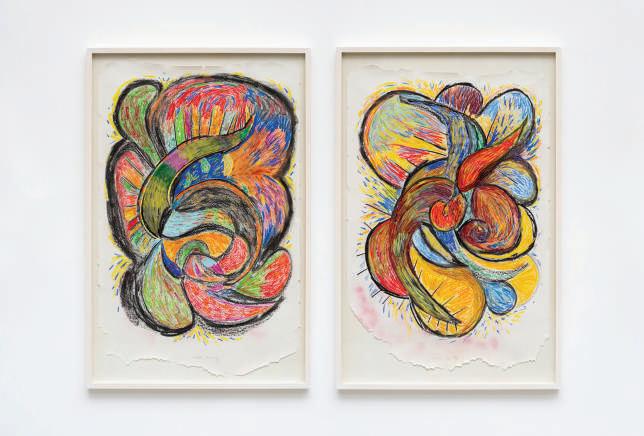
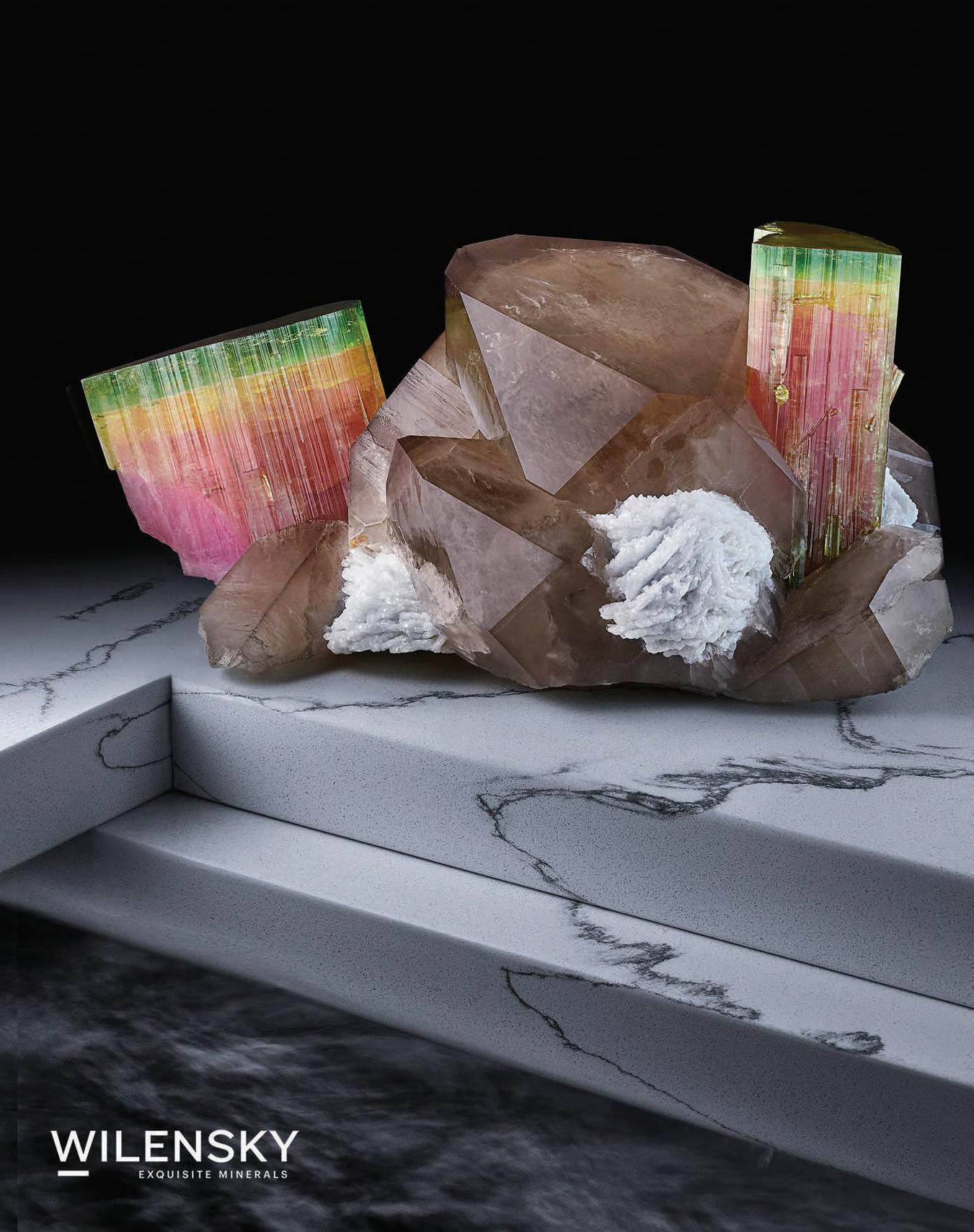
In an ongoing column, a psychologist and a curator delve into the various meanings behind the act of collecting, exploring its significance both for individuals and society as a whole.
BY ORNA GURALNIK AND RUBY GURALNIK DAWES
The maTerial world is both objective and imaginary. We rely on things to remind us of the existence of a steady external life, while they also populate our internal world. In most cases, the act of collecting is not a neutral, dispassionate act. How do inanimate objects come to have powerful appeal, to evoke hunger and desire for the collector?
To understand the collector’s experience, we must pause on the question of value.FromtheLatin valere,“tobeworth,” value in its earliest usages referred to a thing’s intrinsic worth. Today, value is understood to signal relative importance, a thing’s utility or, as per the amorphous and all-powerful market, its price.
Hannah Arendt wrote that objects “have the function of stabilizing human life…against the subjectivity of men stands the objectivity of the man-made worldratherthanthesublimeindifference of an untouched nature.” Once acquired, objects are lifted out of their primary context, added to a set and reassigned a value. Their old life, whether it be the sphere of production or an artist’s studio, is supplanted by a relational, abstract identity: belonging to a collection. But what is an object’s intrinsic versus subjective identity and how are things selected or excluded? These categories fail to account for blurriness, for the impossibility of separating valuation from the ideological constraints implicit in any social practice.
Value is a dynamic, socially constructed phenomenon. Karl Marx distinguished
between the use and exchange values of a commodity and argued that value is often manipulated by external forces. Taken solely on use value, a car, for example, initially seems more valuable than a painting, but is it? Some cars with high exchange value, especially rare and collectible models, have little use value, having become almost undrivable for regulatory or practical reasons. As Sigmund Freud would note,valueisdeterminednotonlybymaterial conditions but also by unconscious motivations; objects become commodities through various processes of exchange, both material and psychological.
British pediatrician and psychoanalyst Donald Winnicott’s concept of the transitional object—the blanket or teddy bear that helps the child navigate the psychological space between dependence on caregivers and their own independence— shows how items from our childhood years come to bridge the gap between our internal world and external reality. For the child, the transitional object transcends its own physicality and acquires emotional meaning. In later stages of life, this way of relating to objects can morph into a devotion to the things one collects. Even so, while any individual collector might infuse stamps with a symbolic significance beyond their material nature, only a considerable group of collectors, with a similar emotional investment in those thin paper squares, can build their market value. A collected object thus lives somewhere between a deeply subjective
world of fantasy, collective imagination and the hard edges of material reality.
Embracing inanimate objects emerges, at least in part, from a search for fixity. Early deprivations, losses or traumatic events that mess with the security of early relationships can form a psychic wound. In the desire to shore up a sense of reliability, to compensate for loss or insecurity and mistrust in the goodness of the world, it may seem safer to turn to reliable material things.
Of course, desire toward an object also has the power to disorganize, invite incoherence, break through reason and violate our attachments to the familiar.
Freud used the term “cathexis” to refer to the investment of psychic energy into an object. A collector becomes cathected to their objects of fascination. Cathecting in part relies on our mind’s capacity for madness, to hyper-focus on one part of our experience and remain disinterested in other facets. The collector seeks in the world the objects that give them pleasure and satisfaction—they have less interest in the rest. Yet this private world is inseparable from the group mind, the collective’s shared marketplace of fantasy and value.
Should we conclude that if the predominant value of an object feels intrinsic—that is, valued for its use or objective aesthetics —it does not belong in a collection; and if, by contrast, the value emerges from a subjective place—valued chiefly for its relationship to other objects, to an idea, to its owner—it does belong to a collection? •
“[Objects] have the function of stabilizing human life… against the subjectivity of men stands the objectivity of the man-made world,rather than the sublime indifference of an untouched nature.”
Hannah Arendt
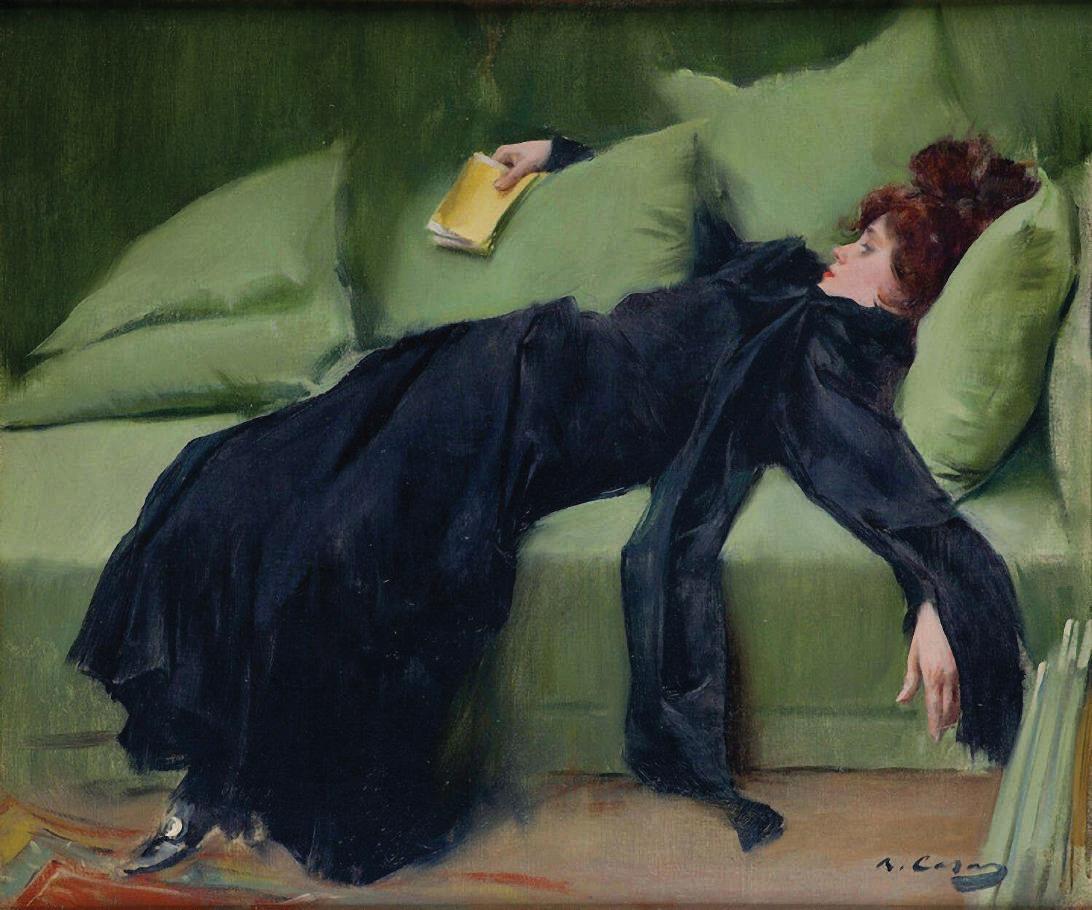
For 40 years, chef-patron Sally Clarke has offered unfussy, wholesome food to diners in her eponymous London restaurant and shop. Among them was her neighbor—one of the greatest portraitists of the 20th century—the late Lucian Freud. She shares her memories of his multiple daily visits, sweet tooth and an unexpected offer to sit for him.
BY HENRY LEUTWYLER
It must have been one day in the early 1990s that Mr. Freud first wandered into our little shop. Then already in his 70s, he had bought a house five doors up from us on Kensington Church Street and was in the process of moving out of his painting studio in Holland Park in which he had been living. Over the next few months, he also began to visit our restaurant. He would ring up and announce, “This is Lucian Freud.” I would tease him, asking in reply, “Lucy and who?” There would be a long silence, after which he would ask to reserve a table.
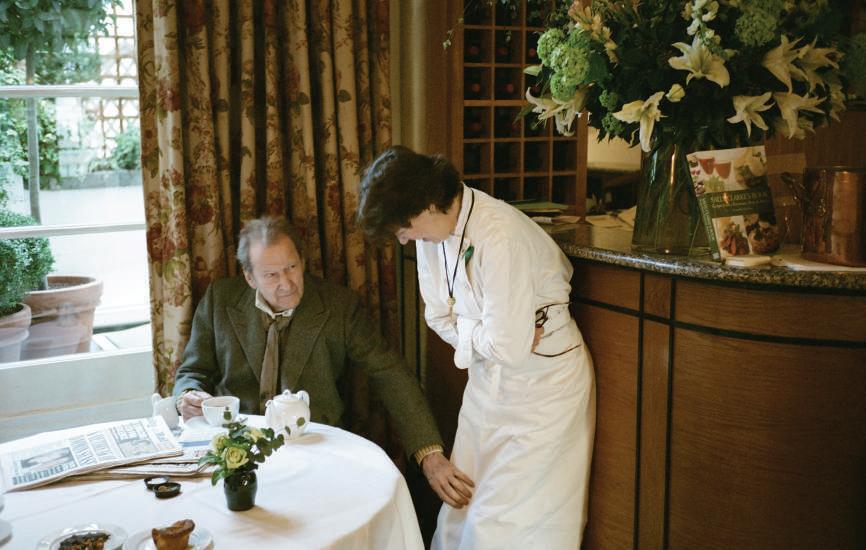
He soon came to establish a routine whereby he would come in to see us three, four, five times a day to punctuate his sessions with sitters. I was conscious of the attention he received so, althoughourrestaurantisnotopeninthemornings,Iofferedhim a quiet table at the back so that he would not be troubled while eating breakfast. We looked after him in this way for the next 15 years, wrapping him in cotton wool, away from the public’s eyes and ears. The respect was mutual—though he would not necessarily open a conversation, he was always very polite.
The daily ritual began around 7:45 a.m. when he and David Dawson, his studio assistant and frequent model, would arrive for breakfast. David would have bought newspapers from the little cornershop, a stack of five, six, seven newspapers. Mr. Freud
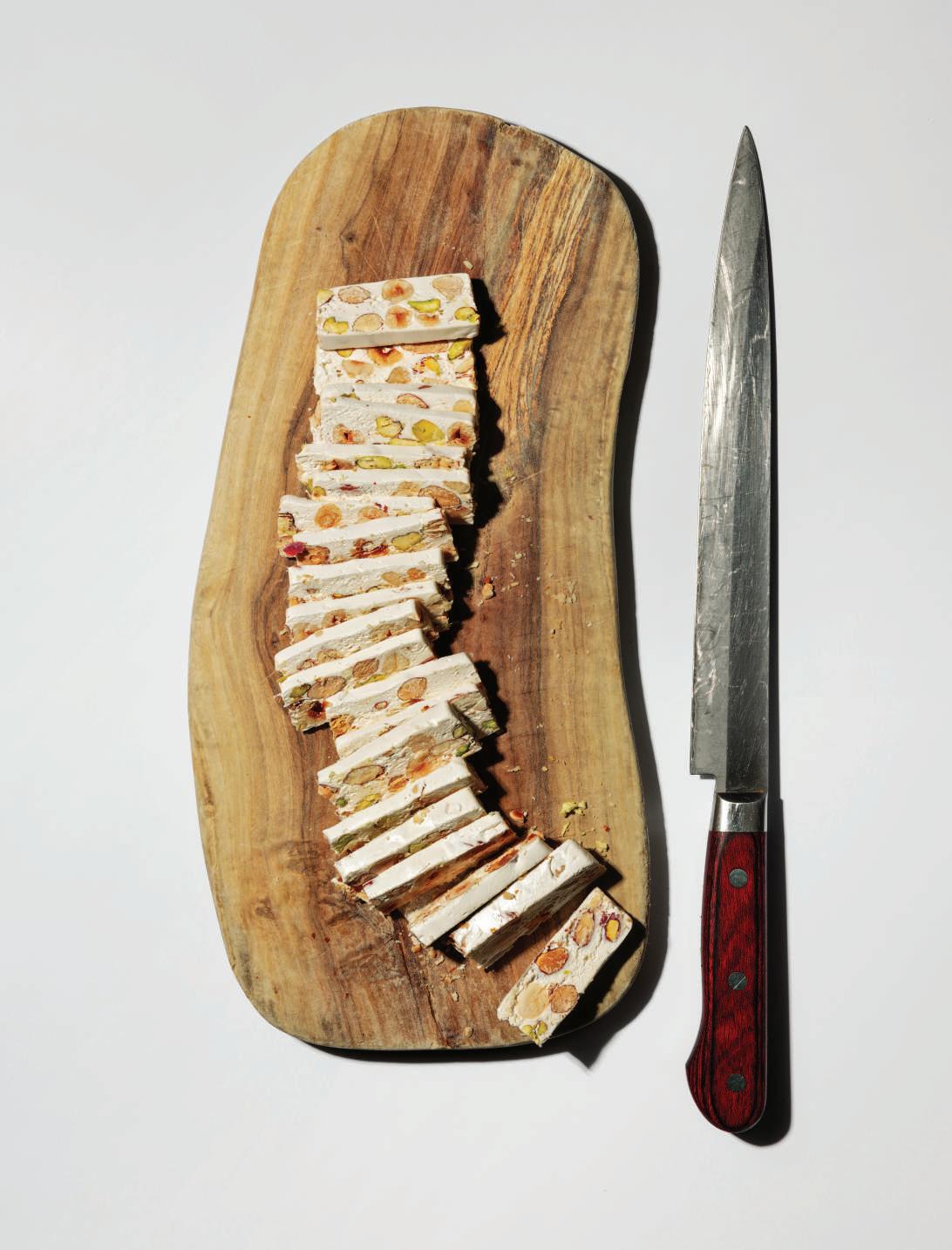
would slip in and head to his regular table, placing his order en route: a juice, a coffee or sometimes an Earl Grey tea, a pain aux raisins and scrambled eggs, eggs Benedict or eggs Royale. In those days, our pain aux raisins were even bigger than the ones that we make now, so it almost filled the whole plate. When he did order tea, he would add copious amounts of cold milk, so it was the most revolting color by the time he’d finished mixing it in his cup. He would also usually grab a bar of our nougat when cutting through the shop, slipping it into his pocket as a joke.
It was mostly just the two of them, but at times he used the table as his salon. On any given day, his breakfast or lunch guest might be the Duke of Beaufort, Bono or Stella McCartney. These people were not necessarily his sisters of the day, they could be collectors or just friends. I do remember he was painting Leigh Bowery when he first started visiting us. Leigh would come in with his wig on and his pierced cheeks. He was extraordinary. And there were lots of meetings with the late Robert Fellows regarding the portrait of the queen.
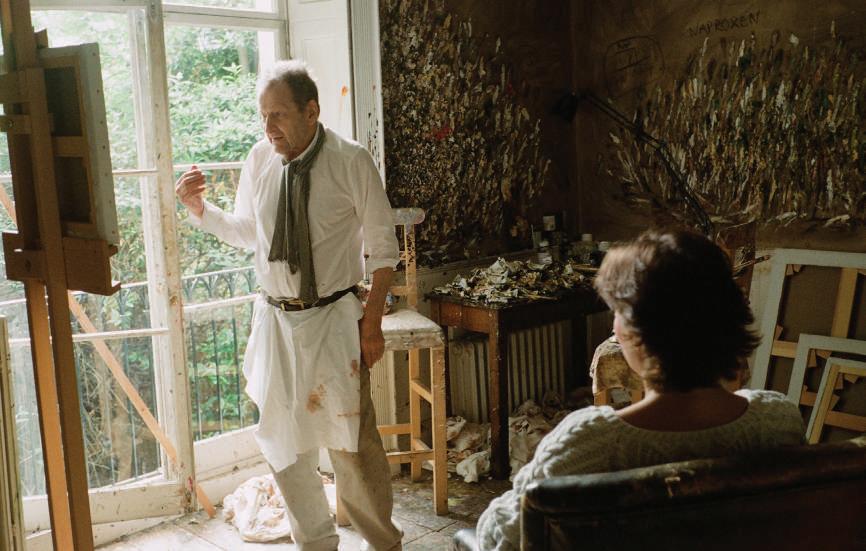
Mr. Freud would always come in his working clothes, usually his baggy paint-splattered white trousers. In the summer, he wore an open-neck shirt, his beautiful brown and white scarf, which he tied with a knot at the neck, and his huge boots—the
same boots that are so beautiful in his naked standing portrait, in which they’re the only things he’s wearing. In the winter, he would arrive in one of his beautiful Huntsman heavy wool coats.
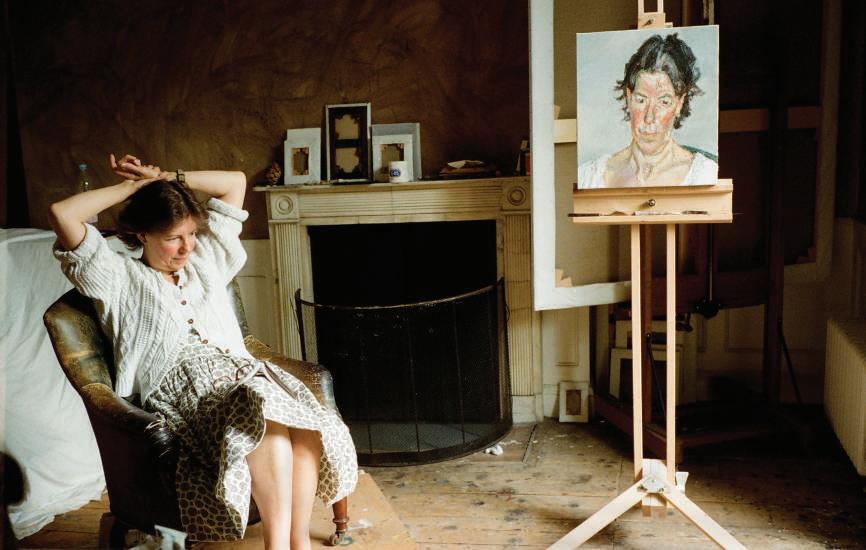
SometimeS i waS invited to sit with them. Mostly I just hovered though, as I always preferred to be the one serving them. Icouldbeconsciousofwhohehadinvited,whowasarrivinglater and the timing of when they needed to get up and go. I sketched him once, sitting at the table, for a charity event that I think the Royal Academy ran. It was a bit like a blind tasting, but instead a blind exhibition of sketches by anyone and everyone—famous artists and also-rans. Someone bought my drawing for quite a lot of money. I was rather proud of it, actually, as I got his nose right. I also sat for Mr. Freud for three works. The first time, it all came as a big surprise. David asked to speak to me alone in the restaurant to relay the offer, so I was initially worried that I’d done something to offend him. I kept a diary each day I sat— it’s a private book of memories I’ve preserved just for my son, Samuel. I will say though, that house was beautiful. He’d had wonderful builders renovate it from the roof downwards. It spent months and months under scaffolding. Of course, within a few weeks of him moving in, the beautiful gray carpet was
splattered with paint and marked from the dogs going in and out. He and David had a whippet each, Pluto and Eli, respectively. I think we sustained him, together with Jeremy King at the Wolseley restaurant in Mayfair. We handled the daytimes, Jeremy did the nighttime slot. It was important to keep him going as hislatesittingswouldgoonuntiloneortwoorthreeinthemorning. Even in his early 80s, he maintained gazelle-like speed and agility. I’d see him run across the street. Over time, his appetite got smaller, but I don’t think he reduced the amount he ordered. When he wasn’t able to leave the house, we would send chicken soup and tasty treats like pastel de nata—he loved those—and, towards the end, David sweetly allowed me in to say a quick hello. I still have visions of him whizzing around in his Bentley. He nonetheless had a good reputation in the neighborhood. People wanted to think that they knew him enough to say hello on the street.I’msurehewas,mostofthetime,politeenoughtosayhello back. He would favor us all on the street in one way or another. When I was sitting for him, the last thing he’d say as I left the studio after a two or three-hour slot would be, “I’ll be in for lunch today. There’ll be two or three of us.”—As told to James Haldane
“In Season for 40 Years” by Sally Clarke is available to purchase at sallyclarke.com
“Le Marin,” created when the artist’s life was under threat, has had some narrow escapes of its own.
BY LUCAS OLIVER MILL
When the photographer Lee Miller went to see Picasso in his Rue des Grands-Augustins studio in August of 1944, there was a sense of euphoria in the air. Her visit came just days after the liberation of Paris; the city was finally free after four years under Nazi occupation. Light streamed through the windows of the studio, revealing stacks of paintings lining the walls, all of which had never been seen by the outside world.
To capture the moment, Miller pulled out her Rolleiflex camera. Picasso chose to position himself next to “Le Marin,” a painting of a sailor, wearing a striped shirt, caught in a moment of contemplation. It is perhaps no coincidence that this was the work Picasso chose to stand beside: the painting is widely considered to be a self-portrait, a reflection of his wartime psyche. The closer you look at the photograph, the more you begin to see the resemblance between the two. Picasso even has a hand raised—holding a cigarette, of course—as if to mirror the raised hand of the painting’s subject.
“Le Marin” was created the previous year, in October 1943. The painting emerged out of a life-threatening moment for the Spanish painter, while he was waiting out World War II in his studio. The Nazis, who considered him a “degenerate artist,” had plotted to deport Picasso to a concentration camp, as revealed in letters obtained by Archive Picasso, dated just five weeks before he painted “Le Marin.” He narrowly escaped thanks to an intervention by Arno Breker, Hitler’s favorite sculptor, who spoke to Hitler on Picasso’s behalf.
Miller’s photograph marks the beginning of a journey that would take the painting across three continents.
In 1946, “Le Marin” traveled from Paris to New York, having been acquired by Samuel Kootz, a lawyer-turned-art dealer who had a keen eye for Picasso’s work. The painting was to be one of the central pieces in Kootz’s 1947 exhibition, which marked Picasso’s first post-war showing of new paintings in America. Soon after the show, Kootz sold the painting to Harry Abrams, a pioneering publisher who popularized quality art books.
Just a few years into Abrams’ ownership, in February 1952, he received an offer from a man named Victor Ganz. Then unknown to most in the art world, Ganz would go down in history as one of the most important art collectors of the 20th century. The owner of a small costume jewelry company, he was short in height but
grand in ambition and had a particular knack for negotiation. He convinced Abrams to part with the painting for $11,000.
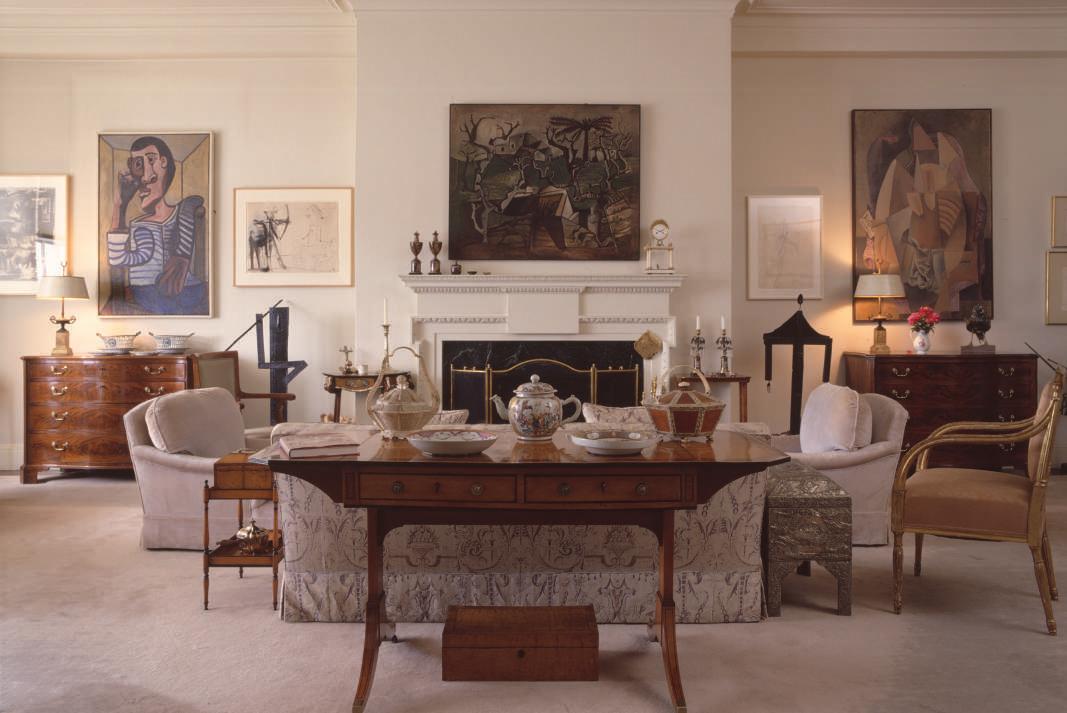
“Le Marin” was one in a series of acquisitions by Ganz and his wife, Sally, that led them to amass the most significant private collection of Picassos in the U.S. during their lifetime. The couple had a golden touch when it came to collecting—even the legendary dealer Leo Castelli idolized them, calling Victor “the best collector we ever had.” In the Ganzes’ New York living room, “Le Marin” hung beside four other Picassos: two preparatory drawings and two important paintings. Hanging above the fireplace was a rare landscape, which was a personal favorite of fellow artist, Henri Matisse. On the far right wall was a painting from Picasso’s radical Cubist period, which is now part of the Metropolitan Museum of Modern Art’s collection. No single wall in the Ganzes’ apartment was left empty, and you could assume that every room had at least one Picasso in it.
Fast forward to 1997, when the painting found its way to Christie’s, where it sold for $8.8 million. The buyer was U.S. real estate developer Steve Wynn, who once accidentally elbowed another of his Picassos, “Le Rêve,” which coincidentally was also from the Ganzes’ collection.
“Le Marin” remained in Wynn’s possession for two decades, until he decided to take it back to Christie’s in 2018, this time with a significantly larger estimate in the region of $70 million. However, disaster struck again for Wynn when an extension rod, left leaning against a wall by a freelance wall painter, slipped and punctured a four-and-a-half-inch hole in the canvas. The freak accident caused a stir in the media, and the painting was immediately pulled from the auction. A hefty, half-million dollar restoration brought the Picasso back to its former glory.
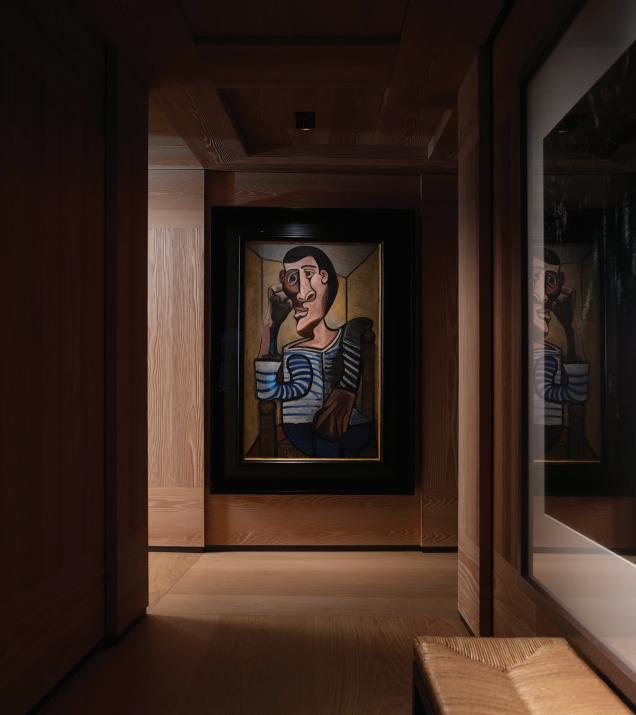
The following year, a New York-based gallery sold the painting to Pierre Chen, founder and chairman of Yageo, a Taiwanese electronics company. Chen has emerged as one of the mega-collectors of the 21st century, slowly gathering a series of masterworks, which are housed within his minimalist Studio Liaigre-designed apartment in Taipei.
“Le Marin” hangs alone at the end of Chen’s hallway. A single light softly illuminates its surface, conjuring up a similar mood to the Rue des Grands-Augustins studio where it was first created. •
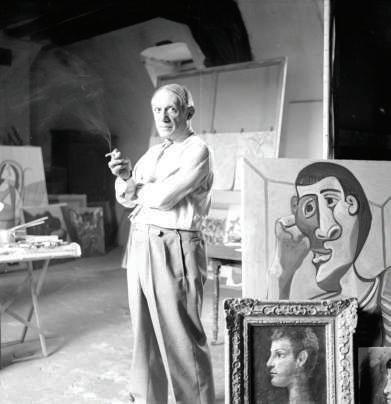
Above: Picasso, photographed by Lee Miller, in his Rue des Grands-Augustins studio, Paris, 1944, with “Le Marin.” Right: The painting at the home of Pierre Chen in Taipei, Taiwan. Below: Sally and Victor Ganz’s Picasso-filled living room, photographed by Eric Boman, with “Le Marin” to the left, New York, circa 1980s.

Act Three: In which we wander through photographer Stephen Shore’s garden, chat about watches with Tom Brady,revisit Eve Babitz and Marcel Duchamp’s famous chess game, drop by the Mallorca retreat of designer Michael S. Smith and much more.
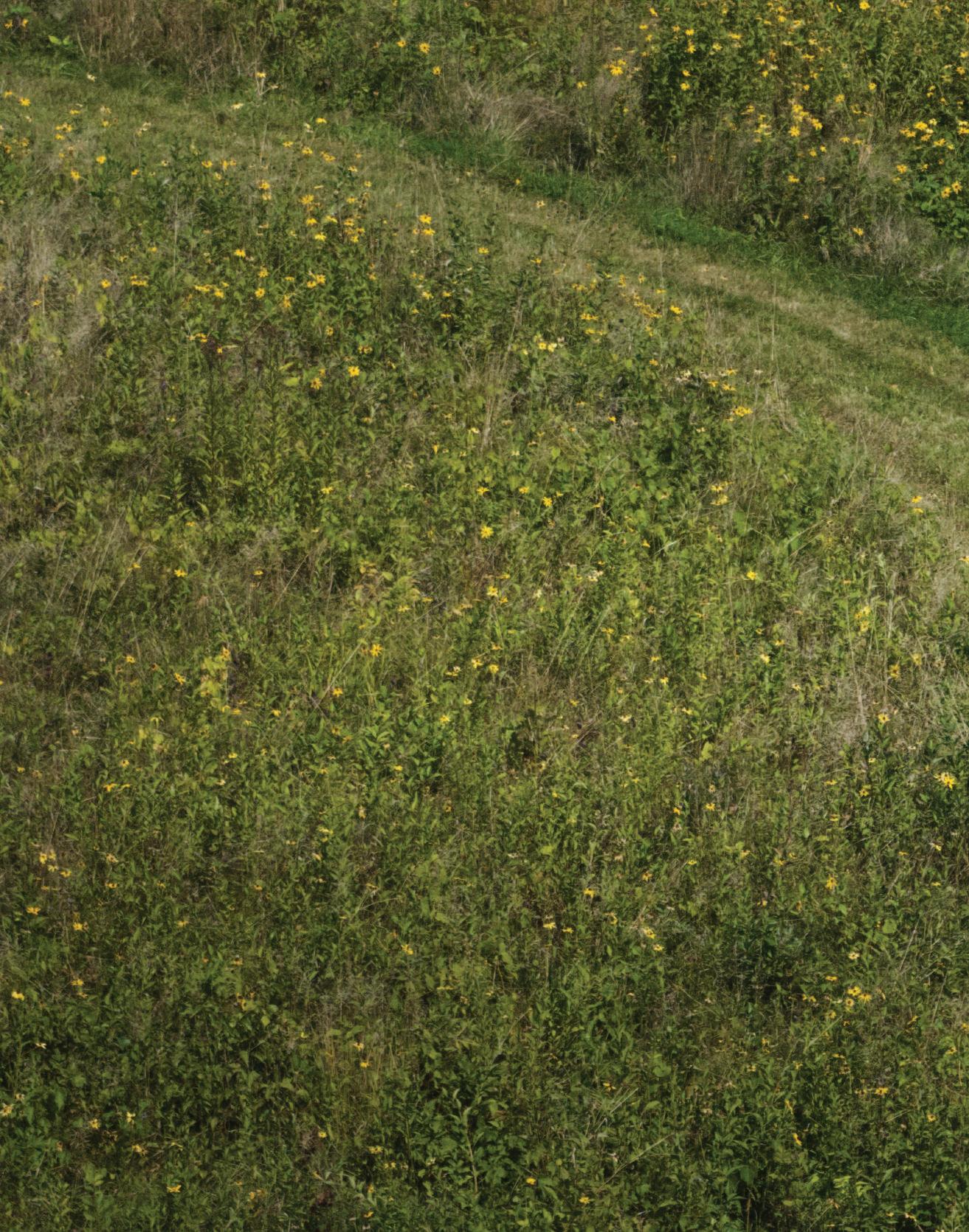
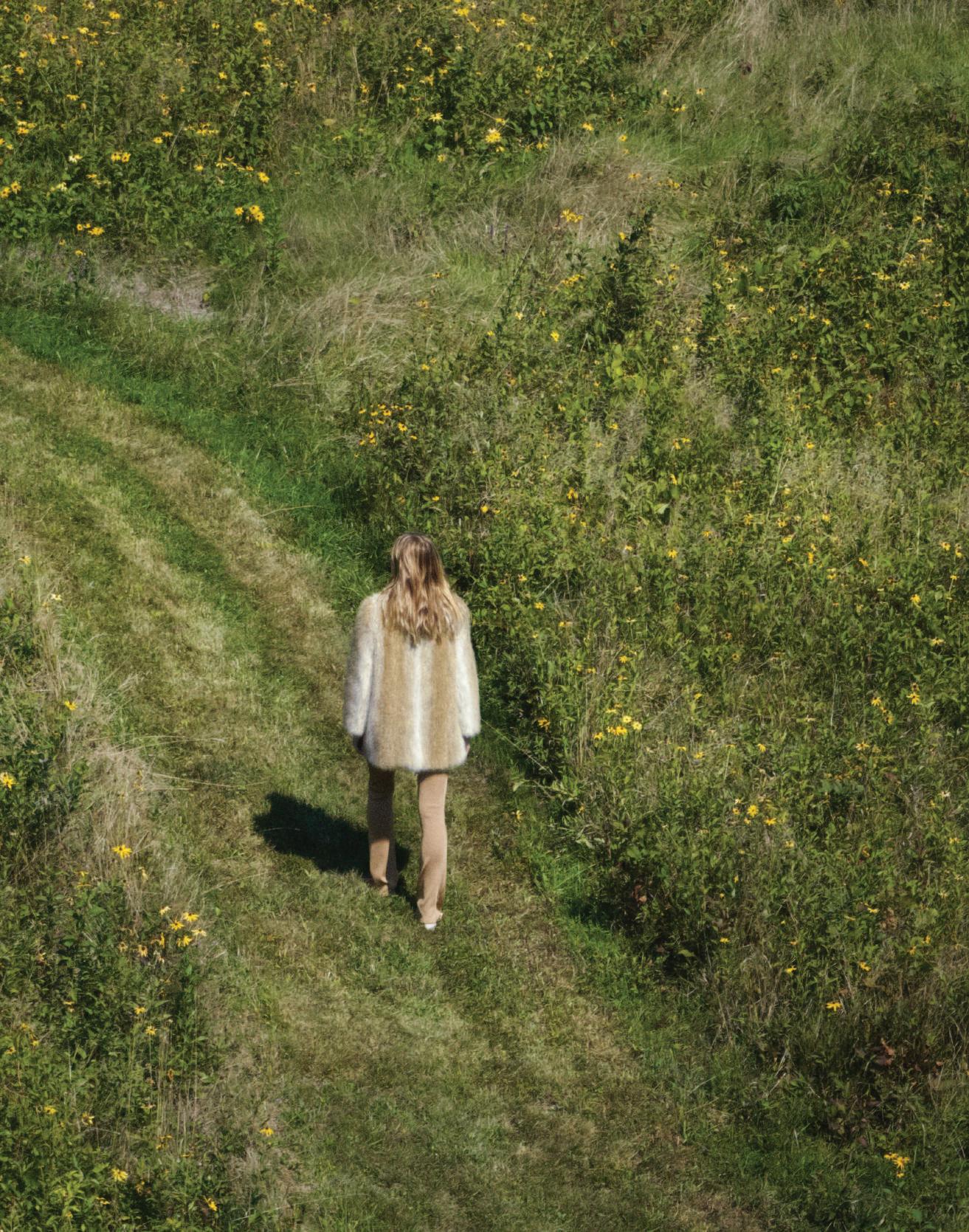
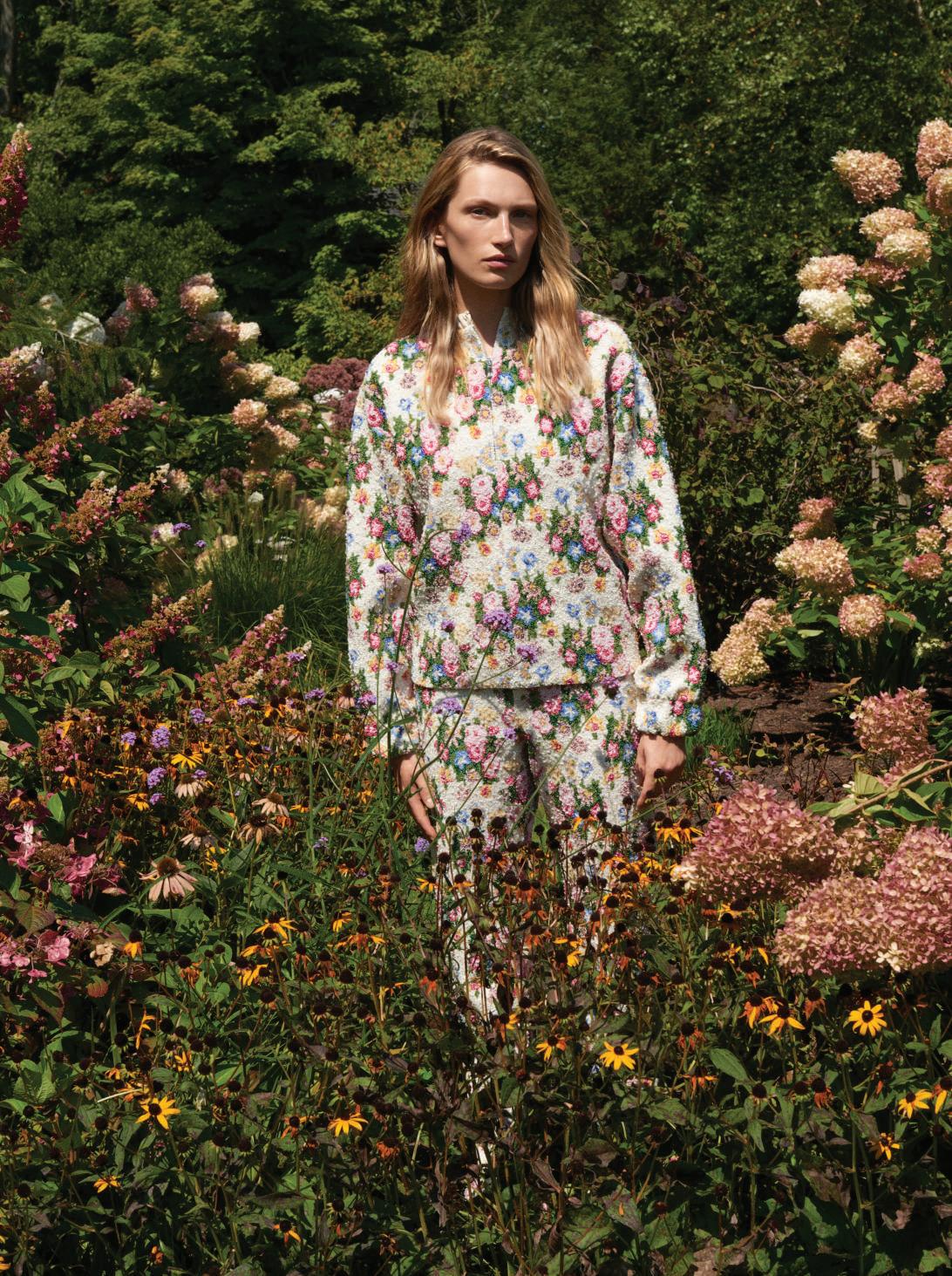
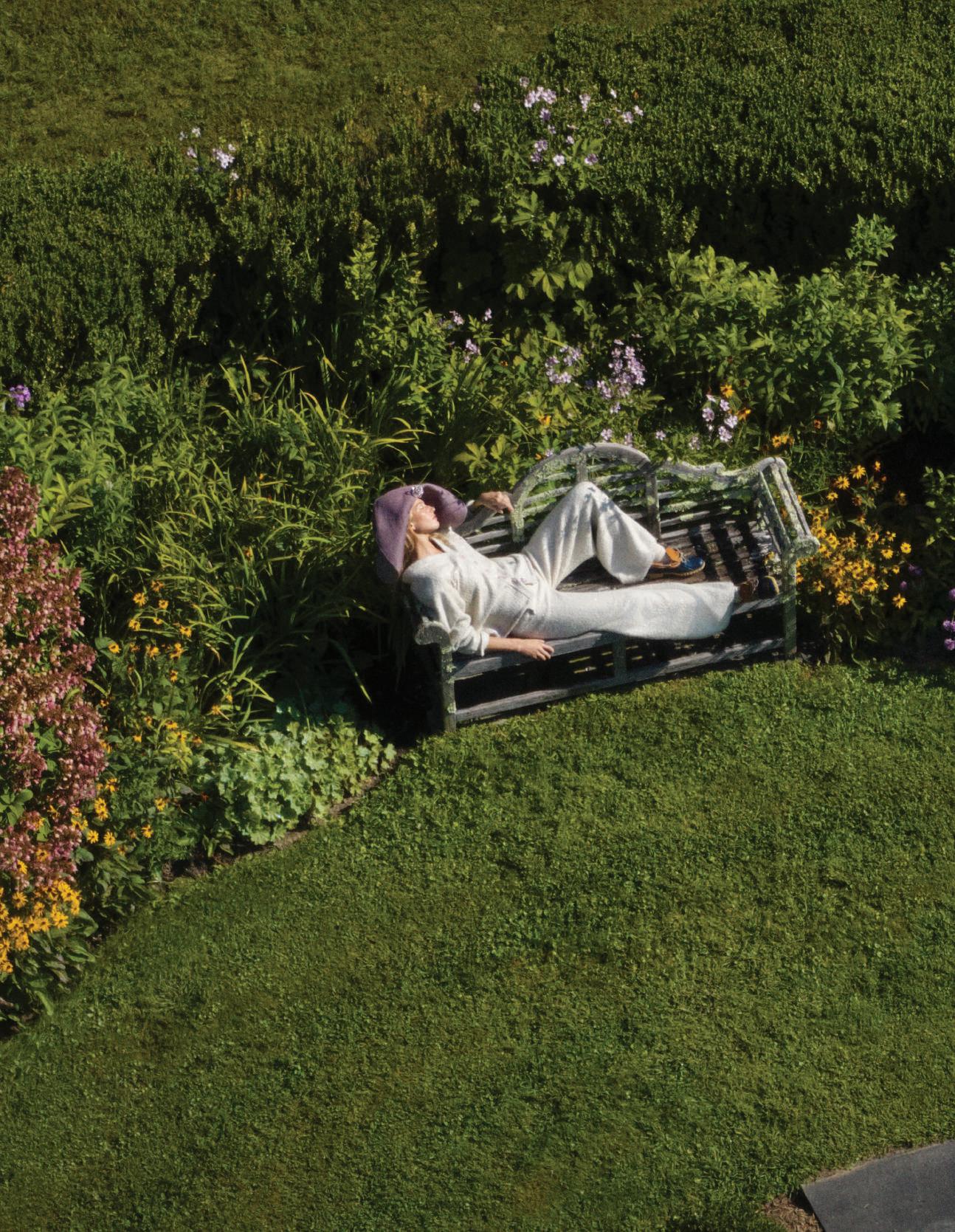
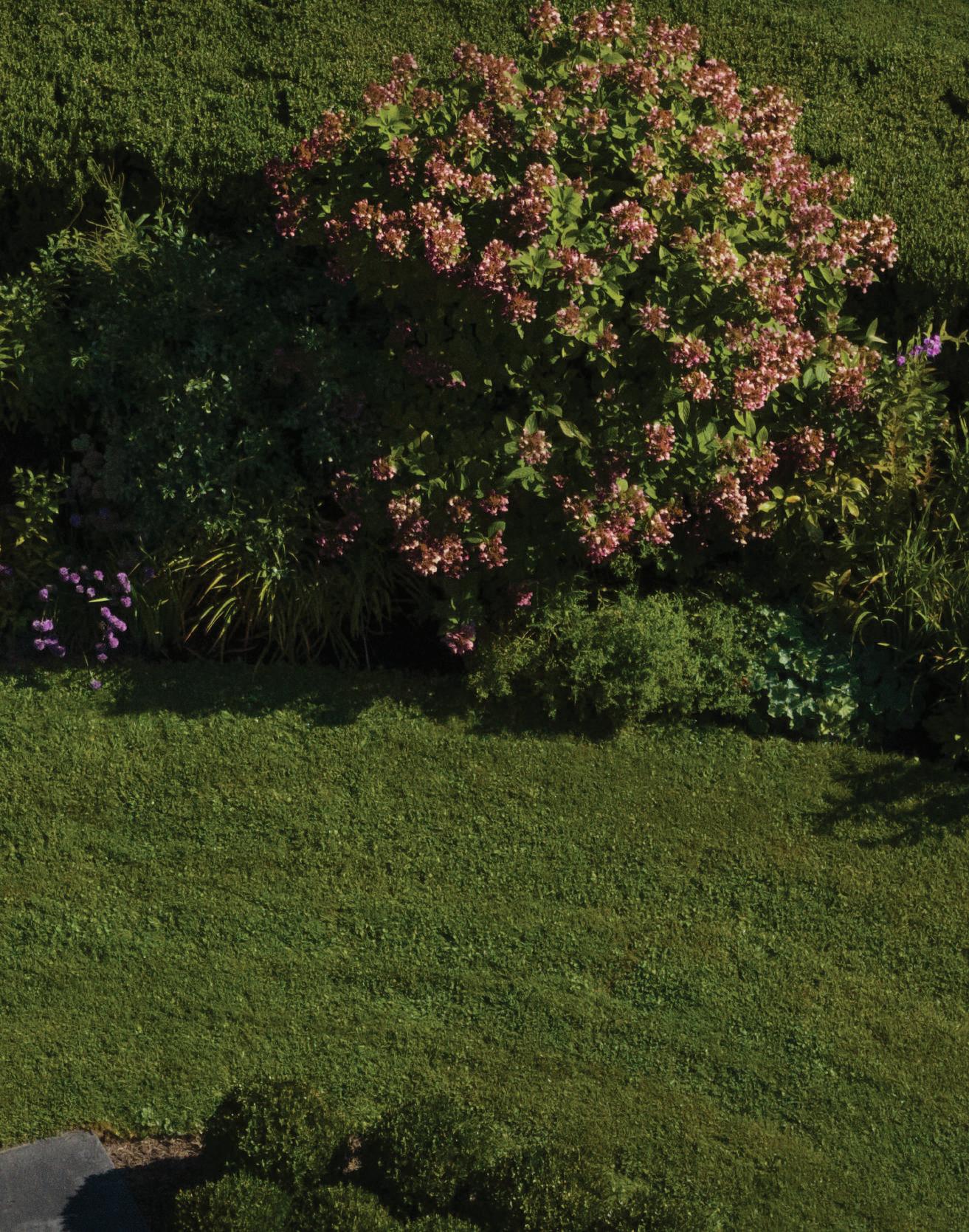
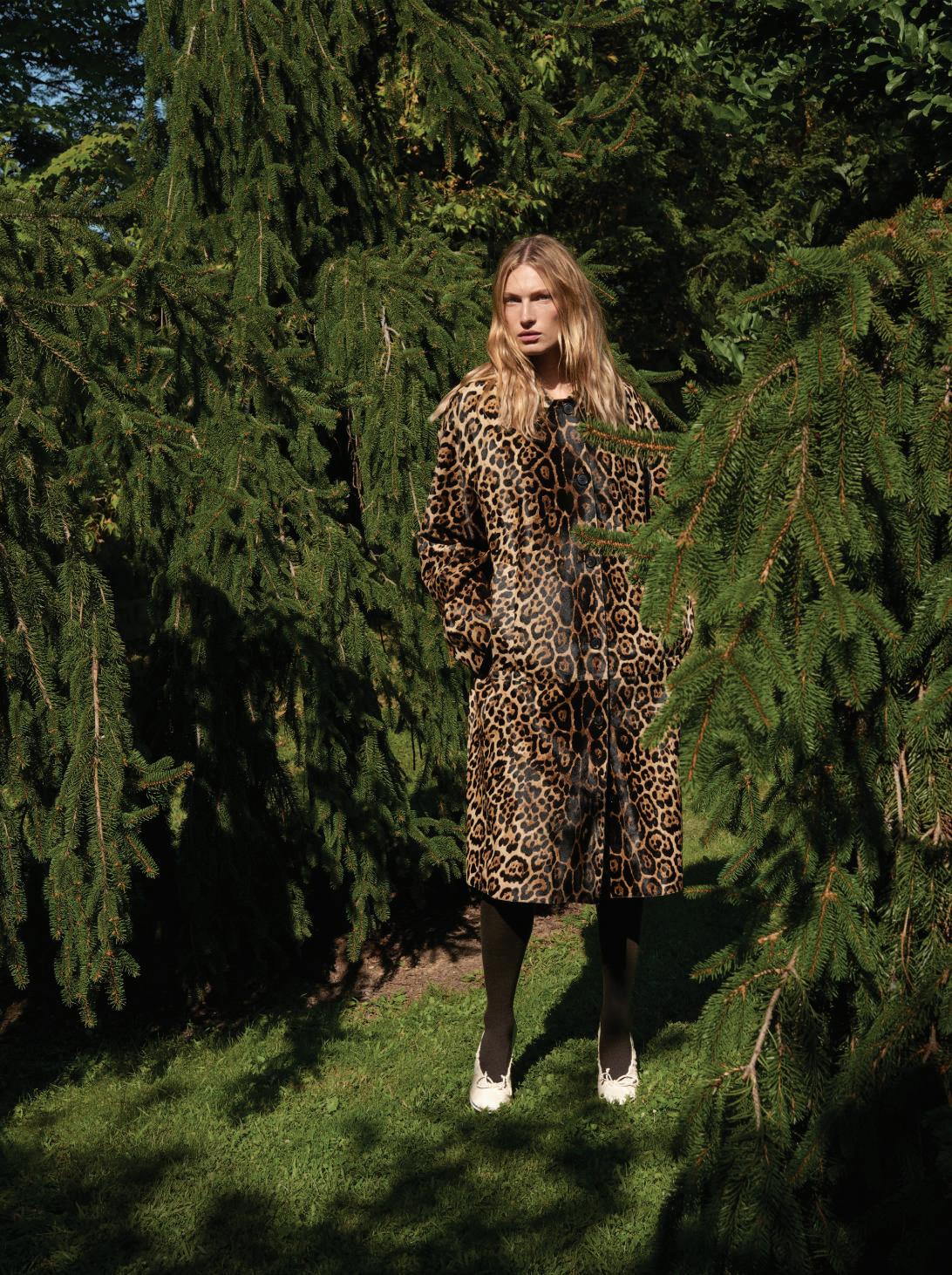
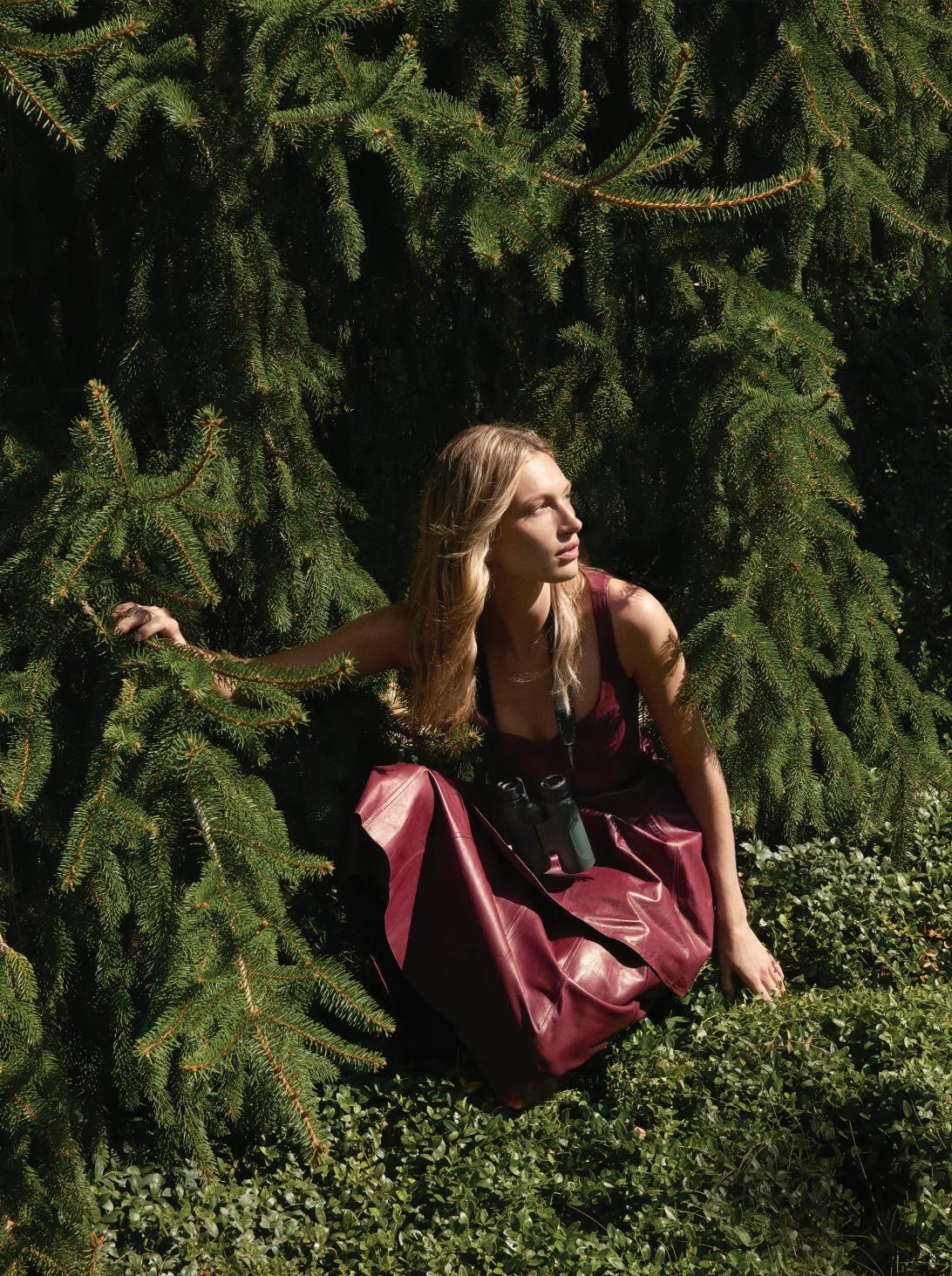
At home in upstate New York, the American photographer explores his own backyard, shooting close-ups and sending drone cameras over its wildflower meadow, shrub garden and spruce grove.A landscape 30 years in the making, it serves as the perfect backdrop for a serene interplay between nature and fashion, where garments reflect the beauty and tranquility of the surroundings.


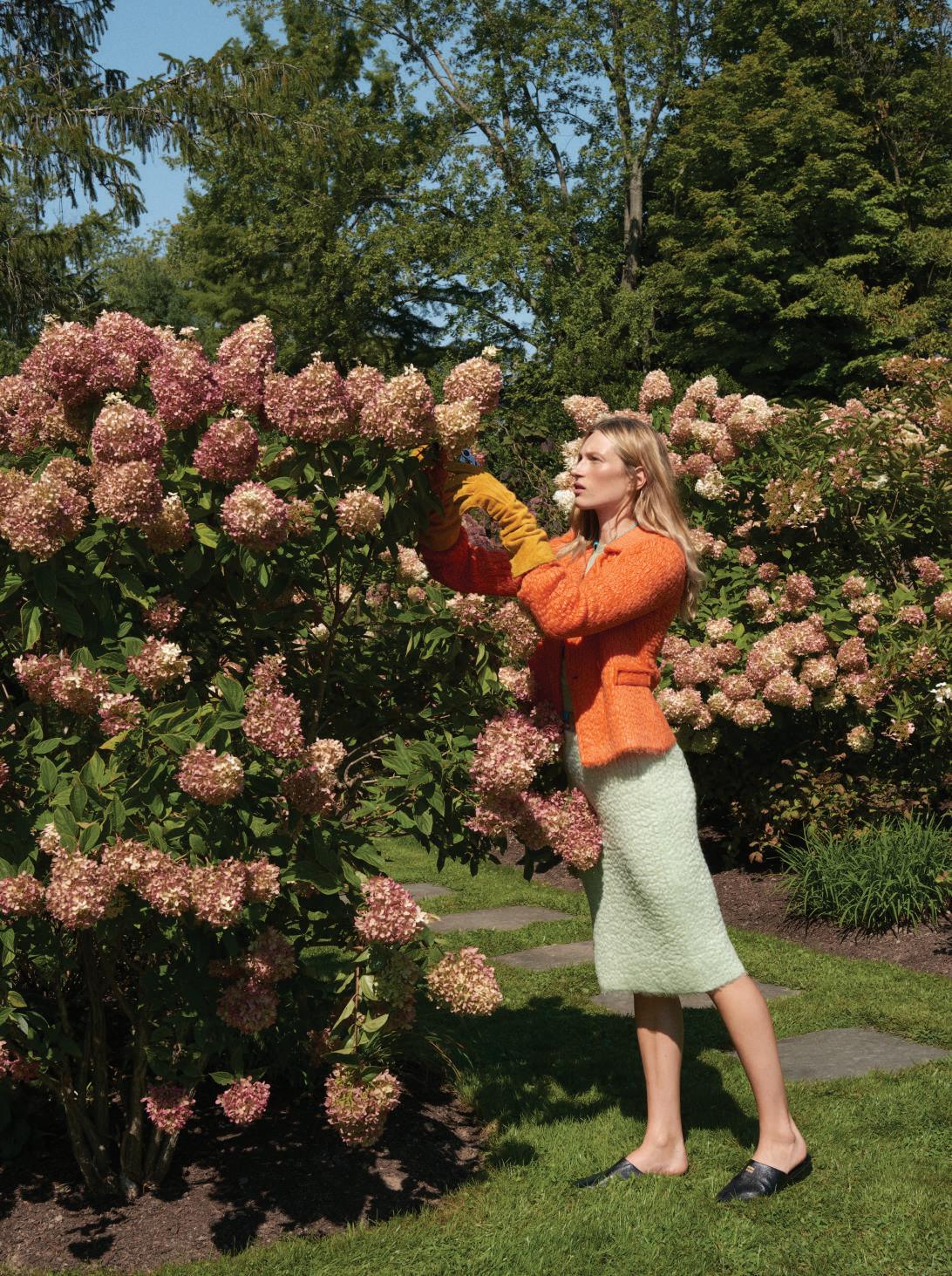
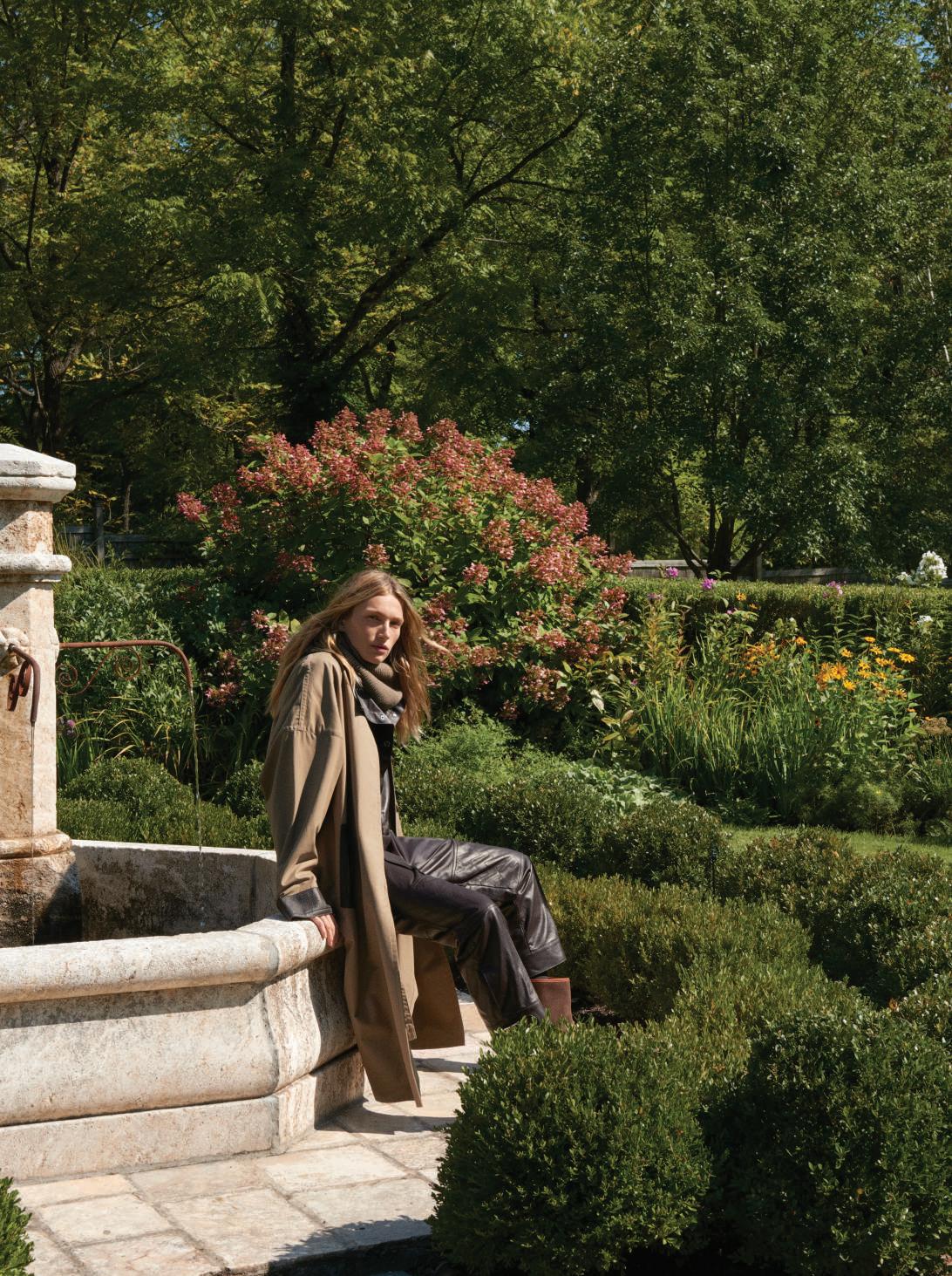


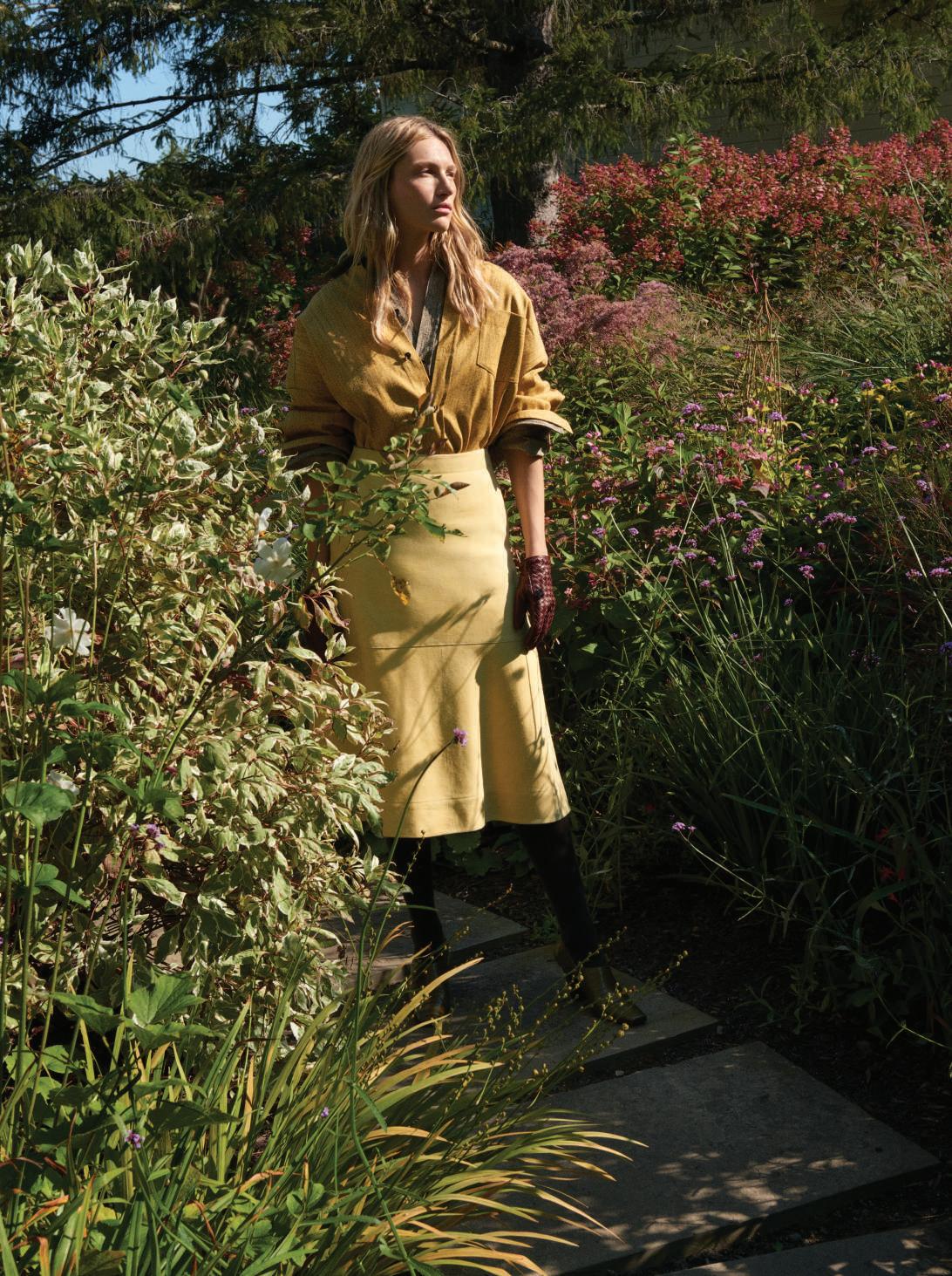
nature’s palette
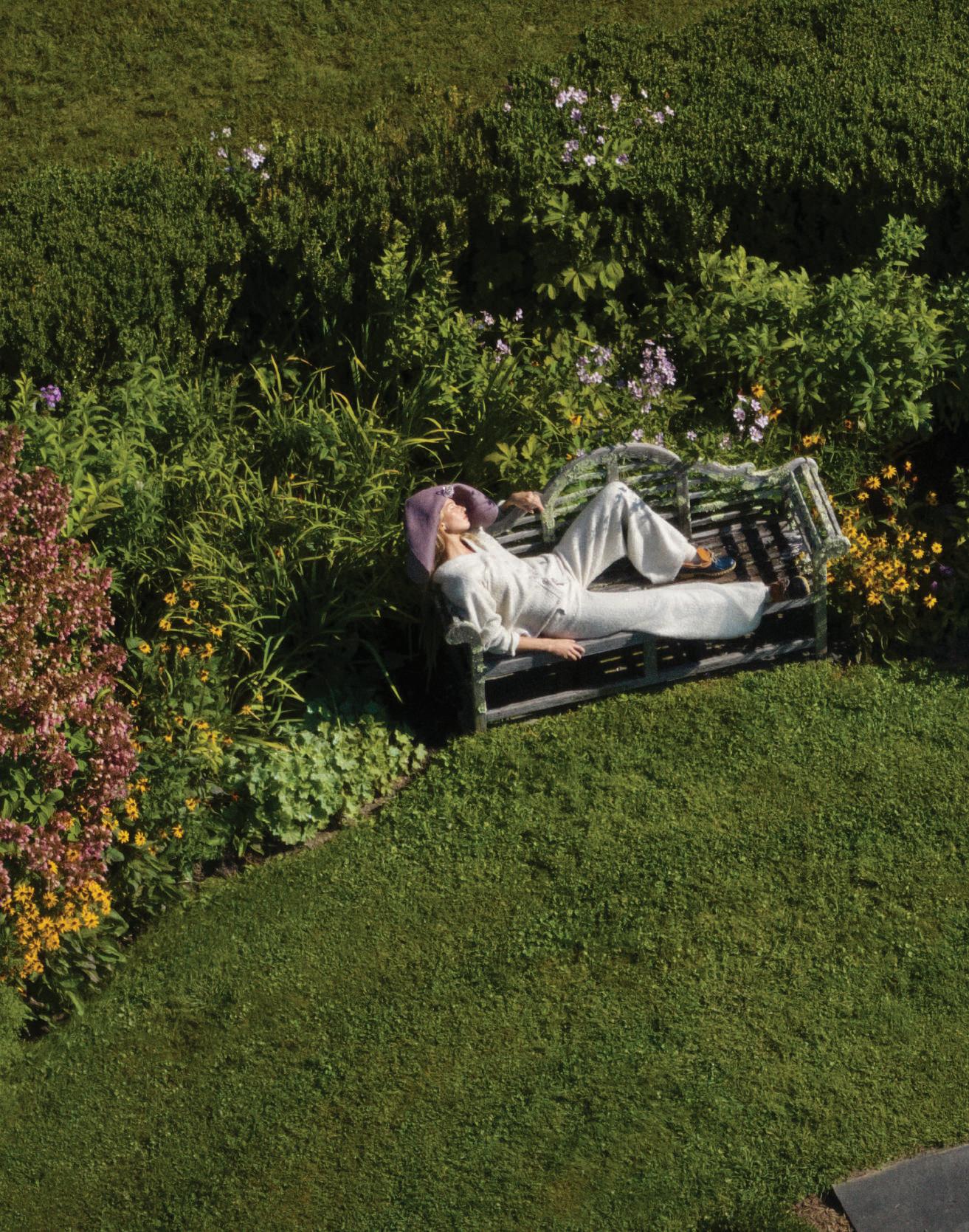

in full bloom


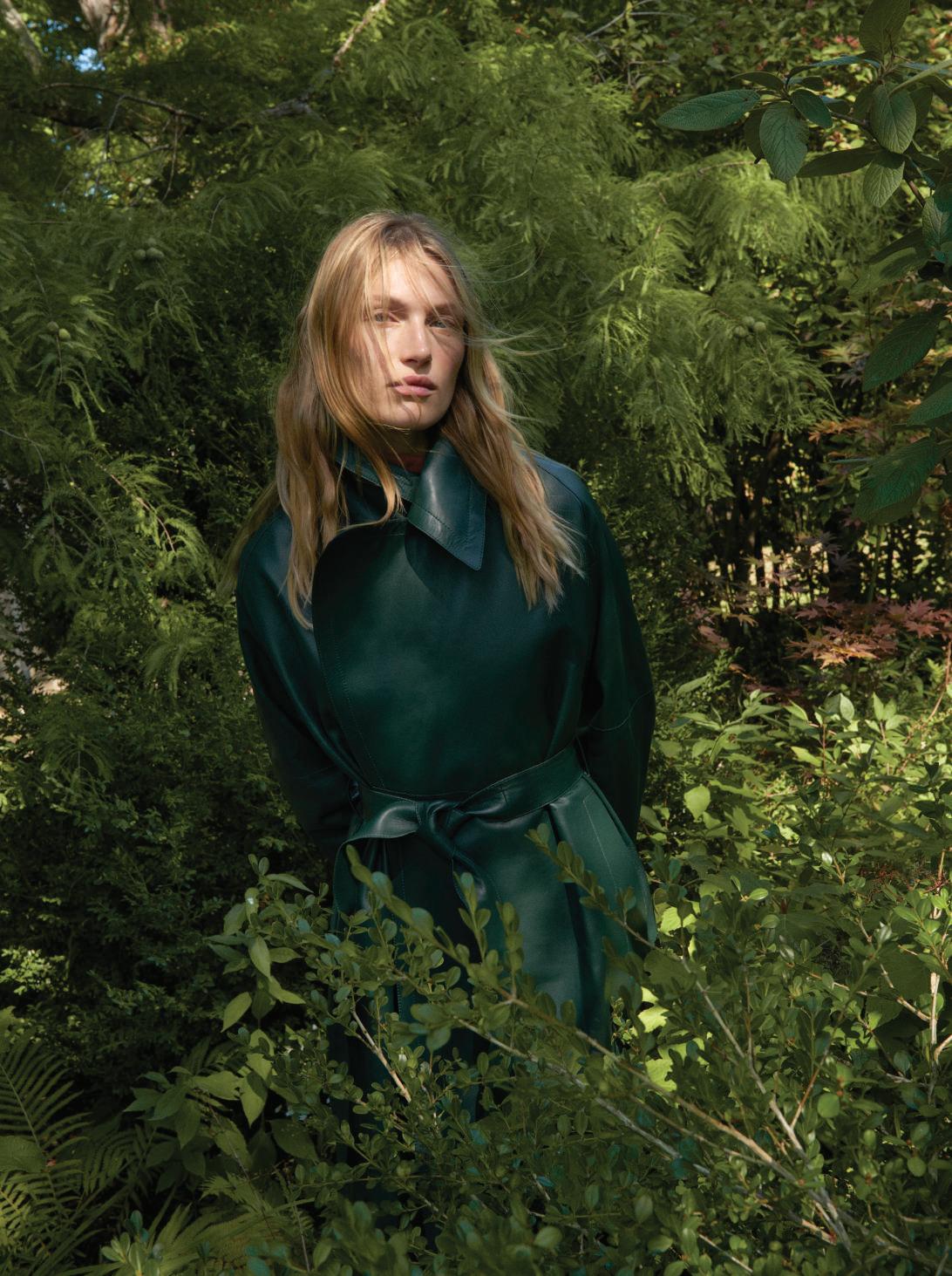
botanical beauty
Lafayette 148 coat. Opposite: A patch of buttercups and Siberian iris. Model, Liz Kennedy at DNA Models; hair, Erol Karadag at Management Artists; makeup, Courtney Perkins at Frank Reps; casting, Julia Lange Casting at Art Partner; production, Creative Chaos; post-production, Gloss.
BY JAMES HALDANE PHOTOGRAPHY BY SEAN THOMAS
Tom Brady, the greatest quarterback of all time, is a collector of more than game triumphs and titles. For decades, the NFL legend has been preserving historic memorabilia from his unparalleled career, alongside an exceptional collection of watches. Now, for the first time, he’s ready to share, in an auction at Sotheby’s New York.
incollecting,asin sport,timingiscrucial. They are both games of talent, preparation and chance. If you don’t bid today, will you have the opportunity again? The timing of the release of items from a collection, though, often requires even greater decisiveness and carries stronger emotional charge. For many collectors, from blue-chip behemoths to those with passions in other fields, the move is executed once their career has entered its twilight.
Tom Brady is not that guy. At 47, the legendary former quarterback of the New England Patriots and the Tampa Bay Buccaneers has more irons in the fire than ever, not least as the part-owner of no fewer than four sports teams: England’s Birmingham City, the Women’s NBA’s Las Vegas Aces, the Major League Pickleball’s Las Vegas Night Owls club and Team Brady of E1—a new all-electric powerboat racing series. The seven-time Super Bowl champion retired, after one false start, less than two years ago, and has already taken on a clutch of new challenges, including debuting this September as an expert commentator
for the NFL on Fox Sports. His collections are similarly alive, evolving and—on the fine art front—growing, as he continues to intersperse works by Richard Prince, George Condo and Jean-Michel Basquiat among the family photos on the walls of his Miami home.
Brady is also making the tough call to let go of more than 40 items of memorabilia and watches linked to his career on and off the field. The sports items encapsulate highlights from his 23 professional seasons, from the shirt he wore during the 40-yard dash at the NFL Scouting Combine in 2000 to the ball with which, in 2021, he set another NFL record with 80,560 passing yards to his name. This is almost unheard of for a sportsman of Brady’s caliber, especially while virtually still warm from the field. So what is his motivation?
The move to Florida after signing with the Buccaneers in 2020, prompted reflection: “I kept everything for so long—when I got to Miami and moved into my house, I wanted to sort through and see everything I had.” The items begin in the years
that he spent from 1995 to 1999 with the Wolverines at the University of Michigan.
In characteristic fashion, Brady’s last game with the team, as a fifth-year senior at the 2000 Orange Bowl, was the best performance of his college career. The Wolverines were pitted against the Alabama Crimson Tide and, at the end of regulation, the teams were tied at 28, leading to the first Orange Bowl game ever to reach overtime. Brady scored the winning touchdown, unlocking a 35-34 triumph.
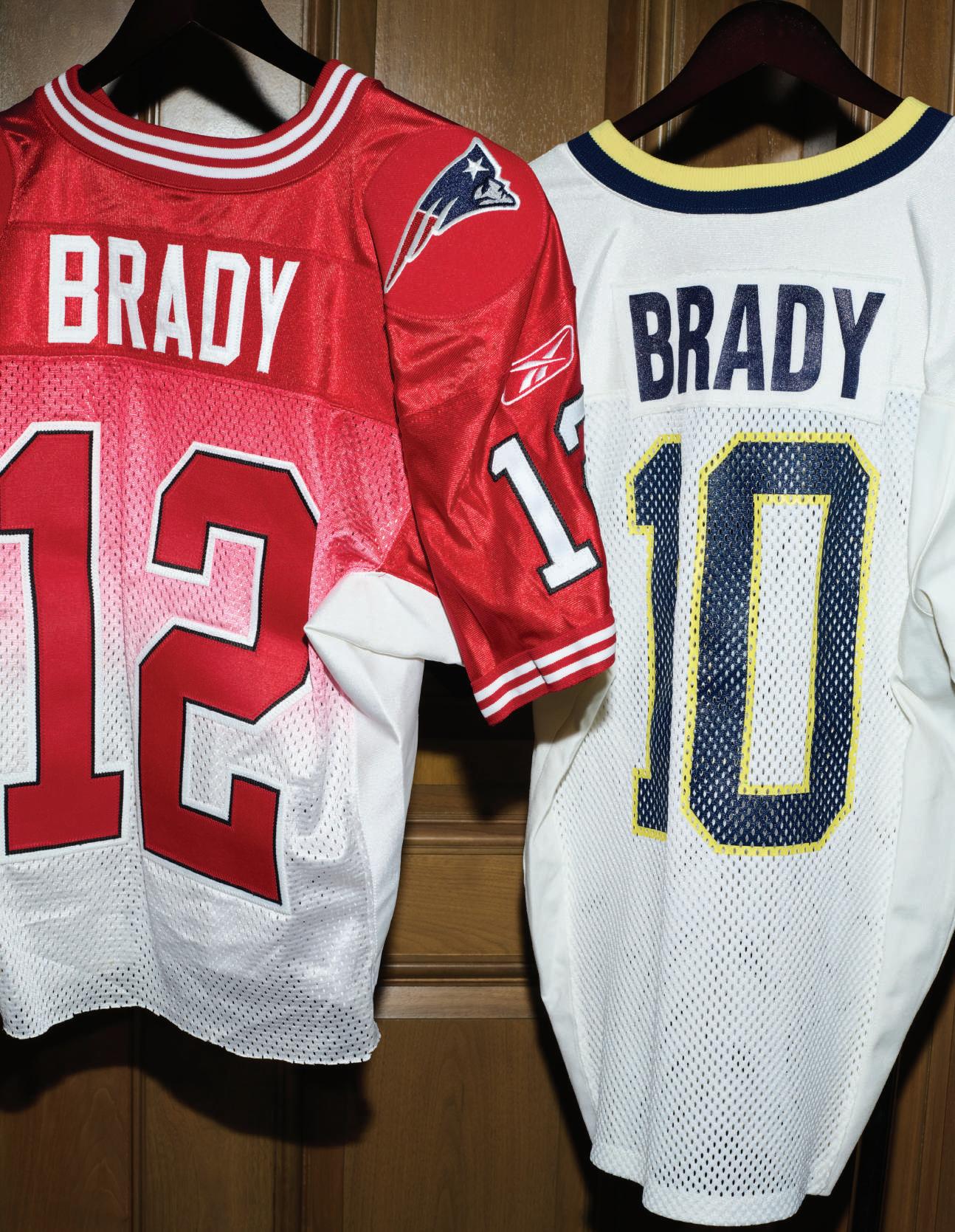
He sees his jersey as speaking to the longer journey, leading up to the game and since. “What’s amazing about a jersey is you wear it all season,” he tells me. “It has blood, sweat, tears and incredible memories embedded in the fabric. My Orange Bowl jersey is particularly special to me. This win and performance springboarded me into a 23-year NFL career, now broadcasting and hopefully NFL ownership. Looking back, this was the defining moment in my college career.”
After this burst of greatness, Brady’s rise was meteoric. Next came the 2000 NFL Draft, at which he was a sixth-round

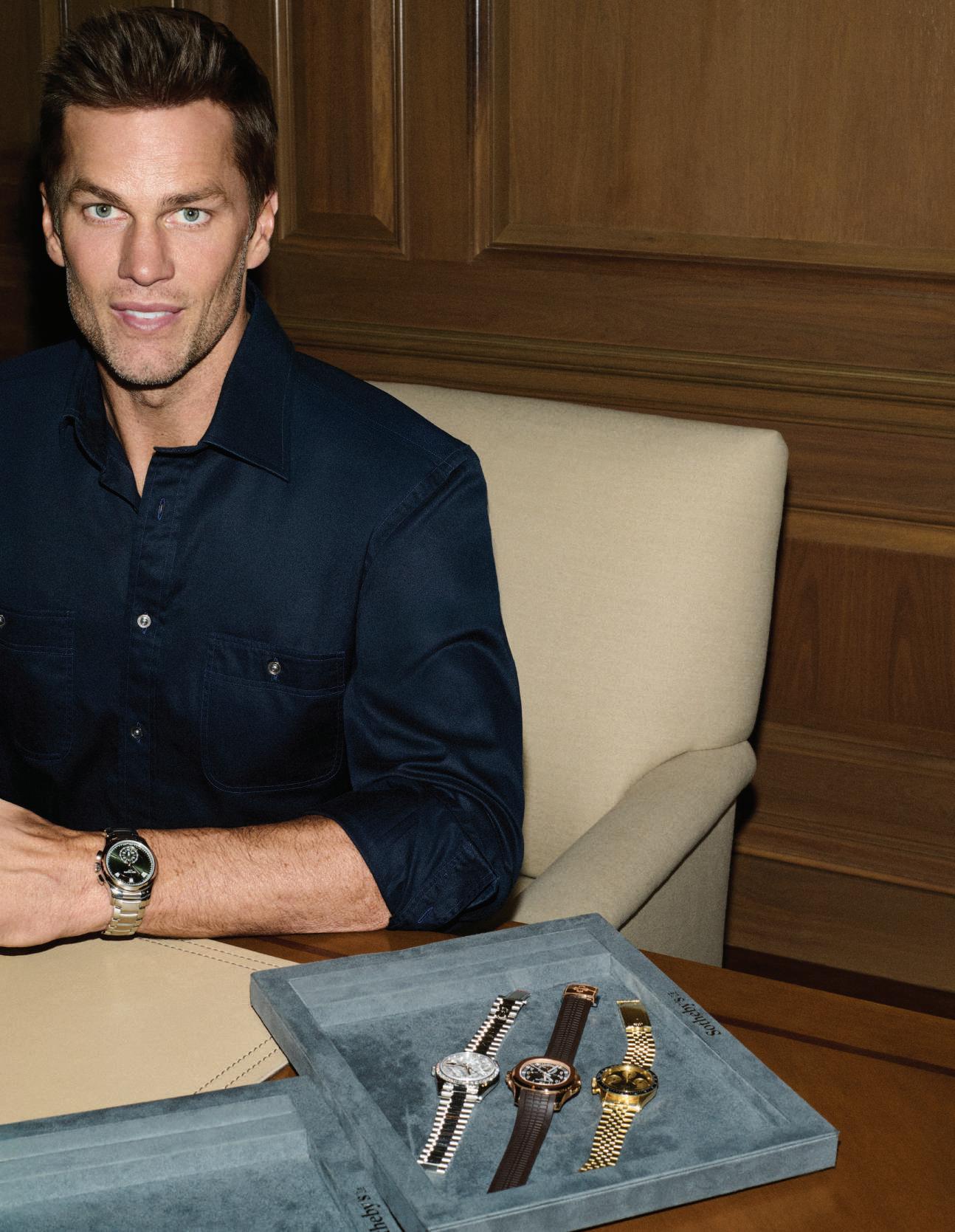
Brady in Miami, Florida, wearing a Patek Philippe watch, with two Rolexes and another Patek Philippe on the desk. All watches are being offered for auction. Opposite: Two of Brady’s jerseys. The red was worn for his 2002 Pro Bowl debut, the white for the 2000 Orange Bowl, his final game for the Michigan Wolverines.
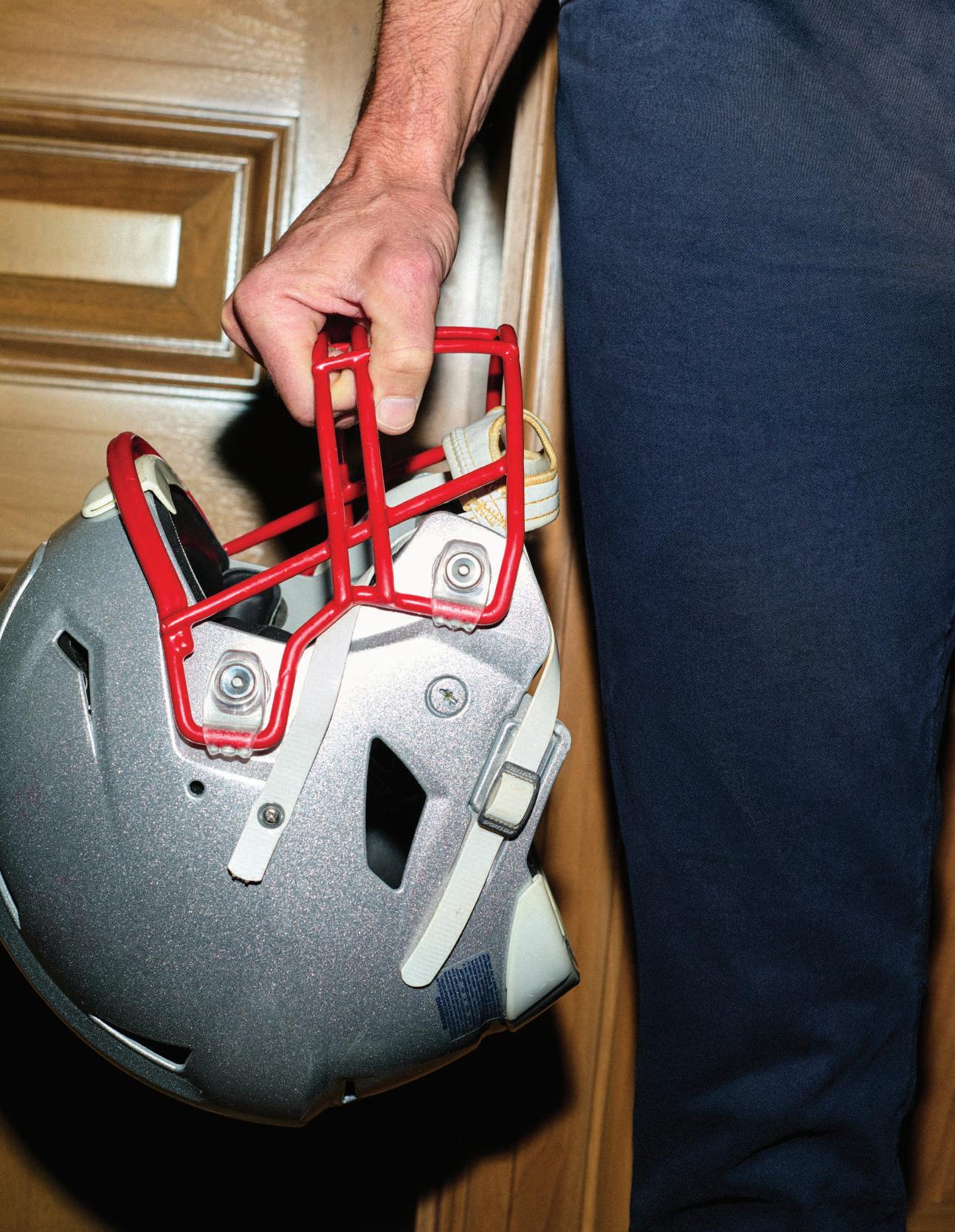
The
Brady wore to practice at a local Florida high school during the
pick for the Patriots. During ESPN’s segment on the event, resident draft expert Mel Kiper said: “[Brady] throws a very catchable ball.” It was an enormous understatement. Joining as their fourthstring quarterback, Brady led the Patriots to a 20-17 victory in Super Bowl XXXVI and became the youngest quarterback to win Super Bowl MVP at the time. Today, he holds the record for the most passing yards, completions and touchdowns in NFL history.
The shirt worn while running the 40-yard dash at the draft— another full of memories—is included in the sale, alongside the jersey worn at the 2002 Pro Bowl. “Getting recognized by your peers to play in the Pro Bowl to me was setting a different standard,” he says.
“You are recognized as one of the best players in your position and being rewarded for the time and energy that goes into your career.” He went on to play at 14 more Pro Bowls and holds the record for most selections to the game, one of endless accomplishments that Brady has achieved in his career.
Underpinning his success is hard work, a strict regime and investment in teamwork. Another item in the collection speaks to the final point— Brady’s quarterback play-call wristband with the Patriots’ plays from Super Bowl LI in 2017,whentheteamtriumphed against the Atlanta Falcons.
Down 28-3 at halftime, the Patriots recovered to win the game in the largest comeback in Super Bowl history.
“MyparentsboughtmeanOmegawhen I graduated high school,” Brady says. “It’s a significant event to receive your first watch.” Explaining his early collecting aspirations: “I thought that when I made it in the NFL, I’d buy myself a nice watch. At college, my screensaver was an IWC GST Automatic alarm. It wasn’t until I won my first Super Bowl in 2002 that I went to Tourneau on 57th Street in New York and I bought that watch, as well as a Panerai Luminor Marina and an IWC Rattrapante. I still have those watches now.”
Piguet, Michael Friedman, and figure out what you want to come up with?’”
They started with the dial, then Bennahmias encouraged Brady to add a diamond bezel to create a true one-of-one. “At the time, I was like, ‘We’re not doing that,’” Brady says. “He convinced me to do it, and I wore it for the Netflix roast, which was such a fun event.” Access to one of the world’s finest watchmakers is quite rare, even for those with his stature. Ironically, there have been times in recent years when far more basic customizations were not possible. Brady signed with the Buccaneers in March 2020. “I couldn’t get a helmet made because it was during Covid.” he recalls. His solution to practice on a local high school field was to remove the Patriot decalsfromanexistinghelmet. “IlaughwhenIseethathelmet. I wore it for an entire offseason, and it was a big part of the end of my playing career.”
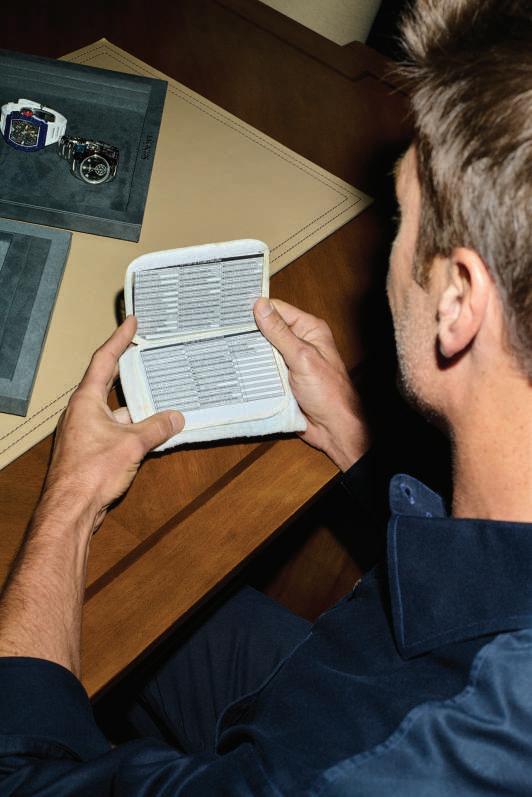
More than Most will realize, watches have been a big part of Brady’s journey. “Over the years, I’ve figured out what my style really is, and it doesn’t have to be what everyone else wears,” he says. His collection is no secret—in 2020, alongside singer John Mayer and LVMH Luxury Ventures, the group’s venture capital arm, he invested in Hodinkee, the influential e-commerce platform for new and vintage watches—but many will not know how early his interest began.
This makes the release of one of his most publicly known watches—a custom Audemars Piguet Royal Oak worn for the Netflix special, “The Roast of Tom Brady” in May 2024—even more special. The salmon-dialed wrist piece came into Brady’s hands in the most unusual way: “My friend [former Audemars Piguet CEO François-Henry Bennahmias] texted me out of the blue and said, ‘I want to create something for you. Why don’t you work with my friend and designer at Audemars
With the next chapter in mind, Brady is editing his treasure trove. “I’m not the first person to say this, but as you get older, you understand that timeiseverything,”hereflects. “Where you put your energy is a direct reflection of your values.” Choosing items has been tough, and there is much he will never part with. Pressed on his most-prized item, he answers instantly: “My Super Bowl LI jersey: It signifies the biggest comeback in Super Bowl history. To me, it’s the grail of all pieces, and will be in my collection forever.” But Brady also has generosity as a focus, a desire to share with the fans who have supportedhim.“I’msignifyingastepoutofmy playingcareer,andrecognizingthatothers will cherish these items the way I value the ones in my collection,” he explains. “This is the only time this will happen, so hopefully people will take advantage of the opportunity to put something so meaningful of mine into their own collections.” •
“The GOAT Collection: Watches & Treasures from Tom Brady” will be held on December 10 at Sotheby’s New York.
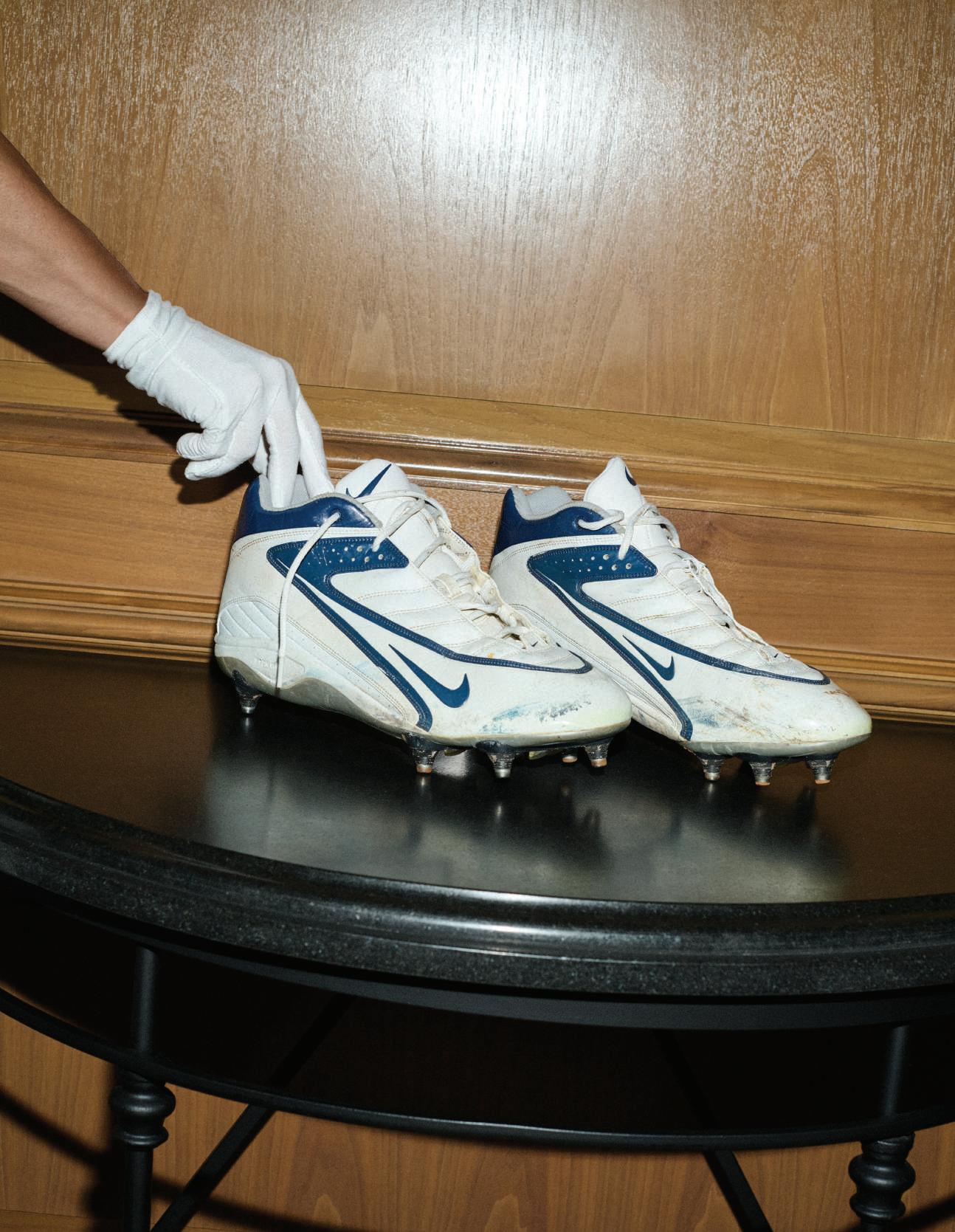
“Being back in Florida for the first time, I thought I would try to hide my identity for as long as I could and be able to get work done with no one recognizing me.” Opposite: Brady’s cleats from Super Bowl XXXIX in 2005, at which the Patriots defeated the Philadelphia Eagles, 24-21. Grooming, Alix Boutilier.
BY
Designer Michael S. Smith’s Mallorca retreat mixes creature comforts and old-world handicrafts to splendid effect.
Pedalingtofourth gradehomeroom through Newport Beach, California, Michael Smith would stop his bike on a steep hill and find himself engulfed in fog and the heady smell of eucalyptus. He recently experienced the combination on Mallorca, the largest of Spain’s Balearic Islands. “The heat and fragrance and ocean—that’s what Mallorca is like too,” Smith says, conjuring the moment of freedom of being nine years old, at the helm of a bike. “It’s a paradisiacal version of California. It’s not the South of France.”
Now one of the world’s best-known decorators, with clients from a U.S. president to Hollywood power brokers, Smith has found part-time respite on Mallorca, where he and his partner, James Costos, recently took up residence. They’re in good company: Over the past decade, the Balearic real estate market, of which Mallorca comprises roughly 75%, has nearly tripled in sales volume, driven by an influx of northern Europeans, Scandinavians
and Americans seeking a playground that isreliablysun-soakedthroughouttheyear.
“We’ve been lucky enough to visit in everyseason.Eachisbeautifulandunique in its own way,” says Costos, who grew up in Lowell, Massachusetts. “But winter is something special—if you happen to catch a snowfall dusting the old villages and orange trees, it’s incredibly poetic.”
Smith and Costos didn’t need another place to live. They already had four: in LA andRanchoMirage,California;NewYork; and Madrid. But the busier their lives got, the harder it became to resist another. “Our houses are these abstracted vessels for a life I don’t have,” says Smith, who has been known to equate his profession to that of an emergency room doctor. “Life is just permeable, and there’s no end.”
Maybe a few weeks on a windswept island in the Mediterranean would help?
Finca Xarbet, a courtyard house on 135 acres, popped onto their screens in summer 2019. When their offer—at ask-
ing price—was accepted, they weren’t surprised. The property had been on the marketforyears,andtheownerhadrented it out now and then, at one point to Costos and Smith. At the time, Costos, a former HBO exec, was serving as U.S. ambassador to Spain and Andorra under President BarackObama.Whilecommutingbetween LA and Madrid, Smith—fresh off a stint as the official interior designer for the Obama White House—took on a redecoration of the ambassadorial residence on Madrid’s Paseo de la Castellana. And in 2017, after Costos followed Obama out of office, Smith began transforming the first of two Madrid apartments into a setting where the couple could maintain the social life to which they’d become accustomed.
“Did I add a half-cup of the ‘making an embassy’ idea into the Madrid apartments?” asks Smith, whose new book, “MichaelS.Smith:ClassicbyDesign,”features these interiors. “Maybe. But hosting and entertaining are so joyful for me.”
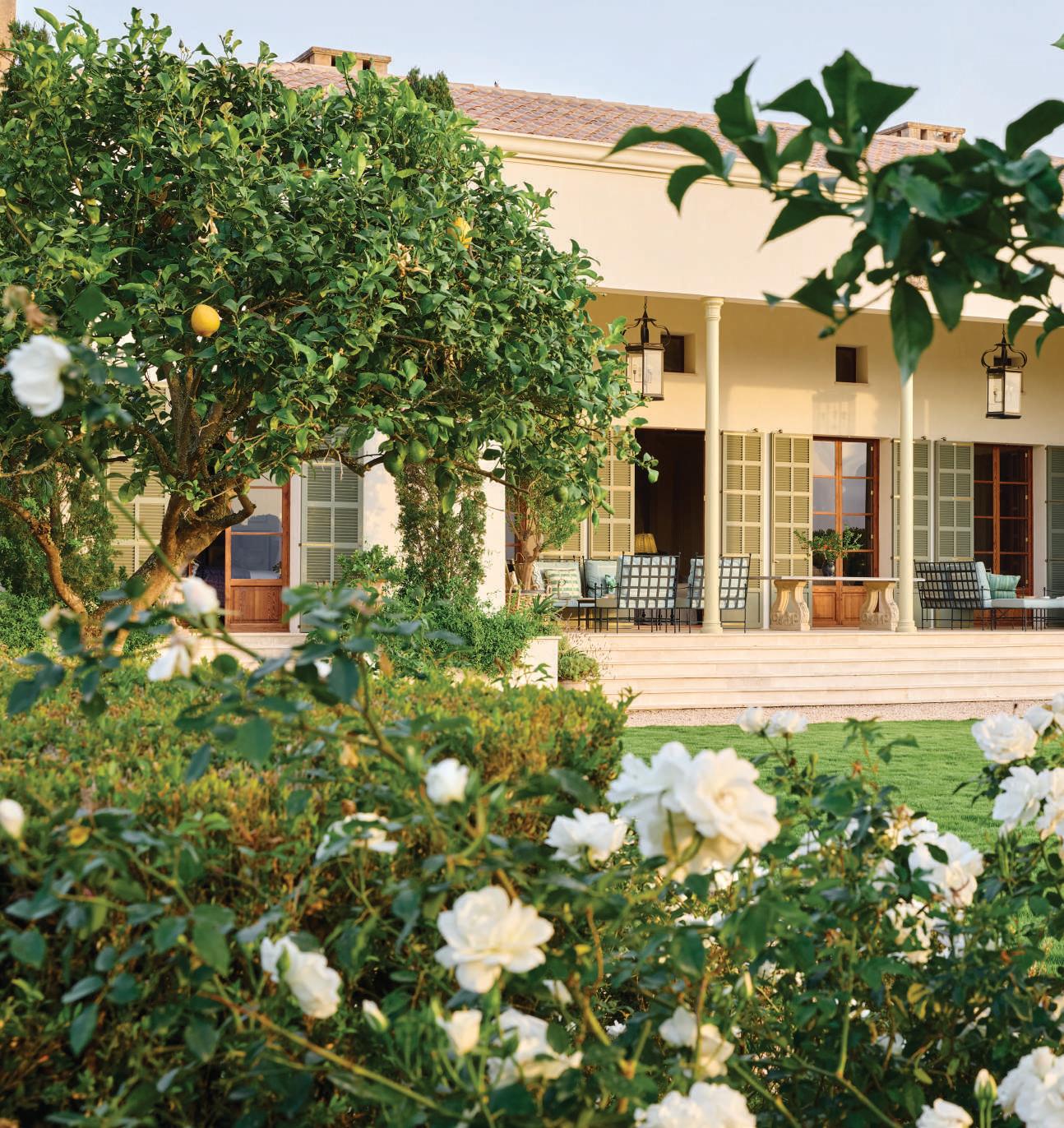
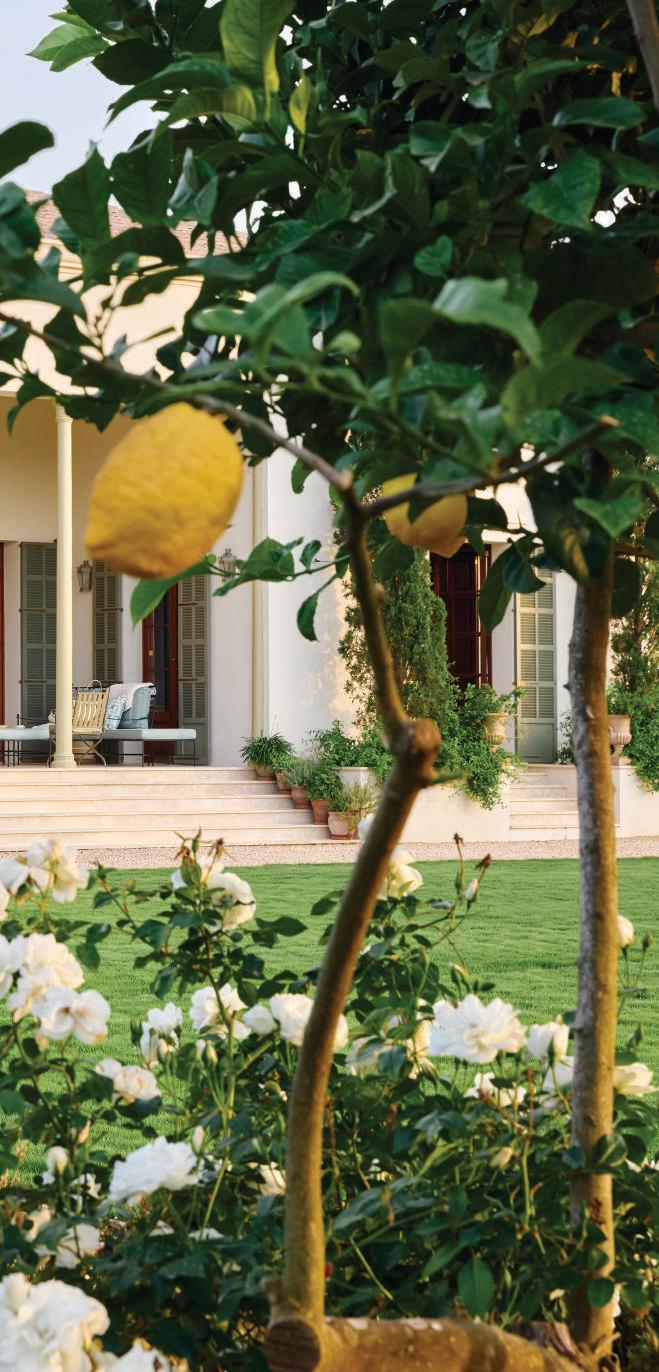
With seven bedrooms and a hangar-like living room surrounding a pebble courtyard, the Mallorca house seems, above all, like a new opportunity to welcome a rotating cast of houseguests. Madridbased architect Pablo Carvajal designed the single-story villa in 1993 for his sister, who took on the rock-strewn landscape as her personal cause, laboring for years to transform it into a series of fruit and olive orchards around a heavily cultivated inner sanctum. Smith has added mirror-image parterres of snowy shrub roses, an elegantly stepped water cascade, pea gravel paths for after-dinner strolls and a boxwood maze modeled on the 300-yearold example at England’s Hampton Court Palace, all ebbing into a native landscape that extends to the hem of the property.
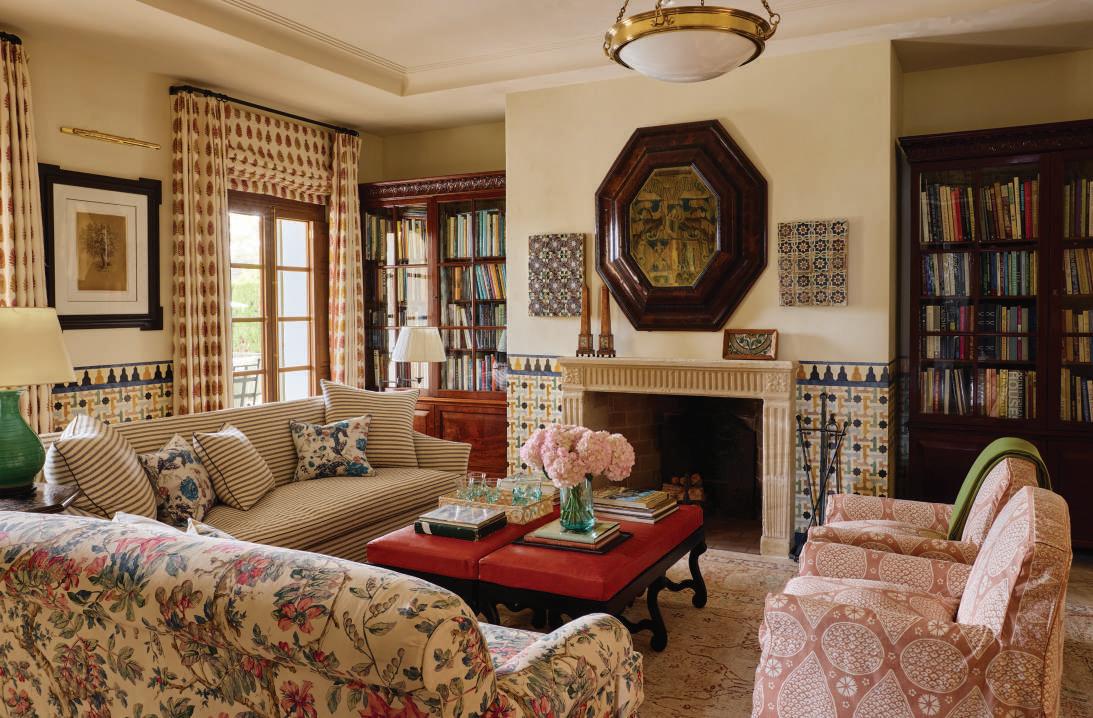
Addressing the interiors, Smith admits, amounted to one big scroll through his mental inventory of the country’s most eye-catching rooms. “It’s not a small point that, until this past spring, you weren’t
allowed to take photos inside Spanish historic houses” he says, with a drop of indignation. “If you think of William Randolph Hearst, who had such a profound impactonSpainbecausehewouldbuypalaces, dismantle them and take them back to Hearst Castle—I did that mentally.”
It’s worth noting that cultural appropriation in the decorative arts has been going on as long as there has been another culture to appropriate. What Smith has done in Mallorca is closer to cultural reappropriation, to the extent that he has tracked down centuries-old Spanish workshops— some the original suppliers to the grand palaces that kindled his flame in the first place—and commissioned them anew.
In Seville, Smith worked with the decorative arts consultant Patricia Medina Abascal and a group of local artisans to reproduce examples of azulejo, the jewellike Hispano-Moresque tiles that distinguish the Casa de Pilatos, the city’s revered 16th-century palace, with layers
of opulent pattern. On a tour of historical Mallorcan churches one weekend, Smith was surprised to find some of the same motifs on their pockmarked walls. (Collector Howard Marks, a longtime friend and client, has compared Smith’s visual recall to an IBM image bank with “infinite random-access memory.”)
Adistinctivetilepatternappearsineach of the villa’s bathrooms, all redesigned by Portuguese architect Alexandre Gamelas of A.G.C.S. Arquitectos to highlight the voluptuous glazing effects. More than any other element in Finca Xarbet, this vocabulary of tiles opens up a conversation with the island’s polyglot history.
Another trip to Seville introduced Smith to brothers Jerónimo and Manuel Seco-Velasco, goldsmiths whose archive of 17,000 metalwork patterns documents centuries of Iberian smithing traditions. Their luminous chalices, urns and crosses can be seen at the head of the city’s annual Holy Week processions. For the villa,
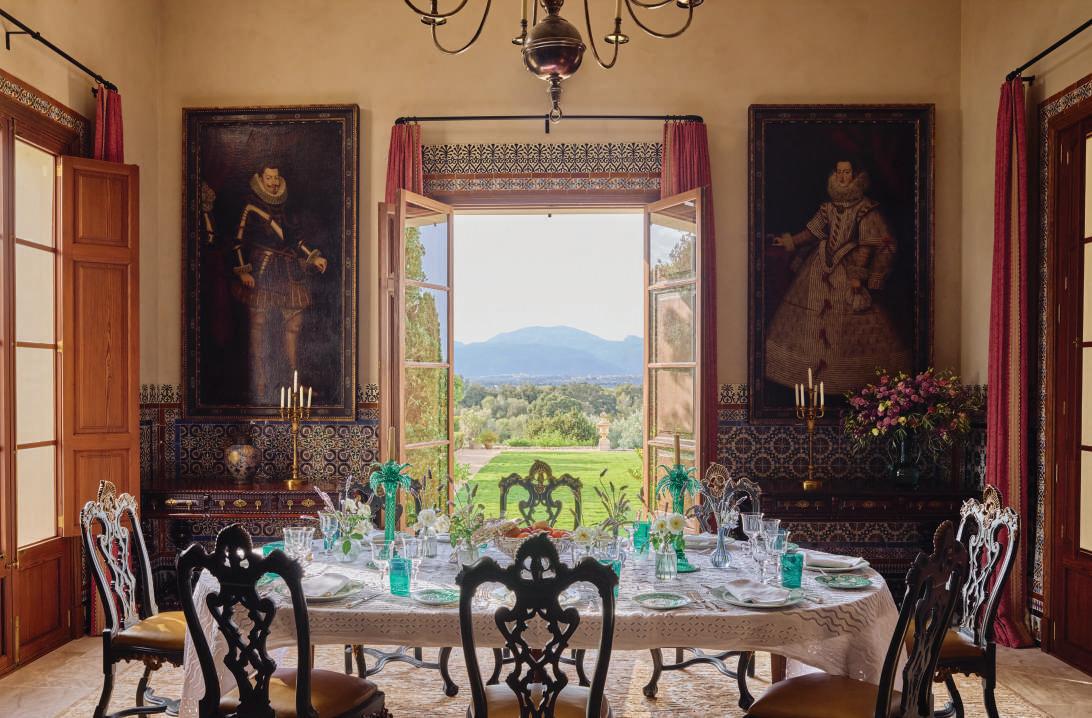
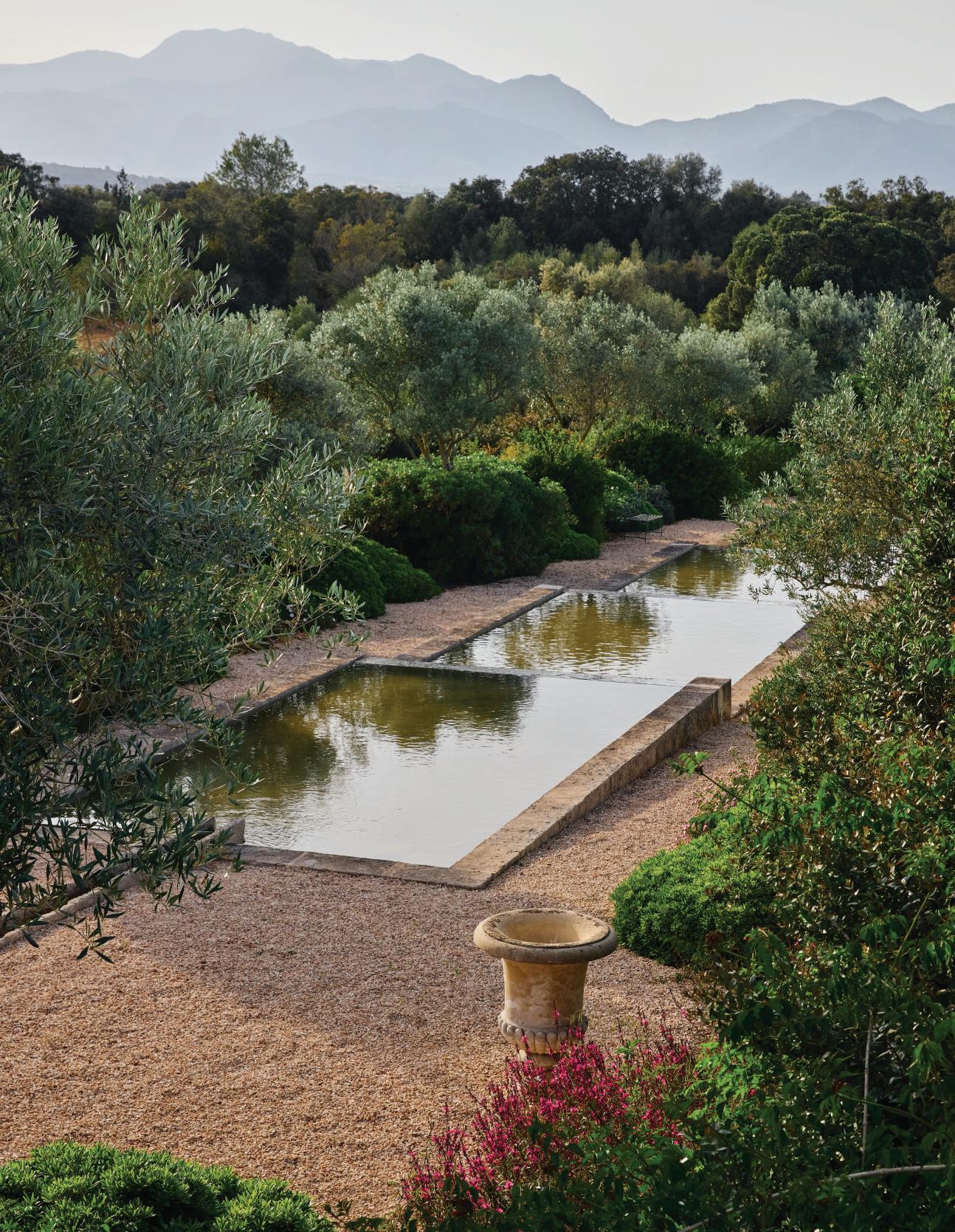
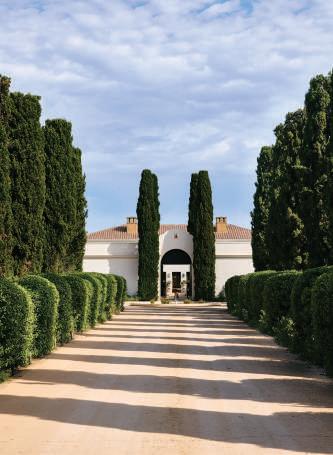
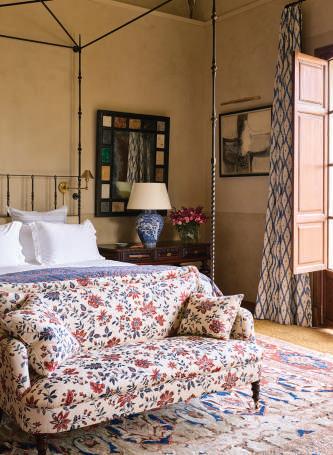
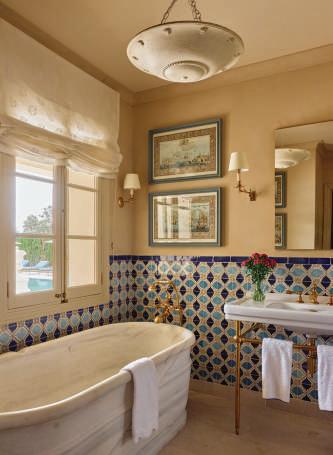
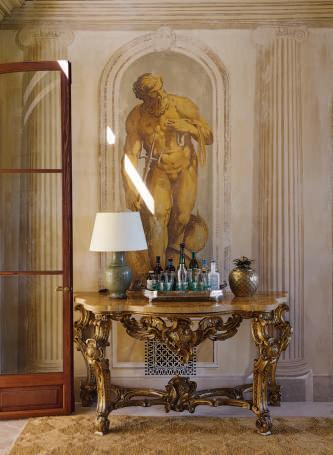
Top row, from left: The tree-lined driveway. In the primary suite, a George Smith sofa cozies up to a Gregorius Pineo bed frame; the lamp is from Smith’s Jasper line and the artwork is by Antonio Suárez. Middle row, from left: A solid marble tub and Volevatch wash stand in the primary bathroom. An Italian rococo console stands in front of a fresco by Reese Studio in the living room. At the foot of a guest bedroom’s canopy bed, covered with a Namay Samay print, sits a 17th-century Spanish walnut coffer; the papier-mâché wall panels are by Casa Gusto. Bottom row, from left: In the primary suite, a wooden daybed is covered in handwoven Artesanía Textil Bujosa fabric and the carpet is vintage Chinese. A guest bathroom features a tub lined with hand-painted tiles from Seville. Left: A series of reflecting pools.
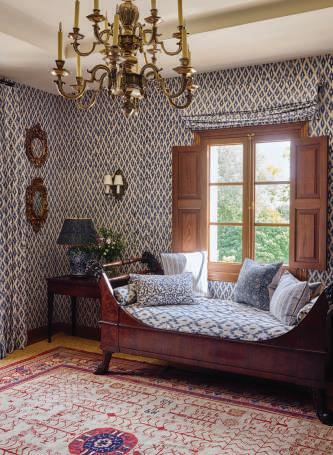
“All these portraits say,‘We dare you not to believe this is a historic house— we dare you.’”
—Michael S. Smith
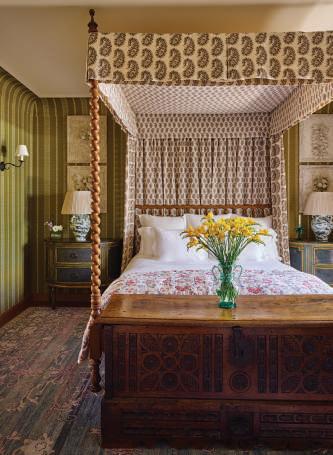
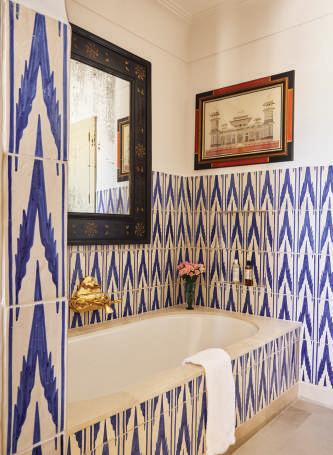
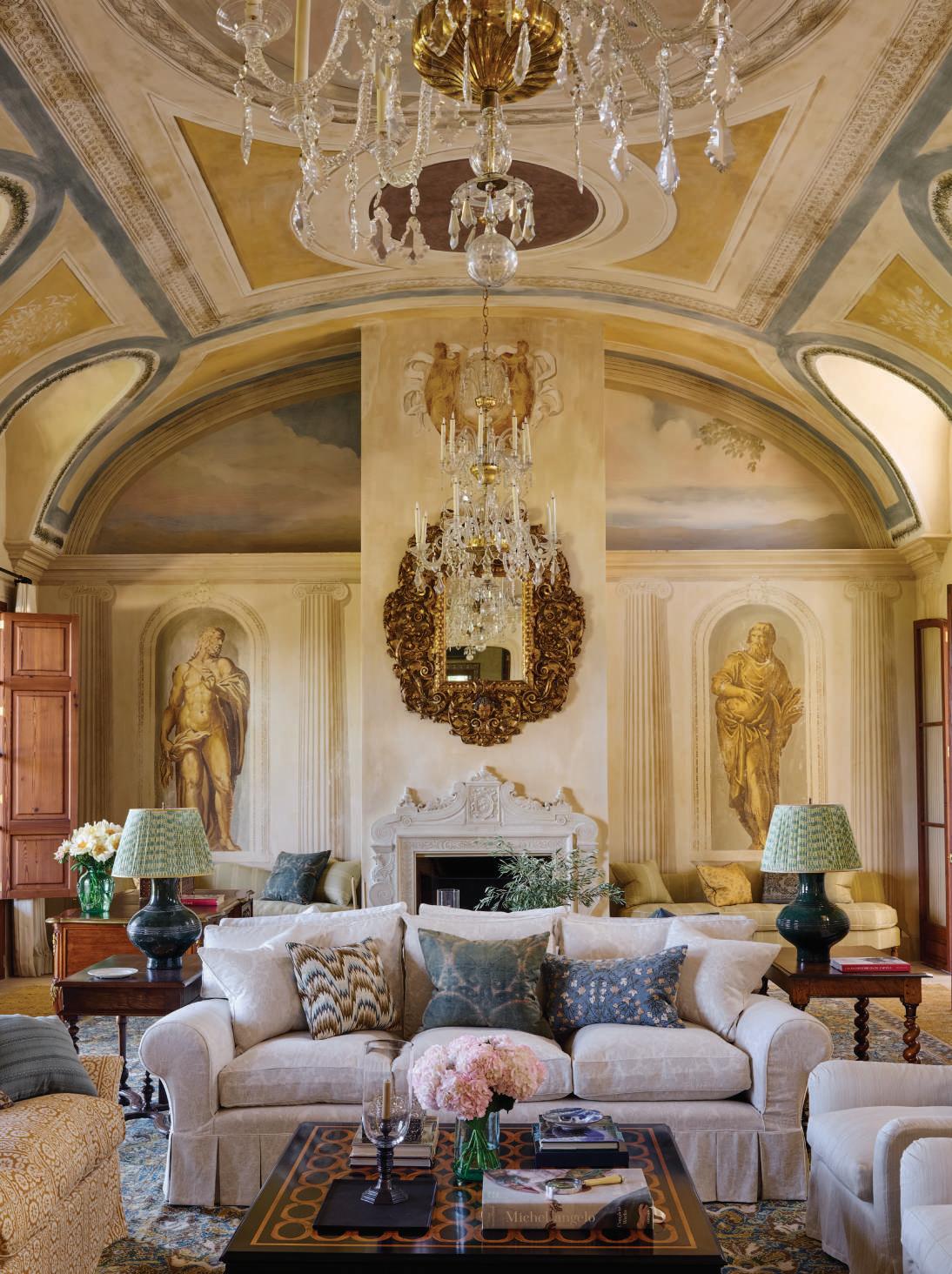
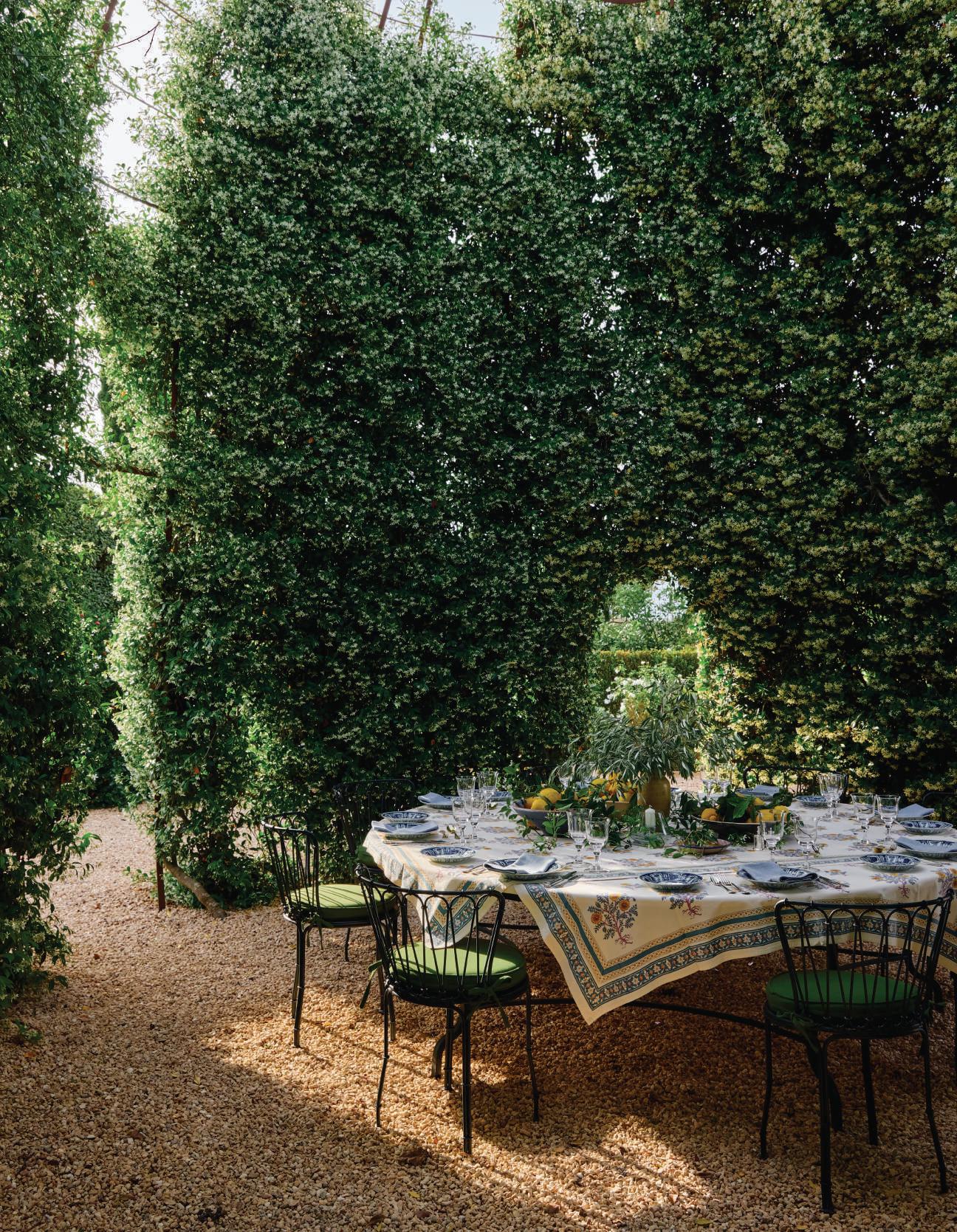
the brothers crafted crystal chandeliers and elaborate bronze grates and grilles.
Unsurprisingly, Mallorcan sources are among Smith’s favorites. Artesanía Textil Bujosa in Santa Maria del Camí provided rustic, boldly patterned cottons, while Vidrios Gordiola, near the capital city of Palma, made handblown glassware. And everpresentinSmith’sprojectsarecontributions from his friends in the trade: Will Fisher of Jamb London, who replicated— down to centuries of deposited grime—a marble mantel Smith had admired, and Carolina Irving, who custom-colored her printed fabrics for bedroom walls.
Some of the splashiest pieces in the house come from the estate of John Nelson, an LA dealer who, until his death in 2021, excelled at prying mansion-scale antiques from collections across Europe. An early 18th-century baroque giltwood mirror over the living room fireplace is one of Smith’s favorites. At the opposite end of the spectrum are glass tumblers from Zara Home, repurposed as votive
candle holders—he loves to trifle with high and low—and a rococo headboard he found in Madrid for $1,200 and retrofitted with a bed frame.
Picking up on Mallorca’s early allegiance to Rome, the designer had artisans paint an homage to the frescoes of Andrea Palladio’s Villa Malcontenta in the barrel-vaulted living room, substituting Mallorcan foliage and folklore themes for the Veneto’s. If this sounds vaguely Hearstian, remember that Smith cut his decorating teeth in Hollywood and has counted filmmakers George Lucas and Steven Spielberg as clients. “These houses are like movies,” he likes to say of his work. “But you get to live in them for longer than two hours.”
The cumulative effect of Finca Xarbet is both formidable and aesthetically fluid, says the furniture designer Hervé Van der Straeten, who recently spent a weekend there with his husband, fashion designer Bruno Frisoni. Van der Straeten admires the home’s sense of grandeur and fantasy.
“It looks like an old Spanish family has been emptying out an old house,” he says, “and arrives with all their belongings in a clean and comfortable place.”
He may have in mind those high-functioning guest rooms, with their California King mattresses and wall-to-wall carpets. Smith sums up these choices as “bowing to the needs of my constituency. Not unlike [Virginia-born tastemaker] Nancy Lancaster going to England and taking Americanplumbingwithher—webrought American beds with us to Mallorca!”
While Smith jokes that he is basically a “Mr. Nobody” in Spain—“I’m something like the biggest pop star in Ecuador”—the level of entertaining he and Costos have been doing here belies that claim. The estate is essentially an open-air theater for guests, and Smith is at the epicenter of every seating chart and menu plan. “One of Michael’s great talents is to work on the big things and also the details,” says Van der Straeten, whose own post-opening dinner parties à la maison
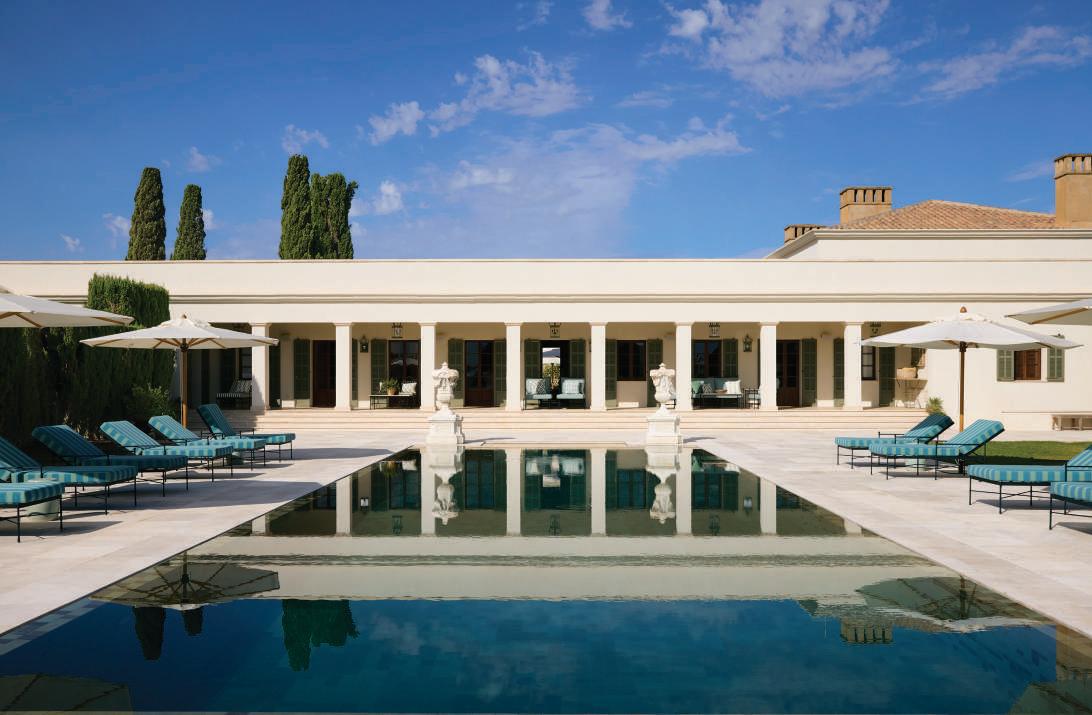
are nothing to sneeze at. “Everything is relaxed and running well, but everything is precisely curated. That is not easy.”
As Smith curates, Costos squirrels himself away with “a portfolio of projects in finance, media and philanthropy, many of which intersect with Spain,” he says.
By the time the couple put a bow on the house, in the summer of 2023, they had already previewed Finca Xarbet to a sparkling array of visitors. They intend someday to share the wealth by making the house available for longterm rentals, in accordance with Spanish law. But Smith’s party-planning services (he calls entertaining “my version of needlework”) will not be included.
Still, he has gone ahead and supplied some well-dressed extras. The house bristles with historical portraits of elegantly costumed grandees amassed at auctions and elsewhere during the couple’s time in Spain. Smith says that he finds the paintings “evocative because they’re just so
dramatic. They’re so imposing that they createanimmediatesenseofarchitecture.”
One of his favorites, which hangs in a pink bedroom, depicts Anne of Austria looking spectacularly dour in a nun’s habit. A Spanish-born princess (Philip III’seldestdaughter),AnnebecameQueen of France by marriage to Louis XIII— and, at age 37, the mother of Louis XIV. After ruling as her son’s regent for eight years, Anne retired in 1651 to a convent she had providentially established in her 20s as a sanctuary from royal life.
Smith chased the painting for years after eyeing it in the collection of British dealer John Hobbs, losing it at the last second in a 2002 auction of Hobbs’ collection, before landing it, finally, a few years ago. But where and how, he won’t divulge.
“She looks like an intense nun staring at you,” Smith says approvingly. “All these portraits say, ‘We dare you not to believe this is a historic house—we dare you.’”
As improvements at Finca Xarbet have taken hold, Smith and Costos have nur-
tured newly planted lemon and orange groves and trained jasmine over a pair of horn-shaped pergolas. In time, they hope to put the olive trees back into production and try their hands at making wine. Smith compares the house to a sundial; it tracks the day’s progress as light falls across the wild garigue and the mountains beyond. It hasn’t escaped him that, on the heels of the global pandemic’s peak, the value of inland acreage on Mallorca has risen more sharply than that of waterfront acreage: “The desired thing is space and land and privacy.”
For Smith, Mallorca will always be an echo of his Orange County boyhood. It is a cross-cultural hybrid of his old and new lives. “When you’re in fourth grade in California, you build a model of a Spanish mission out of sugar cubes—it’s sort of baked into what people think of as California,” he says. “It’s in the terrain, the architecture, the street names. I wanted to build our own version of that. I wanted to make a movie that I could be in.” •
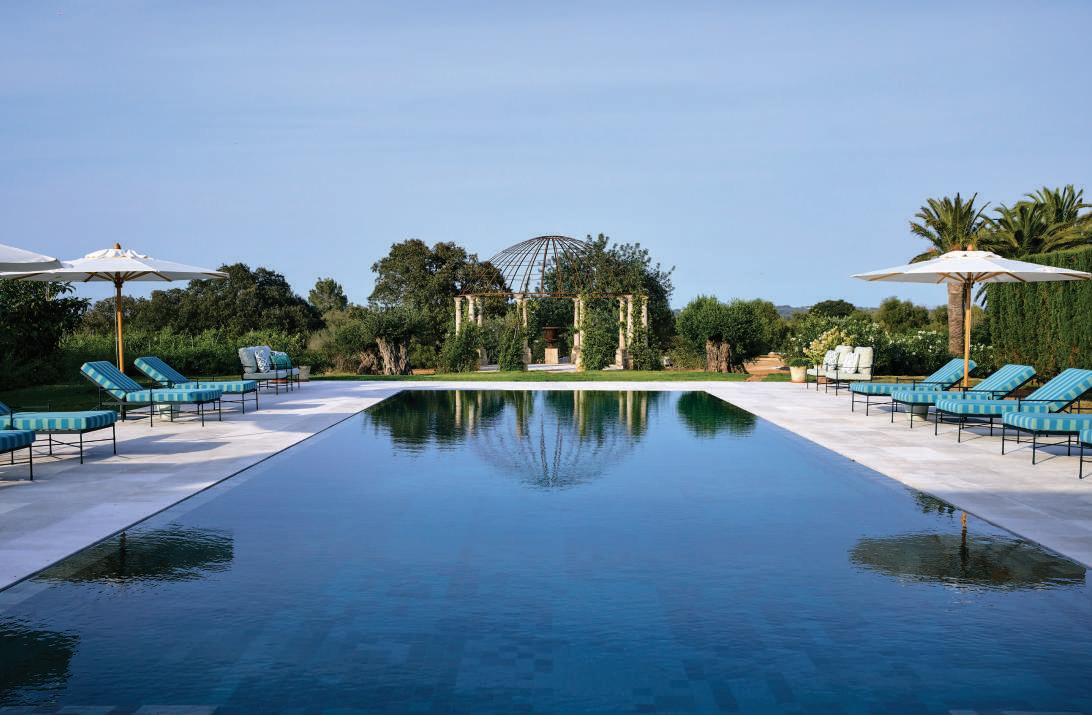
It’s 1959.You’re 16, in the 11th grade.
And you’re at where you’re at any time you’re not in class: the girls’ room on the second floor of the Liberal Arts Building of Hollywood High.
In an exclusive excerpt from “Didion and Babitz,” author Lili Anolik recounts how 20-year-old Eve Babitz ended up playing chess naked with dadaist Marcel Duchamp.
you’re doing what you’re doing any time you’re in the girls’ room on the second floor of the Liberal Arts Building of Hollywood High: sharing a cigarette with Holly, though you’ll call her Sally when you write about her years later in “Rolling Stone.”
The bell tolls and you take a final drag on your cigarette. As you turn to flick the butt out the window, you see it: the 50-foot-tall mural of Rudolph Valentino, the exquisite Latin androgyne with almond-shaped eyes, in the role that drove the 1921 moviegoing public into a state of rapture; of frenzy; of insanity. The Sheik, Hollywood High’s mascot. The giant close-up, painted on the side of the boys’ gymnasium, depicts him in windblown headdress, gazing moodily past the track and football field. Perhaps at Paramount Pictures, a few blocks away on Melrose. Perhaps at Persia’s desert splendor, oceans away on the other side of the world.
This reproduction of the silent-screen icon, crude as it is, corny as it is, transfixes you. You can’t look away. Now, don’t forget. You’ve got, on the one hand, your high-culture background: Arnold Schoenberg, the composer, laughing as you and your sister Mirandi, younger by three years, get stuck together
with bubblegum during the premiere of his latest piece at the Ojai Music Festival; Edward James, the art collector, telling you that your beauty surpasses that of the Marquis de Sade’s great-granddaughter; Vera Stravinsky, the dancer and costume designer, teaching you the point of caviar. And you’ve got, on the other hand, your pop-culture context: Roadside Beach, where you bodysurf and eat pineapple snow cones, eye the juvenile delinquents eyeing you; Hollywood Boulevard, where you join the crowd in front of Grauman’s Chinese Theatre, watch Marilyn Monroe and Jane Russell, in matching cleavages and clashing polka dots, press their palms into wet cement as cameras click and flash; the Luau in Beverly Hills, where you and Holly buy Vicious Virgins (two kinds of brandy, five kinds of rum, a splash of lemonade and a gardenia floating on top) with your fake IDs, bat your lashes, also fake, at men twice your age.
As if that weren’t enough, there’s your disposition, naturally romantic. Consequently, the melodrama of the image before you—larger-than-life, large as the movies—grips and beguiles. The longer you stare, the more susceptible you become to its dark fascination, its trashy-profound glamour.

And then, just like that, your imagination is captured, your tastes formed. Even if you don’t think much of the movies or the people who make them, your sensibility will be, from this moment on, cinematic. Hollywood, with its appeal to the irrational and the unreal, its provocation of desire and volatility, its worship of sex and spectacle, will forevermore be your touchstone and guiding light. Its ethos is your ethos, its values your values.
You’re Eve Babitz, future muse and artist, observed and observer, chronicler of scenes, stealer of them, too; and you’re poised to enter a new decade.
Eve’s first successful artistic act: a photograph, taken on October 12, 1963. Only in order to understand the how and why of it, never mind the what and when, we need to back up slightly to the spring of 1961.
Eve, 18, was drowsing her way through classes at Los Angeles City College (LACC) during the day, wide-awake and running wild with the Thunderbird Girls at night. And then her mother told her that her father was moving to Europe—“It was to study the six violin solos of Bach or something, I don’t know, Bach was his obsession”—and that the family would be moving with him. They’d be gone for a year, maybe two.
Eve lasted eight weeks. “The only place I liked was London and we spent most of the time in Paris,” she said. “I hated Paris because it’s actually horrible. It’s cold. And French men are so short. In heels I towered over them. I couldn’t stand it. I needed to come home.”
EvewentbacktoLACC.Not,however,totheThunderbirdGirls.
The cause of the break, a book. William Styron’s “Lie Down in Darkness,” about the very beautiful and very doomed Peyton Loftis. “The Thunderbird Girls stuck to one book,” said Eve. “And I read every book. They all loved ‘Lie Down in Darkness.’ They thought they were the girl in it. I thought it was a miserable excuse to commit suicide, which seemed to be its purpose.” (“Lie Down in Darkness” is, in so many ways, an early version of Joan Didion’s “Play It as It Lays,” a novel that will also give Eve fits. Peyton Loftis winds up in a body bag for much the same reason that Maria Wyeth, the heroine of “Play It,” winds up in a loony bin: because, according to Styron, the only way to save your life in a compromised world is to take it; because, according to Didion, the only sane response to the modern condition is insanity.) “I never got headaches but I got a headache from that book. And for the Thunderbird Girls, it was their bible. I’d had enough.”
The break, though, was about more than bummer taste in literature. The Thunderbird Girls, with their garter belts and merry-widow corsets, their dreams of alimony checks as big as the Ritz, were the last of a line. They were the height of style yet also, Eve sensed, on the verge of extinction. “They’d perfected a way to be that made them obsolete from just two strokes of God’s Japanese paintbrush—Marilyn dying and the Beatles,” she later wrote. She was looking for something new.
New came in the form of a friend she didn’t like: Myrna Reisman. “Myrna managed to get her way no matter what,” said Eve. “Myrna walked up to me one day at LACC and asked me if my godfather was Stravinsky, and I said, ‘Yeah,’
and she said, ‘Great, I’m going to pick you up at eight.’ She took me to Barney’s. I was 19 and suddenly life was fun.”
Barney’s was Barney’s Beanery, a bar at the intersection of Holloway and Santa Monica in West Hollywood where young artists did their drinking. There that night, sitting in the back with the young artists—Ed Kienholz, Billy Al Bengston, Robert Irwin—was a young non-artist, Walter Hopps. Hopps was cofounder of the Ferus Gallery, around the corner from Barney’s on La Cienega.
Hopps was just 30 in 1962, but he was already one of LA’s wisest seers. A fourth-generation Californian, he grew up in Eagle Rock, the son, grandson and great-grandson of doctors. When it was time for college, he obligingly registered for science classes at Stanford and then UCLA. It was his art history classes, though, that moved him.
Wrote Eve:
I remember him telling me, somewhere in my past, that while he was majoring in premed he happened accidentally to open some galleries just for diversion. But it wasn’t until 1957 or so, when he opened the Ferus Gallery with John Altoon and Ed Kienholz, that the myth of the West began to solidify:
“Whatever Walter says goes.”
And what Walter Hopps said, subliminally but with perfect control, was, “This is the place.”
“This,” we all sort of wondered, “is the place?” We thought New York was the place. New York says it’s the place, and we all know New York’s right, so how could this—LA—be the place?
That LA is the place was an unstated statement as simple as it was radical. And it was already familiar to Eve because her parents and parents’ friends had been unstating it to her since she was a child. How exciting it must’ve been, though, to hear it unstated by somebody who was nearer her own age. Somebody who all the right people thought was the right person. Somebody who was serious business.
LA’s primacy was the premise on which Hopps’ gallery was based. Unlike, say, the LA County Museum, once picketed by Mae and Vera Stravinsky for deeming not a single LA artist worthy of space on its walls, Ferus exhibited the work of locals. Its first show was of Boyle Heights’ own Wallace Berman and resulted in a bust by the vice squad: Berman led away in handcuffs. (One of his assemblages contained an erotic drawing. “Okay, where’s the dirty stuff?” said the cops as they broke down the door.) The scandal didn’t hurt Hopps’ standing any with LA art patrons, an easily scandalized bunch. Maybe because in his Brooks Brothers suit, starched shirt, narrow tie and owlish glasses, he looked the very picture of respectability, every inch the doctor he never became.
At the end of the night, Hopps told Eve that if she swung by Ferus, he’d show her things. She swung, he showed: installations by Ed Kienholz; paintings by John Altoon; ceramics by Ken Price; and then, the inside of his apartment, one floor above the gallery. Afterwards, he said he’d call her.
When he got back from Brazil.
In a couple of months.
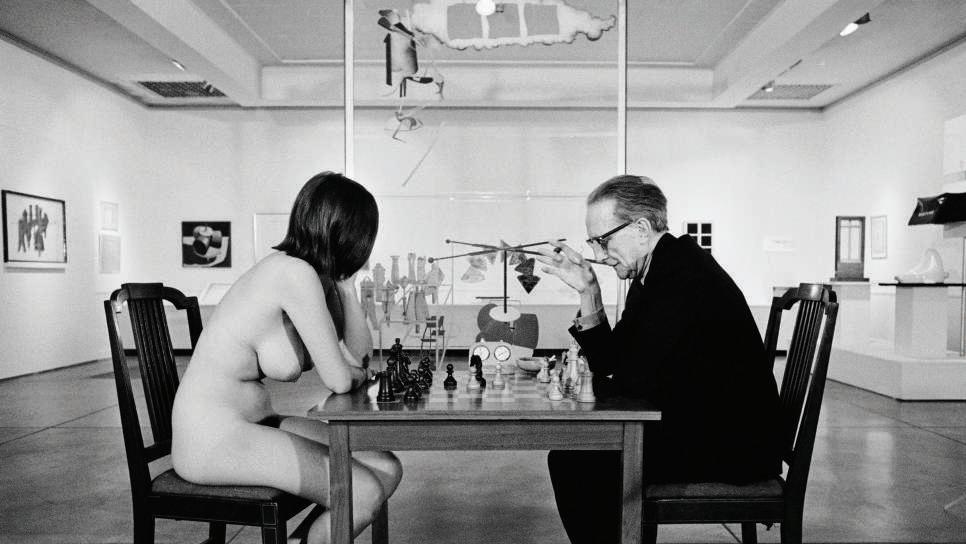
The photograph that became famous, with Babitz’s face hidden by her hair. In one ear she heard her mother’s voice saying, “Never put anything in writing or a photo;” and in the other her father’s saying, “Take his queen!”
“You know ‘Sex and the City?’” said Eve. “Well, if there’d been a ‘Sex and the City’ out here, Walter would be Mr. Big. He’s the guy who’s always pulling the rug out from under you.”
While eve waited for Hopps, she killed time with his artists. There was Ed Ruscha—“the cutest”—and Ken Price—“maybe cuter.” Also, Ron Cooper—not an artist Hopps showed at Ferus, but an artist nonetheless and “cute too in a Toshiro Mifune way”—with whom she’d move in, and then, eight days later, out. (“She told me she’d had enough,” said Cooper.)
Eve was evidently too busy rolling around on her bed to make it. Recalled a friend who’d drop in on her periodically, “That girl was such a slob. And she had all these guys coming over all the time. I’d look around and be like, ‘Where the fuck do they fuck?’”
She couldn’t help herself. “She thought the LA artists were terrific,” said Laurie Pepper, Eve’s cousin. “And sex was how she showed her appreciation. She had a crush on the whole scene.”
And it was the scene more than any guy in it that Eve thrilled to. “I have always loved scenes,” she wrote. “Bars where people come in and out in various degrees of flash, despair, gossip and brilliance, and the scene at Barney’s was just fabulous.”
So fabulous, in fact, that the moment she discovered it is steeped in a kind of personal and historical significance. “Paris in the 1920s was what all of us were searching for,” said Mirandi. “What Hemingway and Fitzgerald had found in the cafés is what we all wanted—the Moveable Feast. And Eve
and I had just been to Paris. There was no sign of that scene. None. We went to La Coupole. We went to Le Dôme. Those places were empty. Nothing was happening. We were so disappointed. And that disappointment is why Eve understood that Barney’s was something special. She thought of herself as an artist—a painter—and wanted to be around other artists. And Barney’s was where the artists were at. The people there had been drawn by who knows what forces and they really had been drawn because they came from everywhere. I think Eve looked around and saw the level of talent, saw all that youth and hope and drive, and said to herself, ‘Barney’s in LA in 1960-whateveryear-it-was is Paris in the 1920s.’”
Hopps was a formative influence on Eve. He taught her how to see.
Hopps’ vision, Eve believed, was visionary, his perception extrasensory. What was hidden from other people—i.e., the future—was revealed to him. He could discern it in the present. For example, Andy Warhol was, in the early ’60s, viewed as a commercial artist and therefore not an artist at all. It was Hopps, along with Ferus co-owner Irving Blum, who, in July 1962, gave Warhol his very first fine-arts show: those Campbell’s soup cans, 32 mouthwatering flavors.
Wrote Eve:
If Walter Hopps decided someone was cool, the person was (in my opinion) cool for all eternity. So when he explained to
me one night over chile [sic] at Barney’s that Andy Warhol was going to have a show at the Ferus, I said, “What? The soup can guy? You’re kidding!”
How could that soup can guy be cool? (And his hair?)…
“He’s seven jumps ahead of everyone else,” Walter may have said.
To understand the scope and magnitude of Andy Warhol in 1962 was also to be seven jumps ahead of everyone else. And Eve understood because Hopps made her understand. “Suddenly I had the eyes to see,” she said. “Walter gave me the eyes.”
And Hopps was about to demonstrate, once again, that his timing was right, his pitch perfect.
October 1963. Hopps had convinced Marcel Duchamp, who, in 1917, turned a urinal upside down and signed it, thereby bringing into being pop art and postmodernism— Duchamp: “It’s art if I say so”—as surely as he’d laid waste to Western culture and thought—Duchamp: “It’s art if I say so”—to let the Pasadena Art Museum host his first retrospective. That is, had convinced arguably the most influential artist of the 20th century, inarguably the most revolutionary, that a landmark moment in the career he was too hip, too avant-garde, to have—in 1921, he retired from art, took up chess—was best handled by an institution nobody had ever heard of in a town about to become synonymous with the word “geezer.” (Jan and Dean’s “The Little Old Lady from Pasadena” would drop within the year. Go granny, go granny, go granny, go!)
The epochal shift had begun. LA: from cultural wasteland to cultural hot spot.
The cultural-wasteland talk was nonsense, obviously. Geniuses aren’t dumb. To those with established reputations in the arts, the movie industry meant easy money. The reason LA was lousy with geniuses, which Eve knew better than anyone since, as a kid, all she had to do was walk from her living room to her kitchen and she’d trip over three at least. And now LA was about to announce itself not just as a civilization but as a civilization in its ideal state—“This is the place”—and she wouldn’t be there to utter a single “I told you so.”
Eve’s name had been left off the invite list to the party for the show’s private opening. Hopps was notoriously absentminded. This oversight, though, was deliberate. How could he bring his girlfriend to the party when he was already bringing his wife?
The Duchamp party began on the evening of October 7, careened into the early-morning hours of October 8.
It wasn’t the typical slapdash, slop-pot LA art affair—people wearing whatever clothes they’d thrown over their bathing suits, drinking cheap Chablis out of plastic cups, wandering from gallery to gallery. (Monday Night Art Walks, they were called.) It was high style and high gloss and altogether ultra-super-duper: black ties and pink champagne and the Green Hotel.
Guests included movie stars (Dennis Hopper); the children of movie stars (Hopper’s wife, Brooke Hayward, daughter of Margaret Sullavan); underground movie stars (Taylor Mead); people played by movie stars (Beatrice Wood, the real Catherine—the Jeanne Moreau role—in Truffaut’s “Jules and Jim”);

as well as LA artists who looked like movie stars (Ed Ruscha, Billy Al Bengston, Larry Bell); and a non-LA artist who was making his own version of movie stars, superstars (Andy Warhol).
Also: Mirandi Babitz, the date of Julian Wasser, a contract photographer covering the event for “Time” magazine. “My little sister went and I didn’t,” said Eve. “The humiliation and so forth.”
Eve hugged her pillow that night and cursed her faithless lover. “I was only 20, and there wasn’t a way I could really get to Walter. But I decided that if I could ever wreak any havoc in his life, I would.”
Not an idle threat.
Evewasholdingaglassofwine,standinginfrontofDuchamp’s best-known painting, “Nude Descending a Staircase, No. 2,” at the public opening, which she was attending with her parents, home from Europe at last. Every so often, she’d slide her eyes over to Duchamp and Hopps, themselves on exhibit, playing chessonanelevatedplatform.Shewasunabletotrackthegame’s progress, though, because Julian Wasser wouldn’t stop pestering her. “Julian kept coming up to me and saying lewd things like ‘Why don’t you fuck me?’ and being his usual boring self.”
And then Wasser came up to her and said something unusual and not in the least boring.
Their conversation, according to draft number six of Eve’s optioned-but-never-produced screenplay, “Portrait of the Artist as a Young Slut,” went something like this: Wasser, unhooking the Nikon from his neck, said “I’m going to take a picture of Duchamp and a girl. You want to be the girl?”
“Okay,” said Eve. He popped open the camera, replaced old film with new. “Playing chess.” A beat.
Then Eve said, “Oh, right, because that’s what he gave up art for.” Wasser, his eyes on the film as he pulled it taut. “And naked. You, not him.” Another beat.
Then Eve said, “Oh, right, because—” She gestured to the painting. “Still in?”
“Still in.”
Wasser bared his teeth in a grin. “Great. Then we’re all set.”
“Have you told Duchamp about this?”
“As the French would say, Non.”
“Don’t you think you’d better? What if he doesn’t like it?”
Wasser, Nikon back around his neck, started to walk off, on the job again. “He’ll like it.”
“What makes you so sure?”
“He’s a man, isn’t he?”
Eve watched Wasser disappear into the crowd, then drained her glass in a single swallow.
Saturday, OctOber 12, early morning. Eve sat beside Wasser in his shiny toy of a car, a Ford Fairlane convertible, top down. They were headed to the Pasadena Art Museum. Evewasontheroad,butreallyshewasonacloud.Themoreshe thought about Wasser’s idea, the more she liked it: he’d be making “Nude Sitting at a Chessboard,” a sequel to “Nude Descending a Staircase,” with her in the starring role. How brilliant.
How Hollywood, too. What could be more hopeful-ingénue than baring all? It was practically a local rite of passage, the de rigueur desperate act of the camera-ready cutie when the wolf was howling at the door. Even for Marilyn. Especially for Marilyn. (Admitting she was the golden girl and wet dream in the Golden Dreams calendar did as much for Marilyn’s career as any movie.) Except Eve wouldn’t be baring all to make money. She’d be doing it to make mischief. And art.
Suddenly, though, Eve wasn’t on that cloud anymore, was plummeting to earth. Maybe this wasn’t such a hot idea after all. Maybe this was just Wasser laying a line on her. Maybe only a fool wouldn’t have known she was about to be played for one. At least there was still time to call it off.
EvehadjustopenedhermouthwhenWasserturnedtoher.“You aren’t going to chicken out, are you?” he said, his tone accusatory. Not trusting her voice, she shook her head.
Wasser patted her hand, laughed. “Stick with me, kid, and you’ll be ruined.”
Twenty minutes later they arrived at the museum. After exchanging her blouse and skirt for a smock, she sat at the chessboard in the center of the room. As she waited for Duchamp to appear, Wasser to set up, she chain-smoked, tried to fend off the panicked thoughts swarming her like bees.
At last, everybody was accounted for, all arranged. Wasser gave the signal. Eve rose, her mother’s advice ringing in one ear—“Never put anything in writing or a photo”—her father’s in the other: “Take his queen!” She dropped the smock.
Eve and Duchamp were in the middle of their third game and engrossed when Hopps entered the room, stopped short. The gum he’d been chewing fell out of his mouth.
“Hello, Walter,” said Eve, barely looking up from the board. Duchamp inclined his head in a slight bow. “Bonjour.”
Hopps just stood there, staring, until Wasser said, “Walter, do you mind? We’re working here.”
Hopps, making apologetic noises, backed out the door.
In the resulting photograph, Eve and Duchamp sit at a chessboard.Duchamp’shandisraised,hiswristcocked,inanticipation of his next move. Eve, legs crossed at the ankle, chin propped on her palm, waits for him to make it. She might have something on. The radio, for example, or Chanel No. 5. You wouldn’t know it from looking at her, though. Not that Duchamp, his sangfroid as immaculate as his suit, is. He has eyes only for the game. Willful obliviousness is essential here. Neither Duchamp nor Eve can acknowledge her state in any way. If he leers or smirks, if she betrays the faintest hint of nerves or self-consciousness, she’ll be truly exposed—naked rather than nude. Art will have become cheesecake, and that will be that. It’s a walk across a high wire without a net. Yet both Duchamp and Eve reach the other side, pas de sweat. Their mutual aplomb carries the day.
“Take his queen!”
Eve had certainly progressed since Hollywood High. No longer was she content to be a mere looker-on, a member of the audience. She was ready for her close-up now. Only she refused to take it. Wasser’s finger clicked and clicked that morning. In most of the shots, her features were visible. She chose one in which they were not. (Wasser, a rogue but also a gentleman, granted her final say.) And, in so doing, she turned an extroverted gesture into an introverted one, a demand for attention into a plea for privacy, stardom into anonymity. The photo was thus a fulfillment of her paradoxical desire: to reveal herself to the world so a single person would see.
What else the photo was: her chance to be Marilyn. In “The Seven Year Itch” Marilyn was The Girl, a gorgeous ninny bringing the midlife crisis of shy married man Richard Sherman (Tom Ewell) to climax. In Wasser’s rendering, Eve was the American Dream made lush, nubile flesh, as though sprung fullblown from the imagination of the European aesthete, lean as a blade, dry as a bone, opposite her. Like Marilyn, Eve was a sex object who was also a sex subject, exploiting herself every bit as ruthlessly as any of the men—Wasser, Hopps, Duchamp— exploited her. She wasn’t just model and muse, passive and pliable, but artist and instigator, wicked and subversive.
“Walter thought he was running the show,” Eve told me, her voice cool, deadpan even. “And I finally got to run something.”
Posing with Duchamp did for Eve what she hoped it would. It allowed her to get even with Hopps. Get one up on, in fact. He’d achieved the impossible by landing the retrospective, but it’s her image that’s forever associated with it. (“Every artist on the planet knows [that photograph],” said Wasser.)
She didn’t just run his show, she stole it. •
An excerpt from the book “Didion and Babitz” by Lili Anolik © 2024 by Writerish LLC, published by Scribner (U.S.) on Nov. 12 and Atlantic Books (U.K.) on Nov. 14.
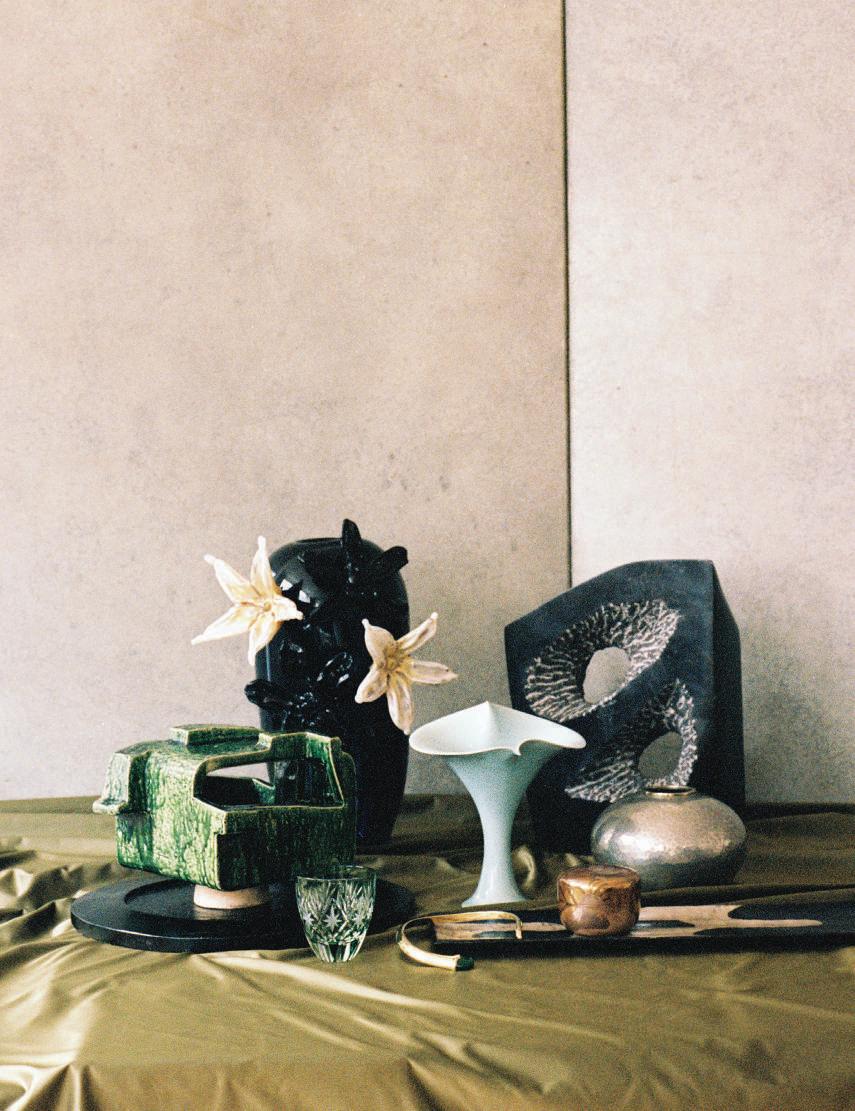
BY AKARI ENDO-GAUT PHOTOGRAPHY BY ADRIANNA GLAVIANO
Drawn from galleries, ateliers and specialist brands, a mélange of artful objects comes together in tonal, textured vignettes.
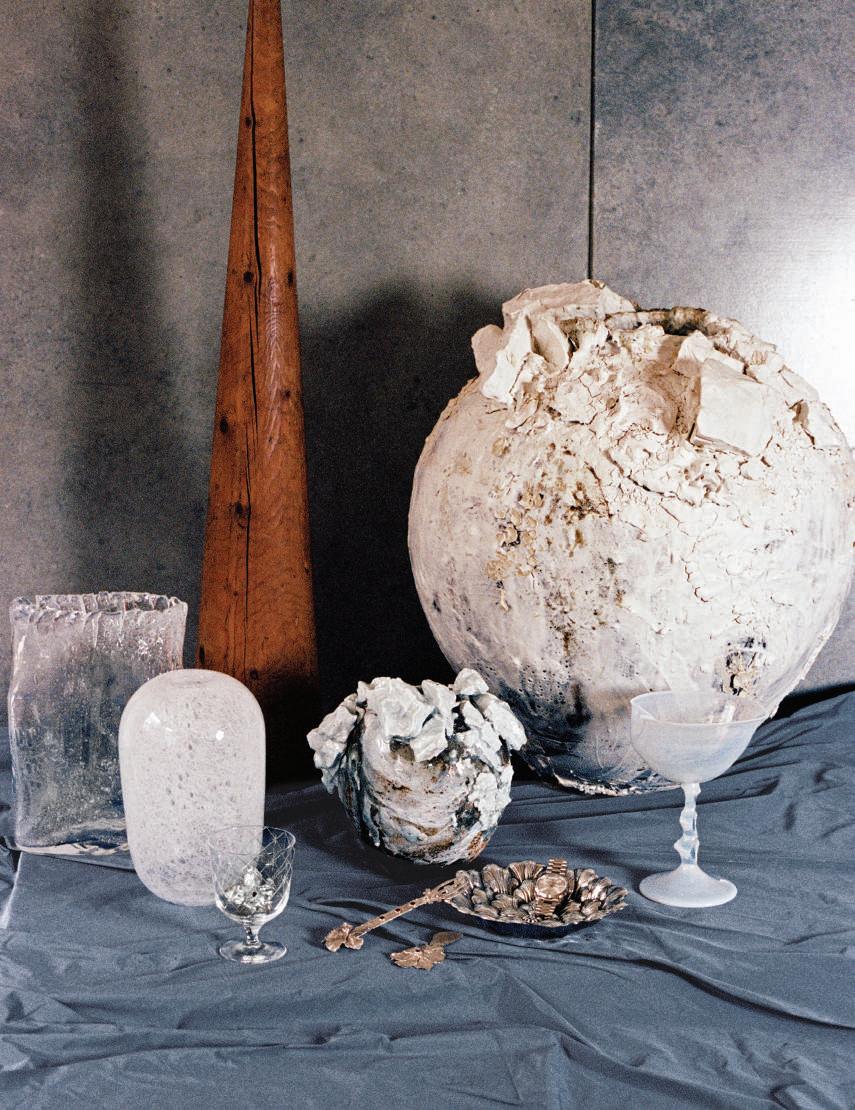
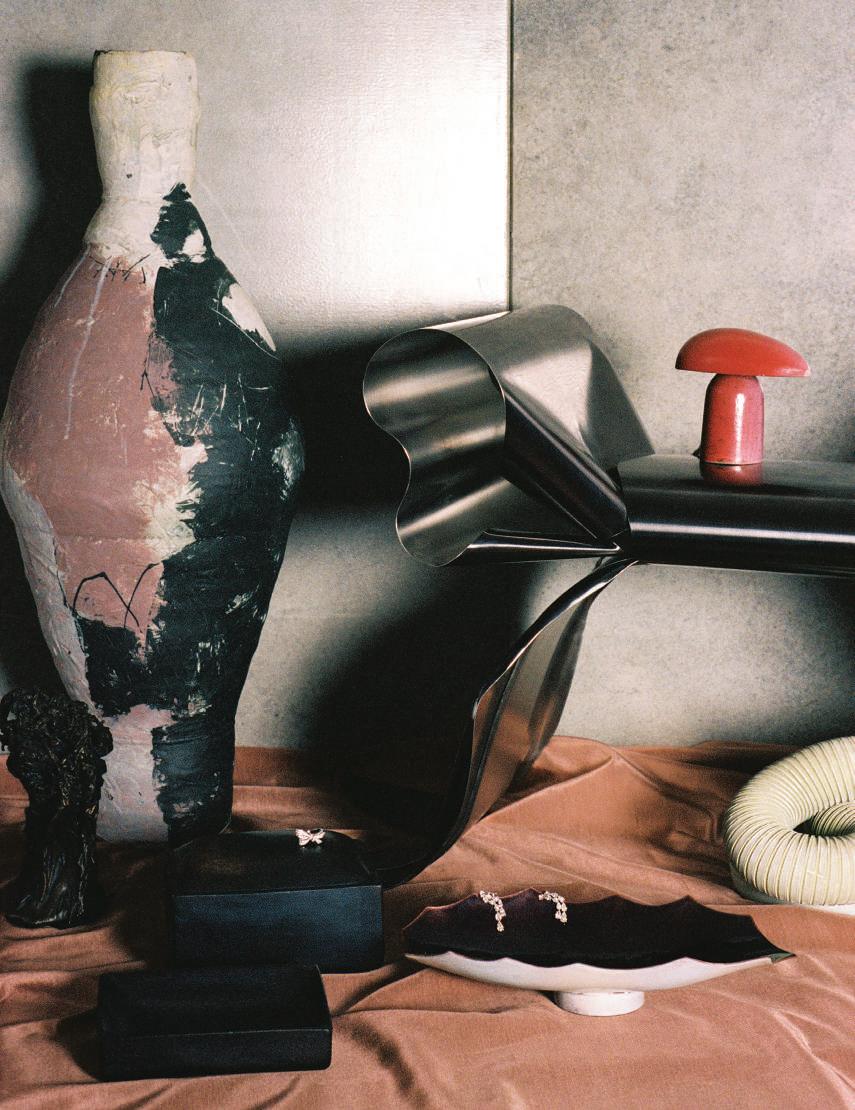
peachy keen
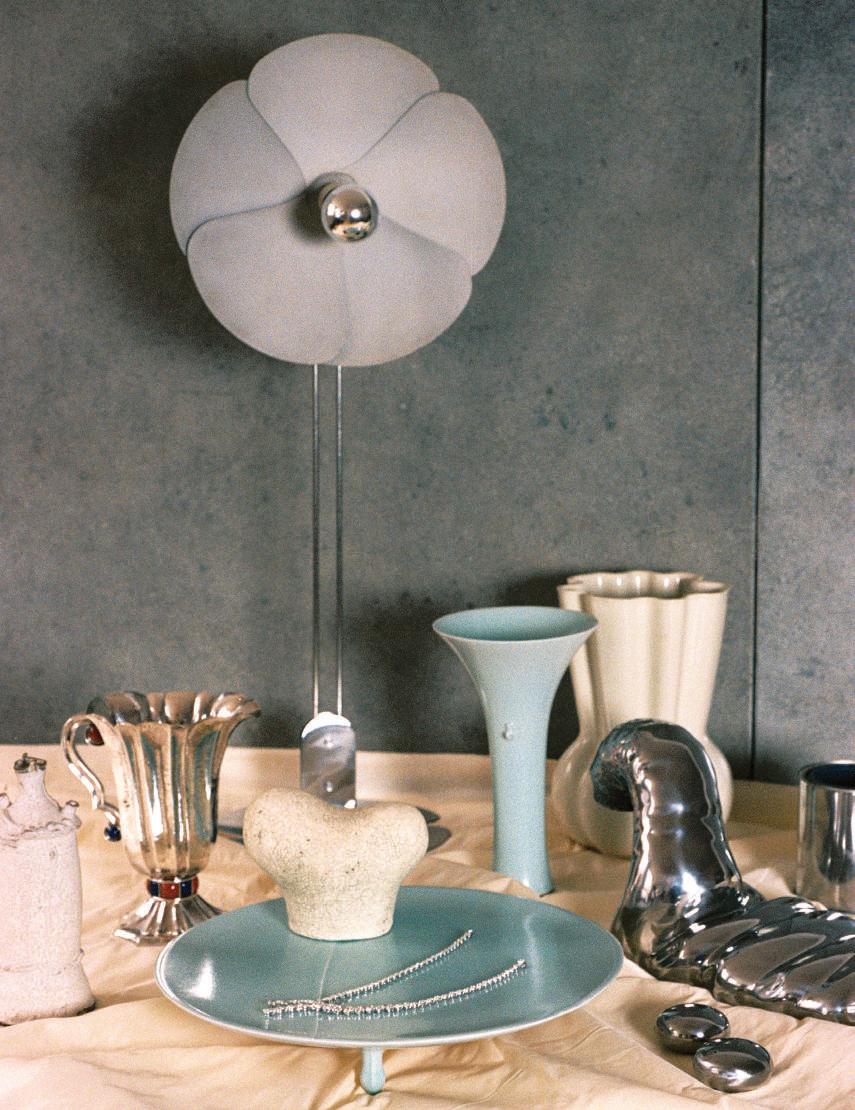
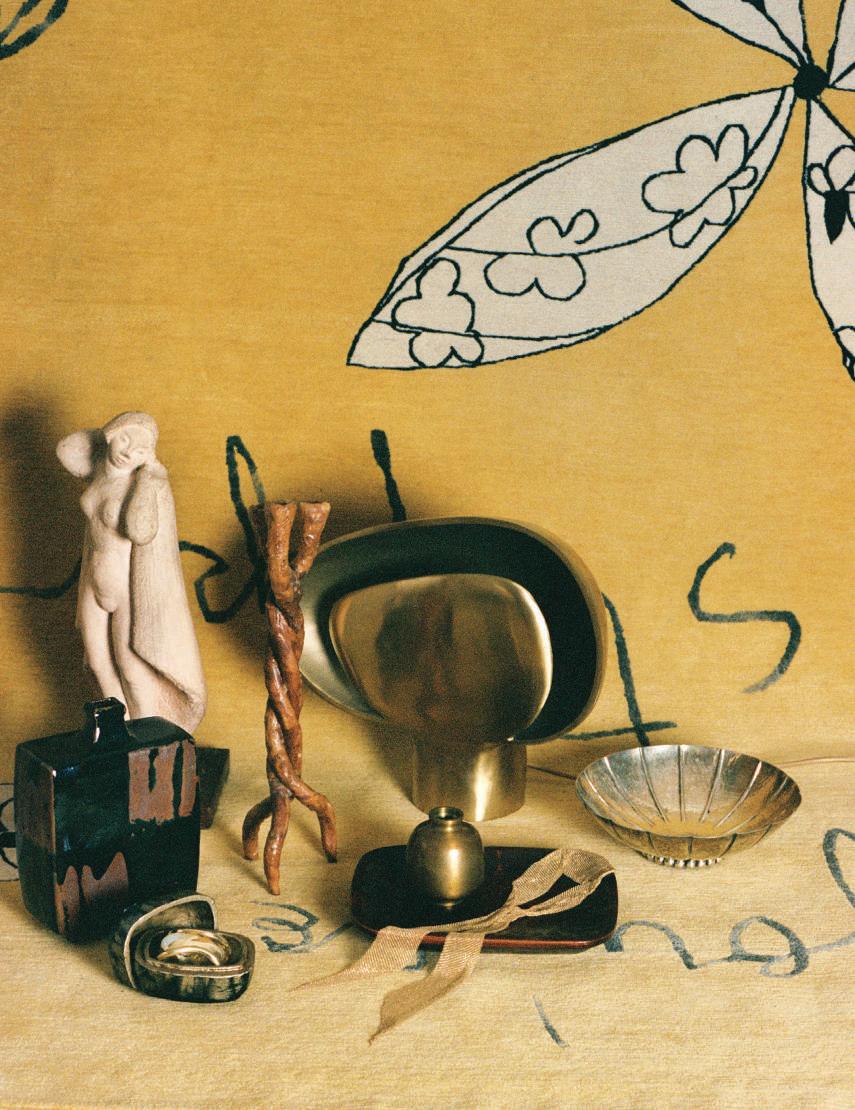
golden hour
Backdrop: Rene Ricard and Madeline Weinrib “You’re Stepping All Over Me” Tibetan wool rug, 2021, Emma Scully Gallery.
Back row, from left: Grete Margaret Schüller “Bather” sculpture, 1956, Form Atelier; Shotiko Aptsiauri x Rooms Studio “Sacral Geometry Candle Holder,” 2020, Emma Scully Gallery; Noé Duchaufour-Lawrance “Retro” lamp, 2022, Demisch Danant; Jean Després silver bowl, 1930s, stylist’s own. Front row, from left: Shōji Hamada “Iron Glazed Square Bottle with Finger Mark & Persimmon Under Glaze,” 1970s, Dai Ichi Arts, Ltd.; Osamu Matsuzaki black-and-gold lacquer box, stylist’s own; Tiffany & Co. Elsa Peretti 18-karat gold and white jade bone cuff (in box) and 18-karat gold mesh scarf necklace (on 19th-century Japanese wood tray, stylist’s own); Nousaku “hana mitsubo” brass vase (on tray), 2020, Roman and Williams Guild.
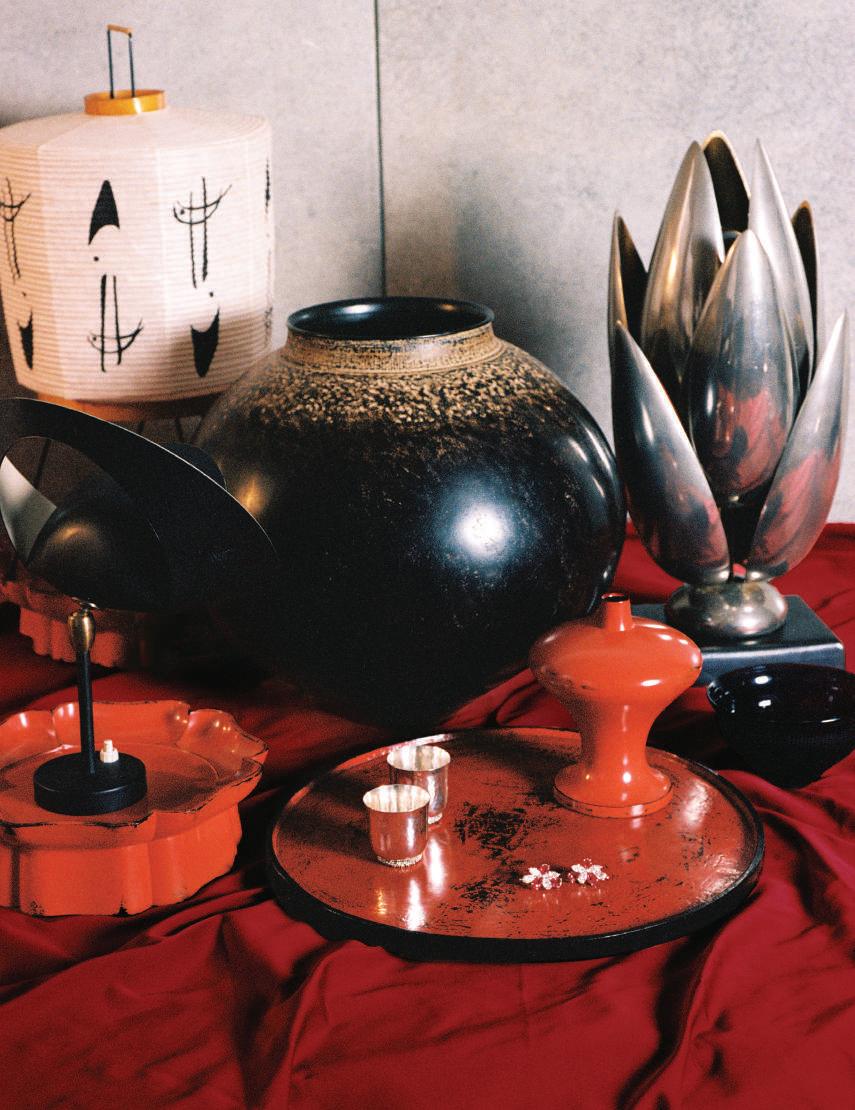
red alert
Back row, from left: Isamu Noguchi “Akari” light sculpture model 2A UKAI, circa 1950s, Form Atelier; Kenta Anzai jar, Guild Gallery; Atelier Michel Armand nickel-plated bronze “Lotus” lamp, circa 1970, Form Atelier; Rando Aso ceramic box (under lamp).
Front row, from left: Serge Mouille “Petite Saturne” sconce, 1950s, Form Atelier; Jihei Murase lacquer “Carved-Flower Negoro Tray” (under lamp), 2022, and Tohru Matsuzaki red-and-black lacquer tray, both Ippodo Gallery; Buccellati Caviar Collection silver shot glasses (on tray); Graff white-gold, ruby and diamond earrings (on tray); Jihei Murase lacquer “Negoro Bottlenecked Vase” (on tray), 2022, Ippodo Gallery; Naoya Arakawa black glass bowl. Post-production, Alexander Lee Page.
BY CHRISTINA BINKLEY PHOTOGRAPHY BY JEREMY LIEBMAN
Edoardo Zegna, a fourth-generation executive at the Italian menswear brand, is leaning into his family’s legacy to envision Zegna’s future. Filmmaker Roman Coppola, himself the scion of another storied clan, is helping to tell the tale.
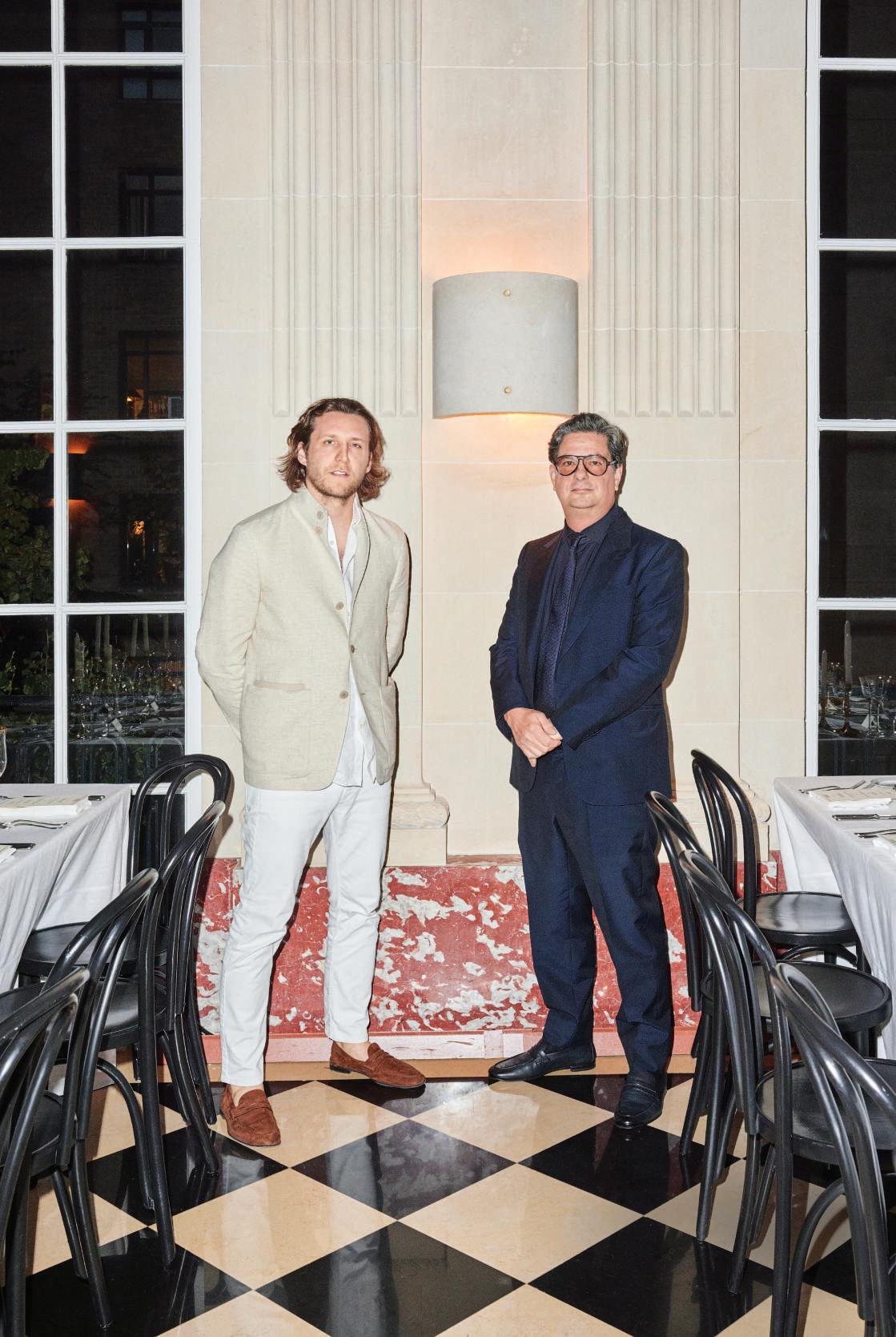
North of turin, the scenic Strada Provinciale 232 switches sharply up the Italian Alps, looping through the village of Trivero at 2,425 feet of elevation before diving back down toward the grassy Piedmont flatlands. Known as the Panoramica Zegna for its vast views of the province of Biella, the road exists because in 1938 the textile baron Ermenegildo Zegna required a means to reach his mill and a community he was building in his quest to overtake Britain’s traditional dominance in wool suiting.
Three years ago, the SP232 emerged on Zegna’s luxury clothing and accessories in the form of small imprints or sewn strips of leather or fabric, drawn with a line down the middle, like the dividing line on highways. It is a subtle if-you-know-you-know logo, a reminder of the brand’s Alpine origins, and one of the signs of the new path the company is taking with a push from the fourth generation of its founding family, including 38-year-old Edoardo Zegna.
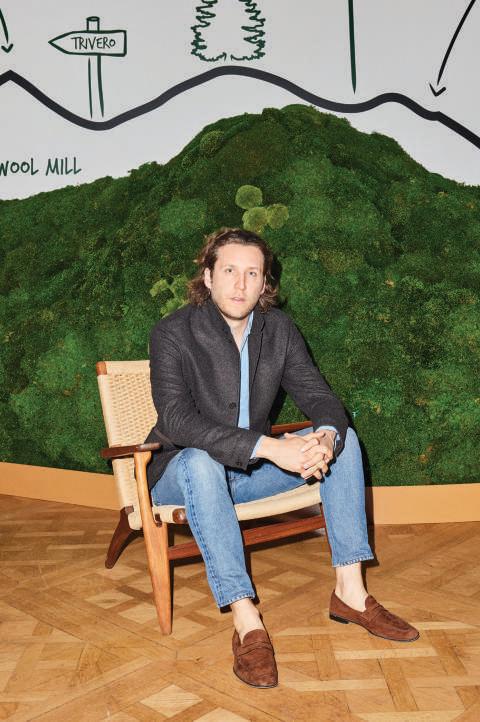
Edo, as his friends know him, is injecting into the brand ideas he gleaned from his time studying and working in the U.S. and U.K., including a stint as head of product at the San Franciscobased apparel label Everlane. Much of his strategy is new to the tradition of Italian menswear brands that have long been sold by highlighting the quality of materials, hours of workmanship and skill of the artisans involved.
Ambitious in his aspirations for Zegna, Edo, chief marketing, digital and sustainability officer, is shifting the company’s approach to create emotional attachments with consumers by sharing the romance of Zegna’s origins and family history. It’s a tale about Trivero. It’s about the SP232. It’s a story of a family that continues to run the company—whose shares trade on the New York Stock Exchange—as the generations pile on.
It is also, lately, interwoven with the story of another Italian family, now American, in the film business. But more on the Coppolas in a bit.
First we should talk about another key element of the Zegna tale, the Oasi Zegna, or “Zegna oasis,” a nearly 38.6-square-mile forested nature reserve created by founder Ermenegildo Zegna surrounding his original mill. The founder planted thousands of trees, creating a forest that is now open to the public, with hiking trails and panoramic vistas.
“It’s a diamond that hasn’t been claimed,” Edo says of its potential to help tell the story of Zegna. The reserve is featured
in a book published by Rizzoli, as well as in Zegna’s new marketing, raising the role of biodiversity in nature and natural fibers, and of land stewardship—all part of the new Zegna narrative.
“We are not in the business of products anymore,” Edo says. “Weareinthebusinessofstories.”
His own cross-Atlantic story begins in New York, where he was born in 1986, before being raised largely in Lugano, in Switzerland’s Italian-speaking Ticino region. After studying business at Georgetown University in Washington, D.C., Edo jumped to a gig at Gap and then Everlane, which was pioneering the concept of telling a garment’s “story”—where it was made, who made it, with what materials—in much the way the farm-to-table movement speaks about fresh, local produce.
Today, Edo is one half of a power couple, living in London with his wife, Leila Rastegar Zegna, a partner at the venture capital firm Kindred Capital, and their three children. He is one of 11 Zegnas in his generation and one of two who work for the label, the other being his younger brother Angelo, CEO of the EMEA region and global client strategy director, who is named after their grandfather.
Edo joined the business in 2014, after applying for the job in the family tradition: He filed an application and made a presentation before an independent board. “There are rules in the family. You have to have a university degree,” he says. “You have to work outside the company for at least three years.”
After passing this exam of sorts, he became head of omnichannel and progressed through the ranks over a decade.
“I’m fourth generation and I see myself as a custodian,” he says.
It is clear upon sitting down with Edo that he has spent time in venture-capital-tech-bro circles. He has absorbed their lingua franca as well as concepts of selling products, which he is translating to Italian luxury menswear.
“You need to create unscalable ideas,” he says, referring to the math used to identify products that can be replicated inexpensively en masse. Scale is the holy grail of venture capital.
Fashion is famously not scalable. Each product must be sourced, manufactured and individually distributed. “Unscalable,” he repeats. “And then figure out a way to scale them.”
You can scale romance. You can scale a story. Which is what Edo, seated in a large sitting room at Salon 94, a New York art gallery on East 89th Street, was attempting in September as Zegna took over the gallery to tell its tale to North Americans. The brand outfitted each of the gallery’s three stories like a private club, or perhaps more accurately, a private college for the study of the Zegna story.
For a week, Edo and his father, Ermenegildo “Gildo,” Zegna’s chief executive and chairman, brought together clients and glitterati of the arts, venture capital and business worlds at breakfasts, lunches and dinners where they were educated, entertained and ultimately sold on Zegna. The tours ended on the third floor, which had been turned into a made-to-measure atelier for clothing and accessories not available in stores.
At the center were special versions of Il Conte, a versatile tailored collar-up-or-down jacket that is the hero of Zegna’s latest ad campaign with Danish actor Mads Mikkelsen. The family patriarch was the real Count di Monte Rubello, a title bestowed on him by the then King of Italy, referring to a mountain near the Oasi. The title didn’t pass down through the family, though: Italy’s monarchy ended in 1946.
Downstairs, on the first floor, guests passed through a film room where they encountered the voice and visage of Roman Coppola, the filmmaker and entrepreneurial son of Francis Ford Coppola, discussing the Oasi as the land itself appeared behind and around him.
Roman says he was surprised to be approached by the Zegnas to participate in a film about the Oasi and the company’s heritage, but he understands why they relate to his family. The Coppolas have been involved in music and film for four generations. Roman’s great-grandfather invented a music recording device. His grandfather won an Oscar as a composer. His parents are film legends, and he and his sister are both filmmakers. The extended family includes the actors Nicolas Cage, Jason Schwartzman and Talia Shire.
“I related to that so when Edoardo and the Zegna folks reached out to me, I found that resonant,” Roman says. He, too, was taken with the Oasi message of land caretaking, and the heritage of the family mill. “It is very beautiful and super
progressive that they planted trees 100 years ago,” he says. “And the fact that the factory is literally out the window.”
Roman moved upstairs to the final fete of the week’s Zegna gallery takeover, to host a glittering dinner attended by the kind ofcrowdthatareveredlabelcanexpecttoattract:HissisterSofia Coppola; her husband, musician Thomas Mars; Roman’s niece Gia Coppola, who is also a filmmaker; the actors Bernadette Peters and Ethan Hawke; “Saturday Night Live” comedienne Chloe Fineman and the musician The Dare. The dinner’s entertainment included a not-quite-impromptu aria sung by an opera singer, who left her seat to perform after Roman’s toast.
Luxury brands are well known for assembling cornucopias of celebrities. But it is almost surprising that more Italian brands haven’t taken up another tried-and-true device: touting their heritage in the way that Louis Vuitton highlights its founding luggage maker or Christian Dior leans into its classic Bar jacket, season after season. Among Italians, Brunello Cucinelli stands out for building a brand on a story—in Cucinelli’s case, a relatively new one, given he is the founder, a narrative emphasizing how he has turned the village of Solomeo, in Umbria, into a center of cashmere, fair trade and ancient philosophy.
As Edo plumbs the story-telling riches of Trivero, the SP232 road and the Oasi, he is talking up community-oriented endeavors that previous generations, including his great-grandfather, chose not to emphasize. He figures they were just being demure.
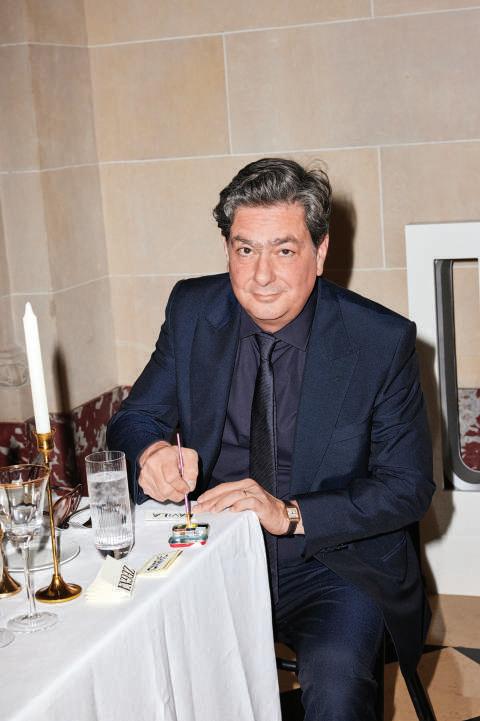
“The fact that nobody knows about [Oasi Zegna] means that he didn’t do it for money,” Edo says of Ermenegildo. “He didn’t do it for fame.”
His great-grandfather built a school, a hospital and a ski resort for his 1,000 laborers that still operates today. There is also Casa Zegna, Ermenegildo’s sprawling mansion, which houses the brand’s archives and hosts periodic exhibitions. The private Zegna family foundation, which controls the Oasi and is carefully walled-off and protected from the publicly traded Zegna apparel brand, still regularly meets.
The casa is only a part of the story and plays a small role in the Zegna family reality of today. “Nobody sleeps there,” Edo says. “It’sabitlikesleepinginVersailles. It’s a daunting experience.” •
Roman Coppola, who was tapped by Zegna to make a film about the Oasi, painting the place cards for an event in the “Villa Zegna” dining room.
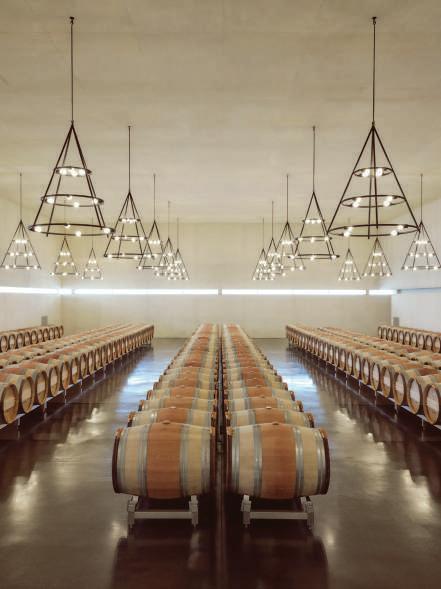
BY JAY CHESHES PHOTOGRAPHY BY FREDERIK VERCRUYSSE
“I think the wine should reach its full potential in 20 years,” says Christian Moueix of the fruits of his Château Belair-Monange vineyards.A striking new winery designed by his friends Jacques Herzog and Pierre de Meuron will be the proving ground.
Barrels in the cellar at Château Belair-Monange, in Saint-Émilion, France; a collaboration with Artemide, the El Porís chandeliers are available from Herzog & de Meuron’s H&dM Objects site.
Opposite: The entry to the winery designed by the Swiss firm.
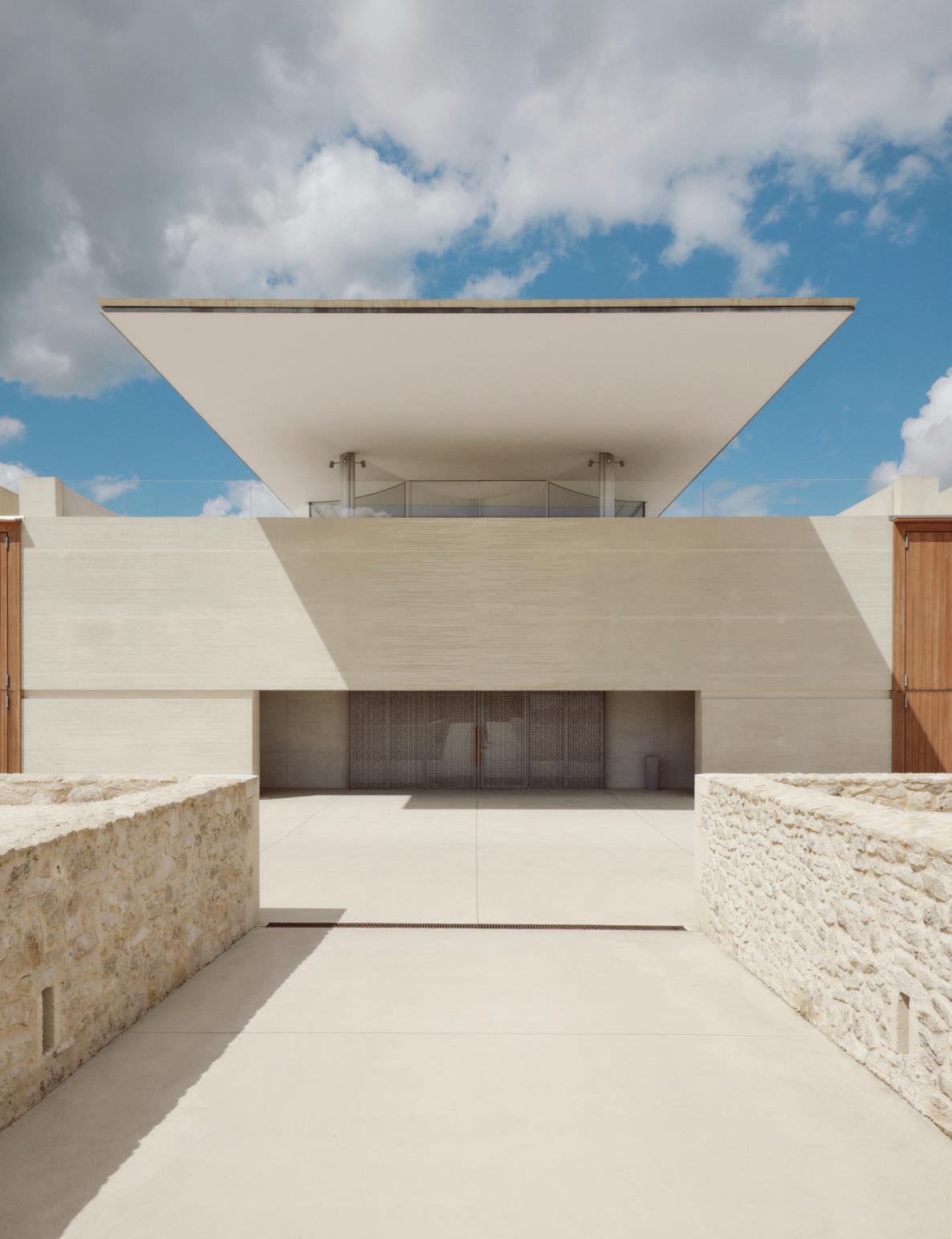
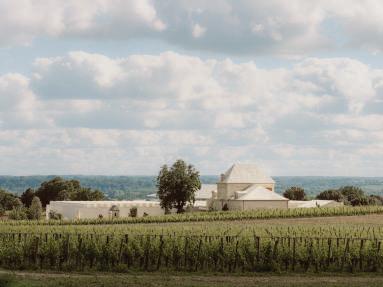
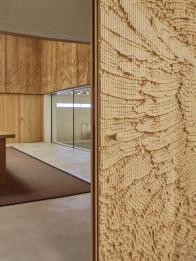
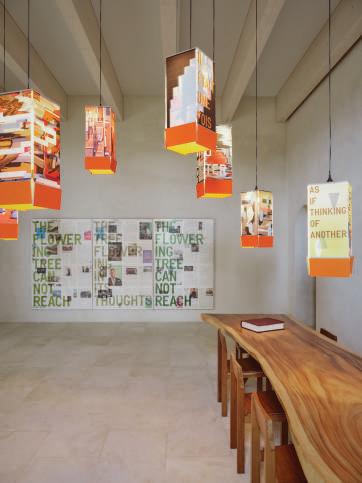
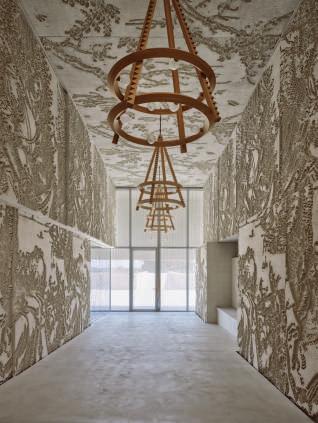
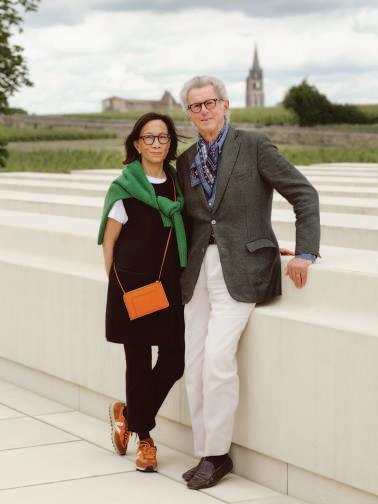
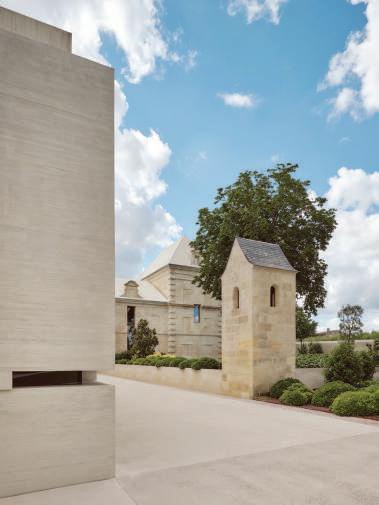
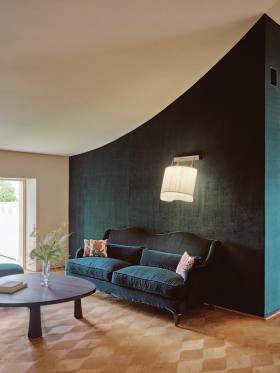

Center: Cherise and Christian Moueix, with Saint-Émilion’s church in the distance.
Clockwise from top left: The winery and vineyards; custom H&dM Objects and Artemide chandeliers with the enlarged etchings of Albrecht Dürer’s 1504 “Joachim and the Angel”; the tasting room, with a custom H&dM Objects table; a lab space with a 1967 Josef Albers “Ten Variants” print; 19th- and 21st-century architecture converge; a reception room with installations by Rirkrit Tiravanija; a close-up of etched oak.
An elegant, soft-spoken gentleman farmer, Christian Moueix grew up in Bordeaux wine country surrounded by beautiful things—some of the world’s best wines but also art and books. His father, Jean-Pierre, a Bordeaux legend who died in 2003, first built his reputation as one of the region’s most savvy négociants then began buying up esteemed châteaus, including his crown jewel, Pétrus, in 1964. But Jean-Pierre was also a literary man and a passionate collector—he acquired his first Monet at 18, long before he amassed his wine fortune. “My father loved art, especially paintings. It was the main talk at the table. We very rarely discussed wine, but we discussed painting, poetry,” says Christian, 78, over lunch at his art-filled home facing the Dordogne river, next door to his childhood residence.
Christian and his wife Cherise, a former art dealer raised in the suburbs of Washington, D.C., have built a collection that now rivals his father’s priceless holdings, including works by Gerhard Richter, Thomas Struth and Jean Dubuffet. On the lawn of their Bordeaux home is a massive work by Richard Serra, three enormous steel structures each weighing 43 tons. The piece caused an uproar over the public funds spent on it when it was first shown at Bordeaux’s contemporary art museum in 1990. Christian agreed to buy it on installment—helping out the city in the process—after Serra said he’d change the name from the original “Threats of Hell” to the less severe “Hopes of Paradise” (both are lines from the same epic poem, “The Rubaiyat of Omar Khayyam”). “Over a lot of good wine, he agreed to rename it,” says Christian. “And we were friends from then on.”
Over the past three decades, Christian and Cherise have also cultivated a fruitful relationship with Swiss architects Jacques Herzog and Pierre de Meuron, cofounders of the Basel-based firm Herzog & de Meuron. Their latest collective venture, completedlastyear,istheMoueixes’strikingBelair-Monangewinery, which overlooks the town of Saint-Émilion from a plateau above the vineyards. The main concrete structure, in beige tones that mimic the local limestone soil, extends seamlessly from an adjoining 19th-century stone house that’s been reconstructed with soaring windows and a concrete roof. “The ‘Batiments de France’ were open-minded enough to allow those big windows,” Christian says of the French preservation authorities, during a tour of the project in late spring.
The main passage into the new winery building shares the form and dimensions of the central nave of the Monolithic Church of Saint-Émilion, which was carved into the hillside in the early 12th century; its bell tower is visible from the winery’s roof terrace. Herzog describes the cavernous entryway as “a kind of cathedral for workers and visitors, opening up on either side, opening views and also accesses to the different functions of the building.”
Inside are rough-textured concrete walls with a honeycomb structure reminiscent of the Alhambra in Spain. They feature the etched contours of a 16th-century Albrecht Dürer engraving, “Joachim and the Angel,” blown up so big it has become an abstraction. The archangel Gabriel pictured on the BelairMonange label is a detail from this artwork. Upstairs in a lab space, the Moueixes have recently added a collection of Josef Albers screen prints. The couple entrusted a large reception room on the ground floor to Thai artist Rirkrit Tiravanija, who dangled paper lanterns from its ceilings, hung French newspapers emblazoned with text from Korean poet Yi Sang on
“I love to begin my day in the vineyard,there are no lies there,you are serene for yourwhole day.”
—Christian Moueix
its walls and installed an imposing wood table imported from Chiang Mai. Cherise asked Tiravanija to create a space where “people can come together, sit and chat.”
But the winery won’t have many visitors.
The Moueix family is as known for its discretion as for its restrained, low-intervention red wines. Christian, a viticulture trailblazer, introduced the “green harvesting” that helped send Pétrus into the stratosphere as one of the world’s most valuable wines: a crop-thinning technique now common at top wineries worldwide. Today he oversees eight Bordeaux wineries, none opentothepublic,andhasexclusivedistributiondealswithmore than a dozen others. Belair-Monange, which has welcomed a few wine industry guests in its first year, won’t be quite as impenetrable as Pétrus in nearby Pomerol, the family’s most famous and intensely private property, which Christian ran for 38 vintages before his older brother Jean-Francois took over in 2011.
Christian Moueix studied enology at the University of California, Davis, in the late 1960s, then returned home in 1970 to manage the family vineyards. At the time, Pétrus wasn’t quite the cult wine it’s become today. “It’s hard to believe, but in the 1970s it was difficult to sell Pétrus,” says Christian. “I would offer 50 cases, and people would buy 20.”
While expanding the family’s extensive holdings in Bordeaux, he also made frequent trips to California, looking for a foothold. “For me, going to California, it was kind of the Wild West,” he says. “I was happy to go back.” Robert Mondavi, a mentor of his, introduced him to the Napa property, originally part of the famed Inglenook estate, that would eventually become Dominus, the family’s first winery outside Bordeaux.
Christian had begun discussions with architect I.M. Pei about designing the Dominus winery by the time he met Cherise in Paris in the early 1990s, when she was running the Marian Goodman Gallery’s outpost by the Seine. “I tried to sell Christian some art, to no avail,” she says of their initial encounter.
After they married in 1994, Cherise became actively involved in the plans for Dominus. Instead of moving forward with Pei, who was completing work on the Louvre pyramid, she suggested considering more emerging talents. “I told Christian, ‘When you speak to Pei, you call him master. It is as if you’re speaking to your father. You have to pick an architect who’s your age, your generation,’” she says.
“The building is a kind of hybrid,it has different components,like the wine has different components.”
—Jacques Herzog
Cherise had been impressed by Herzog & de Meuron’s work, which she’d seen while attending Art Basel over the years. Christian reached out to the firm just before it won the commission to design the Tate Modern in London. “I said to Christian, ‘Oh my God, they’re going to be so busy and never want to work on our project,’” recalls Cherise. But Herzog, a Bordeaux wine lover, says he was thrilled at the prospect of working with one of his “heroes.”
The winery that Herzog & de Meuron went on to design for Dominus features a camouflaging facade of steel gabions filled with local basalt rocks. It is so understated it disappears into the landscape. “In the Napa Valley, where there’s so much obvious architecture, I said, ‘Jacques, please build a winery that’s invisible,’” says Christian. “‘I don’t want people to see it.’”
“It’s kind of a stealth building,” says Herzog. “In fact, it’s really big, a huge, simple volume.” The stone-filled cages also act as a temperature control mechanism. “Even with the climate of Napa we need air conditioning maybe 20 days a year,” says Christian.
Since Dominus opened in 1998, Christian and Cherise have worked with Herzog & de Meuron on five more projects—four of them complete, and none publicly accessible. The couple have become much more than just clients of the firm. “Our relationship with Jacques and Pierre, we really have become the closest friends, far from architecture and far from wine,” says Christian. “Though the fact they love wine helps, of course.”
ThearchitectstookontheirnextwineprojectfortheMoueixes in2002,transformingaformergrangeatChâteauLaFleur-Pétrus, a more low-key property next door to Pétrus, into the Réfectoire, a loft-like gathering space for grape pickers. Christian and Cherise host raucous harvest feasts there every autumn.
In 2008, Christian combined two properties in SaintÉmilion—the much-celebrated Château Magdelaine, purchased by his father in 1952, and its long-neglected neighbor, Château Belair—to create Belair-Monange. “My father always told me, ‘Mon petit, the best vineyard in Saint-Émilion, potentially, is Belair,’” says Christian.
Afterproducingafewvintageswithhisson,Edouard,wholives on the property, Christian began drawing up plans for the new winery in 2015. Herzog & de Meuron considered several locations before selecting the plateau, coming up with the idea of attaching a new structure to a crumbling home there. “The building is
a kind of hybrid, it has different components, like the wine has different components,” says Herzog. “Spatially, it’s a sequence, a real sequence of spaces you discover as you walk through. They reveal different characters or different aspects of that wine.”
Structural beams running the length of the winery create crenulated lines across the rooftop, mirroring the ancient Roman furrows found buried in fields across the property. There are plans to grow plants in those rooftop creases, to “add gravity, to add inertia, to improve the climatic energy consumption within the building,” says Herzog.
The family’s long-term ambitions for the grand cru wine produced at Belair-Monange since 2009 reflect the discreet grandeur of their new winery. Christian, who is happiest among his grapes—“I love to begin my day in the vineyard, there are no lies there, you are serene for your whole day,” he says—knows new vine plantings will need time to mature. “We are not in a hurry. The vines have to get older. I think the wine should reach its full potential in 20 years.
“If I am still here, I will be lucky. If not, my son will be lucky. It has the best terroir in Saint-Émilion, this is unquestionable,” Christian says. “If we don’t make one of the best wines of Saint-Émilion, we will be at fault.” •
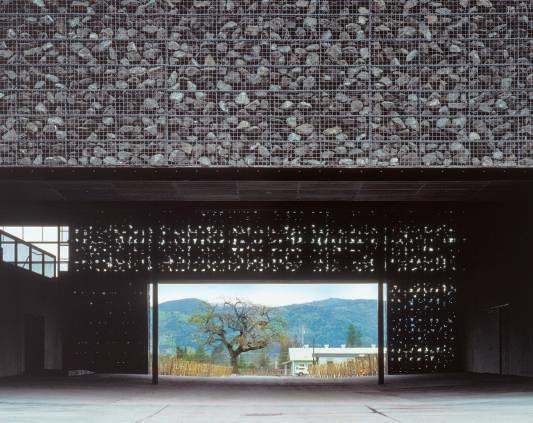
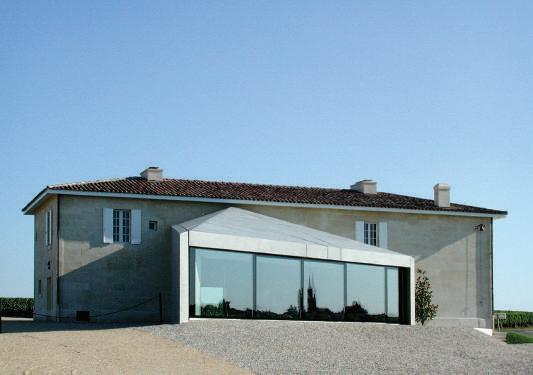
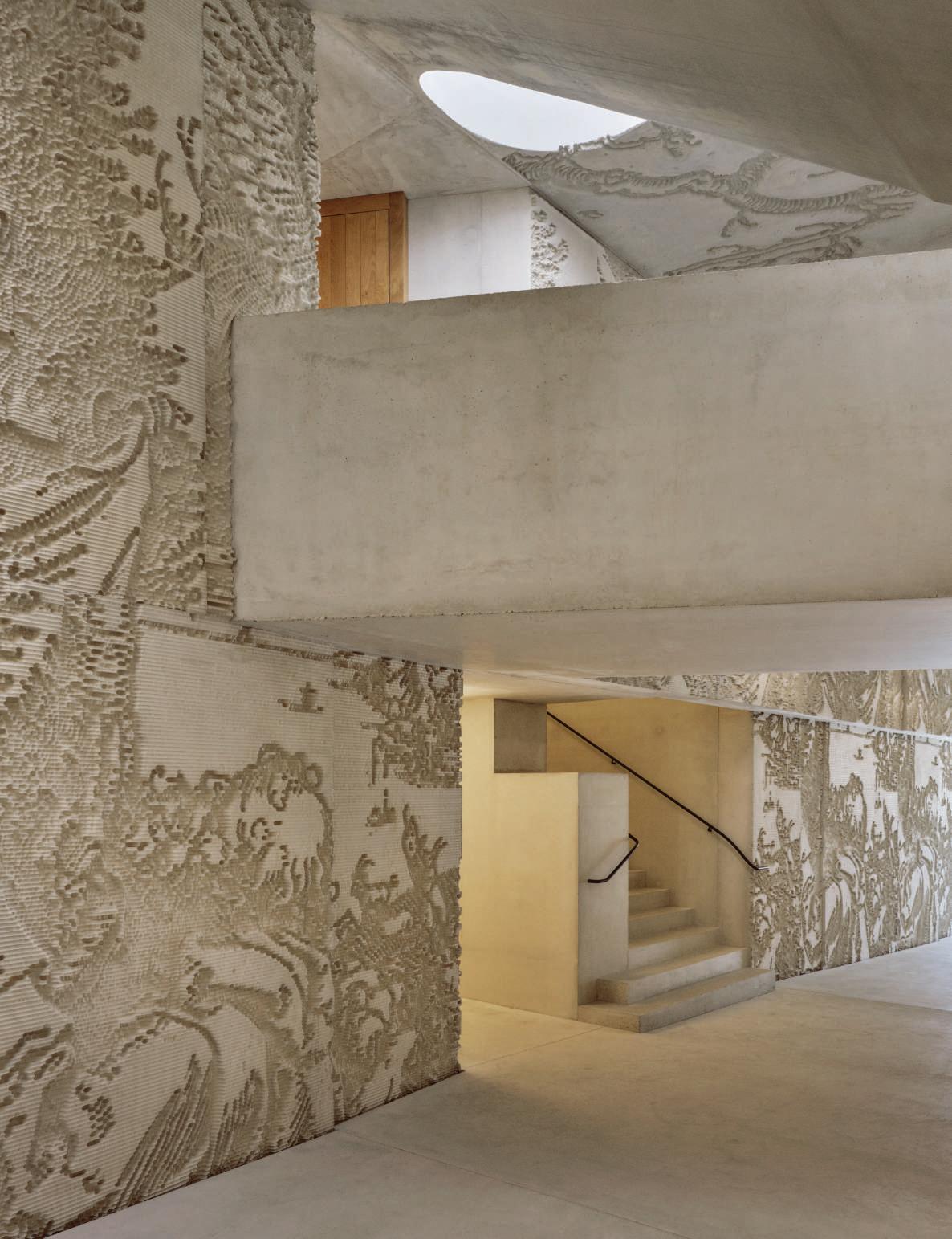
Homes with former lives—from churches to breweries—creatively and sustainably blend history
As time moves on, across the centuries, so lifestyles change and needs evolve. It follows suit, then, that the purposes of buildings should also transform. Historic industrial, civic and cultural properties fall out of use for myriad reasons, but converting them into homes both celebrates architectural heritage and offers a sustainable way of satisfying demand for residences, while inviting creative spatial reimaginations. The results can be surprising and delightful: from a luxurious lounge in a historic chapel to a breakfast bar in a former brewery.
In Montreal, a church designed by architect Charles Bernier in 1910 is now home to truly unique apartments. Built as the Saint-Nicolas Syrian Greek Orthodox Church, the building became a cultural center for the city’s Belgian community after the church congregation moved away. At the start of the 21st century it was then artfully turned into condominiums. Contemporary insertions organize residential space around the historic architecture, while sensitively honoring the elegant heritage. Sleek living areas sit beneath soaring vaults and a tall dome painted with amazing frescos of angels.
Reimagining former churches as homes has become more common as congregations evolve or relocate to new buildings. The Saint Joseph Church, a monumental structure in the Dutch city of Alkmaar, was renovated in 2022 to provide nine apartments. Built in 1909, the church was designed by architect Albert Margry in a neo-Gothic style with graceful spires, pointed arches and intricate stone decoration. Over 100 years later, a team of local architects alongside the city’s public heritage body realized the building’s reinvention, carefully preserving the historic structure. Inside, stainedglass windows and original brick vaults and buttresses confer a sense of historic grandeur on the apartments, which have nonetheless been fitted out to a high-level contemporary standard.
Meanwhile in Tarpon Springs, a city on central Florida’s Gulf Coast, a Baptist church from 1926 now contains two luxurious homes. The building
with its Mission-style architecture incorporates Spanish influences, complete with an elegant bell tower. It was abandoned in the 1990s following storm damage, before being transformed in 2022.
While a church may seem a curious place to call a home, there are perhaps stranger transformations. In Yeomanstown, a rural part of Ireland one hour outside of Dublin, a historically significant corn mill in an attractive 19th-century structure was restored and converted into an unusual yet enchanting residence. Although the brick building is late Georgian, dating to 1810, it is thought farmers had used the site for corn milling since the 14th century. Ceasing operations in the early 20th century, the mill was carefully turned into a home in the 1980s.
While the exterior is picturesque—set among three acres of riverside gardens, featuring a cut-stone aqueduct bridge and an original, working mill wheel—the interior blends industrial charm and contemporary living. Five bedrooms, multilevel living spaces, home offices and well-equipped kitchen and bathrooms are interspersed with original, well-preserved corn milling wheels, millstones and other traces of agricultural heritage. The home—characterized by timber ceilings, floors, beams and staircases—retains a rustic atmosphere while offering generous amounts of space.
In Sonoma, California, industrial architecture also blends with modern-day living in a structure with a diverse back story. Built in 1906, the property was once an ice storage facility, before becoming a cooperage (where barrels and casks are made), then brewery, artist studio, World War II armory and now a four-bedroom luxurious retreat. Meanwhile, in the Philadelphia Main Line region, on the historic Ardrossan estate, a century-old 40-horse barn is now a spacious, characterful six-bedroom property.
Owning a home with an entirely different former life—or multiple lives—brings an element of intrigue to the everyday, sparking the imagination while offering the benefits of unique architectural heritage. These buildings are ready for their next chapters.

Ideally located in Old Montreal, this historic turn-of-the-20th-century building previously used to lodge a church but was then converted into grandiose residences. The entire property was gut renovated to perfection with high-end finishes, extraordinary
volumes, spectacular details and woodwork, domed ceilings, fireplaces, two parking spots and a large rooftop terrace with panoramic views. This fantastic, seven-bedroom property for daily, monthly, and yearly rentals is currently leased.
$7,037,037
Property ID: 6SZ4DV sothebysrealty.com
Sotheby’s International Realty Quebec Andrew Hops +1 514 824 3236
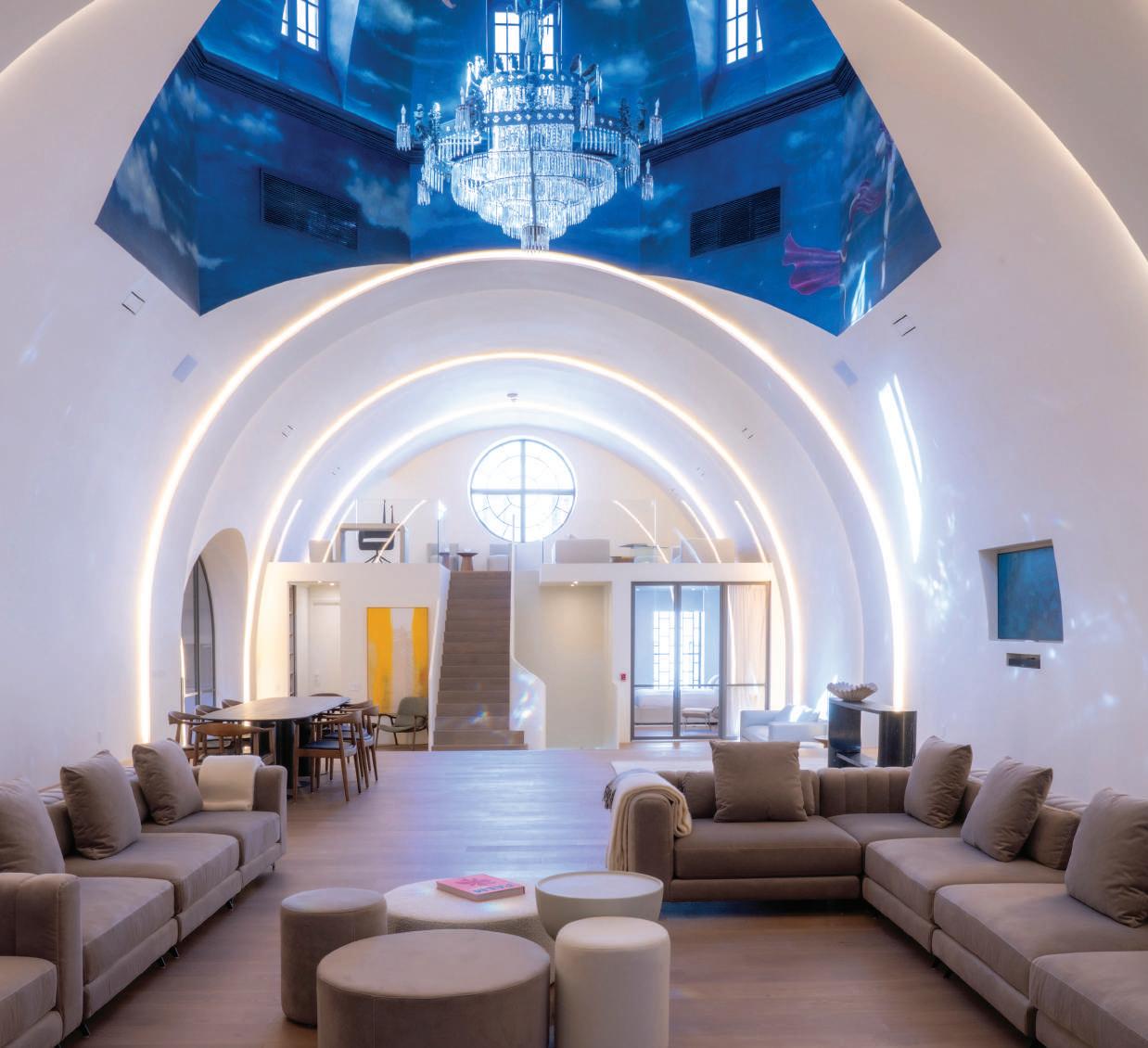
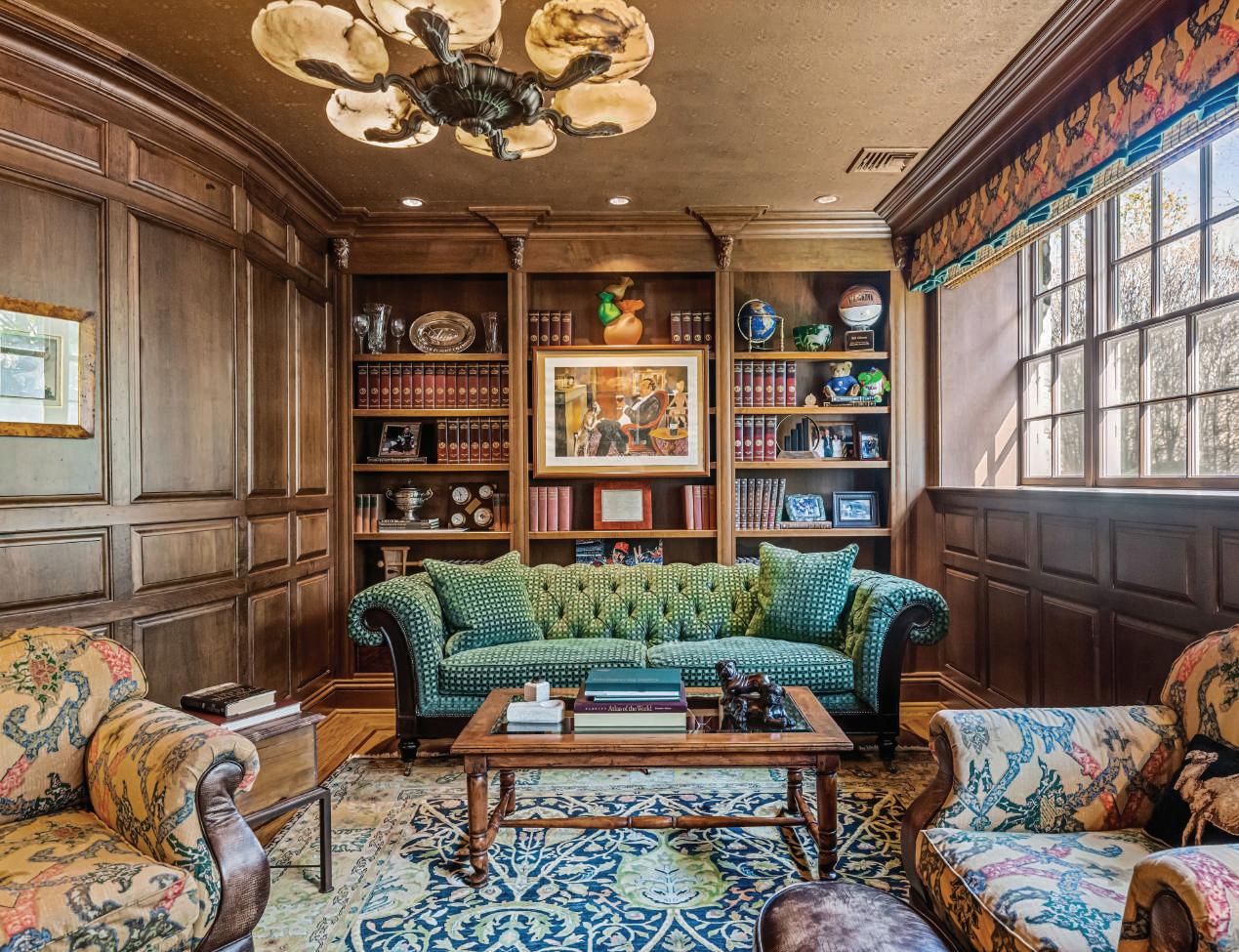
This 17-acre property, just 30 minutes from Philadelphia, was once a prized piece of Ardrossan, the most extraordinary estate on Philadelphia’s esteemed Main Line. Now known as Albermarle, this collection of Englishstyle stone buildings was masterfully restored to comprise a main residence (constructed in the 1920s to serve as a 40-horse barn), charming guest houses, entertainment barn, hi-tech business headquarters in a clock tower, alongside a pool and tennis court.
$13,450,000 Property ID: CJ8ZBJ sothebysrealty.com
Kurfiss Sotheby’s
International Realty Lisa Yakulis +1 610 517 8445
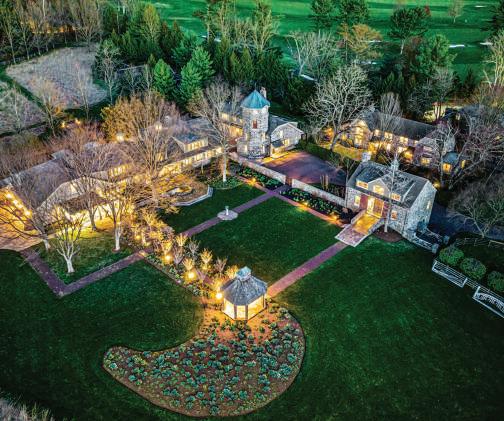
Alkmaar, North Holland, the Netherlands
The Saint Joseph Church, built in 1909 on the edge of Alkmaar’s historic center, was extensively renovated into nine exclusive apartments in 2022. The goal was to create elegant new homes that fully meet current building standards, housed within a beautiful monumental structure steeped in history. This ground-floor apartment has a total living area of 233 square meters, with a private garden and two personal parking spaces.
$1,772,222
Property ID: JEZ3X9 sothebysrealty.com
Netherlands Sotheby’s International Realty +31 88 37 47 000

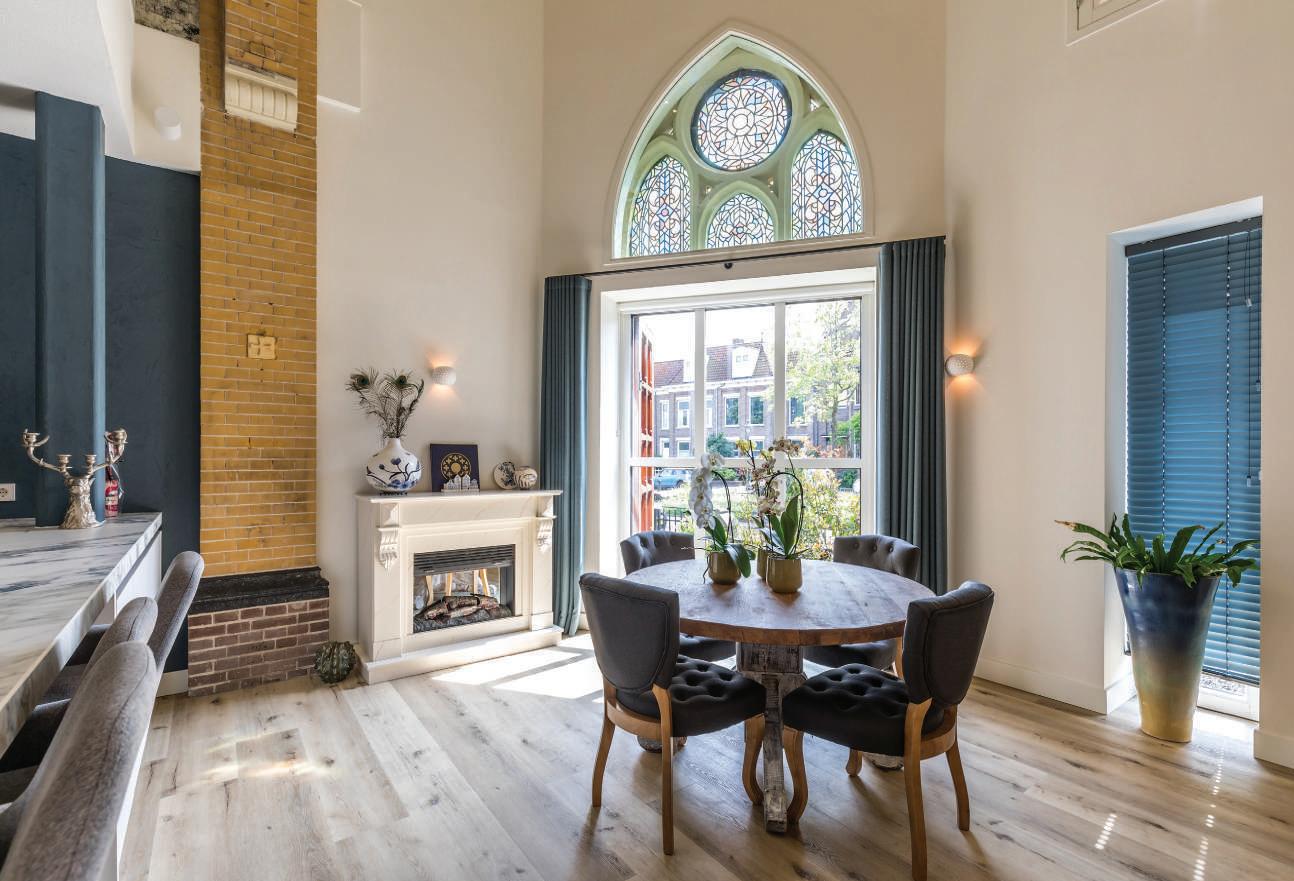
Located a block from Sonoma Plaza, this incredible four-bedroom property combines modern elegance with historical significance. Remodeled in 2023, it offers a mixed-use ground floor for commercial/residential with parking, a luxurious penthouse and an accessory dwelling unit featuring a wellness suite, outdoor pool and a spa. Formerly an ice storage facility, cooperage, brewery, artist studio and World War II armory, the property is a rare artifact of Sonoma Valley’s rich history.
$7,995,000
Property ID: 8Q6S8M sothebysrealty.com
Sotheby’s International Realty
- St. Helena Brokerage
Ginger Martin +1 415 516 3939
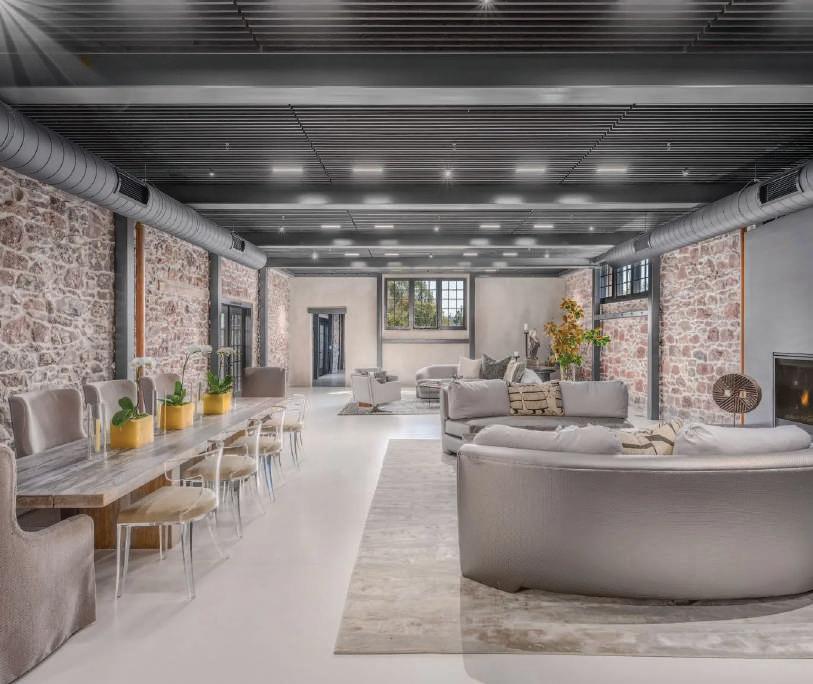
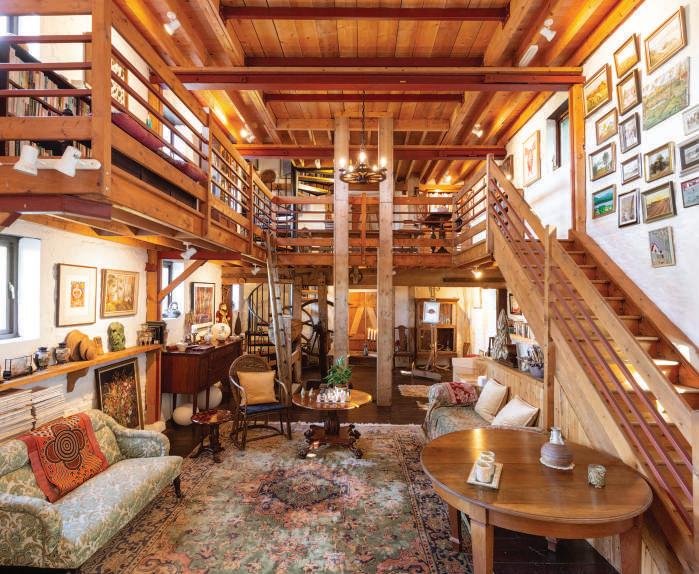
The historic Yeomanstown corn mill has a rare magical quality and retains much of the original industrial mill equipment, making a truly unique and enchanting residence. The restoration and conversion of the building into a home marries the rare original industrial charm with contemporary living requirements. The property is situated within private grounds, which extend to the banks of the River Liffey and include the original cascading mill race canal.
$1,833,333
Property ID: VCLT67 sothebysrealty.com
Lisney Sotheby’s International Realty
David Ashmore +353 87 251 2909
This beautiful villa, in the district of Tarpon Springs, was originally built in 1926 as Tarpon’s First Baptist Church. It has been restored and transformed by the owner into a Mediterraneanstyle mansion, featuring two luxurious, fully furnished homes, with each key bedroom having its own balcony. The stunning property features air-conditioned, modernized living areas, a heated lap pool with spa, and a 12-vehicle garage.
$5,995,000
Property ID: 35Z5H7
sothebysrealty.com
Premier Sotheby’s International Realty
Kelly Ackley +1 727 515 6504
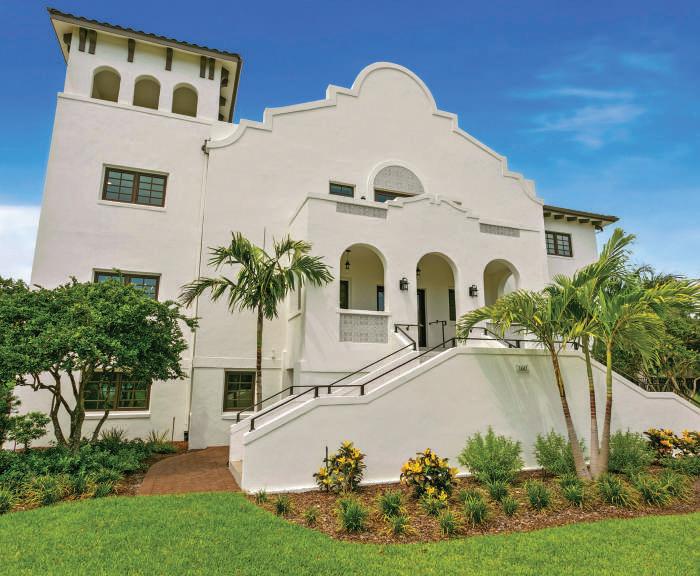
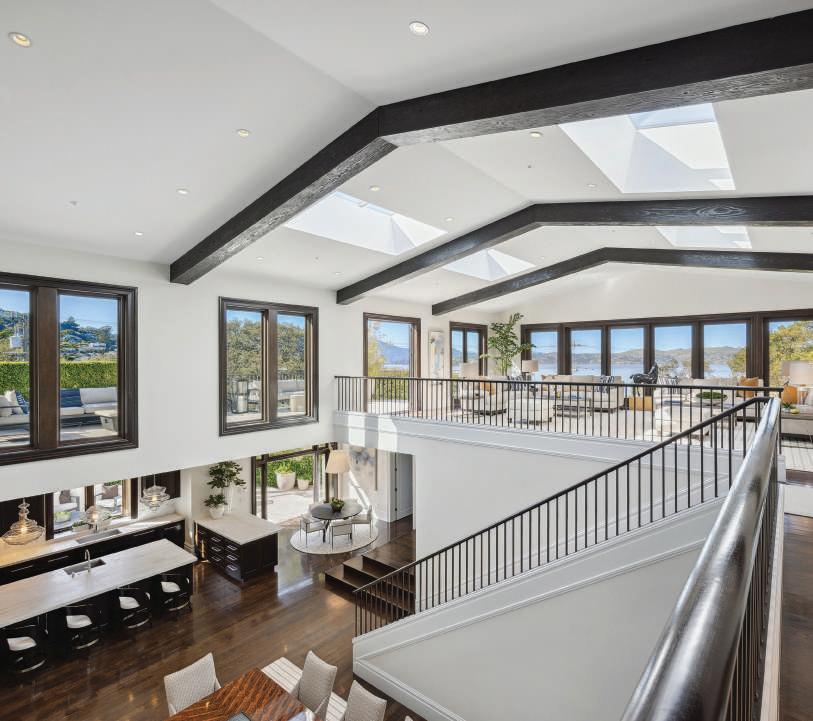
This former church, located minutes away from San Francisco, was converted for modern living in 2013. The building retains its cathedral-like vaulted ceilings, striking church towers and majestic open floor plan, while benefiting from fully renovated bedrooms, kitchen and dining room—with a 450-bottle temperature-controlled wine wall. The offices, media room and gym are ideal for quieter days in, and the lower terrace with a firepit is perfect for intimate gatherings at sunset. This home is Bay Area living at its finest.
$11,995,000
Property ID: 2749X4
sothebysrealty.com
Golden Gate Sotheby’s International Realty
Kara Warrin +1 415 407 7979

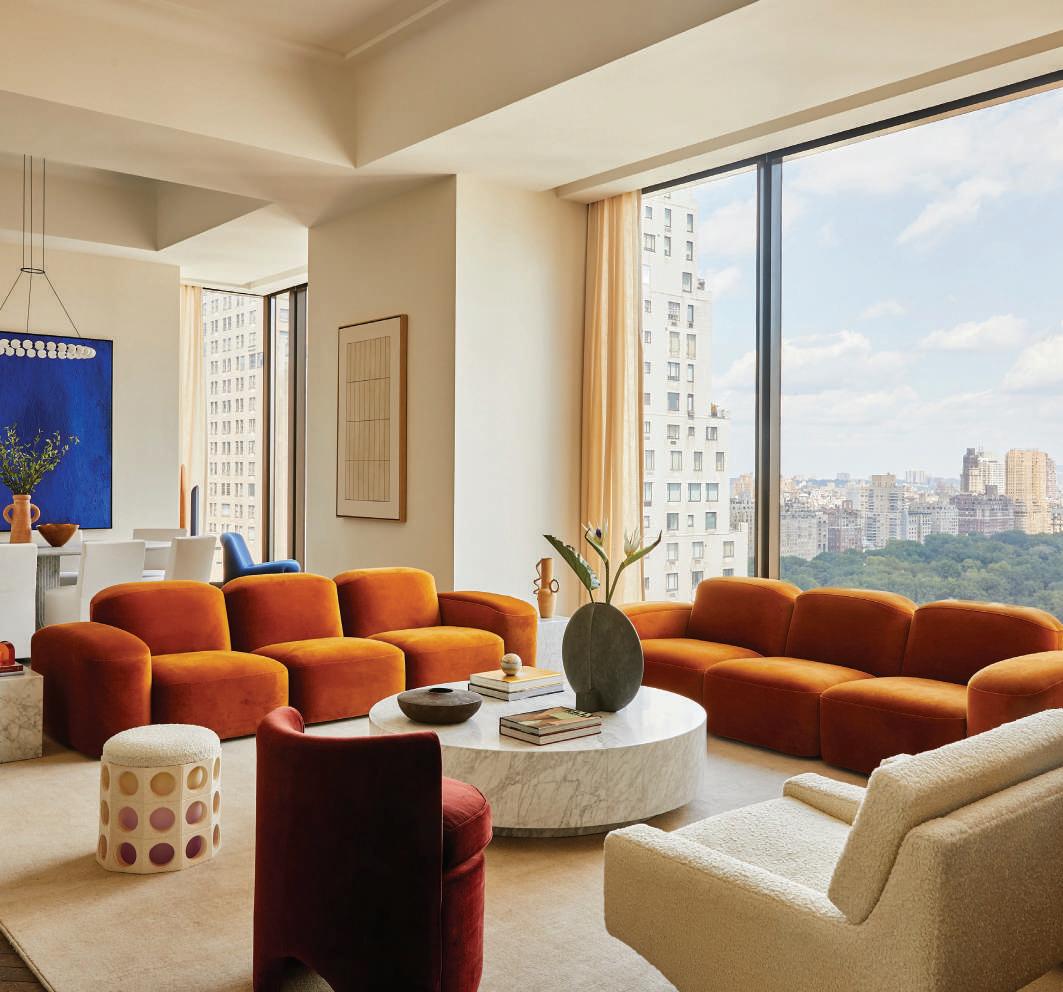

This ultra-luxurious development features apartments, ranging from 400 to 610 sq. m., surrounded by verdant landscapes, and offers access to an exclusive club, world-class hospitality, global lifestyle experiences and over 170 premium amenities.
Delhi NCR, India
sothebysrealty.com/id/QFG83V
India Sotheby’s International Realty
Gautam Mittal: +91 987 374 0425 gautam.mittal@sothebysrealty.in
Aayush Verma: +91 941 232 0080 aayush.verma@sothebysrealty.in
From $2,320,284 USD


Bungalow in Golf Links
The charming park-facing bungalow sits on a 585 sq. m. (700 sq. yds.) plot with an area of 965 sq. m. (10,400 sq. ft.). Spread across a basement, ground, first, and second floors.
New Delhi, India
sothebysrealty.com/id/7SWNWV
India Sotheby’s International Realty
Atul Goyal: +91 886 064 1995 atul.goyal@sothebysrealty.in
Price Upon Request

Goa, India
This villa blends elegance with nature. Offers breathtaking views of paddy fields and the Chapora Tributary, spanning 2,875 sq. m. (3,435 sq. yds.) with 1,310 sq. m. (14,100 sq. ft.) of living space.

Himachal Pradesh, India
With stunning valley and snow-clad mountain views, this villa has a living area of 1,020 sq. m. (10,975 sq. ft.) and features a total of 9 bedrooms. Includes a study, gym, jacuzzi and bonfire pit.
sothebysrealty.com/id/59JJRY
India Sotheby’s International Realty
Karishma Julka: +91 981 189 7999
Rushel Verma: +91 981 184 8119
$2,144,133 USD
sothebysrealty.com/id/87TEWV
India Sotheby’s International Realty
Karan Singh: +91 999 979 5189
Rakesh Agarwal: +91 729 197 1246
$3,453,614 USD
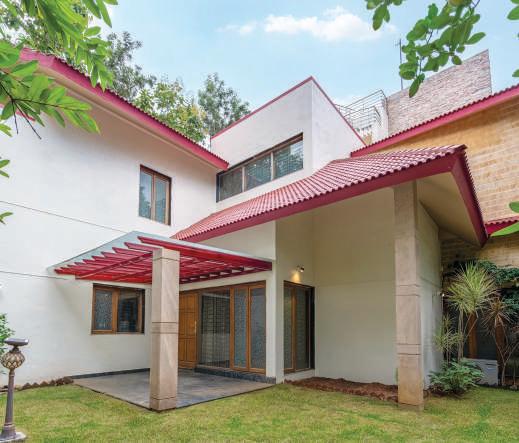
Bengaluru, India
Located in a prestigious locality, this fully furnished villa spans across 885 sq. m. (1,055 sq. yds.) and features five bedrooms with en-suite baths. A landscaped garden with a fountain offers a peaceful retreat.
sothebysrealty.com/id/G243PG
India Sotheby’s International Realty
Varun Medappa: +91 821 752 1717 varun.medappa@sothebysrealty.in
$1,905,442 USD
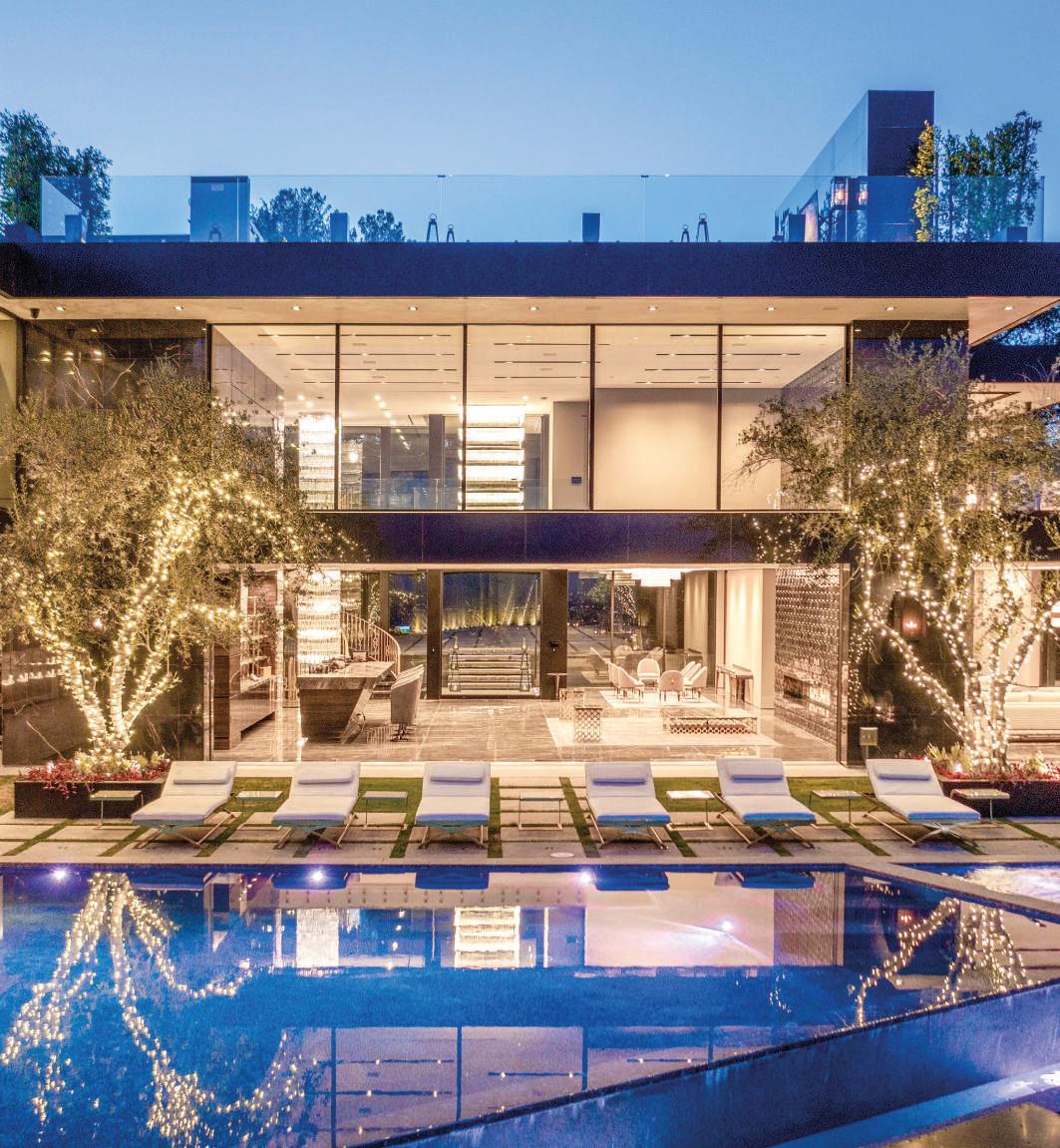
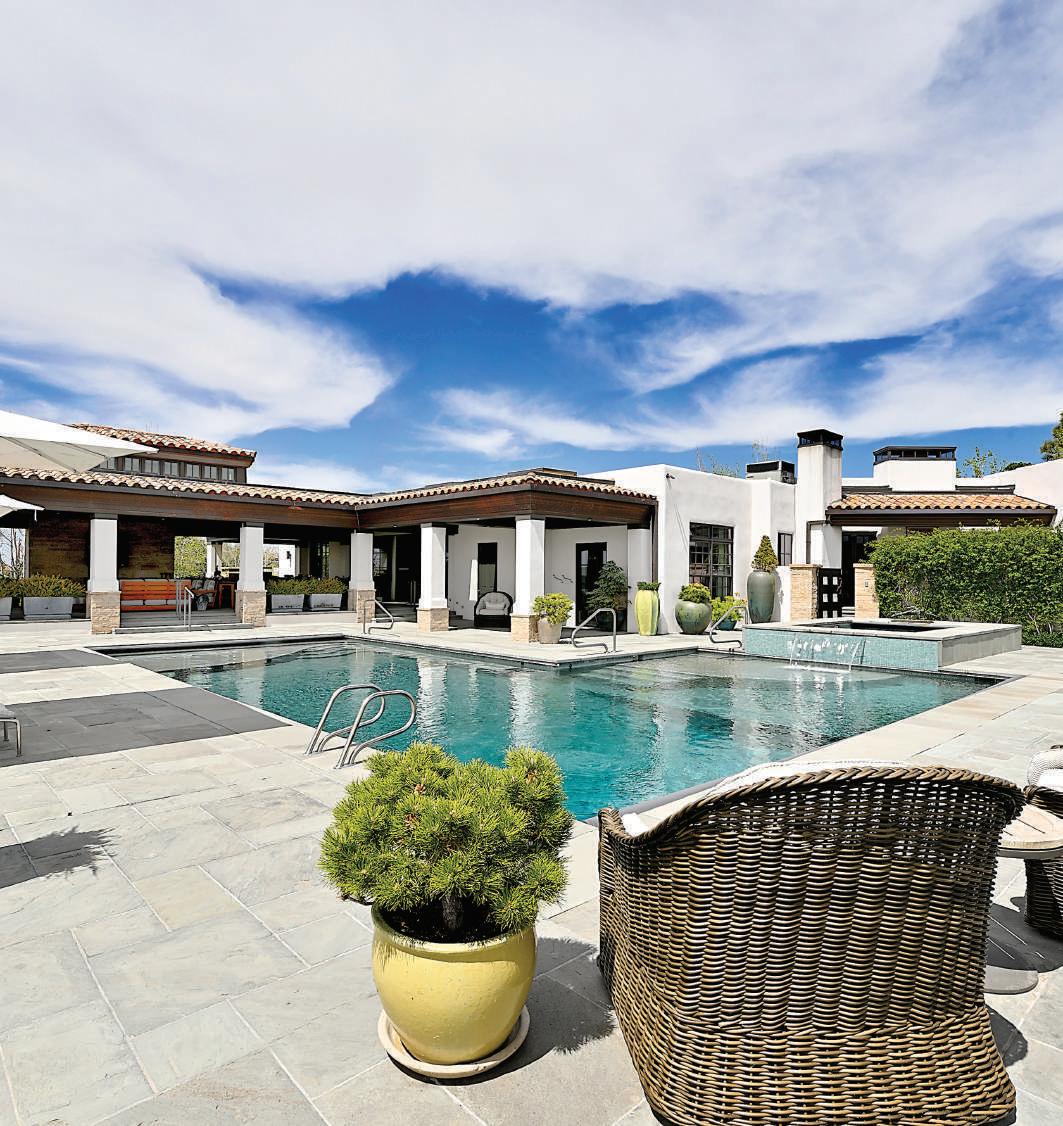
Vida Encantada – Unparalleled Santa Fe Compound
On almost three and three-quarter acres north of the Plaza, this magnificent 14 bedroom, 25 bath compound features four residences, a salon, spa and fitness facilities, a 600-bottle wine cellar, a large portal, a pool and 10-person spa, extensive gardens, and a greenhouse. Offered fully furnished.
Santa Fe, New Mexico VidaEncantadaSantaFe.com Santa Fe Brokerage Tim Van Camp | John Rigatti: +1 505 690 2750
tim@knowingsantafe.com
$17,500,000
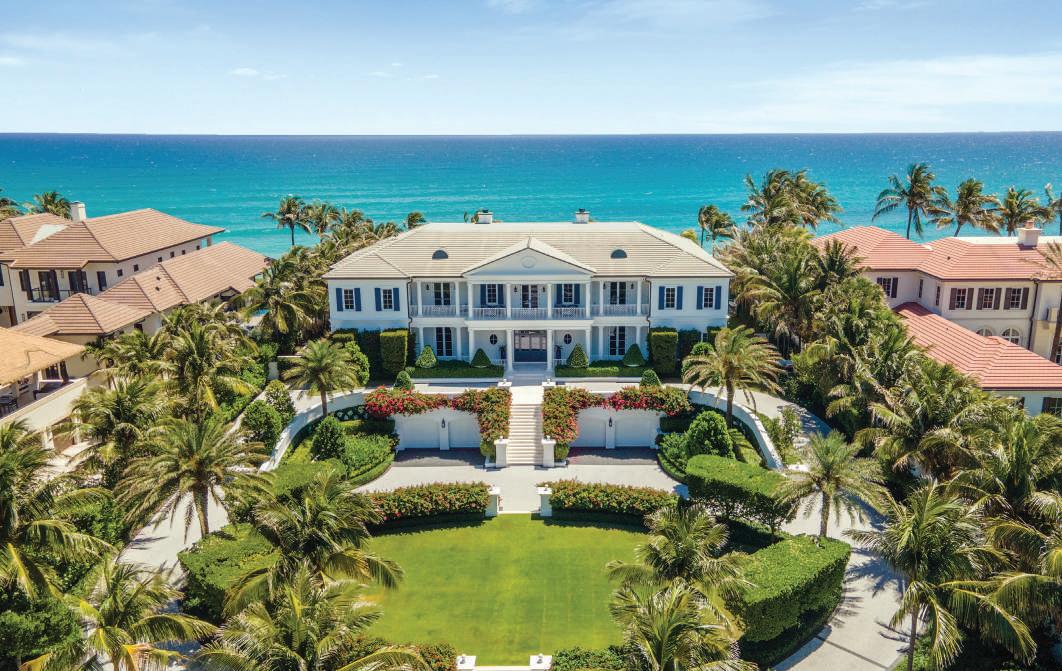
Six Forty South Ocean Boulevard
This ocean to lake coastal property is unlike any other, where 150 ft. of ocean frontage meets the elegance of new construction completed in 2020. This home offers several well-appointed bedrooms and baths designed to offer space, comfort and privacy.
Manalapan, Florida
SixFortySouthOcean.com
Equestrian
Sotheby’s International Realty Casey Flannery: +1 561 718 1472 casey.flannery@sothebys.realty
$85,000,000
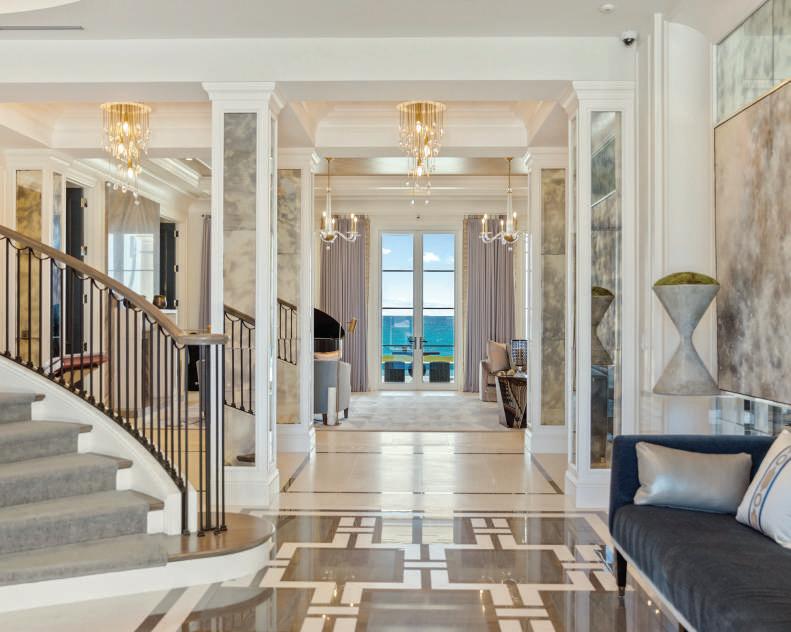
330 Harbor Drive
Completed in 2014 and designed by world-renowned architect Ramon Alonso of Miami-based Studio Radyca. This home sits directly on Biscayne Bay boasting 120 ft. of water frontage with the most exciting residential wide water view of Miami’s City Skyline.
Key Biscayne, Florida
330Harbor.com
ONE Sotheby’s International Realty
Jorge Uribe: +1 786 371 8777 jorge@jorgeuribe.com
$34,500,000
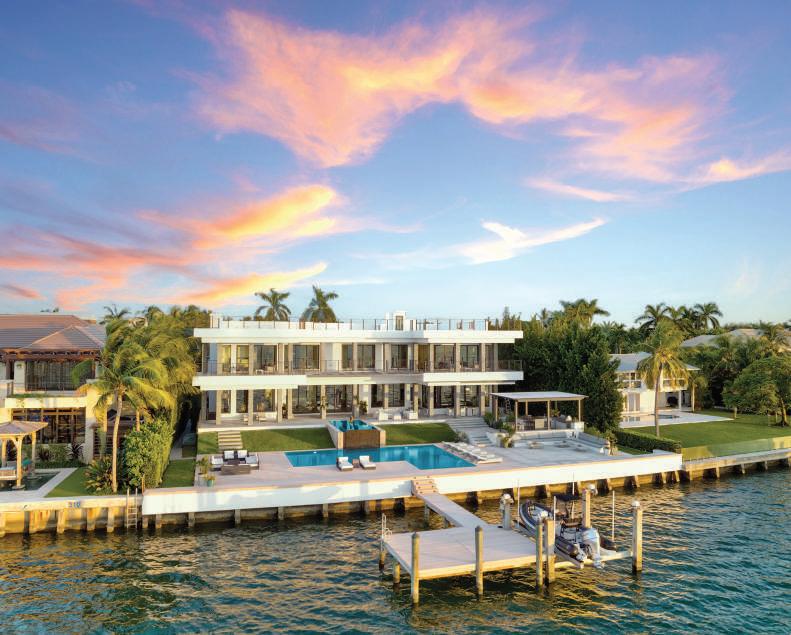
7021 South Tropical Trail
If one were to cross a classic English country estate with the tropical paradise of an island on central Florida’s Atlantic coast, the outstanding result would be 7021 South Tropical Trail. On five acres.
Merritt Island, Florida
sothebysrealty.com/id/V4JGGN
ONE Sotheby’s International Realty
Jamie Dandridge: +1 321 258 1477 jamesdandridge23@gmail.com
$3,750,000

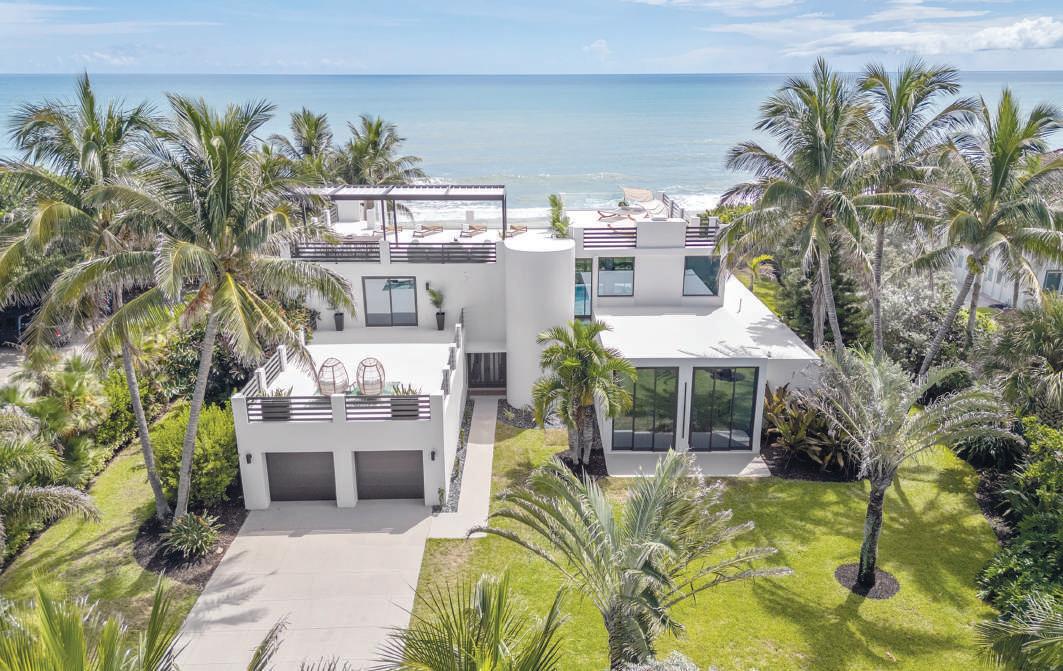
1655 Highway A1A
Introducing 1655 Highway A1A
—a rare masterpiece that redefines luxury and exclusivity in Brevard County. This one-of-a-kind, fully renovated three-bedroom, three and one-half bath home is a true standout, offering 4,107 sq. ft. of unparalleled elegance.
Satellite Beach, Florida
sothebyrealty.com/id/GEHQKB
ONE Sotheby’s International Realty
Stephanie Moss Dandridge: +1 321 243 1218 stephaniedandridge@ smdluxuryre.com
$5,480,000
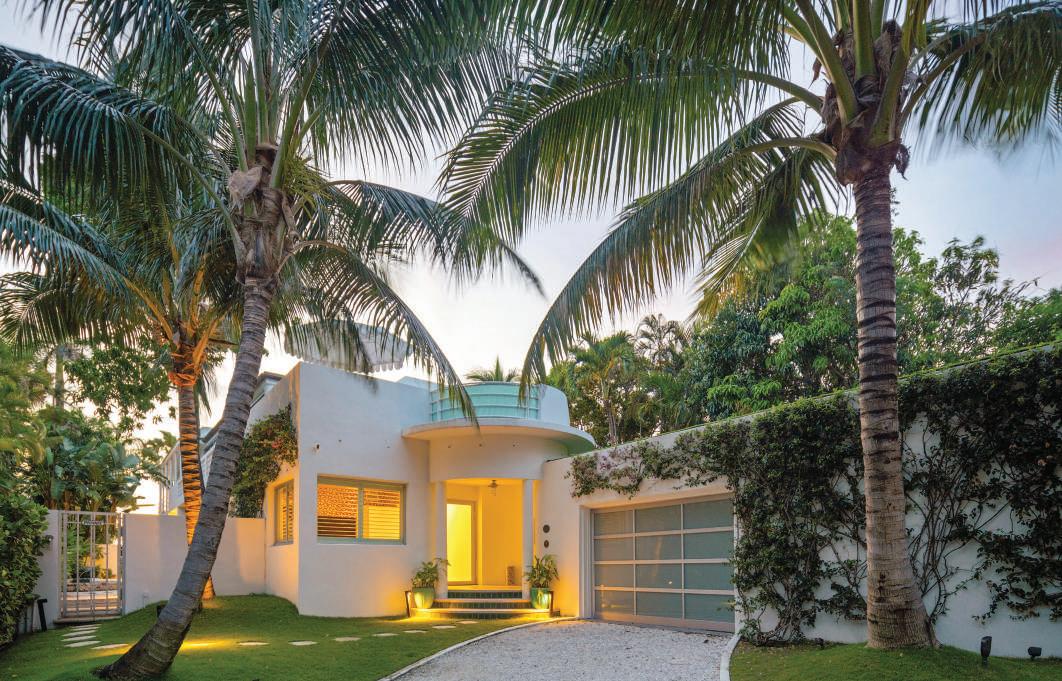
Art Moderne Masterpiece
A beautifully renovated, masterful landmark of Modernist architecture, the Boat House combines the very best elements of life in Palm Beach - the perfect spot on the lakefront with dock and boatlift, deeded ocean access and beach cabana.
Palm Beach, Florida 1221NLW.com
Palm Beach Brokerage
John Cregan | Lisa Cregan: +1 847 651 7210 john.cregan@sothebys.realty
$24,950,000
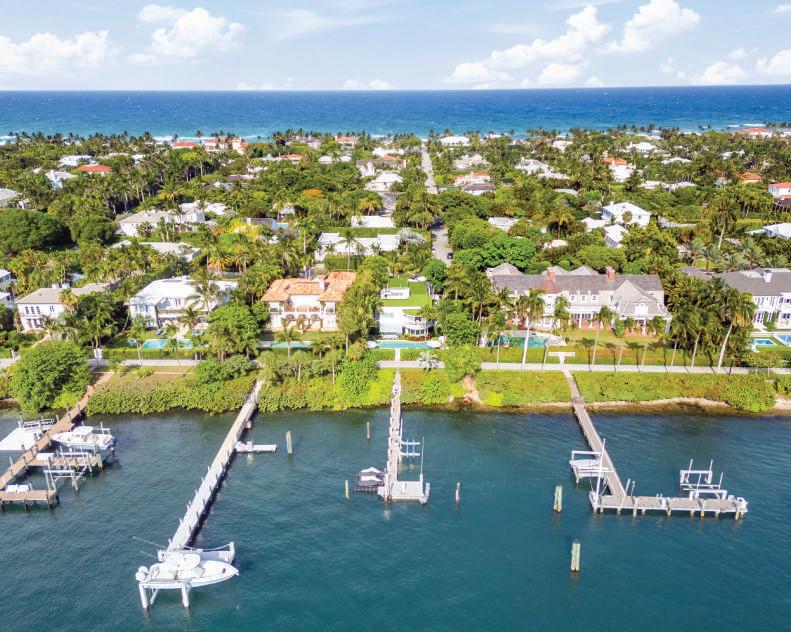

Whisper Fade
Situated on a large lot with mountain views, a gently sloping yard and private gardens, prominently overlooking the 10th golf hole at the renowned Faziodesigned Wade Hampton Golf Club.
Cashiers, North Carolina sothebysrealty.com/id/C669W7
Cashiers
Sotheby’s International Realty
Elizabeth Townsend: +1 828 421 6193
beth.townsend@sothebysrealty.com
$9,495,000
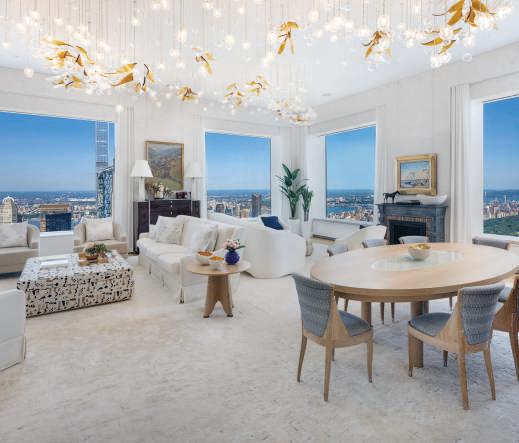
Luxury Living with Central Park Views
Live in the lap of luxury at one of the city’s most preeminent condos.
Exquisite residence designed and fully outfitted by the illustrious Robert Couturier and epitomizes luxury in the heart of New York City.

Luxury Waterfront Condo Living With Boat Slip
Luxury three-bedroom condominium home adorned with sweeping views of the Ashley River. Exclusive, gated Reverie on the Ashley; views from every room, resort pool and access to private boat slips.
Charleston, South Carolina
sothebysrealty.com/id/9CCV3E
Peace Sotheby’s International Realty
Bryan Crabtree: +1 843 343 4141 bryan.crabtree@sothebysrealty.com
Price Upon Request
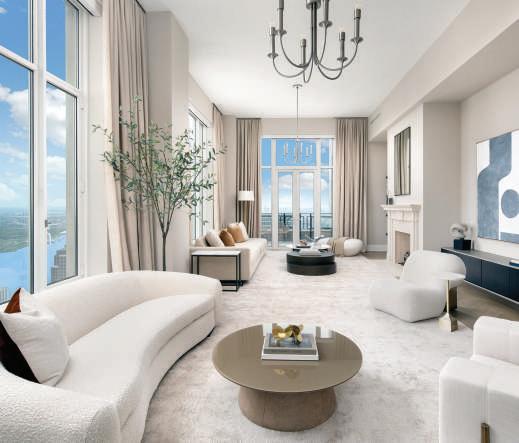
New York, New York
432ParkAve68B.com
East Side Manhattan Brokerage
Amanda Field Jordan
| Matt Perceval +1 212 606 7798
amanda.jordan@sothebys.realty
$25,900,000
The Four Seasons Private Residences
Live life luxuriously in this 3,121 sq. ft. bespoke condominium with two terraces. This home combines extraordinary living and gracious entertaining with world-renowned Four Seasons amenities.
New York, New York
30ParkPlace75B.com
East Side Manhattan Brokerage
Amanda Field Jordan
+1 212 606 7798
amanda.jordan@sothebys.realty
$12,250,000
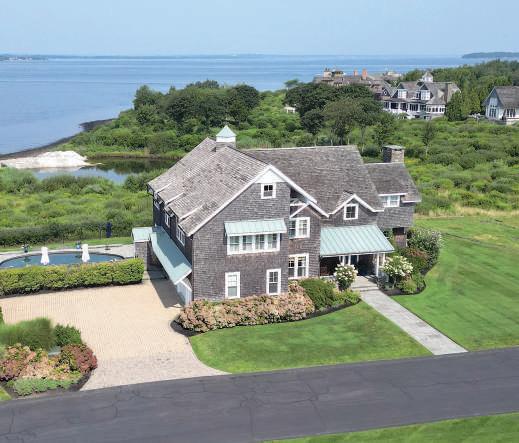
On Narragansett Bay
Waterfront Nantucket shingle style beautifully sited to take advantage of west/southwest Narragansett Bay sunset views and wonderful sea breezes. Five en-suite bedrooms and pool.
Portsmouth, Rhode Island
sothebysrealty.com/id/GRS6ND
Gustave White
Sotheby’s International Realty
+1 401 849 3000 gustavewhite@gustavewhite.com
$5,595,000
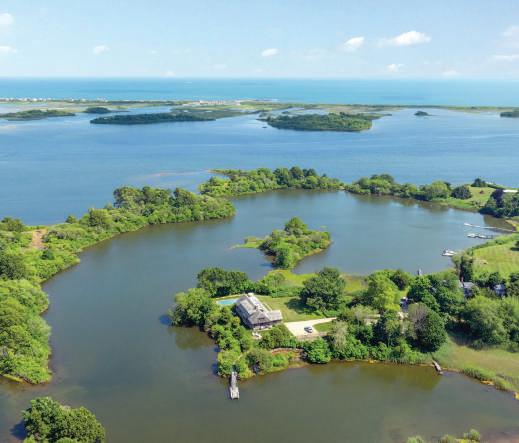
Alligator Point
This traditional modern home is situated on an almost three-acre peninsula and was impeccably built to capture privacy and sophistication with a seaside charm.

Sprawling Oaks
An incomparable trophy property and expansive private gated compound surrounded by hundreds of acres of conservation land. Offering a combination of tranquility, luxury, and resort style.
North Kingstown, Rhode Island
sothebysrealty.com/id/3Q7H3H
Mott & Chace
Sotheby’s International Realty
Jennifer Crellin: +1 401 338 5188 jennifer.crellin@mottandchace.com
$17,000,000
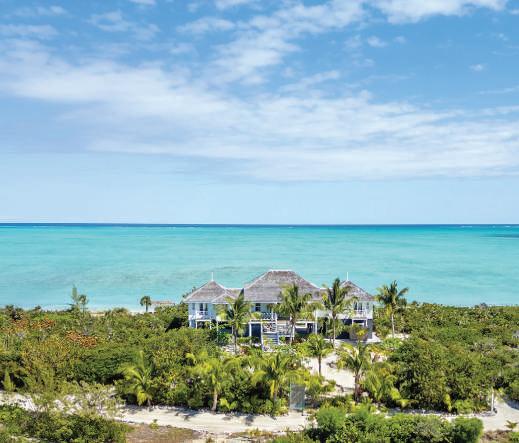
Charlestown, Rhode Island
sothebysrealty.com/id/9DGMDT
Mott & Chace
Sotheby’s International Realty
Stephen Murphy: +1 917 841 9389
stephen.murphy@ mottandchace.com
$7,750,000
A newly built three-bedroom, three and a half bath fully furnished beachfront villa on the awardwinning private resort island of Kamalame Cay, Bahamas.
Kamalame Cay, The Bahamas sirbahamas.com/id/56726
Bahamas
Sotheby’s International Realty
Christopher Ansell: +1 242 427 0082 christopher. ansell@sirbahamas.com
$3,600,000 USD

Condado Beach: Haven The Residences
Elevate your lifestyle with luxurious comfort at Haven The Residences, a brand new construction encompassing only two exclusive homes. The three-level residences afford spacious interiors and exteriors that showcase the finest contemporary finishes.
San Juan, Puerto Rico
sothebysrealty.com/id/3MCL99 Puerto Rico
Sotheby’s International Realty
Oriana Juvelier: +1 787 523 6503 oriana.juvelier@sothebysrealty.pr
Joan Lopez: +1 787 523 6510 ext. 102 joan.lopez@sothebysrealty.pr
$4,875,000



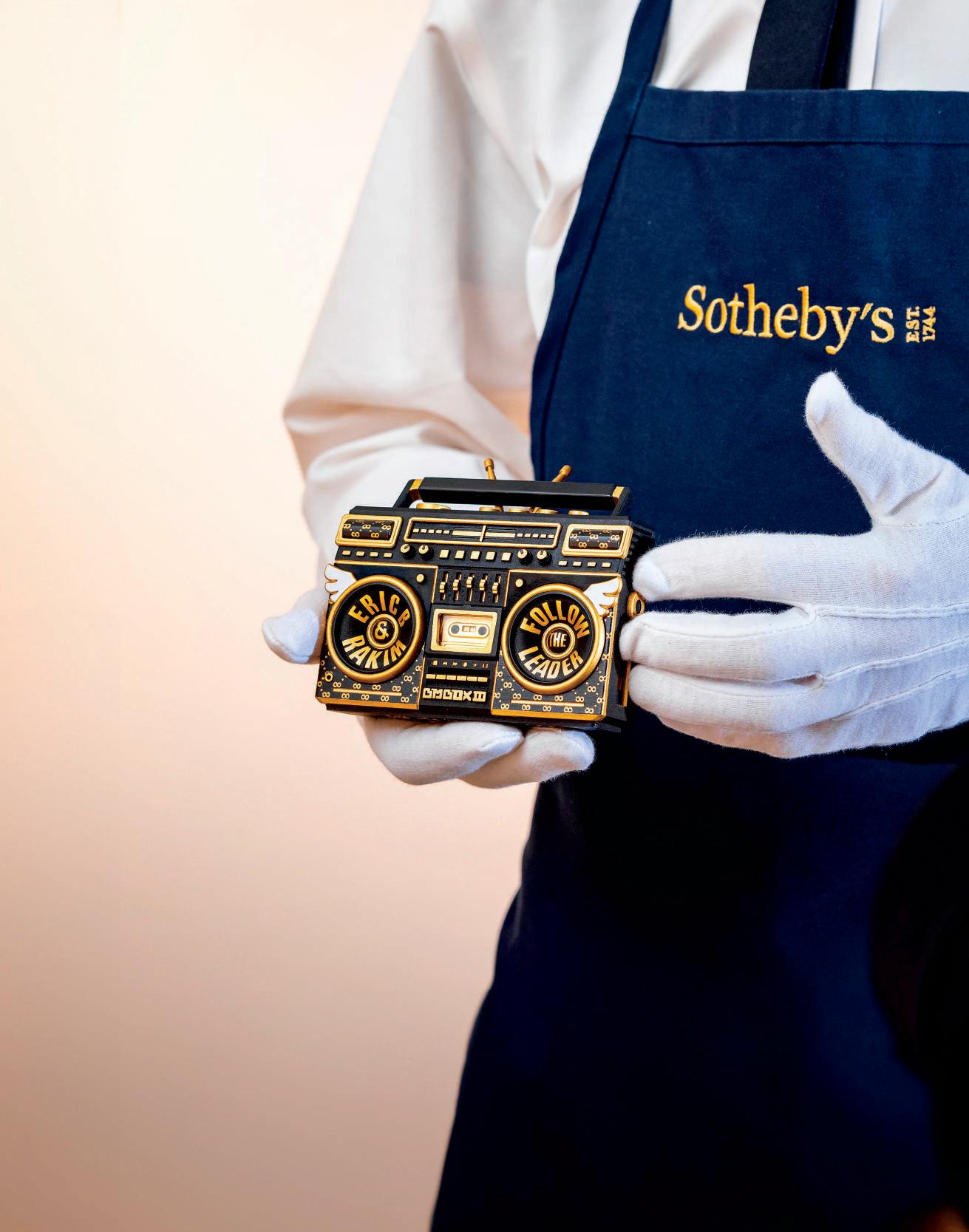

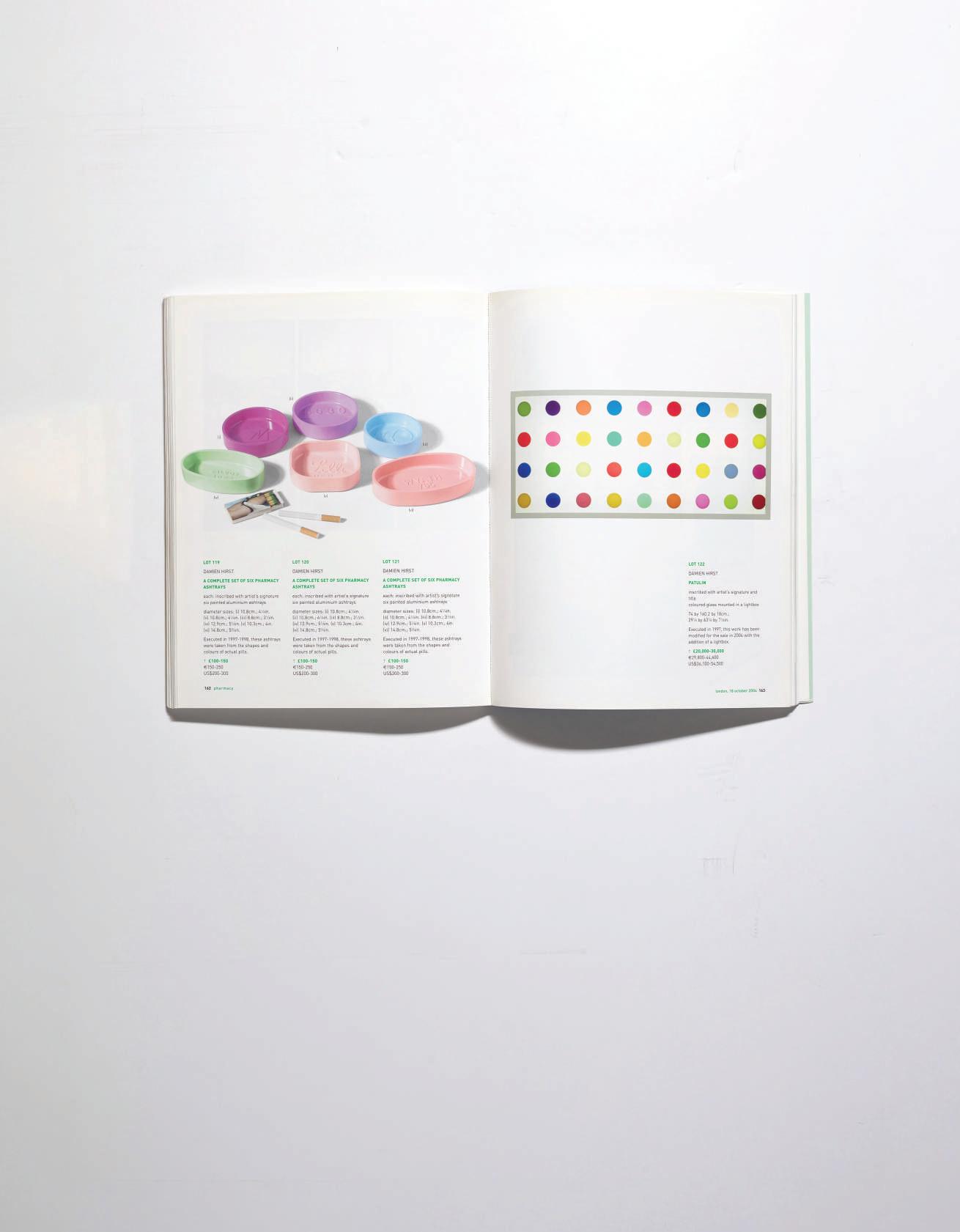

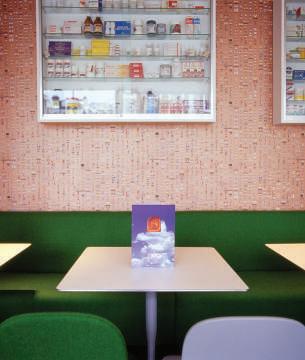
Remembering the “Pharmacy” auction of October 18,2004,which offered the artworks and objects from the artist’s London restaurant.
Opened in 1998 by damien Hirst, the enfant terrible of the Young British Artists, Pharmacy committed to its theme in every detail. Dining in the Notting Hill restaurant was like entering one of his medicine cabinet artworks—waiters wore Pradadesigned surgical gowns, salt and pepper shakers took the form of glass ampoules, and the house wine was a bottle of “pH.”
AlmostasquicklyasitwonaCoolBritanniacelebrityclientele, however, the enterprise stirred controversy. The Royal Pharmaceutical Society threatened legal action over its name and, after a string of troubles, the restaurant closed in 2003. While on a passing bus, Sotheby’s auctioneer Oliver Barker spotted the contents being removed and had the idea for a radical auction—the first to offer works directly and exclusively consigned by a living artist.
The 166 lots yielded £11.1 million and the sale sealed his place inartmarkethistory.Followingtheauction,Hirstsaid,“Suddenly my restaurant venture seems to be a success.”—James Haldane
This advertisement has been approved for issue by Bank Pictet & Cie (Europe) AG, London Branch, which is authorised and regulated by the German Federal Financial Supervisory Authority, BaFin. It is also authorised by the Prudential Regulation Authority, subject to regulation by the Financial Conduct Authority and limited regulation by the Prudential Regulation Authority. The value of an investment can go down as well as up, and investors may not get back the full amount invested. Further, this advertisement is not intended for US citizens or residents, nor would such services be offered or solicited inside the United States.