JEFFREY DEITCH GIVES ANJA RUBIK A TOUR OF HIS ECLECTIC HOME














































ROBB AARON GORDON

Step into an all-inclusive ultra luxury experience that is Unrivaled at Sea™. Explore more than 550 destinations around the world while enjoying the unrivaled space, elegance, and comfort of The World’s Most Luxurious Fleet®. We’ll tend to every detail of your journey from start to finish, so you can be pampered by the warm, Heartfelt Hospitality™ delivered by our incredible crew who not only care for you, but about you.
Nobody Does It Better than Regent Seven Seas Cruises


Must-see
Victoria Beckham collects to bring inspiration to her life and fashion.
By James Haldane
The mystery of the upside-down Franz Kline
By Lucas Oliver Mill
Paola Antonelli believes design can change
By Paola Antonelli, as told to James Haldane
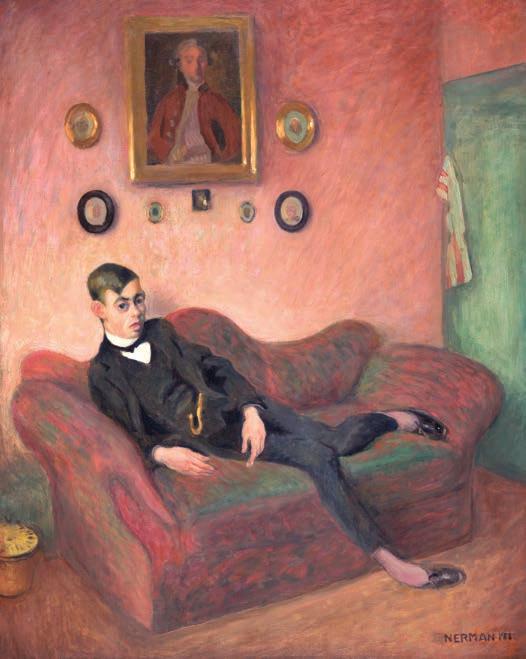
What role does nostalgia play in collecting? By Orna Guralnik and Ruby Guralnik Dawes
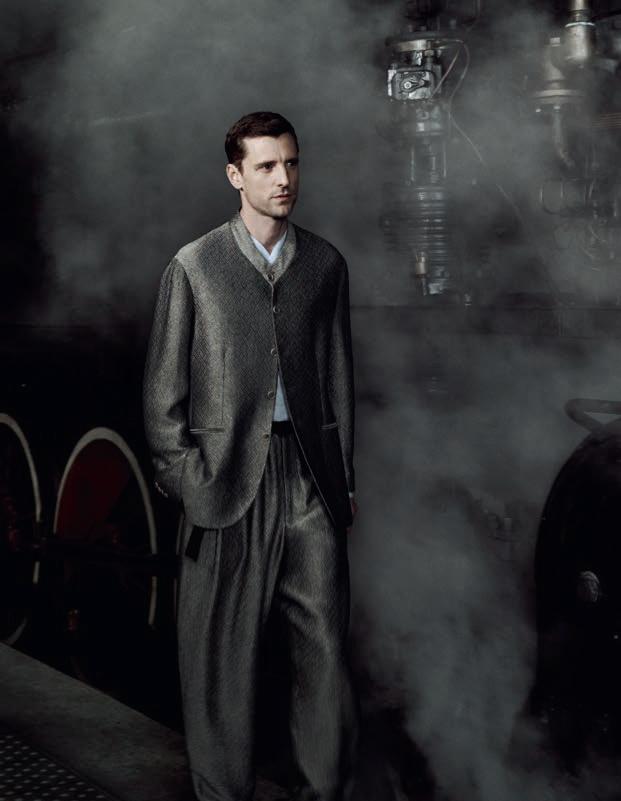
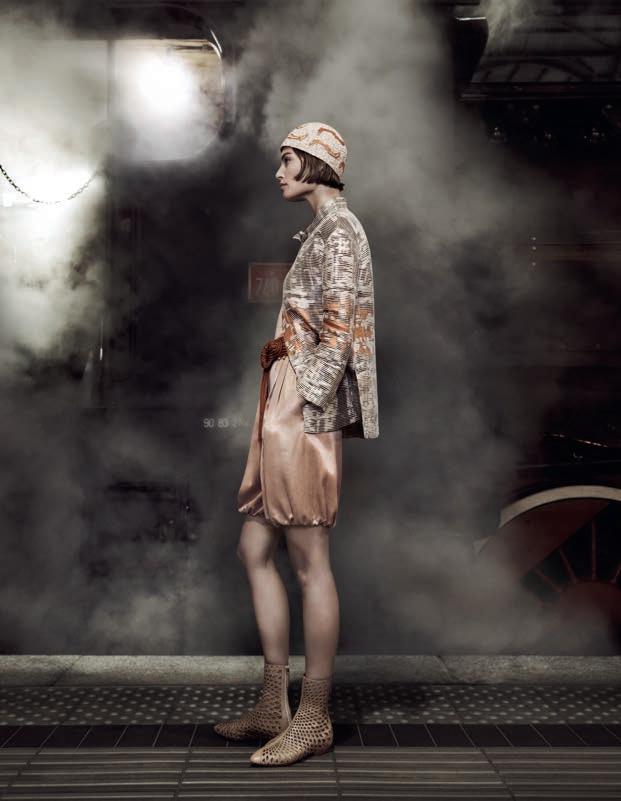
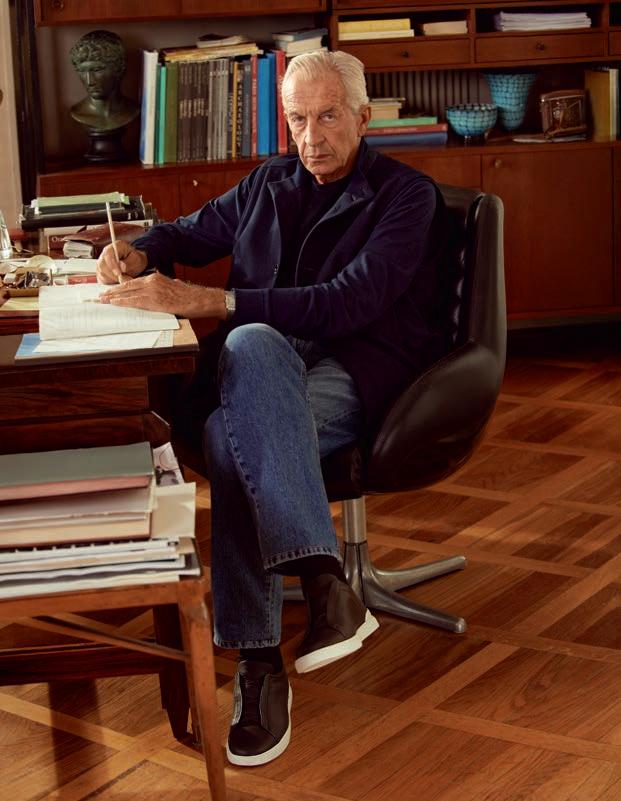
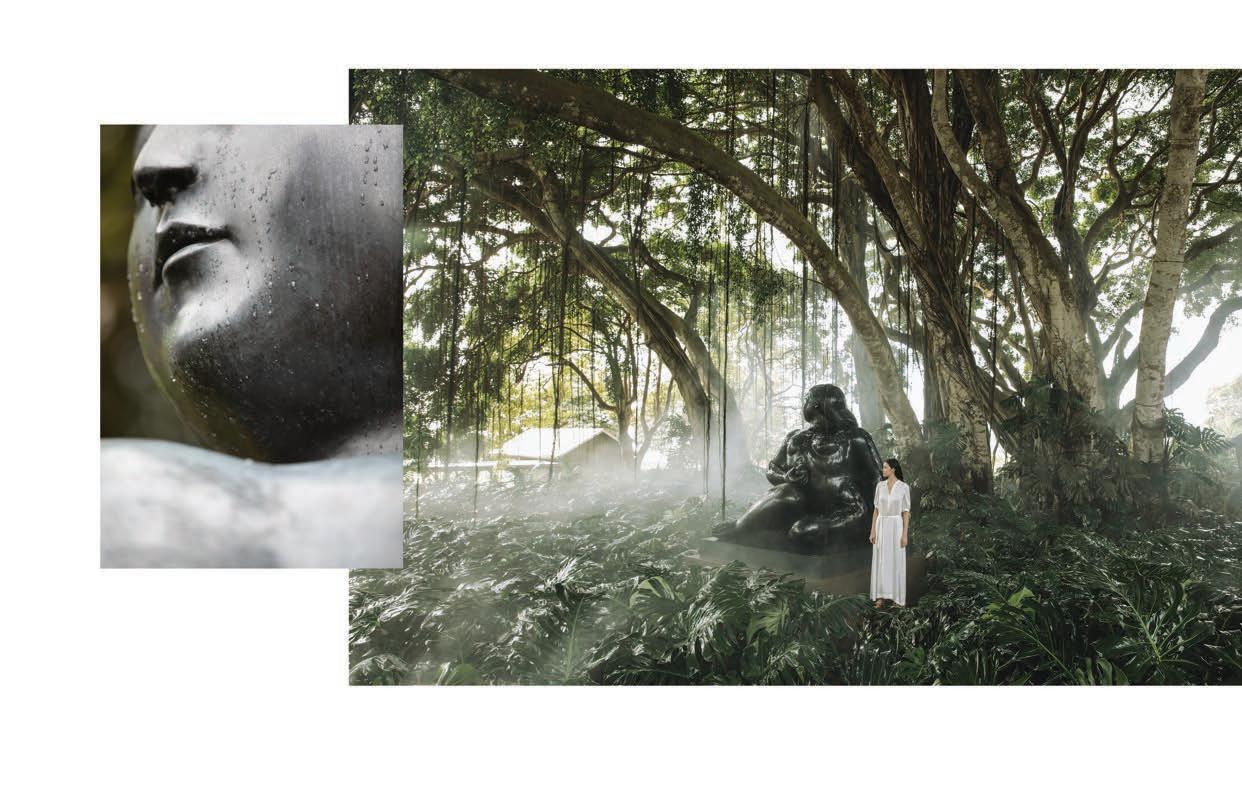
The Los Angeles home of art dealer Jeffrey Deitch makes the ideal backdrop for a creative crosspollination of
Photography by Inez and Vinoodh Styling by Alexander Picon
“I’m very lucky,” says art dealer Jeffrey Deitch. “Somehow I have a built-in compass that has taken me—since I was a teenager—to the center of art discourse.”
By Lesley M. M. Blume
by Inez and Vinoodh
Additional Reporting by Cary Leitzes


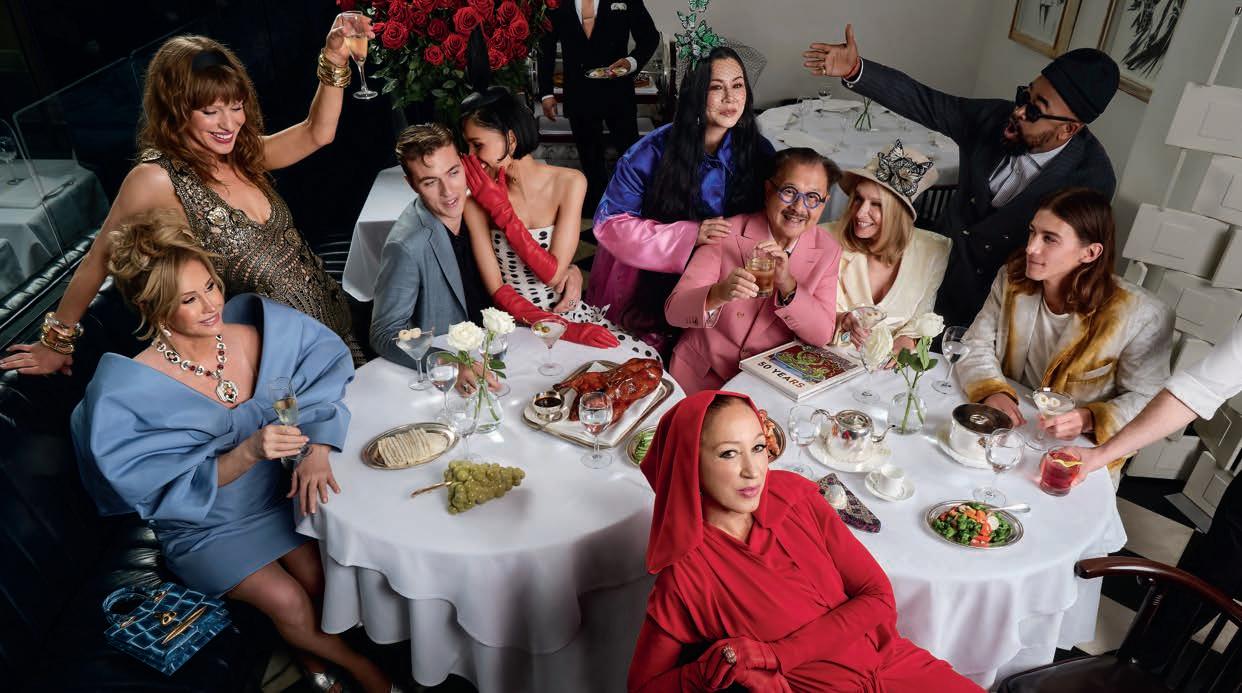
CAFÉ SOCIETY FASHION IS SERVED
106
Later in life, the Italian designer found her spiritual home in the Spanish region of Catalunya. Her apartment there, a jewel box of a Barcelona flat, remains perfectly preserved.
By Joshua Levine
Photography by Nacho Alegre
Long overshadowed by her male peers— especially her husband Jackson Pollock— abstract expressionist Lee Krasner is slowly getting the recognition she deserves. Fashion designer Ulla Johnson celebrates Krasner’s exuberant, exacting work in a new collection for spring.
By Sarah Medford
Photography by Martien Mulder
In his latest body of work, on view at Gagosian this spring, photographer Tyler Mitchell takes inspiration from his home state. “In making work there,” he says, “I’m drawing out my own personal lived histories and wider Black cultural histories.”
By Elisa Lipsky-Karasz
Photography by Tyler Mitchell
114
An exclusive excerpt from the forthcoming book “The Maverick’s Museum: Albert Barnes and His American Dream,” which traces the rise of the Philadelphia pharmaceutical tycoon and visionary arts patron.
By Blake Gopnik
120 WRITERS
Artists and writers are often judged by their capacity to depict the complexity of human character. An anthology of portraits, depicting wordsmiths from Joan Didion to Henry James, reveals the tension, inspiration and artistry born when painters capture literary legends.
By Lucas Oliver Mill
128 EXTRAORDINARY PROPERTIES
Partner content by Sotheby’s International Realty.
136
Making room for the Rubens.
By James Haldane
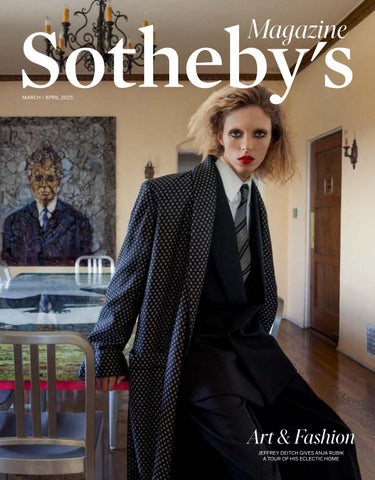
on the cover
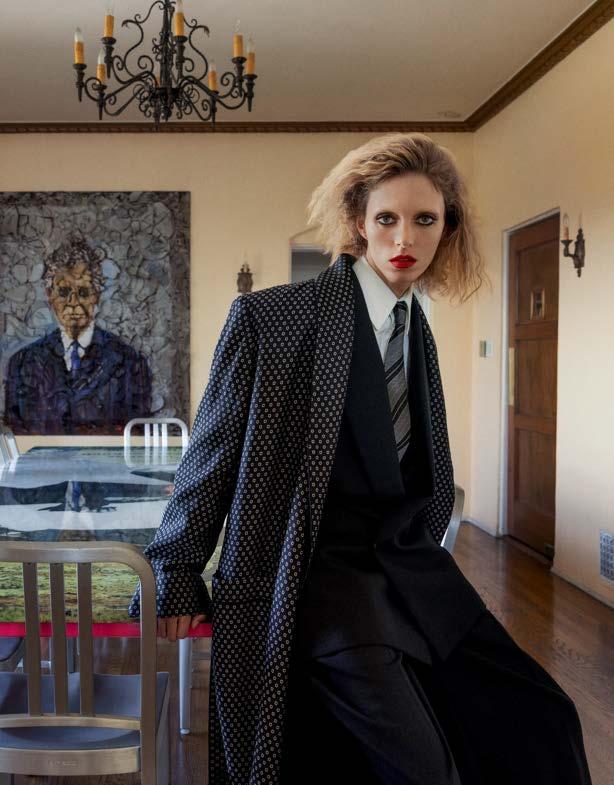
At Jeffrey Deitch’s L.A. home, model and activist Anja Rubik leans on Urs Fischer’s “jeffreytable,” 2011. The art includes, from left to right, Somaya Critchlow’s “Mr Peanut! (The Picnic),” 2021; Julian Schnabel’s “Untitled (Portrait of Jeffrey Deitch),” 2020; and Celeste Dupuy-Spencer’s “And the Kingdom is Here,” 2020. Rubik wears a Saint Laurent robe, jacket, pants, shirt and tie.

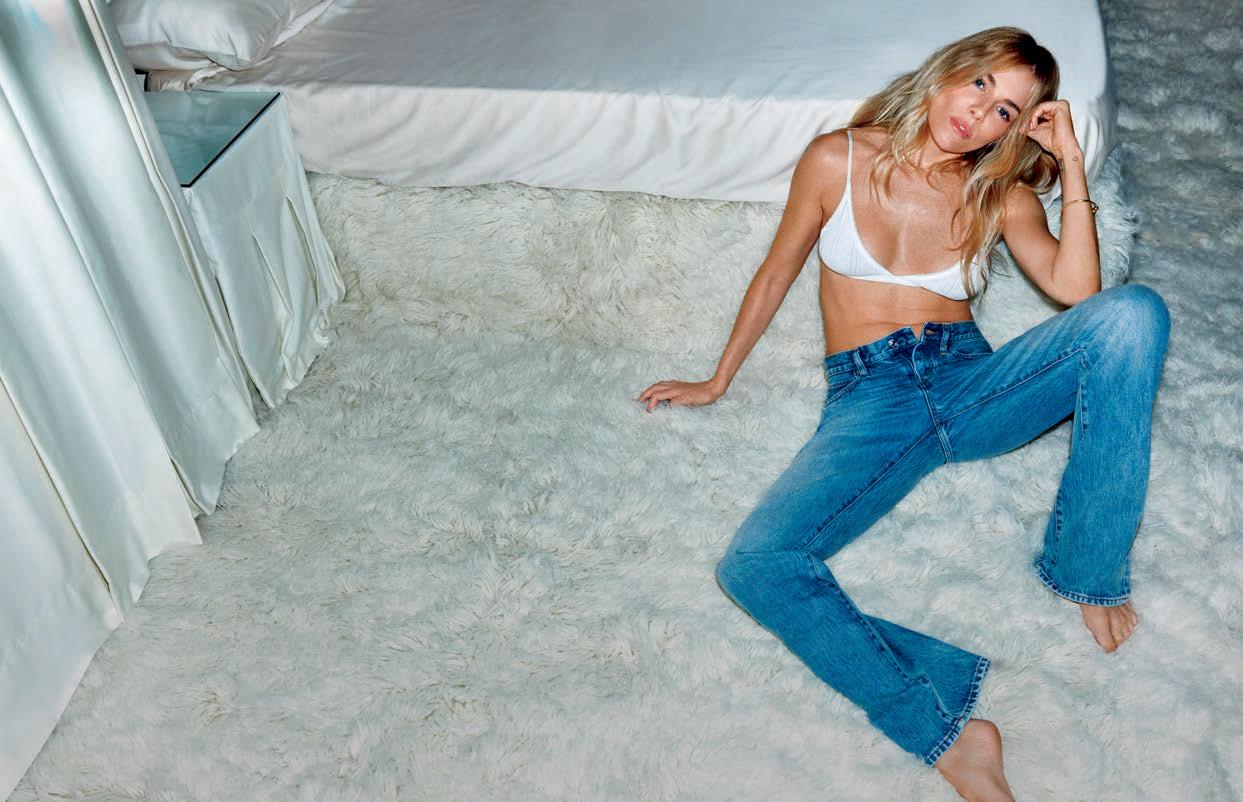
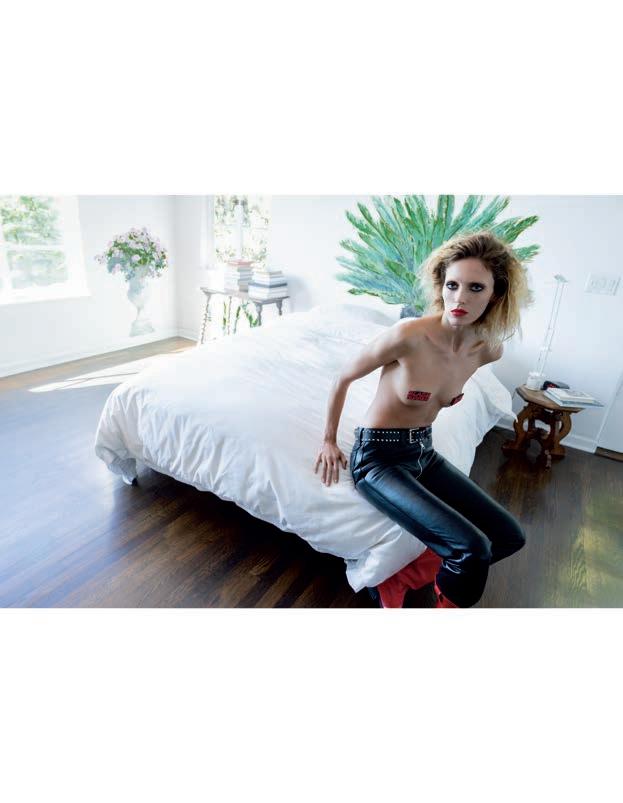
Eres bra and underwear photographed by Inez and Vinoodh at Jeffrey Deitch’s Los Angeles home.
follow @sothebys on all platforms



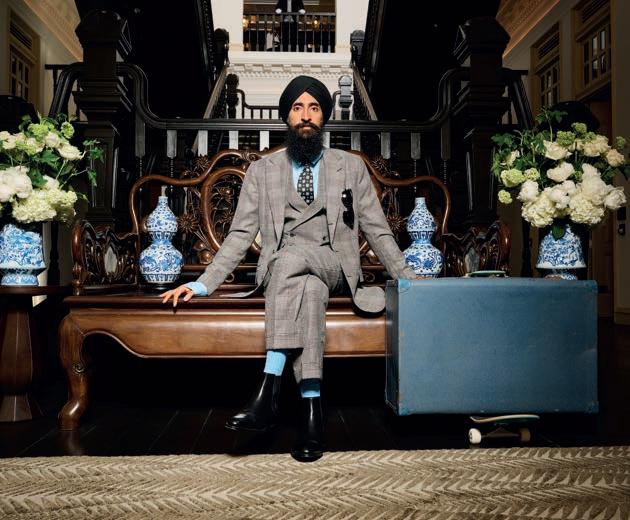









True creativity emerges from the intersection of people, ideas and worlds. Fashion, as a globalized creative field, demonstrates this with its commitment to forever looking outwards—often toward the world of art.
This issue’s cover story amounts to something of a manifesto for the magazine. Bringing to life the extraordinary photographer duo Inez and Vinoodh’s vision of capturing model and activist Anja Rubik with storied art dealer Jeffrey Deitch in his fabulously art-filled home was an ambitious goal, not least in scheduling. But it reflects our commitment to go out to the people making change happen, to visit their homes and to bring their perspectives to you firsthand.
In 1972, Deitch opened his first gallery in Lenox, Massachusetts, as a college student.Hehasnotlookedbacksince,forging a dealing and curatorial career stretching from New York to Los Angeles. His 1920s home in L.A.—once the residence of Cary Grant—is a testament to his commitment to young artists. It also served as a dream backdrop to hand the reins of The Artist Portfolio over to Inez and Vinoodh. Their pictures and the accompanying profile of Deitch by writer Lesley M.M. Blume were produced before the city’s devastating wildfires, which thankfully spared his home. Our hearts go out to the entire L.A. community as it works towards recovery, including its art and cultural institutions.
The commingling of fashion and art runs through the whole issue. We have a story on Ulla Johnson’s thoughtful collaboration with the Pollock-Krasner Foundation, detailing how the designer used three paintings by abstract expressionist Lee Krasner as inspiration for her new collection. There is a trip to the perfectly preserved Barcelona home of the Italian jewelry designer Elsa Peretti. Staying on that side of the pond, we learn how
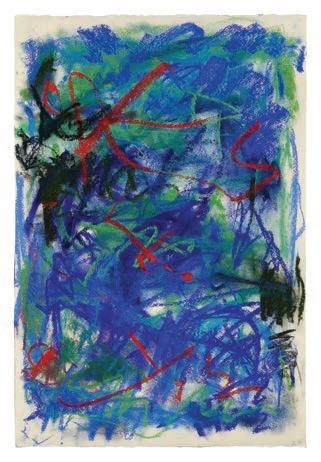
designer Victoria Beckham blends art and antiques into her life as she answers our signature collecting Q&A. Approaching the theme from the other side, we have images by photographer Tyler Mitchell from his new exhibition at Gagosian’s New York gallery.
We also have an exclusive excerpt from Blake Gopnik’s forthcoming book on pharmaceutical tycoon and visionary arts patron Albert Barnes. It is an incredible tale of commissioning a Matisse and insight into the making of a museum that has served as a place of inspiration for
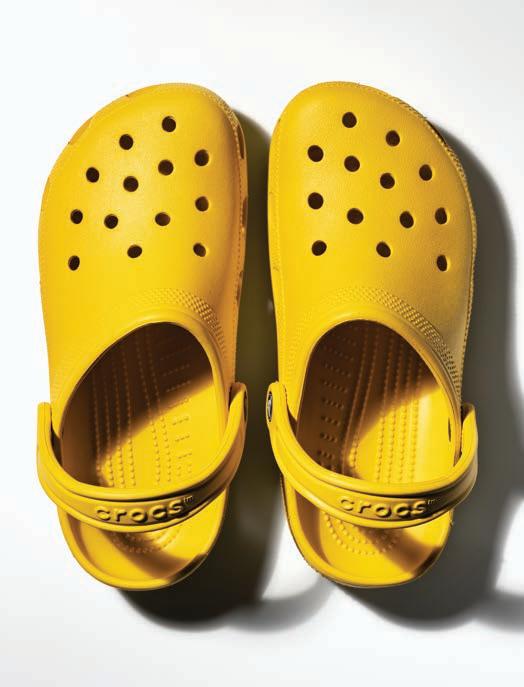
so many creatives. Elsewhere, we asked curator Paola Antonelli to share some objects in her new exhibition about everyday design at the Museum of Modern Art in New York. “I included Crocs,” she explains, “because I would not be caught dead with a pair on.”





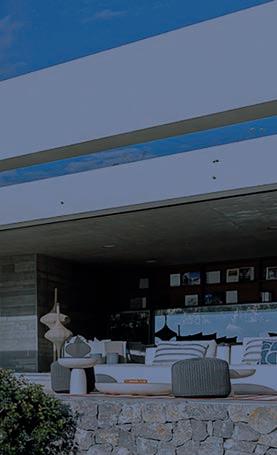
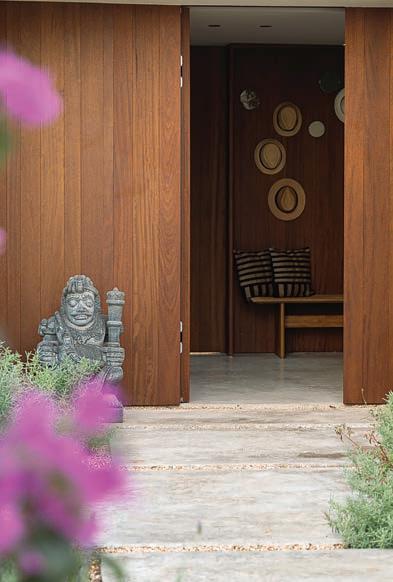

Inez and Vinoodh Photographers
Since the early 1990s, Inez and Vinoodh have created groundbreaking editorials for such publications as Vogue, The New York Times Magazine and W. Their innovative approach is seen in campaigns for fashion houses like Balenciaga, Chanel, Dior and Gucci, and music videos for such artists as Lady Gaga, Björk and Rihanna.
The Artist Portfolio, p72.

Lesley M. M. Blume
Writer
Lesley M. M. Blume is a journalist, historian and author. She has profiled many major art-world figures; she has also written extensively about the evolution of great historical creative works and frequently covers the intersection of art and war. A New York native, she currently lives in Los Angeles with her family.
The Great Art Connector, p92.
Nacho Alegre Photographer
Nacho Alegre is a Barcelonabased photographer, shooting mostly campaigns and editorials. He is also a publisher and creative director at Apartamento magazine, which he co-founded in 2008 with Omar Sosa and Marco Velardi. Since 2021, Alegre has been a partner at design firm BD Barcelona.
Inside the Private World of Elsa Peretti, p98.

Blake Gopnik
Writer
Blake Gopnik is the author of “The Maverick’s Museum: Albert Barnes and His American Dream” and the widely acclaimed “Warhol.” He has been a staff art critic at The Washington Post and Newsweek and is now a contributing critic at The New York Times. He has a PhD in art history from the University of Oxford.
The Creation Story of a Monumental Matisse, p114.
Editor in Chief – Kristina O’Neill
Creative Director – Magnus Berger
Editorial Director – Julie Coe
Director of Editorial Operations –Rachel Bres Mahar
Executive Editor – James Haldane
Visuals Director – Jennifer Pastore
Design Director – Henrik Zachrisson
Editorial Assistant – Annabelle Pollack
CONTRIBUTING EDITORS
Akari Endo-Gaut, Frank Everett, Cary Leitzes, Sarah Medford, Lucas Oliver Mill
Entertainment Director –Andrea Oliveri for Special Projects
CULTURESHOCK
Chief Executive Officer – Phil Allison
Chief Operating Officer – Patrick Kelly
Head of Creative – Tess Savina
Production Editor – Rachel Potts
Art Editor – Gabriela Matuszyk
Designer – Ieva Misiukonytė
Subeditors – Michelle Corps, Yvonne Gordon, Hannah Jones, Rachel Roberts
PARTNERSHIPS
Head of Global Partnerships –Eleonore Dethier
PUBLISHING
US (New York, Northeast and Michigan) Fashion – Judi Sanders LGR Media Plus – judi@lgrplus.com
Jewelry & Watches – Jill Meltz jill.meltz.consultant@sothebys.com
US (Southeast and West Coast) Mark Cooper TL Cooper Media markcooper@tlcoopermedia.com
Italy
Bernard Kedzierski and Paolo Cassano K. Media bernard.kedzierski@kmedianet.com paolo.cassano@kmedianet.com
Switzerland Neil Sartori Media Interlink neil.sartori@mediainterlink.com
France
Guglielmo Bava Kapture Media gpb@kapture-media.com
India and GCC Region Marzban Patel Mediascope marzban.patel@mediascope.co.in
SOTHEBY’S
Chief Executive Officer – Charles F. Stewart
Chief Marketing Officer – Gareth Jones
Chief Communications and Partnerships Officer – Karina Sokolovsky
Global Head of Brand – Jacqueline King
Global Head of Content – Nick Marino
Global Head of Growth Marketing – Tracy Heller
Global Head of Social Media – Anne Johnson
Global Head of Video Production – Rachel Roderman
Head of Events and Preferred, Americas – Richard Drake
Head of Events, UK – Lydia Soundy
Head of Procurement – Eduardo Guerra
Production Manager – Stephen J. Stanger
GENERAL INQUIRIES sothebysmagazine@sothebys.com
Please note that all lots are being offered for sale subject to Sotheby’s Conditions of Business for Buyers (which include our Authenticity Guarantee), which can be found on the relevant sale page on www.sothebys.com.
Sotheby’s, Inc. License No. 1216058.
© Sotheby's, Inc. 2024. Information here within is correct at the time of printing.


Spring 2025
CORAL GABLES, FLORIDA
FEBRUARY 27-28
The official auction of ModaMiami, featuring collectibles from nearly every age of motoring.
1966 Ford GT40 Mk II. $8,000,000-$11,000,000, “RM Sotheby’s Miami.”
NEW YORK FEBRUARY 26

NEW YORK MARCH 11-26
An exceptional array of works from postwar masters to today’s cutting-edge artists.

Keith Haring, “Untitled,” 1981. $200,000-$300,000, “Contemporary Curated.”
HONG KONG MARCH
Offering the finest jewelry, watches, handbags, sneakers, wine and spirits.
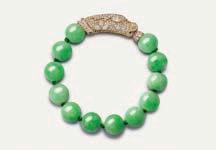
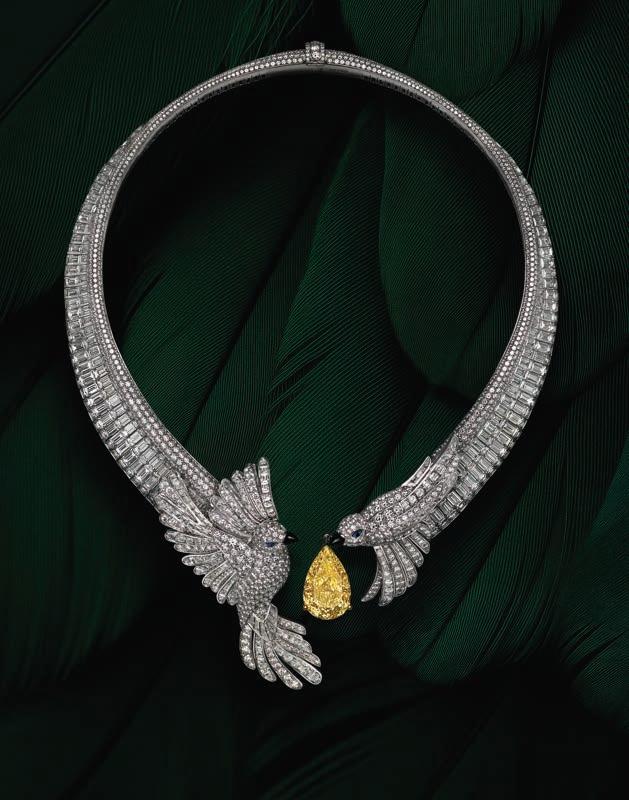
Cartier “Chimera” jadeite and diamond bracelet. HK$100,000HK$200,000, without reserve, “High Jewelry.”


Sporting artifacts and collectibles from historic games and players.
Kobe Bryant Game Worn Sneakers | 30,000 Points. $200,000-$300,000, “Legends of Sport.”

LONDON MARCH 4-6
Trailblazing works from modern and contemporary masters and designers.
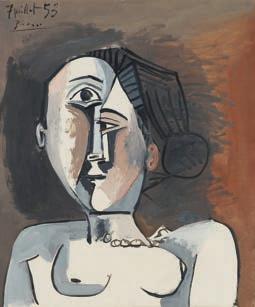
Pablo Picasso, “Buste de femme,” 1953. £4,000,000£6,000,000, “Modern & Contemporary Evening Auction.”
For our full auction calendar, visit sothebys.com/calendar
NEW YORK MARCH 13-19
Works spanning the Neolithic period to the present day.
Nicholas Roerich, “Tangla Chain,” 1928. $50,000-$100,000, “Modern and Contemporary South Asian Art.”
PARIS
MARCH 18-APRIL 9
Showcasing the finest jewelry, accessories, wine and whisky.

HONG KONG MARCH 29
Presenting modern and contemporary works from Asian and global masters.
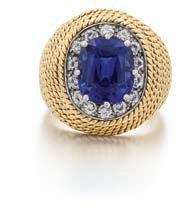
Boucheron Kashmir sapphire and diamond ring. €120,000-€240,000, “Fine Jewels.”

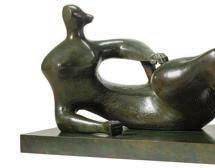
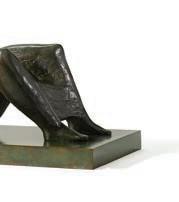
Henry Moore, “Working Model for Reclining Figure: Prop,” 1976. HK$16,000,000-HK$24,000,000, “Modern and Contemporary Evening Auction.”

NEW YORK
MARCH 21-APRIL 4
Celebrating the art and objects connected to contemporary culture.
“Sandworm.” Original concept drawing for David Lynch’s “Dune” (1984) by Ron Miller. $7,000-$10,000, “Film.”
Legendary driver Craig Breedlove borrowed a turbojet from a fighter plane to set his landmark 600 mph landspeed record.
The auTomoTive land-speed record has existed nearly as long as the automobile itself, beginning with a breakneck 39.24-mph run laid down in France in 1898. In the 20th century, setting new land-speed records became a matter of personal, and often national, pride, with French, Belgian, British and American contenders vying to crack the 100-, 200and 300-mph barriers.
But the battle for extreme velocity truly accelerated, so to speak, when California native and former firefighter Craig Breedlove achieved 407.447 mph in his original Spirit of America in August 1963. Previous record-setting machines had used a range of power plants, but all ultimately put power to the ground through driven wheels. Breedlove’s sleek craft was propelled solely by thrust from a GE J47 turbojet engine, as used on the F-86 Sabre
fighter plane. On Utah’s Bonneville Salt Flats, land speed had entered its Jet Age. Breedlove’s reign as the King of Speed was soon challenged by brothers Walt and Art Arfons, however, who respectively fielded the Wingfoot Express and Green Monster jet cars with great success. His retort was the car offered here: the Spirit of America Sonic I. With a name that suggested an ambitious goal—the sound barrier—the Sonic I diverged substantially from the dartlike, three-wheeled Spirit of America. The four-wheeled Sonic I was built around a “Coke bottle”-shaped fuselage body over 34 feet in length; this cradled a more powerful GE J79 turbojet (such as that found on the F-4 Phantom II interceptor) producing a stated 15,000 pounds of thrust with afterburner. Goodyear, the effort’s major sponsor, provided special tires for the forged aluminum wheels, as well as disc brakes; an aerospace-style drag chute provided additional stopping power. The cockpit even incorporated an onboard air-supply system for the driver.
On November 2, 1965, Breedlove drove the Sonic I to a record-breaking 555.485 mph at Bonneville, but this fell less than


BY GORD DUFF President, RM Sotheby’s
a week later to Art Arfons in his Green Monster. Breedlove responded on November 15 by piloting his machine to 600.601 mph, becoming the first man to cross the 600 mph threshold. Notably, Breedlove’s wife, Lee, subsequently became the fastest woman alive when she drove the Sonic I to 308.506 mph, though some reports suggest that the primary purpose of her run was to monopolize the salt flats for the day and prevent one of his competitors from making a record attempt.
Although Breedlove planned further land-speed record attempts, none came to fruition.His1965recordwouldstanduntil October 1970 and no car would shatter the sound barrier until the ThrustSSC’s 763 mph run in 1997. Importantly, the Sonic I is, therefore, also the car in which Breedlove made the fastest land-speed run of his illustrious career.
With its record runs behind it, the Sonic I came under the care of the Indianapolis Motor Speedway Museum in 1975. It has been exhibited occasionally, including at the Daytona International Speedway in 1980 and at the then-newly opened Petersen Automotive Museum in Los Angeles, California, in 1995, and remains a visually commanding and technologically fascinating piece of speed-record history.
Available for private acquisition for the very first time since its creation, Craig Breedlove’s Spirit of America Sonic I would be a monumental addition to any collection with a focus on speed and its pursuit. It is a unique testament to American ingenuity and the product of an optimistic era in which anything seemed possible—with the records to prove that on the Bonneville Salt Flats, just about anything was.
1965 Spirit of America Sonic I. $500,000-$1,000,000, “RM Sotheby’s Miami,” Feb. 27-28, Coral Gables, Florida.
Working with nails and monochrome canvas, Enrico Castellani epitomized the ambition of the Zero group to reset the history of art.
TowardsTheend of the 1950s, as American thought leaders were combining a shiny new form of capitalism with paranoid McCarthyism, a group of European artists, collectively traumatized by the legacy of two world wars, came together to search for a new beginning.
The Zero group, as they became known, wanted to create art that was collaborative with focus on materiality and structure. They harnessed elemental forces—fire, air and light—and expanded on the optimism of the burgeoning space
age, filling the cultural vacuum wrought by the campaign against fascism.
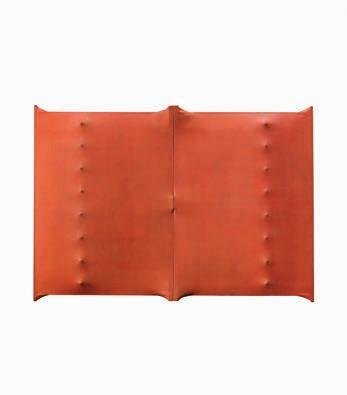
In 1963, at the height of the movement, Italian Enrico Castellani made this untitled work that concisely embodies the founding principles of this radical movement. It is an ideal, early example of his “Superficie” (surface) series, the works that would make him famous around the globe. A monochromatic canvas realized in ferocious, primary red is stretched taught across a stylized grid of nails, like skin across a skeleton.
The object (with its three dimensions, this is a better term for the work than simply “a painting”) achieves that which only the very best works of art can: it speaks with more than words, conjuring connections between past horrors, all the while using a language of the future—of bright pop-infused primary colors, of space-

BY OTTILIE WINDSOR Senior Director, Head of Contemporary Art, Sotheby’s U.K.
age hardware, of minimalism. Castellani offers us a way to understand and focus on the material from which his work is made while marveling at a form of beauty and symmetry that transcends the physical. It pushes itself into space and finds rhythm and harmony in the intervention.
This remarkable creation has always been particularly articulate; the curators of the seminal 2015 “ZERO: Countdown to Tomorrow” exhibition at New York’s Guggenheim Museum used it as the poster image to promote the show worldwide. It was in this context that I first encountered the piece and began puzzling over the mysteries of its inspiration. The architectural peaks and troughs seem to suggest ambitions beyond even the moon, to the surface of her more distant solar companion—the red planet, Mars.
These far-reaching aspirations are what captivate me. Post-war art is defined by its designs on the future. Possessing the imagination to see beyond one’s generation is rare, but rarer still is having the skill and commitment to build that ambition into something others can see, appreciate and even own. The courage of the Zero artists to create spaces and communities to share their ideas offers us all a path to follow. It brings me great comfort that in times of crisis, it is often artistic minds that lead the way. If this group of young people could look forward to an optimistic future and build galleries, exhibitions and objects that still challenge and engage us today, perhaps paths out of our current calamities do exist.
Art has always believed in the future and in community—this object tells me so. I can think of few things more powerful.
Enrico Castellani, “Untitled,” 1966. £350,000£450,000, “Modern Day Auction,” March 6, Sotheby’s London.

The results of Tom Brady’s landmark singleowner auction were driven by the combination of personality and provenance. A significant proportion of bidders were new to Sotheby’s, reflecting the growth of sports memorabilia as a collecting category and the strong appetite in the luxury market for items linked to historic figures.
40%
auction participants under age 40.
One Hundred
percent of lots sold
All of the auction’s 41 lots sold, earning it “white glove” status.


127 bids placed for one of Brady’s watches—an IWC reference IW3891-04 Pilot’s Watch Top Gun Edition ‘SFTI.’
34% of registered bidders were new to Sotheby’s.

First shown by Perrotin gallery at Art Basel Miami Beach in 2019 with a price tag of $120,000, “Comedian” has always sparked debate. Echoing the “readymades” that Marcel Duchamp created in the 1910s, the meme-inspiring work found favor with younger, crypto-literate collectors.

eaten three times Once by the winning bidder, Justin Sun, nine days after the auction, once in 2023 by a visitor to Seoul’s Leeum Museum of Art and once by performance artist David Datuna at Art Basel Miami Beach in 2019.
34 years
Age of buyer Justin Sun, a Chinese collector and founder of cryptocurrency platform TRON.
12,000+
visitors in nine cities
“Comedian” toured Dubai, Taipei, London, Paris, Milan, Los Angeles, Tokyo and Hong Kong before it was sold at Sotheby’s New York.
$6.2 million The sale price, against a pre-sale estimate of $1-$1.5 million.
Edited by James Haldane
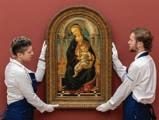
Attracted by the potential to diversify their holdings, contemporary buyers are entering the Old Master market to pursue its high-quality value offerings as key works emerge from long tenures in private collections.
8 minutes The duration of the live bidding battle.
Nine bidders competed for the painting.
100+ Years spent in the consignor’s family collection.
4x estimate The painting sold for £9,960,000 against an estimate of £2-£3 million.

























Enjoy an exclusive training experience with the cross trainer designed by Antonio Citterio. Access multimedia content for an engaging total body workout that helps you reach superior results, faster.
Act One: The Opening Bid, in which we present news from the worlds of art, books, culture, design, fashion, food, philanthropy and travel.
Plus, The Global Agenda, which highlights not-to-bemissed exhibitions opening in March and April.
Edited by Julie Coe
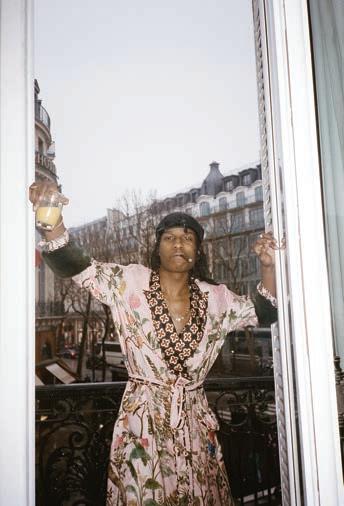
BEGUN IN 2013 as a Tumblr account, Places + Faces was originally a hub for the atmospheric photographs captured by the London-based creative duo Ciesay and Soulz when they snuck into gigs. “I would say that I worked for Vice and that I had flown in to document the concert and afterparty, and I'd get in,” says Ciesay. It was not long, though, before the pair were recognized by key talents on the grime and hip-hop scene—stars from Skepta to Stormzy—and began receiving invitations to events around the world.
Over a decade later, many of Ciesay and Soulz’s early musical connections have evolved into longstanding friendships. This month, they are mounting a selling exhibition at Sotheby’s London and releasing a photobook with publisher Idea to present some of their favorite images from along the journey.
One of the editioned photographs available for purchase is a 2016 portrait of musician A$AP Rocky. Ciesay recalls: “He and I were just hanging out. At the time, he had a working relationship with Gucci so he was wearing an outfit straight off the runway, but just with some hotel slippers. He’s smoking, holding up an orange juice, standing on the balcony of a hotel in Paris—that’s like a rapper’s lyric—but it captures Rocky in his most authentic form. He still reminisces about it too, even though we’ve taken over 1,000 images together in different locations. Whenever we see each other, we always come back to this moment.”—James Haldane
“Places + Faces,” a selling exhibition, is on view at Sotheby’s London through March 28.
Germany.
A calendar of museum and gallery openings worldwide.


InspIred by her Swedish roots, interior designer Beata Heuman is known for creating rooms rich with patterned textiles, block colors and fanciful silhouettes. What is even more impressive is that her spaces also possess an enveloping sense of order and comfort—such are the skills of a talent who trained at the knee of star decorator Nicky Haslam.
To assist those less confident with a color wheel, Heuman recently released a collection of 24 paint tones in partnership with Mylands, a heritage British paint company founded in 1884. The Dependables offers a palette of considered and reliable options, manufactured with natural earth pigments, to make artful eclecticism that little bit easier.—J.H.








Gabriela Hearst’s six-piece high jewelry collection is as clever as it is charming. The chain earrings, for example, come apart to form simple studs, double strands or even a pendant, while the Triple Goddess Ring is engineered to look as though its padparadscha sapphire is floating on air.

Paris Noir: Artistic Movements and Anticolonial Struggles, 1950–2000 opens at the Centre Pompidou in Paris.
Glenstone, in Potomac, Maryland, reopens its Pavilions with exhibitions featuring Jenny Holzer, Alex Da Corte and others.
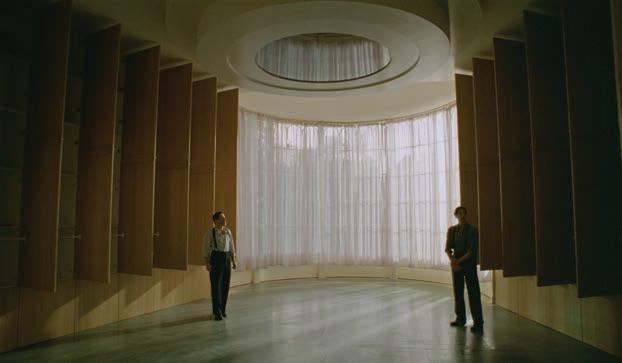
the hero of Brady Corbet’s Golden Globe-sweeping epic “The Brutalist” is a fictional Hungarian architect named László Tóth, played by Adrien Brody. Tóth, a concentration camp survivor, arrives in the US as an impoverished refugee with little means to restart his career. A wealthy patron, Harrison Lee van Buren, seems to be the way forward, first with a commission from his son to redo his library and then with a much larger plan to create the Van Buren Institute, a community center and chapel.
Set designer Judy Becker, who brought these projects to life, drew on her own inner library of Brutalism. In designing the institute, she also took inspiration from Louis Kahn, Tadao Ando and earthworks artists like James Turrell. She gave the building the form of a cross, which can only be seen from above, a reference to what she calls the “constant embrace of Christianity” forced on Tóth by his new employer and homeland.
At the film’s end, the institute’s design is revealed to have hidden symbolic importance for Tóth. Becker says that for moviegoers watching the building go up, the secret isn’t obvious. But in her vision, someone entering the building would understand from the sense of imprisonment and freedom provoked by its deep, claustrophobic staircases and soaring ceilings. “You would know through what you were experiencing,” she says, “that there was some kind of message.”




Sarah hoover’S recent book, “The Motherload: Episodes from the Brink of Motherhood,” details her harrowing post-partum ordeal. It’s ironic then that the painting on the book’s cover, a 1707 work by Dutch artist Willem van Mieris, is titled “A Mother Feeding her Child (The Happy Mother).” Hoover isn’t buying the happy part: “She just looks so weary,” she says of the woman shown dutifully spoon-feeding her baby. Trained as an art historian, Hoover didn’t pick the portrait herself, but she was thrilled when the designer, John Gall, presented it to her.
“The art of that period is beautiful,” she says. “It’s dark and moody, just like me.”
Using historic portraiture to illustrate very contemporary books, like Hoover’s,


is an interesting choice. “I think the best one was ‘My Year of Rest and Relaxation,’” Hoover says, referring to Ottessa Moshfegh’s 2018 novel, which featured the 1798 work “Portrait of a Young Woman in White” by Jacques-Louis David. Another example, Melissa Febos’s upcoming memoir “The Dry Season: A Memoir of Pleasure in a Year Without
Sex,” uses the 1877 painting “Sappho” by Auguste Charles Mengin. This knowing mix of old and new reminds Hoover of Sofia Coppola’s “Marie Antoinette,” which brought Converse sneakers into Versailles. And, she says, its appeal is a sign of the times: “In the age of AI and the self-driving car, people are attracted to the handmade.”
Perry: Delusions of

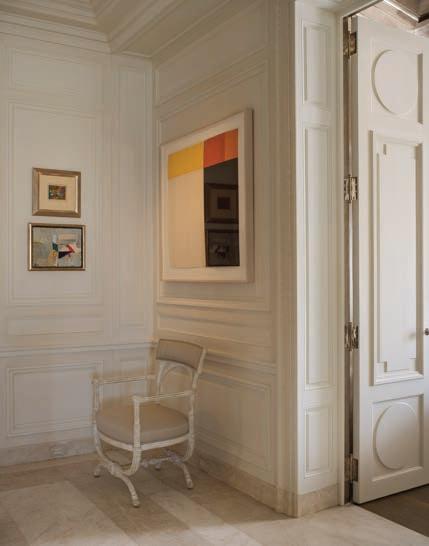
americans love apaneled room,andtheFrenchhavealways provided. This month, Féau, the Parisian purveyor of historic and newboiseries,ismarkingits150th anniversary with its first New York showroom, a space where centuries of French wall fashion will be on view. In recent decades, says CEO Guillaume Féau, American taste has shifted away from crazily ornate Louis Quinze-style rooms to pared-back Art Deco styles, like the straw-marquetry panels by Jean-Michel Frank, collectibles in themselves, that Féau is bringing to TEFAF New York in May. Also popular, he notes, is Neoclassicism, whose strict geometry enables it “to digest the mix of modern and contemporary art” that over 80% of Féau’s clients collect. “If you have a big Rothko,” he advises, “it can go across the moldings. You don’t have to be stressed about that.”
Sarah Medford
A Michael S. Smith-designed interior in New York, featuring Féau Boiseries’ Louis XVI paneling and doors inspired by 18thcentury architect Claude-Nicolas Ledoux.


Spiral staircases and cylindrical rooms punctuate Alaïa’s new Paris flagship, designed by Japanese firm SANAA and creative director Pieter Mulier. Interspersed with art and design, the store fulfills the late Azzedine Alaïa’s dream of opening on the city’s stylish Rue du Faubourg Saint-Honoré.
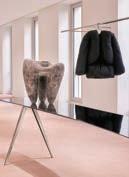

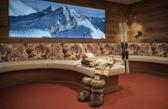
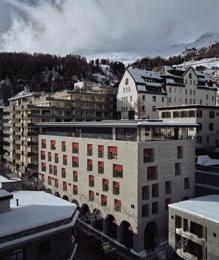
set in the storybook Swiss village of St. Moritz, Badrutt’s Palace Hotel is a bastion of old-world alpine glamour. Since 1896, Hollywood luminaries and British royals have flocked here because so much stays the same—from the afternoon tea service to the RollsRoyce that chauffeurs guests from the train. This year, however, there is something new: a six-story addition known as the Serlas Wing that marks the first renovation in over a century. Designed by ACPV Architects Antonio Citterio Patricia Viel, the wing’s 13 rooms and 12 suites (including two penthouses) complement the main hotel by offering more residential accommodations able to host multi-generational families. Taking inspiration from traditional Swiss farmhouses, the Serlas Wing channels natural materials, like the solid Dorato Valmalenco stone that makes up the façade—one of the wing’s distinguishing features, says architect Antonio Citterio. Floor-to-ceiling glass windows bring the sun’s warmth into rooms with oak accents and cream Loro Piana-wool paneling. The new wing might make a virtue of staying in, but when the outside beckons, there’s an underground tunnel system to reach the high-street shopping of Via Serlas—and world-class ski slopes a shuttle bus away.—Christopher Ross
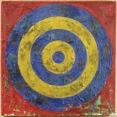
Histories: Textiles and Modern Abstraction opens at the Museum of Modern


Congratulations to Elsie Lu, this year’s winner of the Sotheby’s Institute of Art student photography contest! Each summer, students in the Sotheby’s Summer Institute precollege program submit their best photographs from their two weeks in New York City.
“The geometrical window supports, shadows, and architecture in the distance create a composition that keeps the eye moving energetically through the image – almost like a Cubist painting!”
Aimee Pflieger, Vice President, Senior Specialist, Sotheby’s Photographs
Act Two: In which we delve into the minds of creators and collectors, discussing the long-sought works that got away, tracking the place art has on our walls, celebrating the everyday objects that elevate our world and parsing the psychology behind it all.
The British fashion designer answers our questions about what and how to collect, ahead of curating highlights from the upcoming London and New York contemporary art sales.
BY JAMES HALDANE
Describeyourcollectioninthreewords?
Personal, focused and inspiring.
What was your very first collection, maybe as a child or teenager? When I was a young girl, my mother’s friend would give me her empty Chanel No. 5 fragrance bottles. Despite them being completely empty, I just loved how they looked. I would line up my collection in my room.
What was your first serious piece of art? One of the very first pieces that David and I bought was a Julian Schnabel painting from his 2005 “Sonanbul” series.
Favorite city for art or why? I love London. When you look at the incredible galleries and museums we have in this city, such as The National Gallery and The National Portrait Gallery, they have such a rich history and prestige.
Foryou,areartandfashionconnected?
Absolutely.Icontinuetobeinspiredbyart, whether it’s a contemporary piece or more classical work, such as an Old Master. In 2014, when I opened my flagship store on Dover Street in London, it was important for me to create a space that combined art and fashion. The store is a full immersion into our world, and every part of this should feel considered and inspiring to clients. This concept was at the forefront of our recent partnership with Rose Uniacke, an esteemed interior designer


and my close friend. Watching Rose place every artwork and antique, from a unique desk by Gio Ponti to a Simone Prouvé weaving, meaningfully throughout the space in such a personal way was everything I ever dreamed of for my store.
What non-art object do you find most beautiful? David Beckham first, and then abeautifulwine.Winesitsapartfromboth our industries, but it is something that we are enjoying learning about together. I had the privilege to visit the vineyards of Romanée-Conti, and I was amazed by their beauty and the incredible work and dedication that goes into the process.
What’s the one piece you’ll never part with? I’d never like to part with any of our artworks; we love them so much! We have only ever bought pieces that bring us joy every time we look at them.
Which museum would you like to be locked in overnight? Gosh, how to choose? What a treat that would be… I’ve always loved The Frick Collection in New York.
Favorite art or historical fact? I love it when artworks themselves possess history. I’ve always been drawn to a particular work on paper by Degas, called “Dancers at the Barre,” which feels very different from his usual style. I don’t own it, but I find it so often on my fashion mood board because something really
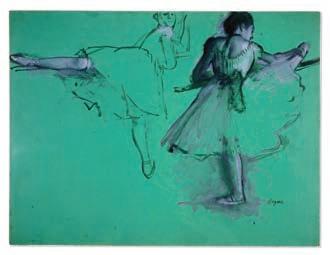
speaks to me about it. I also love Monet’s “Houses of Parliament” series. I have been lucky to see some of these paintings in a private home. Seeing these pieces up close was remarkable—their luminosity and vibrancy are exceptional.
Best impulse buy? I’m a very considered person, so it’s not in my nature to buy impulsively.
Favoriteworkofarchitectureandwhy?
Whilst I love contemporary art, I’m also drawn to classical architecture for its incredible beauty. My last few fashion shows in Paris have taken place in incredible hôtel particuliers, such as the Hôtel Pozzo di Borgo and the Hôtel Salomon de Rothschild. My most recent show for Spring/Summer 2025 was in the Château de Bagatelle, an 18th-century jewel-box chateau with so much heritage. Known for its lavish parties, its notoriety began when the Count of Artois acquired the estate in 1775 and wagered a bet with MarieAntoinette that he could rebuild the château in two months. He used over 900 workers to complete the work in 64 days. I felt honored to show my collection in a highlight of Paris’s cultural heritage.
What’s the one piece that got away?
It was a dark, black painting from Yayoi Kusama’s “Infinity Nets” series that David wanted to buy, but at the time I found it too heavy. We kick ourselves every time we discuss it. •
An intriguing social-media post spurs a deep dive into a key work’s provenance.
BY LUCAS OLIVER MILL
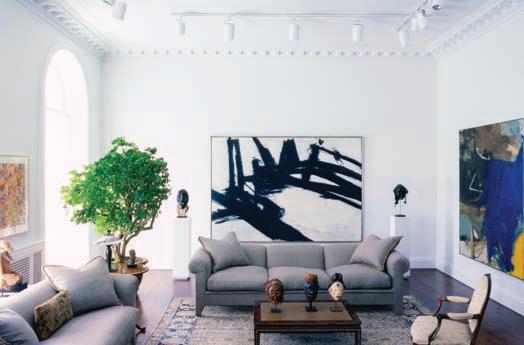
During one of my long nights scrolling through social media, I stumbled across a photograph of an Italian collector’s home, featuring what appeared to be an incredible Franz Kline painting. There was no information relating to it, and the image itself was blurry and hard to make out. At first, I couldn’t understand why the painting in the photograph seemed so familiar. And then it clicked. I had been standing in front of the very same Kline, “Untitled” from 1957, just a few months prior, at the Kunsthaus Zürich in Switzerland. However, in the photograph, the painting was hanging upside down. Had the Kunsthaus Zürich hung it incorrectly? This was also the very same Kline that made headlines in 2012 after selling for a record-breaking $40.4 million.
Curious to uncover the origin of the anonymous photograph, which appeared to be from the 1960s based on the interior design choices, I started digging online to see what I could find. My search was soon halted when I discovered no record of anyone owning the painting before the 1980s. For such an important work within the canon of abstract expressionism, why were there so many unsolved questions relating to it? How did the painting end up in Italy? Why was it hung upside down? Why was there a nearly 30-year gap in the provenance? What made it the most expensive Kline ever sold publicly?
The only real piece of information regarding the early whereabouts of the painting was that it had been included in an exhibition in Rome in 1963. The exhibition was held at Galleria La Tartaruga, a now defunct establishment that, during the ’50s and ’60s, was the first to host solo exhibitions of Franz Kline, Mark Rothko, Robert Rauschenberg and Cy Twombly in Europe. However, the history of the gallery and any living contacts related to it were nowhere to be found. The Italian State Archive had acquired and locked away all gallery records.
On a whim, I called an old friend in Italy who is well acquainted with the cultural circles in Rome. He suggested that Marion Franchetti, a gallerist descending from a noble family of collectors, might know where to look. By some miracle, when I spoke with Franchetti, she instantly recognized the room: “This is my uncle’s house!” I couldn’t quite believe it. That weekend, I took a flight to Rome to meet her for lunch, during which she pulled out a dusty box of vintage magazines and books kept by her mother. Soon, the mysteries surrounding the origin of the painting began to unravel.
Her uncle was Mario Franchetti, the brother of Giorgio Franchetti, the legendary Italian collector, and Tatiana Franchetti, the wife of artist Cy Twombly. The Franchettis are among the most prominent families in Italy; their family tree includes Twomblys, Fondas and Rothschilds. Mario himself was a partner at Galleria La Tartaruga. In 1963, a year after Kline died unexpectedly of a heart attack at 51, the gallery organized a solo exhibition of paintings by the artist. The centerpiece was “Untitled,” 1957.
After the show, Mario Franchetti took ownership of the Kline, soon moving it to his country home, which was situated in the Appio-Pignatelli suburb on the outskirts of Rome. What remains unclear today is why Franchetti chose to hang the painting upside down. It’s not unheard of for collectors to hang works in orientations that differ from the artist’s original intent, particularly with abstract expressionist pieces. The Schlumbergers famously hung their Rothko upside down in the entryway of their Paris home out of pure preference. While he
Opposite, from top: Mario Franchetti’s Italian country home, photographed in 1969 for Interni Magazine, Milan; the New York living room of Robert and Adriana Mnuchin, photographed in 1988 by William Waldron for

Franz Kline in his New York studio. Photographed in 1954 by Fritz Goro for Life.
worked, Kline constantly rotated his canvases, altering their final orientation. When I showed the photograph of Mario Franchetti’s living room to art dealer Brett Gorvy, of Lévy Gorvy Dayan, he said, “It feels like a different painting upside down.”
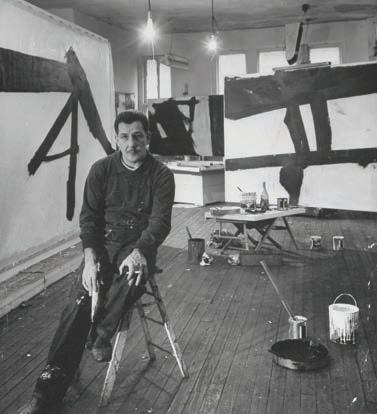
(Gorvy oversaw the 2012 Christie’s auction of the Kline painting.)
Franchetti lived with “Untitled,” 1957, until his death in 1976, after which much of his art collection was sold or donated, including the Kline, which found its way to the U.S. It was swiftly acquired by Robert Mnuchin, a fascinating figure in the New York scene who has led an almost double life. When he acquired the Kline, Mnuchin was a Wall Street veteran with a keen eye for collecting. Later, he would undertake a complete career pivot, running his own gallery out of his Upper East Side townhouse, fast becoming one of the leading dealers in the country. As a collector-turned-dealer, Mnuchin adopted the approach that almost everything on the walls of his home was for sale for the right price.
I was curious to see which way Mnuchin had hung the Kline. Through a magazine editor in Paris, I obtained the original Ektachrome negatives from a shoot at Mnuchin’s home in the late 1980s. The negatives had been hidden in a storage facility outside thecity,untouchedforalmost40years.Thephotographsrevealed the Kline hanging right-side up. Other masterpieces by Willem de Kooning, Mark Rothko and Cy Twombly hung on the surrounding walls, and light streamed through the arched windows.
Soon after forming his first art dealership, C&M Arts, in 1992 and leaving his finance career behind, Mnuchin placed the Kline
with one of his top collectors. The new owner dutifully held on to the work until 2012 when it was announced that it would be coming to auction.
I learned a fascinating detail about Kline’s market as I researched this piece, which ties into the reason this painting sold for such an immense sum. At the beginning of his career, Kline used inexpensive, low-viscosity house paints that, while effective for his expressive process, were prone to deterioration over time. It wasn’t until the mid-to-late 1950s, with the support and encouragement of his new dealer, Sidney Janis, that Kline could afford higher-quality paints. It is even rumored that the Guggenheim in New York once tried to organize a retrospective of his work, but they couldn’t convince collectors of the early paintings to loan them out due to fears that they might be ruined if moved. Thus, when the 1957 masterpiece came to auction, it was positioned perfectly to set a new record for the artist. It ultimately sold for $40.4 million, twice its low estimate, to an anonymous collector in Switzerland.
Currently, the Kline hangs right-side up in the Kunsthaus Zürich in Switzerland, bringing the painting’s journey almost full circle, not far north of the gallery in Rome where it was first shown. •

The world-renowned curator, based for over 30 years at the Museum of Modern Art in New York, lives, breathes and daydreams design. Exploring eight everyday objects, all drawn from MoMA’s major new exhibition “Pirouette: Turning Points in Design,” Antonelli reveals their tales as powerful agents of social, technological and cultural change.
PHOTOGRAPHY BY HENRY LEUTWYLER
I always tell people that I didn’t choose my profession; it chose me. But it is the only one for me because I live in what feels like a “Looney Tunes” cartoon of design characters. I walk out the door in the morning and imagine the mailbox waving hello to me and the traffic lights saying, “Hey! Come on, it’s time to cross.” I daydream in this way because objects are fundamental to our lives. Not everyone needs to join me, but it is vital to reflect on our environments.
Understanding design on a deeper plane—how things are made, where they come from, where they’re going to go afterwards, who got involved—not only enriches life but also gives citizens the power to demand better. We should seek improvement in everything, from vehicles to infrastructure to the interfaces of ATMs.
All of the objects in “Pirouette: Turning Points in Design,” from electronics to furniture to symbols, represent a moment of change. They were created in the last century or so, and most
will be universally recognizable. Some transformed behaviors or evolved typologies; others improved ergonomics for all by focusing on accessibility, and many are tied to advances in manufacturing processes. The majority were drawn from MoMA’s permanent collection, with two of the current exceptions, the Monobloc chair and Crocs, featured here. Like this pair of examples, many are humble masterpieces—not as revolutionary as the Sony Walkman or Macintosh 128K, but important nonetheless. Admittedly, design exhibitions tend to present as many pieces as possible. As curators, we look over our shoulders at art exhibitions, which always seem to have the luxury of space and attention. I decided this time that I wanted to show fewer objects. I want people to focus on one design at a time and, through it, to re-enter the world.—As told to James Haldane
“Pirouette: Turning Points in Design” is on view until October 18 at the Museum of Modern Art, New York.
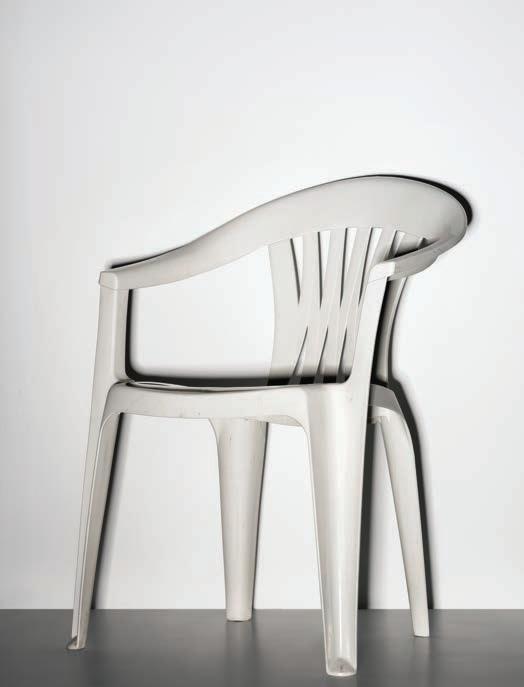

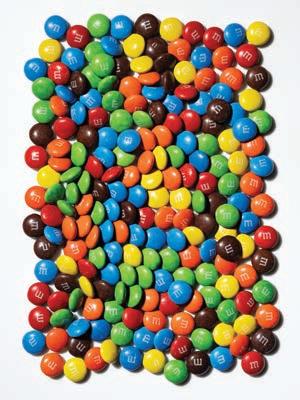
M&M’s (late 1930s). It’s an uncomfortable truth that conflict prompts innovation. Forrest Mars—the first “M”—visited Spain during its Civil War and saw chocolates issued to soldiers in hard sugar coatings to prevent melting. He developed his own version in pellet form and brought them to William F. R. Murrie, president of the Hershey Chocolate Corporation and, ultimately, the second “M.”
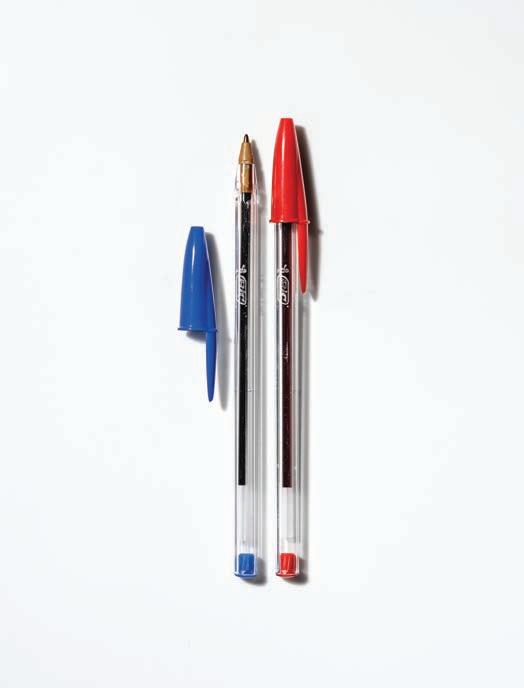

Flat-Bottomed Paper Bag (1870s–80s). Margaret E. Knight, one of the first women to obtain a U.S. patent, understood the power of incremental improvement. She designed a new machine to produce standardized paper bags with greater strength.
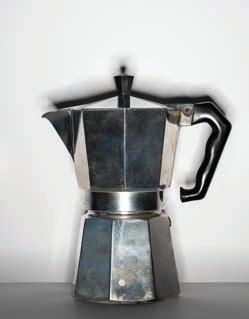

Rainbow Flag (1978). Embodying design as a unifying symbol for social justice, a hand-dyed version of activist Gilbert Baker’s flag was unfurled at the San Francisco Gay and Lesbian Freedom Day Parade on June 25, 1978.
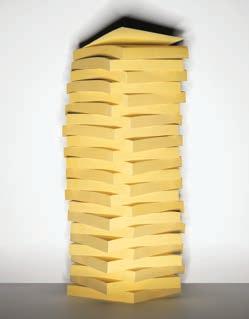
Post-it Note (circa 1977). While experimenting with aerospace adhesives, Spencer Silver, a research scientist for 3M, created a glue that did not stick permanently. Years later, his colleague Art Fry used the recipe to create reusable bookmarks.
In an ongoing column, a psychologist and a curator delve into the various meanings behind the act of collecting, exploring its significance both for individuals and society as a whole.
BY ORNA GURALNIK AND RUBY GURALNIK DAWES
Nostalgia is a respoNse to the passing of time, a longing for the past and an insistence on the ongoing presence of memory. The word originates from the Greek algos—pain, grief or distress, usually around loss—and nostos—homecoming, the wish to return home. Interactions with historic or archaic objects are often saturated with this yearning for what is no longer with us.
Take the phenomenon of “ostalgia,” the nostalgic longing for certain aspects of life in the former East Germany, or GDR. Ostalgia drew on cultural identity, shared experiences and discontent with the alienation brought on by Western capitalism after reunification. Israeli philosopher Avishai Margalit writes that ostalgia involves selective memory, idealizing everyday life while downplaying the repressive nature of the GDR regime, “removing the shit from past memory.”
Margalit highlights the role of material culture, such as East German artifacts—Trabant cars, Ampelmännchen traffic-light figures, certain food brands—as symbols of ostalgia. These items carry emotional resonance and serve as markers of a unique identity. Holding on to such objects works as a psychological coping mechanism for the disorientation caused by political and economic upheaval. Is ostalgia morally ambiguous? Does it risk trivializing the authoritarian past while also playing a role in preserving dignity and coherence in historical memory?
Collecting and saving objects can function as a form of consolation, masking underlying anxieties about rapid social change and offering a temporary reprieve from the uncertainties of the present. We are also faced with our own regression in viewing any assemblage of objects from decades past; in comparing the past to the present, we can hold on to tradition or see where history went awry.
Collectors play many roles: They are agents of history, constructors of knowledge and custodians of cultural memory. The objects they collect are tangible links to bygone eras, anchors of comfort and continuityamidtherelentlessflowoftime. All the same, the act of collecting offers a decisive interpretation of history.
In responding to nostalgic longings, one’s account of the past becomes an act of both selection and curation. How are we to tell the story of our origin? What do we remember, and what do we forget, or deem irrelevant, or even contradictory to our story? Nostalgic narration serves as a way to explain and justify the present and future.
For the collector, framing, organizing and amassing objects can generate an alternative version of history, an alternative society, an alternative life. This process is simple enough for a group of items carefully chosen by an individual, but how does it work when collections are amassed and displayed by cultural institutions? How does this important function of preserving memories oper-
ate in an institutional context? Museum collections take distinct positions in a broader cultural context, educating as well as implicating the public.
The presentation and interpretation of objects play a critical role in shaping our understanding of history. Art institutions are by nature deeply ambivalent. On the one hand, they foster dialogue across socio-political positions, presenting work that challenges the status quo; on the other, they reaffirm certain narratives of cultural history through the framing of artifacts.
Institutionally supported collecting becomes a way to manage ideas about the past and its emotional resonance in public—making the phenomenon of nostalgia a collective tool for memory but also constructing cultural hierarchies.
Museums do not simply preserve works of art but also promote specific historical readings through their selection and arrangement, often prioritizing European, bourgeois or colonial narratives over those of marginalized communities. Once these narratives are codified in a museum context, such nostalgia serves as an affective mechanism that reinforces dominant ideologies, even as it produces an emotional distance from the ruptures and contradictions of the past.
When objects are arranged to present history as ordered and logical, the result is a manipulated narrativization of the past. In reality, history is messy and disorganized. •
Act Three: In which we meet dealer Jeffrey Deitch at his art-filled home, check out fashion designer Ulla Johnson’s take on Lee Krasner, learn the backstory of Albert Barnes’s monumental Matisse, preview photographer Tyler Mitchell’s latest work and more.
At the Los Angeles home of art dealer Jeffrey Deitch, the renowned photographers find the ideal backdrop for a creative cross-pollination of art and fashion.
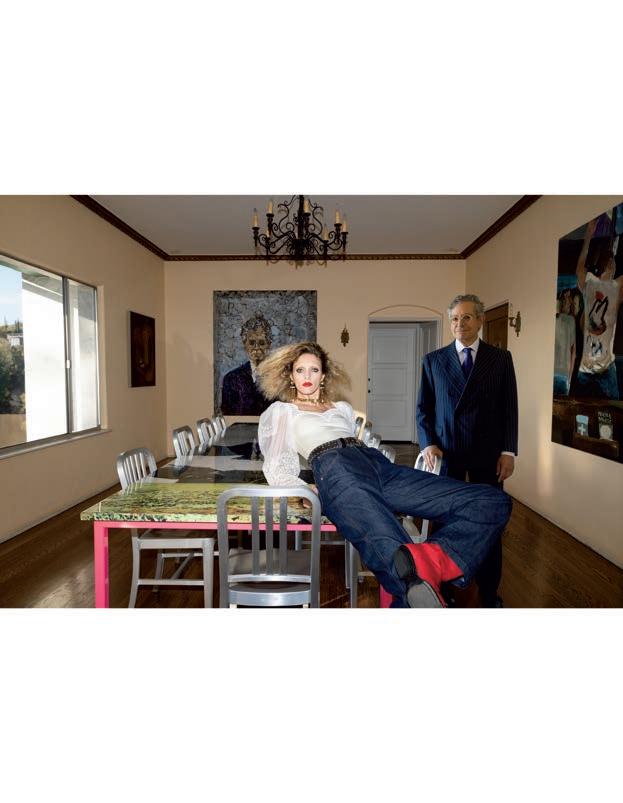
table stakes
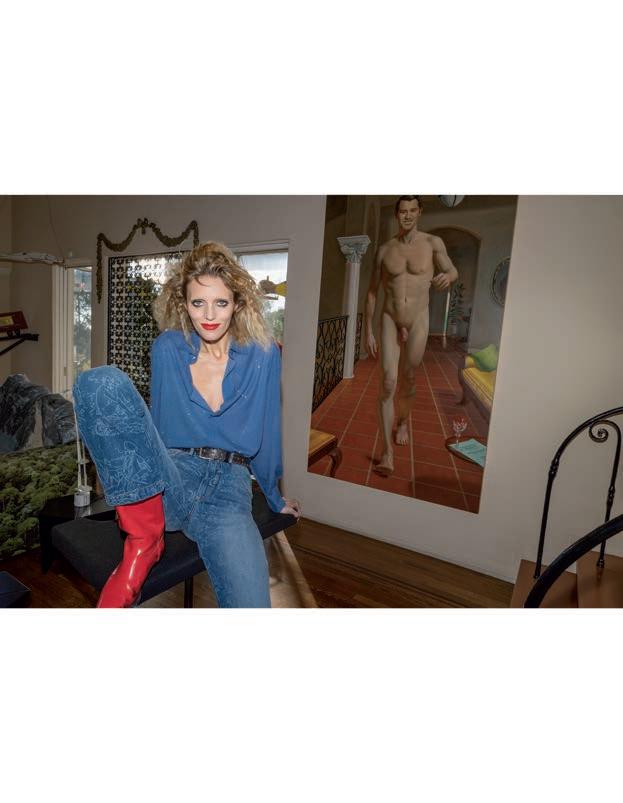
Deitch at home with model and activist Anja Rubik, who leans on Urs Fischer’s “jeffreytable,” 2011.
The art includes, from left to right, Somaya Critchlow’s “Mr Peanut! (The Picnic),” 2021; Julian Schnabel’s “Untitled (Portrait of Jeffrey Deitch),” 2020; and Celeste Dupuy-Spencer’s “And the Kingdom is Here,” 2020.
Rubik wears a Chloé bodysuit, Cherry World jeans, Calvin Klein 205W39NYC boots from The AP Archive (worn throughout), David Samuel Menkes belt, Iradj Moini earrings and a Janis Savitt choker.


eclectic energy
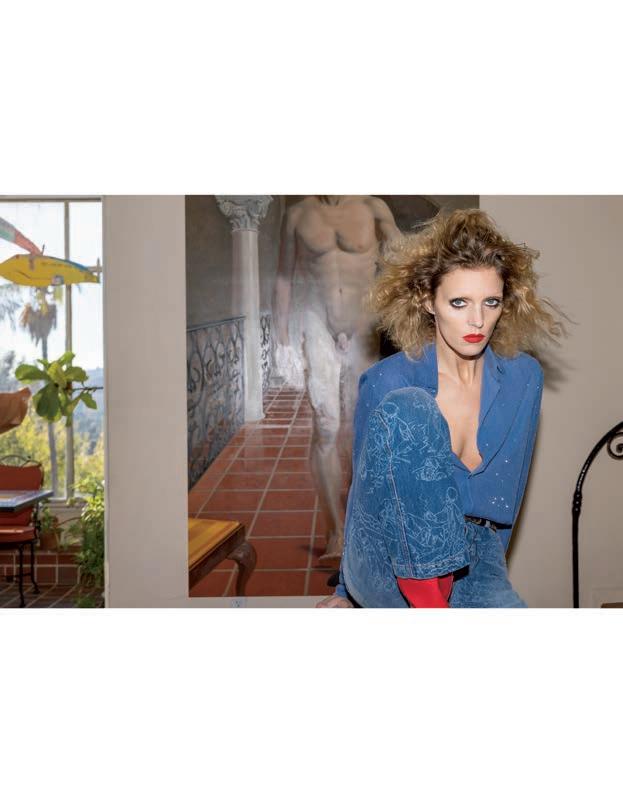
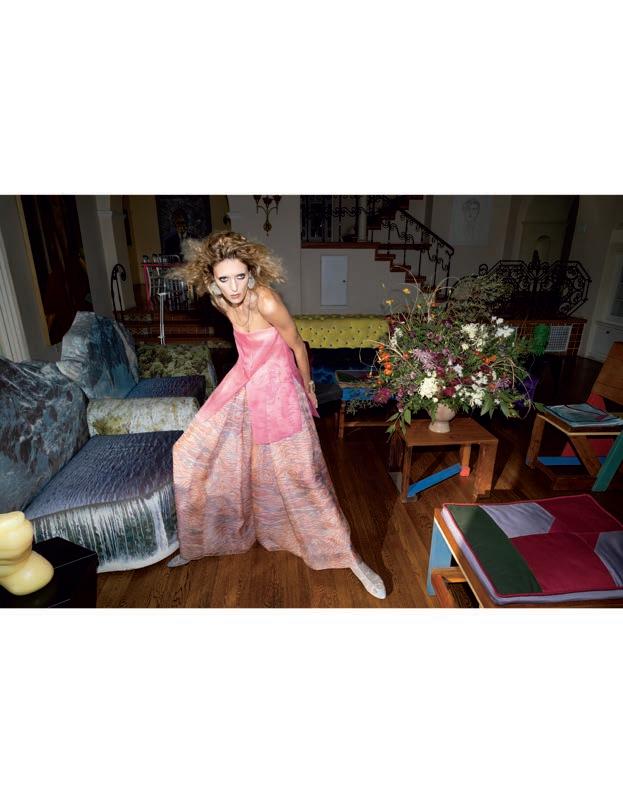
In the living room, Gaetano Pesce’s “Montanara” sofa, 2009, left, and tables, chairs and ottomans, 2013-14, by Chris Johanson and Johanna Jackson; on the back wall is Andy Warhol’s “Self Portrait,” circa 1978. Giorgio Armani top, skirt, earrings, bracelet and boots and Chrome Hearts hosiery. Opposite: Samara Golden’s “Diet Piece: Why,” 2013.


a room with a view
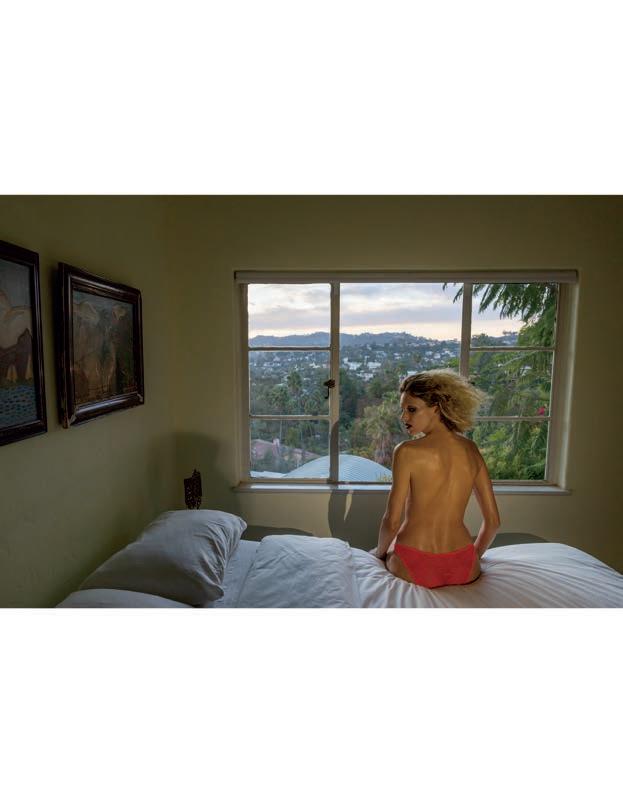
Works from “An Artist’s Paradise” (a series of eight), 1983-84 (1907), by McDermott &
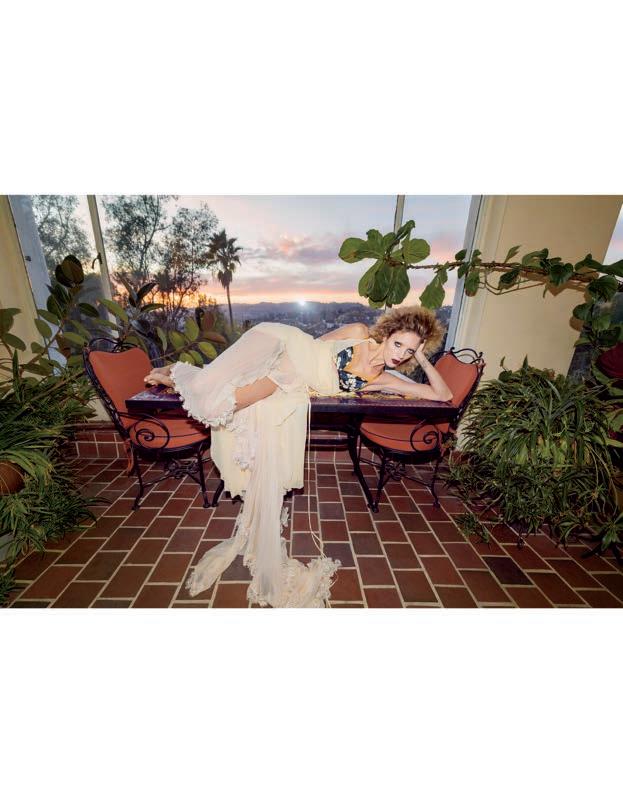
cafÉ society
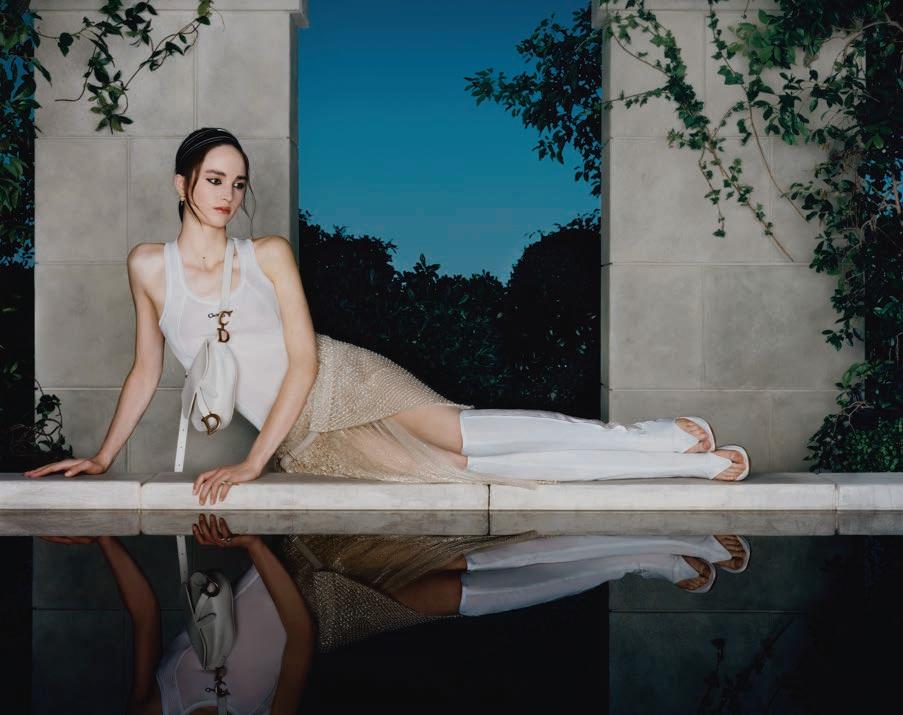
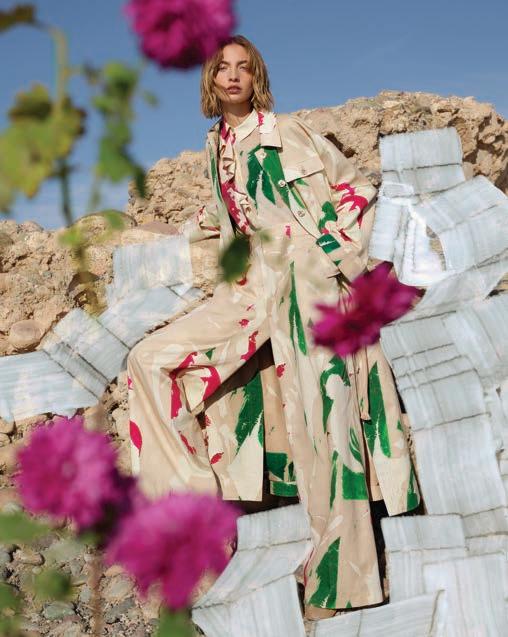
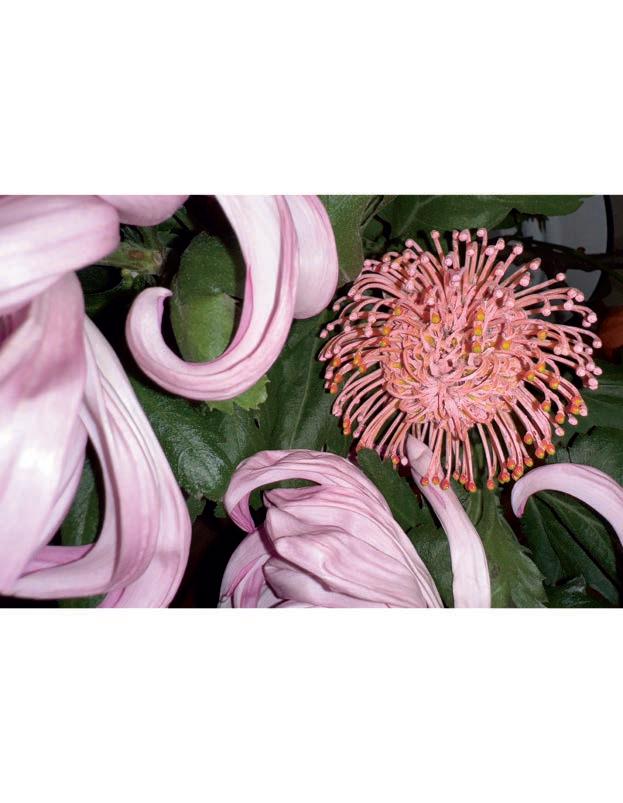
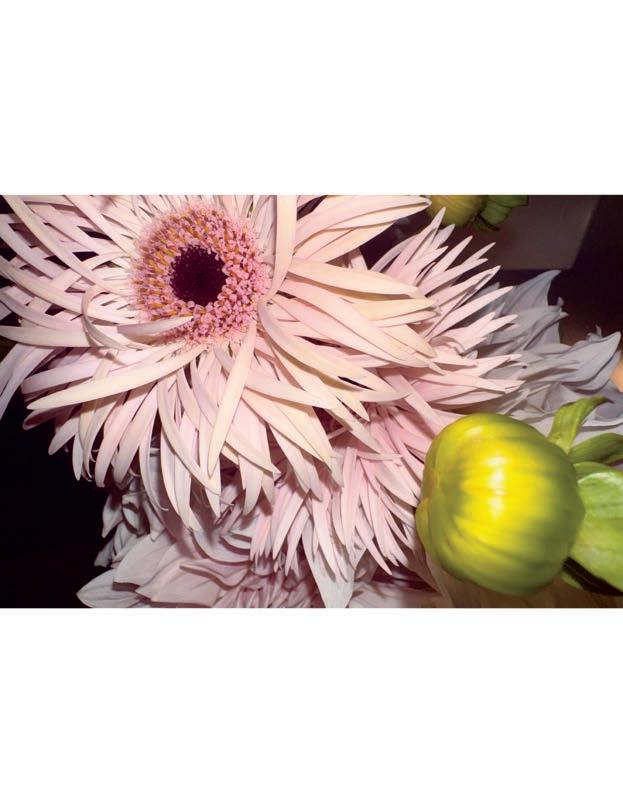
Dsquared2 dress and Eres bra and underwear. Opposite: Floral still life.

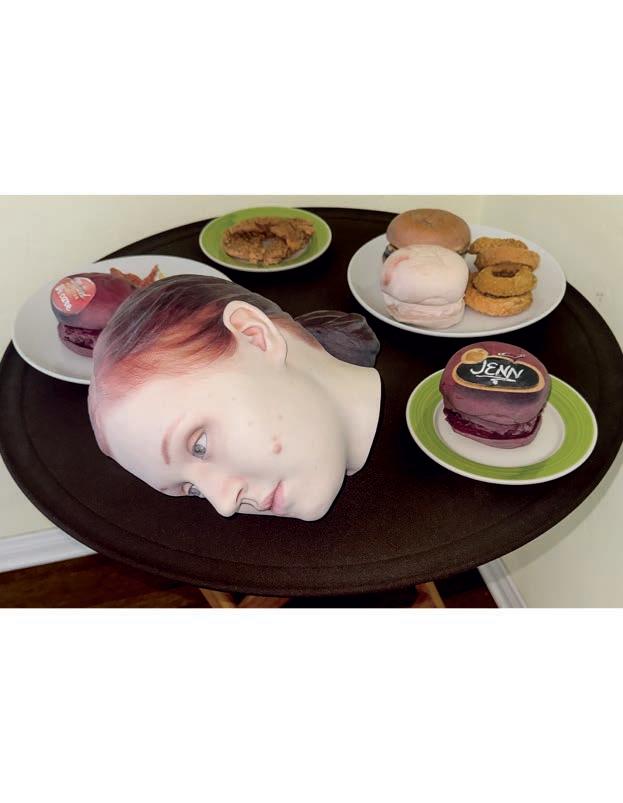
Robert
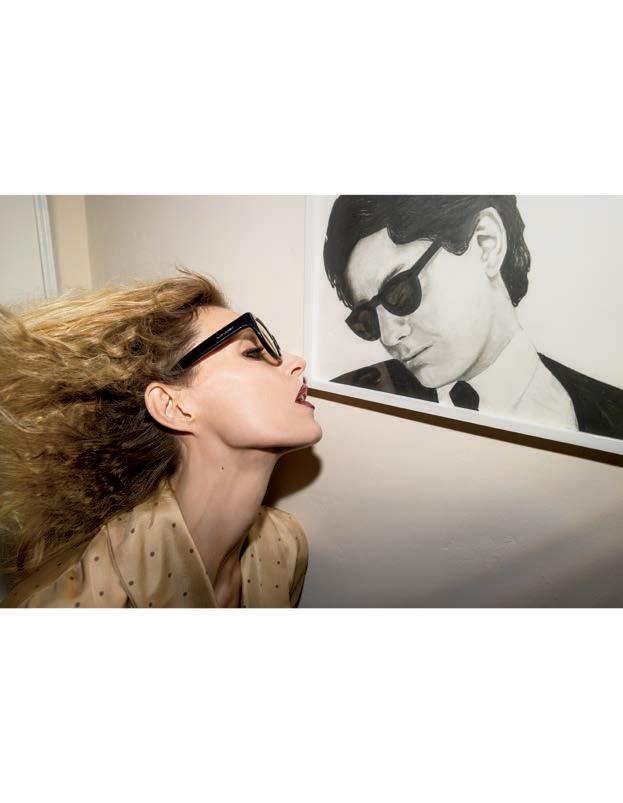
throwing shade
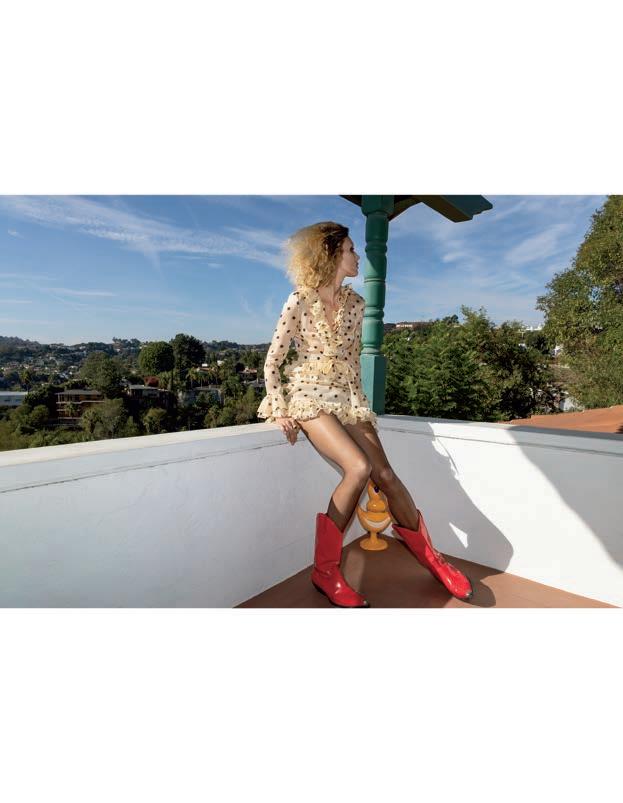
california dreaming
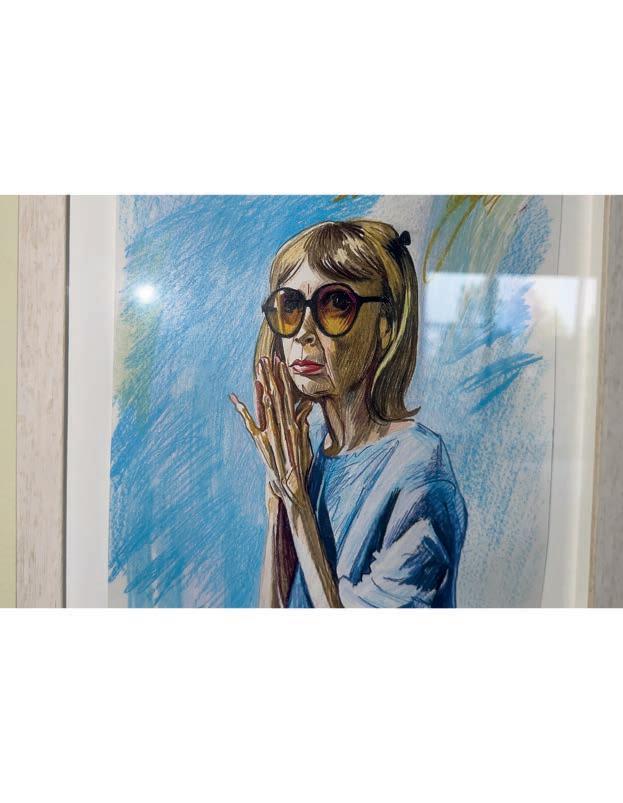
Valentino dress and belt, Janis Savitt ring and Saint Laurent by Anthony Vaccarello hosiery. Opposite: Sam McKinniss’s “Untitled,” a 2018 portrait of Joan Didion. Model, Anja Rubik at Safe Management; hair, Evanie Frausto at Streeters; makeup by Fulvia Farolfi at MA+Group; art director at VLM Studio, Marc Kroop; production John Nadhazi and Michael Gleeson; lighting director, Jodokus Driessen; digital tech, Brian Anderson; post-production, StereoHorse. Special thanks to Cima Rahmankhah.
“I’m very lucky. Somehow I have a built-in compass that has taken me—since I was a teenager—to the center of art discourse.”
BY LESLEY M.M. BLUME PORTRAIT BY INEZ AND VINOODH
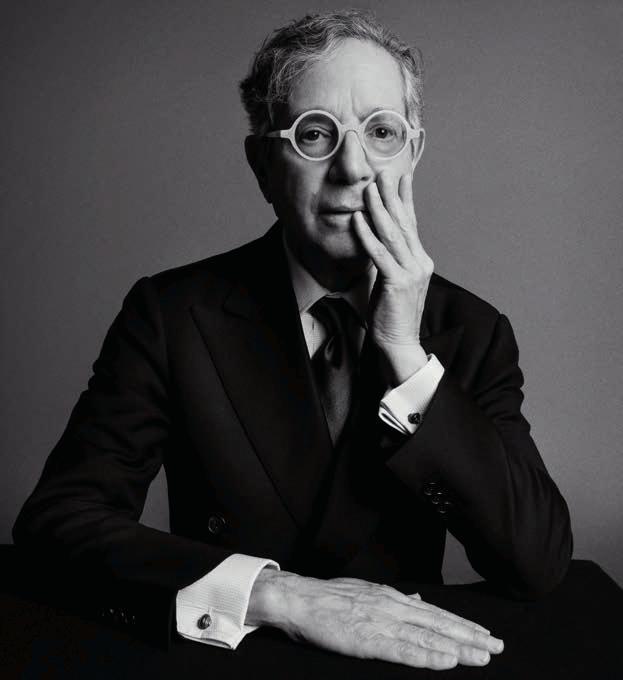


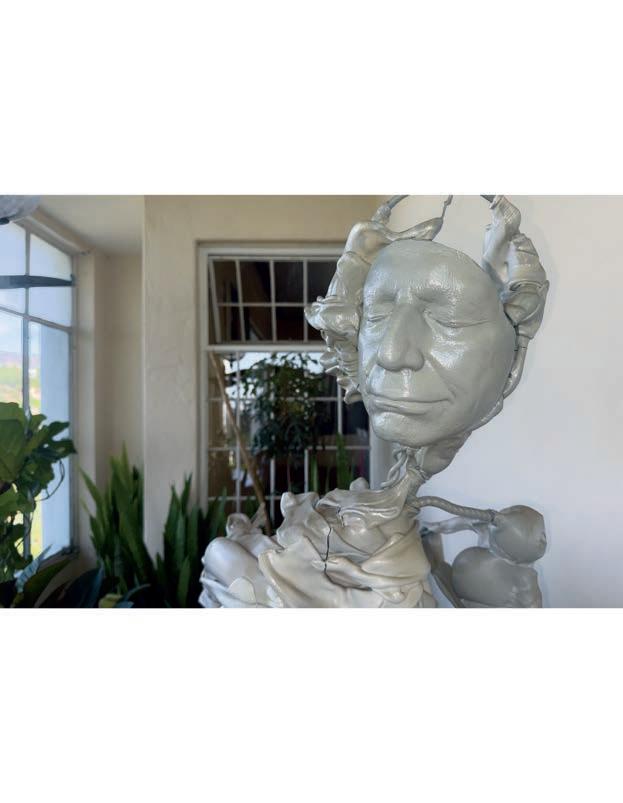
Anyone entering the front gate to Jeffrey Deitch’s Los Angeles home in the Los Feliz hills is essentially greeted by nearly a dozen Jeffrey Deitches. Ten bronze heads—each donning an approximation of Deitch’s trademark round spectacles—are clustered on a garden table nearby. The flesh-and-blood Deitch, dressed in an immaculate suit and tie, emerges from the front door of the house and explains: the heads comprise a sculpture titled “Jeffreys,” created for Deitch by Urs Fischer around 10 years ago.
All of these Jeffreys have quite a vista. Deitch’s house—a 1921 Spanish affair once owned by actor Cary Grant—enjoys unimpeded views of much of the city and the Santa Monica mountains. On a good day, you can see a silver strip of the Pacific Ocean gleaming in the distance. Also on full display is the Hollywood sign, which, from this vantage point, seems suspiciously like another installation in Deitch’s vast personal collection of modern, pop and contemporary art, acquired throughout the course of his 50-year career as a gallerist and art advisor.
“This is an expansive place, and there’s real room for art,” he says, settling onto a cloud-patterned Gaetano Pesce for Meritalia couch in his living room. “It’s a real pleasure to bring out some of the art I had in storage. Everything here has a personal story, some special connection.”
Works by Andy Warhol, Kenny Scharf and Jakub Julian Ziołkowski hang in places of pride on the living room walls. More Deitch homages are also everywhere you look, including a large 2020 portrait of Deitch by Julian Schnabel affixed to the dining room and two large 1980 Robert Longo photographs of Deitch

looming above a stairwell. In a nearby sunroom stands a rather kinetic 2014 plaster-and-metal Pawel Althamer sculpture of Deitch—a longtime runner—in motion.
“It just happened,” he responds when asked how he amassed such a significant collection of Jeffrey Deitch portraits. “It wasn’t that I said: ‘Hey, can you do portraits of me?’ The artists asked if they could do them.” It amuses him, he adds, to have them around. Ditto the artists themselves, who often come over and hang out in Deitch’s private art-world playground.
In addition to the house, Deitch also owns two galleries in nearby West Hollywood. With these properties, Deitch has doubled down on Los Angeles—a city that he says he loves, even though its artistic gatekeepers haven’t always been particularly hospitable to him. In 2010, Deitch closed his New York City gallery, Deitch Projects, and moved west to become the director of the Museum of Contemporary Art (MoCA), Los Angeles. What followed was a now-notorious tenure during which Deitch’s exhibitions—such as his graffiti- and street-art-focused “Art in the Streets” exhibit in 2011—drew both critical ire and record attendance. (Several MoCA members, including artists Barbara Kruger, Catherine Opie and Ed Ruscha, resigned in protest over Deitch’s programs and direction.)
“The MoCA situation,” he says, then pauses. He shakes his head and continues. “That was really hard. I got really beat up. The Los Angeles Times did this campaign against me. But the audience here loved what I did. It was a very populist program, but also very rigorous.”
“Jeffrey’s an iconoclast. He opened up the museum to the city


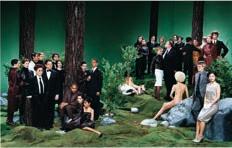

in a way that it never had been before,” says Maria Bell, one of Deitch’s supporters who was on the MoCA board at the time. “Through shows like ‘Art in the Streets,’ literally thousands of Angelenos saw themselves and their lives in a museum setting.
He demystified the museum experience.”
Deitch resigned two years before the end of his contracted tenure. “I debated: ‘What am I doing this for?’” he recalls. “I should have my own mini museum where I can do what I want, my way.” He returned to New York City to what he had done in the past, opening a new downtown gallery in his name.
Then, five years after departing L.A., Deitch was back. In 2018 he opened a second Jeffrey Deitch gallery on West Hollywood’s Orange Drive. Architect Frank Gehry designed the interiors. Several thousand people attended the inaugural show, a solo exhibition by powerhouse artist Ai Weiwei.
With this noisy, triumphant return to the site of his former drama, was Deitch essentially giving the middle finger to his detractors?
“No, no,” he says. “It’s just that I’m very confident about my own mission—and about Los Angeles.” The city, he says, is “now really significant.” There are, he adds, other important art centers around the world, including Mexico City, Paris (“more and more,” he qualifies) and Berlin, but Los Angeles particularly excites him. In 2022, he expanded his footprint in the city further, opening a second gallery a block away from the Orange Drive operation.
“L.A. has an exciting interchange,” Deitch says. “There are writers, musicians, filmmakers who are very involved in

the artistic dialogue. I knew this was the right place and the right building. We’ve had some amazing shows over the past five years.”
“So,yeah,”hesaysquietly,withasmallsmile.“Itallworkedout.”
More Than once over the years, Deitch has been described in the press as an art-world Zelig—a chameleon who has often found himself at the ground zeroes of major cultural movements and art-market inflection points. Among his many bona fides: he was the first reviewer to write about the work of Jean-Michel Basquiat; he helped launch and build the careers of Jeff Koons and Keith Haring; he was among the earliest curators and art dealers to entrench in the world of street art in the early 1980s. “Jeffrey is an artist and a visionary,” says curator Paige Powell, who was close with Basquiat and Andy Warhol and has collaborated with Deitch. “He’s generous with his mind and time, getting strangers and friends excited about any art form.”
“I’m very lucky,” Deitch says. “Somehow I have a built-in compass that has taken me—since I was a teenager—to the center of art discourse.”
Deitch’s first “real art-market experience,” he recalls, actually occurred when he was a preteen: his mother took him to an art show at the family’s Hartford synagogue (a “mini, shabby version of a real art fair—can you imagine all the junk at something like this?”) and told him that she would buy him any work that he liked. Deitch immediately selected a Leger lithograph.
“I picked out a significant piece at the age of 10 or 12, something like that,” he says. “I guess it’s a kind of pattern recognition



that draws me to accomplished works of art.” But he doesn’t see his precocity as unique: “[Many] people I know who are successful in creative fields started really early.”
Deitch’s career has also been Zelig-like in its diversity: art dealer, curator, talent scout, writer and art and financial advisor are just some of the roles he’s played in his long, dense career. After graduating in 1974 from Wesleyan University, where he studied both economics and art history, he materialized in New York City and famously managed to talk his way into a job at the influential John Weber Gallery. After immersing himself briefly in the heady world of modern art, with proximity to artistic greats like Carl Andre and Sol LeWitt, he absconded to Harvard Business School. In 1979, he returned to New York, where he helped pioneer Citibank’s then-revolutionary art-advisory and art-lending services.
“We then had a very central role in the art room of the 1980s,” Deitch recalls, “becoming one of the most active buyers…and working with some of the great collectors and artists of the world.” The bank, he believes, performed an important and previously non-existent service. “Let’s say a client in midwestern America wanted to collect art in a big way but didn’t know who the major New York dealers were, didn’t really have access, didn’t have that kind of information,” he says. “They needed help. So we provided this crucial advice by giving professional, objective art connoisseurship and art-market advice to people who didn’t already have access to this.”
Old-school art dealers—who previously functioned as clients’ primary conduits to art and now found themselves increasingly displaced by Deitch and his team—were understandably less
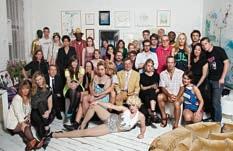
than pleased by the development. “[Many of them] thought that this was terrible, that we were turning this special field of emerging art into a speculation game,” he recalls. Later on, however, “most of them became my customers.”
Deitch recalls the “ecstasy” of his trial-by-fire art education during his Citibank years. “I needed to learn about quality, condition, all these issues,” he says. “And the way I learned was going to every auction in New York and London for 10 years.” Rather than studying masterpieces solely in the pages of books and on museum walls, Deitch got to peruse them in the backrooms of major galleries.
“In those days, [private art dealership] Wildenstein had some amazing things,” he says. “Once they pulled out that beautiful Picasso portrait of his wife Olga. And I remember going to [art dealer] Gene Thaw and seeing this just astonishing Van Gogh. It’s amazing that I was, at that age, able to have access to this.”
His most thrilling art experience came when he bought, at auction, one of the great Jackson Pollock drip paintings for a client. “They weren’t ready to have it shipped to their offices yet,” he recalls. “So I hung it in my home for several months, where I could see it morning, noon and night.” It was, he adds: “the greatest experience that I’ve had.”
After nine years at Citibank, he realized that it might be time to excise another middleman: his employer. “A number of the collectors said to me: ‘Why do we need the bank? Let’s just work directly with you,’” Deitch says. He left in 1988 and launched his own art-advisory service. While the prospect of flying solo initially made him nervous, he contends that in that first year alone, he ended up making more money than Citibank’s chairman.


In the decades since, Deitch has backed the careers of dozens of artists, earning a reputation as a bit of a gambler. “Jeffrey is one of the few risk takers in the contemporary art world,” says collector Jean Pigozzi, who notes the museum quality of Deitch’s gallery shows. Some of these projects have been safe bets and crowd pleasers, while others have been, in Deitch’s own words, “perverse” and “beautifully horrifying.”
The New Yorker art writer Calvin Tomkins once described sitting through a Deitch-sponsored performance piece by Austrian arts collective Gelitin, in which performers urinated from wooden platforms into hats below; he concluded that Deitch’s “tolerance for transgression is probably limitless,” an assessment that makes Deitch smile.
L.A.-based artist Alex Israel describes Deitch’s modus operandi as “fearless curiosity.” “He’s always observing, listening, asking questions, following up, researching and learning about new things, and adding them to his ever-expanding worldview,” Israel says. “His perspective is informed by this accumulation of data and historic knowledge, but it is also of this moment, immediate and truly ‘contemporary.’”
“I’ve just always done what I thought was interesting,” Deitch says. “Some projects turned out quite well, financially. Others cost me a fortune.” For example, he once promised to underwrite a show by art performance group Fischerspooner. “They were the coolest thing going,” he recalls, “and I said: ‘Let’s go all the way; do your ultimate.’” The investment ended up costing Deitch every cent of a commission from the $7.6 million sale of an Andy Warhol flowers painting. Win some, lose some, he shrugs. “Other art dealers would put their money into buying another expensive
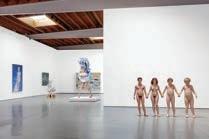
work of art, or into buying a country house,” he explains. “I put mine into new programs.”
Deitch maintains that he is incapable of doing anything half-assedly:everyshow,everyexhibitmustgoalltheway,dotheultimate. He cannot compromise; his exhibitions must have museum budgets—“andevenbeyondamuseumbudget”—tomeethisstandards.
Sometimes this requires him to sell a treasured work of art from his private collection, which is how he funded his just-concluded “PostHuman”showathisL.A.gallery.(Hewon’trevealwhichwork he parted with but concedes that it was “really painful to sell.”)
Last yeaR PROVed to be challenging for Deitch’s business, he says, citing ripple-effect angst from world affairs and high interest rates. When asked about the financial landscape ahead, as the second Trump administration begins, Deitch says that he hopes for the best: “My nature is that I am an optimist.”
He remains committed to his longstanding mission, namely scouting and investing in what he calls “communities of talent,” and cites his decades-long commitment to raising the profile of street art. “It’s not an underclass of art: street art is art,” he says, calling his MoCA “Art in the Streets” exhibition one of his proudest accomplishments. Many Angelenos inherently understood its value, he adds: “It was at capacity every day and sometimes there was a two-hour line to get in. People visited four or five times.”
Deitch says that he sees the making of art as itself an inherently optimistic pursuit, especially in uncertain times. “More than ever, we need the moral stance, the openness to change, the diversity of opinion that you get with art,” he says. “I’m a total believer.”—Additional reporting by Cary Leitzes •
BY JOSHUA LEVINE PHOTOGRAPHY BY NACHO ALEGRE
Later in life, the Italian designer found her spiritual home in the Spanish region of Catalunya. Her apartment there, a jewel box of a Barcelona flat, remains perfectly preserved.
THE LATE ITALIAN jewelry designer Elsa Peretti used to like to say, “Aesthetics kills me,” but what could she have meant by that? One way to make sense of it is to walk around the places she lived most of her adult life: Sant Martí Vell, the abandoned Catalan village she bought and resurrected, house by house, and where she died in her sleep on March 18, 2021; and her small apartment at 4 Carrer del Bruc in Barcelona.
Both residences are simple, each in its own way. Nothing about either of them cries out for attention. Many of the objects inside are plain and workaday. The accommodations are spartan. But each dwelling reflects a restless quest for perfection—of mood, of objects, of placement, of proportion, of color—that could, if not achieved, ruin Peretti’s peace of mind. “If the space was wrong, if there was something she didn’t like, she just couldn’t be. She was thinking about that wrong ashtray and not listening to you,” says Stefano Palumbo, who runs the Nando and Elsa Peretti Foundation and worked alongside Peretti for more than 20 years.
Women still adore Peretti for the jewelry she designed for Tiffany & Co. for 50
years: the Bone Cuff, the silver Bean, the Open Heart Pendant, the gold Mesh Bra and the Diamonds by the Yard series, to name just a few of Peretti’s greatest hits throughmorethan30collections.Intheir sculptural purity, these pieces stand as proof against trendiness. Jewelry is not fashion, Peretti used to say. At the same time, she made her pieces effortless to wear and inviting to touch. Peretti’s woman is never meant to serve as a large pedestal for a small sculpture.
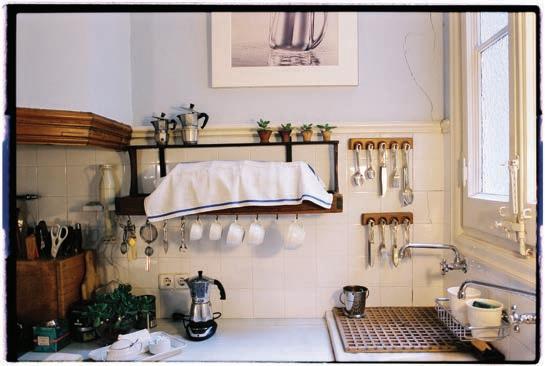
But her homes are works of art, too. “She was creating her own still life in every corner of every house,” says Palumbo. He points to one such vignette in the Barcelona apartment: four ordinary-looking Staffordshire dogs on a dresser, several crystal candlesticks between them and two yellow Chinese vases behind. Hanging overhead is a large gray fish painted by the Catalan artist Joan Gardy Artigas. “The dogs are kitsch—bad taste could be fantastic to her—but the composition of them here is just so elegant!” And so it is.
Peretti bought the apartment on Carrer del Bruc in the late 1980s and spent much of the last 40 years of her life here. This is where Peretti met the wider world,
cigarette in hand, while Sant Martí Vell offeredmoreofarefugefromit.TheBarcelona kitchen table is where she conducted business, meeting with Tiffany executives or the skilled artisans who realized her jewelry designs or the journalists and photographers who came through (she got very famous early on) or the Catalan artists whose work she collected and promoted.
It’s hard to get away from one of them. Works by the Catalan painter Robert Llimós—large somber canvases of goats, mostly—are everywhere. (Peretti ended up owning 85 Llimós pieces.) But there are other artists, too. On entering the Bruc apartment, you run into the large black head of a bull in iron and bronze by the Catalan sculptor Xavier MedinaCampeny. Peretti, not surprisingly, had a thingforbullfighting,andbesides,shewas a Taurus. Her collection of 20th-century Catalan art is an important one.
Peretti had the collecting bug, bad. She was also, paradoxically, a homebody who traveledwidely.ThepairofexquisiteQing
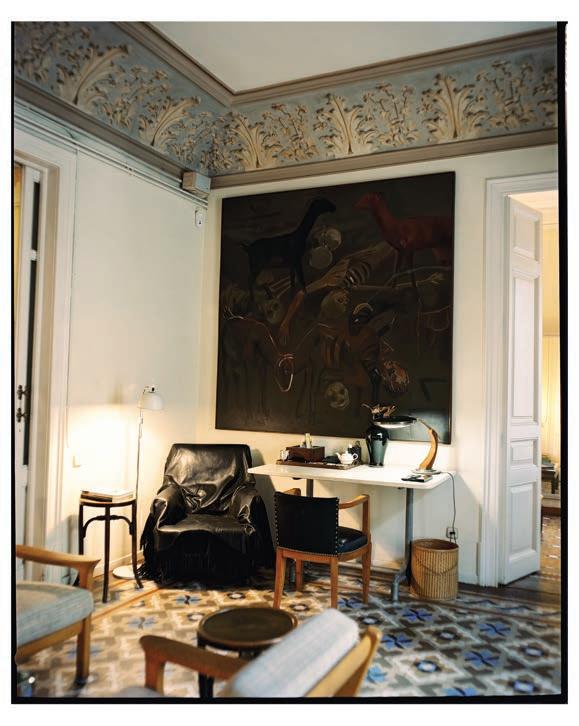
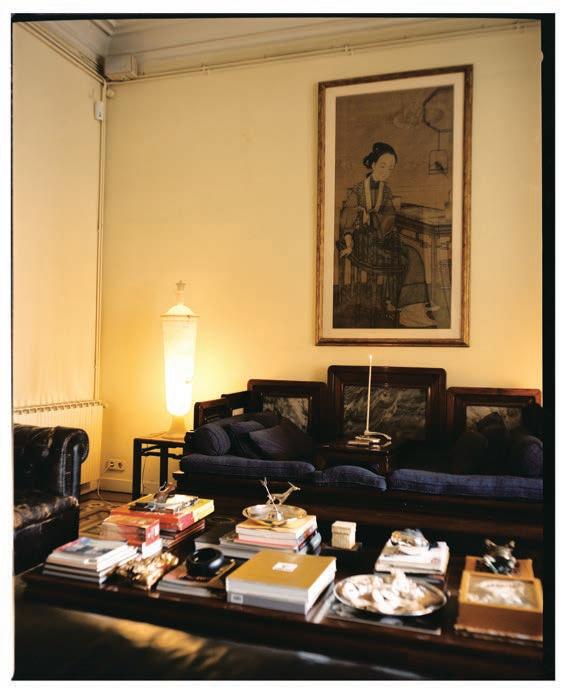
Dynasty chairs and the marble-inlaid hongmu daybed in Carrer del Bruc are just two of the exquisite Chinese pieces she brought back.
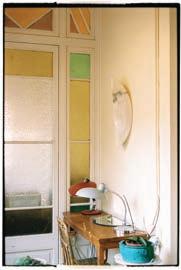
InbothherSpanishhomes,Perettitook great pains to respect the local idiom and work within it. The Barcelona apartment is a typical middle class building of the 1920s in a solidly middle class neighborhood, so that was the visual code Peretti adopted for it. We are in a familiar corner of Gaudí’s universe. She bought most of her furniture in local second-hand markets like Els Encants in Barcelona. She didn’t touch the typical stainedglass windows with floral engravings, the decorative plaster moldings or the omnipresent mosaic tiles. “Everybody in Barcelona had these tiles, and they changed them into God knows what!” says Palumbo. “She protected these tiles
and wanted to conserve the whole atmosphere of the bourgeoisie of that period.”
In Sant Martí Vell, Peretti worked within the tradition of the Catalan countryside and its rustic artisans: coiled rope, wood, wicker, stone. But by the time she finished adding her own accents—a bullwhip here (she loved whips), a Chinese lacquer piece there, an animal skeleton (she also loved skeletons), an Africanmask—shehadcreatedsomething extraordinary. The American poet Mark Strand once said about the great Pablo Neruda’s poetic technique: “Mundane items, modified by adjectives denoting the rare or celestial, are elevated to a realm of exceptional value.” That’s Peretti to a T.
The mundane is elevated to truly celestial effect in the double-height great room at Sant Martí Vell. A massive castiron hearth, by the Italian architect
Lanfranco Bombelli, rises two floors to the ceiling. A gigantic stone mill wheel serves as the dining table. (It is amusing to imagine the scene Palumbo describes of Peretti and her close friend Liza Minnelli trying to maneuver the mill wheel into just the right position; it must weigh several tons.) Peretti herself designed the chunky, rough-hewn bronze chairs and stools with the celebrated Catalan sculptor Xavier Corberó, who was a frequent collaborator and also one of her lovers. The room is really something.
These houses were never meant as showplaces. They were the intimate art Peretti made for herself and her friends. Last October, a few dozen influencers and journalists were given the rare chancetowanderthroughthem.Theinvitation came from Tiffany and the Peretti
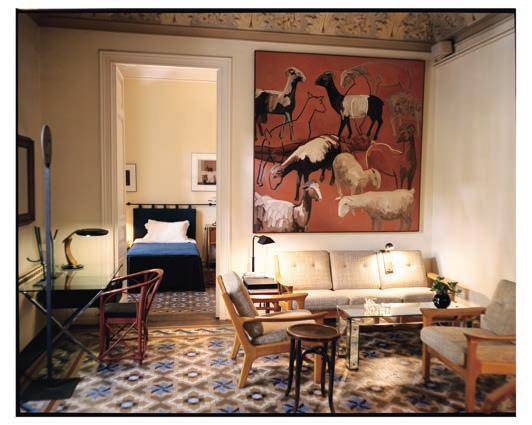

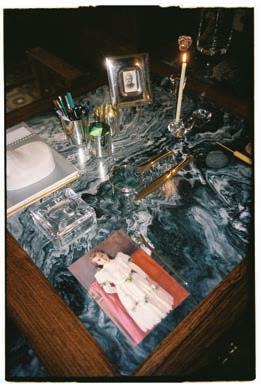
Above: A mix of Staffordshire dogs and yellow Chinese vases are clustered in front of a painting by the Catalan artist Joan Gardy Artigas. Below, from left: Peretti kept the apartment’s stained glass and moldings intact; tabletop items with a small print of the 1893 painting “Retrat de la nena Sardà” by Ramón Casas. Opposite: Robert Llimós’s 1995 painting “Shame (African Series)” hangs in the living room, which retains its tile flooring.
“She was creating her own still life in every corner of every house.”
—Stefano Palumbo
Foundation as part of a celebration to mark the 50-year anniversary of their remarkably profitable partnership. (For many years, Peretti’s designs represented 10% of Tiffany’s total worldwide sales.)
It’s safe to say the open house would never have happened if Peretti were still alive. One can imagine how she would havereactedtothecrowdofyoungwomen swarming through the narrow rooms of Sant Martí Vell: Loudly and negatively. This is exactly what Peretti retreated to Sant Martí Vell to get away from. “The village is becoming a nightmare! People come and peep through windows. Maybe I should open a pizzeria!” she railed to an interviewer 10 years ago. Yet, in her younger days, the limelight
Below: Peretti’s kitchen, with the Hiro photograph “Jug.” Opposite: The Chinese salon, featuring a 19th-century silk painting and a marble-inlaid hongmu daybed.
was what she sought out and where she flourished. Many people who may know her for nothing else can call to mind Helmut Newton’s striking 1975 photo of Peretti in a Playboy-style bunny outfit designed by Halston, long black gloves and a bunny mask, head thrown back, bare shoulders jutting, her long body leaning backwards over a balcony railing against the New York City skyline. (The get-up was Peretti’s idea, and the bunny masknowsitsproudlyinSantMartíVell.)
To reach that high-rise balcony, Peretti had to turn her back on her rich, conservative family in Rome at the age of 21. Her strict, demanding father warned her that he would cut her off if she walked out the door. She did and he did, and their rift endured until shortly before he died.
She taught skiing. She taught French. Shegotadegreeininteriordesign.Finally, shelandedinBarcelona,wheresheturned
to modeling to pay the rent. That worked out better. More importantly, she found a new home among Barcelona’s antiFranco artists and intellectuals. They called themselves la gauche divine, and they congregated at a local disco called Bocaccio, where Peretti met Salvador Dalí, Corberó, the photographer Colita and other Catalan luminaries who would become friends, lovers and collaborators down the road. But she found her deepest attachment and an inexhaustible wellspring of creativity in Catalunya itself.
Peretti’s growing success as a model drove her to New York in 1968. She did even better there, but she never cared for the catwalk; in fact, it frightened her. She found her fulfillment elsewhere. In 1969, Peretti took a small bud vase she had found in a flea market and had a Spanish silversmith fashion a two-inch prototype tobewornasapendant.Peretti’sbudvase necklacemadeitsfirstappearancearound

the neck of a model in designer Giorgio di Sant’Angelo’s fashion show that year. The response was immediate and stupendous. The bud vase was fresh, delightful and, not incidentally, affordable—hallmarks of so much of Peretti’s subsequent output.
After that, things happened in a proverbial New York minute. Early on in the city, she had met Roy Halston Frowick— the fashion designer who would soon be known simply as Halston—when he was still making hats for Bergdorf Goodman. Their stars rose in tandem: She designed jewelry for him, learned about style from him, took drugs and partied at Studio 54 with him and fought extravagantly with him. It was a love affair in every way but one and it ended in the Italian manner, with Peretti tossing a sable coat Halston had given her into a roaring fire.
It was Halston who took Peretti to see Walter Hoving, chief executive at Tiffany, who wasted no time signing her to an exclusive contract in 1974. That contract instantly made her rich and famous. Just as important to her, it showed Ferdinando Peretti, her implacable father, that she could make it big without him. They reconciled not long before he died in 1977.
She inherited roughly half his immense wealth and took his nickname, Nando, for the charitable foundation that owns the rights to her work, adding her own name to his some years later. (She heeded Halston’s warning never to sell control of her name, as he had, to his bitter regret.)
Back in 1968, a friend had showed Peretti a photograph of two small stone houses in the hamlet of Sant Martí Vell, about an hour’s drive north of Barcelona. She bought them for a few thousand dollars, which was all she could afford at the time. As she made more money, she bought more houses. She ended up owning 18 of them, connected by tunnels and terraces into a stone labyrinth.
By the end of the 1970s, Peretti had soured on her hard-living New York life. It was no good for her work, and it was worse for her health. Catalunya was better for both. In Sant Martí Vell, she moved from house to house in a cloud of cigarette smoke, barefoot and dressed in her caftans, endlessly refining the space around her. She cherished and respected the local artisans who worked with her, but she drove them hard. Working with
her was no picnic. “You had to demonstrate your skill every morning to keep her trust,” says Palumbo. “You could disappear in a flash. The few who survived did a really great job.”
It was not a life built for comfort. For that, she had two luxurious properties in Italy—an apartment in Rome and a villa in Porto Ercole, both designed in high style by her friend Renzo Mongiardino. She went there to play the hometown girl who made good, and she took great pride in that.
Catalunya was something else altogether. For all their exquisiteness, the houses were not made for easy living. In Sant Martí Vell, Peretti would spend a few months in one house, then a few months in another. She embraced their austerity, always seeking out the most cramped quarters to sleep in. “She spent the most time in the most uncomfortable little house—she loved to be uncomfortable,” says Palumbo. “Only somebody very sensitive can understand that.” •
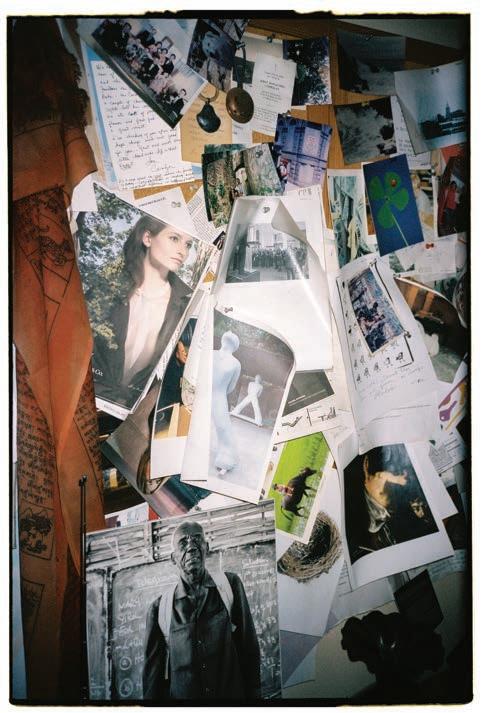
Opposite: Peretti’s pinboard overflowing with letters, postcards, clippings and photographs.
BY SARAH MEDFORD PHOTOGRAPHY BY MARTIEN MULDER
Long overshadowed by her male peers—especially her husband Jackson Pollock—Abstract Expressionist Lee Krasner is slowly getting the recognition she deserves. Fashion designer Ulla Johnson celebrates Krasner’s exuberant, exacting work in a new collection for spring.
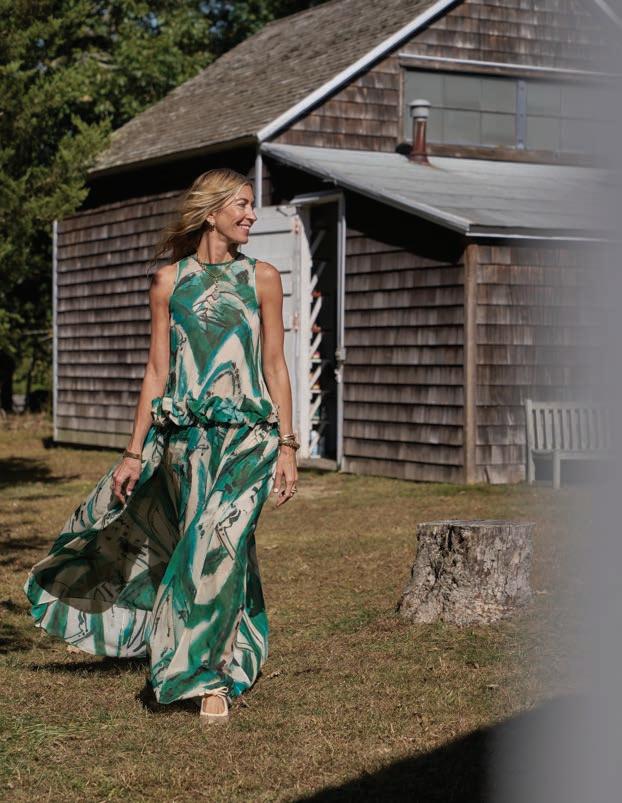
ONE AFTERNOON LAST fall, the fashion designer Ulla Johnson drove from her family home in Montauk, on the eastern tip of Long Island, over to the Pollock-Krasner House and Study Center in Springs, where painters Jackson Pollock and Lee Krasner lived and worked in self-styled isolation from the time they were married in 1945. Pollock’s life famously ended nearby, in a car accident, 11 years later. But Krasner stayed on until her own passing in 1984, moving her studio from a spare bedroom in the farmhouse they’d shared to the barn where Pollock had made his final, transcendent drip paintings.
Johnson hadn’t come for Pollock, though; she was there for Krasner, the artist who had gone toe-to-toe with the first, all-male generation of abstract expressionists and more than held her own. In the barn, she studied photographs of Krasner sweeping her brush across a rhythmic 1969 canvas called “Portrait in Green.” Nearby are the marks where she’d skated off the canvas, brushing viridian paint right onto the gessoed walls. The sight was electric, Johnson says: “I believe very much in the emotional weight of objects that have been touched by the hand—by the person who embroidered
them, or in this case by the painter who brought these canvases to life.”
This spring, the designer delves deeper into Krasner’s complex body of work with a collection that takes “Portrait in Green” and two other late paintings, “Comet” and “Palingenesis,” as a starting point. Collaborations are a constant in Johnson’s world,awayofexpandingonherlanguage of flowing, deeply feminine silhouettes and sumptuous florals by connecting with artisans outside the mainstream. In 2020, she partnered with a glassblowing workshop near Nairobi on earrings made from glass beads and flowers, and a year later she sourced handwoven bags from a collective of Masai women.
“Igrewuparoundacelebrationofmaterial culture,” says Johnson, whose parents are both archeologists. “My mother was an avid collector of Victorian lace, but also of textiles and folk costume, starting with her native Yugoslavia. The celebration of craft—this language that unites rather than divides us globally—was a part of my upbringing and has become a very big part of my work.”
Johnson launched her namesake business in 1999, a year after graduating from the University of Michigan with degrees in psychology and women’s studies. Her
intention, she says, was to grow the brand organically, which she’s achieved through self-funding and maintaining an intensely loyal team. “There’s a little bit of a cult there—and it’s a good one,” says architect Rafael de Cárdenas, who recently designed a Manhattan showroom for Johnson that melds slick, mirrored finishes with the more crafted elements she adores. He calls it “a petting zoo of texture and objects.”
How Johnson settled on Krasner as a focus is a bit fuzzy at this point, she says, though she’s long admired the painter’s nature-based forms and vibrant color. She and her husband, art consultant Zach Miner, are active collectors, and she keeps an eye out for female talent; last year she partnered on a capsule collection with Shara Hughes, another fierce colorist drawn to nature.
Krasner thought of herself as an artist from an early age. Born in Brooklyn in 1908, the daughter of Jewish refugees from Ukraine, she worked to put herself through a series of art schools around the city, hedging her bets by attending teacher’s college, too. While Pollock’s work developed in more-or-less linear progression towards the drip, Krasner’s was fiercely cyclical, pushing forward
“I believe very much in the emotional weight of objects that have been touched by the hand.”
—Ulla Johnson
and then looping back to collage, assemblage and other modes of working that animated her paintings over nearly six decades. She once told an interviewer: “I like a canvas to breathe and be alive. Being alive is the point.”
On Pollock’s death in 1956, Krasner became his executor, a role that both set her up—she was never broke again—and set her back, because her painting practice often slid behind the more pressing affairs of the estate. The more Johnson learned about Krasner’s efforts—“She built Pollock’s secondary market,” the designer marvels—the more she came to admire the artist’s business chops. It was one of several shared touchpoints: Johnson also happens to be the Brooklyn-born daughter of a hardworking immigrant mother. “I haven’t come up in this business in a traditional way, nor did Lee,” she says. “I think she was very much trying to forge her own place in the landscape and make her voice heard, without a lot of foundational or material support.”
When Johnson approached the Kasmin Gallery, which represents the Krasner and Pollock estates, it gave the venture its blessing unreservedly. Executive Director Mariska Neitzman has vetted an increasing number of such requests lately; in 2020,KasminrepresentedtheartistJamie Nares in a collaboration with Valentino. “I was very encouraging in this case, but
I left it to the Foundation to decide if they wanted to proceed,” she says.
Johnson’s sensitivity to the work stood out to Caroline Black, Executive Director of the Pollock-Krasner Foundation. “Ulla struck me as being very intuitive,” Black says. “It didn’t feel like a corporate relationship. She was so thoughtful about it, really focusing on Lee and her idea that paintings come alive.” The three works jointly chosen for the project date from 1969 to 1971, a period when Krasner had rejected her stygian palette of the early 1960s and was making surging, largescale compositions in sharp cyclamen pinks and bottle greens. For Johnson, they’re “an expression of joy” that amplifies her personal vision for fashion.
The designer spent the summer of 2024 working on 11 looks, sketching and draping figures with silk twill and georgette that had been printed in Italy with Krasner’s explosive imagery until the process began to feel alchemical, she says, “like this baton had been passed to me.” Krasner’s recursive practice, Johnson adds, “allowed me to feel quite free, mixing the canvases in certain looks, being a bit more irreverent while honoring Lee’s legacy.” The Foundation remained involved throughout, down to signing off on hang tags that display each painting in full.
The collaboration dovetails with Krasner’s ascendance in the public sphere. A
recent European retrospective has broadened her audience and stoked her market; the artist’s current auction record stands at $11.6 million, established at Sotheby’s in 2019 for a monumental umber painting from 1960 entitled “The Eye is the First Circle.” Eric Gleason, who oversees the Pollock and Krasner estates for Kasmin, points out that despite significant parallels between Krasner’s market and those of her contemporaries Helen Frankenthaler and Joan Mitchell, there is one profound difference: the volume of available material. Krasner left behind just over 200 paintings, and 600 works altogether. “She was an exceptionally harsh editor,” Gleason says. “She did a lot of cannibalization and then reconstitution of paintings. And she never let anything out in the world unless she was totally confident in it.”
For her part, Johnson couldn’t be more excited about sharing her spring collection. In preparation for the runway show, she commissioned an essay from Mary Gabriel, whose 2018 book, “Ninth Street Women,” chronicles the rise of Krasner and other female artists who fought their way into the male-dominated story of postwar painting. “She spoke about how in this moment, a Lee Krasner becomes not just something that we look at, but something that we live in,” Johnson says. “I thought that was so beautiful.” •
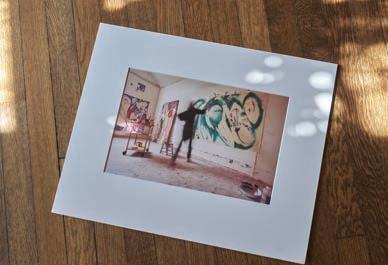
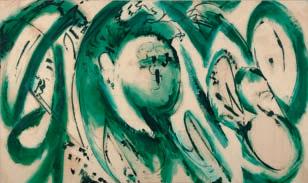

Clockwise from top: An action shot of Lee Krasner painting “Portrait in Green,” taken in 1969 by Mark Patiky; a model wearing the Gracelyn dress, which incorporates Krasner’s 1971 work “Palingenesis;” a 1973 portrait of Krasner by Arnold Newman; the grounds at the Pollock-Krasner House and Study Center; “Portrait in Green.”
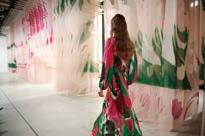
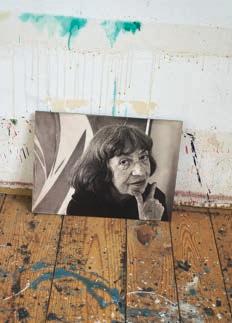
BY ELISA LIPSKY-KARASZ
PHOTOGRAPHY BY TYLER MITCHELL
In his latest body of work, on view at Gagosian this spring, photographer Tyler Mitchell takes inspiration from his home state: “In making work there,” he says, “I’m drawing out my own personal lived histories and wider Black cultural histories.”
After living in New York City for more than a decade, photographer Tyler Mitchell, 29, was not expecting his return to his native Atlanta last year to be an emotional one. After all, during that time, the Museum of Modern Art had acquired his work, American Vogue commissioned him as its first Black cover photographer and he created campaigns for LVMH and Kering. He was there installing a show for the High Museum of Art, an institution he dubs the MoMA of his hometown. Yet “there was a lot of angst,” he says.
“It was hugely emotional for me,” says Mitchell. “I really felt growing up there that I was in a microcosm. There were a lot of parts of myself that felt invisible, and there was a lot of weight there for me, especially through the lens of race. You do feel that everywhere in Atlanta, Georgia, and it is baked into the history of the place, despite its vibrancy.”
Mitchell grew up in Marietta, an Atlanta suburb, where local attractions include a “Gone With the Wind” museum, a Six Flags White Water theme park and a Confederate military cemetery. His mother and father both worked in the finance world—his father as a consultant and his mother as a conference planner—but they encouraged their only child’s interest in art by buying him a camera in ninth grade. Mitchell was an avid fan of skate culture and taught himself from YouTube, soon shooting his own skate images and short films. He attended NYU’s prestigious Tisch School of the Arts, where photographer and professor Deborah Willis began mentoring him.
Though art-world insiders, musicians and fashion creatives had already taken note of his work via Instagram and exhibitions, Mitchell’s public big break was in 2018, when Vogue commissioned him to shoot Beyoncé. He was just 23, and he captured the megastar in natural splendor, adorned with a floral headdress. Since then, he’s shot figures like Kamala Harris, LilyRose Depp and Sandra Hüller for the covers of Vogue
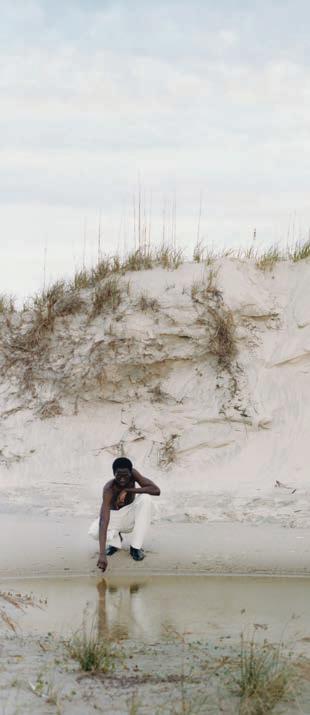
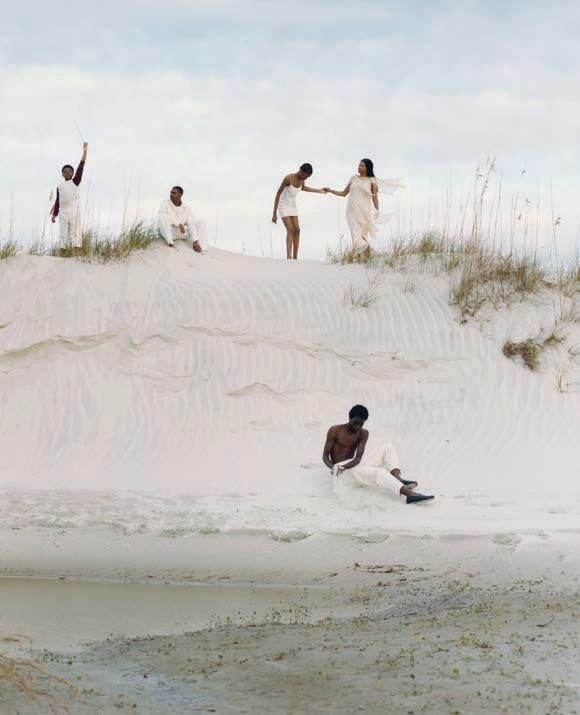
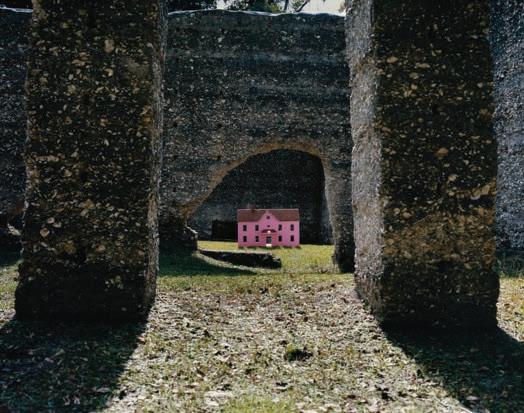
Above: “Dollhouse,” 2024, part of a new body of work Tyler Mitchell is showing at Gagosian.
Right: “Gwendolyn’s Apparition,” 2024. Previous: “Cumberland Island Tableau,” 2025.
and W. He’s also created Old Masters-style tableaux for Ferragamo, conjured Dutch-still-life-meets-ikebana for Loewe and brought concepts of a playful boyhood to life for Louis Vuitton. At the same time, Mitchell has mounted exhibitions at venerated institutions, including the International Center of Photography, C/O Berlin, Amsterdam’s Foam Fotografiemuseum and The Gordon Parks Foundation. This month, he opens a show of new photographs at Gagosian in New York, his first in the city since joining the gallery last fall.
“People sometimes are like, ‘Are [clients] just paying you to make your artwork? Where’s the line here?’” Mitchell says. “I think that’s a good thing.” He also looks to a wide breadth of canonical inspiration, including photographers Jeff Wall, Gregory Crewdson and Francesca Woodman, and his role models Deborah Willis and Carrie Mae Weems.
“Tyler is forging a new path,” says Maria L. Kelly, assistant curator at the High Museum of Art, who worked with Mitchell on his show there last year, “Idyllic Space.” “The art world often divides fashion and commercial work into one section, while personal photography is [considered] fine art. He’s
breaking down those boundaries. It’s secondary where his work ends up—it’s the work that’s the most important.”
The Gagosian show, titled “Ghost Images,” was primarily created while Mitchell worked on the High Museum exhibition in Atlanta. It was the first extended period that Mitchell, who lives in Brooklyn, had spent in the city since leaving for NYU.
“Can photography capture memory?” he says. “That was the question I was really asking myself a lot in making these. I have memories of Georgia more than I do actual experiences in the last decade, and so in making work there, I’m drawing out my own personal lived histories and wider Black cultural histories.”
Capturing the Black figure in this familiar landscape became one of Mitchell’s aims. He shot in recognizable locations, such as the dunes of Cumberland Island, in the manner of impressionism’s grand tableaux. His portraits include a figure wrapped in a net, seemingly frozen, under trees dripping with Spanish moss.
“I think somehow the place became very sharp and clear and resonant for me. Having had distance,” he was able to recognize, he says, “how it shaped me, how the style of Atlanta shaped me, how the particularities of the Black core of the city, the focus
on Black culture and Black artistic production has always been in the city, even when I didn’t quite see it growing up there.”
“I love the way that Tyler is often paying tribute to his youth, the way he was brought up in Atlanta and the memories that he has from experimenting as a teenage skateboarder—and thinking through what the South and what Atlanta specifically means,” says curator and Aperture editor Brendan Embser, who first met Mitchell as a 22-year-old entrant to the Aperture Foundation’s open-submission exhibition. The two also collaborated on a recent exhibition that is currently making its way through Europe, “Wish This Was Real.” (The accompanying book will be published by Aperture this fall.)

“Tyler has this light touch and naturalness,” says Embser. “It’s so clear that the subjects that he photographs really enjoy collaborating with him and bring something special of themselves to work. He is thinking about Black leisure and joy in natural spaces.”
Though Mitchell uses his iPhone as much as any other 29-year-old on social media, he wanted to experiment with new photographic methods for this show. “I want to be slippery and confident in moving between styles,” he says.
He collaborated on “Ghost Images” with Gagosian’s director Antwaun Sargent, whom he also met around the time he entered the Aperture Foundation open call. These new works show Mitchell playing with 20th-century surrealist techniques such as printing on fabric and mirrors or creating double exposures, as with his portrait of a young man that pays homage to
photographerFrederickSommer.Mitchellsaysthematerialqualities of fabric and its drape are especially important to him. He finds inspiration in the poetry of Toni Morrison or Robin Coste Lewis as much as Jonathan Anderson’s Spring/Summer 2025 runway show for Loewe, which featured exaggerated crinolines. He also mentions Andy Warhol. “Making money is art and working is art and good business is the best art,” said the artist who, more than any other figure, eradicated the border between art and commerce with his paintings and screen prints of dollar signs, car crashes and movie stars. Decades later, Mitchell aims to do the same with photography.
“My superpower has been in my ability to make those lines even more extremely blurry,” says Mitchell—questioning what is journalism, what is art and what is a fashion image. “As we get further and further away from reality and deeper and deeper involved with the mediated image as a way of understanding reality, we have to embrace that complication in art.” •
one of
Matisse’s most
works and a
of the
An exclusive excerpt from critic Blake Gopnik’s forthcoming book “The Maverick’s Museum: Albert Barnes and His American Dream,” which traces the rise of the Philadelphia pharmaceutical tycoon and visionary arts patron.
... to sit on the jury for the Carnegie International exhibition in Pittsburgh, the country’s most prestigious invitational show. LeavingPittsburgh,Matisseandacoupleoftheotherjudges,plus the Carnegie’s director, made their way to New York for Matisse to catch his steamer, but with a stop on the way in Philadelphia. Lunch was planned there with a prominent patron of the Pennsylvania Museum of Art, so with the morning to kill, Matisse and a translator headed out to the Barnes Foundation in Merion, Pennsylvania, for a meeting with Albert Barnes. At the door to the foundation, Barnes sent the translator off for a stroll around the grounds. He walked Matisse into the foundation’s grandest gallery, where they were surrounded by the work of the painter’s greatest predecessors—Cézanne’s “Card Players”; Seurat’s “Models”—and then Barnes dropped a bombshell: Would the painter accept a commission for what Barnes called “probably the most important monument to your life’s work”? It would be a mural, something like 40 feet long by more than 10 feet high, to fill the vast empty spaces high above the gallery’s floor-to-ceiling windows. The conversation that followed ran long. The poor translator, on the wrong side of a locked door but tasked with
getting the Frenchman to the luncheon on time, eventually found a coal chute that could give him access. Climbing up from the foundation’s cellar, he released Matisse from Barnes’s clutches and spirited him off to his meal.
It’s a lovely genesis story, repeated in several versions, and adds to the long list of yarns that enliven our collective Life of Saint Barnes. (For some it’s a Barnes demonology.) And there’s every reason to think much of it is myth.
What the record actually shows is Matisse writing to Barnes from New York to ask for “permission,” as he put it, to visit the foundation and meet its founder at some point during his American stay. He then seems to have made the trip twice within the same week—alone, as far as we can tell—getting the mural commission on the first, then fleshing it out on the second.
OncebackinFrance,MatisseimmediatelywrotetoBarnesthat despite a hideous crossing his mind had been entirely focused on the “honor” of the new project. He gingerly asked Barnes what the fee might be and in reply, Barnes took the clever step of asking Matisse himself to set it: “The discussion of money in all such matters is an embarrassing one”—not at all true for Barnes,
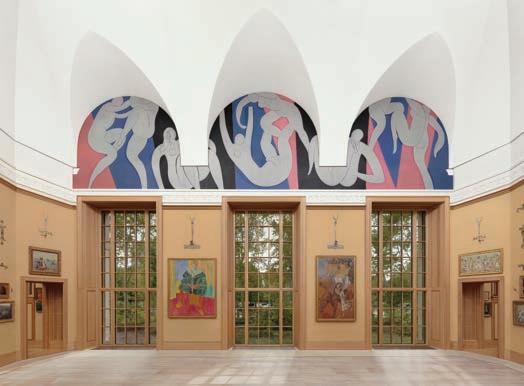
ever—“And especially in this case since I am sure you would take into consideration the fact that your work would have a setting such as it would have nowhere else in the world.” In the end the painter asked for $30,000, 15 times what a French professor might earn in a year but less than Barnes spent on four of the Matisse canvases he began to stock up on that very fall.
It seems that Matisse knew he’d lowballed his fee. “Although there’ll be no profit in it for me, this work will have important consequences,” Matisse told his wife.
His excitement about the mural made sense. Early in the century, he had launched his career as the most radical of radicals—The New York Times had called his paintings “revolting in their inhumanity”—but for most of the 1920s, he had been making attractive works that functioned “like a good armchair,” as Matisse himself had written. Critics had begun to agree and to complain about his new work’s complacency. Barnes himself rarely bought the painter’s art from that era, and talked about it as a retread of what had come before.
“I was beginning to walk in place,” Matisse admitted to his daughter, and now he would have the chance to move forward
again thanks to the commission from Barnes. “He said, ‘Paint whatever you like just as if you were painting for yourself,’” Matisse recalled.
What Matisse “liked” turned out to be a series of dancing, leaping bodies floating against a blue and pink “sky,” the whole thing more stylized than anything he’d done before, nudging up against cutting-edge abstraction. (Although those bodies’ hemispherical breasts might have been inspired by some rather earlier stylizations: Matisse would have noticed the half grapefruits that Renoir installed on the beloved nudes that Barnes would be hanging near the mural; Matisse’s dancers pun on them.)
When Matisse had first hit his stride as an artist in fin de siècle Paris, mural paintings (décorations was the term of art) had been in vogue among leaders of the avant-garde like Édouard Vuillard and Pierre Bonnard. Three decades later, with the Barnes commission, Matisse realized that he could move the whole genre beyond what they had done. He complained that his predecessors’ murals had mostly been nothing more than extra-large paintings that happened to be stuck on the wall; at the foundation, he would one-up them by making a work that merged with
the architecture, even pretending to pierce it to let in a view of the real sky outside. Ever since the Italian Renaissance, those kinds of quadratura effects had been the major conceit behind murals, but they had been out of favor for something like a century and so were ripe for revival. As Matisse told an American journalist, “My aim has been to translate paint into architecture, to make of the fresco the equivalent of stone or cement. This, I think, is not often done any more.” He went so far as to use a stony gray for the skin of the dancers, as though they were sculptural ornaments for a building rather than living figures—just as Michelangelo had mimicked bronze and marble “statues” in his frescoes in the Sistine Chapel. Matisse made sure his viewpoint on the canvas in the garage where he painted it would match the view onto it at the foundation, just the kind of strategy Renaissance muralists deployed as they worked to erase the boundary between the painted and the real.
And then Matisse combined that retrospective gesture, which suited the conservative streak in his art, with an experimental modernism that spoke to the fauve—the “wild beast”—in him.
You have to wonder if the mural’s radically pared-back look, quite new to Matisse, had something to do with the nation it was conceived in; watersheds in his art often had to do with recent travel. He’d been impressed by New York and its potential as artistic inspiration—“Those towers, those masses rearing themselves in the air in that light which is like crystals”—and thought that the sheer dynamism of America could pass over into its art. Ideas about the New World might have played a role in the new dynamism Matisse decided to instill into his American mural.
“An American artist should express America,” Matisse had said, at the time of his first visit to Merion. Did that hold true for a painting commissioned to live there? With the United States recognized worldwide as the home of everything truly modern, the country maybe deserved to see a mural that revealed Matisse at his most modern as well.
Barnes had no complaint—or at least no comment—when Matisse sent him photos of the full-size sketches for the Merion project, a few months after taking it on. But that was about all that Matisse’s patron did get to see, because a delivery date for the mural got put off again and again.
Before the “Dance” commission, Barnes had already amassed something like 25 Matisses, including such gorgeously “inhuman” early works as “The Joy of Life” and “The Red Madras Headdress.” As Barnes waited for “The Dance” to appear on his wall, he dug still deeper into Matisse, picking up almost as many pictures as he had in the previous two decades.
In February of 1931, a New York dealer offered to sell Barnes the “Three Sisters with Grey Background,” a classic Matisse from 1917 of white women in exoticizing “Eastern” dress. Barnes already owned Matisse’s two other paintings of those same women, and snagging the third would give his collection an ideal window into his favorite chapter in modern art, when figures were still far from abstract but had fully escaped old master realism. The “Sisters” triptych, said Barnes in one of his trademark disquisitions,gave“enoughinformationtomakethefiguresinteresting as human beings” while also providing “a form suitable for inclusion in a highly ornamental ordering of color-planes.” The
triptych had exactly the balance of modern design and classic humanism that was at the heart of his theory of plastic form. To his eyes, the sisters’ oblong faces also rhymed with the African masks that meant so much to him and with the Persian miniatures he’d now begun to collect. One of the “Sisters” paintings actually featured an African statue, as though Matisse had set out to illustrate the pioneering Civic Club lecture that Barnes had given a few years earlier, citing modernism's roots in Africa. The compare-and-contrast among the three paintings, and then with their various exotic “precedents,” made for the kind of teaching moment the foundation was built around.
And yet, in an uncharacteristic moment of generosity, Barnes asked the dealer to delay the sale for a few days to see if curators in the deluxe new buildings of the Pennsylvania Museum of Art, who also had their eyes on the painting, might be able to raise the money and take it themselves. When the museum’s fundraising came up short, its board asked Barnes to arrange for the deadline on the sale to be extended. Since the dealer insisted on sticking to the original timeline, Barnes bought the painting for himself instead, for $15,000, and that was that. Or at least that’s how the dealer and Barnes recalled the transaction, with documentation to back them up. Museum officials, used to years of abuse from Barnes, claimed they had discovered the picture in the first place and accused Barnes of buying it out from under them. “We always knew Barnes was a son of a bitch,” the museum’s director, Fiske Kimball, wrote to a local collector, “and now we can prove it.”
Their tale of a double cross began to circulate, and when it was still doing the rounds almost four years later, Barnes had had enough: Anyone of note in the Philadelphia art world received an open letter setting out the evidence for his version of events. Barnes insisted that the tale “could have originated only in the imagination of either an ignoramus or an ungrateful son-of-abitch” and described the art museum, not for the last time, as a “house of artistic and educational prostitution.” He invited the museum’s chairman, Sturgis Ingersoll, to settle the “libel” with his fists. Setting out to clear his name, Barnes merely confirmed his growing reputation as a brute.
It’s worth remembering, however, that in most of what passed for his brutish acts, Barnes did little actual harm to anyone but himself—the Matisse squabble being a possible and rather minor exception, if there really was a double cross involved.
He was like a great bulldog, unmuzzled, with the most brutal of barks but hardly ever proceeding to bite.
At the Dawn of the 1930s, Barnes had a huge emotional investment in Matisse, and a financial one as well. As always with him, those had to be matched by an intellectual engagement. Just weeks after proposing the mural commission, Barnes told Matisse that the foundation would be publishing an entire monograph about him, “from your earliest pictures to the latest ones.”
That book was the major preoccupation for Barnes and his staff over the next few years. They worked, valiantly, to arrange a triptoseethegreatearlyMatissesinSovietRussia,butultimately failed. Barnes was especially keen on seeing a dance-themed décoration commissioned two decades earlier by a Moscow plutocrat that was a major precedent for the foundation’s own “Dance.” Although the work made for Russia was radical in the
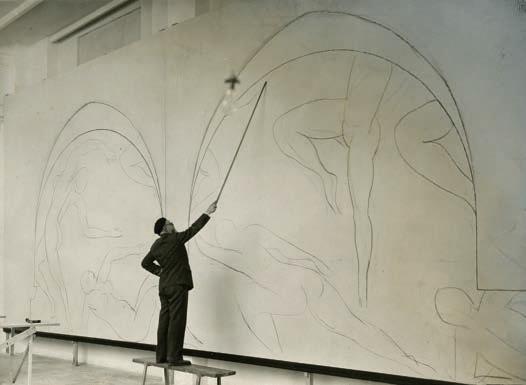
almost total stylization of its figures—Matisse was returning to that in the foundation commission—the Moscow piece was, in Matisse’s own terms, just a “picture” stuck on the wall, not a “mural” meant to join with the architecture around it.
In the summer of 1931, barely six months after signing the contract for “The Dance,” Barnes was chortling over his good fortune that a big Matisse retrospective was opening at a gallery in Paris. He claimed to have been there almost daily, from the moment it opened until 6 p.m., carrying his note-taking to such manic lengths that he went home that fall with a thousand pages of thoughts on the paintings.
Barnes roped his former staffer Henry Hart, now an editor at Scribner’s publishing house, into persuading his bosses to put out the book, despite a depressed economy that made it an unlikely purchase for struggling Americans. (At $5 a book, it ended up selling all of 462 copies in its first nine months.)
“It’s discerning, it’s imaginative and it’s wise,” Hart wrote to Barnes. “At the risk of being emotional, I want to say that it is exactly the mature production, shorn of all triviality, that is typical of your best moments.”
But Barnes himself might have had a more accurate take. “I am afraid it is too meaty and too scientific to be a popular book,” he wrote to Dewey. Even most specialists might have found the book on the chewy side. After the usual throat clearing about Deweyan psychology and aesthetics, it proceeds to cover all the usual Barnesian ground—Matisse and drawing, Matisse and color, Matisse and light—and then gives wildly detailed accounts of 16 exemplary paintings, every last one of which happened to be in a certain Barnes Foundation.
“Dr. Barnes and Violette de Mazia, his assistant in the dissecting rooms at Merion, Pa., have performed an autopsy on the art of Henri-Matisse,” said the book’s review in the New York Herald Tribune. “It is difficult to cut very deep into an art that is all on the surface, but the incision, if it must be made, has been made with the utmost thoroughness. It has indeed been performed so satisfactorily and with such extraordinary skill in the handling of modern esthetic instruments, that it need never be repeated. For that we should all be thankful.”
That review was written by a longtime enemy of Barnes’s who should never have been given the assignment. But it does capture

a fundamental flaw in the Barnes approach. As many an art critic has had to learn, whatever the excitement and pleasure that come with protracted looking at a picture—noting its every detail, digging deep into how and why those details come together—the excitement isn’t matched by the experience of protracted reading about the results of such looking. In the five solid pages Barnes devotes to his analysis of the “Three Sisters" triptych, you can tell how much he enjoyed taking his notes. It’s hard to share in that enjoyment, reading a typical sentence like the following: “In the central canvas, one hand with six fingers makes a rhythm with the many-lined pattern of a fan; the hand holding the fan resembles a fin, but in shape it is related to the sleeve and various sections of the gown, together with which it forms a rosette-pattern radiating from the wrist; in the panel on the right, the hand with only two fingers looks more like a lobster’s claw than a human hand, but the pattern made by this distortion harmonizes with the adjacent linear patterns of the cuff, collar, face and arm; likewise, the right hand of the seated figure in the picture on the left is an integral part of the pattern of the turban.” To Barnes’s credit, this time he made sure to include his analyses at the very back of his book, merely as a vast appendix.
Even after hiring Matisse to fill a major space in the foundation and buying his paintings by the dozen, Barnes avoids the unrelenting enthusiasm we’d expect from just about any other collector. He’s willing to praise Matisse for having vitality, great erudition, and an adventurous spirit. But those don’t in the end counterbalanceanaccomplishmentthatBarnesseesasessentially decorative,lacking“themoreprofoundinterpretativevalues,both human and plastic, characteristic of the greatest artists.”
Henri Matisse, one of France’s greatest living painters, is just finishing a mural 14 by 40 feet in his Nice studio, which he expects to be recognized as his greatest canvas. It has been painted for the Barnes Foundation at Merion, Pa.” That news appeared in The Wall Street Journal on February 10, 1932, and you can just imagine Barnes’s excitement at the prospect of receiving, and at last seeing, his long-awaited mural.
And then, disaster.
“Avez fait erreur énorme,” Barnes cabled Matisse some 10 days later—You’ve made a huge mistake
For the previous few weeks, Matisse had been wiring Barnes with questions about the dimensions of his almost-finished mural, and Barnes finally came to realize that the painting would not fit the foundation’s architecture: it was off by several feet where the vault curved down to meet the wall. The telegram Matisse sent in reply was surprisingly sanguine, saying he would put the final touches on the failed first version—it ended up at the Musée d’Art Moderne in Paris—and then would start at once on a brand-new one.
BarnesmadeanemergencytriptoFrance,butthere’snorecord of fireworks when the two men met in Paris. Barnes recalled that they had a fine time together, and in a cheery letter to the painter he merely expressed hope that the work on the new mural was “advancing in a manner that is satisfactory.”
One explanation seems most likely for Barnes’s improbable equipoise: He might not have been entirely convinced by the final studies for the mural, apparently given to him by Matisse as a kind of consolation for messing up its measurements. While Barnes had been complaining that Matisse had lapsed into ring-
“My aim has been to translate paint into architecture, to make of the fresco the equivalent of stone or cement.”
—Henri Matisse
ing minor changes on his early innovations, it’s not clear the collector was looking for anything as new as the minimal, almost geometric style of the mural. Barnes criticized Picasso for a tendency to “veer about in obedience to the latest wind that blows.” And here was his man Matisse apparently making like a wind sock, veering toward the “wholly non-representative painting” that had been making recent inroads but that Barnes had always condemned as empty play with pattern.
Whatever his true feelings, Barnes wasn’t about to give up on a commission that had been so much in the news.
As he painted, Matisse had found Barnes and his team so eager to get the mural that it was “as if they were waiting for a god.” The pressure seems to have brought out the perfectionist in him, until Barnes had to beg him just to declare the thing done, after delays caused by such absurdities as the disabling sunburn Matisse got on his legs, one time when he was working outside on some drawings.
But at last came the day, on May 14, 1933, when the great painting was up on the wall in Merion—and fit its allotted space. The accident-prone project came with yet another near disaster. Matisse had insisted on starting the installation himself, hammering away for two hours—and then collapsing from a heart attack. “We gave him some whiskey and made him rest and he was all right in an hour or two,” Barnes said, but he nevertheless had the artist examined by a specialist. After running the latest in high-tech tests, the doctor ordered absolute rest and Matisse’s immediate return from America.
Shipboard on his way home, Matisse had written to his daughter that Barnes had been pleased with the newly installed
painting. “To prove this to me”—note the sense that it needed proving—“Madame Barnes told me that the next day the Doctor assembled all of his students, a hundred of them, and spoke for two hours in front of the decoration.” But he was disappointed that Barnes, “a complete misanthrope,” was now refusing to show it to the public, as had once been promised. Barnes put off several visitors who asked to see the mural that summer and fall; he kept claiming that its scaffolding had yet to be removed.
Just before he’d packed it up for shipping to Merion, Matisse had voiced high hopes for the canvas. He’d felt confident that his “real mural painting” would do just the architectural work he had planned on, adding a fictional sky to the real greenery seen through the huge windows below. But contemplating the painting on its wall at the foundation, Barnes would have realized, at least intuitively, that the piercing of the painted surface in the new mural, however notional, risked contradicting the virtues of “design” he held so dear. His “Art in Painting” had inveighed against effects “of depth and solidity by tricks of perspective,” which were sure to yield “a specious unreality, more unreal than a frank two-dimensional pattern.” And that was a pretty good description of the entire 500-year tradition of mural painting that Matisse had channeled.
Barnes kept the drapes closed on the windows that gave views onto the garden beyond Matisse’s piece. •
BY LUCAS OLIVER MILL
Artists and writers are often judged by their capacity to depict the complexity of human character. An anthology of portraits, depicting wordsmiths from Joan Didion to Henry James, reveals the tension, inspiration and artistry born when painters capture literary legends.
IN 1905, WHEN the American writer Gertrude Stein sat down in Paris to be painted by a then relatively unknown 24-yearold Pablo Picasso, the sitting did not unfold as one would have expected from the young prodigy. As Picasso worked, he became increasingly frustrated. He found Stein’s presence seemingly impossible to capture and soon abandoned the canvas, fleeing back to his homeland of Spain.
Yet, upon returning to Paris, he faced the portrait once more, this time alone. He completely reworked Stein’s face, transforming it into something almost unrecognizable—it looked like a mask. Stein, after seeing the final version for the first time, voiced to Picasso that she did not feel the portrait looked like her. He famously responded: “It will.”
The young Picasso’s struggles to render the Stein portrait, now housed in the Metropolitan Museum of Modern Art in New
York, speaks to the complex relationship that emerges when two creative geniuses come together. For a painter, a writer is a subject that offers both intrigue and intimidation, for the task of grasping the depths of their mind is a daunting one.
In many ways, the wordsmith has the upper hand: the written medium is an unlimited resource, allowing them to flesh out their characters with as much complexity as they wish. The painter, by contrast, has just a single frame to leave an enduring impression.
The thirteen portraits that follow capture a series of encounters between some of the most renowned artists and writers of the 19th, 20th and 21st centuries. Each painting holds its own story, woven with threads of obsession, rivalry, passion and intrigue. Some portraits have been crafted to perfection, others left unfinished, but within each, two formidable egos collide.
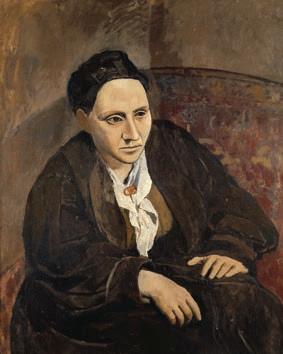
Gertrude Stein recalled posing for hours in a broken armchair, while Pablo Picasso sat opposite her on a small kitchen chair, inches away from his easel as he worked. As Stein would declare, the portrait he created symbolically linked two preeminent artistic figures of the 20th century: “Picasso in painting and I in literature.”
Amedeo Modigliani, “Portrait of Pierre Reverdy,” circa 1915
Amedeo Modigliani draws attention to Pierre Reverdy’s eyes. Their mismatched duality seems to reflect an internal conflict that riddled Reverdy—his strong spiritual inclinations later led him to distance himself from the hedonistic world of bohemian Paris.
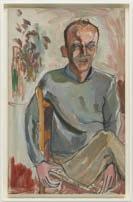
Alice Neel, “Frank O’Hara, No. 2,” 1960
A stark portrait of the leading figure of the New York School of creatives, Alice Neel’s depiction of Frank O’Hara entirely avoids the glamorization that is typical when a painter captures a young star. The writer instead appears vulnerable and grotesque. It was produced in the same year that O’Hara became an associate curator at MoMA—an impressive feat at the age of 35.
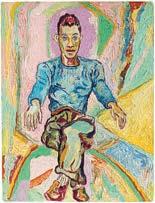
Beauford Delaney, “James Baldwin,” circa 1945-50
James Baldwin first met the Modernist painter Beauford Delaney when he was 15 years old. Both impoverished and uncertain about their futures, the two would wander the streets of New York City together. Baldwin later wrote: “The reality of his seeing caused me to begin to see.”
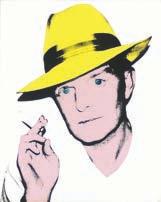
Andy Warhol, “Truman Capote,” 1979
Andy Warhol’s interest in Truman Capote began long before he titled his first solo show “Fifteen Drawings Based on the Writings of Truman Capote.” Capote recalled: “When he was a child, Andy Warhol had this obsession about me and used to write me from Pittsburgh… He wanted to become a friend of mine, wanted to speak to me. He nearly drove me crazy.”
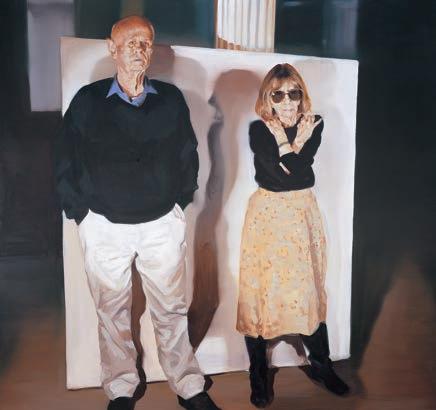
Eric Fischl, “Joan and John,” 2002
Eric Fischl’s portrait of Joan Didion and her husband John Gregory Dunne is on one level an intimate depiction of the couple and on another feels completely alien. Characteristic of his unusual compositions, Fischl positioned the couple in front of a blank canvas, as if waiting their turn to be painted. The artist later recalled the couple’s pleasure at seeing the finished portrait. In a 2014 interview, Fischl remembers how John was particularly satisfied with how he had captured his “big Irish chest,” however, “a month later [John] was dead. From a heart attack. And it was like, I mean, amazing and strange.”
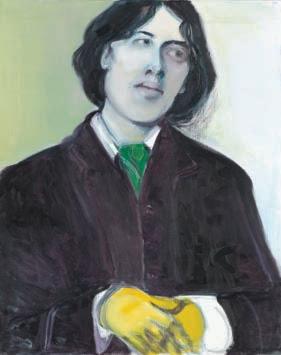
Marlene Dumas, “Oscar Wilde,” 2016
A murkiness lingers over Marlene Dumas’s paintings that suggests something sinister. In 2017, the year after she created this portrait, she explained that she chose Oscar Wilde as a subject not only because of her deep admiration for his writing, but because she saw a “vulnerable man” who was dealt a “tragic end.” The painting is based on a photograph taken by Napoleon Sarony in 1882. Dumas carefully selected a picture of Wilde taken before he was imprisoned for gross indecency (the legal charge historically used to prosecute homosexuality). The portrait was first exhibited in a cell in the same prison where Wilde was incarcerated.

Two sisters, connected by biology and artistry. Vanessa Bell, a painter, and Virginia Woolf, a writer, were marked by death and grief early on; a string of tragic losses in their family left Bell adopting a maternal role over Woolf. The sisters found both inspiration and rivalry in each other’s work. This portrait is one of the most intimate Bell painted of her sister, then aged around 30 and before she published her first novel, “The Voyage Out,” in 1915. There is a stillness to the image—Woolf’s lips are slightly parted, as if a whisper might emerge from them. Woolf would later confess: “Words are an impure medium; better far to have been born into the silent kingdom of paint.”
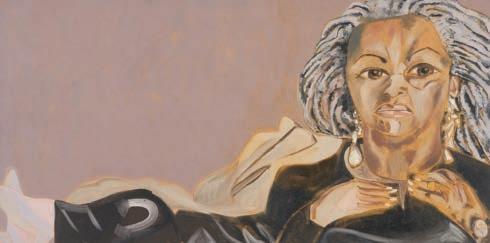
Francesco Clemente, “Toni Morrison,” 1998
It’s not often that one comes across a horizontal portrait. Almost by definition, a portrait should be vertical. Francesco Clemente, however, has never been one to stick to conventions. In his portrait of novelist and editor Toni Morrison he distorts her body and enlarges her eyes, chasing not a likeness but instead attempting to capture a greater intellectual presence. The painting is part of his “Devi” series (from the Sanskrit “devī” meaning goddess)—a group of works that depicts leading women in New York’s cultural and social circles, including Fran Lebowitz and Diane von Furstenberg. One is reminded that Morrison was not simply born into this fanciful world. For her, life began in a working-class household in Ohio, later becoming the first black female editor at Random House in New York City and then a Pulitzer and Nobel Prize-winning author. “[These are] women I admired tremendously and whom I thought expressed the great beauty of intelligence and determination,” Clemente said.
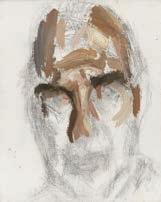
Freud, “Unfinished Portrait of Harold Pinter,” 2007
The story goes that Harold Pinter hated climbing the stairs to Lucian Freud’s studio and found his process tedious. The painting was never finished. Freud’s friend, art critic William Feaver, nonetheless claimed that the artist found it to be a fair study of the playwright: “Laconic, sparse, suggestive and not completed.”
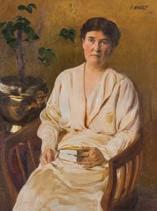
Léon Bakst, “Willa Cather,” 1923
The Russian artist Léon Bakst painted Willa Cather shortly after she won the Pulitzer Prize. Despite this celebratory context, the portrait was embroiled in controversy upon completion. The work proved too modern for the local critics—and possibly Cather herself. In a letter, she declared: “The portrait has caused more anxiety and distress than any of [my] books.”

John Singer Sargent, “Henry James,” 1913
The 40-year friendship of Henry James and John Singer Sargent culminated in this portrait, which was created to celebrate James’ 70th birthday. However, upon its public unveiling in 1914, a suffragette slashed the canvas three times. The painting narrowly survived.

Salvador Dalí, “Portrait of Paul Éluard,” 1929
The surrealist poet Paul Éluard had a curious relationship with Salvador Dalí. Prior to meeting the painter, Éluard was married to Gala—a mononymous muse— who would later divorce him and begin an intense relationship with Dalí in 1929, the same year this portrait was painted. Despite parting ways, Éluard viewed Gala as his “love for life” until his death in 1952.
The privately owned Calabash estate enjoys one of the most prized locations that Jumby Bay has to offer
Approximately two miles off the coast of Antigua, and in one of the most undisturbed places in the world, sits Jumby Bay Island—a private paradise with powder-white sand beaches lapped by turquoise Caribbean seas. Reachable just by private vessel and free of cars, the island offers only lush trails and winding cycle paths.
“St. Barts is where you go to see and be seen. Jumby Bay is the alternative,” says Eric Lavey of Sotheby’s International Realty, who is representing the sale of Calabash, one of the most highly-ranked estates on the island. “It’s where you go to keep your friends and family close and enjoy complete privacy without the fear of having it disturbed.”
The privately owned 300-acre Caribbean island comprises 56 individually owned estates and a 40-room world-class resort, where understated elegance and quiet luxury meet the white beaches and colorful wildlife of the West Indies. Within this exclusive community is Calabash—a
private escape overlooking the azure waters of North Sound, nestled in one of the most secluded and private positions on the island’s leeward side, with stunning west-facing sunset views.
Set on 1.13 acres, the beautifully manicured gardens and grounds weave around the estate buildings, pool and decks, sloping gently towards the private beach.
An extension of home, the Jumby Bay Island resort is available to all island homeowners, including the new sister standout—The Hut. Already known for its location on the Isle of Wight in the U.K., The Hut has launched its newest beach club venture on Little Jumby, a small outpost of Jumby Bay Island. With its reputation as every yachtie’s favorite bar, The Hut is quickly becoming Antigua’s most exclusive private island beach club.
Jumby Bay is located minutes away from V.C. Bird International Airport, with daily non-stop flights to North America and Europe, along with access for all private aircraft.


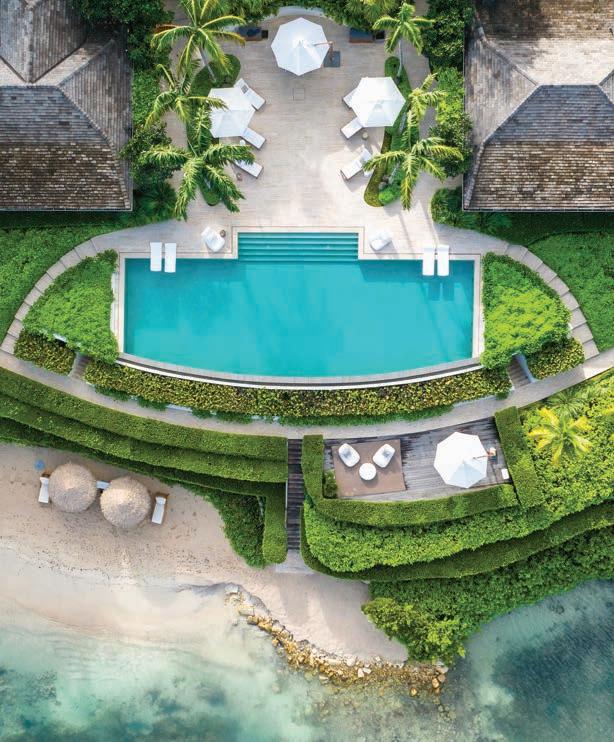
Find your one. Explore our exclusive collection of inspiring homes.
Sea Island, Georgia, United States sothebysrealty.com/id/h8mnr3
Atlanta Fine Homes
Sotheby’s International Realty Chase Mizell chasemizell@atlantafinehomes.com
Co-listed with DeLoach
Sotheby’s International Realty
Susan Imhoff and Ann Harrell susan.imhoff@sothebysrealty.com ann.harrell@sothebysrealty.com
$40,000,000 USD
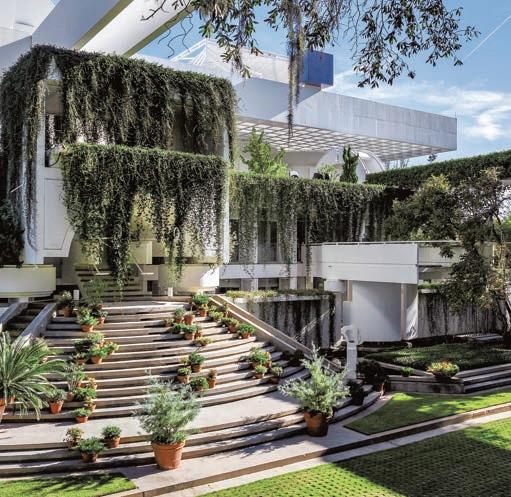


This home sprawls across a 1,020 sq. m. (approximately 1,220 sq. yds.) plot and is located in one of the most coveted neighbourhoods of the city. *Image is an indicative artistic impression.
New Delhi, India
sothebysrealty.com/id/KRY42H
India
Sotheby’s International Realty Atul Goyal: +91 886 064 1995 atul.goyal@sothebysrealty.in
Price Upon Request

Villa
Set on a plot size of 1,025 sq. m. (1,225 sq. yds.), this fully furnished home seamlessly blends IndoPortuguese architecture with modern luxury. Features five bedrooms and an outdoor pool.
Goa, India
sothebysrealty.com/id/X7BYCT
India
Sotheby’s International Realty
Karan Singh: +91 999 979 5189 karan.singh@sothebysrealty.in
$2,467,554 USD
Duplex Apartment in Pali Hill
This unique home encompasses an entire floor with panoramic sea and city views. With a carpet area of around 555 sq. m. (6,000 sq. ft.) and six spacious bedrooms, this duplex is a prized find.
Mumbai, India
sothebysrealty.com/id/9GGD8S
India
Sotheby’s International Realty
Simone Jaggi: +91 981 958 2018 simone.jaggi@sothebysrealty.in
$5,287,793 USD

Duplex Apartment on Belvedere Road
With high-end finishes and modern amenities, this property has five bedrooms, expansive living areas and an exclusive terrace. This duplex is situated in a gated community with lush greenery.
Kolkata, India
sothebysrealty.com/id/5YSY5C
India
Sotheby’s International Realty
Suman Banerjee: +91 916 332 0437 suman.banerjee@sothebysrealty.in
$2,232,644 USD
Kiwi Paradise in the Bay of Islands
International buyers can secure this rare opportunity to own New Zealand waterfront land. Site 10 in the Omarino community, Bay of Islands, spans over 17 acres with private beach access, panoramic views, and OIA approval. Key features include private jetty. Bay of Islands, New Zealand sothebysrealty.com/id/F733P New Zealand
Sotheby’s International Realty
Ben Macky: +64 219 37 885 ben.macky@sothebysrealty.com
$8,000,000 USD


Casa Brazasia
Experience the essence of coastal luxury with this exquisite beachfront retreat in the heart of La Fortuna on the East Cape of Los Cabos, Baja California Sur, Mexico.
Los Cabos, Mexico
sothebysrealty.com/id/BVVJMN
Los Cabos
Sotheby’s International Realty
Brandon Duquette: +1 214 934 3842 bduquette@sirloscabos.com
$3,250,000 USD
101 Central Park West, 2DE
Rare 11 room, about 5000 sq. ft., five-six bedrooms with Central Park views and four exposures, two sunlit wings, en-suite bedrooms and flexible layout for elegant living. 24/7 doorman, high-end gym.
New York, New York
101CPW2DE.com
Sotheby’s International Realty
East Side Manhattan Brokerage
Cathy Taub: +1 917 855 8466 cathy.taub@sothebys.realty
$8,250,000
The New Tower Collection at 111 West 57th Street
Residents enjoy the most elevated level of luxury living with 24-hour dedicated security and concierge, daily complimentary breakfast catered by Le Bilboquet in private Club111, elite sports club, the only private indoor paddle court in Manhattan and valet parking.
New York, New York 111W57.com
Sotheby’s International Realty East Side Manhattan Brokerage
Nikki Field | Patricia Parker
Benjamin Pofcher | Jeanne Bucknam +1 212 257 8170
info@111W57.com
$12,500,000 - $56,000,000


Ocean Drive Estate
Sweeping ocean views from nearly every room of spectacular seaside gated compound with 1,684 sq. ft. guest cottage, four bay garage, and two level carriage house with potting shed and storage.
Newport, Rhode Island
sothebysrealty.com/id/3CPGZD
Gustave White
Sotheby’s International Realty
+1 401 849 3000
gustavewhite@gustavewhite.com
$13,250,000

Ocean Lawn
Stunning stone and shingled eight-bedroom in gated “Ocean Lawn” - originally part of the historic Firestone Estate, with open plan and exceptional details in design and millwork.
Newport, Rhode Island
sothebysrealty.com/id/ZKG4EN
Gustave White
Sotheby’s International Realty
+1 401 849 3000
gustavewhite@gustavewhite.com
$8,500,000

Idyllic estate sited on nine acres of pastoral gardens and greenery abutting conservation land. Luxury finishes throughout the home. Craftsmanship, water views and privacy abound.
Portsmouth, Rhode Island
sothebysrealty.com/id/2886XG
Mott & Chace
Sotheby’s International Realty
Kylie McCollough: +1 401 864 8830
kylie.mccollough@mottandchace.com
$5,750,000

Here at the prestigious Biltmore Resort, the Estates within the circle are majestic. Exceptional setting on the golf course at one and a third acres of breathtaking views of Camelback Mountain.

Private vineyard oasis on over 22 acres of rolling meadows combining luxury and natural charm. The stunning estate is over 8,000 ft. of elegance with close proximity to the ocean.
South Kingstown, Rhode Island
sothebysrealty.com/id/W3KBQY
Mott & Chace
Sotheby’s International Realty
Erin Marsh: +1 401 225 4106
erin.marsh@mottandchace.com
$3,995,000

Phoenix, Arizona
sothebysrealty.com/id/EBVN2S
Russ Lyon
Sotheby’s International Realty
Frank Aazami: +1 480 266 0240
frank.aazami@sir.com
$10,000,000
Situated in one of the most sought-after and private bluechip corridors in Paradise Valley on nearly an acre, this residence was curated for entertaining and effortless day-to-day living.
Paradise Valley, Arizona
sothebysrealty.com/id M8NNR2
Russ Lyon
Sotheby’s International Realty
Frank Aazami: +1 480 266 0240
frank.aazami@sir.com
$9,955,000
Welcome to Collectors Residence at Mummy Mountain, a 17,701 sq. ft. masterpiece offering sweeping views, a grand ballroom, private gym/spa, and adaptable spaces. Experience true exclusivity and sophistication inspired by New York City and London in a luxurious estate.
Paradise Valley, Arizona
sothebysrealty.com/id/C53EFV
Russ Lyon
Sotheby’s International Realty
Frank Aazami: +1 480 266 0240 frank.aazami@sir.com
$13,500,000

Set on Camelback Mountain’s East Side, this over one and a half acre custom home offers privacy, panoramic views, and a bespoke lifestyle. Featuring exquisite finishes, hand-painted details, a wine cellar, and a grand motor court, it embodies elegance and exceptional craftsmanship.
Paradise Valley, Arizona
sothebysrealty.com/id/755RR4
Russ Lyon
Sotheby’s International Realty
Frank Aazami: +1 480 266 0240 frank.aazami@sir.com
$7,850,000

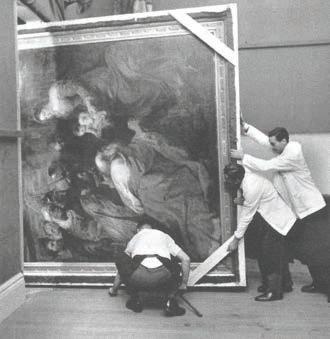
Recalling the extraordinary preparations made for the auction of a monumental painting by Peter Paul Rubens at Sotheby’s London on June 24, 1959.
when the heirs ofHughGrosvenor,2ndDukeofWestminster, decided to sell “The Adoration of the Magi”—a monumental canvas painted by Rubens from 1633-34 as an altarpiece for a convent in Louvain, Belgium—it was obvious that special arrangements would be required. Measuring 13 feet 9 inches tall by 10 feet 6 inches wide, the artwork could not fit through the sequence of doors on the route to Sotheby’s main gallery on New Bond Street. As the most important Old Master painting to be put on the block in a generation, a solution was essential. Porters devised a plan to winch the baroque masterpiece up from the Mayfair building’s basement via a temporary slot in one of the gallery floors before passing it through an opening made in one of the walls. The daring endeavor was successfully
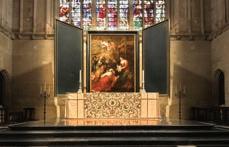



was installed in King’s College Chapel, Cambridge, beneath the Great East Window, completed in 1531. The Sotheby’s 1959 auction catalog in which works were reproduced in black and white.
executed the day before the auction, but their work was not yet over. Armed with a bank of steaming, newly purchased electric kettles, staff had to keep vigil overnight to maintain optimal humidity for the huge picture.
Fortunately, these efforts paid off. After a determined round of bidding by the art dealer Leonard Koetser on behalf of an anonymous collector, the Rubens sold for £275,000— a new world record for any painting at auction. The unknown identity of the buyer briefly raised concerns that the work might leave the country, but it soon emerged that the mystery purchaser was Alfred Edward Allnatt, a British industrialist and art collector.
Two years later, in 1961, Allnatt offered the masterwork to King’s College, Cambridge—a decision that triggered yet more complicated construction. To install the painting in the college’s chapel, the height of the altar floor had to be lowered to prevent the work from obscuring the stained glass windows. These alterations remain controversial to this day but served to restore the altarpiece to its original purpose.—James Haldane