“I saw the power of combining story with dance and fashion and was really intrigued by the dynamics of that combination,” Amy Kimberly, former executive of Carbondale Arts, stated on the Carbondale Arts website.
That legacy was beautifully echoed in this year’s Carbondale “Step Right Up” Fashion Show, which ran March 12-14, as direction was passed down to Emily Fifer and Meagan Londy Shapiro to creatively build on Kimberly's approach to express story through fashion.
This year's carnival theme began by introducing the infamous roles that make a circus what it is, to the weaving of a narrative through movement, music and garments. The production transformed the runway into something more theatrical than traditional fashion. The hypnotic yet alluring performances of the aerialists, vintage circus advertisements and the doll-like elements that flowed through hair and makeup were factors that all heightened that nostalgic carnival feel.
I’ve attended a handful of fashion shows over the past few years, yet there’s something about Carbondale’s that has so far enlightened me the most. Possibly, it’s the opportunity to design? The anticipation of knowing what the upcoming theme is, the choreography, or just the overall thrill of experiencing the work of artists in our own community. But as my eyes wandered around the room, it made sense what the foundation is that makes this event so memorable.
Those lucky enough to attend the annual show might have caught themselves — maybe consciously, possibly not — bopping their heads like a flock of urban pigeons to the energetic soundtrack and the models' bold on-beat runway walks.
What makes this fashion show so special isn’t just the clothes, but the love we have for each other as a community. The countless volunteer hours that go into enriching the experience, and the local businesses giving a hand in any way they can.
Carbondale is crazy; creatively crazy. The kind of crazy where dancers, designers and volunteers collide to create something bigger than themselves. And for a few nights each year, that chaos is highly awaited.
Don't get me wrong about the following statements. I love shows; I love seeing people's eyes drag themselves from look to look, like grandfather clocks, stepping into crazy sets. It's a blessing to experience a passion for the art with others, but there are times when I yearn for that chaos. And dare I say, I'll miss Carbondale's extravagant approach to fashion.
The more open I’ve become with people about fashion and the art it has to offer, the more I’ve realized that some people — not everyone — assume fashion is only about appearance, and about caring too much on how you’re perceived, or proving yourself materially. Or they reduce it to the simple act of covering yourself, for God’s sake.
But fashion goes much deeper than what you see. Fashion is felt, it's political, hectic, beautiful and expressive all at once. And right now, as we are all living through a questionable and concerning state of the world's politics and society, this year’s show left me with something beyond a good laugh to take home.
The way our society has been gradually emerging into something almost satirical and obscure, far from what many of us envisioned for ourselves, took center stage.
There were lines that, sure, were off-theme but gave a chaotic sense in their own way, and more like
reflections of who we’ve become.
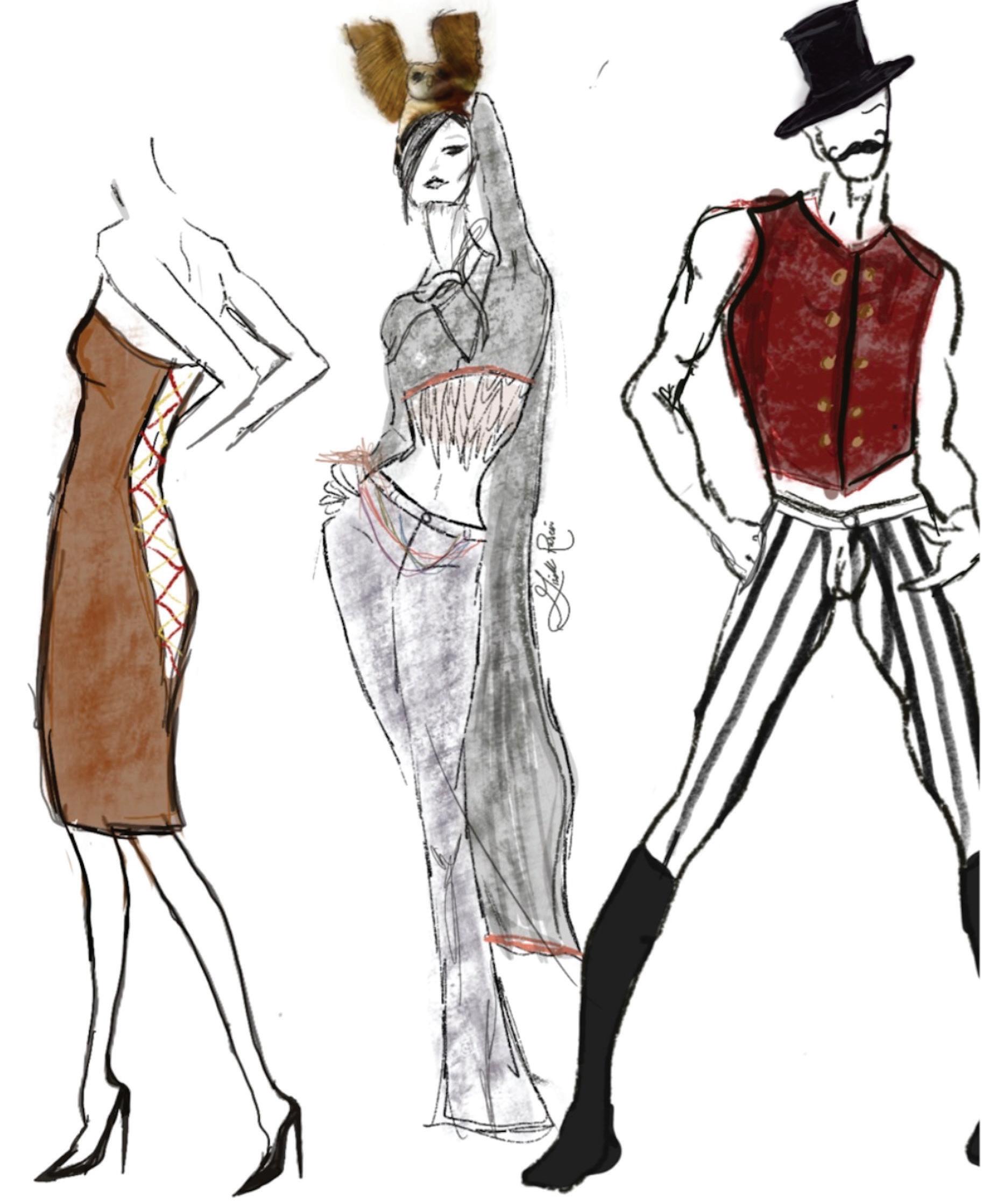
“Kingdom of the Sporeborne: Icons of the Mycoverse” by Lawrence Pevec, Hamilton Pevec and Ayana Pevec Brown grounded the runway in something ancient and organic with exotic fungal forms that spoke to our deep, rooted connection to earth. Beautiful Polynesian dancers, “Golden Souls of Nature” by Aspen Polynesia, brought the natural world to the runway with feather-covered attire. In contrast, “Plastic Revival,” a
line constructed of recycled material, tagged along with model Anders Carlson and his bold caveman-like stage presence, felt hardly jarring in the slight reminder of who we once were. It made me think about our evolution and how our reliance on synthetic materials has reshaped not only our environment but also our identity, taking over our lives entirely. The ecological narratives continued through “Felt Goods” by Jill Scher
continued on page 7
Art by Giselle "Gigi" Rascon
I'm writing this because I want to see more teenagers at the No Kings protest on March 28. We should be at these protests because we are all affected by what the Trump administration and Congress have been doing, whether you know it yet or not.
Countless masked Immigration & Customs Enforcement (ICE) agents have been sent into American cities to capture people. Legislation that would deprive millions of voters of their right to participate in free and fair elections is at stake, as is the rollback of climate change policies. Along with the Israeli prime minister, the executive branch has started a war with Iran, and that was following the clandestine kidnapping of the president of Venezuela. And the release of the Epstein files has not complied with the law’s timeline, an assumed effort to protect the president. All of these examples affect teenagers in some way.
Trump won't be the last person to threaten our safety and freedom, but he is that to us now. I know I'm not the only teenager who cares about those fundamental rights. But when I go to protests or meetings, I rarely see other teenagers there. This worries me.
While the high school walkouts were great, we need
Kids for No Kings
more teenagers to keep going to protests and to find a way to stay involved. It's important for young people to do so, so we can learn from experienced organizers. We're going to inherit this world, and we will need to know how to build successful movements.
We know that more than 30 people died while in ICE custody in 2025 alone. In January of 2026, two Minnesotans were shot and killed by ICE. This was murder and sanctioned by the state after the fact. This massive ICE overreach and abuse of power needs to stop, and we have to make it very clear to our government that we will not stand for it.
months, years or if they have been shipped thousands of miles to another country. No kid should have to worry about that.
By Sagan Mulry Green
In a healthy society, everyone should feel safe leaving their house, and ICE is making this impossible by tearing families apart. We have friends and classmates who have to worry that their parents will be taken away and they won't see them or know where they are for
At the very least, we need ICE to step way back and follow the law. In the beginning, Trump said that hard criminals would be targeted. In reality, the reach has become much more expansive. How long will it be before everyone who criticizes Trump is targeted? The protesters in Minnesota understood the threat and showed us how to respond. Trump is pushing legislation that would make it much more difficult for anyone who isn't a cis man to vote. The SAVE America Act double's down on the SAVE act, which already passed the House. It's important that everyone has access to vote for democracy to function. We believe that Trump doesn't want everybody to be able to vote. This is one thing we are protesting at No Kings. We're the ones who are going to have to lead the fight
against climate change, because we’re the ones who are going to have to deal with it for the rest of our lives. I don't want to have to start adulthood in the broken remains of what used to be the US, with coastal cities underwater and the other half burned to a crisp. We all remember the Lake Christine Fire. It will take another 10 years or more for Basalt Mountain to recover, and by then there will likely have been many more fires. It’s more than possible that we’ll see ski resorts close due to the lack of snow in our lifetimes.
In Iran, the US literally bombed an elementary school that reportedly killed over 175 people, most of them children. Hundreds more were wounded. Here, the war has caused gas prices to go up 80 cents in the last month.
If these issues matter to you, it's time to speak up and do something. It's our future at stake. I encourage everyone, but especially teenagers, to attend No Kings this Saturday, March 28, from 1 to 3pm, starting with a march on Grand Avenue then gathering in Sayre Park for a rally at 2pm. If you want to get more involved, talk to people at the information tables. I hope to see you at No Kings!
The dichotomy of role confusion
The teen years are such an important time of self discovery and the formation of identity. However, this is simultaneously contradicted by the desire to fit in and conform to the role that others have set for them. In psychology, this dichotomy is referred to as “identity versus role confusion.” This term was coined by Erik Erikson, and refers to psycho-social development of young people between 12 and 18 years old who want to stand out and fit in at the same time.
In other words, there is a delicate balance between standing out and belonging, for most, if not all, teenagers. Many have experimented with something about themselves at some point, probably having to do with their physical appearance. This could be dyeing their hair, experimenting with different fashion trends, etcetera. This all contributes to their sense of identity by having them essentially “try on” different identities to
see what they like.
Identity also includes social identity, or how someone wants to be perceived by others. This is when the “role confusion” piece comes into play; due to teens not knowing their identity fully, they might try to take on one that they want others to see them as.
of person, then those peers may not accept their forming sense of identity. This is the perfect example of identity versus role confusion, where there is the need to grow into one’s identity, while simultaneously feeling like they need to belong to a group.
This is amplified by globalization, with trends being
"YOU CAN BE TRUE TO YOUR IDENTITY AND PARTICIPATE IN TRENDS, AS LONG AS YOU STAY TRUE TO WHO YOU ARE."
Their fashion aesthetics, music tastes, hobbies, career interests and more all contribute to their sense of identity, and, in a way, their sense of belonging to a group. However, sometimes this can lead to role confusion if the teen is in a different role than what they want their identity to be, in part due to the friend group they are in. If their current friend group only accepts a certain type
set worldwide, in no small part due to the rise of social media. Teenagers around the world feel increased pressure to, again, blend in yet stand out. Social media definitely adds pressure for teens to conform to the norms that have been set for them, which often leads to negative mental health impacts, such as increased anxiety and lower self esteem. That's not to say that social media is all bad. It’s a
the Sopris Stars
Youth Editor Lou Gall lou@soprissun.com
Anna Sophia Brown anna@soprissun.com
Arthur Cherith arthur@soprissun.com
Hana Creyts hana@soprissun.com
Aurora Egan aurora@soprissun.com
Kate Ott katelynn@soprissun.com
Giselle “Gigi” Rascon giselle@soprissun.com
Vivienne Shapiro vivienne@soprissun.com
Youth Journalism Director
James Steindler james@soprissun.com
Youth Journalism Instructor
Skyler Stark-Ragsdale
Graphic Designer
Terri Ritchie
The Sopris Sun, Inc. is a 501(c)(3) nonprofit corporation with a mission to inform, inspire and build community by fostering diverse and independent journalism. Donations are fully tax deductible. The Sopris Stars is made possible thanks to The Sopris Sun.
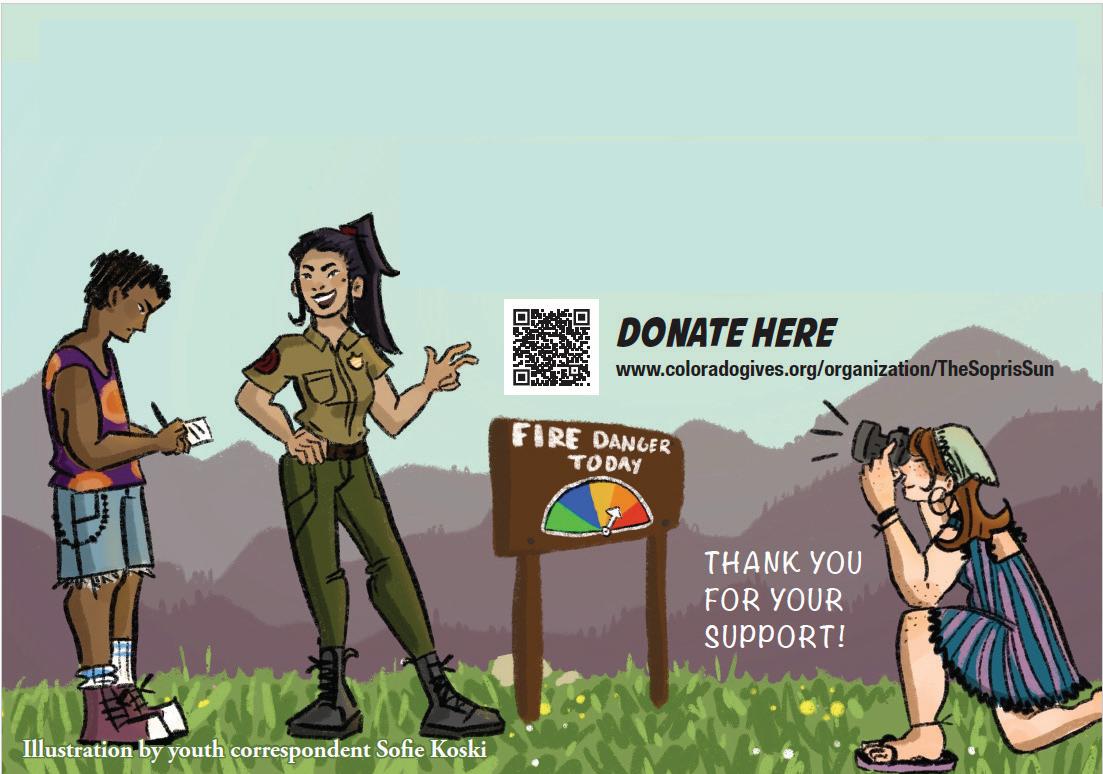
Support The Sopris Stars Youth News Bureau by making a donation at www.soprissun.com/donate
Letters to the Editor
Shoutout to Caden Smith, whose birthday was March 19! Email your letters or shoutouts to youthnews@soprissun.com
double edged sword. It can, in fact, be a very positive space for teens to explore their identities, too.
The viral meme “6-7,” TikTok dances, fashion trends that last less than a week, different overly “workshopped” personalities and aesthetics are examples of trends kids either clamor to or completely ignore.
There is nothing wrong with jumping on the bandwagon. However, what social media can create, beyond just the TikTok dances and outward appearances, is a sense of monoculture. If everyone dyes their hair the same color, wears the same clothes, acts the same for the most part and participates in the same trends, that would be pretty boring.
It can also lead to increased role confusion if a teen doesn’t feel like they fit in with everyone else online, so they try to conform to the norm even if it doesn't interest them. It seems like almost
OPINION
By Hana Creyts
no one is uniquely themselves anymore. And, whenever someone is uniquely themselves, they may be shut down because they aren’t conforming to a role.
Trends aren’t bad things, especially if you resonate with them on some level. For example, if you like a certain makeup style, certain clothes and accessories, a certain hair color, and it’s trending, then, by all means, try it out. Trends just become harmful when someone starts to mask who they are. You can be true to your identity and participate in trends, as long as you stay true to who you are.
The growing importance of music at Glenwood Springs High School
AURORA EGAN
Sopris Stars Correspondent
EDITOR’S NOTE: Aurora Egan is a member of the Glenwood Springs High School band programs and choir
Music plays a principal part in the Roaring Fork Valley.
For many students, however, their options can become limited due to issues such as lack of funding, lack of interest and difficulty in finding music teachers. At Glenwood Springs High School (GSHS), Shanti Gruber, the choir director, and Tamara McSwain, the band director, share the idea that music education is a fundamental part of the school.
“Music has given GSHS a sense of identity and tradition,” Gruber said. “It has shaped us into a place that values expression just as much as competition or testing.”
Mark Johnson, a jazz musician in the Roaring Fork Valley who tragically passed away last year, left a lasting effect on music education in the Valley. After his death, Jazz Aspen Snowmass set up the Mark Johnson Memorial Fund. Through this resource, funds were raised to hire a full-time music instructor for the Car-
bondale program this year, and JAS states that it will continue to support the position next year. At GSHS, Johnson played a pivotal role in music education, often coming into band classes to assist students.
Johnson, who McSwain described as a “performer first and an educator second,” used his knowledge of performing and gigging to bring a new set of skills and perspective to the band room.
According to Mcswain, Johnson’s high standards consistently pushed students to improve their musical skills. He also invested in students he saw as having great potential and motivation. He spent a large amount of time outside of class assisting these students to grow as musicians. Johnson helped in providing them with special mouthpieces, reeds and instruments, as well as aiding in audition recordings.
Anderson Amaya, a junior at GSHS, expressed his gratitude for Johnson’s work with the band program.
“Mark changed what the meaning of band was in many hearts, especially mine,” Amaya said “For all of the kids that Mark Johnson has worked with
… all of them improved, even if it was just a couple of words that he had said.”
McSwain described the importance of music not only for the students she teaches, but also in her own life. Growing up, McSwain said that her favorite place to be is in the band room, and being a part of a group of musicians.
As an educator, McSwain said that she has watched music education affect students in a multitude of ways. She has observed that students who have come from many different musical backgrounds have flourished under the band programs. Students have been known to find their social circles within music education,which has encouraged them to participate in other relevant opportunities at GSHS, such as choir, drama and beyond, she said.
“It becomes a part of our community,” McSwain said. “It becomes part of how we spend our time outside of work and friends.”
When asked about the reasons behind the influx of music programs being cut in recent years in the Roaring Fork Valley, McSwain said that it is
quite complicated. She added that good music teachers are difficult to come across, and when students don’t connect with the music teacher, they won’t take the course. A lack of participation in a course can cause a program to be cut.
McSwain is thankful, however, that the administrators across the Roaring Fork School District are continually fighting for music to stay in schools.
Gruber believes that music is the heart and soul of GSHS. Offering music classes to students, she said, grows strength in other academic areas, such as math and language arts.
After teaching for 18 years, she has observed that music education is a motivator for students to show up to school at all.
Gruber has watched students she has taught grow confidence in their musical abilities, some often going on to pursue performance or music education as a career.
When schools are unable to offer music classes to students, Gruber believes that the student body as a whole suffers greatly, noting that the arts provide a large outlet for students to cope with stress and grow school spirit.
The reasons behind funding cuts to music programs, Gruber elaborates, comes down to the number of students signed up for the classes. She stated that music classes are often viewed as a luxury in schools, and, therefore, are the first to get cut if participation numbers are low.
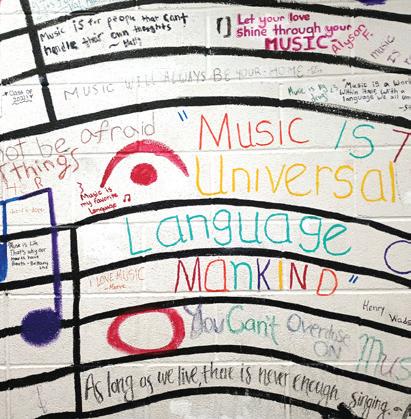
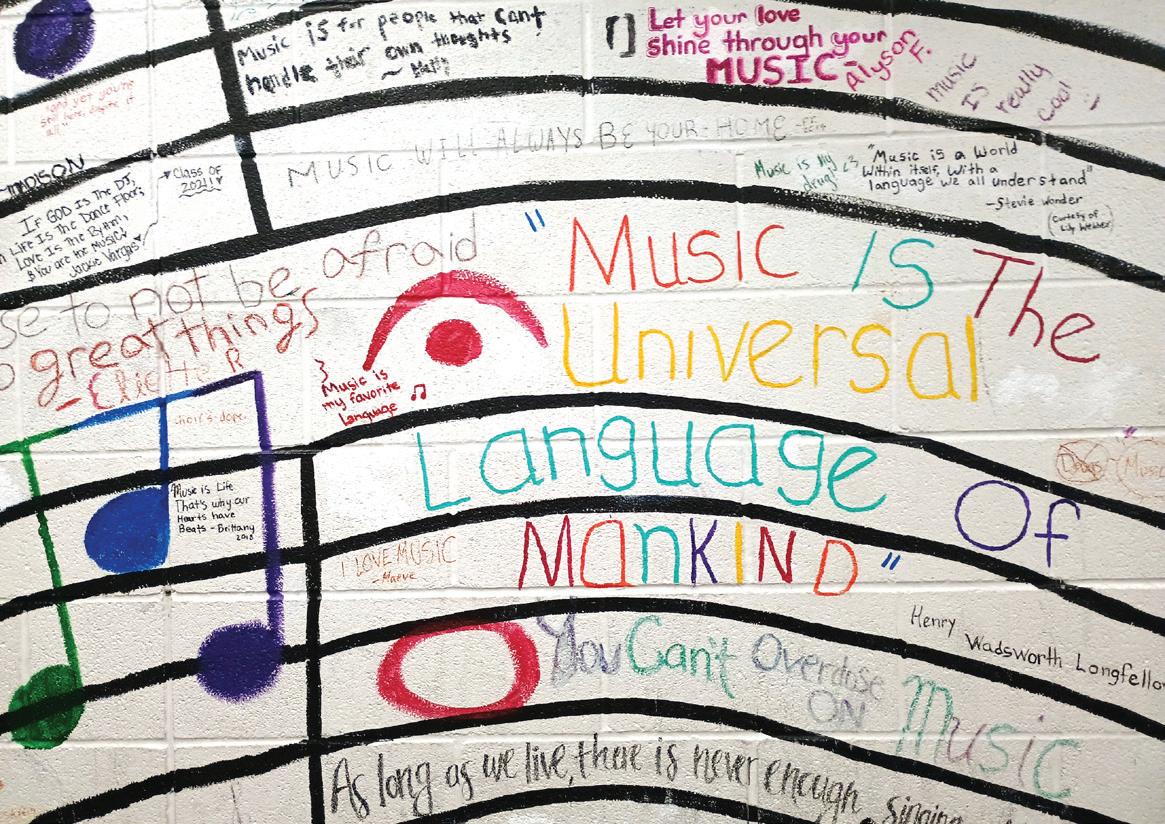
A collection of quotes written by music students over the years at GSHS. Photo by Aurora Egan
Megan Hiles, MD, MBA, FACP
A story to remember Reflections on the Holocaust
PHOTOS AND REFLECTION
by Kate Ott Sopris Stars Correspondent
The Holocaust was one of the worst genocides in human history. Considering it wasn't even 100 years ago, it's still terrifying. The systematic, industrial killing of over 6 million people over the course of seven years, is anything but natural. I struggle to wrap my head around the fact that humans were capable of doing such things to each other. The following is a series of thoughts and reflections from my time experiencing ground-zero of the Holocaust.
In early February, I had the opportunity to spend two weeks traveling throughout Germany and Poland to study the Holocaust. The trip took my group from Munich, to Berlin and finally to Krakow. While we had time to explore new cities, the trip was largely focused on visiting historical sites — museums, memorials and concentration camps, including Auschwitz and Dachau (one of the first concentration camps built under the Nazi regime).
I’ll admit, I struggle to put it into words, but being there was entirely different than just learning about it at school. I spent about a full day at Dachau on a guided tour, where we went through on-site museums and preserved buildings.
I was struck by how much I didn't know. I didn't know about the Jewish ghettos, or that the concentration camps worked in systems. All I really knew was from pop culture, and I can't remember the last time I learned about the Holocaust in school. For an atrocity of that scale, I didn't understand why it wasn't a bigger part of my education.
Walking through Dachau I couldn't wrap my head around the fact that the Holocaust really happened. The sheer number of people who would have been working in Dachau alone was impossible to visualize. Visiting Auschwitz felt like walking into a movie I wished was fictional. No amount of
reading or studying could ever replicate what it was like being there.
There was one part of the exhibit that I was not allowed to photograph that made me sick: a room full of hair taken from victims. When I first entered and went to my right, there was a display case with several neatly braided bunches of hair raised on what looked to be a 20-to-30-foot, rolled up, rug-like textile. The entire piece was made with human hair.
I followed the edge of the room, and was met with a case that spanned the entire length of the wall. It was filled with a two-ton pile of hair, taken from over 30,000 women. The hair was discovered, after the camp's liberation in 1945, in piles that were ready to be shipped to textile factories. My words can’t describe how it made me feel, but nothing has ever left a deeper pit in my stomach. Seeing the remains of so many people being stripped of their humanity and treated like cattle was devastating.
A phrase our tour guide used often was “industrial killing.” I thought at first it was another buzz-word kind of saying, but I was incredibly wrong. The term fits too well. Everything was built for efficiency and left no space for humanity. Over-crowded barracks, terribly unsanitary facilities and unsustainable rations of 1,000 calories a day for 16 hours of labor. The level of dehumanization these victims felt, and the system that perpetuated it was so severe that you start to question how people could even manufacture that reality.
Visiting these places drove home just how recent the Holocaust was. This was such a big event in history that can’t be ignored and its remains are scattered throughout today.
George Santayana, a Spanish philosopher, once famously said: "Those who don't learn history are doomed to repeat it.” Considering some of the parallels I've drawn, I understand exactly what he meant.
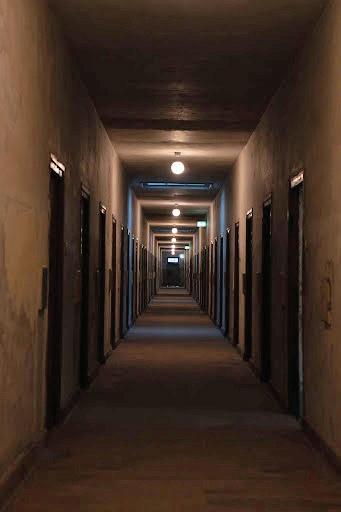
The Schutzstaffel (SS), who managed concentration camps, called the hallway of Dachau’s prison the “garrison detention.” Prisoners referred to it as the “bunker.” Dachau was the first concentration camp built during the Holocaust, first detaining innocents in March of 1933. It was the center for torture, where people endured brutal treatment.
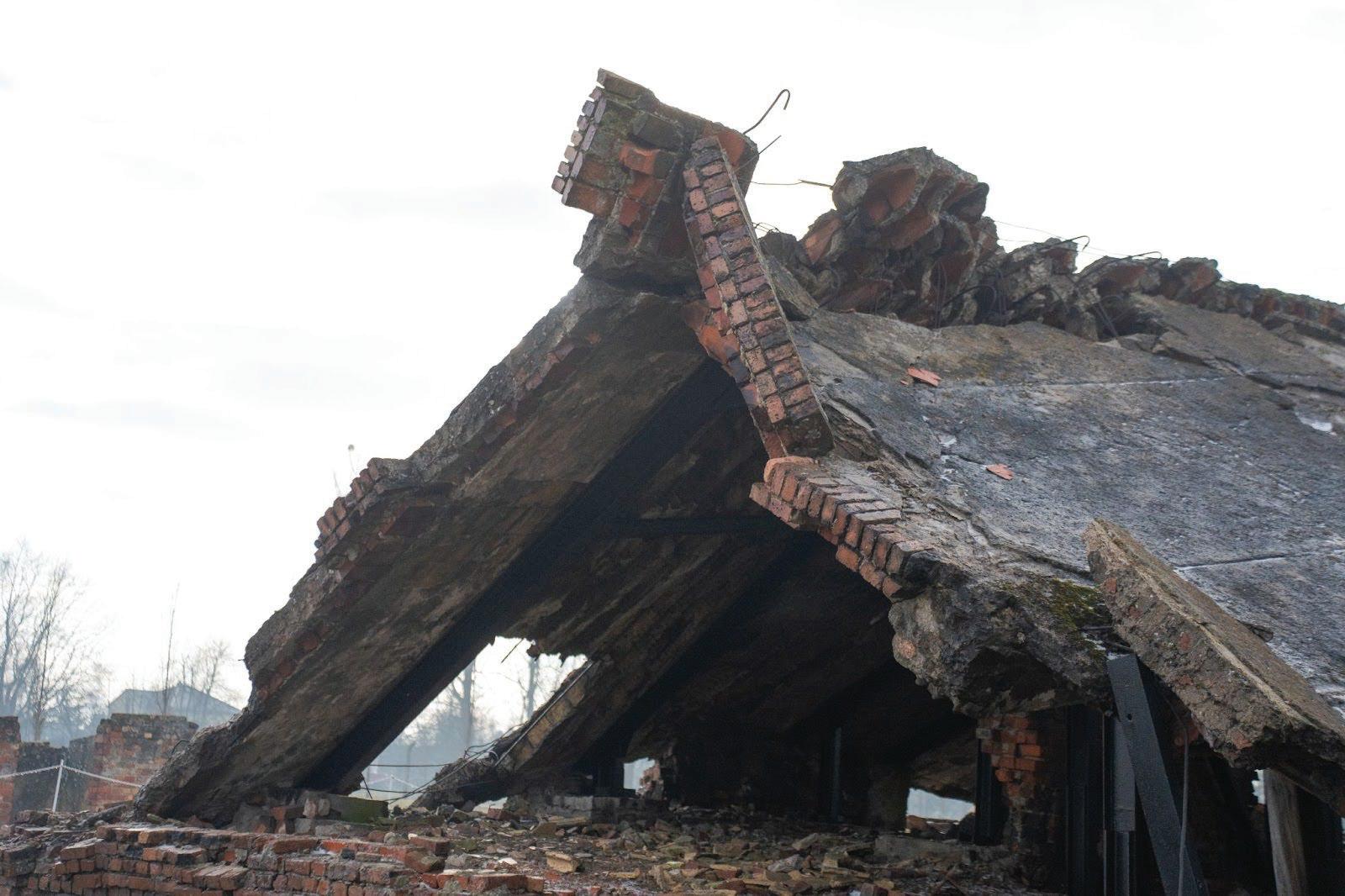
Remains of gas chamber two, one of the main gas chambers used at Auschwitz-Birkenau. Coupled with gas chamber three, over one-million people were killed in the two buildings. In an attempt to destroy evidence at the end of the war, both chambers were bombed with explosives.
Empty containers of zyklon-B (a form of hydrogen cyanide) displayed in the Auschwitz 1 museum. Zyklon-B was the main chemical used in the chambers, and was first experimented on humans at the same site.
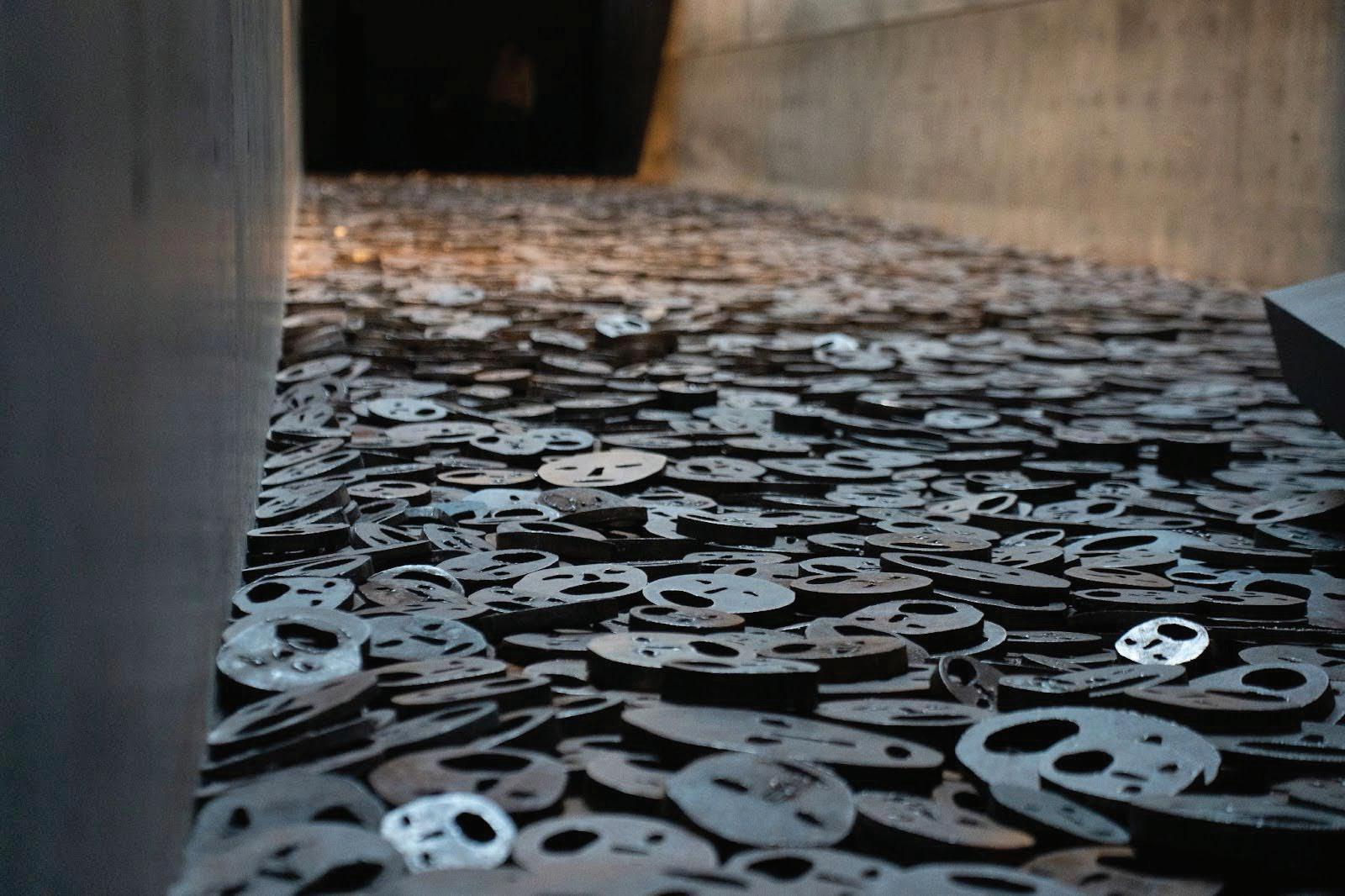
A photo of "Fallen Leaves,” an installation by Menashe Kadishman made up of roughly 10,000 face cut-outs made from thick steel plates meant to represent the Jewish victims of the Holocaust. Visitors are encouraged to walk across and back while looking down.
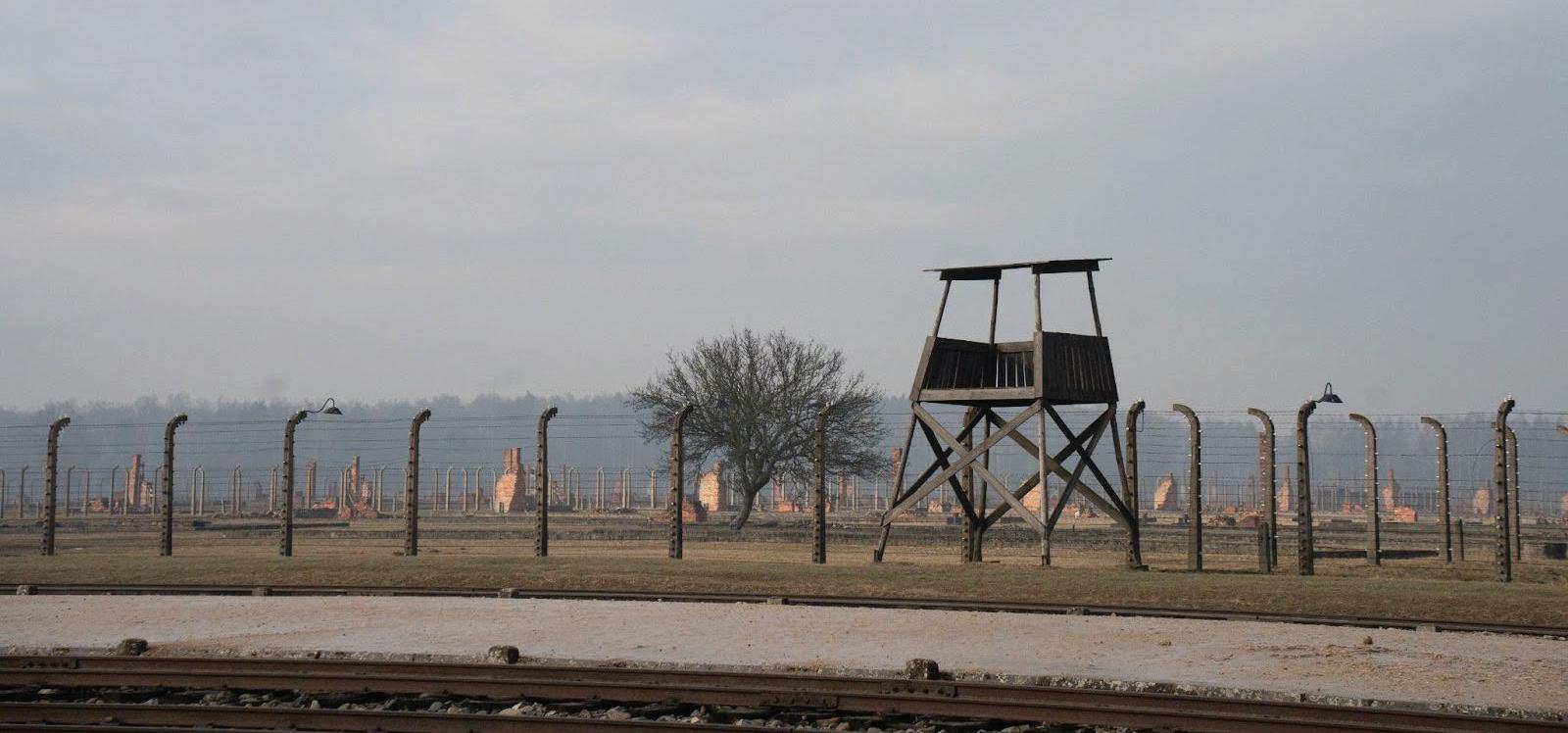
Auschwitz-Birkenau as seen from the train tracks. The watch tower was used for security monitoring. In the background are hundreds of brick chimneys, each one belonging to a different barrack. The chimneys are the only thing standing because the barracks in this section were made out of wood planks. Only 10% of people brought here lived in this area, the rest were immediately sent to the gas chambers.
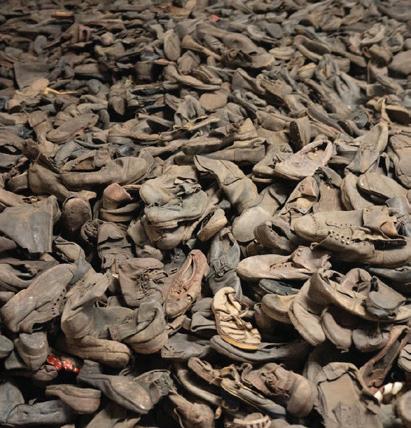
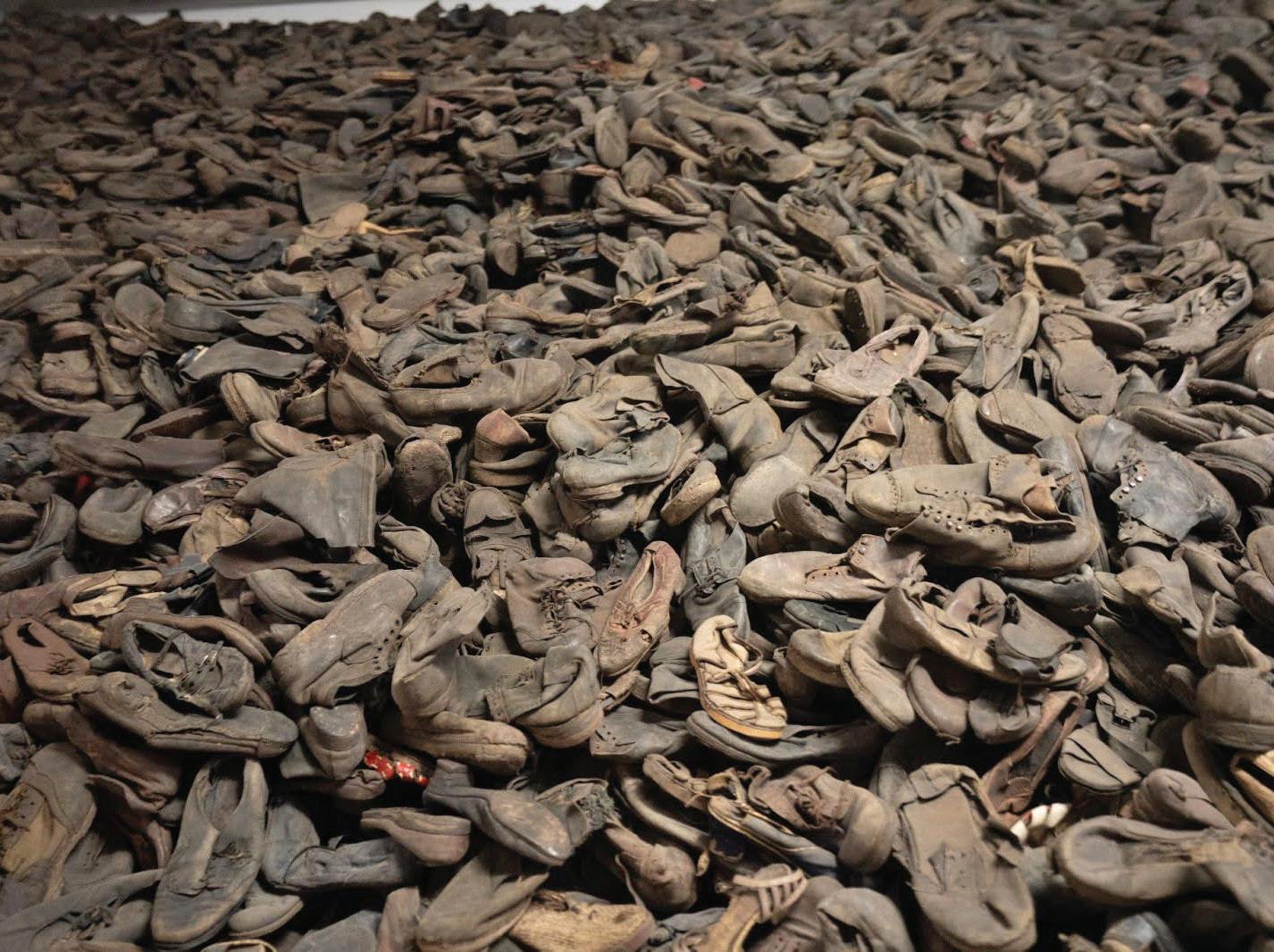
A pile of shoes collected from the belongings of new arrivals at the camp. Prisoners called the warehouses where goods were sorted “Kanada” (Canada in German). To prisoners, Canada symbolized wealth, and the warehouses were full of people's personal belongings.
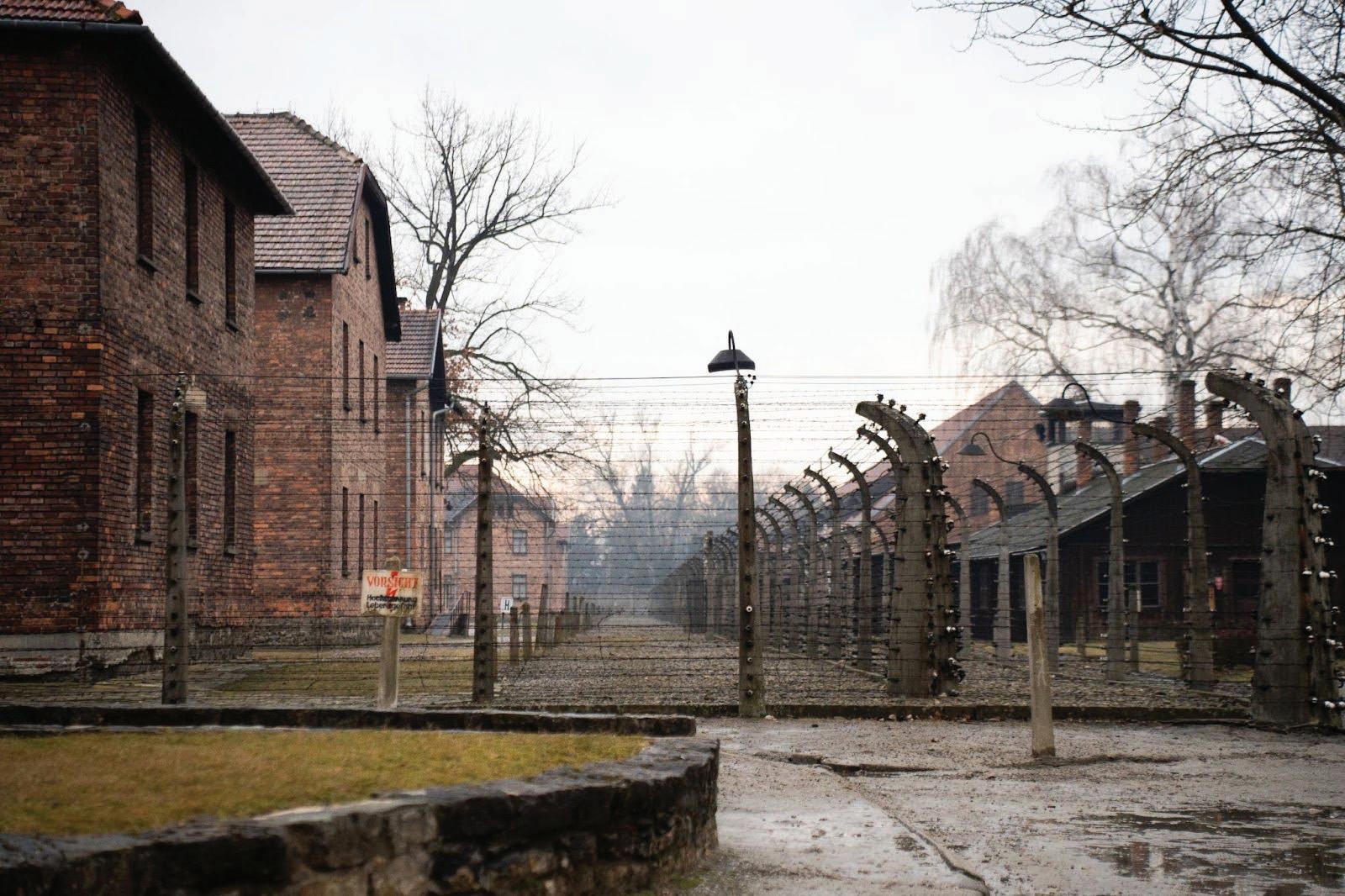
This is the outer barrier of Auschwitz I. On the left are former barracks and on the right S.S. offices, houses and administrative buildings. Some spaces are still used today as offices for the museum.
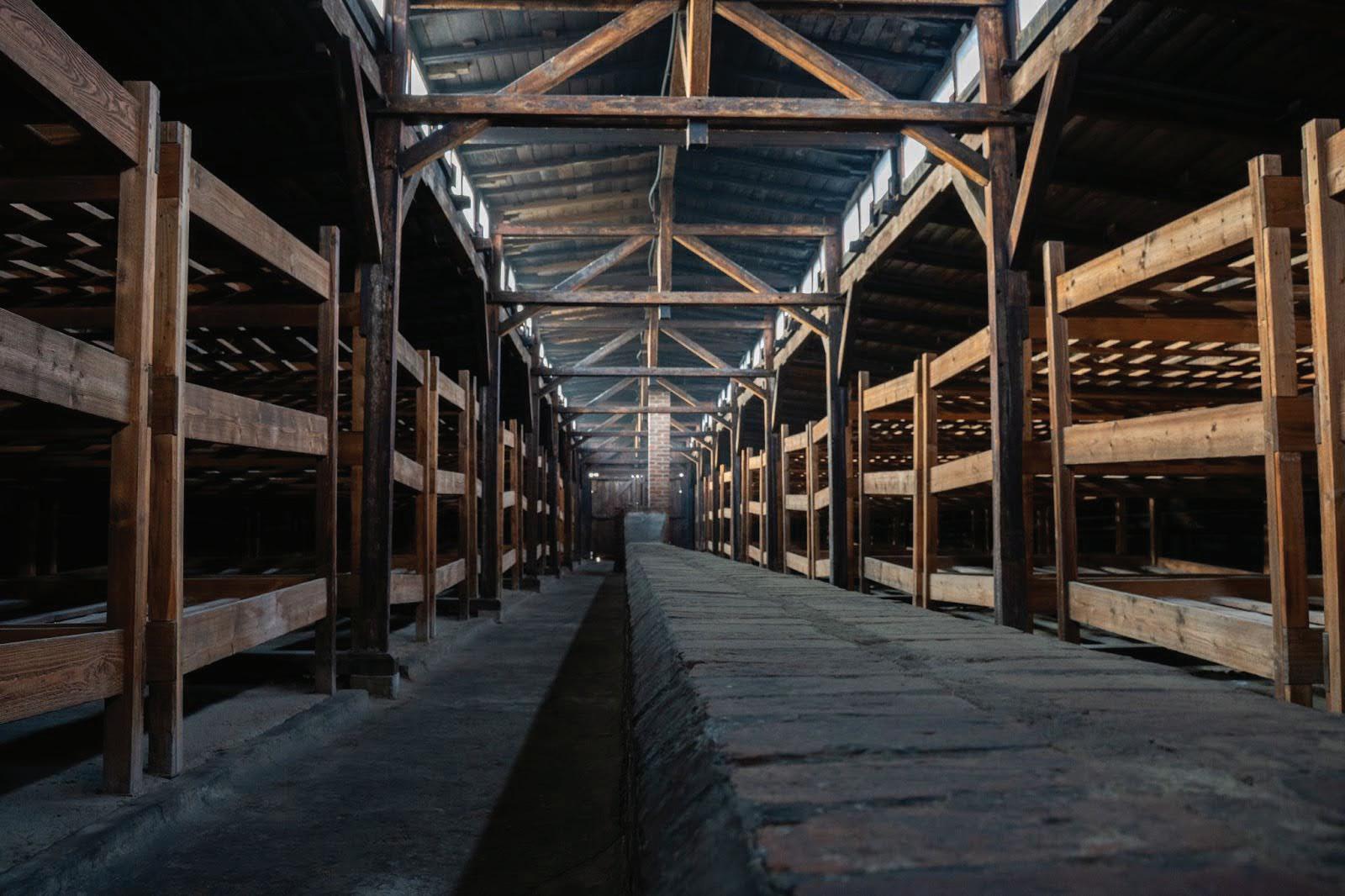
Inside a restored barrack at Auschwitz-Birkenau (Auschwitz II), each level of the three-tiered bunks held 10 people. Some barracks held over 1,000 at a time, with no bathrooms or sanitary facilities.
Restaurant reviews, en español
We are Mrs. Lasko’s seventh grade Spanish class from Carbondale Middle School. As a way to demonstrate our language abilities, and wrap up our most recent unit, we wrote reviews of our favorite restaurants in the Roaring Fork Valley. We hope you enjoy testing out your Spanish and perhaps visit one of our favorite restaurants!
Kedai
Por Logan Averill
Kedai es un restaurante muy bueno. El servicio es un poquito lento pero la comida vale la pena. Kedai está cerca del café Pájaro Azúl en Glenwood y la comida es de Japón. Tiene ramen, sushi, udon bol (que es una sopa con carne, fideos, y verduras) y otras sopas. También los camareros son muy amables y simpáticos. Las horas son de las 11am hasta las 9pm sábado y domingo, pero durante la semana las horas son de 11am a 3pm. Mi comida favorita es un udon bol de pollo y mi bebida favorita es la boba del durazno y crema. Los postres son pastel de Japón, mochis y pelotas dulces de sésamo. En general Kedai es un restaurante muy bueno y yo aconsejo que lo visites allí.
Dos Gringos
Por Sterling Drake
Dos Gringos es un restaurante buenísimo. El ambiente es fantástico y sirve a toda la comunidad de Carbondale. Los precios son medios y la comida es muy buena. Los platos principales son burritos y mucho más. Mi plato principal favorito son los tacos de desayuno. Otras cosas son chai, matcha, batidos de fruta y muchas bebidas de cafe. Tiene muchos postres. Por ejemplo, rosquillas, rollos de canela y otras cosas muy buenas. El servicio es muy bueno también. Es muy rápido y los camareros son muy amables. Está entre la ciclovía y la carretera 133.
3 B’s Bakery
Por Myel Edmiston
3 B's Bakery es una panadería muy deliciosa, está en la calle principal de Carbondale. Tiene muchos postres y cafés. Tiene pasteles, galletas y pastelitos. Las horas son de 9am a 4pm los miércoles a sábado. El servicio es excelente y el interior está muy encantado. Normalmente pido la galleta de galletas y crema. La comida es un poco cara pero vale la pena. Las camareras en 3 B's Bakery son muy simpáticas. No tienen los platos principales en una panadería.
Peppino's Pizza
Por Harper Fedishen
Peppino's está cerca del parque Sopris y está en la calle principal de Carbondale. Peppino's tiene muchos platos principales, no solo pizza. Tiene
FASHION SHOW
from Cover
and “Colorado Animals” by Rae Swon, who worked along with Heirlooms Consignment by curating outfits, where motifs such as the beautiful animal headpieces and colorful palettes resembled our roots in land and wildlife, prompting me to think further about where we come from and what we are becoming.
“Vallee Noone” made that looming aspect of the show
strombolis, ensaladas y sándwiches. Peppino's tiene bebidas también, tiene limonada (mi favorita) y otros refrescos. El servicio es muy bueno y los camareros son simpatiquísimos. Peppino's tiene helado para los postres. El helado puede venir con chocolate encima o con un bizcocho de chocolate o con una galleta chispas de chocolate o con algunas granas. Peppino's es un restaurante local. Las horas de Peppino's son de las 11am a las 9pm de martes a sábado. Peppino's es un lugar tranquilo y los precios son buenos porque no son caros ni son baratos. Yo voy a Peppino's mucho con mis amigas y con mi familia para la cena o para el almuerzo.
Nepal Restaurant
Por Elsie Field
El servicio del restaurante de Nepal es muy bueno, y los camareros son muy simpáticos. El restaurante tiene un robot que ayuda con el servicio. Los platos principales en el restaurante son deliciosísimos. El ambiente es bueno y me gusta mucho. También, las bebidas son dulces, y la comida es mantecosa. Mi bebida favorita es el lassi de mango, y mi comida favorita es el pan de naan. También, el restaurante tiene postres muy buenos. El restaurante de Nepal está entre Carbondale y Glenwood Springs. El restaurante es fantástico y la comida es muy sabrosa.
¿Cuál es tu restaurante favorito?
feel tender to the subject of growth within civilization and our personal moral relation to it through its use of structured cardboard and ribbon and the beautiful fragility carried by the models themselves.
But the collection that has been lingering with me most was “Branded” by Bineke Kiernan. It was the one I couldn’t immediately decode, the Campbell Soup. The
configuration some of these looks carried made me eager to try to understand the concept at its slightest.
For those who understand Spanish, I hope you picked up on the chosen song for this line. “Shock,” a Spanish song by Ana Tijoux, additionally revealed a layer of what this line was about.
What I took note of through my channeled Dumbo ears: the song grounds it-
Bonfire
Por Scarlet Reiss
Bonfire es un café excelentísimo. Bonfire Tiene muchas opciones de comida. El servicio es superior y rápido. Está en Carbondale y es un café local. Las horas de Bonfire son de 6:30am hasta las 2pm de lunes a domingo. Los platos principales de Bonfire son rosquillas, sándwiches y más. Bonfire también tiene bebidas. Las bebidas son té matcha, café, y té chai. Los camareros de Bonfire son cariñosos y simpáticos. Los pasteles son mis postres favoritos de Bonfire. Bonfire está en la calle principal de Carbondale.
¡Bonfire, tambien!
Por Lilah Yoder
Bonfire tiene comida buena. Tiene pan de plátano, café, roscas y mucho más. Tu puedes ver la cocina en Bonfire, está detrás de la cajera. Los platos principales incluyen roscas, huevos, omelettes, y todos son buenísimos. También allí hay muchos postres, galletas, rollos de canela, garra de oso y batidos de fruta. Los batidos de frutas son increíbles. Los camareros son muy responsables y son muy simpáticos. Otros postres son galletas y chocolate caliente. Mi postre favorito es la galleta de arándano azul y lima, Son increíbles. Las horas son de 6:30am a 2pm. Está en la calle principal de Carbondale. Bonfire es increíble. ¡Adiós!
self in the idea of anti-capitalism and the webbed concerns of political resistance, further speaking to systems of control within our government and societal dissensions. And that was feasibly the point. In a modern world where everything carries a name, is marketed, consumed and owned, what exactly does it mean to be “branded”?
Each form of art presented on that runway revealed
the deeper side of fashion that I wish the industry would showcase even further. Along with the roles played within a carnival was the chaotic beauty of taking risks, the concerns we hold about the world we live in and what it means to be part of it. In the long run, life is a circus. This year, Carbondale didn’t try to tame that chaos but wonderfully embraced it to its fullest.
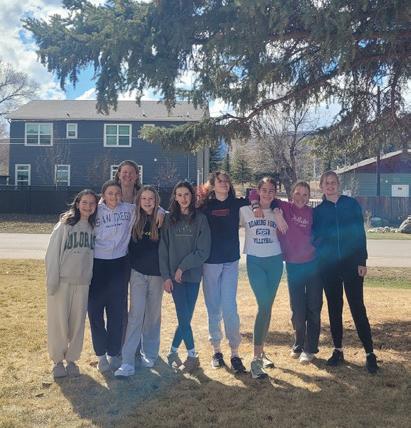
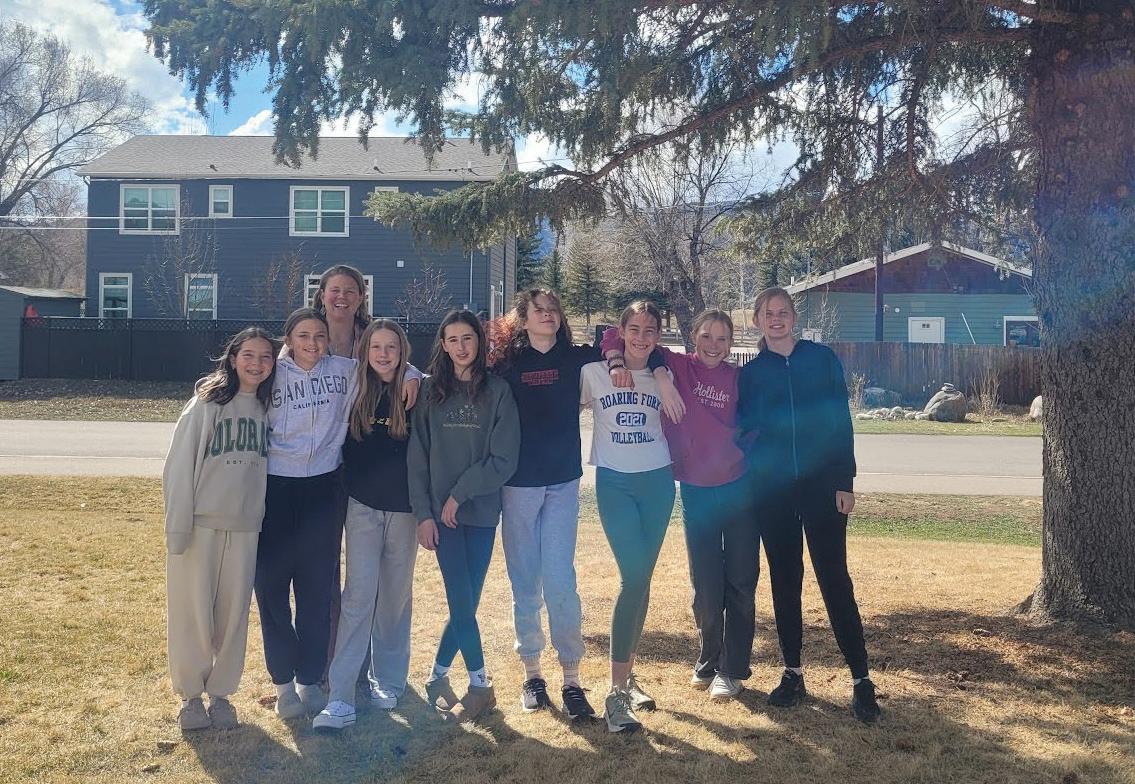
Krista Lasko stands behind her seventh-grade Spanish students: (left to right) Scarlet Reiss, Myel Edmiston, Harper Fedishen, Sterling Drake, Logan Averill, Lilah Yoder, Eleanor Nixon and Elsie Field. Courtesy photo
The school yard scaries THE IDES OF MARCH (Crosswording
ACROSS
What has become of school culture at Glenwood High
“Where do I sit?”
A question every student asks themselves at one point or another. It’s the choice that defines your status, the power you hold and the involvement you have. Choose wisely. Every educational institution I have ever seen preaches the importance of connection among students. However, after speaking to both students and staff it’s apparent that that’s not always the case. They sit in the same place, talk to the same group and are scared of answering questions. The solidarity once held in schools has become divided, with little turnout to school events. We are left to wonder, is school culture dead?
OPINION
By Lou Gall
“For it to be valuable for students, I think it has to come from students,” Garret Peters, Glenwood Springs High School dean of culture, said of student involvement in the school community.
Peters discussed how students have become less and less involved in school in the past few years.
Engagement is down, “but a lot of times the students that don't want to engage in community are also not as interested in engaging in academics,” he said. This engagement, or lack thereof, extends into the classroom as “the students that do raise their hands and ask questions generally outperform those that don’t,” Peters said.
We understand that participation is down, but the reasoning as to why is more unclear. The obvious answer every adult can offer is social media, which I agree with; the youth face a loneliness crisis on an unprecedented level. Having a world of information at your fingertips changes the way one perceives the world, degrading basic human connection.
Coupled with the rise in artificial intelligence, there is a distortion of reality that we have yet to mitigate. As communication between people shifts to a more and more digital format, we see many harmful impacts on adolescents' development, reducing attention spans and warping self-perception.
Social media has created so many acutely modern issues for students. However, we have also seen a rise in social media usage to develop school culture. School administrators have begun creating accounts on websites such as Instagram and TikTok in order to promote school events and attendance. These accounts feature everything from student council activities to “tea time” with principals, all in an attempt to relate to the youth and stir up excitement over upcoming events.
To some extent, this has worked, replacing the school newspapers of old with a new digitised version, offering students a chance to learn about school events in a largely accessible way.
This seems like the perfect solution to the problem of involvement, and yet we still see a decline. Part of the problem with the media of a modern age is the culture online. Being a “try-hard” has become a negative stereotype; many students have been ridiculed over effort, effectively creating a hostile environment for any student seen as hardworking.
This hostility feeds into classroom culture, where there can be low engagement rates and an overall difficulty in getting students to speak up. Even advanced placement courses have issues with student engagement, and teachers running discussion-based classrooms tend to find a small handful of students willing to speak up and share. This is found across schools and seems to be one of the hardest issues for educators to tackle.
“You get what you put into it,” Peters said.
Teachers watch as the people who try to put whatever they can into school continually succeed, while the ones who treat education with apathy tend to do worse overall.
“If you don’t care about the world around you, the people that do are going to make decisions,” Peters said.
For many students, school is not about learning but rather ticking off graduation requirements. As apathy grows, school culture declines, only widening the gap between students and learning. Often teachers who care the most inspire students to do the same, highlighting personal growth over academics. This is where students flourish. Feeling a human connection between student and educator helps to create a more welcoming environment for growth.
“Where do I sit?”
In a divided school system, choosing one's seat has never been so daunting. But maybe it's time to try sitting with someone new.
through the Roman Empire)
2. The highest ranking religious office
4. First Christian emperor
6. Baddie from Egypt
7. Roman word for Hades (no longer a planet in our system)
10. Public speaker brothers (started fall of Republic)
13. The god of fire and blacksmiths
14. “Stop quoting laws, we carry weapons.”
16. A gladiator/slave turned revolutionary
17. The richest member of the Triumvirate
18. The number of times Julius Caesar was stabbed
19. A famous Disney movie about a demigod
DOWN
1. First Roman emperor (dictator for life)
3. Julius Caesar’s last words
5. A violent form of entertainment
8. “Best men” party
9. Brutal fifth emperor famous for burning Christians
11. The lower class
12. Roman equivalent of Hera (namesake of June)
15. The political left
17. Not Istanbul, but
SUPPORT THE SOPRIS STARS YOUTH NEWS BUREAU
Ensure the journalism of tomorrow by supporting our youth program today.
The Sopris Sun’s youth journalism program is in its fifth year, but recently published the first Sopris Stars insert on Oct. 30, 2025, a monthly publication where all
youth-generated content will live.
Our Sopris Stars interns learn from a plethora of talented professionals, from top-notch journalists to cartoonists and photographers. Interns practice handson journalism, from requesting an interview to finalizing an article, with
guidance from regular instructors. The intent of The Sopris Stars insert is to provide young people with a reliable and accountable source of news meant for both their eyes and the wider community. High school students interested in participating, can visit www.soprissun.com/future
MOTHER’S DAY IS RAPIDLY APPROACHING
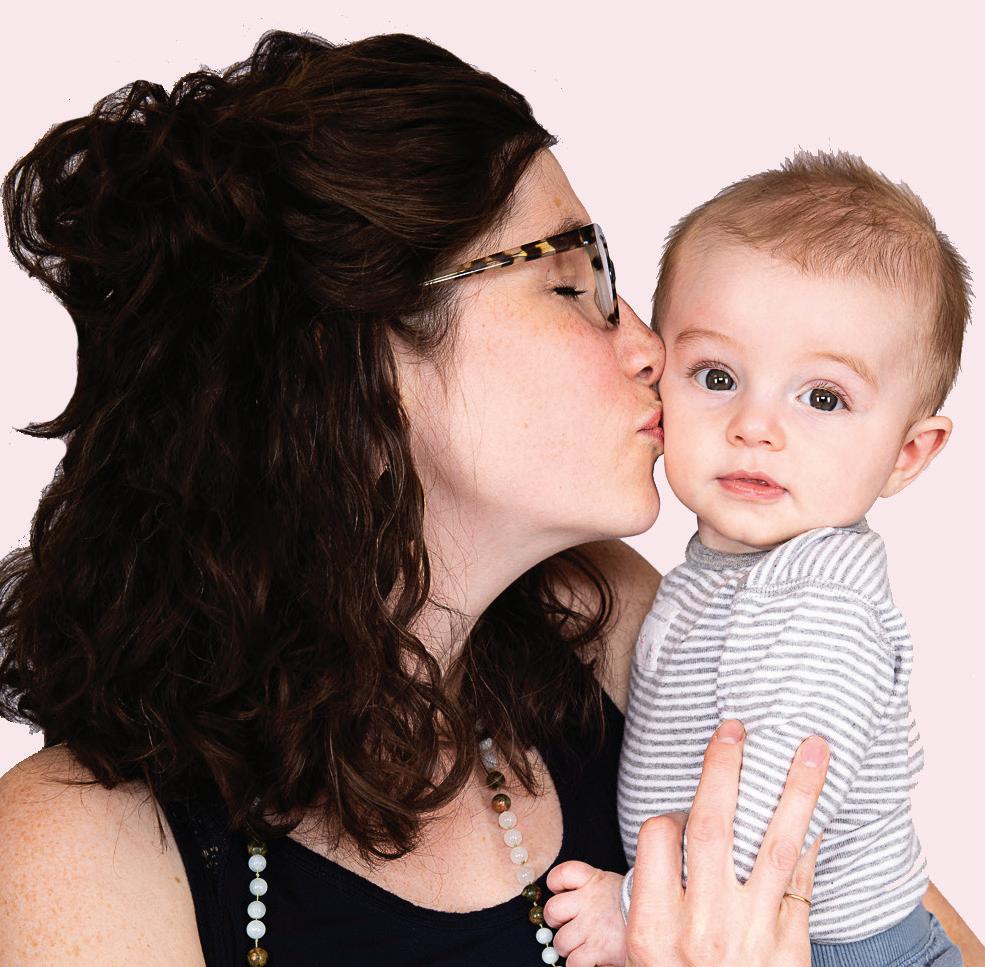
All local mothers who have welcomed a baby into their lives this past year are invited to have a portrait taken to run in The Sopris Sun’s May 7 edition.
Our professional photographer is taking reservations now for photo sessions:
• Sunday, April 19 and Saturday, April 25 from 9am-1pm at The Sopris Sun o ce at the Third Street Center, 520 S. Third Street, #26 in Carbondale
• Sunday, April 26 at the Glenwood Springs Library from 10am-12pm.
Please email Terri Ritchie at terrir@soprissun.com or call 970-510-3003 to schedule.
Llame a 970-274-6513 Klaus Kocher o mande un correo electrónico a klauskocherfotograf@gmail.com parahacer una reservación. Se habla español.
Please reserve by Friday, April 17.
Can't make any of these dates? Reach out and we'll see what we can do.