Celebrating history and friendship
JAMES STEINDLER Editor-in-Chief
To commemorate the United States’ 250th, Colorado’s 150th and the Town of Basalt’s 125th anniversaries, the Basalt Regional Heritage Society recently placed a display at the Basalt Regional Library, featuring a quilt made 50 years ago (1975-1976) during the bicentennial, with each block stitched and embroidered by members of the Basalt Country Homemakers Club, established as an extension club in 1966.
The intention behind the quilt was for members to create blocks for one another, whose names are included on the respective blocks.
The Homemakers Club “was a group of ranch ladies, learning new homemaking skills with local service projects as their goal,” Basalt Regional Heritage Society President Janice Duroux told The Sopris Sun. Duroux was born in Glenwood Springs and has lived most of her life in Basalt. She inherited the quilt from her mother, Vivian Diemoz, who moved to the Valley in 1945 and was a member of the Homemakers Club.
The white sections of the quilt with the Homemakers Club members’ designs were pieced together with white and blue blocks, and hand-quilted by Diemoz’s friend, “Mrs. Thomas” of Iowa, according to Duroux.
“We are still working on the embroidered friendship blocks, as nearly all of the members have expressed a desire to make a Friendship Quilt,” Homemakers Club member Joyce Wieben wrote in a 1976 report.
The display will be installed at the library on July 1 and remain in place through July 30.
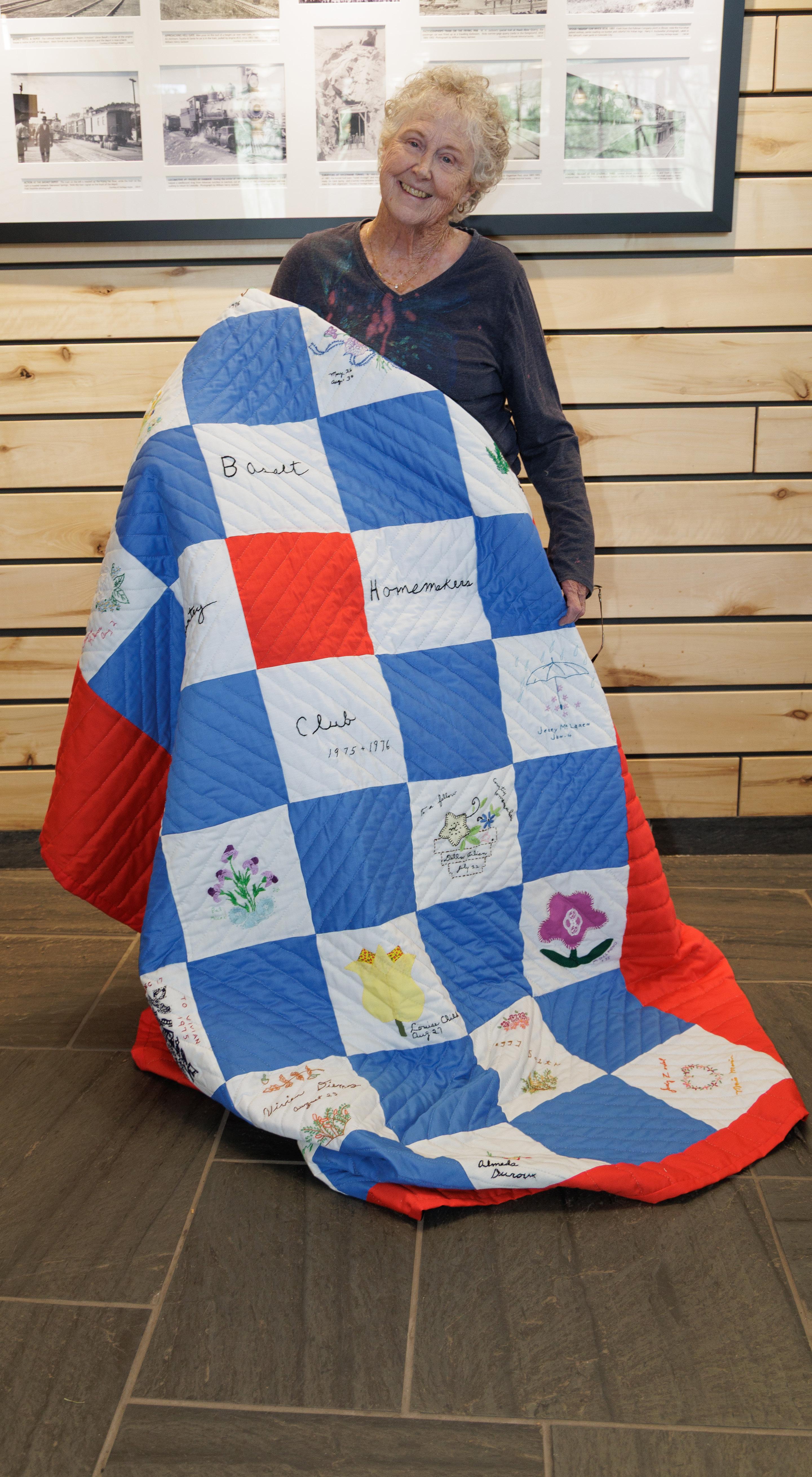
Janice Duroux holds the quilt she inherited from her mother that was created by the Basalt Country Homemakers Club in 1976. Duroux emphasized the importance of history, documenting stories and maintaining an interest in those who came before us. Photo by Bob Rugile
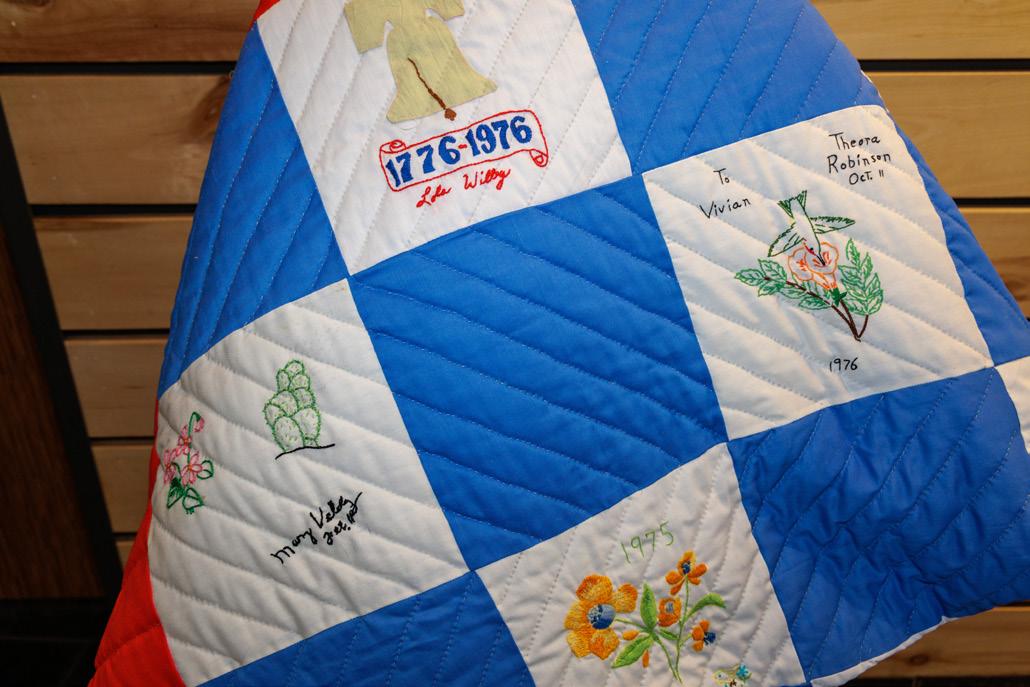
(Top left) Lola Willey’s block consisted of the Liberty Bell, acknowledging the bicentennial at the time.
Photo by Bob Rugile
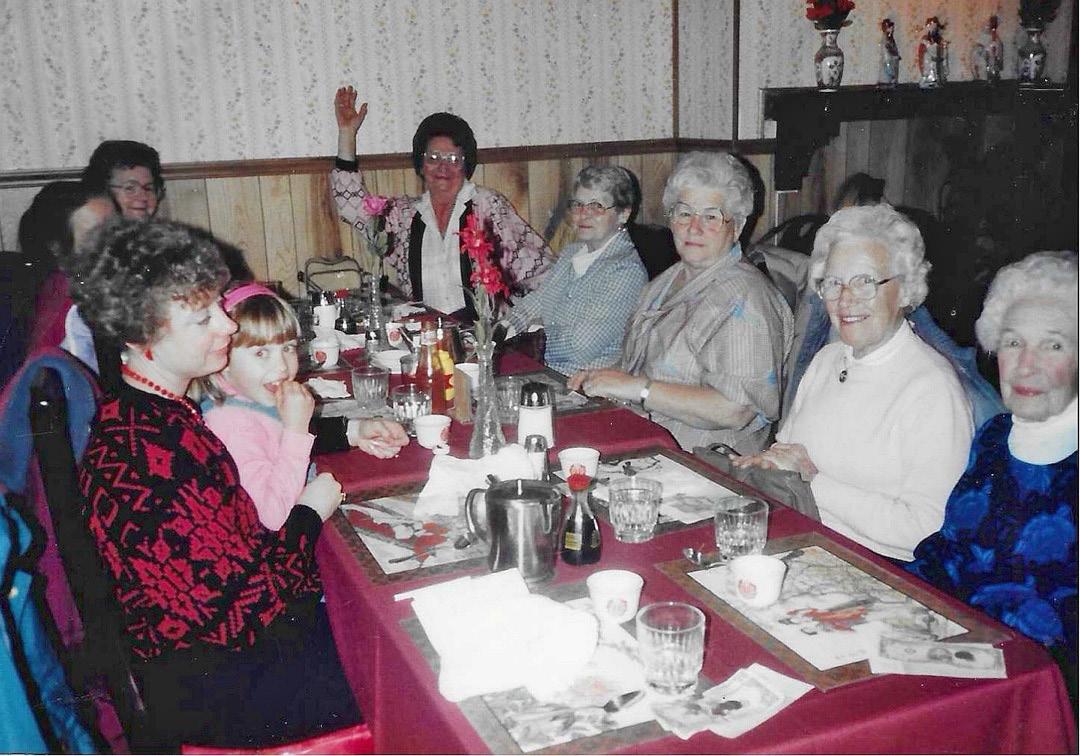
(Bottom left) Homemakers Club members Nancy Maurin (front left) with her daughter, Jannelle, sit across from (left to right) Jerry McClaren, Amy Davis, Almeda Duroux (Janice’s mother-in-law), Marie Maurin and Louise Child. Courtesy photo
Everybody’s home
Have you ever been homeless?
The closest I came was in my twenties when my boyfriend Bill and I were vagabonds. Traveling from city to city, we would stop on a whim to look for jobs and a place to live. He was a shortorder cook, and I worked in record stores: Wax Trax, Zia, Tower Records. It was a stretch for us to come up with first, last and deposit, so we would crash on friends’ couches or stay in dive motels until we could afford a place of our own. One time we went to look at a rental near City Park, in Denver. This was back in the 1990s, before downtown Denver had undergone major plastic surgery. There were plenty of gangs and drugs in this neighborhood, and the back door of the house was a sheet. Just an old cotton sheet hanging in the doorway. We kept looking.
gressional neglect of basic societal needs) and in true punk-rock fashion, Bill’s old friends came through, raising the money in small increments. As I donated to the woman who “stole my boyfriend” thirty years ago, it occurred to me that this felt like a life lesson.
OPINION
I can always tell I’m growing as a person when the fear or prejudice I’ve been clutching onto dislodges, and sort-of oozes out of me like a balloon with a slow leak. Last month I had a huge growth spurt when I went on a RideAlong with my cousin Eliza and her colleague. They work for Denver Parks & Rec., and they are making a difference daily, assisting homeless citizens in any way they can.
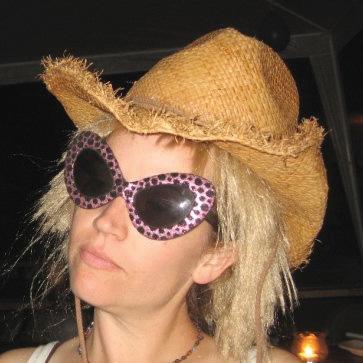
Of course, I always could — and often did, go back to my mom’s house. So, I was never actually completely without a home base. And that’s exactly where I went when Bill left me for a waitress at the pizza restaurant where he worked. Heartbroken and pale, I moved in with Mom, pretty sure I would never love again. But life moves on, and now I feel lucky to have lived and loved and most importantly — left my past behind. By chance and circumstance, I am truly fortunate to have found a home in the Roaring Fork Valley with my husband, Clint.
Ps & Qs
By Jeannie Perry
I lost touch with Bill years ago, but it was still a bit of a shock to find out he died of a heart attack last year.
“Wait — how old am I?” I lamented to my cousin.
“We’re ancient,” Eliza said sagely.
It turns out Bill had married the waitress and they had two daughters, one of whom is still in high school. He was still working manual jobs, with no savings or life insurance, and his family couldn’t afford funeral services. A friend set up a GoFundMe (a modern-day necessity due to corporate tax evasion and con-
LETTERS
Independence Day, 2026
Fifty years ago, I remember feeling excitement about America’s bicentennial. Although we had recently watched a president resign over corruption (minor compared to today’s standards, as even Vice President Vance admits!), Americans were generally proud and supportive of each other and our nation. That feeling is missing today, as we have competing festivals — one a bipartisan approach and one that glorifies Trump.
Let’s hope that our next president, whoever it may be, works to bring our country back together and reaches out to every American. Let’s hope our Congress takes up its traditional role and holds the executive accountable. Let’s hope our Supreme Court once again looks at the precedents set over time and strengthens the balance of power in our country. Let’s hope that when the tricentennial happens America is once again a thriving democracy and that Americans are proud of our country.
Kate Friesen Carbondale
Rio Grande Trail crash
It’s been two years and multiple surgeries since I was seriously injured when hit by a reckless e-biker on the Rio Grande Trail. Thanks to Dr. Ruzbarsky, PTs, and the Steadman team, I continue to improve. My dismay continues, though, as I see motorized, heavy electric devices, operated without pedaling, maneuvering around pedestrians on the sidewalks of Willits and elsewhere. I know of injuries worse than mine in the Valley, though. Unlike many e-device victims, I did not suffer a head injury.
All those people pushing a shopping cart full of belongings, living out in the elements every single day without food, water or shelter certainty; they were all someone’s children at one point. “How does it come to that?” I usually think, as I speed by in air-conditioned comfort.
Mental health issues, addiction, disability: all the standard reasons we accept, watching a fellow human being live amid garbage under a bridge. Here we all are, living on this planet together, and yet oh-so focused on our individual needs. Living the dream, i.e., working like rats on a wheel to keep a roof over our own heads, buy groceries, pay for water … Shouldn’t the water be for all of us?
“They can always go to a shelter,” I tell myself when the light turns green and I zoom off, leaving them standing there with their cardboard sign. But would I want to spend the night alone in a sterile room at a renovated Sheraton? Where would I be without the support of my community?
I sure wish we had a system in place for everyone; something with grace and equity. A global GoFundMe, if you will. Oh — wait! I know what we can do! And the good news is that we’ve already paid for it. We just have to wrestle it out of the hands of a few greedy old warmongers ….
The man that injured me refused to provide his name or to call 911. I was able to pull my phone from my jersey and snap pictures of the scene and my assailant from my position on the ground. (He was later identified by community members from a social media posting.)
I’m forever grateful to the passerby who saw me in the grass, stopped to help, and called EMS.
I urge visitors and neighbors to enjoy the bike trails safely, at less than 20 mph, in a single file, and signaling or announcing BEFORE passing. I can say from personal experience, if an injury occurs, it’s unlikely there will be a police investigation as RFTA manages the Rio Grande Trail west of Emma Road and they have no enforcement capabilities. Local communities are considering what they’ll do for protection on their sections of trail.
If you’re injured or witness to an injury, secure safety at the scene, call 911, administer care, get names and take pictures.
I’ve appealed to Representative Velasco and Senator Catlin and I’m awaiting their response to meet with me. RFTA’s Board is reviewing the safety issues, and I look forward to seeing more of their education plan to “slow and say hello” as a plan evolves for safe trail use.
Kathleen Brehm Basalt
No to Harvest Village
We know Harvest Roaring Fork/ Harvest Village will soon return with a revised development proposal. We don’t yet know what changes will be presented, and it would be premature to judge a plan none of us have seen. What we can do now is ask an important
question: What kind of valley do we want to leave for future generations?
Before approving one of the largest residential developments ever proposed in Garfield County, we should first understand the housing market we already have. Is the challenge simply a shortage of housing units, or is it a shortage of housing that local workers can afford?
Recent market information suggests the answer is more complex than a single phrase like “housing shortage.”
In communities, inventory remains elevated, homes are taking longer to sell, while affordable housing remains difficult to find. Understanding both the ownership and rental markets is essential if we hope to identify solutions that truly meet the valley’s housing needs. They deserve thoughtful solutions rather than assumptions.
Good planning begins with good information. Before making decisions that will shape this valley for generations, I hope our elected officials will carefully examine the existing housing inventory, “affordable/workforce” units, the long-term rental market, approved but unbuilt developments and the specific affordability needs throughout the Roaring Fork Valley.
The Roaring Fork Valley is more than a place to build. It is a place where wildlife still moves through open landscapes, where the river remains the heart of our communities, and where we carry a responsibility to preserve the possibility that those raised here can stay, strengthening our traditions, culture and sense of belonging.
Whatever proposal comes before our community, I hope we measure it not continued on page 22
Editor James Steindler 970-510-3003 news@soprissun.com
Managing Editor Skyler Stark-Ragsdale
Sol del Valle Editora Bianca Godina bianca@soldelvalle.org
Digital Editor
Ingrid Celeste Zúniga ingrid@soldelvalle.org
Lead Editorial Designer
Terri Ritchie
Partnerships & Engagement Manager Luise Nieslanik
Advertising Department adsales@soprissun.com
Sol del Valle Marketing & Development Manager
Margarita Alvarez margarita@soldelvalle.org
Advertising Designer
Emily Blong
Delivery Frederic Kischbaum
Bartlett
Proofreaders
Lee Beck
Tracy Kallassy
Ken Pletcher
Hank van Berlo
Executive Director
Todd Chamberlin 970-510-0246 todd@soprissun.com
Board Members / Mesa Directiva board@soprissun.com
Klaus Kocher • Kay Clarke • Eric Smith
Roger Berliner • Elizabeth Phillips
Anna Huntington • Loren Jenkins
Carlos Ramos • Gayle Wells
The Sopris Sun Board meets at 6pm on second Thursdays at the Third Street Center. The Sopris Sun, Inc. is a 501(c)(3) nonprofit corporation with a mission to inform, inspire and build community by fostering diverse and independent journalism. Donations are fully tax deductible.
Sincerest thanks to our Honorary Publishers for their annual commitment of $1,000+
Kathy & Carter Barger
Lee Beck & John Stickney
Karen & Roger Berliner
Emily & George Bohmfalk
Kay Brunnier
Michelle & Ed Buchman
Sandy & Paul Chamberlin
Frances Dudley
Sue Edelstein & Bill Spence
Deborah & Shane Evans
Greg & Kathy Feinsinger
Peter & Mike Gilbert
Michael & Nancy Kish
Gary & Jill Knaus
Jan & Warren Koster
Bob & Dori Libson
Lee Mulcahy
Donna & Ken Riley
Eric Smith
Patti & George Stranahan
Gayle & Dick Wells
Elizabeth Wysong
Legacy Givers for including us in their final wishes. Mary Lilly
Donate by mail or online: P.O. Box 399
Carbondale, CO 81623
520 S. Third Street #26
970-510-3003
soprissun.com/Donate
The Sopris Sun, Inc.
is a proud member of the Carbondale Creative District

SCUTTLEBUTT
Primary results
OUR UNDERWRITERS AND NONPROFIT PARTNERS!




FirstBank Alpine Bank
Colorado Mountain College
Nordic Gardens
Hilary Porterfield
Basalt Library
NONPROFIT PARTNERS
Two Rivers
Unitarian Universalist
Carbondale Arts
Carbondale Rotary Club
Colorado Animal Rescue
Primary election votes were, for the most part, tallied as of Wednesday morning, with some candidates already declared winners. For governor, Colorado Attorney General Phil Weiser took the Democratic nomination with 55.8% of the vote, beating U.S. Senator Michael Bennet (44.2%), after most votes were counted. The Republican side of the race was still too close to call, with Colorado State Senator Barb Kirkmeyer holding a narrow lead (39.9%) over ministry leader Victor Marx (39.6%). Colorado State Representative Scott Bottoms sat in third (20.4%). U.S. Senator John Hickenlooper was reelected to the Senate (55.1%), beating Colorado State Senator Julie Gonzales (45%). Snowmass real estate businessman Dwayne Romero beat (55%) Aspen businessman Alex Kelloff (45.0%) for the Congressional District 3 (CD3) U.S. House of Representatives Democratic nomination. Incumbent Jeff Hurd won (66.5%) against former Colorado State Representative Ron Hanks (33.5%) for the CD3 Republican nomination. Garfield County Sheriff's Office Patrol Lieutenant Brent Baker held a wide lead (66.8%) Wednesday morning against Eagle County Sheriff’s Office undersheriff Dan Loya (33.2%) in the race for Garfield County Sheriff. Former Glenwood Springs Mayor Jonathan Godes won the Democratic nomination for Garfield County Commissioners, running unopposed. In the general election he will face the Republican nominee, Garfield County Planning and Zoning Commissioner Eric Rudd, who also ran unopposed.
Snyder Fire
Governor Jared Polis announced that state buildings will fly flags at half-staff on the days of the memorials honoring three Forest Service firefighters — Emily Barker, Nick Hutcherson and Sydney Watson — who tragically died fighting the Snyder Fire on the Colorado-Utah border. Polis declared the fire a disaster emergency on Saturday, June 28. As of Wednesday morning, the fire was estimated at 30,215 acres and 10% containment. The Colorado River is closed to public access and all boating activities from the James M. Robb-Colorado River State Park in Fruita all the way to the Utah state line to ensure public safety and support firefighting efforts. All boating activities are prohibited within the restricted area, and the closure is expected to continue through the Fourth of July weekend.
Israeli flags update
Israeli flags were removed eight times during the first annual Flag Day installation on the Rio Grande Trail in Carbondale, June 13-22. The Carbondale Police Department (CPD)

C.A.R.E. currently has 11 dogs and 19 cats 1 hamster up for adoption!

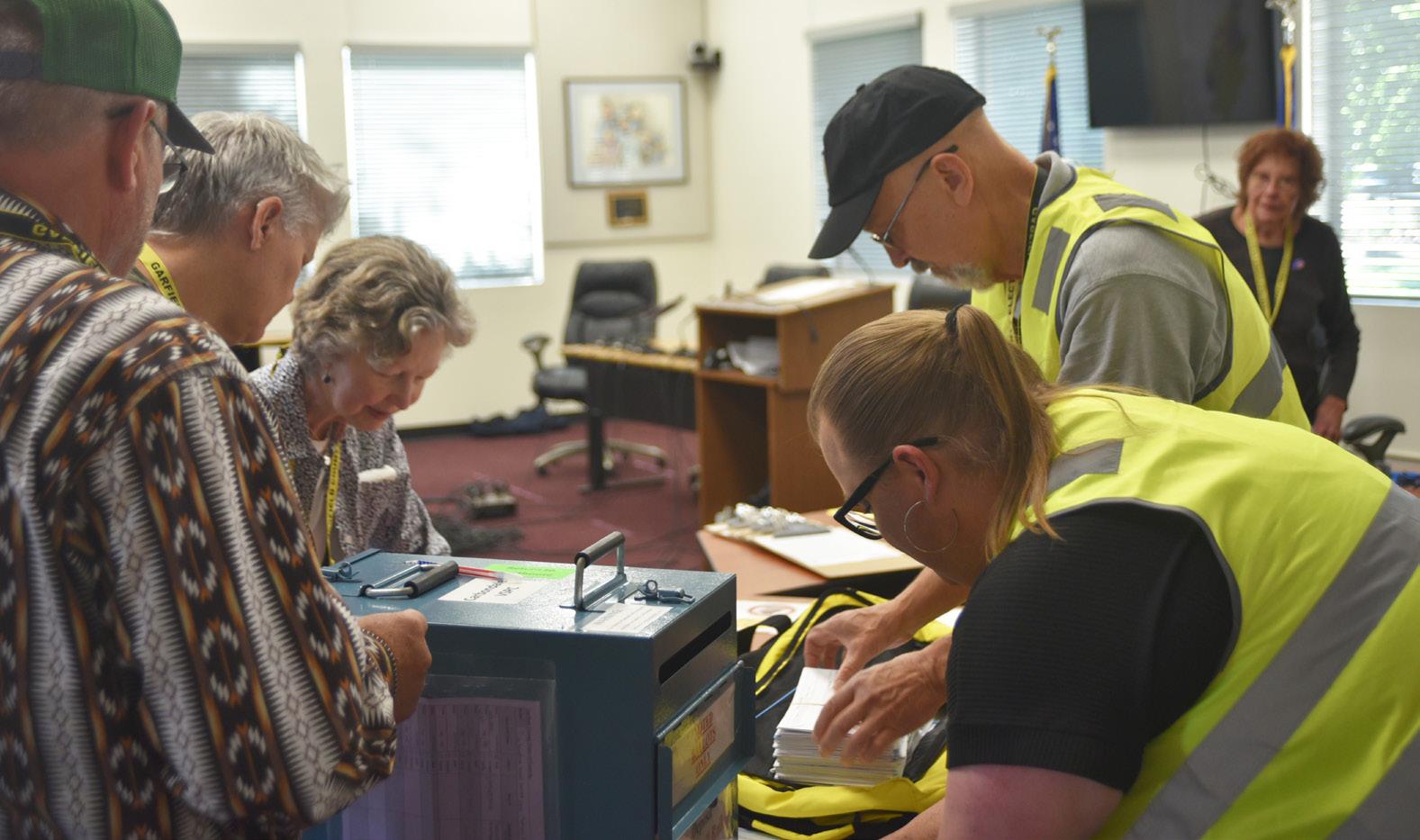
Center on the morning of Tuesday, June 30, Election Day. The team transported the
to the basement of the Garfield County Courthouse in Glenwood Springs, where they were
along with the rest of the Garfield County primary ballots, which continued to arrive into Tuesday evening. Pickup team members Marla (front right) and Ken Jones (center right) conducted the transfer, which was overseen by election judges Elizabeth Phillips (back left), Roger Kelly
others.
summoned two suspected juveniles, who acted independently of one another, for criminal mischief and bias motivated crime, according to CPD. One juvenile is suspected of removing one flag, and the other four flags. It’s not known who took the other three. Any information can be reported to CPD at 970-963-2662.
Shooting range closure
Colorado Parks and Wildlife (CPW) announced a temporary closure of the shooting range at Basalt State Wildlife Area on Friday, June 26, due to drought and extreme fire conditions. The closure comes as Garfield, Eagle and Pitkin counties, as well as the White River National Forest, have entered Stage 2 fire restrictions and wildfires rage across the state. “Over the past few years, including as recently as June 10, our staff has implemented mitigation efforts to lower the risk of wildfire at the shooting range,” Area Wildlife Manager Matt Yamashita said. Tracer rounds fired at the range caused the Lake Christine Fire in 2018.
Sweetwater
The White River National Forest (WRNF) seeks public comment on the Draft Environmental Impact Statement regarding the Sweetwater Lake Recreation Management and Development Project, including alternative federal, state and local government management options. The WRNF acquired 488 acres in 2020, surrounding Sweetwater Lake, located in Garfield County to the north of Dotsero, hoping to provide “nature-based

for your new pet.
Gwen is an energetic girl that loves playtime, splashing around in water, and outdoor adventure. A good game of fetch helps her get to know new people. After some rough times in her past, she is looking for a forever family that is patient and loving, and one that can help her with slow, positive introductions to new dogs and strangers. If you think that you and this smartypants would make a great team, fill out an adoption survey and go get to know her at C.A.R.E!




recreational and educational opportunities” for the public, according to a press release. Find the draft at tinyurl.com/drafteis2026 and make public comments online at tinyurl.com/ publiccomment2026
Thunder River auditions
Thunder River Theatre is holding nextseason auditions from 10am to 5pm on July 11, with casting open to all ages, genders and ethnicities. The company asks those interested to prepare a one-to-two-minute monologue from a published play, and to bring a resume and current headshot. Those unable to attend in person can send video submissions to missy@ thunderrivertheatre.com before July 10. All roles are paid a minimum of $1,150. For more information and to sign up, visit tinyurl.com/thunderauditions
They say it’s your birthday! Folks celebrating another trip around the sun this week include: Staci Dickerson, Jeanie Chestnutt, Giana Grossman-Loiola, Dean Harding, Miranda Hyer, Bruce Kirk and Laurie Loeb (July 2); Ash Buckberg, Katie Jones, Maggie Jones, Tony Mendez, Dani Ott, Cindy Sadlowski, Sissy Sutro and Luke Turner (July 3); Trevor Allen, Rachel Cooper, Brad Geddes and Dominic Molinari (July 4); Herb Feinzig, H Mavis Fitzgerald, Adele Moss, Fiona Obuhanick, Conor Ward and Chris Wurtsmith (July 5); Teri Bruna and Nannette Weinhold (July 6); Annie Rector (July 7); Jeremy Bennett, Sheija Binshaban and Melanie Finàn (July 8).



A ballot pickup team transferred ballots from a ballot box to a locked bag at Carbondale Town
ballots
counted
(front left) and
Photo by Skyler Stark-Ragsdale
Carbondale electrifies town fleet with 6 new vehicles
WILL BUZZERD
Sopris Sun Correspondent
This summer Carbondale Police Department and Public Works have made electrifying new strides in sustainability by adding several new electric vehicles (EVs) to their respective fleets in a bid to make Carbondale’s infrastructure safer and more sustainable.
Unveiled to the public during June’s First Friday festivities, Carbondale Public Works now owns a new purpose-built electric van for sewer inspections, and Carbondale P.D. now owns two new Chevy Silverado electric police vehicles. Three additional electric police vehicles are to be delivered to the police department in July. The police EVs currently in possession by Carbondale P.D. are in the midst of being outfitted with emergency lighting and other operational equipment and are therefore not currently in service. However, both Public Works and Carbondale P.D. are excited about the new equipment.
“Because the [new utilities] vehicle replaces equipment that is nearly three decades old, the improvements in reliability, safety, and technology
are expected to be substantial,”
Assistant Public Works Director Scott Wenning said.
The new inspection van is a replacement for an existing 27-year-old sewer camera van that has reached the end of its useful lifespan. The previous vehicle also required a gas generator for supplemental power, resulting in additional noise and greenhouse gases generated while the van was stationary and performing its inspection operations. The new van is instead silent during operations, reducing the amount of disturbance to the neighborhood and environment.
The Carbondale Utilities Department’s 2026 budget set aside approximately $350,000 for the replacement van. However, the procurement quote for the new van came from the outfitter at a much lower $248,382.
“The cost difference between a new gas-powered camera van and this EV was only about $6,700 [more], so it was easy to decide that the extra cost was worth any greenhouse gas emission and fuel cost reductions,” Wenning said.
The two new police vehicles currently in possession of
the department were originally meant to be Ford F-150 Lightning trucks, but a fire at a Ford production plant prompted the Department to switch gears. Those two EVs currently possessed by Carbondale P.D. were purchased using 2025 budgeted funds.
One of those vehicles was present at June’s First Friday. Although it was far from operational (outfitting a new police vehicle can take up to six months according to Chief Kirk Wilson), it still caused a stir among the public and generated excitement from both Carbondale citizens and Town staff.
“Feedback [from Police Department employees] has been very positive, with employees expressing satisfaction with the vehicles’ performance, comfort, technology and overall driving experience,” Wilson said. “We are looking forward to deploying them in operational service.”
The three additional EVs, which are expected to be delivered later this month, were purchased with 2026 budget funds. That purchase cost $254,755 out of a total fleet replacement budget of $701,036.
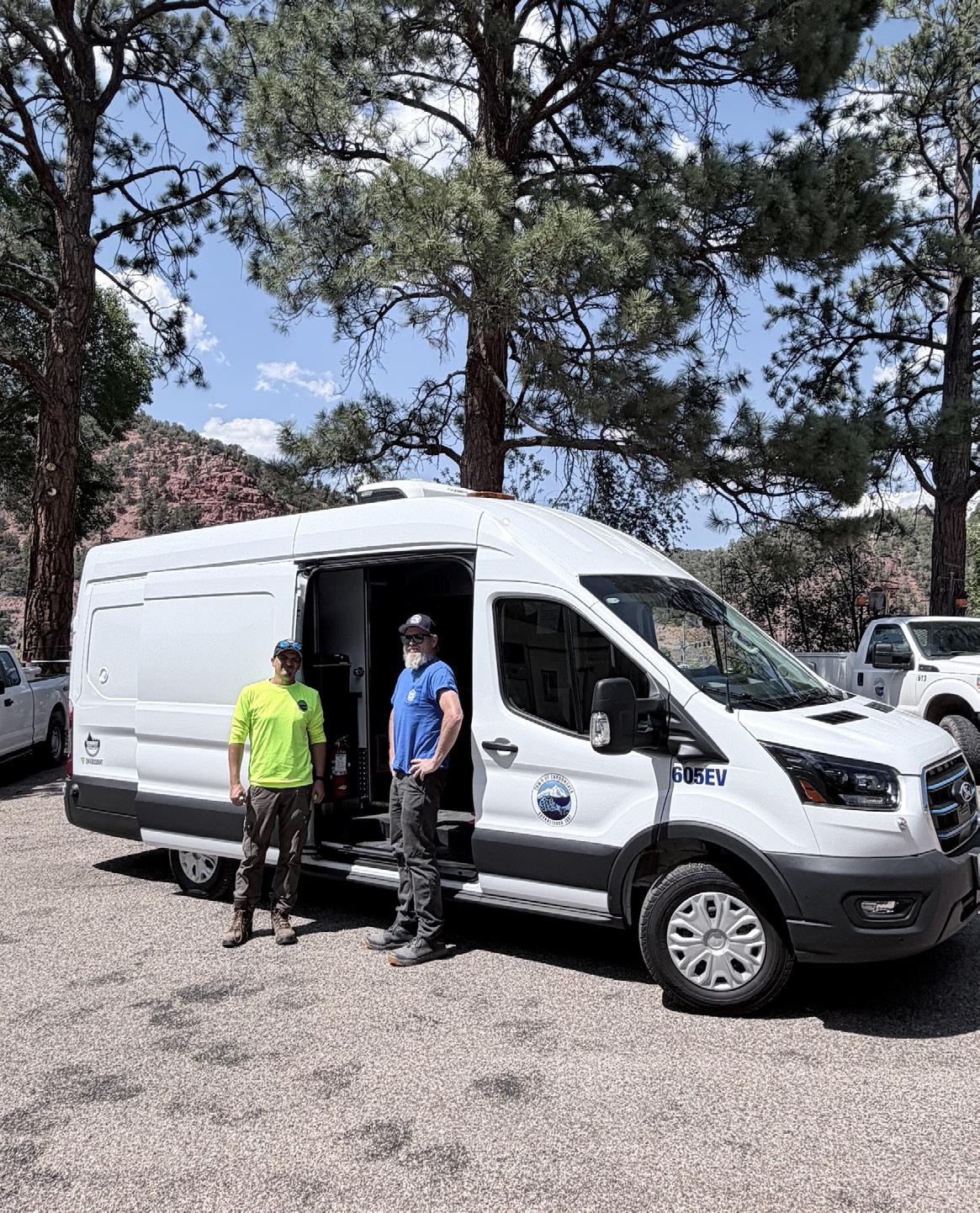
While all funds for the purchase of electric vehicles this year came out of Carbondale’s pocket, the Police Department was able to secure $75,000 in grant funding with the assistance of Clean Energy Economy for the Region (CLEER) for the purchase and installation of
new electric charging stations at Carbondale Town Hall. The Town of Carbondale matched that grant amount for a total of $150,000. The new charging stations are currently operational for both municipal and public usage.
continued on page 5


“I felt like she truly understood the challenges I was facing.”
“Treatment got me back on my favorite trails.”

Staying active physically, mentally, and in your community has always been important to you. But now you notice numbness and tingling in the hands and feet creeping in.
You begin to worry about falling while walking your favorite trail. Or maybe it feels like there are pebbles inside your ski boots. You have to be extra careful gardening or hunting because you’re not be able to tell if you have raw blisters on your feet or thorns inside your gloves. It seems to take longer
and longer to button your shirt, and you get frustrated when you can't quite feel the fishing line between your finger tips. You fumble with your car keys and drop your guitar pick because it’s hard to tell how good your grip is.
You worry about loosing balance, strength, and fitness, and feel like neuropathy is stealing the joy out of the things that make life deeply meaningful and joyous. The good news is this:

Numbness and tingling in the hands and feet do not have to be your “new normal.”
Whether it’s related to diabetes, chemotherapy, or unknown causes, Zelena Medicine treats peripheral neuropathy every day. Our modern acupuncture protocols aim to:
Decrease symptoms
Improve nerve conduction
Stimulate nerve repair
Improve sense of wellbeing
Reclaim joyful activities
Wastewater operators Jordan White (left) and John Green (right) pose in front of Carbondale Utilities Department’s new all-electric sewer inspection van after a day of operations. Photo by Scott Wenning
River Valley Ranch Golf Club teed up for sale
RAY K. ERKU Sopris Sun correspondent
A Carbondale golf club is on the verge of changing ownership, according to an official.
River Valley Ranch (RVR), an 18-hole championship public course built east of Highway 133 in 1998, is currently listed online for sale at $24.5 million by a real estate agency based in Greater Northdale, Florida, called Leisure Investment Properties Group. If the full asking price is agreed upon, the course value will have increased by seven times since its last purchase price.
Garfield County records show that Crystal Outdoors LLC, managed by Dan Coleman, purchased RVR Golf for $3.5 million in 2018 from River Valley Ranch Golf LLC, managed by Dale Rands. Rands purchased the course in 2012 from the Crown family, owners of Aspen Skiing Company, for $1.2 million.
Stephen VanDyke, PGA Proprietor at RVR Golf and Homestead Grill, has not yet disclosed the new prospective buyers’ names or whether the actual sales price for the course is up for negotiation.
“The sale is still pending, and the buyers are choosing not to comment at this time,” he said in an email to The Sopris Sun in early June. There has yet to be a new sales transaction and price listed online by the Garfield County assessor. The Sopris Sun could not reach Coleman or VanDyke for further comment on this story, and it’s unclear why the course is being sold.
- Stephen VanDyke
In July 2018, Rands had reported to the RVR Homeowners Association that the course was in financial distress and was subject to close down if it didn’t sell, according to previous reporting by the Glenwood Springs Post Independent. Since the club is open to the public but privately owned and operated, Rands tried unsuccessfully to get the Town of Carbondale to rezone part of the course to allow residential development.
RVR Golf itself is part of a greater property annexed to the Town of Carbondale in June 1994, according to the RVR Master Association Board. As a planned unit development, there are 542 home sites built on the 520-acre property.
Sun will provide further updates to this story when available.
Carbondale Utilities is also making a push towards more sustainable infrastructure with other pieces of new equipment, including new blower equipment at the wastewater treatment plant installed in 2025 that is already saving 10-15 megawatt-hours of electricity per month. Utilities also plans to install a second micro-hydroelectric system on the Nettle Creek line to generate even more sustainable energy.
Although statistics are as yet unavailable for how much both departments stand to save in terms of fuel costs and greenhouse gas emissions with their new EVs, both departments feel that the new vehicles contribute toward the Town of Carbondale’s consistent efforts to increase sustainability and modernize infrastructure.
“I’m very keen to continue showing the community how we can execute on sustainable capital investments such as this industrial duty inspection van,” Wenning said. “It’s a great opportunity to show that Town staff support both sustainability goals and responsible financial management.”




The Sopris Sun has also reached out for comment to the RVR Homeowners Association and David Myler, who was a Basalt-based attorney representing the transaction when Coleman purchased RVR Golf in 2018.
The Sopris
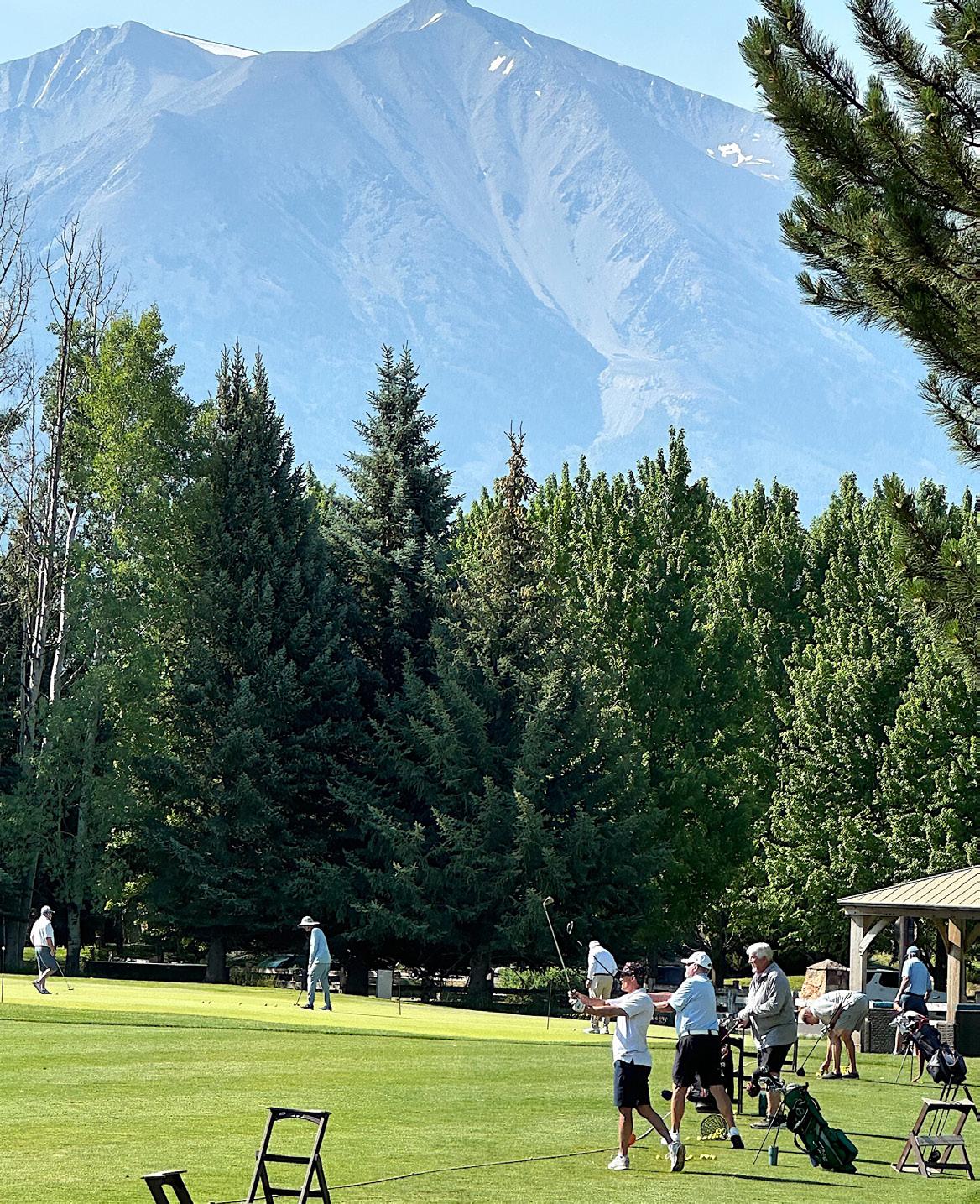
Folks tee up at the River Valley Ranch driving range Wednesday morning, July 1. Photo by James Steindler
Roaring Fork Watershed still in ‘exceptional drought’ as fires rage
ANNALISE GRUETER
Sopris Sun Correspondent
As of the beginning of July, the Roaring Fork Valley remains one of the regions experiencing the highest level of drought in Colorado. After a warm and dry winter, the region also saw a drier-than-average spring. Last week, the Roaring Fork Conservancy’s (RFC) weekly watershed report noted June 25 and 26 rain showers as “the first measurable precipitation in over a month.”
Drought presents community concerns. Among these are wildfire safety, as fires spark as near as south of Rifle, where the Dry Creek Fire spread on June 23 and grew to 316 acres before crews totalling 114 responders achieved 100% containment on June 25. Farmers and ranchers are confronting challenges in maintaining access to nutrients and water for their stock, and other rural areas face concerns with low wells in connection to the drought-depleted water table. Watershed organizations such as RFC are tracking river flow, which affects not only the ecosystem but many summer tourism businesses including fishing and rafting operations.
With summer monsoon pattern precipitation yet to arrive, 96.6% of Colorado was rated as experiencing drought according to the June 23 update of the National Integrated Drought Information System. Of that pervasive drought, 38% of the state is categorized as being in “extreme” or “exceptional” drought, the second highest and highest ratings,
respectively. The Roaring Fork Watershed is in the center of the largest region of exceptional drought, which includes the entirety of Pitkin, Eagle and Lake Counties as well as nearly half of Garfield County.
The United States Drought Monitor defines risks of exceptional drought to include “exceptional and widespread crop and pasture losses” and “shortages of water in reservoirs, streams and wells creating water emergencies.” Monitoring
by RFC indicates that the Roaring Fork Watershed is flowing between 12-28% of normal as of June 25. An average river flow is rated as 100%, so those measurements indicate that the majority of the watershed is at or below a quarter of average flow.
The RFC report noted that fire weather watches and red flag warnings were issued in the region for 18 consecutive days from June 6 to June 24. Typically, the Roaring Fork Valley is issued eight red flag warnings
in a calendar year. The National Weather Service issues red flag warnings when a combination of warm temperatures, low humidity and strong wind are forecasted in combination, which poses an increased risk of fire. Additional red flag warnings have been issued in the region since these reports last week.
In response to the exceptional drought and red flag conditions, Pitkin, Eagle and Garfield counties implemented Stage 2 fire restrictions starting last Friday, June 26. Stage 2 restrictions prohibit outdoor fires, smoking (unless in an urban area free of flammable materials), fireworks, use of spark-producing devices like torches or welding tools and restrictions on off-road driving. Outdoor fire prohibitions include charcoal grills, pellet grills, wood-burning stoves and open-flame grills in addition to campfires on private property and public lands. While contained propane and gas stove and grill use is still allowed under Stage 2 restrictions, additional caution and a minimum 10-feet of distance from grass, leaves, pine needles and foliage is essential. All three counties had implemented lower level Stage 1 fire restrictions in early June. Fire restrictions escalate to Stage 2 based on drought and wind levels as well as lack of precipitation in the forecast. As of Wednesday morning, July 1, rain was not forecast in the Roaring Fork Watershed within the next week.
continued on page 22

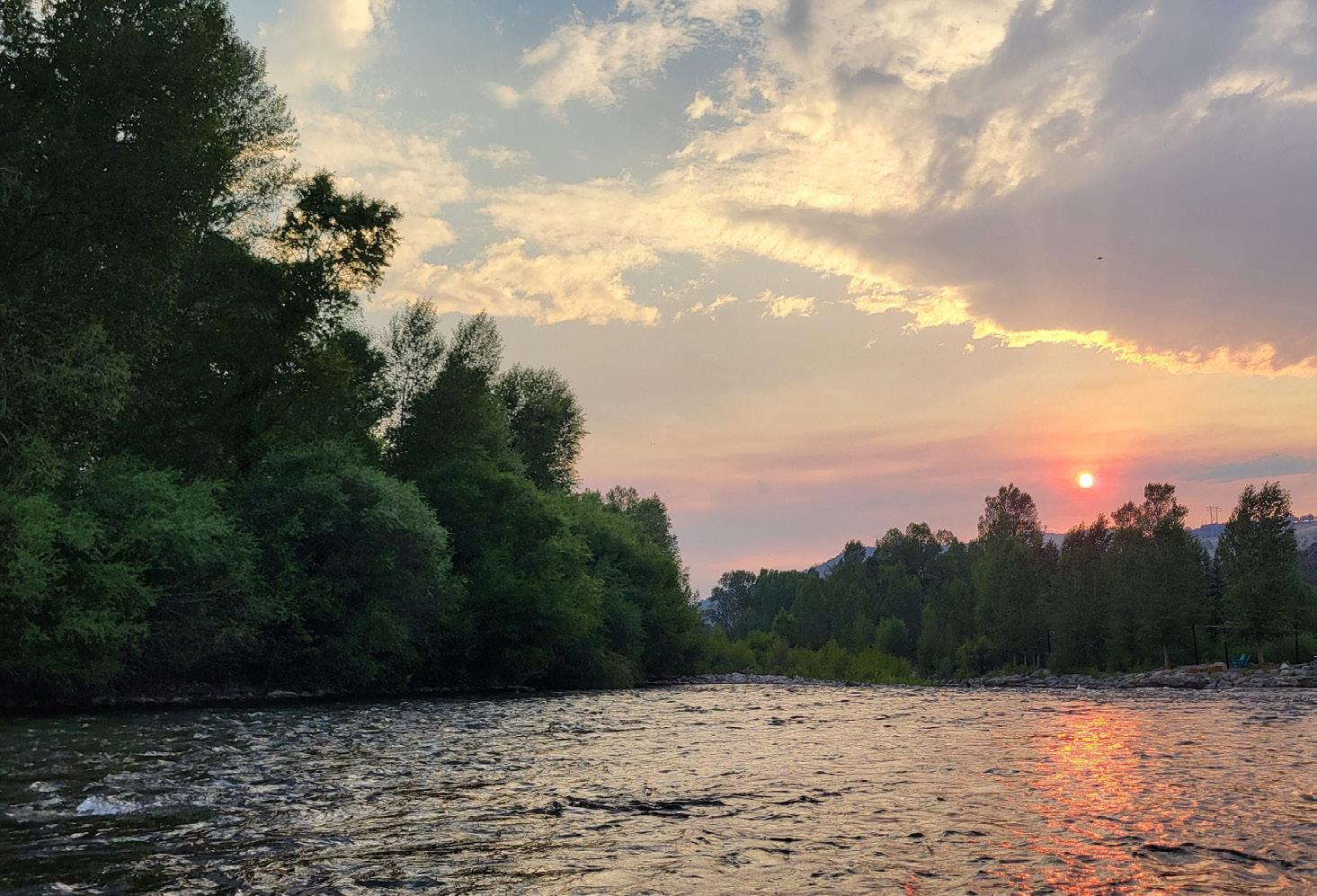
The sun sets in Basalt behind smoke from Western Slope fires. On June 25, the Roaring Fork River was measured at 422 cubic feet per second (cfs) in that area; mean flow for late June is 1,694 cfs. Photo by Annalise Grueter
Choosing to remember: A perspective from the borderlands
PHOTOS AND TEXT BY RALEIGH BURLEIGH Field of Birds Media
EDITOR’S NOTE: The complete audio version of this story is archived at KDNK.org
Driving toward El Paso, Texas, I see the border wall for the first time, its stark brown form extending endlessly parallel to Interstate 10. Then, I see the colorful homes of Ciudad Juarez on the other side and I imagine how it would feel for someone to sit on those hills, staring across to the United States following an arduous journey to arrive this far. Crossing the U.S. border, however, is perhaps the most dangerous part yet.
Nearly one year ago, No More Deaths, a humanitarian group, released a database and map documenting migrant remains recovered on the U.S. side of the border with Mexico. Their data includes known border deaths from 2002 to April 2025, collected through public records requests to county medical examiners and investigators, coroners, sheriff’s offices, as well as Customs and Border Protection and other agencies.
“The death toll from 30 years of Prevention Through Deterrence border policy is staggering,” they write. Many more deaths are estimated where remains were never found. Of the 11,560 recorded deaths, a cluster of 321 is listed in Doña Ana County, New Mexico.
“This is the most active area that we’ve searched in like three years. This is where we’ve found the most,” James Holeman told me.
Holeman, a Marine Corps veteran, founded Battalion Search and Rescue in 2020. The nonprofit organizes volunteer search missions in remote areas of Arizona and New Mexico. Their mission is: “To save lives
and provide closure for families and loved ones.”
The organization has located some 120 final resting places, contributing to the documentation of a humanitarian crisis along the southern border. And they’ve assisted many more people by providing water, directions or helping them to connect with emergency services. According to Holeman, the work is about remembrance, dignity and making sure that people who are “too often reduced to statistics are seen as human beings.”
In early June 2026, Battalion hosted its inaugural Not Forgotten Project, orchestrating a week of daily searches in Doña Ana County, where they had previously reported over 40 sites. For six consecutive days, between four and 10 volunteers swept up to six miles of desert, searching. I joined for the final two days.
“We know from a couple of different indicators that this, to our left and to our right, is a 100% busy migrant route,” Holeman announces over a two-way radio.
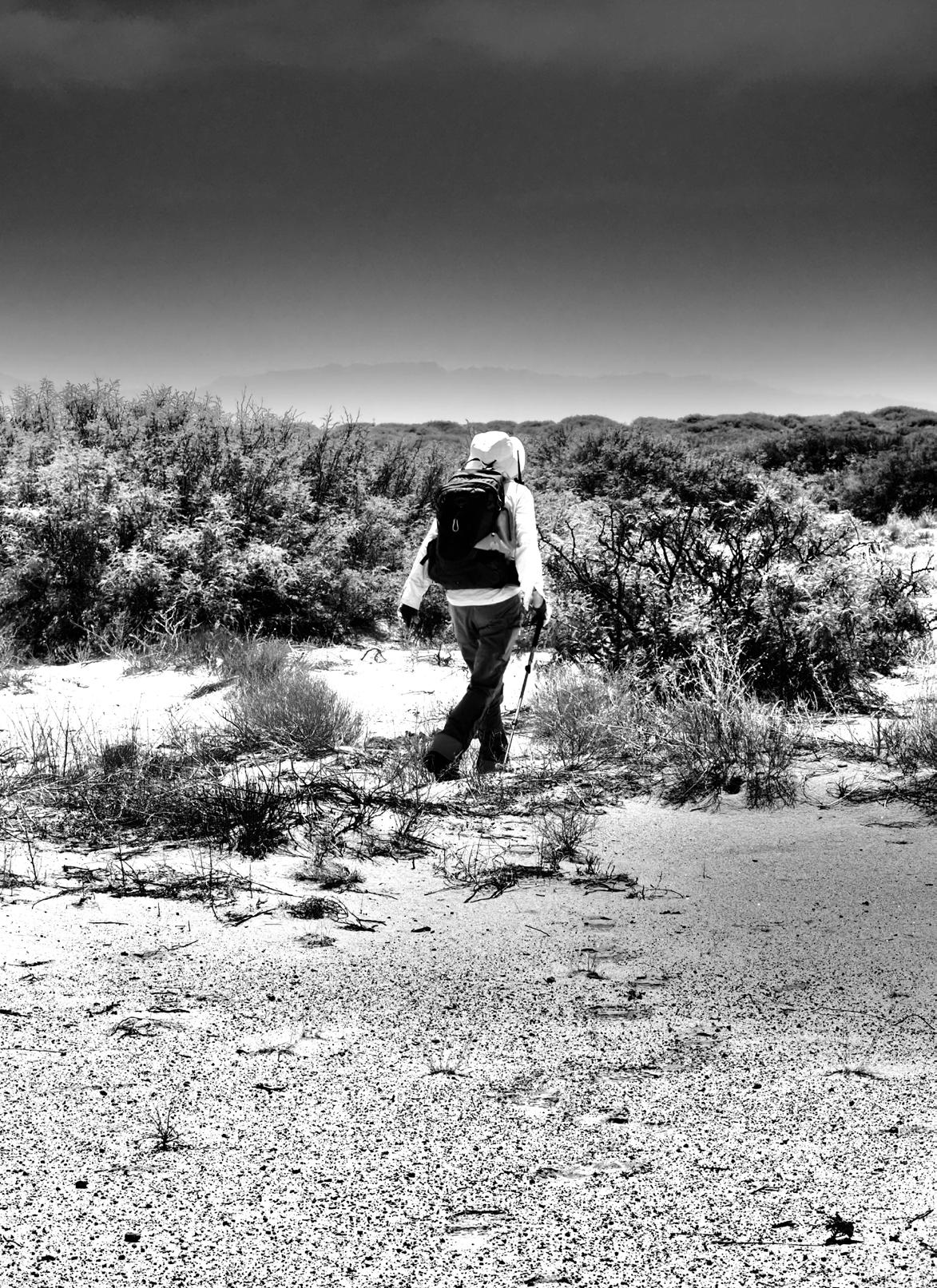
The group walks in a staggered line formation, each person within sight of the people on either side with Holeman and his partner in action and in life, Abbey Carpenter, guiding from the flanks. We swivel our gaze; checking left, checking right, looking behind, looking ahead.
Then, hiking through the sand in the late-morning sun, over and around swells of pokey palo verde and yucca plants, I spot some clothing beneath a bush. We had already encountered many discarded backpacks, sweaters, hats, even shoes, but something here feels different. I check around the bush and there
rests a human jawbone, unmistakable, full of teeth.
“Ahh. This has braces,” mourns Carpenter. “There’s braces on this person.”
Nearby, we find rib bones, a humerus, scapula, pelvis, femurs — and a bra. I ask Abbey about next steps.
“We’re supposed to report to the law enforcement of the area. For us here it’s the Doña Ana County Sheriff,” she explains. “We have a form and it has what we found, the GPS point, how to get here, how many miles from different roads, my name, my email, my phone number.” The Sheriff’s Office then contacts the Office of the Medical Investigator. “Only they can handle remains; the sheriff, the deputy can’t touch this.”
Beside each bone, they tie a fluorescent pink ribbon. Later, at a gas station, they call it in.
The same day we find the jaw bone and other remains, a group of about two-dozen people stands with candles in vigil outside the Camp East Montana detention center on the other side of El Paso — rows of massive white tents at the Fort Bliss military base.
“It was built in August of last year and it’s supposed to house 5,000 people” Ana Reza informs me. She works for the Episcopal Diocese of the Rio Grande and was one of several people to speak at the vigil.
Illuminated by candles, three crosses commemorate three men who perished at Camp East Montana. Victor Manuel Diaz, born in Nicaragua, was 36. Francisco Gaspar Cristóbal Andrés, a father of five, born in Guatemala, was 48 years old. And Geraldo Lunas Campos, father of four, born in Cuba, was 55.
They all died in ICE custody.
“Francisco and his wife, they were from Florida,” Reza tells the group. “One day they were pulled over for a traffic stop and they were both detained. They were both brought to this camp, this detention center, this concentration camp. She was deported while he died here. She says, ‘I never got to see him again. I never got to hear his voice again.’”
During the hour-long vigil, two large buses with tinted windows pass by, presumably transporting more detainees into the camp. Everyone standing on the corner raises a hand high, communicating, “We see you. We care. We’re trying.”
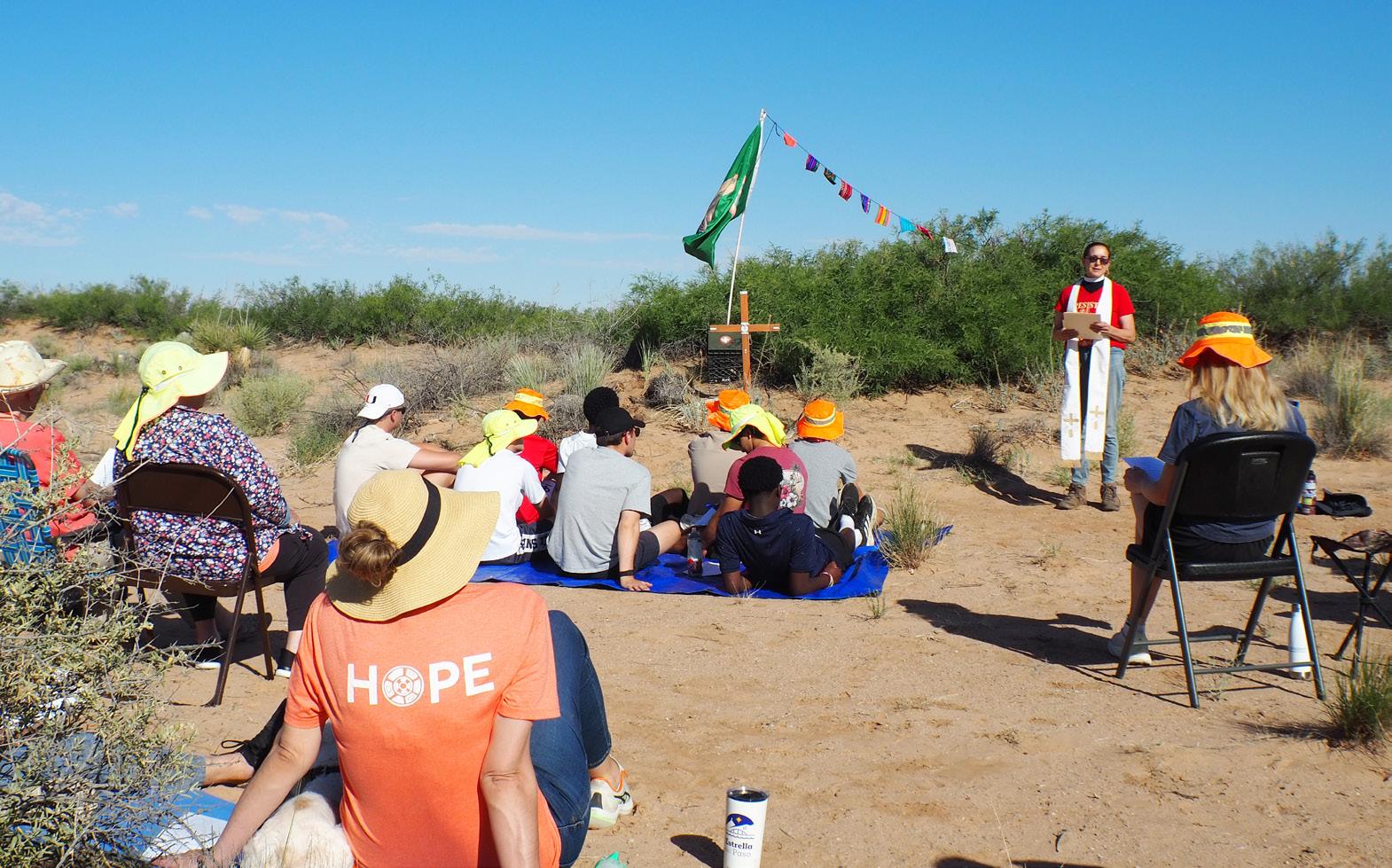
Battalion Search and Rescue’s Not Forgotten Project concluded with its own vigil on a bright Sunday morning. It was held close to where we searched, at the site of a cross marking the place of a
migrant’s death — a 20-year-old woman from Guatemala.
“Today we gather to remember those who’ve sought safety and refuge and dignity and life across the borderlands,” Episcopal priest Sarah Guck orated. “We remember those whose names have been lost to the desert and to the river and to violence and exploitation and indifference. So we gather today in grief, in compassion and in hope.”
The compassion of these among many other groups, refusing to turn a blind eye to the suffering of others, gives me hope. On this 250th anniversary of our country, I choose to remember that this is and has always been a nation of immigrants. And everyone deserves a home, a place to feel safe and supported in order to realize our fullest potential and give back to our communities in ways big and small.
Abbey Carpenter hikes onward through the desert for a sixth consecutive day, in search of people to help or human remains to document and report.
Sarah Guck presides over a nondenominational service hosted in the desert, where a migrant’s death is marked with a cross, on June 7.
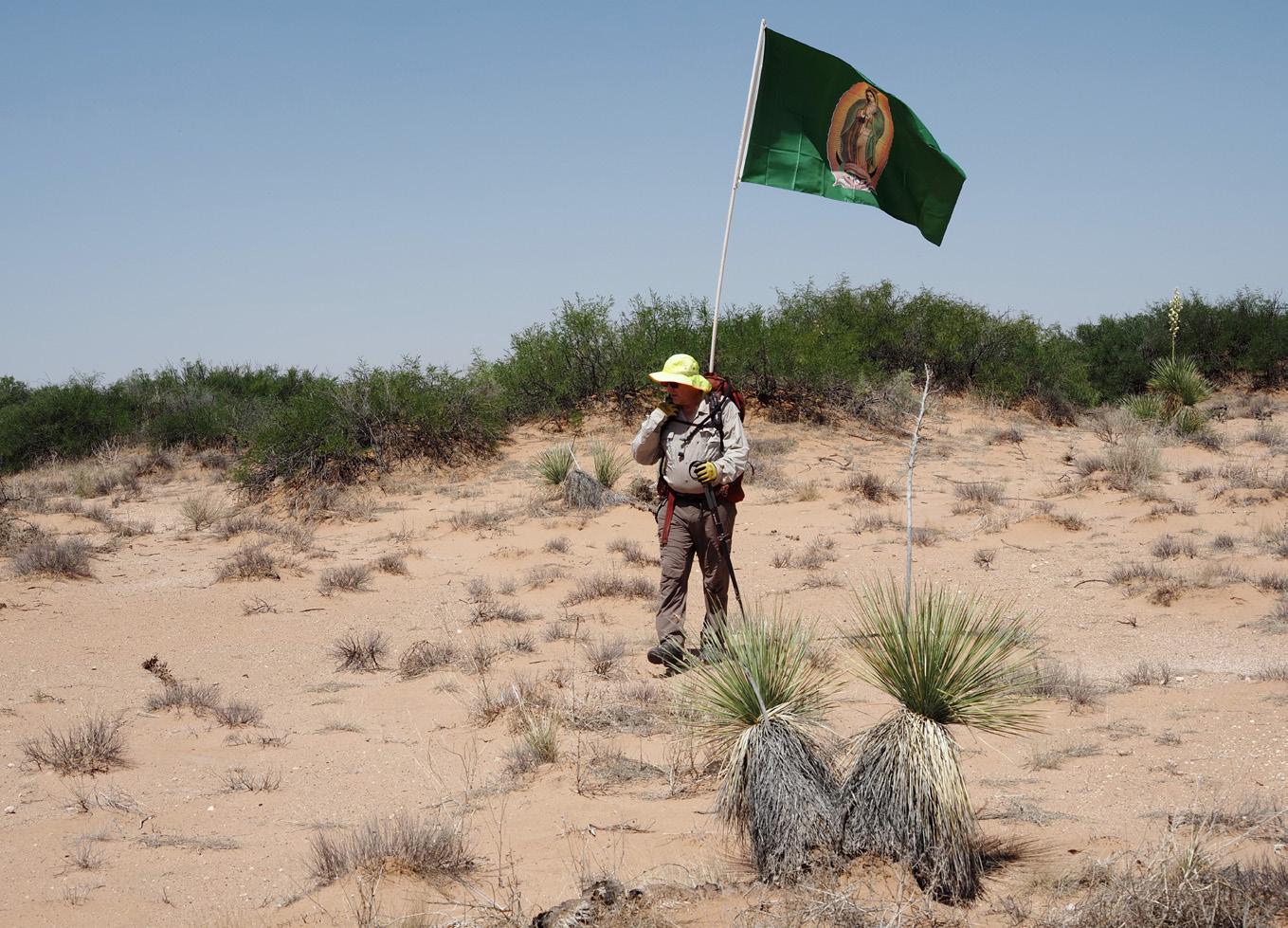
James Holeman communicates with volunteers using a handheld radio. He carries a Virgen de Guadalupe flag attached to his backpack.

‘This administration is burning the rule book’
Wilderness Workshop fights drilling on the Roan Plateau … again
AMY HADDEN MARSH
Sopris Sun Correspondent
The Bureau of Land Management (BLM) wants to open 125,744 acres of public and private land across Colorado to oil and gas drilling. An upcoming December 2026 oil and gas lease sale includes seven parcels covering 5,063 acres on the Roan Plateau. The agency opened a 30-day public comment period on June 9.
The Roan Plateau rises 3,000 feet above the Colorado River Valley, just west of Rifle. It is home to streams, creeks, dramatic waterfalls, alpine meadows and quaking aspen, elk and mule deer habitat, a genetically pure strain of native cutthroat trout and plants, such as the Parachute penstemon, found nowhere else on the planet. It is also rich in natural gas, with an estimated 8.9-trillion-cubic-feet hidden in its depths.
I
amount of public controversy, prompting a lawsuit led by Earthjustice.
“That legal victory was then appealed by industry, which paved the way for a settlement that happened around 2012, which closed most of the top of the Roan Plateau to future leasing,” he explained.
The agreement canceled 17 of 19 leases that had already been sold, allowed for drilling at the base of the plateau and protected much of the Roan from new leasing for 20 years, beginning in 2016. Bill Barrett Corp was also refunded about $4 million in bonus bids and annual rental payments. Two leases were left on the top of the plateau and relinquished in 2024.
hesitate to say that the Bush administration played by all the rules because there was some nefarious stuff that happened during that process, but they were sort of playing within the same rule book.
This isn’t the first time the biological diversity of the Roan Plateau has been threatened by energy extraction. More than a decade ago, during the drill-babydrill frenzy of the George W. Bush administration, environmental groups, such as Carbondale’s Wilderness Workshop, were victorious in protecting the top of the Roan from natural gas drilling.
- Peter Hart, Wilderness Workshop
Peter Hart, legal director for Wilderness Workshop, told The Sun that Bush’s decision to open up the Roan to natural gas leasing generated a huge
Hart said that offering the Roan Plateau leases in December does not violate the settlement agreement, even though it’s good for 20 years.
“[The settlement] included a whole bunch of provisions that constrained any development that might occur on those leases,” Hart said.
“And it conditioned those leases with specific stipulations that protected some of the values up there.”
The settlement also established where natural gas pads could be placed within those two leases. “So that small area on top of the Roan was not closed and that’s why we’re having this conversation now,” Hart added.
continued on page 18

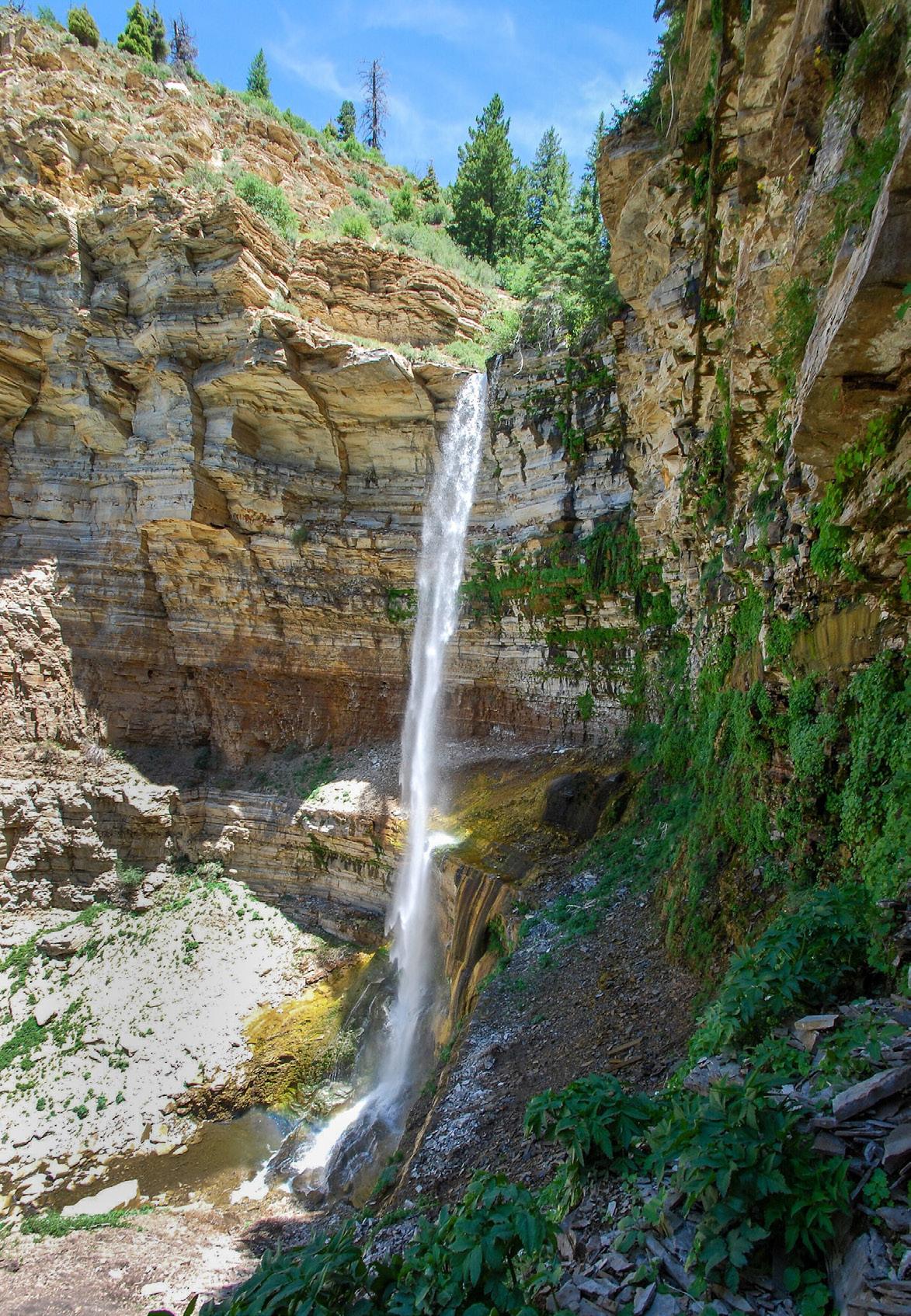

East Fork Falls is on the Roan Plateau and is within one of the parcels proposed for drilling. Photo courtesy of Wilderness Workshop
Raining cats and dogs
BY ELIZABETH KEY Sopris Sun Correspondent
A clipped ear on a kitten or a blue line on a puppy’s belly is a signature of compassion, a small mark of sterilization that stands between chaos and care. An unwanted kitten, left to the streets, transforms in a matter of months into a feral tomcat. Because cats can produce litters of up to twelve, even one unsterilized cat can lead to the exponential increase of homeless animals. Without socialization and care, feral cat colonies take shape, thinning wildlife populations and becoming carriers of contagious diseases. Across communities, animal welfare organizations address the problem through low-cost spay and neuter clinics and Trap-Neuter-Return (TNR) programs. For those on the front lines, the task can feel like herding cats.
Years ago, I worked at a no-kill animal shelter in Denver. When kitten season arrived, kittens poured through the doors in a tumble of whiskers and paws. Additional cages climbed in the hallways. The staff moved methodically, as bitter as alley cats, relentlessly scooping litter, overwhelmed. The older cats sat like forgotten monarchs as adopters drifted by them in favor of the kittens.
After admiring a few pink-nosed kittens placed in a cage above the refrigerator, I answered a call about three-dayold kittens who had been abandoned. My manager said no more; we were over capacity. It was the end of the day, but I begged her to reconsider, knowing they would almost certainly die without intervention. She told me that if I wanted to foster them for the weekend, it was my choice, but warned that survival odds were poor for kittens that young without their mother.
I was sent home with instructions, a can of formula and a heating pad, entrusted with round-the-clock care. The kittens’ fragile bodies were still under construction, nearly as small as mice, their mews little more than whispers, sightless, and dependent on warmth, scent and touch. That night, I barely slept between two-hour feedings, worrying that the heating pad would cook them like eggs or that they were dehydrated. Between feedings, I wiped the kittens bottoms
with a warm washcloth, mimicking their mother’s tongue to stimulate them to eliminate.
At one point, I spilled a little milk on one of them and panicked, giving it a gentle sponge bath with warm water. That’s when things began to spiral. The kitten started to fail, guilt sank its claws into me, as I became convinced I had caused its decline.
By Monday, I was sobbing as I rushed to the vet at work, the three kittens in tow. The vet told me it was unlikely any would survive, even with the best care and my previous efforts. She also informed me that the litter I had seen earlier, above the refrigerator, had died over the weekend, accidentally overlooked due to the overcrowding. I pictured them dehydrated and starving to death. I left devastated and powerless to stop my tears or the tide of loss. Later, I learned all three of my foster kittens died as well.
For many animal advocates, preventing these losses means addressing the pipeline that supplies animals to shelters in the first place. Colorado House Bill 26-1011, the “Pistol the Pomeranian Protection Act,” takes effect Jan. 1, 2027. The law prohibits pet stores from selling or leasing dogs and cats for profit, instead encouraging partnerships with shelters and rescues for adoptions. People can still buy pets directly from licensed private breeders, but public street or parking-lot sales are also prohibited to deter impulsive pet acquisition.
Wes Boyd, Executive Director of Colorado Animal Rescue (CARE) said the shelter is in support of the new bill.
“We know that Colorado does an awesome job of looking out for animals that originate in our state,” Boyd said. “Unfortunately, with pet sales and pet stores, a lot of those animals are coming from across state lines and from breeding practices that most of us in Colorado would probably not agree with.”
Although CARE’s 95-space shelter often has capacity to support neighboring communities through animal transfers, this kitten season has been especially busy, with 87 kittens admitted. Many of these kittens will be fostered by a group of 10-15 volunteer foster families until the kittens reach the adoptable age of three months, weigh 2 pounds and have received their first round of vaccines.
The feral cat population has decreased significantly since 2000 with the establishment of volunteer TNR organizations,

such as the Street Cat Coalition. Feral kittens can often become house cats if they are brought into human care early enough. If that window is missed, shelters work to place them in safe barn homes, where they can live outdoors with shelter, food, water and veterinary care.
“Shelters offer a ton of resources: pets are vaccinated, spayed and neutered, and microchipped, and many of us offer ongoing support for behavior, socialization, and veterinary resources to keep pets in those homes once they are there,” Boyd said.
By reducing demand for commercially bred puppies and kittens, this bill aims to disrupt the puppy and kitten mill pipeline, prevent animal cruelty, promote healthier pet populations and encourage shelter adoptions. It helps reduce overcrowding in animal shelters and rescues and discourages informal in-home breeding, which can divert potential homes away from shelter animals. One of my favorite bumper stickers says it best: “Don’t shop, adopt.”
For more information please visit coloradoanimalrescue.org

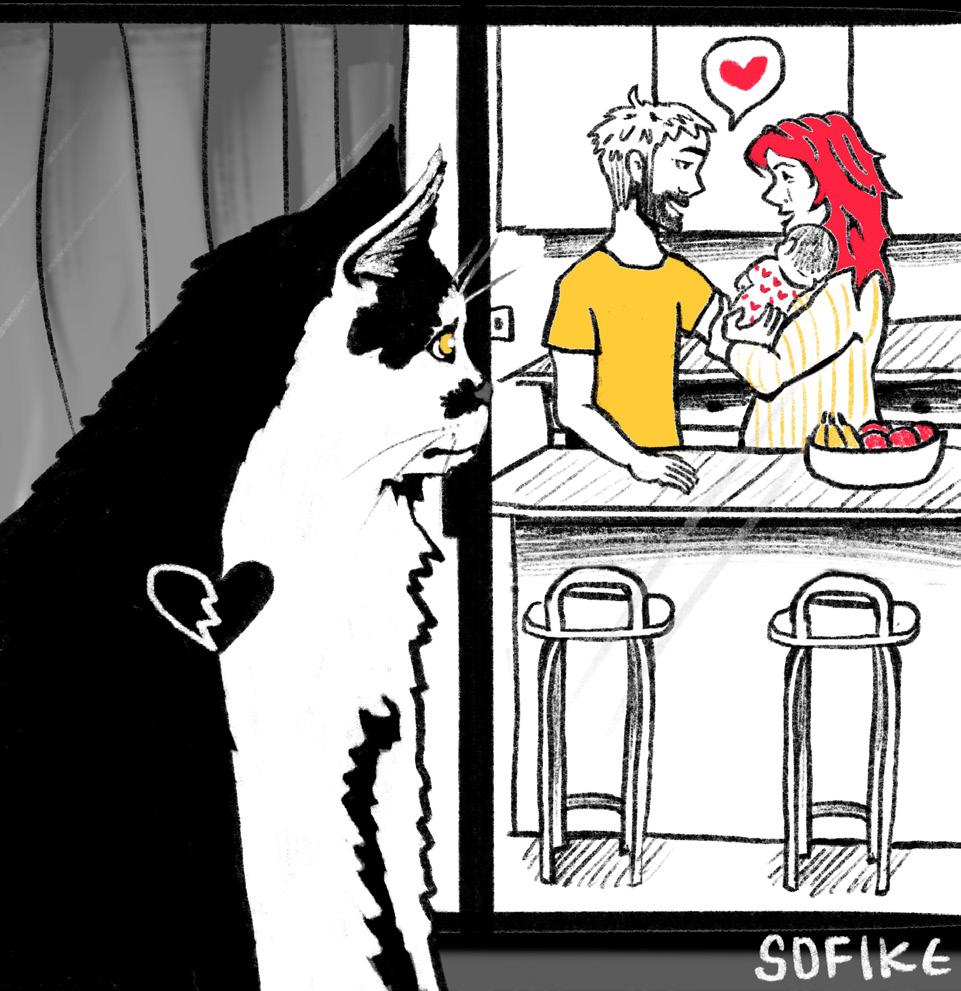
Art by Sofie Koski
Downvalley food reps shine sans the pressure of a sale at Food & Wine
PHOTOS AND Q&A BY
WILL SARDINSKY Sopris Sun Correspondent
EDITOR’S NOTE: Interviews have been edited for brevity and clarity.
The annual Food & Wine Classic in Aspen included a handful of entrepreneurs from downvalley this year, who The Sopris Sun had the chance to catch up with during the occasion. Jodi Barr, founder of Mrs. Barr’s Natural Foods, Andrew Matuszeski with Aspen Provisions, Kerani Kent, district manager of Sundae, and Jacob Trumbull of Roaring Fork Mill were among but a few.
The Sopris Sun asked three questions of each business:
1 What is your connection to the Roaring Fork Valley and the culinary scene?
2 What is Food & Wine like in comparison to a Farmer’s Market?
3 How many caviar bumps did you partake in?
MRS. BARR’S NATURAL FOODS
1 I am the founder and owner of Mrs. Barr's Natural Foods, a Colorado-based company that has been producing healthy granola, granola bars and trail mixes for the past 14 years. My passion for nutritious food started while teaching preschool, and that passion grew into a business focused on creating healthy, great-tasting products.

2 One of the things I enjoy most about Food & Wine is that people don't feel pressured to buy anything … It's fun to watch people slow down, enjoy the experience and connect over food. Those interactions are often more meaningful than making a sale because they allow you to build real relationships and share your passion with others.
3 I was more focused on handing out granola samples than counting caviar bumps, but I definitely witnessed a few. I was impressed with the range of food served this year, from raw oysters and mouth-watering salmon to some of the best ceviche I’ve ever had. I didn’t even have time to wait in line for the caviar!
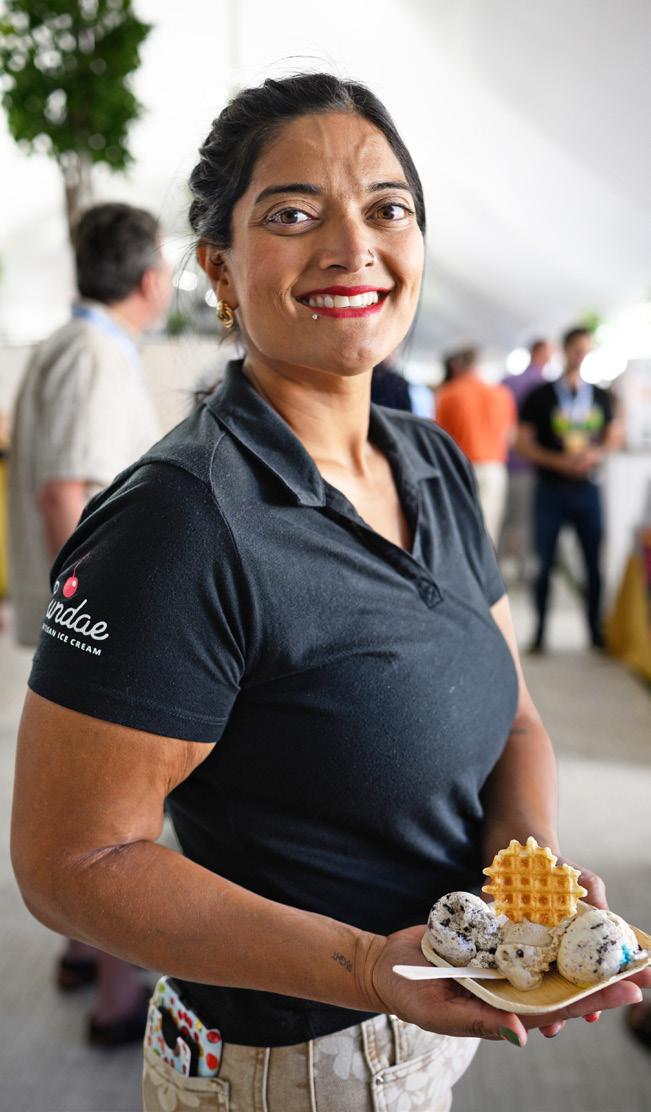
SUNDAE
1 I grew up in the Roaring Fork Valley, so I've been lucky enough to watch the local food scene evolve over the years. It's been really cool to see so many talented professionals and businesses shape the community, and I'm excited to be a small part of it by working at Sundae.
ASPEN PROVISIONS
1 We make great food intended to spark conversation about local culture, history and ecology. Elk Bolognese pasta sauce is our first offering — available through a few farmers markets and locallyowned stores (find us on Facebook for the list).
2 To see our little local lemonade stand business mixed in with huge global brands in the industry was exciting. And, according to the feedback, we and the other local vendors represented the valley pretty well.
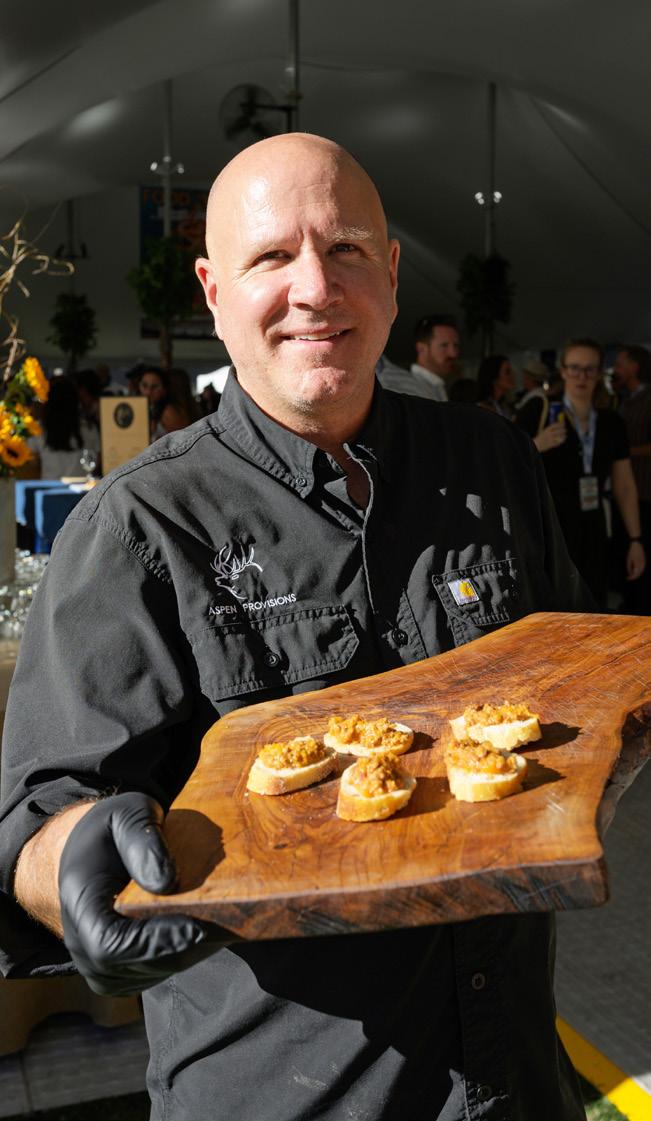
3 What caviar bumps? We were heads down delivering thousands of samples and talking to our guests!
It's been really cool to see so many talented professionals and businesses shape the community, and I'm excited to be a small part of it by working at Sundae. - Kerani Kent
2 Aspen Food & Wine has a completely different energy than a typical farmers market. Events like the Glenwood Springs Tuesday Market tend to cater more to locals and regular customers, creating a community-focused atmosphere. Food & Wine on the other hand draws visitors from all over and offers a unique opportunity to connect with a broader audience of food enthusiasts and industry professionals.
3 None! But I did try caviar for the first time, however. I'll stick to ice cream.
ROARING FORK MILL
1 We're a local Regenerative Organic Certified flour mill focusing on heritage and ancient grains that are easier to digest, more nutrient dense and flavorful. We have recently moved onto 20 acres in Old Snowmass that we're using as a seed cultivation site.
2 Food & Wine is a fun chance to focus on storytelling and the value add of heritage regenerative grains without the need to focus on sales. It's a wonderful chance to receive immediate feedback from the industry's top chefs and restaurateurs.
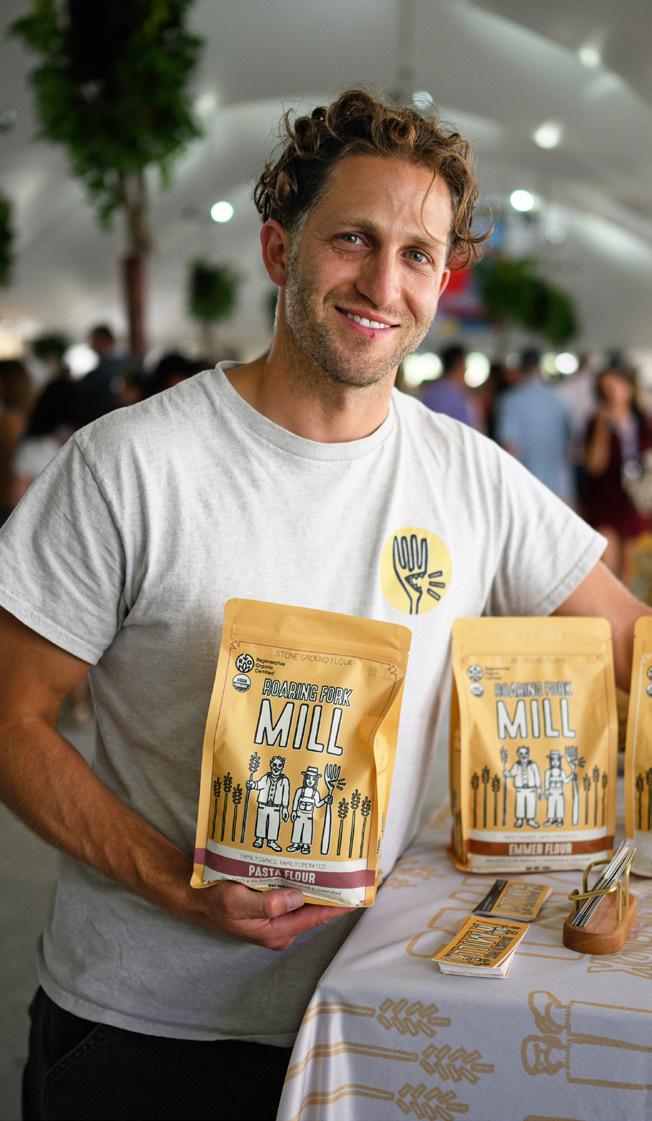
3 Was I really left out of all of the fun?!

















Jan Garret and JD Martin will guide participants through exercises designed to build songwriting skills and spark creativity. The July 7 and August 4 sessions will focus on the mechanics of songwriting. During the July 21 and August 18 sessions, where participants will have the opportunity to share their songs and receive feedback (registration required to receive feedback). saturday may 2nd 10am-2pm
Fresh annuals, perennials, veggies and herbs are arriving weekly and trees and shrubs are fully stocked. We have a variety of soils, mulch, amendments, fertilizers, pest control supplies and more for all of your gardening needs!
Own Your Space on Main Street
THURSDAY, JULY 2
FIFA AT THE CRYSTAL
The Crystal Theatre continues screening the World Cup today at 1pm (Spain vs. Austria), tomorrow at noon (Australia vs. Egypt), Saturday at 11am (Canada vs. Morocco) and 3pm (Paraguay vs. France) and Sunday at 2pm (Brazil vs. Norway). The matches continue, with teams to be determined, Monday, July 6, at 1pm, Tuesday at 10am and 2pm, Thursday, July 9, at 2pm and on through the final match on Sunday, July 19 at 1pm. For a complete list of upcoming games and times, visit crystaltheatrecarbondale.com/ world-cup-2026
A PATRIOTIC RODEO
The Carbondale Wild West Rodeo beams with patriotism this Thursday ahead of the Fourth of July, including a performance by the Latigos Up Drill Team. Catch a free shuttle from the Orchard Church or 4th and Colorado (Town Hall). Gates open at 5pm, slack starts at 5:45pm and grand entry starts at 7:30pm. Details at carbondalerodeo.com
‘SURFILMUSIC’
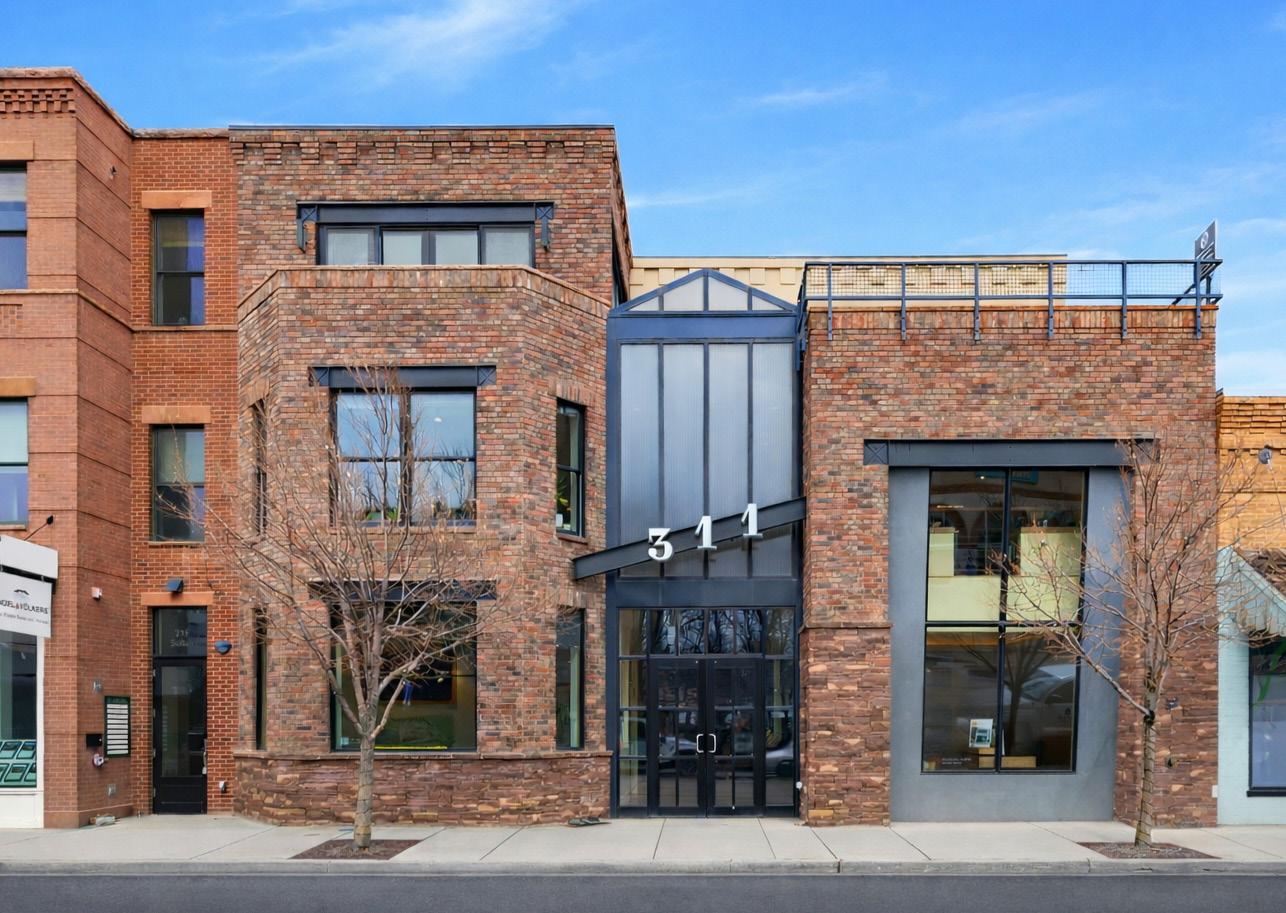
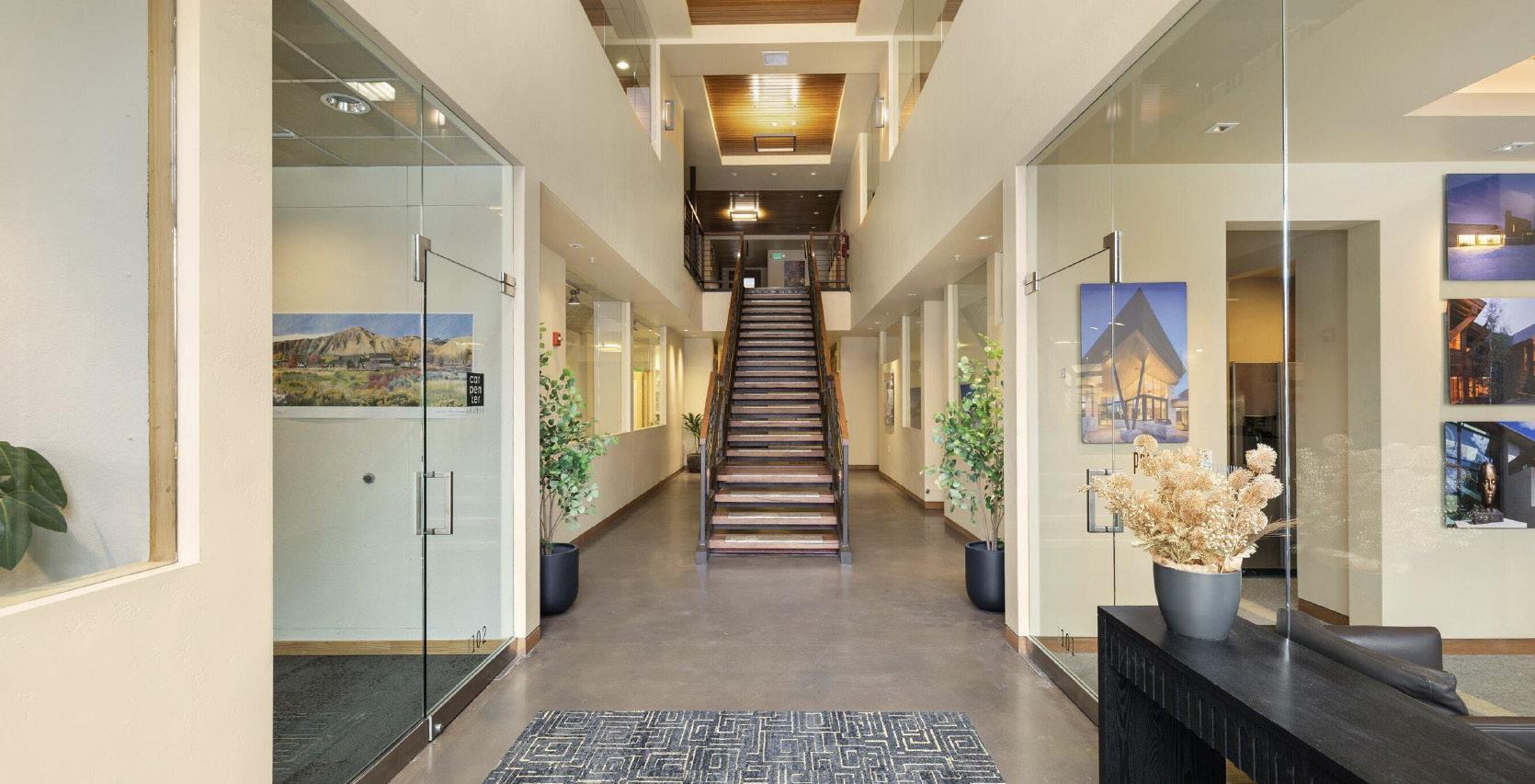
5 Units to Choose From | Office/Retail | Approx. 646-1,287sf
$484,000-$1,04 9,000 | ww w. gabemolnar.co
Architectural stunner positioned along

CLAY NATIONAL
Carbondale Clay Center presents an opening reception for this year’s Clay National, “Heirlooms,” from 6 to 8pm at Main Street Gallery & the Framer. The exhibit will be on display through Aug. 28.
SATURDAY,
JULY 4
HAPPY FOURTH OF JULY!
The United States celebrates 250 years since it declared its independence.
GARCO LIBRARIES CLOSED Garfield County Libraries will be closed in observance of the Fourth of July.
BUDDY RACE
The Buddy Program hosts its 40th annual Boogie’s Buddy Race, taking off from Rio Grande Park in Aspen at 8am (five-mile), 8:05am (5K) and 9am (one-mile fun run/walk). Registration must be done in advance and can be made at buddyprogram.org/events
FOURTH IN REDSTONE
Nomad and Mountain Tide partner to screen “SURFILMUSIC” at the Crystal Theatre at 7pm. The film follows surfer, filmmaker and musician Jack Johnson. Tickets at tinyurl.com/surfilmusic This event is sold out.
‘A250: PORTRAIT OF A NATION’
Pulitzer Prize–winning photographer
Deanne Fitzmaurice hosts an illustrated talk marking America’s 250th anniversary, and Colorado’s 150th, at the Wheeler Opera House as part of its Changemaker Speaker Series at 7pm. Tickets at wheeleroperahouse.com
MUSIC AT STEVE’S
Rachel Sumner and Traveling Light perform at Steve’s Guitars at 8pm. Tickets at stevesguitars.net
FRIDAY, JULY 3
FOURTH CLOSURES
Garfield County administrative offices and offices of elected officials will be closed today in observance of the holiday tomorrow. Emergency and 24-hour functions will remain operational “as needed.” The Basalt Library will be closed today and tomorrow.
‘LARGER THAN THEY APPEAR’
The Collective in Snowmass hosts Magic with Mellie’s “Larger than they Appear: Ripple Effect” from 7 to 8:30pm. The dance performance reoccurs again at Old Town Yoga Basalt on July 10 and 11 at 7pm. Tickets at thecollectivesnowmass.com and oldtownyogabasalt.com
MUSIC AT THE CAVERNS
The Colorado Currys, including husband-and-wife-duo Craig and Lorraine Curry, perform at the Glenwood Caverns Adventure Park from 3 to 6pm.
FIRST FRIDAY
Carbondale’s First Friday kicks off with live music presented by Steve’s Guitars at Chacos Park and street buskers at 3rd and Main Street at 5pm. For a full list of happenings, visit tinyurl.com/ CarbondaleArtsFirstFriday
‘VISCERAL ALCHEMY’
Carbondale Arts hosts a closing reception for “Visceral Alchemy” from 5 to 7pm, featuring guest DJ Thump3r.
CRYSTAL THEATRE
The Crystal Theatre screens “Disclosure Day” today, tomorrow, Sunday (captioned) and Monday at 7pm.
Word has gotten out about Redstone’s Fourth of July celebrations! The festivities start with pie and Ducky Derby sales at 9:30am at the Museum, square dancing at Ron’s Rink at 10am, the America 250 Fly Over at 11:15am, parade at noon, Ducky Derby race at 1pm at the park, where live music, kicking off with Sweet Jessup and the Dirty Buckets, will also begin at 1:30pm. For a list of happenings, visit the Redstone Community Association page on Facebook.
DECLARATION OF INDEPENDENCE
Glenwood Springs City Council members Erin Zalinski and Sumner Schachter lead a nonpartisan reading of the Declaration of Independence at Sayre Park at 10am. Printed copies will be available on site in addition to this issue of The Sopris Sun (page 19!) for folks to read along.
FOURTH IN CARBONDALE
The 47th annual Carbondale Kids’ Fourth of July Parade kicks off at the corner of 2nd and Main Street at 10:30am, with staging starting at 10am. Kids are invited to participate in the parade on wheels (motorized and non-motorized) or by foot, and adults can also join in, along with leashed pets. The party continues at the Carbondale Aquatics Center, open from 10:30am to 4pm with a special $5 admittance for everyone, and will include a watermelon relay race, coin scavenger hunt and adult and youth cannonball contests.
BANDALOOP AT THE WHEELER
The Wheeler Opera House hosts rare outdoor performances by “renowned vertical dance innovators” BANDALOOP at 1, 3 and 5pm. The performances are free to watch.
FOURTH AT THE CAVERNS
Wild Flight performs at Glenwood Caverns Adventure Park from 3 to 6pm.
FOURTH IN GLENWOOD
The City of Glenwood Springs hosts a Fourth of July celebration at Two Rivers Park from 4:30 to 9pm. Live music by Emotional Rescue starts at 5pm, followed by Dance X at 7pm. Details at cogs.us
MONDAY, JULY 6
CLAY ACADEMY
The Summer Youth Clay Academy kicks off at the Glenwood Springs Community Art Center, running July 6-9 from 9am to noon. The academy is open to ages 6-13.
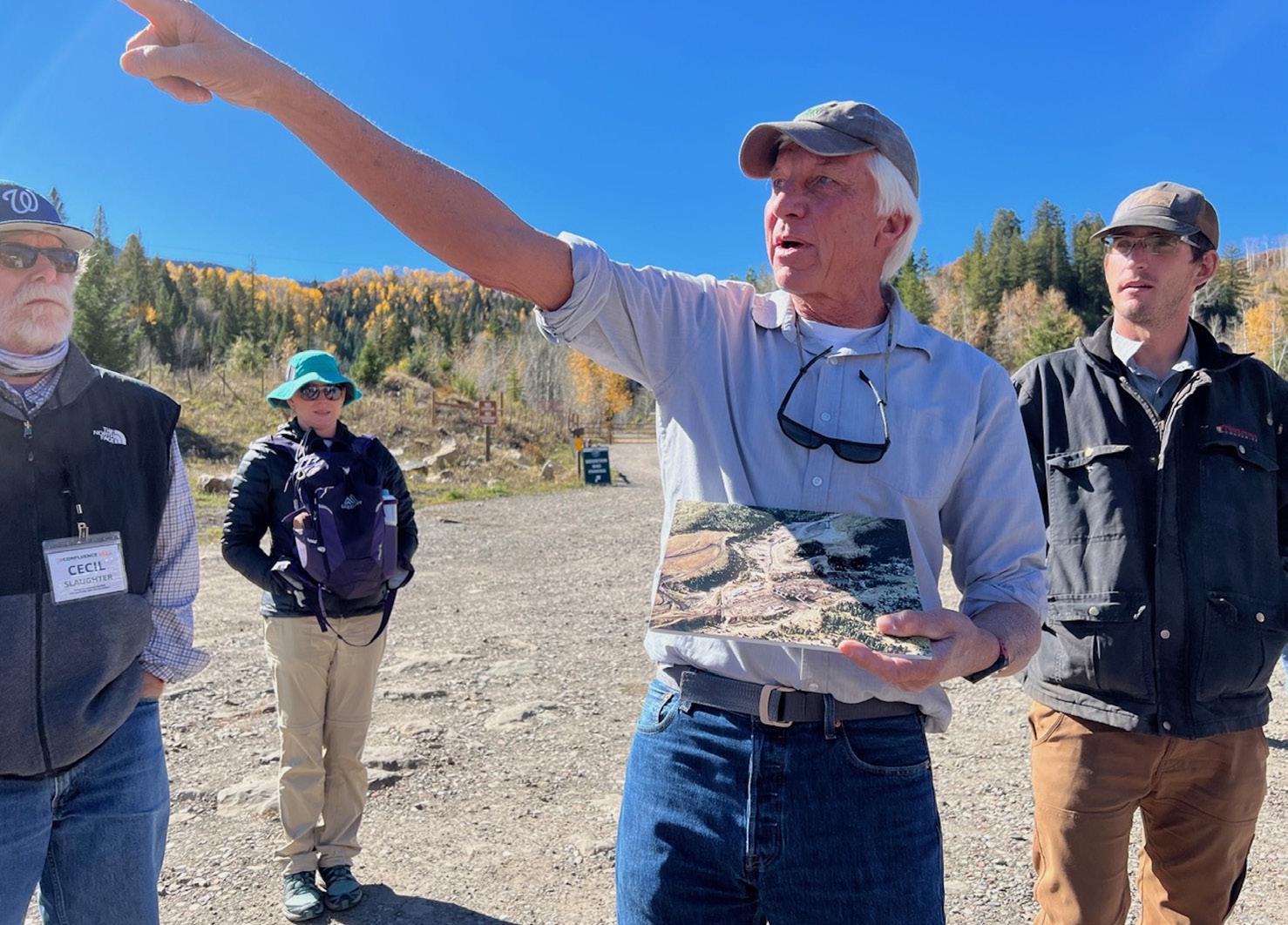
Reclamation specialist Steve Renner will give a History Coffee Talk at Coal Basin Ranch from 9 to 11am on July 11. Renner will discuss the early ‘90s Colorado Division of Reclamation Mining and Safety’s Coal Basin Reclamation Project, which sought to improve the environment after Mid-Continent Coal & Coke left the landscape in 1992. Renner is seen here speaking with a group of reclamation specialists in October 2022 during a visit to the Mid- Continent site in Redstone. RSVP by emailing info@coalbasinranch.com
Photo by Trina Ortega
CLAY DAZE
The Glenwood Springs Community Art Center hosts the Clay Daze Teen Class, a “hands-on teen pottery program,” from 3 to 5:30pm every day until July 9.
YOGA SILVESTRE
Alejandra guides a yoga session in Spanish at Rock Bottom Ranch from 6:30 to 7:30pm. Register at aspennature. org The event will repeat on Aug. 3 and Sept. 7 — same time, same place.
STEVE’S GUITARS
Brother and the Hays perform at Steve’s Guitars at 8pm. Tickets at stevesguitars.net
TUESDAY, JULY 7
FOAM PARTY
Garfield County Libraries hosts foam parties as part of the Summer Reading Challenge in Glenwood at 10:30am and Carbondale at 2:30pm.
ROARING FORK DRAWING CLUB
The Roaring Fork Drawing Club meets at 6:30pm at Board By Design in Glenwood Springs.
CARBONDALE CLAY
Carbondale Clay Center hosts Beginner Spin: Intro to Wheel Workshop from 6 to 8:30pm. Register at carbondaleclay.org
OIL PAINTING
Discover a new hobby at the Glenwood Springs Community Art Center’s Art Adult Oil Painting on Tuesdays from 6 to 8:30pm, July 7-28. Follow that up with Adult Printmaking at the art center from 6-9pm on Wednesdays, July 8-29.
MOVIE TRIVIA
Teams of up to four compete in an evening of movie/television trivia at the Crystal Theatre at 7pm.
WEDNESDAY, JULY 8
FARMERS’ MARKET
The Carbondale Farmers’ Market takes place every Wednesday from 10am to 3pm through Sept. 30 at 4th and Main Street.
‘THE IRON GIANT’
The Crystal Theatre screens ‘90s-kids classic “The Iron Giant” at 2:30pm. Tickets are just five bucks for this showing!
LIBRARY CONCERT
Victoria Pennock performs at the
Glenwood Library at 5pm as part of a concert series the Garfield County Libraries are hosting to celebrate the United States’ 250th anniversary and Colorado’s 150th anniversary. Pennock will perform again at 6pm on Friday, July 10 at the New Castle Branch Library.
BASALT SUMMER CONCERTS
David Mayfield Parade and Tommy the Animal perform at Basalt River Park at 6pm.
GLENWOOD SUMMER OF MUSIC
Colorado bluegrass band Stray Grass opens for the Cass Clayton Band, bringing funk, soul and R&B to Two Rivers Park as part of Glenwood Springs Summer of Music 2026. The music kicks off at 6:30 and quiets down at 9pm.
FRIDAY, JULY 10
‘LAND, PEOPLE AND PLACE’
The Aspen Center for Environmental Studies’ four-day, immersive field ecology course, “Land, People, and Place: Field Ecology of the Colorado Rockies,” kicks off at 9am at Toklat. Register at aspennature.org
EXPRESS YO’ SELF
The Glenwood Library invites teens and tweens to make their own jewelry sets from 2-4pm.
RISE UP GALA
Bridging Bionics Foundation hosts its annual Rise Up Gala at the Hotel Jerome in Aspen from 5:30 to 11:30pm. Tickets at bridgingbionics.org
CARBONDALE CLAY
Carbondale Clay Center hosts Summer Date Night from 6-8pm, when parents are welcome to take time for themselves after dropping their kids at the Clay Center. Details at carbondaleclay.org
CLAY DATE
Ages 21 and up are welcome to a Clay Date at the Glenwood Springs Community Art Center Clay Studio from 6:30-8:30pm. Attendees will throw pottery on the wheel and handbuild. BYOB.
BOB SIMA
Bob Sima performs at 6:30pm at the Third Street Center. “One guitar. One voice. One message. Something unforgettable,” promises Sima’s flyer. Buy tickets at tinyurl.com/bobsimatickets Additional details at bobsima.com

Community Education Classes
How to Build a Successful
Consulting Career
Maximize your life and career experiences into a viable business and financial freedom.
Online Tues, 5:30-8:30pm, 7/7
Adobe Lightroom
Practical strategies for organizing, editing, processing, and sharing digital photographs. Tuesdays, 6-8:30pm, 7/7-28
Citizenship in Action
R E
Public Participation and the ways citizens can interact with their government. Offered tuition fee with the support of the CMC Center for Civics Education and Engagement. Wednesday, 6-8:30pm, 7/8
Qigong
Simple, gentle movements to improve balance, flexibility, and muscle tone, while promoting relaxation and focus. Wed, 10:30-11:30am, 7/8-8/26
Watercolor: en Plein Air
Two-day workshop with tips and techniques then go outside to paint what we see.
Wed/Thurs, 1-5pm, 7/22-7/23
Fundraising for Non-profits
Provides non-profit professionals with development tools to build their resource base.
Online Tues, 5:30-8:30pm, 8/4
Coming this Fall
Registration Opens 7/13
Dance & Fitness
Baskets & Sewing
Painting & Photography
Philosophy & Astrology
Citizenship
Wine Tasting
Artificial Intelligence
Leadership and much more
Scan to Browse & Register for Community Classes and Free Talks

Summit 54’s summer learning program celebrates 15 years
JOHN STROUD Sopris Sun Correspondent
What began as an effort to address the “summer slide” that students often experience between school years marks its 15th anniversary this summer, with many a full circle success story to tell.
Like that of Karen Munez, who attended Summit 54’s Summer Advantage program at Crystal River Elementary School (CRES) in Carbondale and now works as a teaching assistant at Glenwood Springs Elementary School while studying to become a fulltime teacher.
Or of Macy Wilson, who was one of the very first Summer Advantage students in 2012 and returns this summer as a teaching assistant in the program while also completing her studies at Texas Tech University.
“These stories are exactly why this work matters,” Summit 54 co-founder Terri Caine said. “To see students who once sat in these classrooms now return to mentor and support the next generation is incredibly powerful.”
Once again, three Roaring Fork Valley elementary schools are abuzz with learning activities this summer, thanks to a unique partnership between the Aspen-based nonprofit founded by Terri and Tony Caine and the Roaring Fork Schools.
Fifteen years ago, the Caines were looking to give back to the community in a way that would have lasting impact and that wasn’t already being addressed in some manner.
“Summer learning is a very important aspect of education,” Terri Caine said during a recent morning of summer school at Crystal River as students filed through the hallway headed to class.
“Our community also recognizes the importance of education. Without a summer program, national statistics validate that children will regress as much as three or four months over the summer.”
The Roaring Fork School District sees that same trend to varying degrees, which means a good bit of the beginning of each school year is always spent trying to get students caught back up, especially in the elementary grades.
Each summer since 2012, Summer Advantage has served more than 600 students between Glenwood Springs, Carbondale and Basalt who were preparing for first, second, third, fourth and fifth grades.
Data shows that students who can continue learning through the summer months, instead of sliding backwards, are often advancing as much as four months in their learning by the time they officially start their new grade in August, Caine said.
“It’s an important program, the children need it,
and our community recognizes that and is happy to support it,” she said of the more than 100 individual and institutional donors who help fund the free summer program each year.
The program includes academics during the morning sessions, enrichment programs in the arts and sciences during the afternoons, and a Friday field trip each week. Meals are also included.
About 40 teachers, many of them classroom teachers during the regular school year, provide instruction for the summer program, allowing them to earn extra pay besides their regular school district paychecks.
Joel Suarez is the assistant program manager for Summer Advantage at CRES, and has been involved with the program since 2014.
He was instrumental in helping Summer Advantage rebrand as Summer Success through the pandemic years when classes moved to 23 different outdoor park settings from Basalt to Glenwood.
“I also taught fourth and fifth grade, and did the STEM programming,” said Suarez, who teaches high school computer science in Greeley during the regular school year. “I just love coming back here every summer.”
Kyle-Leigh Berry is a second grade teacher at CRES and has been involved with Summer Advantage for 14 years as a program manager. She also manages Summit 54’s after-school tutoring program during the regular school year.
“It gives me an opportunity to see the other side of things that don’t involve being in the classroom … hiring, leading parent meetings, preparing for field trips, and just getting to know the kids on a broader level,” she said.
Tutoring became a crucial service during the pandemic, while students were attending school online and after they returned to the classroom, Berry said.
“I think the whole idea of Summer Advantage has taken away from some of those old negative stereotypes about summer school, and that it’s just for the kids who didn’t do well in school,” she added.
“The kids look forward to it and they love it because it allows them to continue that connection with other students and their teachers.”
Caine added that the Summer Advantage program also takes a load off of working families who otherwise must line up and pay for day care for their younger children during the summer, or worry about having unsupervised older children at home.
“It’s just a real win-win for these families,” she said. Summer Advantage classes continue through July 17.

Anderson Ranch rings in 60 years
KATE PHILLIPS
Sopris Sun Correspondent
Anderson Ranch Arts Center is the place to be this summer as the nonprofit hosts its 60th anniversary during the highly anticipated Ranch Week. Happening July 13-18, this annual signature event will include a special film screening, premier lectures, Ranch Gala and Ranch Picnic and Auction. The ranch’s International Artist Honoree Marilyn Minter will be celebrated and in attendance throughout the week.
Since 1966, the Ranch has been a pillar of art making, education and critical dialogue. Situated on 5 acres in Snowmass, the Ranch attracts a wide breadth of people, from children and teenagers to aspiring creatives and internationally renowned artists, to participate and learn together in stimulating workshops through seven disciplines: photography and new media, ceramics, painting and drawing, furniture design and woodworking, sculpture, printmaking and digital fabrication.
“The Ranch really embraces and has a local community. It’s an open campus and very much part of the community here,” President and CEO Peter Waanders said. “It’s also an international destination where artists, art educators, workshop students, residents and speakers come. It’s this great cross between an international participant group and an informal, welcoming open campus for anyone in the community to be part of.”
During Ranch Week, the campus becomes a flurry of activities that weaves the communities together. Doubling as a critical fundraiser, supporters come in droves highlighting the Ranch’s deep roots.
“Ranch Week is our biggest week of programming and fundraising … It is filled with celebration,” Lindsy Fortier, Director of Marketing and Communications, said. “It’s an opportunity for us to connect with the community in a big way, with our donors, hopefully generate new donors, and to continue supporting the Ranch’s work.”
The week begins on July 13 at Aspen’s Isis Theatre with a free public screening of Pretty Dirty. Named Vogue’s top documentary of 2025, the film is a “powerfully compelling” take on Marilyn Minter, an iconic contemporary American artist whose hyperrealistic paintings, photographs and videos challenge modern perceptions of glamor and beauty. The evening is highlighted by a Q&A with Minter and Amanda Benchley, the film’s director and producer. Producer Sue Hostetler will moderate the event.
Then on Tuesday, July 14, the annual Summer Series: Featured Artists and Conversations program will engage audiences with an invigorating conversation between Minter and Lisa Phillips, Director Emeritus at the New Museum in New York. This free and open-to-the-public event takes place at the ranch.
“Minter is a huge force in the art world,” Waanders said. “She really labored for decades as a teacher and painter, largely working around ideas of how women are portrayed and treated. She looks at fashion and the glamor side of society and how we relate and interact with that.”
Minter will receive the International Artist award at the Ranch Gala happening on July 15. This ticketed event includes a cocktail hour and campus-wide activations followed by dinner, presentations and a thrilling auction filled with world-renowned contemporary artists.
Anderson Ranch Arts Center is celebrating 60 years at Ranch Week, July 13-18. The week will include a series of events including the popular Ranch Picnic and Auction. Treats, art making, music, a silent auction and of course face painting will mark the day. Courtesy photo
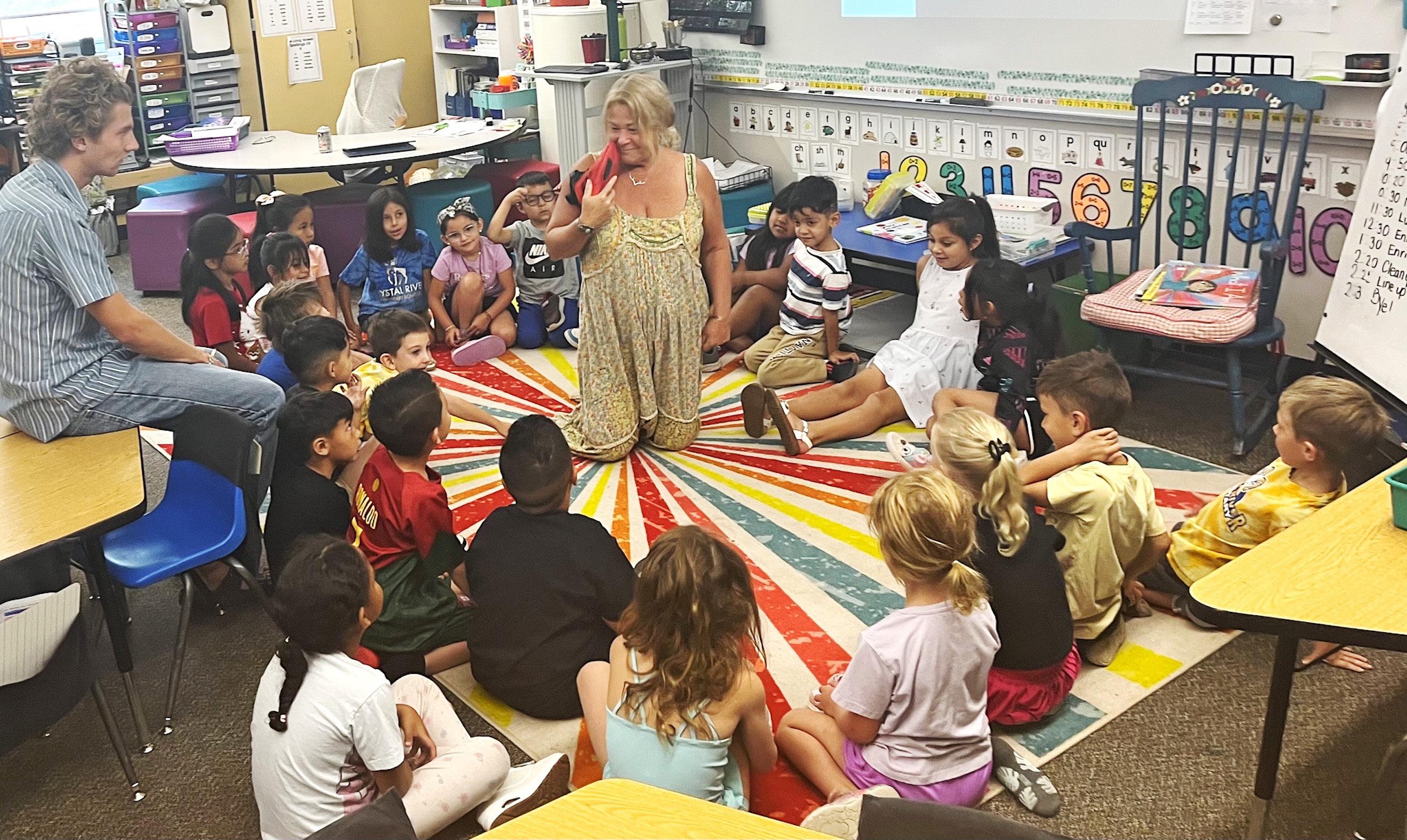
Ellen Huttenhower, who teaches kindergarten at Crystal River Elementary School during the regular school year, leads a group of rising first graders during morning circle time at CRES as part of the Summer Advantage program on June 24. Photo by John Stroud
















A note from ANB Bank,
For over 63 years FirstBank was a meaningful part of the Colorado banking landscape. Many of us benefited from their unwavering commitment to local communities, small businesses, and individuals. Community banking was stronger because FirstBank stood alongside us as a locally owned neighbor and peer, fostering competition that challenged all of us to serve more deeply and to make a lasting difference.
As the FirstBank name disappears, we pause to recognize and appreciate its impact. At the same time, FirstBank’s sale raises an important question: What happens when a community bank is no longer locally owned? When “community banking” simply becomes a marketing phrase rather than a reflection of local ownership and decision-making?
Today, many businesses and individuals across Colorado are asking a simple question: What happens now? In the face of uncertainty, we believe that locally owned banks, and local decisions are the answer.
At ANB Bank, we believe that local still matters. Our leadership team includes many respected professionals who helped build FirstBank’s legacy –CEO Koger Propst, President Todd Crowley, CFO Josh Stransky, Human Resources Director Frankie Cassidy, Regional President Matt Baldner, and Regional President Brian Holcombe, among many others. They’ve used that experience to build ANB Bank and to craft a people driven banking experience with its roots right here in the communities we call home.
There will be no shortage of banks attempting to fill the space left behind in FirstBank’s absence, but there is a difference between simply filling a space and being a community bank - locally owned, independently managed, and deeply committed to the people and businesses of Colorado.
ANB Bank remains exactly that, a true community bank for those looking for a local banking partner.
Bank. Still local. Still committed.


“Seeking Haystacks” was the title of student Isaac Gerber’s final project, who sought to use artist Claude Monet’s painting of haystacks as a metaphorical window into self-reflection. Isaac saw Monet’s haystacks as an invitation to living beautifully, a portal to passionate engagement. Isaac, like so many of you, wrote about what calls to our spirit, what elevates us as humans, as citizens. In honor of our nation’s 250th birthday — a nation who stubbornly refuses to engage in serious self-reflection, glossing over our national flaws with pomp and circumstance — I celebrate your commitment to live authentic and courageous lives. You are inspired souls who tenaciously seek to create real change in our world. Thank you for bringing hope and delight to my personal life, and for being the brightest beacons of America’s original promise.
Dear Students, Taking the veil off Treasure Mountain Ranch
single garment of destiny. The bonds of human dignity bind us.” You understand this. Many of us still don’t.
OPINION SEEKING HAYSTACKS
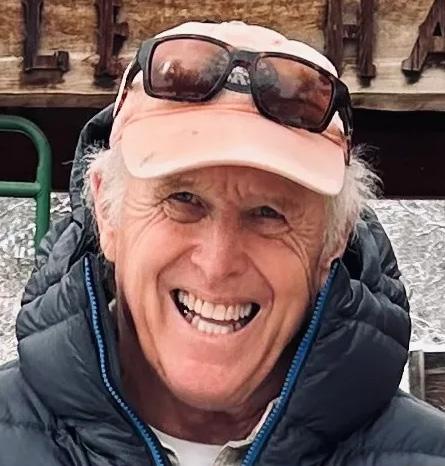
By A.O. Forbes
At its core, the Fourth of July marks a radical philosophical shift, an existential rebellion against the ancient, traditional concept that rights and sovereignty flow down from on high. Given human history, it is impossible to overstate how radical the idea of this country was, and still is: “We hold these Truths to be self-evident, that all men are created equal, that they are endowed by their Creator with certain unalienable Rights, that among these are Life, Liberty, and the pursuit of Happiness.”
Sadly, too many of you, because of gender and/or color, were not quite who the Founders had in mind, so we’re clearly a work in progress. But, you all see the power of this magnificent idea, and you are patient with those who selflessly bring their best, and impatient with those whose selfishness it may take our country years to recover from. Politics is a slippery slope, made slick by money and compromised characters, and too often, leaders don’t secure our consent. True democratic power only comes when we all act in concert. It is our job to defend principles of fairness and our inalienable rights — allowing all to participate — compelling us to wake from spells of spiritual forgetfulness and be ever vigilant in holding dear the spirit of our nation.
I know you understand — in ways older generations could not have grasped — that our fates are inextricably bound to each other. You are living in a time where information, inspiration, trauma and environmental changes are all quickly and clearly shared. You are immersed in this complicated identity, and you know in your hearts that to survive this dissonance demands a vibrancy and intelligence greater than previous generations. Martin Luther King Jr. wrote (a quote which you know well!), “We are caught in an inescapable network of mutuality, tied in a
I’ve witnessed the generosity of your hearts and the clarity of your intellect. King stated that justice is love in action, and I have seen what your love in action looks like. You have power, power to make the world a kinder place. I have never spent more time with people whose innocence rings out with such pure, powerful fidelity; a group that is more interested in creating change and building a more just society. I am a better teacher, better father, better husband, better being because of you; thank you. I am here on this Fourth of July with the deepest admiration for you all, including your ability to compassionately connect in ordinary and profound ways. I believe connection and compassion are fundamental to our attempts to ascend from, as King said, “The quicksand of injustice to the solid rock of human dignity.”
The world today is scary by many measurements, and if I didn’t regularly hear brave, imaginative, compassionate and coherent ideas from my students, I would auger into despair. But as student Vince Kunowic says, inspired by Bryan Stevenson, “Everything we do now becomes momentous, and we need to take care of ourselves and each other equally. Just like Rosa Parks said, it’s going to make us tired, tired, tired, and just like Johnnie Carr said, we are going to have to be brave, brave, brave.” And like A.O.’s hero James Taylor said, “There ain’t no doubt in no one’s mind / That love’s the finest thing around.” We are going to get tired, and we’re going to have to be brave, but luckily, we have each other. We have you.
I have been teaching for over 50 years, and that is a long time. I have seen many, many students, and you are truly the people the world has been waiting for. My current class is perhaps the first generation that can easily grasp and carry the light of our essential tenet: “We hold these Truths to be self-evident, that all men are created equal …” And on this July 4, 2026 — holding onto faith that our beautiful and beleaguered nation will find our way — that gives me hope. Thank you.
Chorus of a song I wrote after a trip with 12 students to Selma, Alabama. To listen, go to: bit.ly/4oNwP3f
We are the ones that the world is waiting for
To wake the soul of a tired land
Confess/ the crimes that came before
Let the children show me the way They are the ones who will understand
And the sun will rise once more.
EDITOR’S NOTE: The views expressed in this column are soley those of the Crystal Valley Environmental Protection Association.
Crystal Valley Environmental Protection Association (CVEPA) does not support land swaps of National Forest for private land — especially with the intent of personal gain by developers. This is exactly what the current developers with Treasure Mountain Ranch (TMR) above Marble intend to do to make an exclusive private snow-cat ski area. The project is being presented by TMR throughout the valley as a “best-case scenario” for the future of Crystal, with biased interpretations of land use, development and a minimized look at the potential disturbance of wild places. TMR’s language portrays the situation as an either-or scenario. Either an exclusive ski area, or residential development. This is not the case however, and it’s important for valley residents to understand the nuances of TMR’s proposals.
OPINION
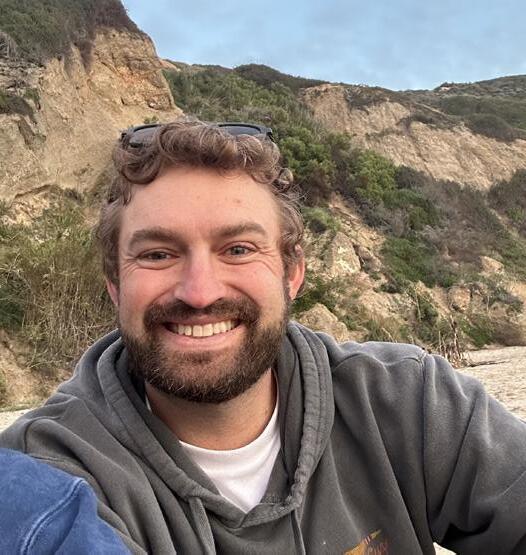
CVEPA VIEWS
By Jay Engstrom
For years, the ranch has been attempting to find a path to create a boutique ski experience for about 30 guests who would own or stay in high-end cabins built around Crystal. Thus far, this has included thinning the forests around Crystal, billed as fire mitigation, unpermitted improvements and repairs of old roads and a recently approved land-use application with Gunnison County for four new cabins and a 5,000-square-foot maintenance facility to be located just outside of Crystal.
Given all this progress, their project is seemingly dependent on a ~350-acre land swap with the Forest Service, which would give them the ability to run a snowcat further up the side of Bear Mountain. This, they believe, is the lynch pin of their ski operations. This area in Bear Basin is currently part of the proposed GORP Act wilderness expansion. It’s wild and has never seen development like this. If GORP passes, that area would be protected from any development — period.
TMR claims that the portion of the ranch they would like to swap would protect Crystal from up to six developable home sites (on top of barring more than 20 potential residential developments through conservation easements on its remaining land). However, this area is steep and rugged and CVEPA is currently working with land planning professionals to assess the feasibility of building in this area. We believe, however, that much like the rest of the developer’s language, presenting this as a win-win for conservation is misleading. TMR is actively collecting letters of support to prove to the Forest Service that their project has enough local buy-in to justify the trade in land.
To get that local buy-in, the developer has been presenting this project as the “best-case scenario” for the future development of Crystal. They argue that if this is not approved, they will be forced to sell the ranch in 35-acre parcels to recoup their financial investment in the property. They claim that could mean up to 35 luxury homes in Crystal.
However, much like the proposed land swap site, CVEPA is skeptical about the feasibility of this development given the physical constraints of the area, including
steep hillsides, avalanche paths, debris flows, river and riparian setbacks, wetlands, as well as countless development codes and regulations of Gunnison County and the State of Colorado. This is also under the assumption of feasibility that 30 to 35 homes could be constructed, maintained and accessed in cases of emergencies, and that the fire department and the county would approve these extremely remote residences. Additionally, finding an insurance provider that would even consider a policy for anything built up this valley will be a real challenge. Very few would consider development in Crystal a “financially smart” decision. TMR had an independent appraisal completed that estimated the value of the property at $15.6 million. This would be assuming that the 35 acre lots could sell for more than ~$500,000, which seems expensive for a lot that has so many constraints.
TMR is further greenwashing a land exchange with the Forest Service by claiming they will instate a conservation easement on the newly traded parcel. This easement, however, allows them to maintain a five-acre “base area,” and run fully functioning recreational facilities over the land. All while claiming that they are conserving the land’s wildness.
The real area of the proposed easement is within undevelopable hillsides and does not need an easement to “protect” it. Conservation easements are a tool to be utilized to stop development, such as easily accessed open space that is susceptible to mass housing projects, in addition to helping ranchers maintain a living. The intent should not be utilized for a well-funded recreational project to greenwash its proposed development.
Crystal holds a special place in the hearts of Crystal and Roaring Fork Valley residents and visitors alike. It is a living example of Colorado’s pioneering spirit, and it sits in the middle of a wild and rugged range of mountains that demand respect and inspire awe. TMR is trying to simplify what Crystal means to us into an either exclusive ski area or mass development decision, when in reality there are huge question marks about the feasibility of both, and neither option laid out by TMR preserves the public value of Crystal, which CVEPA stands to protect.
No matter what TMR proposes in the future, CVEPA is here as a voice for the value of wildness and historical cultures of the Crystal Valley and its tributaries. This would not be the first ski area that CVEPA has fought and beat, nor the biggest.
Today, we all shake our heads in disbelief at the idea of a corporate ski area in Marble, and at the idea of 10,000 people living there. TMR’s proposed development shares a similar vein. It proposes to fundamentally change how we experience and value the upper Crystal watershed, and, at CVEPA, we believe that the proposed change is out of character with the values of wildness that we all appreciate there.
To learn more about the Crystal Valley Environmental Protection Association, visit cvepa.org
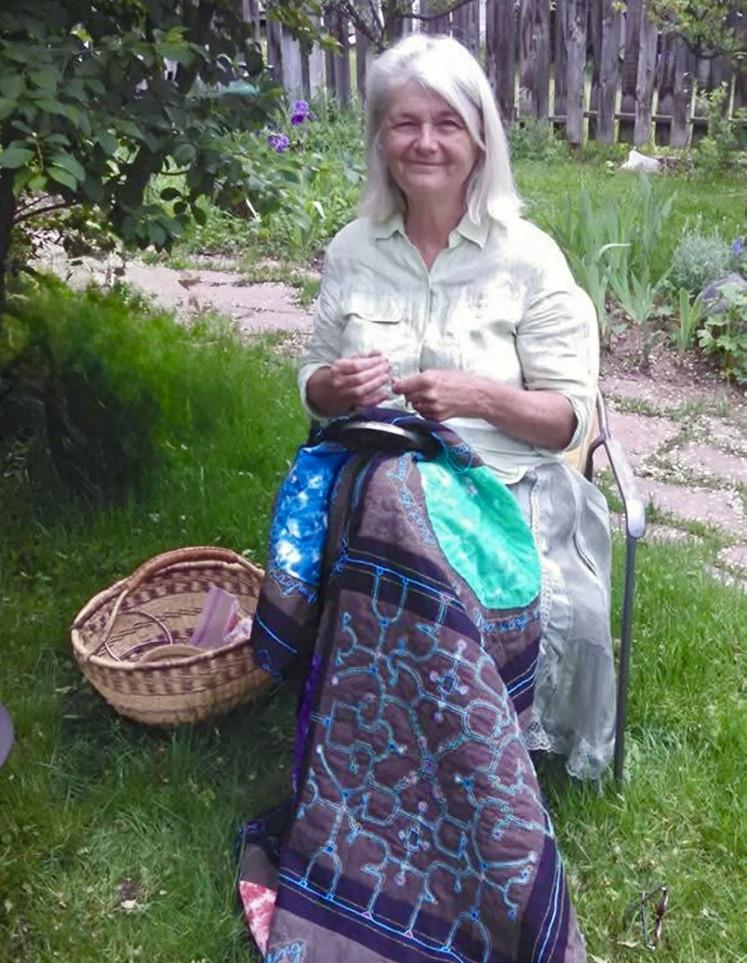
Linda Romero Criswell
February 11, 1949June 3, 2026
Linda always maintained that, no matter what we may think, the universe is proceeding just as it should.
Born Linda Marie Reidland in Chicago and raised in Park Ridge, she attended Lake Forest College for one year before adventure called. She hitchhiked around the country with her boyfriend, worked with kids in migrant camps and ultimately got dropped off in Breckenridge by the Kansas City Outlaws.
There she met and married Abe Romero. They had a son, Bram, and ran a property management company and restaurant until Abe’s passing.
She came to Carbondale via Aspen, buying a house in town in the early ‘90s and building her permanent home on the back of the lot. She met Russ Criswell when he was contracted to do her plumbing. She convinced him dating her exclusively would be worth it; they married in 1996.
A renaissance woman, Linda put little stock in a consistent career and pursued many passions. She spoke several languages, wrote a pair of books — “Since You Asked” and “Watermelon Snow,” and invented a board game called Perspective. Her love of history helped bring new life to the Carbondale Historical Society. Creating community influenced everything she did, from singing to Scrabble. She aspired to a blessed life of ordinary days, conversing, quilting, cuddling her cats and gardening.
A student of philosophy and a particular devotee of The Fourth Way, she was a founding member of a meditation group. Her love of baking inspired the creation of the Carbondale Community Oven, which bears the inscription “The flavor of bread shared has no equal” and will be renamed in her honor.
She died at home of natural causes, with support from hospice and surrounded by family — during a visit planned before she fell ill. She was preceded in death by her parents, Russell and Marie Reidland, and her first husband, Abe Romero. She is survived by her husband, Russ Criswell, sister, Kris, son, Bram, step son, Tom, and their families.
A celebration of life will be held from 3 to 5pm Sunday, July 19, at the Third Street Center. Email phifilerman@gmail.com to contribute to the event.
Community turns out for Red Hill trails this spring
RED HILL COUNCIL Guest Opinion
Three Tuesday evenings in May, the Roaring Fork Outdoor Volunteers (RFOV) brought 92 community volunteers to the Red Hill trails for a focused stretch of trail work — and the results were significant. RFOV coordinated with the Red Hill Council to prioritize these impactful trail projects. Projects were completed on the Red Hill Sage Meadow, Blue Ribbon Trail, Mushroom Rock Trail, Three Gulch Trail, and Extra Credit Trail. With the 92 volunteers plus 17 RFOV staff and partners, the effort totaled over 450 hours of labor.
The community caught some fortunate timing as well. Rain the day before at least two of the three sessions left soil soft and workable — a contrast to drier years when compacted ground slowed progress considerably. The result was one of the most productive spring seasons Red Hill has seen.
The Work
The projects centered on three primary goals: managing water runoff, erosion control and trail boundary maintenance.
On the water side, crews focused on ensuring trails are structured so runoff flows off and away from the tread rather than down it, a primary driver of erosion and longterm trail damage. The numbers reflect serious effort: 27 existing erosion structures were maintained and 5 new ones installed, 9 rock steps were built or improved, and 135 cubic feet of rock armoring was placed.
Volunteers also worked natural trail markers into the landscape using native materials such as wood and stone in order to subtly outline the trail edge and boundaries. Additionally, just over 123 feet of social trails were closed (social trails are unofficial paths worn into existence by repeated foot traffic, never intended for use but sometimes hard to distinguish from the actual trail). Together, these efforts discourage off-trail wandering that damages cryptobiotic soils and the broader landscape, providing critical maintenance given the roughly 75,000 visitors who visit Red Hill each year.
In total, 5,470 feet of trail were improved across the three evenings.
A Partnership Worth Celebrating
None of this happens without people willing to show up — on a weeknight, after work, with a willingness to dig and haul and problem-solve in the dirt. Our important partner, RFOV, has the ability to organize and mobilize that kind of community effort, making projects like this possible, and the trails are better for it.
ROAN PLATEAU
from page 9
The BLM plans to offer those leases and five more on the Roan, totaling a little over 5,000 acres, in the December lease sale. “So, we’re now in a position where we’re back at the beginning of fighting new oil and gas leases on top of the Roan Plateau,” Hart said.
The 2012 settlement agreement resulted in the 2016 Resource Management Plan Amendment which governs management of the Roan Plateau. Getting there was a massive effort, involving conservation and sportsmen groups as well as representatives of local, state and federal government and members of Congress. But this time may be more difficult.
In late June, the BLM announced a 60-day public comment period for a revision of current oil and gas regulations, put in place during the Biden administration. According to a BLM press release, “The proposals revise both the Bureau of Land Management’s oil and gas leasing rule and the waste prevention rule.”
Hart told The Sun that this means fewer opportunities for public participation in lease sales and a significant reduction of Biden-era bonding requirements for gas and oil well cleanup.
If you’ve walked Red Hill this spring, you may have already seen the results underfoot. And if you’re looking for a way to give back to the trails you love, find upcoming volunteer opportunities at rfov.org/calendar. If you can’t participate, please consider a donation on our website redhillcouncil.org or at the Carbondale trailhead.
Beyond the trail work itself, volunteers leave each session having shared something worth showing up for — fresh air, good company, and the satisfaction of seeing real, tangible results from a few hours of hard work together. And it doesn’t hurt that every session wraps up with pizza and drinks — or burritos, generously provided at cost by Dos Gringos to RFOV and Red Hill Council volunteers. Not a bad way to end a Tuesday.
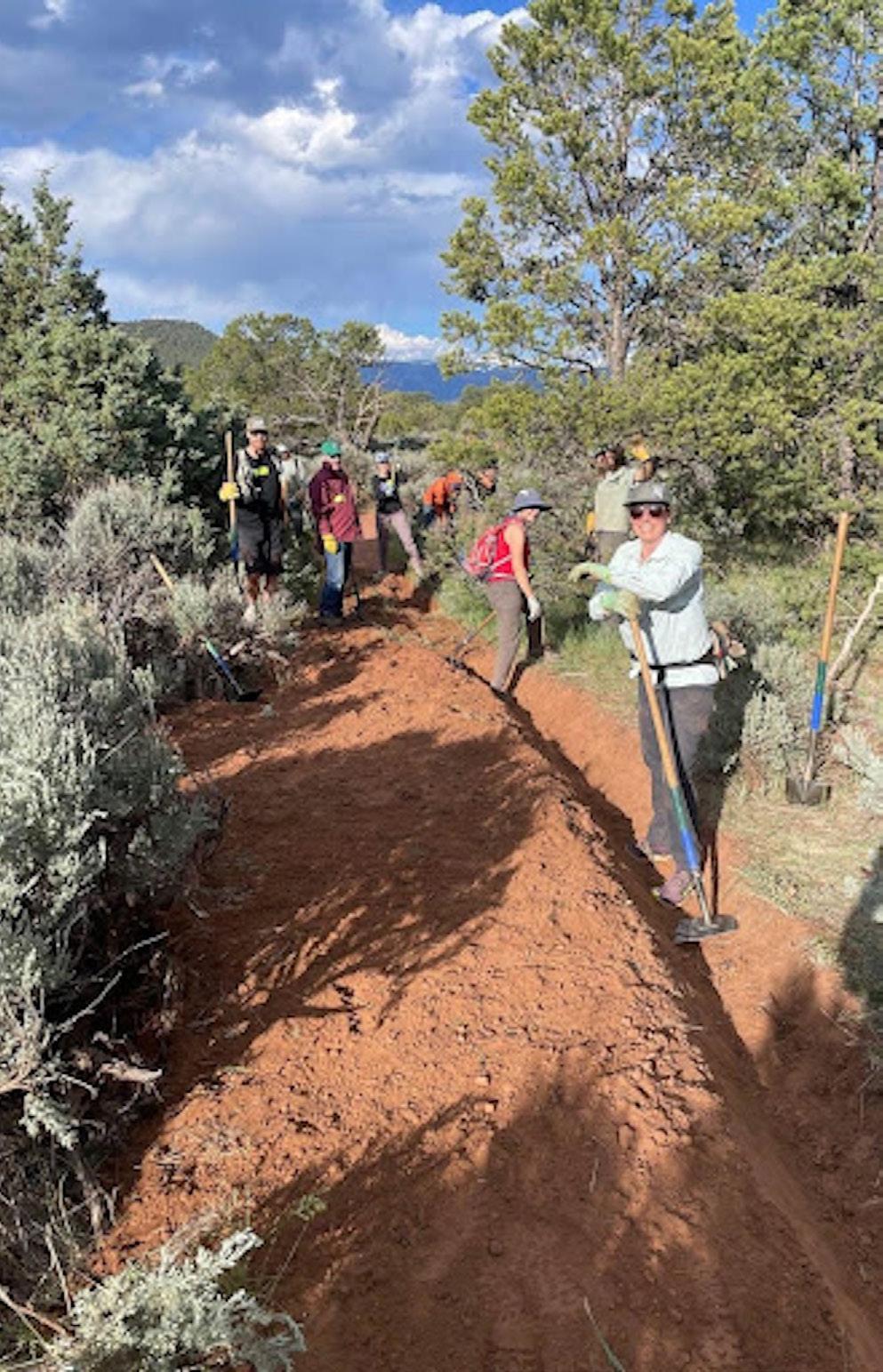
“Currently, we have a comment period at scoping. We have a comment period after they produce an [environmental assessment] and then we have an opportunity to protest,” he explained. “According to that rule, there won’t be opportunities to comment until the protest period, and the protest period will only be a 10-day period.” He added that the new rule would add per-page costs to protest filings over 50 pages.
Hart said that the goal this time is to get the BLM to defer the Roan Plateau leases, but the energy dominance and deregulatory agenda of the current administration makes it more difficult to challenge federal energy decisions.
“I hesitate to say that the Bush administration played by all the rules because there was some nefarious stuff that happened during that process, but they were sort of playing within the same rule book,” Hart said. “And this administration, they’re burning the rule book and trying to create their own.”
The public scoping period for the December oil and gas lease sale ends on July 9. Comments about the new BLM oil and gas rule are due by August 22.
Volunteers gathered for one of the recent field days at Red Hill. Photo courtesy of Red Hill Council
UNITED STATES OF AMERICA, JULY 4, 1776
DECLARATION OF INDEPENDENCE
THE unanimous Declaration of the thirteen united States of America, When in the Course of human events, it becomes necessary for one people to dissolve the political bands which have connected them with another, and to assume among the powers of the earth, the separate and equal station to which the Laws of Nature and of Nature’s God entitle them, a decent respect to the opinions of mankind requires that they should declare the causes which impel them to the separation.
We hold these truths to be self-evident, that all men are created equal, that they are endowed by their Creator with certain unalienable Rights, that among these are Life, Liberty and the pursuit of Happiness.--That to secure these rights, Governments are instituted among Men, deriving their just powers from the consent of the governed, --That whenever any Form of Government becomes destructive of these ends, it is the Right of the People to alter or to abolish it, and to institute new Government, laying its foundation on such principles and organizing its powers in such form, as to them shall seem most likely to effect their Safety and Happiness.
Group A:
Prudence, indeed, will dictate that Governments long established should not be changed for light and transient causes; and accordingly all experience hath shewn, that mankind are more disposed to suffer, while evils are sufferable, than to right themselves by abolishing the forms to which they are accustomed. But when a long train of abuses and usurpations, pursuing invariably the same Object evinces a design to reduce them under absolute Despotism, it is their right, it is their duty, to throw off such Government, and to provide new Guards for their future security.--Such has been the patient sufferance of these Colonies; and such is now the necessity which constrains them to alter their former Systems of Government.
Group B:
The history of the present King of Great Britain is a history of repeated injuries and usurpations, all having in direct object the establishment of an absolute Tyranny over these States. To prove this, let Facts be submitted to a candid world.
He has refused his Assent to Laws, the most wholesome and necessary for the public good.
He has forbidden his Governors to pass Laws of immediate and pressing importance, unless suspended in their operation till his Assent should be obtained; and when so suspended, he has utterly neglected to attend to them.
He has refused to pass other Laws for the accommodation of large
districts of people, unless those people would relinquish the right of Representation in the Legislature, a right inestimable to them and formidable to tyrants only.
ALL:
He has called together legislative bodies at places unusual, uncomfortable, and distant from the depository of their public Records, for the sole purpose of fatiguing them into compliance with his measures.
He has dissolved Representative Houses repeatedly, for opposing with manly firmness his invasions on the rights of the people.
He has refused for a long time, after such dissolutions, to cause others to be elected; whereby the Legislative powers, incapable of Annihilation, have returned to the People at large for their exercise; the State remaining in the mean time exposed to all the dangers of invasion from without, and convulsions within.
He has endeavoured to prevent the population of these States; for that purpose obstructing the Laws for Naturalization of Foreigners; refusing to pass others to encourage their migrations hither, and raising the conditions of new Appropriations of Lands.
He has obstructed the Administration of Justice, by refusing his Assent to Laws for establishing Judiciary powers.
Group A:
He has made Judges dependent on his Will alone, for the tenure of their offices, and the amount and payment of their salaries.
He has erected a multitude of New Offices, and sent hither swarms of Officers to harrass our people, and eat out their substance.
He has kept among us, in times of peace, Standing Armies without the Consent of our legislatures.
He has affected to render the Military independent of and superior to the Civil power.
He has combined with others to subject us to a jurisdiction foreign to our constitution, and unacknowledged by our laws; giving his Assent to their Acts of pretended Legislation: Group B:
For Quartering large bodies of armed troops among us:
For protecting them, by a mock Trial, from punishment for any Murders which they should commit on the Inhabitants of these States:
For cutting off our Trade with all parts of the world:
For imposing Taxes on us without our Consent:
For depriving us in many cases, of the benefits of Trial by Jury:
For transporting us beyond Seas to be tried
for pretended offences:
For abolishing the free System of English Laws in a neighbouring Province, establishing therein an Arbitrary government, and enlarging its Boundaries so as to render it at once an example and fit instrument for introducing the same absolute rule into these Colonies:
ALL:
For taking away our Charters, abolishing our most valuable Laws, and altering fundamentally the Forms of our Governments:
For suspending our own Legislatures, and declaring themselves invested with power to legislate for us in all cases whatsoever.
He has abdicated Government here, by declaring us out of his Protection and waging War against us.
He has plundered our seas, ravaged our Coasts, burnt our towns, and destroyed the lives of our people.
He is at this time transporting large Armies of foreign Mercenaries to compleat the works of death, desolation and tyranny, already begun with circumstances of Cruelty & perfidy scarcely paralleled in the most barbarous ages, and totally unworthy the Head of a civilized nation.
Group A:
He has constrained our fellow Citizens taken Captive on the high Seas to bear Arms against their Country, to become the executioners of their friends and Brethren, or to fall themselves by their Hands.
He has excited domestic insurrections amongst us, and has endeavoured to bring on the inhabitants of our frontiers, the merciless Indian Savages, whose known rule of warfare, is an undistinguished destruction of all ages, sexes and conditions.
In every stage of these Oppressions

Group B:
Nor have We been wanting in attentions to our Brittish brethren. We have warned them from time to time of attempts by their legislature to extend an unwarrantable jurisdiction over us. We have reminded them of the circumstances of our emigration and settlement here. We have appealed to their native justice and magnanimity, and we have conjured them by the ties of our common kindred to disavow these usurpations, which, would inevitably interrupt our connections and correspondence. They too have been deaf to the voice of justice and of consanguinity. We must, therefore, acquiesce in the necessity, which denounces our Separation, and hold them, as we hold the rest of mankind, Enemies in War, in Peace Friends.
ALL:
We, therefore, the Representatives of the united States of America, in General Congress, Assembled, appealing to the Supreme Judge of the world for the rectitude of our intentions, do, in the Name, and by Authority of the good People of these Colonies, solemnly publish and declare, That these United Colonies are, and of Right ought to be Free and Independent States; that they are Absolved from all Allegiance to the British Crown, and that all political connection between them and the State of Great Britain, is and ought to be totally dissolved; and that as Free and Independent States, they have full Power to levy War, conclude Peace, contract Alliances, establish Commerce, and to do all other Acts and Things which Independent States may of right do. And for the support of this Declaration, with a firm reliance on the protection of divine Providence, we mutually pledge to each other our Lives, our Fortunes and our sacred Honor.

Celebrate the 250th Anniversary of the United States of America
with a community reading of our Declaration of Independence. Saturday, July 4, 2026 - 10:00 a.m. at the Gazebo in Sayre Park, 1702 Grand Ave., Glenwood Springs, No need to memorize it. Groups A and B will be designated live at the event. For the “All” sections, every participant will read this together.
EDITOR'S NOTE: Angie Parkison of Glenwood Springs organized this public, nonpartisan reading of the Declaration of Independence. She thanked Stacey James of Gran Farnum Printing and the City of Glenwood Springs for providing copies, which will also be available at the event, and said, "I hope the experience will inspire attendees to think of themselves as Americans first. Even a few minutes of unity may make a difference."
edition is available every Friday afternoon on
and at businesses from Rifle to Aspen
Aspen High graduate brings her artpiece, ‘Independence,’ to the U.S. Capitol
BIANCA GODINA
Sol del Valle
Elizabeth Foster was the recent winner of the 2026 Congressional Art Competition for Colorado’s 3rd Congressional District. Colorado has eight congressional districts, and the 3rd District, the state’s largest by geographic area, includes Pitkin and Garfield counties, among others.
In this competition, high school students compete for the opportunity to have their artwork selected by the member of Congress representing their district for display in the United States Capitol. Foster received this honor from Congressman Jeff Hurd, who selected her piece to represent Colorado’s 3rd District.
The Congressional Art Competition has been held since 1982, and has recognized thousands of high school students whose artwork remains on display for approximately one year. During that time, members of Congress, Capitol staff and visitors have the opportunity to view the pieces. As Representative Sydney Kamlager-Dove said during the 2023 awards ceremony in a video published by the Congressional Institute, “Your work will be feeding the soul and will be feeding the Capitol for all of us members and the staff and the visitors of this amazing and historical institution.”
Foster was born in Spain, south of Madrid, to an American father and an Ecuadorian mother. A couple years ago, her family settled in the Roaring Fork Valley after spending time living between Spain and the Valley.
This Sol del Valle interview with Foster has been edited for clarity and brevity.
Where does your passion for art come from?
My family moved to Spain. That’s where I grew up
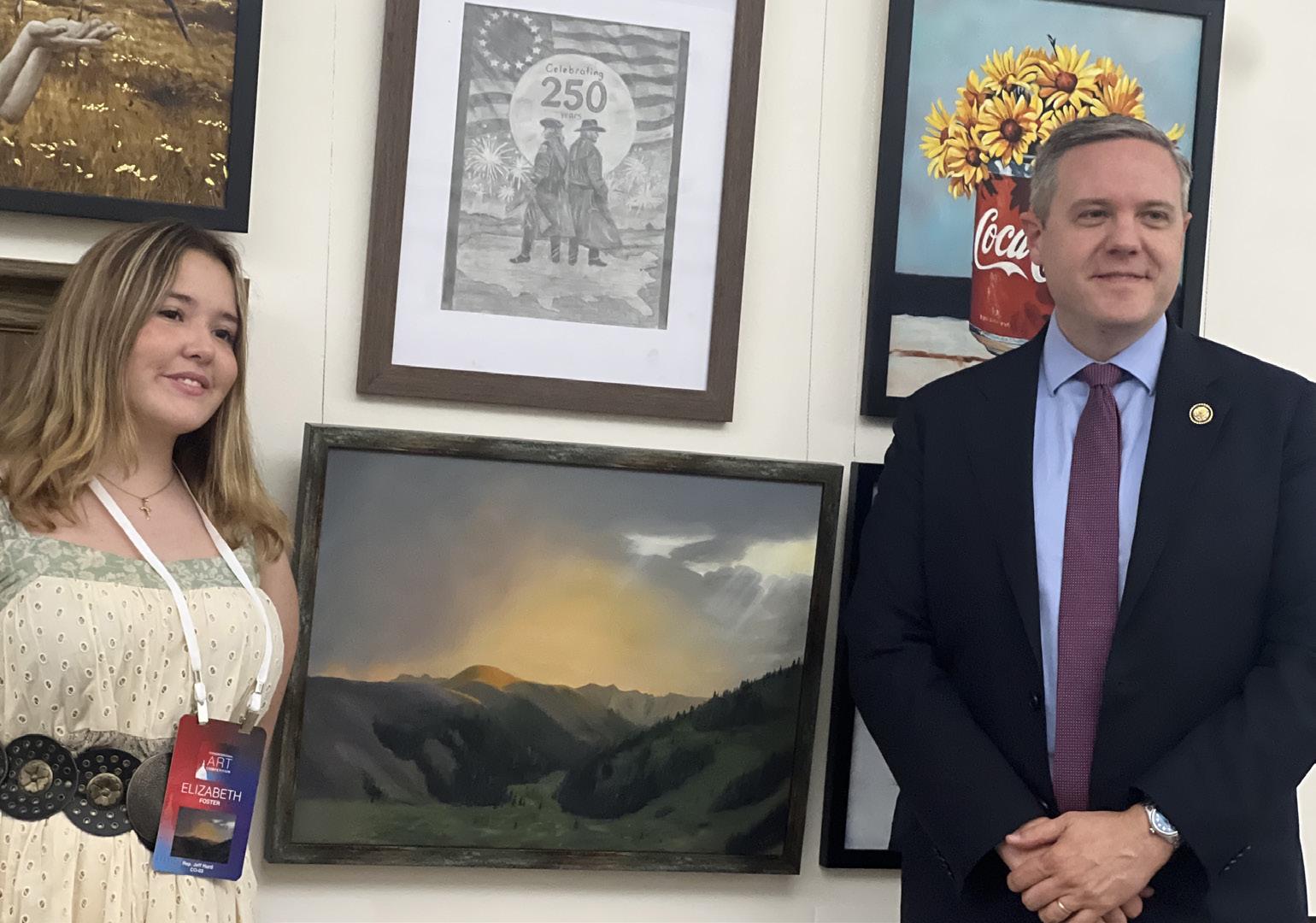
surrounded by art. When I was 6 years old, my parents enrolled me in an art studio, where I painted every day for three hours. I studied alongside people much older than me, “abuelos,” and they painted beautifully. It taught me to see culture from different perspectives. It’s difficult to create art in a rural place.
Why is painting important to you?
I think one of the most important things is the nature in our community, where there’s so much green, so much snow, so much natural beauty. That’s what I wanted to show people. Nature is something we have to protect. Through my paintings, I add
color. Color is something that represents me. There is so much color people can see if they look at nature or at different cultures.
What is your painting, “Independence,” based on?
The painting is based on Independence Pass. People go there and see that beauty. Every time they visit, they can discover something new. It’s always different; the colors are always changing. I visited at sunset and saw those incredibly beautiful colors.
How did it feel to visit the Capitol and stand alongside some of our elected representatives?
It was wonderful. Many people told me that every representative and member of Congress would see those paintings while they were working. It’s an honor for our Latino community and for the United States. Foster created her artwork using a painting technique called reflection — painting based on memory — capturing the landscapes and colors of Independence Pass as she remembered them. Her piece will remain on display at the U.S. Capitol for the next year, alongside hundreds of works by other student winners from across the country.
To view all of this year’s winning artwork, visit, bit.ly/artecongresional
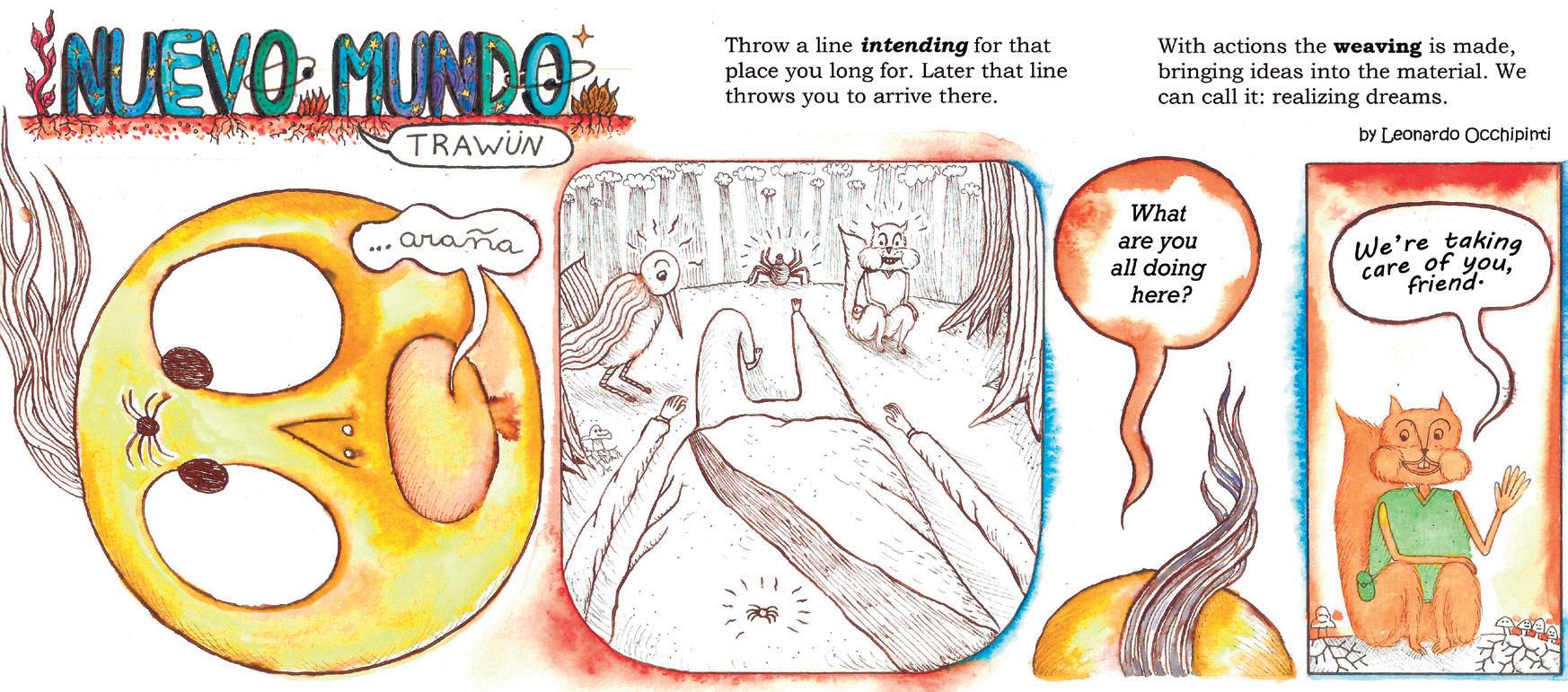
Elizabeth Foster and CD3 Rep. Jeff Hurd pose for a photo with her painting, “Independence,” in the U.S. Capitol.
Photo courtesy of Tim and Shirley Foster, Elizabeth’s parents
Share your works in progress with readers by emailing illustrations, creative writings and poetry to fiction@soprissun.com

An Independence Day tradition: counting the blooms — red, white and blue
Gregory Staple Marble
EDITOR’S NOTE: This piece is adapted from the author’s field guide: “Get Out There Crystal River Valley Wildflowers” (2024)
Each July 4 — along with attending Redstone’s folksy parade and barbecue — I celebrate our country by doing a bio blitz, counting every floral species I can find in my back meadow or on a trail. Early summer blooms typically make it a grand day to be a naturalist.
What better way to honor our nation’s values and its remarkable botanical heritage?
I also make time to reread some of Donald C. Peattie’s enduring reflections, written at the outset of World War II, on what citizen scientists might contribute to the cause of liberty on the home front. An excerpt appears below.
A naturalist “is by profession a defender of just such human values as men die for [because] science is as precious to the cause of liberty as the manuscript of the Constitution, and more so; only by the ethics and intellect of free scientists can it be held aloft … Nature is an ultimate sanctuary for sanity and goodness: American nature is the first national principle.
To it I am dedicated.” — Donald C. Peattie, “The Road of a Naturalist” (1941)
Comparte tus proyectos creativos aún en proceso con nuestros lectores. Puedes enviarnos un correo electrónico con tus ilustraciones, creaciones literarias y poesía a fiction@soprissun.com
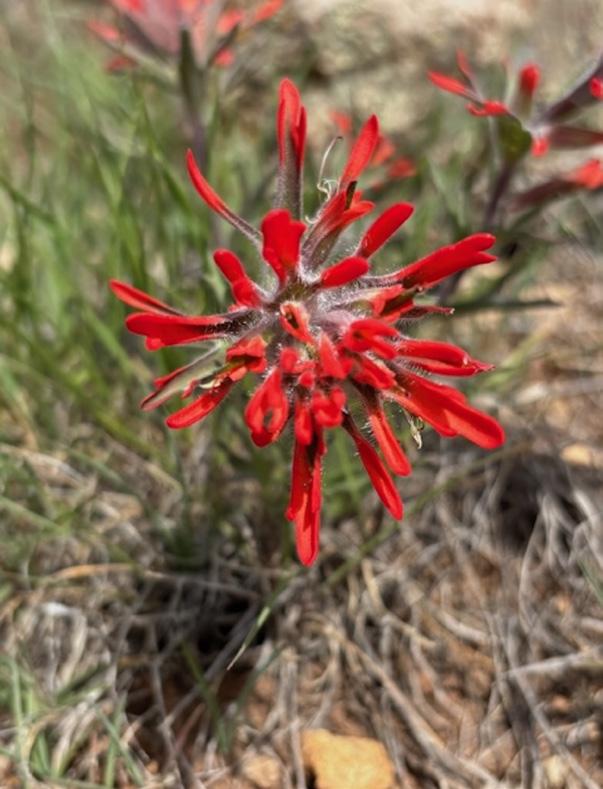

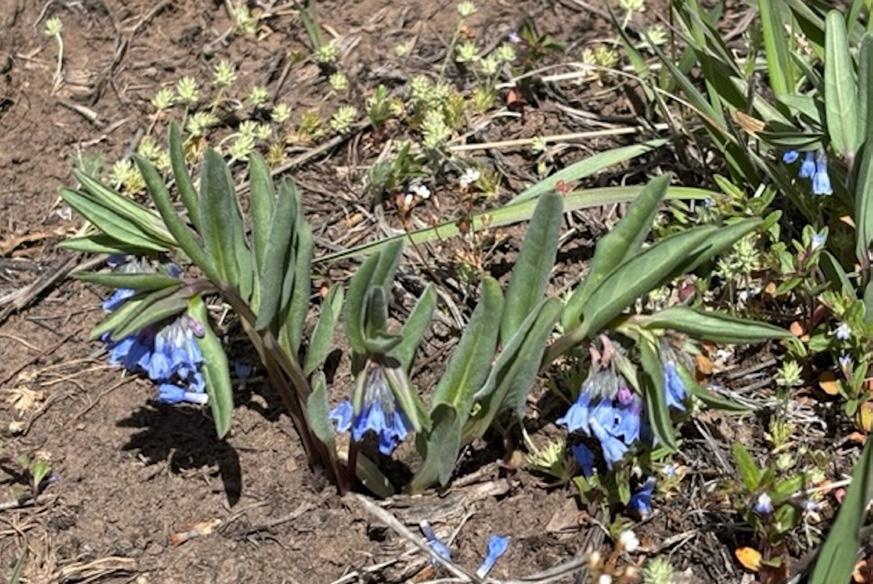

Local wildflowers (from red, white, to blue): Showy Indian Paintbrush (Castilla chromosa), Wild Licorice (Glycyrrhiza lepidota) and Dwarf Bluebells (Mertensia fusiformis).
Photos by Gregory Staple

only by the number of homes it creates, but by the legacy it leaves. For me, that legacy is simple: Retain Wild at Cattle Creek and the Roaring Fork River. Rosemary Burkholder Cattle Creek Confluence Coalition
Fund the infrastructure
Aspen One frames the El Jebel crossing project as a solution to our housing crisis, but this development appears to prioritize corporate convenience over public safety.
Aspen One is seeking a “Variance from Improvement Standards” for the JW Drive/ Highway 82 intersection — an admission that the project is too large, as the intersection currently operates at a failing Level of Service. Rather than funding necessary upgrades, they are asking Eagle County to
We anticipate that the developer’s third Traffic Impact Study will likely adjust housing types to manipulate trip counts and bypass safety requirements. By selectively applying Institute of Transportation Engineers standards to maintain trip increases below the 20% threshold, the developer appears to be avoiding the Colorado Department of Transportation permits needed for necessary road upgrades.
Rather than juggling numbers, they should step up and fund the infrastructure

this project requires. This is the best path, if they want less neighborhood resistance, and ultimately county approval.
Aspen One’s current strategy appears to be a calculated effort to externalize costs. By forcing traffic into a failing bottleneck and apparently manipulating data to avoid state-mandated upgrades, they seem to prioritize profit over public safety and regional evacuation routes. It is not too late for them to agree to fund the necessary improvements — perhaps by partnering with “The Fields,” another developer requesting a variance on the same stretch of Highway 82.
While Aspen One emphasizes the housing needs of their workforce, they appear to disregard the safety and quality of life of existing mid-valley residents — many of whom are long-term community members, season passholders and/or SkiCo staff/alumni.
We cannot grant variances to developers contributing to systemic failure. If a project cannot afford the infrastructure to make it safe, it is too big for the location. It is time for Eagle County to hold the developer to standard safety regulations, not grant a pass to ignore the reality of our failing roads.
Susan Sullivan Carbondale
The Sopris Sun welcomes local letters to the editor. Shorter letters stand a better chance of being printed. Letters exclusive to The Sopris Sun (not appearing in other papers) are particularly welcome. Please, no smearing, cite your facts and include your name and place of residence or association. Letters are due to news@soprissun.com by noon on the Monday before we go to print.
from page 6
Safety professionals recommend that people take steps to remove flammable debris from near their homes, including dead vegetation and lawn cuttings. While many lawns are brown due to drought conditions, property owners and residents can still mitigate wildfire risk by cutting the grass short. Professionals also
ANDERSON RANCH
recommend preparing go-bags and a home evacuation plan in case of fire. For go-bags, the recommendation is to have essentials including clothing, medical prescriptions, ID and important paperwork prepared to be able to stay away from the home for at least three days in case of emergency.
from page 15
Ranch Week will end on July 18 with its family-friendly and widely popular Ranch Picnic and Auction. This free event is an opportunity for locals, visitors, families and supporters of the Ranch to experience its communal environment. The day will include live music by local band Wild Flight, hands-on children’s art activities, face painting, a silent auction and more. Attendees can enjoy complimentary hot dogs, popcorn, lemonade and iced tea or purchase a $17 wristband for an all-you-can-eat option from the Anderson Ranch Cafe.
“The idea of the community coming together and joining the artists on campus for a meal goes back to the late 60s, early 70s,” Waanders said. “It used to be a potluck. They put a big table down the middle and people would bring their shared dish. Gathering together and sharing a meal feels so authentic to the ranch.”
The silent auction comprises over 130 works donated by leading contemporary artists, local creators, workshop students and faculty members, and is a chance for bidders to take home a piece of the ranch’s history.
“It’s a real mix of artists who are the
heart and soul of the ranch,” Waanders said. “We have trustees and supporters who will tell you what year they bought their piece … Taking home a piece of the ranch is part of what makes this so great.” At Anderson Ranch history is cherished and the future is bright. While art making and education bring people to the campus, it is the connections and stories they create that keep them coming back.
“For such a long time, the ranch has been an inspiring place in our valley. It is filled with locals, outsiders, guests, who are all coming here with a shared purpose to be creative, make something new and learn something new,” Fortier said. “There is a never ending parade of stories to tell with the people who come through our gates. Something inspiring, interesting and thought provoking is always happening in the studios here.”
Anderson Ranch welcomes the community all summer long, including at the weekly Friday Lunch Auctionette. Visit andersonranch.org/events/ranch-week-2026/ for more information about Ranch Week, including event parking and registration.
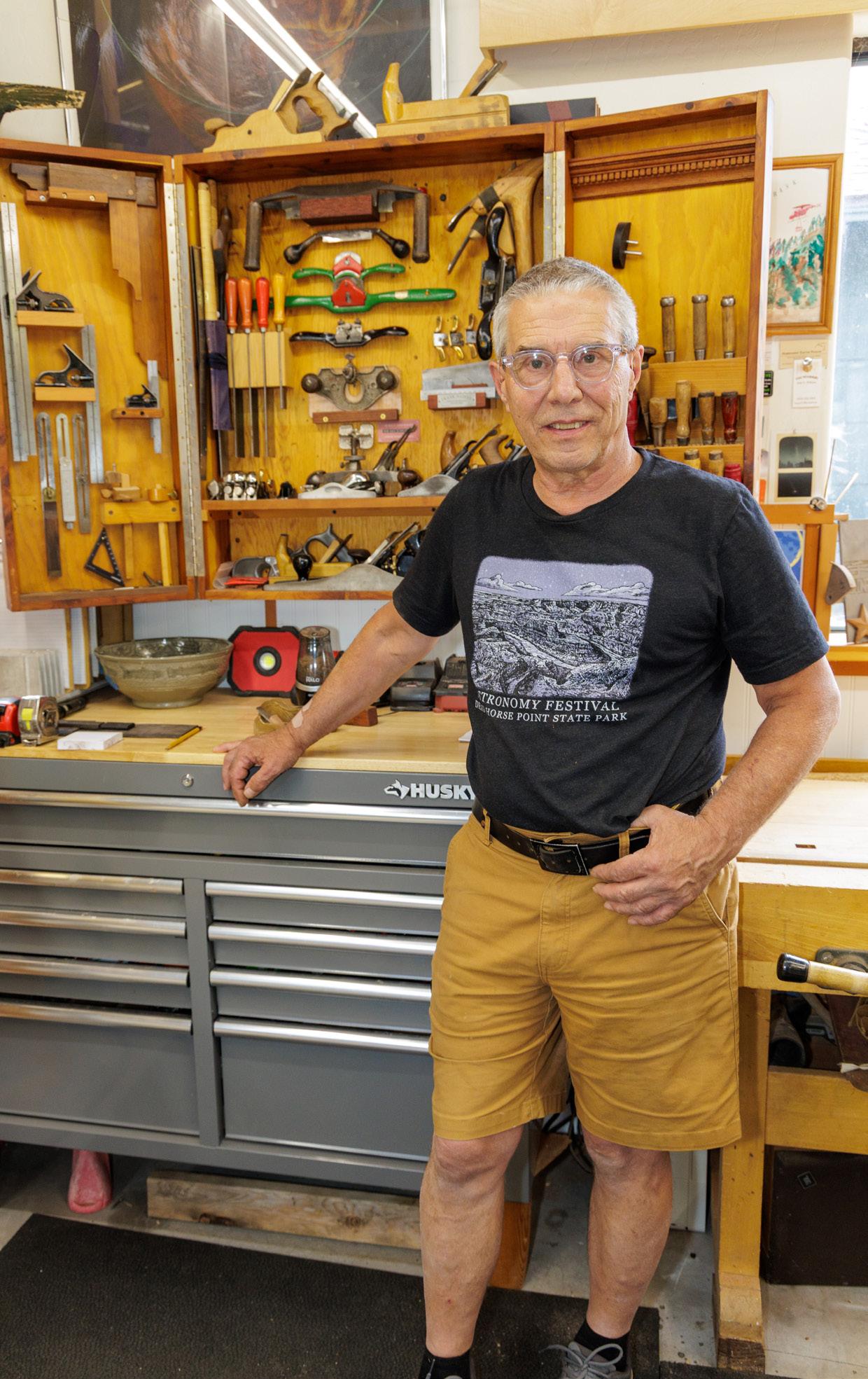
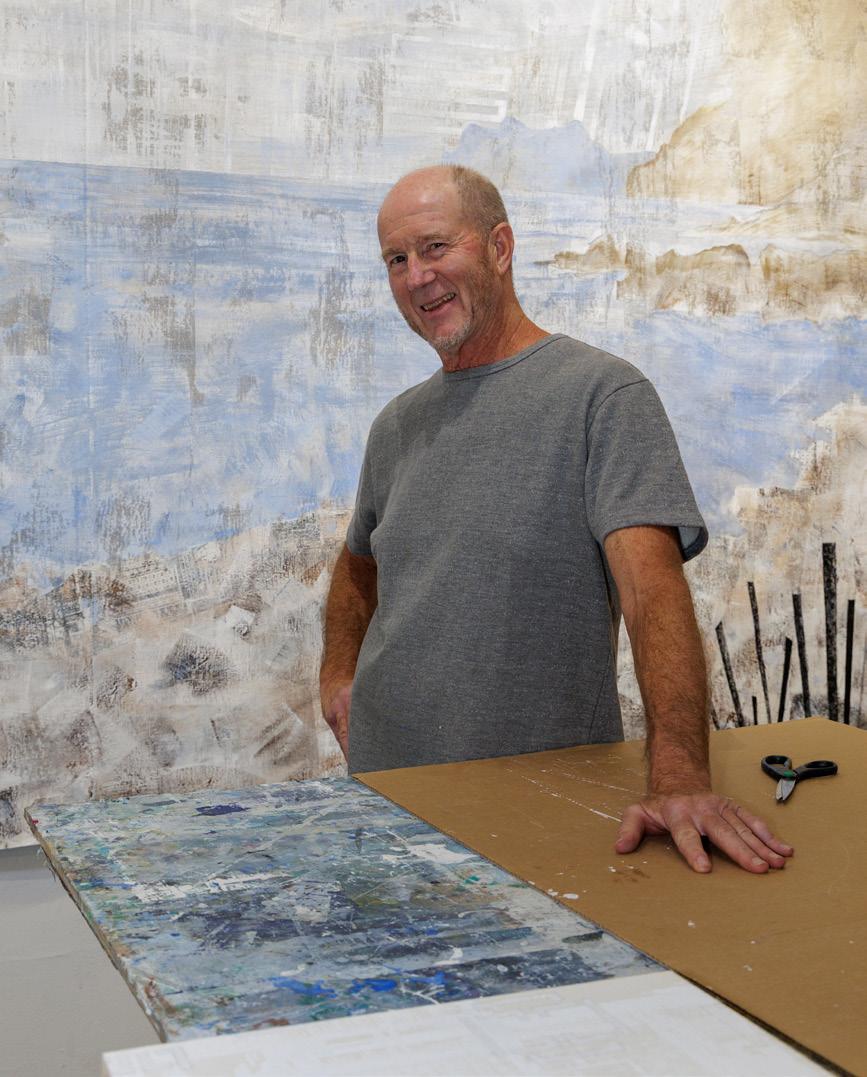
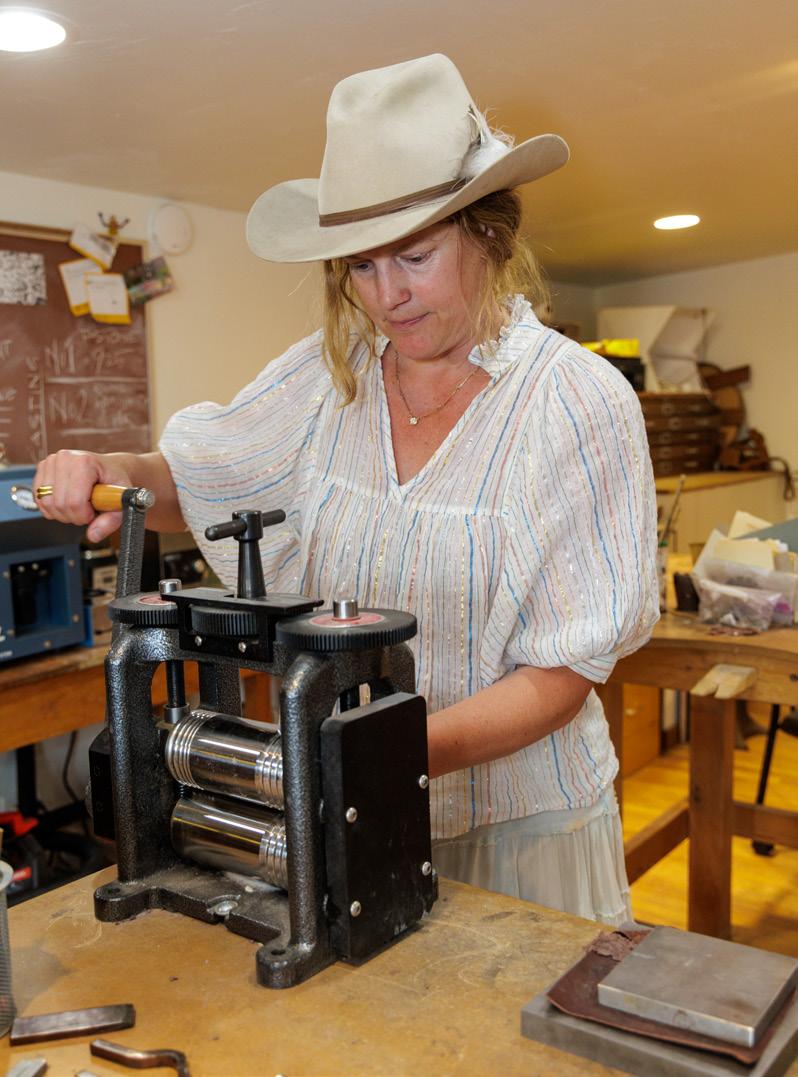
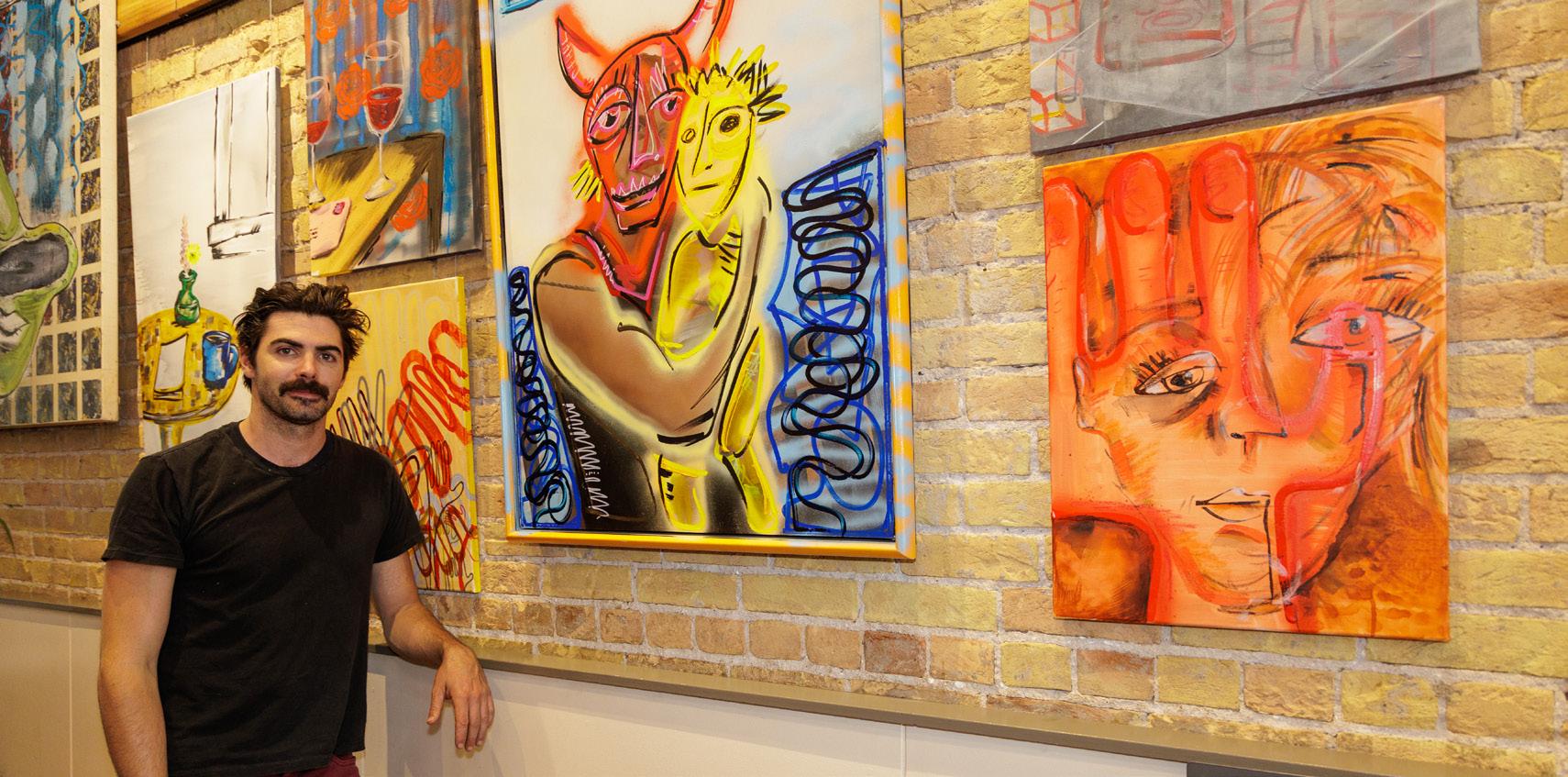







Robert Burch with his art on display at Bonfire Coffee.
Megan DeNev Wussow reshaping a silver band.
Andrew Roberts-Gray in his studio at Saw.
Frank Nadell in his studio in Carbondale.