‘Preparing together’
An escaped agricultural burn and fire potential ahead
SKYLER STARK-RAGSDALE Managing Editor
The 8-10 acre fire that spread from a Carbondale agricultural burn in late March is not common. But it’s also not uncommon.
That’s according to Carbondale & Rural Fire Protection District Fire Chief Rob Goodwin, who said agricultural burns often begin in March and April, and can escape their set margins under windy conditions — as is what happened at 6000 Highway 133, roughly five miles south of Carbondale, on March 26.
The party ignited a controlled agricultural burn in their ditches, which is commonly done before turning a ranch’s water on to free the flow of debris. Goodwin said they had notified the fire district of the controlled burn before beginning.
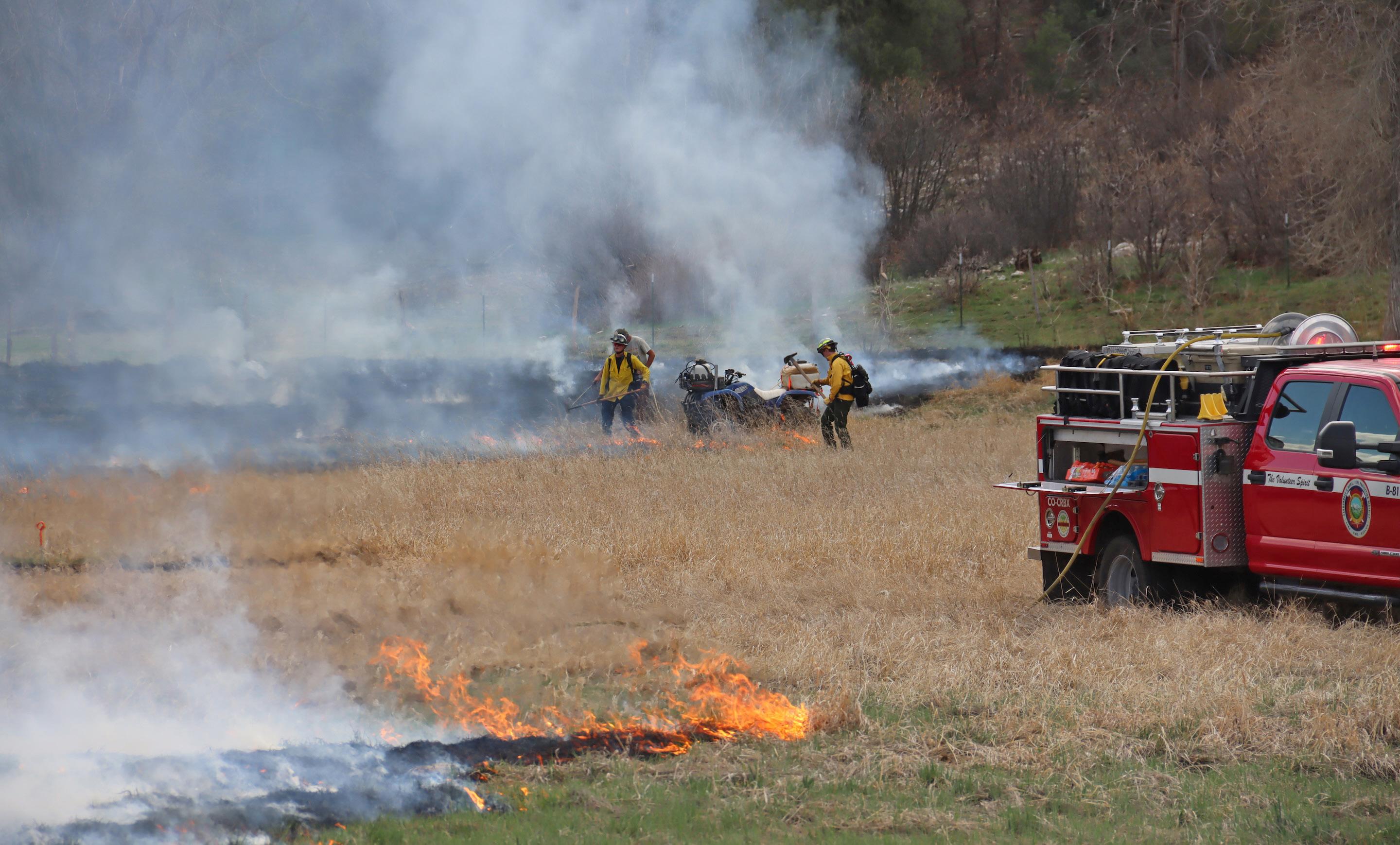
“Later in the afternoon, the winds picked up, and a piece of it [the fire] escaped and expanded across one of their agricultural fields,” he said.
The party notified the emergency dispatch center at 3:20pm and the first Carbondale Fire unit arrived on scene at 3:31pm. Responders were able to stop the spread within 30 minutes and surround the fire with a control line within an hour, keeping it from leaving the cultivated
field of the property. They extinguished it by 6:51pm.
“It’s not super uncommon for that to happen,” Goodwin said of an agricultural burn escaping its perimeters but remaining on the cultivated land. “To have a wildland fire that goes ripping up the hill and all that — that would be uncommon in March.”
What is, however, abnormal are the prolonged drought conditions rippling across the state, he said. The Roaring Fork Valley has endured severe, extreme or exceptional drought for nearly a year, according to drought.gov. Following record-low snowfall this winter, the Colorado Headwaters River Basin’s Snow Water Equivalent — used to measure the snowpack — currently sits in the zero percentile compared to data collected over the previous 40 years.
“Every piece of vegetation, in the wildland or anywhere, has been stressed,” Goodwin said of the effect of local drought. “Is stressed.”
Fire agencies are predicting what’s to come.
The National Interagency Fire Center predicted in its April 1 outlook that
the Rocky Mountains will see a spring “green-up to limit fire growth” in May, but by June “the heat and long-term drought will increase the [fire] potential on the West Slope and Front Range of Colorado.”
The Front Range, the center said, is already approaching moisture values in highelevation, large-diameter fuels consistent with a fire season’s typical peak.
The center predicted fire potential on the Western Slope and Front Range to remain above normal in June and July, despite the traditional onset of the monsoon season.
“This elevated potential will continue into July regardless of the progression of the monsoon,” the center states. “As any initial monsoon moisture surges would be accompanied by drier thunderstorms increasing ignition potential.”
At this point, meteorologists can’t predict the significance of an anticipated monsoon season with any degree of accuracy, according to National Weather Service Meteorologist Lucas Boyer. He said, however, the latter half of the summer is “going to trend wet” based on the 50-year record the service keeps.
“Statistically, it’s likely that we will
see moisture then,” he said. “But it’s not guaranteed.”
Though conditions are ripe for major fire activity, Goodwin said a wildfire is contingent on the existence of an ignition source and conducive fire conditions.
“If we don’t get a start — a fire start — on the wrong day with the wrong winds and all that, then you won’t have that fire,” he said, adding later, “We’ve had years where conditions for a wildfire and extreme wildfire were horrible … and we just didn’t get starts that year. We didn’t have big dry lighting cells coming through and all that.”
Regardless of what’s to come, he said the fire district, along with others in the area, are as prepared as they can be, increasing their seasonal staffing to anticipate the fire season and preparing a wildfire messaging program to keep the public informed.
“I think this year, the conditions are extraordinary. It’s ready. Conditions are ripe for that,” Goodwin said of wildfire conditions. “But I will say we all know that, and we train together. We work together. We’re preparing together.”
Firefighters quell an agricultural burn that escaped its boundaries on March 26, roughly five miles south of Carbondale.
Photo courtesy of Carbondale Fire
Global neighbors
VOICES Radio Hour, brought to you by VOICES in partnership with KDNK, The Sopris Sun, and the Connection is the Medicine Foundation. Each episode we share stories from members of our community. We hope this serves to preserve our oral history of who we are, where we come from, and who we aspire to be, through the tradition of storytelling.
This episode of VOICES Radio Hour is called “Simple Gifts,” and it’s about the treasures in life that reveal themselves to us when we take the time to look for them, a gift from the universe that lit up your world in the least expected ways. The episode aired on KDNK at 6pm on Sunday, March 22, but you can still watch or listen online anytime at voicesrfv.org/voices-radio-hour The storytellers for this episode are Caitlin Causey, Shannon Ewing and Raleigh Burleigh, moderated by Mitzi Rapkin.
I am pressed between two Haitian truck drivers in the cab of a semi, stuck in sweltering, smoggy Port-au-Prince traffic, and I can’t figure out why neither of them will look at me. We have spent what feels like an eternity creeping through the congested city streets, unmoving, in uneasy silence.
two manual laborers — I’m curious: what do they think of this outpouring of aid? Do they resent us?
At first they are polite. They talk about how it was good to get some assistance, how great the need was in the beginning. But then the driver glances at me and says, “And, look, it’s quite good for you.”
OPINION
VOICES
RADIO HOUR
By Shannon Ewing
The three of us work for an organization called Doctors Without Borders — they transport supplies to different hospitals and I’m an HR volunteer. The organization has strict security rules, so it’s bizarre for all three of us that I am sandwiched between them.
They’re young, in their mid 20s, with close-cropped hair and the standard Port-au-Prince outfit of second-hand t-shirts and worn out jeans. They’re both carefully looking out the windshield and not in my direction.
The windows are down. We’re trying to cool off from the afternoon heat, but all that pours in are diesel fumes and smoke from corner cooks — women crouched over charcoal cook stoves selling styrofoam containers of jerk chicken and rice and beans because most of the restaurants are closed. Colorful tap tap buses grind by, music and horns blaring.
Sweating and awkwardly smashed up against each other as I fill the jump seat, I try to make conversation — me in my stumbling French and they with their thick Creole accents — this is uncomfortable in so many ways.
It is three months after a 7.0 earthquake killed 300,000 people almost overnight, and the capital city is teeming with aid workers. Most are focused on providing healthcare and only one organization on housing, which means the NGOs have rented the standing houses while locals are living in tent cities under bedsheets propped up with sticks. It will be monsoon season soon.
I have spoken to many local friends and colleagues about the devastation of the earthquake, and, now — here with these
LETTERS
CORRECTIONS: The Sopris Sun miscredited a letter to the editor titled “CAFCI endorsements” in the April 2 issue, stating that Age Friendly Carbondale, rather than the Carbondale Age-Friendly Community Initiative (CAFCI), signed the letter. And a happy belated birthday to Dan Markoya, who celebrated 40 rotations on April 3 and whose name was misspelled in last week’s birthday list.
Garden Mentoring
If you have wanted to grow a vegetable garden but have been overwhelmed or not sure how to start — this might be the support you have dreamed of. The Garden Mentoring project pairs you with a Master Gardener for the entire summer to support and lead you through the entire process. Learn what you can grow and how to use less water in a potentially dry summer.
This project is a collaborative effort between Roaring Fork Food Alliance, Garfield Agricultural Extension Office and Garfield and Eagle Master Gardeners.
I don’t know what he means.
He says, “Look at how many jobs it has created for you all.” I reply that I can’t speak for any other organization than the one they work with, but that everyone who has come in to help is a volunteer. We are not getting paid.
The passenger’s brows furrow and he asks, “If you’re not getting paid, then why are you here?”
I flash back to the whirlwind week before I left. I was given seven days’ notice to get on a plane with a one-way ticket. I’m telling people I’m leaving and friends tell me that they, too, would come help, but they’ve got a mortgage to pay, student loans. The woman who worked the hotel front desk said she would come in a heartbeat, but she has a cat.
I didn’t have a mortgage. I didn’t have a cat. So I got on the plane.
So when he asks, “Why are you here?” I say, “Because you are my neighbors and you needed help. I came with my two hands.”
Nobody says anything for a long time.
The truck hasn’t moved. The engine still idles. The fumes and the music and the horns are still pouring through the windows. Outside the truck hasn’t changed. Inside, something has shifted.
These two men, who have just spent the last hour avoiding eye contact, now actually look at me. We’re still hot, still smashed leg to leg. But what used to feel like being trapped now feels like a different kind of closeness.
They had assumed that we were profiting off of the worst thing that had ever happened to their country. And — with the food being flown in, the housing, the international budgets being spent — of course they did.
But in this cab, in this moment, these three people finally see each other.
I came back and started an organization called Global Neighbors because, in the cab of that truck, that’s what those men taught me we are.
Shannon Ewing spent 15 years in the field implementing international development and humanitarian aid projects before becoming a blockchain technology specialist and helping to produce the world’s largest Ethereum event. She currently organizes contemporary idea salons to reengage society in discussions about the world we want to build.
The purpose of this project is to train people how to grow food, and help create more long-term food supply resilience throughout local communities. We will provide installation support, supplies and one-on-one mentoring from a Master Gardener for you to create a successful and productive garden. Please fill out this form to express your interest: tinyurl.com/ mr2ex38u or email gwen@gwengarcelon. com to request a form.
And many thanks to Frias Properties for their donation to this effort. We are so grateful for your support of our local food system!
Gwen Garcelon Carbondale
Wells Kerr
I was moved by A.O. Forbes’ recent piece about Edwin Silas Wells Kerr. I knew Wells too, and reading the column brought back a flood of memories and gratitude.
My parents were teachers at Colorado Rocky Mountain School in the 1960s, and I grew up there as a faculty child. Even though I was quite young and Wells was
decades older, he always treated me with genuine respect and kindness. I never felt like “just a child” in his presence — he made me feel seen, heard and important.
Wells had a rare combination of integrity, warmth, and attentiveness. He carried adversity with quiet grace — having lost part of his hearing as a child due to a medical error — but remained fully engaged with the world. And most importantly to me as a child, he was fun.
He took time with me in ways that mattered. He wrote me letters when he was away, gave me small Christmas ornaments that I still have, and would recite playful poems that delighted me. In fifth grade, I wrote a paper titled “The Most Remarkable Person I Know.” It was about Wells.
Looking back, I can see how profoundly he shaped me. His example inspired my own path as a teacher and my belief in treating every child with dignity and care.
A.O. Forbes captured something essential about Wells. For those of us who knew him, he remains unforgettable.
Pam Horner-Porter Carbondale continued on page 18
Editor James Steindler
970-510-3003
news@soprissun.com
Managing Editor
Skyler Stark-Ragsdale
Sol del Valle Editora Bianca Godina bianca@soldelvalle.org
Digital Editor
Ingrid Celeste Zúniga ingrid@soldelvalle.org
Lead Editorial Designer Terri Ritchie Partnerships & Engagement Manager Luise Nieslanik
Advertising Department adsales@soprissun.com
Sol del Valle Marketing & Development Manager
Margarita Alvarez margarita@soldelvalle.org
Advertising Designer
Emily Blong
Delivery Frederic Kischbaum
Bartlett
Proofreaders
Lee Beck
Tracy Kallassy
Ken Pletcher
Hank van Berlo
Executive Director
Todd Chamberlin 970-510-0246 todd@soprissun.com
Board Members / Mesa Directiva board@soprissun.com
Klaus Kocher • Kay Clarke • Eric Smith
Roger Berliner • Elizabeth Phillips
Anna Huntington • Loren Jenkins
Carlos Ramos • Gayle Wells
The Sopris Sun Board meets at 6pm on second Thursdays at the Third Street Center. The Sopris Sun, Inc. is a 501(c)(3) nonprofit corporation with a mission to inform, inspire and build community by fostering diverse and independent journalism. Donations are fully tax deductible.
Sincerest thanks to our Honorary Publishers for their annual commitment of $1,000+
Kathy & Carter Barger
Lee Beck & John Stickney
Karen & Roger Berliner
Emily & George Bohmfalk
Kay Brunnier
Michelle & Ed Buchman
Sandy & Paul Chamberlin
Frances Dudley
Sue Edelstein & Bill Spence
Deborah & Shane Evans
Greg & Kathy Feinsinger
Peter & Mike Gilbert
Michael & Nancy Kish
Gary & Jill Knaus
Jan & Warren Koster
Bob & Dori Libson
Donna & Ken Riley
Eric Smith
Patti & George Stranahan
Gayle & Dick Wells
Elizabeth Wysong
Legacy Givers for including us in their final wishes.
Mary Lilly
Donate by mail or online: P.O. Box 399
Carbondale, CO 81623
520 S. Third Street #26 970-510-3003 soprissun.com/Donate
The Sopris Sun, Inc.
is a proud member of the Carbondale Creative District

OUR UNDERWRITERS AND NONPROFIT PARTNERS!
SCUTTLEBUTT
Staircase Park
Staircase Park in Carbondale is closed due to the wooden stringers holding the stairs in place having rotted out from underneath, according to Parks & Rec Director Eric Brendlinger. “So, it is unable to be repaired,” he continued. “We are looking at some different solutions and potentially a material change for longevity’s sake.” There is currently no estimated timing for repair or the park’s reopening, as the staircase is the only entry point.
Election results




FirstBank
Alpine Bank
Colorado Mountain College
Nordic Gardens
Hilary Porterfield
Basalt Library
NONPROFIT PARTNERS
Two Rivers
Unitarian Universalist
Carbondale Arts
Carbondale Rotary Club
Colorado Animal Rescue
Interested in becoming an Underwriter or Nonprofit Partner?
Email Todd@soprissun.com or call 970-987-9866
A new mayor is in town. Finishing her second term on the Carbondale Board of Trustees, Erica Sparhawk was elected as Carbondale’s next mayor Tuesday evening, winning the election against Patricia Savoy, who was a newcomer to Carbondale politics. Sparhawk is set to take the reins from outgoing mayor Ben Bohmfalk. “The vote of confidence from the community is really, really huge for me,” Sparhawk said at the Carbondale election party Tuesday night. Two incumbents and one newcomer took the three open trustee seats. Incumbents Colin Laird and Chris Hassig were reelected, while Kade Gianinetti will see his first time on the board, taking the place of Sparhawk. In Basalt, incumbent Angela Anderson was reelected to town council. She is joined by Elyse Hottel and Greg Shaffran to fill the three open seats.
Caddie props
Three local high school students, and caddies of the Roaring Fork Club, were awarded full-rides for college tuition and housing through the Western Golf Association’s Chick Evans Scholarship: Roaring Fork Ram Brook Fullerton and Basalt Longhorns Javier Hernandez and Dylan Johnston. Following a day of interviews at the Denver Country Club in January, 15 young caddies from Colorado were selected, including these three bright young men. For details about the Evans Scholarship, founded in 1930, visit wgaesf. org/a-life-changing-opportunity
Community Grants
The Western Colorado Community Foundation will open the application window for 2026 Community Grants on April 13. The funding serves to “stabilize critical programs that deliver food, housing, health and safety services to vulnerable populations,” amid the federal funding shortfall, a press release


stated. Those applying for grants must submit a letter of interest on the foundation’s portal by May 15 to meet the initial deadline. For more information, visit wc-cf.org/community-grants/
Oil & gas lease sales
The Bureau of Land Management is gearing up for yet another oil and gas lease sale in Colorado. The agency plans to lease 31 parcels, or more than 17,000 acres, in September across five counties on the West Slope and two on the Front Range, including more than 3,100 acres in Garfield County. In a late-March quarterly lease sale, as reported by the Post Independent, 68 parcels, covering more than 42,500 acres in seven West Slope counties and two on the Front Range, generated close to $8.1 million for the federal government. A substantially larger lease sale is set for June, exposing 174 parcels covering more than 160,000 acres between two Front Range counties and six on the West Slope, including Garfield. To comment on the September lease sale, visit bit.ly/4dzAONm
Fire safety
The Glenwood Springs Fire Department issued a public service announcement on April 1 regarding elevated wildfire risk. All open permits were canceled and won’t be issued again until the winter, the department said. “Pay close attention to red flag days in addition to staged fire restriction




measures,” it added. To help prevent fires, ensure trailer chains are not dragging on the road, keep smoking materials inside and do yard work in the morning. “Any activity that produces a spark or flame needs to be closely monitored,” the department said. It advised individuals to have an evacuation plan for family and pets and sign up for emergency alerts at glenwoodfire.com
GarCo Republicans
The Garfield County Republican Central Committee is looking for volunteers as they prepare for the upcoming State Assembly, Garfield County Republicans Chairman Spencer Thomas announced in an email. The assembly will be held on Friday and Saturday, April 10-11, in Pueblo. To volunteer, visit bit.ly/3PUY3aO
They say it’s your birthday!
Folks celebrating another trip around the sun this week include: Janet Ferrara, Hannah-Hunt Wander and Ciara Morrison (April 9); Suzanne Lavin, Herschel Ross and Marty Treadway (April 10); Krys Greenwood and Iris Nott (April 11); Brandon McDuffey and Susan Shirley (April 12); Dan Bullock, Diane Kenney, Nicole Levesque, Brad Moore, Jane Munsell, Vicki Peterson and Bill Shepherd (April 13); James Armstrong, Dino Baldizan, Ed Brown, Mark Giesecke and Roberta McGowan (April 14); Aisha Weinhold, Deloras Pulver and KDNK (April 15).



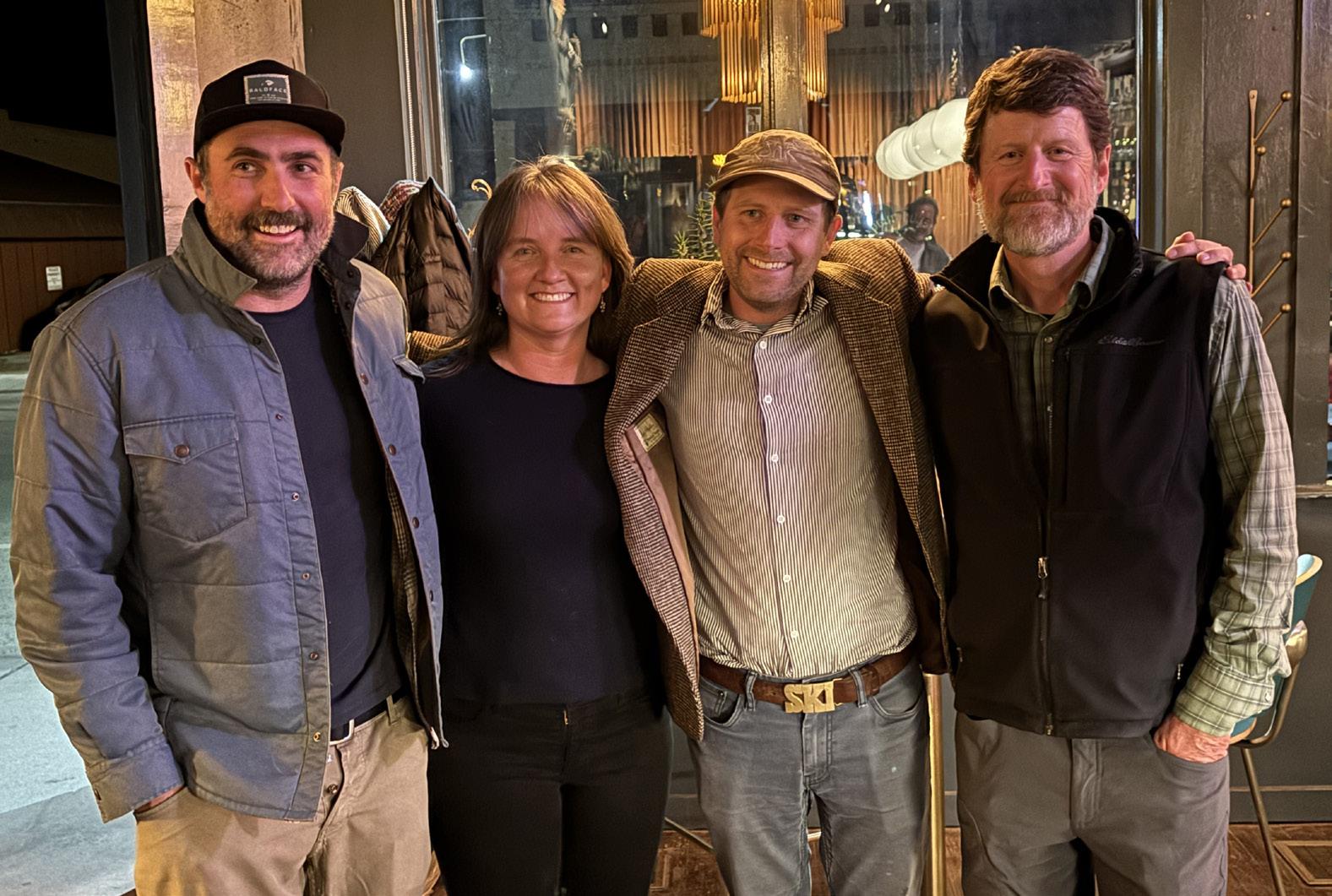
Carbondale’s new elected officials celebrate Tuesday night at an election party in El Dorado, including (left to right) new Carbondale trustee Kade Gianinetti, incoming mayor Erica Sparhawk, and returning trustees Chris Hassig and Colin Laird. Photo by Skyler Stark-Ragsdale
Local beaver advocates discuss
dead-in-the-water
ANNALISE GRUETER
Sopris Sun Correspondent
In March, the Colorado legislature considered House Bill 26-1323, “Wildfire Resiliency Prohibiting Taking of Beavers,” sponsored by HD57 Rep Elizabeth Velasco. The proposed legislation would limit hunting or killing of beavers on public lands to protect the animals and stabilize their role in ecosystems, which also serves as a mode of wildfire management.
The Colorado Agriculture, Water & Natural Resources Committee voted 10-3 against the bill on March 23, postponing it indefinitely.
The Sopris Sun connected with Roaring Fork Valley locals who testified during the committee hearing to learn more about the bill and contrasting perspectives. Delia Malone is the chair of the Roaring Fork chapter of the Sierra Club and an avid animal rights activist. Sheehan Meagher works to promote biodiversity and resiliency in the Valley, which includes working with Roaring Fork Audubon to improve beavers’ habitats. Meagher is also the outdoor programs coordinator with Wilderness Workshop. Both testified in favor of the proposal.
Malone shared insights about how issues are elevated to state-level consideration. She said that efforts include: “working with legislative sponsors and their staff to draft the bill’s language; working and negotiating with other legislators to gain their support for the bill; educating and working with the public to gain their support for the bill; and, of course, outreach to individuals and groups to speak in support of the bill.”
House District 57 covers Pitkin, Garfield and sections of Eagle County. Therefore, Velasco’s constituents are people in close proximity to the White River National Forest, major Colorado River tributaries, many designated wilderness areas and Bureau of Land Management leased or protected public land.
legislation
Meagher discussed contrasting outlooks on HB 26-1323.
“The majority of differences from the outdoor space comes from different philosophies on how they view humans’ place in the web of life,” he said, before elaborating on his own point of view. “We do not view ourselves superior to beavers and want to promote co-existence with these dynamic, semi-aquatic keystone species … because we realize the value they bring to ecosystems they inhabit.”
To him, the testimony was divided between parties arguing for hunting rights and those arguing for protecting ecosystems. Both Malone and Meagher emphasized that beaver impacts on ecosystems slow flows of water, which can help protect foliage and fauna alike during drought.
Despite the bill not getting through committee, other state policies related to beavers and their impact on ecosystems will move forward this year. Malone stated that Colorado Public Wildlife’s Beaver Management Plan, finalized in February, is likely to be approved in May.
“The plan provides guidance for how to implement nonlethal coexistence between beavers and humans, which will enable beaver populations to grow and disperse into their historic habitats,” she said.
However, Malone has some reservations about that plan in its current form.
“The plan, which can still be changed, continues to allow beaver hunting and trapping on public lands, which, in my opinion, undermines the essential benefits that beavers can bring to restoring our public lands,” she said.
Meagher emphasized that nonprofits and other stakeholders are working with the Forest Service to promote existing beaver activity in the Roaring Fork Valley.
“Colorado Wild and Roaring Fork Audubon are doing educational events nearly every month with various groups to educate [people] about the importance of beavers on the ecosystem and [to] promote coexistence strategies,” he said. “Roaring Fork Outdoor Volunteers.

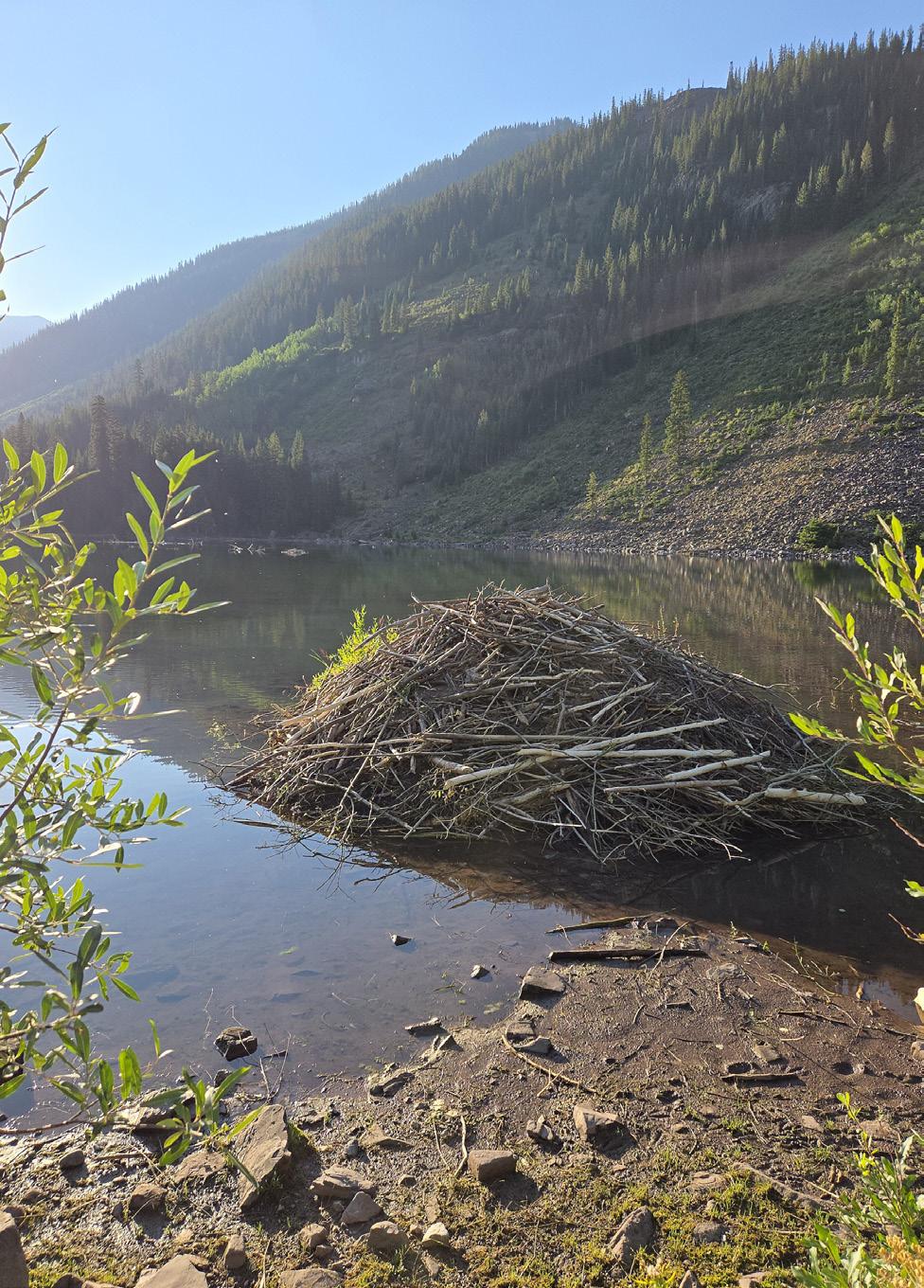
Wilderness Workshop and the Forest Service, along with Roaring Fork Audubon, are installing beaver dam analogs up Four Mile Creek this summer, where beavers aren’t present, to mimic their benefits on the landscape.”
“Roughly 75% of Roaring Fork Valley land is public lands, and beaver is only present in pockets of our watershed. We lack a lot of connectivity,” he continued. “Pitkin County Healthy Rivers has been a great resource in picking up funding of water quality studies that the US government stopped.”

Beaver dams can shift waterflows and slow the movement of water in ecosystems, which affects water tables and can improve drought and wildfire resilience.
Photo courtesy of Sheehan Meagher
Dr. Ernesto Sagás speaks to the history of Latino immigration in western Colorado
KATALINA VILLARREAL
Sopris Sun Correspondent
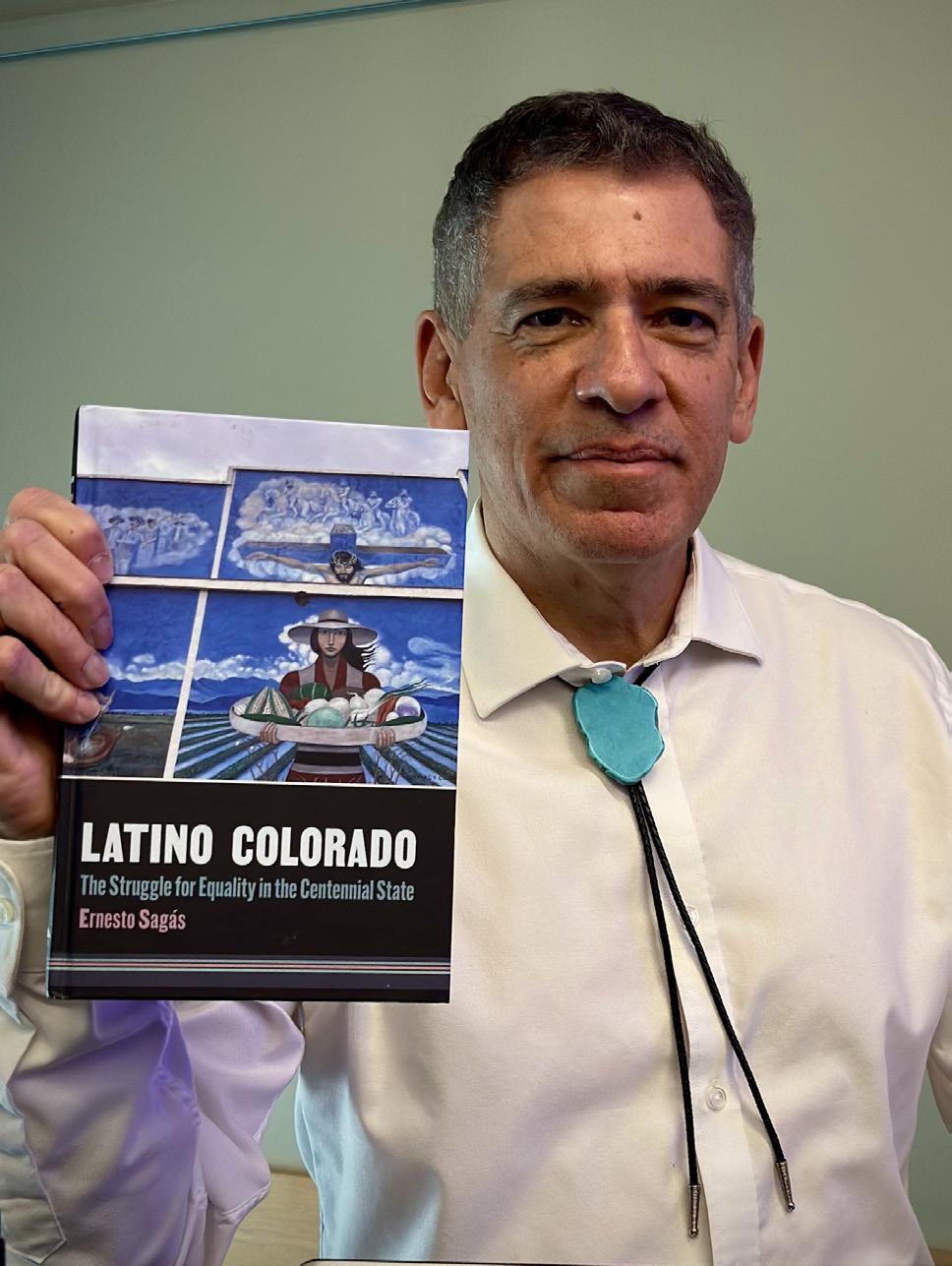
On March 14, the Glenwood Springs Library hosted Dr. Ernesto Sagás, who presented on Latinx history on the Western Slope. Organized by the Glenwood Springs Historical Society, the presentation introduced Sagás’ book, “Latino Colorado: The Struggle for Equality in the Centennial State.” With a PhD in political science and a focus in Latin American studies from the University of Florida, Sagás now teaches ethnic studies at Colorado State University and is a Univisón Colorado political analyst.
Sagas dedicated the book “To the people of Colorado, whether they just got here or have been here all along.”
The presentation highlighted topics such as immigration rates, policies like the Bracero Program and the North American Free Trade Agreement (NAFTA), the significance of the proximity of Mexico to the United States, stereotyping and job racialization and more.
One such topic Sagás reported on was the rate of Mexican immigration into the United States and how mass immigration correlated directly to policies like the Bracero Program in 1942 and NAFTA in 1994. He noted that the largest migration — over 2 million people — from Mexico to America was a result of the Bracero Program and again thousands more when NAFTA was passed to help with trade between Canada, the United States and Mexico.
In English bracero means “working with one’s arms” or “manual laborer.” Because of the shortage during World War II, this program was invented to bring over cheap laborers; in Colorado farmers sought hard working immigrants to grow and harvest beet sugar. Sagás noted that America understood the benefits of paying Mexican workers low wages, not having to provide proper housing
and filling in labor that white Americans did not want. The program was extended beyond its initial timeline because of the benefits; it ended in 1964, decades after the war. According to Sagás, ICE is not the first organization of its kind. First-born Mexican Americans have faced
My name is Dan Loya, and I bring 30 years of professional law enforcement experience. My career has encompassed every level of policing, including patrol operations, complex criminal investigations, and executive leadership. I began my service on patrol. I later served as a detective, conducting investigations into sexual assault, homicide, child abuse, child sexual assault, and undercover narcotics operations. These assignments required sound judgment, discretion, and a steadfast commitment to constitutional policing and victim-centered practices. Throughout my career, I have worked closely with prosecutors, partner agencies, and victim advocates to ensure thorough investigations and just outcomes. I currently serve as the Undersheriff of Eagle County, where my responsibilities include oversight of patrol operations, corrections, administration, personnel, budgeting, policy development, and organizational accountability. In this executive role, I focus on strengthening leadership, supporting deputies and professional staff, improving operational efficiency, and ensuring public safety remains the highest priority. I’m fluent in English and Spanish and bring true and proven leadership when it matters most during major events like wildfires. I was raised in the Roaring Fork Valley, graduated from Glenwood High School in 1993, and have lived in this region for more than 45 years, including the past 24 years in the Rifle area. My wife, Kelly, and I have been married for 25 years and raised two children who graduated from Rifle High School. Our family has long- standing ties to Garfield County, including Kelly’s grandmother, who served 36 years with the Garfield County Sheriff’s Office. I am seeking the office of Garfield County Sheriff to provide experienced, steady, and principled leadership that values professionalism, transparency, accountability, and community trust. I would be honored to earn the confidence and support of Garfield County residents.
Respectfully submitted, Dan Loya, Rifle
Free Talks
coerced deportation before. In 1954, while the Bracero Program was still in effect, the Dwight D. Eisenhower administration ordered Operation Wetback which was a mass deportation of Mexican workers. Despite the fact that these workers came to the United States legally, over a million Mexican workers were deported, some of which were first-generation, while thousands of immigrants were still being brought in.
“Mexicans are ideal workers because we — America — can deport them away when we are finished with them,” Sagás said.
Mexico’s proximity to the United States allowed — and continues to allow — for America to use the workers when needed and deport them when that work is completed. “They have been ‘the scum of the earth’ because of this replenishment cycle,” Sagás said, while explaining the systemic cycle of repatriation and how the highest levels of Mexican immigration into America happened because of legal policies and government programs, yet protection of Mexican and Mexican American workers was not prioritized or upheld.
This cycle of Mexican immigrant labor has also steadily shaped the sentiment that certain jobs are “dirty.” He discussed how stereotypes and prejudice towards immigrants creates an association that some jobs should be for immigrants, yet at the same time puts forward the thought that immigrants are somehow responsible for America’s job insecurity. Sagás’ presentation showed how ethnic division of labor and racialization of jobs creates division between immigrants and people in America.
Latinx immigration is a part of Colorado history and Sagás’ presentation brought forth this knowledge and historical perspective. His book is available online.
UTE CULTURE CONVERSATION with Skyler Lomahaftewa Tuesday, 6-7:30pm, 5/19 Ute Exhibit on campus 5/15-5/29
US CONSTITUTION OF, FOR, AND BY THE PEOPLE with Eric Heil Wednesday, 6-8:30pm, 5/20 America 250 Exhibit 6/19-7/7
Credit Art Classes
DRAWING ESSENTIALS* Mon-Thurs, 5/18-5/21, Aspen
CONTEMPORARY CRITIQUE* Thurs, 6-8:20pm, 5/21-7/9, Aspen
GRAPHICS FOR APPAREL* Thurs, 5-7:20pm, 5/21-7/9, Aspen
*Call for info and registration. Open to community members. Senior Discount applies.
Community Classes

INTRO TO PILATES REFORMER
A foundation class to build confidence and skill. Tuesdays, 12-12:50pm, 5/19-7/14
CRU WHITE BURGUNDY SYMPOSIUM
Explore the greatest wines made of the Chardonnay grape. Friday, 6:30-8:30pm, 5/22
MAT PILATES
Classic Pilates to strengthen and lengthen the entire body. Tue/Thur, 11-11:50am, 5/26-8/13
BARRE PILATES


MEDICINE OF OUR TREES
Learn the healing properties of several RF Valley tree species. Thursday, 6-8pm, 4/23
SPIRITUAL PRACTICES
Explore the major traditions with readings and conversations. Tuesdays, 6-7:30pm, 5/19-7/7


High energy and low impact to sculpt your entire body. Tue/Thur, 12-12:50pm, 5/26-8/13
INTERCAMBIOLANGUAGE & CULTURE
All levels welcome in this fun, interactive Spanish/English class. Thursdays, 6-8pm, 5/28-7/2
Dr. Ernesto Sagás with his book on Latino history across the Western Slope at the Glenwood Springs Library.
Photo by Katalina Villarreal
Setting the record straight
Claims circulate that accredited rep. misrepresented himself as attorney
JAMES STEINDLER
Editor
Following some accusations that Gypsum-based accredited representative Hector Gonzalez has misrepresented himself as an attorney, he told The Sopris Sun that he is not a lawyer and has never told anyone otherwise.
A March 25 article in the Vail Daily covered a specific claim that Gonzalez misrepresented himself as an attorney. The newspaper had previously identified Gonzalez as an attorney in a July article last year, and has since corrected the record. Gonzalez pointed out the misnomer himself in the comments about a week after the initial Vail Daily story was posted on Facebook in July.
In a March 19 article last year, The Sopris Sun introduced Gonzalez as he had himself: an immigration advocate who is licensed to practice immigration law through the Department of Justice (DOJ). Although, an accredited representative comes with significant limitations compared to a licensed attorney, and does not require the same prerequisites.
Gonzalez clarified the distinction, and that he was not an
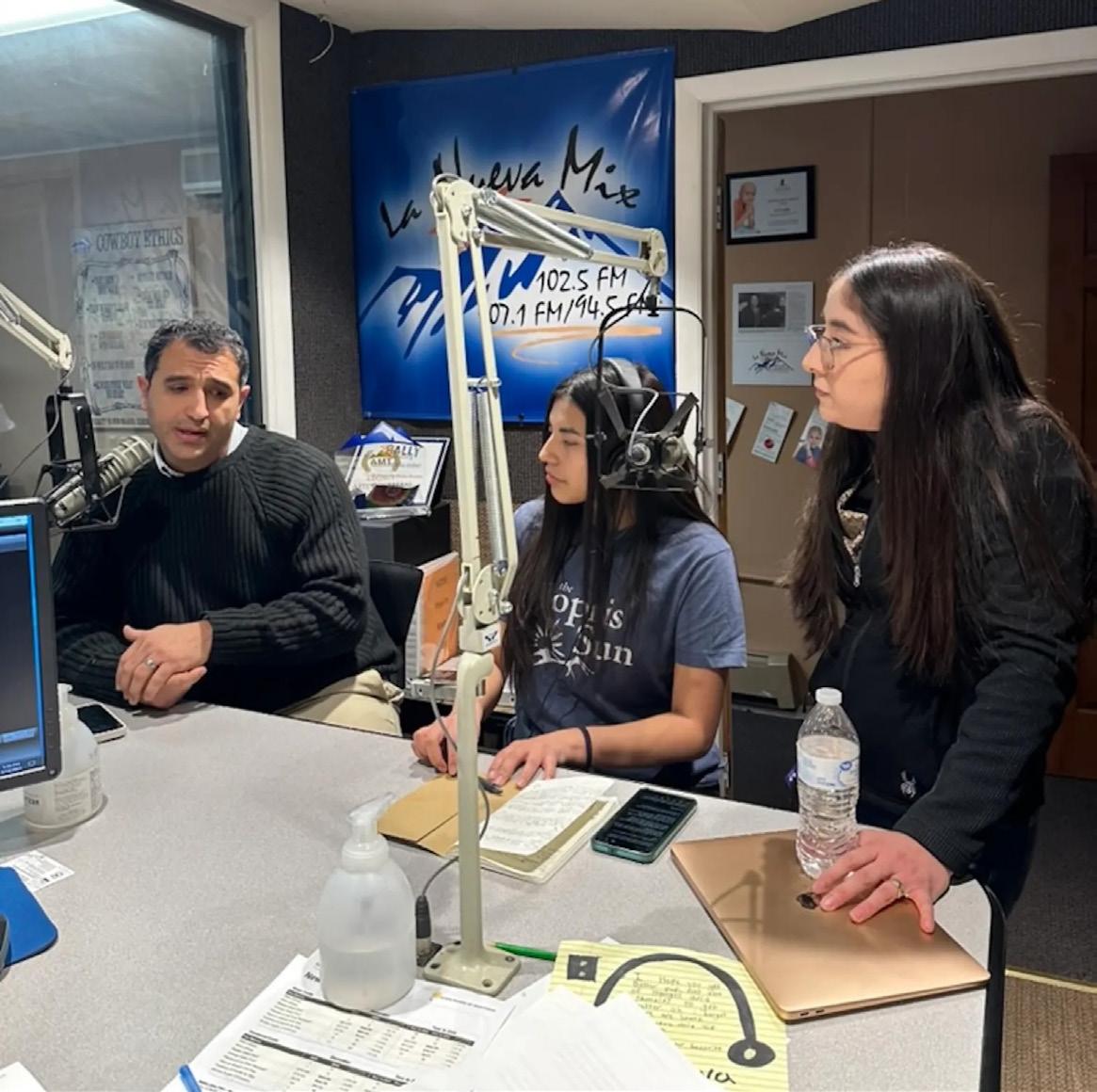
attorney, after The Sopris Sun and Sol del Valle had joined him on a talkshow hosted by Axel Contreras on La Nueva Mix, a Spanish-language radio station based in Glenwood Springs. Gonzalez answered reporters’ questions for an article meant to inform readers about immigrants’ rights ahead of impending Immigration and Customs Enforcement crackdowns. The Sun had spoken separately with Jennifer Smith, who is, in fact, an immigration attorney, based in Glenwood for the same article that was printed in both Spanish and English.
The Sun acknowledges that the original headline of the story, “Immigration attorneys encourage undocumented residents to have a plan, and a lawyer,” could have been misleading because only one of the interviewees for the story was an attorney. Both articles have since been updated.
Contreras hosts the talkshow with Gonzalez on Wednesdays at 5pm, and confirmed that he has referred to Gonzalez as “abogado” on the air, which translates to attorney. He explained that the translation for “accredited representative” is not
a common term in Spanish. Contreras added that the two of them had talked about the distinction several times on the program, and that Gonzalez has been transparent with the listeners. Gonzalez also noted the distinction was explained “a lot of times” and that he never referred to himself as an “abogado” on the show, but acknowledged that Contreras had. Following the recent article in the Vail Daily, the two spent an entire segment addressing the story and Gonzalez’s credentials.
According to the recent Vail Daily article, Smith filed a complaint against Gonzalez for allegedly misrepresenting himself. “I initially reached out to the Office of Attorney Regulation in Colorado to communicate with [Gonzalez] about how his abilities were represented, as there were some radio, digital and print materials that indicated he was a licensed attorney,” Smith told The Sopris Sun.
Alex Sanchez of Voces Unidas de las Montañas told The Sun that he has met with several people who felt they had been misled regarding Gonzalez’s credentials. He also believes

that the public has been misled, noting that he has spoken with reporters who also believed Gonzalez was an attorney.
“Our concern with Hector is that his clients believe he is an attorney,” Sanchez said. “We can see how an everyday person could easily confuse him for an attorney.”
What is an accredited rep?
The Recognition and Accreditation Program, which manages accredited representatives and is overseen by the DOJ, began
“over 60 years ago to increase the availability of competent legal representation for low-income and indigent persons in immigration proceedings,” according to the DOJ webpage.
Gonzalez explained that he completed a two-year program online through Villanova University, meant specifically for people pursuing a career as accredited representatives. It took another year after initiating the process with the DOJ to get his accreditation. He
continued on page 7

Accredited representative Hector Gonzalez speaks with Sopris Sun youth reporter Yesenia Benavides and Sol del Valle Editor Bianca Godina at the La Nueva Mix radio station last year. Photo by Margarita Alvarez
Eagle County sues over fast-tracked expansion of Uinta Basin oil depot
AMY HADDEN MARSH
Sopris Sun Correspondent
The Bureau of Land Management (BLM) recently fast-tracked approval for an expansion of the Wildcat Loadout Facility near Helper, Utah. And Eagle County has filed suit.
”The county challenges BLM’s decision to approve the facility’s expansion using emergency procedures that bypass standard environmental review and public input requirements,” said attorney Nathan Hunt, who represents the county in the case. “The county is also challenging [the Interior Department’s] alternative procedures that allow the agency to fast-track approval of oil-related projects under the pretext that there is an ‘energy emergency’.”
This was the second go-round for BLM’s approval of the oil depot. This time, the agency circumvented the usual National Environmental Policy Act environmental review process and approved the expansion in a matter of weeks. “Eagle County contends that BLM’s use of emergency procedures under the pretext of “energy emergency” unlawfully circumvented environmental analysis and public engagement required under federal law,” Hunt said in an email to The Sopris Sun.
Wildcat, managed by BLM’s Green River Field Office, is a crossroads for waxy crude oil coming out of the Uinta Basin. Trucks bring the oil to Wildcat, which handles about 20,000 barrels per day (bpd). The oil is loaded onto heated train cars and shipped out along the national rail line to Gulf Coast refineries. The expansion would increase the amount of oil passing through the facility to 100,000 bpd — a 400% increase, Eagle County said.
Proponents of the Uinta Basin Railway (UBR), a proposed 88-mile route to the loadout facilities through a roadless area in Utah’s Ashley National Forest, have
promoted the UBR as a way to reduce the time it takes to haul crude from the Basin over windy roads to the loadout facilities.
Eagle County filed suit in a federal appeals court in May 2023 against the Federal Surface Transportation Board’s (STB) 2021 approval of the UBR, which overturned the STB decision three months later. Ten counties and municipalities in Colorado joined the suit, citing, among other things, environmental and economic disasters should an oil train derail along the Colorado River.
But, in October 2025, the U.S. Supreme Court overturned the appeals court decision, putting the UBR back on track.
The railway is far from becoming reality at this point, which could be a reason behind the Wildcat expansion, said Deeda Seed, senior campaigner for the Center for Biological Diversity. “It looks like oil producers are pursuing any means possible to get more oil out of the Uinta Basin, and onto trains that would travel along the Colorado River,” she said. Proponents deny any connection with Wildcat.
Hunt said that the Eagle County lawsuit maintains the threat of train derailments, especially due to increased oil extraction in the Uinta Basin caused by the increase in processing capacity at Wildcat. “A derailment of a train or an oil spill could have devastating impacts on Eagle County’s community, economy and environment,” he said, adding that federal law gives Eagle County and other Colorado communities the right to participate in the approval process. “BLM violated federal law when it authorized the expansion of [Wildcat] without a public review process and sufficient environmental review,” he said. Hunt expects the federal government to respond to the complaint in May.
added that annual “continuing education” courses are required to maintain accreditation.
Sanchez pointed out that “immigration court” is an administrative process, and accredited representatives are not permitted to practice outside those settings, which are solely within: the Executive Office for Immigration Review, U.S. Citizenship and Immigration Services and the Board of Immigration Appeals.
Accredited representatives must be associated with a nonprofit, charity or religious institution, because the program is intended to provide an affordable option for immigrant clients. Gonzalez already had a church, Connect Church. Gonzalez created Connect Immigration as a separate nonprofit, of which he is the executive director. Connect Immigration also advertises a presence in Colorado Springs and Lakewood.
Sanchez said that Connect Immigration seems to be run more like a business, and brought up a promotional video on its website that makes it look “like a New York firm … [with] people in suits.”
Smith shares Sanchez’ concern. “Several people have indicated that the fees charged by Hector and his organization are not geared toward serving primarily low-income and indigent clients,” she said, adding that accredited representative nonprofits are required to submit fee schedules for federal review.
Gonzalez said that Connect Immigration “works off a sliding scale,” and, depending on a client’s income, rates are reduced or can be waived — another requirement per the DOJ, he added. “We have about 30-something cases that are pro-bono,” he said. He claimed that the rates are roughly 25-50% compared to respective attorney fees.
“I’m not here to misrepresent myself,” Gonzalez said. “I’m very transparent and open about who I am and what I do, what my capabilities are and what my capacit[ies] are.”

Thank You to Our Community of Supporters
Businesses, partners, and individual donors who helped strengthen Carbondale’s schools this past year.
past this

10th Mountain Division
579 Main LLC
5Point Film Festival
Alpine Bank
Aquila Cellars
Aspen One
Aspen SavaTree
Bonfire Coffee
Bristlecone
Canyon Insurance
Community Business Sponsors
Dos Gringos

Carbondale Animal Hospital
Carbondale Family Dental
Caryatid Structural Engineering
Comfort Dental
Defiance Capital
Denver Mattress
El Dorado
El Dorado
Fat Belly
Golf at River Valley Ranch
Hazen & Nims Real Estate
Homestead Bar and Grill
Integrated Development
Iron Mountain Hot Springs
Key Elements Construction
Kula Yoga on Main
Lulubelle
Lulubelle
Mountain Tide
New York Pizza
Osmia
Peppinos
Phat Thai
Ploskys Deli
Red Hill Animal Health Center
Red Hill Animal Health Center
Roaring Fork Oral Surgery
Sopris Liquor and Wine
Sprazzo
Spring Pilates
St. Regis Aspen
Sunburst Car Care
Sweet Coloradough
TACAW
TE Builders
TE Builders
Umbrella Roofing
Valley Hopper
Western Slope Law
Wheeler Opera House
White House Pizza
Woody Creek Distillers
About the Carbondale Education Foundation
The Carbondale Education Foundation invests in students, teachers, and classrooms across Carbondale’s public schools. Together with our community partners and donors, we help bring innovative programs and meaningful opportunities to local students.
With Special Thanks to Our Individual Donors
Annie Ekstrom
Cory and Jeff Didier
Danny Stone
Ed and Linda Geiss
George B McKinley Family Fund
Georgia Wempe
Greg and Heather Bryan
Jane and Clarke Nims
Katelyn Del Vechio
Kerry George
Madi Hayes
Mark and Ann Gianinetti
Matt and Anne Buchanan
Ramsey and Colby Fulton
Roc and Molly Hargrove
Stephen Shapiro
Steve and Christy Nilsson
Thad Eshelman
The Klumb Family
Mary Ferguson Fund
Mary Ferguson Fund
Mila Rossi
Support Carbondale Students
Scan to learn more about the Carbondale Education Foundation and how you can support local teachers and classrooms.
Tom Cooney
Tom Cooney
subject
GLENWOOD SPRINGS REPORT
City charter discussed, new downtown building approved
JOHN STROUD
Sopris Sun Correspondent
All Glenwood Springs City Council members were present in person for the regular April 2 meeting.
Two items were pulled from the agenda and will be rescheduled when presentations are ready; one of which was related to a fee waiver request for The Glen development, and the other a continued discussion about creating employee housing at The Residences on Grand motel.
Just one member of the public stood up during the portion of the meeting set aside for comments on items not on the agenda. Lori Chase asked council to direct staff to pass the word on to developers of a housing project at 8th and Midland to pick up trash outside their construction fence.
Under Council Announcements, Mayor Pro-Tem Erin Zalinski called attention to the Spring River Cleanup on April 25, and encouraged volunteers to sign up.
Among the environmental-oriented reports from Councilor Steve Smith was an announcement that Colorado Communities for Climate Action (CC4CA) will be meeting in Carbondale on April 17 at 9am in the Third Street Center.
Following unanimous approval of the consent agenda and proclamations on Wildfire Awareness and Parkinson’s Awareness months, it was on to a trio of action items.
Charter Commission report
Former City Councilor Charlie Willman and John Banks brought forward suggestions from the Glenwood Springs Charter Commission, which was re-commissioned in spring 2025 to study possible changes to the City charter.
Changes could run the gamut from basic housekeeping items related to the City’s procurement process, to some rather significant changes to the way City elections are conducted.
The commission picked through the charter “piece by piece,” and came to the consensus that City procedures should be modernized related to seeking bids for administrative needs, especially in the City Clerk’s Office.
Also discussed was whether Glenwood Springs should have an elected mayor’s seat, rather than appointed by the sitting council. Moving the municipal election to November, in conjunction with the general election, rather than in April of every odd-numbered year, and doing away with ward voting, were also discussed.
However, no consensus was reached on those matters, Willman said.
Any change to the City Charter, regardless of how major or minor, must go to an election, City Attorney Karl Hanlon explained.
Council members were less inclined to ask voters to consider any election changes, since there doesn’t seem to be a big push among the electorate to do that. Having the City election in conjunction with state and national elections could also cause City issues and council elections to get “lost in the sauce,” in Zalinski’s words.
Smith did propose asking voters to change the way vacant council seats are appointed, so that an election could come sooner. He did not get a second on that amendment.
After a lengthy discussion, council voted unanimously to deal just with procurement procedures and a few other housekeeping items in a ballot question for the April 2027 election.
Mixed-used building approved
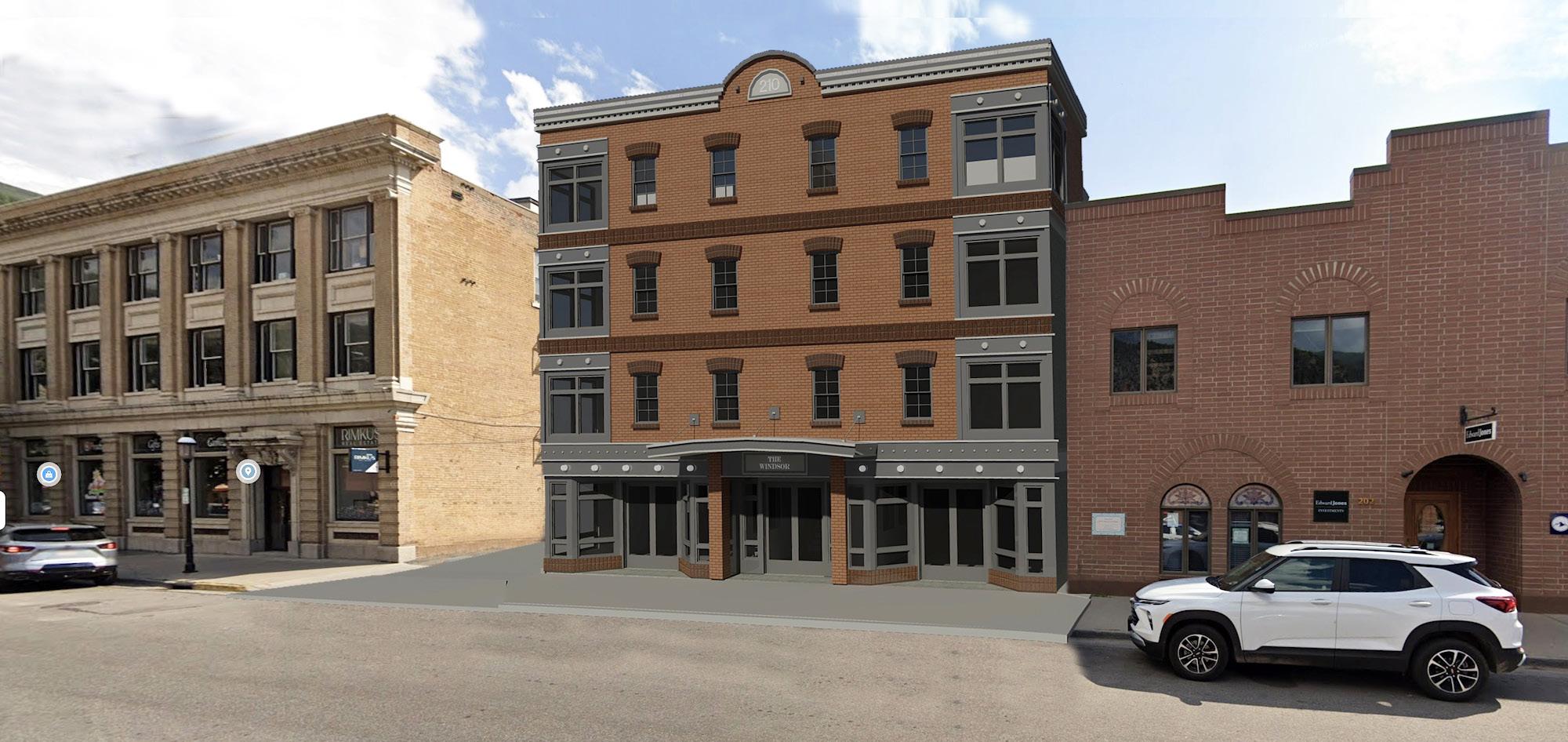
Council heard a proposal from Chip Whipple and daughter Candace Whipple of Whipple Development for a new in-fill building development at 210 8th Street, one block east of City Hall and the Garfield County Courthouse.
The four-story, mixed-use building is to include 24 residential units on the top three floors, and two commercial spaces on the ground floor.
The Whipples also recently developed the remodeled Western Hotel building on Cooper Avenue into residential units.
The new 8th Street building will fill the vacant lot on the south side of the street, which is now used for private parking, including a food truck.
No on-site parking is planned, but the Whipples are leasing spaces from the Maxwell Anderson Hotel for tenants of the new building to sub-let. A similar arrangement is in place for the Western.
Council members hailed the plan as exactly the type of in-fill development that the City has been encouraging. The plan was approved 6-1, with Councilor Ray Schmahl opposed.
“This is a marvelous project that fulfills a lot of our goals,” Smith said. “It’s transitoriented … provides housing … is creatively designed … and enhances our downtown as a diverse and livable place.”
Rental assistance
In the final action of the night, council voted 5-2 to renew the City’s Employer-Based
GARFIELD COUNTY REPORT
BOCC declines to help residents purchase Cavern Springs Mobile Home Park
AMY HADDEN MARSH Sopris Sun Correspondent
Sometimes it doesn’t matter how many heavy hitters are on your side or how many of your ducks are in a row, those in a position of power just won’t budge. That was the case at Monday’s Garfield County Commissioner (BOCC) meeting when a group of said heavy hitters, supporting residents of the 98-lot Cavern Springs Mobile Home Park, who want to purchase the park, showed up bright and early for the public comment period.
Last year, Aspen-Basalt and Mountain Valley mobile home park residents in the Roaring Fork Valley successfully purchased the parks for $42 million. April Long, executive director of the West Mountain Regional Housing Coalition, told The Sopris Sun that local governments, businesses and donors gave $16 million to the project and the park residents borrowed the rest through a lender provided by brokering group Thistle Rock. “[The residents] borrowed the remainder which allowed rents to stay affordable and reduced the risk to those families,” she explained.
Cavern Springs (formerly H Lazy F) lies between Glenwood Springs and Carbondale. About 300 people live there, including longtime resident Sue Brinkman, who opened Monday’s discussion. “I’m here with a whole lot of other community members and homeowners that are here to support our efforts to present our case to you guys,” she said, inviting all the supporters to stand up.
Brinkman explained that, over the last few years, the park has been purchased by investor equity firms that raised the lot rents by $100 a year. “When I first moved here 20 years ago, it was $350 lot rent. It’s now over $1,000,” she said. “So in order to maybe end that and give ourselves a little more secure place to live, we have started the process of becoming a [resident-owned] mobile home park.”
“Private investment firms have no interest in the stability of our community and our workforce,” Long told The Sopris Sun. “That’s not their interest.”
She told the BOCC that the park is once again at risk of being purchased by an out-of-state private equity investor and that residents are worried about skyrocketing rents or having to move away.
“We have until June 13 to raise $23 million to become owners of the park and keep our park affordable indefinitely,” she said. “We are working to raise $10 million in equity from municipalities, philanthropy and companies to match a $14 million loan that the residents will pay off over time.”
Cavern Springs was listed last year by current owner Horizon Land Management for $28 million. “The owner was selling it with another parcel that had storage units on it,” Long said. Since then, she added, the owner separated the two properties, which reduced the sale price for the park.
continued on page 19

You can’t expect us to assist everybody. Cheers!
Your Shipwreck Rescue Committee
An architectural rendering of the planned four-story building on 8th Street in downtown Glenwood Springs that was approved by City Council at their April 2 meeting. The project is still
to building permits with the City. Rendering courtesy of Whipple Development

Spring Health Fair
We are delighted to offer you, our community, the opportunity to take advantage of low-cost blood tests.
June 5 and 6
ASPEN
Aspen Ambulance Building
Aspen Valley Health Medical Center
0403 Castle Creek Road
June 7
EL JEBEL
Eagle County Community Center 20 Eagle County Drive
By appointment only 8-11:30 am
Lab Tests Offered
• HealthScreen w/CBC – $79
Includes CBC, CMP, Ferritin, Iron Panel, Lipid Panel, TSH and Uric Acid (Fasting Required)
• hsCardio CRP – $42
• Hemoglobin A1C & EAG –$44
• PSA, Total – $47
• Vitamin D – $54
• T3, Free – $32
• T4, Free – $32
• CBC (Complete Blood Count) –$32
Visit aspenvalleyhealth.org/health-fair or scan the code for complete details. Make your appointment starting April 22.

CALENDAR
THURSDAY, APRIL 9
STORYTIME & D&D
Children are welcome to a read-aloud at Basalt Library from 3:45 to 4:45pm, with stories told verbally and through American Sign Language. A Dungeons & Dragons session will take place from 5 to 6:30pm.
MONKS
Monks of Gaden Shartse Monastery will visit the Way of Compassion Dharma Center at the Third Street Center, Suite 12, beginning with a tea ceremony at 6:30pm and continuing with evening offerings through the weekend. Details at wocdc.org
NO MAN’S LAND FILM FESTIVAL
Dive into wild stories and bold films where no limits exist! The Roaring Fork Women’s Triathlon Team brings the outdoor filmfest featuring women, trans and the genderqueer communities to the Crystal Theatre. Doors open at 6:30 and the film starts at 7pm. Tickets at www.roaringforktriteam.com
LEGENDS OF MOUNTAIN FAIR
The Carbondale Historical Society hosts a panel of Mountain Fair hooligans, who’ll cover the vibrant history of Carbondale’s favorite festival and where it’s headed, from 6 to 8pm in the Round Room of the Third Street Center. Come one, come all.
STATE OF THE RIVER
The Colorado River District hosts its Middle Colorado State of the River meeting at Morgridge Commons, upstairs of the Glenwood Library, at 6pm. The event will cover snowpack, drought and river negotiations.
SHORTSFEST
Catch the last three days of Aspen Film’s Shortsfest, running through April 11. Details and tickets at aspenfilm.org/ festival/2026-shortsfest/
FRIDAY, APRIL 10
BOOT TAN FEST
Boot Tan Fest begins at Sunlight Mountain Resort in Glenwood Springs, bringing together women and the genderqueer community to enjoy the mountains together. Though the lifts won’t be running due to a lack of snow, the festival will carry on until April 12. Tickets at boottanfest.com
STORYTIME PLAYGROUP
Children, ages 0-3, are welcomed to the Basalt Library from 10:30 to 11:15am to “participate in large motor movements, experience sensory activities and be able to interact with other children and caregivers.”
ELEVATE
Roaring Fork Leadership will host a regional forum, ELEVATE 2026, centered around female leadership, community and connection. The event will take place from 1 to 6pm at Morgridge Commons in Glenwood Springs, upstairs from the library. Register at www.bit.ly/4m283Lt
STUDENT MUSICIANS
Student musicians present their work at 6pm at TACAW during “Collective Composition,” a collaboration between TACAW and the Aspen Music Festival and School.
CRYSTAL THEATRE
“Project Hail Mary” screens at the Crystal Theatre at 7pm tonight, tomorrow and Monday, April 13. Catch a 5pm captioned showing on Sunday, April 12.
COSMIC CONTACT
Filmmakers Connie Baxter Marlow and Andrew Cameron Bailey host a
screening of an episode of “In Search of the Future: A Series,” covering “humanity’s journey into higher frequencies where contact with extraterrestrial beings awaits us,” at the Third Street Center from 7 to 9pm. Tickets at tcfhf.org
SATURDAY, APRIL 11
CLAY PRINTING
Pam Porter guides an introduction to clay printing workshop at the Carbondale Clay Center from 10am to 4:30pm. Register at carbondaleclay.org
HEALTH SCREENING
Get a free health screening at 10:30am at the Rifle Library with a trained health professional. All ages are welcome. For details, call 970-625-3471.
MOVE WITH ME
“Littles,” ages 18 months to 3 years, are welcomed to the Basalt Library for a “Move with Me” dance workshop from 10:30 to 11am.
UTE HISTORY
The Glenwood Springs Historical Society welcomes historian and tribal leader Roland McCook who’ll speak to the history of the Ute people at the Glenwood Library at 11am.
GOING GREEN
Explore eco-friendly, end-of-life options with “Going Green: Burial Alternatives Explained” at 11am at the Carbondale Library.
TUNES AT TOWNLINE
Funky Starfish performs at Townline Trucks at 6pm.
SUNDAY, APRIL 12
SOCIAL CONTAGION
Jen Bouchet speaks about neurobiology and social interactions at A Spiritual Center from 10 to 11:30am at the Third Street Center, Room 31.
HOPE IS A COLOR
The Hope is a Color Guitar Ensemble Concert, consisting of students from the Aspen Music Festival and School’s lead guitar program, picks up the tempo at the Carbondale Library at 4pm.
DJ CAMO AT TOWNLINE
KDNK DJ Camo spins roots rock and reggae tracks at Townline Trucks at 6pm.
MONDAY, APRIL 13
POPCORN & PICTURES
The Basalt Library screens a new release movie on the big screen at 3pm. Popcorn and drinks will be provided.
TUESDAY, APRIL 14
HOMESCHOOL CLAY
Homeschool students are invited to learn the art of throwing clay at the Glenwood Springs Community Art Center Tuesdays, today through April 28, from 9:45 to 11:15am. Parents are welcome to join. Register at tinyurl. com/GWSclay
ADULT CERAMICS
Beginning at noon, adults can register for Carbondale Clay Center classes, including Intro to Wheel Throwing, Musical Wheels, Building with Intention, Let’s Get Lit (Again)!, Ceramic Jewelry and more. Scholarships are available at bit.ly/4vmLK7A
DEMENTIA SUPPORT GROUP
In collaboration with the Alzheimer’s Association, Sopris Lodge hosts a monthly caregiver support group for family members and caregivers of people living with dementia every second Tuesday from 3 to 4pm. More info at soprislodge.com/events
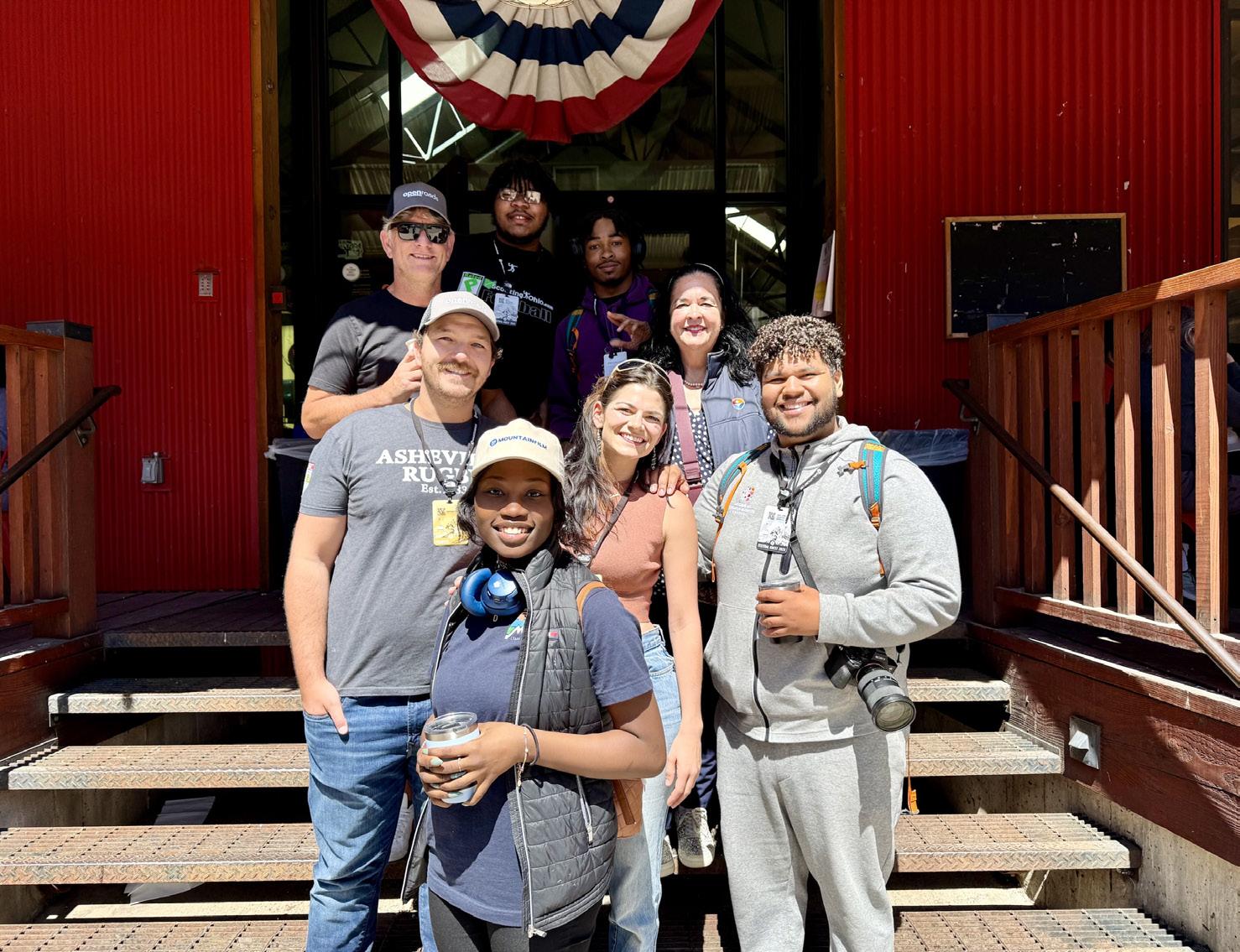
Quamae Hall (far right), director of “Beyond Beliefs,” and crew enjoy some breakfast at Baked in Telluride during last year’s Mountainfilm festival. The five-minute film follows Danielle Ballard (front, center) of Cleveland, age 17 at the time, who earns a scholarship to go rafting in the Gates of Lodore, but doesn’t know how to swim and fears the water. The Wheeler Opera House is hosting a one-night-only showing of “Mountainfilm on Tour: Big Green World,” which will include this and other short documentaries, on April 16 at 6:30pm.
Photo by Alison Osius (Funnily enough, Osius just attended the Wild & Scenic Film Festival in Annapolis, where she happened to catch a screening of “Beyond Beliefs” once again.)
DRAWING CLUB
Roaring Fork Drawing Club heads up to the Red Brick in Aspen for some sketching at 6pm.
OPEN MIC AT TOWNLINE
Mark Diemer hosts an open mic night at Townline Trucks at 6pm.
WEDNESDAY, APRIL 15
POWERS SPOTLIGHT TOUR
The Powers Art Center hosts a free guided tour of its exhibits followed by a hands-on interactive art-making activity from 4 to 5pm. All are welcome.
THE MAKERS NOOK
The Makers Nook creative group, meeting every third Wednesday at 5:30pm at the Basalt Library, explores scrapbooking this month.
BEERWORKS BINGO
The Chris Klug Foundation and Team Rocky Mountain host Bingo at Carbondale Beer Works from 6:30 to 8pm.
KYLE KINANE
Comedian Kyle Kinane takes the TACAW stage at 8pm. Tickets at tacaw.org
THURSDAY, APRIL 16
BIKING ON THE CROWN
The Prince Creek mountain biking trail opens for the season. For details and other trail openings, visit tinyurl.com/ OpenSpacetrails
COSPLAY CRAFTING
Teens are invited to “The Wind Beneath Your Wings: Cosplay Crafting Workshop,” where participants “build a set of wings using feathers inscribed with words and affirmations written by others in the group,” at the Basalt Library from 4 to 5pm. Details at basaltlibrary.org
GROUP RIDE
Roaring Fork Mountain Bike Association hosts a New Castle group ride at 6pm from Alder Park on the day many bike trails open for the season. Riders will climb Stairway to Heaven and Ole Roller trails and descend down East Colorow.
YOUNG ORIGINAL BAND
The Glenwood Springs Community Concert Association presents the Young Original Band — offering a
“unique fusion of jazz, classical, folk and pop” — performing at Mountain View Church in Glenwood from 7 to 9pm. For details, email Kathy Kline at kathyann.kline@yahoo.com
FOLK ICON
Dar Williams plays folk music at TACAW at 8pm. Attendees can expect “an evening of luminous songs, vivid characters and reflections on modern life from one of the genre’s most cherished voices.”
FRIDAY, APRIL 17
LAUNCHPAD OPENINGS
Carbondale Arts hosts two art openings: “Kindred Spirits,” a two-person exhibition by ceramic artist Christine Anderson and abstract painter Benjamin Strawn, and “Material Haiku MMXXVI,” a solo exhibition by Gaby Oshiro, from 5 to 7pm. Both exhibits will be on display through May 21.
SIP, SAVOR, SUPPORT
The Little Blue Preschool hosts its “Sip, Savor, Support” fundraiser with tunes provided by Nick Lenio from 6 to 10pm at TACAW. Tickets at bluelakepreschool.org
‘A LUMINOUS NIGHT’
The Aspen Choral Society presents its spring show, “A Luminous Night,” at 7pm tonight in Carbondale at the Third Street Center, tomorrow at Harris Concert Hall in Aspen and Sunday at Glenwood Springs High School. Tickets at aspenchoralsociety.org/events
KIDS NIGHT AT GLENWOOD REC Kids, ages 5-12, take over the Glenwood Community Center from 4:30 to 9pm, offering parents a night out. This is an inclusive event; parents can request disability accommodations upon registration. Register at tinyurl.com/GWSkids
SATURDAY, APRIL 18
RAKU FIRING WORKSHOP
Experience the thrill of Raku firing during a day-long workshop at the Carbondale Clay Center from 9am to 5pm. Register at carbondaleclay.org
GOAT AT THE CRYSTAL
The Crystal Theatre screens “Goat” at 5pm this evening and 2pm tomorrow.
STRONG WRITTEN AND SPOKEN SPANISH REQUIRED
Lea d a growin g Spanishlan gua ge publication ser vin g th e Roarin g Fork an d Colora do River Valleys
Part-time (20–25 hrs) → Full-time potential $30–$35/hr • Hybrid • Local candidates preferred Weekly print & digital
FOR MORE INFORMATION SCAN
Your voice can lead this CHANGE. APPLY NOW
Baseball takes the stage with Trent Goscha Tournament
JOHN STROUD Sopris Sun Correspondent
Roaring Fork High School’s baseball team was the only ball sport active over the spring break, hosting the April 2-4 Trent Goscha Memorial Tournament ahead of the Easter holiday.
The Rams went 1-2, falling to eventual tournament champion and Class 3A powerhouse Montezuma-Cortez in the Thursday opener, 22-2.
“They were the best team here, by far. They’re an impressive baseball team,” Roaring Fork head coach Marty Madsen said of the Panthers, who cruised to 18-3 and 12-1 Friday and Saturday wins over Salida and Grand Junction Central, respectively, to win the trophy.
Meanwhile, Roaring Fork proceeded to take the snow-plowed Ron Patch Memorial Field on Friday to defeat Salida, 19-1, and went to an extra inning with Strasburg on Saturday before falling 11-10.
“It was a great three days of baseball, except for the snow on the field Friday morning,” Madsen said of a surprise spring snowstorm that delayed the day’s games.
“Our guys played good baseball and pitched well [against Salida], but we just didn’t get enough runs on Saturday,” he said of a game that saw the Rams up 5-2 going into the top of the seventh. Roaring Fork gave up three runs and failed to score
in their half of the inning. Strasburg tallied 6 runs in the extra inning to Roaring Fork’s 5.
Roaring Fork was back on the home field on Monday against Montrose; a 5-1 loss for the Rams who prepare for the start of the 3A Western Slope League schedule with a win-loss record of 2-5.
“I think we’re right in there to compete in a really good league,” Madsen said.
“Top to bottom, our league is probably one of the stronger leagues in the western part of the state.”
Among the usual contenders are last year’s 3A state champion Coal Ridge Titans, and the Delta Panthers, who the Rams face in a double header at home this Friday, April 10 (2pm and 4pm).
“We just have to make sure we put all three phases of the game (offense-defense-pitching) together and we’ll be OK,” Madsen said.
The Rams are leaning on a quartet of seniors to carry the team — Charlie Filliss, Donny Read, Andy McMichael and Kenny Riley.
“They’ve been with the program since day one as freshmen and have really worked their way to being our senior leaders,” Madsen said. “It’s been really cool to see that journey, from where they started to where they are now.”
A strong contingent of sophomores are also making progress and will be key to the Rams’ season success, he said.

Lacrosse/soccer
The 5-1 Roaring Fork girls lacrosse team was also back on the field Monday at Eagle Valley (result not available by deadline for this report). The Rams are home versus the 4A Mountain East League-leading Battle Mountain Huskies this Thursday, April 9 (5:30pm varsity game time).
And, the Rams girls soccer team had two games already this week, a 1-0 win at Basalt on Monday (goal by junior Tesame Hayes, assisted by sophomore Annalise Bumgarner), and a home match against Steamboat Springs on Wednesday (result not available by deadline).
The Rams improved to a win-loss-tie record of 1-3-2. They host Moffat County this Friday, April 10 (6pm varsity game time).
Track & Field
Roaring Fork’s track and field athletes were at the Eagle Valley Invitational on Saturday, April 4. Scoring team points by finishing in the top eight of their respective events were sophomore Levi Friday in the boys 1600-meter run, placing eighth (4:59.85), and the girls 4x800 relay team of senior Caroline Cole, juniors Sadie Silcox and Miley Stuart, and sophomore Sophia Warner, placing sixth (11:29.61).
Track athletes from up and down the Roaring Fork Valley will be competing at the Glenwood Springs Demon Invitational this Saturday, April 11. Events start at 9am at Stubler Memorial Field.


Zane Bergman winds up a pitch during the Trent Goscha game against Montezuma-Cortez.
Photo by James Steindler
Marble Distillers carves a new path with social club
KEN PLETCHER
Sopris Sun Correspondent
In September 2025, just over 10 years after it had first opened its doors, Marble Distillers in Carbondale launched Club Marble in what, during that first decade, had been an underutilized bar-lounge room in the front of the distillery. The Sopris Sun sat down with co-owners Connie Baker and Corey Shank, as well as with Gretta McKenney, the club’s liaison of privileges & experiences, to discuss the new venture.
McKenney described it as, “Our rebranding, from a tasting room into more of an experience-driven, networking location.”
Shank added, “It is a social membership club [but] we are open to the public,” adding that the perception of it being private “is a misnomer I’d like to squash.” He continued, “Really, the idea of a social element is paramount … Downvalley, everybody has little nooks and crannies they can go to,” citing TACAW as an example.
Shank went on, “Bars are just not run as bars anymore. If you pay attention to what everybody is doing, they’re looking for activations and social engagement to bring the community together. I don’t think this is anything unique to Marble.” He noted the type of programming that the Aspen Institute and TACAW are doing: “That’s really what we’re striving for.”
Discussions about creating a social club in the lounge space began about two years ago. The distillery was noticing fewer people drinking, and those who were
largely stayed at the establishments in the middle of town, rather than venturing to their spot at the east end of Main Street. Shank elaborated, “We just got to a point where we [had] enough loyal patrons of Marble where we could … cater to what people were asking us for and what the market was saying. If we were just going to have a bar selling primarily our spirits, I just don’t think we’d be in business anymore. We were looking for a business model that would allow us to stay in business.”
Membership is $1,500 annually for an individual, with some other options available. Several privileges and discounts
come with membership. For nonmembers, there is also a $50 day pass that includes a couple of cocktails.
Discussing membership statistics, Shank said, “We have a decent number, not a huge number by any stretch, so there’s plenty of room. The water’s warm, come on in!”
In response to the observation that the cost may give the impression of exclusivity, Baker said, “Membership isn’t about excluding people – it’s about making the experience sustainable enough to offer more of it, more consistently, for the community as a whole.” She continued, “I understand why people might wonder
about that at first glance. But the reality is that the membership model is what allows us to create and sustain the kind of programming, hospitality, and atmosphere we’ve always wanted Marble to offer.”
Baker went on, “Club Marble was never intended to be a ‘closed-door’ concept. We continue to host plenty of events that are open to the public, and we genuinely want people to feel welcome here. At the same time, membership gives us a base of support that helps fund the live music, talks, tastings, special dinners, comedy and other experiences that simply wouldn’t be possible to offer consistently as a small independent business otherwise.”
Continuing on what sets the club apart from a standard bar, Shank observed, “I think we’re looking for more unique events” than just having live music. He gave as an example an evening talk for members with a local geologist discussing the origins of the stone in the stunning white Yule marble bar along the club’s back wall; also in attendance were employees of the Yule Quarry in Marble.
As Shank described it, “It just became this really dynamic back-and-forth between the two of them. That to me was one of the huge successes.” In the future he would like to see the club host Moth Radio Hour-like events and has had discussions about “instituting that on a regular basis.” McKenney pointed out the club’s dual objectives of a place where members “come because you are bringing your colleagues or you’re meeting your clients,” and the distillery’s commitment to the







































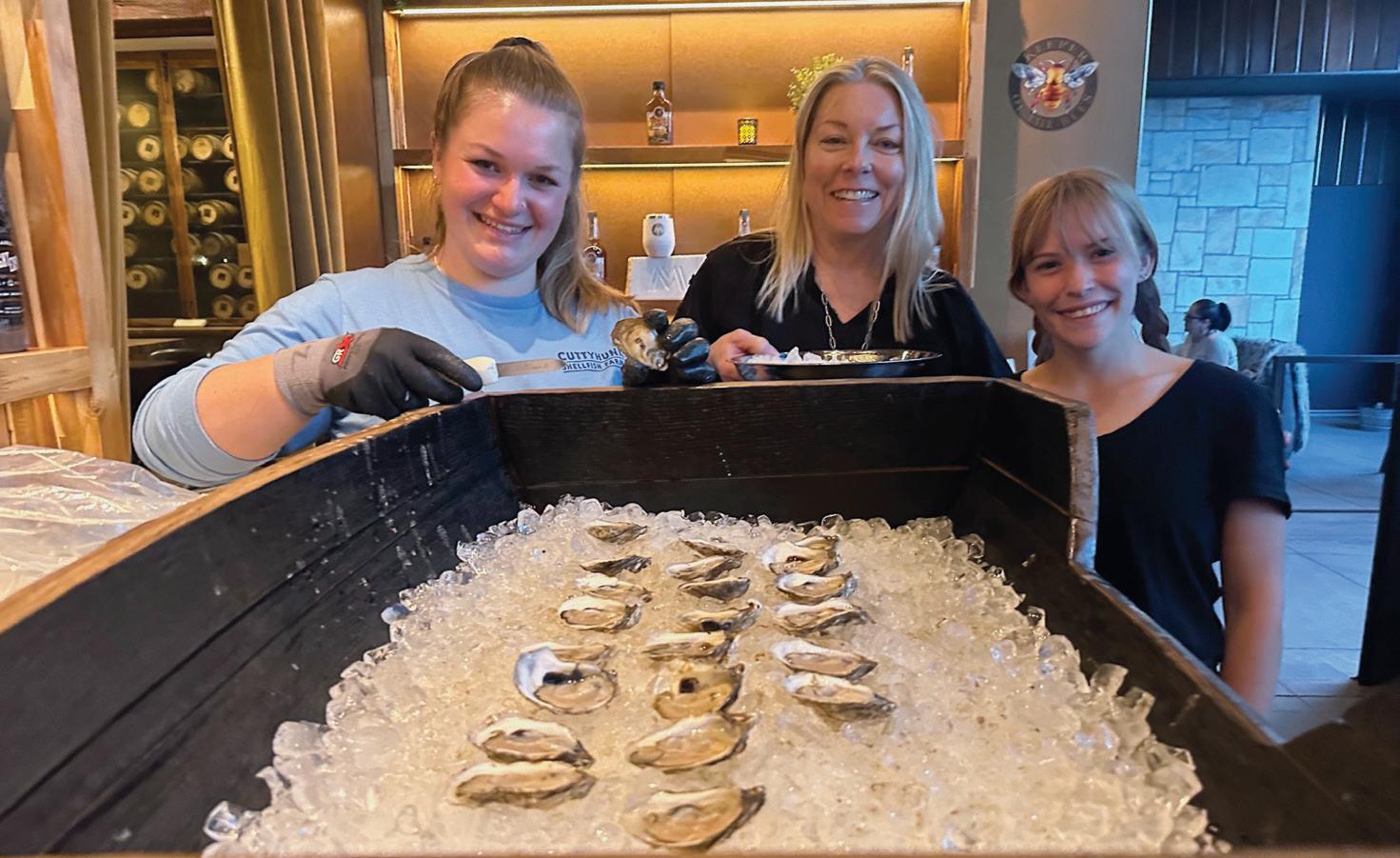
Fresh oysters brought in for a recent Club Marble event by Redstone native and oyster farmer Sonya Benson of Cuttyhunk Shellfish Farm in Massachusetts (left), along with Marble co-founder and head distiller Connie Baker (center) and hostess Alea Blanchard.
Photo courtesy of Club Marble Social
MYKI JONES
The Tavern Carbondale … and beyond
Business & Culture
On Feb. 5, The Tavern Carbondale opened its doors for its official soft launch.
The business, which moved into the former La Raza establishment, is one of many businesses run by Jeff and Ashley Moerke, including The Tavern Kitchen and Bar and Il Piggio in Snowmass Village. The new locale is a place where Jeff hopes to provide an air of affordability, good food, and consistency to the community, all while they work to expand their Tavern brand across the state and country, including at the former Blake Street Tavern in Denver and with a planned Las Vegas location, still to be unveiled.

In discussing the upcoming endeavors, Jeff expressed deep gratitude to the Carbondale community, whose feedback he has prioritized on business hours, how the food on the rotating menu should look, Happy Hour times and more.
“The Tavern brand has expanded. We have a Las Vegas location opening soon, and Denver is up next — Carbondale is one of my favorite communities,” Jeff said. “We’ve been working on changing everything around, from us being able to facilitate ourselves more to a local presence, as opposed to just tourists, which has been a breath of fresh air. Listening to the community and their wants and needs is where we’re at currently.”
He added that the collaborative nature of the Carbondale business scene has been incredible compared to other locations where they’ve opened.
“The tight-knit community of Carbondale, not just from the customers, but also your restaurant base, has just a different feeling of welcomeness and an air of ‘Let’s work together to make sure that when people decide to come down to Main Street, that they have a great experience, whether it’s with you tonight, or us tomorrow,’” Jeff said.
The Tavern brand has expanded. We have a Las Vegas location opening soon, and Denver is up next — Carbondale is one of my favorite communities.
“Long story short, the city [of Aspen] has more rules than anything. So we took the iconic popcorn cart idea into account, but I wanted to serve alcohol, which meant a lot of back-and-forth on the rules,” Jeff said. “So I built a cedar shed that had to be under 50 square feet to avoid paying all these astronomical taxes right out of the gate. Within a few months, we had a line out the door, had to shut the gates daily, and were running out of food because we did not have enough storage to supply everybody who was coming to get it. Everybody kept telling me, ‘You should open a space up here. [This] concept is great.”
- Jeff Moerke
Coming from a corporate background, Jeff sold his original business in 2019, right before COVID-19 hit. He and his family eventually started doing business in Aspen, initially hoping to open a food truck alongside their clothing brand Harper & Hudson Gear, which was named for their two children and originally located near the Silver Queen Gondola. Due to zoning and permitting issues with the local government in Aspen, Jeff said that while they were able to serve a good crowd, the setup was limited.
Since moving into a space in Carbondale, Jeff said he has been building relationships with local ranchers and other local food distributors to give back to the economy, in addition to maintaining the “Carbondale Main Street energy” with live music and other events, even on days when everywhere else might be closed, by remaining open daily.
“We do new menu printing every six months, where we remove the least reviewed item from each rotation and change it out with something new,” he said. “We’re working with local ranchers to source seasonal produce, which can be challenging, and we’re starting to use local meat from Carbondale. So, at the end of the day, some of that would contribute to our big changes as we give back to the community by purchasing from the community and keeping it as local as possible.”
More is in store for Tavern. For more information, taverncarbondale.com or follow @taverncarbondale on Instagram.

The H&H Burger, a happy-hour staple at The Tavern Carbondale, is a nod to the owners’ two children, who also inspired the “Harper & Hudson” brand in Aspen. Courtesy photo
We should talk about taxes
There’s a simpler way to understand your money. Zoom way out. Way way out. Here’s all that matters:
Have enough for the expected and the unexpected, both now and in the future. That’s it. The whole banana.
The Expected, Now
• How much does it take to sustain your life each year?
• This is The Expected, Now.
OPINION

MONEY JUICE
By Megan Janssen
The Unexpected, Now
• Have three to six months of essential expenses (expenses required for you to stay alive) in an account that is earning interest for you and is liquid so you have access at any time, i.e. Money Market accounts and High Yield Savings accounts.
• MJ calls this your “sexy” account — you’re much sexier when you’re not financially stressed.
• This is The Unexpected, Now.
The Expected, Future
• How much will it take to sustain your future life? Have a baby? Hire a personal chef? Stop working? Remodel?
• Retirement rule of thumb: Multiply the annual amount needed to sustain your life by 25, less annual retirement contributions, less Social Security (SS) if eligible. Assuming this amount is invested, you can hypothetically withdraw 4% per year without decreasing the principal and sustain your desired lifestyle. Tip! Use the online calculator at ssa.gov to estimate your monthly SS benefit in retirement.
• This is The Expected, Future.
The Unexpected, Future
• Your “sexy” account will stay with you ‘til the end. Like a garden, you’ll take from it and replenish it. Update it as your financial numbers change.
• This is The Unexpected, Future.
So how do you use real accounts to the best of your ability? Everything comes down to taxes. Read that again. Everything. Comes. Down. To. Taxes. If taxes weren’t a thing, we’d all have one account type, put money in it forever, take money out whenever we want, and we’d be done.
If you invest $100,000 and let it grow untouched for 10 years at a rate of 6%, it will be worth anywhere from $125,718 to $179,085 depending on what type of account it’s in. This is because of taxes. Think of all accounts as having a purpose. They incentivize that purpose and sometimes penalize straying from the purpose. So, it’s most important to understand your goals and liquidity (how readily you need access to the money) needs before you decide on an account. Here is a very simple way to think of it using a couple different spectrums:
The more liquidity you need, the less favorable the tax treatment. Conversely, the less liquidity (more willingness for your money to be untouchable for a while), the more favorable the tax treatment, usually.
The less specific the account, the less favorable the tax treatment. If an account has a specific purpose like education or retirement, it’s usually taxed more favorably. Over time, those taxes make a tremendous impact.
A High Yield Savings Account is an account that can be accessed at almost any time and doesn’t have a specific purpose. You can use the money for whatever you want including ski passes and beer. Each year, the growth on your money is taxed at your ordinary income tax rate. For most folks this will fall around 22% (unless you’re a billionaire in the Roaring Fork Valley, then it might be more like 36%).
On the other end of the spectrum is an education account, known as a 529. It has a very specific purpose and as such is taxed more favorably. If 529 money is withdrawn for specific educational purposes, it is not taxed at all and the growth on the account is not taxed each year. If the money is used for ski passes and beer, it is taxed at ordinary income rates plus a 10% penalty. Ouch!
The goal is to keep your money growing for you at all times, whether it’s allocated for the present or future. Keeping your money growing means putting it into the right accounts that favor it for your particular goals. Identify your goals and watch them flourish!
Megan Janssen is the founder of Money Juice (www.money-juice.com) and a financial advisor with Forum Financial Management, LP. The ideas and language written here are those of the author and do not necessarily reflect the views or opinions of Forum.
Criminalization is not the answer
Mugsy Fay Seldeen is the executive director of High Rockies Harm Reduction, the Roaring Fork Valley’s original harm reduction nonprofit meant to provide people experiencing addiction with life-saving resources. For more information, visit highrockiesharmreduction.com
When I started this editorial last month, I had a plan for what I’d write next time, but then I saw the March 25 Scuttlebutt item summarizing a press release from the Common Sense Institute (CSI) titled “Opioid overdose.” CSI claims that overdoses in Colorado have increased since December 2024 and encourages Colorado voters to strengthen criminal penalties for fentanyl possession, stating that this has been effective in Texas.
OPINION

REDUCING HARM
By Mugsy Fay Seldeen
First of all, the data they’re talking about doesn’t exist. Public health data generally isn’t available until 18 months after the fact. There is no county or statewide overdose data available for 2025 or 2026 in Colorado. The only data that does exist is for the City of Denver, and even this is preliminary data on a brand-new website. Public health staff have told me this data should not be taken as fact, since preliminary data isn’t always accurate. And as I’m sure readers understand, Denver data, even if finalized, is not representative of the entire state.
Second, the only 2025 data available for Texas is on ER visits for suspected overdoses, not confirmed overdose deaths. One issue with this data is increased criminal penalties make people less likely to seek medical care in the event of an emergency.
That’s why all states have some form of 911 Good Samaritan law to protect people who call 911 for overdoses, but Good Sam laws don’t undo the decades of harm and mistrust caused by misguided policies— like the war on drugs. So are fewer people overdosing in Texas, or are fewer people seeking medical help for overdoses because they’re afraid of getting in trouble?
Organizations like CSI are trying to push for higher criminal penalties for fentanyl, but they’re using fear tactics and not real evidence. Do these organizations really have our best interest at heart? Or are they spreading misinformation to sow fear?
Proponents of these laws state that putting people in jail keeps them safe and alive, but we’ve seen a lot of overdose deaths from synthetic opioids in jails recently. The sad truth is, it’s often easier to access drugs in jails and rehabs than on the streets. So criminalizing people doesn’t keep them safe, it keeps them caught up in the system and makes it harder for them to be productive members of society.
We’ve learned from decades of evidence that stronger criminal penalties do nothing to curb drug use or keep people safe. Increased penalties for certain kinds of drugs are rooted in racist, capitalist motives that target communities of color and people experiencing homelessness. These laws only benefit those who create them, not those affected by them.
We’ve learned from decades of evidence that stronger criminal penalties do nothing to curb drug use or keep people safe.
What does every major health organization in the world recommend to combat drug misuse and overdoses? Harm reduction approaches that use nonjudgmental, noncoercive strategies to connect people with care and life-saving resources. Harm reduction programs ARE evidence-based and are considered the gold standard approach to reducing overdose deaths, the spread of disease, crime and other negative consequences of substance use.
In Garfield County, we’ve kept overdose deaths stable over the past several years, thanks to the collaborative efforts of High Rockies Harm Reduction, local public health and law enforcement departments, medical offices, libraries and other partners, like The Meeting Place in Carbondale, to get Narcan out in our communities.
Don’t believe the hype, vote no on Ballot Initiative #85 in November. It’s just common sense.
BEAVERS
from page 4
He added that Roaring Fork Audubon and other groups have been working with local landowners and livestock managers to implement nonlethal strategies when beavers move into ditches or other areas close to humans or agriculture. Conversations around beaver restoration continue locally and at the state level. Some stakeholders arguing to preserve the ability to hunt or lethally remove beavers have claimed that the loss of a few animals does not impact the ecosystem as a whole. Conversely, beaver advocates have cited a lack of habitat connectivity as well as research indicating that beaver habitats mitigate drought and make ecosystems more resilient to wildfires.
Photo by Molly Briggs
Small rituals that can change your day
Seeds of well-being
Amid work, family, home, children and bills to pay, talking about well-being can feel like a luxury. Sometimes we think that to feel better we need more time, more money, or to completely change our routine. But the reality is simpler: Well-being can begin with small daily rituals.
A ritual doesn’t have to be complicated or perfect.
In our community, where days start early and responsibilities don’t wait, finding a full hour for self-care can be difficult. But what we can find are small moments.
Some ideas ...
Breathe before getting up
Take three deep breaths when you wake up. This small act helps your body start the day calmly and tells your mind, “I am present.”
Gently activate your body
Stretch your arms, move your neck, rotate your back. You don’t need a full routine, just a few minutes are enough to wake up your body and release tension.
Make the ‘everyday’ special
Your morning coffee or tea can be more than a habit. Enjoy it without distractions, without your phone, truly present in the moment. You can also give yourself a pause to appreciate a sunset on your way home.
Take a pause during the day
At work, give yourself a minute to breathe deeply. This small break can help reduce stress and restore mental clarity.
End the day with intention
Before going to sleep, turn off screens for a few minutes, stretch your body, or reflect on three good things from your day.
These actions may seem small, but when repeated with intention, they create a real impact. Remember that even on busy days, we deserve moments of care — because well-being doesn’t always come from big changes. What we can find, though, are small moments.

OPINION BY ZAIRA PINTOS
Follow Leonardo Occhipinti’s “Nuevo Mundo” in Sol del Valle every week in Spanish.
A simple stretch as part of self-care. Photo by Zaira Pintos. Courtesy photo
Share your works in progress with readers by emailing illustrations, creative writings and poetry to fiction@soprissun.com

‘April is the cruelest month …’
This is an excerpt from an essay written by Pat Noel about the explosion in the Dutch Creek No. 1 Mine in Coal Basin on April 15, 1981. The full essay can be found in the late Stan K. Badett’s book “Digging in the Dark,” a copy of which was recently brought into The Sopris Sun office by Stan’s wife, Dorene Badgett.
It was a mixed crew working in the new longwall section that day. Dan Litwiller, for example, was a 19-yearold Glenwood Springs kid who’d just started in the mine — “green hats” they called the new guys — and was thinking about using the money to go to college in the fall. He probably didn’t need the job since his old man was the district judge and everybody knew the family was loaded.
On the other hand, Glen Sharp was 31, had a wife, five kids, plenty of bills and, methane gas or not, he needed that paycheck badly.
Before [John] Ayala cranked up the big radio-controlled Joy Continuous Miner, there was the usual crew chatter: women, sex, cars, weather, bosses, kids … whatever. Then they began to mine
the face, shearing off the coal, loading it on the buggy, hauling it to the belt — the same things they’d done a million times before. The dull routine of it began to settle in; the familiarity of it bred a tiny contempt; and they waited for a daydream to take them through the shift.
Then something happened.
Something that sounded like … thump … thump … thump. A push. A big one. Thousands of tons of fine coal were vomiting out from the face.
The enormous amounts of released methane automatically shut off the mining machine, and Tom Vetter, a 24-yearold whose two brothers also worked in the mines, jumped up on top of the stalled machine to position the brattice curtain so that the air flow would suck the methane out of the tunnel.
Comparte tus proyectos creativos aún en proceso con nuestros lectores. Puedes enviarnos un correo electrónico con tus ilustraciones, creaciones literarias y poesía a fiction@soprissun.com
Although the machine had stopped shearing the coal after the outburst, the 440-volt power cable was still feeding current to it and its lights were still on. There was a gap around the headline lens which, somehow, had escaped detection over the course of several safety inspections. It was just a little bitty gap.
Then somebody yelled out, “Turn off the power!” Somebody else shut down the feeder cable and the lights on the miner blinked out.
And in that instant, in that nanosecond blink, the tiniest spark in the world arced across that little bitty gap in the headlight lens casing and … 240,000 cubic feet of methane gas exploded in a thud which could be felt nine miles away in Redstone. In turn, the gas explosion created an enormous swirl of coal dust which ignited in a secondary explosion of blast and flame carrying thousands of feet beyond the epicenter.
Rescue crews fought fire and gas for three days trying to get to the stricken miners as wives, friends, family and the national TV media crowded around the coke ovens at the mine road entrance waiting for news. At 4 o-clock on the morning of April 18, rescue teams carried out 15 bodies, stacked them in the beds of two pickup trucks “so that they were stacked like cordwood, so heavy that the springs on the trucks sagged almost to the ground,” and drove them past the sleeping TV camera crews to the mortuary in Glenwood Springs.
For many of those living in the Valley towns of Carbondale, Redstone, Marble, El Jebel and Glenwood Springs, it was the cruelest April they had ever known. Hundreds attended memorial services and monuments were erected in city parks. For a time, the topic of coal mining and coal miners occupied center stage in the hearts and minds of Valley residents.



Thank you, Aspen Thrift
Roaring Fork High School thanks the Aspen Thrift Store for their $1,500 grant to our school garden renewal. This garden has been the learning ground for students since 2010, but needed new boxes and soil to be usable for many more years of serving food, fun and learning activities to students. Thank you to all the volunteers who make the thrift store such a generous benefactor to our community.
Lindsay Hentschel RFHS Principal
Beautify Carbondale
Thanks to the generosity of a friend sharing her Carbondale home with me eight years ago, I first time stumbled into Carbondale. The coincidental timing of Mountain Fair was all I needed. Carbondale has been my home now for seven years. Just retired and with a passion to contribute good karma into my community, a friend of mine, and I loosely organized the Carbondale Beautification Club last year (AKA: The CBC).
On a handful of Saturday mornings, we gathered volunteers to do general clean up, and a few gardening projects around Main Street. We are NOT a nonprofit, formal entity or anything more than a community-based volunteer group doing cleanup and beautification projects in partnership with the Town, businesses and other stakeholders. As an example, we just adopted the Town garden bed on the back side of Sopris Park bordering the pool property. We’ll beautify that garden
On Saturday, April 25, we’ll kick off this year’s effort with a Spring Cleanup Day. Volunteers will gather at the pavilion in Sopris Park at 9am. Families are welcome. Depending on the number of volunteers, we’ll assign a few folks to all the east/west and north/south streets covering as much of town as we can. The CBC will provide the trash bags, so just bring your gloves,
I feel so much gratitude for the blessing of Carbondale as my life base camp. I just returned from another winter abroad.
GLENWOOD
from page 9
For sure, the world and today’s US government have discouraged me. Offsetting those feelings are the positive vibes we share as a community and relationships we enjoy with the arts and our natural landscape. I welcome anyone interested in volunteering to join our Facebook/ Instagram pages for calendar updates, or email cbc81623@gmail.com to receive a heads up on a Saturday gathering.
Jeff Basler
Carbondale Beautification Club
Re: Wall-E
DJ Sugar Monkey wrote a review of Wall-E, which was fine, but his decision to demean Peter Gabriel about the song Down to Earth leads me to try and imagine what song he would have approved of. On second thought I really don’t care. He obviously knows more than me about great music since he’s a DJ?
Steve Kuschner
Glenwood Springs
Re: Harvest Village
I loved Mr. Berliner’s column about the Harvest Village horror show. One thing though: He was totally too nice to the greedy developers.
We all laud preserving our evershrinking open spaces. Now, come capitalistic clowns wanting to foist over as many as 5,000 more people and 1,500 units plus a huge hotel on 283 acres of God’s creation right next to our overcrowded “Killer 82.” Why not pave paradise for another stinking parking lot?
The Garfield County (GarCo) Planning Commission recommended denying approval of this further destruction of our quality of life. These developers’ proposal doesn’t meet GarCo’s comprehensive plan nor the county codes.
One-hundred-fifty unaffordable worker units and 1,350 full-price plots for millionaire refugees from blue cities. Like JFK said in Germany in 1963, “Ich bin ein Berliner.” (Pun intended). Damn the developers, just say NO!
Bruno Kirchenwitz Rifle
Rental Assistance Program, moving it from a one-year pilot program to a five-year trial program, to be reviewed in three years.
The program utilizes the City’s affordable housing funds, working with Glenwood Springs employers to provide rent subsidies to qualified employees.
As a pilot, the program served six employers at various points over the last year, with four employers currently enrolled, City Housing Development Manager Watkins Fulk-Gray said. That amounted to $16,400 in subsidies, he said.
The program is budgeted for $250,000 per year, but it’s unlikely the City will grow participation to that level anytime soon, he said.
Still, it is worthwhile and is having an impact, a majority of council agreed. Voting “no” were councilors Schmahl and David Townsley, who have stood generally opposed to government-subsidized housing.
MARBLE DISTILLERS
from page 13
Carbondale community, where, “We want to make sure there’s room for community events … to come here and hold their gatherings, their fundraisers.”
Recent examples included a couple of the monthly Andy Zanca Youth Empowerment Program Vinyl Vault events (with more planned through the end of the school year) that showcase KDNK’s youth DJs, and a fundraiser for the Roaring Fork Outdoor Volunteers hosted at the club by Mountain Tide Provisions.
More information on Club Marble membership can be found at marbledistilling.com/marble-bar

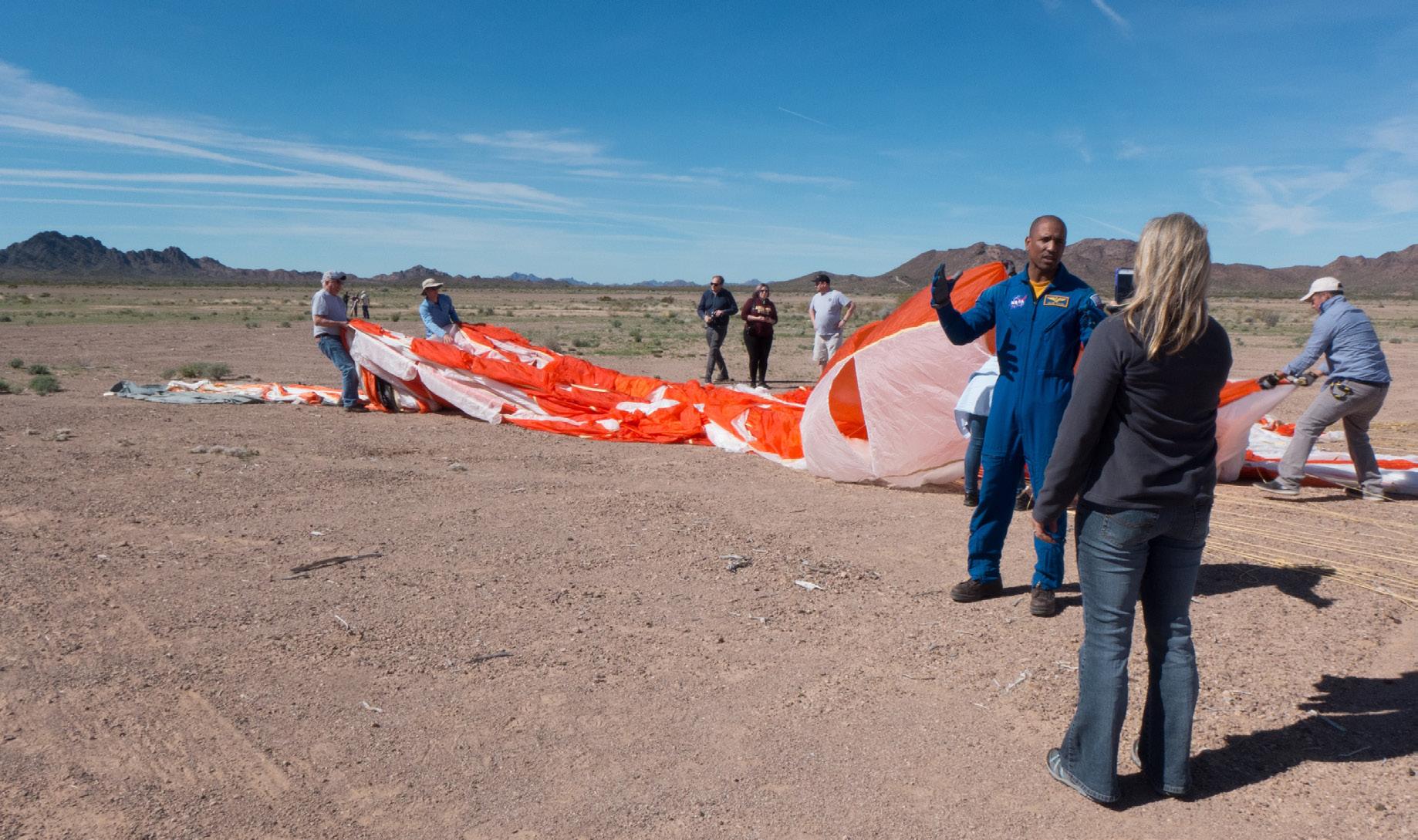
OVER THE MOON
In 2017, Unparalleled Universe (see the opposing page) cartoonist and local artist Brian Colley attended a test drop of the Orion capsule in Yuma, Arizona. The test was connected to the Artemis II mission, which on Monday, April 6, traveled within 4,067 miles of the moon, putting humans the farthest distance ever into space at 252,756 miles from Earth. Colley, who gained special media access through The Sopris Sun at the time, returned to write a column, “Geeking Out Over Astronauts and Art,” about the experience, detailing his visit to the test drop — an invitation he received from a college friend who worked on the parachute system.
GARCO
from page 9
After Brinkman, a few residents voiced concerns in Spanish without an interpreter. Other community leaders including John Fox-Rubin, chief financial officer of Premium for the Planet and innovation manager for Clean Energy Economy for the Region, Lindsay DeFrates, chair of the Roaring Fork School District (RFSD) Board of Education and April Long spoke in favor of the project and urged the BOCC to contribute funds. Their concerns collectively reflected the domino effect created by housing loss, including childcare issues, school enrollment, homelessness and displacement. DeFrates explained that enrollment in the RFSD is down. “Based on recent demographer projections, we’re looking at another decline of enrollment of around 130 students next year in addition to the 200 that we were not able to welcome this year,” she said. “And that loss implicates a potential revenue loss of around $900,000 to this school district.” She added that the reasons for the decline are varied. “But the affordability of housing is always at or near the top of that list, especially for rural Western Slope schools like ours,” she explained.
Fox-Rubin observed that the county is looking at $115 million in reserves next year. “If you imagine making a one-time investment in Cavern Springs, the return on that investment is permanent affordability without any government interaction,” he said. “It’s not part of an affordable housing project with ongoing costs.”
Long added that the sale price of Cavern Springs is more than double the county valuation. “You can tell that the buyer intends to increase the lot rents by more than double what the residents are paying now in order for that to make sense,” she said. “Those are

prices that these workers can’t afford and if they have to move, their next affordable option is further down the I-70 corridor, further from where they work now, which means increased traffic, increased commute times, increased time away from their families and their family’s needs.”
But the BOCC chose not to help Cavern Springs residents take control of their housing. Commission Chair Tom Jankovsky said that the county has reserves now but may not in the next 10 years if oil and gas revenue does not return, and that the budget is tight. “We cut $3.5 million last year out of our salaries — 35 positions we didn’t fund in Garfield County — because we didn’t have the funding,” he told the audience. “We cut back our capital projects from $15 million to $5 million. And that $5 million goes right against reserves. So, at least this commissioner doesn’t see us in a position to help with this.”
County communications officer Renelle Lott, told The Sopris Sun in an email, “The county has not contributed public funds to assist in private/owner purchases of mobile home parks or individual homes.”
Commissioner Mike Samson said, among other things, that if the county helped out with Cavern Springs, what would they say to others who want to do the same thing?
The rest of the meeting included approving the consent agenda, letters of support for two ditch companies, a fairgrounds fee waiver for the Flat Tops Rodeo Bible Camp, a chip/seal contract and a paving contract. The meeting was adjourned after two and a half hours.
You can find archived BOCC meetings at the Garfield County website.
RIVER VALLEY RANCH HOME FOR SALE

Colley with Stan Love — “One of the main people talking with the Artemis astronauts from Earth,” Colley stated. Courtesy photo
Victor Glover speaking to another media reporter. “I didn’t realize he was going to eventually be on this Artemis mission, or I would have taken better photos of/with him,” said Colley. Courtesy photo
Colley with the Orion test capsule after landing in Yuma in 2017. Courtesy photo
Attentive Care When You Need it Most
Don’t let life’s surprises get in the way of making the most of every moment. After-Hours Medical Care in Basalt is here for you, offering convenient and compassionate services for non-life-threatening emergencies—7 days a week.
After-Hours Medical Care
Basalt
234 East Cody Lane
No appointment necessary, walk-ins welcome!

970.544.1250
Weekdays: 2-10 pm Weekends: 8 am-5 pm
MOTHER’S DAY IS RAPIDLY APPROACHING
All local mothers who have welcomed a baby into their lives this past year are invited to have a portrait taken to run in The Sopris Sun’s May 7 edition.



Our professional photographer is taking reservations now for photo sessions:
• Sunday, April 19 and Saturday, April 25 from 9am-1pm at The Sopris Sun o ce at the Third Street Center, 520 S. Third Street, #26 in Carbondale













• Sunday, April 26 at the Glenwood Springs Library from 10am-12pm. Please email Terri Ritchie at terrir@soprissun.com or call 970-510-3003 to schedule. Llame a 970-274-6513 Klaus Kocher o mande un correo electrónico a klauskocherfotograf@gmail.com parahacer una reservación. Se habla español.
Please reserve by Friday, April 17.