{St. Louis' Finest}



A detail that transforms a home… and becomes part of its story. Some Things Are Meant To Be
Hand-cast in bronze, each Cheminée Nest sculpture brings an unexpected presence—quiet, enduring, and unmistakably refined.

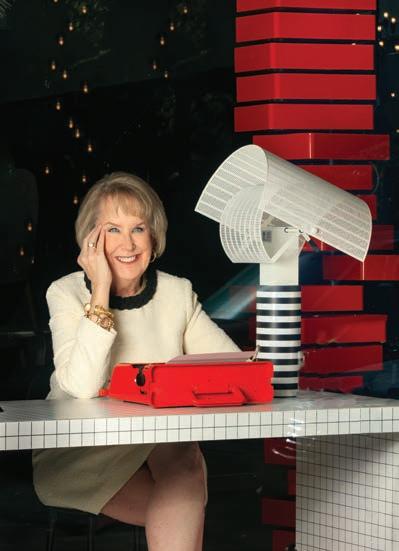
For a number of years, Christy Marshall has helped shape the voice, look and spirit of Sophisticated Living St. Louis. With the May/June issue, she closes an important chapter — her final issue as editor of this magazine — and a well-earned step back from the demands of day-to-day editing after a distinguished 50-year career in journalism.
Christy brought to Sophisticated Living St. Louis the rare combination of editorial discipline, creative vision and deep connection to the St. Louis community that defines truly great editors. From the beginning, she understood that the magazine was not simply about beautiful homes, fine dining and compelling travel — though we celebrate all of those — but about the people whose passions and creativity make this city such an extraordinary place to live.
Over the years, Christy has fashioned countless features that introduced our readers to remarkable individuals across the region — artists, entrepreneurs, designers, philanthropists, chefs and cultural leaders — each with a story worth telling. She has a noteworthy instinct for finding the narrative thread that connects them all, a dedication to craft, a love of place and a pursuit of excellence.
Publishing a magazine is a collaborative effort, but every great publication needs an editor whose judgment and taste set the tone. Christy has done that with grace, intelligence and an unwavering commitment to quality. Her work has helped ensure that every issue of Sophisticated Living St. Louis reflects the sophistication and character of the community it serves.
While she is stepping away from the daily rhythm of editing, we are fortunate that Christy will remain part of the Sophisticated Living family. She will continue contributing to Sophisticated Giving as well as writing occasional features on nonprofits and lending her talents to special editorial projects. It is a role that allows her to stay connected to the storytelling she loves — while finally enjoying a pace she more than deserves.
Personally, I am deeply grateful for Christy’s partnership. She has been a steady, thoughtful presence and a trusted steward of the magazine’s editorial voice. Quite simply, she merits this next chapter in every possible way.
On behalf of our readers, our contributors and our entire team, I want to thank Christy for her exceptional work and wish her continued success — and a bit more time to enjoy it — in the years ahead.
We look forward to building on the strong foundation she helped create as we continue telling the stories of the people and places that define sophisticated living in St. Louis.

Craig M. Kaminer, Publisher craig@slmag.net



Lou Bopp and the Art of Photographing Absence
By Craig Kaminer / Photos and video by John Lore
In a culture saturated with images — scrolling, disposable, instantly forgotten — there are still photographs that refuse to be glanced at. They demand stillness. They insist on presence. They linger.
And in the case of St. Louis-based photographer Lou Bopp, they ask something even more difficult: to confront what is no longer there.
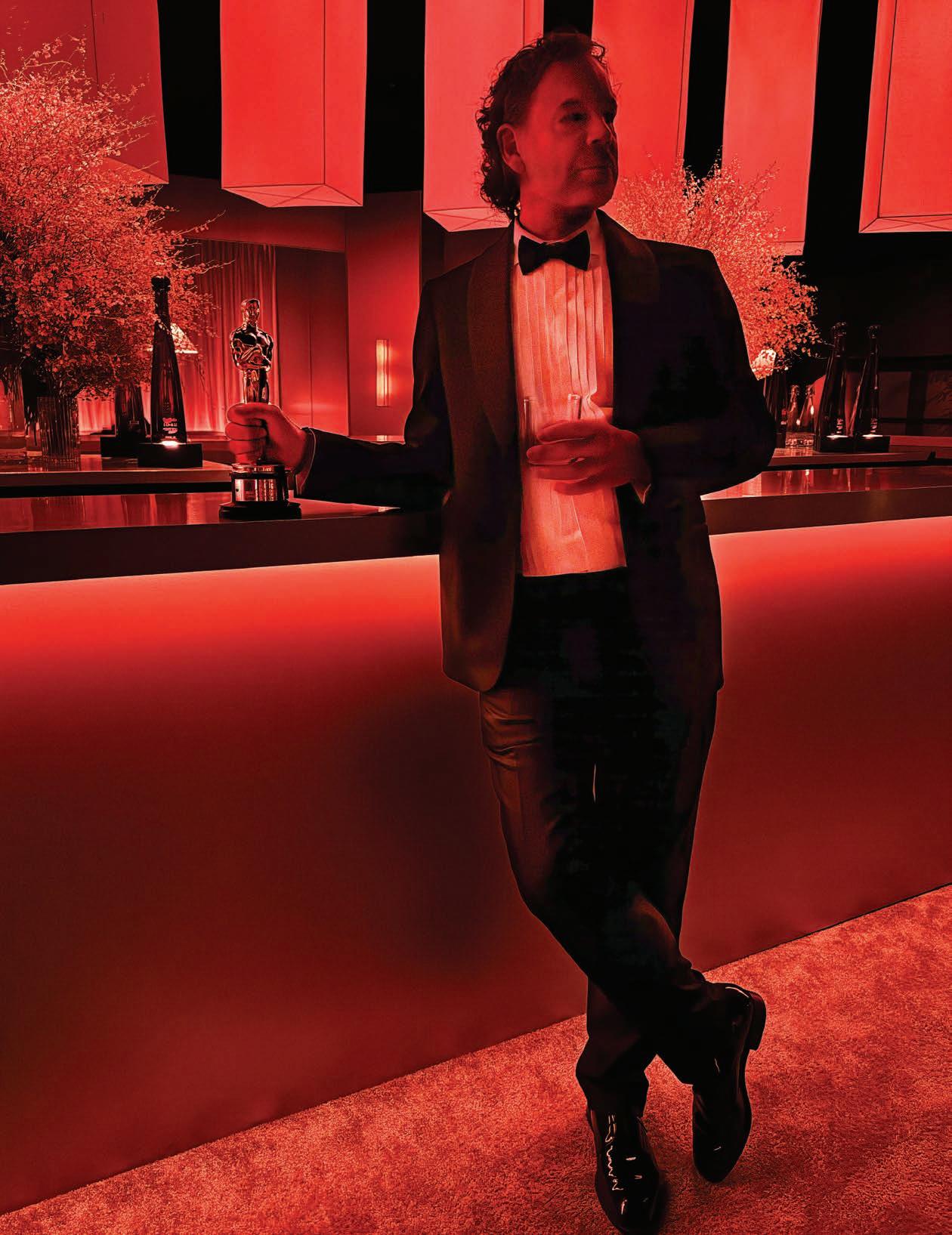
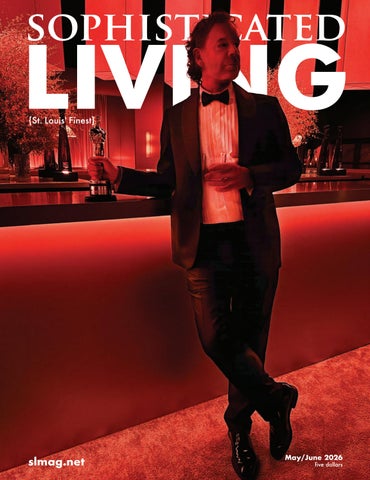
That confrontation has now reached the highest stage in film. “All the Empty Rooms,” the documentary short built around Bopp’s quietly devastating photography, has won the Academy Award — an extraordinary moment for a project that was never meant to be loud; never meant to be celebrated in the traditional sense.
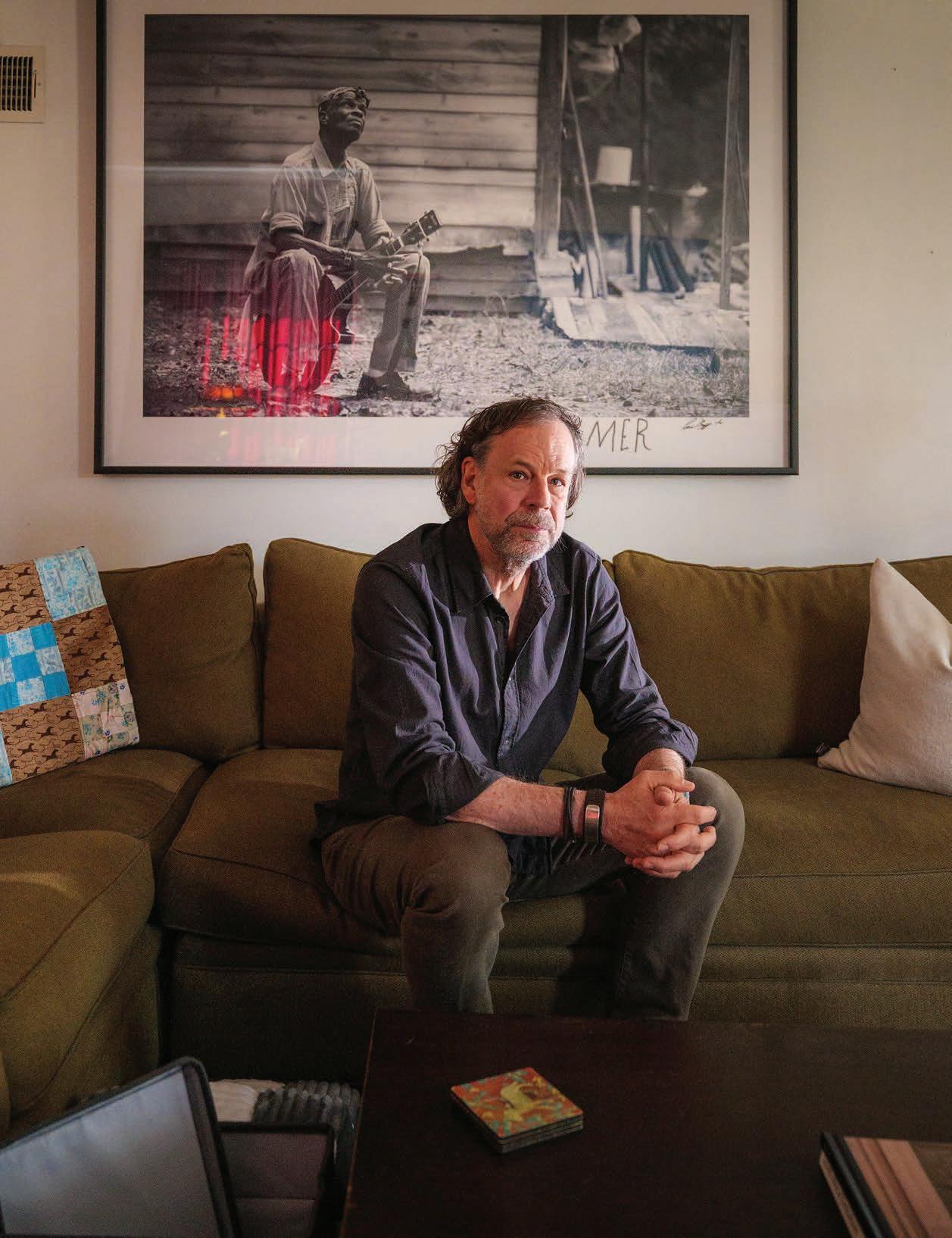
From the beginning, this work was about something else entirely. “It’s never been about me,” Bopp says. “Even in this project, it was never about me. It’s about the families and it’s about the issue.”
For more than four decades, Bopp built a career photographing powerful, recognizable figures — people whose identities were unmistakable — whose presence filled the frame.
Then came a call from Steve Hartman of CBS News.
“My friend Steve Hartman called me about eight years ago, presented this idea to me and I thought it was great. I immediately said yes,” Bopp recalls.
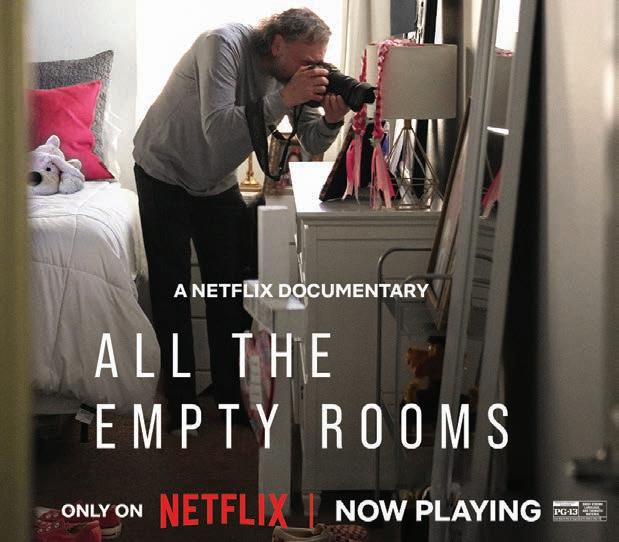
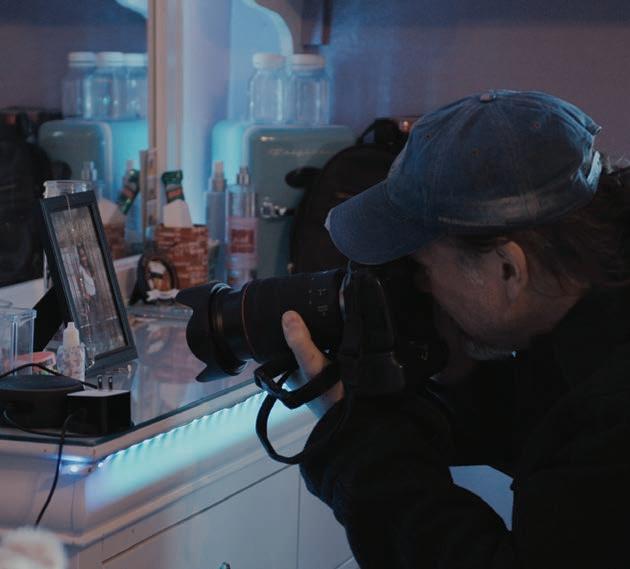
The idea was simple in concept, almost impossible in execution: photograph the preserved bedrooms of children killed in school shootings.
Not stylized. Not interpreted. Just… documented.
“It seemed like a really difficult ask of anybody, especially the parents,” Bopp admits.
A few families said yes.
They had no idea what it would become.
“We had no idea that it was going to turn into this,” he says.
The hardest part wasn’t the photography. It was everything before it.
“Whenever Steve would call and tell me we had another family that agreed to trust us… that’s when I started to get super nervous,” Bopp says.
That word — trust — sits at the center of the entire project.
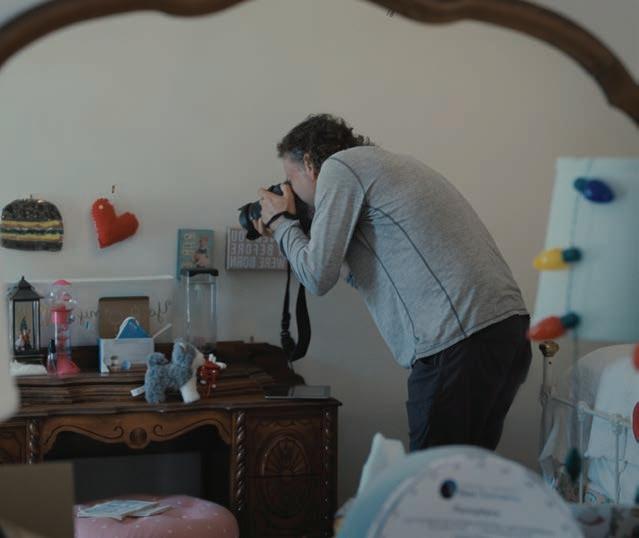

From the moment he knew another family had opened their door, the emotional weight began to build.
“I couldn’t sleep. It’s all I could think about the night before,” he says of those early visits.
By the time he arrived, camera in hand, he was already overwhelmed.
“Leading up to me knocking on the door — I mean, I was an emotional wreck. I had no idea what to say, what to do, how to act.”
And yet, once inside, something shifted.
“We laughed, we cried,” he says.
What makes Bopp’s photographs so powerful is not just what he captures but how he captures it.
There is a discipline, almost a ritual, to his process.
“I didn’t touch anything. I didn’t use lights. No tripods.
One lens, one camera,” he explains.
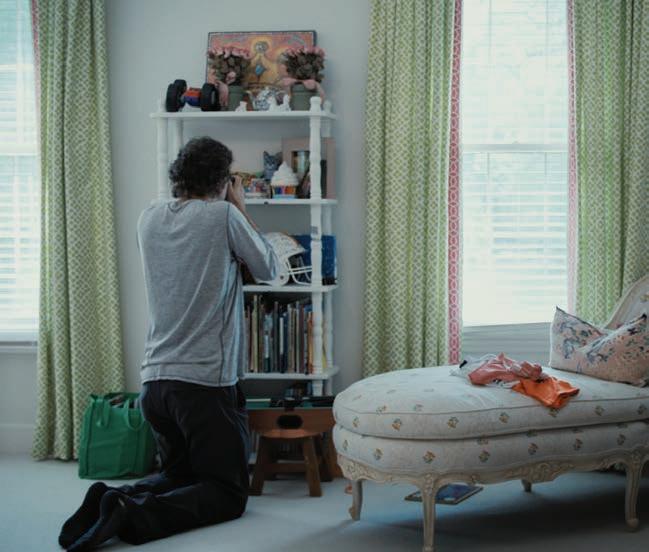

“I took off my shoes before I went in each bedroom.”
Then, in a line that reveals everything about his approach: “I hid behind the camera. That’s how I dealt with it.”
The restraint is striking. No staging. No manipulation. No intrusion. Only observation.
Bopp often worked alone in the rooms, with the families stepping aside, which allowed him to absorb what was in front of him.
“I was given space to just sit with it,” he says. “Just sit in the bedroom and feel.”
And from that stillness came the central challenge of the project: How do I take a portrait of somebody who’s not there?”
That question defines “All the Empty Rooms.”
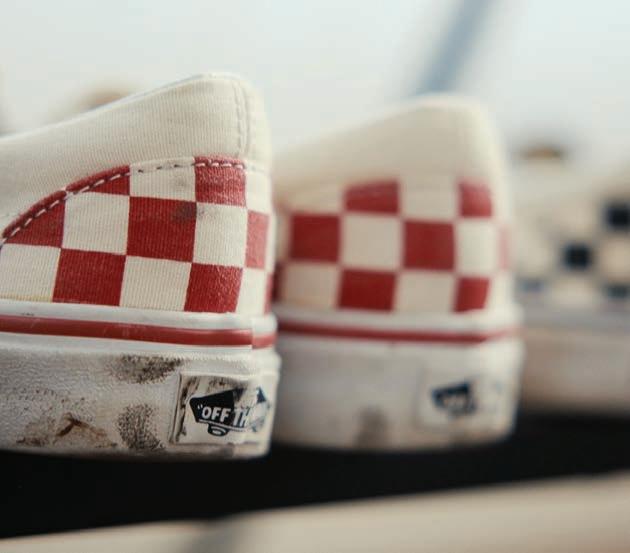
The answer is found in the details: a pair of shoes by the bed, a rumpled comforter, a desk frozen mid-life. These are not objects. They are echoes.

Bopp’s goal was clear: “To try to figure out a way… to capture the essence of a child who wasn’t present.”
Despite the emotional weight, the technical demands were equally intense.
Each room allowed no margin for error.
“I know that I have one opportunity to do this,” Bopp says.
“Parents have trusted me… I’m not going to mess it up.”
He would shoot thousands of images per room — often up to 2,000 — working quickly in natural light, sometimes at slow shutter speeds, capturing fleeting alignments of shadow and meaning.
But the goal was never volume. It was truth.
What began as a photographic project eventually evolved into a film, under the direction of Joshua Seftel.
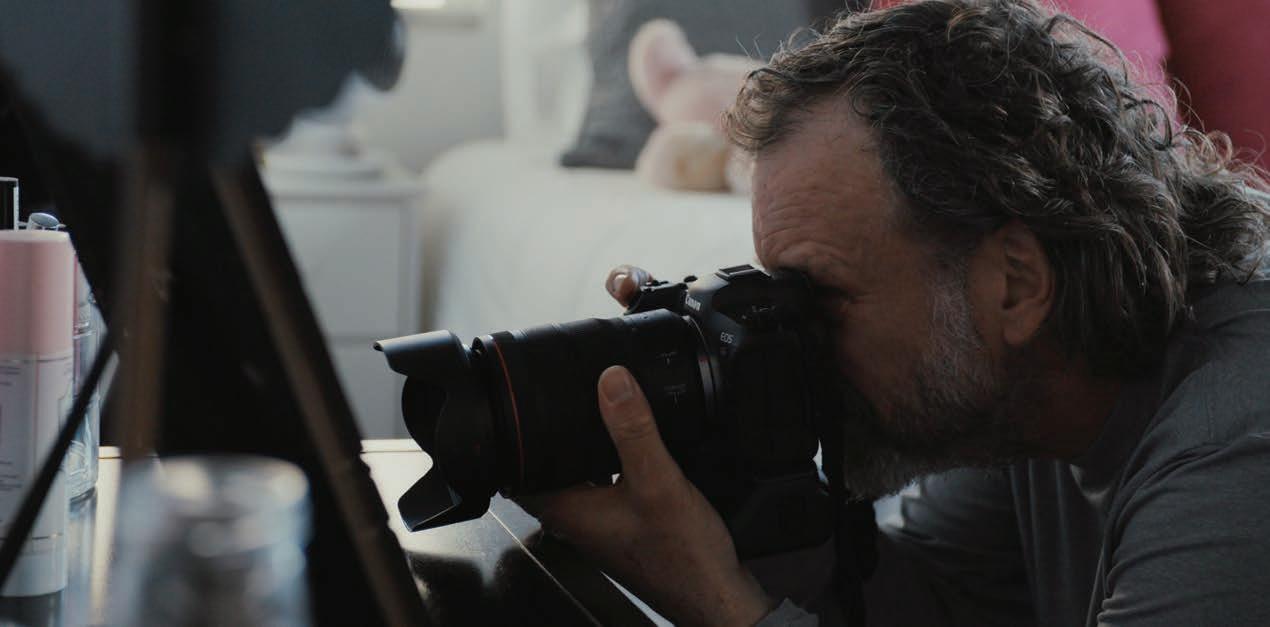
The transition was organic, almost accidental.
Hartman initially resisted appearing in the film. “It’s not my brand,” Bopp recalls him saying — but Seftel saw something deeper: the photographs weren’t just supporting material.
They were the story.
“The stills are the most poignant,” Bopp says.
Audiences agree.
“I’ve witnessed people walk up to some of the photographs and they can’t look away,” he says. “I’ve seen people cry… people literally walk up and give me a hug.”
For a photographer who prefers anonymity, it has been a profound — and overwhelming — experience.
“I don’t think I’ve ever been so emotional throughout this process,” he admits.
By the time “All the Empty Rooms” reached the Academy Awards, the emotional journey had already peaked many times over.
The nomination itself was intense.
“Another level of emotion,” Bopp says of sharing that moment with the families on Zoom.
But on the day of the ceremony, something surprising happened.
“I was pretty calm,” he says. “At that point, my hands are off the steering wheel.”
Still, he believed in the work.
“I felt like we had the best film,” he says candidly.
When the announcement came, it wasn’t triumph that defined the moment. It was release.
“It was such a relief,” he says.
Because he wasn’t thinking about himself.
“I’m thinking about the families,” he says.
What followed wasn’t a glamorous afterparty; it was something far more human.
“I’ve never seen so many tears… tears of joy,” he says.
At every stage, the project rests on a fragile foundation: access granted through grief.
“The whole process — everybody had to trust everybody,” Bopp explains.
That trust dictated everything from how he entered a room to how he pressed the shutter.
There is no sensationalism in the work. No exploitation. Only care.
And that care is visible in every image.
Despite the global recognition, Bopp remains rooted in St. Louis, a place he says allows him to remain grounded.
“I’ve always wanted to be rather anonymous,” he says. “Fly under the radar behind the camera.”
That instinct to stay out of the spotlight feels almost radical in an era of personal branding.
But it also explains the work.
Because to photograph absence, the photographer must disappear.
Long after the Oscar glow fades, “All the Empty Rooms” will endure for a different reason.
Not because it won.
But because it matters.
A bed that will never be slept in again.
A desk waiting for homework that will never come.
A life suspended in objects left exactly where they were.
Lou Bopp did not photograph tragedy.
He photographed what comes after.
And in doing so, he created something rare: images that do not simply shows us loss — but makes us feel it. Quietly. Permanently. Unavoidably. sl

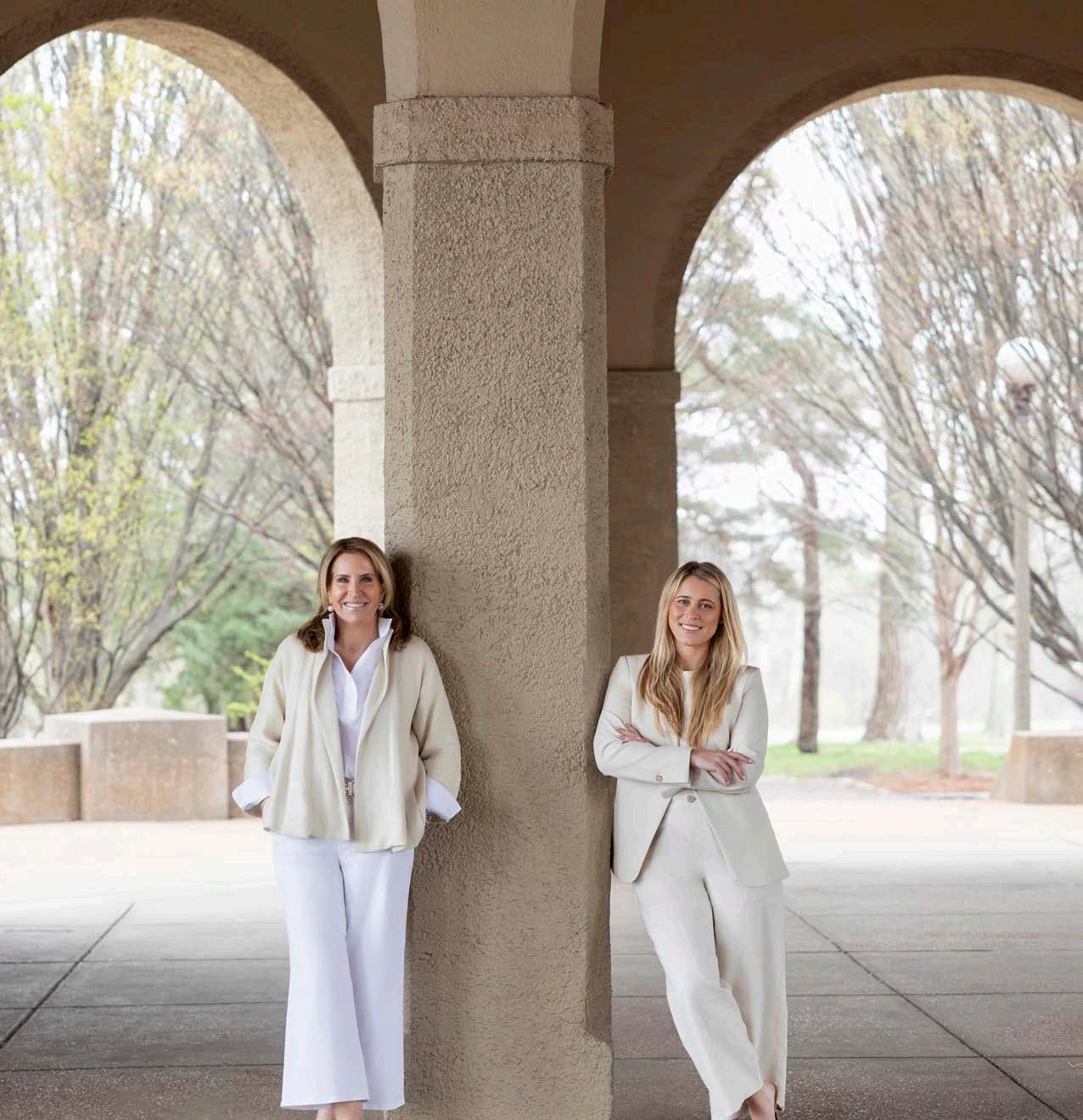
KATIE, Founding Partner at COMPASS St. Louis and Top 1.5% agent is joined by fellow real estate advisor Connor Cassity Latino. Connor, a St. Louis native, combines analytical brilliance with a modern perspective, bringing exceptional clarity and high-energy to the team. With the full-force of COMPASS behind them, they redefine the real estate experience with a proactive, results-driven edge.
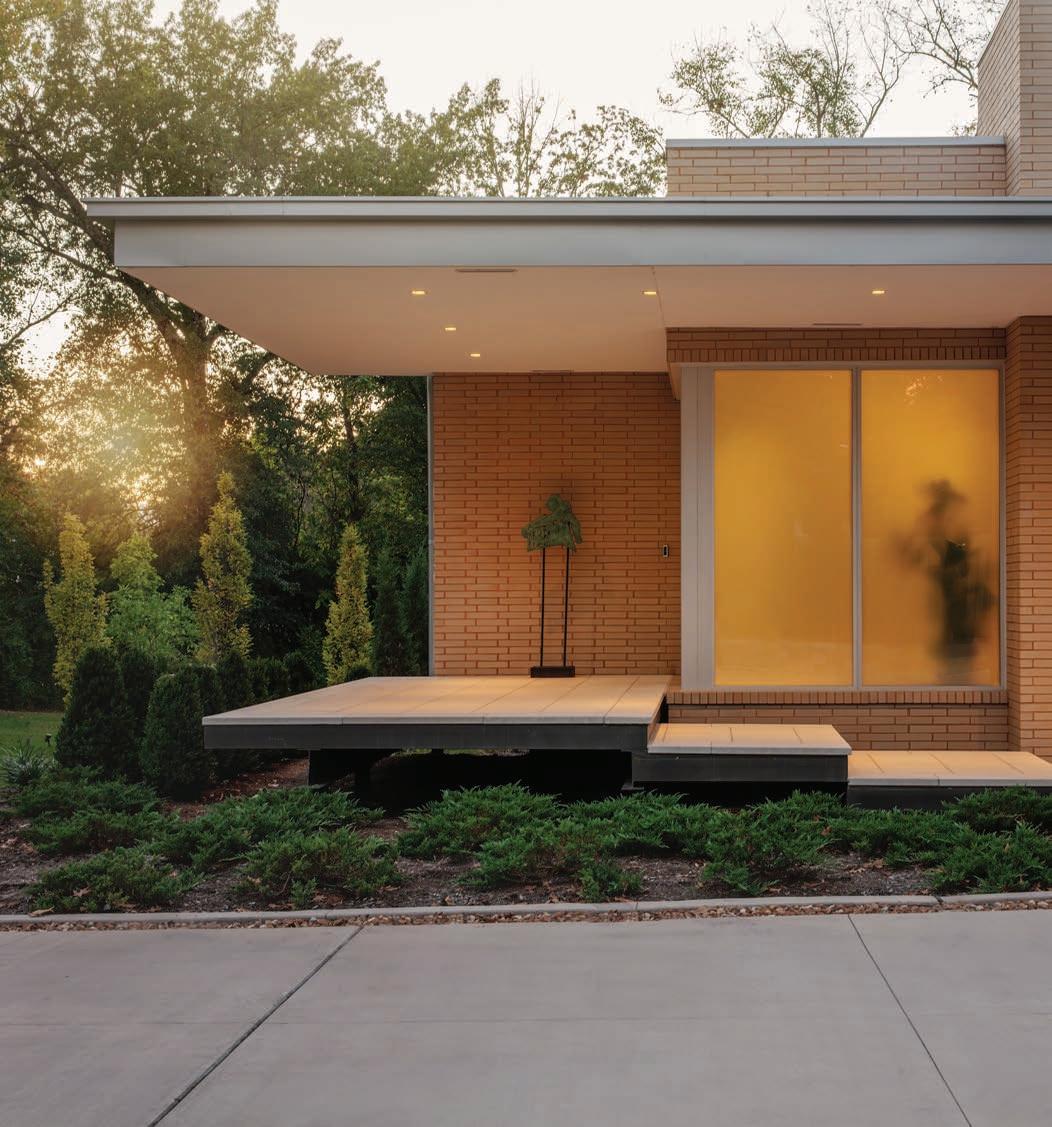
The homeowner found a swath of land online and quickly made it his own.
By Christy Marshall / Photos by Carmen Troesser
The minute the homeowner set foot on the property, he knew it was his.
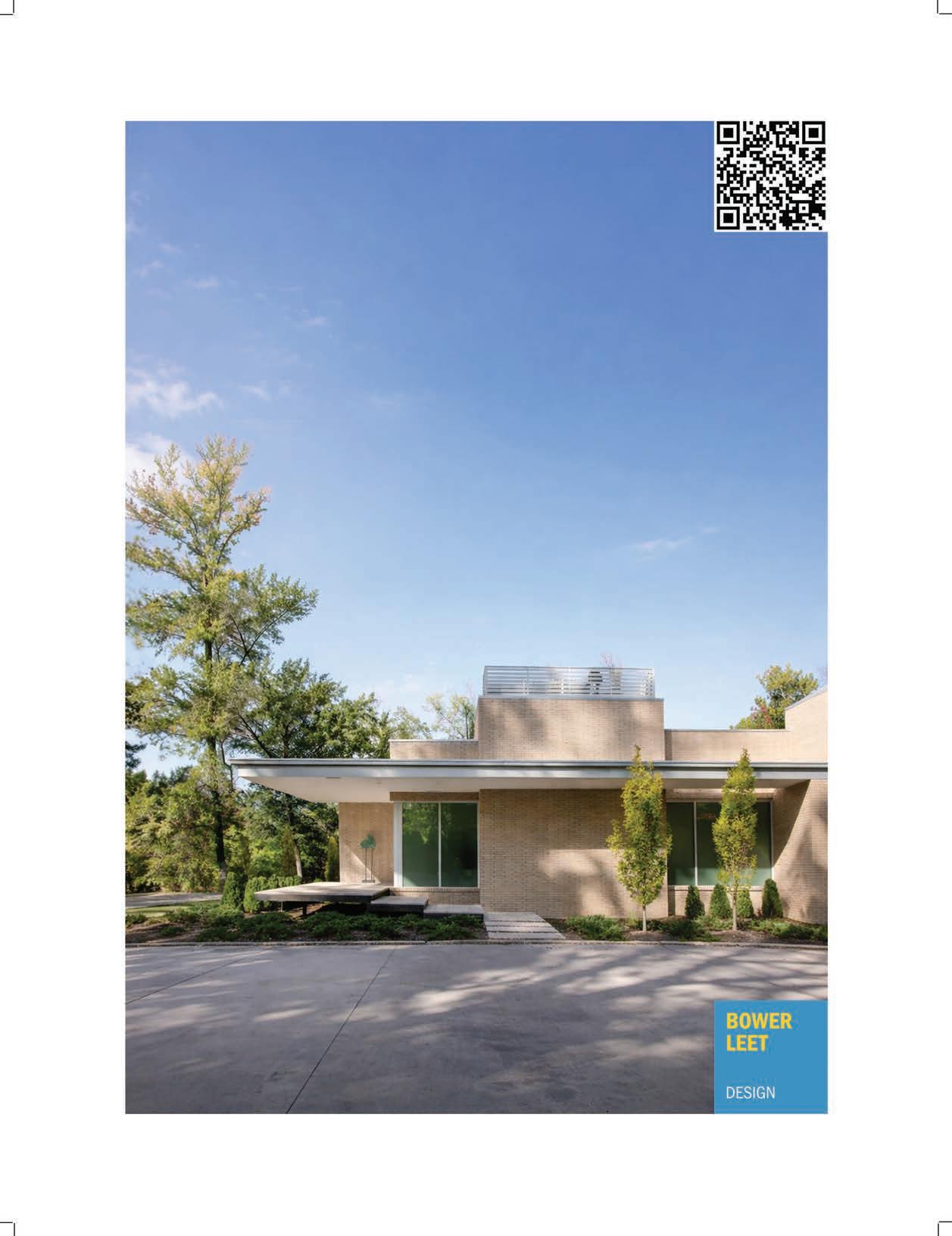
Set on a major crossway of Ladue, the site had a house and then a second slice of land sandwiched in the middle of it, with a creek meandering through the back of the lot. He put a contract on it the same day.
“The whole idea is that this place is just going to fit in this forest,” he says.
Susan Bower, principal of Bower Leet Design, agrees. “It’s the vertical wall of green that you get looking west,” she says. “That’s amazing.”
The homeowners are pros at building a new home — they’ve done it three times before. And this is the second time around
with the same trusted trio: architect Bower, builder Doug Cohen of Douglass Properties and interior designer Matthew Boland of MMB Studio in Scottsdale. The day the couple decided to sell their previous home, the homeowner called Bower and said he was ready to get the band back together.
“In truth you can probably count on one hand the people who built a home and who still get along with the architect, their designer and their builder — that they would do it again,” he says with a laugh. “And, by the way, that is a bi-directional comment.”
The existing house on the lot was razed and the team went to work.
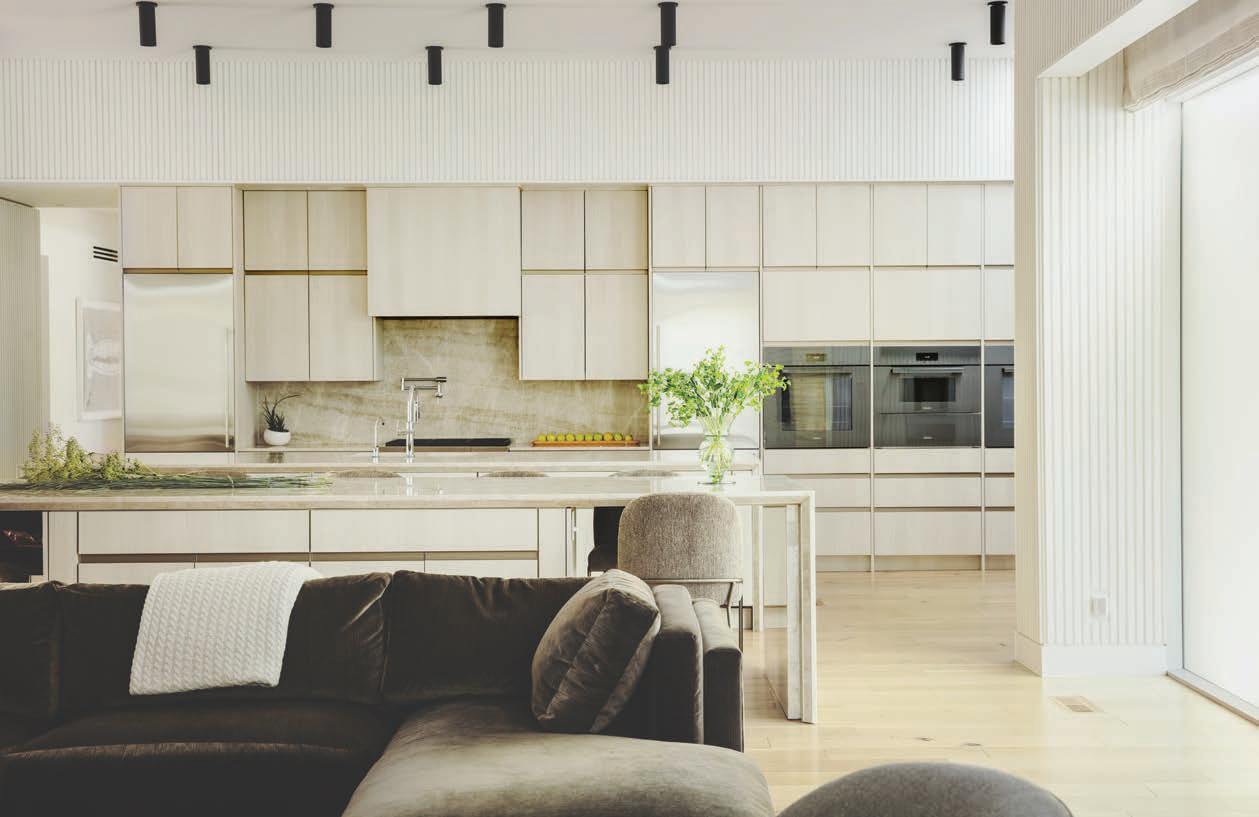
“Another request was that there was no physical projecting hardware in the kitchen,” Matthew Boland explains. “Everything is integral. You can have 20 people smashed in the kitchen and it’s very comfortable. It’s like a hallway where you don’t have to watch out for things projecting.”
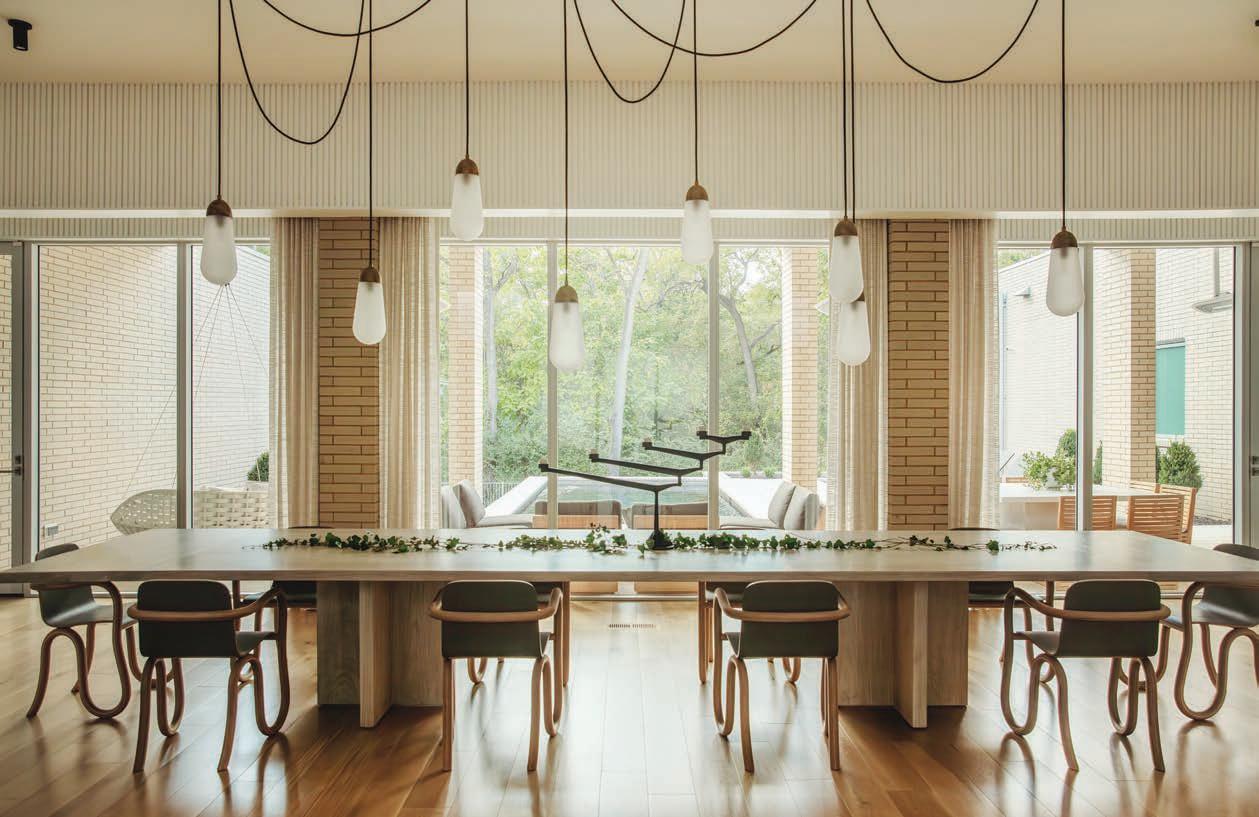
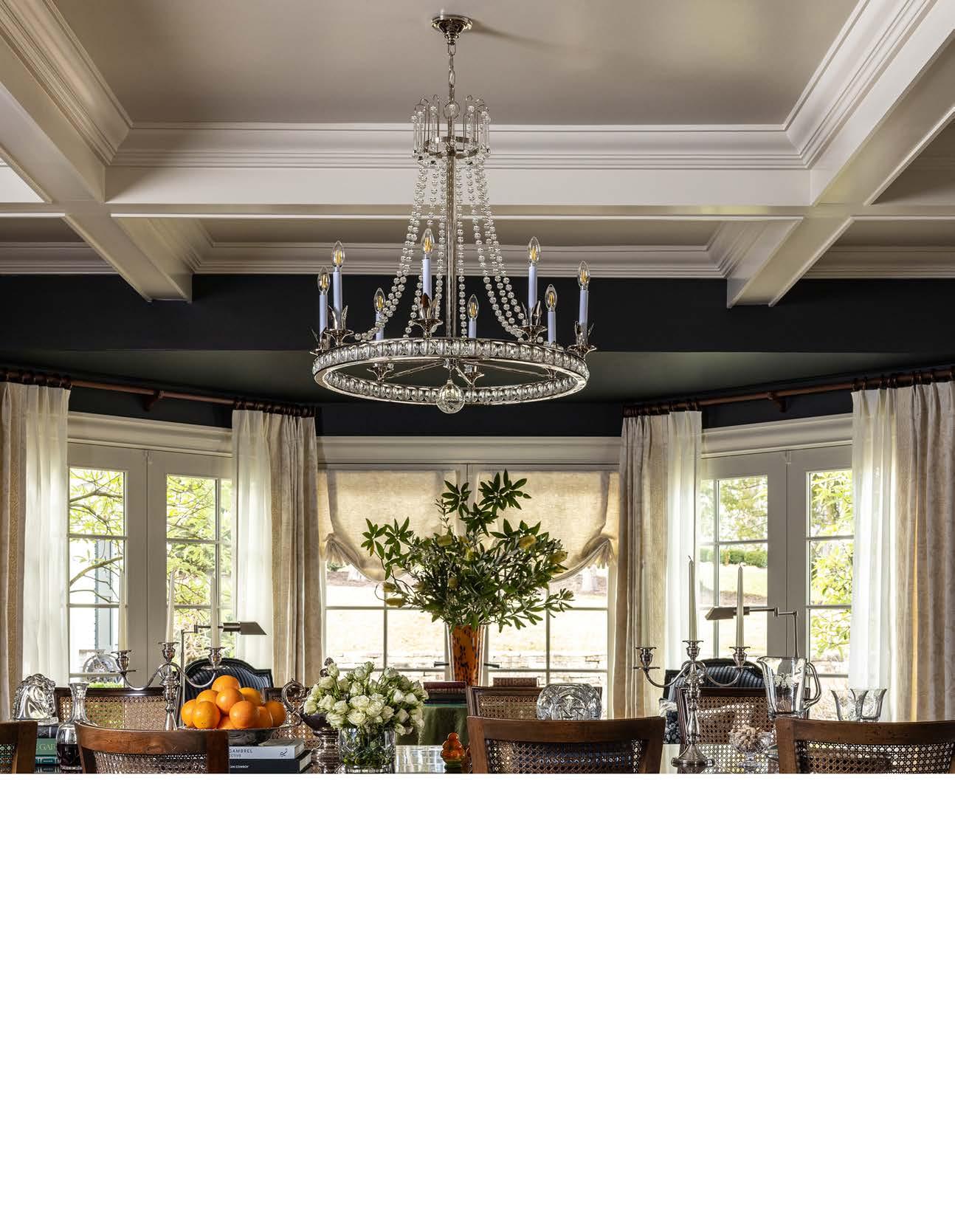
The huge dining room table for 16 people was bespoke. The light fixture by Apparatus was custom designed. Matthew Boland notes that the area is basically maintenance free. “They entertain and they don’t want their guests to worry about coasters and precious interiors,” he says. “Every single material that was selected was chosen not only for its aesthetic value and beauty but also for its functionality. Whether that is the floor or the fabric on the sofa.”
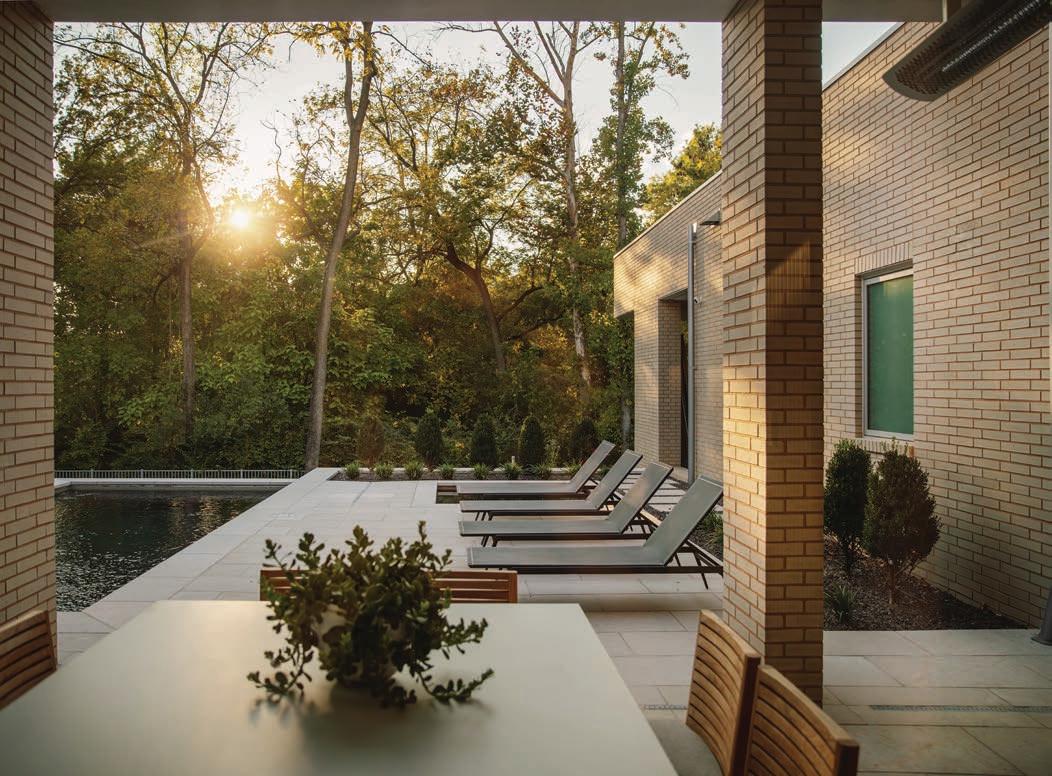
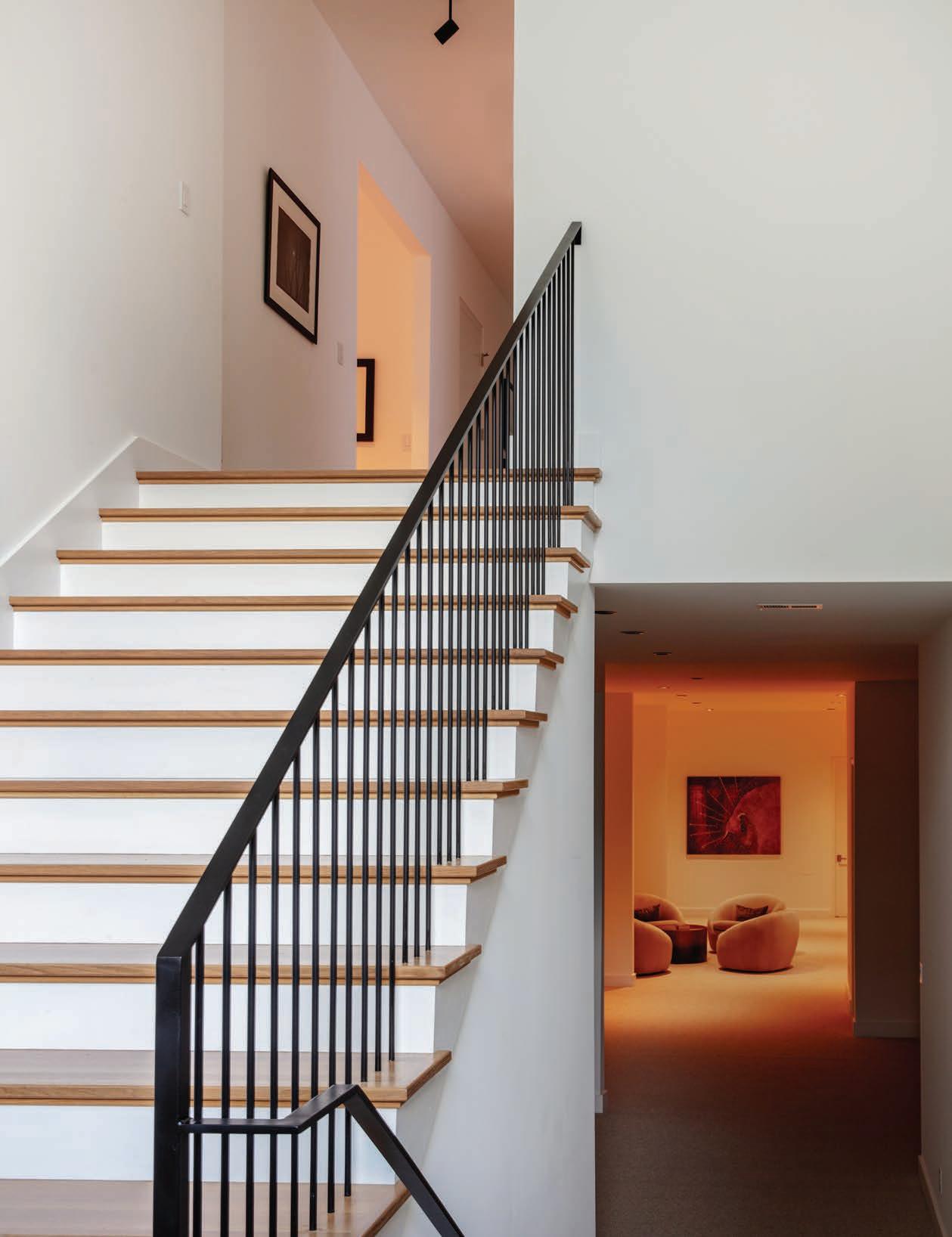
“We liked that the site slopes down toward the creek,” Bower says. “So, the house steps down. You get multiple levels in the house that are more interesting to reach. You can just kind of drift around.”
“Susan started working on siting the actual structure, getting into massing forms and that’s when she came up with cantilevering the house on a plinth base, which is so ingenious and interesting,” Boland says. “When you first pull up to the house, it does feel modest. It is designed not to be decorative.”
The homeowner describes the result as floating. “If you look at the southern side of the house, it’s from the entry all the way down. It’s floating,” he says. And that sensation begins before you even cross the threshold. When you first pull up to the house, it reads as modest, almost understated. You need to know where you’re going. You need to be invited.
That sense of quiet confidence was very much by design. Boland understood from the start that the wife is decisive, unpretentious and clear-eyed about what she wants. “She’s not a showy person,” Boland says. “She gravitated toward fewer furnishings, more art. A strong but more modest look.”
That sensibility shaped every decision from the outside in. Everything started with the exterior brick — its color, its texture, its weight. “We felt the color of the brick needed to come inside the house,” Boland says. “It drove the paneling, the color palette.”
“We took the previous house and said, ‘What can we adjust?’” Bower says. While the earlier home was linear and sprawling, this one is more square and compact — equally large but more gathered. The palette is neutral. “Very restful,” Bower says.
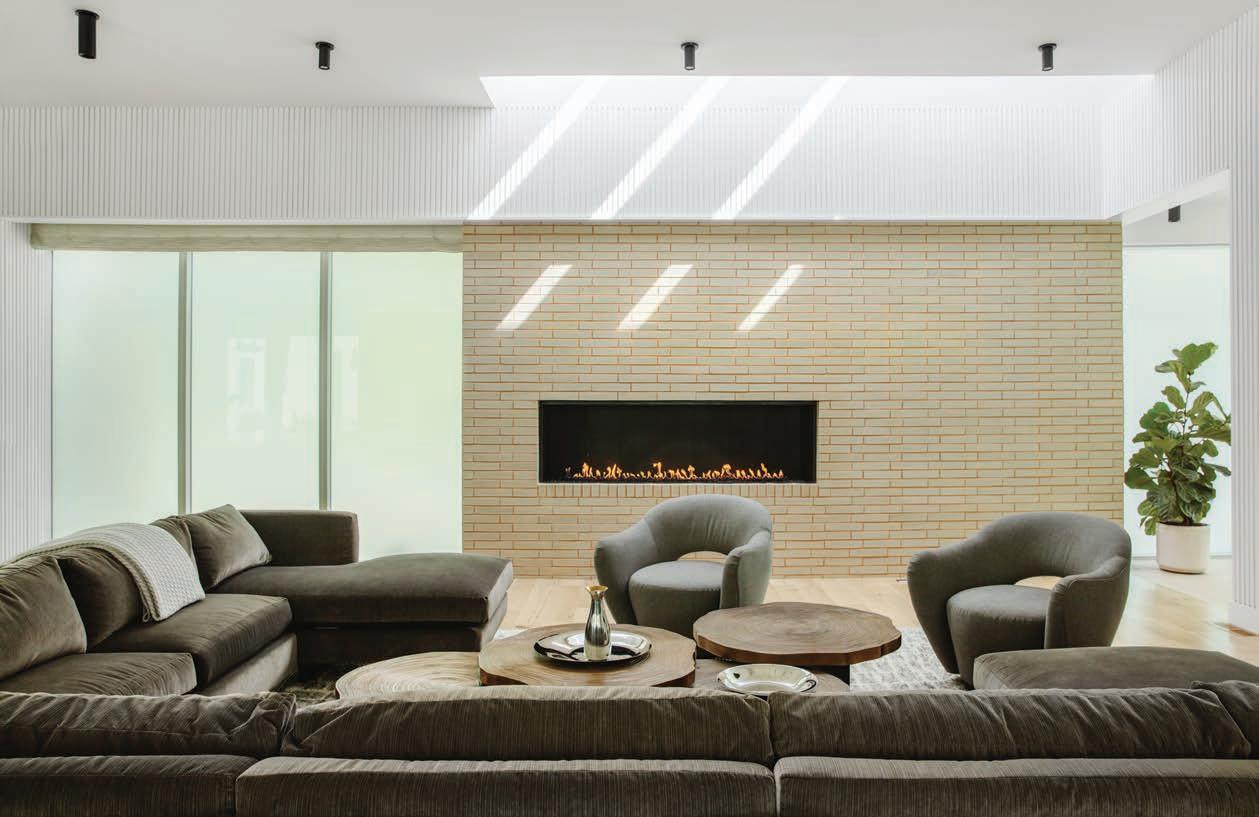
The couple’s wish list was both specific and occasionally contradictory: They wanted a spot to eat breakfast with their sons when they’re in town, but also a space to host more than 100 guests. They wanted cozy and easy care, with no crown moldings, no fussiness — and a fireplace that gives off heat. They wanted the outside to come in. And they wanted several bedrooms but set well apart from the main living area.
Boland solved the bedroom question. “I said, why don’t we figure out how to hide the rest of the house from the great room?” he explains. “It was important to make that door to the boys’ rooms and guest rooms completely invisible. And the pivot door to their suite invisible.” Standing in the great room and looking down the hallway, the sightline is long and seamless.
The great room itself is a study in restraint. The ceiling is tall but not overwrought. A double island anchors the kitchen without tipping into excess. “I didn’t want it to be furniture world,” Boland says. There are no cans in the ceiling — everything is surfacemounted. The undulating lighting fixtures feel less like fixtures and more like site-specific artwork.
The interior designer, Matthew Boland, suggested not using can lighting. “How about we light the ceiling with different types of downlights but we surface mount everything?” he recalls. “They were game for that. Having those undulating light fixtures and having the ceiling decorated with those dark cylinders is also interesting in such a rectal linear space. It makes the ceiling have more of a sculptural effect because it feels installed, like a site-specific artwork.”
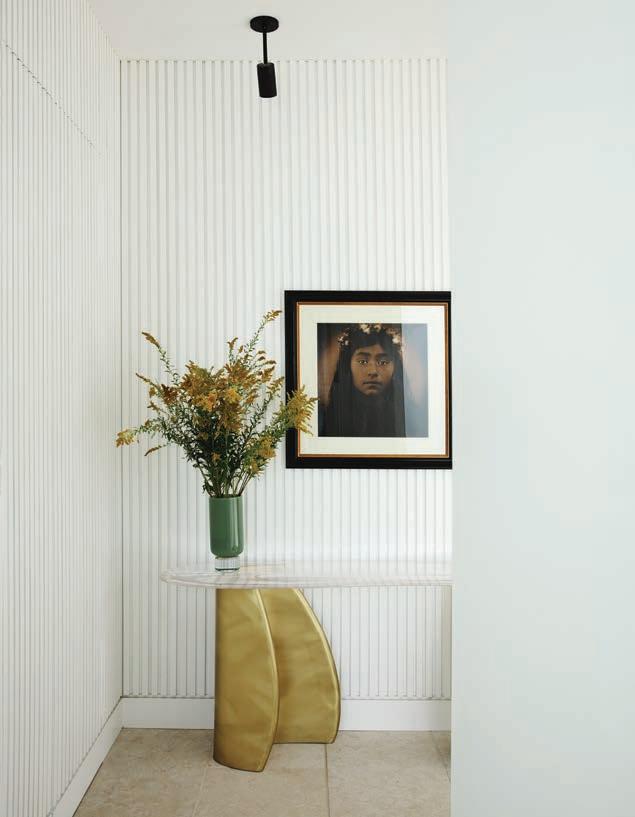
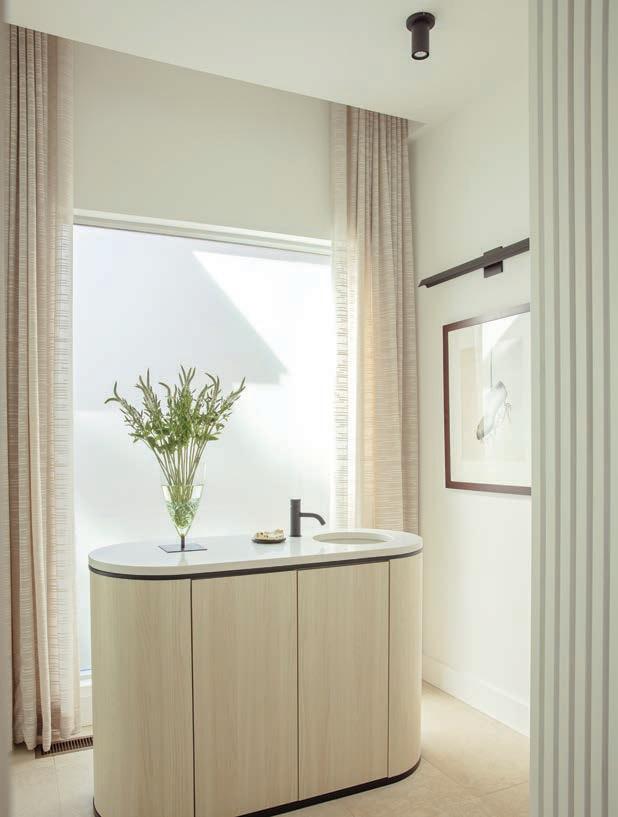
“We were all so excited about Susan’s idea of putting the house on a plinth but in order to achieve that, we had to set the house back on the foundation,” Boland says. “We put the plumbing in the center of the room and that allowed us to float the vanity in the middle of the room. It makes it more dynamic. It makes it more sculptural and it is certainly a unique feature. We frosted the glass in the front, which was important from a privacy standpoint. The mirror is to the side, the vanity floats in the middle. It is not a traditional powder room.”
Practicality was never far from the conversation. The homeowners have dogs and entertain often. They wanted every material to earn its place. “Every material was selected not only for its aesthetic or beauty,” Boland says. The dining chairs, for instance, have no upholstery. “I wanted a chair that was going to be sculptural but one that you could wipe down. The dining table is entirely bespoke — no table at that scale simply exists.” Above the table hangs a custom chandelier from Apparatus. “The homeowner wanted something unique,” Boland says.
The dining room doubles as a meeting space and buffet setup when the couple entertains, with the backdrop of the pool beyond — a placement that was very much intentional. “I love the way Susan did the pool and the way she did the terraced view,” Boland says. “It makes it feel like it’s floating.”
For the husband, the covered outdoor patio was a priority. He knew exactly what he wanted: a lower ceiling, beautiful outdoor heaters, a very specific placement for the barbecue grill. “He was very specific about the simplicity,” Boland notes. “
The primary suite is minimalist in the truest sense. “The sleeping chamber is literally a sleeping chamber,” Boland says.
Generous, needs-specific closets. A freestanding tub. A beautiful skylight in the bathroom. Stone that feels quiet. Pendants hung in lieu of sconces. “All the finishes are quiet,” he says. “Nothing is jumping out at you.”
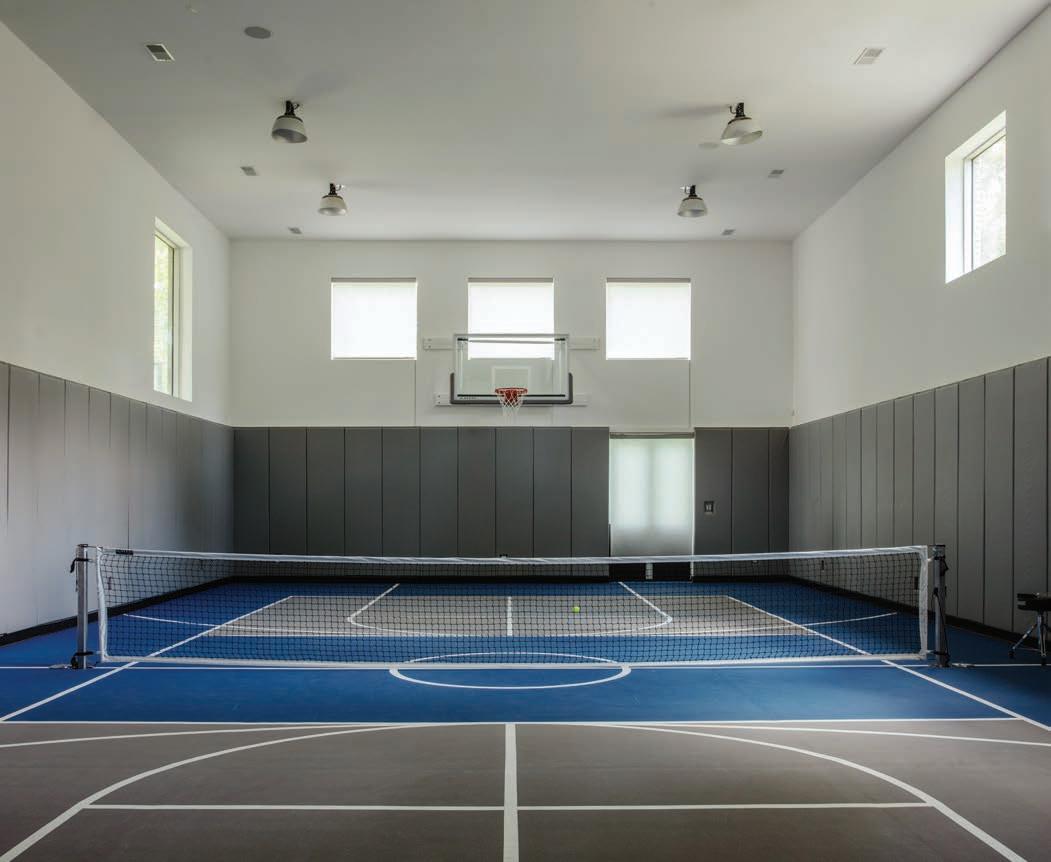
The lower level includes the sons’ and guest bedrooms, a lounge, a fitness center the couple uses daily and a pickleball and basketball court built by Alco. “They had not done a pickleball court before and now they have done 50,” the homeowner says with pride.
The homeowners’ art collection threads through the house, giving each room something to discover. The powder room — made possible by the decision to place the house on a plinth — features a floating vanity and frosted glass that balances privacy with light.
This house, Boland notes, is the 2.0 version of what the team accomplished together the first time. A refinement. An evolution. “The most important thing is understanding the program,” he says. And after years of working together, this team understands it deeply.
Looking around his finished home, the homeowner exhales. “We get to live in the house that they built.” sl





Is your family prepared to carry on your legacy?
Successful families plan for the future — together. With over $124 trillion in wealth expected to transfer over the next 25 years, you need a team of seasoned private wealth management professionals to help guide you and your family through the in-depth estate planning conversations required to align on family wealth decisions.
Commerce Trust can assist with engaging your next generation on wealth habits crucial to preserving your family legacy. We draw on our deep bench of experience and capabilities to help prepare future generations of your family for the responsibilities that accompany significant, inherited wealth.
Our holistic, team-based approach to servicing clients means your team of estate and tax planning, investment management, and trust administration professionals will collaborate to guide you toward achieving your family’s goals while safeguarding your personal and family legacy.
Discover how Commerce Trust can help to secure your legacy through meaningful, family estate planning conversations and engagement. Contact us today at www.commercetrustcompany.com/estateplanning.


By Richard English, J.D., Managing Director–West Region, Commerce Family Office, and Brian Humes, CPA Managing Director–East Region, Commerce Family Office
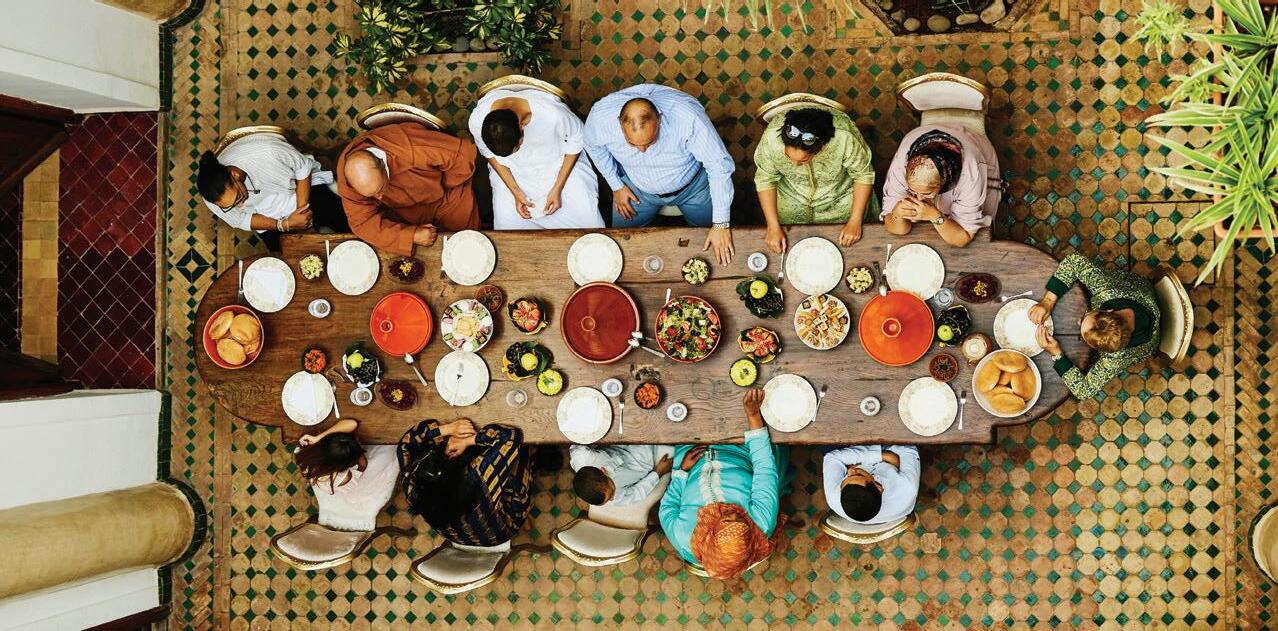
Family governance refers to the framework and practices highnet-worth families can use to align on family wealth decisions. The structure that family governance provides can also help engage the next generation of your family to accomplish your long-term goals together.
Why implement family governance?
Many high-net-worth families use family governance to promote the preservation of generational wealth by instilling values that shape how the next generation thinks about money. Effective family governance measures can also help your family make informed decisions regarding family wealth or plan for asset transfer in a structured manner.
Document your family mission statement
A mission statement is a brief description of family values that serves as a guidepost for family wealth decisions. For example, if your family values higher education, your mission statement might reflect a commitment to lifelong learning and supporting educational institutions. If your family values charity, you may state that making a positive impact in your community should be part of your family legacy.
The benefit of documenting shared family values lies in aligning on a shared understanding of these matters to inform decisions made as a family.
Meet with family regularly to foster open communication
Holding family meetings allows families to reinforce family values and goals for family wealth, promote financial literacy by discussing strategies for building and preserving wealth, and address changes or upcoming family milestones that may impact decisions going forward.
Often, high-net-worth families have a smaller subset of family members who may form a family council. The family council acts similarly to a board of directors, providing governance and oversight of the family’s wealth and estate.
Some families divide responsibilities by creating committees to handle specific areas such as social events, charitable activities, or investments, promoting more effective decision-making and consistency in these matters.
Implement governance for specific assets
There may be special assets for which you want to implement governance, such as real estate, art, and collectibles.
For example, if your family will inherit personal property or real estate, family governance structures may define use and guest privileges, plan for maintenance expenses, or set guidelines for future ownership and potential sale. Similarly, if you have an art collection, you may want to document a plan for the management of the collection and its potential eventual transfer, as art often requires special care and can be illiquid.
Family governance may provide a structure to document your instructions for assets that have sentimental value, giving your family a roadmap for the transfer and care of the assets today and for your beneficiaries in the future.
Set family standards and expectations for charitable giving
For many high-net-worth families, philanthropy is a reflection of their family values and is pivotal to how their family legacy will be defined. Governance around charitable giving can help answer questions regarding which charities to support.
Family governance structures can also inform what giving strategies best support an enduring family philanthropy and giving plan. Instead of outright gifts, your family may assess whether establishing a charitable trust or contributing to a donor-advised fund offers advantages for the management and distribution of funds. Informed by these governance structures, families may determine that if income is generated or assets can appreciate in a charitable trust or donor-advised fund may have a more lasting impact than if funds were exhausted by an outright donation
Effective family governance can establish a structure for high-net-worth families to help preserve wealth through multiple generations by implementing a framework that encourages communication and alignment around your goals for family wealth.
Contact Commerce Trust today at www.commercetrustcompany.com/estateplanning to learn more about how your private wealth management team can assist in the development and implementation of family governance structures aimed at ensuring you have the needed family decision-making, oversight, and communication mechanisms in place to keep family members aligned around the long-term goals of your estate plan.
Commerce Trust does not provide tax advice to customers unless engaged to do so.
The opinions and other information in the commentary are provided as of January 16, 2025. This summary is intended to provide general information only, and may be of value to the reader and audience.
This material is not a recommendation of any particular investment or insurance strategy, is not based on any particular financial situation or need, and is not intended to replace the advice of a qualified tax advisor or investment professional. While Commerce may provide information or express opinions from time to time, such information or opinions are subject to change, are not offered as professional tax, insurance or legal advice, and may not be relied on as such.
Data contained herein from third-party providers is obtained from what are considered reliable sources. However, its accuracy, completeness, or reliability cannot be guaranteed.
Commerce Trust is a division of Commerce Bank.
Investment Products: Not FDIC Insured | May Lose Value | No Bank Guarantee



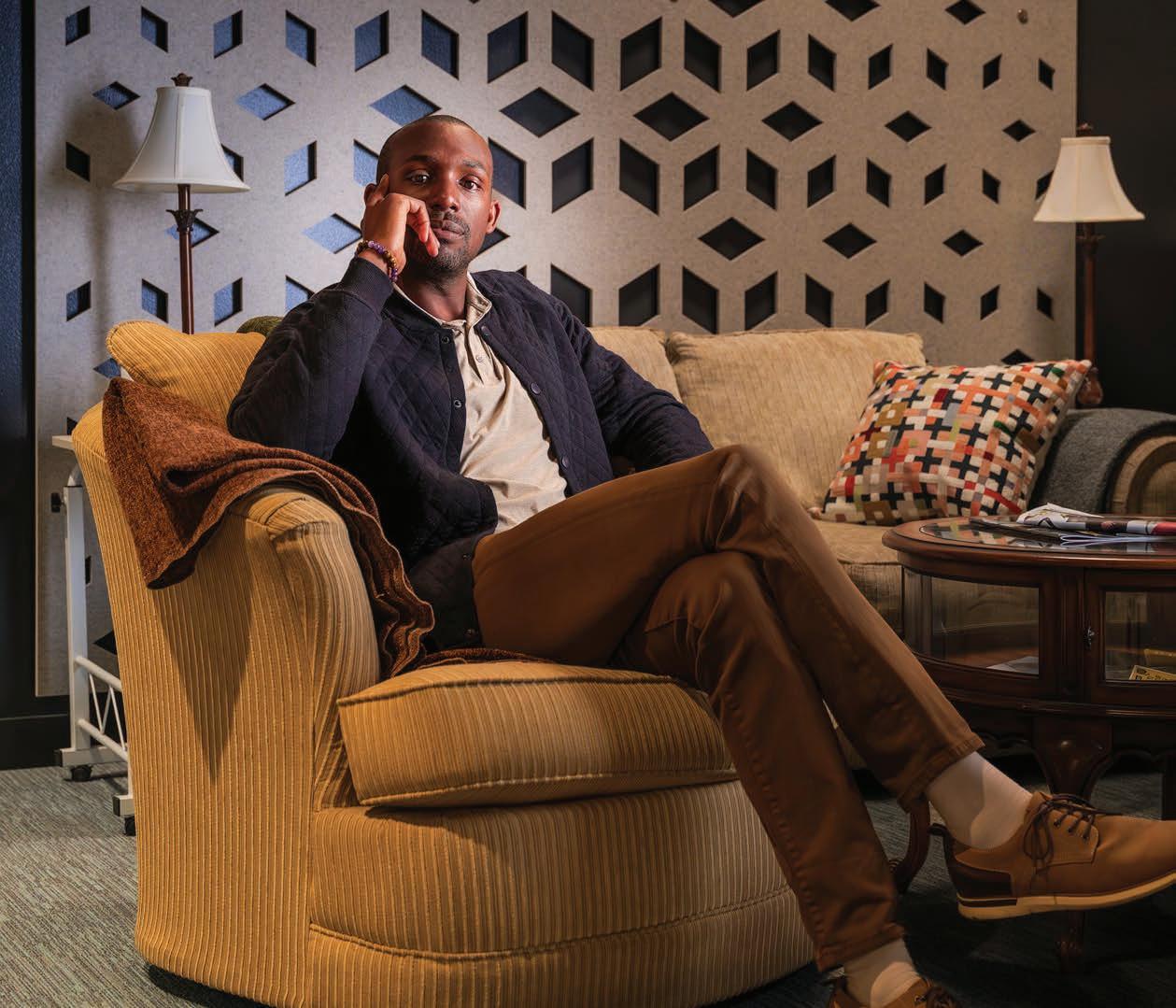
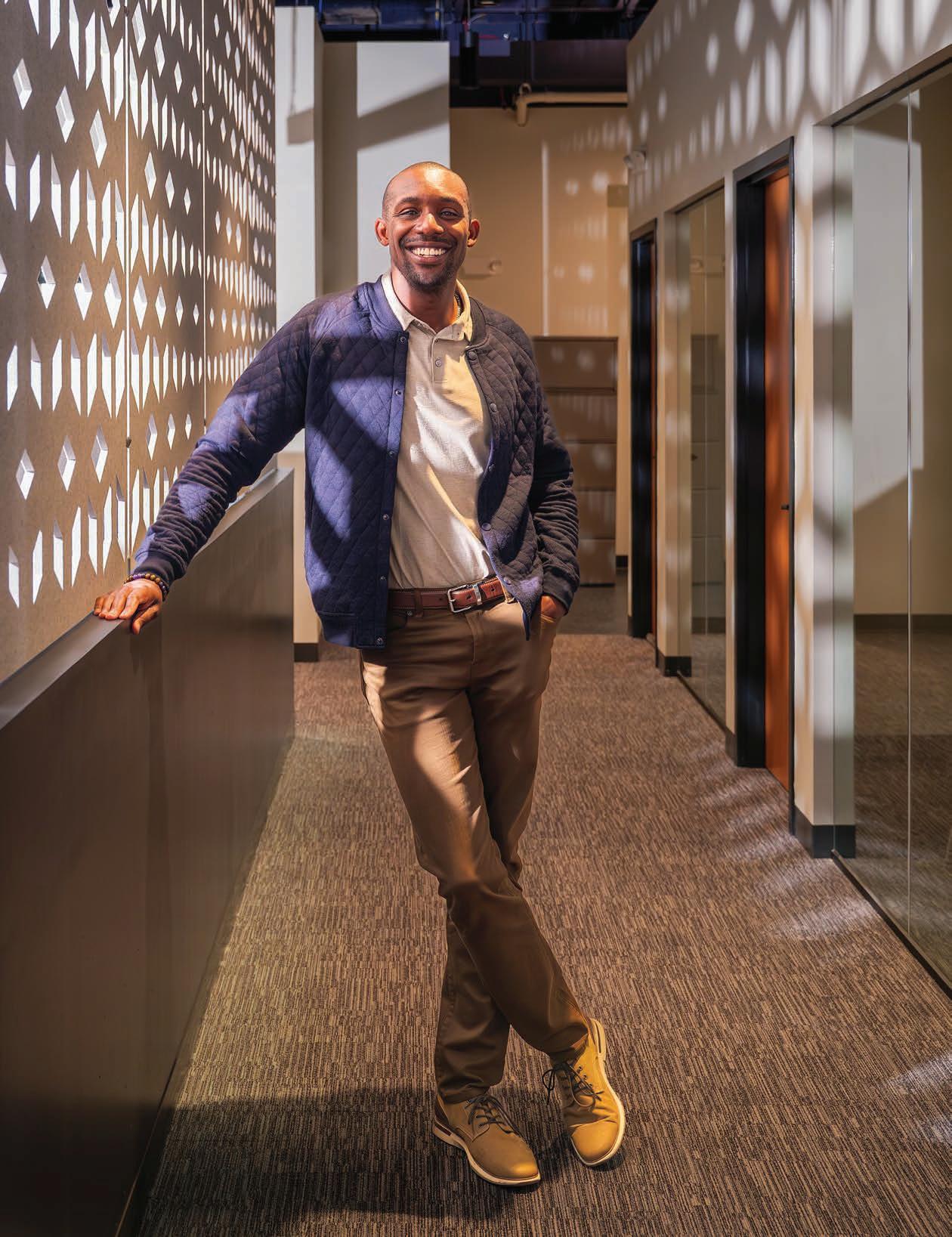
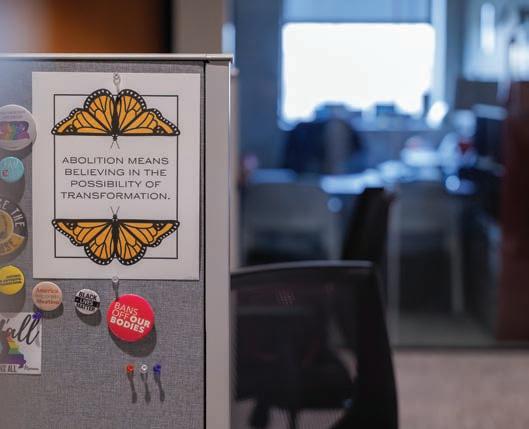
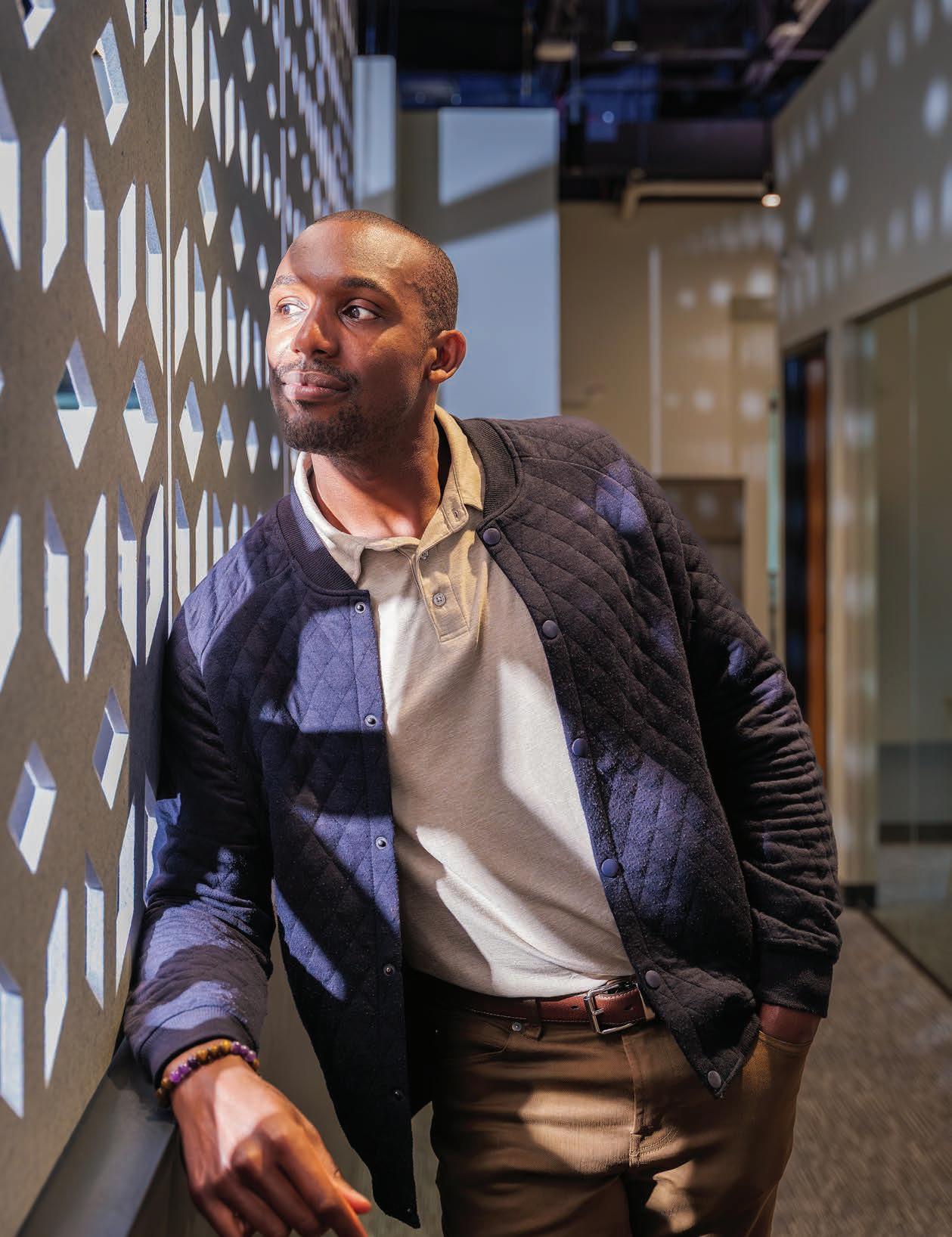
ArchCity Defenders has spent 15 years fighting for St. Louis’ most vulnerable residents — and Blake Strode is making sure the mission keeps growing.
By Christy Marshall / Photos by John Lore
It started on a napkin. Somewhere around 2009, three Saint Louis University law students — Thomas Harvey, MichaelJohn Voss and John McAnnar — sat down at Café Ventana and sketched out an idea: a nonprofit law practice that would give poor and homeless St. Louisans the kind of legal muscle money usually buys. No fee. No catch. Just free representation for people trapped in a system that was, by almost any measure, designed to keep them there.
That napkin became ArchCity Defenders.
The three founders had seen firsthand, through internships with the public defender’s office and Legal Services of Eastern Missouri, how poverty worked as a legal trap. An unhoused person gets a loitering ticket. They can’t pay the fine. A warrant gets issued. Now they can’t get a job or find housing. The warrant follows them everywhere, compounding misery like interest on a debt they never agreed to carry. Harvey, Voss and
McAnnar decided somebody had to get into that machinery and start pulling people out.
For the first few years they worked unpaid. Then, in 2012, a homelessness prevention grant from the city of St. Louis allowed ArchCity to hire its first staff. The organization was small, scrappy and, in the broader civic conversation, largely invisible.
Then came Ferguson.
On August 9, 2014, Michael Brown was shot and killed in Ferguson. The eruption that followed was not just about one officer and one young man. It was about a system — and ArchCity Defenders had already been documenting it for years. Staff members, interns and volunteers had been doing something deceptively simple: sitting in courtrooms, watching and writing down what they saw. Who appeared. What the judge said. What rights were or were not communicated. What the outcomes were. They called it court watching, and it produced a remarkable accumulation of data.

Shortly after Brown’s killing, ArchCity released a white paper detailing what was happening in the municipal courts of North St. Louis County — in Ferguson, Jennings and dozens of municipalities like them. The picture it painted was stark: municipalities were using their courts essentially as revenue machines by stopping, ticketing and jailing mostly low-income Black residents to collect fines. The paper cited numbers and gave national journalists and policymakers a framework for understanding what the Ferguson uprising was really about.
It put ArchCity Defenders, an organization funded entirely by private donations and foundations, on the map.
Blake Strode grew up in North St. Louis County — Charlack, then Berkeley, then Bridgeton, moving a little north and west as the years passed. He graduated from Pattonville High School in 2005 and then left for about a decade.
He went to the University of Arkansas on a tennis scholarship. After graduating, he deferred his admission to Harvard Law School three consecutive years to travel the world playing professional tennis. He competed in U.S. Open qualifying. He lived out of a bag, bounced between buses and budget hotels and played the sport he loved across the globe.

He started Harvard Law in 2012. The experience was, he admits, disenchanting for much of it. He arrived with big ideas about social justice and found that law school wasn’t especially interested. “Professors sort of tolerate your idealistic views of the world, but that’s not really what they’re there to teach you.” By his third year he was questioning whether he’d pursue practicing law at all, and assumed that if he did civil rights work, it would have to be in New York or San Francisco or Atlanta. Not St. Louis.
Then a friend sent him a Washington Post article about a small nonprofit back home. It was called ArchCity Defenders.
Strode cold-called founder Thomas Harvey — a move he now acknowledges as naive given the realities of nonprofit finances. Harvey’s response was essentially: We’d love to have you, but we can’t pay you. What followed was a Skadden Fellowship application. Funded by the powerhouse New York-based law firm Skadden, Arps, Slate, Meagher & Flom LLP, the fellowship has, for 35-plus years, quietly bankrolled public interest legal work across the country, focusing on anti-poverty cases. Strode applied, won the fellowship and came back to St. Louis in the fall of 2015.
He’s never left and now serves as executive director.

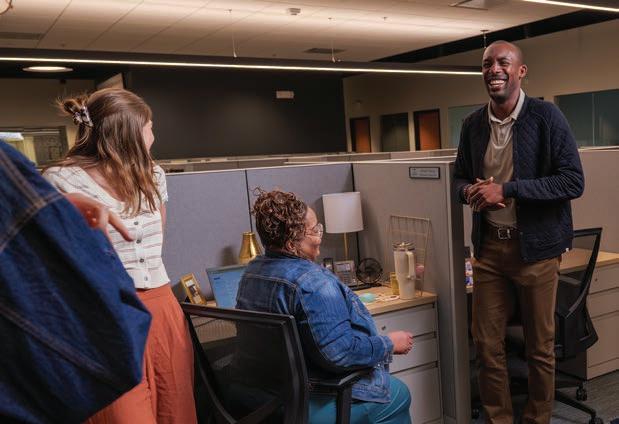
When Strode arrived, ArchCity Defenders was building out its civil rights litigation practice, but its foundational approach was already established — a model borrowed from the Bronx Defenders, the New York nonprofit founded in the 1990s by Robin Steinberg. The concept is called holistic defense, and it starts with a simple but radical premise: poor people don’t have one problem. They have overlapping problems, and you can’t solve one without addressing the others.
Today, ArchCity Defenders has three legal teams — municipal defense, housing and civil rights litigation — along with a social services team, a partnerships and organizing team and a communications team. A client who walks in facing a stack of municipal warrants might, in the course of their intake, reveal that they also have an unresolved landlord dispute, a custody matter that never got finalized and a food insecurity issue they’ve been quietly managing for months.
“It’s not unusual,” Strode says, with a slight laugh, “for a client to have some engagement with all of those functions of ArchCity Defenders.”
The social services team — staffed by social workers and case managers, not attorneys, conducts its own intake, asking about food security, housing stability and other pressures that a legal intake would miss. Where ArchCity Defenders can address a need in-house, it does. Where it can’t, it makes what Strode calls warm handoffs to partner organizations around town.


The partnerships and organizing team goes further still. ArchCity Defenders doesn’t just serve clients — it organizes them. The “We the Tenants” campaign brings together renters facing eviction, unsafe housing conditions and abusive landlord practices. These aren’t passive clients receiving services; they’re active members of a campaign pushing for policy change.
From 2014 to 2018, ArchCity filed lawsuit after lawsuit challenging what it calls the debtors’ prison concept — the practice of jailing people for unpaid fines and fees. It took on municipalities, challenged abuses of power across the region and won. Those cases, built on years of court-watching data and client representation, reshaped how municipal courts in the St. Louis region were allowed to operate.
One of the organization’s most concrete policy victories has been Right to Counsel in housing court. The numbers driving that campaign are startling. In eviction proceedings in St. Louis, over 90 percent of landlords have legal representation, while over 90 percent of tenants do not. ArchCity successfully advocated for a city ordinance guaranteeing tenants facing eviction the right to legal representation — a policy it is still working to see fully implemented.
Strode is characteristically direct about why this matters. “That kind of imbalance leads to abuse,” he says. “It’s that simple.”
He is also clear-eyed about the broader argument underlying everything ArchCity does. The organization is not interested in incremental tweaks to a system it considers fundamentally broken. It

is not, as Strode puts it, trying to police its way or jail its way out of the problems facing North St. Louis. “It is about stable communities. It’s not a coincidence that places that are really wealthy and stable have lower levels of violence. We just have to make rational choices about where we direct our resources.”
ArchCity’s newest chapter has a physical address: 5939 Goodfellow Boulevard, the Northside Movement Center. The building was, for decades, the family life center of New Northside Baptist Church, and before that a neighborhood grocery store. ArchCity purchased it in January 2024, worked with Trivers Architects on a full gut renovation and moved in at the start of 2026.
The center is a co-location hub. ArchCity shares it with Action St. Louis, its closest organizing partner. The vision — which Strode and colleagues began dreaming up in late 2021 — was always about more than office space. North St. Louis has long been overrepresented among ArchCity’s client base. Putting the organization’s services, advocacy and organizing work in that community, rather than downtown, is itself a statement.
The grand opening drew somewhere between 350 and 400 people. There was a resource fair, a partner showcase and neighbors seeing for the first time what was being built in their community. Strode, who is not given to hyperbole, calls the possibilities “limitless.”
Ask Strode about his priorities and concerns and he does not reach for platitudes. He worries about what he calls a resource drift
— as political winds shift, the funding that sustains equity-focused grassroots organizations is quietly drying up. Organizations born out of the post-Ferguson moment, like ArchCity, Action St. Louis and Freedom Community Center, are facing funding cliffs. “That’s dangerous for us as a region,” he says.
He is equally concerned about what he sees as a retreat into punitive thinking — more police, more jails, more prosecution — at exactly the moment when data and experience argue for the opposite.
“We already have incredibly high levels of all of those things from a global standpoint,” he says. “Really unprecedented levels of human caging in this country. We don’t need more of that. We need more care and support.”
His immediate goals center on housing: more funding for affordable units, more tenant protections, better homeless services and relief for residents still displaced by last year’s tornado. He also believes this is the moment to possibly tap the monies remaining in the St. Louis Rams settlement fund to invest in the communities that have been hardest hit.
It is, in other words, the same fight it has always been — just bigger, better funded and now conducted from a building on Goodfellow that was once a church that fed the neighborhood.
Now, in a different way, it still does. sl
GET INVOLVED: ArchCity Defenders welcomes volunteers for court watching, events and community advocacy campaigns. The organization is funded entirely through private donations. Learn more at archcitydefenders.org
by Tony Montano
By Craig Kaminer / Photos by Zach Dalin
On a cold night at the 2026 Winter Olympics in Cortina, Italy, the light is sharp and cinematic. Racers drop. Edges bite. Time fractures into hundredths.
And carried across the mountain, in the rhythm of the broadcast, a name repeats: Stifel.
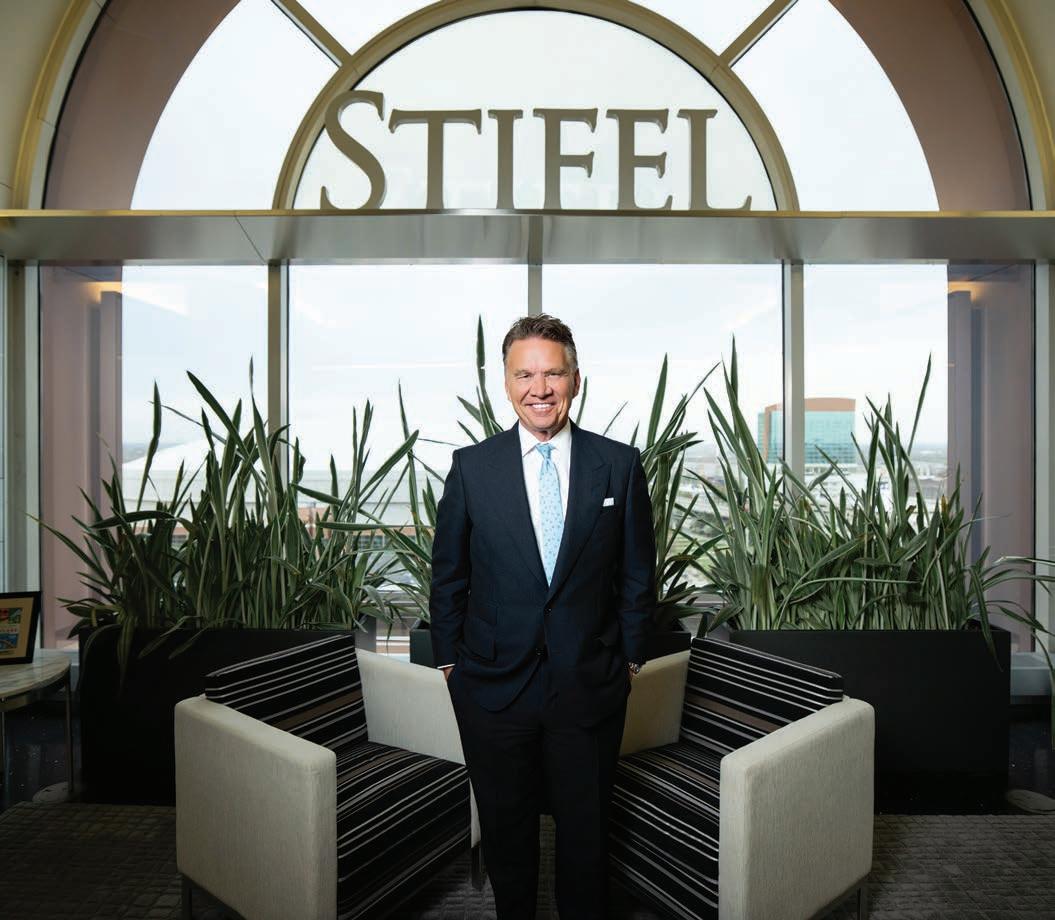
For Ronald J. Kruszewski, that moment — quiet, global, unmistakable — is the point.
He runs a firm most people will never physically touch. Stifel Financial Corporation deals in trust, capital advice — intangible things. So he made a decision. If the business is invisible, the brand cannot be. That decision now lives everywhere.
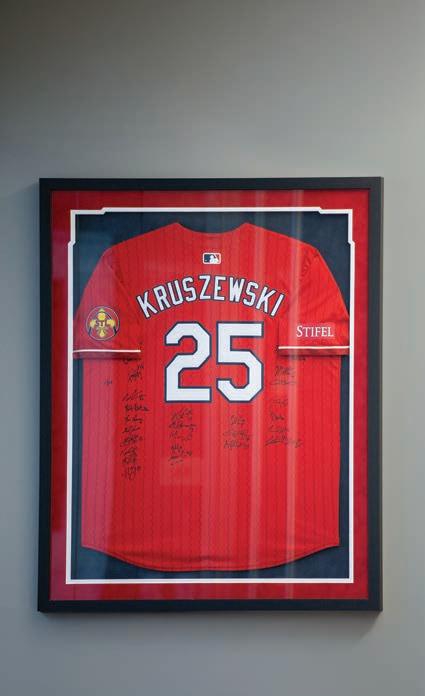
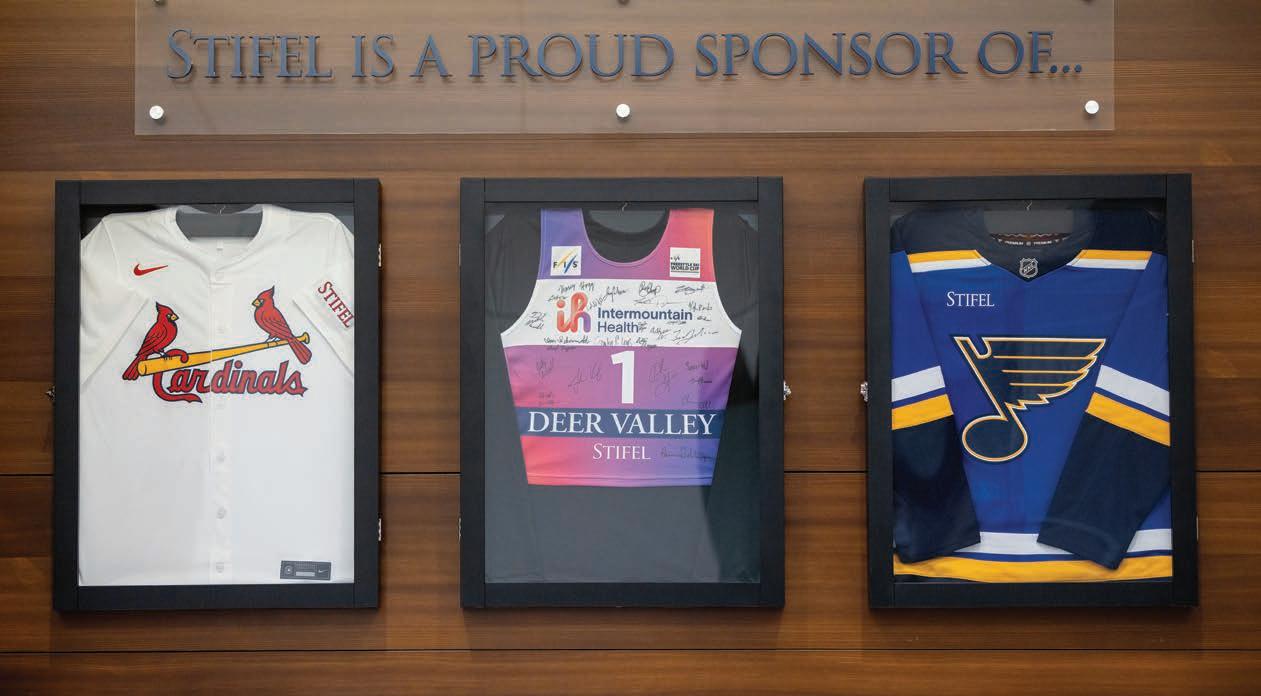
On the jerseys of the St. Louis Blues and the St. Louis Cardinals. Above the marquee of the Stifel Theatre. And, perhaps most powerfully, on the global stage of the Stifel U.S. Ski Team.
But ask Kruszewski why, and he doesn’t start with marketing. He starts with place.
“First of all, I love St. Louis,” he says. “I’ve been here 28 years, and the thing I noticed — besides it being a great community — was
how much it loves its sports.” That observation became insight. And that insight became strategy.
He continues. “The iconic brands that the Blues and Cardinals have — not just in St. Louis, but across the country— for us to associate with such quality organizations… it’s not only a matter of civic pride, but it’s good business.”
That duality — civic pride and business discipline — sits at the center of everything he’s built. Because these weren’t just sponsorships. They were statements.
When Stifel became the first jersey patch sponsor for the Blues and later deepened its relationship with the Cardinals, the reaction wasn’t universally positive. There was resistance. Even outrage. “These are iconic uniforms,” Kruszewski acknowledges. “People almost got mad at Stifel.” So he made a subtle but telling choice.
“If you look closely, we didn’t use our color or our logo,” he explains. “It just says Stifel — in Blues blue or Cardinals red — so the fans have respected the fact that we’ve respected the uniform.”
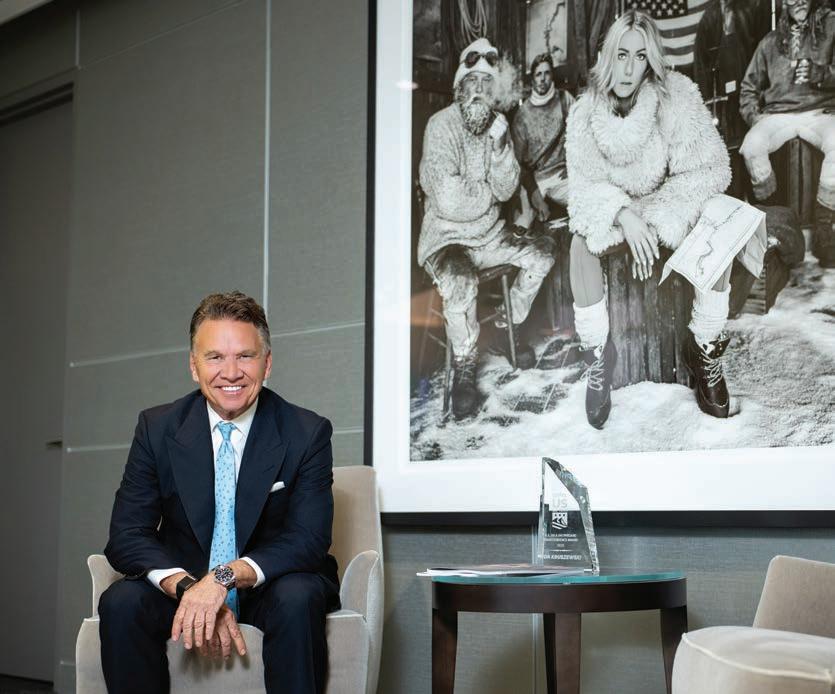
It’s a small detail. But it reveals something larger. This is not branding imposed. It’s branding integrated. And integration is what makes it travel.
“When the Blues or Cardinals are on the road,” he says, “my friends will text me — ‘Hey, I didn’t know you were involved with them.’” That’s the multiplier effect. A local alignment becomes a national signal. It also reflects a shift in the rules.
“Putting logos on uniforms — that’s relatively new,” Kruszewski says. “Three or four years.” Which means opportunity. And timing. “I’d like to think we saw it early,” he says. “And others have seen how it’s improved our brand.”
But even that doesn’t fully explain his most ambitious move.
When U.S. Ski & Snowboard approached him about a traditional sponsorship, the answer was unexpected.
“They asked if I wanted a patch,” he recalls. “I said no.” Instead, he countered. “What if we rebranded the team — the Stifel U.S. Ski Team?” They agreed. That decision changed everything. “Now every company — Visa, Toyota, all of them — they look at that and think we caught lightning in a bottle.”
It’s not just visibility. It’s ownership of the narrative. Stand at the top of a mountain with Mikaela Shiffrin, cameras rolling, the world watching — and the name is right there. “It doesn’t get much better than that,” Kruszewski says.
But the real genius is what comes next. “We celebrate the athletes,” he explains. “Their dedication, their perseverance — everything it takes to be world-class.”
In one campaign, the focus is entirely on Shiffrin. Her story. Her discipline. Her excellence. “And at the very end,” he says, “it just says: Stifel — where success meets success.”
No explanation. No product pitch. “And people say, ‘You don’t even say what you do.’”
He smiles.
“I don’t have to. They Google it.”
That philosophy — subtle, confident, associative — runs through everything. Including the arts.
The Stifel Theatre wasn’t part of some grand master plan. It was, in many ways, instinct.
“It used to be the Peabody,” he says. “When that naming rights deal ended, we thought about it — and we wanted to support downtown.”
That’s the first layer. But not the only one. “I come down here every day,” he says, referring to his office on North Broadway. “I could work from Frontenac. But I believe in downtown St. Louis.” So the theatre became both symbol and signal. Support the city. Support the arts. And then, expand.
“We’re doing Stifel Stars on Ice. We’ve brought Andrea Bocelli here — we sponsor his national tour. Josh Groban. Derek Hough.” It’s a deliberately eclectic mix. Because something unexpected started happening. “People come up to me and say, ‘You’re a creative firm.’”
He laughs. “I push numbers around. I’m not creative.”
But perception says otherwise.
“When you associate with athletes and the arts and all these things,” he says, “the backsplash is that you’re fun, creative — and a financial firm.”
A combination that doesn’t usually exist. But now, increasingly, it does. That’s when the conversation shifts from sponsorship to something older. Something deeper. Patronage.
In discussing the Medici of Florence and their support of the greatest artists of the Renaissance including Michelangelo, da Vinci, Botticelli and dozens more, Kruszewski said,“They didn’t sponsor artists — they supported them so they could keep creating.”
“Stifel’s been around since 1890,” he says. “One hundred and thirty-five years.” A legacy firm. Stable. Respected. But quiet. “We needed to update what we do.” So he reframed the identity.
“We’re a firm where success meets success.” Not just internally. Externally. Visibly. Athletes. Artists. Teams. Performers. “Where athletic prowess meets athletic prowess. Where creativity meets creativity.” And in that intersection, the brand takes on new meaning.
Of course, there are metrics. Studies. Impressions. Return on investment. Kruszewski sees them all. But his benchmark is simpler. “For years, no one could pronounce Stifel,” he says. “Stifle. Stifle.” Now? “Everyone knows our name.”
That’s the ROI. Clarity. Recognition. Confidence. But even that undersells what’s happening. Because beneath the strategy is something more human. Connection. “The things people respond to most,” he says, “aren’t the financial insights.” They’re the personal moments. The reflections. The stories. “When I write something personal — about my daughter’s wedding, or life — it resonates,” he says.
People want to know the person behind the position. Just as they want to know the story behind the brand. And that, in the end, ties everything together. Sports. Arts. Patronage. Brand. City.
“It’s a flywheel,” he explains. “You associate with quality people — clients, athletes, performers — and they attract more of the same.”
Momentum builds. Opportunities multiply. “At this point,” he says, “I have more calls than I can take.”
Which raises the inevitable question. What’s next? More athletes. More ambassadors. Golf. Soccer. Cycling. Even lacrosse — the Tewaaraton Award, which he jokes is “almost as hard to pronounce as Stifel.”
But the common thread is clear. “These are people others look up to,” he says. “And I respect that they’re willing to partner with us.”
Still, the expansion is not limitless. “There are only so many days in the year,” he admits. Which means the filter matters more than ever. And the filter hasn’t changed. Excellence. Alignment. Authenticity.
Back in St. Louis, the impact is tangible. “You can go to a Cardinals game, be home 15 minutes later,” he says. “Try that in New York.”
He calls St. Louis a “small big town.” Not a big small town. World-class institutions. Accessible scale. A place where community still feels possible. “I wish we recognized that more,” he says.
Because in many ways, that’s what all of this is about. Not just building a brand. But reinforcing a belief. That St. Louis matters. That it can compete. That it can attract, create and sustain excellence. And that sometimes, all it takes is someone willing to invest in that idea — loudly, visibly and without apology.
On a mountainside in Italy, as the world watches a skier drop into history, the name echoes again. Stifel. It feels natural now. Expected. Earned.
For Ronald J. Kruszewski, that’s the real victory. Not just being seen. But being understood. Where success meets success. sl
To view this interview, watch SophisticatedTV here.


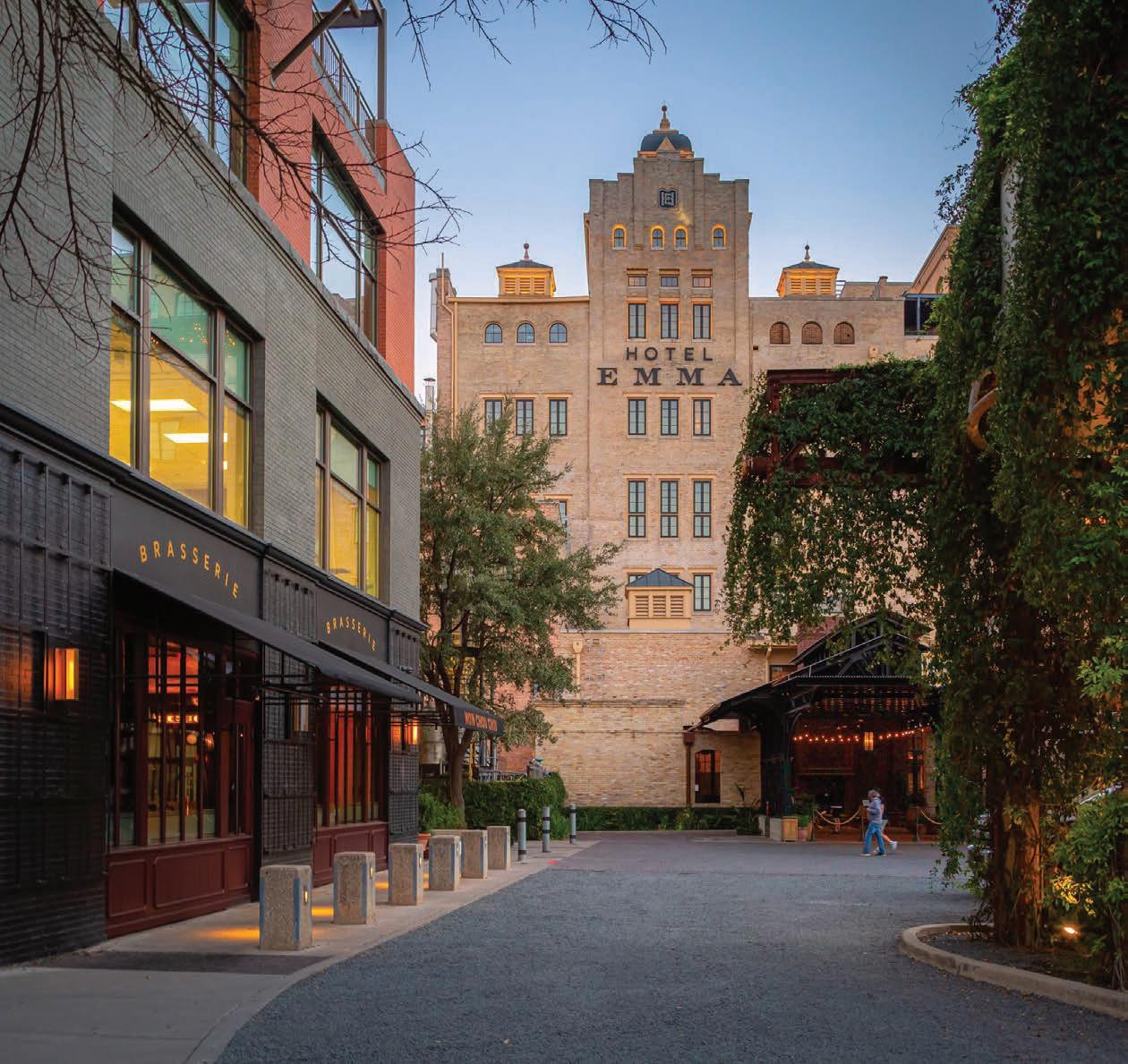
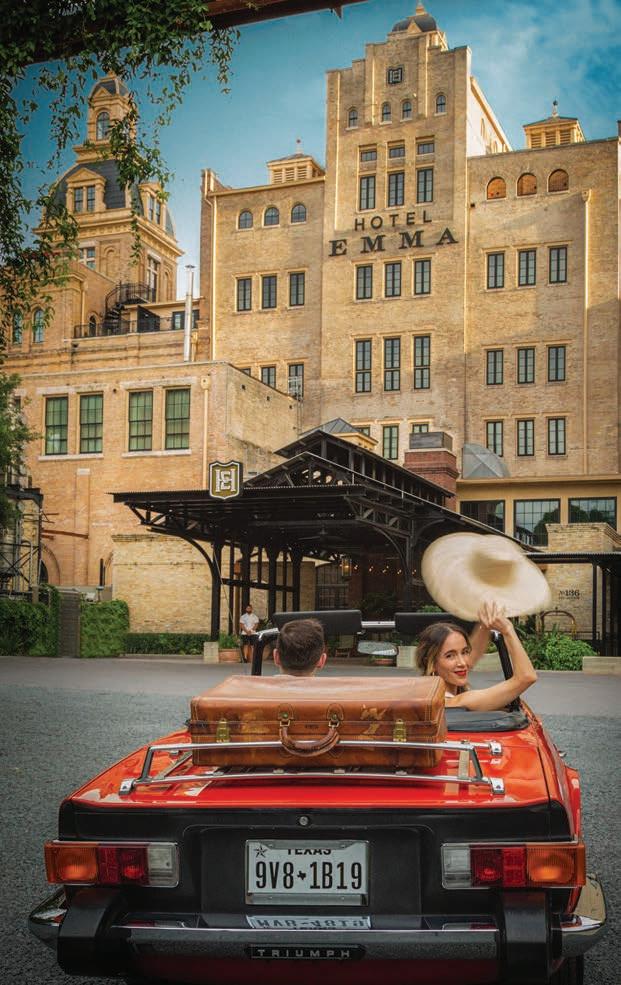
Rough, refined, and the anchor of one of San Antonio’s most dynamic cultural districts, Hotel Emma pays homage to a visionary woman.
Written by Bridget Cottrell / Photos Courtesy of Hotel Emma and Pearl
It’s quite the origin story.
Three Emmas, a murder, and a twice-scorned wife who rose above to become a powerful businesswoman in a peerless era. It’s safe to say you won’t likely find another hotel with a more made-for-TV backstory and where truth is stranger than fiction.
After Emma Koehler (b. 1858) was severely injured in an automobile accident, her husband, Otto, the President of Pearl Brewery in San Antonio, Texas, hired Emma "Emmi" Duke as a live-in nurse. The polyamorous Otto began an affair with Ms. Dumke and later with her friend, also hired as a caregiver, who also happened to be named Emma. Otto’s indiscretions ended up costing him his life, with the third Emma, Ms. Burgemeister, fatally
shooting him during a confrontation (she was later acquitted by an all-male jury – one of whom she later married).
After her husband’s death, Emma Koehler took charge of Pearl Brewery. She kept it running through Prohibition—the only brewery in San Antonio to do so—by expanding into dry-cleaning, auto repair, ice, soft drinks, and near beer. According to Michael C. Hennech of the Texas State Historical Association, “Within fifteen minutes after prohibition ended in Texas on September 15, 1933, 100 trucks and twenty-five boxcars loaded with Pearl beer rolled out of the brewery grounds.” Emma later guided the brewery through the Great Depression, retired in 1933, and continued to advise behind the scenes until her death in 1943.

Production at the 22-acre distillery—whose handsome original circa 1894 structure, designed by Chicago architect August Maritzen in a distinctive Second Empire style with detailed brickwork and a prominent tower crowned with a cupola—ceased in 2001. The brewery, with all its original machinery in situ, was in disrepair when it was purchased by Silver Ventures, owned by San Antonio businessman Christopher “Kit” Goldsbury. Rather than raze the site and start from scratch, the project’s master plan took great pains to preserve the historic structures, highlighting the beauty to be found in the imperfections of earned hardscrabble excellence.
Today, Hotel Emma, which opened in 2015, sits at the heart of the larger and vibrant pedestrian-friendly, eco-forward, and multiple award winning Pearl community, which includes a campus of the Culinary Institute of America, Stable Hall, a performance venue created out of the original horse stables, sprawling farmers and makers markets, more than two dozen food and beverage concepts, the Pullman Market, an elevated, hyper-local Whole Foods. boutiques, upscale apartments, ample greenspace, Latin American and European-inspired plazas, and
more, with direct access to the San Antonio River Walk. Perusing Pearl’s eclectic mix of shops, like The Tiny Finch (thetinyfinch.com) and Dos Carolinas (doscarolinas.com), is a delight, with scores of stuff I don’t need but really want because it’s merchandised so beautifully, making me regret that I am a carry-on only girl.
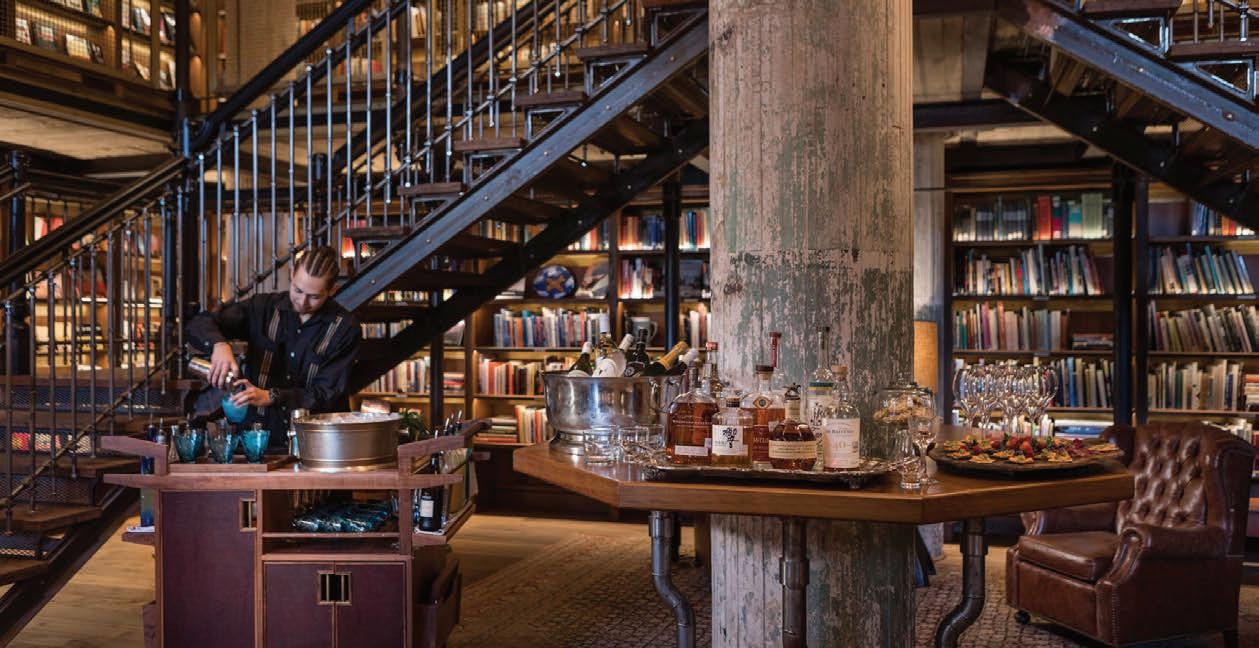
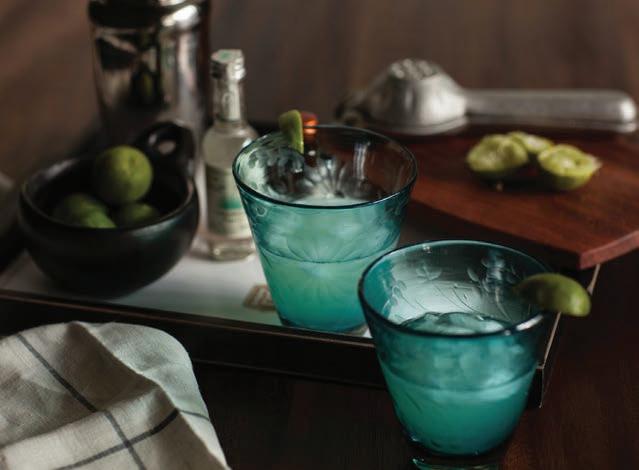
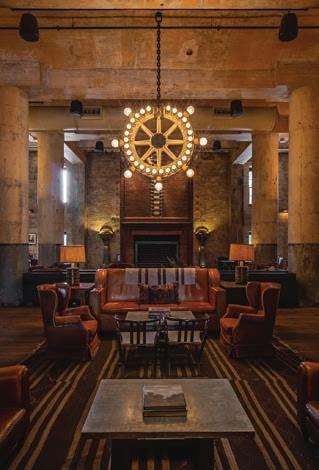
The intimate vestibule where check-in takes place makes the initial transition into the “industrial maximalism” of the lobby (formerly the brewery’s engine room), where extravagance lies in materials and scale, an awe-inducing moment. There is a palpable soul to the place, discernible in the preserved patina, including original machinery repurposed as décor and the Redondo cement tile floors that replicate the original. The guests milling about in the soaring ceilinged lobby are quite diverse, from gearheads geeking out over an old compressor, to a student quietly reading at a communal table near the entrance to a two-story library holding a curated selection of 3,700 books, and a couple cozied up in front of the fireplace enjoying a welcome La Babia margarita. After finishing my own, I couldn’t resist picking up a set of the handmade turquoise etched glasses they’re served in at the gift shop.
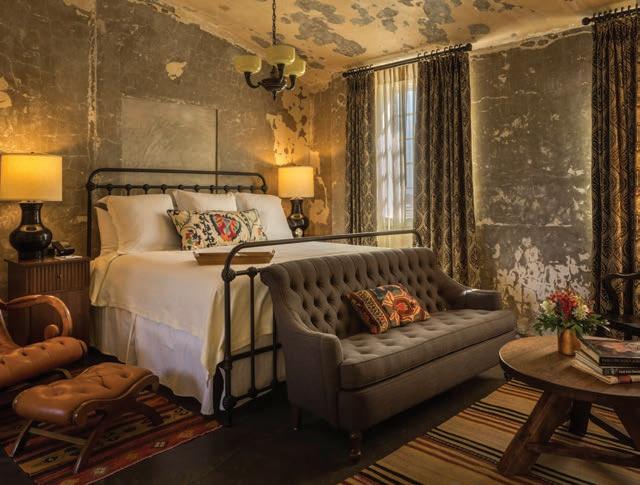
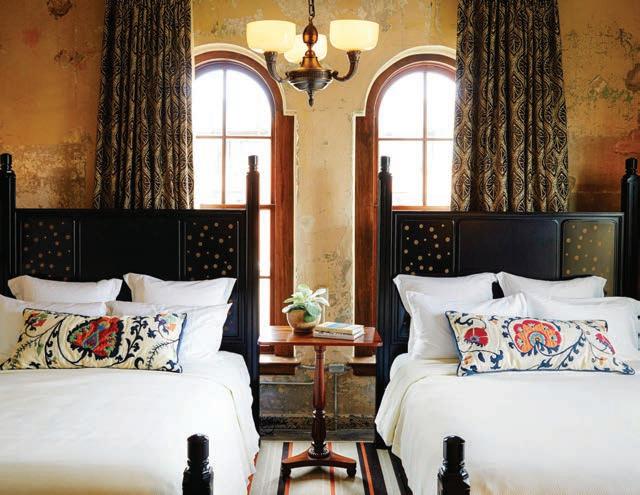
Hotel Emma boasts 146 guestrooms, including 11 distinctive suites. After staying in the two-story Emma Koehler suite, one of seven on the top floor, Cher is reported to have said she’d love to play its namesake in a biopic. The juxtaposition of high-low continues in the spacious accommodations, with hand-crafted furniture and accents, and preserved historical elements. A Poolside Provisions food truck is situated next to the rooftop pool, offering light bites and refreshments.
As strident as Hotel Emma’s commitment to historic preservation is their emphasis on elevating artists and makers. From blacksmith Robert Diaz de Leon of FLUX metal studio, tasked with creating pieces from monumental to demure and decorative, to Kevin Elkins of Soular Therapy, who was tasked with creating a signature scent for the hotel, every nook and cranny is treated as a chapter in a cohesive, compelling story. And, once your eyes are trained to delight in the details, you notice tooled leather panels in the elevator, hand-made glazed tiles in bathrooms, blown-glass sconces, and thoughtfully sourced vintage furniture and fixtures. While Spanish influences were expected, I was surprised to learn that Germanic references harken back to the late 19th century, when German immigrants constituted one-third of San Antonio’s population.
Thoughtful touches extend beyond the interior design. I appreciated the refined ritual of having morning slow-pour coffee delivered rather than fumbling around with an in-room machine. A daily text outlines the goings-on in the hotel in the larger Pearl district. A Culinary Concierge is on-site to help organize everything from a guest chef-led dinner in a private suite to escorting guests to pop-up dinners.
San Antonio was designated a UNESCO Creative City of Gastronomy in 2017, with Hotel Emma and Pearl fortifying this gastronomic legacy, via a thriving ecosystem where nationally recognized James Beard Award semifinalists and winners, such as Jennifer Hwa Dobbertin (Best Quality Daughter and Jue Let) and Nicola Blaque (Freight Chicken), continue to elevate San Antonio’s culinary profile.
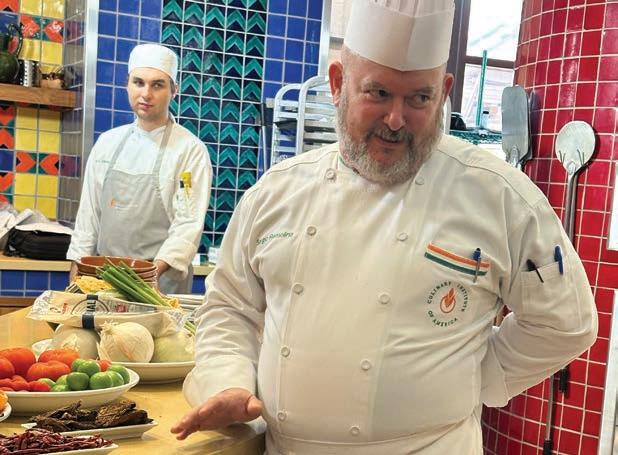
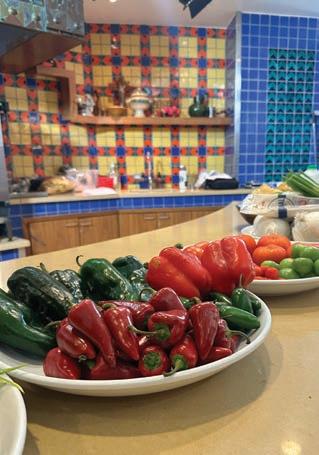
Foodies and home gourmands shouldn’t miss the opportunity to rub elbows with the world-class instructors at the Culinary Institute of America, with programs ranging from an afternoon to five days. During our fire-roasted guacamole-making extravaganza, we enjoyed a playful ribbing from the toque-topped French and Mexican instructors about the cleanliness (or lack thereof) of our stations and our subpar knife skills.
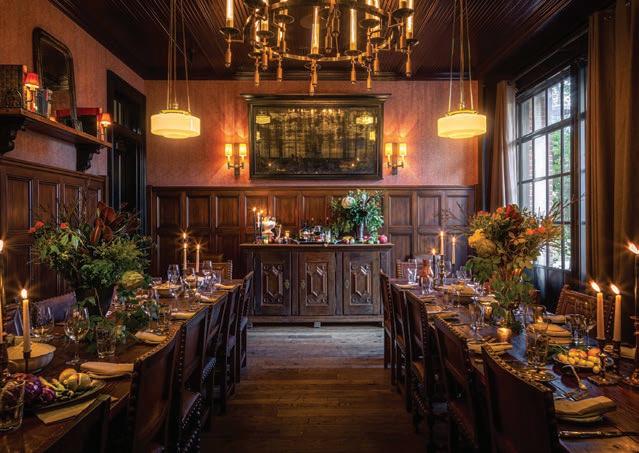
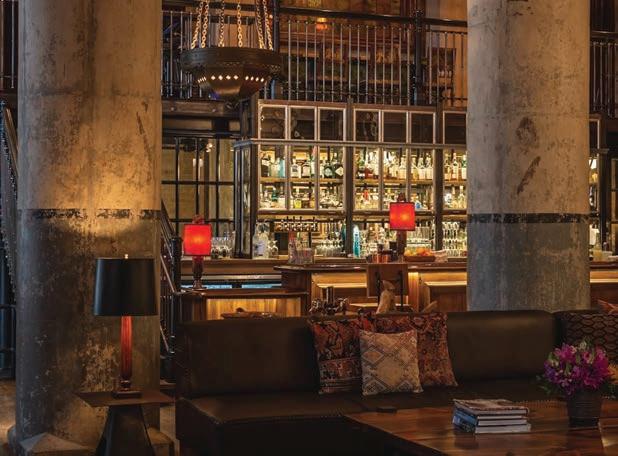
At Hotel Emma, the industrial-chic aesthetic at the Sternewerth tavern projects Steampunk vibes with repurposed cast-iron fermentation tanks used as intimate seating alcoves, original steel beams, a staircase and stone pillars, whipstitched buffalo leather sofas, and a chandelier made from an old bottle-labeling machine. Sip on the witty “Three Emmas” cocktail, a blend of lager beer and rose cordial, Amontillado sherry, gin, grapefruit, and lemon, while the mixologist spins a gossipy yarn.
A pair of specially commissioned still life paintings by Lloyd Walsh gracing the dining room at Supper imagine Emma’s and Otto’s dinner tables. Chef John Brand offers seasonally driven, reimagined American classics that meld comfort food with global influence. In the adjacent Swiggle Key private dining room, a sideboard holds vintage China designated specifically for this space.
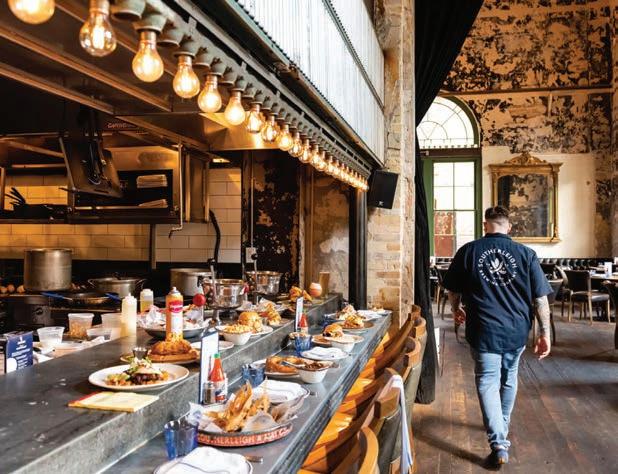
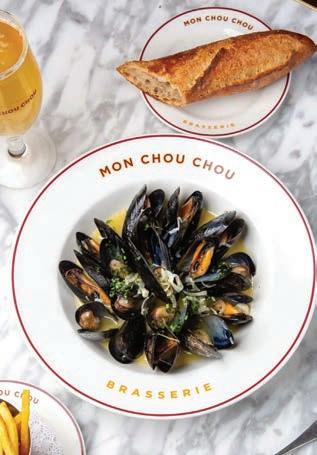
Led by Galvaston native Jeff Balfour, Southerleigh Fine Food & Brewery features an on-site brewery, an oyster bar, and elevated Texas’ cross-cultural cuisine like fried snapper throats and crab-spiked mac and cheese. Jeff and his wife, Allison, who co-founded Southerleigh Hospitality Group along with Frenchmen Jerome Serot and Philippe Placé, were named Outstanding Restaurateur of the Year at the 2025 Texas Restaurant Association Awards. The group also operates
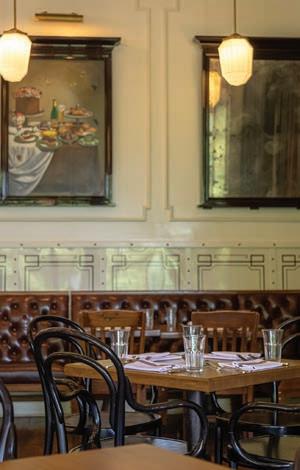
the French restaurant Brasserie Mon Chou Chou, located near the motor court entrance to Hotel Emma. At the start of our meal, Serot explained that the concept was designed as a “palate cleanser” to counter the predominance of Tex-Mex cuisine in the area. “Our beautiful adventure begins with Chef Laurent Réa, a native of Alsace, whose cuisine looks, feels, and tastes like home,” he commented.
One of the most unique dining experiences at Pearl is found at Nicosi, an intimate eight-course dessert experience that unfolds like culinary theatre. Guests queue outside the door, where an attendant provides a camera cover for cellphones. A black curtain pulls back, and guests sit at an elevated counter lining a central staging area where all manner of gastronomic wizardry is performed, pushing the boundaries of acid, umami, bitterness, and sweetness in desserts.
Thoughtful touches extend to departure, when guests are given a silver elephant Milagro, created by metalsmith Alejandro Sifuentes and inspired by the hotel’s Elephant Cellar, an event space where the original towering beer tanks with upraised pipe “trunks” once reminded brewery workers of elephants. While Hotel Emma is hard to forget, this good-luck charm and symbol of remembrance inspire me to never look at a piece of industrial machinery or scrap the same way again. sl For more information, visit thehotelemma.com
Compiled by Bridget Cottrell and Lee Milward Fresh Finds for Spring
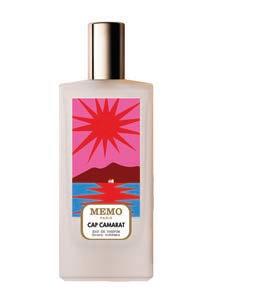
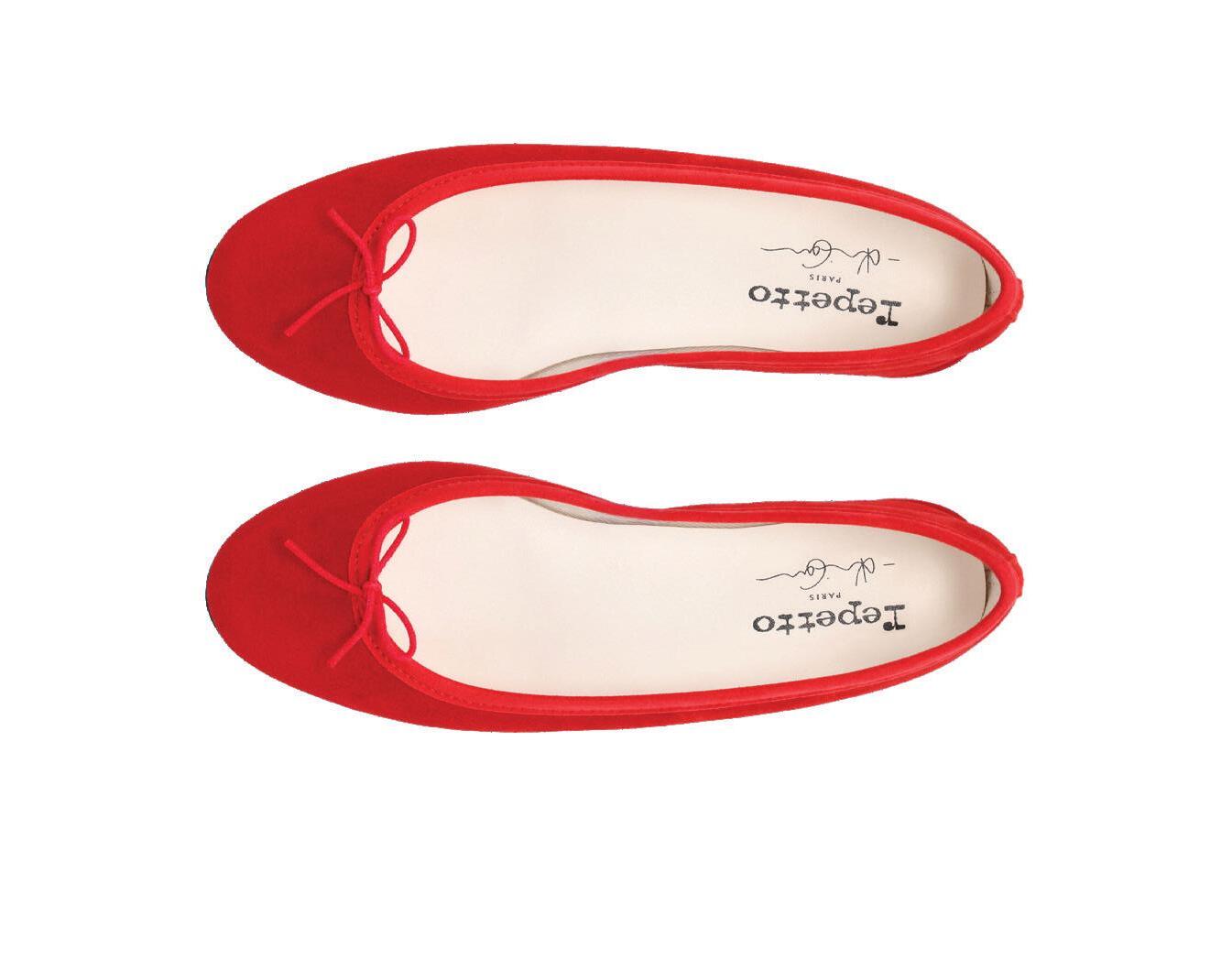
Paris x Olimpia Zagnoli Cap Camarat Eau de Parfum ($340; us.memoparis.com)









Compiled by Bridget Cottrell
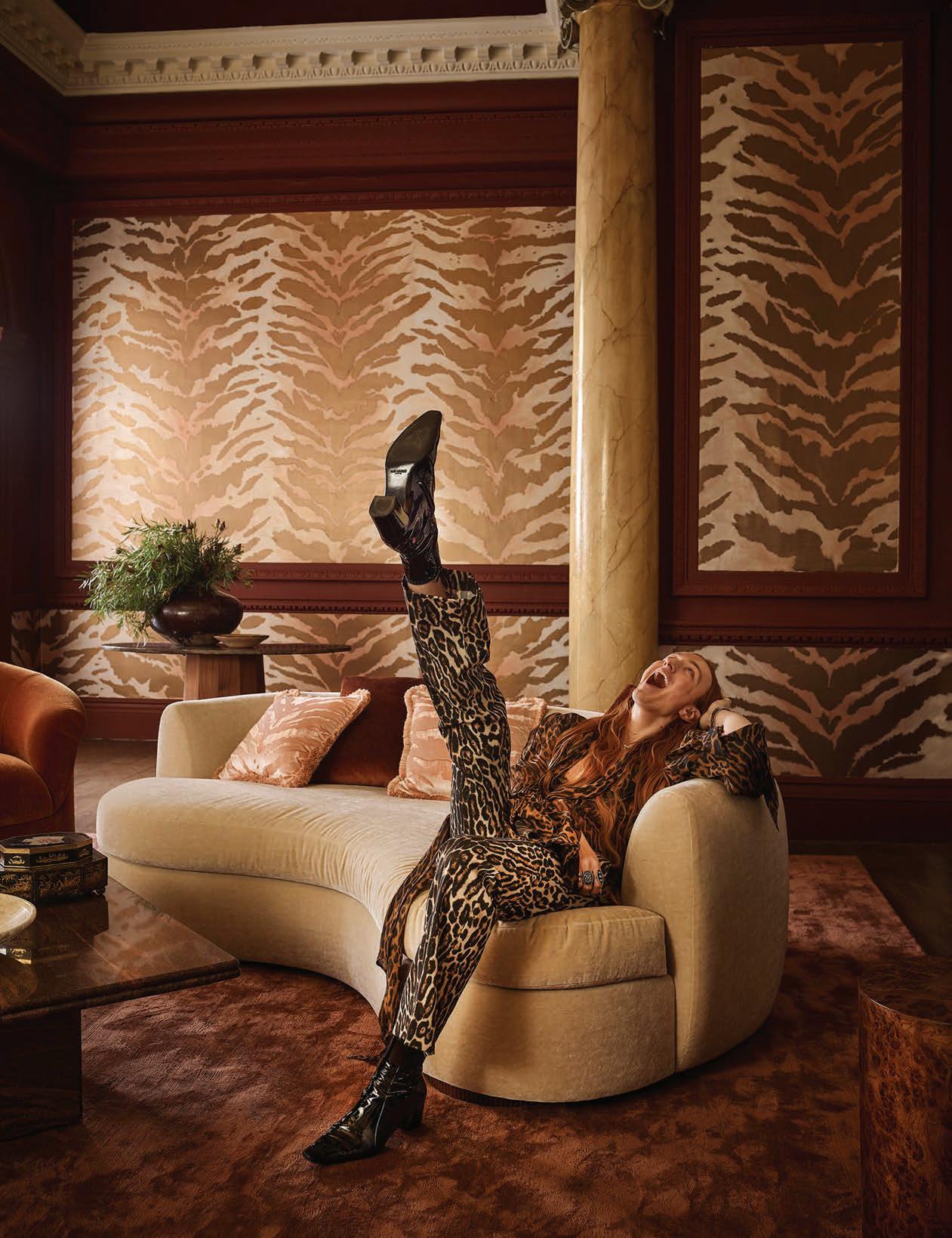
A collaboration in the truest sense, Fromental x Harris Reed began in Harris's personal apartment, where Fromental helped bring Reed’s interior vision to life with custom wallcoverings (Ambiguous Tiger in Nuanced Copper is shown). That work evolved into a creative partnership spanning three runway collections. The SS26 collection last September served as the creative foundation for a recent homewares launch that includes wallcovering designs with hand-painted and handembroidered detailing, cushions, and a throw in a tiger print (fromental.com/en-us/collections/harris-reed-wallcoverings).
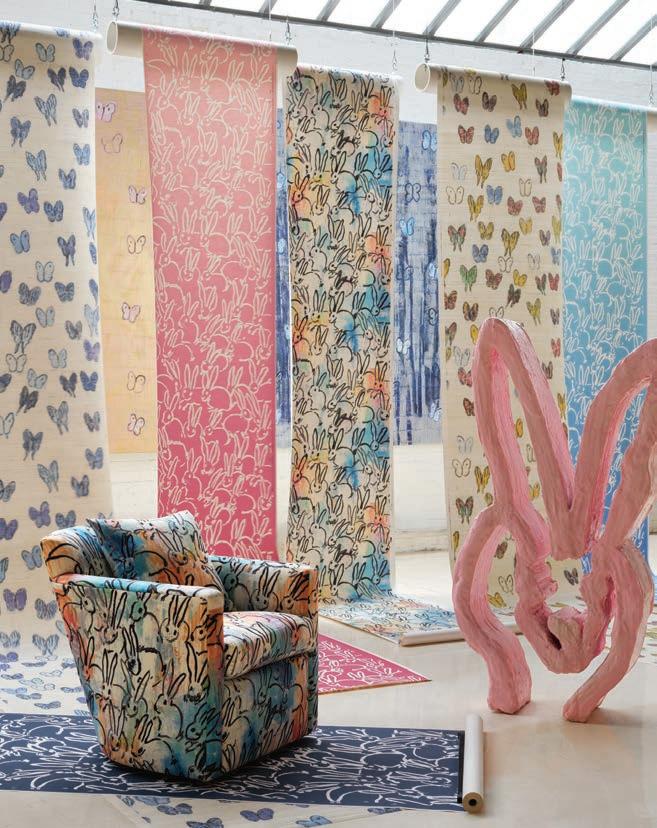
Artist Hunt Slonem, renowned for his signature bunnies, butterflies, and bold brushstrokes, recently debuted Belle Terrre, a wallcovering and textile collection with Lee Jofa Modern (kravet.com/lee-jofa-modern).

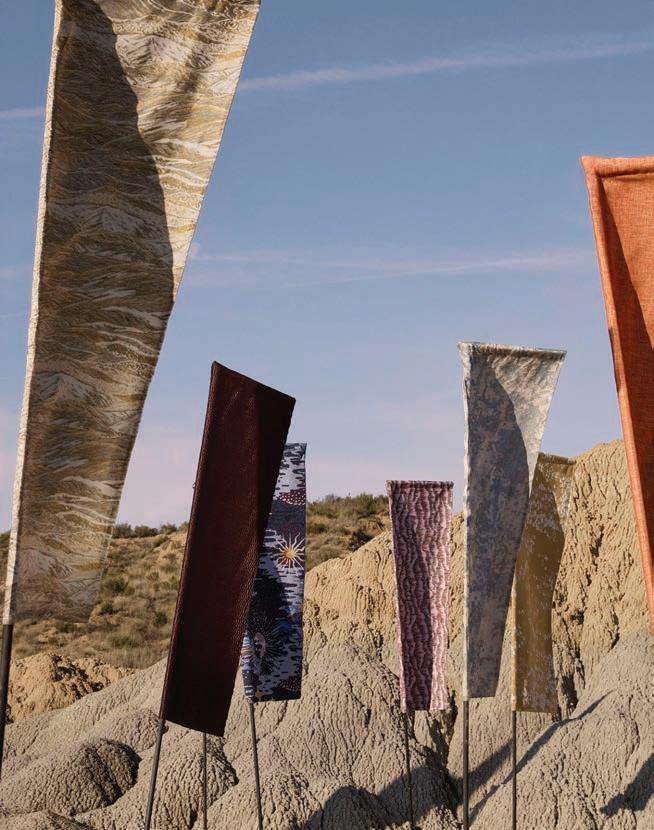
Unveiled at Milan Design Week Belgian brand Arte’s latest collection, created in collaboration with Sagarminaga Atelier, transforms natural fibers into architectural artworks (arte-international.com).
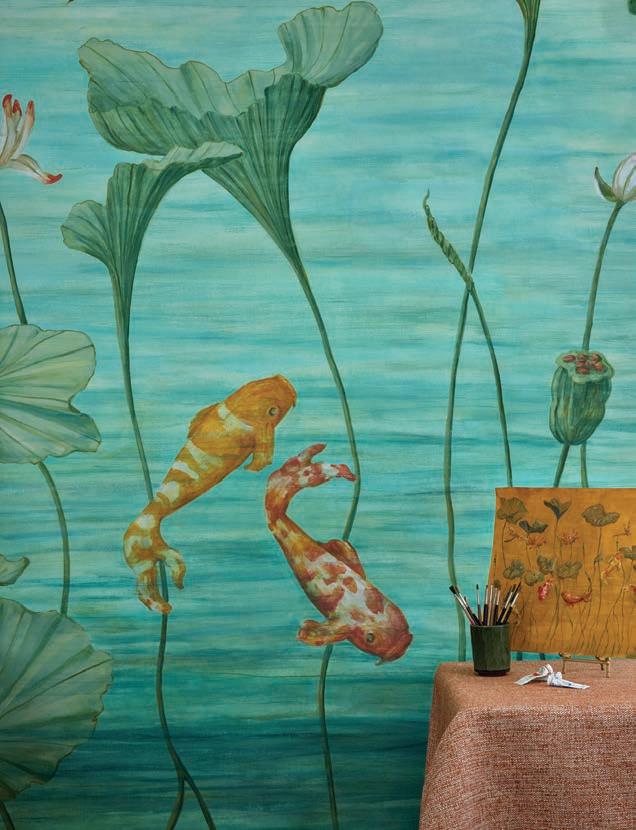
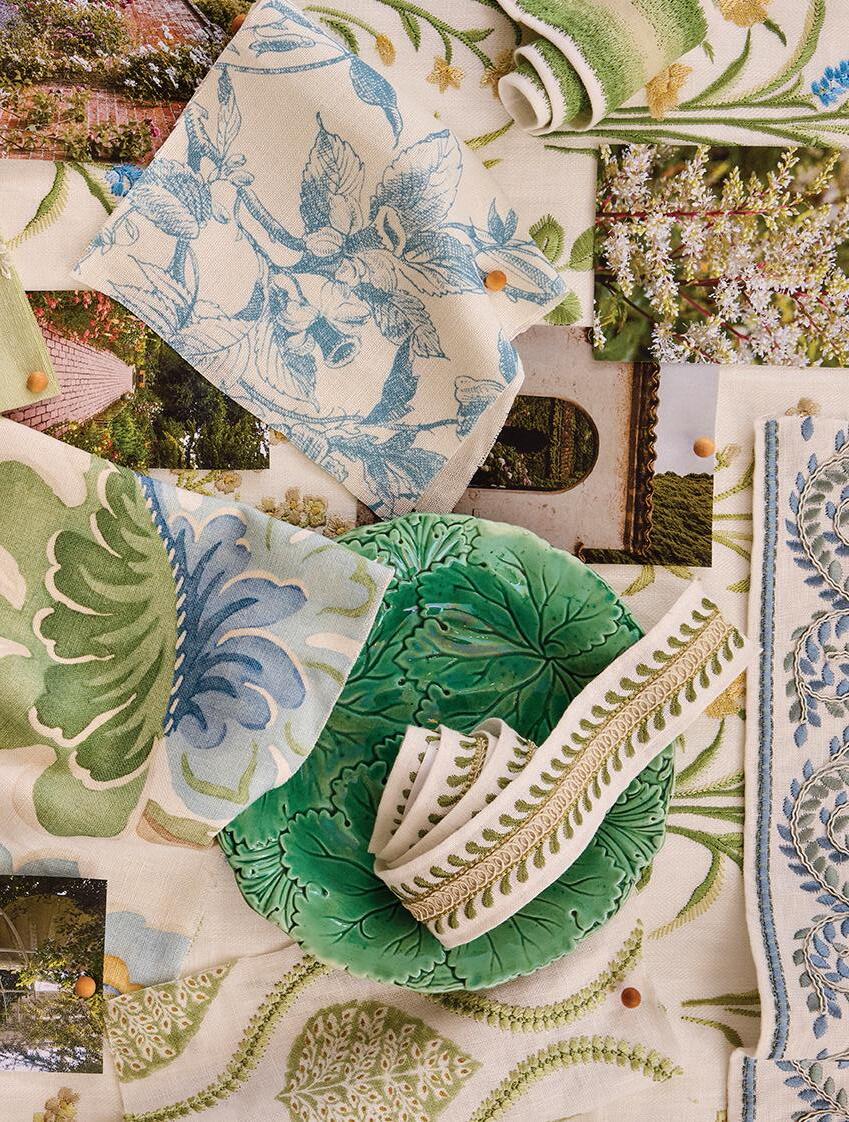
Brunschwig & Fils partnered with a renowned English mill to bring their Les Paysages Mural collection to life, transforming a master scenic painter’s hand-painted visions into digitally printed murals that capture every subtle detail of the original art (kravet.com/brunschwig-fils).
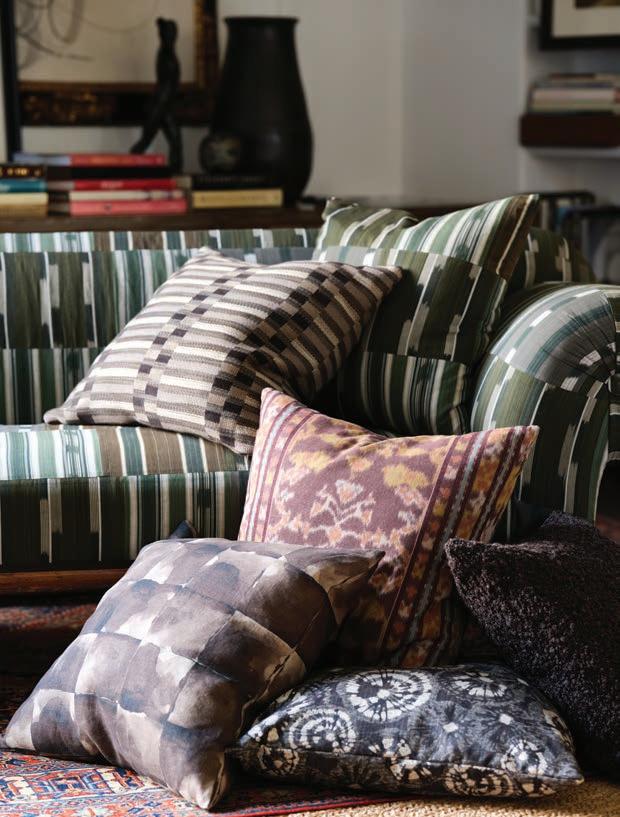
Inspired by his Spanish roots and a lifetime of discovery, Alfredo Paredes infused the Cocuyo collection for Kravet Couture with the spirit of his journeys. The collection’s earthy palette and tactile surfaces celebrate the beauty of weathered textures, handcrafted artistry, and the understated charm found in well-loved spaces. (kravet.com).
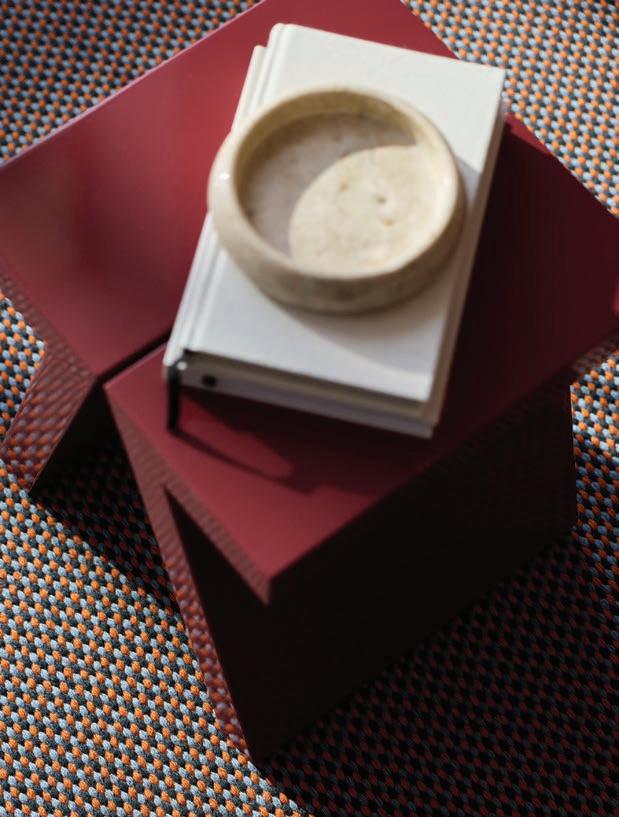
Launched at Milan Design Week, Bonbon from Kastall was designed with international design studio Barber Osgerby. In hues like Berry, Rhubarb, Lemon, and Damson (shown), the rug layers tone-on-tone yarns for depth, ending in a triple-shuttle looped edge that feels tailored and tactile. Designed to energise architectural interiors, Bonbon brings a touch of play to personal spaces, or as Edward Barber suggests, would make “the perfect rug for a kids’ room.”(kasthall.com)

The Tela collection, designed by Kelly Wearstler for Lee Jofa Modern explores the interplay between structure and movement, resulting in fabrics that feel both grounded and kinetic (kravet.com/lee-jofa-modern).
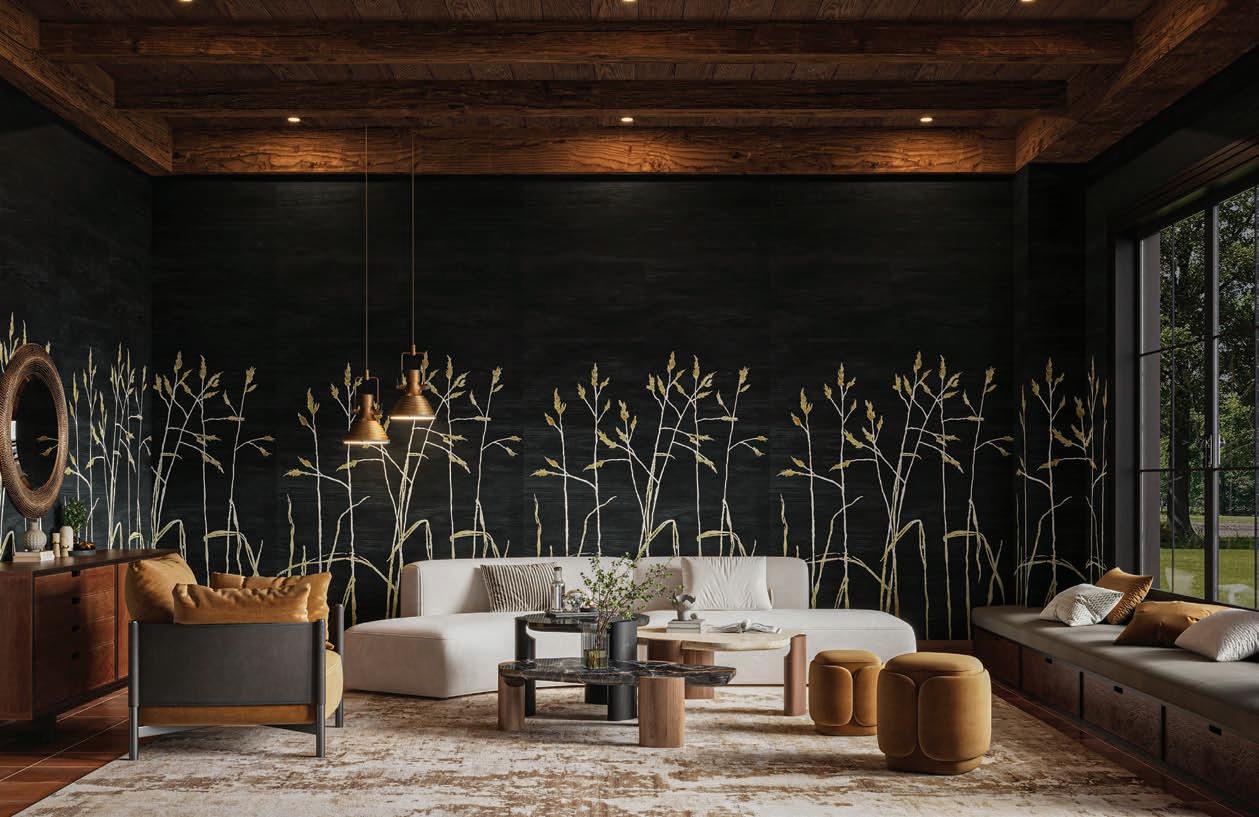
New from Innovations, Torino’s towering grasses are rendered in stunning detail in this four-panel mural, using a combination of etching and laser cutting on wood veneer to create layered depth and rich texture (innovationsusa.com).
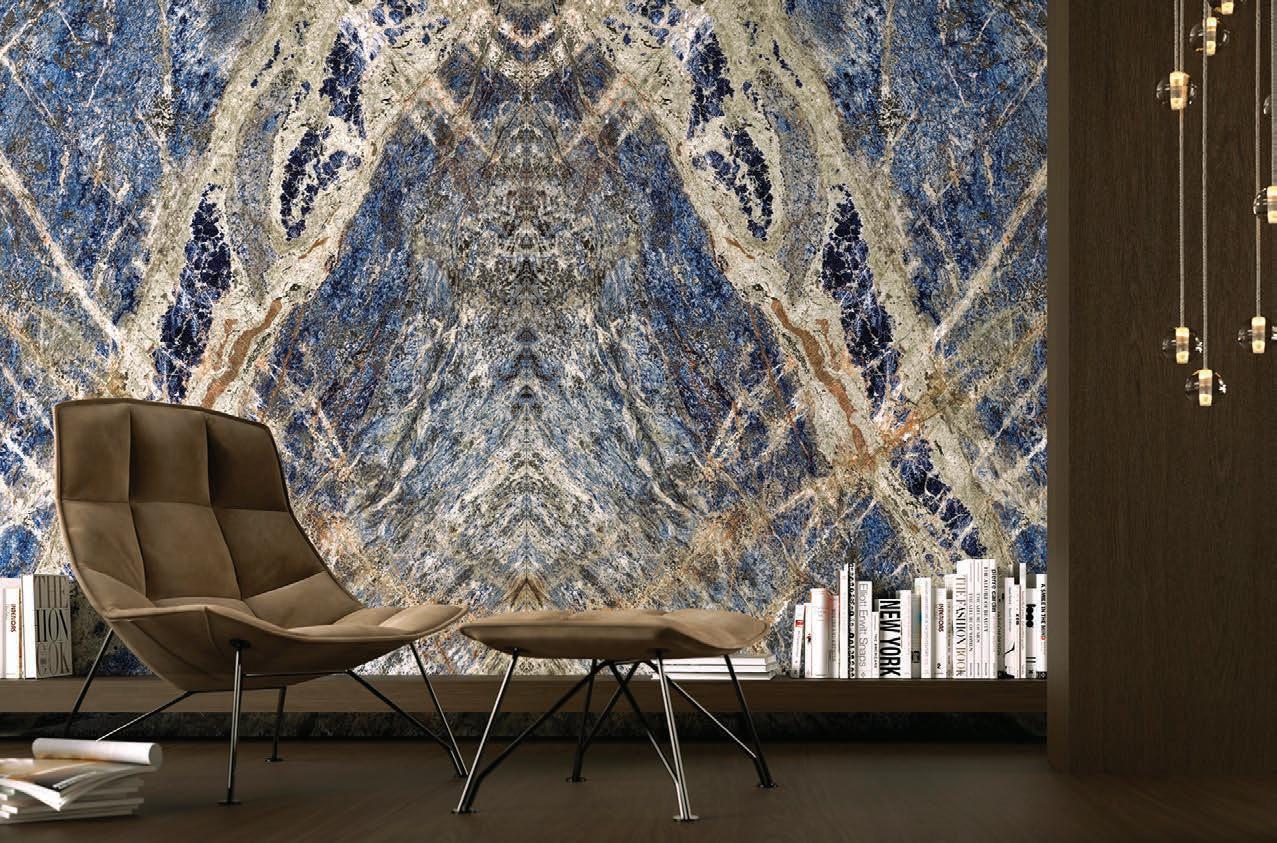
Available in a polished
and elegant mineral-style veining (xtone-surface.com)
French brand Métaphores unveils Belle Étoile, a collection crafted by Émilie Paralitici, Director of Creation and Image, who draws on celestial inspiration to weave the tale of a world journeying through the cosmos (metaphores.com/en).
Inspired by 19th and 20th century documentary textiles,
Written by Bridget Cottrell
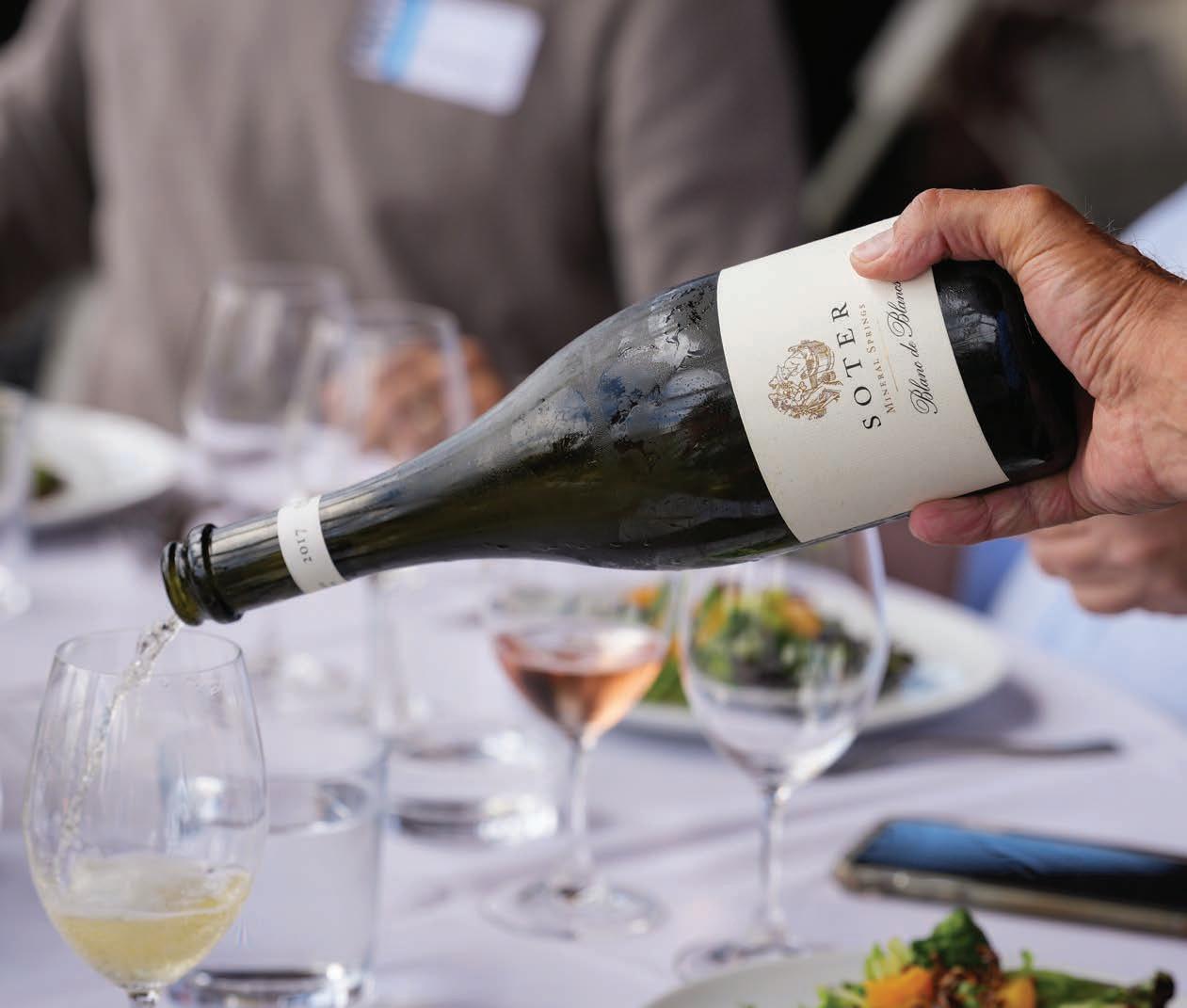
In March, a growing coalition of Oregon sparkling wine producers came together to launch Method Oregon, a nonprofit focused on making Oregon known for top-quality traditionalmethod sparkling wine and sharing the story of the state’s fast-growing bubbles scene.
Method Oregon was created by sparkling winemakers for sparkling winemakers, uniting over 45 wineries from across the state. The group includes both longtime producers and new brands, all dedicated to making outstanding traditional-method sparkling wine. Their goal is to highlight great wines, sustainable farming, and the unique character that sets Oregon sparkling wine apart.
“Oregon sparkling wine has reached a tipping point,” said Andrew Davis, a founding board member for Method Oregon, winemaker for Lytle-Barnett, and the founder of Radiant Sparkling Wine Co. “After decades of experimentation and innovation,
producers across the state are crafting traditional method wines that stand confidently among the best sparkling wines in the world.”
At the heart of this effort is the Method Oregon mark, a symbol that shows which wines meet some of the strictest standards for traditional-method sparkling wine production worldwide. Wines bearing the Method Oregon mark must use only Oregon-grown grapes from the Willamette Valley, Columbia Gorge, or Southern Oregon AVAs, be made using the traditional method with a second fermentation in the bottle, and age for at least 24 months en tirage and list a disgorgement date on every bottle. These rules are stricter than those in many famous sparkling wine regions.
Starting in 2029, Method Oregon wines must use grapes grown with only OMRI-approved organic inputs or come from LIVE-certified vineyards that do not use synthetic herbicides. Labels will also need to show disgorgement dates and AVA information for more transparency.
Oregon’s climate and landscape are ideal for making traditionalmethod sparkling wine. The Willamette Valley’s cool weather, long growing season, and marine influence help grapes keep their natural acidity and ripen slowly. Southern Oregon and the Columbia Gorge also have great spots for sparkling wine, thanks to higher elevations, wind, and cooler conditions. Big temperature swings and different soils let grapes develop rich flavors while keeping the bright acidity needed for sparkling wines that age well.
Pinot noir and chardonnay, Oregon’s most common grapes and the classic base for traditional-method sparkling wine, have grown well there for over 60 years. This has led to sparkling wines that are fresh, structured, and feature a unique Oregon fruit character that ages well and wins awards. For instance, in 2024, five Oregon traditional-method wines made Wine Enthusiast’ s Top 100 list.
To help people discover Oregon’s sparkling wines, Method Oregon offers the Method Oregon Trail Map (methodoregon.com/
trail), an interactive guide to tasting rooms across the state. You can filter wineries by region and experience type.
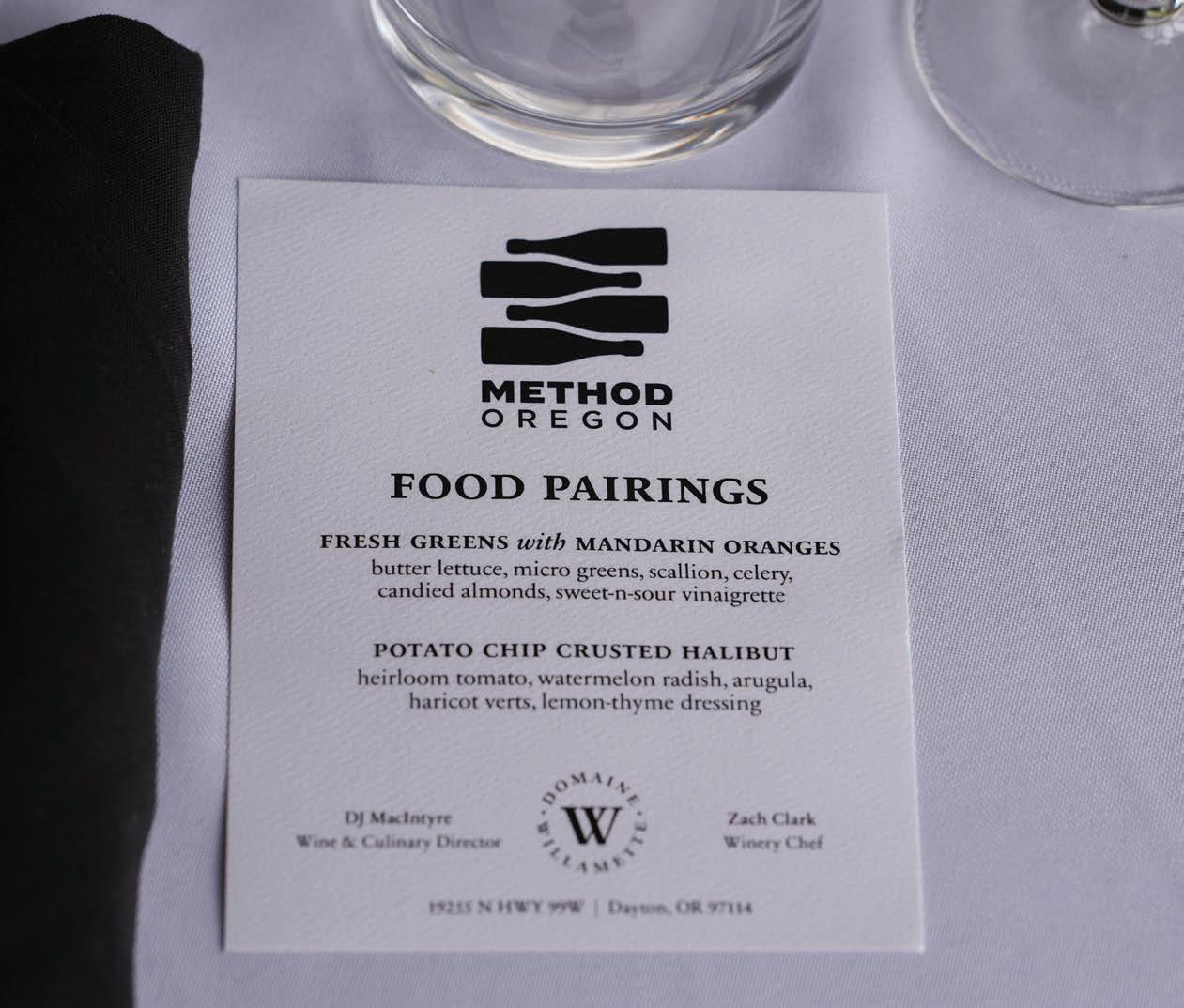
This summer, Method Oregon will hold its second annual Grand Tasting Weekend, an annual event in the Willamette Valley celebrating Oregon’s traditional-method sparkling wine. The 2026 event is set for July 24 to 26 and will feature an educational panel led by Ray Isle, Executive Wine Editor of Food & Wine , guided tastings, tours of production facilities, a “Bubbles Block Party” with food trucks and music, a Grand Tasting with over 40 top Oregon sparkling producers, and a day of special winery events across the region.
“Oregon has always thrived through collaboration,” said Andy Lytle, a founding board member of Method Oregon and co-founder of Lytle-Barnett. “Method Oregon reflects that same spirit—winemakers coming together to tell the story of a region that is redefining American sparkling wine.” sl For more information, visit methodoregon.com.
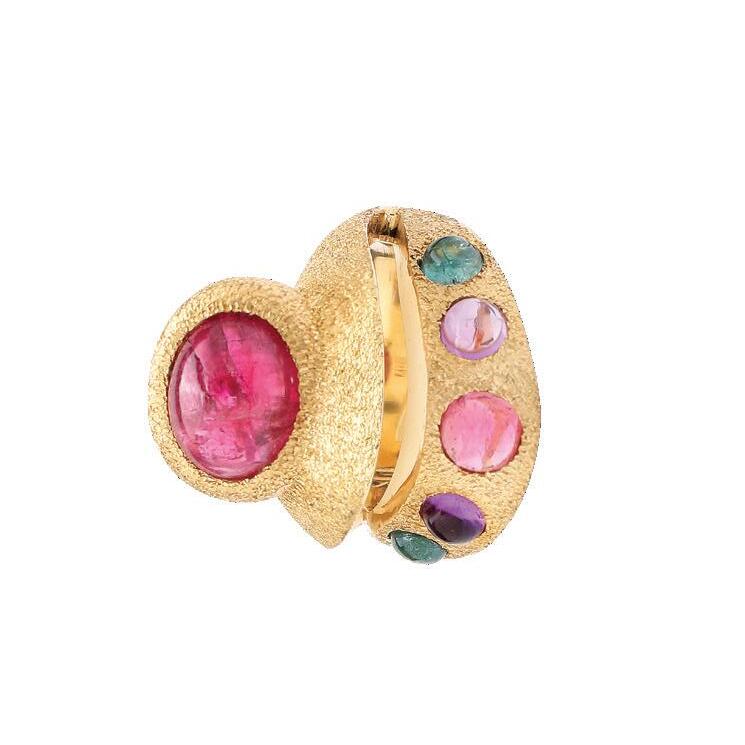
Yael Designs Tesserae Halo Ring. Available through Davis Jewelers in Louisville and yaeldesigns.com
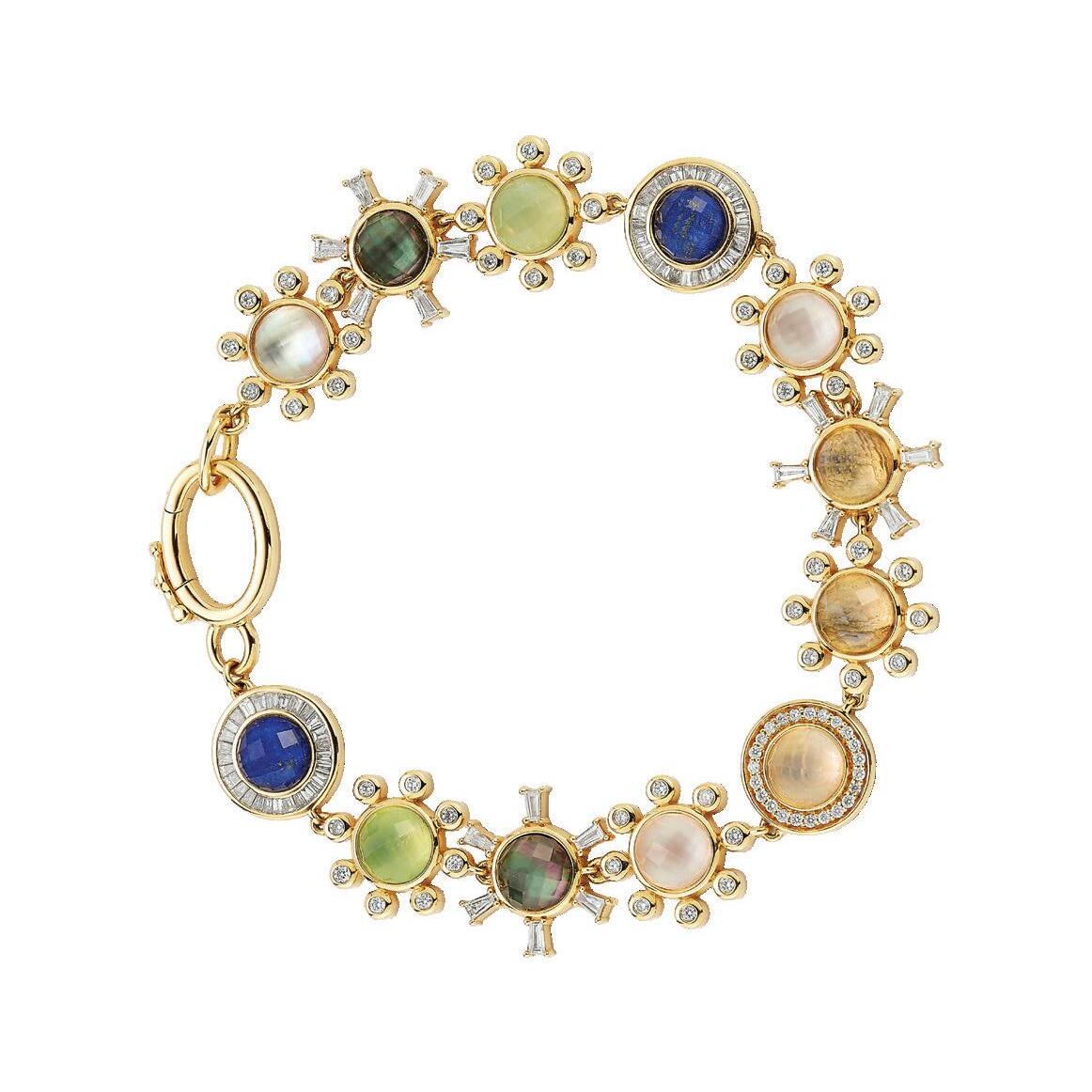
Sanamama Inner-Spaceship Ring (sanamama.com)

Renna Jewels Galaxy Bracelet (rennajewels.com)

Zome Edena Earrings (zo-me.com) Prounis Canthis Earrings (prounisjewelry.com)
Mesa Shield Ring by Métier (metierbytomfoolery.co.uk)
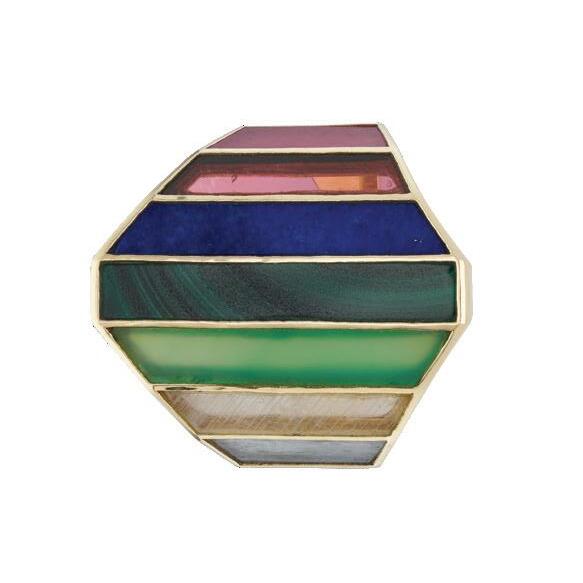
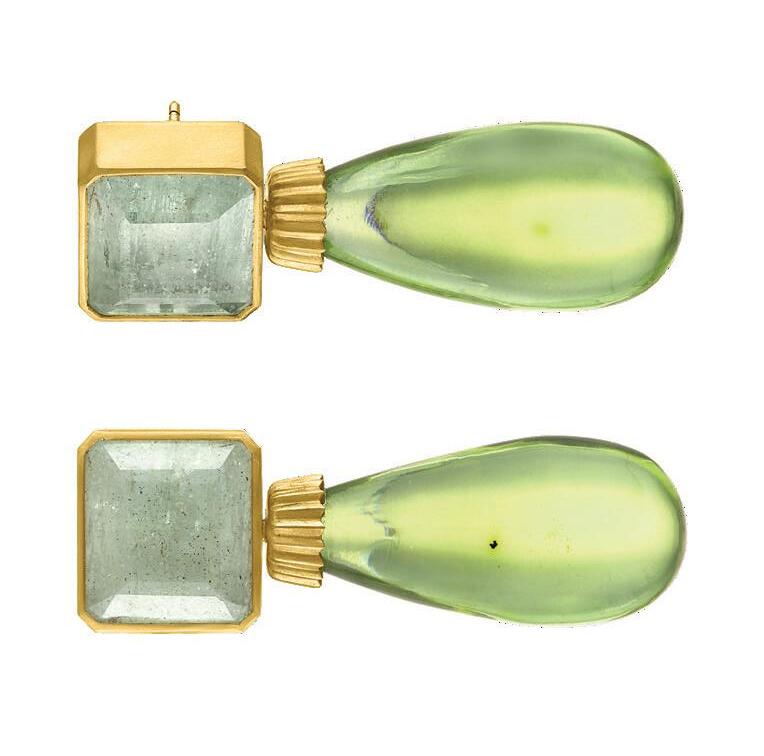
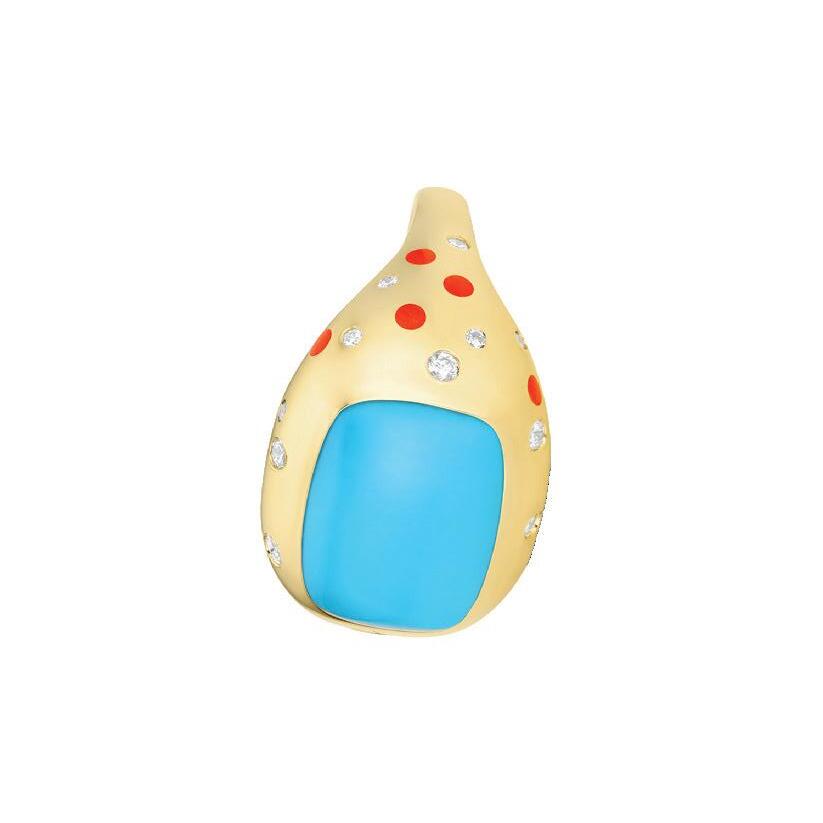
Seal & Scribe Positano Ring (sealandscribe.com)
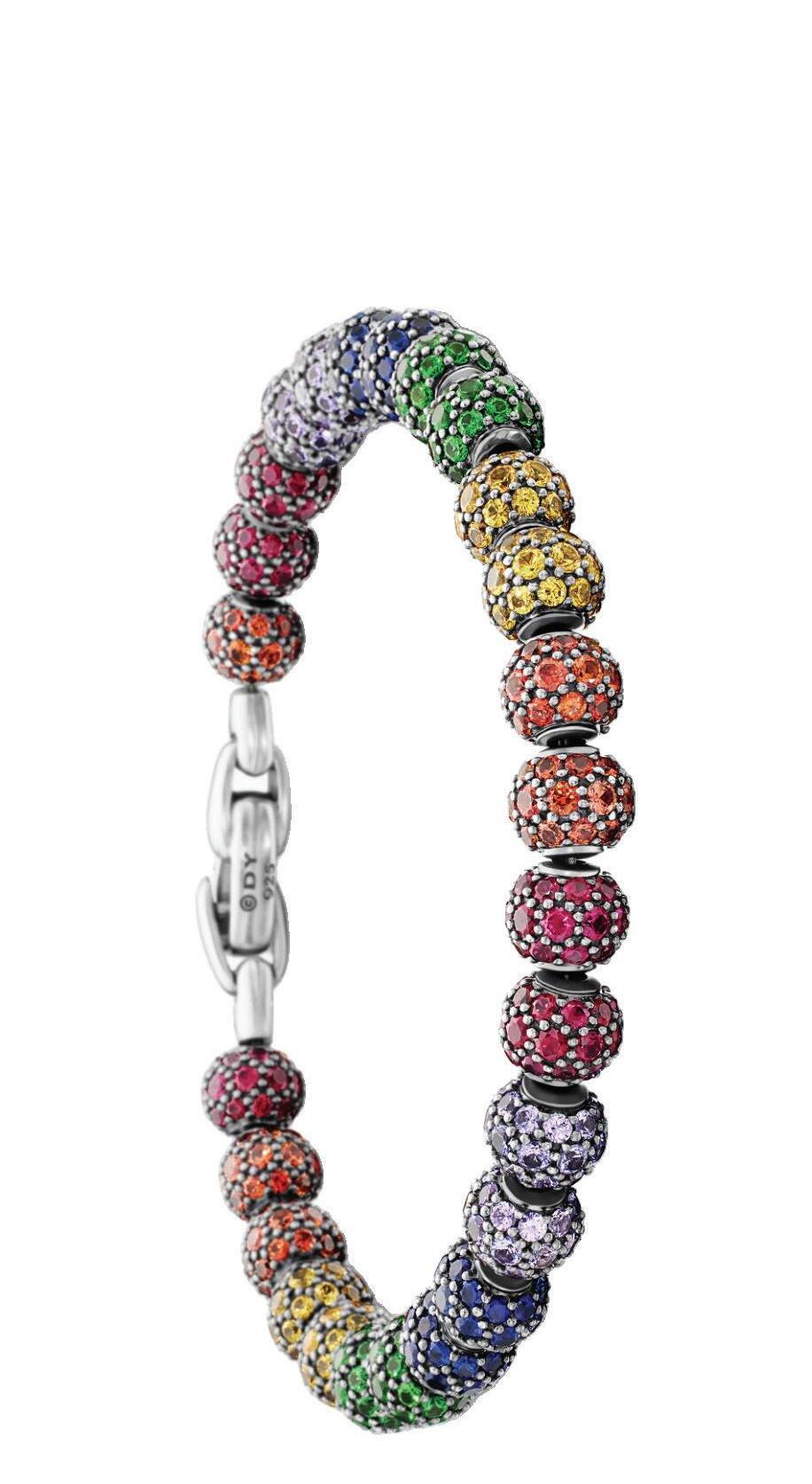
Pavé

David
Available through Moyer Fine Jewelers and ReisNichols Jewelers in Indianapolis, Schiffman’s Jewelers in Lexington, Davis Jewelers in Louisville, Diamond Cellar in Nashville, Clarkson Jewelers in St. Louis, and davidyurman.com.









Hi there, Sophisticated Living! It’s a big month for me, as this April marks one full year as the magazine’s wine correspondent — cheers to many great issues of raising glasses together! Recently, I’ve discovered a handful of new wines that I’m excited to share with you here. Check them out below and feel free to follow my personal travel / tasting journeys at @vickidenig on Instagram or at www.vickidenig.com.
JM Sélèque Solessence Pour Augustine Extra Brut 2021 (Champagne, France – SRP: $70.00)
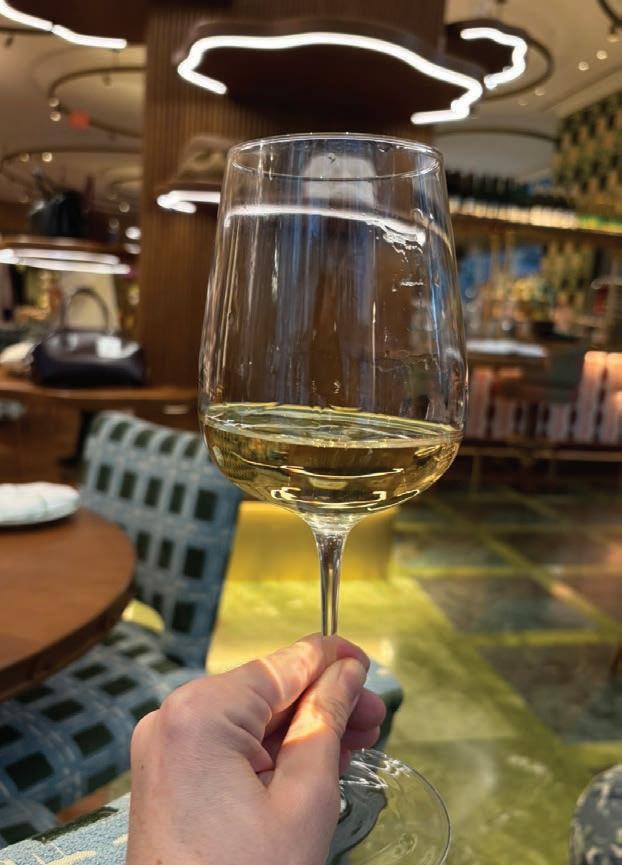
While many wine lovers tend to pull back on bubbles during the early months of the year, I firmly believe that sparkling wine is the gift that keeps on giving—especially when it’s Champagne. I recently checked out the new Printemps department store in downtown New York, which is home to a number of food and beverage concepts; my particular favorite? The hidden Champagne bar is tucked away in the back of the store. While there, I sprang for a pour of JM Sélèque’s Solessence Pour Augustine cuvée, made from a blend of 50% Chardonnay, 40% Meunier, and 10% Pinot Noir. The wine ages for two years sur-lie in bottle prior to release, yielding a creamy, textured final wine balanced by ample brisk acidity and a saline finish. Sipping a Grower Champagne like this is always a treat, especially when surrounded by equally luxurious skincare and garments!
Italy – SRP: $20.00)
Great wine can be found at all price points, even between the $15 and $20 mark—it’s simply a matter of knowing where to look. Fattoria San Lorenzo is a family-owned winery located in the coastal Marche region of Italy. Here, third-generation winemaker Natalino Crogaletti produces a lineup of biodynamically-farmed wines from local grape varieties, including this incredibly easy-drinking Verdicchio. Post-harvest, Natalino allows spontaneous fermentation with native yeasts in concrete vats, then lets the wine age for six months sur-lie (followed by three months in bottle) prior to release. Snappy and refreshing, the wine’s notes of citrus, ripe peach, and white flowers promise to satisfy fans of Pinot Grigio and Sauvignon Blanc alike. Trust me, reach for the lesser-known Italian grapes— they’ll likely overdeliver for the price point!
Kruger-Rumpf Riesling Münsterer Rheinberg Kabinett 2024 (Nahe, Germany – SRP: $25.00)
Although mentalities are beginning to change, Riesling still gets stereotyped as an ultra-sweet wine—and while it certainly can be, the majority is actually vinified dry. This Kabinett bottling from KrugerRumpf is somewhat of a Goldilocks bottling; it’s not totally dry, but not super sweet. In other words, it’s simply just right—especially if
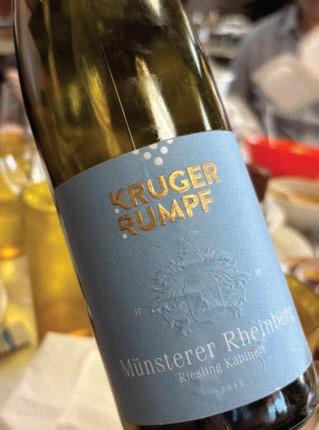
spicy takeout is on the menu. Produced in Germany’s Nahe region, the fruit for this wine was organically farmed, fermented with native yeasts, and vinified in stainless steel. However, rather than letting the wine ferment completely dry, the producer cooled the fermentation to halt it, resulting in a tiny amount of residual sugar in the final wine. I enjoyed this bottle with a group of Italian winemakers at a BYOB Chinese restaurant, and the wine’s juicy flavors of peach, apple, and orange blossom—coupled with its lemony acidity and off-dry finish—couldn’t have been a better fit for the food.
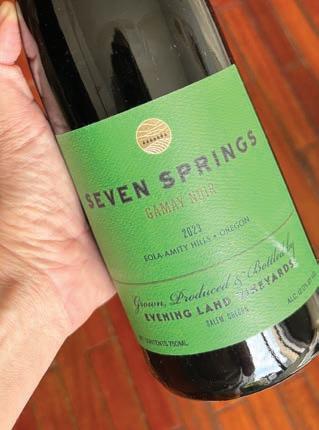
Evening Land 'Seven Springs Vineyard' Gamay Noir 2023
(Eola-Amity Hills, Oregon, USA – SRP: $41.00)
Oregon has become synonymous with Pinot Noir and Chardonnay, though Gamay is proving to be an equally interesting variety for the area’s soils—especially when produced at the hands of winemakers like Sashi Moorman. In addition to working with some of the region’s most lauded sites, Moorman’s passion for organic and responsible farming brings Evening Land’s wines to a whole other level. Following the traditional vinification regimen of France’s Beaujolais—which is home to some of the best examples of Gamay in the world—this delicious wine undergoes carbonic fermentation with whole clusters and is aged in neutral French oak for four months prior to bottling. Vibrant and
energetic, the wine’s flavors of cranberry, strawberry, and white pepper are perfect for enjoying during the early days of spring.
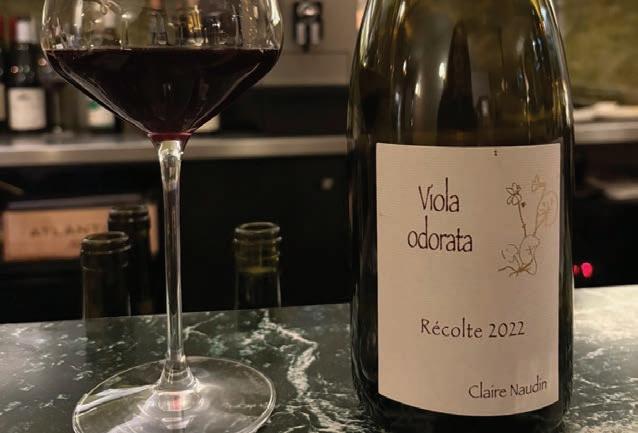
Claire Naudin Côte de Nuits-Villages ‘Viola Odorata’ 2022 (Burgundy, France – SRP: $92.00)
Claire Naudin is one of Burgundy’s most respected winemakers. She’s helmed her family estate, Domaine Naudin-Ferrand, since 1994, which straddles the border between the Hautes-Côtes de Nuits and the Hautes-Côtes de Beaune. This particular wine, which is named after a local wildflower, is produced from grapes from five different lieux-its around the village of Corgoloin. In the cellar, élevage takes place for 14-18 months in oak, a small percentage of which is new, prior to bottling without fining or filtration. In terms of vintage, 2022 was a rather warm year in Burgundy, which is definitely reflected in this wine; contrary to the leaner 2021s, this ripe and expressive bottling offers notes of dark berries and violet with well-integrated tannins and a long finish. Serve it slightly chilled and enjoy with your next roast chicken or mushroom-based dish at home. sl
Vicki Denig is a wine / travel journalist based between New York and Paris. Her work regularly appears in various industry publications, including Decanter, Food & Wine, and WineSearcher. In addition to journalism, Vicki also works with a handful of wine-focused clients, including Paris Wine Company, High Road Wine & Spirits, and more. When not writing, she enjoys running, indoor cycling classes, petting dogs, and popping bottles on her rooftop with friends.


Lamangata
Luxury Surf Resort in Costa Rica offers the perfect blend of adventure and luxury.
Written by Bridget Cottrell
Love hits differently later in life. Passion, though still palpable, is filtered through the earned wisdom of age. This lends a reassuring steadiness, which often takes young love’s roiling boil down to a gentle simmer. I was bitten by the love bug twice in my 50s. With apologies to my husband, about whom I could wax poetic for pages, this story is about the second nip—an amplification of amorousness brought about by discovering a latent love of surfing.
Desiring to scratch an itch I picked up in Hawaii a little over a year ago, I was keen on finding a place where I could get expert coaching while also enjoying a well-rounded trip with my husband outside of time spent in the water. Many places I looked into were too focused on surfing (my aspirations are fairly modest), or too rustic (there’s certain creature comforts I want at my age), so when I came across Lamangata, situated near Dominical in the Puntarenas Province of Costa Rica, I knew I’d found the sweet spot and a kindred spirit in owner Debbie Toll Gruelle.
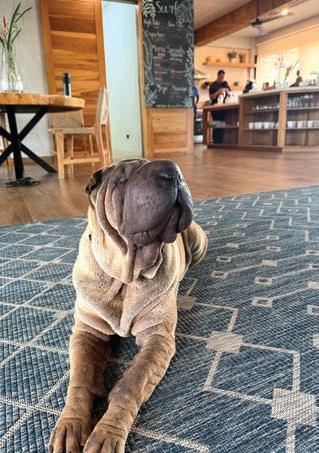
A fellow adventuresome and globetrotting fifty-something, Debbie, an experienced wakesurfer, fell in with wave surfing at a camp in Costa Rica. Shortly thereafter, she found the perfect piece of land, perched high above the Pacific, to build her very own luxury, sustainable surf camp. “I built it to feel like home,” said Debbie,
who often brings her Sharpei (and shadow) Lupe with her during extended visits. “I conceived the whole experience based on things that are important to me when I travel—environmentally friendly, comfortable, and stylish.”
While hospitality is a new plume in Debbie’s proverbial feathered cap, luxury building is in her blood. Her late father, Robert Toll, was the co-founder and former Chairman of the luxury homebuilding company, Toll Brothers, Inc., and Debbie was the only one of her siblings to work in the family business. Later, she and her husband collaborated to build custom luxury homes in Southern California.
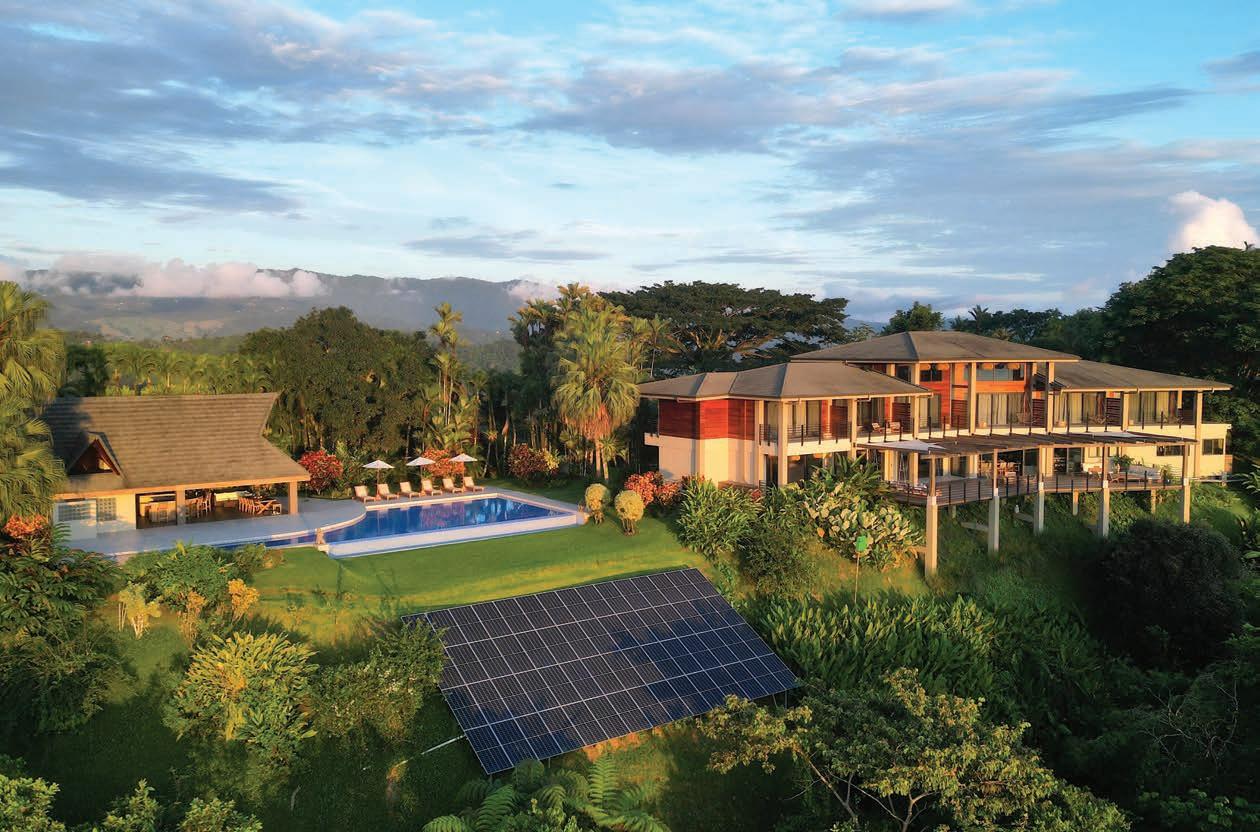
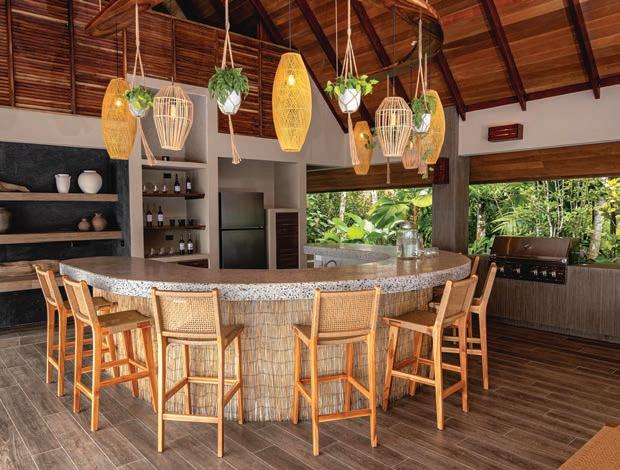
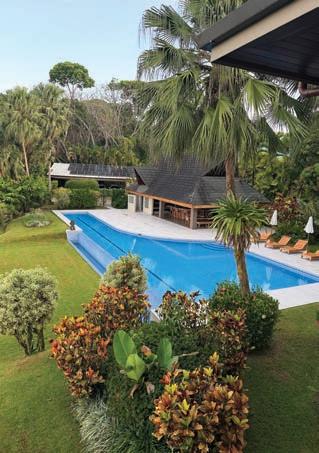
At Lamangata—derived from the Swedish word Mångata, which refers to the shimmering, road-like reflection of the moon on water—Debbie drew on her educational background in environmental studies and her formidable building chops to design and construct the six-room boutique hotel, positioned on the precipice of a steep hillside with sweeping, unobstructed ocean views. The property’s previous owner was a notorious expat forced to sell after years of having a bit too much fun caught up with him. Debbie razed the existing home but kept and refurbished the infinity-edge lap pool and Balinese-style pavilion. The pavilion now includes a secondfloor massage room with a triangle-shaped opening framing the view.


The maximum head count at full capacity is 15; even so, as an all-inclusive resort, there are a ton of moving parts, and Debbie credits her good business intuition for assembling a top-notch team. The experience begins before arrival, with guests filling out a comprehensive form detailing dietary preferences, desired activities, and the like. The resort provides transportation from Juan Santamaría International Airport, though I’d highly recommend cutting the three-ish-hour ride to approximately 45 minutes by taking a connecting flight to Quepos La Managua Airport. Our driver came prepared with a backseat “picnic”, and after one lipsmacking bite of an overstuffed burrito, we were excited to see what palette pleasers were in store for us at the resort.
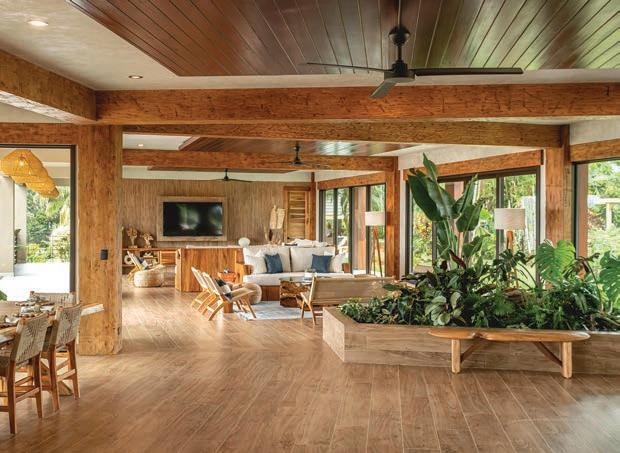
The first floor of the main building feels more like an aspirational abode than a boutique hotel. It comprises the kitchen, which is always stocked with refreshments and both sweet and savory snacks for between-meal noshing. There is a large living room, a long communal dining table, a yoga room, and a cantilevered deck with a firepit and hanging day beds.
The second-floor guest rooms are supremely spacious, with scores of custom pieces made on-site from locally sourced wood, including the bedroom furniture and fitted closet. I was particularly
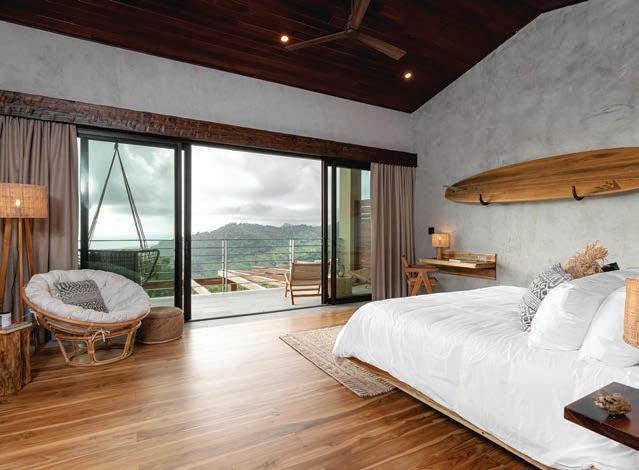
fond of the bathroom’s live-edge vanity with bow-tie joints, topped with a natural stone vessel sink. From our balcony, I swayed in the hanging chair and listened to the deep, booming roars of howler monkeys, screeching macaws, yapping toucans, and the R2D2-like bleeps and chirps of Montezuma oropendola, while enjoying the cool breezes at the elevation.
Framed by vibrant, papery bracts of bougainvillea, a bank of solar panels powering the property resting just beneath the terminus of a clipped lawn near the pool stand in testament to Debbie’s staunch commitment to Lamangata’s sustainability. They collect, filter, and clean rainwater as their primary water source, and reuse wastewater for irrigation and maintenance. An on-site garden provides an assortment of herbs and vegetables for the kitchen.
Chef Yuri Antonio “Tony” Candray Marenco, assisted by Kenneth, prepares meals rivaling those of a 5-star resort. From a beach acai bowl breakfast to grilled whole fish at dinner, everything is beautifully plated, hearty, and bursting with flavor. Working closely with Debbie on menu development, including incorporating recipes procured from some of her favorite restaurants around the world, Chef Tony makes everything in-house, including bread and ice cream. Meals are accompanied by inventive, freshly squeezed juices infused
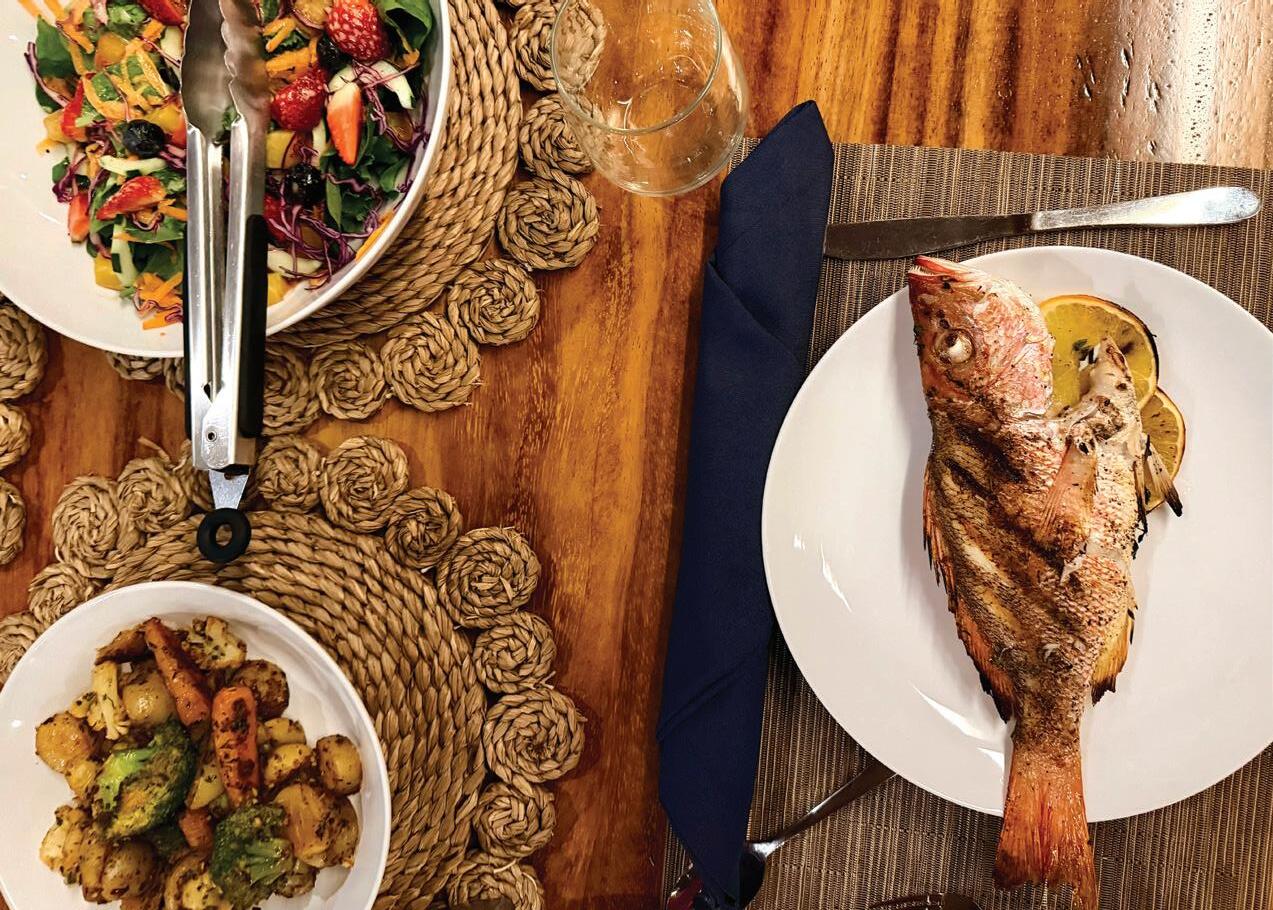

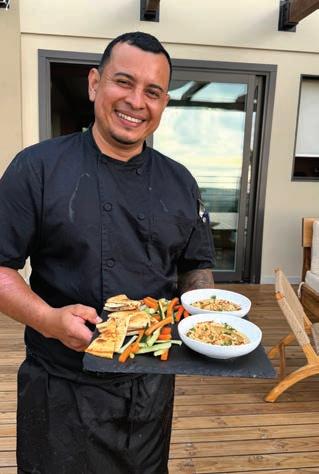
with lemongrass, ginger, mint, and basil to add depth of flavor. Guests' preferences and dietary restrictions can be amply accommodated.
Each day’s schedule and menus are posted on a chalkboard near the kitchen. On our first full day, after a hearty Desayuno Típico breakfast, we met Junior “Chagüe” Vargas Salazar, Lamangata’s lead surf instructor. As newbies, our first lesson was in the pool, which helped us hit the waves with confidence. A 2024 longboard champion, Junior offers expert, patient guidance and video analysis, helping even advanced shredders level up.
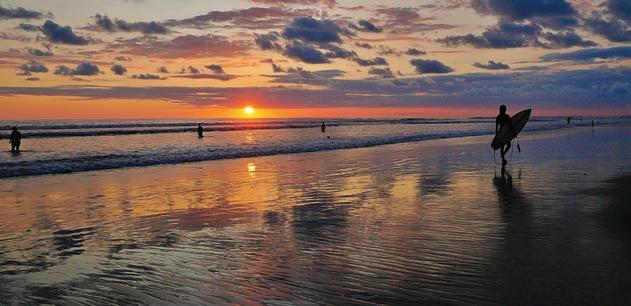
We headed to the long, wide, and virtually empty beach at Playa Linda for our first ocean session. “We’re going out there?” I asked with some trepidation, seeing the foamy whitewater of the barreling waves out in the distance. “Yup, barrels all day for us,” said the everupbeat Junior without missing a beat. “Vámonos!”
Having experienced bare-bones surf instruction, I was blown away by the thoughtfulness of the beach setup. A pop-up tent provided respite from the sun and a place to sit for breakfast or lunch. There were towels, an assortment of sunscreens, a thoughtfully curated “surfy” playlist, and a photographer/videographer to capture every triumph and wipeout. When we took a break, a freshly cracked coconut awaited, so we could rehydrate.
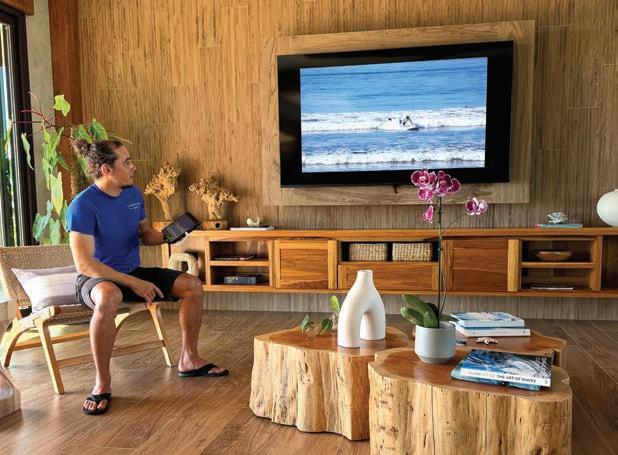
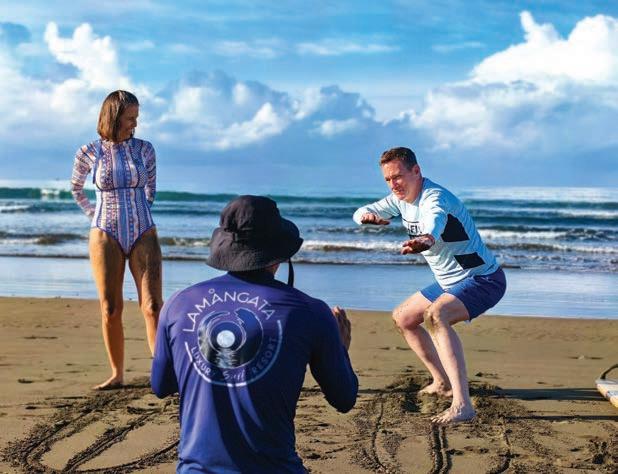
The surfing was exhilarating and humbling. Spending a morning getting pounded by the surf is Mother Nature’s ultimate ego check. No matter how powerful you think you are, it's no match for the feeling of a wave crashing on your head. By the end of our second session, and with Junior’s help, I reached the goal I’d set: catching and riding waves unassisted, with photo and video proof to boot!
Costa Rica’s varied landscape provides the ultimate playground when you aren’t surfing. There are waterfall, beach, and nature hikes (where you can visit your houseplants’ wild kin), whitewater rafting, ziplining, whale-watching boat tours, rappelling, kayaking, and fishing, to name a few. We were impressed by the beaches' cleanliness, with my husband remarking that we saw more trash in the Galápagos. There’s also the simple bliss of enjoying a poolside afternoon back at the resort or scheduling a private yoga session or a massage.
The trip marked our first to Costa Rica, but most definitely not our last. To quote singer-songwriter Jack Johnson, often referred to as the modern “patron saint” of surf culture (and who figured prominently on Lamangata’s beach day playlists), “Every time I get a chance to be out in the ocean, it's like hitting a reset button for me where I just feel alive again, in perfect balance.” sl

One-of-a-kind Flora Fauna earrings from Eden Presley. Available through Moyer Fine Jewelers in Indianapolis and edenpresley.com.
Citrine Daisy Pendant from Oscar Heyman. Available through Moyer Fine Jewelers in Indianapolis, Schiffman’s Jewelers in Lexington, Elleard Heffern Fine Jewelers and Chesterfield Jewelers in St. Louis and oscarheyman.com
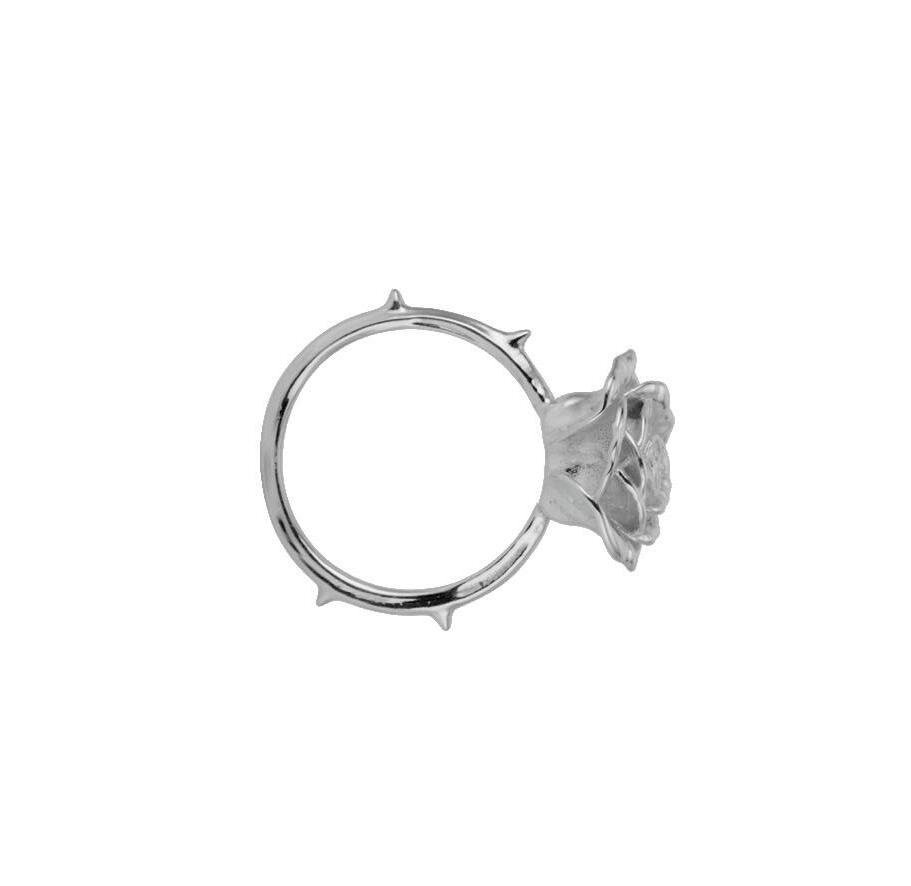

(kil-nyc.com)
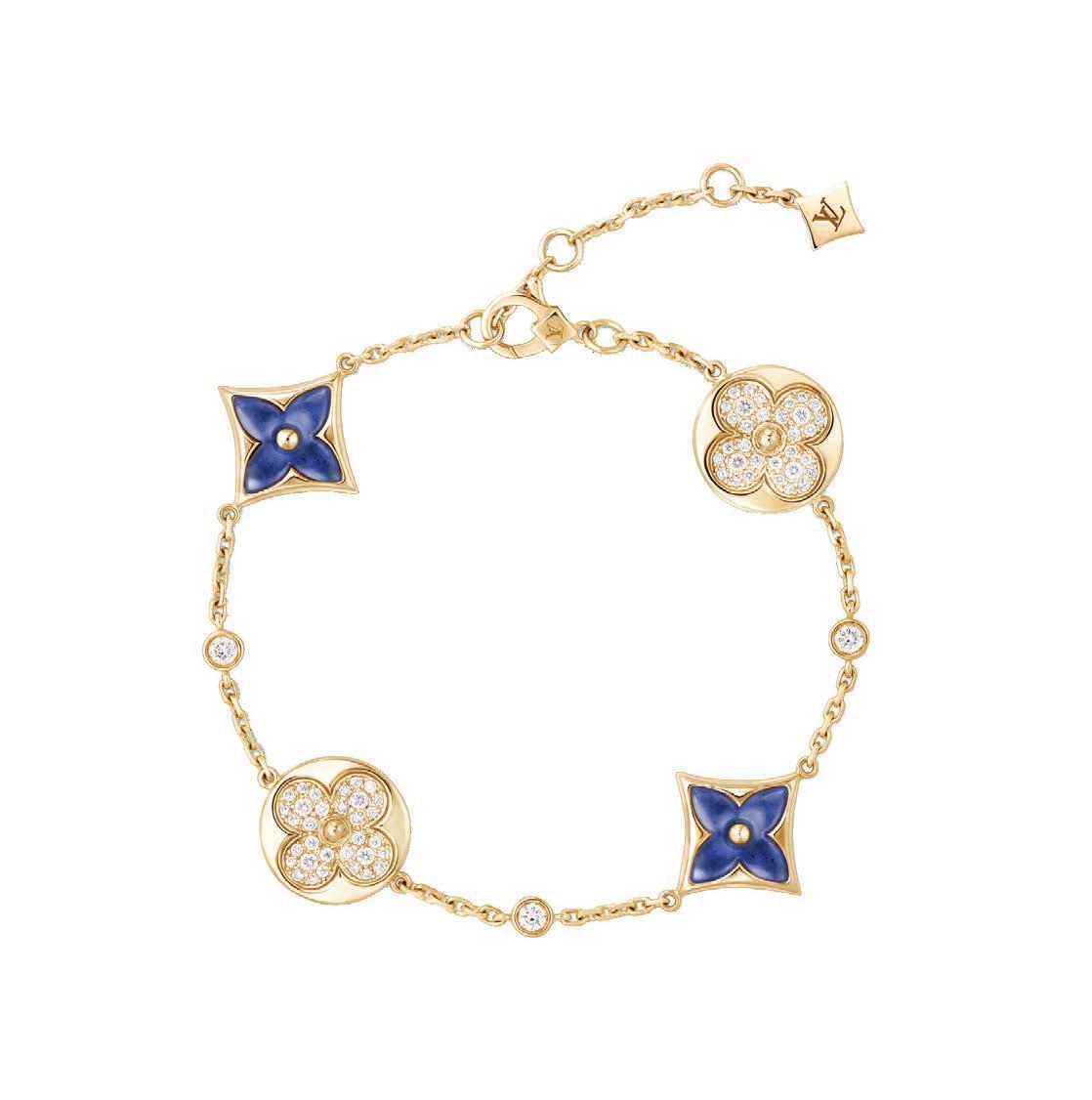
(us.louisvuitton.com)
Nicole Couronne Flor
(nicolecouronne.com)









Sorellina Bloom Inlay Pendant. Available through Reis-Nichols Jewelers in Indianapolis and sorellinanyc.com
Miraki Jewels Flower Wrap Ring (mirakijewels.com)
John Hardy Padma Pendant. Available through Reis-Nichols Jewelers in Indianapolls, Davis Jewelers in Louisville and johnhardy.com.

CCWW by Christina Puchi Flower RIng (ccwwdesigns.com)

Sig Ward Blossom Necklace (sigwardjewelry.com)

Effy Flower Ring (effyjewelry.com)

Elyzian Fleur de Charme Pendant (elyzian.com)
Flower Puff
(boochier.com)

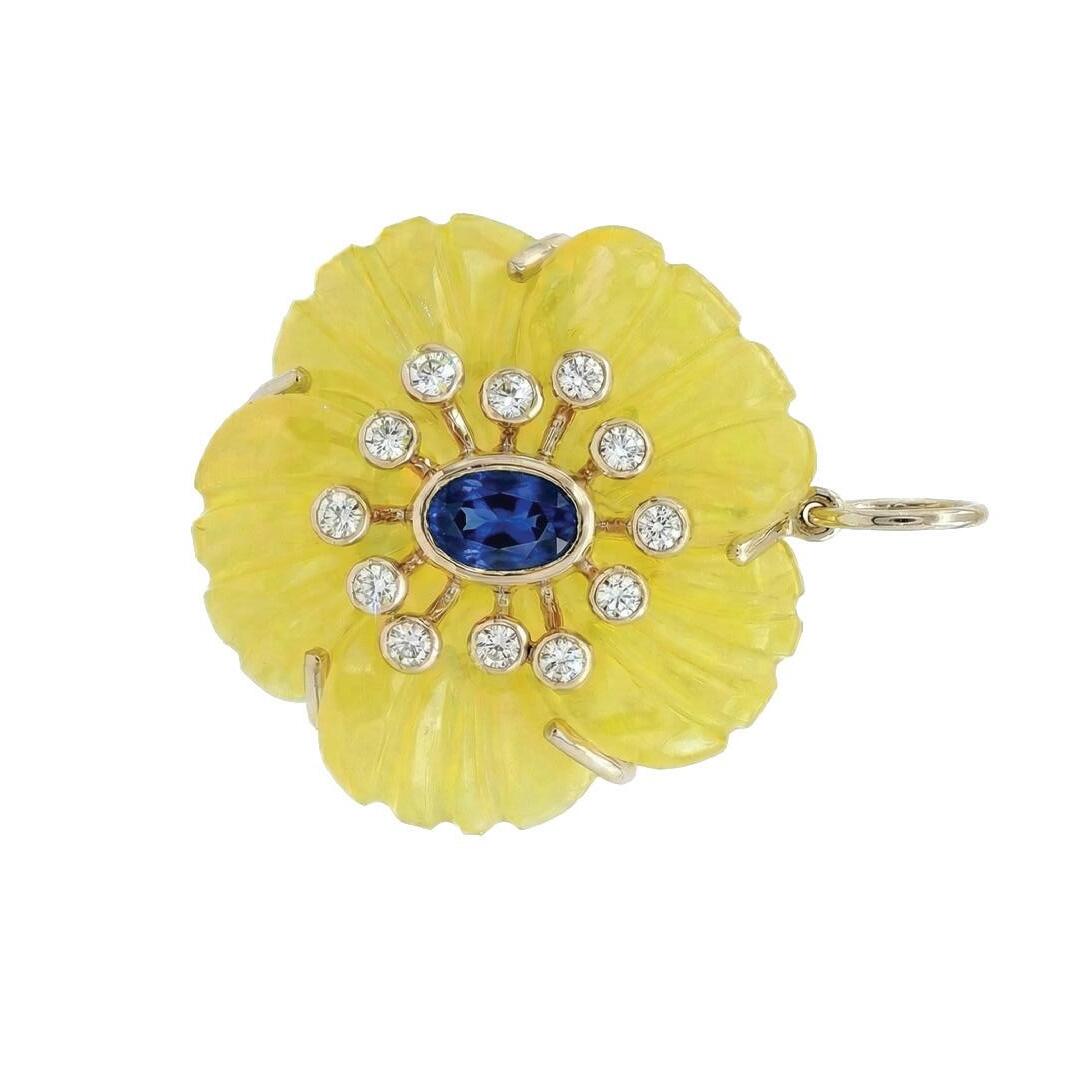
Picchiotti Flora Brooch. Available through Moyer Fine Jewelers in Indianapolis, Clarkson Jewelers in St. Louis and (picchiotti.it)





Written by Bridget Cottrell / Photos courtesy of Fairmont Mayakoba
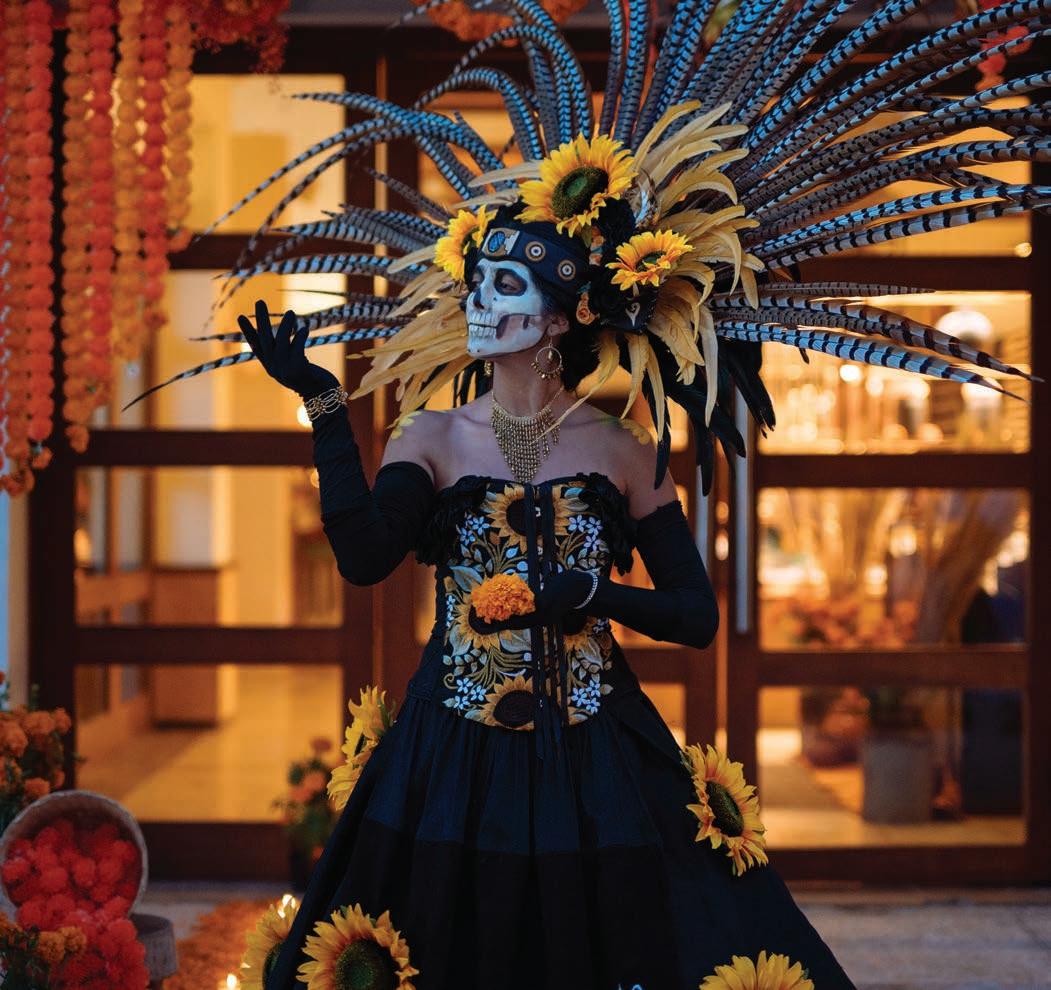
The dead danced in my dreams. Not in a scary, wake up in a cold sweat kind of way, but rather à la Tim Burton: dark yet intriguing. Mis sueños, filled with sugar skulls, candlelight, Catrinas, fire, feathers, and Mesoamerican symbolism, served as a souvenir after engrossing myself in the all-encompassing celebration of Día de Muertos at the Fairmont Mayakoba in the Yucatán Peninsula.
The nearly 600-acre property, 100 of which are oceanfront, encompasses four luxury hotels, residences, a world-class golf course, beach clubs, and El Pueblito, an authentic replica of a traditional Mexican town, complete with a central plaza, shops, and a small church. Within this luxury ecosystem, the festivities for Mexico’s most vibrant holiday, which unfold over several days, are equally outsized. The property-wide collaborative celebration kicked off with an evening canal boat journey featuring choreographed vignettes that revealed themselves like fever dreams, complete with whirling dancers, glow-inthe-dark costumes, skeletonized faces, and live music. “It’s a good thing we’re not on drugs,” joked one of my fellow boat passengers.
The subsequent days were filled with immersive altar exhibits, live performances, crafts, children’s activities, cooking classes, and themed culinary experiences, including 30 different specialty menus at restaurants across the Mayakoba portfolio. At evening events, adults (me included) queued up with the excitement of children at a birthday party to get their face painted like a Catrina or el Catrín.
During a celebratory dinner marking the opening night of the festivities, Luis Duran, CEO of Mayakoba’s parent company RLH Properties, remarked, “The Day of the Dead is the soul of Mexican culture and a celebration of life. We hope to bring to our guests the authentic experience and nuance of our incredible Mexican Culture.” While the candlelight of evening activities amped up the drama, during the day, marigolds, with their bright orange color and strong scent thought to help guide the spirits of the dead home, were the stars of the show, appearing everywhere, strung into garlands and gracing the ofrendas alongside baskets of sweet breads, photographs, and a plethora of pillar candles.
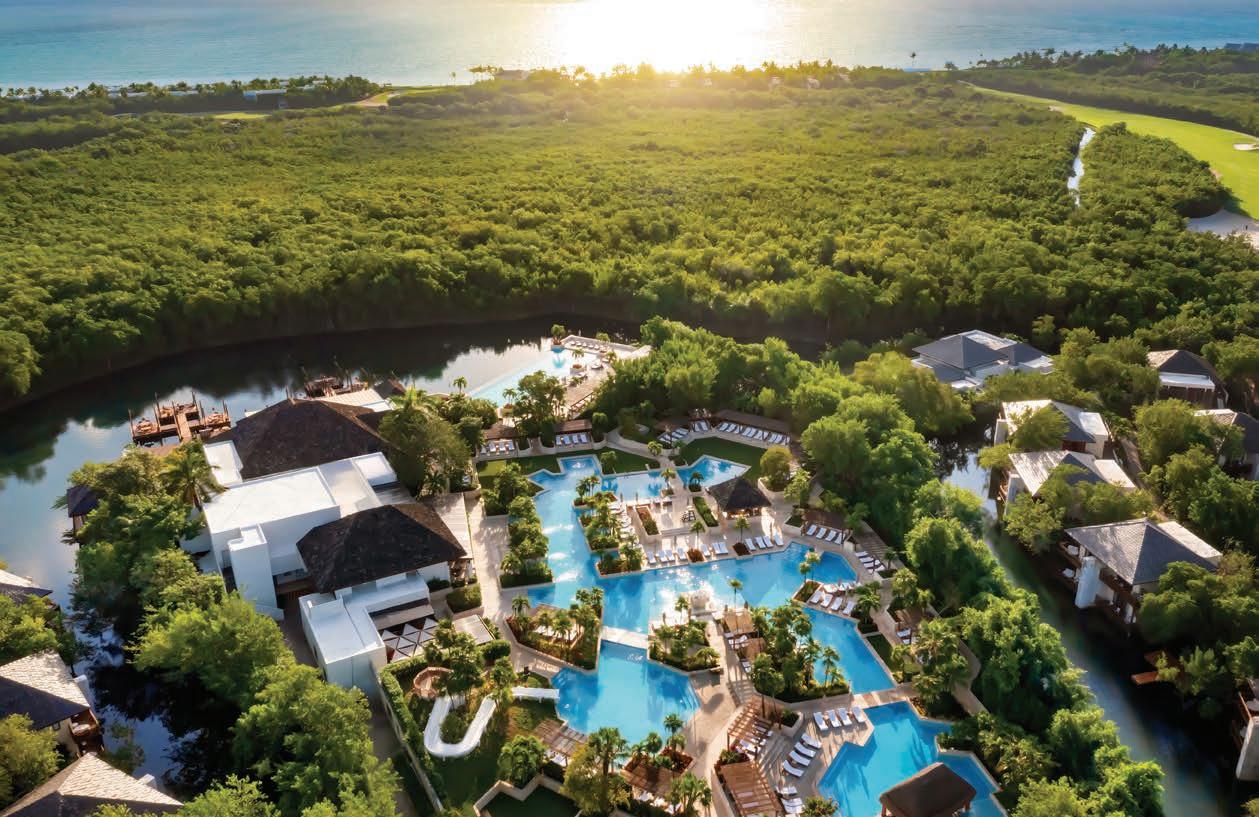
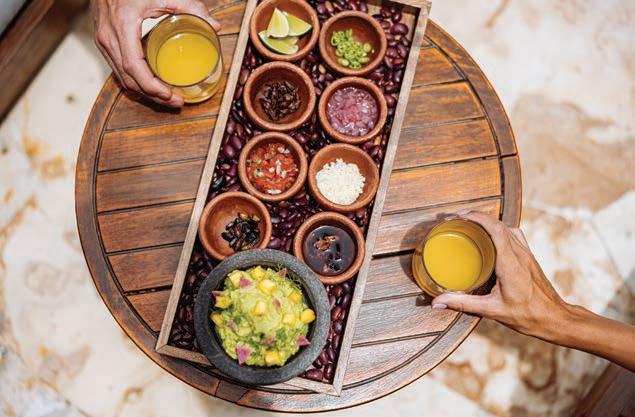
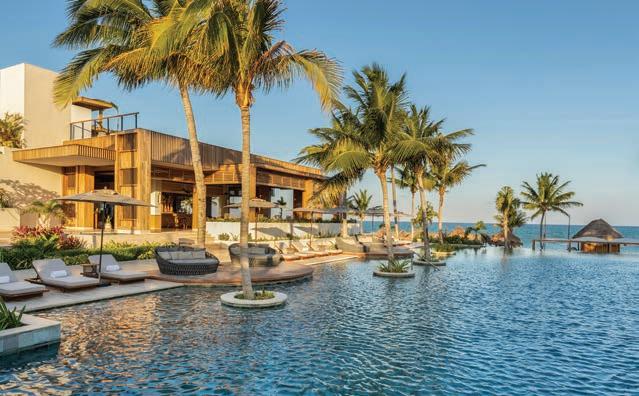
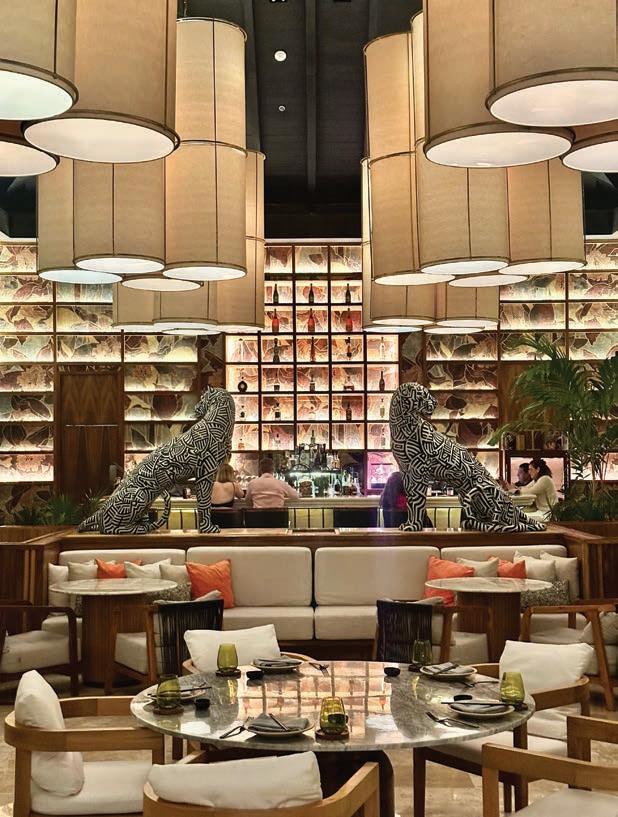
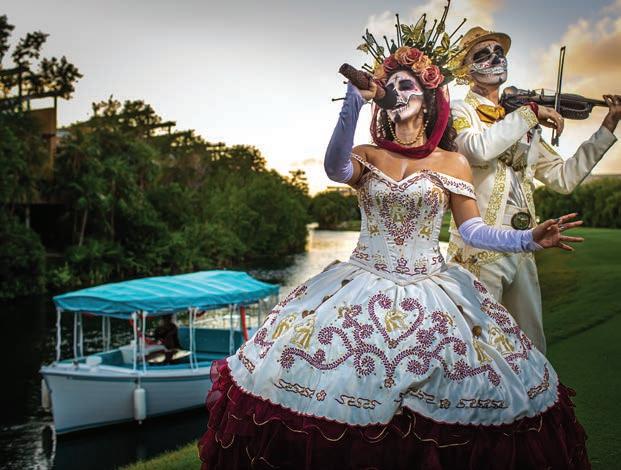
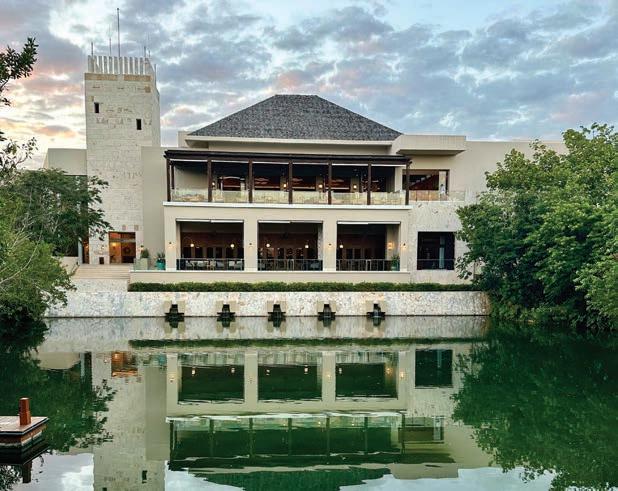
Visiting Fairmont Mayakoba outside this celebratory season is equally beguiling, as the AAA Five Diamond awardee, celebrating its 20th anniversary this year, offers an all-encompassing experience. While the property boasts 401 rooms and suites, it never feels crowded. I lodged in one of the casitas nestled in the dense jungle vegetation of the Mayakoba reserve, fronting a canal that snakes through the property (don’t miss the regularly scheduled boat rides through the canal system to learn more about the local flora and fauna).
My second-floor room was spacious and minimalist in its décor, with glass doors to the terrace framing the view and allowing it to hold its own as the room’s sole artwork. Guests staying in the resort’s Signature Casitas and above are assigned a personal Balam butler, and mine remained in regular contact, reminding me of reservations and complimentary events throughout the property. After learning of my keen interest in Día De Muertos, he was a fountain of knowledge, recommending several fascinating documentaries that deepened my affinity for this holiday, particularly on the evening of October 27, when the souls of lomitos (dogs) and michis (cats) come calling.
Scattered throughout the property are pickup stations where you can be chauffeured via golf cart to the beach, spa, restaurants, and the canal-front pool. I preferred to hop on one of the ample beach cruisers
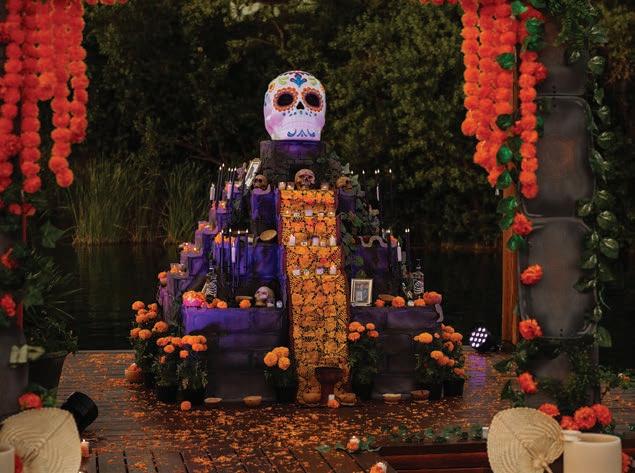

placed around the property to help me get in some sneaky exercise in between my indulgent culinary journeys. The quiet of a pre-sunrise pedal through the jungle en route to the beach amplifies the cacophony of more than 500 bird species endemic to the region.
There are 10 pools on the property. The “quiet pool” near my room lived up to its name as I was often the only one there, indulging in the sweet silence to ditch my phone for some quality reading time. The lagoon pool is as oversized as the property itself, with its zig-zag layout providing plenty of quiet alcoves if one desires. Head to the far end, near the La Laguna Mexican restaurant, and you’re almost assuredly guaranteed serenity as families tend to congregate around the waterslide. Or venture a few steps further to the adults-only infinity pool at the water’s edge that offers elevated lounge seating. There are three pools at the beach, with a not-so-wide stretch of sand being the only thing separating the smallest one from the ocean.
Fairmont Mayakoba’s 12 restaurants and bars encompass culinary traditions from around the world. Steps from the ocean, Fuego offers toe-in-the-sand dining. True to its name, nearly every dish, including traditional Mayan offerings, benefits from a kiss of fire. An exploration of Mexican cuisine continues at La Laguna, where it’s hard to resist
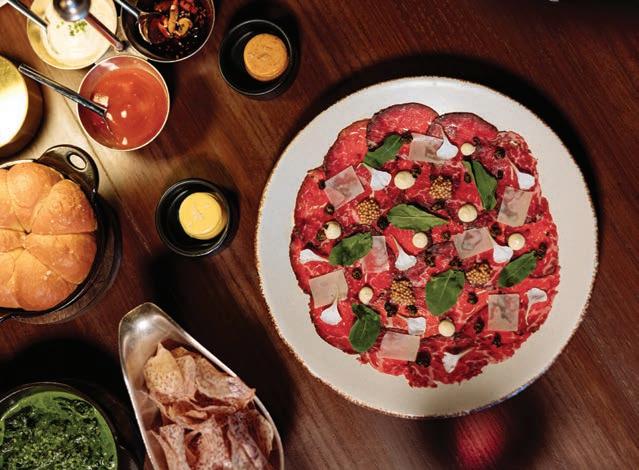
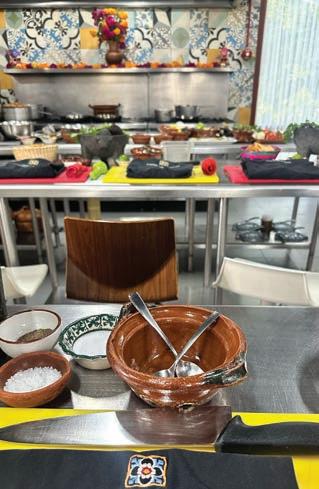
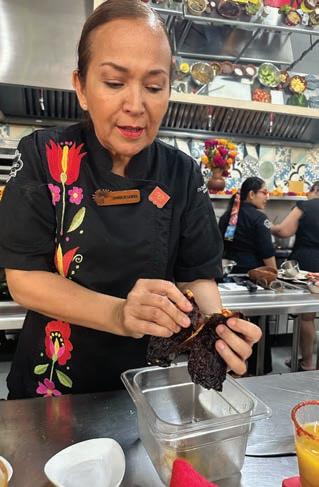
overindulging at the breakfast buffet. Tauro Steakhouse in the main building is a chic, dinner-only American-style steakhouse boasting the largest in-house dry-aging program in Latin America and bartenders who craft matchless martinis. The ocean’s bounty is celebrated at Gaia; classic Italian cuisine is served at Bassano; and Asian-inspired offerings are found at Hix in the lobby.
If you aren’t content with being well fed, you can sign up to do your own cooking at the Mayakoba Cooking School located within the charming El Pueblito. In our immersive class, we cooked with all our senses; it was the first time I used sound to “feel” when something was ready.
As we made Pan de muerto ("Bread of the Dead") decorated with dough "bones" and a central knob, symbolizing the cycle of life and death, one instructor shared that on the holiday, he heads to the ocean, where his father’s ashes were scattered. “Each year we swim together,” he said. Other instructors remarked that they head to their local graveyard, where shots of tequila “thrown” at headstones allow them to celebrate with the dearly departed, offering the opportunity to talk about and “talk” to loved ones, keeping them present by tending to cherished memories. It’s a way of looking at death that I find comforting, making the gap feel more like a cracked door rather than an impassable abyss.
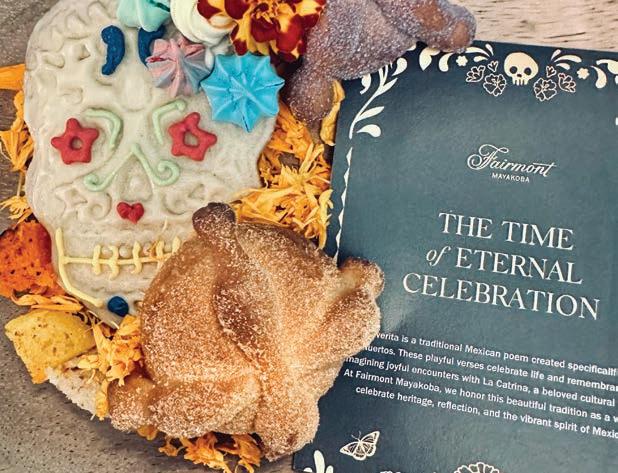
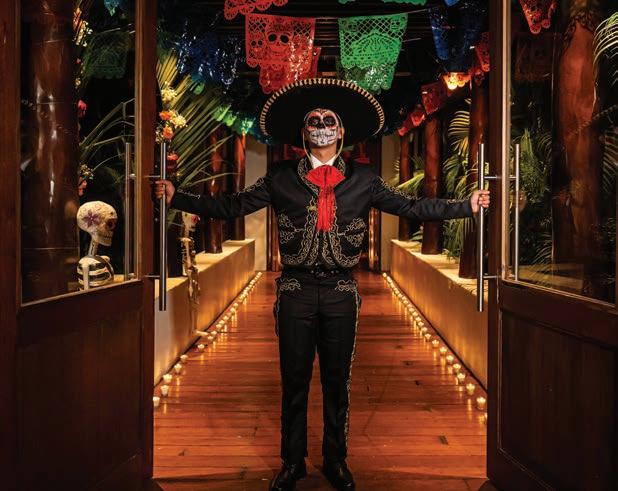
As I approached the Fairmont Spa Mayakoba, I pondered what the Mayans, whose ornate monumental pyramid temples dot the region, would think of this two-story, 36,000-square-foot facility built solely for the pursuit of pleasure. They most assuredly would have been disappointed that I couldn’t finish the traditional temazcal sweat lodge ceremony, held in a dome-shaped structure in the spa garden. Instead, I chose to trade steam heat for the cool waters of the rooftop pool. Equally oversized is the spa’s 24-hour fitness center, with separate spaces for cardio and weights.
Guests of Fairmont Mayakoba have access to the amenities at their sister hotels: Alila, Banyan Tree, and Rosewood. El Camaleón is Mayakoba’s Greg Norman-designed 7,024-yard, Par 72 masterpiece. It has the distinction of being the only course in the world to host a PGA, LPGA, and LIV tour event. The Jim McLean Golf School offers a state-of-the-art practice and learning center. The facility features a 350-yard double-sided tee, a short game area, and a 40-yard-wide putting green.
While Mexico’s vibrant culture shines a bit brighter during Día de Muertos, Fairmont Mayakoba’s unique programming, emphasis on Mayan culture, nature, and authentic culinary options make it palpable year-round. sl For more information, visit fairmont-mayakoba.com.
Compiled by Victoria Chase


A collection of rare photographs and personal letters/diary entries from photographer Sam Shaw, a close friend and confidant of Monroe, the book offers an intimate look at Monroe’s life, career, and the story behind Shaw’s iconic Seven Year Itch images. Sam Shaw - Dear Marilyn: The Unseen Letters and PhotographerHardcover, 240 pages, ACC Art Books (accartbooks.com).
Amid the chaos wrought by COVID-19, acclaimed photographer Andy Katz set off on A three-year journey in a four-wheeled camper to capture the beauty of 63 stunning U.S. National Parks. The 100 images featured in the book provide an immersive visual journey through some of our country’s greatest treasures. Andy Katz - A Walk in the Park: America’s National Parks - Hardcover, 160 pages (andykatzphotography.com).

bib 'li' o 'taph, [bib-lee-uhtaf, -tahf]: a person who caches or hoards books
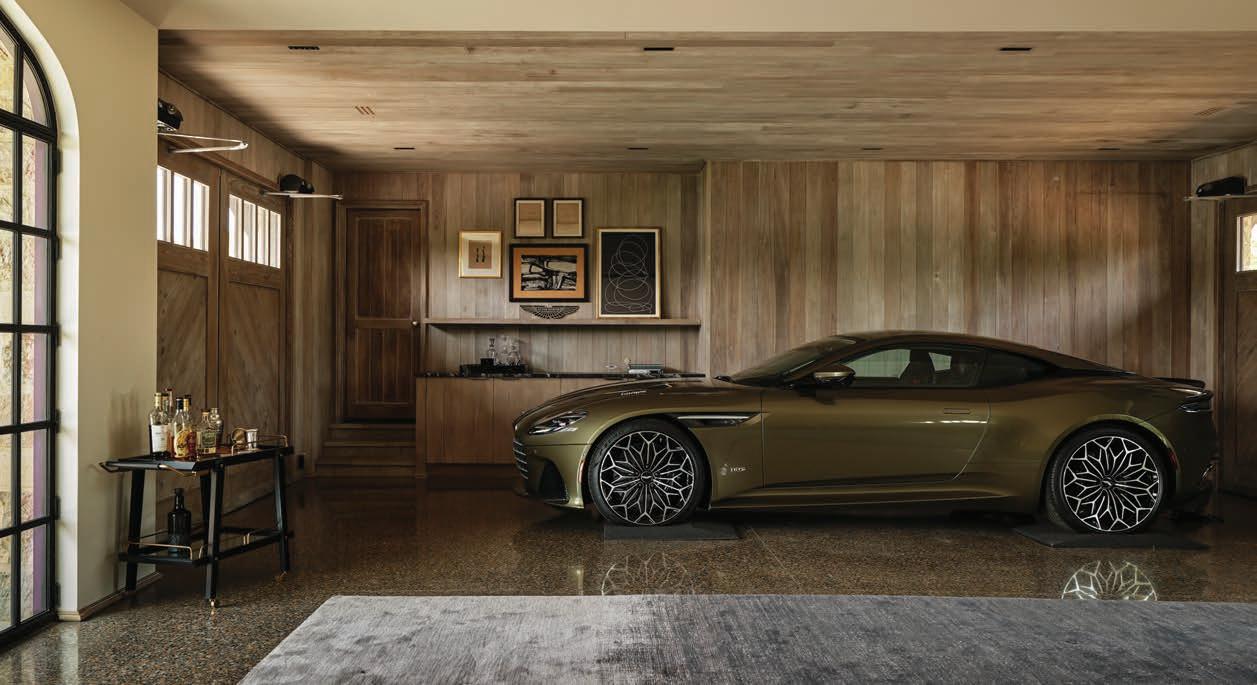
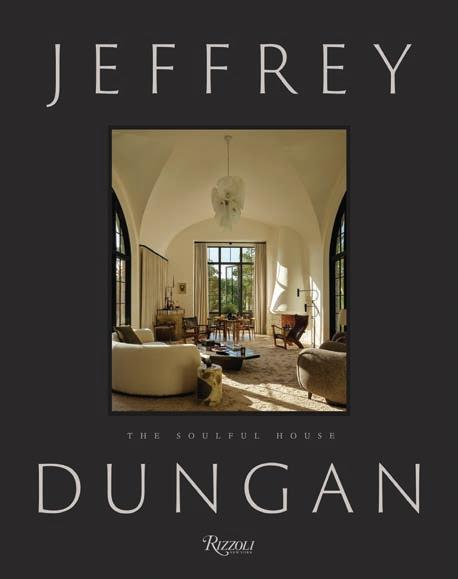
Renowned for the organic beauty and poetic clarity of his architecture, Jeffrey Dungan presents a curated collection of his most recent residential projects, an evolving body of work across diverse landscapes from the Pacific coast to Nova Scotia, and down through Pennsylvania, the Southern States, and the Caribbean. For Dungan’s second book, he penned essays on topics including balance and form, the inspirations for his craft, and the guiding principles that define his vision. Jeffrey Dungan - The Soulful HouseHardcover, 272 pages, Rizzoli (rizzolibookstore.com)

Epic in scale, Horse Country ($60) is a sprawling, cinematic tribute to the world of horses around the globe—from tack room to saddle, British dressage to Western cowboys—and everywhere in between. Kathyrn O’Shea-Evans with a foreward by India Hicks - Horse Country - Hardcover, 240 pages, Gibbs Smith (gibbs-smith.com).

By Bridget Cottrell
Riding on a Sheraton New Orleans-sponsored float in the 2026 Orpheus Parade on the eve of Fat Tuesday felt like being on the receiving end of a long bear hug from the entire population of the Crescent City. As we set off from the convention center, I was already punch-drunk from a full day of hurry-up-and-wait in preparation for the festivities. Inching along the parade route, I absorbed the cadence of the marching bands bookending our float, felt dwarfed in the float’s garden of oversized, vibrant papier-mâché flowers illuminated by even brighter lights, and relished the power trip that comes from being on the throwing side of beads and other goodies. Combined, this sensory overload created an experience like no other that I won’t soon forget.
How can you get in on this action, you might ask? The thing to do is join a krewe. While the exact number of krewes fluctuates from year-to-year, there are dozens of these social clubs in New Orleans, ranging in size from large historic organizations to small walking clubs. Combined, they staged more than 80 parades during the 2026 Mardi Gras season, which began on January 6th and continued through February 17.
Co-founded by Harry Connick, Jr., one of New Orleans most favored sons, the Krewe of Orpheus made history in 1994 when its parade debuted with 700 members, garnering it instant “super krewe” status. Taking its name from Zeus and Calliope’s musically inclined son, Orpheus was one of the first big parades to allow both male and female riders, and it was the first to use fiber optic lighting on its Leviathan float. Connick calls upon his star power to recruit an array of celeb friends to serve as Monarch. Noah Wylie and his wife, Sara Wells, headlined the Lundi Gras parade this year, leading 35 “All the World’s a Stage”themed floats and 1,500 krewe members. Speaking to the event's popularity, Wylie and Wells were joined by several past monarchs, including Will Forte, Jonathan Silverman, and NSYNC's Joey Fatone, who performed with Connick, Jr. at the post-parade Orpheuscapade, a blowout black-tie celebration at the convention center. Individuals interested in joining the Krewe of Orpheus for 2027 are required to pay a one-time new member initiation fee of $500 and an additional $1,425 to be on a themed float or $1,625 to be part of one of the signature floats. In addition to securing
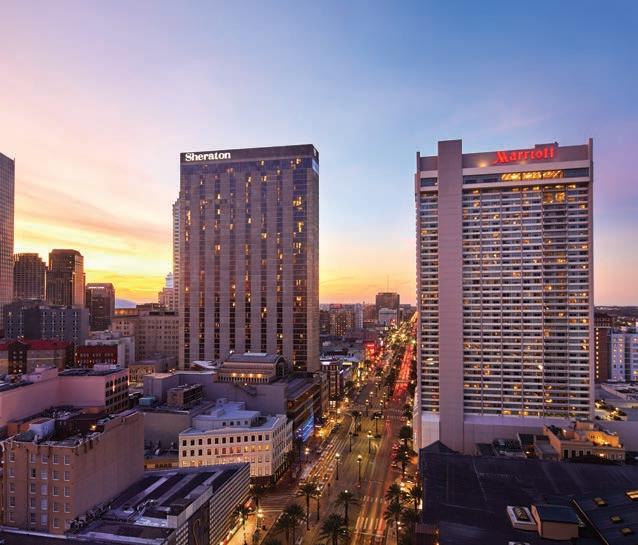
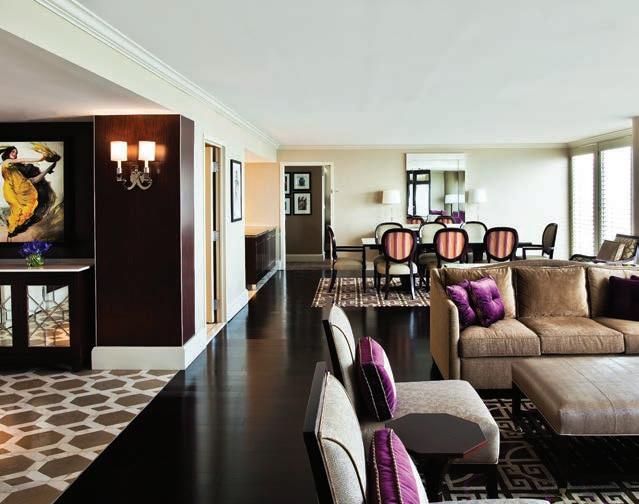
your spot, the fee covers the mask (required by law since the 1800s), a sparkly, boxy costume, the parade-day luncheon, and admission to the Orpheuscapade, where the beat goes on until the early morning hours. Krewe members also receive invites to several special events and meetings scheduled throughout the year (kreweoforpheus.com).
A few additional krewes currently accepting new members as of press time include the women’s only Krewe of Nefertiti ($1,300 for a Jewel membership; kreweofnefertiti.org); the Krewe of Krampus, which follows the model of a true European Krampuslauf and focuses on sustainable throws ($265 to become a member; kreweofkrampus.com); the Star Wars-focused Intergalactic Krewe of Chewbacchus (membership starts at $42; chewbacchus.org); the Mystic Krewe of Femme Fatale, which incorporates a mentorship program and service projects outside of parade season (mkfemmefatale.org); the Krewe of Pontchartrain, which kicks off the season with a Coronation Ball ($525; kopf. org); the Krewe of Dolly, where registration opens to new members

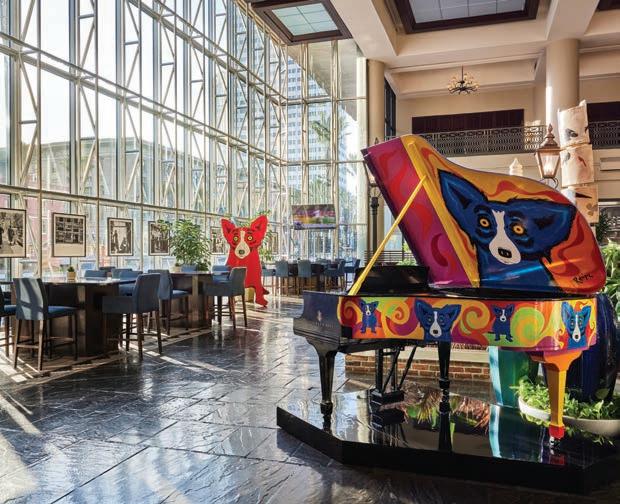
every year on 9 to 5 Day, September 5 (thekreweofdolly.org); and the food and wine focused walking Krewe of Cork ($530 for membership; thekreweofcork.com). You can hop on the waiting list for several other krewes, including the Krewe of Muses, famous for its charitable initiatives, philanthropic works, satirical floats, and bedazzled shoe throws (kreweofmuses.org).
If you prefer to be on the receiving end of the throws, buying a ticket to access the VIP elevated viewing platform outside the Sheraton New Orleans on Canal Street is a surefire way to find yourself with beaucoup bibelots, particularly during the Krewe of Bacchus parade, during which the Celebrity King float stops directly in front of the hotel (the official hotel of the Orpheus krewe) for a celebratory toast from Orpheus VIPs assembled on the hotel’s balcony. It was amusing to watch fully grown adults jockey for socks, hats, towels, stuffed animals, and more like five-year-olds sent scrambling when a birthday piñata breaks open. By the end of the Bacchus parade, our necks were laden with so many blinking beads, great and small, that someone joked we could be seen from space.
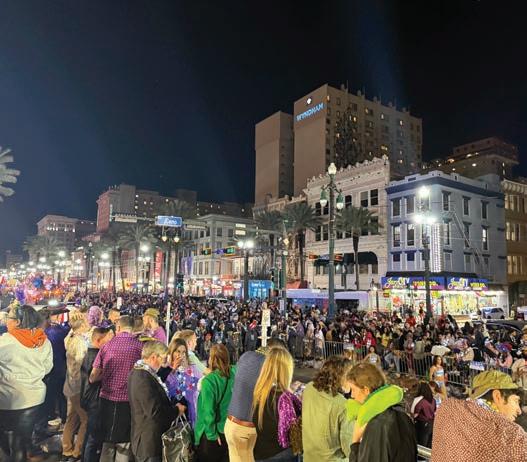

Not every catch is a keeper, and that’s where RecycleDAT! comes in. During the 2026 Carnival season, the initiative successfully diverted 61,219 pounds of recyclable materials from landfills. Once we stuffed our carry-ons to the brim with our favorite catches, we placed the leftovers in the conveniently located recycling bins outside the elevator bank in our hotel.
Outside of being a primo parade-watching locale, both the New Orleans Marriott and the Sheraton New Orleans provide easy access to the Big Easy’s greatest hits at any time of year. At the 4-star Marriott, which recently rolled out renovated guest rooms, the floor-to-ceiling window in our room gave us a bird’s eye view of the goings on along Bourbon Street and beyond. We started the day with breakfast at the M Club Lounge (also recently reimagined), where we unapologetically packed a to-go bag of beignets and bacon to snack on while waiting in our staked-out spot in the hopes of snagging a coveted coconut from krewe members marching in the morning Zulu Parade (we did, thanks to a friendly local who gave us theirs). While the property is a popular choice for meeting and convention planners, it offers

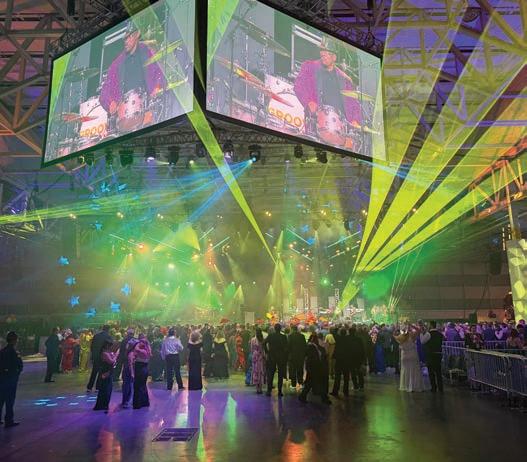
a range of seasonal events and specials for leisure travelers, from a bourbon-themed package to live DJ sets at the pool in the summer. See them all at Marriott.com/MSYLA.
As the Marriott puts the finishing touches on its room renovation project, work is progressing in the rooms across the street at the Sheraton New Orleans. The property’s soaring lobby serves as the city’s gathering space, with programs like the weekly “Gatherings by Sheraton” keeping the atmosphere lively year-round (learn about current packages at Marriott.com/MSYIS).
What I appreciated most about interacting with the New Orleans Marriott and Sheraton New Orleans’ teams throughout our visit was their year-round enthusiasm for the city and a sincere desire to highlight what makes it great, both in and out of Carnival season. This palpable positivity carries over into every aspect of the guest experience. In true laissez les bon temps rouler fashion, during a parade-day breakfast, Frank Zumbo, Area General Manager of the New Orleans Marriott, remarked, “New Orleans is an incredibly vibrant city, and I will keep riding on a Mardi Gras float as long as I can stand.”. sl

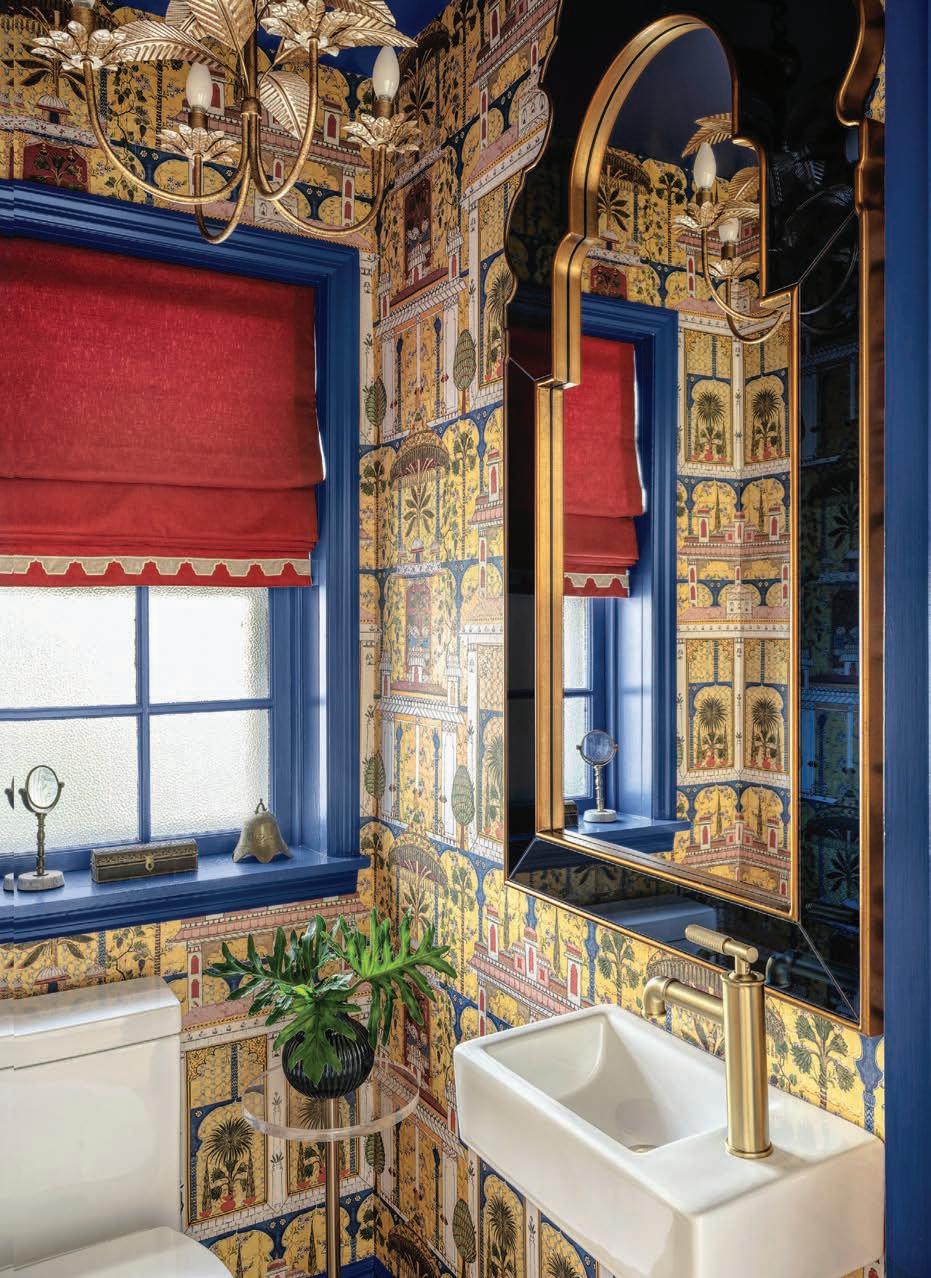
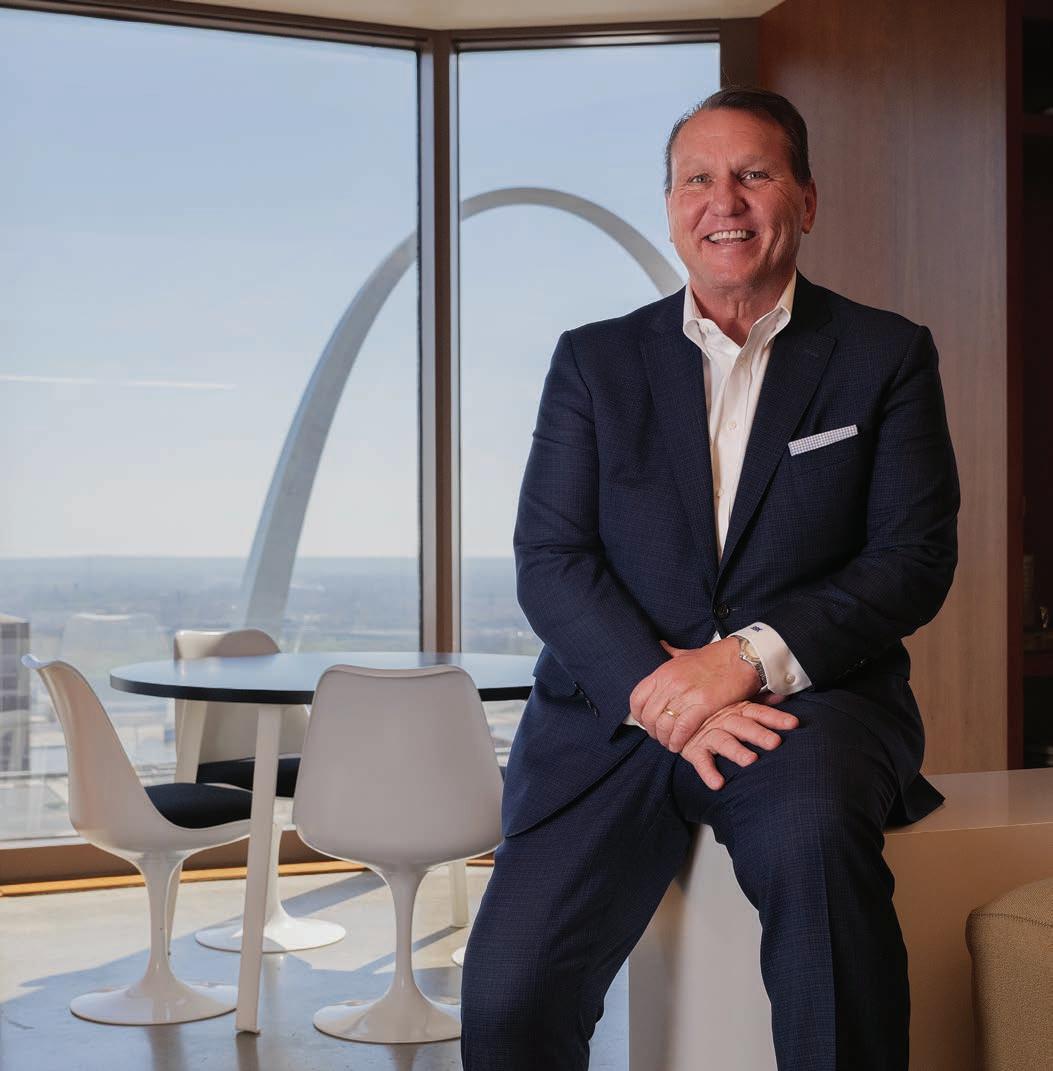
Ron Kitchens came home to lead Greater St. Louis, Inc. — and to reimagine what the region can become.
By Craig Kaminer / Photography and video by John Lore
Ron Kitchens does not talk like a man easing into a new job.
He talks like a man already in motion.
“We’ve got to go at a pace that’s unsustainable,” he says, leaning forward with the urgency of someone who has seen what happens when cities hesitate. “We’ve got to get out there and sell the community in a way that most people are going to think is crazy.”
For St. Louis, that may be exactly what this moment requires.
Kitchens, the newly appointed CEO of Greater St. Louis, Inc., arrives with a national reputation as a builder of momentum, as someone who doesn’t just attract investment, but reshapes how communities see themselves. From Kalamazoo to Wichita Falls to North Texas, his career has been defined by transformation. But in returning to Missouri, he is stepping into something more complex than a turnaround.
He is stepping into a city that already has the pieces. What it lacks, he believes, is alignment, execution — and belief.
Early in his tenure, something struck Kitchens immediately. “I think the thing that I knew but surprised me was how incredible our research and technology hubs are,” he says. “Whether it be the Danforth Plant Science Center or BioSTL or Cortex … this whole litany of opportunities we have around technology really is, for lack of a better word, unexploited.”
St. Louis is not a city searching for assets. It is a city struggling to fully leverage them. World-class institutions, cutting-edge research, a deep industrial base and a cultural infrastructure that ranks among the best anywhere in the world — these are not theoretical advantages. They are real, tangible and already in place.
But, as Kitchens sees it, they remain under-marketed, undercoordinated and ultimately under-realized.
“We know about it,” he says. “But the rest of the world doesn’t.”
If Kitchens has identified a central challenge for St. Louis, it is this: Narrative.
“We’ve got a litany of negative media that we’ve allowed to define us nationally and globally,” he says. “We’ve got to push back against that.”
That pushback is not abstract. It’s tactical.
Greater St. Louis, Inc. has already partnered with Explore St. Louis to employ national media strategies designed to elevate local success stories. Kitchens points to early wins, including securing placement for a St. Louis-based organization in the business publication Fast Company as one of the most innovative companies of the year.
But he is clear-eyed about the scale of the challenge.
“The psychologists tell me for every negative story, we have to have four positive stories,” Kitchens says. “Well, we have 20 years of negative stories, which means we better tell a whole lot of positive stories as fast as possible and overwhelm people with how amazing this community is.”
It’s not spin. It’s strategy.
Because in today’s competitive landscape, perception drives investment just as much as fundamentals.
Ask Kitchens what success looks like in three years and he doesn’t hesitate.
“I think seeing more jobs created by companies selecting to come here and grow.” Simple. Measurable. Direct.
But the path to that outcome is anything but passive.
He likens it to training for a marathon: “You don’t run with a bunch of slow people. You have to run with people who are just slightly faster than you each day … it feels unsustainable, but then you realize you’re now competing at that level.”

For St. Louis, that means competing not with where it has been — but with the fastest-growing regions in the country.
And it means adopting their urgency. Kitchens is not short on ideas — but he is disciplined about priorities. When asked what decisive moves could change the trajectory of St. Louis, he points to three:
Modern Infrastructure - “New airport,” he says. “It’s critical. It really is table stakes for a community our size. You have to have it or you’re just not relevant.”
Value for Taxpayers - “We need to ensure that taxpayers feel they’re getting value for money,” he explains. “People who are happy with their community feel like the taxes they pay are going to the right things.”
Speed to Market - This may be the most important — and the most urgent.
“In Texas, communities are granting permits on the same day that companies are closing on property,” he says. “In this community, that may take 18 months or two years. We’re irrelevant to those investments then.”
The implication is stark.
“If we can grow faster than our competitors, we’re going to win more deals. If we go slower…we know what happens. We’ve seen it for 20 years.”
Perhaps the most revealing moment in our conversation comes when Kitchens reflects on the past.
“We’re sitting today in our library … and I counted at least 40 strategic plans sitting on the shelf,” he says.
He doesn’t dismiss them. “They’re all full of great ideas,” he says.
Then he delivers the line that may define his tenure: “The difference between communities that have great ideas and communities that win is execution.”
For Kitchens, execution is not a buzzword — it is a discipline. One that requires accountability, metrics and a shared commitment across institutions.
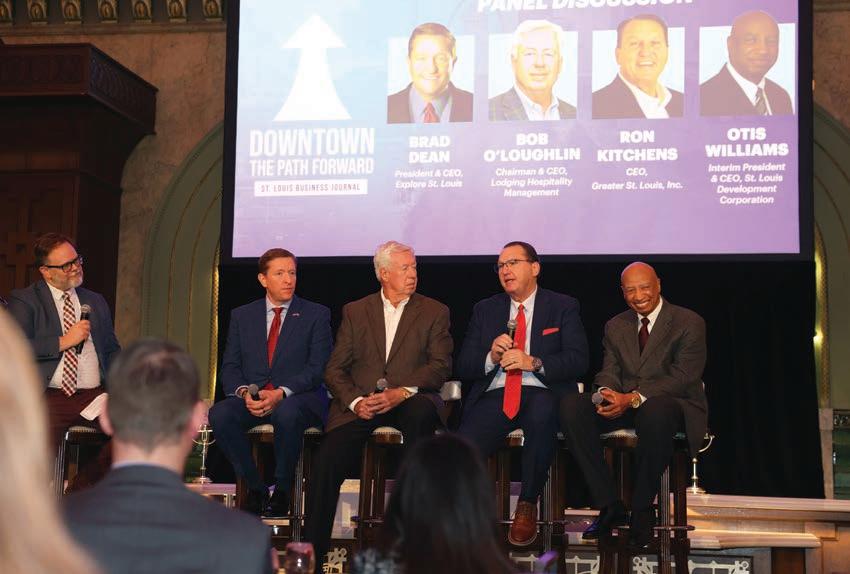
“If we as a community set those bars… and every decision is predicated on, ‘Will this create more and better jobs?’ If it doesn’t, the answer should be no.”
Few topics ignite Kitchens more than data centers.
To him, they represent both an opportunity and a warning.
“We have so much excess capacity … land that isn’t going anywhere,” he says. “Data centers, to me, are a no-brainer.”
But what truly concerns him is what’s happening elsewhere. He describes a small Texas community that has announced nine data center projects — starting with a $22 billion first phase.
“That’s four times the current total property value of all property within the city limits,” he says.
The result?
“In five or six years, they’ll have no city taxes, no county taxes… because it will all be paid by data centers.”
Then comes the challenge: “How are we going to compete against that if we’re not also doing those things?”
His analogy is blunt.
“We’re going to be that community who said, ‘We don’t want the railroad to come because it’s going to hurt the ox cart trade’… and now we don’t exist.”
So what’s holding cities back?
Part of it, Kitchens says, is misinformation. Part of it is resistance to change.
But part of it is something deeper.
“Sometimes people just don’t think they’re worthy of greatness,” he says.
It’s a striking observation — and one that reframes the conversation. Because economic development is not just about infrastructure or incentives. It’s about mindset.
“We’ve got to do a better job of saying, ‘Now’s our time. We are worthy of this,’” he says.
Like many St. Louisans, I ask Kitchens a personal question: How do we get our kids back?
He doesn’t sugarcoat the challenge.
But he does offer a roadmap.
“We have to tell our story,” he says.
He points to models like Detroit’s “Homecoming” initiative — targeted efforts to reconnect with former residents and reintroduce them to a changed city.
But storytelling alone isn’t enough. “We have to be worthy of their attention,” he says. That means addressing cost of living, housing affordability and regulatory barriers.
“If we can bring down government regulation costs and take the risk out of developers, we’re going to see people come home.”
It’s a pragmatic answer — and an optimistic one.
Because compared to Austin or Nashville, St. Louis still offers something increasingly rare: the ability to “have it all.”
One of the most persistent narratives in St. Louis is the divide between city and county.
Kitchens is having none of it.
“I think we use the city-county misalignment as an excuse,” he says. He points to regions across the country — Michigan, Texas — where complex governance structures coexist with strong economic performance.
“It isn’t the number of units of government that determine that,” he says.
What matters is alignment around outcomes.
“There’s a war for jobs and a war for growth,” he says. “Every decision we make has to be, ‘Is it going to affect families’ ability to get more jobs?’”
Kitchens’ strategy for attracting companies reflects a shift in how economic development is done.
“We’re working with AI to strategically target what companies have the best fit to grow into St. Louis,” he explains.
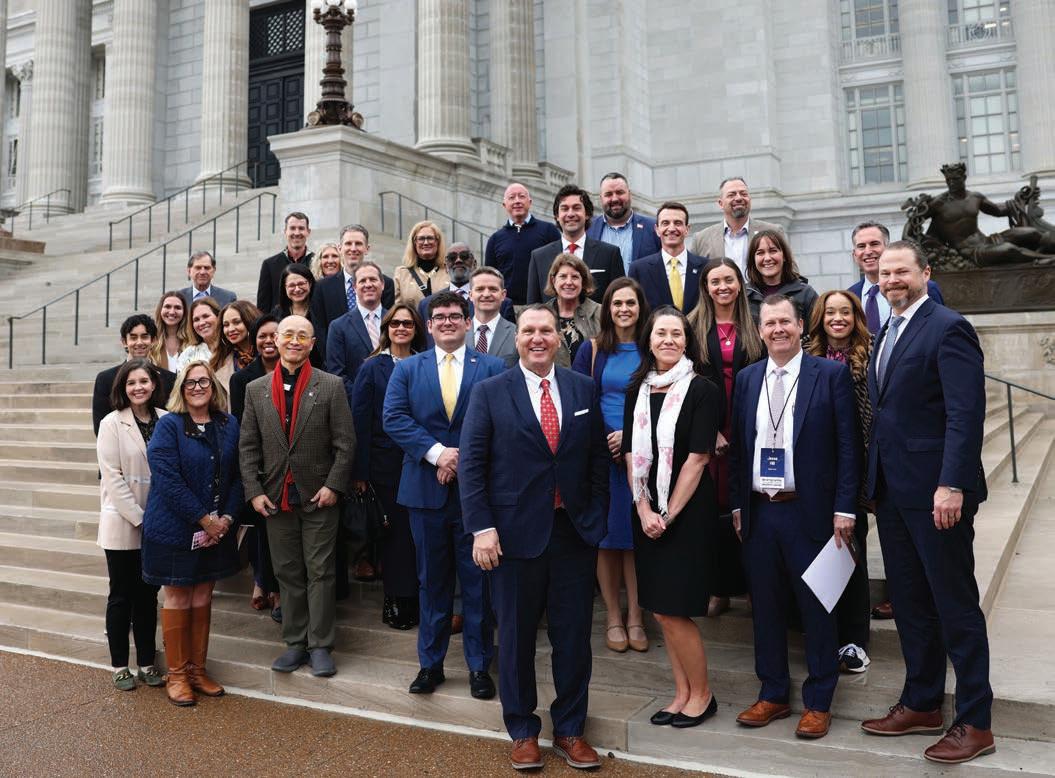
The goal is precision — not persuasion.
“When we walk into that room, I’m not begging for attention,” he says. “I’m saying, ‘Here’s why this is good for your company. Here’s how this affects your bottom line — because we’ve done the work.’”
It’s a higher standard — and one he believes is necessary to compete nationally.
Beyond day-to-day dealmaking, Kitchens is focused on something bigger.
He describes a process led by Greater St. Louis, Inc. that gathered 240 ideas from across the community, narrowed them to 15 in collaboration with community partners, and will result in actionable plans with the help of top-tier consultants.
The goal?
“To come out with three, five, seven big, hairy, audacious goals that are going to change the future.”
Not studies. Not reports.
Action.
“We don’t need eight-inch three-ring binders,” he says. “We need thoughtfully committed individuals.”
Kitchens also understands the importance of leadership — particularly from the private sector.
“I love enlightened self-interest,” he says. “Nothing good happens until a private sector job gets created.” His goal is to re-engage the region’s most successful leaders — not as critics, but as catalysts.
“We’ve got to invite greatness back into the fold,” he says.
“I think we have to constantly remind ourselves that 100 years ago, there was no place more important in the world than St. Louis,” he says.
He recounts the audacity of hosting the 1904 World’s Fair and the first modern Olympics. The business leaders who backed Charles Lindbergh. The generations who believed big and acted bigger.
Then he brings it back to the present. “I don’t take it lightly that I’m standing on the shoulders of giants,” he says.
If there is a single thread that runs through Kitchens’ vision, it is urgency grounded in possibility.
St. Louis, he believes, does not need reinvention.
It needs activation.
It needs to tell its story — loudly and often.
It needs to move faster — decisively and consistently.
It needs to execute — not just plan.
And perhaps most of all, it needs to believe again.
Because as Ron Kitchens sees it, the future of St. Louis is not something to be discovered. It is something to be built. And the time to start is now. sl


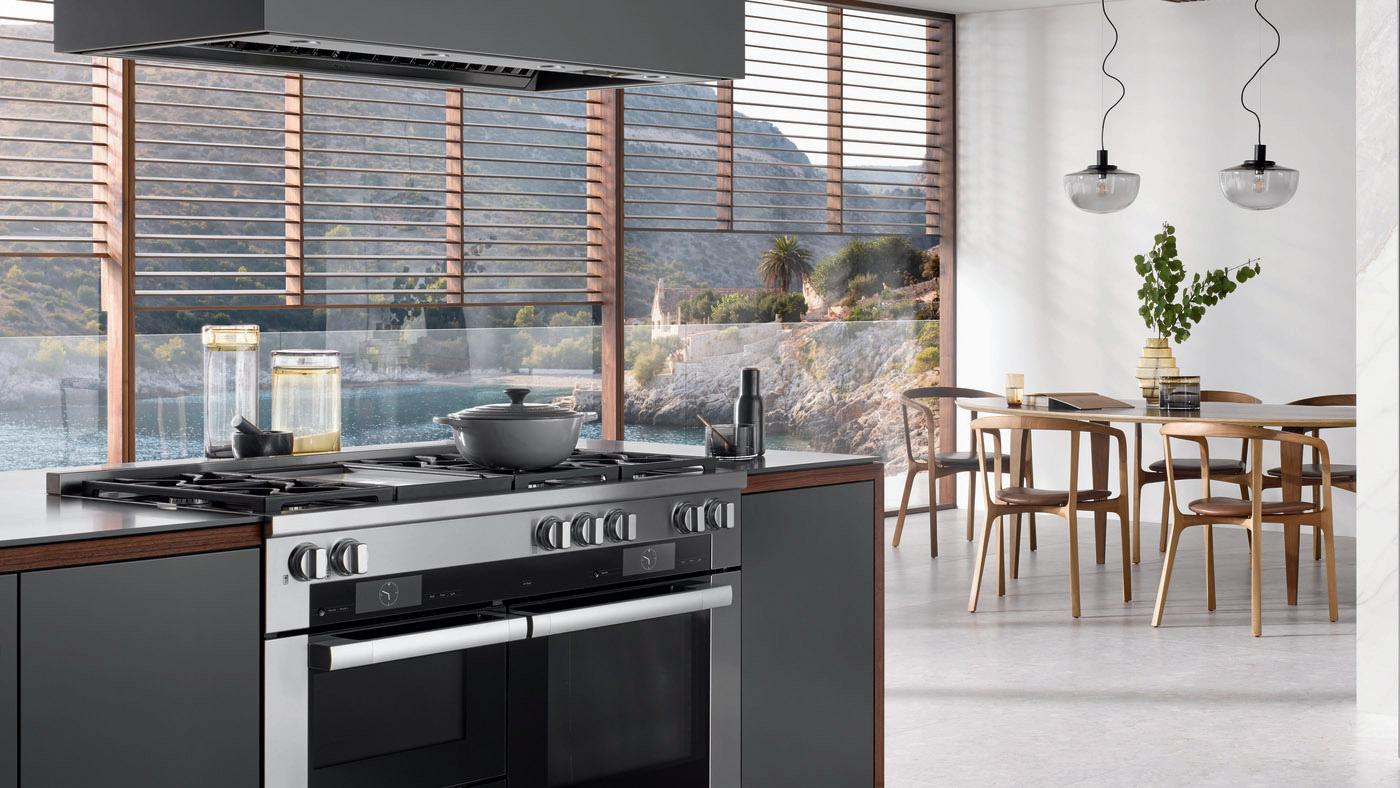
Slyman Bros Appliances proudly announces the addition of Miele to its premium lineup of brands.
The high-end luxury German appliance brand is renowned for its innovative built-in coffee systems, dishwashers and laundry solutions as well as its timelessly designed cooking appliances, refrigeration and wine sommelier.
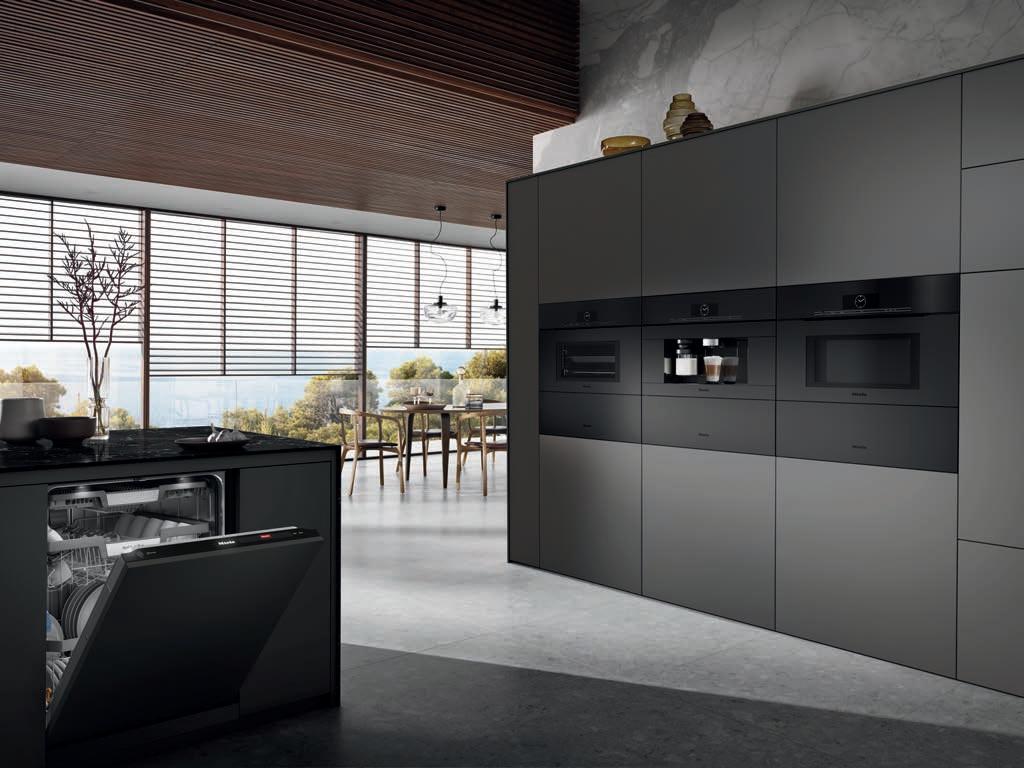
Immer Besser (forever better)


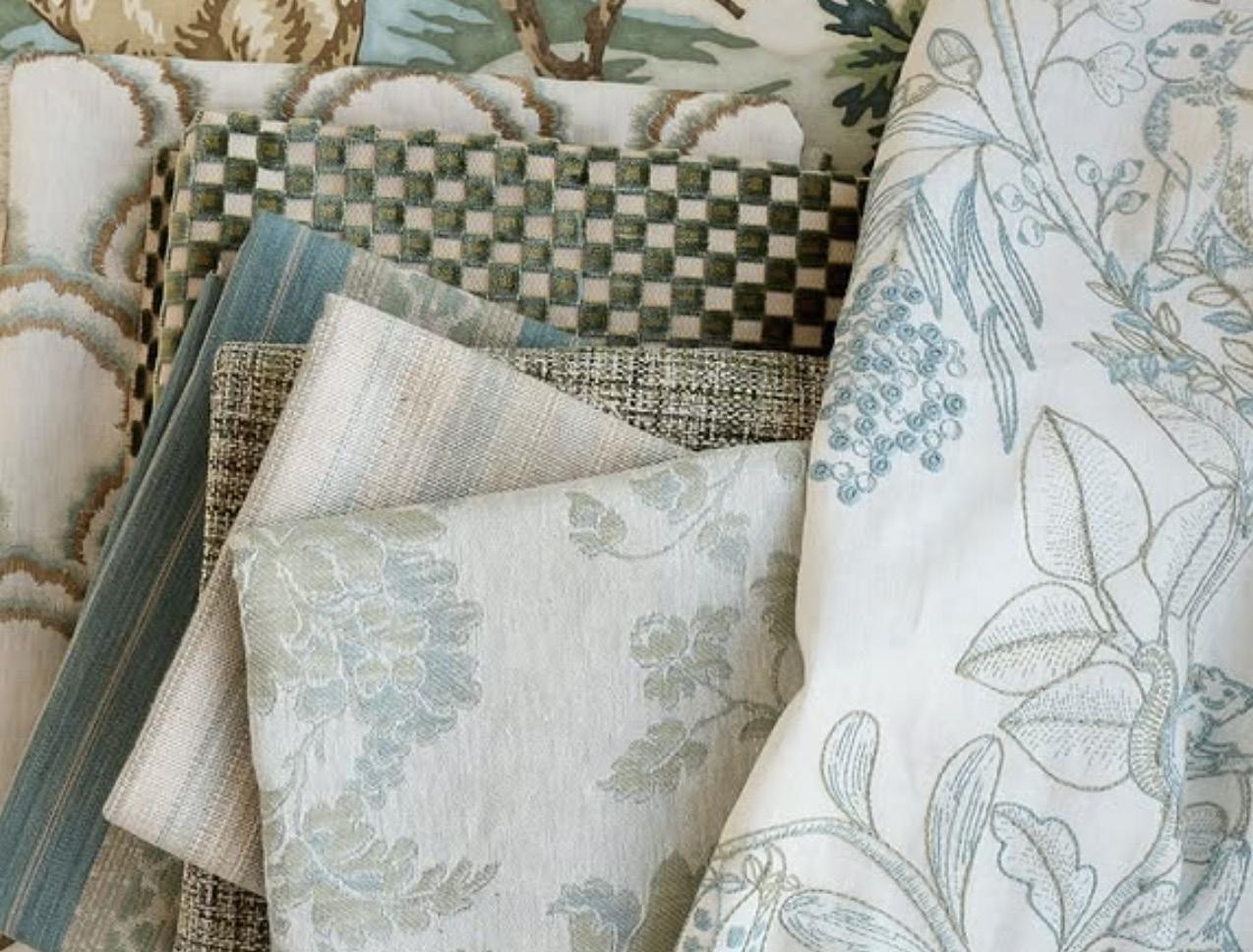


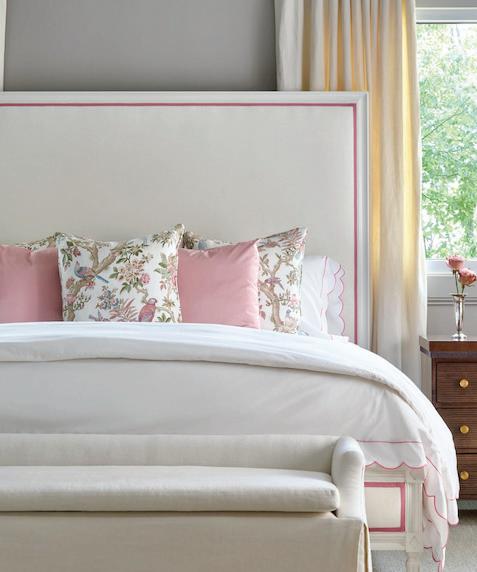
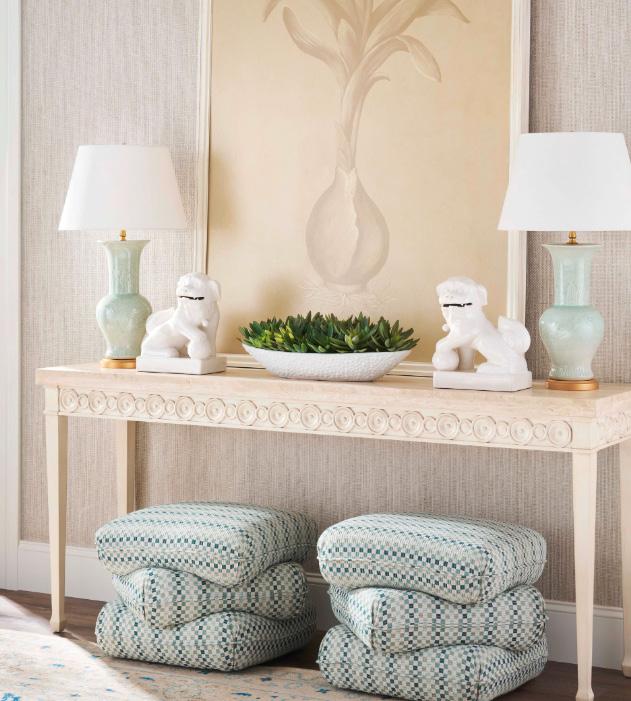

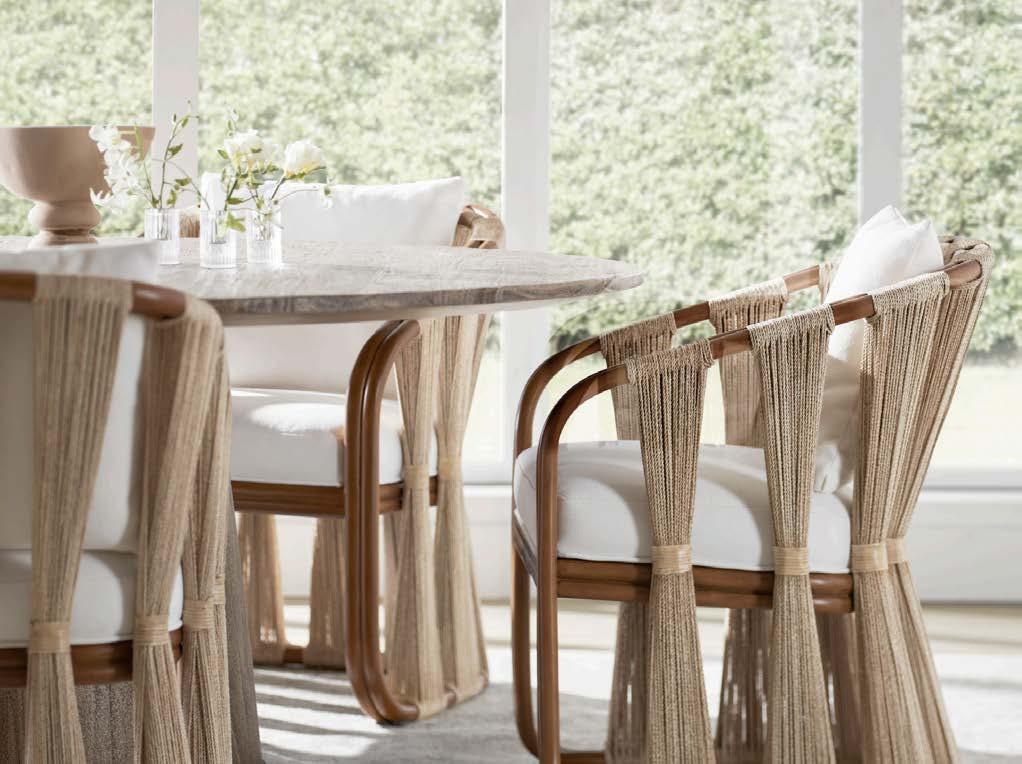

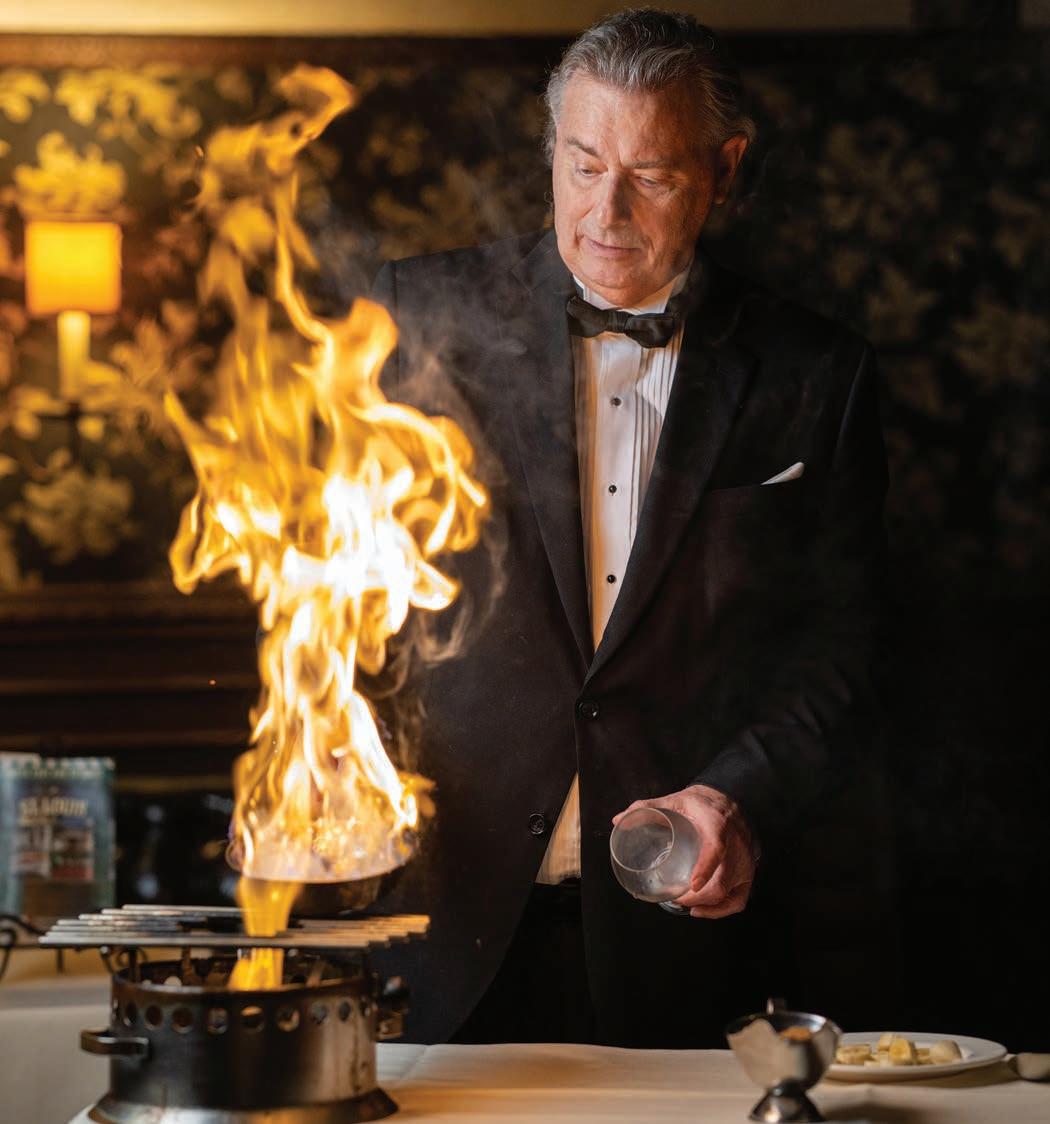
By Grayling Holmes | Photos by Zach Dalin
In 1968, Richard Nixon won the election for U.S. President. The Cardinals won the National League pennant. The Gateway Arch was officially dedicated. And Al’s Restaurant began its ascent into the rarefied air of luxury dining from its origins as a welcoming tavern serving egg sandwiches.
Then, women arrived at 1200 North First Street on the riverfront dressed to the nines and men wore dark wool suits, starched white shirts and neatly knotted ties. It was a time when fine dining meant exactly that — fine dining: formal, exacting service, curated menus and an atmosphere of quiet elegance. Al’s has long checked every box.
In 2026, the world has changed. Al’s has not.
The décor remains. The ambiance endures. Most importantly, the food holds fast to its traditions.
The building that now houses Al’s was constructed in the early 1870s as a warehouse for Julius Vogel’s Sugar House Exchange. Later, it became a saloon.
In 1925, Italian immigrant Al Barroni purchased the property. Though women could not own property at the time, it was his wife, Louise, who urged him forward — and ultimately shaped the business. While Al continued working as a soda truck driver, Louise ran the establishment for four decades.


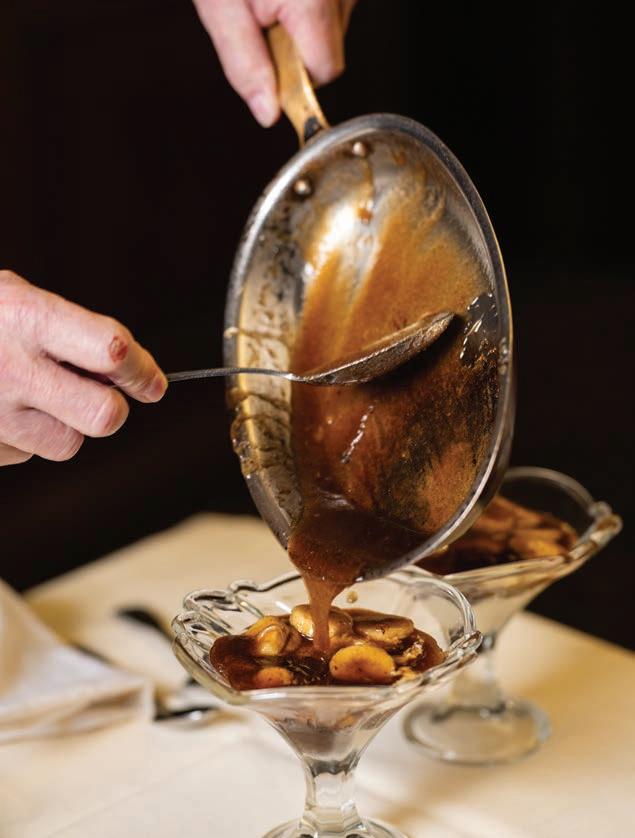
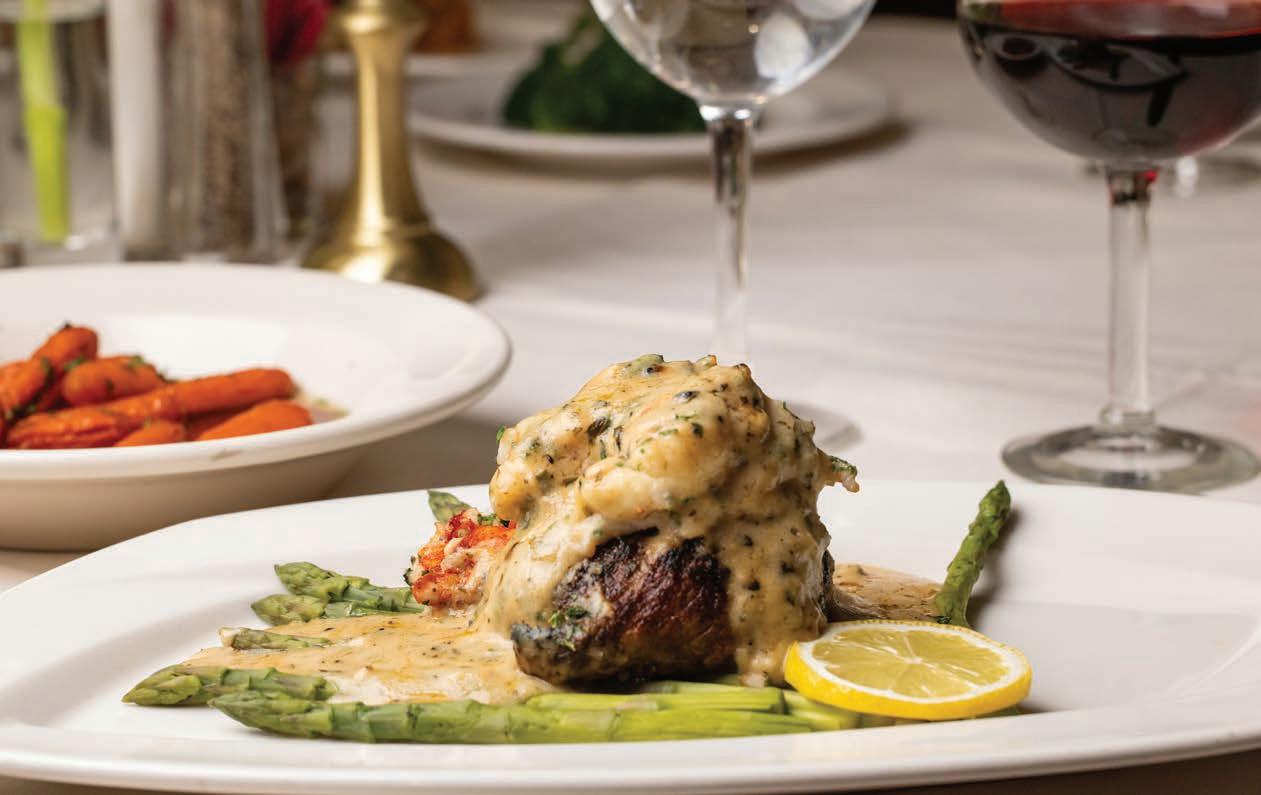
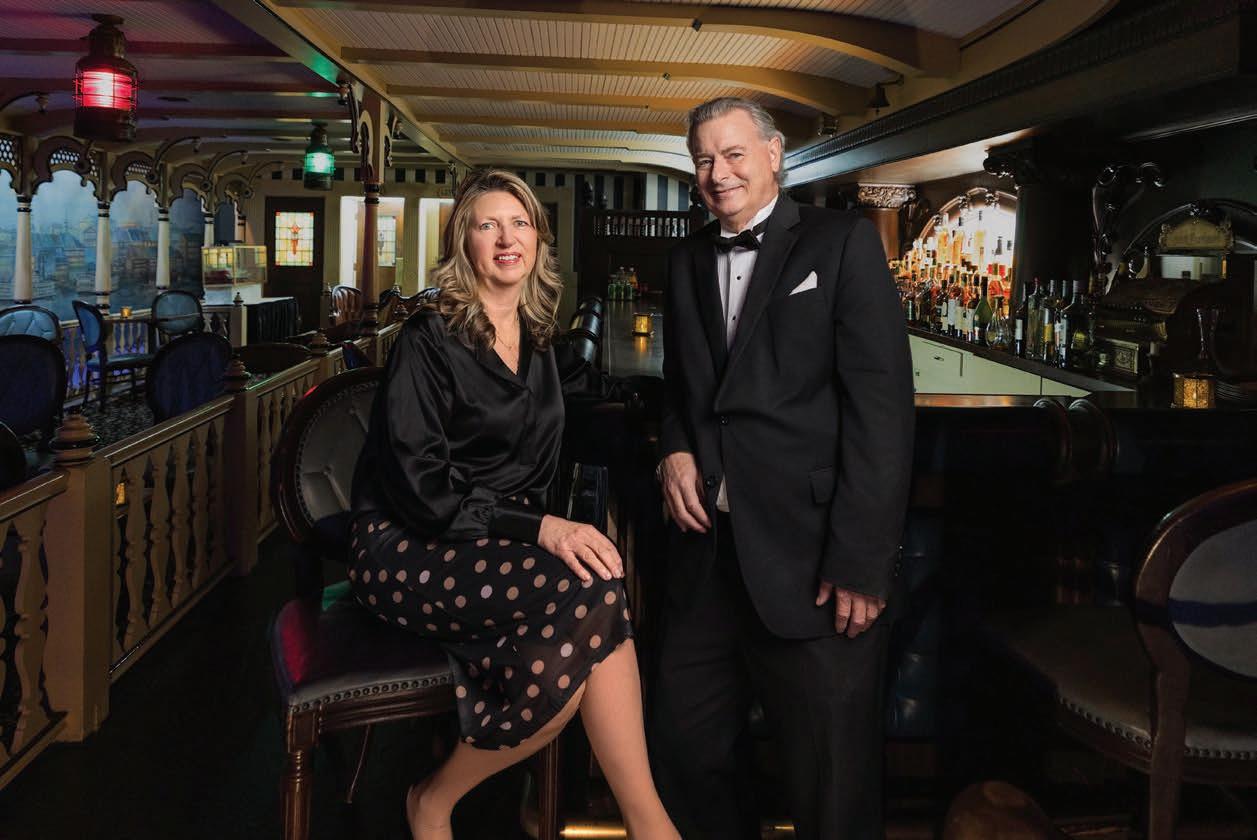
“As I recall, my grandmother Louise invited folks into the tavern kitchen for her egg sandwiches,” said Pam Barroni Neal, the current owner along with her husband, Gary Neal. “Word spread up and down the docks and railroad tracks — and Al’s was born.”
Those sandwiches became legend. Lines stretched down the block — dockworkers, businessmen and travelers standing shoulder to shoulder. Rail workers, porters and bellmen arrived from nearby tracks. Through the decades of transformation, Al’s has remained in the same location, continuously family owned. No other local restaurant can claim still being family run after a century.
Time, of course, have softened certain traditions. Formal dress is no longer required, though standards remain. “I draw the line at shorts and flip-flops,” Pam says. “Business casual is acceptable.”
The Barroni family and Al’s have weathered more than shifting fashion. They endured the Great Depression, a devastating fire from the building behind that fell on Al’s and sheared off the second floor and even the threat of redevelopment along the riverfront.
In the late 1960s, the second generation, led by Al Barroni Jr., reimagined the space. What had been a casual tavern was transformed into a refined dining room. Red granite cobblestones from the riverfront were repurposed into interior walls. The woodwork, hand carved by local monks, added warmth and craftsmanship. A sweeping mural, based on an 1890s riverfront photograph and painted by legendary Muny set designer Nate
stretches
was constructed from planks salvaged from a St. Louis steamboat. History was not replaced. It was layered.
Generations of guests return, some with private wine lockers awaiting their arrival. “My grandfather started coming here in the 1950s and fell in love with the place,” patron Greg Rhomberg recalls.
Dining at Al’s is not rushed. It’s meant to be experienced.
To start, there isn’t a printed menu. Never has been. Never will be. At Al’s, the menu is presented. A server arrives tableside with a gleaming platter of pristine cuts: steaks, chops and seafood. Even the Ceasar salad is created at the table.
“My father always said to start the guest off with a really good drink, combined with our fresh Italian bread and house made blue cheese spread, to immediately set the tone for the evening, Pam says.
Nothing is par-cooked. Everything is prepared with made-toorder precision. This is not an eat-and-run situation. Their filets and NY strips are aged and hand-trimmed on site. “Gary and I learned to trim meat from my dad,” Pam explains. Only cold-water lobster tails are used for lobster dinners and lobster bisque soup. The meal spans the evening. The entrees are cooked to order and plated at the table.
The menu itself reads like a canon of classic American fine dining, filtered through Italian sensibility: Chateaubriand, Beef Romano, Filet Oscar, rack of lamb and seafood.
Signature preparations define the experience.
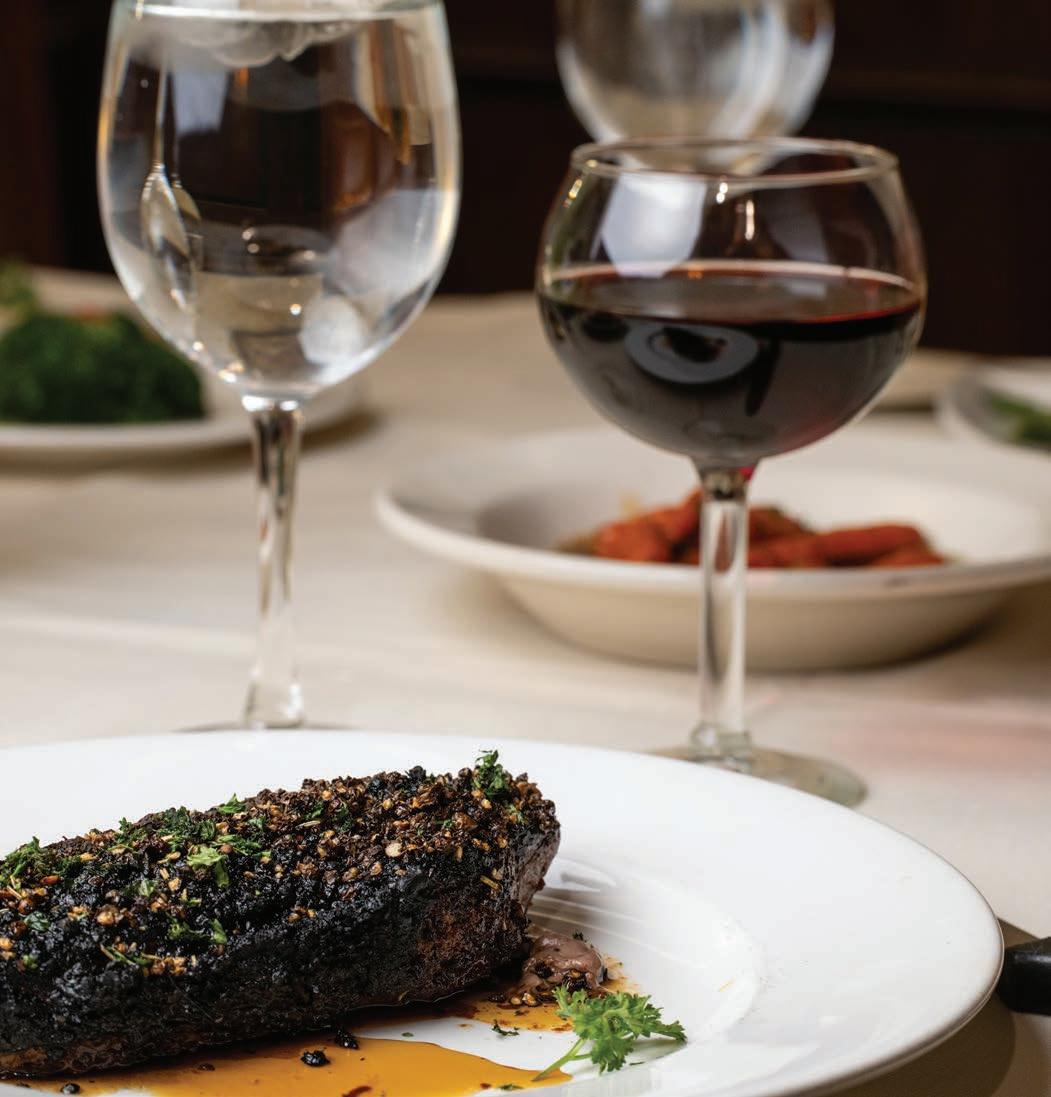
Servers train for months — sometimes a full year — to master the menu and the cadence of the dining experience. Each handles a maximum of 10 tables.
From the moment a guest opens the 400-pound antique door to the final flourish of tableside desserts like Bananas Foster dramatically set afire, the evening unfolds with deliberate pacing.
“People from all over the world come here,” Pam says. “We’ve even had secret service details accompany guests. We have tables named in honor of a special few, Henry Fonda, Michael Landon and Frank Sinatra. One night Sinatra came in and ordered two steaks. My grandpa said ‘You must be mighty hungry.’ Sinatra said, ‘My driver is in the car watching my dog.’ Without missing a beat,
my dad [Al Jr.] said, ‘Bring that dog in. My dad loves dogs.” Above the Sinatra table are framed pictures of him holding his fluffy white dog. A similar photo of Al Jr. is on another wall.
But celebrity has never defined Al’s. The restaurant is, in many ways, a paradox: a hidden gem with a global reputation. A place unchanged in a world defined by reinvention.
And perhaps that is its greatest luxury.
From its beginnings in 1925 to what may never reach an ending, Al’s continues forward — not by chasing trends, but by honoring tradition.
In a culture obsessed with what’s next, Al’s reminds us of the enduring power of what remains. sl
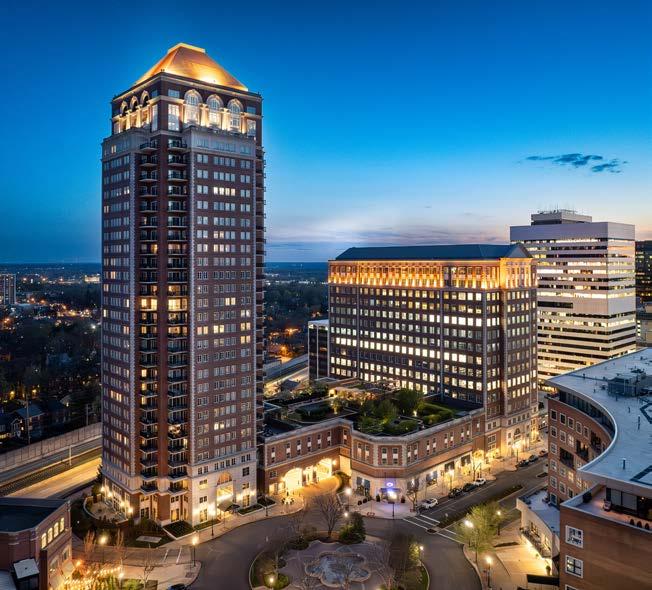
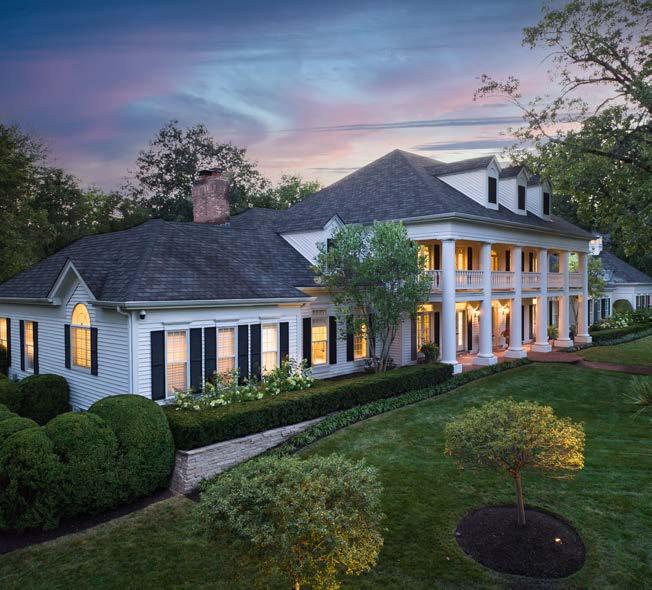
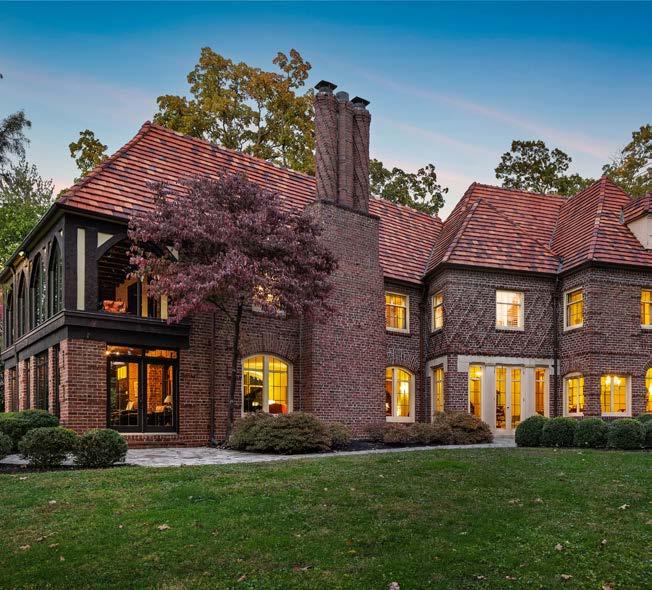
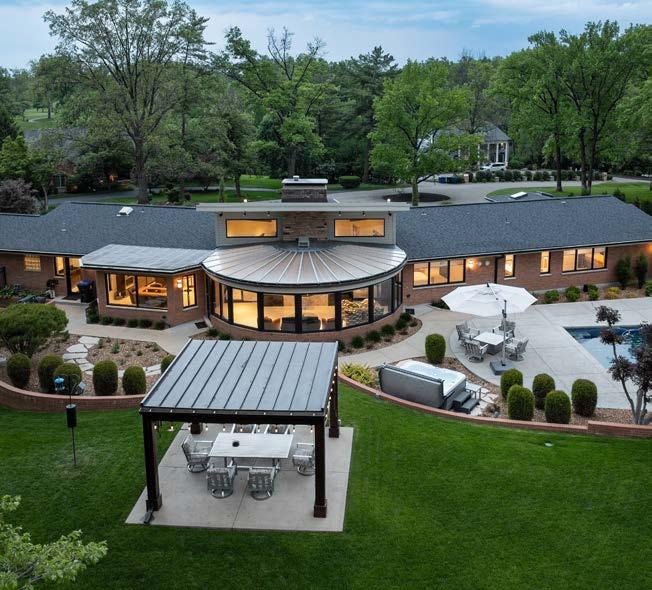


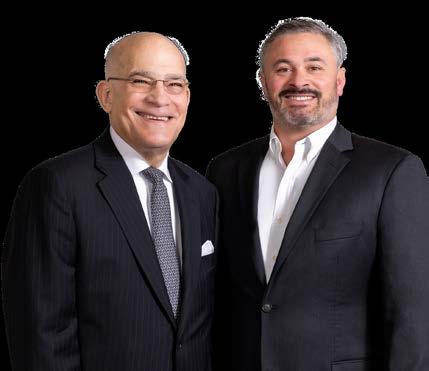

Join me on a once-in-a-lifetime opportunity for readers of Sophisticated Living St. Louis.
Even if you have been to Florence before, this is a 7- night/ 8-day deep dive into the lives and lifestyles of
Experience the best hotels, restaurants, gelato, private chefs, unique itineraries, guides, scholars, and shopping. Everything is curated by multi-generation Florentines and exercise, this trip will exceed every expectation. Our professional photographers will take amazing photos for you to remember the best trip of your life.
Please contact me if you have questions or to reserve your spot for the week of:
5-star accommodations: 12,000 per week per person
4-star accommodations: 10,000 per week per person
Does not include airfare. Everything else is included.





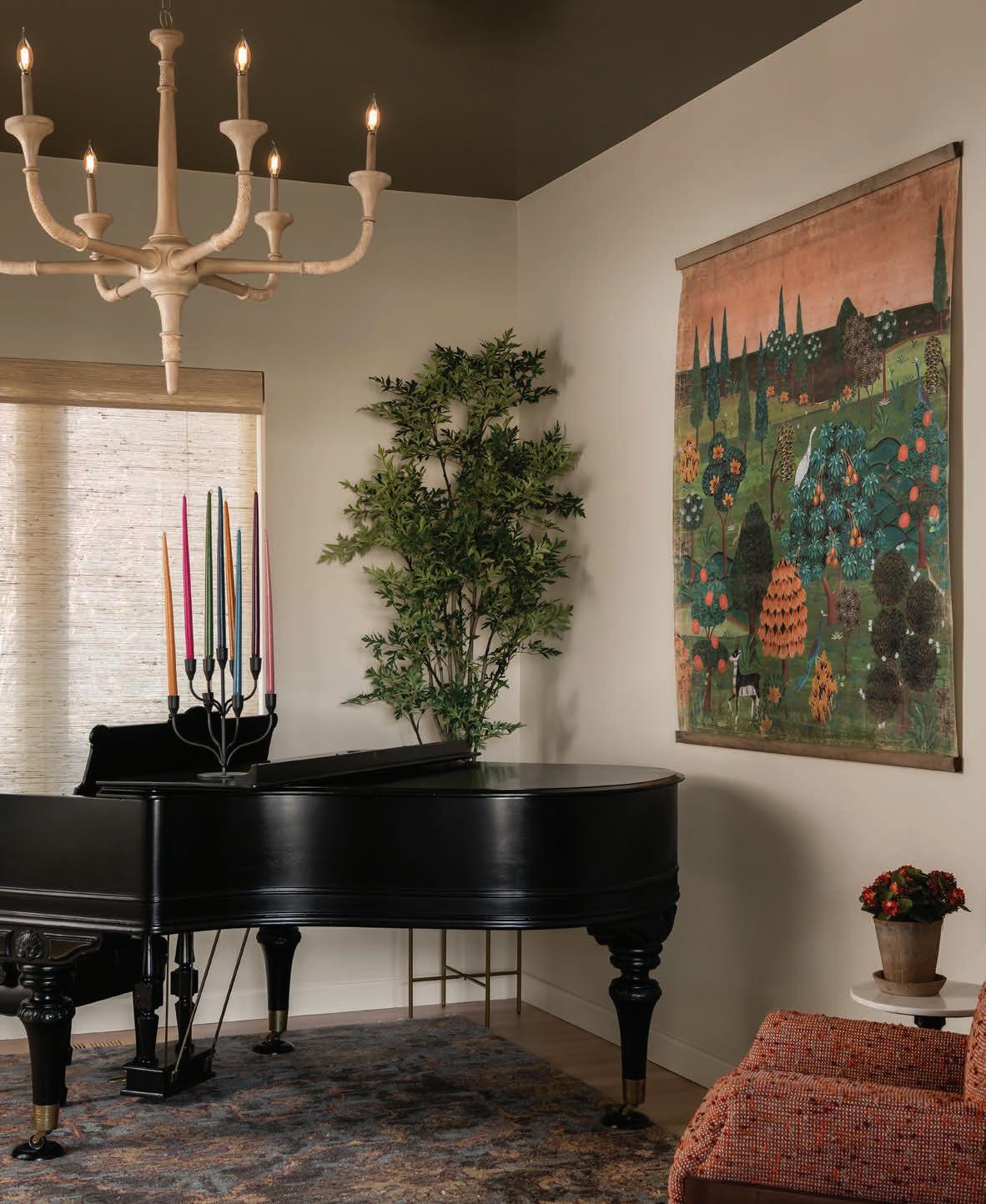

SINCE 2015, WE HAVE HELPED RAISE MORE THAN $5-MILLION AND GARNERED MUCH NEEDED AWARENESS FOR ST. LOUIS NONPROFITS.
ON-LINE DONATIONS | MATCHES WITH CORPORATE DONORS
REPORTS ON GIVING TRENDS IN ST. LOUIS | ADVICE FROM DONOR-ADVISED FUNDS
There are more than 19,000 nonprofits in St. Louis. Sophisticated Giving helps them stand out.
IN THESE DIVISIVE AND UNPREDICTABLE TIMES, IT IS MORE IMPORTANT THAN EVER THAT WE SUPPORT ST. LOUIS’ NONPROFITS TO ENSURE THEY BOTH SURVIVE AND THRIVE. BY STATING THE ORGANIZATION’S HISTORY, PURPOSE, GOALS, AND NEEDS, ORGANIZATIONS — FROM THE ARTS TO EDUCATION, PUBLIC WELFARE AND FAR BEYOND, YOU CAN LEARN MORE ABOUT THOSE GROUPS WHO ARE HELPING OUR CITY HELP OTHERS. THE STORIES THEY TELL EDUCATE US ON WHAT IS BEING DONE AND WHAT IS STILL NEEDED.
HELP US WRITE ANOTHER STORY
TELL US ABOUT YOUR FAVORITE NON-PROFITS SO WE CAN FEATURE THEM IN THE 2025 - 2026 SOPHISTICATED GIVING CHARITY REGISTER. AND PLEASE CONSIDER DONATING SO WE CAN PROFILE AS MANY NONPROFITS AS POSSIBLE AT NO COST TO THE NONPROFITS.
THANK YOU






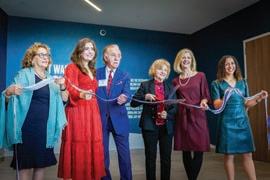























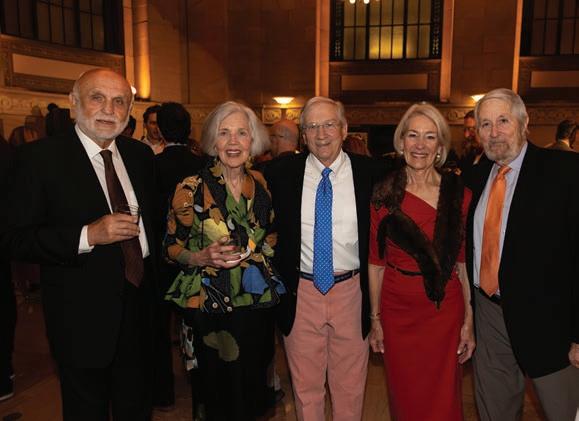
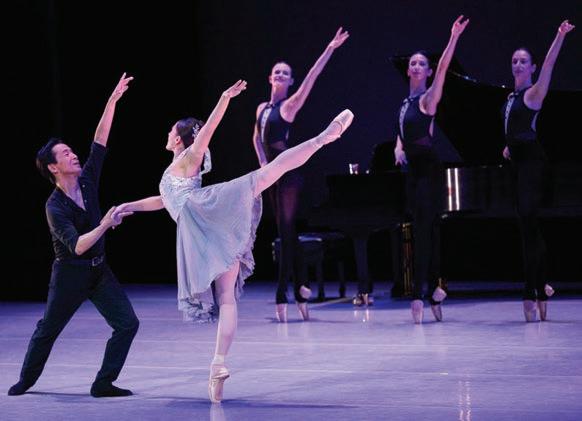
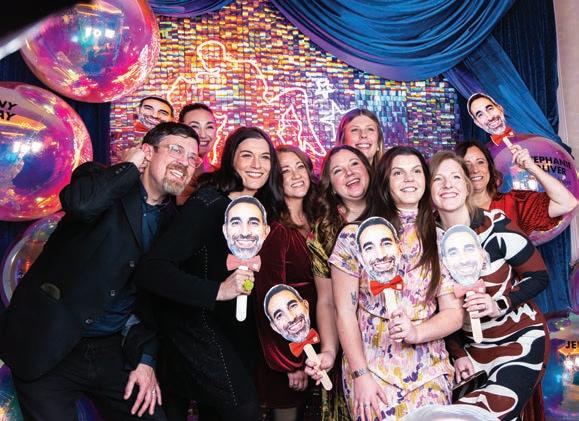
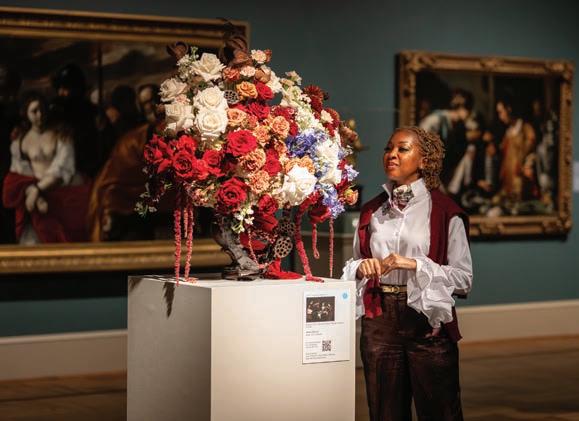
May
6 MOMentous Luncheon, Haven of Grace, havenofgrace.org
3 St. Louis Symphony Orchestra Gala Celebration: Yo-Yo Ma in Concert, slso.org
?? Flower Power 2024, Tower Grove Park, towergrovepark.org
27 “Our Songs,” Opera Theatre of Saint Louis, opera-stl.org
29 The Almost Home Gala, 2026, almosthomestl.org
30 Metro St. Louis Heart Walk, www2.heart.org
June
4 Forest Park Forever Hat Luncheon, forestparkforever.org
6 Illumination Gala, The Foundation, Siteman Cancer Center, BJC.org
8 The Magic House Family Gala, magichouse.org
12 Zoofari, stlzoo.org
13 College Bound Cap & Gown Gala, collegeboundstl.org
18 2026 A Toast to Fathers Gala Dinner, fatherssuportcenter.org
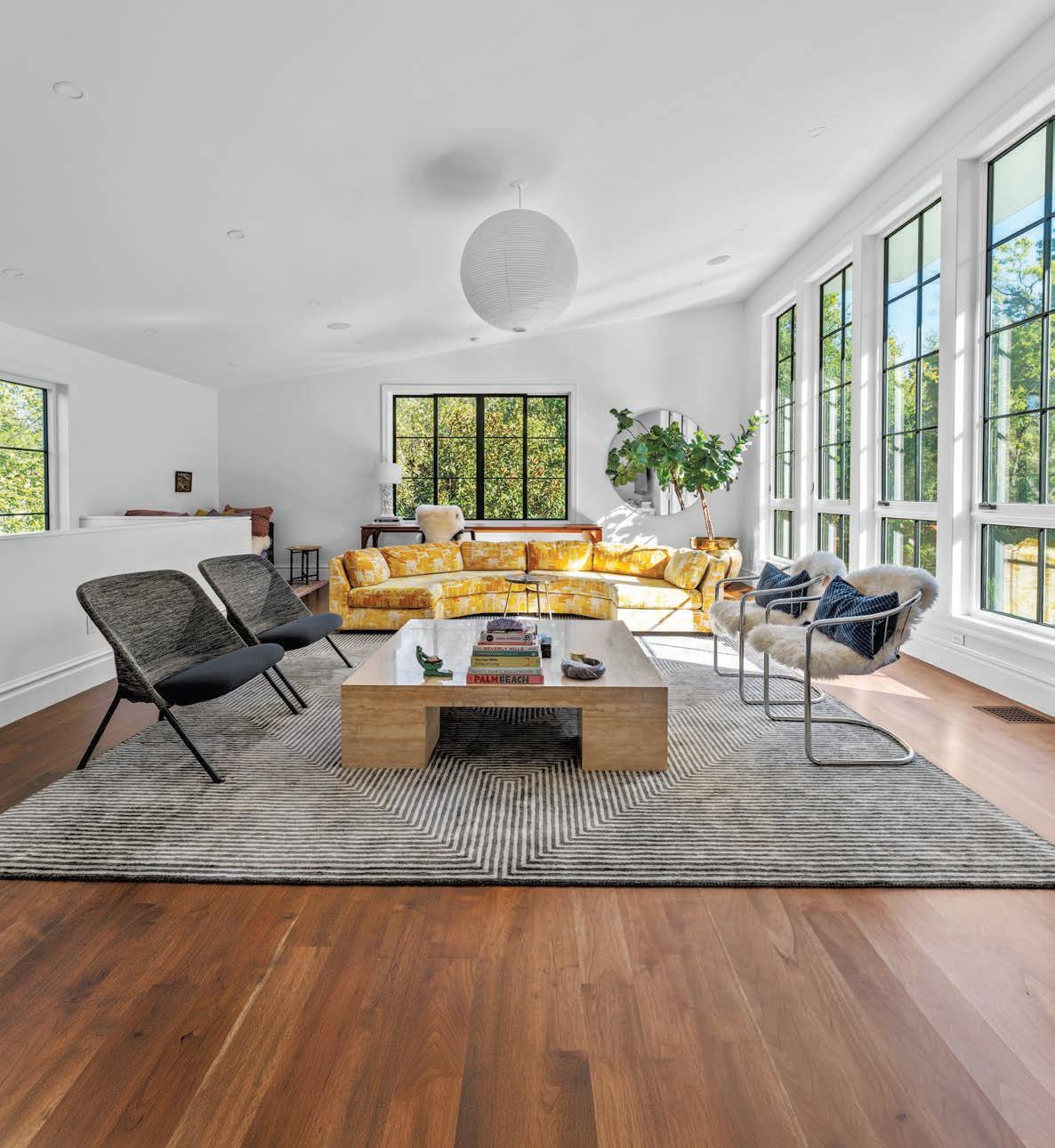


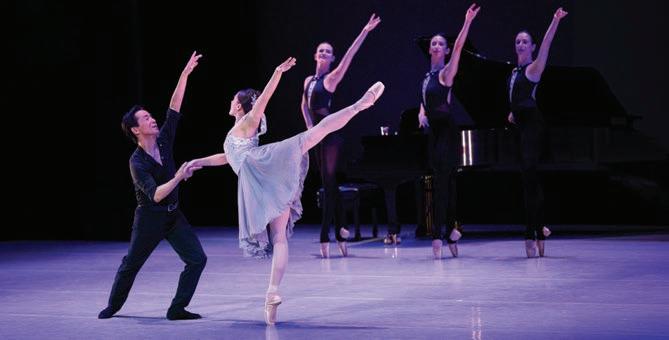
to
St. Louis is incredibly lucky to have such world-class
discipline and passion bring an extraordinary sense of
The

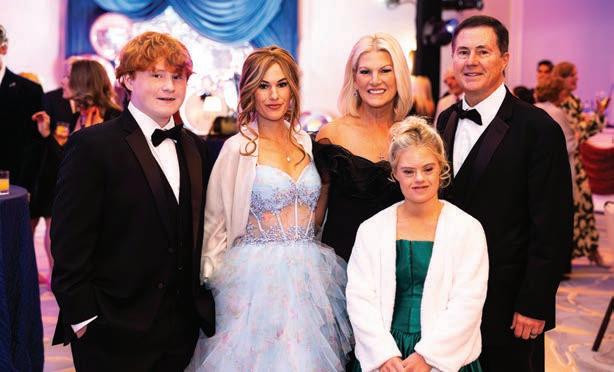
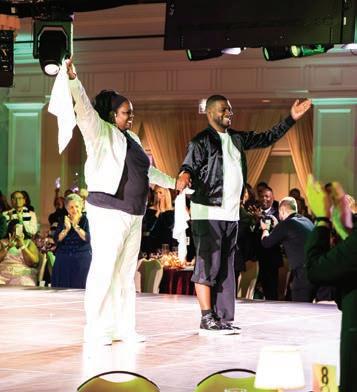
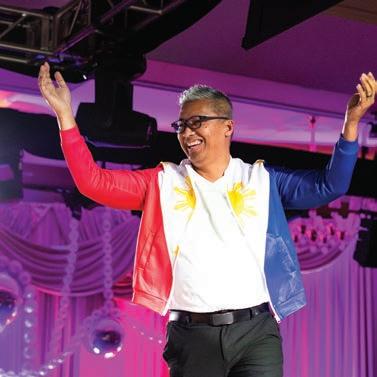


Each January, the Independence Center brings sparkle to St. Louis with one of the city’s longest-running fundraising traditions. In nearly two decades, Dancing with the St. Louis Stars has become one of the most highly anticipated fundraising events in the region, raising funds to provide life-changing services for those living with serious mental illness. Despite a blizzard raging outside, nearly 400 people came to the 19th Dancing with the Stars evening held at the Ritz Carlton. By the end of the night more than $555,000 had been raised to support clinical services, community connection, employment opportunities and housing for programs for adults across the region with severe and persistent mental illness.
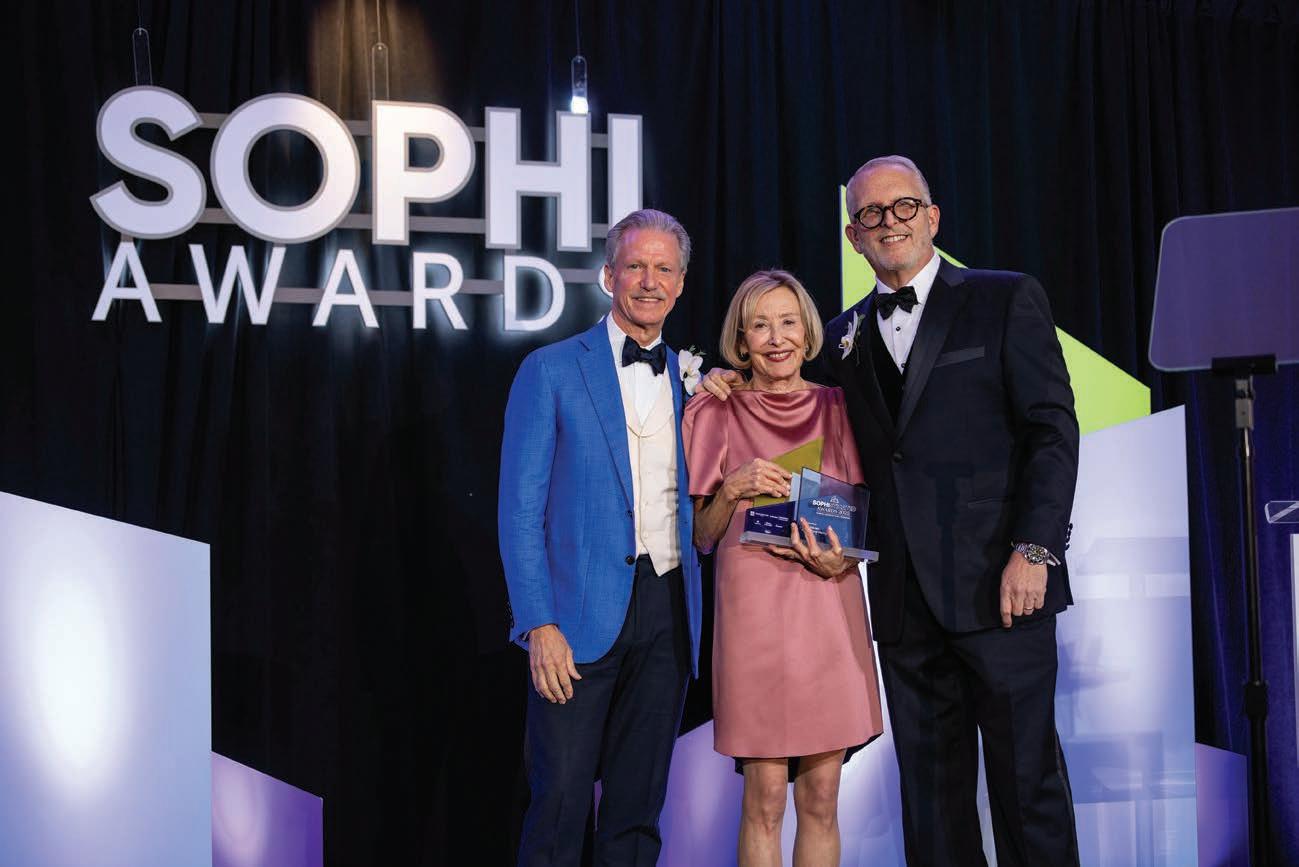

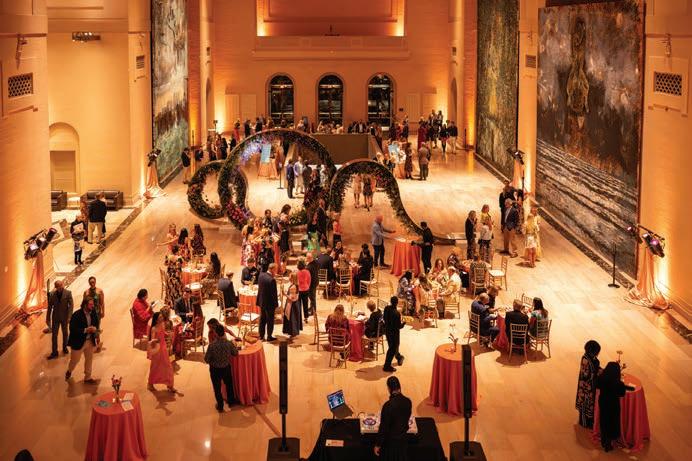
Art in Bloom, the Saint Louis Art Museum’s annual celebration of fresh flowers and fine art, drew a record-breaking 35,000-plus visitors from February 27 through March 1. This year marked the museum’s 20th
Bloom.The festival featured the designs of 30 local floral designers inspired by the museum’s collection. In addition to the floral arrangements on view, the Art in Bloom weekend included a successful preview party, the ticketed Flowers After Hours event, family programs and a drop-in demonstration by Rachel Cho, a New York–based floral designer who created a large-scale installation in Sculpture Hall for the festival. The 2026
by
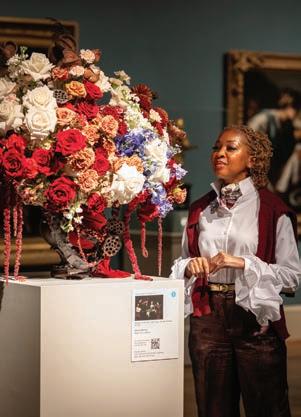
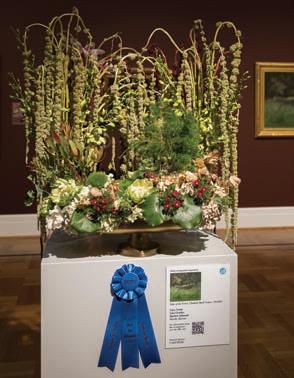
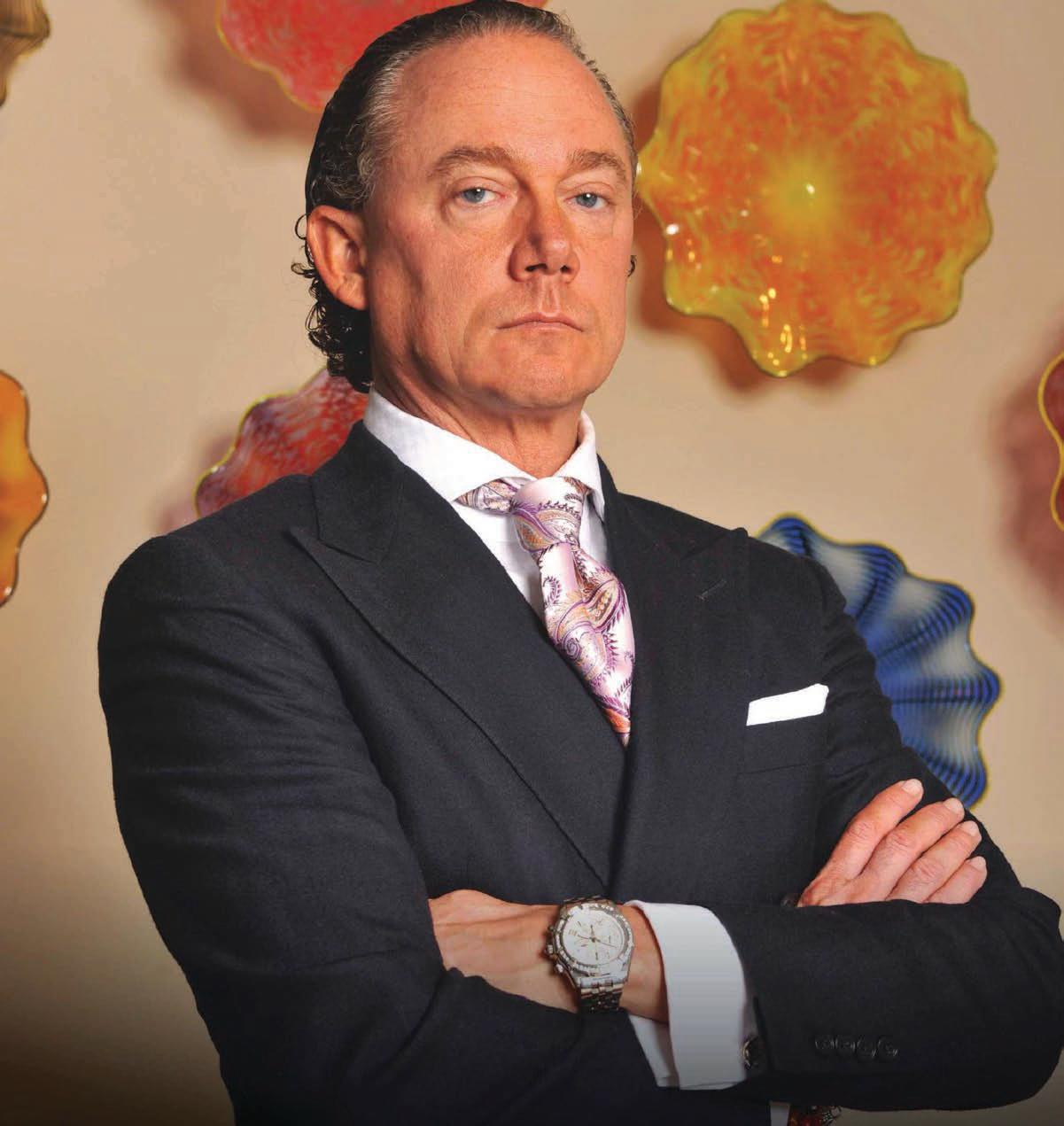

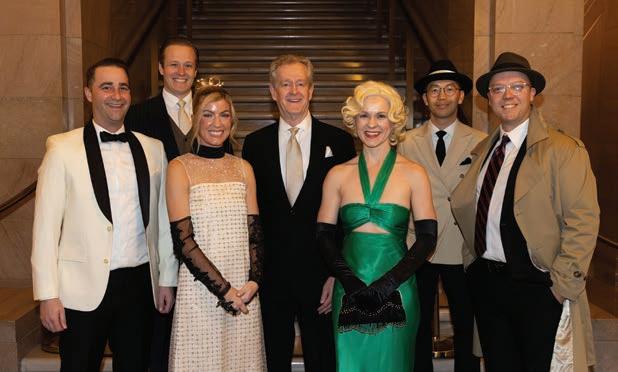
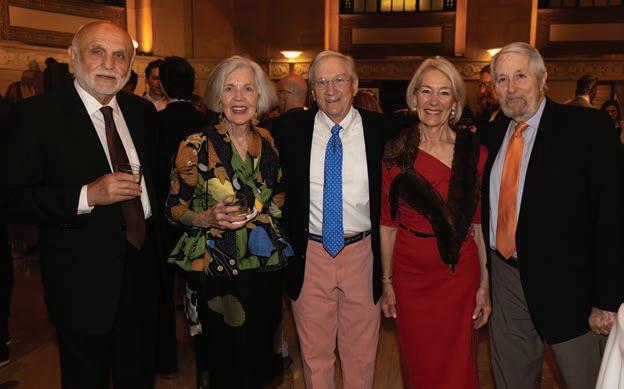
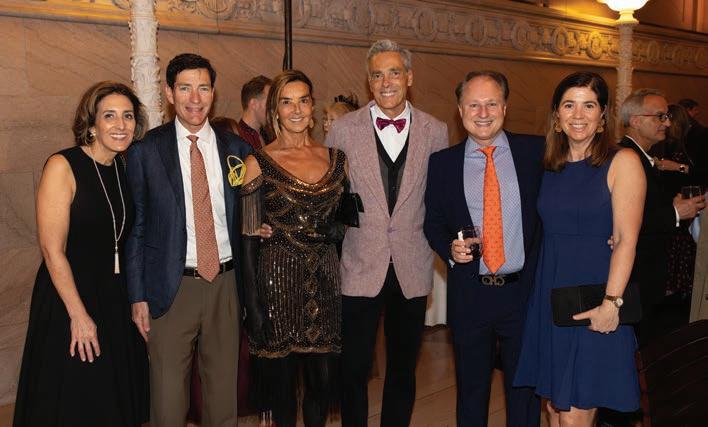
Stranger Than Fiction: Gets A Clue gala brought all the intrigue of film noir and mystery fiction, with attendees donning their best sleuth attire. The evening began with passed cocktails and hors d’oeuvres provided by Ces and Judy’s catering. The musical entertainment began with Abigail Stahlschmidt, an electric violinist, and concluded with Sarah Jane and The Blue Notes, a jazz band. Throughout the evening, attendees could find literary inspired activities such as a Clue-inspired mystery game featuring actors from Brickworks Theatre Company. Attendees could also look for red herrings, or sip on one, as the signature cocktail was named after the famous term and created by Tim Wiggins, owner of Extra Wavy, Yellowbelly and Lazy Tiger. More than 430 guests attended and raised $252,000 for St. Louis Public Library.
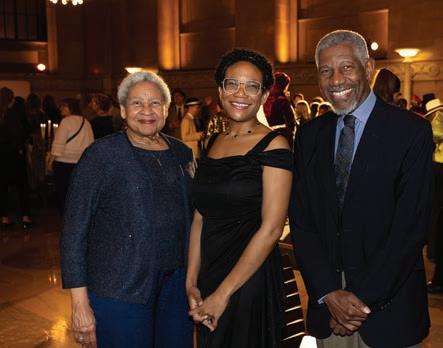

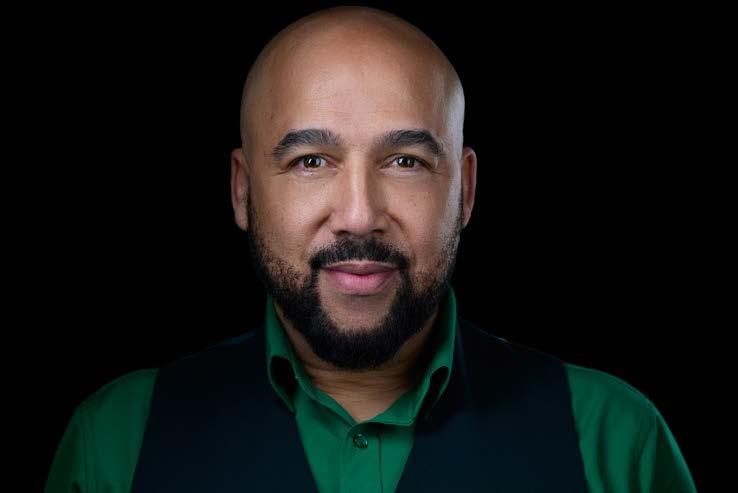

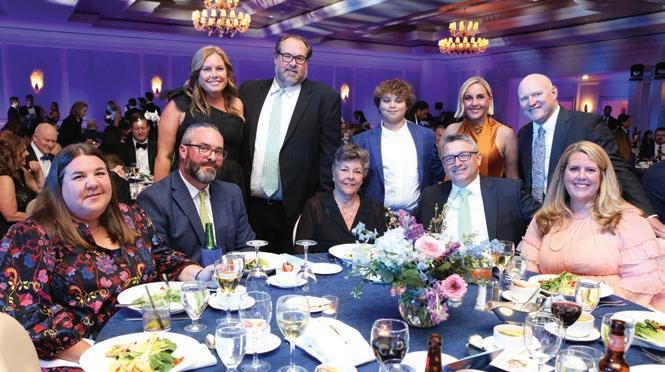
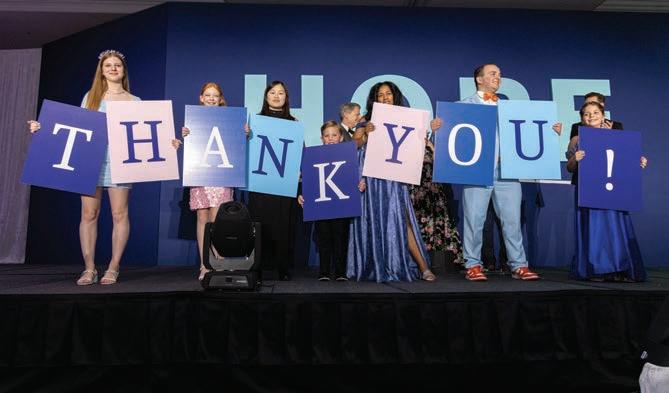
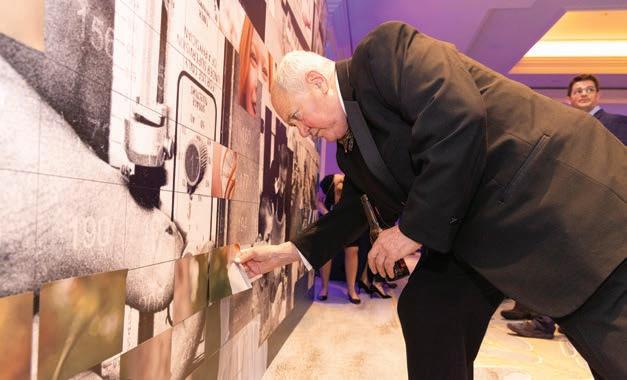
What defines who you are, your style, your passions, your dreams? Type 1 diabetes (T1D) is not among them. Not long ago, a T1D diagnosis was fatal. Today, thanks to Breakthrough T1D, while still life altering, it no longer defines who you are or who you can become. On March 28, community and corporate leaders gathered at The Ritz Carlton for the 2026 St. Louis Breakthrough T1D Dream Gala, an elegant evening centered on progress, purpose and hope. Approximately 240 guests attended, which raised an extraordinary $1 million plus and counting, fueling life changing research and advancements for the T1D community. Guests enjoyed a seated dinner, silent and live auctions, a live sweepstakes drawing and a powerful Fund A Cure program. More than a celebration, the evening reflected a collective commitment to accelerating cures and improving lives while honoring the resilience, innovation and progress shaping a brighter future for the T1D community.

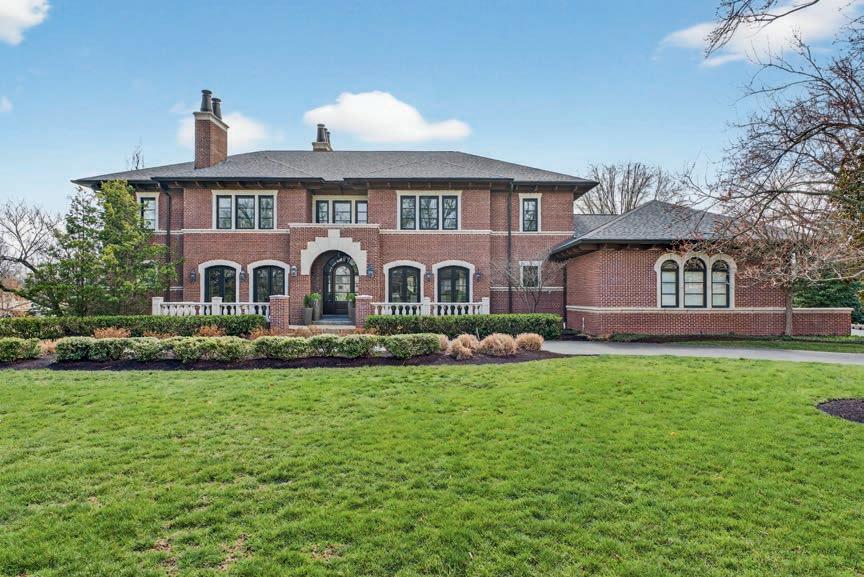
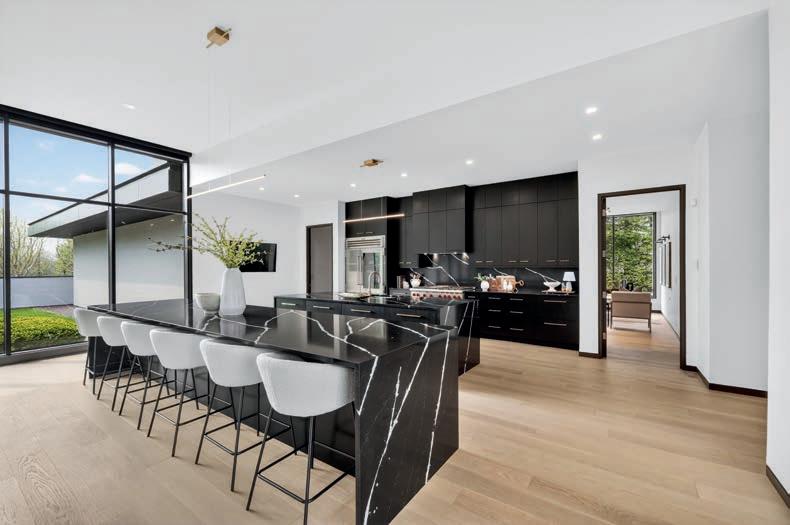
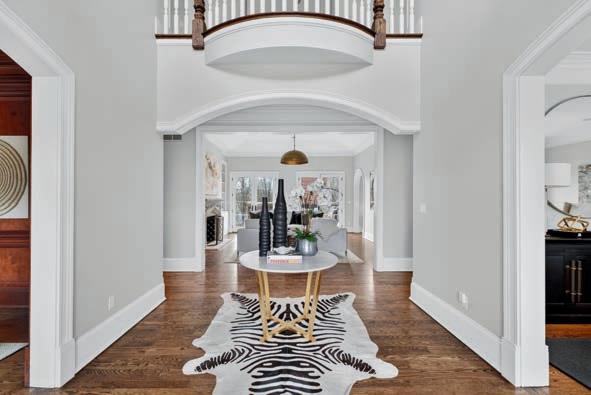
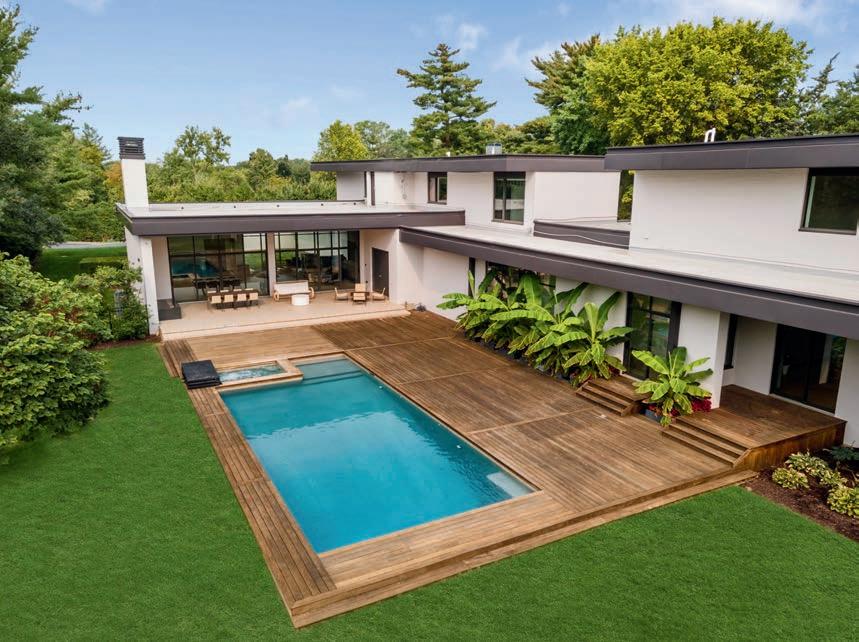

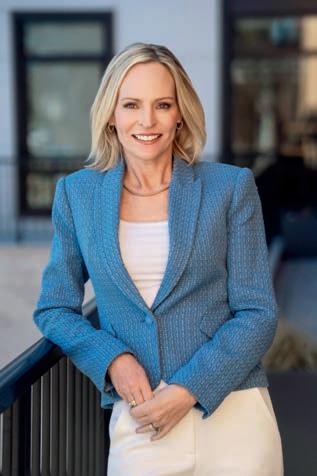



















































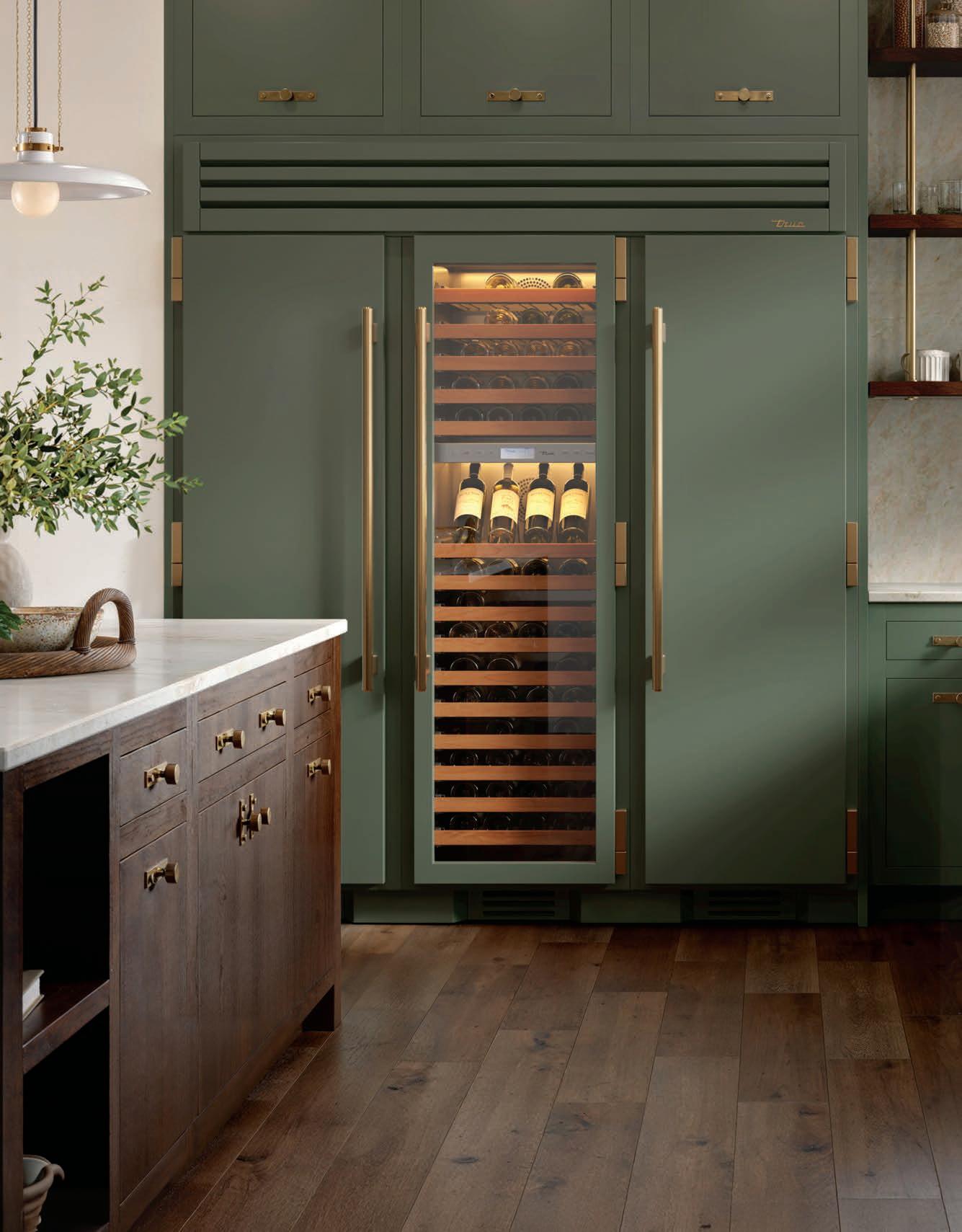
From weekday meal prep to weekend entertaining, experience