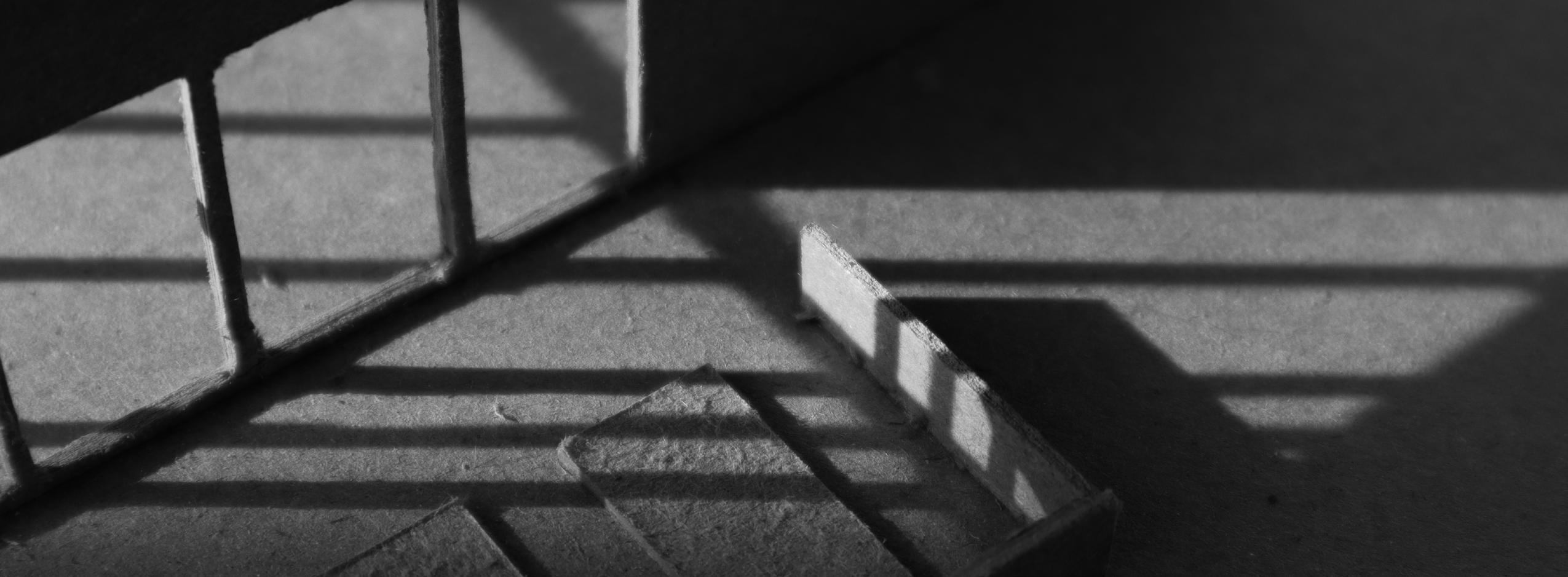
SONYA PIROG BAS DESIGN CARLETON UNIVERSITY
PORTFOLIO
SONYA PIROG


sonya.pirog05@gmail.com linkedin.com/in/sonyapirog GTA & Ottawa, ON
EDUCATION
sonya.pirog05@gmail.com linkedin.com/in/sonyapirog GTA & Ottawa, ON
EDUCATION
BACHELOR OF ARCHITECTURAL STUDIES - DESIGN STREAM
CARLETON UNIVERSITY - OTTAWA, ON
3rd Year Standing, CGPA: 10.24/12
Dean’s List 2023-2024
INVOLVEMENT: First Year “Buddy” Mentorship Program, &Design Architecture Representative
ARCHITECTURE REPRESENTATIVE (VOLUNTEER) 2025 - PRESENT &DESIGN CARLETON UNIVERSITY - OTTAWA, ON
- Advocate for Architecture Students in the society and the Faculty of Engineering and Design
- Help connect Design Students with resources
- Help run events, including running a Revit workshop
PROGRAM COORDINATOR 2025 CAMP SOKIL OVERNIGHT CAMP - UKRAINIAN NATIONAL FEDERATION - TORONTO, ON
- Trained 30 staff members in leadership skills, safety
- Delivered ORCKA Canoe Training
- Planned and lead the camp program daily to 70 campers aged 6-16 for 5 weeks
- Supported and mentored staff throughout the duration of the camp
- Adobe Suite
- Hand Drafting - Observant / Detail Oriented
- Revit - Model Making
- Rhino 8
- Silkscreen Printmaking
- Leadership
- Organization
- Onshape - Active Listener
YEAR 1, SEMESTER 2
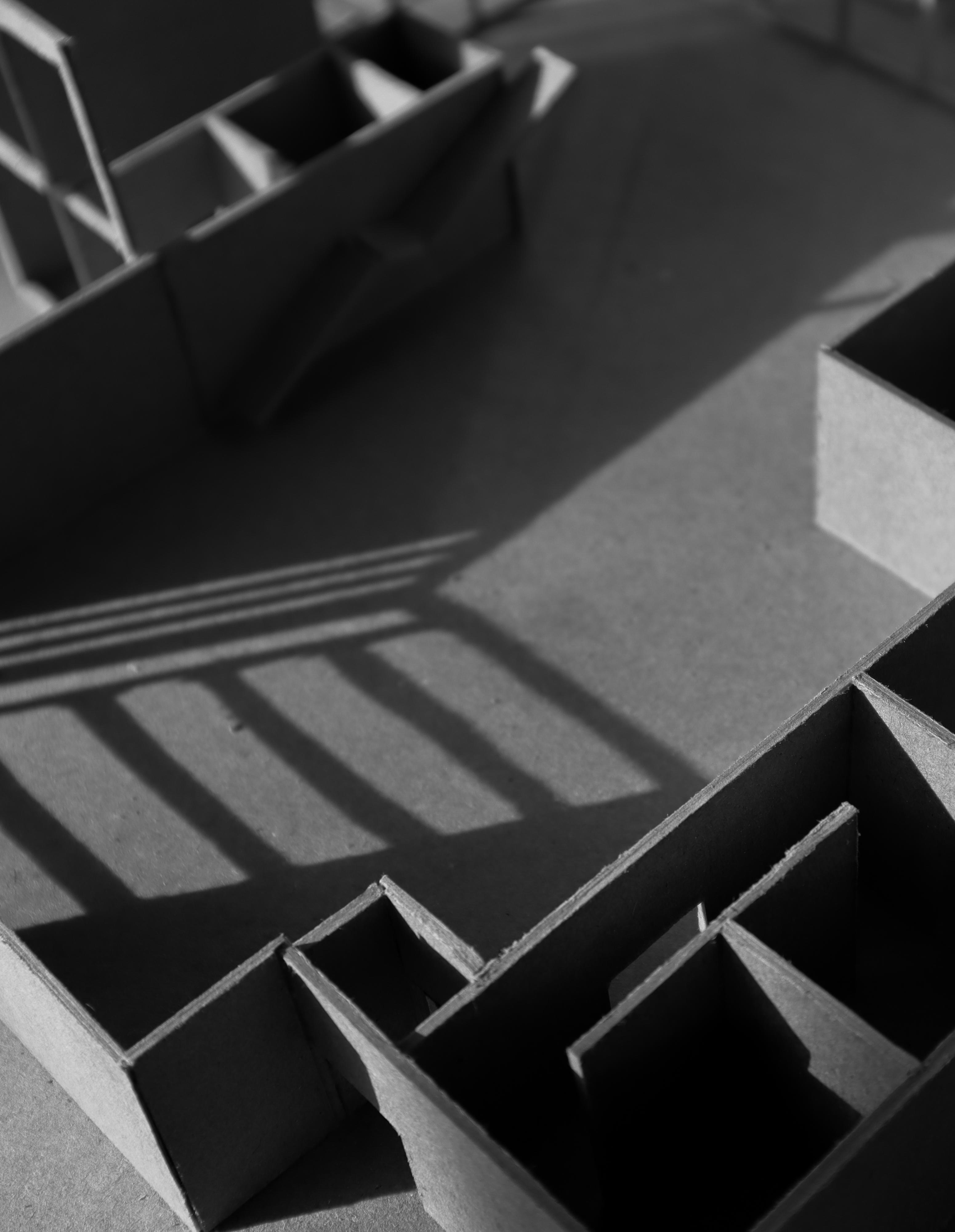
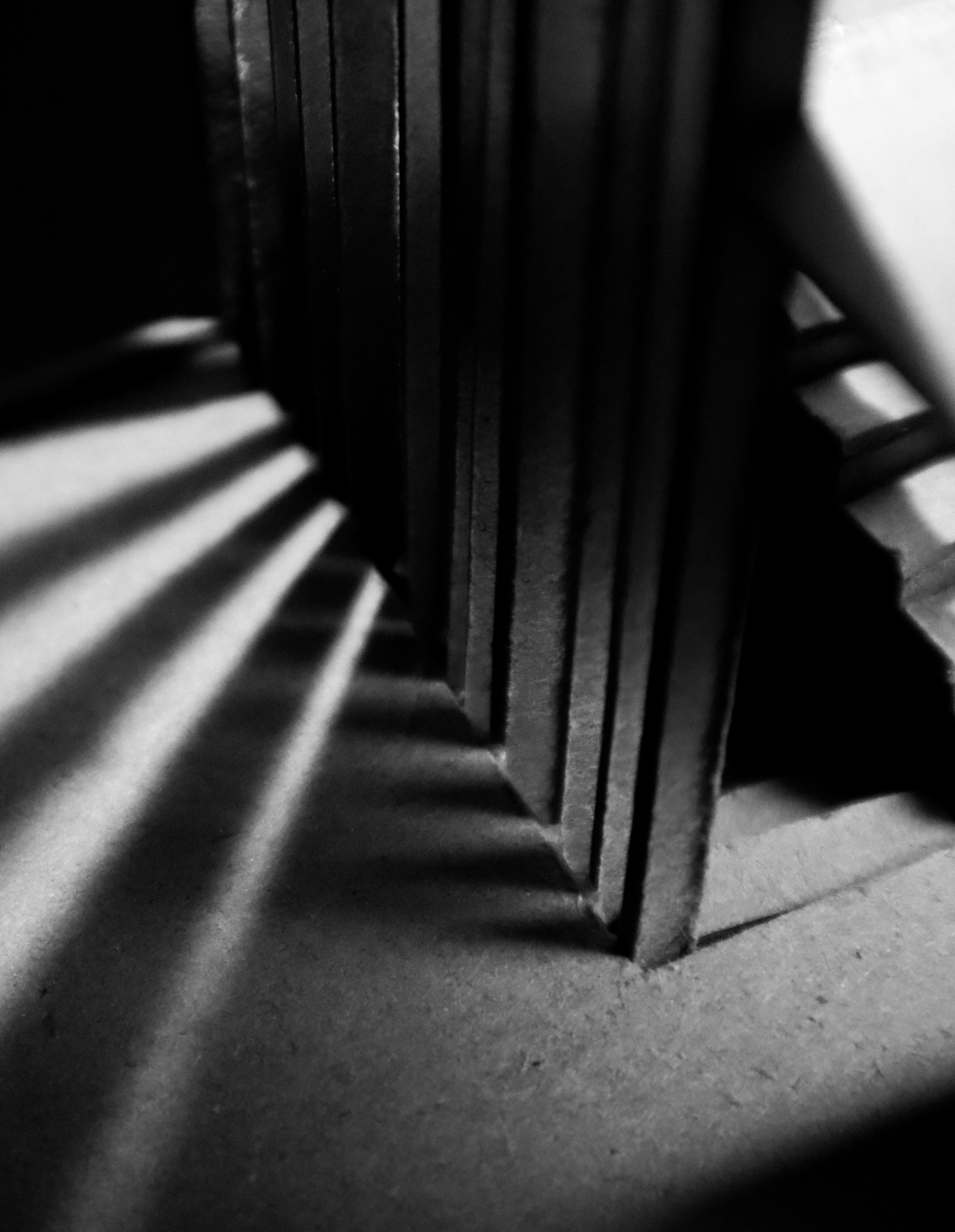
Nideyinàn Parking Lot
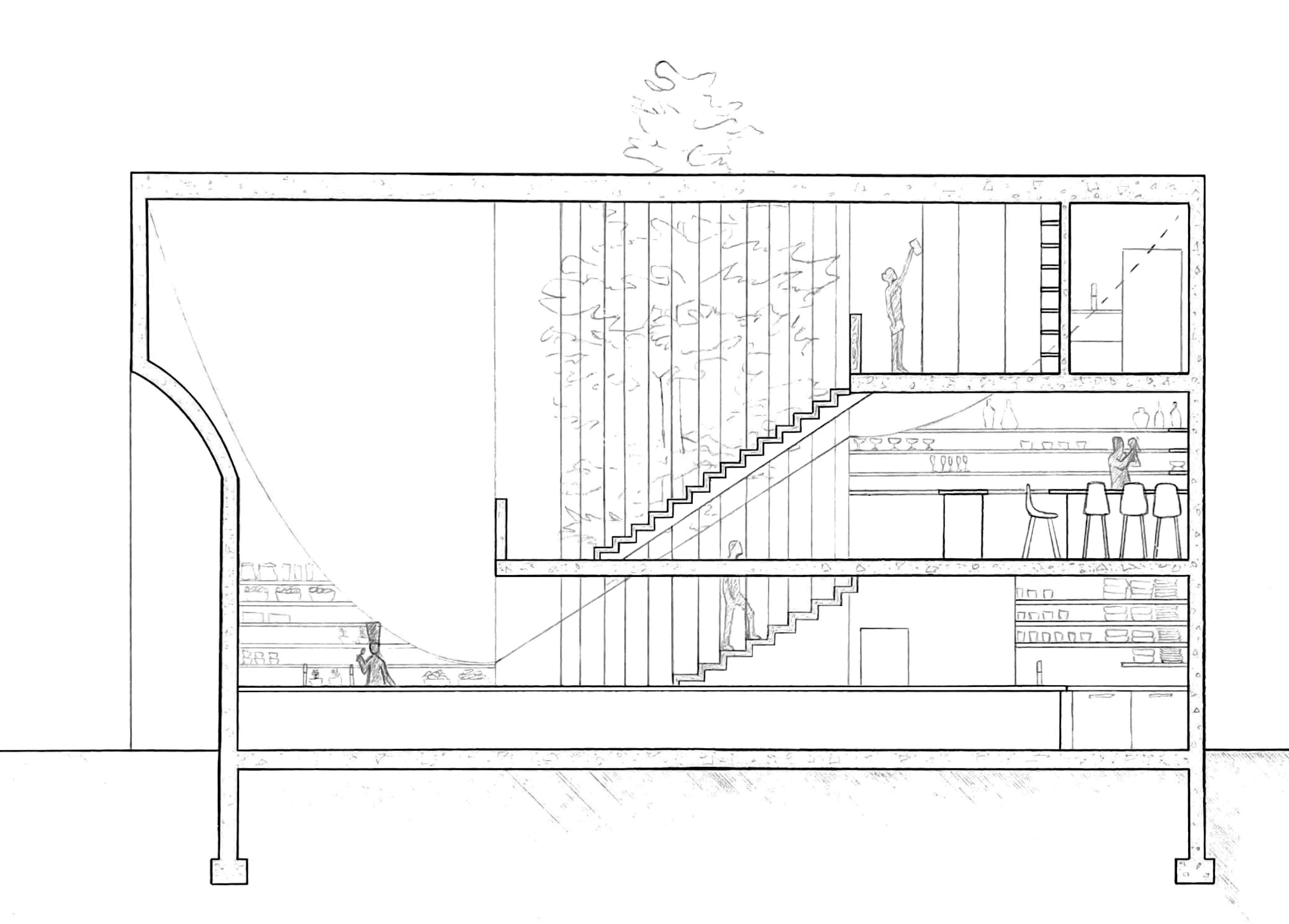
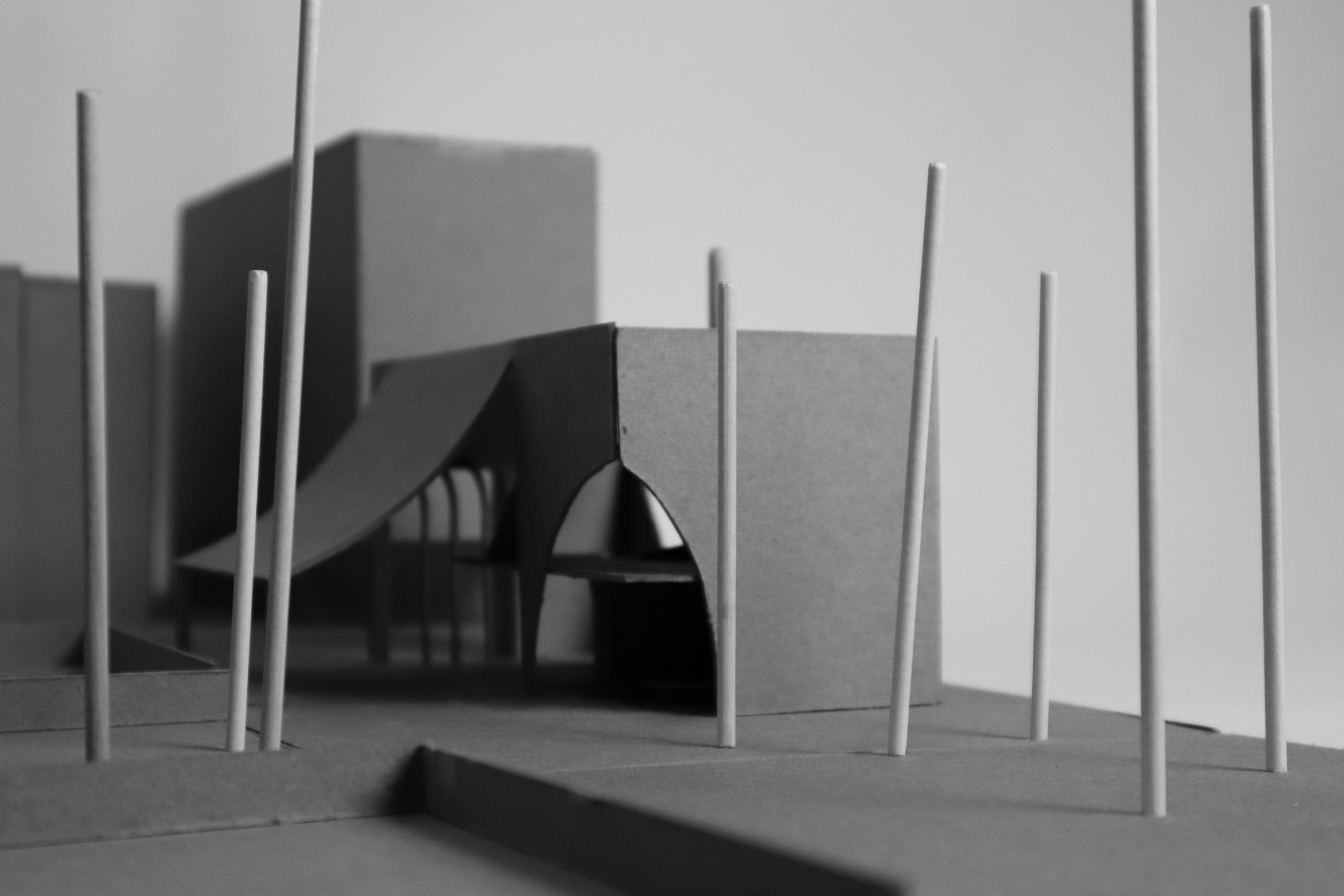
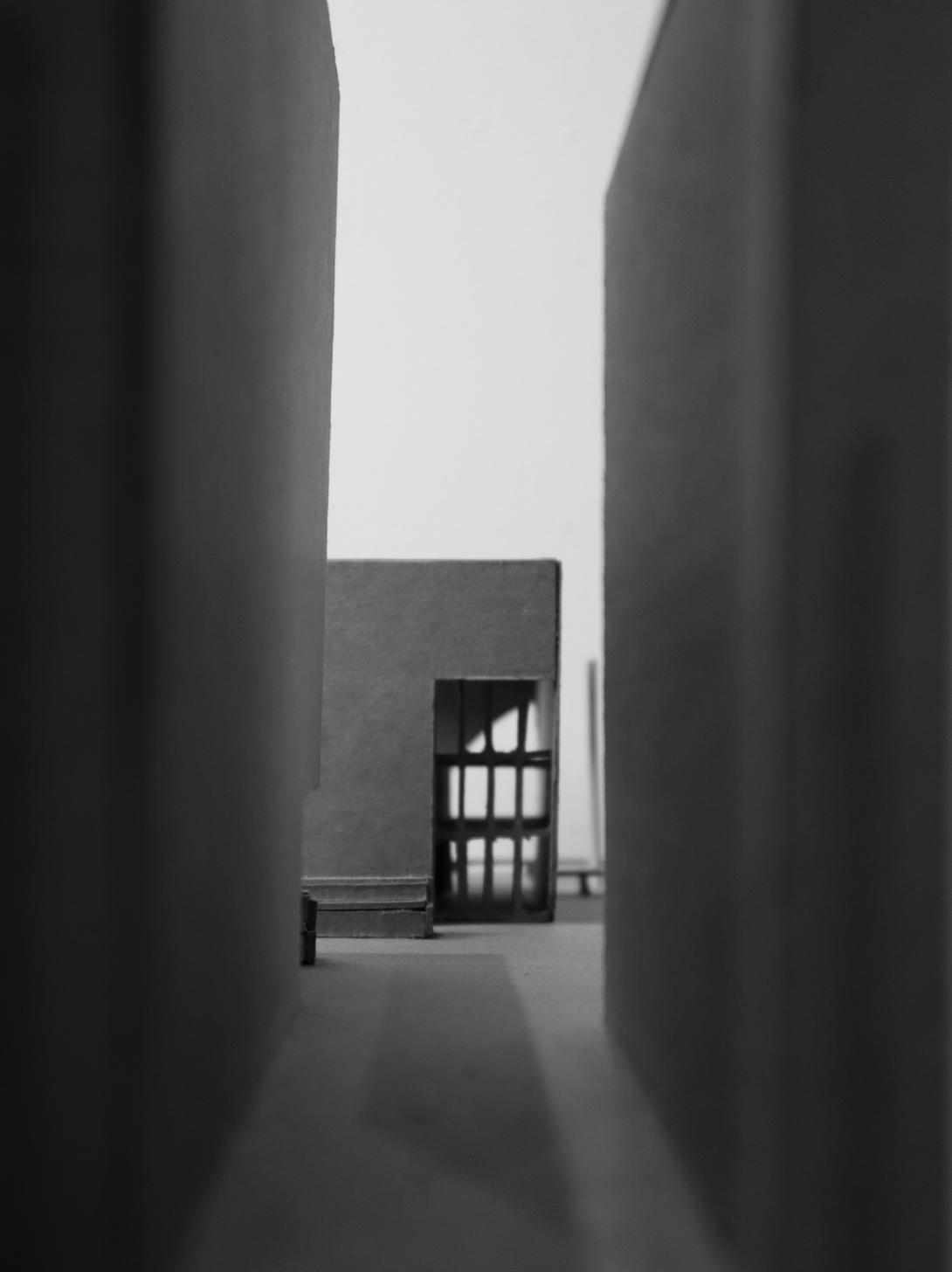
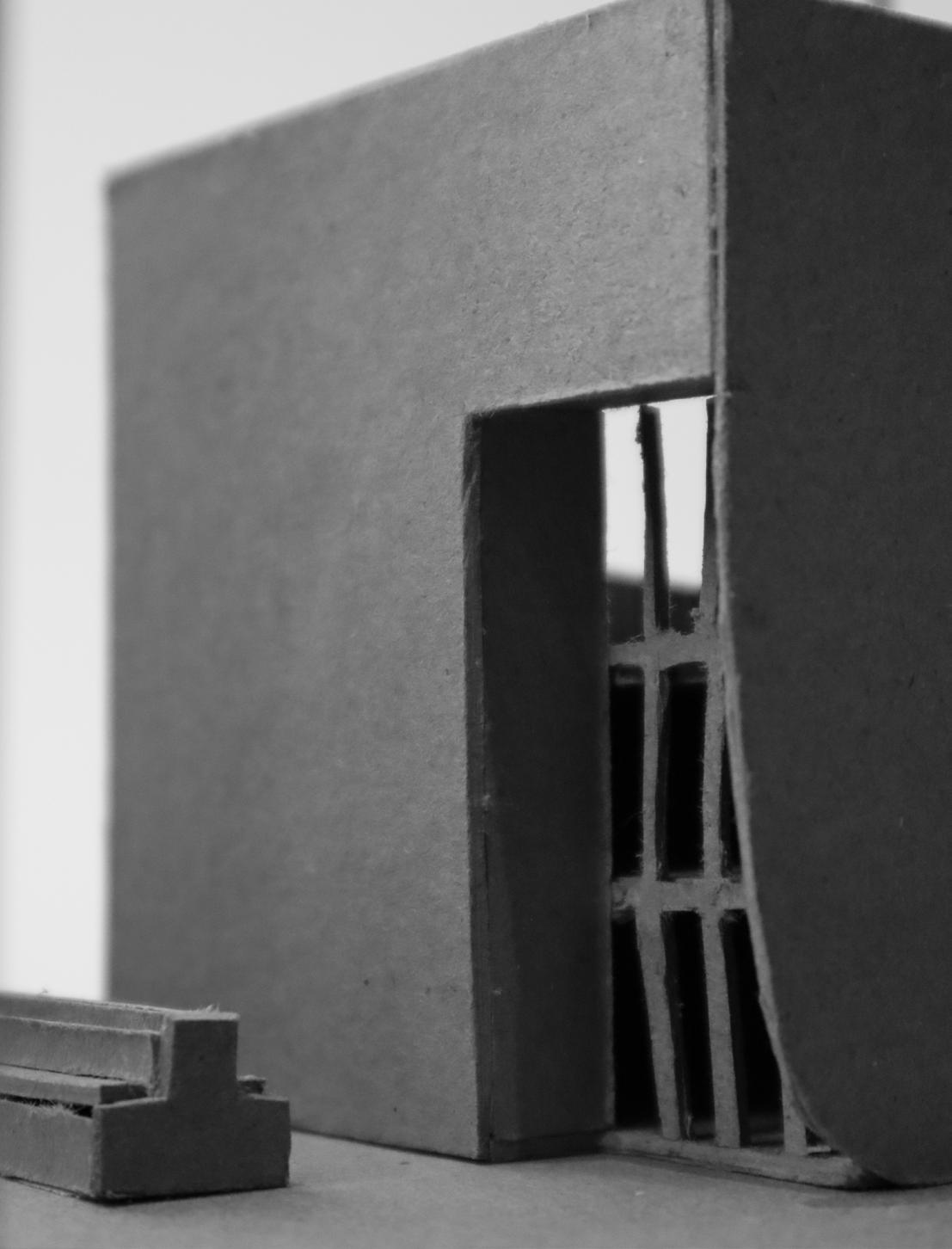
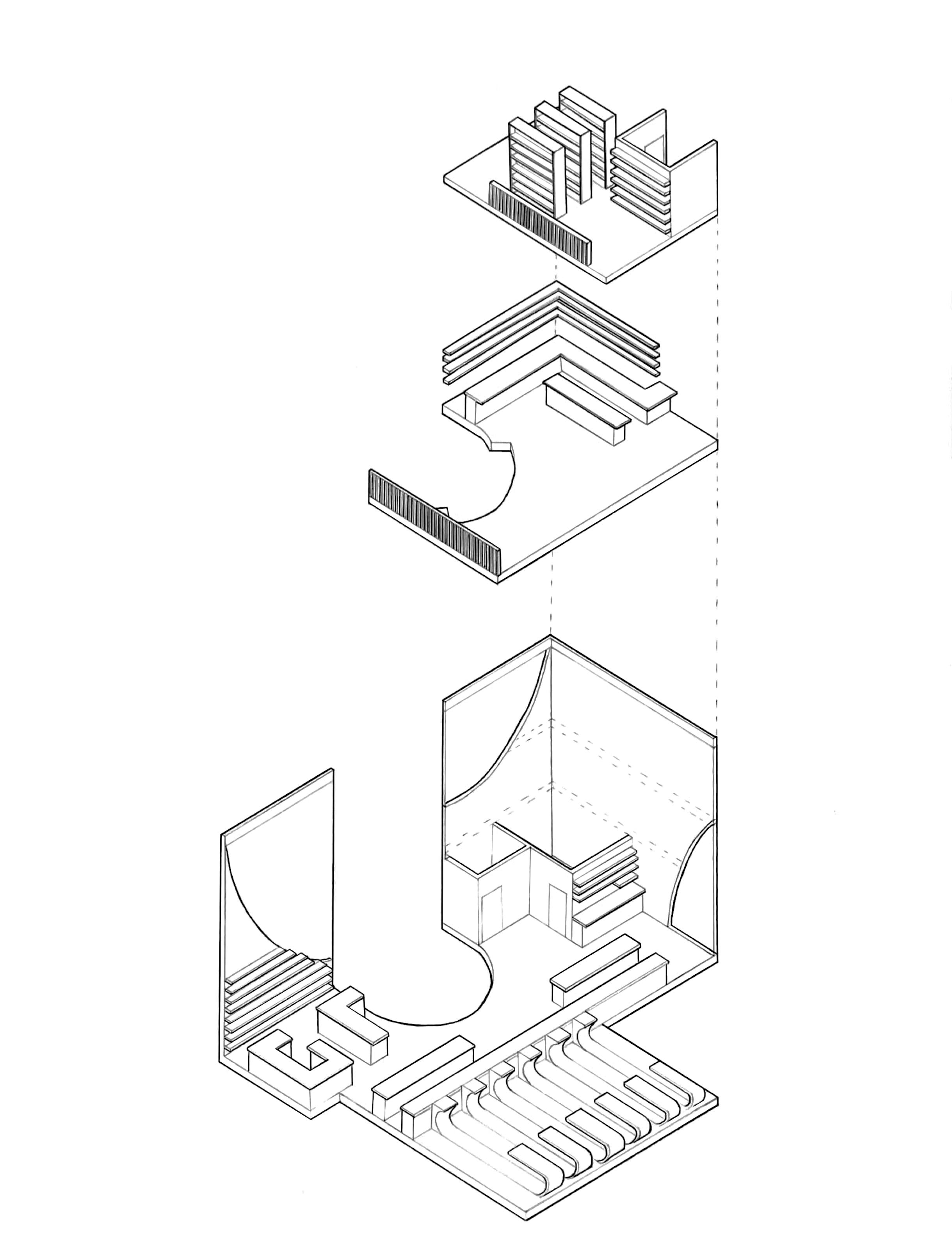
Starting out as a 9cm x 9cm x 9cm cube, the Campus Restaurant took form from a challenge: take a solid, in-fill cube and create three voids. Two must intersect, one must be isolated, and at least one of the voids must deviate from the orthogonal by being either angled or curved. The result would become the base for an on-campus restaurant, complete with a training kitchen, bar, and cookbook library. Even when working beyond the initial project, with the ability to extend the project and a lack of constraints, an effort was made to maintain the integrity of the original structure, with elements of voids and peeling-away structure throughout.
- Project evolution / design through iterations
- Multi-use structural components
- Building as a destination and a place of passage
- Projection of interior elevations
- Indoor/outdoor connection
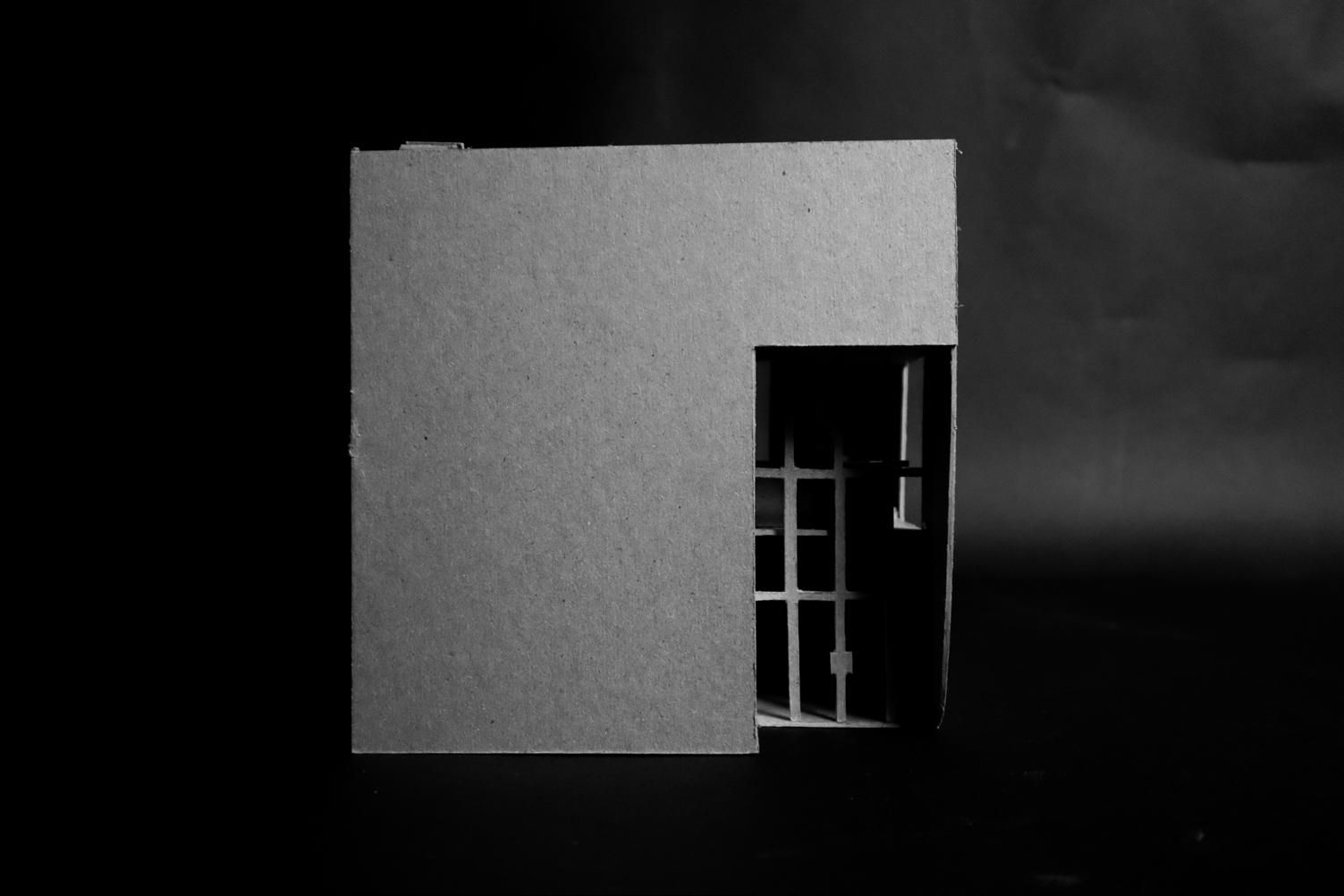

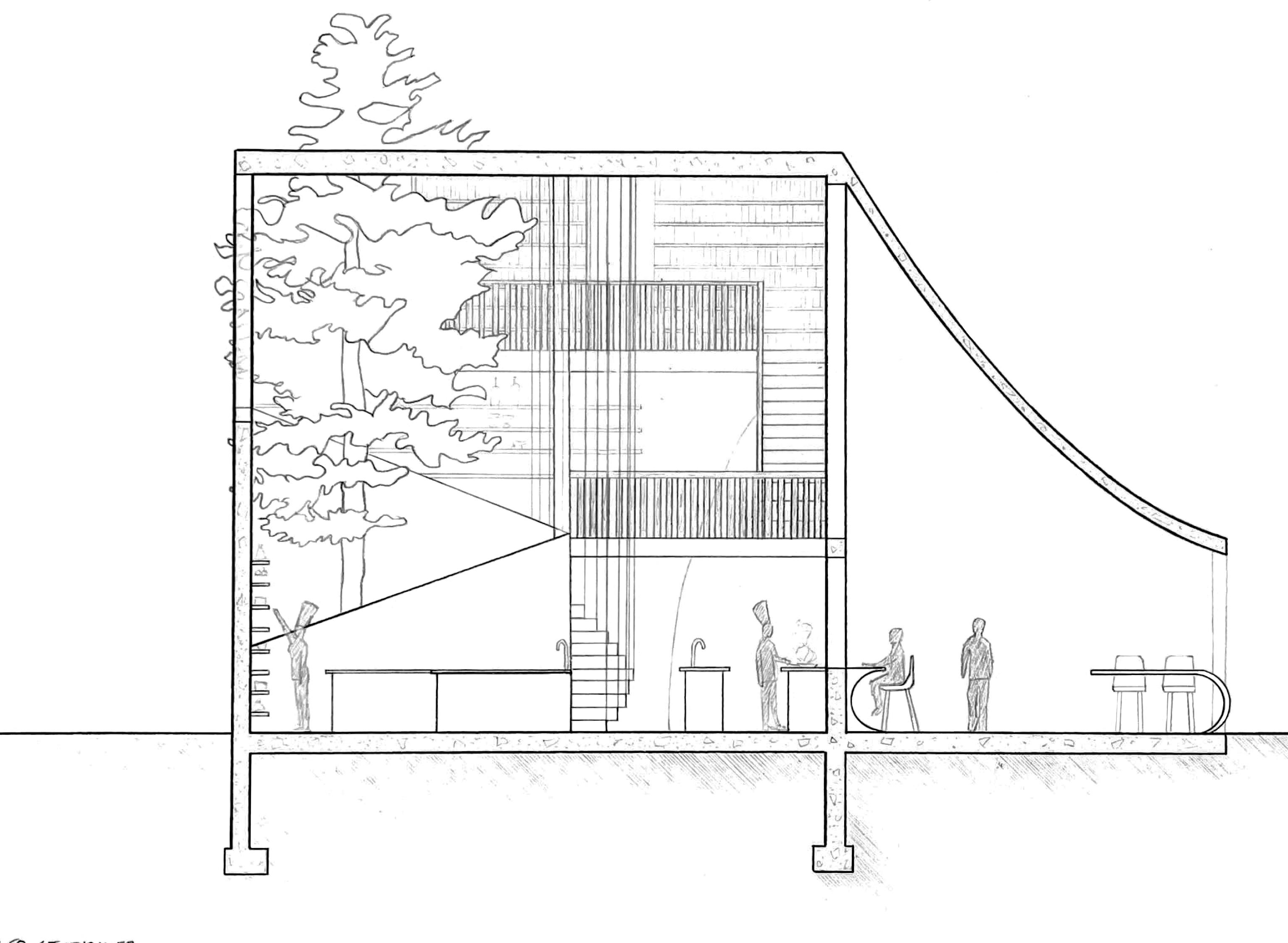
1:100 Latitudinal Section


Carleton Pedestrian Bridge / Rideau River
- Physics-based design
- Model to structure translation
- Model-first design
- Building visualization
- Design evolution
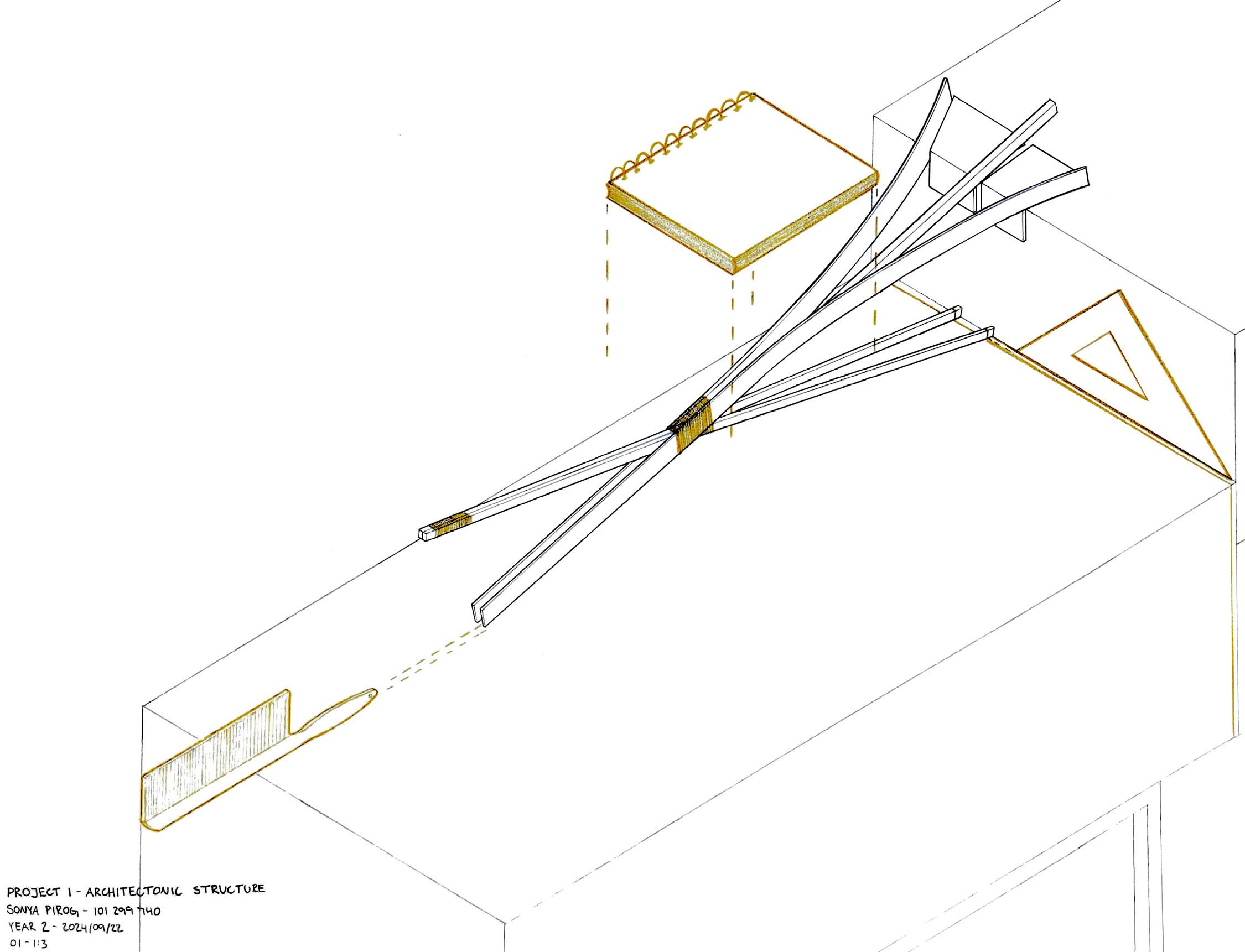
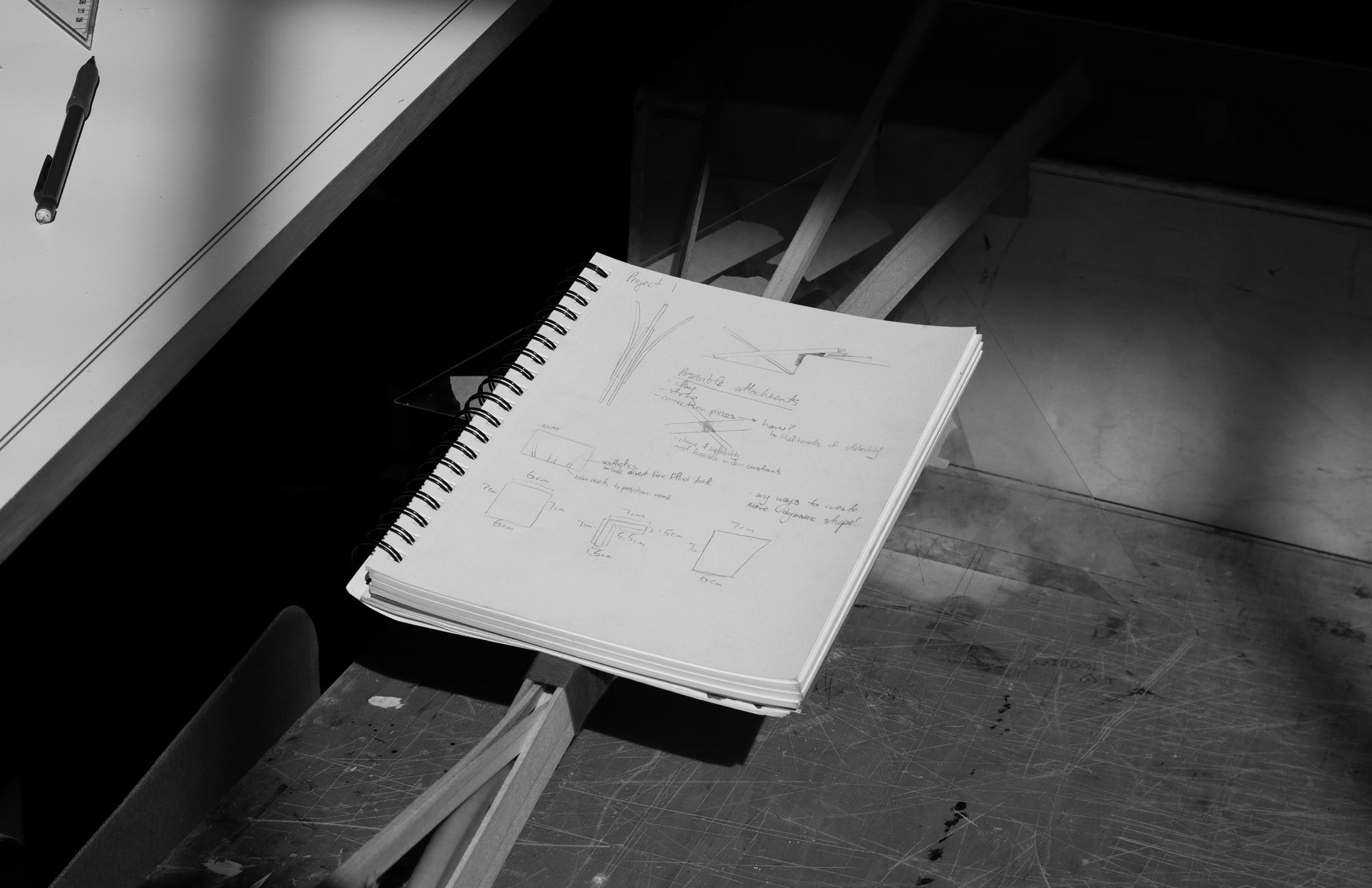
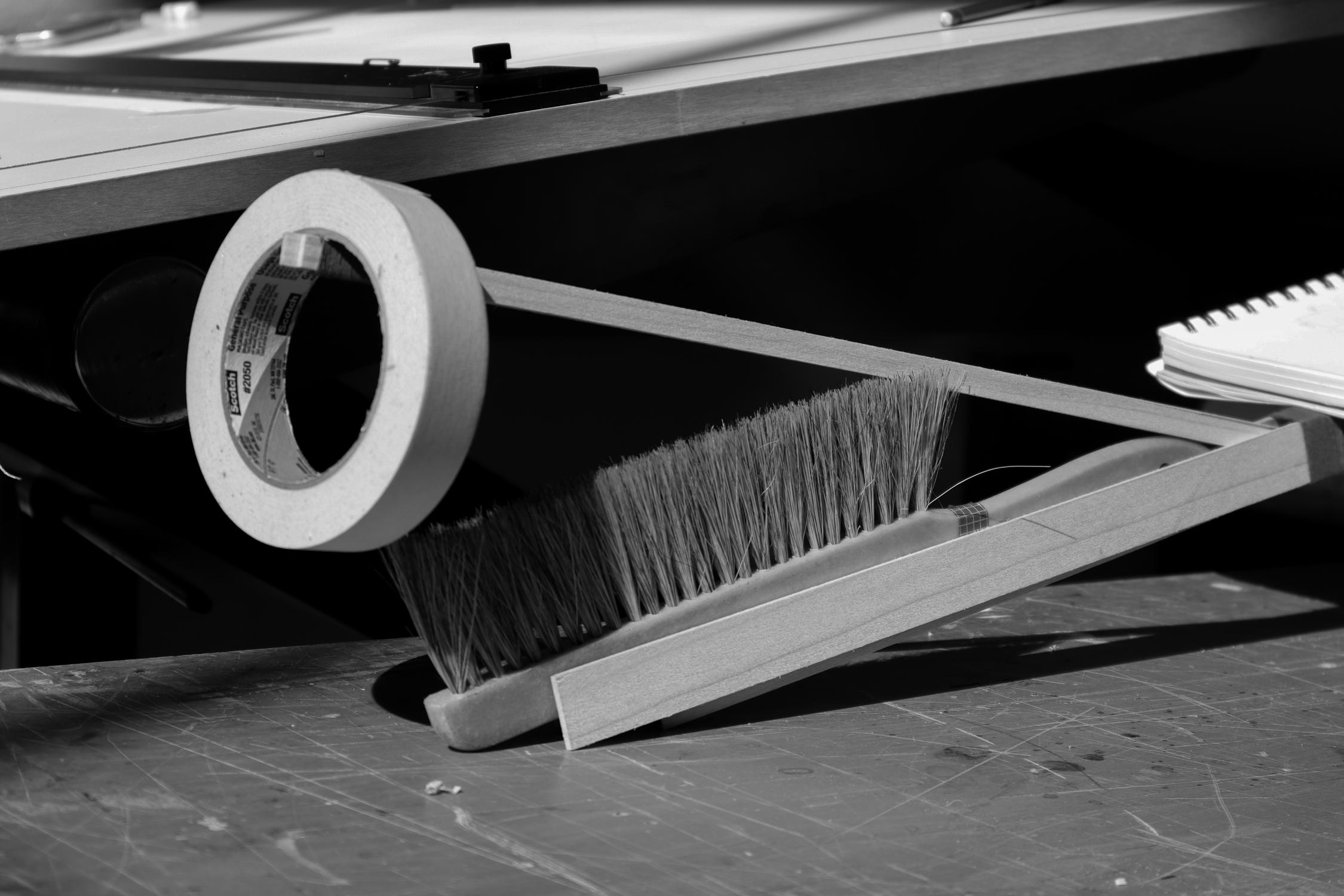
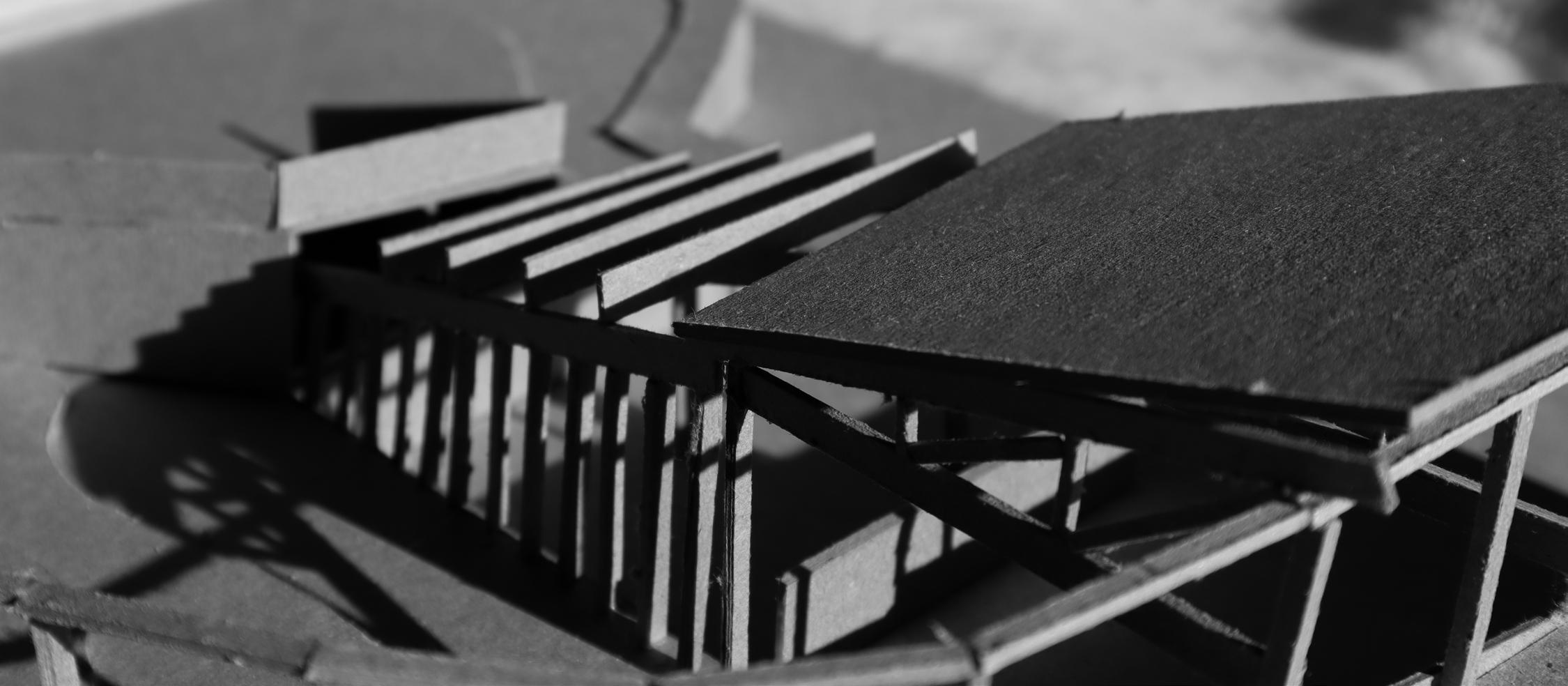
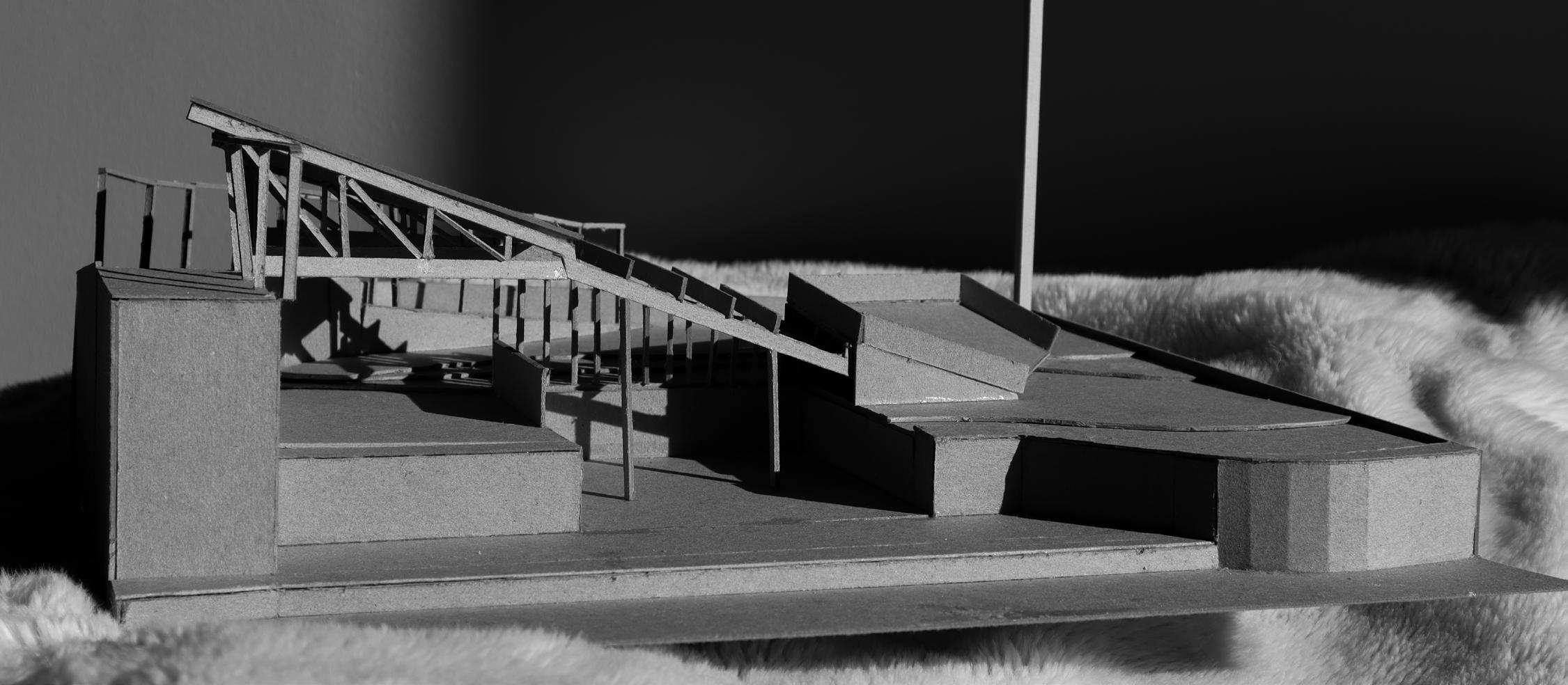
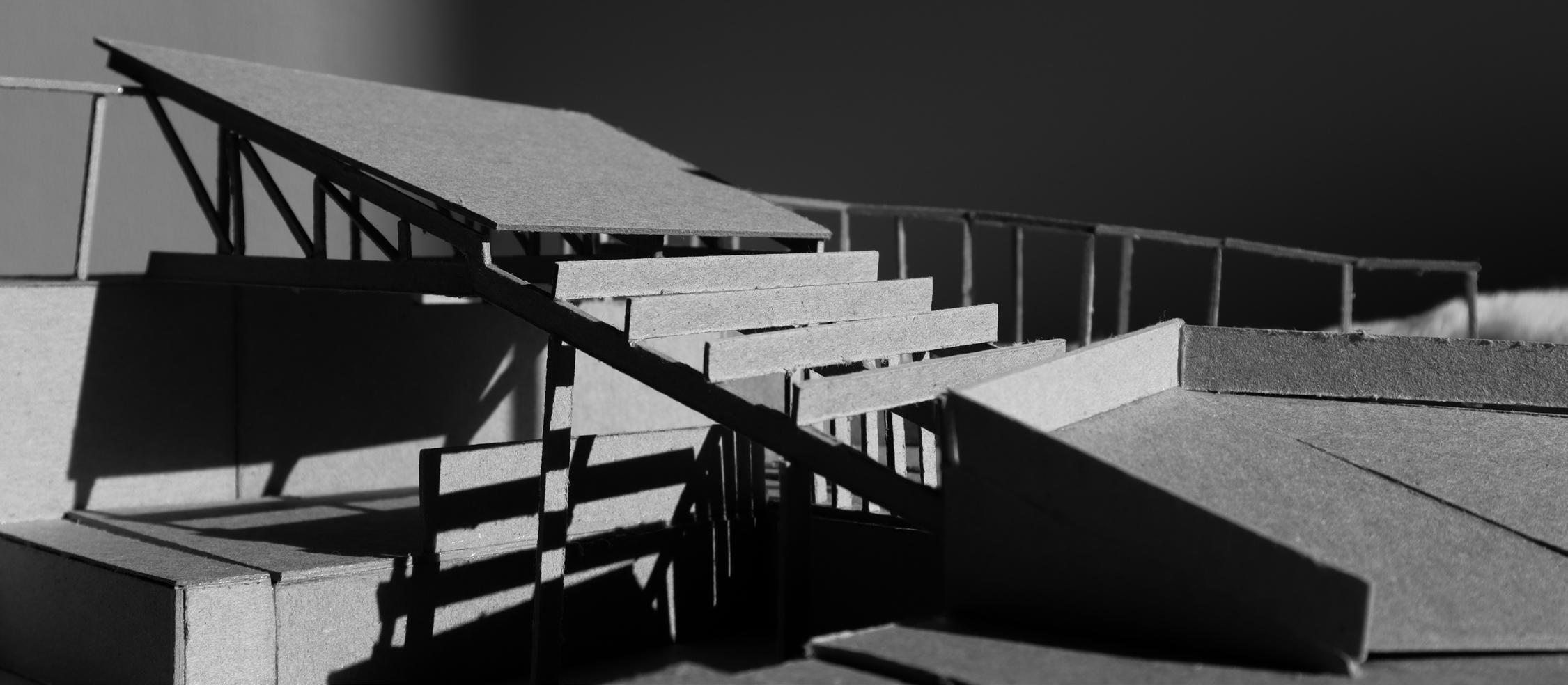
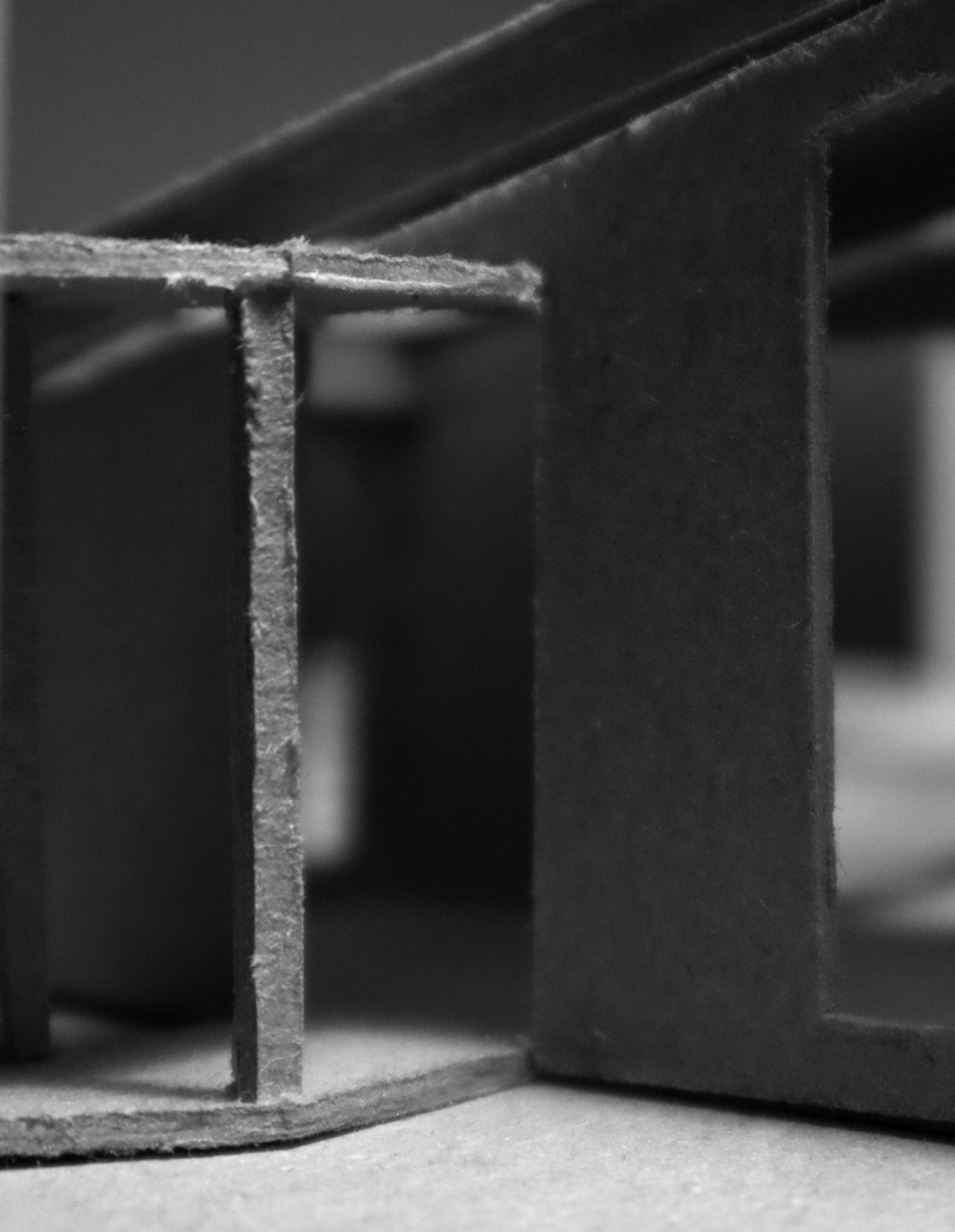
A project that started out as an exercise in working with limited materials in atypical locations, the Architectonic Pavilion is a structure found in a function and objective-based model. Presented with the challenge of creating a functional model for individual student workspaces with only wood, clay, and string, tension and friction were used as tools to help create a workspace organizer / Architectonic Structure. The idea of using the site to shape the structure would carry into the next project, using a large rock face on the side of the Rideau River Pedestrian Bridge as the driving force behind the shape of the Architectonic Pavilion. This connection with the site continues as the varying levels of the site helped shape the two spaces, creating a connection between all three levels. A storytelling pavilion, it offers views of Carleton University and the Rideau River as it acts as a place of gathering and rest.
YEAR 2, SEMESTER 2
Raven Rd / Bronson Ave Park
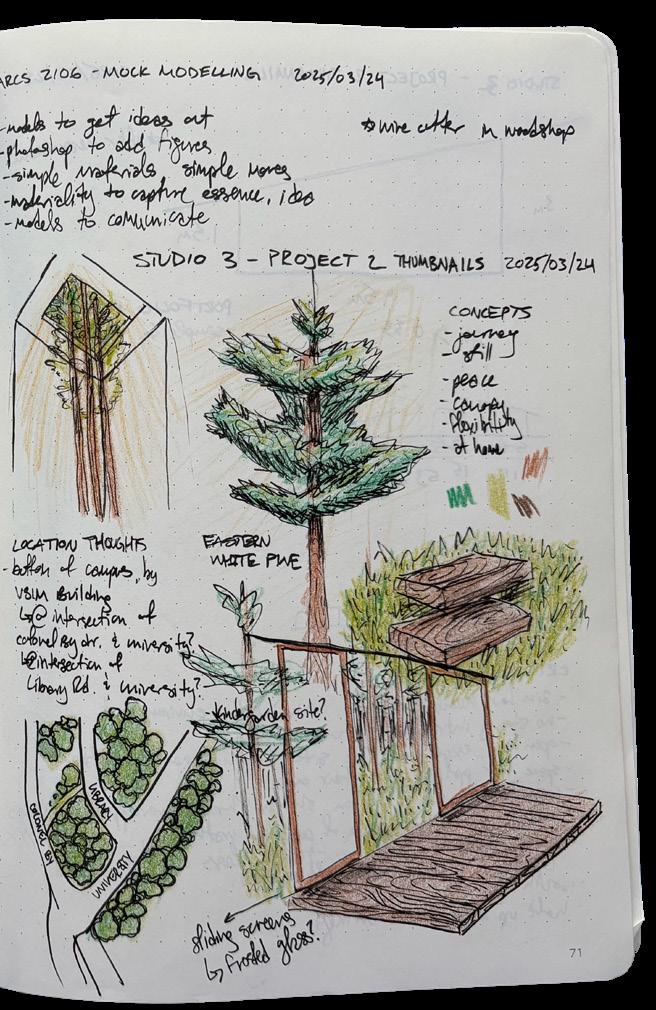
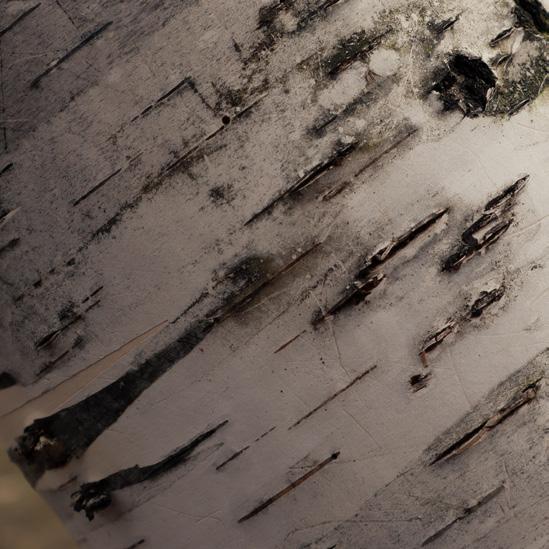
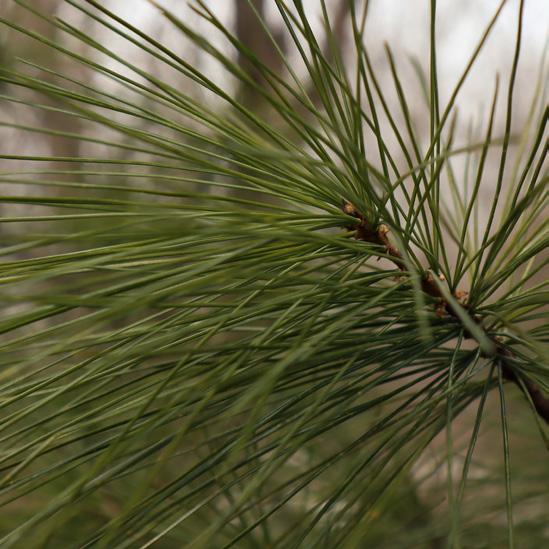
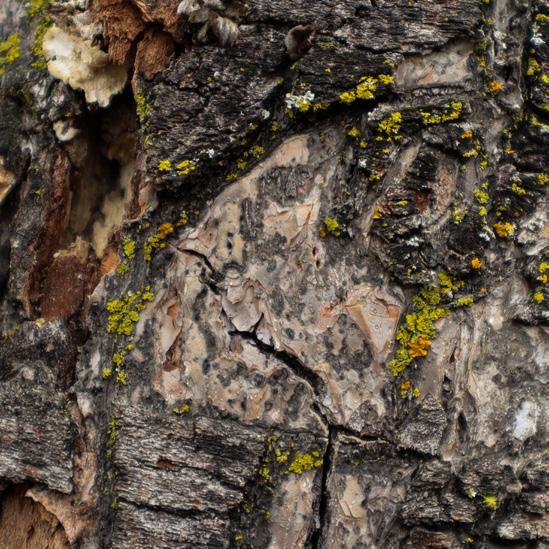
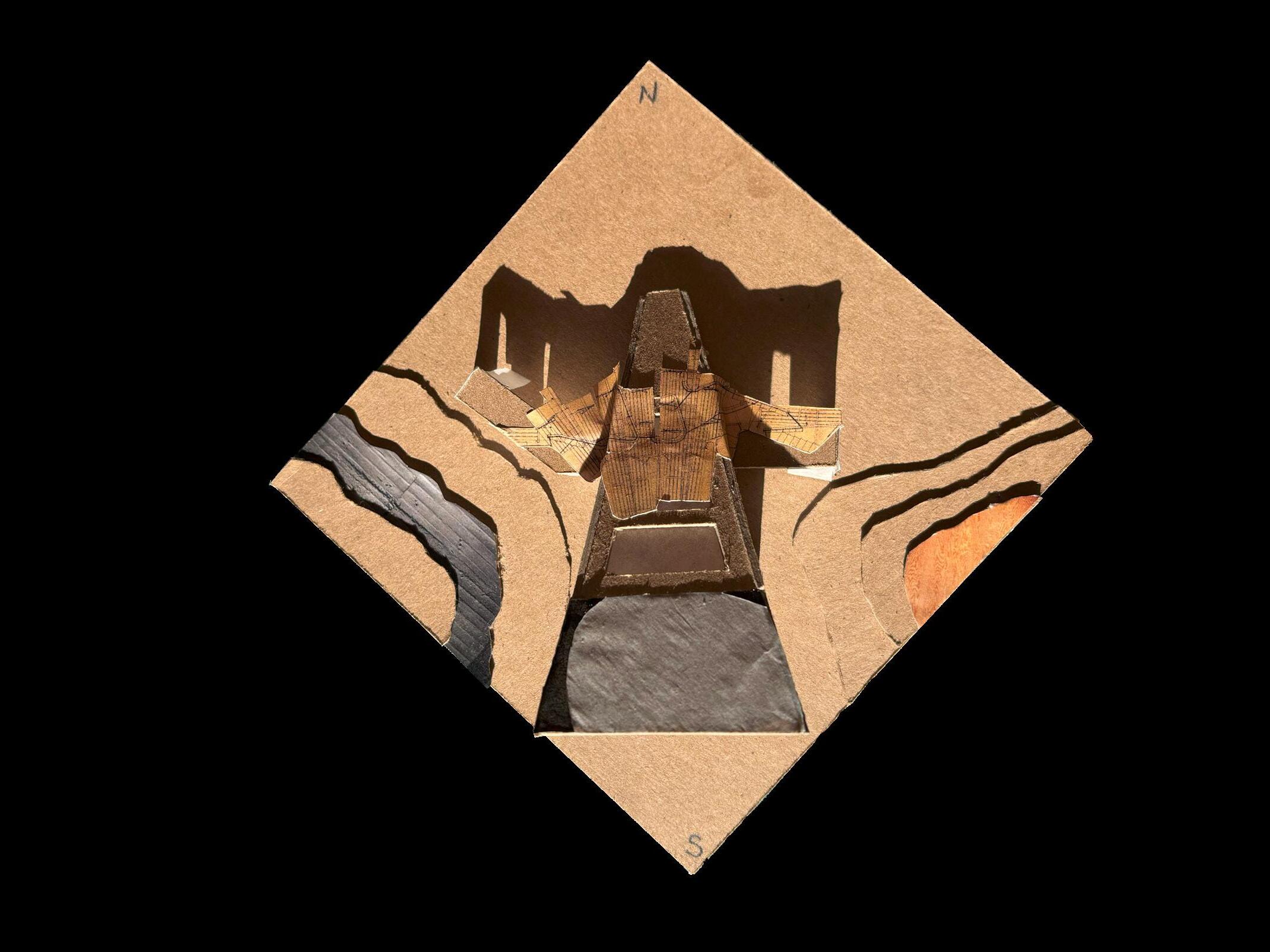
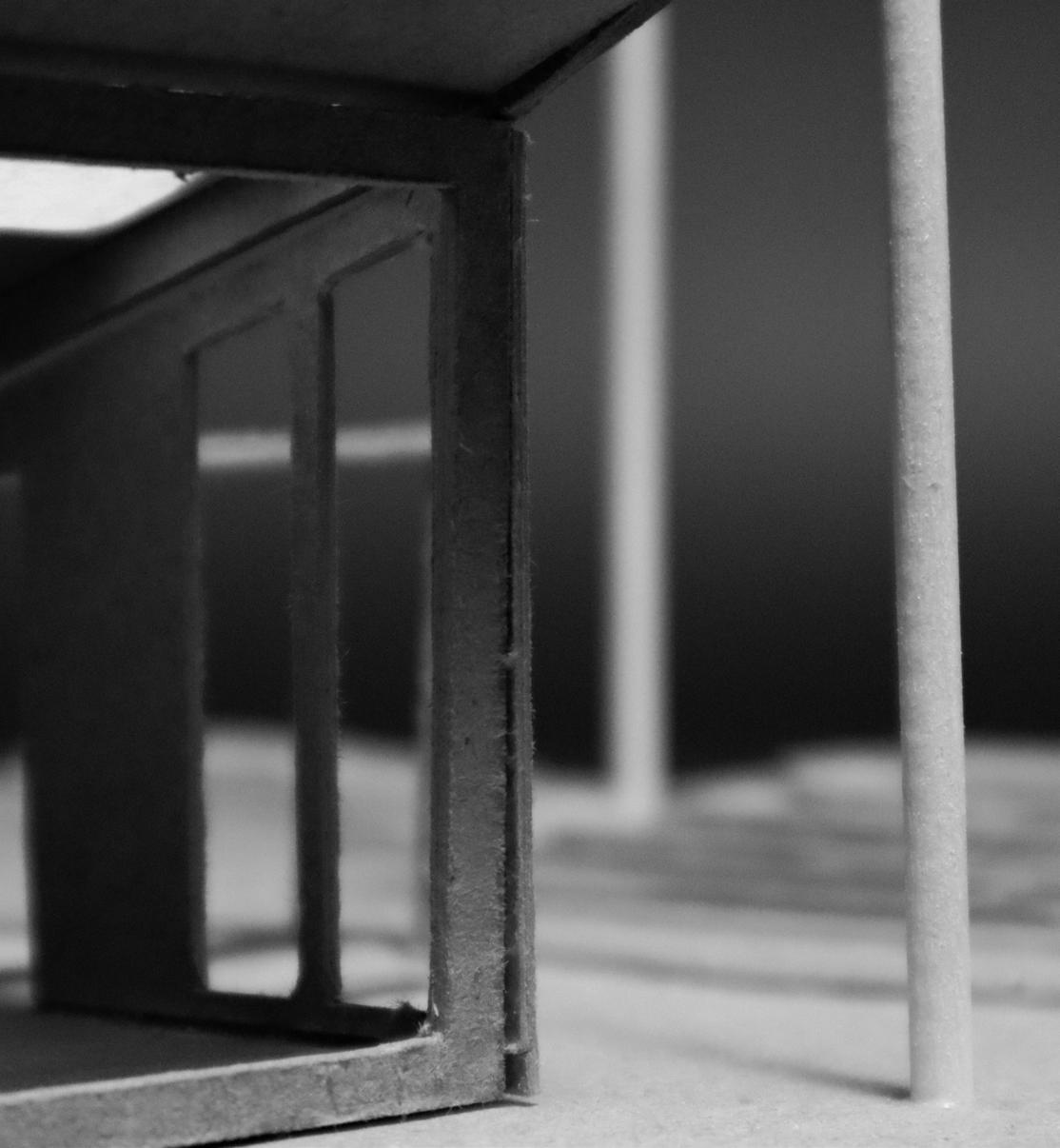
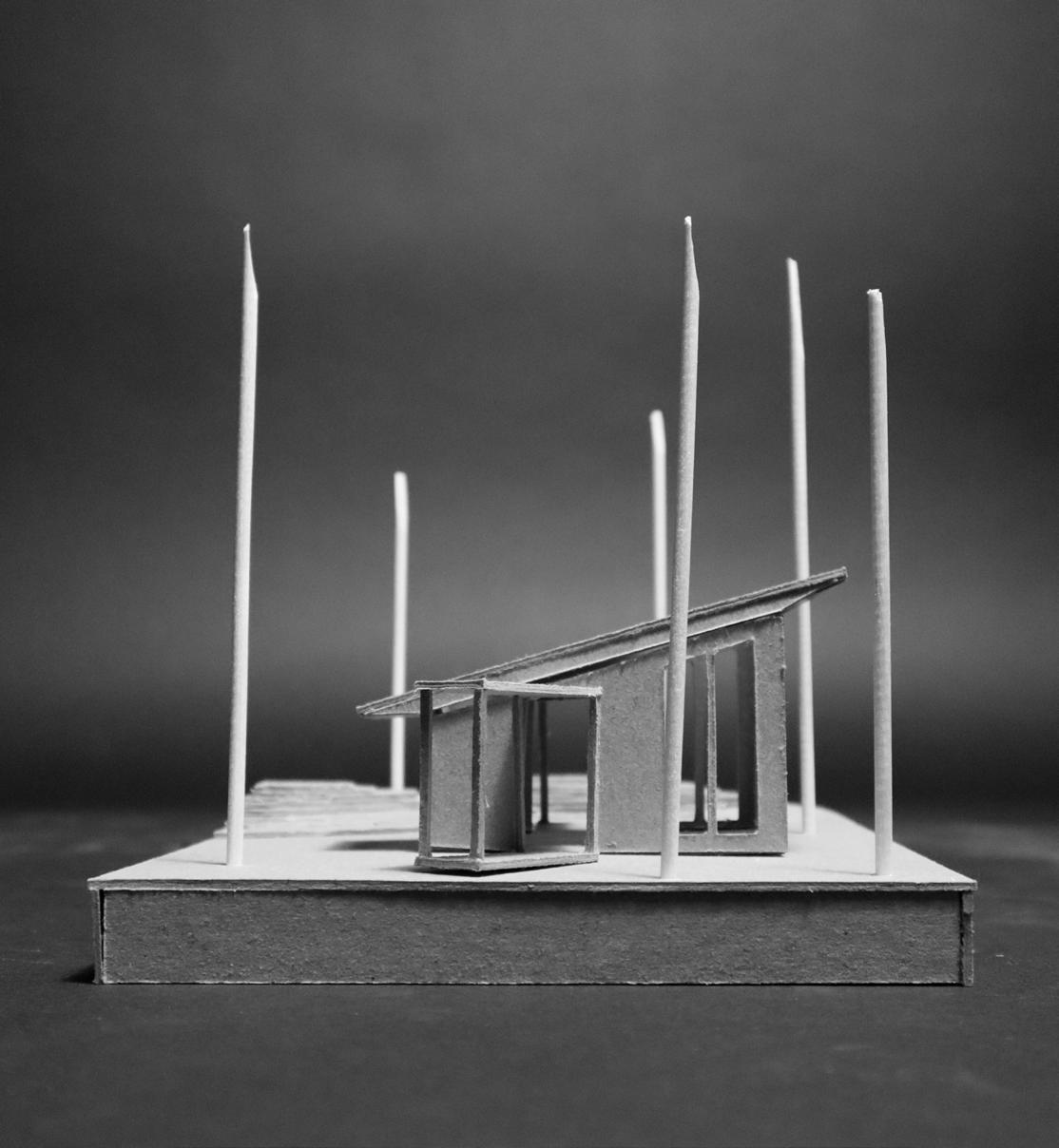
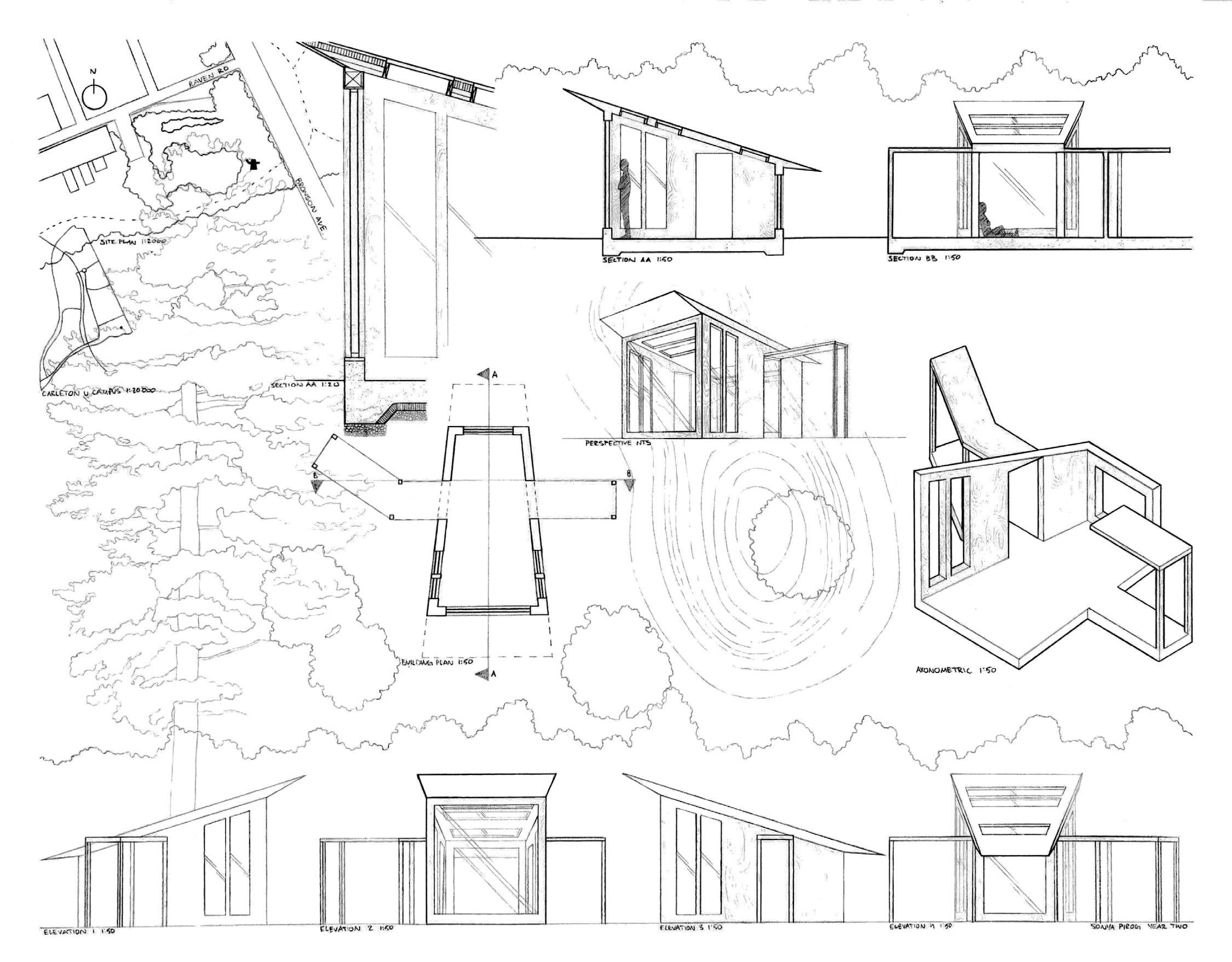
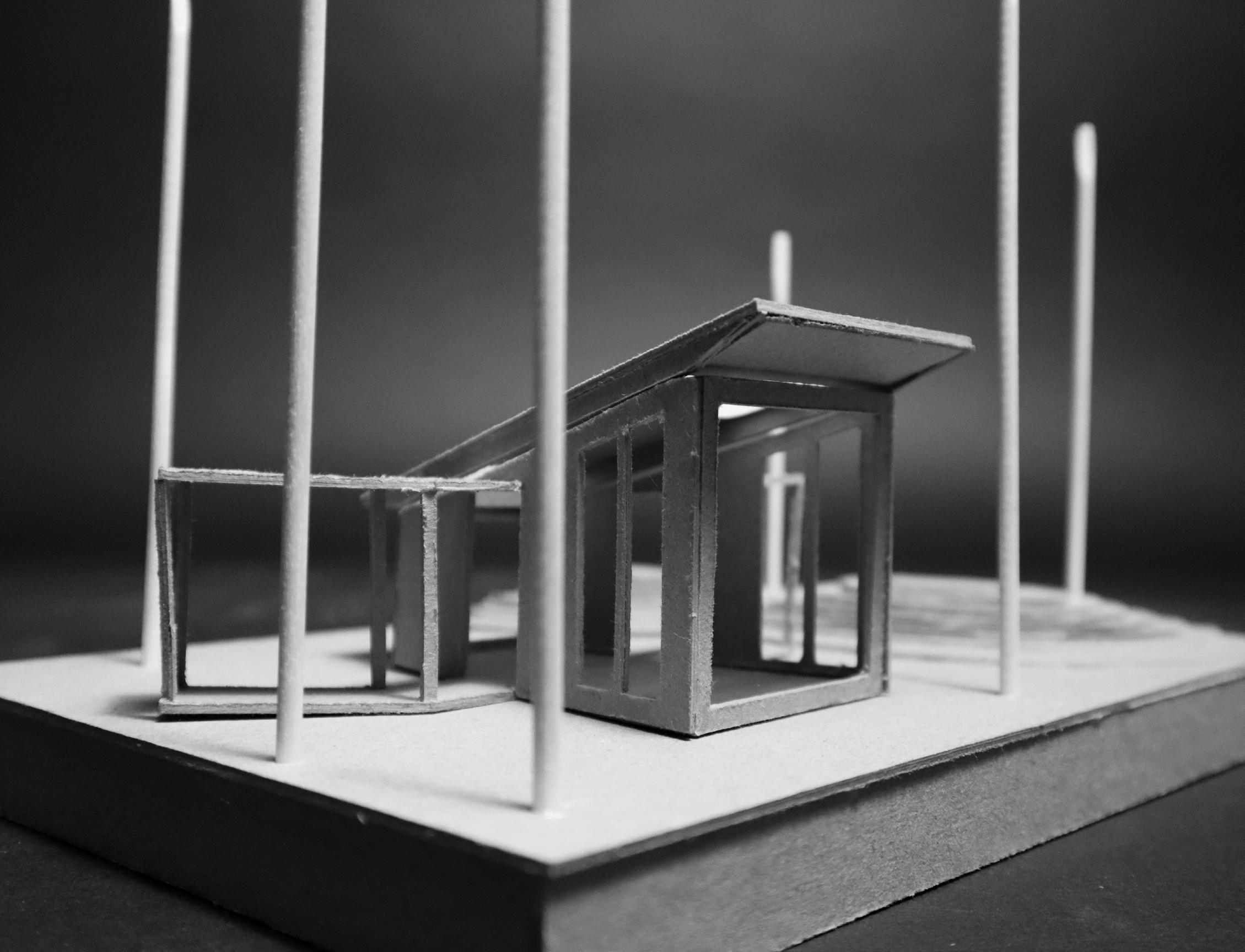
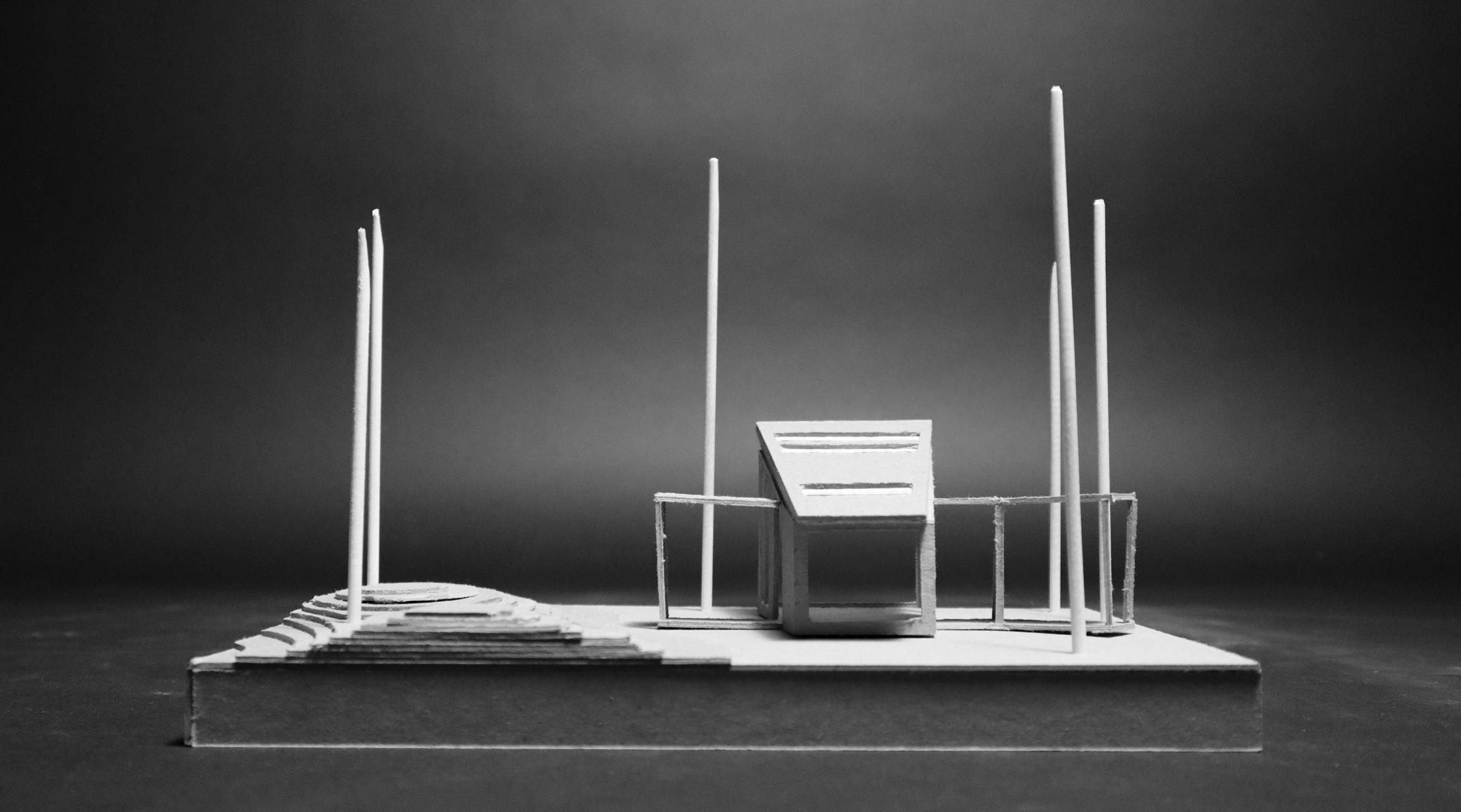
Located in the forest on the corner of Carleton University Campus formed by Raven Rd and Bronson Ave, and facing South toward the Rideau River, the Campus Chapel is a non-denominational chapel inspired by the beauty of its surroundings. A place for rest and reflection, it aims at framing its peaceful, natural landscape, rather than making a statement for itself. Its connection to site was taken into account at every step, and translated into both the design and its final drawings, with all images connecting and overlapping on a single page, rather than being separated by the constraints of separate pages.
- Environment-based design
- Storytelling through drawing
- Connection through drawings
- Contemplative design
- Structure as a frame for its site
Bus Stop at 1065 Ramsey Cres
- Equity in architecture
- Accessible architecture
- Community-forward design
- Unconventional mapping
- Visual communication
- Site analysis
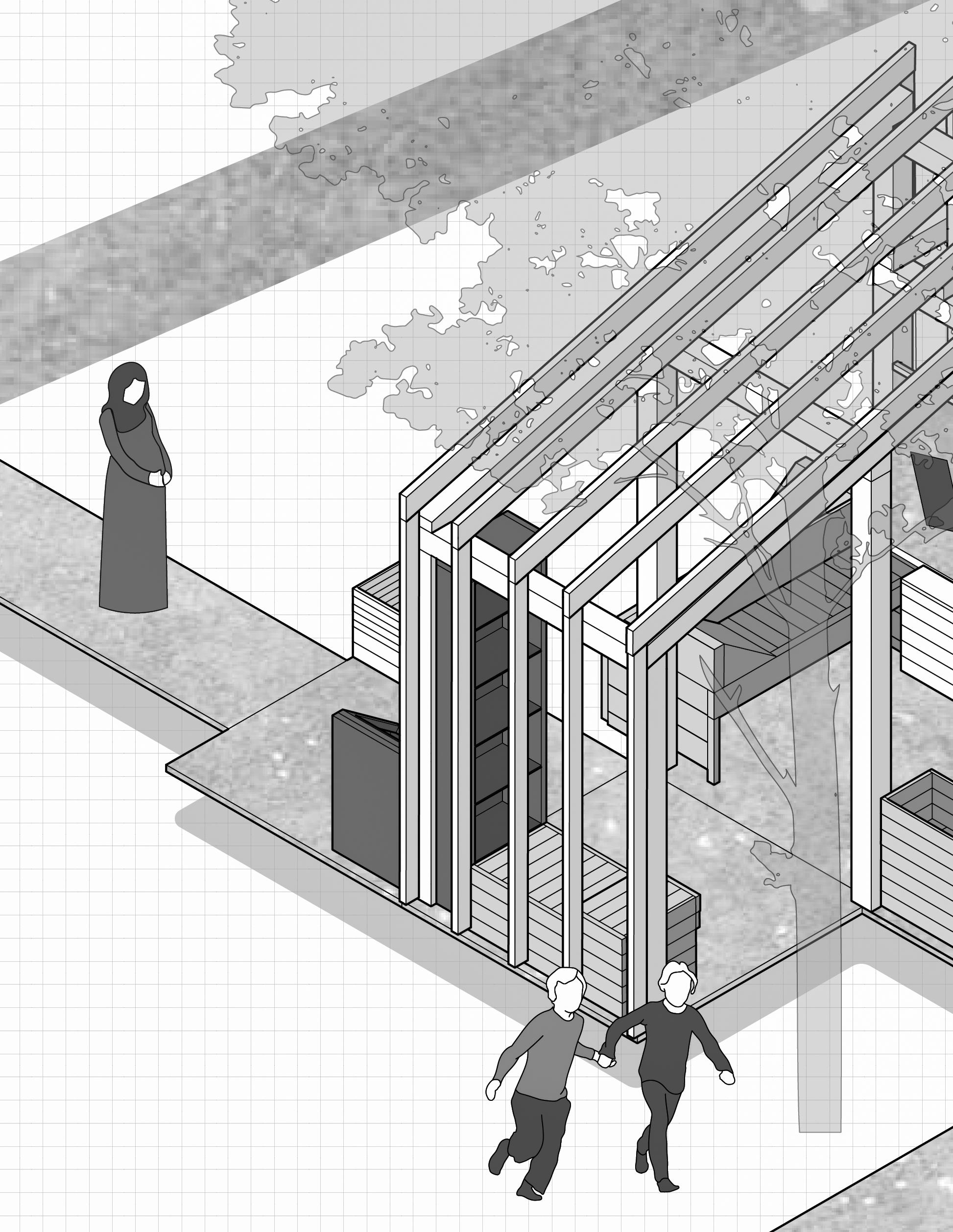
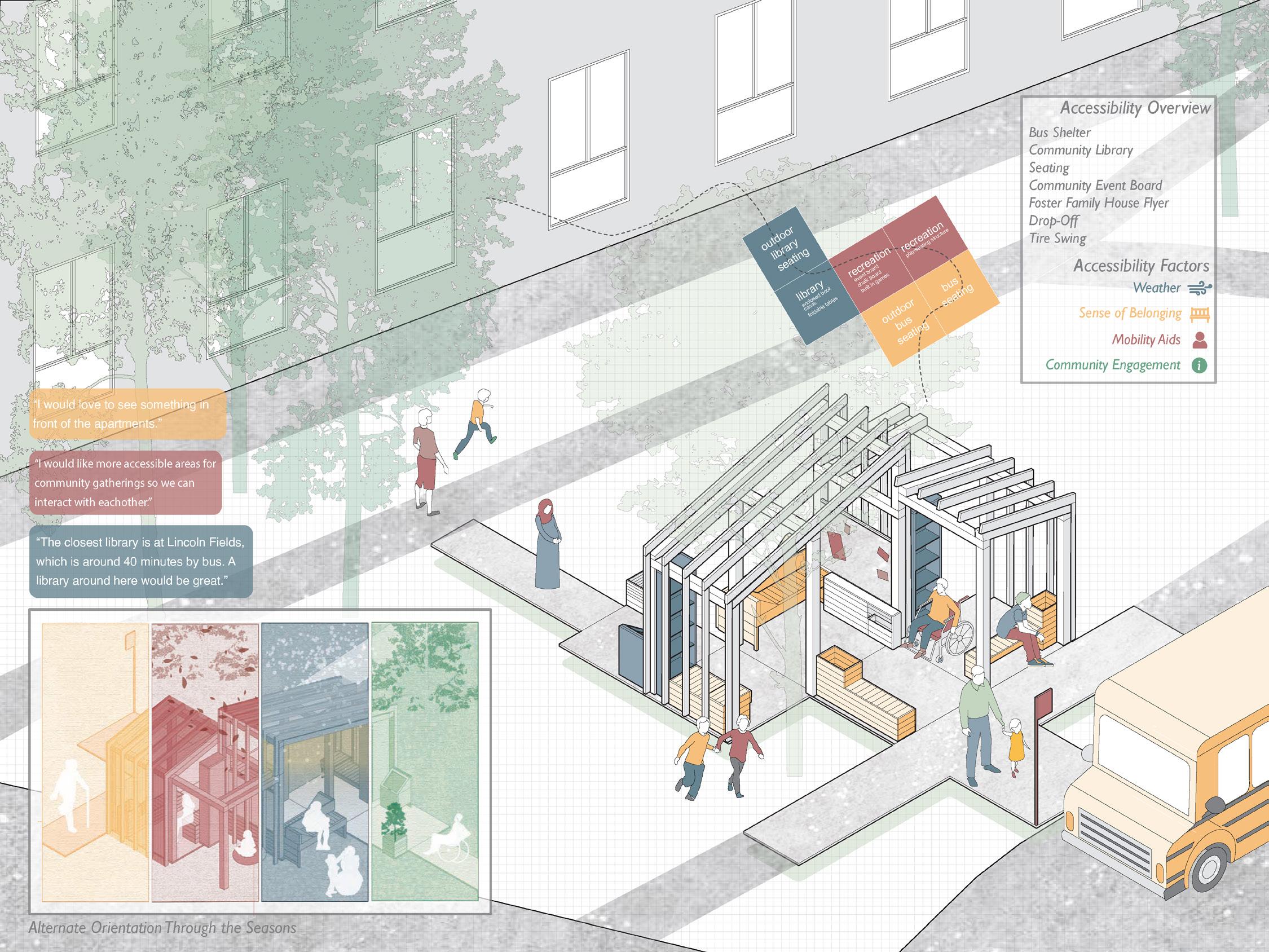
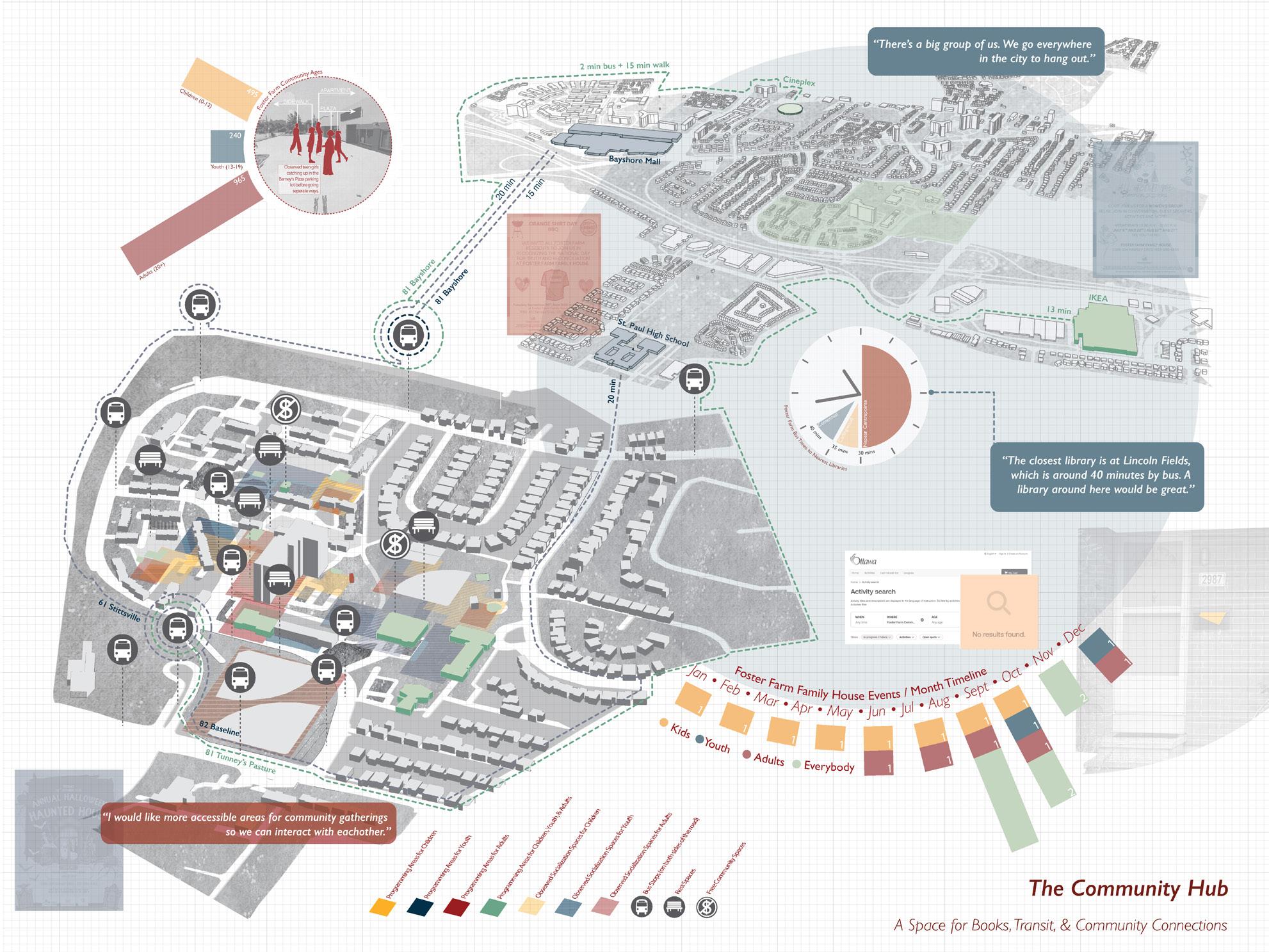
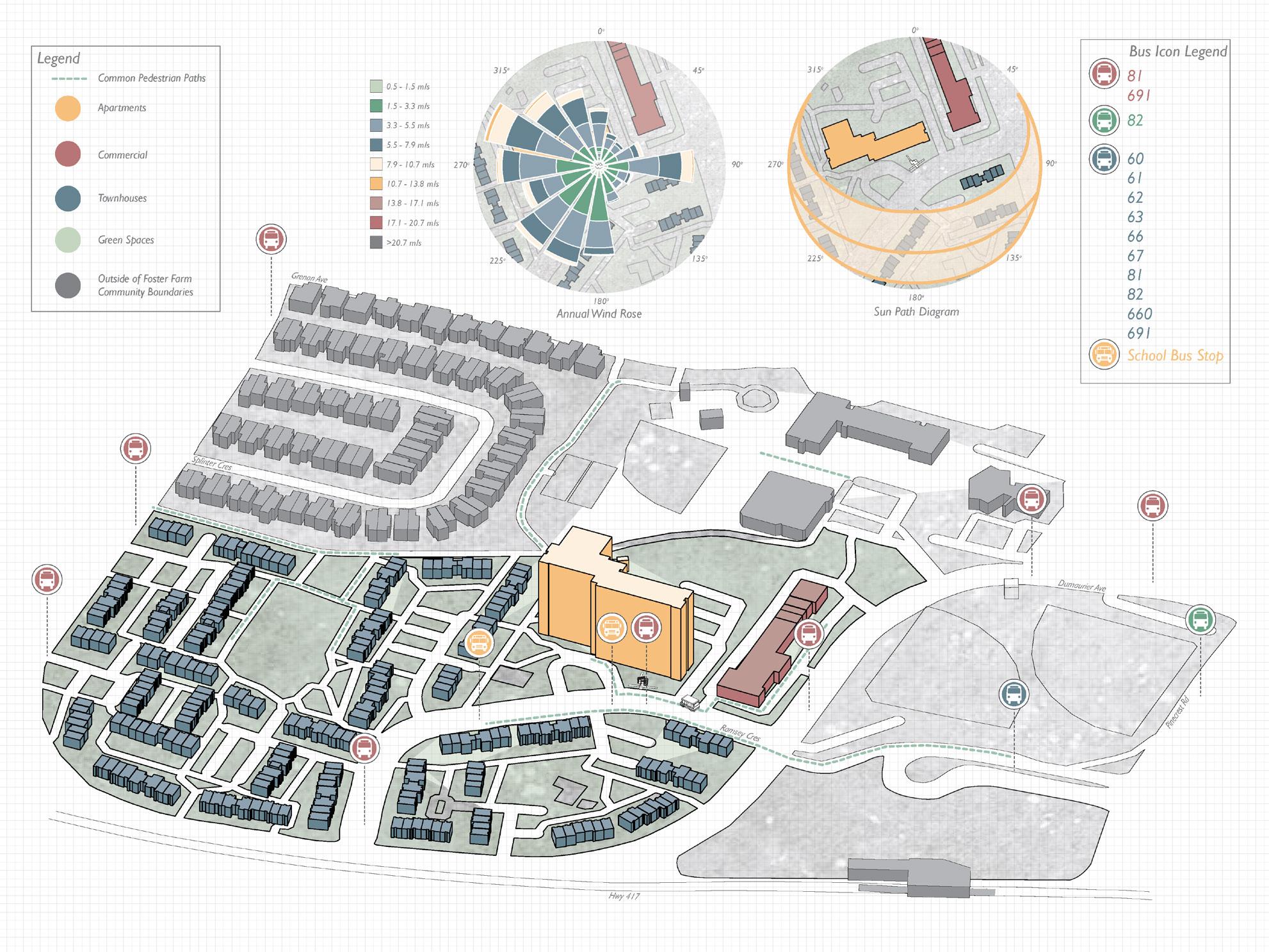
Designed in partnership with Tatiana Povanzanj, the Community Hub came to fruition after several site visits to the Foster Farm community, owned and operated by Ottawa Community Housing. Site visits consisted of observations of the community as well as conversations with community members. Several points overlapped between discussions and observations: a lack of bus shelter at the main bus stop, no nearby libraries, difficulties in advertising community events, and a need for an accessible community gathering space. Acting as a bus shelter, take-a-book leave-a-book library, and community event board complete with a tire swing, the Community Hub aims to fill all of the previously highlighted gaps by being more than a bus stop, a place of passing. It aims to be a destination.
Architectural Association Hooke Park Campus
- Collaborative design
- Wood joinery techniques
- Photogrammetry
- Digital and physical in tandem
- Site management
- Focus on natural materials
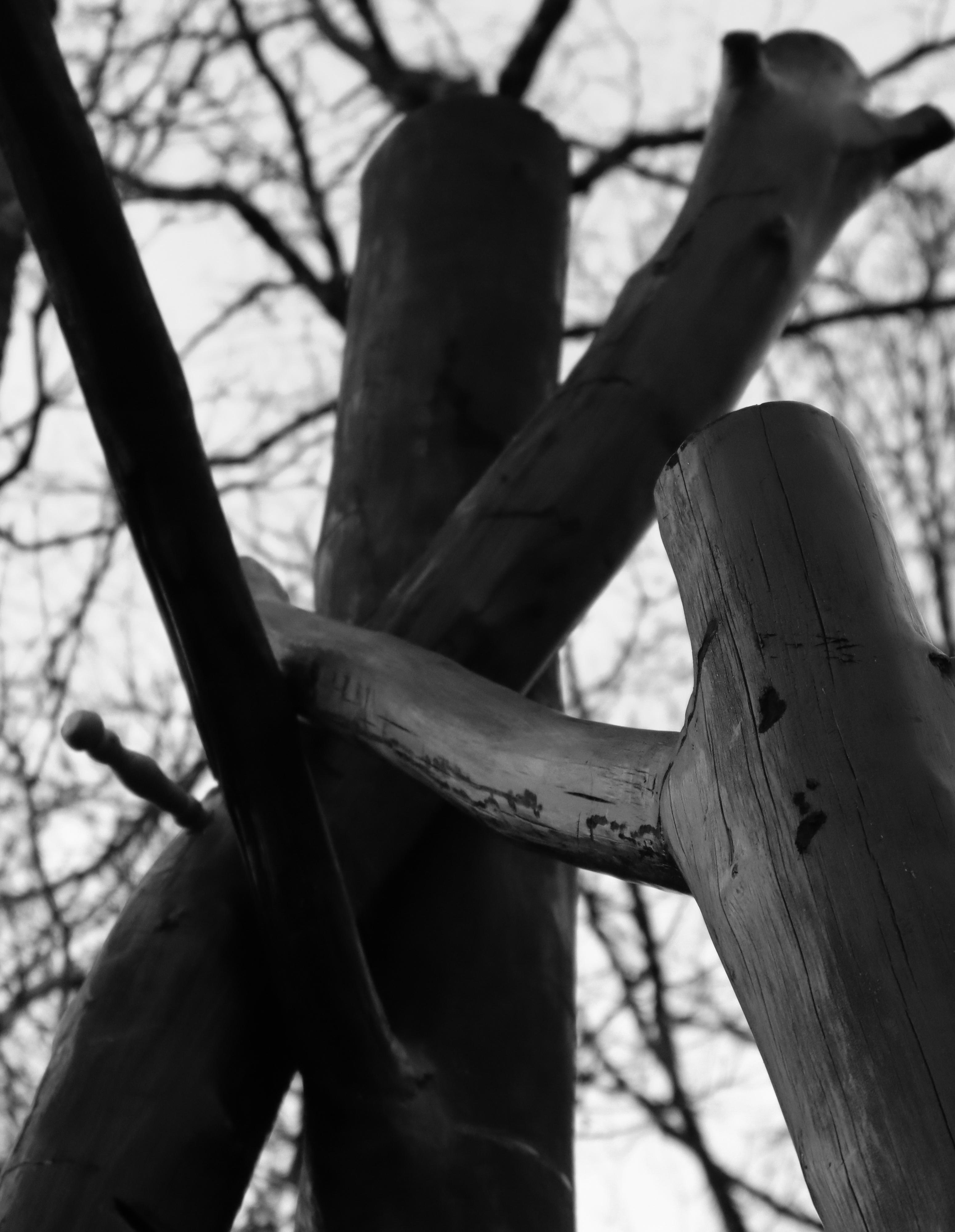
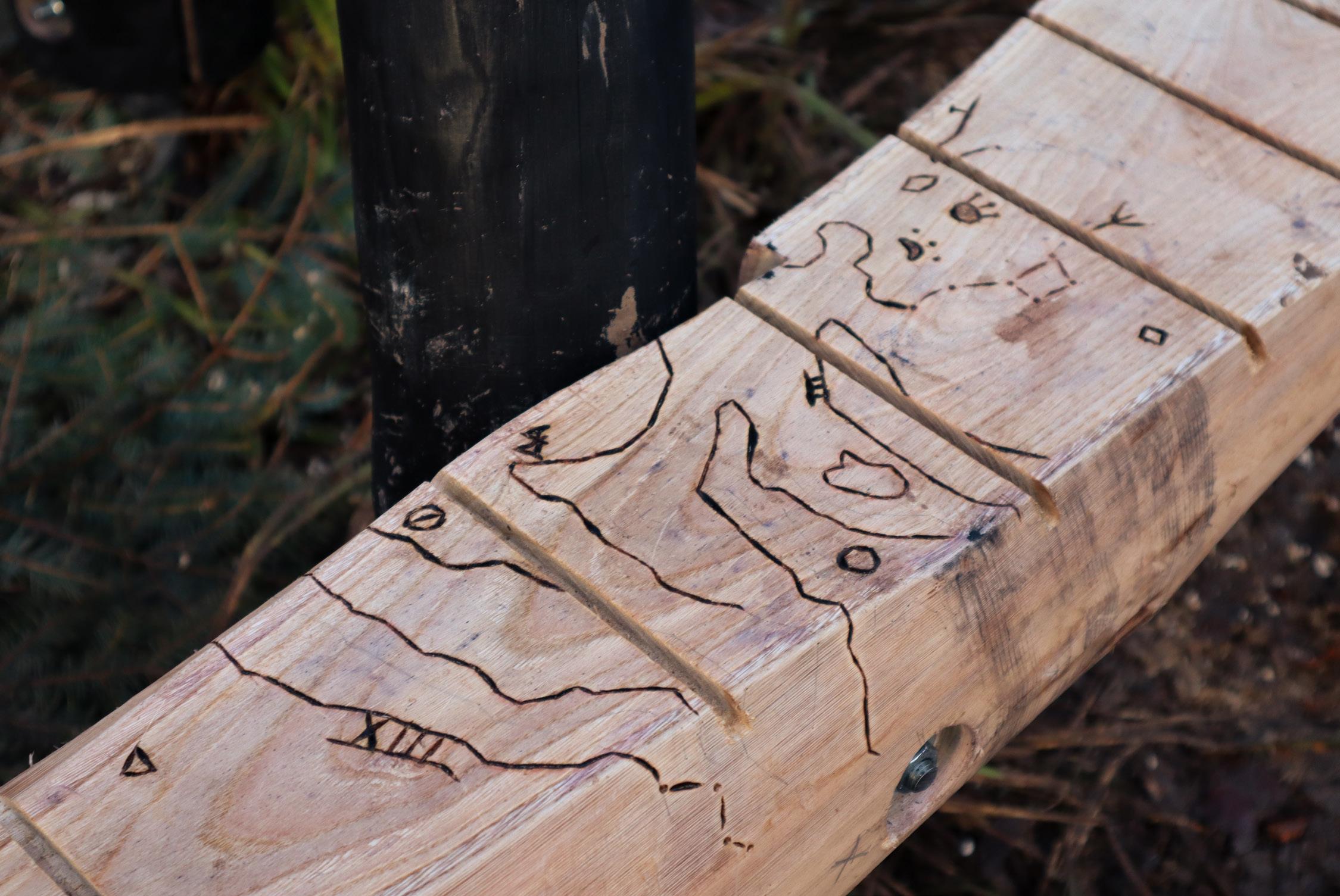
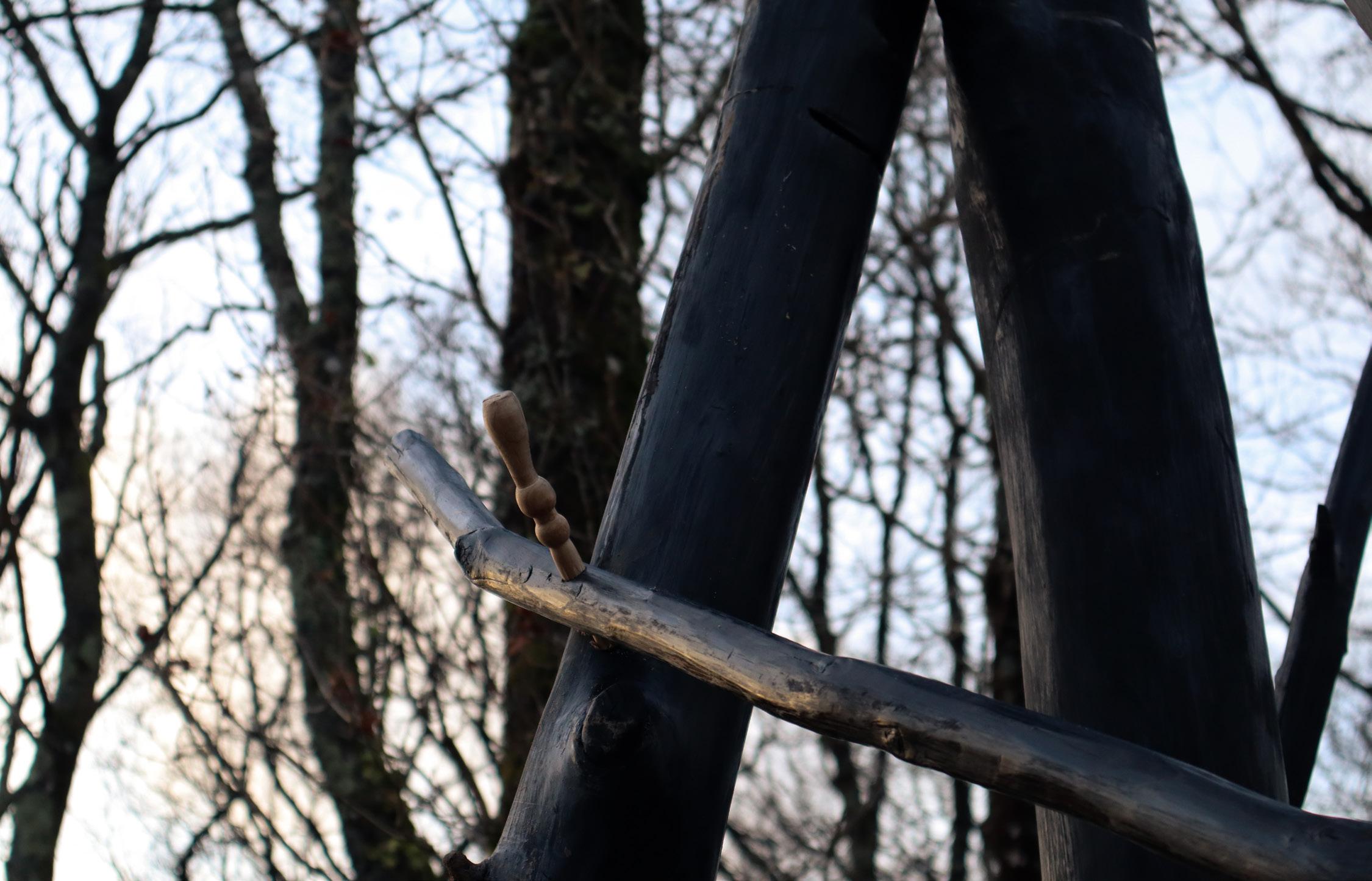
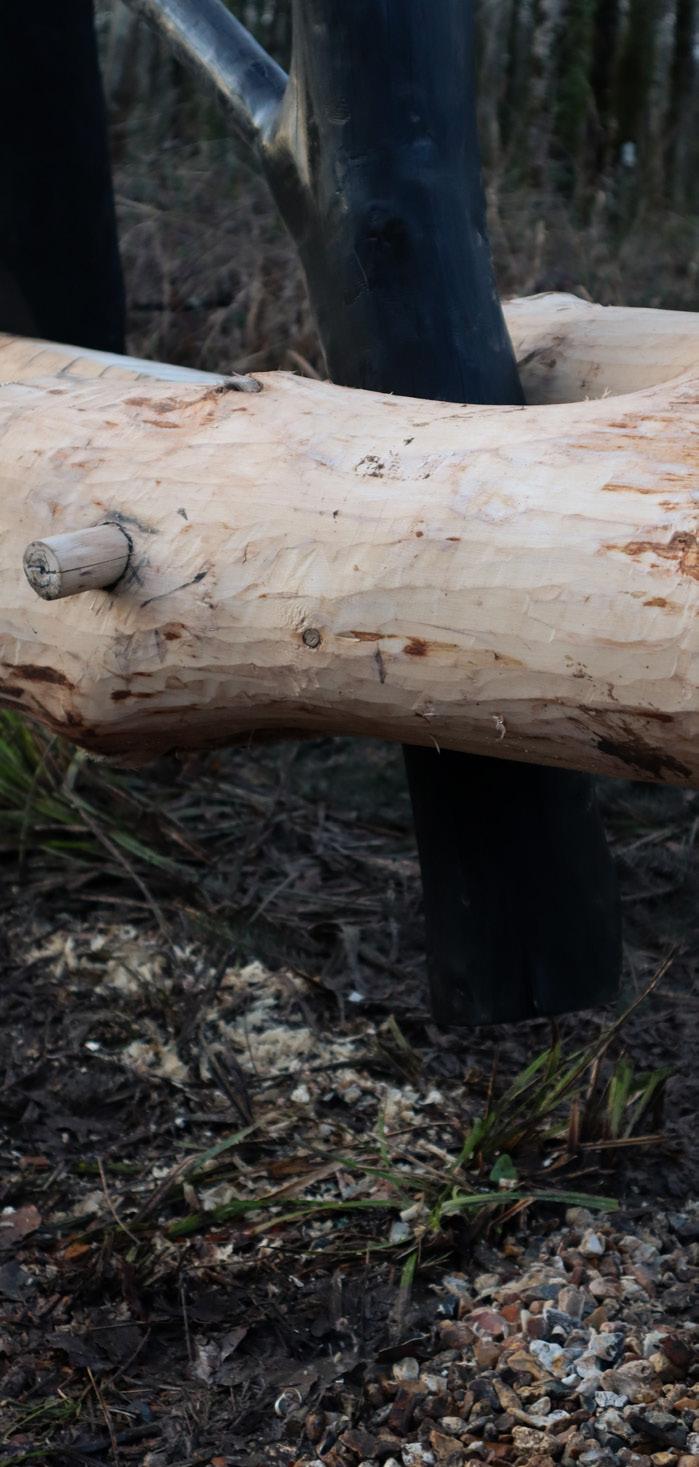
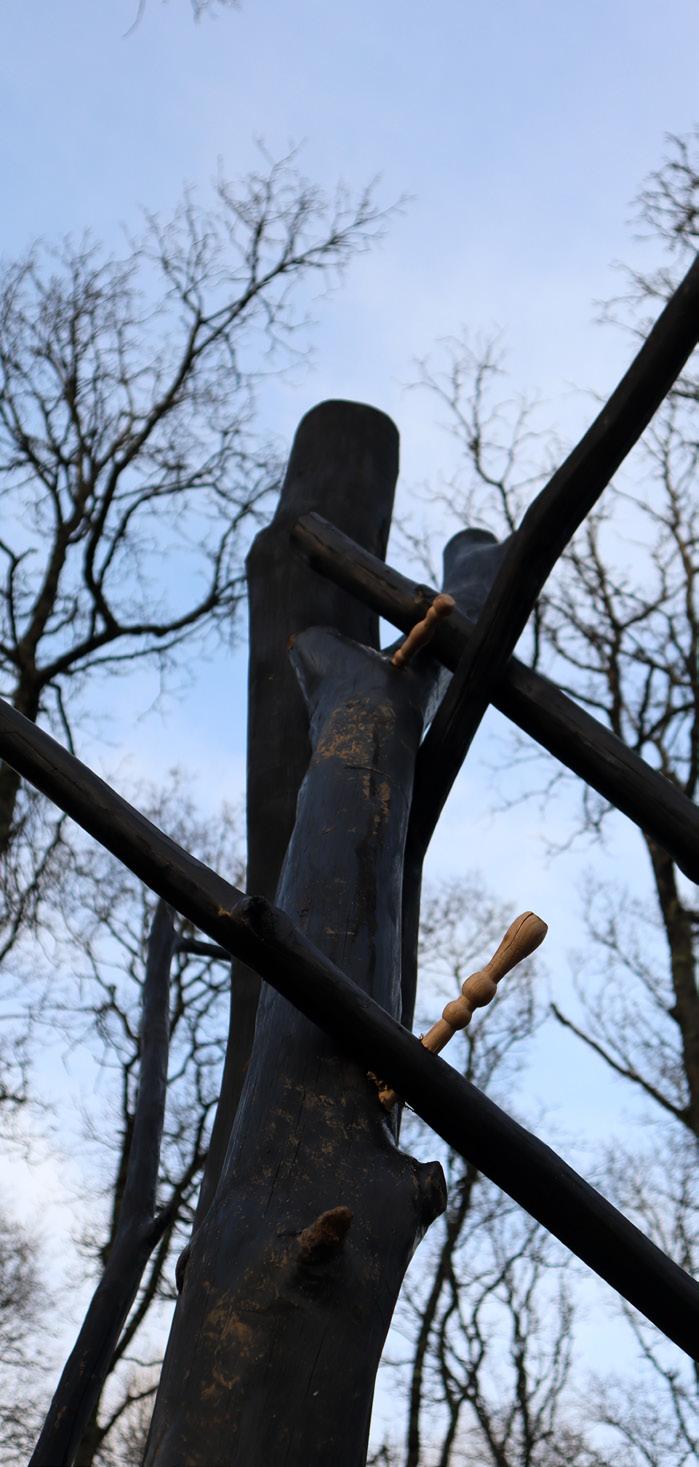
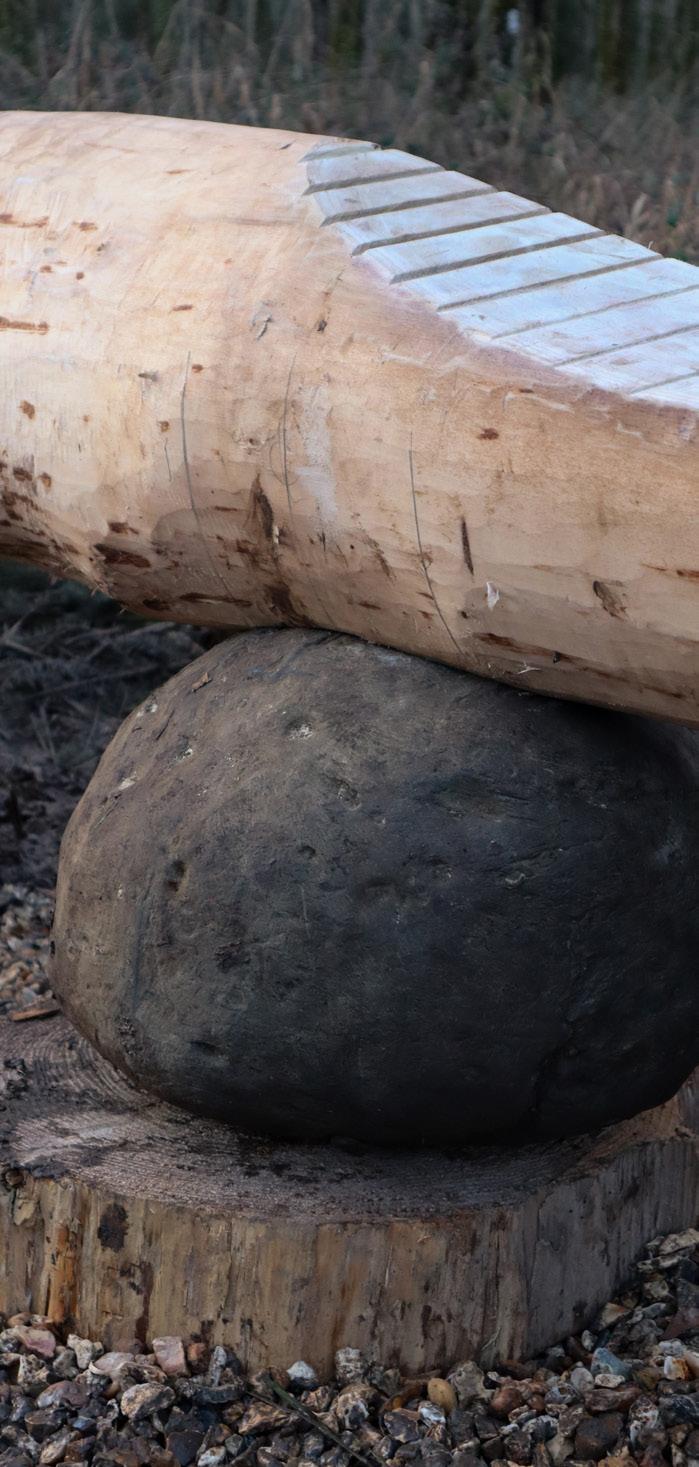
Created in collaboration between Carleton University and the Architectural Association’s Hooke Park Campus, The Three Witches Bench was made during the Third Year Studio 2026 Designated Study Abroad trip. Once a single Sweet Chestnut tree, it was designed, debarked, digitally fabricated, and built by the 12 students and professor over the week of the trip. Techniques used include photogrammtery, wood joinery, wood charring, wood scribing, and pyrography. Inspired by Macbeth’s Three Witches, the three charred branches represent The Maiden, The Mother, and The Crone, each connected with wand dowels. They appear to float over the site, with the main support being the boulder and cantilevered bench. The two witches making contact with the bench give the effect of bleeding onto it, through visuals of the area’s topography and streets, meaningful constellations, and other symbolism through pyrography. It now remains on the Hooke Park Campus, overlooking the English countryside.

sonya.pirog05@gmail.com
linkedin.com/in/sonyapirog