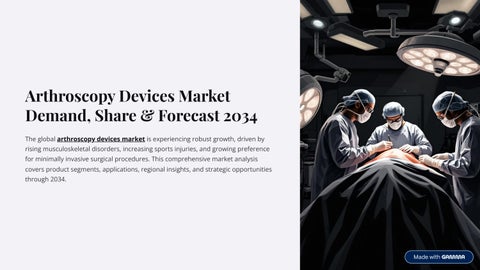
The global arthroscopy devices market is experiencing robust growth, driven by rising musculoskeletal disorders, increasing sports injuries, and growing preference for minimally invasive surgical procedures. This comprehensive market analysis covers product segments, applications, regional insights, and strategic opportunities through 2034.
Market Size and Growth Trajectory
$7.84B
2025 Market Size
Current global market valuation
$15.90B
2034 Projection
Expected market value by forecast end 8.17%
CAGR Growth
Compound annual growth rate 2026-2034
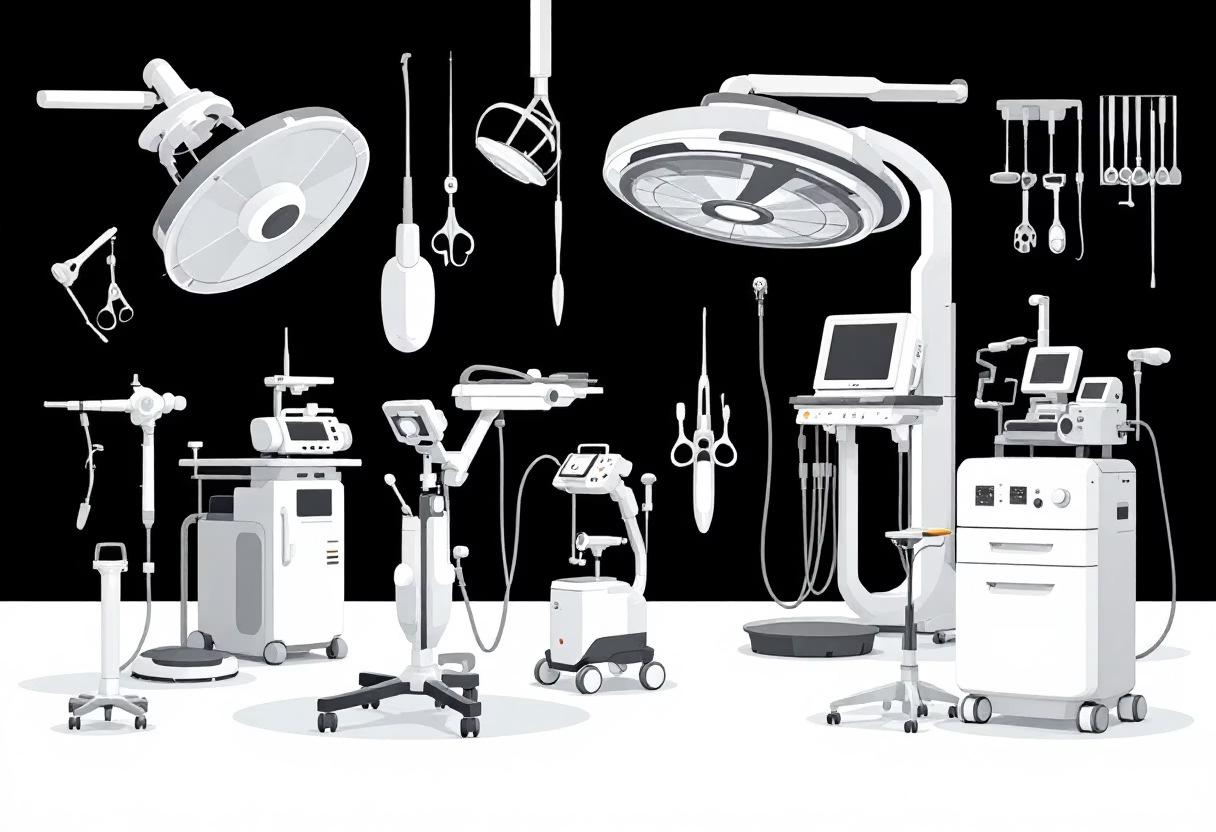
Arthroscopy devices encompass a broad set of medical instruments used for minimally invasive joint surgeries. These include arthroscopes, visualization systems, fluid management systems, radiofrequency systems, powered shavers, and arthroscopic implants.
The market is poised for significant expansion, driven by technological advancements, aging populations, and increasing adoption of minimally invasive procedures across hospitals, ambulatory surgical centers, and specialty orthopedic clinics worldwide.
Growing cases of osteoarthritis, ligament tears, meniscal damage, and sports-related injuries fuel demand for arthroscopic interventions and related devices globally.
Preference for Minimally Invasive Surgery
Surgeons and patients increasingly prefer arthroscopy over open joint surgery due to smaller incisions, lower risk, faster recovery, and reduced hospital stays.
Technological Advancements
Innovations including high-definition visualization systems, motorized shavers, advanced fluid management, bio-absorbable implants, and RF systems improve surgical precision and outcomes.
Expanding Healthcare Infrastructure
Growth of hospitals, ambulatory surgical centers, and orthopedic specialty clinics, particularly in emerging economies, increases accessibility to arthroscopic procedures.
Product Segmentation
Core Product Categories
Arthroscopes: Essential visualization instruments for joint examination
Arthroscopic Implants: Bio-compatible and metal fixation devices
Fluid Management Systems: Control irrigation and fluid flow during procedures
Radiofrequency (RF) Systems: Tissue ablation and coagulation tools
Powered Shaver Systems: Motorized instruments for tissue removal
Visualization Systems: High-definition imaging and display equipment
Other Equipment: Drills, fixation systems, and specialized instruments
Arthroscopy by Joint Type
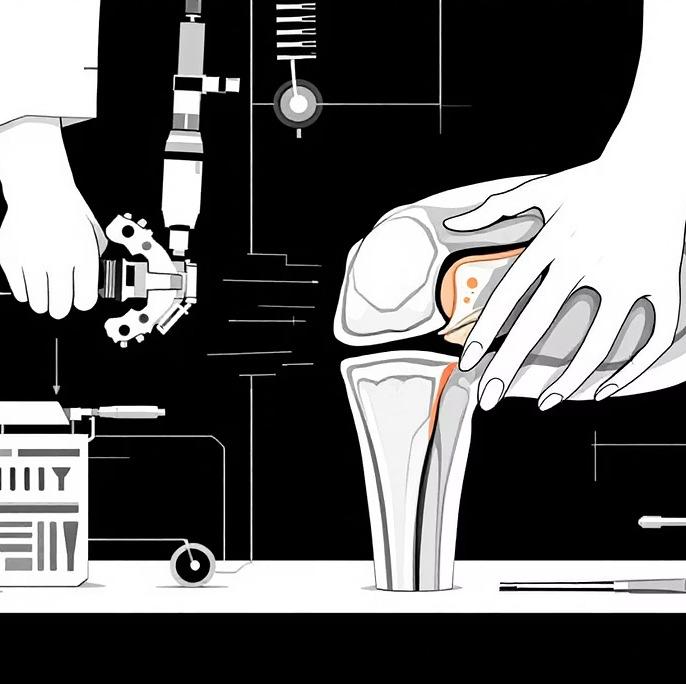
Knee Arthroscopy
Dominant application globally due to high prevalence of knee injuries and degenerative conditions
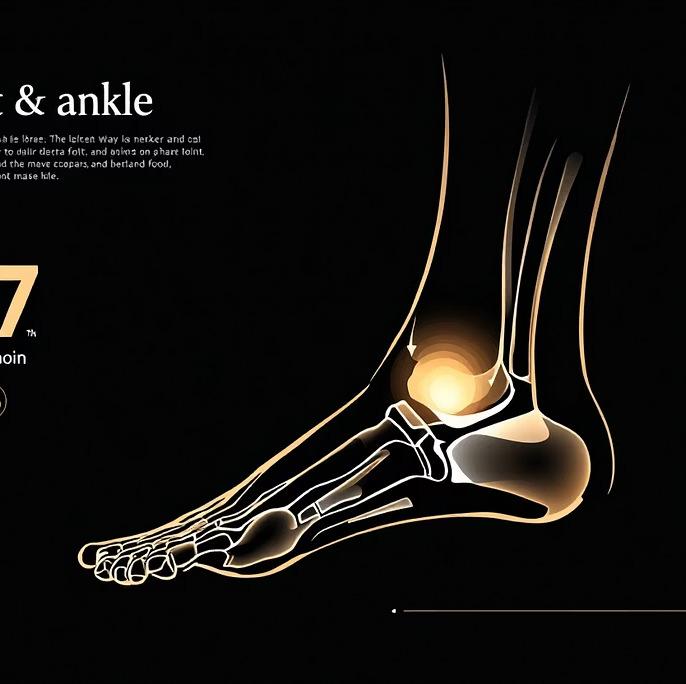
Foot & Ankle
Treatment of ligament injuries and small joint disorders
Hip Arthroscopy
Growing segment for treating hip impingement and labral tears
Shoulder & Elbow
Common procedures for rotator cuff repairs and joint stabilization
Spine Arthroscopy
Emerging application for minimally invasive spinal interventions
Regional Market Dynamics
Europe - Established Market North AmericaMarket Leader
High Upside Potential High Growth Rate
Maturity High Market Share Asia-Pacific - Fastest Growth
& LATAMEmerging Markets
Geographic Insights
North America
Market leader with advanced healthcare infrastructure, high procedure volumes, and favorable reimbursement policies
Europe
Strong market driven by aging population and well-established healthcare systems
Asia-Pacific
Fastest-growing region due to expanding infrastructure, rising income, and medical tourism
& Latin America
Emerging markets with growing healthcare access and infrastructure investments
OPPORTUNITIES
Strategic Growth Opportunities
Emerging Market Expansion
Asia-Pacific regions like India and China show strong potential due to rising healthcare investments, growing awareness of minimally invasive procedures, and increasing sports injuries among younger populations.
Product Innovation
Development of next-generation implants, improved visualization systems, portable fluid management devices, and advanced RF/motorized tools enables market differentiation and share capture.
ASC Growth
Expansion of ambulatory surgical centers globally drives demand for arthroscopy devices optimized for outpatient settings with compact, efficient, lower-cost systems.
Aging Population
Global increase in elderly population prone to osteoarthritis and degenerative joint conditions boosts long-term demand for arthroscopic devices and interventions.
Competitive Landscape
Leading Market Players
The market is characterized by intense competition among established multinational medical device manufacturers and specialized orthopedic firms. Companies compete on technological innovation, product portfolio breadth, quality, and global distribution reach.
Arthrex, Inc.
CONMED Corporation
Johnson & Johnson Services
KARL STORZ SE & Co. KG
Medtronic
Smith & Nephew
Stryker Corporation
Zimmer Biomet
Innovation and Market Developments
1 Stryker 4K Visualization
Introduced upgraded arthroscopy visualization platform featuring enhanced 4K imaging and improved soft-tissue differentiation for precision procedures
2 Arthrex Bio-Absorbable Anchors
3 Smith+Nephew Digital Platform
Expanded portfolio with new bio-absorbable suture anchors designed to promote bone integration and reduce metal implant complications
Rolled out digitally integrated sports medicine platform connecting smart arthroscopy instruments with surgical planning tools 4 ConMed Powered Resection
5 Karl Storz AI Optimization
Launched AI-enabled image-optimization software for arthroscopy towers, automating lighting and contrast adjustments
Received regulatory clearance for next-generation powered resection system with torque-sensing technology for enhanced surgical accuracy
Key Takeaways and Market Outlook
Market Highlights
Expected market growth by 2034
Future Outlook
Annual growth rate through forecast period
The arthroscopy devices market is positioned for substantial growth through 2034, driven by technological innovation, demographic shifts, and expanding healthcare infrastructure globally. North America maintains market leadership while Asia-Pacific emerges as the fastest-growing region.
Key success factors include continued product innovation, strategic geographic expansion, and adaptation to evolving healthcare delivery models including ambulatory surgical centers. The shift toward minimally invasive procedures and aging populations worldwide ensure sustained longterm demand.
"The convergence of advanced visualization technology, bio-compatible implants, and minimally invasive techniques is transforming orthopedic care and expanding treatment accessibility worldwide."