




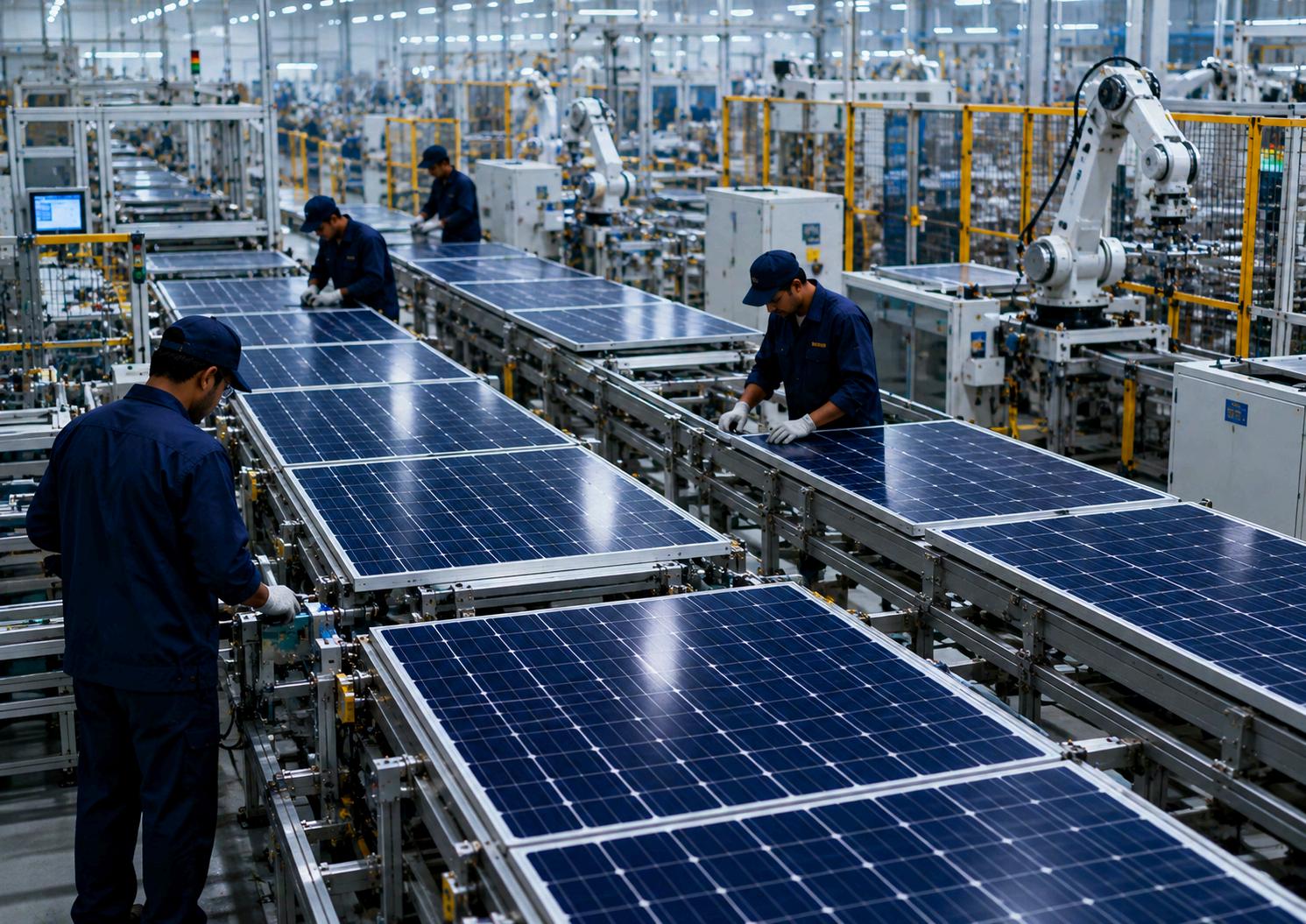
Rooftop Solar Demand Driving Domestic
Manufacturing: MUST READ How Distributed Energy Is Reshaping Factory Expansion Plans
readmore......











Rooftop Solar Demand Driving Domestic
Manufacturing: MUST READ How Distributed Energy Is Reshaping Factory Expansion Plans
readmore......
MNRE Retains June 2026 ALMM List-II Deadline With Conditional Relief For Solar Developers
TheMinistryofNewandRenewableEnergy(MNRE) has confirmed that the ALMM List-II implementation deadline will remain June 1, 2026, with no blanket extension. The decision supports policy stability and domestic solar manufacturing growth. However, developers who have already made substantial investments may receive conditional relief if they meet specified criteria related to project progress, land acquisition, financing, connectivity approvals, and module installation status. Applications must be submittedonlinebyJune30,2026.
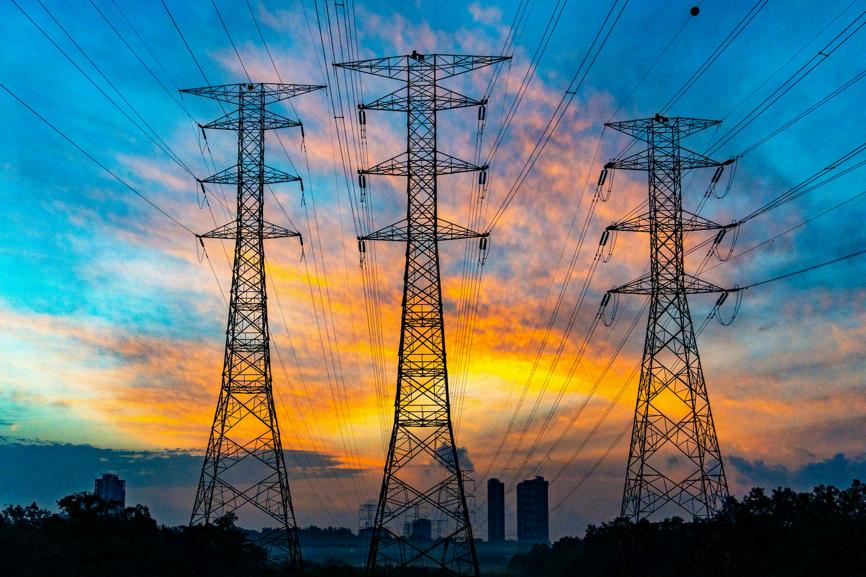
Ministry Of Power Implements Jan Vishwas Act Reforms In Power Sector From June 1, 2026
The Government of India has begun implementing power sector reforms under the Jan Vishwas (Amendment of Provisions) Act, 2026. The legislation focuses on decriminalizing minor offenses and rationalizing penalties to improve ease of doing business and promote trust-based governance.
Following the Act’s notification, the Ministry of Power has initiated administrative measures and regulatory changes aimed at simplifying compliance and improvingsectorgovernance.
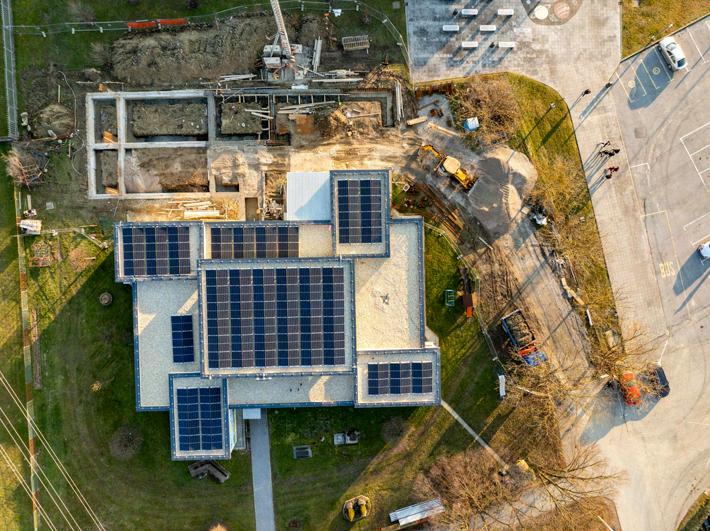
MNRE Mandates Online Submission Of Renewable Energy Project Extension Requests Via DCR Portal
MNREhasintroducedamandatoryonlineprocess for renewable energy developers seeking commissioning deadline extensions beyond June 1, 2026. All requests must now be submitted through the DCR Portal, while offline applications will no longer be accepted. The advisory aligns with recent ALMM List-II compliance guidelines and aims to streamline project extension requests through a transparentandcentralizeddigitalmechanism.
The Ministry of Power has revised local content requirementsforLineCommutatedConverter(LCC)-based HVDC substations to encourage domestic manufacturing while providing industry flexibility. Under the phased approach, local content requirements will be 30% until March 2028, rising to 40% in 2028, 50% in 2030, and reaching 60% by April 2032. The move supports the government’s Make in India initiative and strengthens the domesticpowerequipmentecosystem.
CERC has proposed the Fourth Amendment to the ISTS Connectivity and GNA Regulationstoimproveflexibilityforrenewableenergyandenergystorageprojects.Key proposals include refund of connectivity bank guarantees in case of prolonged delays, new norms for Energy Storage Systems, non-solar hour connectivity access, and streamlined procedures for multi-location renewable projects. The reforms aim to enhanceoperationalefficiencyandreduceprojectdevelopmentchallenges.

CERC Approves Standardized Time Slots For Power Trading Across Indian Exchanges
CERChasapprovedstandardizedtimeslotsforelectricitytrading across power exchanges, including IEX, PXIL, and HPX. The new framework introduces fixed trading blocks such as Morning Peak, Evening Peak, Day Off-Peak, and Night Off-Peak periods. Separate solar and non-solar trading windows have also been defined. The reformisdesignedtoimprovetransparency,marketefficiency,and liquiditywhilecreatingauniformtradingstructurenationwide.
CERC Approves New Green Power Trading Framework For IEX Under Revised Renewable Consumption Obligation (RCO) Rules
CERChasapprovedarevisedgreenpowertradingframeworkfor IEX to align with the updated Renewable Consumption Obligation (RCO) structure. Renewable energy procurement will now be categorized into Wind, Hydro, Distributed Renewable Energy, and Other Renewable Energy segments. The framework enhances transparency,introducescategory-specificcompliancemechanisms, reducesminimumbidsizes,andsupportsmoreefficientrenewable energytradingandaccountingacrossIndia’spowermarket.
CERC Grants Transmission License To POWERGRID Subsidiary For Karnataka Renewable Energy Evacuation Project

CERChasgrantedatransmissionlicensetoa wholly owned subsidiary of POWERGRID for the implementation of a renewable energy evacuation project in Karnataka. The project is designed to strengthen transmission infrastructure for integrating renewable energy generation into the national grid. Awardedthroughthetariff-basedcompetitive bidding process, the project will support renewable energy expansion and improve powerevacuationcapabilitiesinthestate.

CERC Initiates License Revocation Proceedings Over Repeated Power Trading Compliance Failures
CERC has initiated proceedings to revoke the inter-state trading license of a power trading company over repeated noncompliance with regulatory requirements. The Commission observed multiple violations related to operational and reporting obligations despite previous directions and opportunities for corrective action. The move highlights CERC’s commitment to maintaining regulatory discipline, transparency, and accountability withinIndia’selectricitytradingmarket.
CERC Proposes Faster Real-Time Power Market To Support India’s Renewable Energy Growth
CERChasproposedsignificantchangestotheReal-TimeMarket(RTM)frameworkbyreducingthe gateclosuretimelinefromonehourto30minutesbeforepowerdelivery.Theproposalaimsto improve grid flexibility, enhance renewable energy integration, and enable more accurate scheduling closer to real-time operations. The reforms are expected to support India’s growing renewableenergycapacitywhileimprovingoverallmarketefficiency.
CERC Moves Ahead On Transmission License For 2,500 MW Khavda Renewable Energy Evacuation Project In Gujarat
CERChasadvancedthetransmissionlicensingprocessforamajorrenewableenergyevacuation projectlinkedtothe2,500MWKhavdaRenewableEnergyParkinGujarat.Theprojectincludes critical transmission infrastructure for evacuating renewable power from one of India’s largest cleanenergyhubs.Developedthroughacompetitivebiddingroute,theprojectwillstrengthen gridconnectivityandsupportlarge-scalerenewableintegration.
CERC Reviews Dispute Between Renewable Developers And CTUIL Over Transmission Charges
CERC has reviewed a dispute involving renewable energy developers and the Central Transmission Utility of India Limited (CTUIL) regarding transmission charge liabilities. The case focuses on the applicability of transmission charge waivers and related regulatory provisions for renewable energy projects. The Commission examined submissions from both parties and consideredregulatoryinterpretationsthatcouldinfluencefuturetransmissioncosttreatmentforrenewableenergydevelopers.

Andhra Pradesh Electricity Regulatory Commission Proposes New Rules On Electricity Connections And Dedicated DTR Charges
TheheAndhraPradeshElectricityRegulatoryCommission(APERC)hasissueddraftregulationsproposingrevisedprocedures forelectricityconnectionsandtherecoveryofDedicatedDistributionTransformer(DTR)charges.Theproposalaimstoimprove transparencyinserviceconnections,streamlineconsumerapplicationprocesses,andestablishclearguidelinesforcost-sharing andinfrastructuredevelopment.Stakeholdershavebeeninvitedtoprovidefeedbackbeforetheregulationsarefinalized.
Gujarat Approves GIREP-2025 SOP To Accelerate Renewable Energy And Battery Storage Projects
The Government of Gujarat has approved the Standard Operating Procedure (SOP) under the Gujarat Integrated Renewable EnergyPolicy(GIREP)-2025.Theframeworkaimstoexpediteapprovalsandimplementationofrenewableenergyandbattery energy storage projects across the state. The SOP outlines procedures for land allocation, connectivity, project development, andregulatoryclearances,supportingGujarat’sambitiontoexpandcleanenergycapacity.


CERC Proposes New Mechanism To Free Stranded Renewable Energy Grid Connectivity

CERC has proposed amendments to grid connectivity regulations aimed at addressing the issue of stranded renewable energy connectivity. The proposal introduces a mechanismthatwouldallowunusedconnectivitycapacityto besurrenderedandreallocatedmoreefficiently.Theinitiative seeks to optimize transmission infrastructure utilization, reduce project delays, and facilitate faster integration of renewableenergyprojectsintothenationalgrid.
MSERC Notifies DRES Regulations 2026 To Boost GridConnected Renewable Energy Adoption In Meghalaya
The he Meghalaya State Electricity Regulatory Commission (MSERC) has notified the Distributed Renewable Energy Systems (DRES) Regulations, 2026, to encourage grid-connected renewable energy deploymentacrossthestate.Theregulationsprovidea frameworkforinstallation,connectivity,operation,and energy accounting of distributed renewable systems. The move is expected to promote clean energy adoption, enhance consumer participation, and supportMeghalaya’srenewableenergytransition.

West Bengal Electricity Regulatory Commission Approves 600 MW WindSolar Hybrid Power Procurement For CESC At Competitive Tariffs
The West Bengal Electricity Regulatory Commission (WBERC) has approved CESC Limited’s procurement of 600 MW of wind-solar hybrid power through a competitive bidding process. The approved tariffs were found to be reasonable and beneficial for consumers. The procurement will help diversify CESC’senergyportfolio,strengthenrenewableenergy adoption,andsupportlong-termcleanenergysupply requirementsinthestate.

HERC Imposes ₹1.37/Unit Additional Surcharge On Open Access Consumers In Haryana
TheHaryanaElectricityRegulatoryCommission(HERC)has approvedanadditionalsurchargeof ₹1.37perunitonopen accessconsumersinthestate.Thesurchargeisintendedto compensate distribution licensees for fixed costs arising from stranded power capacity when consumers procure electricity through open access. The order will apply to eligible consumers and reflects HERC’s efforts to balance consumerchoicewithutilitycostrecovery.
Bihar Electricity Regulatory Commission Invites Public Feedback On Renewable Energy Tariffs For FY 2026-27
The Bihar Electricity Regulatory Commission (BERC) has releasedadraftproposalonrenewableenergytariffsforFY 2026-27andinvitedcommentsfromstakeholdersandthe public. The consultation covers tariff determination for various renewable energy technologies operating within the state. The initiative aims to ensure transparent tariff setting while promoting renewable energy development andbalancingtheinterestsofdevelopersandconsumers.
MPERC Proposes Second Amendment To Align Captive Power Verification Rules With National Regulations In Madhya Pradesh
TheMadhyaPradeshElectricityRegulatoryCommission (MPERC) has proposed the Second Amendment to its captivepowerverificationregulationstoalignstaterules withnationalregulatoryprovisions.Thedraftamendment seeks to standardize verification procedures for captive generatingplantsandcaptiveusers,ensuringcompliance withownershipandconsumptioncriteria.Themoveaims to improve regulatory clarity and consistency for captive powerprojectsinMadhyaPradesh.
DERC Notifies Terms And Conditions For Determination Of Tariff (Second Amendment) Regulations, 2026 With Automatic Fuel
TheDelhiElectricityRegulatoryCommission(DERC)hasnotifiedtheSecond Amendment to its tariff regulations, introducing an automatic Fuel and Power PurchaseCostAdjustmentmechanism.Theamendmentallowsperiodicrecovery of fuel and power procurement cost variations without requiring separate regulatoryapprovaleachtime.Theframeworkisdesignedtoimprovefinancial sustainability for distribution companies while ensuring a transparent tariff adjustmentprocess.
BERC Proposes New SOP Rules To Improve Consumer Power Services In Bihar
TheBiharElectricityRegulatoryCommission(BERC)hasissued draft Standard of Performance (SOP) regulations aimed at improving electricity services for consumers across the state. The proposed rules define timelines and service quality standards for activities such as new connections, billing, complaint resolution, and supply restoration. The framework seeks to enhance consumer satisfaction, strengthen accountability, and improve overall power distribution service deliveryinBihar.
Andhra Pradesh Electricity Regulatory Commission
Proposes New Electricity Connection Rules For Residential And HT-LT Consumers
The Andhra Pradesh Electricity Regulatory Commission (APERC) has released draft regulationsproposingrevisedproceduresfor electricity connections across residential, Low Tension (LT), and High Tension (HT) consumer categories. The proposed frameworkoutlinesapplicationrequirements, infrastructure responsibilities, timelines, and service conditions for new connections. The initiative aims to improve transparency, streamlineconnectionprocesses,andensure efficient service delivery across the state’s electricitydistributionnetwork.
APTEL Upholds TNERC Orders
In TSMA-TANGEDCO Power Tariff And Subsidy Dispute
TheAppellateTribunalforElectricity(APTEL) hasupheldordersissuedbytheTamilNadu ElectricityRegulatoryCommission(TNERC)in adisputeinvolvingtheTamilNaduSpinning Mills Association (TSMA) and TANGEDCO. The case concerned power tariff determination and subsidy-related issues affecting industrial consumers. APTEL found no grounds to interfere with TNERC’s decisions, reinforcing the regulatory framework governing electricity tariffs and subsidyadministrationinTamilNadu.

MNRE Tightens Serial Number Verification Rules Under PM-Surya Ghar Scheme
The Ministry of New and Renewable Energy(MNRE)hasstrengthenedserial number verification requirements under the PM-Surya Ghar: Muft Bijli Yojana. The revised guidelines aim to improvetransparency,preventmisuse of subsidies, and ensure that only approvedsolarequipmentisdeployed under the rooftop solar program. Implementing agencies and vendors must comply with stricter verification procedures to facilitate accurate monitoringandsubsidydisbursement.
APRAPL Seeks APERC License to Supply Solar Power For Andhra Pradesh Agriculture Sector
Andhra Pradesh Rural Agriculture Power Limited (APRAPL) has approached APERC seeking a distribution license to supply solar powertothestate’sagriculturesector. The proposal forms part of Andhra Pradesh’seffortstoexpandrenewable energy use in agricultural power supply. APRAPL plans to procure and distribute solar energy for farm consumers, supporting clean energy adoption, reducing conventional power dependence, and improving long-term sustainability in agricultural electricityconsumption.
TNERC Draft BESS Regulations 2026 To Accelerate Energy Storage Deployment In Tamil Nadu
The Tamil Nadu Electricity Regulatory Commission (TNERC) has issued draft Battery Energy Storage System (BESS) Regulations, 2026, to support large-scale energy storage deployment in the state. The proposed framework covers grid connectivity, tariff mechanisms, scheduling, operation, and participation in electricity markets. The regulationsaimtostrengthenrenewableenergy integration,improvegridreliability,andpromote investment in energy storage infrastructure acrossTamilNadu.
APERC Draft 2026 Rules
Introduce Strict Procurement And Cost Control Framework For Power Utilities In Andhra Pradesh
APERChasreleaseddraftregulationsfor2026, introducing stricter procurement and cost management guidelines for power utilities in AndhraPradesh.Theframeworkproposestighter monitoring of power purchase activities, competitive procurement practices, and measures to control operational expenses. The regulations are intended to improve financial discipline, enhance transparency, and ensure efficientelectricityprocurementwhileprotecting consumerinterestswithinthestatepowersector.


MNRE Approves ZAM Alloy For Rooftop Solar Structures Under PM Surya Ghar Scheme
MNREhasapprovedZinc-AluminiumMagnesium (ZAM) alloy-coated steel for rooftop solar module mounting structures under the PM Surya Ghar Scheme. The approval recognizes ZAM alloy as a suitable material for rooftop solar installations due to its corrosion resistance and durability. The move is expected to improve structural performance, support standardization, and encourage the adoption of advanced materials in India’s rooftop solarsector.
CERC Grants License For 2.5 GW KPS III HVDC Renewable Energy Transmission Project In Gujarat
CERChasgrantedatransmissionlicense for the KPS III HVDC renewable energy transmission project in Gujarat with a plannedcapacityof2.5GW.Theproject will facilitate the evacuation of renewablepowerfromGujarat’sgrowing clean energy zones and strengthen interstate transmission infrastructure.
Awarded through a tariff-based competitivebiddingprocess,theproject supports India’s expanding renewable

"The initiative aims to enhance grid discipline, reduce disruptions, and ensure stable electricity distribution across the state."
CSERC Approves Revised Load Management Plan To Strengthen Grid Stability In Chhattisgarh
The Chhattisgarh State Electricity Regulatory Commission(CSERC)hasapprovedarevised load management plan aimed at improving grid stability and power system reliability across the state. The updated framework outlines operational measures for demand management, load shedding prioritization, and emergency response during supply constraints. The initiative is designed to ensure better grid discipline, minimize disruptions, and support stable electricity distributionoperations.
BERC Invites Applications For Part-Time Advisor Role In Tariff And Regulatory Work In Bihar
The Bihar Electricity Regulatory Commission (BERC) has invited applications for the position of Part-Time Advisor to support tariff determination and regulatory functions. The engagement aims to strengthen the Commission’s technical and regulatory capabilities in handling electricity sector matters. Eligible professionals with expertise inpowersectorregulation,tariffanalysis,and policy issues are encouraged to apply in accordancewiththetermsspecifiedbyBERC.

TNERC Approves ₹1545.14 Crore Subsidy As Tamil Nadu Expands Free Electricity Benefit Up To 500 Units
TheTamilNaduElectricityRegulatoryCommission (TNERC)hasapprovedasubsidyof ₹1,545.14crore to support the state government's decision to extend free electricity benefits up to 500 units for eligible consumers. The approval enables compensation to the distribution utility for the financialimpactofthescheme.Theinitiativeaimsto provide consumer relief while ensuring continued financial support for electricity distribution operations.
TNERC Proposes Draft Forecasting And Deviation
TNERC has issued Draft Forecasting, Scheduling, and Deviation Settlement Regulations, 2026, covering wind, solar, and hybrid renewable energy projects. The proposed framework establishes forecasting responsibilities, scheduling requirements,anddeviationsettlementmechanisms for renewable generators. The regulations are intended to improve grid management, enhance renewable energy integration, and reduce operational uncertainties associated with variable powergenerationacrossTamilNadu.
Telangana Electricity Regulatory Commission Cancels DSM Charges Based On Faulty Solar Meter
The Telangana Electricity Regulatory Commission (TSERC) has set aside Deviation Settlement Mechanism (DSM) charges imposed on a solar power generator after determining that the charges were based on faulty meter data. The Commission observed discrepancies in the metering information used for deviation calculations. The decision reinforces the importance of accurate meteringetpurchasesduringshortages.
To Align State
With CERC 2024 Framework In Himachal Pradesh
TheHimachalPradeshElectricityRegulatory Commission (HPERC) has proposed amendments to its renewable energy tariff regulations to align them with the Central Electricity Regulatory Commission’s 2024 framework. The draft changes cover tariff determination principles and regulatory provisions applicable to renewable energy projects. The amendment aims to create regulatory consistency, improve clarity for developers, and support renewable energy growthwithinHimachalPradesh.
The Andhra Pradesh Electricity Regulatory Commission (APERC) has introduced revised reliability standards for urban electricity distribution networks across the state. The new framework establishes performance benchmarks for power supply continuity, outage management, and service quality. Distribution companies will be required to meet stricter reliability targets to improve consumer experience, reduce interruptions, and strengthen accountabilityinurbanelectricityservicedelivery.
heTripuraElectricityRegulatoryCommission(TERC)hasapprovedelectricitytariffsforFY 2026-27whileincorporatingmeasuresaimedatprotectingconsumerinterests.Thetarifforder balancesutilityrevenuerequirementswithaffordabilityconsiderationsandincludesprovisions intendedtominimizethefinancialimpactonconsumers.Thedecisionsupportssustainable utilityoperationswhileensuringareliableandcost-effectiveelectricitysupplyacrossthestate.
CERChassetasidetherevocationofgridconnectivityassociatedwitha400MWrenewable energy project in Rajasthan. The Commission reviewed the circumstances surrounding the cancellation and concluded that the connectivity withdrawal was not justified under the applicable regulatory framework. The order provides relief to the project developer and underscores the importance of regulatory consistency in renewable energy project implementation.
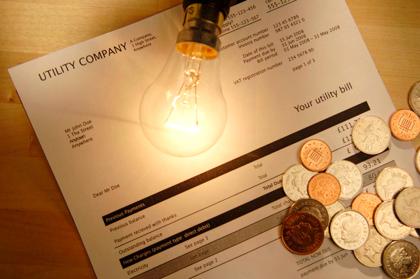
New Electricity Billing Rules With 18% Interest On Consumer
Telanganahasintroducedrevisedelectricitybillingregulationsthatrequiredistributioncompaniestopay18%annual interest on delayed consumer refunds. The new framework strengthens consumer protection by establishing clear billing procedures, refund timelines, and accountability measures for utilities. The regulations are intended to improve transparencyinelectricitybillingpracticesandensurethetimelyresolutionofconsumerclaimsanddisputes.
Andhra Pradesh has introduced a standardized Connection Agreement framework to streamline grid connectivity proceduresacrossthestate.Thenewmechanismestablishesuniformcontractualtermsandtechnicalrequirementsfor entities seeking network access. The initiative aims to improve transparency, reduce procedural inconsistencies, facilitatefasterprojectimplementation,andstrengthencoordinationbetweenapplicantsandpowersectorutilities.

TheUttarakhandElectricityRegulatoryCommission(UERC)hasproposedaResourceAdequacyFramework,2026,to ensure long-term reliability of electricity supply in the state. The draft framework requires utilities to assess future demandandmaintainsufficientgenerationandprocurementresourcestomeetconsumerneeds.Theproposalaimsto strengthenpowerplanning,reducesupplyrisks,andsupportsustainableelectricitysectordevelopmentinUttarakhand.
Solar
Record 20,899.61 MU, Contributes Over 70% of RE Generations in April 2026
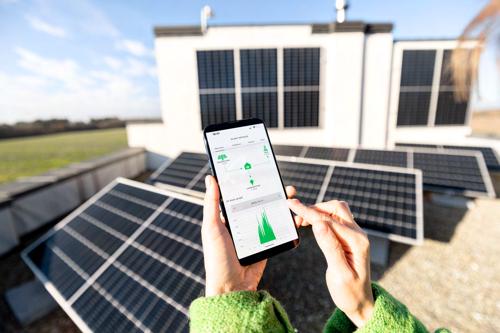
India’s renewable energy sector recorded strong growth in April 2026, with renewable electricity generation excluding large hydro reaching 29,377.91 million units (MU), reflecting a 23.2% year-on-year increase. Solar power emerged as the dominantcontributor,generatingarecord20,899.61MUand accounting for over 71% of total renewable energy generation during the month. The growth was supported by expandingutility-scalesolarparks,rooftopsolarinstallations, and rising adoption of open-access solar projects. Wind energygenerated6,848.65MU,whilebiomass,bagasse,and small hydro contributed the remaining share. The data highlights solar and wind as the backbone of India’s clean energy transition, contributing nearly 94.45% of renewable electricitygeneration.
India Adds 18,426 MW Solar Capacity As Renewables Reach 42.2% Of Total
India’srenewableenergysectorcontinueditsrapidexpansion in2026,withsolarpowerleadingthetransition.Duringthefirst four months of the year, the country added nearly 18,426 MW ofnewsolarcapacityacrossutility-scaleandrooftopsegments. By April 2026, India’s total installed power capacity had crossed 537 GW, growing at an annual rate of over 13.7%. Renewable energy sources now account for approximately 42.2%ofthenation’sinstalledpowermix,reflectingsignificant progress toward clean energy goals. The market is also witnessing strong growth in hybrid projects, battery energy storage systems, green hydrogen, and round-the-clock renewableenergysolutions.However,challengessuchasgrid integration, transmission infrastructure, land acquisition, and financingremaincriticalconcerns.
Rajasthan Can Save ₹57,000 Crore By Replacing New Coal Plants With Solar
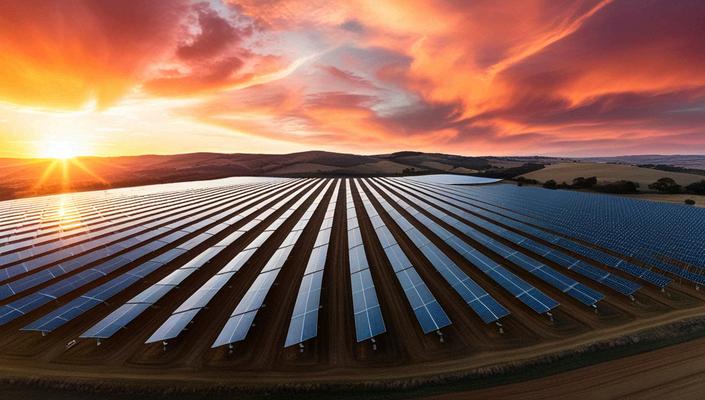
AreportbyClimateRiskHorizonssuggestsRajasthancan savenearly ₹57,000croreoverthenextdecadebyreplacing aproposed3,200MWcoalpowerprojectwithsolarenergy andbatterystoragesystems.Rajasthanalreadycontributes over 27% of India’s installed solar capacity but faces renewableenergycurtailmentratesofupto51.5%,leaving nearly4GWofcleanpowerunusedduringpeakgeneration periods.Thereporthighlightsthatrisingcoaltransportation and construction costs are making thermal power increasingly expensive. Electricity from new coal plants could cost around ₹10.27 per kWh by 2031, while a proposed 7.1 GW solar-plus-storage system could deliver power at ₹5.48–₹5.87 per kWh, offering significant economicandenvironmentalbenefits.
India’s Power Distribution Sector Shows Recovery, But Privatization Seen As Key To Long-Term Stability—SBICAPS Report
India’s power distribution sector has shown notable improvementoverthepastdecade,accordingtoareportby SBICAPS. Aggregate Technical and Commercial (AT&C) losseshavedeclinedfromover25%inFY15tonearly15%in FY25, while the ACS-ARR gap narrowed from 89 paise per unit in FY21 to just 6 paise in FY25. As a result, DISCOMs collectively reported a net profit of ₹27 billion in FY25. Despite these gains, performance remains uneven across states, with several eastern regions lagging behind. The report attributes much of the financial recovery to private utilities and government subsidies. It recommends wider privatization, citing Odisha’s success in reducing AT&C lossesafterprivatizingdistributioncompanies.

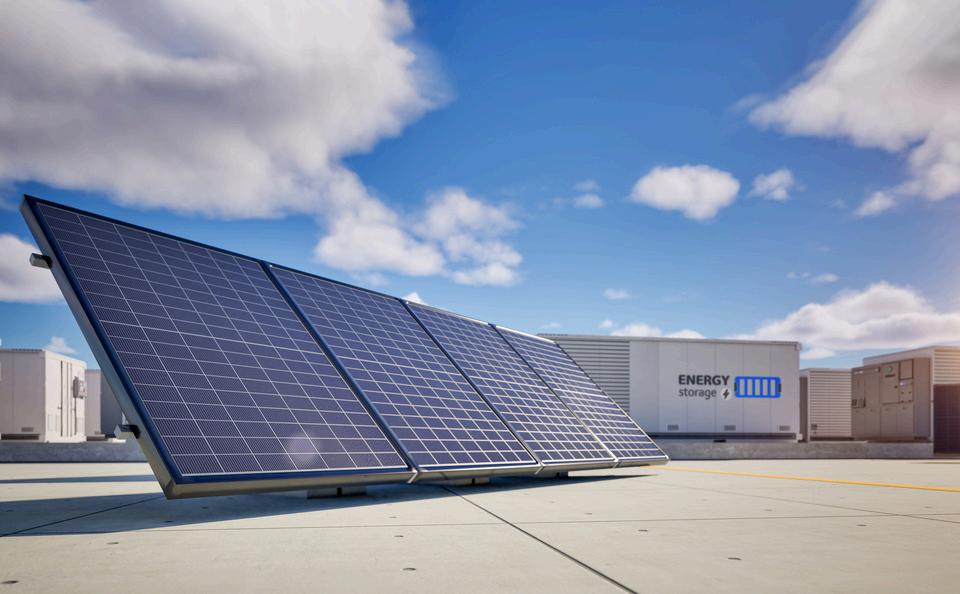
"Hybrid renewable energy systems combining solar, wind, and battery storage are emerging as a reliable solution for delivering stable and continuous clean energy."
Hybrid Solar And Wind Systems With Battery Storage Redefine Reliable Clean Energy Supply—Report
Hybridrenewableenergysystemscombiningsolarandwindpowerwithbattery storage are emerging as a key solution for ensuring a reliable and stable clean energysupply.Thereporthighlightsthatintegratingmultiplerenewablesources helpsbalancevariabilityingeneration,assolarandwindoftencomplementeach otheracrossdifferenttimeperiods.Batteryenergystoragesystemsfurtherenhance gridstabilitybystoringexcesspowerandsupplyingitduringpeakdemandorlow generationperiods.Thisintegratedapproachisincreasinglyseenasessentialfor large-scalerenewableadoption,supportinggridflexibility,reducingdependence onfossilfuels,andimprovingoverallpowersystemreliability.
India’ssolarenergysectorcontinuesitsstrongexpansiontrajectory,withover18 GW of new solar capacity added in 2026. With this addition, the country’s cumulative installed solar capacity has crossed 154 GW, reinforcing India’s positionasoneofthefastest-growingsolarmarketsglobally.Thegrowthisdriven by utility-scale solar parks, rooftop installations, and hybrid renewable projects. The report highlights that policy support, competitive tariffs, and strong private sector participation are accelerating deployment. This rapid capacity addition is alsocontributingsignificantlytoIndia’scleanenergytransitionandsupportingits broaderrenewableenergyandclimategoals.
India’s State-Owned Energy Firms Can Accelerate Clean Energy Shift Through Strategic Capital Reallocation: Report
Arecent report suggests that India’s state-owned energy companiescanplayatransformativeroleinacceleratingthe country’s clean energy transition through strategic capital reallocation.Itemphasizesthatredirectinginvestmentsfrom conventional fossil fuel-based projects toward renewable energy assets, grid modernization, and storage infrastructure can significantly improve long-term sustainability.Thereporthighlightstheimportanceofpolicy alignment, financial restructuring, and institutional reforms within public sector undertakings. By optimizing capital deployment, state-owned enterprises can support faster renewable integration, enhance energy security, and strengthen India’s progress toward achieving its decarbonizationandnet-zerotargets.
CEA Flags Systemic Insulator Failures, Recommends Urgent Reforms For Grid Reliability—Report
TheCentralElectricityAuthority(CEA)hasraisedconcerns over systemic insulator failures affecting India’s power transmission infrastructure. The report highlights that recurring equipment failures pose risks to grid reliability, operational efficiency, and power supply stability. It recommends urgent reforms, including stricter quality control standards, improved maintenance practices, and enhanced monitoring systems for transmission assets. Strengtheningmanufacturingandprocurementstandardsis also emphasized to prevent recurring technical faults. The findings underline the need for proactive infrastructure upgrades and regulatory interventions to ensure a more resilient and reliable national power grid capable of supporting rising electricity demand and renewable integration.
SECI Invites Bids For 5.5 MW Rooftop Solar Project At Delhi University North Campus
SECI Invites Bids For 12.25 MW Rooftop Solar Projects Across Jawahar NavodayaVidyalayas
SECIInvitesBidsForMajorDigitalSystemsUpgradeProject
MahagencoRenewableEnergyLimitedInvitesBidsFor8×25MWSolarHybrid ProjectConsultancyInMaharashtra
NGEL Invites Bids For 100 MW Solar PV Project Under EPC Mode In Jhansi, UttarPradesh
RRECL Invites EoI For 45 MW Solar Power Project For Rajasthan’s Industrial Consumers
Airports Authority Of India Invites Tender For 1.5 MW Rooftop Solar PV Plant O&MAtChennaiAirport
Andhra Pradesh Invites Bids For 4.5 MW Solar PV Projects Under BOOT Model InRajamahendravaram
TelanganaFloatsTenderFor19MWSolarPowerPlantsAcross18Substations
NBCC Invites Consultancy Bids For 15 MW Rooftop Solar Project At SAIL BokaroSteelPlant
Gwalior Municipal Corporation Floats ₹9.98 Crore Tender For 2 MW Solar PowerPlantAtManpur
NLC India Limited Floats Tender For 1500 Acres Land Leasing In Gujarat For LargeSolarPVProjects
KIOCL Limited Floats Tender For 2.7 MW Floating Solar Power Project In Mangaluru,Karnataka
EESL Invites EOI For Solar Project DPR And Feasibility Study Agencies Across India
NTPC Vidyut Vyapar Nigam Limited Invites Bids For Rooftop Solar Project At AIIMSBilaspur
NTPCLimitedInvitesBidsForAndamanSolarRepoweringEPCProject
TENDER >
Southern Railways Invites ₹378 Crore Tender For Solar Power PlantsUnderRESCOModel
NTPCRenewableEnergyInvitesBidsForSolarPVModuleSupply At1200MWKhavdaREProject
SECIFloatsTenderFor88MWSolarPVBalanceOfSystemProject InKarnataka
SECI Invites Bids For 5.5 MW Rooftop Solar Project At Delhi UniversityNorthCampus
SECI Invites Bids For 12.25 MW Rooftop Solar Projects Across JawaharNavodayaVidyalayas
SECIInvitesBidsForMajorDigitalSystemsUpgradeProject
MahagencoRenewableEnergyLimitedInvitesBidsFor8×25MW SolarHybridProjectConsultancyInMaharashtra
NGEL Invites Bids For 100 MW Solar PV Project Under EPC Mode InJhansi,UttarPradesh
RRECLInvitesEoIFor45MWSolarPowerProjectForRajasthan’s IndustrialConsumers
Airports Authority Of India Invites Tender For 1.5 MW Rooftop SolarPVPlantO&MAtChennaiAirport
Andhra Pradesh Invites Bids For 4.5 MW Solar PV Projects Under BOOTModelInRajamahendravaram
TelanganaFloatsTenderFor19MWSolarPowerPlantsAcross18 Substations
NBCC Invites Consultancy Bids For 15 MW Rooftop Solar Project AtSAILBokaroSteelPlant
Gwalior Municipal Corporation Floats ₹9.98 Crore Tender For 2 MWSolarPowerPlantAtManpur
NLC India Limited Floats Tender For 1500 Acres Land Leasing In GujaratForLargeSolarPVProjects
KIOCLLimitedFloatsTenderFor2.7MWFloatingSolarPower ProjectInMangaluru,Karnataka
EESLInvitesEOIForSolarProjectDPRAndFeasibilityStudy AgenciesAcrossIndia
NTPCVidyutVyaparNigamLimitedInvitesBidsForRooftopSolar ProjectAtAIIMSBilaspur
NTPCLimitedInvitesBidsForAndamanSolarRepoweringEPC Project
SouthernRailwaysInvites ₹378CroreTenderForSolarPowerPlants UnderRESCOModel
NTPCRenewableEnergyInvitesBidsForSolarPVModuleSupplyAt 1200MWKhavdaREProject
SECIFloatsTenderFor88MWSolarPVBalanceOfSystemProjectIn Karnataka
RUMSL Unveils Solar Plus Storage Projects for Reliable Peak Power SupplyinMadhyaPradesh
PGCIL Invites Bids For 150 MW/300 MWh BESS Project In Andhra Pradesh
NTPCGreenEnergyFloatsEPCTenderFor3,300MWhBESSProject AtKhavdaSolarPlantInGujarat
NTPC Green Energy Invites Bids For 7,800 MWh Battery Energy StorageProjectAtBikanerSolarPlantInRajasthan
NTPC Green Energy Invites Bids For 7,800 MWh Battery Energy StorageProjectAtBikanerSolarPlantInRajasthan
SECI Invites Bids For Supply Of Five 160 MVA Power Transformers ForGujaratProject
NTPCGreenEnergyLimitedInvitesBidsfor800MW/3200MWh BESSProjectatKhavdaSolarPark
IndiaisrapidlytransformingitselfintoaglobalsolarmanufacturingpowerhouseundertheambitiousMakeinIndiamission.Overthe last few years, the country has moved beyond being only a major solar power installer and is now focusing strongly on building a complete domestic solar PV manufacturing ecosystem. This transformation is playing a crucial role in strengthening India’s energy security,reducingdependenceonimports,generatingemployment,andsupportingthenation’scleanenergygoals.
India’s solar sector has witnessed remarkable growth due to rising electricity demand, government incentives, supportive policies, andlarge-scalerenewableenergytargets.Withthegovernmentaimingtoachieve500GWofnon-fossilfuelenergycapacityby2030, solar power remains at the center of the country’s energy transition strategy. To support this expansion, India has recognized the importanceofdevelopingastronglocalmanufacturingbaseforsolarcells,modules,wafers,andrelatedcomponents.
The Make in India initiative has significantly encouraged domestic and international companies to invest in solar manufacturing facilitiesacrossthecountry.SeveralIndianmanufacturersareexpandingproductioncapacities,whileglobalplayersarealsoentering the Indian market through partnerships and joint ventures. States such as Gujarat, Tamil Nadu, Rajasthan, and Andhra Pradesh are emergingasmajorsolarmanufacturinghubsduetofavorableindustrialpoliciesandinfrastructuresupport.
Government programs such as the Production Linked Incentive (PLI) scheme have provided a major boost to the sector. The PLI schemeoffersfinancialincentivestocompaniesestablishinghigh-efficiencysolarPVmanufacturingfacilitiesinIndia.Thisinitiativeis helpingcreateanintegratedsupplychain,frompolysiliconandwaferstosolarcellsandmodules.Inaddition,theimpositionofBasic CustomsDuty(BCD)onimportedsolarproductshasfurtherencouragedlocalmanufacturingandreduceddependenceonimports.

India’s solar manufacturing revolution is also creating thousands of new jobs in engineering, production, research, logistics, and project development. The sector is attracting investments worth billions of dollars and contributing to economic growth in both urban and rural regions. New manufacturing plants are bringing advanced technologies, automation, and innovation into the Indianrenewableenergymarket.
AnotherimportantaspectofthistransformationisIndia’sgrowingfocusonexports.Indian-madesolarmodulesarenowreaching markets in the United States, Europe, the Middle East, and Africa. As global demand for clean energy technologies increases, Indiahastheopportunitytobecomeareliablealternativemanufacturingdestinationintheglobalsolarsupplychain.
Despite the strong momentum, challenges remain. The industry continues to face issues related to raw material availability, technology upgrades, financing, and global price competition. However, continuous policy support, investment in research and development,andinfrastructureimprovementsarehelpingthesectorovercomethesebarriers.
India’s solar manufacturing revolution reflects the country’s long-term vision of becoming self-reliant in clean energy technologies. Under the Make in India mission, the nation is steadily positioning itself as a leading global PV hub while acceleratingthetransitiontowardasustainableandenergy-securefuture.


India's renewable energy sector is entering a new era.
FromMulti-Gigawatt-Hour BatteryStorageToGrid InfrastructureAndGreen Hydrogen,India's RenewableEnergy ProcurementLandscapeIs UndergoingAFundamental Transformation
For over a decade, the country's clean energy story was largely defined by one metric: installed capacity. Success was measured by how many megawatts of solar and wind power could be deployed, how rapidly renewable energy tariffs could decline, and how quickly states could attract investments into utility-scale projects.
Today, however, the market is evolving beyond generation capacity alone.
A review of more than 40 renewable energy tenders issued during May and June 2026 by organizations including NTPC Green Energy, NTPC Renewable Energy Limited (NTPC REL), NTPC Vidyut Vyapar Nigam Limited (NVVN), NGEL, SECI, PGCIL, RECPDCL, Mahagenco Renewable Energy Limited, RUMSL, BHEL, NLC India, NBCC, Airports Authority of India, Southern Railways, and multiple state agencies reveals a significant shift in priorities.
The latest procurement activity demonstrates that India's renewable energy ambitions are no longer focused solely on adding solar capacity. Increasingly, the emphasis is shifting toward battery storage, transmission systems, grid flexibility, forecasting, reactive power management, floating solar, institutional rooftop solar, and green hydrogen infrastructure.
“The next phase of renewable growth is defined by integration, flexibility, and
grid resilience."
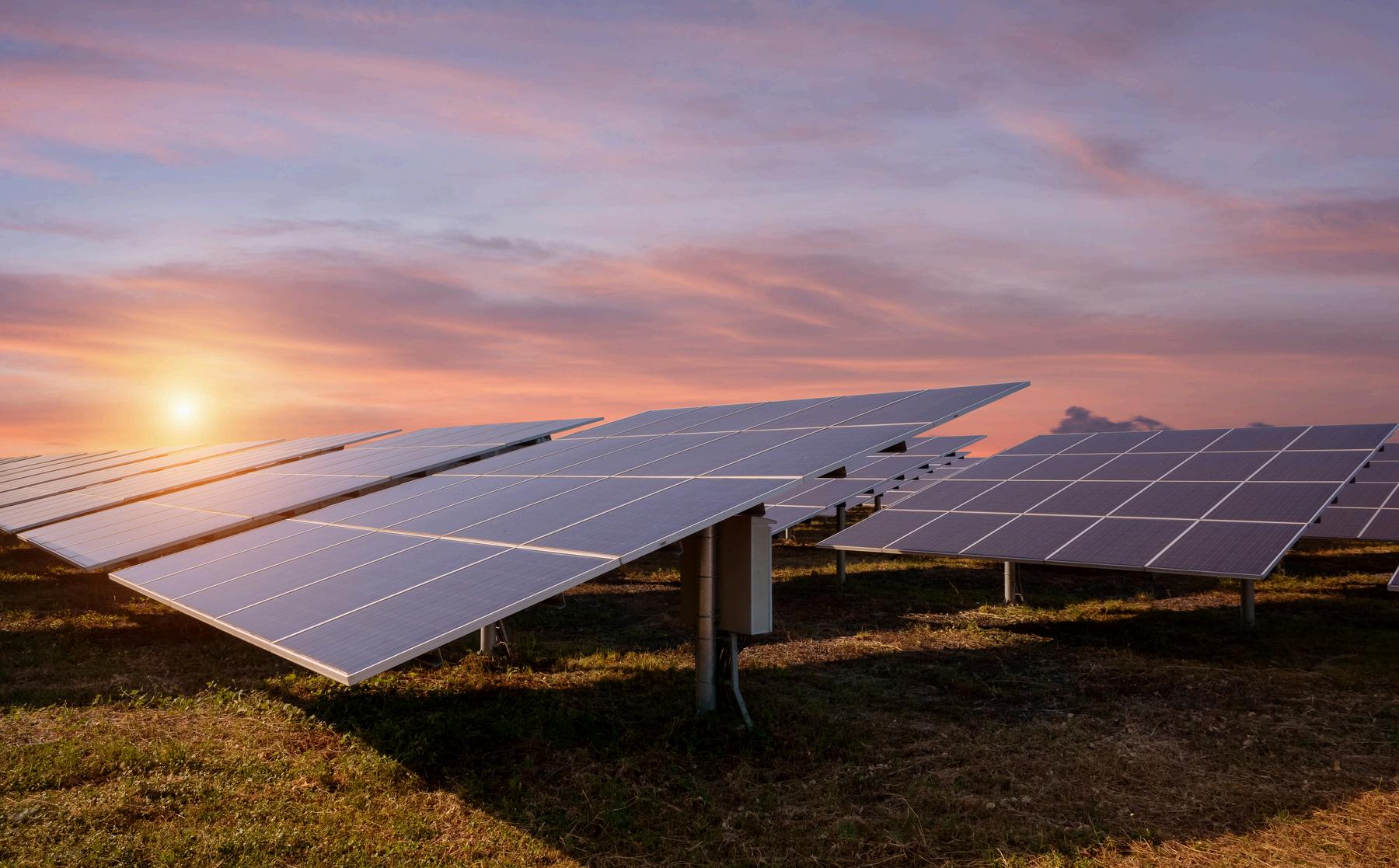


The single biggest trend emerging from recent tender activity is the rapid rise of utility-scale battery energy storagesystems(BESS).

Foryears,storagewasviewedasafuturerequirement.Today,itisbecomingapresent-daynecessity.
Leading this transition is NTPC Green Energy, which has floated some of the largest battery storage tenders everseenintheIndianmarket.
Among the most significant projects are:

7,800 MWh Battery Energy Storage System Project
at the NTPC REL Bikaner Solar Plant, Rajasthan

3,300 MWh Battery Energy Storage System Project
800 MW / 3,200 MWh Battery Energy Storage System Project
at Khavda, Gujarat at Khavda Solar Park, Gujarat


"The
future of renewable energy will be measured not only in megawatts generated but also in megawatt-hours stored, making battery storage a cornerstone of India's evolving power system."


These projects alone represent over 14,000 MWh of planned battery storage capacity, underscoring the scaleatwhichstorageisnowbeingincorporatedinto India'srenewableenergystrategy.
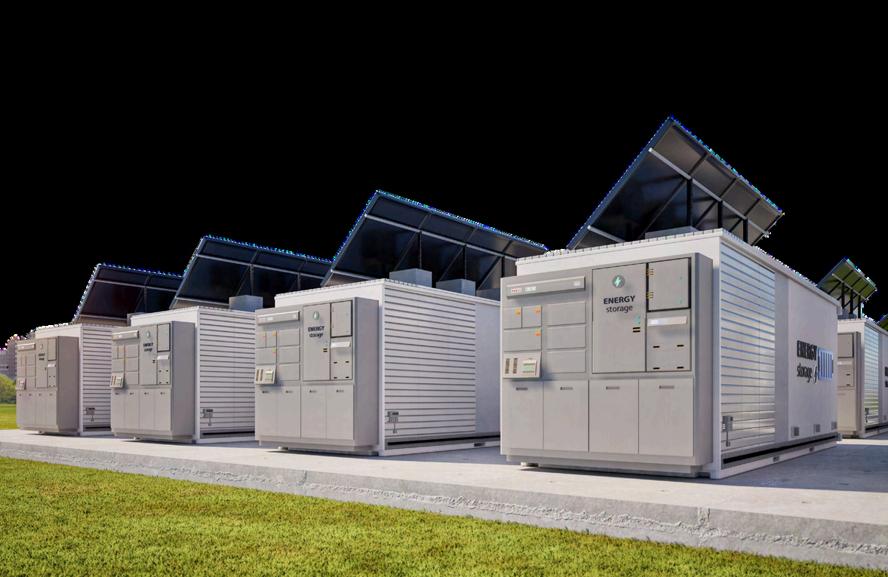
The 7,800 MWh Bikaner BESS Project isparticularly noteworthy. Structured as an EPC package, the project includes multiple storage blocks integrated with NTPC Renewable Energy's solar assets. Such a configuration demonstrates how future renewable parks are likely to combine generation and storage infrastructurefromtheoutset.
ThemomentumextendsbeyondNTPC.
Power Grid Corporation of India Limited (PGCIL) has invited bids for a 150 MW / 300 MWh Battery Energy Storage System Project in Andhra Pradesh, aimed at enhancing grid reliability and renewable integration.
Meanwhile, Lakshadweep Administration hasinvited bidsfor 2,107kWof RooftopSolar Capacitycoupled with5,525kWhofBatteryStorage, demonstrating
how storage is becoming essential not only for utility-scale projects but also for island and remote-areaenergysystems.
Similarly, BHEL has invited bids for a 1.13 MW Rooftop Solar Project integrated with 4.52 MWh of Battery Energy Storage in Hyderabad, showcasing the increasing convergence of distributedsolarandstoragetechnologies.
Collectively, these projects indicate that storage is no longer a niche technology. It is becoming a foundationalcomponentofIndia'sfutureelectricity system.
Revitalize your living space with solar energy. Reach out for your complimentary consultation and enjoy an exclusive 50% discount.
"India's clean energy transition is entering a new phase where storage stands
alongside generation
as a core pillar of the power system."



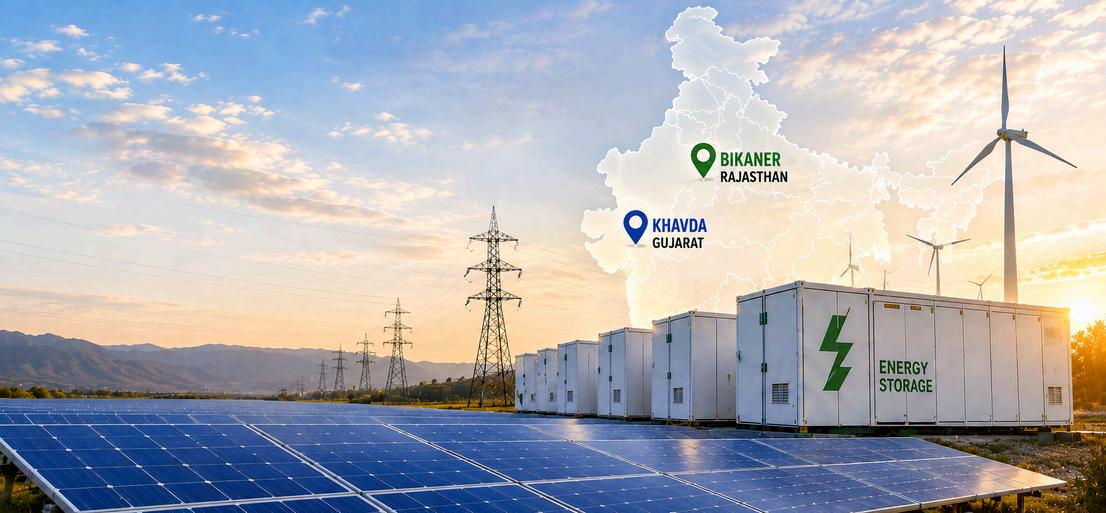
Two locations dominate India's current renewable energy procurement landscape: Khavda in Gujarat and Bikaner in Rajasthan.
Bothregionsareevolvingintointegratedrenewableenergyecosystemsratherthanconventionalsolarparks.
AT KHAVDA, RECENT TENDERS INCLUDE:
3,300 MWh
BESS Project
800 MW/3,200 MWh
BESS Project
1,200 MW
Solar PV Module Supply Package
Associated transmission and grid integration infrastructure

Together, these projects illustrate a new model of renewable energy development—one where generation, storage, and transmission are plannedsimultaneously.
SIMILARLY, BIKANER IS EMERGING AS A MAJOR SOLAR-PLUS-STORAGE CLUSTER.
Beyond the landmark 7,800 MWh
BESS Project
NTPC Renewable Energy has invited bids for Forecasting and Scheduling Services for the 500 MW Solar PV Project at Kalasar, Bikaner.
Whileforecastingcontractsmayappearlessvisible than large EPC packages, they are becoming increasingly important as renewable penetration grows. Accurate forecasting helps improve grid management, optimize dispatch schedules, and reducedeviations.
The combination of large-scale storage and forecasting services indicates that India's renewable energy hubs are becoming significantly moresophisticated.
Rajasthan continues to consolidate its position as one of India's most importantrenewableenergydestinations.
Several major tenders issued during the review period reinforce the state'sgrowingimportance.
Among them is NTPC Green Energy's 130 MVAR Static Var Generator (SVG)Packageforthe240MWDevikotSolarPVProjectinRajasthan.
This project highlights an important industry trend: grid support infrastructureisbecomingasimportantasgenerationcapacityitself.
SVG systems provide reactive power compensation and voltage regulation, helping maintain grid stability as renewable penetration increases.
Additional Rajasthan-based opportunities include:
7,800MWhBESSProjectatBikaner
500MWKalasarSolarForecastingand SchedulingServicesContract
45MWSolarPowerProjectforIndustrial ConsumersbyRRECL
Multiplelandandinfrastructurepackages associatedwithutility-scalesolar development
“Rajasthan is proving that the future of renewable energy will be shaped not only by adding generation capacity but also by strengthening grid infrastructure to ensure reliability, stability, and seamless renewable integration."

These projects demonstrate that Rajasthan is no longer merely a solar generation state. It is becoming a comprehensive renewable energy ecosystem encompassing generation, storage, forecasting, and grid management.

One of the strongest themes emerging from recent procurement activity is the growing focus on transmissionandgridinfrastructure.
India's renewable energy challenge is no longer limited to generating electricity. Increasingly, the challenge lies in transmitting, balancing, and integratingthatelectricityeffectively.
Among the most notable examples is RECPDCL's RenewableEnergyTransmissionSystemProject
Other grid-related opportunities include:
in Gujarat, designed to support approximately 14 GWofrenewableenergycapacity.

The project is linked to major renewable energy zones such as Lakadia Renewable Energy Zone, which itself is expected to support around 7,500 MWofrenewablegenerationcapacity.
Similarly, SECI has invited bids for the supply of Five 160 MVA Power Transformers for a Gujaratbasedrenewableenergyproject.

130MVARSVGPackageforthe 240MWDevikotSolarPVProject Renewableenergy evacuationsystems Gridintegration infrastructure
Reactivepower managementsystems Forecastingand schedulingservices
Transmissionnetwork expansionprojects
The message is clear: India's next renewable energy investment cycle will be driven as much by transmissionandgridinfrastructureasbygenerationcapacity.














Emerging Solar Rooftop Company


Rama Solar
Best Solar Panel Brand of the Year
SASA ENERGY LLP
AI-Driven Solar Module Manufacturer of the Year
PAHAL SOLAR PRIVATE LIMITED

Solar EPC Company of the Year– Residential
KUNDE SOLAR SOLUTIONS
Emerging Solar Contractor of the State - Residential
POWER PRO SOLUTIONS "SOLAR DE GOA"
Emerging Solar Contractor of the State - C&I
Raymagic Green Energy Pvt Ltd
Best Rooftop Solar Installer –Residential
Solstar Ultima LLP



State Solar Distributor of the Year
WATTMAISTER ENERGY LLP

Best Solar Project of the Year- Residential
Solstar Ultima LLP

Women-Driven Solar Business Excellence Award
ANJALI KAMAT HEAD BUSINESS OPERATIONS GRK ENTERPRISES.

Whileutility-scaleprojectscontinuetodominate headlines,rooftopsolarisexperiencingstrong growththroughpublic-sectorinstitutions.
SECI's5.5MWRooftopSolarProjectatDelhiUniversity NorthCampus
SECI's12.25MWRooftopSolarProgrammeAcross JawaharNavodayaVidyalayas
NVVN's320kWRooftopSolarProjectatAIIMSBilaspur
AAI's1.5MWRooftopSolarPVPlantatChennai InternationalAirport
Jharkhand's6MWRooftopSolarMaintenanceand OperationProject
NEEPCO'sStage-IIRooftopSolarProgrammeunder thePMSuryaGharSchemeinNortheastIndia
BHEL's1.13MWRooftopSolarProjectwith4.52MWh BESSinHyderabad


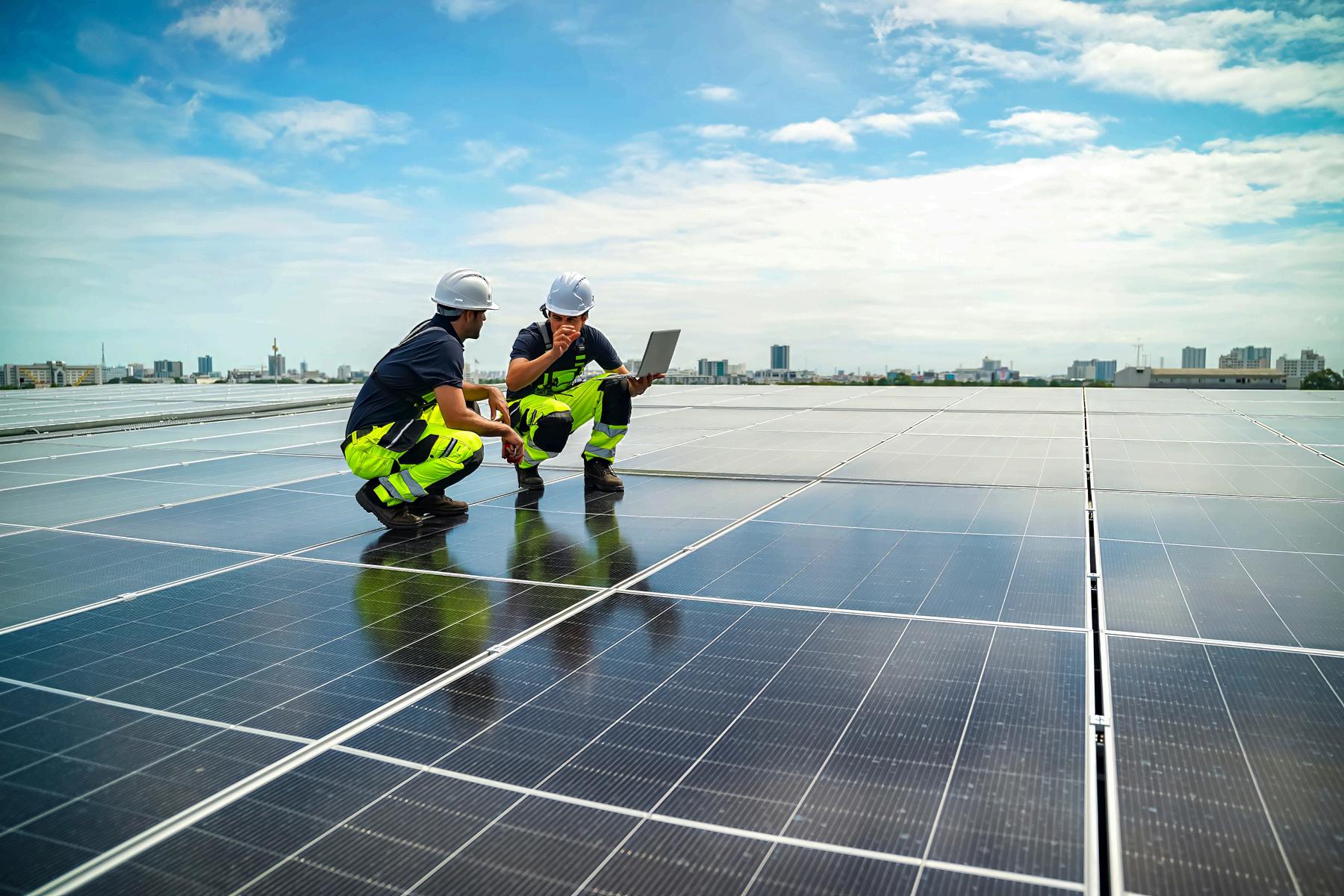
These projects highlight the increasing role of educational institutions, healthcare facilities, airports, and government infrastructure in driving distributed renewable energy adoption.
Unlike utility-scale projects, rooftop installations reduce transmission losses, lower electricity expenditure for public institutions, and support decentralized energy generation.


The sector is gradually becoming an important complement to India's large-scale solar expansion.
Anotheremergingthemeistheriseoffloatingsolarprojects.
Recent opportunities include:
225 MW Upper
Indravati Floating Solar Project
"Floating solar is turning water surfaces into the next frontier of renewable energy.”
26 MW Floating Solar Project at NTPC Sipat
2.7 MW Floating Solar Power Project by KIOCL in Mangaluru

These projects demonstrate growing confidence in floating solar technologyaslandavailabilitybecomesincreasinglyconstrained.
By utilizing reservoirs and water bodies, floating solar offers an attractive pathway for expanding renewable energy capacity without competingforlandresources.



Although still at an early stage, green hydrogen infrastructure is beginning to appear within India's renewableenergyprocurementlandscape.
Key projects include:
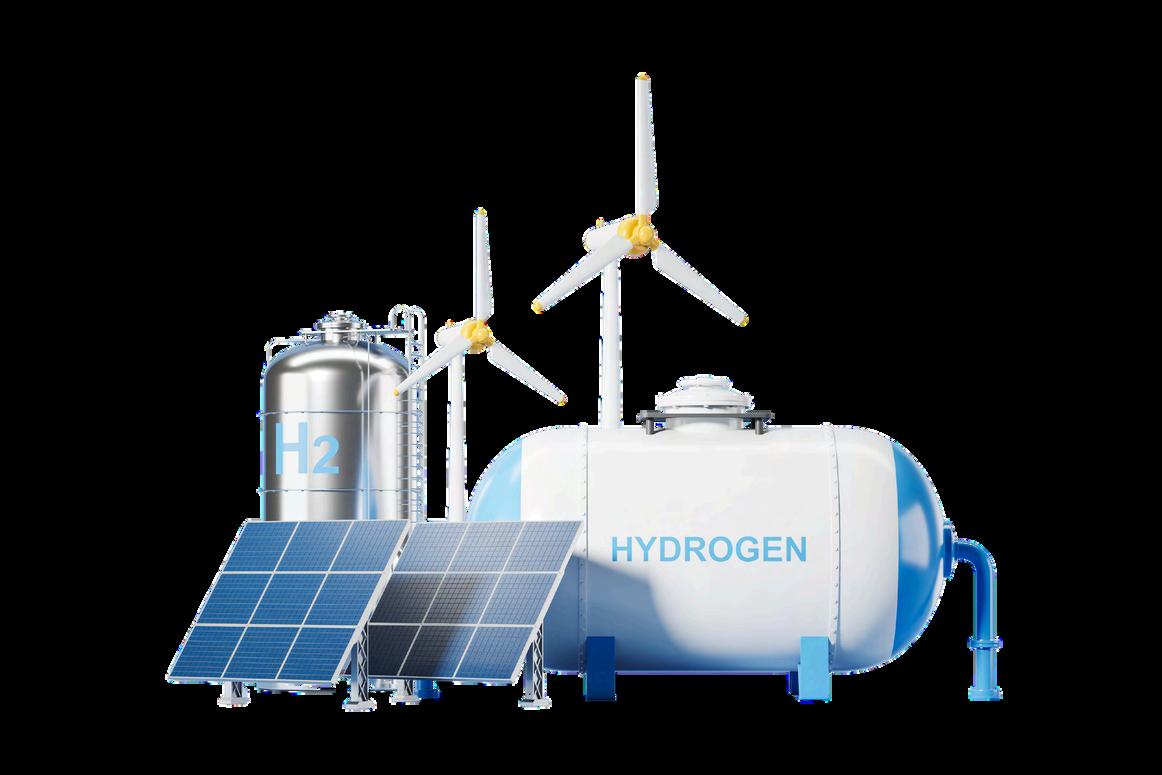
₹71.70 Crore Green Hydrogen Road
Connectivity Project at Old Kandla by Deendayal Port Authority


Captive Jetty DPR Consultancy for the 240 MW NGEL Green Hydrogen Hub at Pudimadaka
Theseprojectshighlightanimportantshiftinthinking.
The industry is beginning to move beyond hydrogen production alone and toward building the logistics, transportation,andexportinfrastructurenecessarytosupportafuturehydrogeneconomy.


"India is no longer just building renewable projects it is building the foundation of a new energy system.”
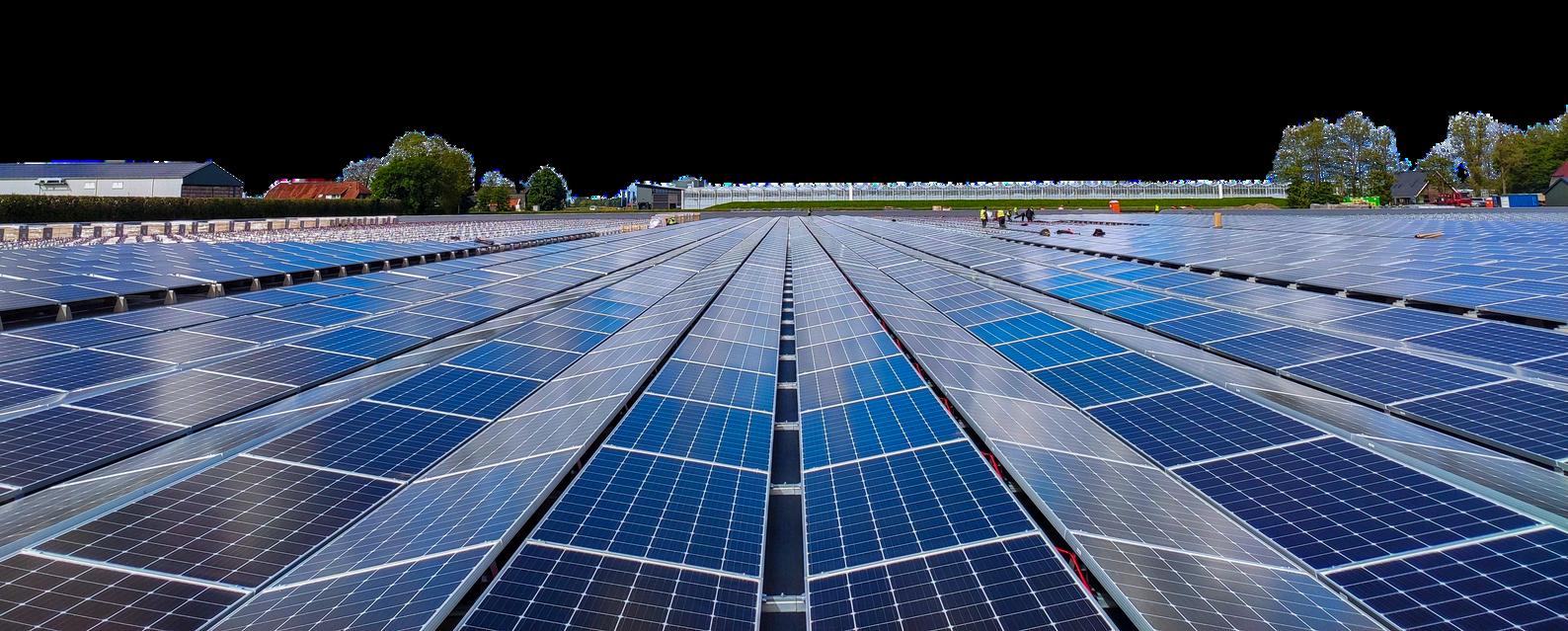
Projects such as the 7,800 MWh Bikaner BESS, 3,300 MWh Khavda BESS, 800 MW / 3,200 MWh Khavda Storage Project, 14 GW Gujarat Renewable Energy Transmission System, 225 MW Upper Indravati Floating Solar Project, 12.25 MW Jawahar Navodaya Vidyalaya Rooftop Solar Programme, and 240 MW Pudimadaka Green Hydrogen Hub Infrastructure revealanindustrythatisbecomingincreasinglyintegratedandsophisticated.
If the previous decade was defined by solar deployment, the next decadewillbedefinedbyintegration.
Storage,transmission,gridstability,forecasting,distributedgeneration, floating solar, and green hydrogen infrastructure will increasingly determinethesuccessofIndia'scleanenergytransition.
The country's renewable energy sector is no longer simply building projects.
Itisbuildingthearchitectureofanewenergysystem.
"The next phase of renewable growth belongs to the infrastructure that connects, stores, and optimizes clean power.”


India’scleanenergytransitionisenteringanewphasewheresolar PV manufacturing and energy storage systems are becoming closely connected. As the country rapidly expands renewable energy capacity, the need for integrated clean energy factories is growing stronger. These factories combine solar module, cell, wafer, battery, and energy storage manufacturing within one ecosystem. This convergence is creating major opportunities for India to strengthen domestic manufacturing, reduce import dependence,generateemployment,andsupportlong-termenergy security.
India has already emerged as one of the world’s fastest-growing solarmarkets.GovernmentinitiativessuchastheProductionLinked Incentive(PLI)scheme,ApprovedListofModelsandManufacturers (ALMM), basic customs duty on imported solar equipment, and supportive renewable energy policies have encouraged domestic manufacturinggrowth.Atthesametime,thecountryiswitnessing increasing investments in Battery Energy Storage Systems (BESS) because energy storage has become essential for managing intermittentrenewablepowergeneration.
Solar power generation depends on sunlight availability, while battery storage ensures stable electricity supply during non-solar hours.Thistechnicalrelationshipisencouragingmanufacturersto build integrated facilities where solar PV products and battery systems can be produced together. Such integrated factories can reduce logistics costs, improve supply chain efficiency, and enhance product innovation through better coordination between technologies.
India’s target of achieving 500 GW of non-fossil fuel capacity by 2030 has further accelerated the need for energy storage. According to several industry studies, India may require hundreds ofgigawatt-hoursofbatterystoragecapacityoverthenextdecade to support grid stability and renewable energy integration. This creates a strong business case for companies investing simultaneouslyinsolarandstoragemanufacturing.
Large Indian companies and global investors are now exploring giga-factorymodelsthatcombinesolarcells,modules,batterycells, andstoragesolutionsunderonemanufacturingcluster.Statessuch asGujarat,TamilNadu,AndhraPradesh,andOdishaarebecoming
key destinations for such investments due to port connectivity, industrial infrastructure, and policy support. Integrated manufacturing parks can also attract ancillary industries including glass,aluminumframes,inverters,batterychemicals,andelectronics manufacturing.
Another important advantage of integrated clean energy factories is technological collaboration. Advanced solar technologies such as TOPCon, HJT, and perovskite tandem cells are increasingly being linked with smart storage systems, artificial intelligence, and energy managementsoftware.Manufacturersthatdevelopexpertiseinboth solarandstoragetechnologiesmaygainstrongercompetitivenessin globalexportmarkets.
The convergence also supports India’s larger economic goals. Integrated factories can generate thousands of skilled and semiskilled jobs across engineering, automation, research, assembly, logistics, and maintenance. Educational institutions and skill developmentagenciesmayalsobenefitthroughspecializedtraining programsfocusedonrenewablemanufacturingtechnologies.
However, several challenges remain. India still depends heavily on imports for battery raw materials such as lithium, cobalt, and nickel. Domestic supply chains for advanced solar wafers and battery chemicals are also underdeveloped. High capital costs, technology transfer barriers, and global competition from established manufacturing countries continue to create pressure on Indian manufacturers. To address these issues, long-term policy stability, research funding, recycling infrastructure, and international partnershipswillbecritical.
Despite these challenges, the convergence of solar manufacturing andenergystoragepresentsatransformationalopportunityforIndia. Integratedcleanenergyfactoriescanhelpthecountrymovebeyond being only a renewable energy market and become a global manufacturinghubfornext-generationcleanenergytechnologies.As solarandstorageincreasinglyworktogether,India’sindustrialfuture maybeshapedbyfactoriesthatproducenotjustpowerequipment, butcompletecleanenergyecosystems.

UPPCL Concludes 375 MW/1500 Mwh BESS Auction; KCC Buildcon, Agastya Green Energy, And MKC Green Energy Secure Projects At ₹6.45–6.46/Kwh
Uttar Pradesh Power Corporation Limited (UPPCL) has concluded the auction for 375 MW/1500 MWh of standalone Battery Energy StorageSystems(BESS)under VGFPhaseII.Theprojectfeaturesa 4-hourstoragesystem withonecycleperdayover 15years.Tariffs werediscoveredbetween ₹6.45/kWhand ₹6.46/kWh.
KCC Buildcon secured the largest share with 187.5 MW/750 MWh at ₹6.45/kWh, while Agastya Green Energy won 62.5 MW/250 MWh at the same tariff. MKC Green Energy received 45 MW/180 MWh at ₹6.46/kWh. Developers must secure grid connectivity and signthe BEDPAwithin30days oftheLoA,with financialclosurerequiredwithin12months.
UPPCL 375 MW/1500 MWH STANDALONE BESS AUCTION
SOLARQUARTER RESEARCH
SECI Awards 5.6 MW Rooftop Solar Projects Across 14 Government Buildings Under RESCO Model
The Solar Energy Corporation of India (SECI) has finalized an auction for 5,665 kW (5.6 MW) of rooftop solar capacity across 14 government buildings under its Tranche-VIII RESCO tender. Seven developers, including Mateshwari Bus Operations, GH2 Solar, GPEcoSolutionsIndia,SolarisElectricalServices,AlconIndia,andKahoSolar, wereselectedforprojectexecution.
The projects will be installed at institutions such as NIFT, NIT Jamshedpur, IISER, the Ministry of External Affairs, and the Textile Committee. Tariffs discovered ranged from ₹2.97/kWh to ₹3.97/kWh, highlighting the growing competitiveness of rooftop solar. Developerswillmanageprojectdesign,installation,and 25yearsofoperationandmaintenance undertheRESCOmodel
NLC
NLC India, through its subsidiary NLC India Renewables, has awardeda 250MW/500MWhBatteryEnergyStorageSystem (BESS) project to Pace Digitek under an EPC contract worth ₹709.919 crore (including GST). The turnkey project will be deployed at Ottapidaram, Annupankulam, and Kayathar substations operated by TANTRANSCO in Tamil Nadu. Pace Digitek’s Lineage Power division will handle the complete design, engineering, supply, installation, testing, and commissioningofthestoragefacilities.
The company will also provide 12 years of operation and maintenance services after commissioning. The entire project is scheduled for completion within 12 months from the award date. The storage system will enhance grid stability, support peak demand management, and improve integration of solar andwindenergy acrossTamilNadu.
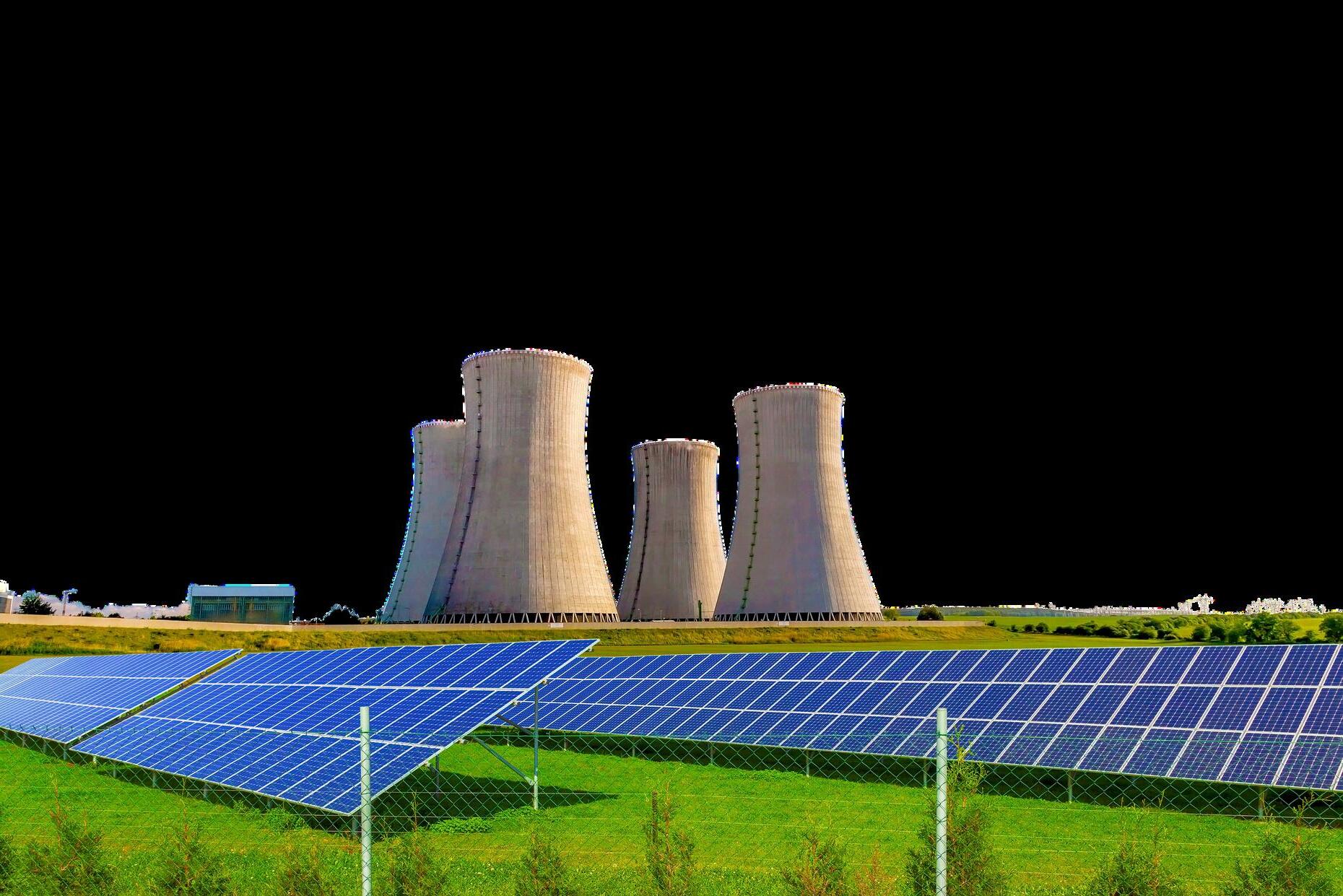

Indiahasrapidlyemergedasoneoftheworld’sfastest-growingsolar energy markets, driven by ambitious renewable energy targets, supportive government policies, and rising electricity demand. While the country has achieved significant growth in solar module and cell manufacturing, the next major frontier lies deeper in the solar value chain — wafer, ingot, and polysilicon production. These upstream componentsareessentialforbuildingafullyintegrateddomesticsolar manufacturing ecosystem and reducing India’s heavy dependence on imports.
At present, India imports a large share of its solar wafers, ingots, and polysilicon,mainlyfromChina,whichdominatestheglobalsolarsupply chain. Although Indian companies have expanded module manufacturing capacity in recent years, the absence of large-scale domestic upstream production creates a major supply chain gap. This dependency exposes manufacturers to price fluctuations, geopolitical tensions,andsupplydisruptions.Asglobaldemandforsolarproducts continuestorise,Indianowseesastrategicopportunitytostrengthen energysecuritythroughbackwardintegration.
Governmentinitiativesareplayinganimportantroleinencouragingthis transition. The Production Linked Incentive (PLI) scheme for highefficiency solar PV modules has already attracted billions of dollars in planned investments. Several Indian companies are now exploring integrated manufacturing facilities that include polysilicon, ingots, wafers, cells, and modules under one roof. Policies such as Approved ListofModelsandManufacturers(ALMM),BasicCustomsDuty(BCD), and domestic content requirements are further supporting local
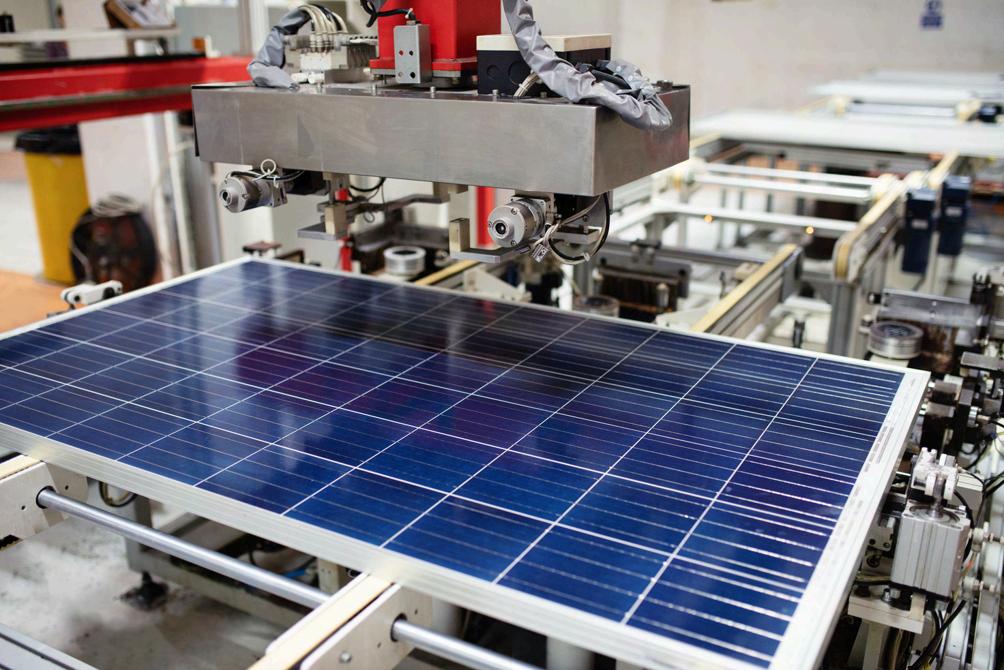
The opportunity in polysilicon production is particularly significant. Polysilicon is the raw material used to manufacture solar wafers and is considered one of the most technologyintensive segments of the solar supply chain. Establishing domesticpolysiliconmanufacturingcanhelpIndiareduceimport dependence and create long-term industrial competitiveness. However, this segment requires massive capital investment, accesstoaffordableelectricity,advancedtechnology,andstrong infrastructure support. Since energy consumption in polysilicon manufacturingisveryhigh,theavailabilityoflow-costrenewable power can become a competitive advantage for India in the future.
Similarly, wafer and ingot manufacturing present strong growth potential as solar deployment accelerates across utility-scale, rooftop,andindustrialsectors.Domesticproductionofwaferscan help reduce logistics costs, improve supply chain reliability, and increasevalueadditionwithinthecountry.Indianmanufacturers are also expected to benefit from rising global demand as many countries seek alternatives to concentrated supply chains. With increasing international focus on supply chain diversification, India has an opportunity to position itself as a reliable global manufacturinghub.
Despitetheopportunities,severalchallengesremain.Highinitial investment costs, technological barriers, lack of skilled manpower, and limited access to advanced manufacturing equipment may slow progress. Competition from established globalplayers,especiallyChinesemanufacturerswitheconomies of scale, also remains intense. To overcome these barriers, India will require long-term policy stability, financial incentives, research and development support, and strategic international partnerships.
ThefutureofIndiansolarmanufacturingwilldependnotonlyon expanding module production but also on building a strong upstream ecosystem. Developing wafer, ingot, and polysilicon capabilitiescantransformIndiafromasolarconsumptionmarket into a global solar manufacturing powerhouse. As the country movestowarditscleanenergyandnet-zeroambitions,upstream solar manufacturing could become one of the most important industrialgrowthstoriesofthecomingdecade.
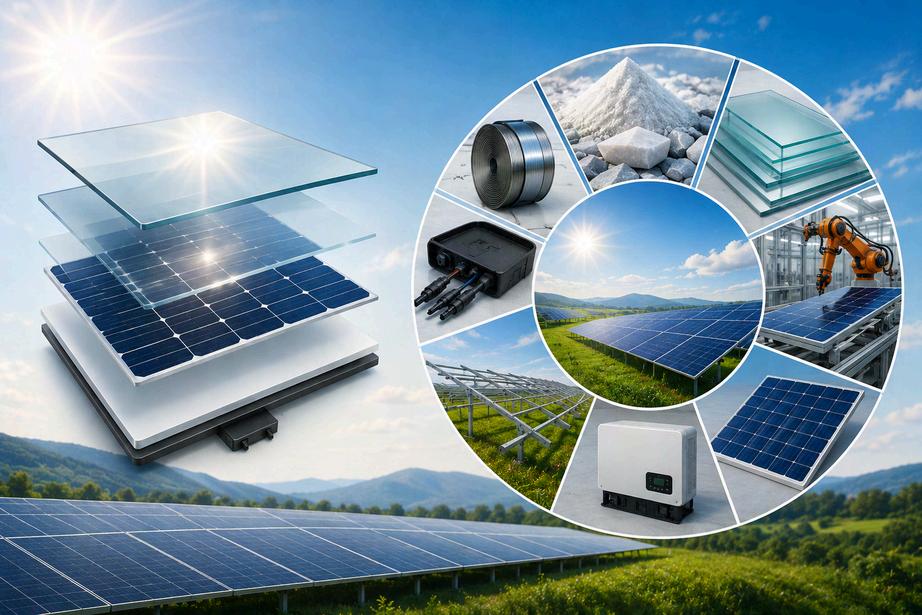
India’ssolarpowersectorisgrowingrapidly,supported byambitiousrenewableenergytargets,policysupport, andincreasinginvestmentsindomesticmanufacturing.
While solar modules and cells often receive the most attention, the development of a strong domestic ecosystem also depends heavily on key supporting materials such as solar glass, EVA (Ethylene Vinyl Acetate), and backsheets. These components play a crucial role in improving module efficiency, durability, and long-term reliability. Strengthening local manufacturingofthesematerialsisbecomingessential forIndia’sgoalofbuildingaself-reliantsolarPVindustry.
Solarglassisoneofthemostimportantcomponentsina solarmodule.Itprotectssolarcellsfromenvironmental damagewhileallowingmaximumsunlighttransmission. High-qualitysolarglassimprovesmoduleperformance, reduces reflection losses, and increases energy generation. India currently depends significantly on imports for solar glass, especially from China and Southeast Asian countries. This dependence exposes thedomesticindustrytopricevolatility,supply
chain disruptions, and trade-related risks. Expanding domestic solar glass manufacturingcanhelpreduceimportdependenceandcreateamoresecuresupply chain for module manufacturers. It can also support the government’s “Make in India”initiativeandgenerateemploymentopportunitiesinthemanufacturingsector.
EVA sheets are another critical component used in solar modules. EVA acts as an encapsulant that binds solar cells together and protects them from moisture, dust, and mechanical stress. The quality of EVA directly affects the lifespan and performance of solar modules. As India’s solar installations continue to rise, the demand for EVA materials is expected to increase significantly. However, the domestic production capacity for EVA remains limited. Building a strong local EVA manufacturing base will help reduce costs, improve supply availability, and encouragetechnologicalinnovationwithinIndia’srenewableenergyindustry.
Backsheets are equally important in ensuring the safety and durability of solar modules. They provide electrical insulation and protect modules from harsh environmental conditions such as heat, humidity, and ultraviolet radiation. Poorquality backsheets can lead to module failures, reduced efficiency, and higher maintenancecosts.India’sgrowingclimatediversity,rangingfromdesertstocoastal regions, requires highly durable backsheets suitable for different environmental conditions. Developing domestic expertise in backsheet manufacturing can help Indiancompaniesproducecustomizedsolutionsforlocalmarketrequirementswhile improvingoverallmodulereliability.
The government’s Production Linked Incentive (PLI) scheme and supportive renewable energy policies are encouraging investments in integrated solar manufacturing.However,focusingonlyonmoduleassemblywithoutstrengthening upstreammaterialsmaylimitthelong-termcompetitivenessoftheIndiansolarsector. Afullyintegratedecosystemthatincludessolarglass,EVA,backsheets,wafers,and cellsisnecessarytoachieveenergysecurityandreduceimportdependency.
In addition to strengthening supply chains, domestic manufacturing of these materials can also improve quality control, encourage research and development, andsupportexports.Indianmanufacturerscanbenefitfromrisingglobaldemandfor diversified solar supply chains as many countries seek alternatives to overdependence on a single market. Investments in advanced manufacturing technologies,skilledworkforcedevelopment,andrawmaterialsupplyinfrastructure willfurtherenhanceIndia’spositionintheglobalsolarindustry.
As India moves toward becoming a global clean energy leader, the importance of solarglass,EVA,andbacksheetscannotbeoverlooked.Thesesupportingmaterials form the backbone of reliable and efficient solar modules. Strengthening their domestic production will play a vital role in creating a resilient, competitive, and sustainablePVmanufacturingecosystemforthefuture.
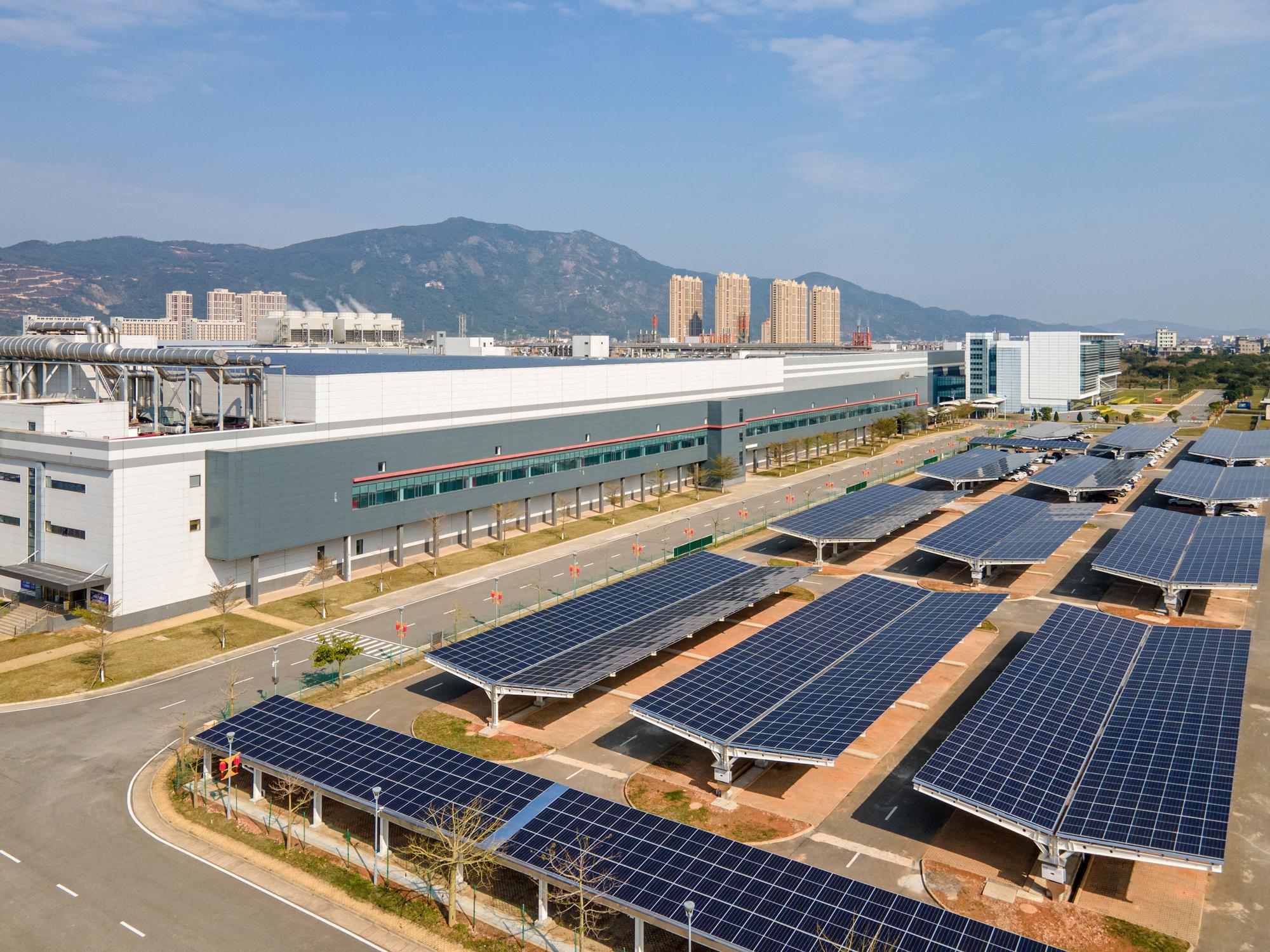
India’sProductionLinkedIncentive(PLI)Schemehasemergedasoneofthemostimportantpolicytoolsdrivingthegrowthof thedomesticsolarPVmanufacturingindustry.IntroducedbytheGovernmentofIndiatoreducedependenceonimportedsolar equipment, especially from China, the scheme is now playing a major role in building a strong and integrated solar manufacturingecosystemacrossthecountry.WithIndiatargeting500GWofnon-fossilfuelenergycapacityby2030,theneed forlocalmanufacturingofsolarcells,wafers,modules,andrelatedcomponentshasbecomestrategicallyimportantforenergy security,employmentgeneration,andindustrialdevelopment.
ThePLISchemeforHighEfficiencySolarPVModuleswaslaunchedwithafinancialoutlayofmorethan ₹24,000crore.Unlike earlier policies that mainly encouraged solar deployment, the PLI scheme directly supports manufacturing by offering incentives linked to production performance, efficiency levels, and local value addition. This has encouraged companies to invest not only in module assembly but also in backward integration, including solar cells, wafers, ingots, and polysilicon manufacturing. As a result, India is gradually shifting from being a solar module importer to becoming a global manufacturing destination.
SeveralleadingIndiancompanies,includingRelianceIndustries,TataPowerSolar,AdaniSolar,WaareeEnergies,VikramSolar, andReNew,haveannouncedlarge-scaleinvestmentsunderthePLIprogram.Theseinvestmentsarecreatinganewindustrial ecosystem that includes manufacturing plants, ancillary suppliers, logistics support, and research facilities. According to industry estimates, India’s solar module manufacturing capacity is expected to cross 150 GW within the next few years, while solarcellmanufacturingisalsowitnessingrapidexpansion.
OneofthebiggestachievementsofthePLIschemeisitsfocusonintegratedmanufacturing.Earlier,manyIndianmanufacturerswere dependentonimportedsolarcellsandrawmaterials.Thecurrentpolicystructurerewardscompaniesthatdevelopcompletevalue chains within India. This reduces import dependence, strengthens supply chain resilience, and improves the competitiveness of Indianmanufacturersinglobalmarkets.Italsosupportsthegovernment’s“MakeinIndia”and“AtmanirbharBharat”initiatives.
Theschemeisalsogeneratingsignificantemploymentopportunities.Largesolarmanufacturingparksarecreatingdirectandindirect jobs in engineering, operations, transportation, installation, and maintenance. States such as Gujarat, Tamil Nadu, Andhra Pradesh, andRajasthanareemergingaskeymanufacturinghubsduetofavorablepolicies,portconnectivity,andindustrialinfrastructure.This regionalindustrialgrowthisexpectedtocontributetolong-termeconomicdevelopment.
However,somechallengesstillremain.Indiacontinuestodependheavilyonimportsforupstreammaterialssuchaspolysiliconand wafers.Thehighcapitalcostofintegratedmanufacturingfacilitiesandtechnologylimitationsalsocreatebarriersforsmallerplayers. In addition, global price fluctuations and competition from established international manufacturers remain key concerns for the domestic industry. Industry experts believe that long-term policy stability, research support, and financial incentives for advanced technologiessuchasTOPConandHJTmoduleswillbeessentialforsustaininggrowth.
Overall, the PLI Scheme has significantly accelerated India’s transition toward a self-reliant solar manufacturing ecosystem. It has improved investor confidence, strengthened industrial capabilities, and aligned renewable energy goals with domestic economic growth.Asglobaldemandforcleanenergytechnologiesincreases,India’spolicy-drivenmanufacturingexpansioncouldpositionthe countryasamajorglobalsupplierofhigh-efficiencysolarPVproductsinthecomingdecade.
India’srooftopsolarmarketisemergingasamajorforcebehindtheexpansion of domestic solar manufacturing. As residential, commercial, and industrial consumers increasingly adopt distributed solar systems, Indian manufacturers are reshaping their factory expansion strategies to meet rising demand for locallyproducedmodules,cells,inverters,andenergystoragesystems.Theshift is not only supporting India’s renewable energy goals but also strengthening thecountry’sambitiontobecomeaglobalsolarmanufacturinghub.

Over the last few years, rooftop solar installations in India have witnessed significant growth due to falling system costs, rising electricity tariffs, and supportive government policies. Programs such as the PM Surya Ghar Muft Yojanaandstate-levelnet-meteringpolicieshaveencouragedhouseholdsand smallbusinessestoinvestinrooftopsystems.Unlikeutility-scalesolarprojects that depend heavily on large developers and imported equipment, rooftop solar creates direct demand from millions of individual consumers and enterprisesacrossurbanandsemi-urbanregions.
This distributed demand pattern is influencing how manufacturers plan their productioncapacities.Earlier,mostIndianmanufacturersfocusedonsupplying utility-scale solar parks where price competition was extremely high. Today, rooftop customers are demanding high-efficiency modules, aesthetically designedpanels,smartinverters,andreliableafter-salessupport.Thischange ispushingmanufacturerstoinvestinadvancedtechnologiessuchasTOPCon andHJTsolarcells,smartenergymanagementsystems,andintegratedbattery storagesolutions.
Domestic manufacturers are also expanding their factories closer to regional demand centers. Several companies are setting up module assembly units, inverter production facilities, and battery manufacturing plants in states with strong rooftop solar adoption such as Gujarat, Maharashtra, Rajasthan, Tamil Nadu,andKarnataka.Theaimistoreducelogisticscosts,improvesupplychain efficiency,andprovidefasterproductdeliverytoinstallersanddistributors.
Another important factor reshaping factory expansion plans is thegrowingdemandforresidentialenergystorage.Consumers areincreasinglylookingforbackuppowersolutionsduetogrid instabilityandrisingpoweroutagesinsomeregions.Asrooftop solarsystemsbecomemorecommon,batterymanufacturersare scaling up lithium-ion and advanced chemistry storage production in India. This is creating a new ecosystem where solar modules, batteries, inverters, and software platforms are beingmanufacturedtogetherunderintegratedfacilities.
THE FUTURE OF INDIA’S SOLAR MANUFACTURING SECTOR WILL BE SHAPED NOT ONLY BY UTILITYSCALE PROJECTS, BUT BY MILLIONS OF ROOFTOPS DRIVING DEMAND, INNOVATION, AND INVESTMENT.”
Therooftopsolarsegmentisalsosupportingtheriseofsmaller and medium-scale manufacturing companies. Unlike utilityscaleprojectsthataredominatedbylargesuppliers,distributed solar markets allow regional manufacturers to participate through customized products and localized service networks. This is helping create jobs across manufacturing, installation, operations,andmaintenancesectors.
However, challenges remain. Domestic manufacturers still face dependence on imported wafers, polysilicon, and advanced productionequipment.Pricecompetitionfromcheaperimports also continues to pressure margins. In addition, policy uncertainty and delays in subsidy disbursement can affect rooftopsolardemandgrowth.
Despitethesechallenges,rooftopsolarissteadilytransforming India’s solar manufacturing landscape. Distributed energy adoption is no longer just about electricity generation at the consumer level. It is now driving industrial investments, encouraging technology upgrades, and shaping the future expansion strategies of India’s domestic clean energy manufacturingsector.
India”sambitiontobecomeaglobalcleanenergypowerhouseisno longer limited to installing solar power projects. The country is now focusing on building a complete solar PV manufacturing ecosystem, frompolysiliconandwaferstocellsandmodules.AsIndiatargetsover 500 GW of non-fossil fuel capacity by 2030, strengthening domestic solar manufacturing has become both an economic and strategic priority. The key question, however, remains whether India can successfully build a full polysilicon-to-module value chain while competingwithestablishedglobalgiants,especiallyChina.
Currently, India has made significant progress in module and solar cell manufacturing. Domestic module manufacturing capacity has crossed 170 GW, while cell manufacturing is also rapidly expanding under government support schemes such as the Production Linked Incentive (PLI) program. Several Indian companies are investing heavilyinintegratedmanufacturingfacilitiesthatincludewafersand cells. However, the upstream segment, particularly polysilicon and ingot-wafermanufacturing,remainslargelyunderdeveloped.
TheopportunityforIndiaisenormous.Astrongdomesticvaluechain canreducedependenceonimports,improveenergysecurity,create thousands of skilled jobs, and attract foreign investment. The global solarindustryisexpectedtowitnessmassivedemandgrowthoverthe nextdecadeascountriesacceleratedecarbonizationefforts.Indiacan positionitselfasanalternativemanufacturinghubforglobalmarkets seekingdiversificationbeyondChina.Inaddition,localmanufacturing
Investment in upstream manufacturing also offers long-term economic benefits. Polysilicon and wafer production are highvaluesegmentsthatcanimproveprofitmarginsandreducesupply chainrisksforIndianmanufacturers.IfIndiasucceedsincreating integratedsolarmanufacturingclusterswithreliableinfrastructure, logistics,andpolicysupport,itcansignificantlyreduceproduction costs over time. States such as Gujarat, Tamil Nadu, Andhra Pradesh, and Odisha are already emerging as potential manufacturing hubs due to land availability, ports, and industrial infrastructure.
Despite these opportunities, the risks and challenges remain substantial. Polysilicon production is highly capital-intensive and energy-intensive. China dominates more than 80 percent of the global polysilicon and wafer market because of its economies of scale, lower costs, and well-established supply chains. Indian manufacturers may struggle to compete on pricing during the initial years. High electricity costs in India also pose a major concern because polysilicon manufacturing requires continuous andaffordablepowersupply.
Technology dependency is another challenge. Advanced manufacturing processes and equipment for upstream solar productionarestillcontrolledbyafewinternationalplayers.India will need strong technology partnerships, research investments, and skilled manpower to close this gap. In addition, fluctuating global solar module prices and market oversupply could impact profitabilityfornewIndianinvestments.

"Theraceforsolarleadership willbewonnotonlythrough installations,butthroughthe strength,scale,andresilience ofdomesticmanufacturing."
Policy stability will play a critical role in determining success. Investors require long-term visibility on import duties, incentives, financing support, and domestic procurement policies. Sudden policy changes could discourage large-scale investments. Access to low-cost green financing will also be necessary because upstream manufacturing projects require billions of dollars in
Indiahasthepotentialtobuildacompetitivepolysilicon-to-module valuechain,butthejourneywillrequirepatientinvestment,policy consistency, and technological advancement. While challenges aresignificant,thestrategicimportanceofsolarmanufacturingin the global energy transition makes this a crucial investment opportunityforIndia’sfuture.

India’s solar manufacturing sector is expanding rapidly as the country moves toward its ambitious renewable energy goals and strengthens domestic productionunderinitiativessuchastheProductionLinkedIncentive(PLI)scheme andtheApprovedListofModelsandManufacturers(ALMM).However,alongside this growth, a new challenge is emerging that cannot be ignored — the management of end-of-life solar photovoltaic (PV) modules. As millions of solar panelsinstalledduringthefirstphaseofIndia’ssolarboomapproachtheendof theiroperationallifeoverthenexttwodecades,recyclingandcirculareconomy practicesarebecomingcriticalforthelong-termsustainabilityoftheindustry.
Oneofthebiggestchallengesisthecomplexstructureofsolar panels. Recovering high-value materials from PV modules requires advanced technologies and specialized processing methods. Traditional recycling methods mainly recover glass andaluminum,whilevaluablematerialssuchassilverandhighpurity silicon are often difficult and expensive to extract. Without efficient recovery technologies, recycling businesses maystruggletoachievecommercialviability.
Despite these challenges, the circular economy model is gainingmomentuminIndia’ssolarsector.Severalstartupsand recycling companies are investing in innovative recycling technologies that can improve material recovery rates and reduce environmental impact. Manufacturers are also beginning to explore eco-design strategies, where solar modulesaredesignedforeasierdisassemblyandrecyclingin the future. Such approaches can significantly improve sustainabilityacrosstheentireproductlifecycle.
SolarPVmodulesgenerallyhavealifespanof25to30years,butfactorssuch as weather conditions, transportation damage, manufacturing defects, and early replacements can generate waste much earlier. According to various industryestimates,Indiaisexpectedtogenerateseveralmilliontonnesofsolar wasteby2050.Thiscreatesbothanenvironmentalchallengeandaneconomic opportunityforthecountry’ssolarmanufacturingecosystem.
MostPVmodulescontainvaluablematerialssuchasglass,aluminum,silicon, copper,andsilver.Ifthesematerialsarerecoveredefficientlythroughrecycling, they can reduce dependence on imported raw materials and lower manufacturingcostsfordomesticsolarcompanies.Thisisespeciallyimportant for India, where the majority of solar manufacturing inputs are still imported from global markets. Recycling can therefore support resource security while promotingamoreself-reliantmanufacturingecosystem.
Atpresent,India’ssolarrecyclingindustryisstillinitsearlystage.Thecountry lacksadedicatedregulatoryframeworkspecificallyfocusedonsolarPVwaste management. Existing e-waste regulations provide limited coverage for solar panels, and large-scale recycling infrastructure is yet to be fully developed. Manydevelopersandmanufacturersarestillexploringcost-effectivecollection, dismantling,andrecoverysystemsfordamagedorexpiredmodules.
The growing focus on sustainability among investors and global buyers is also pushing Indian manufacturers to adopt circular economy principles. International markets are increasingly emphasizing ESG compliance, carbon reduction, andresponsiblewastemanagement.Companiesthatestablish robustrecyclingsystemsmaygainacompetitiveadvantagein export markets while strengthening their environmental credentials.
Governmentsupportwillplayamajorroleinacceleratingthis transition. Industry experts believe India needs a dedicated solar waste management policy that encourages recycling investments, defines producer responsibility obligations, and supports research in advanced recovery technologies. Financial incentives for recycling facilities and collaboration between manufacturers, recyclers, and policymakers can furtherstrengthentheecosystem.
ThefutureofIndia’ssolarmanufacturingindustrywilldepend notonlyonexpandingmoduleproductioncapacitybutalsoon managing the entire lifecycle of solar products responsibly. Recycling and circular economy practices can help reduce waste,recovercriticalmaterials,creategreenjobs,andimprove supply chain resilience. As India moves toward becoming a global solar manufacturing hub, sustainable end-of-life PV management will become an essential pillar of the industry’s long-termgrowthstrategy.
India’s solar energy journey has entered a new phase where the focus is no longer limited to installing solar projects but also on buildingastrongdomesticmanufacturingecosystem.Overthepast fewyears,Indiahasemergedasoneoftheworld’sfastest-growing solar markets. However, despite rapid growth in solar module manufacturing,thecountrystillfacesmajorbottlenecksindomestic solar cell manufacturing. The gap between module assembly and advancedsolarcellproductionremainsakeychallengeforIndia’s ambitiontobecomeself-reliantintherenewableenergysector.
Indiacurrentlydependsheavilyonimportsforhigh-efficiencysolar cells, manufacturing equipment, wafers, and key raw materials. While several companies have announced large-scale investments insolarcellfacilitiesundergovernmentincentiveschemessuchas the Production Linked Incentive (PLI) program, the industry still struggles with technology access, capital costs, and supply chain limitations. Most domestic manufacturers continue to rely on importedmachineryfromcountrieslikeChinabecauseIndialacksa matureecosystemforadvancedsolarmanufacturingequipment.
One of the biggest challenges is the technology gap. Global solar manufacturing is rapidly shifting towards advanced technologies such as TOPCon, HJT, and back-contact cells, which offer higher efficiencyandbetterperformance.Indianmanufacturersarestillin the process of scaling these technologies commercially. Establishing advanced solar cell production lines requires high investment, skilled manpower, and continuous research and development.ManyIndianfirmsfacedifficultiesincompetingwith globalmanufacturerswhoalreadyoperateatmuchlargerscalesand benefitfromestablishedsupplychains.
"India’ssolarfuturewillbe definednotbyhowmany panelsitinstalls,butbyhow muchofthesolarvaluechain itcanbuildathome."
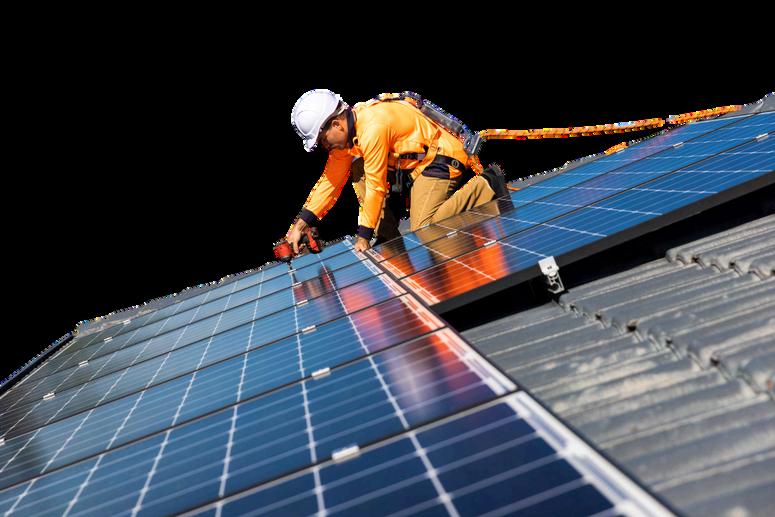

Another major bottleneck is the absence of domestic wafer manufacturing. Wafers are the foundation of solar cell production, yet India imports most of its wafer requirements. Without an integrated manufacturing chain that includes polysilicon, ingots, wafers,cells,andmodules,Indianmanufacturersremainvulnerable to global price fluctuations and supply disruptions. Building this upstream ecosystem requires billions of dollars in investment and long-termpolicysupport.
Theequipmentgapalsoremainsaseriousconcern.Advancedsolar cell manufacturing depends on precision machinery, automation systems, and testing technologies. India has limited domestic capability in producing such equipment. As a result, manufacturers often face delays, high import costs, and dependence on foreign suppliers for maintenance and technical support. This not only increasesprojectcostsbutalsoimpactsproductiontimelines.
Despitethesechallenges,Indiahasseveraladvantagesthatcanhelp bridgethegapinthecomingyears.Governmentpoliciespromoting domestic manufacturing, import duties on solar components, and incentives for integrated manufacturing are encouraging investments across the value chain. Several Indian companies are now investing in gigawatt-scale facilities with plans to adopt nextgeneration technologies. The growing domestic demand for solar power also provides a strong market for locally manufactured products.

Research institutions and industry partnerships can play an important role in closing the technology gap. Greater collaboration between manufacturers, universities, and technology providers can support innovation, workforce development, and localization of equipment manufacturing. In addition, India’s focus on energy security and clean energy transition is likely to accelerate policy supportfordomesticmanufacturing.
India’s solar manufacturing sector stands at a critical turning point. While the country has made significant progress in module production, achieving global competitiveness in solar cell manufacturing will require stronger technological capabilities, integrated supply chains, and domestic equipment development. If thesebottlenecksareaddressedeffectively,Indiahasthepotentialto become not only a major solar market but also a leading global manufacturinghubforadvancedsolartechnologies.
ndia’s domestic solar manufacturing sector reached a major milestone in May 2026 after the Ministry of New and Renewable Energy (MNRE) updated its Approved List of Models and Manufacturers(ALMM)List-I.Withnearly20GWoffreshadditions and capacity optimizations, the country’s total approved solar PV module manufacturing capacity has now touched 193,144 MW. Industry experts believe this rapid growth reflects India’s strong policy push toward self-reliance in clean energy manufacturing and the increasing demand generated by large-scale rooftop and utilitysolarprograms.
The latest ALMM data shows that India’s solar manufacturing industry is rapidly shifting toward advanced technologies. Older polycrystallinemodulesarenowbeingreplacedbyhigh-efficiency Mono PERC and n-type TOPCon technologies. Most manufacturers are also focusing on higher wattage modules above 540 Wp along with bifacial dual-glass designs, which are consideredmoreefficientforlarge-scaleprojects.
Several new companies entered the ALMM list during the May 2026update.FirmssuchasSudarshanSaurShakti,Nav-YugSolar, andSilverPumpsandMotorsaddedfreshmanufacturingcapacity using automated production lines. At the same time, leading manufacturers, including Waaree Energies, Reliance Industries, Rayzon Solar, Luminous, Novasys Greenergy, Redren Energy, and PIXON Green, expanded their existing capacities significantly. Industry analysts say this indicates rising investor confidence in India’sdomesticsolarmanufacturingecosystem.
Research trends also show that India is witnessing a major transition from basic module assembly to advanced technology manufacturing.Manyfactoriesarenowintegratingautomation,AIbased quality inspection, and high-efficiency cell processing technologies to improve performance and reduce production costs. According to market observers, this shift is helping Indian manufacturerscompetewithglobalsuppliers,especiallyinexportfocusedmarkets.
The geographic distribution of manufacturing capacity reveals strongindustrialclusteringacrosscertainstates.Gujaratcontinues
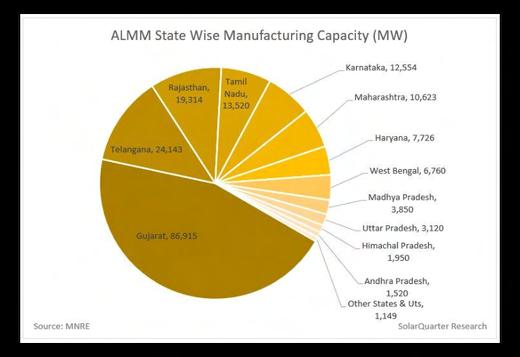

to dominate the sector with nearly 45 percent of the country’s total ALMM-listed capacity, estimated at around 86.9 GW. Mega projects led by Reliance and Adani Solar, along with large expansions by Rayzon Solar in Surat, have strengthened Gujarat’s position as India’s solar manufacturinghub.
Southern states are also emerging as major centers for advanced solar production. Telangana and Tamil Nadu together account for a significant share of high-efficiency manufacturing facilities. Premier Energies’ large-scale operations in Telangana are among the notable examplesdrivingtheregion’sgrowth.
Atthesametime,statessuchasRajasthan,Karnataka,Maharashtra,and Haryanaarebuildingregionalmanufacturingecosystemssupportedby risingrooftopandcommercialsolardemand.Emergingstates,including Uttar Pradesh, Madhya Pradesh, Andhra Pradesh, and Himachal Pradesh,arealsograduallyattractinginvestments.
However, researchers point out that India still faces a major supplychain challenge. While module manufacturing capacity has crossed 193 GW, domestic solar cell capacity remains around 30.5 GW under ALMMList-II.ExpertsbelieveIndiamustnowfocusonexpandingingot, wafer, and solar cell manufacturing to reduce import dependence and achievefullsupply-chainintegration.
Manager–India,
As India accelerates its clean energy transition, energystorageisemergingasacriticalenablerof gridstability,renewableintegration,andlong-term energy security. In this exclusive interview, Panigrahi, Country Manager – India, Hopewind, shares his perspective on the evolving battery energy storage landscape and the technologies shapingitsfuture.
He discusses the role of advanced power conversion systems, liquid-cooling innovations, hybrid solar-plus-storage architectures, and gridforming capabilities in addressing India's unique operational challenges while enhancing project performance, reliability, and economic viability. Panigrahialsooffersinsightsintotheopportunities and priorities that will define the next phase of India'senergystoragegrowth.

How does Hopewind’s liquidcooled PCS operating at 51°C redefine project viability and LCOE in India?
Hopewind’s liquid-cooled PCS, capable of continuous full-load operation at 51°C without derating,addressesoneofthebiggestchallenges for battery energy storage projects in India— maintaining performance during extreme heat. In regions such as Rajasthan and Gujarat, where temperatures frequently exceed 50°C, conventional systems may lose output just when energydemandandmarketvaluearehighest.
By delivering full rated power under these conditions, Hopewind helps maximize energy availability and project revenues.This capability improvesprojectviabilitybyreducingperformance risks, eliminating the need for equipment oversizing, and enabling reliable deployment in high-temperature environments. It also enhances investor confidence through more predictable energydeliveryandcashflows.
From an LCOE perspective, higher energy throughput, reduced thermal losses, improved efficiency, and lower maintenance requirements contributetolowerlifecyclecosts.Theresultisa more bankable, efficient, and profitable energy storage project, helping developers achieve strongerreturnswhilesupportingIndia’sgrowing renewableenergyambitions.
How does the centralized PCS architecture improve EPC execution and reduce commissioning timelines?
Hopewind’s centralized PCS architecture simplifies system design and integration by reducingthenumberofpowerconversionunits, interconnections,andcontrolinterfacesrequired
As a result, projects can achieve shorter commissioningtimelines,lowerlaborrequirements, and faster commercial operation dates, helping developers accelerate revenue generation while reducingoverallprojectexecutioncosts.
How does liquid cooling improve performance and lifecycle in India’s hot and dusty conditions?
Liquid cooling significantly enhances PCS performanceandreliabilityinIndia’shotanddusty operatingenvironmentsbyprovidingmoreeffective anduniformtemperaturecontrolthanconventional air-cooledsystems.Byefficientlyremovingheatfrom critical components, it enables stable operation at highambienttemperatureswhilepreventingthermal deratingduringpeakdemandperiods.
The closed-loop cooling design also minimizes exposure to dust, sand, and other airborne contaminantsthatcanaccumulateinsideequipment and degrade performance over time. This reduces component stress, lowers maintenance requirements,andimprovessystemavailability.
Bymaintainingoptimaloperatingtemperaturesand protecting sensitive electronics from harsh environmental conditions, liquid cooling extends equipment lifespan, improves energy conversion efficiency,andhelpsensureconsistentperformance throughouttheprojectlifecycle,ultimatelyreducing operatingcostsandenhancingprojectreturns.
How does the 385kW utility inverter integrate with your storage solutions for hybrid solar-plus-storage projects?
Hopewind’s385kWutility-scaleinverterisdesigned tointegrateseamlesslywithbatteryenergystorage systems, creating a highly efficient and flexible solution for hybrid solar-plus-storage projects. Through coordinated control between the inverter andPCS,thesystemcanintelligentlymanagesolar generation, battery charging and discharging, and gridinteractionsfromaunifiedplatform.
management systems, Hopewind’s solar and storage solutions simplify system integration, improveoperationalefficiency,andhelpproject ownersmaximizeassetutilizationandproject returns.
How important are grid-forming features like VSG and blackstart for India’s future storage tenders?
Grid-forming capabilities such as Virtual SynchronousGenerator(VSG)functionalityand black-start support are expected to become increasingly important as India expands renewable energy and battery storage deployment. As the share of inverter-based resources grows, maintaining grid stability, frequency control, and system resilience becomesmorechallenging,creatingagreater need for storage systems that can actively support grid operations rather than simply followgridsignals.
VSGtechnologyenablesbatteryenergystorage systems to emulate the behavior of conventional synchronous generators by providingsyntheticinertia,voltagesupport,and fastfrequencyresponse.Thishelpsstrengthen gridstability,particularlyinregionswithhigh renewable penetration and weaker grid infrastructure.
Black-start capability is equally valuable, allowingstoragesystemstohelprestorepower following major grid disturbances or outages withoutrelyingonconventionalgeneration.As utilities and grid operators place greater emphasis on resilience and reliability, these advanced functions are likely to become key differentiators—and potentially mandatory requirements—infuturestoragetenders.
For developers and utilities, grid-forming storage solutions offer greater operational flexibility,improvedgridsupport,andenhanced long-termvalue,positioningthemasacritical componentofIndia’sevolvingpowersystem.

India's renewable energy sector is evolving rapidly, with solar power increasinglycomplementedbyhybridenergysystemsandBatteryEnergy StorageSystems(BESS)tomeetthegrowingdemandforreliable,efficient andsustainablepowersolutions.Astheindustrymovestowardsintegrated energymanagement,knowledgesharingandtechnicalcapabilitybuilding have become critical for installers and EPC companies delivering projects acrossresidential,commercialandindustrialsegments.
Reflecting this industry shift, Bengaluru-based SunAP Ecopower recently hosted Solar Installers Meet 2026 in Bengaluru in association with NovasysGreenergy and FestonSEVPvtLtd. Theeventbroughttogether solar installers, EPC contractors, channel partners, consultants and renewable energy professionals to discuss technology advancements, policy developments and practical applications that are shaping the next phase of India's clean energy transition. Guests were welcomed by Mr. Hrishikesh Manian, Director & COO, SunAP Ecopower, and Mr. Girish, Sr. GeneralManager,NovasysGreenergy.
The programme underscored SunAP Ecopower's role beyond product distribution.Asarenewableenergydistributionandchanneldevelopment company,SunAPworkscloselywithinstallersandEPCpartnersbyproviding technical guidance, engineering support, product selection assistance, commissioning support and after-sales services. Through regular training programmes and industry engagement initiatives, the company aims to strengthentheinstallerecosystemandenablepartnerstoconfidentlyadopt emergingrenewableenergytechnologies.
A major focus of the discussions was the growing convergence of solar generation and energy storage. With changing electricity tariff structures, increasing emphasis on energy resilience and evolving regulatory frameworks,BatteryEnergyStorageSystemsareemergingasakeyenabler for optimizing energy consumption, improving power reliability and reducingdependenceonconventionalbackupsystems.Sessionsexplored practicalapplicationssuchasdieselgeneratorreplacement,peakdemand management, time-of-day tariff optimization and solar-plus-storage integration,highlightinghowthesesolutionsarecreatingnewopportunities acrossresidential,commercialandindustrialmarkets.
The event also highlighted advancements in solar module technology through presentations by Novasys Greenergy. Ashok Kumar Singh, President,NovasysGreenergy, addressedparticipantsontheevolutionof high-efficiency photovoltaic technologies and the importance of domestic manufacturinginsupportingIndia'srenewableenergyambitions.The




technicalsessionbytheNovasysteamprovidedinsightsintoN-Type TOPContechnologyanditsroleinenhancingenergyyield,long-term performanceandprojectefficiency.
Representing Feston SEV private limited, Sampath Kumar, Managing Director & CEO, discussed the growing role of hybrid inverters and Battery Energy Storage Systems (BESS) in improving energyreliabilityandoptimizingpowercosts.TheFestonteamalso shared insights into hybrid energy solutions for residential, commercialandindustrialapplications.
Theeventalsofeaturedasessionby Mr. Raghunandan, President, KREA,Karnataka, whoprovidedupdatesonrenewableenergypolicy developments and ongoing discussions with government stakeholders.Hispresentationhighlightedtheimportanceofstaying abreastofevolvingregulationsgoverningenergystorageandhybrid powersystems.
Addingapracticaldimensiontotheprogramme,installersandproject partnerssharedcustomerexperiencesandcasestudies,highlighting successful project implementations, operational benefits and key learningsfromreal-worldsolarandhybridenergydeployments.
Theeventconcludedwithaninteractivequestion-and-answersession led by Srinivas Kumar, Managing Director & CEO, SunAP Ecopower, who addressed technical, commercial and applicationrelated queries from participants. The open dialogue reflected the collaborativenatureoftheprogrammeandprovidedinstallerswithan opportunitytoseekexpertguidanceontechnologyselection,system integrationandemergingmarketopportunities.
As India's renewable energy sector continues its transition towards smarter, more integrated energy systems, collaboration between manufacturers, distributors, technology providers and installers will beessentialtosustainmarketgrowth.Bybringingtogetherindustry stakeholders on a common platform, Solar Installers Meet 2026 highlighted the growing importance of technical education, policy awarenessandknowledgeexchangeinacceleratingtheadoptionof advancedsolarandenergystoragesolutionsacrossthecountry.

Inanerawhereinfrastructuregrowth,renewableenergy,andindustrial expansion are reshaping India’s economic landscape, the demand for reliable,safe,andtechnologicallyadvancedwiringsolutionshasnever beengreater.RisingtomeetthischallengeisFLIPCABCablePvt.Ltd.,a Surat-basedmanufacturerthathassteadilyestablisheditselfasatrusted name in the Indian wires and cables industry through its unwavering commitmenttoquality,innovation,andsustainability.
Founded by Vijay Akbari with a vision to deliver dependable and customizedcablesolutions,FLIPCABhasevolvedintoacomprehensive providerofhigh-performanceelectricalproductscateringtoresidential, industrial, agricultural, and renewable energy applications. Backed by morethan25yearsofcombinedindustryexperiencefromitsfounders, the company has built a strong reputation on the pillars of safety, durability,consistency,andaffordability.
What truly distinguishes FLIPCAB is its relentless focus on quality assurance. Every product undergoes rigorous testing throughout the manufacturingprocess—fromrawmaterialselectiontofinalinspection —ensuring adherence to national and international standards. The company’s advanced testing procedures include copper testing, PVC testing,high-voltagetesting,tensileandflexibilityevaluation,sparkand insulation testing, and conductor resistance checks. This meticulous approach guarantees that each cable delivers optimal performance, reliability,andlong-termoperationalsafety.
FLIPCAB’s diverse product portfolio reflects its adaptability to evolving market demands. The company manufactures house wires, round flexiblecables,submersiblecables,aluminiumflexiblecables,multicore cables,andlow-voltagealuminiumunarmouredcables.Inaddition,


FLIPCAB has made significant strides in the renewable energy sector with specialized solar DC cables, AC cables, and earthing solutions engineeredforlongservicelifeandsuperiorweatherresistance.These productsaredesignedtosupportIndia’sambitiouscleanenergygoals, includingthenationaltargetofachieving500GWofrenewableenergy capacityby2030.
Sustainability remains deeply embedded in FLIPCAB’s operational philosophy. The company emphasizes eco-friendly materials, energyefficient manufacturing practices, and environmentally responsible processes aimed at reducing industrial impact while delivering worldclasselectricalsolutions.
Strengthening its engagement with India’s fast-growing renewable energy sector, FLIPCAB will also mark its presence at the Maharashtra UrjaExpo2026,scheduledtobeheldinNagpuron5th–6thJune2026. The participation reflects the company’s commitment to supporting India’s clean energy transformation while showcasing its advanced solarandenergy-efficientcablesolutionstoindustrystakeholders,EPC companies,andrenewableenergyprofessionals.
Today, FLIPCAB’s growing market presence is reinforced by partnerships with prominent organizations such as Reliance Industries, Waaree, Mahindra, NHAI, SBI Jaipur, Tata Jamshedpur, and Maharashtra Railways. As the company continues expanding its technologicalcapabilitiesanddealernetwork,itsvisionremainsclear:to emerge as a globally recognized brand synonymous with trust, safety, innovation,andsustainableprogressintheelectricalindustry
For more details about FLIPCAB’s innovative wire and cable solutions, visit: www.flipcab.com








ASOT Solar Fastest Growing Solar Module Brand

State Technology Leadership Award - Inverter
Ningbo Deye Inverter
International Trade Co., Ltd

State Technology Leadership Award - Modules
SAEL Industries Limited

Smart Technology Innovation of the Year - Solar Dryers
KRAFTWORK SOLAR PVT LTD

Best Technology-Enabled Solar Solutions Provider
Flarize Technologies Pvt. Ltd.

AI-Driven Solar Module Manufacturer of the Year
Pahal Solar Pvt. Ltd.

State Market Leader AwardModules
Saatvik Green Energy Limited


Best Residential EPC in Solar + Storage
Solarbase Luxeon Pvt. Ltd.


Sustainable Smart Inverter Brand of the Year
Polycab India Limited

ESAF Foundation Excellence in Rural Development - Urjabandhu Program


Bumblebee Instruments Pvt. Ltd. Emerging Company in Measurement & Testing Solutions

State Channel Partner of the Year
Green Factory


Best Commercial Project of the Year
EVM Cleantech LLP


Best Project Team of the Year
Solarbase Luxeon Pvt. Ltd.

Rising Star in Solar Distribution Box Manufacturing
MS TECH ENGINEERING INDUSTRIES


Alnishan Shahul CEO
Almiya Engineering Consultants Pvt. Ltd Business Leader of the Year






State Market Leader AwardModules
Saatvik Green Energy Limited

Best High-Efficiency Solar Inverter Manufacturer
Polycab India Ltd.

Fastest Growing Solar Module Brand
Adani Solar

AI-Driven Solar Module Manufacturer of the Year
PAHAL SOLAR PRIVATE LIMITED

High Performing Solar PV Module (N-TOPCON Bifacial Modules)
Credence solar Panels Pvt Ltd



Solar EPC Company of the Year – Residential
5S ENERGY
Solar EPC Company of the Year – Commercial
SMARTGEN SOLUTIONS


Service Excellence in Integrated Industrial Solutions
I PEEP SOLUTIONS PVT. LTD.

Service Excellence in Solar EPC & Project Delivery
HCK Solar Energy Limited

Emerging Solar Contractor of the Year - Residential
SEN COMMUNICATION

Renewable Energy Technology Leader of the Year
Dr. Rajkumar, Sahu
Head - Process & Technology
World Green Energy


Emerging Solar Contractor of the Year - Commercial
Riraj International















Best Solar EPC Company of the Year - North East
Natsakee Incorporation
Solar EPC Excellence in Sustainable Projects
Fender Vertex Solutions Pvt Ltd
Solar EPC Company of the Year (Residential) - Platinum
ADNAN ENTERPRISE
Emerging Solar Contractor of the Year
NJD TECHNOLOGIES LLP

Emerging Solar Module Manufacturer of the Year
GREENPOWER SOLUTIONS

Emerging Solar EPC Company of the Year - Residential
N E ELECTRICAL ENTERPRISE
Solar EPC Company of the Year (Residential) - Diamond
Prime Tech Enterprise
Fastest Growing EPC Company of the Year
SOLARLOGIX PVT. LTD.


Excellence in Utility-Scale and C&I Solar EPC Execution
Renergy Solutions Pvt. Ltd.


Excellence in End-to-End Rooftop Solar EPC Services
Adree Energy Systems Pvt. Ltd.
Best Turnkey Service Provider – EPC


Company of the Year:
Sustainable Technology Integration (String Inverter)
Polycab India Limited
Company of the Year: Innovative RE Initiative
Renergy Solutions Pvt. Ltd.



Smart Technology Innovation of the Year - Modules
Pahal Solar Pvt. Ltd.
State Market Leader AwardModules
Saatvik Green Energy Limited

Leading Made-in-India Solar Inverter Brand
Selec Controls Pvt. Ltd.
Project Development Excellence - C&I Projects
GREENPOWER SOLUTIONS
Project Development Excellence - Chengmari Tea Estate
SOLARLOGIX PVT. LTD.

Best Commercial Project of the Year - Health Care
Renergy Solutions Pvt. Ltd.
Best Utility Project of the Year
SAEL Industries Limited


Sales & Marketing Team of the Year
Adani Solar









Solar PV Module Manufacturing Excellence Award
Grew Energy Private Limited
Excellence in Solar Module Solutions Supporting India's Clean Energy Mission
Novasys Greenergy Limited


Best Solar EPC Company of the Year- Ground Mount (Commercial)
RAGHAV RENEWABLE ENERGY INDUSTRIES PRIVATE LIMITED

AI-Driven Solar Module Manufacturer of the Year
Pahal Solar Private Limited
Business Growth Excellence in Solar Module Manufacturing
Saatvik Green Energy Limited
High Efficiency Solar Module Mounting Structure Manufacturer of the Year
NAKODA SOLAR INFRASTRUCTURE PVT. LTD.
Excellence in Solar Integrated Battery Energy Storage Systems
Loom Solar Pvt. Ltd
Adhiraj Technocrats Pvt. Ltd.
Shree Solar Venture
Planck Power Pvt. Ltd.
Atri Sun Power
Vidyut Energy Systems Pvt. Ltd.
Kasliwal Trading Corporation
Infinite Tech Service Pvt. Ltd.


Service Excellence in Outstanding EPC, O&M, Consulting & Support Services.
Ultravibrant Integrated Energy Ltd.

Excellence in After-Sales Service & Technical Support in Solar EPC
Solars4u ( An Intiative of Sachet Advisory Services P Ltd)

Excellence in Customer-Centric Solar Project Delivery
Sunthrix Solar Energy Pvt Ltd

Best Industrial IoT Solution for Renewable Energy
Genex Technocrats

Best Renewable Energy Consultant of the Year
M/s Shree Kalyan Enterprises

Solar Energy Logistics Service Provider of the Year
Harishyam India Logistics Pvt Ltd



Sustainability Leadership in Solar PV Technology & Manufacturing
Adani Solar
Sustainability Consulting Company of the Year
Design2Occupancy Services LLP

Renewable Energy Industry Influencer of the Year
Nitin Agarwal
CEO
Rajasthan Solar Association (RSA)



Emerging Solar and BESS Engineering Consulting Company of the Year
Solar Plug Consultants
Emerging Solar EPC Company of the Year
Sunthrix Solar Energy Pvt Ltd
Outstanding Engineering Leadership Award
Manish Gupta
Chief Engineer
Doubletree by Hilton Jaipur Amer
Outstanding Regional Sales Performer of the Year
Harsh Lakhwani
RSM
Feston Sev Pvt Ltd

Rajasthan, Government of Rajasthan










Technology Excellence Award for Integrated Solar Solutions (Atum Solar)
Visaka Industries Limited
Best Solar Module Manufacturing Practices Award
Novasys Greenergy Ltd.


Technology Excellence Award for Integrated Solar Solutions (Atum Solar)
TRUZON SOLAR

AI-Driven Solar Module Manufacturer of the Year
Pahal Solar Pvt. Ltd.

Solar EPC Company of the Year - C&I
Excellence in Best-in-Class EPC Services
BRIGHT SOLAR SOLUTIONS PVT LTD
Saatvik Green Energy Limited
Advanced Sensor Technology Excellence Award
State Market Leader AwardModules SuryaLogix Pvt. Ltd.
Technology Excellence Award for Power Plant Controller (PPC) Solutions
iPLON India Private Limited
State Market Leader AwardMounting Structures
Purshotam Profiles Pvt. Ltd.
Technology Excellence in AIPowered Renewable Energy Management
Purelight Energy Pvt. Ltd. (Paradigm Solar Group)

Solar EPC Company of the Year - PM Kusum Yojana
Jayram Industries India Pvt. Ltd.


Sustainability Leadership in Greenhouse Gas Emissions
Mars International India Pvt. Ltd.

Company of the Year: Green Manufacturing (Transformers)
Kanyaka Parmeshwari Engineering Pvt. Ltd.





Technology Excellence Award for Integrated Solar Solutions (Atum Solar)
SAEL Industries Limited
Best Renewable Energy Initiative for Rural Development
Amasia Solar & Infra Pvt Ltd
Emerging Solar Distributor of the State
BHASU ENERGY SYSTEMS LLP
Emerging Solar EPC Company of the Year
VARAHI ENERGIES
Rising Star Company of the Year –Battery Energy Storage Systems (BESS)


Midwest Energy Devices Pvt. Ltd. (Division of Midwest Energy Ltd.
Fastest Growing Solar EPC Company of the Year
Solar Apex Private Limited


Best Ground Mount Project of the Year
Perpetual Renewable Energies Pvt Ltd


Best Design and Engineering Team of the Year
SunWorks Energy Pvt. Ltd.

Visionary Sales and Marketing Leader of the Year
Bharat Singh
Director - Sales & Marketing
Young Solar Entrepreneur of the Year
Shaik Mahafooz
Founder & Director

SSMS ENERGY PVT LTD
Ningbo Deye Inverter International Trade Co., Ltd.
Renewable Energy Entrepreneur of the Year
Sandeep Reddy Chillakuri
Co-Founder and Director
SunWorks Energy Private Limited
Service Excellence in Solar EPC & Project Execution
SunWorks Energy Private Limited
Excellence in Energy Management & Monitoring Services

BEST INFRA PRIVATE LIMITED
Ranjan Kumar Roy Chowdhury
Managing Director & CEO
Abja Power Private Limited CEO of the Year
Strategic Growth Leader of the Year
Tanmay Parakala
Chief Strategy Officer
Purelight Energy Pvt. Ltd. (Paradigm Solar Group)

Technology & Innovation Excellence








Advanced Inverter & Battery Storage Technology Excellence Award
SUNGROW

Company of the Year: Sustainable Development & Climate Action
Enviroleap Switch Pvt. Ltd.
Finance, Investment & Market Development
Utility-Scale Solar Inverter Technology Excellence Award
Solplanet
Company of the Year - Solar Modules – Nepal
JA Solar
Trina Solar Nepal’s Leading Solar Module Brand of the Year
BUSINESS EXCELLENCE
Solar Developer Company of the Year
Solar EPC Company of the Year
REnergo Developers Pvt. Ltd.
Clean Energy Company of the Year
Quality Renewable Energy Pvt. Ltd.
Sustainability, ESG & Impact
Company of the Year: Sustainability & Green Technology Innovation
SUNGROW

Renewable Energy Finance & Investment Leadership Award
Golyan Group Limited
Project Excellence & Execution
Project of the Year (UtilityScale)
REnergo Developers Pvt. Ltd.
SERVICE EXCELLENCE

Best Solar Consulting Company of the Year
Eco Inertia Pvt. Ltd.

Sustainable Infrastructure Services Excellence Award
GREAT Nepal Pvt. Ltd.
Team & Functional Excellence

Best Project O&M Team of the Year
Pure Energy Limited



CEO of the Year – Hydropower Company
Karan Chand
CEO
Makari Gad Hydropower Limited
CEO of the Year – Clean Energy Infrastructure Company
Imtiyaz Ali CEO
Hulas Infra Limited
-

Bijendra M.S. Basnyat



Prawin Aryal
CEO - Energy Business
Pure Energy Limited Excellence in Business Management Leadership Tuphan Gautam
Joshi
Excellence in Solar Project Development & Management
Shubham Gupta
Sanjay Kumar Sah
Vice President, Group CFO
Golyan Group Excellence in Finance & Investment Leadership








Best Solar Cable Brand
Flipcab Cables Pvt Ltd.
Best Mounting Structure Provider
SG MART LIMITED
State Market Leader of the Year - Inverter
Advanced Inverter & Battery Storage Technology Excellence Award
SUNGROW INDIA PVT LTD
Innovation Excellence in Hybrid Inverter Technology
Deye New Energy
Fastest Growing Inverter Brand of India
Selec Controls Pvt Ltd

Excellence in Distributed Energy Storage Solutions
Voltra Technologies Pvt. Ltd.

Green Technology Leadership in Solar Inverters Award
Feston Sev Pvt Ltd

Business Growth Excellence in Solar Module Manufacturing
Saatvik Green Energy Ltd

AI-Driven Solar Module Manufacturer of the Year
Pahal Solar Pvt. Ltd.

Sustainability Champion in Green Module Manufacturing
GREW Energy Private Limited





SG MART LIMITED
Novasys Greenergy Ltd Congratulations

Outstanding Women-led Solar Business
Roshani Thakare Proprietor, PRIME TECH
Emerging Rooftop Solar Company
SURYAAN ENERGY PVT LTD

Sushil Shivkumar Rangari Director
INDIAN SOLAR HYBRID POWER SOLUTION PVT LTD Renewable Energy Professional of the Year
Emerging Business Leader of the Year
Kamlesh Santosh Umbarkar Founder & Director
Aaple Solar Solutions

Emerging C&I Solar Company
PKS TECHNOLOGY

Emerging Residential Solar Company
ICDI MULTITRADE PVT. LTD.
Best EPC Company of the Year – Commercial & Industrial (Platinum)
Best EPC Company of the Year – Ground-Mount Solar Projects Innovation in Project Execution through Integrated Technology Solutions
Chirayu Power Pvt. Ltd.

Excellence in Safety Management for Solar EPC Projects
Best Solar O&M Service Provider
Chirayu Power Pvt. Ltd.

Emerging Residential Solar Company
Real Solar World

Best EPC Company of the Year – Commercial & Industrial (Diamond)
Alligator Energies Pvt Ltd.

Best EPC Company of the Year Commercial or Industrial (Gold)
Tech Force Services

Best EPC Company of the Year –Industrial
BIJLEE SOLAR
Excellence in Solar Asset Management
Inspire Clean Energy Pvt Ltd.

Navi Mumbai Municipal Corporation

Excellence in Renewable Energy-Led Urban Governance Developer of the Year (Solar &


SOURCE:MNRE
In the pie chart, Renewable capacity additions continue to increase at a rapid pace in India, accountingforapproximately42.6%ofIndia’stotal power capacity at the end of May 2026. India’s total installed power capacity stood at over 542 GWattheendofMay2026fromallthesources, with renewables accounting for 230.78 GW, compared to cumulative renewable energy installationsof178.82GWattheendofMay2025, which represented a growth of over 33.9% yearover-year. Solar power accounted for approximately157.046GWofinstallations,which represents 29% of the total installed power capacity. Among the renewable, Wind and Solar constitute over 92.7% of the total renewable (excluding large hydro), Wind Power installed capacity at the end of May 2026 was over 56.8 GW, which represents 10.5% of the total power capacityinstalled.
SOLARQUARTERRESEARCH
India achieved a remarkable milestone by installing an unprecedented 21,236.40 MW of Solar PV capacity in the calendar year 2026. By the end of May 2026, the country'stotalSolarPVinstallationssurpassed157GW. During this period, rooftop Solar PV installations reached approximately 27.88 GW. Rajasthan led the way,with42,166MWinstalled,accountingfor26.85%of the nation’s total Solar PV capacity. The county also added around 21 GW in the first five months of the calendar year 2026. Rajasthan, Gujarat, Maharashtra, Tamil Nadu, and Karnataka together contributed over 76.41% of the total installed Solar PV capacities across thecountry.Allleadingstatesretainedtheirpositionsin May 2026 compared to their installed solar PV capacity rankings in May 2025. The overall Solar PV installations sawagrowthofover41.7%comparedtothe110.83GW recordedbytheendofMay2025.
SOURCE:CEAMAY2026|SOLARQUARTERRESEARCH
Total renewable energy generation in April 2026 reached 29,685.36 million units, which is an increase of RE generation by around 24.5% year-over-year from April 2025, when the RE generation was 23,846.08 million units. Solar Power generation has also increased by around 32.17% year-over-year from April 2025 (15,811.82 million units) to April 2026 (20,899.61 million units). Wind Power generation has increased by almost 8.18% in the same period and reached 6,848.65millionunitsinApril2026.
SOURCE:CEA
SOURCE:CEA
SOURCE:CEA
SOLARQUARTERRESEARCH
SOURCE:MNRE(MAY2026)
SOLARQUARTERRESEARCH
As of May 2026, India’s installed hybrid projects capacity reached 4059.29 MW, contributing around 2.58% to the country’s total solar PV capacity.Thisispartoftheoverallrenewableenergycapacityof230GW,excludinglargehydro.Hybridprojects,whichcombinesolarandwind power, are currently limited to just three states: Rajasthan, Gujarat, and Karnataka. Among these, Rajasthan leads with the highest installed capacity of 1,980 MW. This is mainly because the state has strong potential for both solar and wind energy. Rajasthan receives high solar irradiationandalsoexperiencesstrongwindspeeds,makingitidealforhybridenergygeneration.Theinstalledcapacityofhybridprojectshas shown a year-on-year growth of about 34.33% compared to May 2025, when it stood at 3021.82 MW. This steady growth highlights the increasingfocusonhybridprojectsasasolutiontoimprovegridstabilityandrenewableenergyutilization.
SOURCE:IEX SOLARQUARTERRESEARCH
Indian Energy Exchange (IEX) reported a strong performance in May 2026, with total electricity traded volume reaching 12,983 million units (MU), reflecting an 18.6% year-on-year growth. The increase was driven by rising electricity demand across the country. According to government data, India’senergyconsumptionstoodat164.98billionunits(BU)duringthemonth,markingan11.5%increasecomparedtoMay2025.Thecountryalso recordedanall-timehighpeakpowerdemandof270.82GW. IntheDay-AheadMarket(DAM),robustdemandpushedbuybidsupby77%year-onyear,whilesellbidsincreasedby30%.Thehigherdemand-supplypressureresultedinanaveragemarket-clearingpriceof ₹4.88perunit,up18.3% fromthepreviousyear.Similarly,theReal-TimeMarket(RTM)recordedanaverageclearingpriceof ₹4.16perunit,representinga21.2%year-on-year rise.RenewableEnergyCertificate(REC)tradingtotaled6.10lakhcertificatesinMay2026,down65%year-on-year.TradingsessionsheldonMay13 andMay29clearedat ₹400perREC.Asharp85.3%declineinsellbidscontributedtotheincreaseinRECclearingpricesduringthemonth.
SOURCE:SOLARQUARTERRESEARCH
India’ssolarsectorisundergoingasignificanttransitionasnewregulatorymeasuresandglobalmarketuncertaintiesreshapeprojecteconomicsandtariff trends. The phased implementation of the Approved List of Models and Manufacturers (ALMM) framework—covering modules under List-I, cells under List-II, and now wafers and ingots under the newly introduced List-III effective from June 2028—has increased compliance requirements for solar developers participating in government and utility-scale projects. Under the revised framework, modules must increasingly be sourced from approved domesticsupplychains,strengtheningIndia’smanufacturingecosystembutalsoaddingprocurementandcompliancecosts.
At the same time, global supply chain disruptions caused by geopolitical tensions, trade restrictions, shipping uncertainties, currency fluctuations, and evolvingtariffpoliciescontinuetoinfluencecomponentprices.Thesefactorshavecontributedtofluctuationsinsolarbidtariffsduring2025and2026, despite government support through commissioning timeline extensions and policy interventions. A key recent policy development affecting solar PV module pricing is the expansion of ALMM requirements to upstream components such as wafers and ingots, which is expected to further promote domesticsourcingwhilepotentiallyincreasingnear-termcostsuntillocalmanufacturingscalesadequately.
However, India’s rapidly growing manufacturing base, with module capacity exceeding 190 GW and cell capacity surpassing 27 GW, along with increasing domestic inverter production and supportive tax measures, is improving supply security and reducing long-term import dependence. Going forward, solar tariffs will largely depend on the pace of domestic manufacturing expansion, cost competitiveness, and the industry’s ability to absorb policy-drivenlocalizationrequirementswhilemaintainingaffordableprojecteconomics.