I have been drawn to architecture for as long as I can remember, the way thoughtful design can bring people together. I care about creating spaces that feel human and inclusive—places that reflect the people who use them and support real connection.
I am excited to contribute to a team that values community-focused design and sees architecture as a way to strengthen the fabric of everyday life.
BATH ABOVE GROUND
Fall 2025 | Option Studio | Northeastern University
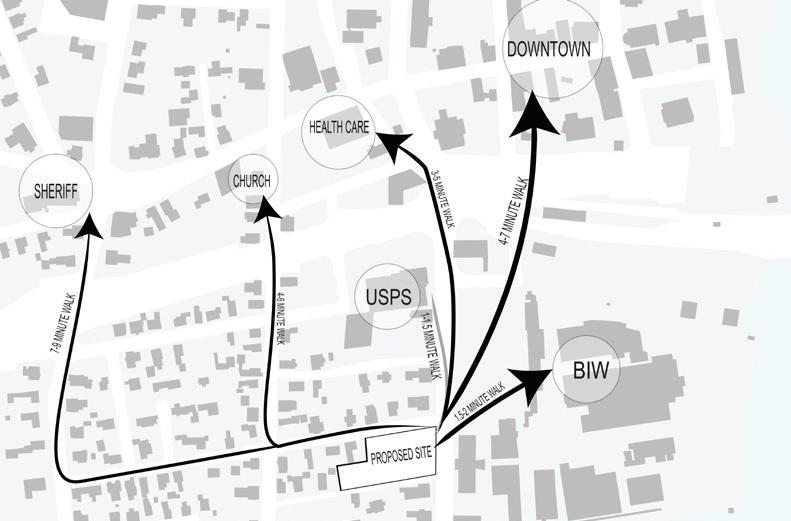
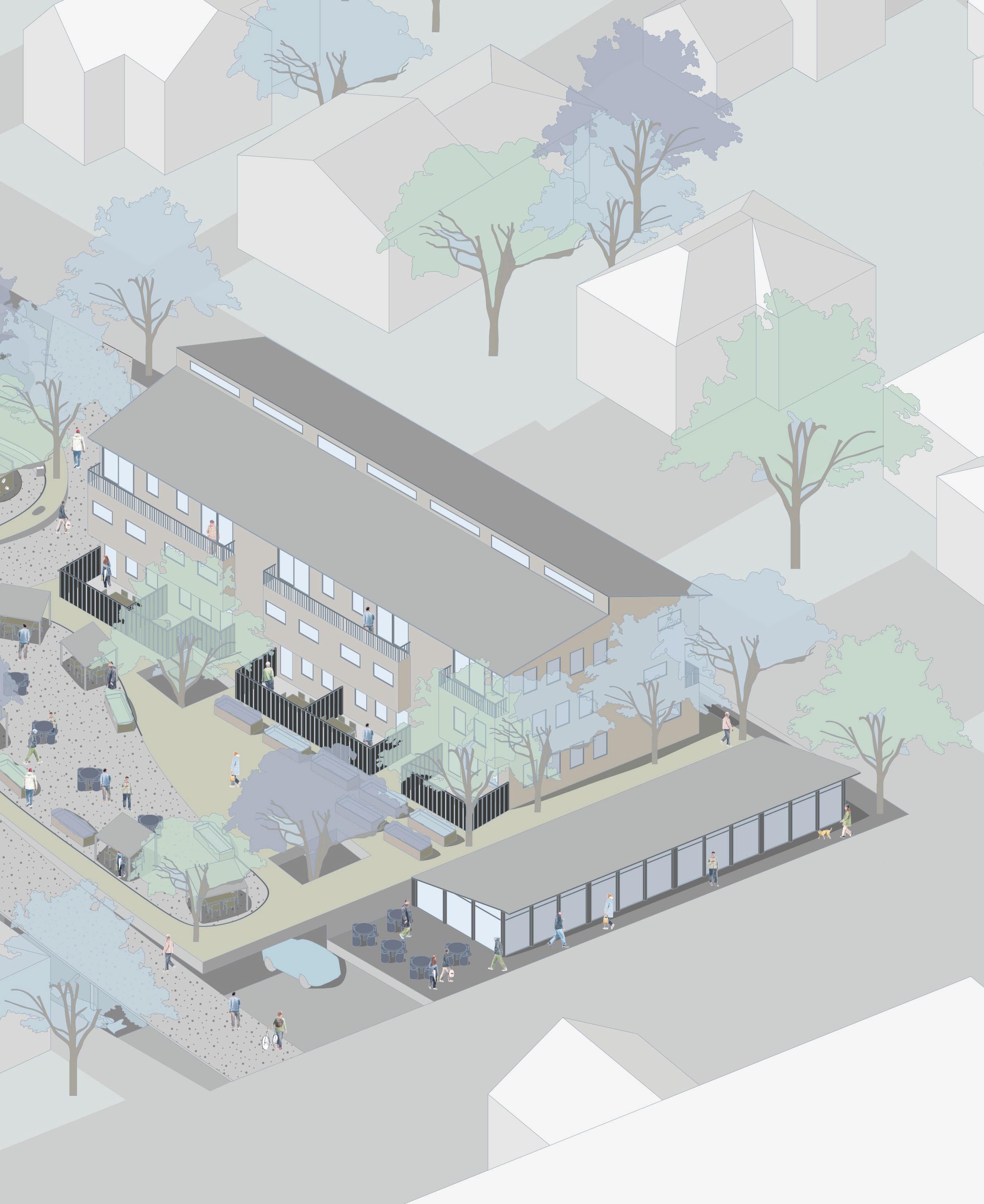
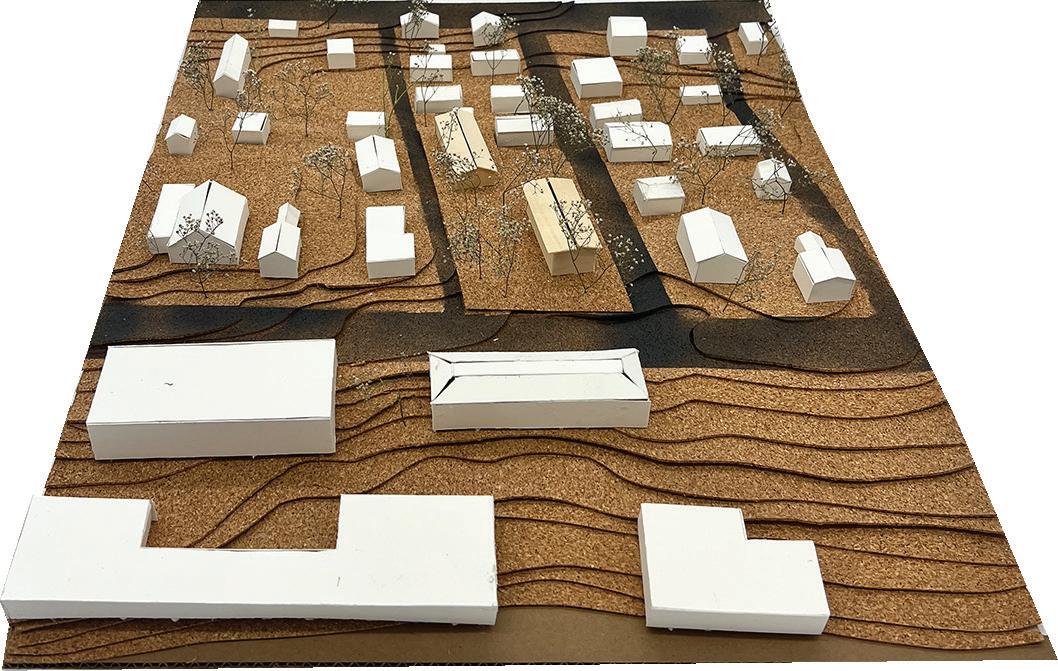
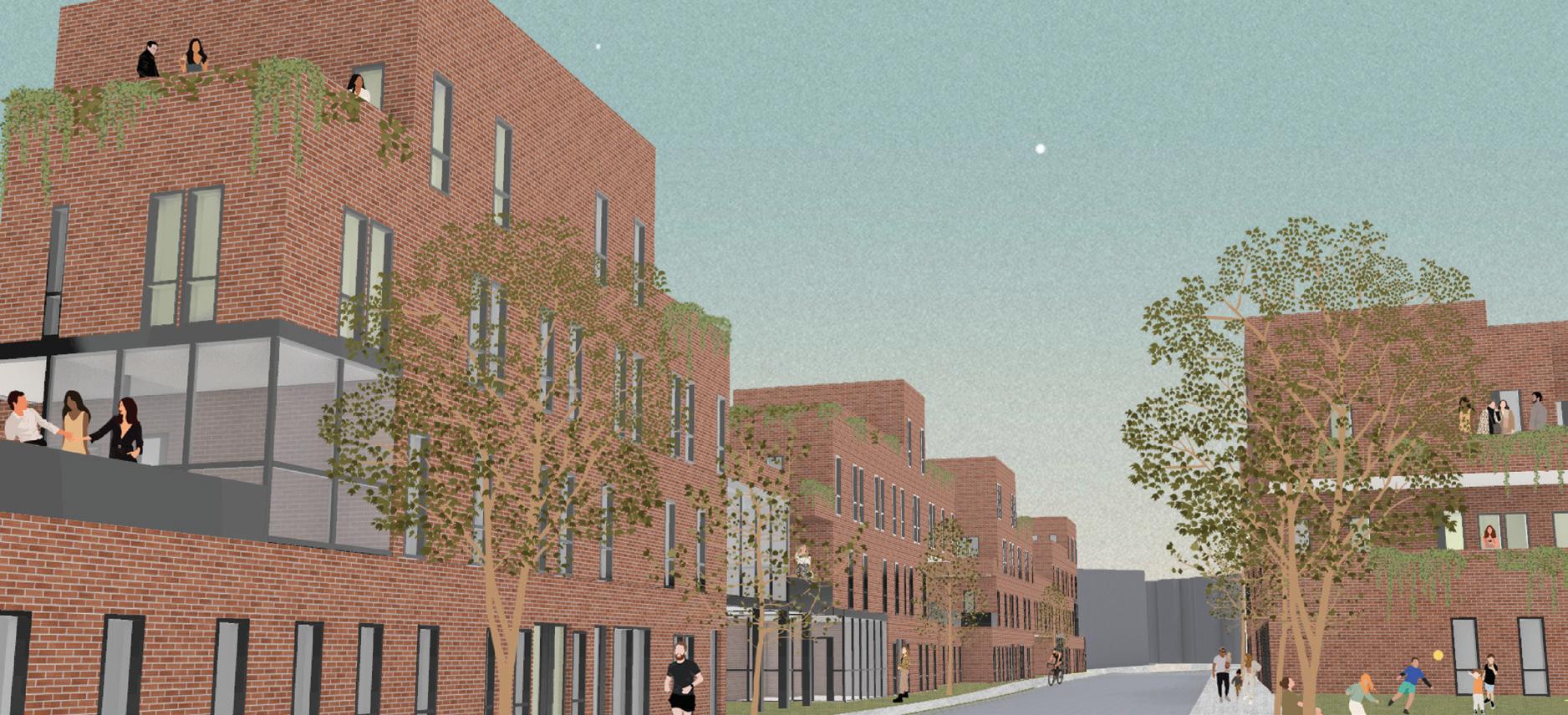
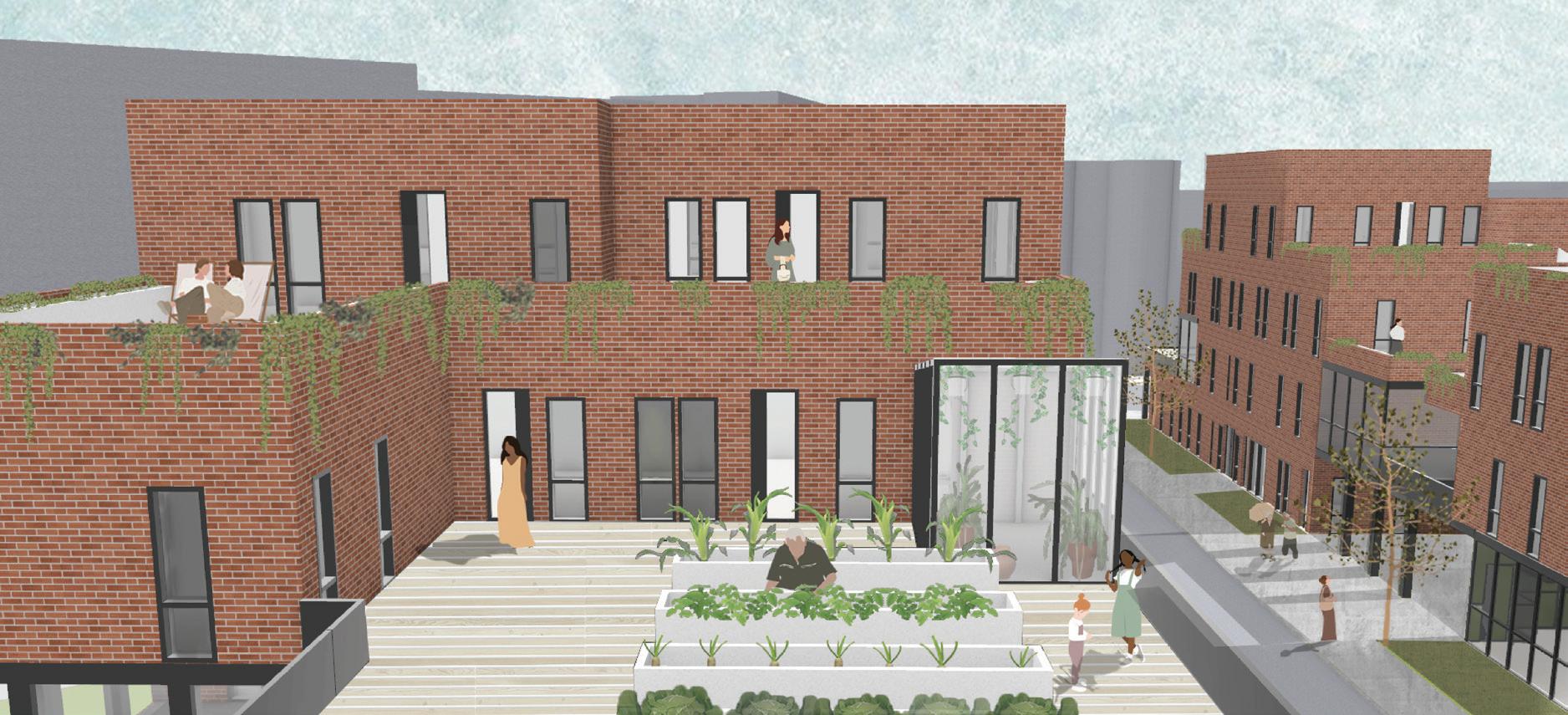
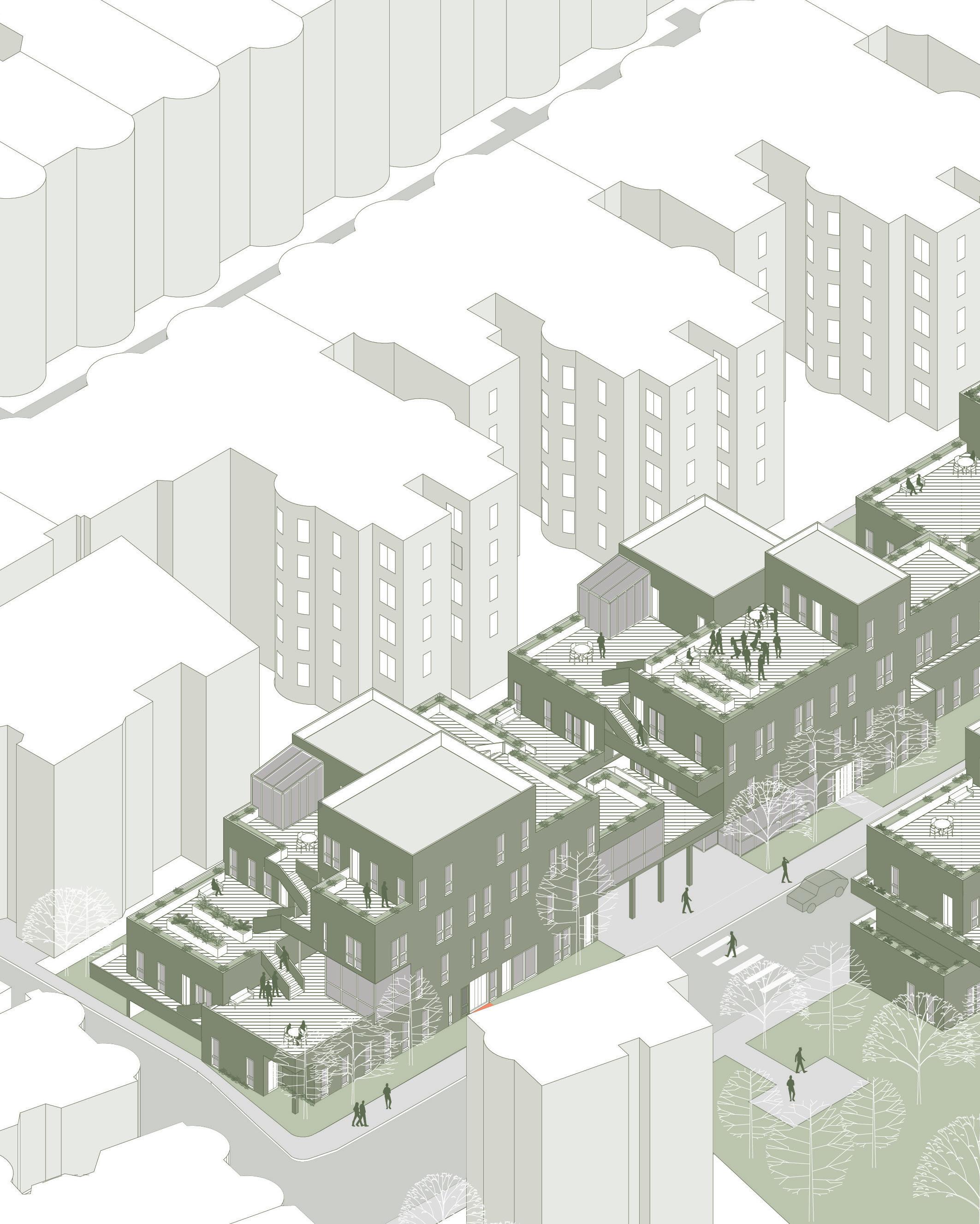
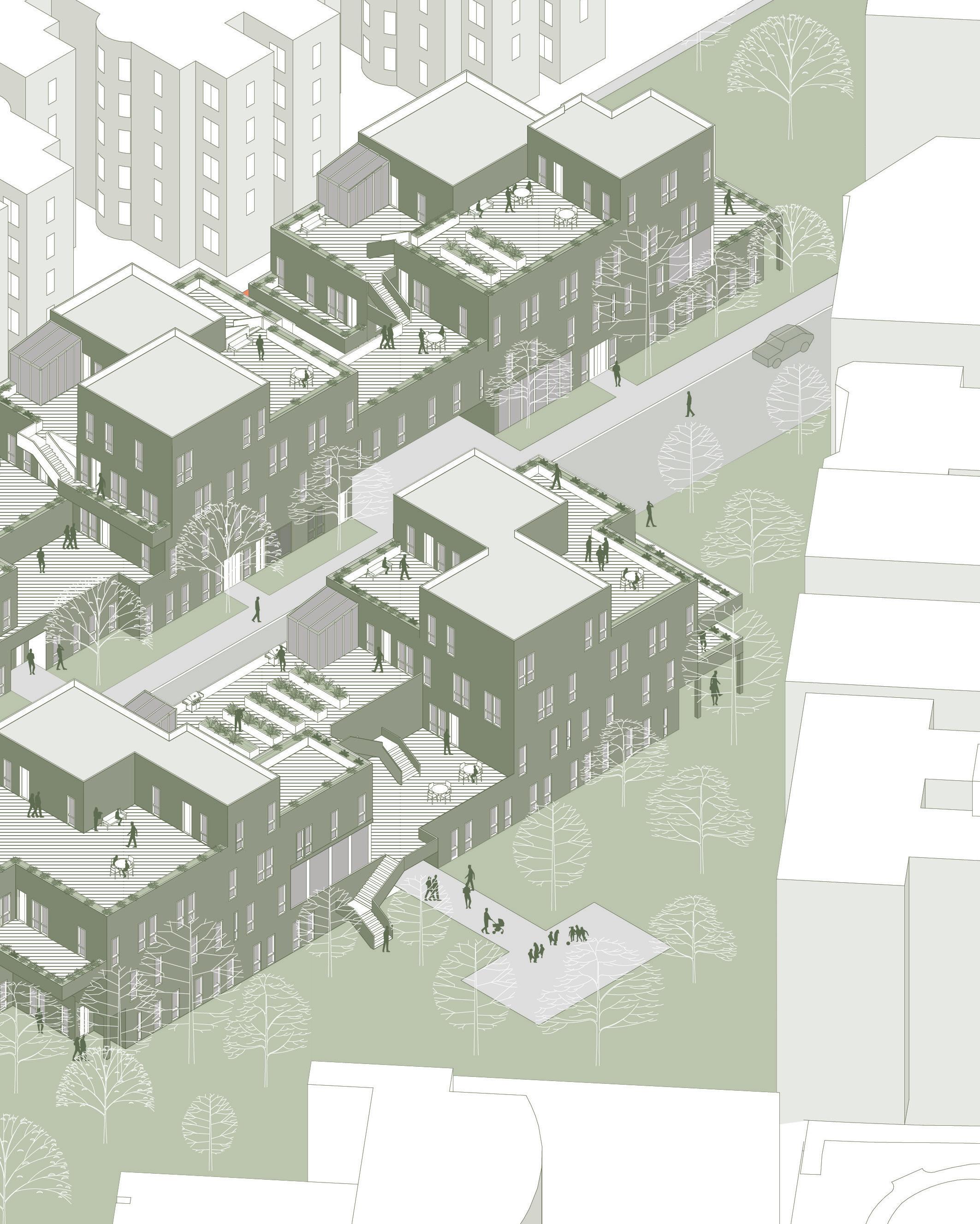
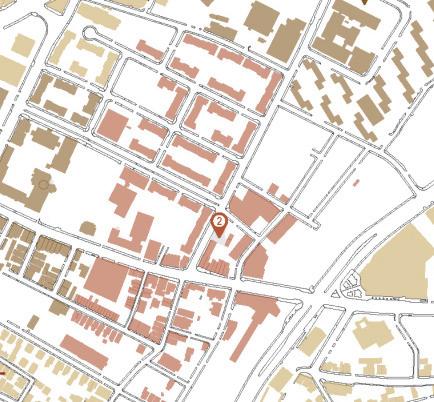
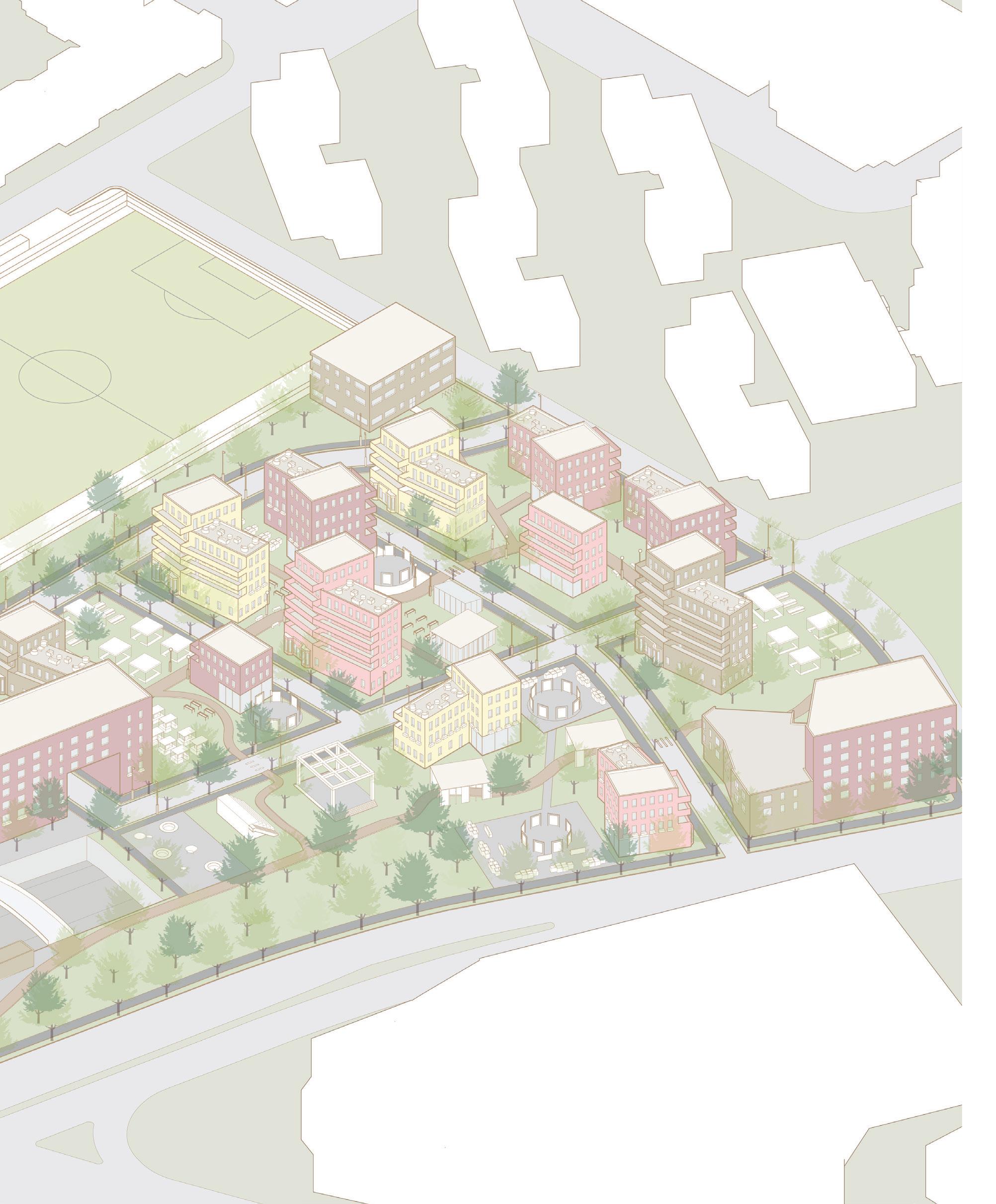
Bath Above Ground is a mixed-use housing project located across from Bath Iron Works in Bath, Maine. The project transforms a surface parking lot into workforce housing, neighborhood-scale commercial space, and public green areas while maintaining essential parking. Its proximity to BIW and downtown Bath positions the site as a key link between employment, housing, and daily life in the city.
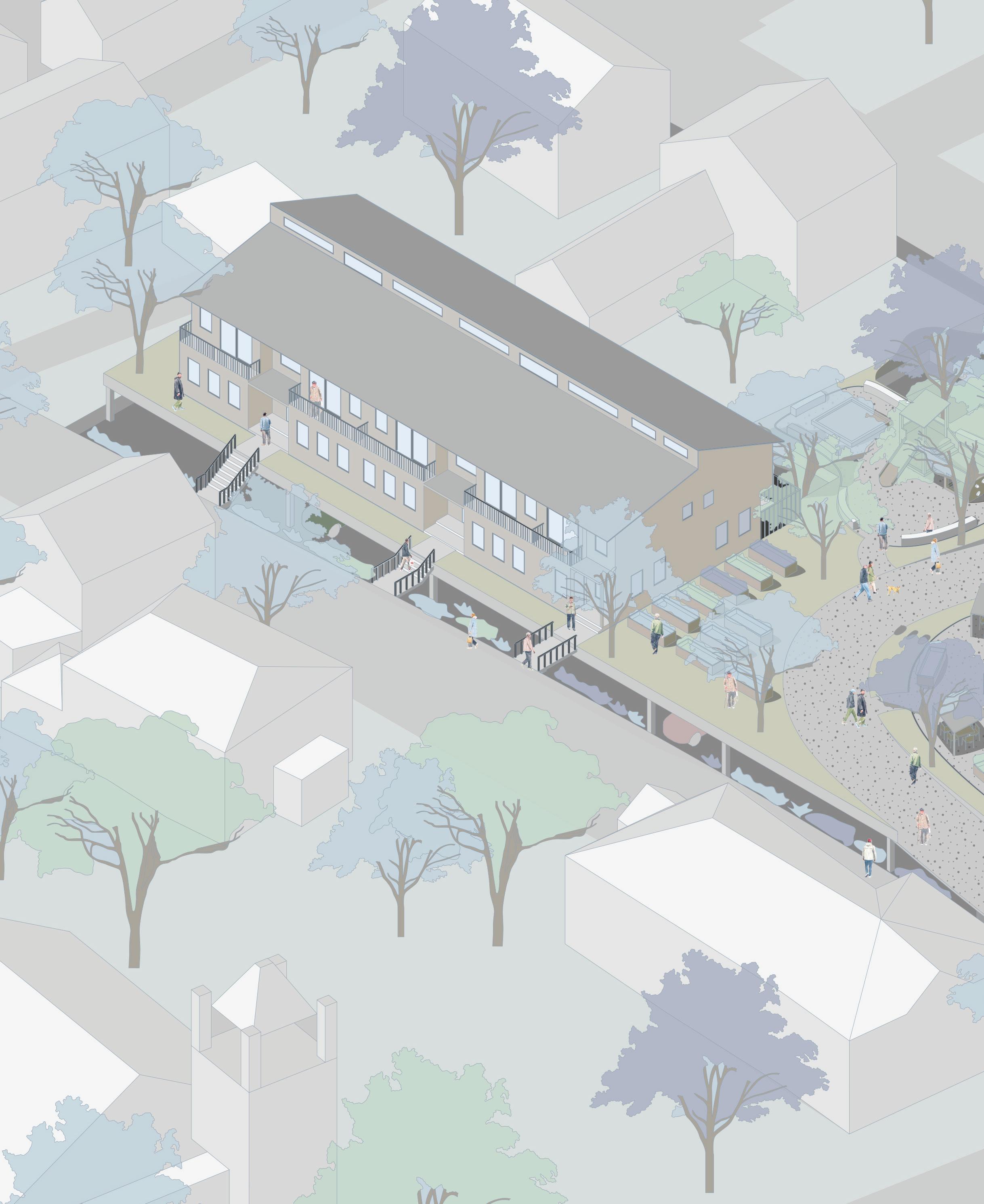
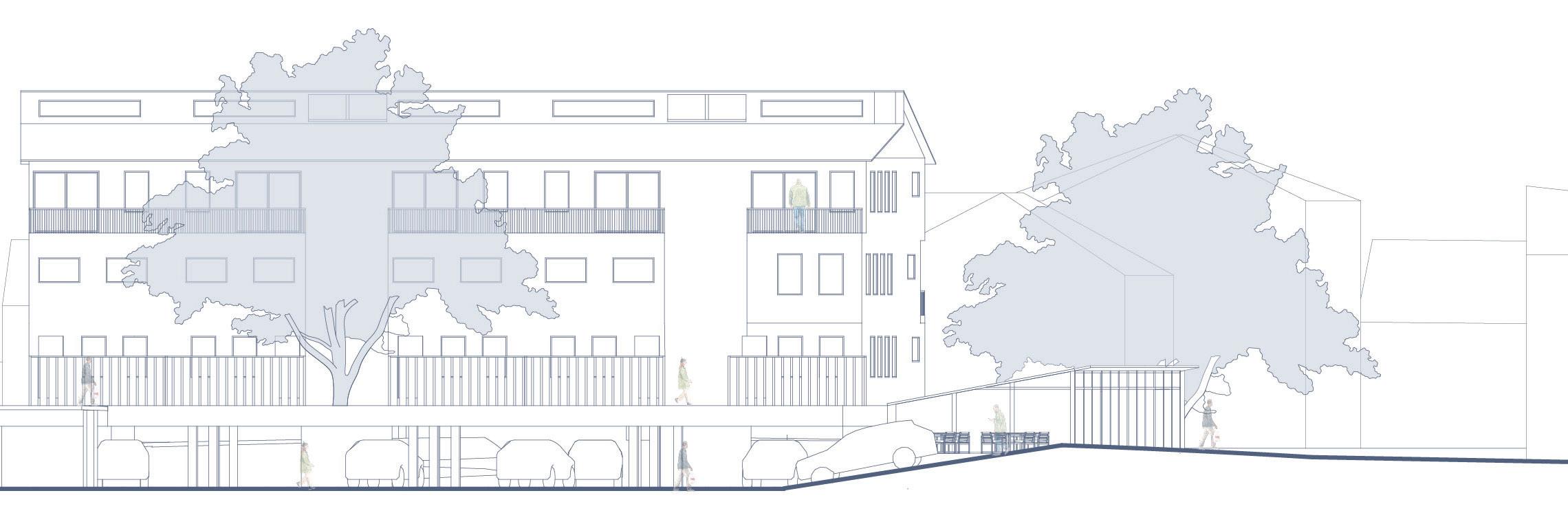
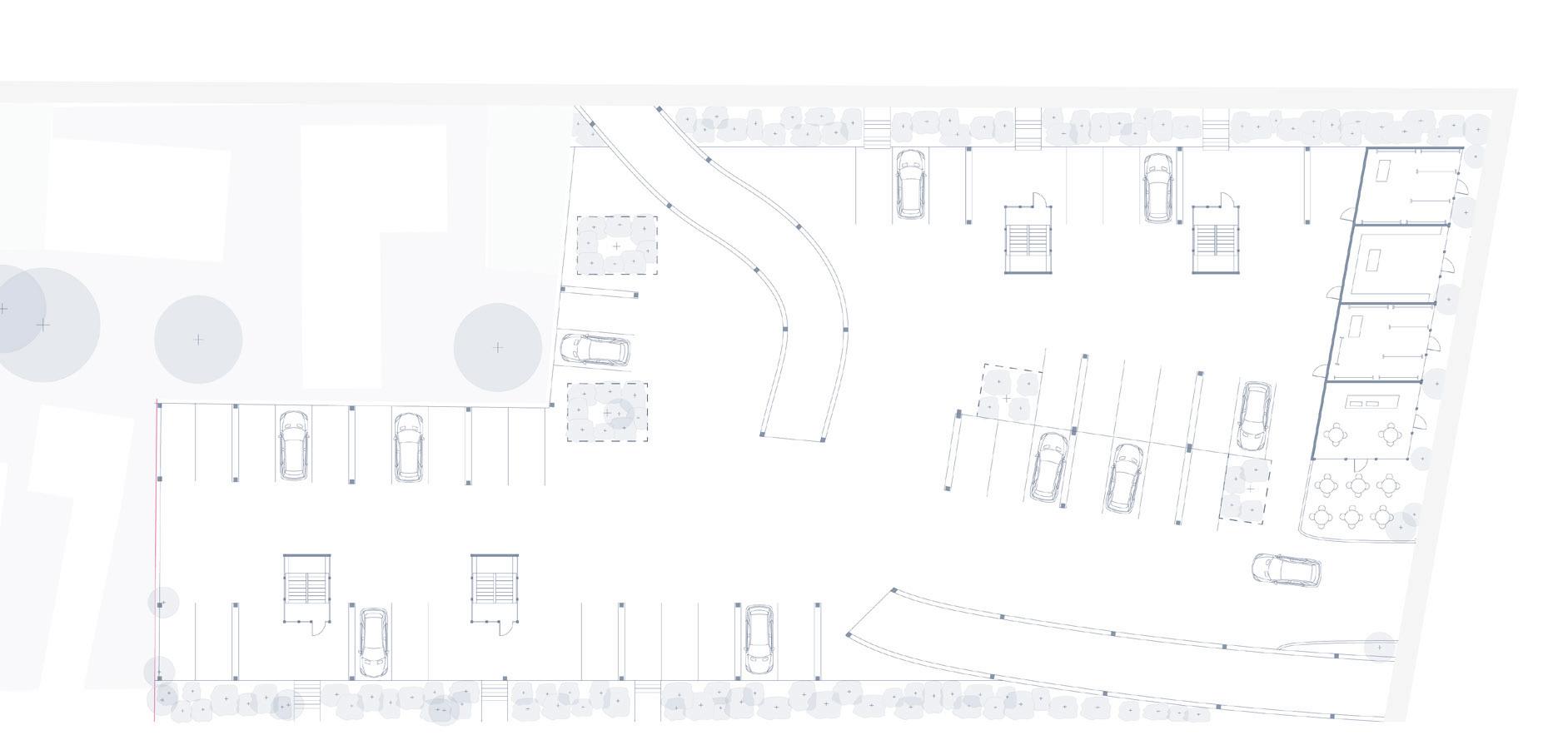
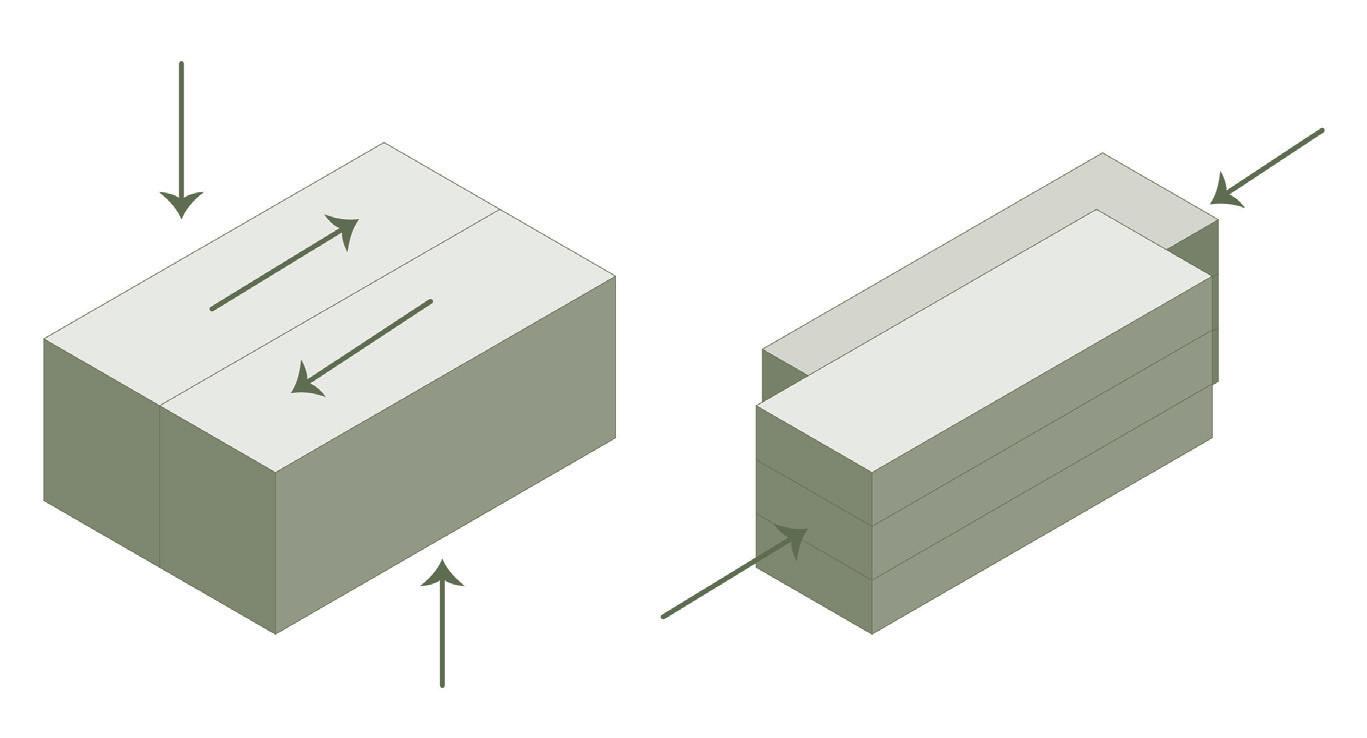
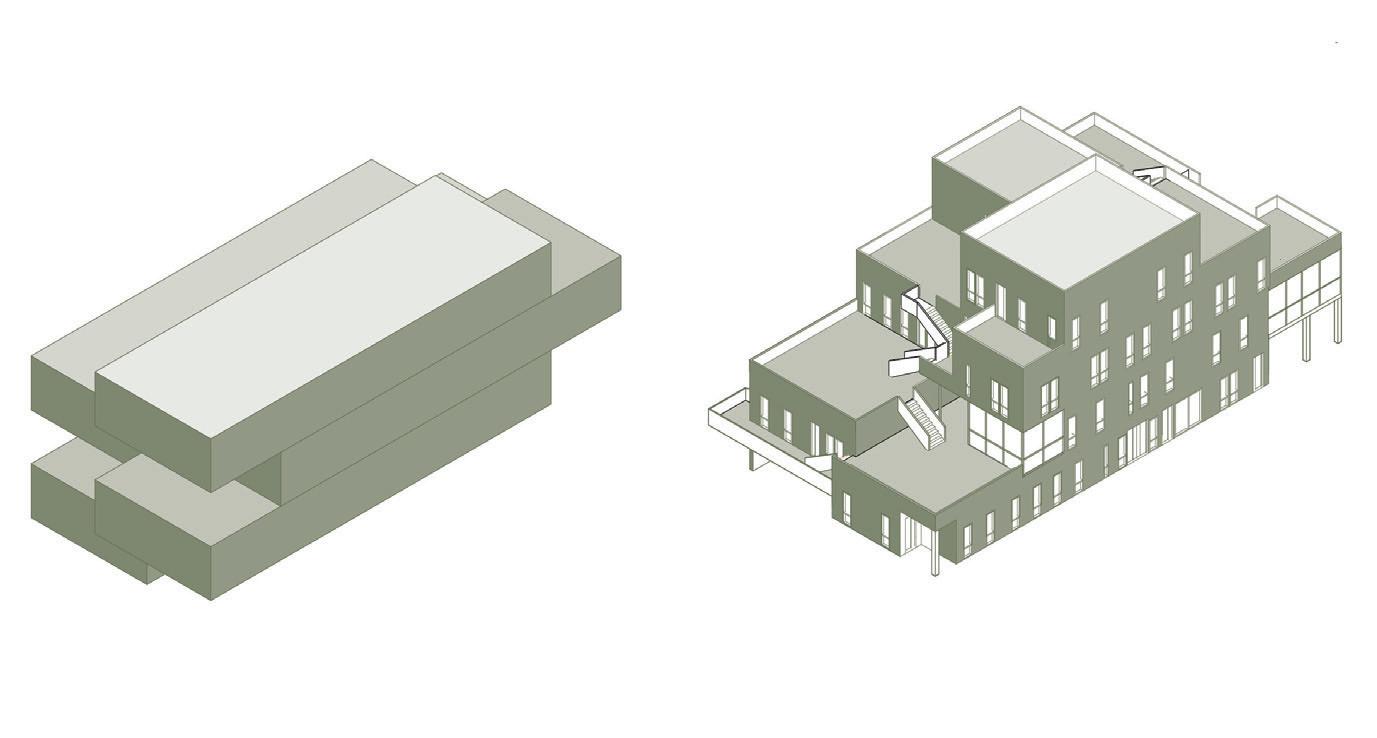
The design begins by lifting the ground plane and consolidating parking into a single level constructed with precast concrete double T’s, allowing daylight and ventilation to reach the parking level while reducing heat island effects. Above, walk-up housing is built using a modular light wood framing system, selected for its construction efficiency and economic flexibility. The buildings step between two and three stories to align with the surrounding residential context.
The primary objective was to demonstrate how Bath’s surface parking lots can support multiple uses without sacrificing parking access. A central ramped path connects Washington Street to two public playgrounds, while small commercial spaces activate the street edge. This studio project explores a replicable approach to workforce housing that balances affordability, walkability, and long-term economic resilience in Bath.
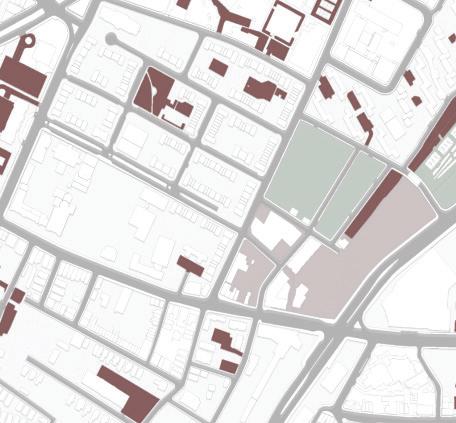
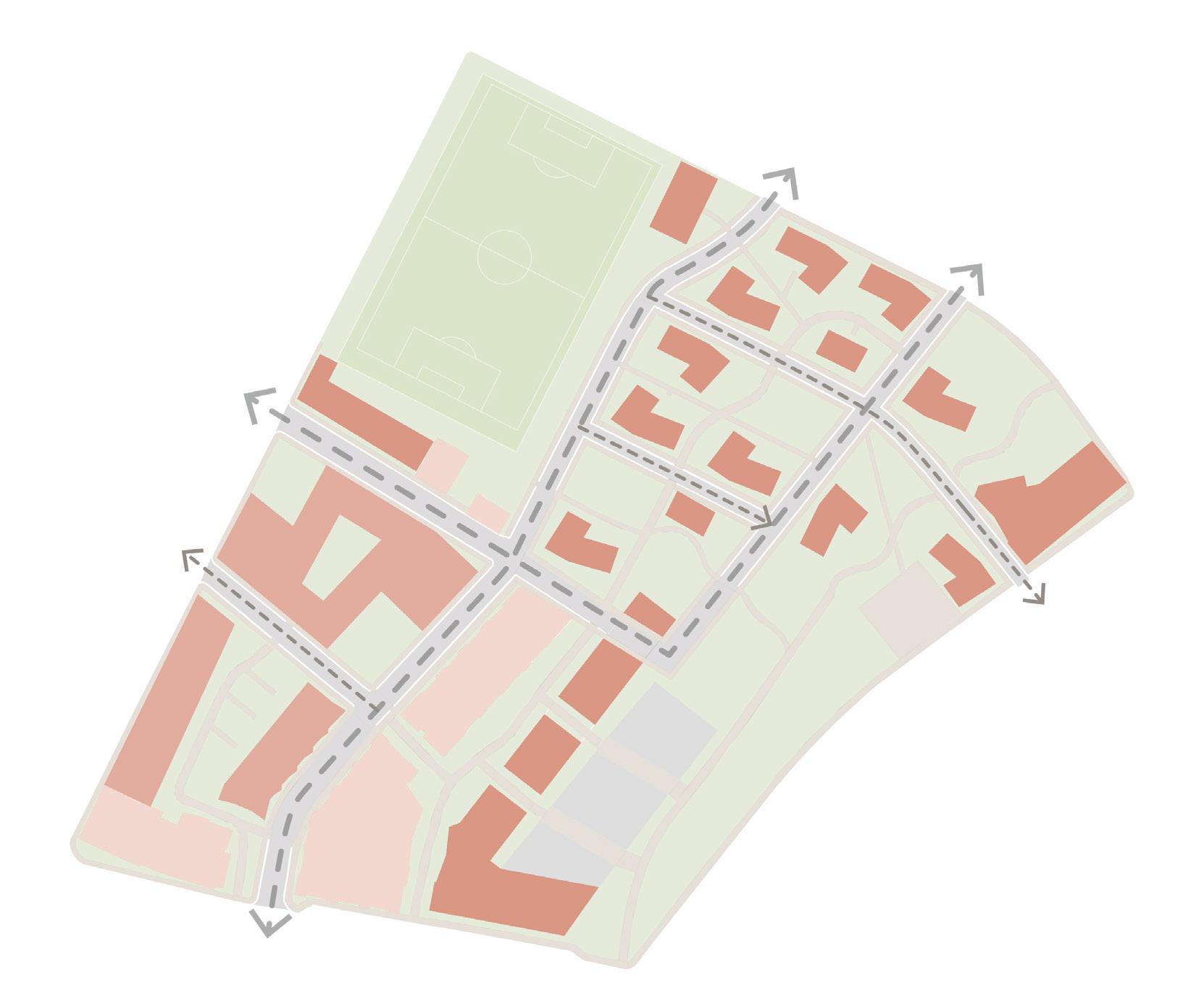
Diagramming Connectivity
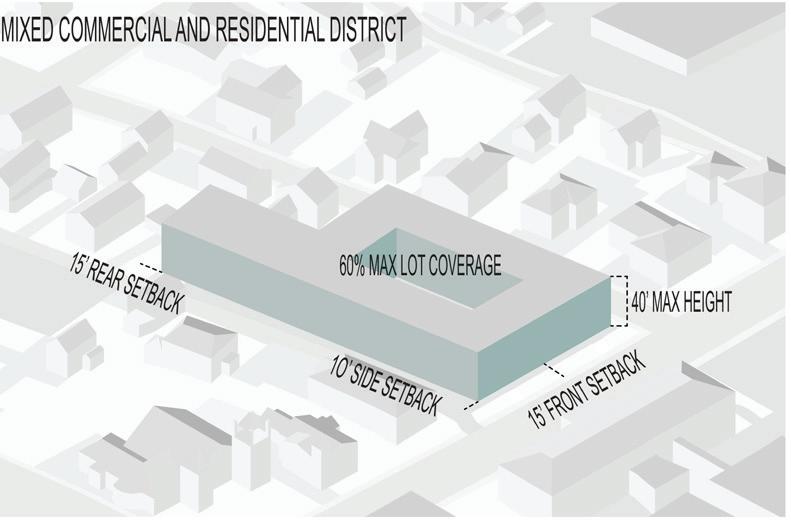
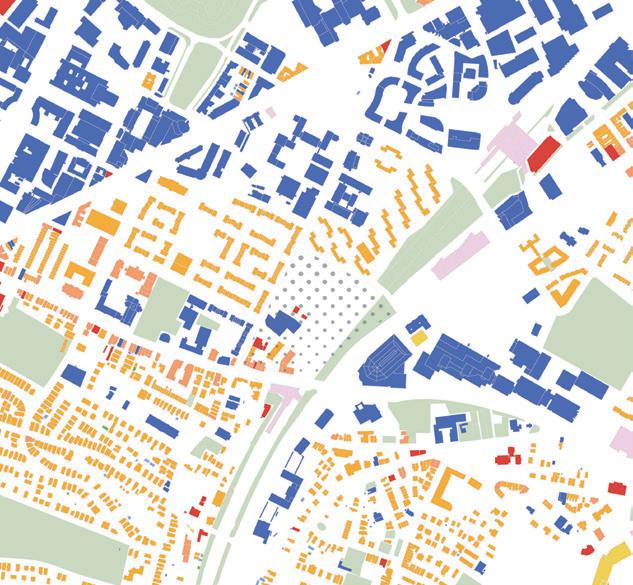
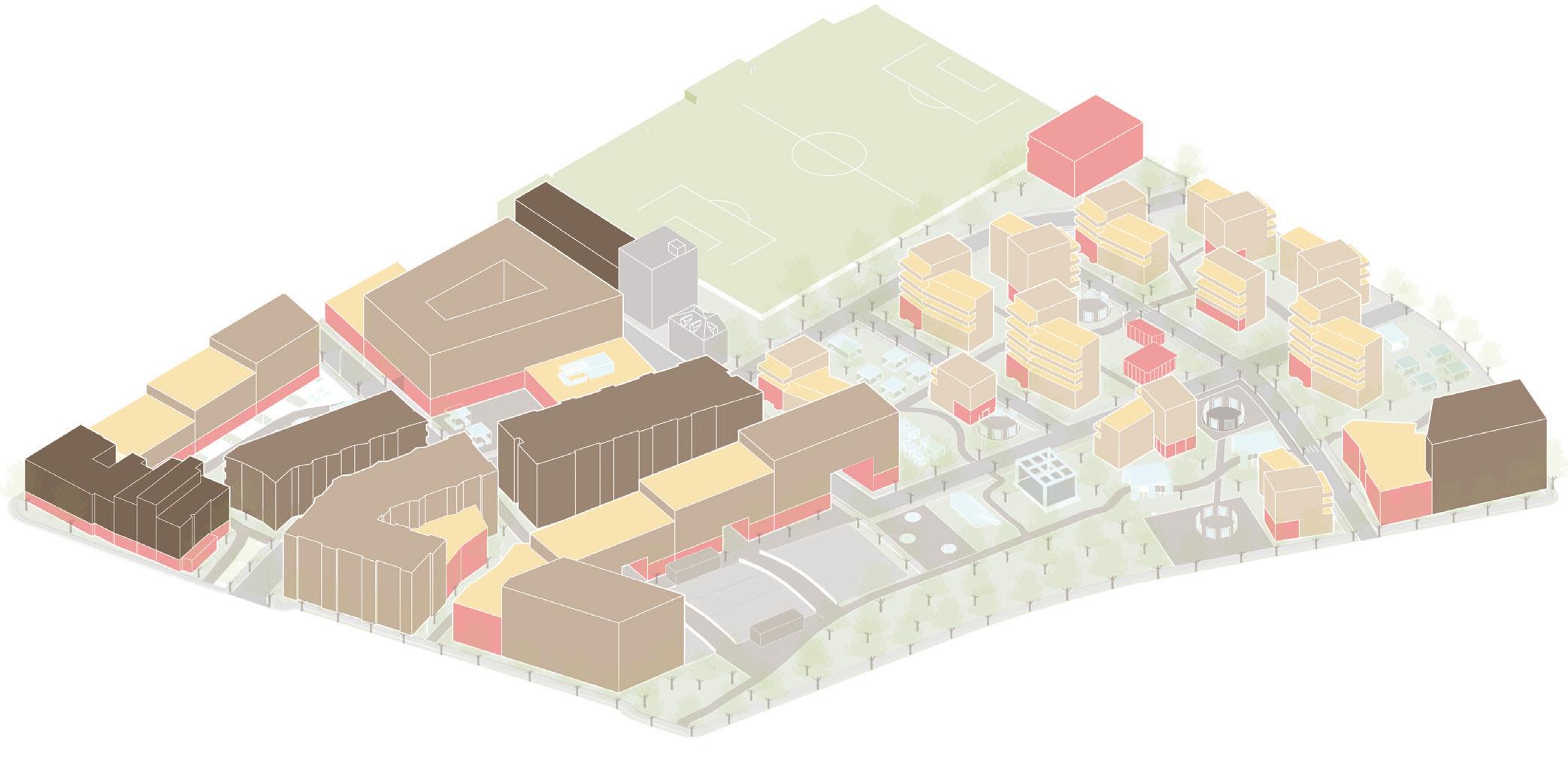
Diagramming Zoning Constraints
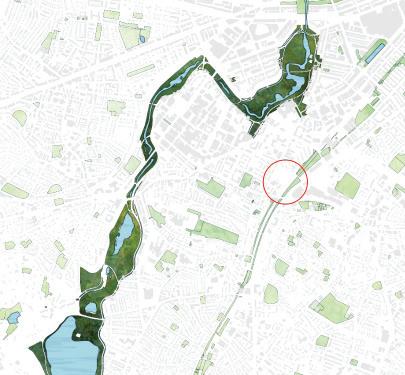
Diagramming Site Context
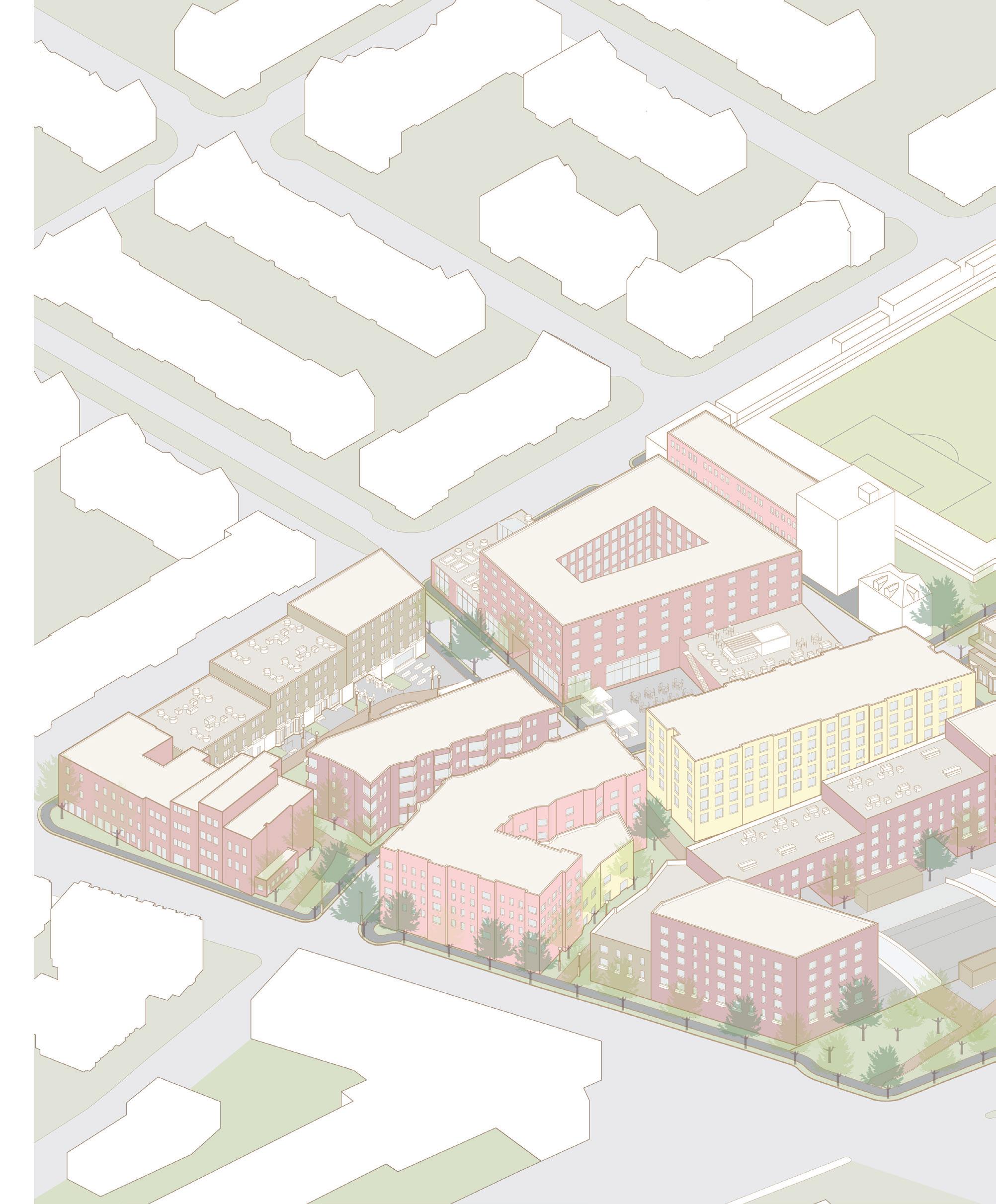
South East Axonometric
Cork Site Model
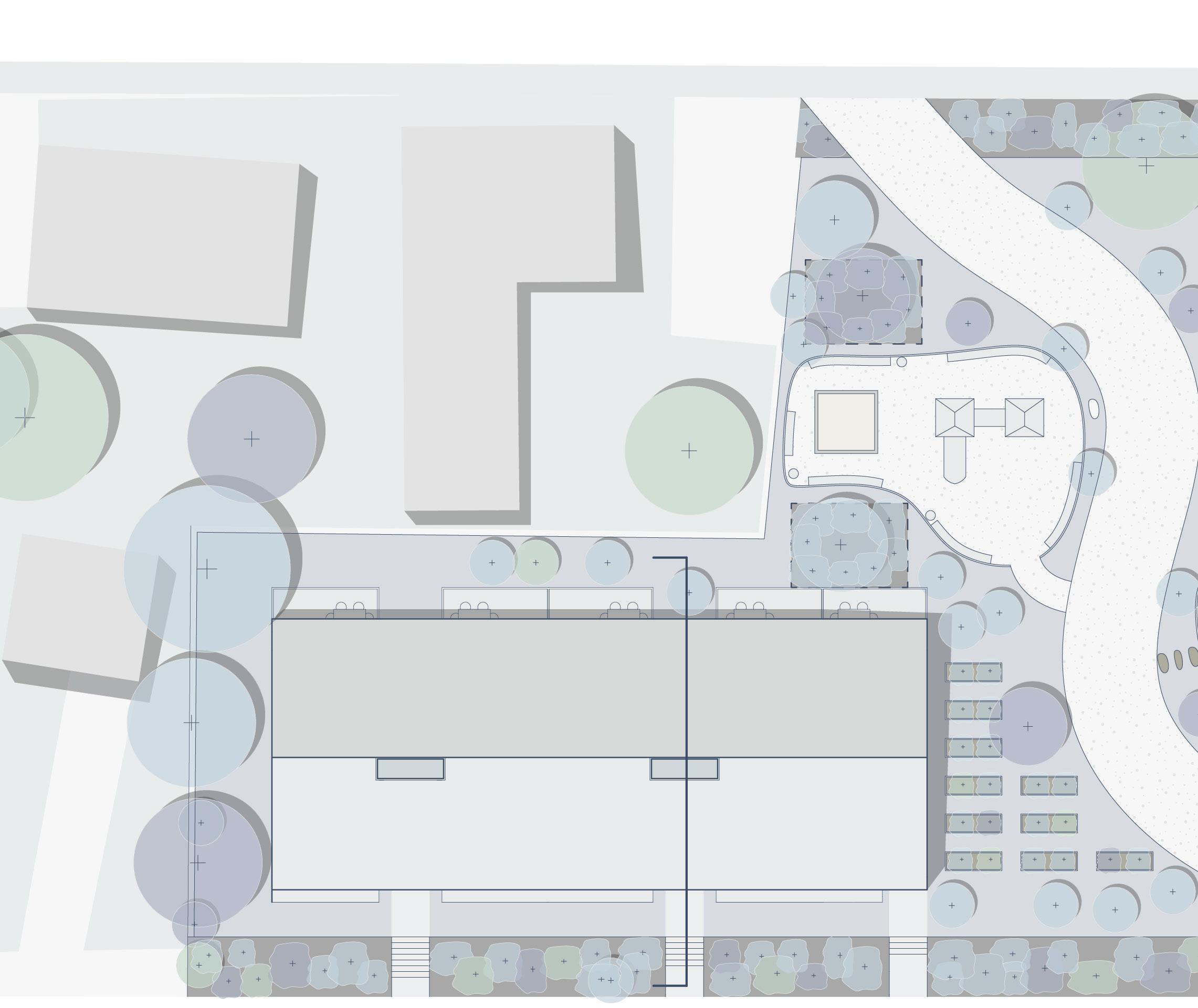
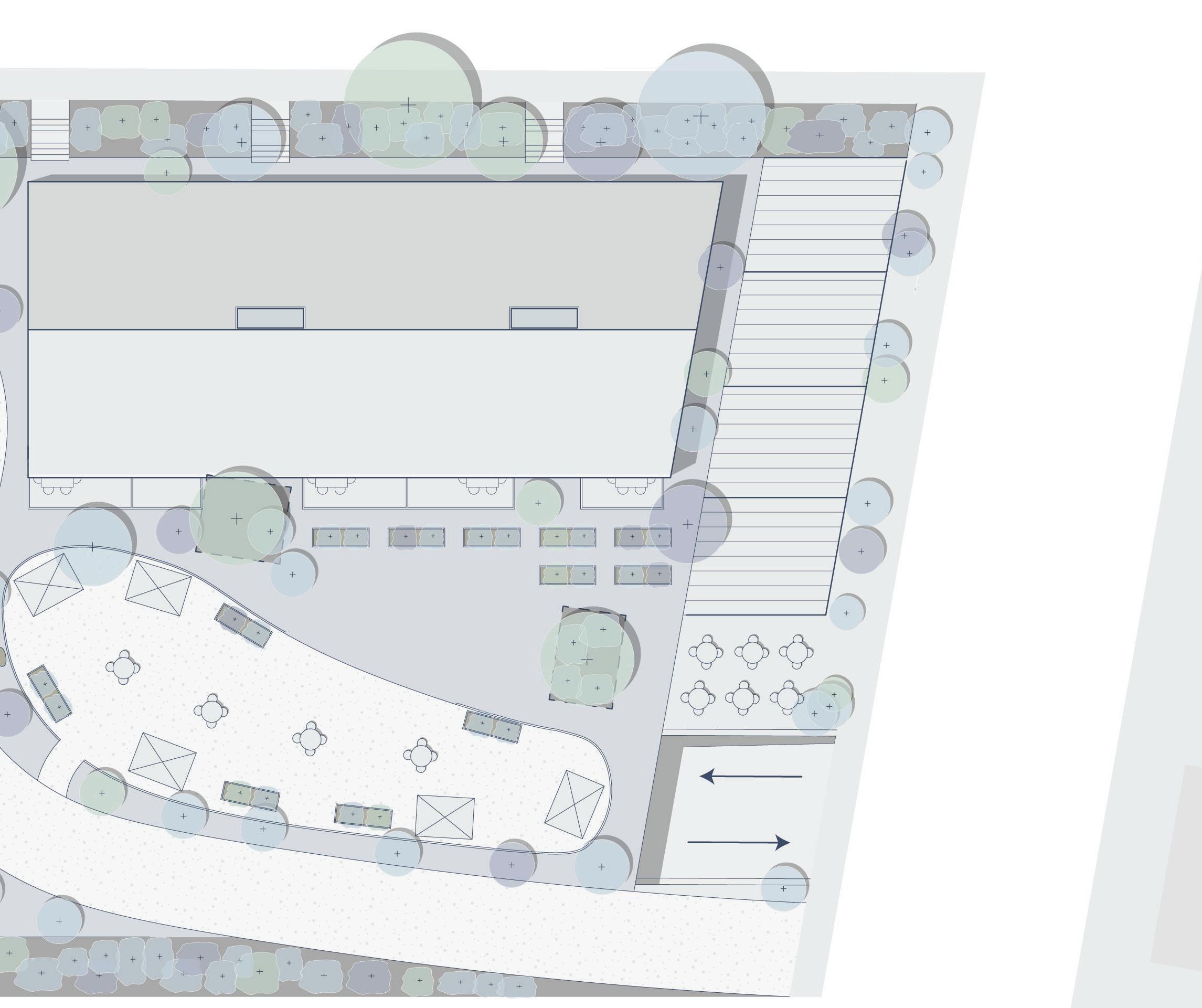
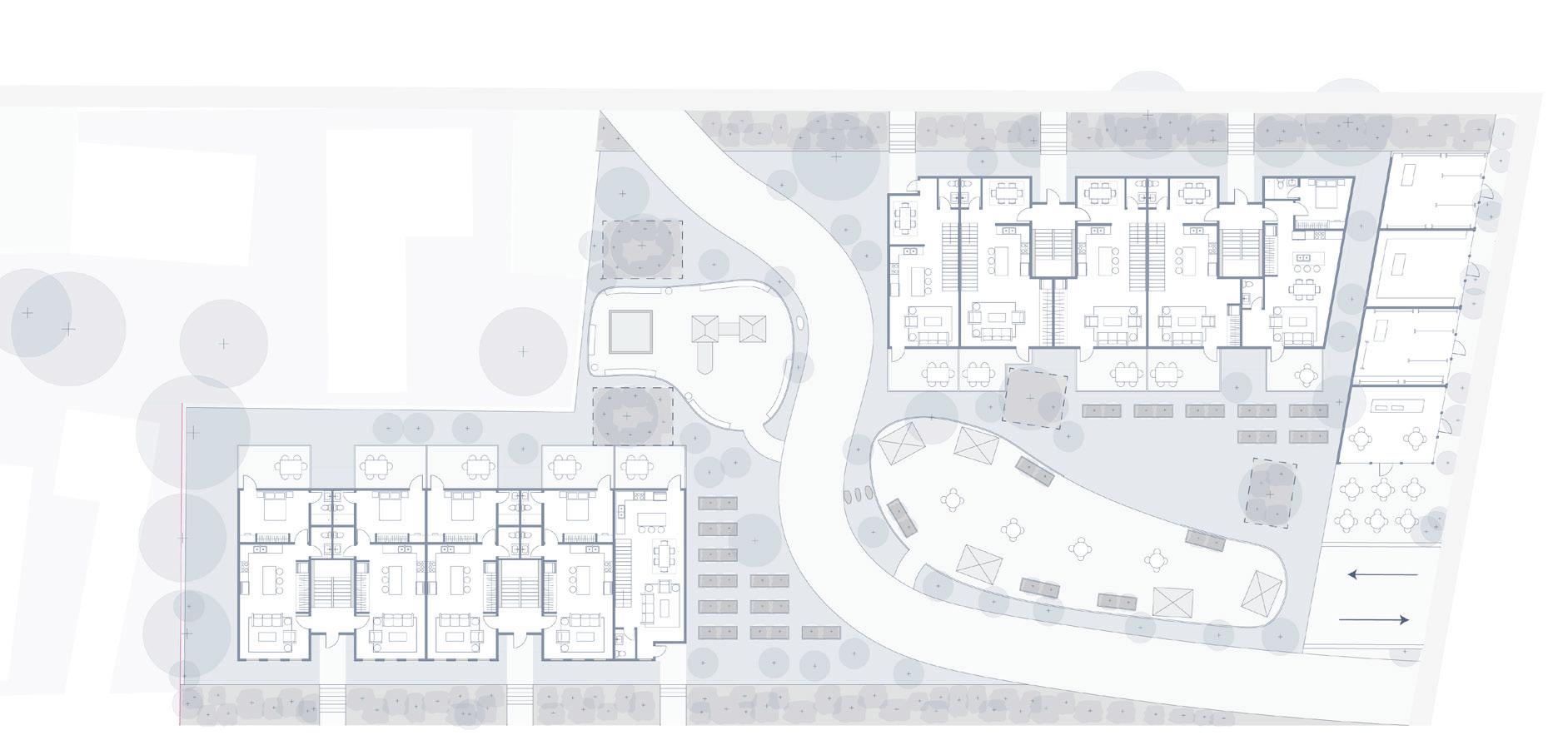
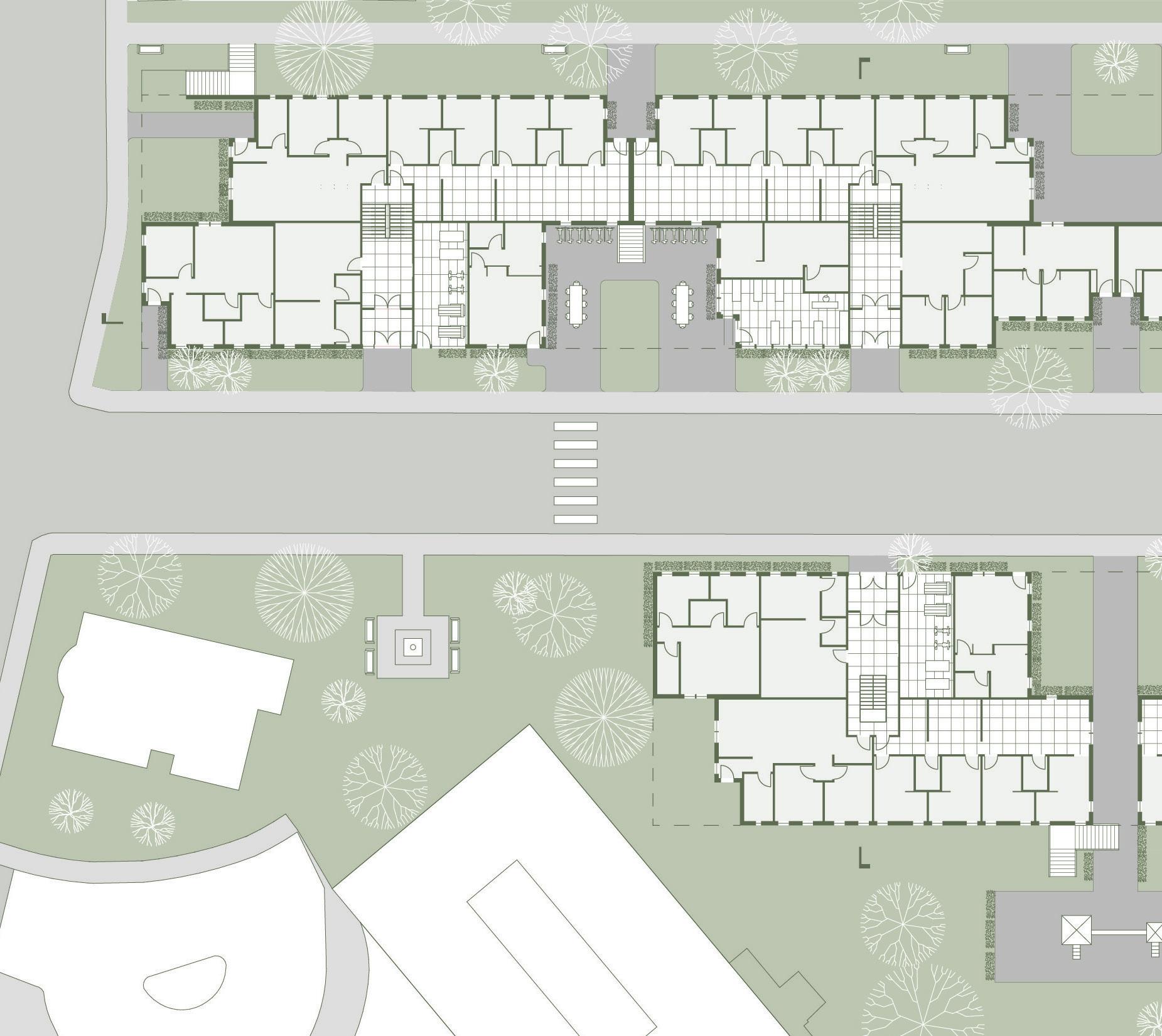
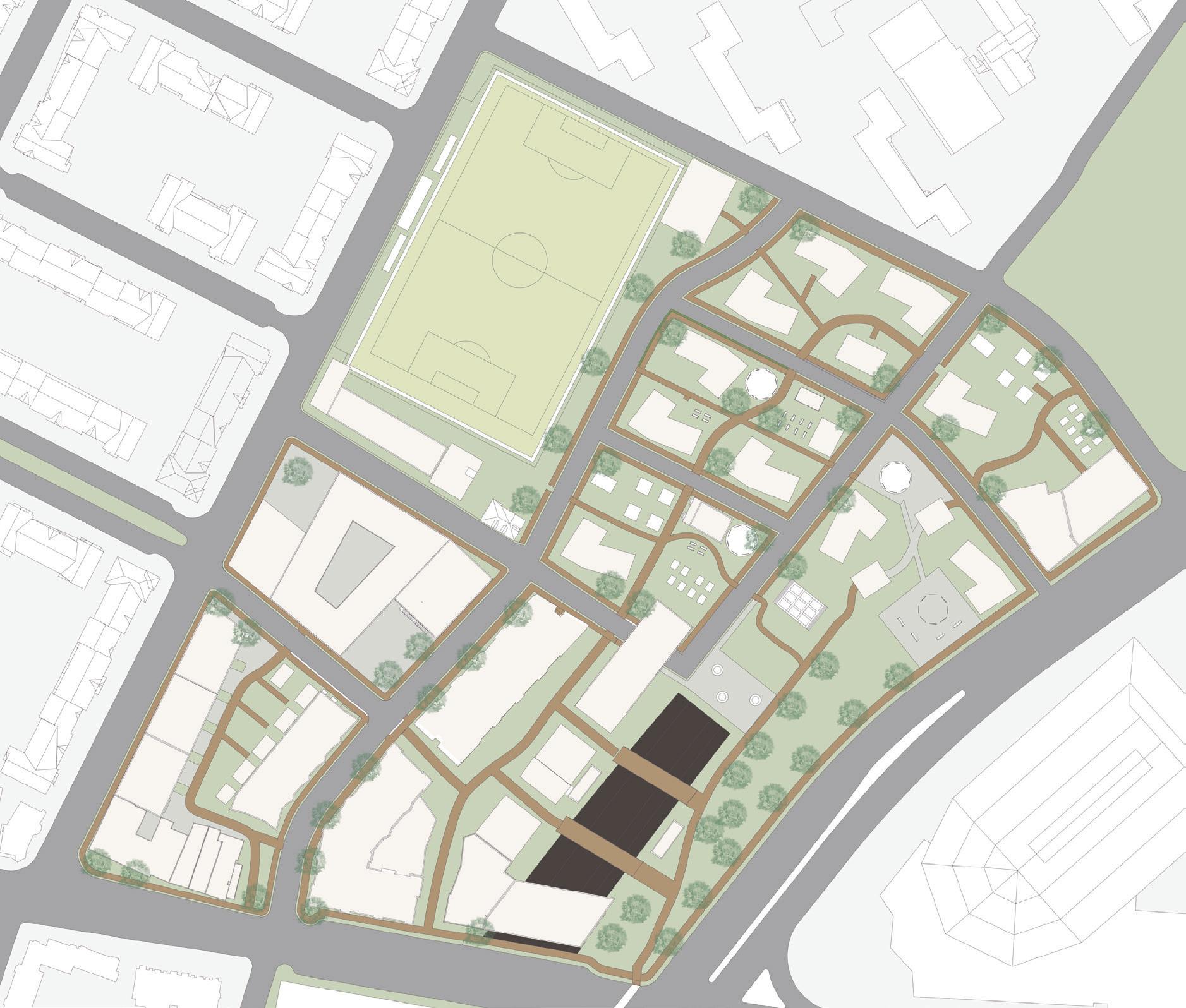
The above-grade site plan organizes housing, open space, and circulation across the block, stitching Union Street and Fisher Court together through a landscaped pedestrian network. Buildings frame shared courtyards and green paths, prioritizing walkability, access to light, and clear connections between public and residential spaces.
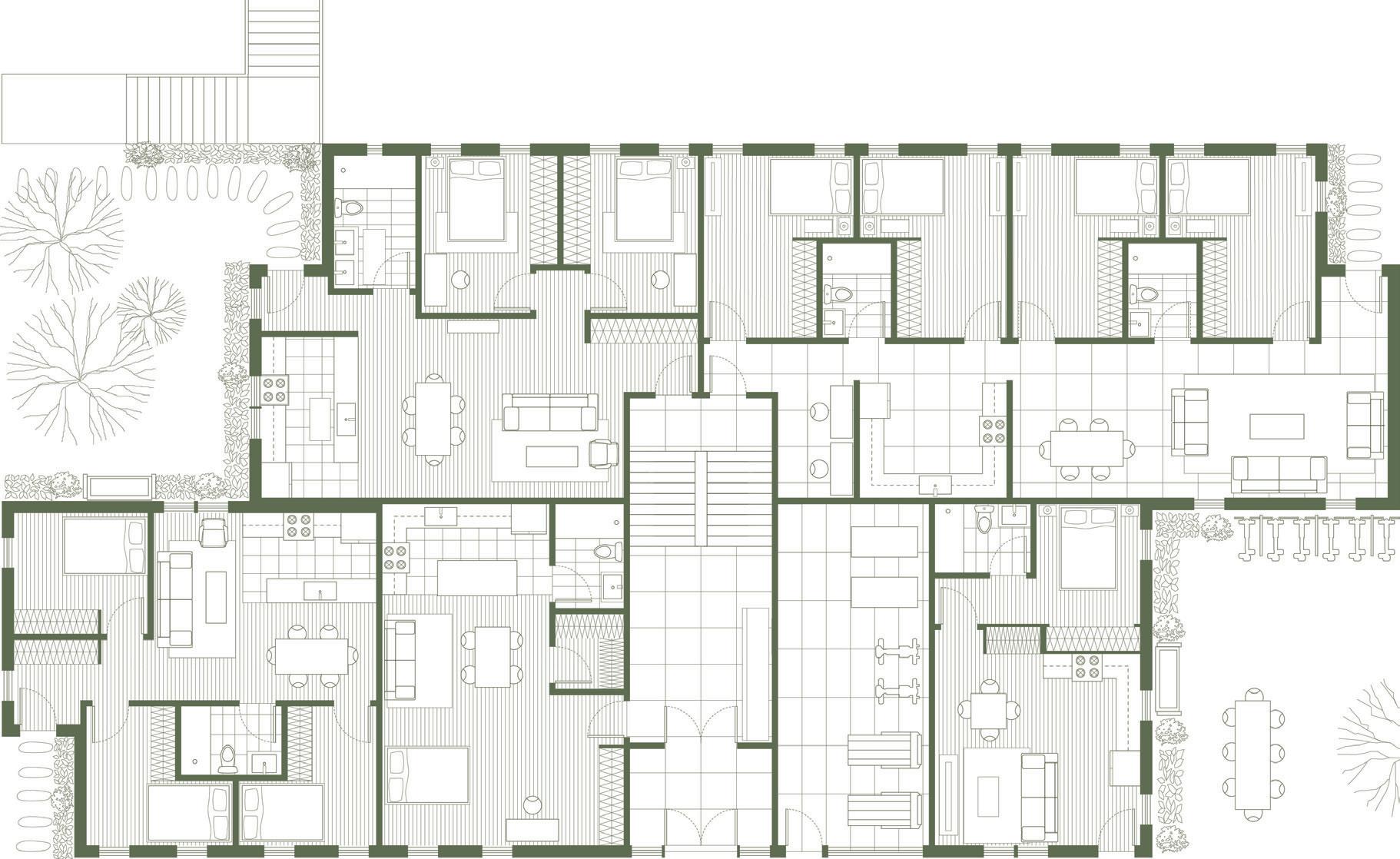
FIRST FLOOR PLAN
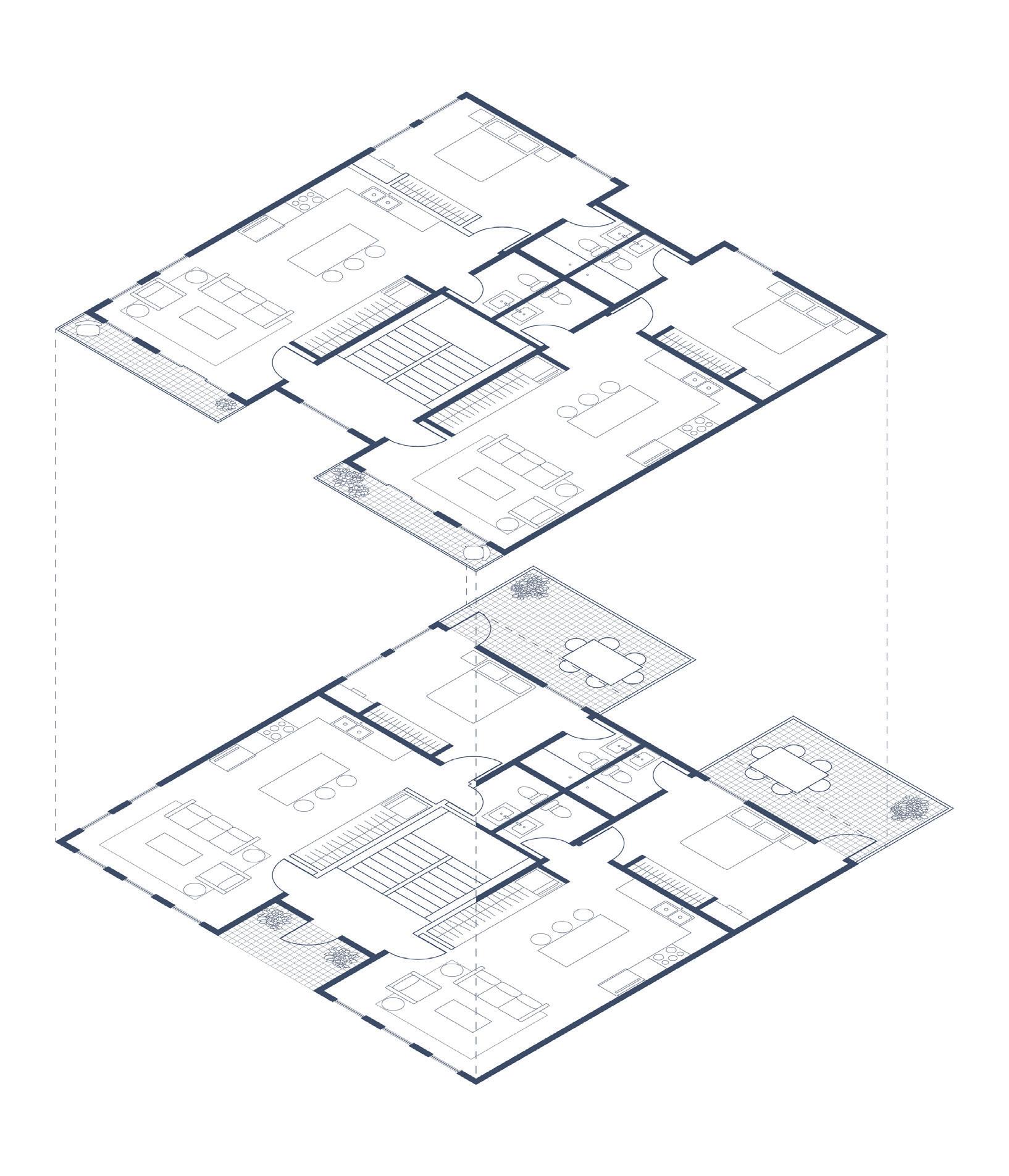
EXPLODED 1-BED MODULAR PLAN
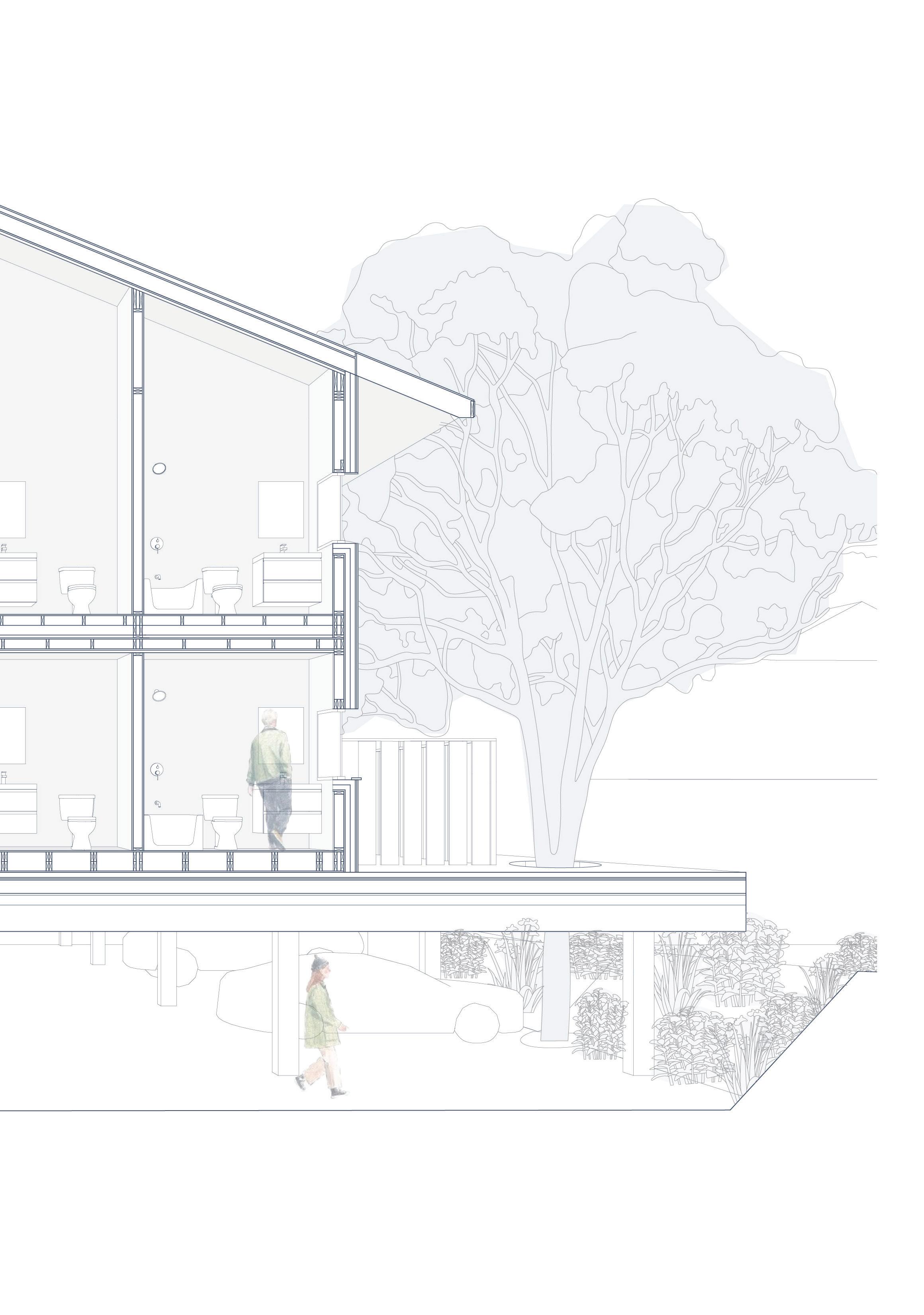
Clerestory Window
Light Frame Wall with Wood Fiber Insulation
Balconies with Sliding Glass Doors
Shared Stair Circulation
Vegetated edge allowing daylight into parking
Stacked Light WoodFrame Floor System
Thru-Decking Openings for Trees
Precast Concrete Double-T Structural Deck
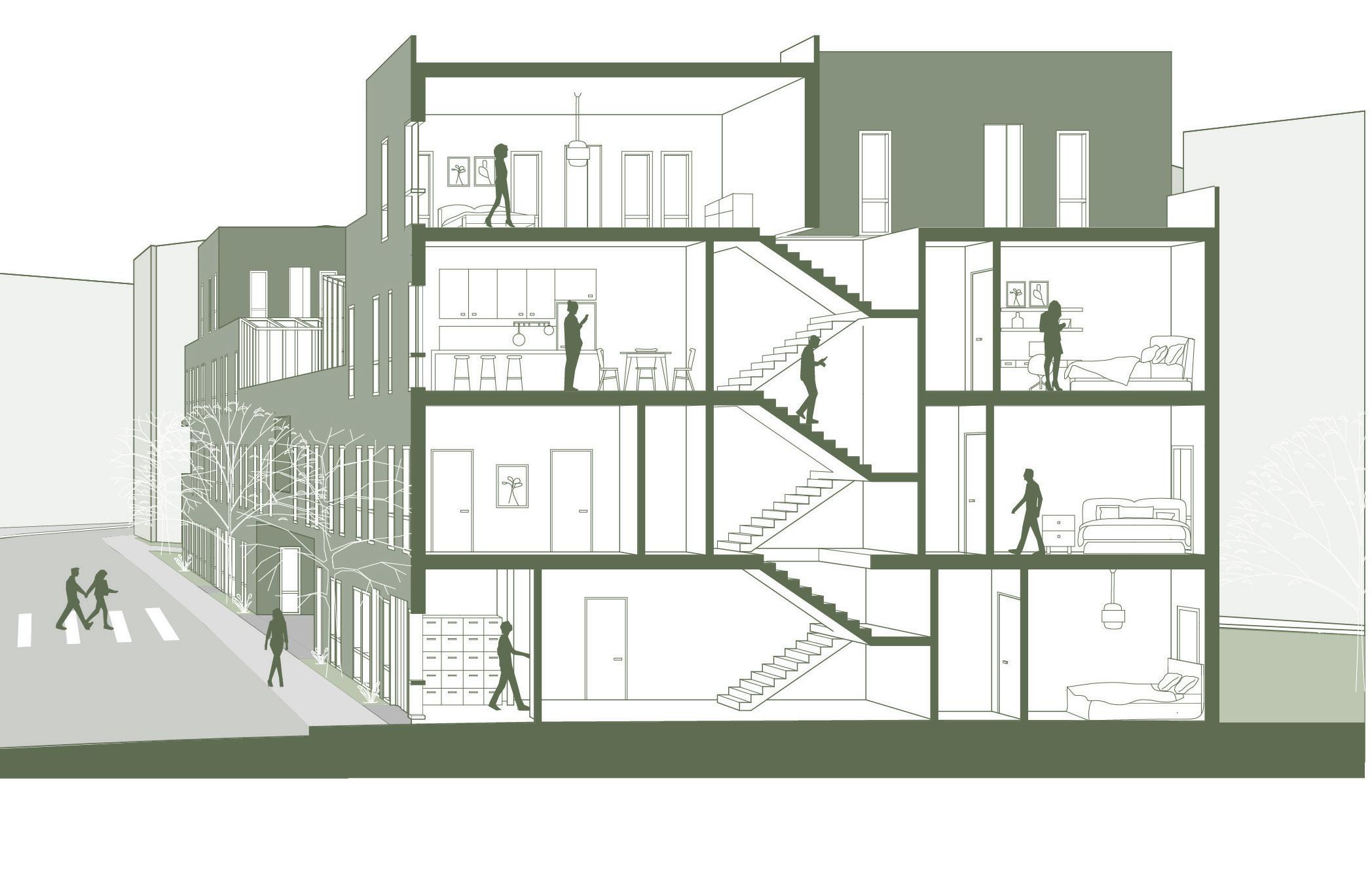
A technical section perspective reveals the stacked organization of housing above the ground plane, highlighting vertical circulation, structural systems, and accessible entries. The cut illustrates how light, movement, and services are layered to connect interior spaces with the surrounding landscape.
TERRACED COMMUNITY
Fall 2023 | Urban Housing Studio | Northeastern University
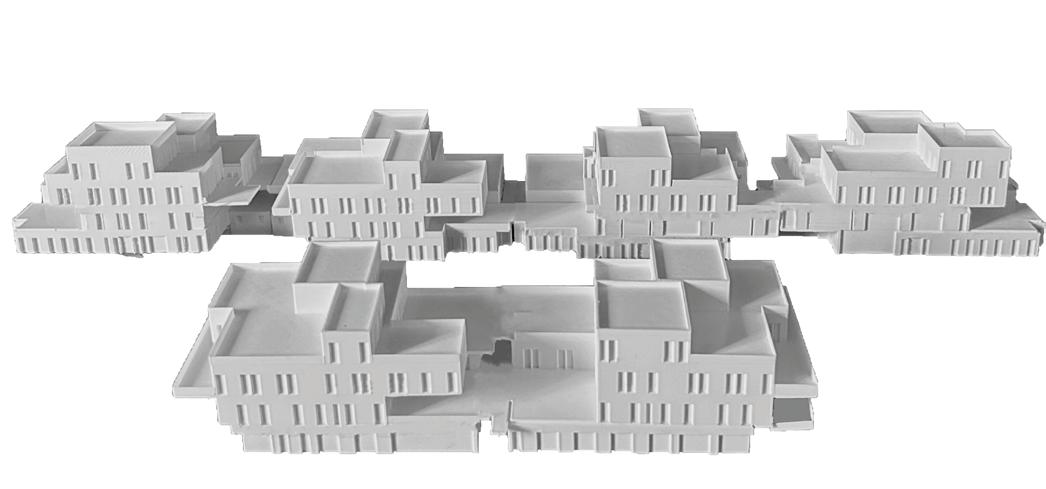
Terraced Community Housing is a walk-up housing development close to Northeastern’ s campus and Boston’s Fenway park. The apartments seamlessly blend student living with a family-friendly atmosphere. The complex extends its appeal by extending the neighboring park programs.
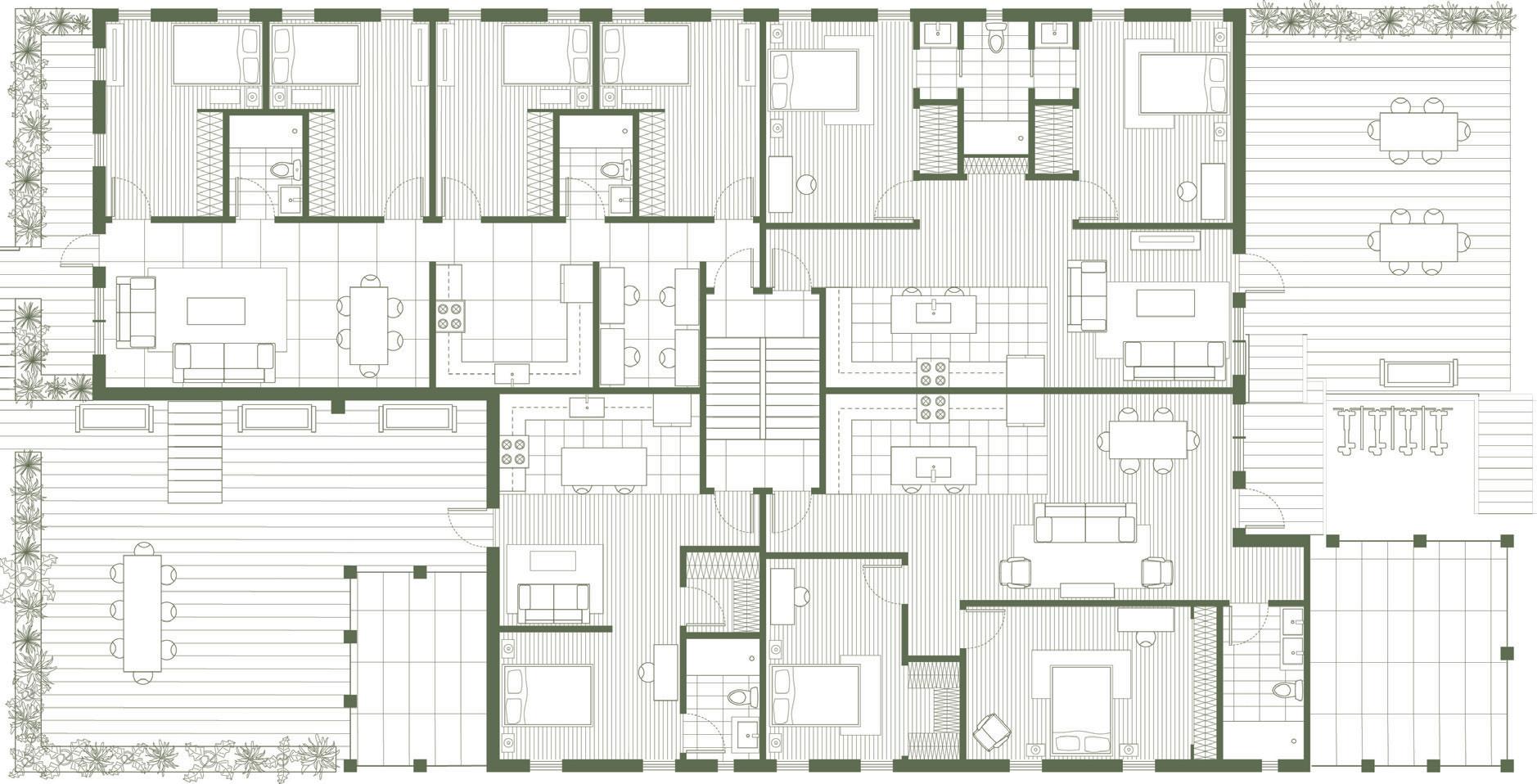
The design begins with a Z-shaped plan that is reflected both horizontally and vertically, resulting in a creation of open and covered spaces. To address the 6-foot site drop on the northern side, a split-level design connects the apartment complex, creating additional terraced spaces that facilitate easy movement between them.
The primary objective was to maximize shared public spaces while ensuring suitability for Boston’s varying weather conditions. This curated design incorporates a range of amenities, both indoors and outdoors, promoting interactions amongst the residents. This studio project honed the skills of urban development design and the act of prioritizing communal spaces.
3D-Printed Model
Site Metrics
Total Buildings: 6
Units Per Module: 15
Total Units: 90
Net/Gross: 94.7%
First Floor Module Plan
Bedroom: 2 2 Bedroom: 6
Bedroom: 4
Second Floor Module Plan
First Floor Site Plan
The ground floor offers convenient amenities like gyms, study rooms, and small markets. Throughout the student housing, shared spaces further enhance community, encouraging meaningful interactions and a vibrant residential experience.
Divide the building in half and adjust each section to follow the site’s natural slope, shifting horizontally to add depth and dimension.
Push alternating levels in and out to create terraced space.
Section Perspective
3 4
Incorporate stairs, windows, and structural elements, along with interior shared spaces to maximize resident interaction and engagement.
Fill building with students, families, and professionals that want to interact with one another both inside and out.
The section illustrates the split-level design on the left, showing how residents live within the apartments. A lively, bustling atmosphere unfolds across the floors, capturing the vibrancy of the complex.
ADAPTIVE FRAMES: INSTANT EQUESTRIAN CLUB
Fall 2025 | Design Studio 5 | IE Univeristiy Segovia, Spain | In collaboration with Sofiia Kalmykova, Lee Kihoon, Kieran Tan
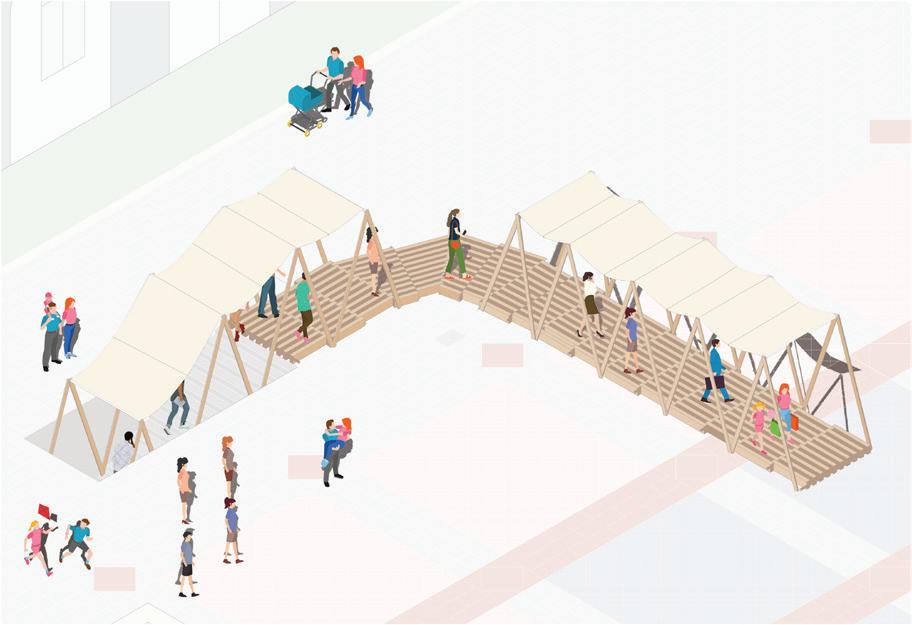
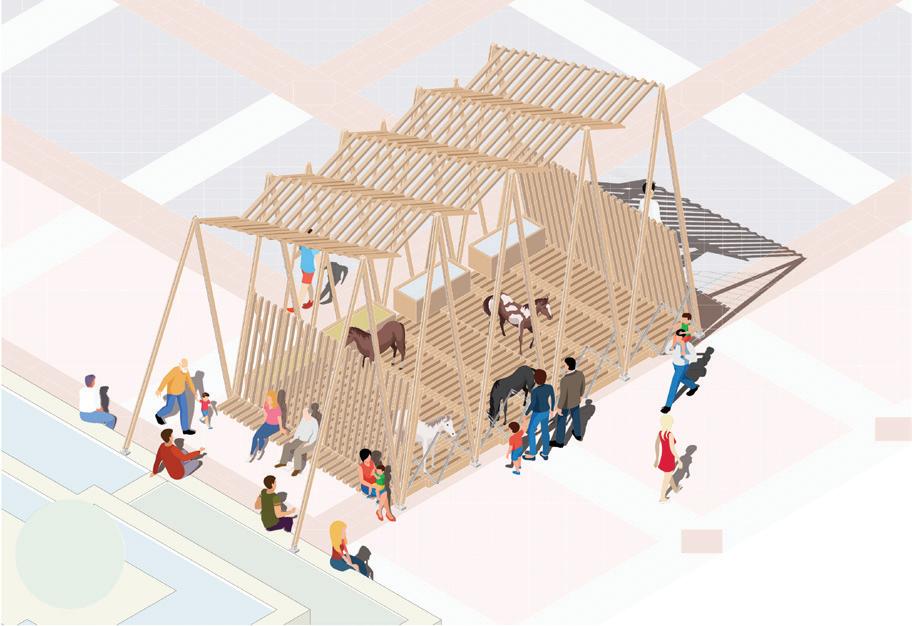
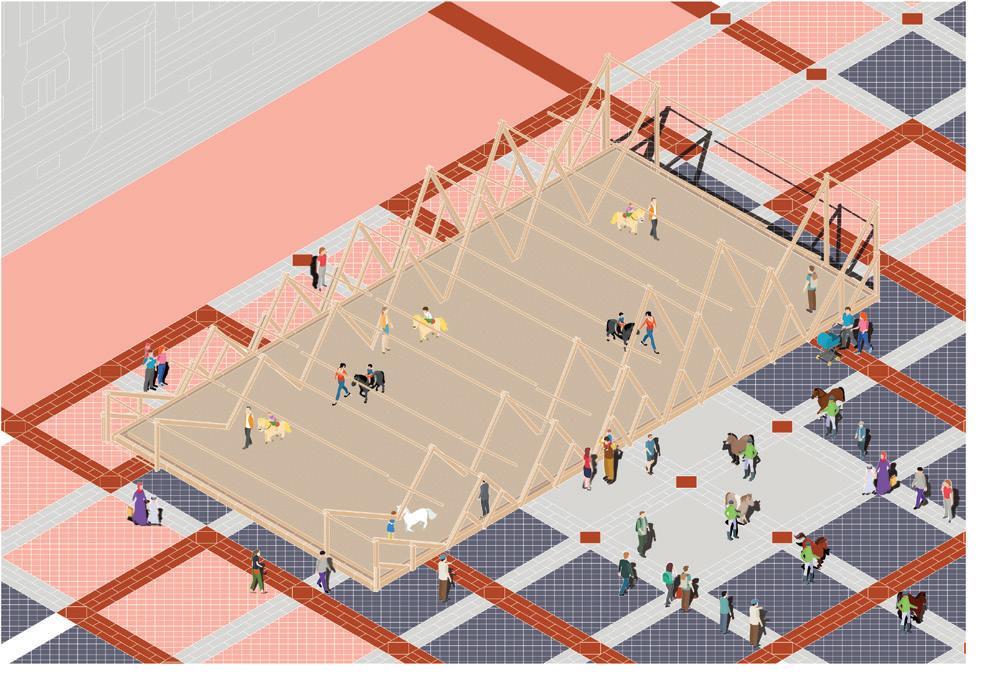
Designed as a transportable pony club for Hermès, the project reinterprets equestrian tradition through a modular, all-wood system intended for rapid assembly and relocation. Conceived as a group project, the proposal explores adaptability, craftsmanship, and the relationship between public spectators and equestrian activity.
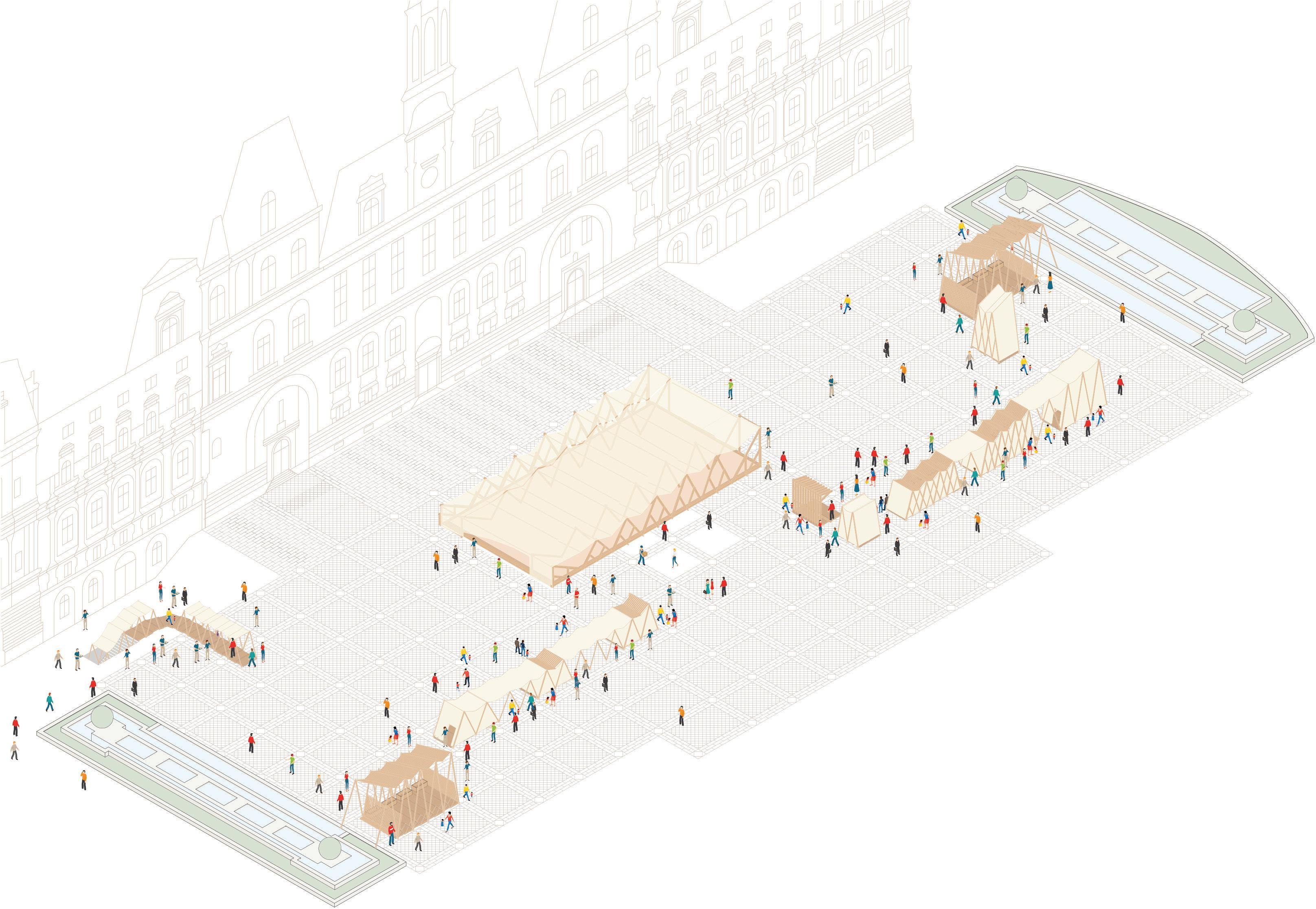
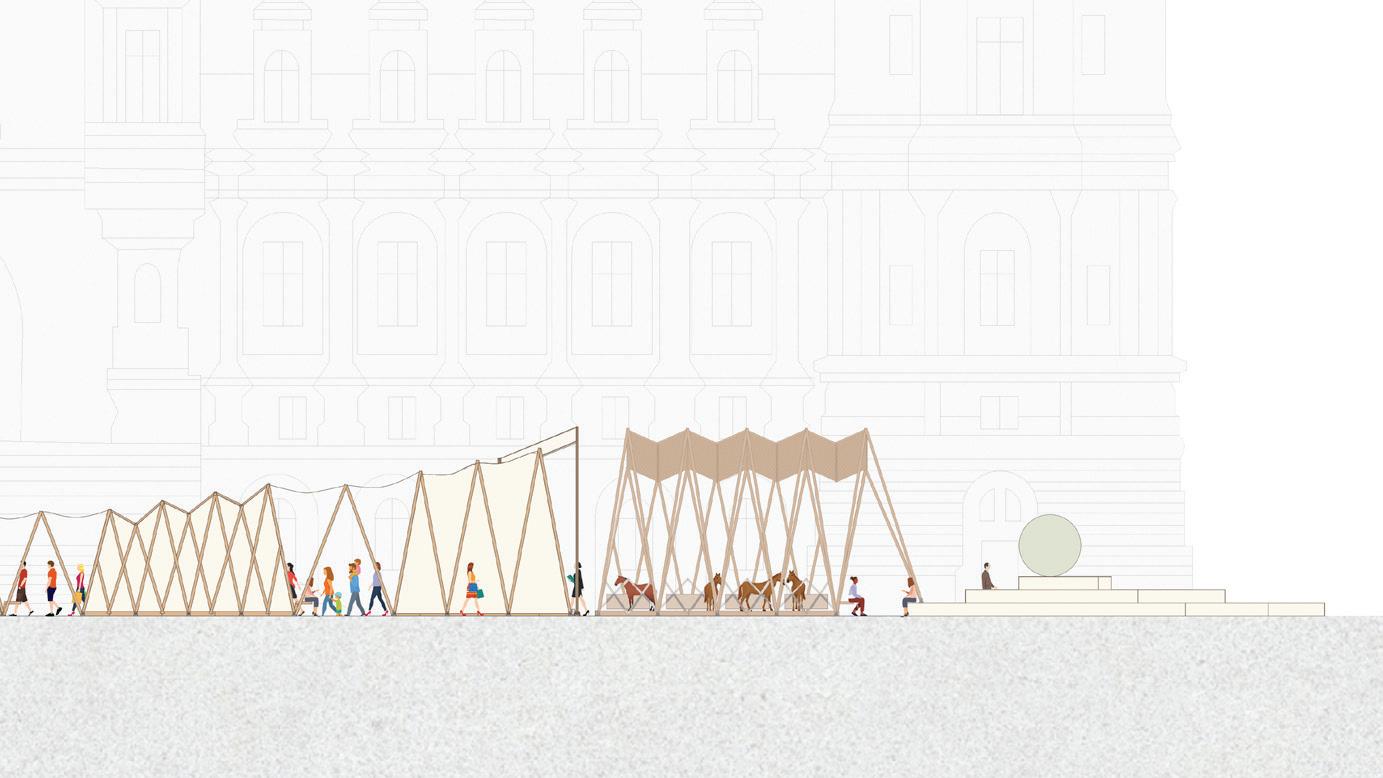
The installation is organized around a central paddock, with a linear sequence of structures that guides visitors through the site while framing views toward an ongoing pony show. Stables are positioned to allow a clear and efficient path for ponies to enter and exit the paddock as groups alternate, while supporting programs, including reception, saddlery, and service spaces, create moments of interaction, observation, and pause along the procession.
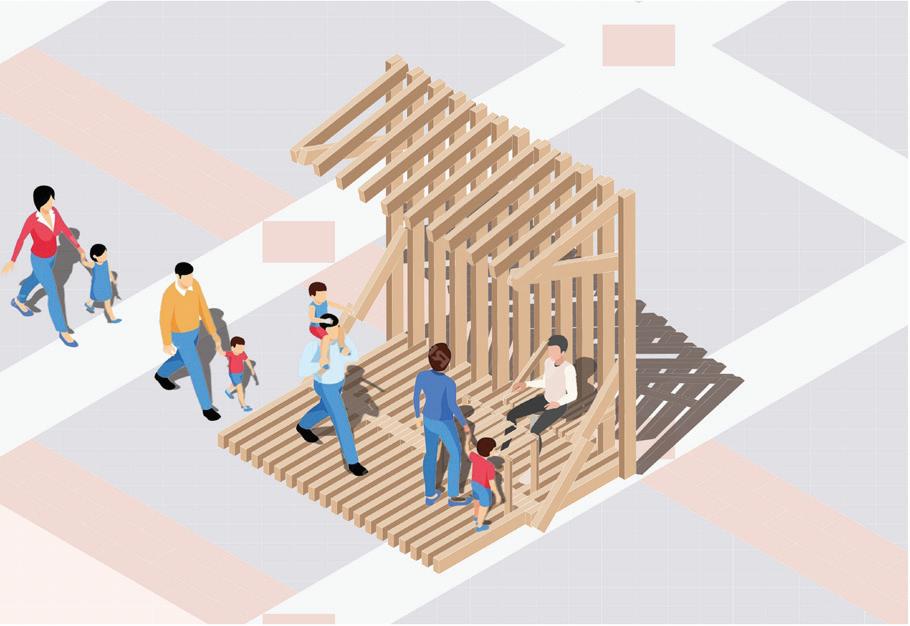
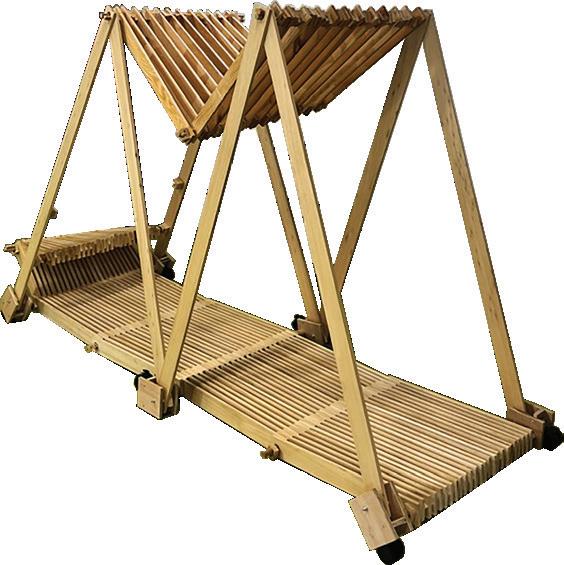
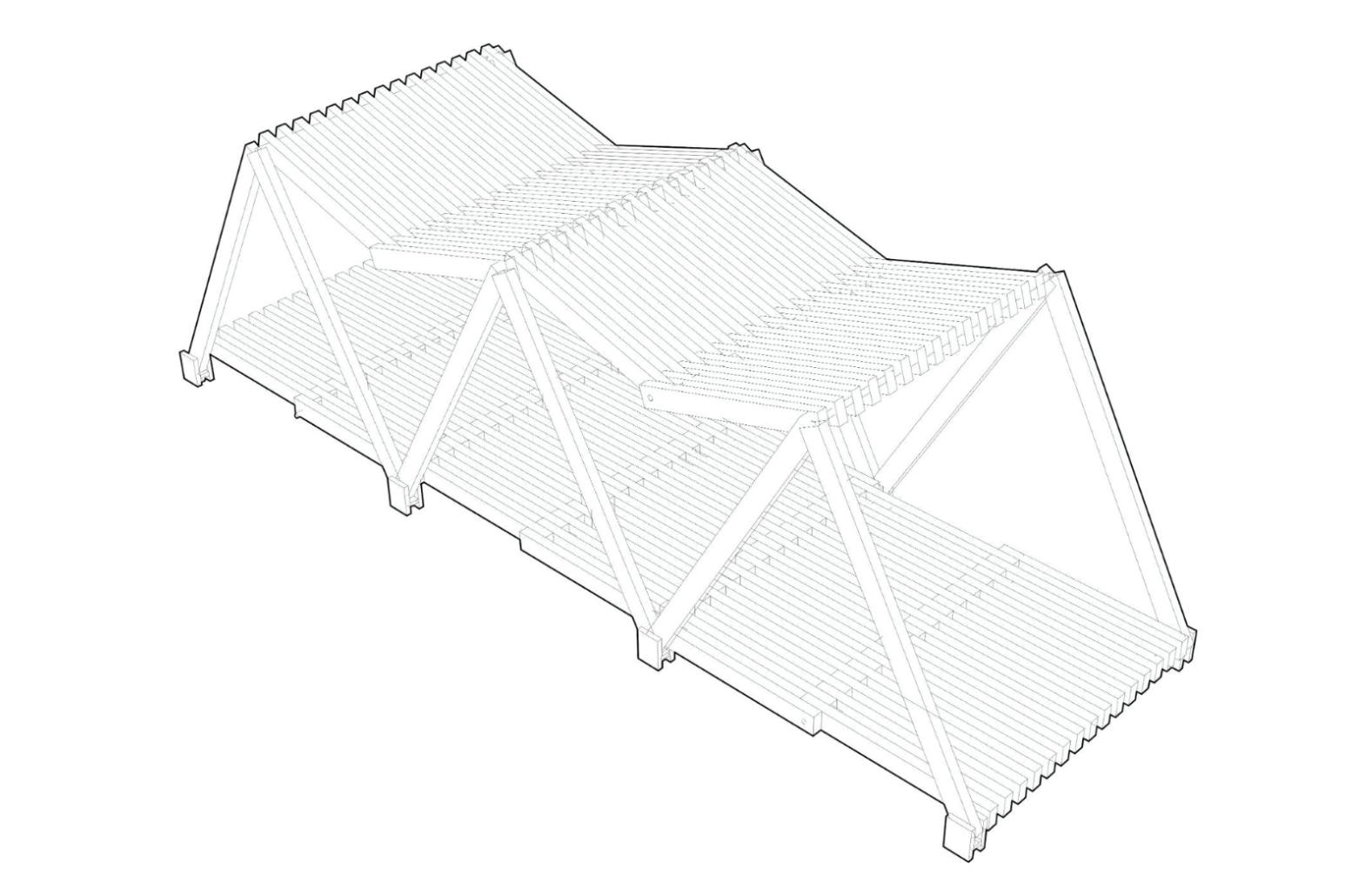
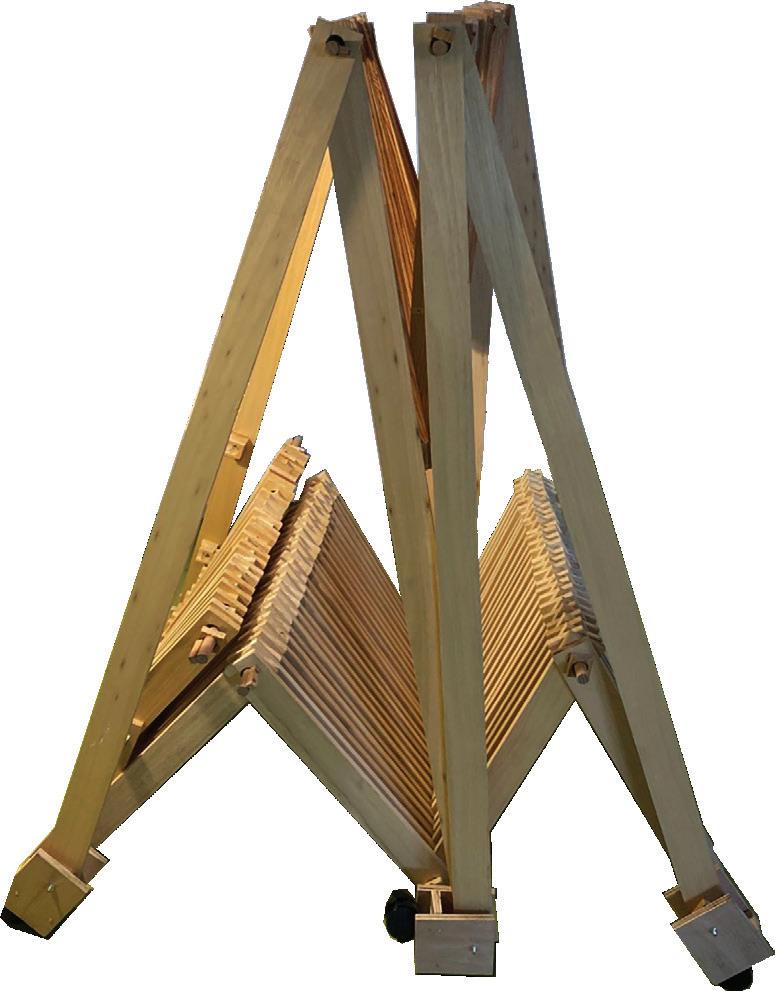
Constructed entirely of wood, the structures are collapsible, wheeled, and sized to fit within standard moving trucks. Tectonics were a central focus of the project, culminating in the construction of a one-third-scale structural model. Fabric panels vary in opacity to reflect levels of privacy, with opaque enclosures for staff spaces, translucent surfaces for display areas, and open structures intended for direct public engagement. Through material logic and spatial sequencing, the project demonstrates how temporary architecture can choreograph movement, visibility, and experience.
Subway Entrance
Reception
Modular Model
South East Axonometric
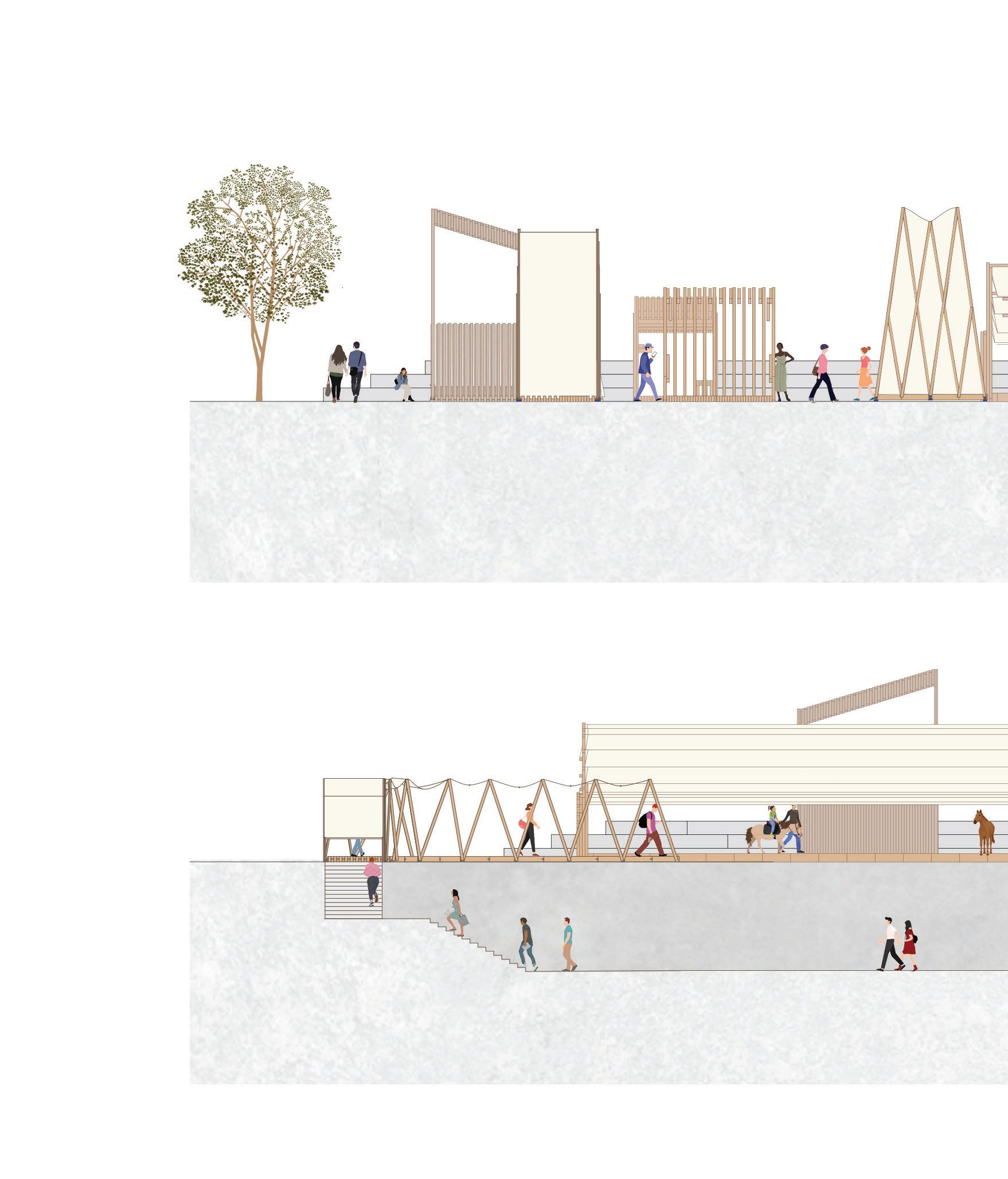
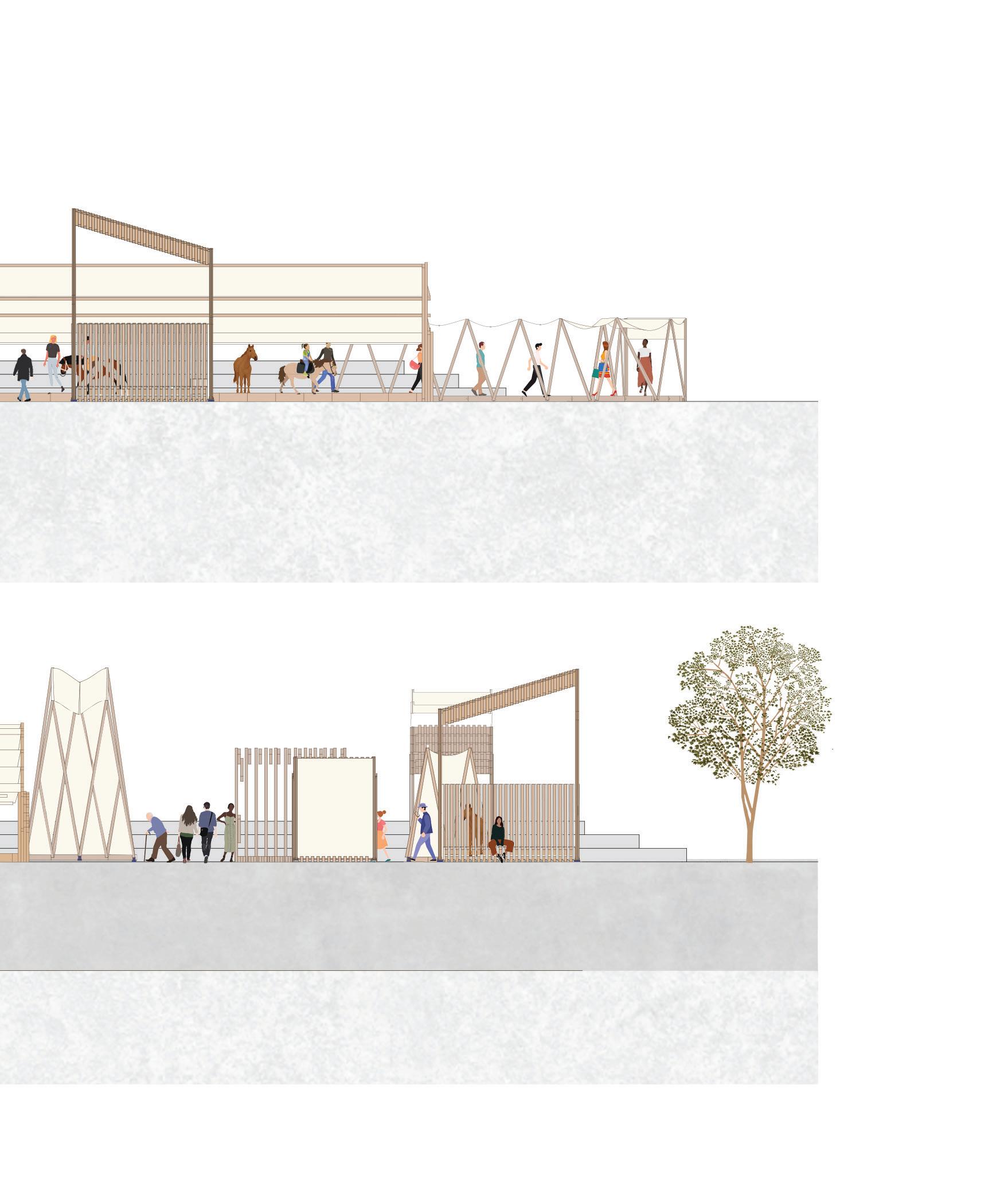
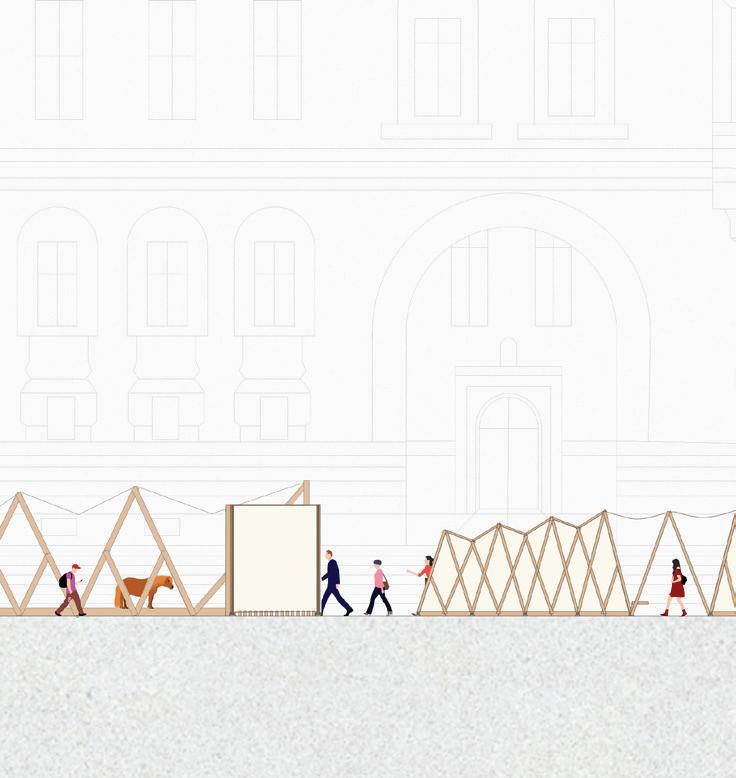
West Section
East Section
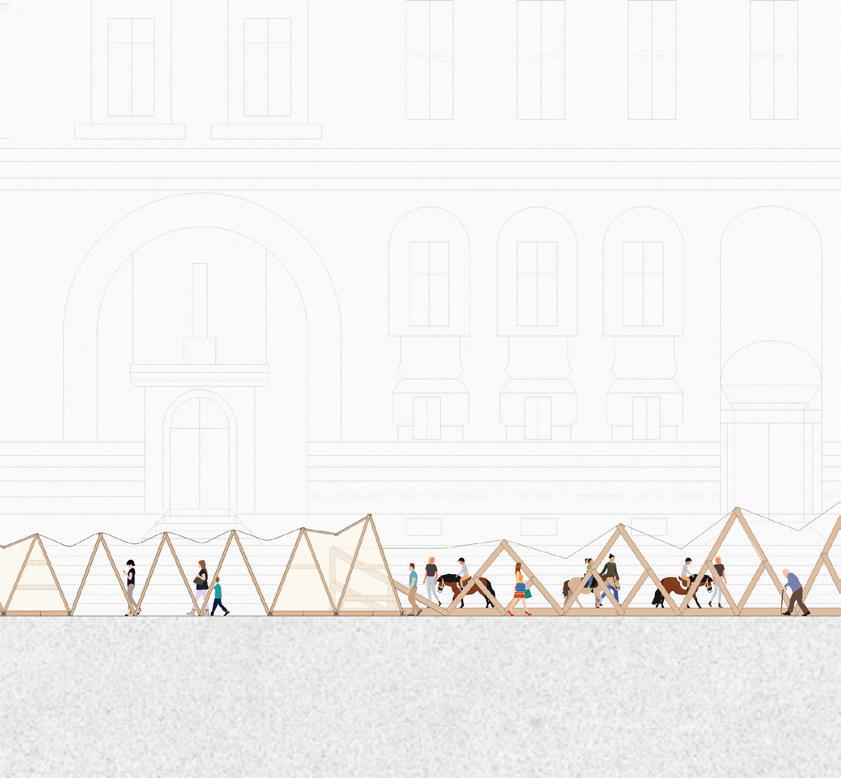
West and east sections illustrate how the installation interfaces with the subway below, drawing visitors upward into the site. The sectional sequence highlights changing scales and enclosure, from service and entry structures to open stables and public gathering spaces framing the central paddock.
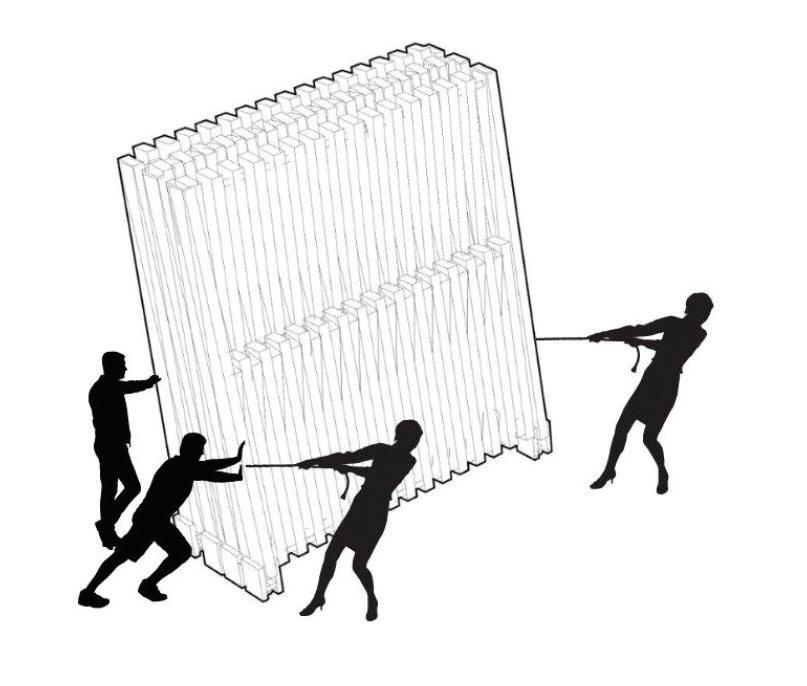
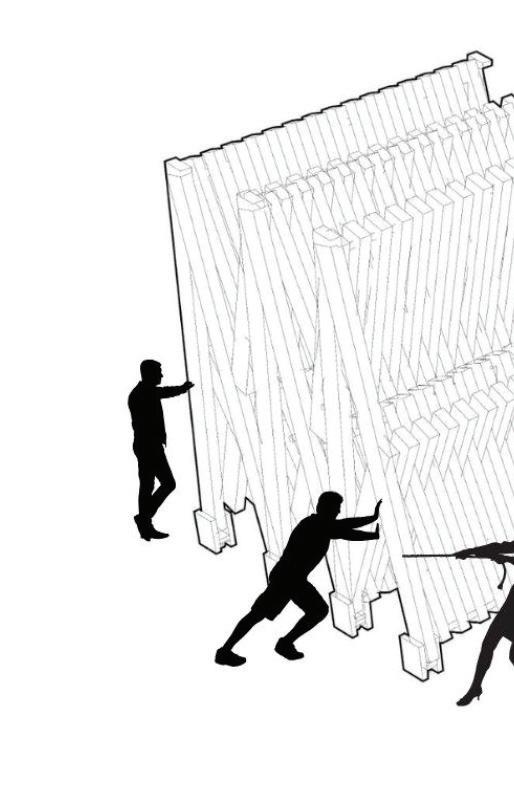
Opening System Diagram
North Section
An opening sequence diagram illustrates the simple, human-scaled operation required to deploy each structure. The extended elevation below shows the full installation in section, with the paddock centered and a linear arrangement of frames guiding movement and framing views across the site.
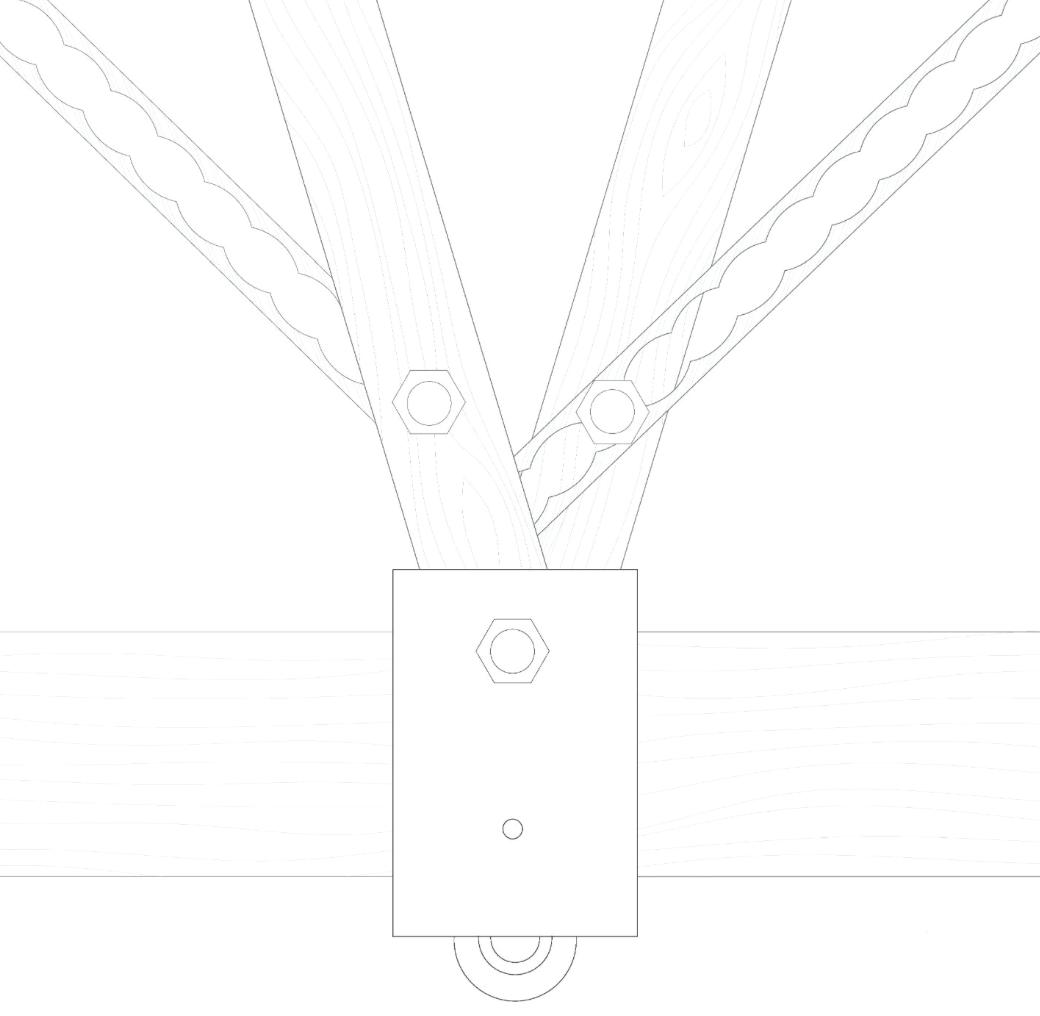
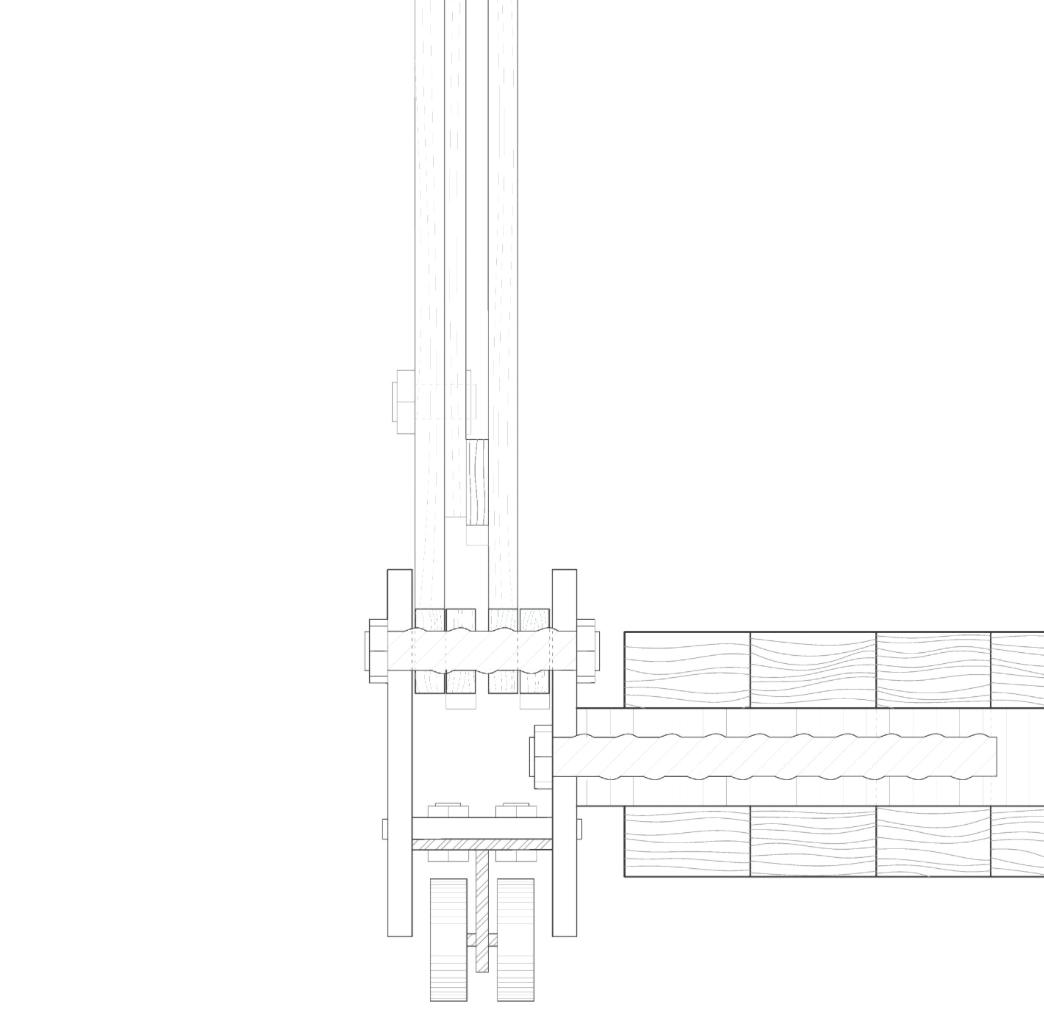
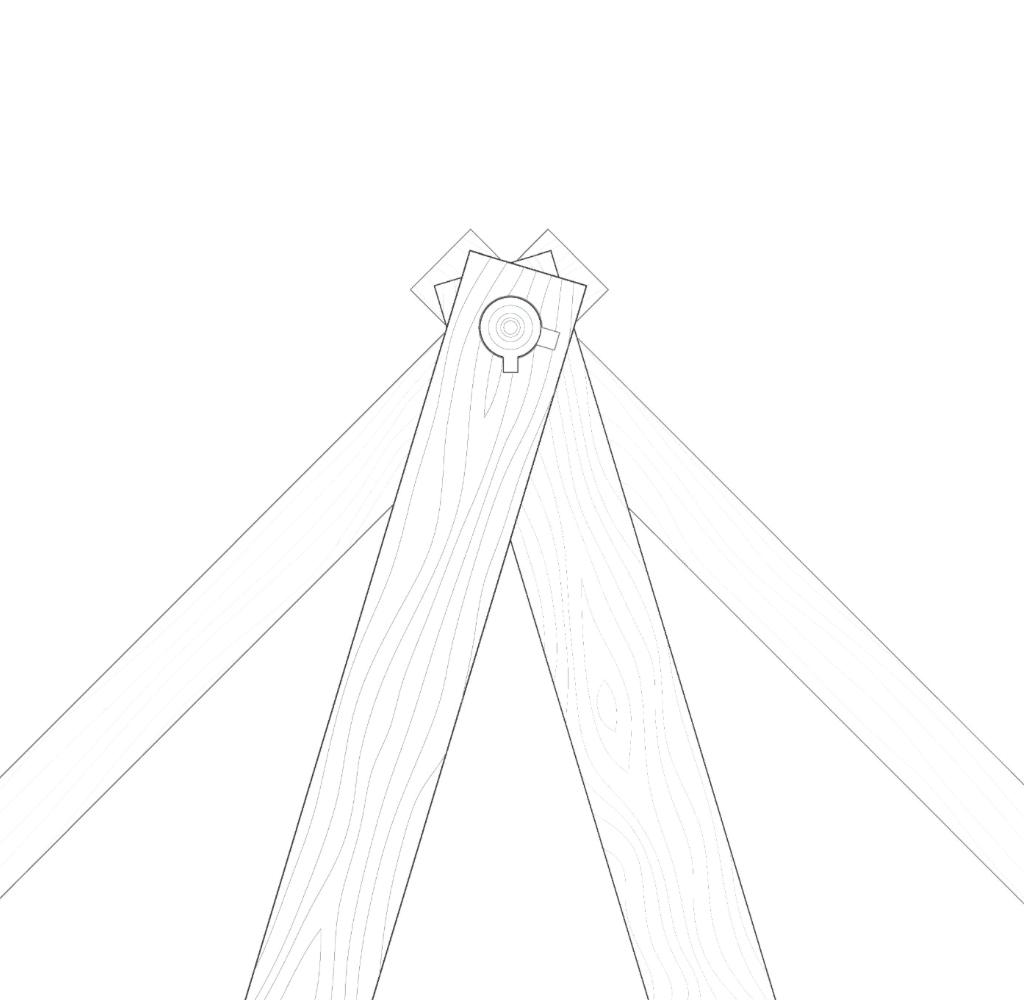
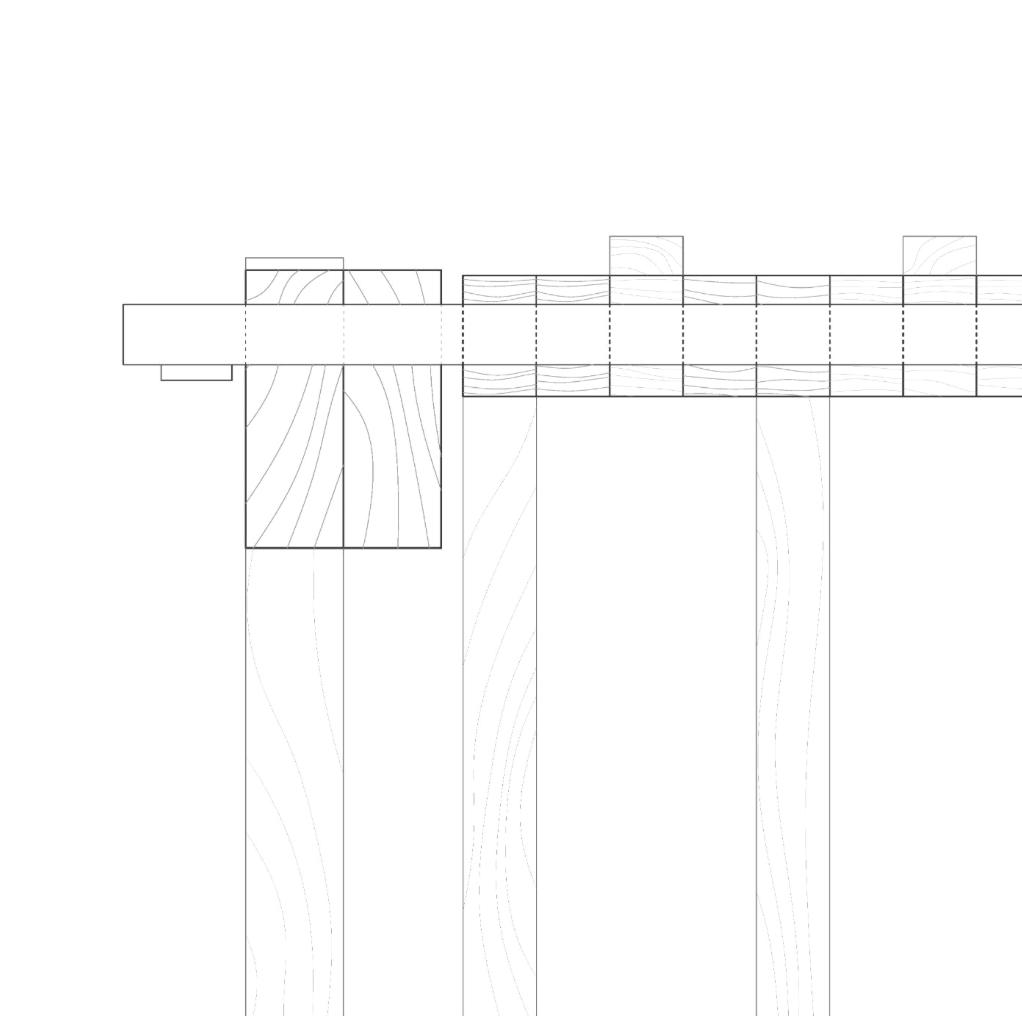
A one-third-scale wooden prototype demonstrates the collapsible, wheeled structural system, emphasizing ease of assembly and transport. Detailed drawings illustrate the tectonic logic, joinery, and connections that enable flexibility, repetition, and stability across the modular framework.
CULTURAL CONNECTIVITY
Spring 2024 | Urban Planning Studio | Northeastern University | In collaboration with Lein Sim
Cultural Connectivity is a 14-acre urban design proposal that addresses the pressing need for housing and community spaces in Boston’s Mission Hill neighborhood. Through comprehensive mapping of Mission Hill and its surrounding areas, needs were identified, including access to affordable food, enhanced tree coverage, and opportunities for collective cultural engagement.
The design is organized into three key zones: a marketplace featuring both indoor and outdoor spaces that offer a variety of shopping and dining options; an art center with small-scale Single Room Occupancy (SRO) units that provide spaces for artists and students to gather, collaborate, and showcase their work; and a transportation hub that ensures seamless connections to nearby subway and bus stops, promoting easy and sustainable mobility.
Recognizing the challenges and complexities of initiating lowincome housing projects in Boston, this proposal emphasizes affordability and inclusivity. It aims to prioritize disadvantaged communities by offering controlled rent options in a clean, safe environment where goods, services, and cultural experiences can be exchanged freely and fairly.
Mapping Comestibles
Mapping Green Space
Mapping Land Use
Mapping Open Space
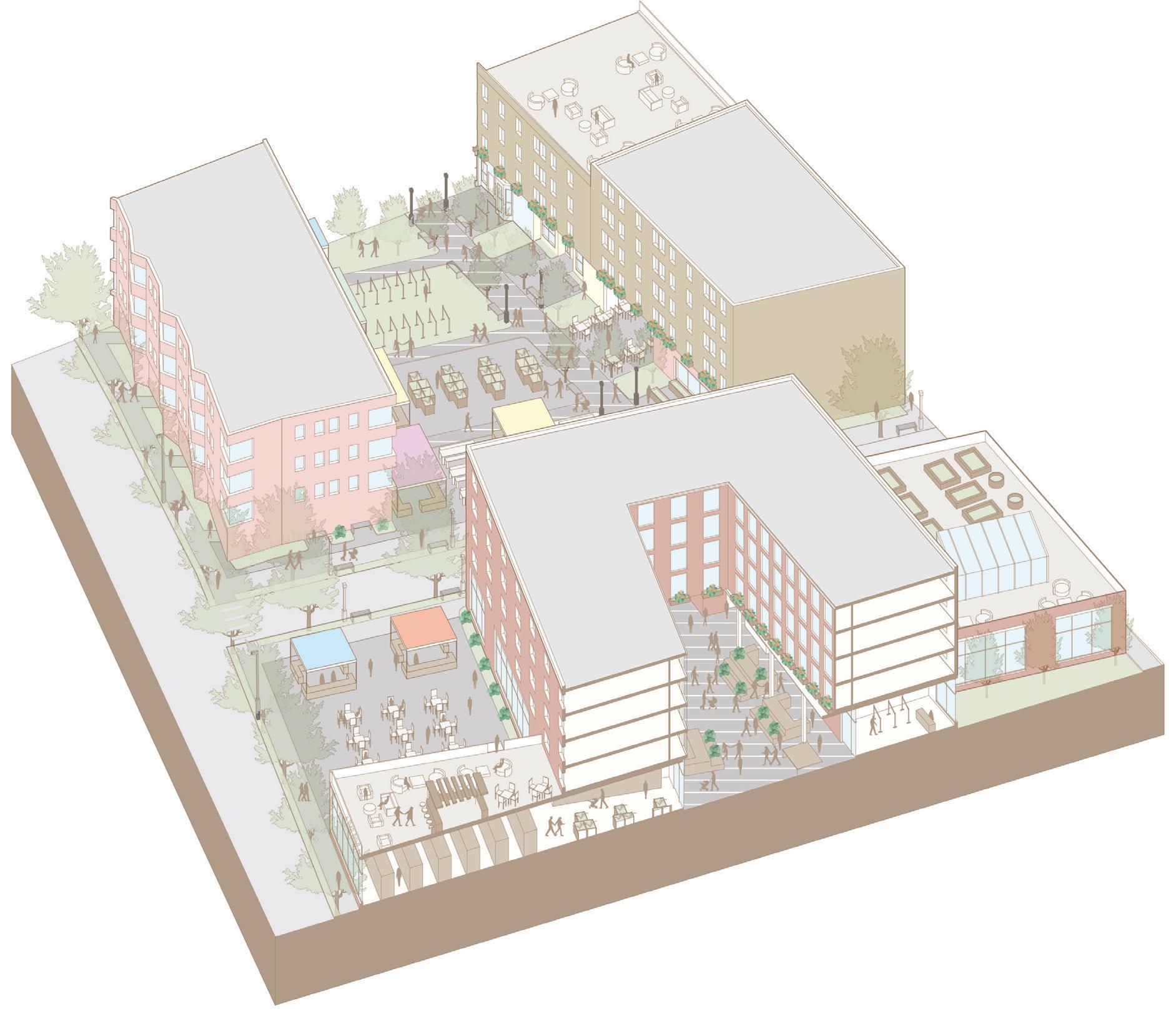
East Axonometric
Housing Type Diagram
The diagrams illustrate how the block is designed to integrate low-income housing and identify which buildings are adapted, newly constructed, or preserved. They showcase a thoughtful approach to creating an inclusive neighborhood that honors its history and fosters interaction among diverse community members.
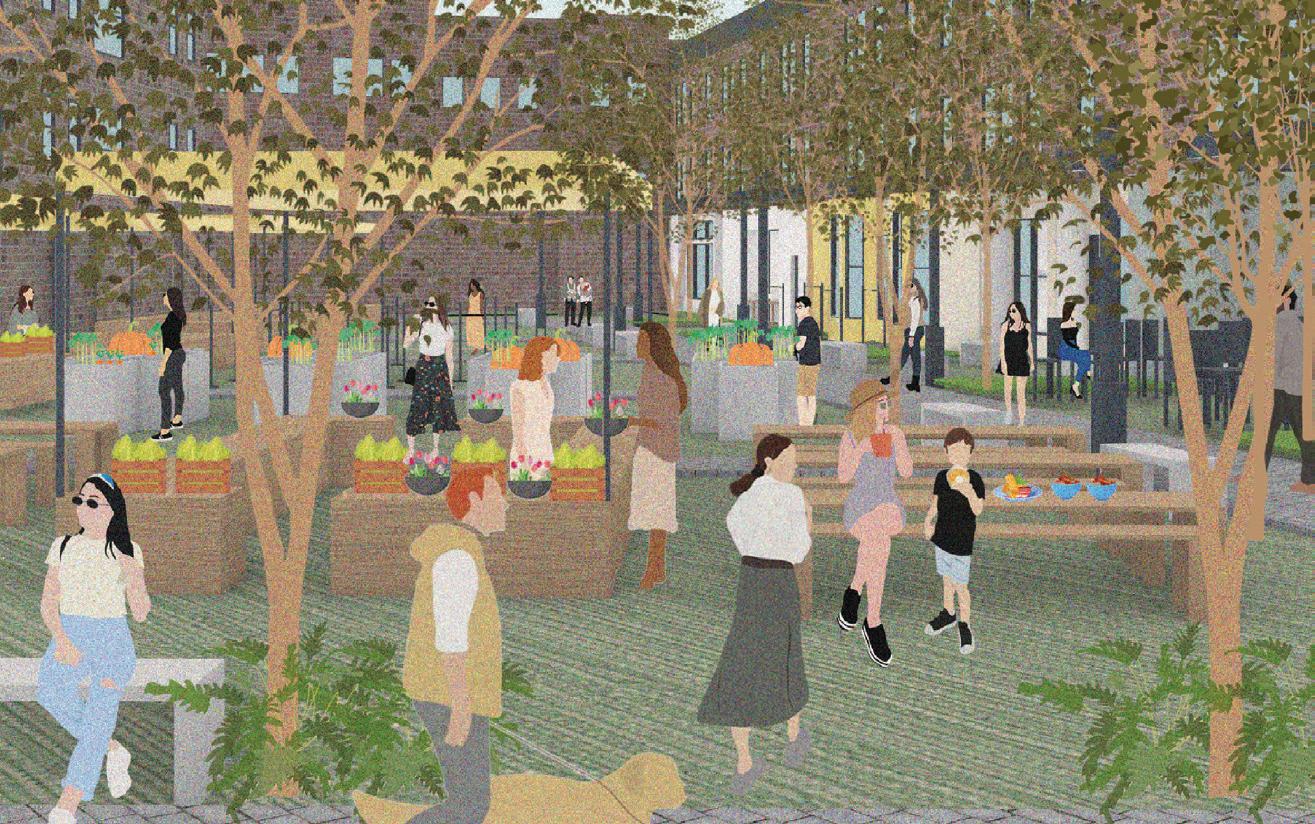
Exterior Market Render
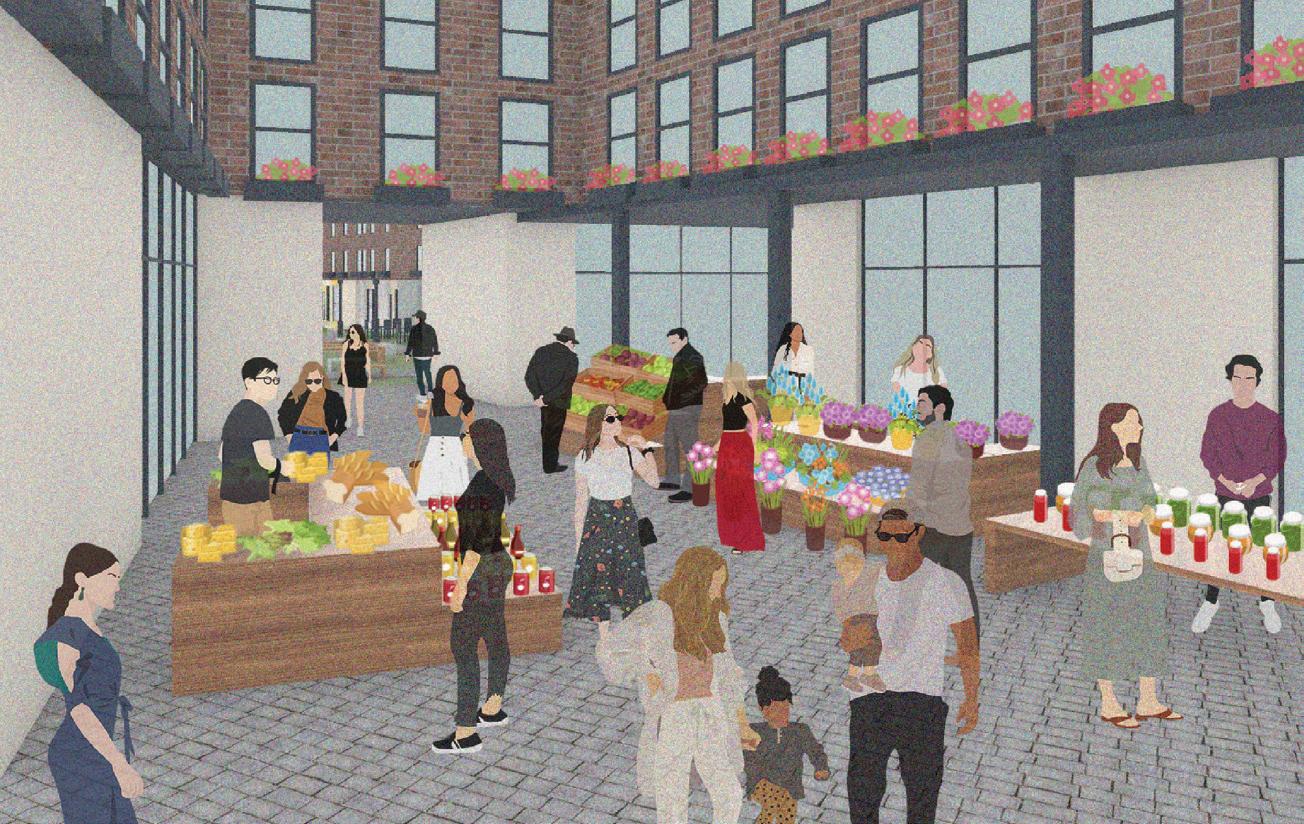
Interior Market Render
Adapting Market Transection
A focused axonometric transection highlights the marketplace as the social heart of the proposal, revealing how indoor and outdoor vendor spaces activate the ground plane. The renderings emphasize everyday interactions, layered circulation, and the role of the market in supporting local commerce and community exchange.
PROFESSIONAL WORK
2025 | 8 Month Internship | Nidify Studio
Nidify Studio documents my time working in a two-person, collaborative, design-driven studio environment focused on high-end residential architecture and custom interiors. As a coop designer at Nidify Studio, I contributed across multiple project phases, gaining hands-on experience in both conceptual design and technical production.
My work spanned single-family homes, renovations, and custom interior projects, supporting schematic design, design development, and client presentation efforts. I regularly used AutoCAD for drawing production, Rhino for modeling and form exploration, Enscape for real-time visualization, and Adobe Creative Suite for diagrams, presentations, and marketing materials. Responsibilities included producing plans, sections, and elevations, refining material palettes, developing interior details, and coordinating drawings directly with senior designers.
The role offered broad exposure to the scope of architectural practice, from early design studies to construction-ready documentation. Working closely within a small team strengthened my understanding of detailing, coordination, and client-focused design, while reinforcing the importance of clarity, craft, and precision in residential architecture.
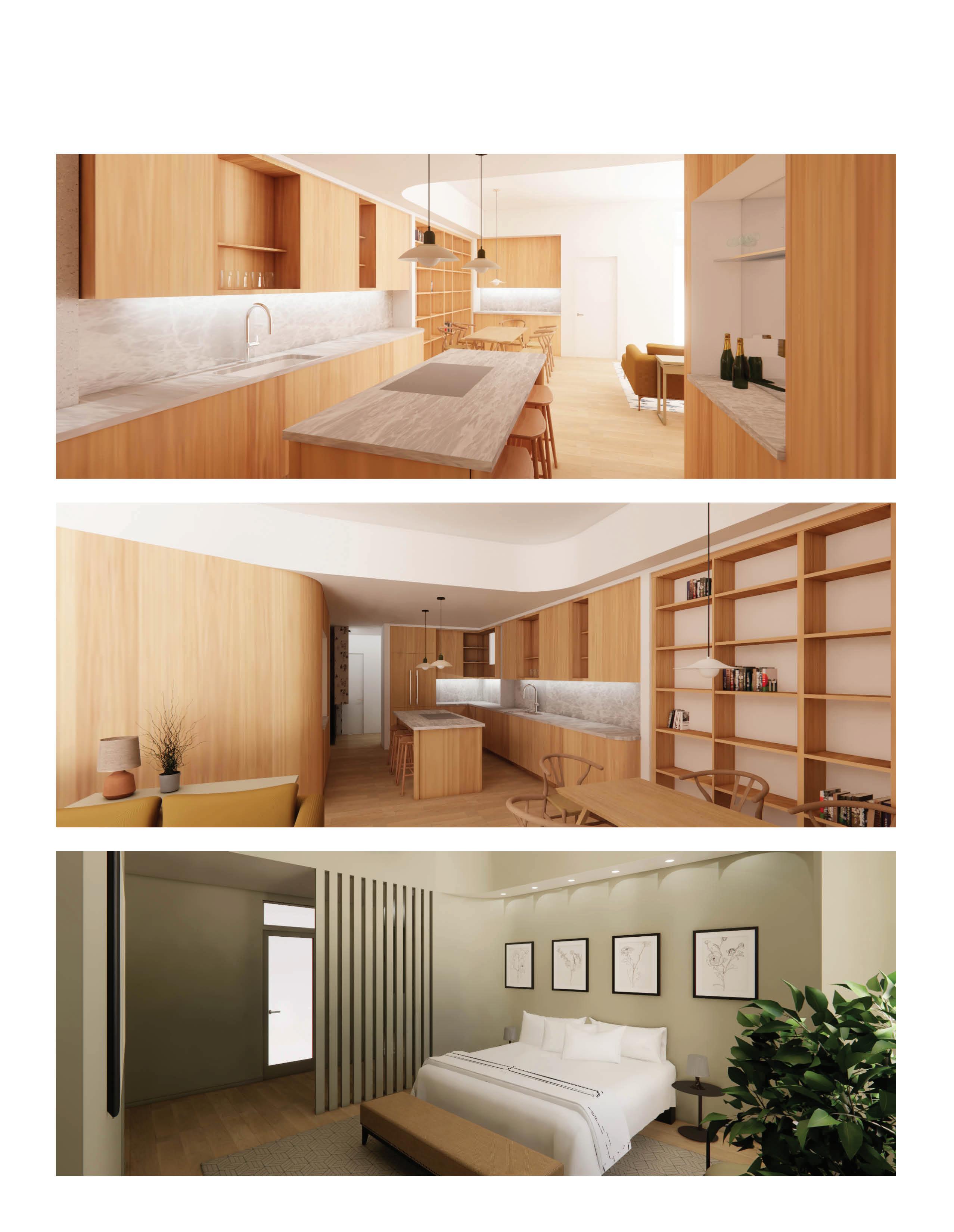
Concord Townhouse Rennovation
This condominium renovation in Concord, Massachusetts focused on creating a warm, wood-dominant interior balanced with modern, refined detailing for an elderly client. The design emphasizes comfort, clarity of circulation, and a cohesive material palette throughout the apartment. Existing conditions were documented through field measurements and translated into CAD drawings of the unit.
Digital modeling and renderings were used to study spatial relationships and interior finishes. The design process included fixture and finish selection, interior design studies, and visits to design centers to coordinate tile, flooring, and material decisions in collaboration with the client.
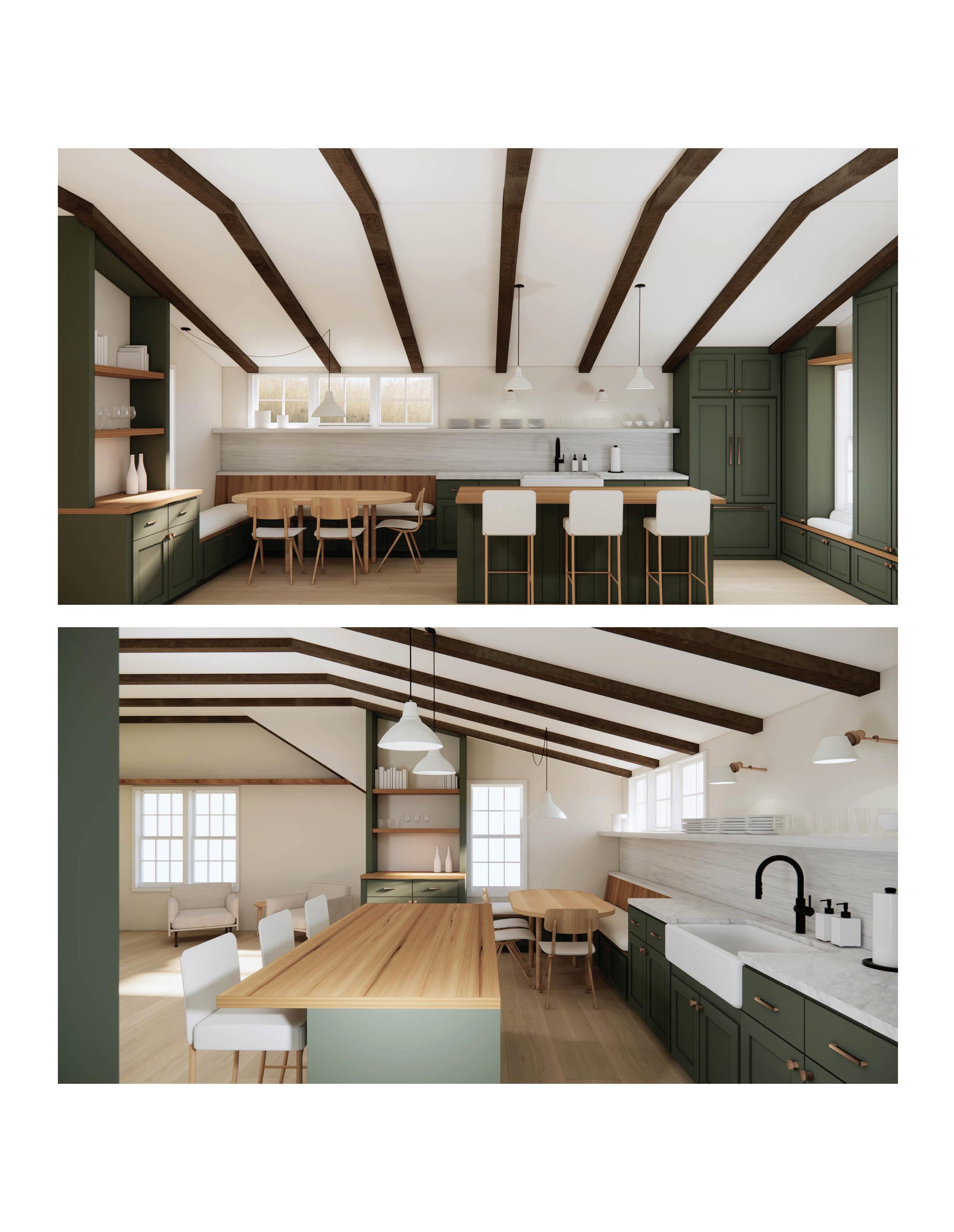
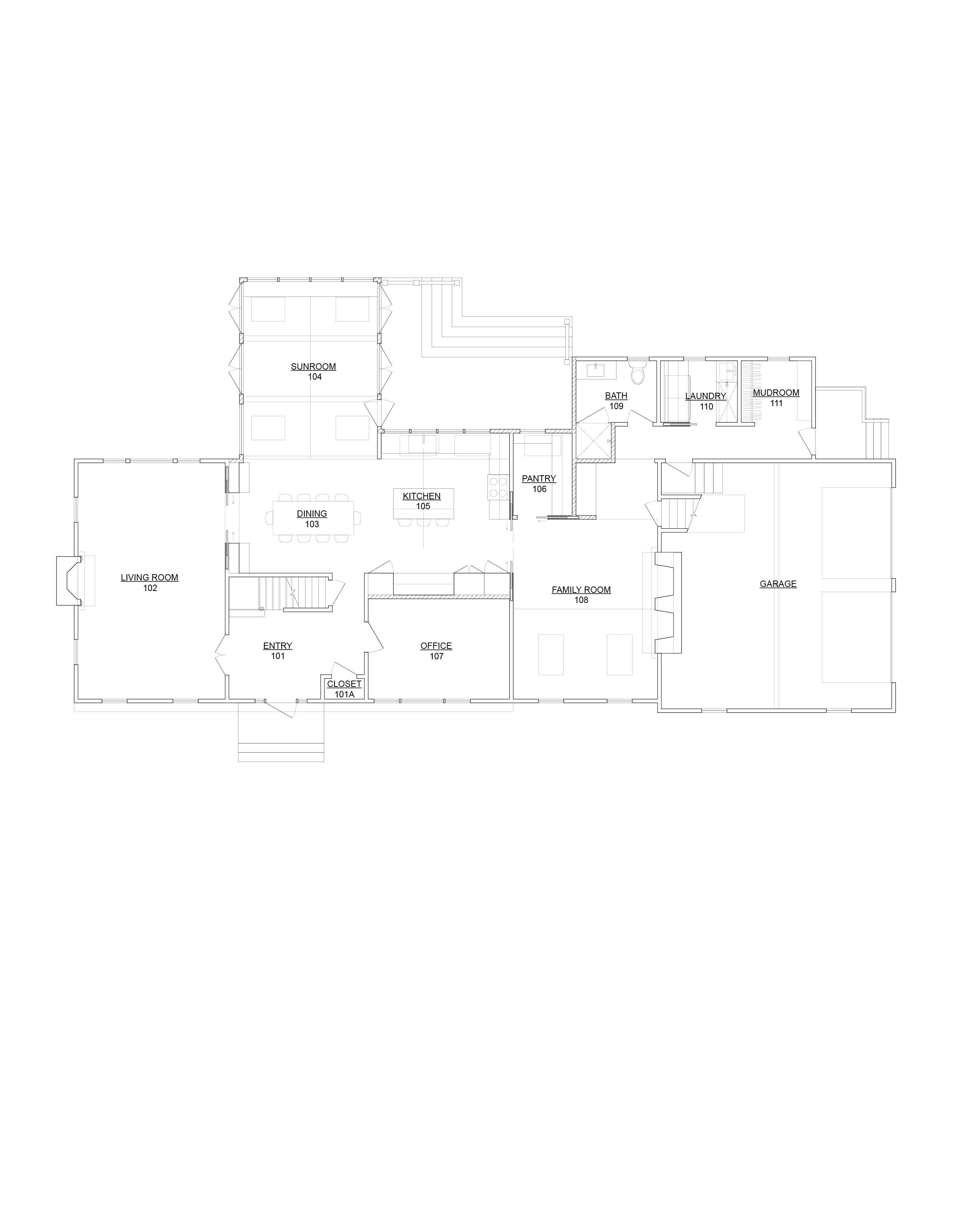
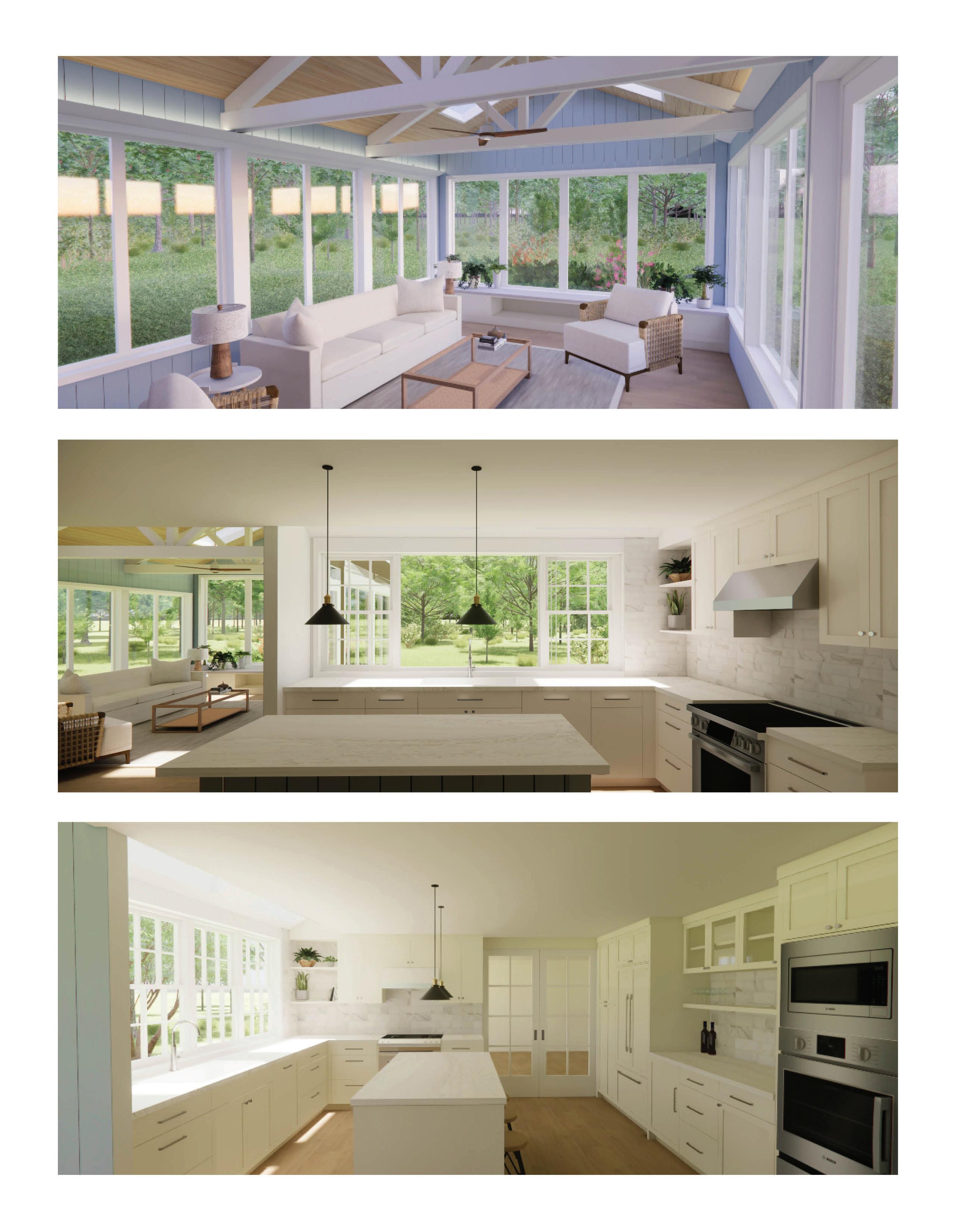
Saddlebrook Kitchen and Sunroom Rennovation
This project is a full interior renovation of a single-family residence in Sherborn, Massachusetts, focused on improving spatial continuity, daylight, and the connection between living spaces and the landscape. A primary intervention was enclosing the existing sunroom and integrating it into the home as a year-round space connected to the kitchen and dining areas. The kitchen, dining, and sunroom were the main focus of the design. Renderings created in Rhino and Enscape were used to explore materiality, light, and spatial relationships. A full video walkthrough of the home was produced, along with still renderings showing the space at different times of day, including the sunset view in the sunroom shown here