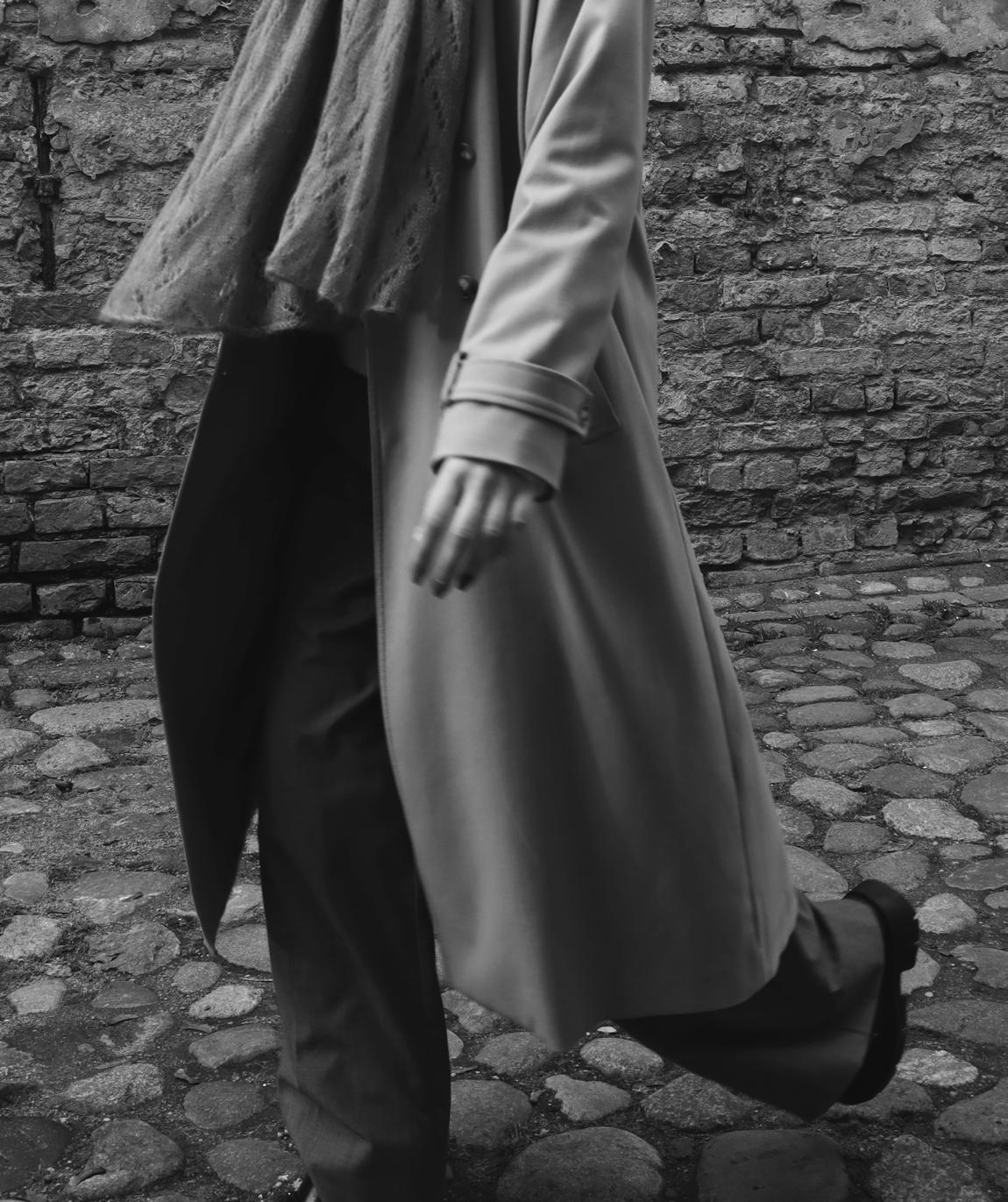
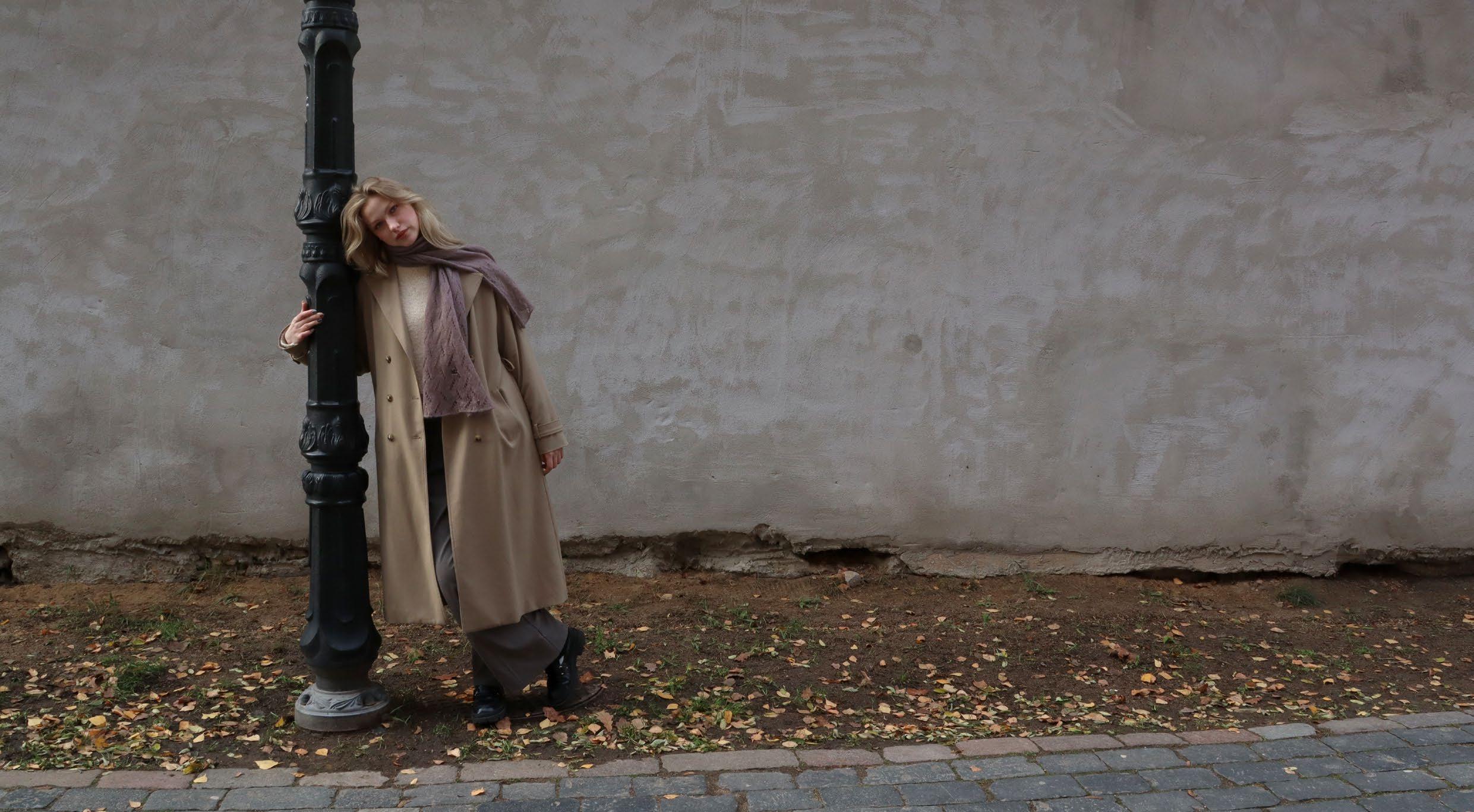
While the meaning of “fast fashion” is fairly straightforward–the description is in the name, after all–understanding why it has become so ubiquitous requires a deeper look at the clothing industry as a whole. On the most basic level, fast fashion is quickly produced trends sold at low price points. But producing and consuming clothing at the current rate we are is taking a massive toll on both the planet and the people who work to make it.
Despite the growing popularity of sustainable and ethically made fashion among younger generations, fast fashion is growing rapidly in volume and profit. According to research by CoherentMI, in the United States alone, fast fashion was worth “$41.15 Billion in the year 2023 and is anticipated to reach $59.85 Billion by 2030.” This means that fast fashion is showing no signs of slowing down and more clothing will end up in landfills and secondhand markets around the world.
In the late 1800s, collections were produced in two seasons: Fall/Winter and Spring/Summer. “The whole industry is based on systems that were developed after the Industrial Revolution for productions of scale that would allow for economies of scale. And because of that, we have to produce huge volumes to get the cost and pricing right,” Preethi Gopinath, Director of MFA Textiles and Associate Professor at Parsons, tells Vogue. As access and demands for trends increased throughout the 21st century, this system of quickly made clothing using what was then new technology like sewing machines allowed for larger volumes of clothing to be created and sold.
by Alyssa Hardy
THE FUTURE IS
slow
While the meaning of “fast fashion” is fairly straightforward–the description is in the name, after all–understanding why it has become so ubiquitous requires a deeper look at the clothing industry as a whole. On the most basic level, fast fashion is quickly produced trends sold at low price points. But producing and consuming clothing at the current rate we are is taking a massive toll on both the planet and the people who work to make it.
Despite the growing popularity of sustainable and ethically made fashion among younger generations, fast fashion is growing rapidly in volume and profit. According to research by CoherentMI, in the United States alone, fast fashion was worth “$41.15 Billion in the year 2023 and is anticipated to reach $59.85 Billion by 2030.” This means that fast fashion is showing no signs of slowing down and more clothing will end up in landfills and secondhand markets around the world.
In the late 1800s, collections were produced in two seasons: Fall/Winter and Spring/Summer. “The whole industry is based on systems that were developed after the Industrial Revolution for productions of scale that would allow for economies of scale. And because of that, we have to produce huge volumes to get the cost and pricing right,” Preethi Gopinath, Director of MFA Textiles and Associate Professor at Parsons, tells Vogue. As access and demands for trends increased throughout the 21st century, this system of quickly made clothing using what was then new technology like sewing machines allowed for larger volumes of clothing to be created and sold.
by Alyssa Hardy
THE FUTURE IS
By the 1990s, trend cycles sped up, pioneered by brands like Forever21 and Zara, which began producing clothing at upwards of 52 “micro-seasons” per year. Now, as social media amplifies trends at faster rates, newer, online-only brands like Shein and Temu are producing at an even faster rate using sophisticated algorithms to get new styles to market in a matter of days, sometimes this is referred to as ultra-fast fashion.
The impact of fast fashion on the environment is a layered issue. For starters, a March 2023 report by the United Nations Environment Programme (UNEP) said that fashion was responsible for up to 10% of annual global carbon emissions. On the production side, overusing oil-based textiles like polyester means that brands rely on fossil fuels to create new products. According to Business of Fashion’s 2023 report, “Oil-based polyester accounts for about 50 percent of fiber production.”
“In order to produce lots of goods, [brands] want to use the cheapest materials,” Gopinath says. “What is not sustainable then is the system of buying for short-term use and then tossing. And, when it’s poor quality, it starts peeling off microfibers.” Polyester doesn’t biodegrade and sits in landfills and water systems, shedding microfibers over time. These microfibers end up in the water systems. Still, overproduction, whether of synthetic fibers like polyester and nylon or natural fibers like cotton, can be an issue. Cotton, for example, is a plant that requires a significant amount of water, fertilizer, and pesticides, with the exception of truly organic cotton.
Fast fashion is made to fit into current trends. Couple that with the fact that it’s made as cheaply as possible; it’s often looked at as disposable. In 2018, the Environmental Protection Agency (EPA) said that landfills received 11.3 million tons of MSW textiles. What’s more is that the donation system in the United States and the United Kingdom is imperfect. Many of the unwanted clothing meant for charities is instead sold into secondhand markets in the Global South in countries like Ghana and Chile where textiles that can’t be sold end up in dumps or in the oceans.
“Overproduction rides on the back of the most vulnerable people along the fast fashion supply chain, who are usually from the Global South,” Sammy Oteng, Senior Community Engagement Manager, The Or Foundation, tells Vogue. “In Ghana, where I’m from, the influx of these garments overshadows the good, culturally driven work that Kantamanto—the largest reuse and upcycle economy—does.
It is also a culprit in the decline of local textile industries and has eroded the quality and sentimental value people place on garments. This is simply because fast fashion positions garments as disposable. A decrease in garment production amounts, coupled with Globally Accountable Extended Producer Responsibility (EPR) to provide the investment necessary to develop localized circularity and revitalize the local textiles industry, is a way forward.”
She
WEARS THE PANTS
A brief history of women’s fashion
by Prudence Wade
During the 19th century, women in the US and UK were expected to wear big, billowing skirts – they were a sign of femininity and conservatism, as they didn’t show off the shape of ladies’ legs. Contrast this to men wearing trousers, which are easier to move around in. This isn’t to say women didn’t wear trousers at all. Sometimes they were worn for horse-riding, but even then, they were hidden underneath skirts – that’s how taboo the style was.
In the mid-1800s, activist Amelia Bloomer discovered Turkishstyle pantaloons, and advocated for women to wear these loose trousers (which famously became known as ‘Bloomers’), although they were frowned upon by wider society.
As the decades progressed, there were a few other examples of women wearing trousers – most notably during the world wars, when women took on traditionally male jobs. However, it was definitely not the norm, and ladies were still expected to stick to skirts. After the first world war, there were a few famous examples of women donning trousers. Hollywood stars such as Marlene Dietrich and Katharine Hepburn were known for their androgynous style in the 1930s, while later on, Audrey Hepburn made a splash in cropped slacks in the 1957 film Funny Face. However trousers were by no means mainstream attire for women in the early to mid-20th century and it would still be something of a shock to see ladies wearing them.
There was a shift in consciousness in the late 1950s with the explosion in popularity of capri trousers, but trousers really had a breakthrough in the 1960s and 1970s thanks to the women’s liberation movement.Women were calling for equal rights – at home, at work and even in their wardrobes. This meant breaking free from the strictures placed on them by society, and that included the pressure to wear skirts and behave in a way that was considered feminine and demure. Designer Yves Saint Laurent helped bring this even further into the mainstream with Le Smoking, a tuxedo debuted in 1966 specifically tailored to women’s bodies.
However, the way we see fashion is slowly shifting. There’s a more androgynous approach to style – both on the red carpet and in the streets – meaning trousers aren’t nearly as taboo as they once were. It’s no longer just about allowing women to wear trousers – it’s about letting anyone wear whatever they want, free of shame or judgement.
punk avant-garde
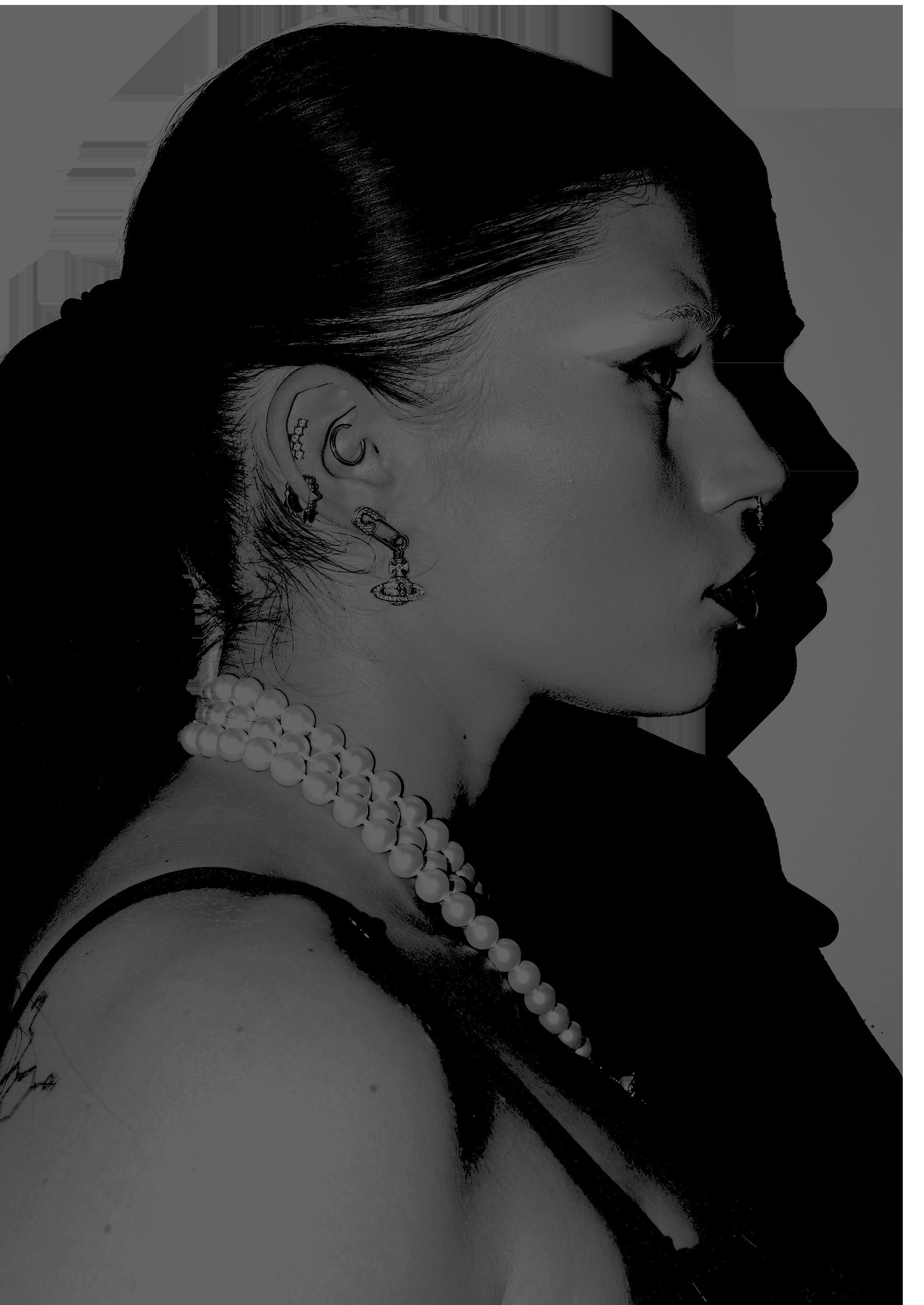
The story of Vivienne Westwood
Vivienne Westwood began designing in 1971 along with her then partner Malcolm McLaren in London. At the time, they used their shop at 430 Kings Road, London, to showcase their ideas and designs. With their changing ideas of fashion came the change of not only the name of the shop but also the décor. It was in 1976 when Westwood and McLaren defined the street culture of Punk with Seditionaries.
By the end of the seventies Vivienne Westwood was already considered a symbol of the British avant-garde and for Autumn/ Winter 1981 she showed her first catwalk presentation at Olympia in London. Westwood then turned to traditional Saville Row tailoring techniques, using British fabrics and 17th and 18th century art for inspiration.1989 was the year that Vivienne met Andreas Kronthaler, who would later become her husband and long-time design partner, as well as Creative Director of the brand. In 2004, the Victoria & Albert museum, London, hosted a Vivienne Westwood retrospective exhibition to celebrate her then 34 years in fashion – the largest exhibition ever devoted to a living British fashion designer.
In 2006, her contribution to British Fashion was officially recognised when she was appointed Dame of the British Empire by Her Majesty Queen Elizabeth II. Vivienne Westwood is one of the last independent global fashion companies in the world. At times thought provoking, this brand is about more than producing clothes and accessories. Westwood continues to capture the imagination, and raise awareness of environmental and human rights issues. With a design record spanning over forty years, Vivienne Westwood is now recognised as a global brand and Westwood herself as one of the most influential fashion designers, and activists, in the world today.
“I am very inspired by the 17th and 18th centuries. My favorite painters are Titian, Velasquez and also Vermeer. I particularly love 17th century Dutch painting. I visit the Wallace collection in particular for the 17th century, but then you have the three 18th century geniuses there also: Boucher, Watteau, and Fragonard. To look a painting is to enter a world. It’s an absolutely delight. The only place to find ideas is by looking at what people did in the past. It’s the way you can be original. You can’t be original by just wanting to do something. Nothing comes from a vacuum. It is impossible to be creative unless you have a link with the past and tradition. You cannot merely have a desire to create something and attempt to do it without learning from the techniques of the past. However, this is true for any discipline and not just fashion. Nobody can create a symphony or dance a ballet without studying the knowledge of the past in that particular art. You should constantly try to understand the world in which you live, from the perspective of the way people saw things in the past. There’s an understanding that you get from this.” – Vivienne Westwood
wearing whatever A LOVE LETTER TO the f*ck you want.
We might be confronted on a weekly basis by a different trend or TikTok ‘aesthetic’ to try, but all the best-dressed people in the world stick to what they know works best. Having really distinctive personal style is all about defining what suits you, and never venturing too far from it. Of course, this makes getting dressed every morning easier, and leads to a lot less stress when shopping – but, embracing your own uniqueness in fashion can actually have a positive impact on your mental health more generally. According to the fashion psychologist Shakaila ForbesBell, standing out via your clothing is all about gaining validation, and this can boost your confidence and change the way that others interact with you.
“As humans, our desire to stand out is ingrained because achieving special recognition and validation boosts our self-image and increases our likelihood of being rewarded. So, it’s understandable that people are drawn to creating signature looks. Being memorable and easily recognisable not only provides social benefits, it can also boost your confidence.”
Forbes-Bell explains that having your own distinctive look or sense of style, one that is immediately recognisable to others, reflects an inherent desire to be special – and those seeking this out actually tend to have more emotional stability than those who don’t. “
A distinctive personal style reflects a desire to be unique,” she explains. “Studies have found that people who have a strong desire to be unique are more emotionally stable and satisfied with their lives than people with a low need to be unique.”
In a practical sense, having a strong sense of who you are, and how you want to portray yourself to the world, helps instil a sense of quiet confidence that is difficult to fake.
We might be confronted on a weekly basis by a different trend or TikTok ‘aesthetic’ to try, but all the best-dressed people in the world stick to what they know works best. Having really distinctive personal style is all about defining what suits you, and never venturing too far from it. Of course, this makes getting dressed every morning easier, and leads to a lot less stress when shopping – but, embracing your own uniqueness in fashion can actually have a positive impact on your mental health more generally. According to the fashion psychologist Shakaila ForbesBell, standing out via your clothing is all about gaining validation, and this can boost your confidence and change the way that others interact with you.
“As humans, our desire to stand out is ingrained because achieving special recognition and validation boosts our self-image and increases our likelihood of being rewarded. So, it’s understandable that people are drawn to creating signature looks. Being memorable and easily recognisable not only provides social benefits, it can also boost your confidence.”
“I think it’s incredibly powerful,” says the celebrity stylist Aimee Croysdill, who works with Nicola Coughlan and Marisa Abela. “You can make it your blueprint, your identity. It’s really all about creating a visual representation of who you are on the inside; most of the people we see we’ll never actually get to engage with, so visually you can feel like yourself and be comfortable in your skin when walking down any street or entering any room. It gives you confidence – it’s like a body armour.”
“It can actually change your behaviour,” adds Libby Page, the market director at Net-a-Porter. “Having great personal style isn’t about looking good, it is about feeling like the truest version of yourself. Once you’ve defined what that is, sticking to it means that there is nothing that comes into your wardrobe that doesn’t make you feel your best.” So, how do you work towards having personal style that truly reflects who you are on the inside? It is all about defining what makes you unique, outside of your wardrobe first.
“I would start by thinking about who you are as a person, and not just your style; ask yourself questions about things you love doing and the kind of person you are,” advises Page. “Personal style relates to the music you love, the restaurants you eat at, the books that inspire you – defining those things will help you carve out your fashion taste.”
Once you feel ready to make some changes, it is all about trial and error. The right fit and shape is really integral to looking good – and we are all different, so make an effort to understand your proportions, experiment with different colours and silhouettes, and you will soon understand what truly suits you. From there, you will automatically know what works and what doesn’t.
It’s worth remembering that, while a uniform doesn’t have to be boring (we’re all aiming for an elevated capsule wardrobe full of extraordinary everyday pieces here), you shouldn’t be afraid of repeating silhouettes and outfit formulas. Don’t ignore what feels comfortable, and try not to be swayed by what social media says you should be wearing that month. As Croysdill says: “Repetition is the coolest form of fashion – it makes me think someone really feels confident in knowing what makes them feel good, and there’s nothing more attractive than someone who is comfortable in their own skin.”
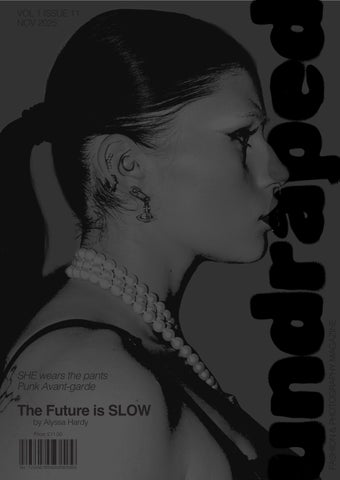
undraped
FASHION & PHOTOGRAPHY MAGAZINE
EDITOR, GRAPHIC DESIGNER, PHOTOGRAPHER
SOFIJA LIGNUGARYTĖ
As trends accelerate and the digital landscape grows louder, it’s easy for individuality to get lost in the noise. Undraped exists to strip away that noise - to celebrate authenticiy, to question the norms we’ve inherited, and to create space for expression that isn’t dictated by algorithms or industry expectations.
The magazine came to be as a response to the new ethical considerations within the fashion industry. Through this piece of artwork, I aim to empower women to own their personal style rather than assign identities to them.
This has been my favourite project to date, thank you to the readers, xoxo.