ESTONIAN DEFENCE FORCES ANNUAL REVIEW 2025
ESTONIAN DEFENCE FORCES ANNUAL REVIEW 2025
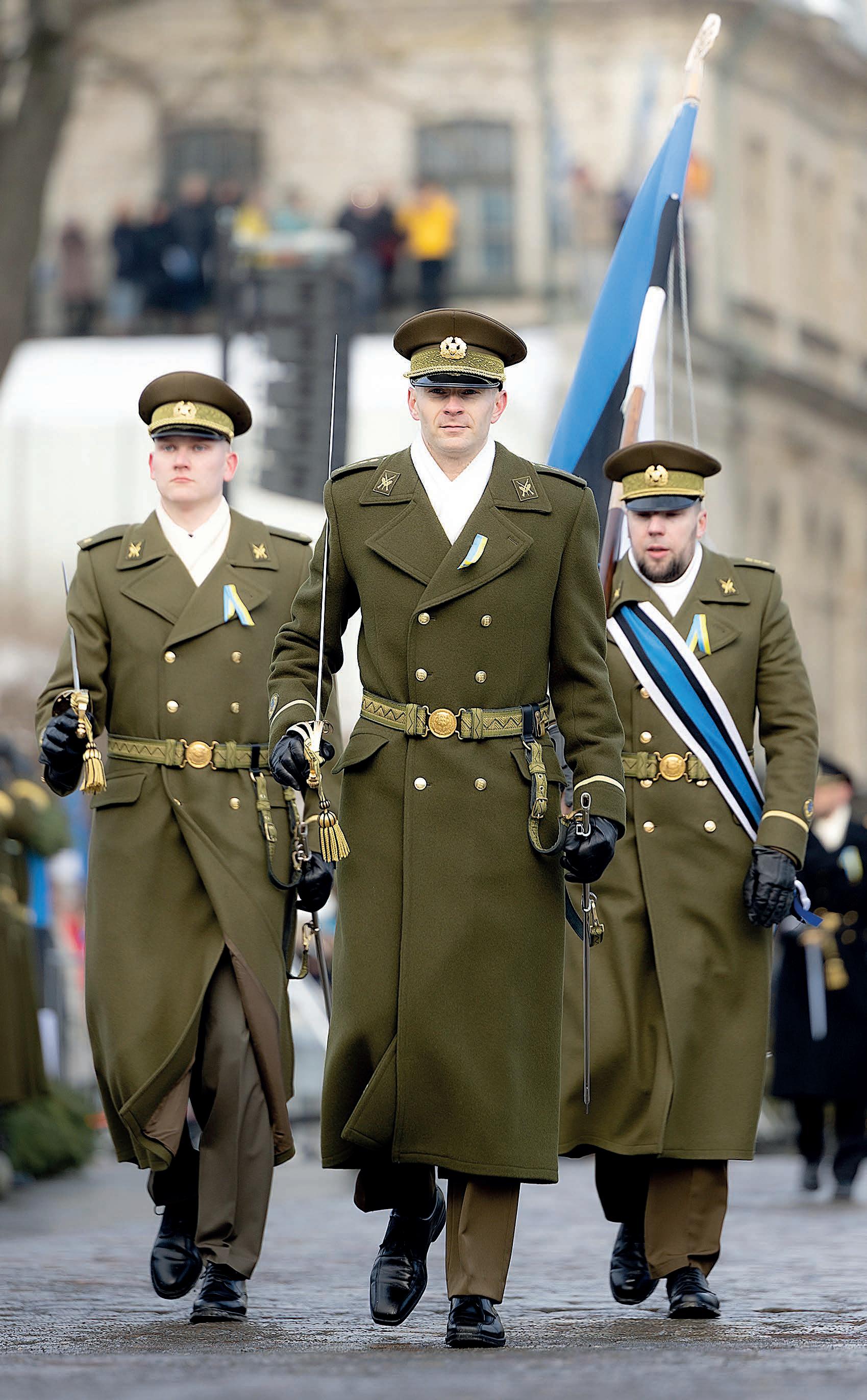
Photo: Maria Tammeaid / Estonian Defence Forces
FOREWORD / Lieutenant General Andrus Merilo
CHANGES ON THE BATTLEFIELD / Military Intelligence Centre
BALLOONS: A RAPID DEVELOPMENT IN THE WAR IN UKRAINE / Military Intelligence Centre
RUSSIAN BORDER VIOLATIONS / Military Intelligence Centre
RUSSIAN ARMED FORCES STRATEGIC EXERCISE ZAPAD / Military Intelligence Centre
DEVELOPMENTS IN THE RUSSIAN ARMED FORCES / Military Intelligence Centre
DEFENCE FORCES READY FOR VICTORY / Lieutenant General Andrus Merilo
2025 NATO DEFENCE POLICY / Major General Enno Mõts
PUBLIC SUPPORT FOR THE DEFENCE FORCES / Colonel Uku Arold
DIVISION'S YEAR / Major General Indrek Sirel
FROM BATTALION TO REGIMENT / Lieutenant Colonel Rauno Viitmann, Major Andrei Šlabovitš
MORE EFFECTIVE, FASTER, AND DEADLIER INFANTRY UNIT / Lieutenant Colonel Lauri Teppo
BALTIC DEFENCE LINE / Lieutenant Colonel Ainar Afanasjev
INTERNATIONAL EXERCISES MAINTAIN READINESS / Lieutenant Colonel Marek Koitla
THE 1ST INFANTRY BRIGADE LOOKS TO THE FUTURE / Colonel Tarmo Kundla
DEFENDING VALUES IS NOT AN ABSTRACTION / Thorlindur Kjartansson
ONE FOR ALL AND ALL FOR ONE / Lieutenant Jaanika Ojakõiv
DETERRENT AIR POLICING MISSION TO NATO'S EASTERN FLANK / Major Kalle Oruaas, Sergeant First Class Gervet Väät
RECEPTION OF AN ALLIED BRIGADE / Major Toomas Pärnpuu
OPERATION LEGIO / Lieutenant Colonel Valjo Tooming
FUTURE OF AIR SURVEILLANCE / Major Tõnis Pärn, Captain Henri Noormets, Captain Marko Heinloo, Captain Viljo Vainikko
ESTONIA'S MARITIME SECURITY / Commodore Ivo Värk
ARTIFICIAL INTELLIGENCE IN FUTURE WARFARE / Mihkel Tikk
INNOVATIONS AT THE WAR AND DISASTER MEDICINE CENTER / Neve Vendt
INCREASING THE COMBAT CAPABILITY / Major Ivo Peets, Mari-Liis Tikerperi
SPECIAL OPERATIONS TASK GROUP / Colonel Rivo Meimer
MILITARY POLICE PATROLLING: FOR WHOM AND FOR WHAT? / Major Siim Edur
NATO CCDCOE ADAPTS TO CURRENT CHALLENGES / Lieutenant Colonel Christoph Kühn
RENEWED VETERANS POLICY / Markus Rosin
COPING WITH WAR ANXIETY / Marge Sillaste
ANDRUS MERILO
Lieutenant
General, Commander of the Estonian Defence Forces
DEAR READER,
The year 2025 was a challenging, eventful, busy, and exciting year for the Defence Forces.
In response to the rapidly and sometimes unpredictably evolving security situation, the Defence Forces increased their combat readiness by carrying out operations, training, and capability development on land, at sea, in the air, and in the cyber environment. We know that, in the near future, we must be even better prepared to defend our people and our country, even when the overall defense situation in the country may not yet have changed.
The building of the necessary capabilities to do this, with the support of the funding provided for the rapid development of a national military defense mandated by the people, is now proceeding at a rapid pace. To prevent future changes in the security situation, we will continue to systematically grow stronger every day to fulfil the mission we have been given: to fight, if necessary, and to win the possible war. Last year, we clearly demonstrated to those who challenge our sovereignty, and to ourselves, that we are not afraid and will not back down when challenged.
In this yearbook, you will find analytical reviews of the Defence Forces’ learnings from the war in Ukraine and what is happening in the Russian armed forces. For the first time, the yearbook covers the progress of the defense policy of the entirety of NATO. NATO is very much present, and there is no reason to doubt its functioning in Estonia, at whose request the Article 4 consultations were launched. The allies are not just coming to our aid when needed; they are already here with us, preparing every day to defend NATO territory.
The division conducted the most tactically complex exercises in its history, fully integrated into the NATO chain of command. The artillery grew into a regiment. The armament of the Defence Forces, as well as the nomenclature and stocks of ammunition, were significantly supplemented.
Drone and counter-drone activities, inevitable in today's warfare, have become more deeply integrated into military development and exercis-
es. This is an area in which not all developments in the Defence Forces are covered in the media, and some of the developments have unfortunately been subject to information noise in the external media. However, I assure you that, under the coordination of the Force Transformation Command and the leadership of the unit commanders, the Defence Forces have made great strides forward in this area.
Last year, the decision to repay the debt of honor to the people of Narva and start building the Narva base gained a lot of public attention. Why the Defence Forces went to Narva permanently and what the Baltic Defence Line essentially means is discussed in more detail in the yearbook.
You can also read more about the activities of the NATO FLF Battle Group, the US allies, and the Italian Air Policing mission that protected our skies. For the first time, the British allies brought a full brigade to Estonia as part of a division during Exercise Hedgehog 2025. It was a huge logistical and management challenge, but it stood the test. The Estonian Defence Forces continued to provide training to the Ukrainian Armed Forces as part of the joint Baltic-Nordic Operation Legio.
Since last year, military police patrols have also been seen on the streets. Hopefully, the uninvolved are not able to spot the fighters of the Special Operations Force. The structure of the Special Operations Force, which is by nature classified, will not be disclosed in detail in this yearbook either. However, the publication discusses working principles and more specific disciplines more openly than before.
The most important element of the entire Defence Forces’ combat capability is a soldier willing to fight. The development of the capabilities of the Defence Forces will require a large increase in motivated fighters in the coming years. I promise that serving in the Defence Forces is exciting. This is confirmed by the review of the past year on the following pages. Happy reading!
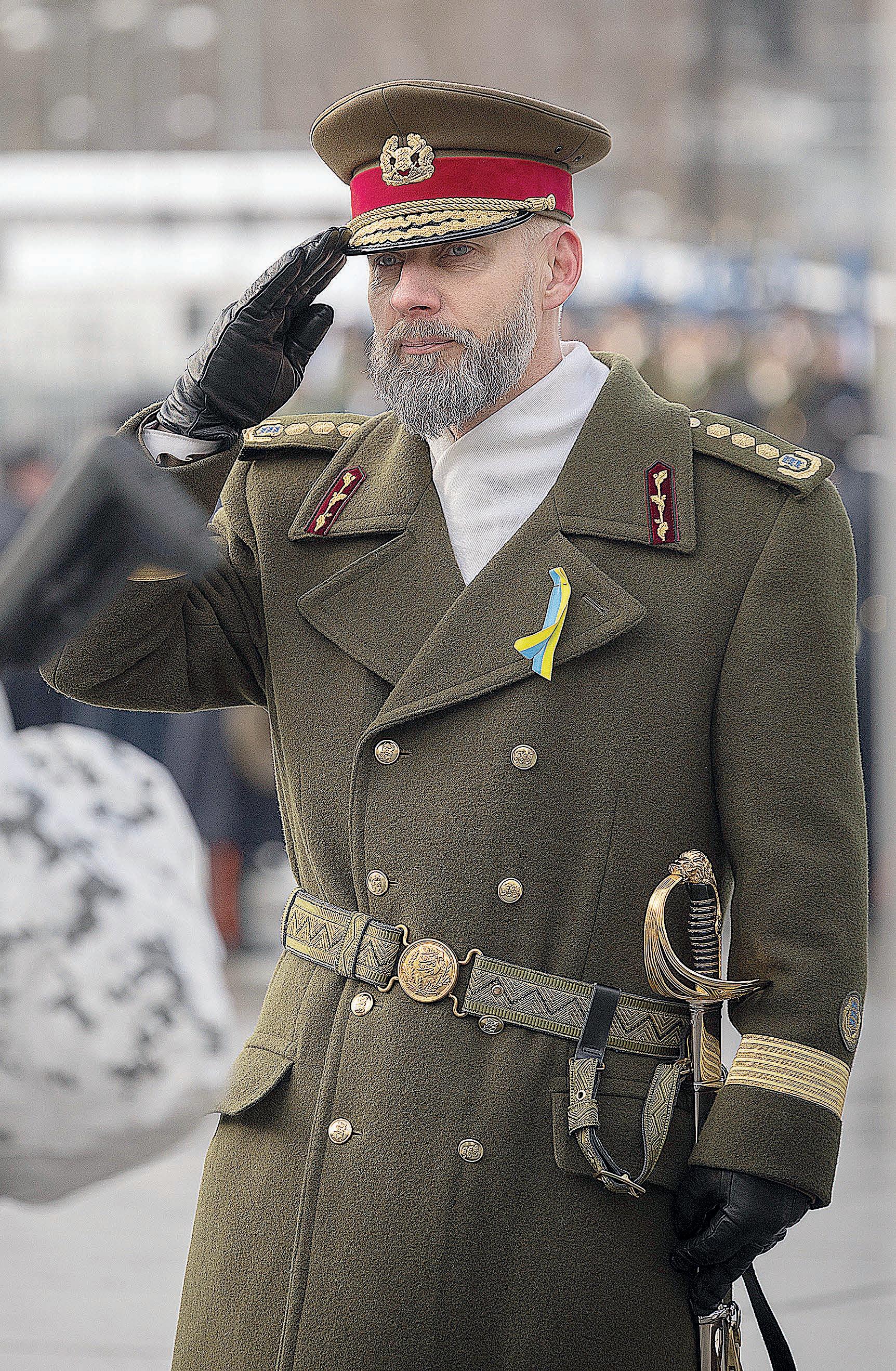
Photo: Otto Wilhelm Miil / Estonian Defence Forces
CHANGES ON THE BATTLEFIELD AND SHORTCOMINGS IN WARFARE
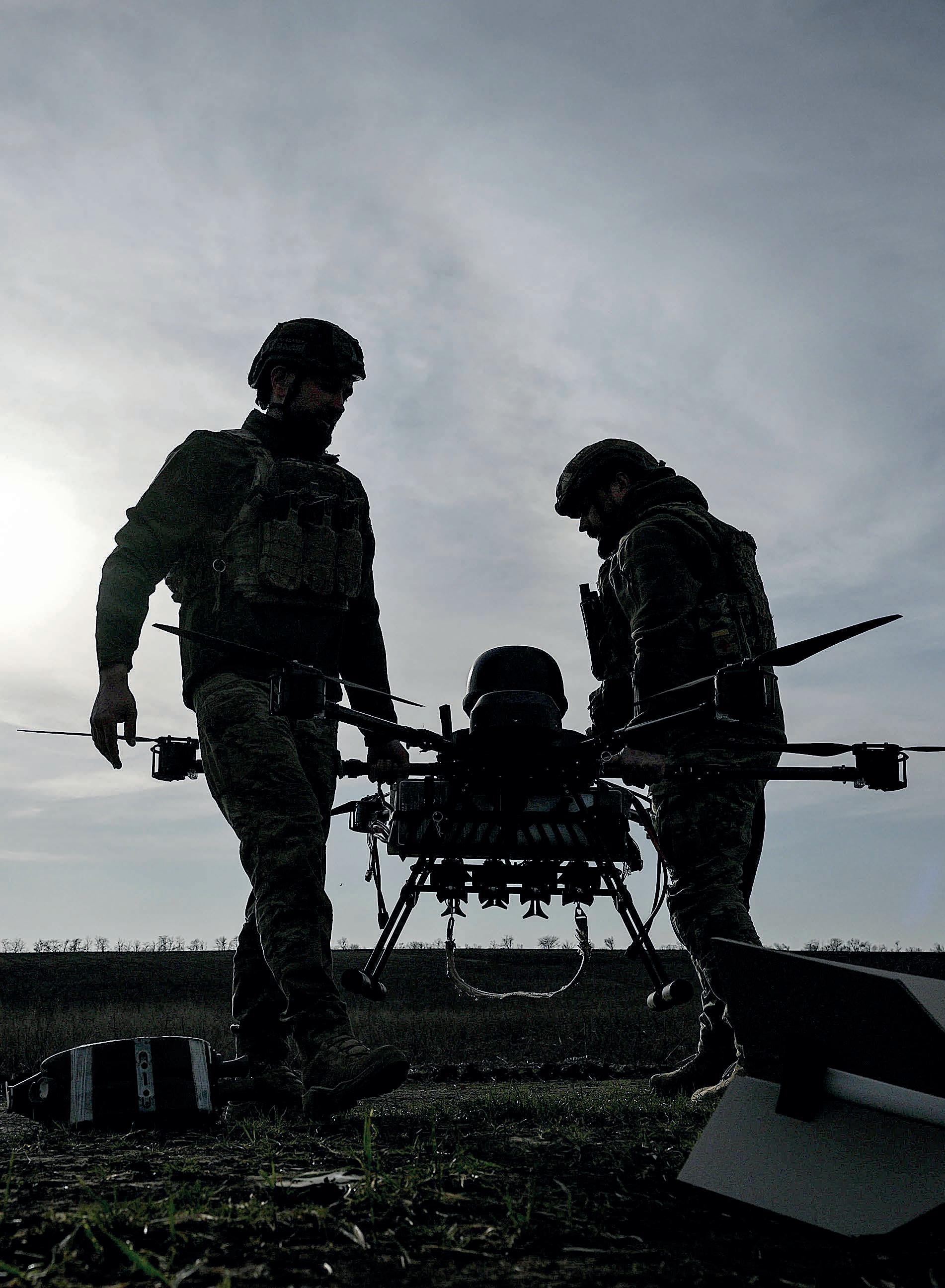
Fighters of Ukraine's 422nd Separate Unmanned Systems Regiment “Luftwaffe” carrying a Baba Yaga heavy bomber drone during an exercise in the Zaporizhia direction.
Photo: Dmytro Smolienko / Ukrinform
There are wars that fade into history without anyone paying much attention to them from a military science perspective, and there are wars that influence the development of warfare for many decades to come. Russia's full-scale aggression against Ukraine has already changed military thinking, strategies, and tactics.
MILITARY INTELLIGENCE CENTRE OF ESTONIAN DEFENCE FORCES
In some ways, however, this is a paradox.
The aggression, which began at the tactical level with the helicopter landing of highly mobile assault units at the Hostomel airfield, Russian attack bomber raids into the depths of Ukraine, and armored columns engaged in war of maneuver, has changed over time and space due to technological advances and to such an extent that such a slow-moving front has not been seen since the First World War.
Technological developments have reduced the importance of the human factor, which has transformed the war in Ukraine into a 20th-century war of position with more modern means. There is, however, one difference compared to the clearly established trench lines of the time: in Ukraine, the very concept of a frontline has become something of an oxymoron.
In Ukraine, the frontline is sometimes a 'grey zone', or a no-man's-land, ranging from a few kilometers to several tens of kilometers wide, where both sides can only operate in small, dispersed groups. The reason for the emergence of such zones lies, above all, in the use of a large number of unmanned aerial vehicles, both for battlefield surveillance and to attack targets. As unmanned aerial vehicles evolve technologically, the areas they control are expanding.
Although this is not a new phenomenon, there has been a quantitative as well as a qualitative breakthrough in the development of drones during the war in Ukraine. This can be compared with the aircraft introduced during the First World War, whose impact on the battlefield remained
relatively limited at the time but became more powerful in later wars. However, the modern use of unmanned aerial vehicles (UAVs) and the fight against them already significantly affect all combat functions, from command and control to the rear.
The widespread use of drones has altered the accuracy of target detection and instantaneous engagement to such a degree that traditional, conventional military formations have had to change their tactics and usage of weapons systems beyond recognition to have any effect. However, one principle has remained: the presence of infantry in the controlled territory is still necessary. However, its activity has changed from fighting to surviving.
It is safe to say that the mass use of unmanned aerial vehicles in real time has opened up the battlefield without restrictions. While in the past, battlefields could rely on various masking factors (such as bad weather or darkness) or even camouflaging activities, the rapid development of multispectral surveillance and detection tools and their constant presence have largely negated these advantages. Only a few details go unnoticed by the enemy, but under conditions of constant surveillance, they too will be detected. The priority of the tactical battlefield's 'reconnaissance-fire cycle' has become the detection and destruction of enemy unmanned aerial vehicle crews, relegating other targets to a lower priority.
In addition to surveillance, drones will replace various types of indirect fire weapons and expensive guided munitions. It is currently estimated that around 75% of personnel losses are due to the use
Flight range of Russian unmanned aerial vehicles (UAVs)
50 km indirect fire systems, FPV-UAV, mediumrange aerial munitions, army air force missiles, and glide bombs
50–500 km long-range aerial munitions, tactical ballistic missiles, and air force cruise missiles
500–1500 km long-range aerial munitions, longrange air force cruise and aeroballistic missiles, hypersonic, and naval cruise missiles
Lutsk Zhytomyr
Lviv Ivano-Frankivsk
Chernivtsi Ternopil Khmelnytskyi
UKRAINE
Vinnytsia
MOLDOVA
of drones. The unmanned aerial vehicles hitting probability and effectiveness in inflicting casualties are comparable to highly trained sniper teams, making the need for the latter on the battlefield questionable in the future.
Indirect fire, which previously mainly had a disturbing effect on the individual soldier or caused psychological fear, has been replaced by constant combat stress and specific close combat skills to escape drone attacks. Even taking cover in buildings does not offer the same protection as before, as drones with good maneuverability and
Figuratively speaking, unmanned aerial vehicles sting their victims like killer bees until the victims no longer show any sign of life.
guided in real-time (e.g., with fiber-optic cable) can hit targets indoors due to their small size.
The factor of the high probability of being hit also affects the use of heavy weaponry.
When Russia attacked Ukraine in February 2022, video clips of long, concentrated armored columns went viral. In the last few years, the use of armored vehicles has changed beyond recognition. Instead of long battalion columns, armored vehicles move in pairs or threes and for extremely short periods. Attempts have been made
Krasnodar
Voronezh Kursk
Belgorod
Kharkiv
Luhansk
Donetsk
Mariupol
Simferopol
Kherson
Sumy
BELARUS
POLAND
RUSSIA
ROMANIA
Occupied area
Black Sea
Sea of Azov
Chernihiv
Cherkasy
Kropyvnytskyi
Odesa
Dnipro
Zaporizhzhia
Poltava
Mykolayiv
Kyiv
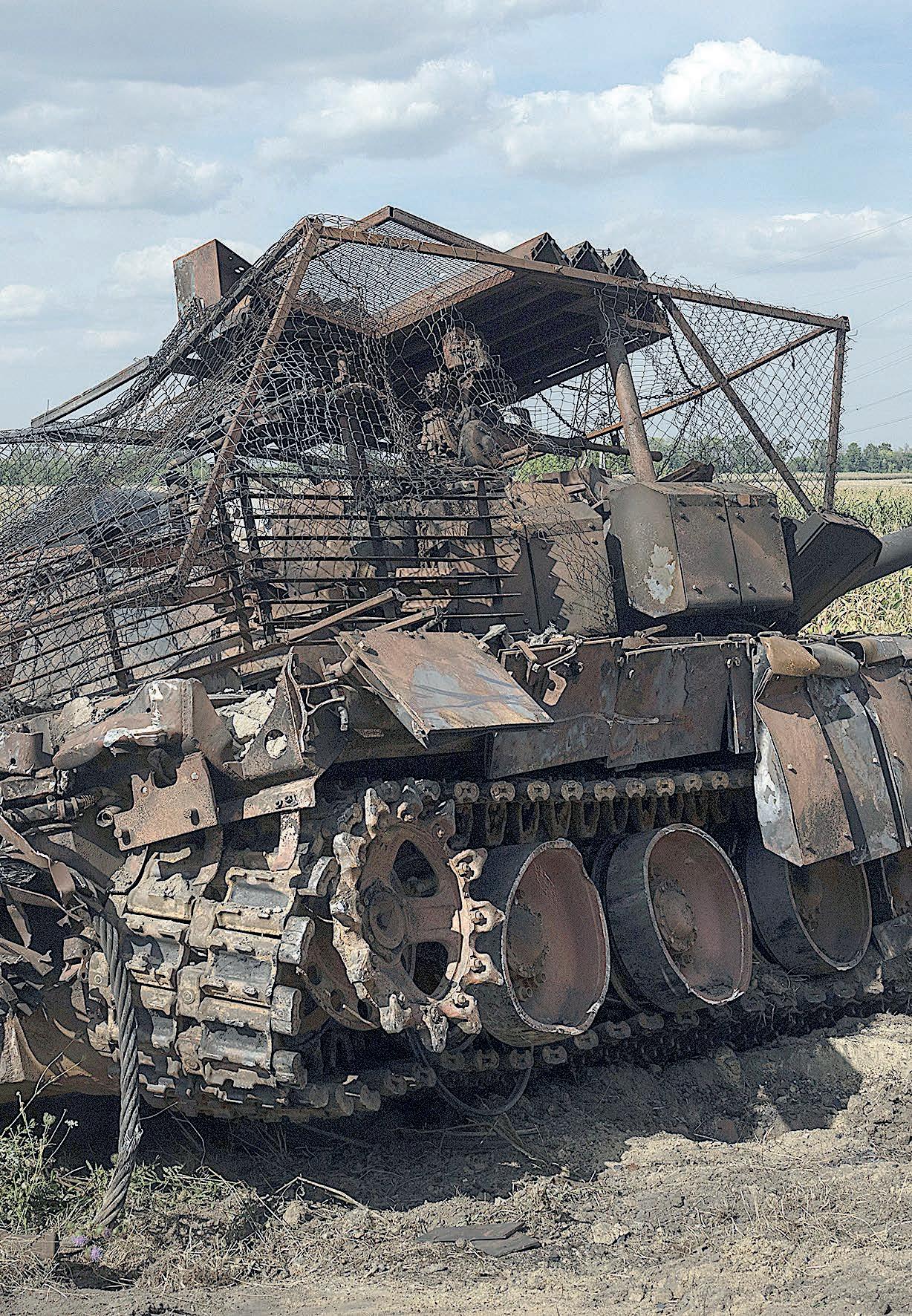
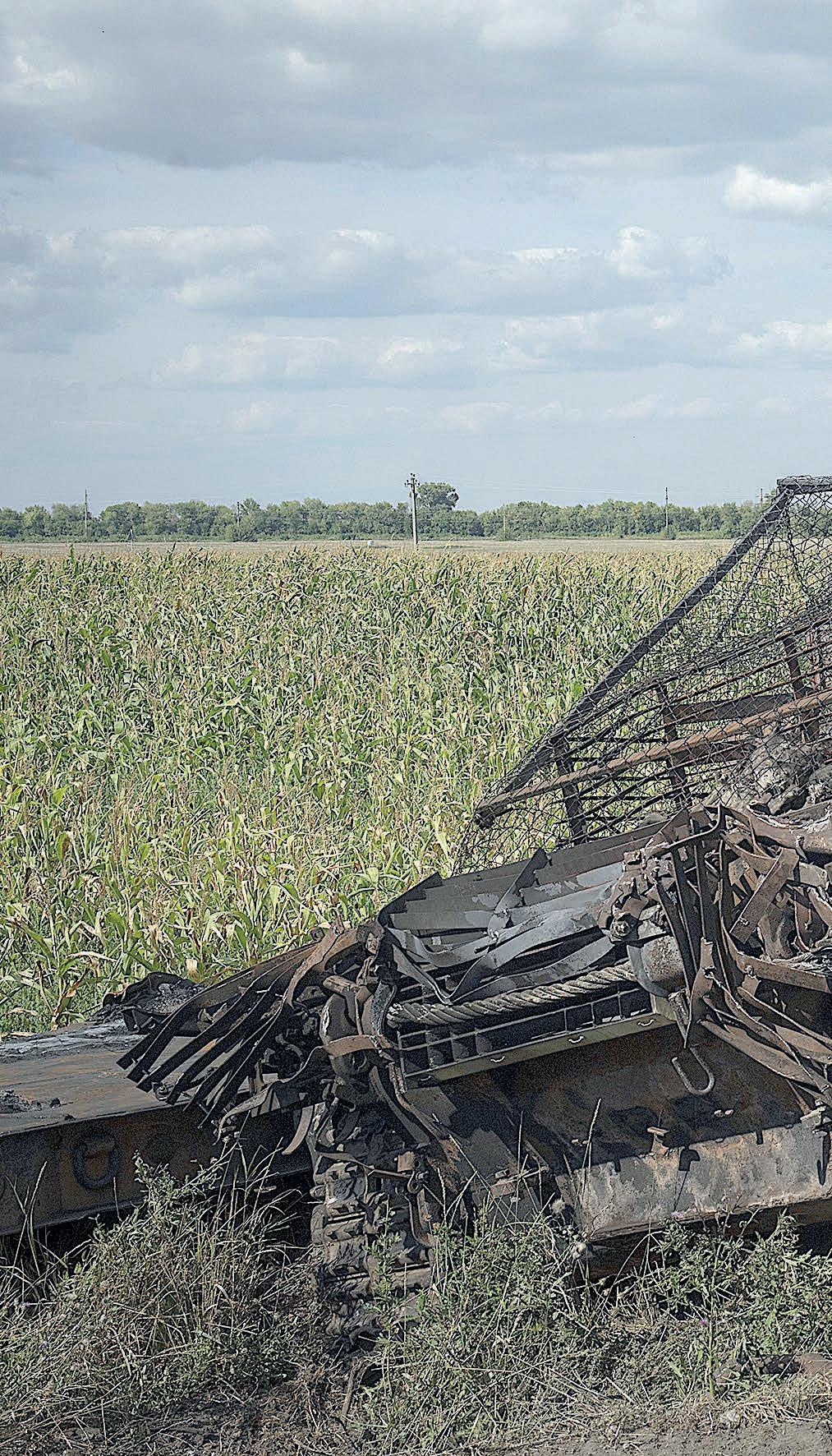
to make armored and other equipment mechanically more indestructible by all means and methods at hand (picture of the hedgehog tank), but identified armored equipment remains a target. Attacks are carried out by a swarm of drones using free-falling cratering charges or guided hollow charges. Figuratively speaking, unmanned aerial vehicles sting their victims like killer bees until the victims no longer show any sign of life. These tactics are used by both sides in the war.
Unmanned platforms are increasingly being deployed for logistical and medical
support in the battlespace controlled by attack drones, or no-man's land. Both highcapacity drones and unmanned ground vehicles (UGVs) are used for this purpose. The latter are considered significantly more vulnerable and capricious to use, but reducing the risk to human life justifies their use. UGVs are used for casualty evacuation and as military delivery robots, as well as for mining and demining. Armed unmanned ground vehicles have not yet found widespread use comparable to that of aerial vehicles, which offer clear advantages in speed, maneuverability, and command-and-control stealth.
With the mass use of long-range drones outside the tactical range of the frontline, the concept of the rear has disappeared. Before and in the early years of the current war, Russian forces used relatively expensive ballistic and cruise missiles of various types to attack critical infrastructure and high-value targets deep in Ukraine's rear. This role has now been taken over by cheap and mass-produced unmanned aerial vehicles and glide bombs converted from freefall bombs. Their flight range can reach several tens to several thousands of kilometers.
It is remarkable how many relatively cheap drones Russia deploys to repeatedly attack Ukrainian targets, carry out diversionary attacks, and deceive and exhaust Ukrainian air defenses. Russia's well-established tactic is to maintain a daily atmosphere of terror with long-range unmanned aerial vehicles (UAVs) over the entire territory of Ukraine, while carrying out strong, complex deep strikes with all long-range and medium-range combat vehicles several times a month.
Photo: AP / Scanpix
In addition to the technological reasons outlined above, the reasons for the lack of significant military success of Russia's aggression against Ukraine must be sought in the corruption and incompetence of the system and, more specifically, of its leadership. It is no exaggeration to say that this war reflects the thoroughly corrupt nature of all of Russia.
A good example of the scale of the problem is the wave of arrests in the Russian top military leadership on corruption charges in recent years, not so much as an attempt to root out corruption, but as
A destroyed Russian tank fitted with an anti-drone protective grid built from materials at hand.
a power struggle between interest groups. Due to rampant corruption and nepotism, the Russian armed forces have traditionally operated a system of 'negative selection', where promotion in rank and promotion out of unpleasant duties is not based on the best leadership qualities but on loyalty and often bribery.
This situation continues to have an impact on Russia's ability to prepare and conduct military operations. In a situation where appointments are based on loyalty rather than professionalism, it is not surprising that unit commanders are often incompetent officers who, ignoring the realities of the battlefield, give absurdly unrealistic orders to their subordinates.
Reports of non-existent progress to higher staff to hide the real situation are common, leading to wrong decisions at higher levels. Demanding bribes from subordinates for holidays or rotations or to avoid dangerous tasks has also reached pandemic proportions. Those who refuse to comply will be zeroed, or sent by order of the commander to perform a task that will mean their certain death. This is why, for many Russian commanders, the current war is first and foremost a means of personal enrichment, and the most primitive solutions are used when solving tactical tasks for units.
These trends result in a lack of flexibility at the tactical level and the repetition of established patterns. This, in turn, increases personnel losses and slows down the pace of the operation. Incompetently led units lose unity and morale weakens as under-motivated soldiers focus on survival rather than mission accomplishment. It also affects higher-level staff, whose perception of the situation can be highly distorted, which, in turn, exacerbates planning errors. In light of the above, it is not surprising that, despite their considerable superiority in terms of both technology and manpower, the Russian troops are advancing at a pace that is more comparable to that of well-established positional warfare.
The regression of military operational art at the tactical level to a mere imitation of military command is also reflected to some extent by the overall situation on the frontline, where, despite sustained high intensity
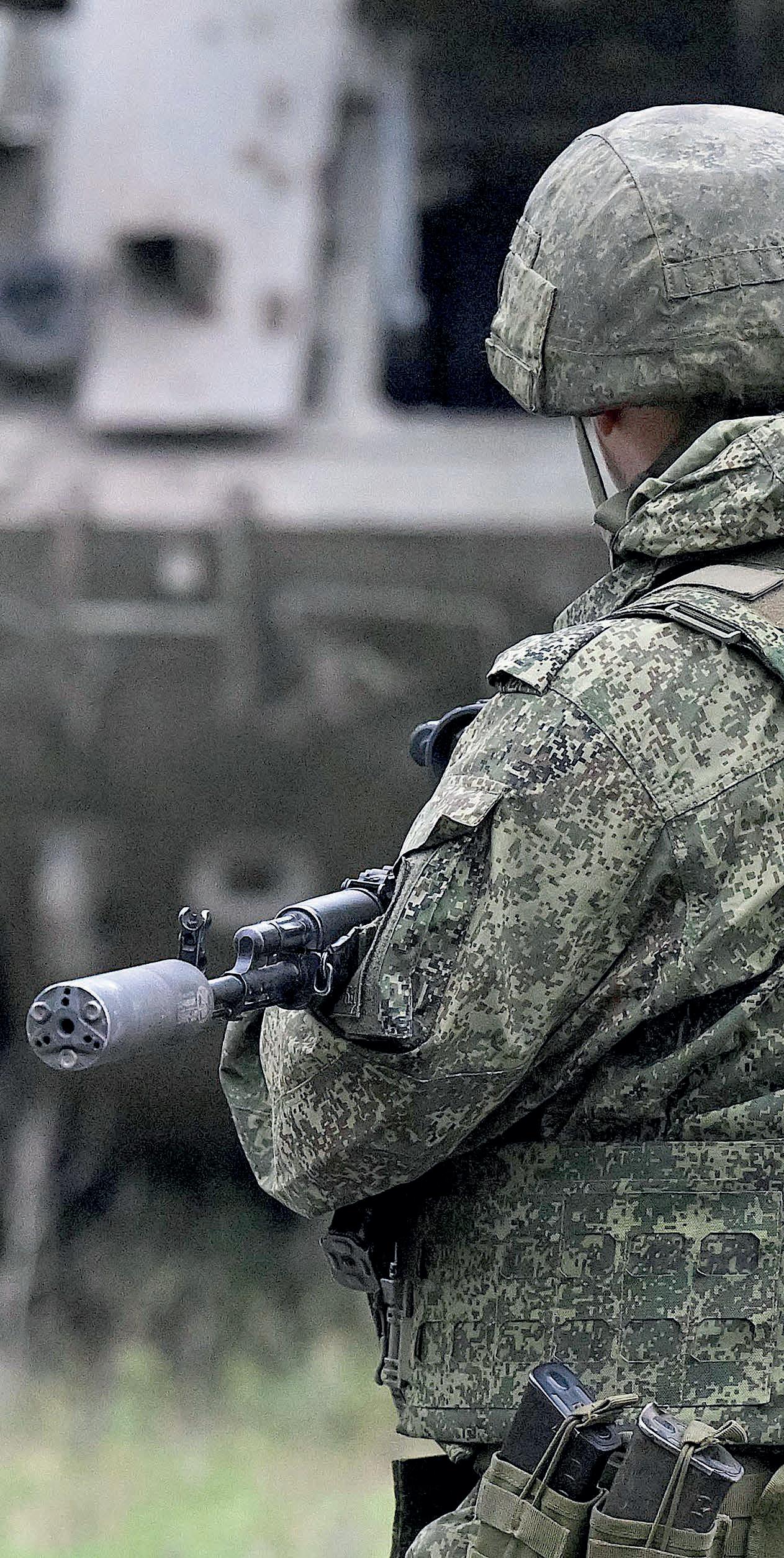
Photo:

Krasnoarmeisk. Stanislav Krasilnikov / Sputnik
and Russia's persistent attempts to invade at the cost of significant losses, changes in the terrain are minimal. This cannot even be called a conscious attrition warfare; the Russian armed forces' warfare to achieve military objectives at the tactical level has shifted from meaningful and planned action to the rather routine and blunt execution of orders from above.
Certainly, the above factors are not the only ones that have created a fairly persistent stalemate on the front, but they definitely play a significant role in its emergence. What does this mean for us?
First, it is safe to say that unmanned systems, along with battlefield transparency and the disappearance of battlefield boundaries, are here to stay. It is important to note that technological progress will continue to add new possibilities, and their scope will continue to expand. For example, we will certainly see the integration of artificial intelligence, which is still in its infancy, into drone control.
Second, the systematic approach of the Russian armed forces to the deployment of unmanned systems cannot be underestimated. Unfortunately, it has to be said that the deployment of unmanned systems has been one of the few areas where they have succeeded in creating a completely new quality and combat capability. This, in turn, almost certainly means that Russia will continue to deploy its established capabilities and operational activities in future emerging armed conflicts.
The question of how, or whether, Russia's use of maneuver units will change is much more difficult to answer. In the case of the Russian Armed Forces, we must bear in mind that, for them, quantity has always been quality in itself. It is a principle that has been the basis of their attrition strategy throughout the ages, since General Mikhail Kutuzov, and we are now seeing it in Ukraine.
Despite sustained high intensity and Russia's persistent attempts to invade at the cost of significant losses, changes in the terrain are minimal.
The current military reform also indicates a desire to simply invest in numerical superiority rather than a willingness to take into account changes on the battlefield. In the case of Russia, the situation will continue to be affected by corruption, which will not go away as long as the current leadership remains in place, but which, by its very nature, stifles any innovation and will to change.
However, it would be wrong to consider the future developments of the Russian armed forces as nothing more than a constant failure. As recent exercises have shown, attempts to incorporate Ukrainian learning experiences into tactical-level operations will certainly continue.
In the case of Russia, the situation will continue to be affected by corruption, which will not go away as long as the current leadership remains in place, but which, by its very nature, stifles any innovation and will to change.
Examples include combined deep strikes with long-range unmanned aerial vehicles, and ballistic and cruise missiles, which Russia is likely to deploy in the future in large numbers at all stages of all types of conflicts to achieve both tactical and operational goals.
We cannot rule out attempts to shape the battlespace based on the opponent's character and capabilities in order to increase tactical flexibility. It is likely that Russia will continue to try to use maneuver warfare of various types of weapons where it is allowed to do so, but it will also adapt to small-unit tactics in conditions unsuitable for maneuver warfare.
The application of war-tested communications and IT systems will certainly continue to enhance command and control at various levels and integrate different types of troops and weapons into a unified command system.
Only time will tell whether all this will result in new quality. ‖
BALLOONS: A RAPID DEVELOPMENT IN THE WAR IN UKRAINE
Since the beginning of last year, the use of aerostats, or balloons, in both hybrid attacks and smuggling has attracted public attention. Although they are mainly used for smuggling or border guarding, the use of balloons in these functions is only the tip of the iceberg. It is Russia's war against Ukraine that has brought balloons back into military use. Balloons have the advantages of being relatively cheap, being able to remain difficult to detect on radar, being able to stay in the air for extended periods, and being able to have a variety of devices and objects, such as reconnaissance sensors and bombs, attached to them.
The use of balloons for military purposes was already being considered in the Soviet Union, and development work was ongoing. This gained particular momentum in the 1950s, when the development of balloons was a direct reaction to the use of reconnaissance balloons by the United States to photograph USSR military facilities.
Balloon developments helped, for example, to extend radio communications, distribute propaganda leaflets, and carry radar-deceiving reflectors and a variety of explosives and bombs. Various types of balloons were developed for intelligence support, which were and are capable of carrying cameras, radars, and antennas to gather information on the enemy. And as always: everything new is well forgotten old.
In Russia's war of aggression against Ukraine, balloons are being used in quite
a few capacities. Primarily, antennas that enable tactical communication are attached to the various types of balloons to extend communication between units. Balloons are also known to have been used to extend a drone's control signal. The use of balloons as an intelligence platform is widespread, with all kinds of surveillance equipment such as high-resolution cameras, microphones, both passive and active radars, and radar reflectors that create a much larger image on the enemy's radar image than it actually is.
Balloons have the advantages of being relatively cheap, being able to remain difficult to detect on radar, being able to stay in the air for extended periods.
There are also examples where Russia has used balloons to protect its port infrastructure. Last September, two balloons were tested in the waters of the port of Novorossiysk to conduct a visual landscape survey. The aerostat was equipped with a high-resolution video surveillance device that transmitted the signal to the port. The tests were carried out at an altitude of 200–250 meters.
Russian systems, such as Irbis and Rys, are designed for aerial and ground, as well as underwater, surveillance at altitudes of 900–1,000 meters. They can also retransmit radio communications. ‖
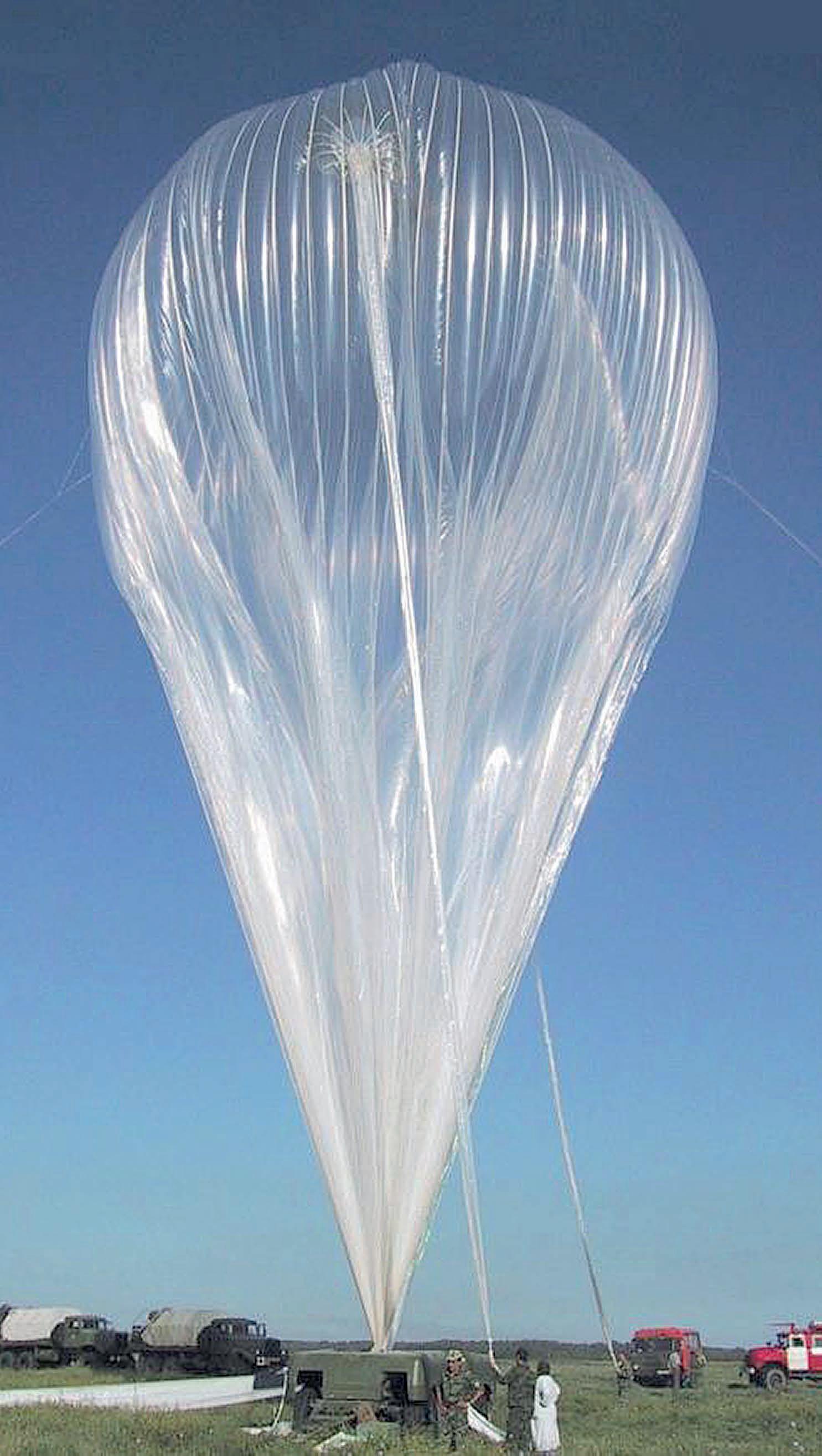
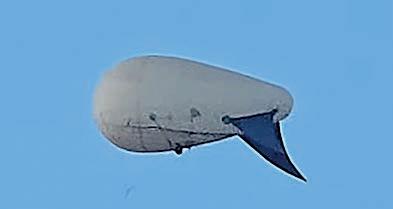
AKV-05 – a visitor beyond Estonia's borders
Effective surveillance range: up to 10 km
Volume: 50 m3
Flight altitude: 300–1,000 m
Duration: 75 h
Allegedly capable of reading a car license plate from up to 2 km away.
Initial tests as a launch platform for new interceptor drones can also be seen. Essentially, the drone is attached to a balloon with additional sensors that release the drone to destroy the target.
The Ukrainian company Aero Bavovna has developed an aerostat-based interceptor system for kamikaze drones. The balloons carry FPV drones that, in the case of a threat, detach and attack drones such as Geran.
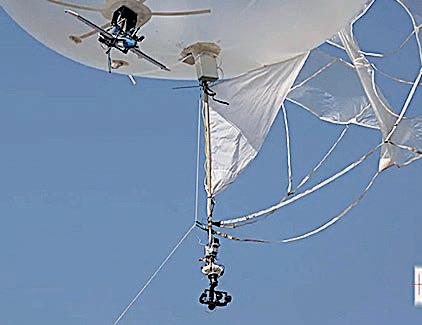
Interceptor drone hanging from a balloon
Ukraine has developed balloons equipped with radio receivers designed to geolocate Russian drone control transmitters and target operators. The Aero Azimuth balloons are located 9 km from the front line at an altitude of 300–700 m.
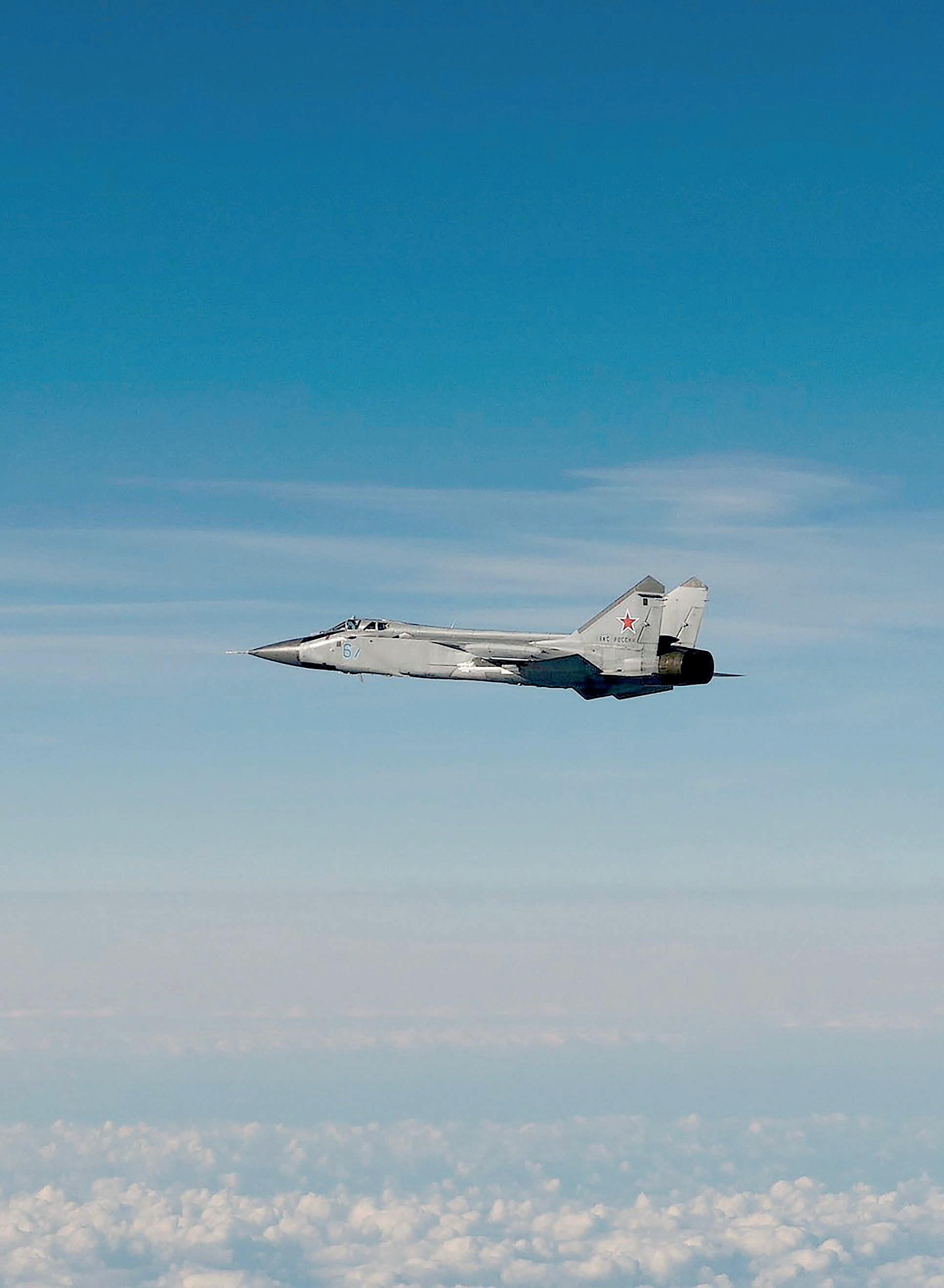
A Russian MiG-31 fighter jet over the Baltic Sea after violating Estonian airspace in the Gulf of Finland in September 2025.
Photo: Forsvarsmakten / AFP

The most memorable Estonian–Russian border incidents in 2025 were several border regime violations and illegal border crossings committed by Russian power structures.
RUSSIAN BORDER VIOLATIONS
The first notable incident took place in July, when the Svetlyak-class patrol vessel Sochi, belonging to the Russian Border Guard, entered Estonian territorial waters east of Vaindloo Island. This was the first such incident at the maritime border in 2025.
Less than two months later, on September 19, three Russian MiG-31 fighter jets entered Estonian airspace in the Gulf of Finland to a depth of 10 kilometers without permission. The planes remained in Estonian airspace for nearly twelve minutes, flying westwards.
At the time of the violation, the aircraft had no two-way communication with Estonian air traffic services, no flight plan, and no working transponders. Italian Air Force F-35 fighter jets deployed to the NATO Baltic Air Policing Mission in Ämari responded to the incident. This was the fourth violation in 2025, but also the most serious violation of the air border committed by Russia since the Republic of Estonia regained its independence in 1991. The use of transponders is essential for safe aviation, as the civil air traffic service only sees aircraft with transponders switched on.
On the morning of December 17, a Russian border guard hovercraft stopped on the opposite bank of Vasknarva, from which three border guards emerged and started moving along the pier. In the course of their activities, the Russian border guards crossed the Estonian–Russian temporary control line twice in the direction from Russia to Estonia and back, staying on Estonian territory for nearly 20 minutes. The border guards then returned to their hovercraft and headed back to Russia.
The Ministry of Foreign Affairs of the Republic of Estonia sent an official note to the Russian chargé d'affaires regarding illegal border crossing. Russia's position on the incident has been, from the beginning, that no illegal border crossing took place. In light of the upcoming meeting of border representatives at that time, it was likely that Russia's position on the issue would remain unchanged, despite the arguments confirming the border violation. At the meeting of Estonian and Russian border representatives on January 30, 2026, the Russian side maintained its position that no border violation had occurred on December 17. The Russian Border Guard Service has shown a similar attitude in other cases of border violations committed by civilians in the Estonian direction. Border agents will no longer meet following the December incident, meaning that the case has been closed.
It is not possible to assess whether the above events were deliberate incidents and whether they were intended to provoke Estonia, but based on the statistics of previous years, it is very likely that Russia will continue to commit violations against Estonia's state border and the temporary control line in the coming years. The fact that there is no proper border agreement between the two countries partly contributes to the occurrence of such incidents. Given the geopolitical situation, this agreement is unlikely to be concluded in the near future.
In 2025, the Russian Border Guard continued to implement various changes to its operations and border security, which had started a couple of years earlier when, in 2023, Russia decided to reinstate conscription in the Border Guard. Last year, the
call-up of conscripts began, and the involvement of additional resources was clearly evident in border security.
For example, increased land patrol activity and the deployment of mobile observation posts were identified on Estonia's eastern border. Infrastructure improvements were made mainly in areas bordering Narva River, where several observation posts were installed, and close defense positions were established near the strongholds.
Over the past year, the Russian Border Guard has been working intensively to strengthen the border regime and border protection. This is likely part of the Kremlin's response to NATO's expansion in Scandinavia and part of the effects of the war against Ukraine.
The Russian Border Guard has been gradually modernizing its fleet of floating vessels over several years. Both new launches and hovercraft have been procured for the service, and this trend is likely to continue, as some of the depreciated equipment is still in use.
In terms of technical surveillance equipment, the Russian Border Guard has repeatedly used balloons equipped with camera systems for border control in 2024. According to public sources, the deployment of balloons is part of Russia's border defense strategy, which suggests that their use in the immediate vicinity of the Estonian border zone will be repeated.
Over the past year, the Russian Border Guard has been working intensively to strengthen the border regime and border protection. This is likely part of the Kremlin's response to NATO's expansion in Scandinavia and part of the effects of the war against Ukraine. Considering the fact that the war of aggression against Ukraine is ongoing, which is why attacks by Ukrainians are taking place on Russian territory, there is likely a need for Russia to increase the number of investments related to the strengthening of the border regime, including the ability to combat with unmanned aerial vehicles. ‖
Estonian authorities closing the Saatse Boot road.
The picture shows Russian border guards approaching the Estonian border.
Photo: Jürgen Puistaja / Scanpix
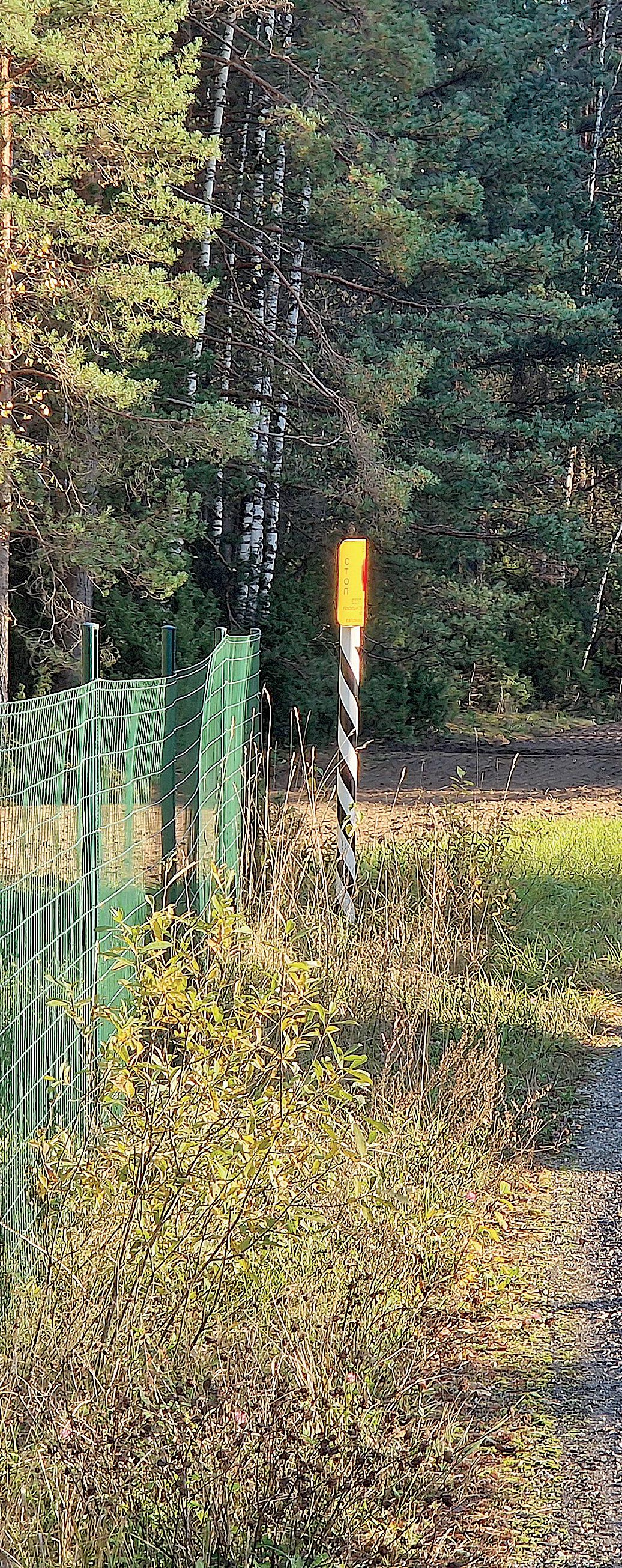
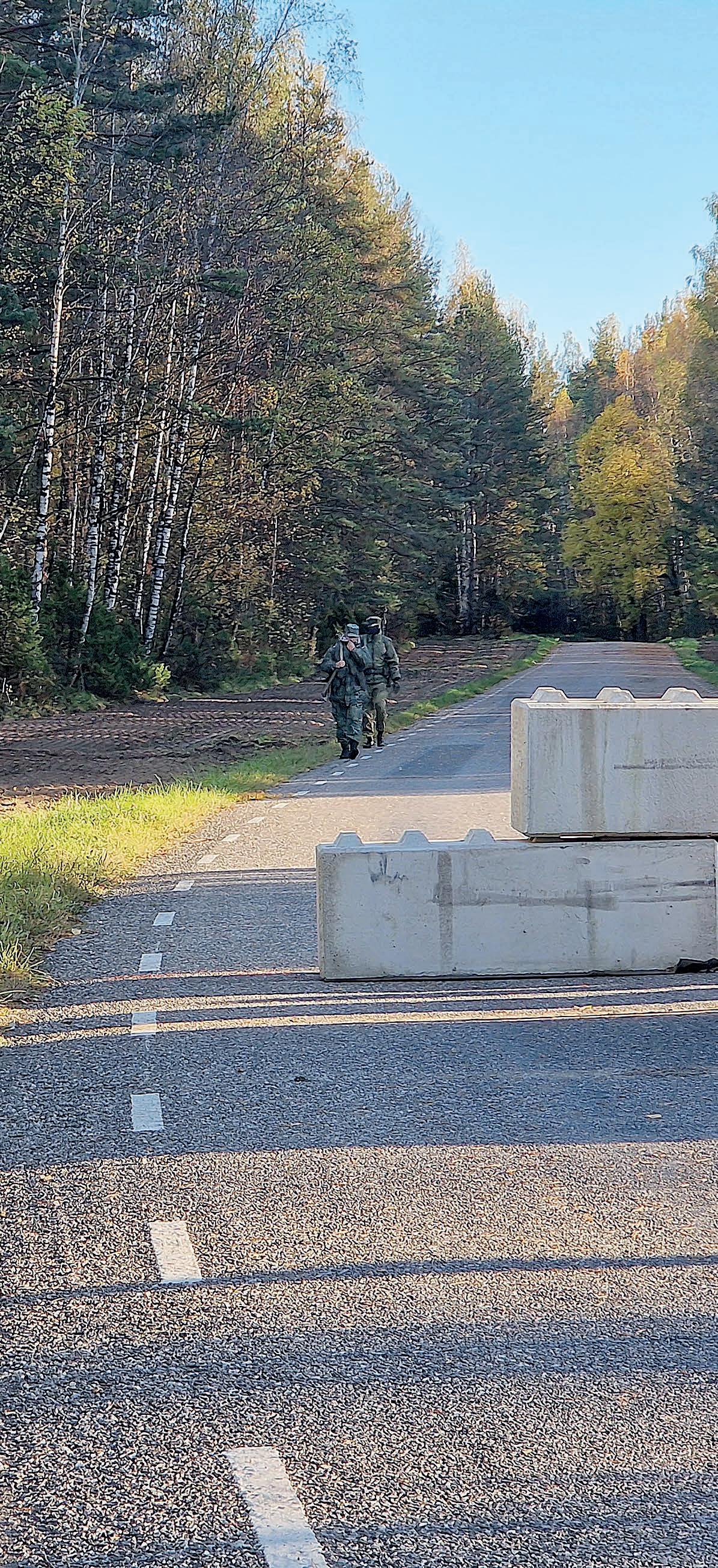
Russia is recruiting Estonian citizens who work at border checkpoints
In 2022, due to the war against Ukraine, thorough questioning of border crossers began at Russian border checkpoints, where personal belongings were examined and, mainly in the case of Ukrainian citizens, biometrics were taken. In addition, the Russian officials thoroughly examined the phones of the individuals and very likely copied and downloaded their contents onto their own data storage media. It was used to search for border crossers with direct or indirect links to Ukrainian military personnel, with a view to turning this information to their advantage in one way or another. In addition to thorough border controls, attempts by the Russian special services to recruit persons working at border checkpoints for clandestine cooperation in order to gather information on the activities of Estonian power structures and the Estonian Defence Forces and allies increased. This pattern has been in place for nearly four years and is likely to continue in 2026.
Traveling from Estonia to Russia is a time-consuming process, as the eastern border is partially closed due to renovation works at the Ivangorod border crossing. There are also cases of people crossing the border on foot carrying sanctioned goods, which ultimately requires more attention and resources from the Police and Border Guard Board (PPA) and the Tax and Customs Board (MTA), increasing the time taken to cross the border. A detailed overview of prohibited goods can be found on the MTA website. Individuals who have been approached for covert cooperation at Russian border crossing points will find information at the border checkpoints on how to act legally in such a case when they return to Estonia.
In September last year, after a three-year break, another joint Russian–Belarusian strategic-level exercise, Zapad 2025, took place.
RUSSIAN ARMED FORCES STRATEGIC EXERCISE ZAPAD
In light of the ongoing aggression against Ukraine, it could be said that, in some ways, the organization of exercises on such a scale was unexpected. However, if we compare Zapad 2025 with previous similar exercises, we can see that it was a pale reflection of Zapad 2021. Although both exercises were part of the same exercise series, they took place in very different strategic contexts and therefore differed significantly in terms of scope, emphasis, and messages conveyed.
Zapad 2021 took place at a time of heightened tensions between Russia and NATO due to Russia's aggressive stance towards Ukraine. Considering the important role played by both the Belarusian armed forces and the territory in the whole exercise, subsequent events showed that the exercise was largely a preparation for an invasion of Ukraine.
Given the objective, it is not surprising that Zapad 2021 was one of the largest exercises Russia had organized since the end of the Cold War. According to official figures, around 200,000 troops from Russia and Belarus took part in the exercises. The exercises covered a wide geography and the scenario focused on large-scale
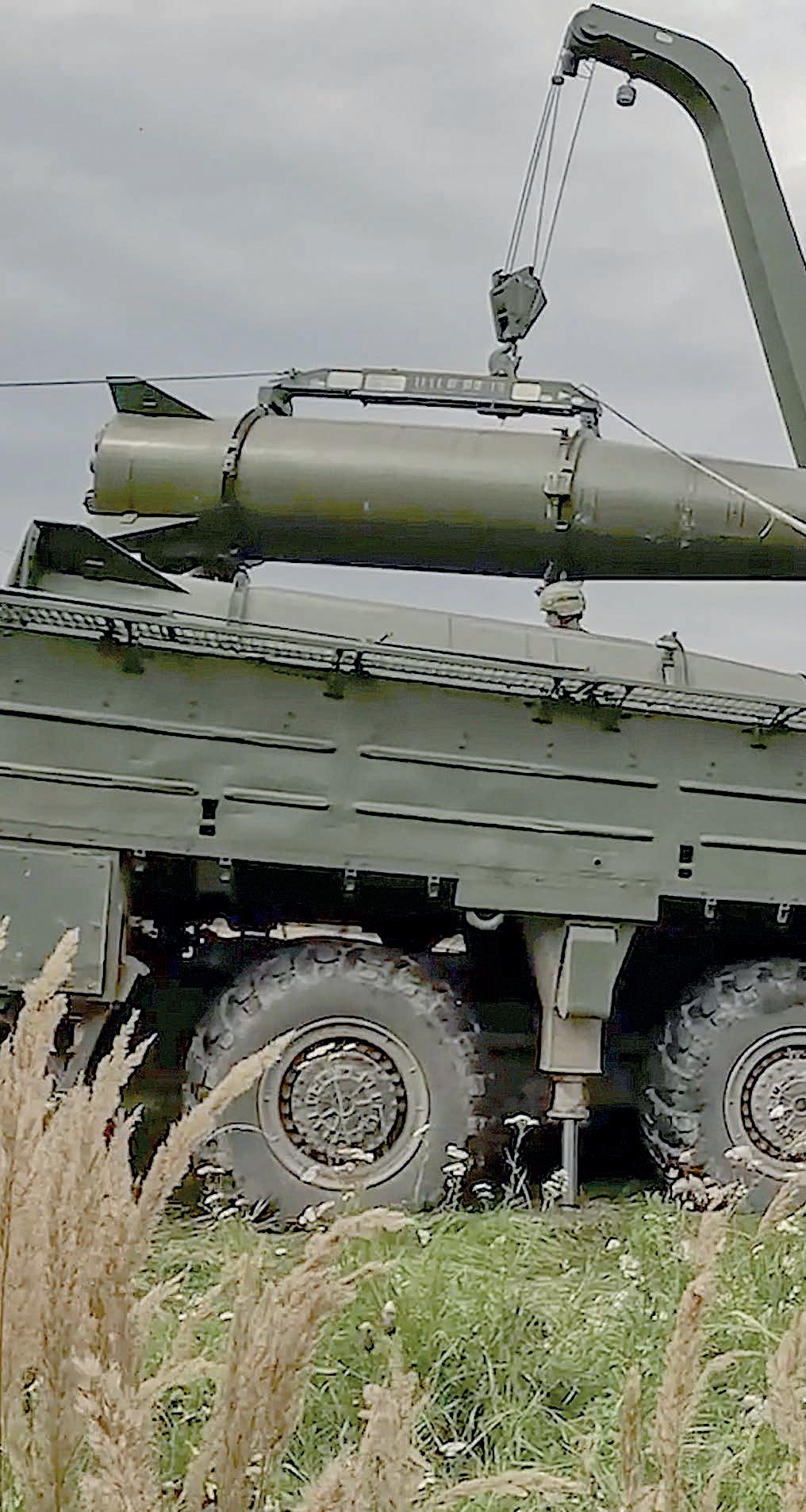
Nuclearcapable missile system
9K720
Iskander-M at the Zapad 2025 exercise in the Kaliningrad region.
Photo: EPA / Russian Defence Ministry Press Service
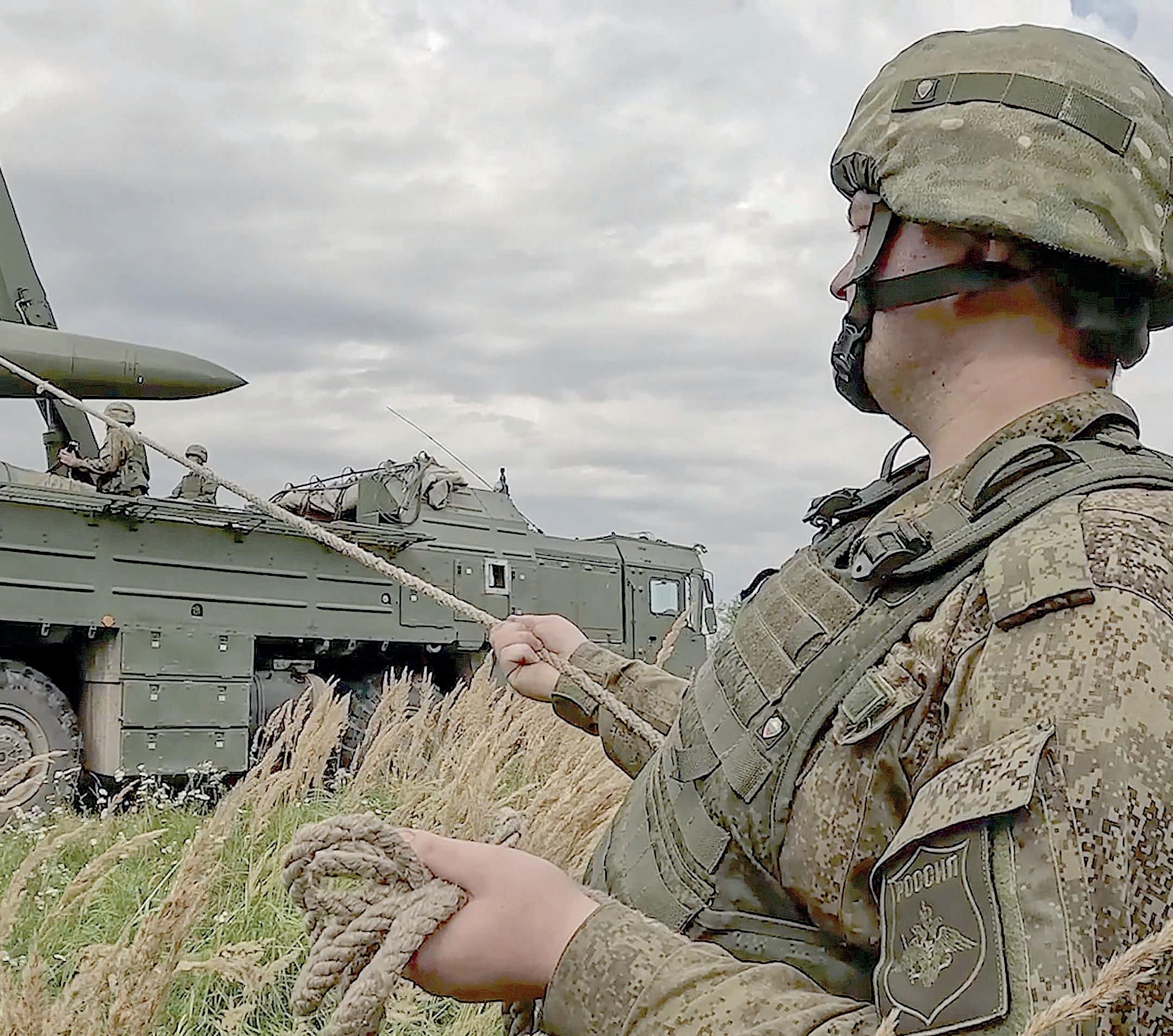
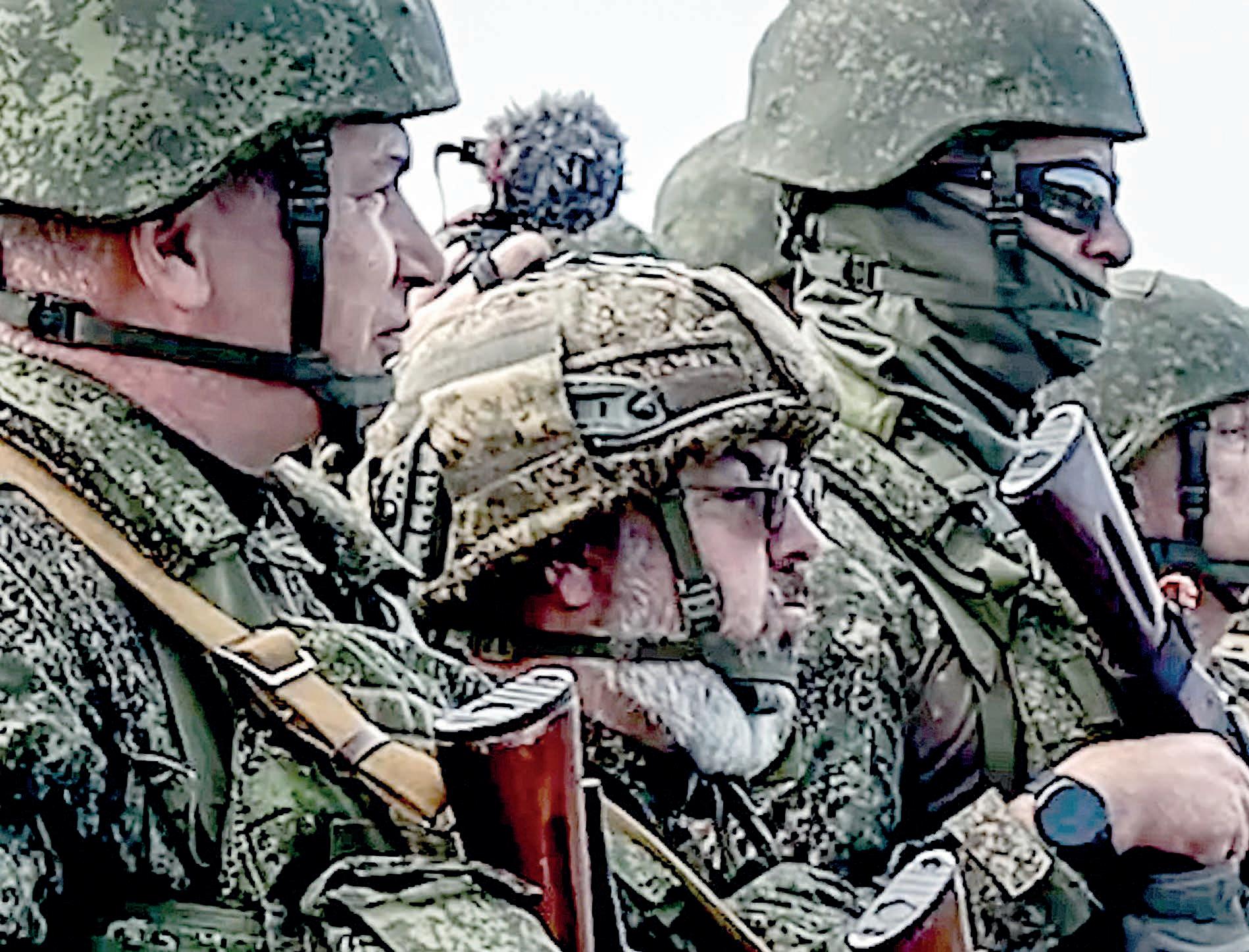
conventional warfare. Large armored units, artillery, and air and naval forces were involved. In addition to preparing for aggression, Zapad 2021 was intended to demonstrate Russia's ability to mobilize and coordinate large numbers of troops, as well as its readiness for high-intensity conflict with an equal opponent.
Zapad 2025, on the other hand, took place at a time when, for the fourth consecutive year, the Russian armed forces had committed a large part of their resources to aggression against Ukraine, and this wartime environment largely determined both the nature and the scale of the exercise.
Zapad 2025 was much smaller than the previous exercise and remained limited to a few tens of thousands of soldiers. In practice, the redeployment of units and equipment was minimal. At the training grounds, there were mostly units of conscripts, carrying out exercises up to bat-
talion level. Politically, too, Moscow appeared to be trying to avoid an excessive escalation with NATO, and the exercise was presented to the public as a defensive exercise focused mainly on air and missile defense, protecting critical infrastructure and counter-sabotage activities.
The Zapad 2025 scenario and design directly reflected Russia's experience of warfare in Ukraine. The exercise provided an opportunity to practice and improve their skills and play out direct learning experiences from the battlefield in Ukraine. These included long-range precision strike systems, electronic warfare, air and missile defense, and anti-drone measures, which Russia sees as the most effective means of achieving military effect. Furthermore, what happened at the training grounds, where the focus was mainly on urban combat, reflected the learning experience gained from long-term aggression rather than practicing maneuver warfare with a
Russian reservists taking part in the Zapad 2025 exercise in the Kaliningrad region.
Photo: Russian Defence Ministry Press Service / TASS
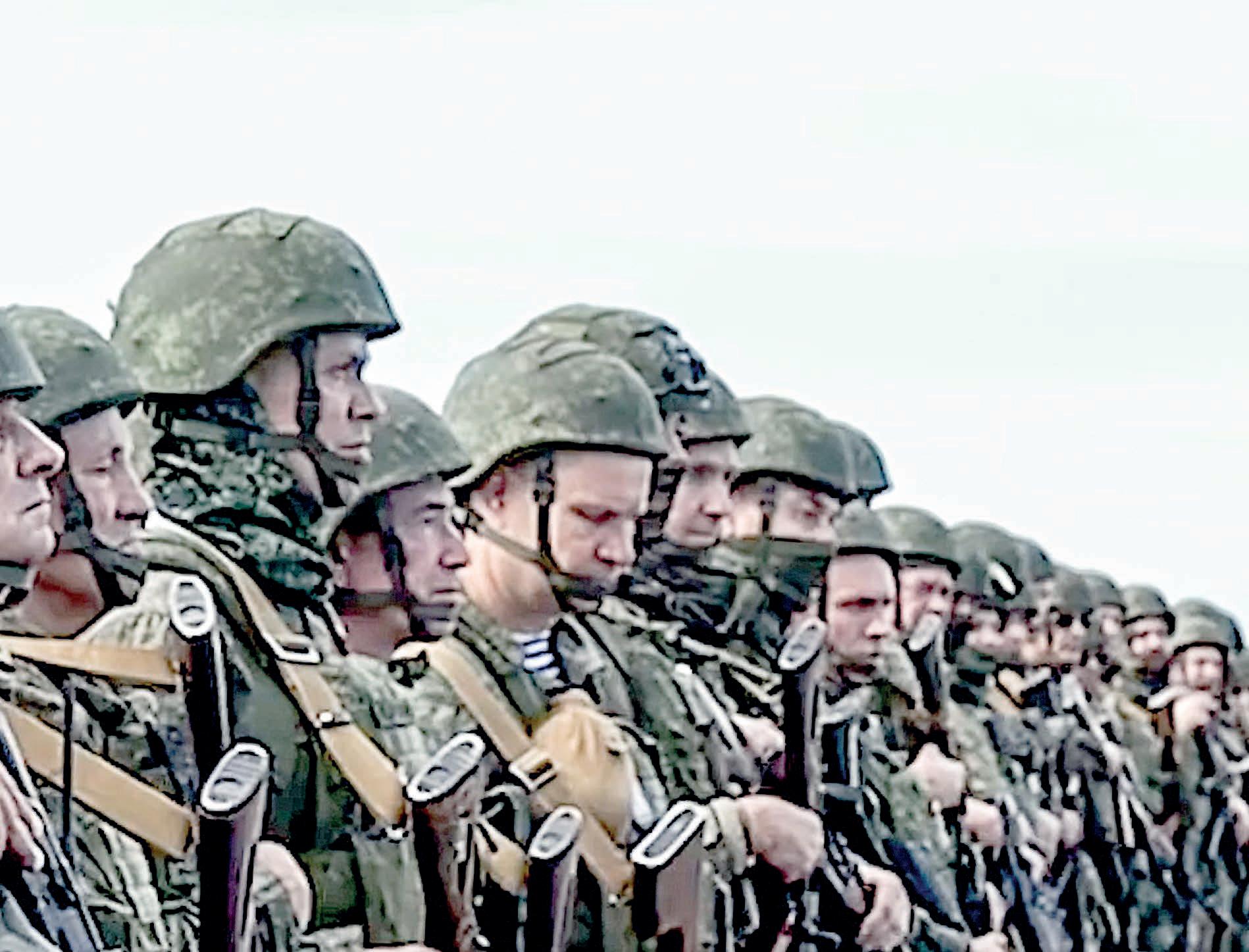
mass army. Compared to Zapad 2021, the nuclear rhetoric associated with last year's exercises remained relatively modest, but the nuclear dimension was still maintained, with the exercise consisting of playing out scenarios for the use of nuclear weapons and tactical choices. This fact further confirmed Russia's reliance on nuclear deterrence in its confrontation with NATO.
One of the aims of the exercise was to show that Russia is not internationally isolated, and although more than 42 invitations were sent out to various countries, only a third of those invited participated. While the overall number of countries participating in Zapad 2025 increased, the overall number of participants from these countries decreased significantly compared to Zapad 2021. Even more noticeable was the change in geography, with Russia's traditional allies in the Collective Security Treaty Organization being replaced by countries from Africa and the Middle East.
One of the aims of the exercise was to show that Russia is not internationally isolated, and although more than 42 invitations were sent out to various countries, only a third of those invited participated.
In spite of these differences, it can be assessed that the mere organization of Zapad 2025 was a strategic message to show that, despite the ongoing war and the resulting restrictions, Russia has the strength and resources to both wage war and organize exercises. Moreover, both the level of the exercises and the introduction of new combat elements into the armed forces, as practiced during the exercises, reflect the new military thinking in Russia.
Both Zapad 2021 and Zapad 2025 demonstrate Russia's adaptation to changing security conditions and consistency in shaping Russia's military posture towards the West. Both exercises were aimed at demonstrating once again the closeness of Russia and Belarus and Moscow's readiness to respond to any external and internal attempts to influence the security situation in Belarus, the Kaliningrad Oblast, and the Western European part of Russia. ‖
DEVELOPMENTS IN THE RUSSIAN ARMED FORCES
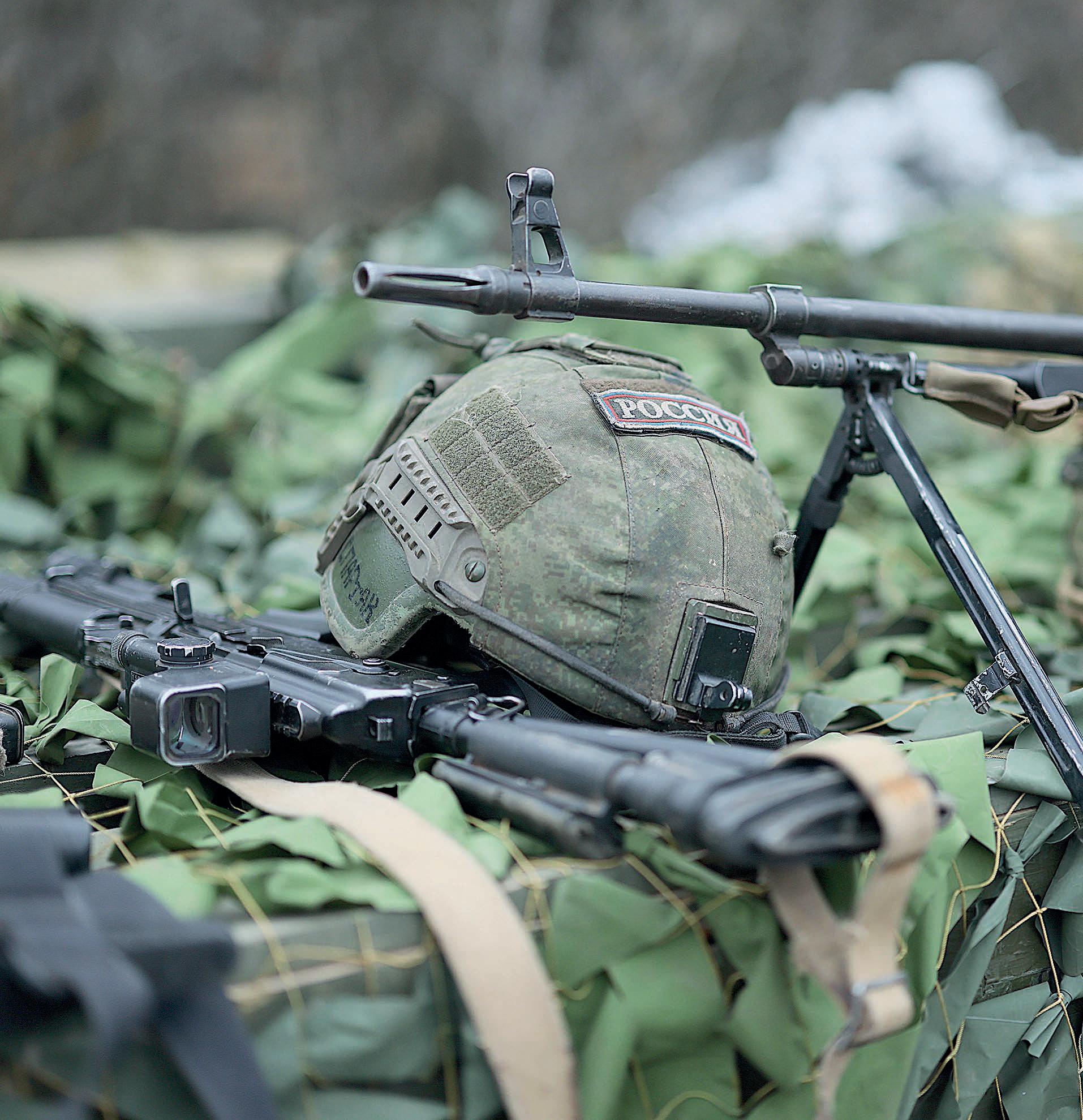
Helmet and firearms of a soldier of the Russian military group Dnepr during an exercise and combat preparation in the direction of Zaporizhia.
Photo: Alexei Konovalov / TASS
The past year has clearly shown that Russia will continue its confrontation with the West. This is confirmed by actions to reform the armed forces, the ongoing aggression against Ukraine, and the militarization of Russian society as a whole. Simply put, war as such, and the broader confrontation with the West, has become an end in itself for the Russian political leadership, around which the entire national ideology is built and for which both Russian society and the economy function. However, Russia's full-scale aggression against Ukraine has shown how ineffective the Russian war machine has actually been, reflecting Russia's systemic weaknesses in society, economy, and armed forces.
This is also one of the reasons why the leadership of the Russian Armed Forces decided to embark on yet another reform in 2022, aimed at changing the structure and composition of the Russian Armed Forces and developing new capabilities, considering both lessons learned in Ukraine and the increasingly aggressive foreign policy stance.
STATE OF THE RUSSIAN ARMY REFORM
In February 2025, the process of reorganizing the military districts, which had begun in March 2024, was completed. During this time, in addition to the re-establishment of the Moscow and Leningrad Military Districts (MoMD and LeMD), the military districts became strategic territorial associations by decree of the Russian President. The reform restored the structure of military districts focused on commanding the army (combined arms), and the military districts lost their cross-service status. While a military district was previously a strategic cross-service territorial association of the Russian armed forces, the reorganization saw the fleets and the Caspian flotilla fall under the operational control of the High Command of the Navy, and the Air Force and the Air Defence Forces under the High Command of the Aerospace Forces (ASF). Of the three armed services, only the army is directly subordinate to the military districts, which is more in line with the nature of operational directions and
the location of the defense centers (Moscow, Saint Petersburg).
At the same time, the hierarchical logic of the management system remains in place, i.e., the decision-making process is divided mainly between three levels: strategic, operational, and tactical. This system mirrors the command and control system in use, which, according to Russia’s understanding, ensures more effective command, decision-making, and execution of orders at different levels of warfare.
ARMY
The reform focuses on the army, which clearly shows that Russia's military doctrine continues to be based primarily on the army, with the other armed services playing a supporting role. The trend continues to move from a three-tier command system (military district – brigade – battalion tactical group) back to a four-tier command system (military district – army – division – regiment). Four more armies have already been formed: The 25th Combined Arms Army (CAA) in the Moscow Military District, and the 18th CAA, the 3rd CAA, and the 51st CAA in the Southern Military District. In addition to the armies, three additional army corps have been formed: the 3rd Army Corps (AC) in Moscow Military District, the 44th AC in Leningrad Military District, and the 40th AC in the Southern Military District. At least 12 divisions have been created, more than half of them in the west of Russia:
• in the Leningrad Military District: the 68th Motorized Rifle Division (MRD), the 69th MRD, the 72nd MRD, the 71st MRD
• in the Moscow Military District: 67. MRD, the 6th MRD, the 34th Artillery Division (AD)
• in the Central Military District: 27. MRD
• in the Southern Military District: 70. MRD
• in the Airborne Forces: the 104th Guards Air Assault Division (GAAD)
Last year, the indirect fire capability of the Leningrad Military District was increased. Two new indirect fire units were formed: the 70th Missile Brigade (armed with SS-26 ISKANDER), and the 76th Rocket Artillery Brigade (probably armed with the 300 mm artillery launcher Smertš (9A52-2, BM-30)).
President
Strategic level
Ministry of Defence
The President of Russia is the Commander-in-Chief of the Armed Forces and makes the highest decisions on national security and the initiation of military action.
The Ministry of Defence is responsible for the management and coordination of the armed forces and provides political and strategic guidance.
General Staff
The General Staff draws up strategic plans and coordinates the execution of military operations. Operational
Military districts
Armies
Army Corps
Divisions, brigades, regiments, battalions
The military districts are responsible for the preparation and execution of military operations in their strategic direction according to strategic plans.
The army is responsible for the organization and execution of combat operations in a specific operational direction.
The army corps operates autonomously in its own separate direction under the orders and instructions of the group commander.
The tactical level includes smaller military units responsible for specific combat operations and tactical maneuvers on the battlefield. Unit commanders follow orders from the operational level and lead their units according to the combat situation.
It is likely that in the next couple of years, the 14th Army Corps on the Kola Peninsula or the 11th Army Corps in Kaliningrad will be transformed into an army. In addition, an artillery division will probably be created in the Leningrad Military District. From Estonia's perspective, Russia has plans to form an air assault corps based on the 76th Air Assault Division in Pskov. The air assault brigades will be part of the air assault corps and will probably be formed on the basis of the existing air assault regiments.
In 2025, the Army planned to acquire around 250 new tanks, around 1,100 infantry fighting vehicles, smaller numbers of Malva and Giatsint-K self-propelled howitzers, and the Tornado artillery launcher, comparable to last year's figures. Although much of the equipment currently in service has been used to compensate for battle damage, it can be estimated that, due to continued efforts to modernize equipment that has been in storage for decades and to produce new equipment, the number of pieces of equipment and armaments currently in service in the army exceeds pre-war levels.
NAVY
The biggest change related to the Navy was the reform of its constituent naval infantry units. As of the end of 2025, the transformation of the 336th Guards Naval Infantry Brigade (GNIB) into the 120th Guards Naval Infantry Division (GNID) has been initiated. In the same timeframe, the 155th GNIB, which is part of the Pacific Fleet, will be
The strategic level makes decisions at the highest level on national defense policy, military strategy, and the launching of military operations.
The operational level coordinates and plans military operations, mediating between strategic tasks and tactical execution.
Tactical-level leaders, based on the task and the situation on the battlefield, decide on the ground how to execute operational-level plans.
reorganized into the 55th GNID. This corresponds to the information in 2024 that Russia's goal is to transform the five naval infantry brigades in all fleets into naval infantry divisions.
Apart from the naval infantry, the reform of the Navy has been limited primarily to strengthening the maritime component of the strategic nuclear forces. In total, the Navy received three submarines and 19 surface and auxiliary vessels in 2025. The Borei-A-class strategic nuclear-powered submarine Knyaz Pozharsky, which carries 16 Bulava ballistic missiles and is the fifth ship of this series in the last six years, was commissioned. The plan is to increase the number of Borei A-class vessels to 12 by 2030. At the same time, the expansion of the Yasen-M class nuclear submarine series continues, with the sixth vessel Perm undergoing trials. After thorough modernization, the sea trials of the missile cruiser Admiral Nakhimov began. The ship is equipped with Kalibr and Oniks cruise missiles and S-400 and Pantsir-SM air defense systems. Missile cruiser Admiral Nakhimov is expected to return to service in 2026. In other areas, the focus was on regular,
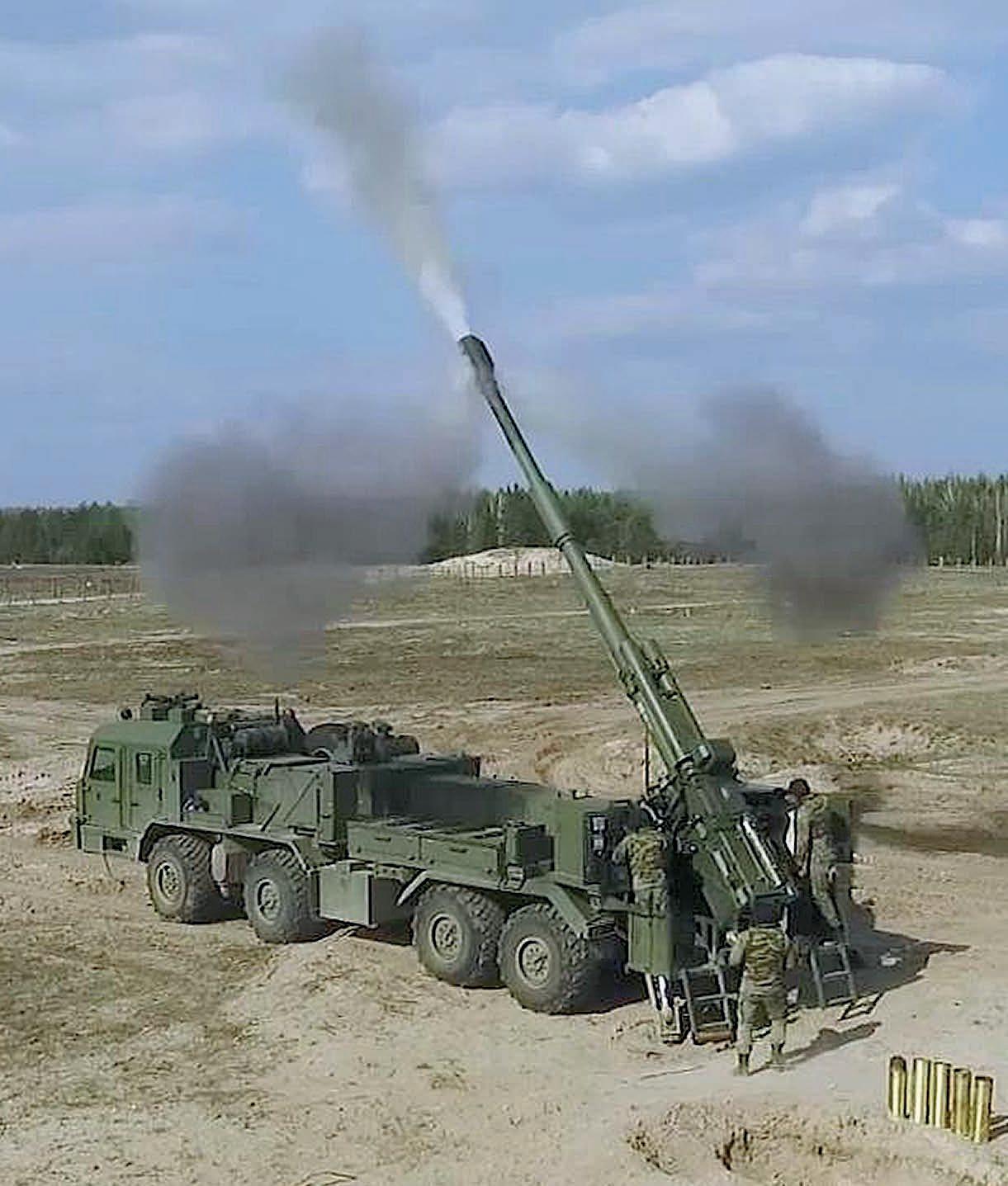
planned activities. At the same time, it could be seen that due to unplanned patrol activities in the Baltic Sea, some of the Baltic Fleet ships did not complete the full training cycle. There was also no major naval exercise in 2025, and the number of participants in July Storm and Zapad was much lower than predicted and did not match the scale of the joint exercise of previous years. It is worth highlighting that during both the July Storm and Zapad 2025 exercises, the Russian Navy demonstrated the use of unmanned surface vehicles for the first time.
AIR FORCE
As part of the reform, structural changes clarified the command and control of air defense, air force, and naval aviation units. The air defense formations previously under the command of the Northern Fleet and the Baltic Fleet were transferred to
the command of the 6th Guards Air and Air Defense Forces Army (6th GAADFA) located in the re-established Leningrad Military District. The naval aviation units of the Kola Peninsula, which were previously part of the Air and Air Defense Army of the Northern Fleet Military District, were merged into a new naval aviation corps based in Severomorsk.
The new Russian wheeled 152-mm self-propelled howitzer 2S43 Malva during a live fire exercise in Russia.
Photo: Russian Ministry of Defence
In the Air Defense Forces (ADF), a new mixed aviation division has been created in Petrozavodsk, Leningrad Oblast, as part of the reform, and probably includes the aviation regiments within the administrative boundaries of the re-established Leningrad Military District in Chkalovsk, Kaliningrad, in Monchegorsk, on the Kola Peninsula, and in Besovets, in the Saint Petersburg region. In Monchegorsk, a fighter aviation regiment was re-established on the basis of the former mixed aviation regiment. However, the Su-24 bombers that had been part of this mixed aviation regiment were transferred to the Northern Fleet mixed aviation corps, and the fighters that had been part of the same regiment were used to form a fighter aviation regiment again. In addition, the formation of one mixed aviation division and one army aviation brigade per general-purpose army (tank army) is planned. The plans also include the formation of three mixed aviation division commands, eight bomber aviation regiments, and six army aviation brigades.
Despite these seemingly major changes, the military reform of the ADF is only a restructuring, and no real increase in capabilities has yet accompanied these changes. No new air force units have been formed, existing ones have not been expanded, and no new aircraft have been added. Despite the sanctions imposed on the military industry, Russia has managed to keep the aircraft industry alive by circumventing the sanctions and launching an import substitution program, and production of new aircraft has continued. New aircraft have been produced to replace those lost during the current war, and this has made up for the losses. For example, around 40 Su-34 bombers have been lost during the war, while around 50 have been produced.
If the ongoing war does not result in extensive combat losses, the production of bombers for the formation of three new regiments over the next four years is realistic. Considering the production volumes of helicopters, the formation of new army aviation brigades could also be possible in the coming years. Presumably, these brigades will be formed on the basis of existing individual helicopter regiments, which would mean increasing the regiment's helicopter fleet by a third. It should be stressed that the creation of a new unit does not only mean the acquisition of a fleet of aircraft, but also its staffing and the rapid training of pilots as highly qualified personnel. This could be difficult.
Russia's General Staff assesses that current serving officers have limited technical knowledge of modern military technology, which hinders the successful use of modern military technology on the battlefield.
Overall, the renewal of the aircraft fleet will continue, with the replacement of the older generation Su-27 fighters of the Kaliningrad Fighter Aviation Regiment with the newer generation Su-35S. It is also possible that the first of Russia's most modern Su-57 fighters will start to arrive in fighter aviation regiments located in the Leningrad and/or Moscow military districts. The Russian fifth-generation fighters have the capability to fire the more modern air-toair and air-to-surface missiles currently in service, with a longer range than earlier versions.
UNMANNED SYSTEMS BRANCH
Undoubtedly, the development of unmanned systems will be one of the priorities for 2026. It is a systemic approach, with the creation of a service command already in place and units being set up in all domains, branches, and levels. The development of the entire field is planned up to 2031, with the result being that unmanned
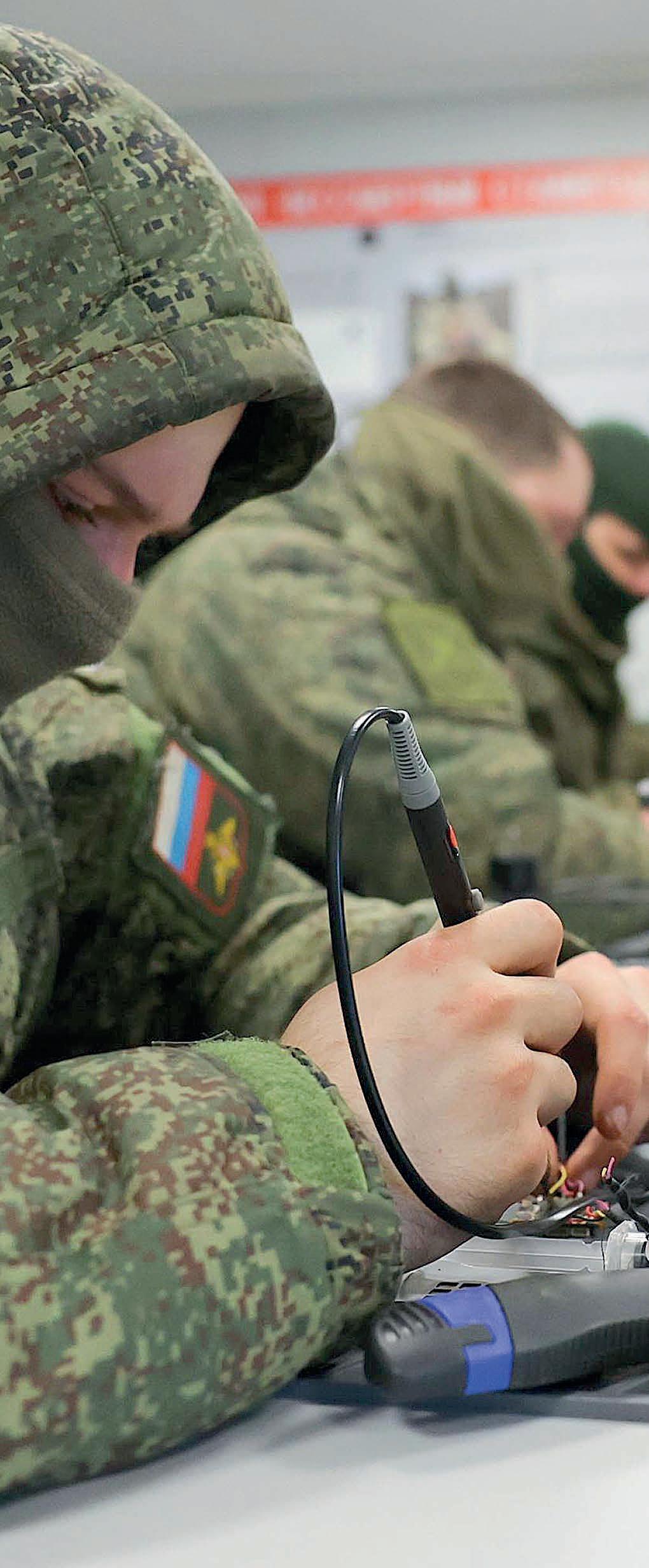
Russian soldiers assembling drones at the "Immortal Stalingrad" training center
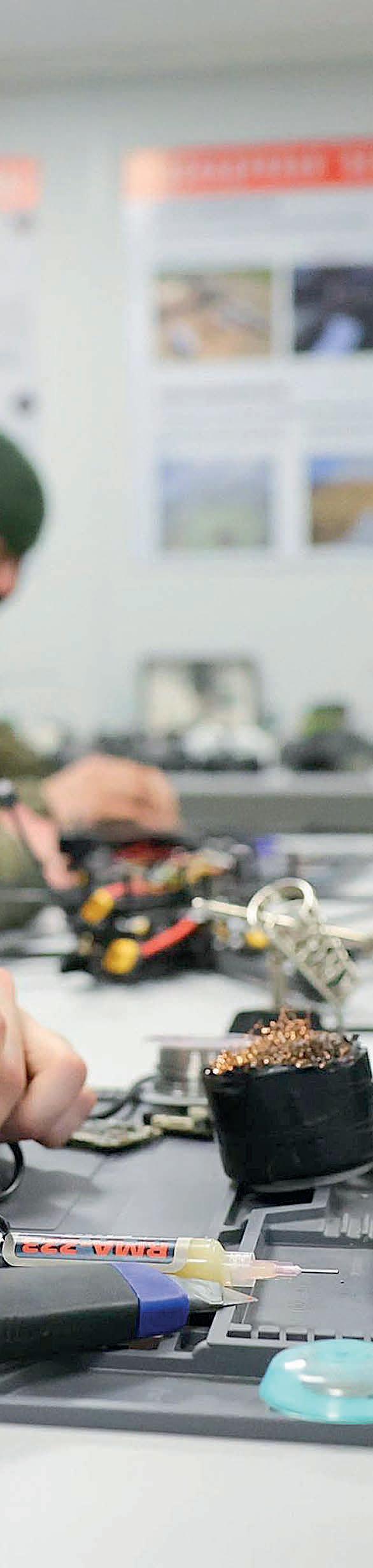
systems companies will be subordinated to motorized rifle regiments, unmanned systems battalions to motorized rifle divisions, and unmanned systems regiments to armies and also military districts.
Given the importance of the sector, it is not surprising that the development of various types of unmanned aerial vehicles has seen the greatest growth compared to last year. The improvement of the Lancet aerial munition has continued, and the nomenclature of various types of FPV drones has expanded. The use of FPV drones controlled by fiber optic cables has made it possible to increase the effectiveness of offensive weapons protected from the effects of electronic warfare on the battlefield. The Geran-type drones used to attack Ukraine's critical infrastructure have been greatly improved, with heavier payloads (90 kg), jet engines, and operator-controlled capabilities, with some using artificial intelligence for autonomous targeting.
In addition to quality, there have been changes in quantity. Compared to 2024, the production of different types of FPV drones has doubled from 1.4 million to 3 million units in 2025. The production of Geran-type drones and derivatives has been even higher, from more than 6,000 units in 2024 to 80,000 in 2025.
ANOTHER CASE OF WISHFUL THINKING?
The current reform is the fourth attempt by the Russian leadership since the collapse of the USSR to modernize its armed forces in line with changed circumstances and ambitions. In some ways, this re-creation of armies and divisions and the increase in their numbers could be seen as an example of the classic notion that all generals prepare for the previous war. At the same time, the deployment of new technologies shows an attempt to combine a mass army with high-tech warfare. The creation of an unmanned systems branch is one example, which, in terms of threat, requires preparation for a completely different kind of battle. The question is simple: to what extent could these ambitious plans be realized?
nical knowledge of modern military technology, which hinders the successful use of modern military technology on the battlefield. According to Minister of Defence Andrei Belousov, unmanned weapons systems alone require around 30,000 trained specialists. To solve this problem, 15 new military schools will be established over the next decade, with a focus on militarytechnical training. In 2026, preparations for the opening of the higher military school for unmanned systems forces began. In addition, Belousov announced that in 2025, three military academies started training officers in 11 new specialties.
Another important factor in the realization of ambitious reform plans will certainly be the production capacity of Russia's military-industrial complex. In this respect, it can be assessed that, at least so far, Russia has been able to maintain and in some areas increase its production of basic munitions, such as armored vehicles, artillery shells, mortar mines, and missiles. However, it is clear that the need to cover large volumes is leading towards the production of simpler and lower-quality products. Heavy reliance on Chinese technology and sanctioned foreign components only exacerbates this trend.
It must also be understood that all this has happened and is happening at the expense of something. For example, in Russia's 2026 state budget, more than 41% has been allocated to national defense, essentially to the war and the security sector. This is more than Russia spends on education, health, social policy, and economic policy combined. By comparison, the USSR's military spending during the Afghanistan war at the end of the Cold War was of the same order of magnitude, and we all remember how that ended.
In conclusion, as long as Russia's armed forces are heavily involved in the war in Ukraine, it is not possible to assess the success or failure of yet another reform. It is not just a question of numbers and quantitative growth, but also of what the qualitative change will be. It is clear, however, that although qualitative changes in the development of the Russian armed forces are rather slow, this does not mean that these changes will not come. ‖ center in Volgograd region.
Russia's General Staff assesses that current serving officers have limited tech-
Photo: Kirill Braga / Sputnik
War has not disappeared from the European continent. On the contrary, it is unfortunately more real than ever. The Russian Federation's brutal and illegal attack on Ukraine is clear proof of this.
DEFENCE FORCES READY FOR VICTORY
ANDRUS MERILO
Lieutenant General, Commander of the Estonian Defence Forces
With the sacrifice of the Ukrainians, we have been given the opportunity to prepare for a modern war, the likes of which no one could have foreseen before the Russian invasion. We must not miss this opportunity.
Ancient Greek historian Thucydides said, "Right, as the world goes, is only in question between equals in power. The strong do what they can, and the weak suffer what they must." Where does this leave us and our dear Republic of Estonia? Are we the weak ones who must suffer? Or is there a way for even a small country to achieve equal status with a large one at a crucial moment?
OUR PEOPLE
"If history teaches us anything, it's that warnings themselves are not always enough to protect the victim from surprise [...] I attribute this to three reasons: one is the human trait of denying tragedy, denying disaster—its very common; the second is that they didn't want to panic the public; and the third was that they thought they knew Russia super well" – General Mark Milley on the start of the war in Ukraine.
In my view, there is a danger that our society will fall into the same trap. This gives us, the members of the Defence Forces, a very important task: to keep society vigilant. We must not incite panic, but at the same time, we must not minimize the problem. We must offer our
confirmed knowledge of the enemy wherever possible, in order to rob them of the power of mystery. We need to be ready to give advice on how civilians can better prepare themselves or what to do in a difficult situation, such as when coming under indirect fire.
By doing so, we become a strong voice in society, trusted for our integrity and respected for our knowledge.
"The whole nation is waging war; the army is waging battles." (Lieutenant General Nikolai Reek, Chief of Staff of the Armed Forces, 1937)
If Ukraine has shown us anything, it is that a motivated soldier needs a solid rear area. On a personal level, it means that their loved ones are protected, fed, and spiritually supportive of their struggle. On a societal level, this means that the people themselves are prepared to endure hardship so that their defense forces can continue to fight. This includes social support for our activities as well as material support.
We need it all. It is our duty to explain to our people what war means as best we can.
THREAT
Unfortunately, given the current balance of power and trends in the world, we can predict that the war in Ukraine will not end with Russia being incapacitated to act in our direction.
After the de facto end of the war in Ukraine, the Russian Federation will be a country whose entire economy is geared towards the war industry, with a strong army with experience in modern warfare, equipment, and a dictator whose hope of remaining in power for the rest of his life depends on keeping his country at war. Not to mention Russia's imperialist ambitions.
This means that Russia will restore the combat readiness of its army after exiting the war in Ukraine. At the same time, new targets are being actively felt out and prepared with destabilizing actions and campaigns.
The year 2027 is, in my estimation, the year when Russia's combat readiness will have been restored, and if it then senses a favorable opportunity to deploy its military somewhere, it will do so.
FORMULA FOR VICTORY
What is the formula for victory against such a seemingly immense threat? It's simple:
R = M x W x A
R – resistance. As long as none of the elements that make it up are broken, our resistance cannot be broken.
M – means, which are all the resources available: people, weapons, vehicles, ammunition, and anything else necessary to achieve our goal.
W – will to fight. It is the will to fight, to attack, to defend, to endure hardship—the ability to cope in stressful
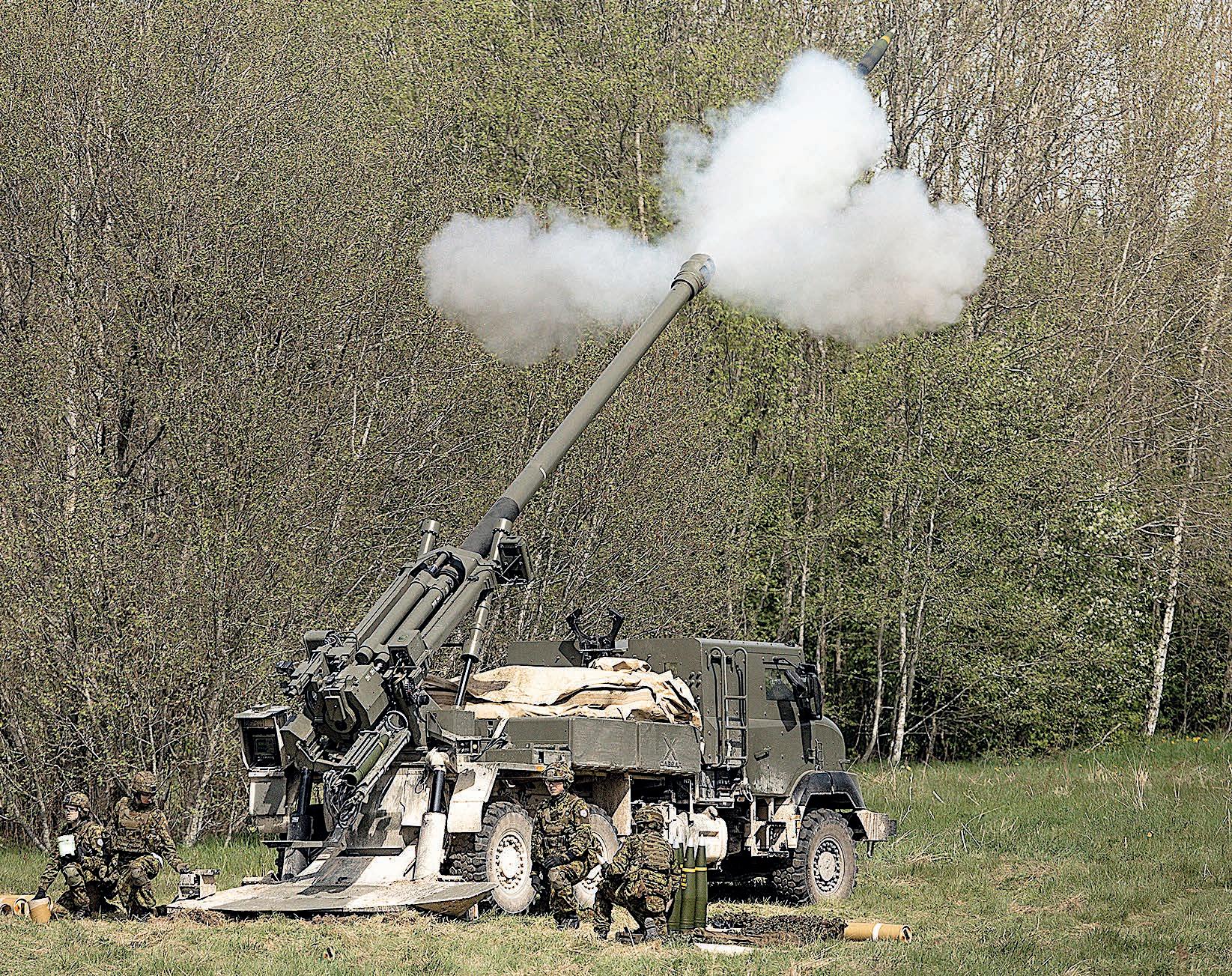
Caesar MK-1 self-propelled howitzer of the 1st Infantry Brigade's Artillery Battalion during a live fire exercise on May 21, 2025. The new weapons system significantly increases the Division's indirect fire capability, providing rapid and accurate fire support over long distances.
situations and move towards our goal in spite of all the difficulties.
A – authorization. This includes the authority to act. More specifically, I mean our authority to act in all kinds of situations (which may not even be an imminent military threat) in the way necessary to actually counter the threat. It also includes a mandate for our allies to act with us from the first moment the need to act arises.
OUR DEFENCE FORCES
The war in Ukraine has shown that, in my view, we need to be much better prepared by 2027 than we are today. Developments have been so rapid that leaps need to be made in several areas:
1) The will to fight
2) Sustainable human resources strategy and practice
3) Situational awareness and understanding
4) Achieving combat readiness of military capabilities
5) An effective kill chain that, if necessary, preemptively delivers effects into enemy territory
An active plan is being drawn up on how the Defence Forces can achieve a NEW NORMALITY by 2027.
In short, this means that we have set up a round-theclock combat watch. This puts extra demands on all of us. We need to be ready for changes in our resources, routines, and practices. This requires the contribution of
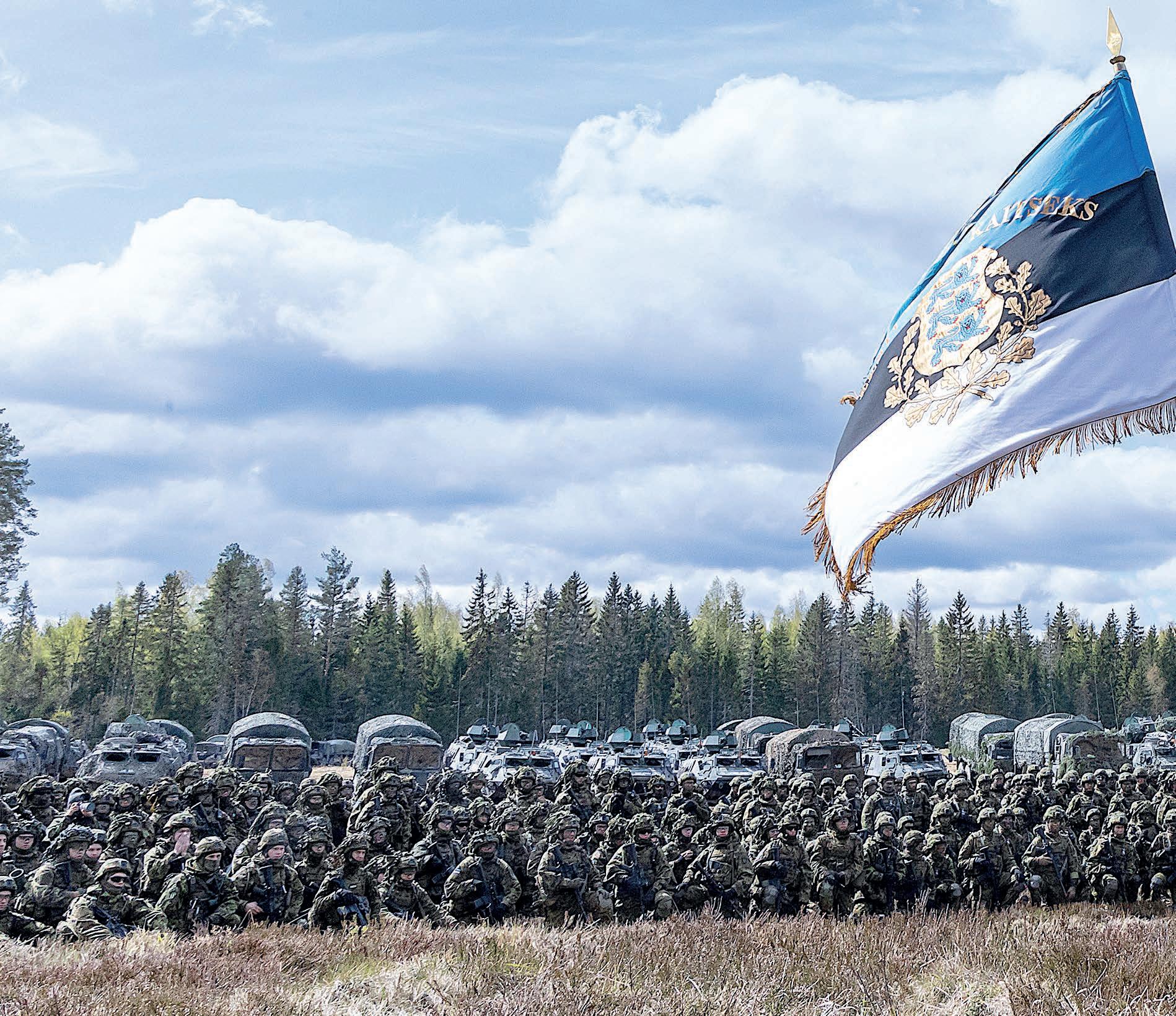
Photo: Maria Tammeaid / Estonian Defence Forces
each and every member of the Defence Forces because it cannot be achieved by placing the burden on only some of us. This will require a review of the training cycle for conscripts and how to integrate them into a combat watch that operates at all times.
1. WILL TO FIGHT
The will to fight is an individual and collective decision to fight to achieve a goal despite the risk of death. The prerequisites for the will to fight are physical and mental capacity, skills, adequate armament and equipment, previous experience of success in a similar situation, and faith in one's commander, the members of one's unit, and the rightness of the goal.
The war in Ukraine has shown that while the most horrific acts, new technologies, and solutions cross the news threshold, the indispensable link in all this is the human being. Russia is very skilled at breaking down the will to fight, and a less knowledgeable person would have
no idea how the drop-by-drop effects can ultimately spill over.
Developing the will to fight must be systematic through improving the quality of training and enforcing combat discipline at all levels. Training must be geared towards winning and stem from wartime tasks.
To achieve this, it is necessary to examine the problem and involve the members of the Defence Forces in order to gain an understanding of the current state of the forces' will to fight. I expect every member of the Defence Forces at every level to be ready to make an honest contribution to this.
2. SUSTAINABLE HUMAN RESOURCES STRATEGY AND PRACTICE
In the Defence Forces, human resources management must be based on a meaningful personnel strategy, centered on motivated, competent, and autonomous solution-oriented commanders at all levels.
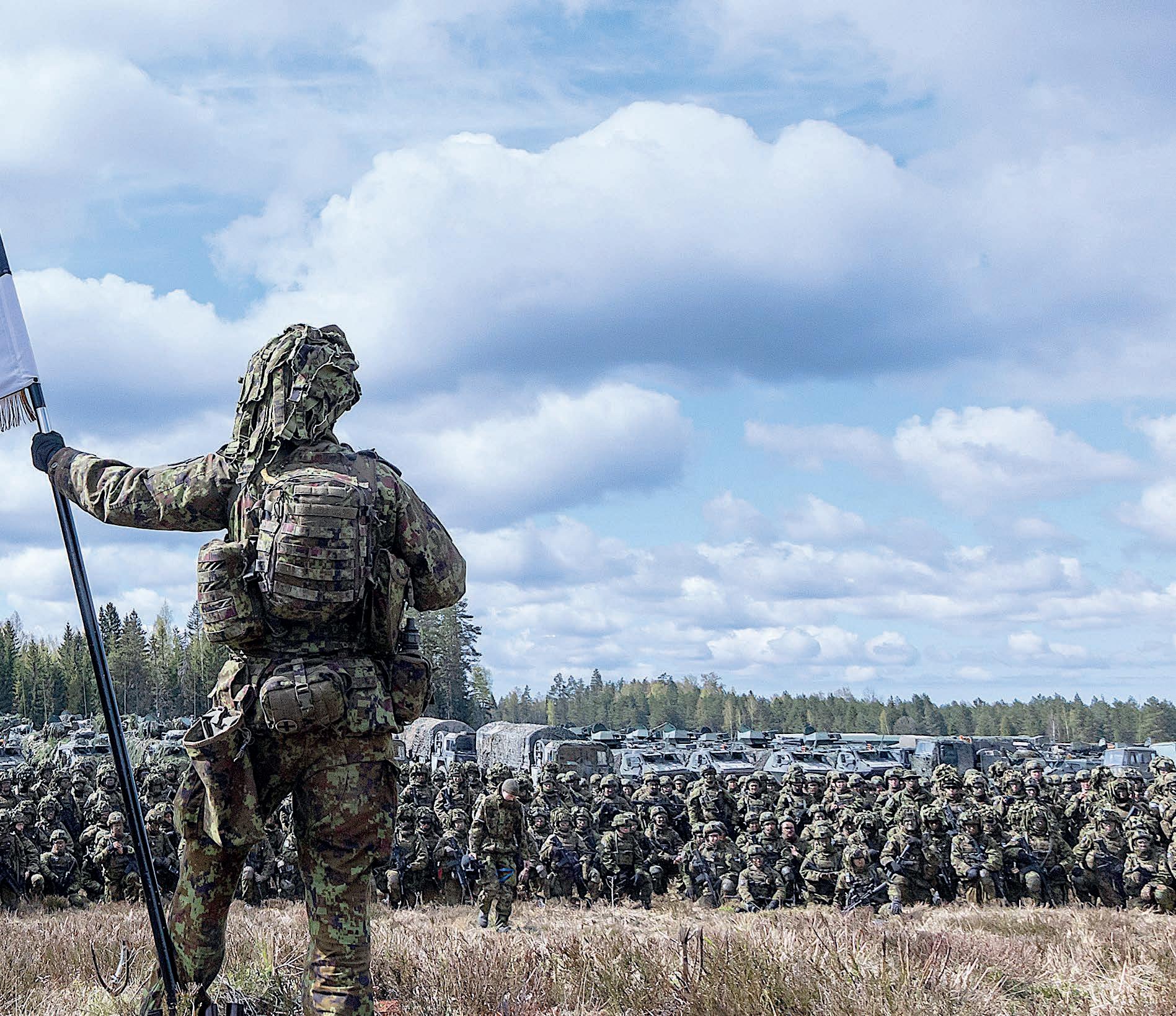
The flag of the Kalev Infantry Battalion flying at the closing ceremony of the exercise Hedgehog 2025, where the personnel were thanked and the best were recognized.
Photo: Jaanus Lensment / Estonian Defence Forces
This strategy will be drawn up by the Defence Resources Agency (KRA), and each of us must support its implementation.
At the same time, we can't put everything on the KRA's shoulders and expect them to do everything for us. There are many things we can improve ourselves, such as:
a) re-establishing traditions, symbols, collective activities, discipline, historical role models, and events to be ensured through leadership;
b) improving transparency of existing practices (e.g. common basis for performance pay);
c) giving honest and constructive feedback;
d) keeping an open mind to innovation and displaying a willingness to go along with it.
It saddens me that some of our fighters are, for one reason or another, disappointed in the Defence Forces system. The flame that once brought us into the Defence Forces must not be extinguished by anyone. We cannot change the past, so here’s my proposal to you: let's turn
over a new leaf together. Let bygones be bygones and let us work together for the future. For those who cannot find this new beginning within themselves, I hope they have the wisdom to retreat and seek their happiness in other areas of life.
Ultimately, I want the Defence Forces to be a more collegial, people-friendly, and pleasant place to serve.
3. SITUATIONAL AWARENESS AND UNDERSTANDING
Situational awareness must be achieved and translated into situational understanding. This creates the conditions for threat-preventive decision-making processes. This requires the creation of new structures that address these issues. We all need to understand the situation and the threat in the same way through the Defence Forces. When a private citizen asks on the street what the Defence Forces are preparing for, there must be a consistent, uniform answer.
This means that we need to inform all our defense personnel with consistent messages across our structure, taking into account information needs and access restrictions. Commanders have a big role to play here, and overviews of the situation must be made more widely available.
4. ACHIEVING COMBAT READINESS OF MILITARY CAPABILITIES
We need to bring our military capabilities to combat readiness, so that we are ready to preemptively enforce control in all domains of war: air, land, sea, and cyber. This means acquiring new, modern capabilities, the need for which we have identified from the war in Ukraine. We will review priorities in procurement and ensure we have the equipment we need most to fight a modern war. We will accelerate the acquisition of some capabilities where necessary.
Procurement of technology and equipment alone is not enough. We need trained personnel who can use this technology and equipment. This is one of the requirements for a "gap year". This year, the focus must be on training the active-duty soldiers to apply the lessons learned from the war in Ukraine. These changes will later have to be reflected in the training of conscripts.
5. AN EFFECTIVE KILL CHAIN THAT, IF NECESSARY, PREEMPTIVELY DELIVERS EFFECTS INTO ENEMY TERRITORY
We need to ensure that we have the ability to identify targets, monitor them, direct effects at them, and assess the results. Moreover, we must ensure that we have the authority and courage to preemptively bring these effects across the border, if necessary.
We will never start a war, but we must not be passive when it is clear that Russian armed forces are moving towards the Estonian border. This means a very clear understanding of the situation, modern capabilities, and a strong will to fight. In fact, it means everything outlined in the previous points to bring the war to the aggressor's soil.
EQUAL, STRONG, AND WEAK
Who are we? My belief is that if all the goals are set and all the activities that have been planned have been completed, we will be in a very good position to achieve our very first objective: a Defence Forces ready for victory. The independent power of resistance (M x W), reinforced by the real contribution of the allies (A), has reached a level that nullifies the adversary's options through the prevention of escalation. Simply put, the enemy will not find a moment when we are vulnerable to their attack. Such a result can only be achieved through real preparation, training, available supplies, technology, and equipment. We also need our society to be strong and self-reliant and to trust and support us. There must be a strong unity of arms and unity among ourselves. That is what I stand for, and I call on all of you to stand for it too! ‖
Estonia will defend itself in any event and against any threat, regardless of its origin or the time and place it emerges. However overwhelming the adversary; Estonia will never surrender.
National Security Concept of Estonia 2023
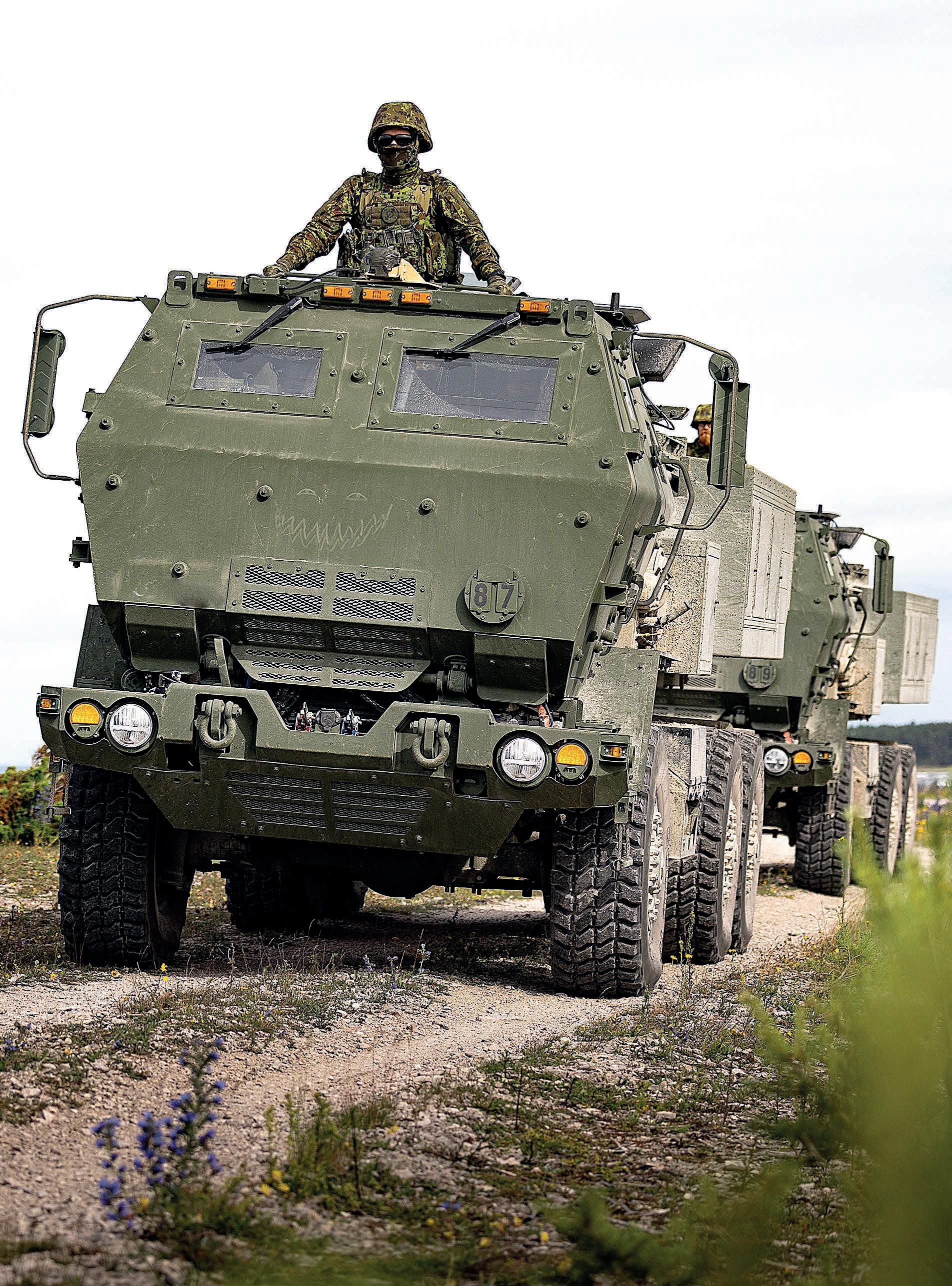
On July 11, 2025, the reservists of the Division's Artillery Battalion conducted the first live firing exercises of Estonia's own M142 HIMARS artillery rocket systems.
Maria Tammeaid / Estonian Defence Forces

Photo:

Estonian and French military personnel at the Allied Medal Ceremony in Tapa on June 4, 2025.
Photo: Elizabeth Lindjärv / Estonian Defence Forces
Estonia became a member of NATO almost 22 years ago, and our current conscripts were not yet born. However, there are service members in the Defence Forces who have over thirty years of experience, and they can confirm that there has never been so much NATO in Estonia before. This is a good recognition and shows the strength of the Alliance, but it has a malignant root cause—an aggressive Russia.
2025 NATO DEFENCE POLICY
Our eastern neighbor's military action in Ukraine has been going on for years, with heavy losses on both sides, yet Russia's military capabilities have grown in numbers and have continued to improve in quality. Therefore, NATO must strengthen itself. The year 2025 leaves several important keywords on NATO's CV: increasing defense spending, addressing the mandate of SACEUR1, launching vigilance activities, optimizing air defense, implementing the vision for warfare, and cooperating with the European Union (EU).
For the members of the Defence Forces (and probably also for ordinary citizens), NATO is first and foremost a military alliance; it is military power that is the basis of deterrence. However, the state institutions know that NATO is more of a political entity and that its actions are based on a consensual defense policy.
NATO's decision-making body is the North Atlantic Council, with the Military Committee as its advisory body. Once a year, the prime ministers of the Member States meet and agree on new goals. At the 2025 Summit in The Hague, history was made by deciding to allocate 5% of GDP to defense spending. This was a declaration of commitment to the development of military capabilities for national defense. Estonia has already met the percentage requirement, and other eastern countries are close, but a whole decade was given to reach the target.
ENNO MÕTS
Major
General
Estonian
Military Representative to NATO and the European Union
The perception of threat varies across Member States; therefore, their political priorities differ.
The perception of threat varies across member states; therefore, their political priorities differ. This characterizes NATO: in a democratic alliance, steering important processes is time-consuming but produces powerful results. NATO is large in size, there is no doubt about that, especially since Sweden and Finland have joined, and it is capable of operational action.
Last year saw the launch of the Baltic Sentry and the Eastern Sentry (and, we know, now also the Arctic Sentry). These are examples of NATO's military operational response to blatant negligence (undersea cable-breaking incidents, drone misdirection, and border violations by Russian aircraft).
SACEUR was able to launch vigilance activities on its own initiative thanks to the peacetime mandate it was given. If the situation escalates, it will ask the Council for additional powers, and the corresponding packages of rules on the use of force are ready. This is standard practice in the rule of law. One of NATO's founding principles is a world based on rules.
On the basis of the air border violation incident of September 20242, Estonia requested Article 4 consultations. They have occurred fewer than 10 times in NATO's history. They are extraordinary. The consultations took place and showed the Council's promptness and determination. This is a strategic message. The military commander has to ensure the readiness of the units, but the legal basis comes from the politicians.
On the subject of military readiness, the Estonian Defence Forces have been a self-initiated leader, because we had already made this a priority before the same principle was set for allied forces.
The accession of Finland and Sweden to NATO was a military milestone in 2025, when they were integrated into the defense plans. As newcomers, they have brought strength, agility, and new thinking. The Alliance has a better understanding of total defense and the reserve force system.
There has been a lot of talk about in novation, but now the emphasis is more pragmatic: modern combat equipment and methods must be used.
All Allies are increasing the sustainability and resilience of their forces. NATO's strategic commands—Allied Command Operations (ACO) and Allied Command Transformation (ACT)—have converged and aligned capability objectives with operational needs. In other words, countries are being agitated (in the best sense of the word) to abandon the acquisition of "good old" technologies and invest instead in new ones that have proven their worth in the Russian–Ukrainian war, also in terms of exceptional cost–benefit efficiency.
There has been a lot of talk about innovation, but now the emphasis is more pragmatic: modern combat equipment and methods must be used. The technology is there. We are talking about robotics, autonomy, and drone warfare, including FPV drones3 .
The latter's lethality and battlefield dominance have significantly changed maneuver and combat tactics. SACT4 added at the February 2026 Defence Ministers' meeting: experiments show that when modern drone solutions are combined with attack helicopters, the latter become even more lethal. In other words, drones alone are not the silver bullet that stops the enemy.
This is a well-known truth in the military world. NATO has brought together interested parties so that countries can place orders with the defense industry. This year, tests
and demonstrations will also take place in Estonia. Only member states dedications can truly revitalize the defense industry. Coalitions and partnerships make it possible to find common benefits.
The EU has become an important partner for NATO. This is a major shift in thinking regarding defense policy, and the understanding of the need is mutual. One provides military capability; the other provides economic possibilities and bolstering in several critical areas.
When it comes to undermining Russia's military capability, it is the EU that targets it with sanctions packages. In addition, the
EU supports initiatives to fill the gaps in military capability. Of particular note is the creation of a legal framework for a "military Schengen". This is a critical need for the operational redeployment of troops. For the first time, the doors are also open to meetings of each other's Military Committees to increase cooperation, efficiency, and synergy on selected topics. It is thanks to NATO that the EU became possible, and it is thanks to the EU that NATO can empower itself.
NATO's center of gravity is unity. The US intends to focus on limiting China's rise to power and calls on Europe to take
responsibility for defending its territory. European defense ministers acknowledge US criticism and understand the calls.
The transatlantic connection remains strong. Friends must be honest with each other; the Estonian proverb teaches us to see the log in our own eye. Europe needs to make a bigger contribution. NATO Headquarters is drafting principles for proactivity, including the development of deep strike capabilities.
Effective deterrence by punishment must be added to the deterrence by denial. A very important step in the transition to modern warfare is the implementation of the space domain and cloud services. They are crucial for management, processing large volumes of data, and ensuring resilience. Estonia also needs to update its solutions. Throughout history, we have only defeated enemies together with allies. This is our opportunity; this is a smart strategy.
At the beginning of the article, I pointed out that there has never been so much NATO in Estonia. We must remember that Estonia is also NATO; in other words, the unity and strength of the alliance depend on its member states. So, when talking about NATO defense policy, it is not the "bureaucrats in Brussels" who should come to mind, but the governments of the member states because they are the ones who guide and shape NATO as a whole. Estonia is doing its best.
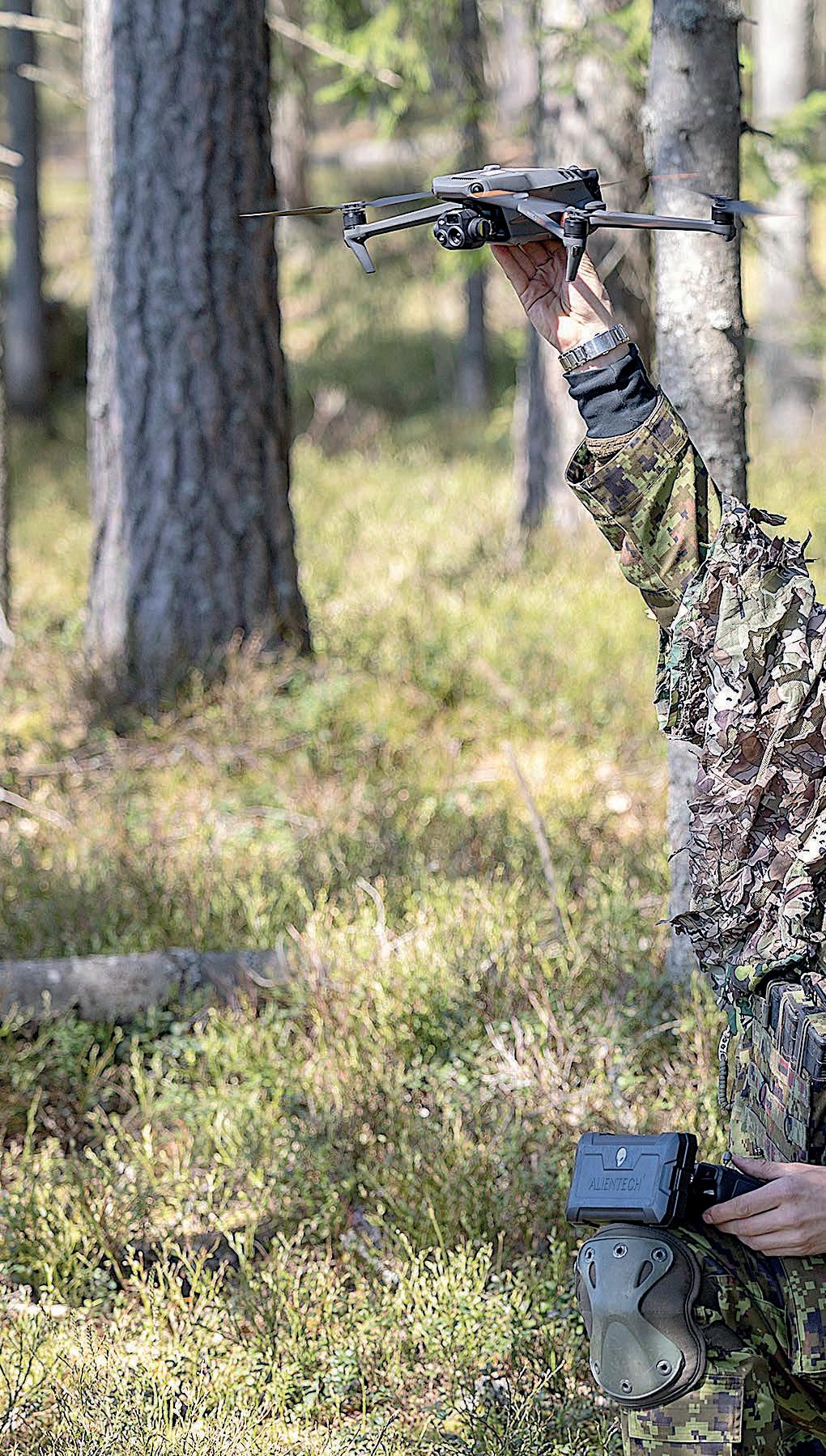
Unmanned aerial vehicle use and tactical cooperation exercise during exercise Hedgehog 2025.
Photo: Ardi Hallismaa / Estonian Defence Forces
Countries need to change the business models for remunerating the military industry: instead of buying fast-expiring military supplies, they should invest in rapid mass production capability. In other words, the money must be given to industry now, not receiving funds immediately, but upon request, and quickly and in large amounts. ‖
1) Supreme Allied Commander Europe. The second-highest-ranking general after the Chair of the NATO Military Committee.
2) Violation of the border by three Russian Mig-31 fighter jets and flying in Estonian airspace for 12 minutes.
3) An FPV (First Person View) drone is an unmanned mini-aircraft controlled by a remote pilot using a camera image and a remote control.
4) Supreme Allied Commander Transformation
PUBLIC SUPPORT FOR
UKU AROLD Colonel, Head of the Strategic Communications Department of the Joint Headquarters of the Estonian Defence Forces
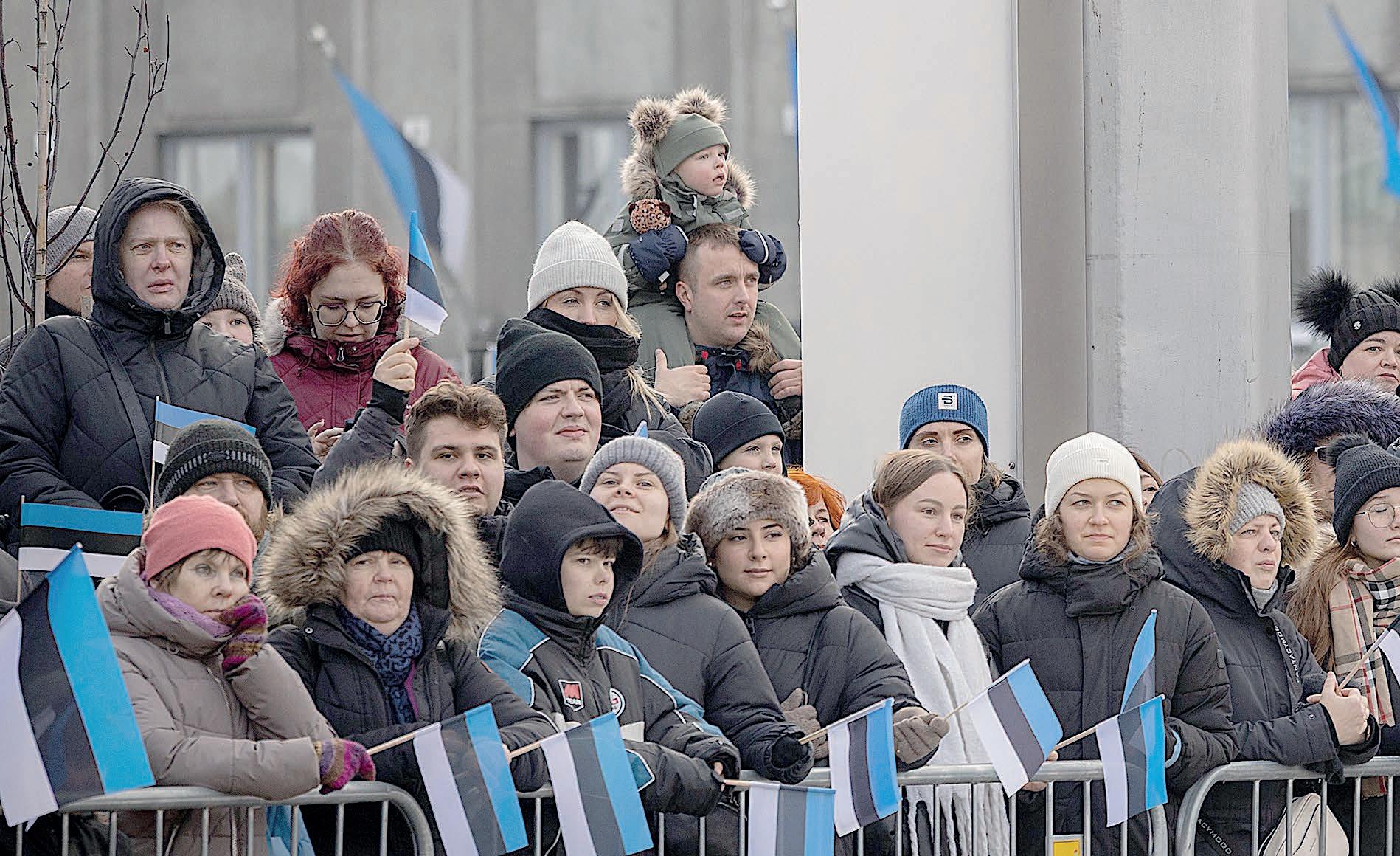
In 2025, the Defence Forces continued to be among the three most trusted institutions in Estonian society. The declared will to defend, or personal readiness to defend the country in the event of a military attack, remained high.
According to the survey data, 82% of the population felt that armed resistance to a possible military attack was necessary, and 71% of men said they would be prepared to take up arms or otherwise take part in defensive action in such an event. This indicator gives us confidence that in the event of a real threat of war, manning the reserve structure of the Defence Forces would be successful.
By European standards, this is an indicator of a very high level of patriotism and will to defend. The indicator of overall will to defend is a couple of percentage points less than in Finland, which ranks at the absolute top of the list of democratic countries in terms of will to defend, and it is more than ten percentage points less in terms of personal readiness. The main driver of this is probably the proportion
of people in society who have completed military training, which is higher in Finland due to the longer conscription and reserve service and higher participation rates.
There are more people who believe that Estonia will be able to defend itself until the arrival of the Allies than those who doubt it, but not as many as a year ago. Estonia's defense capabilities, after a surge in 2022, have been assessed to be slightly weaker in each following year, having returned to pre-full-scale-war levels.
This is despite the increased opportunities for greater investment in national military defense and the very high visibility of defense investments and exercises by the Defence Forces. Last year, nearly 11,000 stories related to the Defence Forces were published in the Estonian mass media, which is 15% more than the year before.
The vast majority of coverage was neutral and balanced, or even with a positive undertone. The credibility of the Defence Forces' spokespersons remained high. The speech of the Commander of the Defence Forces on the anniversary of the Republic and the publication of the Defence Forces' vision provided the key to addressing national defense issues.
The inescapable notion that the Defence Forces must be ready to win, that there is a simple formula for victory
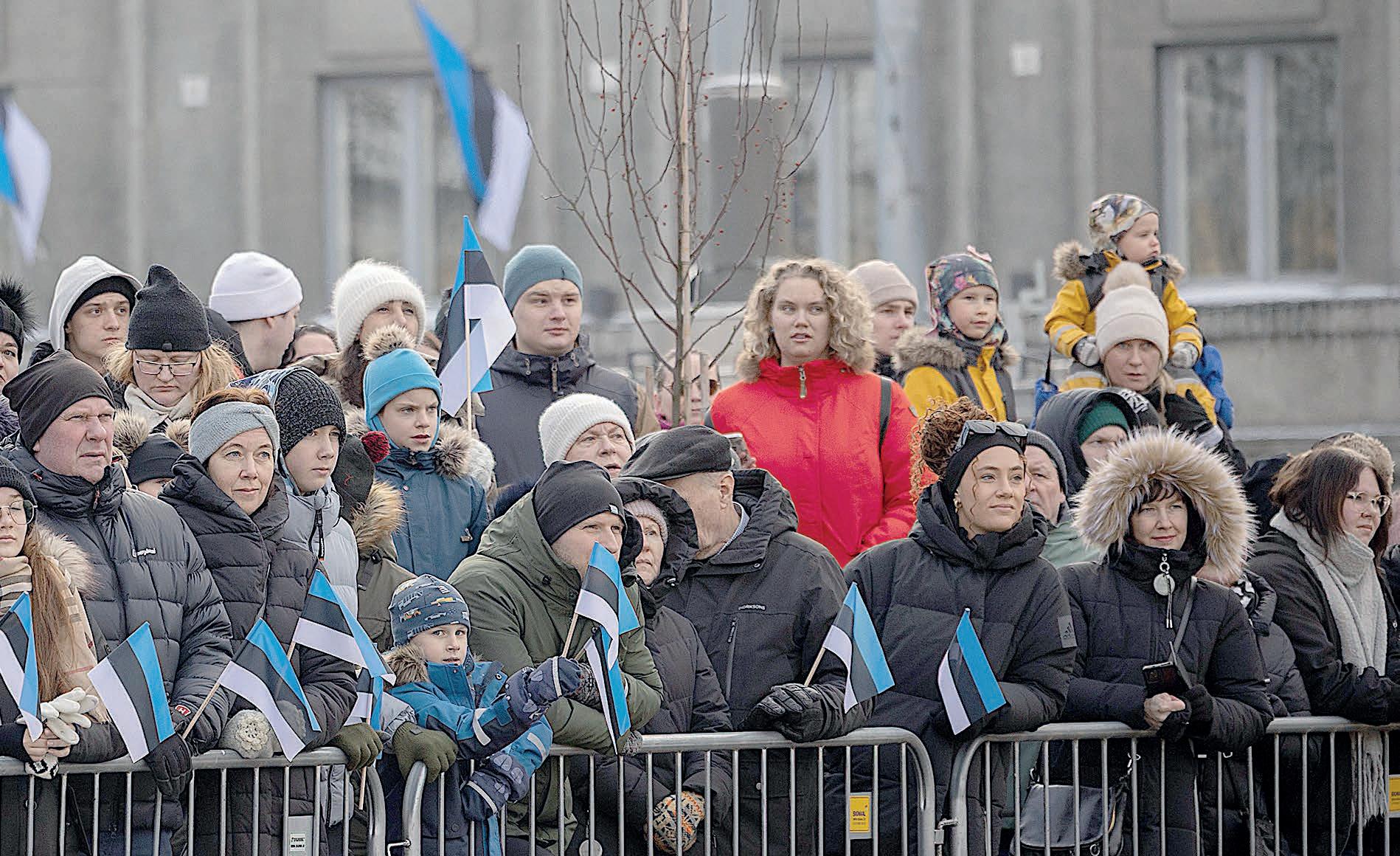
THE DEFENCE FORCES
that must be filled with substance, and that the reorganization of combat readiness in 2025 and 2026 must be completed, was generally accepted.
An important factor shaping the will to fight, which is part of the formula for victory, is trust in one's military commanders and belief in the good quality of one's tactics and weaponry. Why, then, despite a real and visible increase in defense capabilities, has the belief in an independent defense capability declined to 2021 levels? There are probably various reasons.
The optimistic belief that Ukraine will be able to defeat the aggressor has been declining year by year. The harsh realities of an ongoing war have reached our homes through the media. The state has made it very clear that building a defense force that is ready to win at the right time requires creating capabilities that we have not had before.
Concerns about young men's health and physical fitness have not gone
The optimistic belief that Ukraine will be able to defeat the aggressor has been declining year by year. The harsh realities of an ongoing war have reached our homes through the media.
unnoticed either. All along, hostile propaganda has consistently ridiculed Estonia's defense capabilities.
Thus, paradoxically, honest public debate on national defense, including sometimes justified and sometimes unfounded criticism, has corrected the public perception of the current defense capabilities and reduced excessive optimism.
A significant proportion of the population is concerned about defense because they care and put their focus on it. This is demonstrated, on the one hand, by the increasing use of the Defence Forces uniform camouflage pattern on various products in the public space as a sign of patriotism and, on the other hand, by the criticism on social media by perhaps illinformed hobbyists, which is not necessarily malicious.
However, the most credible influence on the Estonian people is that of expert Defence Forces spokespeople who speak clearly in public. ‖
Live fire exercises of CV9035 infantry fighting vehicles on Rutja beach in May 2025.
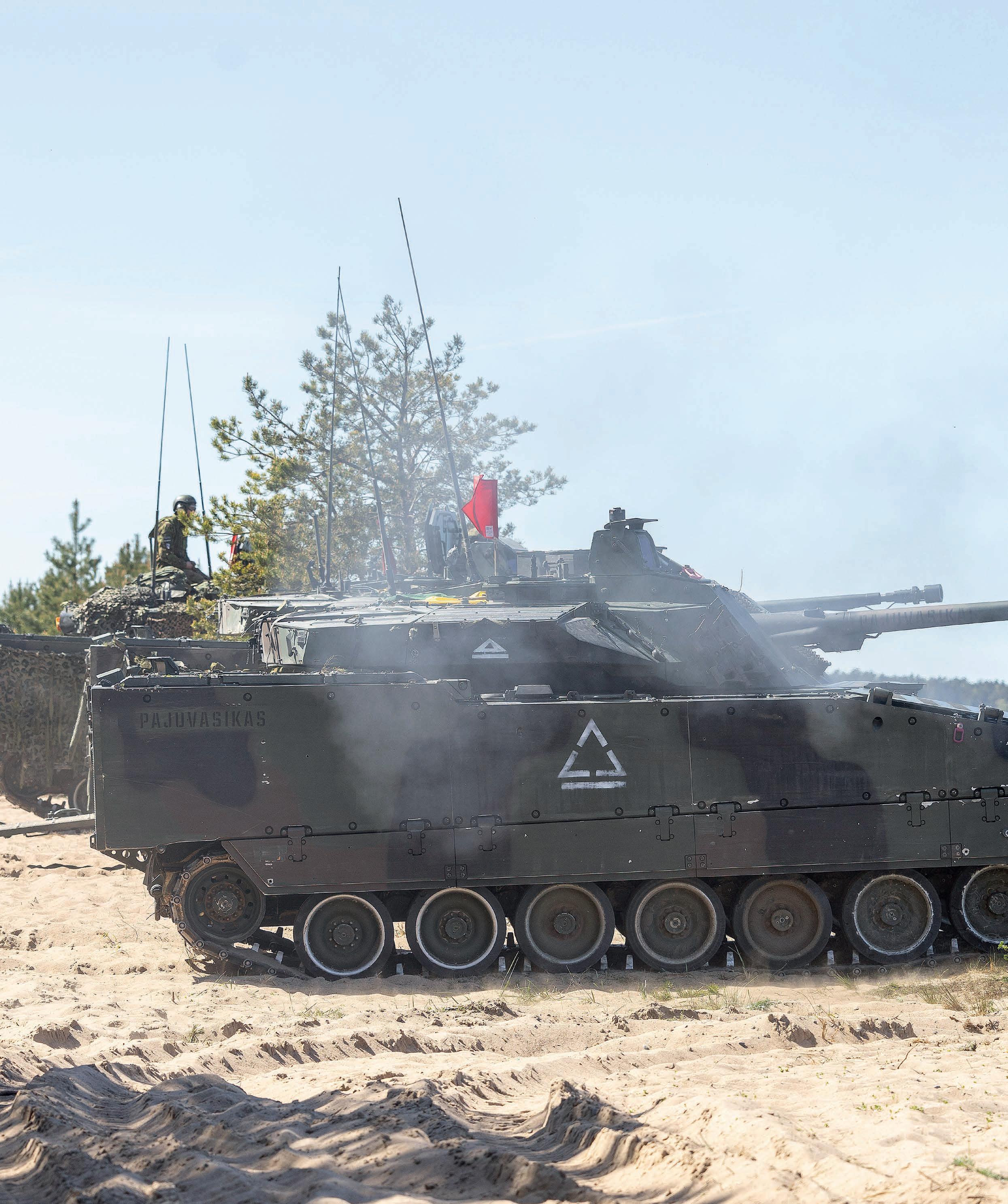
Photo: Richard Põder / Estonian Defence Forces
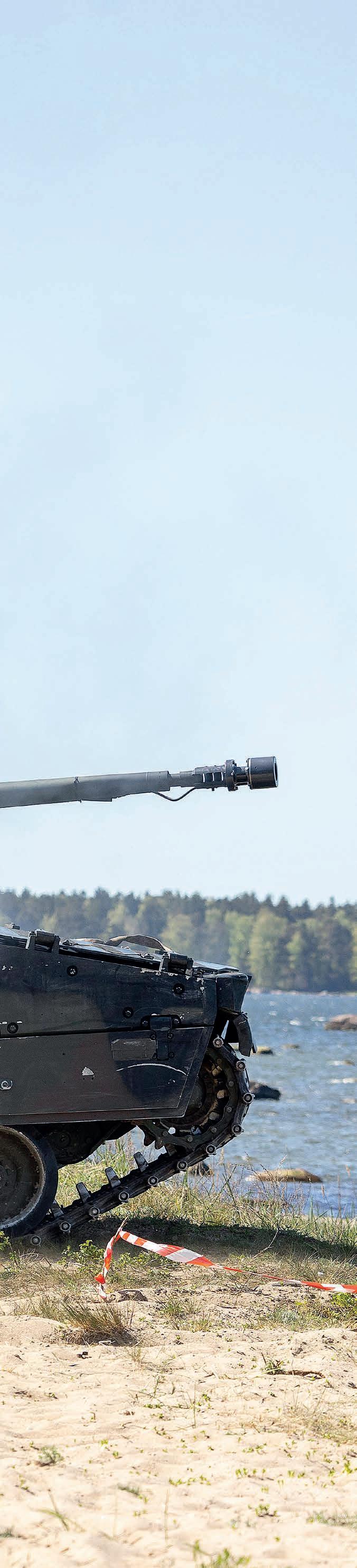
In 2024, the focus of the division's headquarters was on the US Warfighter Exercise, where we had our first experience as a division. In 2025, the main exercises were Hedgehog 2025 (Siil 2025) and the Multinational Corps Northeast-led Griffin Lightning 2025.
DIVISION'S YEAR
INDREK SIREL Major General Estonian Division Commander
The division has developed rapidly over the year, as we planned. As a commander, I can assess this development primarily based on the exercises in which the division has participated in 2025.
During the exercise Hedgehog 2025, we practiced the command of our units in the deep, close, and rear areas and evaluated the 1st Infantry Brigade and the Northeastern Land Defence District. Also, together with the French Battle Group, we were able to practice the deployment to Estonia of the 4th brigade "Black Rats", which had been assigned to the division from Great Britain for our defense, and to join our units in battle. Such actions are necessary for both us and our allies to ensure our readiness to defend Estonia and NATO on time and according to plan. The division led nearly 16,000 fighters from 10 countries.
Hedgehog 2025 took place as part of the NATO exercise Steadfast Deterrence 2025, which involved the planning and command of strategic and operational level deterrence and defense operations at NATO Allied Joint Force Command Brunssum (JFCBS) in Brunssum, the Netherlands.
Hedgehog 2025 was a preparatory exercise for the division's participation in the NATO Multinational Corps Northeast tacti-
cal exercise Griffin Lightning 2025. Griffin Lightning 2025 consisted of several stages, the first of which took place in Estonia. The exercise, led by Multinational Corps Northeast, provided the division staff, in addition to the Warfighter experience, with the know-how to plan and fight within a NATO structure of a similar scale. During the staff exercise, the division had the opportunity to practice in a virtual environment the part of the plan that would be difficult to execute in real-life exercises. Griffin Lightning was very intense and realistic, with activities lasting around the clock throughout the period, during which the division staff team, made up of active servicemen, reservists, conscripts, and allies, gained valuable experience.
The common denominator of Hedgehog 2025 and Griffin Lightning 2025 was practicing their wartime tasks with wartime formations in realistic situations (both on the terrain and virtually) and within the planned C2 chain.
Exercise Pikne (Lightning) has become a tradition, where we practice the rapid deployment of French military units to Estonia to defend Estonia together with our units and allied units stationed here. In addition to the units of the Defence Forces and the Defence League, allied units from France, the United Kingdom, the United States, Latvia, and Canada participated in the exercise. Around 3,000 Estonian and allied servicemen took part in Exercise Pikne.
The exercises culminated in the Decisive Lancer 2025 command post exercise, where we practiced interaction with our civilian partners and allies at different stages of a crisis and in a combat situation. We also assessed how subordinate staff operate in times of crisis and conflict.
Appropriately informing the population and managing mutual expectations is not about scaring people but is a perfectly adequate action to prepare our civilian population for different situations.
The importance of this exercise for both us and our partner organizations is demonstrated by the fact that every year we learn something new, find opportunities for further cooperation, and increasingly involve our allies, who are mostly new to this approach. I am convinced that the experience gained from the exercise will provide additional opportunities to inform the Estonian population about the crisis and war situation, as well as the activities and expectations of state institutions towards the population. In addition, the skills acquired during the exercise will better protect the population in the event of a conflict.
At the end of October, I spoke at the Estonian Academy of Security Sciences conference The Age of Crises and Wars – Science and Practice for the Security of the Population, where I noticed that the focus of the Defence Forces on combat operations, rather than on civilian protection, came as a surprise to some participants. Appropriately informing the population and managing mutual expectations is not about scaring people but is a perfectly adequate action to prepare our civilian population for different situations and to train them how to act in the case of a possible enemy information operation or other hostile action. Knowledge and skills are one of the key components of the will to defend and win.
In summary, combined exercises provide an opportunity to play out realistic scenarios in practice, practice the rapid
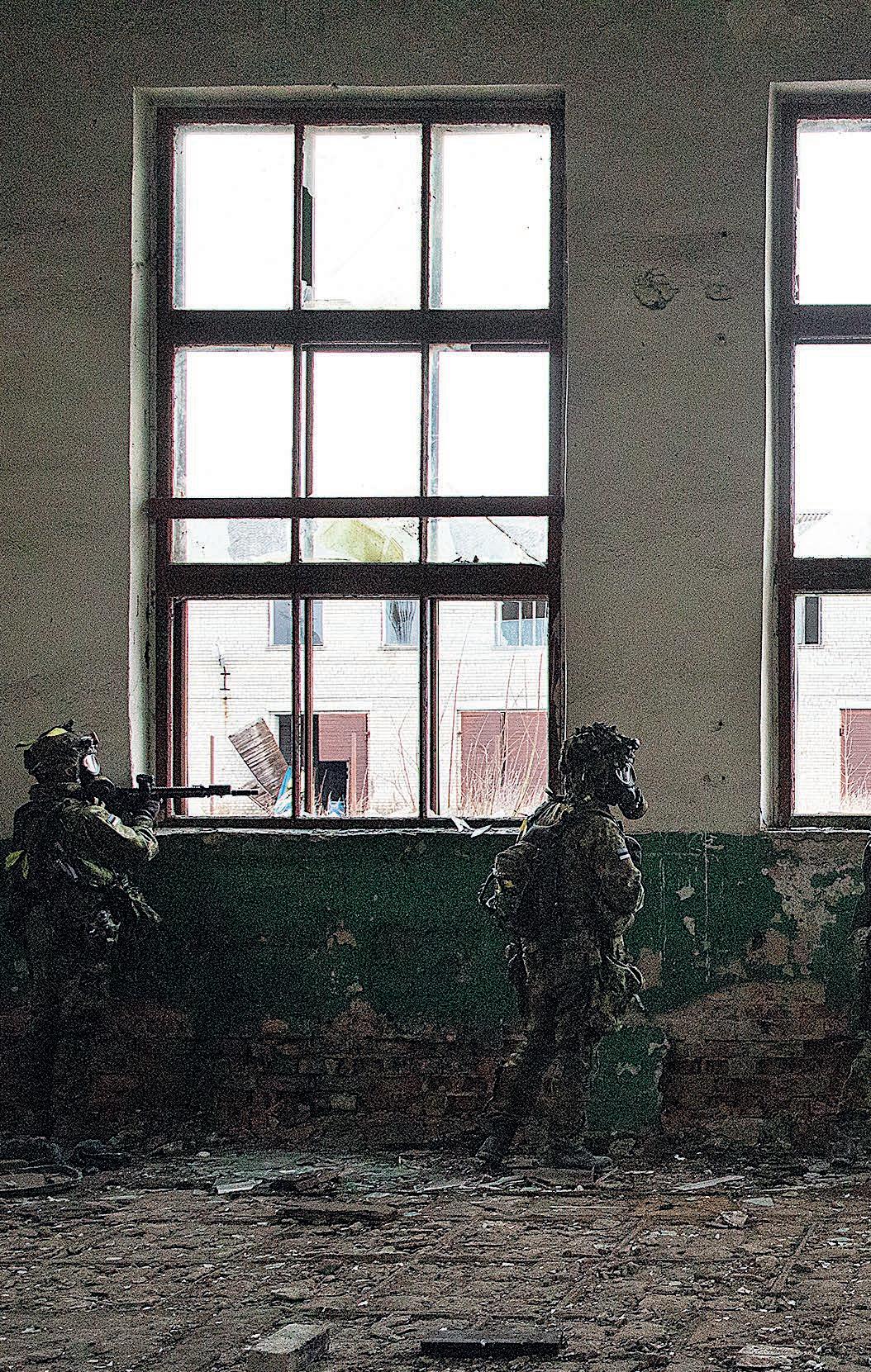
deployment of allies, and immediately join us in defending Estonia in close, deep, and rear area battles. During the year, all the subunits of the division have been able to practice activities and procedures based on their wartime tasks.
The year 2025 was significant for the whole of Estonia, as the division acquired and developed new capabilities. The training of the High Mobility Artillery Rocket System HIMARS, supported by the US Task Force Victory for several years, took a big step forward when our own first HIMARS systems arrived in Estonia. The prior training for active servicemen and reservists, which took place with US systems, paid off. Units were ready for action immediately and did not waste precious time starting training from scratch.
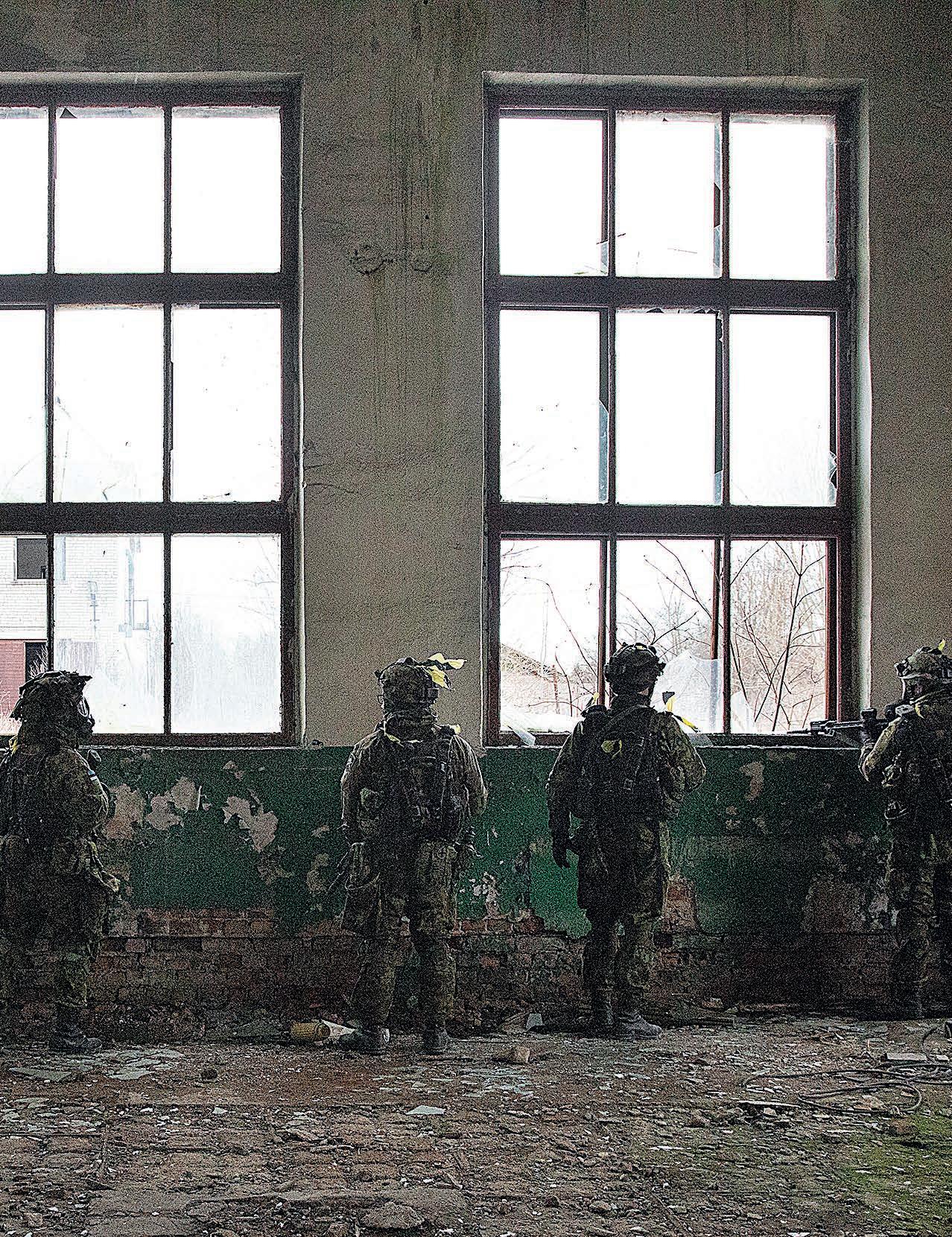
The artillery regiment received new CAESAR wheeled artillery systems, similar to the weapons systems that have performed well in combat on the Ukrainian fronts.
The division's deep attack capability is strengthened by the newly created unmanned air attack battery with its new and continuously updated capabilities.
The continued development of the division's Joint Air–Ground Integration Center (JAGIC) in 2025, which I am very pleased with, contributes to the effective use of the new capabilities.
The Division's 2nd Infantry Brigade continued to deploy new armored vehicles in 2025, which will also continue in 2026. Armored vehicles greatly improve the survival rate of infantrymen. It is worth highlighting the rapid adaptation of the divisions
Headquarters and Signal Battalion to new challenges. The battalion provides communication solutions for our headquarters and command and control posts, and in 2025, it supported our ability to operate and conduct battles in the terrain using the necessary systems. The Headquarters and Signal Battalion also ensured that we had the best solutions for compatibility with allied communications solutions.
We are constantly making efforts to understand how warfare, including ground combat, is changing and how to adapt to it. At the division's Lessons Learned and Learning Experiences (LL/LI) conference in October, we focused on Ukrainian learning experiences in the field of force protection and survivability, including the role of pioneers and drone defense.
Urban combat exercise of the Artillery Battalion Headquarters and Rear Battalion of the Division on March 4, 2025.
Photo: Elizabeth Lindjärv / Estonian Defence Forces
The division's units have started pilot projects to modernize and upgrade our training. As a good example, I would like to highlight the drone training module implemented at the Kuperjanov Infantry Battalion, during which soldiers learn both operations and anti-drone defense. Other units are also implementing new solutions in a new reality. In the same way, we have encouraged subunits to be innovative and to apply information and solutions from the Ukrainian battlefield to their training. A major and decisive effort is still ahead of us in 2026: renewing and updating the organization of training. This concerns both the training of personnel and the implementation of innovation, in cooperation with the Force Transformation Command.
In December, the division's motto was finalized: “TempEST – Deep/Close/Rear –Ready to Win / TempEST – Võiduks valmis!” TempEST was the division's call sign during the US Army's Warfighter series of evaluation exercises, and the division has used the call sign ever since. The division operates in the deep, close, and rear areas.
The main lines of action in 2026 are maintaining the level, continuing to develop capabilities and prepare for combat duty, which is part of the overall plan, and working to implement changes to the training system. The division has the will to fight, and we certainly have the will to win! We are ready to win in deep, close combat and in the rear. ‖
RAUNO VIITMANN
Lieutenant Colonel, Fire Support Lecturer, Chair of Tactics, Defence Forces Academy
ANDREI ŠLABOVITŠ
Major, Section Commander of the Artillery Regiment Headquarters of the Division
The artillery was restructured in 2025, and instead of a peacetime battalion, we now have an artillery regiment that consolidates the command and control of all indirect fire capabilities. The last time changes on this scale were made was more than a century ago, during the War of Independence. We have been handed very big boots to fill, given the tasks that had to be solved in the defense of our homeland at the beginning of the last century. Hopefully, the artillery community is worthy of these challenges.
The need for structural change in the artillery has been discussed for years. Initially, timid thoughts and modest expressions of opinion in a smoking area or in an environment were formulated on paper during the creation of the Estonian Division. However, it was still over two years before the regiment as such saw the light of day. The reason for the delays can be attributed to Estonian caution and mistrust of anything new. "Measure nine times, cut once," as the saying goes.
Various structural drawings were made and brainstorming sessions around the campfire, as seen in the film "Malev", were organized. All of this was eventually formulated into a unit that brings together fire support systems that support our land defense units, brigades, and allies when needed and exceute close and deep fires missions.
The unit was officially established on August 1, 2025, and initial feedback is that it was the right decision, but only time will tell whether the capability solution justifies itself or whether it is an interim step before the creation of an artillery brigade. The root cause of the reorganization was the increased number of weapons systems to be maintained and trained to be used. The existing structure was inadequate, given
Barbara, the patron saint of artillerymen, was very gracious in 2025. Artillery rocket systems, unmanned aerial vehicles, and 155 mm CAESAR howitzers arrived in Estonia.
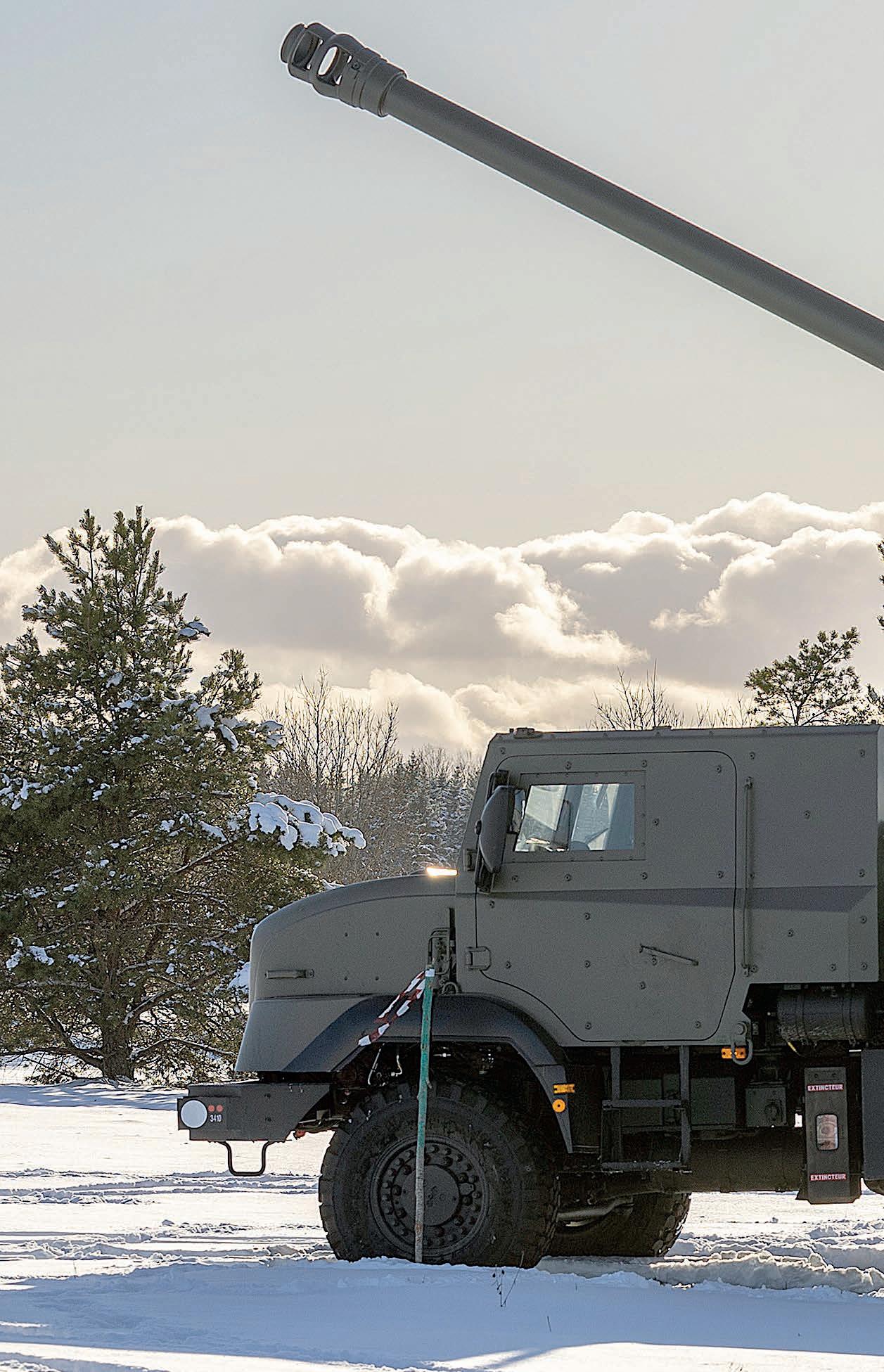
the increasing number of tasks and the need for coordination that accompanied the creation of the division.
ARRIVAL OF CAESAR
CAESAR (short for CAmion Equipé d'un Système d'ARtillerie) is a wheeled artillery system produced in France. Translated into Estonian, it means a cannon mounted on a truck. There is charm in simplicity! This weapons system can be considered one of the success stories of the full-scale Russian Federation–Ukraine war.
FROM BATTALION TO REGIMENT
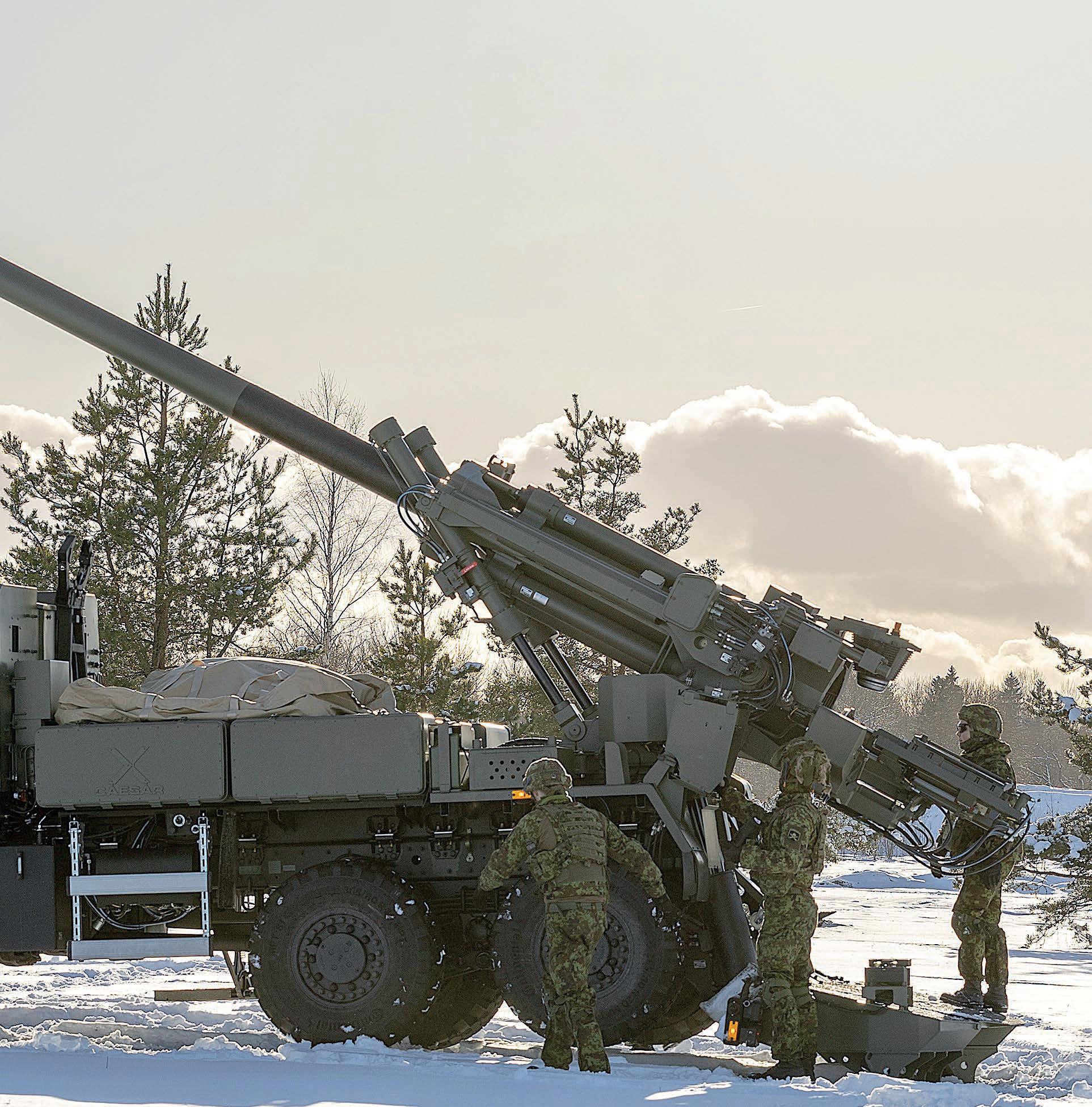
They have been supplied to Ukraine in triple digits by various countries in different configurations, which means that they are currently the most widely used wheeled artillery systems in the world. In Europe, it is Ukraine that currently has the largest number of them in service. Prior to February 2022, there were many who doubted whether the wheeled artillery system would justify itself in high-intensity warfare. It was assumed to be designed more to the requirements of warmer climates and counter-insurgency operations. Information
from the Ukrainians refutes these doubts, as evidenced by the mass production of their domestic Bohdana artillery system. There were such doubters among the Estonian artillerymen, too, as to which was better, the wheeled platform or the tracked system. It can be compared to the eternal question of which came first, the chicken or the egg. Now that the first cycle of conscription-based training is behind us, it can be confirmed that both types of systems are necessary given our geographical, climatic, and operational demands. Why
Conscripts from the CAESAR firing battery of the Division's Artillery Battalion during live fire exercise.
Photo: Marina Loštšina / Estonian Defence Forces
did Estonians choose CAESAR? This can be answered under the following three points:
1) political dimension, bilateral cooperation with France
2) the most widely used wheeled artillery system in the world, ensuring long-term availability of spare parts
3) the right price and speed of delivery
Negotiations for the purchase of the weapons systems started in March 2024. A contract for the purchase of 12 CAESARs was signed in June of the same year in Paris as part of the EUROSATORY 2024 arms exhibition. For the French, it was the fastest negotiated deal in the history of the sale of CAESAR. The weapons arrived in Estonia in two parts. The first batch arrived in January and February 2025, and the second at the end of July last year.
Such rapid delivery is also a relatively rare phenomenon in the arms industry. It is the first generation of the 6 x 6 CAESAR wheeled artillery system, which was first tested at the beginning of this century and has been deployed by the French Army since 2007.
An 8 x 8 version of this weapon has also been made, and a second-generation version of the 6 x 6 is already in production. For reliability, price, and delivery times, an older version was preferred, which has already proven its worth.
The system is the lightest of its kind in the world, weighing less than 18 tons. The barrel is a 52-caliber, which has become the standard barrel length in Europe. CAESAR will be fully integrated with the domestic fire support software.
Tooru is capable of firing standard ammunition to a distance of 30 km. With the extended range, ammunition can be fired at a range of more than 40 km, and special ammunition even further. As soon as the first howitzers arrived in Estonia, they were used for training conscripts and qualifying ammunition. The intensive spring period culminated in the exercise Hedgehog 2025 (Siil 2025), where our troops were providing fire support in a tactical exercise and were targeted by the opposing side.
During the summer, a second battery of reservists was also trained. Their training took place in two parts: first, a two-week reserve training in July, and then the consolidation of
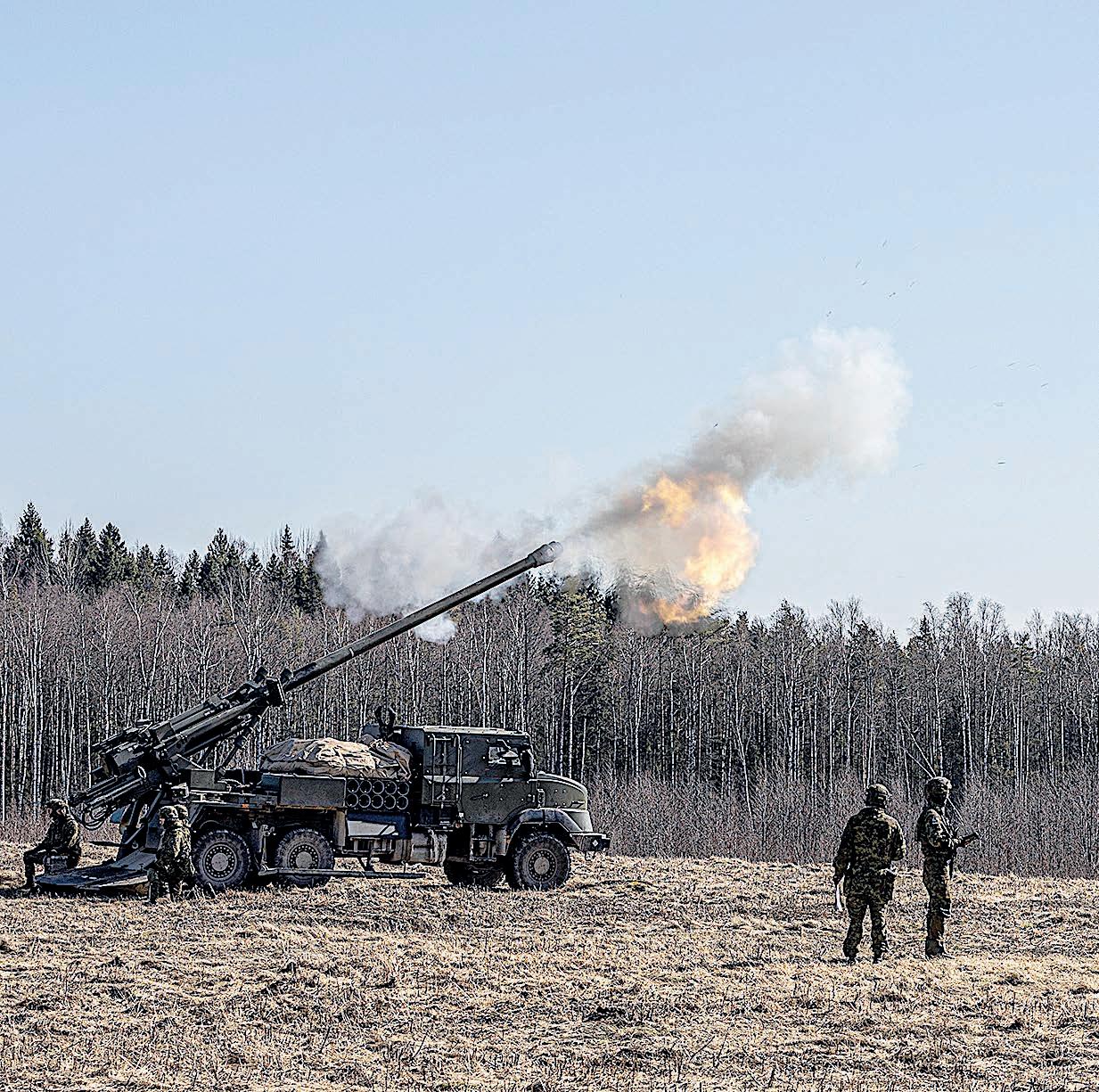
what they had learned in the autumn during Exercise Pikne (Lightning).
The exercise was also observed by the instructors of the French Army's 11th Marine Artillery Regiment (11e Régiment d'Artillerie de Marine), who gave a positive assessment of what they saw and were amazed that our men had only been using the weapons for three weeks. This fact confirmed one of the selection criteria that we followed when we purchased K9 KÕU.
As soon as the first howitzers arrived in Estonia, they were used for training conscripts and qualifying ammunition.
Ease of use lies in the fact that it must be possible to teach the system to conscripts within a given time limit. It is also of particular value during training. The artillerymen of the 11th Marine Artillery Regiment trained our instructors before the weapons arrived in Estonia, so friendly ties have already been established between the units, and they will be strengthened in the coming years. This is also a good example of the importance of bilateral cooperation. The sharing of common mistakes and best practices in the terrain is also mutual.
The weapons systems will also undergo Estonianization in the coming years, which was one of the main reasons for the rapid
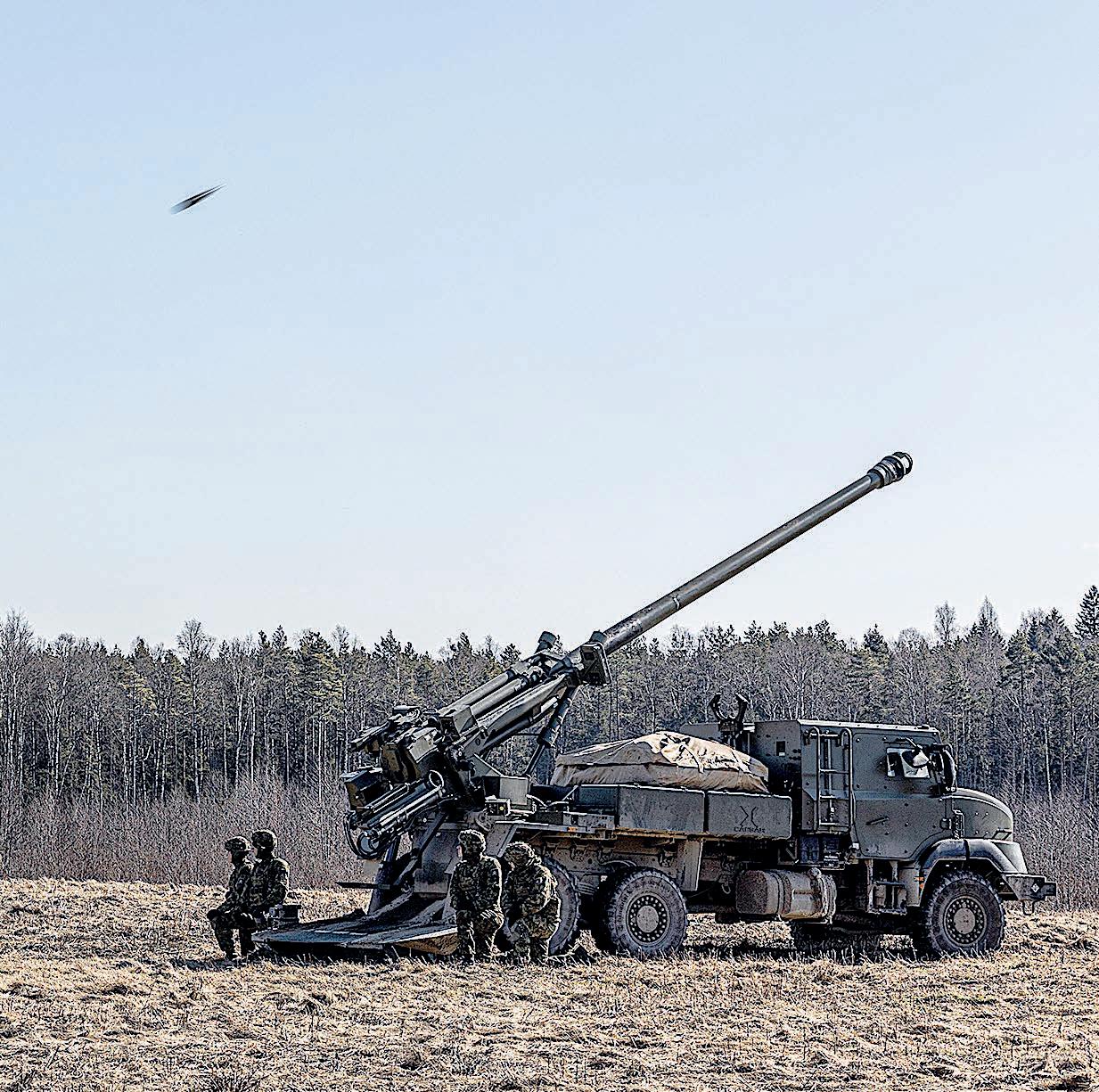
procurement. We bought the weapons in the basic version and started using them immediately, also breaking them. It happens. On the basis of the experience gained, proposals will be made that relate to our climate and user profile. The changes will be made in the domestic defense industry, so this project will also support the development of our own know-how in the defense industry and keep some of the money in Estonia. This is an unusual approach.
Standard minimum operational requirements are drawn up by the military and can take years to negotiate. However, it was important to us that the weapons were delivered quickly and that they could fire as soon as possible; we would deal with the accompanying issues later. The above can be called a start-up approach: creative thinking or flowing water tactics in the context of maneuver warfare. To what extent this was justified is for future generations to decide.
LOITERING MUNITION
To organize a fire support in the division, an loitering munition battery (MÕRPa) was created, the task of which is to carry out
precision against enemy on the enemy's high-value targets. Unlike other deep attack systems, the loitering munitions used by the MÕRPa are capable of operating even if the enemy jams the satellite navigation system.
Its operator can independently locate and identify an enemy using an on-board camera and attack it at a distance of up to 100 km. Maximum flight duration is up to two hours. Training of the MÕRPa started in 2024 and the first firings of the system took place in spring 2025.
In addition, the unit successfully participated in Exercise Hedgehog 2025. By now, the second unit of conscripts is honing the skills of the division's unique air attack weapons system team in Ämari and preparing for the next exercises in Estonia and abroad.
Conscripts of the Division Artillery Battalion's CAESAR fire battery conducted their first livefire exercises, marking the battery's first use of the new self-propelled howitzer.
Photo: Marina Loštšina / Estonian Defence Forces
We know that, if necessary, artillery has several options for carrying out deep attack fire missions. This is the motto of the unit responsible for the combat-readiness of the new Estonian artillery branch: the rocket artillery. On a fire mission, it has to appear as if from under the ground and strike the enemy wherever they least expect it and where it will hurt the most. After completing a rapid fire mission, it must again disappear from the enemys perception to prepare for the next strike. And so on until victory.
QUICK START
A little over three years ago, when the creation of the Estonian Rocket Artillery reached the contract negotiations for the procurement of the M142 (HIMARS - High Mobility Artillery Rocket System), the capability developers started a work process with a double workload.
According to the instructions, everything possible had to be done in order to acquire the skills of use before the new weapon systems arrived in Estonia.
To help with this, the US sent to Tapa its compact rocket artillery unit Victory, assembled on the basis of its 41st Artillery Brigade's rocket artillery battalion stationed in Germany, with which American weapons systems were tested in the Estonian terrain that same winter.
After the first field exercises, it became apparent that the technical characteristics
of the weapons system, designed to be compact and mobile for air transport purposes, offer tactical advantages in terms of concealment in the terrain and exploiting the protective qualities of Estonia’s nature.
It quickly became clear that without the skill of the driver and a good understading for the machine and the terrain, one can quickly find a spot soft enough to get stuck. This, however, means a sharp increase in the fatal risks for what is considered a high-value target by the adversary. Few situations are as dangerous for an artilleryman as losing mobility after a revealing fire mission and remaining in the enemy's field of view.
This experience has been familiar to Estonian artillerymen from the days of towed howitzer batteries, when slippery clay soil and hard-to-spot swampy patches in a seemingly firm field or meadow would keep gun crews focused on weapon and vehicle rescue operations for long periods instead of a quick maneuver and the next fire mission.
Those years of sitting in the mud as a target took on a whole new dimension when we came to understand the optronic capabilities and widespread use of modern unmanned vehicles. Another factor that required changes in the mindset of the "cannon artillerymen" was the fact that while a conventional artillery shot is followed by a flash of flame and a cloud of smoke, after each rocket artillery shot, the tail flame and exhaust plume can be seen up to ten times further away. In even the slightest favorable weather conditions, every firing mission reveals the battery's position.
This allows the adversary to rapidly mobilize resources to find, fix the position
An effective tactical solution for rocket artillery fire units is closely linked to rapid reloading, which in turn challenges combat logistics.
of, and destroy the precision fire support assets that are very troublesome for them but valuable to us. Together with foreign colleagues, it was concluded that the standard position areas of less than 10 square kilometers still used in the doctrines of the major countries do not meet today's tactical requirements from the perspective of survivability and that a new and different approach is needed. An updated operational design had to be developed, for which the development of the newly formed Estonian Division provided a good framework.
An effective tactical solution for rocket artillery fire units is closely linked to rapid reloading, which in turn challenges combat logistics. Weighing a nominal 2.5 tons, the rocket dispenser has to be loaded onto the vehicle quickly and covertly, which in turn is a challenge for the munition trucks and their lifting capacity.
Based on a number of targeted training situations in the field and forest, it can be said without going into too much detail that precise fire, reaching into the depths of the enemy, and effective maneuvering to escape counter-fire are doable by modern rocket artillery but more difficult than previously thought. It requires:
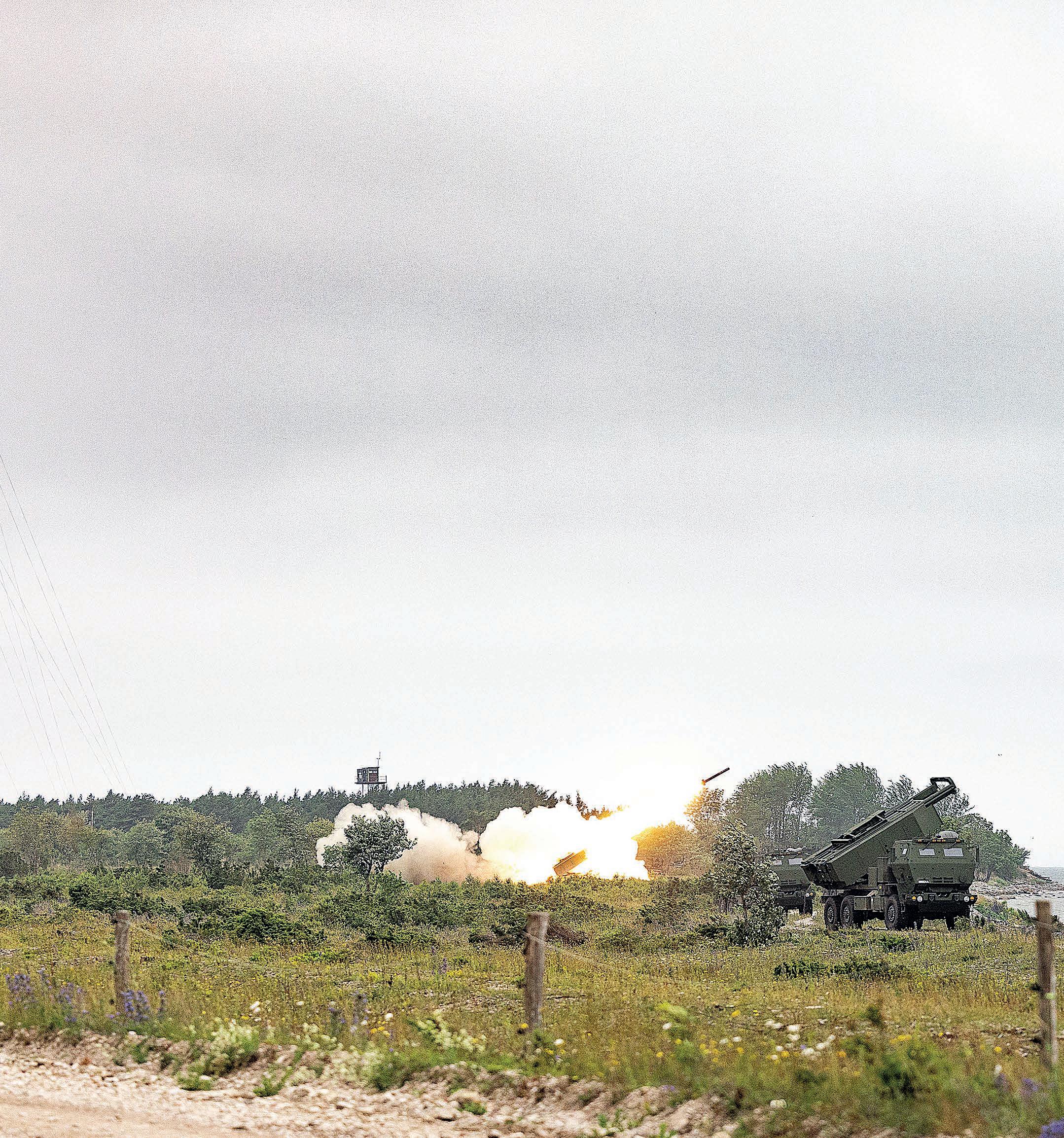
On July 11, 2025, the reservists of the Division's Artillery Battalion conducted the first live firing exercises of Estonia's own M142 HIMARS artillery rocket systems.
Photo: Maria Tammeaid / Estonian Defence Forces
• task setting that is clear and has realistic targeting to enable purposeful planning of limited ammunition;
• clear battlefield coordination between all elements and used (including airspace)
• position area preparation
• for security
• for unimpeded movement
• to hide from view
• for cover from ballast air attacks (drones and loitering munitions)
• for deception
• for fire direction
• to ensure survivability
Fortunately, the aforementioned divisional framework and the rather tight but flexible exercise schedule have provided an environment for testing the best options on an ongoing basis. This, in turn, makes it possible to recognize that the tactical doctrine is not ready, but it is relevant.
SPECIALISTS FROM THE RESERVE
In addition to the tactical challenges, the rapid manning and training of the unit proved to be a challenge. This is where our main force, the reservists, came to the rescue. Thanks to the continuous training of artillery units since the late nineties, we have a respectable base of mature reservists with basic artillery knowledge and skills.
Skilled reserve artillerymen also have the experience to adapt to multiple weapons systems, as previous training usually required knowledge and use of at least two guns. The most motivated fighters who had proven themselves in previous reserve service and were willing to perform tasks that required a greater than usual and voluntary contribution to training could be selected from them.
With the participation of the latter, nearly twenty training events were organized, mostly together with the Americans, during which the necessary basic skills were acquired in order to be ready to quickly achieve initial combat capability when the weapons arrived.
Of course, individual combat shooting training, combat medicine, infantry tactics, air defense, and other skills that have been needed during the ongoing Russia–Ukraine war were updated. Based on the
Thanks to the continuous training of artillery units since the late nineties, we have a respectable base of mature reservists with basic artillery knowledge and skills.
experience of using Western rocket artillery systems that have reached the Ukrainian front and the learning points identified in Estonia in cooperation with the Americans, it became clear that a technically advanced (unmanned reconnaissance and combat aerial vehicles) battlefield requires not only tactical innovations but also a non-standard unit structure to meet all the needs of demanding fire support tactics.
By the end of 2025, our weapons systems had arrived and the first firings and tactical exercises had been successfully carried out as a test for both humans and machines. We are currently procuring another weapons system from a reliable South Korean partner. Although the M142 HIMARS and the K239 Chunmoo ammunition are not interoperable, the systems are descendants of the same family, which makes training similar and allows the same type of command, communications, and logistics to be applied at the unit level. Much of the work to achieve full combat capability is still ahead, but the momentum is there and the guidelines and opportunities to test it both at home and abroad are there.
Estonia's resources are limited but diverse. Our variable nature and smart and dedicated people make it possible to use even complex and expensive systems in an effective and sustainable way. To do this, we must have foresight and be quick and tenacious in both spirit and strength.
We have to know ourselves and our opponent technically and keep our good allies. We need to be able to understand nature and the battlefield, and based on that, make all the right decisions and implement them. All this to reach out from nowhere to everywhere to bite the opponent in the most painful way, should they have bad intentions about us. ‖
The Kuperjanov Infantry Battalion has identified many lessons learned from the war in Ukraine and has made various changes to its structure and training based on these. Below are the main ideas on the implementation of unmanned systems and on improving the effectiveness of the kill chain based on the experience gained in Võru over the past eight months.
LAURI TEPPO
Lieutenant Colonel, Commander of the 1st Kuperjanov Infantry Battalion, 2nd Infantry Brigade of the Division
Combined arms warfare remains crucial, but several novel tools are reshaping its content. Unmanned systems have become a fullyfledged weapon on land, in the air, and at sea. To support and enable this, a range of equipment is needed, which until now have been in the arsenals of higherlevel units. These include high-speed data communication solutions, electronic warfare systems, and the programming and production of simpler components directly in the units. Different combinations of weapons have also become important. For example, the use of air defense, electronic warfare, and indirect fire weapons in combination to create the conditions for logistical operations has become of great importance.
Second, we need to understand that infantry air combat has become an integral part of our battlefield. Low-altitude airspace is as much part of the operational area of all units as the ground, and dominating it is essential to winning battles.
At the same time, this factor places many demands on us: from altitude analysis in the planning process to frequency management and the establishment of airspace control measures in such a way as to create freedom of action for unmanned aircraft. In addition to the aforementioned, an integral part of drone operations, starting from the section and group levels, is also combat in the electromagnetic spectrum: both maintaining situational awareness and offensive and defensive actions.
The third factor is the need to treat drone capability as a comprehensive capability package. To illustrate this point,
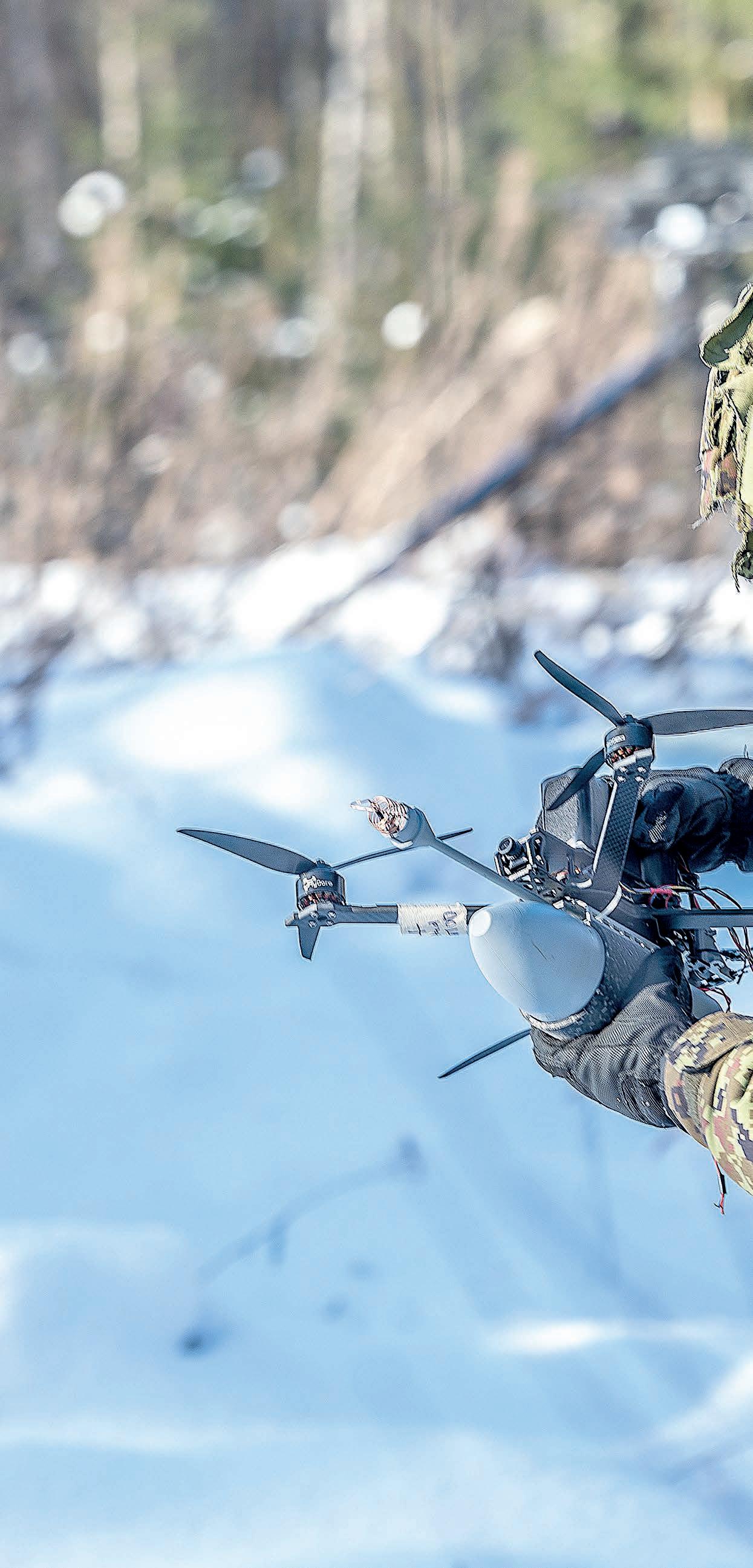
UNIT
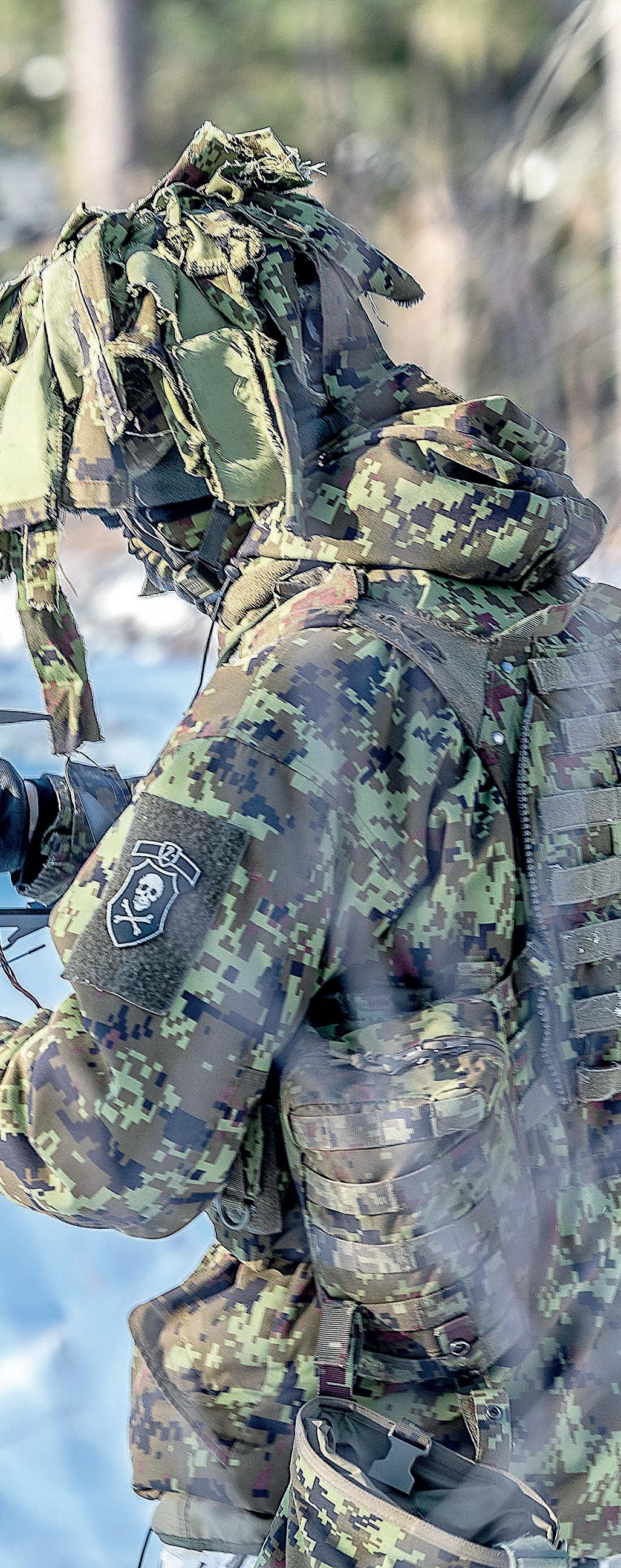
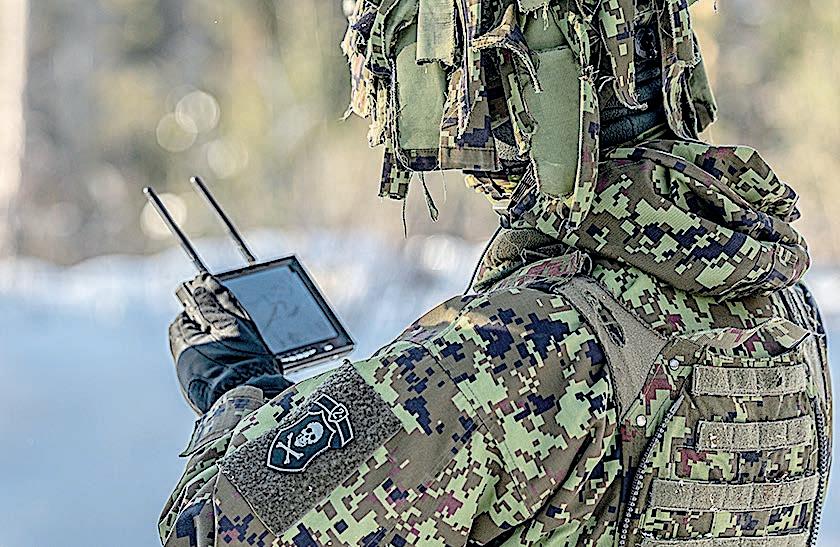
let me quote a Ukrainian officer I know: It is not the drone that destroys the enemy, it is the ammunition attached to the drone that does it.
Successful drone operations require the cooperation of several disciplines under unified leadership: logistics, drone construction and programming, communication links, drone crews, explosive handling engineers, and electronic warfare equipment for creating drone conditions.
We need to understand that infantry air combat has become an integral part of our battlefield.
Speaking of unmanned equipment as a type of weapon, it is also important to understand that, as weapons systems, different drones are as different as, for example, an anti-tank grenade launcher and a machine gun, and therefore require different instructors, training equipment, safety rules, and training grounds. A good example is the first drone sergeant course held in the fall, which qualified several dozen fighters as unmanned aircraft section commanders.
The deployment of unmanned systems has been a very educational and necessary journey. This has taken a lot of work and effort, including overcoming some bureaucratic hurdles and changing the mindset of officers and senior noncommissioned officers. But the prize is clear: a faster and more efficient kill chain, with precision strike capability, to defeat Russian troops on the battlefield and win. ‖
Training of drone operators at the Kuperjanov Infantry Battalion of the 2nd Infantry Brigade of the Division.
Photos: Estonian Defence Forces
BALTIC DEFENCE LINE:
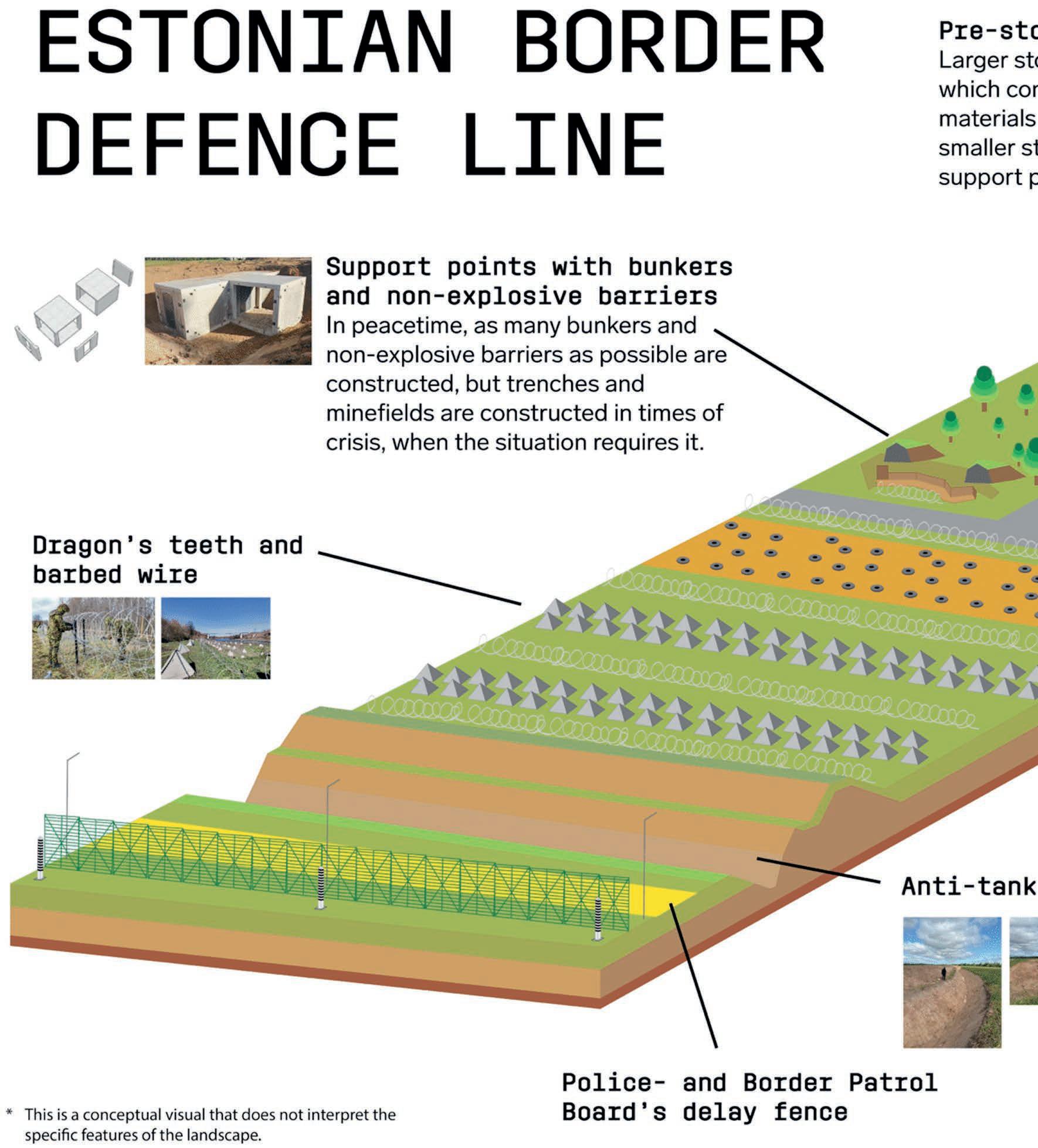
RESPONDING TO THE CHALLENGES OF TIME AND GEOGRAPHY

AINAR AFANASJEV Lieutenant Colonel, Analysis and Planning Department, Joint Headquarters
The main strategic challenge for the Baltic states is time and geography. Russia's close proximity allows the potential adversary to act swiftly and at short notice, while Estonia and the other Baltic states lack the strategic depth that would allow them to give up land for time in a crisis. This is why the initial phase of defensive activities—the preparations made in peacetime and the ability to block the enemy's movement from the first meters—is crucial.
The Baltic Defence Line is a joint initiative of Estonia, Latvia, and Lithuania to strengthen the deterrence and defense capabilities of NATO's eastern flank and to ensure the military defense of the countries from the first meter.
The initiative is based on the principle agreed at the 2022 NATO Madrid Summit to defend allied territory at all times and from the first meter. Although the strategic end goal is the same for all—a solid and uninterrupted eastern flank—the implementation solutions vary according to geography, threat profile, and existing defense planning.
In the Estonian context, the Baltic Defence Line is not a stand-alone "turnkey" infrastructure project but part of the peacetime preparations of Estonia's war plan. It focuses on blocking, i.e., limiting the enemy's movement, slowing and directing it to areas more favorable to the defender, and ensuring better survivability of units under enemy indirect fire. Blocking buys time, reduces the enemy's freedom of maneuver, and supports the firepower of the defense units.
The purpose of the Baltic Defence Line is to ensure readiness against an attack with a short warning, to achieve combat readiness faster than the enemy, to avoid an unfavorable battle, and to gain time for organizing mobilization. Equally important is the better survivability of our units in the first battle; this often determines the further course of the entire operation.
In Estonia, the Baltic Defence Line focuses on the preparation of company-lev-
el strongholds and ensuring their blocking and defense. This includes the planned use of wire, iron, and concrete obstacles and the construction of bunkers to protect personnel. These are not installations randomly placed on the landscape, but solutions integrated into battle plans, where each stronghold fulfills a specific role in a comprehensive defense system.
Peacetime preparedness increases the credibility of deterrence and reduces the risk of military conflict in the region ever materializing.
In practice, this primarily means installing squad bunkers and pre-positioning obstacle equipment in the immediate vicinity of the planned strongholds. In a crisis, pre-stocking of obstacle materials allows for the rapid establishment of obstacles, the closure of maneuver corridors, and the adaptation of defenses to the development of the situation. Infrastructure built in peacetime creates the assumption that, in the event of an attack, one does not start from scratch but relies on a prepared and well-thought-out defense system.
The Baltic Defence Line is therefore a practical and systematic response to our time and space constraints. This is not a symbolic project but a concrete engineering contribution to strengthening Estonia's military defense capabilities. Peacetime preparedness increases the credibility of deterrence and reduces the risk of military conflict in the region ever materializing.
GEOGRAPHY AS AN ADVANTAGE
Estonia is located in an area of special importance within the Baltic Defence Line. Estonia's land border with Russia is around 340 kilometers long, a significant part of which runs along natural barriers –Narva River and Lake Peipsi.
In Northeast Estonia, the terrain is narrow and difficult to negotiate, with a limited road network and natural obstacles. This creates a more favorable situa-
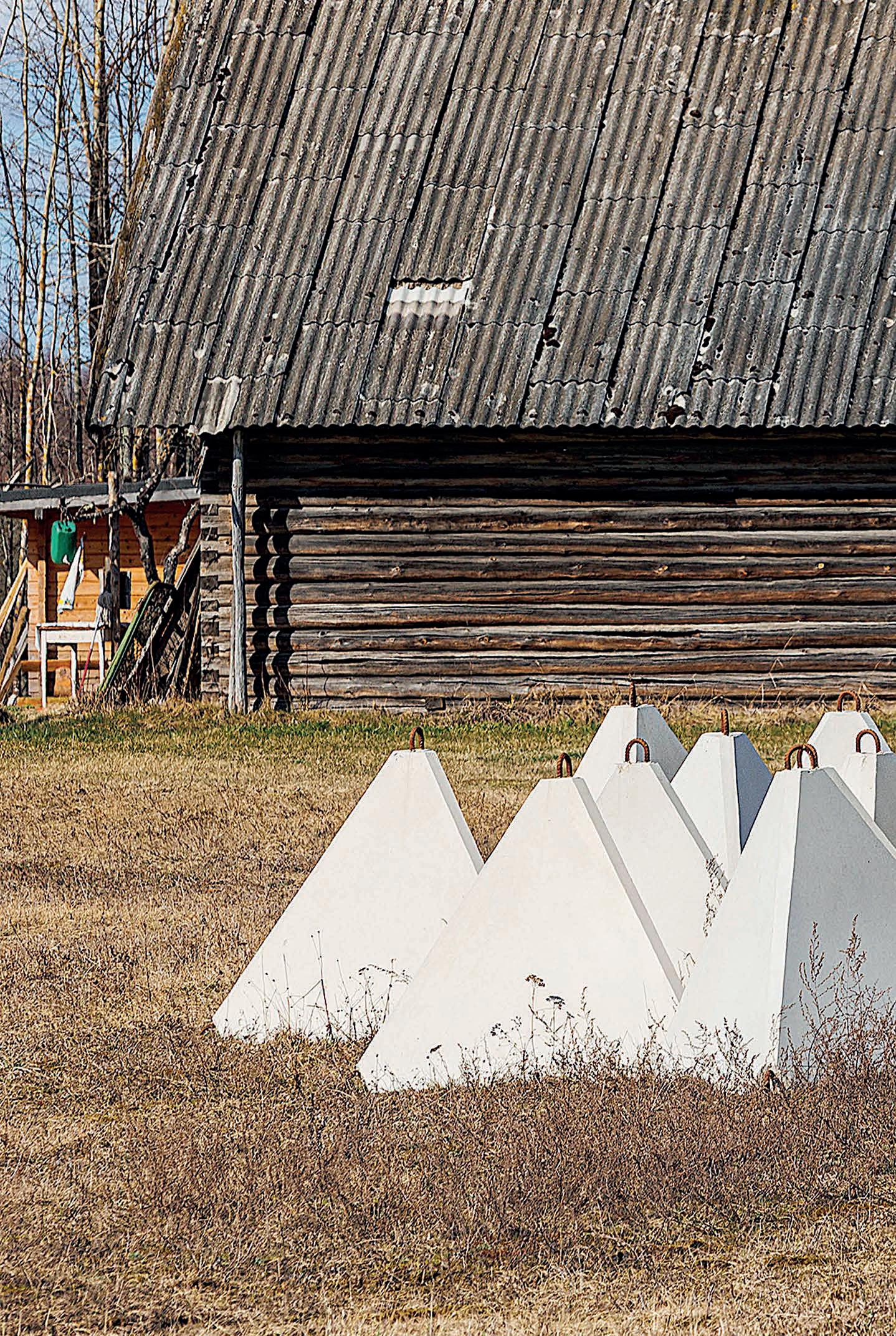
tion for the defender, at least up to the Kunda–Mustvee line.
In Southeast Estonia, the front is wider and there are no major natural barriers before Emajõgi River, which makes the area more advantageous for the enemy in terms of maneuvering opportunities and also links it directly to Latvia. Therefore, the Baltic Defence Line runs along the eastern border and extends deep into the border, forming a multi-layered defense system and increasing the tactical freedom of maneuver and decision-making of the Defence Forces.
CONSTRUCTION IN PEACETIME
The basic principle of the Baltic Defence Line is that effective deterrence is created in peacetime. The construction of defense facilities does not indicate an imminent
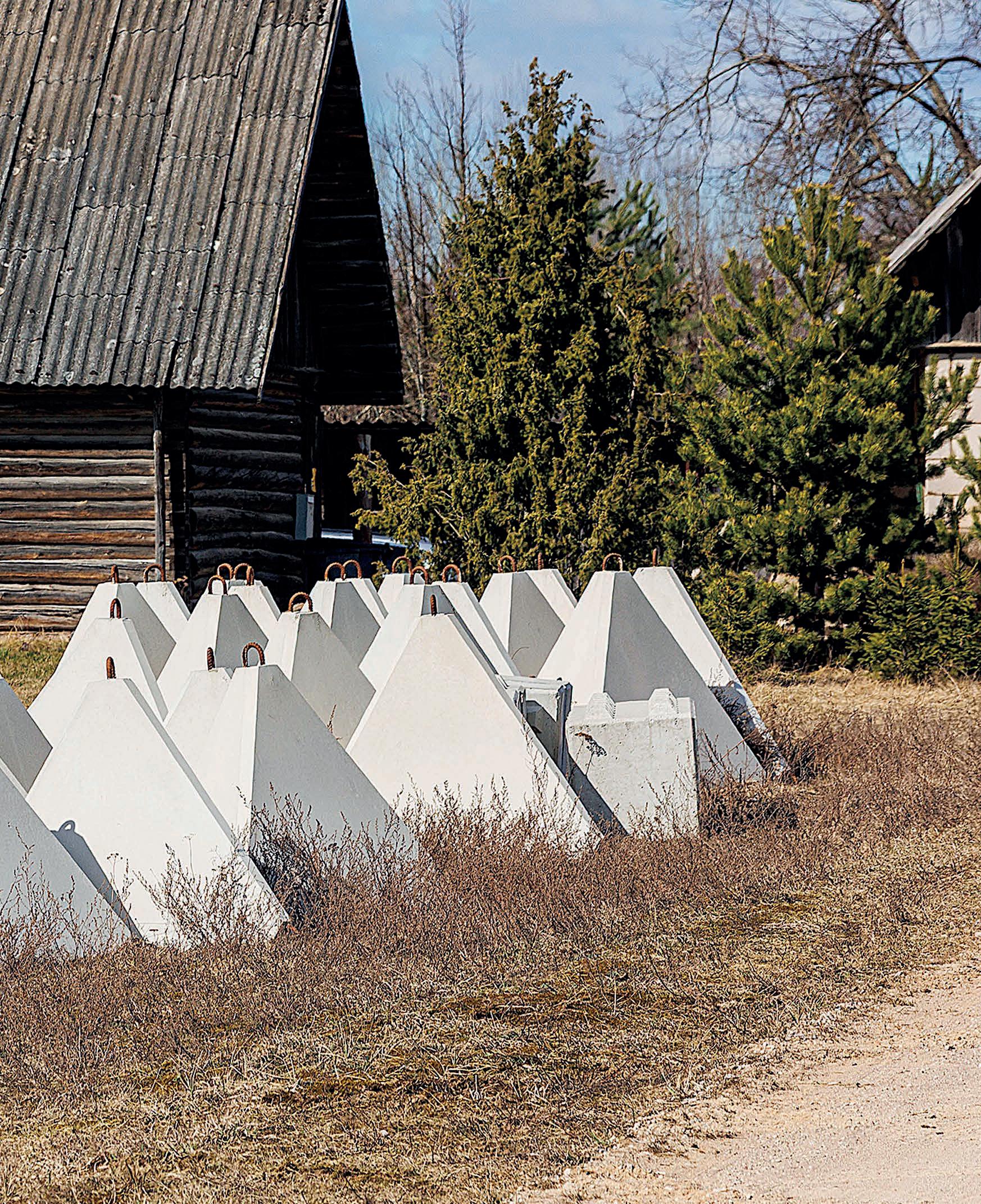
military threat but is part of Estonia's long-term and conscious development of its defense capabilities.
During peacetime, squad bunkers are placed on the terrain, anti-tank ditches are built, and storage areas are created where blocking equipment is prepositioned: dragon's teeth, roadblocks, and wire and iron barriers.
No mines or permanent wire barriers are installed during peacetime, but the necessary readiness is put in place for their rapid deployment. The goal is to achieve the maximum response speed in a crisis and reduce dependence on time-consuming procurement and vulnerable supply chains.
The squad bunkers are designed primarily to protect personnel from enemy artillery fire. In 2024, the Defence Forces
engineers, in cooperation with the Estonian Centre for Defence Investment, tested the bunkers' resistance to controlled demolition. As a result of the tests, a standardized and modular panel solution was chosen, which allows for quick production and installation.
The year 2025 marked the beginning of the practical establishment of the Baltic Defence Line in Estonia. The locations of bunkers and strongholds were determined, the construction of storage areas was started, and the first sections of anti-tank ditches were dug.
In Võru County, the first squad bunkers were installed and permanent obstacles were built on the banks of Narva River—the first structures in the terrain that were ready for use.
The construction of bunkers and ditches will be carried out in stages. The first solutions provide valuable feedback on the procurement process, the installation methodology, and the suitability of the solutions in a real environment. Between 2026 and 2027, a significant increase in capacity is planned, with additional strongholds and up to 40 kilometers of anti-tank ditches in areas where the conditions for enemy movement are more favorable.
DETERRENCE AS THE MAIN GOAL
So-called "dragon's teeth" stockpiled in Setomaa as part of the Baltic Defence Line, used to prevent the movement of equipment.
Photo: Arvo Meeks / Lõuna-Eesti Postimees / Scanpix
The central objective of the Baltic Defence Line is conflict prevention. Visible, systematic, and deeply constructed defense infrastructure sends a clear message of readiness to defend every meter of our territory. The time provided by obstacles and fortifications allows for the mobilization of units, the arrival of allied forces, and the coordination of defensive activities.
Preparedness created in peacetime is the best guarantee that a military conflict will not break out in the region. The Baltic Defence Line is not a temporary project but a long-term and evolving defense capability that strengthens the deterrence of Estonia and the entire Baltic region and increases the likelihood that potential aggression will be stopped before it achieves operational success. ‖
The organization of collective military training, of which exercises are a central part, prepares force elements to perform military tasks according to defined standards.
INTERNATIONAL EXERCISES MAINTAIN READINESS
MAREK KOITLA
Lieutenant Colonel, Chief of the Exercises Section of the Training Department of the Joint Headquarters of the Estonian Defence Forces
The broader objective of the exercises is to ensure that NATO has the necessary number of deployable, interoperable, and sustainable forces equipped, trained, exercised, and commanded to the Alliance's requirements.
Exercises are an integral part of the Defence Forces' daily activities, allowing units to practice cooperation in different situations and operational environments. As a member of NATO and within the framework of international defense cooperation, the Estonian Defence Forces regularly participate in international exercises, a significant part of which also take place on
Estonian territory. Last year, the Defence Forces participated in a total of 77 international exercises, of which nearly a third took place in Estonia. The Navy participated the most (18 exercises), followed by the Land Forces (14 exercises).
A significant part of the international training was the STEADFAST series of exercises led and organized by NATO's Supreme Headquarters Allied Powers Europe (SHAPE). These exercises are aimed at enhancing the readiness of NATO allied response forces and strengthening the Alliance's deterrence and defense capabilities in different scenarios. The Joint Headquarters of the Estonian Defence
German
Air Force NH90 transport helicopters taking part in the NATO exercise Griffin Lightning 2025.
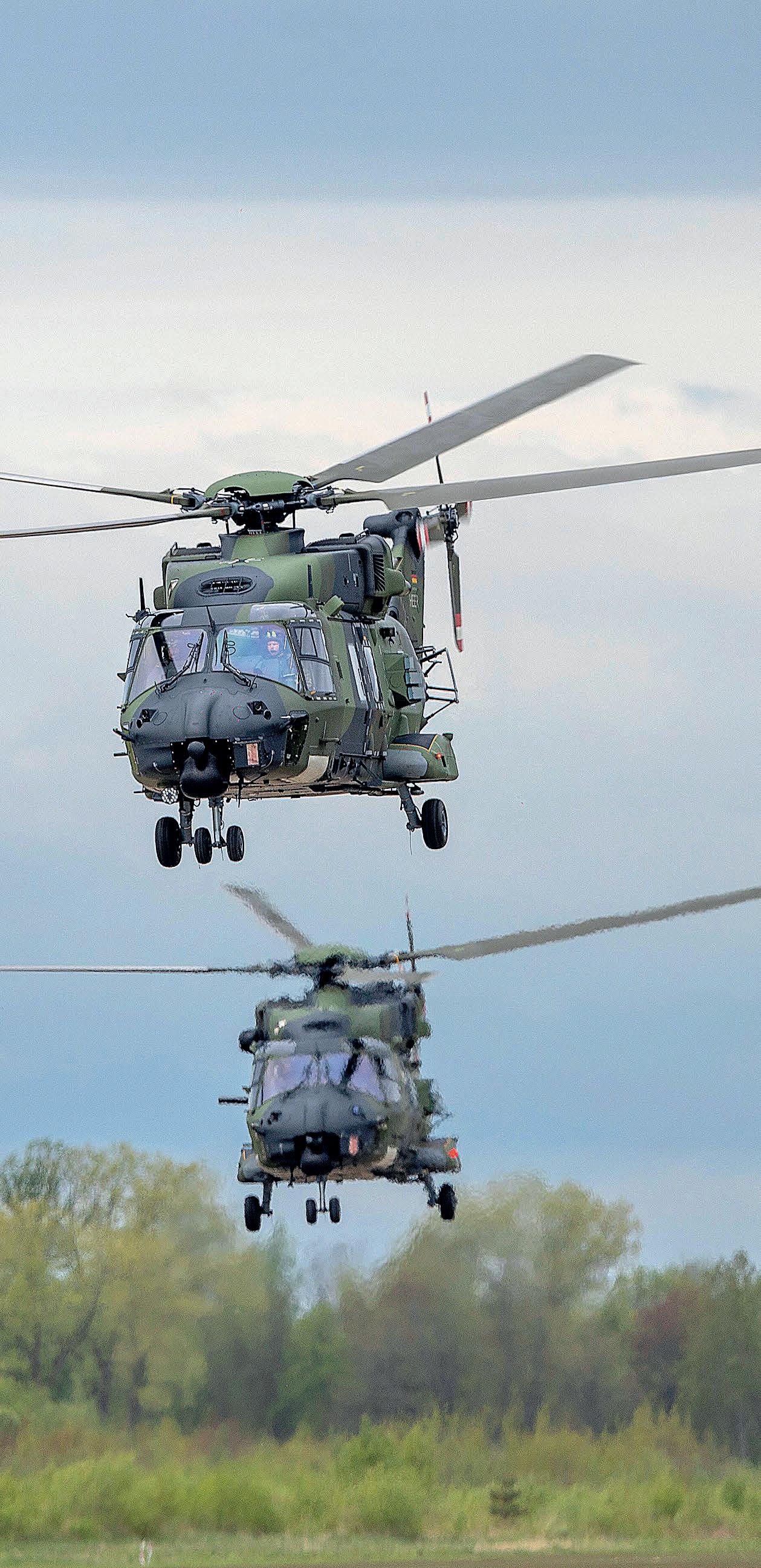
Forces, together with representatives from the Ministry of Defence, participated as a national response cell in the Steadfast Deterrence 2025 (STDC25) and Steadfast Duel 2025 (STDU25) exercises, representing the Defence Forces' plans and national positions in various areas in the event of an escalating crisis. This allowed for practice in coordinating decision-making processes and plans within NATO's unified chain of command.
STEADFAST DETERRENCE
Exercise STDC25 was aimed at strengthening NATO's deterrence capabilities at the operational and strategic levels, focusing on multi-domain operations in the EuroAtlantic region. The exercise was led by NATO's Supreme Headquarters Allied Powers Europe (SHAPE) in Mons, Belgium, and conducted by NATO's Joint Warfare Centre (JWC) in Stavanger, Norway. Around 5,000 military and civilian personnel from all 32 NATO member states took part in the exercise.
STEADFAST DUEL
STDU25 was NATO's largest command post exercise ever. The exercise, led by the Stavanger-based Joint Warfare Centre and planned by SHAPE, assessed NATO deterrence and defense plans in the EuroAtlantic region. The focus of the exercise was on regional defense in the land, air, maritime, cyber, and space domains. The exercise was unique for two reasons: it was the first operational-level exercise to simultaneously train three NATO joint command headquarters (Brunssum, Naples, and Norfolk), and the first STEADFAST series exercise to test the round-the-clock rhythm of combat. The exercise took place in several locations in Europe and the United States and brought together over 7,000 Alliance military and civilian personnel.
HEDGEHOG AND GRIFFIN LIGHTNING
The largest international exercise of the Estonian Defence Forces in 2025 was Hedgehog 2025 (Siil 2025), organized in May, which was attended by more than 16,000 Estonian and allied fighters. The exercise brought to Estonia allies from the United
Photo: Mindaugas Kulbis / AP / Scanpix
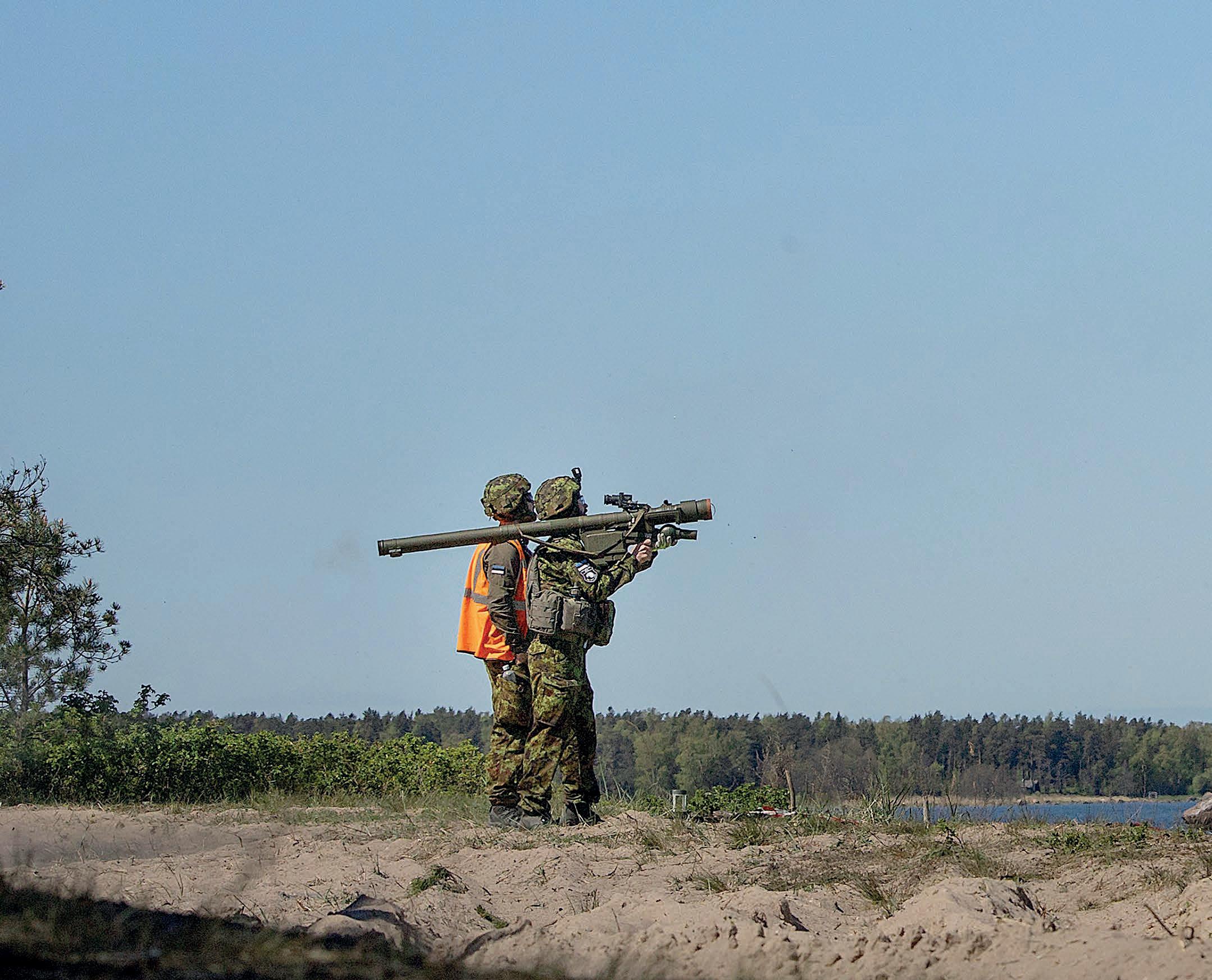
Kingdom, France, the United States, Canada, Latvia, Finland, Sweden, Denmark, Germany, Poland, and Portugal. Observers and instructors from Japan, Israel, and Ukraine also participated.
Hedgehog 2025 took place within the framework of NATO Exercise Steadfast Deterrence 2025 and involved the planning and command of deterrence and defense operations at the strategic and operational levels of NATO Allied Joint Force Command Brunssum (JFCBS). In addition, Hedgehog 2025 was a preparatory exercise for the Estonian Division's participation in the NATO Multinational Corps Northeast tactical exercise Griffin Lightning 2025.
From May 29 to June 13, the Defence Forces Division headquarters participated in the NATO Multinational Corps Northeast-led command post exercise Griffin Lightning 2025, which, among other things, included practice of playing out
war plans in a virtual environment. Griffin Lightning 2025 was also a Defence Forces division evaluation exercise, consisting of several stages: exercise Hedgehog 2025 in Estonia, exercise Crystal Arrow in Latvia, exercise Thunder Fortress in Lithuania, and exercise Dzielny Dzik in Poland.
In addition to army and staff exercises, last year's international training included maritime and cyber capabilities development and interoperability assessment.
FREEZING WINDS
For the Navy, the most important exercise in the Baltic Sea region was the Finnish Navy-led Freezing Winds 2025, which took place in the waters of the Gulf of Finland. The exercise focused on the protection of critical maritime infrastructure and maritime transport routes, and the strengthening of the joint force and amphibious defense capabilities. Around 5,000 military
Live fire exercises of the Piorun short-range air defense missile system as part of the Hedgehog exercise on Rutja beach on May 21, 2025.
Photo: Kaur Kantsik / Estonian Defence Forces
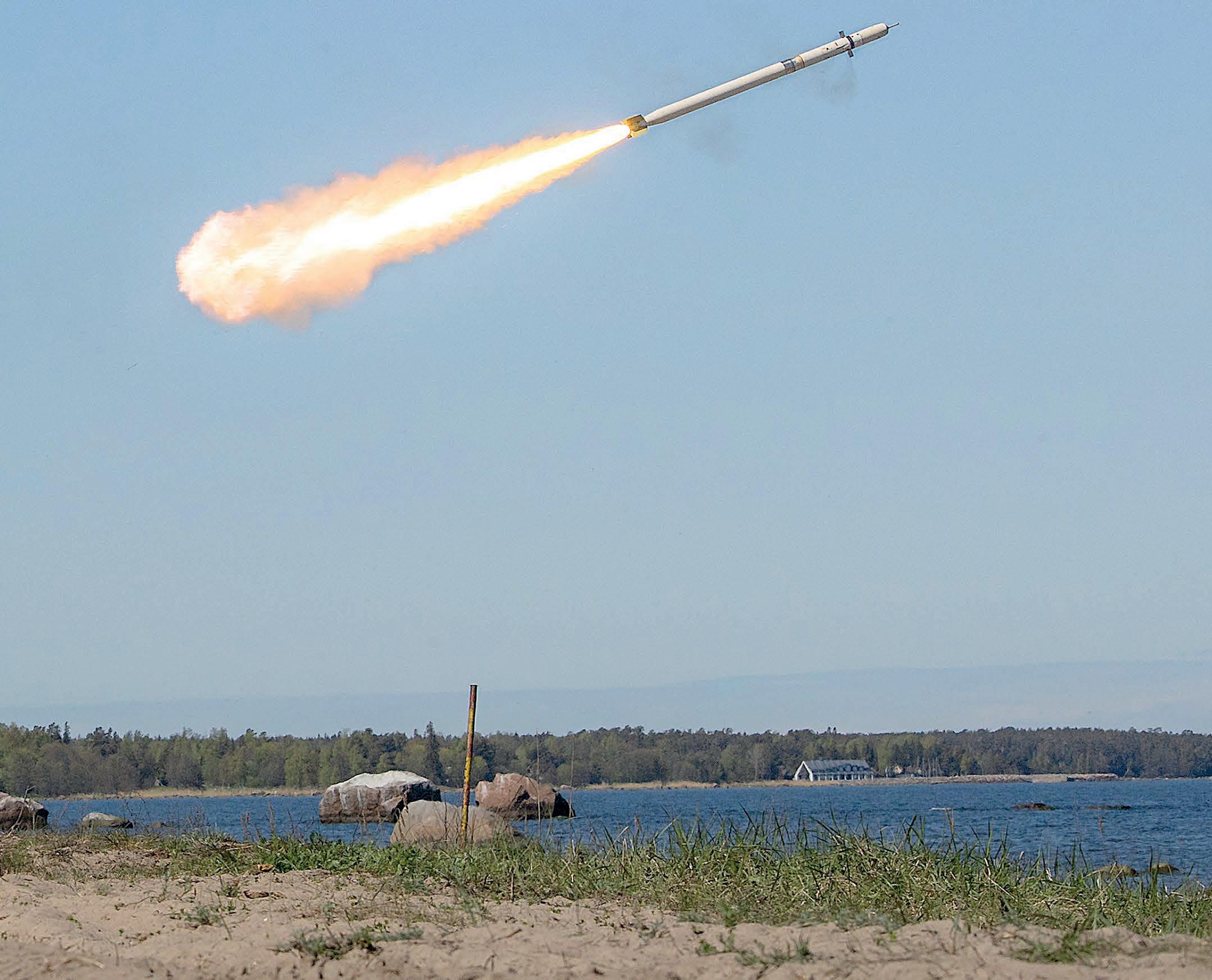
personnel and 20 combat, support, and logistics vessels took part in the exercise, making it one of the most important naval exercises in the region last year. Participating countries included Finland, Belgium, Denmark, Estonia, France, Germany, Latvia, Lithuania, the Netherlands, Poland, the United States, and the Standing NATO Mine Countermeasures Group.
CWIX25
Cyber soldiers, together with defense industry companies, took part in the NATO alliance-wide information and communication technology exercise CWIX25 (Coalition Warrior Interoperability eXploration, eXperimentation, eXamination eXercise), which aimed to test ICT solutions relevant to the Defence Forces and assess their interoperability. The exercise focused on multi-domain operations and accelerating the digital transformation of allies.
For the Estonian Defence Forces, last year's international exercises covered the entire spectrum of NATO command and operational levels, from strategic planning to the assessment of tactical and technical capabilities.
Around 3,000 technicians, operators, and engineers from 40 countries took part in NATO's flagship interoperability assessment exercise in Poland. CWIX25 conducted over 25,000 tests and assessed 573 capabilities and systems across all five operational domains and 18 focus areas, including modeling and simulation, logistics, and medicine.
For the Estonian Defence Forces, last year's international exercises covered the entire spectrum of NATO command and operational levels, from strategic planning to the assessment of tactical and technical capabilities.
Participation in major Alliance exercises as well as in international exercises held in Estonia supported the development of the Defence Forces readiness, the strengthening of interoperability and the consolidation of Estonia's role in NATO's collective defense framework. ‖
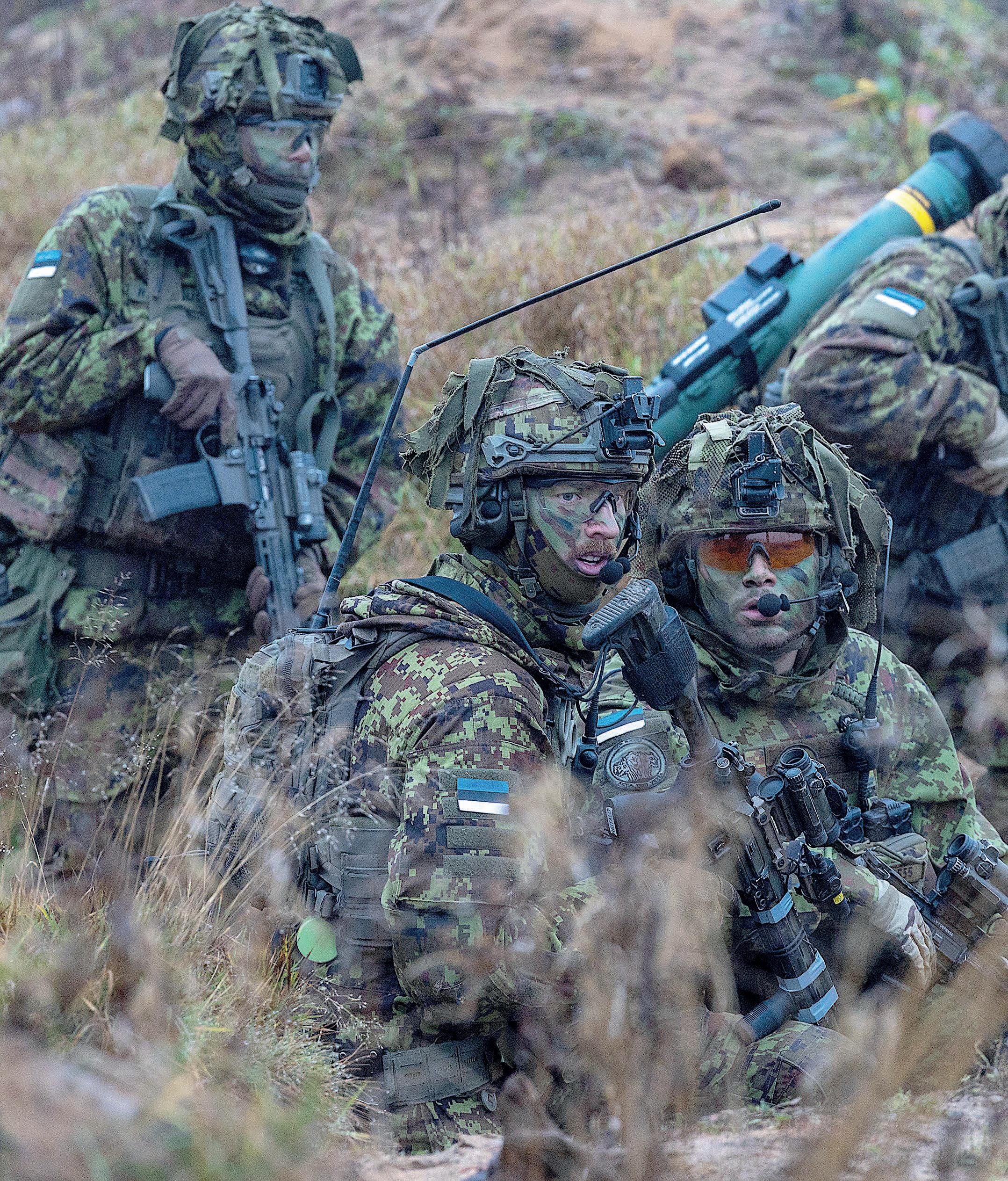
Scouts Battalion units practicing defensive and offensive operations during live fire exercises Teraskilp 2025 (Steel Shield 2025).
The innovations are primarily due to developments taking place in the Defence Forces: the change in the conscription cycle, the introduction of battlefield surveillance, the decision to build the Narva military base, the need to improve the training of our active servicemen and subunits, and much more.
THE 1ST INFANTRY BRIGADE LOOKS TO THE FUTURE
TARMO KUNDLA Colonel, Commander of the 1st Infantry Brigade
The year 2025 was a meaningful and significant year for the 1st Infantry Brigade. It looked like we were continuing with our activities and routines as usual: training and evaluating assigned units, developing and maintaining combat readiness, and preparing to carry out wartime tasks. The reality turned out to be much more eventful, complex, and groundbreaking. We achieved a great deal in a year: both in fulfilling our core mission and in planning for the coming years.
As the commander of the Brigade, I consider this last part to be the most important: shaping the future Brigade. In addition, the 1st Infantry Brigade has specific challenges with manning as well as the Jõhvi and future Narva military base posts. We have now got to the stage in our planning where we know what to do, how to do it, and most importantly, that we are ready to do it, to try a new approach for the Defence Forces.
All this in order to implement all the changes resulting from the vision of the Commander of the Defence Forces and fulfill the Brigade's core mission as well as
possible. Here is an overview of what was done in 2025 and a brief outline of plans for 2026–2027.
During the training period 2024–2025, the 1st Infantry Brigade renewed all its plans: the War Plan, the Combat Readiness Plan, and the Force Protection Plan. It was not about supplementing and refining previous plans; all the plans were given new content and greater flexibility in terms of content, and they were linked together even more coherently. All this at the brigade, battalion, and finally company level.
During the brigade and division exercises, we played through quite a few elements of the plans over the course of the year, and we drew up several backup plans and one alternative plan. In particular, I would like to mention the contribution of the engineer branch to both the planning (calculations, detailed plans down to company level, etc.) and the activities of Exercise Kilp 2025, when the Engineer Battalion built obstacles that remain on the Narva River to this day.
The most important exercise this year was the Decisive Lancer (DELA25), a command post exercise involving the other power structures of the country, organized by the Joint Headquarters of the Defence Forces, where, in addition to playing out the aforementioned alternative plan, it was
Photo: Marina Loštšina / Estonian Defence Forces
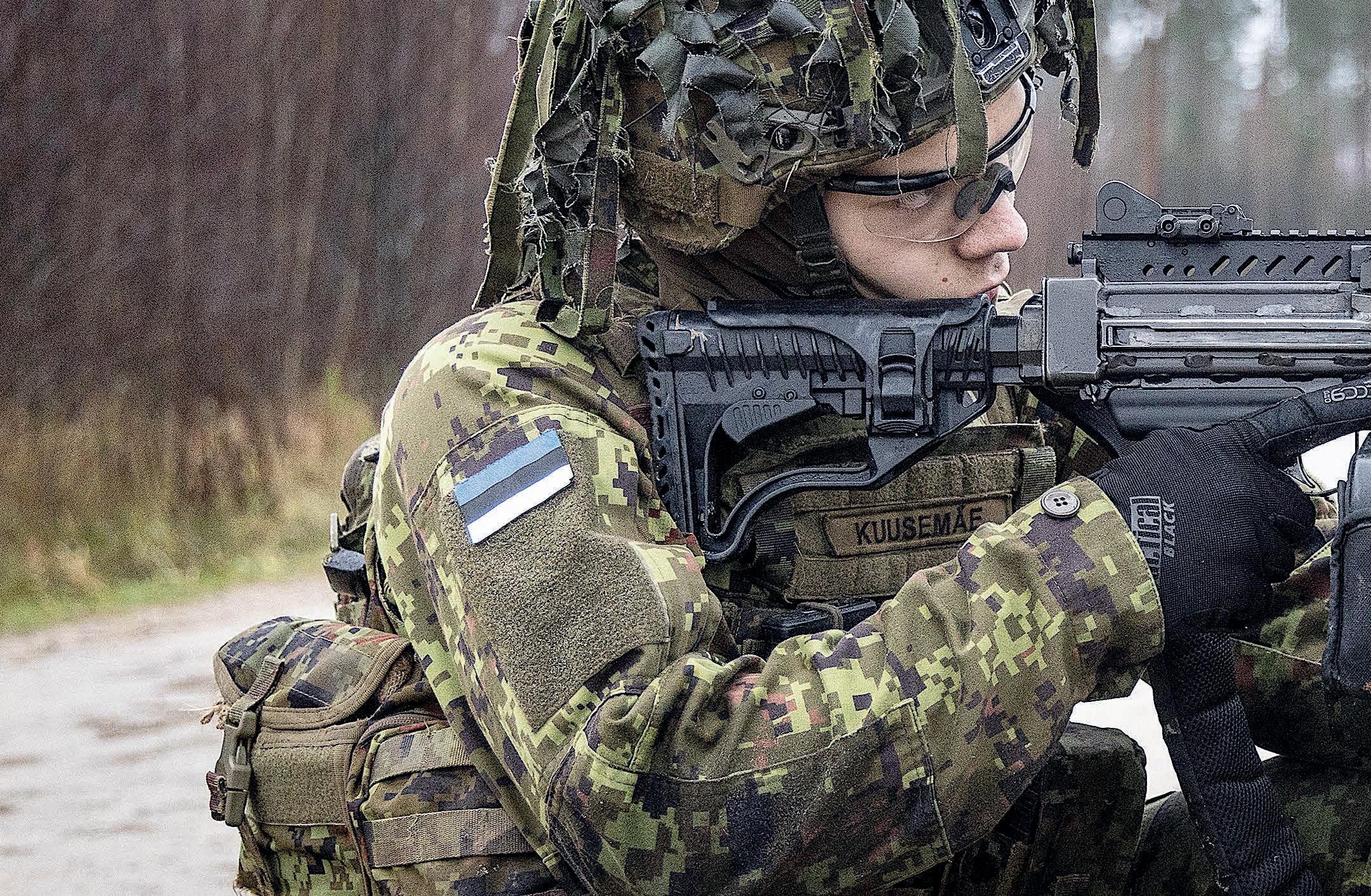
possible to cooperate much more effectively with regional partners, such as the Police and Border Guard Board, the Rescue Services Agency, and the Regional Command North-East of the Estonian Defence League.
One of the key phrases for 2025 for the 1st Infantry Brigade was enhancing cooperation with regional partners. Meetings at the regional level with the police, the Rescue Services Agency, the Estonian Internal Security Service (KAPO), and the Defence League have become routine.
The Kilp 2025 exercise in Narva city, organized by the Regional Command NorthEast in spring, proved to be the best example of a regional comprehensive national defense approach. The Defence League, the Police and Border Guard Board, and the Rescue Services Agency practiced the cooperation in the case of crisis escalation, with the 1st Infantry Brigade subunits (including allies) moving into the area of operations and beginning battlefield preparations.
In the above-mentioned exercise DELA25, we discussed and played out options on how to further enhance cooperation, how to organize command and control and coordination, and how to support each other. Cooperation will continue in the
A student of the 1st Infantry Brigade's junior non-commissioned officer course firing a Negev machine gun at the Kikepera training range on November 11, 2025.
Photo: Marten Lilleorg / Estonian Defence Forces
During the brigade and division exercises, we played through quite a few elements of the plans over the course of the year, and we drew up several backup plans and one alternative plan.
coming years. In 2026, the plan is to match plans and continue practicing common parts.
The Brigade's most prominent activity in 2025 was undoubtedly its participation in the major Exercise Hedgehog (Siil), and in more ways than one. This time, the brigade had to prepare and organize the combat phase of the exercise at the central training ground of the Estonian Defence Forces.
To create the conditions for today's transparent battlefield and the threat of drones, the Ukrainian military personnel also participated in the exercise with their capabilities. The exercise was the final integration exercise for the spring FLF (Forward Land Forces) rotation. In total, more than 5,000 members of the Defence Forces, members of the Defence League, reservists, and allies participated in the active phase of the exercise.
All of them managed to fit, one way or another, into practice at the central training ground. Half of the training squad was given the opportunity to use the laser tag vests, while the other half had to settle for the usual arbitration system. All the scenarios rehearsed were based on plans, provided an opportunity for learning, and offered
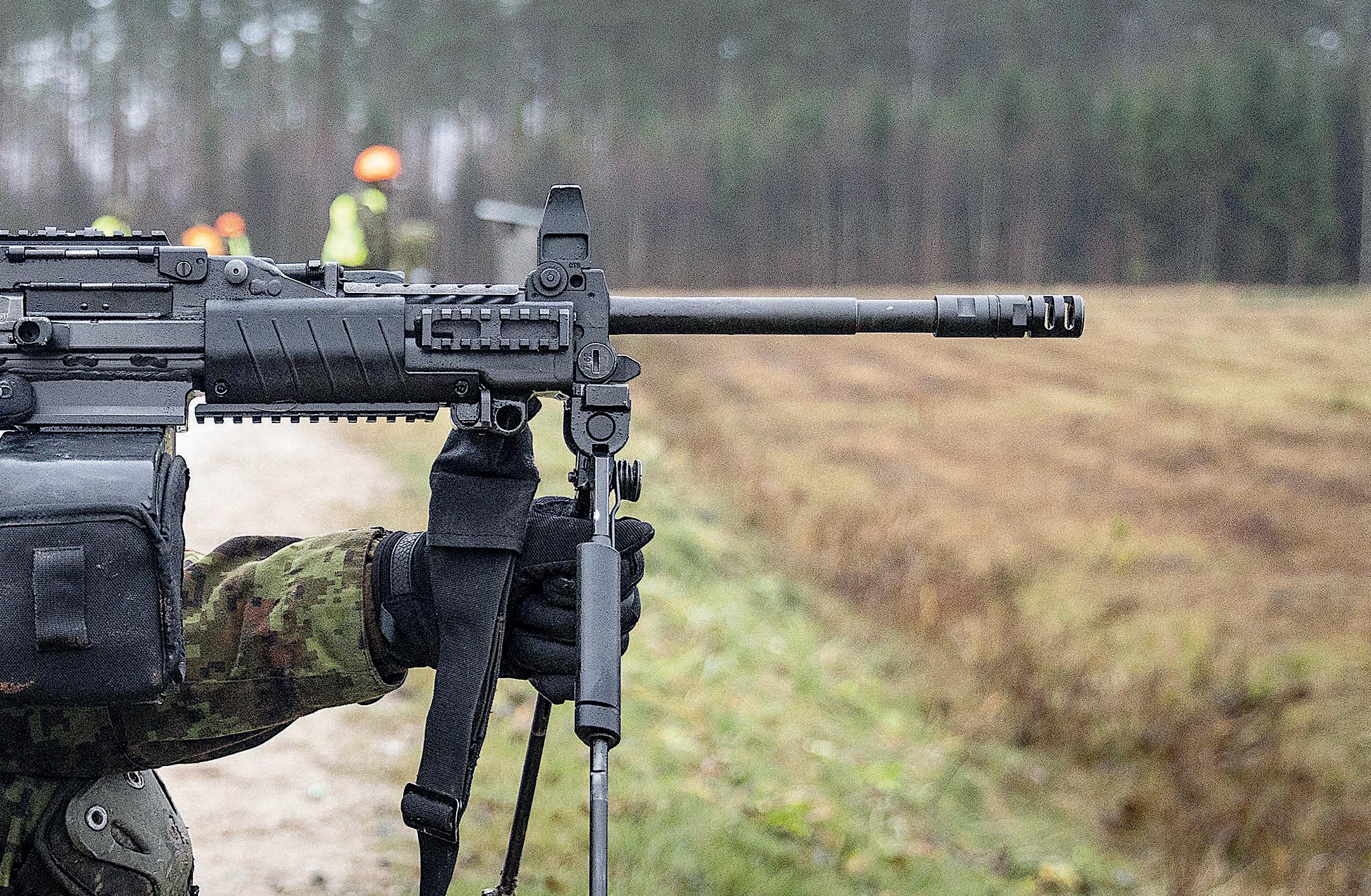
useful information for planning in the second half of 2025. During the exercise, the Brigade’s Headquarters and the Headquarters and Signal Company, the Engineer Battalion, and the Combat Service Support Battalion were assessed positively.
Special mention should be made of the Brigade's Headquarters, the Headquarters and Signal Company, and the Combat Service Support Battalion, which, based on lessons learned from the war in Ukraine, updated their methods of operation at the beginning of the year and then successfully tested them during the exercise. Compared to previous occasions, four chaplains participated in the exercise as part of the Brigade, and under their leadership, we practiced casualty evacuation from the battlefield at the brigade level.
The Kalev Infantry Battalion participated in the exercise in full and undoubtedly successfully, having the opportunity to undergo a dispersed formation, subsequent rapid training, movement to the operational area, and finally, fulfill both a defensive and an offensive role in the Brigade's defensive operation.
During the preparation of the Kalev Infantry Battalion for the 2024–2025 training cycle, we experimented quite a lot with new possible approaches and methodologies in training subunits. I will only highlight the major changes. By the start of the subunit course, we had formed all the companies into wartime formations, which, in the case of an infantry company, meant that the only active servicemen on the company floor were the company commander and the sergeant. With this approach, we created the opportunity
and obligation for platoon commanders and seniors in military service to independently command and be responsible for their platoon. We formed training groups from the remaining servicemen, who conducted the subunit's course based on the battlefield/ location. In doing so, we significantly increased the number of repetitions of infantry squads and platoons and improved the quality. In the Hedgehog 2025 exercise, the Kalev Infantry Battalion reserve units that were formed followed the same routes and the same logic.
It is safe to say that such an approach has significantly increased the understanding of conscript reserve commanders about their role, their competence, and the self-confidence that they have gained through experience. Another major change was the organization of a Junior Staff Officers Course (NSOK) for selected ensigns and their deployment to the headquarters of the 1st Infantry Brigade and its battalions.
The project worked best at the headquarters of the Kalev Infantry Battalion, where the battalion's two sections were commanded by ensigns. In addition, platoon commanders and platoon sergeants, formed by Kalev Infantry Battalion con-
scripts, were given training in organizing range shooting.
Along with this, they were required to organize reinforcing shooting for their platoons independently, without the participation of active servicemen, at the Jõhvi military base shooting range. Third, I will highlight the methodology and content of the organization of the Basic Soldier Course (SBK) and the Junior Non-Commissioned Officer Course (NAK) in the first half of the conscription cycle. This is from the perspective of the practicality of the training, its
Compared to previous occasions, four chaplains participated in the exercise as part of the Brigade, and under their leadership, we practiced casualty evacuation from the battlefield at the brigade level.
relevance to wartime tasks and the involvement of active servicemen.
We continued the development and testing of the organization of the Basic Soldier Course in the summer and fall of 2025 in Jõhvi under the leadership of Viru Infantry Battalion. The summer Basic Soldier Course training was carried out by specially formed training groups. Training company leaders and one active serviceman per group were responsible for education, adherence to the daily schedule, and general administration. A nearly 360-degree evaluation carried out at the same time gave a good selection for the Junior Non-Commissioned Officer Course. In conclusion, this is the right way forward to improve the quality of general training.
Simultaneously with the Viru Infantry Battalion, the Combat Service Support Battalion in Tapa also developed the organization of the Basic Soldier Course. The overarching idea was the complete abandonment of classroom lessons; training was planned and organized in a nested way, with each lesson building on the previous one and providing input for the next. At the beginning of 2026 and during the summer, the aim is to combine both approaches and arrive at the best
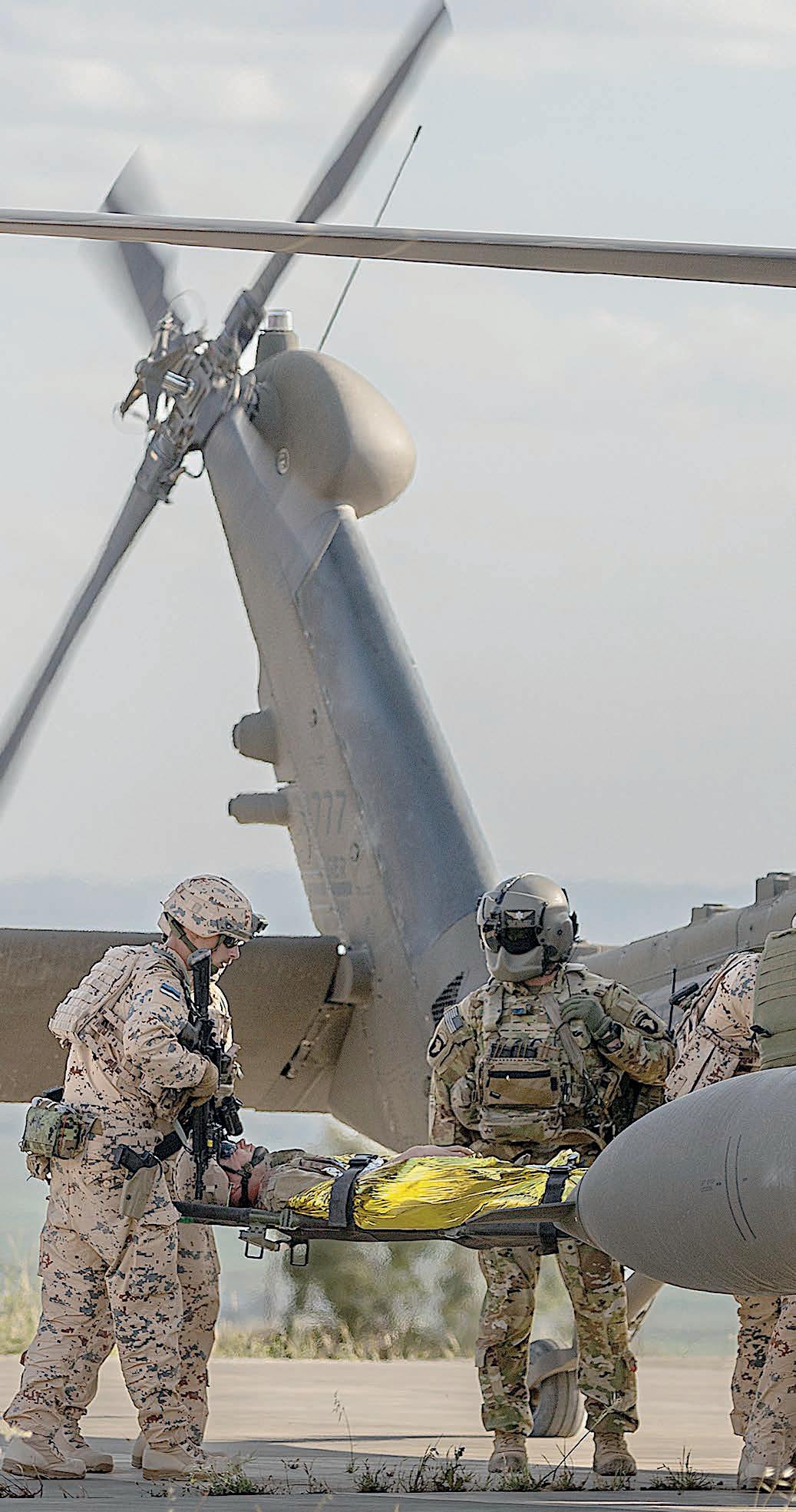
possible Basic Soldier Course solution, both in terms of content and training organization methodology.
The year 2025 was also eventful in terms of international cooperation and contributions. In September, the Scouts Battalion ESTCOY-22 completed the international operation in Iraq and is now preparing for a possible mission as part of the Coalition of the Willing in Ukraine. Participation in the training of Ukrainian defense forces in the UK ended, but continued in Poland.
Estcoy-22 cooperative exercise with US and Italian air units on April 16, 2025. The photo shows Estonian soldiers with a US UH-60 Black Hawk helicopter.
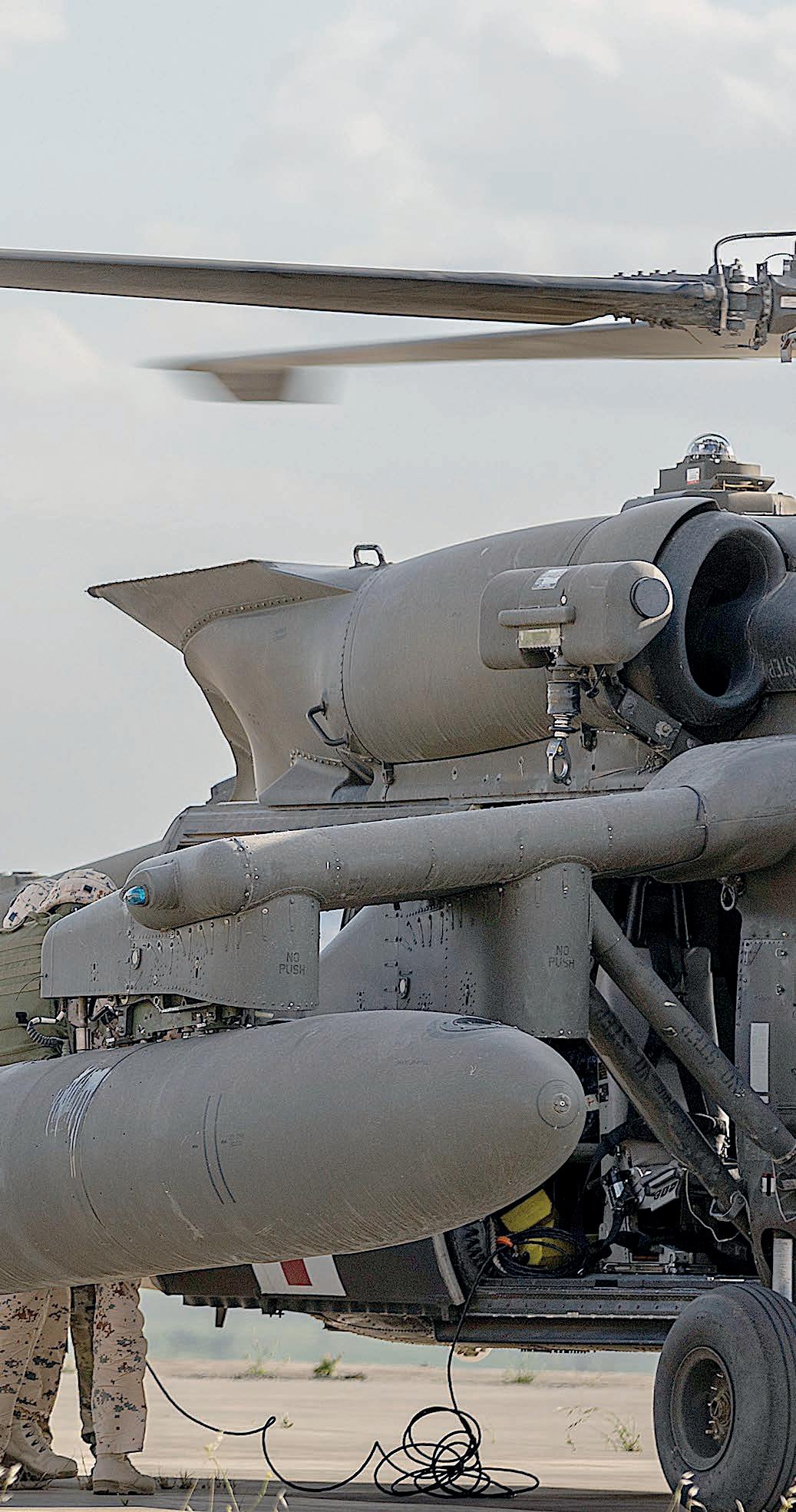
The mission of the US HIMARS Task Force Victory in Tapa ended in the fall. Soon after, a tank company (6th Squadron of the 9th Cavalry Regiment (6-9CAV)) in South Estonia became the new US unit in Tapa, which has given both the FLF Battle Group and the Scouts Battalion the opportunity to practice working with and against tanks. Over the years, the rotation and integration of FLF battle groups into the 1st Infantry Brigade has become routine.
Despite this, each battlegroup takes its own time – each unit has its own ambitions, needs, and specificities. When we change our plans, their plans inevitably change. If their unit’s type, composition, or armament changes, the Bri-
gade's plans will also change a bit. In 2025, the most instructive exercises for both the battlegroup and the Brigade were Winter Camp (Talvelaager), Shield (Kilp), Hedgehog (Siil), and Bold Panzer. The elements of the battlegroup, as well as the French light infantry company regularly stationed in Tapa participated in the Regional Command North-East exercise Kilp 2025.
In 2025, cooperation with the Latvian Defence League continued and became more enhanced when the Skrunda base was used to improve urban combat training for the maneuver units of the 1st Infantry Brigade. In 2025, the Kalev Infantry Battalion and the Scouts Battalion trained there, and in 2026, the Viru Infantry Battalion and the Scouts Battalion. What makes Skrunda base special is its size and similarity to Narva. We can practice various activities there up to the company group level, based on our plans, and test new capabilities, such as the use of drones in the city.
As a new activity requiring additional resources, the readiness to respond more effectively to air threats was added in 2025. The main burden of the 1st Infantry Brigade was and continues to be borne by the Air Defence Battalion. To fulfill the task, the battalion deployed part of its personnel and resources to South Estonia and provided specialized training to the assigned subunits of the Division and the Defence League, while continuing to carry out its regular tasks.
As the Brigade as a whole has become accustomed over the years to securing its bases and responding to assigned targets, the new operation brought an additional line of action to the existing defense logic and structure. Adapting to the additional tasks has been quick; now, it's a matter of finding a way to be as efficient as possible while completing the tasks.
The goal formulated in 2024 for the long-term development of the Jõhvi military base was to make service in the Jõhvi region initially acceptable, but ideally highly valued and desirable, by making the place of service more attractive, broadening career opportunities, and providing material benefits. We worked on it in 2025 and the first positive results are in.
The Defence Forces supported it with material incentives (salary differentiation,
Photo: Andres Lember / Estonian Defence Forces
which will be replaced by a regional bonus in the new Military Service Act (MSA)). To broaden career opportunities, the Brigade Commander, together with part of the Brigade Headquarters and the Headquarters and Signal Company, moved permanently to Jõhvi, and the relocation will continue in the summer of 2026.
The Kalev and Viru Infantry Battalions' trials and experiments, described earlier, are part of making the post more attractive. In the years to come, Jõhvi will play an even greater role, becoming a center of excellence in urban combat, a support base for the Narva base, and much more. There is no doubt that with the development of the nearby training areas and the Sirgala training area, Jõhvi will become the best place to serve as an infantryman up to the position of brigade commander. I invite all motivated servicemen who have good ideas and the desire to put them into practice to come and serve in Jõhvi. Here's your chance to do it!
One of the more challenging tasks for 2025 was the deployment of drones and drone-related equipment. Despite the limited resources, various drones have been used in all the exercises organized by the Brigade in 2025, largely with the support of the Defence League's Regional Command North-East. The Scouts Battalion of the 1st Infantry Brigade has dedicated the most time to using drones.
As a prime example, I would like to highlight the battalion's urban combat exercise in Skrunda in the fall of 2025, where the battalion used and tested various types of drones and anti-drone equipment at the squad–platoon–company level. The battalion itself organized all the equipment from Ukraine, the Defence League, and our local companies.
In 2025, we created battalion-level drone teams as an experiment in both the Scouts Battalion and the Viru Infantry Battalions. In addition, the Brigade’s Combat Service Support Battalion is actively engaged in drone and anti-drone matters, specifically to ensure "last mile" logistics, and the Air Defence Battalion is working to strengthen survivability to ensure air defense cover for the Brigade in modern battlefield conditions. All developments will continue in 2026.
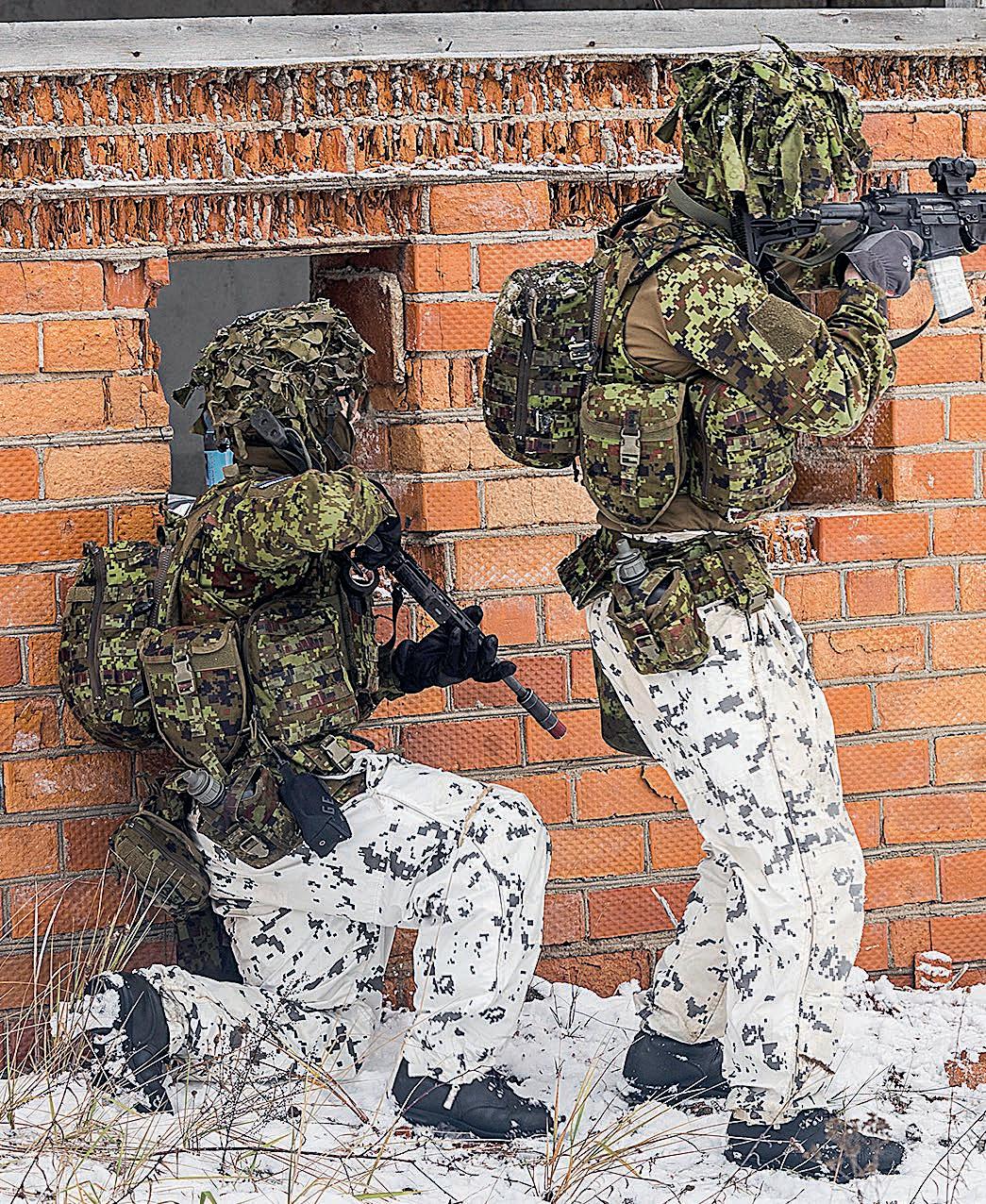
Based on the reforms of the Defence Forces, the tasks set for the 1st Infantry Brigade, and the lessons learned from the experiments of the past one and a half years, the main task of the 1st Infantry Brigade for the next period (2026–2027) is to implement the organizational change of the Brigade, switch to a new model of military service, and establish combat surveillance in Narva and Jõhvi. All this to improve the quality of subunit training, the Brigade's combat readiness, and its ability to carry out wartime tasks.
Improving quality is not a goal in itself, rather it is a condition to be achieved to defeat the enemy. Organizational change is also not an end in itself, but a method to achieve better quality. The planned change to the Brigade as an organization consists, in simple terms, of reorganizing the current Brigade, which as an organization is designed to operate as a warfighting unit, into three functional parts: force generation, force support, and warfighting.
No Brigade subunit will disappear with the change, and no officer or non-commissioned officer will be deprived of subunit experience, no commander's responsibility for their
Soldiers of the 1st Infantry Brigade developing their skills in tactical and medical training as
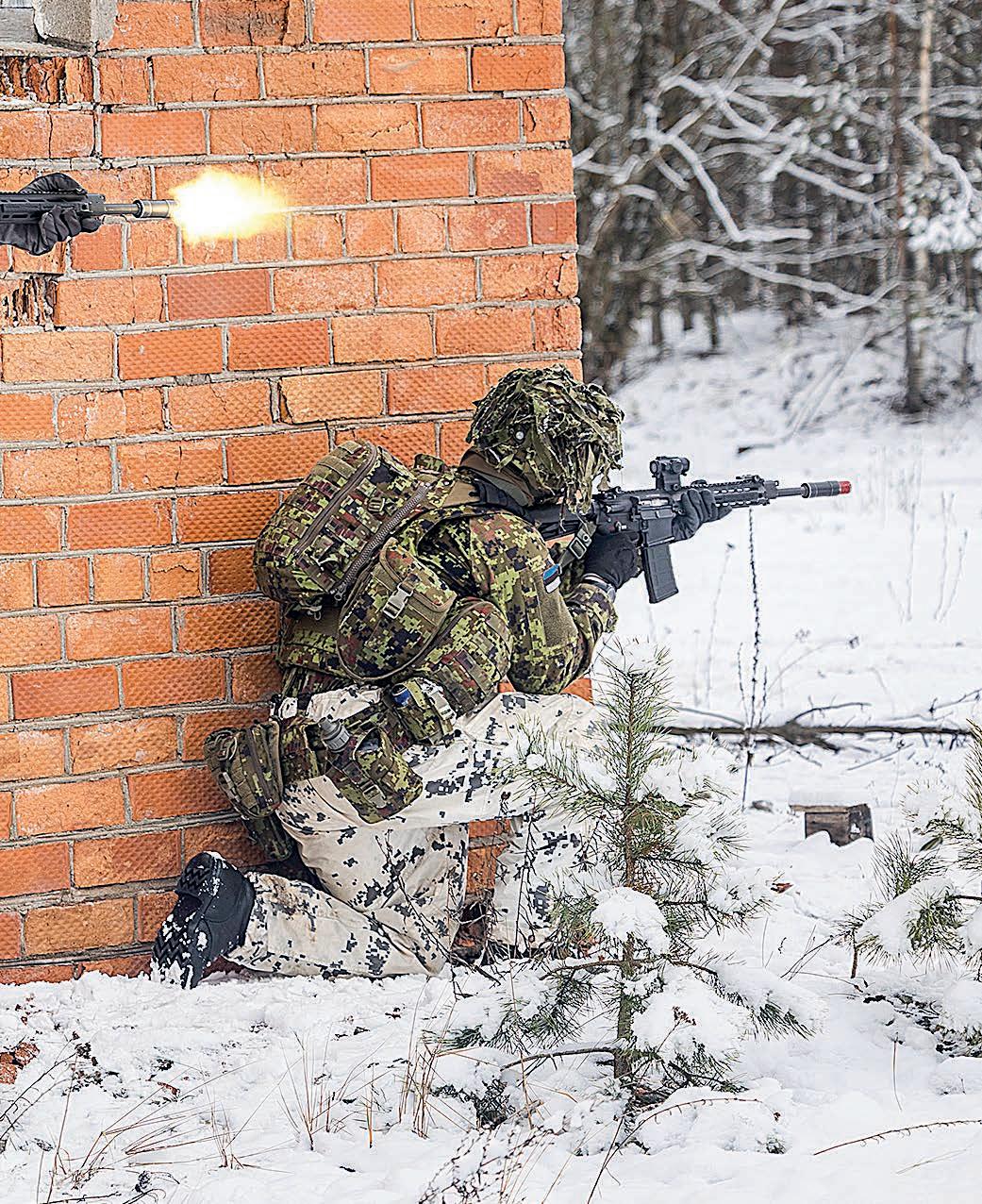
unit will decrease, and no one's qualifications or training level will be lowered.
On the contrary, the experience of the subunit, including the number of repetitions, will increase, the responsibility of commanders will become clearer, and the professional competence of all of us will improve. What will change is the way we carry out our current tasks. The first major change is specialization; the training organizer does not have to prepare and cover all topics.
There will be specific servicemen and retired servicemen who will be responsible for the topics assigned to them, including taking into account the experience of recent wars. This way, we achieve quality and save time for other activities. Second, we create a cyclical nature in the daily service of the servicemen.
achieve improvements in the quality of combat readiness and warfare.
The third change concerns the reorganization of support so that the bulk of peacetime support is based on civilian personnel, which will free up time and allow active service members to focus on training and preparing for war.
This functional division of the Brigade will remain in place at the launch of the plans and during the war; the active servicemen will immediately join their wartime units and focus on preparing for and conducting combat operations, while the civilian personnel and retired servicemen will continue their functions at the rear of the Division, under the command of the Brigade's rear area command post (REAR CP), continuing to provide support services and preparing reinforcements for the Brigade's fighting element. There is nothing really new about this change; it is an application of the brigade-level experience of the war in Ukraine.
In summary, 2025 was a very busy year for the 1st Infantry Brigade. We did a lot, we mostly succeeded, and most importantly, we tested new solutions, we learned, and we were able to find a new way forward. The upcoming reforms of the Defence Forces are extensive and their real success depends on all officers, non-commissioned officers, and employees being on board with the changes and not remaining stuck in old, established ways. The forthcoming reforms will require new solutions from everyone, not just the 1st Infantry Brigade, because the objectives set by the Commander of the Defence Forces need to be achieved in substance, not just in form and with current resources.
I would like to thank all the members of the 1st Infantry Brigade, the reservists, and the employees who contributed to the Brigade's activities during the past period. The next two years will be at least as challenging for the Brigade, as there are many changes ahead and it is impossible to foresee everything. The second half of the year 2026 will be crucial—a time when we will change our organizational structure, prepare for the transition to a new conscription cycle and the establishment of combat surveillance, and upgrade our soldier and instructor skills, while maintaining the combat readiness to win the first battle, if necessary! ‖ as part of a multifaceted
There are periods where they concentrate on conducting training, and periods where they concentrate on warfare, including combat surveillance, the most significant change being the restoration of the permanent presence of the 1st Infantry Brigade in the city of Narva. In this way, we will
field training cycle.
Photo: Estonian Defence Forces
DEFENDING VALUES IS NOT AN ABSTRACTION
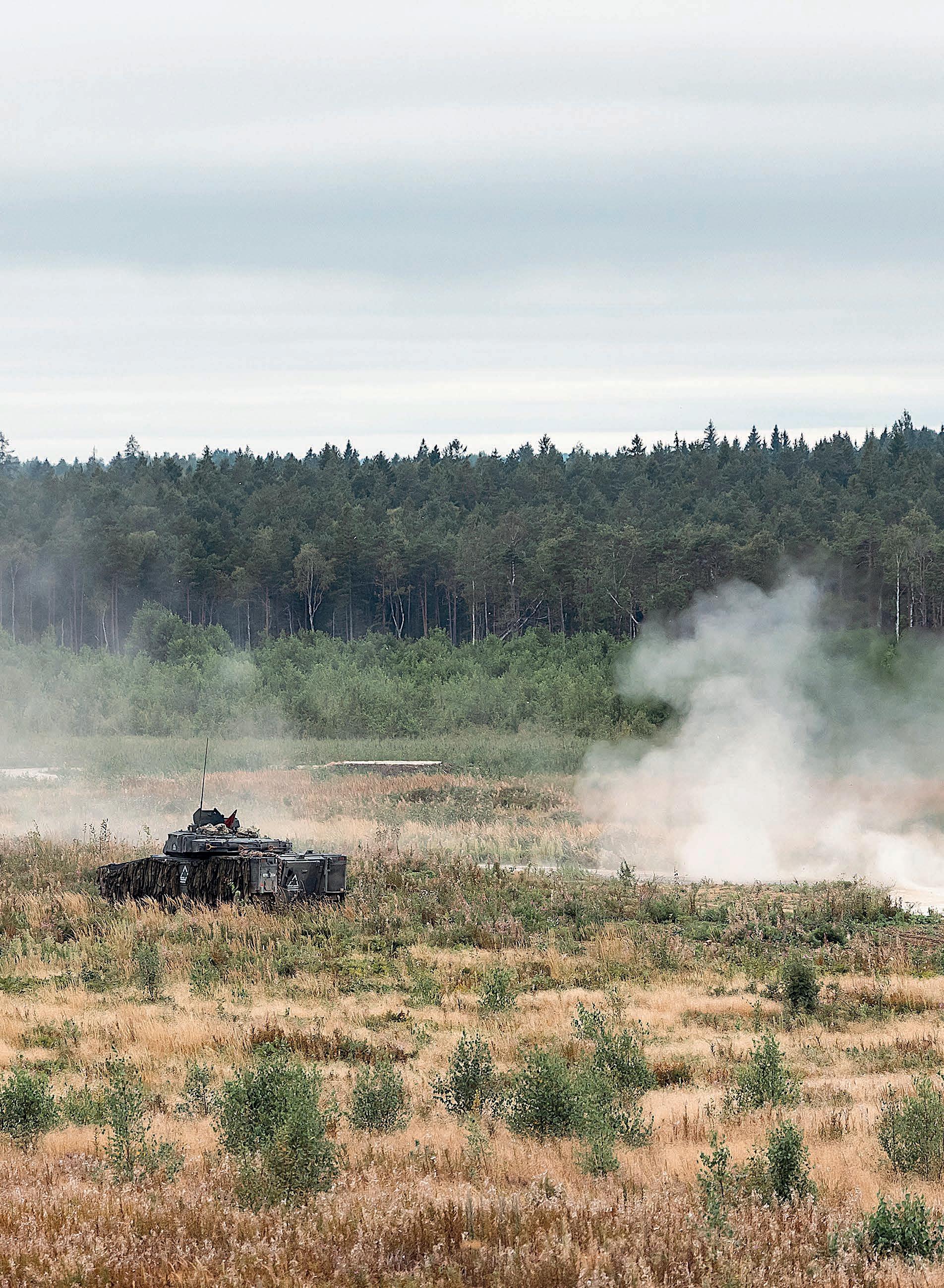
From 11 to 22 August 2025, an exercise organized by the NATO Battle Group in Estonia took place, in which the B Armored Infantry Company of the Scouts Battalion also participated, improving the level of training of vehicle crews at the central training ground of the Estonian Defence Forces. The picture shows an Estonian CV9035 and a British Challenger 2 battle tank.
Photo: Oliver Kaur / Estonian Defence Forces
The decision of NATO to permanently place forces in the countries of the Eastern border of the alliance is a strong statement of solidarity and will.
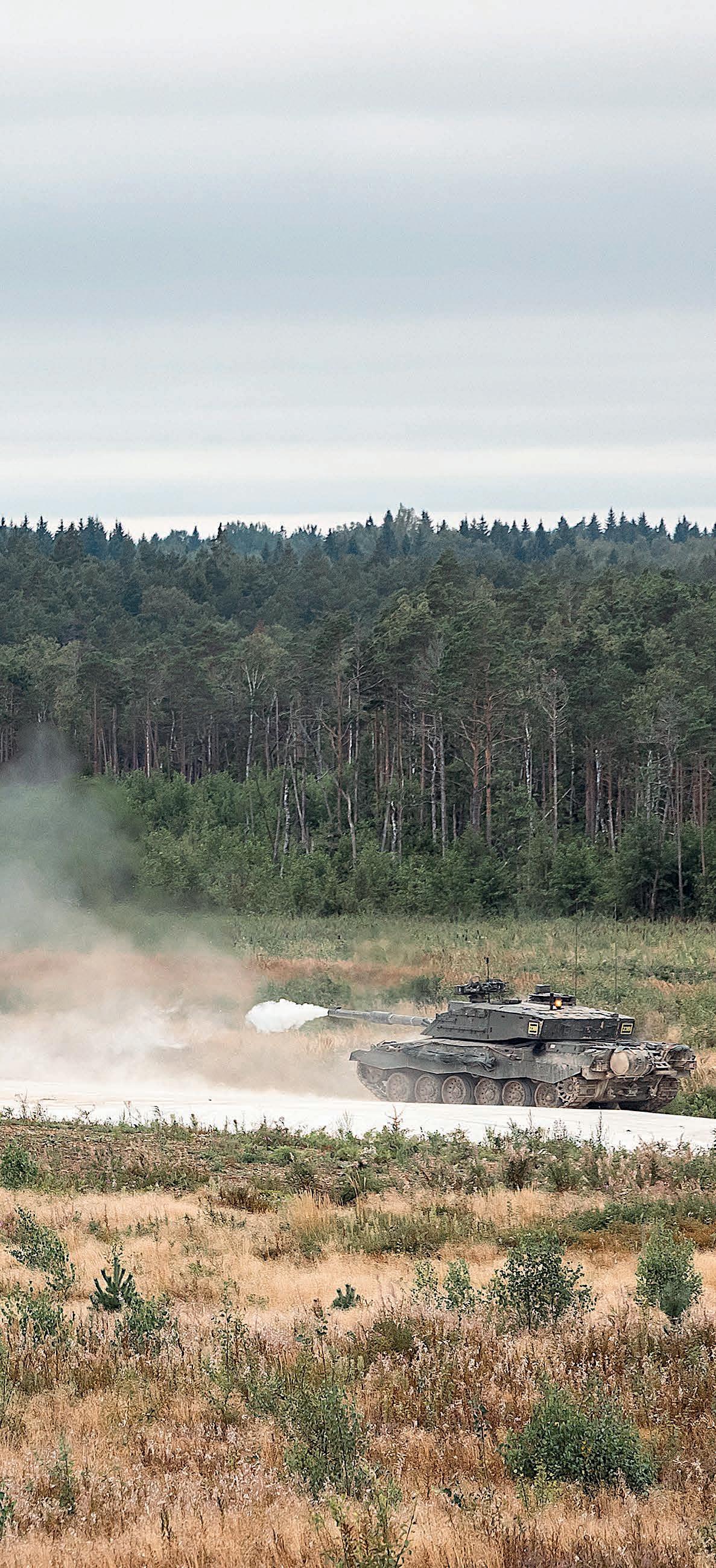
THORLINDUR KJARTANSSON Stratcom Adviser to Commander Operation Cabrit, Island Senior National Representative
The same can be said of the bilateral and multilateral commitments by like-minded allies to recognise that by promising to help defend Estonia's independence and freedom, they are simultaneously defending their own.
Since the end of World War II, Western Europe has experienced both peace and freedom. During that time, the free nations of Europe grew complacent. Both peace and freedom have been taken for granted, and—perhaps more importantly—they have been mangled together. The absence of war does not necessarily imply peace, and it most certainly has very little to do with freedom.
The brave men and women who fight and die to defend Ukraine against the Russian aggression do so not only in the hope that their resistance will end the war. They do so to give their motherland a chance to change its societal operating system; they want to join the world that Estonia now belongs to and leave behind the oppressive yoke of the Kremlin's corruption, violence, and serfdom.
Those of us who have had the privilege to work in a beautiful, energetic, thriving, peaceful, sovereign, and free Estonia are constantly reminded that there is a thin line between these two worlds. The Museum of Occupations and Freedom demonstrates magnificently that the absence of war should never be confused with the presence of peace.
For the rest of Europe, and for those of us stationed here, Estonia is a living reminder of how a system of correct and just values makes the difference between a world of freedom and prosperity and one of subjugation and poverty.
From a strategic communications perspective, the shining success of Estonia since it emerged out of Moscow's shadow is a tremendous asset that should be advertised more. Estonia's standard of living and freedom are now unrivalled in the world. It shows that the values of liberty, democracy, and the rule of law are not abstract concepts—they are the foundation of a societal operating system that simply works. This teaches a lesson that Western Europe needs to be reminded of.
Iceland continues to be proud to contribute to Estonia's secure place in the free world. ‖
Estonia's national defense rests on two strong pillars: independent defense capability and NATO’s collective defense.
ONE FOR ALL AND ALL FOR ONE
JAANIKA
OJAKÕIV
Lieutenant, Public Affairs Officer of the 2nd Infantry Brigade
On the one hand, we are continuously developing our own military capabilities and investing in armaments, training, and infrastructure. On the other hand, we are part of the strongest defense alliance in the world, based on solidarity and the principle that an attack against one is an attack against all. This knowledge that we are not alone in defending the country is a central part of Estonia's deterrence.
The United States of America has been one of the most important contributors to the development of Estonia's defense capabilities, and its contribution has not been limited to political support or financial investments but also includes a permanent military presence and regular rotations of units in Estonia. This cooperation strengthens both Estonia's defense capabilities and the security of NATO's eastern flank as a whole.
SIXTH ROTATION IN SOUTH ESTONIA
In September 2025, the sixth rotation of the US unit arrived at Reedo base in Võru County. It is an armored unit of the US 6th Squadron, 9th Cavalry Regiment, whose presence adds significant armored capability to the defense of Estonia: Abrams tanks, Bradley infantry fighting vehicles, M88 evacuation tanks, plus a variety of support and rear area vehicles on both wheels and tracks.
This armor capability greatly increases the unit's firepower, mobility, and defenses. Today's battlefield requires the ability to deal with unmanned aircraft. US units have in place drone detection and countermeasure systems that increase unit protection and improve situational awareness. Allied assets complement solutions developed by Estonia and strengthen the broader defense system. Working together, we keep Estonia's air clean.
COOPERATION WITH THE 2ND INFANTRY BRIGADE
Located in Reedo, near Võru, the unit is integrated into the 2nd Infantry Brigade's battle plans and works in close cooperation with our servicemen. Together, they took part in various exercises such as Siil 2025 (Hedgehog 2025) and Talvelaager 2026 (Winter Camp 2026), where they practiced inter-unit cooperation, battle command, decision-making processes, and comprehensive national defense.
There is direct daily cooperation with the Kuperjanov Infantry Battalion in Võru. Training events are organized jointly, experience is shared, and interoperability is developed. This kind of practical, on-theground cooperation builds trust, which is invaluable in a crisis. The Estonian environment provides valuable and often unfamiliar training experience for allied units. Our landscape—wooded, swampy, and densely segmented—is very different from many other training areas in their home country. Closed terrain and variable weather conditions are tough challenges for armored units, developing their adaptability and tactical flexibility.
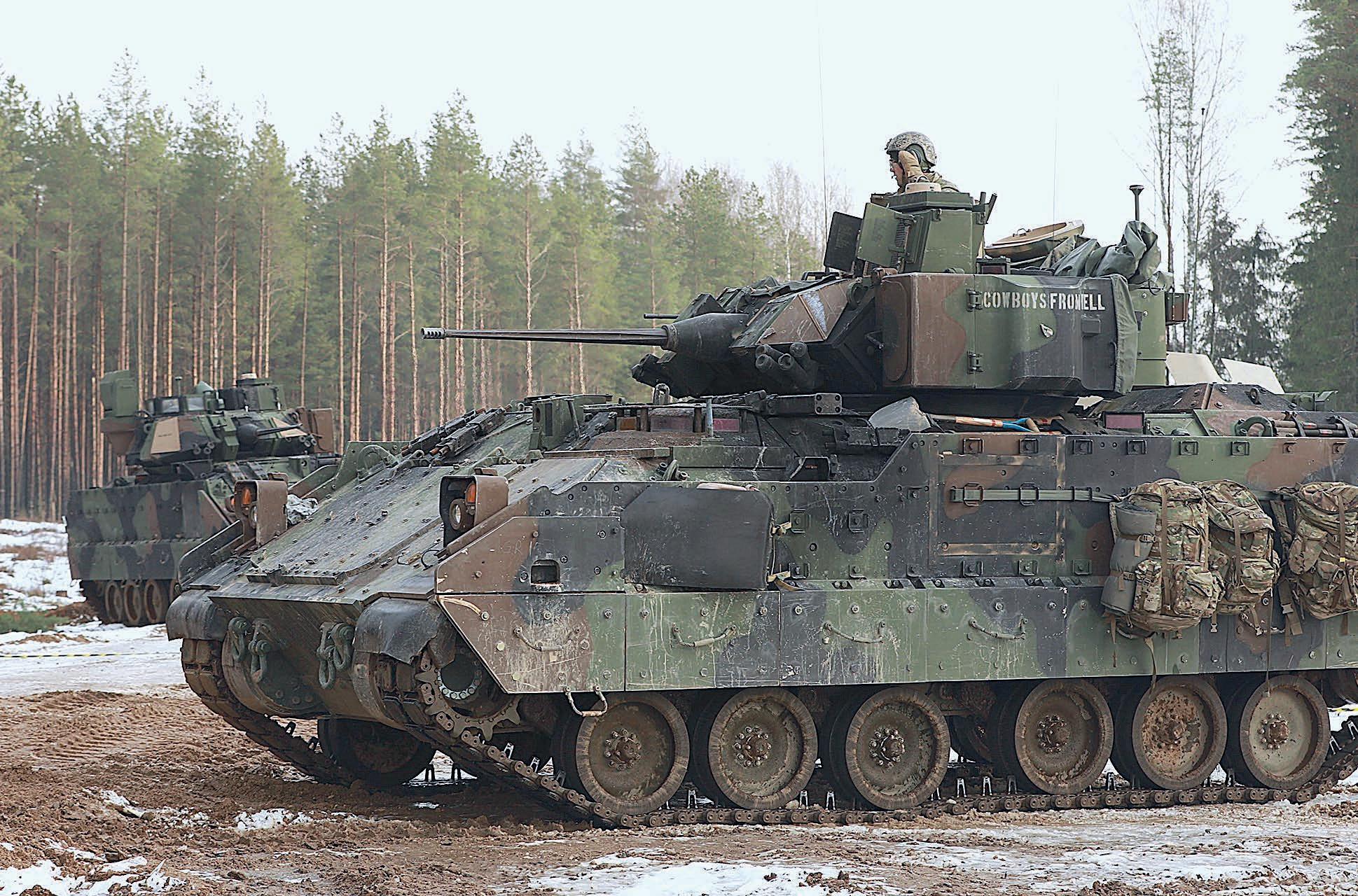
Estonia also teaches its allies winter warfare. Winter conditions—cold, snow, and limited visibility—require special skills and equipment upgrades. Depending on the rotation and season, allies are given the practical knowledge and experience needed to operate in a northern climate.
THE IMPORTANCE OF COMMUNITY RELATIONS
In addition to military cooperation, attention is paid to community relations. As much as possible, US units participate in local events and contribute to community life. They have taken part in Defense Days and the Obinitsa Parade and visited schools in Võru County.
Such communication builds trust and understanding between the local population and allied forces. The presence of the Allies is not just a military fact. They are part of a community that shares a common goal: to keep Estonia safe and secure. ‖
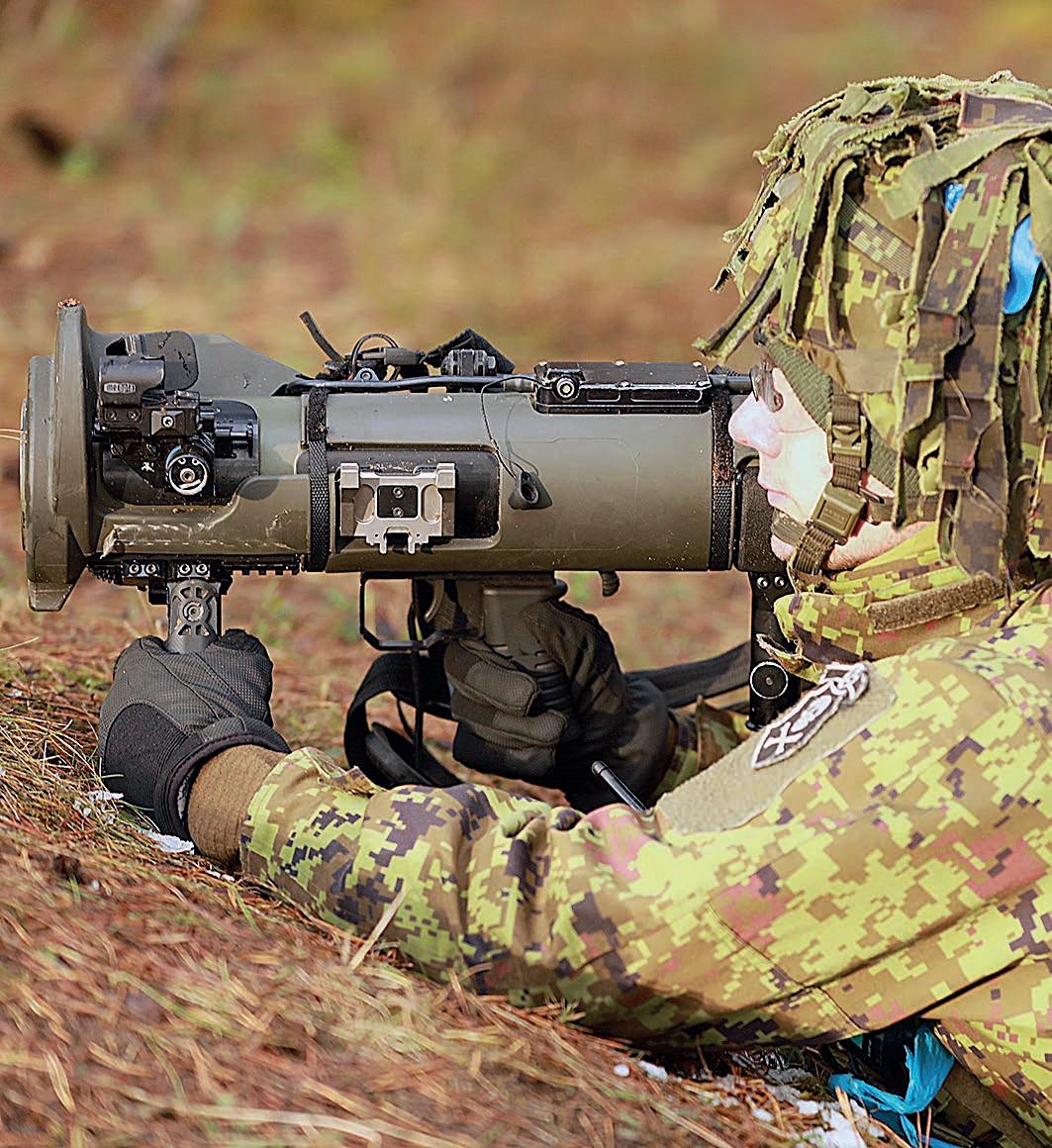
A US Bradley fighting vehicle (above) and an Estonian serviceman with a Carl Gustav M4 grenade launcher (below) during a joint exercise between the Kuperjanov Infantry Battalion and the 6th Squadron of the US 9th Cavalry Regiment.
Photos: Jaanika Ojakõiv / Estonian Defence Forces
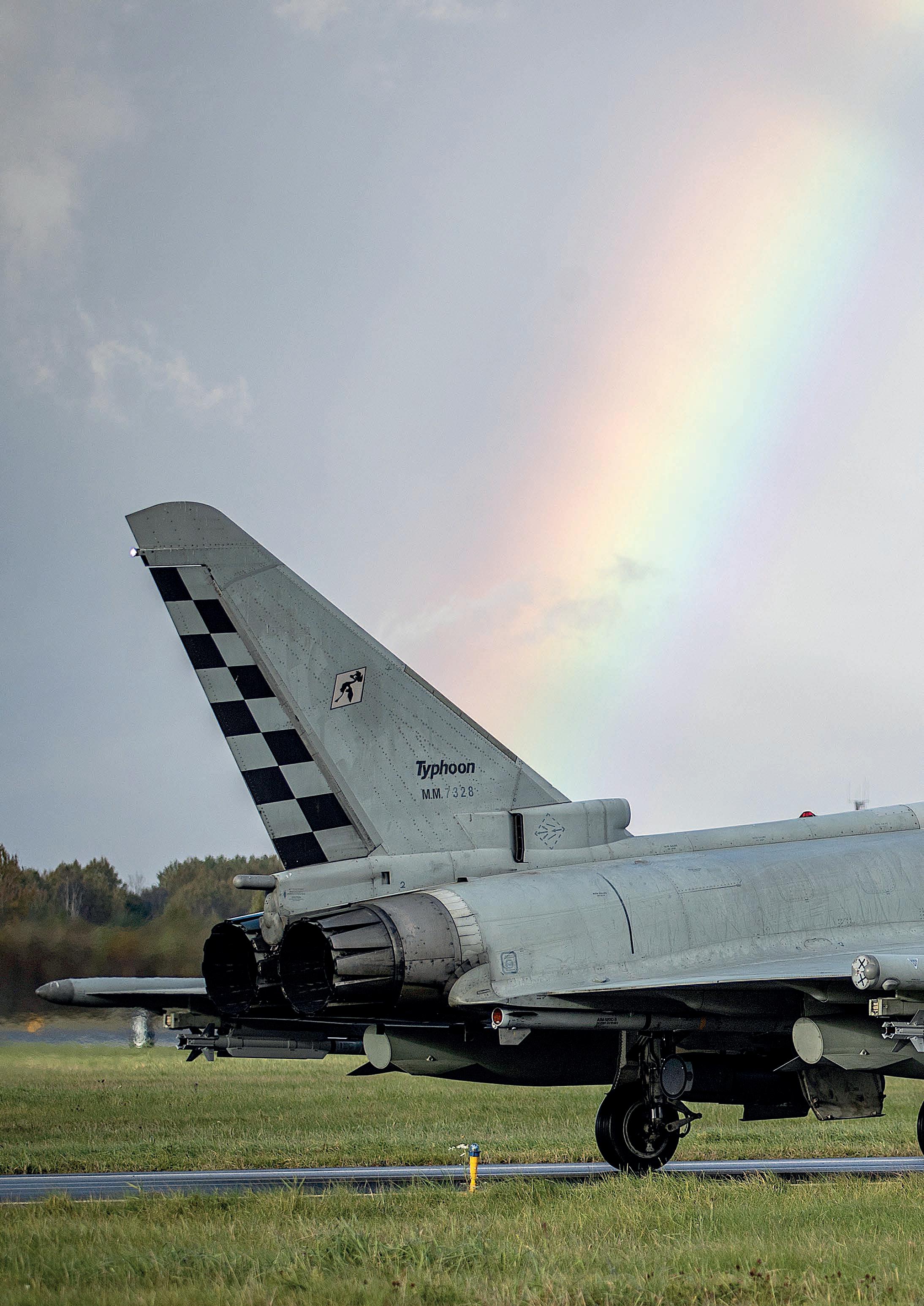
The presence of the Italian Air Force over Estonian skies was much more than a mere NATO rotation or technical defense mission.
ITALIAN DEFENCE FORCES' DETERRENT AIR POLICING MISSION TO
NATO'S EASTERN FLANK
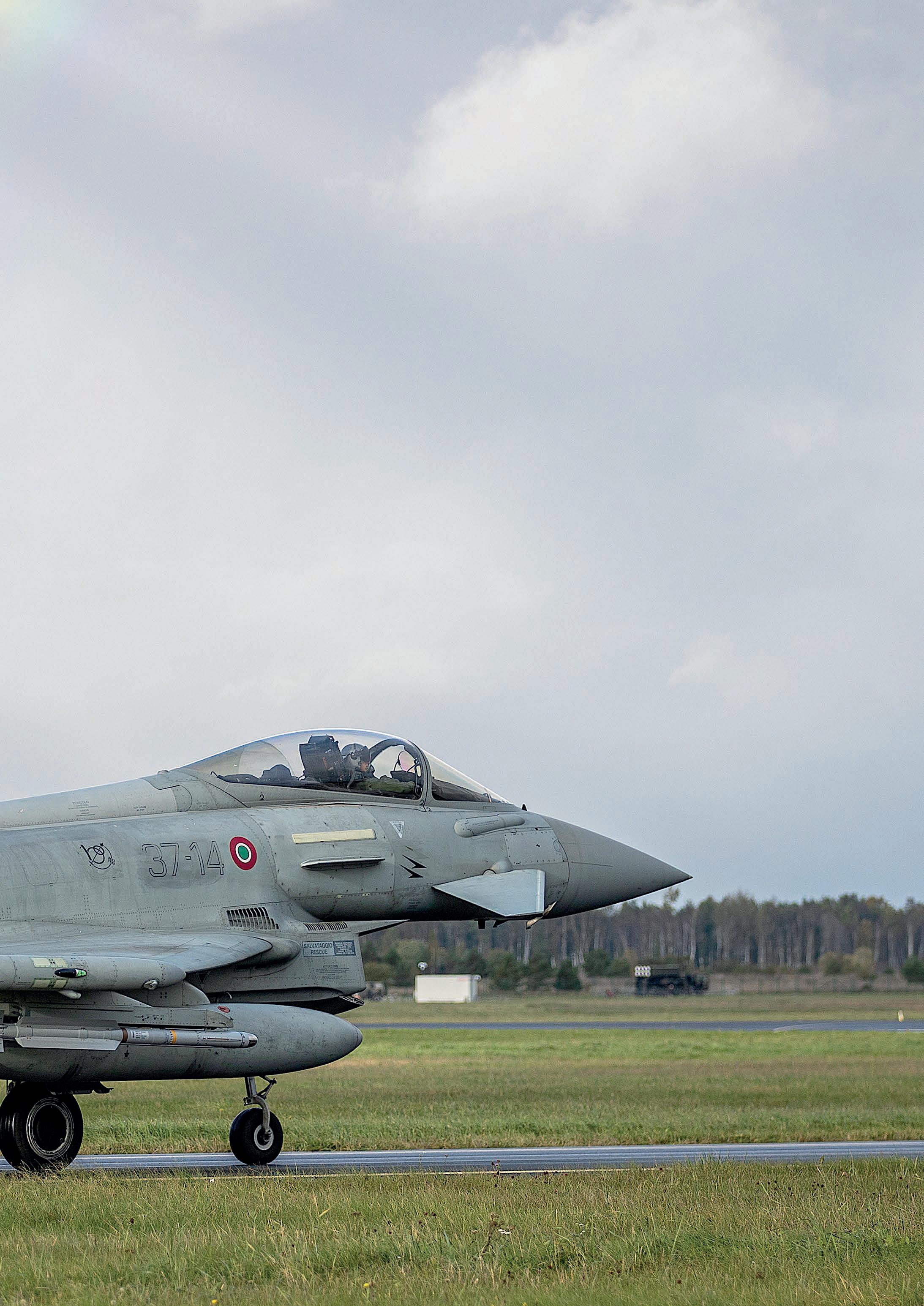
KALLE ORUAAS
Major, Air Base Chief of Staff
GERVET VÄÄT
Sergeant First Class, NonCommissioned Officer of the Base Operations of the Air Base Staff
This time, the Italian Defence Forces' mission to NATO's eastern flank was something bigger than usual at Ämari Airfield. It was visible and audible proof of an alliance based on trust, unity, and shared responsibility for European security. When Italian fighters take off from Ämari, they are not only defending Estonian airspace, they are defending the entire eastern flank of NATO, confirming that collective defense is not an abstract concept, but a daily, disciplined, and professional activity. For the first time, a ballistic missile defense capability, SAMP/T, was deployed on the soil of Estonia.
Such important capabilities never travel alone. The Italian Air Force began its rotation with the fifth-generation F-35 fighters in the summer of 2025. It was the first deployment outside the home country for the Italian F-35 unit. Along with the stealth
An Italian Eurofighter Typhoon fighter jet at Ämari Air Base before a training flight.
Photo: Triin Musting / Estonian Defence Forces
fighters, reconnaissance and early warning aircraft were also stationed at Ämari. The purpose of the aircraft is to provide early warning to the air defense on the ground and, if necessary, to protect it from cruise missiles from the air.
The ground-based air defense presence, initially planned only with stealth fighters, was extended because of one provocation by the Russian Federation. The airspace violation on September 19 was quickly followed by a message on September 23, during a visit by the Italian Minister of Defence, that the SAMP/T mission in Estonia would be extended until March. Since November, Italian Air Force Eurofighter fighters have been patrolling Estonian skies.
As a small country whose security relies on a strong alliance, the real presence of allies gives reassurance to both the country and its people.
This rotation unit was the most capable, if not the largest, ever based in Ämari. The logistical footprint of the Italian Air Force unit was unusually large but still optimal so that the next one, the Portuguese Air Force unit, could easily fit alongside it.
Cultural differences, language barriers (including the famous Italian body language), and simple misunderstandings are part of the everyday support of the host country and are resolved with simple interpersonal communication. Joint exercises, day-to-day cooperation, and mutual respect provide a strong foundation on which to build in the future. These relationships are not born on paper, but in the chilly winds of the airfield, the quiet but tense atmosphere of the control center, and joint cunning missions.
Complementing the regional dimension, the presence of the Italian Defence Forces deepened the human ties between cool Estonia and sunny Italy. The contribution of the Italian contingent in engaging with the local community was something we should all take notes on. The Risti School, with the help of the Italian Defence Forces, has a laser cutting machine to organize technology training, Vasalemma Kindergarten has
new swings to get used to flying low, Haiba Nursing Home and Keila Social Center know the smell of a proper pizza from afar, and laughter and fun were brought to Tallinn Children's Hospital to discourage November gloom and illnesses.
For the Estonian Air Force, the contribution of the Italian Air Force was extremely important. As a small country whose security relies on a strong alliance, the real presence of allies gives reassurance to both the country and its people. The experience of the Italian pilots and crews, their high level
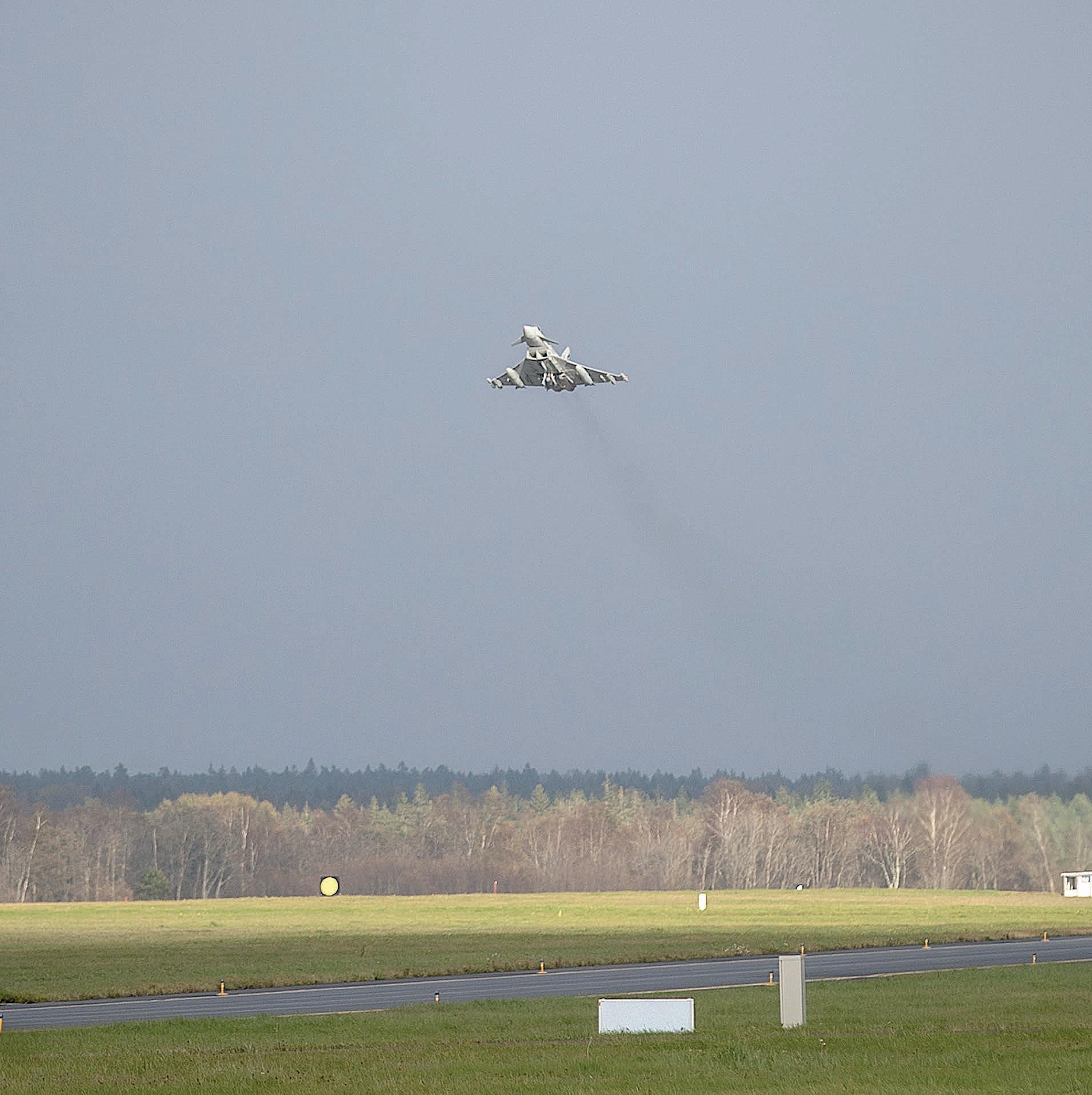
of training, and their readiness to respond immediately create a situation where the Estonian skies are under constant attention and protection. It is a deterrence that does not need loud words. The noise of an airplane is enough to say clearly: we are here and we will hold our line!
For NATO as a whole, the actions of the Italian Air Force in the Baltic states symbolize the true cohesion of the Alliance. The contribution of a Southern European country to the defense of Northern Europe shows that NATO does not divide its members into
geographical zones or into near and far responsibilities. The security of every ally is shared, and our eastern border is the border of the whole alliance. Italy's involvement in Air Policing is a perfect example of solidarity, where military capability meets political will in practical cooperation.
The role of the Italian Air Force in the defense of Estonia and NATO is therefore clear and invaluable: it is a strong ally, a reliable partner, and a visible guarantee that the NATO air shield extends uninterrupted across all of Europe. ‖
The presence of Allied fighters in Estonia is part of NATO's collective defense and deterrence posture in the Baltic Sea region.
Photo: Triin Musting / Estonian Defence Forces
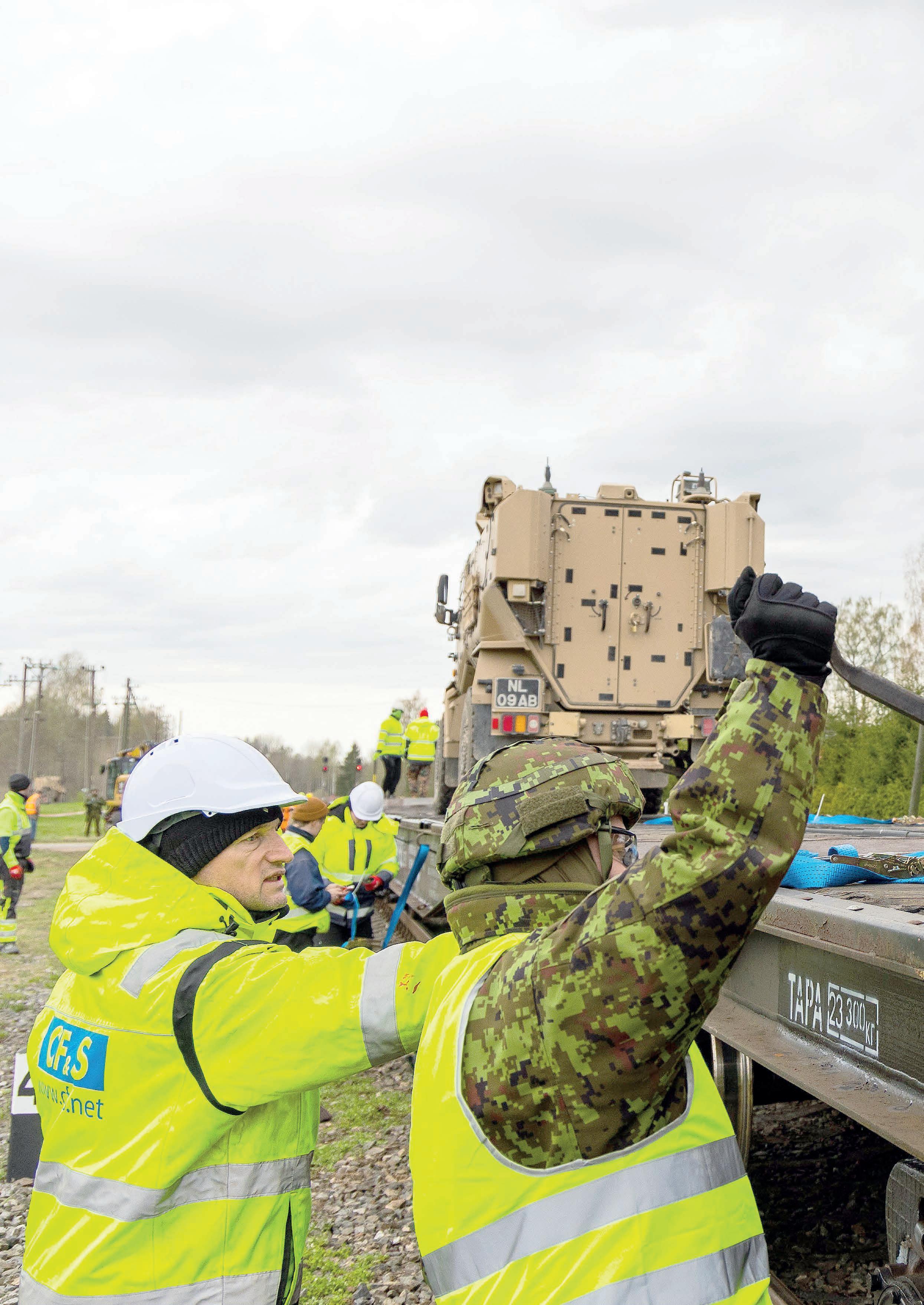
THE RECEPTION OF AN ALLIED BRIGADE IS A BENCHMARK FOR NATIONAL DEFENSE CAPABILITY
TOOMAS PÄRNPUU
Major, Commander of the Movement and Transportation Service of the Support Command
The arrival of allied units for the exercise Hedgehog 2025. The deployment of the brigade demonstrates NATO's ability to reinforce Estonia's defenses quickly and effectively in any security situation.
Photo: Markus Kaupmees / Estonian Defence Forces
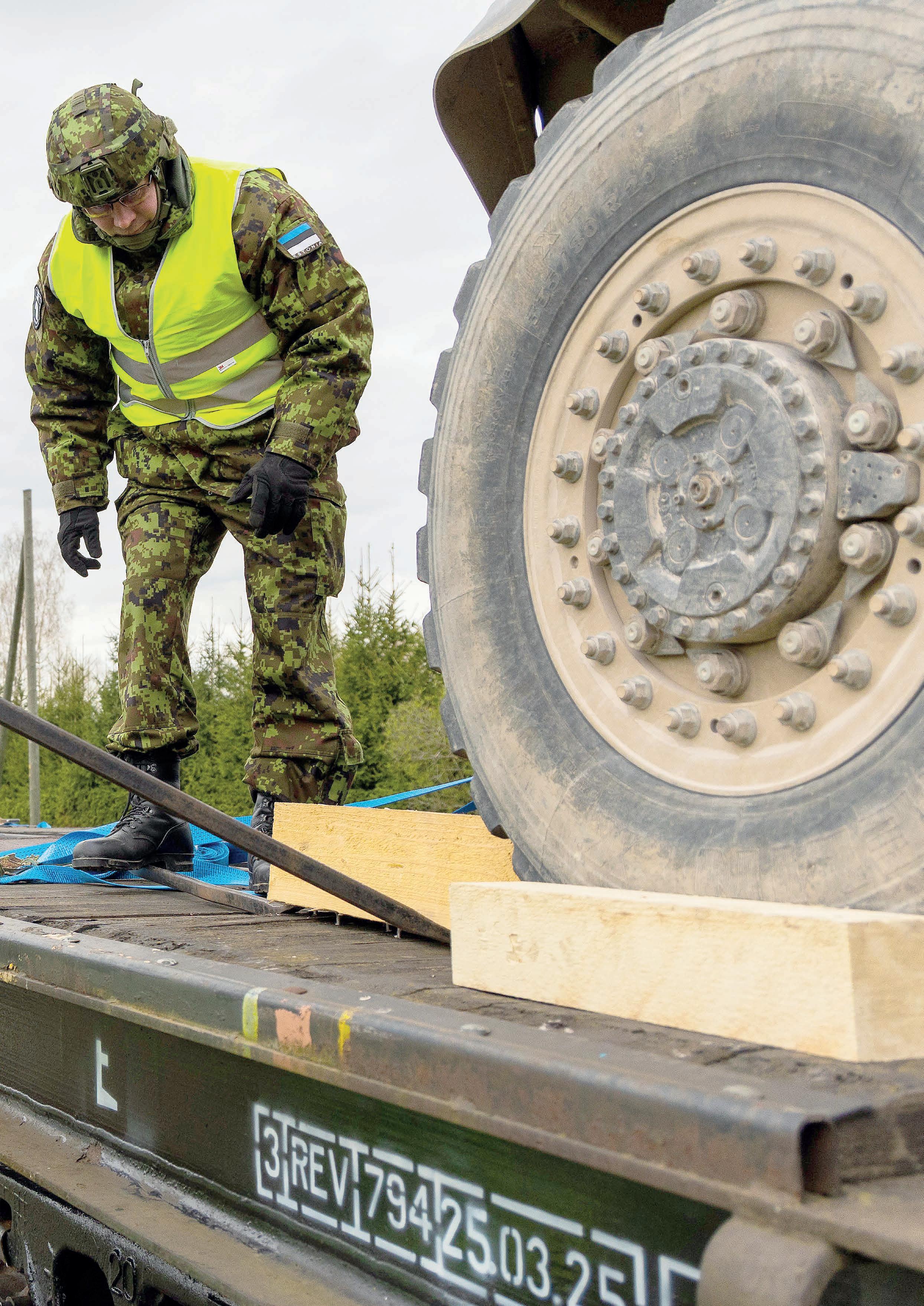
During the major exercise Hedgehog 2025 (Siil 2025), the reception of the FLF (Forward Land Forces) brigade contributing to the defense of Estonia and the reception of the allied forces assigned by the defense plans, or the RSOM (reception, staging, onward movement) process, were practiced for the first time. Although the reception of allied forces during the spring exercises Spring Storm (Kevadtorm) and Hedgehog are now routine activities and an integral part of the training, in 2025, it was done according to wartime procedures, and for the first time, a brigade-sized unit was received. It was also a good opportunity for the United Kingdom to gain its first experience in FLF brigade deployment and integration into the Estonian Division.
Although the RSOM process is often considered a logistical operation, in reality, it is a joint operation, with activities ranging from transport to force protection, often involving all branches of the military. The RSOM process starts with the entry of allied forces into the country via airports, ports, or land border crossings.
Units are then formed by combining the personnel and equipment that have arrived by various means of transport. Finally, units that have reached partial combat readiness are deployed to the combat zone. Such a process also sets clear requirements for Estonia as a host country, be it the capacity of ports or airports or the ability of the Defence Forces to lead, secure, and logistically support the entire operation.
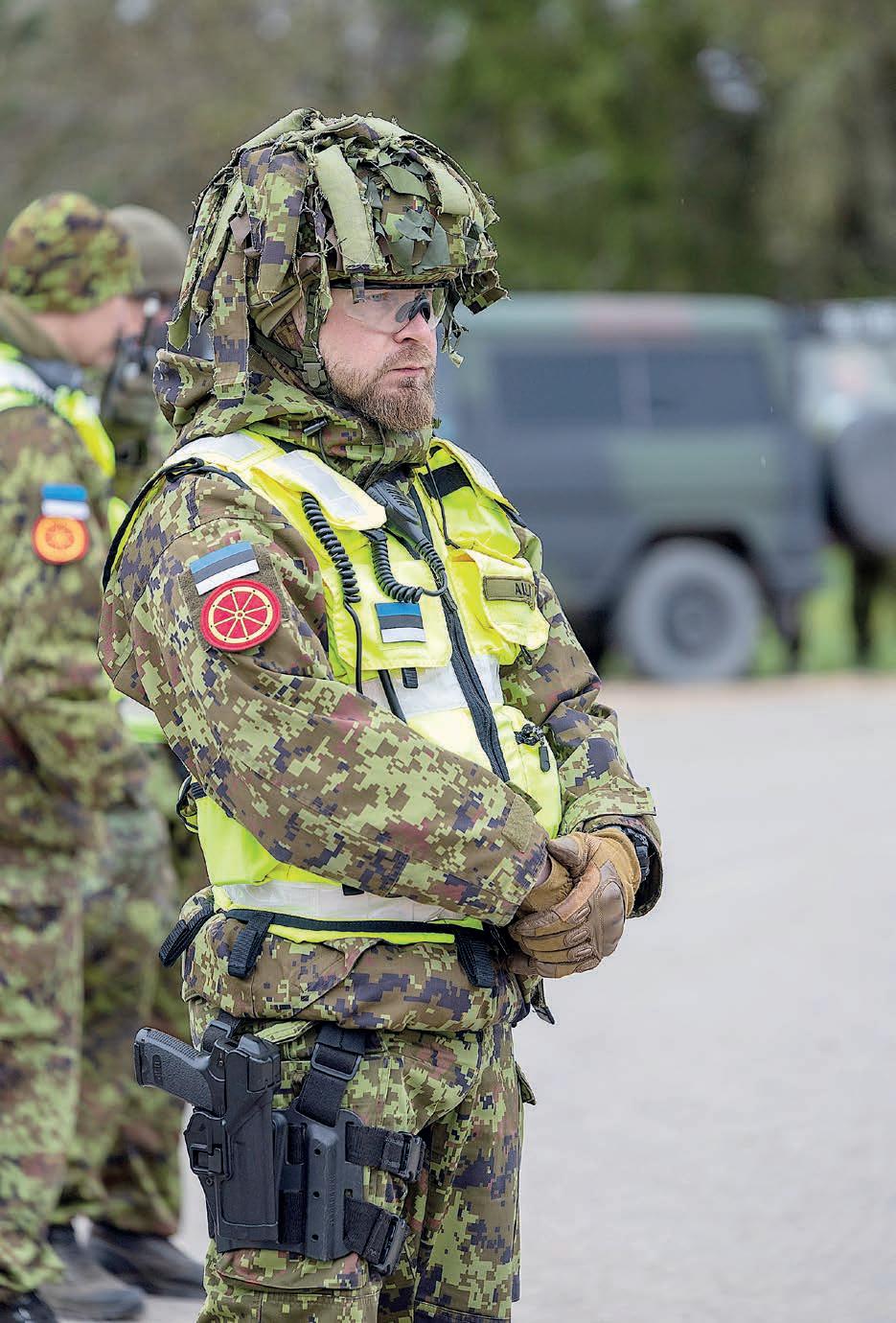
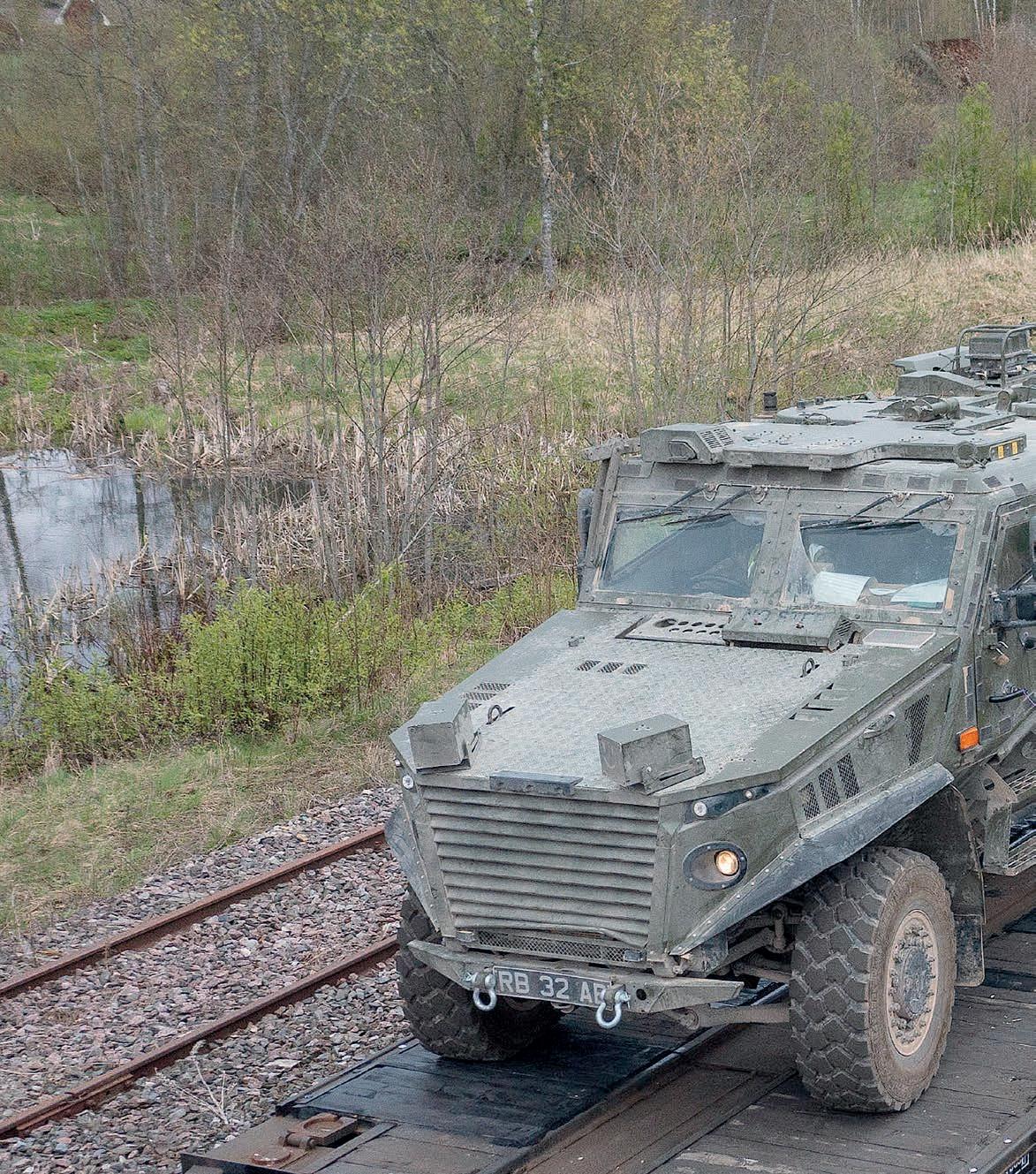
The FLF brigade that arrived for the exercise, consisting of the UK's 4th Brigade and the French Battle Group reinforcing it, provided the Defence Forces with a good opportunity to practice the RSOM process set out in the updated defense plans, including an assessment of the units involved and the command structure.
The RSOM operation was led by the Support Command, activating an RSOM task force based mainly on the Movement and Transport Service, which in turn was supported by the Regional Command North, Military Police, Air Force, Navy, and Division subunits.
Although the planning for the reception of the FLF brigade arriving for exercise Hedgehog 2025 began almost half a year earlier, last-minute changes meant that the whole plan had to be rewritten a few days before their actual arrival.
However, this is common for deployment and RSOM operations, as the volumes are large and the whole operation is dependent on a wide range of factors, from the availability of means of transport to the security situation. As in combat, rapid adaptability and readiness for change are essential prerequisites in RSOM operations.
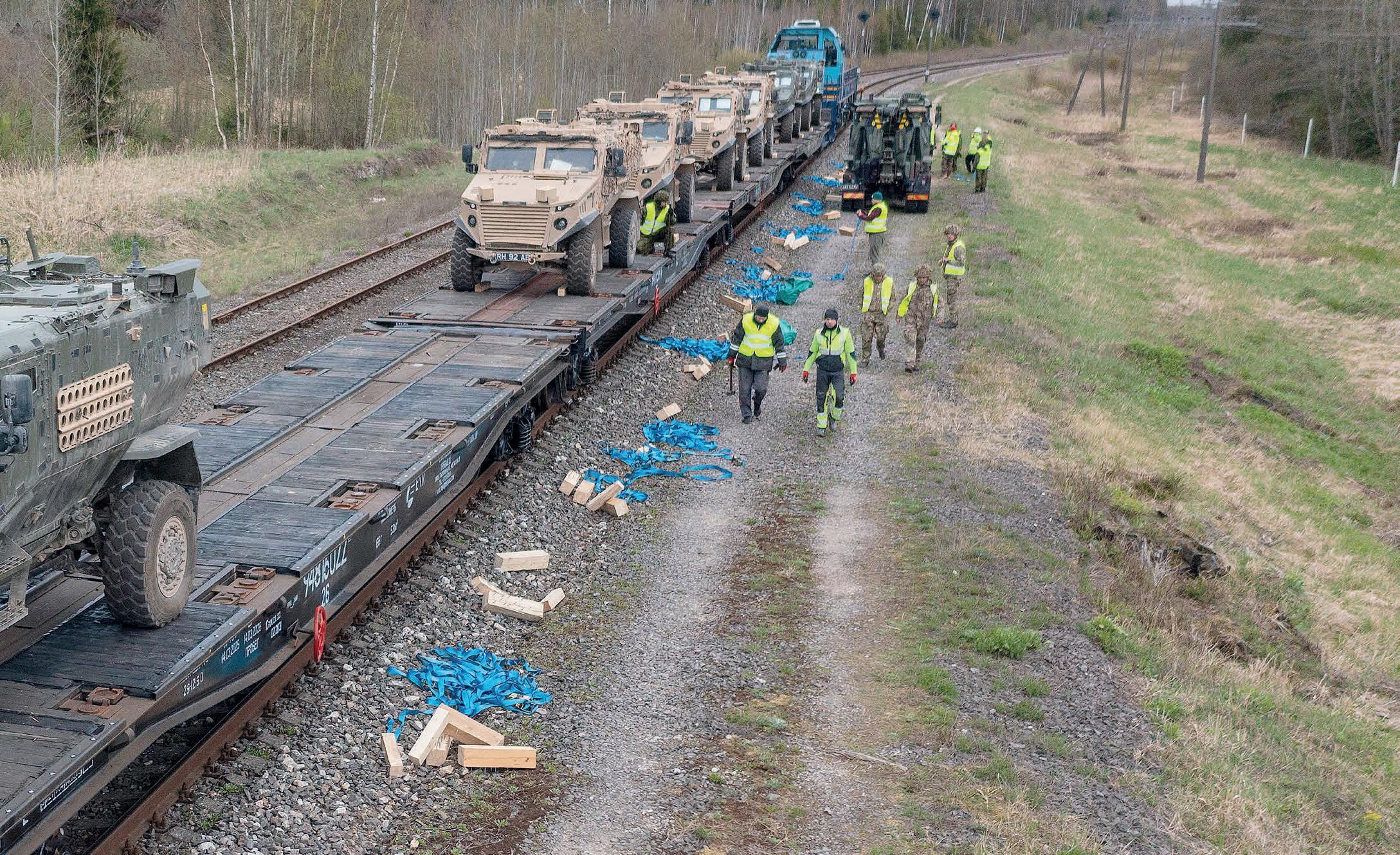
To receive the FLF brigade, an additional training exercise was organized for the Movement and Transport service, which, in addition to calling up the necessary resources, gave the unit the opportunity to assess its combat readiness. The training exercise was also organized by the Regional Command North and the Military Police, whose reservists participated in the RSOM operation.
Together, they operated at two airfields and one port and organized the movement of arriving units to their final destination. The UK also contributed to the RSOM target structure with its own staff officers and movement control specialists. The operation, which consisted of several units, branches and nationalities, provided a good opportunity to practice inter-unit leadership and coordination in addition to practical activities.
For the first time, rail operations were practiced in a changing and limited infrastructure environment, relocating both equipment and personnel by train as close as possible to the combat zone.
Due to the lack of loading infrastructure at the destination, a temporary loading ramp had to be built to unload the
Although this was a first-time activity, the final result provided the conviction that the Defence Forces are capable of carrying out rapid tactical rail operations in a place where the necessary preconditions are lacking.
equipment and the necessary preparatory work had to be done on the railway for its installation. Although this was a firsttime activity, the final result provided the conviction that the Defence Forces are capable of carrying out rapid tactical rail operations in a place where the necessary preconditions are lacking.
In total, over 6,000 allied troops, more than 1,100 vehicles, and over 160 sea containers of equipment were received during Hedgehog 2025. To receive the FLF brigade, two port, five rail, ten airfield, and over fifty convoy operations were carried out within a week.
Although as a small country, Estonia's logistical capabilities and infrastructure are limited, the major exercise Hedgehog 2025 proved that with thoughtful and flexible planning and good private sector cooperation, we are able to receive large numbers of allied troops and organize their onward movement to the combat zone.
Estonia's host country support system as a whole is working, and the learning from the exercise provided valuable information for further development of the processes. ‖
Behind the foreign name Operation Legio (OP Legio) lies a joint initiative of all the Nordic and Baltic countries to strengthen the combat capabilities of the Ukrainian armed forces through coordinated actions.
OPERATION LEGIO: A
JOINT NORDIC–BALTIC CONTRIBUTION TO UKRAINE'S COMBAT CAPABILITIES
OPLegio focuses on supporting Ukraine in two main areas: first, joint procurement and donations, and second, the establishment of a joint training center and the organization of necessary training courses for the Ukrainian armed forces there.
Norway is leading the initiative, having set up the first OP Legio staff of 10 Norwegian military personnel. For more effective coordination at a later stage, an international core staff was set up, which now includes domain representatives from all participating countries.
The Core Staff meets on average every two months. The aim of the meetings is to share information, coordinate national planning activities, and coordinate Ukraine's support needs to ensure the maximum effectiveness of each country's contribution.

VALJO TOOMING
Lieutenant Colonel, Senior Staff Officer of the Training Department of the Joint Headquarters of the Estonian Defence Forces
ESTABLISHMENT OF A TRAINING CENTER
The project was officially launched in October 2025, when the contributing countries signed a memorandum of understanding at a meeting of NATO defense ministers in Brussels, which defined the obligations, responsibilities, and legal bases of the participating countries. However, planning activities started much earlier.
OP Legio is the largest training operation in the history of Norway that has been carried out abroad. In addition to the command structure, separate support units were set up: a logistics node in Kjeller, Norway, and later a formation center (HAP) in Poland near Rzeszów Airport.
Brigadier General Atle Molde of the Norwegian Armed Forces was appointed Commander of the Task Force Legio.
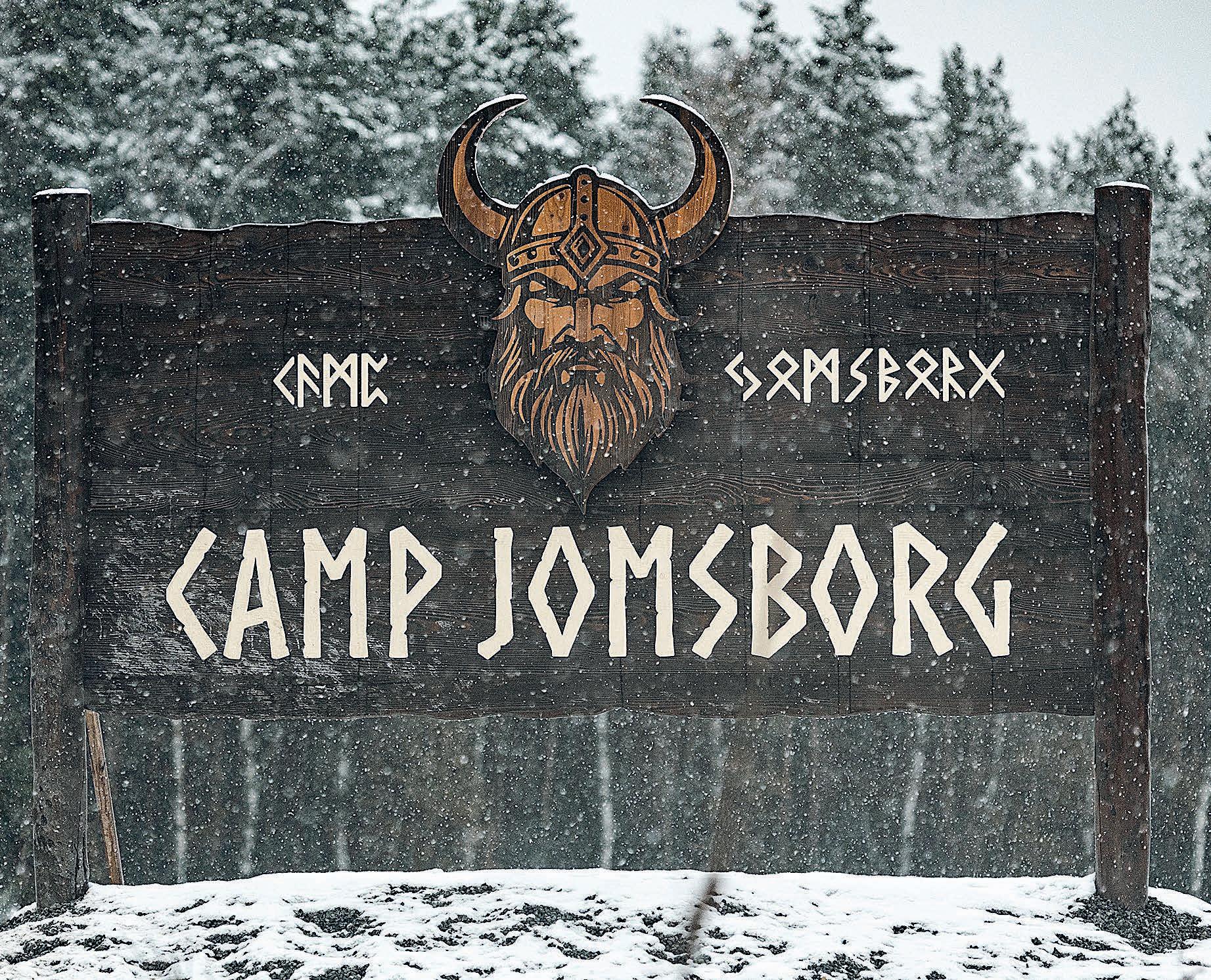
After the decision of the defense ministers of the countries participating in OP Legio to jointly support Ukraine, Norway has been strongly seeking solutions to speed up the launch of training.
One of the biggest challenges was finding a suitable location for the training center. Several options were discussed: organizing training on the territory of the participating countries under the "umbrella" of the OP Legio, setting up a joint center in Norway, or establishing a completely new base in a neighboring country of Ukraine. Finally, it was decided to build a new training center in Lipa training area in southern Poland. The training center was named Camp Jomsborg, in reference to a semi-legendary Viking settlement on the Baltic coast.
Although the base is still operating with temporary solutions, the training center
meets rigid standards and has been designed taking into account the experience of previous operations and the recommendations of Ukrainian instructors.
REALISTIC TRAINING
The training philosophy at Camp Jomsborg is based on the principle that training should be as close as possible to what is taking place in the war in Ukraine. The aim of the training is to train Ukrainian ground forces. The urban battlefield, built from shipping containers, imitates the environment typical of Ukrainian settlements, with multi-level buildings and interconnected basement systems typical of the region. A drone center has also been set up out of containers to provide continuous aerial surveillance, and students' delays are marked by tennis balls being thrown at
Training center Camp Jomsborg.
Photo: Rasmus Allik / Estonian Defence Forces
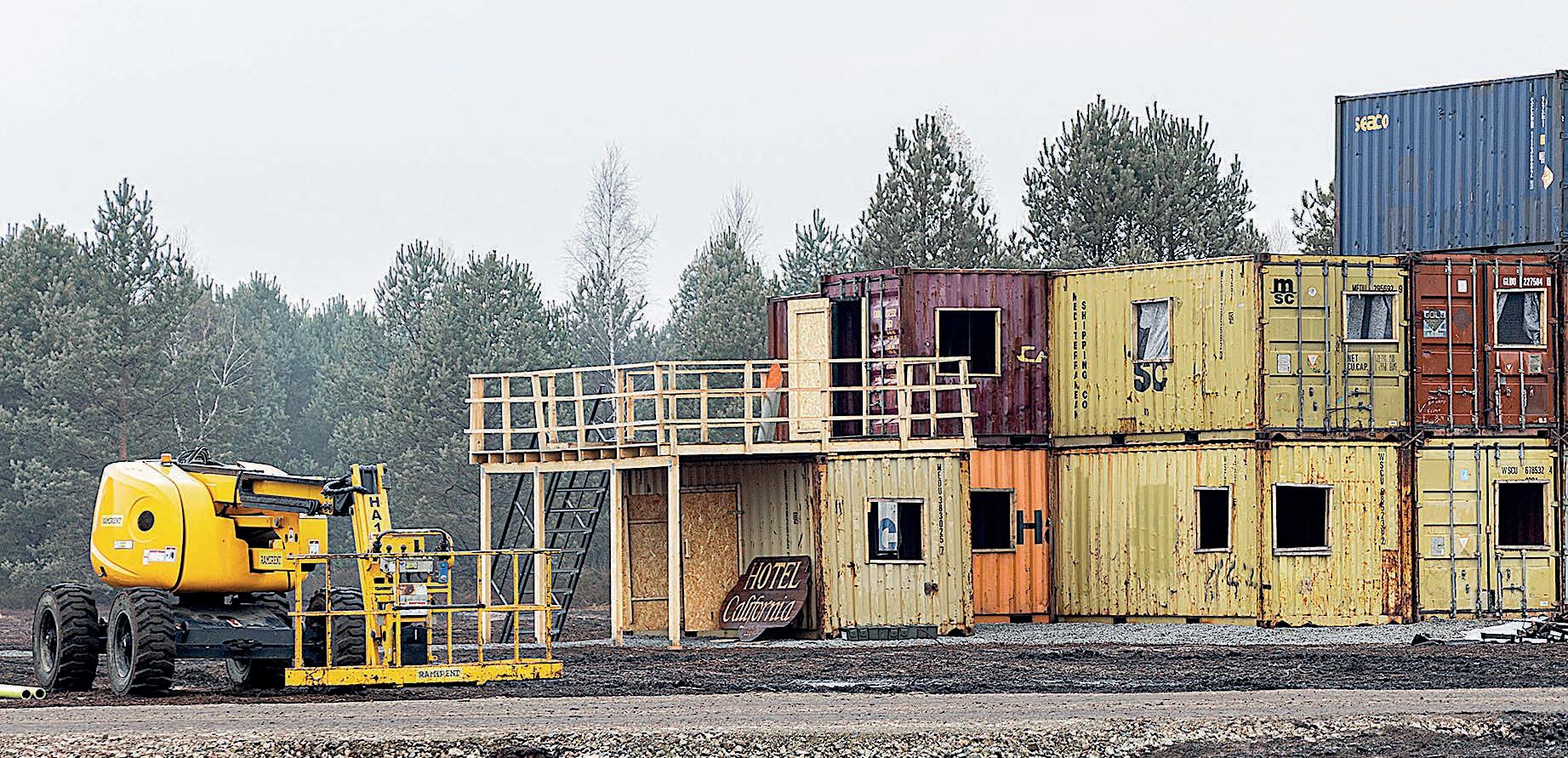
them. The aim of all the activities is to prepare students for the day-to-day reality of the war in Ukraine by providing them with the most direct and realistic experience possible.
Given the infrastructure that has been set up and the training conditions that have been created, the training center is seen as having a long-term future; the base will remain after the end of the war and can be used by allied and partner countries for a variety of courses.
START OF ESTONIAN PARTICIPATION
Estonia has been a staunch supporter of Ukraine since the beginning of the war. At the same time, it is not possible to make concessions on our national defense preparedness and unit training. This is why Estonia, with its limited resources, has concentrated on courses and areas where our participation will provide maximum benefit to the Ukrainians, such as base and instructor/section commander training, cyber defense, strategic communications, medical training, and naval training.
In addition to the courses organized in Estonia, Estonian instructors have also participated abroad, including training combat engineers in Poland, organizing HIMARS training in Germany, and teaching basic soldier skills and instructors in the UK (OP Interflex). The experience from the latter
The aim of all the activities is to prepare students for the day-today reality of the war in Ukraine by providing them with the most direct and realistic experience possible.
has confirmed that Estonia's "own way", i.e., motivated instructors from among active servicemen and reservists, works very well in the international environment.
This is why Estonia was among the first to be ready to participate in the OP Legio trial courses. While several countries needed additional political coordination and preparation time, Estonian instructors, together with the active servicemen from the Norwegian Telemark Battalion, started training at Camp Jomsborg as early as August 1, 2025.
From February 1, 2026, full-scale training started and was joined by other contributing countries. Poland, where the base is located, is also participating in Legio. Australia and New Zealand have also shown interest in sending instructors there.
ORGANIZATION OF TRAINING AND LEARNING EXPERIENCES
The organization of the training is tailored to the specific target groups of each course and takes into account non-combat factors. For example, the relatively high average age of participants (around 50 years) limits the intensity of training. At this higher age, learners can be educated in a more general way and taught specific skills, and simple drills can be practiced at a modest pace. The varying levels of health and motivation of learners also play a role. All of
Camp Jomsborg urban battlefield.
Photo: Uku Toosens / Estonian Defence Forces
this requires flexibility, domain expertise, and good situational awareness from activity planners and learning organizers.
The Norwegian military personnel involved in OP Legio are knowledgeable and have a similar mindset to us. They are good at assessing a soldier's capabilities and making quick changes to training based on that. Norwegians plan for the long term and don't pay very much attention to short-term setbacks. In imitating the battlefield and making it more realistic, the Norwegian military personnel are very resourceful and effective, based on OP Legio's experience. The whole activity is constantly marked by a significant number of instructors.
THE SIGNIFICANCE OF OP LEGIO FOR ESTONIA
Participation in OP Legio provides Estonia with a diverse and valuable experience. International cooperation improves the teaching skills of our instructors, mentors with Ukrainian front-line experience bring lessons learned in combat directly into the training, and the curricula developed by NATO and the Ukrainian General Staff also develop Estonia's own training system.
OP Legio is an important pillar in strengthening Estonia's defense capabilities and contributes to the goal of keeping the Estonian Defence Forces ready to win. ‖
Traditionally, air surveillance has been a relatively well-defined domain based on a set of technical and operational preconditions.
THE FUTURE OF AIR SURVEILLANCE AND THE CHALLENGES AHEAD
The detection and obstruction of airborne threats was mainly based on objects with a large radar reflection surface that actively emitted various electromagnetic signals. Such features made target detection technically easier and reduced the uncertainty associated with the detection process. The total number of objects to be handled was limited, which kept the data volume and the human resource load within manageable limits.
Developments in recent years, in particular the proliferation of unmanned aircraft, have significantly changed this picture. A large number of small, slow, and often low-flying objects have entered the airspace, whose technical characteristics do not fit into the logic of classical air surveillance and air defense systems. This has created tactical, operational and strategic uncertainties. Ukraine's military experience has clearly shown that the current concepts of air surveillance and air defense are inadequate in a situation where a large number of small and inexpensive unmanned aircraft are operating in the air at the same time.
In the Estonian context, such a development was partly foreseen seven years ago, when a layered air surveillance project was launched together with the wind farm compensation measure. One of the visible results of these developments was the opening of the Viru radar post near Jõhvi in 2025. Since the planning phase, it was recognized that future solutions must take into
TÕNIS PÄRN
Major, Commander of the Air Surveillance Wing
MARKO HEINLOO
Captain, listener
VILJO VAINIKKO
Captain, listener
HENRI NOORMETS
Captain, listener
An illustration of layered drone defense. The visual depicts layered air defense: long-range sensors in the background to detect aircraft and cruise missiles, medium-range radars to detect low-altitude and small objects, and short-range radars to check weapons systems. Information is exchanged among the Police and the Border Guard Board and the Defence Forces. Lovely AI
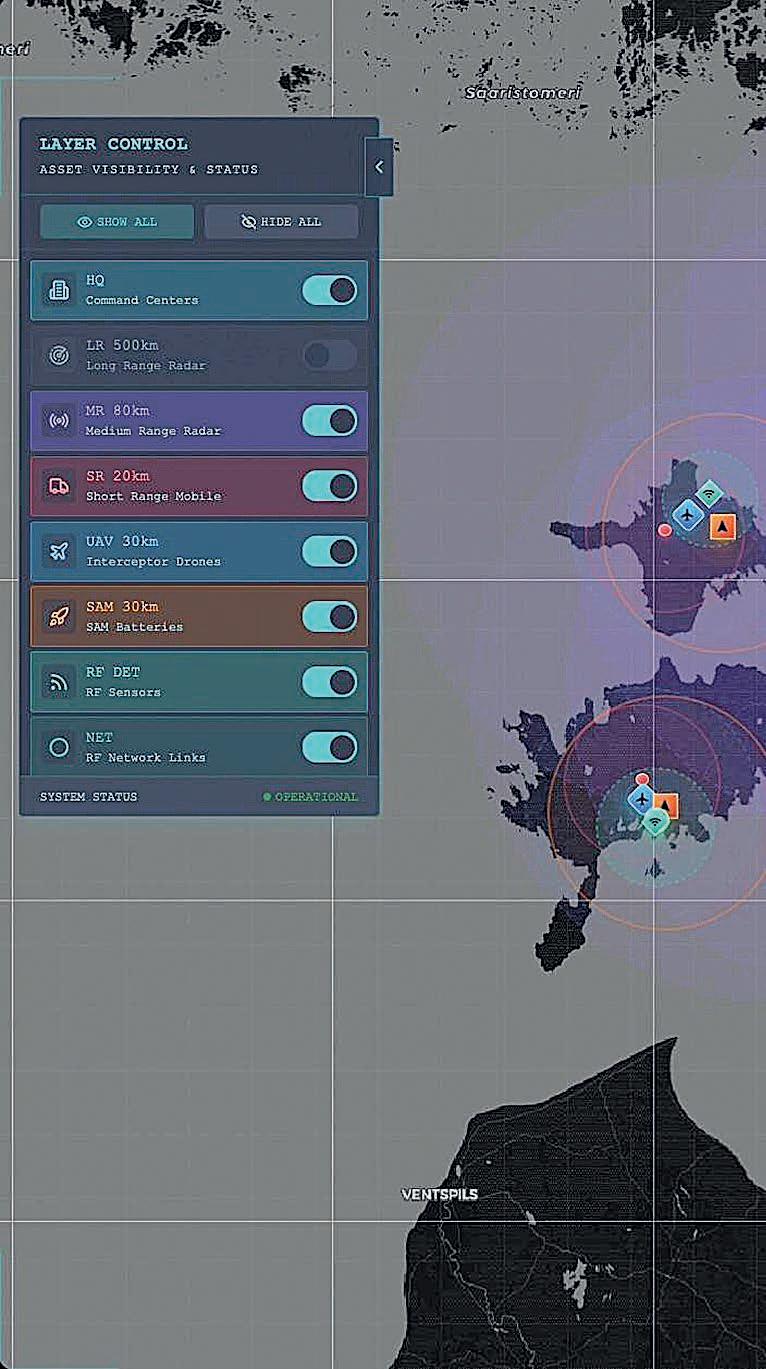
account both economic sustainability and limited human resources. Forward-looking air surveillance solutions therefore require not only the deployment of new sensors, but also a holistic understanding of the problem. It is one of the fastest changing areas of security, requiring flexible, adaptable, and evolving solutions.
DIVERSITY OF UNMANNED AIRCRAFT
The first unmanned aircraft were created before the First World War, but in the last decade especially, their development has been rapid. Nowadays, an unmanned aircraft is not a single technical solution but a generalized platform to which a wide range of functionalities can be added as needed. In the same way, we do not consider motor vehicles as one all-encompassing category but distinguish between passenger cars, trucks, motorcycles, and special vehicles based on their use and characteristics.
Forward-looking air surveillance solutions therefore require not only the deployment of new sensors, but also a holistic understanding of the problem.
The diversity of unmanned aircraft manifests itself on several levels. They vary in size and flight parameters: from palmsized nano- and micro-drones to large platforms comparable to manned aircraft, they vary in flight altitude and speed and in operational radius. Low-flying unmanned aircraft may use terrain, vegetation, and buildings as cover, while others operate at altitudes beyond the effective coverage of conventional short-range sensors. In addition, there is a wide variety of unmanned aircraft control and navigation solutions, from simple radio-controlled platforms to autonomous, GNSS-independent, or even cable-controlled systems.
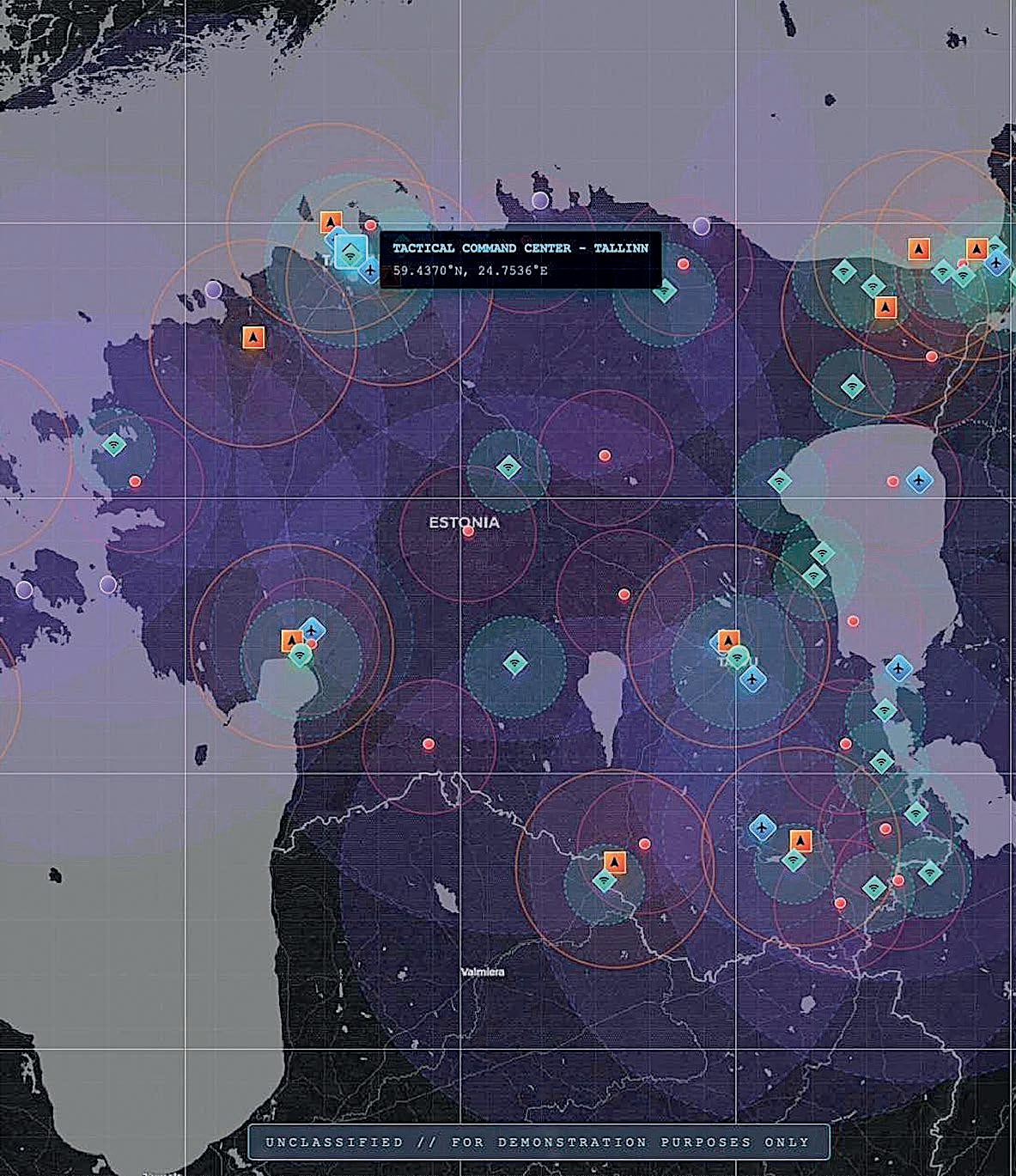
It is also important to stress the cross-usability of unmanned aircraft. The same platform can be used in hobby or commercial activities, in criminal activities that threaten internal security, or in military operations. What is different is not so much the technical solution but the intention of the user. Analytically, a distinction can be made between approved and benevolent users, individuals who violate the rules out of ignorance or negligence, criminal users (for example, for smuggling), and users with indirect or direct offensive intentions, aiming to cause or support physical harm. Each of these categories requires a different response logic in legal, tactical, and ethical terms.
COST-EFFECTIVENESS IN DETECTION
The diversity of unmanned aircraft means that a single-technology approach is not sufficient. Effective air surveillance requires a layered and integrated sensor network combining different technologies, such as active and passive radars, electronic intelligence tools, acoustic sensors, electro-optical and infrared cameras, and well-thought-out rules and procedures.
Only such a combination will reduce uncertainty in identifying the target's area of use, capabilities, and the threat it poses. It is important to emphasize that layering is not an end in itself but a means to achieve certainty of decision in a situation where individual sensors are inevitably imperfect.
Layering is not only important for surveillance but also for applying counter-
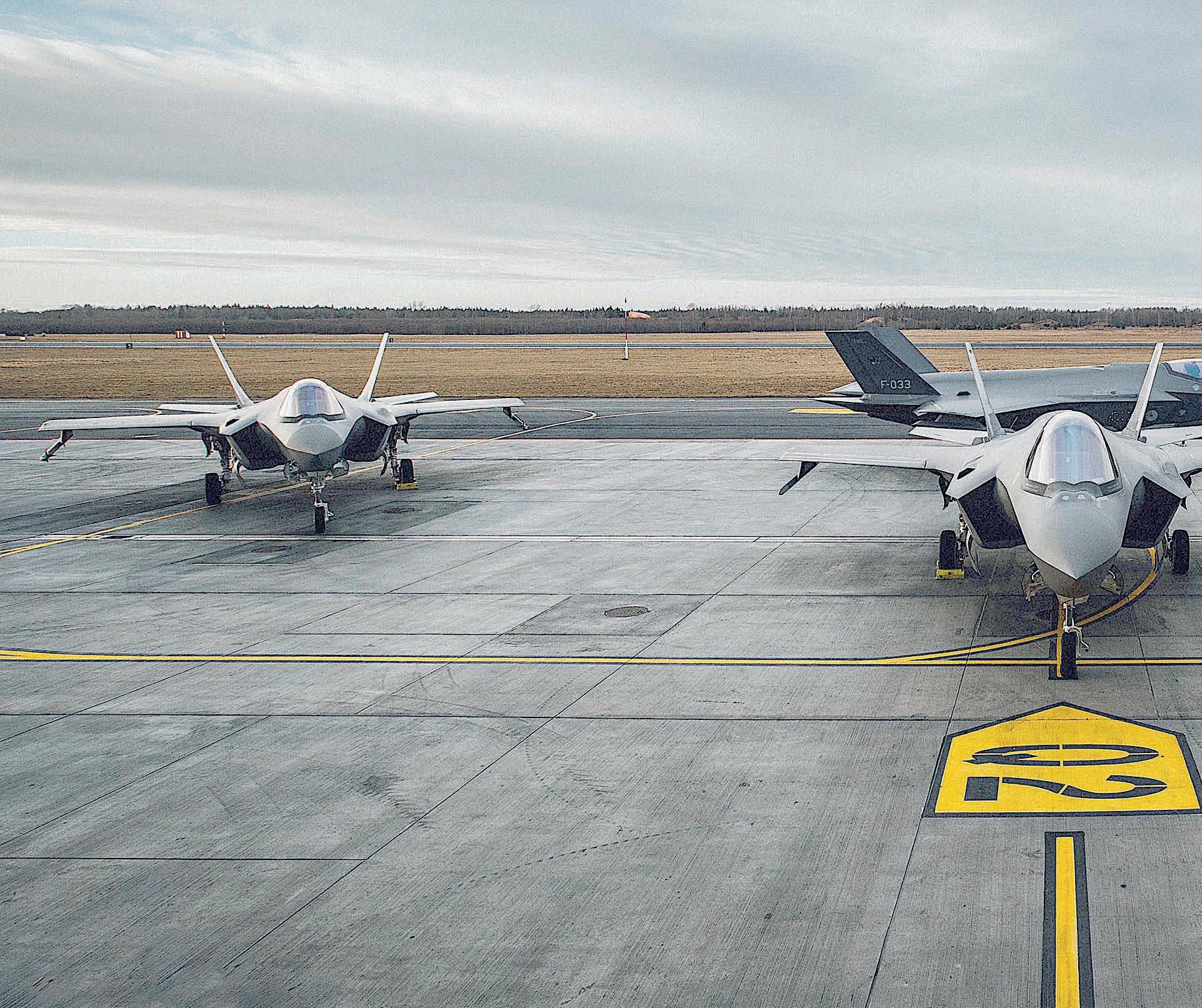
measures. Cost-efficiency in air defense does not only mean a low unit cost but also an optimized use of resources across the system. A suitable means of countermeasure must be found for each threat and target. In the case of low-risk and non-malicious violations, administrative measures, warnings, or limited electronic influence may be sufficient. However, more robust solutions, including directed energy weapons, kinetic interceptors, rapid-fire guns or missile systems, are also suitable against malicious intelligence and attack systems.
A central economic dilemma emerges here. Defensive measures are often more expensive than the unmanned aircraft they are used against. Extreme but instructive examples are situations where a very expensive weapons system is used to neutralize a cheap target.
Defensive measures are often more expensive than the unmanned aircraft they are used against.
In March 2025, the Netherlands and Estonia jointly practiced countering unmanned aircraft with AIM-9 missiles fired from F-35 fighter jets. It is a costly solution, but in certain circumstances, for lack of better means or in cases of the extreme criticality of the object to be protected, it is an operationally justified step.
This was confirmed in a later exercise in September, when Dutch F-35 aircraft took part in the protection of Polish airspace. These examples clearly illustrate that cost-effectiveness is not an absolute category but depends on time, level of threat, and the value of the object to be protected.
In the long term, however, this asymmetry is not sustainable. It is therefore important to consider cost-effectiveness in a broader perspective and to look at
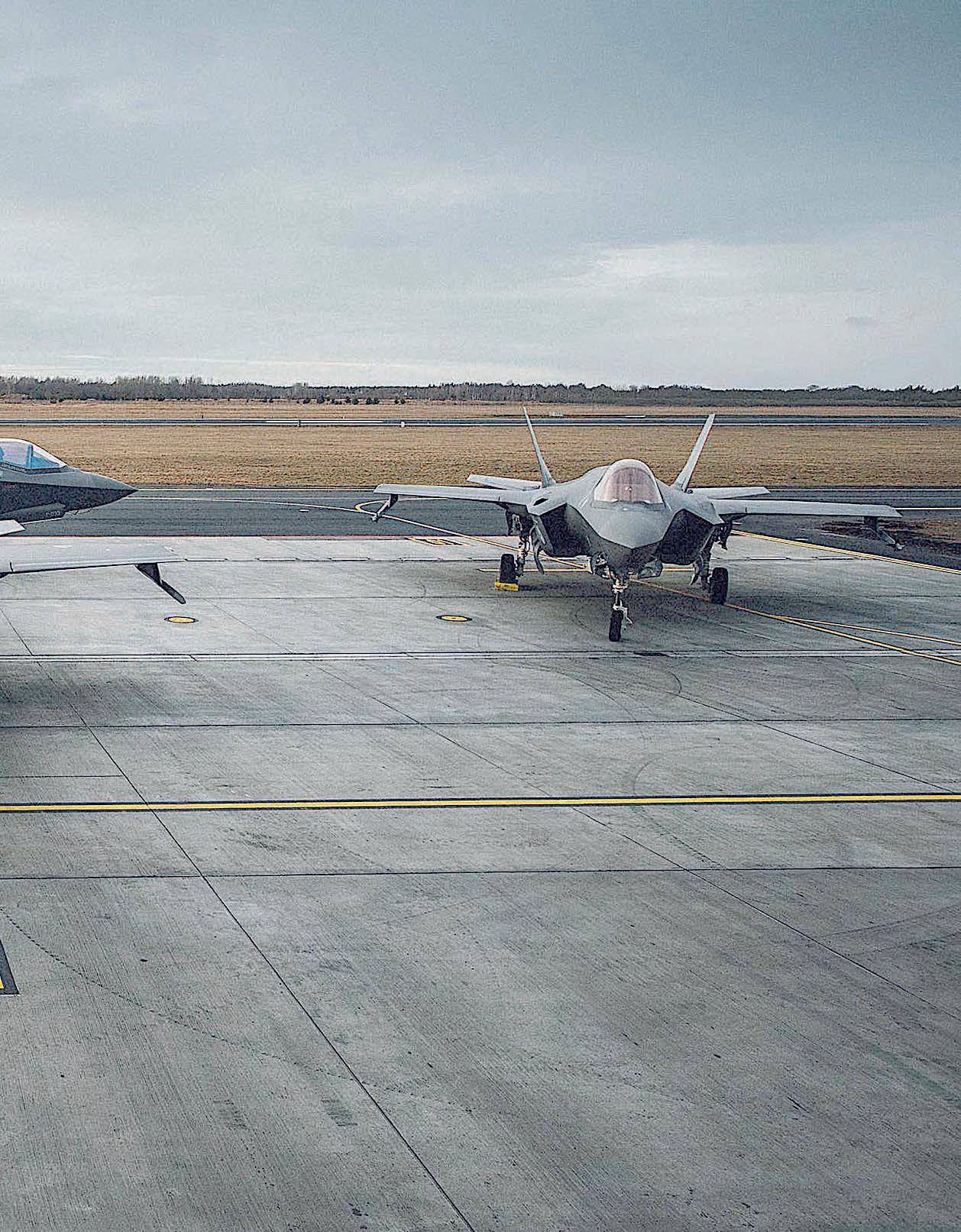
protection across the whole counteraction chain. Where there is an opportunity to do so, it is often more economical to affect an adversary's firing systems, command and control, and production capability before unmanned aircraft reach the battlefield or defended airspace. Such an approach is not a substitute for classical air defense, but it allows us to reduce the pressure on expensive countermeasures and improves the sustainability of the entire system.
The criticality and the time scale of the protected object must also be taken into account when assessing cost-effectiveness. In the case of sites that are easy to restore, it is not always justified to establish multi-layered and costly protection, while the protection of critical infrastructure, such as electricity or communication network nodes, inevitably requires a layered
and permanent approach. The early and cost-effective neutralization of a threat is justified if there is sufficient time, while in the case of a lack of time, the use of more expensive weapons systems is justified.
COORDINATION AND UNIFIED CONTROL SYSTEM
Layered surveillance and countermeasures will not deliver the desired results without effective coordination and a unified control system. The challenges posed by unmanned aircraft and the means to address them are not only within the competence of the Air Force, but also encompass the land, maritime, cyber, and information domains and space capabilities. Therefore, the command and control system has to comply with NATO's concept of Multi-Domain Operations (MDO), where the information gathered and the effects applied in the different domains are integrated into a unified command and decision-making framework.
Dutch F-35 fighters depart Ämari Air Base for a drone strike exercise on March 4, 2025.
Photo: Siim Verner Teder / Estonian Defence Forces
In practical terms, this means that air surveillance, air defense, intelligence, electronic warfare and offensive operations must form a coherent whole in which information moves quickly and reliably from sensors to decision-makers and from there to countermeasures. Situational awareness plays a central role and has the ability to gather a large amount of information from a range of sources, filter out noise, and support human judgement.
This is particularly difficult in the case of unmanned aircraft, as the desire to "see all objects" inevitably means seeing birds, weather phenomena, and other objects as well. Therefore, the software layer plays a central role, enabling automatic preprocessing of data, pattern recognition, and prioritization. Without such a solution, adding sensors does not increase effectiveness, only confusion.
An already very complex problem is elevated to a wicked problem by the fact that the whole system has to work flawlessly and uninterruptedly in very different situations and time horizons. This includes the current period of preparation and readiness, where there is no immediate and imminent military threat to Estonia, the gradual escalation of a potential conflict, a
crisis situation, and a full-scale war, as well as the post-war period.
Each of these phases differs greatly in terms of the threat profile, the legal framework, and societal tolerance, which means that it is neither possible nor justified to apply the same countermeasures in all situations. Effective air surveillance and defense therefore requires the ability to make considered choices under time pressure, where the achievement of a security effect has to be balanced against the unavoidable impact of measures on the functioning of society, fundamental rights, and economic activity.
This naturally leads to a need for strong cooperation with civilian structures that have partial or full responsibility for airspace surveillance, air traffic safety, law enforcement, and legislation.
In the Estonian context, cooperation between civilian structures and the Defence Forces is generally positive, and there is a common understanding of the main capability gaps. The establishment of temporary flight restriction zones in September 2025 in the eastern part of Estonia is a good example of the coordinated use of civilian and military air capabilities to ensure more fail-safe air surveillance and security while maintaining air traffic safety and minimizing the impact on society.
The next critical step is to further deepen this cooperation within the framework of a single multi-domain chain of command and to support it with clear and upto-date legislation. Clarity on the rights, responsibilities, and competences in regard to the detection of and application of countermeasures to unmanned aircraft is a prerequisite for the technical and organizational capabilities to become operational in reality.
DEVELOPMENTS IN ESTONIA
Admittedly, building such a complex and multi-level system does not happen overnight. The development of any new capability in the field of defense requires a significant investment of time and institutional effort, all the more so for such a wicked problem. Throughout 2025, Estonia has been addressing this difficult task in a targeted and systematic way. A unified conceptual framework has been
Ukrainian serviceman preparing a Sting interceptor drone for flight at a frontline position in eastern Ukraine.
established, the management and planning logic has been streamlined, and the necessary procurement has started. The next few years will show the fruitfulness of the work done, but the first practical results can already be seen.
In the field of air surveillance, the systematic acquisition of sensors has been accelerated since 2025. While in the past the focus was on upgrading individual radars, the focus is now on a unified surveillance network system, where the total number of sensors reaches the hundreds. The acceleration of the procurement process is illustrated by the fact that the first RPS-42 radars have already arrived and the surveillance network is constantly being expanded with a variety of radars, passive sensors, and electronic and optical detection equipment. This distributed architecture increases both the coverage of surveillance capabilities and the resilience of the network.
The role of civil society has also become an important additional layer in building situational awareness in 2025. Notifications and imagery of flying objects transmitted through the "Ole valmis!" ("Be prepared!") app reach air surveillance centers within seconds, allowing technical sensors to be linked to human observation. While such information is not a substitute for professional surveillance,
A
Photo: Anatolii Stepanov / Reuters / Scanpix
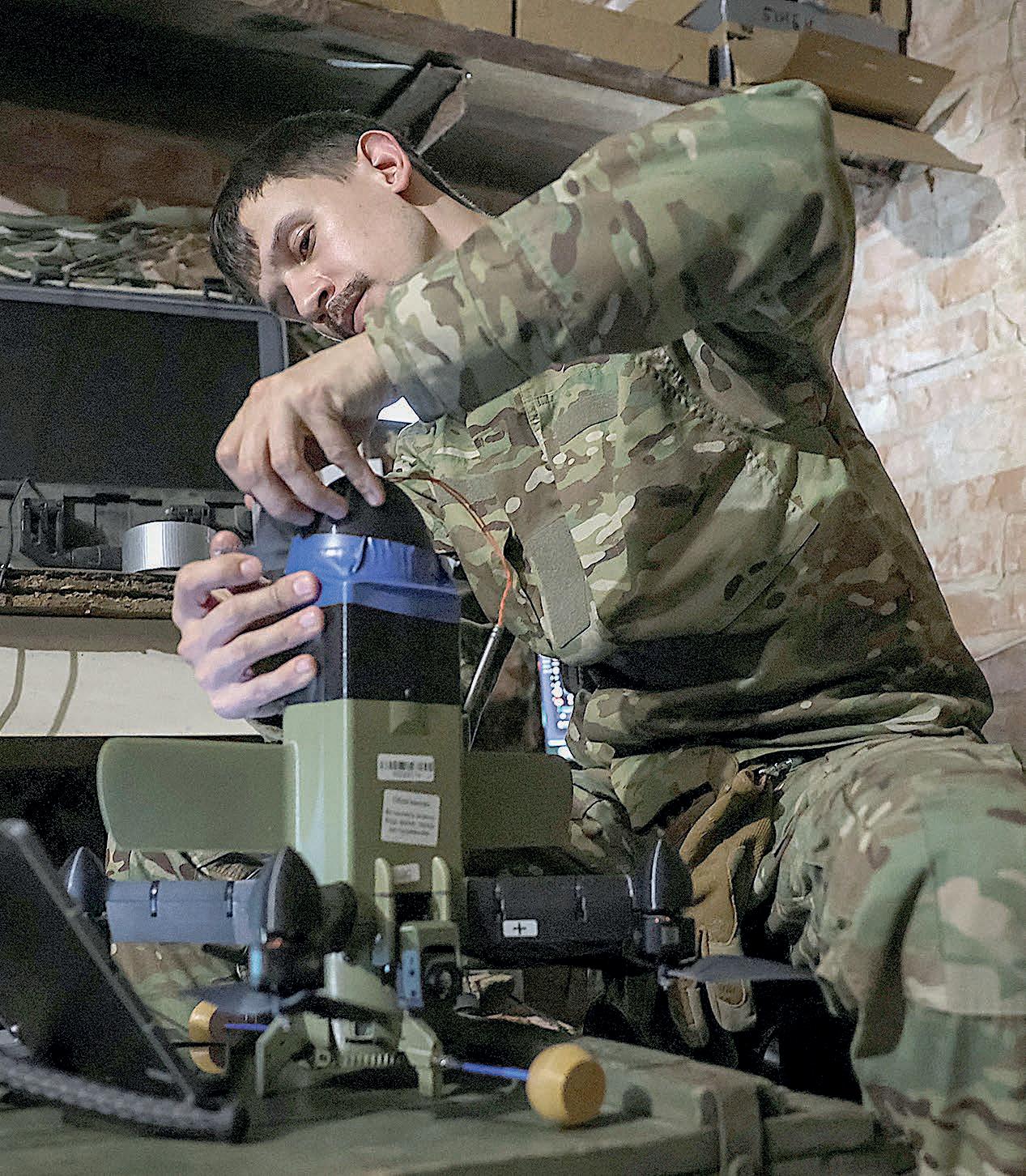
it significantly increases the ability for early warning and anomaly detection, especially at low altitudes of flight and in difficult environmental conditions.
The development of countermeasure capabilities in 2025 has had a clear focus on solutions that have proven themselves in Ukraine, enabling a rapid and cost-effective response. The systems being procured do not replace existing air defense capabilities but complement them by creating real layering through mobile missile systems, interceptor drones, automatic cannons, laser weapons, and electronic warfare solutions.
Such a combination allows for better matching of the countermeasure to the nature and time-criticality of the threat and reduces pressure on more expensive systems with limited ammunition. In turn, the presence of deep-penetration attack assets, such as HIMARS and Chunmoo, creates the possibility of neutralizing the threat before it reaches the battlefield.
At the same time as developing capabilities, important steps have been taken to streamline management and planning capacity in 2025. The focus was on treating air surveillance and defense as a whole system, rather than as the sum of individual capabilities. This implies a clearer definition of chains of command, a clarification of responsibilities, and the conscious introduction of a multi-domain approach in both planning documents and practical working arrangements.
The aim has not been to create a new parallel structure, but to link the existing civilian and military mechanisms into a unified, time-resilient decision-making framework. This approach is illustrated by the exercise related to the establishment of temporary flight restriction areas and the subsequent air threat response operation, during which the concept has found practical application.
All of the above developments also require a software backbone capable of linking sensors, countermeasures, and decision-makers into a single functional whole. Therefore, in 2025, the focus has been on the interfacing of information systems and the development of the currently lacking components to ensure up-to-date and uniform situational awareness for all parties and to enable the rapid and flawless transmission of commands throughout the chain of command.
This overview of developments in Estonia in 2025 shows that the trends described in theory are not just scenarios for the future, but a process that is already underway. The future of air surveillance will be shaped in particular by the proliferation and diversity of unmanned aircraft.
The future of air surveillance will be shaped in particular by the proliferation and diversity of unmanned aircraft.
Effective countermeasures require a layered and integrated approach combining technological solutions, human factors, legal framework, and cooperation between institutions. Although Estonia does not currently face an immediate and imminent military threat, the increasing frequency of air incidents in the region is a clear sign that flexible and cost-effective solutions are essential. Only a comprehensive and uniformly controlled air surveillance system enables us to respond to both current and future challenges. ‖
The year 2025 confirmed that the Baltic Sea has become a strategic space of operations, where military deterrence, countering hybrid threats, and critical infrastructure protection form a unified operating environment.
ESTONIA'S MARITIME SECURITY:
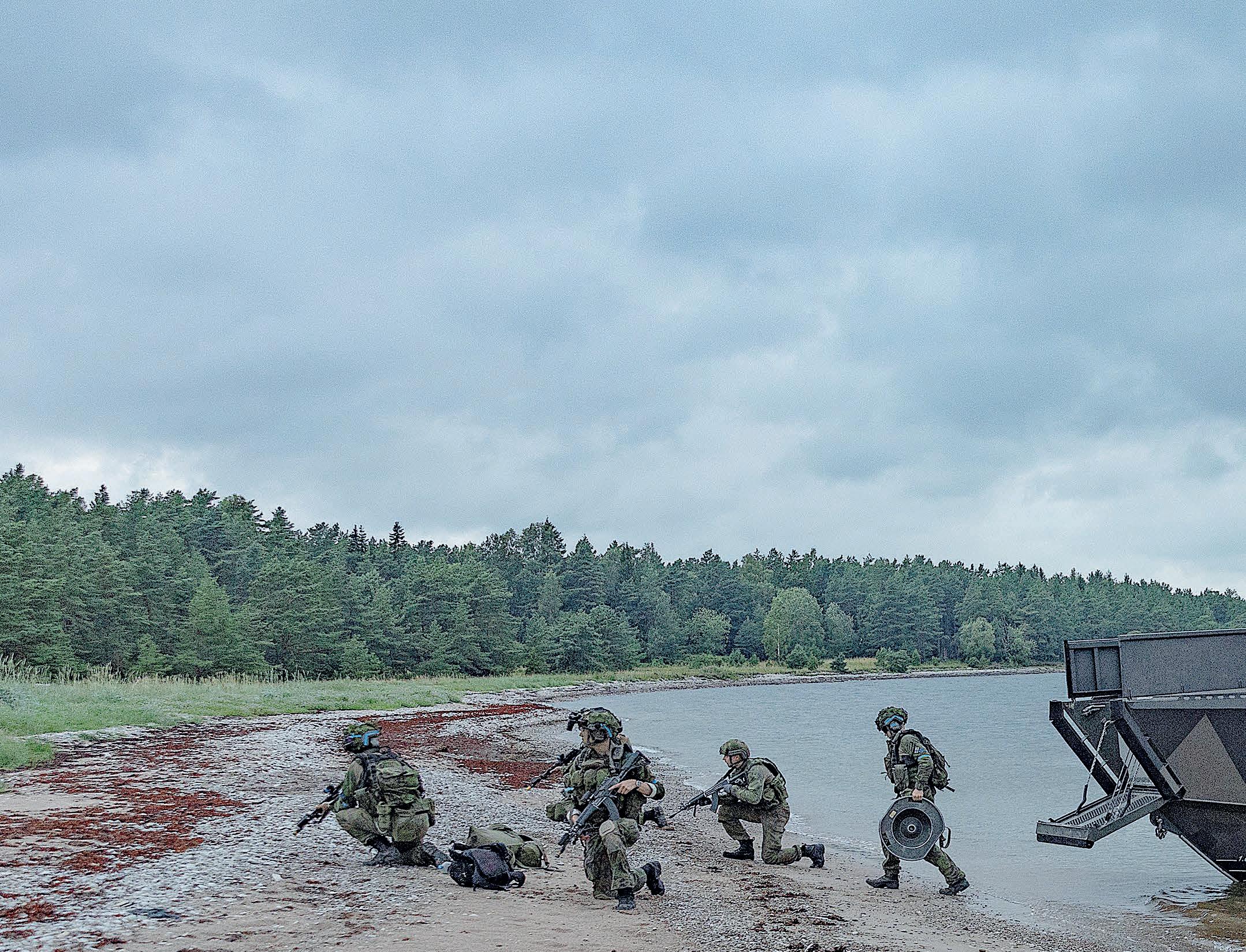
DETERRENCE, PRESENCE, AND PROTECTION OF CRITICAL INFRASTRUCTURE
Russia's continued aggression against Ukraine and the transformative impact of sanctions on energy flows have brought new risks to the maritime environment, which need to be addressed with both military and legal means. In 2025, the Estonian Navy not only defended the territorial sea, but also took care of broadbased maritime security, protecting the sovereignty of the country, ensuring freedom of movement at sea, and contributing to NATO's collective defense.
The bottom of the Baltic Sea is home to a dense network of electricity and communications cables, as well as the Balticconnector gas pipeline, which ensure energy supply, the functioning of financial systems, and strategic communications for
IVO VÄRK Commodore, Commander of the Estonian Navy
the Baltic states and Finland. During 2025, incidents of damage to underwater infrastructure and GPS interference continued in the region, compromising the safety of navigation at sea and highlighting the need to consider the Baltic Sea operational space as a potential environment for hybrid activities.
Protecting critical infrastructure is no longer just a civilian issue but a national defense task. Damage to submarine infrastructure—whether deliberate sabotage or hybrid impact—can cripple the functioning of a country without a direct military attack. In such an environment, the central task of maritime operations is to ensure operational maritime surveillance, maintain maritime situational awareness, and respond rapidly to suspicious activities.
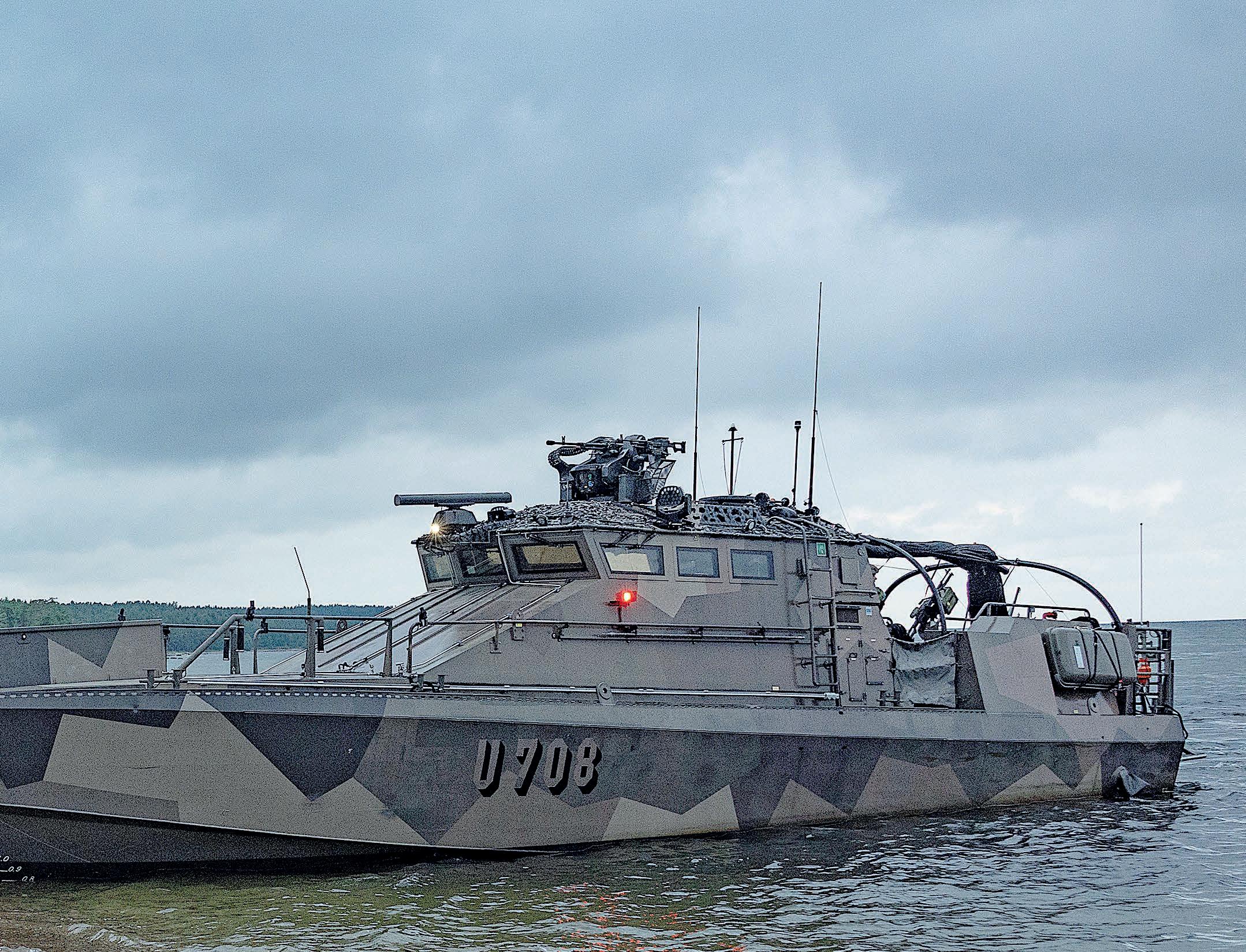
In 2025, cooperation continued with Finland, Sweden, Latvia, and Lithuania on the establishment of a common maritime surveillance and data picture. Estonia's contribution consisted of the operational use of its vessels, as well as the strengthening of intelligence and data exchange and the expansion of the proportion of white sea imagery.
The expansion of the white sea imagery means that the movement, anchoring, and maneuvering of any vessel of larger tonnage is also assessed from an infrastructure risk perspective. This is part of the deterrence—the knowledge that action will not go unnoticed.
BALTIC SENTRY: COLLECTIVE DETERRENCE OPERATION
On January 14, 2025, NATO launched Operation Baltic Sentry, which aims to reinforce the protection of critical submarine infrastructure in the Baltic Sea and increase the visible military presence
of the Allies. It is a continuous collective deterrence and response framework that brings together the maritime and air capabilities of the Allies and ensures common maritime situational awareness and coordinated action in the Baltic Sea operational space.
Baltic Sentry is not a single operation, but a strategic message: There is no security vacuum in the Baltic Sea area. Any destabilizing action against critical infrastructure will receive collective attention and response. Estonia's contribution to the operation is both maintaining the readiness of its fleet and strengthening regional cooperation.
Since Finland and Sweden became members of NATO, the Baltic Sea has essentially become a common operational space for the Allies.
This increases the credibility of deterrence but requires greater readiness to act quickly and decisively. For the Estonian Navy, this means greater readiness
Sunny Beach, a joint exercise of the Estonian Navy, the Estonian Defence League, and allied units, which included training activities on the Undva and Ninase peninsulas in Saaremaa to practice the defense of the Estonian islands last July.
Photo: Ardi Hallismaa / Estonian Defence Forces
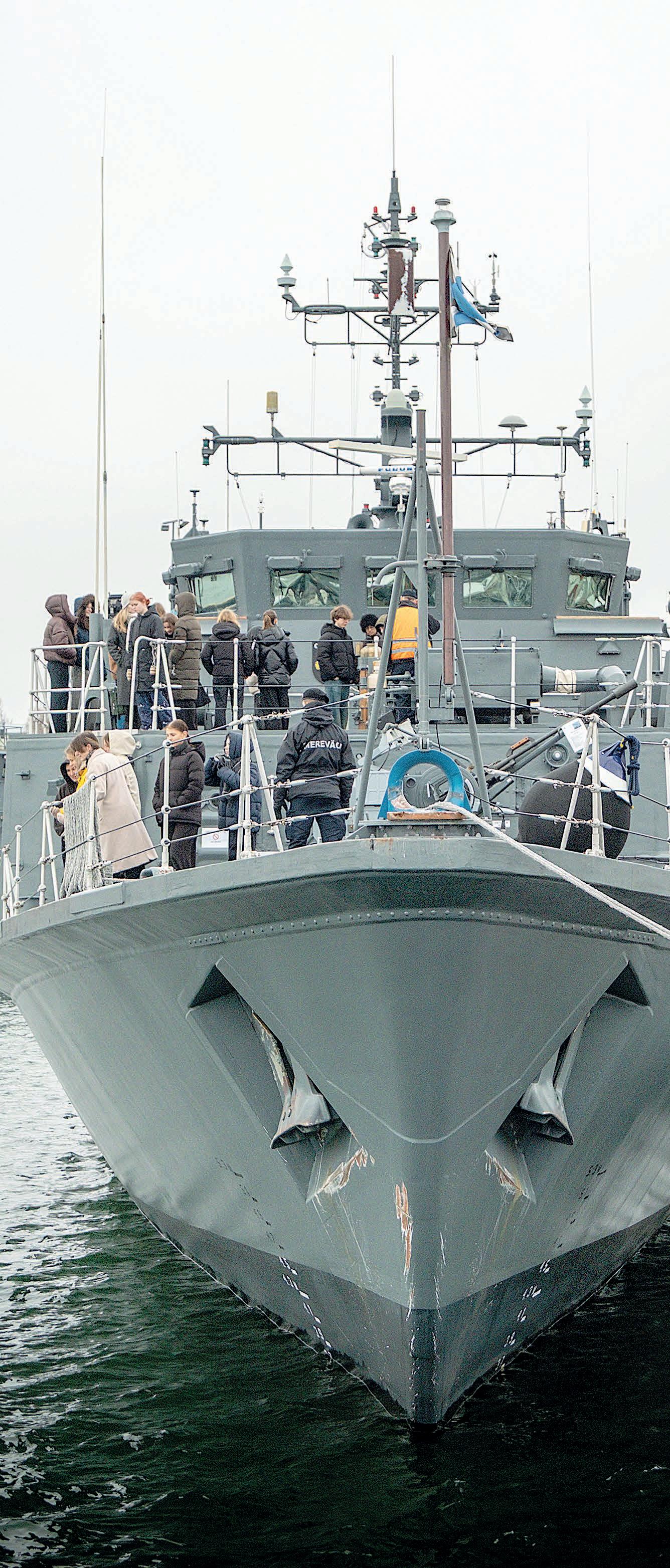
for operations, regular participation in allied operations, and the ability to integrate into the NATO naval chain of command.
ENFORCING SANCTIONS AS A SECURITY OPERATION
The reorganization of Russia's oil exports has brought a large “shadow fleet” to the Baltic Sea. These ships often operate with non-transparent ownership structures, unclear or absent flag states, or inadequate insurance. Apart from evading sanctions, they pose an environmental and security risk, given their technical condition and maneuvering practices in tight conditions such as the Baltic Sea.
In 2025, Estonia did not treat the activities of the shadow fleet as a purely economic or oversight issue, but as part of national security. Document and insurance checks, vessel interceptions, and escorting were carried out in close cooperation with the civilian authorities, but the military component—naval presence and readiness—was central.
Enforcing sanctions at sea is a practical expression of deterrence. This shows that violations of international law or gray zone activities do not happen without a reaction. At the same time, actions were taken within the framework of international law, maintaining proportionality and avoiding escalation.
OPERATIONS JAGUAR AND KIWALA
Over the past year, transits of vessels with undocumented or uncertain legal status have increased in the Gulf of Finland, posing a risk to Estonia's critical underwater infrastructure, navigational safety, and marine environment. These developments have increased the need for the consistent implementation of operational surveillance and enforcement capacity.
National Defence Studies students exploring naval service opportunities at the Mine Harbor Open Day on November 12, 2025.
Photo: Indrek Kuusk / Estonian Defence Forces
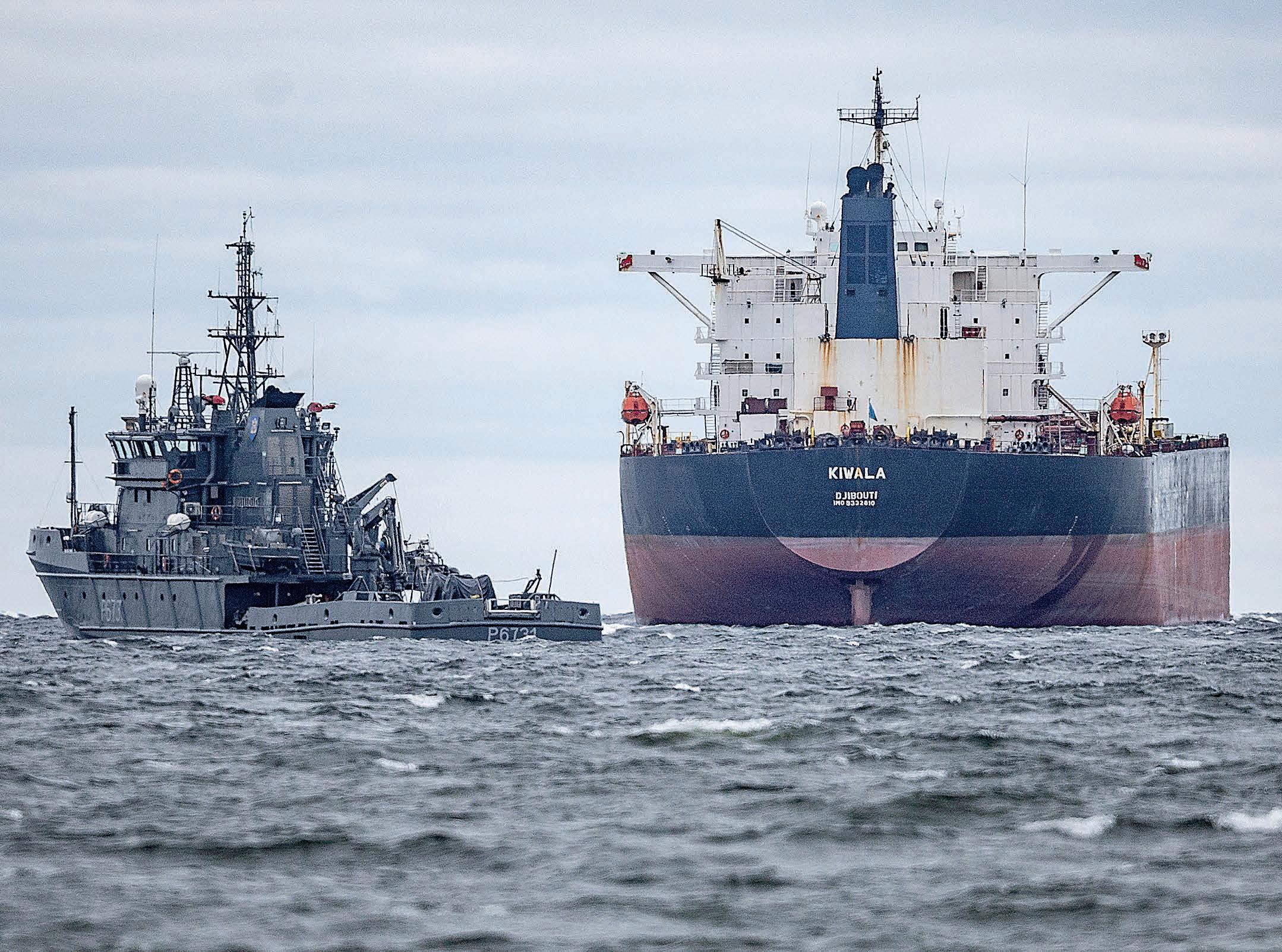
On April 10, the sanctioned tanker Kiwala entered Estonian waters. During the inspection, the vessel claimed to be flying the Djibouti flag, but the authorities of Djibouti confirmed that the flag had been revoked due to sanctions against the vessel. It was also confirmed that the vessel did not have valid insurance cover. Given that the vessel was sanctioned by the EU, the UK, Canada, and Switzerland, this was a higher risk case.
Under international maritime law, including the United Nations Convention on the Law of the Sea (UNCLOS), a state has the right to inspect a vessel that is stateless or of uncertain legal status. Estonia exercised this right and carried out an onboard inspection of the vessel. This was a measure based on the jurisdiction of the
Estonian state and in accordance with international law.
The operation was carried out in cooperation with the Estonian Defence Forces, the Police and Border Guard Board, and the Estonian Transport Administration to ensure maritime safety in Estonian waters and prevent the evasion of sanctions. The Navy controlled the situation at sea, ensuring safe boarding, ship inspection, and security.
The Kiwala case confirmed that the enforcement of sanctions at sea is part of a broader national defense approach. An uninsured and unregistered tanker in the Baltic Sea and areas covered by critical underwater infrastructure poses not only a political or economic risk, but also a direct security and environmental risk. Estonia's
Navy ship and
Kiwala in the Gulf of Finland in April 2025.
Priit Mürk / ERR
Estonian
tanker
Photo:
action was a clear signal that violations of international law or its exploitation in the gray zone will not go unnoticed.
This action demonstrated Estonia's readiness to exercise its jurisdiction, meet its international obligations, and act decisively in a complex and potentially escalating security environment.
In May 2025, the Estonian authorities responded to a situation where the tanker Jaguar was moving in the Baltic Sea operational area without a valid and unambiguously identifiable flag state registration. As of May 12, it was confirmed that the vessel had been removed from the Guinea-Bissau
register on May 2, 2025, and from Gabon's list on May 10. In such a situation, justified legal uncertainty arises that affects both the liability regime and the assessment of maritime safety.
In addition, the vessel was placed on the UK sanctions list on May 9, 2025. The ship's ownership was linked to companies in Mauritius and India, a typical multilayered ownership structure for a shadow fleet. There were also doubts about the authenticity of the insurance cover. The ship's previous port inspection took place in July 2024 in Tunisia, with the main destinations being India, Tunisia, Egypt, and the southern Arabian region. The last port call in Russia took place on February 20, 2025.
Given these circumstances and the jurisdiction of the Estonian state over the maritime space, a rapid assessment of the situation was made. The Estonian Navy
continuously monitored and inspected the vessel in the Estonian exclusive economic zone and decided to escort the ship out of the area, thereby mitigating potential legal and security risks.
The incident was accompanied by demonstrative activity by the Russian Air Force in the region, which emphasized the strategic dimension of the situation. Estonia's response was calm, proportionate, and coordinated. In cooperation with allies, sea and airspace were constantly monitored and control over the operational space was maintained.
Operation Jaguar confirmed that the shadow fleet's activities are not just a matter of evading sanctions, but also have a wider security dimension. A ship without a clear flag state responsibility and with dubious insurance cover poses both an environmental and an infrastructure risk, especially in narrow waters densely covered by critical underwater infrastructure. Estonia's actions have shown that the country is ready to apply its jurisdiction and fulfill its international obligations even in situations where the opposite side is trying to exert pressure or test its readiness to respond.
Operations Kiwala and Jaguar were not isolated incidents but part of a systemic
The protection of critical infrastructure, NATO's Baltic Sentry operation, and the enforcement of sanctions against the shadow fleet form a unified strategic whole.

approach aimed at limiting sanctions evasion, reducing the risk of threats to critical underwater infrastructure, and maintaining control over the Baltic Sea operational space. A visible and consistent presence, decisive action, and allied integration reduce the space for gray zone activities and increase the political and operational price of any destabilizing move.
Security in the Baltic Sea area is not a given. The year 2025 confirmed that maritime security is an integral part of Estonia's national defense. The protection of critical infrastructure, NATO's Baltic Sentry operation, and the enforcement of sanctions against the shadow fleet form a unified strategic whole.
Estonia's approach to ensuring maritime security in 2025 confirmed that deterrence is not just about capability, but about a consistent readiness to deploy that capability. The protection of critical underwater infrastructure, the enforcement of sanctions, and a collective presence in the Baltic Sea form a coherent strategic whole aimed at preventing destabilizing moves before their occurrence. The Estonian Navy acts as an integral part of this whole, ensuring that the jurisdiction of the Estonian state at sea is real, visible, and protected. ‖
In 2020, the US Department of Defense's Defense Advanced Research Projects Agency (DARPA) conducted an experiment pitting an artificial intelligence-based system against an experienced F-16 fighter pilot. It was a closerange air combat maneuver that took place in a virtual simulator. The result was five to zero in favor of artificial intelligence. It was not just a technological demonstration, but a landmark moment: the speed of the decision-making cycle and the volume of data processing are beginning to exceed the limits of natural human capabilities. Since then, there have been significant technological breakthroughs in both warfare and the civilian world. Estonia,
MIHKEL TIKK Deputy Commander, Cyber Command
like many other countries, needs to adapt to these changes and renew its military capabilities and doctrines. We need to be fast and flexible to integrate new technologies and the lessons learned from the war in Ukraine into our daily routines and training.
In today's warfare, artificial intelligence is no longer a nice-to-have capability. It is becoming the foundation of future warfare, influencing how armies see, assess the situation, decide, maneuver, defend, and attack. For Estonia, as a country on NATO's eastern flank, artificial intelligence does not mean replacing soldiers with machines, but empowering them. This means shortening decision cycles,
A Cyber Command soldier during an exercise.
Photo: Ardi Hallismaa / Estonian Defence Forces
ARTIFICIAL INTELLIGENCE IN FUTURE WARFARE
increasing resilience, and gaining an asymmetric advantage over a larger adversary by turning speed, situational awareness and adaptability into combat power.
THE ROLE OF ARTIFICIAL INTELLIGENCE IN DEFENSE
Artificial intelligence refers to the development of computer systems capable of performing tasks that typically require human intelligence: for example, pattern recognition, decision-making, prediction, and learning. In the context of military operations, artificial intelligence can be applied in a wide range of areas, including intelligence and surveillance, logistics, tactical decision support, and autonomous systems.
The Estonian Defence Forces are relatively compact but flexible, and the skillful application of artificial intelligence can significantly enhance our military capabilities.
The Estonian Defence Forces are relatively compact but flexible, and the skillful application of artificial intelligence can significantly enhance our military capabilities. By automating routine processes and improving situational awareness, we can optimize resources and ensure a faster and more accurate response to potential threats.
WHY IS ARTIFICIAL INTELLIGENCE PARTICULARLY IMPORTANT?
Estonia's defense priorities are early warning, rapid mobilization, air defense, drone defense, secure communications, and cyber defense. Common to these priorities is the need to quickly collect, process and
interpret a large amount of information from different sources.
This is where defense requirements and the strengths of artificial intelligence overlap. Artificial intelligence helps to integrate fragmented signals, such as radar traces, images, electronic emissions, sensors, public information, and cyber telemetry, into a coherent operational picture faster than humans alone can. This creates an advantage in decision-making in a situation where time is critical.
Implementing AI is not just about buying software or getting a license. It is a strategic shift in mindset, leadership, and organizational culture.
Estonia's security environment is characterized by geographical proximity to Russia, limited strategic depth, and the need to react quickly in the face of potential pressure. In these circumstances, the first 72 hours narrative is not just rhetoric. In a future conflict, the pace will be set by the side that sees, understands, and acts first.
Therefore, the strategic value of AI lies less in autonomous weapons and more in decision-making advantage—the ability to turn sensors into knowledge and knowledge into coordinated action.
HOW TO GET THERE
Implementing AI is not just about buying software or getting a license. It is a strategic shift in mindset, leadership, and organizational culture.
Artificial intelligence is only effective if its use is linked to a clear operational purpose. This requires close cooperation between technologists and military experts—people who understand what problem needs to be solved and what decision needs to be accelerated. Artificial intelligence must support the decision-maker, not replace responsibility.
Data is critical. Artificial intelligence is no better than the base data it is given. This requires investment in data collection,


quality control, standardization, and secure sharing. Fragmented or poor-quality data does not create a decision-making advantage.
Estonia must also have the capacity to assess and audit the reliability of the systems in place. It is important to understand how algorithms arrive at decisions, what their limitations are, and how they behave in the face of deliberate interception by an adversary or error.
Technological sovereignty, i.e., the ability to develop, adapt and, where necessary, operate critical systems when external services are not available, is also essential. In times of war, not all cloud services or supply chains can be expected to operate as usual.
And finally, artificial intelligence must not make us more vulnerable. We need to maintain the ability to operate without digital advantages. Paper maps, radio communications, distributed command and control, and autonomous decision-making in units are not a thing of the past; they are the basis of resilience.
The path of artificial intelligence in Estonia's defense is not a leap into the unknown, but a steady build-up of capabilities: from pilot projects to doctrine, from testing to standardization, and from technology to trust.
Artificial intelligence is becoming the foundation of future warfare, influencing the way armies see, decide, and act. For Estonia, this does not mean replacing soldiers, but empowering them, shortening decision cycles, increasing resilience, and creating an asymmetric advantage over a stronger opponent.
The strategic value of AI lies not in autonomous weapons but in its decision-making superiority and its ability to transform data into knowledge and knowledge into coordinated action.
The question is not whether artificial intelligence will become a central element of warfare. The question is how quickly and smartly we can integrate it into our defense architecture. ‖
Possible applications of artificial intelligence in future warfare
1. Enhanced surveillance and intelligence
Artificial intelligence enables information gathering and analysis in peacetime and wartime. By combining data from drones, radars, and other systems, algorithms can identify patterns and threats at an early stage. This not only improves battlefield information, but also strengthens early warning and strategic preparedness.
2. Cybersecurity
As future conflicts increasingly involve cyberspace, artificial intelligence-based systems can play a key role in preventing and countering attacks by detecting and mitigating threats faster than humans.
3. Autonomous systems
The development of autonomous land and air vehicles can transform logistics and transport in military operations, reducing risks to personnel and increasing the efficiency of the supply chain.
4. Predictive maintenance
Artificial intelligence can analyze equipment performance data to predict maintenance needs, reducing downtime and ensuring that critical systems are always up and running.
5. Training and simulation
AI-based simulation tools create realistic training environments, allowing soldiers to prepare for different scenarios without the costs and risks of conventional training.
The War and Disaster Medicine Center of the Estonian Military Academy (WDMC) is engaged in training, research, and development in the field of war and disaster medicine.
INNOVATIONS AT THE DISASTER MEDICINE THE ESTONIAN MILITARY
NEVE VENDT Head of the War and Disaster Medicine Center
The Centre aims to provide the most up-to-date, practically oriented, and harmonized training for managing patients in various crises and mass casualty situations, both in the Defence Forces and in civilian medicine.
Last year was a big step forward for us, as since October 10, 2025, the WDMC has had its own building in Raatuse, Tartu. We had been waiting for our own building for almost 10 years, and the need for new premises was not only related to modern learning, but also to addressing a critical shortage of space. The number of students taught at the Center has increased more than tenfold in 15 years: in 2010, the WDMC ran 17 courses with a total of 250 participants; in 2015, 49 and 1,250 respectively; and in 2024, we ran 113 courses with a total of more than 3,000 participants, half of whom were active military personnel. The number of students will increase further in the coming years, as the number of training courses for healthcare professionals will increase by 200 in the coming years.
The Center trains conscripts and active military personnel as paramedics and runs a mandatory course in war and disaster medicine for 750 medical or nursing students each year, based on a common curriculum. Estonia is a role model for many NATO member states in the training of our reserve medical personnel, meaning we are one of the few countries where a course in war and disaster medicine is a compulsory part of the curriculum for all healthcare professionals. We also provide
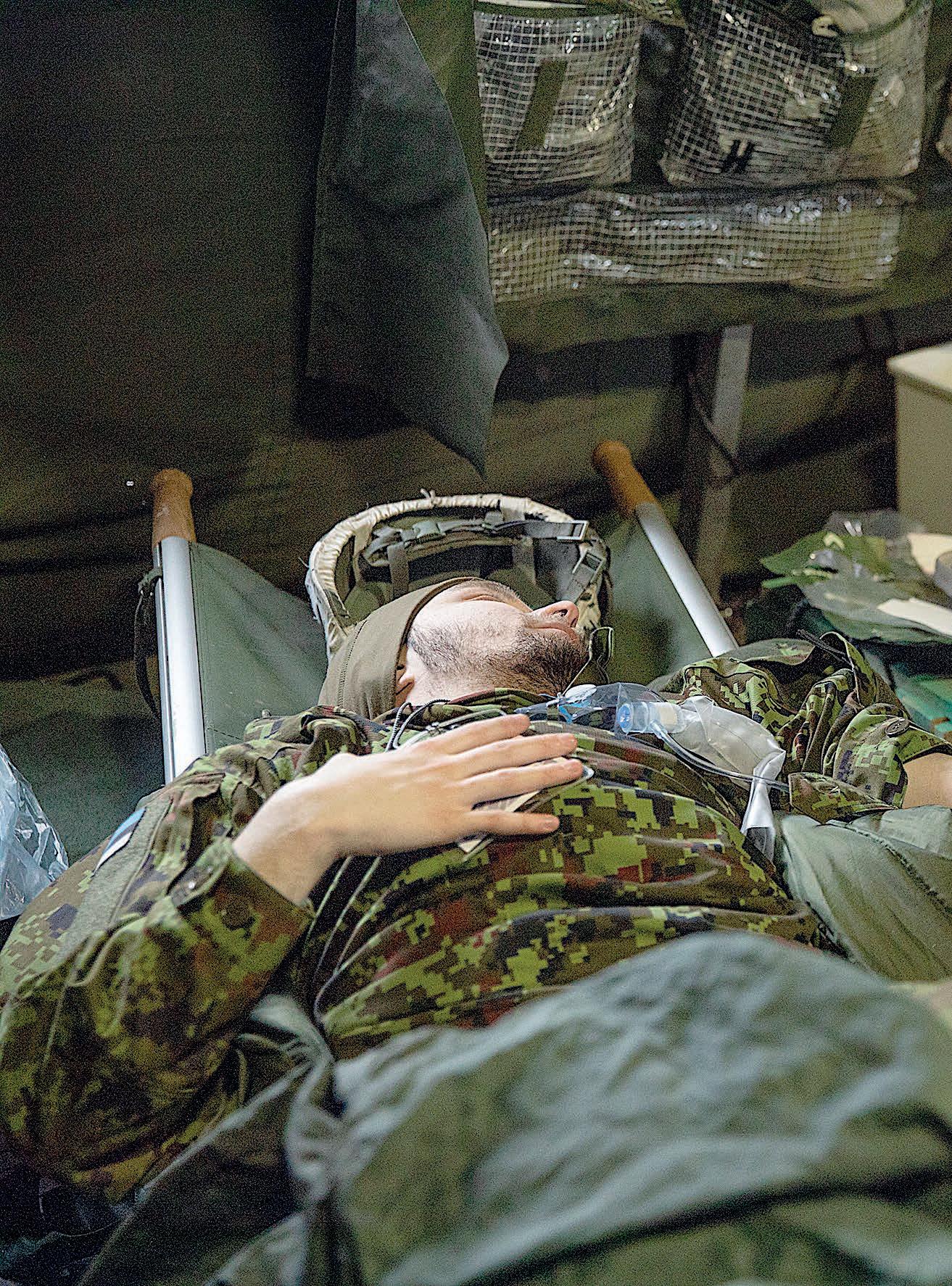
further training for both active military personnel and reserve medical personnel, e.g. basic war medicine courses and emergency patient treatment.
In the past two years and in 2025, we have trained and will continue to train instructors not only for the Military
THE WAR AND MEDICINE CENTER OF MILITARY ACADEMY
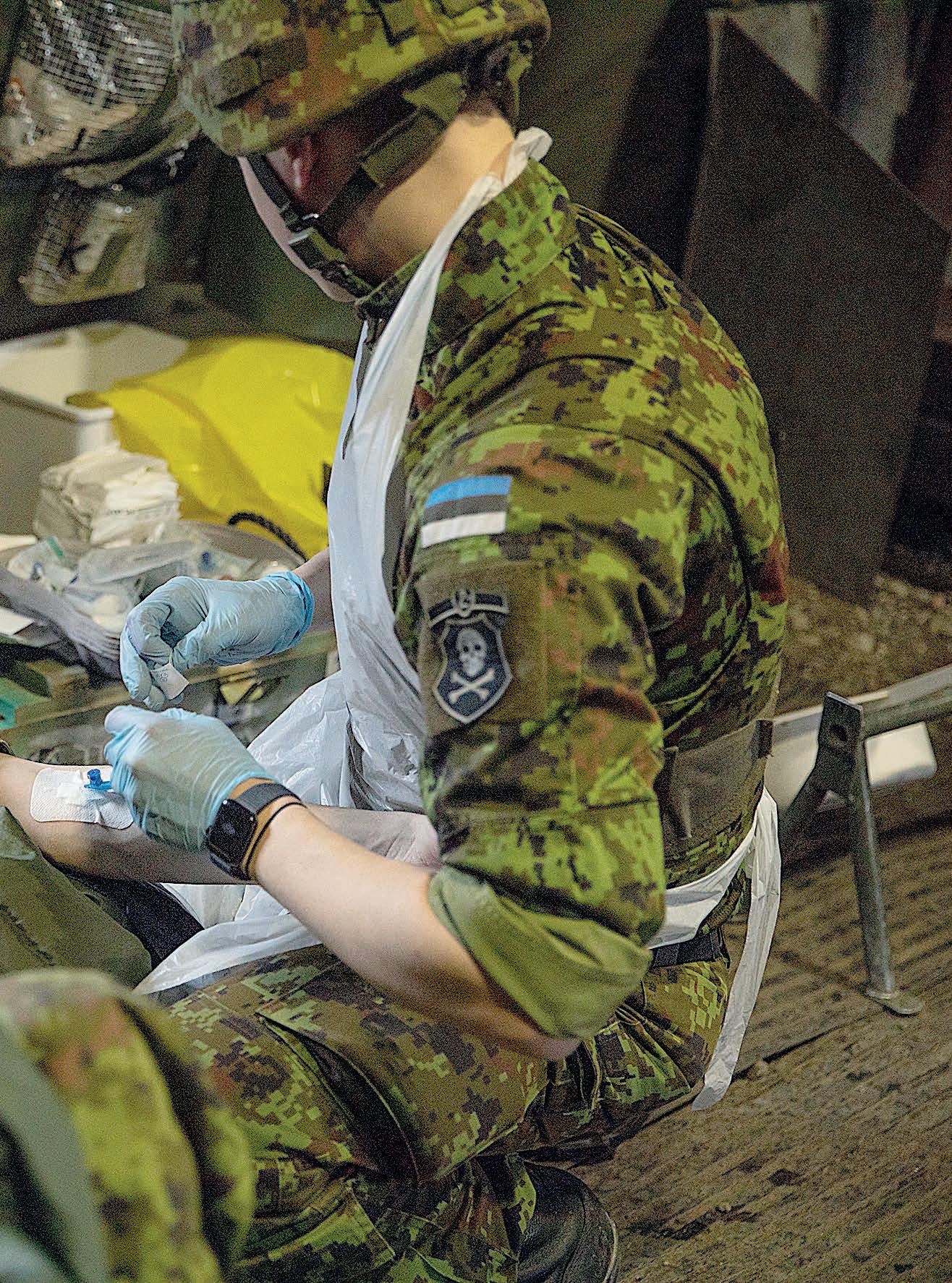
Academy, but also for healthcare institutions and their training centers. In 2023, we launched our course "Initial Treatment of Trauma Patients in Estonia" in cooperation with the Health Board, and we trained a large number of instructors during the year. Several training centers across
Estonia now teach the course based on the same curriculum. The course aims to improve the skills of healthcare professionals in the treatment of trauma patients, using the equipment available in Estonia. With this course, the casualties receive first aid on a uniform basis, both at the ambulance stage and in the emergency department, irrespective of the responding brigade or hospital to which the casualties arrive.
We are the only certified center in Estonia authorized to provide international major incident management training in both pre-hospital and hospital stages, MIMMS (Major Incident Management and Support) and HMIMMS (Major Incident Management and Support in Hospital). This was possible thanks to close cooperation with the British Armed Forces and the Advanced Life Support Group (ALSG). Thanks to them, we have created a base of instructors who have an internationally accepted trainer license and are able to train instructors using teaching techniques for adult learners. Our instructors teach not only in Estonia but also in allied countries, and our international course is attended by military personnel from neighboring countries.
With the Center, we also support the Estonian Defence League so that their paramedics can update their first aid skills and organize their existing equipment during reserve training. Before the reserve training, we trained a total of 50 Defence League instructors and harmonized the paramedic curriculum in the Defence Forces and the Defence League. It turned out that, over the years, the learning outcomes in the paramedic curriculum of the Defence Forces and the Defence League had differed in some subjects.
One of the special courses at the WDMC is the combat casualty first aid course K9 TCCC (Tactical Combat Casualty Care) for service dog handlers. The course aims to provide students with the theoretical knowledge of algorithm-based casualty care and then apply this knowledge in practice using a variety of life-saving first aid techniques, such as venipuncture, stopping bleeding, airway opening, and ventilation. During the exercises, ensuring safety and communicating with the dog while on the battlefield also play a major role.
Courses of the medical team of the War and Disaster Medicine Center of the Military Academy.
Photo: Mari-Liis Päären / Estonian Defence Forces
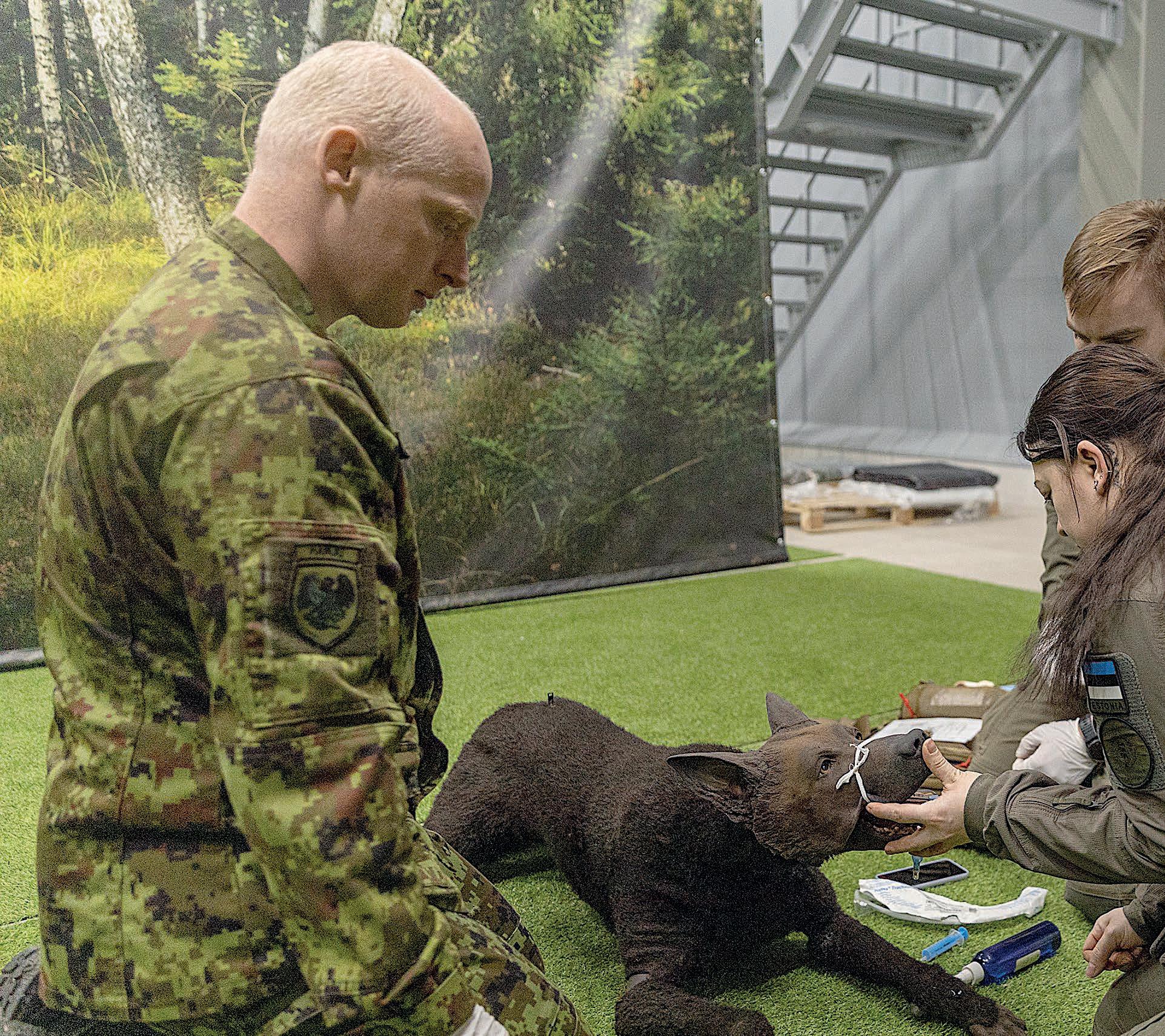
The number of dog handlers in the Defence League is increasing, and this has led to a greater need for a special first aid course designed to help service dogs on the battlefield. Captain Hele-Reet Lille, Head of the Support and Development Section, is the promoter and the person in charge of this course in the WDMC. The Estonian Defence Forces have an approved K9 medical kit, which obliges us to teach dog handlers how to use it.
However, thanks to the cooperation with the US Armed Forces units stationed in Germany, we have managed to bring the course to Estonia twice. The chief instructor of the course, US Army Veterinary Captain Sarah Rebecca Alpert, together with two instructors, had brought along Diesel Dog dummies as teaching aids. The dummies are very realistic in appearance and anatomy, and are able to make noises, move and simulate all kinds of ailments, giving the participants the most realistic possible situation for helping.
The new WDMC building houses a three-story training wing: the War and Disaster Medicine Center, with a total of 20 larger and smaller classrooms, two simulation rooms, a simulation hall, and an auditorium for 198 participants, with live simultaneous translation facilities.
In the simulation rooms, an operator or game director is located in an adjacent room and listens, monitors, and changes the course of the game on the simulators based on the students' activities. The two simulation rooms are planned to house an emergency critical care room or intensive care unit. The most innovative feature of the center is the 800 m2 simulation hall, which, in addition to sound and lighting solutions, has the option of using rain, wind, and smoke. In the hall, regardless of the time of day and weather, you can simulate the environment that corresponds to the situation, e.g., from providing aid to a victim in a rainy forest at night to setting up a simulated treatment area in Role 1 or in a field hospital.
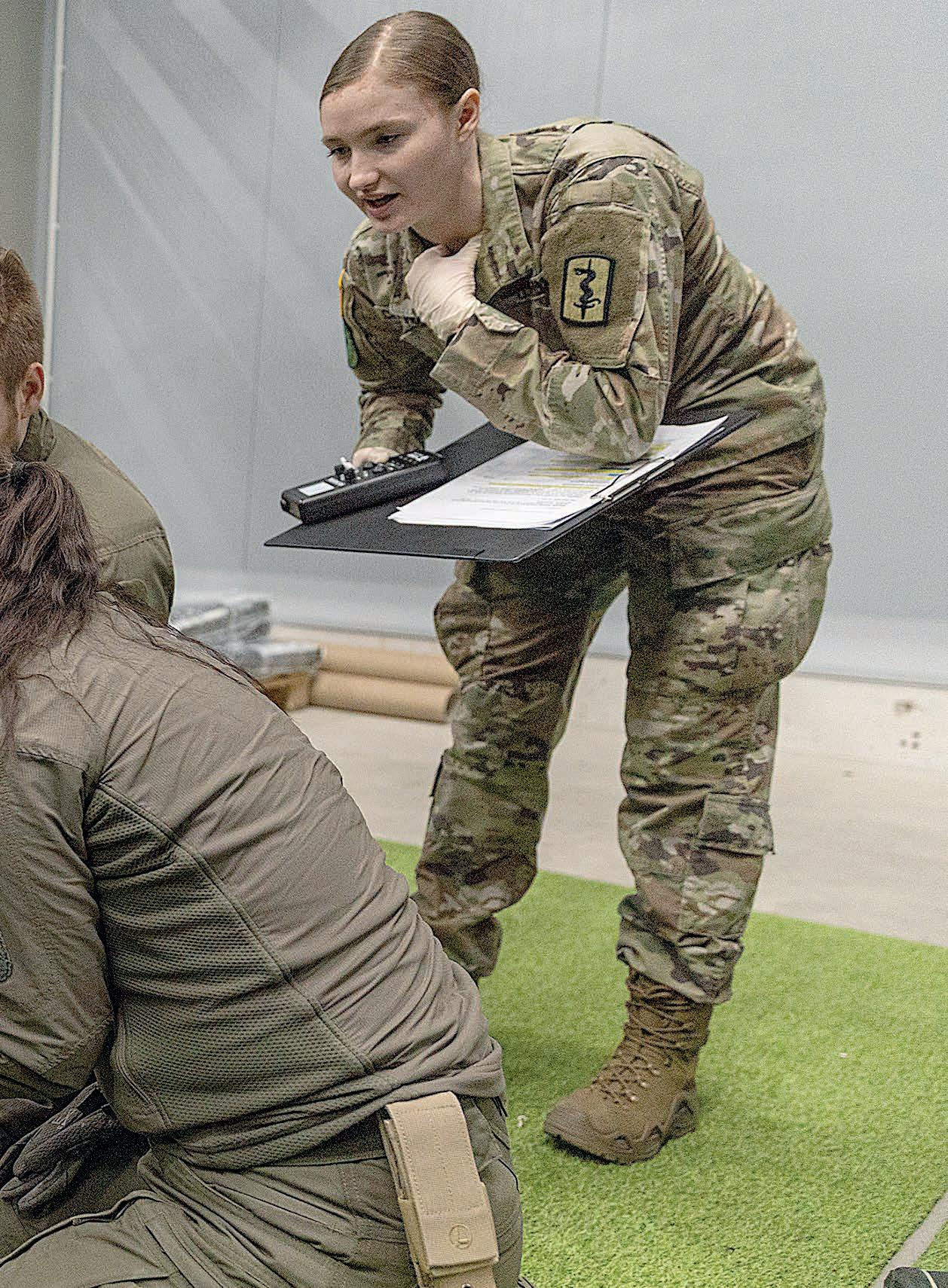
In addition to the training rooms, the WDMC houses the Defence Forces' most modern storage areas for medical supplies and medicines, as well as a state-of-the-art equipped general and specialist medical center, which began operating in February 2026.
In addition to the primary care services (family physician and emergency medicine doctor) that have been provided in Tartu so far, the Tartu Specialist Medical Center also plans to provide separate nurse and specialist services (psychiatrist, orthopedist, sports medicine and rehabilitation, urologist-andrologist, surgeon, internist, dentist). The center employs a psychologist, a physiotherapist, a massage therapist, an occupational therapist, a social worker, and other
specialists. The Seli Rehabilitation Center closed its doors on November 1, and its work continues here in Tartu as a renewed sports medicine and rehabilitation center. Liis Mikkonen, a sports medicine and rehabilitation doctor, wants to provide rehabilitation, preventive, and sports medicine services at the center to reduce sports trauma or fatigue-related injuries among conscripts and active service members. In addition, the center offers the possibility of performing the latest stress tests. A 36-bed ward block has been created, which will soon be able to provide round-the-clock healthcare with nurse competence.
We train instructors not only for the Estonian Military Academy, but also for healthcare institutions and their training centres.
While the primary care service is provided mainly to the Military Academy, the specialized medical center is planned to provide consultations and assistance by doctors and other specialists to the Defence Forces units throughout South Estonia and Ida-Viru County.
A training course on combat medicine for service dogs was held at the Military Academy's War and Disaster Medicine Center in Tartu, where dog handlers learned to administer first aid to four-legged companions injured on the battlefield.
Photo: Mari-Liis Päären / Estonian Defence Forces
In June 2026, the largest collaborative exercise of the Defence Forces medical units and allies, Vigorous Warrior 2026, will take place in Estonia and is mainly organized by the NATO Military Medical Excellence Center (NATO MILMED COE). This biennial exercise takes place in various allied countries. Estonian medical units have participated in the exercise with their Role 2 field hospital. This year, up to 2,000 participants are expected to take part in the exercise. The exercise aims to plan and deal with medical operations and practice casualty assistance and evacuation, not only in Estonia, but also internationally.
The War and Disaster Medicine Center of the Estonian Military Academy is in a constant state of change and development. Constant work with bright-eyed and excited young people (university students and conscripts) helps us adapt to the changes. These bright eyes help us to be innovative and bright-eyed as well, ready for new challenges. ‖
As part of the Hedgehog 2025 exercise, a multinational joint exercise of drone units took place in Estonia for the first time.
Photo: Maria Tammeaid / Estonian Defence Forces
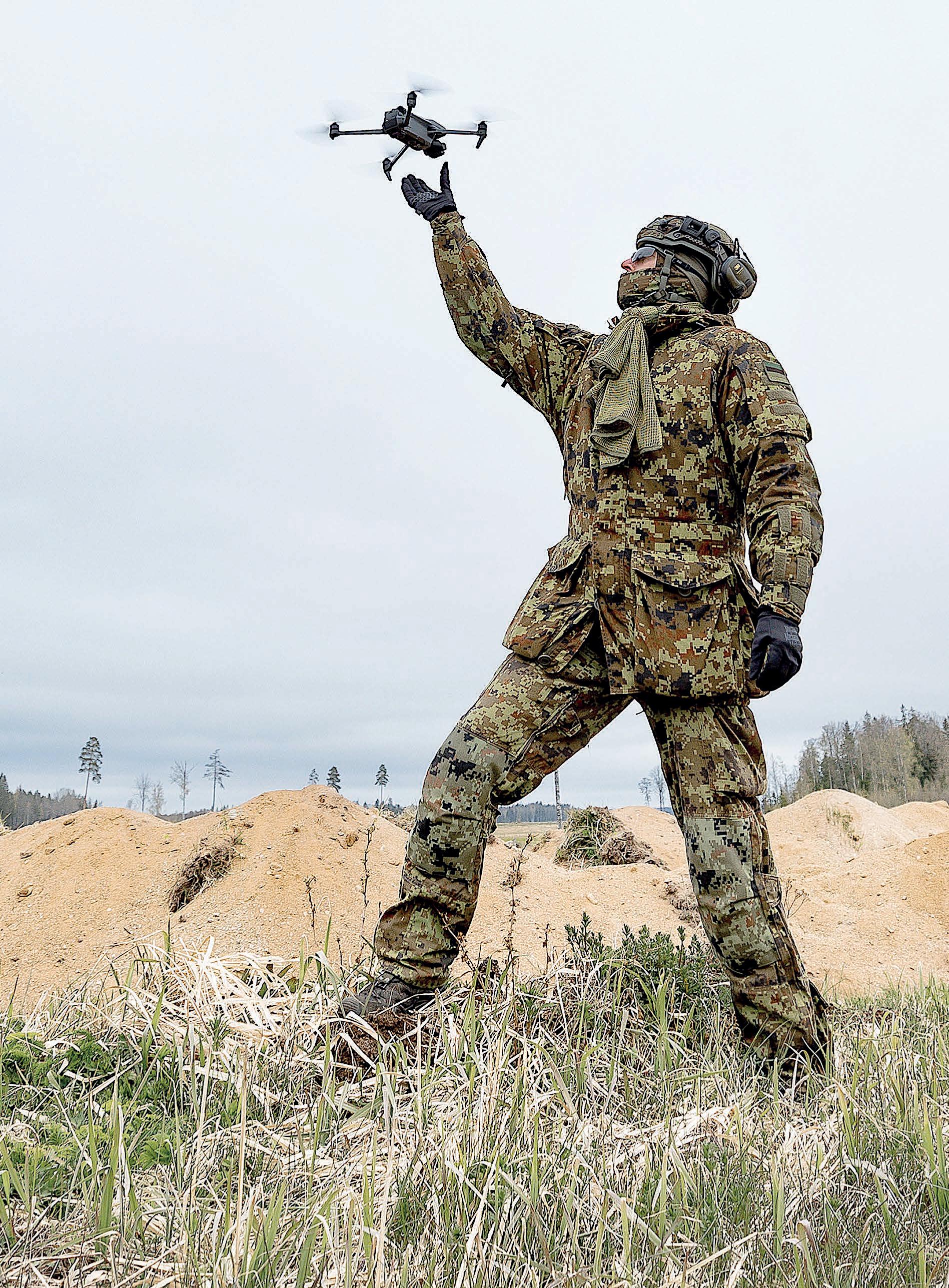
The tense security environment and the increased defense budget raised the question of how to address critical capability gaps more effectively, how to bring new technologies to the Defence Forces more quickly, and how to involve the Estonian defense industry in developments more systematically. Thus, in 2025, the Force Transformation Command (FTC) was established to support the rapid and sustainable growth of the Defence Forces' combat capabilities.
INCREASING THE COMBAT CAPABILITY
MUST BE DONE QUICKLY, BUT NOT HASTILY
The Force Transformation Command reports directly to the Commander of the Estonian Defence Forces and supports the other branches of the armed forces. One of the objectives of the Force Transformation Command is to keep track of military and technological developments and link them to the needs of the Defence Forces so that suitable solutions can be tested, decided upon, and deployed by units more quickly. The idea is not just to look for "new things", but to maintain continuity of development in a situation where the Defence Forces units have to conduct more intensive training, ensure readiness, and integrate new solutions at the same time.
The experience of recent years shows that the logic of increasing defense capabilities has changed. In the past, "more defense capability for one euro" often meant that development and procurement steps could move in a more procedurally convenient or cost-effective sequence. In the current environment, however, it is the pace that determines the sequence. Critical capability gaps arisen must be closed within a few weeks or months, and the starting point for decision-making is the impact on combat readiness, not just the characteristics of the system being procured.
In capability development, the Force Transformation Command coordinates the chain of activities from the
IVO PEETS
Major, Commander of the Force Transformation Command
MARI-LIIS TIKERPERI
Knowledge Management and Communication Specialist, FTC
identification of capability gaps to the integration of new capabilities into the forces through development projects. In 2025, this work was made more visible and comparable: the approach to development projects was streamlined and the needs of the units and the testing and deployment of new solutions were better linked into a coherent whole.
The assessment of the needs of the units takes into account technological developments and lessons learned from the war in Ukraine, and this knowledge is adapted to the Estonian context. The search for solutions is not limited to paperbased analysis or product specifications, but involves in-depth testing in the most realistic situations possible, such as exercises.
Critical capability gaps arisen must be closed within a few weeks or months.
The test criteria are situation-specific, but the overall aim is to understand how the proposed solution works in our conditions and whether it can be applied more widely, including the user load, reliability, maintenance needs, the scope of integration, and what limitations arise in emergency situations. After successful testing, the solution is deployed, feedback is collected and the concept and requirements are refined.
The Force Transformation Command technology managers act as a link between units and companies to support the preparation of testing, bring together users and

developers, and help workable solutions spread from unit to unit.
In addition to coordinating roles within the Defence Forces, the Force Transformation Command expands the Defence Forces' cooperation with industry, research, and education sectors and other partners.
The state, industry, research, and higher education sectors, civil society, and investors are linked in action with the common goal of ensuring that workable solutions reach the Defence Forces based on evidence and best know-how. International cooperation, both with allies and with initiatives that bring development and testing to Estonia and improve access to new technologies, is an integral part of this.
The same goal is supported by work on investment and funding mechanisms (e.g.
The pace is increasing, but there can be no concessions on quality or the thoughtfulness of activities.
SmartCap) that strengthen the capabilities of the Estonian defense industry and create better opportunities for testing and deploying new solutions, including through NATO DIANA (NATO Defence Innovation Accelerator for the North Atlantic) and the European Defence Fund (EDF).
A strong link to planning horizons and key operational documents ensures the sustainability of this way of working. Immediate gaps and new technological opportunities must be visible and addressed within the framework that guides the Defence Forces' activities and resources: the Military Defence Action Plan (MDAP), the Ministry of Defence Development Plan (MoDDP), and the National Defence Development Plan (NDDP).
A prerequisite for lasting results over time is the force management reform
Standard equipment for the new era: the R-20 Rahe assault rifle alongside the DJI Mavic drone. In today's warfare, unmanned aerial vehicles as a soldier's main weapon.
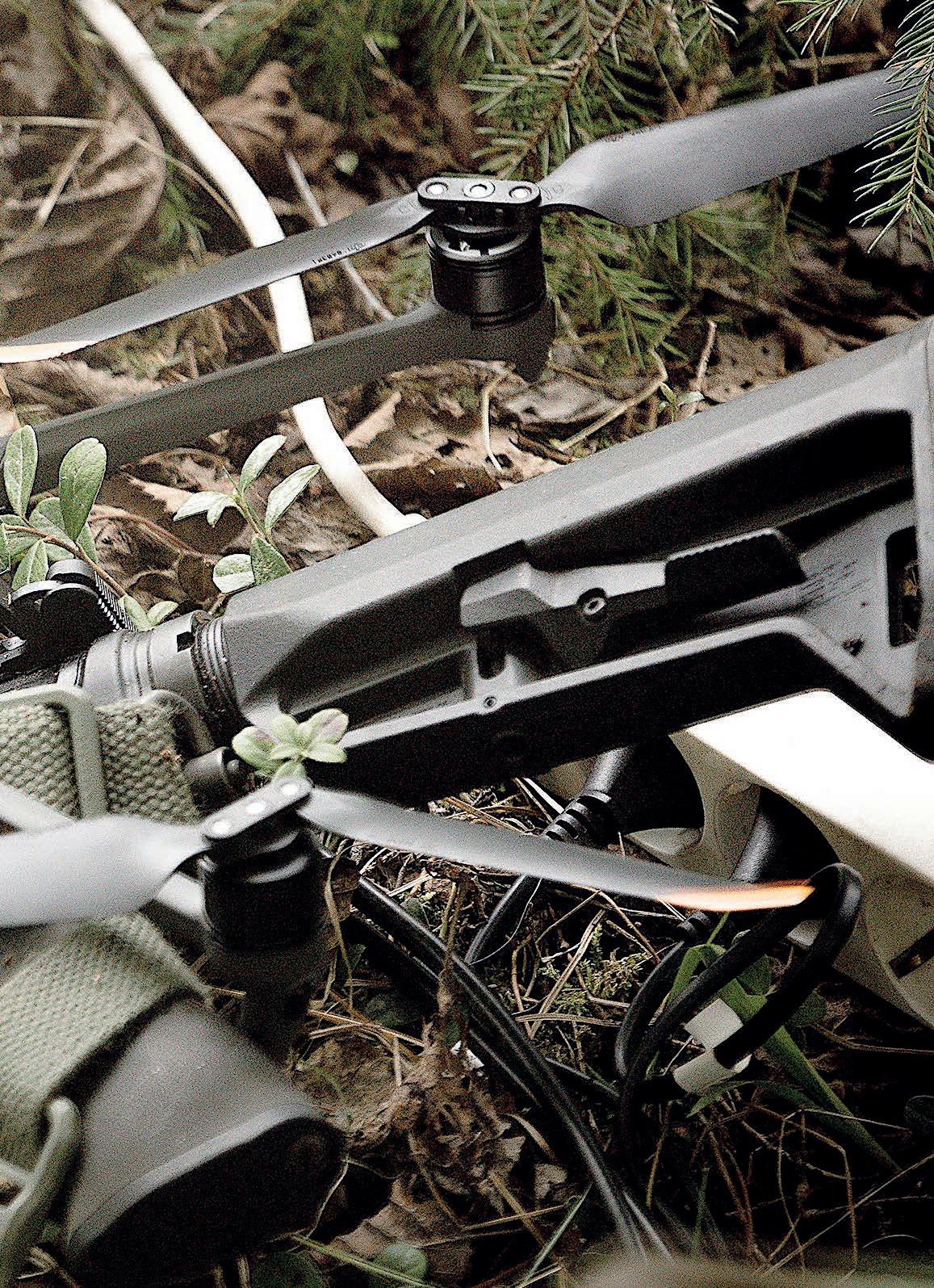
Commander and composition of the Force Transformation Command
Major Peets started as a conscript in the Kuperjanov Battalion. He has served as a platoon commander in Afghanistan, as a staff officer in Mali, and in various roles in the Kalev Infantry Battalion and the Joint Headquarters of the Estonian Defence Forces. Major Peets received his doctorate in 2025 and his doctoral thesis on small states' comprehensive national defense planning fully supports his role at the head of the new Force Transformation Command.
In addition to active military personnel, the core of the Force Transformation Command includes civilian employees with diverse backgrounds in the private and public sectors. There are also plans to form a reserve structure of reservists to pool knowledge and experience to be applied in development projects and the integration of new capabilities with existing ones.
Lines of action of the Force Transformation Command
initiated with the creation of the Force Transformation Command, which allows for more flexible budgeting and brings decision-making, testing, procurement, and deployment under a single management logic in both the short and the long term. Within the same logic, the Force Transformation Command formulates proposals to improve the work organization and procedures to meet the needs of the Defence Forces in a way that is both legally and practically feasible.
The Force Transformation Command thus aims to develop and maintain a chain from the early identification of capability gaps to the controlled integration of capabilities, on the principle of "quickly but not hastily". The pace is increasing, but there can be no concessions on quality or the thoughtfulness of activities. ‖
1. Cooperating with the defense industry and research institutions in Estonia and abroad to pool the additional resources needed for accelerated capability development, in addition to public funds.
2. Developing capabilities related to unmanned systems and their countermeasures in all branches of the armed forces.
3. Developing artificial intelligence, autonomy, and space domain capabilities.
4. Enhancing the Baltic Defence Line in cooperation with domestic partners and allies.
5. Developing a reservist engagement model in cooperation with research institutions.
6. International experiences and lessons learned, including from the war in Ukraine, are disseminated and adapted to the Estonian context to support the best decisions.
vehicles have become a common tool, as much a natural part of battlefield equipment
Photo: Maria Tammeaid / Estonian Defence Forces
The Estonian Special Operations Forces ESTSOF is made up of battle groups, reservists, allies, and active servicemen, which form subunits and task groups.
SPECIAL OPERATIONS TASK GROUP
AS ONE OF THE STRIKING WEAPONS OF THE DEFENCE FORCES
One of the ESTSOF's tactical task groups is the Special Operations Task Group (SOTG), a subunit of specially selected, trained, and equipped professionals. NATO Special Operations Forces (SOF) task groups (SOTG) can vary from country to country, specializing in land, sea, or airbased operations.
Air operations are carried out by Special Operations Air Task Groups (SOATG), while Special Operations Maritime Task Groups (SOMTG) operate at sea and inland waterways, and Special Operations Land Task Groups (SOLTG) on land. Although NATO documents describe the general framework of the task groups, the actual structure will evolve according to the country's needs, geography, and required capabilities.
The SOTG also follows the NATO SOF structural model, and although it is a land-centric target group (SOLTG), given the specificity of Estonia as a maritime state, the SOTG must be able to operate in an aquatic environment as well. Such tasks may include, for example, infiltrating the enemy's rear using waterways or intercepting ships at sea.
Special operations tactical task groups are designed to conduct and support military operations using a variety of techniques and infiltration methods. Action takes place across the whole spectrum of
RIVO MEIMER
Colonel, Commander of the Estonian Special Operations Forces
The capabilities of special and conventional forces do not compete but complement each other; by working together, it is possible to have a more effective and economical impact on the enemy's will to fight.
the conflict, alone or with conventional units. Where necessary, they cooperate with other national security authorities, including police special units.
For the special forces, partnerships and alliances are critical. Mutual support allows complex tasks to be carried out more efficiently and with fewer resources. In times of peace and crisis, the SOTG's role is to support the Ministry of the Interior in identifying and mitigating hybrid threats. In wartime, the tasks expand considerably and the SOTG must be ready to support the conventional units of the Defence Forces. The capabilities of special and conventional forces do not compete but complement each other; by working together, it is possible to have a more effective and economical impact on the enemy's will to fight.
According to NATO SOF doctrine, the SOTG as a tactical element is composed of section-sized teams, headquarters, combat support, and combat service support units. The Estonian SOTG also performs similar functions. The headquarters is divided into different sections, and its work is similar to that of an infantry battalion headquarters.
Special Operations Task Units (SOTUs), composed of professional special operators, operate under the command of the SOTG. The exact structure is not public. Operators' competencies are divided into specialties: armament, engineering,
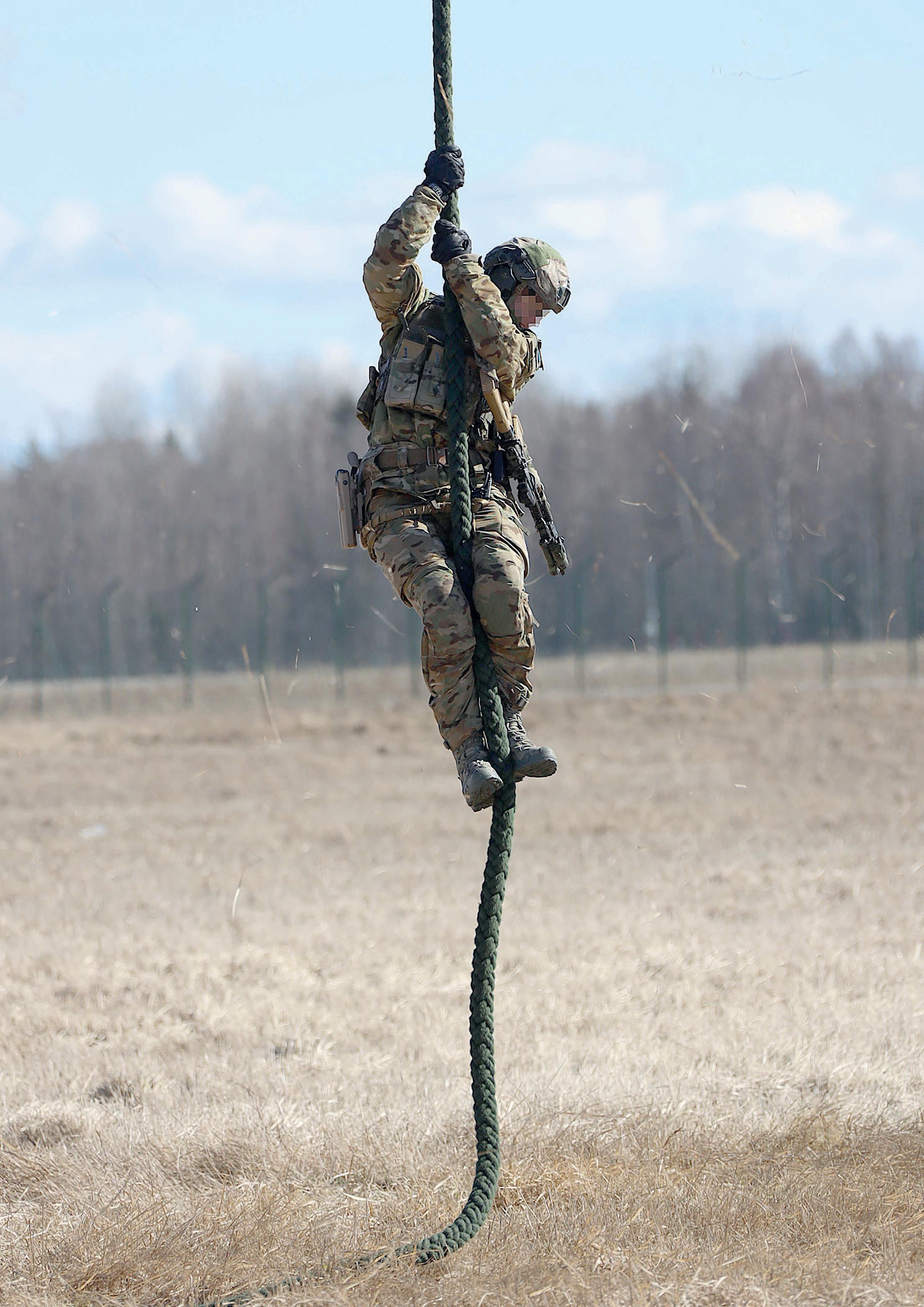
Joint fast rope exercise between special operators and the Finnish helicopter team.
Photo: ESTSOF private collection
communications, intelligence, medicine, and unmanned aerial vehicles.
A system similar to that used by the US Army Green Berets is used to designate operators' specialties:
A – commander
Z – senior
B – weapons specialist
C – engineer
D – medic
E – communications specialist
F – intelligence warrant officer
Professional skills are acquired by attending courses in Estonia, the United States, or other NATO member states. All team members have basic skills: demolition, communications, medicine, and the use of unmanned aerial vehicles. At the same time, each special operator is primarily a specialist in one area, which they know in depth. Cross-training, in which specialists pass on critical knowledge of their speciality to all team members, allows the team to operate flexibly as a fire team of three to five members, or in situations where a particular specialist is temporarily absent.
Regardless of the size of the unit, NATO SOF task groups must be able to perform the following:
1) plan and execute special operations independently or in cooperation with conventional units and partners
2) infiltrate the area of operations by air, land, or sea
3) carry out operations in different environments, day and night
4) act covertly
5) be able to operate without external support
6) gather intelligence on the enemy and the terrain
7) carry out offensive actions
8) teach and train partner units
The last three are the core tasks of NATO SOF: special reconnaissance (SR), direct action (DA), and military assistance (MA).
A direct action is a short-duration strike or other small-scale offensive action to destroy, conquer, capture, or recover an important object or to cause damage by its actions to achieve specific and often time-critical objectives. DA is largely a
Estonian special operators preparing to load 6 x 6 ATVs into a British CH-47 Chinook helicopter as part of exercise Hedgehog 2025.
Photo: Siim Verner Teder / Estonian Defence Forces
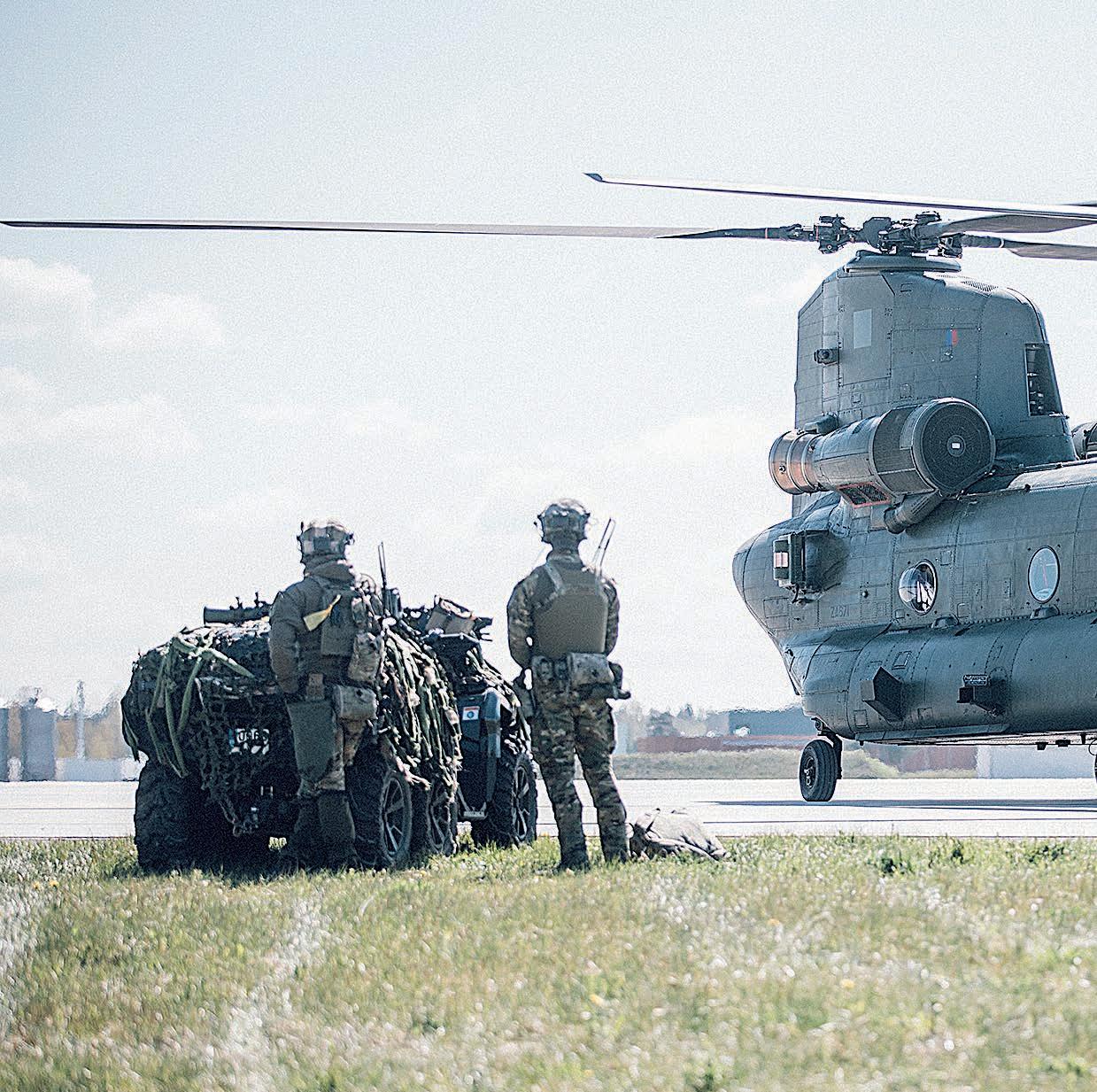
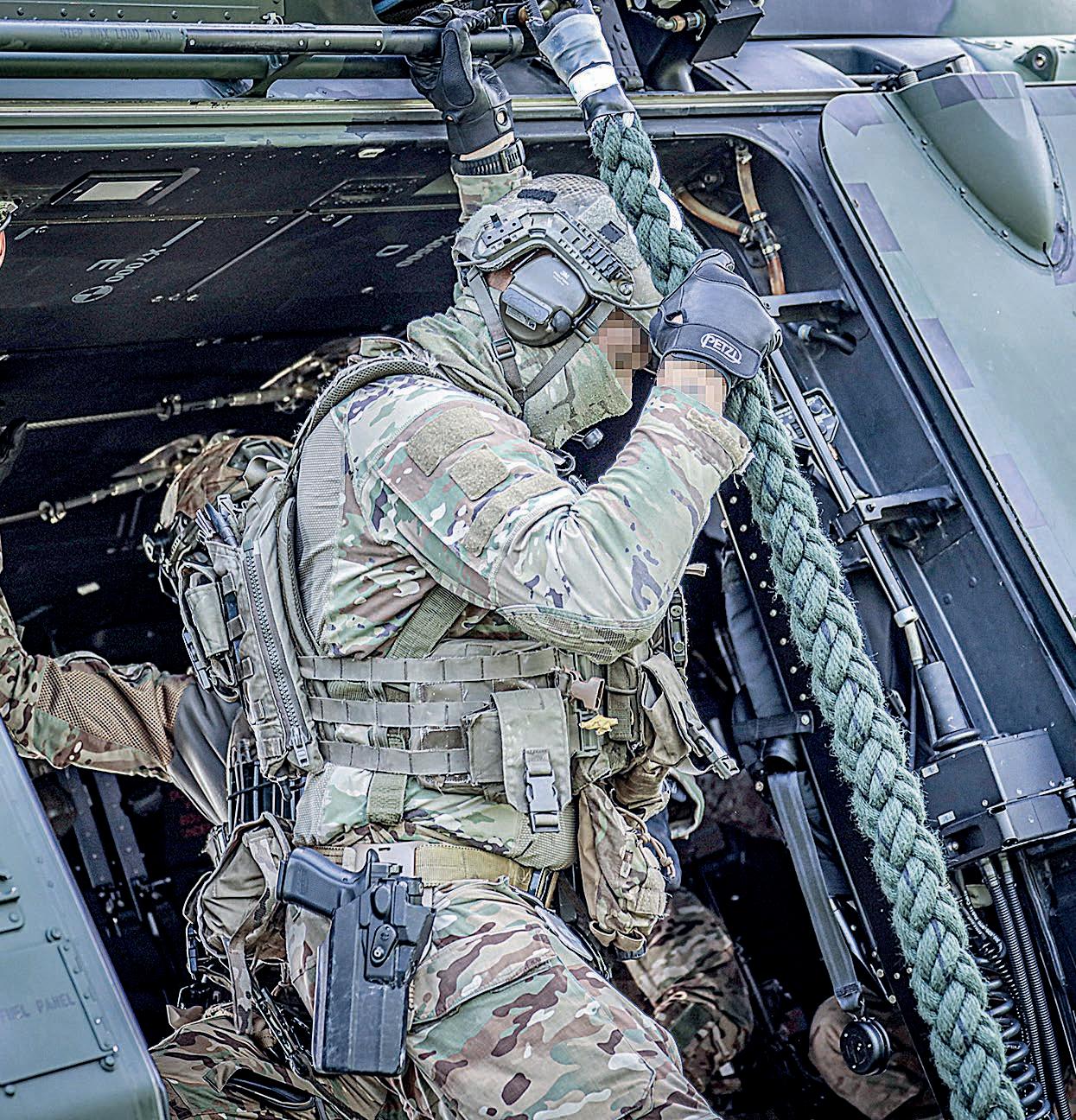
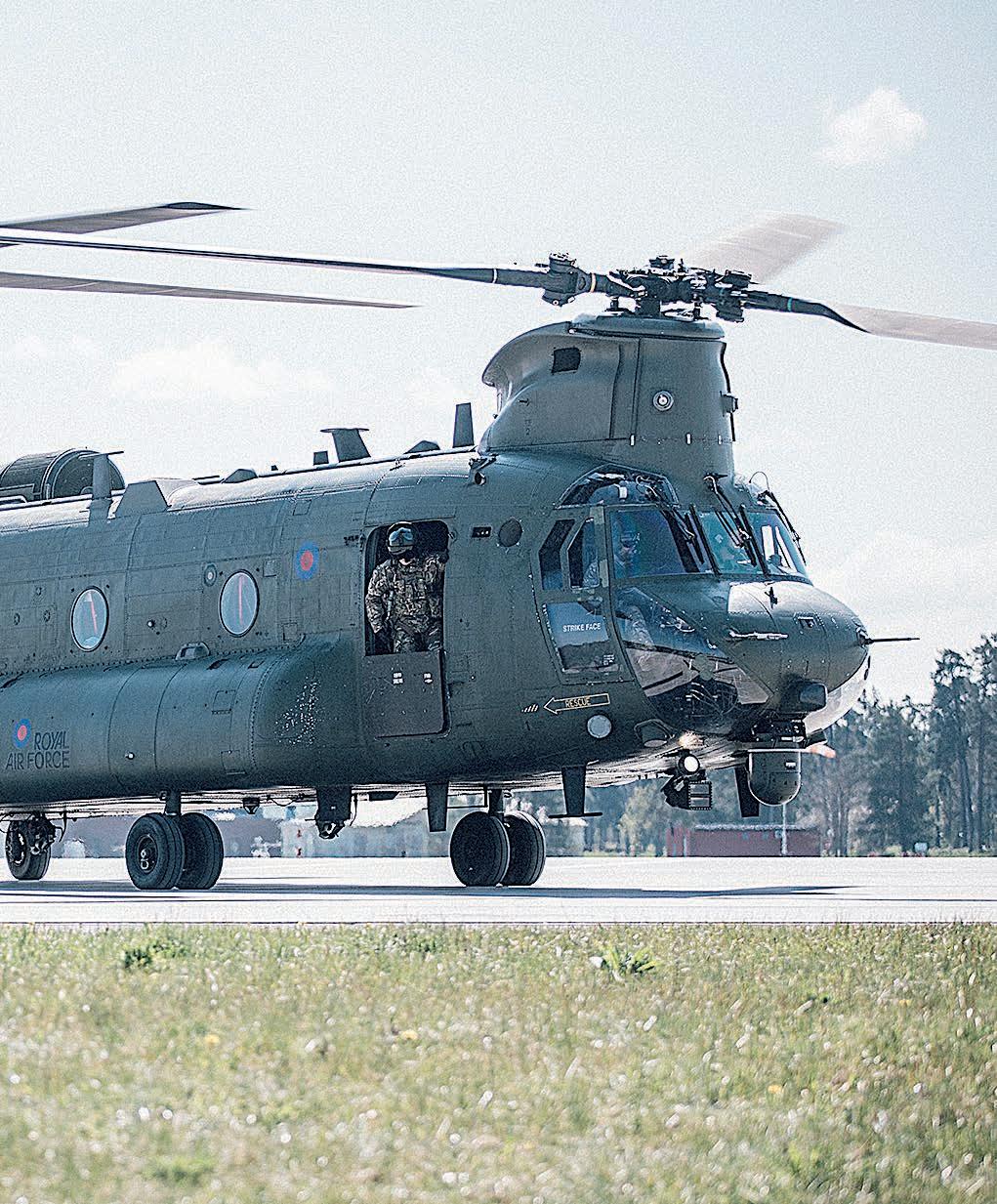
short-term action that takes out an enemy's vital capability (e.g., air defense, logistics, or electronic warfare equipment). Since conventional units may not be able to reach there, it is the Special Operations Forces that are suited to such tasks, as they have the skills, intelligence, and weapons to find the enemy from their depths and attack them unexpectedly.
An excellent example of a direct ac-
All team members have basic skills: demolition, communications, medicine, and the use of unmanned aerial vehicles.
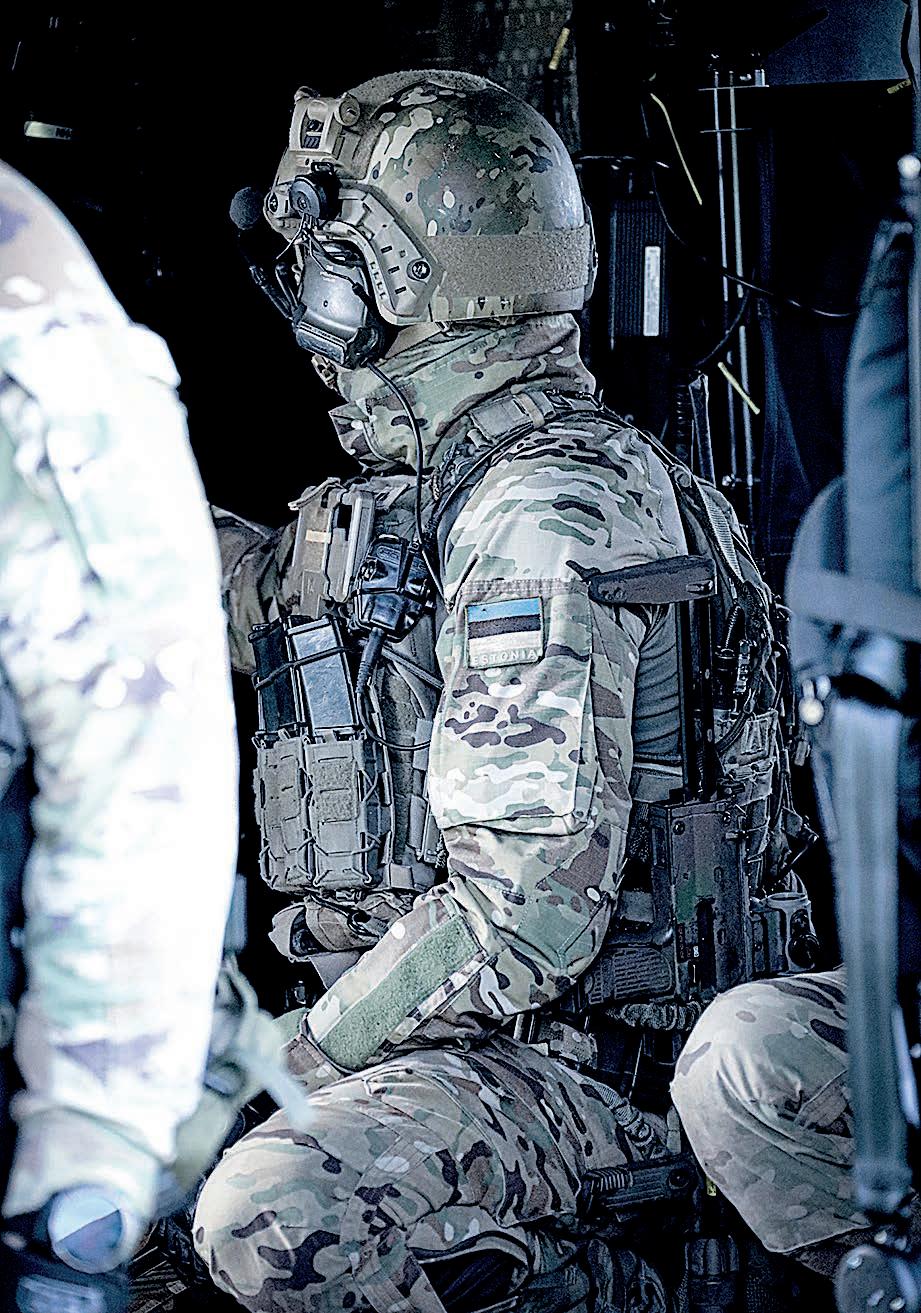
tion is the Ukrainian SBU Operation Spider Web, carried out in the summer of 2025. In the depths of Russia, it destroyed their strategic bombers and A-50 air surveillance aircraft. In late 2025 and early 2026, the Ukrainian special forces performed several more successful DA attacks, in which ammunition depots containing thousands of FPVs (first-person-view drones) and Geran-2 (Shahed) attack drones were destroyed in meticulously planned and executed attacks. 2
Special reconnaissance refers to reconnaissance missions aimed at gathering information about the enemy, the terrain, and the environment in general. A reconnaissance mission can be carried out deep inside the enemy's territory for a long period of time. Ukraine's experience has shown that the use of unmanned aerial vehicles (UAVs) for intelligence gathering provides the opportunity to monitor a larger area from a safer distance.
It has also changed the traditional soldier-spying-with-binoculars method because if the enemy has thermal imaging capability from the ground and/or air, it is difficult for even a lone spy to go unnoticed. Members of the Ukrainian special forces have said that there are no conventional reconnaissance missions and units because they do not work in this environment and are too expensive.
The use of unmanned aerial vehicles to gather information is crucial because the task is performed faster and more ac-
United in arms in the air and on the ground: Joint training of Estonian Special Forces members and Finnish Air Force helicopter team. Photos: ESTSOF private collection
curately and saves operators' lives. Ukrainians have said that their most successful and important asset throughout the war has been special reconnaissance. One example of this type is the operations of the Ukrainian special forces in support of the infantry offensive in the Kursk direction in the summer of 2024, where the SOF tasks were to find and create passages, direct units to the attack starting areas, and indicate targets.
The career of a special operator, from application to ser vice in a tactical team, is varied and challenging.
The third core task of the SOF is military assistance (MA). This is a wide range of measures to support friendly or allied forces in times of peace, crisis, and conflict. Military assistance provides a country with a high degree of political and military flexibility to train, equip, and perform military tasks for a partner force. The ESTSOF military missions in Afghanistan (2012) and Mali (2020) were of a T3A (train, advise, assist, accompany) nature, with the SOTG supporting local units jointly with a joint laser unit.
Exercises by Estonia's own Defence Forces are also a good way to practice military assistance and maintain skills. Once during the exercise Kevadtorm (Spring Storm), the SOTG was tasked to perform a raid in cooperation with a battlegroup. To this end, the SOTG team met with the members of the battlegroup deep in the forest, where they carried out joint planning and exercises.
In the early morning of the next day, the SOTG team led an attack against a strongly fortified opponent. After a successful raid, they shook hands amicably and continued with the next tasks, now on their own. These types of military assistance operations also provide a force multiplier factor for special forces.
As the teams of special forces are small, the addition of a partner unit to the special forces unit increases the size and the firepower, which contributes to the
success of the joint mission. This is also important for the sustainability and survival of the personnel. It is therefore logical that the special forces deploy military assistance at every opportunity: in cooperation with conventional units, volunteer military organizations, and the armed forces of the Ministry of the Interior.
In order for SOTG operators to reach the level required to perform the core SOF tasks described above, they must undergo the corresponding training. The career of a special operator, from application to service in a tactical team, is varied and challenging. To illustrate this, we at the SOTG have introduced the six-six-six principle: a six-day Selection, a six-month basic course, and a minimum of six years' service as a special operator.
The SOTG Selection was two weeks long in the early years of the unit's creation and was similar in content to the US Green Beret tests. Starting in 2019, we changed the Selection to six days, based on scientific research showing that a person's suitability can be determined in a shorter period of time.
It would be a mistake to think that the Selection became easier as a result; it was even more intense and certainly more weighty. Each task and performance thus plays an even greater role in assessing a candidate's suitability. The Selection consists of general physical and mental exercises that test the candidate's stamina and intelligence.
Life in a tactical team requires total commitment from the operator. Every day is like a new challenge, otherwise the standards set for the special operator cannot be met.
During the Selection process, candidates do not receive immediate feedback on their performance and therefore do not know whether they are doing well or poorly. Instructors expect candidates to give their best in every performance. Instructors, in cooperation with specialists, observe candidates throughout the Selection process.

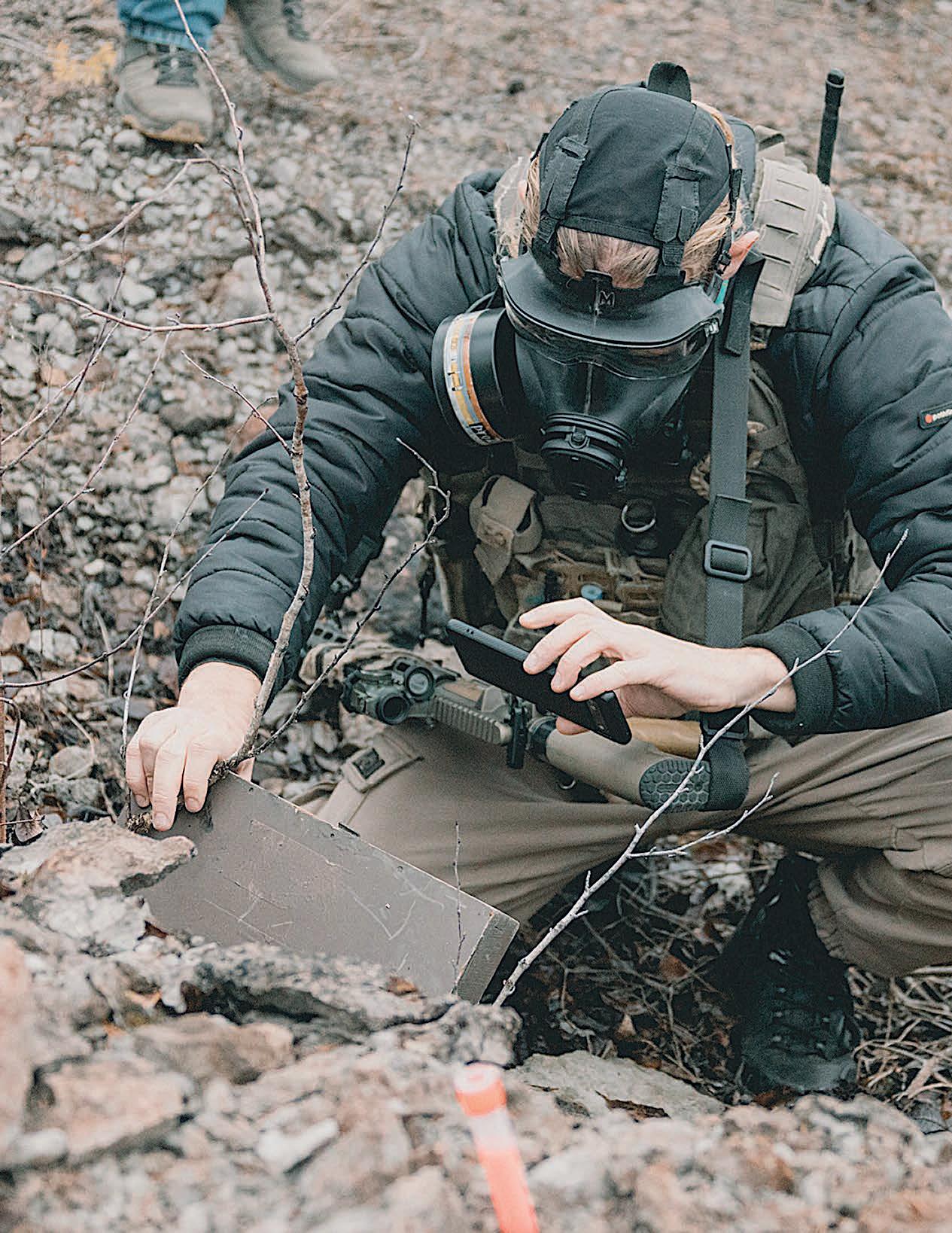
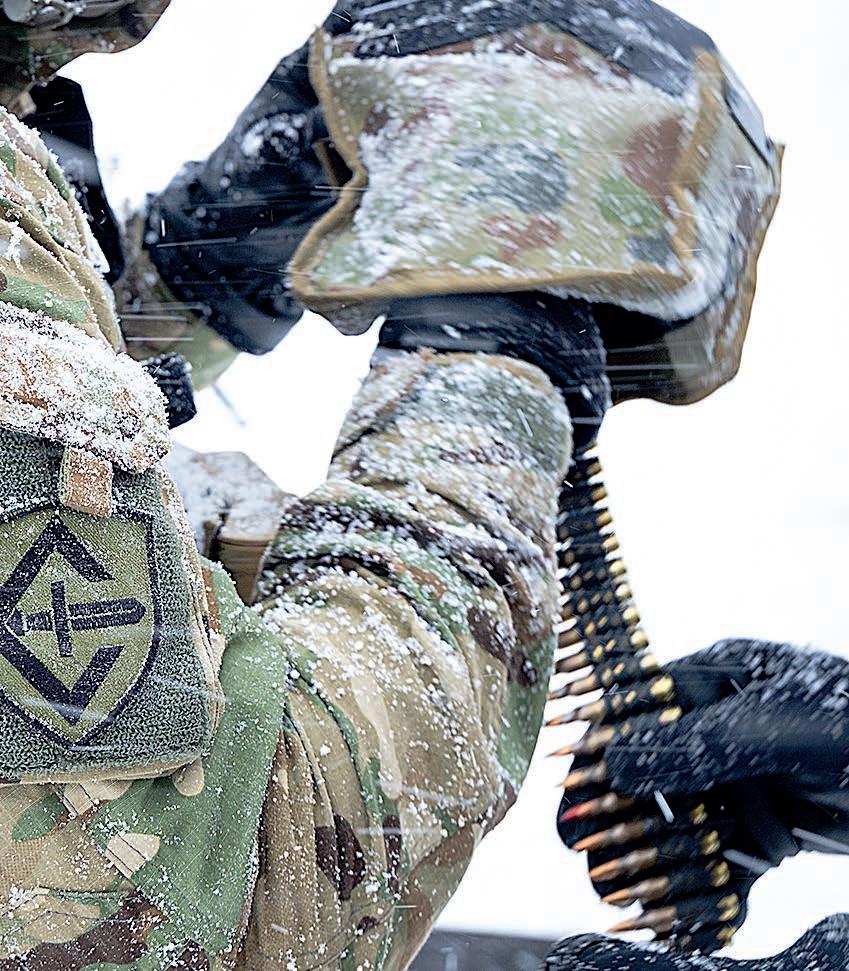
Successful completion of the Selection does not automatically guarantee employment at SOTG. However, the final decision rests with the SOTG, and if this decision is positive for the candidate, they will continue at the Special Operator Basic Course (SOBC).
Having successfully passed the Selection and been selected, the second six, or the SOBC, begins. It is one of the most important milestones on the career ladder of a special forces member.
The SOBC lasts six months and is part of the selection process. In this course, service members learn to use all weapons, special equipment, and transportation equipment used by the teams—everything necessary to operate on land, in the air, and in the water.
There is a strong emphasis on small unit tactics, urban combat operations, and survival training. The course is demanding both physically and mentally, and the most experienced instructors in the ESTSOF provide the training.
As always in the Defence Forces, the SOBC ends with a final exercise, where one has to work as a team and apply what one has learned throughout the course. Those who graduate from the SOBC are assigned to tactical teams, where a new, challenging task awaits them.
A special operator capturing the contents of an explosive charge deactivated during an exercise. Accurate data collection at the scene allows for later analysis and better preparation for future tasks.
Photo: ESTSOF private collection
Ensuring firepower: preparing the ammunition belt for the machine gun.
Photo: ESTSOF private collection
As operators like to say: "Now the real stuff begins." The third six marks at least six years of service. Life in a tactical team requires total commitment from the operator. Every day is like a new challenge, otherwise the standards set for the special operator cannot be met.
Team training continues here and consists of professional and team training. As mentioned above, each new operator is assigned to a specialist position in the team based on the needs of the unit, previous background, and personal preference.
In addition to individual training sessions, the whole team trains with special units from the Ministry of the Interior and partner countries. Every year, they take part in a variety of national and international exercises to hone their skills in carrying out the SOF's core tasks. Those who meet the six-sixsix target remain permanently linked to the unit. Just as they say in SOTG: "SOF for once, SOF for life!" ‖
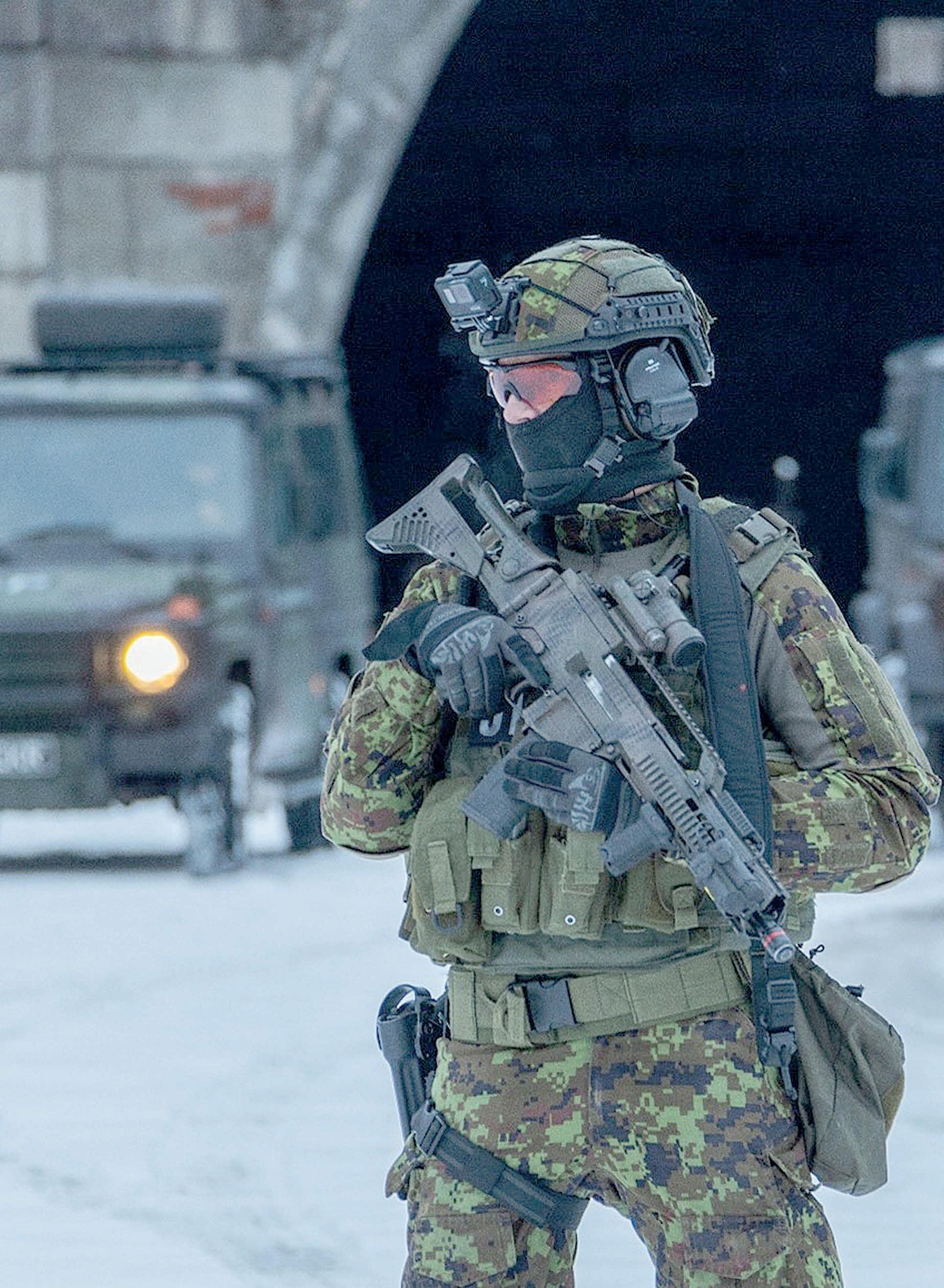
The appearance and equipment of the patrol always depends on the nature of the operation. While visibility is critical for traffic control, tactical advantage and mission-specific equipment are prioritized for implementing security and special measures.
Photo: Military Police collection
MILITARY POLICE PATROLLING: FOR WHOM AND FOR WHAT?
The tasks of the Military Police (MP) in peacetime, crisis, and wartime are broadly divided into four functions. First, the law enforcement and police function. In NATO doctrinal terms, it is a police function. This means overseeing the discipline of the members of the Estonian Defence Forces (and Defence League members in uniform). It is not just about ensuring safety in the exercise area (i.e., measuring speed) and drug checks.
More broadly, this function also includes the prevention of offences and the handling of criminal and misdemeanor cases. They are also offences committed in crisis and war zones (as in Ukraine), which qualify as war crimes. As civilian authorities may have limited access to the scene, their investigation may also fall largely to the military police.
Another major MP task is the advancement and organization of movement, including escorting columns throughout their entire length. In NATO doctrinal terms, it is a mobility support function. The MP carries out such tasks routinely; around 100 escort tasks are carried out per year.
Third, there are security tasks (in NATO terms, security functions). This function includes the personal protection and special transport courier services provided by MP. For example, in 2025, such security operations were carried out on 40 occasions.
The fourth function is the detention of persons (in NATO terms, detention). This is an area that is being developed very seriously in NATO, including the example of
SIIM EDUR
Major, Head of the Planning Section of the Military Police
the war in Ukraine. Prisoners of war are a factor that maneuver units must take into account. Organizing such training in line with the Geneva Conventions is a major challenge.
MP patrols fall under the first or law enforcement function. This is partly a preventive measure, as knowing that the law is keeping a watchful eye can prevent some offences from occurring and also allows for a rapid response to incidents that have occurred. This activity corresponds to the NATO term "police the force". MP organized around 200 patrols in 2025.
The primary task is clear: to be ready to respond to any event.
It is important to note that the concept of MP patrols is nothing new; uniformed military police officers were also maintaining public order some 25 years ago. At the time, the MP patrol also intervened in other offences committed by civilians on an equal footing with the regular police, but legislation has now given peacetime law enforcement authority to colleagues from the Police and Border Guard Board (PPA).
Thus, the MP performs wartime tasks to a limited extent in peacetime conditions and environments, as today's legislation does not allow us to carry out law enforcement tasks in the same way as we would in wartime.
Patrolling in general is a tactical capability that helps any unit commander maintain order or situational awareness in their area of responsibility. In addition, various types of patrolling support the organization of defensive or attacking activities of their units. Patrolling in a wartime context seems logical, but in peacetime conditions, for a regular infantryman, not so much. For
example, patrolling around ones camp in the forest is entirely appropriate and necessary, but when one reaches the military base, the magical power of the patrol disappears behind the false sense of security of a wire fence and cameras. Given today's hybrid threats (including sabotage), the current system built on long early warning is no longer sustainable. This is why the Commander of the Defence Forces stresses in his vision the importance of battle watch, and that conscripts also have an important role to play in it.
Patrolling in general is a tactical capa bility that helps any unit commander main tain order or situational awareness in their area of responsibility.
MP patrol in peacetime is a classic law enforcement task. Due to certain incidents, the Air Force, on the orders of the Commander of the Defence Forces, launched an air threat response operation. To support this, the MP began conducting round-theclock patrols at the end of last year, instead of the previous ad hoc patrols. The primary task is clear: to be ready to respond to any event.
In addition, each patrol has even more specific tasks related to an area or event that is known to be taking place, and being present there contributes to the success of the event. The area of responsibility covers the whole of Estonia. The need for roundthe-clock patrols has been on the agenda for years, but for various reasons, they have not been implemented. The decisive factor here was the activity related to the Russian Federation.
Throughout the Defence Forces and the Defence League, there is now a "new reality" that no longer allows us to comfortably go home at 5 pm sharp. Anything can happen. The presence of patrol(s) may now be of critical importance, and the need for them has already paid off repeatedly. First, in the disciplinary oversight function (law and order), where it is necessary to deal with soldiers in their free time, regardless
of nationality, political regime, or currency. The MP patrol has also assisted civilians in the event of a traffic accident, responded to Defence Forces events, and worked with the Police and Border Guard Board (PPA) at various events, where the MP patrol is also an important link for the PPA in its communication with the Defence Forces and allies. I would like to highlight in particular the readiness to respond to events that often tend to happen outside working hours or on public holidays.
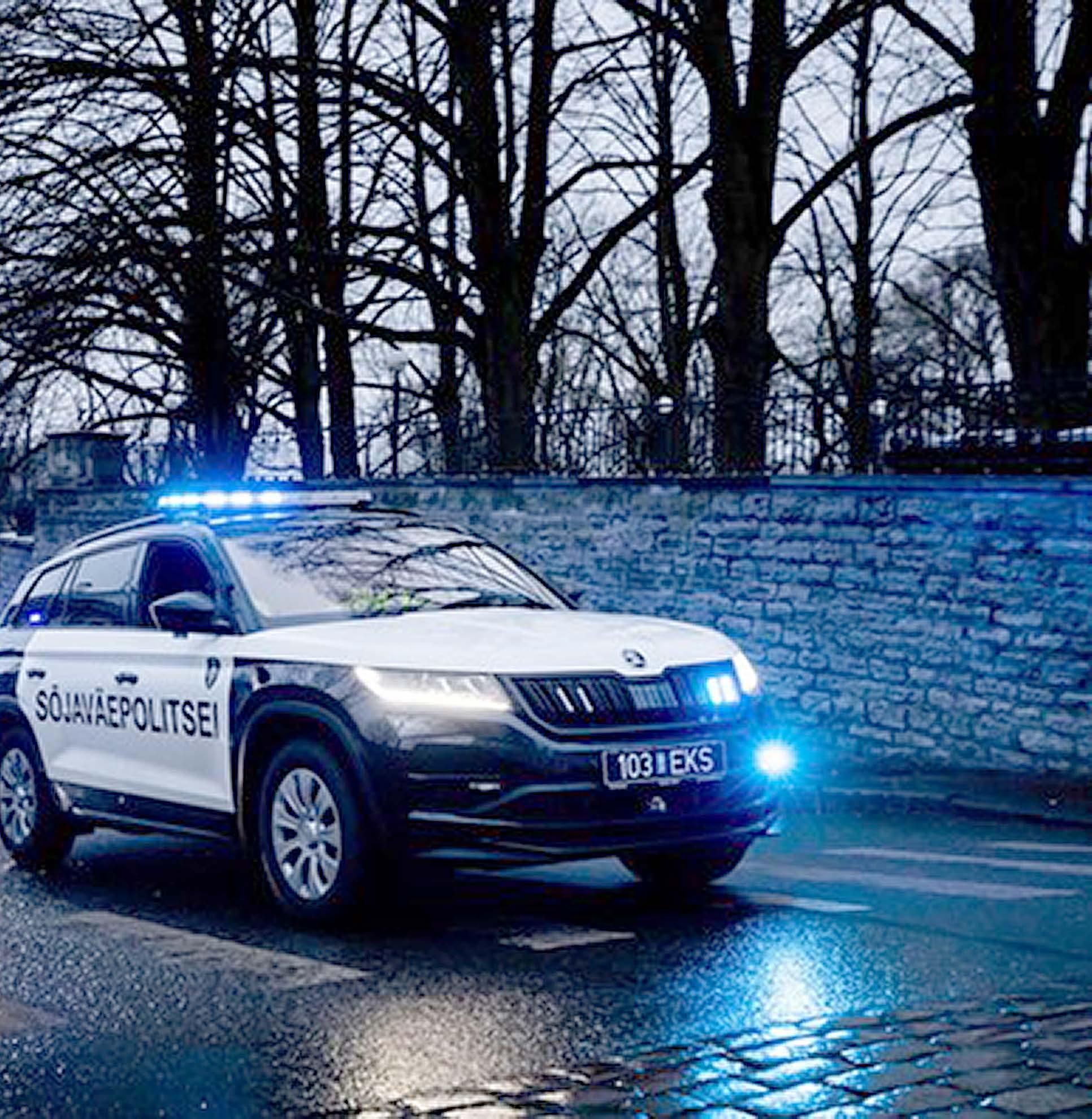
The added value of the MP patrol lies in its preventive effect, both within the Defence Forces and towards civilians who, for example, may have bad intentions in the vicinity of a Defence Force facility. The MP does not have the right to police the public during peacetime, which is the job of the PPA, but that does not prevent the MP from patrolling Defence Forces facilities, both near and further away, and spotting irregularities in the apparent peacetime rhythm of life that may indicate something
dangerous. This disrupts the enemy's activities.
In light of the ongoing war, we must understand that we can no longer go on in the old way. The good old days, when threat assessment was based on a long early warning, are unfortunately over, and we need to be ready to respond to events around the clock. In this respect, the good old patrol era is back, as it was in the 1990s, when our soldiers presence at the scene was the basis for all actions. ‖
In close protection operations, military police patrols play a critical role in escorting motorcades and ensuring movement security. This includes the prevention of threats and the rapid response to any incident en route to ensure the safe arrival of protected persons at their destination.
Photo: Military Police
The mission of the NATO Cooperative Cyber Defence Centre of Excellence is to enhance the cyber capabilities of NATO and its member nations through practical cooperation, military exercises, training, and research.
NATO CCDCOE ADAPTS TO CURRENT CHALLENGES
Founded in 2008, the Centre located in Tallinn brings together 39 nations and operates as an independent unit, providing cyber defense expertise across the fields of technology, strategy, operations, and law.
In August 2025, Tõnis Saar was appointed as Director, soon later LtCol Christoph Kühn became Chief of Staff. The leadership has changed at a time when cyberspace is contested between nations like never before. NATO Assistant Secretary General Ellermann-Kingombe stated in fall 2025 that nations must urgently invest in enhancing the resilience of critical infrastructure, enhancing public-private and civil–military collaboration and trust, and adopting a wartime mentality in cyberspace.
After years of valuable, durable work, fostering the foundation of a common understanding of cyber in NATO and likeminded nations, including major contributions in the realm of international law in relation to cyber, the conducted research requires us to adapt its focus and dynamics. The new leadership has a clear vision focusing on closer engagement with NATO, multi-domain operations, and providing comprehensive cyber policy advice.
CHRISTOPH KÜHN
Liutenant Colonel, Deputy Director and Chief of Staff of NATO Cooperative Cyber Defence Centre of Excellence
After years of valuable, durable work, fostering the foundation of common understanding of cyber in NATO and likeminded nations.
The year 2025 saw the publication of the 2nd edition of the Cyber Commander’s Handbook. It provides an international perspective and framework to understand the cyberspace environment and concepts related to the planning, coordination, execution, and assessment of cyberspace operations.
It soon became a highly demanded source to understand the cyber domain. The awarded Cyber Law Toolkit is a dynamic interactive web-based resource for (not only) legal professionals, presently consisting of 35 hypothetical scenarios describing cyber incidents and their legal analysis.
The general guiding principles of remaining current and relevant, and of applying lessons learned, will influence the training courses and the two major annual exercises organized by CCDCOE: Locked Shields, with over 4,500 participants in 2025, and Crossed Swords.
The latter emphazises offensive aspects and operational planning, including cross-domain components. In 2025, 40 nations participated, including Estonia, indicating that this exercise delivers unique challenges and learning opportunities that are rarely found elsewhere. ‖
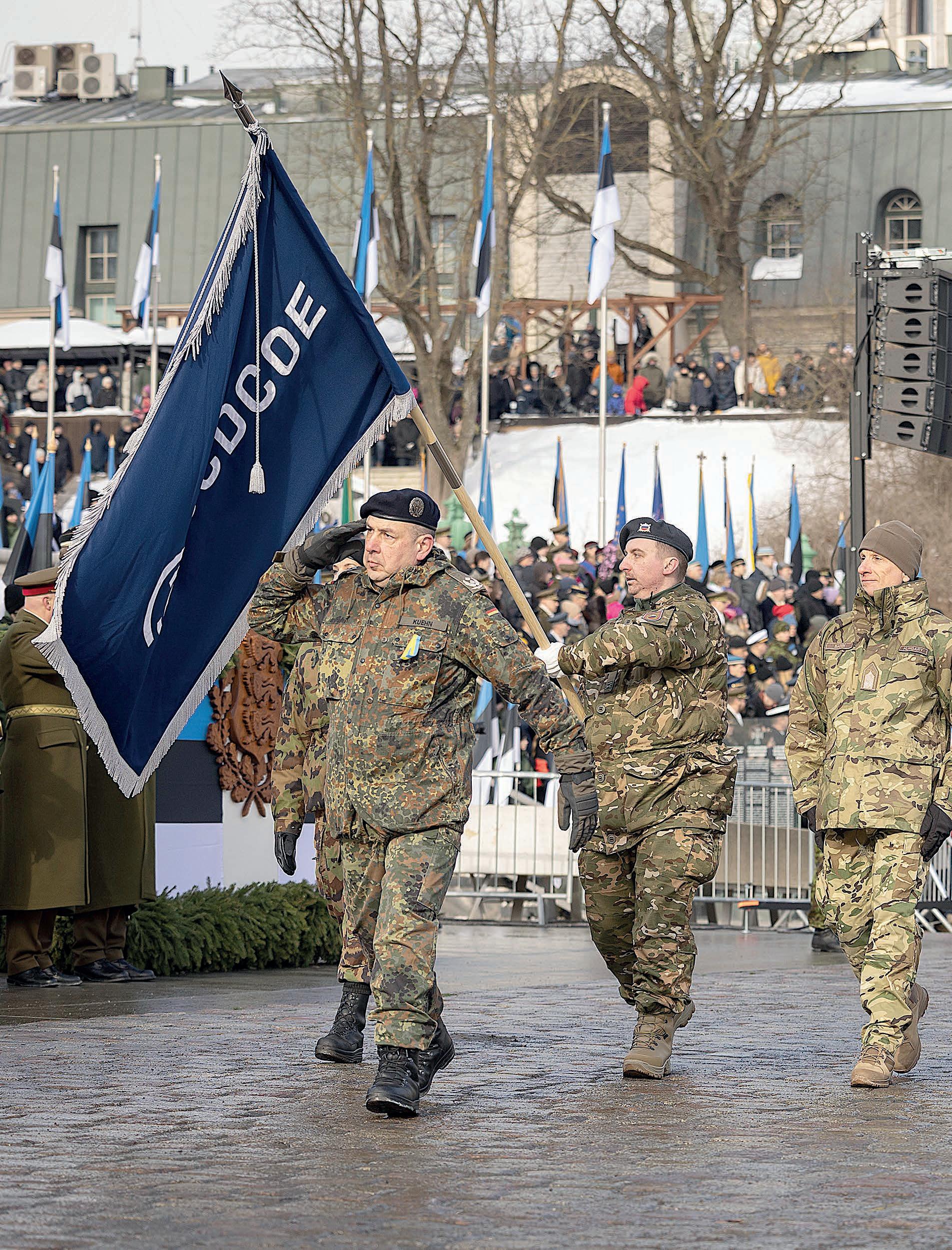
The NATO Cooperative Cyber Defence Centre of Excellence (CCDCOE) flag team at the Republic of Estonia's anniversary parade.
Photo: Otto Wilhelm Miil / Estonian Defence Forces
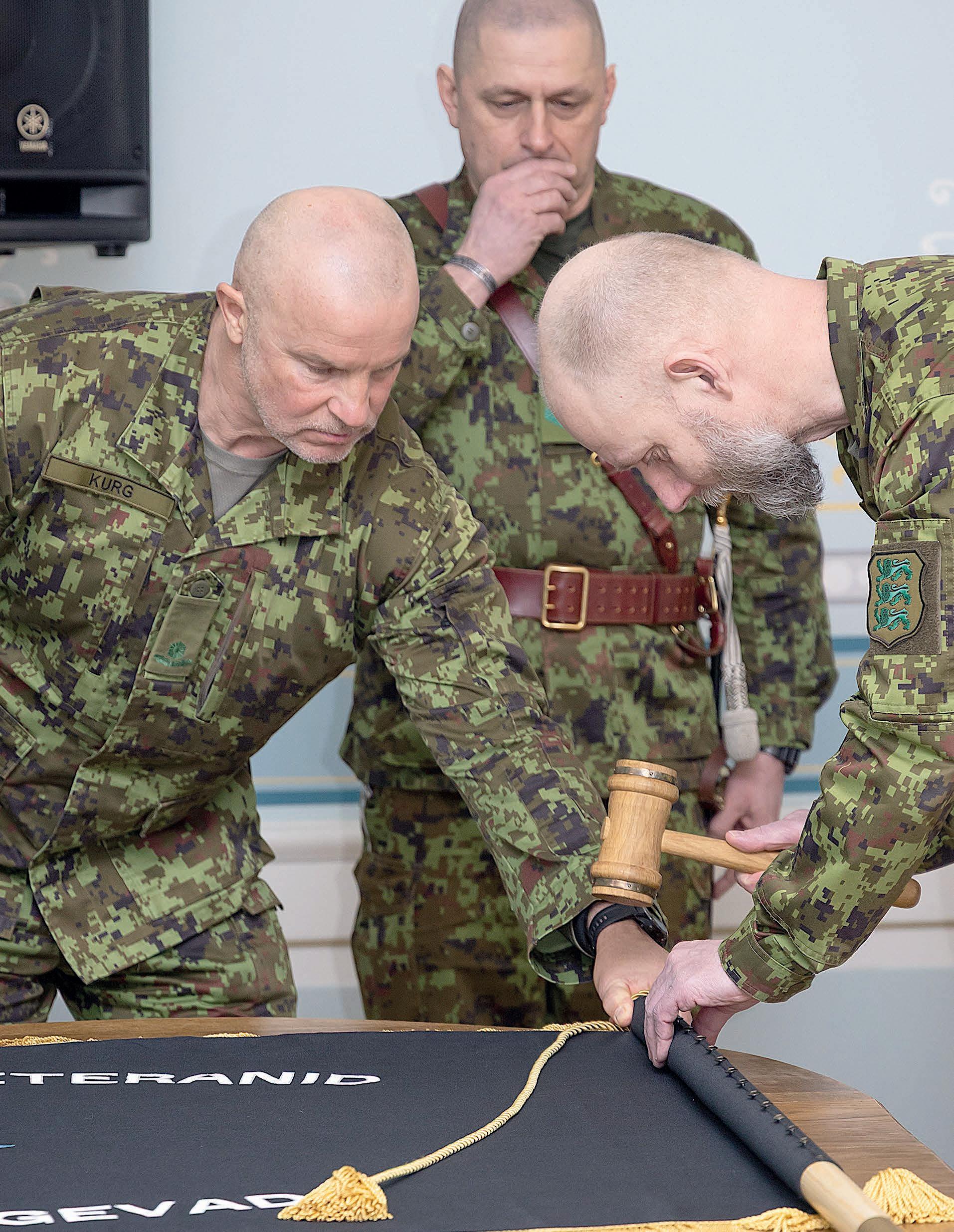
Lieutenant General Andrus Merilo, Commander of the Estonian Defence Forces, and Viljar Kurg, Head of the Support Services Center of the Estonian Defence Forces, hammering a nail into the flagpole of the flag donated to veterans at the flag dedication ceremony.
Photo: Triinu Liis Mullaste / Estonian Defence Forces
Compared to 2012, when the previous veterans´ policy was adopted, the security environment in Estonia has changed significantly and irreversibly.
RENEWED VETERANS ´ POLICY
MARKUS ROSIN
Head of the Department for Defence Will and Human Resources Policy, Estonian Ministry of Defence
In Europe, Russia is waging a full-scale war of aggression against Ukraine, which has also increased the expectations on Estonian active military personnel, conscripts, reservists, and members of the Estonian Defence League, whose service tasks require the readiness to bear exceptional burdens and responsibilities. Supporting and valuing veterans is therefore a long-term responsibility of society.
The veterans' policy aims to ensure inclusive, collaborative, and consistent support for every veteran and to strengthen the social recognition of veteran status. The policy is based on the principle that the responsibility that comes with veteran status continues at the end of service and that the state's moral contract with veterans remains in place. Veterans are tough defenders of the country whose experience develops military training and strengthens unit cohesion. Veterans are expected to set an example, uphold national defense values, and share their experience. Their contribution increases the Estonian people's will to defend, inspires the next generation of national defenders, and maintains a strong connection between society and national defense.
At the heart of the updated policy are areas of direct concern to the veteran: health, recognition, social coping, and family. One of the key strands is the
continued development of mental health support. Service-related impacts can be delayed and require a long-term and holistic approach. Therefore, the policy focuses on prevention, early detection, and longterm follow-up support, providing the opportunity to seek help years later. Equally important is the involvement of loved ones before and after deployment to international military operations, as they are often the first to notice changes and support seeking help.
Another central theme of the policy is society's support for veterans and veterans' sense that society cares. The policy is not limited to the provision of services but shapes a broader societal attitude in which veterans' contributions are recognized, understood, and valued. It is important that the veteran feels like a natural part of the community, that their experience is valued, and that they can contribute to Estonia's national defense through example and knowledge.
The veterans' policy is a strategic investment in national defense, national defenders, and social cohesion. It aims to ensure the availability and quality of services, strengthen cooperation between the state and civil society, and implement policy consistently in peacetime and in times of crisis, supporting the continued contribution of veterans to strengthening national defense and Estonian society at large. ‖
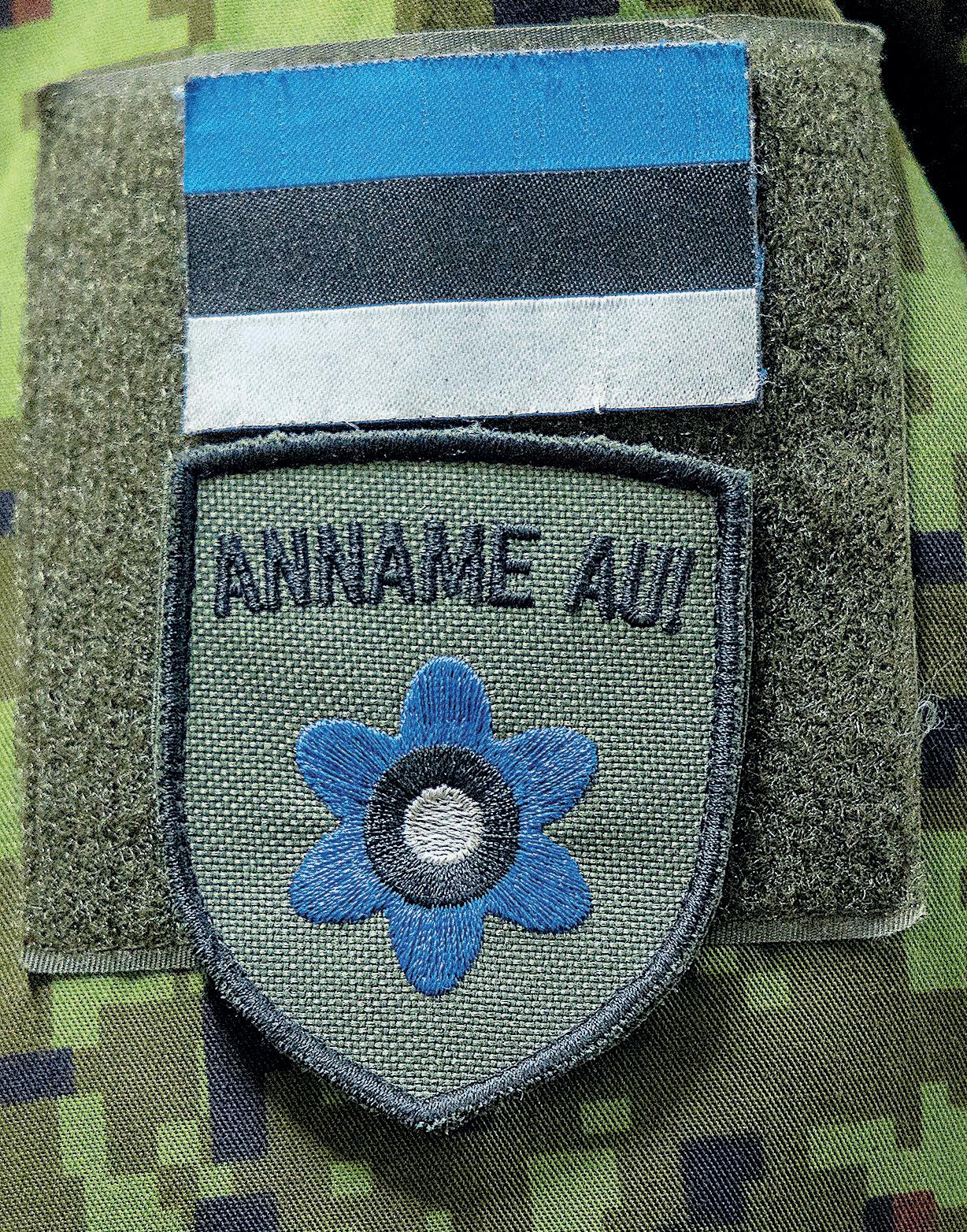
Veterans’ policy as a national responsibility
The veterans’ policy is an important part of preserving and valuing Estonia's national defense human resources. It expresses the state's responsibility to those who have contributed to the security of Estonia and its allies through their service and creates a framework for supporting veterans after their service has ended. The current veterans policy was adopted in 2012, providing the basis for identifying, recognizing, and supporting veterans.
Changed operations and veterans' needs
The nature of international military operations has changed over time. While the earlier period was characterized by combat operations in Afghanistan and Iraq, more recent contributions have increasingly involved supporting allies, training, advising, and staffing in crisis areas. At the same time, the needs and expectations of
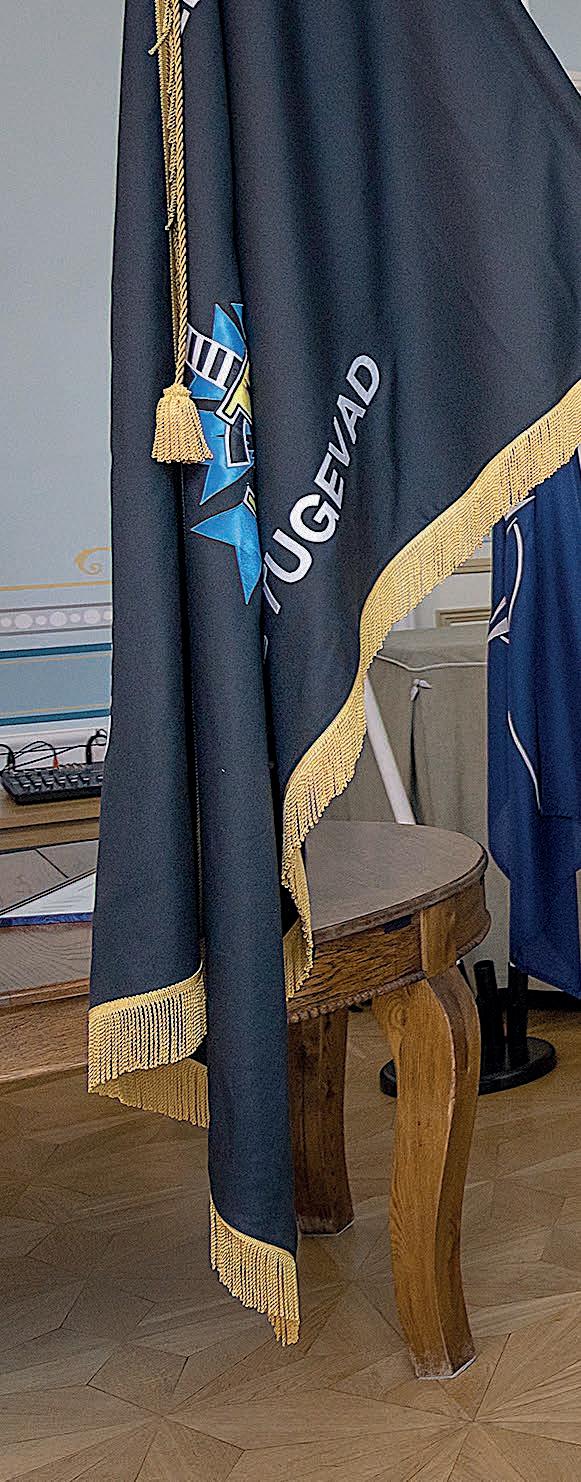
veterans who have previously participated in combat operations have changed for state support, which has grown and diversified.
Diversity of veterans
Veterans are not a uniform target group. Their service experience, health, and coping needs vary and evolve over time. The veterans policy must take into account different life paths and needs and provide flexible and needs-based support.
Covering the whole service cycle
The aim of updating the policy is to ensure that the support provided by the state is relevant, consistent, and reliable throughout the service cycle, from entry into service to veteran status. Such an approach prevents risks, supports transitions, and ensures long-term follow-up support.
Colonel (reserve) Eero Kinnunen, Sergeant
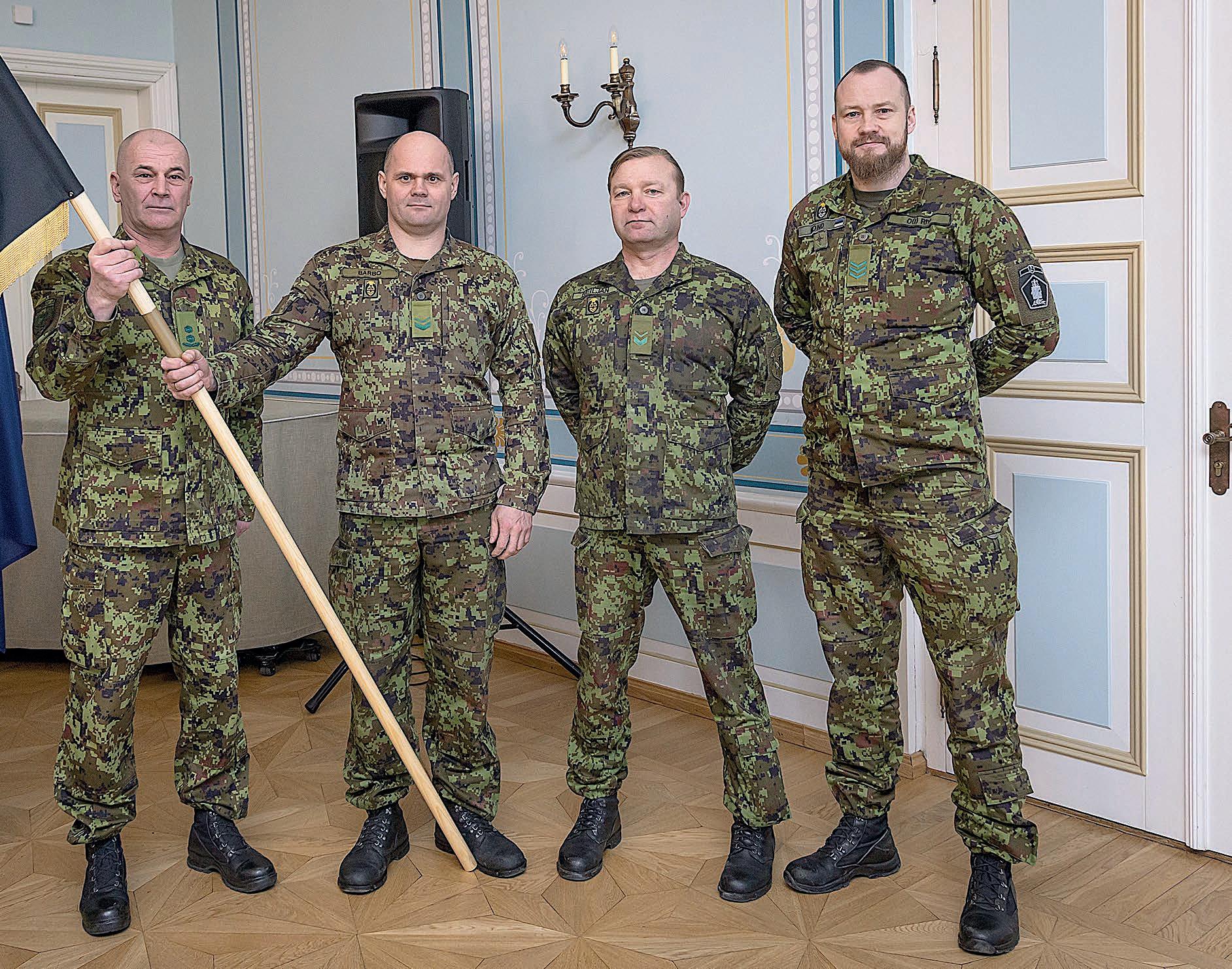
Special focus on mental health
Mental health services have developed significantly in recent years, but statistics and veterans' testimonies suggest the need to continue to systematically identify and address bottlenecks. The consistent development of mental health support is therefore a central policy focus.
Services and social support as two dimensions
The success of the veterans’ policy is not based on services and measures alone. Equally important is society's conscious support for and appreciation of veterans and their contribution, and veterans sense that they are not overlooked by the state and society. These two dimensions are closely interlinked.
Governance and cooperation
The Ministry of Defence is responsible for developing and updating the policy. The main implementer of the policy is the Personnel Support Services Centre of the Defence Forces, whose day-to-day work translates policy objectives into practical solutions in the lives of veterans. Collaboration with veterans' organizations also plays an important role, providing policymakers with direct feedback on veterans' needs.
Veterans policy as an ongoing process
The veterans’ policy is not just a document, it is an ongoing and evolving process. Its updating requires openness, inclusion, and a willingness to adapt to changing circumstances and the needs of veterans so that the state can consistently fulfill its responsibility towards veterans.
Major Meelis Barbo, Sergeant Major Rene Reiljan, and Master Sergeant Mario Kõnd with the flag donated to the veterans.
Photo: Triinu Liis Mullaste
The impact of war, ongoing violence, and the perception of a constant threat to life and health usually goes beyond the moment in time when the dangerous situation occurred, often leaving a mark on the lives of several generations.
COPING WITH WAR ANXIETY: RECOGNIZE, NOTICE, ACT
MARGE SILLASTE Psychologist-Counsellor, Support Services Center
War anxiety occurs when armed conflicts in the world come very close to people emotionally or physically. Fear of war accompanies people when they live or operate in a conflict zone. War-related anxiety affects society as a whole, leaving no one completely untouched. It is not always possible to be fully prepared for a crisis, but it is within everyone's power to do the part that is under one's control, while being aware of the potential threat. Preparing for threats is not about worrying all the time and quickly exhausting ourselves in the process, but about acting wisely by assessing and using our abilities, being able to stay motivated, and keeping ourselves mentally and physically balanced even in difficult times.
When talking about anxiety and fear, they are often used synonymously. The difference is in the nuances: the source of the fear is some real external threat that the person is facing, whereas with anxiety, this is usually not the case, so anxiety is like an unfounded fear. Fear and mild anxiety are normal feelings and accompany living beings every day. In evolutionary terms, fear has an important role to play as one of the
basic emotions: to make people pull themselves together in a dangerous situation. The function of fear is to help a person survive by focusing attention on finding a way out of a situation, stopping current actions that are irrelevant to survival, and activating the bodys fight-or-flight response.
Anxiety is naturally the driving force for action, helping people to manage in moments that require mental or physical effort. Anxiety is most often caused by changes or situations that create uncertainty and insecurity in a person's life (e.g., change of status or living arrangements, doing something for the first time, unexpected situations), and less often by directly dangerous situations.
It is expected that in any unfamiliar situation, a persons level of mobilization/ anxiety is higher than when they are in their comfort zone. The fundamental question, also in the case of war-anxiety, is how to regulate our anxiety so that it does not become an overwhelming, life-dominating, limiting, and paralyzing state of anxiety.
According to a March 2025 survey by Turu-uuringute AS, 77% of Estonians feel anxious about the potential threat of war [1].

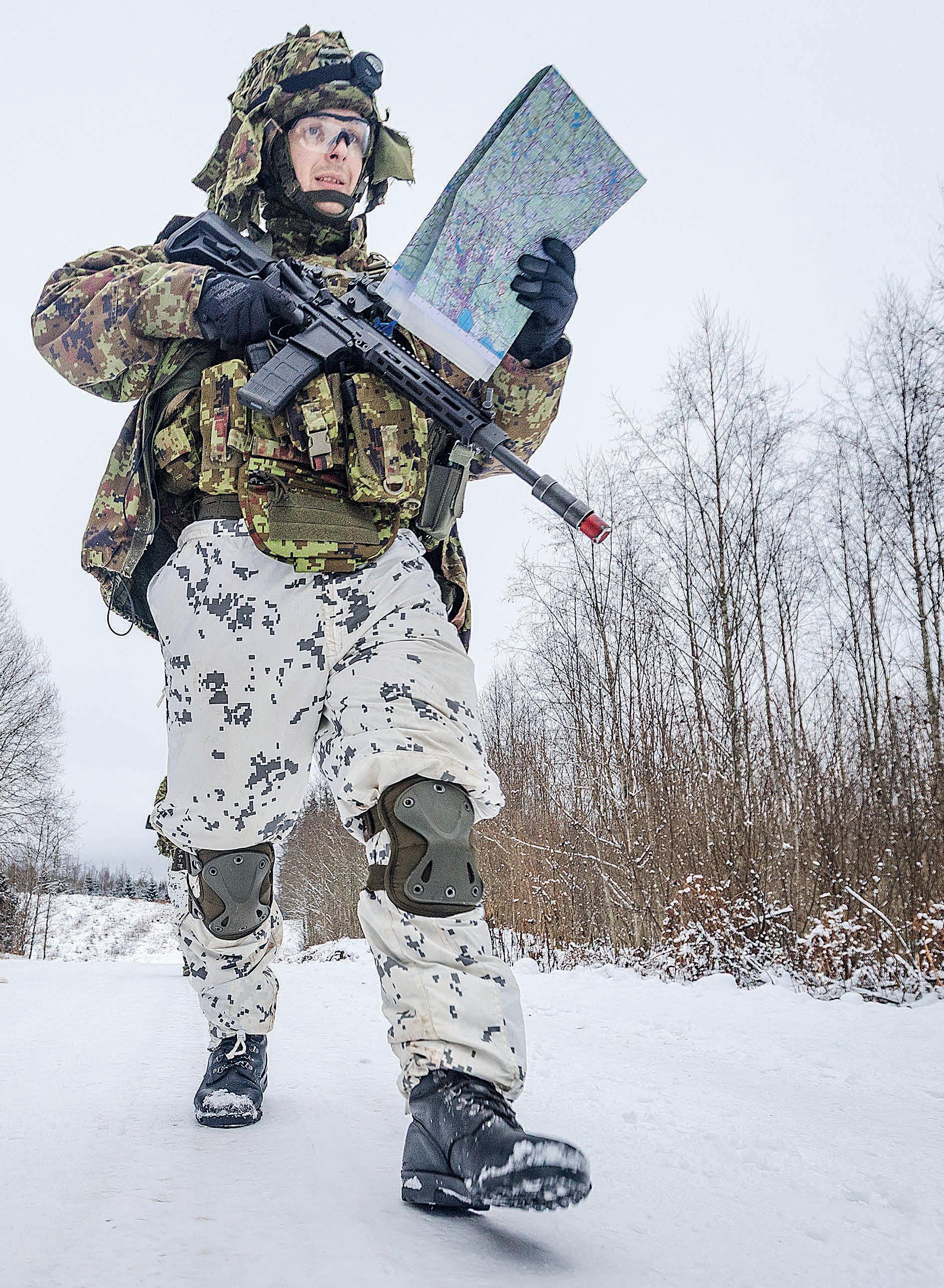
A 2nd Infantry Brigade soldier orienteering on the final hike of the junior non-commissioned officers' course in Võru County: a challenge that toughens both body and mind.
Photo: Oliver Kaur / Estonian Defence Forces
According to the results of a public opinion survey published by the Government Office in September 2025, 89% of the population have felt anxious about events in Estonia and the world in the past three months, and 70% of Estonians and 60% of people of other nationalities are concerned about a possible threat of war in Estonia/Europe [2].
War anxiety is a relatively new phenomenon in Estonia; it has been 80 years since the last war on our soil. The state has taken significant steps to prepare for successful coping with a crisis situation, e.g., crisis plans, response plans, exercises, and threat notification systems.
On a practical level, information on how to prepare for and deal with crisis situations can be found at olevalmis.ee. Less attention has been paid to how to help citizens consciously cope with fears related to world events and regulate their war anxiety at the individual level.
There is no reason to doubt that extreme and potentially dangerous situations affect, to a greater or lesser extent, the mental and physical well-being of those who are directly or indirectly exposed to them. For example, a study of anxiety in Ukrainian civilians and military personnel found that civilians had a higher rate of anxiety (41.6%) compared to combatants (25.8% for active service personnel and 32.6% for reservists) [3].
Individual differences, experiences, and preparation play an important role in anxiety levels and coping strategies. There are different ways of coping with (war) anxiety, and depending on the situation, they are more or less effective.
Of the psychological mechanisms that have been studied in war situations, problem-focused coping strategies (e.g., seeking information, planning for the future) are associated with lower levels of anxiety, while emotion-focused strategies (e.g., avoidance, rumination) are associated with higher levels of anxiety.
For most people, problem-focused strategies predominate, the most common of which include seeking social support, reframing unhelpful thoughts and beliefs, and problem-solving activities [4].
Regulating our anxiety is not only important for preparing for a possible war, but also for preventing or successfully coping with everyday challenges.
To keep anxiety levels within normal limits, it is very important that people are aware of its nature and have thought through ways and practiced techniques that help them maintain their ability to act in difficult situations.
A good example of this is the training used in the military, where the consistent practice of skills in high-stress situations, combined with the application of psychological knowledge, provides soldiers with the physical and mental resilience they need.
At the unit level, the following principles are applied to regulate the high tension: summarizing the events that have taken place,, sharing information about what lies ahead, discussing possible courses of action (creates a sense of control), honoring unit rituals (enhances
Estonian Defence Forces’ psychologists Marge Sillaste, Second Lieutenant Alice Kääramees,
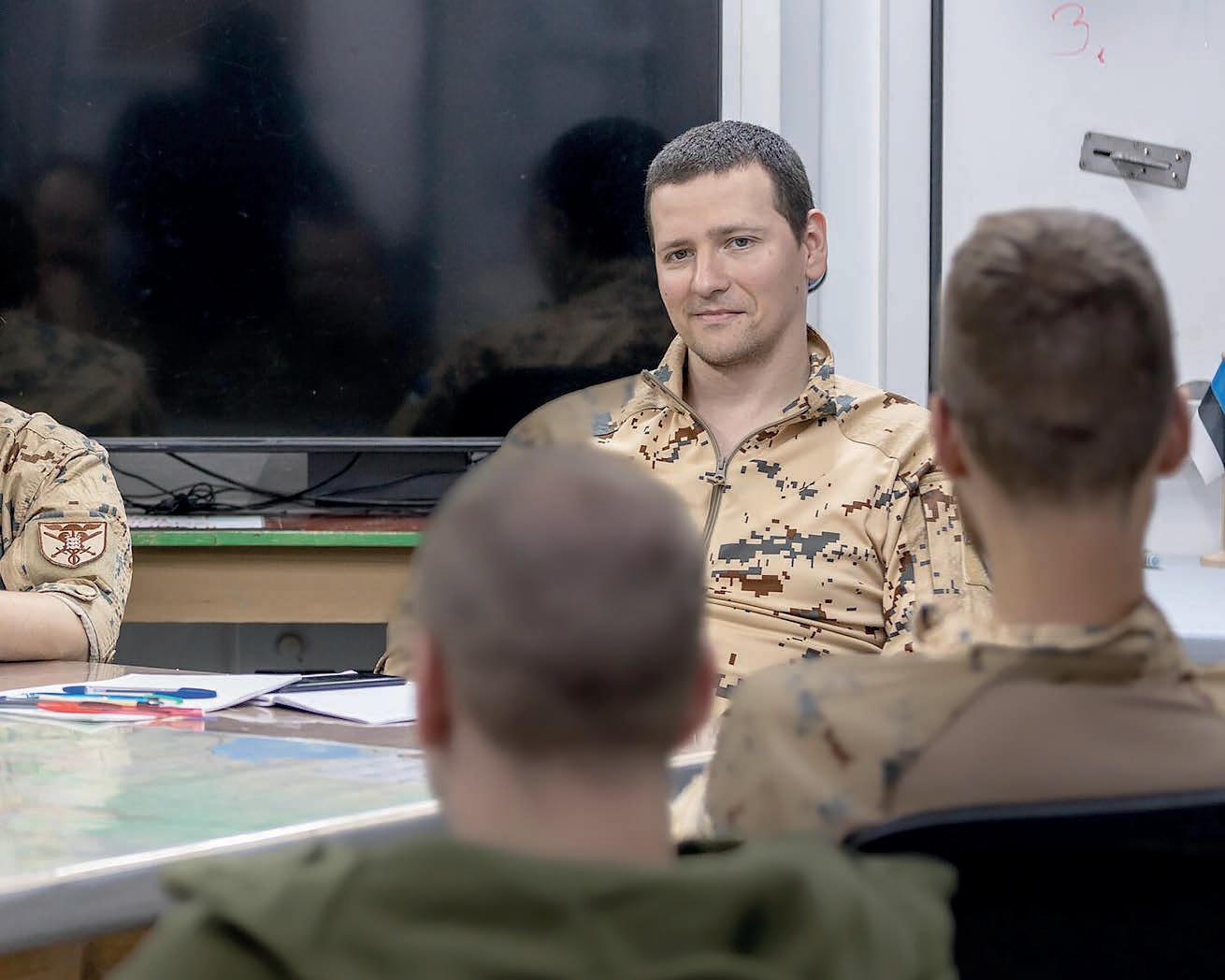
team spirit, cohesion), engaging in pleasant and positive activities off duty (takes your mind off the difficulties and regulates anxiety), and meeting basic needs (hygiene, nutrition, sleep) (increases resilience).
COVID-19, a new and unprecedented situation that started in 2020, raised people's anxiety levels and made them learn new ways to cope under severe restrictions. Four years of war in Ukraine, on our doorstep, have ushered the people of Estonia into a new era.
The challenge for people is to become aware of how difficult-to-control situations affect the human psyche, to learn to notice their own anxiety and that of others, and to acquire ways of coping with it. First and foremost, it is in everyone's own hands. Regulating our anxiety is not only
important for preparing for a possible war, but also for preventing or successfully coping with everyday challenges. We don't need a state-of-the-art gym to improve our physical fitness; anyone can do something for themselves at home.
Thanks to the media, there can be more war-anxiety today than in the 20th century, as modern communication tools put "war in everyone's pocket at any time". However, self-help techniques, guidance on how to cope and improve our resilience, and contacts for support are also available online. Greater awareness, simple handy techniques, and the ability to apply them when needed help us to stay calm and confident, and to dream, rejoice, and be grateful for what we have in life now. ‖
Sources
[1] Turu-uuringute AS (2025). https://turu-uuringute.eu/eesti-elanikest-77-tunneb-seosesvoimaliku-sojaohuga-arevust/
[2] Government Office public opinion monitoring survey (2025) https://riigikantselei.ee/sites/ default/files/documents/2025-10/2025%2009%20AA%2024%20seire%20raport.pdf
[3] Pavlova, I., Graf-Vlachy, L., Petrytsa, P., Wang, S. & Zhang, S. X. (2022). Early evidence on the mental health of Ukrainian civilian and professional combatants during the Russian invasion. European Psychiatry, Volume 65, Issue 1.
[4] Xu, W., Pavlova, I., Chen, X., Petrytsa, P., Graf-Vlachy, L. & Zhang, S.X. (2023). Mental health symptoms and coping strategies among ukrainians during the Russia-Ukraine war in March 2022. International Journal of Social Psychiatry. Volume 69, Issue 4, pp 957-966.
Kääramees, and Lieutenant Sander Murumaa supporting the Estonian contingent in Iraq.
Photo: Andres Lember/ Estonian Defence Forces
Issued by the Strategic Communication Department of the Joint Headquarters of the Estonian Defence Forces
Executed by the Strategic Communications Centre of the Cyber Command
Compiled and edited by Antero Noor
Designed by Ivo Sokka
Cover image by Rasmus Allik
Translated by Luisa Language Solutions
Printed by Joon