by the Society of Wetland Scientists Vol. 44, No. 2 April 2026 ISSN: 1943-6254
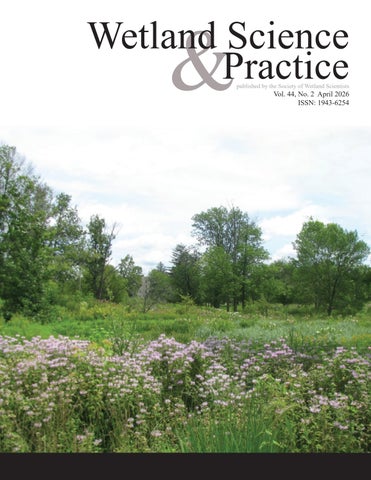
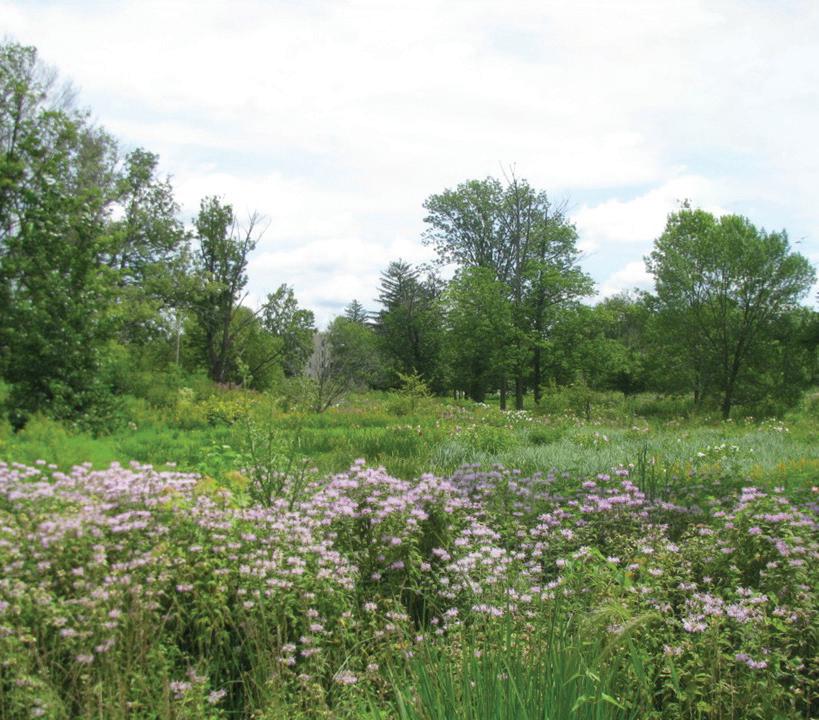
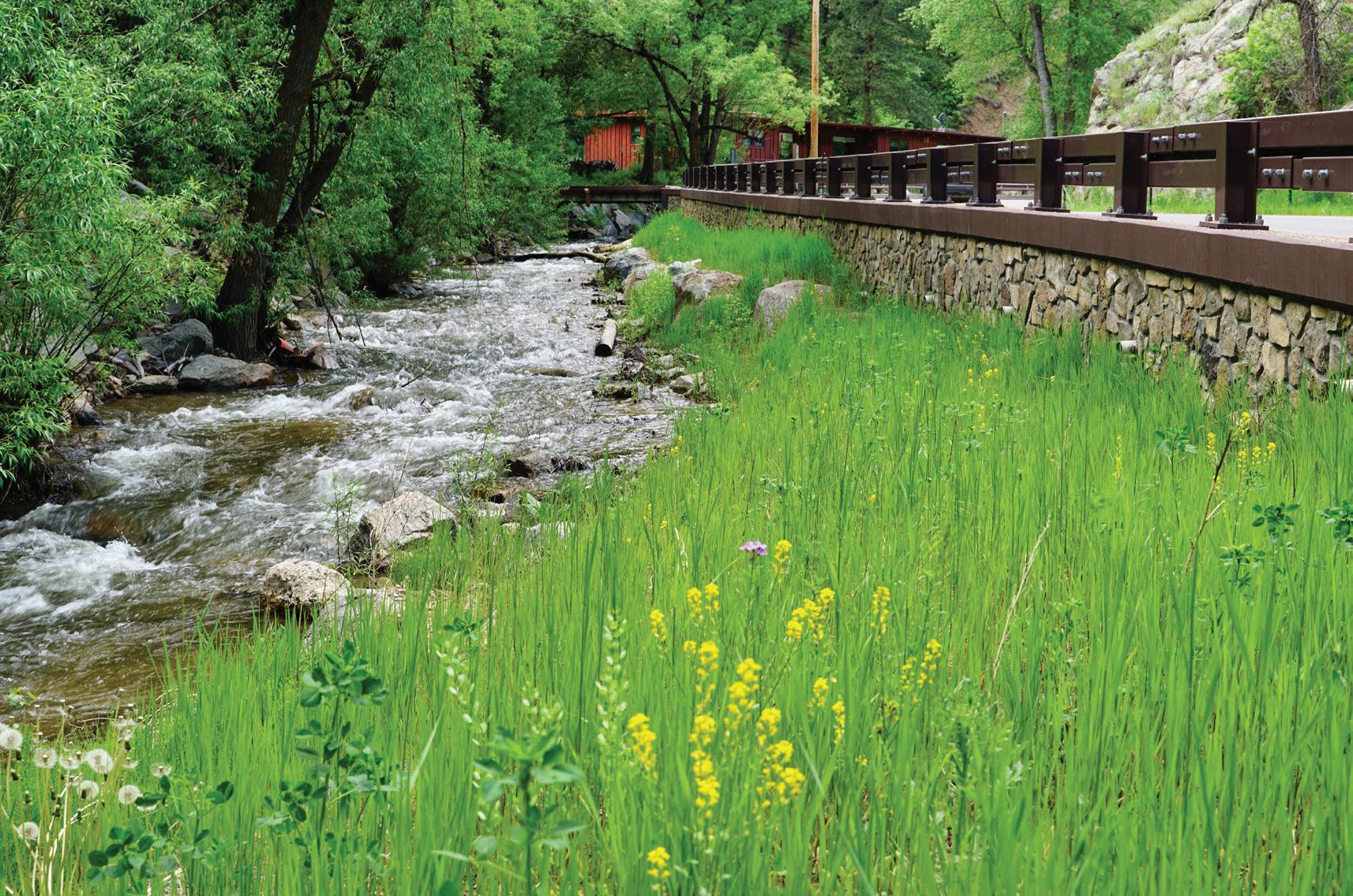
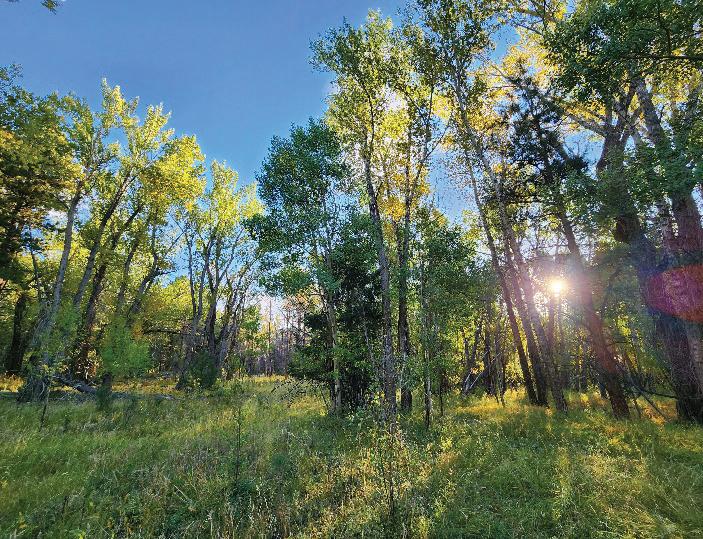
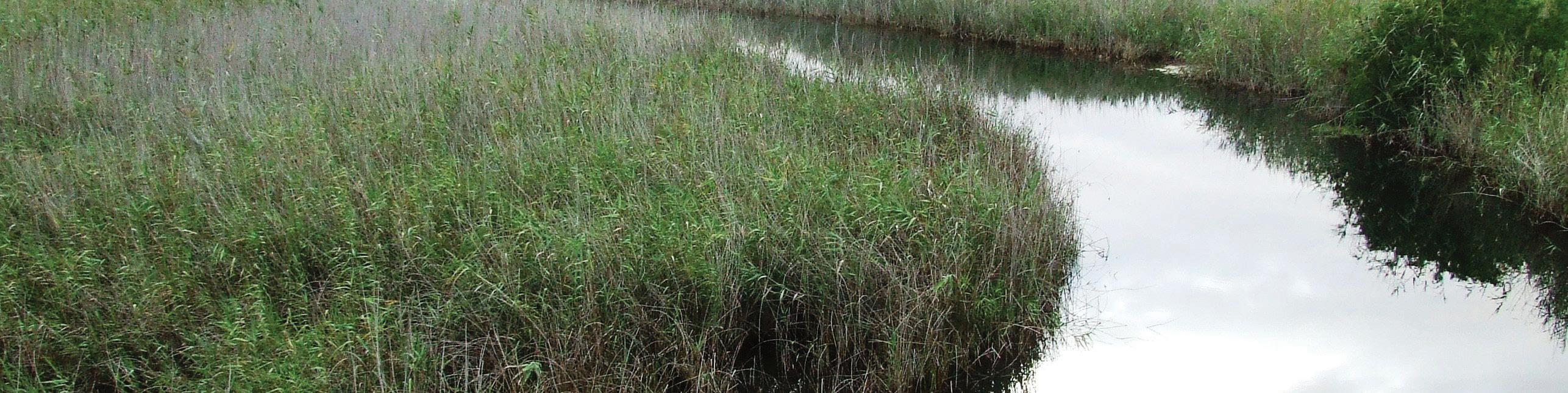
Spring is in full bloom across much of the northern hemisphere. It is evident in the Midwest where the restored wetland in the cover photo sparkles with wildflowers. The growing season is upon us and so is some of the fieldwork needed to characterize, delineate, and manage wetlands.
In the spring issue of Wetland Science and Practice, we share articles describing basic and applied topics of interest to our readers. Updated Inventory of the Aquatic Flora of Queretaro, Mexico, Using Survey and Environmental DNA Approaches describes wetland vegetation of north-central Mexico, including rare, previously undocumented, and invasive species. Experiences in Constructing, Deploying, and Maintaining Artificial Floating Wetlands in Typhoon-Prone Subtropical Climate Zones describes the challenges of building, deploying, and maintaining floating constructed wetlands in storm, typhoon- and hurricaneprone regions. Both articles showcase the depth and
breadth of wetland science outside of the United States. A third article describes the growing interest in advancing the Rights of Wetlands on the World Stage while a fourth article, Thirteen Personal Letters to a Wetland, is a fine collection of (love) letters to wetlands. Last but not least, we share another in the series of modules developed by the Education Section of SWS. This one a primer on the biogeochemistry of wetlands.
The annual meeting will be coming up soon (June 1619). New Orleans in June … It’s a great opportunity to share good fellowship, good cuisine and good times via field trips, workshops, contributed and invited presentations, and social events such as mixers, lunches, and coffee breaks. Field trips include visits to natural, managed, and urban wetlands including large-scale restoration projects in the Mississippi Delta. While the abstract submission deadline has passed, it’s not too late to register for the conference. Laissez les bons temps rouler. Hope to see you there.
Chris Emeritus Professor Emeritus PWS
Chris Craft WSP Editor
48 / From the Editor's Desk
50 / President's Message
52 / SWS Webinars
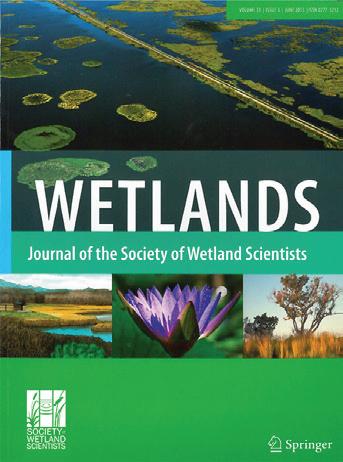
53 / SWS Journal
53 / SWS News
Introducing Our New Executive Director Foundations of Wetland Science Educational Modules Module 6: An Introduction to Wetland Biogeochemistry
63 / Articles
Updated Inventory of the Aquatic Flora of Querétaro, Mexico, using Floristic Survey and Environmental DNA Approaches. Tatiana Lobato-de Magalhães Experiences in Constructing, Deploying, and Maintaining Artificial Floating Wetlands in Typhoon-Prone Subtropical Climate Zones Ashwin Rajesh Gupta et al.
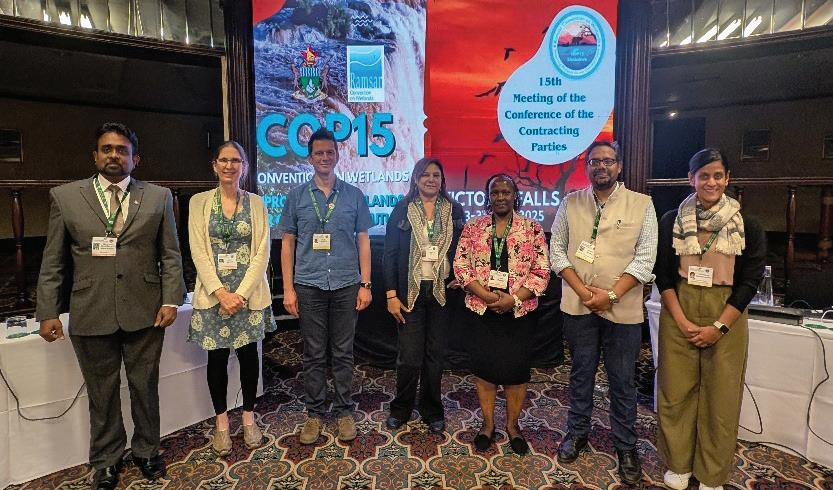
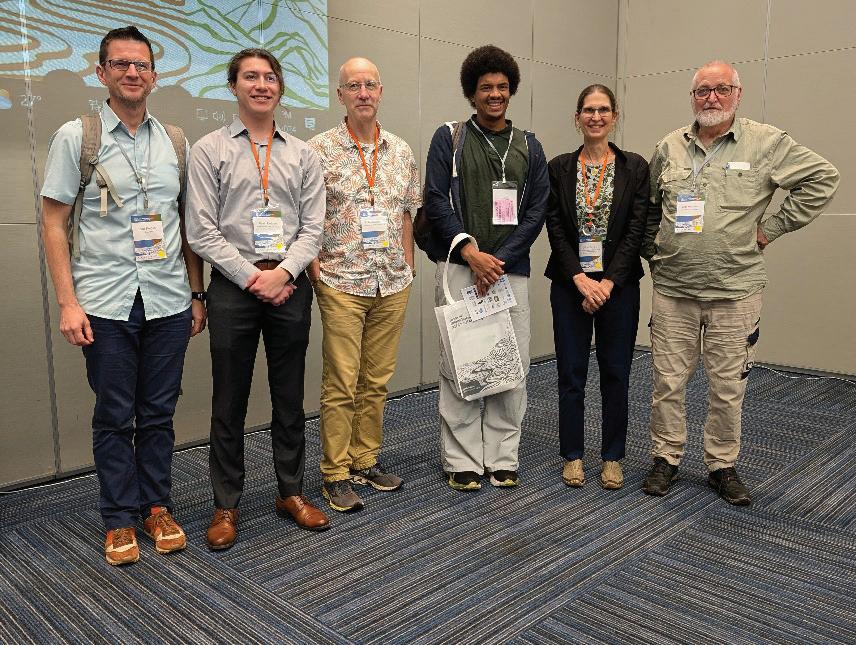
Rights of Wetlands on the World Stage: Recent Activities. Gillian Davies et al.
Thirteen Personal Letters to a Wetland. C. Max Finlayson et al.
111 / Notes from the Field
113 / Wetlands in the News
114 / Wetlands Bookshelf
115 / WSP Submission Guidelines
116 / Advertising Prospectus
COVER PHOTO:
Spring comes to a restored freshwater wetland on the Indiana University Bloomington campus. (Photo by Chris Craft)
Note to Readers: All State-of-the-Science reports are peer reviewed, with anonymity to reviewers.
PRESIDENT / Rebecca Pierce
IMMEDIATE PAST-PRESIDENT / Eric Stein, Ph.D.
SECRETARY GENERAL / Kai Rains, Ph.D.
TREASURER / Yvonne Vallette, SPWS, SWSPCP
PRESIDENT-ELECT / Andy Baldwin, Ph.D.
SECRETARY GENERAL-ELECT / Lorae Simpson
EXECUTIVE DIRECTOR / Marla Stelk
MARKETING MANAGER / Simeonne Bookal
WETLAND SCIENCE & PRACTICE EDITOR / Chris Craft
CHAPTERS
ASIA / Seung Oh Suh
CANADA / Susan Glasauer, Ph.D.
CENTRAL / Darren Mitchell
CHINA / Ming Jiang
EUROPE / Columba Martinez-Espinosa
INTERNATIONAL / Alanna Rebelo, Ph.D. and Roman A. Canul Turriza
MID-ATLANTIC / Michael Gaul
NEW ENGLAND / April Doroski
NORTH CENTRAL / Matt Van Grinsven
OCEANIA / Jeff Kellaway
PACIFIC NORTHWEST / Shelby Petro
ROCKY MOUNTAIN / Jeremy Sueltenfuss
SOUTH ATLANTIC / Katie Bowes
SOUTH CENTRAL / Eric Fuselier
WESTERN / Richard Beck, PWS, CPESC, CEP
SECTIONS
BIOGEOCHEMISTRY / Songjie He
EDUCATION / Lynn Corliss
GLOBAL CHANGE ECOLOGY / Owen McKenna
PEATLANDS / Rod Chimner
PUBLIC POLICY AND REGULATION / John Lowenthal, PWS
RAMSAR / Nicholas Davidson, Ph.D.
RIGHTS OF WETLANDS / Gillian Davies
STUDENT / Anthony Mirabito
WETLAND RESTORATION / Daniel Kroes
WILDLIFE / Andy Nyman
WOMEN IN WETLANDS / Chelsea Nitsch
COMMITTEES
AWARDS / Amanda Nahlik, Ph.D.
EDUCATION AND OUTREACH / Jodie Burns
FUTURE MEETINGS / Yvonne Vallette, SPWS
GLOBAL REACH / Marinus Otte, Ph.D.
HUMAN DIVERSITY / Christina Omran
MEETINGS / Yvonne Vallette, SPWS
MEMBERSHIP / Kai Rains, Ph.D.
PUBLICATIONS / Keith Edwards
WAYS & MEANS / Yvonne Vallette, SPWS
WETLAND CONCERNS / Max Finlayson
WETLANDS OF DISTINCTION / Roy Messaros, Ph.D.,
Jason Smith, PWS and Colin MacLaren
REPRESENTATIVES
PCP / Ellen Hartig
WETLANDS / Marinus Otte, Ph.D.
WETLAND SCIENCE & PRACTICE / Chris Craft
Becky Pierce President
Hello SWS community,
I am visiting family in Arizona, where even during the wettest times, the landscape still feels very arid. This land is striped with arroyos creating paths through the towering saguaros and palo verde for the infrequent precipitation to merge and flow quickly away toward increasingly larger tributaries. Spending time near these ephemeral waterways reminds me of how essential our aquatic habitats are even at their driest. Living in an arid environment makes even the smallest wetland appear vital, if not only for its striking bright green rarity and resilience against an otherwise paler landscape. Increasing environmental threats from conflict, greed, and climate change make our work as wetland scientists, educators, practitioners, and storytellers increasingly more important. I challenge each of you to consider how SWS can improve the future of wetlands and their advocates. We welcome fresh perspectives.
In February, our organization entered a new phase of leadership. We welcomed SWS’s first Executive Director, Marla Stelk, during our in-person mid-year Executive Board meeting in Costa Mesa, California. I found it a wonderful coincidence that her first day was also World Wetlands Day. Notable topics from
our meeting were the Awards Committee restructuring, the Membership Committee’s triennial review of our dues structure, the creation of an organizational membership category, and of course, all the ways we can increase and improve our impact through Marla. While we did meet to discuss a lot of important business, we also took time to visit a coastal wetland and test our plant identification skills. Few things beat wetland nerds together in the wild.
Another SWS highlight at the start of 2026 is the planning of our annual meeting in June in New Orleans. The planning committee is developing a rich program of presentations, workshops, field trips, and social engagements. Our abstract deadline just ended at the time of me writing this letter. I hope everyone who wanted to submit an abstract was successful, and those who want to attend the annual meeting have the resources to do so. If you travel to New Orleans, please take time to visit the wetlands surrounding the city. My guess is you will not see an arroyo.
I look forward to meeting many more of you in June. Do not hesitate to contact me with any questions or ideas.
Warm regards,
Becky Pierce President, SWS piercer303@gmail.com
NATURE-BASED SOLUTIONS
As one of the world’s leading planning, engineering and consulting firms, Michael Baker International believes in the power of naturebased solutions to reduce risk and improve infrastructure for a more resilient and sustainable future.
SOLUTIONS
For more information, contact Richard Beck, PWS, Michael Baker Practice Executive P: 949-855-3687 E: rbeck@mbakerintl.com
Constructed Wetlands
Dune Rehabilitation & Restoration
Ecosystem Restoration
Green Roofs & Rooftop Gardens
Habitat Preservation & Restoration
Hybrid Green-Gray Solutions
Living Shorelines
Mitigation Offsets & Banking
Phytoremediation
Recreational Resources
Regulatory Processing
Riparian Habitat
Creation & Restoration
Shoreline Restoration
Stream & Floodplain Restoration
Watershed Restoration
Wetland Delineation
PROUD SUPPORTER OF THE SOCIETY OF WETLAND SCIENTISTS
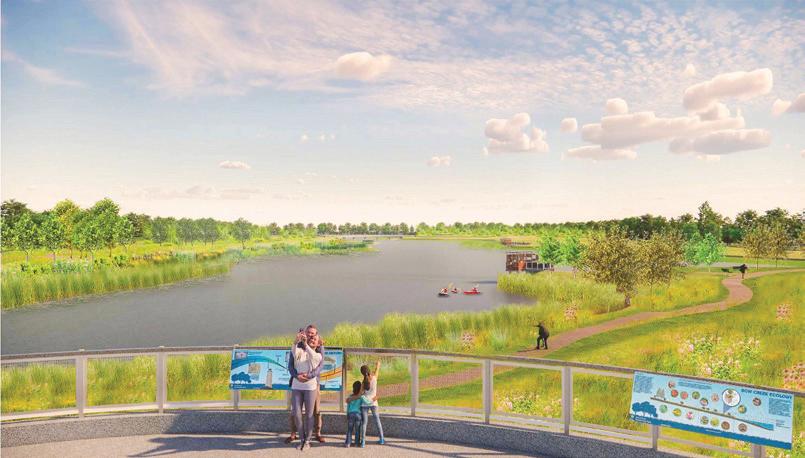
Bow Creek Stormwater Park Flood Mitigation Improvements / City of Virginia Beach, Virginia
Boulder County Flood Recovery and Ecosystem Restoration / Boulder, Colorado
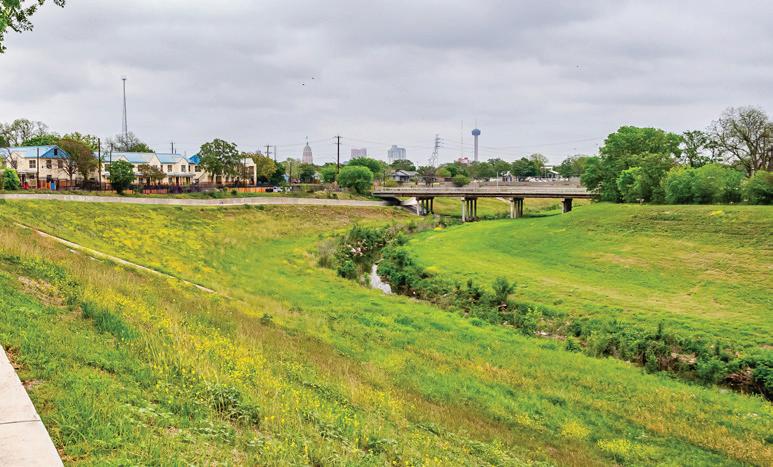
Westside Creeks Restoration / San Antonio, Texas
Monthly webinars are offered as a benefit to all SWS members only. These webinars are uploaded within a week to view for SWS members logged in to the Community.
Each quarter (Mar, Jul, Sep, and Dec), we offer a SWS webinar to non-members at no cost. These webinars are uploaded one (1) month after the live webinar to our Society of Wetland Scientists YouTube channel.
Don't forget to subscribe to receive notifications when webinars are uploaded.
More information here, including the events calendar: : https://www.sws.org/webinars/
THANK YOU, SPONSORS!
SWS WEBINAR SPONSORS
Latest from the Journal Wetlands
To find the latest technical articles on wetlands from our companion journal Wetlands, go to https://link.springer.com/journal/13157.
Introducing Our New Executive Director
Dear Wetlanders,
Many of you know me from my previous job with the National Association of Wetland Managers (NAWM), where I worked initially as a Policy Analyst for five years, and then as Executive Director for eight years. Like many of you, I considered myself lucky to fall into the wetland sector more by chance than by design, but now in retrospect, it feels more like fate than luck. Soon after I announced to my Board of Directors that I was going to step down from my position with NAWM at the end of 2025, the opportunity to apply for SWS’s Executive Director position opened, and the rest is history. I absolutely fell in love with wetlands and the wetland community while at NAWM, and now I’m fortunate to be able to continue collaborating with all my previous wetland colleagues as well as new ones in my role with SWS.
The fact that SWS is an international nonprofit is a new and exciting situation for me and I look forward to meeting and collaborating with our members within the global community. I have many goals that I would like to accomplish, including revamping our membership program and providing more value to our members, expanding and increasing our global membership and services, diversifying our financial portfolio, engaging more meaningfully with students and emerging professionals, and providing more centralized and consistent support for our chapters, sections, committees, and members as a whole.
I am fortunate to be able to stand on the backs of so many incredibly dedicated and passionate volunteers who have donated countless hours to making SWS the great organization it is today. I cannot think of another organization that has had so much success while being led entirely by volunteers. It is truly a reflection of the love that we all share for wetlands and all the amazing things they provide for life on Earth and for our families and communities. And I am truly excited to see what we can accomplish for the future together.
It is an incredible honor for me to work for all of you, and I look forward to meeting many of you at our annual meeting, June 16-19, in New Orleans, LA. Please feel free to reach out to me directly with any questions, comments, or suggestions you may have about how we can make SWS an even more impactful and accessible organization for the future.
With gratitude,
Marla J. Stelk
Foundations of Wetland Science Educational Modules
The Education Section of SWS has developed a program, Foundations of Wetland Science, which is designed to provide the general public, students, instructors, and professionals with freely accessible online educational modules about wetland science for general knowledge or as resources for the classroom and outreach activities. The first two modules were published in WSP this past April, and are also freely available to all on the SWS website (https://sws.org/page/foundations). The newest module follows this introduction and will also be posted on the SWS website along with previous modules.
We hope that the array of modules will grow over the years, and we encourage people who would like to develop a module on a topic of interest to them to contact the SWS Education Section Chair about their idea.
Module 6: An Introduction to Wetland Biogeochemistry
Contributors: Beth A. Lawrence,1 Charles Shutte,2 Havalend Steinmuller3
OVERVIEW
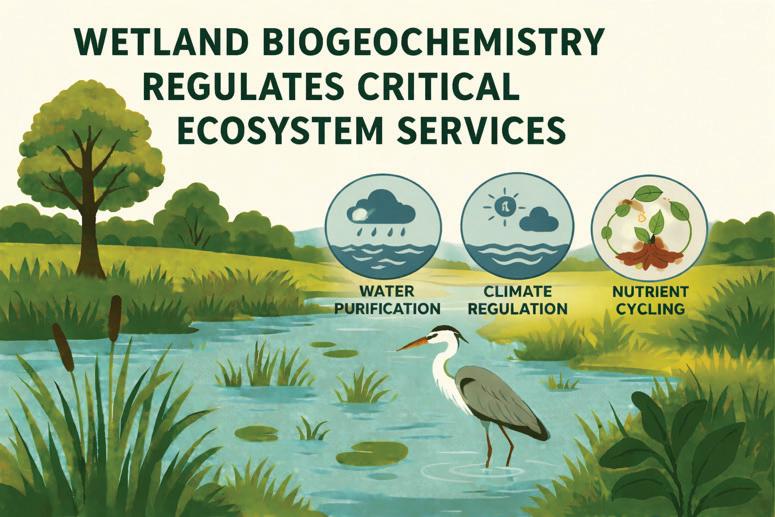
Biogeochemistry is the fascinating study of how matter and energy move through the environment. Many factors affect how elements such as carbon (C), nitrogen (N), and phosphorus (P) move through wetland ecosystems, including climate, landscape position, hydrology, organisms, and the underlying geology and soil type. In wetland ecosystems, low oxygen conditions can alter the form of elements (solid, liquid, or gas), the rate at which they transition from one form to another, and ultimately the delivery of important ecosystem services for human well-being such as clean water and climate regulation (Figure 1). Understanding the foundations of wetland biogeochemistry is important to appreciate and manage the crucial regulating services that wetlands provide. 1
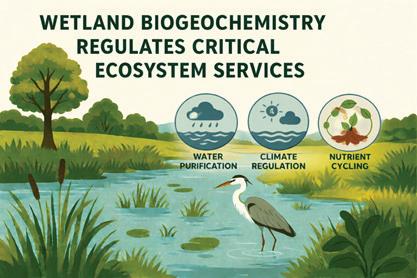
For example, removal of nitrate by denitrification improves water quality, carbon sequestration and storage as well as methane emissions regulating global climate, and ecosystem nutrient cycling is strongly regulated by wetland biogeochemistry. (Image generated by ChatGPT [9 January 2026, version GPT-5] using the prompt “create image of wetland regulating services”)
Wetlands are variable ecosystems
Wetlands are incredibly diverse ecosystems that vary in structure and function, but they are similar in that they are characterized by positive water budgets (hydrological inputs > outputs; i.e., more water going in than coming out) that support the formation of hydric soils and hydrophytic vegetation. Hydric soils (soils that are often saturated with water) typically look and smell different from well-drained soils. They are often dark and rich in organic matter, and can be gray, bluegreen, or with patches of bright orange due to chemical reactions with iron (Fe) and manganese (Mn). A rotten egg smell also is a tell-tale sign of hydric soils, as hydrogen sulfide is only produced in low-oxygen environments. Hydrophytes (plants that grow in water, including wetland soil) have evolved a suite of adaptations that allow them to grow in water-logged and low oxygen environments (see Module 3 on Plants) and are diverse in form; they can be submergent (below water), floating, or emergent (above water), and either herbaceous or woody.
Figure 1. Biogeochemical processes in wetlands underscore many regulating ecosystem services that are important for humanity.
Water as a master variable in wetlands
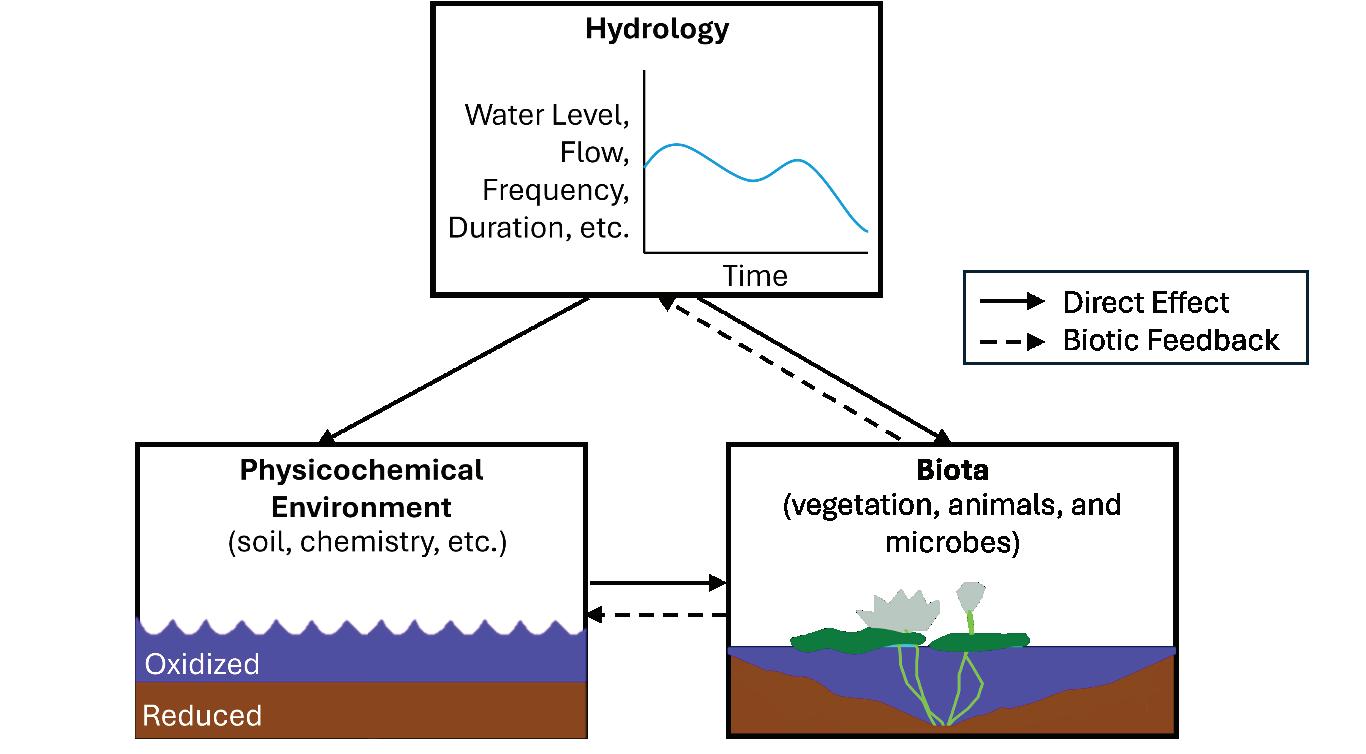
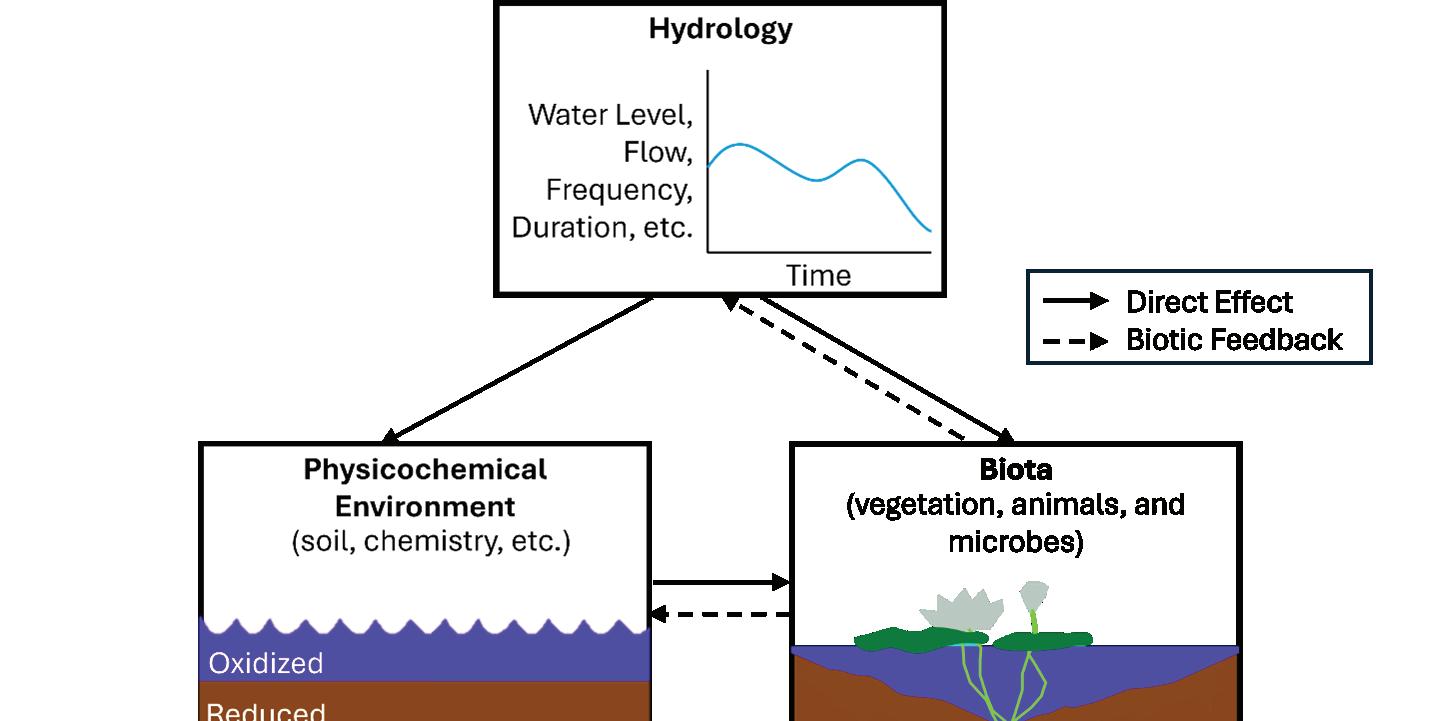
It takes more than water to make a wetland, but the remarkable influence that both the quantity and quality of water have on the physical structure of wetlands, the biota that inhabit them, and the chemical makeup of their waters and soils is difficult to overstate (Figure 2). Wetland biota, including plants, are strongly affected by water depth, duration, and frequency of inundation or saturation. Consistently flooded wetlands support floating-leaved and submergent vegetation whereas wetlands that are periodically flooded or whose soils are saturated tend to promote emergent-dominated marshes or woody swamps. The source of water entering wetlands also affects their biota and biogeochemistry. Surface water that runs off of landscapes tends to be higher in nutrients (N, P) and pollutants (road salt, E. coli, etc.), and in urban and agricultural watersheds can promote salt-tolerant plants with high nutrient-use efficiency such as cattails (Typha) and reeds (Phragmites). Groundwater-fed
wetlands are often enriched in base cations (calcium [Ca+2], magnesium [Mg+2], potassium [K+]), whereas precipitation-fed wetlands (bogs) tend to be low in nutrients and dissolved ions, promoting N-fixing or carnivorous plants. Tidal wetlands derive their water from both fresh-water terrestrial sources and the saline ocean and can have a wide range of salinities, from fresh to polyhaline, depending on source contributions and season. Saline water contains many ions (sodium [Na+], chloride [Cl-], sulfate [SO4-], Ca+2, Mg+2, K+) that can alter chemical reactions and microbial communities that drive elemental cycling (Herbert et al. 2015).
Elements on the move!
Wetlands occur in different climates and landscape settings. Interactions among the depth and duration of water, the physical and chemical environment, and the biota often produce unique biogeochemical patterns among individual wetlands. One way that ecosystem
Figure 2. Hydrology has a strong influence on the characteristics of wetlands, including what plants, animals, and microbes can thrive as well as on soils and the chemistry of the ecosystem. (Figure inspired by Fig. 2.02, Mitsch and Gosselink 2015)
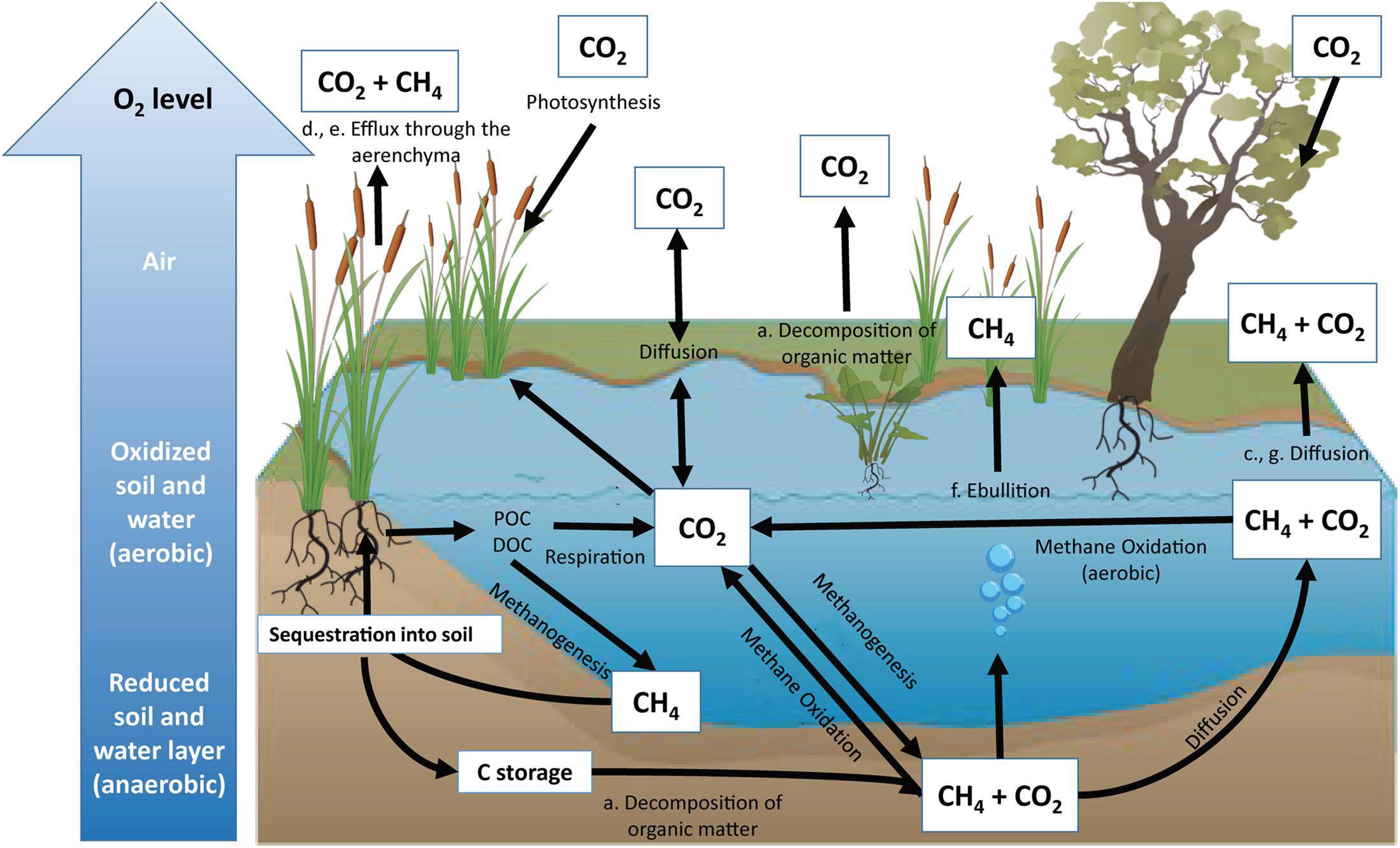
scientists conceptualize the flow of matter in the environment across diverse ecosystems is using box-andarrow diagrams (Figure 3).
Elements cycle between different components of the environment—the atmosphere, soil, water, and the biota. Where elements accumulate are typically referred to as pools, reservoirs, or stocks; these are typically presented as boxes (Figure 3) with units of mass (how much stuff?). The residence time is how long an element spends in a pool and ranges from seconds to centuries (how long?). The movement of elements from one pool to another is shown with arrows, which represent a variety of processes (e.g., photosynthesis, decomposition, denitrification) and are expressed as rates (e.g., units of mass per unit of time; how fast?).
For example, carbon can be stored in different pools and in different forms—in the soil as solid organic carbon, in water as dissolved organic carbon, in the atmosphere as gaseous carbon dioxide, or as a building block of life in plants and animals. An atom of carbon contained in a leaf might be locked up in soil organic matter for centuries (long residence time), or it might be quickly respired (short residence time) by soil bacteria during decomposition and enter the atmosphere as carbon dioxide. A common misconception is that the size of an elemental pool is proportional to activity or the process rate, but this is not true. For example, peatland soils are among the largest reservoirs of organic carbon on the planet, but carbon does not accumulate quickly in peatlands that typically have
3. Box and arrow diagram of inland wetland carbon cycle. Major pathways of carbon sequestration include photosynthesis and organic carbon accumulation in soil through particulate organic carbon (POC) and dissolved organic carbon (DOC). Major pathways of CO2 emissions include respiration during decomposition of organic matter (a), oxidation of CH4 (b), diffusion (c), and release of greenhouse gases through plant aerenchyma (d). Major pathways of CH4 emissions include methanogenesis via efflux through plant aerenchyma (e), ebullition (i.e., bubbles) (f), and diffusion (g). All sequestered carbon has the potential to be stored within the soil profile for centuries unless the wetland is altered. (Figure from Limpert et al. 2020; licensed under the Creative Commons Attribution 4.0 International license)
Figure
low productivity. Conversely, small pool sizes do not necessarily indicate low process rates. For example, a small nitrate pool size may indicate that denitrification activity is efficiently consuming available nitrate, not that denitrification activity is absent.
Oxygen as a master variable in wetland biogeochemistry
In addition to affecting wetland biota and soils, the depth, duration, and frequency of flooding affect oxygen availability and determine what chemical processes are favorable. In dry soil, the open, gas-filled pore spaces between soil particles are connected directly to the atmosphere and allow oxygen-rich air to diffuse freely into the soil where it can support the aerobic breakdown of organic matter. In contrast, wetlands typically have saturated soils or a water table near the soil surface long enough to promote growth of hydrophytic vegetation and formation of hydric soils. An abundance of slow-moving or stagnant water typical of wetland ecosystems fills pore spaces in the soil and acts as a “cap” that separates wetland soil from the atmosphere. This fundamentally alters the availability of oxygen, as oxygen diffuses through water 10,000 times slower than through air. Once oxygen is used up
during aerobic processes in saturated soils or surface waters, it is not quickly replaced by oxygen from the atmosphere, making it a highly sought-after, limited resource for plants and microbes. As a result, wetland soils are often anoxic, meaning there is no oxygen available.
Redox reactions drive wetland biogeochemistry
Oxygen is in high demand by aerobic organisms because it yields a lot of energy during respiration when it is used as a “terminal electron acceptor.” When an element accepts or gains electrons (i.e., negatively charged particles), its oxidation state is reduced. For example, when aerobic organisms reduce oxygen (O2) to water (H2O), the oxidation state of oxygen goes from zero to -2. Oxidation and reduction reactions are coupled, meaning they occur simultaneously and involve the transfer of electrons (Figure 4); because these reactions are coupled, they are often referred to as “redox” reactions. In wetland soils rich in organic matter, organic carbon is typically oxidized (donates elections), which breaks down, or decomposes, organic matter.
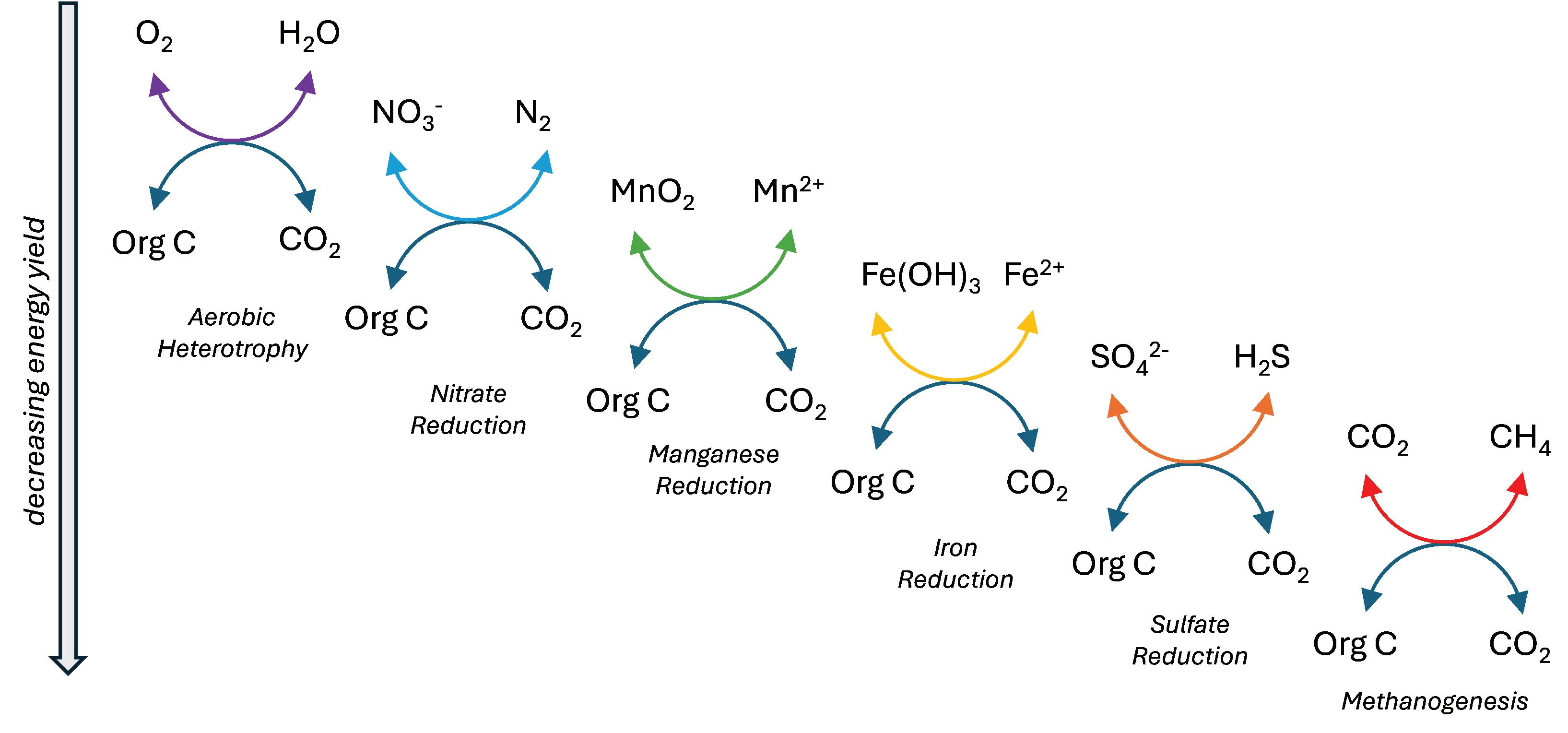
Figure 4. Oxidation-reduction (or redox) couples common in wetland ecosystems. The top of each couple is the reduction of different terminal electron acceptors (O2, NO3 -, Fe(OH)3, SO4 -2 , CO2, H2O) to their reduced products (H2O, N2, Mn+2, Fe+2, H2S, CH4, H2). The bottom of each couple is the oxidation reaction, where organic C is oxidized to CO2. The redox ladder is a concept that explains the order of oxidation-reduction (or redox) couples along a staircase (or ladder), with the most energetically favorable reaction at the top and the least at the bottom.
Microbes (bacteria, archaea, fungi) are the biological agents driving redox reactions. Wetland microbial communities are incredibly diverse, and many microbes can breathe or “reduce” other terminal electron acceptors when oxygen is not available. They oxidize organic matter and reduce various terminal electron acceptors to survive in environments that may be depleted in oxygen, like wetlands. Terminal electron acceptors other than oxygen include nitrate (NO3 -), manganese (Mn+4), ferric iron (Fe+3), sulfate (SO4 -2), or carbon dioxide (CO2) and come in various forms; NO3 - and SO4 -2 are dissolved in water, Mn+4 and Fe+3 are typically in solid forms as manganese or iron oxides (MnO2, FeO3), and CO2 is a gas. The order that terminal electron acceptors get used is usually (but not always!) predictable based on how much energy the reaction yields. This is often referred to as the “redox ladder” with the most energetically favorable reaction at the top and the least at the bottom (Figure 4).
Redox metabolic processes are referred to as, in order of decreasing energy yield (Figure 4), aerobic heterotrophy, denitrification, manganese reduction, iron reduction, sulfate reduction, and methanogenesis. Some of these processes, like methanogenesis, can only occur in the absence of oxygen, while others, like denitrification are possible in the presence of oxygen but tend to be faster or more prevalent under anoxic conditions. While the redox ladder framework helps us predict what processes are occurring, there are no walls between the different redox reactions and processes can overlap in time and space because of shifting conditions, terminal electron availability, or non-competitive substrates (forms of organic carbon that can be used by some groups of microorganisms but not others).
Influence of vegetation on wetland biogeochemistry
Vegetation can also have important consequences for wetland biogeochemistry. For example, Sphagnum sp. moss dominates the ground layer of many bogs and exudes hydrogen ions, promoting acidic conditions that reduce decomposition rates and promote accumulation of organic matter. Different plant species
also produce different amounts of biomass that vary in litter quality (e.g., carbon to nitrogen ratio, lignin content), which affects decomposition rates, carbon storage, and nutrient cycling. Many hydrophytes have “aerenchyma,” or spongy, air-filled plant tissue that allows oxygen to move from the atmosphere into the plant and down to its roots. Some of that oxygen can leak from the roots and into the soil, a process called “rhizosphere oxidation” that can alter chemical reactions in the soil that make it a better growing environment for plants. The result is that a whole cascade of biogeochemical processes can be active in the soil immediately adjacent to the complex, 3-dimensional network of plant roots that are likely to be absent or less active in the bulk soil. Plants can also affect soil biogeochemical processes by competing with microorganisms for substrates. For example, plants can take up nitrate through their roots to support their growth, making it less available for denitrifying bacteria in the soil.
Influence of animals on wetland biogeochemistry
Burrowing animals, like crabs and crayfish, mix and turn over wetland soil in a process called bioturbation. Bioturbation exposes buried soil to oxygen, which can influence rates of biogeochemical processes such as decomposition and nutrient cycling. On a large scale, “ecosystem engineers” such as beavers, alligators, and hippopotamuses can alter hydrology within wetlands, with cascading effects to wetland function. Oysters and other filter feeders can alter both the physical and chemical components of a wetland system by dampening wave energy, contributing carbon to soils, and “filtering” particulates out of the water column through metabolic processes. Furthermore, animals that influence plant growth or community composition through herbivory can influence biogeochemistry indirectly. The variety of wetlands that exist globally, and the diversity of plants and animals that live in them, result in an equal variety of ways that biota can influence wetland biogeochemistry. In any given wetland context, it is worth considering the influence of animal activity when thinking about biogeochemical processes at the landscape scale.
Wetland biogeochemistry is critical to the delivery of ecosystem services
Anoxic conditions (lack of oxygen) alter the rate or likelihood of many chemical reactions that underscore a range of ecosystem services (benefits humans derive from the environment) and disservices (negative effects of the environment on humans).
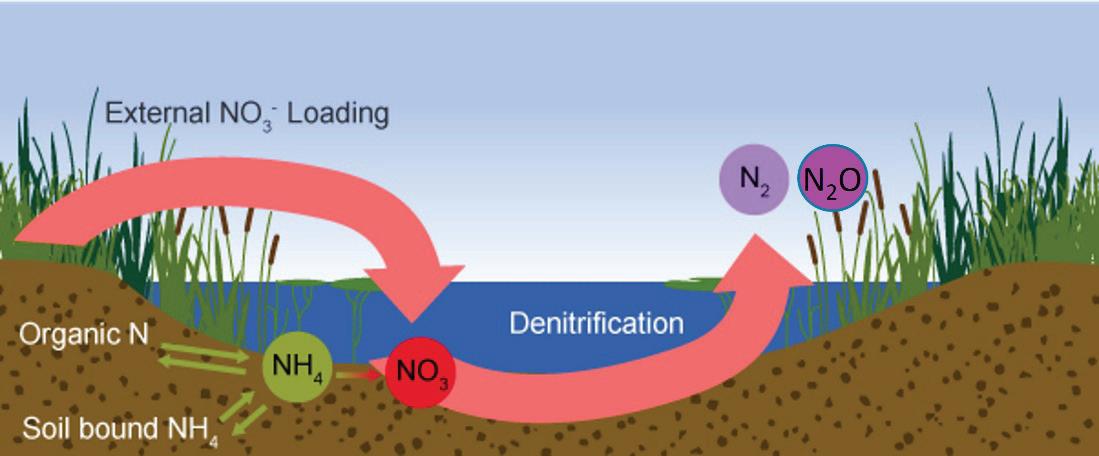
Water quality—Wetlands are like the toilet bowls of the landscape that receive a lot of unwanted pollution from runoff. However, they are also considered “nature’s kidneys” as they help purify water, in part through the process of denitrification, a microbially mediated process where aqueous NO3 - is reduced to gaseous forms of nitrogen by denitrifying bacteria (N2O and N2; Figure 5). Fertilizer production since the 1940s has more than doubled the amount of reactive nitrogen on the planet; while this has enabled us to feed a growing human population, excess nitrogen runs off from agricultural fields and lawns, and is released from sewage treatment plants, accumulating in our aquatic ecosystems. Excess nitrogen in estuarine waters stimulates algal blooms, which can lead to hypoxia, stressed fisheries, eutrophication (nutrient pollution), and dead zones, with many estuaries globally considered nitrogen-impaired. Wetlands can intercept nitrogen-rich water before reaching the ocean
and mitigate eutrophication by converting nitrate to nitrogen gas. In fact, restoring wetlands strategically in areas with high nitrogen loads can improve coastal hypoxia (Cheng et al. 2020).
In contrast, in fresh-water ecosystems, excess phosphorous often is the cause of eutrophication. Wetlands generally are not efficient at removing phosphorous compared to nitrogen. In fact, anoxia in wetland sediments can cause “internal eutrophication” and release iron-bound phosphate (PO4 -) that was previously trapped in the sediment; when iron oxides are reduced, the iron becomes soluble and releases PO4-, which can lead to excessive algal growth and cause hypoxia. Vascular plants can also take up mobilized PO4 - and temporarily store it in their biomass.
A well-known example of eutrophication from phosphorus loading is the Florida Everglades, which are a predominantly freshwater wetland system that developed under low phosphorus conditions. Decades of phosphorous enrichment from storm and agricultural water shifted the availability of phosphorous in the Florida Everglades, resulting in a loss or shift of native vegetation communities across vast areas of wetland as well as decreasing the amount of oxygen dissolved in coastal waters. “Stormwater treatment areas” were constructed to intercept phosphorus from agricultural
Figure 5. Excess nitrate (NO3 -) that accumulates in wetlands can be transformed to inert N2 or potent greenhouse gas N2O through the anaerobic process of denitrification. (Image modified from https://iowalearningfarms.wordpress.com/2016/05/24/wetlands-and-waterquality/)
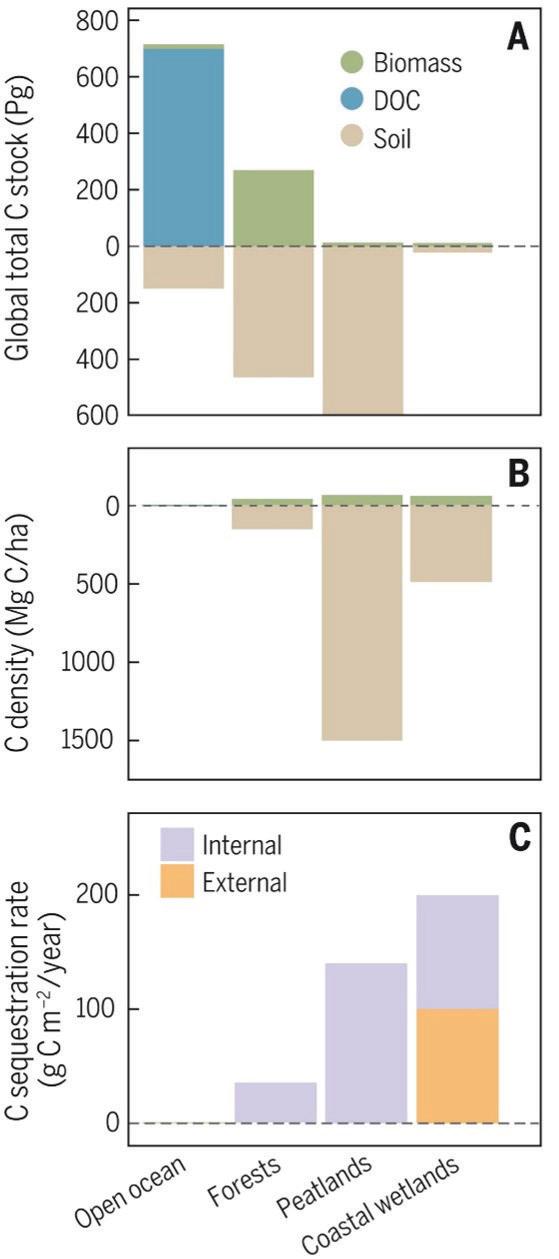
Figures 6A) Peatlands store the highest amount of carbon in their soils. 6B) Globally, peatlands and coastal wetlands have higher carbon density than forests. 6C) Coastal wetlands more quickly sequester carbon than peatlands or forests. Internal and external refer to the source of the carbon sequestered (internal: within or autochthonous; external: produced outside of ecosystem or allochthonous). (Figure modified from Temmink et al. 2022)
inputs before it entered the Everglades to mitigate this problem. While stormwater treatment areas have significantly reduced the inputs of phosphorus into the Everglades, “legacy phosphorus,” or phosphorus that exists within the soils of the wetland because of previously high nutrient loads, remains a management challenge in the Everglades system.
Carbon storage and sequestration—Decomposition of organic matter is slow in wetland soils because oxygen is quickly used up. Since the rate of plant productivity (how much biomass is produced over time) is typically greater than decomposition, organic carbon accumulates in wetland soils. Some wetlands have organic soils composed of peat (decomposing plants) and are rich in organic carbon. Other wetlands have mineral soils dominated by sands, silts, or clays, but often have high soil organic matter content as well. Despite covering only ~5% of the terrestrial land surface, wetlands store more than a third of all soil carbon, primarily in boreal peatlands (Figure 6A). Wetlands have the highest soil organic carbon densities of all ecosystems on the planet (Figure 6B), making them important conservation targets. Coastal wetlands, including mangroves, salt marshes and seagrasses, are often referred to as “blue carbon ecosystems” because they quickly sequester carbon in their biomass and contribute it to the soil, but also by trapping external organic matter brought in on the tides (Figure 6C).
Methane production, consumption, and emissions—While wetlands store and sequester carbon at disproportionately high amounts relative to their abundance, they are also the world’s largest natural source of methane (CH4), producing between 20%50% of natural global CH4 emissions. Methane has a low concentration in the atmosphere but is a potent greenhouse gas with many times the warming potential of carbon dioxide. Methane is often produced in the water-logged, oxygen-depleted, and organic-rich sediments of wetlands. It is produced during a process called methanogenesis (see Figure 4), an anaerobic process where methanogens (microbes that generate methane) use by-products of plant decomposition (CO2, acetate, or methanol) and reduce them to CH4 Methane can be emitted into the atmosphere in three ways: by diffusing through the soil or water and into the air, by bubbling out of solution via ebullition, or by traveling through plants (plant-mediated transport;
Figure 3). However, not all CH4 that is produced in a wetland is emitted to the atmosphere. Microbes called “methanotrophs” can consume methane in water and soil if there is enough oxygen. For example, as methane is diffusing up through the water column from the anoxic sediments, methanotrophs in oxygenated surface waters can oxidize methane to CO2 and prevent its emission. Likewise, wetland plants often leak oxygen into the soil to improve growing conditions, which can also promote methane oxidation. Methane can also be oxidized anaerobically through a process called anaerobic oxidation of methane that is particularly prevalent in environments with abundant sulfate such as coastal wetlands influenced by seawater. As a result, methane emissions tend to be much lower from saline than freshwater wetlands (Arias-Ortiz et al. 2025). Methane production and oxidation is dynamic over space and time and scientists are working to improve our understanding of how wetlands and their management can affect global emissions.
Radiative balance and radiative forcing—The total warming or cooling effect that a wetland has on Earth’s atmosphere through a combination of carbon burial in its soil and greenhouse gas emissions (primarily methane and nitrous oxide) to the atmosphere is referred to as its radiative balance. Because of the combination of high carbon burial rates and low methane emissions, coastal wetland restoration is increasingly used as a nature-based solution to combat climate change. A change in a wetland’s radiative balance brought about by human actions like restoration, drainage, vegetation management, sediment inputs, etc. is referred to as a radiative forcing. It is important to note that a climate cooling effect (negative radiative forcing) can be achieved even in wetlands that have a positive radiative balance (where greenhouse gas emissions more than counterbalance carbon burial) if their greenhouse gas emissions are decreased or their carbon burial rates are increased as the result of anthropogenic activities (Jones et al. 2024). For example, restoring tidal hydrology to impounded marshes can reduce methane emissions and promote carbon sequestration, but restored marshes may still have a positive radiative balance.
Conclusion
Biogeochemical processes underpin many critical ecosystem services that wetlands provide to humanity. A basic understanding of wetland biogeochemistry is needed for making decisions and setting policies aimed at facilitating wetland conservation and restoration to promote effective ecosystem service delivery.
ACKNOWLEDGEMENTS
We appreciate feedback from Chris Craft, Darold Batzer, Sheel Bansal, and Lisa Chambers on previous drafts of this module, which improved the organization and clarity of the content.
Literature cited
Arias-Ortiz, A., J. Wolfe, S.D. Bridgham, S. Knox, G. McNicol, B.A. Needelman, J. Shahan, et al. 2024. Methane fluxes in tidal marshes of the conterminous United States. Global Change Biology 30, no. 9 (2024): e17462. https://doi.org/10.1111/gcb.17462.
Cheng, F.Y., K.J. Van Meter, D.K. Byrnes, and N.B. Basu. 2020. Maximizing US nitrate removal through wetland protection and restoration. Nature 588(7839):625-630.
Herbert, E.R., P. Boon, A.J. Burgin, S.C. Neubauer, R.B. Franklin, M. Ardón, K.N. Hopfensperger, L.P. Lamers, and P. Gell. 2015. A global perspective on wetland salinization: ecological consequences of a growing threat to freshwater wetlands. Ecosphere 6(10):1-43.
Jones, S.F., A. Arias-Ortiz, D. Baldocchi, M. Eagle, D.A. Friess, C. Gore, G. Noe, et al. 2024. When and where can coastal wetland restoration increase carbon sequestration as a natural climate solution? Cambridge Prisms: Coastal Futures 2 (January 2024): e13. https:// doi.org/10.1017/cft.2024.14.
Limpert, K.E., P.E. Carnell, S.M. Trevathan-Tackett, and P.I. Macreadie. 2020. Reducing emissions from degraded floodplain wetlands. Frontiers in Environmental Science 8:8. doi:10.3389/fenvs.2020.00008.
Temmink, R.J., L.P. Lamers, C. Angelini, T.J. Bouma, C. Fritz, J. van de Koppel, R. Lexmond, M. Rietkerk, B.R. Silliman, H. Joosten, and T. van der Heide. 2022. Recovering wetland biogeomorphic feedbacks to restore the world’s biotic carbon hotspots. Science 376(6593), p.eabn1479. https://www.science.org/ doi/10.1126/science.abn1479
Other suggested reading
Bansal, S., I.F. Creed, B.A. Tangen, S.D. Bridgham, A.R. Desai, K.W. Krauss, S.C. Neubauer, G.B. Noe, D.O. Rosenberry, C. Trettin, K.P. Wickland, et al. 2023. Practical guide to measuring wetland carbon pools and fluxes. Wetlands, 43(8), p.105.
Megonigal, J.P., M.E. Hines, and P.T. Visscher. 2004. Anaerobic metabolism: linkages to trace gases and aerobic metabolism. In: Schlesinger, W.H. (Ed.), Biogeochemistry. Elsevier-Pergamon, Oxford, pp. 317–424.
Reddy, K.R., R.D. DeLaune, and P.W. Inglett. 2022. Biogeochemistry of wetlands: science and applications. CRC press.
Weathers, K.C., D.L. Strayer, and G.E. Likens, eds. 2021. Fundamentals of ecosystem science. Academic Press.
Updated Inventory of the Aquatic Flora of Querétaro, Mexico, using Floristic Survey and Environmental DNA Approaches
Tatiana Lobato-de Magalhães1
Abstract
This study aims to update the current list of aquatic plant species in lentic and lotic freshwater ecosystems in Querétaro State. It follows on from a previous literature review, which was based on an active search of herbarium specimens and surveys from the past four decades and identifies new records for the state and municipalities. Floristic surveys and environmental DNA metabarcoding analysis were conducted at 30 selected sites across four areas and 14 municipalities in Querétaro State, Mexico. New records were noted in each area (29) and municipality (78), including rare species such as Noveloa coulteriana. New records of two native species in the state—Potamogeton amplifolius and Schoenoplectus americanus—and one introduced species—Hydrilla verticillata—also were documented. Five of the nine rare species previously documented in the state were observed at the visited sites; meanwhile, 11 of the 13 introduced species were also observed. Given the limited recent floral surveys in Querétaro wetlands and water bodies, this study provides a valuable update on the current aquatic flora in the state, along with insights into the potential ongoing invasion by introduced species. This combined approach could be crucial for future freshwater ecosystem assessments.
The State of Querétaro is located in the central Mexico highlands and covers nearly 12,000 square kilometers. Almost all of Querétaro’s territory experiences a dry or semi-arid climate and is primarily characterized by mountains and xerophyte vegetation (Zamudio et al. 1992). Despite hosting a Ramsar site (Jalpan
Dam, Latitude 21° 12’ N, longitude -99° 28’ W), Querétaro has few freshwater habitats, and its aquatic vegetation remains poorly studied. Furthermore, several areas are significantly impacted by human activity, including several bodies of water—both temporary and permanent—that support aquatic plants and have rarely been sampled. Nearly three decades ago, researchers observed that natural and constructed water bodies were generally polluted, with many covered by Pontederia crassipes (also known as Eichhornia crassipes), Lemna spp. and Typha spp. (Martínez and García 2001).
To date, the most comprehensive list of aquatic plants— based on herbarium specimen reviews and surveys of selected sites—of the aquatic flora and vegetation of rivers, temporary pools, dams, and irrigation canals in various locations within Querétaro, Mexico, was published by Martínez and García (2001). They documented 118 species across 65 genera and 43 families. More recently, Lobato-de Magalhães and Moncisvais-Macias (2026) conducted a detailed review of herbarium specimens and literature references for the book Aquatic Plants of Querétaro: Distribution, Use and Propagation (originally in Spanish: Plantas Acuáticas de Querétaro: Distribución, Uso y Propagación, by Colección Humedales). This work provides a comprehensive list of 145 strictly aquatic plant species—including 10 wetland trees—distributed across 77 genera and 47 families, with records of their occurrence in each municipality and area of Querétaro State from 1985 to date, and it was the major reference list used in this paper to compare and identify new records for the state, areas, and municipalities. Other significant contributions to the understanding of the state’s aquatic flora include Argüelles et al. (1991), Zamudio et al. (1992), and Lot et al. (1986, 1993), along with several volumes of the Flora of the Bajío and Adjacent Regions, including those by Carranza (1992, 1994, 1995), Calderón de Rzedowski (1996a, 1996b), Novelo and Ramos (1998), and Novelo and Bonilla Barbosa (1999). Subsequently, Lobato-de Magalhães and Martínez (2018) surveyed aquatic plants in the temporary wetlands of southern Querétaro (“vernal pools”), conducting a thorough study at 39 sites, nine of which were in Querétaro. Herrera-Paniagua et al.
1 Faculty of Natural Sciences, Universidad Autónoma de Querétaro, Avenida de Las Ciencias, QRO, 76230, Mexico. ORCID: https://orcid.org/0000-0002-23566475. Corresponding author email address: tatiana.lobato@uaq.mx (T. Lobato-de Magalhães)
(2022) further complemented this work by surveying plants in permanent and temporary rivers across 20 locations in the semidesert area of Querétaro.
This study aimed to (i) conduct a dynamic floristic survey and environmental DNA metabarcoding (eDNA) analysis at 30 selected sites across the state, (ii) document the presence of native and introduced species, (iii) update and complement the comprehensive review undertaken by Lobato-de Magalhães and MoncisvaisMacias (2026), and (iv) identify new entries for the state and each municipality. Since recent floral surveys are scarce in Querétaro wetlands and water bodies, this study provides an update on the current condition of aquatic flora in the state and offers insights into the potential ongoing invasion of introduced species.
2 Material and Methods
2.1 Sampling
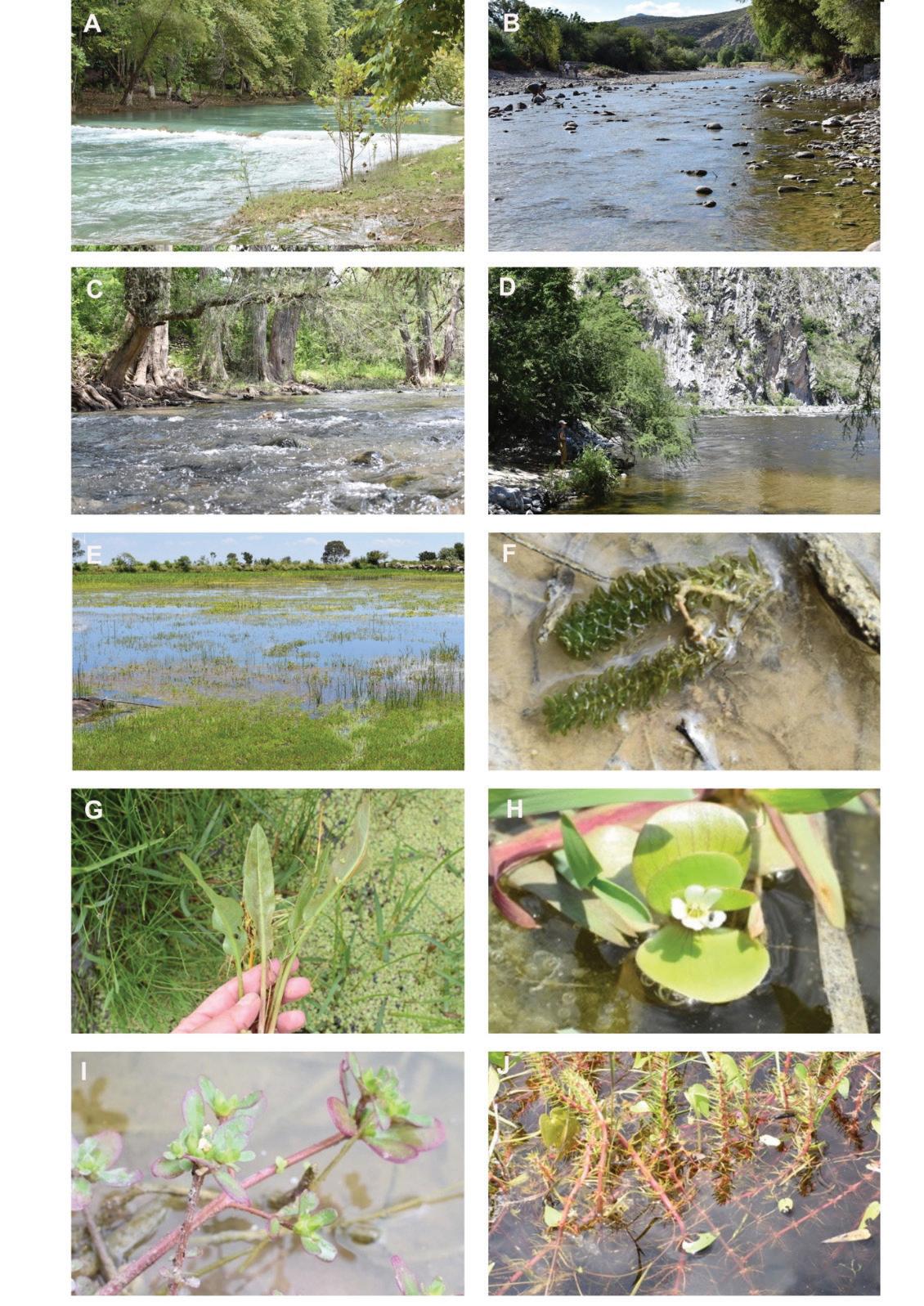
Five field expeditions were conducted across the State of Querétaro in August and September 2025, examining 15 lentic and 15 lotic sites for photographic documentation of species and on-site measurement of physical and chemical water parameters. These areas exhibit highly variable climates and vegetation, with latitudes ranging from 20.231677 to 21.455137 ° N, longitudes from -100.460897 to -99.18616 ° W, altitudes from 534 to 2743 m above sea level, and pH ranging from acidic to alkaline (Table 1). Sites were chosen based on accessibility and the representation of each area, covering the major rivers, Río Ayutla (Figure 1A), Río Extoráz (Figure 1B), Río Jalpan (Figure 1C), Río Escanela, Río Monctezuma (Figure 1D), and Río Santa María and several relevant streams, dams, and temporary wetlands (Figure 1E). Water temperature, pH, conductivity, total dissolved solids, and salinity were measured in situ at a minimum of three points on each site using a Hanna HI 91129 probe (average data in Table 1). Several rivers are situated in a karstic area that includes the Sierra Gorda and part of the semidesert. At the same time, temporary wetlands in Southern Querétaro are formed by rainwater on ignimbrite and other igneous rocks (Lobato-de Magalhães and Martínez 2018). An extensive floristic survey was conducted to explore as much of the aquatic vegetation zone as possible. Identification was
performed on-site, with botanical samples collected only when precise identification was not feasible. Samples (20 subsamples distributed across each wetland site, in total 1 L water) were collected before the floristic survey using a Comprehensive Freshwater eDNA Mini Kit WilderLab® (https://www.wilderlab. co.nz) and following the manufacturer’s procedures, including the use of conservative to preserve samples (350 μl DNA/RNA Shield solution).
2.2 Laboratory procedures
All laboratory procedures (DNA extraction, sample quality control, barcode library preparation/indexing, sequencing, and bioinformatics analysis, including noise removal and taxonomic identification) were conducted by the certified laboratory WilderLab®, following the WilderLab® specifications (Table 2).
2.3 Inventory updated
The floristic survey observations and the list of species from eDNA were compared with literature records, e.g., a detailed review of herbarium specimens and literature references, a comprehensive list by Lobatode Magalhães and Moncisvais-Macias (2026), and the World Atlas of Freshwater Macrophytes (Lobatode Magalhães et al. 2024a, 2025, 2026). In addition, specimens held by the Herbario de la Universidad Autónoma de Querétaro “Jerzy Rzedowski” (QMEX), Herbario Isidro Palacios (UASLP-SLPM) and Herbario del Instituto de Ecología, A. C. (IEB) were used to highlight new records for areas or municipalities and corroborate their occurrence in the Central Mexico highlands and “Bajío” area. The classification of families followed Smith et al. (2006) and PPG I (2016) for ferns, Christenhusz et al. (2011) for Gymnosperms and Angiosperm Phylogeny Group IV (APG 2016) for Angiosperms. Taxonomic nomenclature (accepted scientific names) was reviewed in POWO (2025). In addition, the global threat status was assessed by consulting the Red List of the International Union for Conservation of Nature (IUCN 2025) and the national regulation NOM-059 (SEMARNAT 2010), and the botany collection Flora del Bajío (2025), which compiles the official list of organisms at risk in the country.
The distribution of species classified for the State of Querétaro was based on a geopolitical division considering 4 areas and 18 municipalities (Southern area: Amealco de Bonfil=Ame, Huimilpan=Hui, Pedro Escobedo=PE, San Juan del Río=SJR; Sierra Gorda area: Arroyo Seco=AS, Jalpan de Serra=Jal, Landa de Matamoros=Lan, Pinal de Amoles=PA, San Joaquín=SJo; Semi-desert area: Cadereyta=Cad, Colón=Col, Ezequiel Montes=EM, Peñamiller=Pen, Tequisquiapan=Teq, Tolimán=Tol; Metropolitan area: El Marqués=ELM, Querétaro=Qro, Villa Corregidora=VC). The locations covered 14 out of 18 municipalities in Querétaro, excluding Ezequiel Montes, San Joaquín, Tequisquiapan, and Villa Corregidora. Geographic coordinates of each site were omitted from this publication to prevent unethical practices and plant theft. This is especially important given the rising interest in obtaining plant specimens for creating artificial ponds and wetlands, and the absence of certified plant nurseries specializing in aquatic species.
3 Results
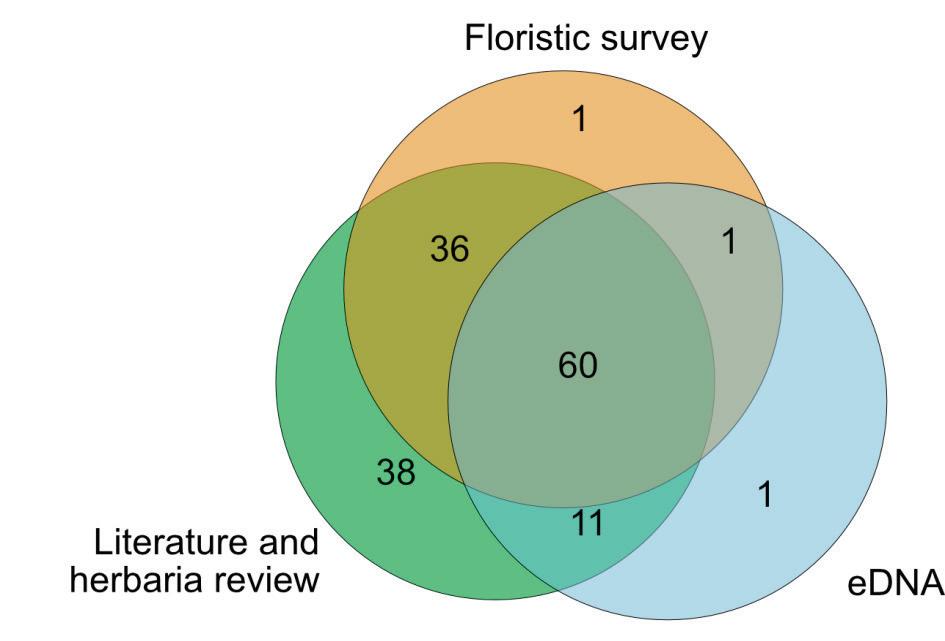
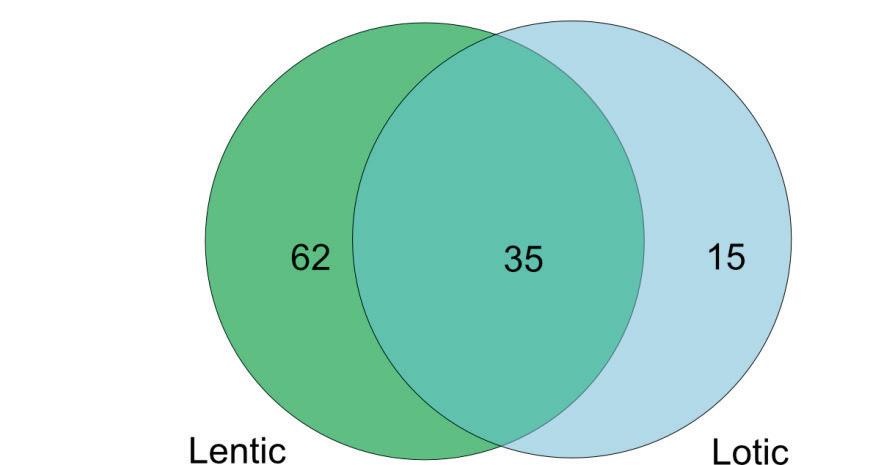
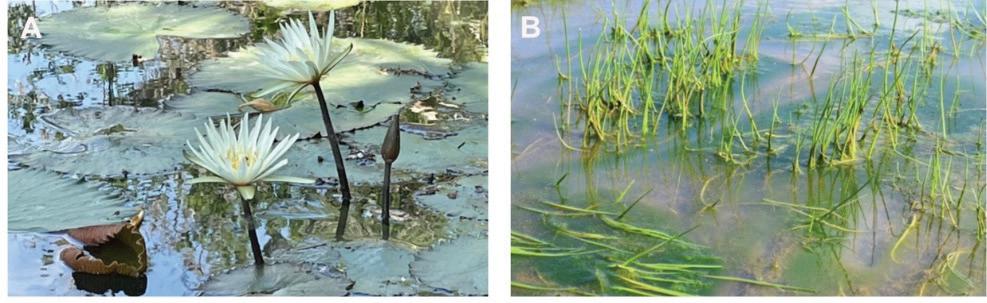
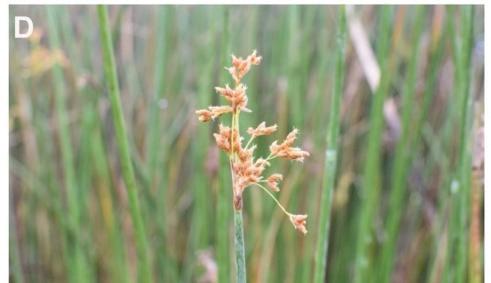
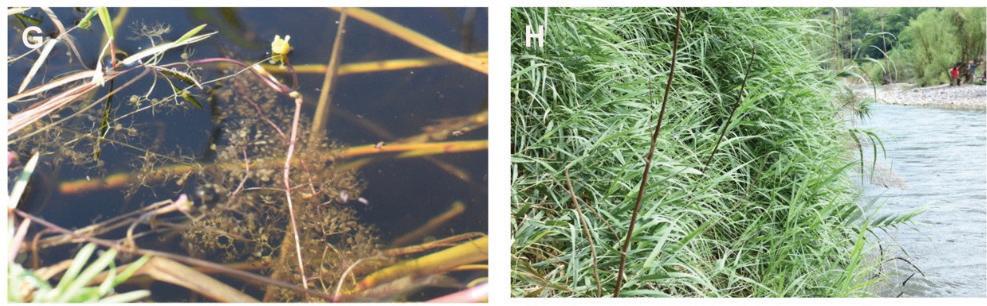
In total, 110 species (distributed across 68 genera and 40 families) were recorded in this study: 98 species were observed in the field survey, and 73 were identified through eDNA samples (Figure 2A) (a full list of aquatic plant species of Querétaro State is provided in Appendix A). New records were noted in each area (29 records) and municipality (78 records), including rare species such as Noveloa coulteriana (Podostemaceae) in site 23 (Table 3). However, 38 of 145 species previously registered in the state were not observed at the visited sites. We also recorded three new species in the state: Potamogeton amplifolius and Schoenoplectus americanus (both natives) and Hydrilla verticillata (introduced) (Figure 1F). Lentic ecosystems, such as temporary wetlands, had more species (97) than lotic ecosystems (50). We observed 35 species occurring in both systems (Figure 2B, Appendix A). Five species— Anemopsis californica (Figure 1G), Bacopa rotundifolia (Figure 1H), Elatine brachysperma (Figure 1I), Myriophyllum hippuroides (Figure 1J) and Nymphaea ampla (Figure 3A)—out of the nine considered rare and vulnerable to extinction due to their narrow distribution (Calderón de Rzedowski, 1996a, 1996b; Rzedowski
and Calderón de Rzedowski 1997; Novelo and Ramos 1998; Martínez and García 2001) have been observed in this study, while four others—Eriocaulon bilobatum, Eriocaulon jaliscanum, Heteranthera mexicana and Lobelia cardinalis—were not found at any of the sampled locations. Among the 148 aquatic plants of Querétaro, 80 species are listed as “least concern” (LC), followed by two in the “unknown” and one “endangered” (EN) categories by the International Red List of IUCN (2025); nine species are featured as “endangered” and two have “special protection” status at national level (SEMANAR, 2010; Flora del Bajío 2025) (Appendix A); and 59 species (40%) have not been allocated any protection or concern category. In addition, 11 of the 13 introduced species were observed in this study (Appendix A), with at least one introduced species present in 15 of 18 municipalities in Querétaro and in 19 of 30 sampled water bodies.
4 Discussion
With its 148 species, Querétaro harbors ~20 percent of the aquatic flora of México (Lobato-de Magalhães et al. 2024b) and ~5 percent of the global pool of macrophytes (Lobato-de Magalhães et al. 2024a, 2025, 2026). More floristic surveys are needed in the state. Given current outcomes, the eDNA approach is highlighted as a reliable method for supporting aquatic biodiversity monitoring, complementing or replacing floristic surveys in the urgent need to reevaluate the quality of aquatic ecosystems (Bird et al. 2024; Blackman et al. 2024). This novel method could be particularly useful for freshwater assessment at the governmental level, where there are few specialists across multiple taxa and scarce resources to conduct multiple field excursions to collect data and evaluate wetland ecosystem quality. Despite only a few sites being visited in this study, almost 75 percent of the known aquatic flora was recorded, and 78 new species were registered per municipality for 56 of the 148 aquatic plant species in Querétaro State. Also, a few rare species were observed during the field survey, but not all.
Differences between the literature and the herbaria review, and the current field data exist, but that could have several explanations:
i. Some of the 38 species not observed in this study are rare and threatened in the state and in Mexico, and (probably) could have become extinct in Querétaro due to habitat loss, particularly the ones that inhabit temporary wetlands, a highly biodiverse and fragile ecosystem type (Martínez and García 2001; Lobato-de Magalhães and Martínez 2018). We should also reconsider that many of the herbarium records were collected decades ago, and that urban, industrial, agricultural, and livestock activities have since expanded into wetland areas or contaminated water bodies.
ii. Species not observed at any of the 30 visited sites may be present at other sites across the state or present in other months of the year. Expanding sampling efforts would increase the number of species recorded.
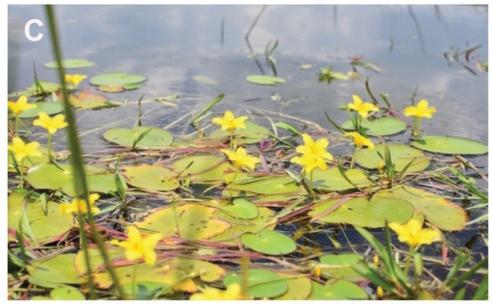
iii. Species not observed at any of the 30 visited sites may lack genetic information in bioinformatic and barcoding libraries at generic or specific levels and, therefore, are not detectable in the eDNA metabarcoding analysis. More genetic studies of Mexican and Neotropical aquatic plants would expand the number of species recorded. Currently, there is very little information on that (Monteiro et al. 2019); a few examples exist for Triglochin scilloides (Fig. 3B) (Magallán et al. 2013), Nymphoides fallax (Figure 3C), (Lobatode Magalhães et al. 2019), and Schoenoplectus californicus (Figure 3D) (Noriega-Rico et al. 2025).
In general, lentic ecosystems are reported to host more plant species than lotic habitats due to habitat stability, a broader array of niches, and variable hydroperiods. However, macrophyte studies in lotic ecosystems are scarcer than in lentic ecosystems worldwide (Alahuhta et al. 2021). In Querétaro, the greatest diversity of aquatic plants is found in temporary wetlands in the state’s southern region (Martínez and García 2001; Lobato-de Magalhães and Martínez 2018). Besides its high biodiversity, these ephemeral pools are small (< 1 ha), acidic (pH ~ 5, when not impacted by agricultural or urban runoff), filled with meteoric water (highly dependent on the rain season), and are located in the Mexican Transvolcanic Belt in high elevations ~ 2,000 m a.s.l., which confers felsic volcanoclastic sequences
(mostly ignimbrite) and more eutrophic and nutrientrich soils. Most of the lotic sites of this study are in the Altiplano and the Sierra Madre Oriental (SMO), the latter of which is a karstic region. In particular, the rivers in the SMO have medium to high flows and are highly alkaline due to local calcareous affinity, resulting in higher pHs, poorer nutrient-rich soils, and lower aquatic plant diversity. All sites located in the Altiplano are in the semidesert or metropolitan regions, resulting in less aquatic diversity due to low precipitation and the presence of more sources of contamination (e.g., urban, industrial, and agricultural activities), particularly in the metropolitan area. Elevation varies widely in the Querétaro State (Table 1), but, despite previous literature suggesting that the highest diversity of aquatic plants occurs at low elevations in Mexico, more recently, other authors observed a high plant diversity at high elevations in the Central Mexico wetlands (Rzedowski 1978; Mora-Olivo et al. 2013; Lobato-de Magalhães and Martínez 2018).
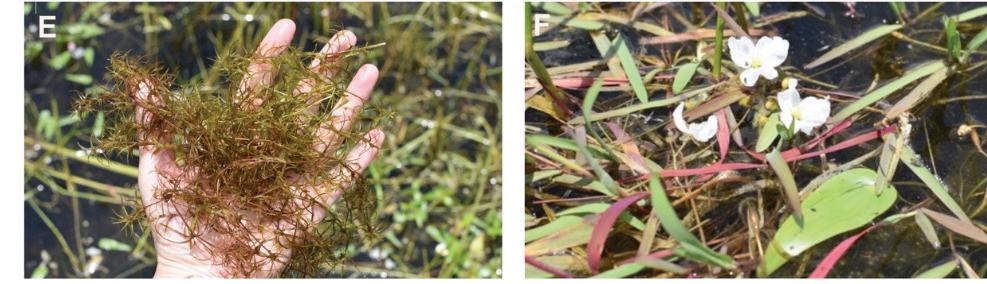
Many species are listed in the IUCN Red List or national lists of endangered species (60%), underscoring the need to protect and conserve wetlands in Querétaro. Several species that characterize temporary wetlands of Central Mexico highlands have disappeared from the Valley of Mexico (Mexico City surroundings and region originally with many lakes managed by Native nations, e.g., Texcoco Lake and Xochimilco Lake), but are still found in remaining temporary wetlands of the Southern Querétaro, such as Najas guadalupensis (Figure 3E), Nymphoides fallax, Sagittaria demersa (Figure 3F), Triglochin scilloides, Utricularia perversa (Figure 3G), making the efforts to conserve this ecosystem urgent (Martínez and García 2001; Lobato-de Magalhães and Martínez 2018; Flora del Bajío 2025).
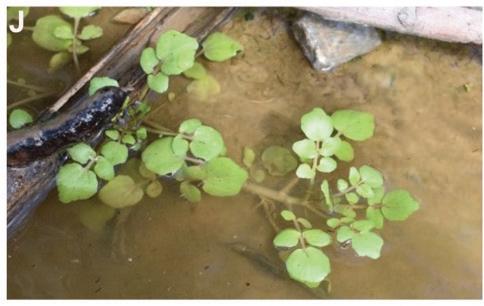
Querétaro hosts 13 introduced species (Lobato-de Magalhães and Moncisvais-Macias 2026). Still, only five are considered invasive in Mexico: Arundo donax (Figure 3H), Elodea densa (Figure 3I), Hydrilla verticillata, Nasturtium officinale (Figure 3J), and Pontederia crassipes. Martínez and García (2001) reported that, toward the end of the last century, introduced species displaced several native species, particularly in dams in the southern and metropolitan
areas (and the most populous zones of the state), as well as in parts of the semidesert, mainly where water originates from industrial zones, such as those of the Río Monctezuma, which continually receives contaminated waters. This can be seen in various dams throughout the state, including Batán, Centenario, La Estancia, La Llave, and Colón. Pontederia crassipes has not yet invaded the rivers and streams of Sierra Gorda, which remains the best-preserved area in the state, along with remote regions of the semidesert. However, Arundo donax is commonly found along numerous rivers, springs, and artificial water bodies throughout the area. Despite being regarded as invasive, this species appears non-problematic in Mexico’s wetlands, since it shows no competitive behavior. However, this plant could pose a future concern, as it can propagate both vegetatively and sexually, and its parts can disperse over substantial distances via hydrochory (Thomaz 2025). Nasturtium officinale, an edible plant, was found (very few specimens) at only one site (Río Tolimán) near a rural community. This study also recorded a new invasive species in the state of Querétaro, Hydrilla verticillata, with small populations present in the Santa María, Ayutla and Jalpan rivers. Previous records of Hydrilla verticillata had been reported only in the states of Nuevo León, Sinaloa, and Tamaulipas in Mexico (Mora-Olivo et al. 2013). Along with the new invasive species, observed for the first time in the state, most municipalities have
at least one report of weeds, heightening concerns about the need to improve management of aquatic invasive species. Several aquatic plant species also have multiple uses, such as medicine, food, ornamental and cosmetic uses, materials for dyes, crafts, construction, boats, and wildlife habitat, among others (Lobato-de Magalhães et al. 2024a, 2024b, 2025, 2026). Recognizing the role and importance of aquatic plants in society and ecosystems is key to advancing their use, conservation, and protection, and to assist in developing public policies to protect freshwater biodiversity and ecosystems in Querétaro and Mexico.
Given the limited recent floral surveys in Querétaro wetlands and water bodies, this study provides a valuable update on the current aquatic flora in the state and new records for the state and municipalities. New insights into the potential ongoing invasion by introduced aquatic plant species in water bodies and wetlands, and the alarming current invasion in 15 of the 18 municipalities. The use of emergent techniques, such as eDNA or a combined approach, could be crucial for future freshwater ecosystem assessment and monitoring.
Figure 1. Lotic ecosystem: (A) Río Ayutla, Arroyo Seco, (B) Río Extoráz, Peñamiller, (C) Río Jalpan, Arroyo Seco, (D) Río Monctezuma, Cadereyta de Montes; lentic ecosystem: (E) temporary wetland, Amealco de Bonfil; exotic aquatic plant species: (F) Hydrilla verticillata, Río Santa María, Arroyo Seco; native aquatic plant species: (G) Anemopsis californica, temporary wetland, Colón, (H) Bacopa rotundifolia, temporary wetland, Pedro Escobedo, (I) Elatine brachysperma, contructed dam, El Marqués, (J) Myriophyllum hippuroides, temporary wetland, Amealco de Bonfil.
Figure 2. Venn diagram for aquatic plants of Querétaro State: (A) number of species recorded on the floristic survey, eDNA and literature, (B) total number of species recorded in lentic and lotic freshwater ecosystems considering floristic survey and eDNA sources.
Figure 3. Native aquatic plant species: (A) Nymphaea ampla, spring, Arroyo Seco, (B) Triglochin scilloides, constructed dam, Amealco de Bonfil, (C) Nymphoides fallax, temporary wetland, Amealco de Bonfil, (D) Schoenoplectus californicus, constructed dam “bordo”, Amealco de Bonfil (E) Najas guadalupensis, temporary wetland, Huimilpan, (F) Sagittaria demersa, temporary wetland, San Juan del Río, (G) Utricularia perversa, temporary wetland, Amealco de Bonfil; exotic aquatic plant species: (H) Arundo donax, Río Santa María, Arroyo Seco, (I) Elodea densa, constructed dam connected to a small stream, Amealco de Bonfil, (J) Nasturtium officinale, Río Tolimán, Tolimán.
Procedure Observations
DNA extraction and purification
Polymerase Chain Reaction - PCR
Sequencing libraries
200 µl of each sample lysate loaded into a Genolution GD141 cartridge was run on the Genolution Nextractor NX-48S system using the standard extraction settings
PCR-amplified fusion-tag mitochondrial and nuclear rRNA assays were used to detect plant DNA in the Applied Biosystems ProFlex PCR System. All PCR reactions were carried out in duplicate with 3 µl MyTaq 2x Red Mix (Bioline) with 2 mg ml-1 BSA (Sigma Aldrich), 0.5 µl forward primer (10 µM), 0.5 µl reverse primer (10 µM) and 1.5 µl template DNA. PCR cycling conditions include an initial denaturation step of 3 min at 95 °C, followed by 38 cycles of 5 s at 95 °C, 10 s at annealing temperature, and 15 s at 72 °C
Sequencing libraries, including negative controls, were pooled, cleaned, and double-end size-selected using AMPure XP magnetic beads (0.9x and 1.2x for lower and upper size bounds, respectively). The final pooled library concentration was determined using a Qubit 4 Fluorometer (ThermoFisher Scientific) and the concentration adjusted to 50 pM (basic panel) or 650 pM (comprehensive panel) in sterile DNAse/RNAse free water (IDT). For basic panel analysis, the library is loaded onto an iSeq i1 V2 reagent cartridge with 5% Phi X and run for 200 cycles in a single direction on an Illumina iSeq 100 instruments. For the comprehensive panel, the library is loaded onto an Illumina NextSeq 1000/2000 P1 XLEAP-SBS Reagent cartridge with 15% Phi X and run for 200 cycles in a single direction on an Illumina NextSeq 1000 instrument. Trimmed sequences are filtered to produce a table of exact amplicon sequence variants (ASVs) using the DADA2 package (Callahan et al. 2016).
Amplicon sequence variants – ASV
Taxonomic determination
ASVs are identified to the lowest possible taxonomic rank using a global reference sequence database primarily compiled of trimmed reference sequences downloaded from GenBank (https://www.ncbi.nlm.nih.gov/genbank/). Unmatched sequences > 50 bp in length are queried against the reference database using the SINTAX classification algorithm (Edgar 2016) with a conservative assignment threshold of > 0.99 and taxon assignment restricted to genus level or above.
Table 2. Laboratory procedures for environmental DNA by WilderLab®.
Species New record (municipality) New record (area)
Table 3. New records for municipalities, region and state. ** Species introduced in Mexico. # new record for the state of Querétaro. Abbreviation of municipalities: Amealco de Bonfil=Ame, Huimilpan=Hui, Pedro Escobedo=PE, San Juan del Río=SJR, Arroyo Seco=AS, Jalpan de Serra=Jal, Landa de Matamoros=Lan, Pinal de Amoles=PA, San Joaquín=SJo, Cadereyta=Cad, Colón=Col, Ezequiel Montes=EM, Peñamiller=Pen, Tequisquiapan=Teq, Tolimán=Tol, El Marqués=ELM, Querétaro=Qro, Villa Corregidora=VC.
Competing Interests
The author has no relevant financial or non-financial interests to disclose.
Declaration of Originality
This is an original work that has not been published before. Images, figures, and quotations included in the article have been properly cited, and permission has been granted for any that are not those of the authors.
Acknowledgements
Montserrat Mocisvais-Macias, María José Hernandez, Melanie Becerril and Paula Montoya for their support with field work and species records, and Débora O. Lobato and Kevin Murphy for their support with the manuscript revision. This study was funded by the Council of Science and Technology of the Querétaro State (CONCYTEQ), project FNB202011, agreement CACTI-096-2024.
Appendix A. Aquatic plant species list of Querétaro State. https://tinyurl.com/mreh2az8
References
Alahuhta J., M. Lindholm, L. Baastrup-Spohr, J. García-Girón, M. Toivanen, J. Heino, and K. Murphy. 2021. Macroecology of macrophytes in the freshwater realm: Patterns, mechanisms and implications. Aquatic Botany 2021 168:103325. https://doi.org/10.1016/j. aquabot.2020.103325
APG (The Angiosperm Phylogeny Group). 2016. An update of the Angiosperm Phylogeny Group classification for the orders and families of flowering plants: APG IV. Botanical Journal of the Linnean Society 141(4), 1-20. https://academic.oup.com/ botlinnean/article/181/1/1/2416499
Argüelles, E., R. Fernández and S. Zamudio. 1991. Listado florístico preliminar del estado de Querétaro Flora del Bajío y de Regiones Adyacentes. Fasc. compl. II. https://doi.org/10.21829/fb.144.1991.II
Bird, S., P. Dutton, S. Wilkinson, J. Smith, I. Duggan and A. McGaughran. 2024. Developing an eDNA approach for wetland biomonitoring: Insights on technical and conventional approaches. Environmental DNA 6(3). https://doi.org/10.1002/edn3.574
Blackman, R., M. Couton, F. Keck, D. Kirschner, L. Carraro, E. Cereghetti, K. Perrelet, R., Bossart, J. Brantschen, Y. Zhang and F. Altermatt. 2024. Environmental DNA: The next chapter. Molecular Ecology 33(11). https://doi.org/10.1111/mec.17355
Callahan, B.J., P.J. McMurdie, M.J. Rosen, A.W. Han, A. Jo A. Johnson, and S.P. Holmes. 2016. DADA2: High-Resolution Sample Inference from Illumina Amplicon Data. Nature Methods 13 (7): 581–83. https:// doi.org/10.1038/nmeth.3869
Carranza, E. 1992. Taxodiaceae. Flora del Bajío y de Regiones Adyacentes. Instituto de Ecología
A.C.Fascículo 4. Pátzcuaro, Mich.
Carranza, E. 1994. Platanaceae. Flora del Bajío y de Regiones Adyacentes. Instituto de Ecología
A.C.Fascículo 23. Pátzcuaro, Mich.
Carranza, E. 1995. Salicaceae. Flora del Bajío y de Regiones Adyacentes. Instituto de Ecología
A.C.Fascículo 37. Pátzcuaro, Mich.
Calderón de Rzedowski, G. 1996a. Eriocaulaceae.
Flora del Bajío y de Regiones Adyacentes. Institutode Ecología A.C. Fasc. 46. Pátzcuaro, Mich.
Calderón de Rzedowski, G. 1996b. Saururaceae.
Flora del Bajío y de Regiones Adyacentes. Institutode Ecología A.C. Fasc. 42. Pátzcuaro, Mich.
Christenhusz, M.J.M., J.L. Reveal, A. Farjon, M.F. Gardner, R.R. Mill and M. Chase. 2011. A new classification and linear sequence of extant gymnosperms. Phytotaxa 19: 55-70. http://mapress. com/phytotaxa/content/2011/f/pt00019p070.pdf
Edgar, R.C. 2016. SINTAX: A Simple Non-Bayesian Taxonomy Classifier for 16S and ITS Sequences. bioRxiv. https://doi.org/10.1101/074161
Flora del Bajío y de Regiones Adyacentes. 2025. https:// libros.inecol.mx/index.php/FB/catalog/series/ordinarios
Herrera-Paniagua, P., M. Martínez and O.G. Nucamendi. 2022. Aquatic groups in freshwater systems in the Semidesert Queretano, Mexico: algae, bryophytes, vascular plants, and odonatan. Wetland Science and Practice 40(1): 35-47.
IUCN. 2025. The IUCN Red List of Threatened Species. Versión 2022-2. https://www.iucnredlist.org.
Lot, A., A. Novelo and P. Ramírez. 1986. Listados florísticos de México V. Angiospermas acuáticasmexicanas. Instituto de Biología, Universidad Nacional Autónoma de México, D.F. 60 pp.
Lot, A., A. Novelo and P. Ramírez-García. 1993. Diversity of mexican aquatic vascular plant flora. En: Ramamoorthy, T.P., Bye, R., Lot, A., Fa, J. Biological diversity of México: origins and distribution. New York: Oxford University, pp 577-591.
Lobato-de Magalhães, T. and M. Martínez. 2018. Temporary freshwater wetlands floristics in central Mexico highlands. Botanical Sciences 96(1): 138-156. https://doi.org/10.17129/botsci.1532
Lobato-de Magalhães, T. and M. Moncisvais-Macias. 2026. Plantas Acuáticas de Querétaro:distribución, uso y propagación. Colección Humedales, vol.2. Universidad Autónoma de Querétaro.
Lobato-de Magalhães, T., D. Cabrera-Toledo and M. Martínez. 2019. Microsatellite loci transferability and genetic diversity of the aquatic plant Nymphoides fallax Ornduff (Menyanthaceae), endemic to the Mexican and Guatemalan highlands. Limnology 20 233–241. https://doi.org/10.1007/s10201-019-00571-5
Lobato-de Magalhães, T., K. Murphy, M.L. Otte and E. Molina-Navarro. 2024a. World Atlas of Freshwater Macrophytes: Dicotyledonous species I (Acanthaceae – Menyanthaceae) – Vol 1. Wetlands: Ecology, Conservation and Management, vol 10. Springer, Cham. https://doi.org/10.1007/978-3-031-52749-4
Lobato-de Magalhães, T., M. Becerril-Bartolo and P. Montoya-Lopera. 2024b. Plantas acuáticas mexicanas para la remediación. Colección Humedales, vol.1. Universidad Autónoma de Querétaro. https://doi. org/10.61820/UAQ.9786075137186
Lobato-de Magalhães, T., K. Murphy, M.L. Otte and E. Molina-Navarro. 2025. World Atlas of Freshwater Macrophytes: Dicotyledonous species II (Molluginaceae – Tetrachondraceae) – Vol. 2. Wetlands: Ecology, Conservation and Management, vol 11. Springer, Cham. https://link.springer.com/ book/9783031807701
Lobato-de Magalhães, T., K. Murphy, M.L. Otte and E. Molina-Navarro. 2026. World Atlas of Freshwater Macrophytes: Monocotyledonous species I (Acoraceae – Cyperaceae) – Vol. 3. Wetlands: Ecology, Conservation and Management, vol 14. Springer, Cham. https://link.springer.com/book/9783032094339
Magallán, F., M. Martínez, L. Hernández-Sandoval, A. González-Rodríguez and K. Oyama. 2013. Diversidad genética de Lilaea scilloides (Juncaginaceae) en el centro de México. Revista mexicana de biodiversidad 84(1): 240-248. https://doi.org/10.7550/ rmb.18898
Martínez, M. and A. García-Mendoza. 2001. Flora y vegetación acuáticas de localidades selectas del estado de Querétaro. Acta Botánica Mexicana 54: 1-23. https:// doi.org/10.21829/abm54.2001.864
Monteiro, W.P., J.C. Veiga, A.R. Silva, C. da S. Carvalho, É.C.M. Lanes, Y. Rico and R. Jaffé. 2019.
Everything you always wanted to know about gene flow in tropical landscapes (but were afraid to ask). PeerJ 7, e6446. http://doi.org/10.7717/peerj.6446
Mora-Olivo, A., J.L. Villaseñor and M. Martínez. 2013. Las plantas vasculares acuáticas estrictas y su conservación en México. Acta botánica mexicana (103): 27-63. https://doi.org/10.21829/abm103.2013.50
Noriega-Rico, E., T. Lobato-de Magalhães and Y. Rico. 2025, preprint. Forested landscape promotes functional connectivity of California bulrush (Schoenoplectus californicus) in threatened freshwater wetlands. Available at SSRN 5388456. http://dx.doi. org/10.2139/ssrn.5388456
Novelo, A. and L. Ramos.1998. Pontederiaceae. Flora del Bajío y de Regiones Adyacentes. Institutode Ecología A.C. Fasc. 63. Pátzcuaro, Mich.
Novelo, A. and J. Bonilla-Barbosa. 1999. Nymphaeaceae. Flora del Bajío y de Regiones Adyacentes.Instituto de Ecología A.C. Fasc. 77. Pátzcuaro, Mich.
POWO. Plants of the World Online. 2024. http://www. plantsoftheworldonline.org/
PPG I. 2016. A community-derived classification for extant lycophytes and ferns. Journal of Systematics and Evolution 54(6): 563-603. https://doi.org/10.1111/ jse.12229
Rzedowski, J. 1978. Vegetación de México. Ciudad de México: Limusa.
Rzedowski, J. and G. Calderón-de-Rzedowski. 1997. Campanulaceae. Flora del Bajío y de RegionesAdyacentes. Instituto de Ecología A.C. Fasc. 58. Pátzcuaro, Mich. 64 pp.
SEMARNAT. 2010. NOM-059: Protección ambientalEspecies nativas de México de flora y fauna silvestresCategorías de riesgo y especificaciones para su inclusión, exclusión o cambio - Lista de especies en Riesgo. https://www.dof.gob.mx/normasOficiales/4254/ semarnat/semarnat.htm.
Smith, A.R., K.M. Pryer, E. Schuettpelz, P. Korall, H. Schneider and P.G. Wolf. 2006. A classification for extant ferns. Taxon 55(3): 705-731. https://doi. org/10.2307/25065646
Thomaz, S. M. 2025. Asexual reproduction of aquatic macrophytes via stem fragments: A review on determinants of plant fragmentation and propagule dispersal. Hydrobiologia https://doi.org/10.1007/ s10750-025-05942-x
Zamudio, S., J. Rzedowski, E. Carranza and G. Rzedowski, eds. 1992. La vegetación del estado de Querétaro: panorama preliminar. INECOL, CONACYT, CONCYTEQ, UAQ. Querétaro, México, pp. 9-14.
Errata
A previous version of this article published in April 2026 contained several errors in the text. The errors have been corrected in the newly posted April 2026 issue of Wetland Science and Practice. We apologize for any problems this may have caused.
Chris, Editor, WSP
Experiences in Constructing, Deploying, and Maintaining Artificial Floating Wetlands in Typhoon-Prone Subtropical Climate Zones
Ashwin Rajesh Gupta,1 Caroline M. Y. Law,2 Chi Keng Choi,1 Shawn Y. H. Cheng3 and Alex T. Chow1
Abstract
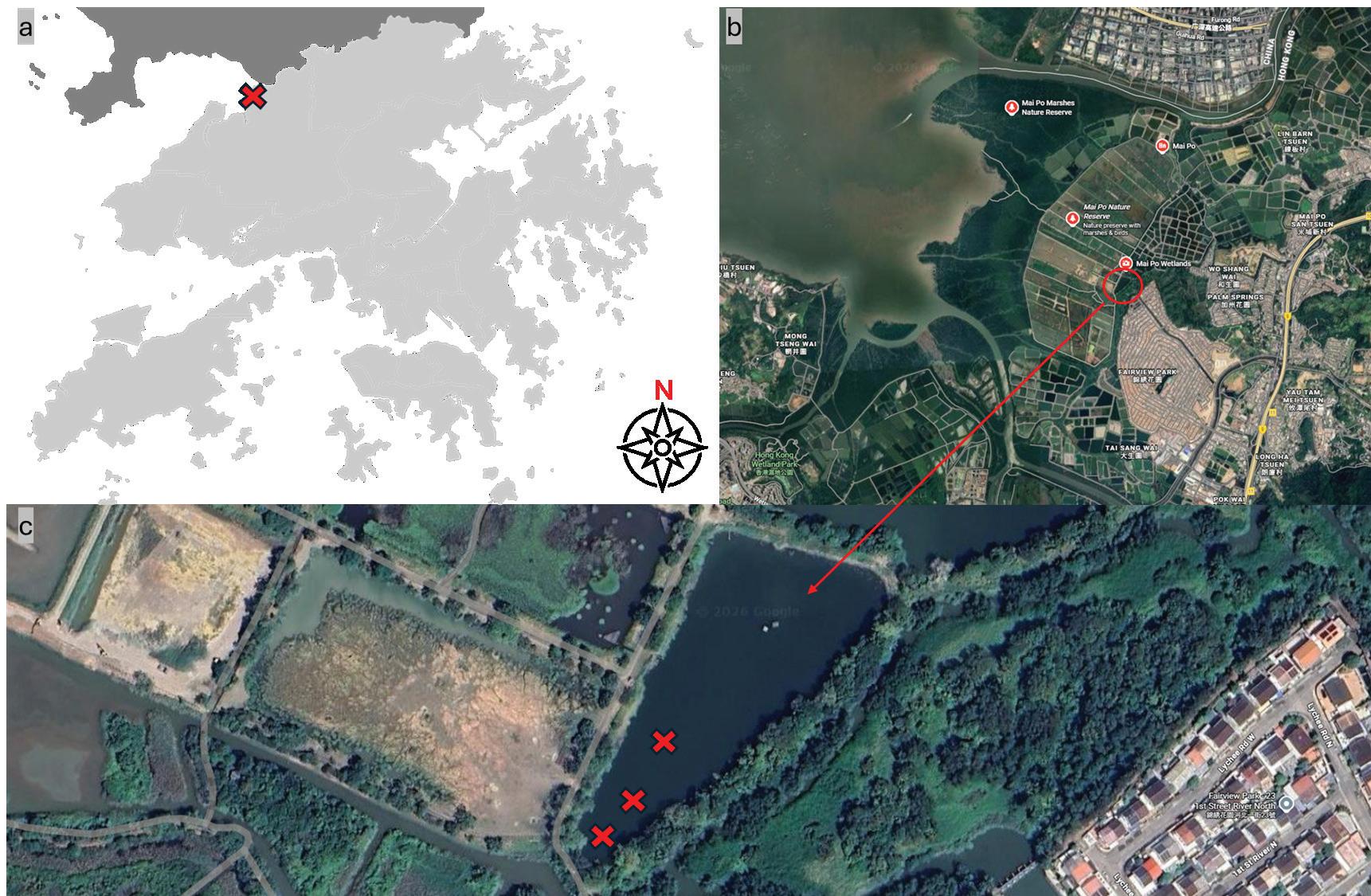
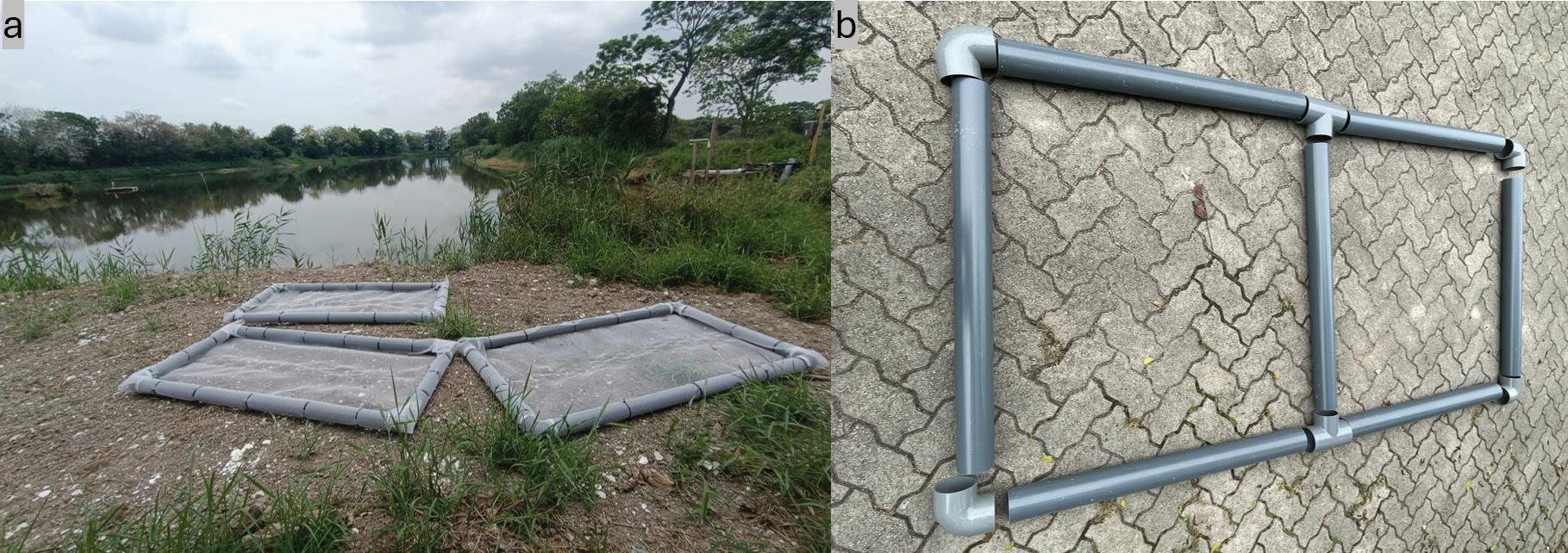
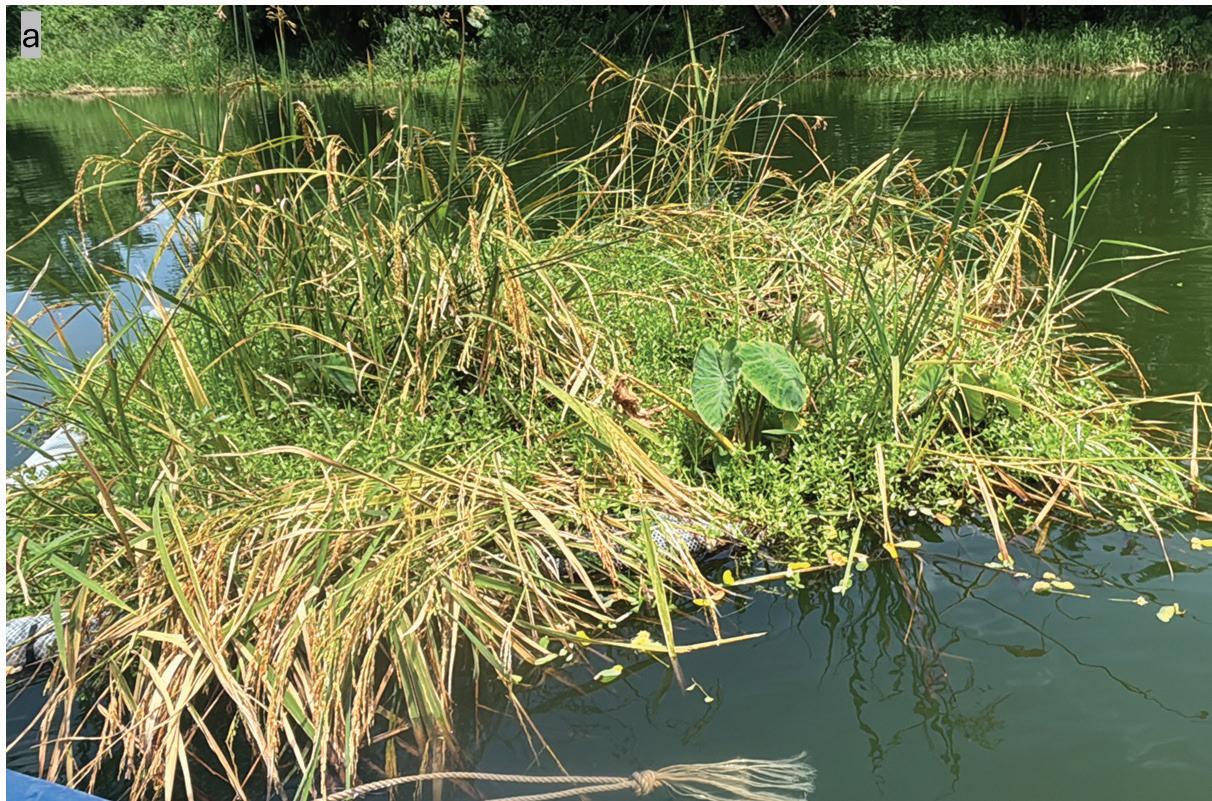
Artificial floating wetlands (AFW) are a nature-based solution typically utilized for phytoremediation, habitat creation/augmentation, stormwater management, and aesthetic improvement, amongst other uses. They are human-made platforms placed on water bodies that have vegetation growing on them in a hydroponic fashion. There is a growing interest in using AFWs among researchers and conservationists alike; however, there is an absence of standardized designs and reliable information on the construction, deployment, and maintenance of AFWs, with a large portion of articles on them being blog posts of anecdotal experiences building them. Designing AFWs is particularly challenging due to the absence of standardized designs, operational procedures, or maintenance schedules. In the absence of comprehensive guidelines, AFWs are susceptible to failure due to structural, operational, or environmental factors. Thus, the goal of this paper is to share our experiences in constructing, deploying, and maintaining AFWs in the subtropical typhoon-prone Hong Kong, to address this gap in knowledge. The study itself spanned the period of April 2025 to January 2026 and was done in a brackish pond at Mai Po Nature Reserve, located in northwest Hong Kong. The AFWs deployed were able to withstand several severe
weather events, including two Hurricane Signal No. 10 typhoons, including Super Typhoon Ragasa, with minimal damage.
Introduction
Artificial floating wetlands (AFW) are constructed floating rafts or platforms planted with vegetation and deployed in water bodies. The plants’ roots remain submerged while their shoots extend aerially, allowing the plants to grow hydroponically. In literature, they are known by various names, including artificial floating islands, artificial floating beds, floating treatment wetlands, constructed floating wetlands, floating plant bed systems, integrated floating systems, and hydroponic root mats (Yeh et al. 2015). AFWs are a nature-based solution primarily used for phytoremediation, where plants uptake or immobilize pollutants such as nutrients, heavy metals, and other pollutants from the water column. They also serve various other purposes including habitat creation and augmentation, as the roots and shoots provide shelter, food and other resources, for both aquatic and terrestrial wildlife. Other functions include stormwater management and aesthetic improvements (Calheiros et al. 2023; Tanner and Headley 2011; Yeh et al. 2015). Furthermore, AFWs are relatively low cost, easy to deploy and remove as they usually are modular, and space efficient as they do not occupy land, instead floating on waterways. Their adoption for use in water bodies may be easier as they are not permanent structures (i.e., unlike river restorations projects, which tend to involved de-channelizing it [Martín et al. 2018]) and can be removed with relative ease. This flexibility could make its utilization by governments and landowners as a nature-based solution more attractive and financially viable.
In Hong Kong Special Administrative Region (HK), China, many lowland rivers are heavily channelized, with much of their natural ecological functions lost, owing to HK being a densely populated urban megacity (Cao et al. 2024). These highly modified lowland rivers, typically called “nullahs,” feature steep retaining walls
1 Department of Earth and Environmental Science, The Chinese University of Hong Kong, Hong Kong Special Administrative Region, China. Correspondence: ashwinrgupta@cuhk.edu.hk, ashwinrgupta10@gmail.com
2 Nature in situ Limited, Hong Kong Special Administrative Region, China
3 FoodCycle Plus Company Limited, Hong Kong Special Administrative Region, China
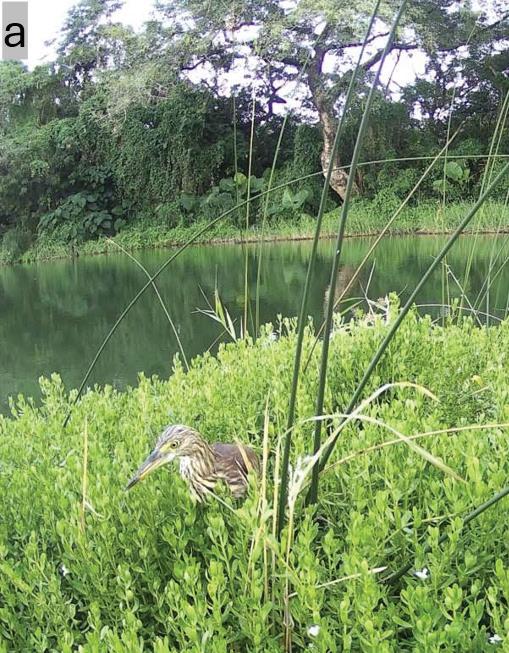
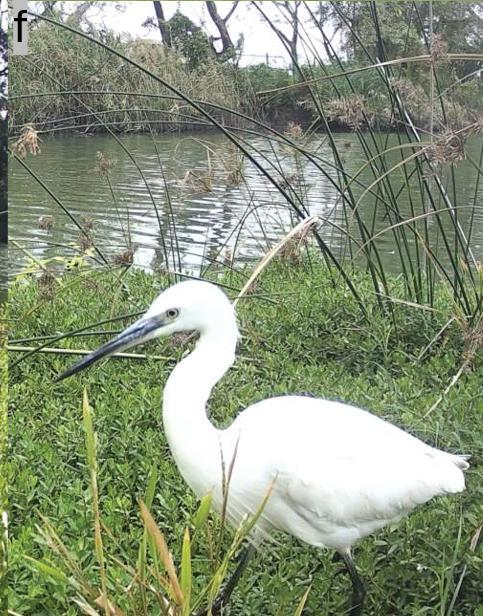
and concrete-lined bottoms, and have virtually all riparian vegetation and zones eliminated. These areas were previously critical habitats for a wide range of organisms as well as benthic communities that form the foundations of many food webs (Cao et al. 2024; Pusey & Arthington 2003; Riis et al. 2020). It is unlikely that there will be any attempt to restore rivers fully back to their original states through dechannelizing as this will reintroduce flooding in the city (which was the reason the rivers were originally channelized) (Cao et al. 2024; Chia et al. 2020). AFWs offer a potential amelioration to this problem through its provision of ecosystem services to the water body and associated wildlife. For example, many birds (herons, Ardeidae) can fish along the margins of AFWs, which is otherwise difficult along the steep retaining walls; fish may seek refuge among the roots protruding from the AFW; and benthic organisms such as snails can reside in the substrate of the AFW, among many other examples of fauna usages of AFWs (Calheiros et al. 2023).
Successful deployment of AFWs is not as straightforward as “setting and forgetting it.” One major challenge is the occurrence of adverse weather conditions. HK has a subtropical climate (Köppen classification: Cwa) and is an area prone to typhoons (i.e., cyclone), experiencing around 6 typhoons annually, concentrated between July and September. In 2025, HK faced a surge in severe weather events, with five black rainstorm warnings, one Hurricane Signal No. 8 (Severe Tropical Storm Tapah) and two instances of Hurricane Signal No. 10 (Typhoon Wipha in July and Super Typhoon Ragasa in September) (Hong Kong Observatory, n.d.-a). Extreme climate events make deployments of AFWs challenging as they risk damage by bulky debris being washed out (e.g., tree branches, other domestic waste), overturning, or being dragged to other areas of the waterways by strong winds, water flow, or peak water surges.
Designing AFWs is particularly challenging due to the absence of standardized designs, operational procedures, or maintenance schedules. Practitioners or researchers have to tailor their designs to their own climates and localized environmental conditions. With growing interests in AFWs for diverse applications, designs vary widely, and some may be ineffective
due to structural flaws, improper maintenance, or simply failure to achieve intended objectives (e.g., creating ecological traps when the goal is to improve biodiversity) (Colares et al. 2020). There is a further lack of credible information on how to construct, deploy, and maintain AFWs, as much of the available literature consists of anecdotal accounts in blog posts or reports of small-scale projects. Most AFW papers provide the build design as an outline, and do not delve into the details, specifics, or caveats of it. This paper aims to address a notable gap in the literature: the limited documentation on the construction, deployment, and maintenance of AFWs. Rather than proposing a universal guideline, our goal is to share our practical experiences implementing AFWs in Hong Kong’s subtropical, typhoon-prone climate, enabling readers to understand what proved effective in our context and what did not.
Study area and methods
The study took place at Mai Po Nature Reserve, a subtropical coastal wetland located northwest of HK (Figure 1a, 1b). It is HK’s largest wetland ecosystem consisting of shrimp ponds (gei wai), mangroves, intertidal mudflats and reedbeds, spanning 380 hectares, and is within a Ramsar Site. The project took place in pond 15c (22°29’12.4”N 114°02’30.7”E) (Figure 1c). Pond 15c is a brackish pond surrounded by bunds with one man-made overflow outlet and is typically rainfed with no other inputs of water. The pond currently serves as open water habitat for migrating birds with water temperatures range from 14°C to 33°C, with an average of 25°C (data from 2021–2025). Its area is estimated at 12,300 m² using the perimeter tracing tool in Google Maps, and its depth ranges from 1.5 m to 2.5 m with an average depth of 2 m. The average (n=7) water parameters for it over the course of the experiment are as follows: salinity 1.61 ppt, chlorophyll-a fluorescence 2.08, pH 6.79, DO 5.5 mg/L (In-Situ Aqua Troll 500 with temperature sensor part no. 0063460, combination pH/ORP sensor part no. 0063470, Chlorophyll A Sensor part no. 0038900 & RDO Sensor part no. 0063450).
For the nutrient parameters Nitrate-N + Nitrite-N was determined photometrically through using the cadmium reduction method (YSI Nitratest reagent system, cat. no. YAP163), while phosphates were measured through the
vanadomolybdate method (YSI Phosphate HR reagent kit, cat. no. YPM114) both using a YSI 9300/9500 photometer. The nutrient parameters recorded are Nitrate-N + Nitrite-N = 0.43mg/L and Phosphate-P = 1.70 mg/L. A total of three AFWs were placed in pond 15c (Figure 1c) from April 2025 to January 2026. Each AFW measured 2 m by 2 m, built from two smaller 1 m by 2 m AFW modules connected to one another.
Discussion and results
Prior to initiating the project, the core objectives were identified. In this case, the aim was to develop an easily scalable, modular AFW system that could be deployed across HK’s waterways and withstand the region’s annual typhoons. We also sought to ensure that the system could be constructed with little to no building experience, rely on readily available and nonspecialized materials, remain low-cost, and be designed for longevity as well as ease of maintenance, repair,
and replacement. Throughout the design process, we adhered to the principle of making it “as simple as possible, but as complex as necessary.” As a preliminary note, the authors emphasize that this paper reflects our specific experiences; AFWs are not a one size fits all solution, and what proved effective, or ineffective, for us may not be directly transferable to other projects with different contexts, objectives, or constraints.
Site selection
The site selection for our AFWs were done in a nature reserve as typically in HK extra permits are required to conduct projects in rivers and streams, which are managed by the Drainage Service Department. Permits through there were unable to be obtained as the Drainage Service Department manages flood control and would deem our AFWs an obstruction to the flow of the river. It was thus easier to approach nongovernmental organizations and conservation parks to
Figure 1. a) WWF-Hong Kong Mai Po Nature Reserve marked with an X. b) An overview of WWF-Hong Kong Mai Po Nature Reserve, with pond 15c circled. c) A magnification of pond 15c. The X’s mark the location of the 2 m x 2 m AFWs. (b, c pictures obtained via Google maps)
conduct this project, as their conservation goals tend to align with our project.
Frame and structure
The first structural build was a floatation frame measuring 1 m x 2 m (Figure 2a), built out of unplasticized polyvinyl chloride (uPVC) pipes, using two 2 m, and two 1 m long uPVC pipes (all 90 mm diameter, 4.4 mm wall thickness), connected by four 90° elbows and glued with solvent cement. An additional layer of silicone sealant was added to the joints, to guard against leaks. The key to ensuring the AFW frame floats is by calculating the size of the pipes needed for a particular weight. This can be done through estimating the maximum weight of plants, substrate, and other components (e.g., camera) to the AFW and adding a margin of error to ensure floatation. Then calculate the buoyancy, through calculations found in Hemalal et al. (2024 , section 8.4.3). Following this, netting (3 mm hole diameter) was tightly wrapped around the frame and secured with zip ties to form a platform for the substrate (Figure 2a). A total of six such frames were built for this phase, with two frames joined together by a piece of steel wire to create three 2 m by 2 m AFWs. This basic structure is commonplace in AFW builds (Chen & Costa 2023; Fonseca Largo et al. 2020; Hemalal et al. 2024; Henny et al. 2022) and allows transport, on-site building, and assembly and disassembly to be easier.
Pipes and elbows should be sourced from the same manufacturer to avoid minor dimensional discrepancies, which may cause leaks and sinking. Furthermore, all material used should be UV-resistant and rated for outdoor use to slow plastic degradation, as under exposure non-UV-resistant plastics tend to break down within a span of a few months in HK’s hot and humid summers.
Earlier prototype designs incorporated a tee connector pipe with an additional 1 m long pipe at the structure’s center to enhance buoyancy and structural stability (Figure 2b). However, this approach was abandoned due to the added labor for each joint, increased material requirements, and the creation of extra potential leak points. Barring cracking or damage to the pipes, water can only enter through the joints, which is a concern with the design. A solution for this is incorporation of floatation failsafes, such as filling pipes (or simply just the joint areas) with two part closed-cell polyurethane expanding foam or inserting plastic (polyethylene terephthalate) bottles inside the pipe.
Substrate
The substrate for the AFW comprised a mixture of raw coconut husk, leaf litter, and clay topsoil, with the latter two directly sourced from the surrounding areas of the site (Figure 3a, 3b). They were chosen for their availability, ease to obtain and eco friendliness. Its main function was to provide mechanical support
Figure 2. a) The barebones frame and structure of the AFW. Each subsection of an AFW was built uPVC pipes with a dimension of 1 m x 2 m; this was the final structural design of the AFW. b) A previous iteration of the frame of the AFW, also measuring 1 m x 2 m, consisting of a tee connector; this design was not
for plants. However, a key challenge with this natural substrate was its rapid degradation, particularly during HK’s late spring and early summer due to the warm weather and moist conditions accelerating breakdown (Figure 3c). Initially heaped approximately 2 cm above the water level, the substrate settled to ~1 cm below within two months; over time, deeper water sections (~5 cm) developed in the AFW due to substrate degradation. However, substrate was unproblematic for plant growth, as they were primarily wetlands species that thrive in waterlogged conditions. The substrate’s subsidence may limit use of wildlife preferring dry surfaces (e.g., for nesting, foraging, or basking; Boyer, 1965). Accordingly, observed avian visitors were predominantly longer-legged species that hunt or forage in shallow water, while turtles were observed basking on an adjacent floating platform with a dry surface instead of these AFWs.
While periodic replenishment of the substrate is possible, it proves challenging in practice. As lowgrowing, sprawling plants (in our study this was Bacopa monnieri) extensively covered the AFW, adding more substrate became difficult. Attempts to replenish substrate were quickly abandoned; simply piling it on would smother the plants underneath, and there were very few if any plant-free areas. Some potential alternatives that could be used as substrate are woodchips or biochar, which biodegrade slower and
can maintain elevation above water. They are produced in excess quantities in HK and thus their addition to AFWs can provide an avenue for its utilization, as otherwise they frequently end up in landfills (personal communication 2025). Alternatively, modifying the build structure of the AFWs to keep the substrate above water is also possible but the plants may struggle to root in the drier environment, and may need greater care initially such as additional watering. Another consideration for the substrate is its susceptibility to being blown away by strong winds (Catsadorakis 2017). Drier, lighter substrates like coconut husk or leaf litter risk being blown away by strong winds if not adequately secured in place. In this study, the substrate remained wet and submerged and was further weighted down with mud, successfully preventing displacement during adverse weather conditions. Moreover, the pipes of the AFWs acted as walls, holding the substrate within the AFW and not allowing it to fall off.
Plants
Four different plant species were installed: Oryza sativa (rice), Colocasia esculenta (taro), Bacopa monnieri, and Schoenoplectus subulatus. The former two were greenhouse grown, then transplanted into the AFW, while the latter two were sourced from the immediate vicinity. Their roots were pushed down into the substrate which held them in place. For each 1 m
Figure 3. Substrate in AFW. a) Leaf litter layered at the bottom. b) Coconut
by 2 m subsection of an AFW, O.sativa plants were planted in ~36 small clumps of 2-4 plants (growth stage V4-V5) in the AFW evenly spaced from one another (Counce et al. 2000), while three C.esculenta plants (40 cm shoot height, BBCH 15) were planted at one end of the AFW (Chauhan et al. 2023). For the native species, four 10 cm by 15 cm sprawling clumps of B.monnieri were planted towards the center and middle of the AFW, evenly spaced apart. Three S.subulatus were planted at the opposite end of the AFW (approx. 3-5 leaves) (Figure 4a). During the project, no weeding, maintenance, or replanting were done, following the initial planting.
The first two species were selected because rice and taro have historically been cultivated in HK’s wetlands, serving as a food source for diverse wildlife, including passerine birds, rails, and ducks (Giang 2010; Hulme & Benkman 2002) . Furthermore, plant selection was guided by morphological considerations, aiming for a degree of morphological diversity to increase habitat heterogeneity and thereby support a greater number of ecological niches and species (Levins 1979; MacArthur and MacArthur 1961).
Being monocarpic, rice grew, produced seeds, and then died, yielding approximately 1320 kg/ha (sampled grain from 30 cm by 30 cm plots at random within the AFW). Initially, following planting, rice dominated the AFW for a period before dying off upon completing its natural lifecycle (Figure 4b). After the death of the main stems, some tillers bore grains but ultimately did not survive the winter, and no germination of fallen seeds on the AFW substrate was noted. For low-maintenance AFWs,
monocarpic plants such as rice may not be suitable due to the need for seasonal replanting. Our primary objective, however, was not rice cultivation for human consumption, but rather to augment food resources for various species (e.g. birds such as the yellow-breasted bunting, Emberiza aureola). Similarly, taro was planted as there are a number of ducks (Anatidae) in the pond who may eat parts of its foliage; however, taro did not grow as vigorously as expected, remaining about the same size it was planted at, eventually being shaded out and died, and the only species noted eating it were caterpillars. For the native plants, B.monnieri, would over time take over and be the dominant plant in the AFW, even growing outside the margins by the start of winter (Figure 4c). S.subulatus was also planted but grew tall rather than expanding its area, and in the conditions of the AFW can be thought of as slower growing compared to when grown in soil. It is also noted that growth of plants was surprisingly vigorous considering the low nutrient conditions at 0.43 mg nitrate + nitrite -N/L in the pond.
One issue faced was obtaining plant specimens. Initially, plants for this project were ordered from external suppliers. However, it was realized that finding reputable sources for native species was challenging, as anecdotally sellers lacked the knowledge to tell us precisely what species it is or where they came from (only able to tell us common regional names that may refer to a large number of similar species). Furthermore, distinguishing certain species, such as grasses (Poales), is especially difficult when bought without locational information. Consequently, we opted
Figure 4. a) Plant growth in April 2025, the start of the project. b) Plant growth dominated by rice, August 2025. c) Plant growth toward the end of the summer, dominated by Bacopa monnieri, November 2025.
to obtain specimens of plants from the immediate area in the nature reserve to ensure its nativity. An additional concern is that plants sourced from different regions may be the same species but possess differing genetic profiles leading to gene flows, altering local plant genotypes and thus potentially changing the species composition of the area; similarly, different subspecies is also a concern (Ayres et al. 2004; Ellstrand & Schierenbeck 2000; Meyerson et al. 2010). It is highly recommended to obtain plants for such projects from reputable sources and organizations.
Another alternative for a quicker startup to an AFW is removing a section of plants from the local ecosystem and then planting that directly in the AFW (Hancock 2000). This would work well if the turf planted into AFWs consisted of native plants and not invasive exotics. Naturally some ‘weed’ seeds (i.e., unwanted species such as plants that may grow too woody or big) may be present in turfs and will require removal during periodic maintenance. Throughout the project some spontaneous vegetation arrived; this included an unknown Cyperaceae species, Solanum americanum (exotic), and Ludwigia adscendens (native), the former two likely as greenhouse nursery weeds, while the latter as a hitchhiker on the transplanted plants.
Anchoring
The key to allowing AFWs to be tolerant of harsh weather conditions such as typhoons is having two or more adequately heavy anchors placed on opposite ends of the AFW to avoid migration of AFWs. Our AFWs had two anchors (~25 kilos each), on opposite ends of the platform, tied by thick metal wires to the frame. The anchor lines were stainless steel chains (diameter of chain link 8 mm) and were longer than the maximum depth of the water body (approx. 4 m, despite the maximum depth being 2.5 m), to allow a degree of slack to allow the AFW to rise and fall with the changing water levels. Many studies and practitioners employ a single anchor point; however, this approach is not recommended, as it increases the risk of twisting, shortening, and weakening under directional winds. Moreover, in some cases AFWs that do not use sufficiently heavy anchors tend to migrate around water bodies, or downstream in rivers. As a rule of thumb, total anchor weight should be approximately 50-60%
of the entire AFW if not more, according to Floating Island International (n.d.), a commercial AFW provider.
Observation of wildlife
To assess wildlife utilization of the AFWs, in-person observations were conducted biweekly with larger fauna such as birds, reptiles, and amphibians observed from approximately 20-30 m away using binoculars (Nikon Monarch M511 12x42) and watching for a period of 5 minutes. Smaller organisms, including insects, snails, arachnids, and fish, were examined more closely by taking a kayak up to the AFWs and circling the AFW, noting down the families and orders of invertebrates seen. Then a further closer look was taken in two randomly chosen 30 cm by 30 cm patches of substrate to note down organisms dwelling in the substrate such as snails. However, these organisms became increasingly difficult to see as the plants grew. Later in the project, around September, motion activated cameras (Suntek 4G Trail Camera HC-940) were installed onto the AFWs using stands clamped to the frames and were left to operate around the clock, with its battery changed monthly. The cameras would trigger only if there was significant motion, and thus could only capture images and videos of larger fauna, with all media captured by the camera being birds exclusively (Figure 5). During the winter season (i.e., October onward), we reduced visits to the AFWs to once monthly, as our presence on the waterway with a kayak scared off nearby roosting great cormorants (Phalacrocorax carbo).
Survival through severe weather events and post event recovery
The AFWs placed were subject to 5 black rainstorms (exceeding 70 mm/hr), one hurricane signal No. 8., Severe tropical storm Tapah in September with maximum wind speeds of 117 km/hr, and two hurricane signal No. 10s including Typhoon Wipha in July, which had maximum windspeeds of 140 km/hr near its center and Super Typhoon Ragasa with maximum windspeeds of 195 km/hr (Hong Kong Observatory, n.d.-b, 2025; Lai et al. 2025). But despite this, the only observed “damage” was the flopping of taller plants such as rice, with no lasting effects; the plants resumed normal growth afterward (Figure 6). No migration of the AFWs were noted, likely due to the heavy anchors on
Ardea cinerea e) Medium Egret, Ardea intermedia f) Little Egret, Egretta garzetta.
opposite sides combined with the soft mud as substrate, allowing it to be held in place. A further reason no migration of the AFW occurred was that it was situated in a pond rather than river or other flowing waterway. Under heavy winds, other similar AFWs were noted to go several kilometers downstream in rivers, when unmoored to the bank. No severe waves occurred as the pond is still relatively sheltered. If the AFW were
placed in open water, it could face greater risks such as waves washing out the entire platform.
Scalability
The scalability of these AFWs is easy and straightforward to conduct to an extent, as it involves connecting multiple 1 m by 2 m uPVC floating frame modules to one another, to reach the desired size or shape. This proves useful for when a single module is damaged, as it alone can be removed, repaired and/ or replaced as opposed to needing to repair the entire structure. Furthermore, in the case of severe damage, only one module will sink, and the rest of the AFWs superstructure will remain unaffected. Another benefit of this design is that because they are in modules that can ‘flex’ rather than one rigid chunk, they are able to withstand wave action and reduce risk of damage under strong prolonged waves. However, a limitation is that it would be very impractical to build several hundred of these 1 m by 2 m modules to make a large AFW. Instead, pontoon blocks (floatation blocks) in a grid of a much larger size would be more practical and less laborious if building a large AFW.
Limitations
Two major limitations of our AFW testing are as follows. Firstly, the AFW’s structure has not undergone long-term testing. While uPVC-based structures are likely to survive harsh outdoor environments (as evidenced by similar uPVC structures used in HK’s fisheries and construction industries), it does not mean that other elements such as netting or zip ties used to
Figure 6. Flopping of rice plants following Super Typhoon Ragasa.
Figure 5. A selection of birds photographed on our AFWs: a) Chinese Pond Heron, Ardeola bacchus b) White-breasted Waterhen, Amaurornis phoenicurus c) Whitethroated Kingfisher, Halcyon smyrnensis d) Grey Heron,
construct the AFW will survive a long duration, as they may possibly deteriorate. Secondly, this study is a small-scale and short term deployment, and the consequences of a long-term deployment in HK’s climatic conditions remains unknown. Factors such as plant community dynamics are unknown; shifts in composition of plants may need extra maintenance or intervention especially if exotics or invasives take over the AFWs. Studies on this would need several years to understand issues and suggest the proper maintenance needs of the plants for the long run. Furthermore, largescale deployment of AFWs are not always a positive in the context of increasing biodiversity, as many fauna such as birds (e.g., ducks Anatidae, spoonbills Platalea) require an open water habitat (WWF-Hong Kong 2024), which can be impeded by any extensive deployment of AFWs on water bodies. Another example is a potential impact to chemical cycle disruptions where the plants growing and dying may potentially contribute a greater portion of carbon into waterways, which could have other unintended consequences. A large amount of nuance exists within interactions of the AFW and the waterways, which remain largely understudied.
Future improvements and untested designs
Frequently, we receive questions from members of the public and conservationists regarding the construction of AFWs using biodegradable materials. While this is certainly possible, and numerous records exist of AFWs being built with wood or bamboo, we opted against this approach. One of our primary goals was to create a low-maintenance AFW; using natural materials often requires greater maintenance and they will waterlog, rot, and sink over time, especially in HK’s subtropical climate. It is true that although PVC pipes and other plastics produce numerous environmentally harmful compounds throughout their life cycles, they were still opted for use due to ease to work with and longevity (Thornton 2002). A potential compromise to improve sustainability while keeping longevity could involve using metal pipes, such as alloys of aluminum or stainless-steel, instead of plastics as they are recyclable (Björkman & Samuelsson 2014; Das 2006; Gaustad et al. 2012). PVC, on the other hand, requires specialized recycling plants and is often discarded at the end of its lifecycle (Sadat-Shojai & Bakhshandeh 2011). The
downsides of metal pipes for AFWs are that welding knowledge is required, and a far larger diameter pipe is required compared to PVC pipes to achieve the same buoyancy, owing to the greater density of aluminum and stainless steel.
Economic Considerations / Cost Analysis
Table 1. Material costs for a single 2 m x 2 m AFW (made from two 1 m x 2 m AFW frames) Pipe (costs in RMB, with grand total in USD equivalent as of early 2025). All materials were obtained in early 2025.
The authors are based in HK, where access to cheap materials are readily available. The approximate total of each 2 m by 2 m AFW are USD $62.20. Prices vary significantly depending on country but most of the materials are always easy and cheap to obtain on the market. Purchasing commercially available AFWs is also possible; they are aesthetically better and perhaps even functionally better. However, the prices quoted to us for some of the branded AFWs were USD $650 (made from recycled PET) and USD $580 (made from cork) per square meter. Thus, any large-scale AFW deployment may be hampered by the high costs of commercially available ones versus self-building.
Summary
AFWs provide phytoremediation, habitat, and ecosystem services in urban channelized waterways; this paper shares detailed experiences of building,
deploying, and maintaining them in Hong Kong’s typhoon-prone subtropical conditions to address the lack of practical guidance.
Frame and structure
UV-resistant uPVC pipes formed simple, buoyant 1 m by 2 m modular frames; two were joined together to make a single AFW measuring 2 m by 2 m. Netting was put around the frame to hold substrate.
Substrate
Natural coconut husk, leaf litter, and clay topsoil mixed were used as substrate to mechanically hold plants in place. However, substrate degraded quickly in HK’s hot and humid summers. Slower degrading alternatives are suggested (e.g., biochar or woodchips).
Plants
Four species were used: Oryza sativa (rice), Colocasia esculenta (taro), Bacopa monnieri and Schoenoplectus subulatus. Rice initially dominated the AFW, but upon death, as it is monocarpic, B.monnieri would become the dominant plant. Ensure plants are native, with reputable suppliers, or use plants in the local vicinity to ensure no new invasives or exotics are added.
Anchoring
Dual heavy anchors (~25 kg each) on opposite ends used. Anchor lines should have sufficient slack, longer than maximum depth of water level. Heavy anchors should be approximately 50-60% total AFW mass.
Observation of wildlife
AFWs attracted diverse birds for foraging and perching, with motion cameras capturing numerous images. In-person observations revealed a large number of invertebrates using the AFWs.
Survival through severe weather events and post-event recovery
AFWs withstood two T10 typhoons (including Super Typhoon Ragasa) with only flopping of tall rice plants; no migration or structural failure occurred, potentially due to heavy anchors and sheltered pond location.
Scalability
Modular 1 m by 2 m units allow easy expansion, repair, and wave flexibility. However, very large AFW deployments may benefit from a different design, such as using pontoon blocks as a floatation frame as opposed to PVC pipes.
Limitations
This was a short-term study; long-term durability of components and large-scale ecological impacts (e.g., plant dynamics, invasives, open-water habitat loss) remain relatively unknown.
Future improvements and untested designs
There is a desire to use biodegradable materials (bamboo, wood etc.) to build AFWs, but these necessitate higher maintenance and risk rot and sinking overtime. Recycled metal pipes (e.g., aluminum) could improve sustainability but are quite heavy and will have to be of a larger size. Moreover, welding skills are required.
Acknowledgements
We express our sincere gratitude to Ocean Park Hong Kong, the Ocean Park Conservation Foundation, Hong Kong, Hong Kong Wetland Park, Agriculture, Fisheries and Conservation Department, and WWF-Hong Kong for their invaluable support and kind permission to conduct fieldwork at their sites throughout this project. Their generosity in providing access to these important conservation areas and resources was essential to our research. This work was supported by the Environment and Conservation Fund [Grant number ECF 2023-151; Project Title: Environment and Conservation Fund Designing Smart Floating Wetlands to Optimize Ecosystem Services for Hong Kong Urban Environment]. Any opinions, findings, conclusions or recommendations expressed in this material do not necessarily reflect the views of the Government of the Hong Kong Special Administrative Region and the Environment and Conservation Fund.
Declaration of Originality
This is an original work that has not been published before. Images and figures included in the article all belong to the authors of this paper.
Author Ethics and Declaration
The authors declare that this manuscript is original, has not been published elsewhere, and is not under consideration by another journal. All data are original or used with permission. All prior work is properly cited. All authors have reviewed and approved the final version of the manuscript. The authors have no relevant financial or non-financial interests to disclose.
References
Ayres, D.R., D.L. Smith, K. Zaremba, S. Klohr, and D.R. Strong. 2004. Spread of Exotic Cordgrasses and Hybrids (Spartina sp.) in the Tidal Marshes of San Francisco Bay, California, USA. Biological Invasions, 6(2), 221–231. https://doi.org/10.1023/ B:BINV.0000022140.07404.b7
Björkman, B. and C. Samuelsson. 2014. Recycling of steel. In Handbook of recycling (pp. 65-83). Elsevier. https://doi.org/10.1016/B978-0-12-396459-5.00006-4
Boyer, D.R. 1965. Ecology of the basking habit in turtles. Ecology 46:99-118. https://doi. org/10.2307/1935262
Calheiros, C.S.C., M. Ilarri, and S.I.A. Pereira. 2023. Biodiversity associated to floating wetland islands. In H. Xu (Ed.), Proceedings of the 5th International Symposium on Water Resource and Environmental Management (pp. 163-174). Springer Nature Switzerland. https://doi.org/10.1007/978-3-031-312892_13
Cao, Y., W.Y. Chen, and K.M. Wantzen. 2024. ‘One river, two systems’: Hong Kong’s river management. Environmental Management 73:81-101. https://doi. org/10.1007/s00267-023-01923-9
Catsadorakis, G. 2017. Artificial nesting structures for Eurasian pelicans: A decision-making and guidance document. https://doi.org/10.13140/ RG.2.2.29588.81285
Chauhan, V., S. Mallick, P. Mohapatra, K. Pati, K.H. Gowda, R. Arutselvan, A. Verma, and M. Nedunchezhiyan. 2023. Codification and description of phenological growth stages of taro (Colocasia esculenta var. Antiquorum) according to the extended BBCH scale. Annals of Applied Biology 184. https://doi. org/10.1111/aab.12882
Chen, Z. and O.S. Costa. 2023. Nutrient sequestration by two aquatic macrophytes on artificial floating islands in a constructed wetland. Sustainability 15:6553. https:// doi.org/10.3390/su15086553
Chia, B., Y. Wang, and Y. Chen. 2020. Flood resilience of urban river restoration projects: Case studies in Hong Kong. Journal of Management in Engineering 36:Article 05020009. https://doi.org/10.1061/(ASCE) ME.1943-5479.0000809
Colares, G. S., N. Dell’Osbel, P.G. Wiesel, G.A. Oliveira, P.H.Z. Lemos, F.P. da Silva, C.A. Lutterbeck, L.T. Kist, and Ê. L. Machado. 2020. Floating treatment wetlands: A review and bibliometric analysis. Science of the Total Environment 714:Article 136776. https://doi. org/10.1016/j.scitotenv.2020.136776
Counce, P., T. Keisling, and A. Mitchell. 2000. A uniform, objective, and adaptive system for expressing rice development. Crop Science 40:436-443. https://doi. org/10.2135/cropsci2000.402436x
Das, S.K. 2006. Emerging trends in aluminum recycling: Reasons and responses. Light Metals 911916.
Ellstrand, N.C., and K.A. Schierenbeck. 2000. Hybridization as a stimulus for the evolution of invasiveness in plants? Proceedings of the National Academy of Sciences of the United States of America, 97(13), 7043–7050. https://doi.org/10.1073/ pnas.97.13.7043
Floating Island International. n.d. Easy planting & instructions for a successful BioHaven launch. https:// www.floatingislandinternational.com/plantinglaunching.html
Fonseca Largo, K. M., J.L. Ruiz Depablos, E.F. Espitia-Sarmiento, N.M. Llugsha Moreta. 2020. Artificial floating island with vetiver for treatment of
arsenic-contaminated water: A real scale study in highAndean reservoir. Water 12:Article 3086. https://doi. org/10.3390/w12113086
Gaustad, G., E. Olivetti, R. Kirchain. 2012. Improving aluminum recycling: A survey of sorting and impurity removal technologies. Resources, Conservation and Recycling 58:79-87. https://doi.org/10.1016/j. resconrec.2011.10.010
Giang, N. 2010. Effect of taro (Colocasia esculenta) foliage on the performance of growing common ducks. https://www.academia.edu/90804348/Effect_of_taro_ Colocasia_esculenta_foliage_on_the_performance_of_ growing_common_ducks
Hancock, M. 2000. Artificial floating islands for nesting black-throated divers Gavia arctica in Scotland: Construction, use and effect on breeding success. Bird Study 47:165-175. https://doi. org/10.1080/00063650009461172
Hemalal, D. L. H. V. W., H.M.S.N. Deegala, J.M.A.U. Jayasekara, K.B.S.N. Jinadasa, S.K. Weragoda, M.I.M. Mowjood, and V. Jegatheesan. 2024. Guide to floating treatment wetlands—A Sri Lankan perspective. In V. Jegatheesan, P. Velasco and N. Pachova (Eds.), Water treatment in urban environments: A guide for the implementation and scaling of nature-based solutions: Examples from South/Southeast Asia (pp. 133-161). Springer Nature Switzerland. https://doi. org/10.1007/978-3-031-49282-2_8
Henny, C., D. Rohaningsih, E. Susanti, F. Sumi, B. Sudiono, and A. Waluyo. 2022. Application of constructed floating wetlands (CFWs) to treat textile effluent. IOP Conference Series: Earth and Environmental Science 1108:Article 012036. https://doi. org/10.1088/1755-1315/1108/1/012036
Hong Kong Observatory. n.d.-a. Warnings & signals database. https://www.hko.gov.hk/en/cis/warndb.htm (Retrieved January 11, 2026)
Hong Kong Observatory. n.d.-b. Report on Typhoon Wipha (2506). https://www.hko.gov.hk/en/informtc/ wipha25/report.html
Hong Kong Observatory. 2025. 樺加沙帶來的十號 風球 [Typhoon Ragasa brings the No. 10 hurricane
Hulme, P.E. and C.W. Benkman. 2002. Granivory. In Plant–animal interactions: An evolutionary approach (pp. 185-208).
Lai, W.C., Tse, W.P. and Cheung, K.C. 2025. 「八號」 的塔巴 [The No. 8 of Tapah]. 天氣隨筆 [Weather Blog], Hong Kong Observatory. https://www.hko.gov. hk/tc/%E5%A4%A9%E6%B0%A3%E9%9A%A8%E 7%AD%86/109786/%E3%80%8C%E5%85%AB%E8 %99%9F%E3%80%8D%E7%9A%84%E5%A1%94% E5%B7%B4
Levins, R. 1979. Coexistence in a variable environment. The American Naturalist 114:765-783.
MacArthur, R. H. and MacArthur, J. W. 1961. On bird species diversity. Ecology 42:594-598. https://doi. org/10.2307/1932254
Martín, E. J., M. Ryo, M. Doering, and C.T. Robinson. 2018. Evaluation of restoration and flow interactions on river structure and function: Channel widening of the Thur River, Switzerland. Water 10:Article 439. https:// doi.org/10.3390/w10040439
Meyerson, L.A., D.V. Viola, and R.N. Brown. 2010. Hybridization of invasive Phragmites australis with a native subspecies in North America. Biological Invasions, 12(1), 103–111. https://doi.org/10.1007/ s10530-009-9434-3
Pusey, B.J. and A.H. Arthington. 2003. Importance of the riparian zone to the conservation and management of freshwater fish: A review. Marine & Freshwater Research 54:1-16. https://doi.org/10.1071/MF02041
Riis, T., M. Kelly-Quinn, F. Aguiar, P. Manolaki, D. Bruno, M. Bejarano, N. Clerici, M.R. Fernandes, J.C. Franco, N. Pettit, A. Portela, O. Tammeorg, P. Tammeorg, P. Rodríguez-González, and S. Dufour. 2020. Global overview of ecosystem services provided by riparian vegetation. BioScience 70:501-514. https:// doi.org/10.1093/biosci/biaa041
Sadat-Shojai, M. and G.-R. Bakhshandeh. 2011. Recycling of PVC wastes. Polymer Degradation and Stability 96:404-415. https://doi.org/10.1016/j. polymdegradstab.2010.12.001
Tanner, C.C. and T.R. Headley. 2011. Components of floating emergent macrophyte treatment wetlands influencing removal of stormwater pollutants. Ecological Engineering 37:474-486. https://doi. org/10.1016/j.ecoleng.2010.12.012
Thornton, J. 2002. Environmental impacts of polyvinyl chloride (PVC) building materials. Healthy Building Network.
WWF-Hong Kong. 2024. Mai Po Nature Reserve management plan 2024–2029 (External version). https://wwfhk.awsassets.panda.org/downloads/mpmp2024-2029-external-version-june-7_1.pdf
Yeh, N., Yeh, P. and Chang, Y.-H. 2015. Artificial floating islands for environmental improvement. Renewable and Sustainable Energy Reviews 47:616622. https://doi.org/10.1016/j.rser.2015.03.090
Rights of Wetlands on the World Stage: Recent Activities
Gillian Davies,1,2,3 Siobhan Fennessy,4 Max Finlayson,5
Craig Kauffman,6,7 Ritesh Kumar,8 Dave Pritchard4,9,10 and Matt Simpson11 12
Abstract
A Rights of Wetlands framing invites society to recognize wetlands not only as ecosystems that provide benefits, but as living systems with intrinsic value and rights, briefly summarized as the rights to exist, thrive/flourish, regenerate, and participate in Earth’s ongoing processes—in other words, to sustain ecological integrity and connectedness to the greater whole of nature. Wetland science can play a key role in demonstrating fulfillment of our responsibilities to respect these rights, including identifying effective conservation, restoration, and management pathways, and providing ecological data in support of diverse ways of knowing. Many leaders in the wider Rights of Nature movement are now valuing contributions of science and scientists to Rights of Nature, and the particularly significant role of Rights of Wetlands, including identification of 181 Rights of Wetlands initiatives in 27 countries. While the first seven years of Rights of Wetlands development have largely been foundational, work in the coming decade will need to focus on supporting implementation on the ground, widening connections to broader society and the larger Rights of Nature movement (including bringing attention to the central role that Rights of Wetlands plays in the broader movement), and increasing collaboration with holders of diverse ways of knowing, including ancestral/traditional knowledges.
Science in support of Rights of Nature/Wetlands
The recent Rights of Nature movement has been led largely by Indigenous peoples, local communities, attorneys, and rights activists, as outlined by Biggs and Horinek (2025) and Kauffman and Martin (2021). However, as documented by Inside Climate News journalist Katie Surma (2025a, 2025b), a small but growing number of scientists (including Society of Wetland Scientists [SWS] Rights of Wetlands Section and the Rights of Wetlands Initiative members13) have developed approaches to Rights of Nature/ Rights of Wetlands that integrate scientific principles and data into nature rights thinking and practices. The Community Environmental Legal Defense Fund (CELDF) has actively supported our efforts to promote Rights of Wetlands and has recognized the importance of the involvement of scientists ever since the 2020 publication of the proposed Declaration of the Rights of Wetlands (Davies et al. 2020). Over the past year, leading Rights of Nature academics such as Craig Kauffman and Pam Martin, Rights of Nature organizations such as the Earth Law Center, and various Rights of Rivers groups have joined CELDF in recognizing the value and importance of the role of science and scientists in advancing Rights of Nature. For instance, Kauffman has observed that when scientific data is presented in Rights of Nature court cases, the cases are more likely to win (personal communication 2025), and that societies that value science may understand and accept Rights of Nature as a tool for achieving greater nature conservation and restoration success when scientific principles and data support Rights of Nature (Surma 2025a, 2025b). This growing interest from the broader Rights of Nature community led to some of the key leaders giving presentations in the March 4, 2026, Advancing Rights
1 Corresponding author: gdavies@bscgroup.com
2 BSC Group, Inc., Worcester, Massachusetts, USA
3 Global Development & Environment Institute, Tufts University, Medford, Massachusetts, USA
4 Kenyon College, Gambier, Ohio, USA
5 Gulbali Institute for Agriculture, Water & Environment, Charles Sturt University, Albury, New South Wales, Australia
6 University of Oregon, Eugene, Oregon, USA
7 Eco Jurisprudence Monitor, Eugene, Oregon, USA
8 Wetlands International South Asia, New Delhi, India
9 Environment, Culture, Heritage, Arts, Hexham, United Kingdom
10 Ramsar Culture Network, Gland, Switzerland
11 35 Percent, Stroud, United Kingdom
12 Cobra Collective, Stroud, United Kingdom
13 The Rights of Wetlands Initiative is a group that includes both SWS Rights of Wetlands Section members and people with wetlands, ecological restoration, and/or Rights of Nature expertise.
of Wetlands online conference, which is available for viewing at https://vimeo.com/1171079948?share=copy. In other words, science and scientists can help legitimize Rights of Nature as an effective nature conservation and restoration tool.
One of the primary reasons for developing the Declaration of the Rights of Wetlands was to ensure that articulation of wetlands’ rights is based on sound wetland science, and also that the rights are scientifically appropriate for all wetland types. If nature rights are based in sound ecological science, it stands to reason that implementation of those rights, and their defense in court, may be more successful. Also, the focus has been on clarifying the ways in which a rightsbased approach complements the prevailing approaches on conserving wetlands for benefits provided to society, or for nurturing biodiversity as a web of life.
As part of the growing interest in scientists’ involvement, Inside Climate News journalist Surma spent several months interviewing SWS members and researching Rights of Wetlands, including shadowing Gillian Davies, Matt Simpson, and Ritesh Kumar at the July 2025 Ramsar Convention on Wetlands 15th Conference of the Parties (COP15) in Victoria Falls, Zimbabwe. Her article, “The Scientists Making the Case for Nature’s Rights,” published on October 5, 2025 (Surma 2025a), has inspired further interest in Rights of Wetlands from the broader Rights of Nature community, thus helping us to connect with others interested in advancing Rights of Wetlands. Other SWS members interviewed for this article included Nick Davidson, Max Finlayson, and Bill Moomaw, along with José Gualinga (an historic leader of the Kichwa Original People of Sarayaku, Ecuador), Manjula Amararathna (Sri Lanka’s Director of Protected Area Management), Kai Huschke (Executive Director of CELDF), Chaturangi Wickramaratne (Researcher/ Freshwater Ecologist, International Water Management Institute [IMWI]), and Radheeka Jirasinha (Researcher/ Freshwater and Wetland Management, IMWI).
The growth and scope of Rights of Wetlands globally
As of March 2026, there were 181 initiatives worldwide to recognize Rights for Wetlands,1 either generally or for particular wetland ecosystem types or areas.2 These initiatives have emerged in 27 countries spanning all world regions, as well as at the international level.3 Of these 181 initiatives, 95 have been approved and adopted, 31 failed (were not adopted), and 55 others are either newly drafted or submitted and awaiting a decision. Advocates are pursuing many different legal pathways for recognizing Rights of Wetlands, including state and national constitutions, legislation, administrative policy, local government resolutions, tribal law, and court rulings, as well as citizen and Indigenous declarations.
While 20 initiatives address wetlands in general, the majority focus on specific wetland ecosystem types or areas. Rivers are by far the most common focus, with 120 Rights of Rivers initiatives. The remaining initiatives include twelve addressing lakes, ten addressing lagoons or marshes, nine addressing páramos (high altitude Andean wetlands), eight addressing estuaries, and one each for reefs and glaciers. The momentum behind Rights of Wetlands
1 Initiatives are counted when there is written documentation of Rights of Wetlands. They do not necessarily have a legislated base. Examples that exist in practice, unwritten custom, or as oral tradition but lack written documentation are not included.
2 All data on Rights of Wetlands initiatives comes from the Eco Jurisprudence Monitor (Kauffman et al. 2025).
3 Countries with Rights of Wetlands initiatives include Argentina, Austria, Australia, Bangladesh, Brazil, Canada, Chile, Colombia, Ecuador, El Salvador, France, Germany, India, Italy, Mexico, Netherlands, New Zealand, Nigeria, Peru, Philippines, Poland, Serbia, Spain, Sweden, Switzerland, United Kingdom, and United States.
Inside Climate News journalist Katie Surma interviewing IMWI researchers Chaturangi Wickramaratne and Radheeka Jirasinha.
has accelerated dramatically in recent years (Figure 1). Between 2006 and 2018, the number of new initiatives typically hovered around three to five each year. However, between 2019 and 2025, there were an average of 20 new initiatives each year, with 26 initiatives emerging in 2025 alone. This rapid growth reflects the increasing recognition of Rights of Wetlands as a viable approach to wetland conservation and restoration worldwide.
Implementing Rights of Wetlands
Key to demonstrating the value of Rights of Wetlands in achieving improved wetland conservation and restoration outcomes has been the Rights of Wetlands Operationalisation for Biodiversity and Community Resilience Project (Darwin Initiative Project), a threeyear (2023-2026) project funded by the government of the United Kingdom through its Darwin Initiative program and led by Matt Simpson and Wetlands International. This project is nearing completion and has explored the implementation of the Rights of Wetlands in five developing countries (Bolivia, Ecuador, Guyana, Kenya, and Sri Lanka) at the community and national levels and built support for Rights of Wetlands in the global Ramsar Convention on Wetlands community. A follow-on project is being planned.
Wetlands International, an International Organization Partner of the Ramsar Convention on Wetlands and a key supporter of the Rights of Wetlands, has recently adopted implementation of these rights as a key pathway for the organization’s global strategy for 20262035. The Rights of Wetlands website now lists 29 organizations that support the Universal Declaration.
In some countries (Bolivia and Ecuador), local communities and national governments were already practitioners of Rights of Nature prior to the start of this project. In these countries, the project’s aim is to support their ongoing efforts and to share their experiences and expertise with other countries and communities who are newer to Rights of Nature.
Figure 1: Number of Rights of Wetlands Initiatives Per Year
In other countries (Guyana, Kenya, and Sri Lanka), Rights of Nature has been a newer concept, with the project introducing or supporting early interest in implementing Rights of Wetlands in specific contexts. In Sri Lanka in 2023, a new president wished to initiate a national Living Entities Policy, one that recognizes Rights of Nature, just as the Darwin Initiative project was starting. The project team, with Matt Simpson leading, along with Sri Lankan project team members Chaturangi Wickramaratne and Priyanie Amerasinghe from the International Water Management Institute and others, was asked to advise the Sri Lankan attorney charged with drafting the Living Entities Policy. This policy is now being reviewed by the Sri Lankan Cabinet.
A further result of Darwin Initiative project team collaboration with members of the Sri Lankan government was the development and presentation of a Draft Resolution on Rights of Nature in Wetlands to the Ramsar Convention on Wetland’s Standing Committee in early 2025. Many members of the Standing Committee responded favorably, but a few had questions or were opposed, so the Sri Lankans withdrew the Draft Resolution for modification and resubmission for the 2028 COP16 in Panama. At the 2025 COP15, project team members presented a side event on Rights of Nature in Wetlands for representatives of Ramsar Convention on Wetlands Contracting Party governments and others, with approximately 75 people attending, and also engaged in individual discussions to address questions.
Other products from the project include extensive Rights of Wetlands educational and training materials, including infographics/quick guides, training courses, policy briefs, and community-produced videos about Rights of Wetlands. These materials can be accessed at www.rightsofwetlands.org.
Another 2025 advance for Rights of Wetlands was the development of the Rights of Wetlands Initiative logo:
Recent Rights of Wetlands activities
Besides presenting at the Ramsar Convention on Wetlands COP15 side event, members of the Rights of Wetlands Section, along with others, have given a number of presentations and symposia at recent conferences, including:
• SWS Annual Meeting in Taipei, Taiwan, November 11–16, 2024: Rights of Wetlands & Ramsar Sections’ symposium (presenters: Gillian Davies, Max Finlayson, Dan Larkin, Marinus Otte, Matt Simpson).
COP15 Rights of Wetlands Side Event presenters (left to right): Manjula Amararathna, Gillian Davies, Matt Simpson, Suelma Ribeiro Silva, Julie Mulonga, Ritesh Kumar, and Chaturangi Wickramaratne
Rights of Wetlands Taiwan symposium presenters and attendees (left to right): Matt Simpson, Gavin Parisien, Rob McInnes, Bramley Lemine, Gillian Davies, Max Finlayson
• Rights of Wetlands Writeshop, held at Wetlands International HQ, Ede, Netherlands, March 10–13, 2025: Drafting of journal article which elaborates the rights and also the responsibilities that underpin the implementation of these rights.
• INTECOL International Wetlands Conference, Tartu, Estonia, June 29–July 4, 2025: Rights of Wetlands plenary presentation – Matt Simpson, and Rights of Wetlands symposium (presenters: Gillian Davies, Ritesh Kumar, Shona Myers, Marinus Otte, Matt Simpson).
Simpson giving plenary presentation on Rights of Wetlands at INTECOL International Wetlands Conference, Tartu, Estonia
• SWS Annual Meeting in Providence, RI, USA, July 15–18, 2025: Rights of Wetlands plenary presentation – Gillian Davies, and Rights of Wetlands & Ramsar Sections’ symposium (presenters: Gillian Davies, Siobhan Fennessy, Bill Moomaw, Marinus Otte).
• SER World Conference in Denver, CO, USA, September 29–October 4, 2025: Rights of Wetlands presentation (presenter: Gillian Davies).
• Rights of Wetlands virtual presentation for Earth Law Center on how to integrate science into Rights of Nature, October 23, 2025 (presenter: Gillian Davies).
• Ramsar Convention on Wetlands Scientific & Technical Review Panel (STRP) meeting, November 24–27, 2025: Rights of Wetlands Section members Matt Simpson, Siobhan Fennessy, Ritesh Kumar, Max Finlayson, and Gillian Davies, along with other Rights of Wetlands partners, including Chaturangi Wickramaratne from IWMI and Sevvandi Jayakody from Wayamba University of Sri Lanka, attended the meeting and are working to advance Rights of Wetlands in the current triennium’s work plan, including in the next Global Wetland Outlook publication.
• Advancing Rights of Wetlands International Online Meeting, March 4, 2026 with the following speakers: Katie Surma, Inside Climate News; Louisa Chinyavu, Wetlands International Kenya; Manjula Amararathna, Department of Wildlife Conservation, Sri Lankan Government; Patricia Gualinga, Sarayaku, Ecuador; Craig Kauffman, University of Oregon, USA; Paul
Rights of Wetlands Writeshop at Wetlands International HQ, Ede, Netherlands. Participants (left to right): Matt Simpson, Nick Davidson, Dave Pritchard, Gillian Davies, Ritesh Kumar, Kai Huschke
Matt
Ramsar Convention on Wetlands Scientific & Technical Review Panel meeting participants (left to right): Gillian Davies, Siobhan Fennessy, and Matt Simpson, Gland, Switzerland
Powlesland, Lawyers for Nature, UK; and Yolanda Nogales, Practical Action, Boliva, as well as SWS and Rights of Wetlands Initiative members Matt Simpson, Gillian Davies, and Ritesh Kumar. A recording of this online meeting is available at https://vimeo. com/1171079948?share=copy.
Upcoming Rights of Wetlands activities
• MOTH (more-than-human) Festival of Ideas, London, England, May 14–16, 2026: Along with José Gualinga, Carlos Fontes, and Dave Pritchard, SWS members Matt Simpson and Gillian Davies will be presenting a paper on Rights of Wetlands and the Darwin Initiative project at this annual international event focusing on “Interdisciplinary exploration of ideas and practices for earthly flourishing” (https://mothfestival.org/).
• Rights of Wetlands & Ramsar Sections’ symposium at SWS Annual Meeting in New Orleans, LA, June 15–19, 2026 (presenters: Gillian Davies, Ritesh Kumar, Gavin Parisien, Matt Simpson).
• SWS Europe Chapter Annual Meeting, University of South Bohemia, České Budějovice, Czech Republic, June 29–July 2, 2026: Rights of Wetlands plenary presentation – Gillian Davies.
• Ramsar Convention on Wetlands STRP meeting, October 2026.
• Drafting and publication of several additional journal articles, including one co-authored with the Kichwa Original Peoples of Sarayaku, Ecuador.
In addition to the above-mentioned activities, SWS Rights of Wetlands Section and Rights of Wetlands Initiative members have updated the Rights of Wetlands implementation guide, created Rights of Wetlands quick guides in 10 languages, and have been drafting a few journal articles, with one submitted thus far.
Conclusion
Discourse and deliberation are fundamental to growth and maturation of any concept, including
the Rights of Wetlands. Since the publication of the Universal Declaration of the Rights of Wetlands in 2020, efforts have been made to not only clarify the concepts, but also to enable implementation through a dedicated project and to create a discourse on the topic by reaching out to a wider set of actors and audiences. While the first seven years have largely been foundational, work in the coming decade will need to focus on supporting implementation on ground, widening connections to broader society and the larger Rights of Nature movement, and bringing attention to the central role that Rights of Wetlands plays in the broader movement.
By grounding the Rights of Wetlands in wellestablished principles of wetland ecology, science can help ensure that articulated rights—such as the right to maintain ecological character, the right to natural hydrologic regimes, and the right to characteristic biodiversity—are ecologically meaningful and can be applied across diverse wetland types. This scientific grounding increases the likelihood that Rights of Wetlands will be clearly interpreted and monitored, and is more than symbolic. Using contexts based on Western law to advance rights, they must be quantifiable, able to be implemented, and defensible. Ecological science provides the tools to do this.
Looking forward, we see science supporting the Rights of Wetlands in several ways. First is continuing development of indicators and monitoring frameworks that are critical to translating rights into measurable outcomes. This could, for example, link Rights of Wetlands to national wetlands condition assessments, restoration targets, and biodiversity reporting. Second, stronger collaboration between scientists, Indigenous leaders, and legal scholars will further explore and build upon partnerships that find synergies between ancestral/ traditional knowledges and science and help ensure that scientific rigor is integrated into Rights of Wetlands approaches. The holistic perspective of ecological science can help non-Indigenous audiences understand the interconnected worldview embedded in many Indigenous knowledge systems that have informed the Rights of Nature movement. Third, comparative case studies that evaluate where Rights of Wetlands are
successfully implemented will be essential to show its effectiveness.
Finally, Rights of Wetlands have not been developed to replace existing conservation tools and approaches, but to complement and broaden the overall toolkit for wetlands conservation. The rights framing invites society to recognize wetlands not only as ecosystems that provide benefits, but as living systems with intrinsic value and ecological integrity that must be maintained. Neither science nor people in general confer rights, as rights are inherent. But science can demonstrate what wetlands need to flourish and regenerate, clarify when wetland systems are disturbed, help identify pathways for restoration and effective management, and provide ecological data in support of diverse ways of knowing particularly.
SWS members interested in Rights of Wetlands are encouraged to join the Rights of Wetlands Section. To join the Rights of Wetlands Section, please contact SWS staff Justin McCarthy at justin.mccarthy@ wearemci.com. The Rights of Wetlands website https://www.rightsofwetlands.org/ is a repository of information on the rights and materials to support implementation, including an implementation guide, and training resources.
Declaration of originality
This is an original work that has not been published before. Images, figures, and quotations included in the article have been properly cited and permission has been granted for any that are not those of the author.
References
Biggs, S. and J. Horinek, eds. 2025. Rights of Nature: An Indigenous-led movement for climate resilience. Movement Rights. Accessed March 17, 2026. https:// movementrights.org/report-ron-indigenous-led/.
Davies, G.T., C.M. Finlayson, D.E. Pritchard, N.C. Davidson, R.C. Gardner, W.R. Moomaw, E. Okuno, and J.C. Whitacre. 2020. Towards a Universal Declaration of the Rights of Wetlands. 2020. Marine and Freshwater Research. 72(10): 1401-1407. Accessed March 17, 2026 https://doi.org/10.1071/MF20219.
Kauffman C.M. and P.L. Martin. 2021. The Politics of Rights of Nature, Strategies for Building a More Sustainable Future. MIT Press. Cambridge, Massachusetts, USA.
Surma, K. 2025a. The scientists making the case for nature’s rights. Inside Climate News. Accessed March 17, 2026. https://insideclimatenews.org/ news/05102025/wetlands-rights-of-nature/.
Surma, K. 2025b. AI is decoding whales’ communications. Could that be a turning point in the push for their rights? Inside Climate News. Accessed March 17, 2026. https://insideclimatenews.org/ news/29102025/ai-sperm-whale-communications-legalrights/
Thirteen Personal Letters to a Wetland
C Max Finlayson,1 2 Columba Martínez Espinosa,3 Swapan Paul,1 R Eugene Turner,4 Pierre Horwitz,5 Leonardo Maltchik,6 Gillian Davies,7,8 Andy Herb,1,9John Conallin,1 Ritesh Kumar,10 Samantha Capon,11 Lance Lloyd12 13 and Tiasa Adhya14
Abstract
Thirteen letters to a wetland have been prepared by individuals and combined in a single article. The letters express the personal feelings and views of the writers (or epistolists) to a wetland of their choice, including regret about their condition or the pressures the wetland had experienced, as well as respect and appreciation for their values. The letters are provided as a way of sharing these views with others and in doing so encouraging them to also express their own views in the intimate format of a letter. The letters are written to wetlands in seven countries and serve as a model for others in different countries.
Keywords: lake, mangrove, cave, coastal, lagoon, channel
Introduction
The Society of Wetland Scientists (SWS) comprises more than 3,000 members with many having close associations with a wetland or multiple wetlands. These associations are usually seen at conferences or through lectures and scientific publications with an emphasis on specific scientific disciplines. There are also those that associate with the educational and social or policy dimensions of managing wetlands.
The Society has acknowledged the diversity of interests and expertise across its members as shown through its structure with nine chapters in the USA and six covering other parts of the world. These support a mix of members with their own knowledge and views about wetlands that extend beyond the science. It is these views that we are showcasing in this article, which contains letters to a wetland as provided by individual writers.
The idea for preparing letters to a wetland arose from reading about connecting with nature through writing a letter (https://virtualwellbeinghub.ca/en/resources/ nature-writing-prompts-to-spark-creativity-andconnection). This sparked a thought: Could we get a dozen or so wetland experts to submit a one-page letter to a wetland? The idea was floated with individuals associated with the SWS Wetland Concerns Committee, and the Ramsar and Rights of Wetlands Sections.
The process
Individuals were invited to write and share a one-page (<500 words) letter, expressing their views, wisdom, advice, affection, wishfulness, lament, appreciation, or guidance on matters of interest to a wetland. The format was not prescribed. We did not define a wetland— we avoided that complex subject. It was up to the individual epistolist (the letter writer) to choose the addressee of their letter (the epistle).
The letters are an epistle—a formal, literary, or intimate letter—to a wetland. A list of the letters is given in Table 1 with the names of the epistolists, the wetland, and the country.
1 Corresponding author: colin_maxwell.finlayson@outlook.com, Gulbali Institute, Charles Sturt University, Albury, New South Wales, Australia
2 Wetland Concerns Committee, Society of Wetland Scientists
3 Tour du Valat, Le Sambuc, Arles, France
4 Department of Oceanography and Coastal Sciences, School of the Coast and Environment, Louisiana State University, Baton Rouge, Louisiana, USA
5 Centre for People Place and Planet, Edith Cowan University, Joondalup, Australia
6 Federal University of Rio Grande, Rio Grande, Brazil
7 BSC Group, Inc, Worcester, Massachusetts, USA
8 Global Development and Environment Institute, Tufts University, Medford, Massachusetts, USA
9 AlpineEco, Denver, Colorado, USA
10 Wetlands International South Asia, New Delhi, India
11 School of Environment and Science, Griffith University, Nathan, Queensland, Australia
12 Lloyd Environmental Pty Ltd, Somers, Victoria, Australia
13 Federation University, Ballarat, Victoria, Australia
14 The Fishing Cat Project, Fishing Cat Conservation Alliance, Kolkata, India
Epistolist Addressee Country Figure
C Max Finlayson Wetlands of the tropical north Australia 1
Columba Martínez
Espinosa Lakes of MexicoTenochtitlan Mexico 2
Swapan Paul The Sundarbans Bangladesh/India 3
R Eugene Turner Wetlanded coast USA 4
Pierre Horwitz Lake MacLeod Australia 5
Leonardo Maltchik Lagoa do Peixe National Park Brazil 6
Andy Herb My oldest friend USA 7
John Conallin Koondrook–Perricoota Forest wetlands Australia 8
Ritesh Kumar Tso-Moriri India 9
Samantha Capon Channel Country Australia -
Lance Lloyd Mokoan Australia 10
Tiasa Adhya Chilika Lagoon India 11
Gillian Davies Sea Turtle Cave USA -
Table 1. Details of the letters to a wetland (epistolist, wetland addressee, country and photograph (figure) where available)
Concluding statements
While the impetus for these letters came from seeing the web page about letters to nature, it also built on my recent experiences in writing short articles for a local literary club. In this setting, I was able to witness and value the talent and the words of people from across our community. I was excited about having two short articles published in a local literary booklet— much as I still do when publishing a scientific paper. I feel the same about these letters from the wetland epistolists—they show how our wetlands are admired and appreciated.
The outcomes are here to be shared, and possibly to stimulate others to write and share their epistles (letters) and become known as a wetland epistolist (letter writer).
The Letters
Wetlands of the Tropical North of Australia
1 March 2026, Albury, Australia
My friends in the far north
The storm had passed. It had been savage. Your trees had swayed and some were uprooted. Your water roared past, gathering speed as it escaped your banks, pushed by the thundering cascades. I don’t know where your animals had sheltered, but they were now pushing into the sunshine. Your birds were ruffled and would soon forage and repair their nests. The snout of a crocodile broke the surface to be followed by its armoured back. You had been through another tempest. You had adjusted and were ready.
At the other end of the seasons your plains would be dry and baking hard under the sun. Your aquatic grasses that expanded and spread so profusely after the rains were curing and collapsing under the heat. Your fish were retreating to the lagoons—the big pools that would last out the dry and offer refuge until the rains came again and the water flowed and set in motion the dynamism of your multitudinous life cycles. It was complex. It was variable. Many of the birds would disperse, nearby and far away. The plants would embed their propagules in the drying sediments. Eventually the cacophony of life would rebound. Seemingly the same, but always different.
We were aware that humans from afar had intruded and challenged your cycles, threatened the essence of your being. They brought their animals that wrought damage to your web of life. They grazed and damaged the ground. The feral buffalo and pigs were foremost. They had hunted the crocodiles and blasted the barramundi to near extinction. They had been stopped, just in time. They had introduced plants that competed with your native species. Some of this was through ignorance. Some through arrogance. They had been warned and yet they acted to disrupt your web—the web of life that existed alongside the culture and traditions of the Indigenous peoples who had a strong bond with you.
Saner heads had intervened and the excesses and stupidness of those from afar were being redressed. You were being given an opportunity to recover and to retain your connections with the traditional people. There was a chance and your power was immense. The outsiders would still be there. They promised you a better go. The tourists were benign and scared of your power and stayed only briefly. There were others who wanted to observe and measure and draw models as they pontificated and published their treatises. Then you would confuse them by unleashing another cycle, one that swept away their attempts to characterise you. You are greater than them—you are the wetlands of tropical Australia. We are in awe.
Thank you for the opportunity to learn from your wisdom—from your knowledge—from your longevity. Your journey continues.
Max Finlayson - a then young scientist in awe.
Figure 1. White-bellied sea eagles (Haliaeetus leucogaster) watch over the tropical wetlands of Australia’s north. (Photo: Max Finlayson)
Lakes of Mexico-Tenochtitlan
28 February 2026, Planet Earth, Xochimilco lake
To the ancients Lakes of Mexico-Tenochtitlan,
I grew up upon your ancient reflection, in a city that rests on what was once your vast, living body. Your water lives on our flag, a symbol of a history that taught us the Mexica (founders of Tenochtitlan, Aztec core) feat: inhabiting you, building canals, and cultivating in chinampas (floating gardens) that fed thousands. My generation, however, has lost that wisdom and that intimate bond.
In this sprawling metropolis of over twenty-five million hurried souls, you are impossible to picture. I walk on your dry bed, yet I do not know the art of living with you. Today, we only speak of you to blame you— sinking buildings, endless floods. Your waterways survive in the names of streets or in the memory of a few. But the water, your water, has vanished from our daily scenery.
I cannot feel your living presence, except in Xochimilco, a serene refuge within urban chaos, where the echo of a civilization that lived in harmony with you still beats. From a trajinera (brightly painted boat ) I take in the landscape: no skyscrapers in sight, no roaring traffic from the avenues that drained you. Around me fearless birds glide and call: egrets gallinules and pelicans. They belong here. For a brief moment, so do I.
I am in the heart of the basin, I raise my eyes to the mountains encircling the valley, over five thousand meters high, where the water sleeps beneath snow. I imagine its long journey through the city—losing purity, transparency, and freedom—yet still reaching you to feed your beautiful ecosystem. Even mistreated, your water shelter that which is envied for eternal youth—the axolotl (Ambystoma mexicanum), pursued by science for its secret of regeneration.
I feel fortunate to be here, to feel you. The sun shines in a strangely clear, blue sky. I take deep breaths of fresh air, wanting to hold the oxygen that is scarce when I
am surrounded by cars. I want to freeze time, to rewrite history, to see you spread across the valley again as you once did. I marvel at your majestic ahuejotes (Salix bonplandiana) and ahuehuetes (Taxodium mucronatum )—loyal guardians of your waters.
It hurts that my life is not synchronised with yours, that I cannot greet your birds each morning or be nourished by your floating gardens. Still, I am thankful to savour this piece of you. I reconnect with that way of life with a naturalness that amazes and harms me, because I wonder how we could destroy you, drain you, confine you. When did we decide that asphalt was better than coexistence?
Yet I know life flows within you, with the secret of regeneration. Your history and presence empower me. I was born in your bed—I am part of you. Living with you is worth it; fighting you leads nowhere. I defend you always, and I carry you within me.
RESIST!
Columba Martínez Espinosa, a bird of your water
Figure 2. Xochimilco lake reserve in Mexico City, with a trajinera on the right, the floating chinampas and the Popocatepetl volcano (in the back). (Photo: Columba Martinez Espinosa)
The Sundarbans
21 February 2026, Sydney, Australia
Hi My Mighty Sundarbans!
I reflect on our past understanding of you; of your power and the fear we had. As you have said “we once feared you.” We had heard the stories of striped shadows moving through the mangrove dusk, of fishermen who read pawprints the way others read books, of boats that returned lighter than they left. The tiger was never merely an animal in our grandmother’s tales. A reminder that survival here is never taken for granted. We have come to understand something deeper.
The Royal Bengal Tiger did not make you dangerous. You made the tiger possible. Your vast, tangled mosaic—mudflats, creeks, pneumatophores, Sundari standing firm in saline soils—created refuge. Your continuity of habitat gave the tiger space to remain a tiger. The Chital (spotted deer) grazed in the filtered light beneath mangrove canopies; without that prey base, without the interwoven assemblage of Heritiera fomes (the Sundari mangrove) and its companions, the predator would be a ghost without sustenance. We once cursed you for hosting “man-eaters.” Now we see that what we feared was ecological integrity.
We speak of your name—Sundar-bans—the beautiful forest. Your beauty is not softness. It is endurance. It is salt tolerance. It is roots that arch and knot to anchor against currents. It is bark scarred by cyclones.
We remember 1968. The winds howled, the surge advanced and you stood between sea and settlement. You do not stop cyclones; you absorb them. You break their force into fragments. Your trunks slow water. Your roots hold sediment. Your very roughness becomes protection. When people say you are a buffer, they speak in technical terms. But we understood it as something simpler: if you fall, others fall with you.
We saw your trees near my birthplace, not knowing they were your ambassadors. Mangroves live on the edge—ecotones, buffer zones, margins. They rarely announce themselves as belonging to something vast.
And now, 10,000 km away, I work with mangroves. Is that coincidence? Or tidal memory? Ecosystems leave imprints on those who have walked them. The rhythm of tide and silt, of vulnerability and resilience—perhaps it shaped the way I think about stewardship. I once studied you. Now I defend your cousins across the oceans.
Sea level rises. Salinity shifts. Storms intensify. Upstream dams alter sediment flow. You retreat in places. You advance in others. Adaptation is not triumph; it is negotiation. Some of your Sundari struggle with top-dying disease as salinity climbs. New assemblages emerge where old ones thin. You are changing—as you always have—but the pace now tests even your resilience.
And yet, you endure. Because people like me—who once feared, then studied, then understood—carry your story elsewhere.
My letter represents a transformation. It is not ecological. It is ethical. I have moved from blame to belonging. That is conservation’s quiet miracle. A miracle that you have mediated. A miracle that you have shared with me. I thank you.
Your watery, fuzzy edge grows and retreats for days and glacial epochs. You float a green toupee over earthy layers. Micro-cameras thrust into your stems expose predator-preyed micro-networks. You hold mussels, grasshoppers, a coiled snake’s warning, mites, spiders, fatted larvae, and trembling grasslands of fish nurseries. Raccoons, fox, and turtle tracks briefly appear then wash away. Muskrat mounds dot your greenness. Dolphins slide across your mudflats to grab menhaden cornered. Periwinkle snails, fungal micro-farmers that they are, peruse nicked leaves to graze fungi in wounds. Blued crabs reach for stem-climbing snails moving up and down with tides. Once I laid in your marsh avoiding brother lightening and a crab cousin skidooshed sideways between stems, across my prone, still protoplasm—then down and away. A lifetime in 30 seconds. Thank you.
Gawds! The birds!—from another continent? Residents? They are dabbled with colored feathers, beaks and feet. Ducks tucked into winter condominiums. A falcon hunts overhead.
To say that you are ‘mud’ is a squishy and incomplete way to say you are soft and brown, or hardened with roots, weakened with flooding, slanted at shorelines, eroded by waves, glued by algae, sunlit with shimmering, colored mobile diatoms, and crossed by white sulphury strands leaked from crab burrows punctuated throughout—a world of worms, zooplankton and microorganisms living off plant juices or detritus from above, below or sideways.
Thousands of black flies, greenheads, gnats and mosquitoes! Horseflies bite through two shirt layers!
Channels birthed centuries ago lost from a thousand dredged cuts made in just one year.
We avoid possibilities to see filamentous life strands meshed with each other. Partial knowledge of a
few massaged parts is substituted for understanding possibilities of an entangled whole. Relationships assumed to be almost (almost) totally and completely known shattered unexpectedly or acquired gradually unseen in untended attentions. By not knowing otherwise, we examine you, predict you when presuming ‘you’ have a separating skin. Is it not good to start leaving baggage aside, realizing our ignorance, accepting all as relatives? Will acknowledging ignorance not hasten recognition of differences between yield and loot?
Strands are culminations from previous time and space. The Now, a result of previous Nows, formed in unseen reciprocating entanglements in a milieu—residues of the slow and fast of what is called genetics, geology, weather, climate, hunting, birth, death, stars and sunlight (etc.). Past Nows are present Nows—the Now now, right now, will be a future Now—locked into what we do/not do now. We, one accumulated filament, have a kinship with all other filaments, regrettably or not, and true. Should not all have a seat at life’s table? Do animals vote? Are we not misrepresenting and abusing our heritage if otherwise?
Thank you for being, for holding us patiently, and for your lessons in kinship.
R. Eugene Turner – muddied, learning, thankful
Figure 4. Salt marsh with white pelicans (Pelecanus erythrorhynchos). (Photo: R. Eugene Turner)
Lake MacLeod
7 March 2026, Joondalup, Australia
Hi You!
I’m a thousand kilometres south now, in the big city. It’s been 2 years since I was last there with you in 2024, in the northwest of the Australian continent.
I miss you! Your salt mostly, your hot salty wind that stings the cuts on my legs, your hot black sulphurous and treacherous sediment that burns the soles of my feet, particularly when my weight carries me through the salt crust. More, your crystal clear, blue ponds of upwelling waters, margins decorated with mangrove stands (and flowers in February, at this time of the year), your flocks of pelicans, cormorants, terns herding schools of fish, never-ending flitting, pecking and flight of shorebirds, myriad ornate algal, salt, calcareous patterns across your skin, and your sheer flat vastness. Or rather, your vast flatness…
How is your ultra gentle slope, is it ok? To our eyes we only see flat; you know it isn’t so, and that over a hundred kilometres there is a 1 metre decline north to south, causing your remarkable precipitations as saline waters slowly flow, crystalizing along the way. Calcium carbonate first, calcium sulphate, then sodium chloride, each one a source of multiple wealth.
And you provide for us in other ways. You hold the flood waters from arid rivers when we need it, and create a time of abundance, when the cormorants gorge themselves so much they can’t fly, when every swan nest has eggs. Your periodic abundance, mirrored then by drought and scarcity, punctuated by the regularity of daily upwelling from the sea far away, and a yearly pulse of migratory birds arriving and leaving.
I know this is deeply personal, but I wonder if you can tell me a bit about your age. I’ve been wanting to know but never bold enough to ask, not even knowing how to ask. It has always fascinated us locals and researchers. I guess you’re right though, age is our captivation not yours, and it depends on who we talk with, and what knowledge system we assume. And actually whose
stories of creation, your creation, our creation, we choose to accept! Do you know the serpent? Are you the serpent? When were you open to the ocean, and why did you close; did you also have dugongs like your cousins to the south and the north?
Anyway, I hope you’re doing well. I hear that your new occupants (I struggle with ‘carers’—doesn’t seem the right word) have applied to the government for a doubling of salt extraction volume. Did they ask you about it, did you have a say? I still flinch when I hear them call you Lake MacLeod! So much is missing—so much symbolised by the name of a settler who knew (only?) of your vastness. The least they could do is call you who you are, reflecting better what memories you hold in your sediments. Rest assured, some of us are going to be around, to hear your voice and to tell the stories, to try and do what’s right.
Take care my friend; you care, and because of that, we care.
Pierre Horwitz
Figure 5. An upwelling pond with spill sheets in the flat and vast bed of Lake MacLeod. (Photo: Pierre Horwitz)
Lagoa do Peixe National Park – a Ramsar Site in Southern Brazil
27 February 2026, Rio Grande, Brazil
Dear Friend,
Dear friend, my undergraduate and graduate students and I have been travelling since 2000 to the municipality of Mostardas, in the extreme south of Brazil, to conduct research in your wetlands. Within your vast wetland landscape, many wetland scientists were trained—many of whom are now university professors and environmental professionals who recognize the importance of wetlands for the planet’s sustainability and actively work toward their conservation.
In your presence I had the opportunity to truly understand the concept of diversity in all its breadth. It begins with habitat diversity: temporary wetlands and permanent wetlands; areas with shrub vegetation and others with floating vegetation; some embedded in grassland matrices, others within dune systems. You support a true mosaic of different systems within a relatively small area.
Your biological diversity is so remarkable that it both impresses and, at times, challenges scientists at the beginning of their careers. Students who began researching your invertebrates went on to complete their PhDs studying your frogs. Others who started with your fish ended up working with your birds. You are a true open-air laboratory for understanding the organization of nature and its extraordinary adaptive processes—such as surviving prolonged droughts or hatching from dormant stages when the water returns. Most fascinating of all, you serve as a meeting point for migratory birds from southern South America, northern North America, and Europe. In other words, you are a convergence point of biological information from multiple regions of the planet.
Throughout this research period, I can only express my deep gratitude for the full support of your local community in developing my studies, training new researchers, and promoting social well-being. I met your farmers, tourists, fishers, miners, traditional communities, and local workers. They always treated me with generosity and were willing to help. They pointed out the best sites for my research, facilitated access, offered assistance during difficult moments, and were always open to conversation. They are a community of people who have had the privilege of witnessing the cycles of wetlands on a daily basis and observing first hand the ecosystem services that you provide.
This letter is also for them, along with my sincere thanks—for making my time away from home and family lighter and more welcoming.
Gratitude Lagoa do Peixe – your eternal friend
Leonardo Maltchik
Figure 6. Mosaic of habitats in Lagoa do Peixe National Park. (Photo: Leonardo Maltchik)
My Oldest Friend
8 February 2026, Buena Vista, Colorado, USA
My Oldest Friend,
How elegant you are filling the narrow valley, rimmed with aspen and cottonwood, and flanked by my other old friend the ponderosa pine. How fortunate I am to have been raised by your side. You have been supportive in so many ways, always steady and silent. Oh, how I regret those days of neglecting and even mistreating you in my youth. Your moist soils were so enticing as a young boy on a dirt bike. But now, I revere you. I walk through your sedges and ponder your longer history. Who else has stood by your side? Did they honor you? Did they recognize your service to this watershed like I do?
This watershed, so big, yet so fragile. You chose to reside on the lower flanks of one of this country’s largest peaks, where the water rushing down the steep slopes during snowmelt goes underground by midsummer. What a harsh place for a wetland. Your water uncertain and dependent on that snowpack. Yet, despite that insecurity you have been so supportive of all our residents … not just me and my kind. But, a lifeline for the myriad of birds that visit me during the day and the elusive gray fox that makes the rounds at night. A safe and private home for the mother moose and her newborn calf. Late winter forage for all those mule deer and cover for those occasional herds of elk that barrel through. An anchor for those big trees that the young black bears play in when the forest awakens in the spring.
How do you do it all? How do you persevere on those dry years like this one where it seems like summer in February? Is it those dry years that have left you
estranged from your close friend the willow? Where is she? Through my investigative walks, I know that she has missed you too and is trying to reach you, but she is not nearby. Her nearest touch is significantly upslope, leaving you to stand alone with your less intimate friends aspen and cottonwood. Perhaps we can work together someday to bring her back to you. Back to the murmur of your late season trickle of water that emanates from those dense pockets of sedges. That water, which nourishes those parched down-valley communities. It would be something small that I could do for you, my oldest friend, besides quietly spending time with you, observing your beauty and walking softly.
Your friend, Andy Herb
Figure 7. Catching the last of the early autumn sun. (Photo: Andy Herb)
Koondrook–Perricoota Forest Wetlands
23 February 2026, Deniliquin
I have worked in wetlands across this continent and beyond. I understand disturbance regimes, thresholds, resilience and regime shifts. Yet each time I walk along your banks, I am reminded how partial my knowledge is. You recalibrate me. You slow my stride. You expose my assumptions. I learn again that ecology is not merely process and pattern, but relationship—between water and soil, tree and flood, fish and refuge, people and place. I arrive as an experienced scientist; I leave as a student.
There have been long seasons when your floodplains lay dry and cracking, when leaf litter did not soften underfoot and frogs did not chorus at dusk—only silence. The local towns felt it too—in diminished connection to you and each other, constrained livelihoods, and the erosion of identity that comes when wetlands no longer behave like wetlands. When wetlands dry through poor policy and practice, it is not only an ecological deficit; it is a social and economic contraction. It narrows the inheritance available to those who follow.
For thousands of years, First Peoples understood your rhythms and lived within them. Your floods fed communities, shaped culture and sustained continuity. More recently, we have interrupted those rhythms— regulating flows, extracting water, simplifying complexity in the name of efficiency. Some actions were driven by need, others by short-sightedness. The result was the same: your cycles were constrained, your capacity diminished, and so too was ours.
Yet there is resolve now. Scientists, water managers, Traditional Owners and community members have pledged to return water to your floodplain, to reconnect channels and wetlands, and reconnect us as well. We seek not to freeze you in the past, but to restore the processes that allow you to adapt and endure. We bring monitoring, environmental water, partnerships and long-term commitment—above all, humility.
When water spreads across your plains, productivity surges. Fish, frogs, birds, life gathers. Children stand
at the wetland edge and witness abundance rather than absence. In giving water back, we invest not only in habitat and biodiversity, but in regional prosperity and intergenerational connection.
You have persisted through flood and drought, through use and misuse. Your power is not loud, but enduring. Each time I walk your tracks, I am reminded that restoration is not charity—it is reciprocity. If we honour your cycles, you will continue to provide: food, refuge, knowledge and identity for us all.
Thank you for your patience. Thank you for the lessons you offer each time the water returns.
With respect,
John Conallin - a scientist still learning
Figure 8. Pollack Swamp, a wetland within Koondrook-Perricoota forest wetland complex. (Photo: Dan Hutton)
Tso-Moriri, Ladakh
February 21, 2026, Ladakh
Dear Tso-Moriri,
I stand at your shore, silenced by a vastness that does not merely sit before me, but enters me. You are a sanctuary of stillness, a blue mirror reflecting the breath of the sky. In your depths, you embrace the ancient flow of glaciers and lock away the breath of the world in your carbon-rich silt. You are the silent host of the Central Asian Flyways, a sanctuary where the blacknecked cranes build their nest and the migrating birds rest. Around you, the kiang (Tibetan wild ass) gallops in dusty gold, the argali (mountain sheep) watches from the heights, and the snow leopard, that silver ghost of the mountain, haunts the fringes of your being.
Your beauty is not merely aesthetic; it is an ancestral gift. You are the cradle of identity for the Changpa nomads, whose tales are woven into your winds. The Korzok Gompa monastery stands as a sentinel of faith, reminding us that for those who live in your shadow, you are not just water—you are spirit.
It is said that water heals, and here, under an azure sky, I feel the truth of it. The mountains around you shift in hue with every passing cloud, white ice meets turquoise depths, and words are clumsy tools, too blunt to capture your essence. I will cease my effort to describe you, for to name every colour of your surface is to miss the depth of your soul.
I am humbled by the realisation that to “know” you is an infinite labour. I can measure the chemistry of waters and soil, monitor the populations and behaviours of birds and mammals that visit you, and record the fables of your herders, yet these are but fragments of a huge mirror. How can I fathom the whole when I am blinded by my own disciplines? The hydrologist sees the glaciers; the biologist, the microscopic sparks of life; the geologist, the secrets written in stone; the
anthropologist, the vision of the nomad. Yet Tso-Moriri is none of these alone. You are the sum of them all.
If there is a singular truth I carry away, it is the weight of our footprint upon your immaculate fabric. You hold a mirror to our society: As we degrade, you change form, reflecting our shadows back at us. You are a reminder of the treasure passed down by our ancestors, and a stern witness to our duty to the future. I do not want my son to stand where I stand and ask why we chose convenience over your glory.
I have built a stone stack along your shoreline—a small prayer—that we and those who follow may remain in your embrace. I leave now to write the plan that respects the boundaries of your grace and the vitality of life that you sustain.
Thank you for allowing me to become, for a moment, a part of you.
Kumar - a wanderer in wetlands
Ritesh
Figure 9. A herd of Tibetan wild ass (Equus kiang) in Tso Moriri, Ladakh. (Photo: Ritesh Kumar)
Channel Country Wetlands
27 February 2026, Brisbane, Australia
To My Darling Channel Country,
It has been quite some time for me since I visited your vast estate. I know that for you, however, this has just been a mere flicker relative to the hundreds of thousands of years that you have weaved your fluvial magic across the interior of this great southern land. How I long to once again visit your expansive plains, feel the embrace of your deep, tranquil waterholes and share in the promise of your unfettered channels as they branch and anastomose through space and time—sometimes wet but often dry and occasionally bursting with so much vitality that all definition of your watercourses is obscured such that you resemble more of an immense inland sea.
I know that since my last visit, you have been much disturbed—dissected, drilled and fracked, trodden over and gnawed. For this, I could not be more sorry. I am immensely proud of my colleagues and friends who have defended you and recently put a stop to some of the worst of this degradation, as I am grateful to those that have called you home and cared for you as their country for countless generations past. However, I fear there may be more battles to come.
Those that do not recognise your wild beauty often call you harsh or, even worse, mundane. They drive in straight lines through your heart without seeing your diverse and unpredictable appeal or experiencing the sublimity of your capacious network of waterways
and dazzling, shapeshifting mosaic of rich floodplains, marshes, swamps, lakes and claypans. So many are ignorant of the possibilities that you hold within your every square metre of dry, cracking clay where hundreds, if not thousands, of tiny dormant seeds and eggs await their cues to join the euphony of life.
The constancy of your ever-present changingness has been denoted as ‘boom and bust,’ ascribing your unpredictability to the hegemonic patois of a world obsessed with accounting. You are to be tamed, I fear, by maps and typologies, your unfathomable treasures wrestled into tidy balance sheets.
And yet, in my heart, I know that you are greater than all of this. Your resolve knows no constraint, and you will continue to exceed these artificial bounds. Rather, it is us that stand to lose from attempting to capture our relationship with you in so many 1s and 0s.
I take comfort from knowing that whenever I am next lucky enough to visit you, no matter what state I find you—dry, wet or completely inundated—you will provide generosity, inspiration, and wonder. To me, you will always be less a wet land and more a wet universe.
Your eternal admirer.
Samantha Capon
Mokoan
26 February 2026, Somers, Victoria, Australia
My Dear Mokoan, My Friend,
We have known each other for decades, and in the way we have shaped one another. When we first met, you were ancient in origin yet altered by forces not of your choosing. Your resilience was evident, a system ready to respond, if given water and time.
You have never been simply a water body, but a rhythm of flood and drawdown, expansion and retreat. In wet years you are alive with waterbirds, fish and frogs. In dry years you contract but you remain and life waits in seed and sediment. You reminded us that dry does not mean dead, it often means preparing for the next opportunity. You support vegetation which is critical to bush birds in both the dry and wet phases.
I have watched you for more than three decades shift through optimism and uncertainty. You have been constrained, revived, debated and reimagined. You have a quiet capacity to begin again when conditions allow.
Though distance now sits between us, your influence remains. I still draw on what you have taught me when I speak about restoration and your patience in the face of what humans have done to you. You have had your basins drained, plains grazed, and woodlands cleared, then you were drowned for an irrigation storage, only to emerge from the depth and recover and grow again. Mokoan, Winton Swamp, Lake Mokoan, Winton Wetlands and with respect to the Yorta Yorta nations, Mokoan again. Wetlands, as you know full well, do not fail, they respond to climate, to management, and to the choices we make. Restoration is rarely a return to the past, but an adjustment to new forces but the
same ecological processes remain. These changes you have seen over your existence have also affected the people that depend upon you, the first peoples, farmers, recreationalists and your helpers, all dispossessed from your waters and margins with each change.
In whatever way I can, I will continue to stand up for your right to fill and recede in your own time, and to be valued for what you are, not just for what you provide.
With strong regard, you remain my friend, and a mentor.
Lance N Lloyd
Figure 10. The sun sets over Mokoan and workers depart—pelicans feed on fish and other prey during the day and return to safe roosts by night. Cane grass returns to the wetlands and dead trees remind us of the River Redgums that were once so prevalent.
(Photo: Lance Lloyd)
Chilika Lagoon
7 March 2026,
Kolkata
Dear Chilika,
I owe you more than I can write. You had sheltered me without language, judgement, or ceremony and revived me.
I first saw you eighteen years ago when I had come to you as a novice, an intern. It was winter. The blacktailed godwits had arrived and they were moving like a single breathing cloud against the orange-gold sky. Every time the sun struck their white feathers at a magical angle, diamonds sparkled in the sky. Oh, what wonder! As were your nights: a republic of voices as thousands of birds settled into your dark body, cackling, jostling, gossiping.
Years later, the fishing cat brought me back to your shores—one of the only two wetland cats in the world—the one which gave me my ikigai (purpose in life).
My mentor had said that we would stay for some days in a week in a bamboo shelter in your midst—to know you better. And so we did. And so you came in your different forms—in the whiskered terns that fly like butterflies and follow fishing boats, in the dutiful father water bug carrying his back full of eggs, in October’s white lilies, in red shoals of snakehead fingerlings moving through submerged gardens and in the mother fishing cat which called kha-kha-kha, lighting me up in the darkness of the camp, as I sat waiting for my teammates to return with rations and a charged laptop. As I stepped out onto the now-hardened wet meadow following you, by a shallow waterbody lined with Cyperaceae, I saw the most beautiful face—a young fishing cat looking back at me in the beam of my torch. My breath broke into jerks. My emotions were alive.
Then came another gift—an Eurasian otter in our camera traps, allowing us to document its presence on India’s east coast for the first time.
Your fishermen still speak of you. In storms, they say a light appears at the base of the boat and cocoons it while the storm rages outside. They say Kalijai—the reigning deity of Chilika—has arrived. I have never seen you in that form. Perhaps that vision belongs to those whose lives are bound to your waters.
As I write this letter, multiple forces are tearing your life-force—markets, private greed, policy gaps, weak enforcement, disrupted rivers and our hunger for quick profit. Yet there are people within institutions and communities trying to give you voice. They say lagoons have short lives. Let that not become an excuse for neglect. Let us do what can still be done: honour your legacy and let you live.
You came to me in a dream, buried under sediments, your hands outstretched. As if you were asking not for pity, but for witnesses.
So let this letter be that. You are not just a resource but a cradle of lives, of memories and faith. With gratitude, grief, and stubborn hope.
Tiasa Adhya
Figure 11. Vegetation in Chilika lagoon. (Photo: Partha Dey)
Sea Turtle Cave
30 January 2026, Acton, USA
Dear Sea Turtle Cave,
I think of you often. I must apologize. I didn’t know. I didn’t know your timeless power, the work that you do, the importance of solitude.
Facing north, facing the arctic across the vastness of the North Pacific, you have existed perhaps for millions of years, tides rising and falling day by day, like the grains of sand that wash in and soften your floor.
Invited by a passerby to see the local sea turtle cave, and born a curious explorer, I ventured down the lower reaches of your volcanic island, down the steep, rooty, slick and slippery footpath, then waded across the shallows, waves rolling in, ending their long journey— sloshing against my chest. Moving against the pull of the tide, I clambered into your entrance, a well-hidden opening in the verdant coastline. As with other wetlands I have visited so often, yours is a space where land and water mingle, always liminal, often misunderstood. I misunderstood on that day, not knowing how important your solitude is.
Walking across your sandy floor, I could see the sea turtle tracks, but no sea turtles … either they were not home yet or were hidden in the dark depths of the cave, and I had no flashlight. I wished I had brought a flashlight, but perhaps it was better that I hadn’t.
So many landscapes are full of awe, wonder, and beauty, and you, sea turtle cave, have these qualities too. And something different, something I have rarely felt or known before. I felt the power of your UNBROKEN Time, your UNBROKEN Solitude, your
Vastness in the fabric of time-space (and yet a small, contained space…). You have work to do. You bring forth life. I don’t belong here. I might be interfering. I apologize for my intrusion, please forgive me. I promise not to come back.
The Kichwa Original Peoples of the Amazon in Sarayaku, Ecuador, speak of wetlands as sacred spaces where life itself is generated. They say wetlands are like eyes. As a non-Indigenous person, I believe them, but cannot fully understand. Now I wonder if I felt, experienced, a bit of the truth that the Sarayaku know, in your timeless space, sea turtle cave.
With love, respect, gratitude, and apologies, apologies for my unknowing trespasses that day, and for the countless trespasses of my species, I thank you for being.
Gillian Davies
Acknowledgements
The individual letter writers are thanked for their contributions. Each contributor provided an individual letter based on their own views and attitudes, and have approved the entire article. I know that the letters represent shared experiences over time and space and reflect the epistolist as well as the subject of the epistle.
Declaration of Originality
This is an original work that has not been published before. Images included in the article have been properly cited and permission has been granted for any that are not those of an author.
In this issue, we highlight wetland flowers, including spring, summer, and fall flowering species. Many obligate species, including mallows and spider lily, are a staple of native wildflower gardens. Others are not true flowers at all, lacking petals but having brightly colored bracts such as the white bracted sedge. Still others are denizens of acidic, nutrient-poor soils, subsisting on insects to support their nutritional needs. They and the soils they inhabit will be the topic of a future Notes from the Field. (Photo by Chris Craft)
Iris virginica: Blue Flag
Hibiscus moscheutos: Swamp Mallow
Polygonum pensylvanicum: Knotweed
Dichromena latifolia: White Bracted Sedge
A cornucopia of wetland flowers dominated by cardinal flower and several aster species, including sneezeweed, Helenium sp.
Lobelia cardinalis: Cardinal Flower
Hymenocallis crassifolia: Spider lily in the field and in the Wetlands Lab at Indiana University.
Swamp Milkweed (Asclepias incarnata) from a wet meadow.
Listed below are some links to news articles that may be of interest. Links from past issues can be accessed on the SWS website news page (Wetlands in the News - Society of Wetland Scientists). This section includes links to mostly newspaper, magazine, and news articles. Members are encouraged to send links to articles about wetlands in their local area. Please send the links to the WSP Editor at chrstphrcrft@gmail.com and reference “Wetlands in the News” in the subject box. Thanks for your support.
• What’s Below the Great Salt Lake? More Water
• Large Invasive Rodents Are Wreaking Havoc in California. New Research Suggests Someone Deliberately Introduced Them
• ‘Incomprehensible’: birds flee and hundreds of turtles left to die after government cuts water to NSW wetlands
• The lost inland sea that dwarfed the Great Lakes and reshaped North America
• How a retired cranberry bog helped change the game for wetland restoration
• Invasive Species in California That Damage Crops and Endanger Native Animals\
• Do beaver dams really make flooding worse? Research casts doubt on beavers as flood culprits
• Invasive species and waste are redrawing an estuary’s food web
• Researchers propose ‘rewilding’ Europe’s borderlands to repel enemies
• DNR: 75-year-old system of protected lands is the 'heartbeat' of wildlife conservation
• A massive arctic thaw is unleashing carbon frozen for thousands of years
• How an engineer brought degraded wetlands back to life in drought-hit Bangladesh
• Study shows thawing permafrost releases much more greenhouse gas than expected
• UNC Study finds oyster reefs are more beneficial than previously thought, WUNC News
• Federal government to close Grand Rapids lab known for forestry and climate research, MPR News
• Green and gray: Mangroves and dikes show potential in protecting shorelines together
• UN Summit Sees Giant Otter and 39 Other Migratory Species Gain Cross-Border Protections
• Mozambique celebrates 10 years of "Save Our Mangroves Now!" with renewed commitment to mangrove conservation
• After 4 decades, the Wood Stork is leaving the endangered species list
• After Centuries of Destruction, Scientists Have Figured Out How to Best Restore Oyster Reefs
• 'Ancient' carbon venting from lakes in the Congo Basin peatlands: Study
• Experts work to bring 445-million-year-old species back to national park
• When mangrove planting goes wrong
• These Underprotected Brazilion Wetlands Store Carbon with Staggering Density
• Utah sells 22,300 acres of wetlands bordering Great Salt Lake to federal officials for $60 million
• They look like simple puddles of water, but every time it rains, they activate a prehistoric ecosystem whose lineage began more than 100 million years ago and which the European Union considers a priority
• Smoke Rises Over Big Cypress National Preserve
• Ancient DNA: Study shows 70-100% ancestry turnover in most of Europe from Anatolian farmers
• This waterlogged corner of England was once only habitable during summer. Climate change could make it so again
• Restored Peatlands Could Become Carbon Sinks Within Decades
• It's as long as a bicycle, weighs the same as a German shepherd dog, is slightly creepy looking - and crites like a baby when removed from water
• Arctic peatlands are expanding as temperatures continue to rise, new research confirms
• Coastal Wetlands Restoration, Carbon, and the Hidden Role of Groundwater
• Planting tree belts on wet farmland comes with an overlooked trade-off
• More beavers released but critics say it's too dam slow to rewild England
• In the Brazilian Amazon, community conservation success comes with a cost
• Finding Freshwater in Great Salt Lake
• Wetlands are warming as fast as the atmosphere. That's bad news for salmon.
• These Newark, Delaware 4th graders are lobbying for wetland protections
• He dug a 60 cm "pond" in the garden, and within weeks, something unexpected happened: five groups of frog eggs appeared... and the yard went from being a useless lawn to an amphibian nursery
• New study uncovers surprising effect of beavers' dambuilding behavior: 'I would not have expected [this]'
• This conservation practice boosts wildlife species on farmland, new research finds
• Back to the Glades in Search of Black Rails
• Slimy invasive predator causing shift in Florida Everglades ecosystem
• Plagued by Flooding, an African City Reengineers Its Wetlands
• Whooping Cranes Came Back From the Brink of Extinction. Now, New Threats Are Conveying on Their Texas Wintering Grounds
• It can be seen from space, is the equivalent to 8 football fields and could be 45 years old - but we have no idea how many families call it home...
• Lake Eyre Blushes
Please help us add new books and government wetland reports to this listing. If your agency, organization, or institution has published new publications on wetlands, please send the information to the Editor of Wetland Science & Practice. Your cooperation is appreciated.
BOOKS
• The Atchafalaya River Basin: History and Ecology of an American Wetland
• Bayou D’Arbonne Swamp: A Naturalist’s Memoir of Place
• Bayou-Diversity: Nature and People in the Louisiana Bayou Country
• Black Swan Lake – Life of a Wetland
• Coastal Wetlands of the World: Geology, Ecology, Distribution and Applications
• Constructed Wetlands and Sustainable Development
• Creating and Restoring Wetlands: From Theory to Practice
• Eager: The Surprising Secret Life of Beavers and Why They Matter
• Fenland Nature
• Florida’s Wetlands
• Ghosts of Iraqi Marshes, A Conflict of History, Tragedy and Restoration
• History of Wetland Science: A Perspective from Wetland Leaders
• An Introduction to the Aquatic Insects of North America (5th Edition)
• Mid-Atlantic Freshwater Wetlands: Science, Management, Policy, and Practice
• Remote Sensing of Wetlands: Applications and Advances
• Salt Marsh Secrets. Who uncovered them and how?
• Sedges of Maine
• Sedges and Rushes of Minnesota
• Tidal Wetlands Primer: An Introduction to their Ecology, Natural History, Status and Conservation
• Tussock Sedge: A Wetland Superplant
• Wading Right In: Discovering the Nature of Wetlands
• Waubesa Wetlands: New Look at an Old Gem
• Wetland Ecosystems
• Wetland Indicators – A Guide to Wetland Formation, Identification, Delineation, Classification, and Mapping
• Wetland Landscape Characterization: Practical Tools, Methods, and Approaches for Landscape Ecology
• Wetlands (5th Edition)
• Wetland Restoration: A Handbook for New Zealand Freshwater Systems
• Wetland Soils: Genesis, Hydrology, Landscapes, and Classification
• Wetland & Stream Rapid Assessments: Development, Validation, and Application
• Wetland Techniques (3 volumes)
• Wildflowers and Other Plants of Iowa Wetlands
About WETLAND SCIENCE & PRACTICE (WSP)
Wetland Science & Practice (WSP) is the SWS quarterly publication aimed at providing information on select SWS activities (technical committee summaries, chapter workshop overview/abstracts, and SWS student activities), articles of ongoing or recently completed wetland research, restoration, or management projects, freelance articles on the general ecology and natural history of wetlands, and highlights of current events. The July issue typically is dedicated to publishing the proceedings of our annual conference. WSP also serves as an outlet for commentaries, perspectives, and opinions on important developments in wetland science, theory, management, and policy. Both invited and unsolicited manuscripts are reviewed by the WSP editor for suitability for publication. When deemed necessary or upon request, some articles are subject to scientific peer review. We welcome submission of student papers, including research in progress. Please see publication guidelines below. Electronic access to all WSP issues is included in your SWS membership. All issues published, except the recent issue, are available to the public on the SWS website. The most recent issue is available 30 days (1 month) after publication. WSP is an excellent choice to convey the results of your projects or interest in wetlands to others. Also note the WSP will publish advertisements. Check the last page of any issue for instructions.
HOW YOU CAN HELP
If you read something you like in WSP, or that you think someone else would find interesting, be sure to share. Share links to your Facebook, X, Instagram, and LinkedIn accounts. Make sure that all of your SWS colleagues are checking out our most recent issues, and help spread the word about SWS to non-members! Questions? Contact editor Christopher Craft (chrstphrcrft@gmail.com).
WETLAND SCIENCE & PRACTICE MANUSCRIPT – GENERAL GUIDELINES FOR AUTHOR AND ARTICLES
AUTHOR ETHICS AND DECLARATION:
The work is original and has not been published elsewhere. Data reported in submission must be author’s own and/or data that the author has permission to use. Inclusion of results from previously published studies must be appropriately credited. It is vital that all contributing authors review the initial submission and subsequent versions. Upon submission of the final manuscript, the lead author must submit a declaration stating that all contributing authors have reviewed and approved the final manuscript. Failure to do this will lead to rejection of the manuscript. Also please include a statement of originality in the article after the Acknowledgements and before the References section. Such statement should be something like this:
Declaration of Originality
This is an original work that has not been published before. Images, figures, and quotations included in the article have been properly cited and permission has been granted for any that are not those of the author.
LENGTH:
Approximately 5,000 words; can be longer if necessary.
STYLE:
See existing articles from 2014 to more recent years available online at: https://members.sws.org/wetland-science-and-practice. Standard format/outline for articles: Title, authors (include affiliations and correspondence author email in footnotes), followed by Abstract, then Text (e.g., Introduction, Methods, Results, Discussion, and Conclusion), and ending with References. All articles must have an abstract. Keywords are optional.
TEXT:
Word document, 12 font, Times New Roman, single-spaced; keep tables and figures separate, although captions can be included in text. For reference citations in text use this format: (Smith 2016; Jones and Whithead 2014; Peterson et al. 2010). Do not perform formatting (e.g., capitalization of headings and subheadings). For example, do not indent paragraphs… just separate paragraphs by lines.
FIGURES:
Please include color images and photos of subject wetland(s) as WSP is a full-color e-publication. Image size should be less than 1MB; 500KB may work best for this e-publication. Figures should be original (not published elsewhere) or in the public domain. If the figure was published elsewhere (copyrighted), it is the responsibility of the author to secure permission for use. Be sure to provide proper credit in the caption.
Reference Citation Examples:
• Clements, F.E. 1916. Plant Succession: An Analysis of the Development of Vegetation. Carnegie Institution of Washington. Washington D.C. Publication 242.
• Colburn, E.A. 2004. Vernal Pools: Natural History and Conservation. McDonald & Woodward Publishing Company, Blacksburg, VA.
• Cole, C.A. and R.P. Brooks. 2000. Patterns of wetland hydrology in the Ridge and Valley Province, Pennsylvania, USA. Wetlands 20: 438-447. https://doi.org/10.1672/02775212(2000)020<0438:POWHIT>2.0.CO;2
• Cook, E.R., R. Seager, M.A. Cane, and D.W. Stahle. 2007. North American drought: reconstructions, causes, and consequences. Earth-Science Reviews 81: 93-134.
• Cooper, D.J. and D.M. Merritt. 2012. Assessing the water needs of riparian and wetland vegetation in the western United States. U.S.D.A., Forest Service, Rocky Mountain Research Station, Ft. Collins, CO. Gen. Tech. Rep. RMRSGTR-282.
• van der Valk, A. 2023. The beginnings of wetland science in Britain: Agnes Arber and William H. Pearsall. Wetland Science & Practice 41(1): 10-18. https://doi.org/10.1672/ ucrt083-01
Please be sure to add the doi link to citations where possible. If you have questions, please contact the editor, Christopher Craft, at chrstphrcrft@gmail.com
2026 Advertising Prospectus
Monthly Newsletter
The SWS monthly newsletter is sent to approximately 3,000 members around the world, and enjoys an open rate between 40-50%, which is well above industry average. Place your organization in front of leading environmental scientists monthly with an ad that links to your website.
Price (per ad)
• Ad Format: .jpeg or .png
• Ad Due Date: Artwork and link URL due on the first of the month in which the ad is to run.
• Distribution Date: On or around the 15th of each month
The SWS website boasts nearly 200 daily visitors annually and is a user-friendly, engaging, and SEO optimized format. By purchasing ad space on sws.org, you will increase the visibility of your product or service directly to our audience of wetland professionals, academics, and other science-based fields that will benefit the most from what your company has to offer.
Quarter 1 Quarter 2
Quarter 3
Quarter 4
Ad Due Date January 2 March 27 June 24 Sept 25 Ad Begins January 9
• Ad Due Date: Artwork and link URL due one week prior to beginning run date
• Ad Begin Date: Ad uploaded the first day of the first month of the quarter
WSP is the SWS quarterly publication aimed at providing information on select SWS activities (technical committee summaries, chapter and section workshop overview/abstracts, and SWS-funded student activities); brief summary articles on current or recently completed wetland research, restoration, or management projects; information on the general ecology and natural history of wetlands; and highlights of current events. It is distributed digitally, with over 2,000 impressions and more than 300 reads in the first six months after release.
• Ad Format: Press quality .pdf with images rendered at 300 or higher dpi
• Ad Due Date: Artwork is due on the 15th of the month prior to the month of publication
• Distribution Date: WSP is published on or around the middle of the month of publication
Coastal Wetlands of the Wilderness Lakes System, South Africa, Photographed by Douglas Macfarlane.