Fell Running
You can download the full SIBA Independent Beer Report completely free via this QR code.
Welcome to the Summer edition of SIBA’s Independent Brewer Magazine.
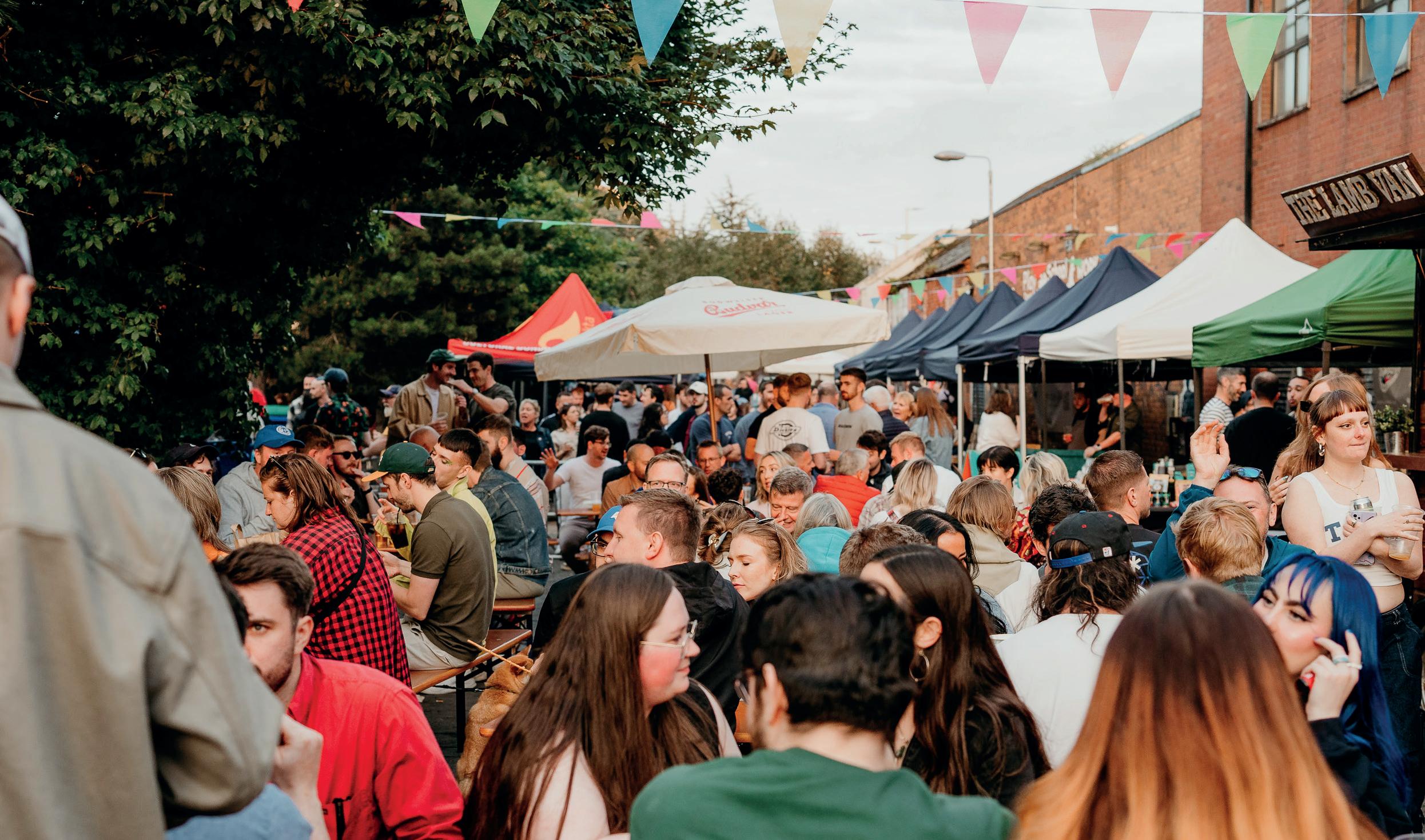
It’s been an extremely busy few months for the team at SIBA, which is reflected in this bumper edition of the magazine! It was fantastic to see so many of you up in Liverpool at this year’s BeerX in March, and the event not only took a top award this year – being named Event of the Year at the Trade Association Forum Awards 2026 – but welcomed record numbers, with an incredible 3,680 visitors over the two days. Read more from the show in our BeerX review and roundup of all the winners from the SIBA Business Awards and National Finals of the Indie Beer
Awards on pages 82-95 – and don’t forget to put BeerX 2027 on March 17-18 next year in your diary now.
April saw the launch of SIBA’s latest annual Independent Beer Report, which was unveiled during an event at Sambrook’s Brewery in London in front of invited media, SIBA members and guests. We bring you coverage from the launch on pages 26-27, as well as edited highlights on pages 28-33, and the whole report is available completely free via the QR code on this page.
The report launch coincided with this year’s Indie Beer Week, organised by SIBA as part of the Indie Beer Campaign and now in its second year. Coverage from this national celebration of indie beer can be found on pages 16-19, along with details of the many brewers across the country that are already signed up to support the campaign.
Elsewhere, one of the big award-winners at BeerX this year was SIBA’s Brewer of the Year for 2026, Loch Lomond’s co-founder Fiona MacEachern who we spoke to for our Meet the Brewer feature on pages 64-69 to find out more about her career journey.
We also caught up with Fell Brewery in Cumbria, the recipient of this year’s SIBA
Society of Independent Brewers and Associates PO Box 136, Ripon, North Yorkshire HG4 5WW Tel: 01765 640 441
www.siba.co.uk
Email: office@siba.co.uk
Sustainable Brewery Business of the Year award, to find out more about their ambitious project to halve the carbon intensity of their beer in three years, without using offsetting (see our Sustainability Focus on pages 54-61).
And last but not least we also spoke to Ian Wesley, the Commercial Director at Blue Monkey Brewing in Nottingham, who has just emerged victorious from an almighty planning battle with the local authority – a situation that will no doubt be familiar to many of you (see our Business Profile on pages 42-47).
As well as all this we also feature the usual round-up of news, views and expert advice to keep you informed and up to date with all the latest best practice in this fast-moving sector.
Happy reading!
And please do keep sending me your press releases, updates, news and views to caroline.nodder@siba.co.uk so that we can share your experiences, thoughts and successes in future magazines – the deadline for submissions for our Autumn magazine will be September 4th
Caroline Nodder
Editor
SIBA Independent Brewer Magazine
Editor: Caroline Nodder (caroline.nodder@siba.co.uk)
Published by: Media Alive Limited
Produced on behalf of SIBA by: Media Alive Limited, 2nd Floor, The Red House, 119 Fore Street, Hertford, Hertfordshire SG14 1AX. T: 01992 505 810
Creative Director: Darren Kefford (darren@wearema.co.uk)
Studio Manager: Jon Hardy (jon@wearema.co.uk)
Advertising Manager: Claire Rooney (claire@wearema.co.uk)
Managing Director: Dan Rooney (dan@wearema.co.uk)
CF48 3TD
All rights reserved. No part of this publication may be stored in a retrieval system or transmitted in any form or be any other means, electronic or mechanical, photocopying, recording or otherwise, without the prior permission of SIBA and/or Media Alive Limited.
Whilst every effort is made to ensure that the information in this publication is accurate and up-to-date, neither SIBA nor Media Alive Limited take any responsibility for errors or omissions. Opinions expressed in editorial contributions to this publication are those of their respective authors and not necessarily shared either by SIBA or Media Alive Limited.
Printed by: Stephens & George Print Group Goat Mill Road, Dowlais, Merthyr Tydfil


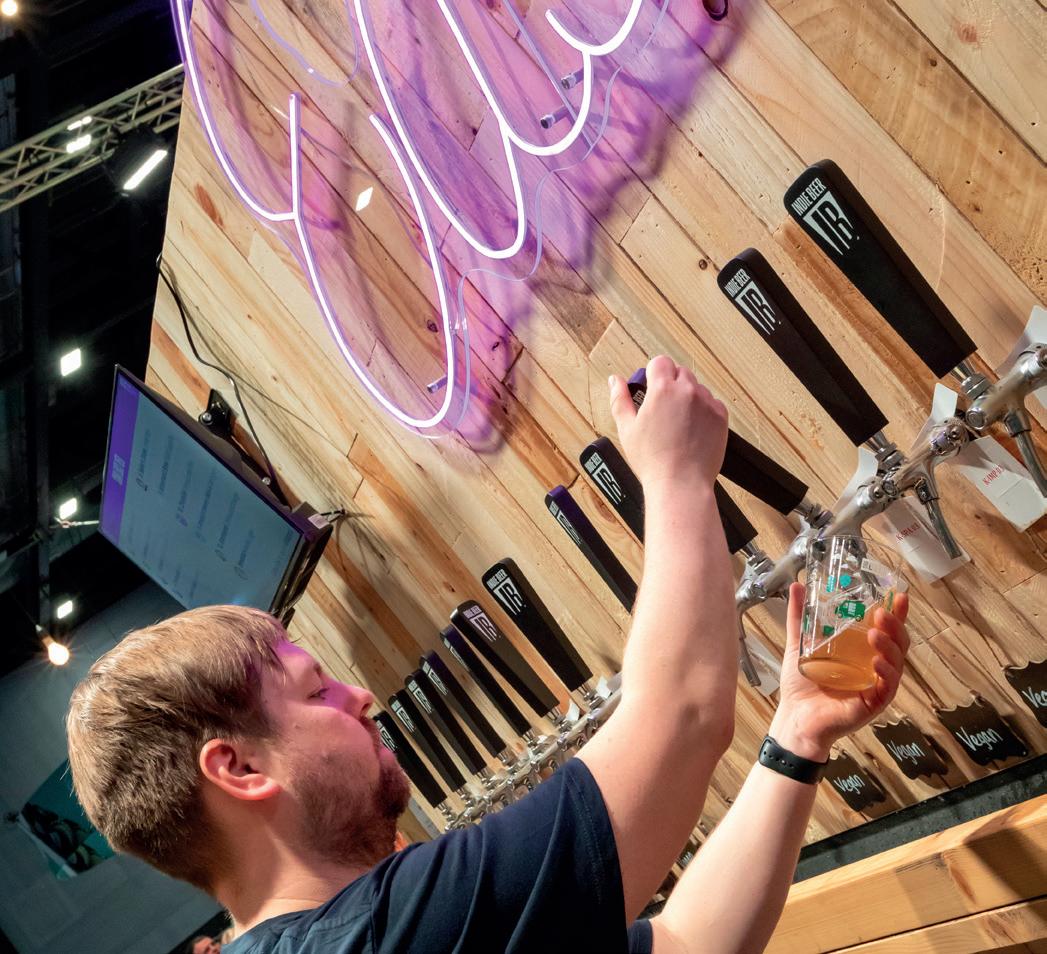
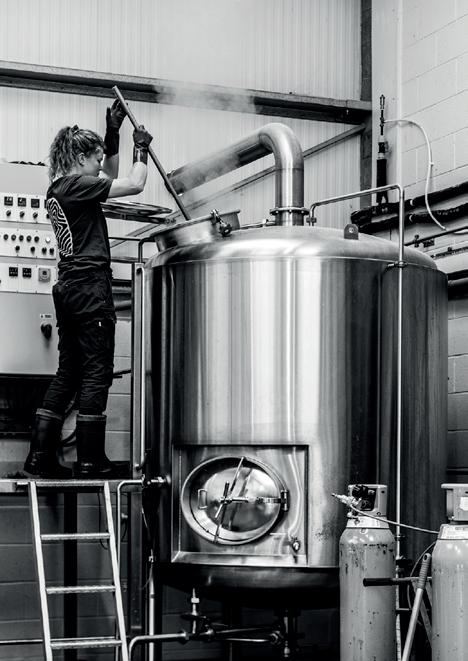
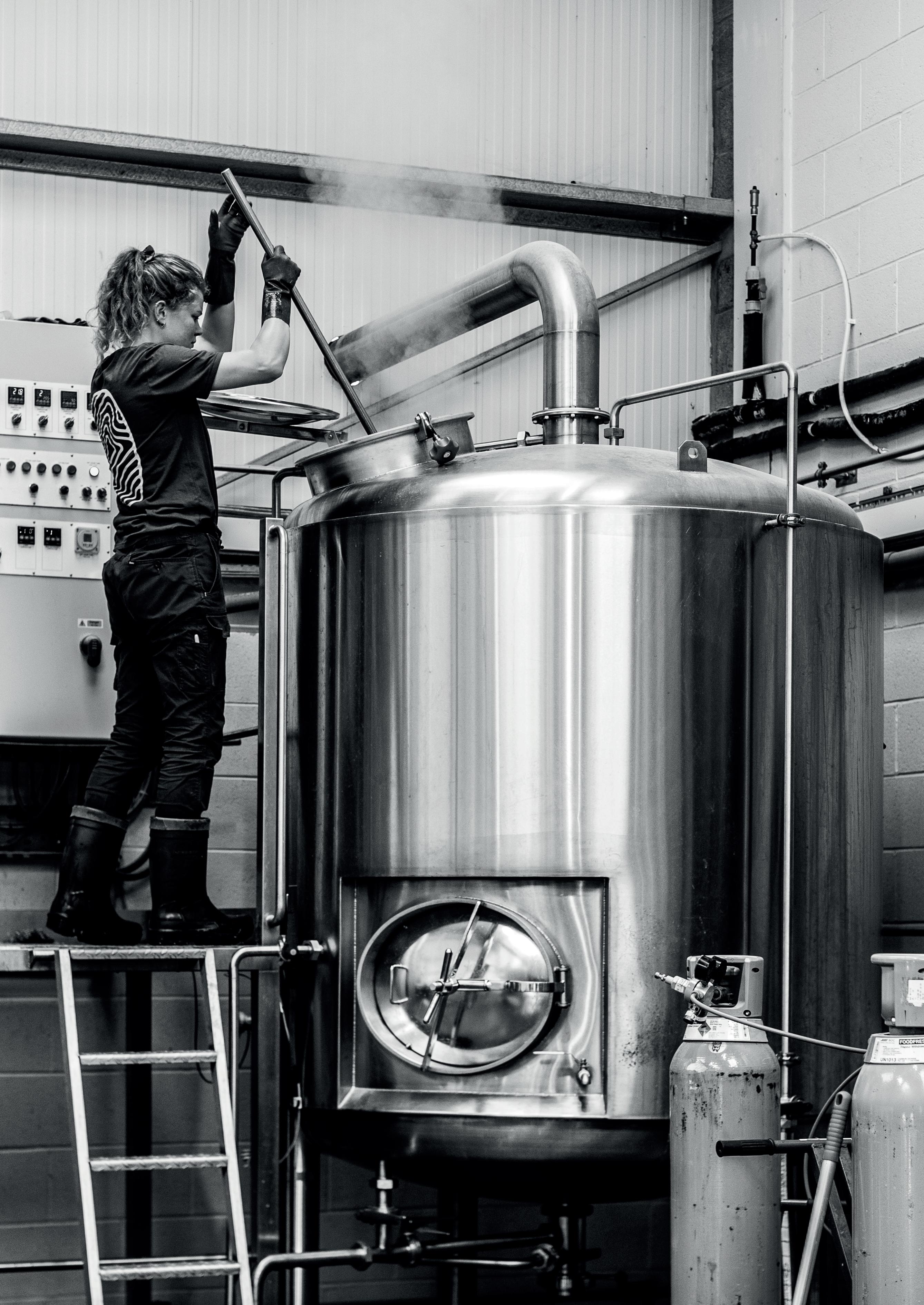
Our cover shot for this issue of the magazine was taken at Fell Brewery in Cumbria, which was recently named SIBA Sustainable Brewery Business of the Year at BeerX. See our Sustainability Focus feature on pages 54-61 for more on the marketleading work they have been doing to become greener.
News
9-15
16-19
26-33
40-41
82-83
84-87
88-95
96-97
98-99
100-107
109-114
SIBA News All the news from SIBA HQ
SIBA Indie Beer Week Coverage of this year’s celebration of independent beer
SIBA Independent Beer Report Launch coverage and highlights from the 2026 report
Membership Update A round-up of the latest SIBA Membership benefits
Beer X Review What happened at indie beer’s biggest event of the year in 2026
SIBA Business Awards All the winners from this year’s competition
SIBA Indie Beer Awards Results from the National Finals at Beer X
SIBA Indie Beer Awards The South West regional competition results
SIBA Indie Beer Awards The North East regional competition results
Brewery News The latest from our Brewing Members around the UK
Supplier News Updates from SIBA’s Supplier Associate Members
Comment
7
8
22-23
24-25
34-35
CEO’S Update Andy Slee, SIBA’s Chief Executive, offers his take on the latest SIBA Independent Beer Report findings
Chairman’s Comment Newly-appointed National Chair Anthony Hughes writes his first column for the magazine
The View From Westminster Our regular political update
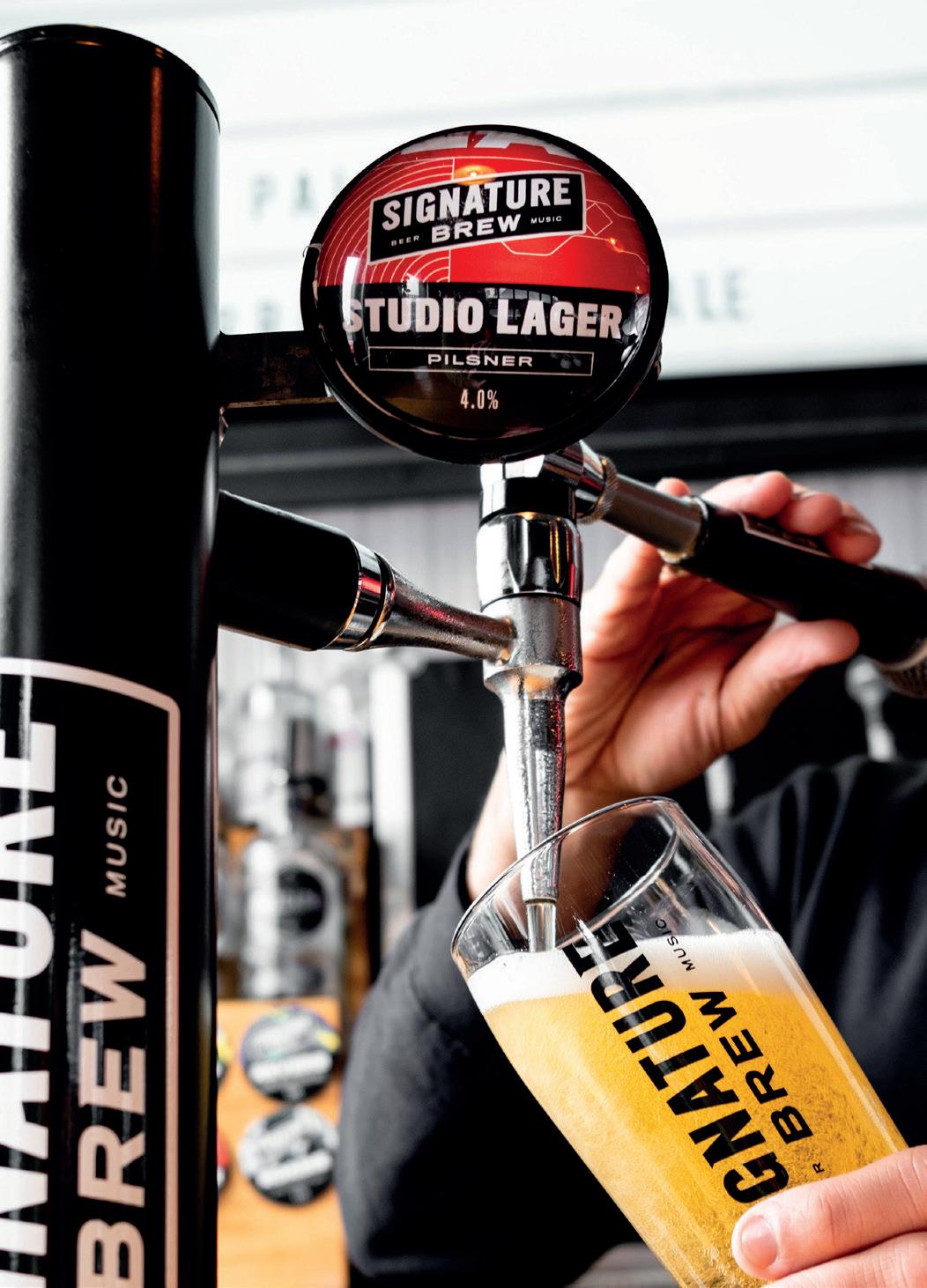
Independent Thinking Tom Bott, Co-founder and MD of Signature Brew, on reaching the next generation
Homebrew In Focus Andy Parker from Elusive Brewing explores the brewing techniques behind Swizzle
37 Brewery Viewpoint St Austell’s Brewing Director Georgina Young celebrates a huge milestone for the business
48-51 Guest Writer Scottish beer writer Jemma Beedie looks at how her home beer market is evolving
63
77
108
115
Supplier Viewpoint Tim Croxson from Croxsons on what SIBA’s annual report findings mean in terms of packaging
Tech Focus Brewlab’s Dr Keith Thomas on why what you serve your beer in can impact taste and quality
Supplier Viewpoint John Westlake from the CAMRA Members’ Investment Club committee gives an overview of how the club works
Supplier Viewpoint The team at Faedah Solutions explain why taking a modular approach to automation makes sense
42-47
53
54-61
64-69
71-75
78-81
116
118
Business Profile We meet Ian Wesley from Nottingham’s Blue Monkey Brewing
Taproom Focus Featuring two very different taprooms from across the pond in Philadelphia
Sustainable Brewery Business We hear from SIBA’s Sustainable Brewery Business of the Year, Fell Brewery
Meet The Brewer Featuring SIBA’s Brewer of the Year 2026, Fiona MacEachern from Loch Lomond
Business Advice Legal, consumer trend and brand & marketing insight
Gold Members Charles Faram and Murphy & Son
Gold & Silver Members Listing of our key sponsors
Contacts Key SIBA contacts
Running
Recycled Keg Caps 100%

You can download the full SIBA Independent Beer Report completely free via this QR code.
Focus on the facts
The latest SIBA Independent Beer Report is now available free to all SIBA members, and is full of useful facts, figures and insight to help guide your business decisions. Here, SIBA CEO Andy Slee looks at some of the key findings…
In the UK we love an underdog, the David who triumphs over a Goliath in the face of scale and adversity.
In that sense it was great to see so many ‘Davids’ of the brewing industry at BeerX in March. BeerX has grown by over 40% over the last few years yet still retained industry-leading 90%+ positive feedback scores from exhibitors and attendees from across the industry.
It is the highlight of our year and something I always point to when sceptics question the demand for our sector.
To build on this strong support for independent brewers, SIBA works hard to develop a factbased story to use with both commercial and political contacts to promote our cause.
The SIBA Independent Beer Report, launched as part of Indie Beer Week in April, is the most comprehensive review of our sector.
The foundation for the report is the data provided by a wide range of SIBA members, along with exclusive polling by YouGov and several other data sources. It is collated and verified independently.
In media interviews following the report I have summarised the typical SIBA brewing member as follows:
“Passionate about the range of beers they brew and especially about where they are from. Brewers are part of their community, employ local people, pay all their tax here in the UK and raise £1,000s for local charities.
“But they are frustrated. Frustrated by the suffocating levels of taxation they pay and by the demand for their beer which is stifled in local pubs……”
We have lost over two breweries a week in the last 12 months and of those that remain half say they are in little more than survival mode. This despite demand for independent beer consistently outstripping the overall beer market.
The imbalanced tax burden is well documented and places an unfair burden on SIBA members and wider hospitality, but our 2026 YouGov poll of consumers tells us that 80% of pubgoers expect to see a range of independent beers alongside beers from global players in the pubs and bars they visit. This contrasts starkly with members telling us they are barred from selling to two-thirds of their local pubs.
We operate in a demand/push beer market not a demand/pull one and a market that inhibits consumer choice - but if you are a brewer reading this, I guess you know that already! The report explores all this, and much more,
and is designed to be just as useful to your business as it is at a macro level at SIBA HQ. It’s completely free as part of your SIBA membership so please take time to download, read it and share with your teams.
To download your copy please use the QR code on this page and please enjoy both the report and this latest Independent Brewer magazine, which includes selected report highlights on pages 26-33.
Go well and fingers crossed for a busy summer.
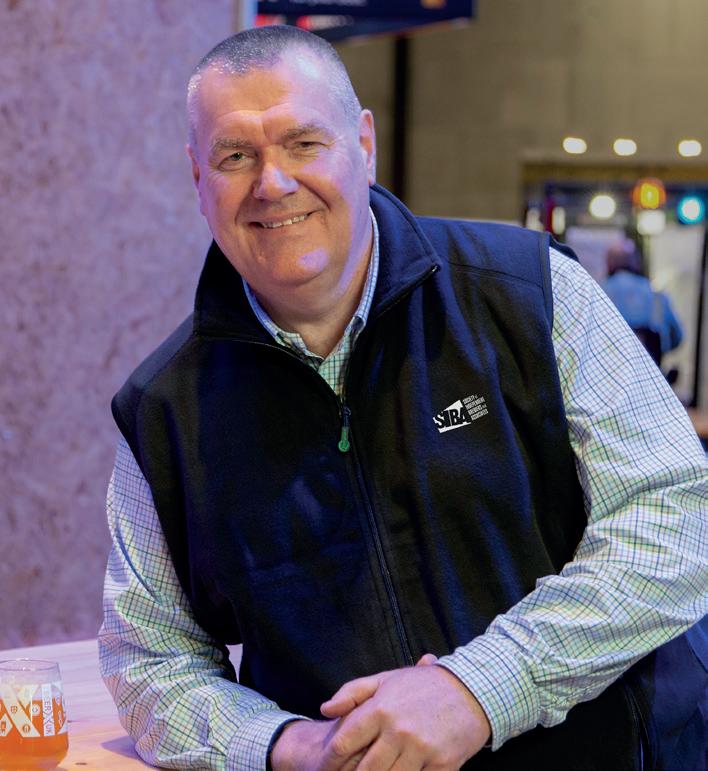
Andy Slee Chief Executive SIBA
A note from SIBA’s new National Chairman
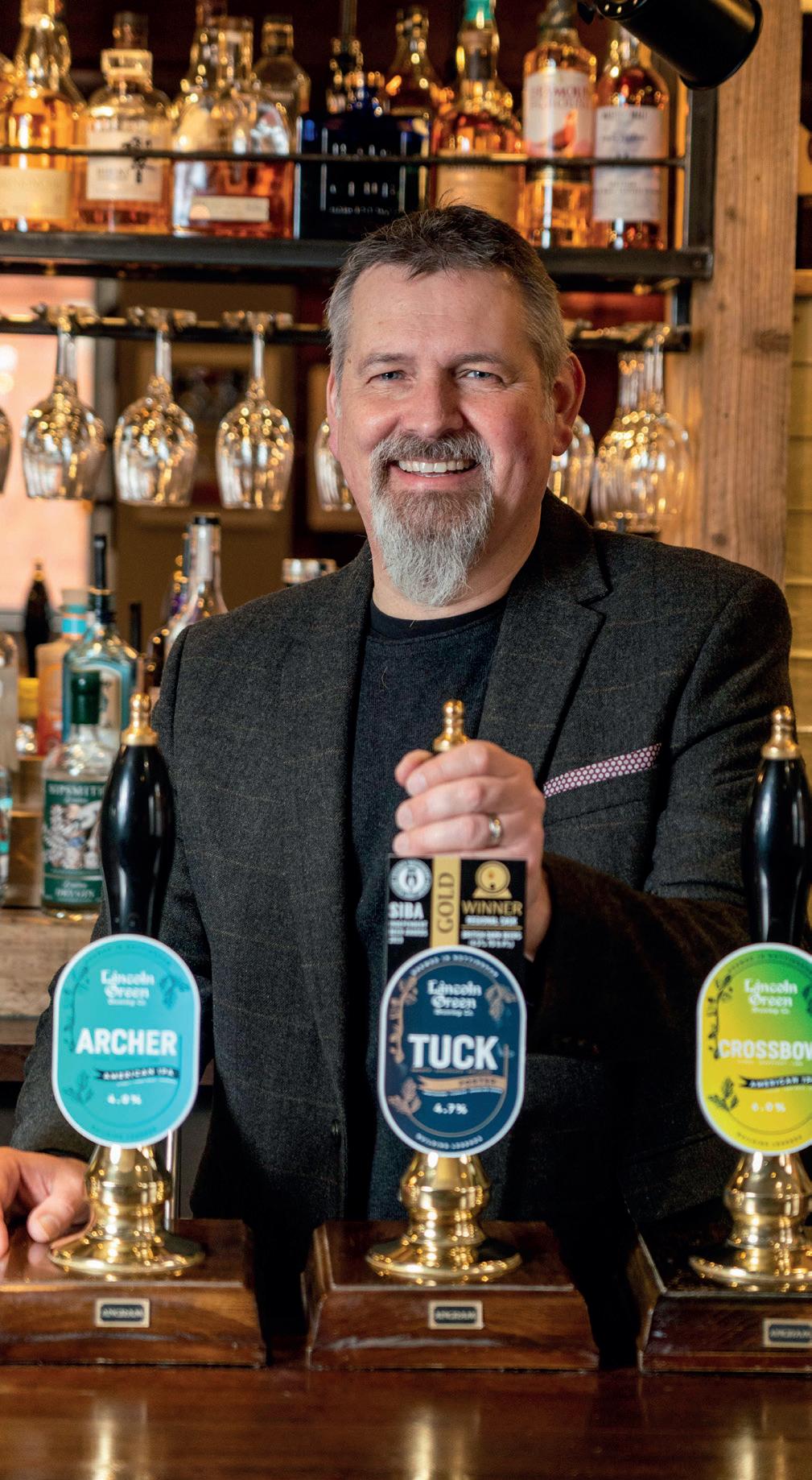
The newly-elected SIBA National Chairman Anthony Hughes pens his first column for Independent Brewer magazine after taking up the role…
It’s a real honour to be writing to you for the first time as Chairman of SIBA.
Many of you will already know me through my work with Lincoln Green Brewing Company and as Midlands Regional Director, but for those I’ve not yet had the chance to meet, I’ve spent the last 14 years firmly rooted in independent brewing and pubs. Like many of you, I’ve experienced the highs of growth and innovation, and the very real pressures that come with running a business in our sector. That shared experience is something I bring with me into this role, and I hope it helps ensure that SIBA continues to reflect and represent the realities of its members.
Before looking ahead, it’s worth pausing to recognise what we’ve just achieved together. BeerX once again demonstrated the very best of our industry - innovation, collaboration, supportive supplier associates and a genuine sense of community throughout. In terms of the National Indie Beer Awards, the quality on display was exceptional and I congratulate every medal winner. Events like BeerX are not just a showcase; they are a reminder of the strength, resilience, and creativity that define independent brewing in the UK. My thanks go to the SIBA team and everyone involved in making it such a success.
Of course, we are operating in a challenging environment. Cost pressures remain significant, from raw materials and energy through to labour and distribution. The tax and regulatory landscape continues to evolve, often in ways that add complexity rather than clarity. Consumer behaviour is shifting, and competition for discretionary spend is as fierce as it has ever been.
It would be easy to dwell on these headwinds, because they are real and they are persistent. But what continues to strike me is the way our sector responds. Independent brewers are, by nature, adaptable. We innovate, we collaborate, and we find ways to connect with our customers that go beyond the product itself. That ability to evolve while staying true to our values is one of our greatest strengths.
SIBA’s role in this is more important than ever. Whether it’s championing fair access to market, shaping policy around issues like business rates and taxation, or providing platforms like BeerX and Independent Brewer to share knowledge and ideas, the organisation exists to support and amplify the voice of independent brewers. As Chairman, my focus will be on ensuring that we remain relevant, responsive, and effective in delivering that support.
There is also a significant opportunity in front of us. The appreciation for quality, provenance, and local identity has not gone away - in many ways, it is growing. Independent brewers are uniquely placed to meet that demand, but it requires us to be confident in our offer and clear in our message. We have a compelling story to tell, and it’s one we should continue to tell with pride.
I’m looking forward to working closely with the Board, the SIBA team, and all of you over the coming months and years. This is a collective effort, and the strength of SIBA lies in its membership.
Thank you in anticipation of your continued commitment to this industry and to each other - I remain optimistic about what we can achieve together.
Anthony Hughes
The UK’s best Indie Beers revealed in historic night for British brewing
The results of the UK’s biggest beer competition were unveiled at BeerX in March, with three breweries taking the Overall Gold across the Cask, Keg, and Bottle/Can competitions.
Overall Champion of Cask was Almasty Brewery in Newcastle with their 6% “Believe” New England style IPA, Lakes Brew Co in Kendall won Overall Champion in Keg with their decadent 8.4% “Don’t Make Me Run” Imperial Stout, and Baker’s Dozen in Stamford won Overall Champion in the bottle/can competition with their bright and refreshing 3.2% “Agua Fresca Sour”.
The Indie Beer Awards are the UK National finals and in order to earn a place at the competition brewers must first win Gold at their regional competition – making these Overall Champions very much the ‘best of the best’ when it comes to independent beer. Finalists from Scotland the North East, North West, Midlands & West, East of England, Wales, South East, and South West all fought it out to take home the top spots.
“The demand for independent beer has never been higher and it’s easy to see why when trying some of these awardwinners; varied, exciting and all absolutely delicious I want to congratulate all of the winners but in particularly our Overall Champions who are truly the very best of the best in the UK right now. A huge well done!” said Andy Slee, SIBA Chief Executive.
For the full list of winners see pages 88-95.
Scotland’s Fyne Ales named Brewery Business of the Year at SIBA Business Awards 2026
Fyne Ales Farm Brewery in the Scottish highlands beat competition from across the UK to take home the top award at this year’s SIBA Business Awards – being named Brewery Business of the Year 2026. Fyne also collected the award for the UK’s Best Independent Brewery Taproom and was Highly Commended in the Collaboration category for their partnership with the Co-op.
Accepting the award with his brewing team was Fyne Ales Managing Director Jamie Delap, who said: “Just so delighted to win, these days you’ve got to brew fantastic beer, but you’ve also got to tell great stories. So for it to be recognised that my team are getting it so right I really appreciate – you’ve got to find really good people, let them do their thing and you’ve got trust your team – which we absolutely do at Fyne Ales.”
The SIBA Business Awards 2026 took place at BeerX in March. For the full list of winners see pages 84-87.
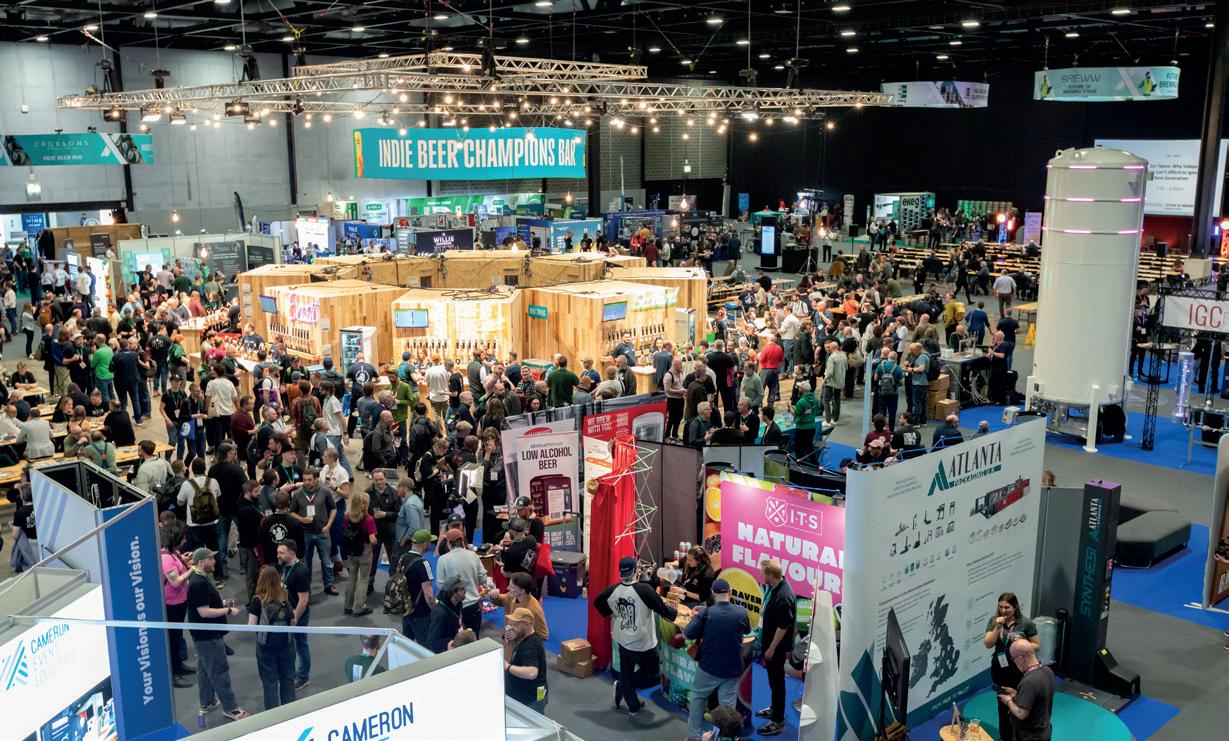
Where the independent brewing industry does business: SIBA celebrates its biggest BeerX ever, as the event takes a top award
SIBA’s flagship annual event, BeerX, was named ‘Event of the Year’ at the prestigious Trade Association Forum Awards 2026 for ‘bringing together brewers, suppliers and policymakers in a dynamic programme of exhibitions, talks and awards’.
With this year’s show attracting a record 3,680 trade visitors, BeerX has gone from strength to strength since moving to Exhibition Centre Liverpool and was recognised by judges for achieving ‘record attendance and expanded content’.
Representing SIBA at the awards were Rachel Harriott, Head of Membership, Neil Walker Head of Comms & Marketing, Anneli Baxter SIBA Director, and Lucy Hunter-Bott, BeerX Bars Manager.
“I’m so proud to be a part of such a fab team and seeing other trade associations with so many members of staff it amazes me even more by what we achieve at BeerX with such a small team!” said Rachel Harriott.
BeerX 2026 hit some impressive and record-breaking numbers this year across a variety of areas; 3,680 trade attendees, 125 exhibitor companies, 265 beers available via the trade-only beer showcase, 30 seminars, panel debates and tutored-tastings from industry experts, 20 business award winners, and finally 18 fringe events taking place in pubs, bars and taprooms across the Liverpool. This year the event achieved an industryleading 95% approval rating with exhibitor companies.
Read more about BeerX 2026 on pages 82-87 and find out more about plans for the 2027 event as they are confirmed at www.beerx.org
Save the date!
BeerX 2027 has already been confirmed for the 17th & 18th March at Exhibition Centre Liverpool and will seek to build on the success of its most successful year ever in 2026.

The SIBA Independent Beer Report 2026 is out now!
The biggest annual report on the indie beer market is available free, see pages 26-33 for the highlights and details of how to download your copy.
Europe’s independent brewers show determination as survival and energy prices top agenda for 2026
Europe’s independent brewers are showing their determination this year despite four in 10 saying survival is their main priority.
A new report published in March showed that in the face of international turmoil, energy prices are the top challenge for independent brewers with half expecting either no growth or a decline in turnover. Yet behind these sobering figures lies a sector determined to adapt, invest and defend Europe’s authentic beer culture. These findings are detailed in a new, first-of-
its-kind report by the Independent Brewers of Europe (IBE), a cross-border alliance founded in 2024 to represent and protect independent brewing across the continent. Bringing together national associations from Europe, with continued expansion underway, IBE advocates for fair market conditions, transparency and the long-term viability of small and medium-sized independent breweries in a sector increasingly dominated by global corporations.
The report, covering more than 3,000 independent breweries, provides a detailed snapshot of the pressures and opportunities shaping the sector across 12 European countries. It shows them grappling with energy price volatility, taxation pressures and intensifying competition from multinational companies that control a significant share of the beer market.
Most independent breweries remain small businesses: 60% report annual turnover of less than €500,000. Despite their size, their local footprint is considerable. More than a quarter (28%) of beer is sold directly to consumers through taprooms, bars, shops and pubs, while 75% of breweries actively support local causes, underlining their economic and social role within communities.
To navigate current headwinds, many independent brewers are diversifying. Some 43% now produce additional products,
most commonly soft drinks and sodas, while non-alcoholic beer is gaining importance as consumer interest in no- and low-alcohol options grows.
“Independent breweries represent an authentic and deeply rooted beer culture that needs defending,” said Barry Watts, Chairman of IBE & SIBA Head of Policy and Public Affairs (UK). “Sadly, too many independent brewers are having to focus mainly on survival and with current international events, energy price shocks are their top issue. Yet despite this they are determined to do things better, to improve their businesses and continue to make innovative beer styles enjoyed by drinkers across the continent.”
Yet the report also highlights cautious optimism. More than a third (37%) of brewers plan to prioritise improving beer quality this year, and 35% intend to invest in new brewing equipment clear signals that many are looking beyond immediate challenges.
Find out for about the IBE at www.independent-brewers.com and download the full report via the QR code below.

Waitrose become first UK supermarket to back trailblazing ‘Indie Beer’ campaign
Premium supermarket chain Waitrose has thrown its weight behind SIBA’s campaign to promote beer from genuine independent breweries, with a new ‘Indie Beer’ section on Waitrose.com and planned in-store promotions.
Beers from independent breweries now appear in a new Indie Beer section of the Waitrose online store, reserved exclusively for beers from genuine independent breweries and excluding craft beers produced or owned by global beer companies. The move coincides with the launch of an expanded beer range from Waitrose including a focus on beer from local, independent breweries.
“It is fantastic to have Waitrose backing the Indie Beer campaign and making it easier for shoppers to buy beer from local indie brewers. Not only have they extended the number of local independent breweries that they sell, with a focus on quality and flavour, but the
dedicated Indie Beer section of the Waitrose website makes it crystal clear to shoppers the beer they’re buying is the real deal,” said Neil Walker, Indie Beer campaign Co-ordinator.
Jourdan Gabbini, Waitrose Beer and Cider Buyer, said: “I am delighted that we will be the first UK supermarket to officially support the ‘Indie Beer’ campaign. Our beer loving customers are always looking for new beers from innovative, high quality, and exciting independent breweries, and this signposting allows us to champion those producers who do it so well.”
The Indie Beer campaign was launched 16 months ago in response to confusion amongst consumers over which beers were independent. Find out more about this year’s Indie Beer Week, an annual highlight of the campaign, on pages 16-19.
Firebrick Brewery named Overall Champion at the Indie Beer Awards North East
A small independent brewery ‘in the Geordie heartland of Blaydon-on-Tyne’ has beaten competition from across the North East of England to be named Overall Champions a the SIBA Indie Beer Awards North East.
Firebrick brewery won their beer category before going on to win the Overall Champions judging, where the best-of-the-best from
across the SIBA North East Region fight it out for the top spot – including breweries from Northumberland, Tyne & Wear, Durham, Cleveland, Yorkshire and Humberside.
The brewery won Gold with their ‘Propa Belta’ Premium Session IPA, which uses a blend of international hop varieties to give big zest and pine aromas over a biscuity malt base.
The awards are organised by SIBA and held at
Brewery list revealed for festival bringing “World’s biggest range of Scottish beers” to Edinburgh
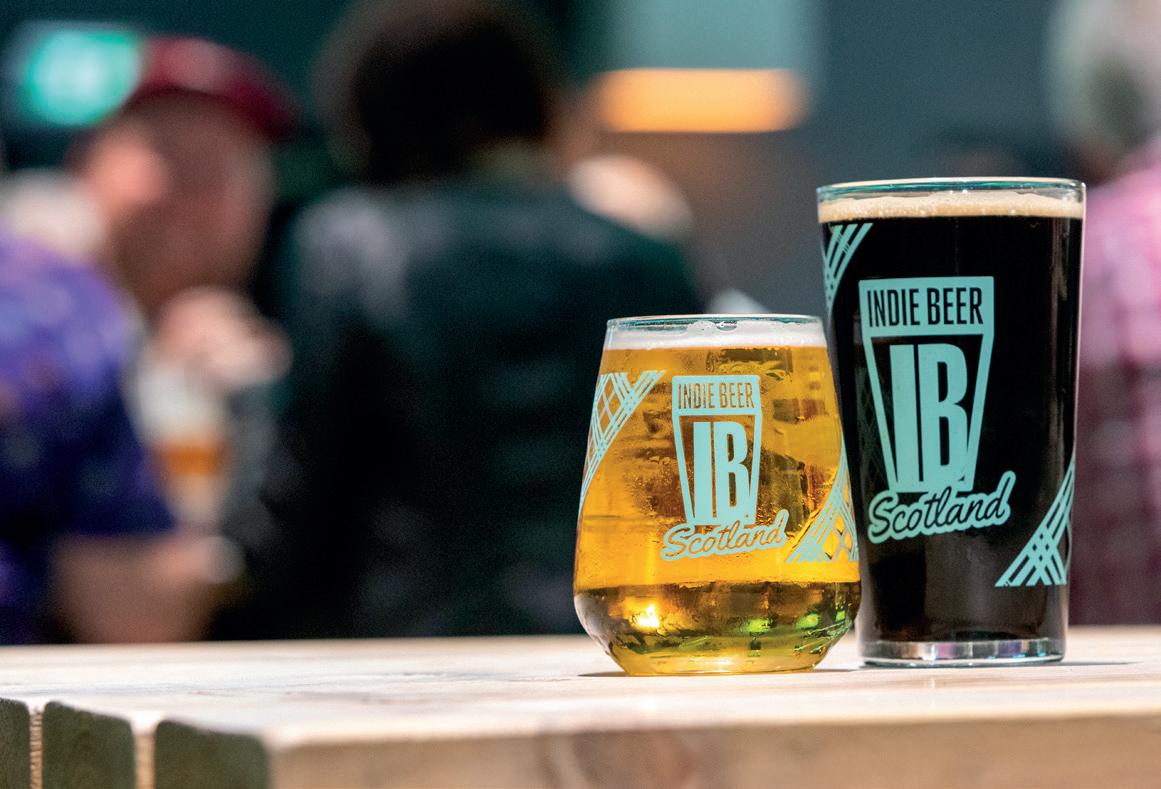
Organisers of Indie Beer Scotland have revealed the brewery list for the event, which is set to feature the biggest range of solely Scottish beers available anywhere in the World next month.
Indie Beer Scotland is taking place on 26th & 27th June 2026 at the superb Pitt Venue in Granton, Edinburgh, featuring an incredible range of over 200 beers in every style from Scotland’s best independent breweries, plus cider and spirits from independent Scottish producers.
Ian McGrath of Beath Brewing is one of the festival organisers and had this to say on returning to Edinburgh for 2026: “I’m delighted to reveal the breweries who will be pouring at Indie Beer Scotland this year and can’t wait for festival-goers to try the huge range of beers we are going to have on offer. There’s going to be something for everyone; from modern IPAs and speciality beers to traditional Scottish ales, lagers and stouts, this year we’re pouring one of our biggest selections ever with beers on cask, keg and in bottle and can.”
Indie Beer Scotland is organised by Scottish brewers from SIBA, who have frozen beer prices for the third year running, making the award-winning pints some of the best value in the City. “Indie Beer Scotland is the biggest range of Scottish beers available anywhere in the World and we’ve frozen beer prices again for 2026 – if you’re a beer lover then you will not want to miss this,” Ian added.
Indie Beer Scotland is the largest showcase of solely Scottish beers available anywhere and offers great value for money, with a large number of session beers including cask and craft keg available from just £4 a pint.
Indie Beer Scotland is also the home of the Indie Beer Awards 2026, with judging taking place to name Scotland’s very best beers prior to the festival opening to the public – making festivalgoers the first to try Scotland’s official best beers, with all this year’s winning beers available over the three sessions Friday to Saturday. Beers range from session strength lagers and pale ales of 4%, to barrel-aged imperial stouts and scotch ales which tip the scales at a punchy 10% ABV or more.
Tickets for Indie Beer Scotland are on sale here: www.citizenticket.com/events/the-pitt/indie-beer-scotland-2026
Gateshead Rugby Club ahead of their Beer Festival.
The Indie Beer Awards include a broad range of beer styles, from pale ales and IPAs to porters, stouts and speciality beer styles. Gold winners from the awards will now go forwards to the National Finals in Liverpool in March 2027.
For the full list of winners see pages 98-99.
UK brewery closure rate sped up dramatically in 2025
SIBA’s UK Brewery Tracker has revealed that brewery closure rates increased significantly during 2025 compared to previous years, with a 37% spike compared to the previous year.
The UK now has just 1,578 individual breweries as of 1st January 2026, compared to 1,715 at the start of 2025, 1,815 in 2024 and 1,828 in 2023 when the brewery tracker started.
The SIBA UK Brewery Tracker is compiled by SIBA and considers all known openings and closures to give an accurate representation of the current number of breweries in the UK. The tracker shows a net brewery closure rate of almost three per week (-2.6) in 2025.
SIBA Chief Executive Andy Slee said: “Britain is extremely lucky to have such a broad range of passionate, independent breweries brewing beer locally across the UK; but if we don’t act soon to reverse closure rates then we could be facing a survival crisis for British brewing. The issue here is not one of demand – there is huge demand for beer from local independent breweries – the issue is the tax burden on small breweries, increased merger activity creating consolidation in the market, and restricted access to pubs for small breweries.”
UK YEAR ON YEAR Comparison
1st January 2026 – 1578 (-137)
1st January 2025 – 1715 (-100)
1st January 2024 – 1815 (-13)
1st January 2023 – 1828
New report looks at the effect of the new Scottish Guest Beer Agreement
New right to a guest beer is improving trade for Scotland’s pub tenants who are aware of it, but others are being discouraged from applying, says new report
While Scottish pub tenants have a low awareness of their new right to stock a guest beer, those that are aware find it is improving trade and useful to their businesses. However, some pub tenants are facing intimidation and have been discouraged from applying.
This is the conclusion of a new report published in April into the Guest Beer Agreement on the first anniversary of its launch. Introduced in April last year, the scheme allows pub tenants in Scotland to directly source their beer from local breweries and sell it in any format they wish including in both cask and keg draught beers. It aims to widen consumer choice, support local independent breweries and empower pub tenants.
The report includes the results of a new in-depth independent survey of more than half of pub tenants in Scotland, commissioned by SIBA, which shines a light on its effectiveness. The Scottish scheme is a trailblazer for the UK as a similar right does not currently exist in England and Wales.
The research shows that fewer than half (45%) of Scottish pub tenants were aware of their new right with tenants from five pub companies not aware of it at all. However, for those that were aware of it, the vast majority (71%) found it be useful for their pub businesses. This increased to 94% for those who have applied for an agreement. Eighty-six percent of those that had an agreement in place said it was improving trade.
SIBA Chief Executive Andy Slee said: “The new right to a guest beer is a trailblazer initiative in Scotland launched a year ago. For the first time, it allows pub tenants to have a direct relationship with local breweries and respond directly to consumer demand by serving a local independent beer.
“This in-depth research demonstrates that awareness of the scheme is still too low, but once a tenant is aware, its usefulness to their businesses, to trade and to consumers is crystal clear. There is more that pub companies and the Pubs Code Adjudicator can do to ensure tenants are better aware of the benefits of the scheme.”
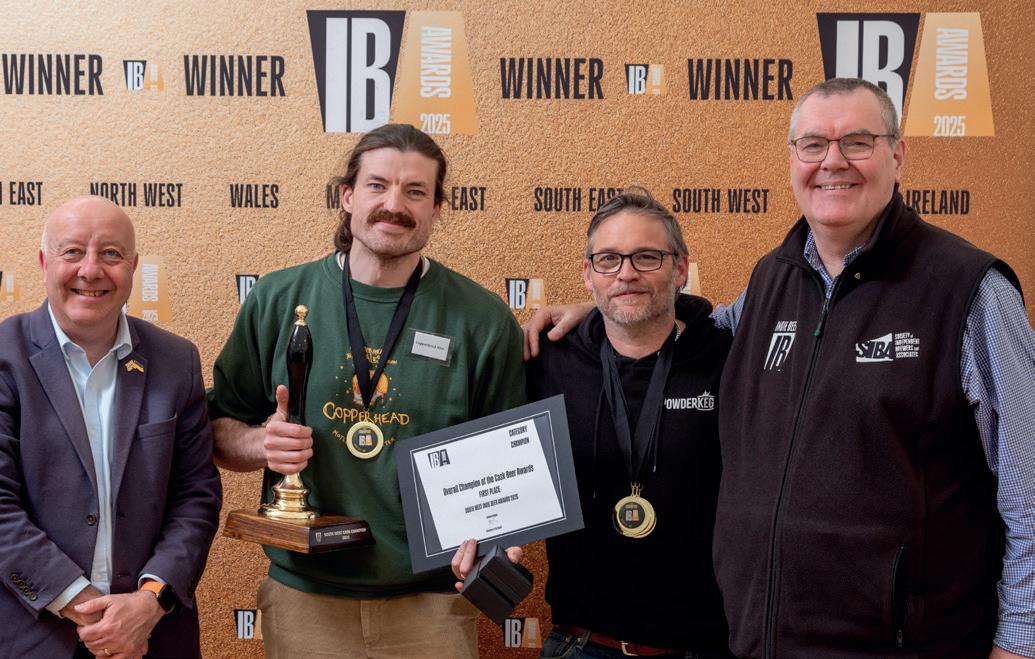
Copperhead and Powderkeg named Champions of the South West Indie Beer Awards 2026
Copperhead Ales and Powderkeg brewery took home the top two awards at the Indie Beer Awards South West, which took place at the MaltingsFest beer festival in Newton Abbot.
It was Copperhead Ales’ ‘Black Flamingo’, a big, bold Imperial Stout at a hefty 8.2% ABV that wowed the judges in the cask beer awards with flavours of rich chocolate and black coffee.
In the separate Keg Beer Awards, it was Powderkeg brewery’s ‘Paint the Town red’ a brand new American Red Ale which was launched at the Maltingsfest in support of Indie Beer Week, and which took home Gold in its very first outing.
For the full list of winners from the South West see pages 96-97.
Indie Beer Awards Style Category updates for 2026
The Indie Beer Awards categories in the separate Cask, Keg, and Bottle & Can Awards are reviewed annually by the SIBA Competitions Committee following feedback from entrants and judges throughout the year, and following this process there are a small number of important changes for 2026, which are summarised here.
If you have any questions regarding these changes or would like to give any feedback you can do so by emailing beercompetitions@siba.co.uk
Summary of changes: Cask
No changes to cask categories for 2026. Keg
The ‘Non-Alcoholic and Low-ABV’ category which included beers from 0 – 2.8% has been replaced by the new ‘Alcohol Free Beer’ category for beers up to 0.5% abv only. Any beers 0.6% or higher should now be entered into the relevant style category.
The Continental Style Beer category has been amended to ‘Belgian & Continental Style Beer’.
Bottle & Can
The ‘Non-Alcoholic and Low-ABV’ category which included beers from 0 – 2.8% has been replaced by two new categories; one
for ‘Alcohol Free Beer’ up to 0.5% abv only, and a second ‘Low Alcohol Beer’ category for beers 0.6 – 2.9% abv.
The ‘British Ales’ category which included a range of British beer styles such as Bitter, Best Bitter, ESB, British Golden Ale etc up to 6.4% has been replaced by two new categories; one for ‘British Bitter’ up to 4.4%, and a second for ‘British Best Bitter’ 4.5 – 6.4%.
The ‘Stout & Porter’ category which included dark beers up to 6.4% has been replaced by two new categories; one for ‘Session Dark Beers’ up to 4.4%, and a second for ‘British Dark Beers’ up to 6.4%.
The Continental Style Beer category has been amended to the ‘Belgian & Continental Style Beer’.
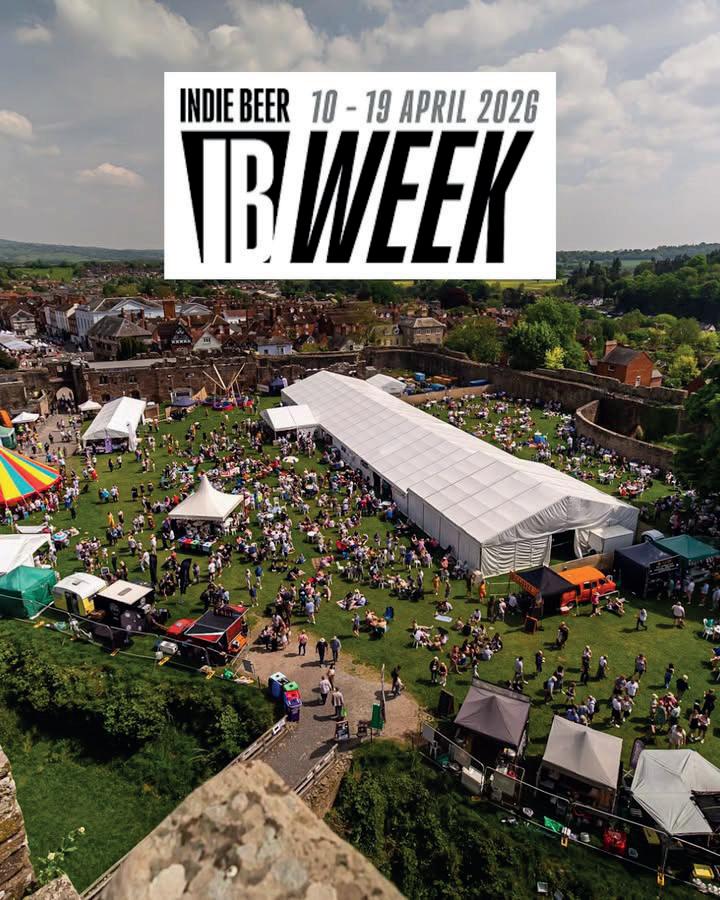
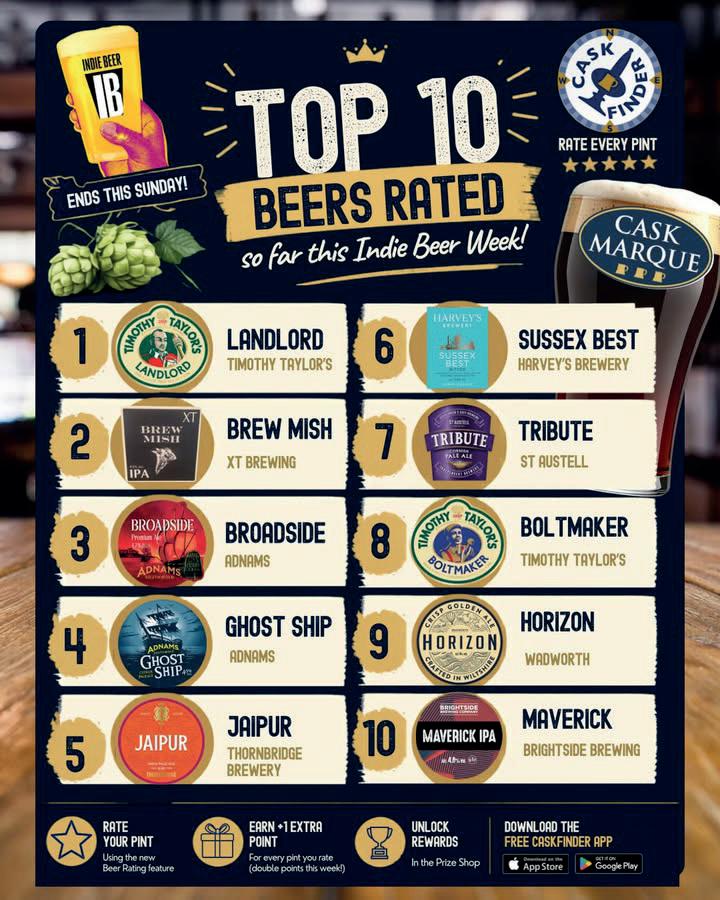
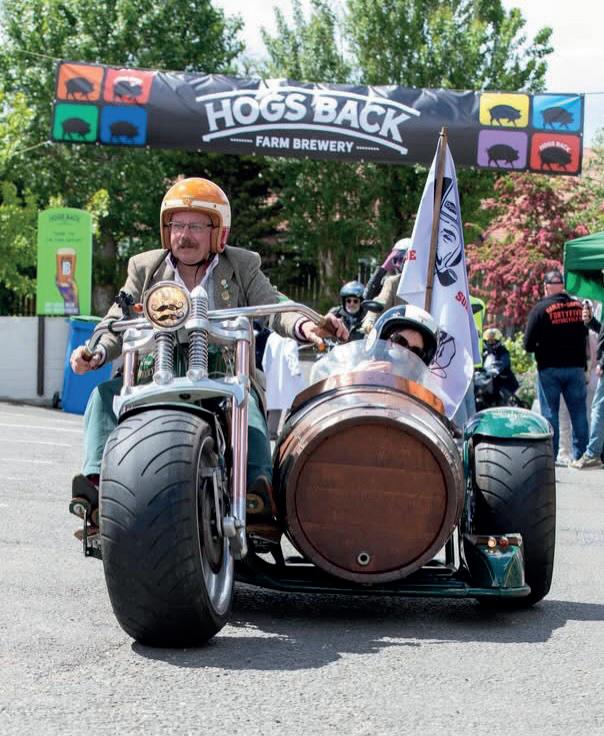
INDIE BEER WEEK 2026
proves a success as 700 breweries now back the campaign
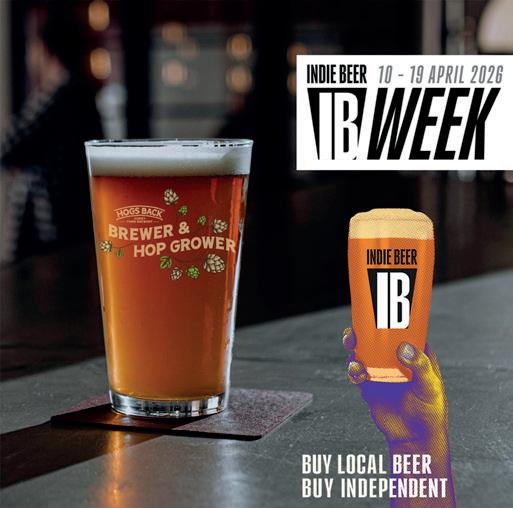
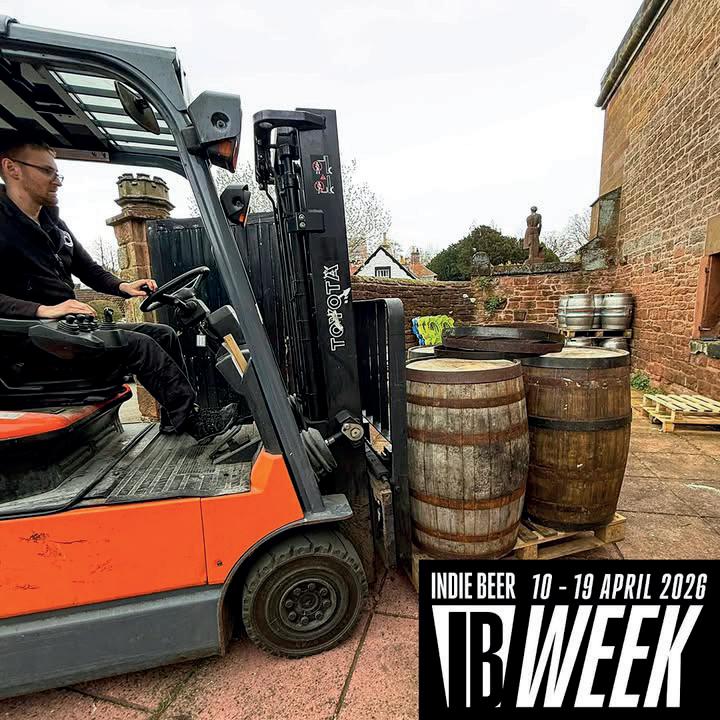
Indie Beer Week 2026 took place on the 10-19th April this year, creating an opportunity to promote ‘independent beer, pubs and people’ via a string of events taking place in pubs, bars and brewery taprooms across the breadth of the UK.
Events were across the UK by many of the 700 breweries who now actively support the campaign, up from 400 last year, as well as venue supporters such as bottle shops, pubs and bars. Opposite you can find a ‘featured 50’ of just some of the events which took place across the UK.
“Indie Beer Week is a celebration of everything that is great about UK beer, with festivals, beer launches and beer events of all kinds taking place in all corners of the nation - wherever you are, there is a brewery near you which is part of the Indie Beer campaign.” Neil Walker, Indie Beer Campaign.
Since launch the Indie Beer campaign has had real cut through with consumers, with an impressive 31% of young (18-24) beer drinkers now aware of the campaign and a growing fanbase of beer drinkers signed up in support. The campaign has also partnered with premium supermarket retailer Waitrose, who have backed the campaign with a new “Indie Beer” section on their online store and in-store sampling of Indie Beers taking place from next month – backed up by POS instore funded by SIBA.
INDIE BEER WEEK 2026 - FEATURED 50 UK EVENTS
Event Name
71 Brewing x Holyrood 9A - Tap Takeover
April Sours Launch
CWRW Otley x Bunch of Grapes
Event Type Location
Tap Takeover Edinburgh
Brewery Tours and Beer Sampling
Indie Beer Week Events
Double Points on the CaskFinder App for Indie Beer Week In App Beer Tasting Event
Indie Beer Week at Arcadia Exeter
Stroud Brewery Tour - Meet The Brewer
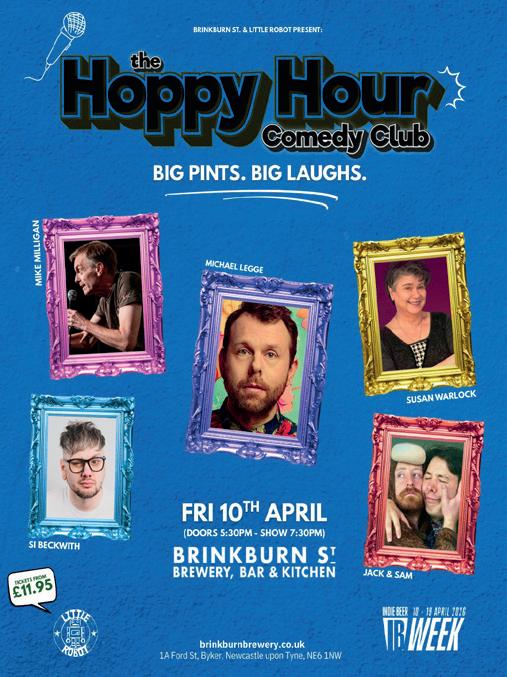
The Hoppy Hour Comedy Club
Orbit Beers Taproom
The Bunch of Grapes
National across the UK
WEEK LONG Celebration Exeter
Brewery Tours & Tastings Stroud Brewery
Comedy Night hosted in a Independent Brewery
Brinkburn St. Brewery, Newcastle
Titanic Tap Takeover Tap Takeover 474 Stafford Rd Wolverhampton
Titanic Tap Takeover - The Kings Arms, Eccleshall Tap Takeover
Tour The Range at The Nook
Welcome to Skipton
Nook Brewhouse Cask Beer Tasting
New brewery launch
The Kings Arms Hotel, Eccleshall, Stafford
The Nook Holmfirth
Skipton North Yorkshire Brewery Tour & Tasting
Good Chemistry's New Brand Relaunch
Brewery Tour & Tasting Titanic Brewery
Reopening Event in Our Taproom and Marketing Rebranding
Mysterious Brewery Mountain Bike Trail Ride and Taproom Trail Ride
William St, Bristol
Mysterious Brewing, Silchester Nearest Beer Shop Guided Tasting
In-store and Online
Nearest Beer Shop, Bridgend Taproom Reopening and Brand Relaunch
Event in Our Taproom and Marketing Rebranding
William St, Bristol Test Batch Tasting
Beer Tastings
Castle Brewery Taproom (Flow and Tracks), Lostwithiel
Titanic Tap Takeover @ New Deva Tap, Chester Tap Takeover Brook Street, Chester
Titanic Tap Takeover @ Samuel Oldknow
Tap Takeover Market Street, Stockport Tap Takeover and Meet the Brewer - Coley's Brewery! Meet the Brewer/Tap Takeover
The Beer Necessities, Todmorden Independent Beer Report Launch
Press & Trade Event
Sambrooks Brewery Taproom, Wandsworth Craft beer and Charcuterie Pairing
Ticketed
The Goat, Long Buckby Beer-Talk with Lee Renforth Talk and Q&A
Brinkburn St. Brewery, Newcastle Brewery tour and sample session
Brewery tour Melksham Enville Tap Takeover At The Red Lion Tap Takeover
The Red Lion, Wombourne THE BIRD & BARREL 8TH BIRTHDAY
Micropub mini beer festival
The Bird & Barrel, Bexleyheath MaltingsFest 2026
Attic Beer Tastings @ The Taproom
Beer Festival Teign Road, Newton Abbot
Beer Tasting
Attic Brew Co, Stirchley Fyne Ales 25th Birthday
Indie Beer Weekender
Meet the Brewer x Beer Tasting
April Sours Tasting with Orbit Beers
Behind the Beer at Great Corby Brewhouse
DUB ON TAP PRESENTS: JAM JAH SOUND
Jennings Beer Festival
Lenton Lane Tap Takeover at The Embankment
Collab Launch & Joint Tap Takeover With Fyne Ales & Cloudwater The Magnet, Stockport
TTO/Guided Tasting/General Party! The Artichoke
Beer Tasting
Harrogate Brewing Co. Royal Parade
Tasting/Sampling Clapton Craft, Finsbury Park
Open evening and sampling
Great Corby Brewhouse
Dub Night - Gig Stroud Brewery
Beer Festival Jennings Brewery, Cockermouth
Tap Takeover
The Embankment, Nottingham Lost Cause Brewing Co. – Brewery & Taproom Grand Opening Taproom Opening
Margate Town Tap takeover
Lost Cause Brewing Co, Wakefield
Town Tap Takeover Margate, Kent
Record Store Day @Core Of The Poodle Bar, recorded, live music
Beer Meets Band - Sophie Gordon
Brewery Tour & Tasting
Colbier Brewery Open Day
Lace & Lashes
Laugharne beer festival
Little Ox Brewery Open Day and Birthday Party
Orbit Beers Spring Festival
Lincoln Green Brewery Tour
Live Music in an Independent Brewery
Brewery Tour
Brewery Open Day With Brewery Tours (just turn up)
Cabaret, Drag, Live Vocals, Burlesque
Beer and cider festival
Brewery taproom, food, music
Taproom Event
Market Street, Haverfordwest
Brinkburn St. Brewery, Newcastle
First & Last Brewery, Northumberland
Canal Street, Liverpool
Stroud Brewery
Laugharne Memorial Hall, Laugharne Carms
Little Ox Brewery, Witney
Orbit Beers Taproom, London
Brewery Tour followed by Sunday Roast at The Station Hotel Lincoln Green Brewery, Hucknal
Here Comes The Sun Spring Festival The Exchange, Erith
Nottingham Independents' Castle Beer Fest
Tap Takeover and Meet the Brewer
Indie Beer Festival
Tap Takeover
If you haven’t already please do download the Indie Beer mark and add it to all of your beer labels and pumpclips, and show your support on social media using one of the many social assets available via the Toolbox or assets folder here.
Nottingham Castle, Nottingham
The Front, Falmouth, Cornwall

Campaign Supporters
North
Northern Ireland
Scotland
North
South East

Brewery management, sorted.
Breww is award-winning brewery management software that helps over 750 independent breweries run their entire operation in one place.
Production
Run every batch from grain to glass; recipes, schedules and fermentation logs on one platform.
Keg tracking
Track every cask and keg, on site or in trade, and know how fresh the beer inside is.
Deliveries & routes
Get more drops done with auto-optimised routes and a driver app that handles satnav, signatures and PODs.
Stock & inventory
Always know what's in stock, with full batch traceability and barcode scanning on any smartphone.
Sales & invoicing
Sell more with less admin . Orders, invoices and CRM that sync with Shopify, POS and BeerFlex.
Duty returns
Submit beer duty in minutes, not hours, with returns calculated automatically.
SIBA Supplier of the Year - Winner 2026
The most connected brewery management platform in the world

Plus more than 35 other integrations available
Three Tuns Brewery
Siren Craft Brew
Beak Brewery
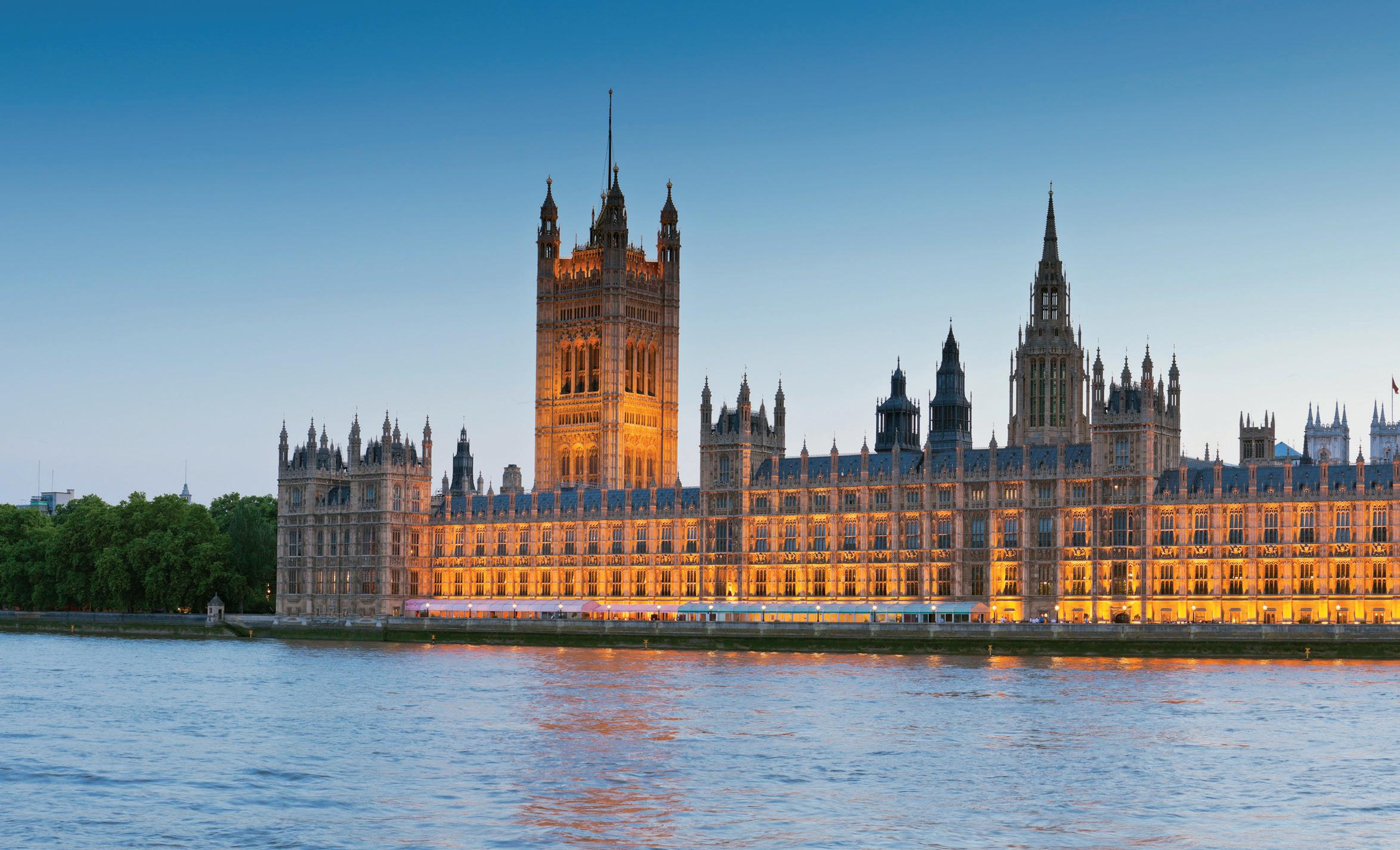
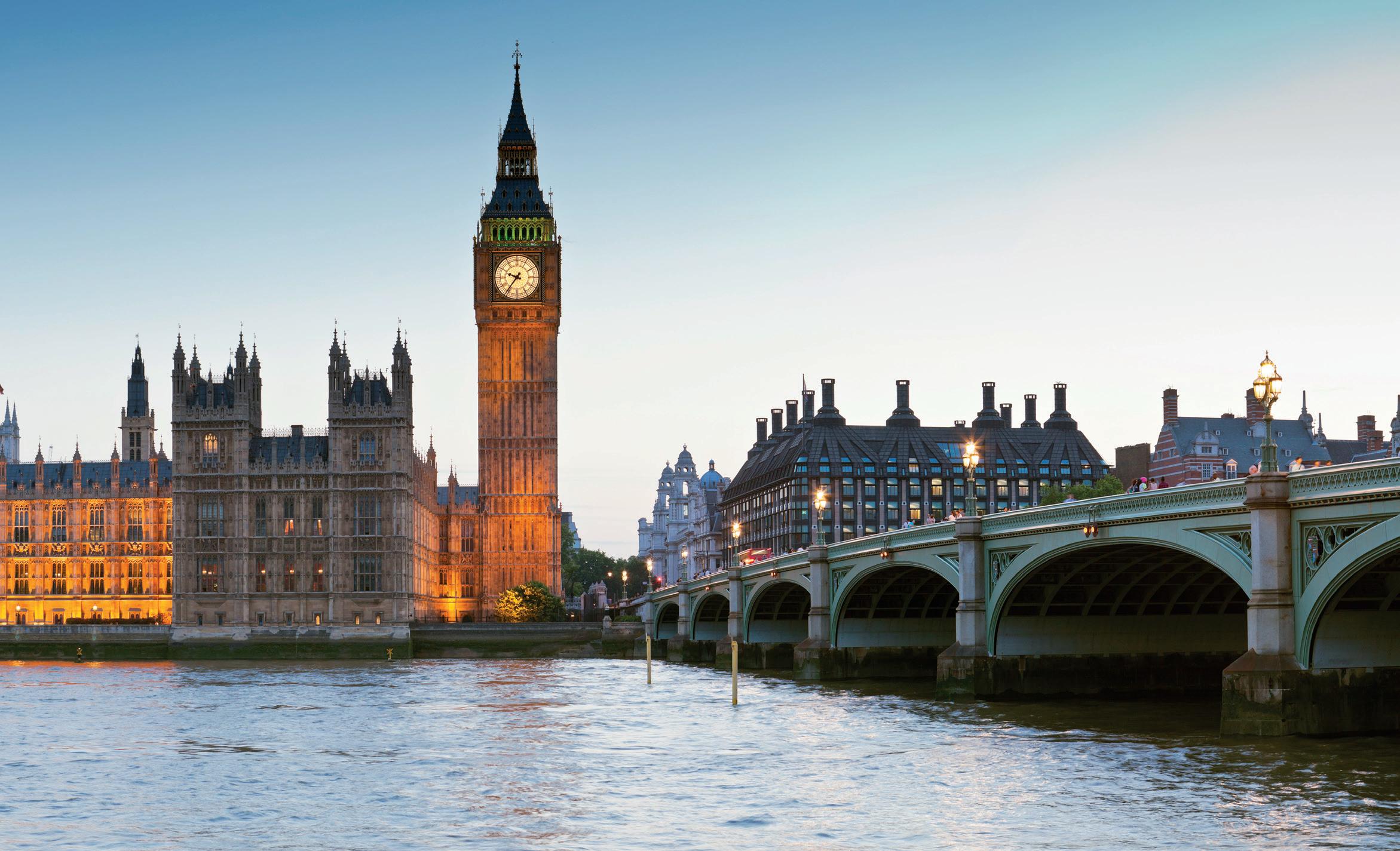
The view from Westminster
Do you package beer into small pack?
Well now is the time to start thinking about the Deposit Return Scheme (DRS) which is going live on 1 October 2027.
There may be 16 months to go but evidence shows that’s the time most breweries and producers need to prepare, especially when it means redesigning and changing labels. And to help you prepare, SIBA has put together a useful guide on how it will work (available via the Toolbox), which will be updated as and when we get more information.
You will probably have heard about the scheme and DRS already exists in many
other countries. You may remember the ill-starred Scottish scheme that crashed a few years ago. Well this time it’s very likely to go ahead and worth preparing for.
At its simplest level, DRS places a deposit on the cans and bottles that are sold and the customer is reimbursed when they return the empty container. It aims to reduce littering and increase recycling.
For small breweries in the UK it gets a bit more complicated. It will mean applying a 20 pence deposit to aluminium and steel can that are sized 150ml-3 litres. Currently Wales intends to do its own thing and also include single use glass. However the details on how this would work in practice are far from clear. It may also change after the Welsh elections. Therefore for the purpose of this article we’ll put this issue to one side for the time being.
These 20 pence deposits go round in a circle – so for example a brewery charges a bottle shop and the bottle shop charges the drinker. When the drinker returns it to a return point (and only grocers are required to operate one) they’ll get their 20 pences back. The brewery has to pass the 20 pences it collects from its customers to the administrator of the scheme which is called Exchange for Change. This organisation will also cover the deposits for the retailers so they’re not out of pocket and give them a handling fee to cover
the costs of collecting and storing the empty returned containers.
But someone also needs to arrange for all those empty containers to be collected from each retailer. Exchange for Change will organise this and then have the material sorted and sold for its recycled value. This means there’s an extra costs for transport, collection and storage which needs to be covered and therefore a producer fee per container is charged. We don’t yet know what this will be but there will be a cost that breweries need to pay to Exchange for Change. Breweries will also need to register with them and report what they place on the market for each beer on a regular basis.
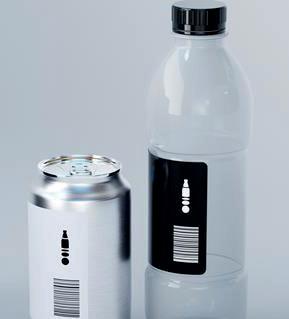
When a container is returned to a grocer it needs to be scanned and identified and therefore new barcodes will need to be placed on each beer can along with the scheme logo. This means changing all barcodes including on all multipacks. Exchange for Change has now published their material specifications which details these requirements and I’d recommend looking over it. Their document outlines changes you may need to make to your labels and containers including positioning barcodes on the can – for example they prefer vertical rather than horizontal barcodes.
SIBA has been able to secure an exemption for those producing fewer than 5,000 containers per product line (6,250 in the first year to December 2028). These beers won’t have to charge the deposit, nor have the logo or barcode on it - although breweries will still need to register and record the number of items placed on the market.
Ahead of the scheme going live, all breweries selling cans will need to register with Exchange for Change and register each product at least 12 weeks ahead of launch – so by 9 July 2027. Breweries also need to factor in the time to register new products in their future plans.
What happens if you sell to customers directly? If you have an online shop you’ll need to make adjustments to your store to
charge the deposit. Where DRS containers are sold in pubs and taprooms for immediate consumption on the premises there is a choice whether to charge a deposit or not. This also applies in mixed retail settings - i.e. where the brewery shop is in the taproom.
One of the most challenging aspects of the scheme will be the transition period – when new DRS products can be sold and when non-DRS beers can’t be. Currently the plans are being developed and we should have more information on this shortly. But you should expect to have a short window ahead of October (such as a month) when new DRS products can be sold to retailers but not to consumers and then a window after it goes live to sell through old products to retailers.
The scheme will definitely see some upheaval and I’d recommend signing up for updates from Exchange for Change and reading up on SIBA’s briefing to start getting you ready.
As ever, if you want to know more or have any views on this issue please do get in touch using the details on this page. Equally, if you’re interested in hosting an MP visit please let me know.
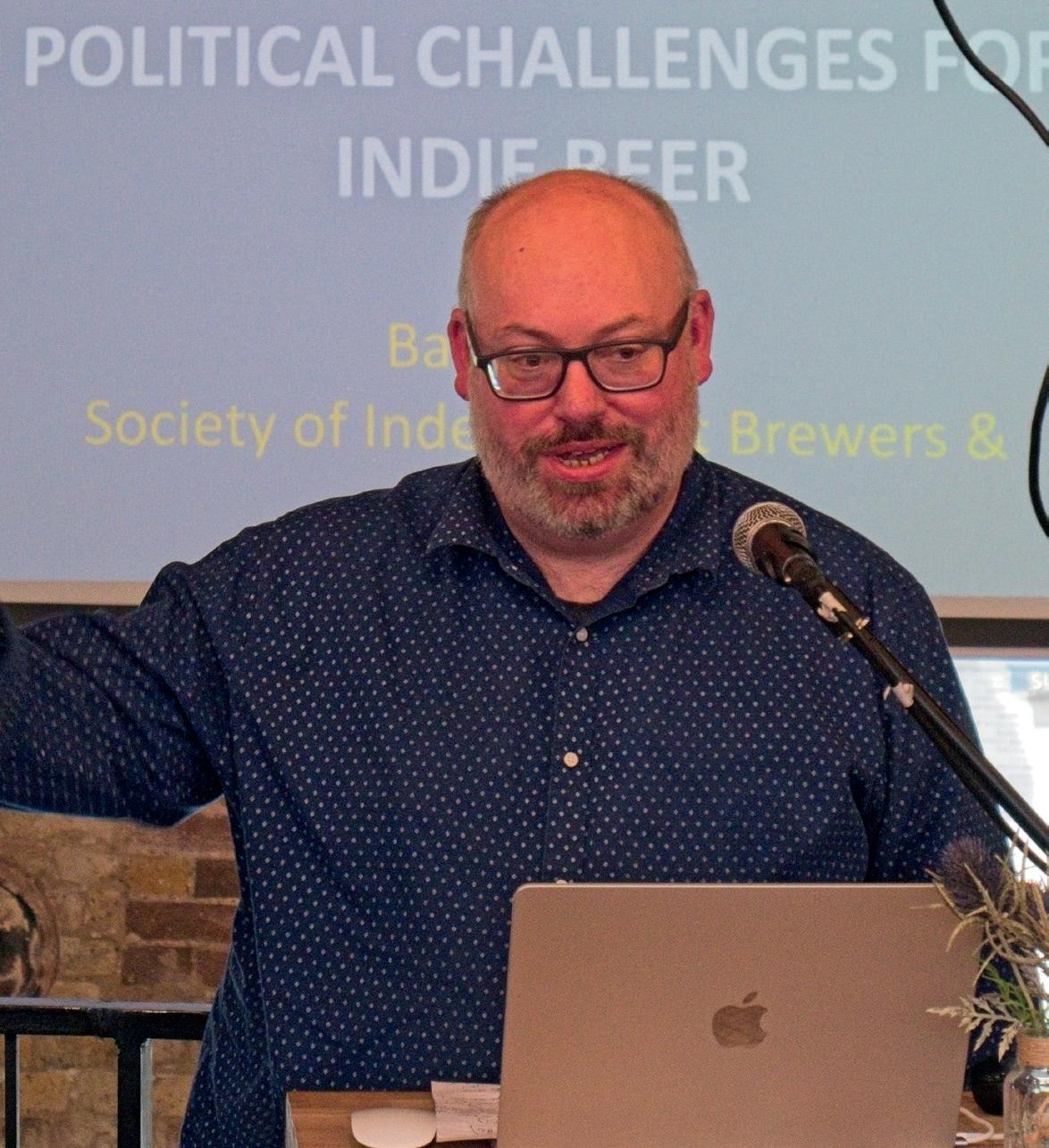
Barry Watts is Head of Public Affairs and Policy at SIBA. He covers political relations and policy for SIBA members. He can be contacted at barry.watts@siba.co.uk or 07977837804.
Amplifying the Opportunity: Why Gen Z Matters for Independent Beer
Tom Bott, Co-founder and Managing Director of London’s Signature Brew, is in the hot seat for our Independent Thinking section this time, and gives his take on some of the more interesting findings from the exclusive consumer poll data in SIBA’s latest Independent Beer Report…
A recent report from SIBA threw up a stat that should make every independent brewer sit up. Eight in 10 beer drinkers think it is important to have a range of beers from small breweries in pubs alongside global brands. Among 18 to 24-year-olds, that jumps to 89%.
For years, the narrative around Gen Z has been that they are drinking less. In reality, they are drinking differently. More selectively. More intentionally. With a clearer sense of what they want and why they want it. Right now, the signal is clear. Our job is to amplify it.
Values First
Gen Z is often framed as a difficult audience. In truth, they are just more switched on. They care about what sits behind the product as much as what is in the glass. Provenance, purpose, and point of view all matter. Not as nice-to-haves, but as the starting point. This plays directly to the strengths of independent beer.
Locality is not a story we need to invent. It is inherent. Brewing for, selling to, and showing up in our communities is simply how we operate. Environmental responsibility follows the same pattern. Breweries like Stroud Brewery have shown how sustainability can sit at the heart of a brewery’s identity rather than existing as a bolt-on marketing exercise. Inclusivity is another area where independent breweries have built a genuine advantage. The spaces indie brewers create are often some of the most welcoming and inclusive on-trade environments within their communities.
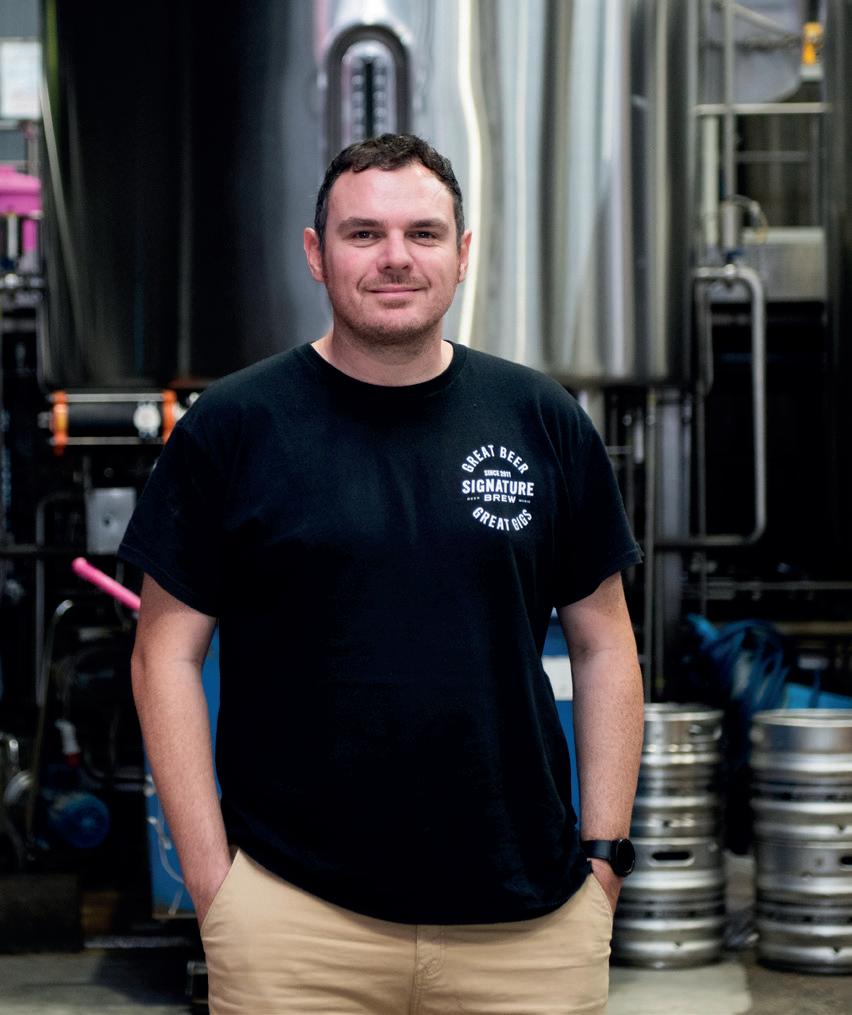
Tom Bott, Co-founder and Managing Director of London’s Signature Brew
You can download the full SIBA Independent Beer Report completely free via this QR code.
Independent Thinking: Tom Bott, Signature Brew
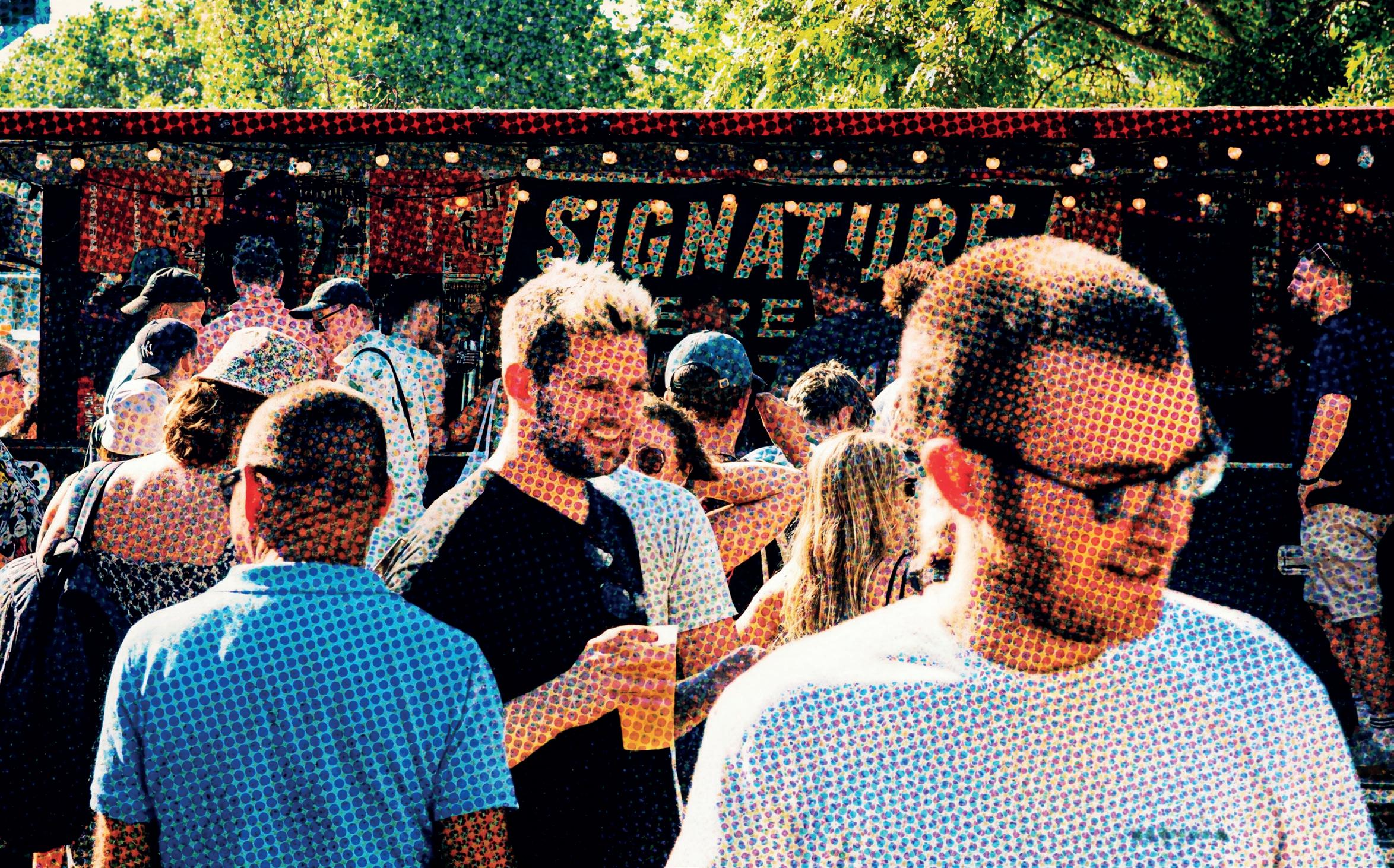
For years, the narrative around Gen Z has been that they are drinking less. In reality, they are drinking differently. More selectively. More intentionally. With a clearer sense of what they want and why they want it. Right now, the signal is clear. Our job is to amplify it.
Health is often positioned as a challenge for beer, but it is also an opportunity. Breweries like Small Beer are proving there is growing demand for lower ABV products that allow consumers to moderate without sacrificing flavour, occasion, or social connection. Increasingly, younger drinkers still want the experience, they just want it on terms that fit their lifestyles.
Culture Is the Real Battleground
Where independent brewers have a decisive edge is culture. If values are our strength, then owning culture is our opportunity. Global brands can sponsor culture. They can attach themselves to it. What they struggle to do is originate it. Independent breweries can. Over the past year, we at Signature Brew have seen this first hand.
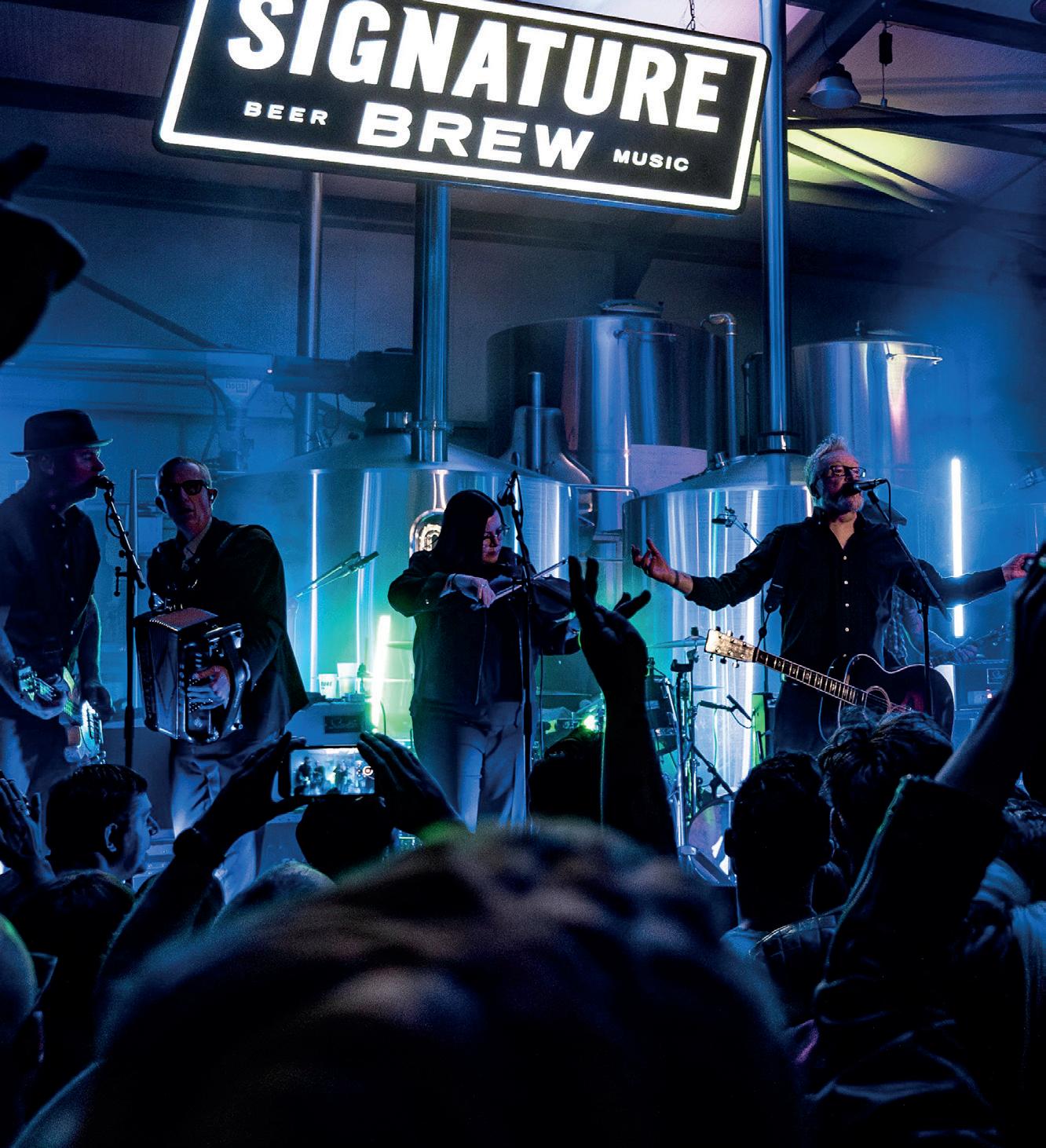
At Signature Brew Haggerston, Cat Burns played a show on the night of the final of the celebrity version of The Traitors. At our brewery in Walthamstow, Lila Iké launched her new album in glorious sunshine to a packed crowd. On both occasions, younger audiences were completely engaged. Beer in hand, they unplugged, connected with their idols and peers, and had unforgettable experiences together. Those moments were not anomalies. They were proof points. They showed that when you create safe, interesting, culturally relevant spaces, younger drinkers do not disengage from beer. They engage more deeply with it. And importantly, the beer still has to deliver. It has to taste good. That remains non-negotiable.
While it may be true that we have seen a reduction in breweries and choice in some mainstream pubs, in my view the quality of independent beer has never been better than it is today, and that needs to be celebrated.Experiences like these are now actively informing how we think about the future.
It is also worth being clear on what we mean by “young”. Increasingly, this is less about a fixed age bracket and more about a mindset. In major cities in particular, people feel young well into their thirties and
shape their lives accordingly. The opportunity is not confined to one cohort. It extends to anyone who identifies with that way of living.
From Preference to Participation
The SIBA stat is encouraging, but it is only the starting point. Saying you value independent beer is one thing. Choosing it consistently at the bar is another. That word “alongside” matters. This is not about replacing global beer. It is about sitting confidently next to it, being part of the consideration, and increasingly becoming the more interesting option within the category.
Closing that gap is where the opportunity sits.
To do that, independent brewers need to think beyond simply being present. We need clear, recognisable brands that cut through at the bar, consistent quality that builds trust over time, and commercial discipline that allows us to compete effectively. Crucially, we also need to give younger drinkers a reason to actively seek us out.
It is about executing the fundamentals properly while doubling down on what makes us distinct.
A
Generational Opportunity
It is easy to focus on the headwinds facing the category. Costs, competition, and margin pressure are all real.
But running alongside that is a generational opportunity. Gen Z is not just open to independent beer. They expect it to be there. Few categories are given that level of permission. The question is whether we are set up to make the most of it. For independent brewers, the path forward is not to mimic the scale of the globals. It is to sit confidently alongside them, offering something they cannot, and doing so with clarity and intent.
The signal is clear.
Now is the time to amplify it…
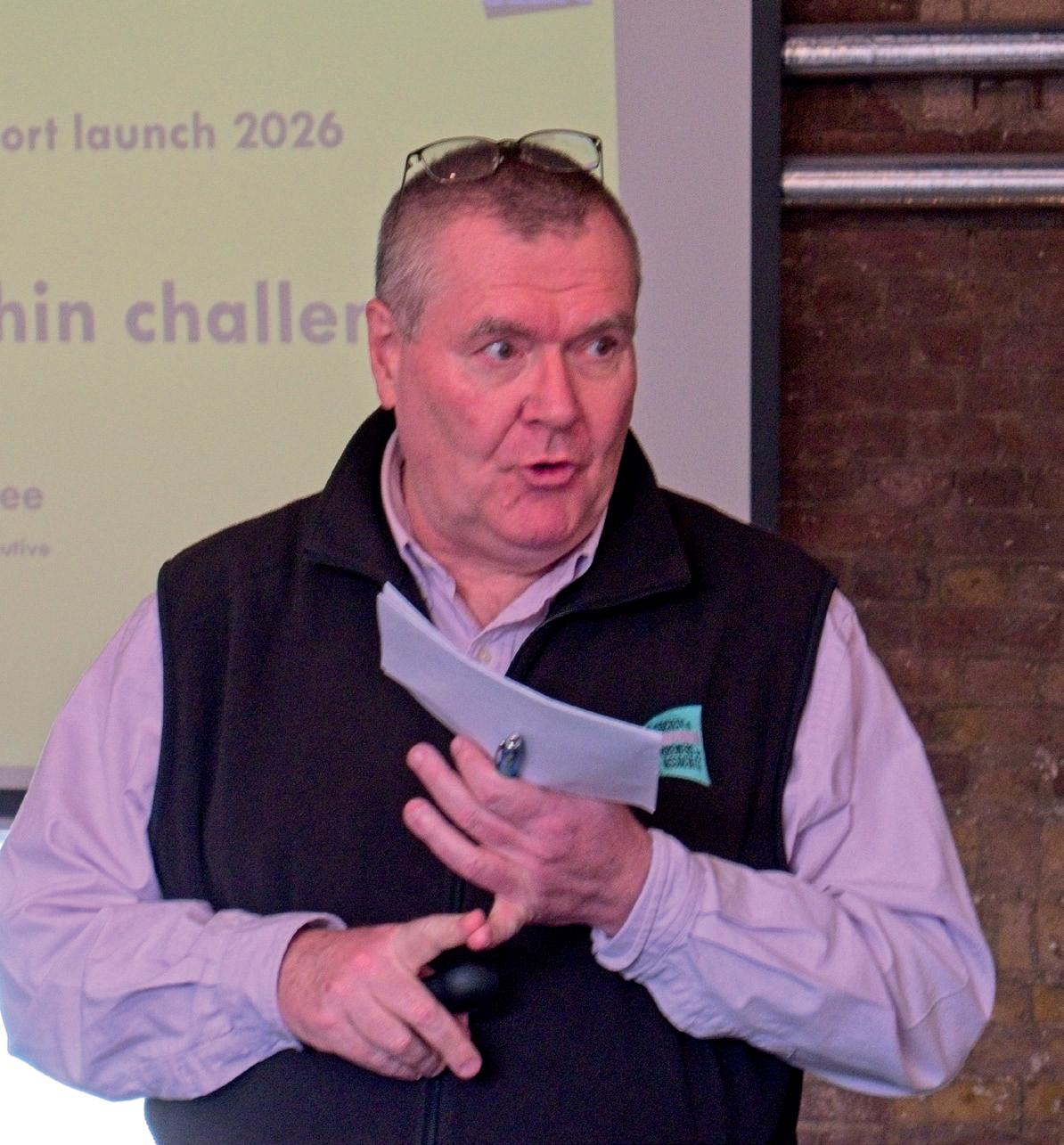
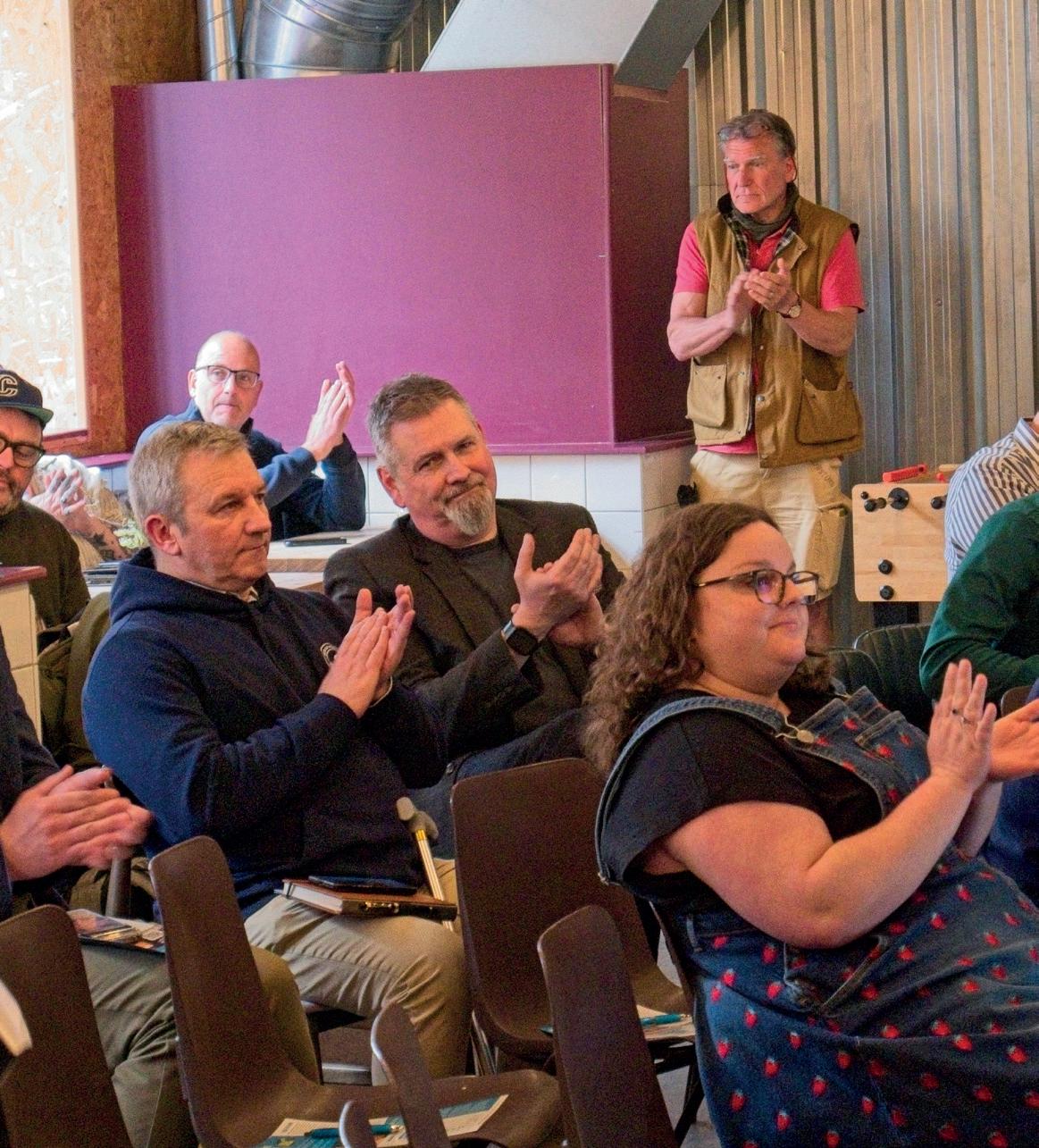
The SIBA Independent Beer Report 2026 launched at Sambrook’s Brewery
In April, SIBA unveiled the latest edition of its annual Independent Beer Report at an event in London attended by SIBA members, media and industry analysts, where the key findings were presented by the SIBA team.
The report this year found that independent breweries are continuing to capitalise on their local roots to win over consumers despite the tough trading conditions.
Against the backdrop of record pub and brewery closures, the UK’s small independent breweries have shown how acting nimbly and capitalising on local roots can win over consumers.
The report illustrates how breweries have expanded their local offering and are now selling more beer directly to drinkers. Around half of independent breweries now have a shop (51%) and 46% have a taproom on their brewery sites with a third (33%) selling beer through market stalls and events. To help manage this expansion, breweries say they intend to create over 780 jobs this year and more see investment in developing staff as a top priority.
This is in response to growing consumer interest in indie beer, with the latest SIBA/YouGov poll showing that eight out of 10 beer drinkers, rising to 89% among 18-24 year-olds, say it’s important to have a range of beers from small breweries on offer alongside global brands. And in a positive sign for the sector, the number of consumers that ever drink beer has clocked up to 50% in this year’s results, reversing the declines seen in previous years.
The majority of the beers made by independent breweries continue to be packaged into cask (58%) with pale ales, bitters and golden ales dominating the top three beer styles. While only just over a quarter (27%)
in association with
of beer consumers currently drink cask beer, the survey looked at the best ways to reengage consumers with cask. Four in 10 said they would try cask beer if they were offered a free sample and 31% would try it if it was made locally. And to demonstrate the importance of advocacy, 43% of drinkers said they would try a new drink if it was recommended by a friend or family member.
Despite this evolving demand, the market remains restricted. While the new report shows that 82% of small breweries sell some beer to local pubs they report being unable to sell on average to 62% of the pubs in their local area due to the dominance of the larger global brewers.
The report also shows that the independent sector remains fragile. Significant pressures – such as from the cost-of-living crisis, government regulation and taxation and overseas uncertainty – are combining as a threat to the sector. Almost half (49%) of breweries say that survival is their top priority and nearly a third (32%) expect turnover to fall this year. More than half (53%) of brewers sought no investment last year which saw 137 independent breweries close and one pub a day shutting its doors.
“There is no doubt that trade is tough and events are changing rapidly, but small independent breweries demonstrate what successful local community businesses can achieve if they have the right conditions,” said SIBA Chief Executive Andy Slee.
“Small breweries are nimble and innovative and want to expand and grow. Consumer interest for their products is there, they just can’t always get their beers in front of them. Having their own taproom and shop is part of the solution and it’s great to see that more are doing so. But it’s also important to have the chance for local pubs to put them on the bar and access continues to be too restrictive for most small breweries.”
Report highlights
• 50% of consumers in the UK ever drink beer, an increase of 3% on 47% last year. 38% of 18-24-year-olds say they drink beer.
• 80% of beer drinkers, and 89% of 18-24 year olds, say it is important to have a range of small brewers’ beers on the bar alongside global brands.
• Mean average production volumes have fallen by 10% in 2025, but the median average grew by 14%. Overall UK beer sales were down 1.8% in 2025 and 8.4% down on 2019.
• 51% of breweries have an on-site shop, 46% have a taproom and 57% have a webshop.
• 30% of beer is sold directly to consumers and 33% sell through market stalls and events.
• Almost half (49%) of independent breweries say that survival is the top priority.
• Independent brewers report on average being unable to sell to 62% of the pubs in their local markets.
• 31% of the indie beer workforce is female including 21% of brewery owners. 31% of breweries day that staff development is a top priority with 18% having or working towards a qualification.
• 53% of brewers sought no financial investment last year and 25% of investment was sourced privately through loans from directors or individuals or using personal funds.
• Keg production decreased 5% to 19% of average production in 2025. However bottle production increased to 12% and cans to 11% and cask remained steady.

USE THIS QR CODE TO READ THE FULL REPORT
• Breweries report they expect to create 786 new jobs in 2026, a significant increase from the 557 reported last year.
• 69% of brewers said pale ale was in their top three most produced styles, followed by bitter (56%) and golden ales (42%).
• 41% of beer drinkers would try cask beer if they were offered a free sample and 31% would try if it was made locally.
• 43% of drinkers say they would try a new drink on the recommendation of a friend or family.
• Only 8% of breweries do any export, a fall from 12% last year, representing only 0.5% of average beer production.
• 91% report that their relationship with their local community is important with on breweries on average donating £3,567 to charities in 2025.
THE
Highlights From The 2026 SIBA Members’ Survey…
DECREASE IN AVERAGE (MEAN) BEER PRODUCTION VOLUMES IN 2025
BUT THE MEDIAN AVERAGE (REPRESENTING AN AVERAGE SIZED SIBA BREWERY) INCREASED SIGNIFICANTLY BY +14%
*Production data from SIBA’s membership returns and members’ survey
SIBA BREWERIES AT THE START OF 2025
MEMBERSHIP UP +1.8% FROM 661 IN JANUARY 2024 673
786 NEW JOBS ARE EXPECTED TO BE CREATED BY SIBA MEMBER BREWERIES IN 2026*
THIS REPRESENTS A SIGNIFICANT INCREASE FROM THE 557 IN LAST YEAR’S REPORT
*Number estimated from SIBA survey results
ONLY 0.5% OF SIBA MEMBERS’ BEER PRODUCTION WAS EXPORTED IN 2025
ONLY 8% OF BREWERIES DO ANY EXPORT, DOWN FROM 12% IN 2024
-5%
THIS HAS RISEN BY +2% FROM 30% LAST YEAR 32% -10%
FALL IN KEG PRODUCTION IN 2025
DECREASING FROM 24% OF SIBA MEMBERS’ PRODUCTION IN 2024 TO 19% IN 2025
BOTTLES OVERTOOK CANS AGAIN IN 2025, ACCOUNTING FOR 12% OF SIBA MEMBERS’ PRODUCTION +3%
RISE IN BOTTLED VOLUMES IN 2025
OF SIBA BREWERS SAID THEY EXPECTED TURNOVER TO DECREASE FOR THE TAX YEAR TO APRIL 2026
THIS HAS RISEN BY +3% FROM 46% LAST YEAR 49%
OF SIBA BREWERS SAY SURVIVAL IS THEIR KEY PRIORITY THIS YEAR
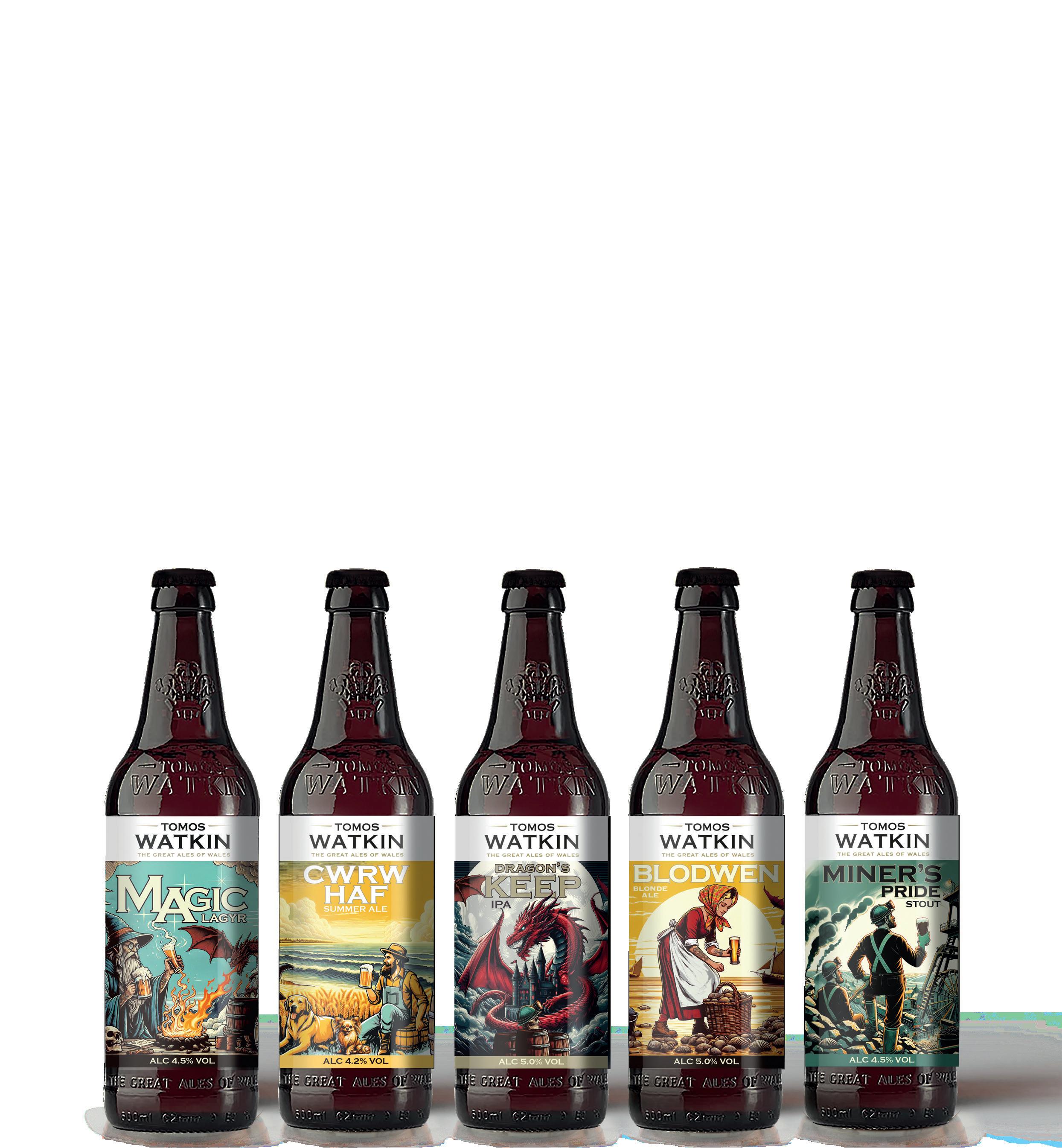
Both our trade and B2C customers are excited by the new assets and we couldn’t be happier with the process of working with the LemonTop team and ultimately the final result. 10/10 would recommend.
Joelle Drummond Marketing Director -
Tomos Watkin Brewery

69%
OF SIBA BREWERS SAID PALE ALE WAS IN THEIR TOP 3 MOST PRODUCED STYLES IN 2025
OF SIBA BREWERS SAID BITTER WAS IN THEIR TOP 3 MOST PRODUCED STYLES IN 2025 56%
OF SIBA BREWERS SAID GOLDEN ALE WAS IN THEIR TOP 3 MOST PRODUCED STYLES IN 2025 42%
WAS THE AVERAGE CHARITY DONATION PER BREWERY IN 2025 91% £3,567
OF SIBA MEMBERS SAY THEIR RELATIONSHIP WITH THEIR COMMUNITY IS IMPORTANT
79% SAY IT IS VERY OR EXTREMELY IMPORTANT



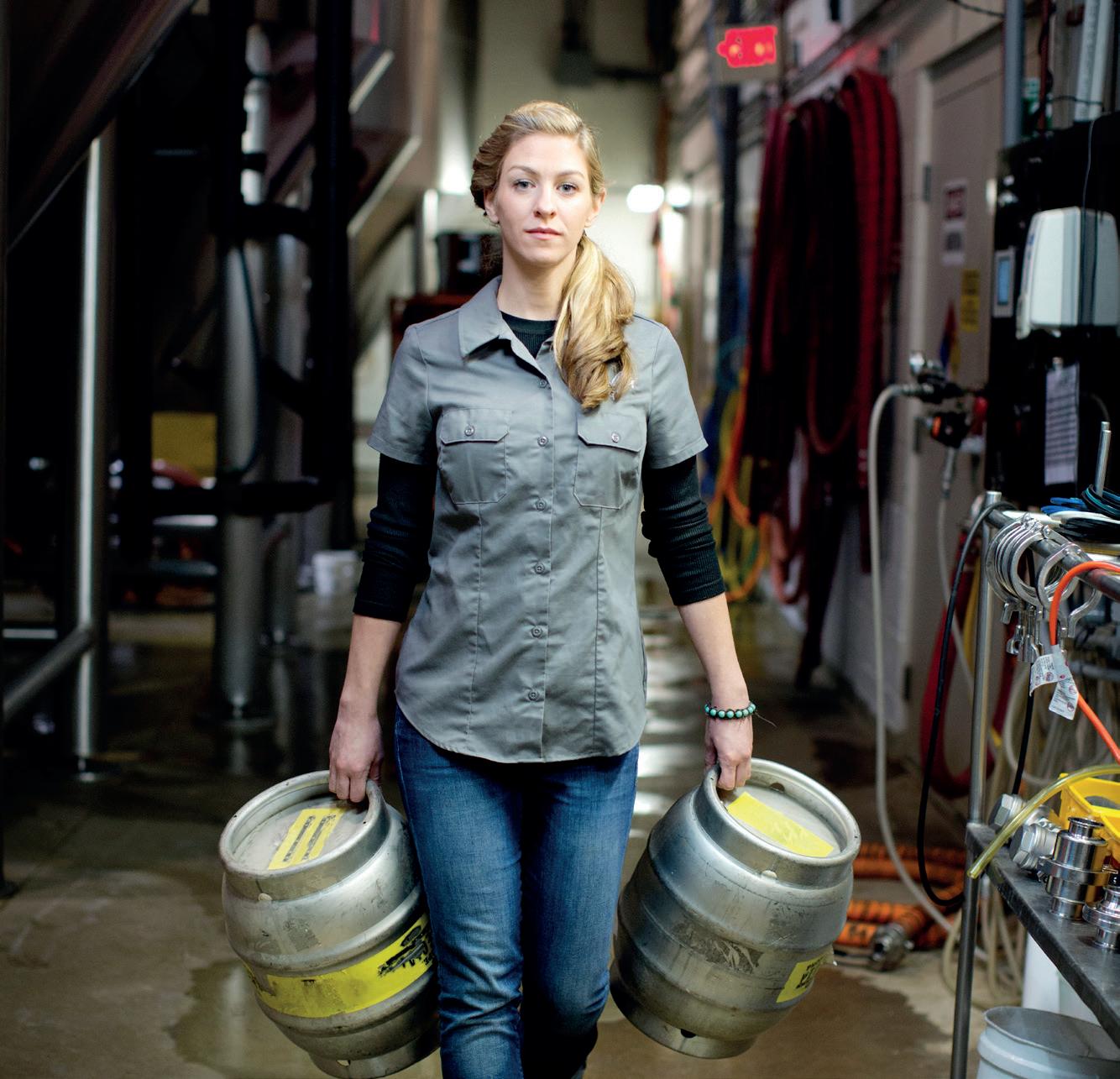
OF THE 2025 INDIE BEER WORKFORCE IS FEMALE, AN INCREASE FROM 30% IN 2024 BUT ONLY 7% OF BREWERS ARE FEMALE, DOWN -1% ON LAST YEAR
OF BREWERY OWNERS ARE FEMALE BUT 72% OF ADMIN AND ACCOUNTING STAFF ARE FEMALE 21% OF TAPROOM STAFF ARE FEMALE

TOWARDS
London Brewing Co: Swizzle
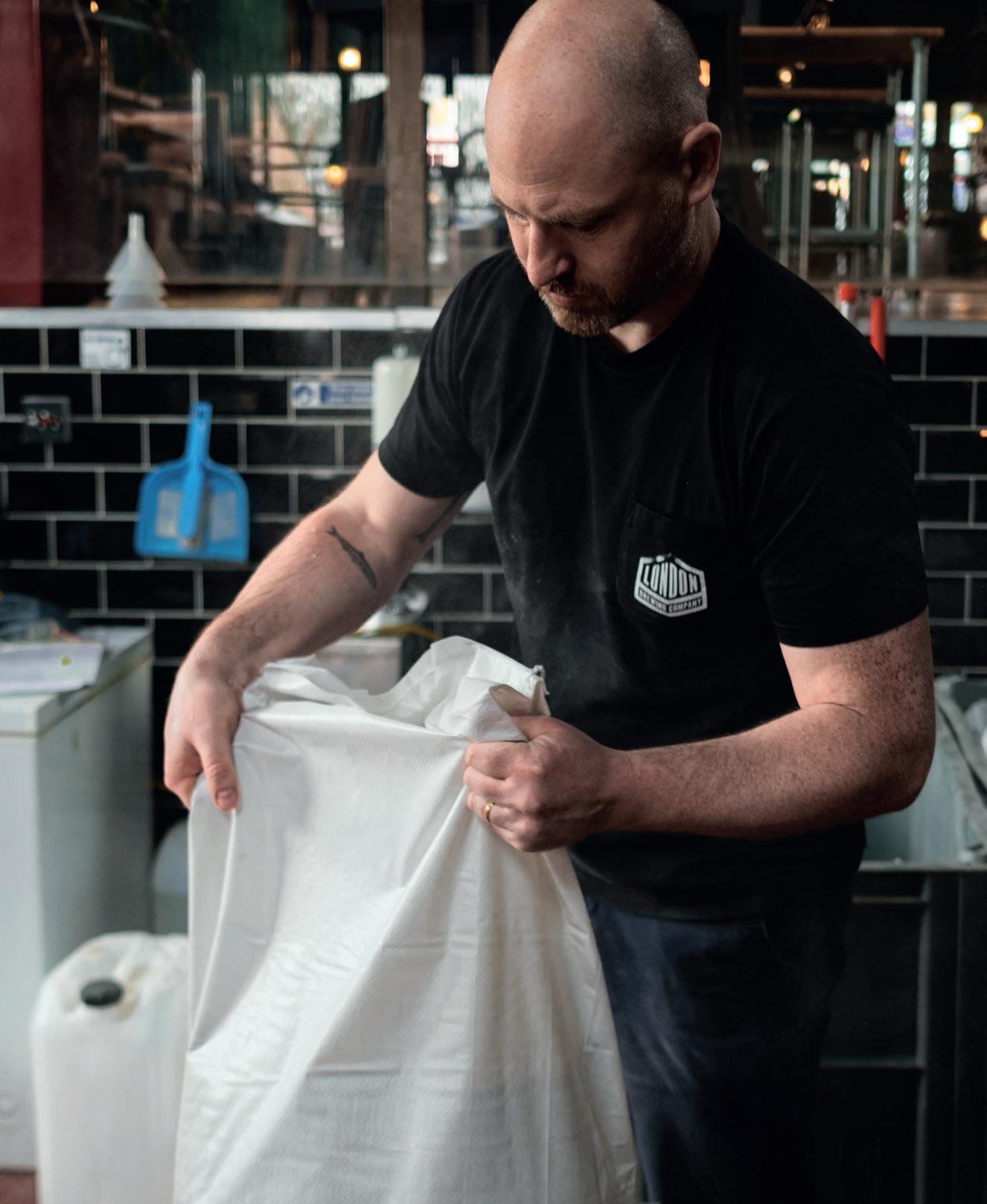
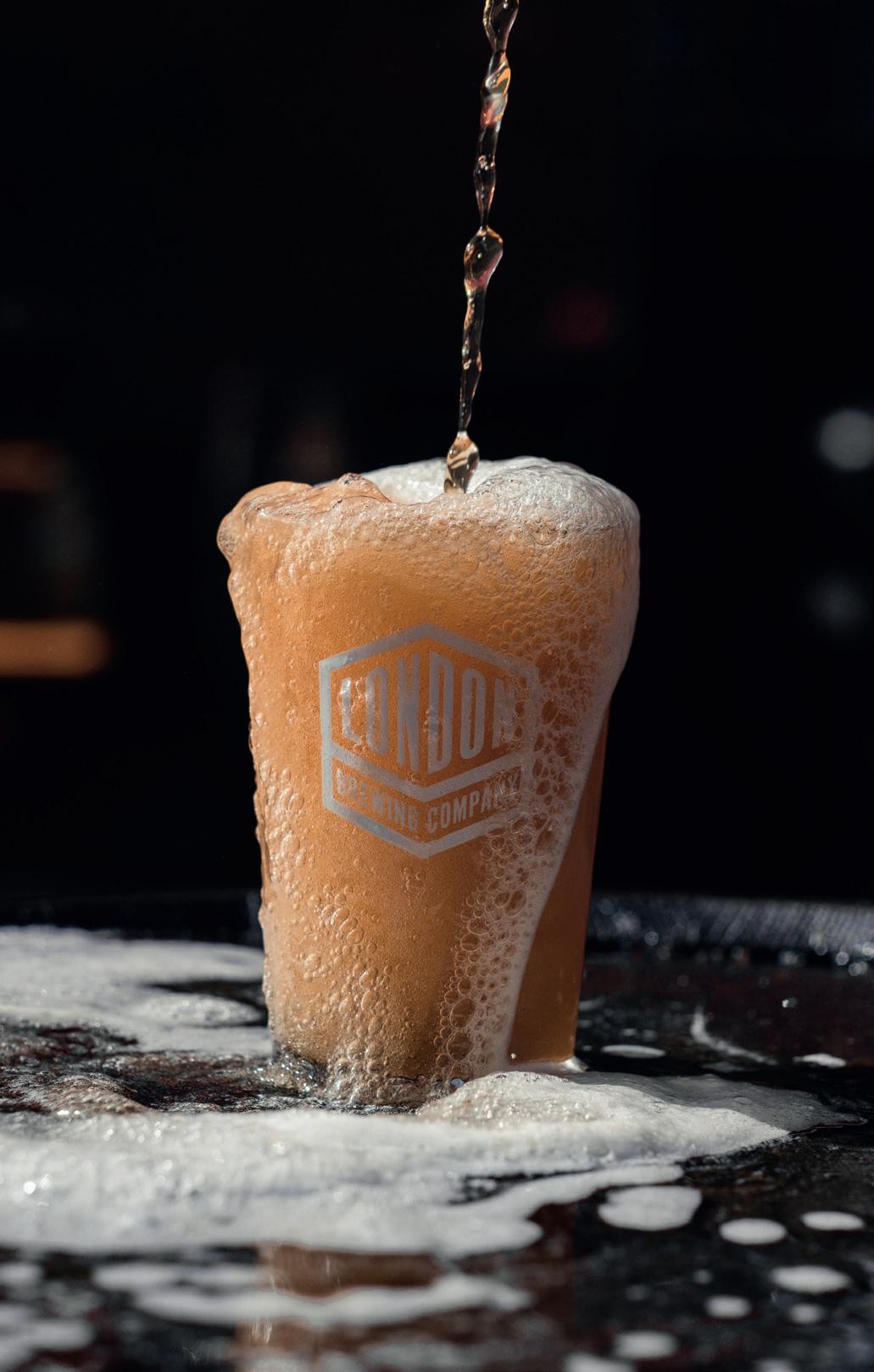
Andy Parker from Elusive Brewing, the current British Guild of Beer Writers’ Brewer of the Year, speaks to Alex Woods at London Brewing Co to find out more about the method behind their beer Swizzle…
London Brewing Co is based in a large brew pub in North London but they’re certainly not newcomers, having started brewing back in 2011 when craft brewing in London was just starting to boom. I caught up with Head Brewer Alex Woods to discuss their backstory, how he got into commercial brewing as a former home brewer and their recently announced fantastic overall win in CAMRA’s Champion Winter Beer of Britain competition!
I remember drinking London Brewing Co beers at The Bull in Highgate as far as back as 2012. What’s the story?
Yes, the brewery started life in the basement of The Bull back in 2011, long before my time, as a cask-only brewery. There are fun tales of a Chorizo Mild from our early days, which gives you an idea of the sort of beer that was being produced back then! We moved up here to The Bohemia in North Finchley back in 2014 and installed a brand new 10HL kit at the rear of the pub. Aside from a couple of modifications, this is the same kit we still brew on today.
Tell us a little bit about your own brewing background and how you got into the industry. How has the industry changed since you started out?
My interest in beer and brewing first began when I was working in Borough Market about 12 years ago. After finishing a long shift at the market, we would have a beer together in one of the bars nearby. I vividly remember drinking beers from The Kernel for the first time and being blown away by the flavour and aroma! I soon started to make some beer at home, and became more and more interested in the science and art of brewing!
One Sunday night I saw a job ad for a role in the packaging team at Beavertown’s old Lockwood site. I went for it and this kickstarted what has now been a decade in
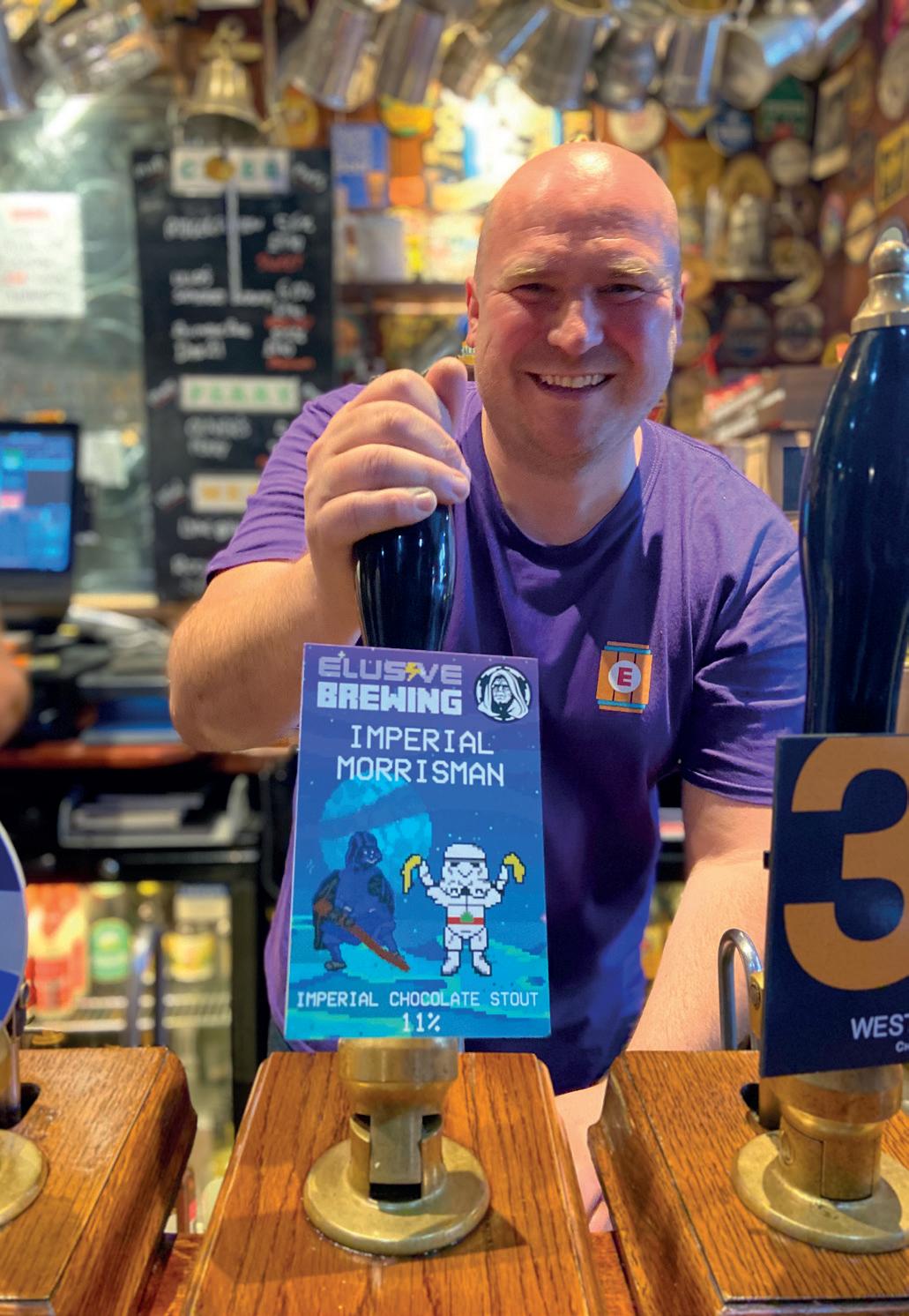
Homebrew in Focus columnist Andy Parker
Swizzle Specification:
Target Water Profile: Mash pH 5.3, 4:1 Chloride:Sulphate ratio
Malt Bill (mash at 74C for 60 minutes):
1.75 KG Pale or Lager Malt
1 KG Torrified Wheat
350g Chit Malt or Dextrine Malt Boil (60 minutes):
15g Columbus T90 @ 60 minutes
45g Citra or Centennial T90 WP @ 81C
75g Azacca T90 Hop Dip
For hop dip add pellets directly into the FV
brewing, working my way up through packaging and cellaring to working on the brewkit. I was there until about six months after the Heineken takeover, and was then fortunate enough to spend about 3 years working for Evin down at The Kernel afterwards - another amazing experience, which taught me a very different way of making beer.
I started my own brewing brand during this time - Little Faith down in Deptford, which sadly didn’t recover from the commercial pressures of Covid. We used to brew some of our beers at The Bohemia and through that I met George, then Head Brewer, and Senan who is still the owner. When George left to go to ELB, I took over the reins and have been here almost exactly four years.
You recently won CAMRA's Champion Winter Beer of Britain with your Beer Street Bitter which is an incredible achievement! Tell us about what that means for the team. I’m a big football fan, and have likened it to our local team Barnet FC winning the FA Cup. When you look at the list of breweries who have won it in the past, it is really humbling, and there are some truly great beers in that list. We were all so chuffed because it is a beer that we have put a lot of work into over the past couple of years, making it into something that we all love drinking. We made it a little drier and more bitter, with a rye being added to the malt bill and an increased hop aroma on the finish. It’s a beer that we are very proud of, so it was a real thrill to win the award.
How do you strike the balance between innovation and ensuring your regulars can reliably find their favourites on the bar in your two venues?
That is a tough balance, because nowadays we sell the vast majority of our beer outside our two venues (Ye Three Lords in Aldgate, and The Bohemia), and most of our customers buy the same few beers from us – Upright (our GF Session IPA), Gigglemug (our Hazy Pale) and London Lush (our cask Session Pale). We do rotate a few seasonal specials into our taplist, and have also brewed some great collabs in the past few years.
One really nice thing we do is that once per month we hold an event called The Brewers Social, and brew a special one-off cask or keg on my old homebrew kit just to drink with our regulars. It’s a great opportunity to try some new ideas out, or brew something completely different, and to get feedback from those who drink our beer every week. Having that direct interaction with your customers is one of the best things about being a brew pub.
Swizzle really is the perfect summer beer! Plenty of hop character in a light and sessionable package. What did you have in mind when you designed the recipe and what were your considerations?
Swizzle is probably a bit of an homage to The Kernel’s Table Beer – maybe the great forerunner of the style – which I used to love
with around 10% of the total wort run in at 80C and left to steep with the hops for 20 minutes. Transfer the rest of the word cool to achieve pitching temperature then pitch, leaving hops in the tank.
Fermentation (5 – 7 days):
1 Pack Lallemand Verdant IPA. Pitch at 20C and then rise by 1C every day up to 23C
brewing in Bermondsey. It would probably be my desert island beer. The recipe is a sort of hybrid wheat beer in terms of its grain bill, fermented with a hazy yeast strain, and with a bit more hop bite to it than our other hazy beers (what I like to call structural bitterness). It needs that bite to balance out quite a high finishing gravity and the chloride heavy water profile.
Tell us about the recipe itself and how you came up with the grist, hop selection and fermentation profile. What can someone ordering a pint of Swizzle expect to find in their glass?
Swizzle is really just designed to be a super easy-drinking, lower ABV pale. I think the real challenge with this kind of beer is getting enough body into it with the reduced level of alcohol and with Swizzle this is done with malt sweetness, hop character and an expressive yeast strain. The grist is pretty much the same as we use in another one of our lower ABV hybrid wheat beers, All Ripe, with the big difference being water profile, and a much higher mash temp here to make sure we get plenty of residual body in those unfermentable sugars.
In terms of hops, we have mostly used Azacca, with great results. However, the latest batch I have in tank was fermented on a delicious bag of Peacharine T90s from New Zealand’s Freestyle Hops. Any hop that gives a nice, gentle fruit flavour without too much harshness could work well in the recipe. The fermentation profile allows the yeast to give some character to the beer, starting off at 20C, then increasing a degree per day to hopefully get to about 23C. The Swizzle that is on the bar at the moment is full of lovely stone fruit esters, with peach and apricot hop aroma. It has a nice, rounded malt sweetness to back this up followed by a gentle balanced bitterness. The recipe uses hop dipping over dry hopping. Can you explain the process you're using and what it brings to the finished beer?
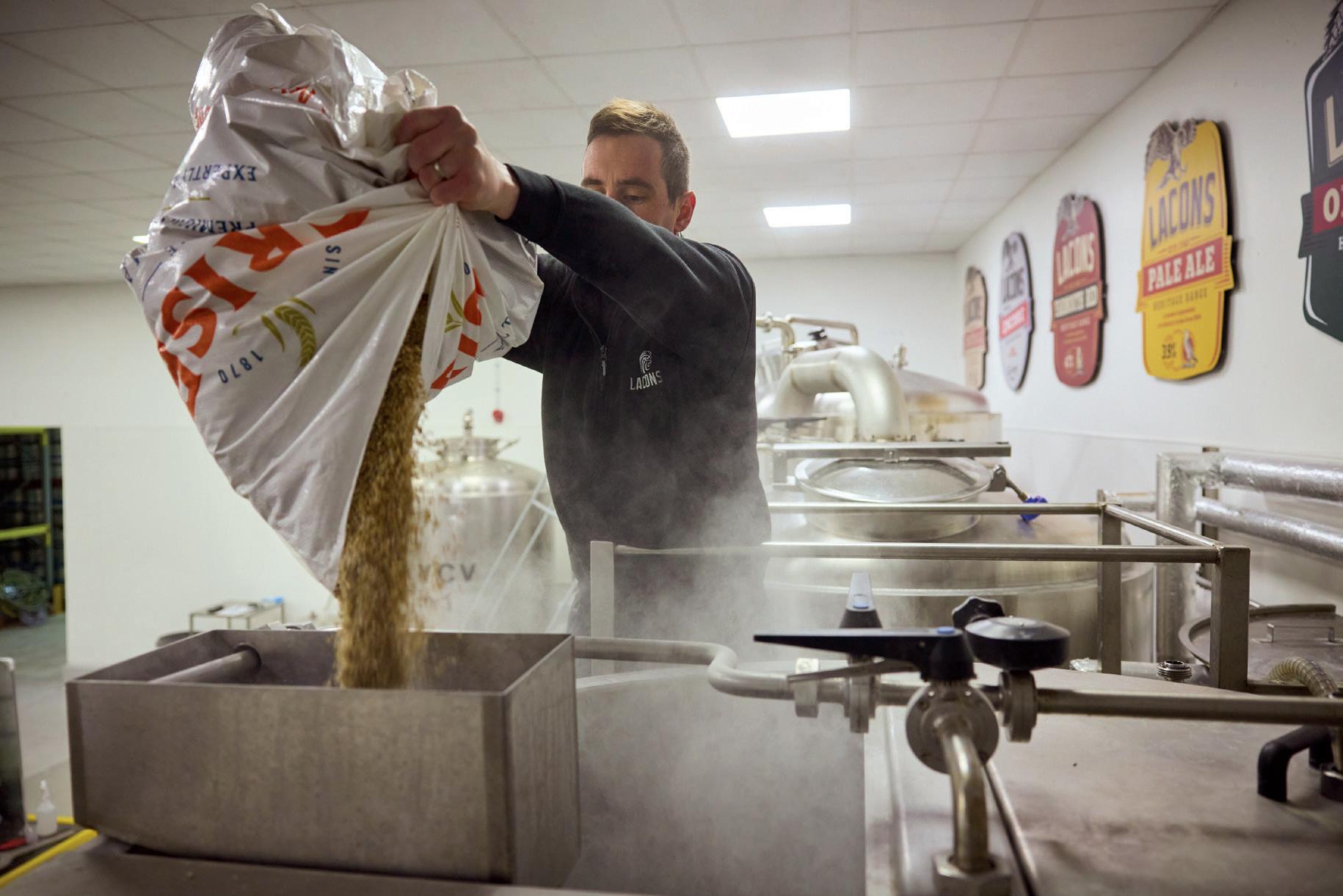
We used to always add the last hops to Swizzle post fermentation, as a conventional dry hop, Due to the high finishing gravity of the beer, we would sometimes experience hop creep that resulted in the beer finishing a couple of points lower than the designed recipe. Hop dipping came to light as a way of overcoming this, as you are effectively denaturing the enzymes in the hops (which are responsible for the hop creep) with that hot soak, whilst also make all those lovely flavours in the hops available for bio-transformation during fermentation. We use a pretty low hopping rate in the FV for this beer (a single 5kg foil into a 14HL batch), but the hop dipping definitely gives an amazing return on that in terms of the aroma in the finished beer!
We use lactic acid to acidify the brewing liquor, and then a combination of calcium chloride and potassium chloride to get a good ratio of chloride to sulphate (target 4:1). Potassium is used to achieve that without adding an excess of calcium, which I find can come through as a discernibly salty/chalky finish in some beers.





Rooted in tradition
St Austell Brewery’s Brewing Director Georgina Young looks at how the historic business has always balanced tradition with innovation as it celebrates 175 years of brewing…
This year, St Austell Brewery celebrates an extraordinary milestone of 175 years of brewing. From our proud beginnings in St Austell to our cutting-edge facilities at Hare Brewery, we have always been driven by a commitment to brewing brilliant beer.
Our anniversary prompts reflection on the balance we strike between our history and the opportunities of modern brewing. We are rooted in tradition – it’s hard not to be in an original Victorian brewery where we still mill the malt in the tower - yet we are always moving forward.
You feel our heritage most strongly when you walk through St Austell Brewery itself. The walls have absorbed generations of craft and care. I often think about the brewers who came before us, our founder Walter Hicks and his daughter Hester Parnall - who took the helm after his death - walking the same corridors. My office shelves hold brewing books dating back to the 1800s, their pages filled with recipes and notes from the past. We are custodians of that legacy, building on it and never taking it for granted. We often turn to these historic books, replicating
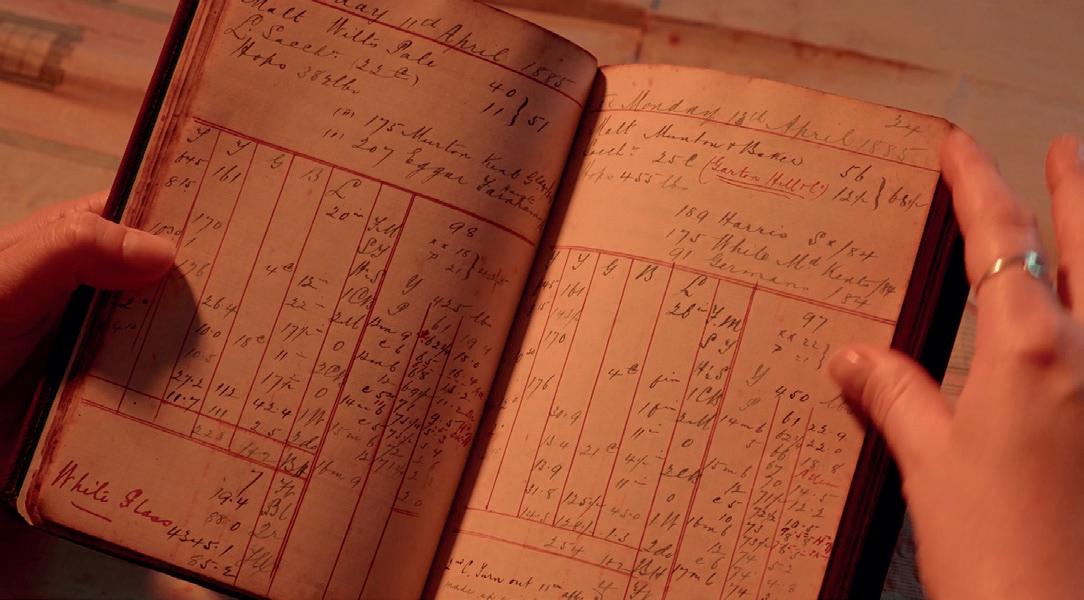
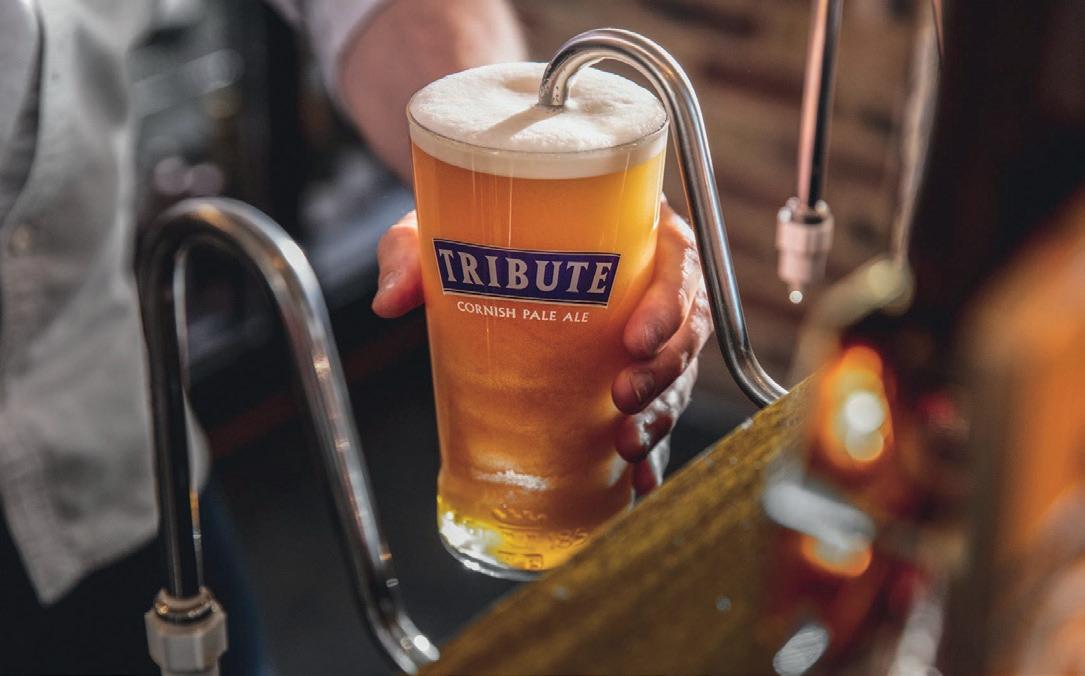
recipes and honouring the beers that have shaped us. We are particularly excited to bring back some of people’s favourite brews from over the years to celebrate our 175th year, including the best bitters Tinners and Trelawny, as well as Admiral’s Ale, first brewed in 2005 to mark the bicentenary of Nelson's triumph at Trafalgar.
But heritage alone does not keep us moving. Innovation has shaped our business just as much as history has. Our modern brewhouse, installed in St Austell in 2012, was a pivotal moment - an example of tradition evolving. The acquisition of Hare Brewery in Bath in 2016 followed, which we then fitted with the latest brewing technology and a state-of-the-art canning line.
Our huge copper, now decommissioned, still sits proudly in the St Austell brewhouse, along with the old fermentation vessels at the top of the brewery, which were too large and heavy to remove. Our wooden fermentation vessels remain in use day and night, now lined with polypropylene, and five 320-barrel metal vessels capable of holding more than a quarter of a million pints at a time now sit alongside them. In 2018, we moved to crossflow filtration, reducing waste and taking a more sustainable approach to production. Aber instruments ensure our yeast is pitched accurately at the start of fermentation, and our laboratories are
continuously upgraded with new equipment to keep us at the forefront of quality. For us, technology is a tool that helps us protect tradition in a modern world.
Innovation is not always about shiny new machines. Sometimes it means exploring new hop varieties or new malts or embracing a fresh idea. Our Cask Club and limitededition bottled beers give our brewers the freedom to experiment, trial new ingredients, revisit old recipes and push boundaries without losing sight of who we are.
Even Proper Job - now in its 20th year - was once an innovation. A bold, Americaninfluenced IPA long before that style became fashionable, it began as a one-off Celtic Beer Festival brew. Today, we have reimagined it through Proper Job 0.5 percent, carefully crafted with an understanding that lowalcohol beer is a profoundly different product that requires science, patience and persistence.
As we look to the future, my hope is simple; that in another 175 years we will still be raising a glass to our beers in our pubs. Tastes will change, but the joy of a great beer shared in a great pub never will.
Find out more at www.staustellbrewery.co.uk

Independent Gas Future
The popularity of beer and cider demands quality. A reliable and quality supply of CO2 is therefore crucial to your business, whether you operate within the manufacturing industry, or if you own a bar or restaurant.
Carbonation (or ‘forced’ carbonation) within beers and ciders is crucial for a variety of reasons. Not only does it enhance appearance, but the flavour and aroma are both improved too. Forced carbonation is the method of choice for breweries and bottling plants today.
We understand the need for a reliable CO2 supply, so as well as manufacturing a CO2 pressure vessel that is tailored to your exact requirements, we can work with gas suppliers to source a CO2 supply without the need to be tied to a single gas contract.
IGC is your nationwide high-quality CO2 provider of choice for beers and cider.
Get in touch or request a quote today
Our Comprehensive Service Guide
■ Sales centre of pressure vessels
■ Vessel capacities from 120ltr up to 2500 tons
■ New and reconditioned pressure vessels
■ Engineering and servicing undertaken
■ Mixed Gas filling
■ Contractual advice and negotiations
■ Pressure system safety regulations 2000 (from HSE)
A selection of Breweries using IGC Storage vessels
■ Hall & Woodhouse ■ Aston Manor ■ St Austell
■ Hepworths ■ Adnams ■ McMullens
Phone: 01257 794170
Mobile: 07931 765454
info@igc-pressure-vessels.co.uk
www.igc-pressure-vessels.co.uk
Take a look at our two latest installs:
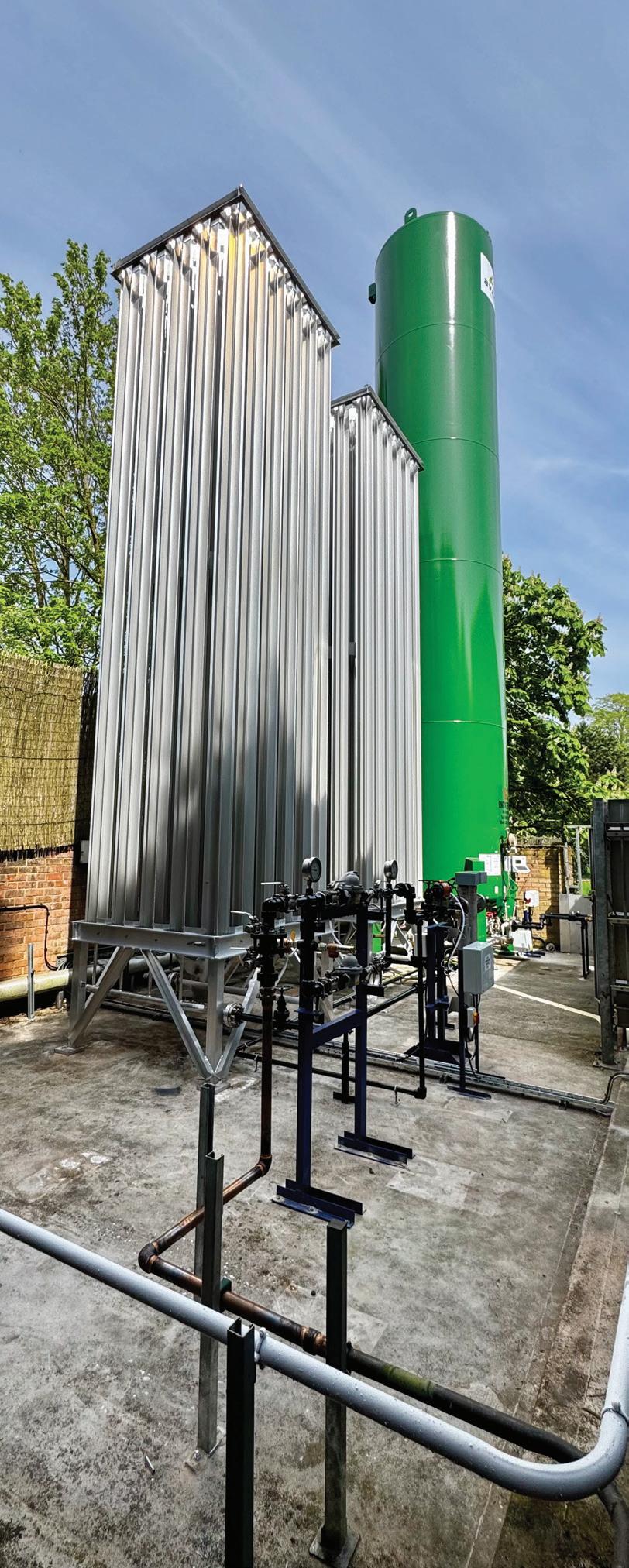
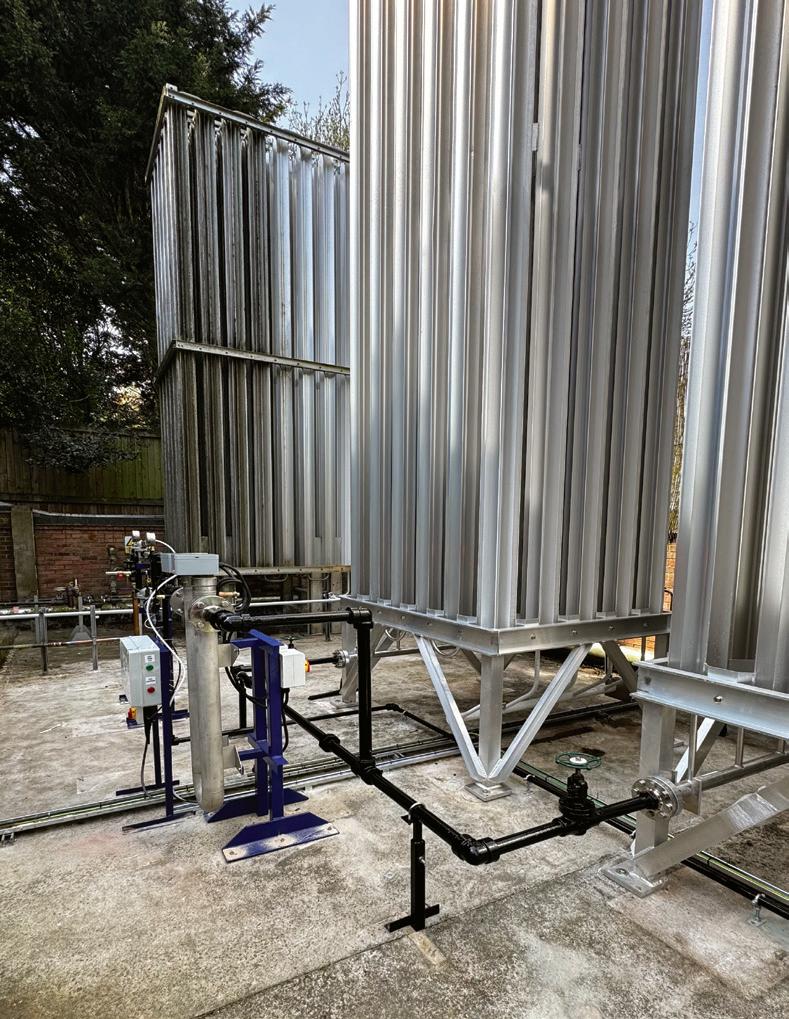
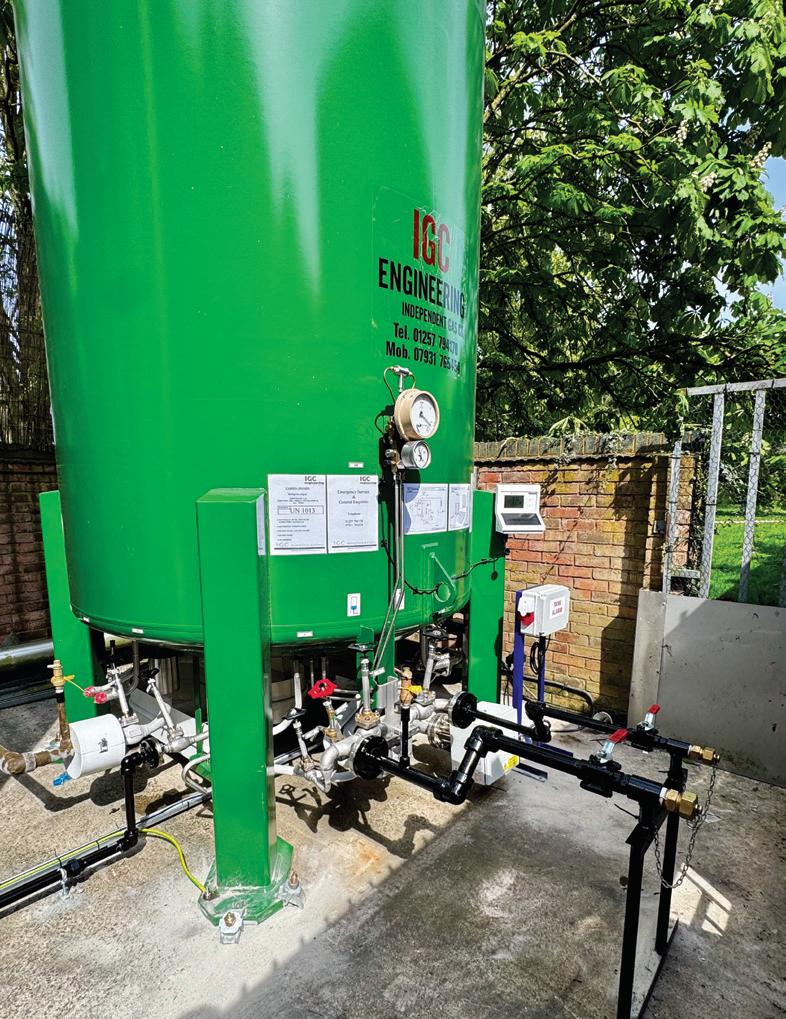
To the left is a 27 tonne vertical tank with two atmospheric vaporizers, trim heater and twin regulators installed for a well known food manufacturing producer. The picture below shows a 17 tonne vertical tank, one atmospheric vaporizer, trim heater and twin regulators installed for Manchesters oldest brewery.

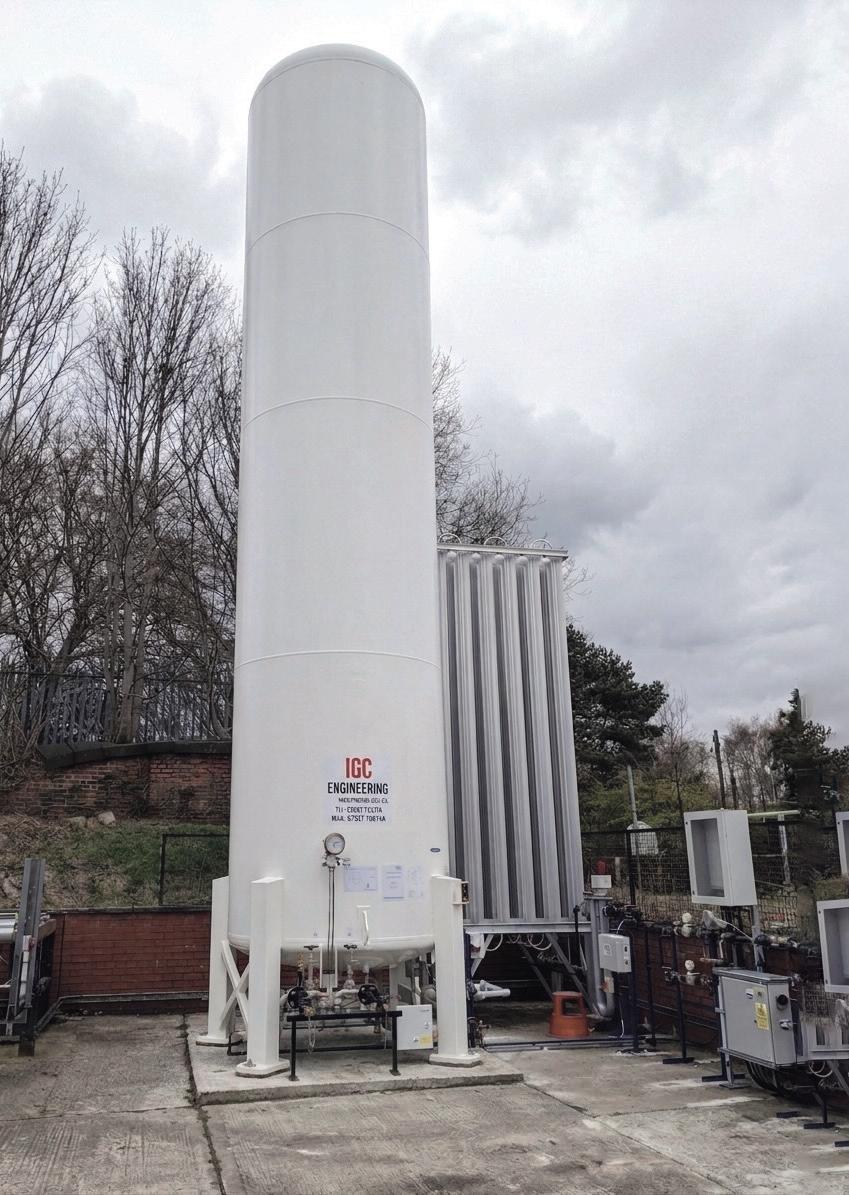
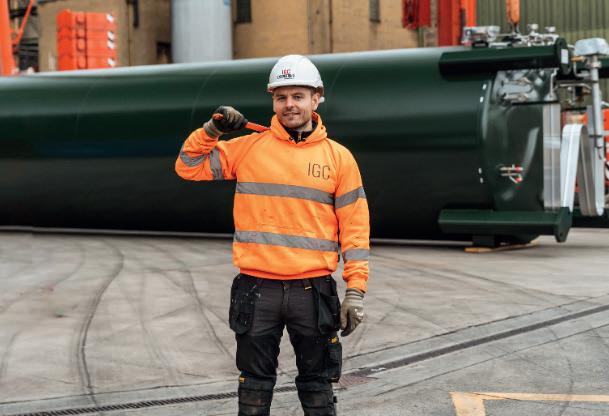
From installations to inspections, IGC’s 25 year experience is ready to help you. With storage tank packages, including rental and purchase, its time to claim gas independence!
THE VOICE OF INDEPENDENT BEER YOUR BREWERY BELONGS IN SIBA!
How SIBA membership can help your brewing business.
SALES
Promotion
# Exclusive access to promote your beers at prestigious events like the British Guild of Beer Writers Awards.
Access to the event would cost a single brewery £4,000
Indie Beer
# Use of the Indie Beer mark to help you stand out from the global breweries in bars and the off‑trade across the country.
# 31% of 18‑24‑year olds are now familiar with the Indie Beer mark.
# The Indie Beer website attracts over 30,000 visitors each week.
# Supermarket chains are working with SIBA to promote prominently branded Indie Beer shelf space.
Beerflex
# Expand on trade sales by supplying to large pub operators.
The average Beerflex Member generates £15,000 turnover
Note: Beerflex is only open to Full or Provisional brewing members.
Regional meetings
# Access to quarterly meetings.
# Presentations from industr y experts and members of the SIBA Management Team.
# Opportunity to network and get to know your fellow brewers.
Lobbying
# A voice at the table with Government.
# Influence political decision‑making in England, Wales, Scotland and Northern Ireland.
Governance
# Eligibility to take a seat at the table of SIBA Board of Directors, helping set the strategic direction of the trade association.
Brewing in Brief
# Our weekly email newsletter, containing news about members, industry and upcoming events.
Craft beer report
# Opportunity to contribute towards data insight and analysis on the brewing industry, providing invaluable data for your business planning.
BUSINESS
Business advice and accountancy
# FREE one hour consultation from Johnston Carmichael, offering advice from payroll and accounting to corporate finance, taxation and business strategy.
Legal advice
# FREE one hour advisory consultation from Napthen’s Solicitors.
# Unlimited access to members’ helpline.
Potential saving of £200 per call
Debt recovery and disputes
# FREE debt recovery and insolvency template letters customisable to your own business needs.
Saving on average £500
HR and employment
# FREE HR and employment templates to customise with your own branding.
# FREE 30 minute consultation with HR experts.
Estimate value exceeding £3,000
Legal portal
# Allow members to stay up to date on legislation.
# Everyday legal documents tailored to brewing businesses.
Industry suppliers
# SIBA Trade Directory – find a SIBA Supplier Associate Member for every business need.
Exclusive services
# Access to discounts and offers.
# Business and commercial.
# Brewing services and capital equipment.
Wellbeing portal
# Licensed Trade Charity portal offering access to wellbeing and practical support services for business, employees and families.
Webinars
# Unlimited access to live and recorded webinars.
Saving £80 per webinar
Compliance tools
# HACCP and traceability tools.
# Health and Safety guides.
# Practical guide to labelling your draught and packaged products.
# Insurance guidance to ensure you are fully covered.
# Guides to improve sustainability.
Estimated value
£3,000
Costing tool
# A tool aimed at smaller brewers to save the expense of accounts personnel.
# Ensures that your sell price is calculated to run a sustainable business.
Carbon calculator
# A tool for SIBA members to help calculate their carbon emissions.
# Enables verified information on carbon emissions when requested by suppliers.
Alcohol duty
# User‑friendly guides.
# Simplified Duty calculators.
ACCESS
Awards
# Indie Beer Awards – cask, keg and packaged.
# Business Awards judged by industry leaders.
# Winners can access exclusive event promotions.
Saving £450, based on 3 entries into similar awards
Free advertising
# SIBA Classified Ads – for anything brewery related.
# SIBA Jobs Board for job vacancies.
Saving £85
Cask repatriation orange labels
# Cost effective semi permanent labels to keep track of your containers across the country.
BeerX
# The UK’s largest Independent Brewing Trade Show.
# FREE access for members.
# Showcasing the best beer industry suppliers.
# Seminars and workshops by key industry personnel.
Saving £65, based on two Delegate Passes
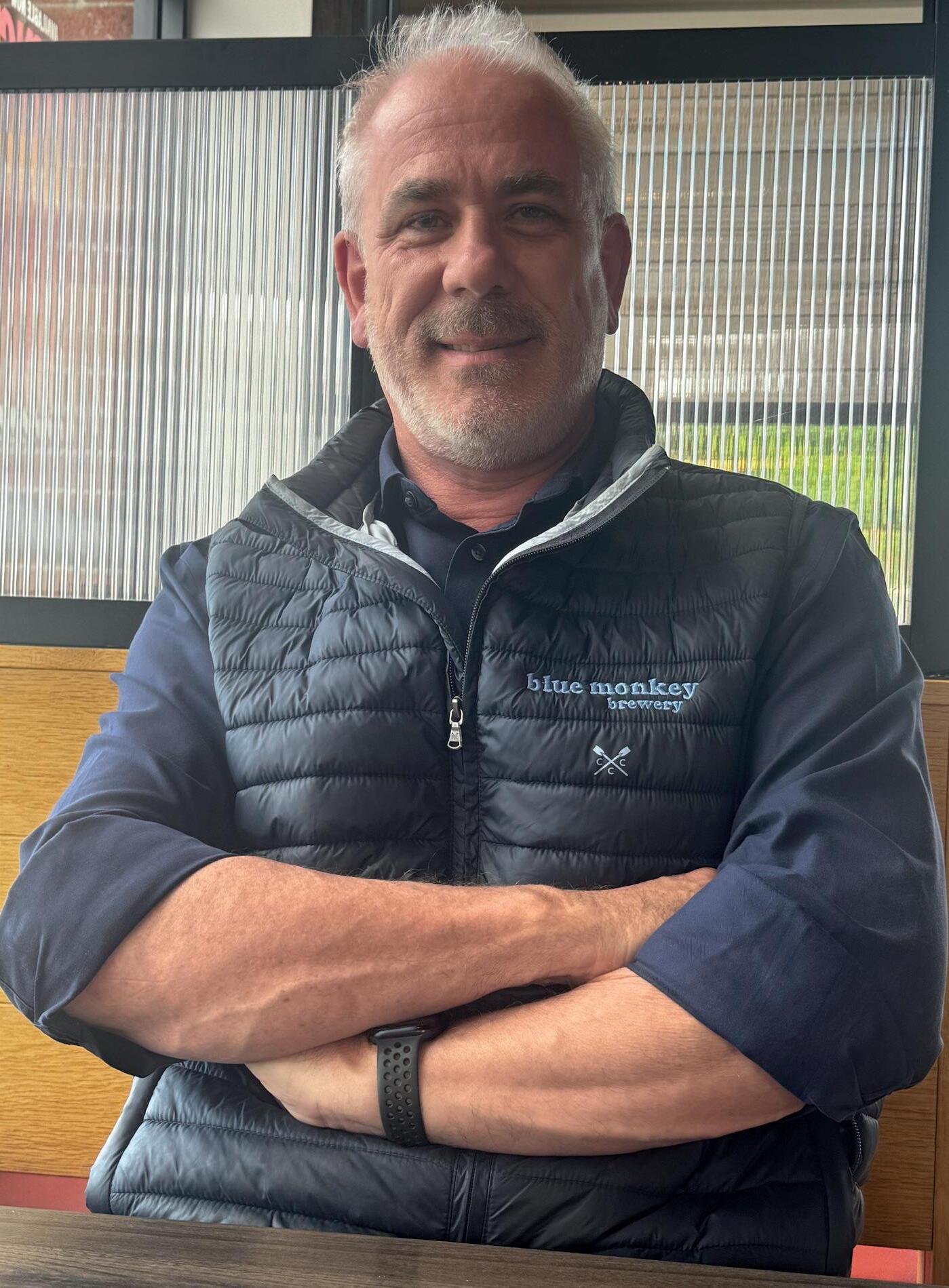
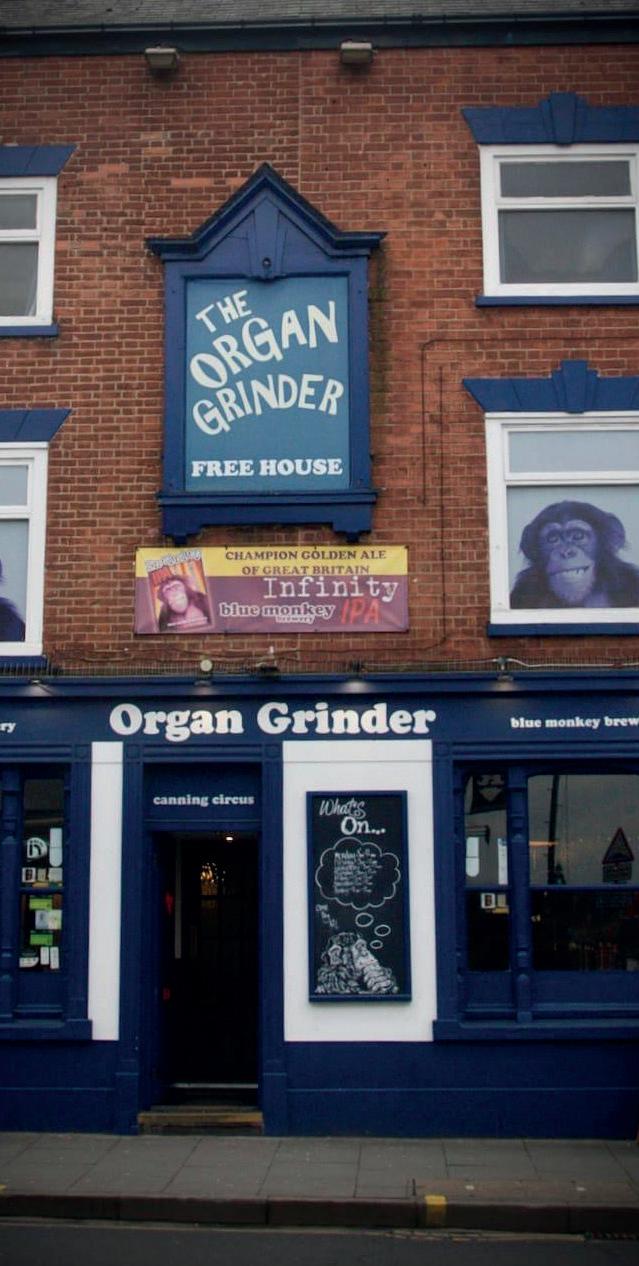
Monkey Business
The day after Independent Brewer’s Editor Caroline Nodder caught up with Blue Monkey Brewing’s Commercial Director Ian Wesley the brewery landed a historic double Gold win in this year’s CAMRA Champion Beer of Britain competition. This achievement, with Golds for both IPA Infinity Plus 1 and session ale BG Sips, underlines the focus the Nottingham brewery has on quality and consistency. With three core strands to the business – a property arm which oversees the freehold pubs and the brewing site, the brewery operation itself, and the pub company which operates five pubs and a taproom – Blue Monkey has a strong financial model that has seen it continue to grow despite the current financial turmoil. Having been founded by Ian’s exfather-in-law almost 20 years ago, using the money from the sale of his previous business, the brewery has grown
steadily through the purchase of freehold pubs and property which gives it not only stability financially, but removes rental costs which makes the pubs, in particular, far more profitable. This growth has not been without its hurdles, though, and Ian had a year-long battle with the local authority over the planning permission needed to expand the brewery site into premises next door in order to build a taproom. The battle ended in victory for Blue Monkey, who were exonerated by the planning committee who threw out all previous objections, but it acts as a cautionary tale for other brewers, having cost the brewery an estimated £100K in costs and lost revenue – a figure few businesses could afford to drop on such a fight. Caroline spoke to Ian in late May about his run in with the council, and his current plans and focus for the wider business…
Business Basics
Name: Blue Monkey Brewing
Founded: 2008
Location: Giltbrook, Nottingham
Annual production: 4,800HL
Production split: 60% cask, 20% keg & 20% small pack
Head Brewer: Dan Froggatt
Total Staff: 14 (not including pubs)
Core beers: BG Sips (4% ABV pale ale), Infinity IPA (4.6% ABV golden ale), Infinity Plus 1 (5.6% ABV strong IPA), Guerrilla (4.9% stout) & Cooper’s Best Bitter (3.9% ABV amber ale)
Number of pub/taproom sites: 5 pubs & 1 taproom
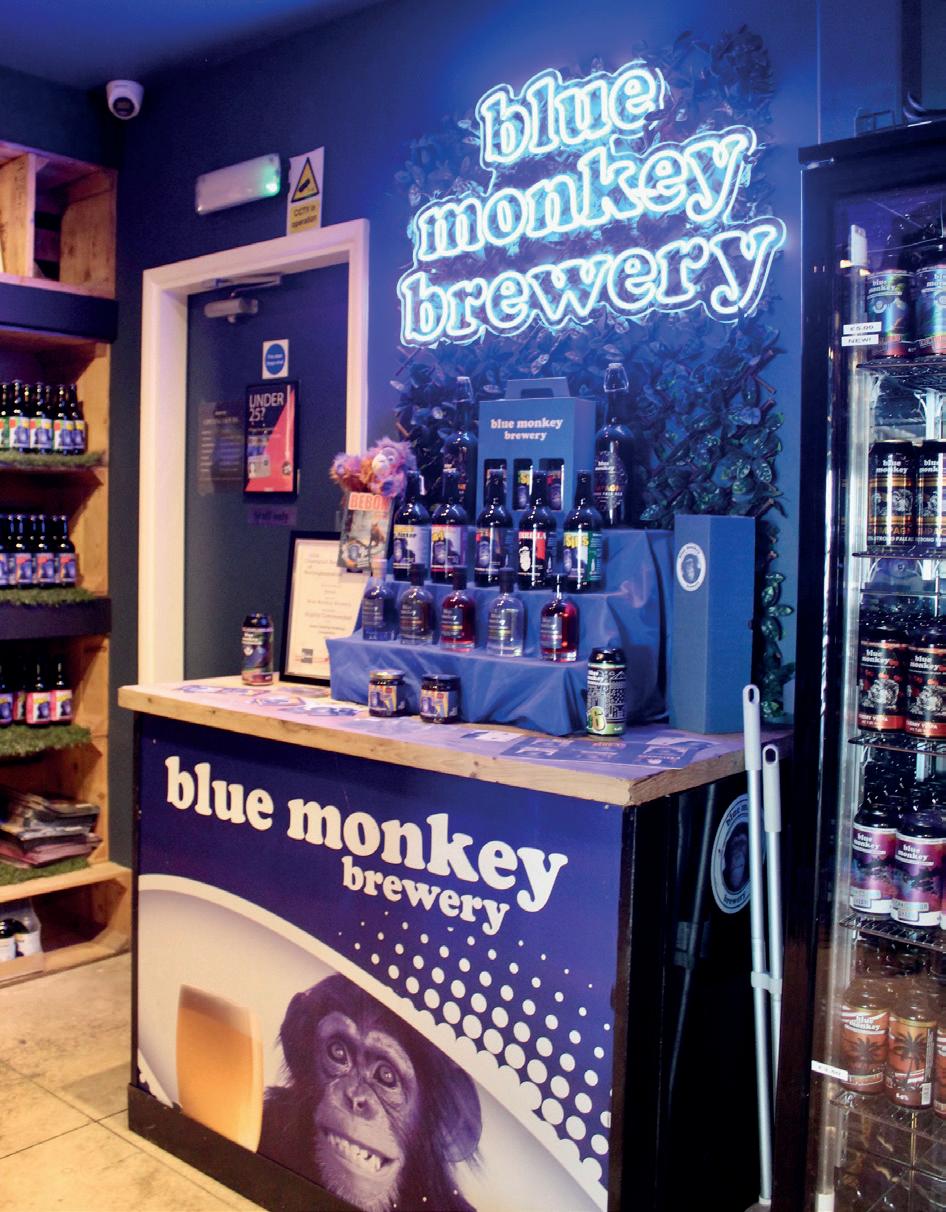
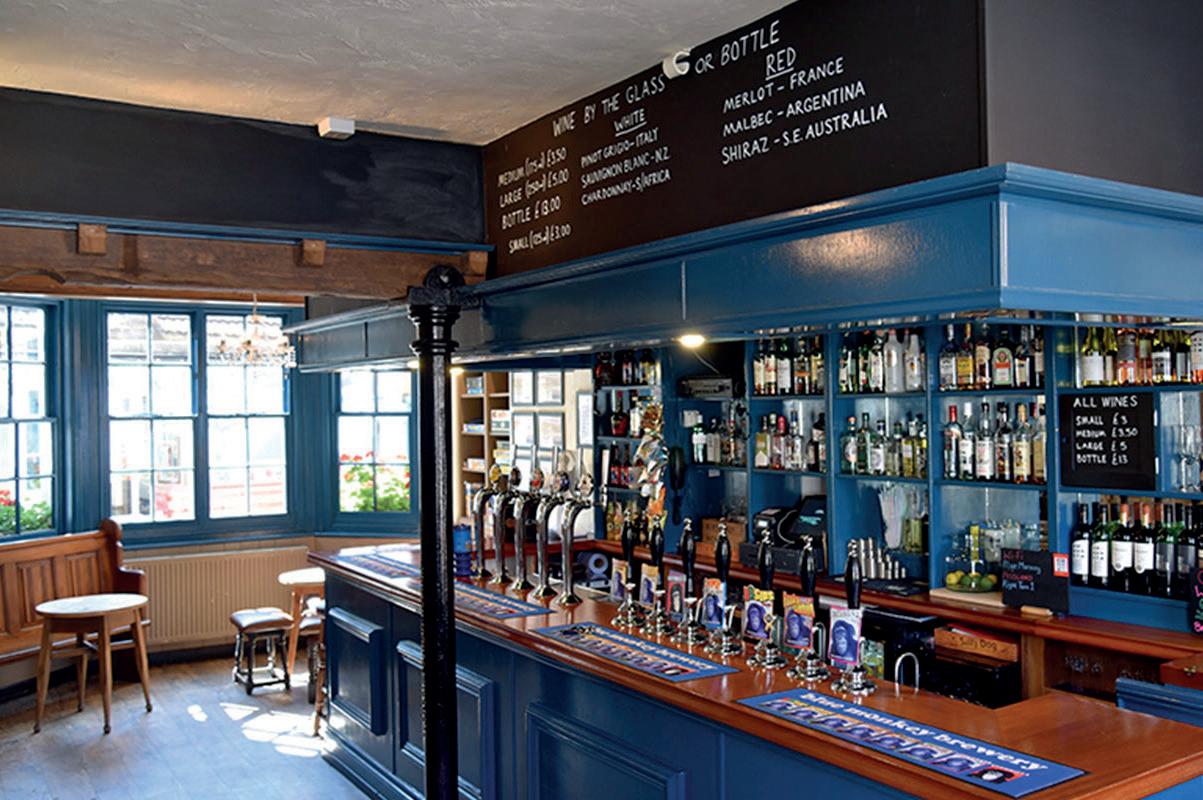
How and when was Blue Monkey founded, and how has the business developed since then?
“It was founded as a 10 barrel brewery in our first premises in Ilkeston in 2008. We then moved to a bigger premises in 2010 and went up to a 20 barrel brewery, and that has then grown in the space allowed. Six years ago we tried to buy a pub across the road, so we could expand that way, and Greene King would not allow us and it turned into a Co-op. So for six years we'd been trying to buy the building next door. We're a freehold business as well, so we don't rent pubs or anything like that, we own the freehold. So then a year last October we managed to buy the building [a warehouse unit] next door, which is where we’ve now got our storage and taproom. And now we are looking for pub number seven - we've just put an offer in on another one, so fingers crossed. The pubs are in Lincoln, Newark, Loughborough, two in Nottingham, and then obviously here at Giltbrook the taproom.”
Was that always the intention to have your own pub company alongside the brewery?
“It’d be around 2010 we bought our first pub, and we've gradually grown from that. We're very careful, and they have to be right. They are just boozers, we don't do food, they're all wet-led pubs, and apart from one, they are all on the edge of town centres. So we don't pay the stupid business rates either, and they're usually pubs that the bigger breweries have offloaded. We've just put an offer in on another one that Greene King are getting rid of, so if we get that, that'll fit us in on the other side of Nottingham as well.”
What is your background and how did you get in to brewing?
“My ex-father-in-law owns the business. I was in the garage in 2007 when we produced the first beer. Back then I was running my own business, and I came in 12 years ago, as sales manager and now commercial director. Before that I was farming and selling to farmers. Well, in fact, I used to make milk, so I went from making milk to making beer.”
What is the ethos behind the business and the beers you brew?
“I think initially the idea was just to make good beer. There was no intention of expanding as big as we have, but the way things are at the minute, if you sit still, you fall down. Always grow when times are hard, if that possibility is there, it's by far the best way to go. And who knows what the next 10 years will bring, none of us know, I refer to it as driving a car down a deep dark tunnel with no headlights on at the minute. But we're self-funded, and we don't borrow, so we're in a good position to keep growing at the minute.”
If you’re talking bottling and
lines, shouldn’t you be talking to us?



At the Enterprise Group you will find a personal commitment to your project, whether it’s a single machine for integration into your existing line or a turnkey project on a green field site.
At the Enterprise Group we are not just agents, we can offer you a total package. Our experienced project layout engineers working with state-of-the-art CAD facilities, combined with our team of field engineers, allows us to respond quickly and accurately as your project develops.
This commitment continues with machine efficiency trials and performance tests, followed by full aftersales service and backup.
So whatever your requirements, you should be talking to us.
Visit : www.enterprisetondelli.com

HEAD OFFICE : Enterprise Tondelli Srl. Via La Spezia, 193/A - 43126 Parma – Italia. Tel +39 - 0521-940068 Fax +39 - 0521-940067 E-mail : info@enterprisetondelli.com
INTERNATIONAL TECHNICAL SALES OFFICE Unit 7, College Farm, Barton Road, Pulloxhill ,Bedfordshire, MK45 5HP, United Kingdom. Tel. +44 (0)1525 718288 E-mail : info@enterprisetondelli.co.uk
Business Profile: Blue Monkey Brewing
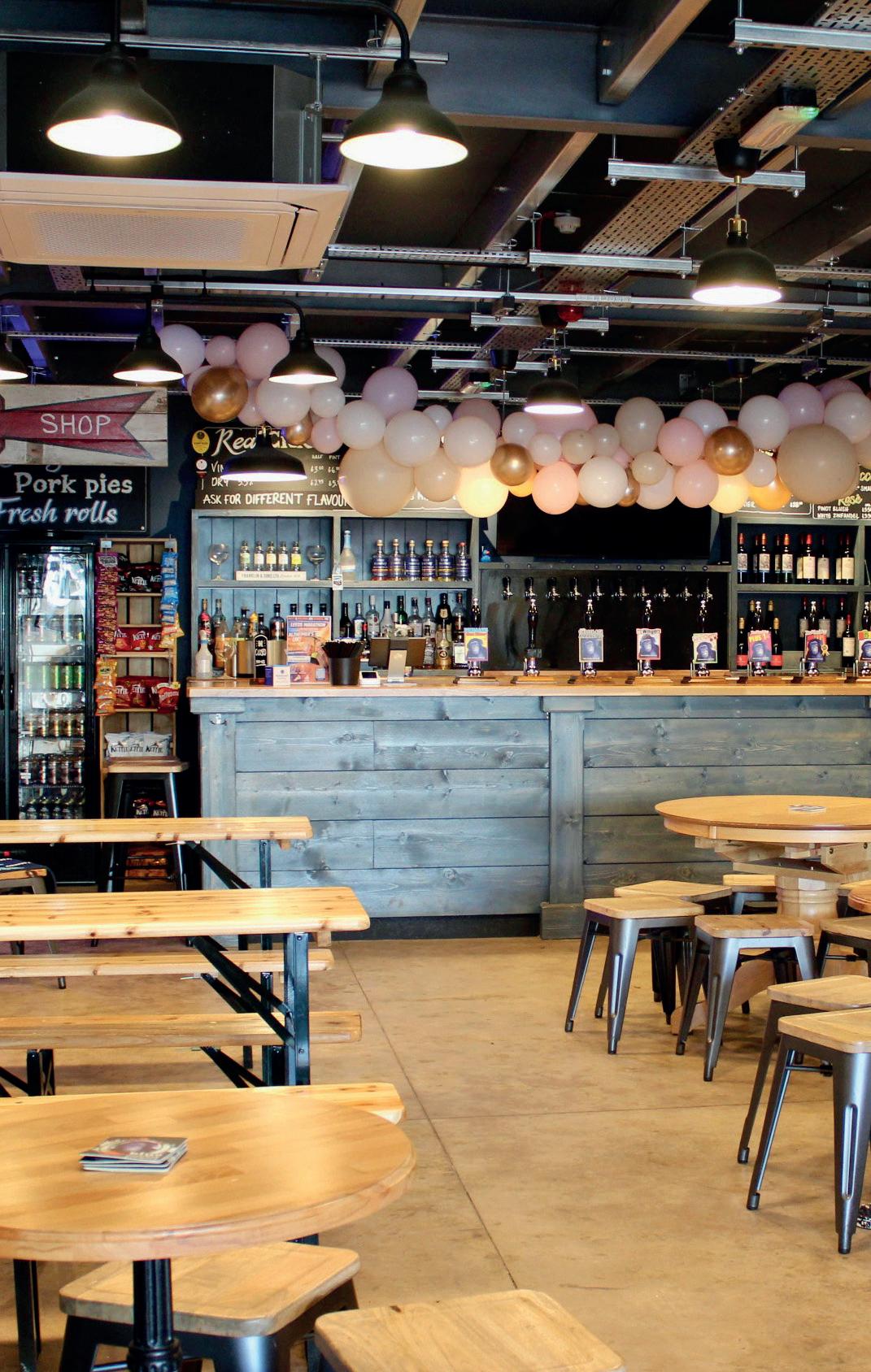
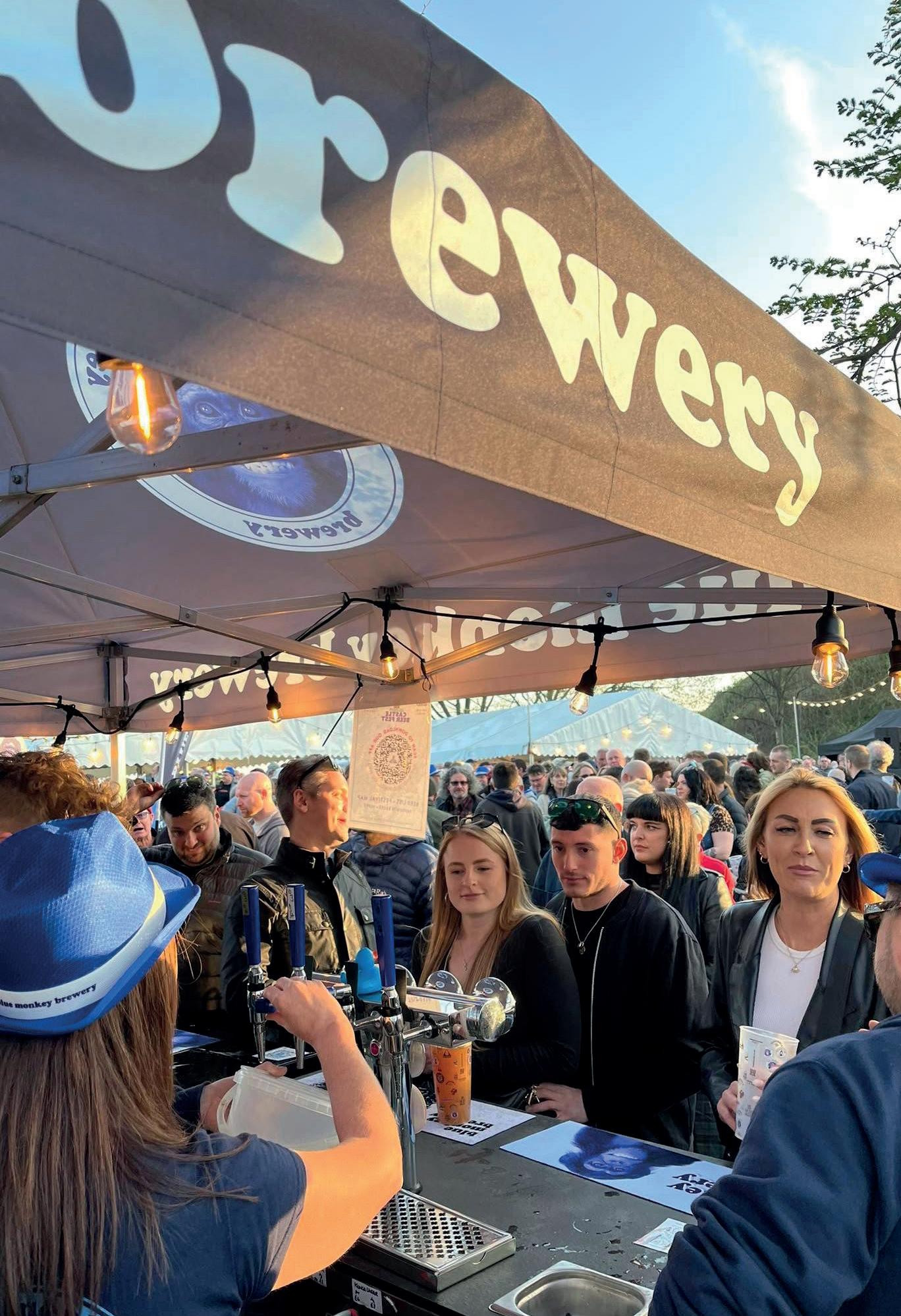
What are the main challenges you face as a business currently?
“We’ve had a major challenge over the last 12 months. When we bought next door, we'd got B2 and B8 planning permission, we thought, so that was retail and wholesale. And we're literally behind the Ikea retail park, so we're on the Ikea business park, but it backs up onto a retail park, so there are two and a half thousand car parking spaces. So we decided we wanted a taproom, and I applied for a licence and I got the licence in March 2025. No problems, no objections, but that flagged up that we might actually need to add a taproom to the planning. So we put in for planning permission adding the taproom on, and they refused outright, for the fact that we'd be taking business out of town centres. And actually, the planning officer that was doing it is also the economic business development manager as well! So we decided not to challenge that decision and reapplied, so we spent another God knows how much on a totally new application. And this time they threw the problem that they'd refused the first one on out straight away, and then came at us for not having enough car parking. I had the MP involved, I spoke to various people, and they said, Why don't you just open? We could then do retrospective permission. So on the 1st of August 2025 we opened with no planning, and they said there's nothing they could do unless there was a complaint. So, we opened and then they wanted to keep changing things. They put seven clauses in place saying we can't have any empty barrels or waste products out the front, because that's taking away car parking spaces. We're a food production unit that cannot store waste products indoors for health and hygiene reasons, what are we supposed to do?? So it went to full committee. We sat around a table at BeerX on the Wednesday evening and watched the planning committee meeting online, and we got planning permission with no clauses - they threw the lot out. And they all said, Why has this even been brought to our attention?”
How much money did all this cost you?
“The two full applications, I would say, not far off £10,000. And then lost turnover in the time that we couldn't open. We've nearly got through that period again and I would say we're looking at £100,000 we've lost in turnover just through their misdemeanors. We lost last Easter, and this Easter weekend we took £17,000 in the taproom and obviously we didn't get that last year. We’d already employed the two people to run the taproom, so we had to find them other jobs while we were dealing with all this. And the committee threw the whole lot out. I had even applied to open till 10pm and they questioned why I was only going to 10pm, because it should be 11pm. So I've actually got planning permission to open till 11pm, but a licence to open till 10pm!”
And how has the taproom developed since then, have you had any more problems with the council?
“We're just about to open upstairs, because we've just done an extension, so we should be able to have 180 people inside. It's half the size of the brewery base. Our brewery one side, and the other side is taken up with taproom. We've just done upstairs, put more toilets in, we put a kitchen in. We do street food every weekend. We have live music on, and I've had no bad press about it from anybody. We're not here to create a problem, we're here to earn money. We're a family business that just wants to do what we need to do to make money in the present hospitality climate. I literally couldn't get that over to them. All the committee members that came to see us said, Look, we have no problem with this. It's just this one planner that cannot get his head around why anybody would drink on an industrial estate. I said, well obviously he doesn't drink, because there's probably 60% of breweries in this country with a taproom, there's 40% that would like one. Go to America, Australia, whatever, every brewery has one. I was in Poland three weeks ago, and every brewery there has a taproom. But there's no education in local government at all about it. The relief on that Wednesday after the stress, it was like somebody just lifting a backpack of bricks off your back. We had actually got proof of how it was working and the fact that we hadn't created any problems, and I'm sure they’ll keep visiting, but I don't think we're going to have any more problems.”
Continued on page 47
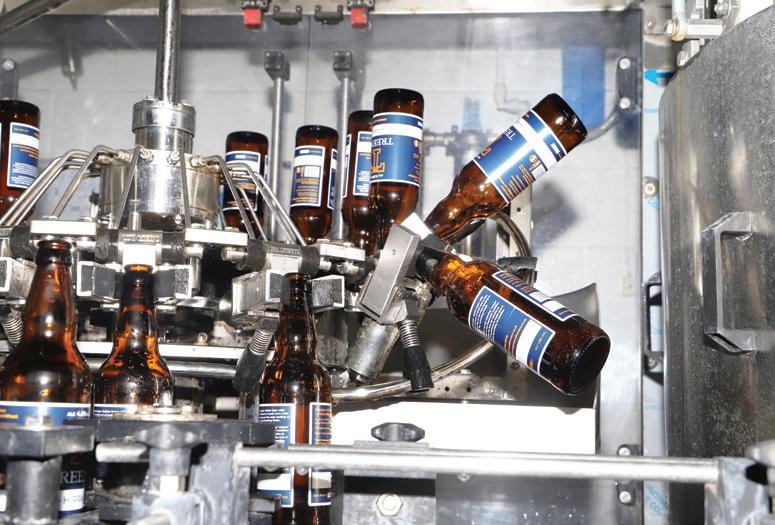
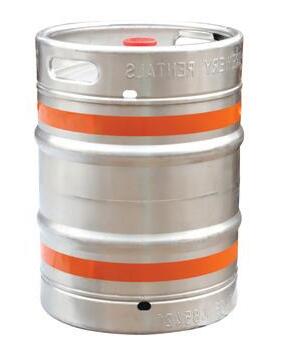


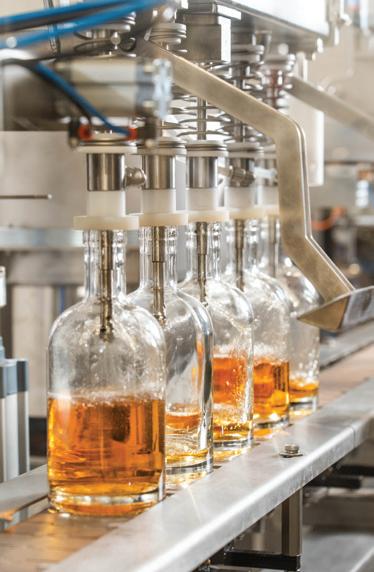
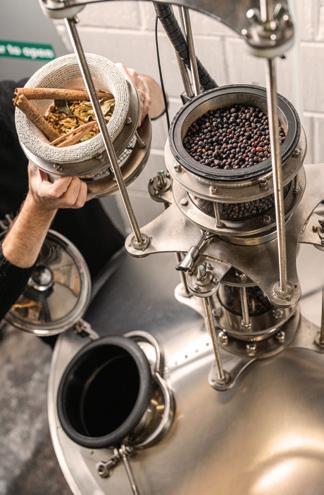
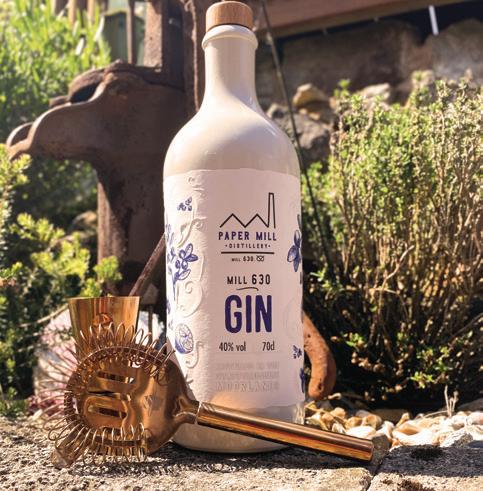
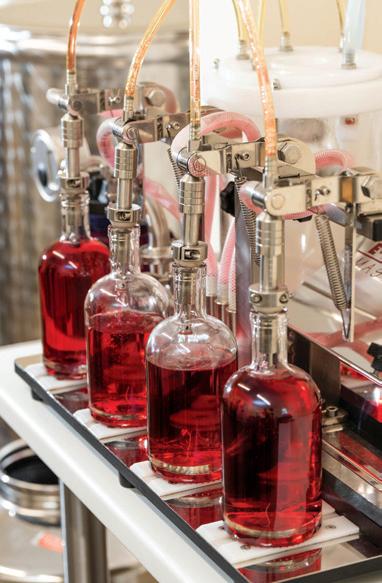

Business Profile: Blue Monkey Brewing
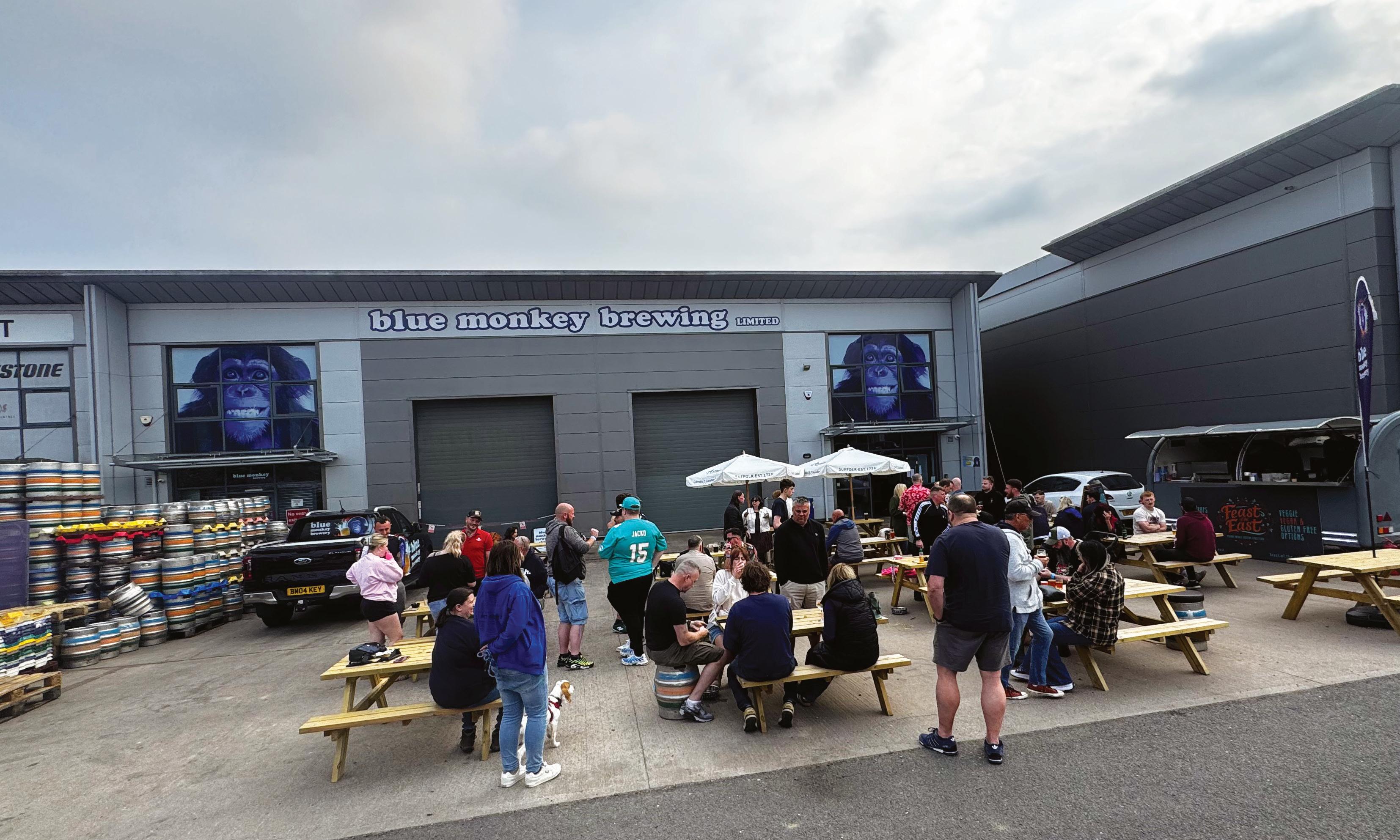
I know what SIBA is trying to do at the moment with having a free [guest ale] handpull in any pub, but the big businesses are absolutely trying to wipe the floor with us, because they know that we've got a better product.
So looking ahead, what opportunities do you see for your business in 2026?
“Solidifying what we've spent, and we're looking to expand the pub company. As I say, we’ve just put an offer in on an ex Greene King pub. If we don't get that, we'll keep looking. We're not a renting company. We've got one site at Lincoln, which is not the busiest, it's a small micro pub, and that's the only one that we actually lease. Everything else is owned outright, and no mortgage on them, so they're all flowing quite nicely. We are very picky, and being freehold, you've got it long term, so you've got to get it right. My ex-father-in-law had a big engineering business and sold out, and that's where the funding has come from for us to do what we do, and it works quite nicely.”
How much of your beer production is now going through your own pubs?
“I would say a good 60% now, and I'd like to see it get to 70%. It's definitely the most profitable route, I mean, we've kicked Stonegate into touch because they were our smallest margin pubco, and we're not going to go above the half million hectoliters and upset the duty side of things. We sell at full price to the pub business, and then the pub business sells on to the public, so we make sure there's a good model for all three companies. We have a buildings company, a pub company, and a brewery company.”
How could the Government better support independent brewers?
“I think they need to allow us to sell. I know what SIBA is trying to do at the moment with having a free [guest ale] handpull in any pub, but the big businesses are absolutely trying to wipe the floor with us, because they know that we've got a better product. I think it's quite evident that they feel threatened by us for some strange reason, but they shouldn't be, because actually we need them alongside us, because we can't produce the levels of beer that they can. All we want to do is just fairly sell to wherever we can. We sell quite a bit through BeerFlex, but again, we are told what we're going to be charged rather than us putting the price out there. We’re not the cheapest beer in the world, we never have been, we never will be, but we are consistent. Our aim in this brewery is every brew that
you try of ours, it will taste the same as the one you had six months ago, and that is the one key factor that we pride ourselves on here. Our core beers are consistent, because that is the art of brewing. Our main aim is to be consistent and use top quality products.”
So financially should the Government be doing more to support small businesses in particular?
“One key example is that they want us to use clean energy. So we've just spent £68,000 putting solar panels on the roof. No government grant available. So how is a business supposed to do that if you haven't got that spare cash? We've just made a massive investment, but we've got our daily electric down to zero. Overnight, we've still got chillers going, but I think we should be around the 4p to 5p per kilowatt hour average across the year now – and we've been up to 40p or 45p. The formula has been done that they'll be paid for in just over three years, so it's a good investment, but we've funded that. If we're being forced down the avenue of pulling less out of the grid, there should be some form of help.”
Are you investing in the business anywhere else currently and if so, where is that investment going?
“We've just invested in another chiller, so we can chill beer down quicker, so we get an extra brew through every six to eight weeks, so that improves production by just chilling the beer faster, and obviously it's all being driven in the daytime by solar now.”
What is the best piece of business advice you have been given?
“Not to run before you can walk. I think steady growth is far better than quick growth, obviously that's a standard business thing, but there are a lot of people that think they can grow massively very quickly and fall foul of the cashflow situation. So I think don't run before you can walk.”
What is your favourite beer and where would you most like to drink it?
“Our Infinity. I love that one. Beyond that, Timothy Taylor's Landlord. In any local country pub.”
Scottish drinkers want community
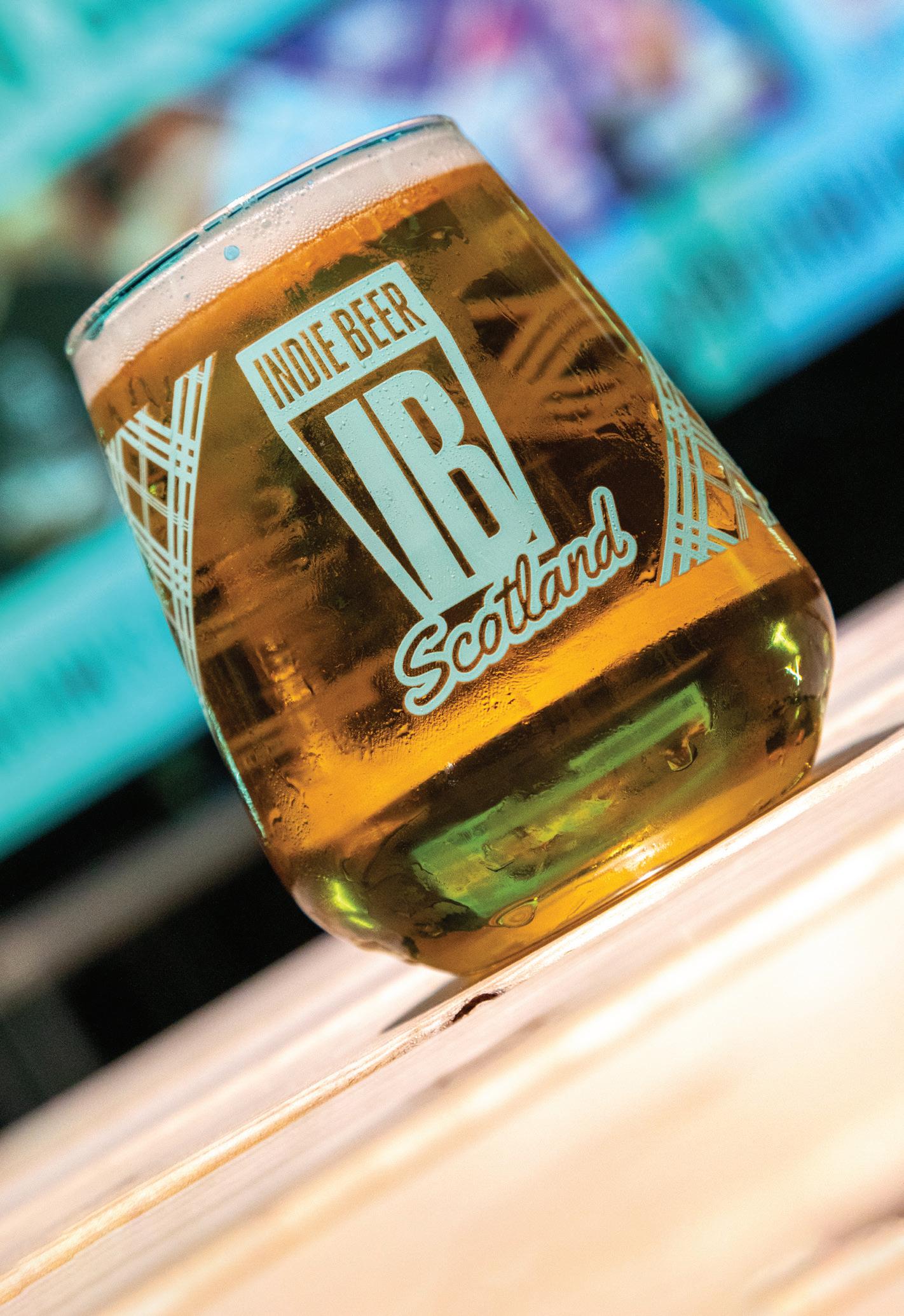
Based in Stirling, beer writer Jemma Beedie looks at how the growing post-Covid consumer need to feel part of a community has led the Scottish nation to the cusp of a celebratory summer of sport that could see indie beer making real gains…
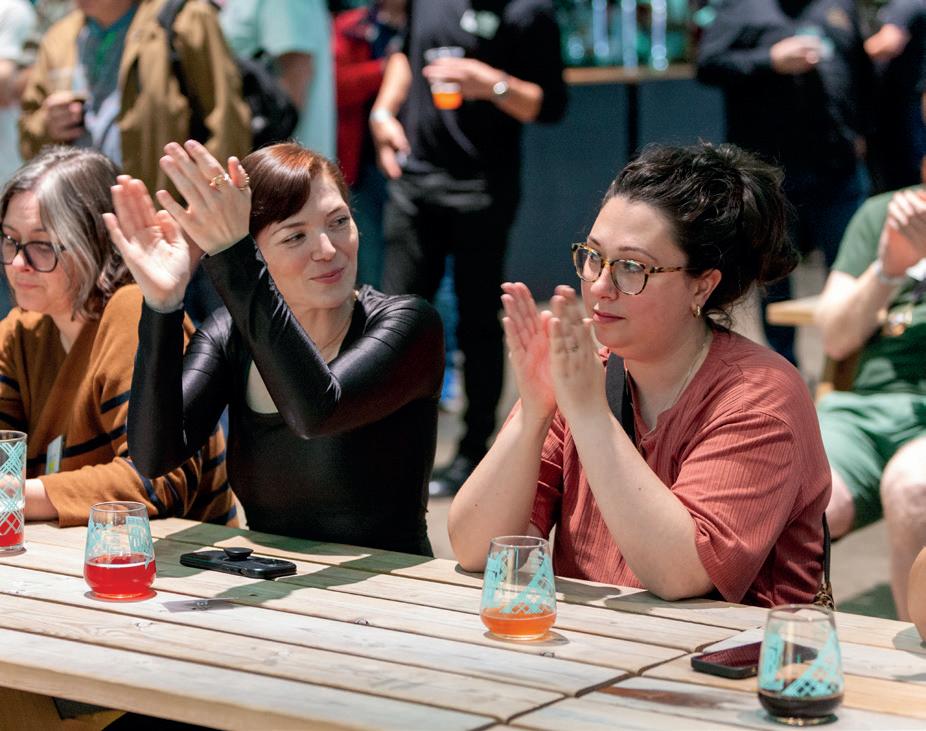
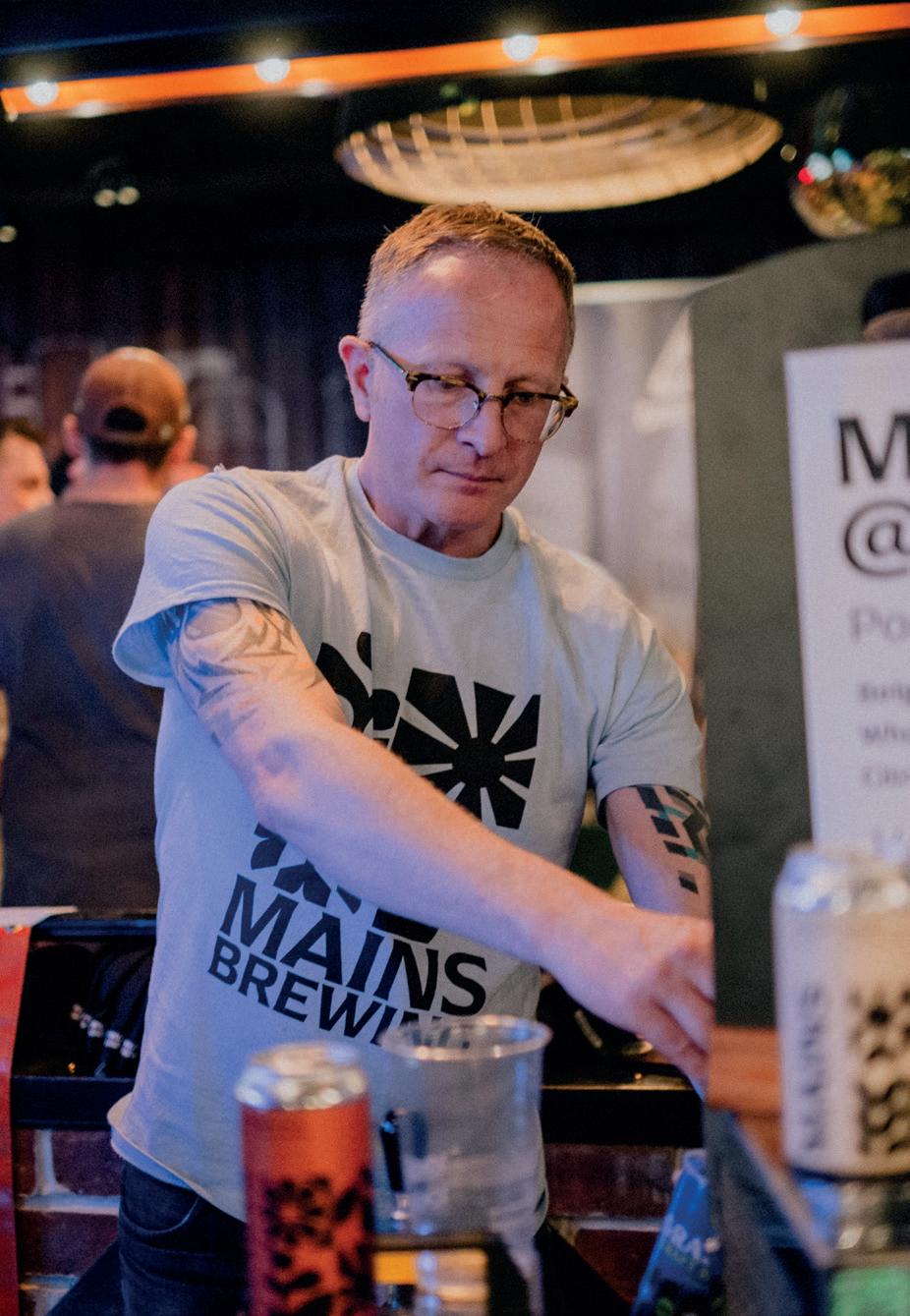

Jemma Beedie writes about pub and drinking culture and how it intersects with community. She lives in a cottage in the countryside with her family and can be found on Instagram at @jemmabeedie.
This summer, the Scottish nation is coming together. We’ll line the pubs and streets to support our team in the World Cup, we’ll host get-togethers, we’ll meet at festivals and taprooms across the nation.
Community has become something of a buzzword, especially after the prolonged isolation brought about by Covid. And this summer, the Scottish nation is coming together. We’ll line the pubs and streets to support our team in the World Cup, we’ll host get-togethers, we’ll meet at festivals and taprooms across the nation. And after a decade or more of the rise of alcohol-free beer, it looks like we’re equalising.
After a long, hazy spell under IPA and all its tributaries, crisp lagers are on the rise. Staple Williams Bros has released a new lager to celebrate the changing of the seasons, a pale, clean beer with extended cold conditioning.
Director and second-generation Williams brother Chris Williams said: “With the rise in popularity of premium and world lagers it seemed an appropriate time to bring back our original lager concept, re-tuned for today's consumers who value quality and genuine provenance.”
Ceilidh is a Helles style lager made using locally grown Scottish barley, most of which was grown near the brewery and malted next door. Chris emphasised the extended six-week aging time, significantly longer than most mass-market lagers.
“Our craft lager has always been a very modern take on the lager style,” he continued. Williams Bros brewed Ceilidh to be their most accessible lager, and expect it to be a big seller this summer. Chris agreed with me that sales of IPA might be slowing down. “I’m not sure there has been a big decline in any particular style but there does seem to be a bit of stalling in super hoppy and hazy IPAs growth, with many market-leading IPAs in the UK being in decline. We’re definitely seeing a rise in demand for lager and interesting, more traditional styles.”
Another craft lager that is expected to do very well this year is Two Towns Down’s Yes Sir I Can Boogie. All Two Towns Down’s beers are named after songs – at a recent beer festival I got to try Black Velvet and Day We Caught The Train, both delicious – and Yes Sir I Can Boogie is a stroke of marketing genius.
The 1977 hit has been an unofficial supporters song since 2020, with even civilians joining in the fun. This year, Two Towns Down is brewing in partnership with the Tartan Army charity The Sunshine Appeal, and 5% of proceeds will be donated to the cause.
Two Towns Down was founded by brewer Sandy McKelvie as a project on other breweries’ equipment before opening its own premises in Paisley in 2022. It is the town’s first in over a century. Paisley is well known for music, which led to the brewery’s creative naming choices.
Liz McKelvie said: “We’ve heard that some breweries are seeing a 20 percent downturn but our sales are steady and our taproom is always busy. We think that’s because craft drinkers are more discerning and, to be honest, more affluent. They can afford to drink what they like.”
One name kept coming up in my conversations: Sheep in Wolf’s Clothing, a brand new micro-brewery and taproom in Dunblane. They too have a sports-inspired name for their best-selling lager staple, the eminently giftable Shandy Murray Lager. Owner and brewer Matty Dixon is keen to point out, “No lemonade was harmed in the creation of this crisp lager,” and says it has notes of “freshly cut grass courts”.
Shandy Murray is 3.4% ABV. “Since launch I’ve always championed session beers, which I argue is between about 2.5% and 4.5% ABV,” said Matty. “I work on two missions: big beer experience with session strength; and we are here for everybody, doesn’t matter who you are. We’re an inclusive taproom. Hang out with the dogs, the kids, and walk home.” Sheep in Wolf’s Clothing’s beers are mostly session strength intentionally, to give drinkers the chance to try everything, enjoy themselves, and still make it home ready for the next day. “I want to have fun,” said Matty, “just not enough fun to get arrested.”
The taproom is on weekly. Matty isn’t seeing much of a change in what people are ordering since opening at the end of 2024. “I don’t think too much has changed. In summer it’s sours. Winter it’s darks. Seasonality and trend are relatively the same. People are pretty consistent. Hazy still reigns supreme, but there’s a shift towards people who want moderation.”
Self-professed craft nerd Stewart Ainslie said: “The best thing to happen to Dunblane was Sheep in Wolf’s Clothing.” He agrees with Matty’s assessment. “My drinking tends to shift with the seasons. I’ll rinse my CAMRA discount on real ale over winter. By spring I tend to look for notes of fruit or sour.”
Stewart is moving towards session beers, too. “I don’t tend to buy mainline IPA any more. There’s a time and place for that, though as they approach 5-6% and £6-8 I’ll often replace them with a session beer or a standard lager,” he said.
Pubs continue to close at an alarming rate – around two a day in the first quarter of 2026, according to the latest numbers from the British Beer & Pub Association. However, there’s a real indication that people still want to drink beer out of the house, they just want more from the experience that just popping out for a pint. Taprooms are going from strength to strength, and beer festivals are also on the rise.
Leith has become a real destination for craft lovers. “I don’t think you’ll find anywhere else in Scotland with a more concentrated variety of taprooms than Leith. There really is something for everyone and it’s great to be able to directly support a local brewery in this way,” said local resident Lewis Wardrop. Newbarns, Moonwake, Campervan, Lost in Leith – these are all within a very walkable area, offering a beer-drinking experience unique within Scotland. They are adding value to the local community, offering a social space for people of all walks of life to come together.
Continued on page 51
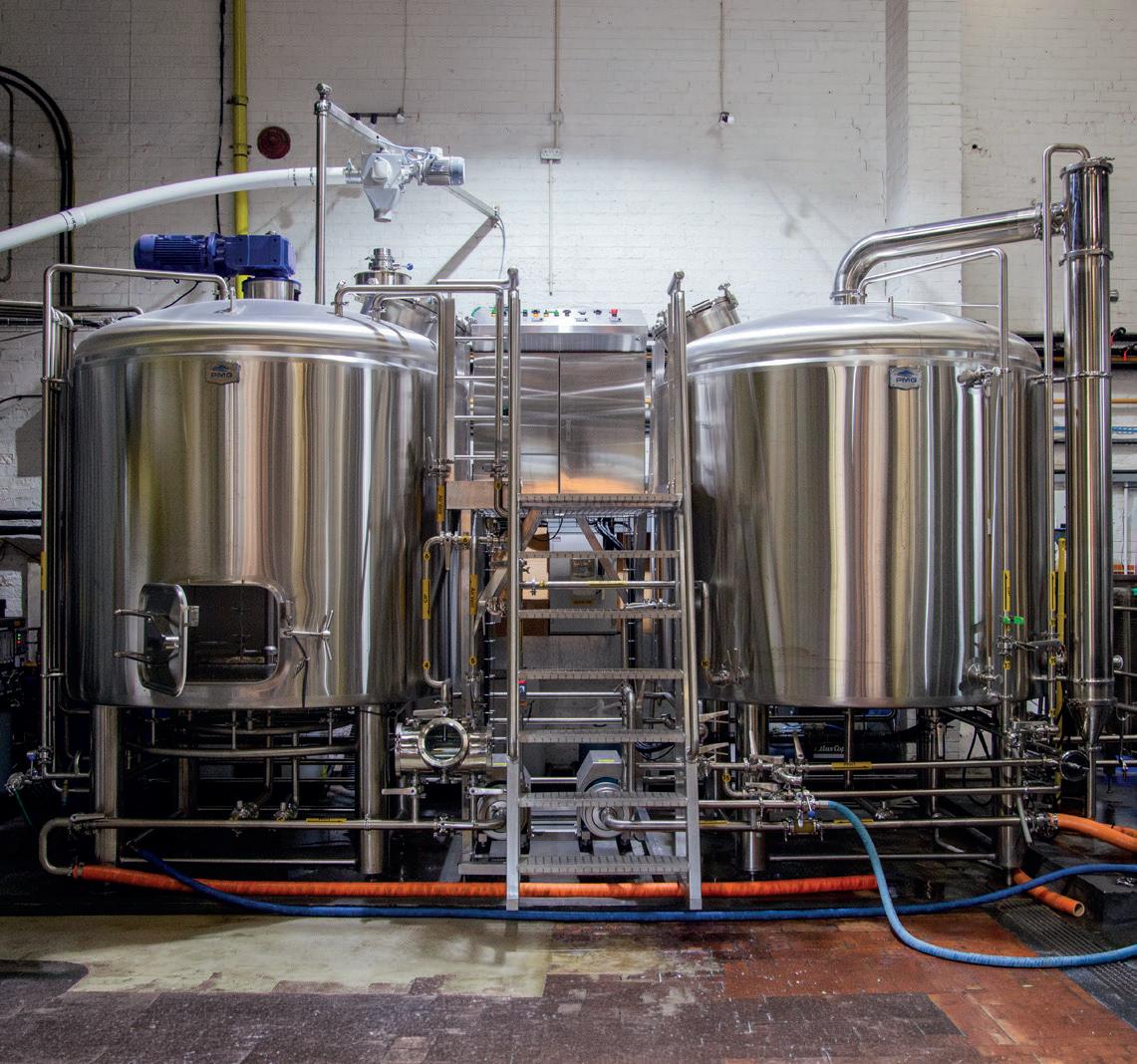
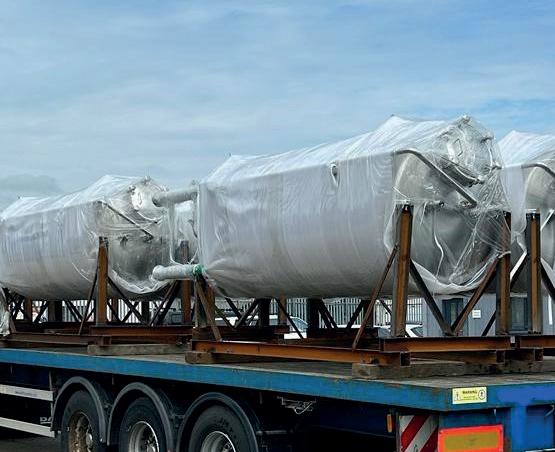
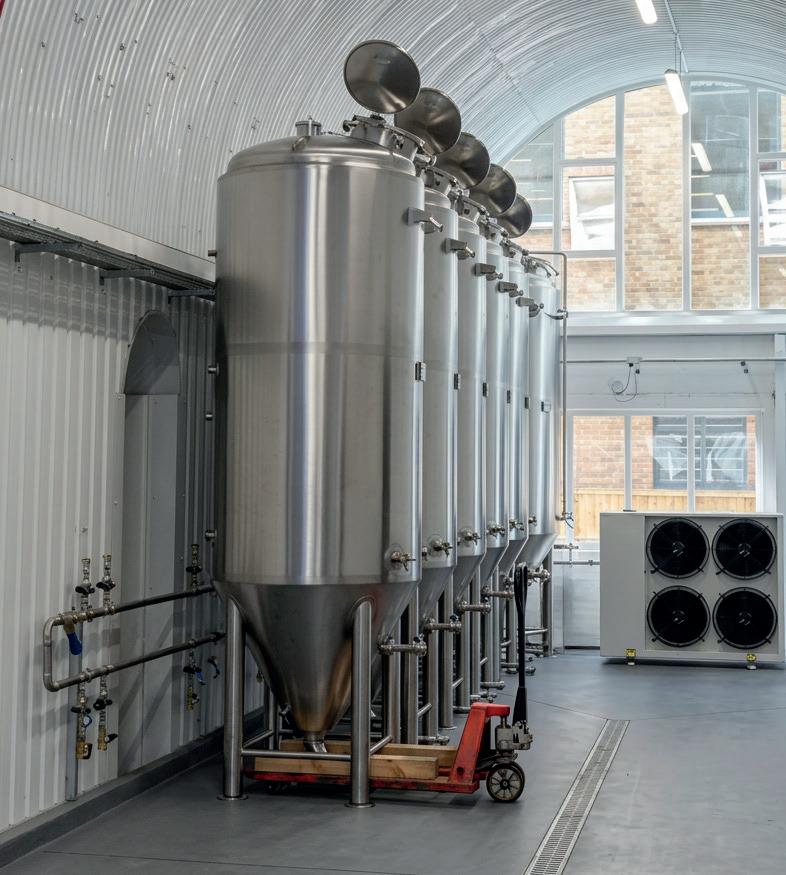
(0) 1733 834264
www.premiummachinerygroup.com/contact-pmg-uk +44 (0) 1733 667052

Festivals also continue to offer a way to try lots of adventurous brews in one sitting. Favourites Fierce, Stewart, and Vault City will be easy to find, but only at beer festivals will we be able to drink Mains Brewing’s Smoak, an oak smoked malty pale ale, or their unfiltered Rustic Lager.
Guest writer: Jemma Beedie
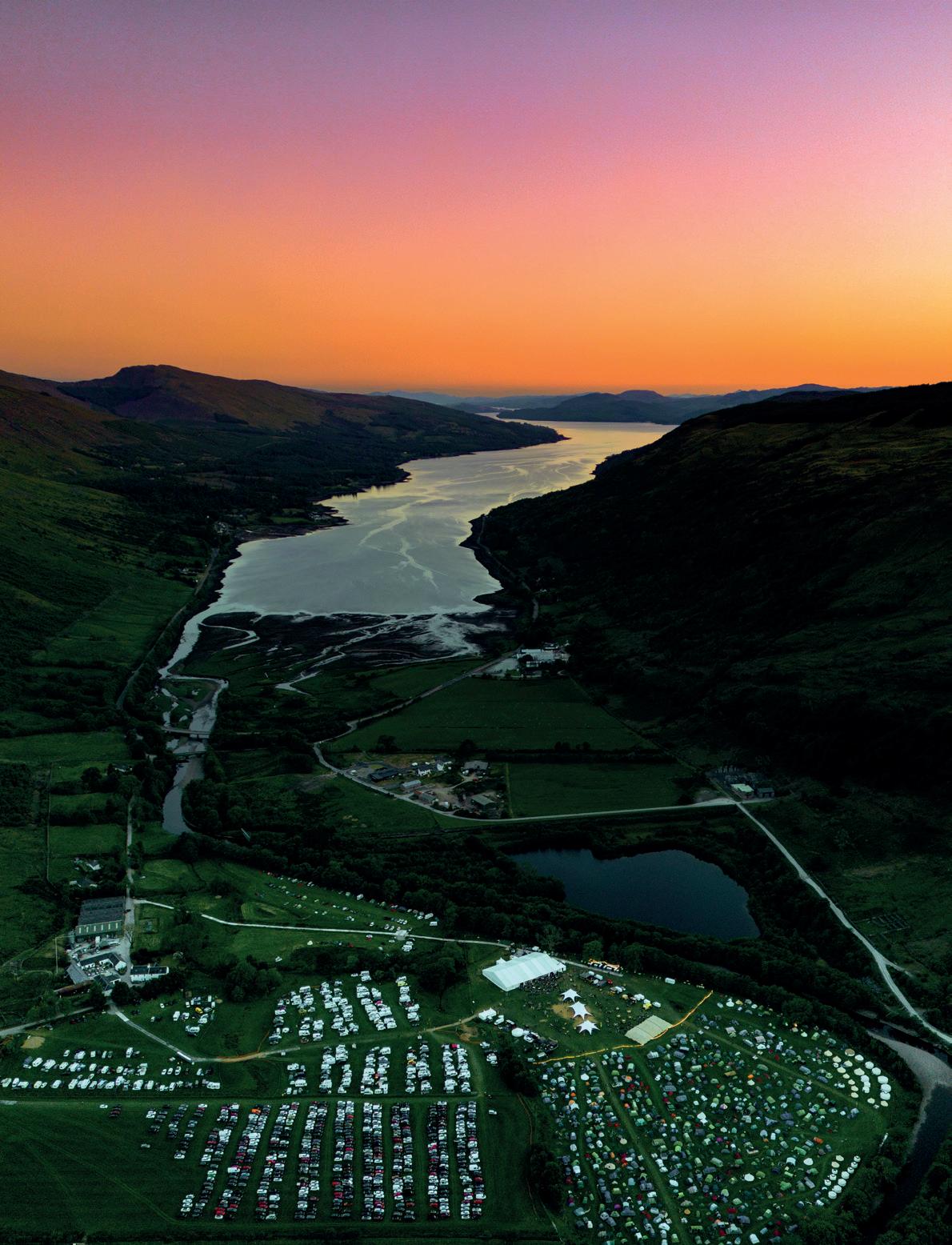
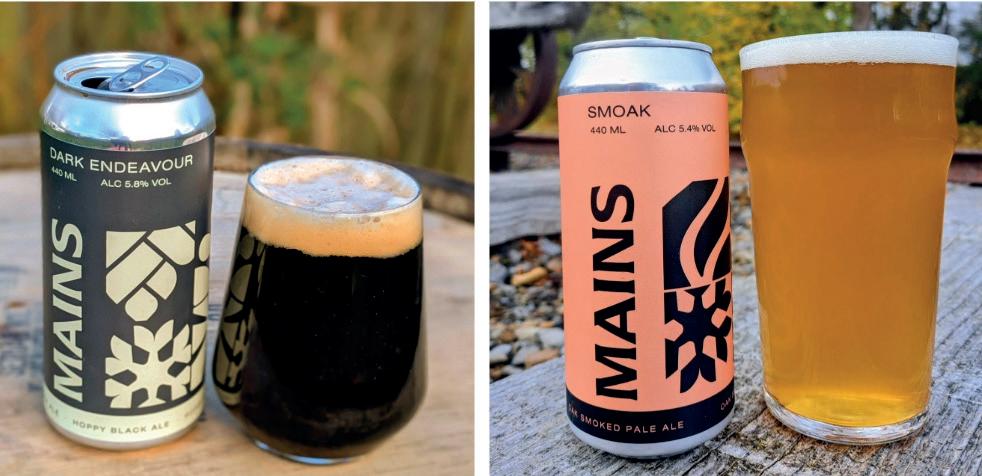
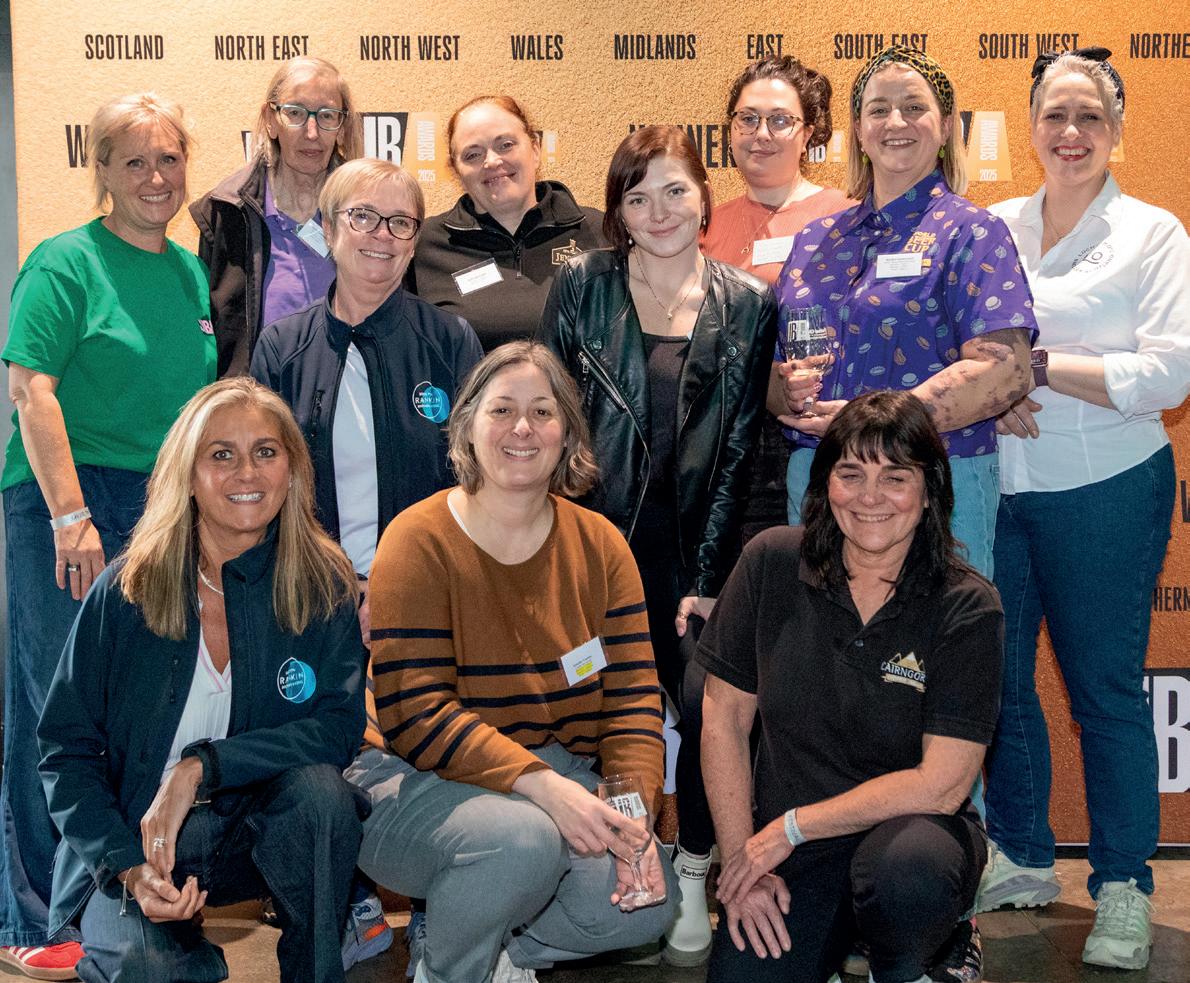
Festivals also continue to offer a way to try lots of adventurous brews in one sitting. Favourites Fierce, Stewart, and Vault City will be easy to find, but only at beer festivals will we be able to drink Mains Brewing’s Smoak, an oak smoked malty pale ale, or their unfiltered Rustic Lager. Brewer Lewis Hamilton keeps his beers at a lower ABV too, with the highest coming in at 6%. He said: “I do think that a lot of beer drinkers are currently expecting beers to be slightly lower in alcohol but still pack a punch. Even at some recent beer festivals when I’ve had a few beers that have crept over the 5% mark, I’ve heard potential customers inhale and say ‘ohh, your beers are a bit strong’. Changed times indeed.”
Sinnister Brew is a Dalkeith-based micro-brewery making small-batch, barrel-aged imperial stouts and rich porters, brewing at Otherworld Brewery, and is another that might be found mainly at festivals. A core range is eschewed in favour of one-off beers aged in whisky, rum and sherry barrels. I tried Festival Special, an imperial stout layered with strawberry, toasted coconut and amburna wood, and my only regret is that I’m unlikely to find anything like it again. Umbriferous is the stand-out for me though: stouts aged in highland, lowland and speyside barrels for more than a year, combined with cacao and smoked Mexican chillies. An outrageous beer, and a great example of what is possible.
Owner-brewer Logan Bartlett thinks their beers are best suited for home drinking. “Imperial stouts can be a night ender for a lot of people so they tend to avoid them. At home is where an imperial stout really shines. A one-and-done sort of deal rather than a session.” That certainly tracks with my experience.
There’s another reason for fewer strong beers being on offer in licensed premises, said Logan: “Unfortunately in the current economic climate, the loss of the small brewers duty relief along with the massive increase in duty for strong beer means lots of breweries aren't doing any imperial stouts or barleywine. The cost to the consumer is obscene. I'm honestly surprised anyone can afford to buy my stuff. I've seen it being sold for £12.50 for a third!” Another reason to hunt Sinnister out at a festival, if possible.
Sara Hutcheon is a festival organiser for CAMRA Forth Valley, the only Scottish branch to hold two events in a calendar year, Alloa and Larbert. They made a profit at Larbert Beer Festival in April, but not by much. “CAMRA beer festivals on the whole are not doing well as they are volunteer run and the average age is quite old,” said Sara.
Despite challenges, she said,: “There were definitely more women coming and more women drinking beer and taking an interest in trying new styles, not sticking to one type. Dark beer was the beer of the festival. Not surprising with CAMRA drinkers!”
It looks to me like drinkers remain passionate about finding new breweries and new beers. Of course, IPA will never go away, and for those of us, like myself, who love a deep, dark dessert stout, a couple of strong beers at home is always on the table. For most, though, it looks as though we are finally coming back out-of-doors, finding places to meet up and drinks that mean we can last the night. Scottish drinkers are looking for taprooms and festivals, session beers that don’t sacrifice depth of flavour, and we’re looking, finally, for connection.


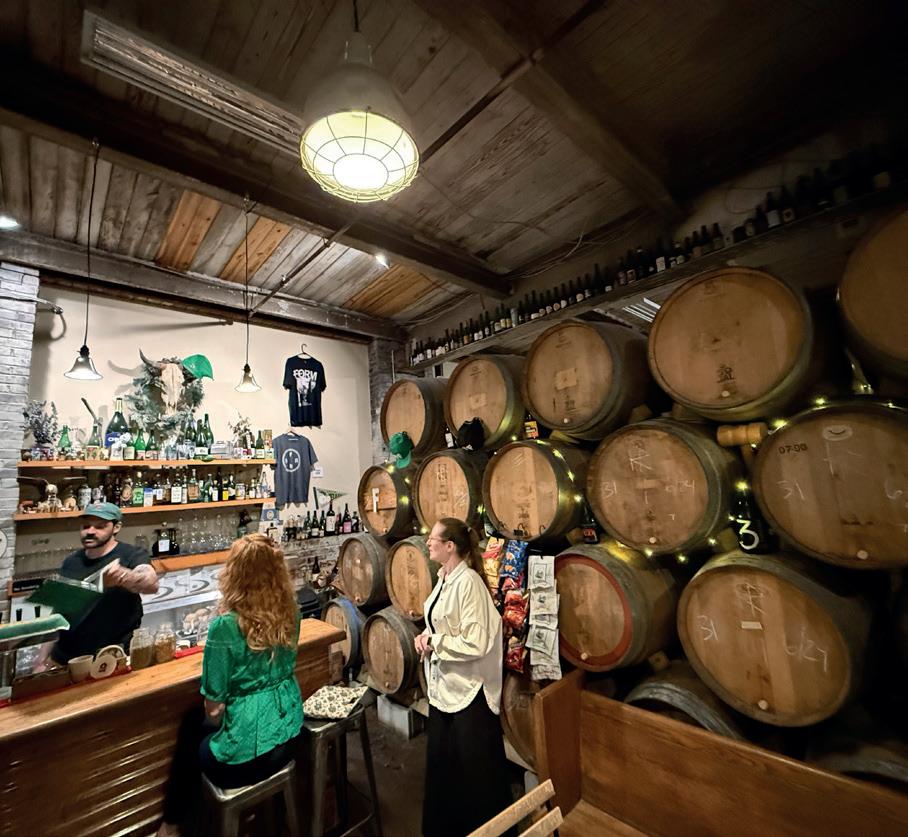
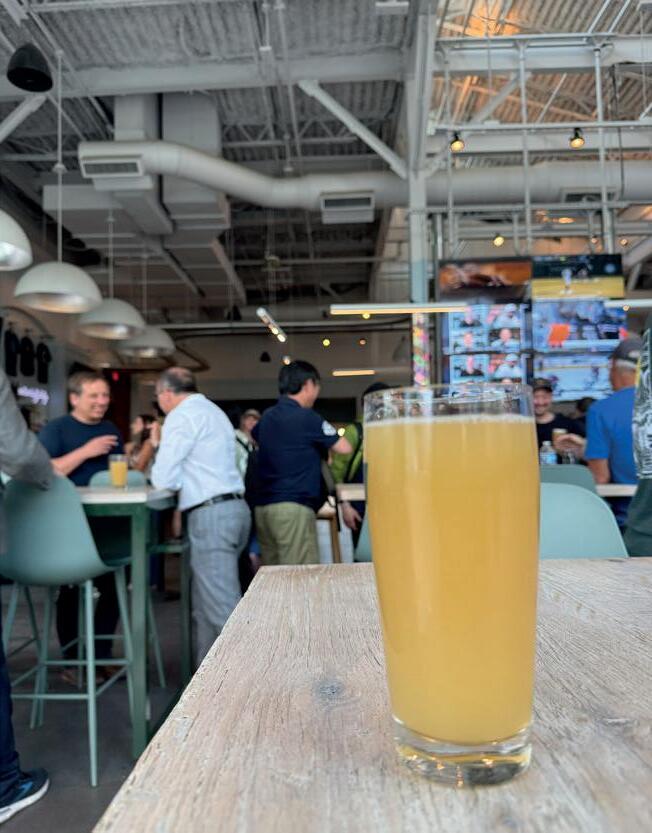
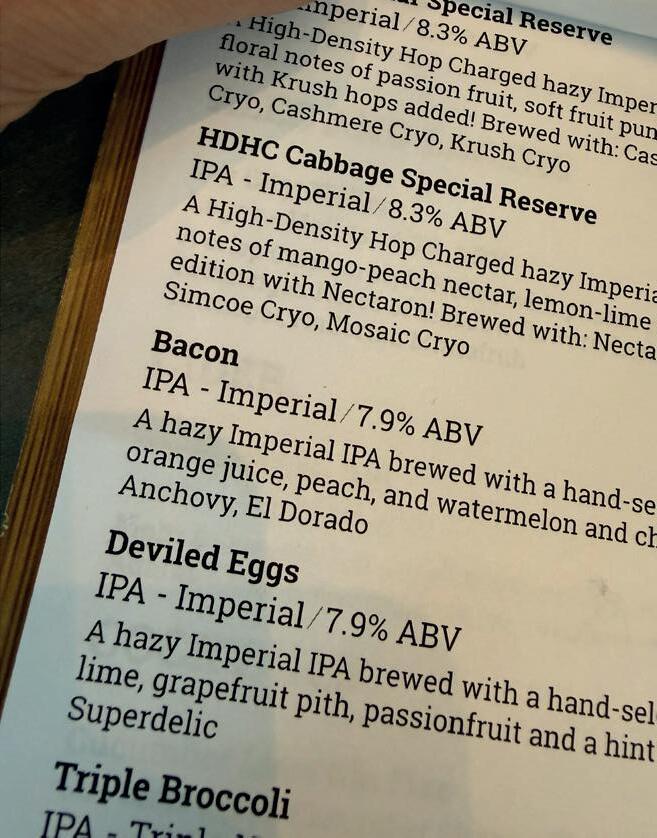
Taproom focus with Neil Walker
Hot on the heels of his recent trip to Philadelphia, SIBA’s Head of Comms & Marketing Neil Walker takes a look at two of the city’s top taprooms…
Two sides of the Philadelphia Taproom scene

I was recently lucky enough to represent SIBA at the World Beer Cup and Craft Brewers Conference in Philadelphia, a superb city with a thriving beer and brewing scene.
Cited as the ‘birthplace of America’ Philly has a well-established brewing scene and some of the best taprooms I’ve ever visited, including Victory, Yards and Dock Street – all of which had great beers and atmosphere. But of all the places we visited there were two that particularly stood out, and they couldn’t be more different.
Other Half Brewing
Brooklyn-born brewery Other Half opened their Philly taproom in 2022 and was the first place I visited in the city, being the venue for the World Beer Cup welcome and networking event. I laughed when I first read the beer menu, which was 3 full pages of IPAs plus a token lager and dark ale.
Nearly all of the beers are incredibly highly hopped, hazy New England style pale ales, with a few nods to cleaner West Coast styles – and every one of them are some of the best examples I have ever tasted. Particularly good was “Croissant”, a NEIPA brewed with Peacharine, Nelson, Rakau and Southern Cross. Hugely aromatic and balanced for such a big beer. Every beer was a perfect showcase of hops (some such as ‘Anchovy’ I’ve rarely seen used in the UK) and totally flawless, no mean feat with a room full of the World’s most critical beer judges analysing your every move…
Name: Other Half Brewing
Location: 1002 Canal St, Philadelphia, PA 19123, United States
Opening Hours:
Monday 4pm–10pm
Tuesday 4pm–10pm
Wednesday 4pm–10pm
Thursday 4pm–10pm
Friday 12pm–11pm
Saturday 11am–11pm
Sunday 11am-8pm
Fermentory Form
Where Other half is big, spacious and airy, with beers that have mass beer-geek appeal - Fermentory Form is hidden away down an unassuming side street. But it is well worth the effort to find, if you can navigate the quirky* opening hours.
Specialising in barrel-conditioned mix fermentation beers, it’s a beautiful little space where you sit amongst the barrels and are poured beers from lambic-style baskets – all with warm, friendly service from people who clearly love what they do.
The beers are hugely complex but also fresh and drinkable, something often missing from mixed ferm styles, showing a huge amount of skill and a deft touch from the brewers and blenders.
My favourite beer was a hugely refreshing, spritzy, ‘rustic table beer’, which at 3.5% blew me away – managing to be complex and layered at such a modest abv.
Name: Fermentory Form
Location: 1700 N Palethorp St, Philadelphia, PA 19122, United States
Opening Hours*:
Monday Closed
Tuesday Closed
Wednesday Closed
Thursday Closed
Friday 5–9pm
Saturday 12–5pm
Sunday Closed
*I’d suggest ringing ahead if you’re thinking of visiting as they may be open (or closed) at times other than those listed above.
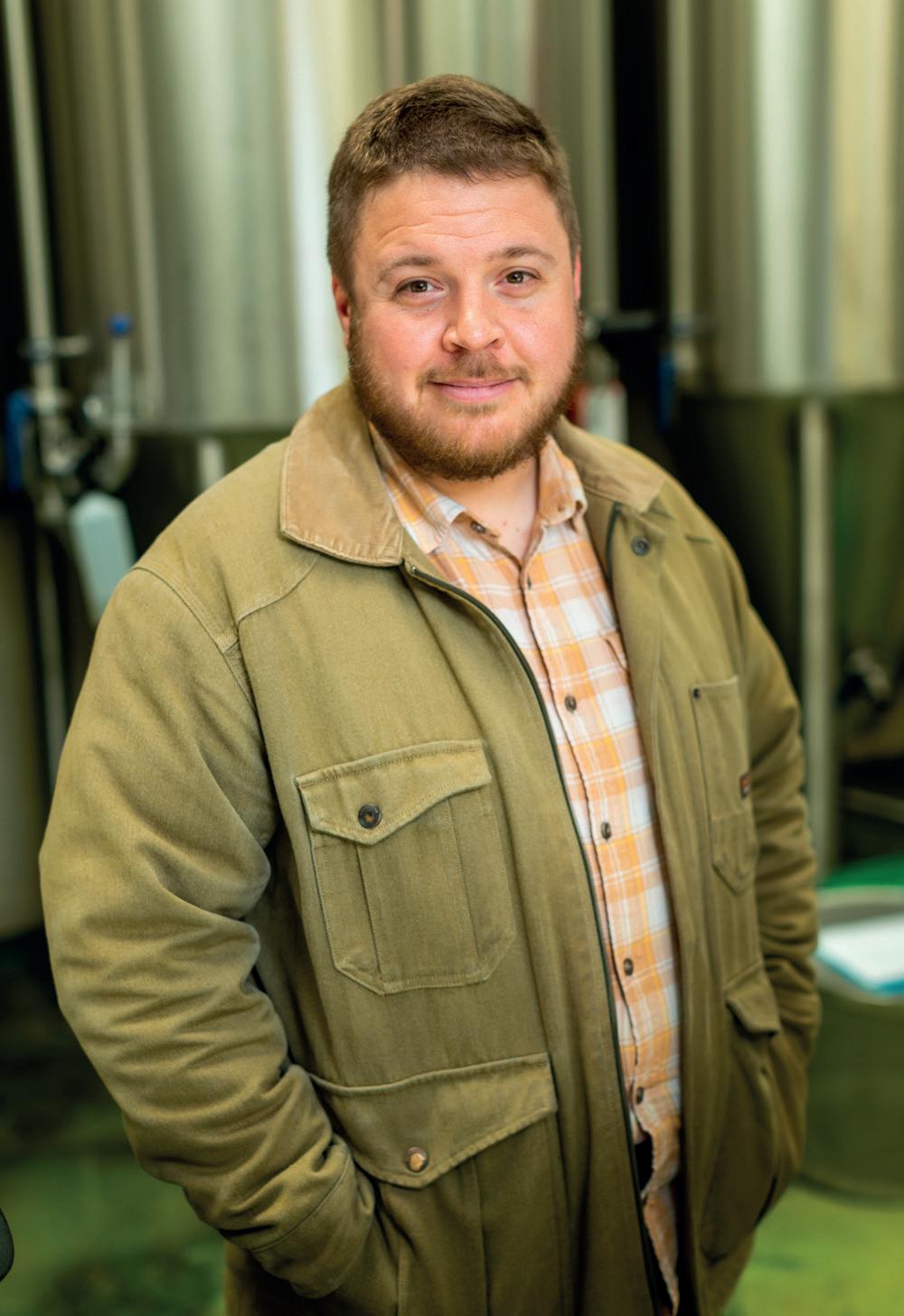
Fell Running
Fell Brewery in Cumbria recently walked away with the title of SIBA Sustainable Brewery Business of the Year for 2026 for some seriously industry-leading work on carbon foot-printing and an equally ambitious plan to halve the carbon intensity of their beers by 2028. Fell’s Sustainability Director – and the Co-founder of the brewery – Tim Bloomer has led the project, which saw him persuade one of the UK’s preeminent sustainability experts to work with his small team in Flookburgh on an intense exercise to map the brewery’s carbon footprint. Rather than using any offsetting, Tim then took the resulting report data and examined his entire supply chain and processes to formulate a realistic plan to make the changes needed to reduce the brewery footprint and make a real verifiable impact. Far from paying lip-service to becoming a more sustainable operation, Fell is making
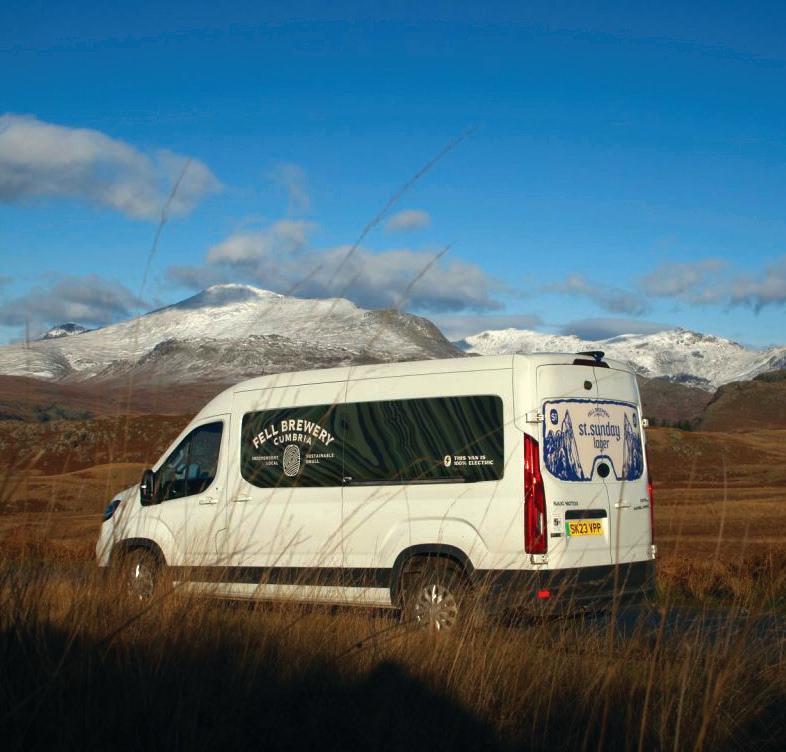
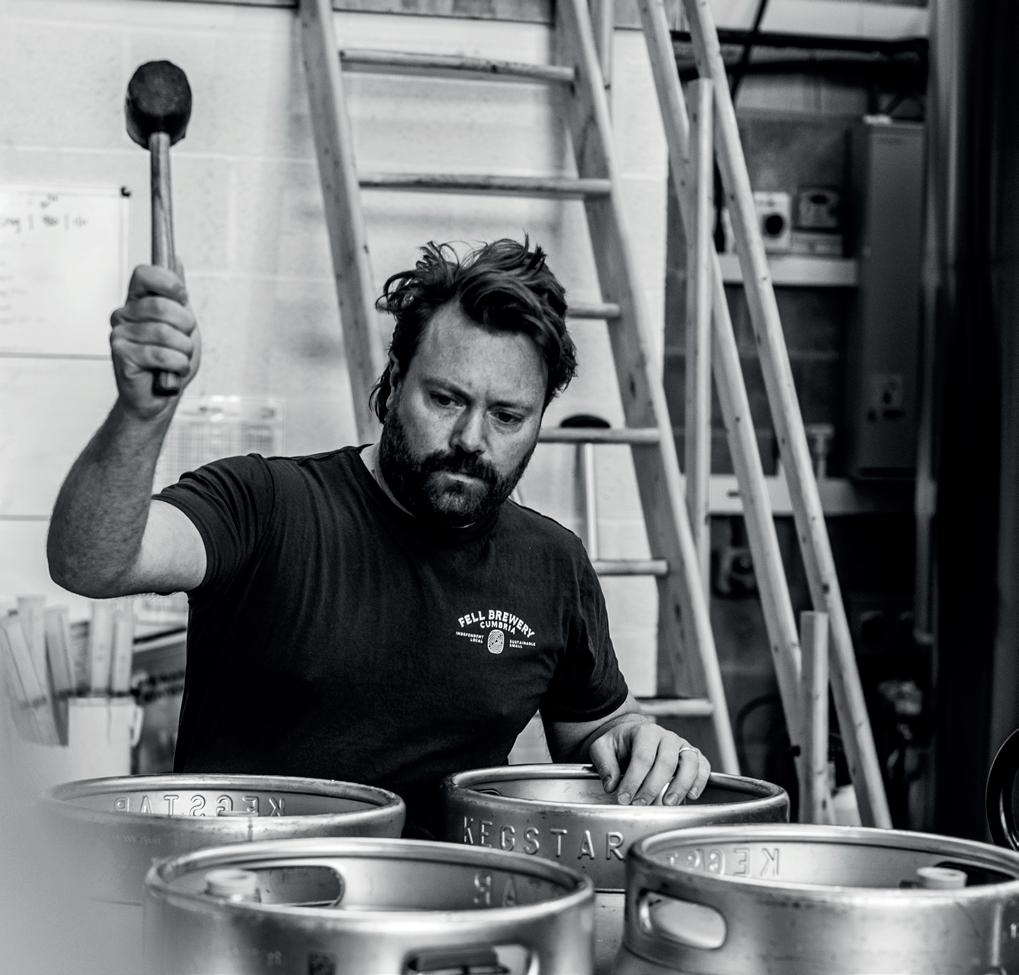
genuine change happen, and along the way Tim and the team have made some interesting discoveries about what areas breweries are able to make a serious difference in and where in the supply chain the majority of that carbon sits. Some of this change has been behavioural or quite simple to accomplish, but with larger capital investments like solar, there is a return on investment over time that Tim is keen to stress to fellow brewers. In fact, Fell has seen significant commercial benefits from the changes it has made and, two years out, is already two thirds of the way to meeting its ambitious carbon reduction target. Caroline Nodder, Independent Brewer’s Editor, spoke to Tim in late May to find out more about the key learnings from this project, what other brewers can take from them, and what the future looks like for Fell’s continued sustainability journey…
Business Basics
Name: Fell Brewery
Founded: 2013
Location: Flookburgh, Cumbria
Annual production: 4,500HL
Production split: 45% keg, 40% cask & 15% small pack
Head Brewer: John Major
Total Staff: 11 (not including bars)
Number of Pub/Taproom sites: 5 bars
Core beers: St. Sunday Lager (4.6% ABV lager), Session IPA (4% ABV IPA), Tinderbox IPA (6.3% ABV IPA), Ghyll (3.4% ABV golden ale), Crag (3.8% ABV bitter) & Beck (0.5% ABV low alc)
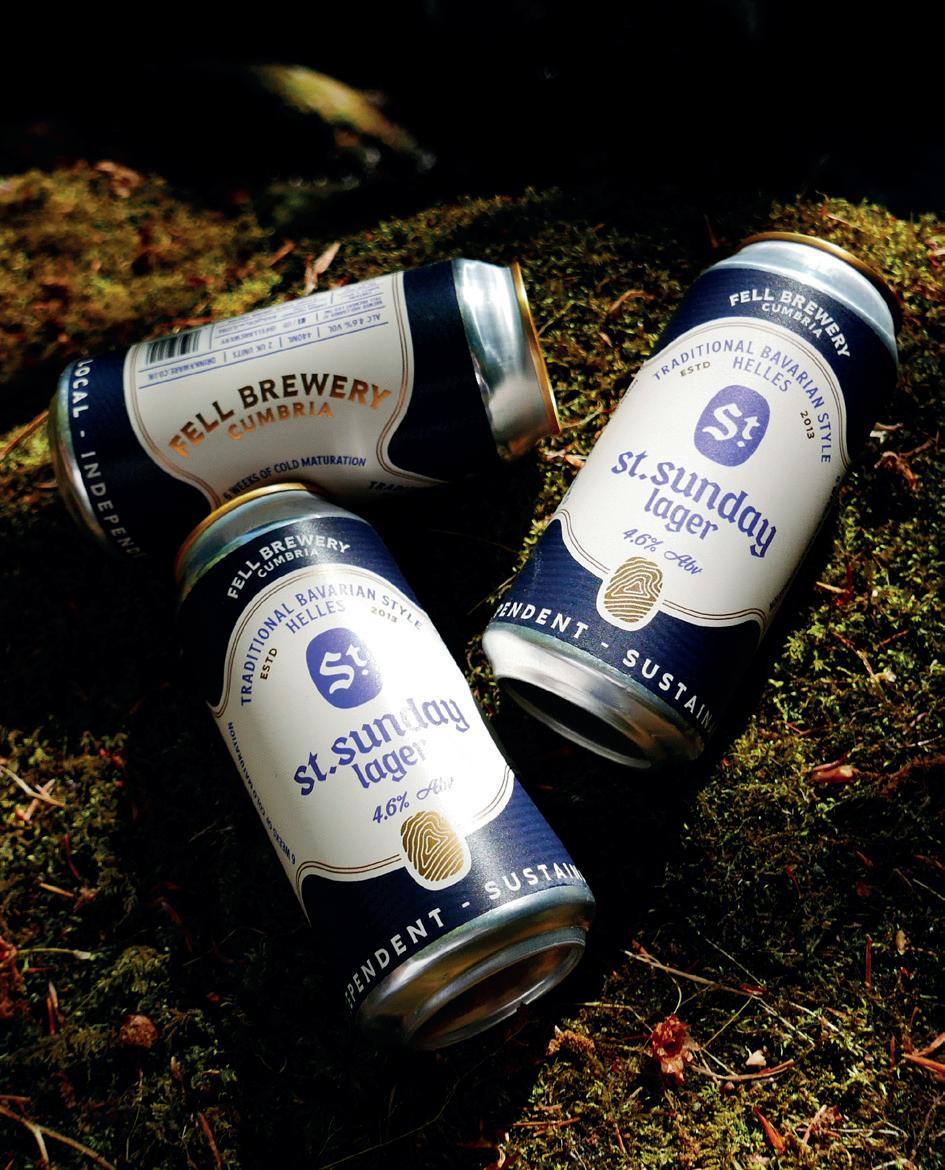
Sustainability Profile: Fell Brewery
When and how was Fell founded?
“It was founded in 2013 by myself and my business partner Andrew Carter. We were both very young - we were only 23 or 24 when we first got going – and we were to an extent victims of the global financial crisis and problems with graduate recruitment. We both didn't like where our jobs were at the time, and we're old friends from school in South Cumbria, and with the youth and the naivety and ignorance that go with that we managed to persuade ourselves to start a small brewery.”
How has the business developed since then?
“Steadily and positively, with a hell of a lot of hard work and learning and growing up done on the way. When it's really your first jobs, it wasn't like other people, where we were coming in off the back of already having experienced the world of work a great deal, we were still kids, really! I got into beer and brewing originally when I was at uni in Edinburgh, seeing the nascent craft beer boom - and it was really nascent at the time, because that would have been 2008 or 2009. The really early days of BrewDog, obviously was starting to trickle into Edinburgh when I was a student there, and early exports like Sierra Nevada Pale, all the real classic stuff. I started to get into that, then started to homebrew, and it became a hobby. And then when I did get a job working down in London, I started to think, wouldn’t it be great to do this instead of the job I really didn't like. So we came back to Cumbria, I went to do a Heriot Watt brewing and distilling Masters, while Andrew stayed to find premises and get things sorted out. And then I graduated, and we started brewing a few months after that.”
And how did you pull together the investment initially for the site?
“By spending an incredibly small amount of money, a real shoestring budget, but we also did manage to get a grant. There was still a little bit of EU rural development fund money kicking around then, so a grant, and then very small amounts of money that we had saved up and a little bit of help from family. The grant was about £15k and then we managed to pull another £30k together.”
What is the ethos behind the business and the beers you brew?
“If I’m being honest, the business plan when we launched was that we were going to be amazing and take over the world, because we were so young. The sustainability thing did come later, after we'd opened our first couple of taprooms and had become a team. At that time, between the bars and the brewery, there was eight or nine of us, and we were all young people living in Cumbria who had a similar mindset. I could just tell that it was important to people and that this was something that we took seriously. Also, they're a smart bunch, they're not ones for having wool pulled over their eyes, so I needed it to be meaningful as well, and actually add up and have some real substance behind it. It's really motivated by the team itself and their desire for us to do something that goes beyond your typical nod to sustainability and actually making meaningful change. So I think we first started looking into it in 2019 pre-pandemic. Then it all got put on the back burner because of the madness of the world, and I took the reins back up in 2022. Then when we appointed a formal managing director of the business in 2024 I changed my role to take the job title of Sustainability Director.”
You have set yourselves an ambitious target to reduce the carbon intensity of your beers, what work went in to setting that target?
“We have a stated ambition to halve the carbon intensity of our beer by 2028. We got a full, very specialist, carbon audit done by an organisation called Small World Consulting, which is headed up by a professor, Mike Berners Lee, who has written one of the seminal texts on carbon footprinting, called How Bad Are Bananas? He actually happens to be based in Cumbria, and he operates out of the University of Lancaster. So I took a chance, as we wouldn't normally be able to afford this kind of expertise, but we sent them some beer and said, look, we'd love to work with you. They'd actually been the organisation that had done BrewDog's original work on sustainability, and obviously with what was going on at BrewDog at the time,
Sustainability Profile: Fell Brewery
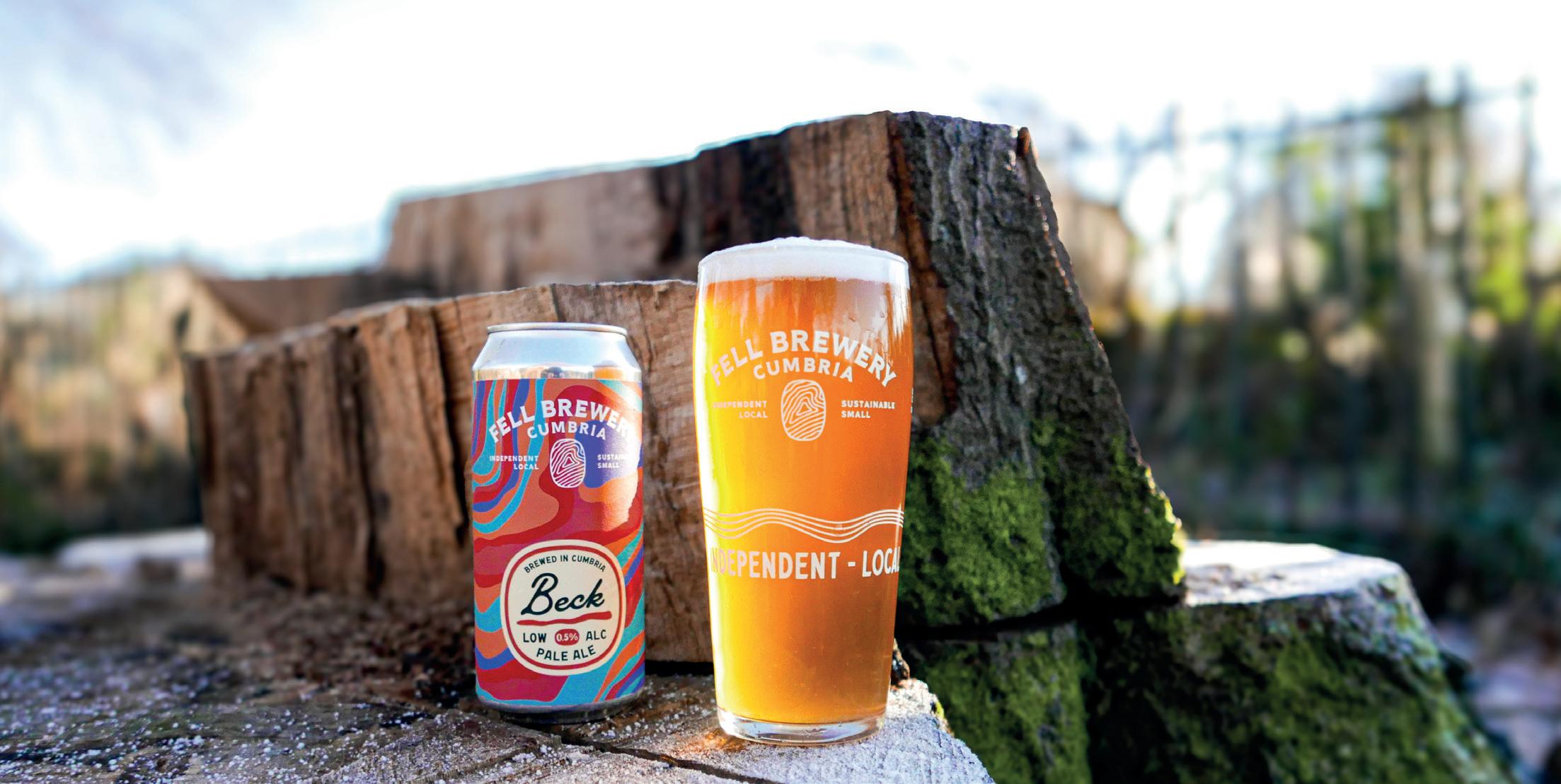
they were saying, well, we could really do with a brewery that's a little less tarnished to be working with. They welcomed the opportunity, so we got all our data done by them, which was an incredibly intensive experience. They saw everything. All the financials, left absolutely no stone unturned to get us data that we were confident in, so that I could point to it and say, these numbers mean something. So we took what they came back with, came up with a plan to reduce it, and we will send all our data back in another two year’s time, and hopefully we will have done it - we think we're about two thirds of the way there at the minute.”
You won’t be using offsetting to reach your target, why is that and how much harder is it to do without?
“It's much harder to do it this way. I'm not one of those people who thinks that offsetting is fundamentally wrong or bad. It has its place. But what I have a real problem with is when offsetting is used as a poor excuse not to engage in the true decarbonisation that you could be doing. For example, we've always been upfront about the fact that we are not about to become net zero as a brewery. We can't do that. The global aluminum smelting sector is not about to start producing zero carbon cans, we have to be honest, so hence why the goal was to halve it. These are changes that we're confident that we can make. I could have paid a phenomenally small amount of money to offset our carbon and have gone away and said, right, we're net zero now, and therefore we're not part of the problem. But I always knew that would not sit comfortably with me, and I knew it wouldn't sit comfortably with the team. So we had to do it the hard way, and that has meant going really hard into our supply chain to find better alternative suppliers, that has meant really getting to grips with our processes, and it's meant a chunk of investment in decarbonised options or lower carbon options. It's doing the real work. The good news with that is that the vast majority of this investment has an associated payback. We'll have paid for our solar panels within three and a half years of installing them, there is a payback associated with us switching one of our vans to being an EV van, we will invest in a nitrogen generation plant, and they all have paybacks associated with them. So yes, it's required capital expense, which obviously is a difficult thing for breweries to find at the minute, but the big message that I have for the industry is that operating like this has led to undeniable commercial benefits. We have improved our margins, we have cut our costs. This is good for business.”
You recently won a SIBA Business Award for your work on sustainability. What made you decide to enter and what did it mean to you to win?
“We got put forward for the Brewers Journal Sustainability Champion and won that last year. So we thought we should start putting ourselves forward for these awards, to start spreading our message, as opposed to just doing it for our own gain. We have a message, which is that these actions are worth doing, they are good for the bottom line, while also being good for the planet. And I realised about a year ago that I had to take my responsibility to be an advocate for this work seriously, and that meant spreading the message. It's been great, frankly, to see how our industry has embraced sustainability. When I first wrote our decarbonisation plan, particularly looking at our supply chain, I genuinely thought I was going to really struggle to persuade other businesses to take this seriously. But it's not been like that at all, it's been broadly embraced, and there's been some fantastic opportunities, and so I think that the industry does deserve to take some real credit, because we weren't in a particularly good place five or six years ago. There has also been some great work done by suppliers. We work with Simpsons [Malt], who have done some incredible work. When we first got our Small World analysis back, our single biggest emission is associated with the grain that we use. It's nearly 40% of our carbon footprint. It's staggering, and was really eye opening for us, and so I remember Small World saying, you're going to struggle to get really meaningful change unless you can find a malt supplier who can take this as seriously as you want them to. And not only have we been able to do that, but the fact that there's competition within the sector to be the most sustainable maltings means there's great work going on. I think you can point to Crisp as well, and to Muntons, they're all trying really hard.”
What changes to the grain have had the most impact?
“Some of our biggest savings are just getting more out of our grain. Rather than using it in the typical slightly slapdash way that smaller brewers might have occasionally been inclined to do in the past, now our brewers look at the grain and think that's our most carbon intensive ingredient, we need to get as much out of it as we can. But the single biggest change, as much as it isn't very glamorous, our single biggest reduction will be our grain, and it will mostly be from just switching supplier.
Continued on page

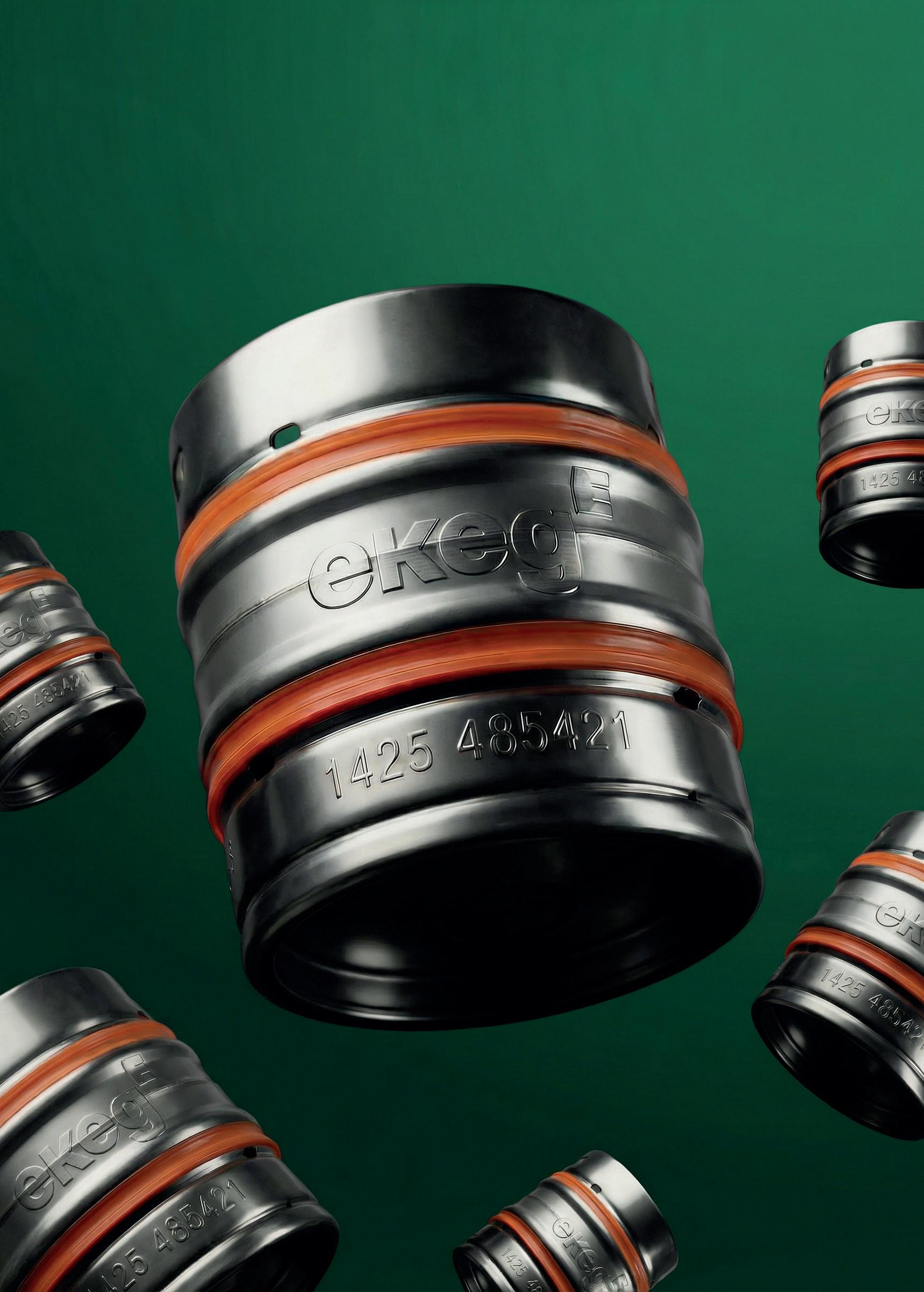
Sustainability Profile: Fell Brewery
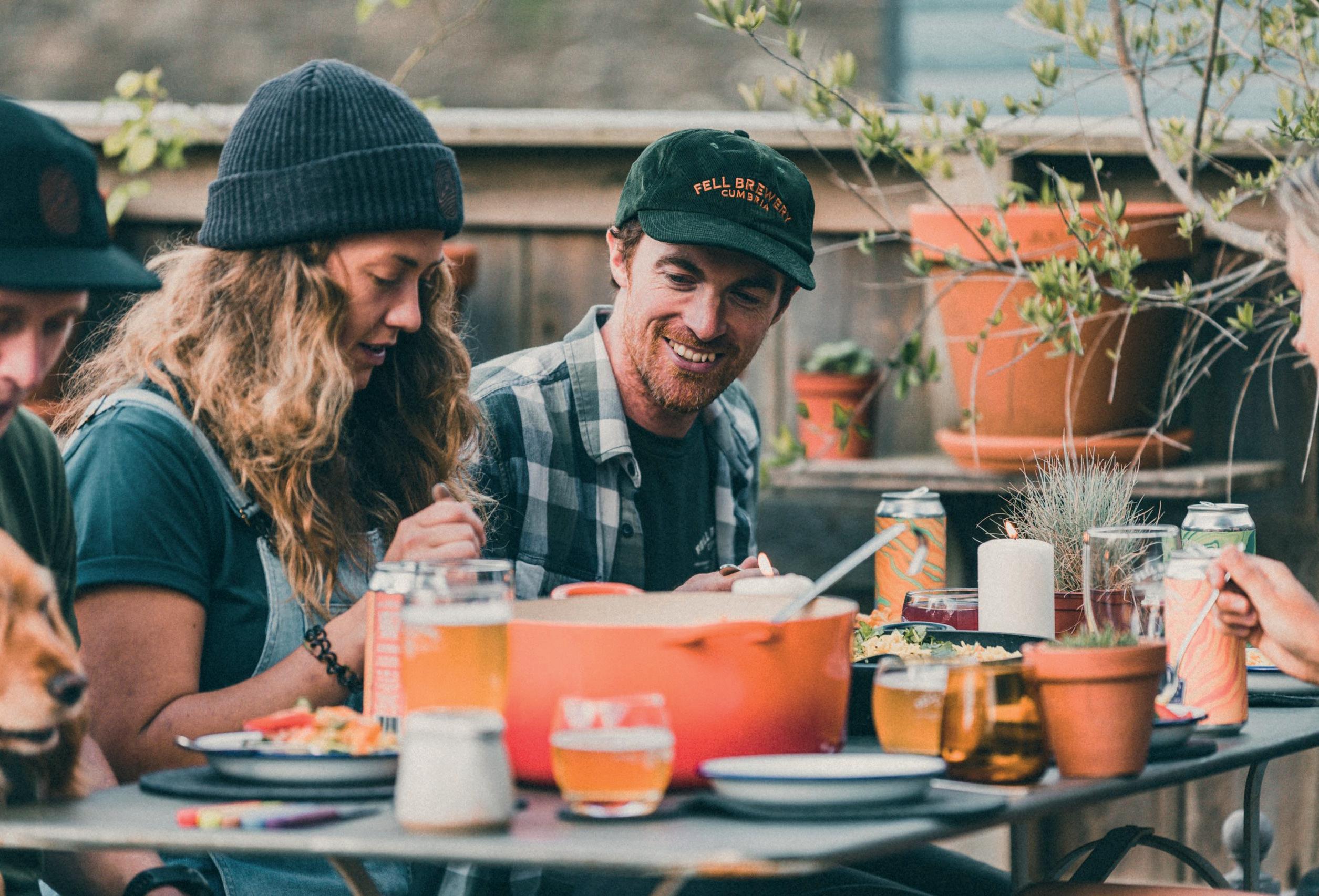
The supply chain is crucial to meaningful decarbonisation. It's a better product as well. The brewers like it more, and we're getting more pints out of every kilogram, for no more money. Reading suppliers’ sustainability reports, working out what that means, it doesn't take a lot of effort. And I think another one of my messages is, yes, we've gone and put a hell of a lot of work into all the data that we've gathered for this, but we don't need all breweries to do that. There are broad things that you can do, and yes one of them is looking at your malt supplier and holding them to account, and if necessary, considering changing.”
Are there any new or interesting developments in terms of sustainable brewing that you think could be positive for the sector looking ahead?
“If there's one game changer for the sector, it's regenerative agriculture, which we've already mentioned. There is also CO2 recovery, but that is very expensive. We looked heavily at CO2 recovery, but with nitrogen generation as an alternative to CO2 recovery, with the amount of your process gas that you can switch from CO2 to nitrogen you can bank some quite significant gains off the back of that. And I would guess that within the next 12 months we will have a nitrogen generation plant.”
What do you see as the main challenges you face as a business currently?
“Small brewing is tough at the minute. We've had so much stress put on us with costs. It looks like we are still in a bit of a consolidation phase. We don't really know when that's going to end, but finding consistent supply where you can forge longer term relationships is key. I look at the hospitality sector, I look at all these pubs that we've been trading with, for in some cases more than a decade, and I look at the list of them that have closed - it's really heartbreaking. We've really forged our success the
difficult way, you know, we've never done a lot of work with distributors, we've done all our own distribution and selling a lot ourselves through our own taprooms, but then working with long established trade customers. I just really hope that they can start to find some better trading conditions. We're at the point where the brewery is doing good business. It's not nothing stellar, but off the back of a hell of a lot of hard work, we've got it back to looking like it's pretty good. And I'm getting the impression that various other breweries are starting to feel the same way. Certainly no kind of gravy train, and everything being great again, but feeling a little bit more optimistic that a corner has been turned, possibly, for brewing. But I think we're all looking at hospitality, thinking we're not sure you have turned a corner, we're not sure whether you're going to, and we all know that as a sector we are utterly reliant on it.”
Do you see opportunities for independent brewers to grow in 2026?
“I think some of the shifts, in terms of places that are actually starting to shift volume or more volume, are the places that are a little bit more alternative. We're seeing more business out of places like cinemas, campsites, a little bit away from the conventional on-trade, a little bit more towards the experience economy. I think the other thing, is that we started working with our first supermarket, it’s Booths, which is obviously slightly different, but it has been a really positive experience. And speaking to various other small brewers, I think maybe there are opportunities now with supermarkets that were less inclined to touch us before. I think the trade would love to have turned and said supermarkets aren't where people should buy beer, but realistically, I think that we are accepting the fact that it is going to be a huge part of the overall sector. So if we can persuade supermarkets to become more amenable to working with independent breweries, then that potentially is a really good thing.”

YOUR BREW DAY MADE EASIER
What our solutions can do for you?
Lighten your workload
Reduce your production costs
Control your beer quality and consistency

Trusted by highly selective breweries worldwide and supported by data-driven trials, AB Vickers delivers proven process solutions backed by 200 years of expertise and Lallemand innovation, reducing losses, stabilizing results, and improving e ciency.
LEARN MORE
Sustainability Profile: Fell Brewery
We’re seeing more business out of places like cinemas, campsites, a little bit away from the conventional on-trade, a little bit more towards the experience economy.
Are you investing in the business currently and if so, where is that investment going?
“We have had tentative success with transition to electric vans, in terms of the fleet. I think that we probably are looking at doing something more with that this year. In other areas, the other work that I've got planned this year in terms of carbon savings is focused more on the supply chain, particularly getting to grips with hops for the first time. We are using more UK hops than we used to, but we are still importing a chunk from American, and what I would say, is the miles associated with carbon in hops are usually incredibly poorly understood. So, actually, when Small World came back with our carbon assessments, there were really very modest increases associated with importing hops from America. Because really it's all about agronomy. It’s about how this stuff's grown not the transport, that's where it's really won and lost in terms of a carbon perspective. So the West Coast USA, they’ve got enough heat in the summer, and then enough water as well to actually make it a really great place to be growing hops. One of the sad stories that we're going to have to confront at some point is how nearly impossible it is to rely on Central European hops anymore, just because of the scorching conditions that they've had. And there are places where they are growing hops and where they shouldn't be. Australian hops have got some big questions to answer, and certain parts of America, and that's all purely on the basis of water stress. Also, how you hop is also really, really important and really interesting. So things like Cryo Hops, immediately you might think this stuff is just another process that surely has carbon associated with it, so therefore these must be bad. Well, not necessarily, because it is reducing the amount of overall weight of hop you're putting in, and then before you know it, actually you are seeing a saving. Much as I hate the lack of romanticism around it, we're going to get a big saving from transitioning away from whole cone hop and moving into entirely T90 pellet again, just because it's more efficient. So again, it is complicated, but there are wins to be had out there.”
What advice would you give to a brewer just starting out on their sustainability journey?
“Get good data. Get the best data that you can realistically acquire, then look at it, and think about it. You have to be data-led.”
Who do you most admire in the independent beer sector, and why?
“I've already mentioned them, but I'd have to cite our malt suppliers. I think the work that Simpsons has done is extraordinary. I think they're now representing not just the brewing sector in terms of work they're doing around environment sustainability, but also wider ESG [Environmental, Social and Governance] as well. They’ve just come back with a B Corp score that makes them one of the best companies in the world in any sector, it's extraordinary what they've done, and it’s been a huge privilege to be able to find a partner like them. Plus of course they're not that far away from us, being up in Berwick upon Tweed. There's been lots of great work done by various maltsters. I don't want to diminish anybody else's. But I've been blown away by what I've seen working with Simpsons.”





In a survival market, packaging decisions matter more than ever
Tim Croxson, CEO of premium packaging solution business Croxsons, looks at what the data from the latest SIBA Independent Beer Report means in terms of packaging…
The latest SIBA Independent Beer Report paints a clear picture of a sector under sustained pressure. Almost half of brewers now cite survival as their top priority, while a significant proportion expect turnover to fall in the year ahead. Against a backdrop of rising costs, tightening margins and continued market uncertainty, it is undeniably a challenging environment for independent brewers.
In this climate, decisions have to be made quickly and carefully because every choice carries weight, particularly those that directly impact cost, efficiency and how the product reaches the customer. For many businesses, the focus is understandably on stability: protecting margin, maintaining quality and retaining customer loyalty in an increasingly competitive landscape.
Against this backdrop, packaging decisions matter more than ever, particularly when it comes to format choices such as glass, where cost, performance and brand are closely linked. They can no longer be seen as purely functional or operational. Instead, they have become a strategic lever, influencing not just cost, but also brand perception, product performance and long-term resilience. The challenge for brewers is that these factors do not always align neatly, and trade-offs are becoming harder to navigate.
While cost pressures are driving caution across the sector, the report also points to a continued shift in consumer behaviour. Many drinkers are choosing to drink less, but better, placing greater emphasis on quality, provenance and experience. For brewers, this reinforces the importance of maintaining product integrity and brand positioning, even as financial pressures increase.
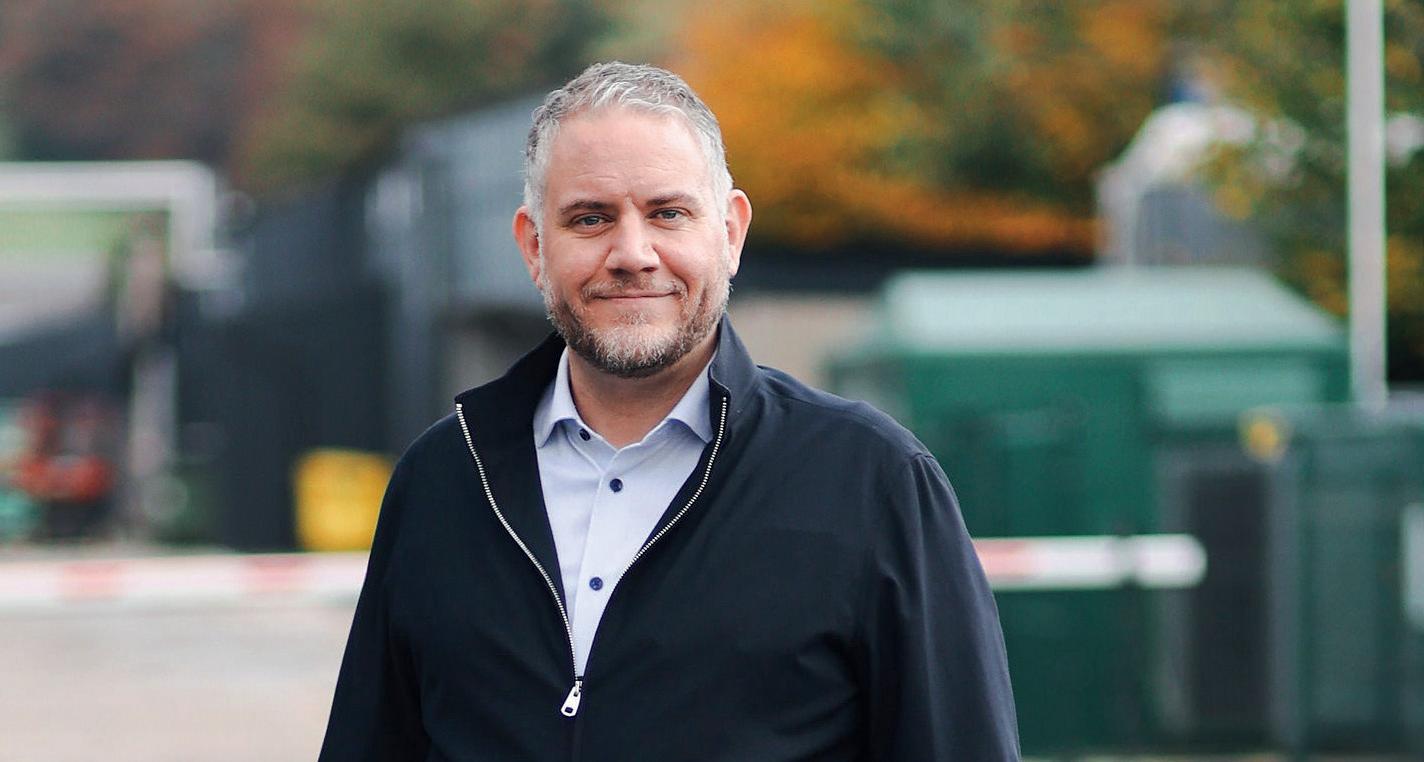
Packaging is often where these pressures collide, particularly in the choice between formats such as glass and cans. It influences how a product is perceived on the shelf, how it performs in transit, and how it reaches the consumer. Glass, in particular, continues to play a key role in premium positioning and product quality, especially as more brewers diversify into direct-to-consumer channels, taprooms and online sales. It also impacts practical considerations such as storage, logistics and overall supply chain efficiency, all of which feed directly into cost.
Increasingly, brewers are looking beyond upfront cost to understand the total cost of packaging decisions. This includes factors such as transport efficiency, breakage, storage requirements and how packaging performs across different routes to market. What may appear cost-effective at first glance does not always deliver value once these wider considerations are taken into account. In a market where margins are tight, taking a more holistic view of cost is becoming increasingly important.
As a result, the decision between formats is rarely straightforward. Notably, the SIBA report highlights that many brewers are continuing to favour glass, even as cost pressures increase, underlining its importance for product quality, brand and premium positioning. It is not simply a question of choosing the lowest-cost option, but of understanding how packaging performs across the full lifecycle of the product and the wider business.
At the same time, the regulatory landscape is evolving. The introduction of Extended Producer Responsibility (EPR) is beginning to change how packaging costs are allocated, bringing greater scrutiny to material choice and design. Looking ahead, further developments such as Deposit Return Schemes (DRS) will add another layer of complexity, increasing compliance requirements and influencing how different
formats are assessed. This is particularly relevant as different packaging formats may be affected in different ways, adding further complexity for brewers already balancing cost pressures with evolving consumer expectations.
For brewers already operating under significant financial pressure, this creates a more complex decision-making environment, where cost, compliance and sustainability must all be considered together.
Having worked alongside brewers for generations, we are seeing these pressures play out firsthand. Approaches such as lightweighting, including Croxsons’ Rightweight® philosophy, are increasingly being explored as a way to reduce cost and environmental impact without compromising product performance. There is a growing focus on understanding the total cost of packaging, rather than just upfront price, alongside a greater awareness of how packaging choices affect operations, brand and long-term strategy.
Importantly, there is also a clear desire across the sector to get these decisions right. Brewers are not rushing into reactive changes, but taking a more considered approach, weighing up the implications carefully in the context of their own business model, customer base and growth ambitions.
In a market where margins are tight and uncertainty remains, there are no simple answers. However, what is clear is that packaging decisions are becoming increasingly central to how brewers navigate the challenges ahead.
Those who take a more strategic, informed approach, considering not just cost, but performance, brand and long-term impact, will be better placed to build resilience in a challenging market.
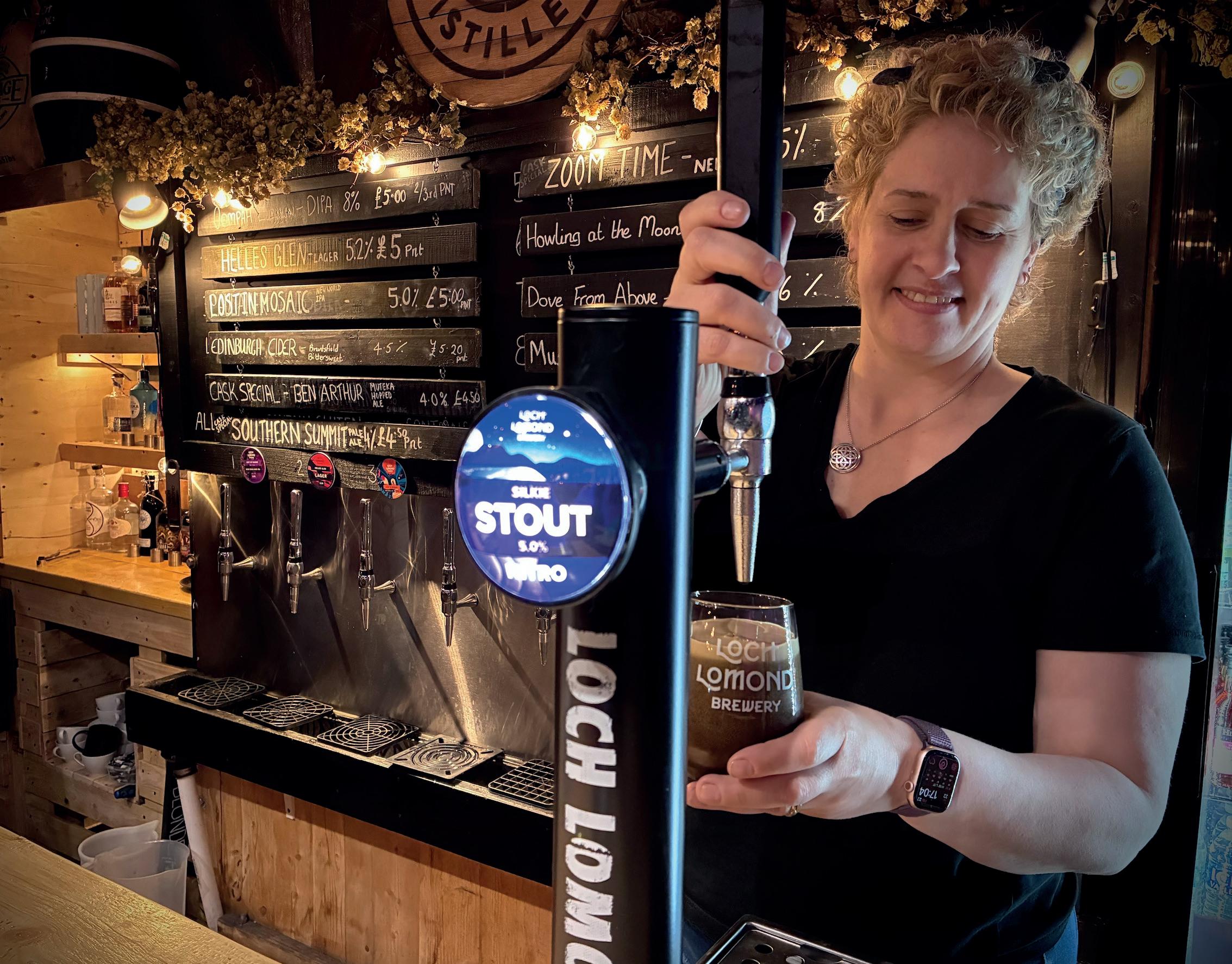
Top of the Lochs
Following a year during which she continued to work full time despite going through treatment for cancer – now thankfully completed – Loch Lomond Brewery’s Co-founder Fiona MacEachern took to the stage at BeerX in March having been named as this year’s SIBA Brewers’ Brewer of the Year. As a peer-voted award, this is a particularly high accolade, and one that reflects a 15-year success story at Loch Lomond, which she founded as a homebrewer, alongside her husband Euan, back in 2011. The brewery’s beers continue to delight, with Fiona’s signature Silkie Stout taking two awards again this year, in both cask and keg, at the SIBA Independent Beer Competition National Finals. Fiona has also been instrumental in the evolving indie beer scene in Scotland since she founded Loch Lomond, and was the driving force behind the launch two years ago of the Indie Beer Scotland festival, which has gone on to be the blueprint for other regional indie beer events across the country. She also sat on SIBA’s Scottish regional board as a Director, where she represented Scottish SIBA members’ interests at a National level within the organisation, only stepping away last year during her treatment. Independent Brewer’s Editor Caroline Nodder caught up with Fiona in late May to find out more about her career as a brewer, her recent award success, and her thoughts on some of the challenges and opportunities for Scottish independent brewers in the current market…
Meet the Brewer: Fiona MacEachern, Loch Lomond
Brewer’s CV
Name: Fiona MacEachern
Brewery: Loch Lomond Brewery
Brewery team: 15 people
Annual production: Approx. 6,000HL
Years in the industry: 15 years
Qualifications: Training course at Brewlab before launching Loch Lomond
Career history: Founded Loch Lomond Brewery alongside her husband Euan in 2011
Current role: Managing Director, Loch Lomond Brewery
Favourite beer to brew: Silkie Stout (5% ABV oatmeal stout)
Recent awards: Fiona was voted SIBA Brewers’ Brewer of the Year 2026 by the wider SIBA membership & Silkie Stout won Gold in keg and Bronze in cask at the SIBA Independent Beer Competition National Finals for 2026
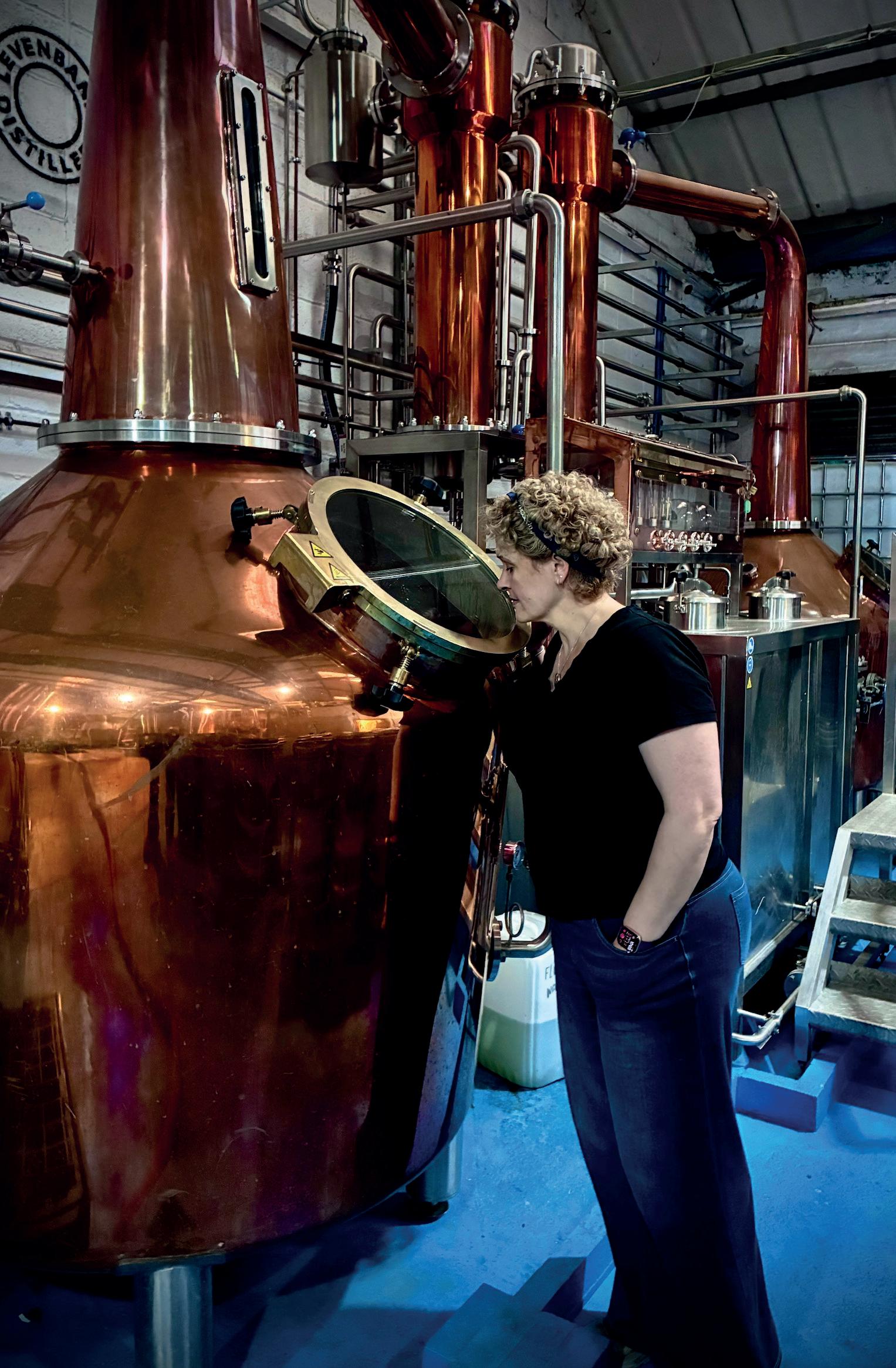
Tell us a bit about your own background and how you got in to brewing.
“We [Fiona and husband Euan] kind of fell into brewing. It started off as a hobby, and at the time I was a police officer, my husband was a civil engineer, and my job had got to the point that I worked predominantly from six o'clock at night to four in the morning, and it wasn't great for child care. My husband's job had actually moved to London, so I was then doing all these shifts with no childcare, no support from family. We knew that our beer was okay, we thought it would do all right, but we didn't know how big it would get. We enjoyed making beer, and everybody who had tasted it seemed to enjoy it, so we decided to jump in with both feet and open a brewery, because at that point there were only about 40 breweries in Scotland. Now I think it's 150 odd, but when we started, there were only 40 breweries in Scotland, and there weren't many in our region, if any, at the time apart from Fyne Ales. It really was slightly unique, and there weren’t many girls in industry either, so it made sense to us.”
And how has the business developed since then?
“We're now on to a second site. The first one became too small. And we have a brewery tap on site, along with a shop, and we've also
launched into spirits. We now have Levenbank and West Highland Spirits, two different brands, and we make vodka, gin, rum, and we’ve started laying down whisky as well.”
What is the ethos behind the beers you brew?
“We've always tried to make beers that we enjoyed ourselves first and foremost, because if we like them, other people would like them, and yes, the styles come and go, and we do some highly hopped things, and we do some very dark imperial stouts and things, but we still have a really good solid core range, which has been almost unchanged since the start.”
How has your range evolved over time?
“We have so many now, we do everything from a couple of lagers, we do pale ales and IPAs, we do stouts, imperial stouts, we do sours, we just did our first radler in the last few weeks, so we really do a wide range of different beers. We also do cask, we do keg, we do can, so we cover pretty much everything in every format.”
Continued on page 67
Slideflex - flexible, low friction cover
✔ All hose compliant with various brewing standards
✔ Large range of stainless steel hygienic end fittings available
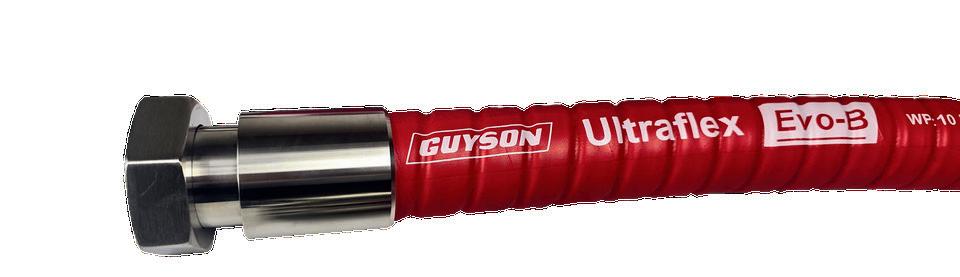
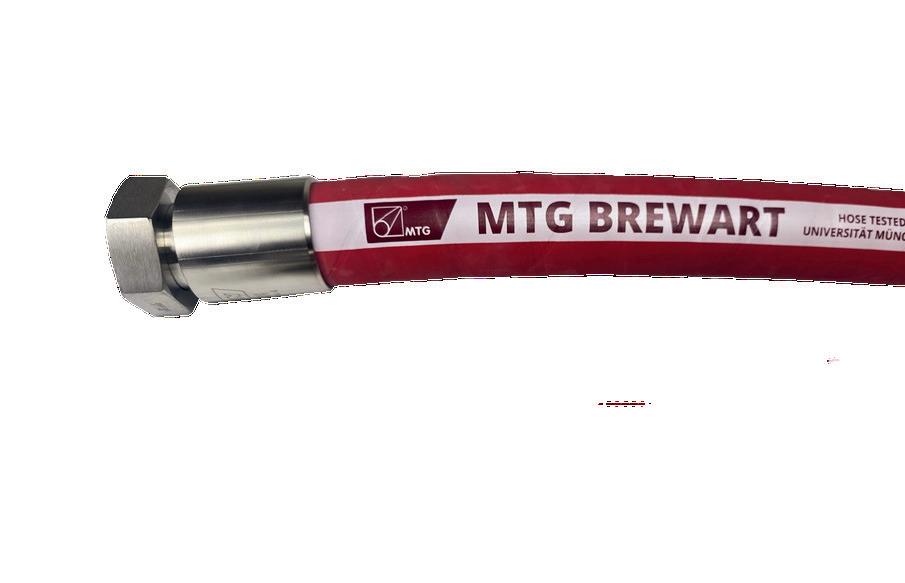
✔ Hose assemblies 100% tested before despatch
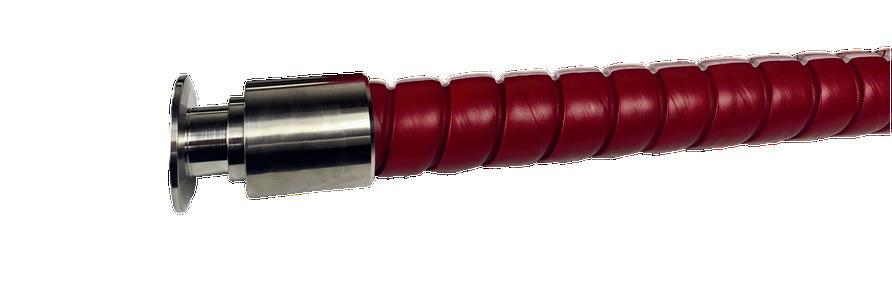
✔ On-site advice and hose inspection available
✔ Fast supply of customer’s requirements


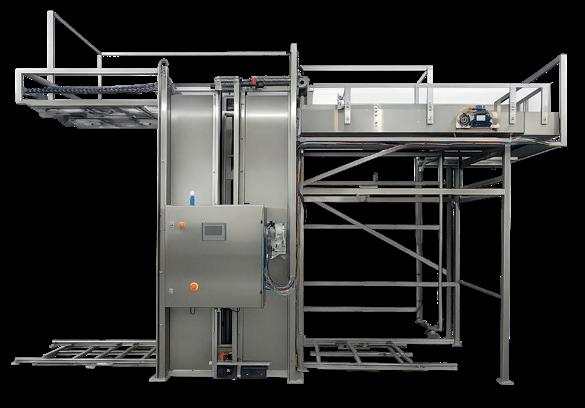
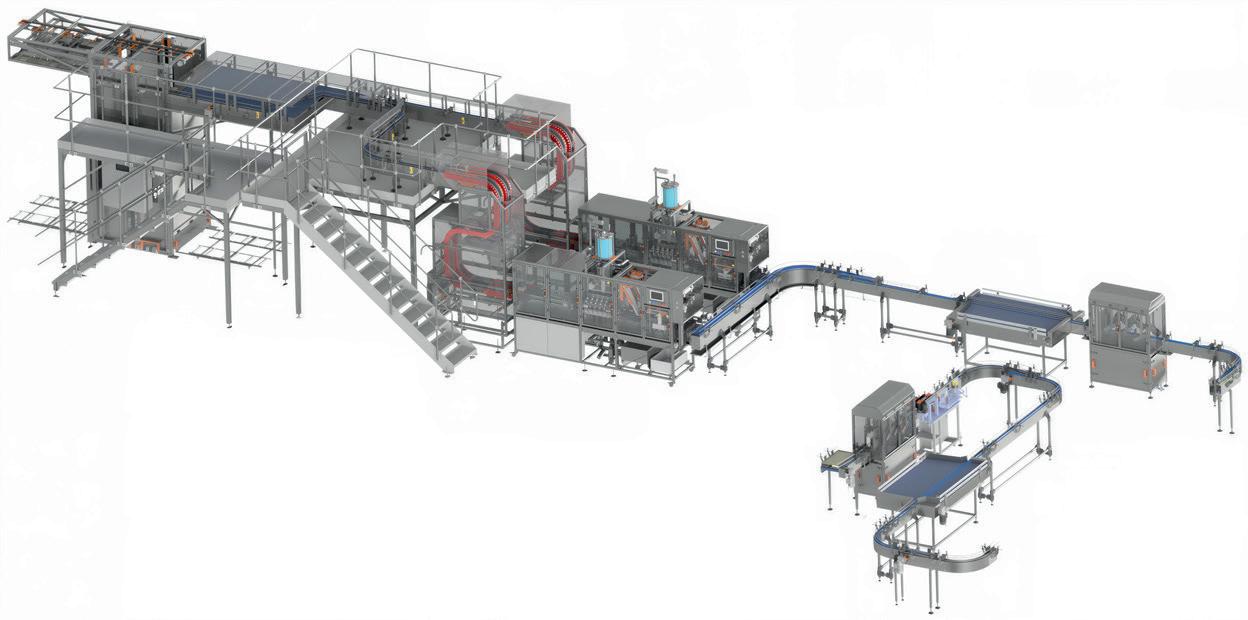
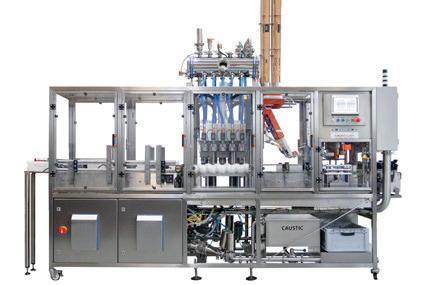
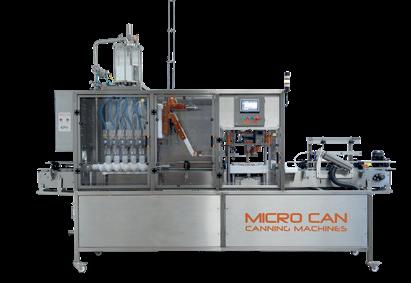
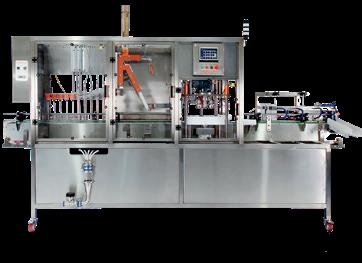
SCAN HERE
Meet the Brewer: Fiona MacEachern, Loch Lomond Brewery
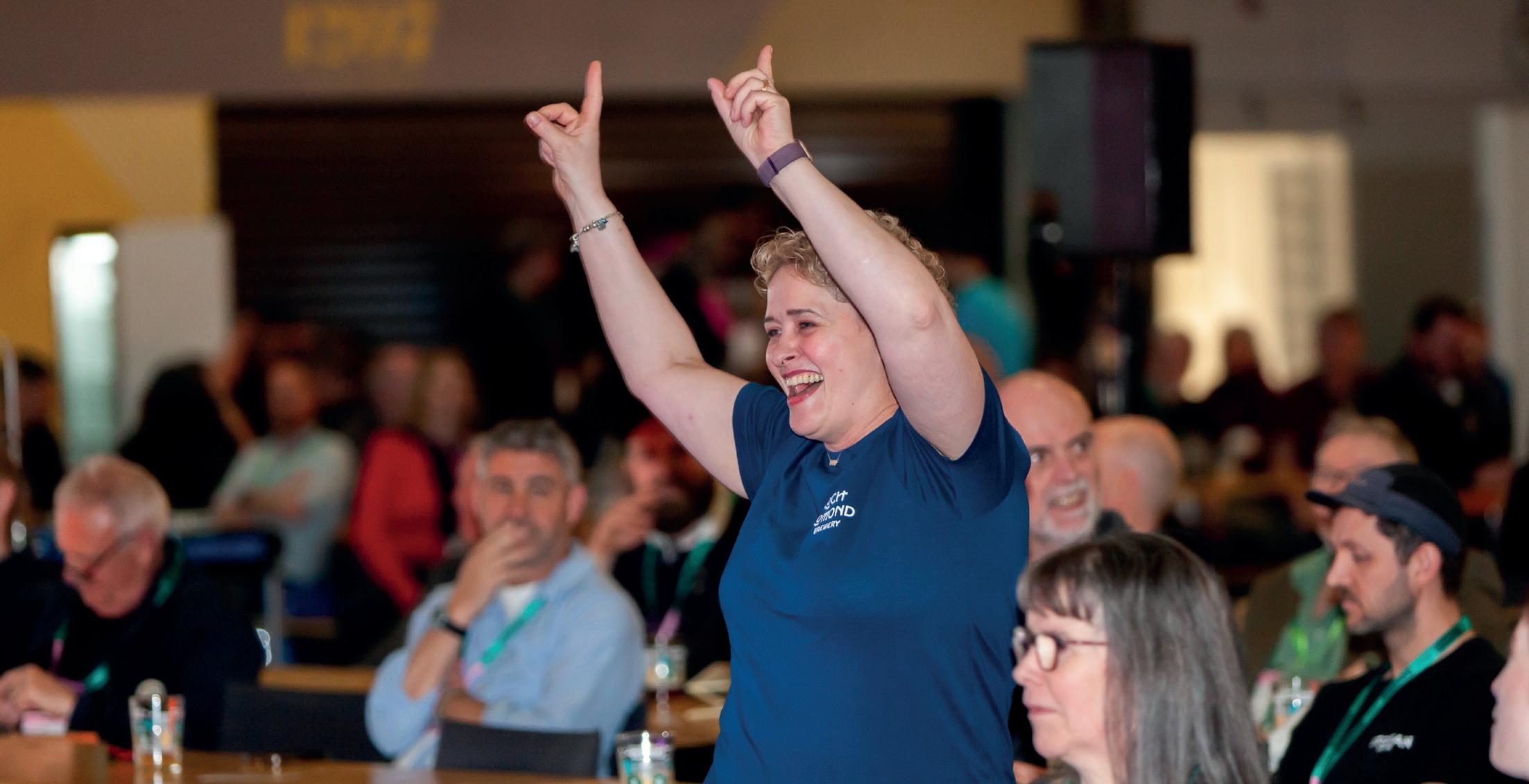
It was completely unexpected. It was something that was nice to be in the running for, but I had never once expected to win! It was very surreal. It meant a lot, because of the year I'd had, I'd still worked almost full time throughout the treatment.
When you first started out, was your aim just to get into local pubs and bars, or was there an ambition to go beyond that?
“Our local area isn't a huge area, so we always knew the local area would be a little bit more difficult, but we always had a desire to export beer, which we do, so we cover quite a large area. We cover as far down as Lancashire and as far north as Inverness in direct delivery, but we also send it in pallets across the rest of the UK, and also send it abroad, and that’s growing. Our biggest sellers are still our cask and our small pack. But our keg side is growing a lot this year.”
What has been the biggest challenge you faced in launching a brewery?
“It was trying to still make things fun, which it still is. I think initially it was all fresh, it was all new, and everything you gained was a win. There weren't many failures initially, because everybody wants a new beer, but going forward, pubs like to have beer on rotation, so it's about making sure that you're always fresh, you've got something new, and it's not just always the same four beers you're going to somebody with.”
What changes have you seen in the indie beer market since you first started out?
“I think for me it's interesting. It's things like when we first started a beer could not be cloudy, that was a big no no because everyone assumed it was sour or it had gone off or it hadn't been fined properly. Nowadays, people are more willing to just taste it with their palate and not just with their eyes. So, if it's cloudy, they will sniff it, they will taste it to make an assessment before they go, ‘there's something wrong with this beer’. And that in itself is nice - to see that people are becoming more educated, that just because it isn't crystal clear doesn't mean it's a bad beer. There's also a lot younger demographic coming in who are maybe getting into it because you've got a craft lager or because you've got a sour beer or just because it's something a little bit different. So it's nice to see a younger generation actually drinking well-made beers and not just mass-produced lagers from Spain.”
And have you felt the impact of the current financial situation, in terms of what you're selling, and who you're selling to?
“Yes and no. People are obviously more aware of how much free cash they have to spend. We're very fortunate, we supply to independent shops, we supply into supermarkets and I think there's a beer in each of those different markets that suits different pockets, so if somebody wants to treat themselves, they can do that without breaking their own bank.”
What is your view on the next generation’s attitude to cask beer?
“I think initially it's an alien thing to them, but my own children have started drinking cask in their late teens, early 20s, only because we've introduced it to them. I think as people mature, they will naturally look to it. So, you may have tasted a particular beer in keg, and if you see it in cask, you're more likely to try it. If you've seen it already in a different format, or if you've seen it in the supermarket, or in your local off licence, if they know and recognise the brand or the name, they will be more likely to try cask, I think.”
You were instrumental in the launch of the Indie Beer Scotland festival. How did that come about and what is the idea behind it?
“Yeah, it was me that pushed for it. In Scotland we had struggled to actually get a festival up and running. We’d managed to hold the competition [the SIBA regional beer competition] every year for the past few years, but we hadn't had a competition festival in goodness knows how long. We used to team up with the Scottish Real Ale Festival many years ago when I first started, but they changed their format, and in fact, I don't even think there was a festival anymore in Edinburgh. So when they stopped doing it, we then no longer had a home for our festival. Fast forward a few years, and it got to the point where it was just awful. The beer was going for competition, and then there was just so much beer getting thrown down the drain. So I said, ‘Hey, I will help organise it if I have somebody else that will help me’. So Ian McGrath from Beath Brewery said, ‘Yeah, okay, I'll help you’. And between the two of us, we ran with it the first year. Since then I've retired from SIBA as a director, but they then continued to run with it. Last year I had to step down because of my illness, so they did a really good job last year and continued this year. The first year we did it, we did just the cask competition, and we offered keg at the festival for the customers to enjoy. The second year, because I knew how the cask festival was working, and we'd moved to a different site, which is much more open and easier to work with, we decided we were going to do the keg competition as well. I enlisted a guy called Alistair McInnes [from event specialist Beer Engines] to build our keg wall for us. The setup was just so good and so easy that we actually recommended it to the other Directors from the different regions and we were able to cut the cost of the whole thing by having our own keg walls built that could be shared between different regions as well.”
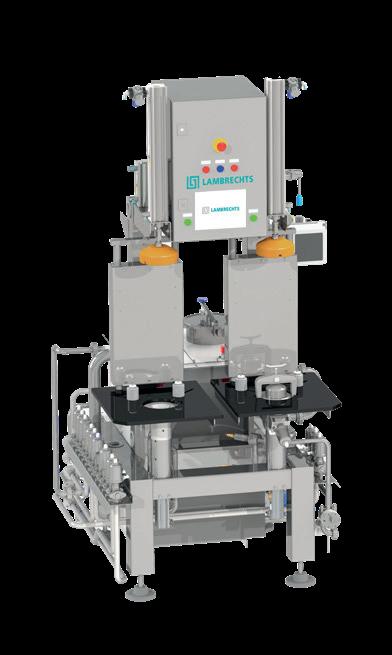
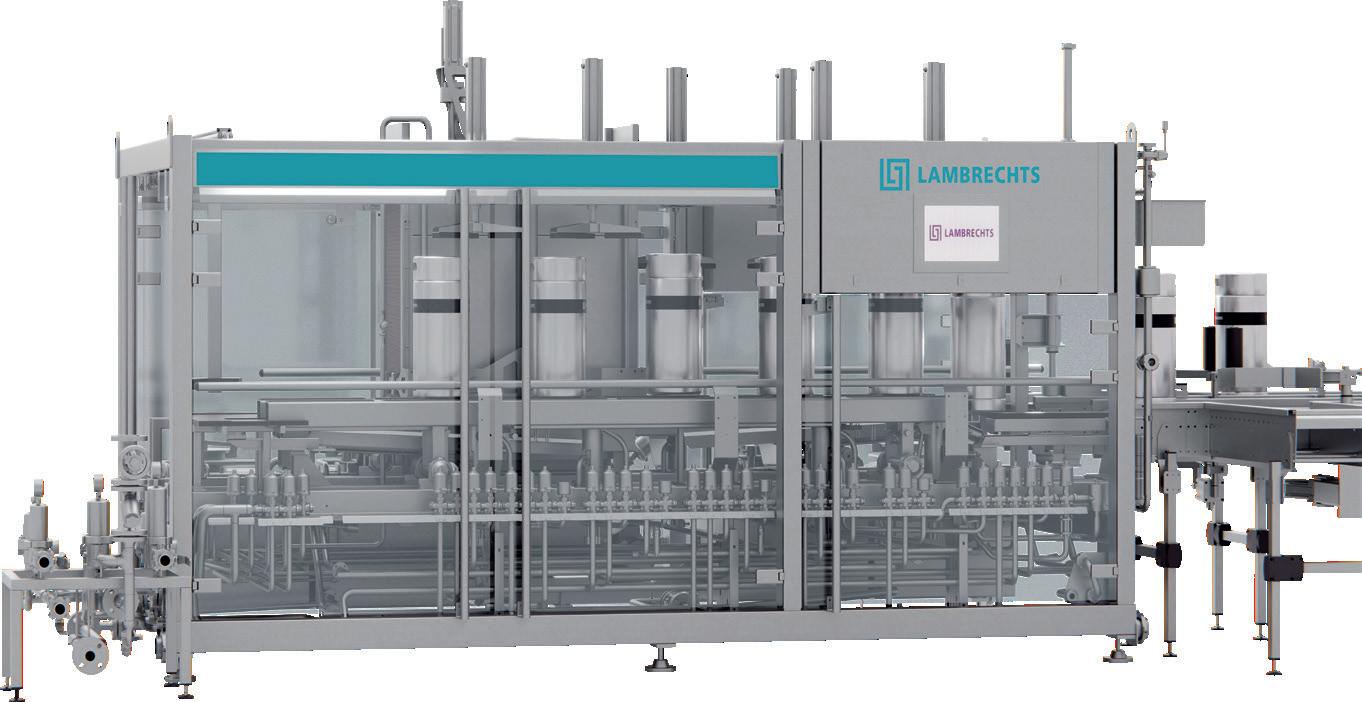


This month we've got two specials, we've got our usual special on for the month, but we've also got ‘We have a Dream’, which is a collaboration with the Tartan Army Sunshine Appeal, which is a charity that Scottish football fans have, so we are also part of that, and there's a few brewers in Scotland that are part of it, so it's quite exciting.
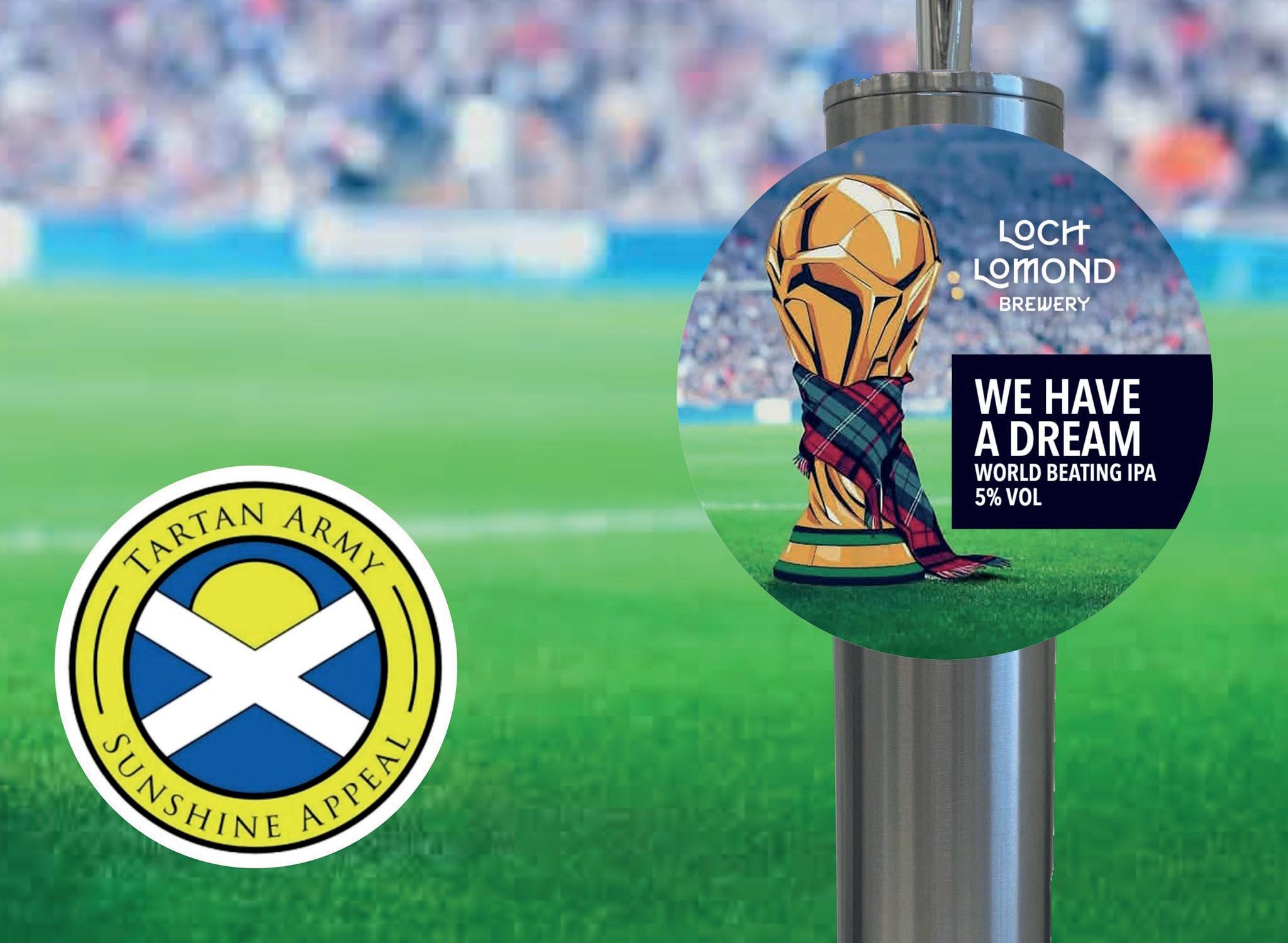
What did the festival bring to the Scottish beer scene?
“It's just a sense of community, being able to showcase your own product to the customer, and for the customer to actually be able to speak to brewers as well. Because obviously you go to most beer festivals and it's just beers that are there served by volunteers, but with Indie Beer Scotland customers can actually engage with the brewer.”
What are the main challenges you face as an indie brewer in the Scottish market at the moment?
“It's just the same as every other brewer at the moment. It's costs that continue to rise. Just last week, we got an email saying that the cost of cardboard had been put up 10%, which doesn't sound like much, but when it's cardboard for a box of cans, the margins on small pack are so small anyway that you're just constantly squeezing everything. It's rising costs across the board, and we're not the only brewers, every brewery is having the same, in fact, most businesses have the same issues.”
How do you balance consistency with creativity as a brewer?
“I don't brew myself anymore, so it's about having a good team behind you and having good quality ingredients. We've always got our regular beers, they won't change, they're slotted in for their weekly or fortnightly brewing that we always do, but we sit down just before the start year and plan out the whole year's worth of specials. I think that's the only way it can be done, is to make sure that you know what you're doing over and above your regulars, to make sure all your ingredients are in before to allow you just to keep going. And just always doing the same things at the same time when you're brewing. Our monthly specials are usually between 4% and 4.5%, so we know what base recipes work and we'll always start with a similar base recipe for those specials, and then we just look to change it. This month we've got two specials, we've got our usual special on for the month, but we've also got ‘We have a Dream’, which is a collaboration with the Tartan Army Sunshine Appeal, which is a charity that Scottish football fans have, so we are also part of that, and there's a few brewers in Scotland that are part of it, so it's quite exciting.”
Where do you see any opportunities for growth for breweries like yours in 2026 and beyond?
“For us, our growth is going to be predominantly in export, I think, just because we've taken on a new export consultant and we're seeing the fruits of his labour. We do well in Switzerland, we do well in Italy, we do well in Holland, we've got a bit across in the Far East as well, it's quite diverse.”
What's driven that for you?
“I think for us, we employed somebody who knew the markets better than us. It was as simple as that. When you start to stick your toe into export, it's completely alien, because they've got different rules, different regulations, and also the HMRC paperwork that needs to go with it. We do the paperwork in house, which is fine, but the sales are done by somebody who knows those markets really, really well. We pay a set fee that we have arranged ahead of time, and we're very happy with the results we've had so far.”
Have you noticed any impact from the new guest beer legislation in Scotland?
“Yes, a little bit, but it's not been all the bells and whistles that we thought it would be. There's been a lot of issues whereby some publicans didn't know that it affected them. A lot of them have been told by their landlord or whoever supplies most of their beer to them that they need to change their contract for it to happen. So there's a lot of misinformation going about, and it's difficult to navigate because of that. But for the ones that have understood what it is and how it works, it's worked really well.”
You were recently voted SIBA Brewers’ Brewer of the Year, what does that mean to you?
“It was completely unexpected. It was something that was nice to be in the running for, but I had never once expected to win! It was very surreal. It meant a lot, because of the year I'd had, I'd still worked almost full time throughout the treatment. And I still tried to help as much as I could with Indie Beer Scotland. So it was very much appreciated.”
What beer of yours are you most proud of?
“Silkie Stout. It's my beer that I go to every time at the bar. I was at a beer festival at the weekend and it was the first beer I had - and quite often the only beer I have. It's remained unchanged over the years, so the fact it keeps winning awards is amazing. I think it was 2012 when we made it for the first time.”
What brewer or beer has most inspired you in your career as a brewer?
“Quite difficult that, because there are so many good beers and great brewers, but the first beer that I used to drink – it was my beer of choice as an 18-year-old girl, while everyone else was drinking Bacardi and coke - I drank Export! And then when I moved down to live with my husband, it was Maclays, which was the big brewery in Scotland, and they were the first real ales I ever drank. So I guess it's thanks to my husband who introduced me to real ale, and thanks to Maclays that I do what I do now.”



The UK employment landscape is changing. The Employment Rights Act 2025 came into force from April 2026, with further reforms expected through 2027. For independent brewers, this means new legal responsibilities and a renewed focus on how people are managed day to day.
With many breweries already balancing rising costs and tight margins, the priority now is understanding what these reforms mean in practice, and how to prepare without creating unnecessary burden.
A changing landscape for brewers
From taprooms and tours to production and distribution, breweries depend on teams that can flex with demand. That flexibility is one of the sector’s strengths, but it also means employment law changes tend to be felt more quickly.
These reforms arrive at a time when many brewers are managing higher wage costs, energy prices and overheads. Staying compliant while keeping operations running smoothly will require careful planning.
Day one rights: practical implications
One of the first changes to take effect is the introduction of day one rights for certain entitlements. From April 2026, statutory sick pay will apply from the first day of absence, removing the current waiting period.
This means higher upfront costs and a need to monitor absence from the start of employment. Day one rights will also apply to some types of family leave, giving new starters immediate access to these protections.
For brewers, this places more emphasis on recruitment and onboarding, particularly during busy periods when staff may be taken on quickly. Clear contracts and early conversations about expectations will be key.
Customer facing responsibilities
For breweries with taprooms or other customer facing spaces, a new duty to prevent third party harassment will be introduced.
Employment rights reform: what brewers need to know now
Oliver McCann from SIBA’s Legal Helpline provider Napthens, gives an overview of how the latest changes to employment rights legislation will affect brewers…
Employers will need to take reasonable steps to protect staff from inappropriate behaviour by customers or visitors.
This is particularly relevant in hospitality style environments where teams interact with the public every day. Clear policies, simple reporting routes and visible support from managers will help demonstrate a proactive approach.
Setting expectations with customers also matters. Making it clear that abusive behaviour will not be tolerated helps protect staff and reduce risk.
Shorter timeframes for dismissal decisions
Looking ahead to 2027, changes to unfair dismissal rules will reduce the qualifying period to six months’ service.
For brewers, this shortens the window to assess new starters and act if things are not working out. It also increases the importance of having consistent processes in place, particularly around performance management.
In smaller teams, where conversations are often informal, this may require a change in approach. Addressing issues early and keeping brief written records can significantly reduce the risk of disputes later on.
Flexibility under pressure
Flexibility is central to running a brewery, especially where trade is influenced by weather, events and seasonality. However, proposed changes to zero hours and low hours contracts may affect how that flexibility works.
Workers are expected to gain the right to request more predictable hours, alongside potential compensation where shifts are cancelled at short notice.
While the details are still emerging, brewers are likely to need to plan rotas more carefully and think further ahead about staffing needs.
Preparing now
Alongside these headline changes, contracts, policies and internal processes may need reviewing. For many independent brewers, this can feel daunting, but it does not need to happen all at once.
Focusing first on the areas of greatest risk and taking practical, manageable steps is often the most effective approach.
For SIBA members, the AfterAthena team works closely with brewers across the UK and understands the realities of the sector. Through the SIBA legal helpline, members can access clear, practical advice on contracts, policies and day to day people management and where more involved work is needed, discounted rates.
Starting the conversation early can help prevent more disruptive and costly issues later and allow brewers to stay focused on running and growing their business.
Taking stock now can also help identify where informal practices have developed over time. In growing businesses, these are often well intentioned but undocumented.
Bringing greater clarity to roles, responsibilities and decision-making can reduce uncertainty for managers and employees alike, and provide a stronger foundation for handling issues consistently as the business evolves.
Need help navigating the changes?
If you are unsure how the new employment rights reforms affect your brewery, early advice can help you focus on what matters most. The AfterAthena team works closely with independent brewers and understands the realities of the sector. SIBA members can access clear, practical guidance through the SIBA legal helpline, with discounted rates available where more detailed support is needed.



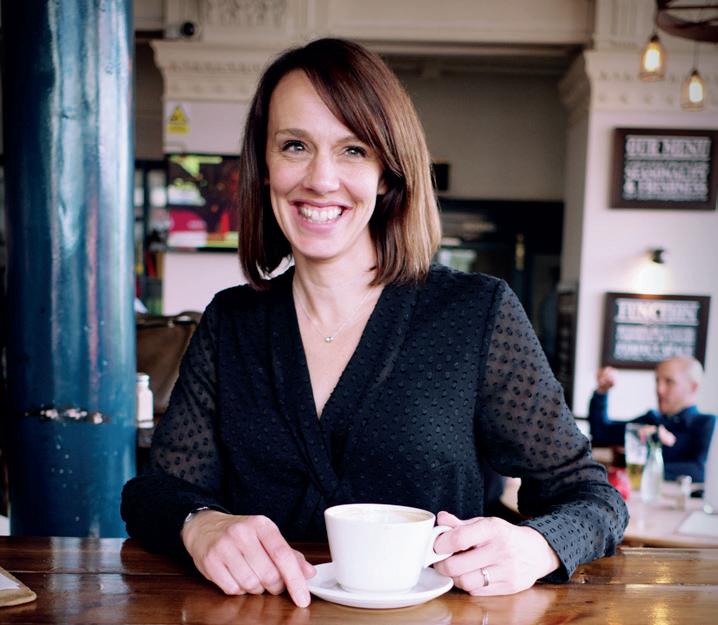
Drawing on the latest insights from the latest Future Foodservice report as well as KAM’s ongoing consumer research, several clear trends are emerging that will define how pubs, brewers and hospitality businesses need to operate over the next 12–18 months.
1. Value is no longer optional, it is foundational
Perhaps the most important trend shaping the on-trade is the renewed and intensified focus on value. While inflation is easing and interest rates are expected to fall, consumer confidence remains fragile. Wage growth is slowing, fiscal drag is pulling more households into higher tax bands, and many consumers simply do not feel better off. This matters because the industry has largely driven headline growth through price increases rather than volume. In real terms, consumers are visiting less often and drinking less when they do go out. For 2026, the room for further price increases is extremely limited.
For brewers and pub companies, this reinforces the need to think carefully about range architecture, pack formats and pricing strategies. Value does not necessarily mean cheap, but it does mean clarity, fairness and a strong sense that the customer is getting something worthwhile in return.
2. Fewer outlets, better run, but with higher stakes
Closures across pubs and restaurants are expected to continue. Rising labour costs, business rates and taxation will push marginal sites out of the market, leading to a smaller but more professionalised on-trade landscape. For those that remain, competition will be intense. The survivors will tend to be better managed, more disciplined on costs and sharper in their offer.
This has implications for brewers too. Distribution footprints may shrink in some areas, while expectations around quality, consistency and support will rise among pub operators who are under pressure themselves.
The key trends shaping the on-trade in 2026
Katie Jenkins, Marketing Director at KAM, looks at the variety of factors that look set to shape the on-trade over the next year to 18 months…
3. Polarisation accelerates
The on-trade is continuing to split into two distinct poles. At one end is value-driven social refuelling: quick, familiar, affordable occasions that fit into squeezed lifestyles. At the other is experiential, premiumised hospitality: occasions done less often but made more memorable.
The middle ground is increasingly hard to sustain. Consumers are cutting back on frequency, so when they do go out, they want either efficiency and reassurance or genuine escapism.
For pubs, this will mean being clear about where you sit. Are you a dependable local delivering good beer at a fair price, or are you an experience-led destination with theatre, indulgence and storytelling? Trying to be both, without a clear proposition, is becoming riskier.
4. Experience moves centre stage
As frequency falls, expectations rise. Consumers are paying more than they used to, and they now expect better service, better quality and a sense of occasion in return. Experience is no longer limited to premium dining; it applies across the on-trade. This could be as simple as atmosphere, warmth and hospitality done well, or as distinctive as dessert trolleys, curated beer lists, live fire cooking or events that create memories. The key is that people want something they cannot easily replicate at home or buy from a supermarket meal deal. For brewers, this reinforces the importance of visibility, storytelling and theatre around beer, whether through tap takeovers, staff engagement, glassware or provenance cues.
5. Health, moderation and smaller occasions reshape menus and beer choice
Health and wellbeing are becoming structural forces, not passing trends. Increased awareness of protein, fibre, moderation and the rise of GLP-1 weight-loss drugs are all influencing how much, and how often, people eat and drink out.
This does not mean the end of indulgence, but it does mean a shift towards smaller portions, lighter options and more conscious choices. For beer, this supports continued growth in lower-alcohol options, quality noand low-alcohol beers, and a sharper focus on balance rather than excess. Operators who can offer indulgence alongside moderation will be best placed to meet these changing needs. Those seeing it as one or the other have totally missed the evolution of how Brits are now drinking.
6. Supermarkets continue to target the on-trade’s weak spots
Retailers have spotted an opportunity. Premium meal deals, restaurant-quality ready meals and compelling price points are directly competing with pubs and casual dining for at-home occasions.
The on-trade cannot win this battle on price alone. The response has to be experience, social connection and immediacy. If pubs lose sight of what makes them different –community, atmosphere, discovery – the risk of substitution grows.
7. Technology and loyalty are growth levers
With organic demand under pressure, operators will increasingly rely on smarter marketing to drive visits. AI-enabled targeting, data-driven loyalty schemes and personalised offers are becoming essential rather than optional.
Crucially, loyalty in 2026 is not just about discounts. It is about recognition and rewarding regulars, making people feel valued, building communities and giving them reasons to return. Done well, this can help rebuild frequency without undermining pricing integrity.
KAM is a boutique research consultancy, specialising in hospitality and retail, running bespoke and syndicated customer research programmes for both pub companies and on-trade suppliers. Find out more at www.kaminsight.com

Transporting Beer to Bottling? Bid Farewell
to Oxygen Contamination with Arlington
Arlington’s revolutionary 1000L containers, coupled with Sterile Airless inner liners, have swiftly emerged as the gold standard for maintaining hygiene and preserving beer quality during transportation from Brewery to Bottling / Canning. Offering a cost-effective solution, these transport tanks ensure zero contamination and eradicate the risk of Dissolved Oxygen exposure, safeguarding the integrity of your precious brew throughout its journey.
But Arlington doesn’t stop there. In an ongoing quest to enhance beer quality, we’ve introduced innovative solutions to further minimize oxygen exposure during the filling process. Our cutting-edge “Air Bleed Valve” empowers brewers to expel all air from their filling hoses, ensuring a seamless flow of beer right up to the valve on the liner. By eliminating any residual air in pipes or fittings, this breakthrough significantly reduces the risk of oxygen ingress during filling, yielding exceptional outcomes for brewers and canners alike.
For those venturing to send their beer on extended journeys or planning for prolonged storage periods, Arlington presents an additional layer of protection with our High Oxygen Barrier and UV Barrier Liners (Metalized Foil Liners). These premium liners feature the highest oxygen barrier film available in the market today, guaranteeing unparalleled preservation of your brew’s freshness and flavour integrity.
What’s more, Arlington Containers and liners are readily available in stock, with same-day dispatch and no minimum order quantities required. Whether you’re transporting 500L or 20,000L+, our efficient logistics ensure prompt delivery, minimizing downtime and maximizing efficiency for your operations.
When it comes to moving your brew, don’t settle for compromises. Choose Arlington, the industry’s trusted partner, dedicated to preserving the purity and quality of your beer every step of the way.
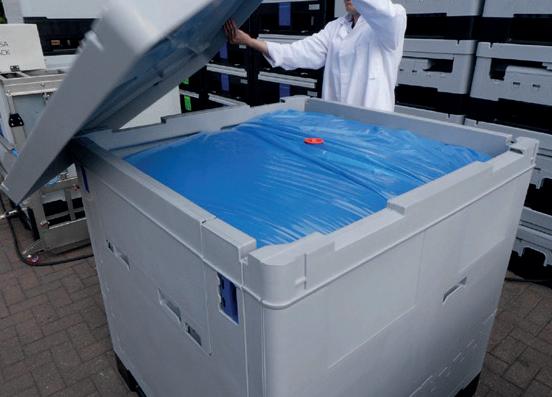
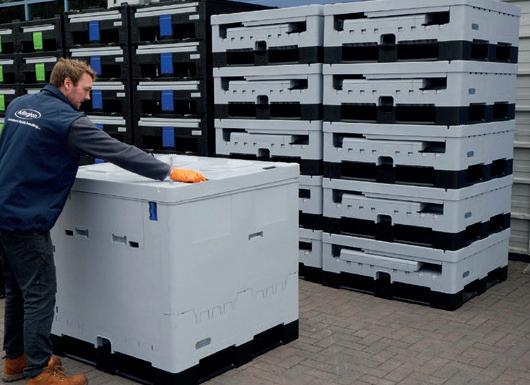

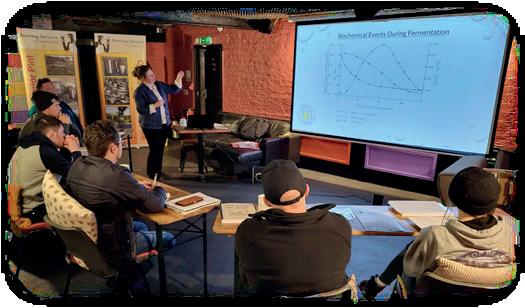

Rob Smith & David Smith Office Telephone: 01904 233418
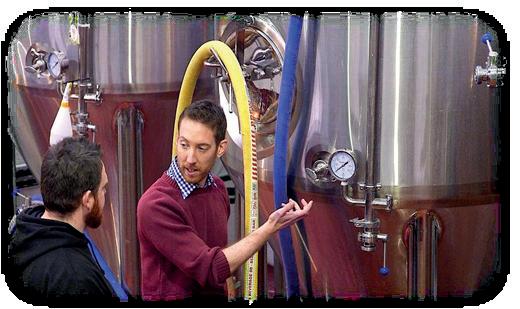
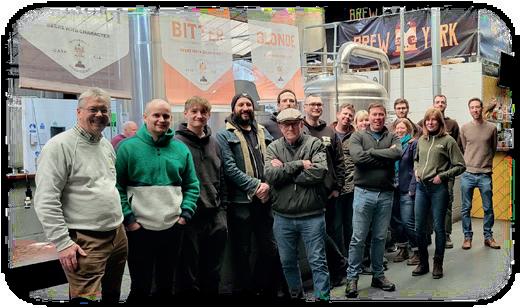
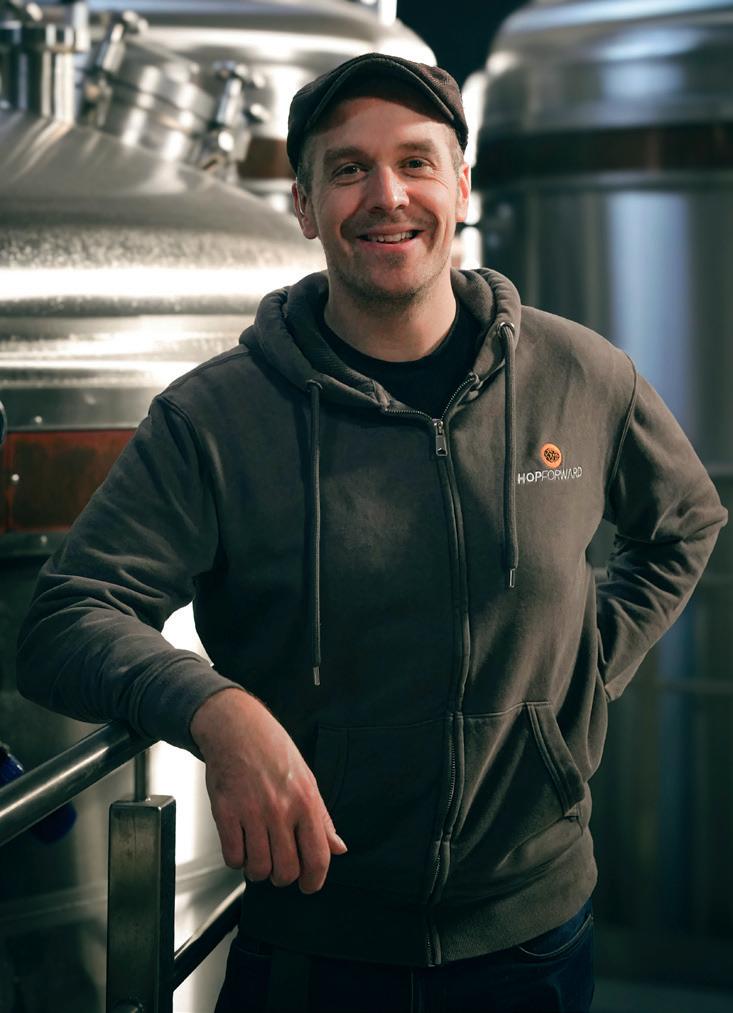
“It’s not just a website, it’s your brewery’s front door.”
“It’s not content, it’s connection.”
“It’s not a logo, it’s a promise.”
Look familiar…? If you've seen this linguistic pattern pop up on social media chances are the posts were written by ChatGPT.
That’s because it’s not X… it’s Y.
And once you see it, you can’t unsee it. This is one of the many telltale signs that artificial intelligence played some hand in the marketing, whether outright or in part.
So, if craft beer is all about human connection - or, as ChatGPT put it when I asked what craft beer was all about, “people and story”, “creativity” and “a closer relationship between the people who make beer and the people who drink it” - why are we now outsourcing how we talk about it, promote it, present it, and even brand it, to a machine?
What does ChatGPT, Claude, Midjourney, Adobe Firefly, Suno, etc, truly know about your drinkers?
Whether you’re writing content for your mailer, creating a beer label, making a poster, or ‘making’ music for your taproom because you refuse to pay your PRS licence and you thought this was a cheaper alternative (I genuinely saw this argument from a landlord in a Facebook group!), AI may be able to replicate what it ‘thinks’ it knows about craft beer drinkers in general but it can’t
It’s not X…it’s Y
Brand and marketing guru Nick Law on why brewers should think carefully about how they are using AI…
The two most positive pieces of feedback I often received about my now-retired Hop Forward Podcast were that people felt like they knew me, and that I knew them when I spoke into the microphone.
really tap into that thing humans can’t quite articulate… that je ne sais quoi.
The two most positive pieces of feedback I often received about my now-retired Hop Forward Podcast were that people felt like they knew me, and that I knew them when I spoke into the microphone. They also said the podcast was injected with my personality, which made it unique to listen to.
No amount of dataset training, AI models, fugal-tokens and machinery can replicate that because there’s only one me: me.
Why am I saying all this?
I’m not wholly against AI. I have many uses for it. Even if you are dead set against it, we have to accept that, like the internet, it isn’t going away. It will shape how the future looks and operates.
However, as AI becomes more integrated in our lives, our businesses and, therefore, our breweries and beer, we need to think very hard about when and where we adopt it. Yes, it has its uses and can undertake many tasks
quickly and with a reasonably good degree of accuracy. But what it can’t do is inject actual human experience, emotion, perspective and personality into your brand, your marketing and what your beer business is really about.
That itself is the accumulation of years of life experience, training, trial and error, discovery and hard graft from artists, musicians, creatives, wordsmiths and the like. All those strange little references, memories, jokes, wounds, personality quirks and obsessions - the things that make a person a person - is (or should be) the je ne sais quoi that sets your brewery and its indie beer apart.
Just visit St Mars of the Desert in Sheffield and you’ll see exactly what I mean. It’s hard to articulate exactly what it is that is different about Dann and Martha’s small brewery. It’s just kinda kookie, off-the-wall, a bit weird… and they make awesome beer, which really helps.
AI can replicate but it cannot create. A photograph from an experienced photographer who has an eye for it and knows what they’re looking at. A playlist curated by a human that chose those songs for the taproom because they know what music should be filling that space. Ideas shaped by brewery employees and owners who know the business inside out.
Indie beer, for me at least, has always been about the creativity and the community behind it.
It’s not that AI is inherently bad… it’s just not human. That’s because it’s not X… it’s Y.
Nick Law is the Creative Director of Hop Forward: a branding, marketing and business consultancy for the brewing industry. Find out more at www.hopforward.beer or email nick@hopforward.beer
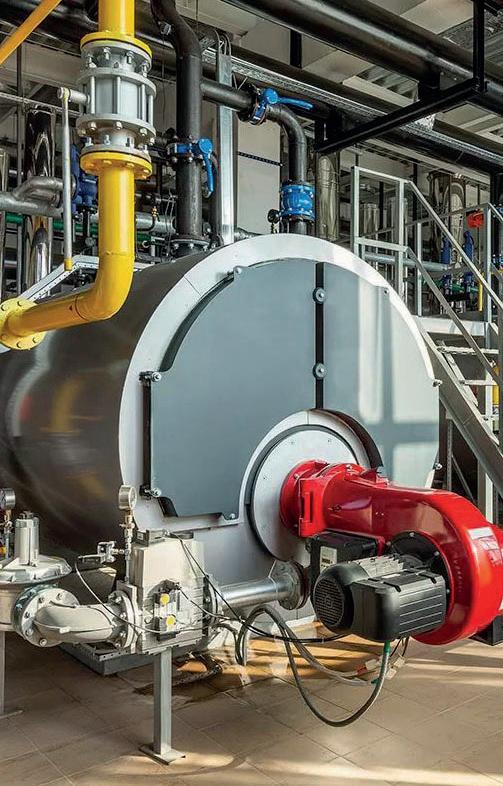


CFB Boilers is a 130-year-old steam boiler company that is registered to ISO9001:2015 and offers a complete range of specialist steam products and services from steam, electric, hot-water boilers and ancillaries to fully customised plant room design and installation.
We manufacture our flagship range of boilers onsite.
We also offer service, maintenance and 24/7 repairs and parts service.
We
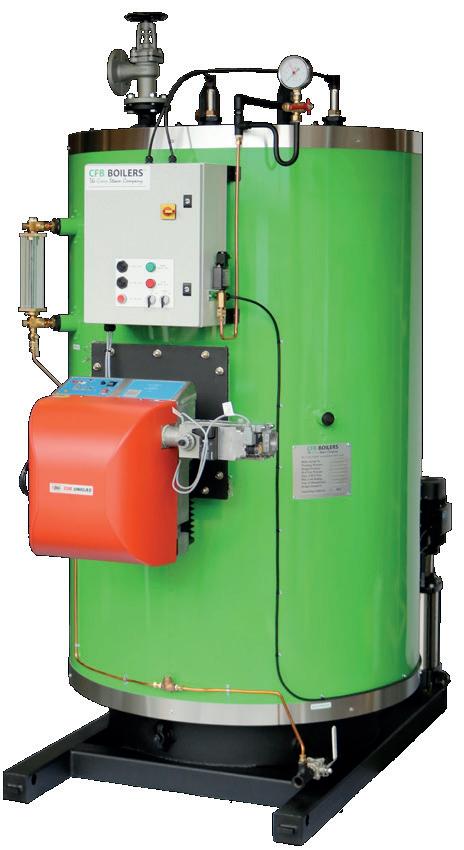

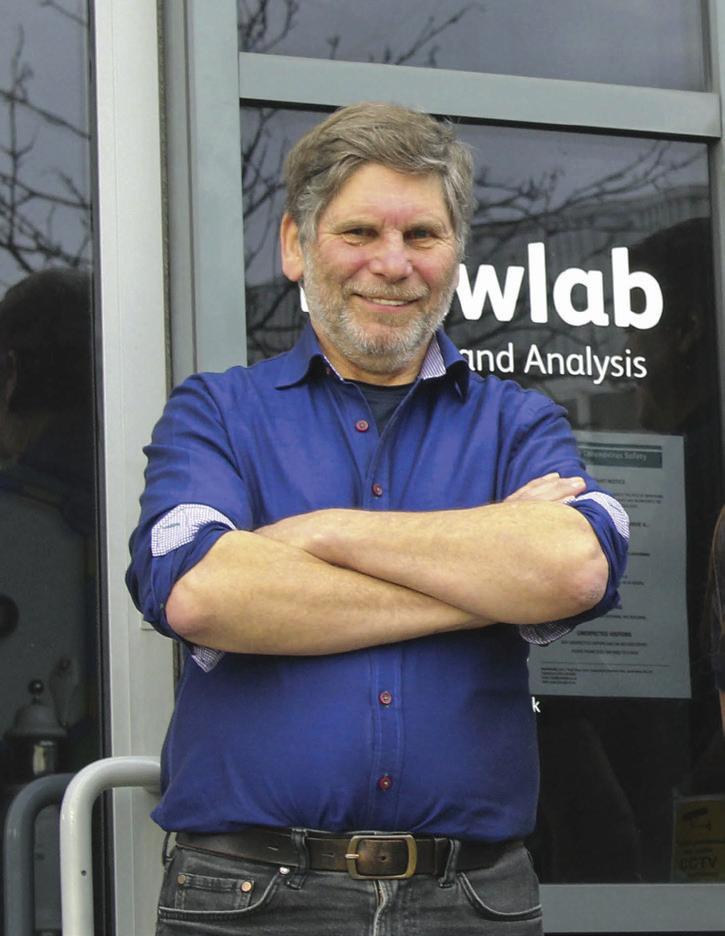
Brewlab’s Dr Keith Thomas ponders the impact different drinking vessels may have on the consumer experience…
Arguably the last input a brewer would have in delivering their beer to customers is to ensure that the dispense maintains the desired carbonation, clarity and avoidance of taint. Dispense is well recognised as the point at which your fine production efforts are easily trashed by uncleaned lines and nozzles. For the drinker there is a further point of contact - that directly from the glass holding their pint. To some extent, in fact a large extent, glasses are the subject of intense marketing concern – particularly stylistically in shape and design, in badging and ease of handling.
But what of the technical considerations of glasses? Are drinkers limited to a plain pint pot or are innovations available? Is glass, although ubiquitous, the best option or are other materials worth considering? Could your beer even change a beer’s character because of its container?
Of course, the major change all drinkers are familiar with is temperature. Beer warms up as it takes in heat from the room and more so if you clutch your glass whilst drinking. Handles do limit this and the greater solidity of a dimple glass can reduce heating if it is cool when filled. Sadly, the reverse is true if it has just been pulled from the glasswasher.
Innovations to control your beer’s temperature include a heat sink in the glass base coupled with a thermostat but the increased weight won’t find many enthusiasts. Insulated glasses are similarly unsightly as most of us prefer to see the colour and foam of our beer as it sinks down the glass.
This differs to some extent when drinking outside at events and festivals where plastic or paper glasses may be obligatory. Considerations of environmental impact are inevitable with
Horns of plenty
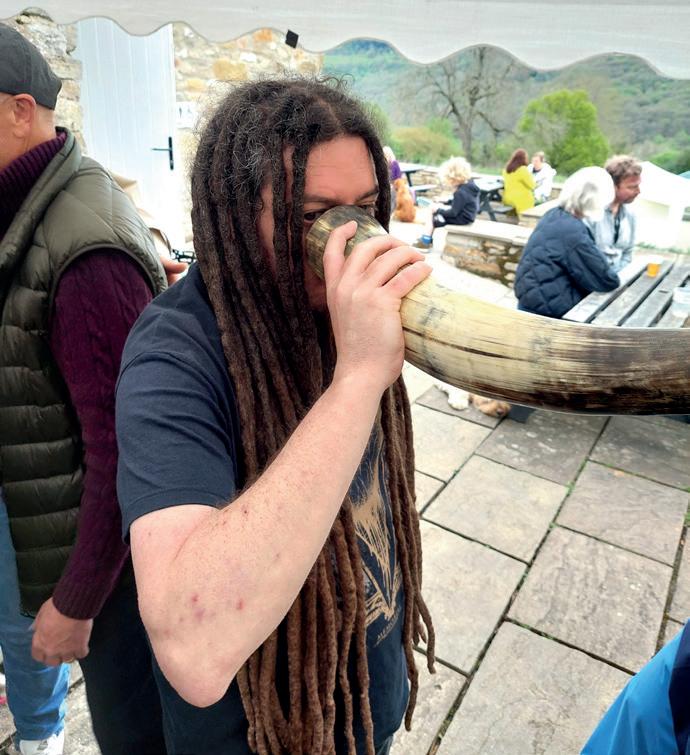
considerable concern about disposable plastics. Paper has clear advantages but requires a polyethylene coating to make impermeable and so has difficulties in recycling. There is also an effect on temperature control which may be lessened with incorporating corrugated layers but will have limited impact in the open field of a festival.
Returning to more solid options the surface of your glass is one area of innovation with particular concern to limit scratching and clouding through the formulation to strengthen the glass.
Other alternatives are available though and may take inspiration from history, particularly pewter and other metals, wood, ceramics and animal materials. Metal vessels are interesting as pewter was particularly prevalent in more recent centuries as a preferred drinking option being malleable and allowing personalization or badging. Early pewter contained lead so beware of using an antique gift as leaching will increase your heavy metal intake. Today only tin, copper and antimony are used all of which are stable with beer – although the manufacturers do warn against microwaving!
Other metals are used in different food and beverage applications, particularly cutlery, with gold, silver and chrome imparting the least metallic and bitter character and copper and zinc the greatest. It is probably unlikely that drinkers are likely to indulge in precious metal for their pints, but chrome versions are available.
Delving further into historical options includes ceramic and stoneware which have perpetuated in beer steins popular at Germanic festivals but requiring a strong wrist to keep steady. Ceramics are more flavour neutral but, like metals, have a textural and thermal impact on drinking which can be negative until familiarity develops. Wood, however, is more positive for these features and does provide better insulation. It will absorb beer and soften as well as releasing wood character to beer. Since some woods have strong toxic components, it may be best to avoid raw contact and add a lacquer for protection.
Another, option also with a lacquer is an even earlier beer vessel, the animal drinking horn. With clear practical limitations for use these are typically coated with beeswax so imparting a light honey character to your beer. Perhaps for occasional use only but impressive if you wish to clear a space at the bar.
More advanced lacquers have future potential. Enzymes could, for example, be incorporated into a glass surface to alter beer character during drinking, perhaps even microbes to supplement your microbiome or regents to neutralise toxins. Some Norse legends implied that drinking horns would neutralize poisons in beer but this more likely refers to runes carved in the bone than any chemical impact. In which case best be aware who fills your horn and with what than any magic it may have.
Find more from Brewlab at www.brewlab.co.uk
CHARLES FARAM – DRIVING INNOVATION ACROSS BREWING AND BEYOND
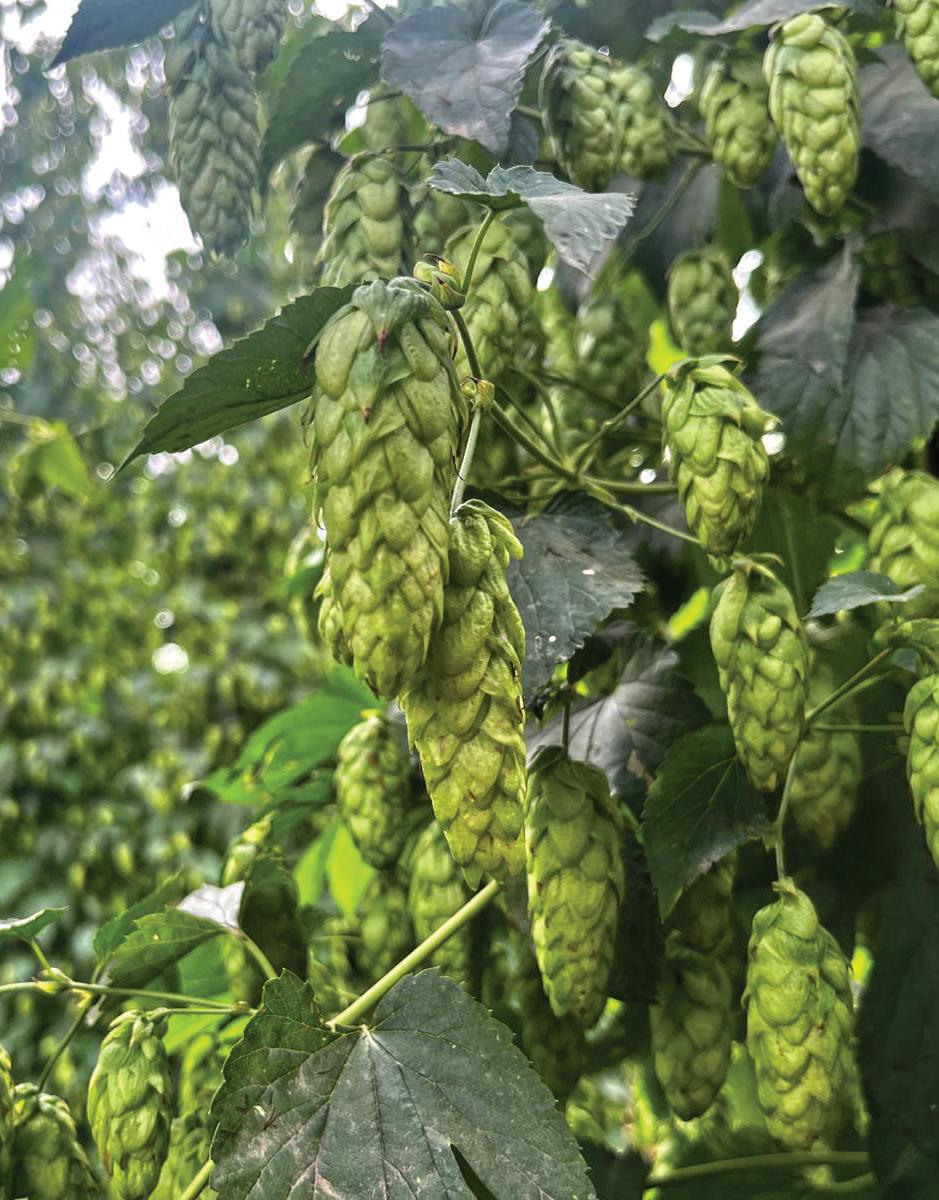
At Charles Faram, innovation has always been at the heart of what we do. As the brewing landscape continues to evolve, with brewers exploring new beer styles, low and no alcohol options, and even functional beverages.
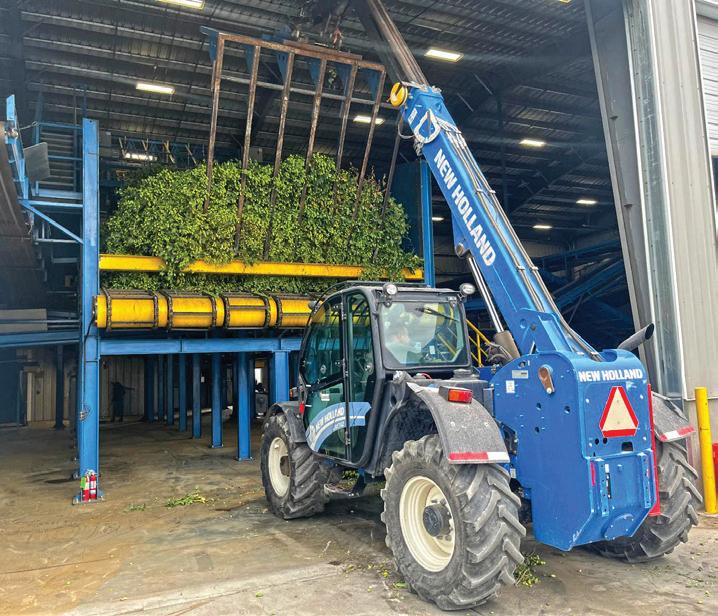
Our focus remains clear: to source, develop and deliver raw materials that inspire creativity and unlock new opportunities.
From exciting hop varieties to cutting-edge flavour technologies, 2026 is shaping up to be another landmark year for the Faram’s portfolio.
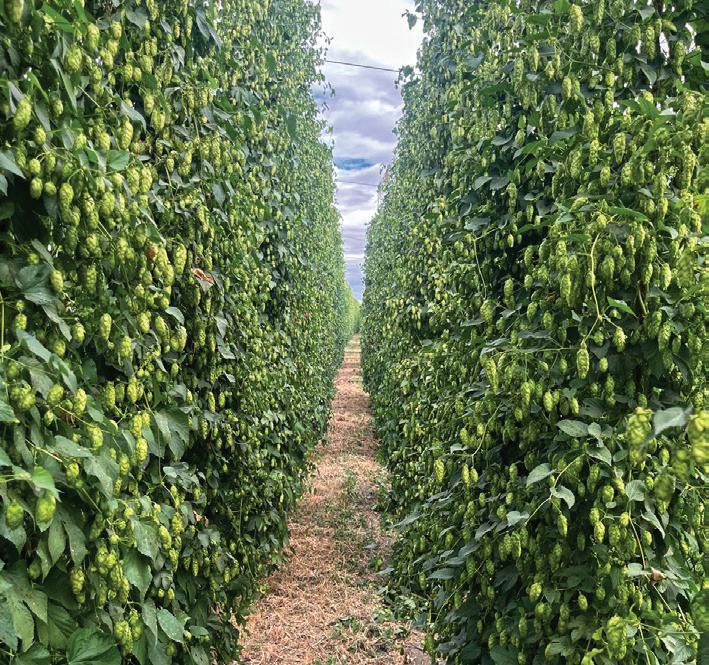
ANCHOVY IS ONE OF THE MOST INTRIGUING RECENT ADDITIONS A NEW WAVE OF AMERICAN HOP VARIETIES
Our hop range continues to grow with the addition of several exceptional new varieties, each bringing unique flavour profiles and brewing potential. Below is a selection of what’s to come!
From the Charles Faram Hop Development Programme, we introduce Karma ® . This new variety was developed in the UK by Charles Faram and is now grown in the Yakima Valley, USA, by long-standing partners Diana and Stacey Puterbaugh from Puterbaugh Farms. Karma ® delivers a fruity yet delicate profile, offering aromas of lemon, blackcurrant and pine that shine in hazy pale ales while maintaining enough finesse for use in pilsners and lighter styles.
Despite the name, you’ll be glad to hear it doesn’t taste of fish! This variety, developed by Segal Ranches, USA, delivers a striking combination of watermelon, sweet candy, and pine. It is already gaining traction for brewers looking to experiment with new world flavours in a range of styles.
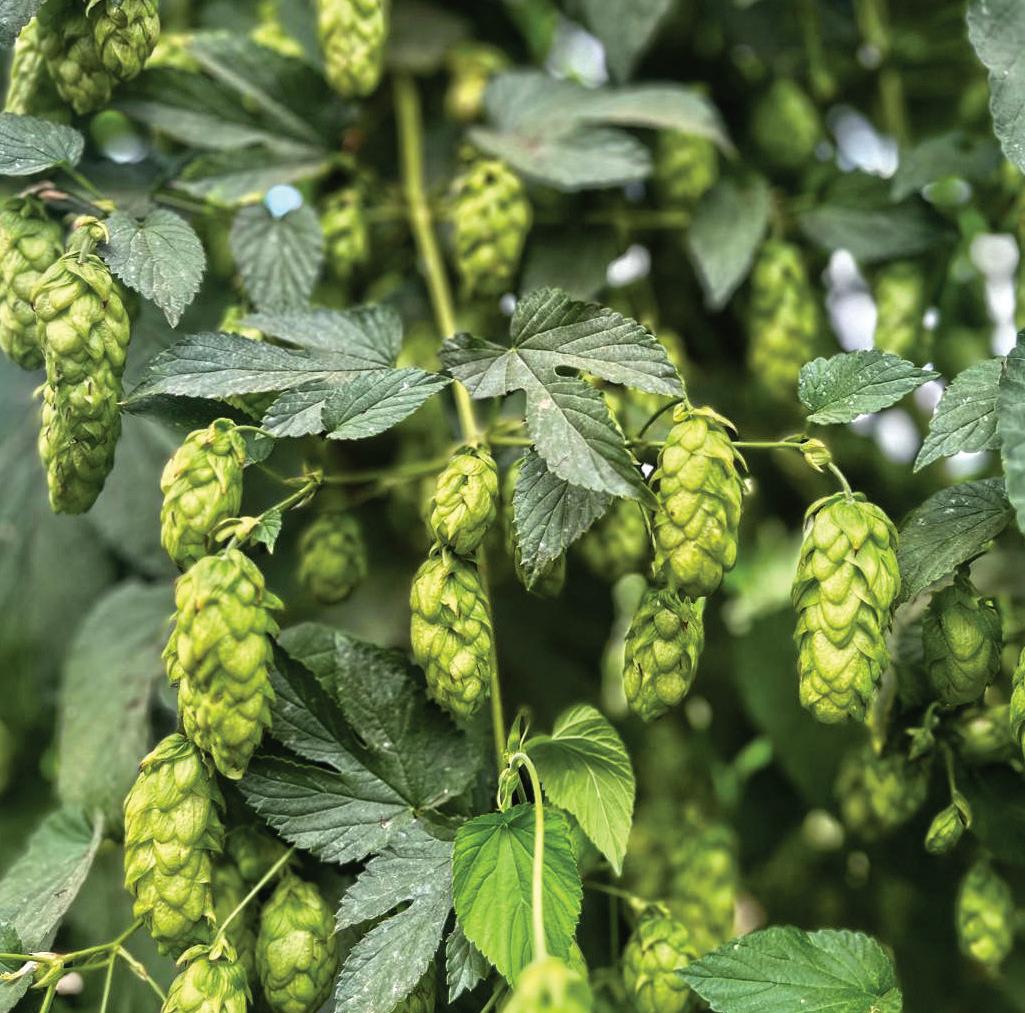
Tangier, as the name suggests, brings aromas of tangerine, orange and citrus. Grown by Segal Ranches in Yakima, USA, John Segal describes it as having distinct notes of orange creamsicle, tangerine and Navel orange. Named after the Moroccan port from where tangerines were first shipped abroad, this is a high-impact hop with vibrant flavour.
Another new variety from Segal Ranches is Zumo. Existing brewers describe it as citrus, citrus and more citrus, with notes of lime, orange and grapefruit completing this hop’s aroma profile. The lime aroma is especially distinctive, making it a perfect fit for Mexican lagers.
But our latest portfolio additions don’t stop there, we are proud to also offer: Idaho Pink , Thora , and Vera , all amazing North American hop varieties with a range of aromas from lime to white grape.
Together, these varieties reflect our commitment to offering brewers not only quality hops but also ones from all over the globe, so we can ensure we have just the right hop collection for you.
Shop at Charles Faram for Abstrax, hops, malt, yeast, brewing aids, flavours and purees.
Anchovy grown in Yakima, USA.
Karma® Developed by the Charles Faram Hop Development Programme.
Hops being loaded into the picking machinePuterbaugh Farms.
Karma® hops ready for harvest.
HOP DEVELOPMENT AND BREWING TRIALS
The Charles Faram Hop Development Programme remains a cornerstone of innovation. By working closely with growers, we identify and nurture new varieties that meet the changing needs of brewers, planting over 15,000 seedlings per year. These seedlings are then put through their paces, being tested for disease resistance, aroma and most importantly, brewing potential.
Each year, we release a limited number of experimental varieties for brewing trials,
giving breweries early access to hops that may shape the future of fl avour. Some fan favourites include CF321 and CF310 for those who are familiar with the programme. These trials are a vital part of the development process, providing realworld feedback that helps refi ne and position new varieties.
Another highlight of the programme is our series of AromaFest ® events, that brings together brewers, growers and industry professionals, in a wide range of locations
EXPANDING THE FLAVOUR TOOLBOX WITH ABSTRAX
In addition to hops, Charles Faram continues to expand its range of advanced fl avour solutions through our partnership with Abstrax.
Abstrax products are designed to deliver precise, repeatable fl avour enhancement, opening new possibilities for brewers and beverage producers alike. Their portfolio includes hop oils, fruit fl avourings, terpenederived cannabis fl avours and functional compounds. These can all be used to fi netune aroma profi les or introduce entirely new dimensions.

Current off erings already allow brewers to either create brilliant new fl avour combinations or simply enhance a hidden aroma, with incredible accuracy. But the next generation of Abstrax products goes even further; the AI Terp Eff ect series is designed for function, not fl avour.
These functional ingredients align with a growing demand for beverages that off er more than refreshment.
Whether it’s relaxation, focus, or mood enhancement, these products
open the door to a new category of functional drinks, with exciting developments to arrive later this year.
Supporting this expansion into new territory is Flo Vialan, our New Markets Development Manager. Flo has taken on a key role in identifying and developing innovative, functional products for our customers. He is also open to helping with recipe development and technical issues for any brewers, utilising his many years of brewing experience.



Flo’s focus is on exploring ingredients that appeal to emerging sectors of the industry – from low and no alcohol beers to soft drinks and functional beverages. His work involves sourcing novel compounds, evaluating their performance, and ensuring they meet the high standards our customers expect.
across the world. These events are more than just a showcase; it’s an opportunity for brewers to experience new hops fi rsthand and give vital feedback that will shape the future of hop aroma.
■ If you are interested in brewing with these brand-new varieties, or attending one of our AromaFest ® events, please contact our sales teams by emailing sales@charlesfaram.co.uk.
SUPPORTING BREWERS IN A CHANGING MARKET
The modern drinks landscape is more diverse than ever. Consumers are seeking new fl avours, new experiences, and new functions from the beverages they choose.
For brewers, this represents both a challenge and an opportunity. The ability to innovate – to create something distinctive and memorable – has never been more important.
At Charles Faram, we support this journey with an evolving hop range, cutting-edge fl avour technologies, earlystage trial opportunities, and expert collaborative support. If you are looking for a new, exciting product to trial, recipe refi nement advice or industry-leading events to attend, we are here to help.

This forward-looking approach refl ects a broader shift within the industry.
Brewers are no longer limited to traditional categories; they are increasingly becoming fl avour creators, working across beer, cider, kombucha, and beyond.


Florent Vialan.
■ To get started, visit www.charlesfaram.com or call us on 01905 830734

Murphys Tech Hub launches with the University of Nottingham.
In 2025, Murphy and Son signed a ground breaking agreement with the University of Nottingham to take up residency inside the International Centre for Brewing Science on the Sutton Bonington campus.
This new collaboration has given the University a fresh commercial outlet for its R&D whilst giving Murphys Analytical lab service and research and development operations a new state of the art home.
In July 2025, the Murphys lab team had completed their move and the UKAS accreditation was transferred over to the new site covering Gluten and ABV testing. Once the staff were settled, the equipment installed and the first trial brews had been performed, the benefits to both parties for further collaboration started to become more obvious.
With demand on the rise for the Apprentice scheme and the other world class training opportunities offered by the University of Nottingham, their global reputation for advanced research coupled with the expertise, knowledge and reach of the Murphys team, the opportunity to take the collaboration further was explored: as a result, Tech Hub was born.
With the launch of the Tech Hub, the expanded lab services, access to the pilot brewery and developing a new educational forum we are now helping brewers at every stage of their journey — from first time apprentices
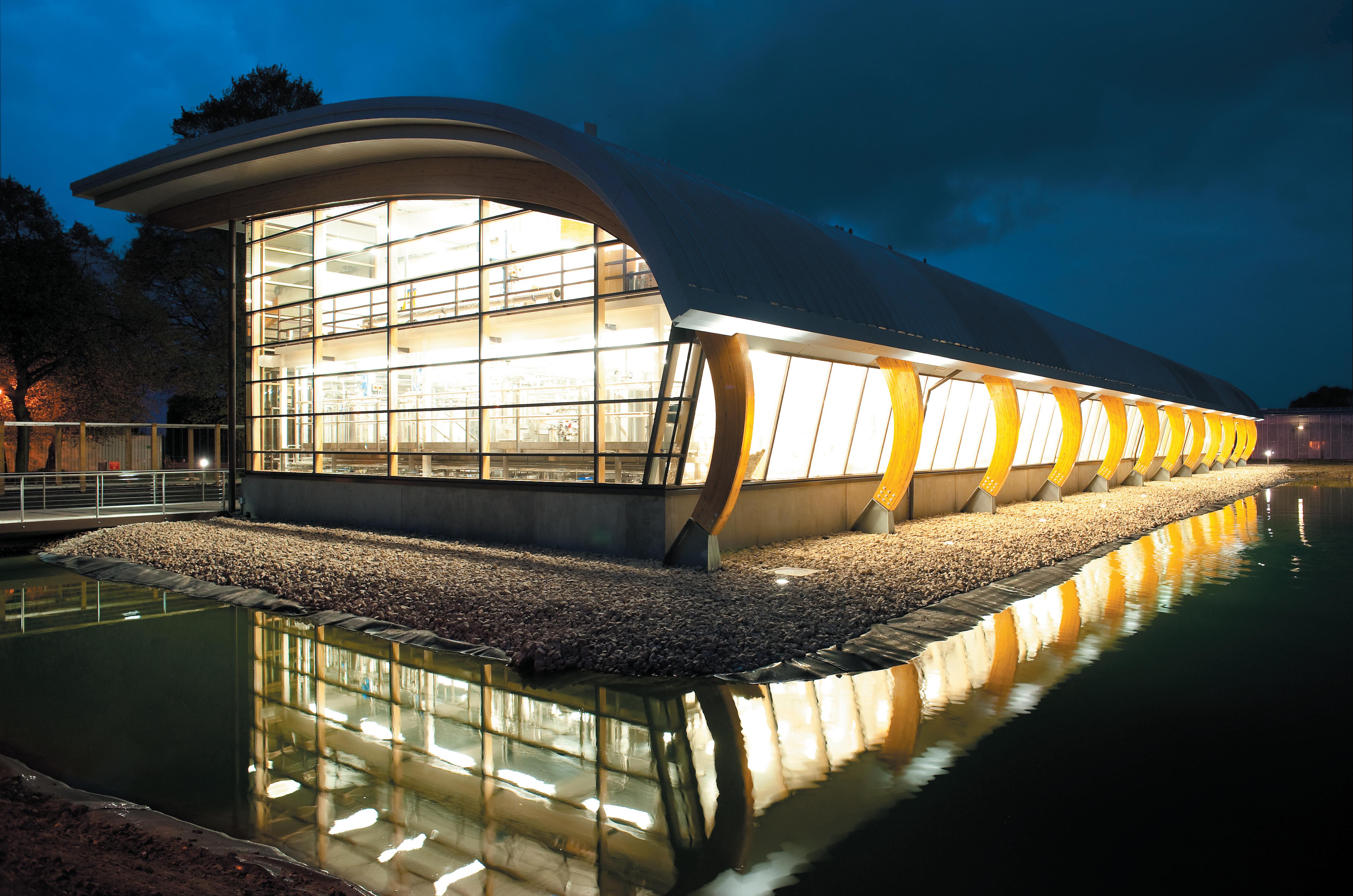
developing initial brewing recipes, through experienced brewers designing new beer concepts, to seasoned professionals crafting their final retirement beer — supporting brewing efficiency, sustainable brewing practices, and production capacity at every step.
If you are looking to develop your knowledge, bring continued improvements to your site, reactive fault finding, The Tech Hub is your complete solution for brewing innovation and problem solving and the go to centre for continual personal development.
As well as the variety of education and training opportunities, Tech Hub enables:
A complete solution for brewing innovation and problem-solving
seasoned professionals crafting their final retirement beer — supporting brewing efficiency, sustainable brewing practices, and production capacity improvements to your site, reactive
Access to an unparalleled 10hL pilot research brewery.
Expert advice and support for process development or optimisation using novel raw materials / unmalted adjuncts / enzymes.
innovation and problem solving and the go to centre for continual personal
As well as the variety of education
Specialist expertise in no/low alcohol beverage development
Support for sustainability and cost savings with advanced process options
Access to an unparalleled 10hL pilot
Expert advice and support for process development or optimisation using
End-to-end support for functional beverages, RTDs and near beers
Watch out for the first short day courses launching soon covering Brewhouse efficiency, Sensory training, compliance and packaging. For more information about the services for Tech hub please contact.
technical@murphyandson.co.uk
Specialist expertise in no/low alcohol
savings with advanced process options
Brewhouse efficiency, Sensory training, compliance and packaging. For more information about the services for
BeerX continues to go from strength to strength in 2026
This year’s event was our most ambitious ever, with records broken across the Board - the biggest attendance ever, the most seminars, talks and tastings, and the most fringe events - making BeerX undoubtedly the highlight of the SIBA events calendar and a must-attend for the industry.
This year also saw our first ever double-headliner; with Sacha Lord, Chair of the Nighttime Economies Association, and Bart Watson, President and CEO of the American Brewers Association delivering two superb keynote talks on Wednesday and Thursday.
There were also further upgrades behind the scenes, with further improvements to our custom-built beer ‘cellars’ and superb looking new regional bars – making our Indie Beer showcase at the centre of the event a unique snapshot of the very best beer available from across the UK.
Feedback from attendees was that the beer quality and serving quality was superb, something we take incredibly seriously and are hugely proud of – with extremely short beer lines on cask and keg, and rigorous beer quality control. BeerX is an opportunity to showcase your awardwinning beers to potential buyers and future or existing customers, so at BeerX we go to great lengths to ensure they are tasting their very best.
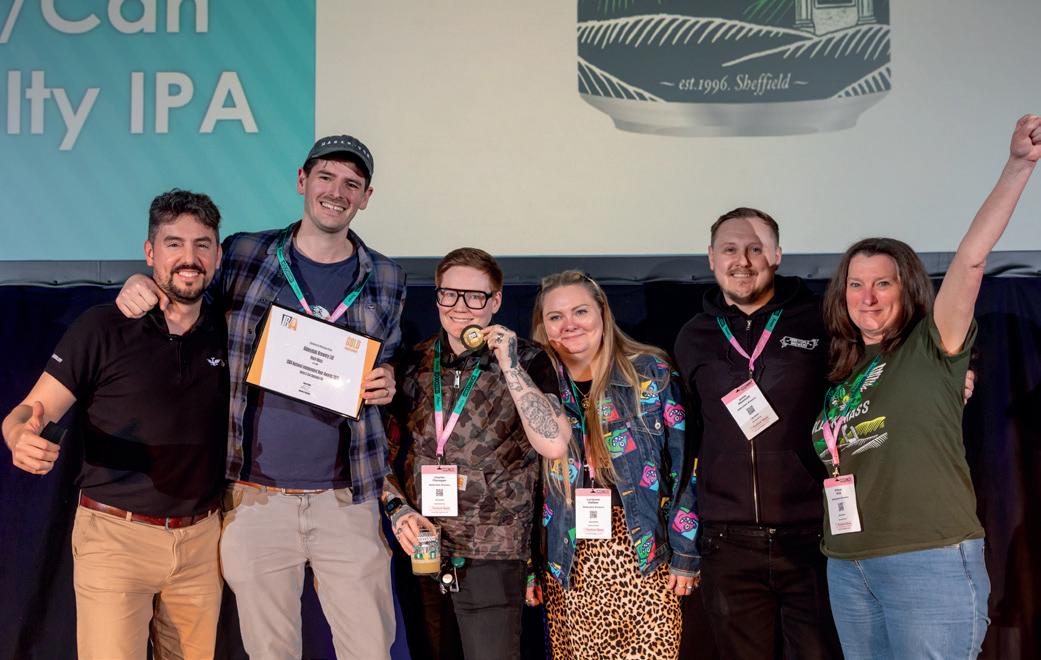
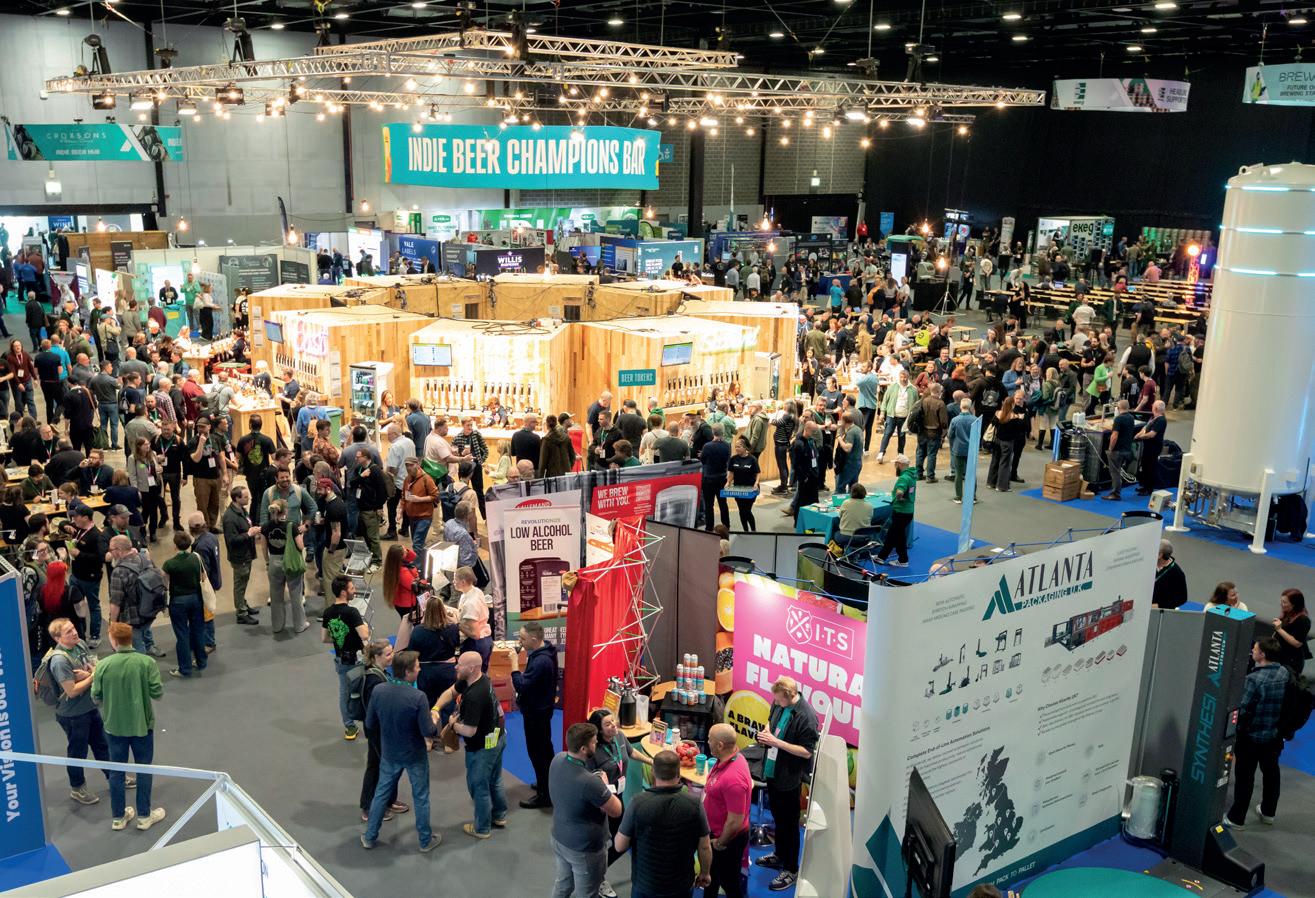
Delegate satisfaction rating: 91%
Exhibitor Satisfaction rating: 91%
Record Attendance
2024 attendance 2995 BeerX 2023 attendance 2657
2022 attendance 2672
2026 was also the very first National Finals of the Indie Beer Awards, following 12 months of regional awards and the rebranding of the SIBA Independent Beer Awards to the ‘Indie Beer Awards’. Following the huge success of the Indie Beer campaign (more on that elsewhere in the magazine!) the renaming of our awards was a natural next step, ensuring that the awards you win resonate with consumers and match up with what their seeing in the on and off-trade.
This year we are doing more events than ever to promote Indie Beer Awards winners, alongside new activations in National retailers such as Waitrose, and independent pubs and beer shops. So if you’ve won an Indie Beer Award make sure you’re adding the logo to your bottles, cans and pumpclips.
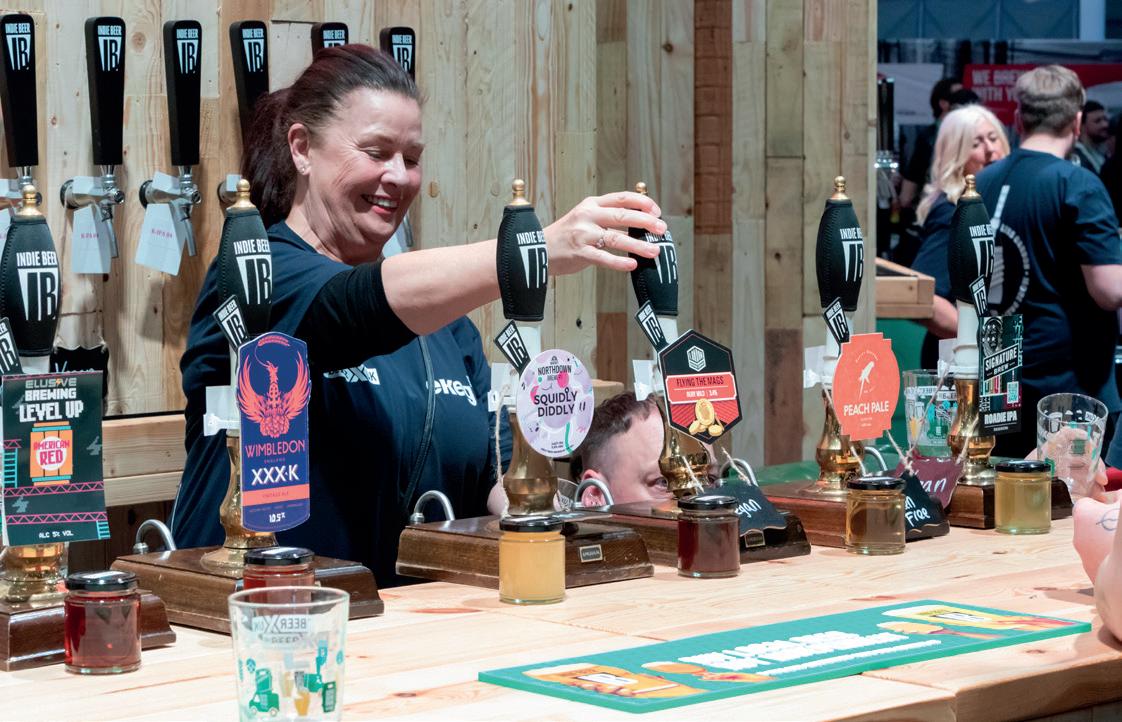
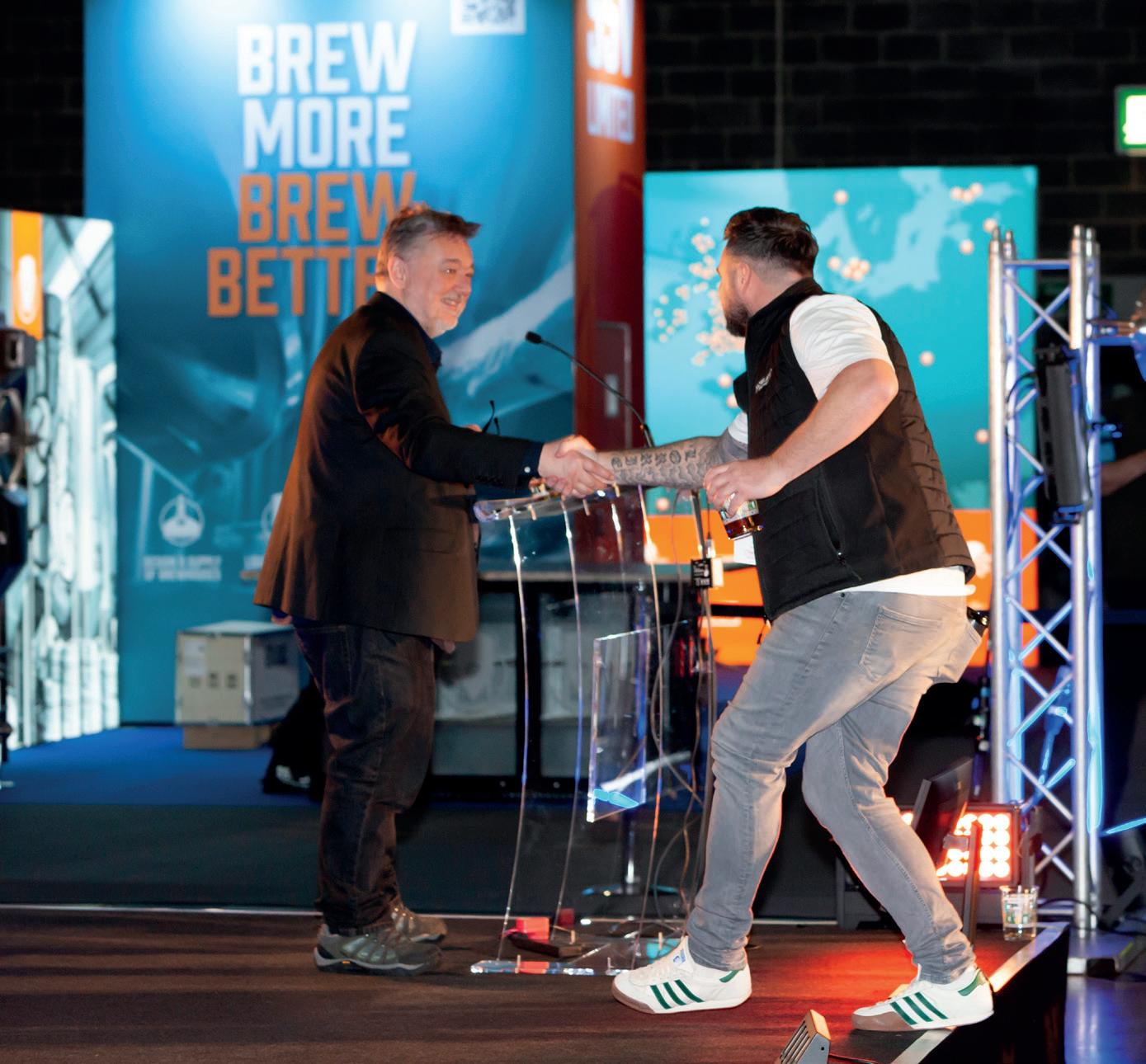
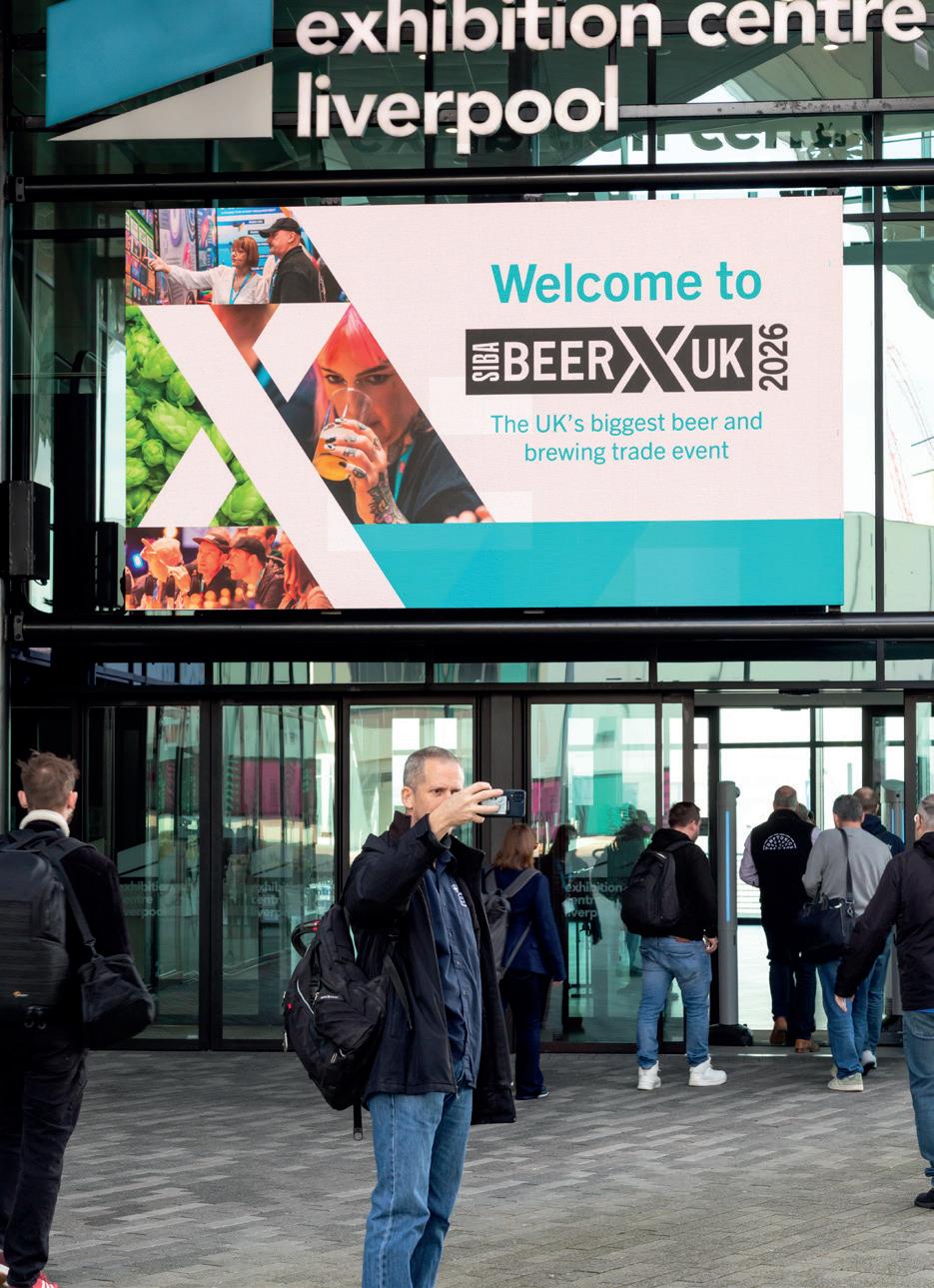
BeerX will return to Exhibition Centre Liverpool for the next year, with BeerX taking place on Wednesday 17th and Thursday 18th March 2027.
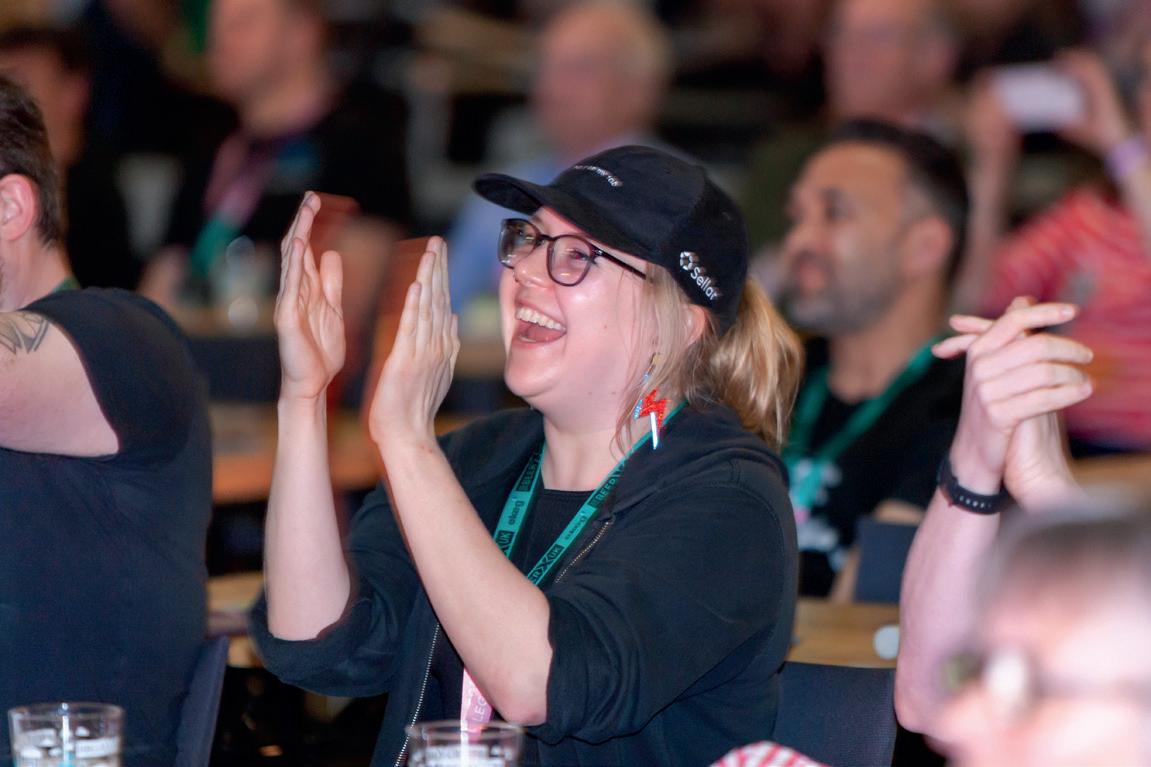
Winners in the SIBA Business Awards 2026 were revealed on the first day of BeerX 2026, highlighting the UK’s very best brewing businesses, pubs and retailers of independent beer – in what was a glittering night for the independent beer industry.
Fyne Ales Farm Brewery in the Scottish highlands beat competition from across the UK to take home the evening’s top award – being named Brewery Business of the Year 2026, after also winning the UK’s Best Independent Brewery Taproom and being Highly Commended in the Collaboration category for their partnership with the Co-Op.
Accepting the award with his brewing team was Fyne Ales Managing Director Jamie Delap;
“Just so delighted to win, these days you’ve got to brew fantastic beer, but you’ve also got to tell great stories. So to be recognised that my team are getting it so right I really appreciate - you’ve got to find really good people, let them do their thing and you’ve got trust your team – which we absolutely do at Fyne Ales.” Jamie Delap, Managing Director.
Presenting the awards was Sunday Times columnist and beer author Pete Brown, who commented “With a massive 5 nominations, and multiple wins, this year’s Brewery Business of the Year Fyne Ales were a clear standout to the judging panel who were hugely impressed with this unique brewing business across the board. With some of the best beers currently being produced in the UK, in a broad range of styles, a destination taproom and a business which continues to go from strength to strength this years winner was a unanimous choice with the judging panel.”
Another big winner on the night was Howe Beer Project, who were named the UK's "Best new independent brewery" for their impressive impact since launching last year; “Opening in June 2025 Howe Beer Project have quickly established a community-driven and financially sustainable microbrewery and gathering space, producing top quality beers in an atmosphere that connects people with each other and with the brewing experience. At a time when too many shared spaces are closing Howe have created something to be treasured by their local community.” Pete Brown, Awards presenter.
The SIBA Business Awards 2026 took place at the BeerX trade show in Liverpool lastnight and seek to congratulate excellence in the brewing industry across a variety of categories, from pump clip, can and bottle design, to efforts taken by brewers to make their business more sustainable, diverse, innovative or successful, as well as naming the UK’s best pubs, bars and retailers of beer from independent breweries.
The judging panel for the prestigious SIBA Business Awards 2026 was hosted by Awards partner Napthens Solicitors, and consisted of Rachel Auty (Women on Tap CIC), Chris Welham (LTC), Phil Mellows (Journalist & Author), Tony Sophoclides (UKHospitality), Laura Mackie (SIBA NonExec Director), Neil Walker (SIBA HoC), and Andy Slee (SIBA CEO). The awards were presented by Sunday Times columnist Pete Brown at the UK’s biggest beer and brewing event – BeerX UK in Liverpool, 18th March 2026.
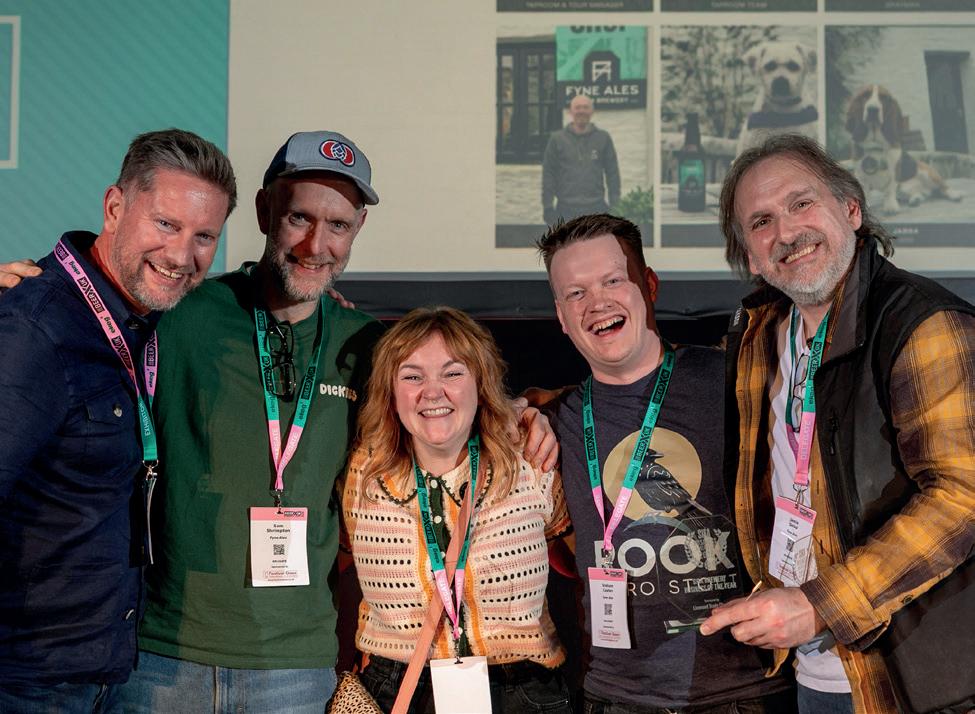
BREWERY BUSINESS OF THE YEAR
WINNER Fyne Ales
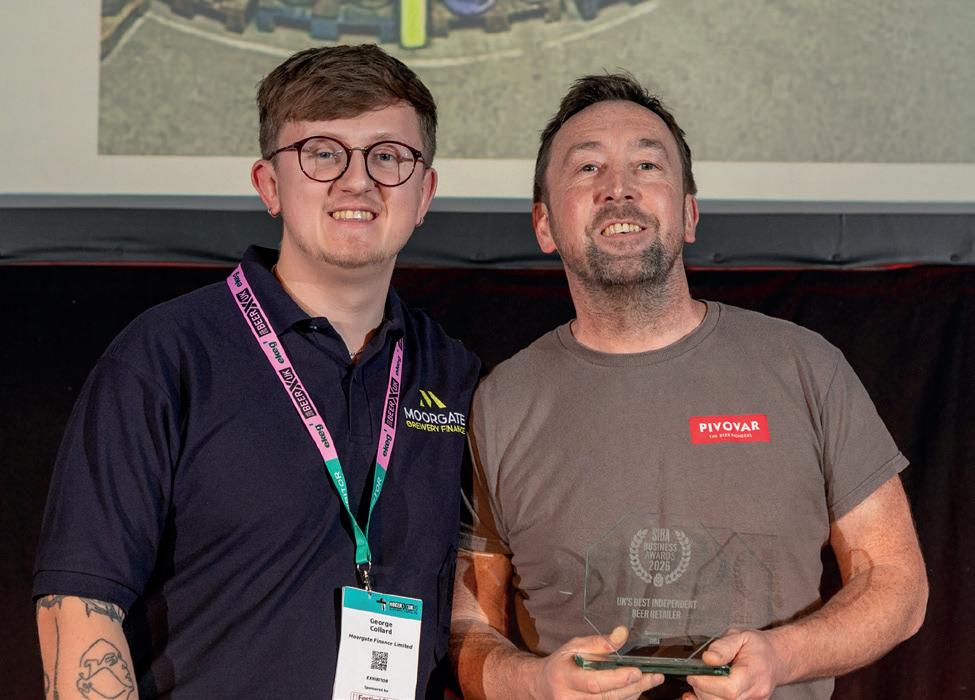
UK’S BEST INDEPENDENT BEER RETAILER
WINNER Pivovar
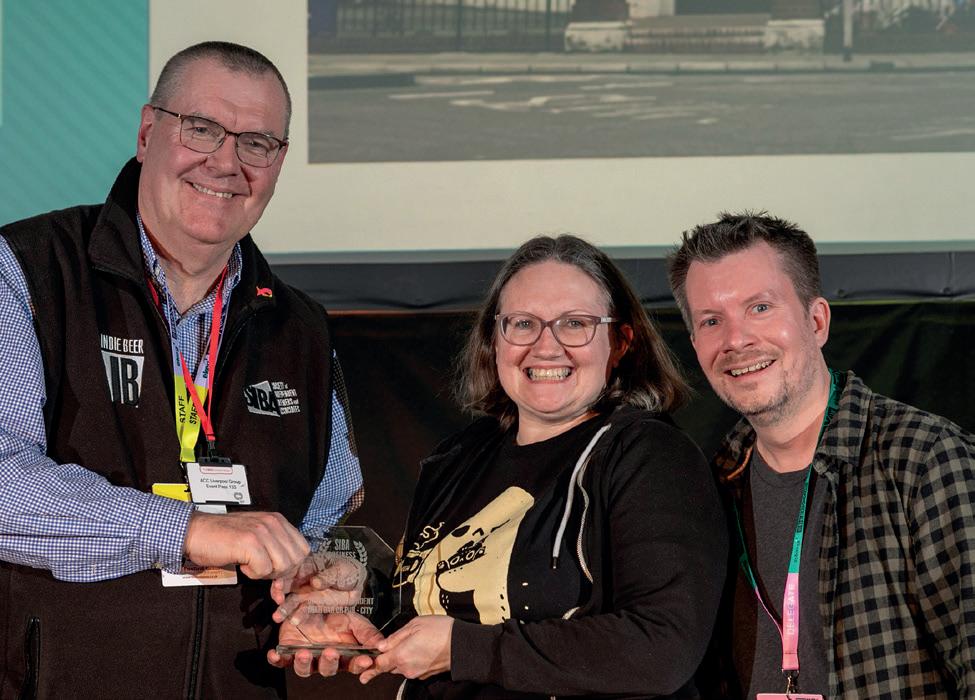
UK’S BEST BEER BAR OR PUB – CITY
WINNER The Green Goddess, Blackheath HIGHLY COMMENDED Old Grey Mare Inn
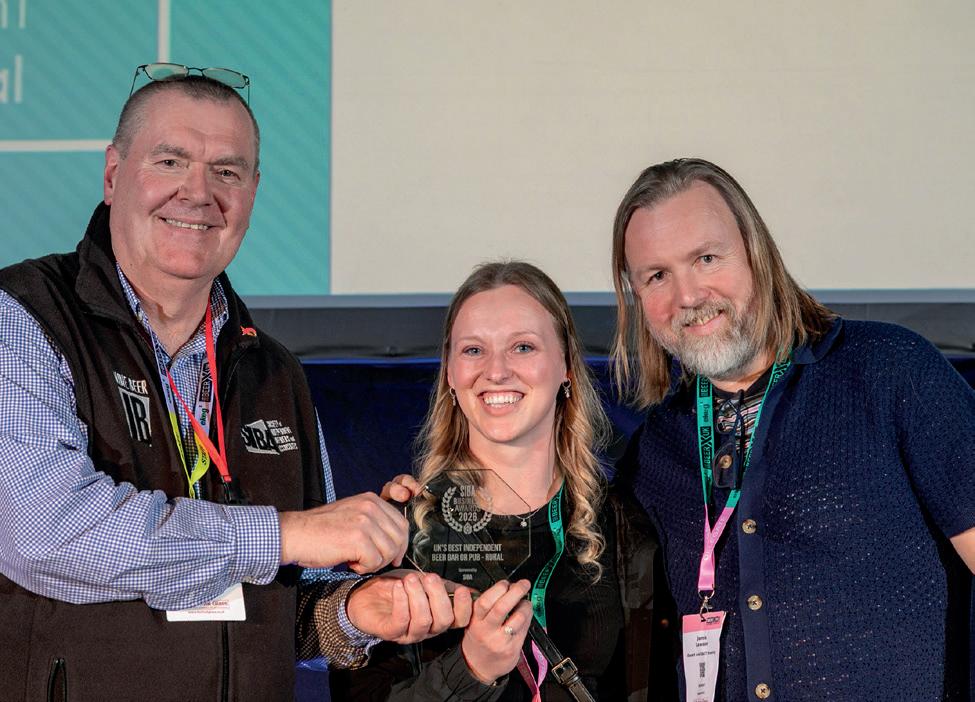
UK’S BEST BEER BAR OR PUB – RURAL
WINNER Brewers 1841, Ossett
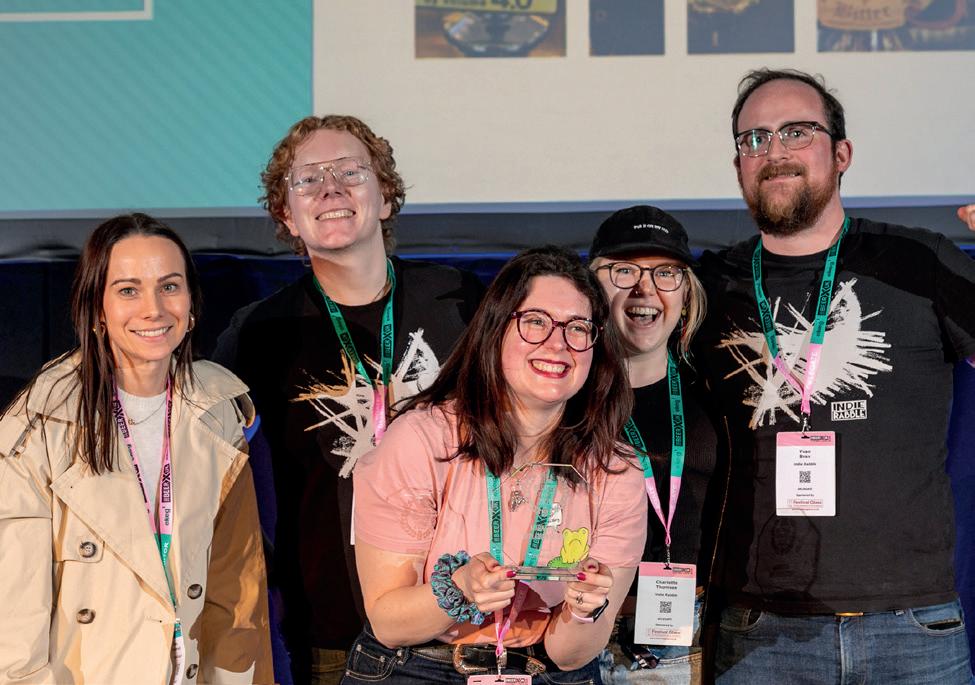
MARKETING IMPLEMENTATION
WINNER Indie Rabble (Winner) HIGHLY COMMENDED Charnwood
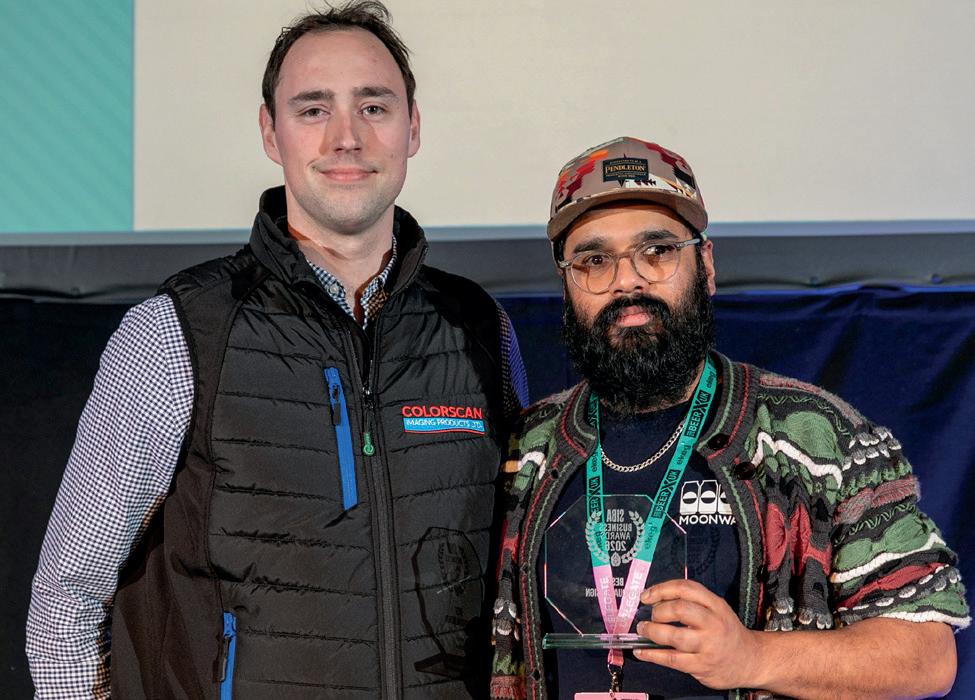
INDIVIDUAL DESIGN
WINNER Moonwake – Dolcita IPA
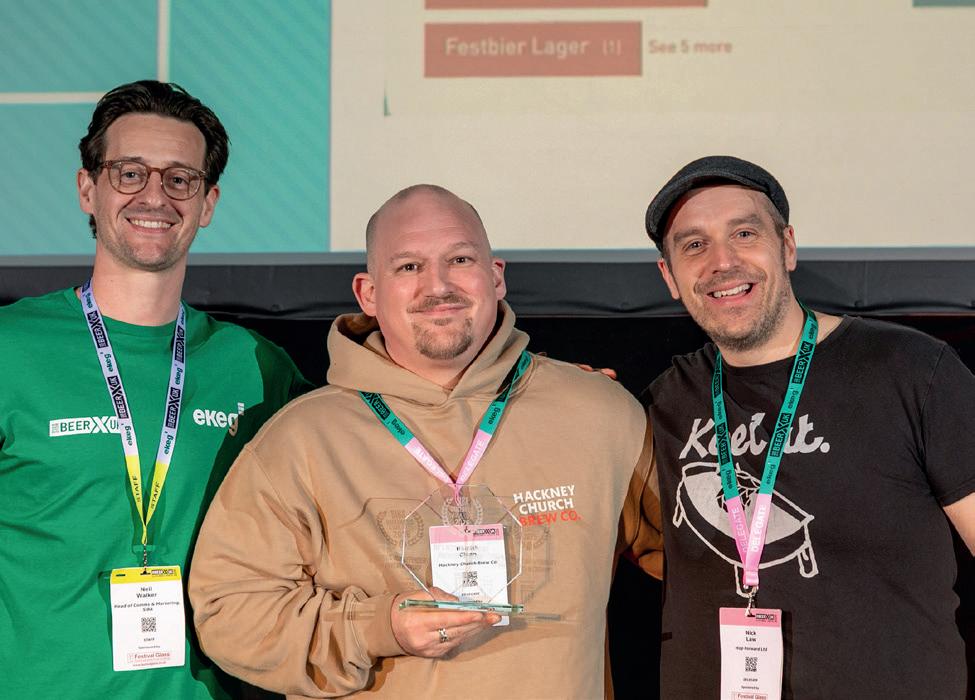
UK’S BEST INDEPENDENT BREWERY WEBSHOP
WINNER Hackney Church Brew Co.
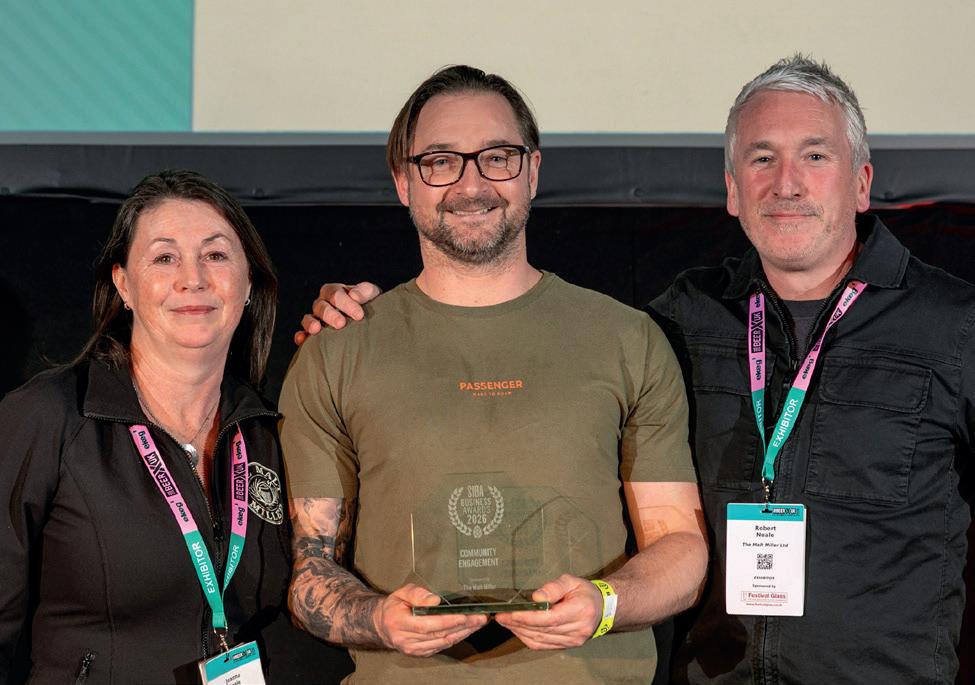
COMMUNITY ENGAGEMENT
WINNER Bristol Beer Factory
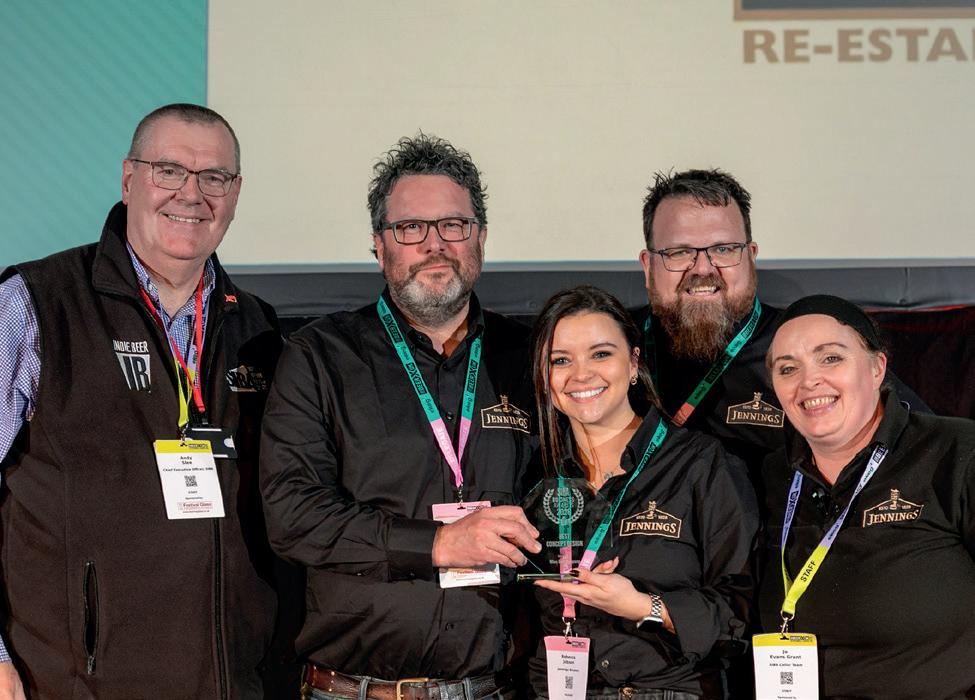
CONCEPT DESIGN
WINNER Jennings
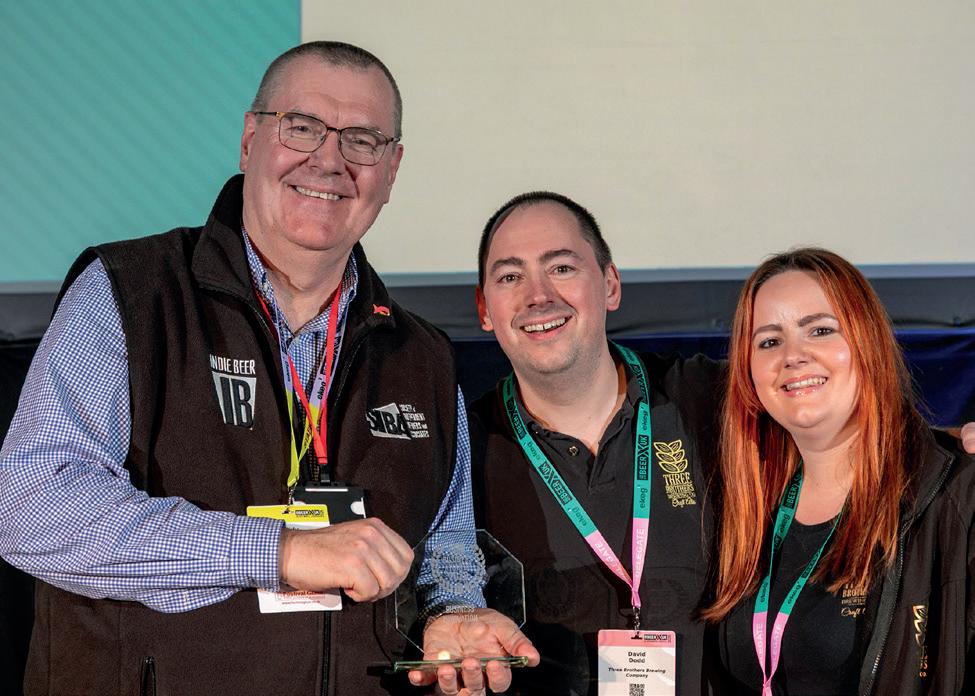
BUSINESS INNOVATION
WINNER Three Brothers Brewing
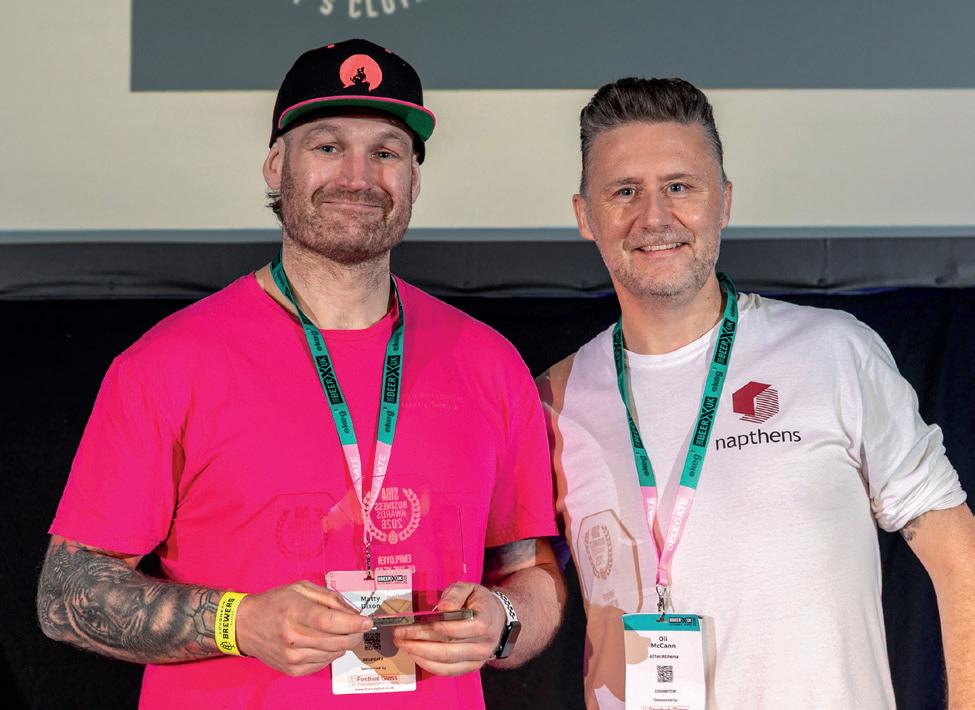
EMPLOYER OF THE YEAR
WINNER Sheep in Wolf’s Clothing
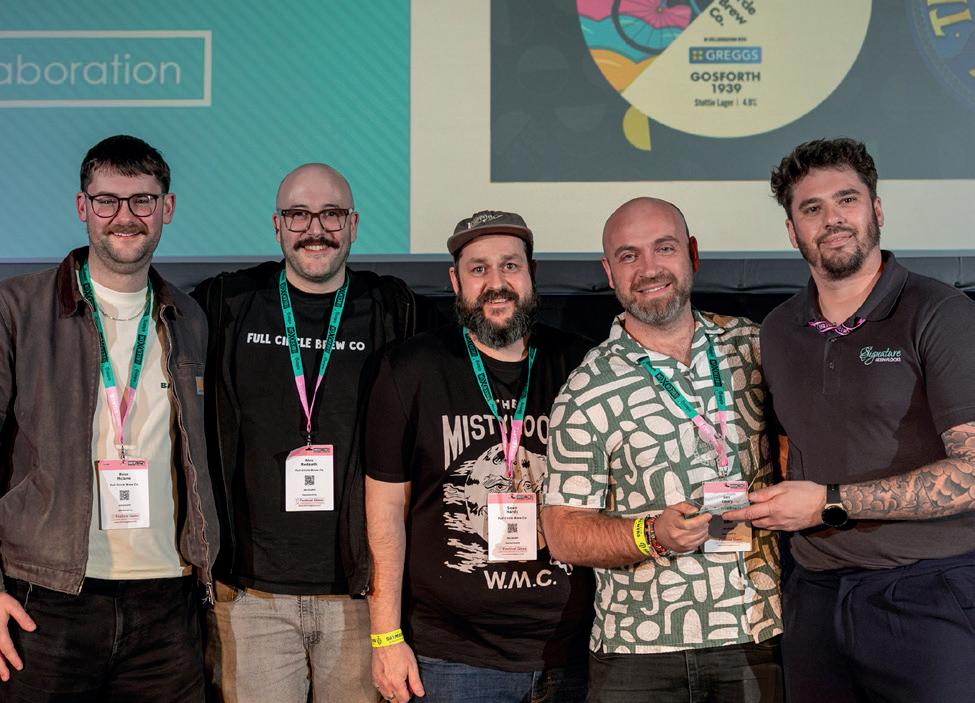
BEST COLLABORATION
WINNER Full Circle x Greggs
HIGHLY COMMENDED Fyne Ales x Co-Op
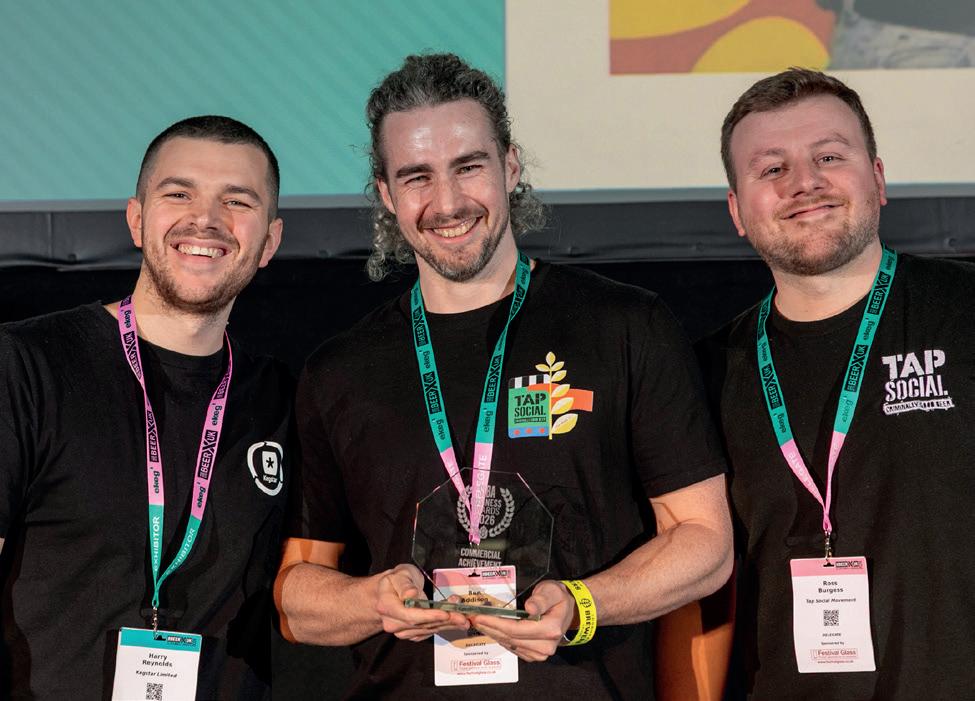
COMMERCIAL ACHIEVEMENT
WINNER Tap Social
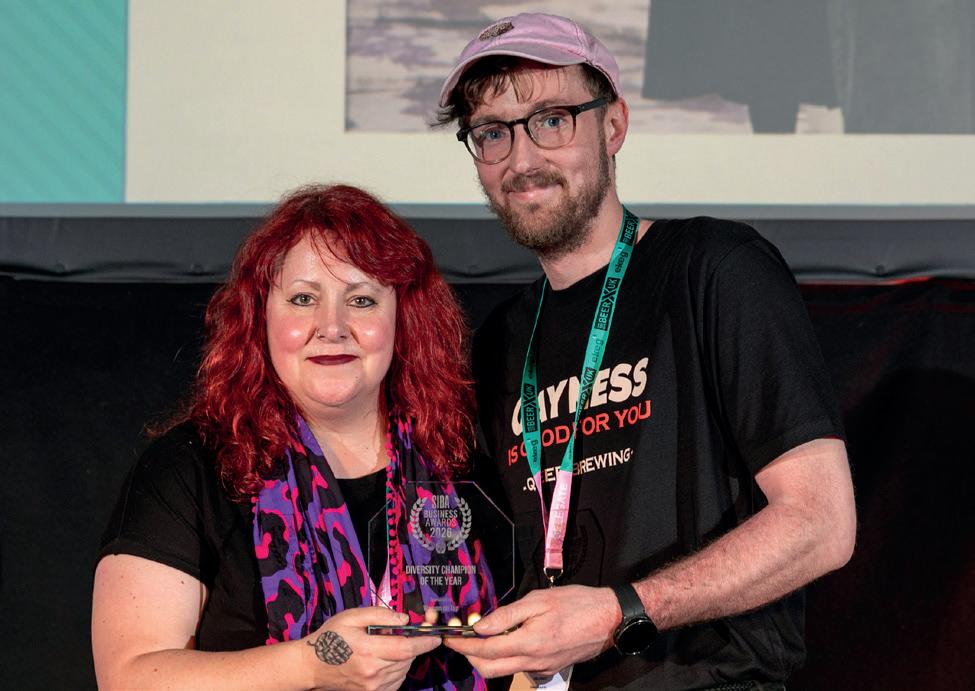
DIVERSITY CHAMPION OF THE YEAR
WINNER Queer Brewing
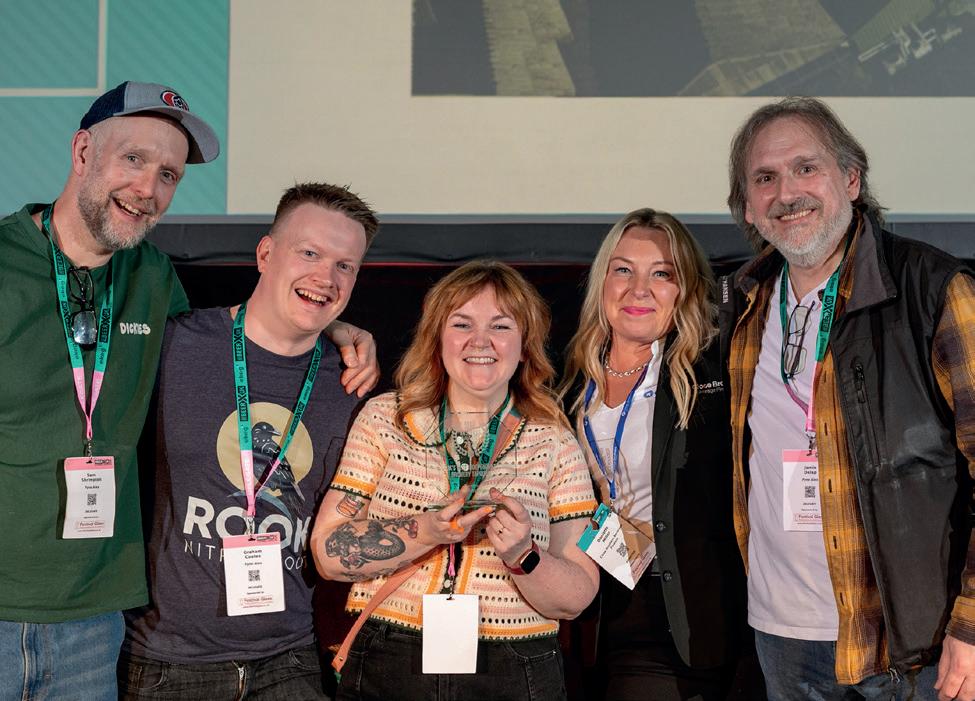
UK’S BEST INDEPENDENT BREWERY TAPROOM
WINNER Fyne Ales
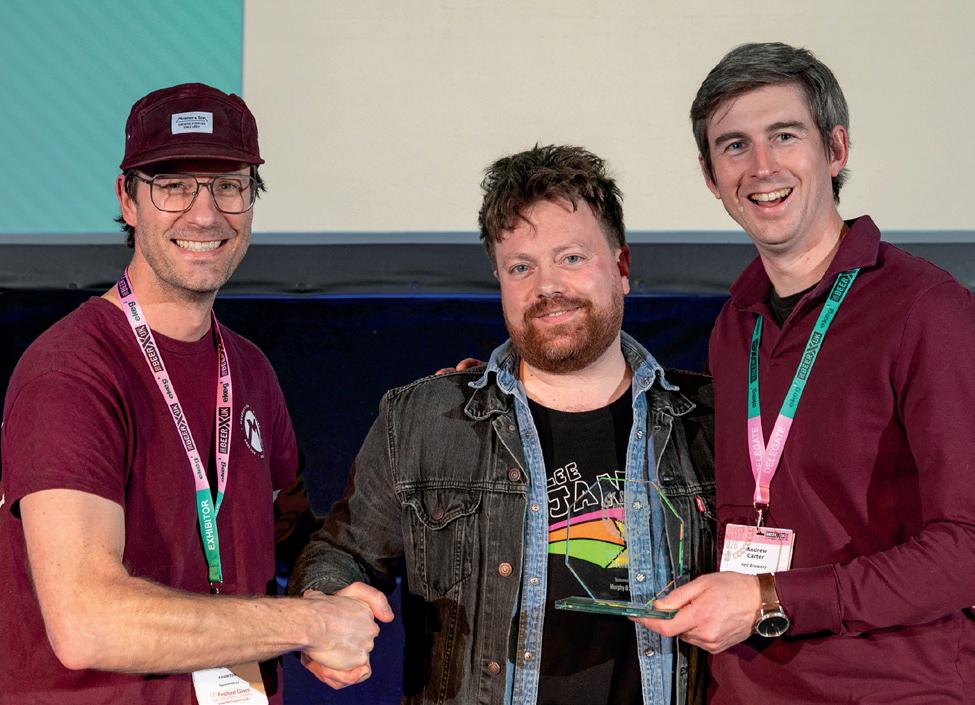
SUSTAINABLE BUSINESS
WINNER Fell Brewery)
HIGHLY COMMENDED Muntons
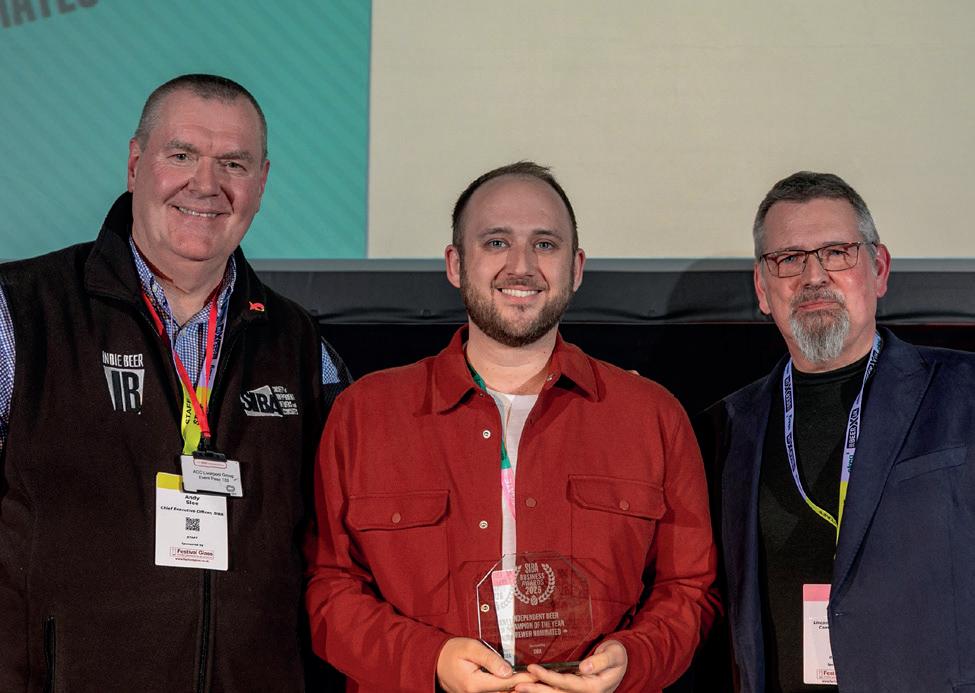
INDEPENDENT BEER CHAMPION OF THE YEAR
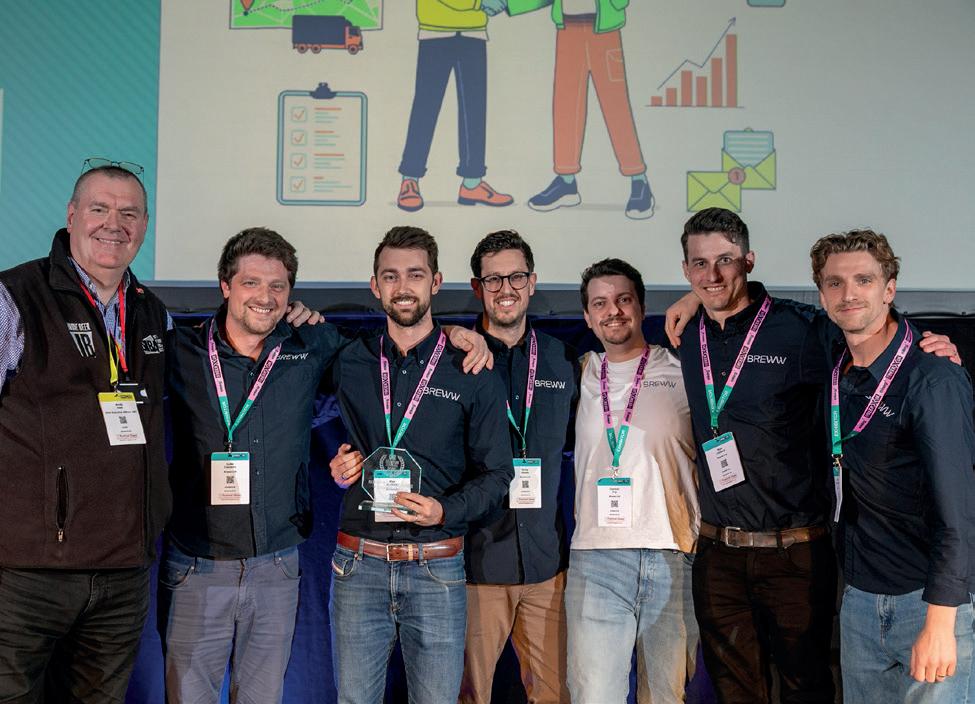
SUPPLIER ASSOCIATE OF THE YEAR
BREWW
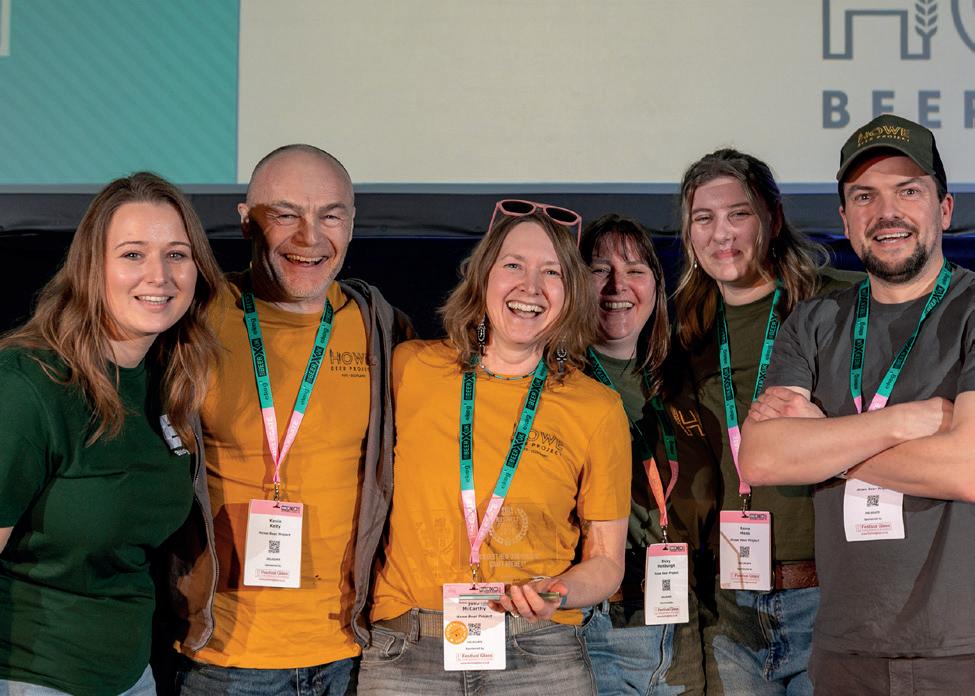
UK’S BEST NEW INDEPENDENT BREWERY
WINNER Howe Beer Project
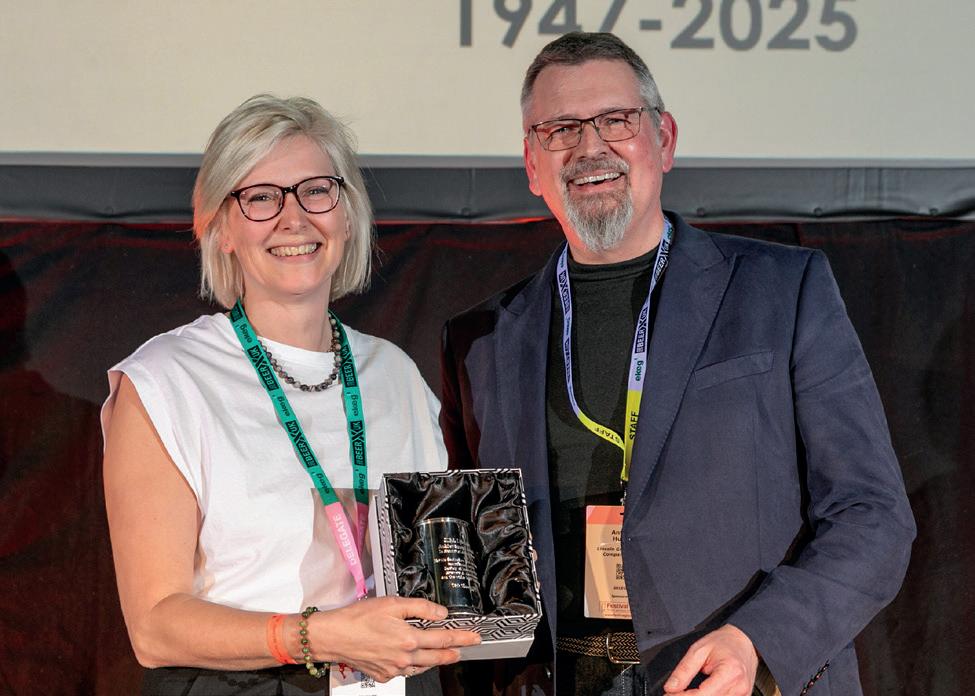
LIFETIME ACHIEVEMENT AWARD
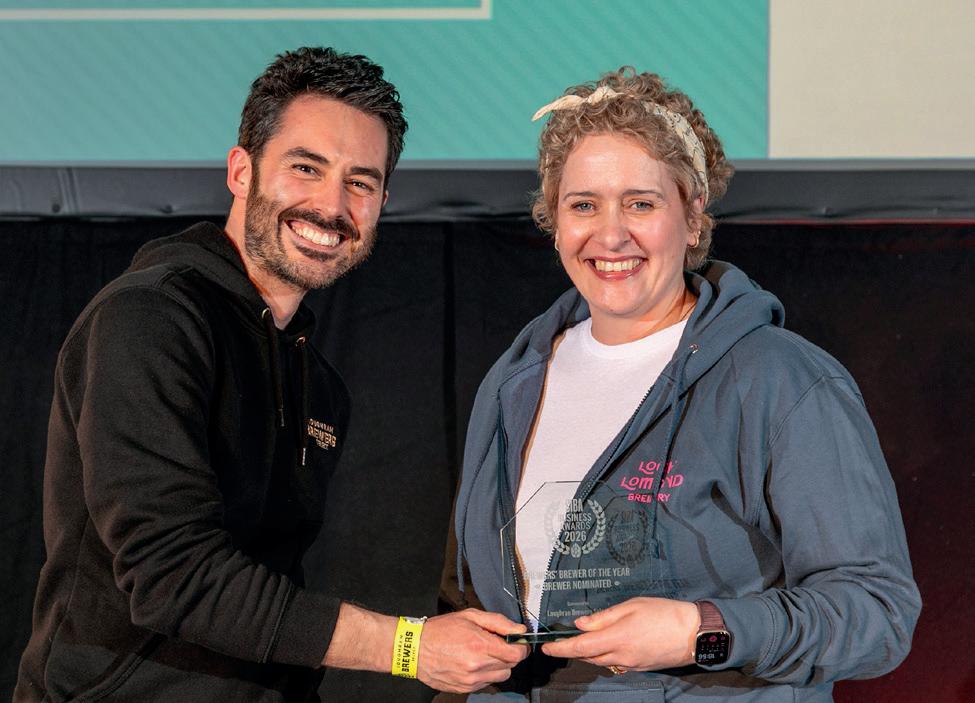
BREWERS’ BREWER OF THE YEAR
Jourdan Gabbini, Waitrose
Adrian Wood (Decd)
Fiona MacEachern
National Indie Beer Awards Cask
SIBA's Independent Beer Awards are the UK's biggest independent craft beer competition - featuring cask, craft keg, bottle and canned beers.
Having won their regional competitions, the breweries featured here are the winners of our National competition which took place at BeerX UK, where beers from across the UK go head to head to be crowned the overall Champion across a wide variety of styles.
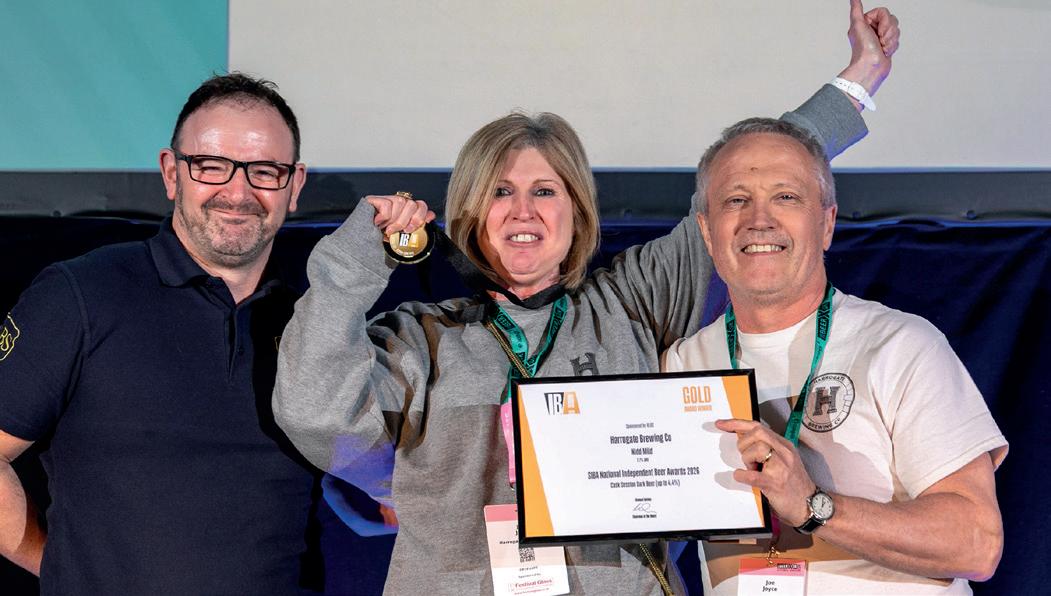
Cask Session Dark Beer
Sponsored by: RLBS
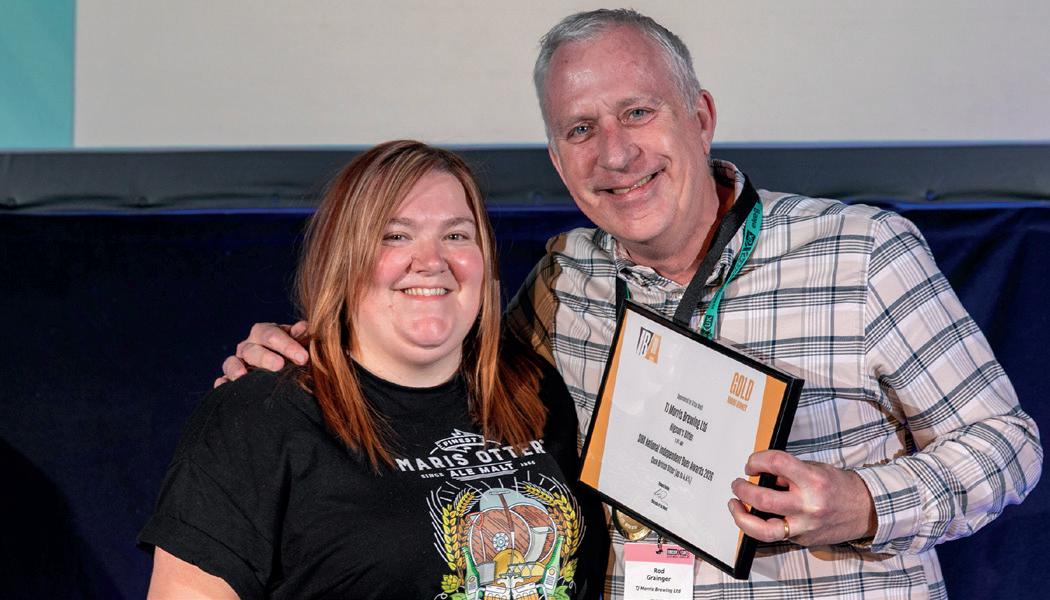
Cask British Bitter
Sponsored by: Crisp
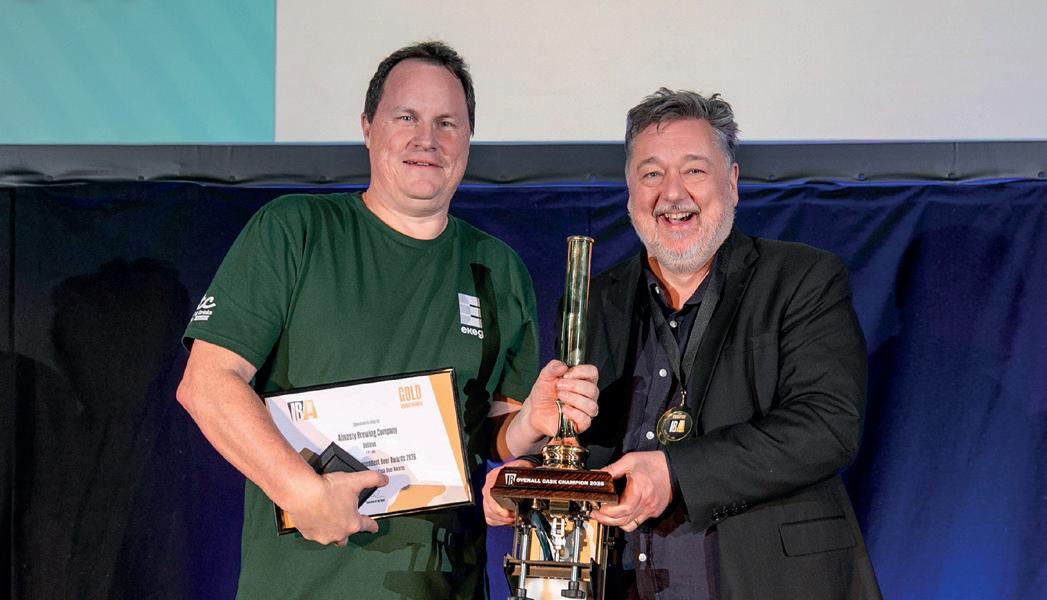
Overall Champion of the Cask Competition
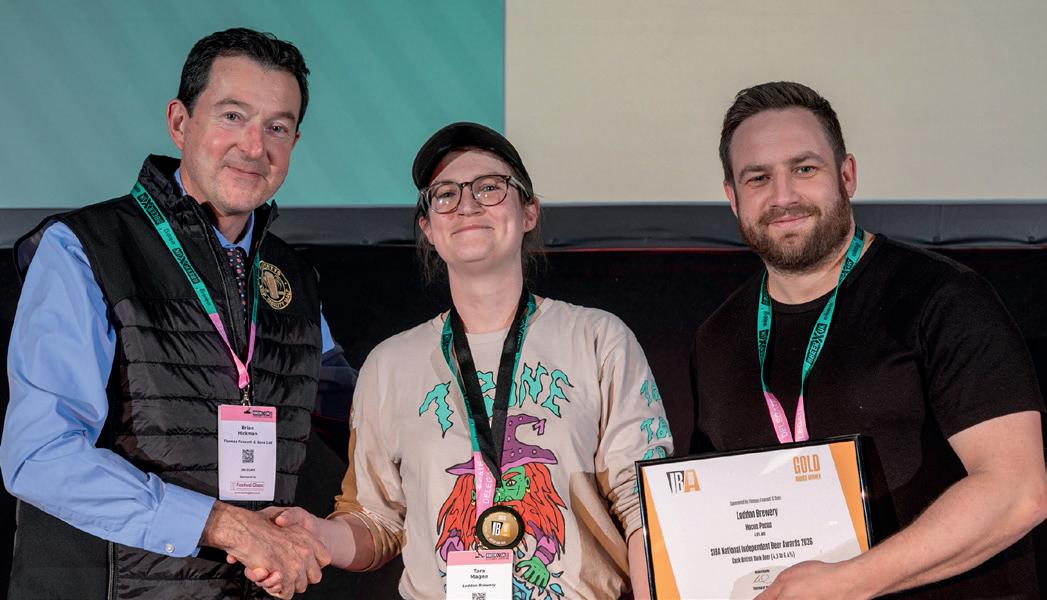
Cask British Dark Beer
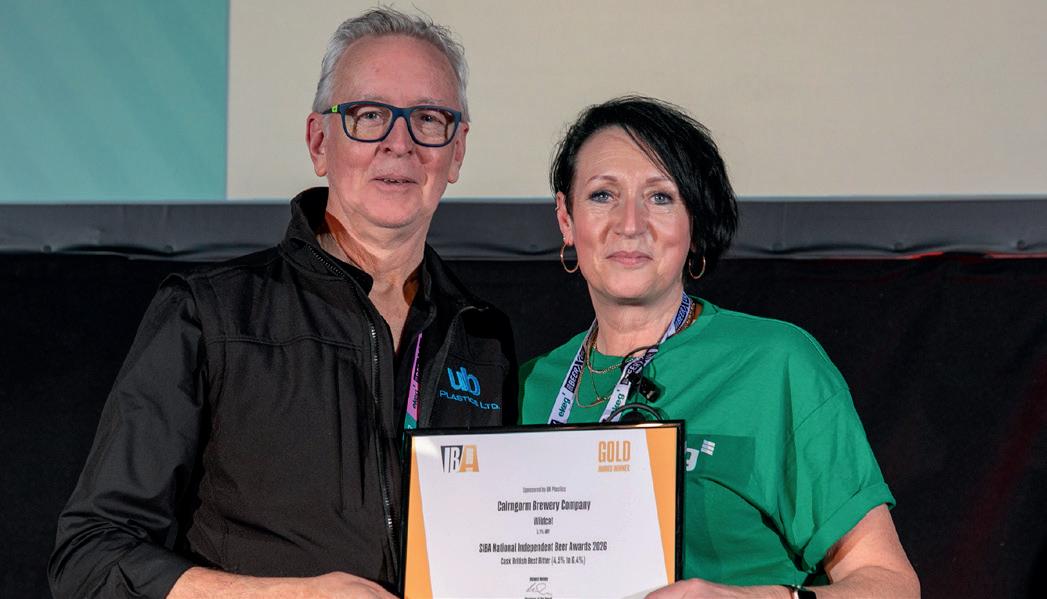
Cask British Best Bitter
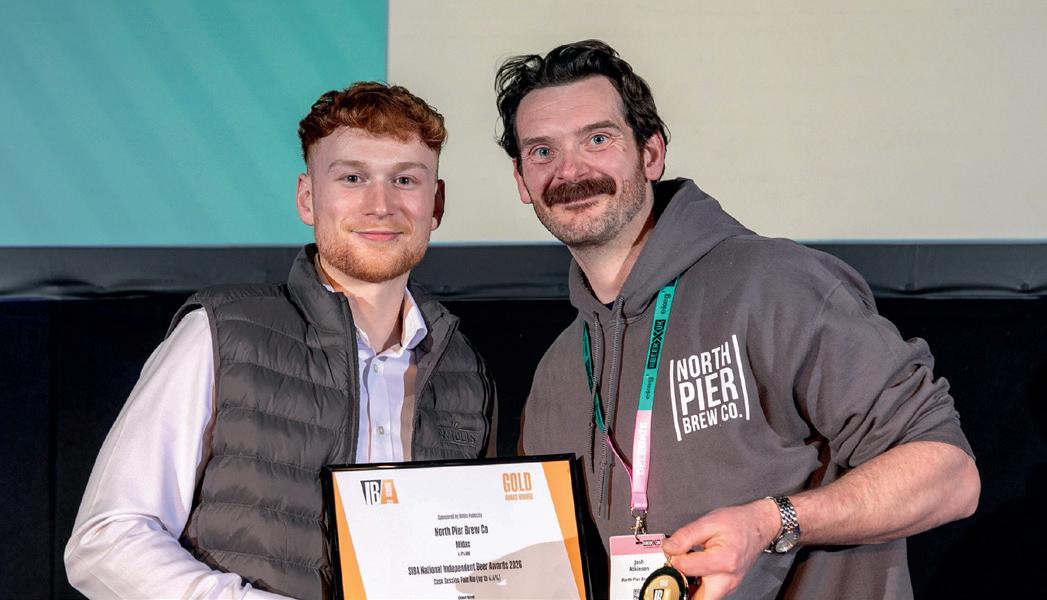
Cask Session Pale Ale
Sponsored by: Willis Publicity
G GOLD: North Pier Brew Co Midas 4.0% S SILVER: Weird Dad Brewery CAMRA man 4.2% B BRONZE: Signature Brew Roadie 4.3%
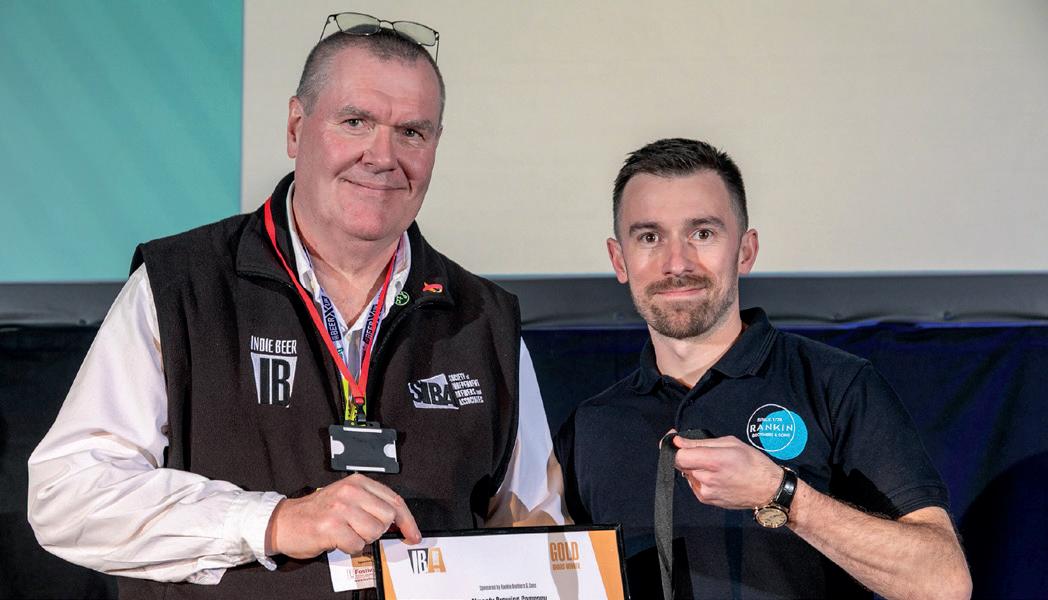
Cask IPA
Sponsored by: Rankin Brothers & Sons
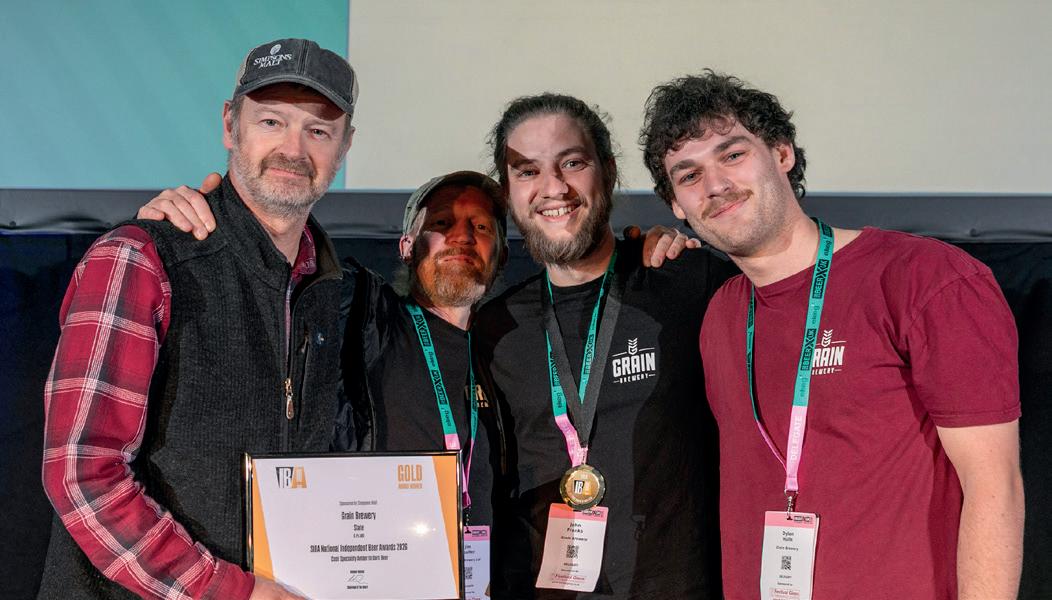
Cask Speciality Amber to Dark Beer
Sponsored by: Simpsons Malt
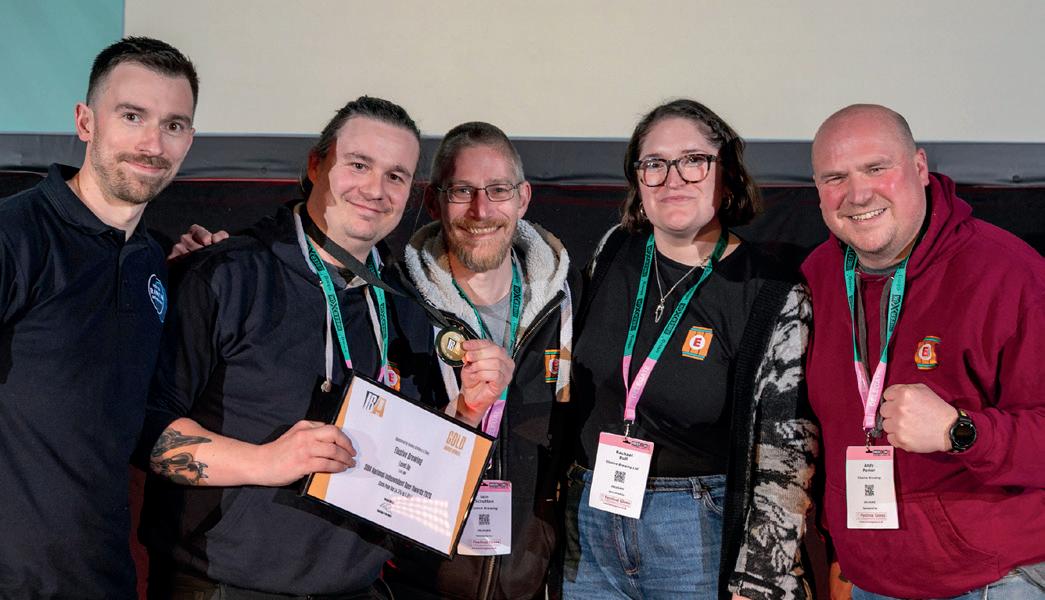
Cask Pale Ale
Sponsored by: Rankin Brothers & Sons
G GOLD: Elusive Brewing Level Up 5.0%
SILVER: Williams Bros Brewing Co. Joker IPA 5.0%
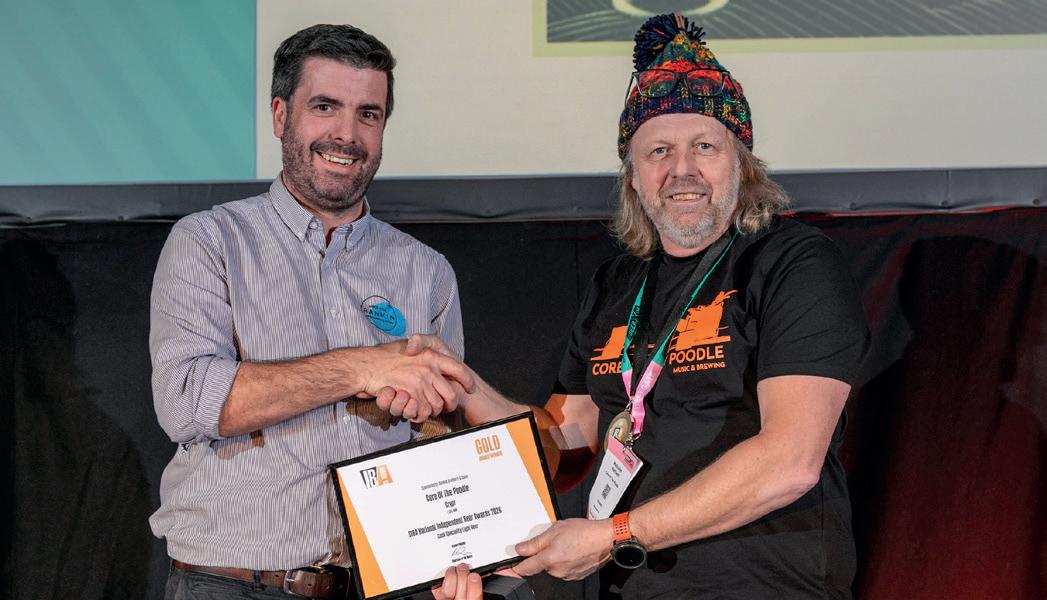
Cask Speciality Light Beer
Sponsored by: Rankin Brothers & Sons
GOLD: Core Of The Poodle Crypt 7.5%
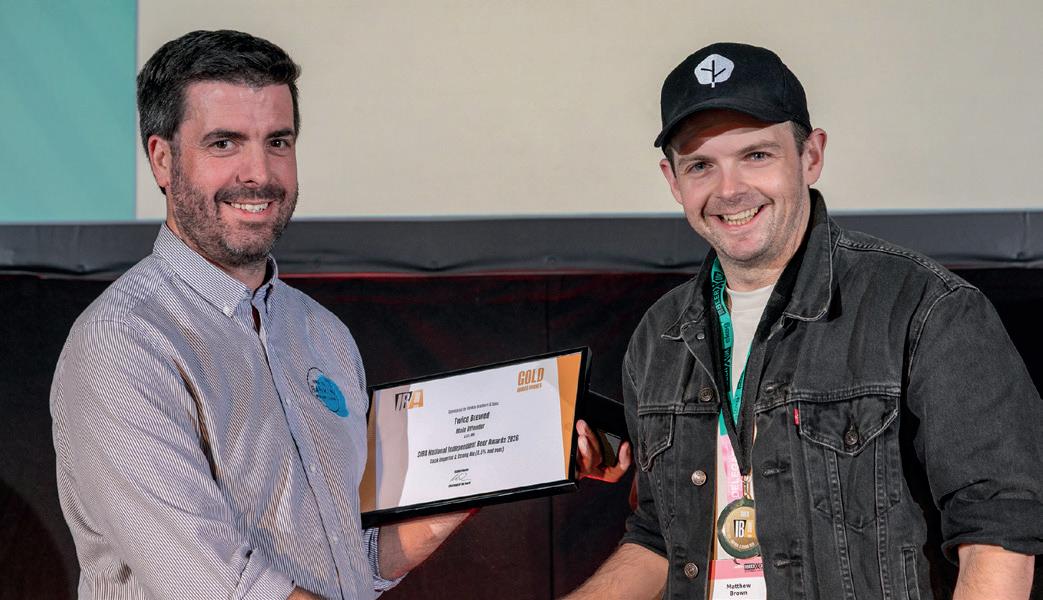
Cask Imperial & Strong Ale
Sponsored by: Rankin Brothers & Sons G GOLD: Twice Brewed Main Offender 8.5%
National Indie Beer Awards
Bottle & Can
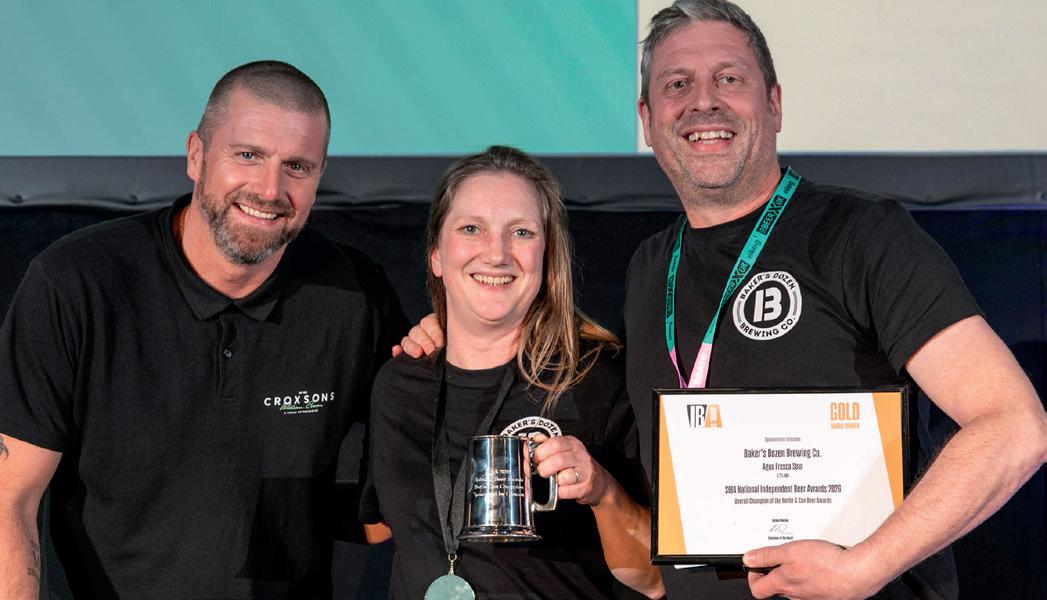
Overall Champion of the Bottle & Can Competition
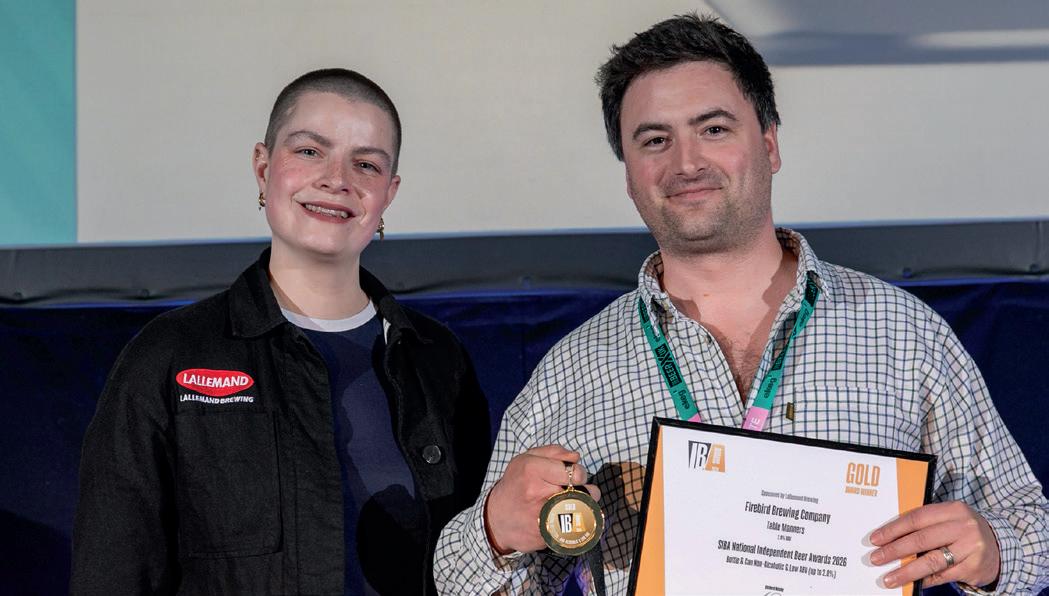
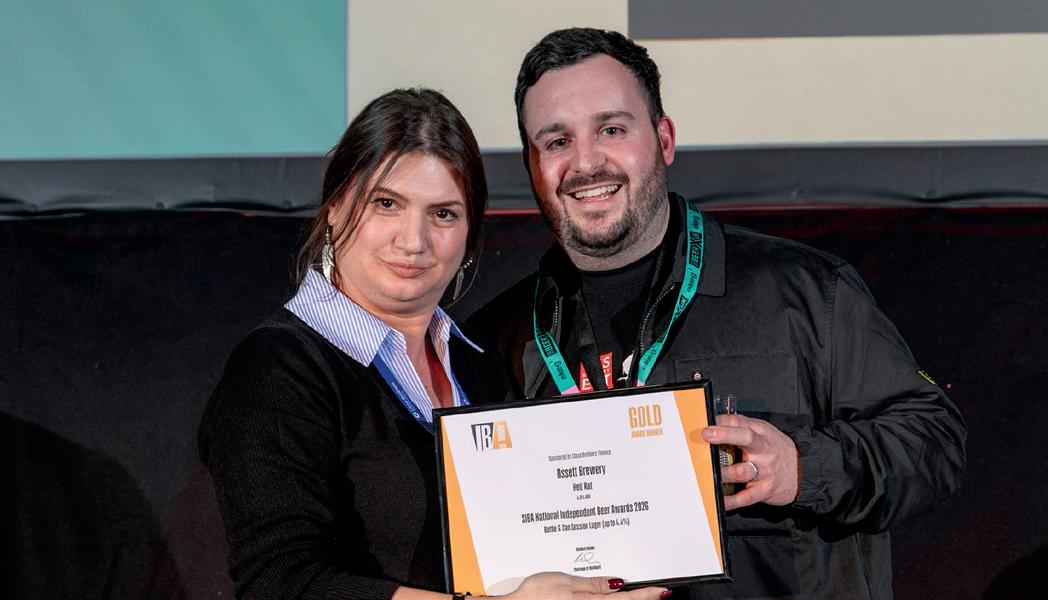
Bottle & Can Session Lager
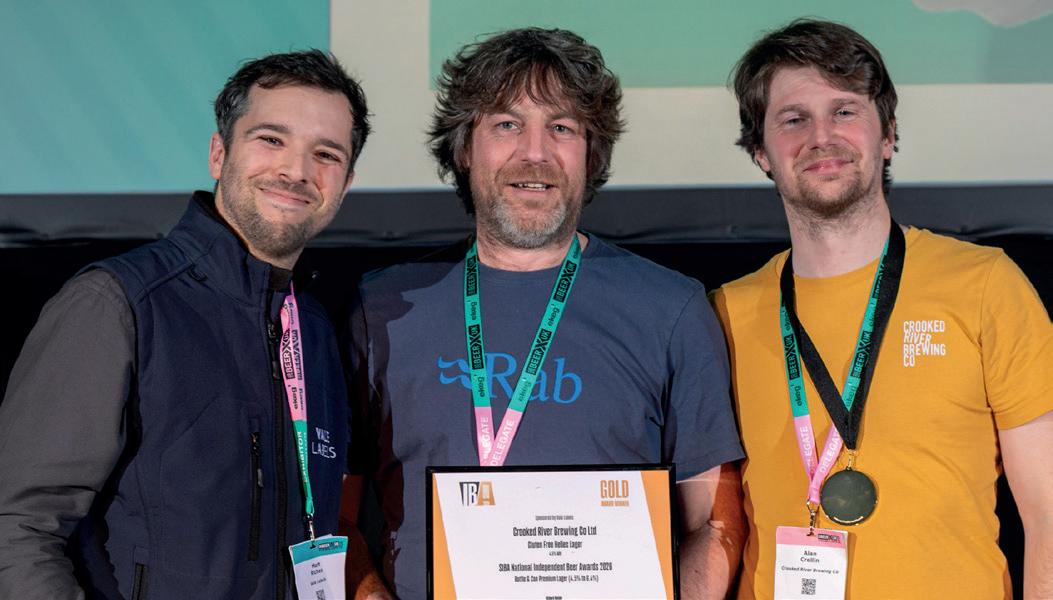
Bottle & Can Premium Lager
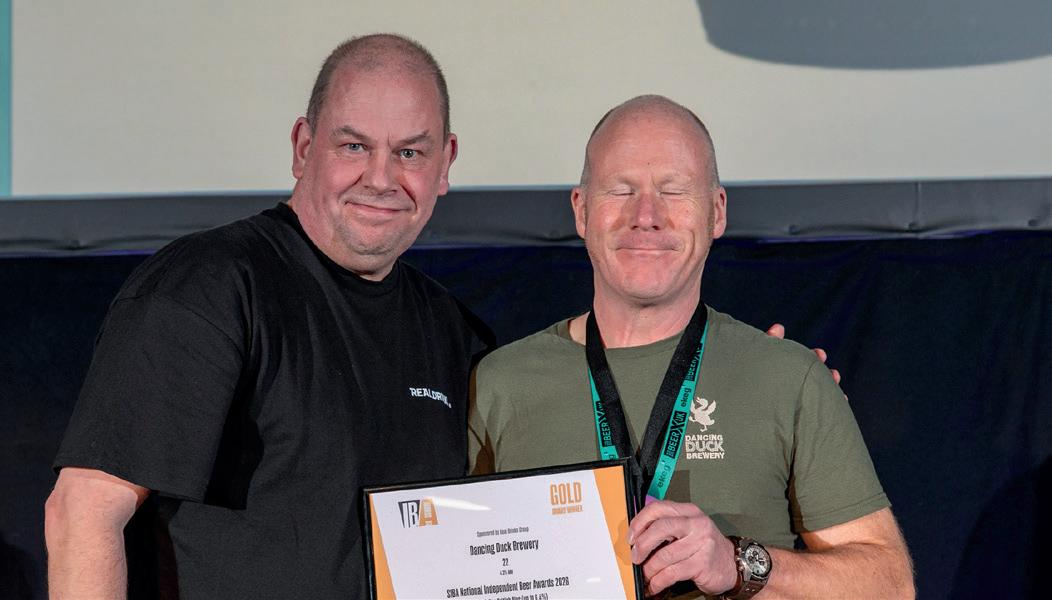
Bottle & Can British Ales
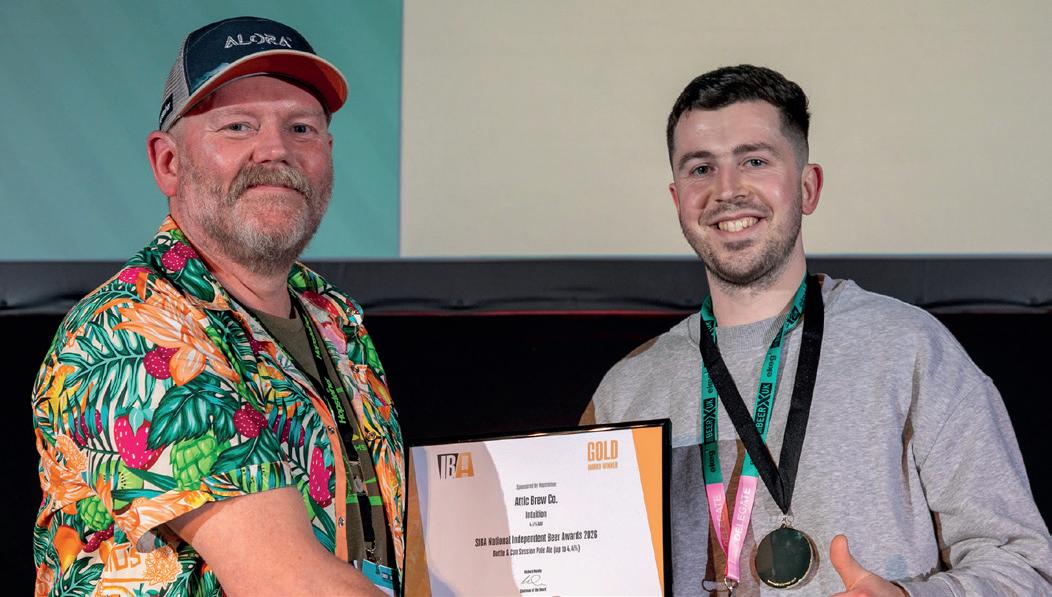
Bottle & Can Session Pale Ale
Sponsored by: Hopsteiner
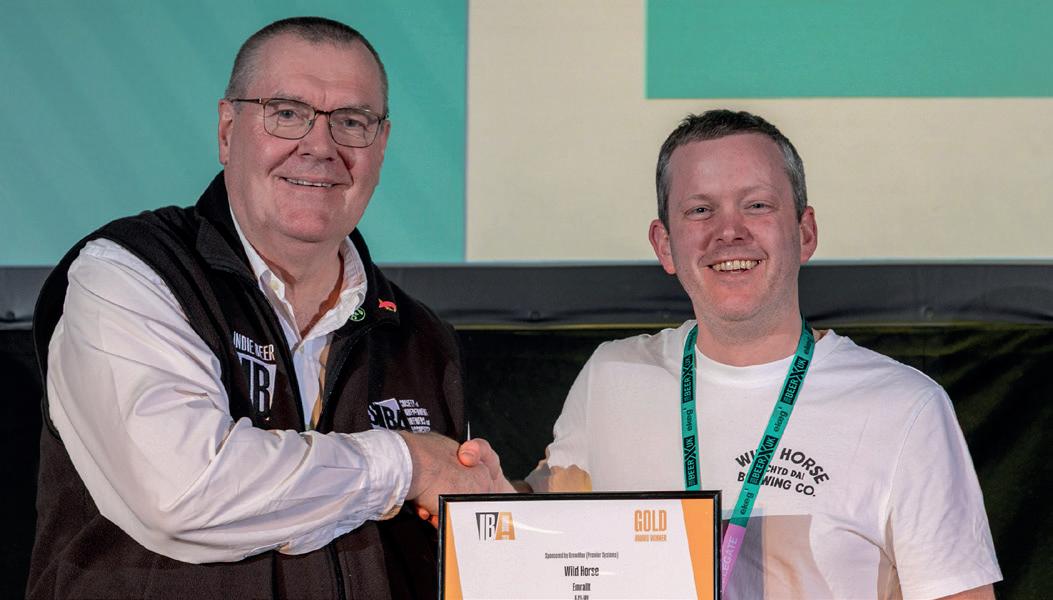
Bottle & Can IPA
Sponsored by: BrewMan (Premier Systems)
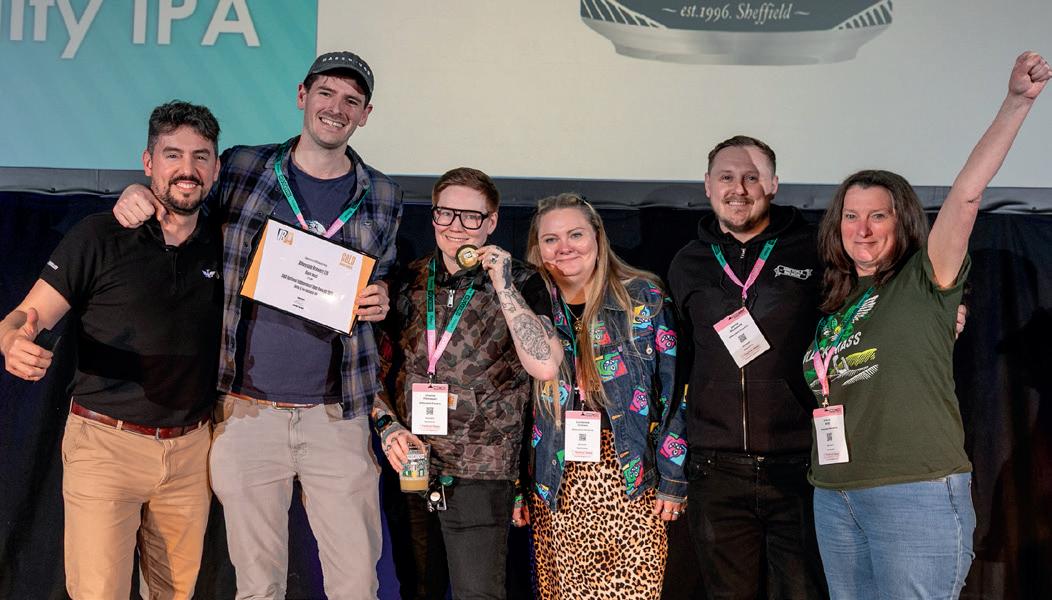
Bottle & Can Speciality IPA
Sponsored by: Wild Goose Filling
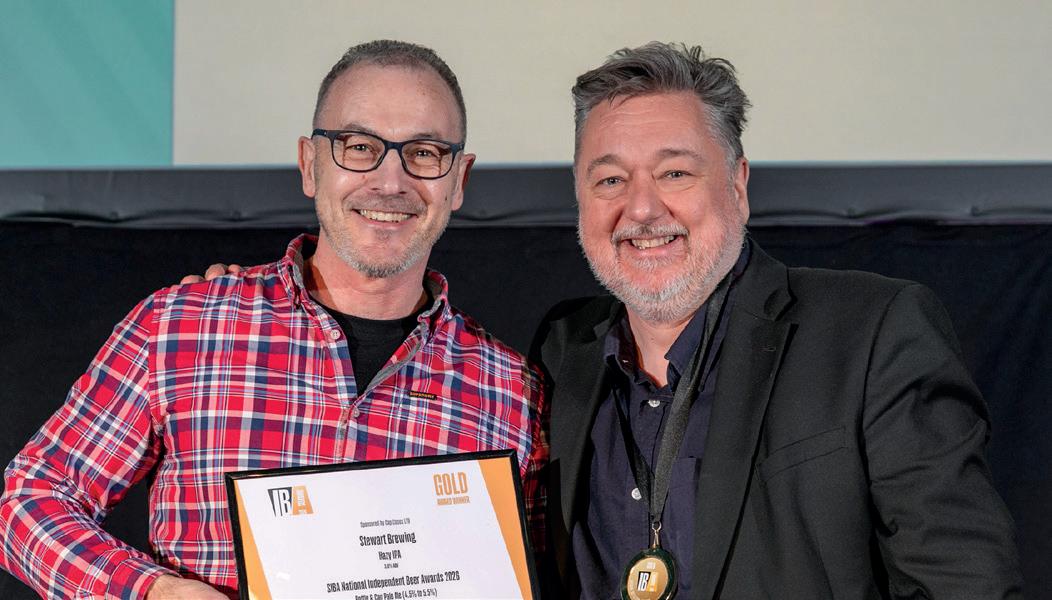
Bottle & Can Pale Ale
Sponsored
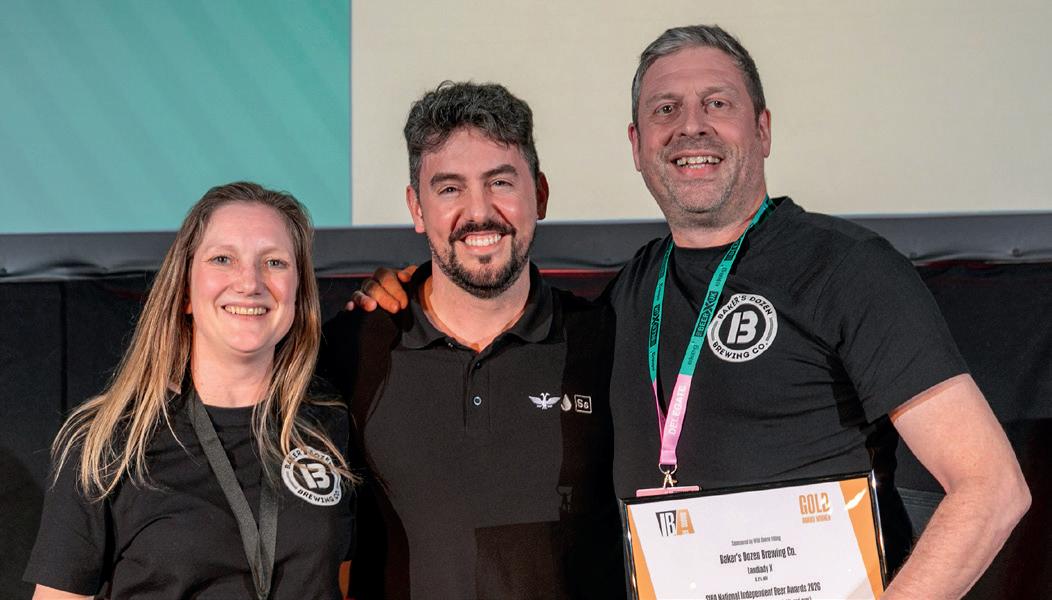
Bottle & Can Double & Triple IPA
Sponsored by: Wild Goose Filling
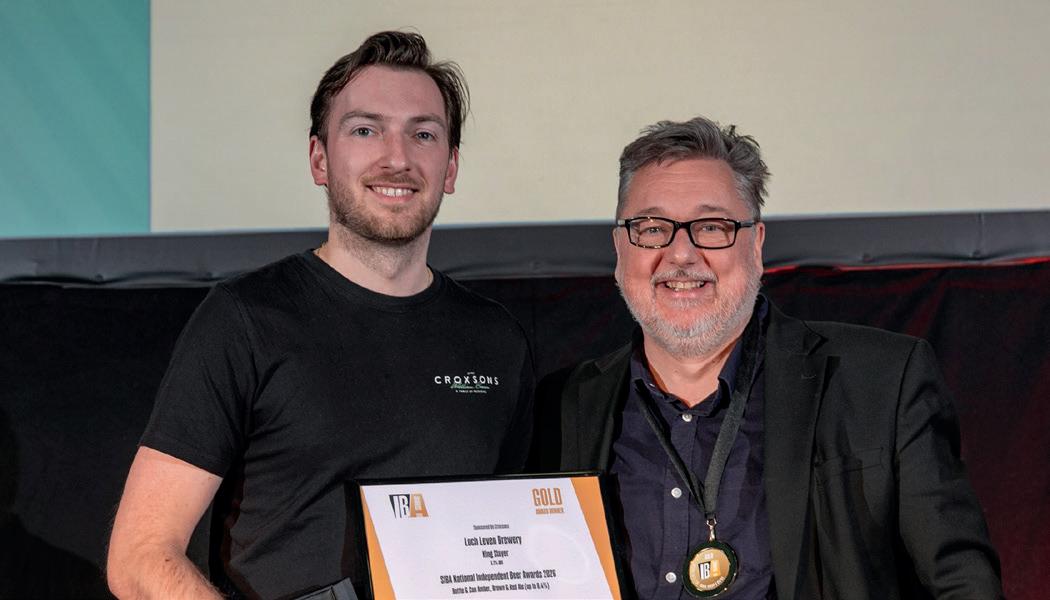
Bottle & Can Amber, Brown & Red Ale
Sponsored by: Croxsons
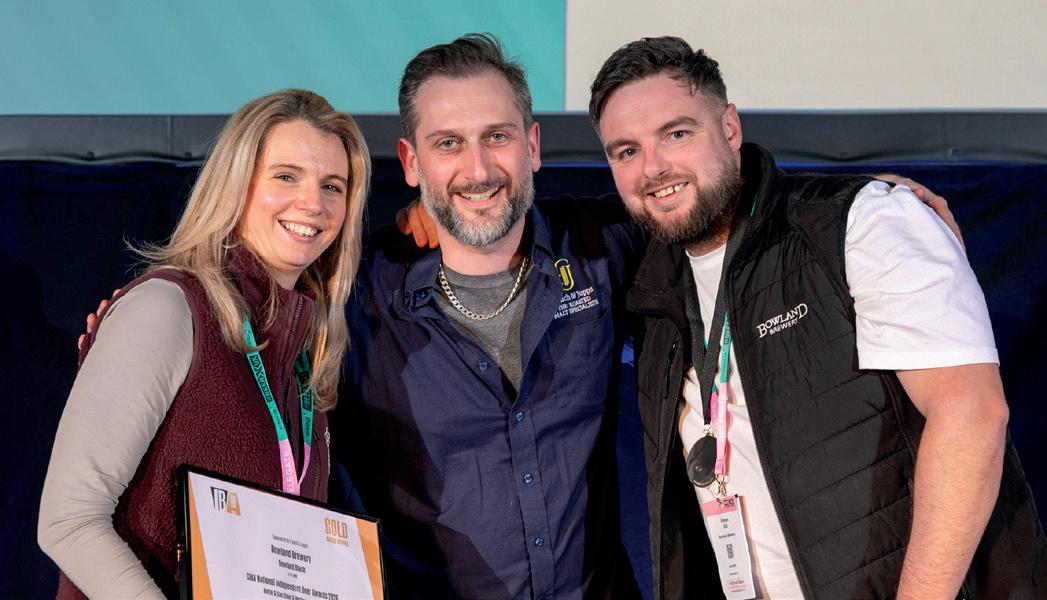
Bottle & Can Stout & Porter
Sponsored
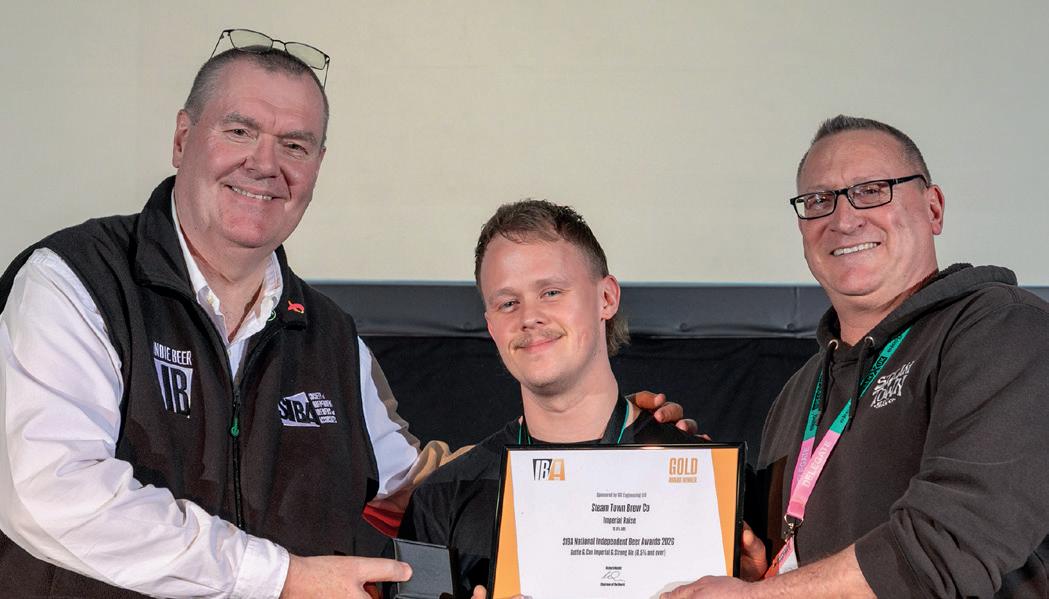
Bottle & Can Imperial & Strong Ale
Sponsored
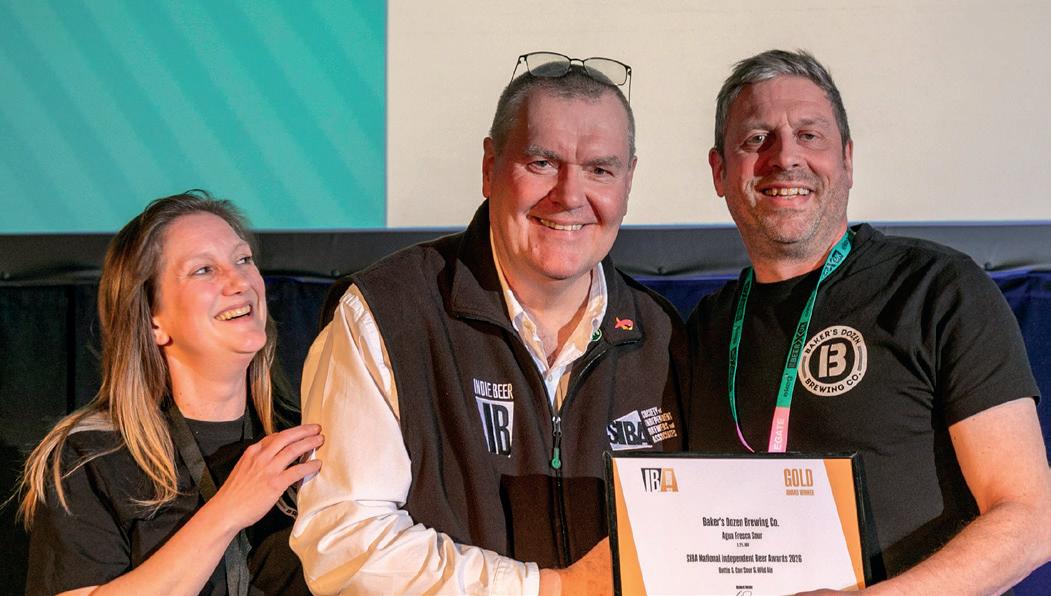
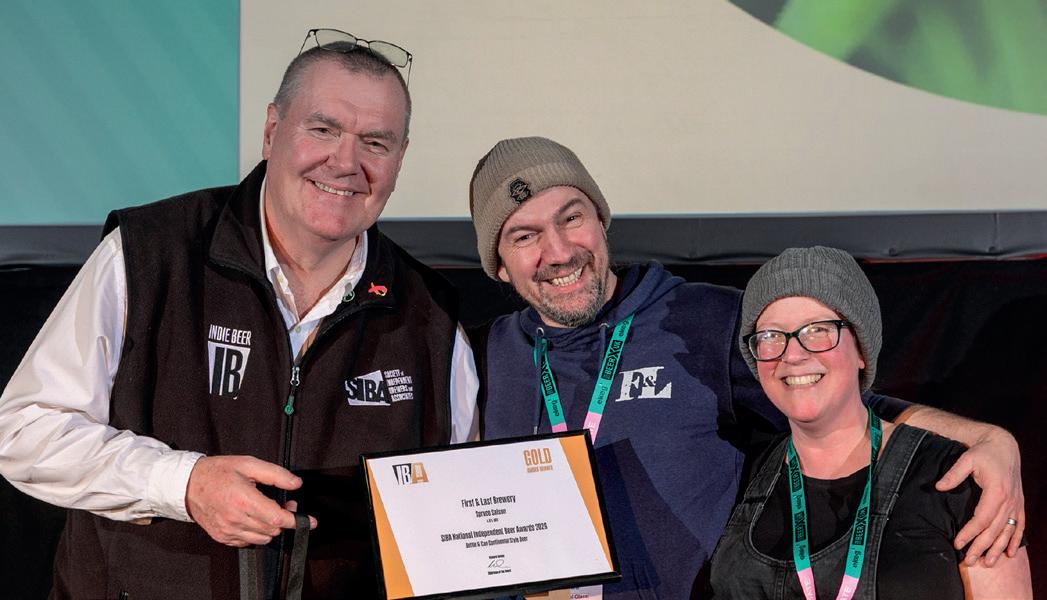
Bottle & Can Sour & Wild Ale
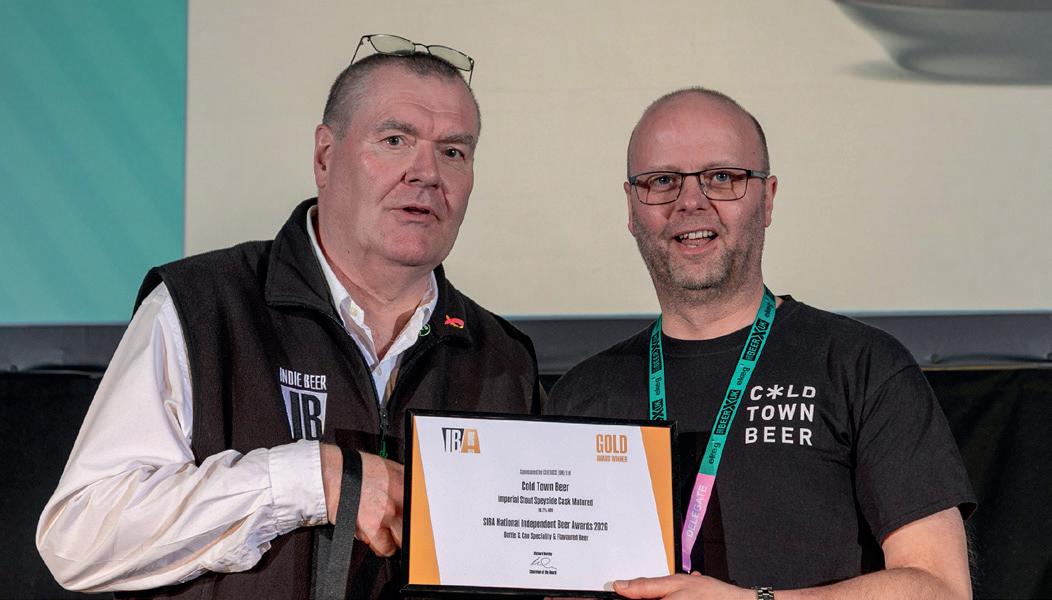
Bottle & Can Speciality & Flavoured Beer
Sponsored
National Indie Beer Awards keg
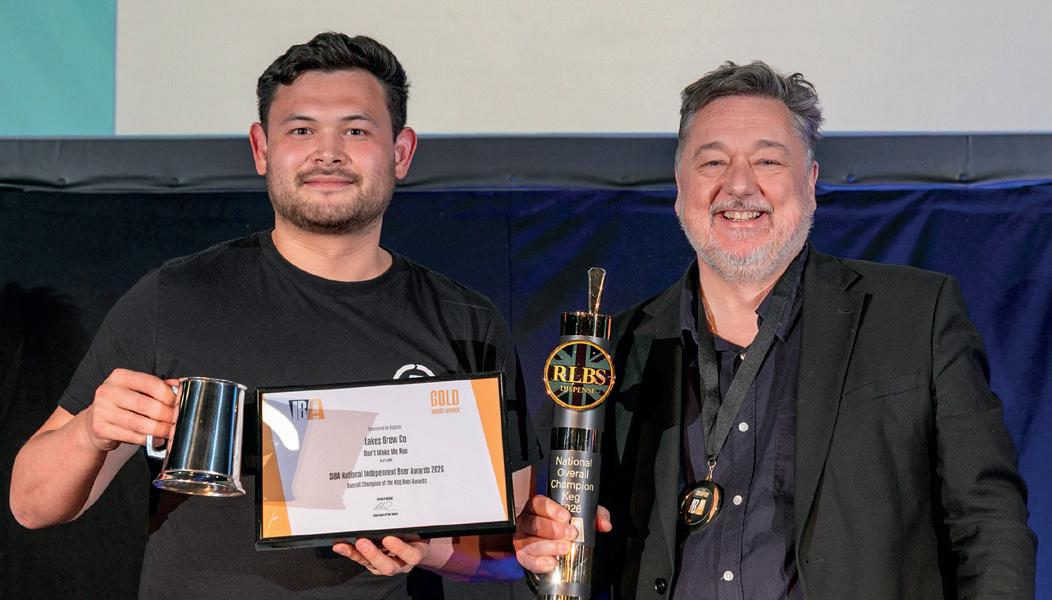
Overall Champion of the Keg Competition
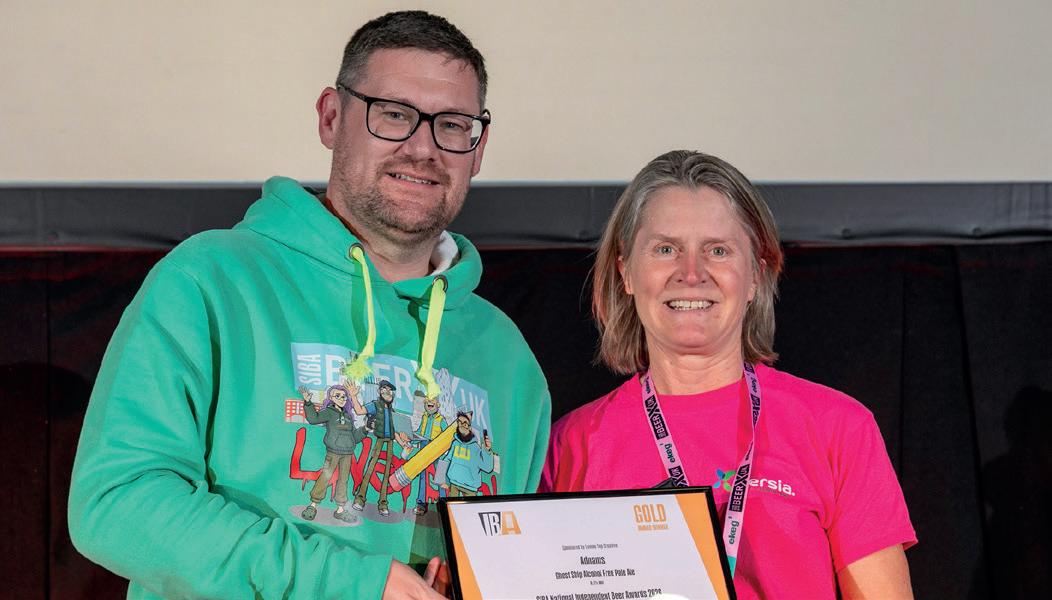
Keg Non-Alcoholic & Low ABV
Sponsored by:
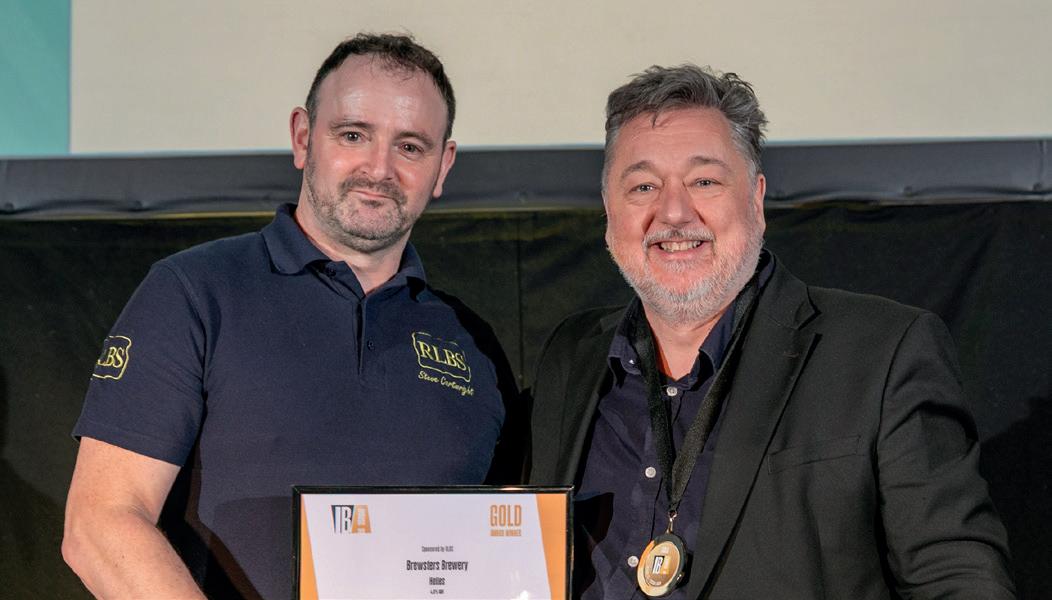
Keg Session Lager
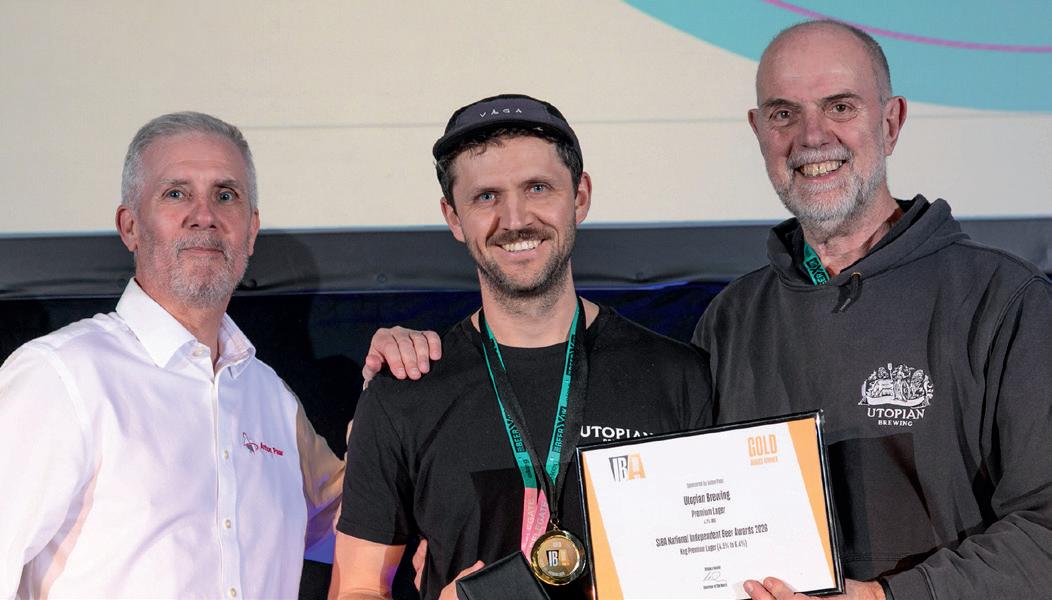
Keg Premium Lager
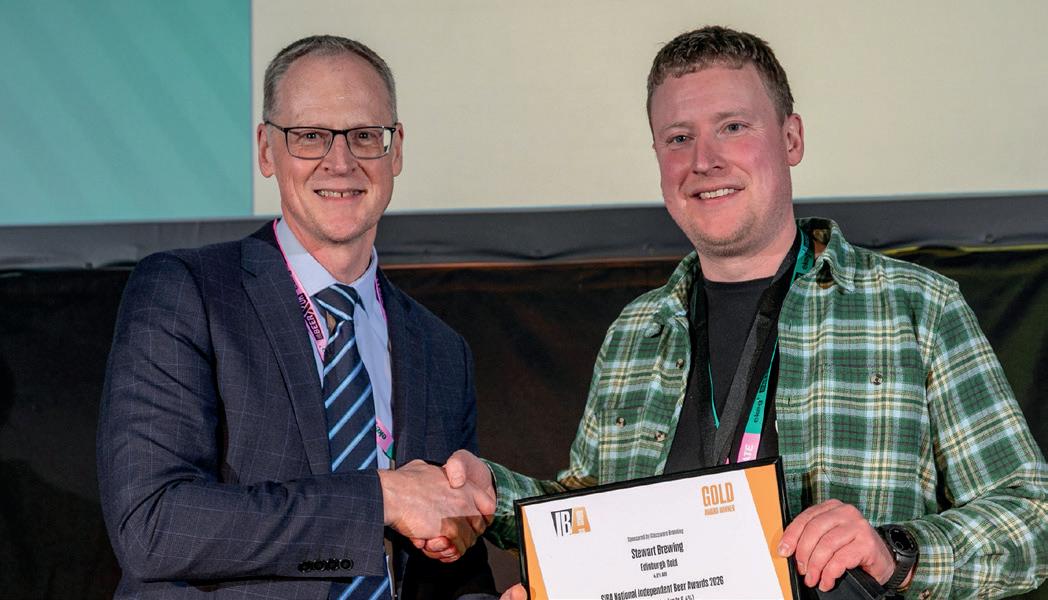
Keg British Ales
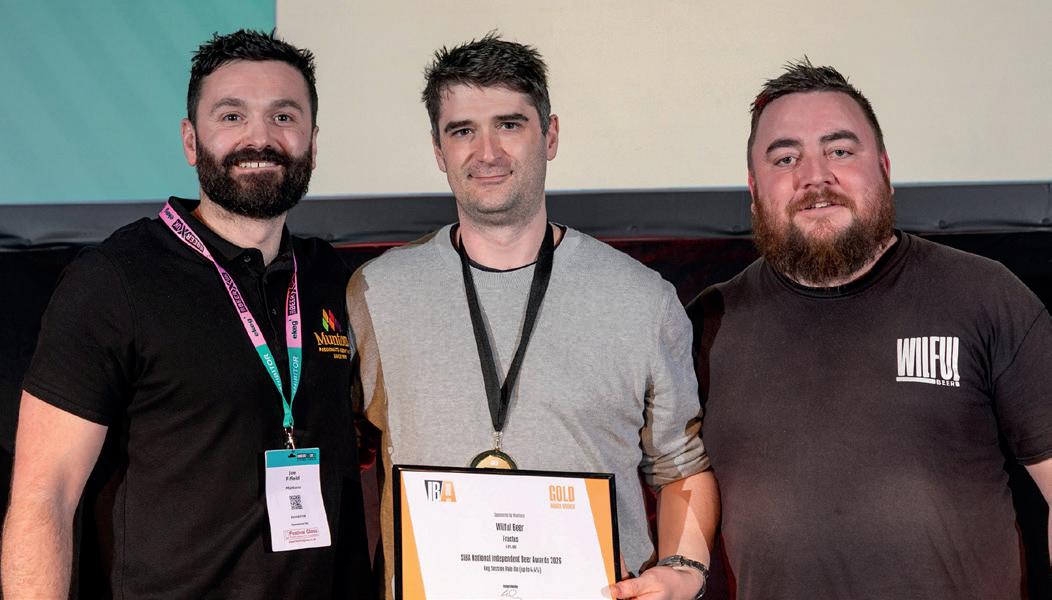
Keg Session Pale Ale
Sponsored by: Muntons G
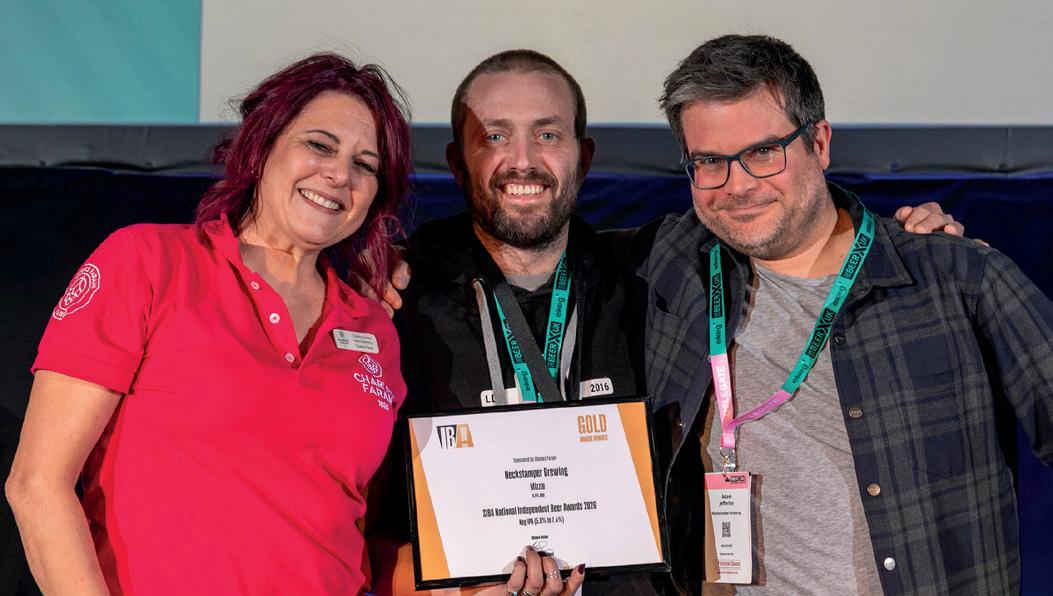
Keg IPA
Sponsored by: Charles Faram
G GOLD: Neckstamper Brewing Mizzle 6.0% S SILVER: Loch Lomond Brewery Out of Range 5.9%
BRONZE: Big Trip WTAF 6.4%
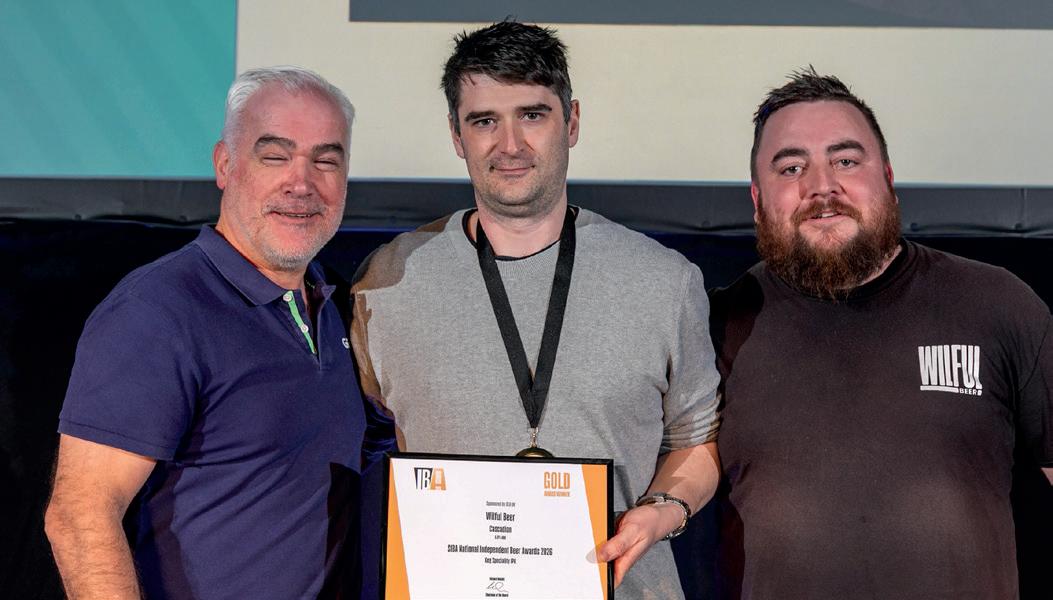
Keg Speciality
IPA
Sponsored by: GEA UK G
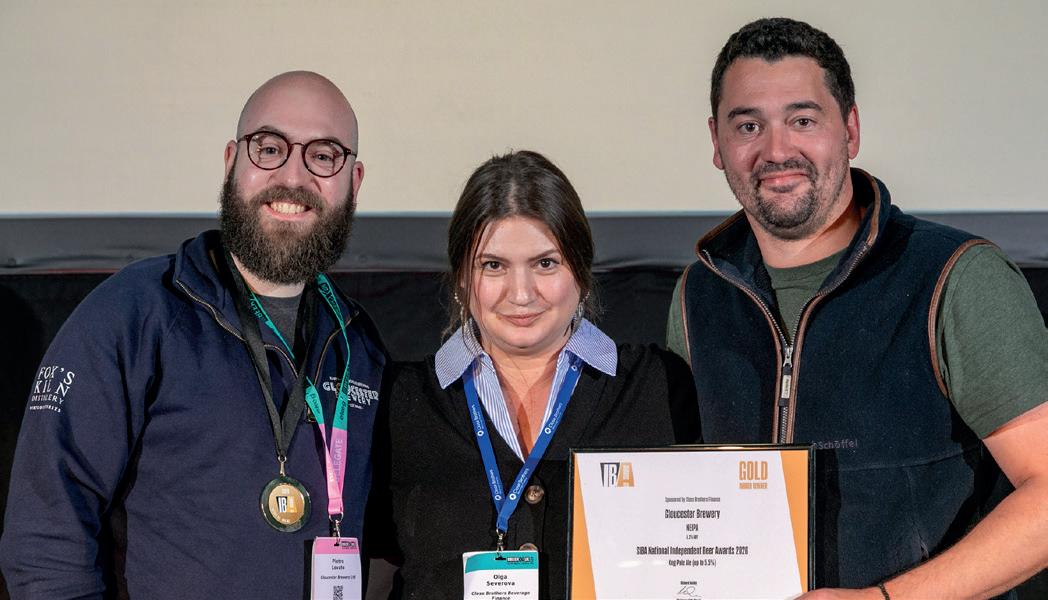
Keg Pale Ale
Sponsored by: Close Brothers Finance G GOLD: Gloucester Brewery NEIPA 5.2%
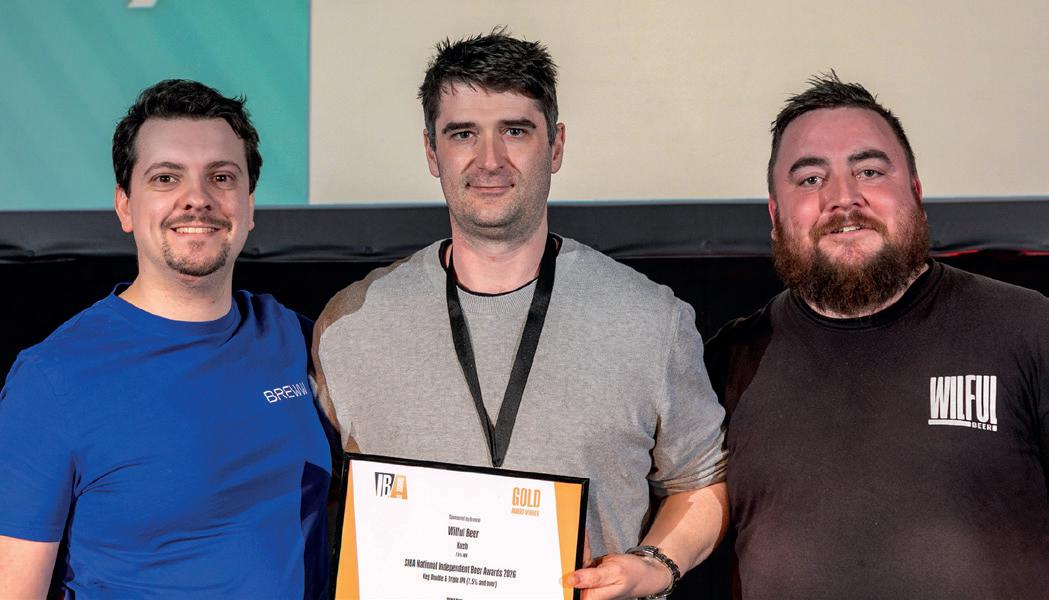
Keg Double & Triple IPA
Sponsored by: Breww
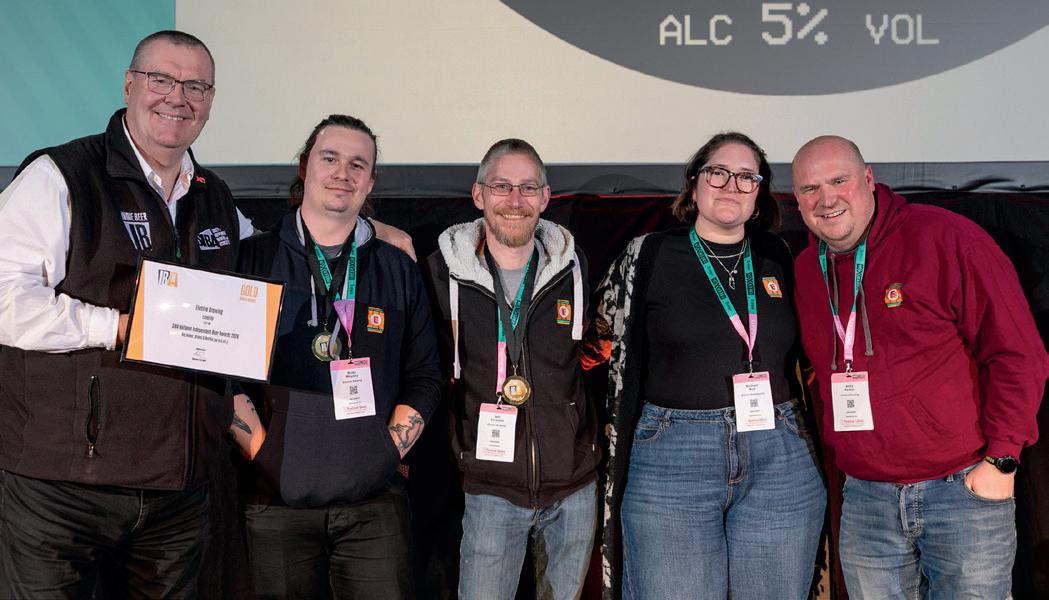
Keg Amber, Brown & Red Ale
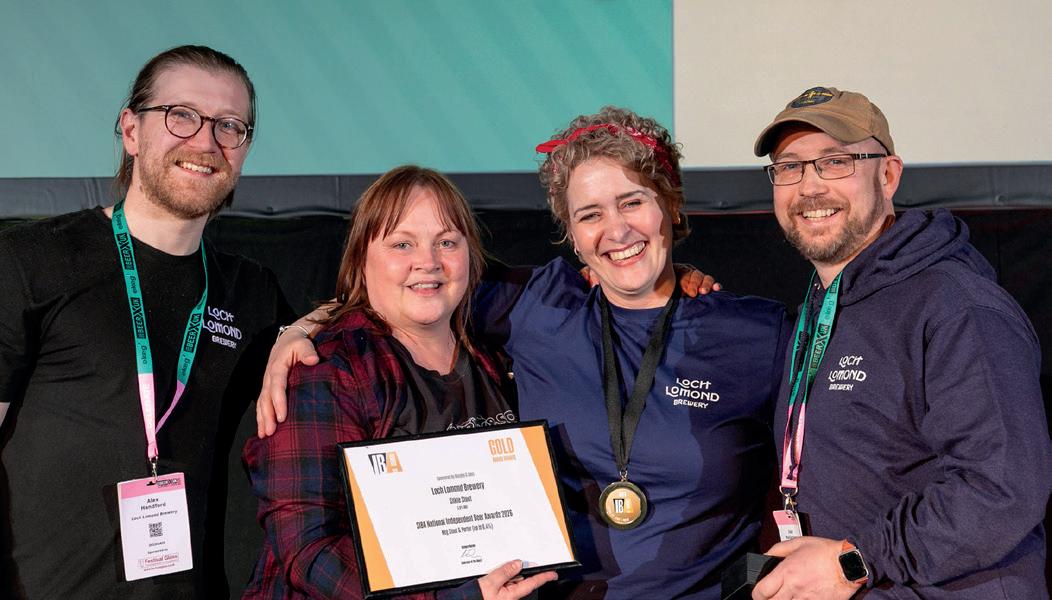
Keg Stout & Porter
Sponsored by: Murphy & Sons G
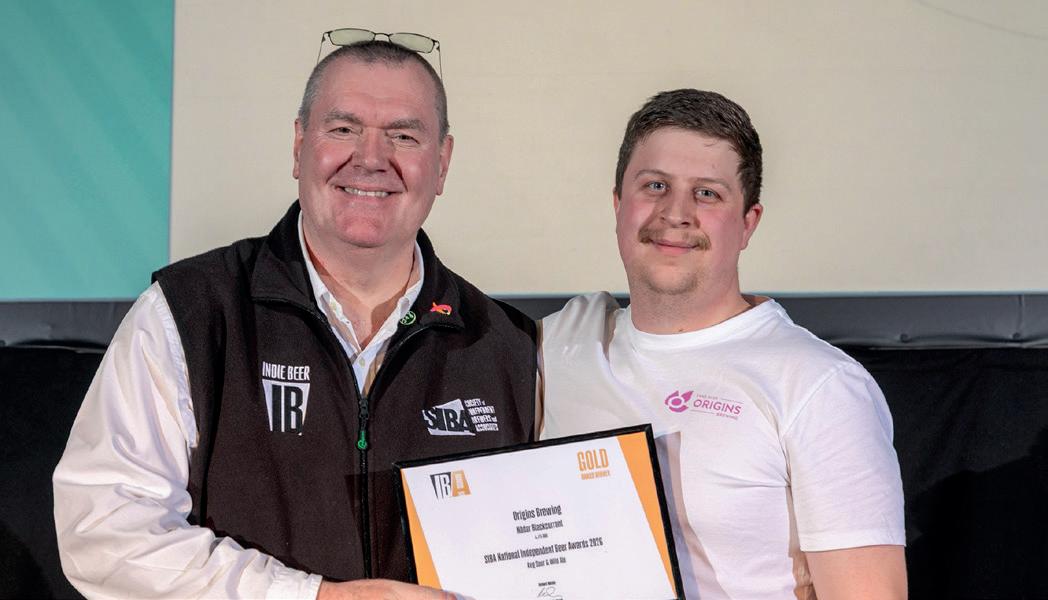
Keg Sour & Wild Ale
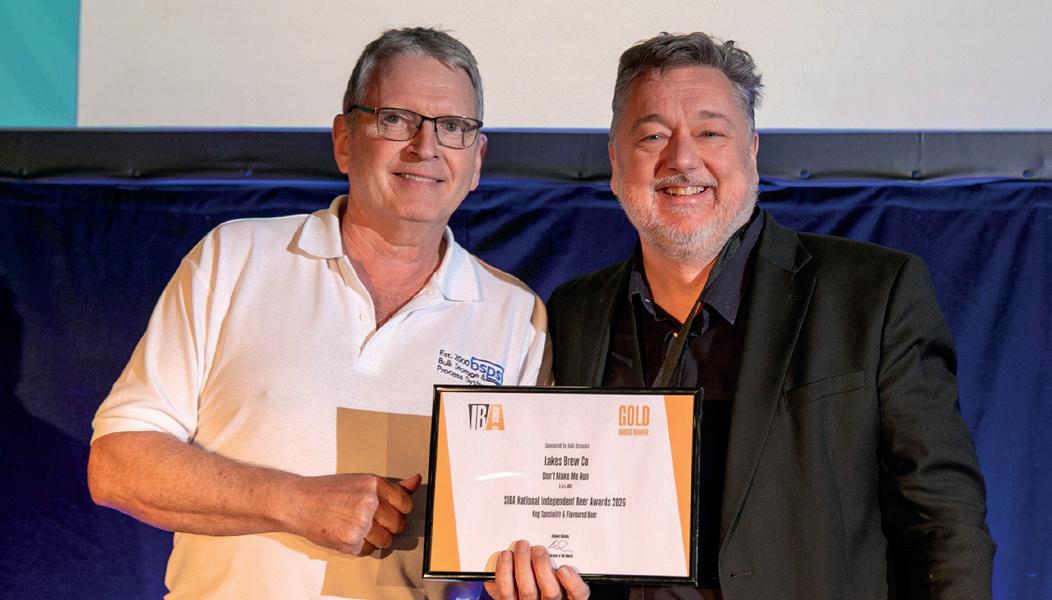
Keg Speciality & Flavoured Beer
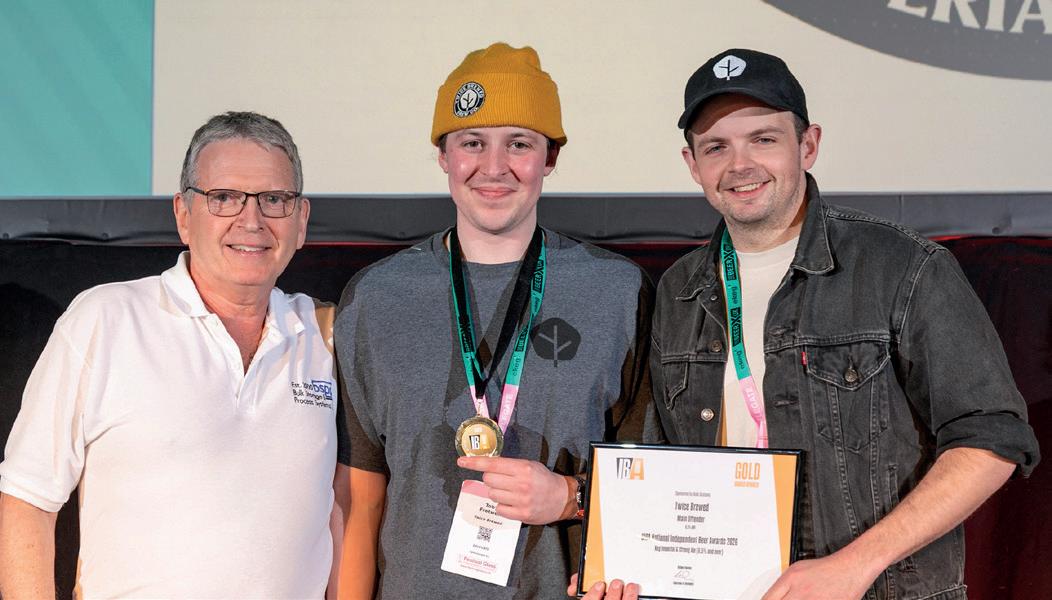
Keg Imperial & Strong Ale
Sponsored
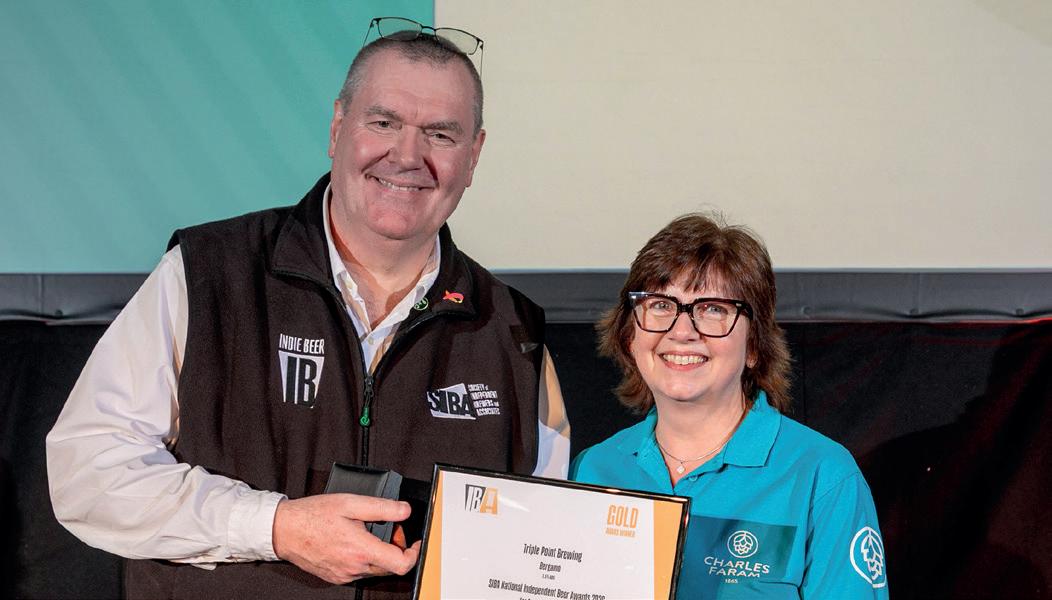
Keg Continental Style Beer
South West Indie Beer Awards 2026 - Cask

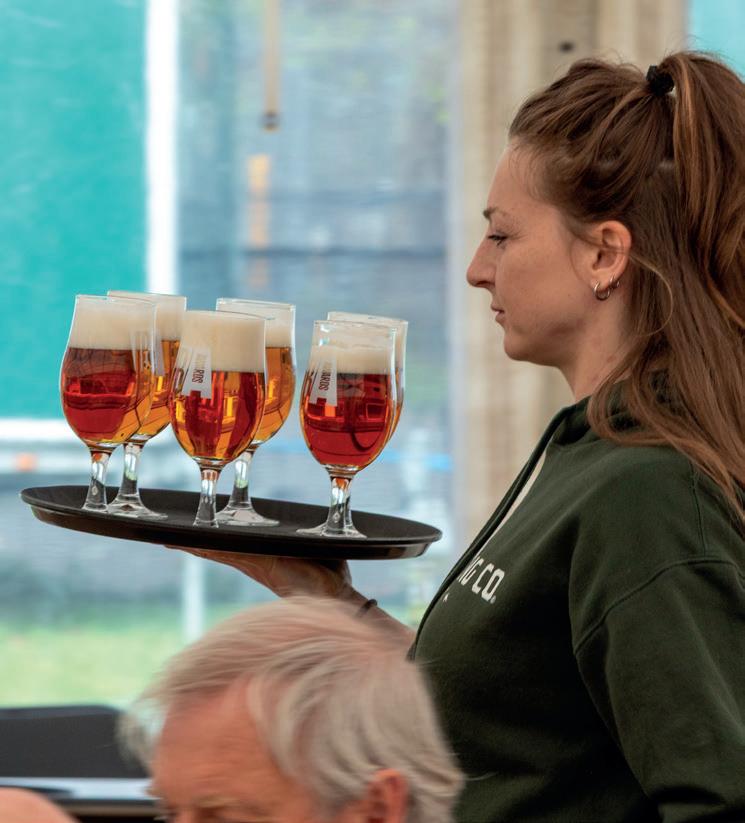
Overall Champion of the Cask Beer Competition
G GOLD: Copperhead Ales Black Flamingo 8.2%
S SILVER: Copperhead Ales Copperhead 4.6%
B BRONZE: The Twisted Brewing Company Ltd Urban Legend 4.3%
Cask Session Pale Ale (up to 4.4%)
Sponsored by: Rankin Brothers & Sons
G OVERALL CHAMPION - GOLD: The Twisted Brewing Company Ltd Urban Legend 4.3%
S SILVER: Exeter Brewery Avocet (Devon’s Original Organic Ale) 3.9%
B BRONZE: Tintagel Brewery Sir Lancelot 4.2%
Cask British Bitter (up to 4.4%) Sponsored by: UB Plastics
G OVERALL CHAMPION - GOLD: Bridgetown Brewery Albert Ale 3.8%
S SILVER: Cheddar Ales Potholer 4.3%
S SILVER: Hanlons Brewery Malthouse Amber 4.0%
B BRONZE: Otter Brewery AMBER 4.0%
B BRONZE: Ramsbury Deerstalker 4.0%
B BRONZE: Hop Union Brewery Maiden Voyage 4.0%
Cask British Dark Beers (4.5 to 6.4%)
Sponsored by: UB Plastics
G OVERALL CHAMPION - GOLD: TQ Beerworks TA Wilful Beer Abyssus 5.2%
S SILVER: Driftwood Spars Brewey Dry Irish Stout 5.0%
S SILVER: Bridgetown Brewery Shark Island Stout 4.5%
B BRONZE: Tintagel Brewery Caliburn 5.8%
B BRONZE: Otter Brewery HEAD 5.8%
Cask British Best Bitter (4.5 to 6.4%)
Sponsored by: Crisp Malt
G OVERALL CHAMPION - GOLD: Copperhead Ales Copperhead 4.6%
S SILVER: Utopian Brewing Limited Best Bitter 4.6%
B BRONZE: Teignmouth Brewery Seine Ale 5.5%
B BRONZE: Tintagel Brewery Harbour Special 4.8%
B BRONZE: Otter Brewery ALE 4.5%
B BRONZE: Hop Back Brewery Summer Lightning 5.0%
Cask Pale Ales (4.4 to 5.5%) Sponsored by: Rankin Brothers & Sons
G OVERALL CHAMPION - GOLD: Hop Union Brewery Moose River 5.0%
G GOLD: Eight Arch Brewing Co Corbel 5.5%
S SILVER: Driftwood Spars Brewery Stippy Stappy 5.5%
B BRONZE: Stone Daisy Brewery Park Bottom 4.5%
B BRONZE: Tintagel Brewery Pendragon 4.5%
B BRONZE: Stonehenge Ales Danish Dynamite 5.0%
Cask IPA (5.6% and over)
Sponsored by: Rankin Brothers & Sons
G OVERALL CHAMPION - GOLD: St Austell Brewery Big Job 7.2%
S SILVER: TQ Beerworks TA Wilful Beer RetrIBUtion 6.5%
B BRONZE: Cheddar Ales Goats Leap 5.6%
B BRONZE: Teignmouth Brewery Indie 6.0%
Cask Session Dark Beers (up to 4.4%)
Sponsored by: UB Plastics
G OVERALL CHAMPION - GOLD: The Twisted Brewing Company Ltd Heritage 3.4%
S SILVER: Kettlesmith Brewing Company Outline 3.8%
B BRONZE: Bridgetown Brewery Brutus Mild 3.3%
B BRONZE: Teignmouth Brewery Penny Black 3.5%
B BRONZE: Glastonbury Brewing Co. Black As Yer At 4.3%
B BRONZE: Copperhead Ales Smoove 3.9%
Cask Imperial and Strong (6.5% and over)
G OVERALL CHAMPION - GOLD: Copperhead Ales Black Flamingo 8.2%
S SILVER: TQ Beerworks TA Wilful Beer Umbra 7.2%
S SILVER: Exeter Brewery EXB 7.5%
S SILVER: Moor Beer Company Limited Old Freddy Walker 7.3%
S SILVER: Branscombe Vale Brewery Norman’s Olde Ruby Ale 7.3%
B BRONZE: Teignmouth Brewery The Larry 6.5%
Cask Speciality Amber to Dark Beer
Sponsored by: UB Plastics
G OVERALL CHAMPION - GOLD: Teignmouth Brewery 1846 6.2%
S SILVER: The Twisted Brewing Company Ltd Finnegan’s No.1 4.4%
B BRONZE: Twisted Oak Brewery Ghost Town 5.7%
B BRONZE: New Bristol Brewery Espresso Martini Cinder Toffee Stout 4.8%
B BRONZE: Summerskills Brewery Urban Brew 4.1%
South West Indie Beer Awards 2026 - Keg
Overall Champion of the Keg Beer Competition
G GOLD: Powderkeg Paint The Town Red 6.4%
S SILVER: Apex Brewing Co. Flagman 4.5%
B BRONZE: Electric Bear Brewing Co Unruly AF 0.5%
Keg Session Pale Ale (up to 4.4%)
G OVERALL CHAMPION - GOLD: TQ Beerworks TA Wilful Beer Fructus 4.0%
S SILVER: Electric Bear Brewing Co Werrrd! 4.2%
S SILVER: Powderkeg Hops & Dreams 3.4%
Keg Pale Ale (4.5% - 5.5%)
G OVERALL CHAMPION - GOLD: TQ Beerworks TA Wilful Beer Tacoma 5.2%
S SILVER: Driftwood Spars Brewey Dune 5.5%
B BRONZE: Electric Bear Brewing Co Tondo 5.0%
B BRONZE: South Hams Brewery Start bay pale ale 4.5%
B BRONZE: Otter Brewery Otter Pale Ale 4.5%
Keg Premium Lager (4.5% to 6.4%) Sponsored by: UB Plastics
G OVERALL CHAMPION - GOLD: Apex Brewing Co. Flagman 4.5%
S SILVER: Otter Brewery Tarka 4.8%
S SILVER: Ramsbury Red Kite 4.6%
Keg IPA (5.6% to 7.4%) Sponsored by: UB Plastics
G OVERALL CHAMPION - GOLD: TQ Beerworks TA Wilful Beer RetrIBUtion 6.5%
S SILVER: Somer Valley Brewing Cluck 6.0%
B BRONZE: St.Ives Brewery Whistling in the dark 6.5%
B BRONZE: Salcombe Brewery Co Tap House Hazy 6.0%
B BRONZE: Hop Union Brewery Hop Fiction 6.0%
Keg Session Lager (up to 4.4%)
G OVERALL CHAMPION - GOLD: Utopian Brewing Limited Bohemian Lager 4.2%
G GOLD: Powderkeg Harmony 4.2%
S SILVER: Firebrand Brewing Helles Beach 4.4%
S SILVER: Salcombe Brewery Co Breeze 4.0%
S SILVER: Otter Brewery Tarka 4 4.0%
B BRONZE: Hop Union Brewery Chill Bill 4.3%
B BRONZE: Moor Beer Company Limited Lager 4.0%
B BRONZE: Copperhead Ales Crucial Pils 4.0%
B BRONZE: Keltek Cornish Brewery Wavebreaker 4.0%
B BRONZE: Arkell’s Brewery Ltd Legacy Lager 3.4%
B BRONZE: Yonder Helles 4.0%
Keg Alcohol Free Beer
Sponsored by: Murphy & Son
G OVERALL CHAMPION - GOLD: Electric Bear Brewing Co Unruly AF 0.5%
S SILVER: Utopian Brewing Limited AF Pilsner 0.5%
B BRONZE: Powderkeg Green Light 0.5%
B BRONZE: Firebrand Brewing Shorebreak AF Pale Ale 0.5%
Keg Stout & Porter (6.4% and under)
Sponsored by: UB Plastics
G OVERALL CHAMPION - GOLD: Many Hands Brew Co Shadow Puppets 4.5%
S SILVER: Driftwood Spars Brewery Midnight Skinny Dipper 6.0%
S SILVER: Electric Bear Brewing Co Inspector Remorse 4.7%
S SILVER: Hop Back Brewery Entire Stout 4.5%
S SILVER: Lyme Regis Brewery Black Ven 5.0%
B BRONZE: Moor Beer Company Limited Stout 5.0%
B BRONZE: St Austell Brewery Mena Dhu 4.5%
B BRONZE: TQ Beerworks TA Wilful Beer Abyssus 5.2%
Keg Amber, Brown & Red Ale (up to 6.4%)
Sponsored by: UB Plastics
G OVERALL CHAMPION - GOLD: Powderkeg Paint The Town Red 6.4%
S SILVER: TQ Beerworks TA Wilful Beer Muckleshoot 5.4%
Keg British Ales (up to 6.4%)
G OVERALL CHAMPION - GOLD: TQ Beerworks TA Wilful Beer WSB 5.9%
B BRONZE: Powderkeg Is it, Or No? 6.0%
Keg Belgian & Continental Style Beer
G OVERALL CHAMPION - GOLD: Powderkeg Mic Drop 8.4%
S SILVER: TQ Beerworks TA Wilful Beer Polotmavé Pivo 5.0%
B BRONZE: Cheddar Ales Schwarze Schlucht (Black Gorge) 4.9%
Keg Imperial & Strong Ale (6.5% and over)
G OVERALL CHAMPION - GOLD: Powderkeg Brumation 10.0%
G GOLD: Utopian Brewing Limited Rainbock 7.0%
B BRONZE: TQ Beerworks TA Wilful Beer Umbra 7.2%
Keg Double & Triple IPA (7.5% and over)
G OVERALL CHAMPION - GOLD: New Bristol Brewery King Of The Sesh 7.8% G GOLD: TQ Beerworks TA Wilful Beer Kush 7.5%
B BRONZE: St.Ives Brewery KNILL 7.5%
Keg Speciality & Flavoured Beer
G OVERALL CHAMPION - GOLD: Yonder Aura 4.5%
S SILVER: Cheddar Ales Velvet Abyss 9.2%
B BRONZE: Powderkeg Remember The Pig 6.0%
Keg Speciality IPA
G OVERALL CHAMPION - GOLD: TQ Beerworks TA Wilful Beer Cascadian 5.2%
B BRONZE: Apex Brewing Co. Rev Head 4.5%
B BRONZE: Hop Union Brewery Bloody Nora 4.7%
North East Indie Beer Awards 2026 - Keg
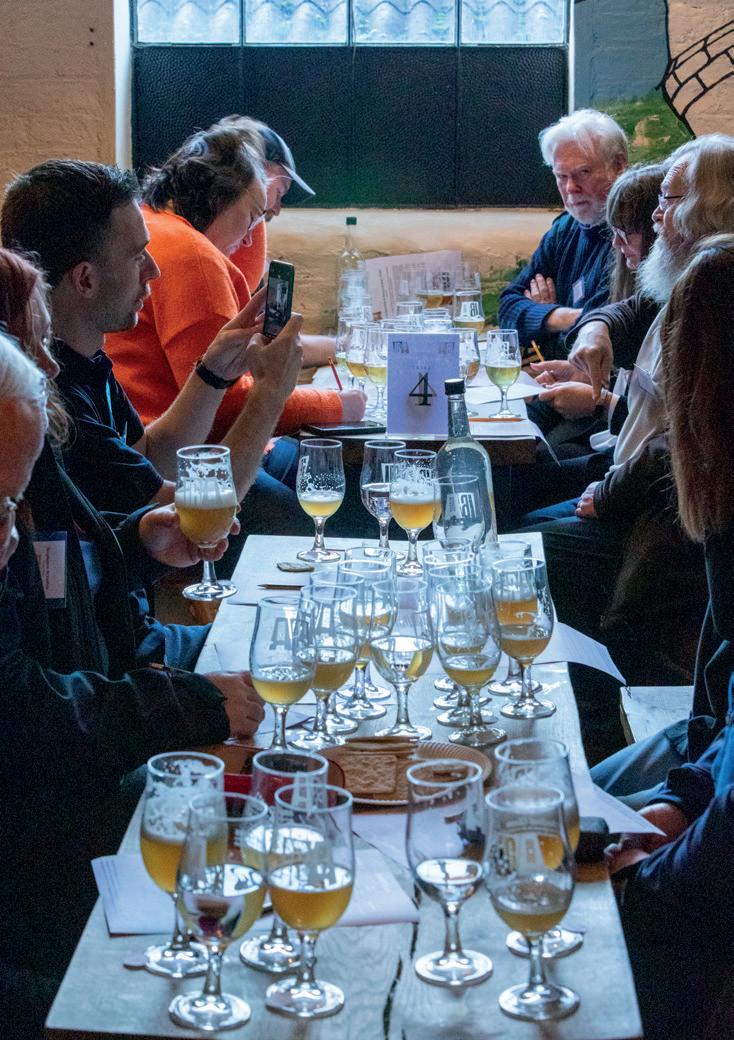
Keg Premium Lager (4.5% to 6.4%)
Sponsored by: UB Plastics
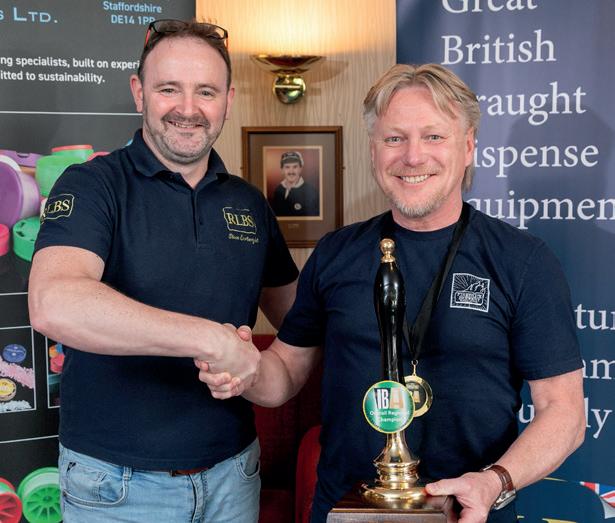
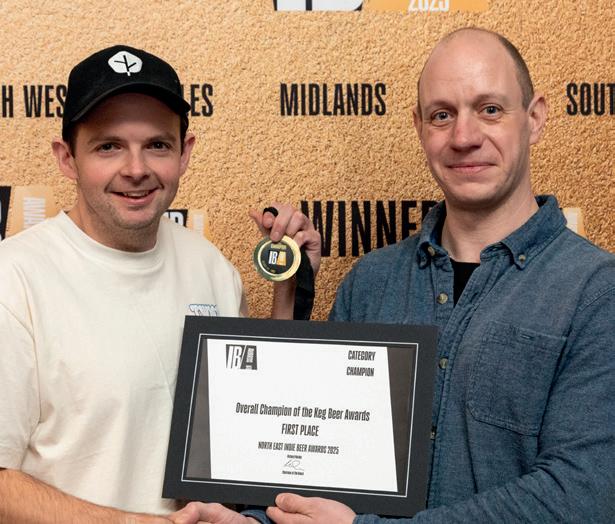
G GOLD: Twice Brewed Dandelion & Burdock 5.0%
S SILVER: Triple Point Brewing Bergamo 6.5%
B BRONZE: Firebrick Brewery Toon Broon 4.7%
Keg Non-Alcoholic & Low ABV
G
S
S
G GOLD CATEGORY CHAMPION: Twice Brewed Nectaronicon 6.0%
S SILVER: Rooster’s Brewing Co. Baby-Faced Assassin 6.1%
B BRONZE: Wold Top Brewery Scarborough Fair IPA 6.0%
G GOLD CATEGORY CHAMPION: Elvington Brewery Mittel Pils 4.7%
S SILVER: Allendale Brewery Adder 5.0%
B BRONZE: Brew York Golden Eagle 4.5%
Keg Pale Ale (4.5% - 5.5%)
G GOLD CATEGORY CHAMPION: Triple Point Brewing Kakapo 4.8%
S SILVER: Firebrick Brewery Propa Belta 4.6%
B BRONZE: Amity Brew Co Waterpistol 4.6%
Keg Amber, Brown & Red Ale (up to 6.4%)
G GOLD CATEGORY CHAMPION: Firebrick Brewery Toon Broon 4.7% S SILVER: Trig Brewery Rover 5.3%
Keg Stout & Porter (6.4%
North East Indie Beer Awards 2026 - Cask
Overall Champion of the Cask Beer Competition
Sponsored by: RLBS
G GOLD: Firebrick Brewery Propa Belta 4.6%
S SILVER: Abbeydale Brewery Ltd Deception 4.1%
B BRONZE: Twice Brewed Steel Rigg 4.9%
Cask IPA (5.6% and over)
Sponsored by: Crisp Malt
G GOLD CATEGORY CHAMPION:
Abbeydale Brewery Ltd Black Mass 6.7%
G GOLD: Rooster's Brewing Co.
Baby-Faced Assassin 6.1%
S SILVER: Wold Top Brewery Scarborough Fair IPA 5.6%
S SILVER: Twice Brewed Nectaronicon 6.0%
B BRONZE: Firebrick Brewery Baffled 6.4%
Cask British Best Bitter (4.5 to 6.4%)
Sponsored by: Crisp Malt
G GOLD CATEGORY CHAMPION:
Firebrick Brewery Toon Broon 4.6%
S SILVER: Alnwick Brewery Alnwick IPA 4.5%
B BRONZE: Harrogate Brewing Co Harrogate Best 4.5%
B BRONZE: Hadrian Border brewery Northumbrian gold 4.5%
Cask British Dark Beers (4.5 to 6.4%)
G GOLD CATEGORY CHAMPION:
Twice Brewed Steel Rigg 4.9%
S SILVER: Firebrick Brewery Cushy Butterfield 5.2%
S SILVER: Hadrian Border brewery
Ouseburn Porter 5.2%
S SILVER: Hambleton Brewery Nightmare Porter 5.0%
S SILVER: Acorn Brewery of Barnsley LTD Gorlovka Stout 6.0%
B BRONZE: Trig Brewery Mountain Lights 4.9%
B BRONZE: Goose Eye Brewery
Over & Stout 5.2%
B BRONZE: Daleside Brewery
Monkey Wrench 5.3%
Cask Pale Ales (4.4 to 5.5%)
G GOLD CATEGORY CHAMPION: Firebrick Brewery Propa Belta 4.6%
S SILVER: Triple Point Brewing DEBUT 5.5%
S SILVER: Abbeydale Brewery Ltd Absolution 5.3%
B BRONZE: Brass Castle Brewery Headliner 4.8%
B BRONZE: Great Newsome Brewery/ Little Valley Brewery Tod's Blonde 5.0%
B BRONZE: Alnwick Brewery NEIPA 5.0%
B BRONZE: Twice Brewed Vindolanda 5.5%
Cask Speciality Amber to Dark Beer
G GOLD CATEGORY CHAMPION: Thirsty Moose Brewing co. Canny Canuck 4.5%
S SILVER: Metalhead Brewery Plum Porter 5.0%
S SILVER: Brew York Tonkoko 4.3%
B BRONZE: Acorn Brewery of Barnsley LTD Black Cherry Porter 4.5%
B BRONZE: Chin Chin Brewing Co Ltd Cow Whisperer 6.0%
B BRONZE: Rudgate Brewery York Chocolate Stout 5.0%
Cask Imperial & Strong Beer
S SILVER: Twice Brewed Main Offender 8.5%
S SILVER: Wensleydale Brewery Do Not Press 6.5%
Cask British Bitter (up to 4.4%) Sponsored by: UB Plastics
G GOLD CATEGORY CHAMPION: Triple Point Brewing GOLD 4.0%
S SILVER: Camerons Brewery Strongarm 4.0%
S SILVER: Great Newsome Brewery Frothingham Bes 4.3%
S SILVER: Pennine Brewing Scapegoat 4.2%
S SILVER: Full Circle Brewing Best Bitter 4.2%
S SILVER: Rudgate Brewery Battleaxe 4.2%
S SILVER: Brass Castle Brewery Best 3.9%
S SILVER: Daleside Brewery Bitter 3.7%
B BRONZE: Little Mesters Brewing Mesters Royds Bitter 3.8%
B BRONZE: Rooster's Brewing Co. Yorkshire's Best 3.8%
B BRONZE: Thirsty Moose Brewing co. Once Upon a Tyne 3.8%
B BRONZE: Acorn Brewery of Barnsley LTD Barnsley Bitter 3.8%
B BRONZE: First & Last Brewery Reiver 4.2%
B BRONZE: Goose Eye Brewery Goose Eye Bitter 3.9%
B BRONZE: Hadrian Border brewery As you were 4.2%
B BRONZE: Hambleton Brewery
Stallion 4.2%
B BRONZE: North Pier Brew Co.
Northern Best 4.4%
B BRONZE: Wold Top Brewery
Wold Top Bitter 3.7%
B BRONZE: Abbeydale Brewery Ltd Daily Bread 3.8%
Cask Session Pale Ale (up to 4.4%) Sponsored by: Rankin Brothers & Sons
G GOLD CATEGORY CHAMPION: Abbeydale Brewery Ltd Deception 4.1%
G GOLD: Great Newsome Brewery Sleck Dust 3.8%
S SILVER: Rooster's Brewing Co. Easy-Going Assassin 4.3%
S SILVER: Full Circle Brewing Pale 3.6%
S SILVER: Hambleton Brewery Thoroughbred Session IPA 4.0%
S SILVER: First & Last Brewery North Star 3.4%
B BRONZE: Hadrian Border brewery
Northern Pale 4.1%
B BRONZE: Daleside Brewery
Blonde 3.9%
B BRONZE: Acorn Brewery of Barnsley LTD Yorkshire Pride 3.7%
B BRONZE: Brass Castle Brewery
Quench 3.8%
Cask Session Dark Beers (up to 4.4%)
Sponsored by: UB Plastics
G GOLD CATEGORY CHAMPION: Brass Castle Brewery Black Mill 4.0%
S SILVER: Rudgate Brewery Ruby Mild 4.4%
S SILVER: First & Last Brewery Red Rowan 4.0%
S SILVER: Rooster's Brewing Co. Scoundrel 4.2%
B BRONZE: Three Brothers Brewing Company Cherry Chocolate Milk Stout 4.4%
B BRONZE: Harrogate Brewing Co Nidd Mild 3.7%
Sponsored by: Rankin Brothers & Sons
Attic unveils bold new branding
Attic marked the start of 2026 with a bold refresh of its branding, putting customer experience first and proudly representing the brewery’s Birmingham roots.
Born in South Birmingham in 2018 and built on hard graft, creativity and community, what started in an attic has grown into the largest independent brewery in the West Midlands, whilst remaining 100% owner-operated, self-funded and grounded.
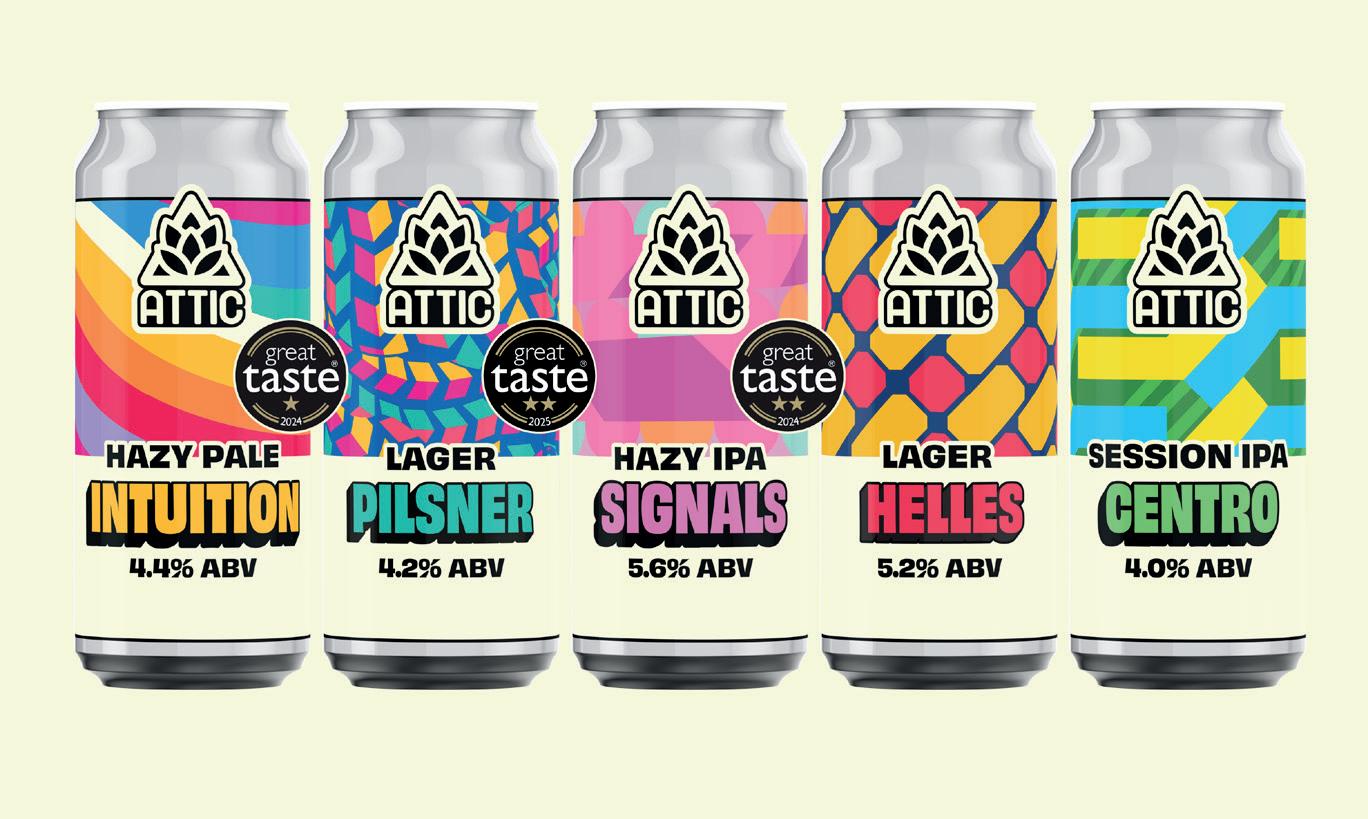
With the goal of becoming the Midland’s best-loved brewery, Attic has ambitious plans for 2026. Whilst the brewery has long been known by Brummies for its easy drinking beers, community taproom and colourful branding, the refreshed look will help make the range more accessible to new consumers.
“We’ve always made beer for everyone to enjoy,” says Sam Back, one of Attic’s founders, “and part of that is making sure our branding and artwork is approachable enough for anyone to feel comfortable to give it a go. We know that once drinkers try the beer, they’ll come back for another.”
Renowned marketing agency WAA Chosen have produced an evolution of the pattern-heavy, colourful branding that has been the cornerstone of
Powderkeg expands contract brewing operation
Devon brewery Powderkeg has expanded its contract brewing service, adding new capacity and enhanced services for start-up and established brewers.
The newly-christened ‘Zymoko Brewing’ is SALSA-Plus Beeraccredited and now offers a total of 40,000L fermentation capacity alongside in-house canning and kegging.
Powderkeg has been successfully contract brewing ever since it first opened its doors in 2014, producing beers for numerous brands alongside its own range. 2025 saw demand outstrip supply and now more space has been made available for the service.
Zymoko will also enhance its new product development service which has already nurtured numerous start-up brewing businesses from initial concept through to commercial and critical success.
To date, the service has partnered with brewing businesses of all shapes and sizes: traditional regional breweries modernising their range; ghost brewers that need a regular, reliable supplier with dedicated volumes; and hospitality groups and farm shops requiring own-brand products.
Attic’s brand for several years. The result maintains a playful look, whilst simplifying the messaging, improving consistency across the range and showcasing artwork that is much more compelling for consumers.
2026 promises to be the most exciting year in Attic’s history, with wellplaced investment expected to lead to significant growth in both the onand off-trade and exciting developments to be announced that will help ensure the long-term security and continued success of the business.
“It’s a tough time for the industry at the moment,” says Oli Hurlow, the brewery’s other founder, “so our ability to continue to grow, diversify and secure our long term future is something for us all to be incredibly proud of. A bold new look is just the start.”
Find out more at www.atticbrewco.com
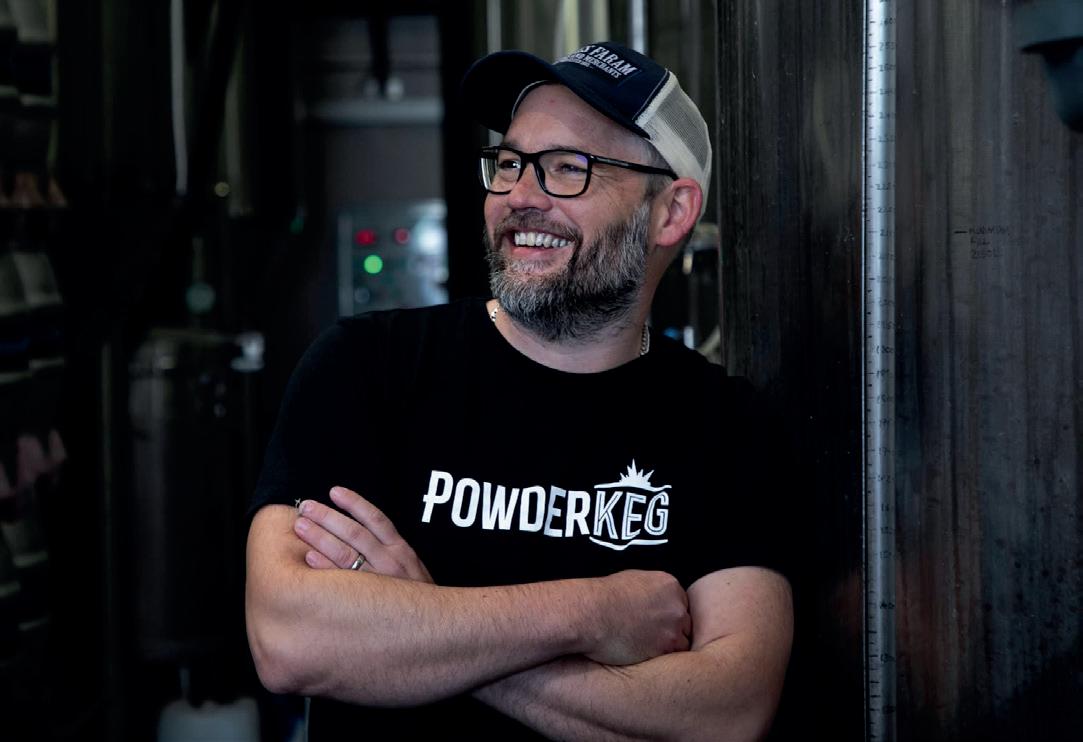
Powderkeg MD John Magill said: “Zymoko is named for the science of fermentation, but we know that brewing is also an art. No two businesses’ requirements are ever the same and we always look to reflect our customers’ specific needs and tastes. We offer flexibility, open-mindedness and creative solutions. Every brew is seen as a collaboration and your success is our success.”
With fresh capacity now available, the brewery is currently open to new enquiries. Whether you’re new to the industry, or established and looking to increase production, if you need help developing a new product or are seeking consistent, quality supply of an existing beer, Zymoko has the expertise you’re after.
Find out more at www.zymoko.co.uk
Stroud Brewery champions the power of purpose-driven business for B Corp Month
To celebrate B Corp Month in March, Stroud Brewery founder Greg Pilley issued a challenge to the brewing community: stop choosing between ethics and the balance sheet.
He argues that "business as usual" is a relic of the past, and the experience of the brewery, and the other 2,700+ B Corporations in the UK, proves that aligning people and the planet alongside profit unlocks a competitive edge, drives customer loyalty, attracts top-tier talent, and opens doors to new commercial opportunities that traditional models miss.
B Corp Month runs throughout March and is a global celebration of companies that have adopted the tough standards of social and environmental performance, transparency, and accountability needed to achieve B Corporation certification. The movement is exploding: there are now more than 10,300 B Corps across 103 countries globally, with the UK hosting the greatest concentration with over 2,700 certified businesses employing more than 200,000 people.
Other brewers that have joined the ranks include Tiny Rebel, Small Beer, Toast Ale and Days Brewing.
Stroud Brewery isn’t just talking about the concept; it is the perfect example of the concept in action. By injecting £714,500 into the local economy during 2024-25 alone, employing local people, and operating as a near net-zero enterprise – amongst a whole host of other impressive positive activities - the brewery shows that high ethical standards are not a luxury for the few, but give a huge competitive advantage for the companies bold enough to embrace the change.
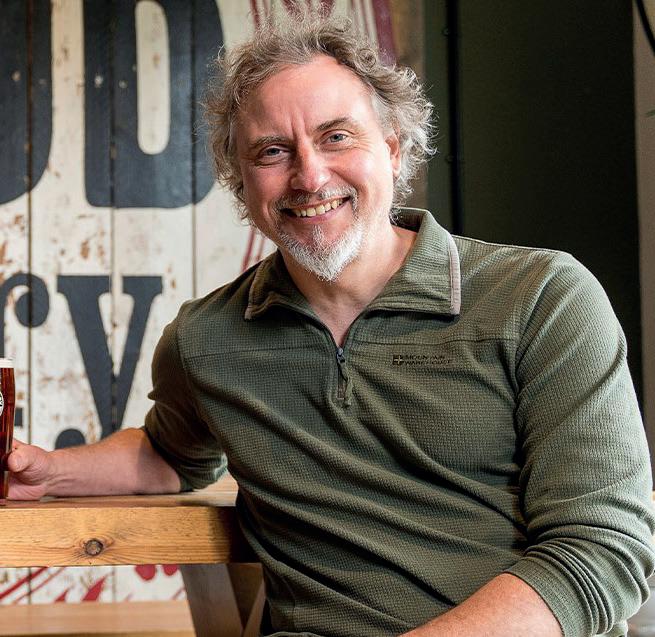
“I’m immensely proud of what Stroud Brewery has achieved,” said Greg. “Since our early days, using our business as a force for good has sat alongside brewing great-tasting beer. Our experience proves it is possible for business to be a win-win for everyone. It doesn’t have to be simply about making a profit regardless of the negative effect on society.”
While many traditional business models focus purely on finances, B Corporations take a "triple bottom line" view: considering the effects of their decision-making and activities on profit, people, and the planet.
Find out more at www.stroudbrewery.com
An exciting new chapter for 8 Sail Brewery
One of Lincolnshire’s ongoing brewery successes, 8 Sail Brewery, named after the eight-sailed windmill which is sits beside, has been purchased by a taproom regular.
Edward Quigley completed on the purchase of the iconic microbrewery, located within the Heckington Windmill heritage site (just east of Sleaford), from founder Tony Pygott in March, in a deal that will see the retention of jobs, a much-loved community asset for over 15 years and the continued supply of award-winning beers to pubs and venues across the county and beyond.
“The brewery has gone from strength to strength over the years, and has earned a reputation for good quality beers,” said founder and outgoing owner Tony Pygott.
“There is still a strong demand for well-crafted British real ale, which the team at 8 Sail Brewery does extremely well. It's satisfying to know that the future has been secured so that the brewery can continue to supply the discerning drinkers of Lincolnshire and beyond for many years yet.”
Making the taproom a regular haunt since his move to the village earned it a place in new owner Edward’s heart, and unbeknownst to him at the time, also served as time well spent in preparing him to take the reins.
“I am very proud to complete the purchase of the brewery from Tony,” said Edward. “Like many of the other regulars, my heart sank when I learnt that Tony was looking to sell the business. The thought of losing the taproom, or that someone who doesn’t know the business might come in and undo what Tony and the team created, filled me and many others with dread. I reached out to Tony in February 2025 to chat about the business, and fast-forward just over a year, it’s now up to me to ensure the
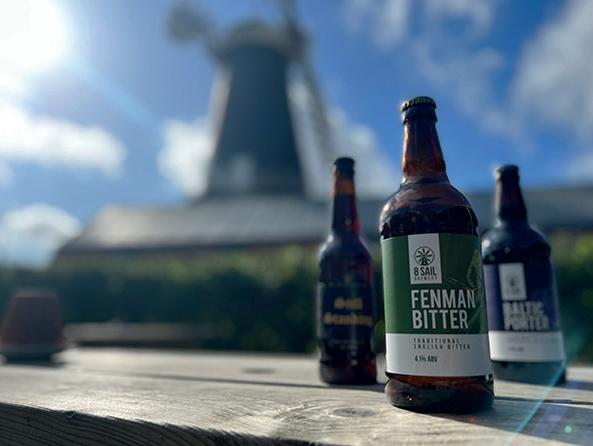
brewery continues to thrive.”
“I’m under no illusion; it’s a tough time for breweries and pubs across the UK. However, 8 Sail has a dedicated, knowledgeable and passionate team and we’ve shown that we can weather many storms since we launched in 2010. With our range of award-winning beers, I’m confident we can build on what Tony has done and I can’t wait to be a part of the next chapter for 8 Sail Brewery.”
Find out more at www.8sailbrewery.com
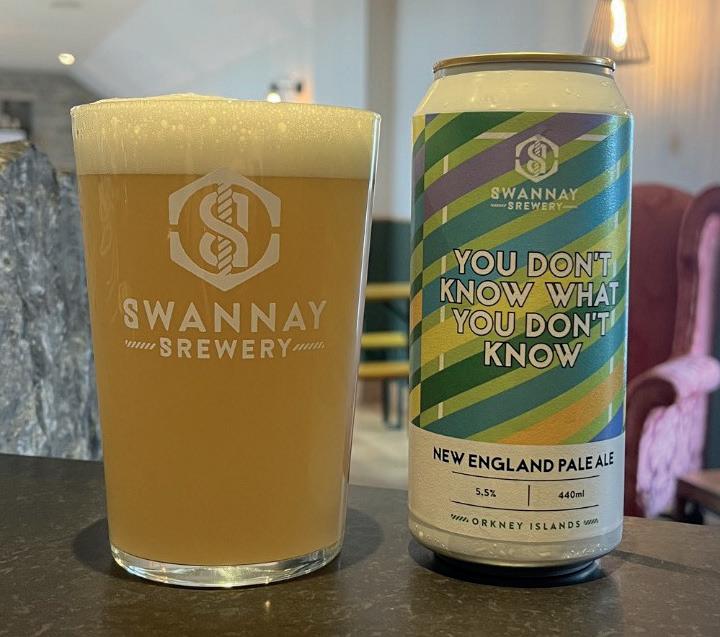
Swannay Brewery’s
‘You Don’t Know What You Don’t Know’ takes
Gold at the International Brewing Awards
Swannay Brewery has won a gold medal at the International Brewing Awards with its New England Pale Ale, ‘You Don’t Know What You Don’t Know’ (YDK).
Widely regarded as the “Oscars of the beer world” the competition is judged exclusively by commercially practising brewers who assess entries from both a production and commercial perspective. Any award is therefore considered truly high praise.
The awards attract entries from around the globe, with medal winners hailing from countries including Japan, Germany, Sweden and - of course - Scotland. YDK is a modern hazy pale ale featuring bold aromas and flavours from American and New Zealand hops.
“We’re thrilled and humbled to receive this gold medal,” said Lewis Hill of Swannay Brewery. “The judging criteria in this competition is incredibly tough, we are against some of the world’s biggest and most technically advanced breweries. YDK was a real team effort, with every member of the brewing team having input. This award is fantastic validation that we’re continuing to deliver on Rob Hill’s original vision of creating world-class Orkney beers.”
Find out more at www.swannaybrewery.com
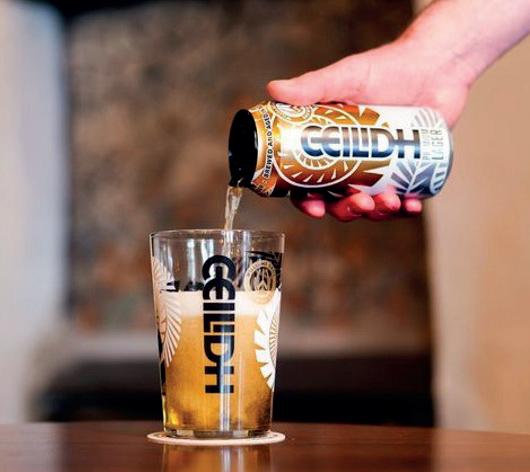
Williams Bros Brewing launches Ceilidh lager
Williams Bros Brewing is raising the bar for Scottish lager with the launch of Ceilidh - a crisp, cold-conditioned premium beer brewed for a new generation of drinkers. Bringing rhythm, heart and Scottish soul, and rooted in local ingredients and the country’s spirit of celebration, Ceilidh combines flavour, heritage and modern style in one striking new release. Independently owned and proudly based in Alloa - the historic brewing capital of Scotland - Williams Bros Brewing has been brewing in the Heart of Scotland for over 30 years. Best known for creating Joker IPA, one of Scotland’s most iconic modern beers and the country’s numbertwo selling IPA, the brewery continues to grow year on year while staying true to its values: quality, independence and innovation.
Fast forward to 2026 and the creation of Ceilidh - the latest expression of that philosophy. A premium Helles style lager, born and brewed in Scotland, it’s designed for today’s drinkers who value provenance, flavour and style in equal measure. Named after Scotland’s iconic social dance, Ceilidh captures the spirit of connection and celebration in every glass. Speaking about the launch, Scott Williams said: “Ceilidh reflects how we brew today - thoughtfully, patiently, and without shortcuts. We’ve focused on a cold-conditioned lager that respects classic traditions while celebrating what Scotland does best: great ingredients, great water, and independent brewing done properly.”
Find out more at www.williamsbrosbrew.com
Abbeydale Brewery opens new taproom
Abbeydale Beerworks
Sheffield-based Abbeydale Brewery, the UK’s first 100% employee-owned brewery, has opened Abbeydale Beerworks, its new taproom based on Abbeydale Road, just a stone’s throw from the brewery itself.
The taproom will be open six days a week and will act as a showcase venue for Abbeydale’s latest brews and small batch specials, with an extensive cellar refit allowing 8 keg lines
and 4 casks. The brewery team also plans to host exclusive tastings in the space, as well as community focused events such as a running club, opportunity to host local craft classes, and a “forage to funk” scheme aimed at making use of surplus and foraged produce in the brewery’s mixed fermentation project.
This news comes as the brewery is celebrating its 30th anniversary year. Co-Managing Director Dan Baxter said of the opening: “It feels like
our own taproom has been a long time coming, and we’re incredibly excited to finally be able to share it with our community – it feels like a pivotal moment for our team. We can’t wait to play a new part in the neighbourhood that already means so much to us and that we’ve called home for 30 years.”
Find out more at www.abbeydalebrewery.co.uk
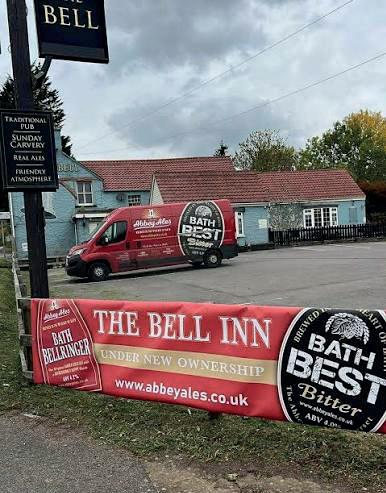
New
charity beer ‘Afloat’ makes a splash for water safety
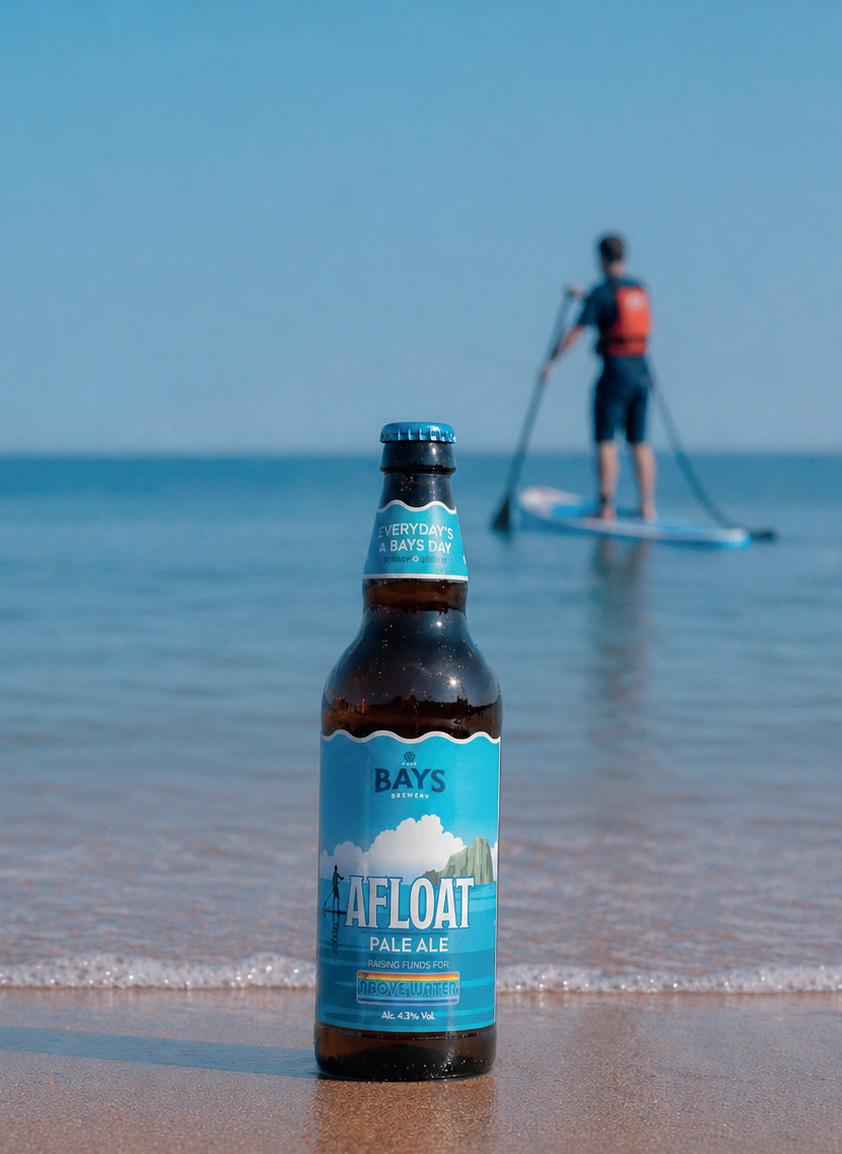
Abbey Ales acquires The Bell at Standerwick
Bath-based brewery Abbey Ales has added The Bell at Standerwick, a country pub on the A36 between Bath and Frome, to its pub estate.
The acquisition takes the brewery’s total to five sites and represents its first move into a food-led destination venue, expanding beyond its established wet-led city-centre pubs.
Operations Director Simon Morgan said the site offered “a great opportunity to combine quality food with award-winning Abbey Ales beers in a strong roadside location”.
The pub has undergone a refurbishment, with experienced manager Helen Winter appointed to lead the relaunch and recruitment. The Bell serves Abbey Ales’ core range, including flagship bitter Bellringer, alongside a new food offer aimed at both locals and passing trade.
Founded in 1997, Abbey Ales operates pubs in Bath and the surrounding area and produces a range of cask ales under its “Beer of Bath” banner.
Find out more at www.abbeyales.co.uk
Bays Brewery is making waves with the launch of its second charity beer of 2026, ‘Afloat’ (ABV 4.3%) - a refreshing pale ale brewed in partnership with Torbay-based charity Above Water.
Launching in early May, ‘Afloat’ is a vibrant copper-coloured pale ale that celebrates the region’s deep connection to the coast, pairing gentle waves of crisp citrus character with fruity notes.
Available in bottles, beer boxes and on tap across Devon, 5% of all proceeds will support Above Water’s work promoting water safety and drowning prevention through its awareness programmes.
The launch also coincides with a landmark moment for the region, as the English Riviera prepares to host the prestigious 2026 ICF SUP World Cup from 24–28 June 2026.
For the first time ever, the international stand-up paddleboarding event will take place across the sheltered waters of Torbay, cementing its reputation as the UK’s stand-up paddleboarding capital.
Director of Bays Brewery, Peter Salmon, said: “Living and brewing on the coast, we see first-hand just how important the sea is to our community – for work, for leisure and for wellbeing. ‘Afloat’ celebrates that connection, while also supporting the incredible work Above Water does to keep people safe.
“With the SUP World Cup coming to the English Riviera, it feels like the perfect
moment to bring people together over a beer that not only tastes great, but also helps deliver an important message.”
Brendon Prince, Founder of Above Water, nine-time world record SUP Champion and Director of the SUP World Cup 2026, added: “Every year, too many lives are lost through preventable drowning incidents, and education is key to changing that. Partnerships like this help us reach more people with life-saving knowledge.
“The English Riviera is the perfect place to showcase both world-class paddleboarding and the importance of water safety. Having ‘Afloat’ as part of the event helps us spread that message even further – and we’re incredibly grateful to Bays Brewery for their support.”
‘Afloat’ is the second of four charity beers being brewed by the family-run Torbay brewery in 2026, each supporting a local cause close to its heart.
For its third charity brew of 2026, Bays Brewery will reunite with long-standing partners Paignton Zoo to bring back one of its most popular animal ales, ‘Tall Order’.
Completing the 2026 Charity Brew line-up in November is the return of festive favourite ‘Jingle Ale’ – a ho-ho hoppy bitter brewed in support of Children’s Hospice South West (CHSW).
Find out more at www.baysbrewery.co.uk
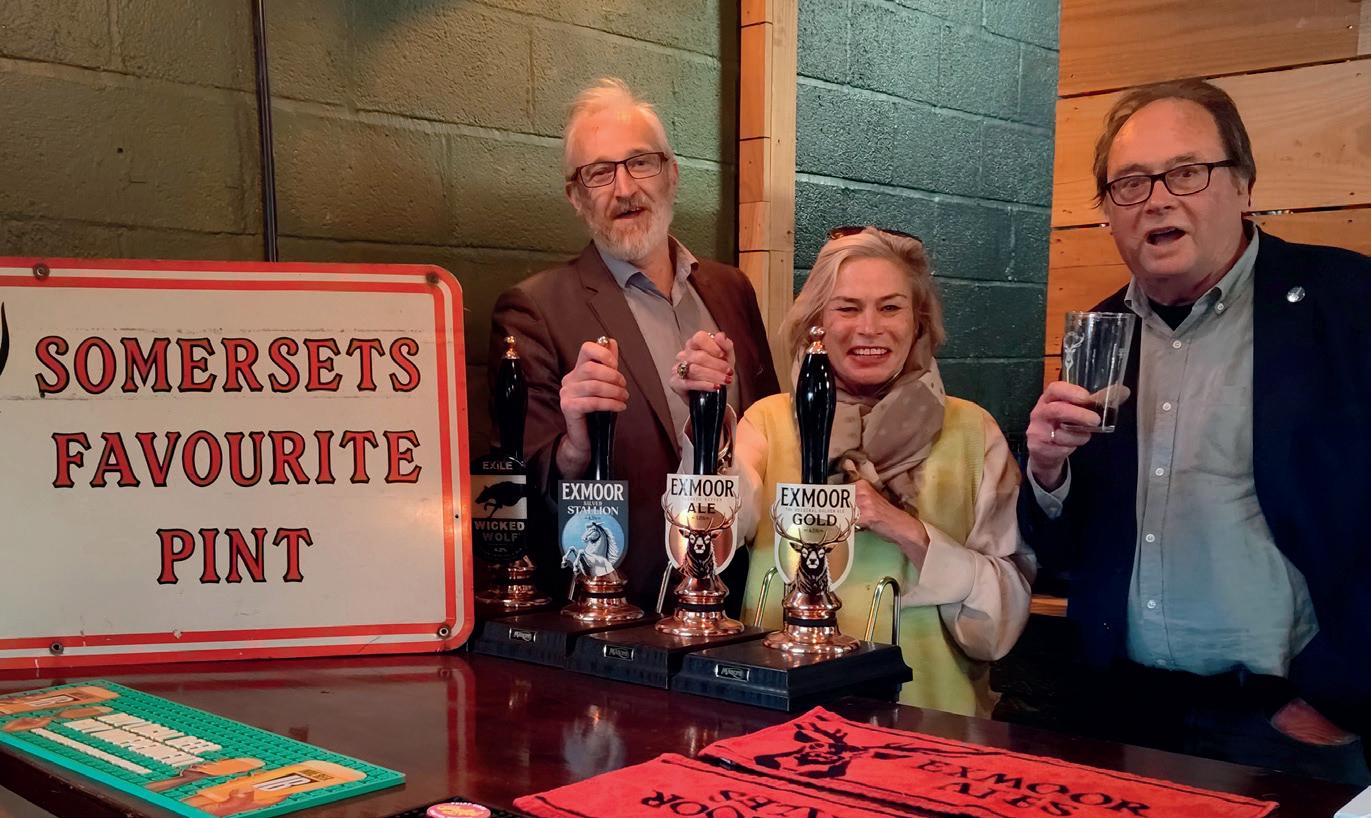
Exmoor Brewery toasts new look as sales grow
Somerset’s Exmoor Brewery is sporting a proud new look on the bar, marking a year since new investment in the business rescued brewing in its home town of Wiveliscombe.
Local MP Rachel Gilmour celebrated the launch of the new branding, along with the upturn in Exmoor Brewery’s fortunes which has seen sales increase, by pulling the first pint from the distinctive new-look hand pull at the brewery tap in Wiveliscombe.
The new branding is based on an old enamel sign found whilst clearing the brewery and now on display in the Exmoor Brewery tap. On the new pump clips, the iconic Exmoor Stag stares out proudly, with his antlers extending either side of the modernised, shield-shaped clip. Behind the stag is a bold circle of light, representing the sun or the moon on the moors, with the colour changing according to which Exmoor beer is being poured.
The clip is moulded, with a metallic finish which catches the light, adding a sense of movement to the stag and giving Exmoor’s beers a premium image and strong stand-out on the bar.
Managing director designate Simon French said: “The new look reflects the heritage of our beers but is far more modern than the original image it’s based on. It leaves Exmoor Brewery’s existing loyal customers in no doubt they are ordering their favourite pint, while also having strong visual appeal to beer drinkers ordering an Exmoor cask ale for the first time.
“With a new generation of cask ale drinkers taking an interest in trying the beers that their fathers – or even grandfathers – enjoyed, the new branding celebrates the 45-year history of Exmoor Ales, whilst moving us forward into a new era.” French, who rejoined the company in 2025, added: “We’ve come a long way since the brewery was under threat of closure this time last year, and have kept Wiveliscombe’s brewing tradition alive.
“Despite continued over-taxation of pubs and breweries, and consumers feeling the pinch, we’re now seeing an increase in sales of our beers. That success is a tribute to the faith in the brand shown by both the Exmoor team and our partners at Hogs Back Brewery, since the launch of our collaboration a year ago, along with our loyal local customers who have stayed with the brand.
“We’re very proud to be building on the legacy of long-time owner Jonathan Price and the original Exmoor team. Rachel Gilmour MP has also been incredibly supportive of the new brewery and the continuation of Wiveliscombe’s brewing tradition, and so we’re delighted that she is pulling the first pint featuring the new Exmoor branding.”
The new branding will appear on the core Exmoor range of cask ales, including Exmoor Stag, Exmoor Gold and Exmoor Ale, as well as being adapted for seasonal beers. It will also be rolled out on bottled Exmoor beers over the next few months.
Find out more at www.exmoorales.co.uk
A perfect match: Somerset CCC teams up with Otter Black
Somerset County Cricket Club has announced a new and exciting partnership with Otter Brewery. The collaboration will see the brewery’s new Otter Black become the Official Stout of Somerset CCC.
The partnership brings together two proud West Country institutions in an alliance that celebrates tradition, quality, and community. Brewed by Otter Brewery in Devon, Otter Black is a smooth and refreshing stout that’s already making a great first impression among regional ale lovers. The Devon stout’s ingredients are sourced locally and carefully to provide a smooth and satisfying pint. The recipe features flaked and roast barley from Dartmoor, English Marris Otter malt and a blend of Willamette hops and classic English Fuggle to create a dark ale with a distinctive flavour profile.
Otter Black will be available throughout the 2026 season from the County Room, the Long Room, Stragglers, the 1875 Club and from the main bar in the fan village, giving supporters the chance to enjoy one of the world’s finest stouts while watching live elite sport.
Somerset County Cricket Club’s Commercial Director, Caroline Herbert said: “We’re thrilled to welcome Otter Brewery as our Official Stout Partner. They have a fantastic reputation across the South West and further afield, and Otter Black is a perfect example of the quality and character that they are known for. Otter Black is a challenger brand and as such it perfectly aligns with our desire to constantly be bold, brave, creative and authentic.”
Patrick McCaig, Managing Director of Otter Brewery, said: “Otter Black is already one of our biggest success stories since it was launched last year and to be approved by Somerset County Cricket as their official stout is another significant moment. After a fantastic season last year, Somerset CCC has established itself as one of the top clubs in the country and we are delighted to be supporting them throughout the new campaign.”
Find out more at www.otterbrewery.com
(Left to right) Pouring the first pint from the new Exmoor Brewery ales branded hand pulls are Simon French; Managing Director (Designate); Rachel Gilmour, MP for Tiverton and Minehead, and Jonathan Price, Chairman, Exmoor Brewery]
Bluestone Brewing Co IWD collaboration: Let Us Know You’re Home xx
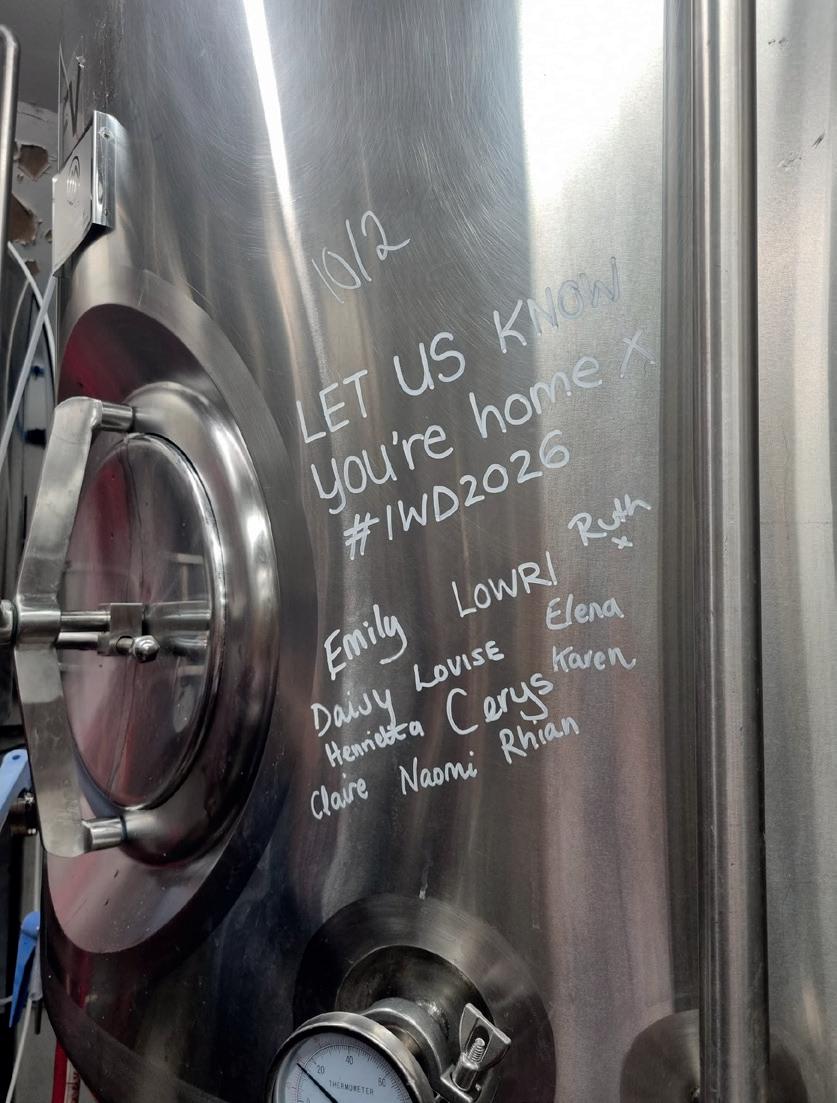
Earlier this year, Bluestone Brewing Co took part in International Women’s Collaboration Brew Day, bringing together a brilliant group of women for a day of brewing, chatting and sharing ideas.
The theme this year was Unite Belonging, centred on building a kinder and more inclusive beer community.
The group brewed the beer using the Pink Boots Blend from Charles Faram, creating a beer full of tropical character with pineapple, orange and stone fruit coming through, alongside a soft, smooth finish.
The name came from a conversation on the day. Something immediately relatable, that feeling of walking home alone after dark, perhaps after a late shift or a night out, while not quite feeling safe. It is a situation many people in hospitality will recognise.
Let Us Know You’re Home xx felt like the right way to capture that. A simple message that most people will have sent or received before, but one that carries real meaning.
The decision was made to support Strut Safe UK, a volunteer-run service that stays on the phone with people while they walk home to make sure they get there safely.
An amazing total of £400 was raised thanks to everyone who bought a can or had a pint. With the service costing around £800 a month to run, the donation covers half a month’s operating costs and contributes directly to supporting that work.
The beer is now sold out, but the message behind it remains the same. A simple idea, but one that meant a lot to everyone involved.
Find out more at www.bluestonebrewing.co.uk
Acorn’s Barnsley Bitter wins major acclaim at International ‘Brewing Oscars’
A beer from Barnsley has been declared a top brew in a fiercelyfought international contest, known as ‘The Brewing Oscars’.
Acorn Brewery’s flagship Barnsley Bitter (3.8% ABV) scooped a gold medal at the prestigious International Brewing Awards, the world’s longest running beer contest judged by professional brewers from the UK and abroad. The biennial International Brewing Awards - founded in 1886 and run by the BFBi trade body - attracts hundreds of entries internationally across nine broad categories with 36 classes. Acorn took gold in the Cask Class for 2.9% to 3.8% strength ales.
Welcoming the award, managing director Dave Hughes - who founded Acorn in 2003 - said: “This is a wonderful win for us. Particularly as it is our first time in the awards, judged by brewers and regarded as the ‘Oscars’ of the industry, where we competed against some much bigger brewers. Barnsley Bitter is a traditional Yorkshire bitter and was our inaugural brew. Today it remains our top-selling brand, despite the fiercely competitive market which constantly demands new brews. We are very proud to be keeping Barnsley in the spotlight of the brewing world with this major recognition from professional brewers.
“This win is testimony to our brewer Steve Bunting, who began brewing alongside me 23 years ago and remains totally dedicated to the integrity of our flagship brand, brewing with quality and consistency. This is a very exciting time for the Acorn team as we continue growing our business in the toughest of economic climates.”
Find out more at www.acorn-brewery.co.uk
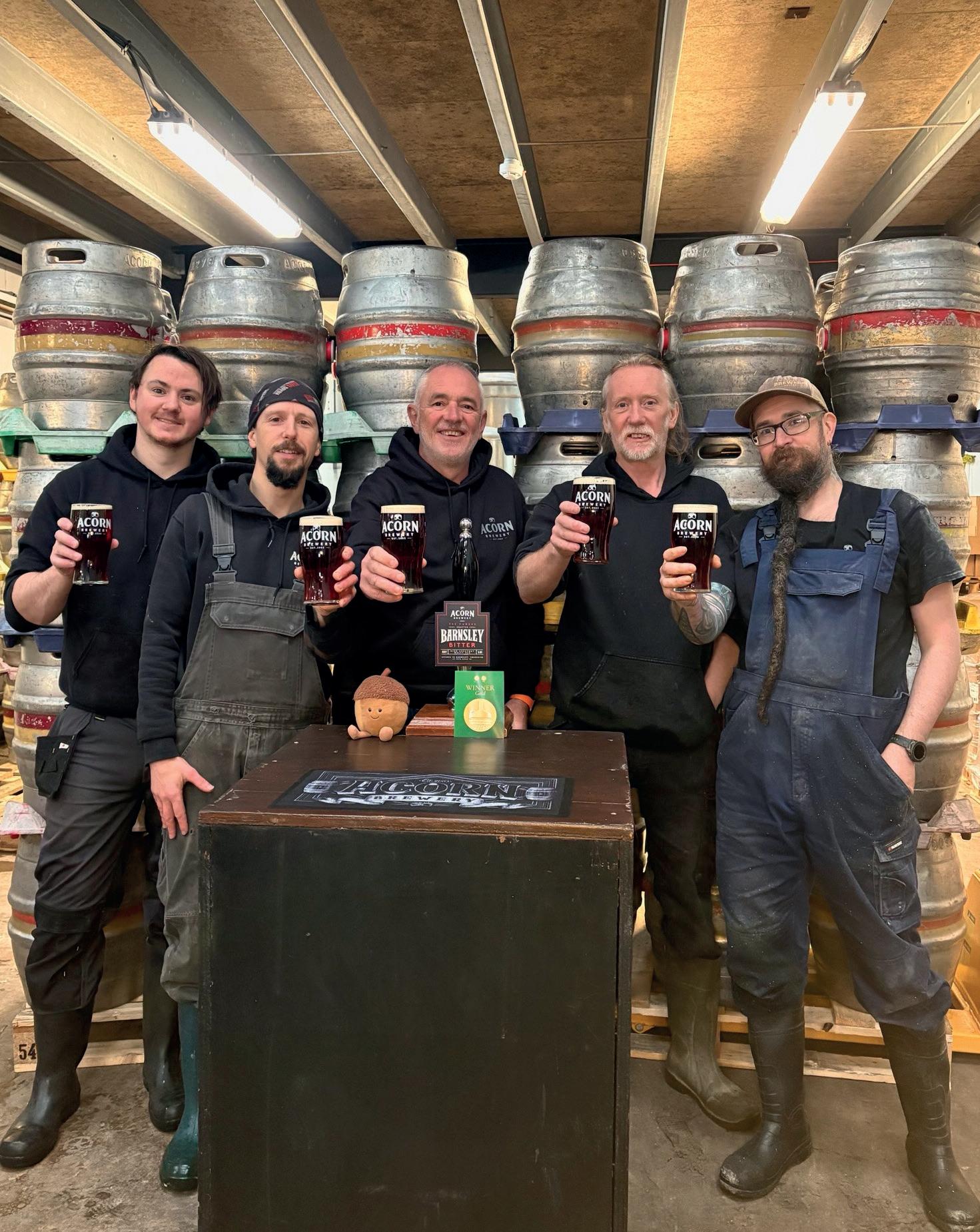
Vocation Brewery unveils new summer range to help pubs drive footfall and trade up
Yorkshire-based independent brewer Vocation Brewery is helping pubs and bars capitalise on summer trading with a new range of seasonal beers designed to bring more choice, flavour and premiumisation to the bar.
Available in 30L keg format and rolling out from May through the summer months, the lineup spans refreshing, sessionable styles alongside more expressive, hop-forward releases – giving operators flexibility across a range of occasions and drinker preferences.
“Summer is a key moment for pubs, with longer days, footfall-driving sports fixtures and more frequent social occasions,” says Chris Mitchell, Marketing Manager at Vocation Brewery. “As both a brewer and operator of our own Vocation & Co. bars, we see first-hand how expectations are shifting. Drinkers are balancing moderation with a willingness to trade up – they want beers that feel worth the spend. Seasonal beers create a sense of occasion, encourage trial and help pubs differentiate their offer and independent brewers are well placed to add value here through innovation, flavour and variety.”
Research from the latest SIBA/YouGov survey reinforces this opportunity, with eight out of 10 beer drinkers – rising to 89% of 18-24-year-olds –saying it is important for pubs to offer beers from independent breweries alongside global brands. Vocation Brewery’s own Beer Census also found that 79% of consumers would visit the pub more often if there was a better selection of beers on tap, while 81% would pay slightly more for a pint if pubs offered greater variety.
The brewery is also releasing several occasion-led limited editions throughout the summer: Extra Time (4.8% Extra Pale Ale) ties into the 2026 Football World Cup with bright tropical fruit and citrus character, while Kiwi Horizon (4.3% Extra Pale Ale) and Kobo Bloom (5.8% Sake Yeast IPA) are timed around International Beer Day.
Rob Beck, Head Brewer at Vocation Brewery, said: “With this summer range, we’ve focused on balance and drinkability alongside flavour. Each beer is designed to stand out, but also to work in a real pub setting –whether that’s a refreshing pint in the sun or something more expressive for drinkers looking to explore new styles.”
The range is available nationwide direct from Vocation Brewery and through selected regional and national wholesalers.
Find out more at www.vocationbrewery.com
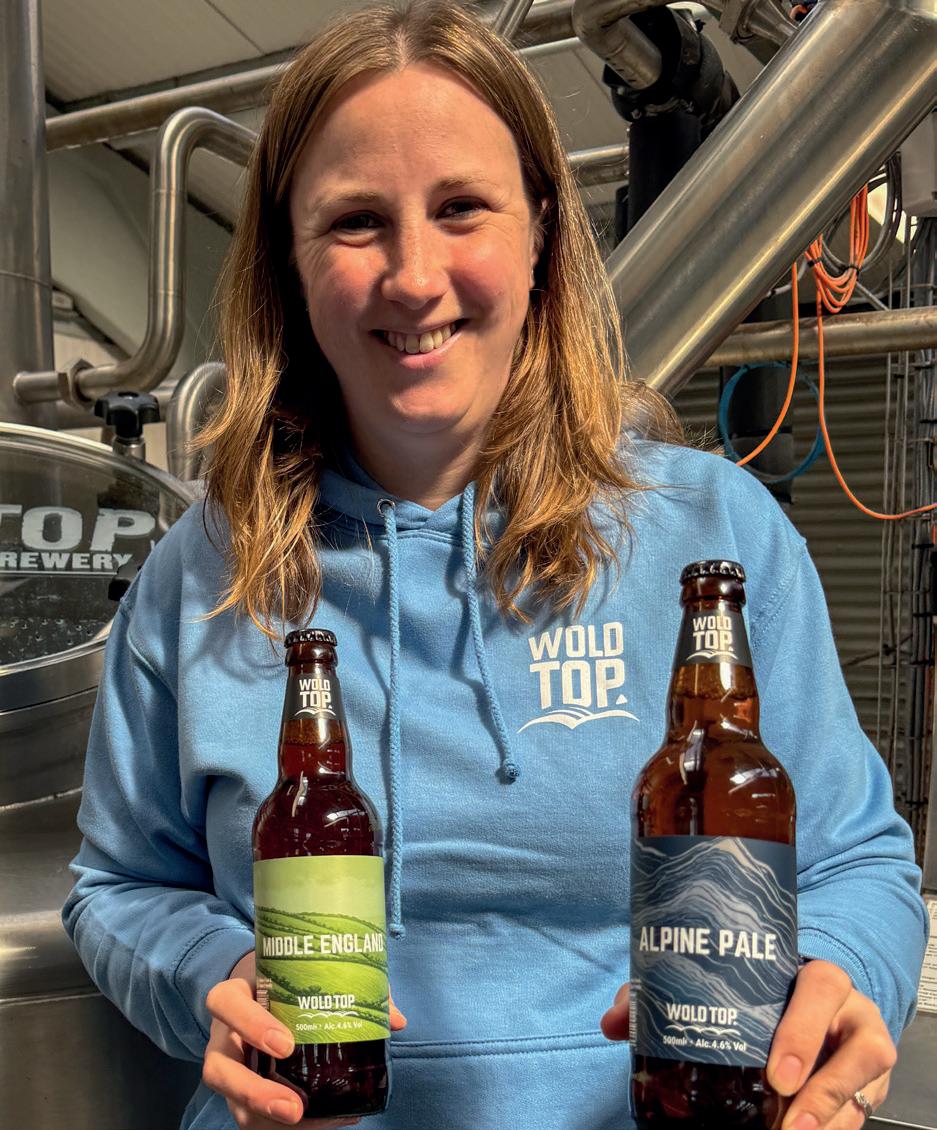
Wold Top Brewery unveils new seasonal ales range for Asda
A Yorkshire Wolds brewery has launched the first in a series of four seasonal brews for a Leeds-based supermarket chain.
Wold Top Brewery’s Alpine Pale is the spring/summer edition and is available exclusively in selected Asda stores throughout Yorkshire and the north of England.
Wold Top’s MD, Kate Balchin, explained the rationale for the launch: “We were speaking to the buyer at Asda about range changes, and they mentioned that a new, seasonal beer, with the same ABV for each one, would be a great addition to their range, so this is what we've done!
“It's a brand new recipe focusing on the different flavours imparted into beers by hops from different growing regions.
Alpine Pale is a fresh, pale ale made using European hops, which bring soft floral notes, a gentle spice and a clean, refreshing finish. It will be followed later in the year by beers brewed using British hops, American hops and New Zealand hops, respectively.”
Alpine Pale, 4.6% ABV, is gluten free and vegan friendly.
Wold Top was founded in 2003 and is located on the Mellor family farm at Hunmanby Grange near Filey. The team use home-grown barley and water from the farm’s borehole to produce a range of award-winning cask, keg and bottled beers that are available nationwide.
Find out more at www.woldtopbrewery.co.uk
Kate Balchin with the first two hop-forward beers for Asda
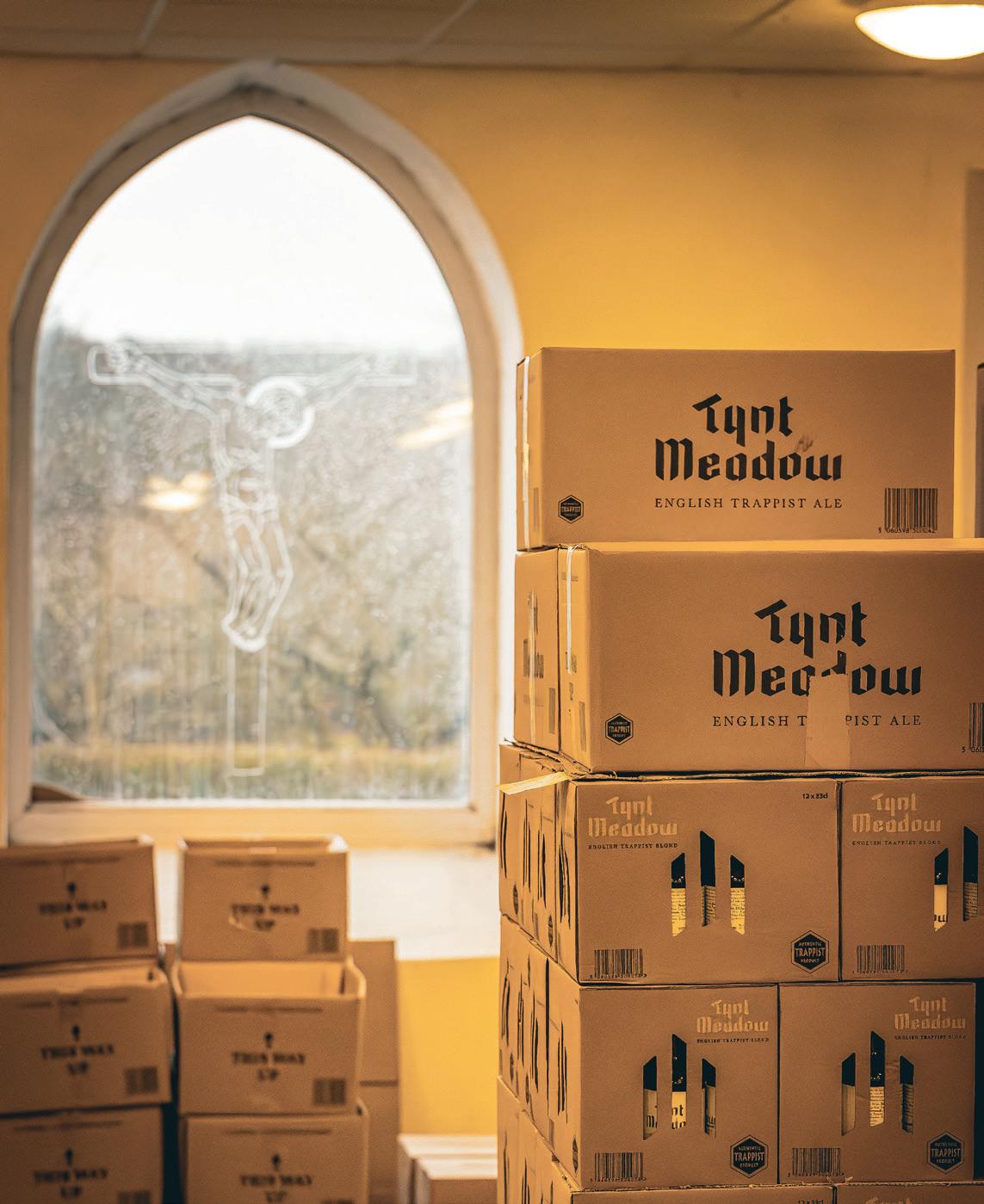
Mount St Bernard Trappist Brewery launches UK trade store and mailing list
Mount St Bernard Trappist Brewery, the only producer of Trappist ale in England, has launched a new UK trade store and mailing list for independent bottle shops, pubs, bars and hospitality businesses.
Using trade store integration from Breww, the UK’s leading brewery software management tool, the platform allows domestic trade customers to order cases and kegs of Tynt Meadow and Tynt Meadow Blond direct from the brewery, shipped via APC’s liquid service.
Since the launch of Tynt Meadow in 2018, the brewery’s beers have reached drinkers far beyond the Abbey walls, with distribution across the United Kingdom and international markets. Yet in Britain, awareness of Trappist beer is still often shaped primarily by continental examples. Trappist is not a flavour profile, nor is it simply another word for “Belgian beer”. It is a designation governed by the Authentic Trappist Product criteria: products must be made within the immediate surroundings of a Trappist abbey, under the supervision of monks or nuns, with proceeds used for the needs of the monastic community, charitable works and to the benefit of the wider Order.
The launch of the trade store and newsletter is intended not only to make access easier for UK trade customers with no MOQ, but also to build a closer relationship with the independent businesses that support the category. Through the new trade mailing list, Mount St Bernard Trappist Brewery will share news and insights from the brewery, helping resource trade customers to better understand the beers, Trappist produce and the monastic tradition behind them.
Sign up to the trade mailer at https://zcmp.eu/WanG and visit the trade store at https://trade.msbtrappist.co.uk
A new generation at The Orkney Brewery: Arran Sinclair brews his first bespoke beer
The Orkney Brewery recently released Vikingr Vienna, the first beer crafted by Arran Sinclair, marking an exciting new chapter for the familyrun brewery owned and operated by his parents, Norman and Christine Sinclair.
The launch represents both a continuation of best practice and the arrival of a new generation of brewing talent.
A true family affair, Arran’s debut brew reflects his dedication to the craft. After completing four years at the internationally renowned Centre for Brewing and Distilling at Heriot-Watt University in Edinburgh, Arran recently added a postgraduate qualification in Marketing from the University of Edinburgh - combining technical expertise with a strong understanding of brand development and the modern beer market.
Determined to make his mark, Arran set out to create something distinctly different from anything previously produced at The Orkney Brewery. His ambition and persistence paid off as he pursued a bold new direction with unwavering conviction.
“I wanted to create a beer that honoured our heritage while exploring new territory,” said Arran Sinclair. “Something unique to me, but still rooted in the character and quality people expect from the brewery.”
Working alongside his brother Alistair, Arran also developed the brand name Vikingr - the Old Norse word for “Viking” - a fitting tribute to Orkney’s rich Norse heritage and adventurous spirit. Arran then worked alongside Andrew Fulton, the brewery’s longstanding Head Brewer and also a former graduate of HeriotWatt, to brew the beer. Vikingr will become a series of beers, with this release being the first in a collection of world styles showcased by Arran.
Vikingr Vienna is a Vienna Ale, brewed using Vienna malt to deliver a distinctive biscuit-like malt character, balanced by bright lemony and herbal notes from carefully selected European hop varieties: Perle, Saaz, Aurora, and Styrian Wolf. The beer was released as part of The Orkney Brewery’s seasonal selection in cask and sold out quickly, to much acclaim.
Norman and Christine Sinclair welcomed the milestone as a proud moment for the brewery. “Seeing Arran brew his first beer here for trade release is incredibly special,” they said. “The Orkney Brewery has always been about family, passion, and craftsmanship - and Vikingr carries all of that forward.”
The release of Vikingr Vienna celebrates both heritage and innovation, showcasing how established practices and fresh thinking can come together to shape the future of The Orkney Brewery.
Find out more at www.orkneybrewery.co.uk

Can the CMIC help you?
John Westlake, a member of the CAMRA Members’ Investment Club committee, gives an overview of how the club works and what it could do for brewers…
The idea seemed to resonate within certain sectors of the membership and since those early days, the fund has grown to the point where we now find ourselves managing a portfolio valued in excess of £15 million.
The CAMRA Members’ Investment Club was established in 1989 to provide CAMRA members with an opportunity, in effect, to put their money where their mouths are by investing modest sums on a monthly basis into a fund dedicated to investing in those breweries and pub owning companies that produce and sell their preferred tipple, cask conditioned (real) ales. The idea seemed to resonate within certain sectors of the membership and since those early days, the fund has grown to the point where we now find ourselves managing a portfolio valued in excess of £15 million.
Needless to say, our biggest holdings are in well established, quoted companies such as Shepherd Neame, Adnams and Greene King, as well as pub owning groups, including Youngs and Fullers. We even have a stake in Japan based Asahi, which nowadays owns and operates the Fullers Griffin Brewery in Chiswick. The annual dividends that these companies (hopefully) pay to shareholders are an important source of extra income to us and are automatically reinvested in order to enhance the fund’s overall investment performance.
Nevertheless, we are also keen to support smaller producers wherever possible and the portfolio already includes holdings in the likes of Loch Lomond Brewery, Nethergate and Twickenham Fine Ales. However, we
are, of course, very conscious of the fact that we are managing other people’s money and cannot therefore afford to take on board an unacceptable level of risk to capital. We are certainly in no position to come to the assistance of small brewers who may be finding it a struggle in today’s challenging environment, but for those managing to successfully weather the storm and looking to grow their businesses at a time when the banks and most other lending institutions want nothing to do with the hospitality trade (you come under that heading), we might be able to help.
First of all, however, we do not lend money. Given the right circumstances and along the lines of crowd funding, we would be looking to acquire a stake in the business, but we would ultimately be expecting a real financial return and not just a bunch of freebies along the way. We would need to see a realistic valuation, at least two years’ figures demonstrating successful trading (it might be a good idea to run these past a qualified accountant) and plans detailing exactly why the funds are required, such as the need for additional space or, perhaps, to purchase additional kit in order to update or expand brewing capacity. We are not interested in simply providing additional working capital. We are eager to expand our investment in the small brewery sector when prudent to do so, and if you believe your enterprise satisfies these criteria, why not get in touch.
Please email or write to us at info@ cmic.uk.com or CMIC,123 Wellington Road South, Stockport SK1 3TH.
Fermentis announces the appointment of new General Manager
Lesaffre, a global player in fermentation and microorganisms, has appointed Thomas Lesaffre as the new General Manager of Fermentis, its business specialising in fermentation and characterisation solutions for the beverage industry.
Under Thomas Lesaffre's leadership, Fermentis will continue to grow while strengthening its position as a trusted partner in the market and innovator in fermentation and characterisation solutions for beer, wine, spirits, cider, coffee, and other beverages.
Thomas Lesaffre will report to Brice-Audren Riché, CEO of Lesaffre, and continue to serve as a member of the Lesaffre Executive Committee. He succeeds Stéphane Meulemans, who led Fermentis for 12 years during a period of significant growth and expansion for the business.
“I strongly believe that the renowned expertise of Fermentis and its talented team is a powerful asset in strengthening our position as an essential partner in the global beverage industry,” says Thomas Lesaffre. “As markets grow more dynamic and demanding, it is our
technical excellence, cutting-edge research and development, and innovative spirit that will set us apart, not only in the alcoholic beverage sector but also in pioneering advancements in non-alcoholic beverages. I am deeply committed to working with and supporting our clients worldwide in their pursuit of excellence, while tirelessly advancing Fermentis’ mission to become the obvious choice for beverage signature.”
Thomas Lesaffre is a graduate of the University of Technology de Compiègne (UTC) and holds an Executive MBA from INSEAD business school. He started his career at Accenture, working as a consultant for five years, before joining Lesaffre in 2005 as a production engineer at Lesaffre Turkey. He then served as a production manager for two years at Lesaffre's Spanish subsidiary. Later, he was appointed industrial director of Lesaffre Argentina until 2013 and served as General Manager of Lesaffre Italy from 2013 to 2017. He subsequently became Marketing Director for Baking Ingredients within Marketing for Baking (M4B), the department that supports the Group's baking activities through the "Baking
Warminster Maltings uses its platform at MaltingsFest to call for the revival of Devonshire Ales
Warminster Maltings was delighted to continue as one of the lead sponsors of MaltingsFest, which this year ran from the 16th to the 18th of April.
The theme of their promotion this year was "Devonshire Ales" brewed from Devonshire barley, like it used to be years ago.
Warminster notes the rise in the number of people - particularly younger people - being much more inquisitive than the previous generation about the provenance of their food and drink. The more local and identifiable, and the more artisan it is, the better.
Warminster sees this as a great opportunity for indie beer, and one way of promoting this provenance is to 'ring-fence' sourcing and production within county boundaries.
For some counties there is nothing new to highlighting thisCornwall, Kent and Yorkshire, for example, already highlight county provenance quite widely. But many other counties have yet to capitalise on this local story.
with Lesaffre" program, before being appointed M4B Director and joining the Executive Committee in 2022.
For more information, visit www.fermentis.com
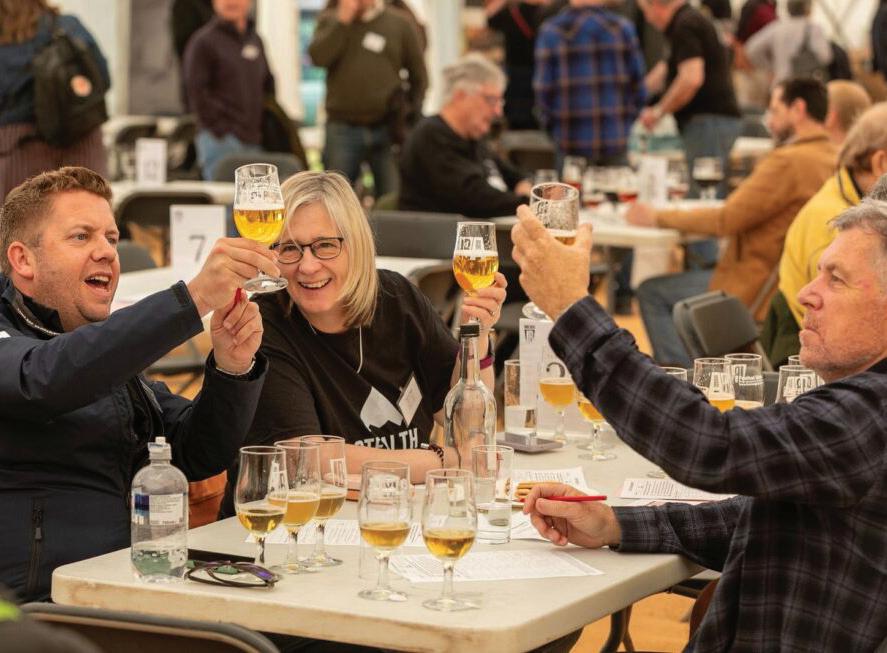
This is why Warminster Maltings chose to challenge Devon brewers attending MaltingsFest to see if this is something they would like to respond to, as the market would appear to be firmly in place if brewers, collectively, regard this as a worthwhile initiative.
Warminster Maltings would be pleased to play its part. Barley growers within the county, ones that are committed to regenerative agriculture, will then be identified and persuaded to kick start the process with the re-establishment of Devonshire malting barley.
Then all it takes is a single harvest to put "Devonshire Ales" firmly back on the map!
Find out more at www.warminster-malt.co.uk
Brewlab launches special offer
Brewlab’s analysis services have been assisting breweries and drink companies all over the UK for 30 years, ensuring their products are of high quality and continuously satisfactory.
To further support efforts, the company is currently running a discount on its ABV analysis services. SIBA members can get 5 samples tested for ABV for just £100 (excluding VAT).
The Brewlab laboratory team uses high-grade equipment to determine ABV, original gravity and the present gravity of tested products. To redeem this discount, use code ‘5 FOR
and Due Diligence Package
£100 ABV’ in sample submissions to labteam@ brewlab.co.uk.
Please note that all 5 samples must be sent together to apply for the discount, and it does not apply to Due Diligence customers, as they already receive analysis at a discounted rate.
Brewlab’s Due Diligence Package acts as a tailored quality control plan that ensures products adhere to HRMC legal recommendations and support compliance with SIBA and SALSA safety plans, all at a reasonable price.
The package features essential analysis such as ABV, microbiological hygiene checks,
nutritional analysis, and more. Regular analysis can also flag up any drift on declared specifications.
Alongside keeping products consistent in every aspect and safe for consumers, other features include:
• Your own dedicated account manager.
• Discount on external services.
• Discount on specialist training services.
• Discount on yeast services.
For a no-obligation quote email alison@brewlab.co.uk or call 0191 549 9450
Tapping into Growth: A Brewer’s Guide to Apprenticeship Funding and Incentives

For independent breweries, great beer starts with great people. But with rising costs and on-going recruitment challenges, bringing new talent into the business can sometimes feel like a risk.
The good news is that there is now more government support available for breweries hiring apprentices. From reducing recruitment costs to saving on National Insurance contributions, apprenticeships are becoming an increasingly cost-effective way to build skilled, long-term teams.
At HIT Training, we want to help breweries understand exactly what support is available and how to make the most of it.
What Funding Could Your Brewery Receive?
Depending on the age and circumstances of the apprentice you hire, your business may be eligible for a range of financial incentives.
Youth Jobs Grant - up to £3,000
Available for employers hiring 18 to 24-yearolds who have been claiming Universal Credit for six months or more.
SME Apprenticeship Grant - £2,000
Available for eligible small and mediumsized businesses recruiting apprentices aged 16 to 24.
Foundation Apprenticeship Grant - up to £2,000
Support for employers taking on Foundation Apprentices, typically aged 16 to 21.
Additional Employer Payment - £1,000
Available when hiring apprentices aged 16 to 18.
Support for Care Leavers - £3,000 Apprentices who are care leavers may also be entitled to additional bursary support during their apprenticeship programme.
Funding eligibility and availability can vary depending on programme rules and start dates, and the HIT team can help explain what support may apply to your business.
Save on National Insurance Contributions
Hiring younger apprentices can also help breweries reduce payroll costs.
If you employ an apprentice under the age of 25 on an approved apprenticeship standard, you do not pay employer National Insurance contributions on earnings up to £50,270. With employer National Insurance contributions now at 15%, this can represent a significant annual saving for breweries looking to grow sustainably while investing in new talent.
Apprenticeship Training Could Be Fully Funded
For eligible learners under 25, apprenticeship training costs may also be fully funded through government support.
That means your brewery could access high-quality training programmes, including the Level 4 Brewer Apprenticeship, without paying tuition costs directly.
It is a practical way to develop skills within your team, strengthen staff retention, and support long-term business growth.
Supporting the Future of Brewing
Jeremy Scorer, Licensed Trade Director at HIT Training, said: “The brewing industry depends on a strong pipeline of skilled talent. These incentives give employers the confidence to invest in new people while reducing the financial pressure recruitment can bring. Apprenticeships are not just about filling vacancies. They are about building loyal, capable teams that can support longterm growth.”
Ready to Explore Your Options?
HIT Training is here to help breweries understand the funding available and find the right apprenticeship pathway for their business.
Call 0800 093 5892 or email info@hittraining.co.uk to speak to the team and start your apprenticeship journey today.
The team at HIT Training explains the funding opportunities for brewers looking to employ apprentices…
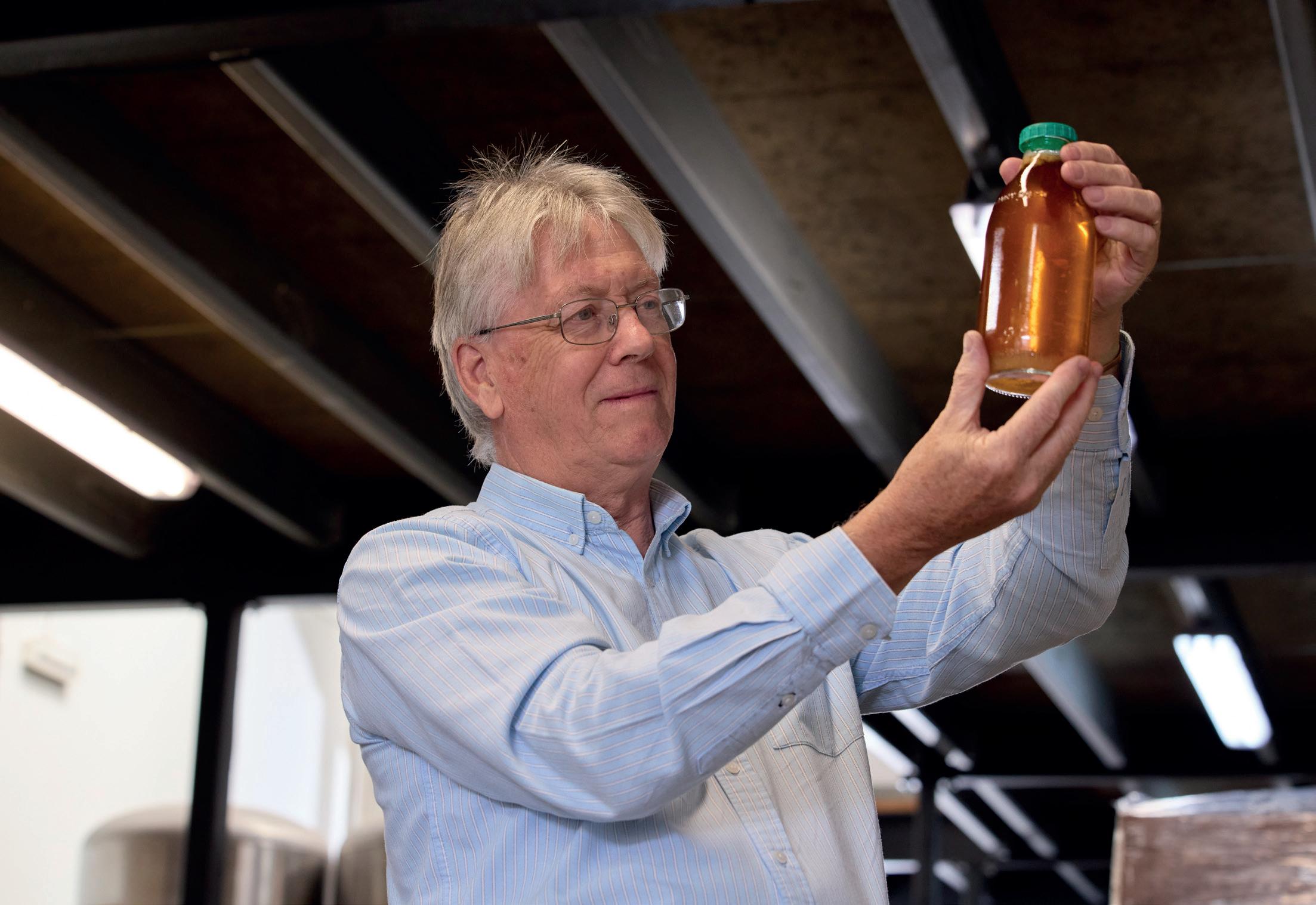
Almost a lifetime in brewing…
David Smith, the founder of Brewing Services Ltd, looks back on five decades in the industry…
“This June I arrived at quite a large milestone in my career. It’s 50 years since I started work as a trainee brewer at a local independent brewery, Sam Smith’s Old Brewery in TadcasterYorkshire’s oldest and arguably still the best brewery in Yorkshire. Could I have had a better grounding in what was to become my lifelong career? I doubt it.
I started brewing in what was very much a Victorian Brewhouse on one side of the Tower brewery, and in a slightly more modern lager plant next door. Then, a few years later, we gained and worked with an even newer all singing, all dancing, all-purpose plant. Whilst Sam’s was very traditional in many ways, it was well ahead of its time in many others - producing for example low alcohol beers and organic beers all those years ago. You name it we had a go at it, which was a great way to learn all aspects of brewing many different beers styles with a variety of equipment. This was something that has continued to serve me well throughout my brewing career. Seven years on, and having done sufficient round-the-clock shift brewing, I moved over into Quality Assurance to learn the microbiological side of keeping beer in good order and infection-free. All this stood me in good stead for the following 38 years. It is still something we very much believe is the key to brewery survival in these difficult times.
In 1988, I left Sam’s and set up DA Smith Brewing Services & Consultancy providing help and technical assistance to the everincreasing number of new independent breweries. Thanks go here for a great deal of help from SIBA when I joined SIBA as Associate Member No 13, a number unlucky for some but not me.
In those intervening 38 years, and now as Brewing Services Ltd, I have worked with well over 250 breweries around the UK plus a few overseas, including our current project in Ibiza. We look after a solid core of breweries around the UK with whom we work closely, providing technical back-up and regular QA surveys, helping maintain quality and consistency year on year. Any sign of retiring? Well not quite yet as I have always been fortunate to have made a career in an industry that is great to work in, and with wonderful brewers - many of whom have become good friends over the years. So why think of retiring when brewing still offers so much and I’m fit enough to enjoy it, and the odd pint or two! Cheers!”
Find out more at www.brewing services.co.uk
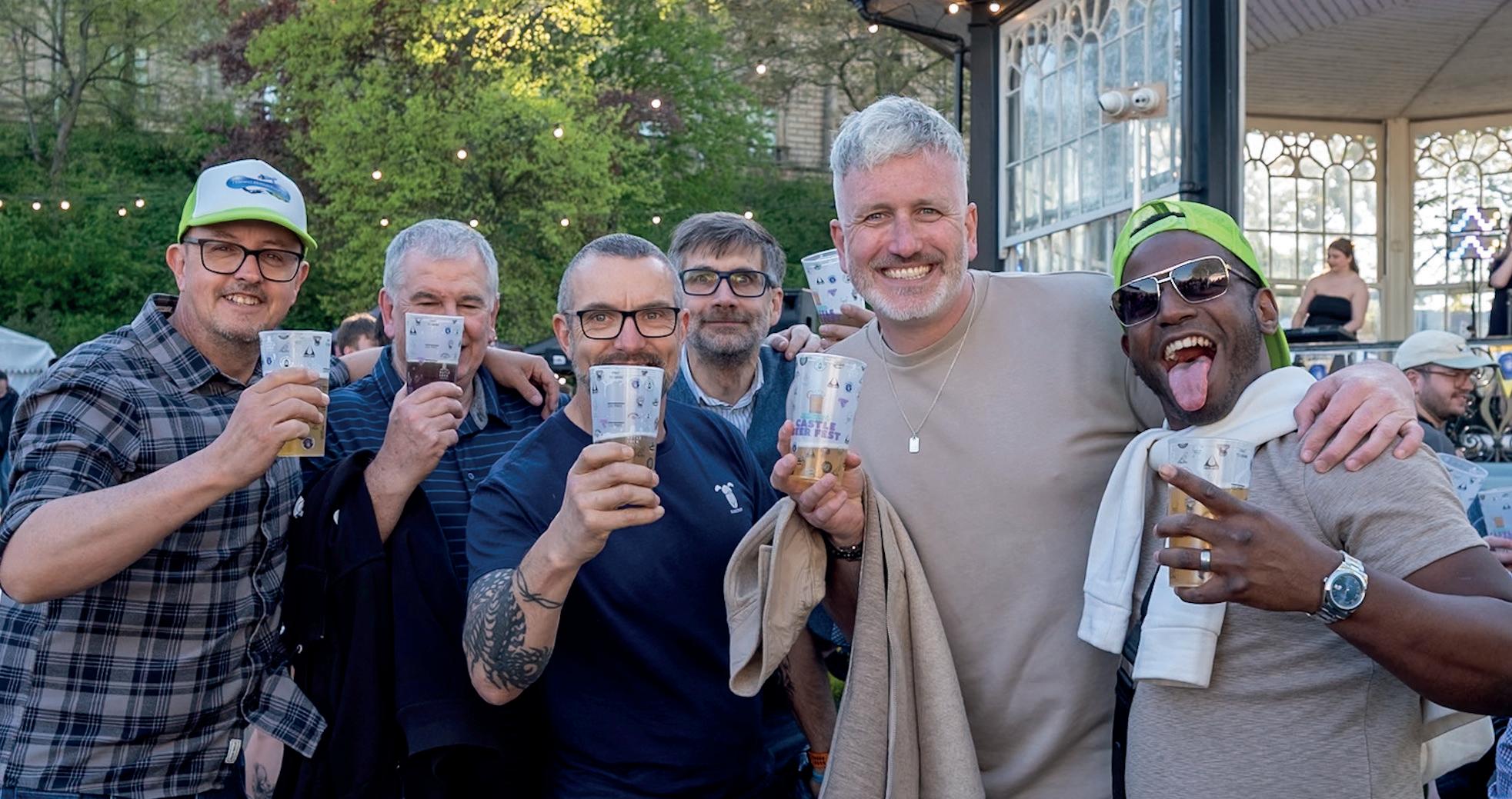
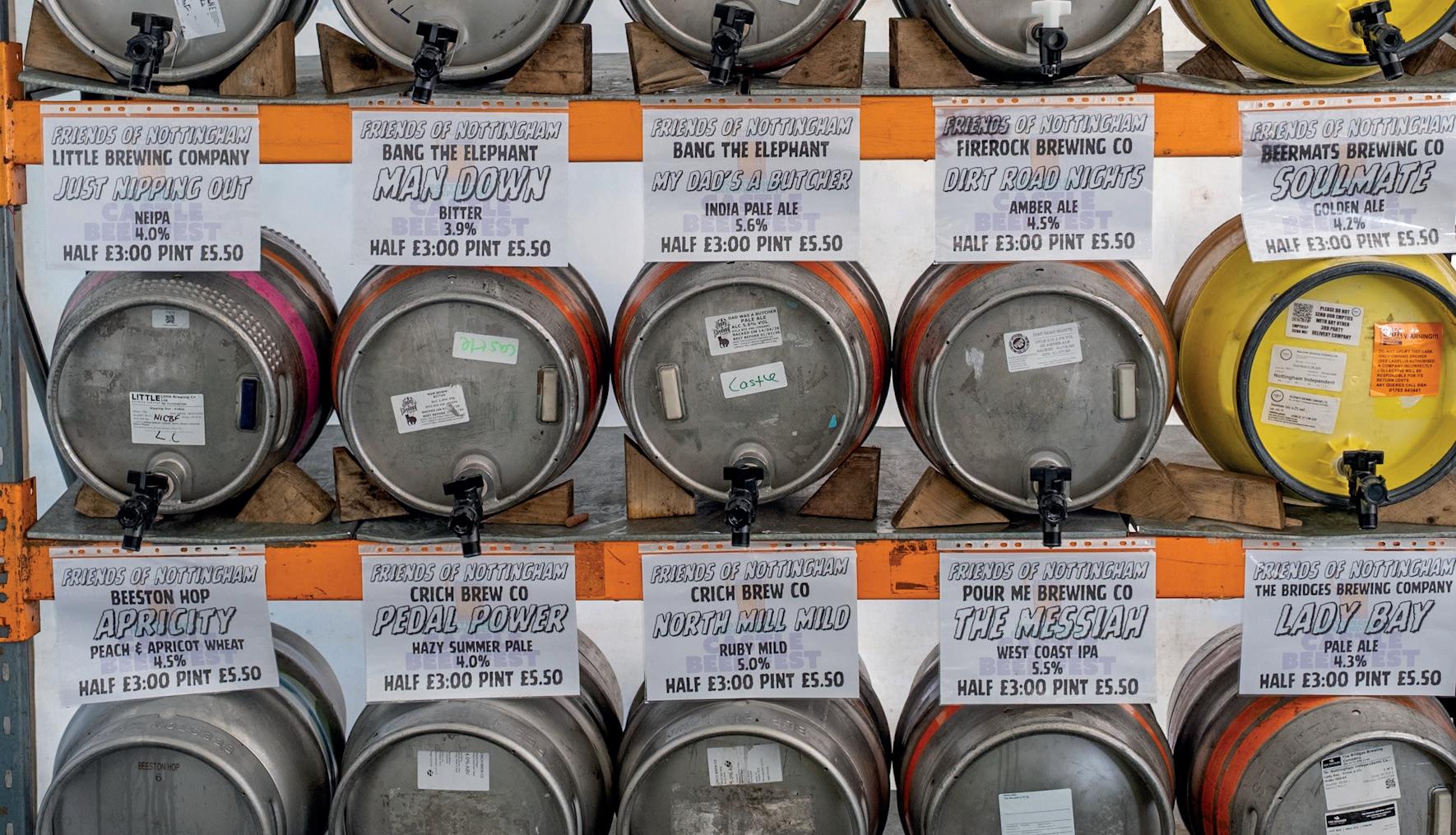
Nottingham’s independent brewers celebrate their second Castle Beer Festival
At the end of April, the historic grounds of Nottingham Castle came alive as nearly 5,000 festival-goers gathered for the Castle Beer Festival, a unique celebration of local brewing, food, music, and community spirit.
Organised by the Independent Brewers of Nottingham, in partnership with Nottingham City Council and Nottingham Castle, the festival stands apart as one of the only events of its kind in the UK. One where competing independent breweries collaborate to create a platform that champions small businesses and local talent – the things that give a city its culture.
From the moment guests arrived, they were greeted by brewery owners personally handing out glasses at the gates, the tone was set for a welcoming, community-driven event. A marching brass band performing modern classics added an energetic start, guiding visitors into a vibrant food village featuring standout local traders including Cod’s Scallops, MemSaab, artisan pizza vendors, gourmet hot dogs, Snoopy’s Butchers on the BBQ, and La Pitta serving fresh Greek dishes.
The vision behind the festival is simple yet powerful: to give independent brewers, food vendors, and performers a stage to showcase their craft while ensuring the majority of profits flow directly back into their businesses. This, in turn, supports local employment, fuels community initiatives, and contributes to charitable causes, all while delivering an unforgettable experience for attendees.
Building on the success of its inaugural year, the 2026 festival saw significant improvements across the board. Expanded marquees housing the bars created a more spacious and weatherproof environment,
complemented by increased seating and a noticeable uplift in service speed and friendliness.
At the bandstand, highlights included a moving performance from Our Dementia Choir, led by Vicky McClure, who also addressed the crowd in support of the initiative. This was followed by an eclectic mix of local original bands and crowd-pleasing party acts, ensuring the atmosphere remained lively throughout the weekend.
Feedback from attendees consistently praised the festival’s relaxed and inclusive vibe, with many noting the friendly service, welcoming environment, and strong sense of community as standout features.
Festival-goers enjoyed an exceptional range of over 100 different beers, spanning traditional cask ales, modern craft beers, crisp lagers, and more –with ABVs as low as 0.3% ABV, all the way up to 13% ABV high-impact specialty beers.
Complementing the beer offering was a dedicated cider bar featuring more than 20 locally produced ciders, alongside an expanded gin selection, ensuring there was something for every taste.
Nottingham Independents’ Castle Beer Festival has firmly established itself as a flagship event for Nottingham’s independent scene, demonstrating what can be achieved when local businesses collaborate rather than compete.
For those looking to experience the very best of Nottingham’s independent food, drink, and music culture, organisers encourage keeping an eye out for tickets to next year’s event.
Find out more at www.castlebeerfest.com
ROTARY FILLING PAIRED WITH ROTARY SEAMING ALLOWS A SMOOTH, CONTINUOUS MOTION TRANSITION FROM FILLING TO SEAMING, ELIMINATING UNNECESSARY AGITATION AND CO₂ Loss
MECHANICALLY-SYNCHRONIZED LID APPLICATION ENSURES CONSISTENT AND REPEATABLE DOUBLE SEAM INTEGRITY
SMOOTHER OPERATION IMPROVES CAN HANDLING AND LOWERS THE RISK OF CAN DAMAGE NOW AVAILABLE IN 12/3, 16/4, AND 24/4 FILL HEAD/SEAMER SPINDLE CONFIGURATIONS FOR SPEEDS UP TO 250 CPM!
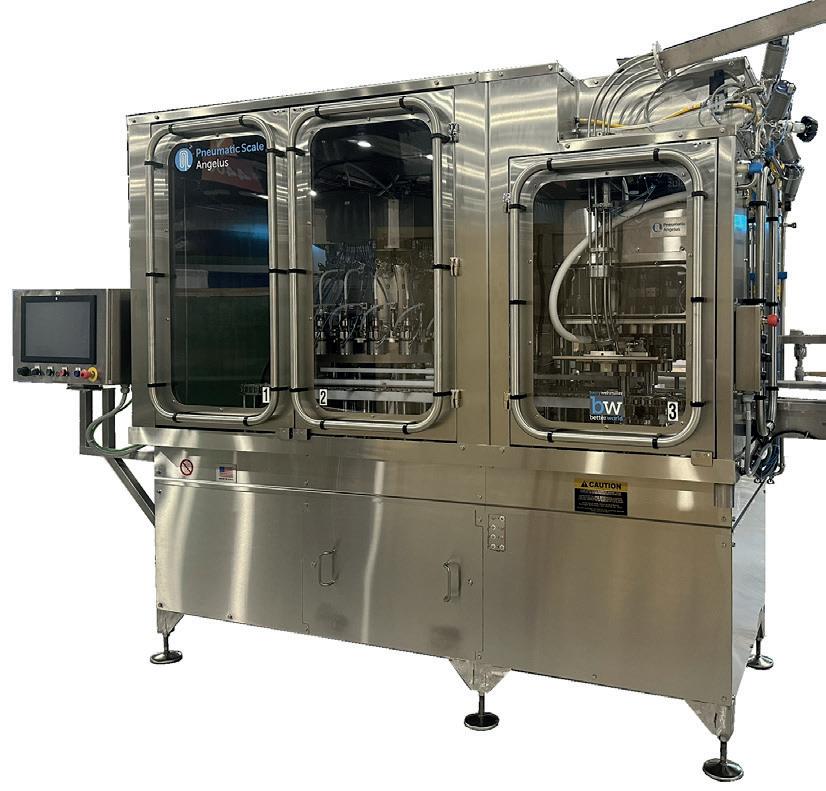
New industry podcast launches,
hosted by the coowner of Kerroo Brewing Company
A new industry podcast, ‘First Draught’, launches this month (June) featuring guests from around the world whose passion for beer creates a diverse and thriving industry.
Presented by beer communicator and brewery co-owner Elizabeth Townsend, the podcast explores the journeys people have made into the professional beer industry, from their very first pints to award-winning careers in brewing, marketing, entrepreneurship and much more.
Host Elizabeth said: “Since launching Kerroo two years ago, I have met countless people who share a dedication to showcasing the very best of beer through championing inclusivity, promoting brewing heritage and making our industry one that will hold strong for future generations."
Each episode is themed, with guests discussing the challenges and triumphs of working across a variety of disciplines in the beer industry.
The first three episodes of ‘First Draught' were released on Wednesday 10th June across podcast platforms, then one new episode will be added per week.
Kerroo Brewing Company, launched on the Isle of Man in 2024, is an independent brewery with community and collaboration at its heart. Brewing modern and traditional beer styles from a facility in the seaside village of Port Erin, Kerroo creates award-winning beers inspired by Manx culture and mythology.
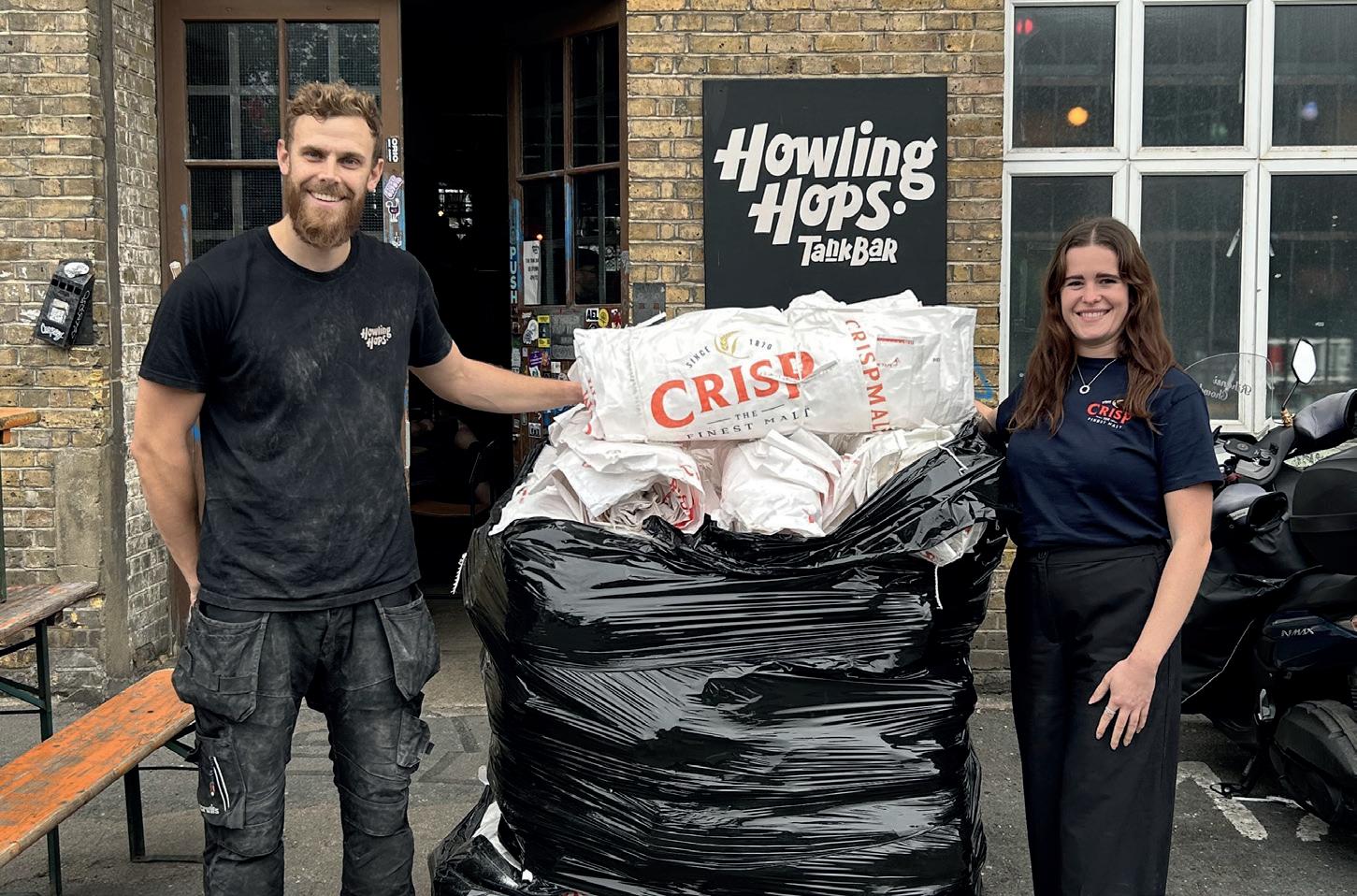
Global Award for Crisp Return-A-Bag scheme
Crisp Malt’s Return-a-Bag scheme has won a prestigious global award.
RMI, which delivers insights into brewing, distilling, malting and raw materials supply chains across the world, has presented Crisp with its highly coveted Innovation Award for the scheme.
As Ellie Wood, Crisp sustainability manager, points out, until recently brewers were sending almost all their used polypropylene and polyethylene bags to landfill. Now, for the first time, and as an industry first, thanks to Crisp’s Return-a-Bag scheme, these sacks can be recycled. Already more than 5,000kg of them are being re-purposed into useful household or garden items.
“There were over 50 entries to the awards, with some fantastic initiatives from across the malting industry, so it was a real honour for our scheme to have been selected as a winner,” she said.
“Return-a-Bag solves a problem for brewers and distillers that has been a long-standing challenge for decades. The Award will raise awareness of the scheme and get more brewers and distillers on board with it. That will add to the waste-savings. The equivalent of over 60,000 25kg malt bags have so far been returned for processing and repurposing. The cumulative impact over time will be massive!”
In fact, Return-a-Bag is industry inclusive, with acceptance of empty bags not just from Crisp, but from all malt suppliers. Ellie believes this approach played an important part in the recognition of award judges.
WRAP reports that just 10% of the 142 million tonnes of plastic packaging produced each year is effectively recycled, with the remainder is sent to landfill, incinerated or leaked directly into the environment. The kind of plastic used in malt sacks is not easily recycled. Only specialist facilities can recycle and make it into secondary raw material.
“It’s clear we need to work together to increase recycling of waste volumes. And we’d like to thank all our brewing and distilling customers who are currently doing just that by being part of Returna-Bag.”
The only cost to Crisp’s customers is transportation. They can organise their own transport of empty sacks – of any size - to the waste aggregation facility near Swindon, or Crisp can organise transport on their behalf.
As Sam Wright from Howling Hops Brewery says of the scheme, “Very straightforward and easy for us. Collecting all of our empty malt sacks on a pallet and getting it shipped off is very straightforward. Amazing that the recycling is free as well! Great to reduce our physical waste footprint!”
There is full traceability of waste volumes received and processed, so breweries and distilleries can use the information in their annual reporting.
RMI, commenting on the awards, said: “Inspiring to see such impactful initiatives shaping a more sustainable, innovative, and collaborative future for the industry.”
Customers who aren’t yet involved are referred to the step-by-step guide at www.crispmalt.com/news/return-a-bag-stacking-your-sacks/ to find out more.
Quality Automation Without The Overhaul: Why Modular Vision Systems Are Reshaping Beverage Production
The team at Faedah Solutions explains why taking a modular approach to automation makes access to new technology much simpler for small breweries…
The vision systems market has long positioned quality automation as a capitalintensive play reserved for multinational manufacturers. For smaller and mid-sized beverage producers, the message has been implicit but clear - if you're not running high-volume lines at industrial scale, automation is a future consideration.
Yet when Faedah Solutions recently exhibited at BeerX 2026, it quickly became obvious that beverage manufacturers of all sizes are hungry for quality automation but they need a cost effective point of entry.
The traditional barrier isn't technology. It's the perception that quality automation requires ripping out existing systems, retraining staff, and justifying massive capital expenditure before seeing any return. For producers managing tight margins and diverse product runs, that risk calculus doesn't work.
Enter the modular approach. Rather than positioning quality automation as a monolithic platform, Faedah Solutions has architected Check Sure® as a sequence of independent yet connected modules - each solving a specific problem, each capable of standing alone, and each designed to build seamlessly toward a complete line-wide system.
"A recurring theme at BeerX was how many smaller breweries see autocoding and vision systems as something reserved for larger operations," says Paul Unwin, Technical Operations Director at Faedah Solutions. "What cut through quickly was showing that the starting point can be incredibly simple." That entry point begins with Check Sure® Paperless and Check Sure® Perceptionoffline, tablet-based quality checks that
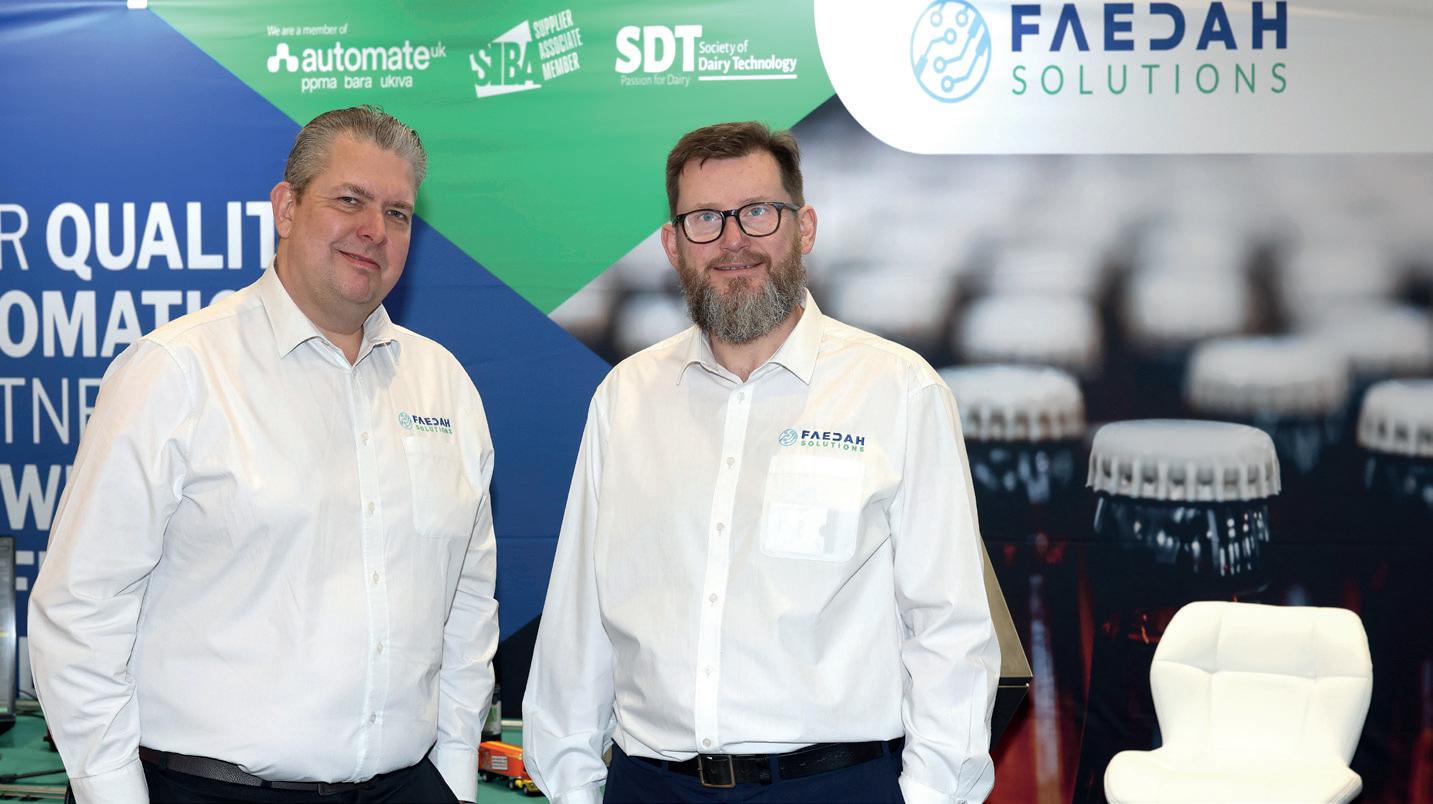
replace manual clipboards with timestamped digital records and barcode verification. No line integration, no databases and no requirement for programmable logic controllers. For a manufacturer running manual packing operations or smaller packaging lines, these modules deliver immediate value: reduced human error, audit-ready records, and allergen declaration verification.
Once producers have proven the value of automated quality checks in isolation, adding a single Check Sure® Scanning or Vision unit inline feels like a natural extension rather than a system overhaul. The camera verifies that the packaging meets expectations, plus label placement and date code legibility in real time. A failed inspection alerts staff and can be set to automatically stop the line. Suddenly, automated pack inspection replaces manual spot-checking, and operators have concrete data on line performance.
"From there, the natural evolution is adding real-time verification of every pack," Paul explains. "This gives manufacturers a practical, low-risk route into automation. They can begin with isolated checks, prove the value and then expand towards a centralised platform."
That centralised platform is Check Sure® Autocoding, the enterprise solution connecting all printers, scanners and vision systems to a single database. Operators select a job, and all connected coders configure automatically. Barcodes are verified in real time and artwork version control prevents labelling errors. Production data is captured for ERP integration and GS1 Sunrise 2027 compliance. But here is the critical differentiator for Check Sure®, the hardware installed at earlier stages doesn't become obsolete. Each module builds on the last.
At BeerX, feedback was revealing. Smaller breweries, many without prior exposure to vision systems or autocoding, expressed genuine interest once they understood the
entry point was a tablet-based quality check, not a fully integrated line-wide system.
Larger manufacturers already familiar with automation asked pointed questions about integration and scalability, recognising that a staged approach could complement rather than replace existing equipment.
GS1 Sunrise - The Transition To New Barcodes
One knowledge gap that stood out immediately was around GS1 Sunrise 2027. "Most people hadn't heard of it," recalls Angelica Unwin, Office and Projects Administrator. "I ended up giving a few brief explanations and once I explained the transition from 1D to 2D barcodes and the deadline, the urgency became clear to everyone I spoke with."
Check Sure® handles both legacy and nextgeneration barcodes simultaneously during the transition period, with no hardware change required. For manufacturers facing retailer pressure to pilot 2D codes, that capability becomes a competitive advantage.
"Once people saw that each stage builds on the last, without replacing hardware, the conversation shifted from 'nice to have' to 'we can start this now,'" Angelica reflects.
That mindset shift - from viewing quality automation as a distant, expensive initiative to seeing it as an achievable, staged investment - may be the most important outcome of the tiered vision approach. In a sector where margins are tight and production complexity is rising, the ability to scale automation without waste is not a niceto-have feature. It's becoming essential. For vision system designers and OEMs serving the food and beverage sector, the question is no longer whether automation is necessary, rather it’s “Can you make it accessible for us?”
For more information visit faedahsolutions.com or contact the team at sales@faedah-solutions.com.
SIBA Gold members
BrewMan
James Gardner sales@premiersystems.com
Breww Ltd
Max Andrew max@breww.com
Charles Faram
Charlie Gorham CharlieGorham@charlesfaram.co.uk
Close Brothers
Beverage Finance
Antonietta Miller antoniette.miller@closebrothers.com
Crisp Malting Group
Colin Johnston colin.johnston@crispmalt.com
Croxsons
Tim Croxson Tim.croxson@croxsons.com
ekeg
Richard Atkinson richard.atkinson@ekeg.co.uk
Festival Glass Kelsey Cheesbrough Kelsey@festivalglass.co.uk
Kegstar
James Bleakley jamesb@kegstar.com
Loughran Brewers
Select
Digby Fullam marketing@malt.ie
Murphy & Son

SIBA Silver members
Anton Paar Ltd
Tertia Rimell tertia.rimell@anton-paar.com

Colorscan Imaging Products
Nigel Forster nigel@colorscan.biz
GEA UK
Beverley Beckley-Lines Beverley.Beckleylines@gea.com

Pneumatic Scale Angelus
Tom Bowdige tom.bowdige@bwpackagingsystems.com
Rankin
Brothers & Sons
Jim Rankin jim@rankincork.co.uk
Rastal GmbH & Co KG
Timo Leukel timo.leukel@rastal.com
Glassware Branding
Richard Ross richard.ross@cnc-group.co.uk
IGC Engineering Ltd
Chris Hamlett chrishamlettigc@onetel.com
Christina Crook christina.crook@murphyandson.co.uk
Napthens LLP
James Allison James.Allison@napthens.co.uk
Thomas Fawcett & Sons
Mungo Fawcett mfawcett@fawcett-maltsters.co.uk
UB Plastics
Andrew Cox CoxAndrew@ubplastics.co.uk
Willis Publicity
Carl Andrews Carl@willispublicity.co.uk

Signature Resin Floors
Donna Clayton donna@signatureresinfloors.co.uk
Lallemand Brewing
Andrew Paterson apaterson@lallemand.com
Lemon Top Creative
Andy Mogg hello@lemontopcreative.com

Muntons PLC
Simon Whittington simon.whittington@muntons.com
Simpsons Malt
Martin Inglis martininglis@simpsonsmalt.co.uk
Vale Labels Ltd
Matt Riches mattr@valelabels.co.uk
Wine Box Company
Marketing Team marketing@wbc.co.uk
passion excellence f or
Bottling and Packaging
THAT HELP SEAL, PROTECT AND ADD RELIABLE CLOSURES VALUE TO BRANDS
Machinery for the Beer Industry CORKS
HEATSHRINK C A PSULES &SLEEV ES
WIRE HOODS
CROWNCAPS
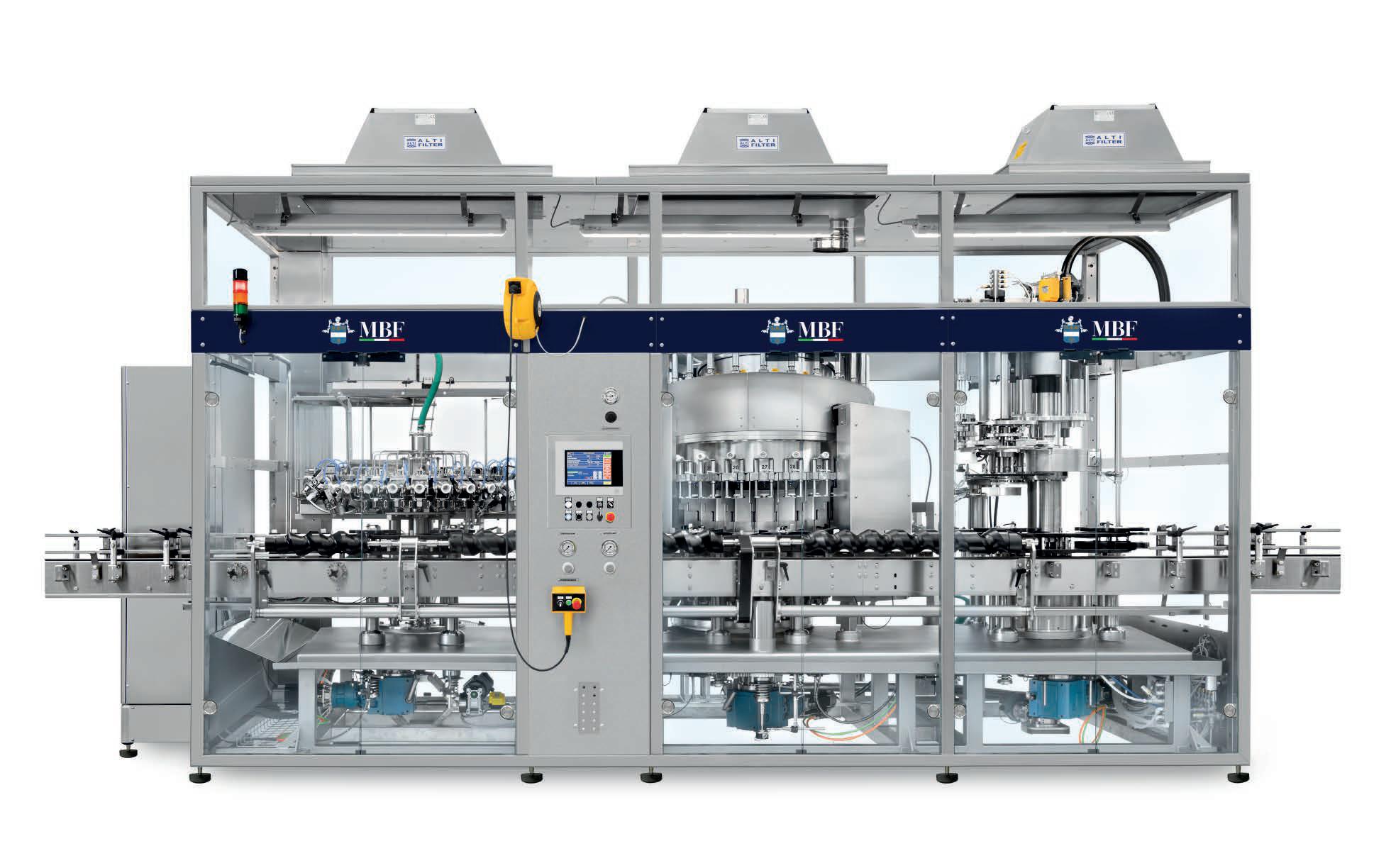
SIBA Head Office: 01765 640441
SIBA Team
Andy Slee
Chief Executive andy.slee@siba.co.uk
Rachel Harriott
Head of Membership Services rachel.harriott@siba.co.uk
Neil Walker
Head of Comms & Marketing neil.walker@siba.co.uk
Barry Watts
Head of Public Affairs & Policy barry.watts@siba.co.uk
Elle Spencer-Blanchard
Membership Services Administrator elle.spencerblanchard@siba.co.uk
Emma Guneyogullari
Membership Services Assistant emma.guneyogullari@siba.co.uk
Megan Brecken
Events & Marketing Officer megan.brecken@siba.co.uk
Forbes Coleman
Business Development Executive forbes.coleman@siba.co.uk
Bee Horner
Membership Services Assistant bee.horner@siba.co.uk
All General Enquiries contact office@siba.co.uk
Board of Elected Directors
Existing members wishing to contact your regional representatives can use the relevant regional e-mail addresses listed below. For individuals, just type firstname.lastname@siba.co.uk
Chairman of SIBA Anthony Hughes
Vice-Chairman of SIBA Alex Balchin
East
Richard Naisby Milton Brewery
Chair Matthew Ashford Oakham Ales Ltd
Tom Foddy Wells & Co
Midlands & West
Chair Anneli Baxter Loose Cannon Brewing Co Ltd
Anthony Hughes Lincoln Green Brewing Co Ltd (Chair of the Board)
Sam Back Attic Brew Co
Libby Elswood Goffs Brewery
North East
Chair Joe Joyce Harrogate Brewing Ian Fozard Rooster’s Brewery Ltd
Alex Balchin Wold Top Brewery (Vice-Chair of the Board)
David Dodd Three Brothers Brewing
North West
Chair Paul Jones Cloudwater Brew Co
Ben Croston Fuzzy Duck Brewery
John Morrisey Vocation Brewery
Northern Ireland
Chair William Mayne Bullhouse Brewing Co
Chris Morris Modest Beer Brewing Co
Scotland
Chair Ian McGrath Beath Brewing
Jamie Delap Fyne Ales
Conall Low Wasted Degrees Brewing
South East
Chair Andy Parker Elusive Brewing Ltd
Kate Hyde Hand Brew Co
Dave Hayward Indie Rabble Brew Co
South West
Chair Paul Arrowsmith Isca Ales Ltd
Alan Collyer The Exeter Brewery
Paul Dimond Branscombe Vale Brewery
Wales
Dr Malcolm Herbert Core of the Poodle
Gareth Williams Tiny Rebel
Lee Ralph Dogs Window Brewery
PO BOX 136, Ripon, North Yorkshire, HG4 5WW