On Track to Opportunity
South Eastern Railway Social Mobility Impact Report 2026

Rt Hon Justine Greening, Chair of The Purpose Coalition and Former Secretary of State for Education
Steve White, Managing Director, South Eastern Railway
An Overview of Southeastern and its Purpose
1.1 An Introduction to Southeastern
1.2 Southeastern’s Purpose
Southeastern’s Journey to Breaking Down Britain’s Barriers So Far
Executive Summary
Mapping Southeastern’s Activity Against the Purpose Goals
Analysis

0. Forewords
Rt Hon Justine Greening, Chair of the Purpose Coalition and Former Secretary of State for Transport & Education
Social mobility is bounded by the choices people can make, and those choices themselves are shaped by the opportunities that are within reach. In my time as Secretary of State for Transport, I saw first-hand how better connectivity can unlock growth, widen access to jobs and skills, and bring places closer to opportunity. As Education Secretary, I also saw how quickly doors can open when young people get the right support at key transition points, especially post-16.
That is why transport matters so much for opportunity. It’s more than just getting from A to B, in practice it’s connecting us to education, training, employment, healthcare and enabling stronger social networks. And that is why rail operators, particularly those serving communities with very different levels of prosperity, can be powerful anchor institutions for change. This was a central theme of our 2024 work together with Southeastern, and it remains the foundation of this second Social Mobility Impact Report.
Since that first report, Southeastern has moved from ambition to deeper delivery. This 2026 report shows how social impact is being embedded across the organisation’s workforce strategy, customer offer and community partnerships, with clear focus on the Purpose Goals where Southeastern can make the greatest difference.
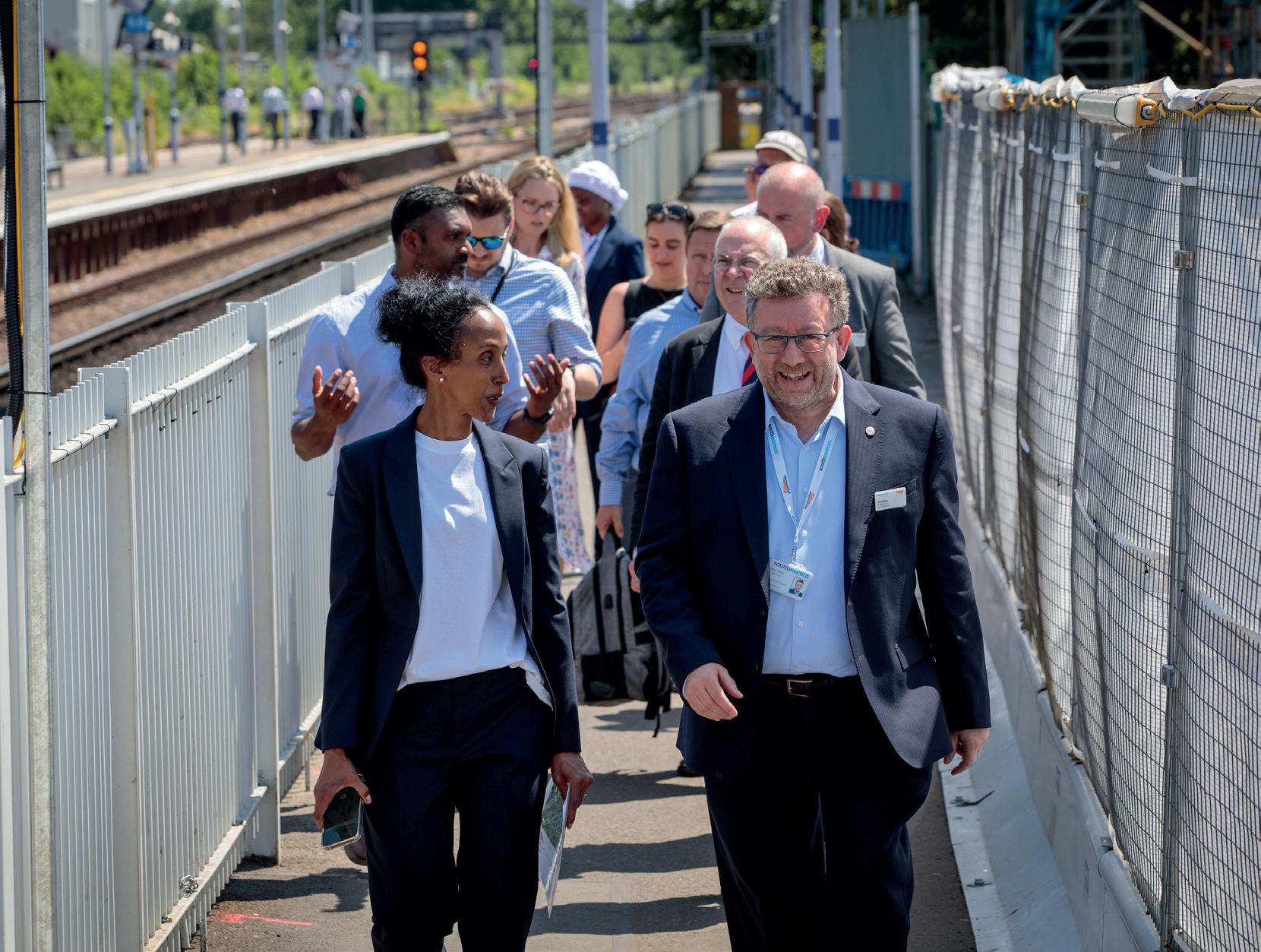
A major development in this period has been the practical shift towards the model Great British Railways which is designed to enable, bringing track and train closer together. Southeastern and Network Rail Kent Route have united under a single leadership team, operating as South Eastern Railway, with a desire for clearer accountability and a shared purpose focused on passenger outcomes. Passengers experience the railway as one system, so when infrastructure and operations are planned together, the intent is that decisions can be faster, investment can be better targeted, and performance can be improved in ways that people feel day to day.
What stands out across this report is the way Southeastern is using its scale, railway stations, supply chain and skills pipeline to deliver outcomes beyond the journey itself. A purpose-led railway can support opportunity at every life stage: from inspiring young people into engineering and customer service careers, to creating fairer routes into leadership, to building safer and more supportive environments for colleagues and passengers who need help.
Partnership is central to that progress. The Purpose Coalition exists to help organisations translate intent into measurable action, benchmarked against the ingredients for opportunity that shape lives across the UK. This report reflects a maturing partnership with Southeastern, one that has moved from assessment and recommendations to sustained delivery, stronger evidence, and a clear direction for the years ahead. I am proud of what has been achieved so far, and even more excited about what this report makes possible next.
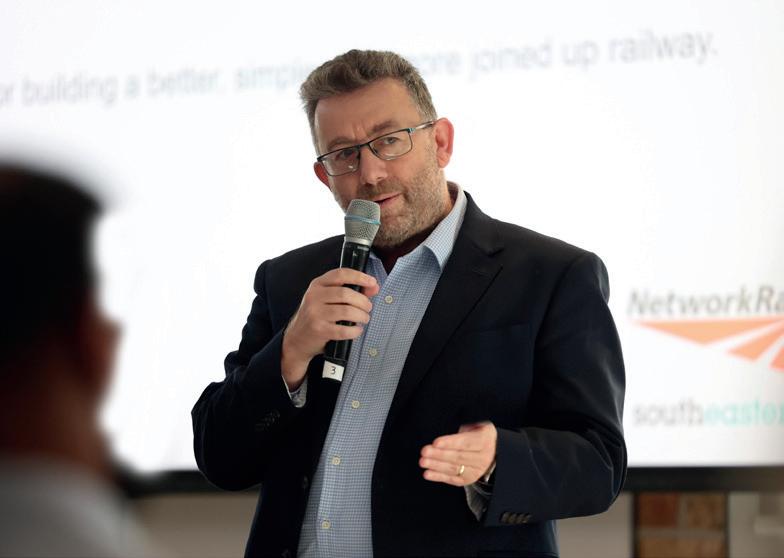
Steve White, Managing Director, South Eastern Railway
Every day, South Eastern Railway connects people across South East London, Kent and parts of East Sussex to the opportunities that matter most: work, learning, housing, family, health services and leisure. That responsibility goes beyond punctual trains and safe stations, important as those are.
It is about using the railway’s reach, scale and influence to help build a region where opportunity is genuinely within reach for everyone, wherever they live.
Our first report with The Purpose Coalition in 2024 set out why social mobility must sit at the heart of a modern purposeful railway, and how Southeastern would take a more structured, ambitious approach through a Social Mobility Action Plan. This 2026 Social Impact Report shows how that ambition has been translated into action. It charts the progress we have made in responding to insights, strengthening delivery and embedding social impact more deeply across our operations, our people strategy and our work with communities. The most significant development during this period has been the way we now work alongside Network Rail. Southeastern and Network Rail Kent Route have come together under a single leadership team as South Eastern Railway, creating the first in a new era of integrated railways under public ownership with full accountability and a more joined-up approach to building a better railway.
This matters because passengers experience the railway as one system. By planning and delivering together, we can move faster, target investment
more effectively and deliver improvements that people feel in their everyday journeys. It also puts us at the forefront of the transition towards Great British Railways, demonstrating what a more integrated railway can achieve in practice.
This report reflects our belief that a purpose-led railway starts with being a great operator providing connectivity for communities and then uses that strong foundation to deliver wider value. It highlights the progress we have made in building accessible pathways into skilled careers through apprenticeships, early careers programmes and partnerships that widen participation. It shows how we are strengthening recruitment practices so that talent and potential are recognised wherever they are found, and how we are investing in fair development and progression for colleagues at every stage of their career. It also sets out how we are deepening our focus on health and wellbeing, recognising the realities of a public-facing railway and the importance of supporting colleagues and passengers, especially in challenging moments.
You will also see how we are using our infrastructure and our supply chain to support local growth and opportunity, and how we are taking our responsibilities in the energy transition seriously, with clear plans to reduce emissions and improve resilience. None of this is achieved alone. Our partnerships with The Purpose Coalition, education providers, charities, local authorities, and industry colleagues are central to the outcomes in this report, and to the ambition that lies ahead.
I want to thank colleagues across the railway for making this work real. Social impact is delivered through everyday choices - in stations, on trains, in depots and offices, and in how we work with communities. This report is both a record of progress and a platform for what comes next. At South Eastern Railway, we will continue to raise the bar for passengers, while using our role as an anchor institution to help break down barriers to opportunity across the region we serve. As we move towards Great British Railways, we will ensure that the rail industry becomes a powerhouse for social mobility unlocking opportunities for thousands of people to join our sector from less advantaged backgrounds and to thrive. Our sector will become a Social Mobility train where no one is left behind.
Forewords
1. An Overview of Southeastern and its Purpose
An Introduction to Southeastern
Southeastern is one of the UK’s most significant rail operators, playing a vital role in keeping South East London, Kent and parts of East Sussex connected to London and to each other.
Operating at the heart of one of the country’s busiest transport corridors, Southeastern changes lives one at a time by providing essential daily links that enable people to access work, education, healthcare and leisure opportunities. Its network spans major urban centres, coastal towns, suburban communities and rural areas, reflecting the social and economic diversity of the region it serves.
As a public, not-for-dividend company, Southeastern’s primary purpose is to deliver a reliable, efficient and value-for-money railway for passengers. Each day, hundreds of thousands of journeys are made across its network, with over 1700 trains in operation each weekday across 181 stations, including high-speed, mainline and metro services. This scale places Southeastern in a unique position of responsibility: not only to move people safely and punctually, but to also act as a steward of public infrastructure that underpins regional growth and opportunity.
At its core, Southeastern is a people-centred business, built on the expertise and commitment of its workforce. Southeastern employs just under 5,000 people across a wide range of roles, from frontline station staff and train drivers to engineers, planners and corporate teams. Together with 1,700 employees from Network Rail Kent, they work collaboratively to ensure the smooth running of one of the UK’s busiest passenger railways while maintaining high standards of safety and customer care. The organisation offers diverse entry points into employment, including apprenticeships and graduate roles, creating opportunities for people with different skills, backgrounds and levels of experience to build long-term careers within the rail industry.
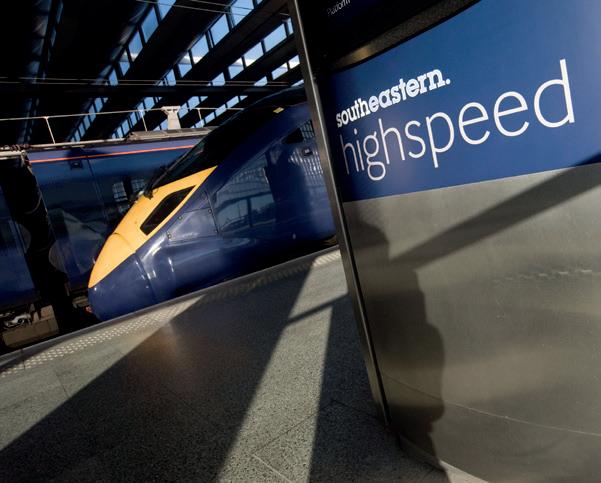
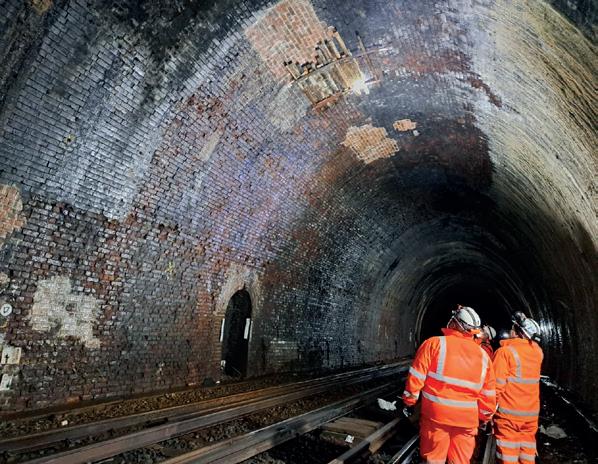
In the past year, Southeastern has developed a deeper collaboration with Network Rail, the organisation at the heart of railway infrastructure maintenance and operation. By uniting both teams under a single leadership as South Eastern Railway (SER) ahead of the transition to Great British Railways, Southeastern is not only enhancing reliability, but also creating a powerful platform for transformation. This collaborative approach is already delivering tangible improvements for passengers - streamlining operations, speeding up decision-making and ensuring a seamless, passenger-focused experience. As the partnership lays the groundwork for future innovation, SER passengers can look forward to even greater service quality and connectivity in the years ahead, securing a thriving future for both the railway and the communities they serve.
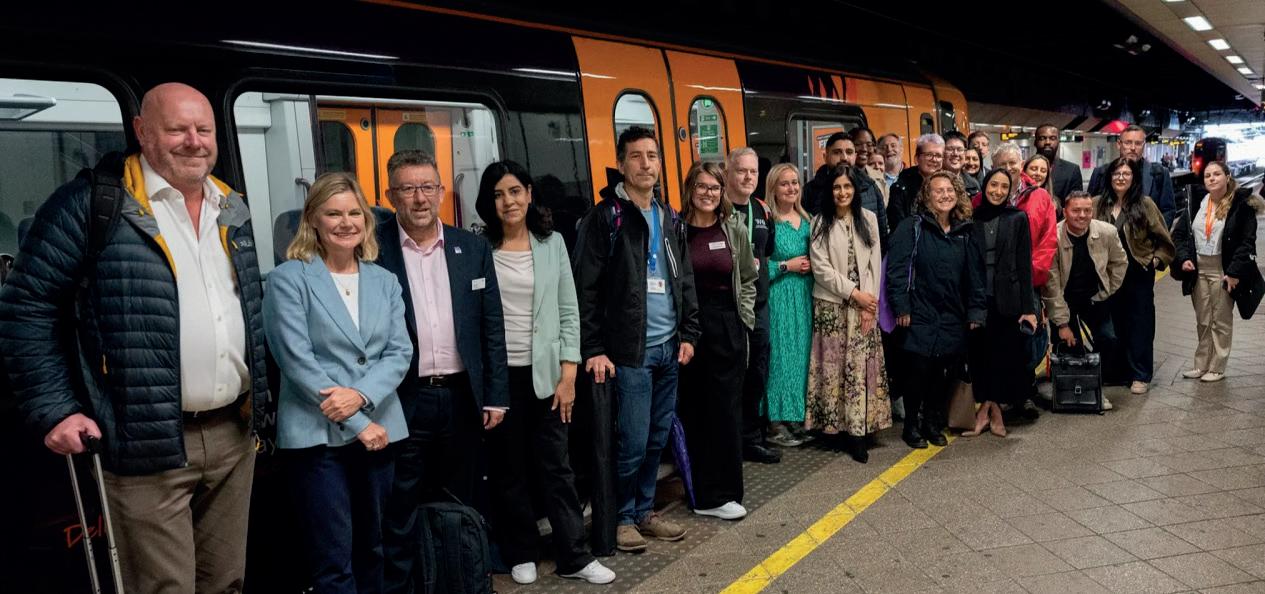
Southeastern’s Purpose
Beyond its operational remit, Southeastern recognises that railways are powerful catalysts for social and economic progress. As a leading employer throughout the South East, the organisation understands the unique role it can play in helping to break down barriers to opportunity and improve social mobility within the communities it serves. By leveraging its extensive network and resources, SER strives not only to connect people to places, but to foster inclusive growth and enable individuals to progress in their lives.
Transport connectivity can reduce physical and social isolation, widen access to labour markets and help communities attract investment. While the South East is often perceived as a prosperous region, it contains areas facing persistent deprivation and limited opportunities for social mobility.
Southeastern’s network runs directly through many of these communities, positioning the company as an anchor institution with the capacity to drive meaningful, long-term improvements that extend well beyond the provision of transport alone.
This understanding shapes Southeastern’s approach to social impact. The organisation increasingly views its role not simply as delivering mobility, but as supporting social mobility by helping people to access opportunity and thrive. This commitment is reflected in its recruitment and workforce development practices, its collaborations with schools, colleges and community organisations, and targeted investments in stations and
infrastructure that respond to the unique needs of local communities. In addition, Southeastern’s broader pledges to inclusion, wellbeing and environmental sustainability underscore its recognition that true, long-lasting prosperity depends on nurturing resilient individuals, vibrant communities and sustainable systems.
Southeastern’s purpose-led approach is formalised through its Social Mobility Action Plan, making it the first UK rail operator to set out a structured, public commitment to boosting social mobility. The Action Plan reflects a belief that businesses have a critical role to play in reducing social inequality, and that meaningful progress requires clear goals, measurement and accountability. Through this framework, Southeastern is aligning its internal practices and external activities with the wider needs of the region. Additionally, Southeastern’s Managing Director Steve White acts as chair of the sector-wide Beyond Barriers network group, fostering greater cross-industry collaboration to maximise social impact across the UK’s rail companies.
Collaboration is central to delivering this ambition. Southeastern works closely with the Purpose Coalition to benchmark its activity against recognised social mobility goals and to identify where its impact can be scaled further. Through this partnership, the organisation is strengthening its role as a purpose-led railway that actively contributes to creating a more inclusive, connected and opportunity-rich future for the South East.
2. Southeastern’s Breaking Down Barriers Journey So Far
The Purpose Goals
The Purpose Coalition measures organisations against a set of sector-relevant social impact criteria. The Purpose Goals outline 15 interconnected barriers to opportunity, spanning key life stages and challenges faced across the UK. By drawing on expertise provided by academia and business, the goals are designed to specifically address some of the unique challenges facing the UK.
The Coalition’s cross-party work brings together the UK’s most innovative leaders, Parliament and organisations to improve, share best practice and develop solutions for improving the role that organisations can play for their customers, colleagues and communities by breaking down barriers to opportunity.
The Purpose Coalition is chaired by Rt Hon Justine Greening, the UK’s former Secretary of State for Education, Transport and International Development.
The Goals were designed following Justine’s experience as Secretary of State for International Development, leading the UK’s delegation to the convention of the United Nations (UN) that established the 2015 UN Sustainable Development Goals (SDGs). The Purpose Goals apply the SDGs in a UK context.
The SDGs as interlinked goals emphasised the interdependent environmental, social and economic aspects of development and centralised the role of sustainability. At the time, Justine recognised how transformative a common set of accessible but ambitious goals could be in galvanising action to effect change. After leaving Government in 2019, Justine established the Purpose Coalition and Social Mobility Pledge with the intention of galvanising UK economic and social actors to improve social mobility in the UK.
The Purpose Goals focus on key life stages and highlight the main issues that need to be resolved to break down barriers to opportunity in the UK. The Goals are intended to guide ambition, provoke action and measure progress.
Southeastern’s Progress so far
This report represents the second major piece of work developed by Southeastern in partnership with the Purpose Coalition, following the publication of its first report in 2024. Since then, both Southeastern and the wider railway industry have moved on considerably, responding to new social, economic and workforce challenges while strengthening their focus on long-term social impact.
Over the past two years, Southeastern has continued to work closely with the Purpose Coalition, taking forward and acting on the recommendations of the first report. In doing so, the organisation has sought to go even further in embedding social impact across its operations and positioning itself as an industry leader on social mobility within the rail sector.
This report sets out the progress Southeastern has made in the two years since its initial assessment as it continues its journey to change lives through greater social mobility, focusing on eight Purpose Goals which Southeastern has chosen to prioritise as aligning most strongly with its role, operations and expertise. It explores how the organisation is using its position, assets and partnerships to drive positive social change across its network and identifies opportunities to deepen and scale its impact in the years ahead. As the following chapters show, Southeastern’s work demonstrates how a major transport operator can combine operational excellence with a clear sense of purpose.
3. Executive Summary
Southeastern is one of the UK’s most significant rail operators, connecting South East London, Kent and parts of East Sussex with the capital and with each other. Operating more than 1,700 services every weekday across 181 stations, the organisation underpins access to work, education, healthcare and leisure for hundreds of thousands of passengers.
As a public, not-for-dividend company and a major regional employer of just under 5,000 people, Southeastern recognises that its role extends far beyond transport, with its decisions shaping opportunity, inclusion and long-term prosperity across the communities it serves.
The socioeconomic profile of Southeastern’s network highlights both the scale of this responsibility and the opportunity for impact. Analysis of the Indices of Multiple Deprivation (IMD) shows stark variation across the region. In Hastings, 48.12% of residents live within the most deprived 30% of communities nationally, alongside 36.75% in Thanet, 25.31% in Medway and 24.69% in Swale. Over one in five residents in Dover, Folkestone & Hythe and Gravesham also live within the most deprived 30% nationally. By contrast, in Tunbridge Wells (2.54%), Wealden (2.44%) and Tonbridge & Malling (3.45%), deprivation levels are significantly lower. This uneven geography of opportunity reinforces the railway’s role as connective infrastructure linking areas of high deprivation with employment centres, education institutions and essential services.
This report outlines progress across eight priority Purpose Goals, illustrating how Southeastern is breaking down barriers to opportunity through workforce development, inclusive recruitment, fair progression, health and wellbeing leadership, infrastructure investment, environmental transition, accessibility and strategic partnership.
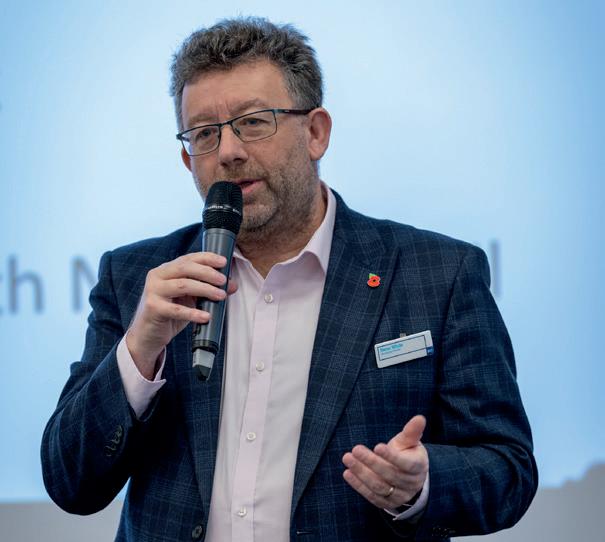
Access to Employment
Southeastern is widening access to high-quality careers in rail through a strong early careers offer and inclusive recruitment practices. Around 500 colleagues undertake apprenticeships each year, and 10% of the workforce is engaged in apprenticeships or graduate schemes. A twoyear graduate programme, paid internships and structured work experience placements provide credible alternatives to traditional academic routes, particularly for students from lower socioeconomic backgrounds.
The opening of the new Careers and Skills Hub in Ashford represents a long-term investment in training capacity and inclusive workforce development. Recruitment processes have been redesigned to reduce bias, embedding blind recruitment, psychometric testing and accessible systems to ensure that selection is based on potential and capability.
Progress is measurable. Staff turnover has reduced to 6.65%, 485 colleagues progressed internally in 2025, and the number of female train drivers and conductors has increased by more than 50% over two years. Southeastern has also voluntarily published its ethnicity pay gap, reinforcing transparency and accountability. At the beginning of 2025/26, Southeastern introduced a new question to pre-joining information regarding socio-economic background. Of all new joiners during the year, 85 (18%) consider themselves to be from a lower socio-economic background (where the data is declared by a candidate).
Expanding
Building Infrastructure for Opportunity
With hundreds of thousands of passenger journeys each day, Southeastern underpins access to employment, education and essential services. Through its Integrated Travel Strategy, the organisation is addressing first- and last-mile barriers by introducing in-station car clubs, designated e-bike parking and multi-modal station hubs.
Significant investment in accessibility is widening independent travel. Over £40 million has been committed to major accessibility upgrades, including the largest-ever Access for All scheme at Hither Green. Smaller station improvements, a new Changing Places facility at Margate and an expanded Accessible Travel Advisory Panel ensure lived experience informs design.
Southeastern also uses its economic footprint to strengthen local communities. In 2023/24, £77 million was spent with SMEs, while over £500,000 has been invested through the Customer and Community Improvement Fund. Its Procurement Social Value Charter embeds mandatory social value weighting into major contracts, ensuring supply chain decisions generate wider economic and community benefit.
Health,
Wellbeing and Inclusion
Southeastern has embedded wellbeing into its organisational culture, holding Investors in People Gold accreditation for wellbeing and leading the Railway Mental Health Charter. Over 1,800 staff have received suicide prevention training, and partnerships with charities and mental health services are strengthening crisis interventation at stations.
The organisation is also a sector leader on inclusion, becoming the first UK rail operator to publish a Social Mobility Action Plan and the first transport operator accredited as a Menopause Friendly Employer. Five active colleague network groups, representing over 10% of the workforce, ensure lived experience shapes policy and practice.
Driving
the Energy Transition
Recognising that environmental sustainability underpins long-term opportunity, Southeastern has committed to achieving net zero Scope 1 and 2 emissions by 2035 and across its value chain by 2050, with targets approved by the Science Based Targets initiative. Since 2019, operational emissions have reduced by nearly one third. Investments include 2,900 solar panels across depots along with a 99% waste diversion from landfill.
A joint Weather Resilience & Climate Change
Adaptation Strategy with Network Rail integrates decarbonisation and resilience, future-proofing services against increasing climate risk.
Partnership
From operating under a unified South Eastern Railway leadership model with Network Rail, to partnerships with schools, local authorities, charities and the Purpose Coalition, collaboration is central to Southeastern’s approach. These relationships enable activity to be scaled, targeted and sustained.
Taken together, this report demonstrates how Southeastern is aligning operational excellence with social purpose. By embedding inclusion, accessibility, sustainability and partnership into its core strategy, Southeastern is not only connecting places – it is expanding access to opportunity and helping to build a more inclusive and resilient South East.
Ultimately, Southeastern’s journey demonstrates that a railway can be far more than a transport provider: it can be a powerful engine of social mobility, economic inclusion and sustainable growth. By aligning its operations, workforce strategy, infrastructure investment and partnerships around a clear social purpose, Southeastern is helping to ensure that the opportunities its network connects people to are accessible to everyone, everywhere across the South East.

4. Mapping Southeastern’s Activity Against the Purpose Goals
4.1 Goal 3: Positive Destinations Post 16+
Expanding high-quality pathways into rail careers:
A broad early careers offer, including rail-specific apprenticeships, a twoyear graduate scheme and paid internships, provides accessible and credible routes into skilled employment.
Nationally recognised excellence in apprenticeships:
Ofsted rated ‘Good’, Gold Standard
Investors in People status and a Top 25 ranking in the Sunday Times Apprenticeships Top 100 Employers highlight the strength of Southeastern’s programmes.
Targeted partnerships to widen participation:
Collaboration with local universities, The King’s Trust and the Purpose Coalition creates guaranteed opportunities and tailored support for young people from lower socio-economic backgrounds.
Investing in future skills through dedicated infrastructure: The new Ashford Careers and Skills Hub increases training capacity and embeds long-term support for school leavers, career changers and underrepresented groups across the South East.
Ensuring that young people have access to positive destinations after the age of 16 is critical to improving long-term social mobility. As individuals begin to make choices that can shape their future prospects, it is essential that they are supported to progress into education, training or employment pathways that align with their interests and strengths.
Southeastern recognises the importance of providing a range of valuable pathways to young people after leaving school. While higher education can be the right choice for some, alternatives such as apprenticeships, training and direct employment offer equally credible routes into skilled, sustainable careers. By improving awareness of these options and providing accessible entry points into the railway industry, Southeastern supports positive, informed post-16 transitions.
As a major employer across the South East, Southeastern is well placed to contribute to this agenda. The organisation has developed a broad range of early careers opportunities that not only support young people into employment but also help to build a resilient and diverse talent pipeline for the future.
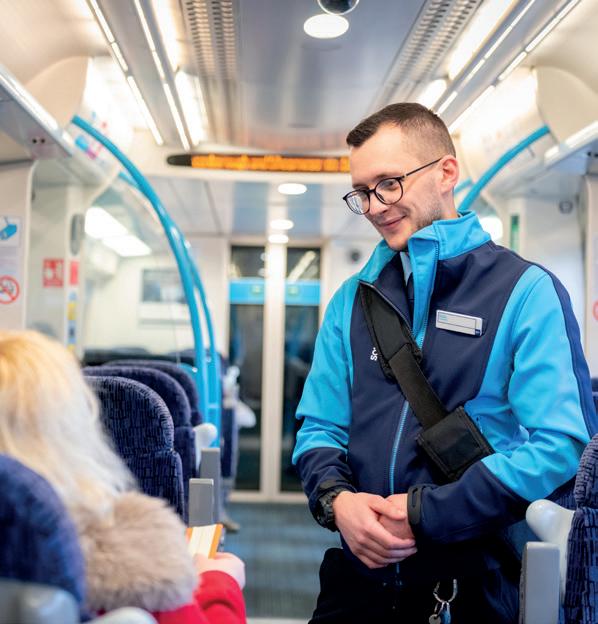
Apprenticeships
Apprenticeships play a central role in Southeastern’s approach to supporting positive destinations for school leavers. The company offers a wide range of railspecific apprenticeship programmes, enabling individuals to earn a salary while working towards valuable qualifications. These programmes provide an accessible route into skilled employment.
The long-term value of apprenticeships is reflected in the number of Southeastern engineers and managers who began their careers through this route. Apprenticeships are consequently viewed as a foundation for sustainable careers with clear opportunities for progression.
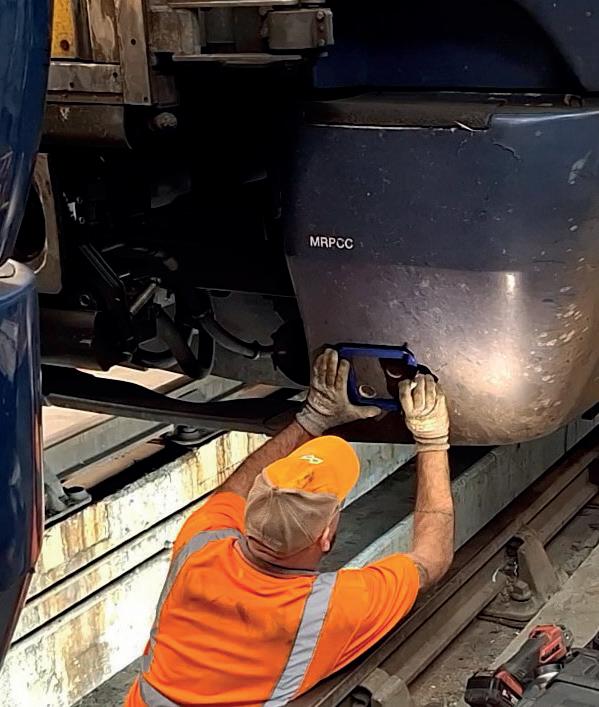
An example of this is Southeastern’s Engineering Apprenticeship, which provides a structured three-year route into service engineer roles. The programme combines classroombased learning at college with practical work placements at Southeastern’s engineering depots, ensuring that apprentices develop both technical competence and real-world experience. Apprentices achieve a Level 3 in Maintenance and Operations Engineering. Graduates of the programme are well placed to progress into a variety of engineering roles across the business, supporting both individual career development and Southeastern’s longterm skills needs.
Southeastern’s commitment to apprenticeships has been externally rated by Ofsted as ’Good’. The company has achieved Gold Standard status in the Investors in People ‘We Invest in Apprentices’ category, reflecting the quality of its programmes. It has also been named in the Sunday Times Apprenticeships Top 100 Employers list, ranking 24th nationally.
Early Careers Opportunities
Alongside apprenticeships, Southeastern offers various early careers programmes designed to support young people and graduates into the railway industry. A key element of this offer is the organisation’s two-year graduate scheme, which provides a structured and immersive introduction to the business- a recommendation identified in Southeastern’s 2024 report. The most recent intake began in September 2025.
Participants complete four six-month placements across different areas of the organisation, enabling them to build a broad skill set and gain insight into the various operational and commercial aspects of the railway industry. This rotational model supports informed career choices. Southeastern’s ambition is to retain all graduate scheme participants, transitioning them into permanent roles within the business areas where they have completed placements and providing a sustainable route into long-term railway careers.
The September 2025 graduate intake was built specifically for students from local institutions, The University of Greenwich (UofG) and Canterbury Christ Church (CCCU). UofG is a member of the Purpose Coalition and CCCU is a university with a large proportion of its students being from lower socio-economic backgrounds.
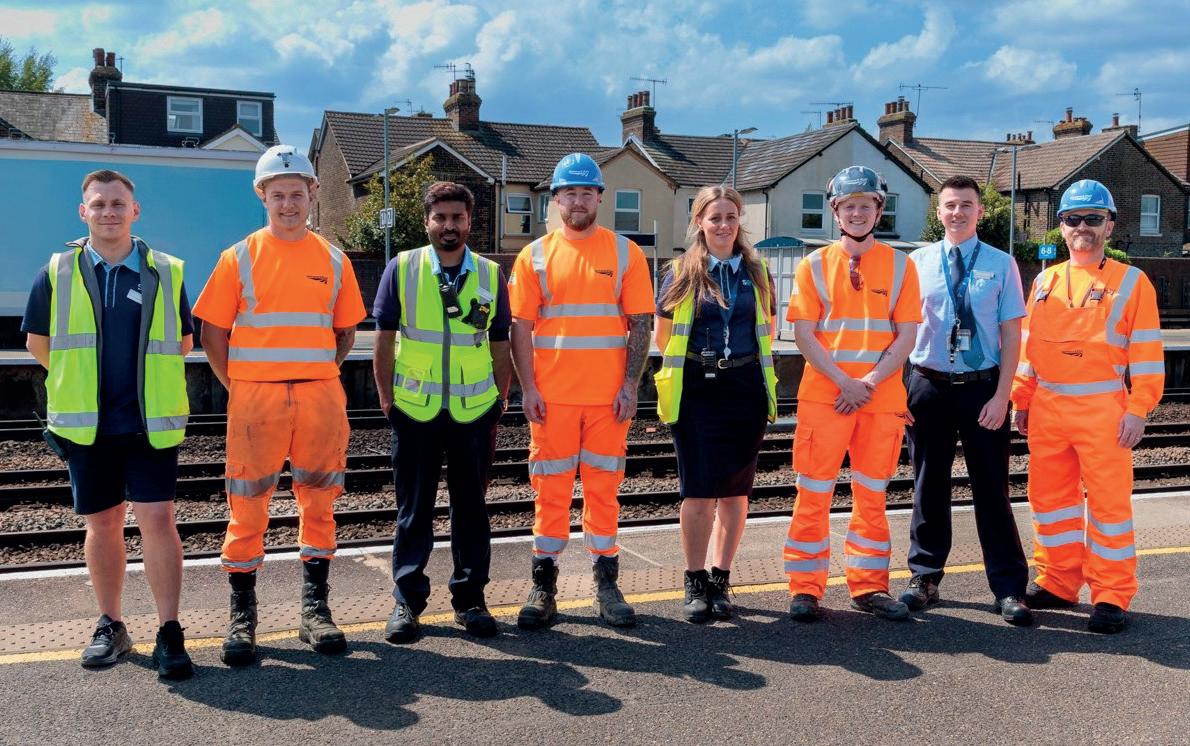
This decision to provide targeted opportunities reflects Southeastern’s strategy to work with education partners that share its commitment to widening participation.
Southeastern also runs a summer internship programme aimed at second-year university students, from the same institutions, as well as from the Purpose Lab student cohort. This nine-week paid programme places interns across a variety of business areas, where they contribute to live projects. Interns work alongside experienced colleagues, developing practical skills and building confidence while gaining insight into careers within the rail sector.
Looking ahead, Southeastern plans to strengthen its talent pipeline by creating clearer progression routes from internships into its graduate scheme. By inviting interns to return as graduate scheme participants, the organisation is demonstrating its long-term commitment to developing and retaining young talent.
In addition, Southeastern offers work experience placements to provide an early introduction to the railway industry. These opportunities allow participants to gain first-hand insight into the sector, helping them to make informed decisions about their future. In 2025, Southeastern supported 75 work experience placements. The organisation is developing a more structured work experience offer, including clearer application processes. As part of this work, Southeastern plans to prioritise opportunities for students from partner schools, ensuring that access is extended to those who may be further away from such experiences. Using insights from the Purpose Coalition, Southeastern will identify additional schools in priority areas and expand partnerships in a targeted, data-led way, allowing it to create more meaningful opportunities for young people, while continuing to invest in and strengthen existing partnerships.
Southeastern’s engagement with young people includes targeted initiatives to address underrepresentation within the rail industry. Recognising the low proportion of women in engineering roles, the organisation has invested in activities designed to inspire girls to consider careers in STEM. On Women in Engineering Day, Southeastern transformed a train into a ‘moving classroom’ for twelve female students, providing an immersive introduction to rail engineering careers. The event included career talks led by Justine Greening from the Purpose Coalition, speed networking with female engineers from Southeastern and Network Rail, and handson STEM activities delivered by academics from Canterbury Christ Church University. Organised as part of the Railway 200 campaign, the initiative aimed to challenge stereotypes and spark aspirations in engineering and technical roles.
Case Study: Danielle
As part of its commitment to widening access and levelling up opportunity, Southeastern Railway formed a targeted partnership with the University of Greenwich, a Purpose Coalition-affiliated institution. The collaboration guaranteed two internships within its Early Careers Programme for students facing barriers to professional experience, strengthening the talent pipeline while delivering meaningful development support.
One standout outcome was Danielle’s journey. A mother completing her Bachelor’s degree while pursuing a career transition into technology, she faced the challenge of breaking into a new industry. Through the internship, she secured a place on the Joint Performance Team as a datadriven intern. Danielle contributed to key data improvement initiatives and produced a practical intern guide now used by future cohorts, demonstrating resilience, discipline and leadership. After the internship, continued mentoring from Early Careers Manager Jonathan Amadi helped her refine her goal of working in cyber security. Within 90 days, she secured and accepted an Associate Engineer role at a technology company, aligning directly with her ambitions.
Her progression highlights the transformative impact of coordinated support, inclusive partnerships and purposeful collaboration for both individuals and organisations.
The King’s Trust
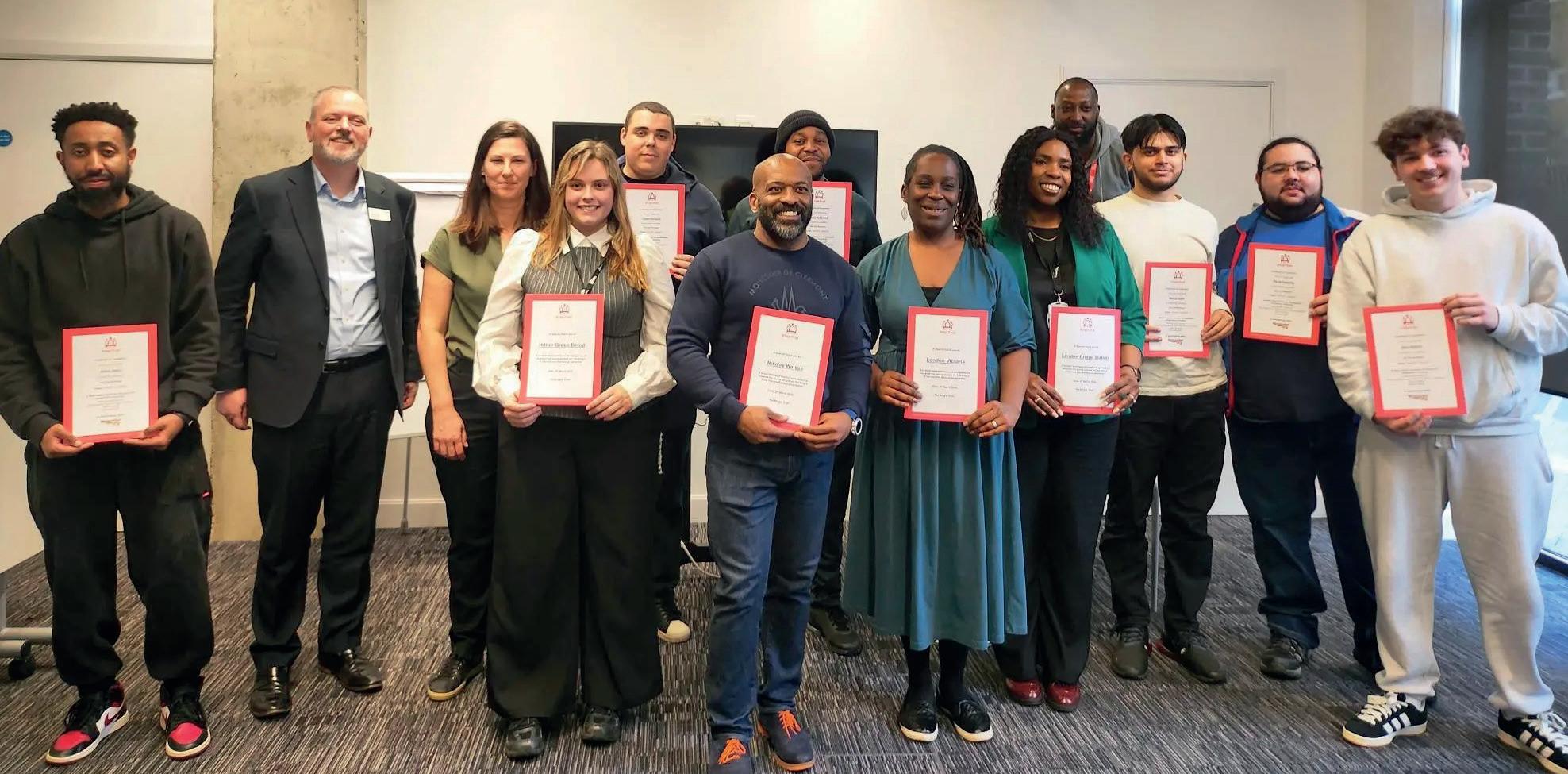
Southeastern works in partnership with The King’s Trust to support young people from low opportunity backgrounds into employment. Historically, the organisation has delivered two ‘Get Into Customer Service’ programmes each year, providing tailored support to young people aged 18 and over who may face barriers to entering the workplace. Moving forward, and in line with its business plan, Southeastern will focus on delivering one high-quality programme annually. This approach ensures that Southeastern can offer a strong development experience while maintaining a sustainable recruitment pipeline, enabling the programme to continue fulfilling its core purpose of supporting young people into meaningful employment.
The programme combines classroom-based training with a two-week placement at a Southeastern station, where participants are paired with a dedicated buddy. Participants gain customer service skills, alongside exposure to a real working environment.
Southeastern aims to recruit participants into roles within the business following completion of the programme, providing a clear pathway from training into employment. In 2026, the company will deliver the programme in conjunction with Network Rail’s ‘Get Into’ initiative, scaling impact and offering even broader exposure to the rail industry.
Purpose Lab
In 2025, for the second year running, Southeastern opened its summer internship to students participating in the Purpose Coalition’s Purpose Lab. Purpose Lab is designed to connect students from Purpose Coalition universities and colleges with real-world businesses. The programme places a strong emphasis on supporting students who face barriers to opportunity, promoting greater socioeconomic diversity within UK organisations.
Southeastern reserved places for Purpose Lab participants on the internship offering them experience within the rail industry alongside mentoring and professional development. This approach reflects the organisation’s commitment to inclusive recruitment and to ensuring that early careers opportunities reach candidates from a wide range of backgrounds, including those who may not traditionally see the railway sector as an accessible or viable career option.
Moving forward, and in line with its business plan, Southeastern will focus on delivering one high-quality programme annually.
Careers and Skills Hub
2025 saw the opening of Southeastern’s new careers and Skills Hub in Ashford, designed to support the development of a modern, inclusive railway workforce. The centre brings together recruitment, training, digital learning and professional development in a single, purpose-built and inclusively designed environment.
The Careers and Skills Hub significantly increases Southeastern’s training capacity, supporting hundreds of apprentices and learners across a wide range of roles. The facility offers targeted pathways for school leavers, veterans and career changers, ensuring that opportunities are accessible to people at different life stages. From train drivers and engineers to customer service and digital specialists, the centre plays a central role in delivering the skills required for the future railway.
By investing in recruitment and training, Southeastern is embedding long-term support for positive destinations post 16 within its infrastructure. The centre provides a visible and practical commitment to developing talent and skills and ensuring that the railway continues to offer high-quality, accessible careers for future generations.
Case Study: Rutuja, University of West London student and Purpose Lab Ambassador
“I had the chance to join Southeastern as an Accessibility Advocate Intern- an opportunity I first discovered through the Purpose Lab project. It was more than just a placement; it was a chance to see how purpose and values really shape the passenger experience.
One of the highlights of my internship was visiting stations along the Hayes and Hastings Lines. I spoke to staff, looked at facilities and thought about how small changes could make a big difference for passengers with autism, dementia or mobility needs. Seeing these challenges through the eyes of the passengers made the work feel incredibly meaningful.
What stood out to me most was how committed the team was to embedding accessibility in everything they do. It showed me the power of aligning a company’s purpose with action- values aren’t just words, they’re decisions that impact real people.
It’s an experience that has shaped how I think about employers and it has made me even more passionate about making transport and workplaces more inclusive for everyone.”
One of the highlights of my internship was visiting stations along the Hayes and Hastings Lines. I spoke to staff, looked at facilities and thought about how small changes could make a big difference for passengers with autism, dementia or mobility needs.
4.2 Goal 5: Open Recruitment
Embedding fair and accessible recruitment practices: Standardised processes, blind recruitment and psychometric testing help ensure selection is based on skills and potential, reducing bias at every stage.
Designing accessibility into the recruitment journey: Built-in reasonable adjustments and inclusive application systems create a level playing field from application through to appointment.
Leading the sector on social mobility:
The UK rail industry’s first published Social Mobility Action Plan (2024) sets out a clear, public commitment to widening access and diversifying entry routes.
Driving measurable progress on diversity:
Targeted pathways and outreach have increased the number of female train drivers and conductors by over 50% in two years, strengthening workforce representation.
Open recruitment plays a critical role in breaking down barriers to opportunity and improving social mobility. Fair, transparent and inclusive hiring practices help ensure that access to employment is determined by potential and capability rather than background, or circumstance. Southeastern recognises that how it recruits its workforce has a direct influence on who is able to access the opportunities the railway industry offers, and on the diversity, resilience and performance of the organisation as a whole.
Over the past two years, Southeastern has continued to refine its approach to recruitment, with a clear focus on identifying and removing obstacles that may disadvantage certain groups. This ongoing work reflects an understanding that inclusive recruitment requires continuous review and improvement. By challenging established practices and embedding accessibility throughout the recruitment journey, Southeastern aims to ensure that every candidate has a fair and equal opportunity to succeed, from initial application through to appointment and progression.
Recruitment Practices
While recruitment processes naturally vary depending on the nature of the role, Southeastern seeks to apply a standardised approach wherever possible. This consistency helps ensure fairness across the organisation, reducing the risk of bias and enabling candidates to have a clear understanding of what to expect at each stage of the process.
Vacancies are advertised across a wide range of platforms to maximise reach and attract candidates from diverse backgrounds. Roles are promoted externally through channels such as LinkedIn and Southeastern’s own website, ensuring visibility among experienced professionals and those actively seeking new opportunities. In parallel, Southeastern uses its school outreach programme to promote career opportunities to young people, helping to widen awareness of the railway as a viable and attractive employer from an early stage. All vacancies are also advertised internally, creating clear opportunities for existing colleagues to progress and develop their careers within the organisation.
Applications are completed through an accessible online system, designed to be userfriendly and inclusive. Candidates typically progress through an application stage, followed by an assessment and interview. Southeastern has embedded psychometric testing using the latest technologies and blind recruitment practices within this process. In doing so, identifying information is removed at early stages to help mitigate unconscious bias whilst also ensuring that candidates are a great fit for the role which they have applied. This creates a more level playing field. The approach supports a focus on skills, experience and potential, rather than personal characteristics unrelated to the role.
Accessibility is a core consideration throughout the recruitment journey. Through Southeastern’s recruitment application software, candidates are invited to request reasonable adjustments and share any additional requirements they may have. This ensures that accessibility needs are recognised and addressed from the outset, rather than treated as an afterthought. By building this directly into its recruitment systems, Southeastern enables adjustments to be considered at every stage of the process, supporting candidates to perform at their best.
Internal recruitment forms a further pillar of Southeastern’s open recruitment approach. By advertising roles internally alongside external campaigns, the organisation actively supports career progression and skills development among its existing workforce. This not only helps retain talent but also reinforces the message that progression is achievable for colleagues from all backgrounds, supporting workforce diversity.
Inclusivity
Southeastern’s commitment to inclusive recruitment encompasses strategic action aimed at widening access to the railway workforce. In March 2024, Southeastern became the UK’s first rail operator to publish a Social Mobility Action Plan, setting out a clear, public commitment to improving access to opportunity across its business. Central to this plan is a pipeline of talent approach, designed to open up recruitment at multiple entry points and reduce structural barriers faced by individuals from underrepresented backgrounds.
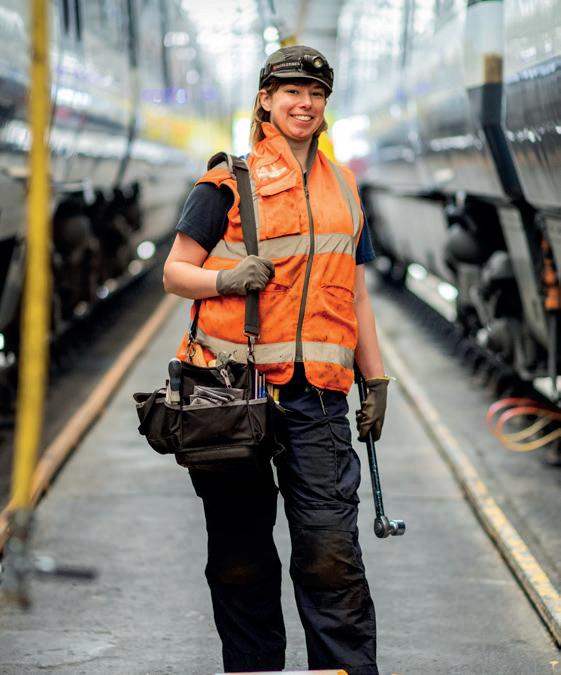
Key initiatives within this approach include targeted apprenticeship programmes and a dedicated train driver pathway, both designed to broaden participation in operational roles. These initiatives recognise that traditional routes into the rail industry have not always been accessible to all and that proactive intervention is required to diversify the workforce. Southeastern has also placed renewed emphasis on supporting the progression of women into management roles,
strengthening career pathways and providing clearer support structures to address historic underrepresentation at senior levels.
These efforts are delivering tangible outcomes. By mid-2025, the number of female train drivers and conductors employed by Southeastern had increased by more than 50% over a two-year period. This growth reflects targeted outreach, inclusive recruitment practices and structured training pathways aimed at encouraging women and individuals from underrepresented groups to enter and progress within operational roles. The result is a workforce that increasingly reflects the diversity of the communities Southeastern serves.
Taken together, these measures demonstrate Southeastern’s commitment to embedding inclusivity throughout its recruitment practices. Southeastern is strengthening its role as a fair and open employer, widening access to employment opportunities and building a workforce that is better equipped to serve the diverse needs of the South East.
4.3 Goal 6: Fair Career Progression
Embedding fair progression pathways across the organisation: Quarterly development check-ins, the ‘Maximising My Potential’ tool and transparent internal recruitment processes ensure progression is driven by performance and potential, not background.
Investing at scale in lifelong learning:
Around 500 colleagues undertake apprenticeships each year (aged 16-65), with 10% of the workforce in apprenticeships or graduate schemes, strengthening internal talent pipelines.
Driving measurable internal mobility and retention: In 2025, staff turnover fell to 6.65%, with 485 colleagues progressing into new roles, reflecting a strong culture of internal advancement.
Championing inclusive leadership and recognition:
Targeted programmes for women and underrepresented groups, sector-leading mentoring schemes and Investors in People accreditation across people, wellbeing and apprenticeships demonstrate sustained commitment to fair career progression.
Fair and inclusive career progression is central to building a motivated, engaged and resilient workforce. For Southeastern, supporting colleagues to continue developing their skills over time is critical to individual fulfilment and the long-term success of the organisation.
Southeastern recognises the importance of investing in its people at every stage of their journey. Creating fair pathways for progression helps to strengthen internal talent pipelines, reduce skills gaps and ensure that leadership reflects the diversity of the communities the organisation serves. It also supports wider social mobility goals by ensuring that progression is driven by potential and performance rather than a person’s background.
In Southeastern’s 2024 social impact report, developing progression opportunities for underrepresented groups was identified as an area where the organisation could go even further. This included groups who may face structural or cultural barriers to advancement, such as women and neurodivergent colleagues.
Over the past two years, Southeastern has taken meaningful steps in response to these recommendations. The internal initiatives and external accreditations outlined in this chapter reflect sustained progress and demonstrate a clear commitment to fair career progression across the organisation.
Professional Development
Employee support at Southeastern begins from the moment a colleague joins the organisation. New starters are welcomed through a structured and comprehensive onboarding process designed to help them feel confident and informed from day one. This includes a full induction day as part of a wider fundamentals week, during which colleagues are given the opportunity to meet colleagues, ask questions and access the information needed to settle quickly into a new role.
As part of this experience, taking advantage of the opportunities presented by the Careers and Skills Hub in Ashford, Southeastern has introduced a ‘Uniform Boutique’ for new starters. This allows colleagues to try on their uniform in advance, ensuring it fits comfortably and supports them to feel confident before beginning work. While a small change in practical terms, this initiative reflects a broader commitment to colleague wellbeing and inclusion, recognising that comfort and confidence can make a meaningful difference during the early stages of employment. It also presents the opportunity for new colleagues to wear Southeastern uniform earlier in their tenure, growing team spirit and belonging to the organisation.
Over the past two years, Southeastern has also reformed how it approaches performance and development conversations. The organisation has moved away from annual appraisals, replacing them with quarterly check-ins between colleagues and their managers. These regular conversations create space for meaningful discussions about development, aspirations and next steps, rather than focusing solely on retrospective performance. The intention is to foster a culture where colleagues feel empowered to take ownership of their development and proactively seek out opportunities to learn and grow.
The introduction of the ‘Maximising My Potential’ self-reflection tool, structured around Southeastern’s way of working, has also been a step towards fairer career progression. This tool is to empower all colleagues to take ownership of their development and self-identify themselves for development opportunities. This means that judgment of a colleague’s potential and opportunities for development are no longer limited to just the views of their manager. This helps to reduce the impact of any unconscious bias and open development opportunities to all colleagues.
To further the sense of ownership for colleagues in their own development, colleagues can also access a wide range of e-learning resources through Southeastern’s intranet, providing flexible learning opportunities that can be tailored to individual interests and career goals. This extensive online learning platform supports continuous development across a number of skill areas, enabling colleagues to learn at their own pace alongside their day-today roles.
Apprenticeships form a core part of Southeastern’s professional development offer. Managers are encouraged to put colleagues forward for apprenticeship opportunities where they align with development goals identified through quarterly check-ins. Southeastern places strong value on apprenticeships as a long-term investment in skills, recognising that extended programmes allow colleagues to embed learning over time with appropriate support, rather than relying on one-off training interventions.
This commitment is reflected in the scale of apprenticeship activity across the organisation. Southeastern welcomes around 500 colleagues into apprenticeship training each year, representing a clear focus on developing talent from within. Apprentices currently range in age from 16 to 65, highlighting Southeastern’s commitment to lifelong learning and progression at all stages of a career.
Career Progression
Alongside professional development, Southeastern has put in place a range of mechanisms to actively support internal progression. All colleagues have access to training resources focused on career advancement, including modules on CV writing and interview techniques. These tools are designed to build confidence and ensure that colleagues feel equipped to apply for new opportunities as they arise.
Vacancies within Southeastern are advertised internally, often before being promoted externally. This approach ensures that existing colleagues are aware of opportunities to progress and are encouraged to put themselves forward for roles with increased responsibility. Internal recruitment supports retention while reinforcing the message that career advancement is achievable within the organisation; in 2025 staff turnover reduced to 6.65% and internal progression (either vertically or horizontally) increased with 485 colleagues moving to new roles.
To strengthen long-term workforce planning, Southeastern managers take part in regular succession and talent forums. These sessions help identify colleagues with high potential and consider how best to support their development over time. By taking a proactive approach to succession planning, Southeastern is building a more resilient talent pipeline across the organisation.
Southeastern also offers management apprenticeships for colleagues who aspire to leadership roles. These programmes provide structured development in people management, decision-making and leadership capability, supporting colleagues to transition into management positions with confidence.
In 2025 staff turnover reduced to 6.65% and internal progression (either vertically or horizontally) increased with 485 colleagues moving to new roles.
Fair progression is a central pillar of Southeastern’s Social Mobility Action Plan. The Plan sets out a commitment to enhancing internal progression opportunities, with a particular focus on improving gender diversity and embracing neurodiversity across the workforce. In 2025, Southeastern introduced new development programmes specifically designed to support underrepresented groups. These include a Women in Leadership apprenticeship scheme at Levels 3, 5 and 7, alongside a group coaching programme for senior female managers. Together, these initiatives aim to build confidence, address barriers such as imposter syndrome and prepare more women for progression into senior roles.
Mentoring
Mentoring plays an important role in supporting fair career progression by enabling knowledge sharing, confidence building and exposure to different perspectives. Southeastern ran two reverse mentoring schemes, named the Insight Programme, which paired senior leaders with colleagues, often from underrepresented backgrounds. Through this approach, reciprocal learning took place, allowing leaders to gain insight into lived experiences across the workforce, while colleagues benefitted from senior-level guidance and advocacy. Results from the programme report that experts’ (junior colleagues) confidence to share insights with senior leaders increased from 4.5/5 to 5/5. Experts also answered that they were 4.5/5 likely to recommend the scheme to a colleague. The learners (senior colleagues) were 5/5 likely to recommend joining a future iteration of the scheme to their colleagues.
As seen in the data, the Southeastern reverse mentoring scheme has been well received and has contributed to a culture where learning and development are shared responsibilities, encouraging reflection and mutual learning.
In addition, Southeastern has partnered with the industry network Rail Unites for Inclusion to deliver a mentoring scheme that connects senior leaders with junior employees from minority groups. This programme focuses on one-to-one guidance and sponsorship, supporting participants to navigate career pathways and build the networks needed to progress.
With 10% of its workforce currently undertaking apprenticeships or graduate schemes, the organisation is creating meaningful opportunities to learn while working within the rail industry.
Investors in People
External accreditation provides important validation of Southeastern’s approach to fair career progression. Southeastern is one of only three organisations to hold Investors in People status across all three frameworks: people, wellbeing and apprenticeships. Investors in People champions workplaces where people are supported to thrive.
This recognition reflects Southeastern’s sustained commitment to putting people at the heart of its business. Southeastern has also been awarded Platinum membership by The 5% Club, recognising its leadership in workplace learning and skills development. With 10% of its workforce currently undertaking apprenticeships or graduate schemes, the organisation is creating meaningful opportunities to learn while working within the rail industry.
Together, these accreditations demonstrate that Southeastern is an organisation where colleagues are supported to develop and progress. By embedding fair career progression into its culture and practices, Southeastern is strengthening its workforce while contributing to wider social mobility across the South East.
4.4 Goal 8: Good Health and Wellbeing
Embedding wellbeing at the heart of the organisation: Investors in People Gold (Wellbeing), a dedicated Health, Wellbeing and Inclusion Manager and an enhanced Employee Assistance Programme reflect a holistic, trauma-informed approach to colleague support.
Leading the rail industry on mental health:
Founder of the Railway Mental Health Charter and architect of a new Rail TRiM Partnership, with over 1,800 staff trained in suicide prevention and safeguarding.
Pioneering support for women’s health:
First transport operator accredited as a Menopause Friendly Employer, alongside new six-month post-return support for new and expectant mothers.
Extending impact beyond the workforce:
Strategic partnerships with Missing People, Samaritans, British Transport Police and Kent & Medway Mental Health NHS Trust are strengthening crisis intervention and suicide prevention across 165 stations, with a pilot embedded mental health practitioner model launching in 2026.
For Southeastern, good health and wellbeing are fundamental to both individual opportunity and organisational success. The ability of colleagues to progress and build long-term careers is closely linked to their physical, mental and social wellbeing, while a healthy, supported workforce is better placed to deliver safe, reliable services for passengers. Southeastern therefore views wellbeing not as a standalone initiative, but as an integral part of its wider approach to social mobility, inclusion and performance.
Since the publication of its first social impact report in 2024, Southeastern has strengthened and expanded its approach to health and wellbeing. Acting on recommendations from that report, the organisation has broadened its focus beyond employees alone to also consider the wellbeing of passengers and communities across its network. In doing so, Southeastern is positioning itself as a leader on health and wellbeing within both the railway industry and the South East region, recognising the unique role rail operators can play as visible, trusted public-facing organisations.
Employee Wellbeing
Looking after its people is a clear priority for Southeastern, reflected in both its internal culture and external recognition. The organisation holds Investors in People Gold accreditation for wellbeing, an award that reflects the depth and consistency of its commitment to supporting colleagues to thrive. This accreditation recognises not only the policies Southeastern has in place, but also how effectively wellbeing is embedded into everyday practice.
To further strengthen this work, Southeastern appointed a dedicated Health, Wellbeing and Inclusion Manager in 2025. This role reflects an understanding that wellbeing and inclusion are closely interconnected. By bringing these agendas together under a single leadership role, Southeastern is taking a more holistic approach to supporting colleagues.
A key component of this support is Southeastern’s Employee Assistance Programme (EAP), which has moved to a new provider within the past two years. The updated programme offers a broader and more specialised range of services, including access to GP appointments, expert advice and regular wellbeing check-ins. Importantly, the EAP includes a strong focus on trauma support. As a railway operator, Southeastern recognises that many frontline colleagues may be exposed to distressing incidents, including mental health crises and fatalities on the network. Colleagues who experience or witness such events are proactively referred for specialist support, ensuring they are not left to cope alone.
Southeastern continues to play a leading role at an industry level as the founder of the Railway Mental Health Charter and is now leading on the formation of a Rail TRiM (Trauma Risk Incident management) Partnership. The Charter brings together rail organisations to commit collectively to improving mental health awareness, support and outcomes across the sector. By establishing shared principles and expectations, Southeastern
is helping drive greater consistency and collaboration on promoting and protecting mental health, recognising that challenges such as trauma, stress and fatigue affect the industry as a whole.
Preventative health is another cornerstone of Southeastern’s approach to wellbeing. The organisation runs annual health fairs, owns four DIY Health Check kits that circulate the network and lead an annual calendar of inclusion and wellbeing events through which colleagues are offered specialist health checks and the opportunity to speak with specialist advisors. These events are designed to empower colleagues to take greater control of their own health. Anonymised data from health checks is also used at an organisational level to help Southeastern identify trends and plan targeted interventions, supporting risk prevention and longer-term workforce wellbeing.
Southeastern has taken a pioneering approach to wellbeing-related policies, particularly in relation to women’s health. In 2025, the organisation introduced a six-month post-return support process for all new and expectant mothers, including those undergoing IVF. This programme offers support for colleagues to balance work, health and caring responsibilities during a critical period in their lives.
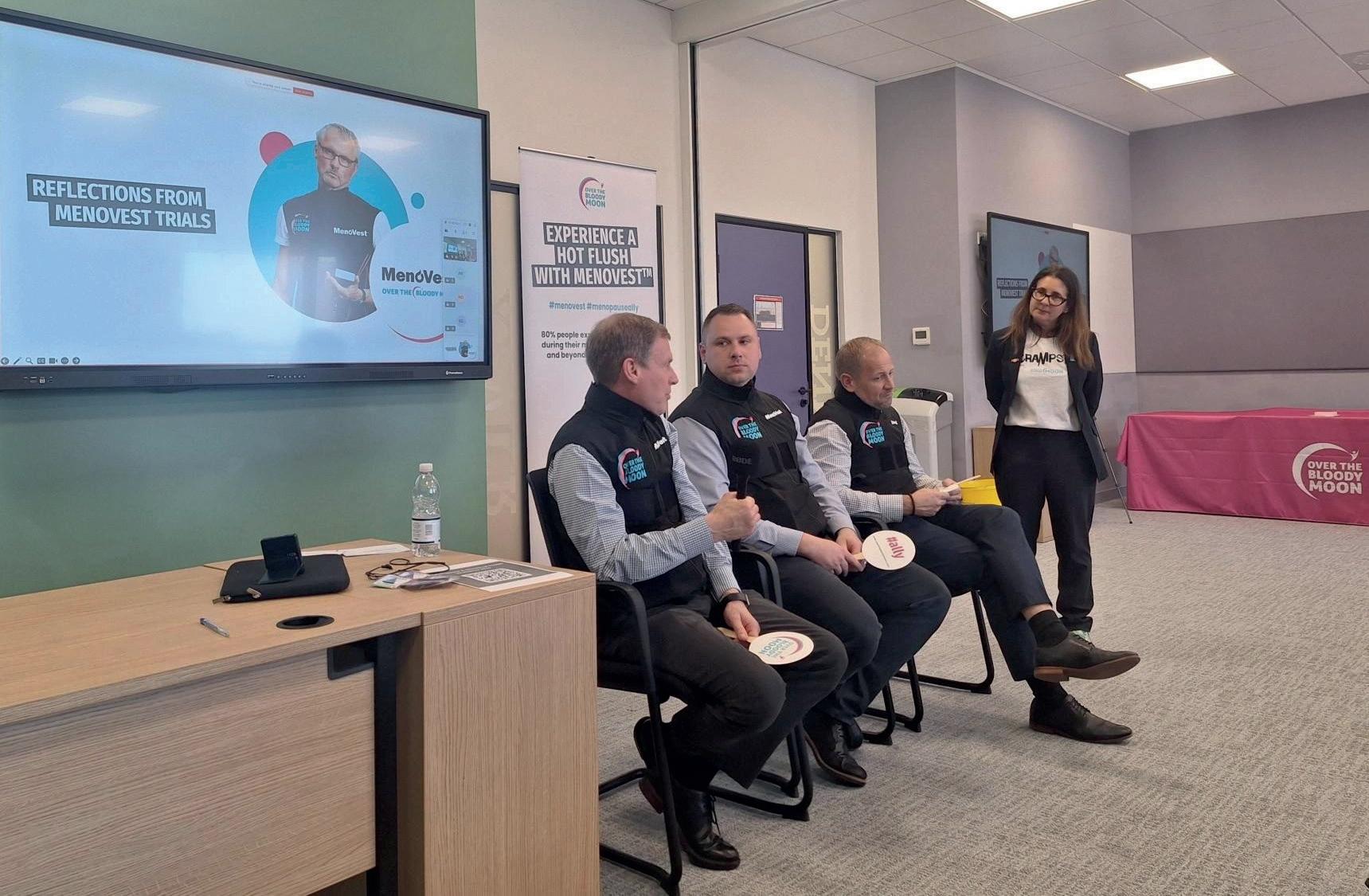
Menopause
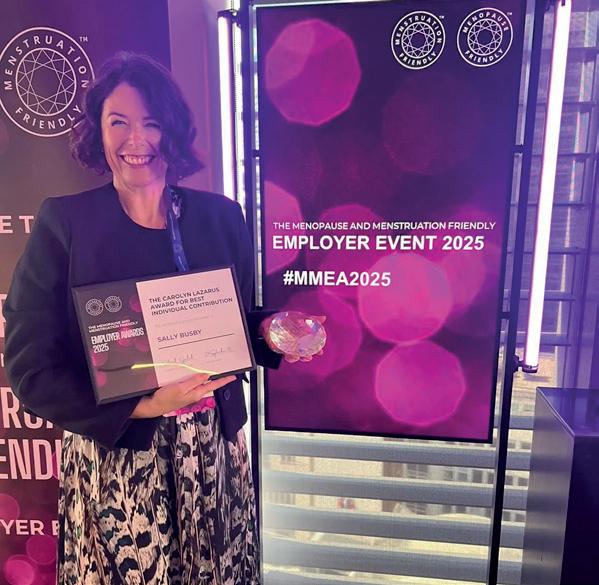
Southeastern has been at the forefront of addressing menopause in the workplace, becoming the first transport company to achieve independent accreditation as a Menopause Friendly Employer. This accreditation, awarded by Henpicked, is the only scheme of its kind that sets clear, evidence-based standards for employers.
To achieve accreditation, organisations are assessed by an independent panel against six key areas. Southeastern was recognised for the thoroughness of its approach to menopause and the strength of evidence demonstrating positive impact.
Central to this work is a comprehensive suite of menopause guidance documents for all, available through Southeastern’s intranet, along with an eLearning menopause awareness and guidance tutorial module for managers. Developed with support from Henpicked, these resources provide practical information for both colleagues and managers, helping to build confidence in discussing
menopause-related issues and ensuring that support is accessible even where individuals may not feel comfortable raising concerns face-to-face.
Southeastern also runs Menopause Matters drop-in sessions, currently evolving into joint Menopause Cafés with Network Rail colleagues, offering safe and inclusive spaces for colleagues to share experiences, ask questions and learn from one another. These sessions are open to everyone, including those supporting partners, friends or family members through menopause. By normalising conversations and creating visible support mechanisms, Southeastern has helped reduce stigma and isolation.
This work is particularly important in retaining experienced women at a stage in their careers when they are often well placed to move into leadership roles, but too often unmanaged menopause symptoms lead women to reduce hours or leave the workplace altogether. By addressing this barrier directly, Southeastern is supporting women to remain in work, progress and contribute their expertise and perspectives to the business.
Mental Health: Supporting Vulnerable Passengers
Southeastern recognises that its responsibility for health and wellbeing extends beyond its workforce to the passengers and communities it serves. Railway stations and trains are often places where individuals experiencing crisis come into contact with public services, making frontline rail staff an important point of support.
In summer 2025, Southeastern partnered with the charity Missing People to provide mental health support to vulnerable passengers across its network. Funded through a £49,500 grant from the Customer and Communities Improvement Fund, the initiative reflects a proactive approach to safeguarding and crisis intervention.
The partnership includes comprehensive training for frontline staff, delivered through in-person workshops and short training videos. This training equips colleagues with the skills and confidence to identify and support individuals in distress. An extensive awareness campaign across stations, trains and digital screens signposts passengers to Missing People’s 24/7 Helpline.
This work responds to a significant social need. Each year, over 170,000 people are reported missing in the UK, with 17% of cases occurring in areas served by Southeastern, and railway environments are frequently locations where individuals in crisis seek assistance. By partnering with Missing People, Southeastern is ensuring that support is available where and when it is most needed.
These initiatives build on Southeastern’s wider Joint Safeguarding Strategy with the British Transport Police. The strategy includes the
UK’s first dedicated rail safeguarding team, focusing on issues such as suicide prevention, homelessness and violence against women and girls. Southeastern is also working with industry partners to develop a coordinated trauma response plan, strengthening preparedness and collaboration across the rail sector.
Southeastern works closely with Samaritans and Mind, inviting Samaritans to stations after fatalities to support affected passengers and colleagues. Frontline staff receive specialist Samaritans training to identify and assist people at risk of suicide. This work was recognised at the 2024 Kent Mental Wellbeing Awards, where Southeastern won the Champion Award for its Pass it On campaign.
Pass it On engages professionals across mental health, social care, probation, policing, drug and alcohol services, housing and community safety partnerships. It strengthens local multi-agency outreach to address community issues that can present as suicide risk on the railway, working alongside Operation Safer, which securely shares details of at-risk individuals with relevant colleagues.
Professionals are urged to call 999 if risk is imminent. Where risk is lower, Southeastern’s Safeguarding team can be contacted to help develop proactive safety plans before individuals reach the railway.
Further collaboration with the Kent and Medway Suicide Prevention Network and Samaritans has seen over 1,800 staff trained, reinforcing the railway’s role as a community safety net. This partnership approach provides a strong foundation for Southeastern’s evolving work with Kent and Medway Mental Health NHS Trust.
Kent and Medway Mental Health NHS Trust
Southeastern’s 2024 social impact report identified a significant opportunity for the organisation to work more closely with Kent and Medway Mental Health NHS Trust to expand mental health and wellbeing support across its network. With responsibility for managing stations across South East London, Kent and parts of East Sussex, Southeastern operates across a region where improved access to timely mental health support has the potential to deliver meaningful impact at scale.
Over the past two years, Southeastern has taken this recommendation forward, developing a strong partnership with Kent and Medway Mental Health NHS Trust, a fellow member of the Purpose Coalition. This collaboration reflects a shared commitment to improving mental health outcomes.
Together, the two organisations have been working on the design of a mental health and suicide prevention scheme that recognises the unique role of the railway as a point of contact for people in crisis. Under the proposed model, a qualified mental health practitioner from Kent and Medway Mental Health NHS Trust would be embedded within Southeastern’s operations, working in partnership with the British Transport Police. This integrated approach is designed to enable rapid responses to incidents involving vulnerable individuals on the railway.
The availability of a mental health professional at the point of intervention would allow individuals in crisis to be assessed and supported immediately.

The availability of a mental health professional at the point of intervention would allow individuals in crisis to be assessed and supported immediately. Crucially, the model also enables appropriate triage into longer-term care pathways, helping ensure that individuals receive sustained support beyond the initial incident.
A 12-week trial of the scheme is planned for the first half of 2026. If successful, it has the potential to create a replicable model for mental health intervention across the rail network, demonstrating how transport operators and health services can work together to improve safety, wellbeing and long-term outcomes for passengers and communities.
4.5 Goal 11: Infrastructure for Opportunity
Delivering 1,700 daily services across 181 stations: Connecting communities to jobs, education and services, while ensuring opportunity is not defined by postcode.
Launching an Integrated Travel Strategy for seamless journeys: Introducing in-station car clubs, designated shared e-bike parking and multimodal station hubs to tackle first and last mile barriers.
Investing in accessible, modern infrastructure:
£2.6m station upgrades across 20+ stations, over £40m committed to accessibility including the largest-ever Access for All scheme at Hither Green, and ongoing fleet modernisation.
Driving local economic and community impact:
£77m spent with SMEs (2023/24), over £500,000 invested through the Customer and Community Improvement Fund, and £200,000 annually supporting Community Rail Partnerships to strengthen local growth and inclusion.
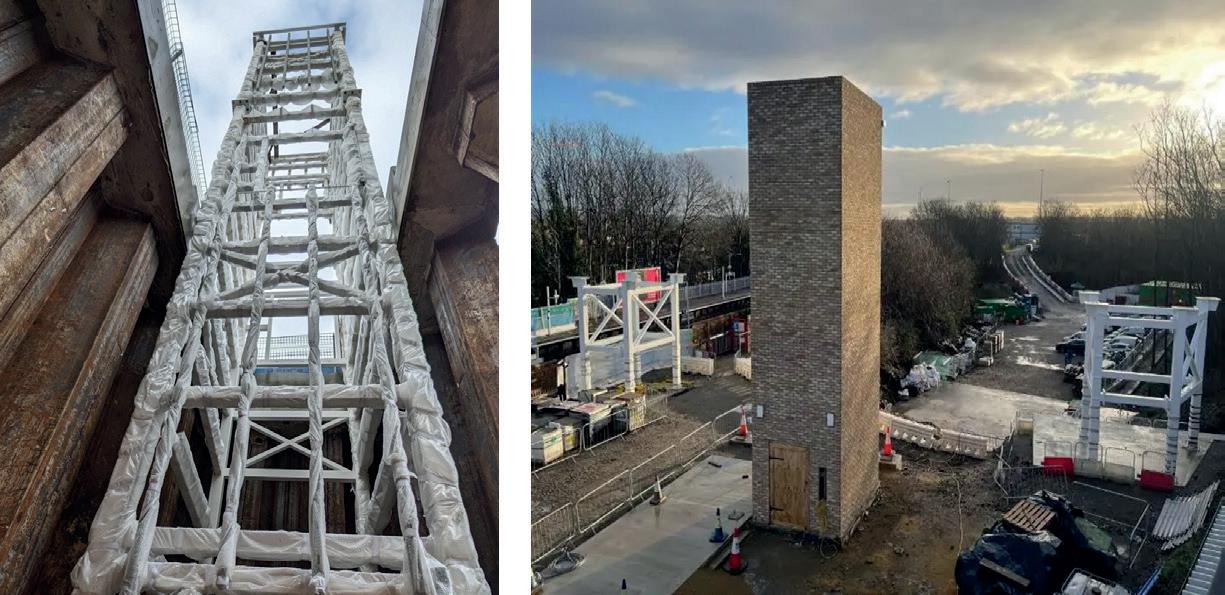
For many communities, particularly those with fewer services on their doorstep, Southeastern provides a vital connection to opportunity. Social mobility relies on dependable, well-connected transport infrastructure. When links are limited, where someone lives can come to define their access to opportunities. But when infrastructure is well designed, well maintained and properly integrated, it becomes a powerful enabler –helping people reach opportunities, services and experiences beyond their immediate surroundings.
With over 1700 services running each day across 181 stations, the Southeastern network enables hundreds of thousands of daily journeys, supporting access to jobs, education, healthcare, and cultural experiences. By maintaining and improving this network, Southeastern helps ensure that opportunity is not dictated by postcode.
This responsibility extends beyond the train journey itself. A journey rarely begins or ends at a station and gaps in first and last mile connectivity – such as limited onward transport options or poorly integrated modes of travel – can significantly further restrict access to opportunity, particularly for those without access to a car.
Through its new Integrated Travel Strategy, Southeastern aims to create seamless door-todoor journeys, putting the railway at the heart of an inclusive transport system. By better integrating its train services with active, shared and public transport, Southeastern is working to make it easier to access the railway and, in turn, widening access to the opportunity it enables. The initiatives below illustrate some of the progress made during the first year of the strategy.
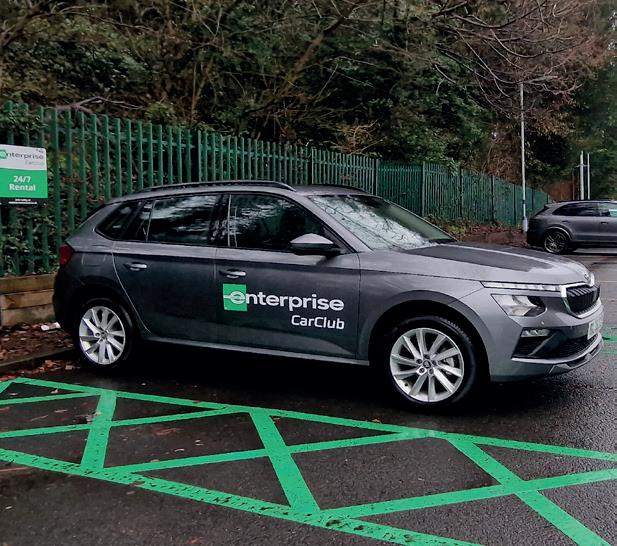
In January 2026, Southeastern introduced its first in-station car club at Sevenoaks and Otford stations, in partnership with Enterprise Car Club. Dedicated vehicles and parking bays at both stations offer a flexible onward travel option, particularly for customers who do not own a car and whose final destination is not well served
by public transport. Evidence from CoMoUK, the national shared transport charity, indicates that car clubs can enable journeys that would not otherwise take place with 18% of users reporting that they would not have made their journey without access to a car club vehicle, rising to 25% among disabled users.
Throughout 2025, Southeastern also worked with Lime and Forest to introduce designated shared e-bike parking at several London stations. This supports the growing number of customers who begin or end their rail journeys by shared bike, while keeping station approaches safe, accessible and free from obstruction. By creating designated areas for shared e-bikes, Southeastern is enabling and encouraging more customers to cycle to and from stations.
As a steward of public infrastructure, Southeastern’s responsibility extends beyond operating trains on time. Decisions about investment, accessibility and service quality have long-term implications for how inclusive and opportunity-rich the region can be. Through sustained investment in stations, trains and partnerships, Southeastern is using its infrastructure to support fairer outcomes and to strengthen the foundations for regional growth.
Delivering Railway Infrastructure
Southeastern is committed to continuously improving the quality of the railway infrastructure it operates. This focus reflects an understanding that infrastructure must evolve to meet the changing needs of passengers and communities. Upgrading stations and trains, improving accessibility and enhancing the passenger experience all contribute to making the railway a more inclusive and effective connector of opportunity.
As part of its Integrated Travel Strategy, Southeastern is also working to transform stations into multi-modal hubs, where rail connects seamlessly with buses, cycling, walking and other sustainable transport options. This helps address first and last mile challenges that can otherwise deter people from using rail.
Working in partnership with Network Rail, Southeastern has delivered a significant programme of station improvements across its network over the last two years. In late 2024, the Southeastern and Network Rail completed a £2.6 million station upgrade programme that refurbished more than 20 stations across South East London, Kent and East Sussex. Locations including Battle and Margate, Eltham, Maze Hill and Orpington benefited from this investment, which focused on modernising facilities and creating more welcoming environments for passengers.

The programme delivered improvements such as upgraded waiting areas, refreshed station buildings and enhanced accessibility features. These changes improve comfort and usability for all passengers, but they are particularly important for individuals who may otherwise face barriers to travel, including disabled passengers, older people and those travelling with children. By making stations easier to navigate and more pleasant to use, Southeastern is reducing friction in everyday journeys and supporting more people to travel confidently across the network.
Accessibility is a central consideration within Southeastern’s approach to infrastructure. The unified South Eastern Railway team is delivering major accessibility upgrades designed to open up travel to everyone. This includes investment of more than £40 million in station infrastructure, encompassing Britain’s largest-ever ‘Access for All’ scheme at Hither Green station, which will enable step-free access and remove physical barriers that can prevent people from travelling independently.
Alongside station upgrades, Southeastern continues to modernise its train fleet. Retrofitting existing trains with improved passenger information systems and upgraded amenities helps ensure that journeys are safer and more comfortable. Clear information, reliable services and well-maintained trains are particularly important for passengers who are less familiar with the network or who may feel anxious about travelling, encouraging greater use of public transport and widening access to opportunity.
These investments demonstrate how Southeastern’s infrastructure strategy supports social mobility, enhancing stations and trains and embedding accessibility at the heart of its approach to build a network that connects people to opportunities across the South East.
Investing in Local Businesses and Communities
Due to the nature of its operations, Southeastern has a visible and sustained presence in a large number of locations across the South East. This footprint brings with it a responsibility to contribute positively to local economies and community life. Southeastern recognises that its impact is shaped not only by the services it runs, but also by how it spends and procures. Through its supply chain, procurement practices and community investment, the organisation actively supports local businesses and helps strengthen economies and communities.
Southeastern’s latest Social Value Report highlights the scale of this contribution, spending £77 million in 2023/24 on contracts with small and mediumsized enterprises (SMEs)- a 20% increase on the previous year. Many of these SMEs are based within the communities served by Southeastern’s network, meaning that spending on rail services circulates back into local economies.
At the heart of this approach is Southeastern’s commitment to embedding social value within procurement decision-making. Rather than viewing procurement solely through the lens of cost, Southeastern considers the wider social, economic and environmental outcomes that can be generated through supplier relationships. Potential partnerships are assessed not only on technical capability, but on the opportunities they also create.
This commitment is formalised through Southeastern’s Procurement Social Value Charter (PSVC). The Charter, which aligns with ISO 20400, sets out how social value is integrated into procurement to deliver positive outcomes.
The Charter applies to all significant procurements and is structured around four pillars: Work, Economy, Community and Planet. These are
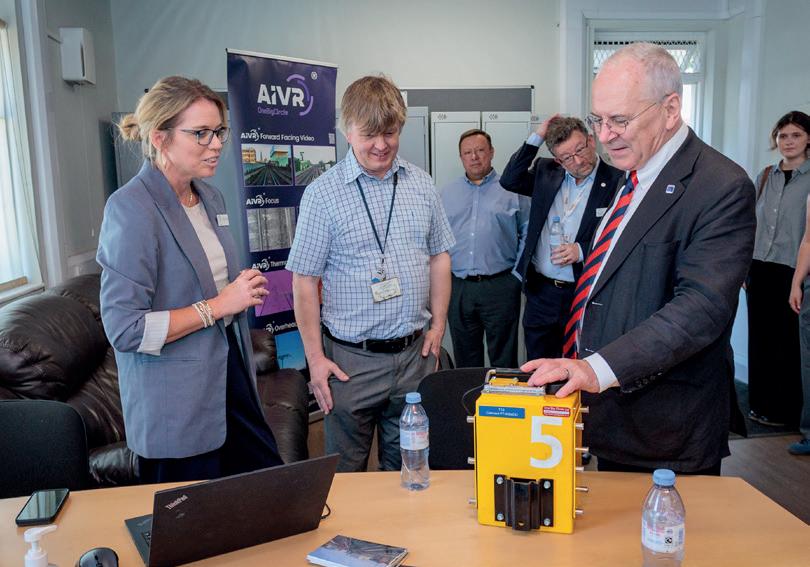
supported by 16 sub-criteria, each with defined approaches, minimum standards, key performance indicators and long-term ambitions. Contracts awarded over £100,000 are required to include mandatory social value metrics equating to 10% of the tender evaluation. Progress is monitored through independent review and performance measurement using the Social Value Portal’s National TOMs framework, ensuring accountability and transparency.
To ensure the social value is relevant to the procurement activity, Southeastern uses a ‘heat map’ to identify further areas to enhance the social value that can be achieved through contract delivery.
Importantly, the PSVC is intended to be both a baseline and a catalyst for improvement. It sets clear expectations for suppliers while encouraging them to go further over time. Southeastern works collaboratively with its supply chain, recognising that long-term impact is best achieved through partnership rather than compliance alone. This includes hosting knowledge-sharing workshops with suppliers, supporting small businesses to build capability and understand how they can contribute to shared social value goals.
Customer and Community Improvement Fund (CCIF)
Beyond procurement, Southeastern invests directly in local communities through its Customer and Community Improvement Fund. In recent years, the organisation has provided substantial funding for community-led initiatives aimed at supporting vulnerable individuals, reducing antisocial behaviour, improving wellbeing, and increasing opportunities for local people. For example, one funding round awarded £125,000 across 13 local projects, while the most recent round allocated £386,000 to 11 initiatives. These projects have tackled key priorities such as reducing social exclusion, promoting sustainable rail travel, celebrating railway heritage, supporting young people, and addressing antisocial behaviour.
Open to charities, community organisations and local groups across Southeastern’s network, the fund (investing over £500,000 so far) demonstrates how Southeastern uses its role as a transport operator to deliver wider social benefit, reinforcing its position as a purpose-led organisation committed to supporting opportunity and mobility within the communities it serves.
Southeastern also supports five Community Rail Partnerships (CRP) on its network, providing £200,000 funding a year. CRPs:
• Provide a voice for the community: Ensuring communities have a say in how their local rail services are run and improved.
• Promote sustainable, healthy, and accessible travel: Encouraging rail use and integrating it with other green transport options.
• Bring communities together and support diversity and inclusion: Connecting diverse groups, enhancing social well-being, and making stations welcoming places.
• Support social and economic development: Using stations and services to drive local, economic, and tourism benefits.
Southeastern supports five Community Rail Partnerships (CRP) on its network, providing £200,000 funding a year.
In 2024, the five Community Rail Partnerships dedicated an impressive total of 4,778 volunteer hours to their initiatives. This substantial commitment has not only assisted in the delivery of their projects, but has also generated considerable social value by strengthening community engagement, fostering local pride, and improving the wellbeing of those involved.
Case Study: Youth Unity
The Youth Unity Future Tracks programme, which received funding through Southeastern’s Customer and Community Improvement Fund in 2025, provides intensive, trauma-informed one-to-one mentoring for young people aged 11-18 identified as being at risk of anti-social behaviour, serious youth violence, or exploitation linked to the rail network.
Moving beyond short-term interventions, the project delivers sustained, relationshipbased mentoring combined with accredited employability training, wellbeing support and clear progression routes. By January 2026, the programme had delivered 131 one-to-one interventions, 66 positive activity sessions and 32 accredited course completions, supporting young people back into education, employment and training.
In response to a serious train incident in Cambridgeshire, Youth Unity also developed a proactive, youth-led safety campaign titled ‘10 Tips to Stay Safe Travelling on Public Transport’. Young participants co-designed messaging and visual materials to promote confident reporting, safer travel behaviours and peer-to-peer awareness across stations, schools and social media.
Through strong partnerships with safeguarding teams, schools and local authorities, the programme demonstrates measurable social impact, reducing vulnerability, increasing engagement and building safer, more confident young passengers across Southeastern’s network.
By January 2026, the programme had delivered 131 one-to-one interventions, 66 positive activity sessions and 32 accredited course completions, supporting young people back into education, employment and training.
Case Study: Refocus Project Ltd.
Refocus Project Ltd received funding through CCI to deliver an integrated, preventative, whole-family support model that goes beyond traditional youth provision. What began as employability and mentoring support through Prospects, Job Ready and Youth Hub evolved into a connected programme supporting children, young people and parents together.
Alongside youth mentoring and pathways into training, volunteering, paid work and selfemployment, Refocus delivered Energise holiday clubs, family activities and supported train trips. For many children and mums on low incomes, this was their first experience using public transport or travelling beyond their local area. These safe, supported journeys built confidence, independence and aspiration, while creating space for English practice, guidance, help with forms and access to hardship grants.
External partnerships with employers, schools, cafés, training providers, transport partners and community organisations removed financial and confidence barriers, created employment pathways and strengthened safeguarding. The impact is evidenced through powerful journeys: an ex-offender launching a painting business and employing young people; a young mother progressing onto a Level 2 bookkeeping course; and an 18-year-old with severe sickle cell disease moving into paid sessional work.
By combining experiential activities with whole-family mentoring, Refocus has reduced isolation, prevented crisis escalation and created measurable social and economic value across generations.
Case Study: Sports Connect
Southeastern has played a pivotal role in transforming youth engagement across East Kent, moving delivery beyond traditional, short-term sports sessions to create a youth-led, relationship-based model that generates measurable social and economic value.
In Herne Bay, Southeastern’s early investment provided the foundation for Sports Connect to codesign provision with NEET and pre-NEET young people. Rather than delivering a pre-set programme, activities, routines and progression pathways were shaped directly by participants’ voices. This approach built trust with young people who would not typically access structured services and strengthened strategic partnerships locally. As a direct result, Sports Connect collaborated with Canterbury City Council on a successful Paul Hamlyn Youth Fund bid, securing Cabinet-backed, three-year investment into youth provision. Southeastern’s initial support, alongside RISE funding and the Violence Reduction Unit, created the platform for this sustained funding and long-term impact.
Southeastern’s involvement has also unlocked access to new schools and alternative provisions, including Breewood SEN School, St Anthony’s School and Hartsdown IAP, engaging cohorts previously beyond reach. Blending interactive rail safety education with sport has improved engagement and progression, with participants moving into VRU-funded programmes and volunteer pathways.
4.6 Goal 13: Harnessing the Energy Transition
Setting science-based net zero targets:
Committed to net zero Scope 1 & 2 emissions by 2035 and across the full value chain by 2050, with Science Based Targets initiative approval and a target for 74% of suppliers to adopt science-based targets by 2029.
Delivering measurable decarbonisation progress:
Nearly one-third reduction in Scope 1 & 2 emissions since 2019, installation of 2,900 solar panels across four depots and 99% waste diverted from landfill.
Embedding sustainability across operations and communities:
Joint Sustainability Strategy with Network Rail, passenger carbon footprint calculator and over 90 station gardens through Southeastern in Bloom combining biodiversity with community engagement.
Strengthening climate resilience for the future:
A joint Weather Resilience & Climate Change Adaptation Strategy is integrating mitigation and adaptation to future-proof services against extreme weather and rising climate risks.
Rail is widely recognised as a relatively lowercarbon way to travel. For Southeastern, that advantage brings both an opportunity and a responsibility to help more passengers choose rail over higher-emission options, while also reducing the carbon impact associated with running a busy network. Although Southeastern’s passenger trains are already fully electric, the business as a whole, which includes the operation of trains, stations, depots and offices, remains energy intensive.
Southeastern’s approach to the energy transition is twofold, working to reduce emissions from its own operations, while using its influence to support wider sustainability through its supply chain. Taken together, this work reflects a vision of sustainable transport that actively contributes to a net-zero future for the South East and for the UK as a whole.

Net Zero Targets
Southeastern has set out a clear direction of travel through its Decarbonisation Roadmap, which outlines its emissions reduction targets that aligns with climate science and national and international objectives. The organisation has committed to reaching net-zero carbon emissions from its own operations- covering Scope 1 and Scope 2 (primarily related to energy use)- by 2035, alongside a longer-term ambition to achieve net zero across its supply chain by 2050.
These commitments are supported by targets approved by the Science Based Targets initiative, providing external validation that Southeastern’s ambitions reflect recognised best practice. Southeastern’s targets include both short- and long-term milestones to maintain momentum. By 2029, the organisation aims to cut Scope 1 and Scope 2 emissions by 70% from a 2019 baseline, and to deliver a 90% reduction in those operational emissions by 2035, maintaining at least this level of reduction through to 2050.
Alongside operational decarbonisation, Southeastern has set a goal to achieve net zero greenhouse gas emissions across its entire value chain by 2050. This includes a target to reduce Scope 3 emissions by 90%, recognising that a large share of emissions sit beyond direct operational
control in its supply chain. Southeastern sets expectations across its supply chain, with the ambition that 74% of suppliers will have their own science-based targets in place by 2029.
Over the next few years, Southeastern’s roadmap sets out clear areas of focus. For opperating trains this includes buidling on energy efficiency and climate resilience ensuring that they can support a lower-carbon railway over the coming decades. Across stations and buildings, the focus has been on expanding LED lighting, improving energy performance and exploring on-site solar photovoltaic generation opportunties. In the supply chain, Southeastern intends to explore how it can support its Small Medium Enterprises (SMEs) to also decarbonise. Southeasstern’s governance and planning will be strengthened through the publication of a Climate Transition Action Plan, integrating decarbonisation with climate adaptation so that emissions reduction and resilience are addressed together.
The roadmap balances immediate, practical action with longer-term structural change. In doing so, Southeastern is positioning itself to future-proof its network while contributing meaningfully to the UK’s low-carbon transition.
Decarbonisation Progress
Southeastern has already made considerable progress in translating its decarbonisation strategy into action: between 2019 and 2025, the organisation reduced its Scope 1 & 2 carbon emissions by nearly one third.
Generating its own electricity was an important early step for Southeastern . 2900 solar panels have been installed at 4 of their train maintenance depots , enabling more clean electricity to be produced on-site and reducing reliance on higher-carbon grid power. Alongside generation, the organisation has invested in demand reduction measures, such as LED lighting, recognising that the most cost-effective carbon savings often come from using less energy in the first place.
Southeastern’s environmental performance improvements extend beyond carbon. Between 2019 and 2025 the organisation recorded a 22.5% reduction in water usage, primarily achieved through targeted action on water leaks.
Recognising that water resilience is increasingly linked to climate change- particularly in parts of the South East that face periods of water stressSoutheastern has also strengthened monitoring. In 2025, the organisation installed more than 150 automatic smart meters across stations and depots, helping to identify leaks quickly and support real-time intervention.
Sustainability Strategy
Southeastern’s decarbonisation work sits within a broader commitment to operate in an environmentally responsible way. Southeastern has therefore developed a joint Sustainability Strategy with Network Rail.
The strategy aligns with the Rail Safety and Standards Board’s Sustainable Rail Blueprint and is structured around twelve goals designed to help drive improvement across four thematic areas of natural environment, reducing emissions, socially responsible and brilliant at the basics. Collaborative action between Network Rail and Southeastern is considered central to the realising the strategy’s objectives. This is particularly important for the energy transition, where progress depends on shared standards and the scaling of proven solutions.
Within this framework, Southeastern has implemented several practical sustainability measures. The organisation has diverted 99% of its waste from landfill and has established station gardens and other greening initiatives that improve the passenger environment while supporting biodiversity and wellbeing. In addition, Southeastern has introduced a carbon footprint calculator to help passengers understand the environmental benefits of choosing rail, reinforcing the role that passenger awareness can play in shifting travel behaviour towards lower-carbon modes of transport.
Collaborative action between Network Rail and Southeastern is considered central to the realising the strategy’s objectives. This is particularly important for the energy transition, where progress depends on shared standards and the scaling of proven solutions.
Southeastern in Bloom
Southeastern in Bloom is a clear example of how environmental action can generate social value at the same time. In 2025 The programme has helped establish more than 90 gardens at stations across the Southeastern network, turning underused spaces into greener, more welcoming places that reflect local pride and encourage community connection.
Colleagues lead these projects on the ground, with station and depot teams supported with small grants to develop gardens, sometimes working with local community groups. This model strengthens colleague engagement by giving teams ownership, creativity and visible impact within their stations and depots.
The initiative is designed around practical, achievable actions, including pollinator-friendly planting, habitat features such as bug hotels and bird boxes and the reuse of materials where possible. Participation is open to all colleagues, regardless of role or location, helping embed a shared culture of environmental responsibility across the business.
The wider outcomes from the programme underline its combined environmental and social value. The programme has generated new community partnerships, supported pollinators across multiple sites, increased the use of recycled materials in habitat features, raised funds for charity and achieved strong colleague participation. Looking ahead, Southeastern plans to continue to strengthen the programme further to help participants maximise biodiversity outcomes.


Weather Resilience and Climate Change Adaptation
The energy transition is inseparable from climate resilience. As weather patterns become more volatile, Southeastern’s ability to deliver reliable services depends on adapting to changing weather and climate risk.
To address this challenge, Southeastern and Network Rail have developed a joint Weather Resilience & Climate Change Adaptation (WRCCA) Strategy. The strategy sets out how the railway will strengthen its ability to anticipate, manage and recover from weather-related disruption over the next three years, while building the foundations for longer-term resilience, and is organised around three connected pillars: People, Assets and Operations.
Climate projections for the South East indicate hotter and drier summers, warmer and wetter winters, more intense rainfall and rising sea levels. The WRCCA Strategy recognises that rail resilience depends on a wider system of interdependencies, such as power supply, drainage, roads, supply chains and coastal
defences, meaning disruption often has causes and consequences beyond the railway boundary.
Delivery is structured around clear actions over the next three years. These focus on building climate competence through training, strengthening welfare and support during severe weather, improving understanding of passenger and colleague experience during disruption, assessing vulnerabilities in rolling stock and the estate, aligning planning with long-term adaptation, and embedding resilience into everyday decisionmaking. Governance of the strategy sits with a joint Sustainability Board, supported by annual reviews and transparent reporting, with the strategy designed as a live document that will be refreshed as evidence is gathered.
This approach represents a shift towards proactive preparation for long-term climate change. By integrating adaptation into planning and governance, Southeastern is strengthening the resilience of the network that communities depend on as the climate continues to change.
4.7 Goal 14: Opportunity for All- Everyone Everywhere
Leading on social mobility and inclusive employment:
First UK train operator to publish a Social Mobility Action Plan, with targeted leadership, mentoring and progression programmes driving a 50%+ increase in female train drivers and conductors.
Removing barriers to access and progression:
Disability Confident employer status, guaranteed interview schemes, transparent ethnicity pay gap reporting and expanded workforce data collection to address structural inequalities.
Empowering colleague voice and inclusive design:
Five active colleague network groups representing over 10% of the workforce and inclusive design embedded in the new Careers and Skills Hub and future workplaces.
Building a more accessible railway for all passengers:
An expanded Accessible Travel Advisory Panel, new Changing Places facility at Margate, targeted station upgrades and strengthened passenger assistance ensure more people can travel independently and confidently.
Opportunity is strongest when it is open to all. At Southeastern, enabling social mobility means ensuring that both employment and travel are open to everyone, regardless of background, identity or additional needs.
This commitment starts internally, by building fair pathways into and through the organisation
and removing barriers to progression. It also extends to customers, where accessibility, inclusive service design and passenger assistance help people travel confidently and independently. Together, this work demonstrates how an inclusive employer and an accessible railway can widen opportunity across a region.
Inclusive Workforce
Southeastern’s commitment to equal opportunity within the organisation is reflected in a range of structured actions designed to promote inclusivity across the organisation. A key milestone was becoming the first UK train operator to develop a Social Mobility Action Plan, creating a framework for widening access to roles and ensuring progression is shaped by performance rather than background. Southeastern is also a signatory of the Social Mobility Pledge and works with the Purpose Coalition to maintain focus on removing barriers to opportunity.
Southeastern monitors career journeys across the business to understand where progression is uneven. By tracking where gaps emerge, Southeastern can identify targeted actions to help ensure that talent is supported consistently across different demographics and communities.
Several programmes have been developed to address areas where underrepresentation has historically been persistent. Women in Leadership apprenticeships at Levels 3, 5 and 7 provide structured development to support women to progress into more senior roles, while also building confidence and addressing common barriers such as imposter syndrome. In parallel, a tailored coaching programme for senior female managers provides leadership development and support. Southeastern has also strengthened mentoring pathways for colleagues from underrepresented groups, working with Rail Unites for Inclusion to connect senior leaders and colleagues to help build a more representative leadership pipeline.
The impact of these efforts is increasingly visible. By 2025, the number of women working as train drivers and conductors at Southeastern rose by more than 50% compared with two years earlier, reflecting the sustained encouragement to support women into roles that have traditionally been male dominated.
Southeastern’s commitment to widening opportunity includes targeted support for groups who may face additional barriers to employment. The organisation is a Disability Confident employer and has introduced an offer of interview scheme for disabled candidates and people with an armed forces background, helping ensure that those who may be disadvantaged in traditional recruitment processes have fair access to roles.
Alongside recruitment and progression initiatives, Southeastern is increasingly focusing on inclusive workplace environments. The development of the new Careers and Skills Hub building has placed inclusive design principles at the heart of the workplace experience, informed directly by colleague network groups and by utilising their membership with Business Disability Forum and Inclusive Employers. The result is an environment designed to support wellbeing and accommodate different needs, working styles and ways of learning. Building on this work, Southeastern is now exploring how inclusive design can be embedded across other office locations, with the aim of creating spaces that work for colleagues across a wide range of protected characteristics and individual circumstances.
Case Study: Graduate Voices - Opportunity in Action
The graduate scheme developed through the partnership between South Eastern Railway, Canterbury Christ Church University, the University of Greenwich and The Purpose Coalition demonstrates how targeted pathways can connect talented local students with long-term careers in rail.
The programme was designed to recognise potential rather than prior industry experience, opening opportunities to graduates from a wide range of backgrounds and disciplines. Through structured development, mentoring, cross-functional placements and exposure to senior leaders, participants are building both technical expertise and professional confidence.
The experiences below highlight how access to opportunity can transform career journeys, while also strengthening the railway’s ability to attract diverse talent that reflects the communities it serves.

Elliott Frost
Growing up in Sheerness on the Isle of Sheppey, Elliott Frost never imagined a career in rail. After studying Law with Sociology at Canterbury Christ Church University, he initially planned to become a lawyer and volunteered as a Community Legal Companion, helping people access legal aid. However, during his final year, he realised that law was not the right career path for him, leaving him uncertain about his future after graduation.
Through Canterbury Christ Church University’s GradForce programme, Elliott discovered Southeastern’s graduate scheme. What stood out was that the opportunity was specifically targeted at local students from Canterbury Christ Church University and the University of Greenwich.
“It was encouraging to see a major employer actively investing in local students rather than simply recruiting from traditional graduate talent pools.”
Nine months into the programme, Elliott has developed new skills in presentation, communication and strategic thinking while gaining a broad understanding of the railway industry. He has already contributed to projects with tangible community impact, including the introduction of a half-hourly service on the Sittingbourne to Sheerness line, improving connectivity, access to employment and educational opportunities for the community where he grew up.
His involvement in Southeastern’s travel mentoring programme has also enabled him to support passengers who lack confidence using the railway, helping others access opportunities in the same way he was given the opportunity to access his own.

Hasan Ahmati
Hasan Ahmati joined Southeastern as a Data-Driven Graduate after completing a Computer Science degree at the University of Greenwich.
Originally arriving in the UK after facing barriers during the university application process, Hasan credits the University of Greenwich for recognising his potential and providing an opportunity that changed the trajectory of his life. Graduating with a First-Class degree was a significant achievement, but securing employment proved challenging.
Through the partnership between the University of Greenwich, The Purpose Coalition and Southeastern, Hasan discovered the graduate programme and was immediately drawn to its focus on potential rather than previous experience.
“Southeastern weren’t asking how many years of experience I had. They wanted to know whether I could demonstrate curiosity and a willingness to learn.”
Since joining the scheme, Hasan has led projects independently, worked across multiple business functions and developed confidence in presenting ideas and collaborating with stakeholders. Beyond technical skills, he has gained a deeper understanding of how the railway supports communities, businesses and economic growth across the South East.
His journey demonstrates how a single opportunity can unlock talent that might otherwise be overlooked.

Rai
For Software Engineering graduate Rheana Rai, community has been a defining feature of her journey into rail.
Growing up in an Army family, Rheana developed a strong appreciation for supportive environments and shared purpose. She discovered Southeastern’s graduate programme through Canterbury Christ Church University’s GradForce initiative and quickly recognised it as an opportunity to build a career while continuing to learn and develop.
Since joining the railway, Rheana has been encouraged to explore the wider industry, visit locations across the network and gain first-hand experience of how different parts of the railway work together.
“At first it is easy to think the railway is simply about getting people from A to B. Through the graduate scheme, I have seen the collaboration, planning and dedication that keeps communities connected every day.”
The experience has strengthened both her technical and professional skills while giving her a strong sense of belonging within the industry. Looking ahead, Rheana is particularly passionate about supporting future graduates and interns, helping to create the same welcoming environment that supported her own transition into the workplace.
Rheana

Maryam Raza
Maryam Raza’s journey into rail combines personal inspiration with a commitment to making the industry more inclusive for future generations.
After growing up in the United Arab Emirates and studying Mathematics at the University of Greenwich, Maryam joined Southeastern as a Data-Driven Graduate. Rail has long held a special significance for her family, with both her grandfather and father sharing a passion for the industry.
Since joining Southeastern, Maryam has embraced opportunities well beyond her core role. She has developed expertise in data analysis, automation, Power BI and app development while also participating in professional development programmes, colleague network groups and industry initiatives.
One particularly significant opportunity came through her involvement in CultuRail and attendance at the Women in Rail Awards, where she gained insights from industry leaders and role models.
She also helped launch The Graduate Line (TGL), a cross-industry graduate newsletter that connects graduates from across the rail sector to share knowledge and ideas.
“One question that continues to guide me is: Is rail for everyone? As I progress in my career, I want to help ensure the industry becomes increasingly inclusive and accessible for all.”
Maryam’s story demonstrates how early career opportunities can empower individuals not only to build successful careers, but also to help shape the future of the industry itself.
Gender and Ethnicity Pay Gaps
Southeastern continues to strengthen transparency and accountability by tracking and reporting pay gaps. In 2025, the organisation voluntarily published its ethnicity pay gap for the first time, using the same methodology applied to gender pay gap reporting. This supports a clearer understanding of workforce representation and future action.
To build an even more detailed understanding of who makes up its workforce, Southeastern is expanding voluntary data collection through its HR portal. This includes socioeconomic background and caring responsibilities, helping to identify barriers and tailor support more effectively.
Producing their first Gender Pay Action Plan, following the forthcoming Employment Rights Bill, will be a key component of their approach in the future.
To build an even more detailed understanding of who makes up its workforce, Southeastern is expanding voluntary data collection through its HR portal.
Colleague Network Groups
Employee voice and lived experience are critical to building an inclusive culture and Southeastern’s colleague network groups play a central role in shaping this work. The colleague-led groups are open to all and provide space to share lived experience and influence organisational change.
Southeastern currently has five active colleague network groups: AccessAbility- accessibility inclusion; Armed Forces Network; CultuRail- cultural diversity; LGBT+ Southeastern; and WIRE- Women in Rail Empowerment. Together, these groups have grown significantly since their creation in 2018, with more than 500 Southeastern colleagues members of at least one group, representing over 10% of the workforce.
Each network has an executive sponsor, Chair and vice-Chair who are supported by structured time to meet quarterly, with their group and quarterly with the other group leads, develop priorities and deliver action plans. Networks also support a coordinated calendar of events, reinforcing an organisational approach to inclusion that is based on understanding and practical action.
Accessible Railways
Southeastern’s commitment to opportunity extends to the passengers who rely on its services. Inclusive service design is central to ensuring the network supports the communities it serves.
A key mechanism for this work is the Accessible Travel Advisory Panel, launched in 2021 and expanded in 2024. The panel brings together volunteers with a range of disabilities and lived experiences to identify barriers and shape improvements.
The panel helps ensure that Southeastern’s accessibility improvements reflect real-world experience. It has contributed insight on changes including priority seating, improved onboard
wheelchair provision and consultation on new trains and digital products. By building accessibility feedback into decision-making early, Southeastern reduces the risk that new measures unintentionally create barriers for particular groups.
Southeastern also invests in training to ensure frontline colleagues have the knowledge and confidence to support passengers with additional needs. Disability awareness training is delivered every two years, and a new e-learning module has recently been introduced.
Infrastructure investment plays an important role. Through the Department for Transport’s Minor Works Fund, Southeastern has received funding to deliver small-scale improvements at stations, such as installing handrails and other practical changes that can make a significant difference to independent travel.
A recent milestone is the opening of a Changing Places toilet at Margate station. This is the first facility of its kind at a station managed by Southeastern and supports passengers whose needs can not be met by standard accessible toilets. It includes specialist features such as a height-adjustable changing bench, hoist, adjustable sink, shower and additional space for wheelchairs and carers. Delivered with support from Muscular Dystrophy UK and CareSpaces, and funded by the Department for Transport, the facility demonstrates how targeted investment can widen access for passengers who may otherwise find travel difficult or limiting.
Southeastern additionally places strong emphasis on passenger assistance, aiming to provide reliable support to any customer who needs help to travel comfortably and confidently. Performance is monitored closely, and any negative feedback is reviewed in detail to ensure that services continue to improve to meet the needs of all Southeastern customers.
4.8 Goal 15: Working in Partnership
Creating a unified railway with Network Rail: Operating under a single South Eastern Railway leadership team since 2025, delivering resilient performance, low cancellations and improved customer satisfaction through joined-up operations and infrastructure.
Building long-term education partnerships: Formal collaborations with universities, colleges and schools, including a Memorandum of Understanding with Canterbury Christ Church University and curriculum-linked STEM programmes reaching primary schools.
Strengthening safeguarding through local authority collaboration: A joint Medway Council youth outreach trial reduced antisocial behaviour, generated an estimated £250,000 in avoided delay costs and engaged 775 young people, with plans to scale county-wide.
Scaling impact through community and national partnerships: Targeted funding for charities such as Safe Families, and strategic collaboration with the Purpose Coalition, embed accountability, shared learning and wider access to opportunity across the South East.
Since the publication of Southeastern’s first report in 2024, the number and depth of these partnerships has grown.
Southeastern’s ability to deliver meaningful social impact is strengthened by the way it works alongside others. The organisation has built partnerships across the rail industry, local authorities, education providers and the voluntary sector, with the aim of expanding the reach of its programmes and learning from others with specialist expertise.
Since the publication of Southeastern’s first report in 2024, the number and depth of these partnerships has grown. This reflects an increasing focus on industry collaboration and on sharing knowledge and resources with external organisations so that activity can be scaled and targeted where it will make the greatest difference. These relationships reinforce Southeastern’s role as an anchor institution within the region, bringing partners together to translate that shared ambition into practical outcomes.

Network Rail
In an important step towards the future model for Great British Railways, in 2025 Southeastern and Network Rail Kent Route began operating under a single leadership team as the South Eastern Railway team. This new structure brings together operations and infrastructure delivery, enabling a more joined-up approach to investment, service improvement and customer experience.
Over the past year, this collaboration has supported a more responsive railway and the early outcomes of this approach are already visible.
Over the past year, this collaboration has supported a more responsive railway and the early outcomes of this approach are already visible. Service performance has remained resilient, with consistently low levels of cancellations and improved customer satisfaction. The unified model also creates space for joint innovation and problemsolving across the network, from operational improvements to initiatives that enhance safety and reduce disruption. By aligning their work under one leadership team, Southeastern and Network Rail are demonstrating how partnership can improve delivery at scale.
School Partnerships
Alongside industry collaboration, Southeastern works with education partners to widen access to opportunity for young people. These partnerships help the organisation connect with students earlier and raise awareness of careers in rail and engineering.
Southeastern’s education partnerships include work with local universities, such as Canterbury Christ Church University, where collaboration has supported STEM outreach and engagement activity designed to inspire young people and challenge stereotypes about technical careers. Southeastern now has an official Memorandum of Understanding in place with the university, strengthening the partnership and enabling deeper, more coordinated activity that broadens access to opportunities across the region.
Southeastern also continues to strengthen its partnership with East Kent College Canterbury, where it has previously supported students through engineering work experience placements that offered valuable insight into the railway. Building on this foundation, Southeastern is now exploring further opportunities such as T Levels and other structured programmes that require substantial industry placements. This will allow it to provide longer, curriculum aligned experiences that develop technical skills, support workforce planning and widen access to meaningful opportunities for young people.
Through this approach, Southeastern positions education engagement as a long-term investment in social mobility and the region’s future skills base, helping young people to see the railway as a potential pathway into skilled, secure employment.

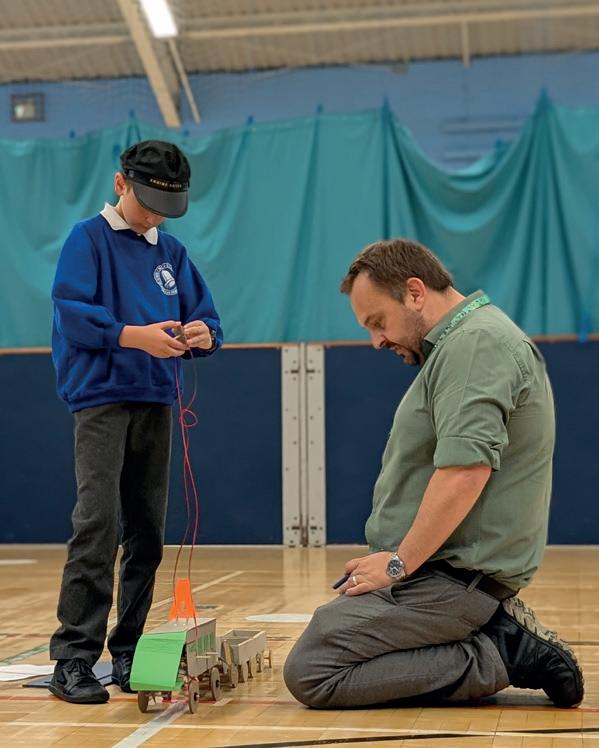

In 2025, Southeastern partnered with Primary Engineer to deliver a curriculum-linked engineering programme with ten primary schools near its Ramsgate depot. The partnership was designed to introduce engineering concepts through classroom learning that aligns with the national curriculum for Key Stages 1 and 2, making engineering part of everyday education.
The programme created practical projects that teachers could embed throughout the school year, with activities linked to curriculum themes such as electricity, motors and problem-solving. Southeastern engineers supported delivery by visiting schools and working directly with children, helping to bring engineering to life and providing real-world role models.
The programme culminated in a celebration day where participating schools came together to share and present their work, with Southeastern colleagues supporting as judges.
Building on the success of the 2025 programme, Southeastern plans to run the project again in 2026 with ten schools near Slade Green. In addition, the organisation will provide funding for five of the Ramsgate schools to continue their participation, supporting continuity and sustained impact. Looking ahead, Southeastern’s wider ambition is to develop a more strategic school engagement model, using data on need and demographics to build longer-term partnerships with schools where support can have the greatest impact over time.
In 2025, Southeastern partnered with Primary Engineer to deliver a curriculum-linked engineering programme with ten primary schools near its Ramsgate depot.
Medway Council
Southeastern’s partnership work extends into safeguarding and community safety. Over the past two years, the organisation has worked closely with Medway Council to address youth safety, antisocial behaviour and wider safeguarding concerns on the railway.
The partnership has focused on direct youth outreach, enabling early engagement with young people whose behaviour on the railway may be linked to wider vulnerabilities. By working alongside local authority youth services, Southeastern has helped ensure that enforcement and safety responses are balanced with pathways into support, recognising that prevention and early intervention can lead to better outcomes.
A seven-month trial delivered jointly by Southeastern and Medway Council demonstrated the value of this collaborative approach. By reducing antisocial behaviour, the trial helped prevent disruption and contributed to an estimated £250,000 saving associated with avoided railway delays. Importantly, the work also led to increased referrals into youth services, including cases where young people were identified as having vulnerabilities. This reinforced the railway’s role as a place where safeguarding concerns can be spotted, and where partnership can help connect individuals to the right support.
Following the success of the trial, Southeastern and Medway Council have agreed to explore funding for a 3 year initiative to expand it into a youth outreach team covering Kent. This creates a more consistent county-wide approach, with youth workers engaging directly with young people on trains and at stations, supported by Southeastern colleagues. To date, the partnership has engaged 775 children and young people.
Safe
Families
Southeastern also works in partnership with charities and local agencies to strengthen community wellbeing and support families facing difficult circumstances. In 2025, Southeastern partnered with Safe Families to help deliver practical and emotional support to families experiencing crisis across Kent and East Sussex. Enabled through a £46,600 grant from Southeastern’s Customer and Communities Improvement Fund, the initiative provides targeted support to 40 families across the region.
Safe Families works through a network of trained volunteers who offer support to help families access the support they need. The partnership reflects Southeastern’s wider approach to community investment: using targeted funding to support organisations with specialist expertise and established local trust, ensuring that support reaches individuals in communities across Southeastern’s network who may otherwise struggle to access it.
Purpose
Coalition
Working alongside the Purpose Coalition and its Chair, Rt Hon Justine Greening, Southeastern developed its first Social Mobility Action Plan, setting out a clear approach to measuring the impact of its community and workforce activity. This has helped embed greater structure and accountability into Southeastern’s social impact approach, ensuring that ambition is linked to practical action and progress can be tracked over time.
The partnership also supports knowledge sharing and collaboration with other organisations committed to breaking down barriers to opportunity. By engaging with coalition partners, Southeastern is able to benchmark its activity, identify emerging best practice and create opportunities for joint initiatives. This includes supporting programmes such as Purpose Lab, helping to widen access to opportunities for those who may face barriers to entering the workplace.
Case Study: Building a Rail Sector Movement for Social Mobility
In June 2026, Southeastern and other organisations from across the rail industry came together in Birmingham to mark Social Mobility Day and build a shared ambition around widening opportunity through the rail sector. Hosted by West Midlands Railway and attended by Rt Hon Justine Greening, Chair of The Purpose Coalition and former Secretary of State for Transport, the event brought together train operators, passenger service providers, Network Rail, DFTO and industry partners to explore how rail can play an even greater role in breaking down barriers to opportunity.
The event highlighted the strong connection between social mobility, workforce development and economic growth. Organisations are increasingly focused on widening talent pipelines and connecting with young people who may never previously have considered a career in rail.
A powerful contribution came from Jay, whose personal journey demonstrates the transformative impact that apprenticeships can have. Having experienced homelessness and left school at 16, Jay began an apprenticeship at 17. By 23 he had become a homeowner, at 25 he became the first person in his family to attend university, and by 33 he had completed a master’s degree and qualified as a Chartered Engineer. Reflecting on his journey, Jay describes apprenticeships as “an engine for social mobility like no other”, highlighting how access to opportunity can unlock talent that might otherwise go unnoticed. His story also reinforces a key theme of the day: that while talent is everywhere, opportunity is not.
Participants discussed how the industry’s visibility within communities, combined with its wide range of careers in engineering, operations, customer service and technology, places it in a unique position to create opportunity at scale.
The event also showcased the impact already being delivered across the sector. Southeastern, as well as organisations including Network Rail, Greater Anglia, c2c and Northern shared examples of work on school outreach, apprenticeships, recruitment and progression that are helping widen access to opportunity and strengthen future talent pipelines.
A key milestone was the work of the rail sector’s Social Mobility Steering Group, chaired by Navleen Kalra, People and Transformation Director at Network Rail. The group has set an ambition to positively impact at least 5,000 lives every year through coordinated outreach and engagement activity, demonstrating the scale of the sector’s collective commitment.
The Birmingham event highlighted the power of partnership and the opportunity presented by the transition to Great British Railways. By working together across organisational boundaries, the rail industry has the potential to become a national leader in social mobility, helping more people fulfil their potential while building the skilled and diverse workforce needed for the future.

5. Analysis
Southeastern’s work across the Purpose Goals demonstrates how a major transport operator can move beyond its core function to become a systemic driver of social mobility.
Across its workforce strategy, infrastructure investment, community partnerships and environmental commitments, Southeastern is embedding opportunity into the everyday operation of the railway. The examples set out in this report point to an organisation that recognises the scale of its influence: as a large regional employer, a steward of public infrastructure and a visible presence in hundreds of communities, its decisions shape access to work, education, health and economic participation across the South East.
This role is particularly significant given the varied socioeconomic profile of the communities served by Southeastern. Analysis of the Indices of Multiple
Deprivation (IMD) across South East London, Kent and parts of East Sussex shows a region of sharp contrasts: while some local authorities such as Tunbridge Wells (2.54%), Wealden (2.44%) and Tonbridge and Malling (3.45%) have very small proportions of residents living in the most deprived 30% of communities nationally, others face substantially higher levels of deprivation. Nearly half (48.12%) of Hastings’ population live within the most deprived 30% of neighbourhoods nationally, alongside 36.75% in Thanet, 25.31% in Medway, 24.69% in Swale, and over 22% in both Dover and Folkestone & Hythe. In Greenwich and Lewisham, almost one in five residents live in the most deprived 30% of communities nationally (17.97% and 19.81% respectively). This uneven geography of opportunity reinforces the importance of Southeastern’s network as connective infrastructure linking areas of high deprivation with wider labour markets and educational institutions.
Workforce, Access and Progression
Southeastern’s Social Mobility Action Plan provides a clear strategic backbone to its workforce activity. As the first UK rail operator to publish such a plan, the organisation has formalised its ambition to widen access and make progression dependent on potential and performance rather than background.
This is evident at every stage of the employee lifecycle. Early careers pathways, including apprenticeships, internships and graduate programmes, create structured entry points into skilled employment. The scale is significant, with around 500 colleagues undertaking apprenticeships each year and 10% of the workforce engaged in apprenticeships or graduate schemes. The opening of the Ashford Careers and Skills Hub represents a long-term investment in building internal capability and strengthening talent pipelines.
The importance of this early careers infrastructure is underscored by IMD data on educational disadvantage. In Swale, 25.56% of communities fall within the most deprived 10% nationally for Education, Skills and Training, while Thanet (19.77%), Hastings (18.87%) and Folkestone & Hythe (10.45%) also show significant concentrations of educational deprivation. Targeted post16 pathways, apprenticeships and technical training opportunities therefore represent not only workforce strategy but a direct response to structural skills gaps across parts of Southeastern’s network.
Recruitment practices have been redesigned to reduce bias and increase transparency, with blind recruitment, psychometric testing and accessible application systems embedded
as standard. Internally, quarterly development check-ins and the ‘Maximising My Potential’ tool shift the emphasis from retrospective appraisal to forward-looking growth. These reforms act as cultural signals that development is continuous and open to all.
The outcomes are increasingly visible. Staff turnover has reduced to 6.65%, while 485 colleagues moved into new roles in 2025, demonstrating healthy internal mobility. Targeted initiatives to address underrepresentation have delivered measurable progress, including a more than 50% increase in female train drivers and conductors over two years. Voluntary publication of the ethnicity pay gap and expanded workforce data collection further strengthen accountability and provide a platform for future action.
IMD data further highlights the relevance of employment pathways. In Thanet, 22.09% of communities fall within the most deprived 10% nationally for Employment, while Hastings (26.42%) and Swale (14.44%) also show pronounced employment deprivation. In contrast, more affluent authorities such as Sevenoaks and Tunbridge Wells show very low employment deprivation. This divergence reinforces the importance of Southeastern’s role as a major regional employer offering accessible, stable and skilled jobs in areas where labour market exclusion remains a barrier to opportunity.
External validation through Investors in People, The 5% Club Platinum membership and Menopause Friendly accreditation reinforce Southeastern’s position as a sector leader in inclusive employment.
Infrastructure and Communities
Southeastern’s impact extends beyond employment into the physical and economic infrastructure of the region. Operating over 1,700 daily services across 181 stations, the organisation underpins access to opportunity for hundreds of thousands of passengers. Its Integrated Travel Strategy signals a shift from viewing rail as a standalone system to positioning it within a connected, doorto-door mobility system. Initiatives such as in-station car clubs and designated e-bike parking demonstrate practical action to address first- and last-mile barriers that can disproportionately affect lower-income households and disabled passengers.
Place-based IMD data reveals that barriers to housing and services are particularly acute in several parts of Southeastern’s geography. Hastings ranks 2nd nationally for this domain, with 69.81% of its communities within the most deprived 10% for access to housing and services. Rother (41.38%), Folkestone & Hythe (29.85%), Ashford (24.69%) and Sevenoaks (24.00%) also show elevated levels of deprivation in this domain. These figures indicate that physical connectivity and access to essential services remain structural challenges in coastal and rural areas. In this context, Southeastern’s investment in integrated transport solutions, multi-modal hubs and improved accessibility can be understood as directly mitigating placebased barriers identified through IMD analysis.
Investment in accessibility is particularly significant. More than £40 million committed to major station upgrades, including the largestever Access for All scheme at Hither Green, alongside smaller improvements funded through the Minor Works programme, illustrates a layered approach to removing physical barriers. The introduction of a Changing Places facility at Margate station and the active role of the Accessible Travel Advisory Panel show how lived experience is informing design decisions.
Crime deprivation data also underscores the importance of safeguarding partnerships. Thanet (30.23%), Medway (26th nationally), Gravesham (18th nationally) and Dartford show comparatively high concentrations of crimerelated deprivation, while urban boroughs such as Lewisham and Greenwich also rank relatively high. Southeastern’s youth outreach work, safeguarding strategy and partnerships with local authorities therefore respond not only to operational concerns but to measurable community-level risk factors.
Crime deprivation data also underscores the importance of safeguarding partnerships.
Southeastern is also using its economic footprint intentionally. £77 million spent with SMEs in 2023/24- a 20% increase on the previous yearand a Procurement Social Value Charter that embeds mandatory social value weighting into major contracts demonstrate how supply chain decisions can drive wider economic inclusion. Community investment through the Customer and Community Improvement Fund and sustained support for Community Rail Partnerships reinforce the organisation’s anchor institution role, while safeguarding partnerships with local authorities and charities show how operational environments can become points of early intervention and support.
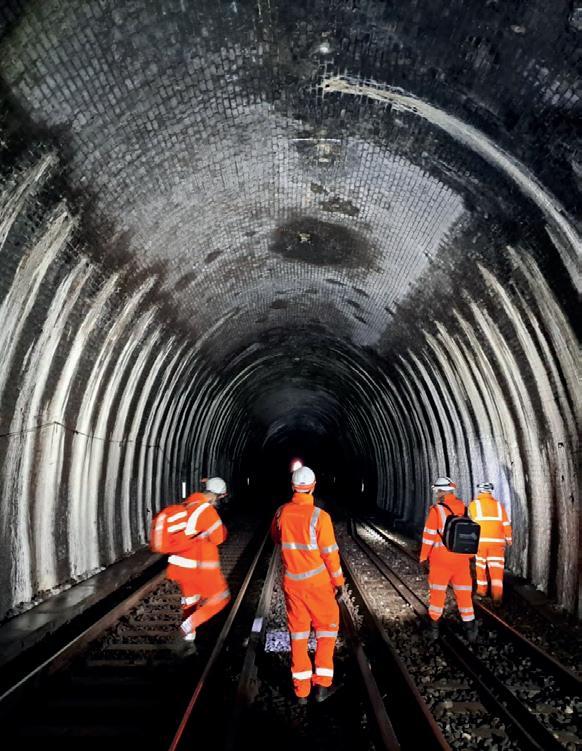
Sustainability and Resilience
Southeastern’s energy transition and climate resilience strategies reflect a long-term view of opportunity. Science Based Targets initiativeapproved commitments to reach net zero operational emissions by 2035, alongside a 2050 value chain target, provide clarity of direction. A near one-third reduction in Scope 1 and 2 emissions since 2019, 2,900 solar panels installed across depots and 99% waste diversion from landfill illustrate progress.
Importantly, decarbonisation is being integrated with adaptation. The joint Weather Resilience & Climate Change Adaptation Strategy with Network Rail recognises that climate risk poses a direct threat to connectivity and, by extension, to opportunity. By embedding resilience into governance, planning and frontline capability, Southeastern is future-proofing the network on which communities depend.
Partnership
Across all of Southeastern’s work, partnership emerges as a consistent theme. The unified South Eastern Railway leadership model with Network Rail, formal education partnerships, collaboration with Medway Council on youth outreach and engagement with the Purpose Coalition demonstrate that impact is amplified through collective action. These relationships allow Southeastern to scale activity, share expertise and align its efforts with broader regional priorities.
Given that over a third of residents in Thanet and nearly half in Hastings live within the most deprived 30% of neighbourhoods nationally, while other parts of the network sit among the least deprived in England, partnership working will remain critical in ensuring that opportunity is not concentrated but shared. Southeastern’s ability to operate across both high-deprivation coastal communities and more affluent commuter belts positions it uniquely to connect people, skills and economic opportunity across these divides.
Taken together, this report presents Southeastern as an organisation that is progressively aligning operational excellence with social purpose. By embedding inclusion, accessibility, sustainability and partnership into its core strategy, Southeastern is demonstrating how a regional railway can act as both a transport provider and a catalyst for shared, long-term prosperity across the South East.
Southeastern’s ability to operate across both high-deprivation coastal communities and more affluent commuter belts positions it uniquely to connect people, skills and economic opportunity across these divides.
6. Commitments
Demonstrating how an integrated railway can expand opportunity across Britain
Southeastern’s commitment to social mobility and inclusive opportunity within the rail sector is well established, with a growing emphasis on leadership, collaboration and measurable impact. As the organisation looks to consolidate and extend this work, there is a clear opportunity to move from a collection of strong individual initiatives towards a more unified, sector-shaping approach that delivers sustained change.
This ambition is reinforced by Steve White’s role as Chair of the cross-sector Beyond Barriers Network Group, which brings together partners from across the railway industry to drive collective action on social mobility. Through this forum, Southeastern is well positioned to issue a statement of shared intent, align activity across operators and suppliers, and work in partnership to scale effective social impact interventions across the entire rail network. By sharing learning and best practice, Southeastern can act as a pioneer of social mobility in rail, setting the standard for the sector and helping position the railway as a national leader in purpose-led, inclusive growth.
The following commitments outline how Southeastern can build on its existing activity to strengthen its leadership in social mobility, while maximising collective impact across the industry.
As the railway transitions towards Great British Railways, South Eastern Railway has a clear opportunity to demonstrate how social mobility and operational excellence can be embedded together within a modern, integrated rail system.
Railways for Opportunity: South Eastern Railway’s social mobility demonstrator for Great British Railways
As the railway transitions towards Great British Railways, South Eastern Railway has a clear opportunity to demonstrate how social mobility and operational excellence can be embedded together within a modern, integrated rail system.
Operating under a unified leadership model with Network Rail Kent Route, South Eastern Railway is already working in a way that reflects the future direction of the industry. The next step is to ensure that this operational integration is matched by equally strong integration of social impact, workforce development and community engagement.
To achieve this, South Eastern Railway will position itself as a demonstrator railway for measurable, system-wide social mobility impact. Central to this ambition will be the publication of an annual summary of social mobility outcomes, drawing together data from across its opportunity pipeline, workforce progression, supply chain partnerships and community engagement activity. This will provide clear visibility of lives touched, pathways created and sustained outcomes delivered.
Through its leadership of the Beyond Barriers network and its wider industry partnerships, South Eastern Railway will actively share its emerging opportunity pipeline framework and supply chain social mobility model. By opening up learning, tools and approaches to other operators and suppliers, the organisation aims to contribute to a collective uplift in standards across the rail sector.
Where successful models are identified, whether in early careers pathways, inclusive recruitment, safeguarding partnerships or supply chain engagement, South Eastern Railway will support their replication and adaptation across the wider network. In doing so, it will help ensure that progress is not confined to one operator, but contributes to a shared national effort.
By embedding measurable opportunity creation into its operating model, South Eastern Railway seeks to show how a publicly owned railway can deliver both strong performance for passengers and long-term inclusive growth for the communities it serves. In the context of Great British Railways, this approach offers a practical blueprint for how rail can act not only as connective infrastructure, but as a powerful driver of social mobility across Britain.
South Eastern Railway will bring this work together under a “Railways for Opportunity” framework. This model will align the organisation’s activity across workforce development, community engagement, supply chain partnerships and industry collaboration, creating a structured approach to expanding opportunity through the railway.
By integrating these strands into a single framework, South Eastern Railway will demonstrate how an integrated railway can actively support social mobility while delivering for passengers and communities. The Railways for Opportunity model will also provide a practical template that could be shared with other operators as Great British Railways develops a more coordinated national approach to workforce pipelines and inclusive growth.
1) Creating Pathways into Work for Underrepresented Groups
The transition from training or employability support into sustained employment can often be the most difficult stage for people who face multiple barriers to work or who have been outside the labour market for some time. South Eastern Railway has an opportunity to play a meaningful role in bridging this gap by working with employability organisations and public sector partners to connect individuals who have received support and training with real job opportunities within the railway.
South Eastern Railway will bring this work together under a “Railways for Opportunity” framework.
Through partnerships with employability providers, community organisations and potentially local Jobcentre Plus teams, South Eastern Railway could position itself as a destination employer for individuals who are ready to enter work but require a clear pathway into employment. Priority groups could include care leavers, young people not in education, employment or training (NEETs), and individuals who have experienced long-term unemployment.
Working with these partners, South Eastern Railway could develop structured pathways that link employability programmes directly into entry-level roles, apprenticeships and early careers opportunities within the organisation. This could include targeted recruitment activity, guaranteed interview pathways for programme participants and closer alignment between external employability provision and the railway’s workforce needs.
In doing so, South Eastern Railway would demonstrate how employers, public services and community organisations can collaborate to move individuals from preparation for work into sustainable employment. As a demonstrator railway for Great British Railways, this model could also help inform the development of future workforce pipelines across the wider rail sector.
Over time, the approach could evolve into a broader industry model for pathways into rail employment, helping ensure that the transition to Great British Railways is accompanied by a workforce strategy that actively widens access to opportunity and connects underrepresented groups with careers across the railway network.
2) Extending Social Mobility Through the Supply Chain
Southeastern’s supply chain, including the many small and medium-sized enterprises (SMEs) it works with, represents a powerful driver of social mobility. With significant annual spend directed through SMEs across South East London, Kent and East Sussex, the organisation has an opportunity to move towards actively shaping the social impact generated through its supplier relationships.
Building on its Procurement Social Value Charter and existing SME engagement, Southeastern could take a more strategic approach to enabling its supply chain to act as an extension of its Social Mobility Action Plan. This could include working proactively with suppliers, particularly SMEs, to strengthen their capacity to deliver impact across shared priority areas such as skills development, inclusive recruitment, fair progression, health and wellbeing and environmental sustainability.
Southeastern could also explore ways to target and support SMEs operating in more disadvantaged areas across its network, recognising that supplier growth and resilience in these communities can directly contribute to local economic inclusion. Alongside this, the organisation could seek to open up elements of its own workforce strategy and partnerships to suppliers, enabling SMEs to participate in initiatives related to apprenticeships, early careers pathways, inclusion networks, mentoring, wellbeing programmes and sector partnerships.
Recognising that smaller businesses may face resource and capacity constraints in meeting social value expectations, Southeastern could
work collaboratively to make participation more accessible. This could include convening supplier forums, delivering shared workshops and providing practical guidance on embedding social mobility, skills and wellbeing practices within SME operations.
Through this commitment, Southeastern would amplify impact across the region it serves, ensuring that the economic footprint of the railway actively contributes to breaking down barriers to opportunity at scale.
3) Supporting Ex-Offenders
People leaving the prison system face significant and persistent barriers to employment, often compounded by challenges relating to housing, health, finance and confidence. Southeastern could deepen its social impact by developing a dedicated employment and support pathway for prison leavers, including those from women’s prisons.
Working in partnership with organisations such as Sodexo, The Wise Group, the Duke of Edinburgh’s Award and other Purpose Coalition partners, Southeastern could help design an ex-offender employment scheme that links individuals to training and job opportunities with local employers. This could be supported by access to trusted points of advice and guidance that address the wider, holistic needs of people re-entering society.
By targeting a group that faces acute disadvantage and low employment participation, Southeastern would demonstrate leadership in inclusive recruitment and rehabilitation, while contributing to improved long-term outcomes for individuals and communities.

4) Targeted Schools Engagement
Southeastern has an opportunity to develop a more targeted, data-led schools engagement strategy that focuses resources where they can have the greatest impact. In addition to its Purpose Lab participation, Southeastern could partner with the ten most deprived schools across its operating region, identified using IMD and socioeconomic data.
Working closely with these schools, Southeastern could support pupils from targeted expanding opportunity groups to access work experience, insight days and paid summer placements that they may otherwise struggle to secure. Alongside this, tailored workshops focused on confidence, employability, networking and workplace skills would help prepare students for post-16 pathways.
Through careful tracking of participation and outcomes, Southeastern would be able to measure the number of young lives positively impacted and refine its approach over time. If successful, this pilot model could be shared with and replicated by other train operating companies, reinforcing Southeastern’s role as a sector leader in social mobility.
5) Expanding Mental Health Support across the Rail Network
Southeastern’s work with Kent and Medway Mental Health NHS Trust highlights the potential for rail operators to play a meaningful role in improving mental health outcomes for both passengers and staff. Building on this partnership, Southeastern is well placed to lead the expansion of an integrated mental health and suicide prevention model across the wider rail industry.
The proposed approach, embedding a qualified mental health practitioner within Southeastern’s operations alongside British Transport Police, recognises the railway as a critical point of contact for people in crisis. This model enables immediate, on-site assessment and intervention, while ensuring individuals are connected into longer-term care pathways.
A planned 12-week pilot in early 2026 offers an opportunity to test, refine and evidence this approach. If successful, Southeastern could work with partners to roll the model out across other rail operators, demonstrating how transport and health services can collaborate to improve safety, wellbeing and long-term outcomes at scale.

The Purpose Coalition campaign is proudly run by This is Purpose, part of Crowne Associates. Copyright © 2026. Crowne Associates Ltd is a corporate affiliate member of the Chartered Institute of Public Relations, and reports lobbying activities to The Office of the Registrar of Consultant Lobbyists, in line with the Transparency of Lobbying, Non-Party Campaigning and Trade Union Administration Act 2014. You can read our Code of Conduct at crowneassociates.uk/code-of-conduct.