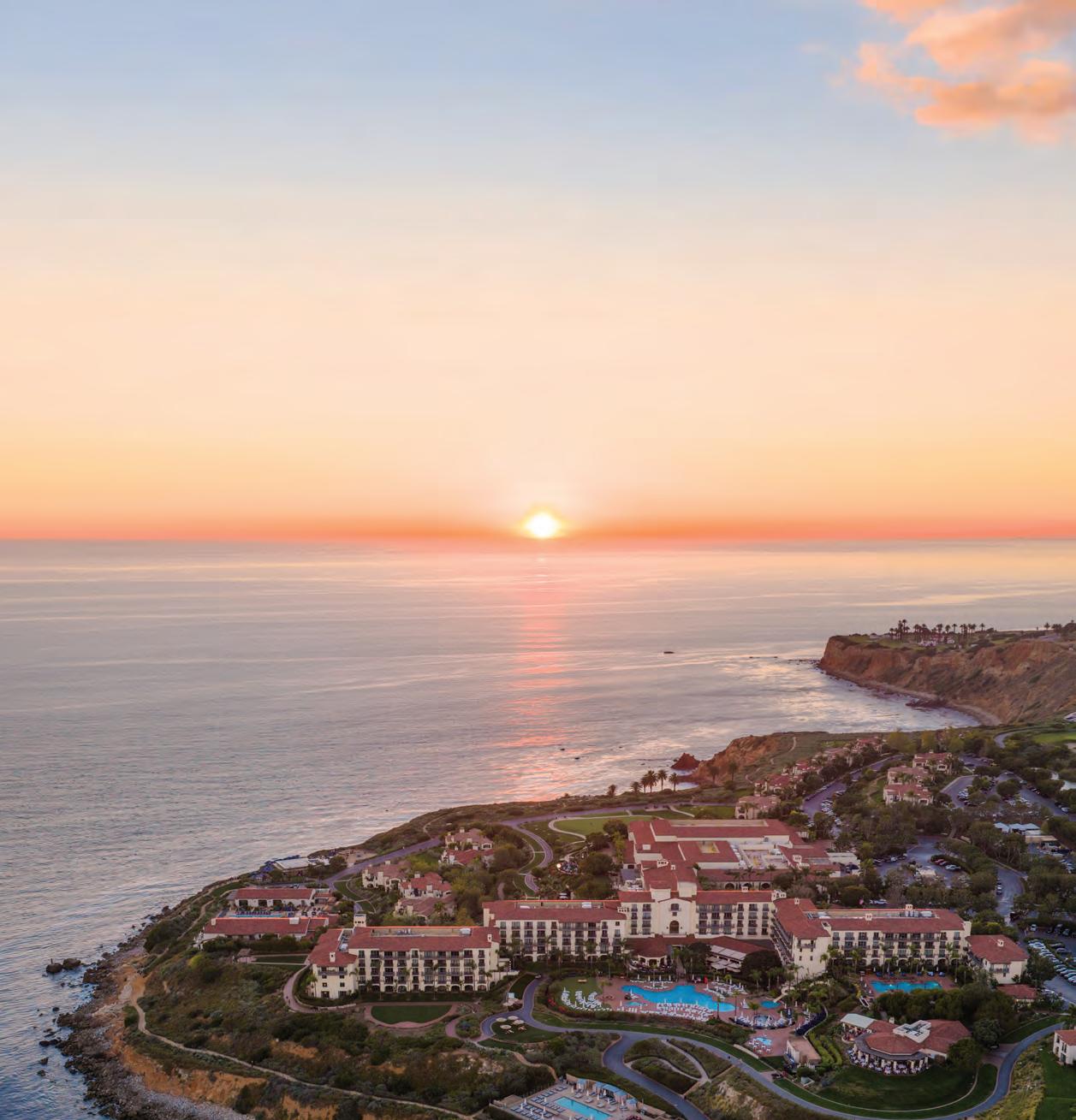
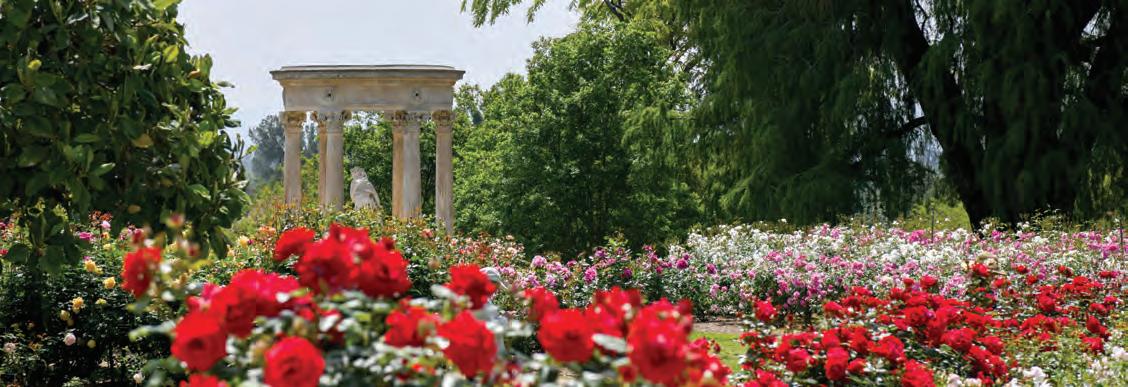
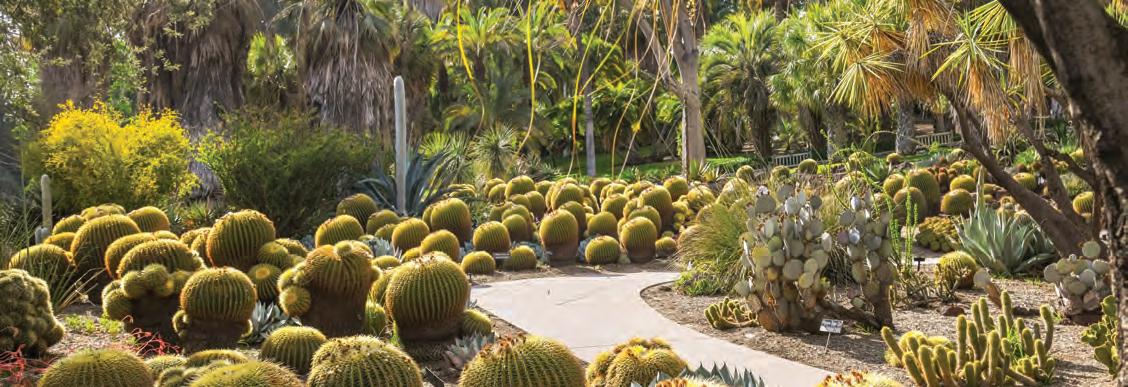
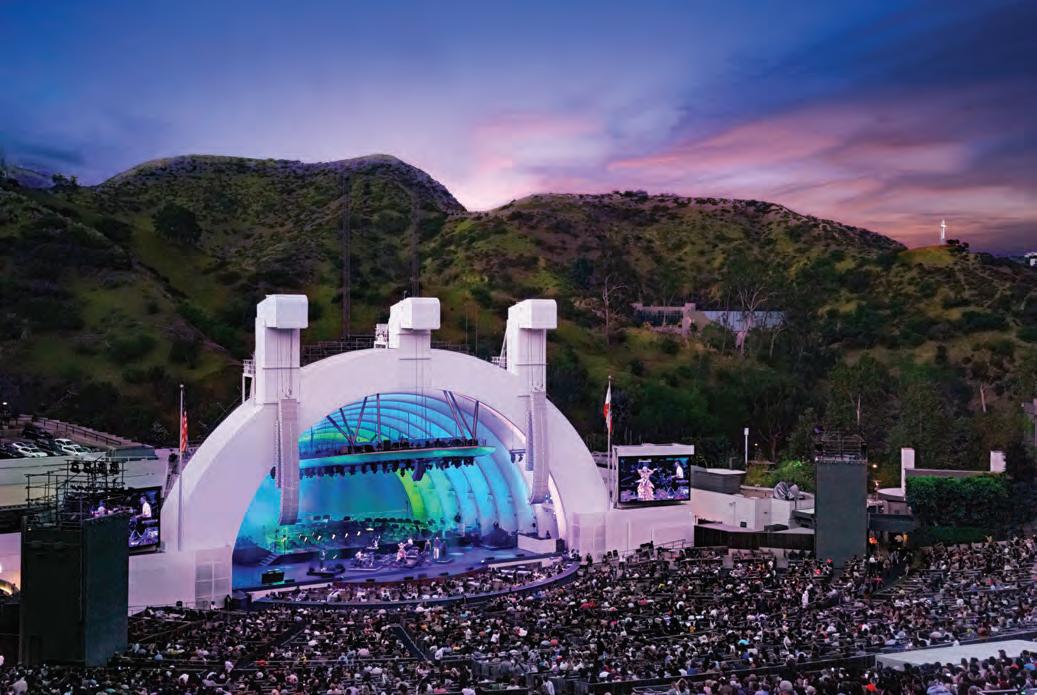
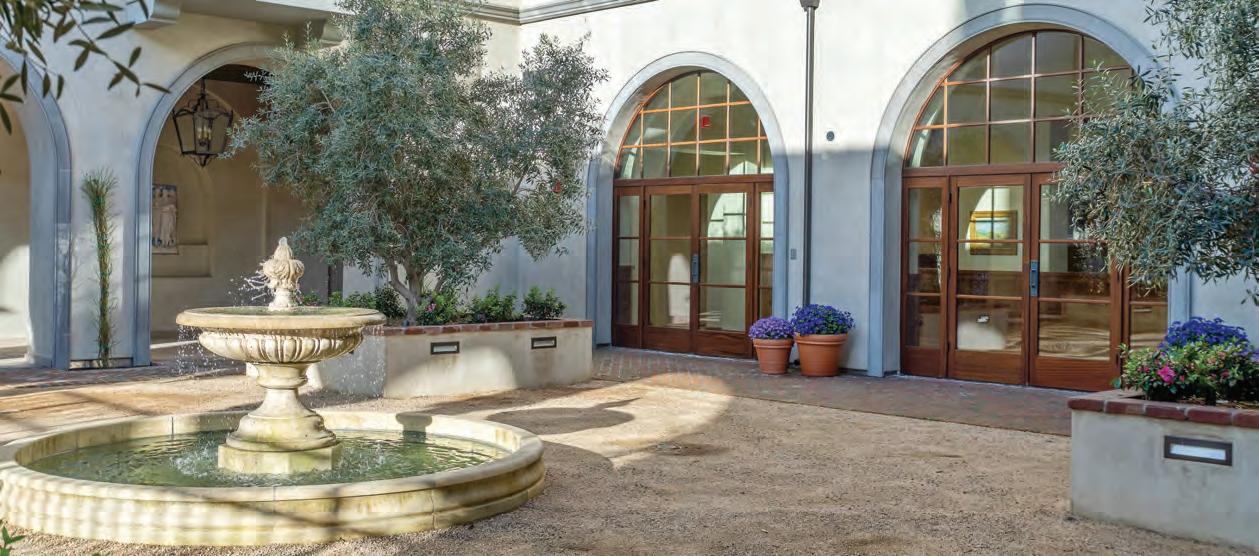
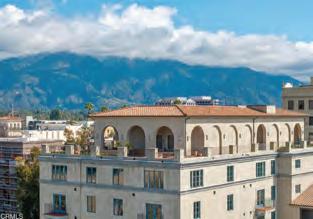
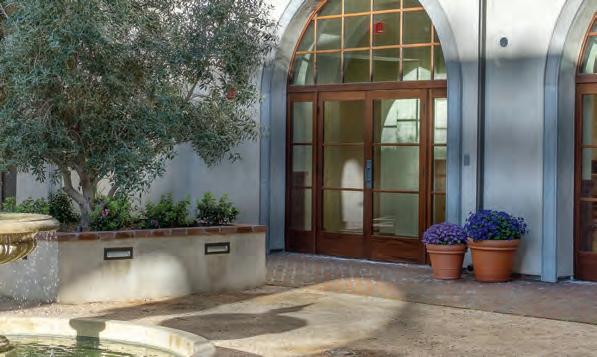
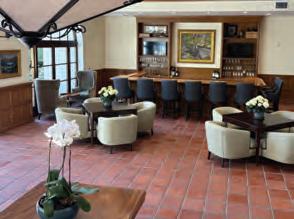
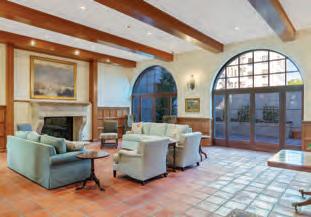
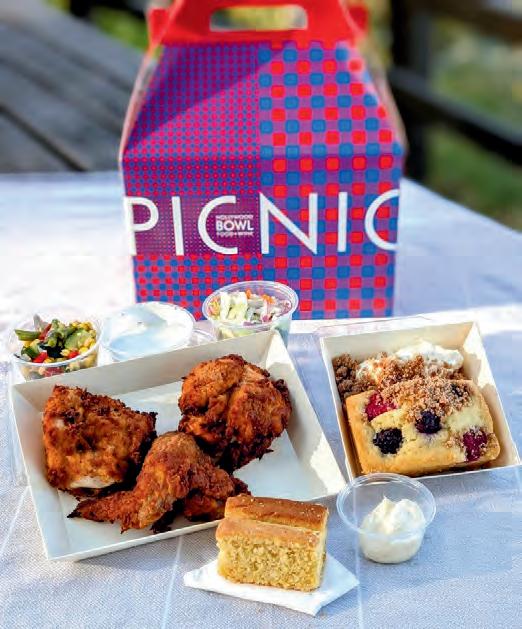
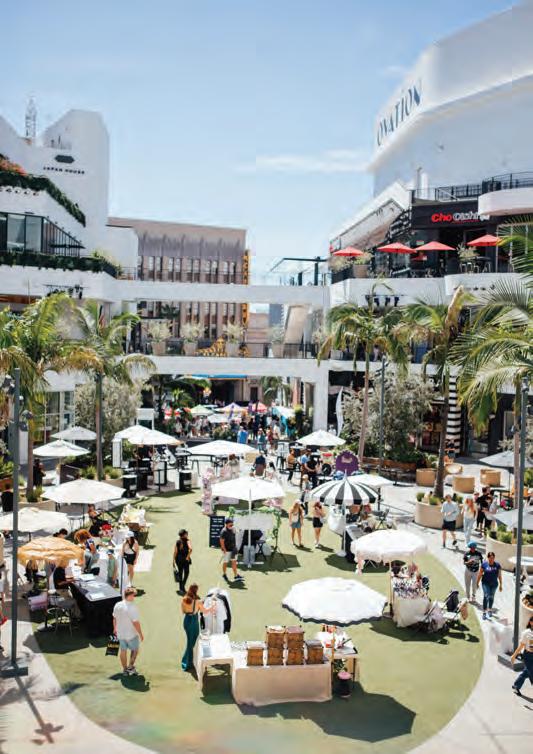
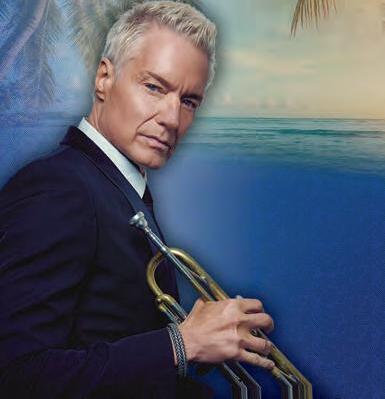
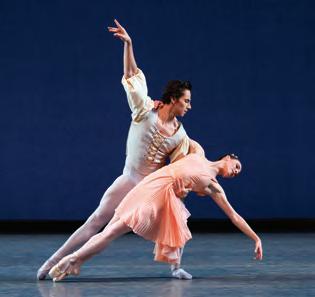
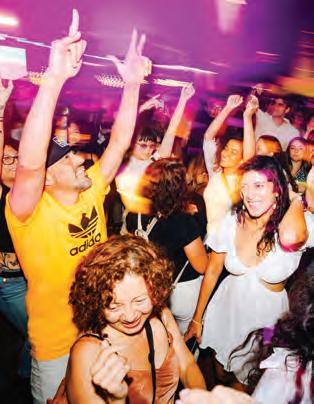
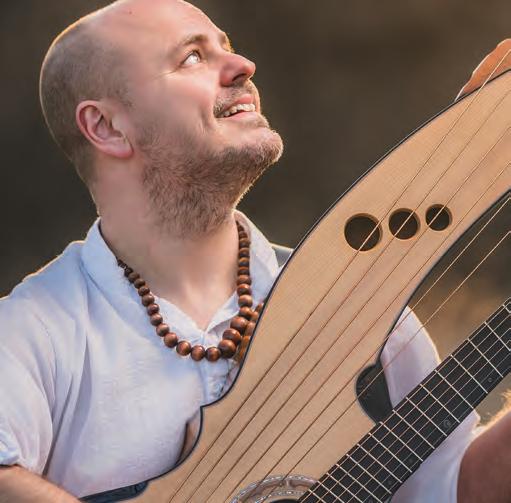
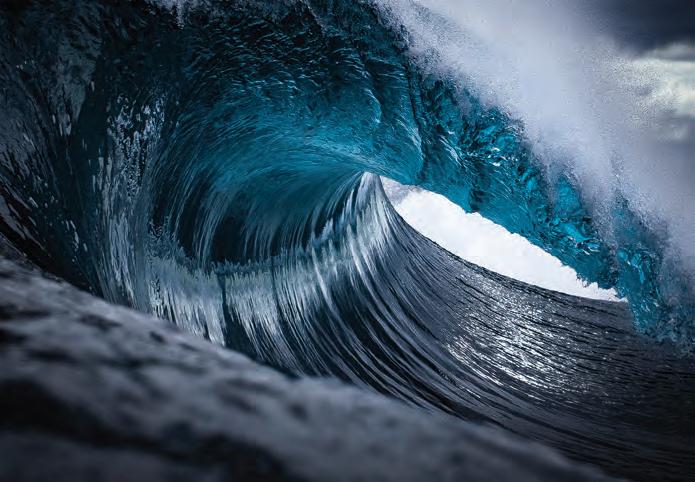
Along the edge of the Pacific, Terranea offers space to unwind, reconnect, and experience the coast at its most effortless. Days unfold between oceanfront dining, spa rituals, coastal adventures, and quiet moments by the water—giving you more time to linger. All shaped by a setting that feels open, unhurried, and distinctly Southern California.
TERRANEA COM |
WELCOME!
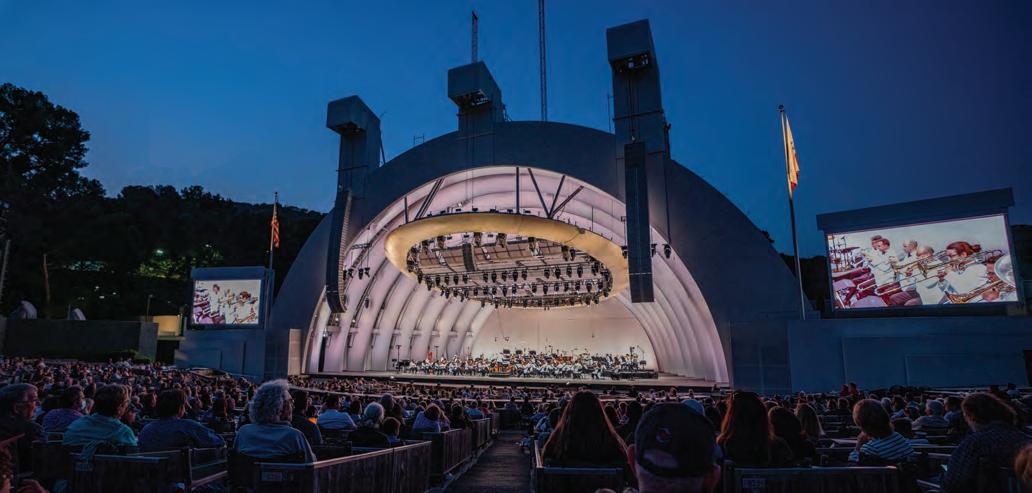
Nothing captures the spirit of summer like an evening at the Hollywood Bowl. For more than a century, Angelenos have gathered at this iconic venue to enjoy great music among friends and family. As a Los Angeles County Park operated by the LA Phil, the Hollywood Bowl is a beacon for our community. Through programs that distribute 50,000 $1 tickets and expand affordable and sustainable public transportation to concerts, we are ensuring that generations of music lovers will continue this cherished tradition for years to come.
You might notice a few features that are debuting this summer. The Terri and Jerry Kohl Artists Pavilion is our new multipurpose space housing a brand-new restaurant. We are grateful for the generous support from the Kohls and Live Nation Hewitt Silva that has brought about this exciting addition. We have also partnered with the company L-Acoustics on a new surround-sound system— the first in the world—that provides an immersive concert experience while minimizing its effects on our neighbors.
This summer also marks the first full season performed on the John Williams Stage, named in honor of the great composer who has shared so many great evenings, incredible music, and indelible memories with us. John has said: “Music is there for everybody. It’s a river we can all put our cups into and drink it and be sustained by it.” The Bowl exemplifies his words. It’s a place where we all can experience the transformational power of live performance together with our community. Thank you for joining us and being a part of this great tradition.
Warmly,
Kim Noltemy
President & CEO
David C. Bohnett Presidential Chair Los Angeles Philharmonic Association
BOARD OF DIRECTORS
CHAIR
Jason Subotky*
PRESIDENT & CEO
David C. Bohnett Presidential Chair
Kim Noltemy
VICE CHAIRS
Thomas L. Beckmen*
Reveta Bowers*
Jane B. Eisner*
David Meline*
Diane Paul*
Jay Rasulo*
DIRECTORS
Nancy L. Abell
Gregory A. Adams
Julie Andrews
Camilo Esteban Becdach
Linda Brittan
Jennifer Broder
Kawanna Brown
Andrea Chao-Kharma*
R. Martin Chavez
Christian D. Chivaroli
Jonathan L. Congdon
Donald P. de Brier*
Louise D. Edgerton
Dotty Ewing
Lisa Field
David A. Ford
Alfred Fraijo Jr.
Hilary Garland
Jennifer Miller Goff*
Tamara Golihew
Lori Greene Gordon
David Greenbaum
Carol Colburn Grigor
Marian L. Hall
Antonia Hernández*
Jonathan Kagan*
Darioush Khaledi
Winnie Kho
Joey Lee
Daniel R. Lewis
Francois Mobasser
Margaret Morgan
Leith O’Leary
Andy S. Park
Sandy Pressman
Geoff ich†
Laura Rosenwald
Michael Saei
Richard Schirtzer
Stacy Shirk
John Sinnema
G. Gabrielle Starr
Jay Stein*
Christian Stracke*
Ronald D. Sugar*
Vikki Sung
Jack Suzar
Sue Tsao
Megan Watanabe
Regina Weingarten
Jenny Williams
Alyce de Roulet
Williamson†
Irwin Winkler
Debra Wong Yang
HONORARY
LIF E DIRECTORS
David C. Bohnett
Frank Gehry †
Lenore S. Greenberg
Bowen H. “Buzz” McCoy †
PAST CHAIRS**
Thomas L. Beckmen
Jay Rasulo
Diane Paul
David C. Bohnett
Jerrold L. Eberhardt
John F. Hotchkis†
† In Memoriam
* Executive Committee Member as of September 26, 2025
** From the opening of Walt Disney Concert Hall on O ctober 24, 2003, to present
SHADEMAKER
LOS ANGELES PHILHARMONIC PUBLICATIONS 2026
EDITOR
Amanda Angel
ART DIRECTOR
Natalie Suarez
DESIGN
Studio Fuse
EDITORIAL SPECIALIST
Tess Carges
EDITORIAL COORDINATOR
Robert Alexander
E X PLORE MORE AT: laphil.com
PUBLISHER
Jeff evy
ART DIRECTOR
Carol Wakano
PRODUCTION MANAGER
Glenda Mendez
PRODUCTION ARTIST
Diana Gonzalez
DIGITAL MANAGER
Lorenzo Dela Rama
ADVERTISING DIRECTOR
Walter Lewis
ADVERTISING MANAGER
Liz Moore
ACCOUNT DIRECTORS
Kerry Baggett, Jan Bussman, Jean Greene
CIRCULATION MANAGER
Christine Noriega-Roessler
BUSINESS MANAGER
Leanne Killian Riggar
MARKETING/PRODUCTION MANAGER
Dawn Kiko Cheng
Contact Us
ADVERTISING
Walter.Lewis@CaliforniaMediaGroup.com
WEBSITE
Lorenzo.DelaRama@ CaliforniaMediaGroup.com
CIRCULATION
Christine.Roessler@ CaliforniaMediaGroup.com
HONORARY PRESIDENT
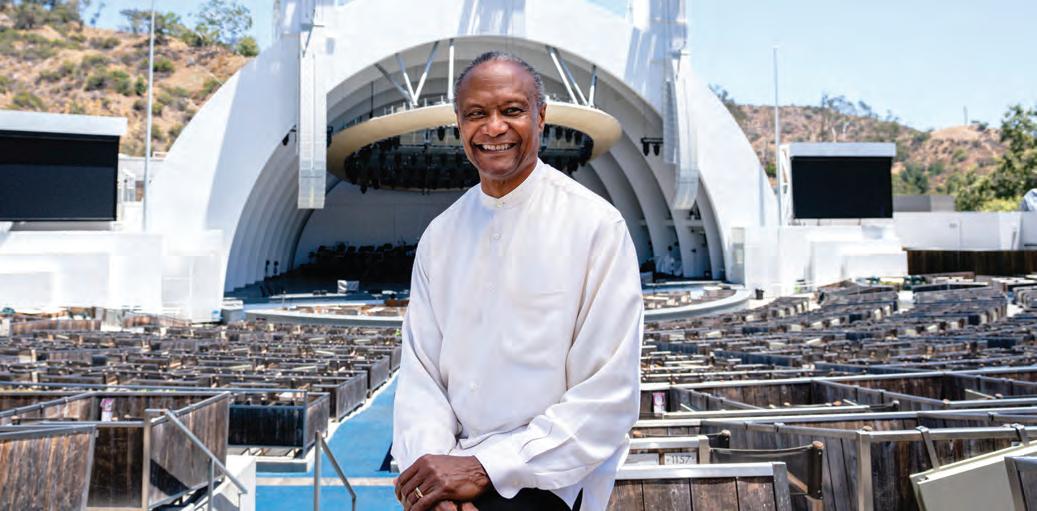
Ted Levy
For information about advertising and rates contact California Media Group 3679 Motor Ave., Suite 303 Los Angeles, CA 90034
Phone: 310.280.2880 Fax: 310.280.2890
Visit Performances Magazine online at performancesmagazine.com
I’m excited to welcome you to the Hollywood Bowl, one of the most historic and beloved venues in Los Angeles County. Whether this iconic facility is hosting a performance by the exceptional Los Angeles Philharmonic or a concert by a visiting world-class musician, the Hollywood Bowl is known for its commitment to excellence both on the stage and behind the scenes. It’s particularly special to me that the Hollywood Bowl fi nds its home in Los Angeles County’s Fifth District among the communities I have the privilege to represent. With such a rich and storied history, and as host to some of the biggest names in music today, the Bowl is one of the landmarks that make our district unique. Whether you’re visiting from down the street,
across the county, or around the world, I hope you enjoy your time at this remarkable venue. I still hold near and dear the many fond and fun memories I’ve made at the Hollywood Bowl throughout my life. I know your experience here will be just as memorable, whether it’s your fi rst show or you’re a regular visitor.
Throughout the season, I encourage you to take advantage of the incredible opportunities available to you. To hop on the convenient and affordable Park & Ride buses and Bowl Shuttles accessible from all over the county, look at the delicious food options, get a sneak peek at your seats, and fi nd everything else you need to know, head to hollywoodbowl.com/ visit so you can make the most of your experience.
You can stay in touch with me at kathrynbarger. lacounty.gov or on social media for the latest community updates and resources. I look forward to connecting with you and hope to see you at a Hollywood Bowl concert soon!
Best wishes, Supervisor Kathryn Barger Fifth District, Los Angeles County
A Message from Director Norma Edith García-Gonzalez
The Hollywood Bowl is one of the most iconic outdoor performance venues in the world—at its core, as a public park, it belongs to the people of Los Angeles County. As part of the County of Los Angeles Department of Parks and Recreation (LA County Parks), and in enduring partnership with the LA Phil, the Bowl continues to advance a shared mission: to expand public access, steward a treasured cultural landmark, and deliver world-class artistic experiences.
The Board of Supervisors, the LA Phil, and LA County Parks remain steadfast in our commitment to access that is meaningful and equitable. Through expanded $1 ticket programs for foster youth, Title I schools, and low-income families, and through coordinated partnerships with County departments, school districts, and CBOs, the Bowl continues to broaden its reach to those who have often been underrepresented in cultural institutions.
The Bowl reflects the County’s broader commitment to environmental stewardship. Expanded transit programs have increased ridership by more than 40%, reducing congestion and lowering carbon emissions. Visitors will experience enhancements throughout, including a new dynamic audio system, expanded water-bottle fi lling stations, and upgraded marketplace amenities.
I attended ¡Bienvenido Gustavo!—Gustavo Dudamel’s inaugural and free community concert as Music Director. I brought my Spanish-speaking mother, who was fi lled with excitement. When Dudamel addressed the audience in Spanish, it was a powerful and intentional gesture—a welcome extended to immigrants, to those with accents, and to the diverse communities across Los Angeles County.
The Hollywood Bowl reminds us that belonging is not passive—it is something we create through a shared commitment to one another. It is where culture and community meet, where identity is affi rmed, and where the collective spirit of Los Angeles County is reflected, renewed, and celebrated.
Todos están bienvenidos. Everyone is welcome. ¡Gracias Dudamel!
ABOUT THE HOLLYWOOD BOWL
One of the largest outdoor amphitheaters in the world, the Hollywood Bowl has been the summer home of the Los Angeles Philharmonic since its offi cial opening in 1922. This bowl-shaped location in Bolton Canyon, known as Daisy Dell at the time, was identifi ed for its extraordinary natural acoustics. In 1924 it became a public park owned by the County of Los Angeles Department of Parks and Recreation and operated in partnership with the LA Phil, serving as Los Angeles’ summer gathering place for more than a century. Each summer, more than 1 million visitors from across Southern California as well as from around the world come
to the Hollywood Bowl to enjoy performances by the fi nest artists across all genres of music.
Guided by the core belief that everyone should have access to the extraordinary power of live music, the Hollywood Bowl offers 50,000 $1 seats to a range of concerts each year. Conservation and sustainability efforts such as landscaping with drought-tolerant native plants and public transportation programs help to preserve the Bowl’s 88 acres of biodiverse land. In April 2026, it was named Outdoor Concert Venue of the Year at the 37th Annual Pollstar Awards, marking the 19th time it has received this honor.
LAND ACKNOWLEDGMENT
We acknowledge the Gabrielino Tongva, Gabrielino Kizh, and Fernandeño Tataviam Nations as the traditional stewards of the land now called the Hollywood Bowl.
We honor and respect the many Indigenous peoples connected to this land and express our admiration for their resilient and important cultural leaders in our region—past, present, and future.
LAX-LIS
Embrace Lisbon
Discover a new way to explore Portugal with nonstop flights to Lisbon from LAX.
GUSTAVO DUDAMEL
Gustavo Dudamel is committed to creating a better world through music. Guided by an unwavering belief in the power of art to inspire and transform lives, he has worked tirelessly to expand education and access for underserved communities around the world and to broaden the impact of classical music on new and ever-larger audiences. His rise, from humble beginnings as a child in Venezuela to an unparalleled career of artistic and social achievements, offers living proof that culture can bring meaning to the life of an individual and greater harmony to the world at large. He currently serves as the Music & Artistic Director of the Los Angeles Philharmonic and the Simón Bolívar Symphony Orchestra of Venezuela, and in September 2026, he becomes the Music and Artistic Director of the New York Philharmonic, continuing a legacy that includes Gustav Mahler, Arturo Toscanini, and Leonard Bernstein. Throughout 2025, Dudamel celebrated the 50th Anniversary of El Sistema, honoring the global impact of José Antonio Abreu’s visionary education program across five generations and acknowledging the vital importance of arts education. Dudamel’s advocacy for the power of music to unite, heal, and inspire is global in scope. In appearances from the United Nations to the White House to the Nobel Peace Prize Concert, Dudamel has served as a passionate advocate for music education and social integration through art, sharing his own transformative experience in Venezuela’s El Sistema program as an example of how music can give a sense of purpose and meaning to young people and help them rise above challenging circumstances. In 2007, Dudamel, the LA Phil, and its community partners
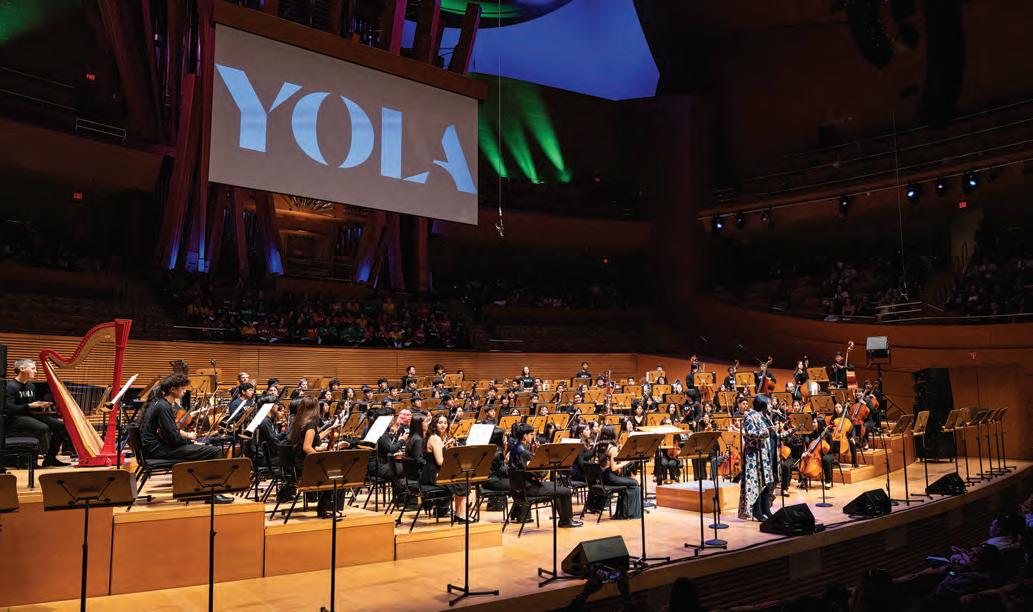
founded YOLA (Youth Orchestra Los Angeles), which now provides more than 1,700 young people with free instruments, intensive music instruction, academic support, and leadership training. In 2012, Dudamel launched the Dudamel Foundation, which he co-chairs with his wife, actress and director María Valverde, with the goal of expanding access to music and the arts for young people by providing tools and opportunities to shape their creative futures.
As a conductor, Dudamel is one of the few classical musicians to become a bona fide pop-culture phenomenon and has worked tirelessly to ensure that music reaches an ever-greater audience. He was the first classical artist to participate in the Super Bowl halftime show and the youngest conductor ever to lead the Vienna Philharmonic’s New Year’s Concert. He has performed at global mainstream events from the Academy Awards to Coachella, and has worked with musical icons like Billie Eilish, Christina Aguilera, LL Cool J, Ca7riel & Paco Amoroso, Laufey, Coldplay, and Nas. Dudamel conducted the score to Steven Spielberg’s new adaptation of West Side Story, and at John Williams’ personal request, he guest conducted the opening and closing credits of Star Wars: The Force Awakens. His film and television appearances include Sesame Street, The Simpsons, Mozart in the Jungle, Trolls World Tour, and The Nutcracker and the Four Realms, and in 2019 Dudamel was honored with a star on the Hollywood Walk of Fame.
For more information about Gustavo Dudamel, visit his official website at gustavodudamel.com and the Dudamel Foundation at dudamelfoundation.org
LOS ANGELES PHILHARMONIC
The Los Angeles Philharmonic, under the vibrant leadership of Music & Artistic Director Gustavo Dudamel, presents an inspiring array of music through a commitment to foundational works and adventurous explorations. Both at home and abroad, the LA Phil—recognized as one of the world’s outstanding orchestras—is leading the way in groundbreaking and diverse programming, onstage and in the community, that reflects the orchestra’s artistry and demonstrates its vision. The 2025/26 season is the orchestra’s 107th.
Nearly 300 concerts are either performed or presented by the LA Phil at its three iconic venues: the Frank Gehry-designed Walt Disney Concert Hall, the Hollywood Bowl, and The Ford. During its season at Walt Disney Concert Hall, with approximately 165 performances, the LA Phil creates festivals, artist residencies, and other thematic programs designed to enhance the audience’s experience of orchestral music. Since 1922, its summer home has been the world-famous Hollywood Bowl, host to the fi nest artists from all genres of music. The Ford, situated in a 32-acre park and under the stewardship of the LA Phil since December 2019, presents an eclectic summer season of music, dance, fi lm, and family events that are reflective of the communities that comprise Los Angeles.
The orchestra’s involvement with Los Angeles extends far beyond its venues. Among its influential and multifaceted learning initiatives is YOLA (Youth Orchestra Los Angeles). Through YOLA, inspired by Gustavo Dudamel’s own training as a young musician, the LA Phil and its community partners provide free instruments, intensive music training, and
academic support to over 1,700 young musicians, empowering them to become vital citizens, leaders, and agents of change. In the fall of 2021, YOLA opened its own permanent, purpose-built facility: the Judith and Thomas L. Beckmen YOLA Center at Inglewood, designed by Frank Gehry.
The orchestra also undertakes tours, both domestically and internationally, including regular visits to New York, London (where the orchestra is the Barbican Centre’s International Orchestral Partner), Paris, and Tokyo. As part of its global Centennial activities, the orchestra visited Seoul, Tokyo, Mexico City, London, Boston, and New York.
The LA Phil’s first tour was in 1921, and the orchestra has made annual tours since the 1969/70 season.
The LA Phil has released an array of critically acclaimed recordings, including world premieres of the music of John Adams and Louis Andriessen, along with Grammy-winning recordings featuring the music of Brahms, Ives, Andrew Norman, Thomas Adès, and Gabriela Ortiz—whose Yanga received three Grammys in 2026.
The Los Angeles Philharmonic was founded in 1919 by William Andrews Clark, Jr., a wealthy amateur musician. Walter Henry Rothwell became its first Music Director, serving until 1927; since then, 10 renowned conductors have served in that capacity: Georg Schnéevoigt (1927-1929), Artur Rodziński (1929-1933), Otto Klemperer (1933-1939), Alfred Wallenstein (1943-1956), Eduard van Beinum (1956-1959), Zubin Mehta (1962-1978), Carlo Maria Giulini (1978-1984), André Previn (1985-1989), Esa-Pekka Salonen (1992-2009), and Gustavo Dudamel (2009-present).
THOMAS WILKINS
Thomas Wilkins is Principal Conductor of the Hollywood Bowl Orchestra. He has held a titled position at the Hollywood Bowl since 2008, when he was named Principal Guest Conductor; in the spring of 2014, he became Principal Conductor.
In addition, he is the Boston Symphony’s Artistic Partner for Education and Community Engagement and Germeshausen Youth and Family Concerts Conductor; Indiana University’s Henry A. Upper Chair of Orchestral Conducting, a position established by the late Barbara and David Jacobs; and Principal Guest Conductor of the Virginia Symphony. At the close of the 2020/21 season, he ended his long and successful tenure as Music Director of the Omaha Symphony.
Devoted to promoting a lifelong enthusiasm for music, Wilkins brings energy and commitment to audiences of all ages. He is hailed as a master at communicating and connecting with audiences.
Following his highly successful fi rst season with the Boston Symphony, The Boston Globe named him among the “Best People and Ideas of 2011.” In 2014, Wilkins received the prestigious Outstanding Artist award at the Nebraska Governor’s Arts Awards for his signifi cant contribution to music in the state, and in March 2018, the Longy School of Music at Bard College honored him with the Leonard Bernstein Lifetime Achievement Award for the Elevation of Music in Society.
In 2019, the Virginia Symphony bestowed Wilkins with its annual Dreamer Award. In 2022, the Omaha Entertainment and Arts Awards presented him with its Lifetime Achievement Award for Music, the Boston Conservatory awarded him an honorary Doctorate of Arts, and he was the recipient of the League of American Orchestras’ Gold Baton Award. He has led orchestras throughout the United States. His commitment to community has been demonstrated by his participation on several boards of directors, including the Greater Omaha Chamber of Commerce; the Charles Drew Health Center (Omaha); the Center Against Spouse Abuse in Tampa Bay; and the Museum of Fine Arts as well as the Academy Prep Center, both in St. Petersburg, FL. Currently he serves as chairman of the board of the Raymond James Charitable Endowment Fund and as national ambassador for the nonprofi t World Pediatric Project, headquartered in Richmond, VA, which provides children throughout Central America and the Caribbean with critical surgical and diagnostic care.
A native of Norfolk, VA, Thomas Wilkins is a graduate of the Shenandoah Conservatory and the New England Conservatory. He and his wife, Sheri-Lee, are the proud parents of twin daughters, Erica and Nicole.
KEEP ON BELIEVING IT’S POSSIBLE
Breakthroughs happen when we dare to believe. It’s when the unimaginable becomes the attainable. Treatments are discovered, and lives are transformed, like developing the first gene therapy cure for “bubble baby” disease, giving young Seersha a life-changing victory. As we rise, so do the possibilities for everyone who needs a win.
HOLLYWOOD BOWL ORCHESTRA
The Hollywood Bowl Orchestra is composed of approximately 65 regular players, an international mix of classically trained musicians who are among the best studio musicians in Los Angeles. Many spend their days on Hollywood’s scoring stages. It might be surprising to learn that there is no overlap between the musicians of the Los Angeles Philharmonic and those of the Hollywood Bowl Orchestra—another indicator that LA has a tremendous pool of musical talent.
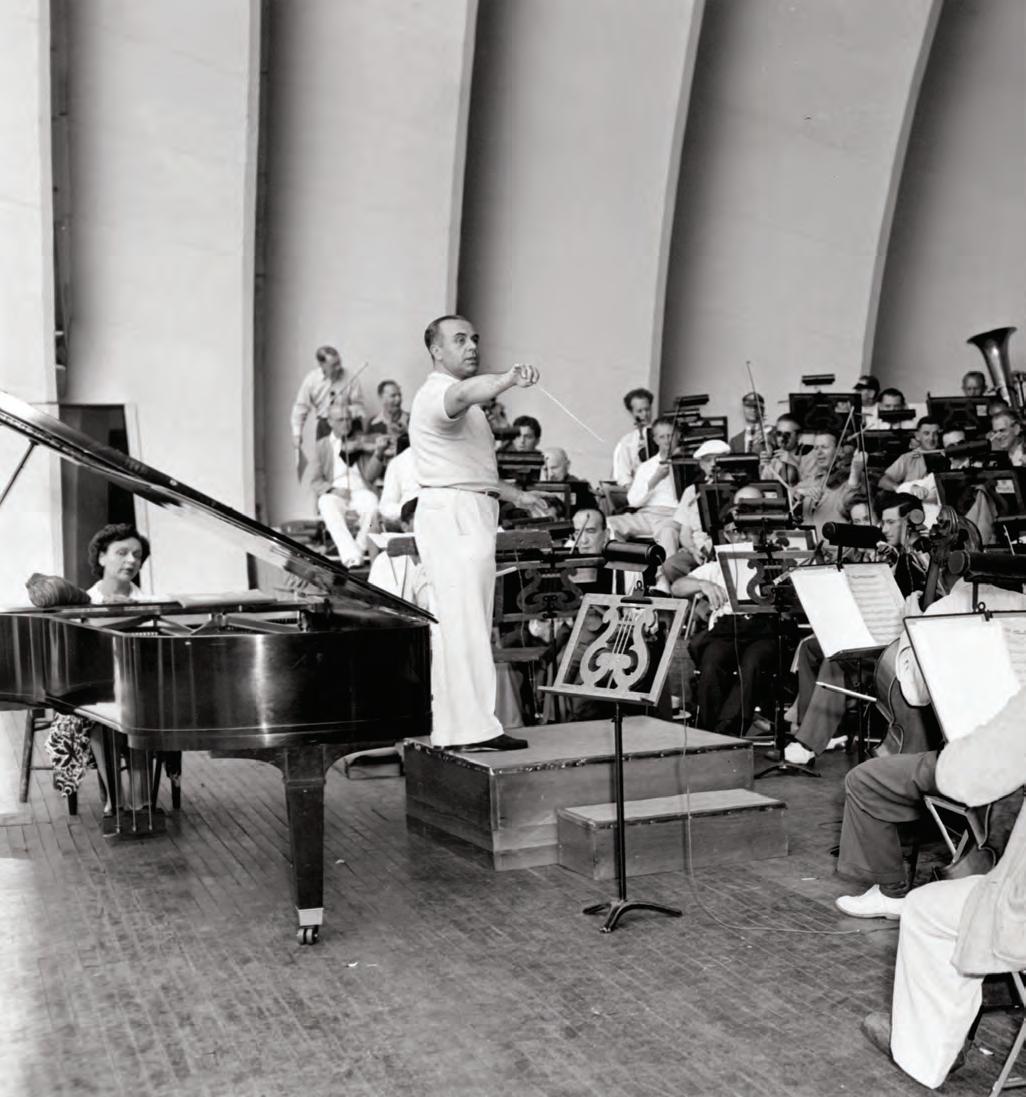
Musicians have been performing at the Hollywood Bowl since its opening in 1922. “Bowl Orchestra” was used as early as 1925, and “Hollywood Bowl Orchestra” appeared on live recordings made in 1928. Leopold Stokowski was Music Director of the Hollywood Bowl Symphony Orchestra from 1945 to 1946. During that time, the orchestra recorded a number of classical works.
In the 1950s and 1960s, Capitol Records issued an extensive series of recordings of the Hollywood Bowl Symphony Orchestra with a number of different conductors, including Carmen Dragon, Felix Slatkin, Alfred Newman, and Miklós Rózsa,
with album titles such as Rhapsody Under the Stars, Chopin by Starlight, Fiesta!, and Marche!
From the 1950s on, there was no offi cial Hollywood Bowl Orchestra, until it reappeared in 1991, under the auspices of the Los Angeles Philharmonic Association, as a completely new ensemble directed by Principal Conductor John Mauceri. After retiring from the orchestra in 2006, Mauceri was awarded the lifelong title of Founding Director of the Hollywood Bowl Orchestra.
In 2008, Thomas Wilkins began an appointment as Principal Guest Conductor of the Hollywood Bowl Orchestra. In June 2014, he became the orchestra’s Principal Conductor, in which position he continues to lead the ensemble each summer in a wide range of concerts at the fabled outdoor venue.
From Mozart to Motown, the repertoire of the Hollywood Bowl Orchestra is as diverse as Hollywood itself. In a single season, the orchestra may perform everything from Broadway favorites to film music, pop music to jazz, and classical music to world premieres by living composers. In essence, the Hollywood Bowl Orchestra does it all.
By Tim Greiving
Picture this. You’re a conductor standing in front of an audience, with an entire orchestra glued to your baton, and you’re leading it through the operatic climax of E.T. the ExtraTerrestrial. Steven Spielberg’s 1982 fantasia crescendoes as the title character boards his spaceship and his human friends bid him a tearful goodbye. John Williams’ Oscar-winning score swells with bittersweet grandeur, italicizing many of the minute gestures onscreen with corresponding gestures in the music. This meticulous level of synchronization often relies on a “click track,” a kind of guided metronome in the conductor’s and musicians’ headphones. Then, all of a sudden...the click track cuts out.
“I kind of had a freak-out moment,” says Norman Huynh, who had this very experience while conducting E.T. live to picture in Oregon several years ago (and who conducts Amadeus live to picture with the Los Angeles Philharmonic at the Hollywood Bowl this September). But then, he says, “it felt so free after that, because I had the punches and streamers there in front of me—the tempo, essentially—and I felt like I could actually make adjustments and kind of broaden things when needed, and then sync the moments that needed to be
there. I haven’t gone back to click since.”
These are just some of the onstage considerations in the prolific phenomenon of concerts in which films are presented with a symphony orchestra playing the score, live. For audiences, live-to-picture concerts are a fun way to reexperience a familiar movie in a communal way—perhaps to introduce a film to their kids or friends—and often outdoors. For conductors and musicians, they are a tightrope walk of exact timing, dependent on technology that didn’t exist until very recently.
David Newman, who will conduct How to Train Your Dragon at the Bowl this summer (as well as the clipsheavy Maestro of the Movies: A Tribute to John Williams), has been conducting fi lm scores live to picture since the 1980s, when he was music director of the Sundance Institute. In 1989 he conducted an original score—his own composition—to the 1927 silent classic Sunrise Back then, it was projected on fi lm, “so it was infi nitely more diffi cult to synchronize the conductor video with the presentation video,” Newman says. And rehearsing was a nightmare, because “you really couldn’t stop and go back and go forward. You just had to sort of run the fi lm. If they stopped
the fi lm, they had to hand-crank it back.”
The ver y first “live to picture” concert performed by the Los Angeles Philharmonic was Sergei Eisenstein and Dmitri Vasilev’s Alexander Nevsky (1938), with a score by Sergei Prokofiev conducted by André Previn in 1987. For the next two decades, it was almost always silent films, or isolated scenes or sequences, that were attempted in concert; anything else would have been logistically impossible. (Pioneers like producer John Goberman and John Mauceri, former Principal Conductor of the Hollywood Bowl Orchestra, helped develop the systems that made these types of concerts possible.) But around 15 years ago, advances in digital technology allowed for a breakthrough. Not only could films be run off f hard drives, and thus paused and navigated breezily, and not only could those digital “punches” and “streamers”—lines that indicate when to start a musical cue and other helpful directions—be added to the screen on the conductor’s music stand, but in the case of older films, the original score recording could be siphoned out from a mono track that also contained vocals, dialogue, and sound effects.
In 2011, Newman conducted the world-premiere live presentation
of West Side Story at the Bowl. What was previously unthinkable became gloriously possible— the LA Phil could perform the sumptuous strains of Leonard Bernstein’s “Maria” and “America” in perfect harmony with 50-yearold recordings of Jimmy Bryant and Rita Moreno (who sang on the beloved 1961 film). “It was like a bomb went off,” says Newman, who brought the same presentation to the New York Philharmonic later that year, “in the sense that obviously the audience wanted it. So when they presented it, people showed up.
There was a lot of energy at the concerts. And so I think all the orchestras eventually took notice of it. It was easy to sell tickets.”
Since then, the LA Phil regularly presents complete films in concert—from 1958’s Vertigo, screened at Walt Disney Concert Hall with the Los Angeles Philharmonic in March, to 2022’s Top Gun: Maverick with the Hollywood Bowl Orchestra at the Bowl this August. “In the beginning, I thought, ‘Wow, this is going to be extra exciting,’”
says Joanne Pearce Martin, keyboardist for the Los Angeles Philharmonic since 2001. “Because there’s no going back. I mean, there isn’t in a live concert either, but you’ve got these very important moments where synchronization is so important.
“In regular concert playing,” Martin says, “you always have to have this mutual trust. But I think there’s a whole new level of trust necessary in the liveto-picture situation between conductor and musicians. So it’s great when we have somebody up there that we are absolutely comfortable with.” Martin praises Sarah Hicks, who has conducted multiple Harry Potter fi lms and most recently Vertigo with the LA Phil—and also Newman. “David is unbelievable up there,” she says. “He is always so impressive with how much he does off click. He just has such assurance and such familiarity with these scores, and with us, that he feels that he can pull us along exactly to where we need to be. And we always get there with him.”
Among the other unique challenges, the orchestra often gets only one or two rehearsals before the show. Conductors like Newman and Huynh study the scores and the films religiously ahead of time, so they can quickly guide the orchestra into not only the notes but also the dramatic intention of the score. Musicians need to stay exactly in time with the movie but also be prepared to hear rollicking laughter or applause at iconic lines like “You’re gonna need a bigger boat” in Jaws. That’s not exactly something they’re used to in a Mahler symphony.
“There’s nothing to prepare you for the energy that comes off a giant Bowl audience after that,” says Martin, laughing. “And quite often you’ll have a line like that that’s immediately followed by music. So it’s almost like you can’t even hear what you’re supposed to hear. And this is where the trust thing comes in—you are nailed to that podium, and whoever’s up there, they’re going to be going, ‘Ready, go!’...no matter what you hear or can’t hear.”
Tim Greiving is an arts journalist and historian in Los Angeles who specializes in film music. He regularly writes for the Los Angeles Times and has contributed to NPR, The Washington Post , and The New York Times, among other outlets. His book, John Williams: A Composer’s Life, was published in 2025 by Oxford University Press.
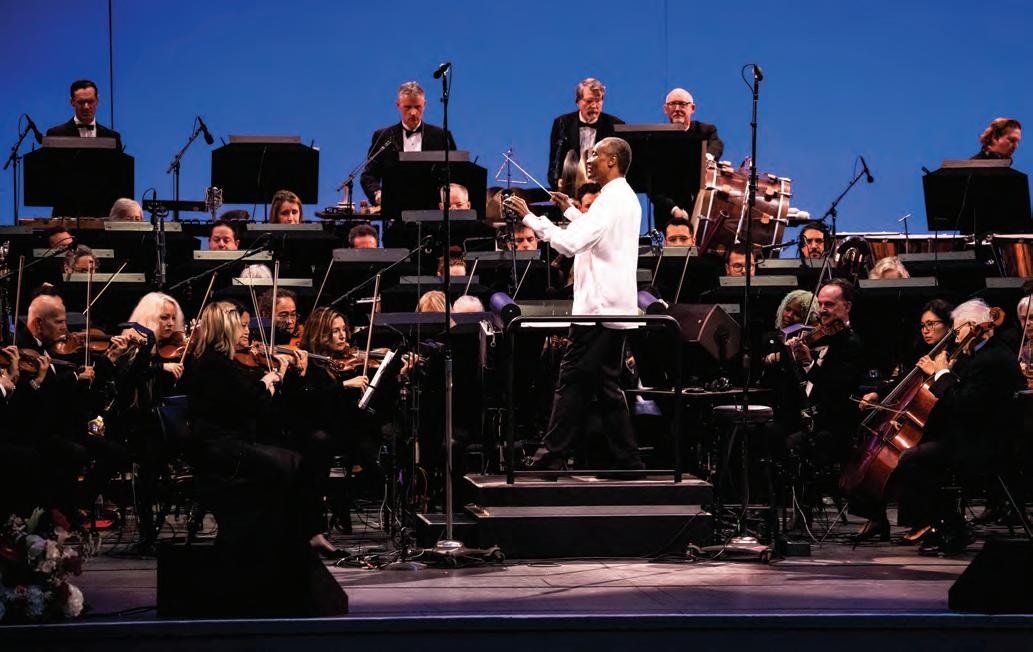
David Newman leads the Los Angeles Philharmonic in a 2025 presentation of Maestro of the Movies.
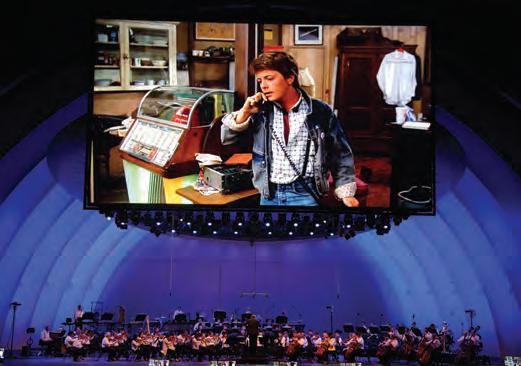
Back to the Future at the Bowl in 2015.
MOVIE MAGIC AT THE BOWL
Special celebrations, films with orchestra, and a sing-along—this summer’s Bowl season has plenty of opportunities to relish your favorite film music.
Music From the Films of Wes Anderson
FRI–SUN JULY 10–12
Special guests—including Beck, Jackson Browne, Mark Mothersbaugh, and Jenny Lewis—backed by an all-star house band and the Los Angeles Philharmonic* join this celebration of music from across Wes Anderson’s 30 years of fi lmmaking. Overseen by the director himself and his longtime music supervisor and music producer Randall Poster, the evening showcases selections from 1996’s Bottle Rocket to Anderson’s most recent release, 2025’s The Phoenician Scheme
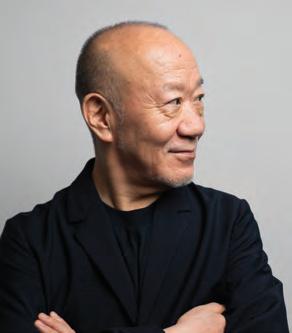
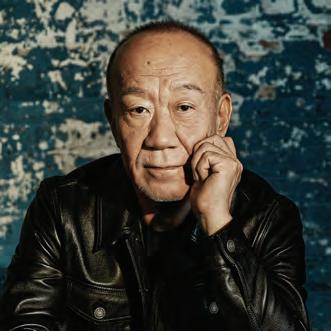
Joe Hisaishi Film Music Concert
Featuring Studio Ghibli & More
TUE–THU JULY 21–23
The music of Joe Hisaishi has touched millions through his iconic scores to classic Studio Ghibli fi lms such as Princess Mononoke My Neighbor Totoro, and Ponyo, as well as awardwinning works by leading director Takeshi Kitano. As the Bowl’s 2026 Composer in Focus, Hisaishi conducts the Los Angeles Philharmonic in an evening of his timeless compositions, accompanied by some of his favorite fi lm clips.
How to Train Your Dragon in Concert
SUN AUG 9
When a young Viking defi es tradition and befriends a ferocious dragon, together they mus t fi ght against all odds to save both of their worlds. David Newman conducts the Hollywood Bowl Orchestra in this thrilling musical score performed live to picture.**
Top Gun: Maverick in Concert
SAT AUG 15
After more than 30 years of service as one of the Navy’s top aviators, Pete “Maverick” Mitchell (Tom Cruise) is still pushing the envelope as a courageous test pilot. Lorne Balfe, who produced the 2022 movie’s score, leads the Hollywood
Bowl Orchestra in the original music by Harold Faltermeyer, Lady Gaga, and Hans Zimmer while the six-time Oscar-nominated fi lm (which won for Best Sound) plays on the Bowl’s huge screen.***
Amadeus in Concert
THU SEPT 3
Miloš Forman’s multi-Academy Award-winning phenomenon from 1984 is “a lavish movie about Mozart that dares to be anarchic and saucy, and yet still earns the importance of tragedy” (Roger Ebert). Norman Huynh leads the Los Angeles Philharmonic in a score of celebrated Mozart works.
Maestro of the Movies: A Tribute to John Williams
FRI–SUN SEPT 4–6
The ultimate concert celebration of John Williams, the man who has composed the soundtrack to our lives. With selections from his iconic scores—Star Wars, Indiana Jones, Harry Potter, Jaws, Jurassic Park, and more—the program, performed by the Los Angeles Philharmonic led by David Newman, also features over 50 minutes of specially edited scenes and clips from Williams’ best-loved fi lms.
Rodgers & Hammerstein’s The Sound of Music
Sing-A-Long
SAT SEPT 26
Here are a few of our favorite things: the Bowl on a summer night, singing songs with friends old and new, and the Hollywood Hills coming alive with the sound of music. The von Trapps and music fans join for this Bowl tradition, featuring a pre-show costume contest with hilarious host Melissa Peterman at our special screening of the Oscar-winning 1965 film, shown with the original soundtrack.
*The Los Angeles Philharmonic will not perform on Sunday, July 12.
***A Royal Albert Hall production. With thanks to esk fi lm.
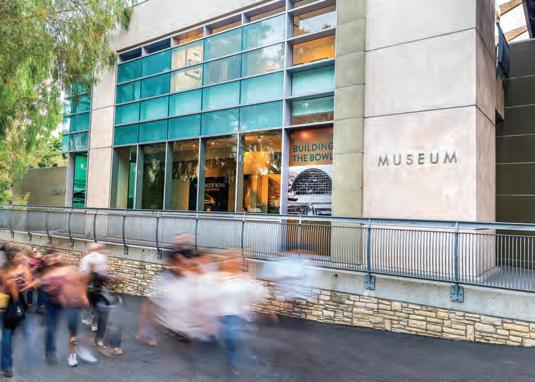
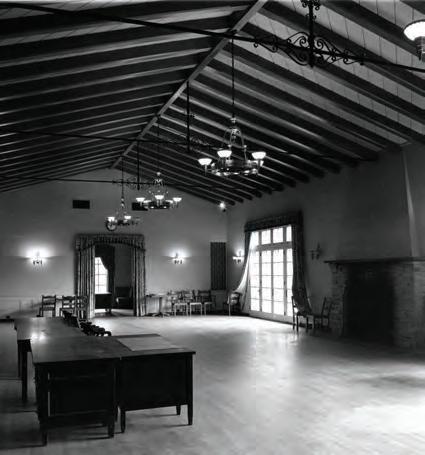
For more than a century, the Hollywood Bowl has been one of Los Angeles’ great gathering places: a public stage under the stars, a civic landmark, and a living archive of music, community, and reinvention. This summer, the Edmund D. Edelman Hollywood Bowl Museum enters a new chapter following a renovation to its ground-floor gallery, including a permanent exhibition that brings the Bowl’s extraordinary history into fresh focus.
The revitalized Hollywood Bowl Museum invites visitors to see the Bowl not only as a beloved summer destination, but also as a living civic institution: layered, surprising, and full of stories waiting to be discovered. Situated along Peppertree Lane near the main entrance to the Bowl, the museum offers audiences a chance to step inside the history of one of Los Angeles’ most
By Derek Traub
enduring cultural landmarks before the music even begins.
For Ljiljana Grubisic, Archives and Museum Director for the Hollywood Bowl, the project is both a milestone and a culmination. Since joining the LA Phil in 2015, Grubisic has helped reshape the way the organization preserves, interprets, and shares its history. “Whatever we collect and care for in the Archives is fueling the stories in the Hollywood Bowl Museum,” she says. “We have made so many wonderful discoveries in the last decade, and I’m thrilled to have the opportunity to share them with the public.”
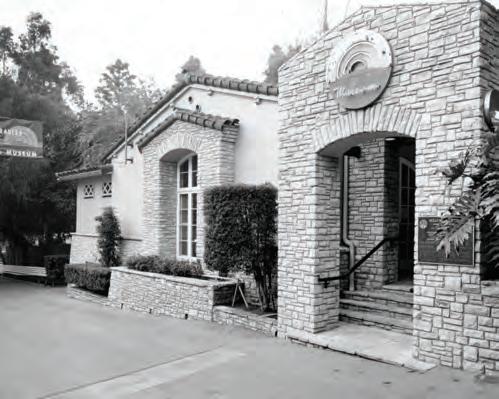
The museum first opened in 1984 in the Bowl’s former Tea Room, then expanded into its current two-story building in 1996. Thirty years later, the new exhibit brings the space into what Grubisic calls “a modern era,”
with a more contemporary gallery feel, refreshed storytelling, and new ways for visitors to explore the Bowl’s past.
At the heart of the project is a major digital leap forward: For the first time, the public will have access to a searchable database of the Bowl’s performance history, spanning more than 6,000 concerts and events. Visitors will be able to search by artist, conductor, date, decade, genre, and more—opening up a vast record of performances that has long lived behind the scenes in archival documents and research files.
“We get tons of requests from patrons,” Grubisic says. “‘My mom attended this concert—it was a special occasion, and we want to know what was on the program.’
Now people will be able to search, to discover, to ask: What was played on that day?”
The current two-story museum building sits on the footprint of the Tea Room.
The Hollywood Bowl Museum, shown in 1991, was housed in the former Tea Room.
A kiosk in the galleries will allow visitors to flip through digitized Hollywood Bowl program books, one of the foundational collections of the Archives. For Grubisic, that access represents years of unseen labor fi nally becoming public.
“This is a dream come true,” she says. “It is a monumental step for the museum to provide this educational service.”
The digitization project is just one part of the new installation. Grubisic was equally intent on bringing physical artifacts into the space—objects that carry the texture of the Bowl’s history. Visitors will encounter
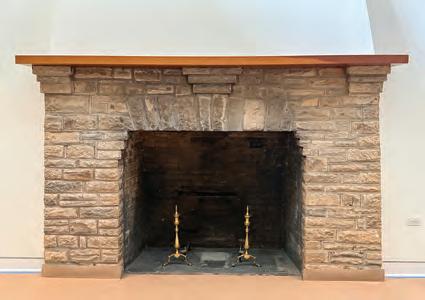
the original fi replace from the 1939 Tea Room, long hidden behind exhibit panels; a carillon bell console once used to call audiences back to their seats; archival audio; piano rolls; historic program materials; and stories of the volunteers, patrons, architects, technicians, and civic leaders who shaped the Bowl over generations.
New-media elements will also bring visitors closer to the Bowl’s architecture and backstage life, including a video with architects Craig Hodgetts and Ming Fung, whose 2004 shell preserved the Bowl’s iconic silhouette
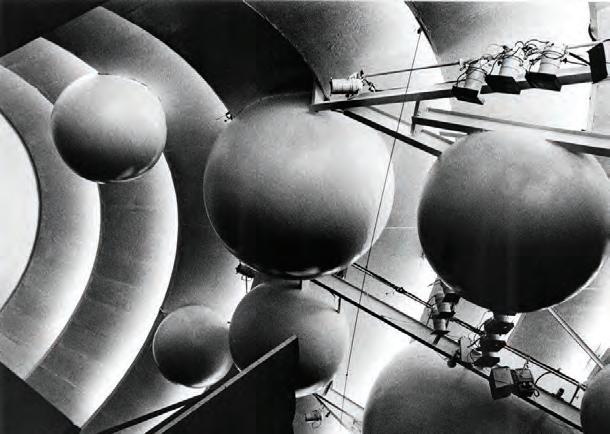
while expanding the stage and integrating modern technological infrastructure. Another section will explore the sound of the Bowl, from Frank Gehry’s experimental “sonotubes” and “champagne bubbles” to today’s acoustic canopy, or “halo.”
For Grubisic, the larger story is not simply about concerts or objects. It is about continuity.
“The Bowl was never just a venue,” she says. “It was a vehicle for democracy in music.”
That founding spirit—music for everyone, shared in public, under the open sky—still animates the museum today.
The Hollywood Bowl Museum is open Tuesday through Friday from 10am to showtime and Saturday through Monday four hours before showtime. Free admission.
The original hearth from the Tea Room was uncovered during the 2026 renovations.
Frank Gehry’s acoustic spheres or ”champagne bubbles˝ lined the top of the Bowl shell from the 1980s through 2003.
The Hollywood Bowl Tea Room in 1939. The building’s hearth is on the right.
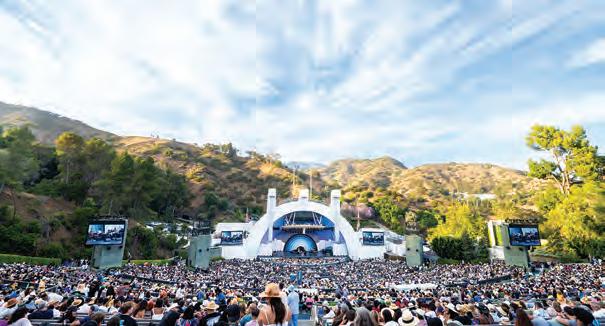
The Bowl in 2025.
KEEPING IT GREEN AT THE BOWL
TRACING 15 YEARS OF FLORA AND FAUNA
By Piper Starnes
Illustrations by Radha Vishnubhotla
Year after year, decade after decade, the Hollywood Bowl is championed as one of the world’s great outdoor amphitheaters.
Shoehorned in a canyon within Los Angeles’ eclectic urban landscape, the Bowl is both a premier destination for live music and a well-nurtured Los Angeles County park.
Hundreds of plant and animal species reside in the Hollywood Hills and Gri˜ th Park areas. With support from the Los Angeles County Department of Parks and Recreation and researchers from the Resource Conservation District of the Santa Monica Mountains (RCDSMM), the LA Phil has spent nearly two decades documenting the flora and fauna that call the Bowl’s 88-acre park home.
This season marks the 16th year of the partnership between the Bowl and RCDSMM to conduct a series of biotic surveys, taking inventory of all the living things on these grounds. The first of the surveys was commissioned in 2010 by Mark Ladd—Director of Operations at the Bowl and its county-appointed Superintendent—and over time, they have created a long-term ecological record of how species come and go.
Leading the fieldwork are Principal Conservation Biologist Dan Cooper and Conservation Biologist Technician Isaac Yelchin. Every month, they roam the property in hiking boots, sunglasses, and baseball caps with binoculars, notepads, and phone cameras to record their findings. On any given day, they might come across leaping Western fence lizards, grazing mule deer, zipping hummingbirds, and a multitude of thriving native plants. By placing hidden, motion-activated cameras in the more remote areas of the park, Cooper and Yelchin can also monitor animal activity away from human disturbance. A bobcat taking a nighttime prowl, California thrashers flitting through the branches, and even a coyote curling up for a morning nap
in the shade—it’s all caught on camera. (To watch a selection of videos, visit hollywoodbowl.com/wildlifeoncamera.)
“We have this cool video of a bobcat that seems to be listening to the music, and you can hear it on the camera…. I’m not sure if they’re enjoying it, but it doesn’t seem to bother them too much,” Yelchin says.
Most of the species living around the Bowl are adapted to noise, whether it be music, maintenance equipment and generators, or loud city sounds.
“But once you get away from the stage and bleachers, it gets very quiet,” Cooper says. “And so that’s where we’re finding a lot of the interesting things.”
The 2010 biotic survey primarily documented organisms found in the park’s three main habitat types—coastal sage scrub, mixed chaparral, and sumac scrub.
water is still readily available here in the form of sprinklers and spigots.”
Urban wildlife populations naturally fluctuate. Weather conditions, human interference, invasive plants, and other factors can all a° ect what researchers observe. As stewards of the Bowl, we take seriously the responsibility for caring for the people, plants, and animals who inhabit or visit this land.
As a result of sustainability initiatives such as landscaping with drought-tolerant native plants and reducing pollution and waste at the Bowl, populations are thriving and previously undocumented species are being discovered— including the Bernardino Blue butterfly, gray fox, and fuchsia-flowered gooseberry.
Most notably, the quail, once thought to be gone for good, have reappeared. To date, Cooper and Yelchin have tallied 70 native plant and 76 bird species, among other animals.
“The ecosystem here in the last 15 years is really heartening. It’s a testament to how connected this open space is,” Cooper says. Despite being surrounded by a neighborhood, the 101 freeway, and LA’s second-busiest street (Highland Avenue), the Bowl thrives because of the level of care and e° ort put in—by audience members, too.
“Based on historical photos from the area, the natural landscape is somewhat more lush than it was 100 years ago, when much of the area was grazed with cattle and sheep,” Cooper reported. Thanks to careful maintenance and stewardship of the land, species with especially ancient roots have remained remarkably consistent. “One can assume that many of the same plants and animals living on the upper slopes of the Hollywood Bowl property are the same ones that have been there for millennia,” Cooper wrote.
Among the oldest on-site organisms are the goldback, polypody, and co° ee ferns—all of which have been around since the age of the dinosaurs. Coast live oak, toyon, and black walnut trees are also some of the venue’s veteran native plants that we continue to plant each tree life cycle, or every 40 to 100 years.
By comparing the 2010 biotic survey with those from 2015 and 2025, our researchers uncovered a special “lost-and-found” case. Sixteen years ago, Cooper spotted a family of quail with at least eight chicks. But when he returned in 2015, there was no trace of our feathered friends.
Cooper wrote then: “Whether this is a temporary situation, perhaps due to drought, or that quail have permanently been lost as a resident species from the property, is not known. However, it is troubling since there has been little impact to their habitat on the site (which still supports dense native scrub) and
“Just coming and supporting the Bowl goes a long way to preserving this large ecosystem site here,” Yelchin says. “It’s a pretty unique situation where it’s a really untouched, healthy, beautiful ecosystem, and it’s awesome to go explore it.”
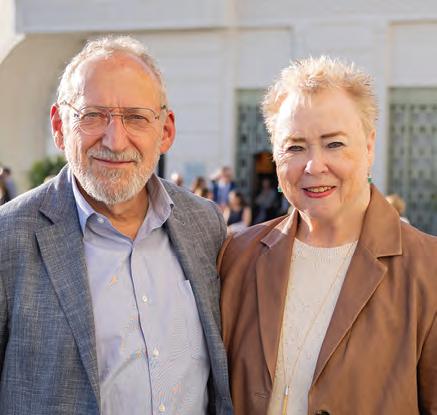
For Dr. Paul and Patti Eisenberg, music has always been a way of finding community.
Before moving to Los Angeles, the Eisenbergs had been active supporters of the St. Louis Symphony, where they experienced firsthand the connection that can form between an orchestra, its musicians, and its audience. Later, in Indianapolis, they continued supporting the arts and seeking ways to engage meaningfully with the cultural life of their city. When they arrived in Los Angeles, the LA Phil felt like a natural next step.
“We wanted to plug in,” Patti says. “We wanted to connect.”
Music had shaped each of their lives in different ways. Paul, born in Rome and raised in New York, grew up surrounded by opera, symphonic music, jazz, rock, and performances at Carnegie Hall and by the New York Philharmonic and New York City Ballet. Patti’s early life was different. Raised on a farm in Kentucky, she remembers music coming through the radio, piano lessons, and her family’s stereo. Classical music entered her life gradually, then powerfully.
One of her most vivid early memories came from a neighbor who was a renowned organist. Patti’s father built the neighbor a special trailer so she could transport her organ to performances across
the region. Hearing that instrument made a lasting impression. “I thought I’d died and gone to heaven,” Patti says. “I fell in love.”
Together, Paul and Patti built a life filled with music. “We bought our first house based on where the speakers would go,” Paul jokes. Their tastes are broad and joyful, spanning opera, symphonic music, jazz, rock, and music from around the world—a spirit of openness they also found at the LA Phil.
Walt Disney Concert Hall made an immediate impression, but it was Gustavo Dudamel’s artistic energy and commitment to young people that drew them closer. Patti admired his ability to welcome audiences into unfamiliar music with warmth, curiosity, and a sense of discovery.
“I love watching him at the podium,” she says. “He makes it fun.”
The Eisenbergs were especially moved by YOLA (Youth Orchestra Los Angeles). At Hollywood Bowl Opening Night celebrations, they saw large groups of YOLA students performing with focus, excitement, and unmistakable pride.
“You could see what this meant to these kids,” Patti says. “They were having the best time. You could see how it was touching them.”
That experience stayed with the Eisenbergs. Over time, they deepened their support, especially around YOLA and the LA Phil’s work with young people. For Patti, the program reflects the values that guide much of their philanthropy: education, scholarships, children, and support for young people who may not otherwise have access to opportunity.
“The young people are where it’s at,” she says. “Doors have got to be opened!”
For the Eisenbergs, supporting the LA Phil is ultimately about helping create those moments of discovery: the first encounter with a great concert hall, the first time holding an instrument, the first glimpse of a larger world.
Through their generosity, they are helping ensure that more young people can experience the joy, discipline, confidence, and possibility that music provides.
To join the Eisenbergs in supporting YOLA or the LA Phil, please contact patrons@laphil.org
age 57
Strategic Joy Executive
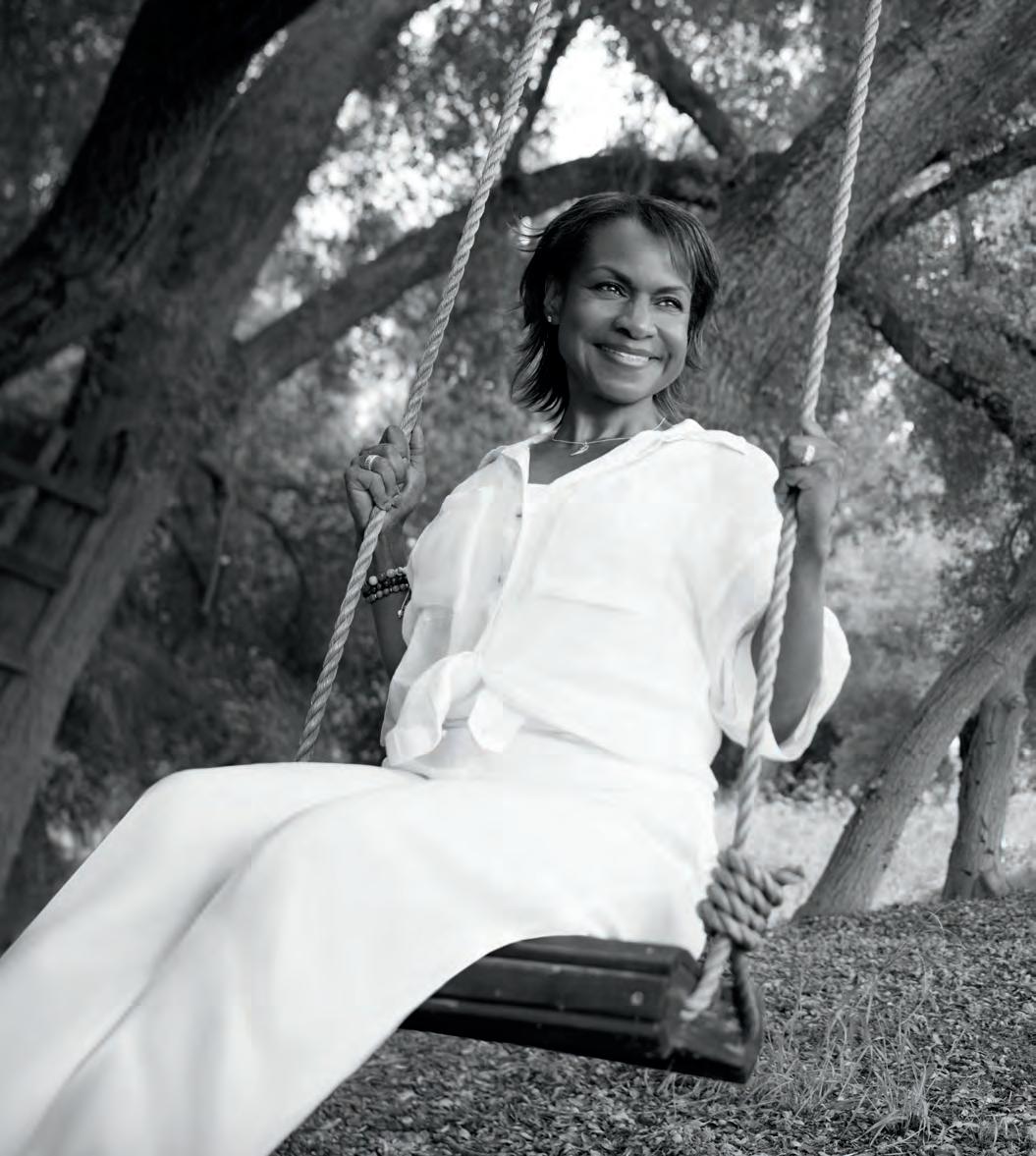
The connection to the Michele of many, many years ago is still very important. The innocence, the joy, the freedom, the laughter, all of those things still resonate with me as an adult. I came here with some stuff, and I left without the baggage. I find myself at peace, centered in my life, and ready to take on the world.”
See Michele’s story and others at
The Iconic Retreat
Michele,
A Life in Harmony
As a remarkable chapter in Los Angeles music comes to a close, we’re reminded of the lasting power of connection, expression and shared experience.
Again and again, music shows us what’s possible when passion meets purpose, when individuals come together to create something greater than themselves.
At Front Porch, we believe in that same idea.
That life is meant to be shared. That connection deepens over time. And that the most meaningful moments are still ahead.
Kingsley
Villa Gardens
842 E Villa St Pasadena, CA 91101
Four Communities. One Philosophy.
Claremont Manor
650 Harrison Ave Claremont, CA 91711
Walnut Village
891 S Walnut St Anaheim, CA 92802
Across Southern California, Front Porch communities offer distinct places to live and thrive, shaped by connection, purpose and the people who call them home.
From the creative spirit of Los Angeles to the cultural richness of Pasadena, and the welcoming traditions of Claremont to the thoughtful design of Anaheim, each community reflects a shared belief:
That life continues to evolve. That belonging matters. And that where you live should support not just how you live, but who you are. Hollywood Bowl
WILKINS CONDUCTS BERNSTEIN & ELLINGTON
WEDNESDAY JULY 8, 2026 8PM
Los Angeles Philharmonic
Thomas Wilkins, conductor
Gracie Lawrence, vocalist
Alex Newell, vocalist
Ali Stroker, vocalist
Valerie COLEMAN
STILL
Shaina TAUB
Fa nfare for Uncommon Times (c. 6 minutes)
Mother and Child (c. 8 minutes)
Suffs Song Cycle (c. 15 minutes) (world premiere, LA Phil commission)
Orchestrated by Finish the Fight
Michael STAROBIN, Show Them Who You Are “Keep Marching” arranged by Insane Allen René LOUIS
Keep Marching
Gracie Lawrence
Al ex Newell
Ali Stroker
INTERMISSION
BERNSTEIN
ELLINGTON
Orchestrated by Luther HENDERSON, Maurice PERESS
Th ree Dance Episodes from On the Town (c. 11 minutes) The Great Lover Displays Himself Lonely Town: Pas de deux Times Square: 1944
Harl em (c. 14 minutes)
Programs and artists subject to change.
FANFARE FOR UNCOMMON TIMES
Valerie Coleman (b. 1970)
The fanfare has a political background: to allow the orchestra to connect with the community and be a voice of the time. Usually, fanfares announce royalty or heads of states or that kind of people. But the event everyone is going through right now, the pandemic, is uncommon. We are going through some strange times; it almost seems sarcastic to write a fanfare for the times we are currently living in. I wanted to create a piece that brings people together, a piece that touches that within us, that thing that wants to survive, that gives us that regenerative, renewable hope. I want to bring the Black experience in, the turmoil, the upheaval, the complexity of race conversation.
There are some special features, like the use of keyboard percussion, to create the feeling of sparks of sounds, sparks of life. It is a virtuosic work.
I could not help but channel Copland’s Fanfare for the Common Man. It is such a part of our history in America. Through its simplicity, it [is] extremely elegant and memorable. Copland channeled the very foundation of what the very American spirit is.
You are going to hear dissonances; you are going to hear this machine-gun repetitive sound. But then you are going to hear something that is more [attuned] to the Caribbean nature. All these elements, as like in a melting pot in this country has to be put in there. —Valerie Coleman, 2021
MOTHER AND CHILD
William Grant Still (1895–1978)
Mother and Child is one of William Grant Still’s most wellknown works. Originally written as part of a three-movement programmatic suite for violin and piano, the composition reflects the interconnectedness that existed between the different artistic circles that the composer engaged with during the height of the Negro Renaissance movement in Harlem. Each movement was inspired by a specifi c work created by a Black Renaissance-era artist. The fi rst movement, African Dancer was based on a sculpture by Richmond Barthé. Mother and Child, the second movement, was inspired by a lithograph of the same name by Sargent Johnson. A bust of a young boy by Augusta Savage underscored the energy represented in the third movement, Gamin Still completed the work in 1943, dedicating it to violinist Louis Kaufman. The violinist, accompanied by pianist Vladimir Padwa, premiered the work in 1944, first in Boston’s Jordan Hall and later in New York’s Town Hall. Following these performances, Still revised the work for violin and orchestra. Kaufman and the WOR Symphony Orchestra, conducted by Emerson Buckley, premiered this version in 1946.
It is not hard to imagine that Still’s close relationship with his mother inspired the composition of Mother and Child. It is a lullaby that moves the listener through the emotional arc of nurturance,
discipline, and abiding love that underscores the relationship between mother and child. The fi rst section of the work centers on the introduction of a song-like melody played by the fi rst violins, which is anchored by musical responses in the lower strings. The musical colors created by this dialogue were hallmarks of Still’s style during the 1930s and 1940s. They reflect the nurturing love a mother conveys to a child through cradling. After some variation on this primary motive, the work modulates to E minor, signifying a shift in mood. The counterpoint between the violins and lower strings intensifi es, building both emotional and musical tension that is fi nally resolved through a short cadenza played by a solo violin. This is followed by a short interlude that sets up the modulation back to the original key of E major and the return of the primary melody. It is a reminder of the abiding and nurturing love that exists between mother and child. —Tammy Kernodle
SUFFS SONG CYCLE
Shaina Taub (b. 1988) Orchestrated by Mich ael Starobin (b. 1956), “Keep Marching” arranged by Allen René Louis (b. 1992)
Shaina Taub began working on what would become the Tony Award-winning musical Suffs in 2014 shortly after receiving a copy of Doris Stevens’ 1920 memoir Jailed for Freedom. The book tells of the fi gures at the heart of the women’s su ffrage
movement—many of whom were largely forgotten—and their unwavering efforts to ratify the 19th Amendment giving women the vote. “It’s an untold, crucial chapter of our history; it was so dramatic and dynamic. These protests the su ffragists pioneered were really the fi rst examples in American social movements of this massive, visual rhetoric, of literal choreography and music and pageantry and color and formation and parades, picket lines. Just the staging of the protests alone was so inherently theatrical to me,” Taub told Elle
The musical is centered on Alice Paul, founder of the National Woman’s Party and an organizer of the “Silent Sentinels,” who picketed the White House from 1917 to 1919. When it opens, the firebrand Paul is criticizing the less “aggressive” tactics of the National American Woman Suffrage Association. Over the course of the musical, Paul gathers a team of passionate “suff,” stages marches and protests, meets unsuccessfully with President Woodrow Wilson, organizes a picket line outside the White House, is sent to prison (where she calls for a hunger strike), has her sanity questioned, and helps pass the 19th Amendment, all before devoting herself toward the passage of a future equal rights amendment.
Initially scheduled for a 2020 premiere at New York’s Public Theater, the show opened in 2022 and transferred to Broadway in 2024, earning Taub Tony Awards for Best Book of a Musical and Best Original Score. Beyond the theater, the
music and story of Suffs have resonated powerfully, providing a touchstone for current social movements. “That’s what theater can do,” says Taub. “We get to literally conjure our ancestors and imagine what they might say. In these last few years since we opened on Broadway, it’s just taken on a life of its own. People perform it at their synagogue, at their church, at their school recital, at a protest, at a rally.”
Tonight’s song cycle was created with an eye toward carrying the larger message of social progress. It opens with Paul’s soaring idealistic credo “Finish the Fight,” when she promises to take the su ffragist cause on her back. From those early moments of resolve we head into the darker-tinged self-doubt of “Insane,” as the imprisoned Paul is subjected to a sanity test. In a clever twist, Paul concludes that the truly maddening ending will be “If our fi ghting and hoping and dying has all been in vain / Then I’ll go insane.” A duet between Paul and the lawyer Inez Milholland, “Show Them Who You Are,” shows the plucky stick-to-itiveness of these two trailblazers in spite of adversity. The cycle closes with the same song as the Broadway musical: “Keep Marching,” Taub’s surmise of what the suffs ould advise today’s advocates. The gospel arrangement heard here is by Allen René Louis, who created this special version for Broadway Votes’ campaign ahead of the 2024 election, reminding us that while progress is possible, it’s not guaranteed without persistence. —Amanda Angel
THREE DANCE EPISODES FROM ON THE TOWN
Leonard Bernstein (1918–90)
The fi rst batch of lyrics for the musical On the Town, for all their effervescent glamorizing of New York City life, were surprisingly penned from a hospital room shared by Leonard Bernstein and lyricist Adolph Green. The two were both due for minor surgery in June 1944, and, eager to start work on the new show, they decided to go in at the same time and collaborate on the musical while recovering. Very little of the show was created during that stay, but work on the musical progressed rapidly. By December 1944, Bernstein, Green, and lyricist Betty Comden had fi nished writing and were planning a premiere later that month. It was the second appearance that year of a Bernstein stage production— the fi rst was his ballet Fancy Free, a collaboration with Jerome Robbins—and both shows followed the exploits of sailors on Navy shore leave in New York City. Yet Bernstein insisted that “there was not a note of Fancy Free music in On the Town” and that the similarities were merely variations on a theme that resounded particularly well with audiences immersed in the end of World War II. Still, the resemblance runs deep. Both shows follow the adventures of three sailors spending their leave scouring the city for available women. And although On the Town is not formally a ballet, the action is heavily dependent
upon dance (Bernstein said that the move was intentional, since the show’s genesis “arose from the success of the ballet”).
More noticeably, both productions profess a boisterous love for New York in the ’40s. The city (depicted in the original production in sets by Oliver Smith) breathes in On the Town, and the story is not so much a picture of Chip, Gabey, and Ozzie chasing after girls as it is a tale of the three chasing after the town itself. When condensed into the Three Dance Episodes, the story loses its lyrics but keeps its characteristic spunk.
The fi rst sketch, “The Great Lover Displays Himself,” is an ecstatic dream scene: Gabey, who has fallen in love with subway poster girl “Miss Turnstiles,” falls asleep on the train while searching the city for the object of his affections. In his dream, shy Gabey wins over his girl with pure romantic fury (and Bernstein responds with strutting, jazz-inflenced woodwinds and witty dance flavor).
“Lonely Town: Pas de deux,” the second episode, fi nds Gabey in Central Park watching another sailor who flirts with a young woman and then abandons her for her naivete. The score is lush and sensual, a prime example of Bernstein’s characteristic string writing, and tinged throughout
with a bittersweet melancholy. Bernstein saves what is probably the best-known theme of the show, “New York, New York” for the fi nal sketch, “Times Square: 1944.” Rough, rugged, and harmonically dense, the music shapes the famous theme in canon, interrupted repetitions, and an assortment of voicings. The result is a cityscape that conveys the sailors’ (and Bernstein’s) youthful enthusiasm and affection for the New York of yesteryear. —Jessica Schilling
HARLEM
Duke Ellington (1899–1974) Orchestrated by Lu ther Henderson (1919–2003), Maurice Peress (1930–2017)
Easily the most signifi cant composer to come out of bigband jazz—he now commands an eminent position in mainstream textbooks on 20th-century music—Duke Ellington was an American original. He was a master of instrumental color and texture and special timbral effects, and he experimented with harmony and form.
“Tone parallel” was Ellington’s version of the descriptive symphonic tone poem, and he wrote Harlem in 1950 while on a ship returning from a European
tour. It was originally intended as a sort of concerto for jazz band and symphony orchestra for a performance with Arturo Toscanini and the NBC Symphony. This plan fell through, however, and Ellington’s fi rst performances were with his band alone, recorded on the 1953 release Ellington Uptown. (Several other Ellington versions exist on record now, and the work appears in multiple arrangements.) In his autobiography, Ellington offered this guide to his “tone parallel”: “We would like now to take you on a tour of this place called Harlem. It has always had more churches than cabarets. It is Sunday morning. We are strolling from 110th Street up Seventh Avenue, heading north through the Spanish and West Indian neighborhood toward the 125th Street business area. Everybody is nicely dressed, and on their way to or from church. Everybody is in a friendly mood. Greetings are polite and pleasant, and on the opposite side of the street, standing under a street lamp, is a real hip chick. She, too, is in a friendly mood. You may hear a parade go by, or a funeral, or you may recognize the passage of those who are making Civil Rights demands. (Hereabouts, in our performance, Cootie Williams pronounces the word on his trumpet—Harlem!)” —John Henken
THOMAS WILKINS
To read about conductor Thomas Wilkins, please turn to page 16
GRACIE LAWRENCE
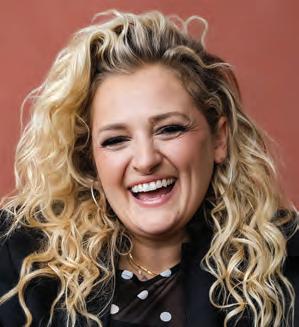
Gracie Lawrence is an accomplished actress and musician who co-fronts the soul-pop band Lawrence alongside her brother Clyde. Lawrence is an eight-piece band composed of musician friends from childhood and college. The band has gained a devoted following for its high-energy, keyboard-driven sound, which features tight, energetic horns and explosive lead vocals. Lawrence’s dynamic blend of classic inflences with contemporary energy also earned the band a 2026 Grammy nomination.
In 2024, Gracie appeared as a series regular in the third season of Mindy Kaling and Justin Noble’s The Sex Lives of College Girls on Max, playing the character Kacey. In 2025 she returned to Broadway starring with Tony winner Jonathan Groff n Alex Timbers’ Just In Time, a new musical that tells the story of legendary singer Bobby Darin. Gracie played Connie Francis, and her performance, hailed by the New York Theatre Guide as “blazing, must-see,” earned her a Tony nomination for Best Performance by an Actress in a Featured Role in a Musical.
Most recently, the band completed a 12-week run performing on Broadway as part of All Out, written by Simon Rich and directed by Timbers, which featured original music by Lawrence. Gracie was featured for her powerhouse vocals and acted in several scenes—marking her third time on a Broadway stage.
ALEX NEWELL
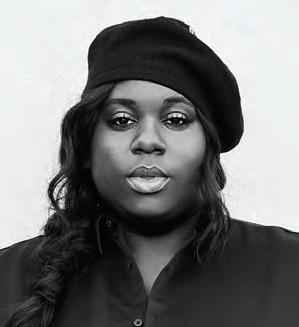
Alex Newell recently made history with their Tony Award win for the hit musical Shucked They are a Drama Desk Award winner and a recipient of the Outer Critics Circle Award for Outstanding Featured Performer in a Broadway Musical. Newell starred as the god Asaka in the 2018 Broadway revival of Once on This Island. This show earned Newell a Grammy nomination for Best Musical Theater Album, and the show won the Tony Award for Best Revival of a Musical.
ALI STROKER
Ali Stroker is a Tony Award winner for her role as Ado Annie in Rodgers and Hammerstein’s Oklahoma! She made history as the first actor in a wheelchair to appear on Broadway in Deaf West’s acclaimed revival of Spring Awakening and the first actor in a wheelchair to win a Tony. She was a regular on the Netflix series Echoes and starred in the Lifetime holiday film Christmas Ever After. Ali recurred in the final season of Netflix’s Ozark and in Hulu’s Only Murders in the Building. She cowrote the novel The Chance to Fly and its sequel Cut Loose!, and she wrote the children’s book Ali and the Sea Stars. She was recently seen opposite Matthew Broderick in Babbitt at Shakespeare Theatre Company in Washington, DC, and played Lady Anne in the Shakespeare in the Park production of Richard III. She’s performed her one-woman show all over the country. Her mission to improve the lives of others through the arts is captured in her motto: “Turning Your Limitations Into Your Opportunities.”
THOMAS WILKINS
GRACIE LAWRENCE
ALEX NEWELL
ALI STROKER
THE CLASSICAL WORLD CUP
THURSDAY JULY 9, 2026
8PM
Los Angeles Philharmonic
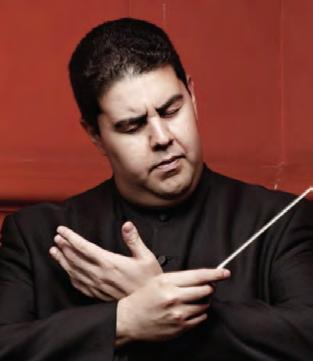
Tito Muñoz, conductor
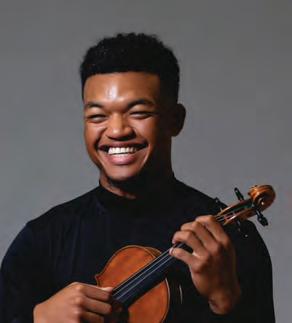
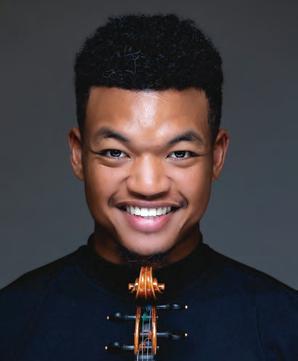
Randall Goosby, violin
Josh Kahn, film director
GINASTERA
BARBER
Josh KAHN/
Adam SCHOENBERG
REVUELTAS
COPLAND
Fo ur Dances from Estancia (c. 12 minutes)
Los trabajadores agrícolas (The Land Workers)
Danza del trigo (Wheat Dance)
Los peones de hacienda (The Cattlemen)
Danza fi nal (Malambo—Final Dance)
Co ncerto for Violin and Orchestra, Op. 14 (c. 25 minutes)
Allegro
Andante
Presto in moto perpetuo
Ra ndall Goosby
INTERMISSION
The Art of the Goal (c. 8 minutes) (world premiere, LA Phil commission)
Sensemayá (c. 6 minutes)
Bi lly the Kid Suite (c. 22 minutes)
Introduction: The Open Prairie
Street in a Frontier Town
Mexican Dance and Finale
Prairie Night (Card Game at Night)
Gun Battle
Celebration (After Billy’s Capture)
Billy’s Death
The Open Prairie Again
This performance is generously supported in part by the Kohl Virtuoso Violin Fund Programs and artists subject to change.
FOUR DANCES FROM ESTANCIA
Alberto Ginastera (1916–83)
Among the leading lights of 20thcentury concert music in South America, Argentina’s Alberto Ginastera is acknowledged for his successful blending of Indigenous music with the more rigorous elements of European art music. Over a career extending for more than half a century, Ginastera would eventually leave behind the folk idiom and write in more contemporary styles, even adopting the 12-tone system in his later scores. His most frequently played works, not surprisingly, are from the earlier period of his career, and they are reminiscent of the “folkloric” music of other composers who mined the riches of Latin American source material.
Ginastera’s Estancia, written in 1941 on a commission from Lincoln Kirstein’s American Ballet Caravan, was intended as a “ballet in one act and five scenes based on Argentine country life,” originally including spoken and sung elements. Because of problems on the part of the ballet company, the work itself went unperformed until 1952, but a suite of four dances from the score was introduced at the venerable Teatro Colón in Buenos Aires in 1943.
The first of the dances, titled “Los trabajadores agrícolas” (The Land Workers), offers an exceptionally energetic cast of field hands; clearly some dramatic license is being taken with the verisimilitude of the depiction. Eventually, the relentless rhythm subsides, and a tune begins to emerge. The second item in the suite, the “Danza del trigo” (Wheat Dance), provides a lyrical interlude, which is followed by an energetic and rhythmically sophisticated dance for “Los peones de hacienda”
(The Cattlemen). The furious final Malambo takes its title from a swift dance in 6/8 rhythm that has long figured in a competition among gauchos (Argentinian cowboys). —Dennis Bade
CONCERTO FOR VIOLIN AND ORCHESTRA, OP. 14
Samuel Barber (1910–81)
Samuel Barber’s death in 1981 at the age of 70 deprived America of one of its most distinguished and successful composers of serious music. In contrast to many of his colleagues who had to “moonlight” in various other musical capacities, he was able to support himself through composing almost from the auspicious start of his career. In the 1930s, with atonality and the 12-tone technique pressing for consideration, Barber’s traditionalism was welcomed with enthusiasm. In his works were all the comforting qualities valued by the large public, for Barber was in possession of a craftsmanship that extended to all the elements of music: His melodies are natural and expansive; the rhythms varied and vital; the harmonies just pungent enough; and his orchestration, like that of Brahms (the composer in whose steps Barber seems to have followed), does not call attention to itself but is nonetheless distinctive for being perfectly suited to the musical thought at hand. In short, skill, taste, and seriousness inform Barber’s music at every turn.
The last element—seriousness— figures as one of the composer’s most unvarying characteristics. Some people are born middleaged—that could be said of Barber, as viewed through his music. When he wrote his first piece at
age 7 and titled it Sadness, the die was cast. If not sadness, then an elegiac lyricism pervades much of his music. The first two movements of the Violin Concerto are typical of this emotional climate; they revolve in an orbit of pensive, plangent songfulness. Even when this mold is broken for a fast and virtuosic final movement, the music is hardly frivolous; it is still notably serious.
The Violin Concerto was composed in 1939 on a commission from the wealthy businessman Samuel Fels for a talented graduate of the Curtis Institute of Music, Iso Briselli. When Briselli asked for revisions (which Barber refused), the public premiere went to Albert Spalding with Eugene Ormandy and The Philadelphia Orchestra in 1941.
The first movement is nearly singular in its lyrical approach. The expansive main theme, presented immediately by the violin—an extended melody containing several distinctive rhythmic figures—dominates the movement. In contrast to this long-breathed lyricism, a secondary theme of a simple, folk-like character tries for perkiness and nearly achieves it. The alternation of these two themes, at times in varied tempos and orchestration (in which the piano adds a distinctive color) but with only a minimum of dramatic conflict, fleshes out a movement that emits an aura of Brahmsian reflection and Straussian poignance.
The second movement is even more inward than the first, beginning with the moody first theme in oboe. However, there are some marked tensions along the way and what the composer called a “rhapsodic theme” that bears surprising echoes of Rachmaninoff
The last movement presents Russianisms of another persuasion—namely, the grotesquerie of Shostakovich and Prokofiev. Syncopations and counter rhythms enhance the diabolical atmosphere of the perpetual-motion whirlwinds in which the violin virtuosically participates throughout. In the concluding measures, the violin’s rhythm becomes ever more precipitous (triplet eighths change to sixteenths), and the movement ends in a burst of brilliance. —Orrin Howard
THE ART OF THE GOAL
Josh Kahn, director (b. 1987)
Adam Schoenberg, composer (b. 1980)
Early in my career, I sat at the top of the United Center in Chicago as the Creative Producer for the Chicago Bulls and dreamed of new ways to fuse sport, music, and art. The court was more than a surface for the game; to me, it was a stage.
Years later, after traveling across the country, moving to Los Angeles, and having the privilege of directing some of the world’s greatest athletes, I found myself sitting in the last row of the Hollywood Bowl, looking out over the Los Angeles Philharmonic, the magic of Los Angeles, and one of the most iconic venues in the world. At that moment, my worlds collided. I began imagining what it would mean to pair the power and emotional depth of classical music with a sport globally renowned for its beauty yet rarely presented in this way.
Soccer players are among the world’s most elite athletes, but the sport itself is not purely one of force or speed. It is part science, part religion, part
resolve. It is tension and release. It is the pursuit of the impossible: breaking a stalemate, winning the ball, finding space, breaking through, and ultimately scoring a goal. Through this fusion of cinema, sport, and orchestral music, we hoped to contextualize soccer in a new way, not simply as competition, but as an art form rooted in striving, emotion, precision, and transcendence.
As I reflect on the journey from the last row of this legendary venue to bringing this film to the stage tonight, my hope is that audiences feel the magic of this space, the brilliance of the orchestra, the spirit of Los Angeles Football Club, and above all, the essence of the game itself fully on display.
I am profoundly grateful to the incredible composer Adam Schoenberg for his incomparable talent and collaborative spirit; to the LA Phil and the entire organization for their trust and partnership; to LAFC for their creative collaboration; to my producing and editorial teams, led by Charlie Fritschner and Angelo Valencia; and to my family for their unwavering love and support.
Thank you for being here to witness what I believe is truly an artistic convergence: a unique fusion of art, sport, and music beneath the stars and lights of the iconic Hollywood Bowl. —Josh Kahn
FILM CREDITS
A Myles Production
Directed by Josh Kahn
Produced by Charlie Fritschner
Music Composed by Adam Schoenberg
Cinematography by Ulises Roman, Mark Hill, Joe Madden, Marco Saldana, Massimo Legittimo Drone Photography by Flyby Imagery
Edited by Angelo Valencia
Assistant Editor Chris Shepard
Color grading by Paul Galadi
Post Producer Tracy Spera
Key Art by Robbie Reynolds
SPECIAL THANKS TO:
Los Angeles Football Club
Major League Soccer
Vanessa Montes, LAFC CMO
Sara Takata, LAFC Executive Producer, Broadcast and Production Services
Sensemayá was the work that brought Silvestre Revueltas to international attention. Through a recording of the work made by Leopold Stokowski in New York in December 1947, widespread audiences began to get an idea of Revueltas’ music.
Revueltas died in 1940 from complications of chronic alcoholism. At the time, his music was virtually unknown outside of Mexico, some performances during a 1937 trip to Spain notwithstanding. The last decade of his life was devoted to music, with Revueltas active as a composer, teacher, and conductor in Mexico City. Between 1928 and his death, Revueltas composed roughly 60 works, including orchestral, chamber, vocal, and theater pieces, as well as a handful of film scores, such as Redes (The Wave, 1936) and La noche de los mayas (The Night of the Mayans, 1939).
Revueltas had a varied and useful musical education, with a fair amount of practical experience. After three years in Mexico City (1913–16), Revueltas traveled to the United States, where he studied violin and composition in Austin and Chicago. In the late 1920s, he played violin in a theater orchestra in San Antonio and conducted an orchestra in Mobile, AL. He returned to Mexico in 1929, when Carlos Chávez, one of the country’s foremost composers and musicians, invited him to become assistant conductor of the Orquesta Sinfónica de México, a post he held until 1935. These experiences combined to make Revueltas a sensitive and insightful writer for orchestra and a composer with an intrinsic ability to express Latin American culture musically. Sensemayá fi rst materialized in a (still unpublished) version for chamber ensemble in 1937. Revueltas based the work on a poem that describes the ritual killing of a snake in Cuban writer Nicolás Guillén’s collection West Indies Ltd., published in 1934. The atmosphere of the poem, which pits life against death, the snake against its ritual executioners, is captured by Revueltas in his brief, vibrant musical work, but emerges even more viscerally in the version for full orchestra premiered by the composer with a pickup orchestra at the Palacio de Bellas Artes in Mexico City on December 15, 1938. The obsessive rhythms (the work is in 7/8 and 7/16 time), the slithering, pictorial wind writing, and the threatening brass all combine to create a raw evocation of the ceremony, comparable to what Stravinsky did for pagan Russia in The Rite of Spring —John Mangum
BILLY THE KID SUITE
Aaron Copland (1900–90)
The symbolism of Aaron Copland’s birth in the fi rst year of the 20th century in Brooklyn is perfectly clear in light of the composer’s long love affair with the American public: A new era of pride in artists of the United States seemed to have been born along with the new century. However, America’s acceptance of Copland was not inevitable. Following his training in Paris with the famous composermaker Nadia Boulanger, he would probably be regarded still as just another one of those fellows who wrote diffi cult music had he not developed his distinctive “American” sound. Copland’s “Americanization” came about with his determination to communicate to a large general audience. He wanted to see if “I couldn’t say what I had to say in the simplest possible terms.” The results of his effort were nothing short of amazing, and in almost no time at all Copland had developed a style that was as American as the plains and prairies, cowboys and Appalachia. Yet, in its informed skill, Copland’s music was compositionally sophisticated and artistically tasteful.
Many of Copland’s early successes came on the ballet stage, beginning with Billy the Kid in 1938 and continuing with Rodeo in 1942 and Appalachian Spring in 1943. This was in keeping with the 20th century’s dance music preoccupation, largely owing to the inflence of the Ballets Russes, which commissioned Stravinsky’s triumvirate of balletic masterpieces, The Firebird (1910), Petrushka (1911), and The Rite of Spring (1913).
Copland wrote Billy the Kid for the American Ballet Caravan on a commission by its director, Lincoln Kirstein, who wrote the libretto. The ballet, with choreography by Eugene Loring, was first performed in Chicago in October 1938. The score is prefaced by the following remarks: “The action begins and closes on the open prairie. Billy is seen for the first time as a boy of twelve with his mother. A brawl turns ugly, guns are drawn, and in some unaccountable way Billy’s mother is killed. Without an instant’s hesitation, in cold fury, Billy draws a knife from a cowhand’s sheath and stabs his mother’s slayers. His short but famous career has begun. In swift succession we see episodes in Billy’s later life. At night, under the stars, in a quiet card game with his outlaw friends. Hunted by a posse led by his former friend Pat Garrett, Billy is pursued. A running battle ensues. Billy is captured. A drunken celebration takes place. Billy in prison is, of course, followed by one of Billy’s legendary escapes. Tired and worn in the desert, Billy rests with his girl. Starting from a deep sleep, he senses movement in the shadows. The posse has finally caught up with him.”
In his score for Billy, Copland conjures an old-American musical consciousness in which he quotes such authentic cowboy songs as “The Dying Cowboy,” “Git Along, Little Dogies,” “The Old Chisholm Trail,” and “Goodbye Old Paint.” These tunes, as well as the purely original music, come out of Copland’s Americana blender thoroughly mixed with jaunty, irregular rhythms; spicy dissonances; simple, triadic harmonies; intimate and/or grand orchestral textures; and tons of spirit. A heady mix indeed. —O.H.
TITO MUÑOZ
Praised for his versatility, technical clarity, and keen musical insight, Tito Muñoz is internationally recognized as one of the most gifted conductors of his generation. Following his 10-year tenure as the Virginia G. Piper Music Director of The Phoenix Symphony, which concluded in the 2023/24 season, he continues his association with the orchestra as Artistic Partner. In the 2025/26 season, he also took up the role of Interim Principal Conductor at the Cleveland Institute of Music, becoming a guest member of its Orchestral Studies faculty. He has appeared with many of North America’s leading orchestras, including those of Atlanta, Baltimore, Cincinnati, Cleveland, Dallas, Detroit, Houston, Indianapolis, Milwaukee, Minnesota, New York, and Utah, as well as the Saint Paul Chamber Orchestra, the National Symphony Orchestra, and the Orchestra of St. Luke’s—making his Carnegie Hall debut with the latter in a sold-out performance of Or ff ’s Carmina Burana in February 2024. Maintaining a strong international conducting presence, Tito has also worked with the
Frankfurt Radio Symphony, SWR Symphonieorchester, Deutsche Radio Philharmonie Saarbrücken Kaiserslautern, Mahler Chamber Orchestra, Orchestre national d’Île-de-France, Lucerne Festival Contemporary Orchestra, Lausanne Chamber Orchestra, Orchestre Philharmonique de Strasbourg, BBC Symphony Orchestra, BBC Scottish Symphony, and Royal Philharmonic (London).
The 2025/26 season included debuts with the New Jersey Symphony, Nashville Symphony, Antwerp Symphony, Jenaer Philharmonie, Nürnberger Symphoniker, and Komische Oper Berlin, alongside return appearances with SWR Symphonieorchester and the New York Philharmonic.
RANDALL GOOSBY
“For me, personally, music has been a way to inspire others”— American violinist Randall Goosby’s own words sum up perfectly his commitment to being an artist who makes a difference. Signed exclusively to Decca Classics in 2020 at the age of 24, Goosby is acclaimed for the sensitivity and intensity
of his musicianship alongside his determination to make music more inclusive and accessible, as well as for bringing the music of underrepresented composers to light. Goosby was recently appointed to The Juilliard School’s Preparatory Division and joined the Pre-College violin faculty in fall 2025.
Highlights of Randall Goosby’s 2025/26 season included debut performances with the Atlanta Symphony with Leonard Slatkin, Orchestre National de France with Cristian Măcelaru, KBS Symphony with Peter Oundjian, and San Diego Symphony with Kahchun Wong. Goosby returned to the San Francisco Symphony, Pittsburgh Symphony, and New Jersey Symphony. He appeared in recital across North America and Europe with pianist Zhu Wang as well as with the Renaissance Quartet and joined clarinetist Anthony McGill and pianist Joshua Mhoon in a program presented by the Philadelphia Chamber Music Society.
As of 2024/25, Goosby is a member of Konzerthaus Dortmund’s series “Junge Wilde.” He was the inaugural recipient of the 2024 Harmony for Change Award presented by Midori & Friends and also named the Cincinnati Symphony’s 2025 MAC Music Innovator.
A former student of Itzhak Perlman and Catherine Cho, Randall Goosby received his Bachelor’s, Master’s, and Artist Diploma degrees from The Juilliard School. He is an alumnus of the Perlman Music Program and previously studied with Philippe Quint. He plays the Antonio Stradivarius, Cremona, “ex-Strauss,” 1708 on generous loan from the Samsung Foundation of Culture.
TITO MUÑOZ
RANDALL GOOSBY
JOSH KAHN
Josh Kahn is an award-winning director, producer, and creative marketing specialist working at the intersection of entertainment and professional sports. He is the founder of MYLES, a story incubation lab and production company based in Los Angeles. Josh has directed and produced feature documentaries and docuseries for major streaming platforms, including Netflix, Prime Video, Fox Sports, Tubi, and DAZN. Previously, Josh served as the inaugural in-house Senior Producer/ Director at UNINTERRUPTED and The SpringHill Company, founded by LeBron James and Maverick Carter. Before that, he was the Senior Creative Producer for the Chicago Bulls, launching BullsTV, the organization’s mixed-media production arm. Beyond his film work, Josh has collaborated with major brands including Nike, Walmart, Airbnb, New Balance, Workday, and Audi.
Josh was named to Forbes’ “30 Under 30” sports list. He earned his BFA from NYU Tisch School of the Arts in 2009 and has been a guest speaker at leading universities, including NYU Tisch, Syracuse University’s Newhouse School, Northwestern University’s Medill School of Journalism, USC Iovine and Young Academy, and Duke University.
In addition to his work in film and sports, Josh is a mixed-media abstract painter whose work has been exhibited across the country.
Emmy Award-winning and Grammy-nominated composer Adam Schoenberg has twice been named among the top 10 most-performed living composers by orchestras in the United States. With more than 300 orchestral performances worldwide, his works have received performances and premieres at The Kennedy Center, Library of Congress, New York Philharmonic, San Francisco Symphony, Chicago Symphony Orchestra, National Symphony Orchestra, The Cleveland Orchestra, and four times with the Los Angeles Philharmonic at the Hollywood Bowl. His debut orchestral album with the Kansas City Symphony was nominated for two Grammys, including Best Contemporary Classical
Composition for his orchestral suite Picture Studies For fi lm and TV, Schoenberg has scored several projects including Graceland, which premiered at the Tribeca Film Festival; his Emmy Awardwinning score to the Artbound (PBS/KCET) documentary “That Far Corner: Frank Lloyd Wright in Los Angeles;” and theme packages for ABC’s Nightline and The CW’s Crime Nation Schoenberg received his Doctor of Musical Arts from The Juilliard School. He is currently an associate professor and Chair of the Music Department at Occidental College, where he runs the composition and fi lm scoring programs. He lives in Los Angeles with his wife, playwright and TV writer Janine Salinas Schoenberg; their two sons Luca and Leo; and their goldendoodle Copland.
JOSH KAHN
ADAM SCHOENBERG
ADAM SCHOENBERG
TCHAIKOVSKY & BEETHOVEN
TUESDAY JULY 14, 2026 8PM
Los Angeles Philharmonic
Cristian Măcelaru, conductor
Leonidas Kavakos, violin
TCHAIKOVSKY Violin Concerto in D major, Op. 35 (c. 33 minutes)
Allegro moderato—Moderato assai
Canzonetta: Andante
Finale: Allegro vivacissimo
Le onidas Kavakos
INTERMISSION
BEETHOVEN
Sy mphony No. 7 in A major, Op. 92 (c. 36 minutes)
Poco sostenuto—Vivace
Allegretto
Presto
Allegro con brio
This performance is generously supported in part by the Kohl Virtuoso Violin Fund Programs and artists subject to change.
VIOLIN CONCERTO IN D M AJOR, OP. 35
Pyotr Ilyich Tchaikovsky (1840–93)
Tchaikovsky composed his Violin Concerto during a stay in Switzerland in 1878. Inspired by the presence of the young violinist Josef Kotek in his circle there, the composer completed the entire concerto in less than a month. During the work’s composition, Kotek and Tchaikovsky collaborated closely, but almost as soon as the ink on the manuscript had dried, Kotek began to cool toward the work. This meant that the dedication was offered to the Hungarian violinist Leopold Auer. Auer declined it, declaring the work too long and the solo part unplayable, something Tchaikovsky had heard before and a reminder that the composer’s music wasn’t always considered comfortable for listeners and performers.
Russian-born violinist Adolf Brodsky eventually mastered the concerto’s technical challenges well enough to premiere it in Vienna, where it was not well received. The critic Eduard Hanslick heaped abuse on Tchaikovsky’s innovative layout and composition of the solo part in his review of the first performance.
“For a while, it moves along well enough, musical and not lacking in spirit, but soon the roughness gets the upper hand and remains in charge until the end of the first movement. It is no longer a question of whether the violin is being played, but of being yanked about and torn to tatters. Whether it is at all possible to extract a pure sound out of these hair-raising acrobatics I do not know, but I do know that in making the attempt Mr. Brodsky tortured his audience no less than he did himself.” Hanslick would further elaborate, claiming the concerto “stank to the ear.”
Tchaikovsky’s concerto appears unconventional when placed alongside stalwarts of the genre by other composers. The first movement combines lyricism with nobility, as
the violin spins out the movement’s two themes over an ever-shifting accompaniment. The slow movement, which Tchaikovsky labeled “Canzonetta” (Little Song), opens with a delicate woodwind introduction, before the violin’s melancholy entry. The movement leads without pause to the rondo-finale, a movement with rhythmic abandon and a folk-like flvor. The rondo, which alternates a main theme with contrasting episodes, gives the violinist a chance for reckless bravura display. In a sense, Tchaikovsky’s concerto is guilty of some of the charges made by Hanslick, but what good concerto doesn’t benefit from some “hairraising acrobatics”? —John Mangum
SYMPHONY NO. 7 IN A MAJOR, OP. 92
Ludwig van Beethoven (1770–1827)
Beethoven’s Seventh and Eighth Symphonies are a set of “untwins,” contrasting works created basically side by side in 1811 and 1812. They also share a connection with Johann Nepomuk Maelzel (1772–1838), who was part musician and part engineer, but mostly an entrepreneurial salesman. Maelzel was named Vienna’s imperial court mechanician in 1808, and one of his principal product lines was ear trumpets, which Beethoven eagerly—desperately—tried. Maelzel also created the panharmonicon, a mechanical chamber orchestra. The inventor persuaded the composer, with a much-needed loan, to write a piece for the panharmonicon celebrating Wellington’s victory in the Battle of Vitoria. Maelzel planned to tour the work to London, where Wellington was a national hero. To raise money, they gave concerts in Vienna featuring Beethoven’s new piece performed by live orchestra. These concerts were quite successful, but Beethoven and Maelzel fell out over ownership of the music, and Beethoven filed—
and eventually dropped—a lawsuit against Maelzel. This rift did not stop Beethoven from becoming one of the early adopters of another of Maelzel’s inventions: a mechanical timekeeper he branded the metronome.
Those two fundraising concerts in December 1813 and one Beethoven produced for himself in January 1814 (after the break with Maelzel) included the fist performances of the Seventh Symphony, which he had completed over a year earlier. The first of these concerts was also a charity benefit for soldiers wounded at the recent Battle of Hanau; a worthy patriotic cause, but also clever cross-promotion. Beethoven conducted an all-star band, and the music was much admired, though to the composer’s irritation the Seventh Symphony was referred to as a “companion piece” to Wellington’s Victory.
The symphony begins with a long and profound introduction before kicking into kinetically energized music, which characterizes the entire work. The introduction predicts the harmonic journeys coming in the rest of the symphony just as the main body of the movement foretells its rhythmic obsessions, and the startling coda walks the wild side.
The following Allegretto—the work doesn’t have a conventional slow movement—has a solemnly welling beauty intensified by counterpoint. It was so popular that audiences demanded an encore at the premiere, and during the 19th century it often was substituted into other Beethoven symphonies.
The scherzo is a blazingly fast one, with a much slower trio section. Beethoven reverses some of the dynamic surprises for the repeated sections and plays additional jokes with the scoring. Also fast paced, the finale picks up the wildness initiated in the first movement and spins it into a breathless but utterly joyful mania, ending with a coda that mirrors the aggressive beast that closes the first movement. —John Henken
CRISTIAN MĂCELARU
Grammy Award–winning conductor Cristian Măcelaru is Music Director of the Cincinnati Symphony Orchestra, Music Director of the Orchestre National de France, Artistic Director of the George Enescu International Festival and Competition, Artistic Director and Principal Conductor of the Interlochen Center for the Arts’ World Youth Symphony Orchestra, Music Director and Conductor of the Cabrillo Festival of Contemporary Music, and Distinguished Visiting Artist at the Shepherd School of Music at Rice University. He also serves as Artistic Partner of
the WDR Sinfonieorchester in Cologne, where he was Chief Conductor from the 2019/20 through 2024/25 seasons.
The 2025/26 season marked Măcelaru’s inaugural season as Music Director of the Cincinnati Symphony Orchestra, where his programming reflects his expansive artistic vision and dedication to both tradition and innovation. Măcelaru launched the season with a blended program of classical masterworks and contemporary pieces. In March, Măcelaru and the Interlochen Center for the Arts embarked on a tour celebrating the upcoming centennial of Interlochen and the 250th anniversary of American independence, with concerts beginning at the center’s home in Interlochen, MI, and continuing through Detroit, Philadelphia, and Boston.
With the George Enescu International Festival, Măcelaru curated a four-week concert schedule highlighting worldclass orchestras in multiple international premieres and interpretations of classical music’s finest repertoire. Beginning at the festival, Măcelaru conducted the Orchestre National de France on a tour through Romania,
Slovakia, the Czech Republic, and Austria. In November, the Orchestre National de France took on a three-night tour in the United States with pianist Daniil Trifonov, culminating in an appearance at Carnegie Hall. In another Enescu Festival highlight, Măcelaru conducted the WDR Sinfonieorchester in a concert performance of Strauss’ Salome. Later in the season, he conducted the orchestra in three concert programs in Cologne and across western Germany. Măcelaru’s 2025/26 guest engagements included debuts with the Münchner Philharmoniker and Orchestra dell’Accademia Nazionale di Santa Cecilia, as well as returns with the Tonhalle-Orchester Zürich, Czech Philharmonic, Leipzig Gewandhaus Orchestra, Philharmonia Orchestra, and San Francisco Symphony. Măcelaru’s previous seasons include European engagements with the London Philharmonic Orchestra, NDR Elbphilharmonie, Concertgebouworkest, Symphonieorchester des Bayerischen Rundfunks, Budapest Festival Orchestra, and Wiener Symphoniker. In North America, he has led the New York Philharmonic,
CRISTIAN MĂCELARU
Philadelphia Orchestra, Los Angeles Philharmonic, Chicago Symphony Orchestra, Boston Symphony Orchestra, and The Cleveland Orchestra. He is equally at home as a conductor of opera, with career highlights including productions of Don Giovanni with the Houston Grand Opera and Madama Butterfly with Opera Națională București.
In 2020, Măcelaru received a Grammy Award for conducting the Decca Classics recording of Wynton Marsalis’ Violin Concerto with Nicola Benedetti and The Philadelphia Orchestra. His highly anticipated recording of George Enescu’s complete symphonic works with the Orchestre National de France was released in April 2024 on Deutsche Grammophon. September 2025 marked the release of Măcelaru’s and the Orchestre National de France’s Ravel Paris 2025 album, featuring the symphonic works of Maurice Ravel in celebration of the 150th anniversary of the composer’s birth, on the naïve label.
More information on Cristian Măcelaru can be found at macelaru.com
Management for Cristian Măcelaru: Primo Artists, New York, NY primoartists.com
LEONIDAS KAVAKOS
Leonidas Kavakos is recognized across the world as a violinist and artist of rare quality. Acclaimed for his captivating artistry, superb musicianship, matchless technique, and for the integrity of his playing, Kavakos performs with the world’s leading orchestras as both soloist and conductor and in recital at the world’s premier venues.
Highlights of Kavakos’ 2025/26 season included performances with the New York Philharmonic, San Francisco Symphony, and Minnesota Orchestra and as Artist-in-Residence at the Dallas Symphony, where he was featured as both a soloist and a conductor. In Europe, he appeared with the Concertgebouw Orchestra, Leipzig Gewandhaus Orchestra, and Frankfurt Radio Symphony and conducted the Czech Philharmonic, Philharmonia, and Barcelona Symphony orchestras.
Kavakos’ award-winning discography includes the Brahms Violin Concerto with the Leipzig Gewandhaus Orchestra and Riccardo Chailly and the Beethoven Violin Concerto, which he conducted with the Symphonieorchester des Bayerischen Rundfunks.
He was named ECHO Klassik Instrumentalist of the Year for his recording of the complete Beethoven violin sonatas with Enrico Pace. With Emanuel Ax and Yo-Yo Ma, Kavakos has released a series of trio recordings to critical acclaim. Kavakos curates an annual violin and chamber music master class in Athens, where he was born and brought up in a musical family. In 2022, he was elected a member of the Academy of Athens as the Chair of Music in the Second Class of Letters and Fine Arts for his services to music. In 2024, he was appointed professor of violin at the Basel Academy of Music. Kavakos plays the “Willemotte” Stradivari violin of 1734.
LEONIDAS KAVAKOS
SALSA SPECTACULAR: NATHY PELUSO & GRUPO NICHE
WEDNESDAY JULY 15, 2026 8PM
Nathy Peluso
Grupo Niche
Al ex Torres, singer
Lu is Araque, singer
Alejandro Iñigo, singer
Fi to Echeverría, singer
Diego Camacho, timbal
Al ex Carvajal, drums
Jua nito Murillo, conga
Fa bio Celorio, bongo
Pau l Gordillo, saxophone
Ye inson Muñoz, trombone
Ed gardo Manuel, trombone
Oswaldo Ospino, trumpet
Víctor González, piano
Luis Sandoval, bass
José Aguirre, Music Director
Ya nila Varela, General Manager
El Marchante
Willy Calderon
Carlos Quintero, host
Programs and artists subject to change.
NATHY PELUSO
Since the release of her debut album, Calambre, in 2020, Nathy Peluso, the Argentinian singer, rapper, and songwriter based in Spain, has shaken up the Latin music scene with her genredefying style and captivating stage presence. By the age of 30, she had won five Latin Grammys, tying with Mercedes Sosa as the most awarded Argentinian artist in the history of these honors. She also made history as the first woman to win the award for Best Rap/Hip Hop Song. Adding to these milestones are two nominations at the 2025 Latin Grammys for her collaborations “De Maravisha” with Tokischa and “Xq Eres Así” with Álvaro Díaz, reaffirming her versatility and sonic expansion within global music. Renowned for her powerful live performances and artistic originality, she has graced the stages of iconic venues and festivals such as Coachella, Movistar Arena in Bogotá, Sónar in Barcelona, and Mad Cool in Madrid. Her collaboration with Bizarrap (BZRP Music Sessions Vol. 36/66) became a viral phenomenon, amassing millions of streams worldwide.
In 2024, she released her second album, GRASA, an intimate yet ambitious work that blends rap, salsa, ballads, and tropical sounds, inspired by Mafia films and 1970s New York salsa. The album features collaborations with artists such as Blood Orange, Duki, C. Tangana, and Ca7riel & Paco Amoroso. GRASA earned three Latin Grammys and received a nomination at the 2025 Grammy Awards for Best Latin Rock or Alternative Album. That same year, she unveiled CLUB GRASA, an EP of electronic reinterpretations of her sonic universe, and made her debut on The Tonight Show Starring Jimmy Fallon with a critically acclaimed performance alongside Blood Orange.
Between 2024 and 2025, Nathy embarked on her first world tour, the GRASA Tour, selling out shows in cities such as New York, Los Angeles, London, and Paris and solidifying her status as one of the most influential voices in contemporary global music.
In October 2025, she released the MALPORTADA EP, a six-track project written in Puerto Rico that delves deeper into her close relationship with salsa, a genre she has explored at different stages of her career. The EP includes “Malportada,” her collaboration
with Rawayana that fuses tropical cadence with sonic rebellion. With raw, vibrant energy, Nathy Peluso reasserts her command of the Caribbean musical language, expanding her universe through provocation and virtuosity.
GRUPO NICHE
Grupo Niche is a Colombian salsa band formed in 1979, recognized by critics and audiences alike as the most successful band in Latin America for the last four decades. It was founded in Bogotá by Jairo Varela Martínez, a native of Chocó. Over time and in seeking inspiration, the band traveled to the city of Buenaventura on Colombia’s Pacific coast, and finally in 1983 it relocated to Cali in the western region of the country, which would become its base of operations.
In 1982, Grupo Niche had its first national hit, “Buenaventura y Caney,” which allowed the band to make its first of many tours in the United States. In 1984 Jairo Varela composed and produced the song “Cali Pachanguero,” which would give national and global prominence to Grupo Niche and was declared the official theme of the Feria de Cali. International tours would increase from that moment on.
NATHY PELUSO
GRUPO NICHE
In 1987, differences between several musicians in the group and Varela led to a new stage of Grupo Niche in 1988, which resulted in great achievements such as “Nuestro Sueño” and “Cómo Podré Disimular,” with which the band conquered Peru and Venezuela. More than 1 million people gathered at Lima’s Campo de Marte to see the group.
In 1990, Varela produced Cielo de Tambores, the group’s most successful album to date. Songs such as “Una Aventura,” “Busca por Dentro,” “Se Pareció Tanto a Ti,” “Sin Sentimiento,” “Cali Ají,” and “Debiera Olvidarla” crossed borders and were undisputed hits throughout Latin America.
In 2001, Varela made the thoughtful decision to move the headquarters of Grupo Niche to Miami, a more convenient location for launching the numerous international tours that the band took annually.
From 2005 onward, Varela dedicated himself to producing new songs for Grupo Niche, releasing a song every six months. The band continued its international touring, including new territories such as Japan.
In 2007 Varela suffered a heart attack that forced him to give up smoking. New songs like “Un Día Después” and “Robando Sueños” showed a new sound, something more sophisticated and romantic.
From 2010 through the rest of his life, Jairo Varela, in his perfectionism and meticulousness, dedicated more time to the recording studio, trying out different voices with new nuances and styles. The new song “Aprieta” sounded like an epilogue to the famous “Buenaventura y Caney.”
In June 2012 Varela fulfilled one of his most cherished dreams when Grupo Niche was hired
for the fist time in Africa, which he considered a journey to the land of the band’s ancestors.
On August 8, 2012, Jairo Varela suffered another heart attack, which proved fatal. An outpouring of grief arose among the people of Colombia and other nations, with a funeral that lasted four days. Numerous tributes from governments and individuals followed, and Varela became a legend.
The passing of Jairo Varela marked a new era for Grupo Niche. Hundreds of unreleased songs, recorded in demos and written down in notebooks, would begin to be produced in the coming years. Varela’s eldest daughter, Yanila Varela, who was her father’s right hand, succeeded him as general manager.
In 2012, 2014, and 2015 Grupo Niche increased its tours around the world, and the band traveled more frequently in Europe, the US, Canada, Mexico, Ecuador, Peru, and Colombia and conquered new regions such as Australia. At the end of 2014, the group made a historic presentation with El Gran Combo de Puerto Rico at Madison Square Garden.
In 2021 Grupo Niche received Grammy and Latin Grammy awards for the album 40, and in 2023 they won a Latin Grammy for the album Niche Sinfónico, produced by José Aguirre, in whom the Varela family, led by Yanila Varela, gave all its confidene. Niche Sinfónico was also nominated for Best Tropical Latin Album at the 2024 Grammy Awards, and Grupo Niche was nominated in 2025 in the same category for the album Clásicos 1.0.
The history of Grupo Niche continues to be written every day since Jairo Varela left a great musical testament, surely to the delight of millions of admirers.
EL MARCHANTE
Founded by Osmar Romero, El Marchante is a cultural project born in Caracas in 2015 that has evolved into a platform dedicated to researching, curating, and sharing Latin American and Caribbean music. Based between Caracas and Los Angeles, El Marchante explores the intersections of memory, migration, and sound through vinyl, live events, and collaborations that honor regional heritage across borders.
The project has appeared on stages such as the Hollywood Bowl and Grand Performances, touring across the United States and performing alongside artists including LA LOM, Boogaloo Assassins, Adrian Quesada, and Juanes. It has also traveled abroad to Mexico City, Toronto, and Bogotá, cultivating international dialogue through music.
El Marchante has collaborated with institutions such as the LA Phil, University of California, Japanese American Cultural & Community Center, and The Music Center, as well as with record labels including Fania, Ansonia, and Diamond West, reaffirming its commitment to preserving and amplifying the diverse voices and rhythms that shape Latin American identity.
EL MARCHANTE
WILLY CALDERON
Born and raised in Los Angeles, Willy Calderon is a percussionist, producer, multi-instrumentalist, and composer who has become one of the most dynamic fi gures in contemporary Latin and fusion music. Raised in a deeply musical family, he began playing drums and percussion at the age of 2 and was shaped early on by mentors such as Alex Acuña, Luisito Quintero, Luis Conte, and his godfather Julio Ernesto Estrada. By the age of 13 he was already performing professionally, beginning a career that would eventually take him across six continents.
Over the last two decades, Calderon has collaborated and performed with artists including Bad Bunny, Lady Gaga, Ricky Martin, Carlos Vives, Bruno Mars, and Drake. In 2026 he appeared at the Super Bowl LX halftime show alongside Bad Bunny in what became one of the most discussed and politically charged
performances in the event’s history, while also marking the first time a Latin male artist headlined the Super Bowl. That same year he launched his Signature Fiesta Timbales with Gon Bops, becoming the youngest signature artist on the US West Coast and introducing the first mass-produced steel timbales with dual neon finishes. Beyond performance, Calderon has become an important cultural ambassador for Latin music, leading workshops, residencies, and master classes throughout Asia. He is also recognized for pioneering “City Pop Salsa,” a hybrid sound blending Latin rhythms with Japanese City Pop, introduced through his album Project Neon: The Birth of City Pop Salsa. A member of both the Recording Academy and the Latin Recording Academy, Calderon continues to push Latin music into new territories while remaining deeply rooted in rhythm, collaboration, and cultural exchange.
CARLOS QUINTERO
Carlos Quintero is a Colombianborn storyteller and media professional whose work lives at the intersection of music, culture, and community. Based in the United States for over 15 years, he brings more than two decades of experience shaping narratives within the music and entertainment industry.
With a foundation in journalism and a voice cultivated on the airwaves of Los Angeles, Quintero has connected audiences to the evolving soundscape of Latin music and beyond. His work spans radio, digital platforms, and original content creation, including collaborations with Entravision Communications and Univision Radio.
As the creator of the podcast La Charla, Quintero continues to amplify authentic voices and conversations, offering a space where artists, stories, and cultural identity converge.
CARLOS QUINTERO
WILLY CALDERON
MOZART & BRAHMS
THURSDAY JULY 16, 2026
Los Angeles Philharmonic
Roberto González-Monjas, conductor
Mao Fujita, piano
KORNGOLD
MOZART
BRAHMS
8PM
Straussiana (c. 6 minutes)
Pi ano Concerto No. 19 in F major, K. 459 (c. 28 minutes)
Allegro
Allegretto
Allegro assai
Mao Fujita
INTERMISSION
Sy mphony No. 4 in E minor, Op. 98 (c. 40 minutes)
Allegro non troppo
Andante moderato
Allegro giocoso
Allegro energico e passionato
Moritaka Kina is chief piano technician for the Los Angeles Philharmonic.
Programs and artists subject to change.
STRAUSSIANA
Erich Wolfgang Korngold (1897–1957)
Long before Erich Wolfgang Korngold’s orchestral film cores defined he sound of Hollywood’s Golden Age, the Austrian composer was the celebrated wunderkind of Vienna at the start of the 20th century. A prodigy of Mozartean proportions, he premiered his fist major work at the age of 13, performed for the emperor at 14, and by his 24th birthday enjoyed successful runs of three operas.
But in 1938, at the height of his career, Korngold’s life, and the lives of all Austrian Jews, came under threat as the Third Reich began expanding its fascist empire. With demand for his work already established in Hollywood, Korngold fled Viena and secured refuge for his family in Los Angeles’ Toluca Lake neighborhood, where he continued producing award-winning film cores for Warner Bros. Pictures in nearby Burbank. Korngold’s increasingly poor health—as well as seismic changes in the tastes of Viennese audiences, who now belittled his rapturously romantic music—prevented the composer from permanently returning to Austria. But in his fial composition, Straussiana, Korngold resurrects youthful memories of his homeland by paying tribute to one of his musical heroes: Johann Strauss II, the “Waltz King” of 19th-century Vienna. Commissioned by the American School Orchestras Association in 1953, Straussiana was intended for performance by student musicians, yet any orchestra would relish navigating this playful, shimmering score. (In fact, its premiere was performed by a semi-pro orchestra in Inglewood, CA, now home to the LA Phil’s Beckmen YOLA Center.)
In just seven minutes, Korngold weaves together three little-known
Strauss dances: a charming polka, a mazurka tinged with melancholy, and an electrifying waltz. But Straussiana is more than a simple rearrangement of these works—rather, Korngold adorns the original dances with the cinematic sweep and kaleidoscopic orchestrations he honed at Warner Bros. From the twinkling bells that ripple through the polka like the bubbles of Austrian sparkling wine to the mazurka’s wistful strings and a waltz that races to its dizzying conclusion, Straussiana evokes the sounds of Korngold’s childhood, the music of Vienna that forever echoed in his mind. —Michael Cirigliano II
PIANO CONCERTO NO. 19 IN F M AJOR, K. 459
Wolfgang Amadeus Mozart (1756–91)
Writing to his father from Vienna in December 1782, Mozart lamented the state of the piano concerto. “In order to garner applause with this happy medium—for true perfection in all things is no longer known or prized—you must write music that is either so simple a coachman could sing it, or so unintelligible that audiences like it simply because no sane person could understand it.” Mozart had arrived in Vienna in March 1781 and initially found great success there. He soon discovered that the city’s audiences were capricious and fickle and no on composer could keep their ears for long. Mozart relied heavily on public appearances for income, so he devoted a considerable part of his energy to organizing musical “academies.” These concerts, with their potluck programs combining symphonies, concertos, chamber music, and vocal music, were meant to promote his talents as a composer and performer. The Piano Concerto No. 19 probably premiered at one such concert in
1784. The work was one of six in the genre that Mozart composed that year, a testament to the Herculean efforts he undertook to remain in the public consciousness.
The concerto lies somewhere between the simple and the unintelligible, which may be among the explanations why he encountered increasing difficulty in Vienna beginning in the mid-1780s. The greater richness of the orchestral parts, the orchestra’s independence from the soloist, and the chamberlike qualities of the score—all of these mark the F-major Concerto (and the fie other 1784 piano concertos) as a signifiant moment in Mozart’s output.
The fist movement, with its simple opening theme and moments of contrapuntal dialogue among the instruments of the orchestra as well as between orchestra and soloist, immediately establishes the innovative nature of the F-major Concerto. The fresh, reposeful Allegretto features the soloist in dialogue with the winds, the sort of elegant back-andforth that characterizes many of the slow movements in Mozart’s concertos from 1784 on.
Mozart really throws down the gauntlet with the fiale. The fist two movements may not have gotten the coachmen whistling or confused the Viennese enough to garner much applause, but the fiale certainly could do both in spades. The opening theme—introduced by the piano and the winds—is a toe-tapper if ever there was one, and the subsequent snippet of fugue, noble and Baroque, bridges Bach and the Rococo. Mozart spent his Sunday afternoons at the Viennese home of Baron van Swieten playing through scores by Bach and his contemporaries with fellow composers and musicians. He moves seamlessly between the two styles in what is perhaps the most complex concerto fiale he ever composed. —John Mangum CONTINUED
SYMPHONY NO. 4 IN E MINOR, OP. 98
Johannes Brahms (1833–97)
Although his catalog lists just four symphonies, Brahms wrote several other works that come close to that genre: His First Piano Concerto was planned as a symphony, and the Second (which is in four movements) has been called a symphony with piano obbligato. Although the Second and Third symphonies were introduced in Vienna, Brahms decided to give his Fourth Symphony an out-of-town tryout. He himself conducted the premiere (in October 1885) with the Meiningen Court Orchestra in central Germany, where the audience was enthusiastic. Vienna was not so receptive when the work was introduced there a few months later. As it turned out, a mere 10 years after his First Symphony was given its premiere, Brahms had written his last symphony. Two years later came the Double Concerto, whose solo parts (violin and cello) remind us of the old sinfonia concertante form, but he was to write no more symphonies. For his fial essay in symphonic form, Brahms produced a monumental work whose fist movement grows from the simplest of materials, a rising and falling interval, out of which he develops long lines of powerfully emotional yet unsentimental grandeur. The relentless organic development, which begins even as themes are being stated, leads to a complex interaction of motives and melodic fragments. The composer’s friend Elisabeth von Herzogenberg wrote to him of her fears that he was dwelling too much on creating intricate thematic connections that would obscure his musical communication for the untrained listener: “…one rejoices with all the excitement of an explorer or scientist
on discovering the secrets of your creation! But there comes a point where a certain doubt creeps in… that its beauties are not accessible to every normal music lover.”
What makes the music so compelling, though, may be the way the longer lines ebb and flw with great urgency and lyrical beauty while at the same time the contrapuntal complexities lend substance and richness to the texture. As an example of how the opposing camps of Wagnerites and Brahmsians always seemed to have something nasty to say about each other, note the comment of composer Hugo Wolf—one of the symphony’s critics—that Brahms was “composing without ideas.” None other than the avant-garde composer Arnold Schoenberg, who furthered Wagner’s progressive chromatic proclivities, proved a strong supporter of what he described as Brahms’ technique of “developing variation.” Certainly Brahms’ idol Beethoven had proved that minimal materials could bring forth substantial music.
After the powerful conclusion of the fist movement, Brahms introduces the second movement with a forceful statement by two horns, followed by a ravishing passage in which all of the strings play delicate pizzicato chords supporting a sustained melody in the winds. As in the famous fiale (in which Brahms looks to earlier musical models for his structure), there is an archaic quality to this music, the result, in part, of the composer’s use of the medieval Phrygian mode. This rather mournful meditation is interrupted by more animated passages, but there is an overriding tone of what musicologist Karl Geiringer called “the shadow of an inevitable fate.”
In Brahms’ other symphonies, there is no movement that fulfils the role of the scherzo in the Beethoven mold; that is not true
in the Fourth Symphony. Here the third movement overflws with high spirits and raw energy, with the piccolo and triangle added to the performing forces for extra sizzle. The structure, though, is not a traditional scherzo with a contrasting middle section; this movement is in sonata form, and it includes material that prompted the respected writer Hermann Kretzschmar in 1887 to note of “its hastening, restless rhythms…its suddenly pulsing energy, and…the predominant harshness of its character.”
Brahms, a diligent student of musical history, was always ready to draw on the styles and forms of earlier ages. The fial movement of the Fourth Symphony is the bestknown instance, and it is usually characterized as a passacaglia, in reference to Bach. Although the theme that recurs throughout is drawn from Bach’s Cantata No. 150, conductor and Baroque specialist Nikolaus Harnoncourt has said that the form itself is more typical of the concluding movements in French operas from the Baroque era (especially Rameau). What is undeniable is the sense of cumulative power Brahms creates with his “old-fashioned” methods. The theme is repeated some 30 times, but the musical material is organized (texturally, dynamically, and above all emotionally) into a sonatalike structure: The extended opening section is followed by more relaxed (but still troubled) passages of a lyrical, yearning character (in which a solo flue is prominently featured). A renewed energy marks the beginning of a kind of development, culminating in three variations that recall the opening ones. The concluding pages of the symphony are relentlessly charged with defiance and bristling with slashing intensity. For once, there is no coda. No triumph, no joy, no radiant string chords. The rest…is silence. —Dennis Bade
ROBERTO GONZÁLEZ-MONJAS
Highly sought-after as a conductor and violinist, Roberto GonzálezMonjas is rapidly making his mark on the international scene. He has built a reputation as a natural music leader, distinguished by his compelling artistic vision, remarkable charisma, boundless energy and enthusiasm, and sharp musical intellect. He is Chief Conductor of the Orchester Musikkollegium Winterthur in Switzerland (since August 2021), Music Director of the Orquesta Sinfónica de Galicia in Spain (since August 2023), Chief Conductor of the Mozarteumorchester Salzburg (since September 2024), and Artistic Director of Iberacademy in Colombia. González-Monjas was Principal Guest Conductor of the Belgian National Orchestra from the 2022/23 season to 2024/25, and the Dalasinfoniettan in Sweden named him Honorary Conductor following a four-year tenure as its Chief Conductor and Artistic Director from 2019 to 2023.
Highlights of the 2025/26 season included a production of Mozart’s The Magic Flute at the Mozartwoche in Salzburg and Così fan tutte at the Zurich Opera House. The season also featured an extensive UK tour with the Orquesta Sinfónica de Galicia and an Asia tour with the Mozarteumorchester, as well as debuts with the Spanish National Symphony Orchestra and the Bamberg Symphony. Following recent successful guest conducting debuts, GonzálezMonjas returned in the 2025/26 season to collaborate with the Oslo Philharmonic, Hong Kong Philharmonic, Orchestre national du Capitole de Toulouse, and the Netherlands Chamber Orchestra. González-Monjas regularly collaborates with a distinguished roster of musicians, including Joyce DiDonato, Rolando Villazón, Ian Bostridge, Andrè Schuen, Hilary Hahn, Lisa Batiashvili, Juan Diego Flórez, Clara-Jumi Kang, Andreas Ottensamer, Fazıl Say, Reinhard Goebel, Mao Fujita, András Schiff, Jan Lisiecki, Kirill Gerstein, Yeol
Eum Son, Alexandre Kantorow, Paul Lewis, Kit Armstrong, and Steven Isserlis. He is also deeply engaged with music by living composers, having premiered works by and collaborating closely with Richard Dubugnon, Andrea Tarrodi, Anders Hillborg, Diana Syrse, Thierry Escaich, and Hannah Kendall, among others.
Driven by a deep commitment to education and the development of young talent, González-Monjas cofounded Iberacademy (Ibero-American Orchestral Academy) alongside conductor Alejandro Posada. The institution is dedicated to building an effi cient and sustainable model of music education in Latin America with a particular focus on reaching vulnerable segments of the population and supporting exceptionally gifted young musicians. In addition to his work in Latin America, GonzálezMonjas is a violin professor at the Guildhall School of Music & Drama in London.
Following the international success of Mozart Serenades his acclaimed debut recording with the Mozarteumorchester for Berlin Classics—GonzálezMonjas’ latest album, featuring Mozart’s complete violin concertos, was released by Berlin Classics in January.
González-Monjas began his career as a solo violinist, chamber musician, and orchestral leader. He served as Concertmaster of the Orchestra dell’Accademia Nazionale di Santa Cecilia for six years and as the leader of the Musikkollegium Winterthur until summer 2021. He plays a 1710 Giuseppe Guarneri “fi lius Andreae” violin kindly loaned to him by fi ve Winterthur families and the Rychenberg Stiftung. CONTINUED
ROBERTO GONZÁLEZ-MONJAS
MAO FUJITA
With an innate musical sensitivity and naturalness to his artistry, pianist Mao Fujita has already impressed many leading musicians as one of those special talents that come along only rarely, equally at home in Mozart as in the major romantic repertoire, with The New York Times writing, “As soon as his figers touched the keys, waves of airy filiree, beautifully shaped and accomplished, emerged in almost continuous streams,” on the occasion of his US debut at Carnegie Hall in January 2023.
Born in Tokyo, Fujita was still studying at the Tokyo College of Music in 2017 when he took First Prize at the prestigious Concours International de Piano Clara Haskil in Switzerland, along with the Audience Award, Prix Modern Times, and the Prix Coup de Coeur, which fist brought him to the attention of the international music community. He was also the Silver Medalist at the 2019 Tchaikovsky Competition in Moscow, where his special musical qualities received exceptional attention from a jury of leading musicians. In the 2025/26 season, Fujita continued his run of impressive appearances at major festivals and venues across Europe, America, and Asia. Stops in Europe included the Salzburg Festival, Vienna, Paris, Rome, Luxembourg, Hamburg, Dortmund, Gstaad, Warsaw, Tenerife, Lisbon, Copenhagen, Lyon, and Aix-en-Provence, and a recital tour across North America featured performances in New York, Cleveland, Boston, St. Paul, San Francisco, Vancouver, and San Diego. Season highlights also included tours in Asia and Europe with Filarmonica della Scala (Myung-Whun Chung), Deutsche Kammerphilharmonie Bremen (Paavo Järvi), Orchestre Philharmonique de Radio France (Jaap van Zweden), and Royal Philharmonic Orchestra
(Vasily Petrenko). In addition, he debuted with the Boston Symphony Orchestra, Toronto Symphony Orchestra, KBS Symphony Orchestra, Oslo Philharmonic, Danish National Symphony Orchestra, and Orchestre de Chambre de Lausanne and returned to the Czech Philharmonic, Gewandhausorchester, Wiener Symphoniker, Deutsches SymphonieOrchester Berlin, Orchestre national du Capitole de Toulouse, and Orchestra Sinfonica Nazionale della RAI. Fujita has worked with many of the leading conductors of our time, including Semyon Bychkov, Riccardo Chailly, Elim Chan, Myung-Whun Chung, Christoph Eschenbach, Daniele Gatti, Manfred Honeck, Jakub Hrůša, Marek Janowski, Andris Nelsons, Petr Popelka, Lahav Shani, and Kazuki Yamada. Previous orchestral debuts include the Royal Concertgebouw Orchestra, Lucerne Festival Orchestra, Symphonieorchester des Bayerischen Rundfunks, Münchner Philharmoniker, hr-Sinfonieorchester, Los Angeles Philharmonic, Cleveland Orchestra, National Symphony Orchestra (Washington, DC), Philharmonia Orchestra, NHK Symphony Orchestra, Yomiuri Nippon Symphony Orchestra, and Tokyo Metropolitan Symphony Orchestra. Fujita is also a soughtafter chamber music partner and has worked with Renaud Capuçon,
Leonidas Kavakos, Emanuel Ax, Kirill Gerstein, Antoine Tamestit, Kian Soltani, and the Hagen Quartet, among others. Fujita is an exclusive Sony Classical International artist. In October 2022, his eagerly anticipated debut album on the Sony Classical label, a studio recording of Mozart’s complete piano sonatas, was released to unanimous acclaim for its transparent sound worlds and vividly detailed interpretation. He has performed the full sonata cycle at the Verbier Festival and Wigmore Hall and across Japan’s major concert halls. His second album on the Sony Classical label, a wide-ranging and ambitious set titled 72 Preludes that champions the 24 Preludes of Chopin, Scriabin, and Yashiro, was released in September 2024. Starting piano lessons at the age of 3, Mao Fujita won his fist international prize in 2010 at the World Classic in Taiwan and became a laureate of numerous national and international competitions such as the International Rosario Marciano Piano Competition in Vienna (2013), Zhuhai International Mozart Competition for Young Musicians (2015), and the Gina Bachauer International Young Artists Piano Competition (2016). Fujita is a member of Konzerthaus Dortmund’s series “Junge Wilde” as of the 2024/25 season.
MAO FUJITA
Nestled in the heart of Pasadena’s walkable Playhouse Village neighborhood, Brantwood offers well-appointed private residences in a unique and tranquil setting, with community events and programs for the culturally minded. For more information visit brantwood.com or call (626) 639-8900
The Bowl’s food and wine team--James Beard Award Winners chef Suzanne Goin and restaurateur Caroline Styne of celebrated restaurants Lucques, a.o.c., Larder Baking Company and catering for The Music Center--are now in their eleventh year of providing exceptional cuisine designed to make your concert experiences even more spectacular. From supper in your box seats to freshlyprepared picnic baskets and market-driven fare, there’s truly something for everyone.
PHOTOGRAPHY BY SUZANNE LANZA
SUPPER IN YOUR SEATS
Enjoy a delicious pre-concert meal in the comfort of your box seats. Menu selections include Suzanne Goin’s three course menus, family-style feasts, a la carte starters, main courses, desserts, and wine. Order by 4pm the day before your concert.
MARKETPLACES
Specialty sandwiches, premium sushi, seasonal grab-and-go salads, cheese + charcuterie plates, snacks, beer, wideranging variety of approachable and delicious wines await at all of three of our Marketplaces. You’ll find everything you need to build a picnic from scratch or simply add to what you brought from home.
LUCQUES AT THE CIRCLE
Fine dining for subscribers of the Pool Circle, with a seasonal made-to-order menu and an exceptional wine list styled from the awardwinning restaurant Lucques.
THE BACKYARD
Set in the gorgeous natural surroundings of the Bowl, this al fresco space has the feel of a chic backyard in the Hollywood Hills. Two large wood-burning grills are the focus of this farmers’ market-driven restaurant serving grilled fish, chops, steaks, vegetables, salads, and raw bar items.
ANN’S WINE BAR by a.o.c.
Inspired by the original a.o.c. on 3rd St., Ann’s Wine Bar features a wide selection of Caroline’s favorite new and old world wines to be explored by both experienced and novice wine lovers, all paired with Suzanne Goin’s signature small plates menu. Reservations recommended.
CATERING AT THE BOWL
Give your guests the experience of a lifetime when you host your next event at the Bowl! Our selection of seven beautiful venues is perfect for events of all sizes, from intimate gatherings to elaborate affairs.
STREET FOOD & SNACKS
A variety of delicious options are available throughout the bowl, including hearty homemade burritos, vegan hot dogs, fried chicken, salads, specialty sandwiches, gourmet pizza, pulled pork, artisan baked goods, sweets, and popcorn.
KITCHEN 22
Kitchen 22 is the best place to indulge in fan favorites like burgers, French fries and fried chicken.
MOBILE ORDERING: Download the Hollywood Bowl app or scan one of the many QR codes to place an order from the comfort of your seat and skip the line at pick up. Mobile ordering is available throughout the venue.
It’s easier than ever to enjoy a picnic supper before your concert with multiple options for delectable fresh-made picnic boxes from Food + Wine. Simply pre-order online by 4 pm the day before your concert, and your choice will be waiting for you when you arrive at the Bowl.
The Music Center Foundation was established in 1973 by Dorothy Bu um Chandler to provide endowment support to The Music Center, its educational activities, dance programs, and its four Resident Companies: Center Theatre Group, LA Master Chorale, LA Opera, and LA Phil. By making a gift through the Foundation, you can support performances that thread our community together.
To learn more about how to leave a lasting legacy with the Music Center Foundation, contact Justin Marsh: 213-972-8046, jmarsh@musiccenterfoundation.org
For more information on the Music Center Foundation musiccenterfoundation.org
Center Theatre Group Student Matinee; photo by Cristina Burgos
LOS ANGELES PHILHARMONIC
Gustavo Dudamel Music & Artistic
Director
Walt and Lilly Disney Chair
Zubin Mehta
Conductor Emeritus
Esa-Pekka Salonen
Conductor Laureate
[Position vacant]
Assistant Conductor Ann Ronus Chair
John Adams
John and Samantha Williams Creative Chair
Herbie Hancock Creative Chair for Jazz
FIRST VIOLINS
[Position vacant]
Concertmaster
Marjorie Connell Wilson Chair
Bing Wang
Acting Concertmaster
Barbara and Jay Rasulo Chair
[Position vacant]
First Associate Concertmaster
Ernest Fleischmann Chair
[Position vacant]
Assistant Concertmaster
Philharmonic Affiliates Chair
Rebecca Reale
Deanie and Jay Stein Chair
Bianna Bell
Minyoung Chang
I.H. Albert Sutnick Chair
Tianyun Jia
Jordan Koransky
Ashley Park
Katherine Woo
Weilu Zhang
SECOND VIOLINS
Melody Ye Yuan
Principal
Mark Kashper
Associate Principal
Isabella Brown
Assistant Principal
Kristine Whitson
Johnny Lee
Ingrid Chun
Jin-Shan Dai
Miika Gregg
Chao-Hua Jin
Jung Eun Kang
Vivian Kukiel
Nickolai Kurganov
Varty Manouelian
Emily Shehi
Michelle Tseng
Gabriel Esperon*
VIOLAS
Ben Ullery
Principal
John Connell Chair
Soyoung Cho
Associate Principal
Jenni Seo
Assistant Principal
Dana Lawson
Richard Elegino
Ingrid Hutman
Michael Larco
Hui Liu
Meredith Snow
Leticia Oaks Strong
Minor L. Wetzel
Bradley Parrimore*
Pasadena Showcase House for the Arts
LA Phil Resident Fellow Chair
* Judith and Thomas L. Beckmen
LA Phil Resident Fellow
+ On Sabbatical
On Leave
CELLOS
Robert deMaine
Principal
Bram and Elaine Goldsmith Chair
Ben Hong◊
Associate Principal
Sadie and Norman
Lee Chair
Dahae Kim
Assistant Principal
Jonathan Karoly+
David Garrett
Barry Gold
Jason Lippmann
Gloria Lum
Linda and Maynard
Brittan Chair
Zachary Mowitz
Serge Oskotsky
Brent Samuel
Keeon Guzman*
BASSES
Christopher Hanulik
Principal
Diane Disney Miller and Ron Miller Chair
Kaelan Decman
Associate Principal
Oscar M. Meza
Assistant Principal
David Allen Moore
Ted Botsford
Jory Herman
Brian Johnson
Peter Rofé
Matthew Peralta*
FLUTES
Denis Bouriakov
Principal
Virginia and Henry Mancini Chair
Catherine Ransom
Karoly
Associate Principal
Mr. and Mrs. H.
Russell Smith Chair
Elise Shope Henry
Mari L. Danihel Chair
Sarah Jackson+
Piccolo
Sarah Jackson+
OBOES
Ryan Roberts
Principal
Carol Colburn Grigor Chair
Marion Arthur
Kuszyk
Associate Principal
Anne Marie Gabriele
English Horn [Position vacant]
CLARINETS
Boris Allakhverdyan
Principal
Michele and Dudley Rauch Chair
Andrea Caputo
Associate Principal
Andrew Lowy
Taylor Eiffert
E-Flat Clarinet
Andrew Lowy
Bass Clarinet
Taylor Eiffert
BASSOONS
Whitney Crockett Principal [Position vacant]
Associate Principal Ann Ronus Chair
Evan Kuhlmann
Contrabassoon
Evan Kuhlmann
Mark Houston Dalzell and James DaoDalzell Chair for Artistic Service to the Community
The Los Angeles Philharmonic string section utilizes revolving seating on a systematic basis. Players listed alphabetically change seats periodically.
HORNS
Andrew Bain
Principal
John Cecil Bessell Chair
David Cooper
Associate Principal
Gregory Roosa
Alan Scott Klee Chair
Amy Jo Rhine
Loring Charitable Trust Chair
Elyse Lauzon
Ethan Bearman
Elizabeth Linares Montero*
Nancy and Leslie Abell LA Phil Resident Fellow Chair
TRUMPETS
Thomas Hooten
Principal
M. David and Diane
Paul Chair
James Wilt
Associate Principal
Nancy and Donald de Brier Chair
Christopher Still
Ronald and Valerie Sugar Chair
Jeffrey Strong
TROMBONES
David Rejano Cantero Principal
Koni and Geoff Rich Chair
James Miller
Associate Principal
Judith and Thomas L. Beckmen Chair
Paul Radke
Bass Trombone
John Lofton
Miller and Goff
Family Chair
TUBA
Mason Soria
Principal
TIMPANI
Joseph Pereira
Principal
Cecilia and Dudley Rauch Chair
David Riccobono
Assistant Principal
PERCUSSION
Matthew Howard Principal
Wesley Sumpter
Assistant Principal
David Riccobono
Jeremy Davis*
KEYBOARDS
Joanne Pearce
Martin
Katharine Bixby Hotchkis Chair
HARP
Emmanuel Ceysson
Principal Ann Ronus Chair
LIBRARIANS
Stephen Biagini
Benjamin Picard
KT Somero
CONDUCTING FELLOWS
Kinga Głowacka
Ana María
Patiño-Osorio
José Salazar
Miguel Sepúlveda
The musicians of the Los Angeles Philharmonic are represented by Professional Musicians Local 47, AFM.
HOLLYWOOD BOWL ORCHESTRA
Thomas Wilkins Principal Conductor
John Mauceri Founding Director
FIRST VIOLINS
Kathryn Eberle Concertmaster
Marisa Sorajja Principal
Grace Oh Associate Principal
Chloe Szu-Yun Chiu
Christine Frank Radu Pieptea
Adrianne Pope Yutong Sharp
Shelly Shi
Mari Tsumura
SECOND VIOLINS
Kathleen Sloan Principal
Cheryl Norman Brick Associate Principal
Pam Gates
Natalie Leggett
Carolyn Osborn
Robert Schumitzky
Olivia Tsui
Vivian Wolf
VIOLAS
Erik Rynearson Principal
Jonah Sirota Associate Principal
Carrie Holzman-Little
Carole Kleister-Castillo
Stefan L. Smith
Phillip Triggs Hyeree Yu
CELLOS
Dennis Karmazyn Principal
Armen Ksajikian Associate Principal
Giovanna Moraga Clayton Trevor Handy
Julie Jung
Erin Breene Schumitzky
BASSES
Andrew Chilcote Principal
Denise Briesé Associate Principal
Paul Macres
Barry Newton
FLUTES
Heather Clark Principal
Lawrence Kaplan Piccolo [position vacant]
OBOES
Lelie Resnick Principal
Noah Breneman
English Horn
Catherine Del Russo
CLARINETS
[position vacant] Principal
Bass Clarinet [position vacant]
BASSOONS
Elliott Moreau Principal
Contrabassoon Allen Savedoff
HORNS
Dylan Hart Principal
Allen Fogle Associate Principal
TRUMPETS
Robert Schaer Principal
Robert Frear
TROMBONES
William Booth Principal
Alexander Iles
Bass Trombone
Todd Eames
TUBA
[position vacant] Principal
TIMPANI
Tyler Stell Principal
DRUMS
Brian Miller Principal
PERCUSSION
Wade Culbreath Principal
Gregory Goodall
HARP
Cristina Montes Mateo Principal
KEYBOARDS
Alan Steinberger Principal
SAXOPHONE [position vacant]
ASSOCIATE CONDUCTOR
Scott Dunn
LIBRARIAN
Stephen Biagini
The Hollywood Bowl Orchestra string section utilizes revolving seating on a systematic basis. Players listed alphabetically change seats periodically.
JULY
JULY 18
World
JULY
JULY
AUGUST
YOLA
Through YOLA (Youth Orchestra Los Angeles), inspired by Gustavo Dudamel’s own training as a young musician, the LA Phil and its community partners provide free instruments, intensive music training, and academic support to over 1,700 young musicians—aged 6 to 18—locally and nationally, empowering them to become vital citizens, leaders, and agents of change. YOLA’s four local program hubs serve
students and families in the Rampart District, Westlake/ MacArthur Park, East Los Angeles, and Inglewood, including sites hosted in partnership with Heart of Los Angeles and Camino Nuevo Charter Academy. YOLA engages musicians from more than 200 schools in culturally vibrant and ethnically diverse communities across LA County. Music study is complemented by leadership development opportunities, workshops, and performances. YOLA’s young musicians have
performed on great stages, from the LA Phil’s iconic venues—the Hollywood Bowl and Walt Disney Concert Hall— to national and international television broadcasts, and alongside the greatest artists. On October 16, 2021, the Los Angeles Philharmonic opened the Judith and Thomas L. Beckmen YOLA Center at Inglewood, designed by Gehry Partners, LLP, the first permanent, purposebuilt facility for YOLA. For more information, please visit laphil.com/yola
LEAVE THE DRIVING TO US!
Take the stress out of your next concert trip. Audiences have been taking part in the Hollywood Bowl bus program since 1974, helping to make it the largest and most comprehensive transportation system of any concert venue west of the Mississippi. The Hollywood Bowl has added a transportation hub to help streamline access for Park & Ride, Bowl Shuttle, Metro, and rideshares. These efforts help reduce the number of cars coming to the Bowl by more than 2,000 vehicles each evening, making your night run more smoothly. Plan your next trip at hollywoodbowl.com/gettinghere.
DID YOU KNOW?
� When you show your same-day Park & Ride or Shuttle ticket at the Plaza Marketplace, you get 20% off your purchase.
� During the 2025 season, 39% of concertgoers rode the shuttle.
� We’ve expanded our fleet of low- and zeroemission shuttles to 20 electric buses and 40 buses that run on CNG (compressed natural gas)—an alternative fuel that reduces smog-related pollution by about 20%.
Illustration by Radha Vishnubhotla
CORPORATE PARTNERS
The Los Angeles Philharmonic Association is honored to recognize our corporate partners, whose generosity supports the LA Phil’s mission of bringing music in its varied forms to audiences at Walt Disney Concert Hall, the Hollywood Bowl, and The Ford. To learn more about becoming a partner, email aradden@laphil.org.
ANNUAL GIVING
From the concerts that take place onstage at Walt Disney Concert Hall, the Hollywood Bowl, and The Ford to the learning programs that fi ll our community with music, it is the consistent support of Annual Donors that sustains and propels our work. We hope you, too, will consider making a gift today. Your contribution will enable the LA Phil to build on a long history of artistic excellence and civic engagement. Through your patronage, you become a part of the music— sharing in its power to uplift, unite, and transform the lives of its listeners. Your participation at any level is critical to our success.
FRIENDS OF THE LA PHIL
Friends and Patrons of the LA Phil share a deep love of music and are committed to ensuring that great musical performance thrives in Los Angeles. As a Friend or Patron, you will be supporting the LA Phil’s critically acclaimed artistic programs at Walt Disney Concert Hall, the Hollywood Bowl, and The Ford, as well as groundbreaking learning initiatives such as YOLA, which provides free afterschool music instruction to children in culturally vibrant and ethnically diverse communities across LA County. Let your passion be your guide, and join us as a member of the Friends and Patrons of the LA Phil. For more information, or to learn about membership benefits, please call 213 972 7557 or email friends@laphil.org.
PHILHARMONIC COUNCIL
Winnie Kho and Chris Testa, Co-Chairs Christian and Tiffany Chivaroli, Co-Chairs
The Philharmonic Council is a vital leadership group whose members provide critical resources in support of the LA Phil’s general operations. Their vision and generosity enable the LA Phil to recruit the best musicians, invest in groundbreaking learning initiatives, and stage innovative artistic programs, heralded worldwide for the quality of their artistry and imagination. We invite you to consider joining the Philharmonic Council as a major donor. For more information, please call 213 972 7209 or email patrons@laphil.org.
LOS ANGELES COUNTY
BOARD OF SUPERVISORS
BOARD OF SUPERVISORS
Hilda L. Solis Chair
Holly J. Mitchell
Lindsey P. Horvath
Janice Hahn
Kathryn Barger
DEPARTMENT OF ARTS AND CULTURE
Kristin Sakoda Director
COUNTY ARTS COMMISSION
The mission of the Los Angeles County Department of Arts and Culture is to advance arts, culture, and creativity throughout LA County. We provide leadership, services, and support in areas including grants and technical assistance for nonprofit organizations, countywide arts education initiatives, commissioning and care for civic art collections, research and evaluation, access to creative pathways, professional development, free community programs, and cross-sector creative strategies that address civic issues. All of this work is framed by our long-standing commitment to fostering access to the arts and by the County’s Cultural Equity and Inclusion Initiative.
The Los Angeles County Arts Commission supports and advocates for the mission, vision, and values of the Los Angeles County Department of Arts and Culture. The Commission is an advisory group to the Board of Supervisors, with three appointees for each District.
The Los Angeles Philharmonic Association’s programs are made possible, in part, by generous grants from the Los Angeles County Board of Supervisors through the Los Angeles County Department of Arts and Culture and from the City of Los Angeles Department of Cultural Affairs.
Rogerio Carvalheiro President
Sandra P. Hahn Vice President
Jennifer Price-Letscher Secretary
Diana Diaz Executive Committee Member
Randi Tahara
Immediate Past President
Pamela Bright-Moon
Leticia Buckley
Eric R. Eisenberg
Brad Gluckstein
Helen Hernandez
Constance Jolcuvar
Alis Clausen Odenthal
Anita Ortiz
Tara L. Taylor
Liane Weintraub
Kathryn Barger FIFTH DISTRICT
Lindsey P. Horvath THIRD DISTRICT
Holly J. Mitchell SECOND DISTRICT
Hilda L. Solis FIRST DISTRICT CHAIR Janice Hahn FOURTH DISTRICT
ENDOWMENT DONORS
We are honored to recognize our endowment donors, whose generosity ensures the long-term health of our organization. The following list represents cumulative contributions to the Los Angeles Philharmonic Endowment Fund as of May 31, 2026.
$25,000,000 AND ABOVE
Walt and Lilly
Disney Foundation
Cecilia and Dudley Rauch
$20,000,000 TO $24,999,999
David Bohnett Foundation
$10,000,000 TO $19,999,999
The Annenberg Foundation
Colburn Foundation
Lenore S. and Bernard
A. Greenberg Fund
$5,000,000 TO $9,999,999
Anonymous Dunard Fund USA
Carol Colburn Grigor
Terri and Jerry M. Kohl
Los Angeles
Philharmonic Affiates
Diane and Ron Miller
Charitable Fund
M. David and Diane Paul
Ann and Robert Ronus Ronus Foundation
John and Samantha Williams
$2,500,000 TO $4,999,999
Peggy Bergmann YOLA Endowment Fund in Memory of Lenore Bergmann and John Elmer Bergmann
Lynn Booth/The Otis Booth Foundation
Elaine and Bram Goldsmith
Norman and Sadie Lee Foundation
Karl H. Loring
Alfred E. Mann
Elise Mudd Marvin Trust
Barbara and Jay Rasulo
Flora L. Thornton
$1,000,000 TO $2,499,999
Linda and Robert Attiyeh
Judith and Thomas Beckmen
Gordon Binder and Adele Haggarty
Helen and Peter Bing
William H. Brady, III
Linda and Maynard Brittan
Richard and Norma Camp
Mr. and Mrs.
Michael J. Connell
Mark Houston Dalzell and James Dao-Dalzell
Mari L. Danihel
Nancy and Donald de Brier
The Rafael & Luisa de Marchena-Huyke Foundation
The Walt Disney Company
Fairchild-Martindale Foundation
Eris and Larry Field
Max H. Gluck Foundation
Reese and Doris Gothie
Joan and John Hotchkis
Janeway Foundation
Bernice and Wendell Jeffrey
Carrie and Stuart Ketchum
Kenneth N. and Doreen R. Klee
B. Allen and Dorothy Lay
Los Angeles
Philharmonic Committee
Estate of Judith Lynne
Maddocks-Brown Foundation
Ginny Mancini
Raulee Marcus
Barbara and Buzz McCoy
Merle and Peter Mullin
William Powers and Carolyn Powers
Koni and Geoff Ric
H. Russell Smith Foundation
Jay and Deanie Stein Foundation Trust
Ronald and Valerie Sugar
I.H. Sutnick
$500,000 TO $999,999
Ann and Martin Albert
Abbott Brown
Mr. George L. Cassat
Kathleen and Jerrold L. Eberhardt
Valerie Franklin
Yvonne and Gordon Hessler
Barbara Leidenfrost
Ernest Mauk and Doyce Nunis
Mr. and Mrs. David Meline
Sandy and
Barry D. Pressman
Earl and Victoria Pushee
William and Sally Rutter
Nancy and Barry Sanders
Kenneth D. Sanson
Richard and Bradley Seeley
Christian Stracke
Donna Swayze
Judy Ungar and Adrienne Fritz
Lee and Hope Landis Warner
YOLA Student Fund
Edna Weiss
$250,000 TO $499,999
Nancy and Leslie Abell
Mr. Gregory A. Adams
Baker Family Trust
Kawanna and Jay Brown
Leah Danberg
Veronica and Robert Egelston
Gordon Family
Foundation
Ms. Kay Harland
Joan Green Harris Trust
Bud and Barbara Hellman
Bill and Ratna Jones
Gerald L. Katell
Norma Kayser
Joyce and Kent Kresa
Raymond Lieberman
Mr. Kevin MacCarthy and Ms. Lauren Lexton
Alfred E. Mann Charities
Glenn Miya and Steven Llanusa
Jane and Marc B. Nathanson
Miguel A. Navarro
Y & S Nazarian
Family Foundation
Nancy and Sidney Petersen
Rice Family Foundation
Robert Robinson
Stacey Schuman
Katharine and Thomas Stoever
Sue Tsao
Tom and Janet Unterman
Alyce and Warren Williamson
$100,000 TO $249,999
Mr. Robert J. Abernethy
William A. Allison
Rachel and Lee Ault
W. Lee Bailey, M.D.
Angela Bardowell
Deborah Borda
The Eli and Edythe Broad Foundation
Jane Carruthers
Pei-yuan Chia and Katherine Shen
James and Paula Coburn Foundation
The Geraldine P. Coombs Trust in memory of Gerie P. Coombs
Mr. and Mrs. Terry Cox
Silvia and Kevin Dretzka
Allan and Diane Eisenman
Christine and Daniel Ewell
Diane Futterman
Arnold Gilberg, M.D., Ph.D.
David and Paige Glickman
Nicholas T. Goldsborough
Gonda Family Foundation
Margaret Grauman
Kathryn Kert Green and Mark Green
Freya and Mark Ivener
Ruth Jacobson
Estate of Mary Calfas Janos
Stephen A. Kanter, M.D.
Jo Ann and Charles Kaplan
Yates Keir
Susanne and Paul Kester
Vicki King
Sylvia Kunin
Ann and Edward Leibon
Ellen and Mark Lipson
Ms. Gloria Lothrop
Vicki and Kerry McCluggage
Heidi and Steve McLean in memory of Katharine Lamb
David and Margaret Mgrublian
Diane and Leon Morton
Mary Pickford Foundation
Sally and Frank Raab
Mr. David Sanders
Malcolm Schneer and Cathy Liu
David and Linda Shaheen Foundation
William E.B. and
Laura K. Siart
Terence Van Vliet and Jan Keller
Magda and Frederick R. Waingrow
Wasserman Foundation
Robert Wood
Syham Yohanna and James W. Manns
$25,000 TO $99,999
Mr. and Mrs.
Karl J. Abert
Marie Baier Foundation
Dr. Richard Bardowell, M.D.
Jacqueline Briskin
Dona Burrell
Ying Cai & Wann S.
Lee Foundation
Ann and Tony Cannon
Juan Carrillo and Dominique Mielle
Dee and Robert E. Cody
The Colburn Fund
Margaret Sheehy Collins
Mr. Allen Don Cornelsen
Ginny and John Cushman
Marilyn J. Dale
Mrs. Barbara A. Davis
Dr. and Mrs.
Roger DeBard
Jennifer and Royce Diener
Jane B. and Michael D. Eisner
The Englekirk Family
Claudia and Mark Foster
Lillian and Stephen Frank
Margaret E. Gascoigne
Dr. Suzanne Gemmell
Paul and Florence Glaser
Good Works Foundation
Anne Heineman
Ann and Jean Horton
Drs. Judith and Herbert Hyman
Albert E. and Nancy C. Jenkins
Robert Jesberg and Michael J. Carmody
William Johnson and Daniel Meeks
Ms. Ann L. Kligman
Sandra Krause and William Fitzgerald
Michael and Emily Laskin
B. and Lonis Liverman
Sarah and Ira R. Manson
Carole McCormac
Meitus Marital Trust
Sharyl and Rafael Mendez, M.D.
John Millard
Alfred and Arlene Noreen
Occidental Petroleum Corporation
Dr. M. Lee Pearce
Lois Rosen
Anne and James Rothenberg
Donald Tracy Rumford Family Trust
The SahanDaywi Foundation
Mrs. Nancie Schneider
William and Luiginia Sheridan
Virginia Skinner
Living Trust
Nancy and Richard Spelke
Mary H. Statham
Ms. Fran H. Tuchman
Rhio H. Weir
Mrs. Joseph F. Westheimer
Jean Willingham
Winnick Family Foundation
Cheryl and Peter Ziegler
Lynn and Roger Zino
LA PHIL MUSICIANS
Anonymous
Kenneth Bonebrake
Nancy and Martin Chalifour
Brian Drake
Perry Dreiman
Barry Gold
Christopher Hanulik
John Hayhurst
Jory and Selina Herman
Ingrid Hutman
Andrew Lowy
Gloria Lum
Joanne Pearce Martin
Kazue Asawa McGregor
Oscar and Diane Meza
Mitchell Newman
Peter Rofé
Meredith Snow and Mark Zimoski
Barry Socher
Paul Stein
Leticia Oaks Strong
Lyndon and Beth
Johnston Taylor
Dennis Trembly
Allison and Jim Wilt
Suli Xue
We extend our heartfelt appreciation to the many donors who have contributed to the LA Phil Endowment with contributions below $25,000, whose names are too numerous to list due to space considerations. If your name has been misspelled or omitted from this list in error, please contact the Philanthropy Department at contributions@laphil.org. Thank you.
Saluting the Music of Stephen Sondheim
WALT DISNEY CONCERT HALL
ONE NIGHT ONLY! FRIDAY, MARCH 19, 2027 AT 8PM
Join the Los Angeles Master Chorale under the artistic direction of Grant Gershon for a dazzling evening celebrating the brilliance of Stephen Sondheim, one of Broadway’s most beloved composers. The evening will feature the incredible talents of almost three dozen singers, spectacular guest artists and instrumental ensemble.
COMPANY
SWEENEY TODD
A LITTLE NIGHT MUSIC SUNDAY IN THE PARK WITH GEORGE INTO THE WOODS FOLLIES
MERRILY WE ROLL ALONG AND MORE!
TICKETS FOR ALL 2026/27 CONCERTS AVAILABLE AT LAMASTERCHORALE.ORG
GRANT GERSHON KIKI & DAVID GINDLER ARTISTIC DIRECTOR
JENNY WONG ASSOCIATE ARTISTIC DIRECTOR
2026/27 SEASON
ORCHESTRA SERIES
MOVEMENT(S)!
September 26 + 27
Lina González-Granados CONDUCTOR
John Holiday COUNTERTENOR
STRAUSS, RAVEL, BEETHOVEN
October 17 + 18
Jaime Martín MUSIC DIRECTOR
Conrad Tao PIANO
EAST MEETS WEST
November 19 + 22
Ludovic Morlot CONDUCTOR
Wu Man PIPA
Benjamin Smolen FLUTE
CHAMBER SERIES
PULSE & PRECISION
January 9 + 10
Margaret Batjer
BAROQUE SERIES
VIVALDI’S VENICE
December 5 + 6
Francesco Corti LEADER, HARPSICHORD, AND ORGAN
STRAVINSKY, MOZART, GOODE
February 12 + 13
Jaime Martín MUSIC DIRECTOR
Richard Goode PIANO
HAYDN, MOZART, KALHOR
April 23 + 25
Matthias Pintscher CONDUCTOR
Kayhan Kalhor KAMANCHEH
BRAHMS, BEETHOVEN, RAVAEI
May 15
Jaime Martín MUSIC DIRECTOR
James Ehnes VIOLIN
Rachel Barton Pine VIOLA D’AMORE
SHOSTAKOVICH & HAMELIN
March 6 + 7
Marc-André Hamelin PIANO
Yanyan Bao PIANO
BACH: THE CHRISTMAS ORATORIO
December 19 + 20
Jaime Martín MUSIC DIRECTOR
Amanda Forsythe SOPRANO
Tamara Mumford, ALTO
James Gilchrist TENOR-EVANGELIST
Tyler Duncan BASS-BARITONE
RECITAL SERIES
ANGELA HEWITT PIANO WITH MARGARET BATJER VIOLIN
October 13
Los Angeles Master Chorale singers
FRANCESCO CORTI HARPSICHORD WITH MISHA VAYMAN VIOLIN
December 3
FAZIL SAY PIANO WITH BENJAMIN SMOLEN FLUTE
May 12
FRANCESCO CORTI
JOHN HOLIDAY
WU MAN
KAYHAN KALHOR
ANGELA HEWITT
JAIME MARTÍN
ANNUAL DONORS
The LA Phil is pleased to recognize and thank our generous donors. The following list includes donors who have contributed $2,000 or more to the LA Phil, including special event fundraisers (LA Phil Gala and Opening Night at the Hollywood Bowl) between May 1, 2025, and April 30, 2026.
$1,000,000 AND ABOVE
Anonymous (2)Dunard Fund USA
$500,000 TO $999,999
Anonymous Ballmer Group
Judith and Thomas L. Beckmen
$200,000 TO $499,999
Anonymous (2)
Mr. Gregory A. Adams
R. Martin Chavez
Colburn Foundation
The Eisner Foundation
Jane B. and Michael D. Eisner
Lisa Field Robyn Field and Anthony O’Carroll
Gordon P. Getty
Lenore S. and Bernard A. Greenberg Fund
$100,000 TO $199,999
Anonymous (3)
Nancy and Leslie Abell
The Blue Ribbon
Bobby Campbell and J. Robert Garcia
Canon Insurance Service
Michael J. Connell Foundation
Nancy and Donald de Brier
De Marchena-Huyke Foundation
Louise and Brad Edgerton/Edgerton Foundation
The Field Family Foundation
Mary D. Fisher and David Kessler
Alexandra S. Glickman and Gayle Whittemore
Lori Greene Gordon
$50,000 TO $99,999
Anonymous (5) Amazon Studios
Ms. Kate Angelo and Mr. Francois Mobasser
Linda and Phil Becker Jr
The Eli and Edythe
Broad Foundation
Kawanna and Jay Brown
California Community Foundation
Esther S.M. Chui
Chao & Andrea Chao-Kharma
Mr. Richard W. Colburn
Becca and Jonathan Congdon
The Rafael & Luisa de MarchenaHuyke Foundation
The Walt Disney Company
Joseph Drown Foundation
Kathleen and Jerr y L. Eberhardt
Mr. James Gleason
Goldman Sachs Co. LLC
and Jerry M. Kohl
Max H. Gluck Foundation Jennifer Miller Goff
Music Center Foundation
Pasadena Showcase House for the Arts
Maria Seferian
GRoW @ Annenberg
The Hearthland Foundation
The HernandezStark Family
The Hillenburg Family
Tylie Jones
The José Iturbi Foundation
Kaiser Permanente
Winnie Kho and Chris Testa
Philip Lieberman and Lori Miller
Los Angeles
Philharmonic Affiliates
County of Los Angeles
Ms. Ursula C. Krummel
Daniel R. Lewis
Los Angeles County Metropolitan
Transit Authority
M. David and Diane Paul
Barbara and Jay Rasulo
The Rauch Family Foundation
Koni and Geoff Rich
Elizabeth and Henry T. Segerstrom
Jay and Deanie Stein
Linda and David Shaheen
Christian Stracke
Alfred E. Mann Charities
Ms. Irene Mecchi
Michael and Lori Milken Family Foundation
John Mohme Foundation
Maureen and Stanley Moore
The Music Man Foundation
The Ralph M. Parsons Foundation
Peninsula Committee
James D. Rigler/ Lloyd E. Rigler
- Lawrence E. Deutsch Foundation
Michael Ritz
The Rose Hills Foundation
Rosenthal Family Foundation
James and Laura Rosenwald/Orinoco Foundation
Katy and Michael S. Saei
Snap Foundation
Joanne Ten Brink
Sue Tsao
Alyce de Roulet
Williamson
Ellen and Arnold Zetcher
Greater Los Angeles Education Foundation
David Greenbaum
Faye Greenberg and David Lawrence
Yvonne Hessler
Mr. Philip Hettema
Barbara and Amos Hostetter
Frank Hu and Vikki Sung
Monique and Jonathan Kagan
Linda and Donald Kaplan
W.M. Keck Foundation
Darioush and Shahpar Khaledi
Dr. Ralph A. Korpman
Mr. and Mrs. Keith
Landenberger
The Laufey Foundation
The Norman and Sadie Lee Foundation
Roger Lustberg and Cheryl Petersen
Linda May and Jack Suzar
Barbara and Buzz McCoy
Mr. and Mrs. David Meline
Mr. Ralph Page and Patty Lesh
Ms. Linda L. Pierce
Bill and Amy Roth
Richard and Diane Schir tzer
Stacey Schuman
John Sinnema and Laura Sinnema
Smidt Family Foundation Trust
Sony Pictures
Entertainment, Inc.
Marilyn and Eugene Stein
Ronald and Valerie Sugar
Cecilia Terasaki
Megan Watanabe and Hideya Terashima
David William
Upham Foundation
Bob and
Michelle Valentine
Ellen GoldsmithVein and Jon Vein
Mr. Alex Weingarten
John and Marilyn Wells
Family Foundation
Margo and Irwin Winkler
Debra Wong Yang and John W. Spiegel
Ms. Marilyn Ziering
Anne Akiko Meyers and Jason Subotky
Terri
$25,000 TO $49,999
Anonymous (8)
Mr. Robert J.
Abernethy
The Herb Alpert Foundation
Patricia Artigas
Dr. William Benbassat
Samuel and Erin Biggs
Mr. and Mrs. Norris
J. Bishton, Jr.
Jill Black Zalben
Tracey BoldemannTatkin and Stan Tatkin
The Otis Booth Foundation
Dorothy and Leo Braudy
Brooks-Garnett Family
Philippe Browning
Michele Brustin
Gail Buchalter and Warren Breslow
Thy Bui
Steven and Lori Bush
Business and Professional Committee
Ying Cai & Wann S. Lee Foundation
Andrea Chao-Kharma and Kenneth Kharma
Chevron Products Company
Chivaroli and Associates, Tiffany and Christian Chivaroli
Mr. and Mrs.
Rober t Cook
Katherine d’Arbeloff
Lynette and Michael C. Davis
Mr. Lawrence Doyle and Dr. LuAnn
Wilkerson
James and Andrea Drollinger
Van and Francine Durrer
Dr. and Mrs.
William M. Duxler
East West Bank
Michael Edelstein
Edison International
Dr. Paul and Patti Eisenberg
Emil Ellis Farrar and Bill Ramackers
Geoff Emery
Marianna J. Fisher and David Fisher
Austin and Lauren Fite Foundation
Alfred Fraijo Jr. and Arturo Becerra
Debra Frank
Julio Frenk and Felicia Knaul
Drs. Jessie and Steven Galson
Mr. and Mrs.
Ronald Gertz
The Rosalinde and Arthur Gilbert Foundation
Stephen & Renee Gingold & Susan Rogers
Robert and Lori Goodman
Peter & Elizabeth Goulds, L.A. Louver Gallery
The Green Foundation
$15,000 TO $24,999
Anonymous (6)
Drew and Susan Adams
Honorable and Mrs. Richard Adler
Tichina Arnold
Ms. Michelle Ashford and Mr. Greg Walker
Ms. Elizabeth Barbatelli
Karen Barragan
Stephanie Barron
Susan Baumgarten
Camilo Esteban
Becdach
Joni and Miles Benickes
Suzette and Monroe Berkman
Josh and Jeanie Ber tman
Robert and Joan Blackman Family Foundation
Renée and Paul Haas
Laurie and Chris
Harbert and Family
Harman Family Foundation
Sam Harris
Lynette Maria
Carlucci Hayde
Madeleine Heil and Sean Petersen
Donna and Walter Helm
Marion and Tod Hindin
Mr. Tyler Holcomb
David Z. & Young O. Hong Family Foundation
Thomas Dubois
Hormel Foundation
David and Michelle Horowitz
Mr. and Mrs. Daniel
Paul Horwitz
Jim and Joanne Hunter
Rif & Bridget Hutton
Meredith Jackson and Jan Voboril
Robin and Gary Jacobs
Stephen E. Jones
Julia Kalmus and Abe Lillard
Jo Ann and Charles Kaplan
Mr. and Mrs.
Joshua R. Kaplan
Terri and Michael Kaplan
Tobe and Greg Karns
Paul Kester
Mr. Ronald H. Bloom
David Bohnett Foundation
Lynn A. Booth
Mr. and Mrs.
Wade Bourne
Ms. Janet Braun
Jennifer Broder and Soham Patel
Campagna Family Trust
Michelle Carpenter and Matthew Macdonald
Larison Clark
Mr. and Mrs. V.
Shannon Clyne
Mr. Garrett Collins and Mr. Matthew McIntyre
Faith and Jonathan Cookler
The Dabney Family
Shekhar and Rajani Khare
Vicki King
Margaret Klinkow Hartmann and Thomas Hartmann
Elizabeth Kolawa
Delores M. Komar and Susan M. Wolford
Mr. and Mrs.
Howard A. Krom
Mrs. Grace E. Latt
Leaves of Grass Fund
David Lee
Mahnaz and David Lee
Ms. Agnes Lew
Simon and June Li
Karen and Clark Linstone
Live Nation-Hewitt
Silva Concerts, LLC
Ms. Judith W. Locke
City of Los Angeles, Department of Cultural Affairs
Bethany Lukitsch and Bart Nelson
Renee and Meyer Luskin
The Seth MacFarlane Foundation
The Mailman Foundation
Mrs. Beverly C. Marksbury
Matt Construction Corporation
Ms. Kim McCarthy and Mr. Ben Cheng
Heidi and Steve McLean
Mrs. Judith S. Mishkin
Mr. Brian R. Morrow
Ms. Christine Muller and Mr. John Swanson
Molly Munger and Stephen English
Deena and Edward Nahmias
Mr. Jose Luis Nazar
Anthony and Olivia Neece
Mr. and Mrs.
Randy Newman
Estate of Rober t W. Olsen
Tye Ouzounian
Andy S. Park
Bruce and Aulana Peters
Gregory Pickert and
Beth Price
Sandy and Barr y D. Pressman
Madeline and Bruce Ramer
Cathleen and Scott Richland
Mr. Bennett Rosenthal
Ross Endowment Fund
Mimi Rotter
Linda and Tony Rubin
The Ruby Family
Ann M. Ryder
Mr. Lee C. Samson
San Marino-Pasadena
Philharmonic Committee
Ellen and
Richard Sandler
Mr. Steven Shapiro
Howard and Stephanie Sherwood
Ms. Pilar Simmons
Melanie and Harold Snedcof
Randy and Susan Snyder
Terry and Karey Spidell
Stein Family FundJudie Stein
Dr. James Thompson and Dr.
Diane Birnbaumer
Michael Frazier
Thompson
Warren B. and Nancy L. Tucker
Michael Tyler
Charles Edward Uhlmann
Tom and Janet Unterman
Carol and Andrew Valdivia Vhernier USA LLC
Jennifer and Dr. Ken Waltzer
Walter and Shirley Wang
Debra and John War fel
Mindy and David Weiner
Shannon and Kirk Wickstrom & Erin Hearst
Mr. William Wilbur
Libby Wilson, M.D.
Alana L. Wray
Lynn and Roger Zino Zolla Family Foundation
Cary Davidson and Andrew Ogilvie
Victoria Seaver Dean, Patrick Seaver, Carlton Seaver
Dody Dorn and Kevin Hughes
Malsi and Johnny Doyle
Bonnie and Ronald Fein
Evelyn and Norman Feintech Family
Foundation
E. Mark Fishman and Carrie N. Feldman
Ella Fitzgerald
Charitable Foundation
Foothill Philharmonic Committee
Tony and Elisabeth Freinberg
Joan Friedman, Ph.D., and Robert N. Braun, M.D.
Mr. and Mrs.
Josh Friedman
Gary and Cindy Frischling
Dr. and Mrs.
David Fung
Lisa Fung
Beth Gertmenian
Leslie and Cliff Gilbert-Lurie
Carrie and Rob Glicksteen
Kate Good
Goodman Family Foundation
The Gorfaine/ Schwartz Agency
Marnie and Dan Gruen
Mr. and Mrs.
Paul Guerin
Vicken and Susan J. Haleblian
The Harding-Huth Family
Drs. Susan Hammar and Rick Harrison
Paul Hastings LLP
Erin W. Hearst
Diane Henderson, M.D.
Jackson N. Henry
Stephen D. Henry and Rudy M. Oclaray
The Ernest G. Herman Foundation
Antonia Hernandez and Michael L. Stern
Ms. Julia Huang
Deedie and Tom Hudnut
Mr. Gregory Jackson and Mrs. Lenora
Jackson
Meg and Bahram Jalali
Robin and Craig Justice
Hollee and Rizwan Kassim
Sandi and Kevin Kayse
Mr. and Mrs. Elmar and Katrina Klotz
Larry and Lisa Kohorn
Naomi and Fred Kurata
Joey Lee
Shireen Lee
Allyn and Jeffrey L. Levine
FEATURING
JOSHUA REDMAN QUARTET DAYMÉ AROCENA
LAURA BENANTI
SASHA VELOUR
LOS ANGELES CHAMBER ORCHESTRA with Conrad Tao
MANUAL CINEMA
RONALD K. BROWN / EVIDENCE
SANDRA BERNHARD
ISAAC MIZRAHI
HERSHEY FELDER
THE SHOT
Starring Emmy-nominee
Sharon Lawrence AND MORE
Photo by Joshua Jordan
Sandra Bernhard
Saul Levine
Dr. Stuart Levine and Dr. Donna Richey
Mr. Steven Llanusa and Dr. Glenn Miya
Anita Lorber
Mr. and Mrs.
John V. Mallory
Raulee Marcus
Mr. and Mrs.
Andrew W. Marlowe
Leslie and Ray Mathiasen
Dwayne and Eileen McKenzie
Cathy McMullen
David and Margaret Mgrublian
Marcy Miller
Mr. Weston F. Milliken
Mr. John Monahan
The Morad Family
Lauren and Eric Muhlheim
John Nagler
Ms. Kari Nakama
Mr. and Mrs.
Dan Napier
NBCUniversal
Dick and Chris Newman / C & R
Newman Family Foundation
Laura Owens
Loren Pannier
Mr. and Mrs.
Arnold Porath
Mark Proksch and Amelie Gillette
$10,000 TO $14,999
Anonymous (7)
Ms. Lisette Arsuaga and Mr. Gilbert Davila
Aversa Foundation
Pamela and Jeffrey Balton
Clare Baren and David Dwiggins
Mr. Joseph A. Bartush
Sondra Behrens
Phyllis and Sandy Beim
Logan Beitler
Mr. and Mrs.
Bill Benenson
Mark and
Pat Benjamin
Susan and Adam Berger
Ms. Gail K. Bernstein
Kenneth Blakeley and Quentin
O’Brien
Mitchell Bloom
Mr. and Mrs.
Hal Borthwick
The Hon. Bob Bowers and Mrs.
Reveta Bowers
Anita Brenner and Len Torres
Mr. and Mrs.
Steven Bristing
Drs. Maryam and Iman Brivanlou
Garrett Camp
The Capital Group Companies
Charitable Foundation
Mara and Joseph Carieri
Ms. Nancy Carson and Mr. Chris Tobin
Marlene Schall
Chavez, Ph.D.
Eduardo Repetto and Carla Figueroa
John Peter Robinson and Denise Hudson
Robert Robinson
Murphy and Ed Romano and Family
Richard Ross and Kristina Lerman
Ron and Melissa Sanders
Alexander and Mariette Sawchuk
Dena and Irv Schechter/ The Hyman Levine
Family Foundation: L’DOR V’DOR
Evy and Fred Scholder Family
Ms. Jessica Chen
Sarah and Roger Chrisman
Dr. Lawrence J.
Cohen and Mrs.
Jane Z. Cohen
Jay and Nadege Conger
Hillary and Weston Cookler
Dr. and Mrs.
Nazareth E. Darakjian
Nancy and Patrick Dennis
Sean Dugan and Joe Custer
Victoria Dummer and Brion Allen
Anna Sanders Eigler
Fidelity Investments®
Mr. Tommy Finkelstein and Mr. Dan Chang
Daniel and Maryann Fong
Mr. Michael Fox
Mr. and Mrs.
Don E. Franzen
Tatiana Freitas
Friars Charitable Foundation
Roberta and Conrad Furlong
Dr. and Mrs.
Bruce Gainsley
Kiki Ramos Gindler and David Gindler
Sharon and Herb z"l Glaser
Greg and Etty Goetzman
Harriett and Richard E. Gold
Dr. and Mrs.
Steven Goldberg
Samantha and Marc Sedaka
Murat Sehidoglu
In Memory of Joan and Arnold Seidel
Neil Selman and Cynthia Chapman
Marc Seltzer and Christina Snyder
Mr. James J. Sepe
Ava Shamban
Julie and Bradley Shames
Nina Shaw and Wallace Little
Jill and Neil Sheffield
Lauren Shuler
Donner
Mr. and Mrs. Richard Sondheimer
Zenia Stept and Lee Hutcherson
Eva and Marc Stern
James C. Stewart
Charitable Foundation
Tom Strickler
Priscilla and Curtis S. Tamkin
Elinor and Rubin Turner
Mr. and Mrs.
Leonard Unger
Charles Urban
Arnold Urquidez and Martha
Shen-Urquidez
Jack VanAken and Kathy Marsailes
Noralisa Villarreal and John Matthew Trott
Frank Wagner and Lynn O’Hearn Wagner
Warner Bros. Discovery
Stasia and Michael
Washington
Ian Wayne & The Wayne Family Foundation
Steven and Angela White
Willkie Farr & Gallagher LLP
Mahvash and Farrok Yazdi
Mr. and Mrs.
Howard Zelikow
Kevork and Elizabeth Zoryan
Mr. Gregg Goldman and Mr. Anthony DeFrancesco
Mr. and Mrs.
Louis L. Gonda
Manuela Cerri Goren
Mr. and Mrs. Ken Gouw
Diane and Peter H. Gray
Tricia and Richard Grey
Cindi Griffith
Mr. Bill Grubman
Ms. Marian L. Hall
Beth Fishbein Hansen
Mr. and Mrs.
John R. Harbison
Tamara L. Harris
Foundation, Inc.
Teri Hatcher
Mr. and Mrs. Irwin
Helford and Family
Betsydiane and Larry Hendrickson
Mr. and Mrs. Enrique Hernandez, Jr.
Jessica and Elliot Hirsch
Elizabeth HofertDailey Trust
Mr. Raymond W. Holdsworth
Joyce and Fredric Horowitz
Terry Huang
Mr. Frank J. Intiso
Audrey & Sydney
Irmas Charitable Foundation
Harry and Judy Isaacs
Kristi Jackson and William Newby
Doug and Minda Johnstone
Sharon and Alan Jones
Dr. William B. Jones
Marilee and Fred Karlsen
Estate of Yates Keir
Mr. and Mrs.
Stephen Keller
Leigha Kemmett and Jacob Goldstein
Sharon Kerson
Jay T. Kinn and Jules B. Vogel
Mr. and Mrs.
Kenneth N. Klee
Phyllis H. Klein, M.D.
Alan S. Koenigsberg and John A. Dotto
Hon. Ruth A. Kwan
Craig Kwiatkowski and Oren
Rosenthal
Dr. Kihong and Mrs. Wonmi Kwon
Lena and Mark Labowe
Ellie and Mark Lainer
Mr. and Mrs.
Jack D. Lantz
Joan and Chris Larkin
Mr. Benjamin Lench
Mr. and Mrs.
Norman A. Levin
Arthur E. Levine and Lauren B. Leichtman
Maria and Matthew Lichtenberg
Loeb and Wilson Family
Los Angeles County Department of Arts and Culture
Mann Charities
Milli Martinez and Donald Wilson
Vilma S. Martinez, Esq.
Forrest McCartney
Janis B. McEldowney
Lisa and Willem Mesdag
Ms. Marlane Meyer
Cynthia Miscikowski
Marc and Jessica Mitchell
Wendy Stark Morrissey
Craig and Lisa Murray
Gregory Niles
Renae and Greg Niles
Kenneth T. & Eileen L. Norris Foundation
Irene and Edward Ojdana
Steve and Gail Orens
Cynthia Patton
Ms. Debra Pelton and Mr. Jon Johannessen
Nancy and Glenn Pittson
Debbie and Rick Powell
Matthew and Laura Raymond
Ernesto Rocco
Mr. Steven F. Roth
Ms. Rita Rothman
Mr. David Rudy
Jesse Russo and Alicia Hirsch
The SahanDaywi Foundation
Valerie Salkin
John and Claudia Schauerman
Dr Heinrich and Barbara Schelbert
Jane Semel
Larry Shafritz
Ruth and Mitchell Shapiro
The Sikand Foundation
Angelina and Mark Speare
William Spiller
Joseph and Suzanne Sposato
Mr. and Mrs.
Mark Stern
Mark G. and Kathryn Sullivan
Marcie Polier Swartz and David Swartz
Christine Upton
Nancy Valentine
Kathy Valentino
Van Cleef & Arpels
Kathleen and Louis Victorino
The Walske Foundation
Darryl Wash and Heidi Durrow
Sheila and Wally Weisman
Abby and Ray Weiss
Mr. Kirk Wickstrom and Mrs. Shannon
Hearst Wickstrom
Estate of Ronald Wilkniss
Jenny Williams
Karen and Rick Wolfen
Ruth Harvey Zommick
David Zuckerman and Ellie Kanner
$5,500 TO $9,999
Anonymous (10)
Lena and David Adishian
Mr. Robert A. Ahdoot
Lynne Alschuler
Amazon
Bobken and Hasmik Amirian
Debra and Benjamin Ansell
Art and Pat Antin
Tato Arad
Dr. Mehrdad Ariani
Sandra Aronberg, M.D.
Halina Avery
Mr. Mustapha Baha
Terence Balagia
Dr. Richard Bardowell, M.D.
Mrs. Linda E. Barnes
Reed Baumgarten
Maria and Bill Bell
Mr. and Mrs.
Philip Bellomy
Dr. and Mrs.
Gerald Berke
Richard Birnholz
Mr. and Mrs.
Geoff C. Bland
Marjorie Blatt
The Blau LaBranBoyd Family
Thomas J. Blumenthal
Joan N. Borinstein
Greg Borrud
Mr. Matthew C.
Bousquette and Mr. John Jacobs
Dr. and Mrs. Hans Bozler
Ms. Marie Brazil
Mayer Brenner
Lynne Brickner and Gerald Gallard
Mr. Donald M. Briggs and Mrs. Deborah
J. Briggs
Ryan and Michelle Brown
Brian J Burka and Jerry W Hussong
CBS Entertainment
Mr. Jon C. Chambers
Dr. Kirk Y. Chang
Eugene and Kathryn Cheng
Arthur and Katheryn Chinski
Dr. Stephanie Cho and Jacob Green
Leonard Chung
Mr. and Mrs.
Ronald Clements
Dan Clivner
Committee of Professional Women
Ms. Bronni
Stein Connolly
Mr. and Mrs.
Richard W. Cook
Kevin and Katie Cordano
Mr. and Mrs.
Bruce Corwin
Lloyd Eric Cotsen
Suzanne DeJong
Orna and David Delrahim
Ms. Mary Denove
Elizabeth and Kenneth M. Doran
Julie and Stan Dorobek
Bob Ducsay and Marina Pires de Souza
Steven Duffy
Ms. Robin Eisenman and Mr. Maurice LaMarche
John B. Emerson and Kimberly Marteau Emerson
Janice Feldman, JANUS et cie
The Franke
Family Trust
Lynn Franklin
Linda and James Freund
Ms. Kimberly Friedman
Mrs. Diane Futterman
Ruchika Garga
Mr. and Mrs.
Alan M. Gasmer
Susan and Jaime Gesundheit
Mr. and Mrs. Harlan Gibbs
$3,500 TO $5,499
Anonymous (17)
Ty Ahmad-Taylor
Ms. Rose Ahrens
Cary Albertsone
Edgar Aleman
Adrienne S. Alpert
Edna R.S. Alvarez
Juliette Ambatzidis
Gibson, Dunn & Crutcher
Jory Goldman
Carol Goldsmith
Mr. and Mrs.
Russell Goldsmith
Good Works Foundation and Laura Donnelley
Edith Gould
Lee Graff Foundation
Mr. and Mrs.
Paul E. Griffin III
Mr. William Hair
Dwight Hare and Stephanie Bergsma
Jeff Hasler
Mr. Rex Heinke and Judge
Margaret Nagle
Myrna and Uri Herscher Family Foundation
Tina and Ivan Hindshaw
Arlene Hirschkowitz
David and Martha Ho
Linda Joyce Hodge
Janice and Laurence Hoffmann
Glenn Hogan
Douglas Honig
Jill Hopper
Dr. Louise Horvitz and Carrie Fishman
Dr. and Mrs.
Mel Hoshiko
Jonathan Howard
Hung Foundation
Michael Insalago
James Jackoway
Jane Jelenko
Randi and Richard B. Jones
Mr. and Mrs. Steaven
K. Jones, Jr.
Mr. William Jordan
Mr. William H. Josephs
Kang & Carmack
Judith and Russell Kantor
Marty and Cari Kavinoky
Mr. and Mrs.
James Keatley
Daisietta Kim
Remembering Lynn
Wheeler Kinikin
Brian and Molly Kirk
Lee Kolodny
Carla and Archy Kotoyantz
Mr. and Mrs.
Scott Krivis
Nickie and Marc Kubasak
Mr. Richard W. Labowe
Katherine Lance
Cynthia Lee, M.D.
Mr. George Lee
Mr. Randall Lee and Ms. Stella M. Jeong
Ms. Peggy Lessinger
Randi Levine
Susan and Robert Long
Ms. Diana Longarzo
Kyle Lott
Mr. Joseph Lund and Mr. James Kelley
Jane and Bob Lurie
Theresa Macellaro / The Macellaro
Law Firm
Mona and Frank Mapel
Pam and Ron Mass
Jonathan and Delia Matz
Mr. and Mrs. Thomas E. McCarthy
Mr. and Mrs. William
F. McDonald
Jeffrey and Tracy McEvoy
Lawry Meister
Carlos Melich
Mr. and Mrs.
Dana Messina
Lori Miller
Linda and Kenneth Millman
Mrs. Lillian Mueller
Malika
Mukhamedkulova
Sheila Muller
Ms. Yvonne Nam and Mr. David Sands
Mrs. Cynthia Nelson
Ms. Beatrice H. Nemlaha
Ms. Mary D. Nichols
Kim Noltemy
Mr. and Mrs.
Charles R. Norman
Shelby Notkin and Teresita Tinajero
Ellen Pansky
Melissa Papp-Green and Jeff Green
Mr. Michael Payne
Alyssa Phaneuf
Peggy Phillips
Lorena and R.
Joseph Plascencia
Julie and Marc Platt
Lyle and Lisi Poncher
Robert J. Posek, M.D.
James S. Pratty, M.D.
Mr. Albert Praw
William “Mito” Rafert
Marcia and Roger Rashman
Mr. and Mrs.
William C. Roen
Alicia Roldan
Peter and Marla Rosen
Bill and Kathie Rowland
Andrew E. Rubin and Roberta and Stanley Bogen
Dr. Michael Rudolph
Mr. and Mrs.
Paul Rutter
Thomas C. Sadler and Dr. Eila C. Skinner
Dr. and Mrs.
Bernard Salick
Santa MonicaWestside Philharmonic Committee
Allen Satenberg
Mr. and Mrs.
Melvin Sattler
Brian Schlatter and Sarah Sang
Sue and Don Schuster
Michael Sedrak
Dr. and Mrs.
Hervey Segall
Hope and Richard N. Shaw
Dr. Alexis M. Sheehy
Mr. Chris Sheridan
Mr. Adam Sidy
Peter Siragusa
Peter and Kay Skinner
Leah R. Sklar
Cynthia and John Smet
Mr. Douglas H. Smith
Grady and
Shelley Smith
Mr. and Mrs.
Michael G. Smooke
Ms. Katherine Sohigian
Mason A. Sommers, Ph.D., and Rami
Izic, M.F.T.
Dr. Michael Sopher and Dr. Debra Vilinsky
Lael Stabler and Jerone English
Mr. and Mrs.
Randall Tamura
Mr. Stephen S. Taylor
Mrs. Elayne Techentin
Suzanne Thomas
Ms. Evangeline M. Thomson
Mrs. Bonnie K. Trapp
Richard Turkanis and Wendy Kirshner
Christopher V. Walker
Mr. Nate Walker
Susan Wallace
Lisa and Tim Wallender
Michele and John Waller
James R. and Robin J. Walther
Bob and Dorothy Webb
Jeffrey Westheimer
Ms. Jill Wickert
Mr. Robert E. Willett
Michele and David Wilson
Mr. Steve Winfield
Bill Wishner
Eileen and Curtis Wong
Emiko Wong
Paul and Betty Woolls
Shelley and Richard Wynne
Mr. Nabih Youssef
Karl and Dian Zeile
Mr. Peter Anderson and Ms. Valerie Goo
Mr. Robert C. Anderson
Lawrence Andrews
Dr. Philip Anthony
Victor and Iris Antola
Javi Arango
Linda and Robert Attiyeh
Myla Azer
Tawney Bains and Zachary Roberts
Howard Banchik
Ken and Lisa Baronsky
Catherine and Joseph Battaglia
Kay and Joe Baumbach
Mr. Richard Bayer
George and Karen Bayz
Newton and Rochelle Becker
Charitable Trust
Ms. Nettie Becker
Garrett Bell and Catherine Simms
Ms. Karen S. Bell and Mr. Robert Cox
Patricia Bellinger
Benjamin Family Foundation
Dayna Berkowitz
Mr. and Mrs.
Elliot S. Berkowitz
Mr. Alan N. Berro
Timothy Bigelow
LAB Artistic Director Melissa Barak premieres an exciting new work set to Grammy-winning composer Gabriela Ortiz’s celebratory Kauyumari, alongside George Balanchine’s jazz-infused Who Cares? Plus, music inspired by the American West and Mexico’s landscapes.
Conducted by Carlos Miguel Prieto
SEPT 8, 2026
losangelesballet.org
Mr. and Mrs. Dan Biles
Dr. Andrew C. Blaine and Dr. Leigh Lindsey
Michael Blake
Mr. Larry Blivas and Ms. Julie Blivas
Ms. Judith Blumenthal
Leni I. Boorstin
Ms. Leslie Botnick
Mr. Ray Boucher
Anita and Joel Boxer
Mrs. William Brand and Ms. Carla B. Breitner
Devra Breslow
Ms. Sheila Brittain
Kevin Brockman and Dan Berendsen
Ronald and Linda Brot
Diana Buckhantz
Kenneth Bunt
Lupe Burson
Mr. and Mrs.
Edward Busch
Mary Lou Byrne and Gary W. Kearney
Mr. Rod Carter
Adam Chase
Mr. Louis Chertkow
Chien Family
Mr. and Mrs.
Joel T. Chitea
Tricia Christensen
Susan and David Cole
Ms. Ina Coleman
Mr. Michael Corben and Ms.
Linda Covette
Ms. Laurie
Dahlerbruch
Mr. and Mrs.
Leo David
Howard and Francee Davine
Felicia Davis and Eric Gutshall
Jeremy Dee
Rosette Delug
Wanda Denson-Low and Ronald Low
Tim and Neda Disney
R. Stephen Doan and Donna E. Doan
Mr. and Mrs.
Brack W. Duker
Mr. and Mrs.
Karl Durow
Robert and Betsy Eaton
Robert H. Edelstein
Dr. David Eisenberg
Robert Ellis
Susan Entin
Bob Estrin
Farwest Insulation
Contracting
Jen and Ted Fentin
Lyn and Bruce Ferber
Dr. Walter Fierson and Dr. Carolyn Fierson
Michael Firestein and Deborah Krakow
Ms. Carrie Fishman
Mr. and Mrs.
Michael M. Flynn
Burt and Nanette Forester
Deborah Fort
Bruce Fortune and Elodie Keene
Laura Fox, M.D., and John Hofbauer, M.D.
Amalia Francalangia
Mr. and Mrs.
Michael Freeland
Dr. and Mrs.
Rober t Freilich
Ian and Meredith Fried
Mr. Jerry Friedman
Steven Friednam
Susan and David Gersh
Jason Gilbert
Mr. and Mrs.
David A. Gill
Tina Warsaw Gittelson
William and Phyllis Glantz
Madelyn and Bruce S. Glickfeld
Sheila Golden
Laurence Golding
The Honorable and Mrs.
Allan J. Goodman
Elliot Gordon and Carol Schwartz
Mr. James Granger
Dr. Stuart and Adrienne Green
Mr. and Mrs.
Carl C. Gregory
Dr. Wayne W. Grody
Marcy Gross
Mr. Frank Gruber and Ms. Janet Levin
Mr. Gary M. Gugelchuk
Roberta L. Haft and Howard L. Rosoff
Charles F. Hanes
Jennifer Happillon
Mr. Robert T. Harkins
Trish Harrison and John Runnette
Mr. and Mrs.
Brian L. Harvey
Mr. and Mrs. Lewis
K. Hashimoto
Mr. Donald V. Hayes
Peter and Nicolette Hebert
Gail and Murray E. Heltzer
Ms. Gail Herring
Jim Herzfeld
The Hill Family
Dr. and Mrs.
Hank Hilty
Matthew Hinks
Fritz Hoelscher
In Hong
Douglas and Carolyn Honig
Ms. Christine Houser
Dr. Timothy Howard
and Jerry Beale
Andrei and Luiza Iancu
Mrs. Carole Innes
Jackie and
Warren Jackson
Mrs. Leonard Jaffe
Mr. Channing Johnson
Gordon M. Johnson and Barbara A. Schnell
Barbara A. Jones
Ratna Jones
Kristofer Jorstad
Mr. Ken Kahan
Catherine and Harry Kane
Karen and Don Karl
Mr. and Mrs.
David S. Karton
Jonathan and Christine Kaunitz
Dr. and Mrs.
David Kawanishi
Kayne, Anderson and Rudnick
Mary and Stephen Kayne
Jennifer Keller
Mr. and Mrs.
Michael C. Kelley
Richard Kelton
Nona Khodai
Lauren King
Mr. and Mrs.
Bruce Konheim
Mr. and Mrs.
Lyn Konheim
Adam M. Koppekin
Sandra Krause and William Fitzgerald
Sharon and Joel Krischer
Mr. and Mrs.
Howard A. Kroll
Karen Krull
Serena Kusserow
Carole and Norm La Caze
Carl Lachman
Edward Lai
Tom Lallas and Sandy Milo
Thomas and Gloria Lang
James Laur and
Peter Kongkasem
Craig Lawson and
Terry Peters
Mr. Les Lazar
Scott Lee and Karen Wong
Mr. Stephen Leidner
Mr. and Mrs.
Russ Lesser
Alan J. Levi and Sondra Currie-Levi
Mr. Donald S. Levin
Mr. and Mrs.
Edward B. Levine
Mr. and Mrs.
Bertram Lewitt
David and Rebecca Lindberg
Ilona Linden
Ms. Elisabeth Lipsman
Mr. Greg Lipstone
Mr. and Mrs.
Lewis Lipstone
Nancy Littman
Ms. Bonnie Lockrem and Mr. Steven Ravaglioli
Mr. and Mrs.
Rober t Lopata
Jasmine Lord
Los Angeles Philharmonic Committee
Warren Loui and Rose Chan
Robert Love
Debra Lubeski
Mr. and Mrs.
Boutie Lucas
Crystal and Elwood Lui
Malibu Music
Ronald Manzani
Dorrie and Paul Markovits
Allan Marks and Dr. Mara Cohen
Mr. and Mrs.
Stanley Maron
Samantha
Grant Marsh
Stephen Martinez
Mr. Gary J. Matus
Deborah May and Ted Suzuki
Melissa and Craig Mazin
Ms. Paula Meichtry
Robert L. Mendow
Dr. Yolanda Mendoza
Eleanor Mercado
Linda and David Michaelson
MA Mielke
Dr. Gary Milan
Coco Miller
Mr. and Mrs.
Simon Mills
Janet Minami
Mr. and Mrs.
William Mingst
Mr. Lawrence
A. Mirisch
Maria and Marzi Mistry
Claudia and Rober t Modlin
Katherine Molloy
Mr. Alexander Moradi
Kathy and Michael Moray
Dr. and Mrs.
Jeffrey Morris
Lon Morse and Toni
Hollander-Morse
William Morton
James and Amelia Nadal
Mr. Michael J. Napoli
Rachel Nass
Bruce Needleman
Robert and Sally Neely
Mumsey and Allan Nemiroff
Mr. Jerold B. Neuman
Steven A. Nissen
Ms. Jeri L. Nowlen
Mr. and Mrs. Oberfeld
Doerthe Obert
Ms. Margo Leonetti O’Connell
Mr. Frank O’Dea
Mr. John O’Keefe
Mr. and Mrs.
John D. Olinski
David Olson and Ruth Stevens
Michael Olson
Susan Oppenheimer
Mr. and Mrs.
Richard Orkand
Adriana Ortiz
Kim and P.F.
James Overton
Alicyn Packard and Jason Friedman
January Parkos-Arnall
Peery Family
Ms. Virginia Pollack
Dimitri Portnoi
Ms. Eleanor Pott
Joseph Powe
Bill Prady
Joyce and David Primes
Joseph Privitelli Jr.
Ms. Marci Proietto
ProtoStar Group
Q-Mark
Manufacturing, Inc.
Bradley Ramberg
Mr. and Mrs.
Wayne Ratkovich
Mr. and Mrs.
Harold Ray
Gay and Ronald Redcay
David and Mar y Beth Redding
Diana Reid and Marc Chazaud
Kirk and
Cathy Reynolds
Mrs. Barrie Richter and Mr. Charles Richter
Ronald Ridgeway
Mr. and Mrs.
Kenneth Riley
Amy Ritz
Ernest M. Robles
Rock River
Mrs. Laura H. Rockwell
Ms. Kristina Rodgers
In memory of RJ and JK Roe
Mr. Lee N. Rosenbaum and Mrs. Corinna Cotsen
Michelle and Mark Rosenblatt
Mr. Richard Rosenthal and Ms.
Katherine Spillar
Sarah Rosenwald
Varet and Jesse Coleman
Mr. Bradley Ross and Ms. Linda McDonough
Joshua Roth and Amy Klimek
Nancy and
Michael Rouse
Ms. Karen Roxborough
Betty J Saidel
Curtis Sanchez
Mr. and Mrs.
Michael Sanders
Mr. and Mrs.
Charles M. Sarff
Ms. Maryanne Sawoski
Donna Schuele
Mr. and Mrs.
Gerr y Schwartz
Dr. and Mrs.
Ronald Schwartz
Mr. and Mrs.
Conrad Schweitzer
Mr. Alan Scolamieri
John L. Segal
Christina Segel
Dr. and Mrs.
Hooshang Semnani
Mr. and Mrs. Jeffrey
Alan Seymour
Ms. Amy J.
Shadur-Stein
Ms. Avantika Shahi
Shamban Family
Emmanuel Sharef
Muriel and Neil Sherman
Pamela and Russ Shimizu
Los Angeles Jewish Health...
CITY OF LOS ANGELES
Karen Bass Mayor
Hydee Feldstein Soto
City Attorney
Kenneth Mejia Controller
CITY COUNCIL
Bob Blumenfield Marqueece Harris-Dawson President
Eunisses Hernandez
Heather Hutt
Ysabel J. Jurado
John Lee
Tim McOsker
Adrin Nazarian
Imelda Padilla
Traci Park
Curren D. Price, Jr.
Nithya Raman
Monica Rodriguez
Hugo Soto-Martínez
Katy Yaroslavsky
DEPARTMENT OF CULTURAL AFFAIRS
Daniel Tarica
General Manager
CULTURAL AFFAIRS COMMISSION
Robert Vinson President
Tria Blu Wakpa Vice President
Natasha Case
Thien Ho
Ray Jimenez
Asantewa Olatunji
Christina Tung
WALT DISNEY CONCERT
HALL HOUSE STAFF
Marcus Conroy
Master Electrician, Steward
Charles Miledi
Master Props
Sergio Quintanar
Master Carpenter
Kevin F. Wapner
Master Audio/Video
2026–27 SEASON
Broadway Boys
Cowboy Junkies
An Evening with Roger McGuinn
The Four Freshmen
J. S. Bach’s The Art of Fugue by Circa Kings Return
Mavis Staples
PILOBOLUS: Trips
Stop Making Sense : A Film by Jonathan Demme and the Talking Heads
Get ready to groove to the Temptations, Supremes and Stevie Wonder for this soulful celebration of Motown hits!
JULY 25, 2026
With
Carmen Bradford, Steve Lippia & Todd Murray, soloists
Timeless hits from Sinatra, Dean Martin and Ella Fitzgerald –Come Fly With Me, My Way, Lady is a Tramp and more.
AUGUST 15, 2026
Craig A. Meyer, soloist
A spectacular theatrical experience capturing the Rocketman’s music, costumes and charisma.Hear Tiny Dancer, Candle in the Wind, Crocodile Rock and more chart-toppers.
GATES OPEN AT 5:30PM FOR PICNIC DINING CONCERTS BEGIN AT 7:30PM
Show-stopping hits from Phantom, Cats, West Side Story and Evita plus Sondheim, Bernstein and more.
Jonathan and Deborah Berek
Carlo Bernardino
Vince Bertoni and Damon Hein
Ms. Louisa S. Bonnie
Graham and Mar y Bothwell
Dr. and Mrs.
Stuart Boyd
Mr. and Mrs.
Jonathan M. Brandler
Ms. Judith Brill
Kappy Bristol
Dan and Catherine Campbell
Jeffrey Campbell
Dexter Cannon and Lee Hendrix
Judy Carroll
Cynthia Chao
Ms. Ronna Chavin
Sabrina Chen
Steven Chen and En Hsien Liu
Mr. Raymond Y. Chinn
Jill Chozen
Carla Christofferson
Mr. and Mrs.
Michael Colby
Cathy Colloff
Drs. Gaby and Danny Cosgrove
Alison Moore Cotter
Ginny and John Cushman
Antonio and Hanna Damasio
Susan Dashe
Andrew Z. Davis
Anne Marie K.
De La Vega
Yervant Demirjian
Alexis Descre
Mr. and Mrs.
John A. Donaldson
Mr. Andre Dudzak
Mr. Kevin Dunbar
Monique and Larry Earl
Ms. Ruth Eisen
Eric S. Elias
Encore
Michael A. Enomoto
Joyce and
David Evans
Sara and
Richard Evans
Ornella Faccin
Joycelyn Fawaz
Joshua Feffer and Jessica Nadel
Mr. and Mrs.
Donald Feinstein
Neal Fenzi
Ronald Fishbach and Constance Fishbach
Mr. Michael Fishbein
Mr. and Mrs.
Rober t T. Flesh
Maureen Frank
Edward and
Ruth Friedman
Mr. Gerald M.
Friedman
Daniel Giesberg and
Carol Lifland
Suzanne and
Steve Gilison
Mr. Jerome J. Glaser
Rockland Glenn
Mr. Matthew Golombek and Ms. Connie Morgan
Rodrigo and Diana Gonzalez
Anna Graves and Hugh Mac Dhubhain
Mr. Robb Greenspan
The Grosvenor
Family Foundation
Howard Gussman
Chuck and
Monica Gustafson
Dr. and Mrs.
Thomas Hall
Ms. Ophelia Havunjian
Robert and Carol Haymer
Mr. and Mrs.
Rober t Heenan
Ms. Florence Hoffman
Gary Holm and Chris Meyer
Dr. and Mrs.
David A. Horwitz
Helen Hsi
Douglas Hylton
Dr. and Mrs.
Rober t Itami
Mr. and Mrs.
Richard Jacobs
Irwin and Meredith Jacobson
Jerald Johnson and Leana Kleinman
Mr. Sean Johnson
Marcia Jones
Ms. Martha Kadue
Lewis and Sandra Kanengiser
Mr. Stephen Keck
Ms. Karin Kemenes
Lydia Kenewell
Mr. William T. Kennedy
Jason King
Michael and Patricia Klowden
Anni Kluger
Dr. Colin Koransky and Joan Binder
Koransky
KPMG LLP
Mr. and Mrs.
Thomas Kranz
Shawn Kravich
Mark and Anthony Kressel
KTN Enterprises, Inc.
Judy Lam
Charles and
Barbara Lawrence
Robin Le Chanu
Michael Leberman
Argus Lee
Mr. and Mrs.
K. John Lee
Susan Leeds Lieff
Ms. Marie-Laure
Leglise
Mr. and Mrs. Stephen
Andrew Lending
Lennox Foundation
Amanda Liao
Karen Lichtenberg
Mark Lipian
Ethan and Joanne Lipsig
Fong Liu
Julie and Ron Long
Sally and Tim Loose
Cathy and Mark Loucheim
Mr. and Mrs.
Mark Lucas
Gene Lucero and Marcia Williams
Latonya Lundy
Ruth and Roger MacFarlane
Mrs. Masako Maki
David and Cherr y Mana
Mr. Walter N.
Marks, Jr.
Ilene and Howard Marshall
Suzanne Marx
Suma Mathai and Manoj Mathew
Cheryl Maxson
Kathleen McCarthy and Frank Kostlan
Wayne and Gloria McClean
Lois McFarland
David McGowan
Professors Anne and Ronald Mellor
Dr. Reinhard Menzel
Ms. Janet G. Michaels
Robert Mills and
Susan Arcidiacono
Mr. and Mrs.
Mark Mischel
Linda and John Moore
Mark and Linda Moore
Ilyanne Morden
Kichaven
Mr. Douglas Morris
Dr. and Mrs.
Allan Morrison
The Mraz Family
Mr. Paul Mueller
Gretl and Arnold Mulder
Mr. Thomas M. Mundy
Bengt Muthen
Robert Nankin
Y & S Nazarian
Family Foundation
Mr. Carl Neu
Grace Nixon Foundation
Finneas O’Connell
Catherine and Eugene Ohr
Mr. Dale Okuno
Sarah and Steven Olsen
Carol Parry
Bob and Brana
Paster Foundation
Ellen and Gordon Pearlman
Scott and Eloisa Perard
Mr. and Mrs. Leo J. Pircher
Jane Price
Tristan Que
Mr. Chris Reed
Yolanda M. Robinson
James and Marla Ryan
Brian Saenger
Jessica Saintfort
Mrs. Ferrel Salen
Anna Salusky
Mr. Brian Sandquist and Mr.
James R. Kisel
Martha Saucedo
Ms. Linda Savitt
Ms. Maxine Savitz
Linda and Cliff Schaffer
Elliot Harvey Schatmeier
Dr. Marlene M. Schultz and Philip M. Walent
Mr. and Mrs.
Peter Segal
Mr. Majid M. Seyedi-Rezvani
Misara and Shiu Shao
Hon. Anita Rae
Shapiro
Brian Siberell
Marisa Silver and Ken Kwapis
Nancy and Bruce Silverman
Robert and Mar y Anne Sims
Lynn F. Sipe
Barbara Smith
Christopher Smith
Gail and Jeffrey Smith
Ms. Roberta Smith
Mr. and Mrs. Richard Spelke
James and Tammy Spertus
David and Michelle Spiegel
Herbert Stein
Mr. Max Stolz, Jr.
Ms. Randi Tahara
David Jan Takata
Dr. Agne Taraseviciute
Mr. Mark Temple
Sheila Tishler and Paul Ashkenaz
Mr. and Mrs. Robert Tokashiki
Caroline Tsaw
Michael Tseng
Perry Vidalakis
Marilene Wang
Craig R. Webb and Melinda Taylor
Gary Weinhouse and Dr. Alyssa Ziman
Dr. Arthur Weinstein
Brian and Maxine Weinstock
Mr. Kenneth B. Wells
Janice and Mitch Wellsteed
Mr. Karl Wittnebel
Marcia Yaross
Albert and Marilouise Zager
Betza Zlokovic
Mary Zoryan
Claudia Zuercher
Friends of the LA Phil at the $500 level and above are recognized on our website. Please visit laphil.com.
If your name has been misspelled or omitted from the list in error, please contact the Philanthropy Department at contributions@laphil.org. Thank you.
BANC WITH STRENGTH
POOL CIRCLE
2026/27 SEASON
THOSE BETTER ANGELS
The LA Phil is pleased to recognize and thank the following Pool Circle supporters. We are deeply grateful for the generosity received for the 2026 Hollywood Bowl season.
October 4–November 1, 2026 A CHRISTMAS CAROL BY CharlesDickens ADAPTED FOR THE STAGE BY GeoffElliott November 28–December 24, 2026
18, 2027
Anonymous (8)
ABC Entertainment
Mr. Robert J. Abernethy
Mrs. Lisette Ackerberg
Mr. Gregory A. Adams
Ms. Barbara Adams-Mitchell
Arnon and Camille Adar
Dr. and Mrs. Frank Agrama
Nancy Furse Alder
Edgar Aleman
Missy and Dennis Alfieri
Mr. and Mrs. Stephen L. Allen
Mr. Ronald Altoon
Dariush Arfaania
Mr. Elgart Aster and Mr. Paul A. Swerdlove
Bank of America
Dr. Richard Bardowell, M.D.
Gia Battocchio and Carrie Battocchio Menachem
Mr. Robert Bellevue
Dr. William Benbassat
Barbara Bernstein and Stephen R. Bernstein
Mr. and Mrs. Gregg & Dara Bernstein
Kerri Bershon
Beverly Hills Plastic Surgery, Inc.
Samuel and Erin Biggs
Mr. and Mrs. Norris J. Bishton, Jr.
Mr. and Mrs. John Blasius
Mr. Michael Blea
Mr. Jay Borzi
Ms. Bonnie Brae
Joan Friedman, Ph.D., and Robert N. Braun, M.D.
John and Annette Brende
Gabriel and Deborah Brener
Abbott Brown
Mrs. Linda L. Brown
Patricia Bulkeley
Mr. Ronald W. Burkle
James & Debbie Burrows
Canon Insurance Service
Mara and Joseph Carieri
Mr. Ernie Carswell and Mr. Donald Kreindler
Andrea Chao-Kharma and Kenneth Kharma
Chicago Title Company
Helen and Morgan Chu
Bruce and Julia Cohen
Mr. Garrett Collins and Mr. Matthew McIntyre
Arline and Michael Covell
. Photo by Craig Schwartz.
Faye and Bob Davidson
Kelvin and Hana Davis, in honor of Mary Davis
Orna and David Delrahim
Rosette Delug
Mr. John Devoe
Mr. Kevin Dill
Martin and Geraldine Dirks
Malsi and Johnny Doyle
Kathleen and Jerry L. Eberhardt
Dr. David Eisenberg
Geoff Emery
Dr. Annette Ermshar and Dan Monahan
Dr. James Eshom
Marc Ezralow
Mr. Brad Fauvre
Jonathan Feldman
Mr. C. Randolph Fishburn and Mr. Andrew Sands
Pauline and Gordon Freshman
Mr. and Mrs. Josh Friedman
Mrs. Brenda L. Galloway
Rachel Gerstein
The Rosalinde and Arthur Gilbert Foundation
Leslie and Cliff Gilbert-Lurie
Kiki Ramos Gindler and David Gindler
Mr. and Mrs. Gregg J. Gittler
Paige and David Glickman
Greg and Etty Goetzman
Mr. and Mrs. Ronald Goldberg
Dr. and Mrs. Steven Goldberg
Henry J. Gonzalez, M.D.
Daniel Gore
Mr. and Mrs. Ken Gouw
Mr. Jeff Green
Leonard Green & Partners LP
Tricia and Richard Grey
Mr. Alan Grosbard and Ms. Karen Bobo
Renée and Paul Haas
Mr. and Mrs. David Haddad
Ms. Timi Hallem
Fred Hameetman
Hancock Park Associates
Mr. and Mrs. John Hancock
Dwight Hare and Stephanie Bergsma
Mr. Les Harrison
Kaitlin and Jonathan Hawk
Lynette Maria Carlucci Hayde
Mr. and Mrs. Kenneth Hearn
Mr. and Mrs. Irwin Helford and Family
Stephen D. Henry and Rudy M. Oclaray
Mr. and Mrs. Kenneth Hertz
Janice and Laurence Hoffmann
Dr. and Mrs. Warren F. Hoffman
K. Hohman Family
Heather and Chris Holme
Mr. and Mrs. Philip J. Holthouse
Mr. Benjamin Hops
Mr. and Mrs. Daniel Paul Horwitz
Ms. Julia Huang
Mrs. Bonnie Hutchins
Dr. and Mrs. Mark H. Hyman
Jackie and Warren Jackson
Mr. Richard Jacobs
Paul James
Ms. Lorri L. Jean and
Ms. Gina M. Calvelli
Mrs. Michelle Joanou
Jones Day
Jones Marketing Services
Gary Kading
Monique and Jonathan Kagan
Jo Ann and Charles Kaplan
Mr. and Mrs. Joshua R. Kaplan
Linda and Donald Kaplan
Dr. and Mrs. Robert M. Karns
Tobe and Greg Karns
Barbara Karrol
Hollee and Rizwan Kassim
Jerry Katell
Richard Kendall and Lisa See
Darioush and Shahpar Khaledi
Mr. Gary Kirkpatrick and ebeccah Bush Kirkpatrick
SUMMER INTENSIVES & WORKSHOPS
Train with expert faculty in Ballet, Jazz, Modern & more—designed to build technique, artistry, and support serious dancers on the path to a ballet career
THREE TWO-WEEK SESSIONS JUNE 22 – JULY 31, 2026
SESSION
Ms. Madeleine A. Kleiner
Michael and Patricia Klowden
Dr. and Mrs. Robert Koblin
Carla and Archy Kotoyantz
Joan Velazquez and Joel Kozberg
KPMG LLP
Mr. and Mrs. Stanley Kramer
Eric Kunze
Tom Lallas and Sandy Milo
Mr. and Mrs. Russ Lesser
Steve and Cynthia Levine
Allison and Thomas S. Levyn
Ms. Agnes Lew
Marie and Edward Lewis
Mr. Stuart Liner
Mr. and Mrs. Steve Loeb
Mr. and Mrs. Robert Lopata
Shelly and Dennis Lowe
Ms. Marion Lowry
Dr. and Mrs. Franklin W. Lusby
Theresa Macellaro / The Macellaro
Law Firm
Barbara Marshall
Mr. Gary J. Matus
Mr. and Mrs. Brad McCroskey
Dwayne and Eileen McKenzie
Carlos Melich
Sharyl and Rafael Mendez, M.D.
Mr. and Mrs. Bruce A. Meyer
Ms. Marlane Meyer
Ms. Julie Milligan
Ms. Cynthia Mitchell
Montessori School
Mr. David S. Moromisato
Michael J. Morris & Julie A. Dopheide
Susan Morse
Christy Mozilo Larsen
Lauren & Eric Muhlheim
Ms. Christine Muller and Mr. John Swanson
Jose and Kathleen Nazar
Mumsey and Allan Nemiroff
Mr. Jerold B. Neuman
Dr. and Mrs. Jay Orringer
M. David and Diane Paul
Mr. and Mrs. Joseph P. Perna
Mr. Mark E. Pollack
Lyle and Lisi Poncher
Mr. Michael Poole
Resource Direct
Mr. Max Rifkind-Barron
Betsey and Neil Roberts
Ms. Iva C. Roberts
Maria Rodriguez and Victoria Bullock
Ari Rosenblatt, D.D.S.
James and Laura Rosenwald/ Orinoco Foundation
Joyce and Deane Ross
Robyn and Steven Ross
Linda and Tony Rubin
Mr. Larry Ruderman
Katy and Michael S. Saei
The Saitman Family
Mr. Lee C. Samson
Anna Sanders Eigler
Ellen and Richard Sandler
David N. Sayah, M.D.
Mr. and Mrs. Alfred G. Scheid
Kurt Schulzman and Richard Neri
Mr. and Mrs. Gerry Schwartz
Maria Seferian
Dr. Donald Seligman and Dr. Jon Zimmermann
Neil Selman and Cynthia Chapman
Dr. and Mrs. Hrayr K. Shahinian
Mr. David Suruki and Mr. Bob Shahnazarian
Dr. Hanna Shammas
Mrs. S. Shinbane
Dr. and Mrs. Lee B. Silver
June Simmons
Grady and Shelley Smith
Debra Wong Yang and John W. Spiegel
Marilyn and Eugene Stein
Hilde Stephens-Levonian
Ed and Peggy Summers
Mr. Stephen A. Talesnick
Mr. and Mrs. Randall Tamura
Mr. Andrew Tennenbaum and Dr. Ali Strocker
Ms. Jennifer Cannon Terry
Suzanne Thomas
Thomson Technicolor
Jeremy Thurswell
Judith and Dr. John Uphold
Ellen Goldsmith-Vein and Jon Vein
Noralisa Villarreal and John Matthew Trott
Christopher V. Walker
Robert and Nancy Wallan
Lisa & Tim Wallender
Walter and Shirley Wang
Fredda and Bruce Wasserman
Mr. and Mrs. Bradley Wayne
Mr. and Mrs. Stephen Weber
Mr. Beryl Weiner
Mindy and David Weiner
Mr. Joel Weiner
Mr. Alex Weingarten
Gelena and Seth Weissman
Western Health Insurance Services, Inc.
Alyce de Roulet Williamson
Mr. Peter Christian and Mr. Robert Wyka
Mrs. Lillian Zacky
Ms. Seeta Zieger
Find It at The Ford
CELEBRATING MEXICAN-ANGELENO CULTURE
Zoot Suit: Celebrating 45 Years with Edward James Olmos Produced in partnership with LALIFF (Los Angeles Latino International Film Festival)
Judy Collins: Sweet Judy Blue Eyes Farewell Tour with Bruce Cockburn
I WANT TO SPEND MY TIME... OF CLASSICAL MUSIC WITH LIVING LEGENDS
10th Annual Boleros De Noche featuring iLe Special performance by Voz Bohemia OF FOLK MUSIC
Joe Hisaishi presents MUSIC FUTURE
VIA FILM VIA SONG
CONCERT CONDUCT
If the behavior of a patron or patrons near you becomes disruptive, the incident should be reported to the nearest usher or security person. To report an incident discreetly during an event, a text can be placed to the Customer Courtesy Line using the keyword BOWL sent to 69050 For the full Code of Conduct, visit hollywoodbowl.com/houserules.
SMOKING POLICY
By law (LACC 17.04.645), smoking is not permitted on the Hollywood Bowl grounds, except in designated areas. Violators are subject to removal. Smoking in any other areas could lead to arrest and would be considered a misdemeanor.
FIRST AID
In case of illness or injury, please see an usher, who will escort you to the First Aid Station.
LOST AND FOUND
Any lost articles found on concert nights may be claimed at the Operations O ce the next morning. Unclaimed articles are kept for 30 days from the date they are found. For information, call 323 850 2060
PHOTOGRAPHS
Your use of a ticket constitutes acknowledgment of willingness to appear in photographs taken in public areas of the Hollywood Bowl and releases the Los Angeles Philharmonic Association, its lessees, and all others from liability resulting from the use of such photographs.
PATRONS WITH DISABILITIES
For information detailing accessible seating, restrooms, dining, onsite transportation, assistive listening devices, or any further information, visit hollywoodbowl.com/access For additional information, call Accessibility Services at 323 850 2125
LEGEND
Accessible Seating
Accessible Cart Path
Accessible Facilities ATM
The Bowl Store Box O˜ ce, Info & Accessibility Dept
Chao’s Popcorn
Cushion Rental Elevator
Entrance Gate
Escalator / Moving Sidewalk First Aid
Food + Wine Ice Cream
Park & Ride / Shuttle Parking
Picnic Areas (1-14)
Picnic Box Pickup
Restrooms
Rideshare
Water Filling Station
Zev Yaroslavsky
N.
More than 75 years ago...
Hollywood Bowl - Summer 1948
José Iturbi conducting with his sister Amparo at the piano in rehearsal - Rachmaninoff Piano Concerto