April 12-16, 2026
Vienna, Austria
April 12-16, 2026
Vienna, Austria
The April 2026 Business Meetings convened in Vienna over five days, bringing together 318 participants from 26 Member countries and 6 non-Member nations across 24 group sessions Austria's ELGA GmbH served as strategic host, culminating the week with a national conference that drew delegates from approximately 30 countries to hear Austria's SNOMED CT implementation story firsthand
Sustainability defined the week Across the General Assembly, Management Board, and their joint sessions, the organization engaged in substantive discussion about its long-term future Member survey results fed directly into structured discussions, grounding strategic deliberation in the views of those the organization serves
Partnership and interoperability ran as a strong parallel current. A keynote by the CEO of HL7 International opened the plenary, reinforcing the strategic importance of the SNOMED–HL7 relationship, and a nod to the spirit of collaboration across the digital health landscape Technical working groups deepened this work, tackling terminology server alignment, value set management, and the balance between international consistency and national flexibility A dedicated roundtable on rare disease alignment brought SNOMED International, Inserm, and national representatives together around a practical path forward regarding emerging use cases
Artificial intelligence featured across governance, technical, and national discussions alike — from governance bodies careful weighing of AI-assisted tools against privacy risks, to a European Working Group proposal for EU-funded AI capacity building using real-world health data, to Austria's live demonstration of AI-enhanced clinical terminology at scale. The consistent message across all three contexts was the same: reliable terminology is the indispensable foundation for trustworthy AI in healthcare
Technical progress was substantial A new deprecation policy framework, advances in Expression Constraint Language (ECL) with the publication of Version 2 3 and the ECL Core profile, modelling decisions across multiple clinical domains, and a raft of new tooling including a cross-extension search tool and an enhanced Snowstorm dashboard all moved the organization's infrastructure forward Clinical reference groups addressed terminology challenges in mental health, pathology, nursing, laboratory medicine, dentistry and translation, reflecting the breadth and depth of the community's ongoing work
The week closed on an optimistic note with the next Expos confirmed for Sydney in October 2026, Malta in 2027 and the next April Business Meetings scheduled to take place in Madrid (2027) The organization continues to move forward with a membership that is broadly engaged, sustaining strategic conversations that are gaining both urgency and shape.
SNOMED International holds two Business Meetings each year (April and October) to ensure effective governance, Member engagement, product and service development and timely decision-making. These meetings provide opportunities for SNOMED International Members to review progress, address issues, and plan upcoming work in a structured and predictable way
As an added stakeholder engagement and thought leadership event, the October Business Meetings are augmented with the organization’s annual SNOMED CT Expo to maximize impact October is well-timed to showcase implementation results, innovations, and lessons learned from across the global community. The Expo broadens engagement beyond Members to include implementers, vendors, clinicians, researchers, and policymakers, supporting adoption and value realization
April engagement focuses on governance, planning, and technical coordination, and October extends this dialogue with a global showcase and multi-tiered engagement opportunities This structure balances operational oversight with community growth, adoption and implementation showcases
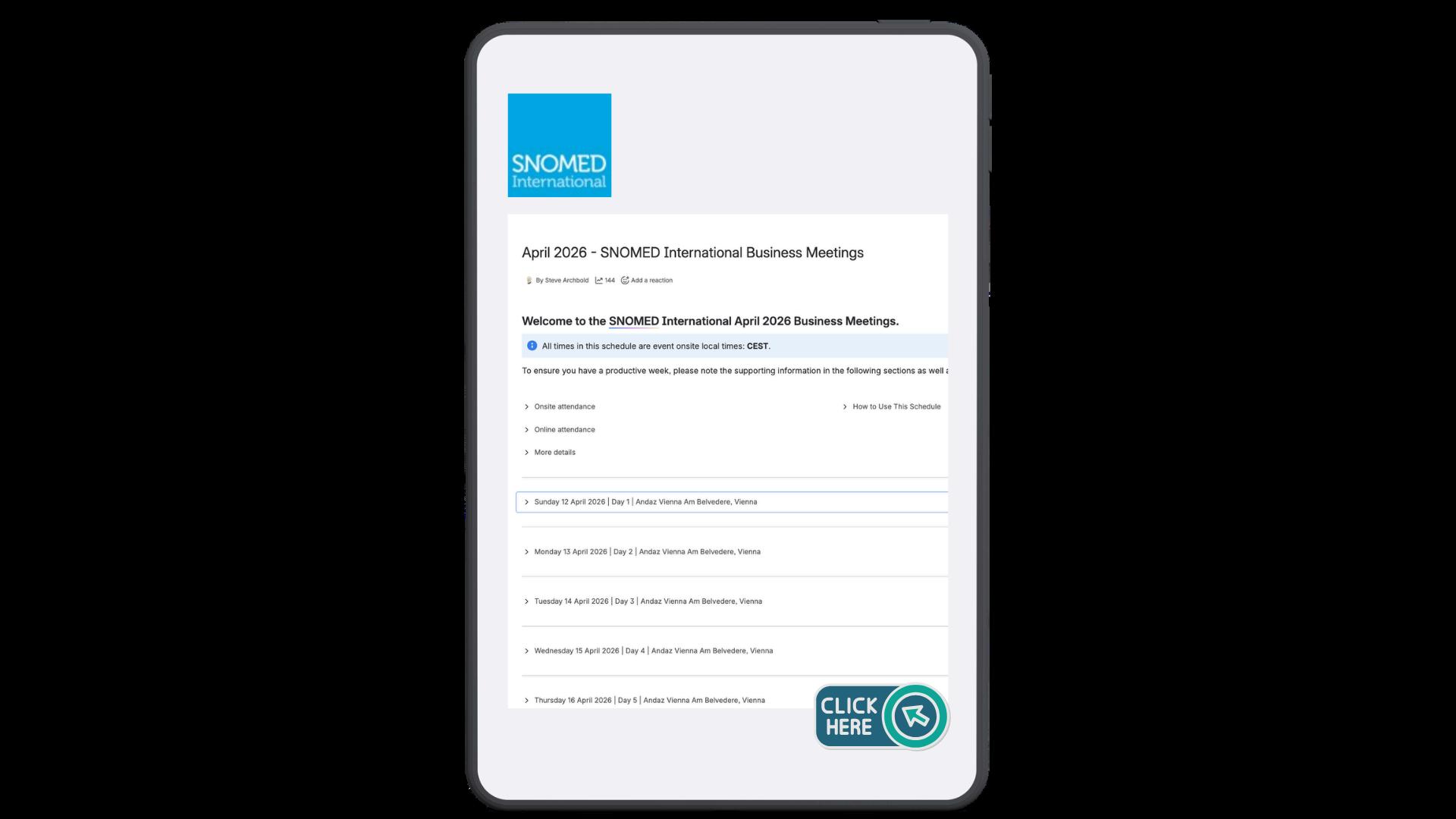
View the April 2026 Business Meeting Schedule p
Overall, a total of 24 groups from our community of practice held meetings during the event, across multiple sessions
Across multiple days in Vienna, the April 2026 schedule balanced formal organizational governance including closed General Assembly (GA), Member Forum (MF), and Management Board (MB) sessions. With Joint GA/MB series running across Monday and Tuesday, and an Open General Assembly on Wednesday, the organizations and its Members discussed progress and priorities and shared and received updates on SNOMED International's strategy, governance, finances, and major initiatives. A notable feature of the opening plenary
SNOMED International 2026 April Business Meeting Summary Report
was a keynote by Rachel Dunscombe, CEO of HL7 International, signalling the continued strategic priority of SNOMED and HL7 collaboration, particularly around FHIR interoperability. The Community Updates session highlighted recent advances in SNOMED CT and its supporting services, and took a moment to celebrate Chief Terminologist Dr James Case, with CEO Don Sweete delivering a tribute following sharing Dr. Case's announcement that he will retire at the end of the year
Working group and Clinical Reference Group activities spanned high-impact clinical domains including dentistry, mental and behavioural health, pathology and laboratory medicine, and laboratory terminology standards, alongside key infrastructure topics such as SNOMED on FHIR, terminology release processes, and managed services The multilingual dimension of SNOMED's work was well represented through dedicated French and German translation group sessions and a Translation User Group. The agenda featured a special session on Orphanet and SNOMED CT rare disease alignment attended by Members, SNOMED and representatives from Inserm.
Integrated networking events were also held over the course of the meetings that included a welcome reception and a guided walk through Belvedere Palace Park, each in support of peer exchange and community building across the membership
General Assembly April 14, 15, 2026
The General Assembly convened three sessions over two days, with each part focused on a distinct area of organizational business.
The first session opened with routine formalities before turning to an extended discussion on sustainability and governance the dominant theme of the meeting reflecting the organization's current focus on its future The second session continued this work, with Members engaged in substantive follow-up discussions arising from the joint GA/MB meetings held earlier in the week, allowing the Assembly to consolidate its position on key strategic matters The third and final session was dedicated to the relationship between SNOMED CT and other classifications and terminologies, providing a focused forum for Members to discuss interoperability, collaboration, and the broader implications of that relationship for the organization and its Members
SNOMED International 2026 April Business Meeting Summary Report
April 14, 15, 2026
The Management Board discharged their obligations and ratified minutes and actions from the January 2026 meeting and confirmed several decisions taken by electronic vote, covering the 2025 annual report, financial statements, audit arrangements, and auditor appointment for the current year Policy approvals included cybersecurity and income collection The Board received financial, treasury, and committee updates.
Strategic discussion centred on sustainability and SNOMED's future direction, drawing on reflections from recent joint meetings. Key themes included Member feedback on licensing fees, SNOMED's model, and a discussion on distinguishing core services from additional offerings The Board discussed the future of potential collaborations, and explored near-term and long-term opportunities.
Additional items of note included the ongoing status with the WHO around ICD-11 terminology collaboration and the importance of continued engagement. The topic of artificial intelligence also featured prominently, with the Board weighing the internal and external benefits of AI-assisted tools including meeting translation against privacy risks, and discussing broader automation opportunities in the context of operational sustainability.
April 13, 14, 2026
The General Assembly and Management Board convened jointly over two days, with co-chairs presiding over a programme that balanced routine governance with substantive strategic discussion
The first session opened with addresses from both Chairs before moving through a consent agenda covering minutes, actions, and financial reporting Members were briefed on items subject to formal vote at the subsequent Open GA Meeting, including financial statements, auditor appointment, and fees for the coming years. The broader session included presentations on the year-end and quarter one organizational performance, financial overview, annual Member survey results, and the collaborations portfolio. A report from the Member Forum was followed by a dedicated session on Technology and AI, and a substantive discussion on short-term governance refinement and organizational efficiencies
The remaining session was primarily devoted to SNOMED's long-term strategic direction and sustainability, structured as an extended series of breakout sessions drawing on the results of a Member survey. Discussions explored the organization's future vision, business model, and
strategic priorities The day concluded with a readout from the closed GA and MB sessions
Member Forum
April 12, 14, 2026
The Sunday meeting opened with agenda updates, including the addition of a Member survey report. A new cross-extension search tool was presented, enabling users to execute ECL expressions across multiple national editions to identify duplicate concepts, explore content, and inform promotion decisions Tutorial resources are planned to support adoption
Member survey results were shared, with 91% overall satisfaction reported. Areas identified for continued focus included implementation support, communication, tooling stability, education, and documentation. Maturity assessment results indicated an average maturity level of 2 across Members, with strong performance in extension development but lower scores in secondary use and implementation breadth Key challenges included vendor engagement, adoption, and capacity.
A new Snowstorm dashboard was demonstrated, enabling users to manage FHIR resources and SNOMED CT releases including browsing, uploading, and installing content without requiring technical expertise or complex API interaction.
The meeting closed with a brief discussion on the status of the vendor engagement strategy and the need for ICD-11 mapping collaboration among Member countries.
Member Forum - European Working Group
April 14, 2026
The European Working Group of the Member Forum covered a broad agenda spanning strategic planning, AI innovation, and governance. Rare disease was also discussed with final preparations confirmed for the following day’s SNOMED, Inserm and SNOMED Member roundtable meeting on April 13.
The group reviewed a draft Europe Action Plan for 2026–2027, comprising 17 proposed actions across national implementation, capacity building, European alignment, and research and innovation. Members emphasised the need to prioritize and operationalize actions in light of national resource constraints and vendor readiness The plan will be circulated for broader Member feedback before being refined.
A proposal was tabled to pursue EU funding for AI capacity building, focused on training models using real-world, cross-country health data for clinical translation and free-text coding. A concept note will be developed to advance the initiative
Regarding the European Health Data Space, the group agreed to first establish a structured problem statement before exploring appropriate forums for solution development Lastly, a vacancy was noted for the rapporteur role supporting the Working Group Chair, with group members invited to express their interest to the Chair and Secretariat.
April 15, 2026
The SNOMED International General Assembly convened in Vienna, chaired by Stefanie Weber (Germany), with Member country representatives in attendance to achieve quorum for statutory votes In her opening remarks, the Chair acknowledged the challenges of constrained budgets while underscoring the importance of continued collaboration across Member countries.
CEO Don Sweete delivered the organizational report, noting a 91% completion rate against deliverable plans, solid financial performance, and the addition of new Member countries The Assembly reviewed and approved all financial resolutions put to vote.
Two notable announcements were made during the session Austria's Nina Svec previewed the country's new coding service, developed to support the national transition to SNOMED CT, and Peter O’Halloran, General Assembly Member from Australia, introduced the SNOMED CT Expo, scheduled to take place in Sydney in October 2026 The Assembly concluded with confirmation that Malta will host the October 2027 Business Meetings and SNOMED CT Expo.
SNOMED on FHIR
April 12, 2026
The meeting discussed goals of a renewed SNOMED International–HL7 five-year collaboration agreement Participants shared country and organizational updates on FHIR implementation, terminology server development, and the ongoing challenge of pre- versus post-coordination of concepts. Discussion highlighted the need for stronger alignment between SNOMED CT and FHIR, improved terminology server capabilities, and more consistent management of value sets and reference sets across implementations. Balancing international consistency with national flexibility remained a key theme throughout
Release Advisory Group
April 13, 2026
The meeting addressed two principal areas: character standardisation in SNOMED CT descriptions and the introduction of a new deprecation policy framework An update was also provided on the organization's collaboration portfolio and feedback was sought from members on use cases and requirements related to various derivative products.
On the topic of character standardisation, current validation rules were presented along with plans to establish a version-controlled repository to formally document permitted and disallowed characters in SNOMED CT descriptions Further discussion on related matters, including negative delta handling and description length limits, was deferred to future sessions
A new five-stage deprecation policy framework was also introduced, providing a structured approach to retiring artifacts from active maintenance The framework prioritises patient safety, transparency, and stakeholder engagement throughout the process. Discussion highlighted the importance of clear and predictable implementation timelines to support affected users, and it was acknowledged that timeline expectations would need to be carefully managed going forward. The policy will be subject to further refinement before broader presentation to the membership
SNOMED International 2026 April Business
Meeting Summary Report
Editorial Advisory Group
April 13, 2026
The Editorial Advisory Group met in Vienna to address several SNOMED CT content and modeling decisions. Proposals were presented for new "has additive" and "has separator" attributes to improve blood tube container modeling The group examined challenges in classifying recanalization procedures, and debated whether reattachment, replantation, and reimplantation should remain synonyms or be differentiated in the hierarchy. The relationship between non-traumatic and spontaneous injuries was also discussed, with consideration given to how concepts carrying both descriptions should be handled Concerns were raised regarding inconsistencies in the situations hierarchy and potential overlap with FHIR representations, prompting broader discussion on which context-related content should remain within SNOMED CT versus being delegated to other information models.
Dentistry Clinical Reference Group
April 13, 14, 2026
The Dentistry Clinical Reference Group met over two days covering editorial and content updates, including the status of ongoing editorial guideline development and a procedures content demonstration Reference set work featured prominently, with updates on the General Dentistry Reference Set and progress on the Periodontal Reference Set, for which the use case was finalised and a formal development submission prepared. The group also continued working through orthodontic concept requests arising from the October 2025 discussions, with a briefing on their diagnostic significance.
The session closed with an interoperability update covering developments from the Oral Health Interoperability Alliance, relevant standards development activities, and discussion of a potential implementation library, alongside SNODENT pathway and FHIR considerations.
Mental and Behavioural Clinical Reference Group
April 13, 2026
The Mental Health and Behavioural Health Clinical Reference Group met to advance terminology improvements in SNOMED CT across three key areas A quality initiative pilot on bipolar disorder terminology examined the challenges of aligning SNOMED CT with ICD-10, ICD-11, and DSM-5 while maintaining clinical usability. The group debated how to handle "Asperger's syndrome" removed from current nosologies but still clinically and personally significant considering options such as retaining it as a synonym or reclassifying it as a finding. Substance misuse terminology was also raised, with discussion on alternatives to the term "misuse" given its moral connotations and translation challenges Across all topics,
backward compatibility and evolving clinical understanding were held as guiding principles, with next steps agreed for each area.
April 14, 2026
The meeting covered updates across the authoring platform, a user survey, and a new mapping tool. Recent authoring platform improvements were presented, including enhanced error handling, batch upload functionality, and improved tools User survey results indicated positive feedback on platform intuitiveness and core functionality, with bulk editing identified as a priority area for improvement Plans for a platform rewrite were discussed, with emphasis on preserving existing functionality alongside targeted enhancements
A new mapping tool built on RT2 technology and directly integrated with Snowstorm was demonstrated Key features include bulk mapping capabilities, real-time updates from the authoring platform, and support for both simple and complex mappings across national and international contexts Future development plans include potential integration with the managed service, on-demand RVF testing, and AI-assisted auto-mapping
April 14, 15, 2026
The meeting reviewed and updated SNOMED CT content related to histiocytic and dendritic cell neoplasms Decisions were made to inactivate outdated or duplicate concepts, including "pulmonary eosinophilic granuloma" and "Langerhans cell histiocytosis of diaper area," with appropriate replacements identified Modeling decisions were progressed for Rosai-Dorfman disease and dendritic cell disorders, and issues with the current classification of "malignant histiocytic disorder" were identified for resolution The distinction between primary and secondary neoplasms in the context of histiocytic disorders was also examined For ambiguous concepts such as dendritic cell carcinoma, the group agreed to seek expert input from Blue Book authors before finalising updates
German Translation Group
April 13, 2026
Representatives from the three German-speaking National Release Centres met alongside academic and clinical members and interested observers to address translation governance and tooling. A central theme was the challenge of revisiting previously agreed translation decisions, which the group agreed undermines consistency and trust Proposed remedies included better
SNOMED International 2026 April Business Meeting Summary Report
meeting preparation, allowing more time for decisions to mature, and establishing a cross-NRC communication channel.
A PubMed-based frequency tool was demonstrated as a reference aid for translation decision-making The group also worked through a complex clinical terminology question around the German-language distinction between "Phlegmone" and "Erysipel" versus the English "Cellulitis," noting this creates potential ambiguity in cross-border data exchange. As a next step, the group will discuss the topic with the Translation User Group Briefings were also provided on recent international release changes as well as a mutual update on planned upcoming translation activities
April 14, 2026
The meeting brought together experts from NHS England, LOINC, and international collaborators to address terminology challenges and standardisation in genomics and microbiology reporting NHS England outlined a four-priority framework for genomic medicine implementation, encompassing a digital test directory, clinical laboratory connectivity, cross-setting data sharing, and bioinformatics community standards The complexity of managing multiple terminologies including SNOMED CT, LOINC, HPO, and genomic-specific nomenclatures was acknowledged as an ongoing challenge A proposal was presented for post-coordination approaches in microbiology genetics, suggesting methodless and specimenless LOINC codes with technical details handled via FHIR attributes. HL7 Europe's Lab Semantic Working Group provided an update on a white paper in development focused on FHIR-based microbiology data exchange across European borders
Translation User Group
April 15, 2025
The Translation User Group addressed three SNOMED CT terminology translation challenges The first topic examined "lesion versus injury," highlighting issues with duplicate translations and unclear distinctions between the terms across languages, with potential solutions including concept inactivation and clearer definitions The second discussion focused on "intoxication versus poisoning," debating the clinical and translational differences between these concepts, particularly around severity and duration The third topic addressed inconsistencies in the translation of "at risk" versus "at increased risk," with consideration given to whether these should be harmonized across languages and systems. Clinical relevance and appropriate usage in different healthcare contexts were recurring themes throughout the meeting
SNOMED International 2026 April Business Meeting Summary Report
Modelling Advisory Group
April 15, 2026
The Modeling Advisory Group addressed several key topics spanning concept model governance, terminology, and drug modeling. Members broadly supported simplifying the MRCM by removing the module scope reference set to reduce complexity without loss of functionality Fingers versus digits terminology and morphology hierarchy discussions surfaced ongoing challenges around translation, semantic alignment, and ontological structure. A review of module dependency reference sets revealed inconsistent implementation across extensions, prompting calls for a standardized proposal The drug model discussion focused on whether to consolidate dose forms and routes of administration or maintain separate properties to meet varied clinical and regulatory needs
E-Learning Advisory Group
April 15, 2026
The E-Learning Advisory Group reviewed education team updates and received Member reports from Belgium, the US, Sweden, India, Canada, and Ireland Course completion statistics were presented alongside updates to the implementation course and learning pathways, and a new tool for searching past Expo presentations was introduced Discussion centred on the challenges of promoting SNOMED CT training among vendors and healthcare professionals, including the persistence of outdated SNOMED content in vendor systems. Key themes included developing educational content for undergraduate students, leveraging FHIR terminology servers, and expanding outreach through multiple channels.
Content Managers Advisory Group
April 15, 2025
The Content Managers Advisory Group reviewed progress across several active workstreams The lateralized imaging extension was confirmed ready for promotion. A detailed discussion on microbiology examined bacterial morphology findings and whether these should be maintained in the organism hierarchy or relocated to findings The content tracker was reviewed, with 110 open trackers completed and ranked by priority.
National content development updates were shared by Denmark, Sweden, the Netherlands, Canada, the US, New Zealand, Norway, and the UK, spanning elderly care, microbiology, pathology, and social determinants of health The group also provided feedback on perceived race bias concepts proposed by the Gravity Project, focusing on appropriate terminology and definitions. Finally, lateral promotion policies and editorial guideline challenges were discussed, particularly around content rejection and balancing terminology quality with clinical utility
SNOMED International 2026 April Business
April 15, 2025
Report
The meeting examined the challenges of linking substances to organisms within the SNOMED CT hierarchy. Internal test results were presented, highlighting issues with substance definitions, classification ambiguities, and the need for clear logical definitions to support business use cases Discussion explored specific examples including cannabis-derived substances, and broader challenges around distinguishing substances from products and balancing generic grouping concepts with specific classification requirements Decisions were reached to use "count of active ingredient equals zero" to represent clinical drugs without active ingredients, and to maintain the current Canadian rounding approach for concentration normalization to ensure consistency with international release calculations
April 15, 2025
The Nursing Clinical Reference Group meeting featured three implementation presentations A cardiovascular hospital shared its experience implementing ICNP across more than 5,000 patients, including the development of a customised ABCDE nursing assessment classification. The second presentation from Stockholm outlined work to standardise documentation for tubes and catheters, identifying gaps in SNOMED CT concepts and proposing new value sets for nursing interventions. A third presentation from the Netherlands described the implementation of NANDA-I, NIC, and NOC classifications in Dutch hospitals, demonstrating how structured documentation reduced free-text usage and improved clinical reasoning. The group discussed broader challenges with SNOMED CT's hierarchical structure relative to nursing classification needs, and explored opportunities for collaborative terminology development
April 15, 2025
The working group convened to mark the publication of ECL Version 2 3, which introduces several new features alongside the newly defined ECL Core profile The ECL Core profile establishes the essential and most widely used components of ECL that any SNOMED CT-compatible terminology server should aim to support, providing a clearer baseline for implementation conformance.
The group also received a comparative analysis of ECL and the RDF query language SPARQL, highlighting the relative characteristics and use cases of each approach The remainder of the session was dedicated to collaborative development of a new cross-terminology server ECL test
SNOMED International 2026 April Business Meeting Summary Report
suite, an initiative aimed at strengthening standardisation and consistency across ECL implementations.
Orphanet & SNOMED CT Roundtable Discussion
April 15, 2026
The meeting brought together SNOMED International, Orphanet (INSERM), and national representatives to discuss integration strategies for rare disease coding and cross-border interoperability Much of the existing mapping is at the disorder/parent concept level, with Orphanet parent concepts covering broad groupings. The remaining challenge is that the participating Member countries have expressed a preference for fully modelled content at the subtype level, with regular update cycles aligned to Orphanet's release schedule
Country updates revealed a mix of approaches, with several nations already implementing varying levels of mapping between the two terminologies. Four implementation options were presented, ranging from SNOMED-only solutions to full bi-directional mapping, with broad agreement that both terminologies are needed given the complexity of rare disease classification and legal mandates in some jurisdictions.
A community content extension model drawing on the successful LOINC experience received positive reception as a means of incorporating Orphanet subtypes into SNOMED without licensing complications. A new Orphanet transcoding web service was also presented as a near-term interim solution
Next steps include developing a written proposal for the extension approach, conducting a small-scale pilot, and gathering requirements from Member countries to inform phased implementation.
The "SNOMED CT in Austria" day ran on 16 April 2026 in Vienna, hosted by ELGA GmbH (Austria's National Release Centre) following the SNOMED International April Business Meetings The day told a single story: Austria's transition from no structured outpatient coding to nationwide SNOMED CT at the point of care, framed as both a national modernisation and Austria's contribution to the European Health Data Space Delegates from around 30 countries joined, onsite and online. Sessions were livestreamed and recordings are available on SNOMED International’s YouTube channel (linked here).
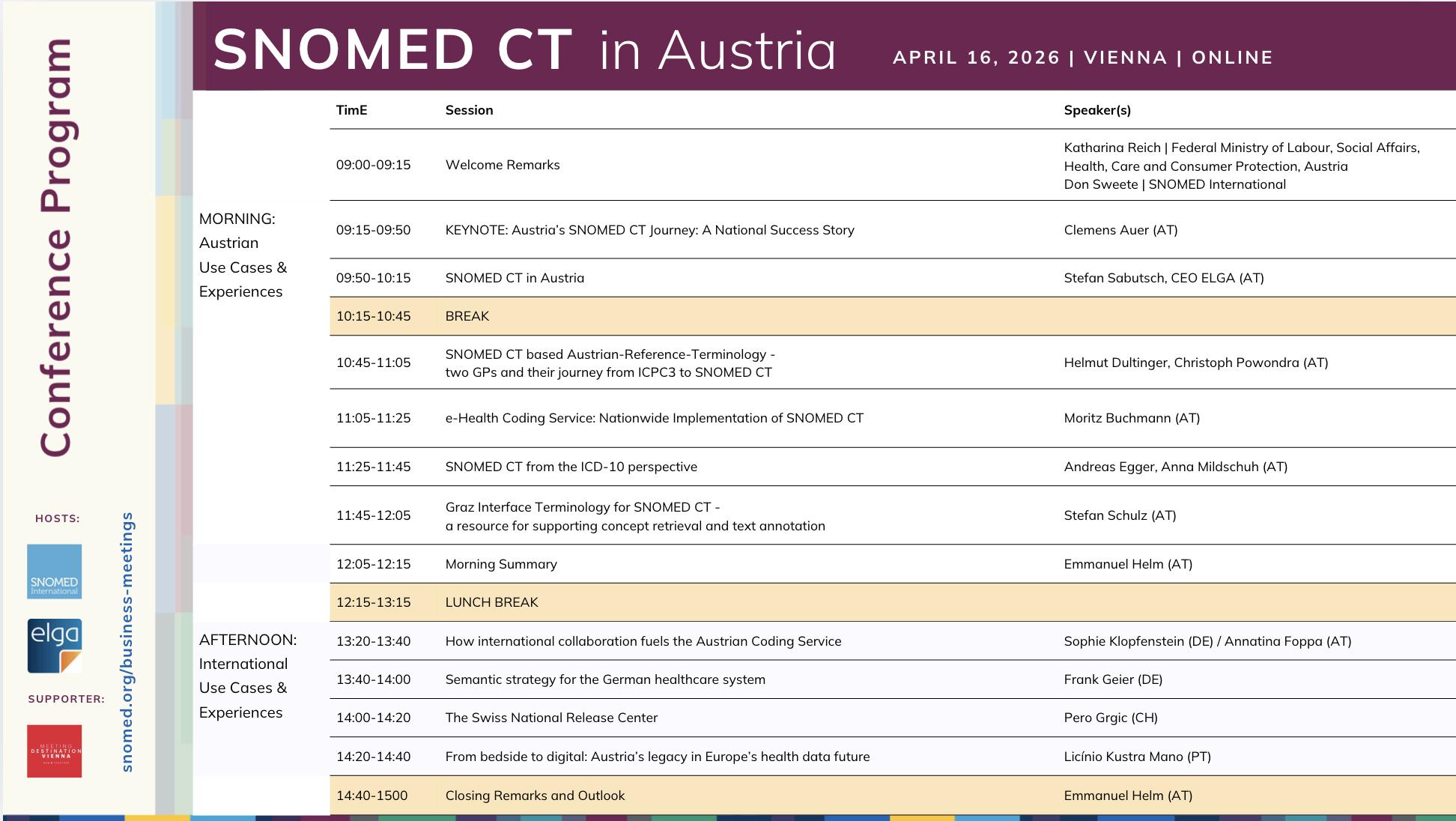
The presentations from the day can be summarized as follows:
Austria’s SNOMED CT journey. Katharina Reich (Federal Ministry of Health, Austria) opened by calling standardised interoperable health data "an urgent necessity of the present" and naming the four-way coalition of terminologists, IT, clinicians and policymakers Don Sweete (CEO, SNOMED International) provided welcome remarks on behalf of SNOMED International. Clemens Martin Auer, former Austrian Director-General and architect of ELGA, delivered the keynote, using Adam Smith's pin-factory analogy to argue that healthcare is the EU's least-productive sector and that SNOMED CT is one of the most powerful productivity instruments available especially given ageing-population workforce gaps that demand automation and AI built on reliable terminology. His pleas to terminologists: "think big" and never lose sight of clinician usability Stefan Sabutsch (CEO, ELGA) then walked through ELGA's services (e-Reports, e-Medication, e-Imaging, e-Vaccination, cross-border e-Prescription since 2026), the new FHIR-based e-Diagnose central problem list, and the on-demand Austrian Patient Summary aggregated from existing ELGA sources all SNOMED CT-backed
Austrian coding service deep dive. Two GPs, Helmut Dultinger and Christoph Powondra (ÖGAM/Karl Landsteiner University), described their journey from ICPC-2/3 to SNOMED CT and their primary-care code search tool, insisting that documentation and coding must be a single act for clinicians to engage. Moritz Buchmann (ELGA) presented the eHealth Coding
SNOMED International 2026 April Business Meeting Summary Report
Service: a simple FHIR API returning ranked SNOMED CT picks with automatic ICD-10 and Orphacode mappings, explicitly endorsed in Austrian law as a way to satisfy ICD-10 obligations. By April 2026 every major Austrian vendor had integrated it, with mandatory use from 1 July 2026 across roughly 20,000 units Andreas Egger and Anna Mildschuh (Federal Ministry) set out the "Austrian compromise" SNOMED CT for primary documentation, ICD-10 auto-mapped for reimbursement and WHO reporting and called for closer SNOMED/ICD-11 alignment. Stefan Schulz (MedUni Graz) showed SNOGit, the Graz Interface Terminology now under a sustainability agreement with ELGA: ~500,000 curated base translations expanded into ~9 million German interface terms He also described the innovative ways in which SNOGIT is being used in concert with artificial intelligence.
DACH collaboration and Europe. Annatina Foppa (ELGA) and Sophie Klopfenstein (CharitéGermany) described the collaborative efforts of the German Translation Group (GTG), which is composed of representatives from Germany, Austria and Switzerland (the countries commonly abbreviated referred to as DACH) This included the GTG’s 50-page guideline, regional variants and rising change-request volume off the back of ICD-10 map review. Frank Geier (BfArMGermany) presented Germany's three-pillar semantic strategy (code systems, mappings, central terminology server), with SNOMED CT and LOINC legally embedded in the new ePA Pero Grgic (eHealth Suisse) covered the Swiss NRC, the bi-annual Swiss extension (incorporating French, German and Italian terms) and a HAPI-FHIR national terminology server funded by DigiSanté. Licínio Kustra Mano (SNOMED International) closed the conference with a presentation about the "data-rich, insight-poor" problem, EHDS lab/PS specifications naming SNOMED and LOINC as preferred, and advice to treat EHDS deadlines as "a trampoline, not a checklist." Emmanuel Helm (ELGA) chaired throughout and closed the day.
To learn more about ELGA visit their website (https://wwwelga gvat/en/about/)
SNOMED International 2026 April Business Meeting Summary Report
The success of the SNOMED International Business Meetings and SNOMED CT in Austria knowledge sharing event would not have been possible without the dedication of the contributions of the ELGA planning committee.
We extend our sincere thanks for their hard work in organising an engaging and well-executed event. Their efforts ensured a valuable experience for all attendees and are gratefully acknowledged:
Stefan Sabutsch
Nina Svec
Annatina Foppa
Emilia Molling
Business Meetings:
● Business Meeting Schedule
● Business Meeting Website
● Opening Plenary & Community Updates
Future Meeting Dates:
● October 2026 Business Meetings and SNOMED CT Expo
October 17-23, 2026
InterContinental Sydney by IHG
Sydney, Australia
● April 2027 Business Meetings
April 12-16, 2026 (Hybrid event)
Madrid, Spain (and online)
● October 2027 Business Meetings and SNOMED CT Expo
October 17-22, 2027
Venue TBC
Malta