
THE ULTIMATE GUIDE

THE FUTURE OF THE INDUSTRY IS YOURS

UNRIVALLED* OPACITY IN A SINGLE COAT

Johnstone’s Trade Obliterate Matt Emulsion
A True One Coat Solution
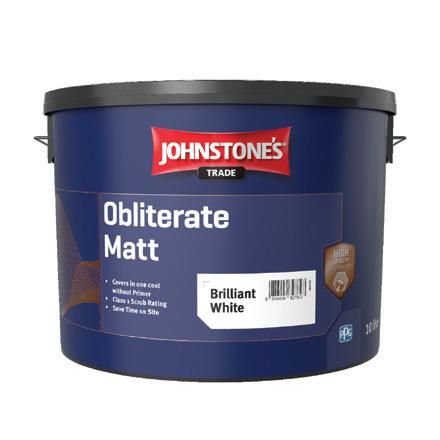

A premium quality interior wall and ceiling paint with a flat matt finish to give unrivalled* opacity in just one coat. Unlike traditional emulsions that may require two, or even three, coats for full coverage, this product offers immediate hiding power. It’s perfectly suited for new build and redecoration projects in high footfall areas in both domestic and commercial spaces, thanks to its durability. Obliterate Matt is designed to help you finish jobs faster and improve efficiency. Offering time saving solutions on site.
Visit www.johnstonestrade.com to find out more
*Compared to other PPG Matt Emulsion formulations




EDITOR: CELIA MATTHEWS celia.matthews@sng-group.co.uk
SENIOR GRAPHIC DESIGNER: LEE OWEN design@sng-group.co.uk
DIGITAL MANAGER: PHOEBE MANSFIELD phoebe.mansfield@sng-group.co.uk
PARTNERSHIP DEVELOPMENT MANAGER: PATRICK BLORE patrick.blore@sng-group.co.uk
PARTNERSHIP DEVELOPMENT MANAGER: SARAH HERNE sarah.herne@sng-group.co.uk
EVENT MANAGER: REISS BASSETT reiss.bassett@sng-group.co.uk
MARKETING MANAGER: SAMANTHA COLE samantha.cole@sng-group.co.uk
MANAGING DIRECTOR: ZOË TANNER zoe.tanner@sng-group.co.uk
PRINTERS: Stephens & George, Wales
GENERAL ENQUIRIES
To subscribe to BTX call 0121 779 0888 or subscribe online at www.btxskills.co.uk
DISCLAIMER
This publication is produced by SNG Publishing Ltd, trading as The SNG Group (SNG).
All content and artwork are © SNG or its contributors.
All brands, logos and titles published under The SNG Group, including associated magazine and digital titles, are trademarks of SNG unless otherwise stated.
No part of this publication may be copied, reproduced, transmitted or published in any form or by any means without prior written permission. While every effort has been made to ensure the accuracy of the information contained within this publication, SNG does not verify any claims or other information appearing in advertisements or sponsored content and accepts no responsibility for any loss or damage arising from reliance on the content, artwork, opinions or advice contained herein. This publication does not constitute professional advice.
Advertisements are accepted for publication subject to SNG’s standard terms and conditions of advertising.

WELCOME TO BUILDING TRADE EXCELLENCE (BTX)!

ongratulations on choosing a career in construction! You’re on your way to becoming a skilled pro in a vital industry, and BTX is here to support you.
Backed by lecturers and industry experts, this handbook is your go-to guide for building your confidence and knowledge. Inside, you’ll find advice on securing apprenticeships, interview tips, essential health and safety guidance, and PPE must-haves. You’ll also be able to test what you know in our exercise pages.
Earlier this year saw the return of the BTX Painting & Decorating Learner of the Year competition, alongside the launch of our brand-new BTX Carpentry & Joinery Learner of the Year. Both competitions kicked off with regional heats across February and March as we searched for the best emerging talent in the trade. You can see who the finalists are on page 7 and page 10, and follow the journey to the Grand Final on social media using #btxpaint26 and #btxcarpentry26.
Whether you’re training to be a bricklayer, carpenter, plasterer, painter or decorator, your role is essential. This industry thrives on teamwork, skill and determination, and we’re here to help you make the most of every opportunity.
Here’s to the start of your journey in construction!
Celia Matthews
Editor







DIGITAL TOOLKIT
You don’t need to be an influencer to use social media well. For apprentices and students, having a solid social media presence can help you get noticed, document your progress and open doors to future employment opportunities.
SOCIAL MEDIA THAT WORKS FOR YOUR FUTURE
WHY SOCIAL MEDIA MATTERS IN THE TRADES:
Many employers now check Instagram, TikTok or LinkedIn before interviews - so make your feed work for you.
USED WELL, IT CAN HELP YOU:
■ Show your work ethic and skill progression to employers
■ Start building a portfolio before you’re fully qualified
■ Learn tips from experienced tradespeople
■ Attract future customers if you go self-employed
■ Stand out from other apprentices
WHAT TO POST (EVEN IF YOU’RE JUST STARTING):
You don’t need to have years of experience - people love seeing the journey.
CONTENT IDEAS:
■ Your first time using a new tool


FILMING BASICS:
Here are some top tips for filming content with your phone:
TOP TIPS:
■ Film vertically (9:16) for TikTok, Reels and Shorts

■ Learning at college vs on site
■ “What I learned this week”
■ Before and after photos (with permission)
■ Mistakes you learned from
■ Tool reviews on a budget
■ Exam or assessment prep tips

■ Clean your camera lens
■ Use natural light where possible
■ Keep clips short (5-20 seconds)
■ Film more than you think you need




BTX OFFICIAL JUDGING PARTNER
The Association of Painting Craft Teachers (APCT) supports lecturers and educators through specialist CPD, industry collaboration and curriculum development, helping maintain excellence in Painting & Decorating education.
APCT OFFERS:
■ Specialist CPD workshops delivered nationwide
■ Training led by industry experts and manufacturers
■ Support with curriculum delivery and teaching practice
■ A national professional network for Painting & Decorating educators
MEMBERSHIP BENEFITS INCLUDE:
■ Free CPD events throughout the year
■ Professional guidance and industry updates
■ Access to teaching resources and support
■ Valuable networking opportunities
BTX OFFICIAL JUDGING PARTNER
APCT members support BTX Skills Competitions by designing the official competition drawings and providing expert judging, helping to recognise and celebrate the next generation of painters and decorators.

learner of the year
Painting & Decorating 2026
SCAN HERE
Lecturers can scan here to find out more and become a member:

COMPETE WITH CONFIDENCE!

To help you feel confident and ready for competition day, we’ve teamed up with one of the most respected experts in the painting and decorating industry.
Peter Walters MBE – our competition judge for BTX Painting & Decorating Learner of the Year – has spent decades training apprentices to world-class standards, leading Team UK at the Painting and Decorating competition at WorldSkills –the Skills Olympics – and guiding competitors to Gold medals and Medallions of Excellence. His experience spans everything from college workshops to the global stage, and his advice is invaluable for anyone preparing to compete.
Here are Peter’s top tips to help you get competition-ready.
HOW TO PREPARE IN THE RUN-UP TO A COMPETITION
■ Put together a dedicated competition tool kit and make sure you know exactly where the tools and equipment are for each element.
■ Avoid using brand-new brushes or equipment – always practise with the tools you’ll be taking so you know how they handle with different paint viscosities.
■ Practise setting out and applying paint to a variety of designs to build confidence and accuracy.
“Regularly check your work against the specification drawings”
COMMON MISTAKES TO AVOID
■ Read the brief carefully, then doublecheck it – and make a simple plan before you start.
■ Double-check all measurements when setting out.
■ Use metal rulers for accuracy.
■ Use a 2H or architect’s pencil to keep lines clean and faint.
■ Avoid chalk lines with blue or red chalk.
■ Consider the opacity of each colour and how many coats will be needed.
■ Keep your work area clean and tidy throughout.
■ Regularly check your work against the specification drawings (tape the drawings at eye level as a reference).
WHAT JUDGES LOOK FOR ON THE DAY
■ A tidy, organised work area.
■ Competitors who follow their own plan rather than watching others.
■ Safe, efficient working practices at all times.
■ Clear communication with organisers and fellow competitors.
■ Strong problem-solving when challenges arise.


learner of the year
RISING STARS OF THE INDUSTRY!
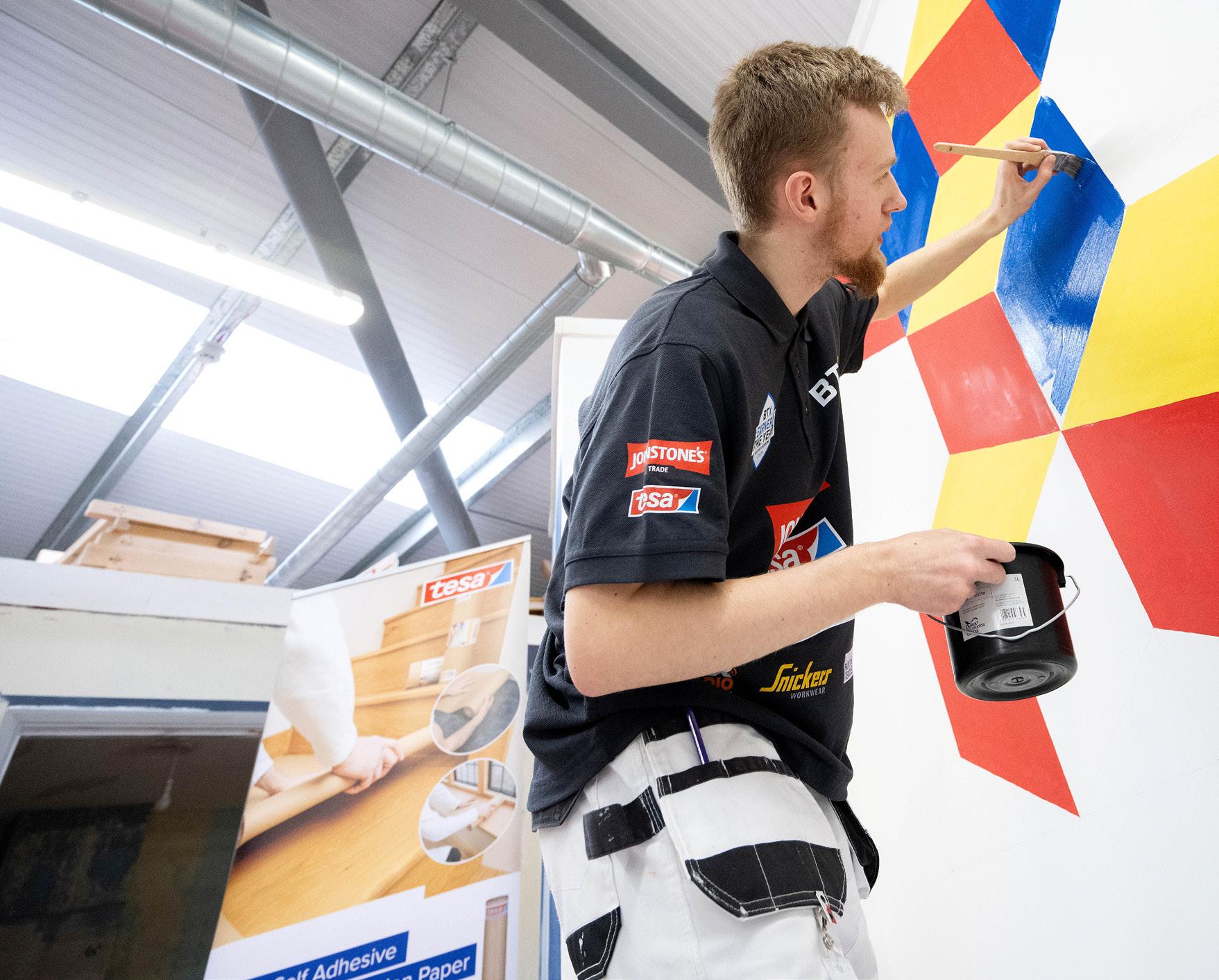
BTX Painting & Decorating Learner of the Year returns for its second year as we search for the brightest emerging talent in the painting and decorating industry.






MEET THE FINALISTS


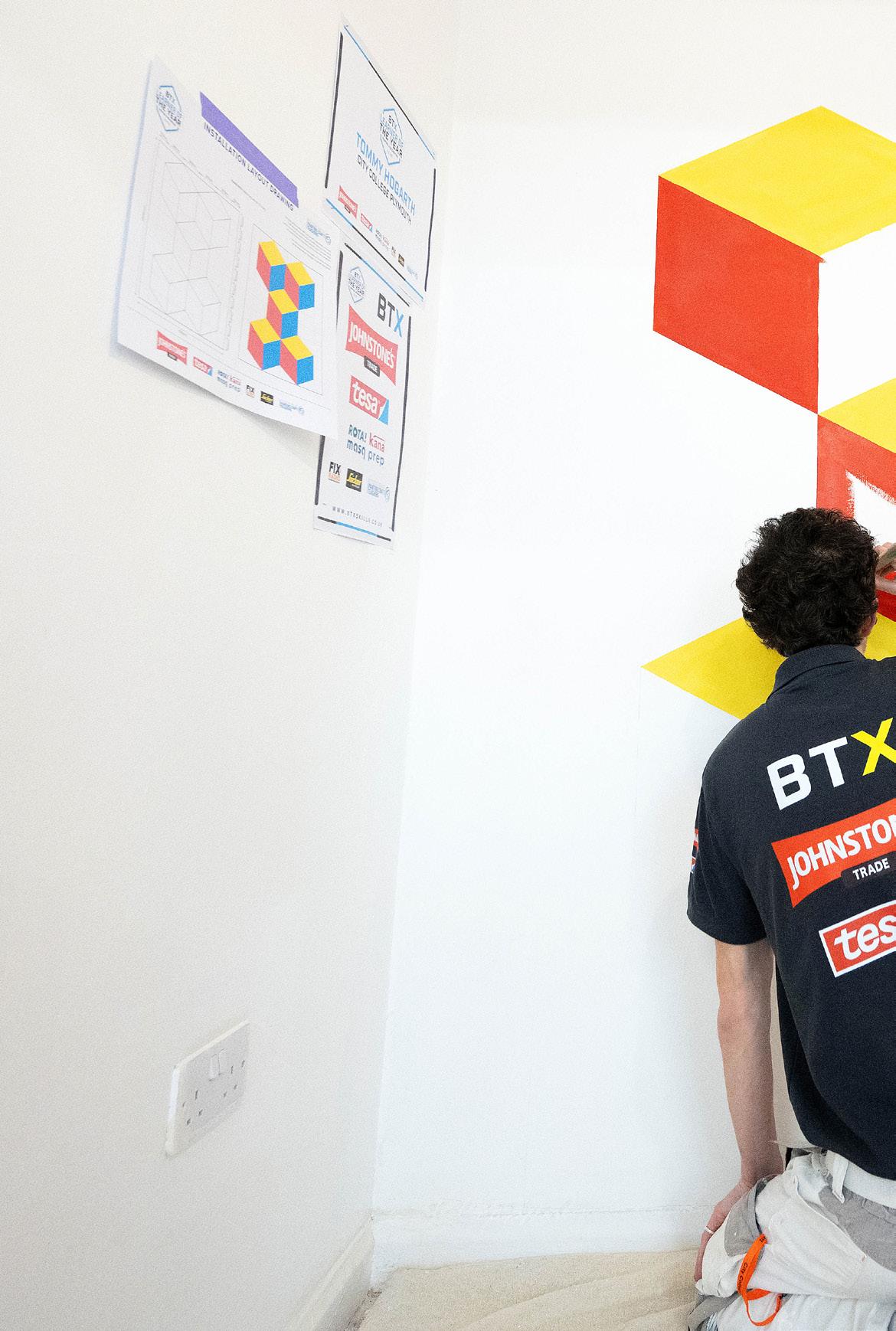




TOMMY HOGARTH CITY COLLEGE PLYMOUTH
LIBBI HITCH
COURTNEY
JACK PASHBY
CITY COLLEGE PLYMOUTH
KADY
THE ROAD TO VICTORY
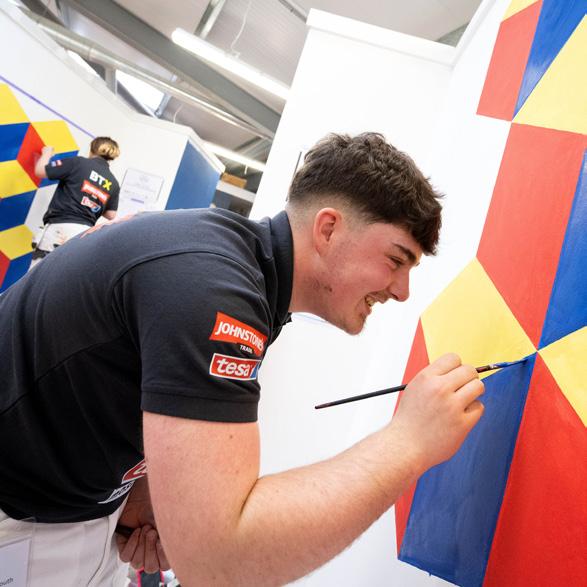
Learners and apprentices from colleges across the UK took part in two regional heats, where they completed a live practical test designed and judged by the Association of Painting Craft Teachers (APCT). The challenge tested their technical ability, precision and professionalism.
The competition began with a fantastic regional heat at Bath College – Somer Valley Campus, followed by the Northern heat at Wigan & Leigh College, Pagefield Campus, where the standard of work on display was outstanding.
The top three competitors from each heat have secured their place in the Grand Final, taking place this April, where they will compete for the title of BTX Painting & Decorating Learner of the Year 2026.
The competition is proudly sponsored by Johnstone’s Trade Paint, Tesa UK, Ciret, Fix Radio and Snickers Workwear, alongside official judging partner APCT.
SPONSORS





LAST YEAR'S WINNER
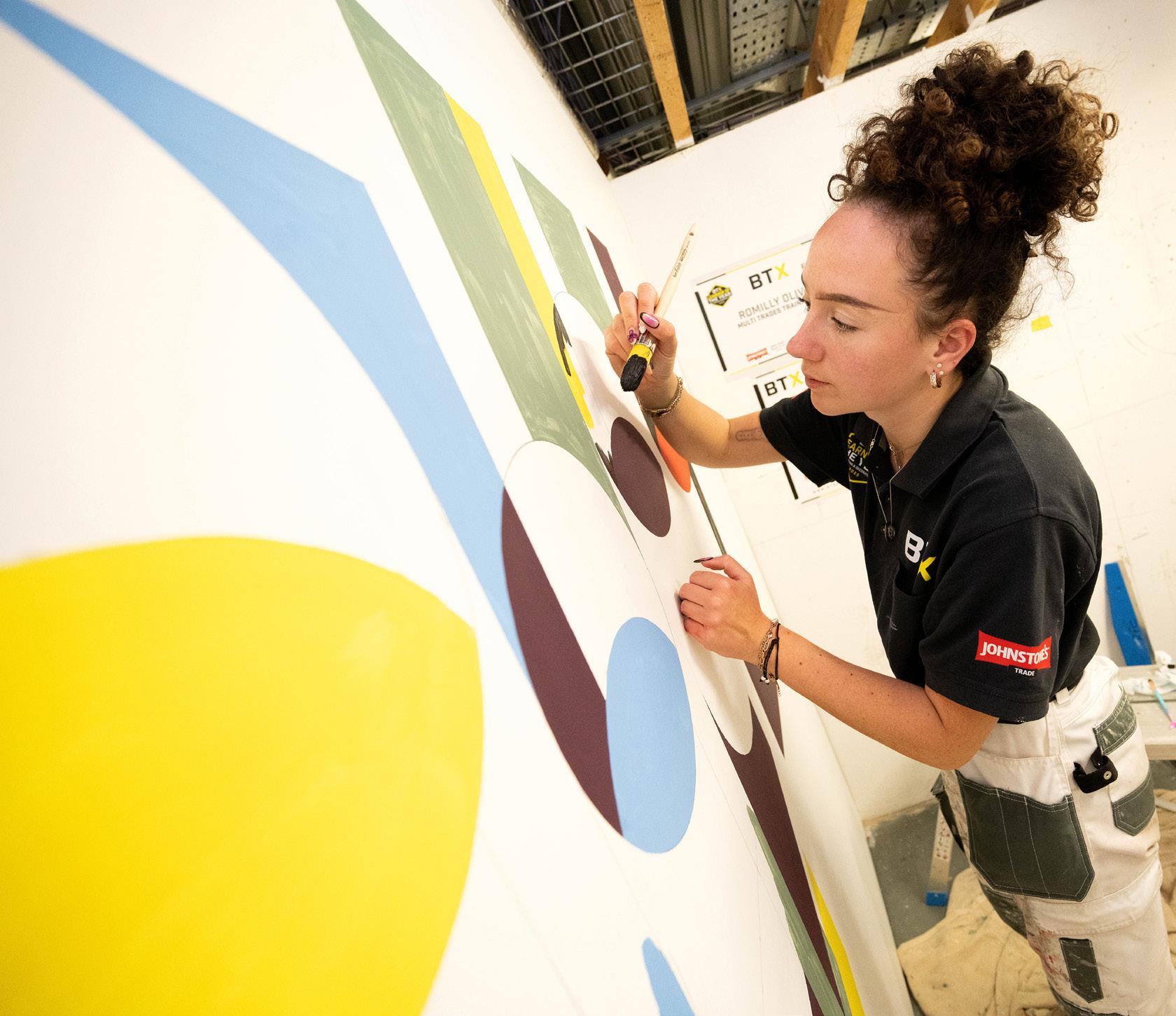
ROMILLY OLIVER
MULTI TRADES TRAINING LTD

Romilly impressed the judges with her technical skill. She said,
“I really enjoyed it – it’s great to feel supported by the big names in the industry”
RISING STARS OF THE INDUSTRY!
A NEW GENERATION OF CRAFTSMANSHIP
BTX is proud to launch the first-ever Carpentry & Joinery Learner of the Year competition, celebrating the skill, creativity and precision of the next generation.






THE FINALISTS







REECE BRAND
CALLUM GREEP WIGAN & LEIGH COLLEGE
HARRY ADDICOTT
SAMUEL JONES
ALFIE SIMPSON
WESLEY BARON
WIGAN & LEIGH COLLEGE
A COMPETITION IS BORN
2026 marks the launch of an exciting new addition to the BTX competitions programme. The BTX Carpentry & Joinery Learner of the Year competition has been created to highlight emerging talent and give learners a platform to demonstrate their abilities.
Learners from colleges across the UK took part in a live practical challenge designed and judged by City & Guilds, putting their technical knowledge, accuracy and skills to the test.
The competition began with the Southern regional heat at Bath College – Somer Valley Campus, before moving north to Wigan & Leigh College, Pagefield Campus, where the final group of learners competed for their place in the Grand Final.
Six outstanding learners have secured their spot in the Grand Final this April, where one will make history as the first-ever BTX Carpentry & Joinery Learner of the Year.
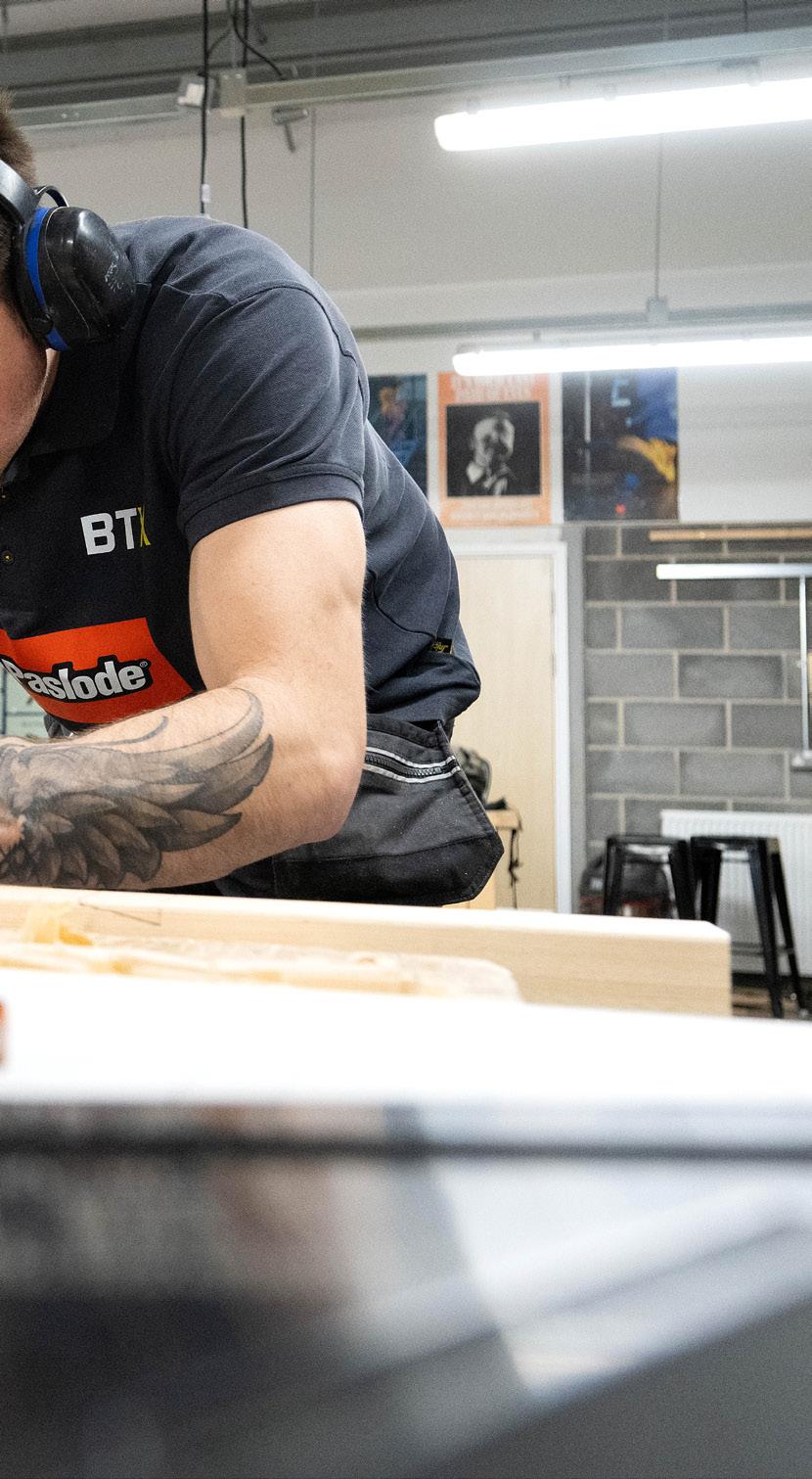

The competition is proudly supported by Paslode UK, SawStop, Tembe DIY, British Woodworking Federation, Fix Radio, Hultafors and Snickers Workwear, alongside official judging partner City & Guilds.
SPONSORS




“WHO WILL MAKE HISTORY?”
FOLLOW THE FINAL!
Who will become the first BTX Carpentry & Joinery Learner of the Year? Follow the competition on Instagram @btx_uk and keep up with the action using #BTXCARPENTRY26
BUILD YOUR FUTURE
Whether you enjoy practical work, problem solving, technology, or creating something real, construction offers careers that are exciting, rewarding and always evolving.
TOP 10 REASONS
Here are ten great reasons why construction is the right career for you.
1. CAREER CHOICE
Construction offers many career paths, from painters and decorators to joiners, designers and site managers.
2. GOOD EARNINGS
Skilled tradespeople are highly valued and can earn good money, with opportunities to progress or run their own business.
3. HIGH DEMAND
The UK needs thousands of new construction workers each year, creating strong job opportunities.
4. FAST PROGRESSION
Many people start as apprentices and quickly move into senior roles with experience.

5. BUILD SOMETHING REAL
Construction lets you see the results of your work in the buildings and spaces around you.
6. INCLUSIVE INDUSTRY
Construction is becoming more diverse, with more people from different backgrounds joining the workforce.
7. GREENER FUTURE
Tradespeople help build sustainable buildings through energy-efficient systems and renewable technologies.
8. SAFETY FIRST
Modern construction sites focus strongly on safety, training and teamwork.
9. MODERN TECHNOLOGY
Digital plans, drones and smart tools are changing how construction projects are built.
10. TEAMWORK
Construction is a team effort, with professionals working together to complete projects.
TOP TIPS FOR APPRENTICES
Just started your apprenticeship? Check out these game-changing tips to help build that solid foundation for your career.

SUCCESS TIPS
1. LEARN THE ROPES
Keep your eyes on the pros - learn the rules and etiquette. Safety, teamwork, the works!
2. SAFETY FIRST
Always gear up properly and speak up. If in doubt, just ask!
3. WELCOME FEEDBACK
It's all about getting better. Soak up advice like a sponge.
4. NETWORK, NETWORK, NETWORK
Make connections; they're invaluable for your career path.
5. SHOW YOUR SPARK
Be the early bird, the dependable one, who's always keen for more.
6. THEORY MATTERS TOO
Understand the 'why' behind the 'how.' It’s crucial for your growth.
7. UPSKILL NOW
Get your hands on a variety of tasks. The more skills you have, the better.
8. STAY IN THE KNOW
Construction's always changing. Stay on top of trends and tech.
9. GRAB YOUR CSCS CARD
Once you’re qualified, it's your golden ticket to show you're ready for on-site work.
10. THINK AHEAD
After your apprenticeship, what's next? Extra courses can boost your career.
Remember, this apprenticeship is just the start of your awesome journey in construction.
“make every day count!”
GEARING UP
SCAN HERE
To work on-site you will need a CSCS card. Find out more by watching this short video
BE A PRO!
Being professional is a simple way to impress your customers and earn that all-important recommendation.

“Look after your customers and they’ll look after you!”
1
TURN UP ON TIME
Being punctual shows that you’re reliable. Showing up late is not going to impress a customer who potentially waited all morning for you to arrive. If you’re running late through no fault of your own, call ahead to let your customer know you’ve been delayed.
2
RESPECT YOUR CUSTOMER'S PROPERTY
Show your respect for people’s property by taking off your shoes if you’re entering their home. If you need to wear shoes for the job, wear shoe covers. Remember to put down protective floor covers wherever you work indoors, and clean up afterwards.
3
LOOK THE PART
Dressing smartly suggests professionalism from the outset. A polo shirt with your company logo on it is much better than a tatty old t-shirt. Make sure you are wearing the all important PPE for the job in hand.
4
MANNERS COST NOTHING
Something as simple as saying ‘please’ and ‘thank you’ can make a real difference to how a customer sees you. Listen to your customer and be sympathetic to their concerns, no matter how trivial they may seem to you. You may need to be more patient with elderly customers.
5
CLEAR COMMUNICATION
Always keep your customer informed about the progress of the work, any changes in plans, and potential delays. If there are issues or complications, be honest and provide solutions. Good communication builds trust and demonstrates that you value your customer's peace of mind.


SAFETY IN CONSTRUCTION
STAYING SAFE ON SITE
The construction trades can be physically demanding and full of hidden hazards, so getting into good safety habits early will help you avoid injuries and build a long, healthy career.
COMMON RISKS ON SITE
1
THE LAW IN A NUTSHELL
Every employer and employee has legal responsibilities under the Health and Safety at Work Act (HASAWA). As an installer, you must:
■ Take care of your own health and safety.
■ Follow your employer’s instructions and site rules.
■ Use equipment properly and report anything unsafe.
■ Look out for others who could be affected by your work.
If you ever feel unsure about a task or piece of equipment, stop and ask. It’s always better to check than to risk injury.
“Look after yourself on-site - good habits today keep you working strong tomorrow”

SLIPS, TRIPS AND FALLS
wet floors, loose tools and cluttered spaces are major causes of accidents. Keep your work area tidy, wear sturdy footwear, and clean up spills quickly.
2 WORKING AT HEIGHT
Scaffolds, roofs and ladders all carry risk. Always make sure access equipment is stable and inspected. Never overreach — if you feel unsteady, climb down and reposition.
3 NOISE
Power tools and machinery can cause long-term hearing damage. Use ear defenders whenever noise levels are high.
4 HAZARDOUS SUBSTANCES
You may come into contact with cement, adhesives, solvents, paints or dust from cutting materials. Always use the right PPE and follow COSHH guidance.
5 MANUAL HANDLING
Materials such as bricks, timber and plasterboard can be heavy. Bend your knees, not your back, and ask for help with awkward loads.
“check your ppe regularly and replace damaged items”
PPE: YOUR EVERYDAY ARMOUR
Personal Protective Equipment (PPE) keeps you safe from most site hazards. A good kit should include:
■ Safety boots with toe protection
■ Gloves suitable for the task
■ Eye protection
■ Ear defenders
■ Dust mask or respirator when needed
■ Workwear that covers your arms and legs
Check your PPE regularly and replace damaged items. Poor or missing PPE is one of the main causes of preventable injuries.

LOOK AFTER YOUR HEALTH
It’s not just about avoiding accidents –good health keeps you working longer.
■ Stay hydrated and take regular breaks.
■ Stretch before and after heavy work to protect your back and shoulders.
■ Get enough rest between shifts.
■ Don’t ignore aches or strains –early treatment can prevent longterm injury.
“Good health and safety habits help you work smarter, avoid accidents, and gain respect from your team”
FIRST AID AND EMERGENCIES
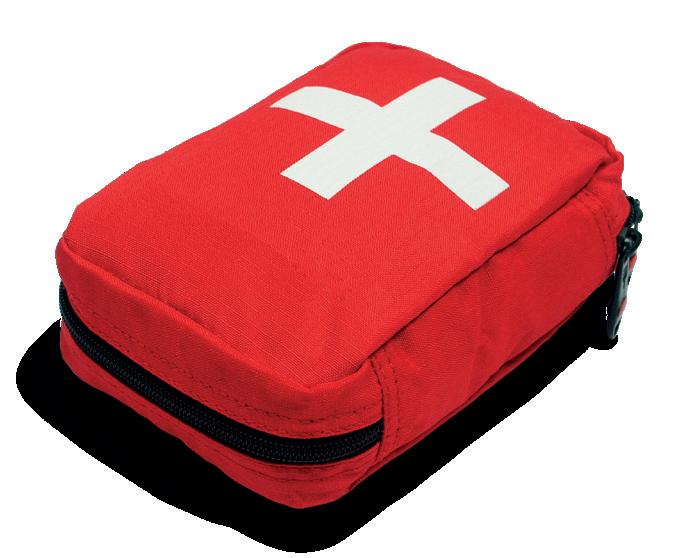
Every site should have a qualified first aider and a stocked first aid kit. Make sure you know where it is. For burns or scalds, cool the area with clean, cold water for at least 10 minutes and never apply creams or grease. In serious cases, call 999 or 112 immediately.

FOOTWEAR: COMFORT & SAFETY MADE EASY
Your safety shoes are more than just part of your work gear - they’re your ticket to staying comfy and protected on the job.
Picking the right pair of safety shoes can make all the difference. Make sure you choose shoes that are designed to protect your feet from any hazards or obstacles you might face when working on-site. Here’s what to look for:
THE SOLE
This is where the magic happens. Your soles keep you steady, so make sure they’re oil-, heat- and slip-resistant. You’ll thank yourself when you’re not slipping and sliding around.

TOE CAPS

Go for boots made with breathable and tough materials that’ll keep up with you all day. Look out for CORDURA® - this stuff is seriously durable and built to handle whatever your job throws at you.
MIDSOLES
Think of midsoles as the hidden MVP of your boots. They cushion your feet for extra comfort and come with safety plates to stop sharp stuff like nails from ruining your day.
Want something that’s lightweight and easy on your feet? Check out sporty styles with fibreglass toe caps. They’re tough enough to keep your toes safe but light enough that you won’t feel weighed down. of Snickers Workwear.

WORKWEAR: STYLING IT OUT
Put your safety first! Gear up with work trousers that are super durable and with stretch panels, so they flex with every move you make.
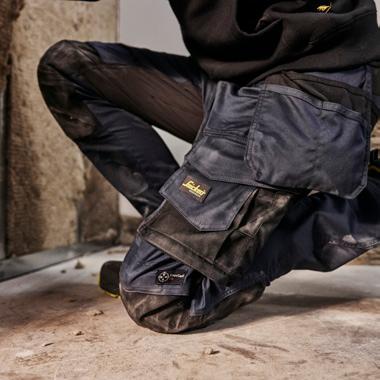
Trackies and jeans might feel comfy, but they’re not built to handle the demands of a tough workday. Professional workwear will protect both you and your career! With the construction industry reporting the highest rates of knee injuries, staying safe has to come first. Choose workwear that’s up to the job.
DURABLE MATERIAL
Look for super-durable styles with stretch panels that flex with your every move. Whether you’re lifting, climbing, or hustling all day, these are built for all-day comfort - no compromises.
REINFORCED KNEEPADS
Protect your knees now and for the future with certified kneepads. They’re designed to block sharp objects and keep you going strong, even on the toughest jobs.


FULLY LOADED POCKETS
Holster pockets are an absolute win. They keep your tools and essentials right where you need them - no more scrambling around when you’re mid-task.
KNEE PAD POCKETS
Got knee pads? Slide them into these special pockets. Perfect for when you're working down low and want to avoid those "Ouch!" moments.
QUICK FACT
KNEE STRESS = OSTEOARTHRITIS RISK #KNEECARE








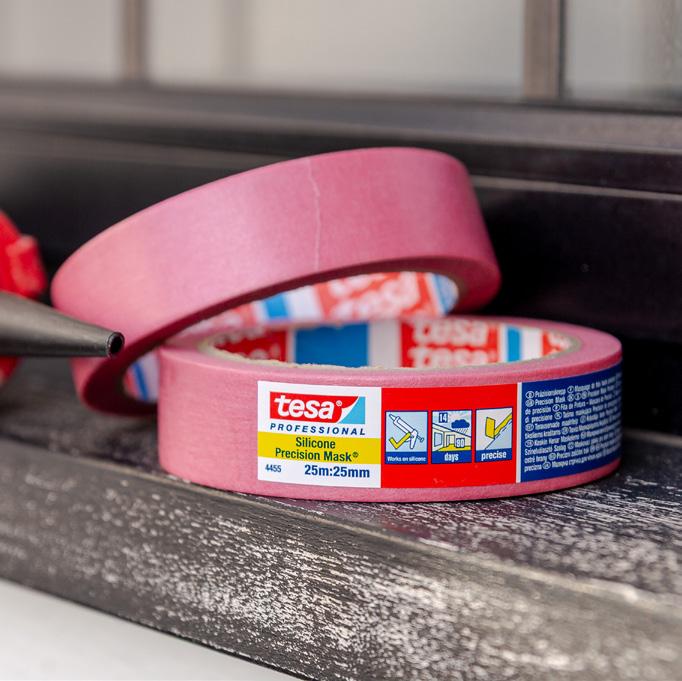
ADHESIVE SOLUTIONS


TRAINING PAINTERS, APPRENTICES, AND RE-TRAINERS
Painting and decorating isn’t just about tools – it’s about your skills. That’s why college programmes have been developed by colleges alongside product manufacturers to help students, apprentices, and even people changing careers learn the ropes.
WHY IT MATTERS
The painting and decorating industry needs skilled people. Good training leads to better results, less waste, and happier customers. By supporting education, tesa® is helping create opportunities for young people and making sure craftsmanship stays strong for the future.
HELPING CRAFTSPEOPLE AND TRAINING THE NEXT GENERATION
For over 125 years, tesa® has been known for making strong, reliable adhesive products. If you’ve ever seen masking tape used for painting, or protective paper on floors during a renovation, chances are tesa® had something to do with it. Today, we’re not only making great products – we’re also helping train the next generation of painters and decorators.
HERE’S WHAT WE DO:
■ Work with colleges and training centres to teach real-world painting techniques.
■ Run workshops where you can try out tesa® products and learn how to use them like a pro.
■ Organise fun competitions, such as sign-writing challenges, so you can show off your skills.
Whether you’re just starting out or retraining for a new job, we want to make sure you have the knowledge and confidence to succeed.

Start your career with a clean line Learn from the pros - Train with tesa

If you’re training to become a painter and decorator, the tools you choose – and how you use them – make a real di erence on site.
That’s why tesa works with UK colleges and the Painting & Decorating Associa tion (PDA) to help train the decorators of the future through hands-on learning.
Built for the job you’re training for tesa is trusted by professional decorators for:
• Clean, sharp paint edges
• Faster, more e cient working
• Reliable results on real jobs
• High-quality finishes under pressure
New tools. Smarter techniques. Real results.
College training that sticks
Through tesa’s national college training programme, students get free, hands-on training alongside their course. You’ll learn:
• How to choose the right tape for the job
• Why preparation matters for professional finishes
• Techniques used by experienced decorators
• How better prep saves time, money and rework
Designed for Year 1, 2 & 3 students and apprentices.
Industry supported
Delivered in partnership with the Painting & Decorating Association (PDA) –so what you learn matches real trade expectations and what employers look for



WHY MASKING TAPE MATTERS
Masking tape is one of the most useful tools for painting and decorating. It helps create clean, sharp edges so your paint looks professional, even if you’re new to the job. It also protects areas you don’t want painted, like trim or glass, saving you time on touchups later. Plus, it’s easy to apply and remove without leaving sticky residue, making the whole process smoother and less stressful.
COOL PRODUCTS THAT MAKE WORK EASIER
Painting and decorating can be tricky, but the right tools make a big difference. That’s why tesa® keeps creating new products to make jobs faster and cleaner:
■ tesa® 2in1 Precision Masking Tape –two tools in one. It helps you achieve sharp paint lines and is easy to peel off once you’re done.
■ tesa® Silicone Masking Tape – ideal for surfaces that are hard to stick to, such as dirt-repellent materials. It still gives you neat paint edges.
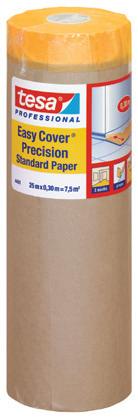
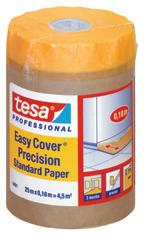
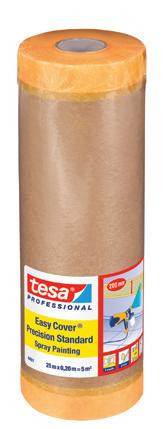
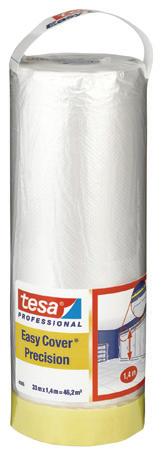
■ tesa® Protective Paper – perfect for covering floors and stairs so they stay clean during painting.
And here’s something great: many of our new products use recycled materials and eco-friendly adhesives, making them better for the planet too.
“Good training leads to better results, less waste, and happier customers”

“Keep an eye out for tesa® workshops and college events – they’re a brilliant place to start!”
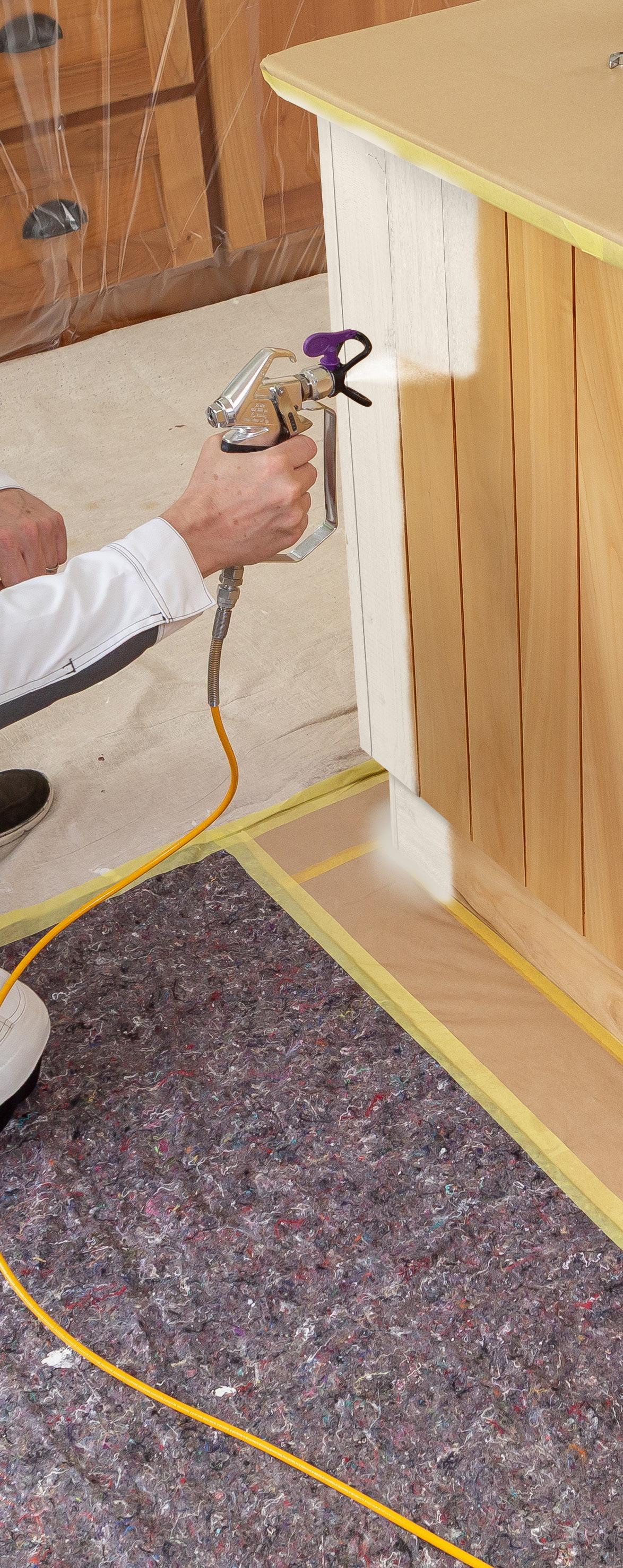
“Many
of our new products use recycled materials and ecofriendly adhesives, making them better for the planet too”


WHAT’S NEXT?
tesa® isn’t stopping here. We’ll keep developing innovative products and expanding our training programmes so more students and apprentices can learn. If you’re thinking about a career in painting or decorating, keep an eye out for tesa® workshops and college events –they’re a brilliant place to start!
SCAN HERE for more information.
TESA’S NEW TOOLS FOR CRAFTSPEOPLE
tesa, a global leader in adhesive solutions, has launched exciting new products for painters and craftspeople. These tools are designed to make work easier, faster, and more eco-friendly.
THREE NEW PRODUCTS FOR PRECISION
■ tesa® 2in1 4460 Precision Masking Tape – use it once, benefit twice. It helps create sharp paint edges and saves time.
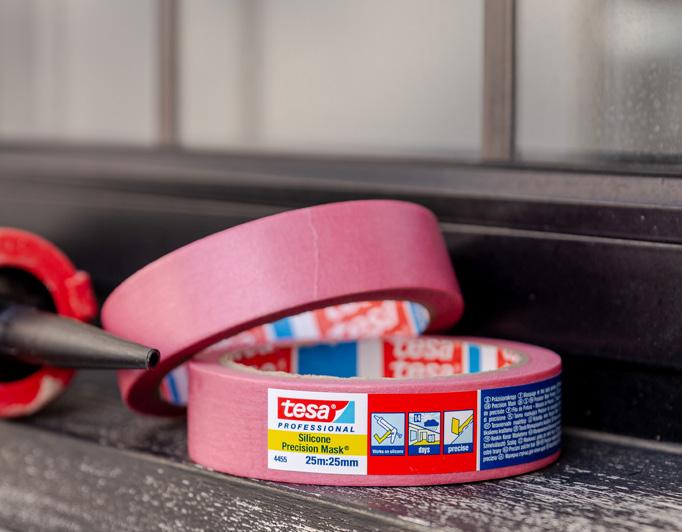
■ tesa® Silicone Precision Masking Tape 4455 – sticks to tricky surfaces such as silicone and gives clean, reliable lines.
■ tesa® Professional 74922 Protective Paper – protects floors and surfaces from paint and scratches. Easy to apply and remove.
WHY THESE PRODUCTS MATTER
■ Save time and effort on everyday craft jobs.
■ Get high-quality results even when work gets busy.
SUSTAINABILITY FOCUS
■ Made with recycled and FSC-certified materials.
■ Adhesives are solvent-free, making them kinder to the environment.
AVAILABLE NOW!
These new products are already in stores, with more coming soon.
WHY THIS IS IMPORTANT TO YOU
■ These innovations show how technology and sustainability can improve traditional crafts.
■ Learning about new tools helps you stay ahead in your future career.
■ Eco-friendly products support a healthier planet.
SCAN HERE for more information.


BRICKLAYING
WHAT MAKES A GREAT BRICKLAYER?
Bricklaying is a trade built on precision. For those who enjoy hands-on learning and seeing real results each day, it offers a career with variety, progression and long-term security.
PRECISION AND CRAFTSMANSHIP
Accuracy matters. From setting out to finishing joints, taking your time and getting the basics right sets you apart as your skills develop.
PROBLEM-SOLVING ON SITE
No two builds are ever the same. Bricklayers regularly adapt to changing plans, materials, and site conditions, using their judgement and experience to find solutions.
PHYSICAL
AND MENTAL RESILIENCE
Bricklaying is active, often outdoors, and can be demanding. Learning how to work safely, pace yourself, and stay focused is part of becoming professional.
PROFESSIONAL ATTITUDE
Reliability, teamwork, and respect on site matter. Turning up prepared and taking pride in your work helps build trust and opportunities early in your career.

“Learn the craft well, and bricklaying can take you in more directions than you might expect”

YOUR FUTURE IN BRICKLAYING
Once you’ve built strong foundations, bricklaying offers a range of future pathways.
SITE WORK AND CONSTRUCTION
Many bricklayers start on residential or commercial projects, developing speed, consistency, and teamwork on busy sites.
HERITAGE AND SPECIALIST WORK
Some move into restoration and conservation, working on historic buildings and learning traditional methods such as lime mortar and specialist brickwork.
SELF-EMPLOYMENT
Bricklaying is a trade where running your own business is a realistic goal. With experience and a solid reputation, many bricklayers enjoy greater independence and earning potential.
LEADERSHIP AND TEACHING
Experienced bricklayers often progress into supervisory roles or move into teaching, supporting learners and passing on their knowledge to the next generation.
A TRADE THAT CONTINUES TO EVOLVE
Modern materials, sustainability goals, and new building techniques mean bricklaying continues to change. The skills you learn today will remain valuable well into the future.
ESSENTIAL MEASUREMENTS
Understanding sizes, course heights and wall dimensions will help you set out work correctly.
STANDARD UK BRICK SIZES
used on site
Bricklayers usually work to the finished size including mortar, not just the brick itself.
COURSE HEIGHT GUIDE
Knowing course heights helps you plan openings, windows and wall heights quickly.
A useful rule: 13 courses ≈ 1 metre
COMMON WALL THICKNESSES
MORTAR JOINT BASICS
■ Bed joint: 10mm
■ Perp joint: 10mm
■ Keep joints consistent for strength and appearance
■ Uneven joints affect alignment and structural performance
SETTING OUT ESSENTIALS
■ Use a gauge rod to maintain consistent course heights
■ Always build to the line and pins
■ Check level and plumb regularly
■ Accuracy early saves time later
■ Measure twice before starting a lift
SITE
TOLERANCES (GENERAL GUIDE)
Note:


CARPENTRY & JOINERY
CRAFTING EXCELLENCE
Woodworking is an excellent career choice! These trades offer a unique mix of creativity and practical expertise, leading to a rewarding and highly respected career.
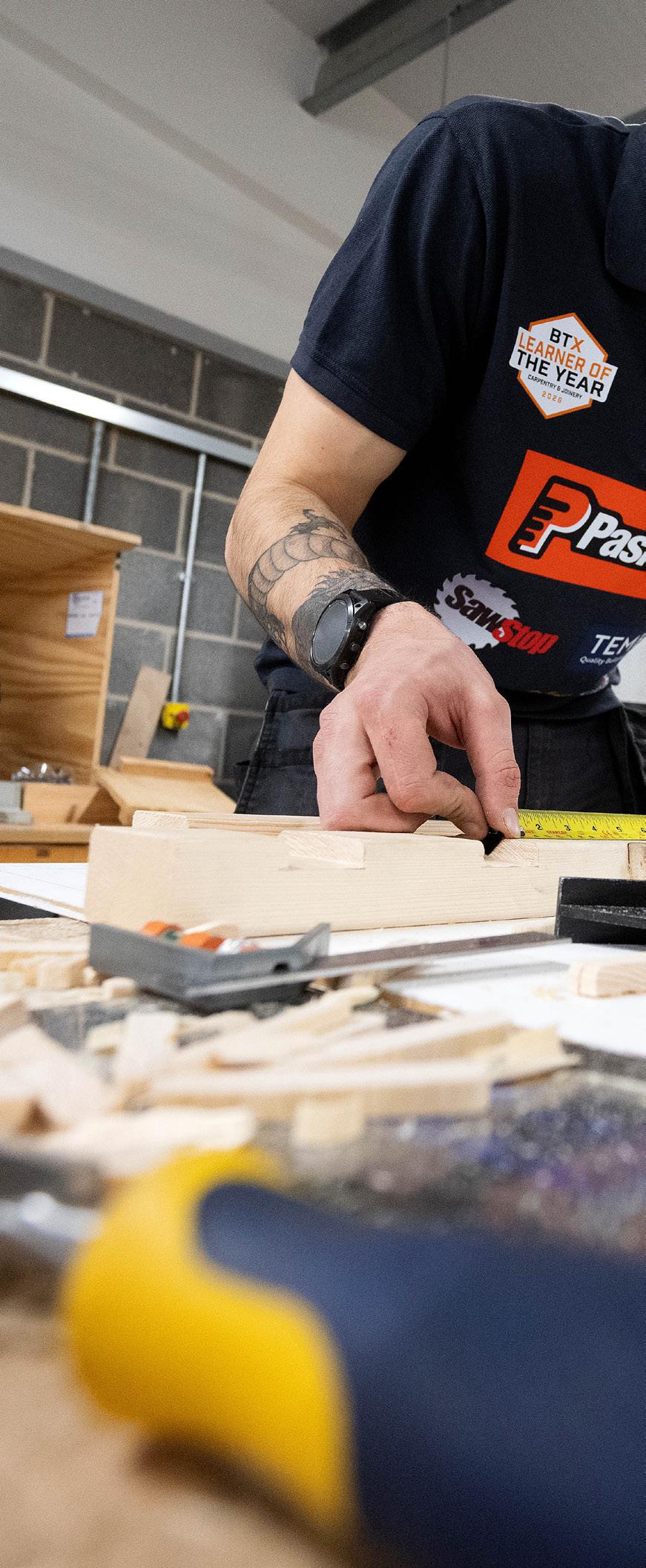
Darren Jones, an expert Carpentry & Joinery Lecturer from Wigan & Leigh College, offers his insights into the woodworking trades, along with top tips for anyone starting out.
Carpentry and joinery are highly skilled trades, each with its own set of skills and applications, offering a range of opportunities.
CARPENTRY
Carpentry involves constructing, installing and repairing wooden structures and components. Carpenters work with materials like timber, plywood, and other woods, building and assembling various structures. They typically work on-site, constructing roofs, joists, flooring, and fitting doors, windows, stairs, kitchens, architraves and skirting.
JOINERY
Joinery focusses on precision and detail. It's the art of creating wooden components in workshops, such as doors, windows, and furniture. Joiners use specialised tools like chisels, planes and saws. They craft pieces that are functional and aesthetically pleasing, using techniques like mortise & tenon and dovetail joints.
DARREN'S TOP TIPS
1
SAFETY FIRST:
Prioritise safety by wearing appropriate protective gear, using tools correctly, and maintaining a tidy workspace to prevent accidents.
2
KNOW YOUR TOOLS:
Familiarise yourself with each tool in your toolkit, practising their safe and efficient use.
3
ACCURACY IS KEY:
Develop your skills by practising measuring techniques, employing proper cutting methods, and refining your skill through attention to detail.
“Being organised and managing your time efficiently are crucial”

4
CHOOSE QUALITY MATERIALS:
Always choose high-quality wood and materials for your projects. Understanding the characteristics of different types of wood will help you in your selection.
5
ESSENTIAL SKILLS:
A good level of Maths and English is crucial to ensure precise measurements and calculations. For example, carpenters need to accurately calculate material quantities and understand geometric principles and interpret drawings.
6
PROBLEM-SOLVING:
Cultivate your problem-solving skills by thinking creatively, exploring alternative solutions, and seeking advice from the pros.
7

“Always choose highquality wood and materials for your projects”
CONTINUOUS LEARNING:
Stay updated in this ever-evolving industry, with new techniques, materials, and industry trends by continuous learning through further education, online resources, or hands-on experience.
8
TIME MANAGEMENT:
Being organised and managing your time efficiently are crucial for success in carpentry and joinery.
9
PROFESSIONALISM:
Trustworthiness, punctuality, and reliability are all key components of professionalism. Demonstrating these qualities will help you build a reputable professional image.
10
COMMUNICATION:
Clear communication with clients, colleagues, and supervisors will ensure the job is completed successfully.
The keys to success in carpentry and joinery lie in honing your skills, embracing innovation, and maintaining a commitment to quality and safety - the cornerstones of a rewarding career.
TIMBER SIZE CONVERSION CHART

Note: These are rounded numbers.
LUBRICANTS, GREASES & CLEANERS

WD-40® SPECIALIST PRODUCTS – A FORMULA FOR TRUST!
As an apprentice or newly qualified builder, or any professional tradesperson for that matter, your formative years will be spent learning the skills and techniques that will shape your career.
THE TOOLS OF THE TRADE
Developing a reputation for quality, longlasting repairs can build trust with clients and supervisors alike. From mastering the ins and outs of erecting scaffolding, mixing mortar or laying bricks, every task requires precision, efficiency and the right tools. While most of the focus might be on wrenches, trowels and spades, there’s another key tool that can be overlooked but makes a significant difference, particularly when time is of the essence. We are, of course, referring to WD-40 Specialist® products.
INTRODUCING WD-40 SPECIALIST
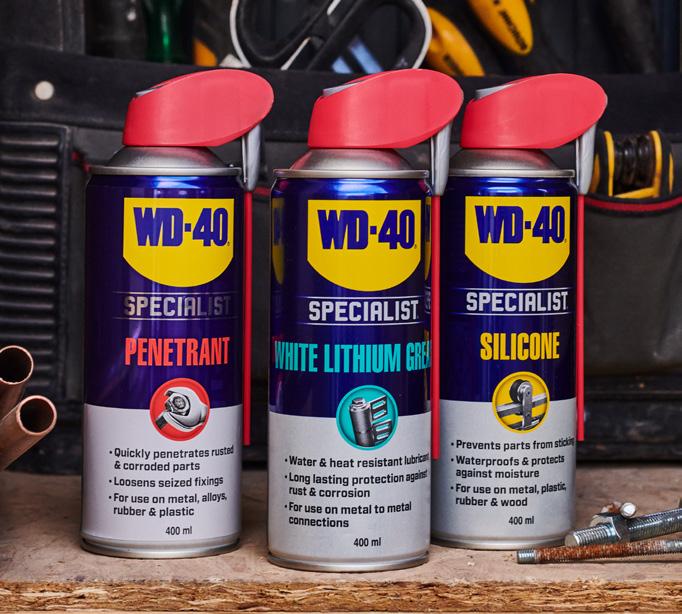
WD-40 is a brand that needs little or no introduction because of its versatility for cleaning, lubricating and, of course, displacing water and damp conditions. However, the WD-40 Specialist range comprises various products each specifically developed for professionals and industrial use including White Lithium Grease, Spray Grease, Silicone, Contact Cleaner, Penetrant, Degreaser and Cutting Oil.

TACKLING STUBBORN FITTINGS
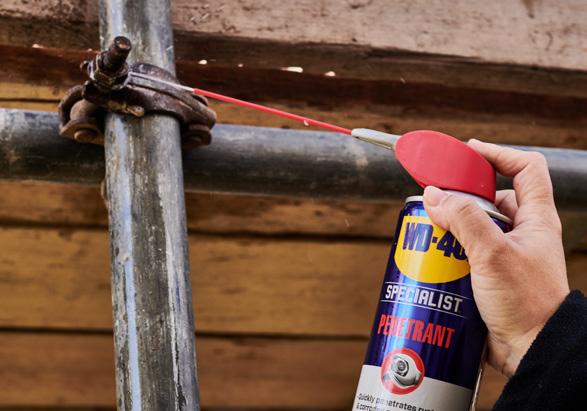
Friction is a builder’s enemy. Stuck bolts, rusty screws or tight fittings can slow down a process. In worst case situations, a broken bolt holding a scaffold bracket, for example, can derail what should be a swift process. WD40 Specialist Penetrant can solve the issue through its extremely low surface tensions, which enables it to cut through rust, seams and tightly bonded threads to easily saturate and lubricate. In essence, freeing up the problem.
Builders facing corroded fittings, especially in older buildings, often add a spritz of Specialist Penetrant to break the bond caused by years of build-up in rust and corrosion enabling them to be disassembled.










ALL-ROUND PROTECTION
WD-40 Specialist products add that extra protection during installations, services or repairs and help to safeguard that work for the future.


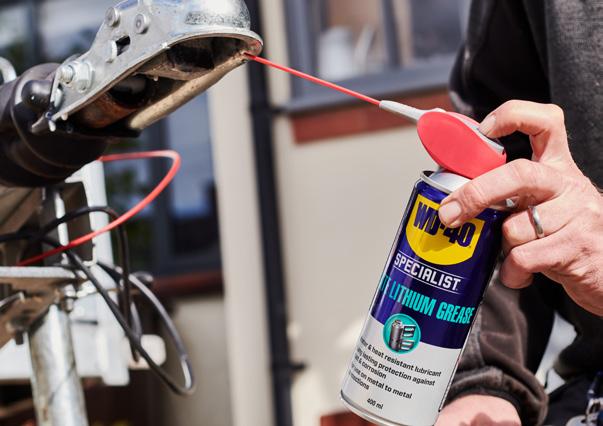
SPECIALIST WHITE LITHIUM GREASE
Provides unequalled protection for heavy-duty, metal-to-metal applications. It is a thick, waterresistant non-drip formula that sticks like glue to wherever it is applied.
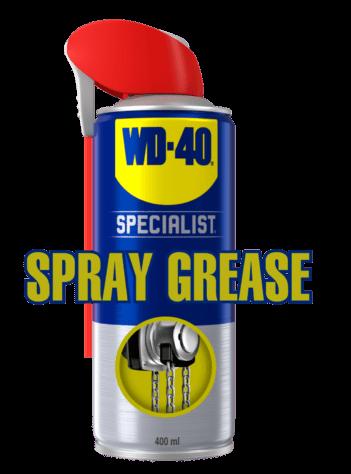
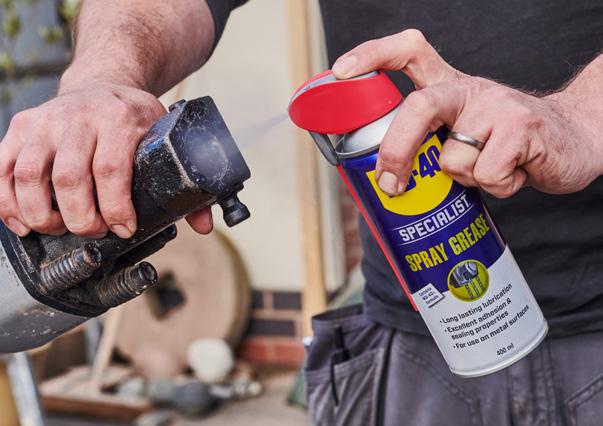
SPECIALIST SPRAY GREASE
Has a non-drip formula that provides long-lasting lubrication and corrosion protection on all metals, including vertical surfaces. The formula also contains the classic WD-40 Multi-Use Product as a base, which provides a highly water-resistant lubricant with excellent adhesion properties.
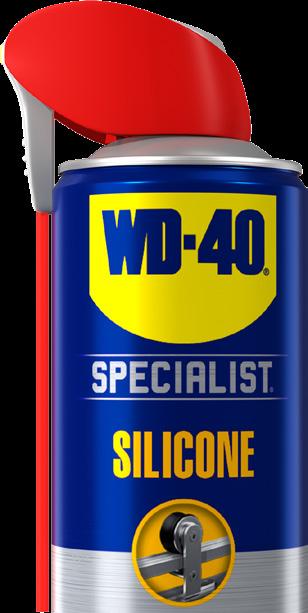
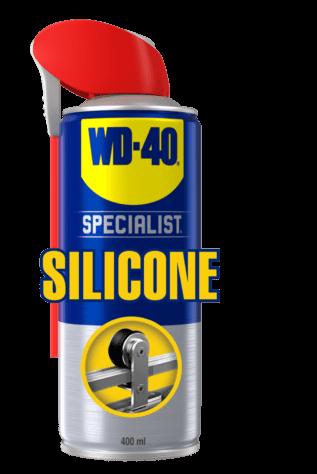
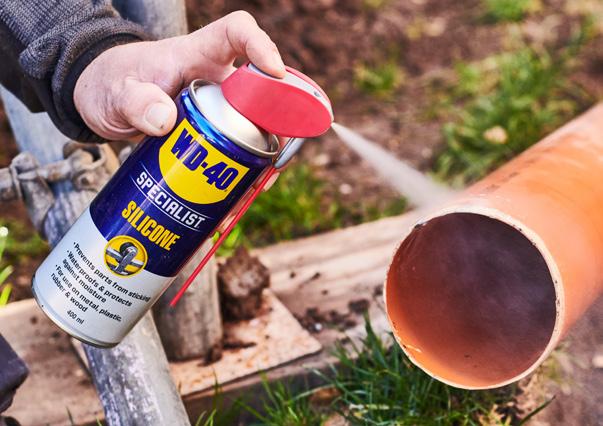
SPECIALIST SILICONE
A high-performing lubricant spray, ideal for high-pressure equipment, and is widely the go-to product for dealing with rubber parts like pipes and plumbing fittings. With the ability to waterproof and prevent cracking, it is the ideal protective lubricant that ensures parts will remain clean and functioning for longer.



SPECIALIST CUTTING OIL
Vastly improves the performance and extends the life of all cutting and drilling tools. The formula is used when cutting through wood, stainless steel or even titanium components and prevents pitting and metal seizures and reduces heat and damage caused by friction.
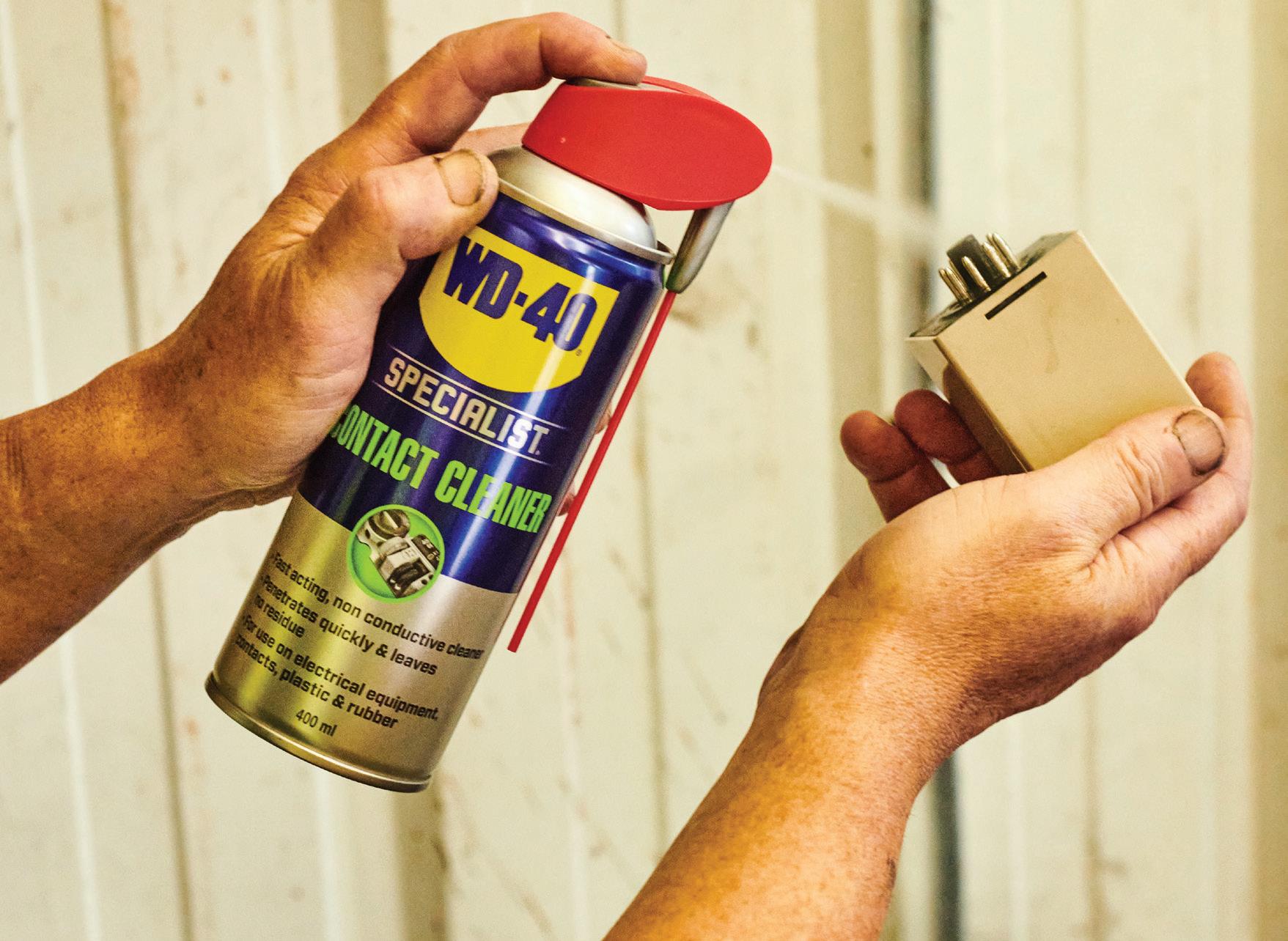
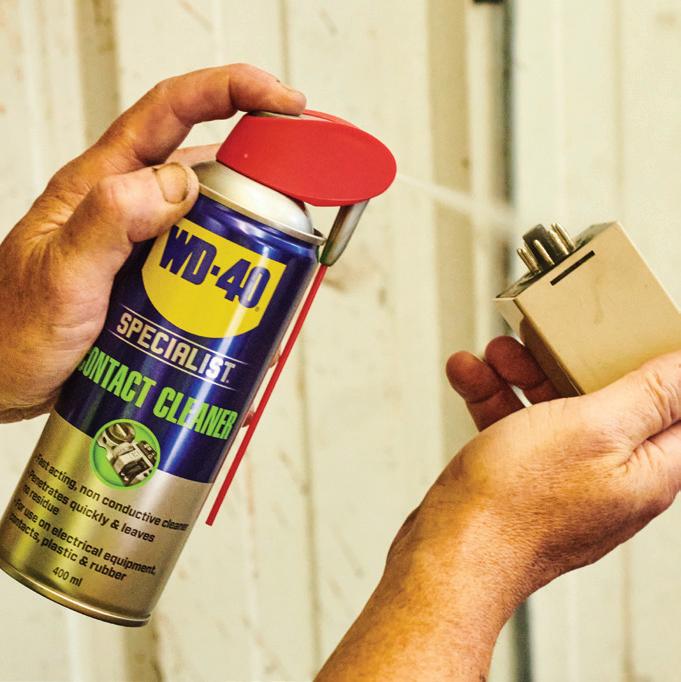
SPECIALIST CONTACT CLEANER
Essential for any electrical work. The fast-drying non-conductive spray is suitable for even the most sensitive electrical components, switches and connections and removes dirt, dust, condensation and flux residue with ease.
SPECIALIST DEGREASER
Another must for the tool bag. The solvent-based spray quickly removes stubborn oil, grease, dirt and grime without leaving any residue. The process is effortless, spray on the area and wipe away. For heavy or severe soiling, simply leave the solution for a few seconds before wiping away.
All Specialist products come armed with the WD-40 Smart Straw® applicator providing users with two ways to get the job done. Flipped up, the straw can precisely and accurately target hard to reach and problematic areas. Flipped down, this produces a wider spray to cover larger areas.
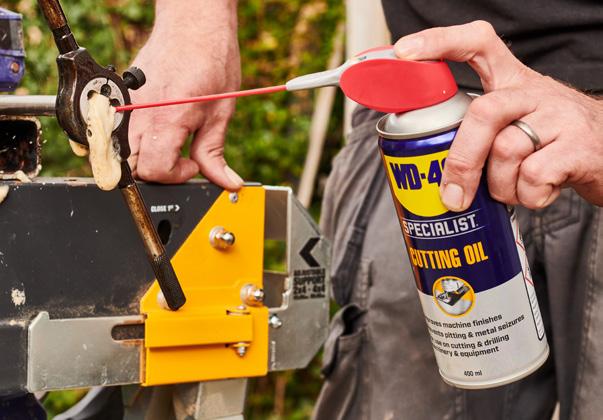
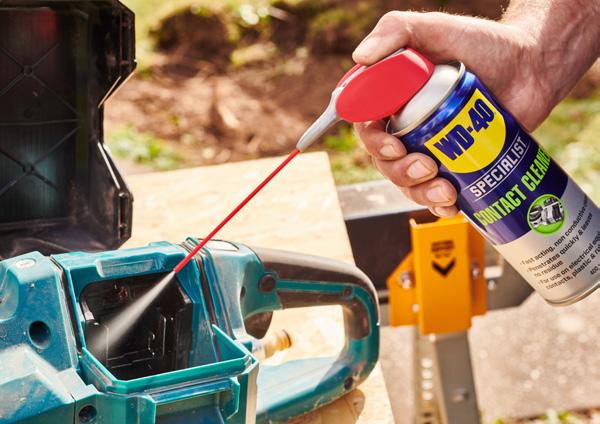
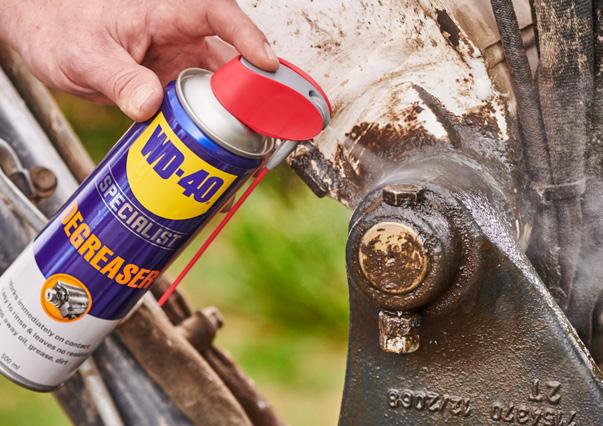
“WD-40 Specialist products provide extra protection for installations, services, and repairs”
NEW! SPECIALIST® DRY LUBRICANT
Completing the line-up and adding an eighth product to the range, Specialist Dry Lubricant is available to buy from all major hardware stores. Ideal for lubricating enclosed areas where dampness, moisture and mould are less than desired, this brand-new product is a must-have for stiff padlocks, latches, conveyor belts and metal extrusions.
Specialist Dry Lubricant leaves behind a dry, clear film that won’t attract dirt, dust or oil, and provides excellent corrosion protection on metals, plastics and PVC.
COMING SOON! SPECIALIST® BIO LUBRICANT
Launching onto the market this Spring is the UK’s first Ecolabel certified multiuse product. Made with bio-based ingredients and an 85% organic formula, it’s highly effective at lubricating, penetrating and displacing moisture. It’s compatible with metals, plastics and rubbers, making it a fantastic all-rounder for the environmentally conscious.
SCAN HERE
Join the WD-40 VIP Club to find out more as it’s revealed.
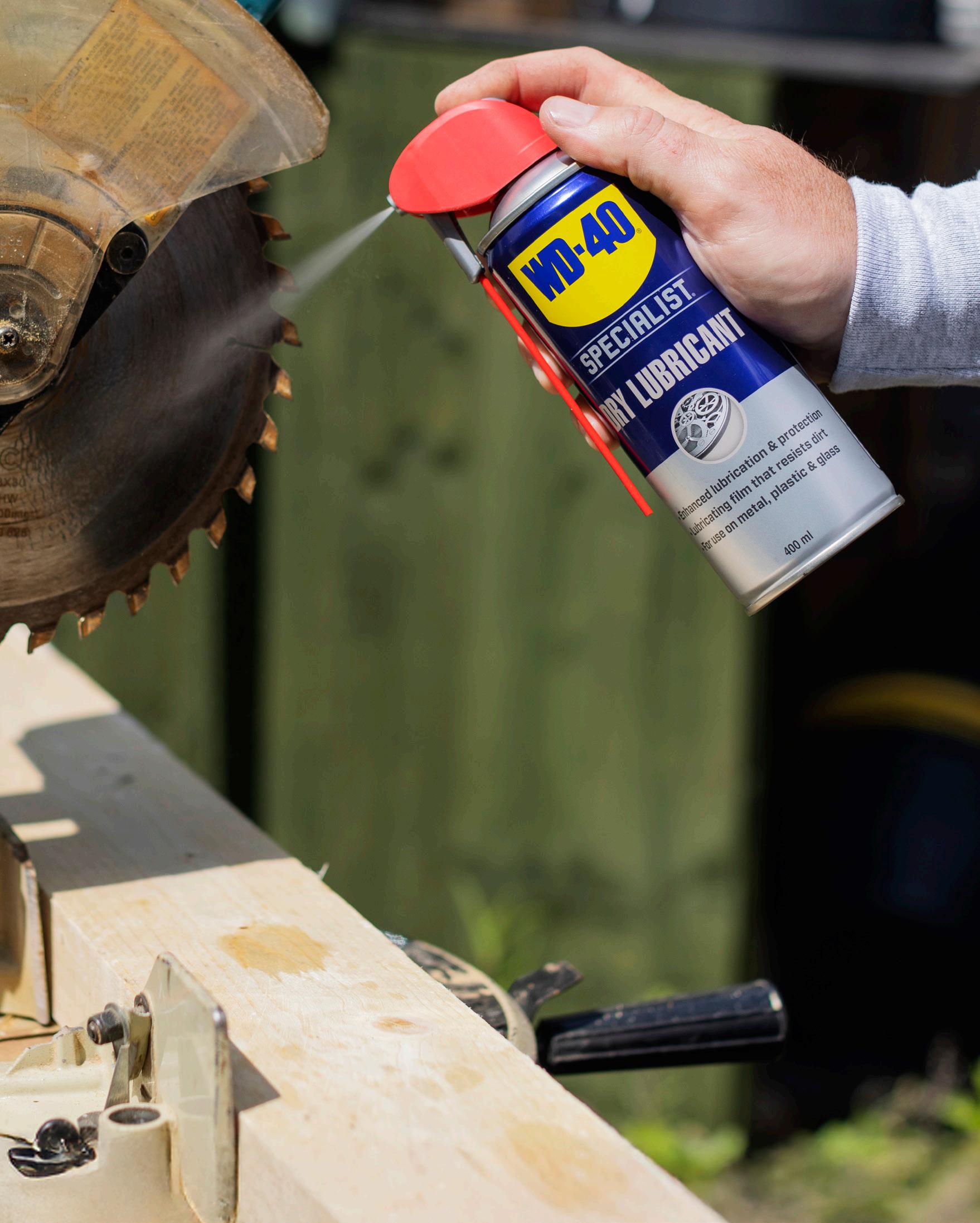
“ Specialist Dry Lubricant leaves behind a dry, clear film that won’t attract dirt, dust or oil, and provides excellent corrosion protection ”


NAIL FASTENING SYSTEMS

WOOD TO WOOD FIXING
When tackling carpentry projects, one of the key decisions faced on-site is whether a first fix nailer or a second fix nailer is the right tool for the job.
The right nailing tool depends on the scale and nature of your project. Think of it this way: framing requires strength, finishing demands precision, and roofing calls for speed. By matching the tool to the task, you’ll achieve professional results with efficiency and confidence.
FIRST FIX NAILERS
A good first fix nailer is lightweight, powerful, and durable. Framing nailers drive longer nails – the most powerful can fire nails as long as 90mm. They are designed to efficiently fix thick structural timber where strength matters most.


Framing nailers can be heavy, especially those with large batteries. It is worth considering weight when selecting your tool to minimise the impact on your body, particularly if you will be using the tool for a prolonged period. They also need to withstand demanding construction environments.
TYPICAL APPLICATIONS:
■ STUD WORK
■ TIMBER FRAMING
■ ROOFING
■ CLADDING
■ FLOORING
■ FENCING
GENERAL FRAMING
“It’s important to choose the right tool and nails for the job in hand”
BUILDING ON YOUR FUTURE
Known in the trade for offering top nailing systems, Paslode are experts in providing premium tools, consumables and service to the timber construction industry.
Whether you are completing a framing, roofing or finishing project, Paslode has a selection of tools for a range of applications, making your job quicker and easier.
Paslode offer a strong range of services to support users, including training, maintenance advice and tool repair, giving you peace of mind day in, day out.
Never stop building.

Did you know?
Our Paslode tools (COMBI Xi, 360Xi, PPNXi, IM45 GN and IM45 CW) benefit from our Premium 3 year warranty
Scan the QR Code to find out more.


SECOND FIX NAILERS
A second fix nailer, often referred to as a finishing nailer, is ideal for delicate tasks where visible nail heads or surface damage would compromise the final look. These tools tend to fire smaller gauge brads – typically 16 to 18 gauge.
With a second fix nailer, you have the advantage of speed and efficiency without sacrificing aesthetics. By minimising surface damage, these tools reduce the need for filling or sanding, saving time and effort. They are perfect for detailed joinery and decorative woodwork.
TYPICAL APPLICATIONS:
■ ARCHITRAVES
■ SKIRTING BOARDS
■ PANELLING
■ DOOR STOPS
■ STAIR RAILS
■ WINDOW CASING
■ BEADING
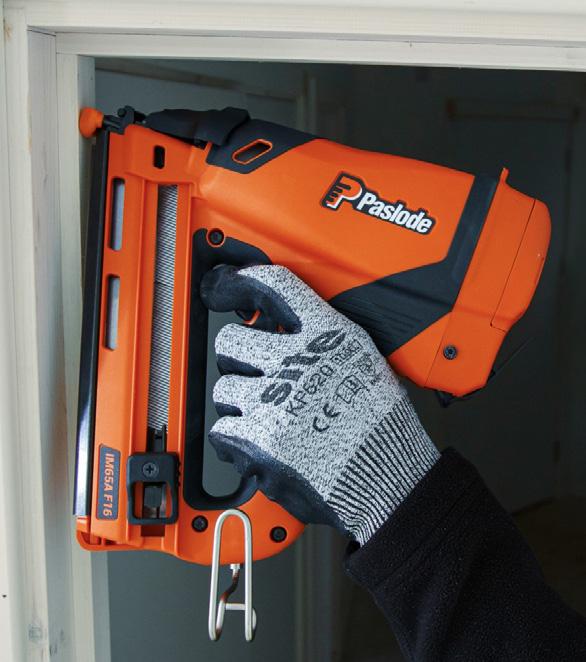

The key to finding a great nailing tool is to look for one that combines power, consistency, and reliability in a single system.
First and second fix nailers can be powered in several ways, including pneumatic, battery, and gas power. Many users find that gas nailers offer a strong balance between power and portability, using a combination of a fuel cell and a rechargeable battery to deliver the extra force needed to drive longer nails.

WHICH NAILS SHOULD I CHOOSE?
Once you’ve chosen the right tool for the job, selecting the correct nail is the next equally important decision. Using the wrong type of nail can weaken your project, cause damage, or compromise safety. Understanding nail types and their applications helps ensure durability and efficiency.
It is recommended that you reference Eurocode 5 when selecting nails and pay attention to Service Classes.
EUROCODE 5 SERVICE CLASS
The term “service class” refers to environmental conditions that affect the moisture content of timber and the level of corrosion resistance required for nails. These classifications are defined under Eurocode 5 (EN 1995-1-1), which governs the design of timber structures in Europe.
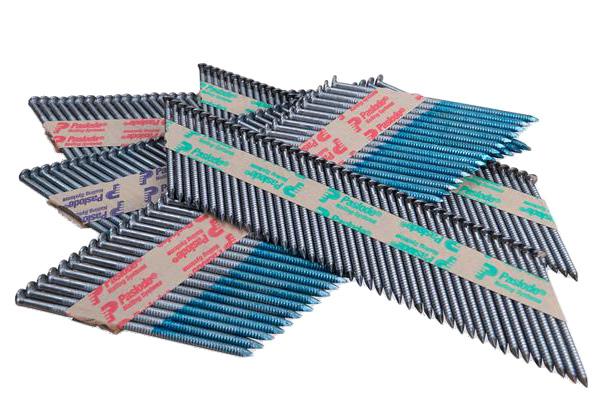
A nail’s service class is determined by the finish applied to the nail, whether that is steel, electro-galvanised, hot-dip galvanised, or stainless steel.
SERVICE CLASS 1
ENVIRONMENT: Indoor use where moisture is not an issue.
NAIL TYPE: Bright or lightly galvanised nails.
SERVICE CLASS 2
ENVIRONMENT: Unheated indoor areas or protected outdoor environments (timber moisture content does not exceed 20%).
NAIL TYPE: Electro-galvanised nails.

SERVICE CLASS
3
ENVIRONMENT: Outdoor projects, including coastal or damp conditions.
NAIL TYPE: Hot-dip galvanised or stainless steel nails.
These classifications help ensure that nails and other fixings maintain their structural integrity and resist corrosion over time, depending on where and how they are used. Good quality nails quite literally hold a project together.
SCAN HERE
For more information about Paslode nail fastening systems.
BUILT FOR POWER, PERFORMANCE, AND RELIABILITY
Paslode has, over many years, built an enviable reputation for delivering best-in-class nailing systems, revolutionising construction methods while reducing labour time and increasing product reliability and on-site safety.
TOOLS FOR EVERY APPLICATION
Whether you are completing a framing, roofing, or finishing project, Paslode offers a selection of tools designed to make your job quicker and easier. Each system helps you consistently achieve high-quality fixes, with solutions available for a wide range of applications.
CONSISTENT POWER, DAY AFTER DAY
By combining a fast-charge, long-life Paslode lithium battery with Paslode fuel injection technology, you can rely on powerful, consistent performance day to day – without the need to regularly down tools to recharge.
PRODUCTIVITY WITHOUT COMPROMISE
Less weight combined with more power means greater productivity, along with the peace of mind you have come to expect from over 40 years of innovation and the trusted Paslode system.
DESIGNED AROUND THE USER
“Empowering you with the complete system #paslodeuk”
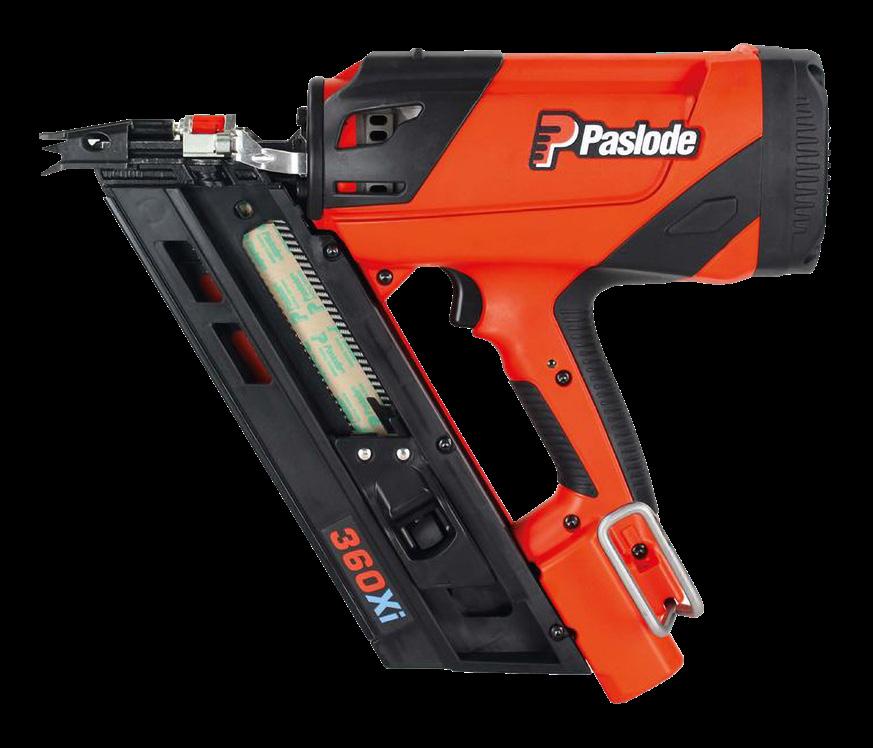
Paslode pride themselves on maintaining close relationships with users, understanding realworld applications, and continuously improving each system with comfort and performance in mind. Alongside this, they offer a strong range of support services, including training, maintenance, tool repair, and easy access to documentation.
SCAN HERE
For more information about Paslode’s products.

TRADE PAINT


CHOOSING THE RIGHT PAINT
As you start your learning journey, it's essential to understand the importance of choosing the right paint for your projects.
Here are some key factors to consider when selecting your paints.
WHAT’S THE DIFFERENCE?
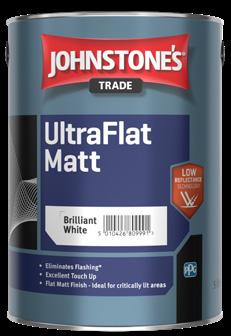
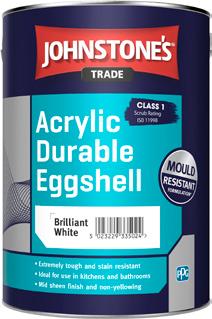
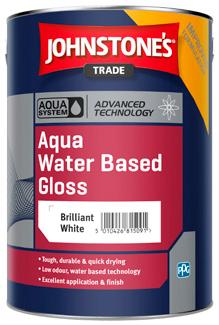
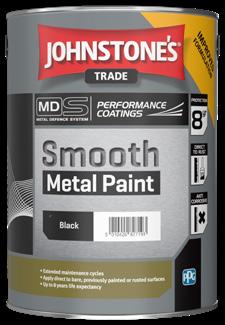
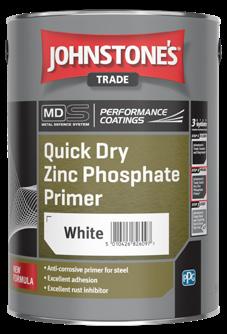
Emulsions are typically designed for use on walls and are formulated to cover large surfaces evenly. In contrast, “trim” products are specifically designed for use on wood and metal surfaces, including areas such as skirting boards, window frames, and doors. You may also come across primers, undercoats, and specialist coatings designed for specific purposes, such as floor paint or stain-blocking paints.
EXPLORING FINISHES
Paint finish plays a significant role in the overall appearance of a room. There are several options to choose from:




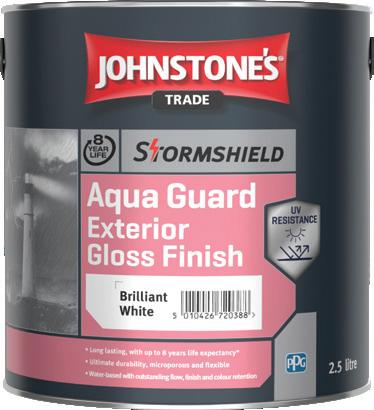


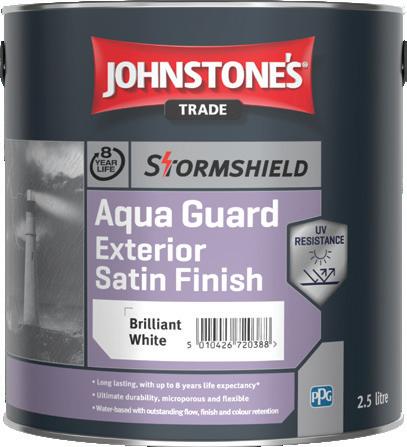
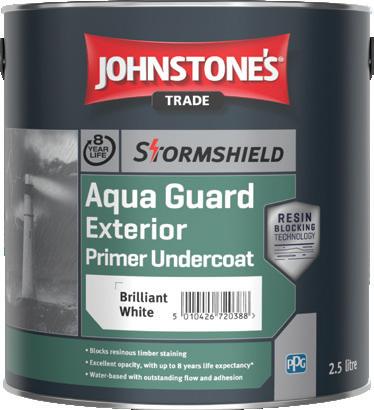



Each finish has unique characteristics that vary across brands and product types, such as sheen level and durability. When selecting a finish, consider the room's function, surface imperfections, lighting conditions, and design preferences.
SOLVENT-BASED VS. WATER-BASED PAINTS
Traditionally, solvent-based paints were widely used for their durability. However, with increasing environmental concerns and technological advancements, waterbased paints have gained popularity. They offer low VOC (Volatile Organic Compound) levels, quick drying times, and easy cleanup. Today, water-based paints often perform as well as - or better than - their solvent-based counterparts.
CONSIDER DURABILITY
Durability is crucial, especially for high-traffic areas or projects requiring extra protection. High-durability paints resist scuffs, stains, and fading. For such projects, look for paints with a “Class 1” scrub rating to ensure easy maintenance.
PAINTS FOR EXTERIORS
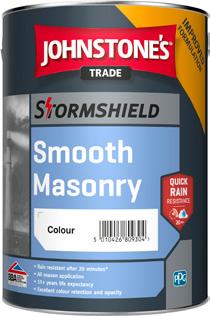
For exterior projects, choose paints specifically formulated to withstand exposure to sunlight, rain, and temperature fluctuations. Look for products with excellent adhesion, UV resistance, and long-life expectancy. Additionally, consider the climate and environmental conditions of the project’s location.
TOP TIP
Proper surface preparation is often more important than the paint itself. Ensure the surface is clean, dry, and free from loose or flaking paint. Proper priming enhances adhesion and improves paint longevity.
“Understanding colour is fundamental in painting”

COLOUR PRINCIPLES
At the start of your painting journey, explore the basics of colour theory, the effects of colour, and how to combine colours effectively to create visually appealing and harmonious spaces.
THE EFFECTS OF COLOUR
Colours significantly impact emotions, perceptions, and the overall experience of a space. Warm colours like red, orange, and yellow evoke energy and warmth, while cool colours like blue, green, and purple create a sense of calm and peace. Understanding these effects will help you create the desired atmosphere in a room.

COLOUR THEORY
Colour theory is the foundation of understanding how colours interact. By familiarising yourself with the colour wheel - comprising primary, secondary, and tertiary colours - you can easily identify complementary, contrasting, and harmonious colour schemes.
60-30-10: THE PERFECT COLOUR COMBINATION
60%: Dominant colour setting the room’s tone.
30%: Feature colour complementing the dominant shade.
10%: Accent colour for highlights.
This principle can also be used to emphasise architectural features and create focal points.
SCAN HERE
to learn more about the colour tools available from Johnstone’s:
JOHNSTONE’S SUPPORT & SERVICES
At Johnstone’s, we are here to provide all the painting advice you need.
rom preparation to application and aftercare, our team of experts is ready to assist. Our colour consultancy team can also help with tailored colour recipes to match a client’s brief or individual colour matching to bring your project to life.
FYou can match any colour in-store at Johnstone’s Decorating Centres. For any questions, contact our support team:
E: customersupport.acuk@ppg.com
T: 01924 354354
DID YOU KNOW
You can shop Johnstone’s products online. Visit our decorating centre website at johnstonesdc.com or download the app to:
● Access customer-specific pricing.
● View product information.
● Shop products and access invoices.
● Build lists of your favourite items and much more!
SCAN HERE
To download the app.



“You can match any colour in-store at Johnstone’s Decorating Centres”
PAINTING & DECORATING TOOLS
ROLLERS: THE EFFICIENT WORKHORSES
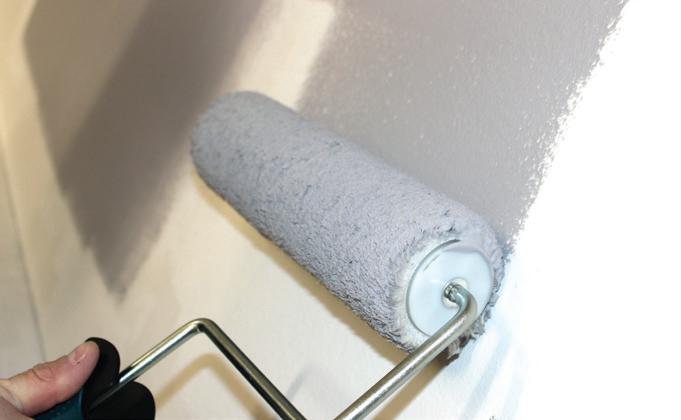
Rollers are the workhorses of the painting world, known for their efficiency in covering large surfaces, from walls to ceilings, ensuring a uniform coat of paint.
ROLLERS: DIRECTIONS FOR USE:
1
2
CHOOSE THE RIGHT PILE:
The pile length of the roller determines its suitability for different surfaces. Use a shorter pile for smoother surfaces and a longer pile for textured walls.
LOAD THE ROLLER PROPERLY:
Dip the roller into the paint tray, ensuring even coverage. Roll it back and forth to distribute the paint evenly on the roller.
3
MAINTAIN CONSISTENT PRESSURE:
Apply consistent pressure while rolling to avoid uneven textures. Overlapping strokes slightly ensure complete coverage.
PRODUCT EXAMPLES:
■ ROTA FINISH ROLLER:
Renowned for its versatility, this roller delivers a perfect ultra-smooth finish. Optimal paint loading minimises the need for frequent reloading, enhancing efficiency.

■ ROTA GOLD ROLLER:
Preferred for its durability and paint-release capabilities, this roller ensures a professional-looking result

“Overlapping strokes slightly ensure complete coverage”


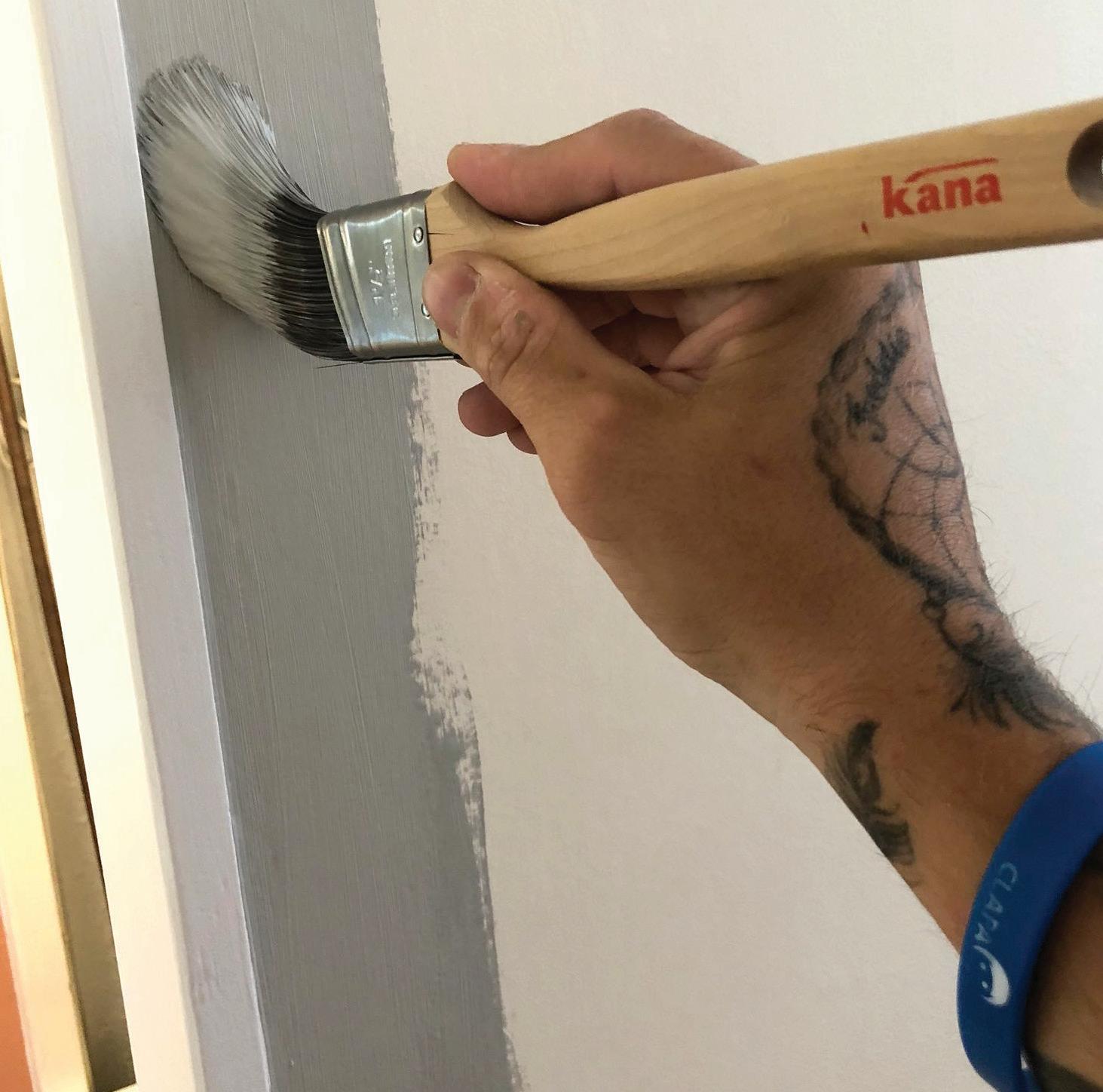
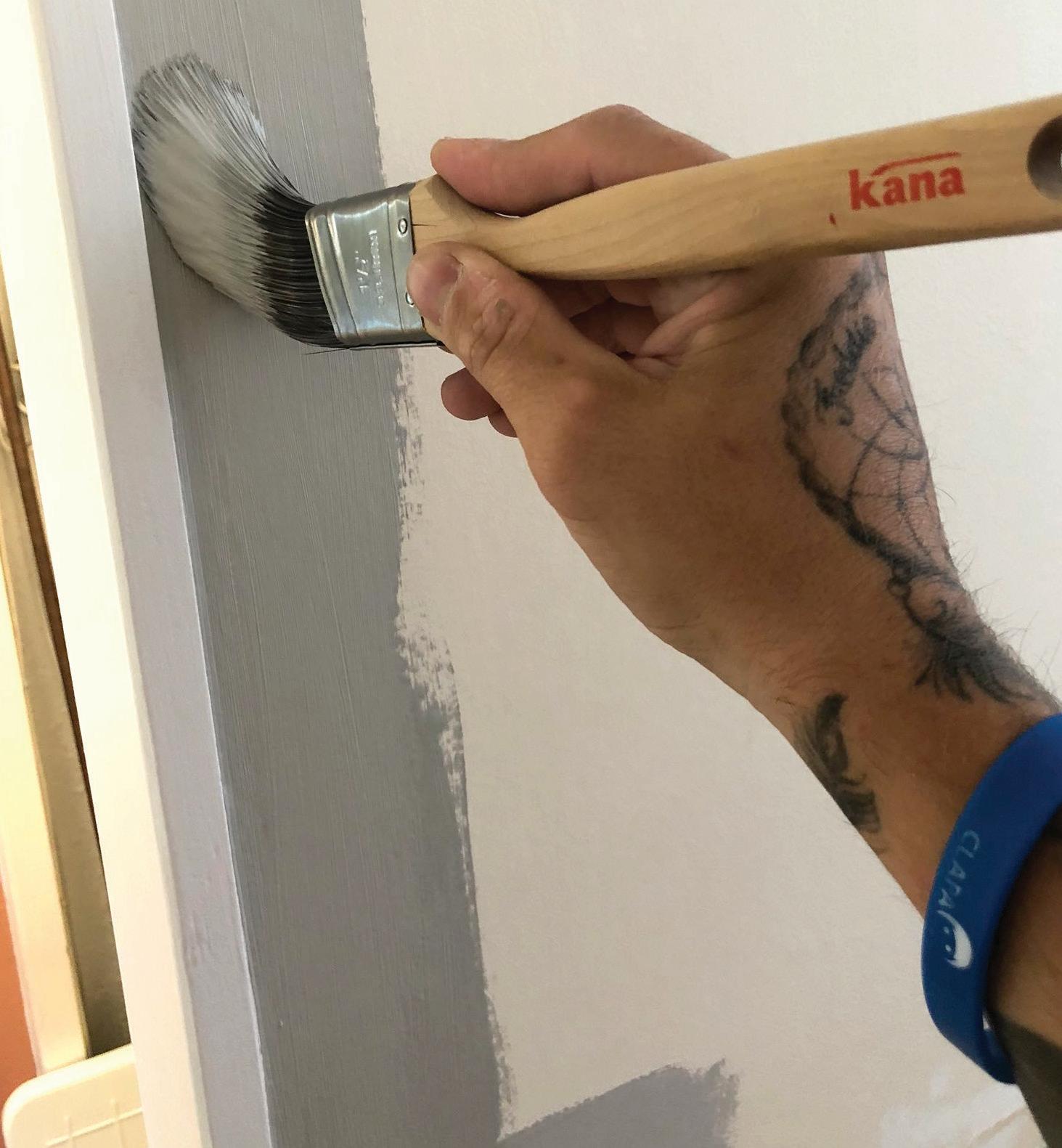
BRUSHES: PRECISION IN EVERY STROKE
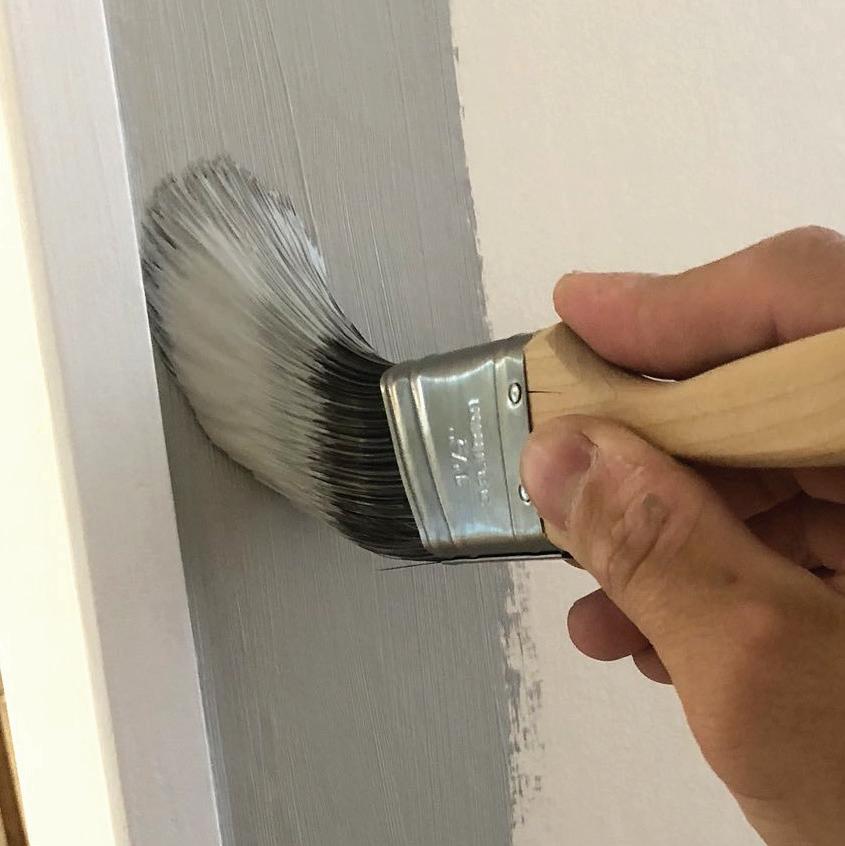
Rollers cover large surfaces quickly, while brushes are essential for detailed work such as edges, corners, and intricate designs. Professionals often combine brushes and rollers to achieve a flawless finish.
BRUSHES: DIRECTIONS FOR USE:
1
2
CHOOSE THE RIGHT BRUSH:
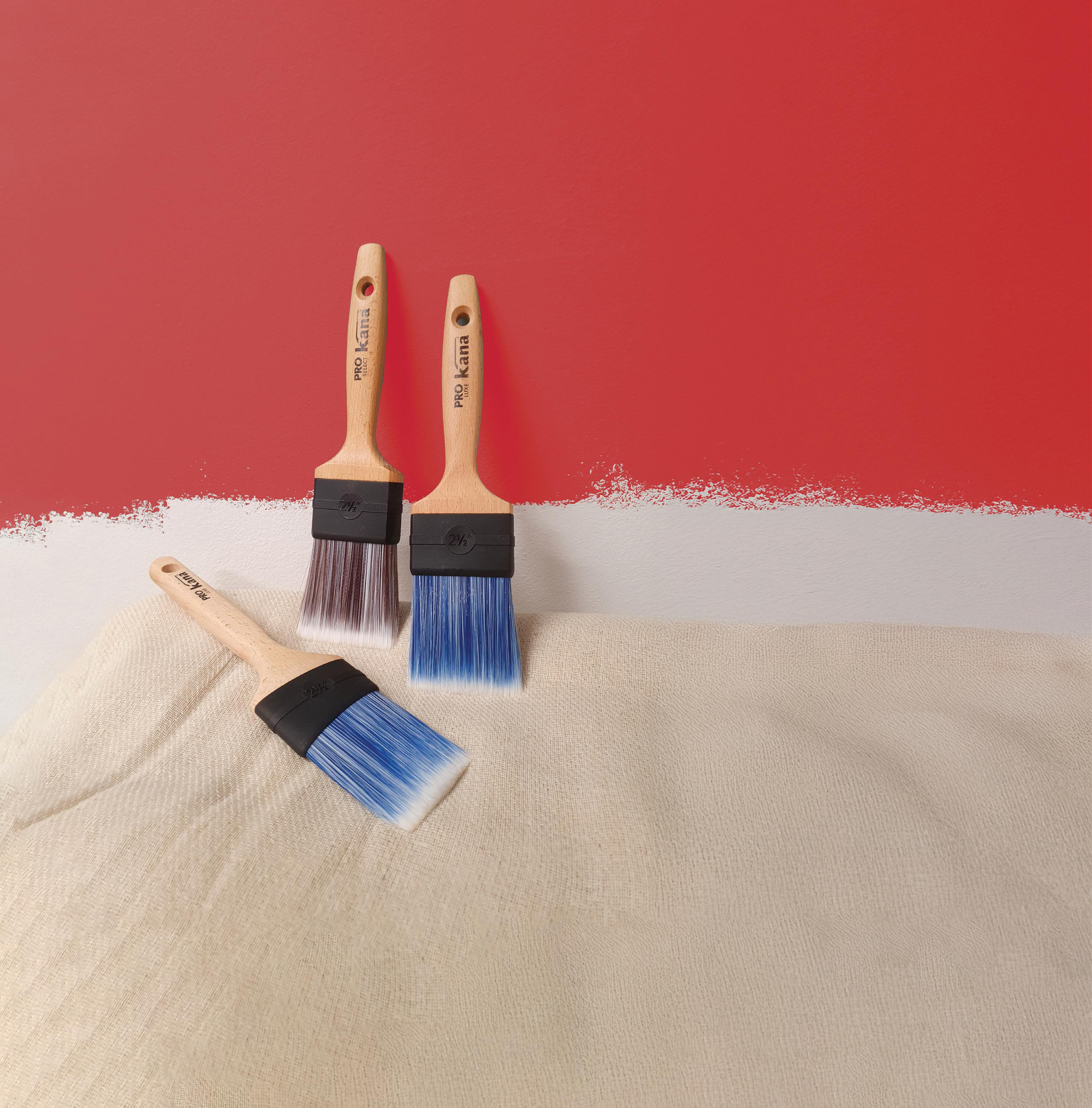
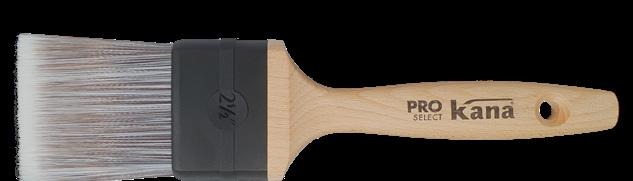
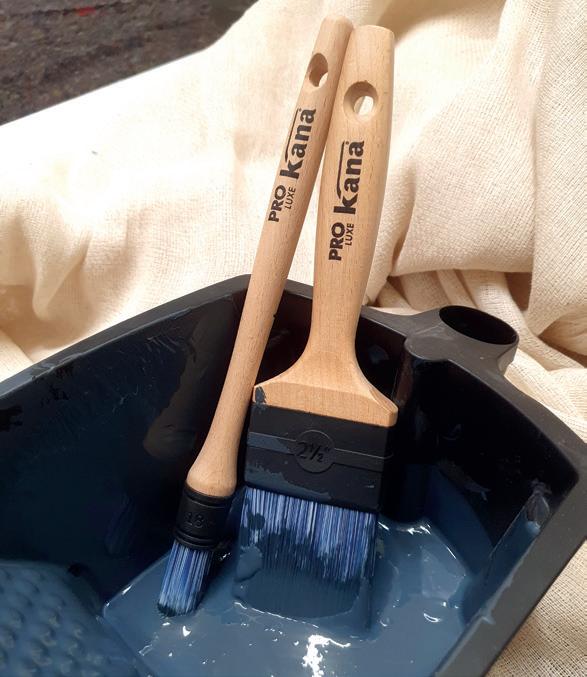
Select the brush best suited to the task. For walls and ceilings, use KANA PRO Luxe; for trim, lacquers, and detailed finishes, go with KANA PRO Select.
DIP AND APPLY:
Dip the brush into paint, tap off any excess, and apply using smooth, even strokes for a flawless finish.
3 CARE FOR YOUR BRUSH:
Clean brushes thoroughly after use to maintain performance and extend their lifespan.
“Clean brushes thoroughly after use to maintain performance and extend their lifespan”
PRODUCT EXAMPLES:
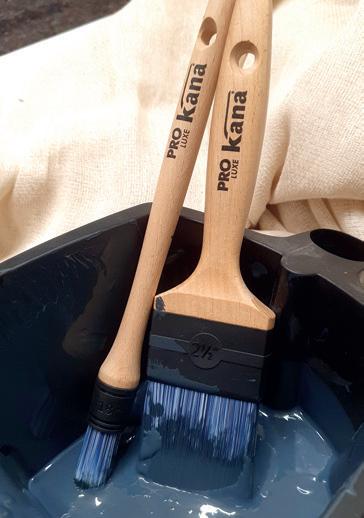
■ KANA PRO LUXE ANGLED BRUSH:
The angled design provides precision in tight spaces, making it a go-to choice for professional detailing.

■ KANA PRO SELECT BRUSH:
Perfect for thicker, hybrid, and trim paints, it holds more paint and delivers even flow for a consistently smooth finish.
MASKING: PRECISION WITHOUT THE MESS
Masking is the unsung hero of professional painting, providing clean lines and protecting surfaces not meant for paint application. It involves using materials like painter’s tape and masking film.
MASKING: DIRECTIONS FOR USE:
1
2
3
CHOOSE THE RIGHT TAPE:
Always use the correct tape for the surface being protected and spot check first.
PEEL AND STICK:
Apply tape along the edges, pressing it firmly to prevent paint bleed.
MASKING FILM FOR LARGER AREAS: Provides efficient protection. Secure it in place and cut to fit using a utility knife.

PRODUCT EXAMPLES:
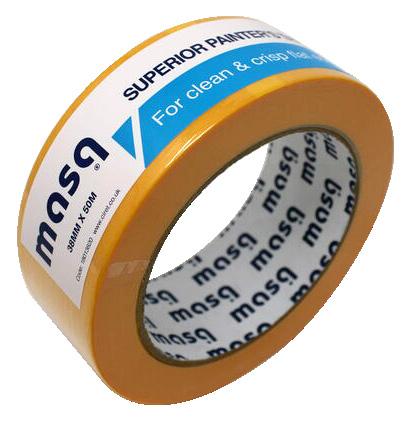
■ MASQ SUPERIOR PAINTER’S TAPE:
Known for its advanced adhesive technology, this tape ensures sharp lines and residue-free removal, maintaining a professional look.
■ MASQ COVERMASQ:
This combination of tape and masking film streamlines the masking process, saving time and effort.

“This combination of tape and masking film streamlines the masking process, saving time and effort”
SCAN HERE
to learn more about Ciret’s extensive product range.
STRESS LESS –JUST MASQ
The “Stress less – Just MASQ” concept covers masking needs for professional painters & decorators.
These premier quality tapes and masking films are suitable for a wide range of interior and exterior projects. Let’s look at some of the favourites in more detail:
SUPERIOR
MASQ Superior Painters
Tape, engineered from thin washi paper, is your go-to for precision masking on smooth surfaces, ensuring sharp, clean lines every time. It’s UV resistant and can be left on for up to 60 days.
ULTIMATE
MASQ Ultimate Painters

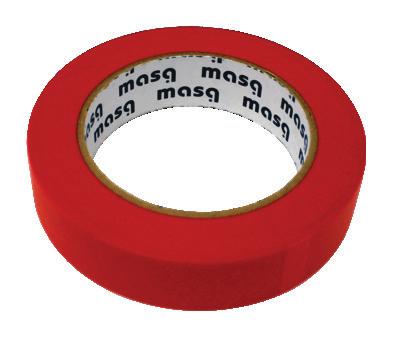
Tape offers a higher tack for irregular surfaces and boasts high moisture and humidity resistance, making it ideal for exterior projects. It’s UV resistant and can be left on for up to 120 days.
SENSITIVE
MASQ Sensitive Painters
Tape has a delicate lower tack, which is perfect for more delicate areas, like wallpaper. It’s UV resistant and can be left on for up to 90 days.
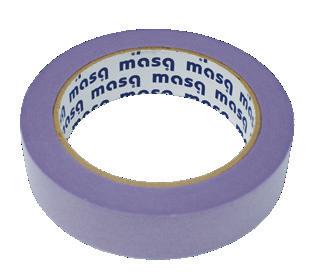
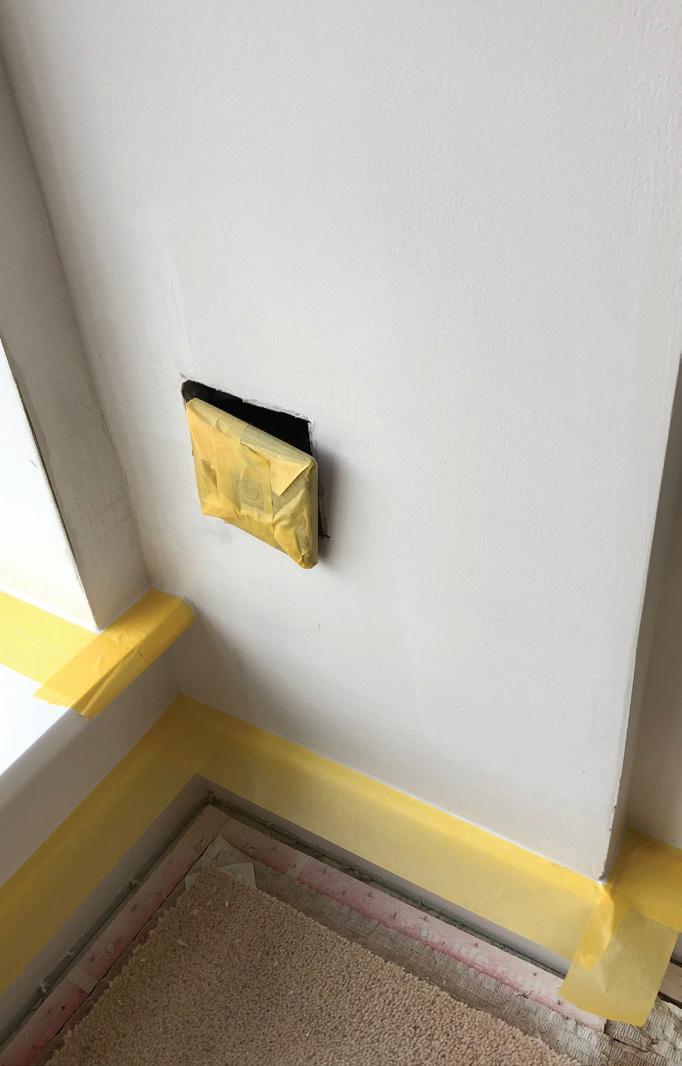
Whether it’s helping you create perfect, pristine lines or covering an exterior surface prior to painting, MASQ has you covered!

heroes
“Masking tapes are versatile tools and the unsung
of the decorating world”
SCAN HERE to learn more about Ciret products and how they can support you.


PLASTERING
KNOW YOUR PLASTERING MATERIALS
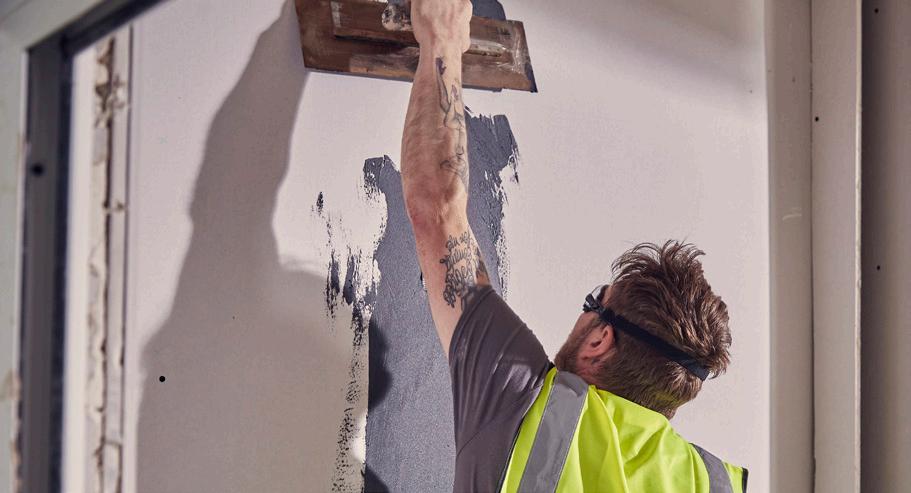
Many plasterers work with a range of boards and plasters on site, but knowing which one to use and why is an important skill.
Many of the products you’ll come across are made by British Gypsum, one of the UK’s leading manufacturers of plasterboard and plaster systems used across homes, schools, hospitals and commercial buildings. Here, the team at British Gypsum explain some of the boards and plasters you’re most likely to come across on site.
UNDERSTANDING PLASTERBOARD TYPES
Different plasterboards are designed for different building needs. Many British Gypsum boards are easy to identify thanks to their distinct colour-coded paper faces.
STANDARD PLASTERBOARD
■ Often called wallboard or standard board
■ Used for general wall linings and ceilings in dry areas
■ Commonly used in homes, offices and other everyday spaces
This is the type of plasterboard you’ll see most often on typical construction projects.
MOISTURE RESISTANT BOARDS (GREEN)
■ Recognisable by their green paper face
■ Designed for humid environments such as kitchens, bathrooms and utility rooms
■ Contain additives to reduce the rate water is absorbed

FIRE RESISTANT BOARDS (PINK)
■ Often known as FireLine boards
■ Easily recognised by their pink paper face
■ These boards contain mineral fibres and other materials mixed into the gypsum core to help the board stay stronger and hold together better when exposed to high temperatures.
■ Commonly used in stairwells, structural steel protection, escape routes and corridors


SPRAY WITH THISTLE MULTIFINISH BOOST YOUR SKILLS

SAME QUALITY FINISH
Thistle MultiFinish is now sprayable. Tested through specific machines* for adhesion to plasterboard. Ready to boost your skills. Scan to see it in action
SOUND INSULATING BOARDS (BLUE)
■ Known as SoundBloc boards
■ Identified by their blue paper face
■ Designed with a higher-density core that helps reduce sound travelling through walls and ceilings
■ Commonly used in flats, hotels, schools and offices
Sound insulating boards help create quieter spaces by reducing noise transfer between rooms.

WHY DIFFERENT BOARDS MATTER
Each plasterboard is designed to solve a specific construction challenge. Using the right board and applying it in the correct way can help with:
■ Fire safety
■ Sound insulation
■ Moisture resistance
■ Overall building performance
Knowing the colour codes can help you quickly identify which board is being used on site and why it has been specified for that area.
“Different plasters are designed to work on different backgrounds and at different stages of the plastering process”
UNDERSTANDING PLASTER TYPES
British Gypsum also produces a range of gypsum plasters designed for different stages of plastering. Different plasters are designed to work on different backgrounds and at different stages of the plastering process.
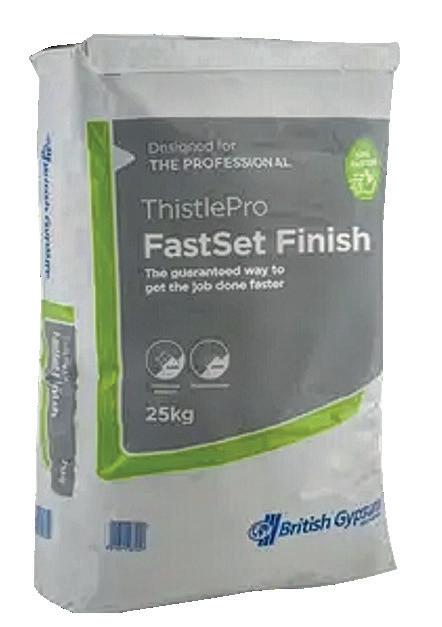
THISTLE MULTIFINISH
■ One of the most used finishing plasters
■ Applied as the final skim coat over plasterboard or undercoat plaster
■ Creates a smooth, high-quality finish ready for decorating

SUITABLE FOR:
■ Plasterboard
■ Existing plaster
■ Undercoat plasters
MultiFinish is often used as the final stage of plastering before the wall is painted or decorated.
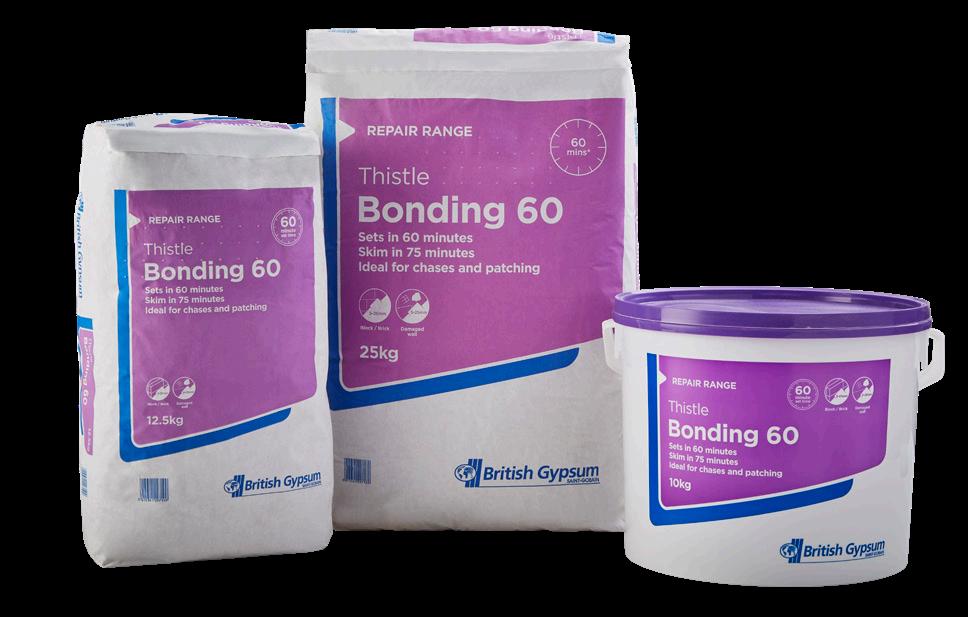
THISTLE BONDING COAT
■ A base or backing plaster
■ Used on smooth or low-suction backgrounds
■ Helps create an even surface before applying finishing plaster
SUITABLE FOR:
■ Concrete
■ Dense blockwork
■ Previously painted walls
Bonding Coat helps prepare difficult surfaces so the finishing plaster can be applied evenly.
Understanding the different plasterboards and plasters is an important step in developing your plastering skills. Recognising these materials will help you work confidently and understand the different systems that are used across construction projects.
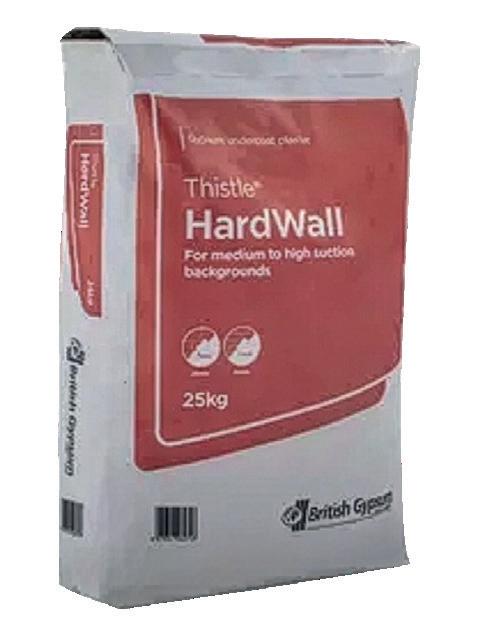
THISTLE HARDWALL
■ A strong backing plaster designed for solid backgrounds
■ Provides a durable base ready for a finishing coat
■ Ideal where a tougher backing plaster is required
SUITABLE FOR:
■ Brickwork
■ Blockwork
■ High-impact areas
HardWall is commonly used where a tougher base coat is required before applying the final skim.

SCAN HERE for more information.
SITE READY SKIMMING COURSE
With demand for skilled plasterers continuing to grow across the UK construction industry, developing strong skimming skills can open the door to a wide range of career opportunities.


British Gypsum’s Site Ready Skimming Course is designed to help learners build the practical skills and confidence needed to work on site.
Delivered over six weeks through the British Gypsum UK Academy network and partner colleges, the course focuses on the key techniques required for skimming plasterboard in real working environments.
WHAT YOU’LL LEARN
Throughout the course, learners gain hands-on experience in essential skimming skills, including:
■ Straight flat wall application
■ Window walls, reveals and beading processes
■ Finishing internal angles
■ Skimming ceilings and larger wall areas
■ Working around services such as sockets, pipes and vents
Learners work with a range of plastering tools, including speedskims, plastic trowels and specialist finishing tools.
READY FOR THE WORKPLACE
The course encourages learners to work at realistic production levels, helping them understand the pace and expectations of site work. After completing the programme, learners can continue working towards their NVQ Level 2 in Plastering through the OSAT route.
SCAN HERE for more information.
PLASTERING TOOLS
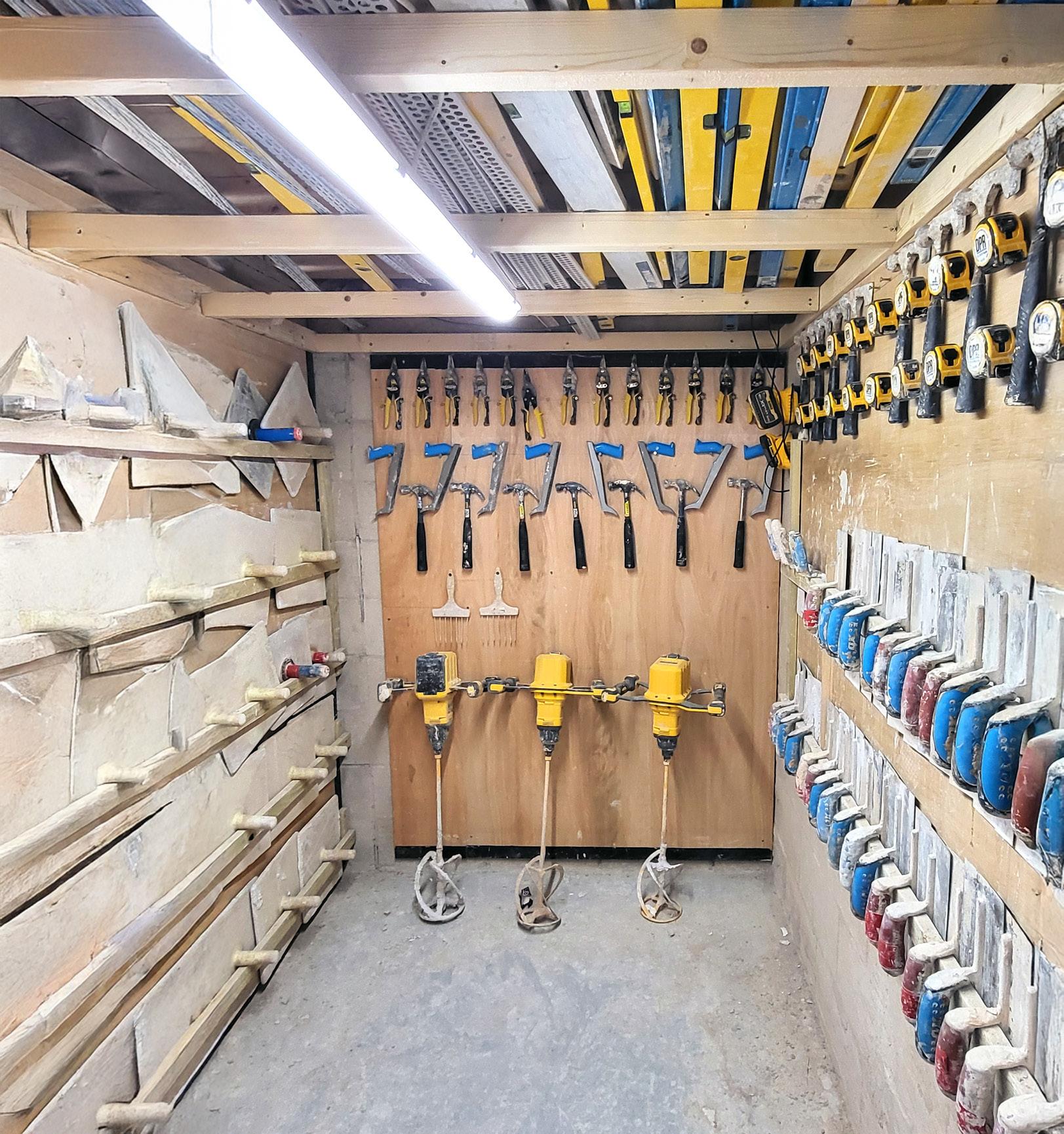
If you're starting out in plastering, knowing your tools is essential. Ben Shaw, Plastering Lecturer at Wigan & Leigh College, has selected these essential tools to help you master the trade.
“Look

Clean your tools after every use, especially your trowels and brushes, to keep them in top condition. A wellmaintained tool kit makes our job easier, helps you
and gives you a
MASTERING PLASTERING
Whether you're just starting out or already gaining hands-on experience, these expert pointers from Ben Shaw, Plastering Lecturer at Wigan & Leigh College, will help you master the basics of plastering.
BEN’S TOP TIPS

1
PREPARATION IS KEY:
Before you start any plastering, make sure you have prepared the background thoroughly. All loose areas should be removed, the suction should be controlled and the area should have a good key for the plaster.
2 ORGANISATION:
Make sure you have all the tools, equipment and materials you need ready before you begin. When the plaster is mixed, the clock starts - so being organised will save you valuable time.
3
INTERNAL AND EXTERNAL ANGLES:
People’s eyes are naturally drawn to the angles in a room. Take great care with your angles - keep them clean, crisp and as straight as you can. Your customer will appreciate the extra effort.


PICTURED:
Sam Dean of Wigan & Leigh College won Gold at the WorldSkills national final.
4

POTENTIAL CAREER PATHS
“As a beginner, don’t take on more than you can handle”
MEASURE TWICE, CUT ONCE:
A golden rule in construction. Double-check your measurements before committing to a cut. This helps to reduce waste - an important consideration when using nonrenewable resources.
5
KEEP YOUR TOOLS CLEAN:
Not only is this good practice, but it will ensure your tools last longer. Clean your tools regularly during plastering to prevent contamination from debris or leftover material on the trowel.

As you build your plastering skills, a range of exciting career opportunities awaits. Below is an overview of some potential paths in the construction industry.
SITE PLASTERER
Work on new build projects - including housing, commercial and industrial properties - often as a subcontractor and typically paid based on the area covered.
DOMESTIC PLASTERER
Focus mainly on residential projects, both internal and external, ranging from maintenance to full refurbishments. Payment is usually on a day-rate basis.
FIBROUS PLASTERER
Specialise in decorative features such as cornicing, panel moulding and ceiling roses. This work is common in restorations but can also feature in modern renovations.
SPECIALIST PLASTERER
Focus on niche areas like damp proofing, restoration or Venetian plasteringallowing you to develop specialist skills that can boost your earning potential.
PROFESSIONAL POSITIONS
With experience, progress to roles such as site agent, building surveyor, quantity surveyor or teaching - a natural move from the physical demands of plastering.
The plastering trade offers a diverse range of career opportunities. With dedication and continuous learning, you can build an exciting and rewarding career in an industry that values your expertise!
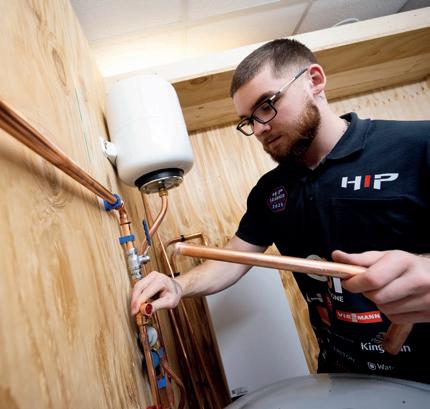
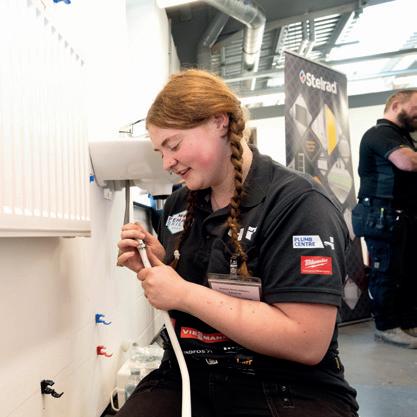
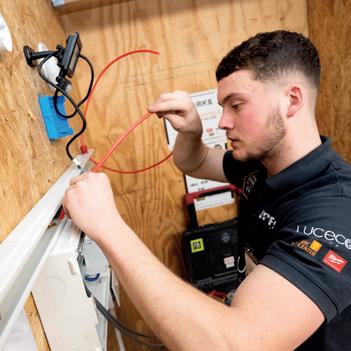
SKILLS INACTION



EXERCISES
GENERAL CONSTRUCTION
Safe working practices are essential on every construction site. These multiple-choice questions will help you check your understanding of common hazards, good housekeeping, and the day-to-day decisions that keep everyone safe on-site.
A worker reports feeling dizzy while using solvent-based materials in a small room. What is the most likely cause?
A Wrong gloves
B Poor ventilation
C Faulty power tool
D Low humidity

Q3 A site walkway becomes slippery after light rain. What should be done?
A Continue walking carefully
B Close the site
C Grit or sand the walkway and clear hazards
D Put up a wet-paint sign
Q5 Loose materials are stacked too high beside a pathway. What is the hazard?
A Noise
Fire C Falling objects
D Strong wind

Q2 A bag of cement has gone solid in the storage area. What has happened?
A Stored too close to timber
B It has absorbed moisture
C Mixed incorrectly
D Stored on the wrong pallet
Q4 What is the correct procedure before lifting a heavy object?
A Bend your back over the heavy object
B Twist your back as you lift
C Assess the load, keep your back straight and use your legs
D Hold the object as far away from your body as possible
Q6 Why is good housekeeping essential on a construction site?
A Makes the site look tidy
B Impresses visitors
C Reduces slips, trips and manualhandling risks
D Speeds up deliveries
Q1
Ans.
Ans.
Ans.
Ans.
Ans.
Ans.

Understanding the fundamentals of construction is essential for any trade professional. These exercises will help reinforce key principles used on-site every day. Select True or False for each statement below.

MEASUREMENTS
Getting measurements right is crucial in construction - whether it’s length, weight, or volume, accuracy matters. Take this quick multiple-choice quiz to test your skills. If you ever need a refresher, you can always come back and try again!
Q1 How far is a kilometre (km)? Ans. A Ten metres B One hundred metres C One thousand metres D One million metres
Q2 Which unit of length is the most suitable for measuring the length of a nail?
Q3 Which of these statements is correct?
A 1 litre = 10ml B 100ml = 1 litre
C 500ml = half a litre D 2000ml = 1 litre
Q5 Which unit of length is most suitable for measuring the height of a room? Ans.
mm
cm
Q4 A wall is 3m high and 5m long. What is the total area?
8m²
10m²
12m²
15m²
One brick is 215mm long. What is the length of 4 bricks laid end-to-end (ignoring joints)?
430mm
645mm
860mm
1000mm
A window opening measures 1200mm. How many centimetres is this?
A decorator needs to paint an 18m² wall. One litre covers 10m². How much paint is needed for two coats?
A small slab area requires 0.5m³ of concrete. Which unit best represents this measurement?
BRICKLAYING
Bricklaying demands accuracy, consistency, and strong technical knowledge. Test your understanding of essential tools, materials, and site practices with these multiple-choice questions.
Q1
A newly built wall has uneven mortar joints. What is the most likely cause?
A Using too much water in the mix
B Not using a gauge rod or string line
C Bricks were the wrong colour
D Mortar dried too quickly
Q3
A brick wall shows horizontal cracking above window openings. What is the likely cause?
A Missing or inadequate lintel
B Mortar was over-mixed
C Bricks were too dry
D Excessive pointing
Q5
A bricklayer is struggling with mortar drying too quickly during hot weather. What should be done?
A Increase cement in the mix
B Wet the bricks before laying
C Use larger trowels
D Reduce the amount of sand
White, powdery deposits have appeared on the surface of a finished wall. What is this?
A Mortar bloom
B Efflorescence
C Plaster dust
D Algae growth
Which brick bond provides the strongest structural performance for load-bearing walls?
A Stack bond
B Stretcher bond
C English bond
D Header bond
Q6
What is the main purpose of a DPC (damp-proof course) in brickwork?
A Adds insulation
B Improves soundproofing
C Prevents rising damp
D Strengthens brick bonds
Ans.
Q2
Ans.
Ans.
Q4
Ans.
Ans.
Ans.
CARPENTRY & JOINERY
Carpentry and joinery rely on precision, sound judgment, and the right techniques. See how well you know common tools, fixings, and best practices used on-site every day.
A newly fitted door is rubbing on the floor after a few days. What is the most likely cause?
A Incorrect screws used
B Timber has expanded due to moisture
C Door was painted too quickly
D Hinges were fitted upside down
Q3
What is the purpose of a moisture meter in carpentry?
A Checking levels
B Testing timber strength
C Measuring timber moisture content
D Marking cut lines
Q5
A timber floor feels bouncy in one area. What is the likely cause?
A Joists too far apart
B Floorboards too thick
C Screws too long
D Over-sanding
A skirting board won’t sit flush against the wall. What is the most likely reason?
A Wall is not perfectly straight
B Wrong timber grade
C Nails are too long
D Skirting is too tall
Which joint is most suitable for joining two lengths of skirting board along a long wall?
A carpenter is fitting hinges to a new door. What must be done before fixing the hinges?
A Sand the entire door
B Mark and chisel out the hinge recess
C Fit the latch first
D Remove the door entirely
Q1
Ans.
Q2
Ans.
Ans.
Q4
Ans.
Halving joint
Dovetail joint
Mitre joint
Mortise and tenon
Ans.
Q6
Ans.
PLASTERING
Plastering requires careful preparation, good timing, and an eye for detail. These questions will help you recap key skills, materials, and methods used to achieve a smooth, professional finish.
Q1 Fresh plaster is cracking as it dries. What is the likely cause?
A Over-trowelling
B Drying too quickly
C Using a medium float instead of a trowel
D Applying plaster too thinly
Q3 What is the purpose of a scratch coat? Ans.
A Decorative finish
B Improves key for the next coat
C Speeds up drying
D Makes plaster waterproof
Q5 Which tool is used to straighten and level freshly applied plaster?
A Hawk
B Darby
C Sponge float
D Corner trowel
Q2 Brown staining appears through paint on new plaster. What is the issue?
A Plaster reacted with the roller sleeve
B Surface wasn’t sealed with a mist coat
C Paint was too thick
D Plaster was overdue
Q4 A plastered wall is drying in uneven patches. What is the most likely cause?
A Uneven suction in the background surface
B Using the wrong size hawk
C Applying too much PVA
D Adding too much water when mixing
Plaster starts to drag and tear during application. What does this usually mean?
A Mix is too stiff
B Plaster has started to go off
C Trowel is too clean
D Wall was too wet
Ans.
Ans.
Ans.
Ans.
Q6
Ans.
PAINTING & DECORATING
Successful painting and decorating depend on proper preparation, the right tools, and a clear understanding of materials. Put your knowledge to the test with these essential trade questions.
A newly fitted door is rubbing on the floor after a few days. What is the most likely cause?
A Wrong roller sleeve
B Painting onto a dusty or greasy surface
C Paint was too cold
D Too many coats applied
What is the main purpose of a primer before painting?
Adds shine
B Helps topcoat adhere properly
C Reduces room temperature
D Thickens the paint
Which roller sleeve is most suitable for smooth interior walls?
Long pile
Medium pile
Short pile
Foam only
The finish on a wall looks patchy and streaky. What’s the most likely reason?
Poor cutting-in technique
Not maintaining a wet edge
Using a 2-inch brush
Roller sleeve was brand new
A painted surface shows bubbling. What is the most likely cause?
Overstirring the paint
Applying paint to a damp surface
Using the wrong tray
Paint was stored too high
A decorator notices brush marks on the final coat. What is the most likely cause?
Paint was applied too quickly
Using a poor-quality or worn brush
Applying too much pressure
Painting in cool temperatures
Q1
Ans.
Q2
Ans.
Q3
Q4
Ans.
Q5
Ans.
Ans.









CONSTRUCTION'S A-Z

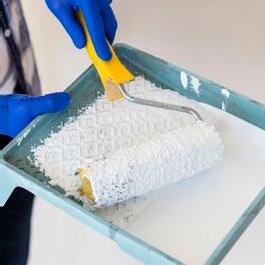
Ready to talk construction? Brought to you by the Construction Team at Wigan & Leigh College, these pages are filled with popular terms from some of the industry’s biggest trades. Many of these terms cross multiple trades, so learning them will give you a great head start!




BRICKLAYING
ABUTMENTS
The side walls that support an arch or a bridge.
BEDDING
The process of laying in position a brick, block, stonework, etc.
CORBELLING
Building out from the face of the wall, often forming a support.
DAMP-PROOF COURSE (DPC)
A waterproof course inserted in brickwork or blockwork to prevent the passage of moisture.
EFFLORESCENCE
A white, powdery substance that can appear on the surface of bricks due to the migration of salts, often caused by moisture.
EXPANSION JOINT
A gap in the masonry, typically filled with flexible material, to allow for the expansion and contraction of the building materials due to temperature changes.
EXTRUDED WIRE-CUT BRICKS
Bricks formed by forcing stiff moist clay, under pressure, through a die and cutting the extruded shape into individual bricks with taut wires.
FENDER WALL
A short wall supporting the hearth of a ground floor fireplace.
FLEMISH BOND
A traditional bricklaying pattern in which each course consists of alternating headers (bricks laid with the short side facing out) and stretchers (bricks laid with the long side facing out).
GAUGE
The specific height of every brick and block laid.
HAUNCH
The shoulder of an arch, i.e. portion on the side between the crown and the springing point.
INTRADOS
The underside or soffit line of an arch.
JOINTER
A shaped piece of metal or wood used to form a mortar joint.
KEYBRICK
A brick at the crown of an arch keeping all the voussoirs in position.
LEAF
One of the two parallel walls in a cavity wall. Each parallel wall itself is a leaf.
MORTAR
A mixture of sand, cement or lime or a combination of both, possibly with the inclusion of an air entrainer, that hardens after application and is used for jointing brickwork, or as a render.
NECKING
A band of projecting brickwork around a chimney stack.
NON-LOAD-BEARING WALL
A wall that does not support any weight other than its own, often used for interior divisions in a structure.
POINTING
Finishing the mortar joints that have previously been raked out at approx. 12mm and filled with a mortar of a different colour, texture or density than that used for laying the bricks in the wall.
REINFORCED CONCRETE
Concrete containing metal rods or steel mesh to give an additional strength.
SCUTCH
A hammer fitted with a sharp-edged blade or comb used for trimming bricks to shape.
TUMBLING-IN
Tilted courses used on sloping brickwork.
VOUSSOIRS
Wedge shaped blocks of which a built up arch is composed.
WEATHER STRUCK JOINTS
A type of pointing with a slightly sloping surface arranged to throw off water.

CARPENTRY
ARCHITRAVE
Moulding around a door or window that covers the joint between plaster and wood frame.
BIRDSMOUTH
Cut in the bottom of a rafter which allows the rafter to sit flat and securely on a wall plate.
CAMBER
The rising at the centre of a horizontal structural member to counteract sagging.
DATUM POINT
A reference point which levels are taken from.
EAVES
The edge of a roof which overhangs the face of the wall.
FIRST FIX
The installation of structural elements before plastering.
GABLE END
Triangular portion of the vertical wall at the opened end of the pitch roof.
HERRINGBONE STRUT
Struts form a cross bracing between floor joist to prevent the joist twisting.
INTUMESCENT STRIP
Fitted to fire doors, when exposed to heat they expand to seal the gap around the door to prevent the spread of smoke and fire.
JACK RAFTER
Traditional cut roof member which runs from the hip to wall plate.
KILN DRYING
A method of speeding up the drying process of timber.
LEAN-TO
A roof with only 1 slope typically leaning on an existing building.
MITRE
The intersection of two pieces of wood forming an angle.
NOGGINS
Pieces of timber placed between joists, ceilings and stud walls to catch ends of a board.
OSB (ORIENTED STRAND BOARD)
Engineered board made from compressed layers of wood strands and adhesive.
PLYWOOD
Engineered board made from several layers of thin timber laid at ninety degrees to the previous layer and glued together.
QUADRANT BEAD
A decorative piece of wood with a quarter circle profile.
RAFTER
Structural member of a traditional roof which runs from ridge to wall plate.
SECOND FIX
All the finishing work after plastering including skirting, architraves, doors, kitchens etc
TRUSS
Factory-made structural roof triangle frame designed to transfer to load to the outer walls.
UPVC (UNPLASTICISED POLYVINYL CHLORIDE)
A long lasting plastic used to make windows and doors.
VALLEY RAFTER
Rafter at the intersection of two roof surfaces meeting internally.
WALL PLATE
A horizontal timber that sits on a wall and provides a fixing point for joists and rafters.
X
The drafting symbol for a cross section of an object.
YELLOW PINE
Durable softwood often used in woodwork.
Z-CLIPS
Metal clips used in carpentry for securing panels or tabletops, allowing for wood movement while maintaining a strong hold.

JOINERY
ANNUAL RINGS
A ring of wood found in the cross section of a tree, one ring represents one year’s growth.
BAREFACED TENON
A tenon having a shoulder on one side only.
CAPILLARY GROOVE
Also known as a drip, can be found on the underside of window or door cills, the groove stops capillary action.
DEAD KNOT
A decayed knot in timber which isn’t firmly attached to the timber.
END GRAIN
The exposed cut ends of wood fibres.
FACE SIDE/ FACE EDGE
The reference surfaces of a piece of timber used for marking out and machining.
GULLET
The gap between the teeth of a saw.
HEADING JOINT
The lengthening joint used to join two pieces of timber.
INLAY
Decorative technique of inserting contrasting materials into wood.
JACK PLANE
Large plane used to remove large quantities of material.
KERF
A narrow groove or slit made by cutting or sawing.
LAMINATED
Built up of several thin layers of timber.
MOISTURE CONTENT
The amount of moisture in a material expressed as a percentage.
NEWEL
Vertical post which carries the hand rail on a flight of stairs.
OIL STONE
A stone used for sharpening tools.
PAR
Timber that has been planed on all four sides.
QUARTER SAWN
A term used in the conversion of timber, cut at 90 degrees from the growth rings.
REBATE
Rectangular groove in the edge of a piece of timber which holds glass or a panel.
SEASONING
The process of removing the sap/moisture from felled trees.
TENON SAW
Small saw used to cut the shoulders of a tenon joint.
URETHANE
Protective finish for wooden surfaces.
VENEER
A thin layer of wood or other material bonded to the surface of a more substantial material.
WANEY EDGE
Boards which are not cut square and follow the natural curve of a tree and can show the bark of the tree.
XYOLOGY
The study of trees and wooded plants.
YEW WOOD
A dark golden/orange brown versatile wood. Ideal for turning, joinery and furniture making.
ZINC COATED SCREW
Corrosion-resistant fasteners for wood.
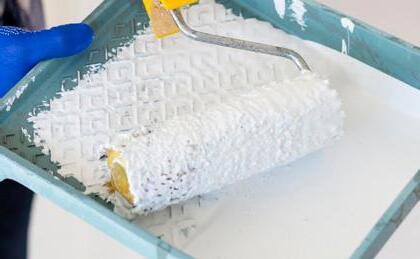
PAINTING & DECORATING
ABRADE
Preparing the surface by sanding with abrasive paper.
BUTT JOINT
Edges of wallpaper lengths that touch and join together without any gaps or overlapping.
COATINGS
Applied to surfaces and come in a wide range of paints, varnishes, stains and can be either waterborne (acrylic) or oil-borne.
DE-NIB
A light sanding between coats to remove any surface dust.
EMULSION
A water-based paint normally used to paint large areas such as walls and ceilings.
FLASHING
A defect in paint work that looks like streaks or patches.
GLOSS
High-shine paint finish for a smooth, reflective surface.
HUE
A pure colour, such as red.
INTERIOR
Painting the inside of buildings, homes, and spaces.
JOINT FILLER
Used to fill plasterboard joints.
KNOTTING
A shellac-based solution used to seal knots in wood before priming.
LINING PAPER
A wallpaper used to cover poor surfaces prior to applying paint or wallpaper.
MASKING TAPE
Adhesive tape used to create clean paint edges.
NAIL PUNCH
Used with a hammer for driving nail heads below the timber surface.
OVERALLS
Protective clothing worn when decorating, usually with pockets for small tools and paper hanging equipment.
PAPER HANGING BRUSH
Used to apply wallpaper and remove any air pockets trapped underneath.
QUICK-DRYING
Paint that dries rapidly for efficient work completion.
ROLLER
Tool with a handle and foam or fabric for painting large areas.
STENCILLING
A decorative effect achieved by applying paint on to the cut-out areas of a paper, cardboard or acetate template to produce the design on a surface.
TRIMMING KNIFE
Used to trim wallpaper and cut around obstacles.
UNDERCOAT
A paint used for improved adhesion before a top coat is applied.
VARNISH
Protective coating applied over wood to enhance durability. A resinous or water-based solution that seals and protects surfaces.
WET-AND-DRY PAPER
A waterproof abrasive paper made with siliconcarbide particles glued to backing, used wet to provide a dust-free atmosphere.
EXQUISITE EFFECTS
Creative painting techniques like stencilling, broken colour, or distressing.
YELLOWING
Discolouration that occurs over time, when oil-based paints have little or no sunlight.
ZINC PHOSPHATE
Suitable for all ferrous metal surfaces used in construction.

PLASTERING
AGGREGATE
The filler added to the plaster making up the bulk of the mix, such as sand.
BONDING COAT
Lightweight backing plaster to be used on low suction backgrounds.
CORNICE
Decorative moulding at the junction of walls and ceilings.
DRYWALL
Lightweight plasterboard used as a base for plastering.
EXPANSION BEAD
Metal strips that prevent cracks in plaster due to movement.
FLOAT
Tool for smoothing, levelling and consolidating plaster surfaces.
GYPSUM
A mineral used as the primary component in plaster.
HAWK
A hand board for holding plaster during application.
INSULATED PLASTERBOARD (THERMAL PLASTERBOARD)
Plasterboard with an insulated backing, to improve thermal and acoustic performance.
JOINT COMPOUND
Filler for smoothing and concealing joints in plasterboard.
KEYSTONE
The block, usually tapered, at the centre of an arch.
LATH
Thin strips used as a base for plaster application.
MULTI FINISH
Versatile plaster suitable for a variety of finishes.
NIB
A small return or edge formed in plaster around openings such as windows or doors.
OVERSKIMMING
Applying a thin layer of plaster over existing surfaces.
POLYVINYL ACETATE (PVA)
Primer used to seal surfaces before plastering and improve adhesion.
QUOIN
External angle of a building.
RENDERING
Exterior plastering to provide a protective and decorative finish.
SKIMMING
The setting or finishing coat which is smooth ready for decoration.
TROWEL
Flat-bladed tool for applying and finishing plaster.
UNDERCUT
The overhang in a model or mould which will prevent a cast from being removed from it.
VERMICULITE
Used as a lightweight aggregate in modern plasters such as bonding coat.
WATERPROOFER
An additive added to a gauge to improve its resistance to water penetration.
X-RAY PLASTERS
A plastering mix containing barium sulphate as the aggregate to provide protection from certain types of radiation.
ZINC
Light sheet metal, used as a profile for fibrous running moulds.
ZONAL PLASTERING
Applying different plaster finishes to specific areas.


INDUSTRY CONTACTS

APCT
The Association of Painting Craft Teachers (APCT) provides staff development for teaching and training members, covering new technology, practical skills, and traditional craft. It advises industry groups, seeks representation with national education and assessment bodies, and fosters relationships with employers, manufacturers, and suppliers in the P&D industry.
@TheAPCT www.facebook.com/groups/apctpage
British Gypsum
British Gypsum is one of the UK’s leading manufacturers of plasterboard and gypsum plaster products. Their systems are widely used across construction projects including homes, schools, hospitals and commercial buildings, helping professionals deliver safe, high-performance and durable interior building solutions.
@britishgypsum @britishgypsumsaintgobain @BritishGypsumUK @British-Gypsum
CIRET Ltd
T: 02392 457 450 I E: enquiries@ciret.co.uk
Ciret are Europe’s leading manufacturer of quality painting and decorating products. We provide expert solutions to the trade and retail industry. Our wide range of products allows both contractors and DIY enthusiasts to accomplish their decorating projects efficiently and cost-effectively.
@ciret_ltd @ciretuk @CIRET_UK @ciretlimited3086 @ciret-limited

Johnstone’s Trade Paint
T: 01924 354354 I E: customersupport.acuk@ppg.com
Johnstone's has a long history as one of the UK's foremost trade paint brands serving professionals since 1890. At Johnstone’s, we provide more than just paint, and our support services are designed to ease product selection and colour choice for any project.
@johnstones_trade @johnstonestradepaints @JohnstonesTrade @johnstone-s-trade-paints

Paslode
T: 0800 833 381
As the world’s leading manufacturer of nail fastening systems, Paslode has become synonymous with quality, innovation and product reliability. Our product development is driven by customer needs, as we look to innovate using the knowledge we have gathered from our end users.
@paslodeuk @paslodeuk
@PaslodeUKTV @paslodeuk

Snickers Workwear
@paslodeuk
T: 01484 854488 I E: sales@hultaforsgroup.co.uk
Next-level workwear that’s built to last, keep you performing at your best and looking professional on the job. Designed for ultimate comfort and safety, it’s long lasting, functional and handles whatever the day throws at you.
@snickersworkwear
@hultafors-group-uk-ltd
tesa

@SnickersWorkwearUK
T: 01908 500320
tesa delivers innovative, high-quality adhesive solutions for professional craftspeople. Trusted worldwide, tesa combines German engineering, sustainability, and smart design to help craftsmen work faster, safer, and better—making everyday jobs easier and supporting excellence in the crafts sector.
@ tesa.UK
WD-40
T: +44 (0) 1908 555 450 I E: info@wd40.co.uk
Originally created in 1953 as a rust prevention and water displacement solution for the emerging aerospace industry, the blue and yellow cans of WD-40® have become the go-to problem-solver for both DIYers and professionals alike.
@wd40uk
@wd40_uk
@OriginalWD40.UK
@wd40uk
METRIC CONVERSION TABLE
To convert METRIC to IMPERIAL multiply by the conversion factor.
To convert IMPERIAL to METRIC divide by the conversion factor.
CONVERSIONS




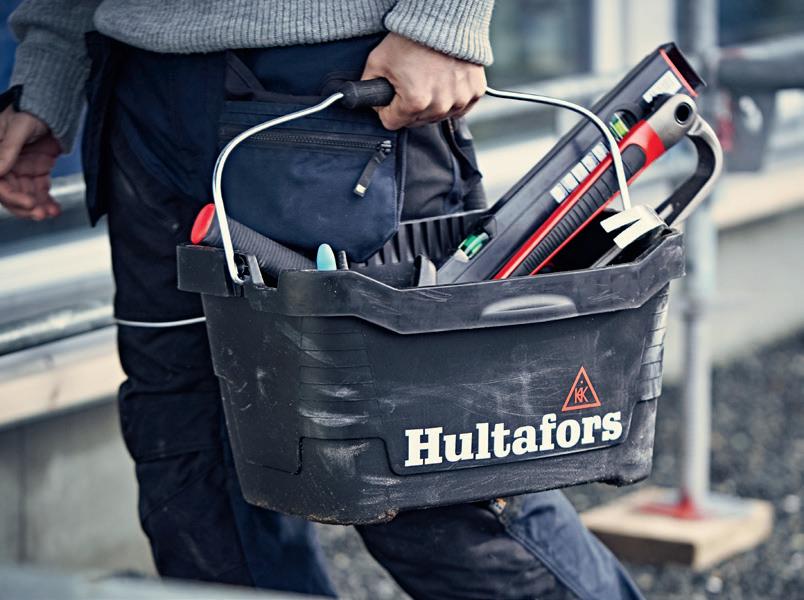

Start your career with tools you can trust.
When you’re learning joinery and carpentry, the right tools make all the difference. Hultafors hand tools are built to help you master your trade from day one.
Feel the difference from the first job:
• Tools that feel right in your hand, well-balanced and comfortable
• Built tough enough to go from college workbench to real job sites
• Trusted by professionals for over 140 years
Whether you’re working on your first project in the workshop or starting out on-site as an apprentice, Hultafors gives you the precision and reliability you need to do the job properly.
Learn with the tools the pros use.
Scan to explore our range or visit hultafors.com
