

Pat
Tina
Pat
Tina

“Before you think about buying stocks, you ought to have made some basic decisions about the market, about how much you trust corporate America, about whether you are a short- or long-term investor, and about how you will react to sudden, unexpected, and severe drops in price. It’s best to define your objectives and clarify your attitudes (do you really think stocks are riskier than bonds?) beforehand, because if you are undecided and lack conviction, then you are a potential market victim, who abandons all hope and reason at the worst moment and sells out at a loss. It is personal preparation as much as knowledge and research that distinguishes the successful investor from the chronic loser. Ultimately it is neither the stock market nor even the companies themselves that determine an investor’s fate. It’s the investor.”
This year marks the 25th anniversary of the publication of Peter Lynch’s “One Up on Wall Street.” I’ve lost track of how many investment books I’ve read in the last quarter century, but I have yet to find a paragraph that more accurately captures the essence of successful investing. Our human instincts work against us as investors and, without preparation and help, most investors are likely to fail.
Unlike the loudmouths and showmen populating today’s television shows and social media, Lynch communicated about investing thoughtfully and intelligently. He separated himself from the wannabe crowd by backing his words with excellent performance as a portfolio manager with Fidelity Funds.
He was also known in our industry as famously skeptical of economic and market forecasting. Another investor with a pretty good track record, Warren Buffett, also resides in the anti-forecasting camp. I think about this every year as the “experts” race to issue their predictions for the year ahead. Mark and I absorb a large amount of this material to stay well informed, and, on occasion, we find a nugget of useful information. Like the old prospectors, we sift through a lot of junk every year in hopes of finding even a small amount of gold.
Not surprisingly, the hard evidence that Peter Lynch and Warren Buffett are on to something in their skepticism of forecasts continues to grow. A recent study conducted by Bespoke Investment Group compared yearly
Wall Street predictions with actual market results going back to 12/31/2000 - the variance between actual annual performance and predictions averaged 14.2 percentage points. As a numbers guy, it’s hard to fully emphasize how bad these annual forecasts have been for over 25 years. They aren’t just missing the broad side of a barn; they are missing the broad side of an aircraft carrier. A monkey throwing darts at returns on a dartboard would likely be more accurate. And the details inside the Bespoke report indicate an alarming trend—the forecasts are getting worse, not better. Despite access to computing power, AI, and analytical tools unlike any in the past, forecasting markets is becoming increasingly difficult.
This all just seems academic until you realize that many investors are making decisions based on these forecasts. Mark and I remember several prominent and highly respected analysts and economists recommending that clients sell their stocks at the end of 2022. A case could be made that Jamie Dimon, CEO and Chairman of JPMorgan Chase, the largest US Bank, keeps his finger on the pulse of the US economy more that anyone in our industry. In a June 2022 speech, he warned: “Brace yourself, an economic hurricane is right around the corner.” I’m not sure what led him to this conclusion, but his words carried a lot of weight. He is a highly respected figure, and I’m sure many JPMorgan clients and others took his warning as a signal
to sell or reduce their stock holdings. The economic hurricane hasn’t arrived, and anyone who sold stocks in 2022 missed out on big gains in 2023 and 2024. This doesn’t mean Dimon isn’t still the smartest guy in the room. It’s another indication that the economy and markets are becoming immensely complex every year.
I hope this helps you understand why Mark and I don’t manage your investments, or adjust your financial plan, based on anyone’s forecast. We make decisions based upon data, rather than trying to predict the future. Financial markets don’t care what we think they should do, what politicians say they will do, and what the smartest experts recommend. Markets are completely indifferent to our hopes and predictions. This harsh reality drives many smart people crazy. The next time you hear someone say, “This market doesn’t make any sense,” you can smile to yourself and know it doesn’t have to make sense for you to make money. And if anyone tells you they know where the market will be 12 months from now, nod politely and head for the nearest exit.
Mark and I have remained more positive than most over the past two years, but not because we have a crystal ball. From our years of experience, we understand that headlines, opinions, elections, and the resulting emotions cause short-term market volatility. But ultimately, markets are driven by measurable underlying fundamentals like corporate earnings, economic growth, employment, interest rates, inflation, and productivity.
The US economy continues to frustrate the naysayers and display resiliency, particularly compared to other economies around the world. There are multiple reasons for the ongoing strength of the US economy, but I would place worker productivity near the top of the list. In our 2nd Quarter 2024 Newsletter, I wrote extensively about the country’s strong labor productivity growth over the past three years. These gains are continuing, and you can think of productivity as the “secret sauce” helping drive economic growth.
You may be wondering: If we don’t spend much time with forecasts, how do we make investment management decisions? Good question! We adjust your portfolio for one of two reasons:
1. Changes to your individual financial situation. This is why review meetings are so important to us.
2. Changes in underlying economic fundamentals and market valuations.
We are continuously monitoring the economic and investment landscape looking for ways to best align your investments with your goals and current economic conditions. We aren’t speculators or traders. We don’t chase the latest hot investments and believe you are better served in the long run by owning high quality stocks and bonds. We are willing to trade some upside potential for protection when markets fall. This is especially important when drawing income from your portfolio. We are perfectly happy hitting singles and doubles with fewer strike outs. (I couldn’t resist one baseball analogy!). If anyone happens to ask you how your advisors manage your investments, simply read them these last couple of paragraphs or, better yet, hand them a newsletter. We always keep extra copies!
March 18, 2019
Martin & Marsha Lynch 43347 Nebel Trl Clinton Twp MI 48038-2465
Dear Martin & Marsha:
I love sending WorthWhile mix of cultural, financial and latest edition of Raymond James’
The Spring edition takes us guide for surviving in just about planning.
I’ll finish with one bold prediction for 2025: Something important will happen that no one saw coming. I know you’re smart enough to realize that isn’t a prediction at all, it’s a statement of fact. By the way, it doesn’t have to be something bad. It could be good, even great. The world is far too complex for something unexpected not to happen. I’m equally confident in predicting that no matter what happens, good or bad, our team will be here to keep you on track toward reaching your financial goals.
Many of my friends tell me everyone, and I believe there thoughts when you can. I always
Sincerely,

“Pilots used to fly planes manually, but now they operate a dashboard with the help of computers. This has made flying safer and impro ved the industry. Healthcare can benefit from the same type of approach, with physicians practicing medicine with the help of data, dashboards, and AI. This will improve the quality of care they provide and make their jobs easier and more efficient.”
M.
As the second worst performing sector in the S&P 500 Index last year, the Healthcare sector has now underperformed the same index by roughly 48% over the past two years. One reason for this is the surge from the Magnificent 7 stocks—Nvidia, Alphabet (Google), Apple, Amazon, Microsoft, Meta (Facebook), and Tesla— fueled by groundbreaking innovations in Artificial Intelligence (AI). Those seven stocks currently account for 40% of the S&P 500 index, indicating an extremely top-heavy index. Healthcare’s underperformance also stems from the increased number of people using government health programs like Medicaid and Medicare—43% in 2019 up to 45% in 2023—which has limited healthcare providers’ earnings.
Let’s take a step back to remind you how Jeff and I manage clients’ money. We maintain core positions in our portfolios to capture the broader growth, innovation and cash flow within the US economy, while retaining the flexibility to adjust risk levels based on key economic variables. This portion of your allocation is found in the long-term equity bucket. We’ve decided to maintain higher levels of risk over the past few years as US markets benefited from tremendous innovation, primarily due to AI. On the Fixed Income side, middle bucket,
we’ve purposefully decided to take minimal risk, holding Short-Term or Ultra Short-Term Bonds with maturities of two years or less. The final bucket, cash equivalents or money market fund, is designated especially for clients receiving consistent distributions from their portfolio.
Within the long-term bucket, we maintain mostly core equity positions but reserve the fiduciary discretion to allocate towards sectors in the market where outperformance is likely. We view this as the tactical allocation, separate from the core positions in your portfolio, and allow for 10%-20% of the overall portfolio. You’ve experienced this tactical position over the past couple years through the SPDR Financial ETF (XLF).
A few years back, we identified the financial sector (XLF) with promising outperformance due to historically low valuations—bank stocks in particular—amidst a historically low-interest rate environment. This culminated through the Bank Crisis in March 2023, resulting in smalland mid-sized bank failures, including Silicon Valley Bank (SVB) and First Republic Bank (FRB). Now, we were early in allocating to XLF but overall have experienced outperformance relative to the S&P 500 Index over the past two years.
This brings us back to the opportunity in Healthcare today. As I mentioned above, the sector has dramatically underperformed the broader markets. This is typically the starting point where Jeff and I dig further to find an opportunity for growth and outperformance. We believe we’ve found that in Healthcare, based on the formation of these supporting themes:
1) Improved balance sheets, over the past couple of years, by companies deleveraging from 2023 transactions and patents on a number of drugs approach expiring. The sector is setting up well for mergers and acquisitions (M&A) activity in 2025. Much like the banking sector, consolidation tends to generate efficiencies, adding to the bottom line for companies.
2) Obesity drugs and other specialty drugs continue to be in high demand and are forecasted to generate over $200 billion in sales by the end of the decade. We continue to see innovation with obesity drugs, as the first oral GLP-1 pill is currently in clinical trials.
3) Technology-driven efficiency will provide improved expansion of home healthcare and create opportunities for software platforms. We view this as the trickle-down effect of AI innovation. The tremendous capital expenditures in AI are now starting to pay off with other sectors, and Healthcare, in particular, will start to benefit.
4) The aging population, in the US and globally, will continue to drive increased long-term spending in Healthcare.
You’ve likely seen trade confirmations, in your mailbox or email, indicating the moves we’ve already made on your behalf. Vanguard Healthcare Index ETF (VHT) is the low-cost ETF used for our additional tactical allocation. If you have any questions or want to discuss anything regarding your portfolio, please feel free to reach out to Jeff or me.
December is always busy at our office, with our annual holiday party at Assumption Cultural Center as the highlight. Just like past years, old friendships were rediscovered, and new friendships bloomed. Tony and his team at Marchiori Catering once again delivered great food and service. Special thanks to Tina and Sarah for all their hard work behind the scenes to create a well-organized, special event.

The team enjoyed a holiday lunch at San Morello restaurant in downtown Detroit.

Generosity is one of our company’s core values. We formed a partnership with Toys for Tots several years ago to collect new toys for local children at Christmastime, and the momentum has continued to build since then. Thanks to the generosity of so many wonderful clients, 2024 marks our largest collection of toys to date.

We hope your new year is off to a good start. This past year was certainly interesting, and 2025 will find its own way of surprising, disappointing, and delighting us. Our entire team looks forward to working together through whatever may come our way. We hope you will join us in person or via Zoom for our 2025 Market & Economic Update on February 19th. Thank you for taking the time to read our newsletter and for your continued trust and confidence.
Jeff Mark Pat Tina Sarah


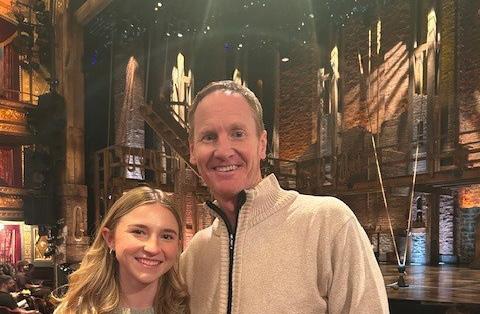
Quick trip to NYC with Emma to take in her favorite play, Hamilton!

Annie taking after her big sister going full steam into cheer.

Newest member of the Romin Family. We named him Hutch after his big brother’s favorite Lion.





already 2 months


23201

Lakeshore Financial Planning Inc. is registered as an investment adviser with the SEC and only transacts business in states where it is properly registered or is excluded or exempted from registration requirements. Registration as an investment adviser does not constitute an endorsement of the firm by the SEC nor does it indicate that the adviser has attained a particular level of skill or ability. Lakeshore Financial Planning Inc. is not engaged in the practice of law or accounting. Always consult an attorney or tax professional regarding your specific legal or tax situation.
Content should not be construed as personalized investment advice or as an offer to buy or sell, or a solicitation of any offer to buy or sell the securities mentioned. Content should not be regarded as a complete analysis of the subjects discussed. Different types of investments involve varying degrees of risk, and there can be no assurance that any specific investment or strategy will be suitable or profitable for an investor’s portfolio. Past performance may not be indicative of future results.
Charts and indices do not represent the performance of Lakeshore Financial Planning Inc. or any of its advisory clients. Historical performance results for investment indexes and/or categories, are provided for illustrative purposes only, and generally do not reflect the deduction of transaction and/or custodial charges or the deduction of an investment-management fee, the incurrence of which would decrease historical performance results. There are no assurances that an investor’s portfolio will match or outperform any particular benchmark. Information contained in this report does not purport to be a complete description of the securities, markets, or developments referred to in this material. The information has been obtained from sources considered to be reliable, but we do not guarantee that the foregoing material is accurate or complete. Expressions of opinions are as of this date and are subject to change without notice. Every investor’s situation is unique, and you should consider your investment goals, risk tolerance and time horizon before making any investment. Investing involves risk and you may incur a profit or loss regardless of strategy selected.
Please be certain to contact Lakeshore Financial Planning anytime there is a material change to your financial situation or investment objectives, or if you wish to impose any reasonable restrictions on the management of your portfolio.