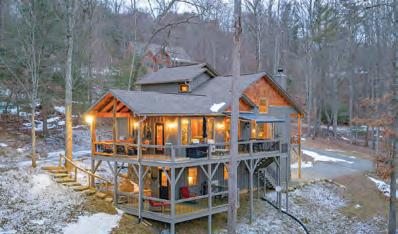
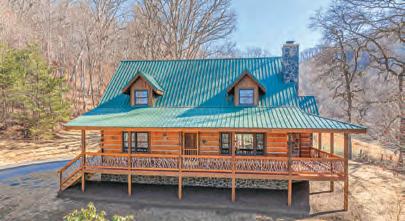
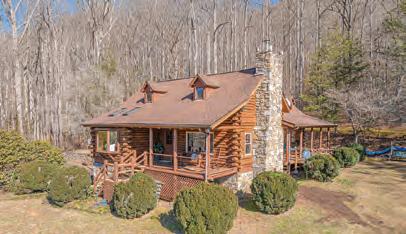
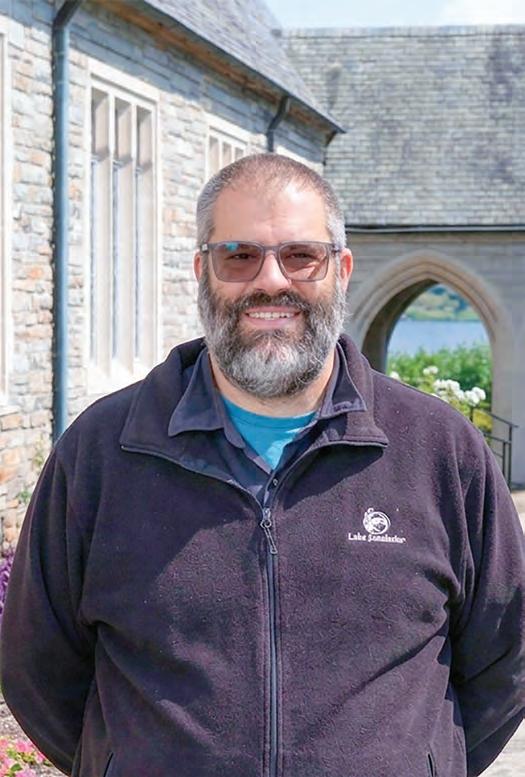
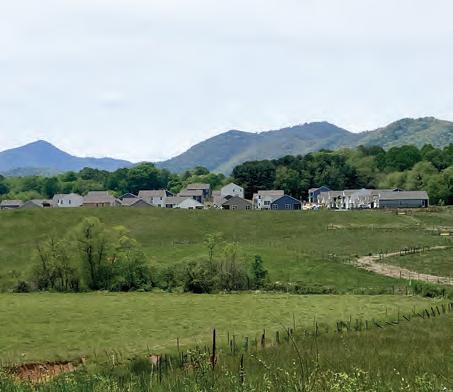
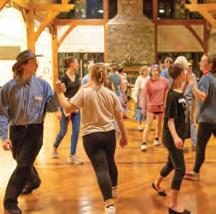
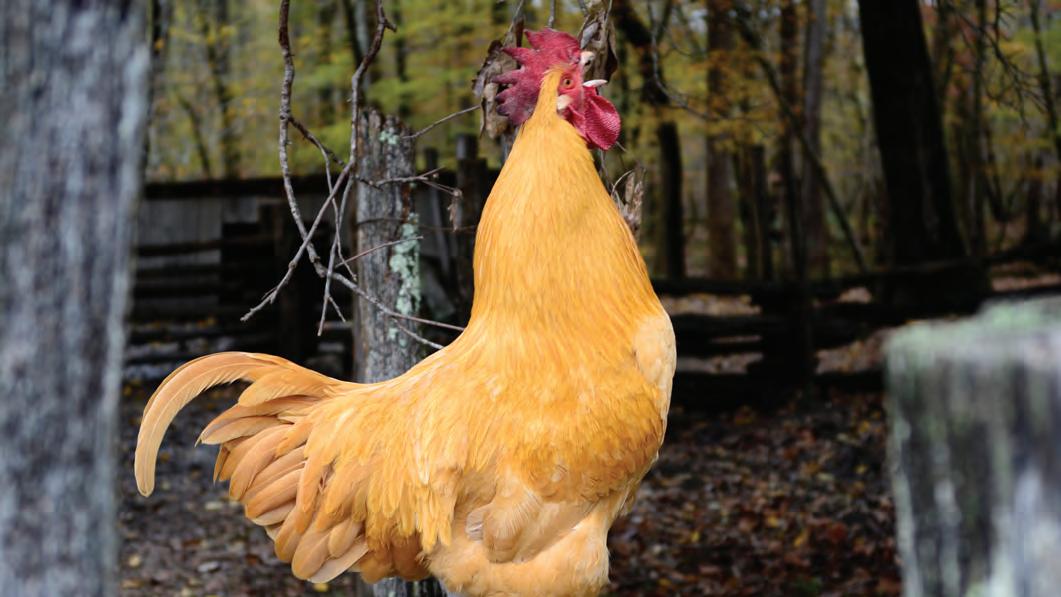
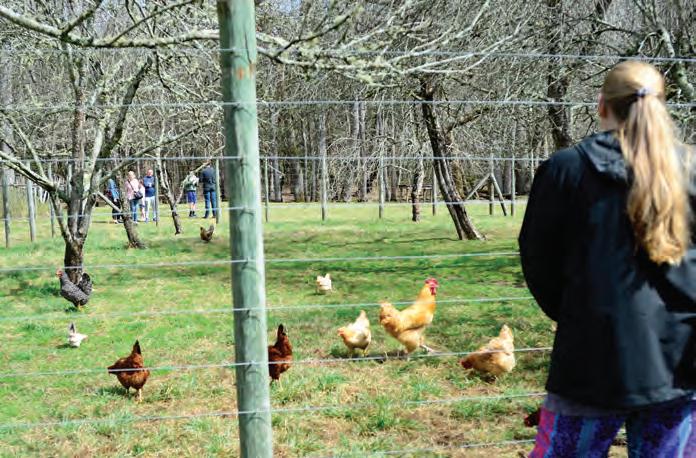
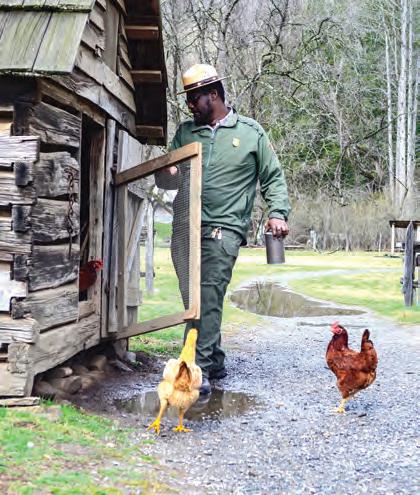
Next to the Oconaluftee Vistor Center in the Great Smoky Mountains National Park is a curious attraction — about 30 chickens. Who’s in charge of the chickens at the Mountain Farm Museum in Great Smoky Mountains National Park? According to the National Park Service, it’s Interpretive Park Ranger Michael Smith. Learn more inside. (Page 30) Holly Kays/Smokies Life photo
News
EBCI talks environmental justice, data center moratorium at town hall..............4 WCU May Day Rally celebrates unions, decries political attacks........................6 Huge tax hike looms as affordability crisis hits Haywood’s budget......................8 Flag becomes symbol of Helene recovery................................................................13 Whatley claims on Helene aid collapse under scrutiny..........................................14 Ethics probe targets Republican Rep. Chuck Edwards........................................16 ‘Mike’s Law’ aims to change state DWI laws............................................................17
Opinion
This is not what Waynesville needs..............................................................................20 Letters to the editor..........................................................................................................21
A&E
A conversation with Lucinda Williams ........................................................................22 Whole Bloomin’ Thing......................................................................................................28
Outdoors
National park announces camping fee changes ....................................................32 The Joyful Botanist: Flava Flave....................................................................................34
EBCI talks environmental justice, data center moratorium at town hall
BY LILY LEVIN STAFF WRITER
An April 25 Qualla Boundary town hall about data centers, featuring three speakers instrumental in the fight against hyperscale expansion on Indigenous land, both generated support for a tabled tribal council moratorium and explained the myriad ways these facilities can harm environments and cultures alike.
Eastern Cherokee Organization Communications Organizer Lu Montelongo coordinated the event alongside her mother, Mary Crowe. Montelongo said the mother-daughter pair was able to implement this programing through Crowe’s role as just transition organizer for the Indigenous Environmental Network — and her own position with ECO — as data centers became an increasingly relevant issue.
bean bread.
The subsequent presentation was framed as a momentum-generator for the moratorium, submitted by council members Shennelle Feather (Yellowhill), Lavita Hill (Big Cove), Shannon Swimmer (Painttown) and Venita Wolfe (Big Cove).
but recent hyperscale buildouts — like Core Scientific’s facility in Marble, with a total power capacity of 117 megawatts and a campus footprint of 70 acres— are unprecedently dangerous, Harmon said.
for sightseeing. They were headed to the predominately Black south Memphis, home to the massive campus of “xAI,” owned by Elon Musk. The facility — the product of a non-disclosure agreement — is operating non-permitted methane gas turbines that generate smog and emit formaldehyde, Harmon said.
“In about five minutes of being [at xAI], we had a headache, and we felt nauseous, and we felt very sick, almost immediately from being close to that data center. We had to get out of there,” she recounted.
“And there’s neighborhoods there — it’s a community.”
“There were so many surrounding counties that were having town hall meetings, so we wanted to have one and get our community educated and involved,” explained Montelongo. But the three-hour April 25 event wasn’t just any town hall. From the start, it centered Cherokee culture, tradition and values. An hour-long no-cost community meal headed off the program, inviting attendees to get to know their neighbors while enjoying traditional, locally sourced Cherokee food. Through their collective, Bigwitch Indian Wisdom Initiative, Eastern Band of Cherokee Indians enrolled member Tyson Sampson had catered an assortment of regional Indigenous dishes such as taters and ramps, poke and eggs and
Wolfe, the only co-sponsor present, said she would’ve been joined by Feather, Hill and Swimmer, each of whom had prior obligations.
On May 7, she said, the moratorium would be deliberated by tribal council as an ordinance.
The legislation seeks an indefinite ban on the construction of data centers, defined as “a large-scale facility, campus of facilities, or array of interconnected facilities which house working servers and that are developed to cool, secure and connect data associated with applications and services.”
The ‘large-scale’ categorization was contextualized by IEN Policy Analyst and Muscogee (Creek) Nation citizen Jordan Harmon.
Data centers have existed since the 1940s,
“Large data centers can use up to 5 million gallons per day, or 1.8 billion [gallons] annually,” she said.
Two-phase immersion cooling, a popular alternative to water, can have significant healthrelated impacts due to its usage of PFAS “forever chemicals.” Migrating birds and bugs, she added, are impacted by facility-produced light pollution. As a security measure, some data centers employ a sonic weapon called longrange acoustic deterrence. LRAD is potent, capable of causing physical pain within a 20meter radius.
LRAD notwithstanding, the noise from these facilities is a nuisance at best, and harmful at worst, she noted. For example, Harmon and a co-presenter took a slight detour during their road trip to the Qualla Boundary, but not
She then posed a rhetorical question to the audience: “Why are data centers coming to North Carolina?”
Municipalities, Harmon said, are courted by big tech “for pretty much the same thing” nationwide.
“Number one: the availability of power, coal, gas plants or what they’re calling renewable energy, like nuclear,” she explained.
Tribal land has long been exploited through nuclear testing and waste dumping, and the health outcomes are devastating. The Navajo Nation’s drinking water has been poisoned by over 500 abandoned uranium mines. Western Shoshone territory once endured nearly 40 years of nuclear testing. F
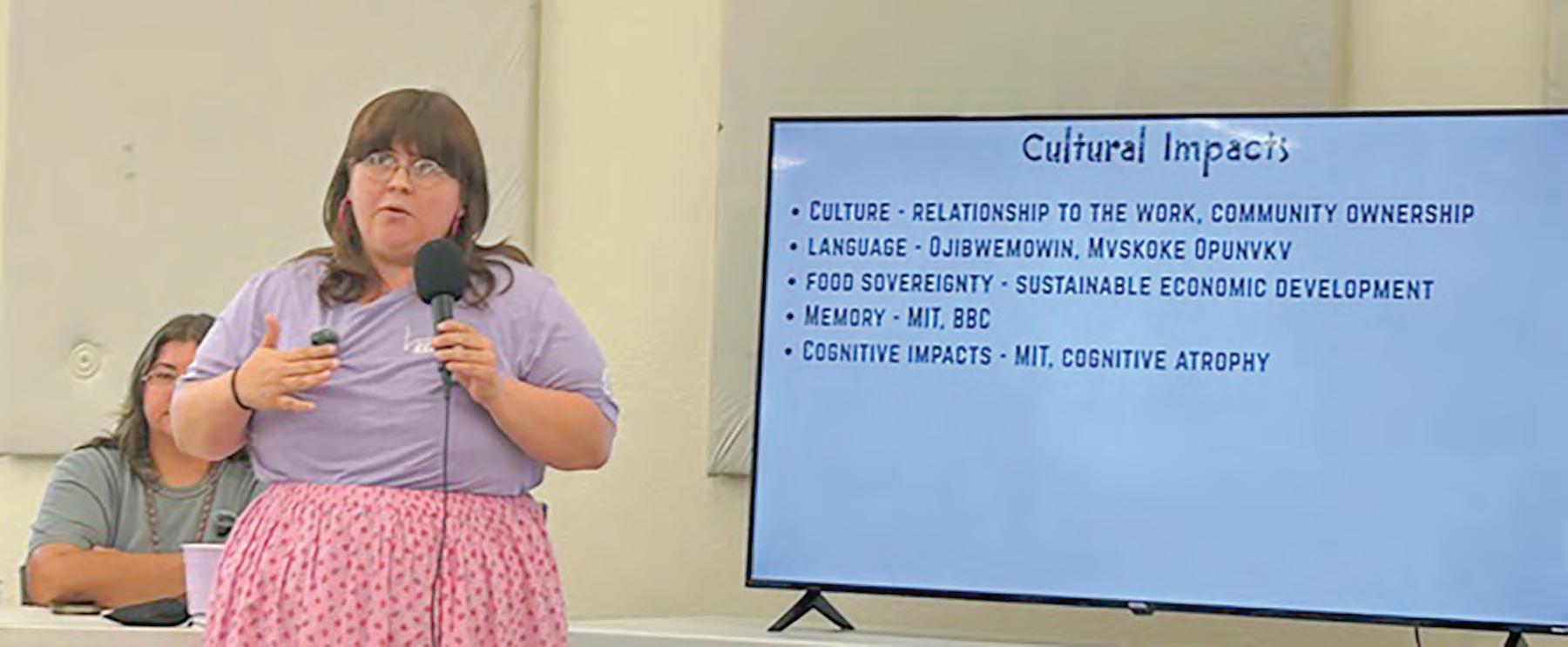
The EBCI town hall addressed the cultural impacts of data centers. File photo
The last remaining U.S. uranium mill continues to pollute the ancestral homelands of the Ute Mountain Ute Tribe.
Harmon was quick to highlight the imperfections of alternative green sources. For example, solar and wind power require lithium mining, a process that has created environmental “sacrifice zones” within South American Indigenous communities.
“There is no such thing as power generation — whether it’s hydro, solar, wind — that is totally sustainable with zero impact and zero emissions. That is a fairy tale. It doesn’t exist. The only way to reduce the impact is to reduce the demand,” she said.
And right now, demand is skyrocketing — because of hyperscale data centers, not “regular people” she noted.
The United States leads the rest of the world in domestic data center construction, and it’s not even close. According to Statista, the U.S. had 4,184 data centers in April 2026. With 515 centers, the United Kingdom took a distant second.
But why is this country so keen on hyperscale expansion?
Fellow presenter and Keetoowah Band of Cherokees enrolled member and Cheyanna Morgan attributed it to “the possibility of artificial super-intelligence.”
While ASI is a relevant, if controversial, topic, it’s not been reported as the key reason behind massive data center growth. Instead, research shows that AI demand is primarily driven by circular corporate financing — like Nvidia’s $100 billion investment in OpenAI for data centers filled with Nvidia’s chips — enterprise workflow integration at major companies and firms, search engine embeddedness, training needs, social media optimization, chatbot generation and weapons systems.
acres of land in a trust sustain a food sovereignty initiative. Food deserts are common within the reservation; where Roberts lives, it’s an 11mile journey to get to the supermarket. The original proposal would “ensure that our people can have good, healthy food, eat at an accessible in an accessible place, at an accessible way,” she told the audience.
The land was rezoned to make way for a data center park. But thanks to the tireless efforts of Roberts, Harmon and Morgan — which included staging town halls, emailing representatives and hosting a rally — the project was voted down, 9-4.
“Every tribe has their own protocols and procedures of sacred consent. You don’t take more than you need. You make sure that you leave enough for everybody to receive that abundance, and so data centers, particularly, that is directly antithetical to many of our beliefs as indigenous people,” Roberts said.
So too, she said, is the narrative of productivity and urgency that inundates today’s society. “For us as indigenous people, the work is the point. The process is the point,” she explained.
Language can encompass some of the more insidious ways generative AI is hurting tribal nations. Roberts recounted that someone in a language revitalization Facebook group had incorrectly used a Muscogee word. After this person was lovingly corrected, Roberts told the audience, she doubled down because ChatGPT — “not an elder; not a Mvhayv, a teacher” — had been a consultant.
Tribal land has long been exploited through nuclear testing and waste dumping, and the health outcomes are devastating.
“We give [our linguistic tradition] to ChatGPT, and suddenly the people that have been stewarding it for generations are the people that know the least,” she said.
Regarding the latter, said Morgan, “Palestine really became a testing ground.”
For example, a targeting system called The Gospel, one of many AI products developed for Israeli military usage. Military technology experts have criticized the system for intensifying Gaza’s devastation, and a detailed report claimed the Gospel manufactures targets to punish Palestinian civilians.
As for AI demand drivers that impact the everyday American, some have been advertised as enhancing or streamlining user and consumer experience. But most have been released — think AI search engine overview, e-mail and text summaries, Flock cameras and facial recognition — without request or permission. That’s why, Morgan explained, a hyperscale facility has no place within the Indigenous “anti-extractive” data sovereignty movement.
“Data sovereignty is based on the autonomy of personhood for native peoples. Data sovereignty requires consent and collective agreements,” she said, adding that consent must be given by the population, not just its government.
Final speaker Kenzie Roberts, a grassroots organizer and Muscogee Nation citizen, shared an anecdote illustrating this notion.
The Muscogee Nation had purchased 5,000
According to EBCI enrolled member Elvia Walkingstick, the intersection of language and AI on the Qualla Boundary has also proved an issue. As a second language-learning member of the Cherokee revitalization project, she, alongside other coworkers, was instructed to program the language into an AI platform called Terentia. Though Cherokee speakers were available for consultation, the archive would be built through the limited knowledge of Walkingstick and her coworkers.
“Our tribe has already adopted [Terentia]. We’re already pushing forward. But I want you guys to be aware that students, second-language learners, did push back on it, and we were removed from the project,” she said, adding that one person was even written up for speaking out.
Wolfe shared Walkingstick’s unease about the situation.
“My concern is also our language, in keeping our language pure and alive. And we’ll have that conversation, because I think that’s going to come up next,” explained the councilwoman, before bringing the conversation back to the moratorium.
“Come in on Thursday the 7th. Come support this [ordinance],” she said. “We want our people to be involved in everything that we’re doing in that council chamber. This is for you all. It’s for all of us.”
WCU May Day Rally celebrates unions, decries political attacks
BY LILY LEVIN STAFF WRITER
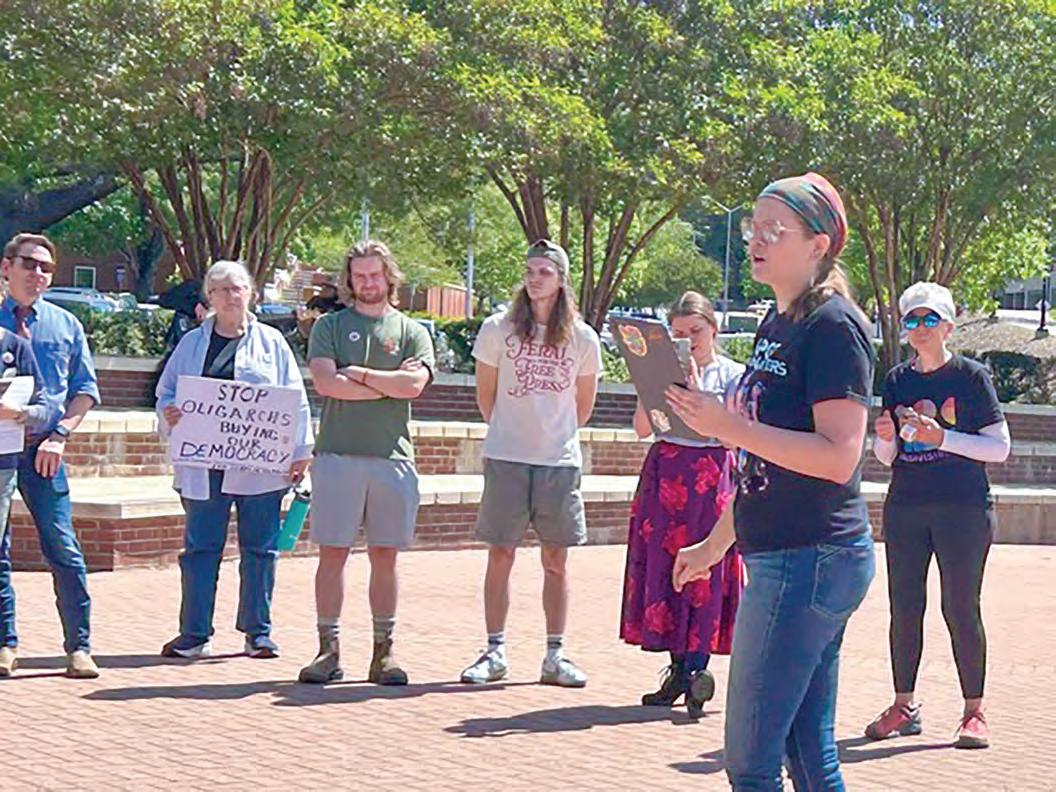
On May 1, several dozen students, faculty and community members gathered beside Western Carolina University’s “Catafount” in Cullowhee for a May Day action celebrating the history of labor organizing — and demanding the rights workers have yet to be afforded. May Day, also known as International Workers’ Day, is an expression of worker solidarity in honor of those who lost their lives in the aftermath of Chicago’s Haymarket affair. In early May 1886, workers had been on strike for an eight-hour workday and were confronted by the police at a Haymarket Square rally. A bomb was thrown and detonated by an unknown party. Authorities — without evidence — convicted eight known labor organizers, several of whom were not present at the time of the explosion. Four of the eight were hanged, one died by suicide and three were sent to prison and eventually pardoned. While May Day is recognized in many countries, the United States celebrates Labor Day in September because former President Grover Cleveland did not want Americans associating it with the Haymarket riots and workers’ political demands.
from working-class people.
A whiteboard facing the fountain asked passersby to consider a personal question — “What labor issues matter to you?” — as rally-goers chalked the ground with messages such as “Like Saturdays? Thank unions” and “No war with Iran, peace not bombs”.
Like the Haymarket rioters, WCU May Day speakers were driven by grievances that affected their livelihoods — through witness, relationship or experience.
Undergraduate senior and RBC General Secretary Max L. spoke about how AI is affecting students like himself.
“We need to oppose AI in higher education almost totally. There’s no way it works. It’s only led to negative outcomes for us up until now,” he said, framing the harms of its usage not in terms of academic dishonesty but rather in its intellectual impacts down the line. In other words, asking ChatGPT to churn out an essay might save time in the short term, but undermines one’s growth as a writer.
Max pivoted to affordability, explaining that he attended WCU for its low-cost tuition. Still, he said, there has been an increase in student fees every semester.
WCU AAUP President Victor Russell said that hasn’t
“safeguard academic freedom.” Being stripped of tenure means one might become vulnerable to politically motivated scrutiny that can threaten employment status. Recently, however, multiple states have restricted faculty tenure and reduced its protections.
“Fifty-four faculty were suspended or terminated since September 2025 in efforts to control their speech, a historic attack on faculty that we didn’t even see in the first three years of the McCarthy era in the United States,” said Russell.
“And that’s just happened in the last six months.”
WCU student Trevor Gates discussed a personal barrier to accessing quality higher education — disability status. Gates is blind and said, in academic settings, people with disabilities are often excluded and ignored. He urged the crowd to consider how ableism exists within community organizing spaces, especially as some states are attempting to scrap a portion of Section 504, a policy foundational to the Americans with Disabilities Act, which allows disabled individuals to seek community services as an alternative to institutionalization.
“People with disabilities are connected to everything. So, there is no true progress without us,” he said.
But as U.S. income inequality reaches a 60-year peak, May Day has seen a resurgence within the national consciousness. This year, a group called May Day Strong called for a May 1 boycott of school, work and shopping and created a map of over 5,000 nationwide actions.
The WCU event is listed on the site and was organized by College Democrats, Indivisible Common Ground WNC, the Revolutionary Book Club and the American Association of University Professors. These co-sponsors range in political persuasion from the College Dems’ reformist strategy to the Revolutionary Book Club’s socialist-minded vision but agree on at least one basic principle: billionaires are stealing
coincided with an inflation-rate increase in faculty wages. Meanwhile, professors are forced to teach more students.
“WCU student population has surged in the past 10 years, but the number of full-time faculty hasn’t kept up with that road,” he said.
With these demands comes fewer job protections.
“Since the 1980s, the United States has seen a rapid decrease in the number of tenured and tenure track faculty. More than 70% of faculty at colleges and universities today are non-tenured,” he added.
Tenure protects faculty from being terminated for personal beliefs or actions, and according to AAUP, is meant to
Indivisible WNC founding member Nilofer Couture addressed the April 29 U.S. Supreme Court ruling to overturn a cornerstone 1965 act that prohibited racially discriminatory voting practices.
“Two days ago, six unelected justices in the Supreme Court gutted the Voting Rights Act, the law written in the blood of the civil rights movement. 6-3. Party lines. No apology. They didn’t protect your vote. They came for it,” she said.
Couture drew parallels to the shuttering of WCU’s on-campus early voting site by the Republican-controlled Jackson County Board of Elections in a 3-2 vote on party lines. Now, students must commute to a location over a mile off campus that can only be safely accessed by car. She isn’t directly impacted by this closure but is standing in solidarity with those who are.
“We really want to [work with students at Western], because they’re the ones that are so affected by what’s going to happen in this country, but also because their right to vote on campus has been denied,” she told The Smoky Mountain News.
“The first day of early voting, I actually marched with them to their [off campus] early voting location,” she recounted.
Expressions of solidarity were sprinkled into other statements. For example, Max lamented the fact that Aramark owns nearly every on-campus food and drink establishment. The company serves correctional facilities and ICE detention centers, where it has been accused of grave food safety violations. In some facilities, food is prepared and packaged through prison labor.
“Everyone on this campus understands the evil of Aramark … they are being paid to starve immigrants in immigration detention facilities. We know of the conditions of their food. We know that there are maggots, and we know that Aramark are the ones who are providing the food with the maggots in it,” he said.
Another speaker, community health nurse James Gabriel, informed rallygoers of the pain and horror he continues to witness.
“I stand here today because in the last 10 years, I have watched the wholesale destruction of our community health systems, and it’s something that’s F
actually, literally killing us,” he said.
Though all speakers addressed connected, systems-wide issues, their proposed solutions reflected political differences among co-sponsors. Some had explicit demands and pushed for better on-the-ground organizing, while others thought electoral politics could remedy the present moment.
Russell, for example, recited the talking points of his union.
“We demand dignified and secure work for faculty that ends precarity and contingency. We demand protections for academic freedom and freedom of expression and an end to bullying faculty and students. We demand the immediate suspension of ICE activities on college campuses and in our communities across this country, and we demand that the government fund education, not war and deportation,” he said.
“What I do seek to do is build an organization that can do something, build an organization with a legacy that will create student socialist leaders that will change this system,” he said.
But State Senate Democratic candidate Tom Downing (District 50), acknowledging the right to free and fair elections has come increasingly under attack, described casting a ballot as a crucial, change-making action.
“Check your registration every month. Check your registration every month … and for God’s sake, just go and vote,” he said.
“Fifty-four faculty were suspended or terminated since September 2025 in efforts to control their speech, a historic attack on faculty that we didn’t even see in the first three years of the McCarthy era in the United States. And that’s just happened in the last six months.”
WCU AAUP President Victor Russell
Max believed power was best built — and progress best sustained — by community and student organizing.
Gabriel similarly framed change as something achieved through long-standing institutions. “We have to make collective action … in the court of public opinion, in the courts of law and at the ballot box. Like all the people in front of me have said, if you’re not registered to vote, get registered. If you have a problem getting out to vote, let one of us know. We will make sure that you get to the polls,” he said.
But just as the four groups collaborated
to make May Day happen, so too did Max close out with a call for unity between liberal and socialist political contingents. “I call for people to join Indivisible, broad organizations that will connect you with your community in a deeper sense. You may not always agree with them, but hey, they’re the people you have to work with. They’re the people who have the time to get out there and organize protests,” he said.
“Those people are invaluable, so we better get them on our side.”
Huge tax hike looms as affordability crisis hits Haywood’s budget
BY CORY VAILLANCOURT POLITICS EDITOR
Haywood County’s proposed fiscal year 2026-27 budget carries the kind of consequence that will land in every mailbox and on every mortgage statement across the county — a 7-cent property tax increase, pushing the rate from $0.55 to $0.62 per $100 of assessed valuation.
For a county that has held the line on its tax rate through the current fiscal year, the proposed jump is abrupt and, according to the numbers, difficult to avoid. Chair Kevin Ensley called it “an inflation budget.”
The story behind the proposed budget is not runaway revenue growth or new programs, but a squeeze familiar to working families across the United States — unexceptional gains on the income side paired with rapidly accelerating costs on nearly every single item.
“We’re in a period of modest growth in our revenues, but the expenditures are not modest,” said Bryant Morehead, Haywood County manager, during a May 5 meeting. “Things are increasing rapidly.”
The manager’s recommended general fund for 2026-27 stands at $121.6 million, up from $111.9 million in the FY26 adopted budget — an increase of $9,686,135. That follows a prior increase of $5,794,396 from 2024-25 to 2025-26, showing that the upward pressure on spending has not only continued but intensified.
At the same time, the county’s property tax base has grown only slightly. Valuation rises from $10.3 billion in 2025-26 to $10.4 billion in 2026-27 a gain of roughly $129 million, or just over $700,000 in revenue. That modest increase doesn’t come close to covering the nearly $10 million jump in expenditures, leaving the tax rate as the primary lever.
The impact is clear — a home valued at $100,000 would see its annual county tax bill rise from $550 to $620, an increase of $70 per year or about $5.83 per month.
The revenue picture underscores the imbalance. Property tax collections are projected to climb from $56.6 million in 202526 to $64.4 million in 2026-27. Real property alone increases from $46.72 million to $52.85 million, while motor vehicle tax revenue rises from $4.79 million to $6.12 million, largely due to the increasing cost of both new and used vehicles. Personal property grows from $2.87 million to $3.40 million, but corporate utilities actually decline from $1.19 million to $0.94 million. Sales tax offers some relief, but not enough. The 2025-26 budget adopted figure of $16.4 million, which is projected to increase to $17.2 million in 2026-27, a gain of about $883,552.
That follows a period of relative stagnation, where sales tax receipts barely moved between 2024-25 and 2025-26. Even with the
bump, sales tax remains far from a solution to the widening gap between revenues and expenditures.
Other revenue streams tell a similar story.
Investment earnings are projected to drop from $2.8 million to $2.5 million, reflecting market conditions and reduced returns — FEMA has been slow to reimburse the county for money the county has spent on Hurricane Helene recovery, so the county has far less money sitting in interestbearing accounts. In 2024-25, the county earned about $4.8 million. In 2023-24, that figure was more than $5 million.
more than $3.5 million in compensation changes alone. Haywood County has worked hard in recent years to bring employees to market-rate salaries. Employee retention is important, mostly because the cost of replacing a seasoned worker is roughly 1.5 times the cost of their annual salary, but also because taxpayers want professional, experienced employees to deliver services efficiently.
State-mandated retirement contributions continue to climb, with general employee rates increasing from 14.6% to 15.1% and law enforcement from 16.1% to 17.1%.
“We’re covering what I would consider in
new requirements for the 19,000 Haywood County residents on Medicaid. Currently, county staff must review each case once per year, but the Big Beautiful Bill now requires cases to be reviewed every six months — effectively doubling workload without providing any federal funding to pay for the increased staffing levels.
Health insurance, a near-constant source of financial stress in local government budgets, will rise from $20,000 per employee to $21,800.
In 2025-26, compensation increases totaled $2,354,244. In 2026-27, that figure grows substantially when midyear adjustments and overtime true-ups are included, pushing the total compensation impact well beyond the previous year’s level.
Operating costs are also accelerating. In 2025-26, major operating increases totaled $1.2 million. In 2026-27, that figure will jump to $2.9 million — more than double.
Only a few categories show meaningful growth. Sales and services increase from $6.2 million to $6.7 million and permits and fees hold steady at $692,000 after a drop from earlier years. PILT and beer and wine revenue tick up modestly from $621,000 to $646,000.
Even with those gains, the overall revenue picture remains flat compared to the pace of spending.
On the cost side, the pressures are unmistakable and widespread.
Salaries and benefits lead the surge. The 2026-27 budget includes a 2% merit increase, a 3% cost-of-living adjustment and a 4% midyear salary adjustment, totaling
many cases unfunded mandates or requirements from the state that we have to shoulder,” Morehead said.
Restricted intergovernmental funding — which comes from the state or the federal government — also takes a hit, thanks to President Donald Trump’s “Big Beautiful Bill,” by eliminating more than $300,000 in federal payments to the county for the administration of the Supplemental Nutrition Assistance Program. The cuts will take place in the fall, so the deficit in restricted intergovernmental funding is expected to grow in subsequent years.
The Big Beautiful Bill also requires the county to increase staffing to comply with
Education funding is a major driver. Highperforming Haywood County Schools operating funding increases from $18.4 million to $19.7 million, a gain of $1.3 million. Haywood Community College — also a highperformer, compared to its peers statewide — operating funding rises from $3.5 million to approximately $3.8 million, an increase of more than $268,000. Capital allocations remain steady, but debt service shifts significantly, with school debt dropping from $2.3 million to $380,700 and community college debt falling from $753,839 to $390,532. Both entities had asked for significantly more funding than they’re slated to receive.
Haywood County commissioners have held the line on budget increases in past years. This year, that line is collapsing due to a number of outside factors. File photo
Fuel costs are another pressure point, reflecting broader economic conditions. The budget explicitly notes increases in fuel, gas and diesel costs, which have been exacerbated by national inflation trends and ongoing geopolitical instability in the Middle East.
Last weekend, gasoline prices in Haywood County jumped another 30 cents, reaching $4.29 per gallon in the wake of the Trump administration’s Iran war, adding immediate strain to county operations that rely on fleets for emergency response.
That volatility feeds directly into departmental budgets, particularly EMS, sheriff’s operations and transportation-intensive services.
Tariffs imposed during the Trump administration are also rippling through county purchasing, driving up the cost of vehicles, heavy equipment and replacement parts. Those increases are showing up in everything from fleet purchases to building maintenance, adding another layer of pressure to a budget already strained by inflation and rising service demands.
Capital spending also rises sharply in the proposed budget. Vehicle and equipment costs increase from $1.4 million in 2025-26 to $2.2 million in 2026-27, an increase of nearly $790,000, even though the number of new vehicles dropped from 18 to 14.
The higher cost reflects inflation in vehicle pricing, supply chain pressures and the increasing expense of specialized equipment. Capital replacement projects, while slightly reduced in total from $858,354 in 2025-26 to $691,643 in 2026-27, still represent ongoing obligations that cannot be deferred indefinitely. HVAC systems, roofing, flooring and critical equipment replacements remain necessary to maintain county infrastructure.
the Republican-led General Assembly could limit property tax revenue growth or alter revaluation schedules, adding another layer of unpredictability. The county has already voiced its formal opposition to such tactics out of Raleigh.
Meanwhile, current property values are estimated to sit roughly 44% below market value, suggesting that future revaluations could introduce additional shifts in the tax base.
For now, however, the immediate challenge is clear. The county faces rising personnel costs, increasing service demands, higher fuel and operating expenses and ongoing capital needs, all within a revenue environment that is growing slowly at best and an economy that may be on the brink of a recession.
Commissioners didn’t have many questions about the proposed budget, as Morehead said he’d already spent several hours with each individual commissioner talking about it.
Ensley, however, ran down a laundry list of changes in economic conditions across the county that demonstrate the squeeze residents are experiencing right now and also pointed out that Trump’s Big Beautiful Bill, at least for local governments, has been anything but.
From 2021 to 2026, Ensley said, Haywood County housing cost has gone up 44%, well above the national average increase of 26%.
Home insurance has increased between 46% and 64%. Mortgage interest rates in 2021 were 3.15%, but now they’re approaching 6.5%. Electricity has increased 30% to 36%. Grocery costs have increased 22%. The consumer price index also increased 22%.
“The mill closure has cost us about $2 million, I believe, in tax revenue. The Big Beautiful Bill that they passed in D.C. looks like it’s going to cost us around a million dollars.”
— Haywood County Board of Commissioners Chair Kevin Ensley
Debt service presents a mixed picture. Non-education debt continues to decline in outlying years, but jail expansion costs and associated operational demands continue to influence the budget. The 2026-27 plan also includes ongoing financial obligations tied to that expansion, both in staffing and operations.
Service demand adds another layer of pressure. Foster care costs, which drove a $1 million increase in 2025-26, remain a concern as the number of children in county custody continues to rise.
The cumulative effect is a budget where nearly every major cost center is moving upward at a pace that far outstrips revenue growth. Fund balance appropriation reflects that reality. The county plans to appropriate $12.1 million in 2026-27, up from $11 million in FY26.
The broader financial picture reinforces the central theme — modest revenue growth will not keep pace with rising costs. Even looking ahead, the budget acknowledges continued uncertainty. Legislation proposed by
“The mill closure has cost us about $2 million, I believe, in tax revenue. The Big Beautiful Bill that they passed in D.C. looks like it’s going to cost us around a million dollars,” Ensley said.
“We’ve had to add positions and then we’ve got to add a little over $300,000 to the SNAP program. The feds aren’t funding that. This is another unfunded mandate, in terms of a million dollars.”
Western North Carolina Republican Congressman Chuck Edwards, now under investigation by the House Ethics Committee, voted in support of the Big Beautiful Bill.
Per state law, local governments must pass a balanced budget by July 1. State and federal governments are under no such constraints. The state has not passed a budget since 2023, while the national debt recently surpassed 100% of the country’s annual gross domestic product.
Commissioners have some big decisions to make. The timeline for those decisions is already in motion. A public hearing on the 2026-27 budget may be called for May 18, and the board is scheduled to consider adoption of the budget on June 1 at its regular 9 a.m. meeting.
Data center bill targets rates, water, incentives
BY CORY VAILLANCOURT POLITICS EDITOR
As North Carolina braces against a surge in large-scale data center development, a new bill filed by Rep. Lindsey Prather (D-Buncombe) aims to redraw the rules governing how those facilities use electricity, consume water and tap into public subsidies.
In filing the bill, Prather noted that she was inspired by a 12-month moratorium passed in the Town of Canton in February, but also that the bill was “crowd-sourced.”
ly drawn to North Carolina for its land availability, tax structure and growing energy capacity.
Before construction could begin, developers would be required to submit detailed disclosure statements outlining projected energy use, water consumption and cooling technologies. They would also need to secure a certificate of operation from the North Carolina Utilities Commission, demonstrating financial capability and compliance with a range of new standards.
Among the most consequential require-
ginal cost of serving their demand, including any new generation, transmission or distribution infrastructure.
If standard rates fail to capture those costs, the commission could require special high-capacity contracts negotiated directly between utilities and data center operators, again with the goal of preventing cost-shifting onto residential and small-business customers.
The bill also addresses the risk of socalled “stranded costs,” where utilities invest heavily in infrastructure for a large customer that later reduces usage or shuts down. Under the proposal, data centers — not ratepayers — would bear that financial risk.
Water use represents another major focus. The legislation directs the Department of Environmental Quality to establish new statewide standards for data center water consumption, including a requirement to maximize the use of closedloop or reclaimed water systems.
A bill filed in the General Assembly would require large data centers to pay the full cost of their electricity, water use and infrastructure, while meeting new on-site clean energy and environmental standards. Cory
“I continue to get emails and phone calls from constituents that are worried and want to know what the state is doing about it,” Prather told The Smoky Mountain News April 29. “There’s just a lot of fear and misunderstanding, and when there’s a lack of data and transparency, it’s easy for that stuff to spread.”
House Bill 1063, titled the “Ratepayer and Resource Protection Act,” proposes sweeping changes to state utilities law, environmental regulation and economic development policy. Its central premise is simple but far-reaching — data centers should pay the full cost of the infrastructure they require rather than shifting those costs onto everyday utility customers.
ments is a mandate that large data centers install enough on-site clean energy generation to offset at least 25% of their projected peak electricity demand. The bill explicitly rejects the use of renewable energy credits or off-site agreements to meet that requirement, instead prioritizing physical generation capacity connected directly to the facility.
“North Carolina could and should be a leader in clean energy,” she said. “These are obviously projects that have the potential to use a ton of energy, so we just want to make sure that we’re getting in there early and ensuring that that some of that energy is going to be clean.”
Notably, the bill would prohibit evaporative cooling systems, a common but waterintensive method used to regulate temperatures in large computing facilities. That provision reflects growing concern about the strain such operations can place on local water supplies, particularly in regions already facing resource constraints.
Transparency requirements would also increase. Operators of large data centers would need to file annual reports detailing electricity consumption, water usage and on-site energy generation, with those reports made publicly available.
Beyond utilities and environmental policy, the bill takes direct aim at the economic incentives that have historically attracted data centers to the state. Under the proposal, data centers would be barred from receiving infrastructure grants or other incentives funded by utility ratepayers. Local governments would also be prohibited from offering tax abatements, rebates or similar financial assistance specific to data center projects.
At the heart of the legislation is a new regulatory framework for what the bill defines as “large data centers,” facilities with projected peak electricity demand of at least 40 megawatts or annual water use exceeding one billion liters. Those thresholds capture the kind of hyperscale operations increasing-
The Utilities Commission would retain authority to increase that threshold if necessary to maintain grid reliability or protect other customers from rate increases. That concern — shielding ratepayers — runs throughout the bill. Utilities would be required to develop new rate structures ensuring that data centers cover the full mar-
At the state level, the bill removes data centers from eligibility for key economic development programs, including grants and loans administered through the Department of Commerce. It also repeals certain sales tax exemptions tied to data center equipment purchases, effective in 2027.
“I think we should have fewer exemptions anyway,” said Prather. “This was an opportunity. If we’re crafting new legislation about something that we think is going to be coming here and F
Vaillancourt photo
growing in North Carolina, then now is the time to get in and go ahead and take them off of that exemption list.”
Taken together, those provisions could represent a significant shift in how North Carolina courts and regulates the data center industry.
Critics, however, have increasingly questioned whether those benefits justify the infrastructure demands and public subsidies involved — particularly as facilities grow larger and more resource-intensive.
The bill’s language reflects that skepticism, emphasizing the need to protect “households, small businesses, and local governments” from rising utility costs linked to data center expansion.
In addition to its data center-specific provisions, the legislation includes broader changes to utility regulation. It modifies how fuel costs are recovered by electric utilities and expands requirements for performance-based regulation, including new incentives tied to affordability and efficiency outcomes.
The measure also includes appropriations totaling $740,000 in recurring annual funding to support implementation, split between the Department of Environmental Quality and the Utilities Commission.
If enacted, most provisions would take effect July 1, setting the stage for a new regulatory landscape just as demand for data infrastructure continues to accelerate.
Whether the bill gains traction in the General Assembly remains to be seen. Data centers have become a politically complex issue, sitting at the intersection of economic development, environmental stewardship and consumer protection.
Prather cautions that she’s not explicitly anti-data center and that if the General Assembly wanted to ban data centers outright, it could. However, Prather’s proposal makes clear that the conversation is more about how to manage their impact — if, and when, they do arrive.
“Businesses are coming to North Carolina. I’m not worried that they’re going to stop coming to North Carolina,” she said. “We are going to continue to grow, and this bill would not change that. What it would do is provide more predictability, more consistency and more transparency for folks when we’re having these discussions.”
Canton isn’t the only place where data center moratoriums have sprung up over the past few years — the Town of Clyde approved a 12-month moratorium after unanimous public opposition, Cherokee County’s experience with a highenergy crypto facility has become a regional cautionary tale, Haywood County adopted a High Impact Development Ordinance to tightly regulate such projects in unincorporated areas and Waynesville has explored its own zoning and infrastructure constraints as officials weigh how to limit or shape any future proposals.
Prather’s bill passed its first reading in the House and has been sent to the House rules committee.
Anthony Penland, Prather’s Republican opponent in the 2026 General Election, did not respond to multiple calls for comment.
Bauman named director of facilities at Lake Junaluska
The Lake Junaluska Conference and Retreat Center has announced the appointment of a new director of facilities to oversee the upkeep of all buildings, properties and infrastructure of the conference center.
Seth Bauman, who formerly served as maintenance manager at Lake Junaluska, has been promoted to the role of director of facilities, said Michael Huber, general manager for the conference and retreat center. The appointment of Bauman, which was effective March 13, is the result of a comprehensive search following the recent retirement of the former director, Huber said.
“After an external search, we discovered that the best candidate was already on the team. We are excited about Seth’s move into this higher level of leadership,” he said.
“Seth’s wide range of experience combined with his calm nature makes him a natural fit for this critical role at Lake Junaluska,” Huber said. “As an Eagle Scout with a strong commitment to teamwork, Seth embodies our mission of Christian hospitality.”
Bauman’s move into a leadership role is the latest example of how Lake Junaluska seeks to develop people, promote from within whenever possible and offer opportunities for internal advancement, Huber said.
In his previous role, Bauman demonstrated exceptional leadership in overseeing daily workflow, managing staff and coordinating repairs across facilities, Huber said. Bauman has technical experience in carpentry, plumbing and electrical work. He holds additional certification in carpentry and is in the process of obtaining certification in heating, ventilation, air conditioning and refrigeration at Haywood Community College.
Bauman has been a member of the Lake Junaluska staff since 2021, when he joined the organization as a maintenance technician. He held previous positions at Best Buy and Home Depot.
In his new role, Bauman oversees a crew that cares for all preventative maintenance, vehicle maintenance and urgent maintenance needs for the entire conference center, which is composed of approximately 25 buildings.
Bauman said that he could not be more excited about taking on this new role at Lake Junaluska.
“Anyone who spends five minutes by the water knows how special this place is,” he said. “To be given the responsibility of preserving and improving these facilities is an honor. I’m ready to roll up my sleeves and make sure Lake Junaluska remains a premier destination for generations to come.”
Bauman is focusing on a few key priorities as he makes the transition into leading the facilities team.
“First and foremost, I want to make sure the guest experience is seamless. Whether someone is staying overnight or just walking the trail, the facilities should work so well they don’t even have to think about them,” he said. “Second, I’m committed to being a good steward of this history. We have beautiful, older buildings that require a special touch, and I want to make sure we’re maintaining them the right way so they’re here for another hundred years.”
Taking into consideration the conference and retreat center’s environmental footprint will be a point of emphasis, Bauman said. “We’re surrounded by incredible natural beauty, and I want our maintenance and energy habits to reflect our respect for the lake and the mountains,” he said.
The appointment of Bauman, which was effective March 13, is the result of a comprehensive search following the recent retirement of the former director. Donated photo
Flag becomes symbol of Helene recovery
BY CORY VAILLANCOURT POLITICS EDITOR
In the aftermath of Hurricane Helene, a battered American flag pulled from the Rocky Broad River has taken on new meaning for a community still working to recover.
The storm swept through Western North Carolina in September 2024, leaving death and destruction in its wake.
In Chimney Rock, one small discovery in the days following the storm stood out; a police officer recovered a damaged American flag from the river, recognized its significance — in a town where the devastation ran as deep as the floodwaters — and passed it along to Chimney Rock Volunteer Fire Chief Chris Melton, who is also the Lake Lure deputy fire chief.
preserved.
That commitment was fulfilled April 27, when FEMA Region 4 Acting Regional Administrator Robert Ashe returned to North Carolina to present the restored and framed flag.
The work was completed by Stephen Torrence of Torrence Woodcraft in Kings Mountain, transforming the storm-damaged relic into a solemn, dignified display.
Federal officials said the gesture reflects a broader promise to remain engaged in the region’s long recovery.
“The recovery of the American flag by Chief Chris Melton and the Chimney Rock Volunteer Fire Department is a powerful symbol of hope and unity for Western North Carolina,” FEMA Associate Administrator for External Affairs Victoria Barton told The
A storm-damaged American flag, recovered from the Rocky Broad River after Hurricane Helene, is displayed in a Chimney Rock firehouse following its restoration and framing. FEMA photo
“It was just a symbol of patriotism for me,” Melton said of initially receiving the flag. “When I got it, it gave me strength to keep going — strength for why I do what I do.”
Months later, the flag drew the attention of federal officials during a visit to the area.
On April 7, newly sworn Department of Homeland Security Secretary Markwayne Mullin toured Chimney Rock and noticed the flag displayed inside the firehouse. Moved by its condition and what it represented, he pledged to have it professionally
Smoky Mountain News. “The ongoing resilience of this community is truly inspiring, and FEMA, together with DHS, will continue to stand with them as they rebuild their homes and communities.”
The framed flag now hangs as both a reminder of what was lost and a marker of what endures — a community still standing, still rebuilding, still hoping. But for Melton, it’s also meant to speak to the generations who will see it proudly displayed.
“I hope it says to people that we’re resilient and strong,” he said.
$22 OFF MOTHER’S DAY AHIMSA PACKAGE
WE COMBINED OUR TWO MOST POPULAR TREATMENTS INTO THIS PACKAGE THAT WILL LEAVE YOU FEELING RENEWED AND COMPLETE. ONE-HOUR MASSAGE OF YOUR PREFERRED PRESSURE LEVEL FOLLOWED BY A ONE-HOUR BRIGHTENING OR MICRODERMABRASION FACIAL, WITH PRODUCTS AND SERUMS TAILORED TO YOU!
Y WED B O SURE OUR PRES GEASSA MPLETE. OUFEELING VE Y A T GE THA ACKA O P
MINUTES FOR $198 TAAILOREDTOYOU! SERU S AND ODUCT , PR FAACIAL ODERMABRASION
OF
MOODY FARM RD | MAGGIE
Whatley claims on Helene aid collapse under scrutiny
BY CORY VAILLANCOURT POLITICS EDITOR
More than 18 months after Hurricane Helene carved a path of destruction across Western North Carolina, the numbers meant to measure recovery have become a political battleground — one where claims made by Helene recovery czar and Republican Senate candidate Michael Whatley are increasingly at odds with the state’s own data.
During a recent appearance on the Ruthless podcast, Whatley painted a picture of near-total revival, citing billions in federal aid and widespread infrastructure restoration.
In the crowded ecosystem of partisan media, the hosts of the “Ruthless” podcast present less as independent commentators than as a polished extension of the political influence industry from which they originated.
Josh Holmes, former chief of staff to Kentucky Republican Sen. Mitch McConnell, founded Cavalry PR, a high-level Republicanaligned strategic communications shop, in 2015. Michael Duncan and John Ashbrook built their careers inside the machinery of Senate leadership and co-founded Cavalry with Holmes. Shashank Tripathi, known online as “Comfortably Smug,” focuses on amplification rather than accountability.
Together, the quartet’s commentary often
mirrors the strategic messaging priorities of Republican power centers, delivered with the cadence of insider banter but carrying the unmistakable polish of paid communications work — blurring the line between political discourse and coordinated public relations.
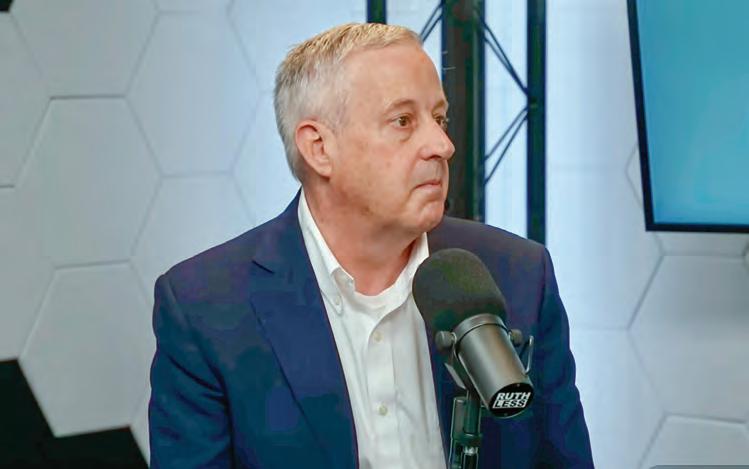
Republican Senate candidate Michael Whatley appears on the “Ruthless” podcast, where his upbeat portrayal of Hurricane Helene recovery contrasts sharply with state data.
and Whatley’s November opponent, as soft on crime by blaming him for the horrific stabbing death of Ukrainian immigrant Iryna Zarutska in Charlotte last year. The claim has been proven false, multiple times, just like Whatley’s comments about Helene
been rebuilt.”
State data again undercuts Whatley’s claim.
Roughly 70% of bridges damaged by Helene have been rebuilt, according to the same dashboard. While public road repairs have progressed a bit more quickly, a significant gap remains — particularly for private roads, where an estimated $500 million in unmet repair needs persists. Those private roads, often serving rural communities and mountain properties, fall outside many traditional funding streams, leaving residents in limbo months after the storm.
Perhaps the best example of that PR strategy is the continuing effort to paint Roy Cooper, the state’s former attorney general
recovery.
At the center of Whatley’s podcast remarks was a sweeping claim about federal funding meant to make the state whole again after $60 billion in storm damage was reported by state officials in the wake of the storm.
Whatley said that to date, there’s been “$9 billion that the federal government has put into Western North Carolina since Trump got back into office.”
Tracking data tells a completely different story.
North Carolina’s official recovery dashboard shows that $4.6 billion in federal funds has been approved or awarded for Helene recovery. That figure includes money that has not yet been disbursed. Of that total, $2.9 billion has actually been delivered to the state.
Even under the most generous interpretation, counting every approved dollar as if it were already in use, the claim overshoots reality by several billion dollars. Measured against funds that have actually reached the ground, the gap widens to $6.1 billion.
The distinction carries real consequences.
Local governments across Western North Carolina continue to grapple with delayed reimbursements, stalled projects and mounting financial strain tied to the slow pace of federal aid. Budget shortfalls linked to those delays have already begun to surface in municipal planning discussions, with officials warning that recovery timelines remain uncertain.
Infrastructure recovery presents a similar disconnect between rhetoric and reality.
Whatley said that “99% of the roads have been rebuilt” and “99% of the bridges have
The disparity between public statements and documented progress has raised broader questions about transparency and accountability in the recovery process. Compounding those concerns is the status of the federal review meant to evaluate the response.
During the podcast, Whatley also said the FEMA Review Council is “finalizing recommendations,” referring to a report originally due to the president within 180 days of the council’s first public meeting on May 20, 2025. That deadline passed on Nov. 16, 2025.
The report has yet to be released, but a leaked draft appears to shift substantial burden onto states, local governments, tribes and territories while slashing the agency’s workforce by half, stationing federal response in the rear and largely ignoring requests to send recovery funding down to the tip of the spear — the counties devastated by the disaster.
The Trump administration canceled a final meeting in December, delaying the process, and has since extended the council twice. The most recent extension pushes its deadline to May 29, 2026.
Describing the report as nearing completion glosses over a timeline marked by missed deadlines, cancellations and repeated extensions. The delay has left state and local leaders without a clear federal roadmap for improving disaster response, even as recovery from Helene continues to expose gaps in coordination and funding.
A Cooper spokesperson criticized Whatley’s performance on disaster recovery and accused him of misleading voters while shifting financial burdens onto local governments without offering a viable solution.
“Not only has D.C. insider Michael Whatley completely failed in his role as FEMA recovery czar by leaving Western North Carolina with only 12% of the critical funding it needs to recover, he now wants to campaign on lies and force local communities to foot the bill with no plan in place to help them,” said Jordan Monaghan, Cooper’s rapid response director. “It’s clear Whatley can’t deliver results and North Carolina deserves better.”
Ruthless podcast photo
Parents target Whatley over sex offender controversy
BY CORY VAILLANCOURT POLITICS EDITOR
Anew coalition of North Carolina parents is taking aim at Republican U.S. Senate candidate Michael Whatley, alleging his past leadership decisions placed children at risk and demanding accountability ahead of the November election.
response from parents concerned about safety and accountability, arguing that Whatley’s decisions reflected a willingness to prioritize political loyalty over the well-being of children.
“D.C. insider Michael Whatley appointed and elevated a convicted child sex offender to leadership roles, putting North Carolina
Scandals, investigations and resignations in Washington are keeping sex crimes in the headlines, including those of Harvey West (left), seen here with North Carolina Republican Senate candidate Michael Whatley. Facebook photo
The group, calling itself Parents Against Whatley, launched this week with more than 60 members spanning 19 counties. Organizers say the coalition includes a mix of party affiliations, with more than one-quarter identifying as unaffiliated voters.
The effort centers on Whatley’s appointment of Harvey West, a man who served six years in prison for sexually abusing three minors, to leadership roles within the North Carolina Republican Party.
kids in danger so he could protect his political allies,” Clayton said in a press release.
“It’s despicable, and North Carolina parents will hold him accountable at the ballot box in November.”
D.C. insider Michael Whatley appointed and elevated a convicted child sex offender to leadership roles, putting North Carolina kids in danger so he could protect his political allies.”
Democratic Party Chair Anderson Clayton
West has acknowledged that Whatley was aware of his criminal history at the time of those appointments.
The issue has lingered for more than a month, with Whatley declining to respond to repeated questions from reporters and sidestepping at least one direct inquiry in a public setting.
Democratic Party Chair Anderson Clayton framed the coalition’s launch as a
The coalition’s formation signals an attempt to elevate the controversy beyond internal party dynamics, positioning it as a broader referendum on leadership and judgment as the election approaches.
The coalition launched with 66 members drawn from 19 counties across North Carolina, according to organizers, with more than one-quarter identifying as unaffiliated voters in an apparent effort to frame the issue beyond party lines. Supporters of the effort are expected to use the issue to draw contrasts with Democratic candidates, including former Gov. Roy Cooper, Whatley’s November opponent.
Western North Carolina Congressman Chuck Edwards is under investigation by the U.S. House Committee on Ethics, according to multiple reports, with allegations reportedly involving inappropriate sexual conduct.
First reported by Axios on April 30, a Republican-led bipartisan panel authorized a review into claims against Edwards that have not been fully detailed publicly, but subsequent reporting indicates the probe may center on allegations of sexual harassment and a possible relationship with a former staff member.
House rules prohibit members of Congress from engaging in romantic relationships with staff, and violations can trigger formal ethics proceedings that range from internal discipline to referral for further action. Edwards has been married since 1980.
The investigation was reportedly initiated after a witness came forward to the committee with information describing alleged improper behavior.
Edwards didn’t specifically name Democrats as being behind the allegations, which at this point appear to be a purely internal Republican matter.
No formal findings have yet been announced, and the committee does not comment publicly on ongoing investigations.
Edwards, who was first elected in 2022, represents North Carolina’s 11th Congressional District, which includes nearly all of hurricane-ravaged Western North Carolina. The district has become increasingly competitive in recent election cycles, raising the political stakes surrounding the inquiry.
The timing of the investigation could carry implications for Edwards’ reelection bid, although it remains unclear how quickly the ethics panel will proceed or whether the inquiry will result in formal charges.
Edwards did not respond to an interview request from The Smoky Mountain News, but in statements to other outlets downplayed the allegations as politically motivated, noting the broader climate surrounding the 2026 election cycle.
Ethics investigations in Congress are typically confidential in their early stages and can take months or longer to resolve, depending on the scope of the allegations and the availability of evidence.
A spokesperson for Edwards’ November opponent, Fairview farmer and Democrat Jamie Ager, said Ager didn’t have any comment on the investigation except that Edwards needs to explain himself to his constituents.
For now, the matter remains in its early stages, with key details still unknown and no conclusions reached by investigators.
This isn’t Edwards’ first encounter with the House Ethics Committee. As first reported by SMN in April 2024, Edwards was by sanctioned by the committee for abusing House communications standards.
Rep. Chuck Edwards’ latest referral to the House Ethics Committee comes at a critical time in his reelection bid.
Cory Vaillancourt photo
‘Mike’s Law’ aims to change state DWI laws
BY KYLE PERROTTI NEWS EDITOR
Asecond bill bearing the name of the late Western North Carolina state house Rep. Mike Clampitt has been introduced in the General Assembly.
Titled “Mike’s Law,” the bill aims to reform the state’s approach to both drunk driving and how courts function. Late last month, another bill, titled “Mike Clampitt 1st Responder Tax Fairness Act,” was introduced. That law, if passed, would broaden the tax exemption criteria for vehicle title transfer to include volunteer fire departments and rescue squads.
Mike’s Law will also feature new additions to the previous Sober Operator Act. First, in cases where a magistrate determines there is not probable cause to charge someone with a DWI, it would require a documented reason for that decision, basically a means by which those magistrates can be held accountable for their decisions. It also would also make it illegal for drivers for hire to operate a vehicle with a paying passenger while under the influence of any amount of alcohol or unprescribed controlled substances.
While legislators are pushing the bill in the House, the driving force behind the
Clampitt, who’d represented Jackson, Swain and Transylvania counties in the House, died in March following a battle with a rare blood and bone cancer. Despite receiving a grueling course of treatment, the longtime representative continued his work in the General Assembly as long as he could, always keeping highway safety, first responders and combatting impaired driving as top priorities.
Mike’s Law, which has primary sponsors from both major parties — including his replacement, Rep. Anna Ferguson — largely mirrors the Sober Operator Act, which was introduced during last year’s session but ultimately didn’t make it out of committee. It will seek to allow the roadside portable breath test result to be used for probable cause determination by a judge. In addition, it would allow for law enforcement to screen for narcotics other than alcohol while driving. It would also allow for civil driver’s license revocation for drivers impaired on narcotics; right now, such a statute only exists for drunk drivers.
Notably, while the previous iteration of the Sober Operator Act would have lowered the legal blood alcohol content for someone operating a motor vehicle from .08 to .05, that will be proposed in a standalone bill.
effort is Ellen Pitt, who heads up the Western North Carolina DWI Taskforce, made up of law enforcement leaders, legislators, experts and advocates. Pitt was also one of Clampitt’s closest friends who sat beside him and held his hand on the day he died, quietly assuring him that she would continue the fight against impaired driving.
“Mike was working on all of this almost up to his last breath,” Pitt told The Smoky Mountain News, “up to the point where he couldn’t do it anymore.”
The next step now that bill is introduced, Pitt said, is to gain the support necessary to get the bill out of committee and on the House floor for a vote. At this point, along with having bipartisan sponsors, she said the North Carolina Sheriff’s Association is supportive, and she hopes to bring the Conference of District Attorneys onboard.
Pitt said that while Clampitt hoped to live long enough to see the bill become law, she wants to finish the work he started to ensure all those hours and long trips back and forth from Swain County to Raleigh weren’t in vain. She wants to make it happen for her friend.
“I would have done this anyway,” Pitt said. “But I want to do this now because it’s the right thing for him.”
Mike Clampitt and Ellen Pitt were close friends who have worked together to advocate for the reform of impaired driving laws for over a decade. Donated photo
Community Almanac
Lake Junaluska hosts
Mother’s
Enjoy a beautiful view, flowers and a fabulous buffet at the Terrace Hotel Dining Room for Mother’s Day. Donated photo
Day lunch buffet
Make reservations now for a delicious Mother’s Day Lunch Buffet, from 11 a.m. to 2 p.m. Sunday, May 10, at The Terrace Hotel Dining Room at Lake Junaluska.
Enjoy a menu that includes roasted pork loin with honey and blackberry compote, thyme and rosemary roasted chicken breast and cod piccata, plus numerous desserts. Breakfast items will include scrambled eggs and bacon and sausage.
Harris Regional EMS recognizes clinicians
Harris Regional Hospital EMS recognized the life-saving efforts of local emergency personnel following two cardiac arrest cases in the first quarter of 2026 that resulted in survival with positive neurological outcomes.
In recognition of these efforts, Harris EMS leaders awarded 10 Certificates of Commendation – Lifesaver Awards to first responders who played a direct role in the care of these patients. The Lifesaver Award honors individuals whose actions contributed to saving or preserving a human life that would likely have been lost without immediate intervention.
Survival from cardiac arrest with favorable neurological function is considered one of the most meaningful benchmarks in emergency medical services, highlighting both clinical performance and teamwork across the continuum of care.
The following team members were recognized:
• Harris Regional Hospital EMS
• Christy Carrothers, paramedic
• Nicholas Kerchus, paramedic
• Kurt Wamsley, paramedic field training officer
• Amanda Soop, paramedic
• Madelyn Sitzer, EMT
• Sylva Fire Department
• Kaitlyn Dittrich, firefighter
• Logan Green, firefighter
• Qualla Fire Department
• George Whisnant, firefighter
• Ronnie Nicholson, firefighter
• Nicholas Boone, firefighter
The buffet is $38.99 for adults, $19.49 for children ages 5-12, free for children 4 and under, plus tax and an 18% service charge. Make reservations online at lakejunaluska.com/mothersday.
All Mother’s Day honorees will receive a flower.
For more information, visit lakejunaluska.com/shop or lakejunaluska.c om/brick.
Nantahala Health Foundation invests in youth, young adults
Continuing their focus on removing barriers for at-risk youth and young adults struggling to reach their full potential, Nantahala Health Foundation is accepting applications for funding to be awarded by the end of October.
After hearing from youth development experts and researching solutions, Nantahala Health Foundation’s Board of Directors committed in 2024 to focusing their investments on programs that address support for youth and young adults.
Children growing up in struggling households face challenges that affect their future health and well-being. Without adequate support, they may encounter educational, employment and societal barriers that hinder their ability to reach their full potential and contribute to their communities. Without intervention, these young people risk higher rates of dropping out of school, substance abuse and mental health issues, diminishing their potential contributions to the regional economy.
Organizations with aligning interests are invited to apply for up to $50,000 to fund successful existing or innovative solutions to issues facing at-risk youth. Organizations with projects that are particularly innovative or embrace a regional approach are encouraged to consider higher requests, up to $100,000.
The foundation is looking to partner with faithbased, nonprofit and governmental agencies with a proven track record of providing these services, as well as those working to bolster educational opportunities, including early childhood programs, afterschool support and initiatives for college or career
readiness and economic stability, including job training, financial literacy education and employment opportunities.
Mountain BizWorks releases aunnual impact report
Mountain BizWorks released the 2024–2025 Impact Report for its WNC Strong: Helene Business Recovery Fund. It offers an in-depth look at how $59.6 million in rapid, flexible capital protected 7,069 jobs and reached 852 businesses across 29 Western North Carolina counties.
The WNC Strong: Helene Business Recovery Fund launched Oct. 7, 2024, just 10 days after the storm, while many businesses were still without power, water and internet. The Golden LEAF Foundation committed $7.5 million to seed the fund. Within weeks, the funding pool was expanded to meet the extensive regional need, with $50 million from the State of North Carolina (also via Golden LEAF Foundation), $3.5 million from Appalachian Regional Commission and $125,000 in donor-advised funds from Abundance Capital. The ability for this program to swiftly meet the acute needs of WNC small businesses would not have been possible without the commitment from each of these partners.
The full report examines what worked, lessons learned and regional needs going forward. The WNC Strong: Helene Business Recovery Fund Impact Report is available at mountainbizworks.org/helenefundimpactreport.
WNC Civil War Roundtable continues its 2026 programing
The Western North Carolina Civil War Roundtable will continue its 2026 series with a program at 7 p.m. on Monday, May 11, at the Haywood County Public Library. The presentation will be entitled “Cease Fire!: Life and Death at Swope Manor in Gettysburg.” This program is free and open to the public.
It will cover the history of the grand inn called The Swope Manor located in downtown Gettysburg, and the civilian Swope family, which was the wealthiest family in Gettysburg at the time of the battle. It included two bank presidents and a doctor.
The presentation will also showcase the story of Lt. William Pohlman of the 59th New York, who had previously fought in 14 engagements and was wounded during Pickett’s Charge. He was taken to The Swope Manor from a field hospital to have a better environment for recovery. His story, including letters to and from his family, further places the mansion in that time and place. Kellie B. Gormly is an award-winning journalist based in Pittsburgh who writes for publications including The Washington Post, Smithsonian Magazine and Woman’s World. She specializes in Civil War history and has written on topics including the Bread Riots in Richmond, how Jewish soldiers celebrated Passover during the war and the Lincoln Cemetery in Gettysburg.
More information on this program can be found at wnccwrt.com.
Pisgah Legal offers help to navigate medicaid and access care
NCMedHelp offers free, one-on-one support to help people understand and navigate North Carolina’s complex Medicaid and public benefits systems.
Western North Carolina residents can contact Pisgah Legal for help. Staff have extensive knowledge and experience in navigating health care systems and can provide a comprehensive approach to solving issues.
Staff can help individuals:
• Fix problems with billing, prescriptions and non-emergency medical transportation
• Find a doctor or other services
• Sort out information and system errors that may prevent access to care and medications
• Understand Medicaid benefits and rights
• File complaints and appeals
For Help, call Pisgah Legal Services at 828.253.0406 or apply at pisgahlegal.org.
Church to sponsor free concert in Sylva
The Summit Church is once again sponsoring “Backpack Boogie,” a free concert at Innovation Station in Dillsboro in Sylva, from noon until 4 p.m. on Saturday, May 16. The concert will feature four local musical acts — Arnold Hill, Shane Meade, Sylva Soul and Chris Pressley.
The event organizers are presenting this concert to the community to raise money to support a summertime backpack food ministry.
There will be items available in a silent auction including two locally handmade guitars.
Cash and non-perishable, ready-to-eat food donations welcome.
FUR ‘Wet Your Whiskers’ fundraiser
FUR’s “Wet Your Whiskers” fundraiser will be held from 5:30-7:30 p.m.,Thursday, May 14, at the York Dining Commons and Lakeside Deck at Lake Junaluska.
Guests will enjoy a curated selection of wines from Bosu’s Wine Shop, along with beer donated by Boojum and Frog Level breweries, and there will be a dinner buffet. Proceeds from the event will benefit Feline Urgent Rescue in its efforts to rescue, rehabilitate and rehome abused, abandoned and neglected cats in Western North Carolina.
Also included in the event is a silent auction and raffle items.
Tickets for Wet Your Whiskers are $75. Learn more or purchase tickets at furofwnc.org/events.
This is not what Waynesville needs
Editor’s note
As Tony Dillard notes in this guest column, we’ve printed two other opinion pieces over the last two weeks by Waynesville aldermen Chuck Dickson and Jon Feichter regarding this annexation and the issue of whether these housing developments fit into the character of Waynesville. It’s unusual for The Smoky Mountain News to then give this much space to a third opinion piece, but given the importance of this issue — how will we grow — we decided to give Mr. Dillard the opportunity to voice his concerns. To note, Dillard is a private citizen in Waynesville.
Scott McLeod, SMN Editor
Following a very contentious Waynesville Town Board meeting on April 14 — when council voted to annex Phase 2 of the Queen’s Farm/Valleywood Farms property — Alderman Chuck Dickson submitted an article to The Smoky Mountain News titled “Why I Voted To Annex Queen’s Farm” to attempt to justify his and the Council’s decision to annex this property over the many objections of the community.
On April 29, Councilmember Jon Feichter submitted an article to the SMN titled “Growth Is Inevitable, How We Grow Is A Choice,” to clarify why he was the only dissenting vote and to validate the reasoning by which this annexation and further development on Queen’s Farm should never have been approved.
This article is in response to both previous articles to further validate Feichter and to offer more facts which establish the fallacy of Dickson’s position. After reading this article and entertaining the facts and information provided, I request that all Waynesville residents who are convinced that the further development of Queen’s Farm is, in fact, detrimental to the community and future character of Waynesville/Haywood County, contact me and become party to a petition to demand that the Council rescind this annexation; or, in the alternative, become party to a legal action which would nullify the annexation and provide a cease and desist judgment against any further development on Queen’s Farm by this particular developer.
Let’s look at some interesting facts which Dickson chose to omit or tried to minimize in his article.
Dickson cited the town’s 2020 development plan known as “2035” as the authority the town relied upon for the decision to annex, stating the annexation would “preserve our ‘small town feel’ and beautiful views.”
Really? I would encourage you to look at Phase 1 of Queen’s Farm. Evaluate for yourself if this housing development, in fact, preserves the “character” of Waynesville’s “small town feel” and does it preserve and maintain the “beautiful views” of the area? While examining and evaluating this development, take a look at the companion developments erected on the Old Clyde Highway at the Patton Farm Area and on U.S. 276 in the Jonathan Creek area. While these developments are in the county, their nature of gross unsightliness to the “character” of the surrounding community are unequivocal testament of exactly what is in store to “preserve the small town feel” in the Phase 2 development along Ratcliff Cove and Raccoon roads.
While Phase 1 is an eyesore to the surrounding community, Phase 2 shall undoubtably compound that unsightliness. Dickson elaborates upon the fact that these structures meet the required designation for “single-family homes” and will have “wide streets, tree plantings and sidewalks. It will be a walkable neighborhood with recreation spaces and a public greenway …” Really? Again, take a good look at the Phase 1 development at Queen’s Farm; take a good look at the development at Patton Farm and Jonathan Creek. This is the future
of Phase 2 and Ratcliff Cove/Raccoon Road. Mr. Dickson is attempting to put lipstick on a pig and sell it as a runway model.
Dickson extols the position that the developer will pay for the cited civic improvements and for changes which will lessen traffic on Sunnyside Road. That’s notable if it had any real validity and merit. With the development and construction associated with Phase 1 of Queen’s Farm, Sunnyside Road was virtually destroyed along its entire length. A once narrow, rural lane serving a few cars daily to approximately 10 residences, became a rutted, gutted, potholed nightmare serving construction vehicles and an additional 100-150 vehicles belonging to the new residents of Phase 1. Sunnyside Road became so bad in disrepair, the town had to provide repairs and patching for the full length of the road, not the developer.
The developer is DR Horton. That “lauded” developer is currently under multiple class-action lawsuits in multiple states. Why? Foundation deficiencies (Hawaii), structural instability (S.C.), construction defects/deficiencies and defective design (La.), mortgage fraud (federal case), employment complaints (multiple states). What you presently see in the existing developments by DR Horton are development, construction, maintenance nightmares waiting to happen, if they are not already happening to the hapless individuals who were drawn into the DR Horton web of false promises and shoddy construction. Please reference again how Dickson places credence and dependence upon a developer who is an established shyster.
It would seem rather obvious that Mr. Dickson and the other members of the Council would have been completely aware of the present and continuing reputation and legal difficulties of this developer they entrusted to the development of Phase 1; but, they somehow chose to ignore the existing facts and have voted to move forward with the development of Phase 2 and disregard the community but also the hapless individuals who will invest hundreds of thousands of dollars in real estate which will soon become a maintenance nightmare in a depreciated market.
Not only does DR Horton scam the community and the investor, the company contributes little, if anything, to the local economy. Materials for construction are sourced from suppliers not affiliated with the local economy. His labor force for each phase of construction consists of crews contracted from other areas. His subcontractors for electrical, plumbing, HVAC, roofing, etc., are not locally sourced. What are the developer and these developments really contributing to our community now and for the future?
What they are contributing to the future of Waynesville is the immediate creation of eyesores to our community, a greater demand upon all facets of the infrastructure (water, sewer, electrical service, vehicle traffic/road
maintenance/construction, garbage/waste collection). Envision the condition and congestion imposed on Sunnyside Road as a result of Phase 1 and envision the same and worse to come to Ratcliff Cove and Raccoon roads at the cost of the community to repair and upgrade along with the rest of the infrastructure when demands exceed what is the present capacity to provide.
Feichter was the only member of the Council who had the intelligence, the common sense, the integrity and the respect for the future of our community to vote no. His vote against Phase 2 annexation should be heeded as a “wake up call” for the community to demand that the Council listen to the voices and desires of the constituency, not the ploys of developers and political expediency for personal agendas. Every voice which attended the April 14 meeting spoke strongly against the proposed annexation. For Dickson to take the position that his vote, and the other members’ votes, were “soundly” based upon the Plan 2035 is in direct conflict with the voices of the constituency and in direct conflict with sound, intelligent reasoning.
The 2035 plan was formulated more than six years ago. All plans must be formulated to be of ability to change, adapt and improvise with any/all conditions which arise after the plan is made. No plan is set in stone, as any sane person will tell you: Man plans; God laughs. The 2035 plan did not account for a shyster developer nor for single-family homes to be crowded together in tenement rows. The 2035 plan did not account for the development of an eyesore for the community nor for “affordable housing” no one in the community can afford. The 2035 plan may have been seen as viable and positive for Waynesville in 2020, but it is now 2026 and the voices of the community say that it isn’t. That should be the controlling factor in any vote for annexation. The only factor. Feichter voted for the voices of the community and for retaining a Waynesville which is genuinely envisioned within any intelligent and reasoned interpretation of plans for growth and development.
In closing, I would again request that those who are genuinely interested in joining me to bring a petition to demand that the Council rescind its approval of annexation; and/or, in the alternative, in joining me to become a party to a legal action which would nullify this annexation and provide a cease and desist judgment against any further development on Queen’s Farm by the current developer, to contact me at tonydillard0151@gmail.com or by text at 828.399.1884.
Guest Columnist
Tony Dillard
Thank you for the REACH articles
To the Editor:
Thank you, thank you, thank you for your focus on sexual violence (REACH special section, www.smokymountainnews.com), for the column by Dr. Sara Vogel, for the article about the middle school prevention program.
I haven’t even finished reading it all, but this is important and I wanted you to know how much it is appreciated. So many of us, myself included, have experienced this violence. Dr. Vogel’s words about prevention are on the mark. There are memes and jokes about men vs. bears from a woman’s point of view, but the problem is serious. It is past time that men and society took responsibility.
Rev. Sara Lee Hinnant Haywood County
Who has the moxie to challenge Trump?
To the Editor:
Viktor Orban, oppressive dictator and former Hungarian Prime Minister, made one colossal mistake — he allowed an election to take place. Ergo, he was tossed from office in a landslide.
Our own president (a thirsting wannabe dictator himself) knows he faces a similar fate, possible impeachment, conviction and imprisonment if he loses control of Congress. To get what he so desperately wants, to render obsolete the pillars of democracy, the "checks and balances" of constitutional government (including freedom of the press), to violate and disregard the Constitution, he must somehow nullify the November elections.
LETTERS
virtual immunity from crimes committed while in office) gives Trump no reason not to believe he can do whatever he wants, that he is above the law. Absent human morals and instincts and void of any impulse to follow our nation's fundamental standards and guiding principles, we have unwittingly created a facsimile of Frankenstein's monster.
From the Trump-led attack on the United States Capitol, January 6, 2021, to state gerrymandering, to the "Save America Act," to the FBI seizing voting records, to demanding states turn over voter rolls to Homeland Security, this president has done more than any American (living or dead) to subvert and undermine confidence in our election system.
In this crisis (call it America's moment of truth), Congress (both parties) has proven itself essentially impotent. The Democratic Party appears feckless and the Republicans are ever-ready and eager to cover their eyes, shield their ears and bite their tongues to avoid Trump's wrath. And despite the murder of innocent civilians on the streets of their own cities, the veteran community (though many individuals are vocal) collectively remains silent.
Trump's ace in the hole is ICE. This masked, very loyal goon squad seems virtually unaccountable, hard to identify and (apparently) licensed to kill.
The last best hope to preserve our Republic is for Congress to find the spine to impeach and remove this president from office. He has committed numerous
Trump is the only president in American history fundamentally incapable of serious governance and who seeks to divide rather than unite our nation.
With one political party clearly unwilling to hold him accountable and the other visibly incapable of doing so, Trump is able to fling ugly insults and threaten anyone who dares challenge him. He operates indiscriminately and haphazardly, lacking any discernible code of ethics, law, order or honor.
The Supreme Court (by granting Trump
impeachable offences: violations of the Constitution, violations of U.S. and international laws, abuses of power and abuses of pardon power and obstructions of Congress and of justice, to name a few.
If the mid-term elections are held in November, squarely and fairly, Trump will lose and everyone else will win. Here's the riddle. Am I willing to place my body in the line of fire between two allied political parties, neither of which has, up to this time, had the moxie to stand up against one malignant narcissist and convicted felon?
David L. Snell
Franklin
Fruits of my labor
A conversation with Lucinda Williams
to discuss current events with who’s actually been paying attention. People don’t keep up with it anymore. It seems like they used to.
SMN: Or they shut down in conversation.
LW: Or they shut down. How can you not? I saw something online that just popped up, a little piece of news that said Trump [would] defund Medicare and Medicaid to pay for the war in Iran. It was this little bitty piece of news that, back in the day, it would’ve been this huge headline and there would’ve been demonstrations out on the streets.
SMN: Do you remain optimistic at all?
LW: I do, because I can’t help it. That’s just in my nature. I have to, it’s a survival method, you know? I can’t let myself sink into oblivion.
SMN: I also believe that kindness breeds kindness, with the idea being that if I walk out with my best foot forward with optimism, then the hope is other people are doing it, and it adds up to something.
LW: It does. I love that you said that. That just makes me want to hug you, because I love that attitude. With my husband, Tom [Overby], [he] and I have been talking about that a lot lately ‘cause I get real grumbly and kind of moody and stuff sometimes. And he’ll say that “optimism heals.” Positive thinking, you know? Don’t even let anyone tell you you’re too idealistic. I’ve always been that way. I’m still that way, and I always will be no matter what age I am.
SMN: And I think it’s a testament to your music, too.
LW: You are right. That’s a really good point, because I’ve been accused of writing dark songs, my songs are “too dark” and all this. But, I don’t think so; I feel like there’s usually a light at the end of the tunnel.
If you pay attention to the lyrics in the title song, “World’s Gone Wrong,” it’s really kind of a love song. It’s about a working-class, everyday couple who’s trying to make ends meet. And they’re living in a world of chaos and it’s starting to affect their relationship. So, I don’t think it’s a dark song.
I mean, I like to deal with dark subjects sometimes, but that’s life, you know?
ARTS & ENTERTAINMENT EDITOR
Before I even need to explain anything about people and things, time and place, you already know who I’m referring to. This is sacred musical ground, the same realm where, if you’re the cream of the crop, you only need to be known by one name, the same territory that Willie and Waylon, Dolly and Loretta reside. Simply put, Lucinda Williams is pure melodic gold.
Truth be told, you cannot categorize Lucinda. And nor should you. She represents all that is genuinely beautiful and truly righteous when it comes to the universal sound that is music. She’s the entire tapestry of American music (rock, blues, country, folk, gospel, roots, etc.) and does it with such ease and finesse that can only be attributed to being a kind soul in search of the truth, the way of what it means to be a songwriter of solidarity in often troubled, confusing times — yesterday, today or tomorrow.
Catching up with The Smoky Mountain News before she hits the road for a nationwide tour on the heels of her latest album, “World’s Gone Wrong,” Williams, now 73, spoke about the state of modern society, what it means to be an eternal optimist, and how her songs aren’t as dark as you think.
Smoky Mountain News: Just listening to the lyrics in the new album, the same thoughts were running through my head, trying to keep my head above water, but looking at everything like, “What the hell is going on?”
Lucinda Williams: Yeah, I know. And that was that period;
and awe of everything. Every single day, there’d be some crazy story in the news, either in the newspaper or on TV. I mean, it was just pervasive, in your face, and you couldn’t get away from it, really.
SMN: And I still feel that way, too. It feels like chaos is normal.
LW: Yes, exactly. That’s it. You hit the nail on the head. Chaos is normal. That’s a great line. It just sums it all up in a nutshell. And that’s a scary thought when you think about it, living in a time where chaos is normal. It’s sad, actually. A hundred years ago, what would people have thought?
SMN: You grew up in a literary family (Williams’ father was a poet and college professor) and were exposed to folks in the 1960s counterculture. It would be the upside-down world to them if they were to see where everything’s gone.
LW: Oh, god. You don’t know how many times I’ll read something in the news and think about my dad. What would he think right now? And we sat around and talked about current events back then.
SMN: You talk about “World’s Gone Wrong” being kind of a love song. How has your definition of love changed or remained the same as you’ve gotten older?
LW: Oh, wow. I haven’t been asked that question yet. I got to think now, wait a minute. Good thing my tour manager brought me some Starbucks coffee.
I’m older, so I like to think I’m a little more mature now and have a more mature outlook on love. The relationship between two people and everything? These are things I’ve just learned from experience. It takes work. It doesn’t just happen on its own, by itself.
I still believe in the magic and power of true love, and I guess, for lack of a better phrase, love at first sight. Everybody always wonders about that. I think there’s something to be said for that.
Want to go?
Legendary singer-songwriter Lucinda Williams and her band will perform at 8 p.m. Thursday, May 14, at The Orange Peel in Asheville.
Doors open at 7 p.m. The show is for ages 18 and over. Admission is $39.50 per person. For more information and/or to purchase tickets, visit theorangepeel.net.
SMN: And when face-to-face communication wasn’t a lost art.
LW: Exactly. Thank you. Well, if you can even find someone
But, once you get to the threshold, then you need to really buckle down and work on it. It takes thought. It takes commitment. [And] that’s where people go wrong, [they] sort of fall off the merry-goround. To be committed is a lot bigger and heavier than people realize.
As far as love is concerned, you have to make that decision all the time. Every little disagreement, every little argument, every time you get off and want to leave and run away and stay at your friend’s house or something, you have to think,
“Do I really want to break this off now? Do I really want to run away? Or am I committed to staying and fighting for it?”
You have to decide if what you have is worth fighting for.
Lucinda Williams will play Asheville May 14. Mark Seliger photo
This must be the place
BY GARRET K. WOODWARD
Ode to Benny Boy, Ode to those ‘Werewolves of London’
My best friend of all time and space, Benjamin Joseph Perron, 42, passed away unexpectedly on Thursday, April 23, in Plattsburgh, New York, and of natural causes.
Born in Carthage, New York, on Feb. 9, 1984, Ben came into this existence full of curiosity and mischief, something that never left his heart, soul and antics throughout his life. You could also add in compassionate, humorous, caring, charismatic, empathetic, loyal, witty, easygoing, perceptive, knowledgeable, bold and optimistic to his rich, vibrant character traits.
A voracious reader, music lover and film buff from his earliest days, Ben was a die-hard fan of anything and everything that was sharply smart, gutbusting funny or just beautifully weird and odd. And Ben was all of those things, too, in truth and in method.
In essence, Ben’s trajectory in life began when he entered Northeastern Clinton Central School in Champlain, New York, in 1997. In middle school, he befriended many kind souls who would remain best friends until the very end: Zach Rabideau, Tom Pearo, Ryan Casey and myself. There were also several peers who Ben found deep friendship and solidarity with: Susan Seymour, Rachel Mercaldi, Shannon Dulude, Sean Casey and others.
we both had joined the cross-country team. I had really no friends at that time, peers who made me feel seen and heard. Ben was in the same boat. I stepped onto the cross-country bus to head to a race. Every seat on the bus was filled, except for one, the worst seat: behind the bus driver and across the aisle from our coach.
Sitting in that seat was Ben. Sporting thick glasses and a bucket hat, his curly hair popping out from underneath the brim, I asked if I could sit with him. He said OK and slid over to let me in. And we immediately started talking to one another, this eternal conversation now sparked. From there, we were tied to the hip all through middle/high school and beyond.
In high school, Ben was often seen hopping into my rusty 1989 Toyota Camry and disappearing to any and all concerts or some backwoods music festival. The shows seen and miles ventured is immeasurable, as was our friendship.
HOT PICKS
1
Steve Sutton Fest will take place May 8-9 in the Stuart Auditorium at the Lake Junaluska Conference & Retreat Center.
2
The 23rd annual Whole Bloomin’ Thing Festival will take place from 9 a.m. to 4 p.m. Saturday, May 9, in the Historic Frog Level District of Waynesville.
3
Carolina Quiroga will join the “Conversations with Storytellers’ series at 6 p.m. Thursday, May 14, at Pigeon Community Multicultural Development Center in Waynesville.
4
Music By The River (Cherokee) on the Kanunohi Park Stage will feature Lori & The Freightshakers (classic rock/country gold) with Robert Wolfe at 6 p.m. May 8-9.
5
Pickin’ On The Square (Franklin) will host Tugalo Holler (bluegrass/gospel) at 6 p.m. Saturday, May 9.
holiday meals. And we would always eat with gusto.
Spending much of his working life in the kitchen, Ben felt most at home in front of a stove, his creativity in doing so knowing no bounds. And he met countless dear friends while in the culinary trenches, especially those he worked alongside in Plattsburgh at Mickey’s, The Monopole, Good Thymes, Arnie’s and the former Dry Dock.
As a teenager, Ben loved skiing and was a proud member of the NCCS Ski Club, which offered him many memorable trips to Jay Peak and Whiteface. For several years, Ben was part of the NCCS cross-country and track and field teams, as well as the Drama Club, where he happily partook in numerous stage productions. To that, he always left a mark on his educators and coaches.
Ben’s greatest love was music. He walked this earth at his own rhythm, with that rhythm being the glorious sound of Warren Zevon’s “Werewolves of London.” Ben was a huge Zevon freak, all atop an eternal love for the Grateful Dead, The Band, Strangefolk, John Prine, Tom Petty, and whatever else had honest lyrics and a bounce to it. Ben was a true dancing fool, too, something especially witnessed at the annual Happy Pike gathering in Chazy. Looking back, Ben was my partner-in-crime from the day we met in seventh grade. I had just graduated sixth grade from St. Mary’s Academy, now thrown into the public-school system, and was pretty much alone. I was a very weird and misunderstood kid growing up (still am, to be honest). And so was Ben.
That first day interaction in seventh grade,
Of note, one of Ben’s favorite stories was the time he and I randomly drove 10 hours to northern Maine to see Phish’s “IT” festival in 2003. Neither one of us had tickets, but were able to sneak into the event via a bread truck while hiding under hundreds of packages of hot dog buns.
When I left for college in Connecticut and took off out West, we kept in touch. We’d call each other every week. He even called me from the hospital the day his son was born back in Plattsburgh, myself picking up the phone call in a parking lot in Idaho. And we’d wish one another happy birthday every year.
For seemingly any significant or non-significant moment of my youth and early adulthood, Ben was always right there next to me. We were thick as thieves and as close to family as one could ever get without blood relation. The memories are countless together, whether it was working side-by-side at McDonald’s, going swimming at Split Rock or camping in the Adirondack Mountains. I was even the best man at his wedding in 2009.
As an adult, Ben discovered a God-given gift in the art of cooking. He was a true master of his craft, and in the same attitude and vein as that of the late Anthony Bourdain. Family and friends looked forward to whatever concoction he would present with that trademark ear-toear grin of his, especially during those rollicking
Throughout the remaining years of his life, I’d call him the minute I was back home to meet and catch-up. The last time I saw him was this past January. I picked him up at his Plattsburgh apartment and we went for a drink. Bear hugs and hearty conversation. Eventually, I had to go back home to work on an article. He wanted to stay and have another drink. I said, “Well, I’ll be home again this summer. I’ll call you.” He replied, “Love you, dude. See you then.”
Benjamin Perron is survived by his children, Augustus Perron and Nimueh Perron; parents, Pete and Barbara Perron; siblings, Zachary Perron, Jacob Perron and Katherine (Ian Carney); and numerous nieces and nephews.
He also leaves behind an array of lifelong friends, from across the North Country and around the world, each of which has been howling to the moon in true Zevon style since hearing of his passing. To those reading this, please put “Werewolves of London” on your nearest stereo at your earliest convenience, and raise a glass to one of freest and most genuine spirits who ever roamed this earthly plane.
In closing, as Hunter S. Thompson once wrote in “Fear and Loathing in Las Vegas” (one of Ben’s favorite books and films), so, too, is our sad farewell to our dearest Benny Boy: “There he goes. One of God’s own prototypes. A highpowered mutant of some kind never even considered for mass production. Too weird to live, and too rare to die.”
Ben and Garret, Spring 2002. Kathy Woodward photo
On the wall
‘Cherokee People and the American Revolution’
A first-of-its-kind exhibition centering Native voices, perspectives and creativity in response to the 250th anniversary of the founding of the United States, the exhibition “Unrelenting: Cherokee People and the American Revolution” is currently being showcased at the Museum of the Cherokee People (MotCP) in Cherokee.
Historic Interpretation and Audience Engagement at Monticello — sought Cherokee accounts of the American Revolution (1775-1783) and the Cherokee American War (1776-1794), highlighting the complexities of memory and commemoration.
On view through Dec. 30, the exhibition features historic objects in conversation with works by Cherokee artists, merging cultural heritage, military history and contemporary art for a nuanced examination of a pivotal moment in Cherokee and American history.
With research beginning in 2022, the exhibition’s curators — MotCP Director of Education Dakota Brown (Eastern Band of Cherokee Indians); MotCP Director of Collections and Exhibitions Evan Mathis and guest curator Brandon Dillard (Cherokee Nation), director of
• “Didanisisgi Gadagwatli: A Showcase of Pottery from the Mud Dauber Community Workshop” is now on display at the Museum of the Cherokee People in Cherokee. On view through May, the exhibition features works by students of Tara McCoy (Eastern Band of Cherokee Indians) handcrafted during an intensive threemonth workshop. For more information, visit motcp.org.
• “Spring Craft & More Fling” will be held from 10 a.m. to 4 p.m. Saturday, May 9, at the Great Smoky Mountains Event Park in Bryson City. Local crafters, antique sellers and more. 828.488.3848.
• “Riverside Artisan Market” will be held 11 a.m. to 5 p.m. Saturday, May 9, at the Nantahala Outdoor Center in Bryson City. Shop local for jewelry, pottery, unique creations and fresh goods from talented artisans and farmers every month (MaySeptember). Free and open to the public. For more information, visit noc.com/events.
On the table
As the nation commemorates the 250th anniversary of the signing of the Declaration of Independence, the curators of the exhibition aspire to spark conversation about American identity and sovereignty among visitors of all walks of life, sharing new research in the first exhibit about Cherokees in the American Revolution by Cherokee scholars.
General admission tickets are $15 for adults, $8 for children ages 6-12 and free for children ages 5 and under. MotCP offers free admission to members of federally recognized tribes and museum members. Student, educator, senior and military rates available. Admission to all changing exhibitions is included in the general admission ticket price.
For more information, visit motcp.org.
• “G&LW Wholesale Gem Show” will be held May 15-17 at the Watauga Festival Center in Franklin. From 10 a.m. to 6 p.m. Friday/Saturday and 10 a.m. to 3 p.m. Sunday. 601.879.3282 / franklinchamber.com.
• WNC Paint Events will host painting sessions throughout the region on select dates. For more information and/or to sign up, visit wncpaint.events.
• Marianna Black Library (Bryson City) will host “ArtWorks” at 1 p.m. every second Thursday of the month. Come create your own masterpiece. The materials for art works are supplied, and participants are welcome to bring ideas and supplies to share with each other. Ages 16 and up. Space limited to 10 participants. Free and open to the public. 828.488.3030 / vroberson@fontanalib.org.
• CRE828 (Waynesville) will offer a selection of art classes and workshops at its studio
Ready for dinner ‘Under the Stars’?
Skyline Lodge in Highlands.
Molly Harris photo
The popular “Under the Stars, On the Rocks” culinary series is currently underway at the Oak Steakhouse at the Skyline Lodge in Highlands.
The events feature renowned chefs from around the Southeast on select dates through the fall: May 12, June 9, July 7, Aug. 11, Sept. 8, Oct. 13. Each four-course meal in the series is unique and personal to the guest chef, offering a one-of-akind outdoor dining experience.
Dinners are $175 per person (including beverage pairings). Reservations required. Guests can also purchase a “season pass” to the series. For more information and/or to make reservations, call 828.526.4008 or visit skyline-lodge.com.
‘Mother’s Day Gemboree’
A special gem show will be in Franklin May 8-10. File photo
The “Mother’s Day Gemboree” will be held from 10 a.m. to 6 p.m. May 8-9 and 10 a.m. to 4 p.m. May 10 at the Macon County Community Building in Franklin.
Rough and cut gems, minerals, fine jewelry, supplies, beads, door prizes, dealers, exhibits, demonstrations and more.
Sponsored by the Franklin Chamber of Commerce and the Macon County Gem & Mineral Society. For more information, visit franklin-chamber.com.
located at 1283 Asheville Road. Workshops will include art journaling, watercoloring, mixed media, acrylic painting and more. 828.283.0523 / cre828.com.
• Gallery Zella (Bryson City) will be hosting an array of artist receptions, exhibits and showcases. The gallery is open from noon to 5 p.m. Wednesday through Saturday. 517.881.0959 / galleryzella.com.
• Haywood County Arts Council (Waynesville) will offer a wide range of classes, events and activities for artisans, locals and visitors. HCAC’s Haywood Handmade Gallery is open seven days a week from 10 a.m. to 5 p.m. and 11 a.m. to 4 p.m. Sundays. 828.452.0593 / haywoodarts.org.
• Jackson County Green Energy Park (Dillsboro) will be offering a slew of classes, events and activities for artisans, locals and visitors. 828.631.0271 / jcgep.org.
• Stecoah Valley Cultural Arts Center
• Cataloochee Ranch (Maggie Valley) will host semi-regular culinary events and workshops throughout the week. For a full schedule of upcoming activities, tickets and reservations, visit cataloocheeranch.com/ranch-event.
• Balsam Mountain Inn (Balsam) will host “Wind Down Wine Flights” 6 p.m. Thursdays. 828.283.0145 / thebalsammountaininn.com.
• Classic Wineseller (Waynesville) will have the wine bar open from 4-8 p.m. Fridays/Saturdays and host semi-regular tastings on the weekends. 828.452.6000 / classicwineseller.com.
• “Flights & Bites” will be held at 4 p.m. Thursdays and Fridays at Bosu’s Wine Shop in
(Robbinsville) will host an array of workshops for adults and kids. 828.479.3364 / stecoahvalleycenter.com.
• Southwestern Community College Swain Arts Center (Bryson City) will host an array of workshops for adults and kids. 828.339.4000 / southwesterncc.edu/scclocations/swain-center.
• Dogwood Crafters (Dillsboro) will offer a selection of upcoming art classes and workshops. 828.586.2248 / dogwoodcrafters.com.
• Cowee School Arts & Heritage Center (Franklin) will host semi-regular arts and crafts workshops. 828.369.4080 / coweeschool.org.
• Folkmoot Friendship Center (Waynesville) will host semi-regular artist gatherings and workshops. 828.452.2997 / folkmoot.org.
downtown Waynesville. There will also be a special French wine dinner 6 p.m. May 19-20. 828.452.0120 / waynesvillewine.com.
• “Take A Flight” with four new wines every Friday and Saturday at the Bryson City Wine Market. Select from a gourmet selection of charcuterie to enjoy with your wines. Educational classes and other events are also available. 828.538.0420.
• “Uncorked: Wine & Rail Pairing Experience” will be held on select dates at the Great Smoky Mountains Railroad in Bryson City. Full service all-adult first class car. Wine pairings with a meal and more. There will also be a special “Carolina Moonshine” train on select dates. 800.872.4681 / gsmr.com.
The MotCP. File photo
On the beat
• 4118 Kitchen & Bar (Highlands) will host live music 6-8 p.m. Thursdays. Free and open to the public 828.526.5002 or 4118kitchenbar.toast.site.
• Assembly On Main (Waynesville) will host “Trivia Night” 6 p.m. Tuesdays and “Karaoke Night” 7 p.m. Thursdays. Free and open to the public. 828.246.0839 / assemblyonmain.com.
• Balsam Falls Brewing (Sylva) will host “Open Mic” 8-10 p.m. Thursdays. Free and open to the public. 828.631.1987 / balsamfallsbrewing.com.
• Bread Heads Tiki Shak (Sylva) will host “Tiki Trivia” at 7 p.m. every other Thursday of the month, “Brunch Show” with Skyler Jacobson (singer-songwriter) 1 p.m. May 9, Ryles Monroe (singer-songwriter) 10 p.m. May 15 and “Brunch Show” with Falspring (Americana) 1 p.m. May 16. Free and open to the public. 828.307.2160 / breadheadstikishak.com.
• Bryson City Brewing (Bryson City) will host Landon Nations (country/acoustic) 6:30 p.m. May 15. All shows begin at 7 p.m. unless otherwise noted. Free and open to the public. 828.538.0085 / brysoncitybrewing.com.
Steve Sutton Fest
The annual Steve Sutton Fest will take place May 8-9 in the Stuart Auditorium at the Lake Junaluska Conference & Retreat Center.
A nonprofit event, the showcase benefits youth music programs in Haywood County. This year’s stellar lineup includes Authentic Unlimited (three-time IBMA “Vocal Group of the Year”), Red Camel Collective (IBMA “New Artist of the Year”), Alecia Nugent, Darren Nicholson, Upstream Rebellion, Donna Ulisse & Rick Stanley, Whitewater Bluegrass Company and more.
Steve Sutton was a beloved WNC musician. File photo
There will also be mountain tradition cloggers, dance/songwriting workshops, a special performance by the Junior Appalachian Musicians (JAM) and other activities.
A longtime member of The Darren Nicholson Band and Whitewater Bluegrass Company, Sutton was 60 years old when he
• Balsam Mountain Inn (Balsam) will host “Picking on the Porch” (open community jam) 6 p.m. Tuesdays, “Trivia Night” 7 p.m. Wednesdays and semi-regular live music on the weekends. 828.283.0145 / thebalsammountaininn.com.
• Blue Ridge Beer Hub (Waynesville) will host “Music Bingo Night” 6:30 p.m. Tuesdays, The Blue Mountaineers (Americana/bluegrass) Thursdays and semi-regular live music on the weekends. All music starts at 5 p.m. Free and open to the public. 828.246.9320 / facebook.com/brbeerhub.
• Boojum Brewing (Waynesville) will host “Karaoke Night” 9 p.m. Wednesdays, “Trivia” 7 p.m. Thursdays, “Open Jam” 10 p.m. Thursdays and semi-regular live music on the weekends. All shows are located in The Gem downstairs taproom and begin at 9 p.m. unless otherwise noted. Free and open to the public. 828.246.0350 / boojumbrewing.com.
“Music Bingo with DJ Mox” Thursdays and semi-regular live music on the weekends. All shows begin at 7 p.m. unless otherwise noted. Free and open to the public. 828.634.0078 / curraheebrew.com.
• Farm At Old Edwards (Highlands) will host the “Orchard Sessions” with The Tennessee Bluegrass Band (Americana/bluegrass) May 20. All shows begin at 6 p.m. Admission is $50 per person, with discounts rates available for hotel guests and members. 866.526.8008 / oldedwardshospitality.com.
• Folkmoot Friendship Center (Waynesville) will host “World Drum Classes” every Friday at 2:30 p.m. (adults, free) and 4 p.m. (family friendly, all ages, free), “Waynesville Acoustic Guitar Group” 2-4 p.m. every second and fourth Saturday of the month (free) and semi-regular live music monthly. 828.452.2997 / folkmoot.org.
host “Blues & Brews” with Scott Low 6-9 p.m. Thursdays, Zorki (singer-songwriter) 13 p.m. Saturdays, “Bluegrass Brunch” 11 a.m. to 1 p.m. Sundays and the “Salon Series” with Candi Jenkins (singer-songwriter) 8:30 p.m. May 14 ($30.45 per person, tax included). Reservations encouraged for all performances. 828.526.2590 / highlandermountainhouse.com.
• Highlands Performing Arts Center will host Balsam Range (bluegrass) 4 p.m. May 17 (tickets start at $57.75 per person with seating upgrades available). 828.526.9047 / highlandsperformingarts.com.
• Innovation Brewing (Sylva) will host “Monday Night Trivia” every week, “Open Mic” on Wednesdays and semi-regular live music on the weekends. All shows and events begin at 7 p.m. unless otherwise noted. Free and open to the public. 828.586.9678 / innovation-brewing.com.
passed away in his sleep on May 13, 2017, one day shy of his 61st birthday.
A Grammy-nominated, multiple IBMA award-winner himself, Sutton graduated from Tuscola High School in Waynesville. Upon graduation, he was simultaneously offered gigs with the “Godfather of Bluegrass” Bill Monroe and bluegrass legend Jimmy Martin.
In 1974, Sutton joined Martin on the road, kicking off a career that took him across the globe, ultimately gracing the Grand Ole Opry stage numerous times. Sutton also had stints with Alecia Nugent and Rhonda Vincent.
Tickets are $30 per day for adults and $10 per day for kids. The two-day songwriting workshop is $250.
For more information, a full schedule of acts and/or to purchase tickets, visit stevesuttonfest.com.
• Cataloochee Ranch (Maggie Valley) will host Brian Ashley Jones (Americana) May 6, Darren Nicholson Band (Americana/bluegrass) May 13 and Hill Country Band (bluegrass) May 20. All shows begin at 5 p.m. and admission is $25 per person unless otherwise noted. For tickets and reservations, visit cataloocheeranch.com/ranch-event.
• Classic Wineseller (Waynesville) will host semi-regular live music on the weekends. Reservations highly recommended ($10 per person minimum food purchase). The kitchen and wine bar open at 4 p.m. 828.452.6000 or classicwineseller.com.
• Cowee School Arts & Heritage Center (Franklin) will host “Open Mic” at 6 p.m. every second Friday of the month and semiregular live music on the weekends. 828.369.4080 / coweeschool.org/concertseries.
• Currahee Brewing (Franklin) will host
• Friday Night Live Concert Series (Highlands) will host Foxfire Boys (Americana/bluegrass) May 15 and Silly Ridge (Americana/bluegrass) May 22. All shows begin at 6 p.m. Free and open to the public. highlandschamber.org.
• Frog Level Brewing (Waynesville) will host “Jazz On The Level” 5:30 p.m. Tuesdays, Paul Edelman (singer-songwriter) 5:30 p.m. May 6, The Mud Band May 8, Rocky Collins (singer-songwriter) 1 p.m. May 9, ALR Trio May 9, Rich Manz Trio (acoustic/oldies) 3 p.m. May 10, “Beats & Feets Drum/Dance Circle” May 11, Chris Caruso (singer-songwriter) 5:30 p.m. May 13, Len Graham & Paul McIntire 5:30 p.m. May 14, Asheville Junction May 15, Lori & The Freightshakers (classic rock/country gold) May 16 and Adam & Joe 3 p.m. May 17. All shows begin at 6 p.m. unless otherwise noted. Free and open to the public. 828.454.5664 / froglevelbrewing.com.
• Frog Quarters (Franklin) will host live music from 11 a.m. to 1 p.m. Saturdays with David Woodward & Scott Magley (folk/blues) May 9 and Mary Beth Campbell & Friends (Americana/folk) May 16. Free and open to the public. 828.369.8488 / littletennessee.org.
• Happ’s Place (Glenville) will host Rock Holler May 9, Cory Stevenson (singer-songwriter) noon May 10, Ernest Bonilla (singer-songwriter) May 15 and Zac Kellum (singer-songwriter) May 16. All shows begin at 6 p.m. unless otherwise noted. Free and open to the public. 828.742.5700 / happsplace.com.
• Harrah’s Cherokee Casino Resort (Cherokee) will host Yacht Rock Revue (classic rock) 9 p.m. May 8 and Earth Wind & Fire (soul/funk) 7:30 p.m. May 16. For tickets, visit caesars.com/harrahs-cherokee.
• High Dive (Highlands) will host “Trivia” 7 p.m. on Thursdays and semi-regular live music on the weekends. 828.526.2200 / highlandsdive.com.
• Highlander Mountain House (Highlands) will
• Lazy Hiker Brewing (Franklin) will host “Board Game Night” 5 p.m. Mondays, “Music Bingo” 7 p.m. Tuesdays, “Trivia Night” 6:30 p.m. Wednesdays, “Open Mic Night” 6:30 p.m. Thursdays and semi-regular live music on the weekends. All shows begin at 7 p.m. unless otherwise noted. Free and open to the public. 828.349.2337 / lazyhikerbrewing.com.
• Lazy Hiker Brewing (Sylva) will host “Music Bingo” 7 p.m. Mondays, “Trivia Night” 6:30 p.m. Tuesdays, “Old Time Jam” 6:30 p.m. Thursdays and semi-regular live music on the weekends. All shows begin at 8 p.m. Free and open to the public unless otherwise noted. 828.349.2337 / lazyhikerbrewing.com.
• Legends Sports Bar & Grill (Maggie Valley) will host “Open Mic Night” 6:30 p.m. Wednesdays, Karaoke Thursdays (6 p.m.) and Saturdays (7 p.m.), with live music each Friday (8 p.m.). Free and open to the public. 828.944.0403 / facebook.com/legendssportsgrillmaggievalley.
• Mountain Layers Brewing (Bryson City) will host “Open Mic Night” with Frank Lee every Thursday, Falspring (Americana) May 8, Granny’s Mason Jar (Americana/bluegrass) May 9, Wyatt Espalin (singer-songwriter) 5 p.m. May 10, Mountain Gypsy (Americana) May 15 and Jared “Blue” Smith (singersongwriter) 5 p.m. May 17. All shows begin at 6 p.m. unless otherwise noted. Free and open to the public. 828.538.0115 / mountainlayersbrewingcompany.com.
• Mountain Vibes Kava Lounge (Waynesville) will host “Trivia Night” 7 p.m. Mondays and semi-regular live music on the weekends. 828.246.9283.
• Music By The River (Cherokee) on the Kanunohi Park Stage will feature Lori & The Freightshakers (classic rock/country gold) with Robert Wolfe May 8-9 and Derek Galarza May 15-16. Music runs 6-9 p.m. Free and open to the public. visitcherokeenc.com.
Bluegrass legend at Cataloochee Ranch
Americana/bluegrass act the Darren Nicholson Band will hit the stage for an intimate performance at 5 p.m. Wednesday, May 13, at the Cataloochee Ranch in Maggie Valley.
A Grammy-nominee and winner of 13 International Bluegrass Music Association awards, Nicholson has taken his own brand of mountain music around the world.
A regular for years on the Grand Ole Opry and a founding member of acclaimed bluegrass group Balsam Range, Nicholson now spends his time recording, writing new songs and performing as a solo act.
Admission is $25 per person. For tickets and reservations, visit cataloocheeranch.com/ranch-event.
• Old Edwards Inn (Highlands) will host live music in the Hummingbird Lounge at 5:30 p.m. every Friday and Saturday. Free and open to the public. 866.526.8008 / oldedwardshospitality.com.
• Peacock Performing Arts Center (Hayesville) will host Chi-Town Transit Authority (Chicago tribute) May 22 and “Songwriters Showcase 60” May 23. All shows begin at 7:30 p.m. unless otherwise noted. For tickets, 828.389.ARTS / thepeacocknc.org.
• Pickin’ On The Square (Franklin) will host Tugalo Holler (bluegrass/gospel) May 9 and Low Tide (classic rock/country gold) May 23. All shows begin at 6 p.m. at the Gazebo in downtown. Free and open to the public. franklinnc.com/pickin-on-the-square.html.
• Quirky Birds Treehouse & Bistro (Dillsboro) will host “Open Mic Night” at 7 p.m. Tuesdays and semi-regular live music on the weekends. Free and open to the public. 828.586.1717 / facebook.com/quirkybirdstreehouse.
• Rathskeller Coffee Haus & Pub (Franklin) will host “Karaoke” Wednesdays, “Trivia Night” 6:30 p.m. Thursdays, “Open Mic” 6:30 p.m. Fridays and semi-regular live music on the weekends. All shows begin at 7 p.m. unless otherwise noted. Free and open to the public. 828.369.6796 / facebook.com/rathskellercoffeebarandpub.
• Salty Dog’s Seafood & Grill (Maggie Valley) will host “Karaoke with Russell” Mondays, Susie Copeland (singer-songwriter) May 9 and Bridget Gossett (singer-songwriter) May 29. All shows begin at 7 p.m. unless otherwise noted. Free and open to the public. 828.926.9105 / facebook.com/saltydogs2005.
• Saturdays On Pine Concert Series (Highlands) will host Lazrluvr (1980s pop/oldies) May 16 and The Parks Brothers (classic rock/country gold) May 23. All shows begin at 6 p.m. Free and open to the public. highlandschamber.org.
• Sauced (Waynesville) will host “Music Bingo” 7 p.m. every other Wednesday (May 6 and May 20) and semi-regular live music on the weekends. Free and open to the public. 828.246.9585 / saucedwnc.com.
• Scotsman (Waynesville) will host “Open Mic” 7 p.m. Mondays, Tricia Ann (Americana) May 7, Celtic Road (Celtic/world) 4 p.m. May 9, Cloud Circuit (trip-hop) May 9, Jenny & The Weazels (Celtic/folk) 3 p.m. May 10, “Open Mic Night” with Bridget Gossett 7 p.m. May 11 (signups at 6:30 p.m.), Alma Russ (Americana/folk) May 14, Bo Bullman Band (classic country) May 16 and Au Tir Nua (Celtic/world) 3 p.m. May 17. All shows begin at 8 p.m. unless otherwise noted. Free and open to the public. 828.246.6292 / scotsmanpublic.com.
• Slanted Window Tasting Station (Franklin)
‘Community Contra Dance’ in Franklin
A “Community Contra Dance” will be held at 6:30 p.m. Thursday, May 21, at the Macon County Public Library in Franklin.
Contra dance is a form of social folk dancing from which square dancing evolved, so it shares many of the same movements. As always, no partner is necessary; generations mix. All are welcome, including beginners. No dance experience or fancy clothing are necessary. Those who would like to come out just to listen to the music are welcome, too.
will host R.A. Nightingale (singer-songwriter) 6 p.m. May 8, “Music Bingo” 2 p.m. May 9, Blue Jazz (blues/jazz) 4 p.m. May 10, Adrianne Blanks (singer-songwriter) 6 p.m. May 15 and Tim Austin (singer-songwriter) 4 p.m. May 17. 828.276.9463 / slantedwindow.com.
• Smoky Mountain Center for the Performing Arts (Franklin) will host Brothers Of The Heart (country/gospel) 7 p.m. May 18 (tickets start at $35 per person with seating upgrades available). Tickets now available, with seating upgrades offered. 866.273.4615 / smokymountainarts.com.
• Stecoah Valley Center (Robbinsville) will host a Community Jam 5:30-7:30 p.m. every third Thursday of the month (free) and the “Centennial Birthday Party” (with live music) 11 a.m. to 3 p.m. May 16. 828.479.3364 / stecoahvalleycenter.com.
• Stubborn Bull (Highlands) will host semiregular “Live Music Mondays” with local/regional singer-songwriters. All shows begin at 5:30 p.m. Free and open to the public. 828.200.0813 / the-stubborn-bull.com.
• Swain Arts Center (Bryson City) will host Double Helix (Steely Dan tribute) 6 p.m. May 21 ($10 adults, $5 students). 828.488.7843 / swainartscenter.com.
SEE ON THE BEAT, PAGE 28
For the uninitiated, the caller walks the dancers through the steps of the upcoming dance for a few minutes and then continues to call the moves in time to the music so the dancers know what to do next. Dances will include contras, squares, mixers and perhaps a few other types of folk dances appropriate to the level of the dancers in attendance.
Beginners are strongly encouraged to arrive by 6:30 p.m. for the instruction. The dance itself will run from 7-9 p.m. Experienced dancers are quite willing to help those new to contra dance get started with the movements.
A suggested donation of $10 per person goes to pay the band and caller. Kids age 14 and under are free, as are first-timers. Children over age 8, who are game to participate or sit and watch with an adult, may also attend. Bring a closed water container and a snack if you wish. Smooth-soled shoes work best for dancing on wood floors. Please do not wear perfume or other scents to the dances.
For more information, visit facebook.com/franklincontra for photos and details about upcoming dances or email contradancefranklinnc@gmail.com.
Darren Nicholson will play Maggie Valley May 13.
Jeff Smith photography
On the street Whole Bloomin’ Thing
The 23rd annual Whole Bloomin’ Thing Festival will take place from 9 a.m. to 4 p.m. Saturday, May 9, in the Historic Frog Level District of Waynesville.
Featuring over 70 vendors, there will also be children’s activities, local growers and artisans/crafters, flowering baskets, herbs, outdoor decor, live music and more. Businesses in the district will also be open, including a café and brewery.
The event is free and open to the public. Family-friendly. Rain or shine. For more information, visit wholebloominthing.com.
Whole Bloomin’ Thing returns to Waynesville May 9. File photo
On the stage
Donald Davis to spin yarns
Legendary North Carolina storyteller Donald Davis will hit the stage at 7 p.m. Monday, May 18, at the Wells Event Center in Waynesville.
Growing up in Waynesville, Davis has fond memories of spending time with his relatives and running around the hills of Western North Carolina.
and then the story.”
After earning a B.A. in English at Davidson College, Davis graduated from Duke University Divinity School. For over 20 years, he was a minister in the United Methodist Church.
CONTINUED FROM 27
• Trailborn (Highlands) will host its “Carolina Concert Series” on semi-regular dates on the weekends. All shows begin at 6 p.m. Free and open to the public. 828.482.1581 or trailborn.com/highlands.
• Ugly Dog Pub (Cashiers) will host semi-regular live music on the weekends. 828.743.3000 / theuglydogpub.com.
• Ugly Dog Pub (Highlands) will host “Bluegrass Music” with Nitrograss 6 p.m. Wednesdays, “Karaoke” 9:30 p.m. Fridays, “Music Bingo” 7 p.m. Sundays and semiregular live music on the weekends. 828.526.8364 / theuglydogpub.com.
• Valley Cigar & Wine Company (Waynesville) will host The Paper Crowns (Americana) 6 p.m. May 8, Bridget Gossett & Bryce Robertson (Americana) 2 p.m. May 10, Rich Manz Trio (acoustic/oldies) 6 p.m. May 15 and Rene Russell (singer-songwriter) 4 p.m. May 18. Free and open to the public. 828.944.0686 / valleycigarandwineco.com.
• Vineyard At High Holly (Scaly Mountain) will host Rail Town (Americana) 3 p.m. May 8, Tim Austin (singer-songwriter) May 10, David Crisp (singer-songwriter) 3 p.m. May 15 and Rail Town (Americana) May 17. All shows begin at 2 p.m. unless otherwise noted. Free and open to the public. 828.482.5573 / thevineyardathighholly.com.
• Water’n Hole Bar & Grill (Waynesville) will host “Trivia Night” 7 p.m. Mondays, “Karaoke Night” 8 p.m. Thursdays, with semi-regular DJs and live music on the weekends. All shows begin at 9 p.m. 828.456.4750 / facebook.com/waternhole.bar.
• Whiteside Brewing (Cashiers) will host Andy Ferrell (singer-songwriter) May 22. All shows begin at 6 p.m. unless otherwise noted. Free and open to the public. 828.743.6000 / whitesidebrewing.com.
• Yonder Community Market (Franklin) will host “Country Thursdays” (Americana/country) 6 p.m. Thursdays and the “On the Lawn at Yonder” live music series with Ed Snodderly (singer-songwriter) 4 p.m. May 24. Family/dog friendly. 828.200.2169 / eatrealfoodinc.com.
“All of the stories are original and about growing up. They’re about trouble because those are the events in which we learn from. It’s all about learning and things that move us forward,” Davis said. “They’re all funny, even if they may be sad. They’re all set in the mountains of North Carolina. Some of the stories I tell have come through my family, but it can be a double story because I’ll tell you about that person
• Smoky Mountain Center for the Performing Arts (Franklin) will host semiregular stage productions on the weekends. 866.273.4615 / smokymountainarts.com.
In 1989, Davis became a full-time storyteller, traveling across the country, returning each year to the storytelling festival in Jonesborough, Tennessee. When not traveling, Davis makes his home on Ocracoke Island.
18. File photo
Tickets are $34.74 per person (tax included). Doors open one hour before showtime. A cash bar is available.
For more information and/or to purchase tickets, visit wellseventscenter.com/eventoptions/upcoming-events or call 828.476.5070.
• Harrah’s Cherokee Casino Resort (Cherokee) will host semi-regular stage productions on the weekends. For tickets, visit caesars.com/harrahs-cherokee.
• Haywood Arts Regional Theatre (Waynesville) will host semi-regular stage productions on the weekends. 828.456.6322 / harttheatre.org.
• Peacock Performing Arts Center (Hayesville) will host “It Runs in the Family” 7:30 p.m. May 8-9, 15-16 and 2:30 p.m. May 10, 17. 828.389.ARTS / thepeacocknc.org.
• Swain Arts Center (Bryson City) will host semi-regular stage productions on the weekends. 828.488.7843 / swainartscenter.com.
• Highlands Performing Arts Center (Highlands) will host a stage production of “Blithe Spirit” with the Highlands-Cashiers Players on select times between May 14-24, Tickets start at $27.50 per person. 828.526.9047 / mountaintheatre.com.
Offering Cook & Sip classes for beginner chefs
May 7th - 5pm & May 10th - 2pm
Learn to make a variety of 4 different hors d'oeuvres while sipping wine 8 spots available per class, $70 per person, please call to sign up and/or get more information
828-452-7837
294 N. Haywood Street Waynesville
Donald Davis will be in Waynesville May
Peacock Performing Arts Center. File photo
Making a meal of daily life
“Some historians would say that ‘thinkers’ are behind the ideas and mythologies people live by. I think it also goes back to maize, reindeer, squash, sweet potatoes, and rice.”
— Gary Snyder
Iinquiry into what it means to live as a human being inside a greater community of life.”
f you ever wanted to know what it would be like to live a self-sufficient lifestyle and largely off-thegrid, then “Lambs in Winter” (Bright Leaf Press, 2024, 215 pages) by Alexis Lathem might be the book for you, especially if you are a woman. Lathem’s memoir is evidence of her Vermont farming experience during her middle-aged years from a female perspective.
Having lived off the grid myself during my late twenties and early thirties and living on the food I grew, I admired Lathem’s task toward self-sufficiency beginning at a slightly older age and taking on all of what this life entails. It’s not an easy life even for a young person, and especially when, like Lathem, you come from an urban background with little to no prior farming experience. So, in this sense, in “Lambs in Winter” we get to walk alongside Lathem as she discovers, attempts and lives with this new and sometimes mind- and body-altering life.
Right from the beginning she tells her readers what her intentions were and some of the important projects and issues she planned to investigate and address. On a small three-acre homestead in Vermont, she sets out to, as she says, “... do this on a very small scale as an exercise in freedom and personal sovereignty, and as a form of inquiry into what it will take for human and nonhuman life to endure — a life of infinite
She talks in detail about natural farming, regenerative agriculture, renewable energy and their challenges in the real world. On this subject she says, “We grow our own food as an exercise in food sovereignty.” She also brings up the subjects of climate change and global warming, saying “weather is what shapes our world. Weather is the ultimate wilderness that we cannot control.” She strongly invokes Indigenous communities, saying, “This is a life born out of some deep need to connect not only with the food that sustains us but also with our own deep past as human beings.” Hence she begins her skillfully and intelligently written memoir starting in 2007 when she and her husband Art are getting started with repairs on an old farmhouse and barn, a few animals (sheep and chickens) and the birth of a first lamb. In the early chapters she tells us about her family’s genetic roots from the Isle of Skye in Scotland and about her previous lives in many places and countries — London, New York, Oregon and Paris, France. She shares with us that “my teachers were my books” and that books would eventually lead her to discover other kinds of teachers such as “trees, grass, caribou, salmon, seeds and compost and domestic animals.” Lathem quotes many thinker-writers throughout the book, people like Gary Snyder, Helen and Scott Nearing, Michael Pollan, Aldo Leopold, Annie Dillard, Margaret Atwood, Wendell Berry and even Ghandi, who says “the future of our life on Earth will depend on the countryside also being ‘the solution,’” as Ghandi saw village life, rather than urban development, as the future for nonindustrial nations.
We follow Alexis and Art throughout the pages of “Lambs in Winter” with chapters such as “Off the Trail,” “It Pays to Eat Well,” “Food As Medicine,” “Rain, Rain, Rain,” “Going Gently,” (a chapter on surviving the pandemic) and “The Great Flood and Other Catastrophes”( such as wildfires). We learn
about local barn history, woods and trail explorations, feeding and shearing lambs (with names like “Obama”), about the wilder animals in chapters like “Listening to Loons,” “Monarchs and Milkweed” and “Song Dogs,” (about the howling of coyotes) and about butterflies and the many references to all the wild birds. And then the subject that comes up again and again throughout the book: that of our Indigenous forebearers. Lathem cites Indigenous writers such as Robin Wall Kimmerer and her Abenaki teacher Judy Dow, who tells Lathem of not only her people’s history, but shares legends and stories such as Years of Darkness and then about seasons such as Moon of the Falling Leaves and life knowledge such as reciprocity, responsibility, reverence and respect — the “sacred ecology of Indigenous peoples” as she refers to it.
But it is not until we get to the section on “Disturbance” in what Lathem calls “The Middle Years’ that we get perspective on how animals and humans have dealt with difficult times. Here she talks about elephants and whales and about Jane Goodall’s work with chimpanzees while not neglecting the world of animals right around her in Vermont. “Our understanding of animals is coming around full circle to what the aboriginals always knew, who certainly never doubted that animals had ‘theory of mind,’” she writes, adding the phrase: “... if only we would pay attention to what is hidden in plain sight.” She also talks about “direct action” related to GMOs and industrial farming in an activist state of mind, quoting Karl Marx: “The earth is not a fountain of perpetual resources for the taking.” And then she adds, “The meaning of direct action is we are not waiting on change but are building the future now. This is the revolution. The work of putting culture back in agriculture.”
Finally, I leave you, here, with Lathem’s wise experiential observation from her years of farming in a rural community: “Our days are the shape of our lives. They are line and stanza, musical phrase and bar. They are the glass cups filled and emptied with light, filled and emptied. Even the most chaotic life is contained in its vessels.”
(Thomas Crowe is the author of more than 30 books, including the award-winning nature memoir “Zoro’s Field: My Life in the Appalachian Woods,” and is a longtime resident of Jackson County.)
Upcoming events at City Lights
The following readings will be held at City Lights Bookstore in Sylva.
• Rima Vesely-Flad will share her new book, “The Fire Inside: The Dharma of James Baldwin and Audrey Lorde,” at 3 p.m. Saturday, May 9. Black, queer, feminist, Buddhist: “The Fire Inside” casts a fresh new light on the radical literary legacies of Baldwin and Lorde, revealing for the first time how two of America’s greatest literary voices reflect and expand Buddhism’s most timeless truths toward justice and liberation.
• Bob Plott will share his new book, “Southern Appalachian Folkways: Preserving Traditional Arts and Crafts,” with David Brewin and William Ritter at 6 p.m. Thursday, May 14.
Explore the heart of Southern Appalachia through its master artisans. The book highlights a tight-knit community of craftspeople, ages 32 to 92, who keep centuries-old techniques alive. From woodworking and pottery to music and storytelling, their work honors Appalachian history and culture. All events are free and open to the public. For more information, call 828.586.9499 or visit citylightsnc.com.
Writer
Thomas Crowe
Word from the Smokies
BY HOLLY KAYS FOR SMOKIES LIFE
The chickens of Oconaluftee
Who’s in charge of the chickens at the Mountain Farm Museum in Great Smoky Mountains National Park?
According to the National Park Service, it’s Interpretive Park Ranger Michael Smith. But the chickens themselves recognize the authority of the large, golden rooster that struts among them — the unchallenged leader of the Oconaluftee flock.
“He’s kind of a little provider,” said Smith. The rooster helps keep his flock happy and healthy, making a distinctive noise to alert his ladies when he finds an especially tasty food source and also protecting them from danger. One time, Smith said, the rooster intervened when a stray dog found its way onto the farm, keeping the dog away from his hens until rangers arrived on the scene. Several years ago, he witnessed a different rooster kick at a hawk that was attacking one of his hens, forcing the predator to flee.
But Smith also plays an important role in the chickens’ well-being — making sure their coop is secure from predators, that they have access to food and water, and that the flock’s size and hen–rooster ratio is on point. With funding from Friends of the Smokies, Smith rounds out the existing flock every spring with chickens purchased from a local live animal auction. These newly acquired birds are then locked in the coop for about a week,
breeds optimize everything from egg and meat production to cold-hardiness and heat tolerance.
For a farm family struggling to scratch out a living, few creatures were more miraculous than this bob-headed, scaly-footed, nearly flightless bird. A healthy hen can lay up to one egg per day, a food rich in proteins and nutrients that arrives in a naturally sealed container. Likewise, chicken meat is a source of vital nutrition that is quick and inexpensive to raise on a small farm compared to other livestock like cows and pigs.
Chickens are also easier to care for. Given enough space to range, chickens can just about feed themselves, and farm families would supplement their flocks’ diets with kitchen scraps and remnants of crop harvests. Behaviors like dust bathing and preening help chickens keep mites and other parasites at bay, and hens can hatch and raise chicks without assistance from their owners. Once composted, chicken waste creates a rich manure, making chickens a natural complement to food crops.
A SOURCE OF CASH OR BARTER
which gives them time to establish their pecking order and understand that the coop is their new home. The park is full of predators, but the coop offers a safe place to sleep each night.
The park keeps a maximum of 30-40 chickens in its flock. Located next to the Oconaluftee Visitor Center, the Mountain Farm Museum exists to show what farm life was like prior to the park’s establishment. To ensure the chickens stay happy and healthy, visitors are asked not to chase or handle them. But as the birds spend their days free-ranging the grounds, searching out insects, seeds, grasses and flowers to satisfy their omnivorous diet, they serve as living illustrations of what mountain homesteads once looked like.
“Chickens were important to family farms here in the Smokies prior to the park establishment because they provided items that families needed to survive,” Smith said. “They provide eggs, but then also they provide meat. Chickens are also pretty hardy. They don't need a lot of input.”
JOURNEY AROUND THE WORLD
By the time the first chicken squawked in the Smokies, humans had already been raising them for thousands of years. Today’s domestic chicken originates from the wild red junglefowl bird (Gallus gallus) that is native to Southeast Asia. Multiple populations of humans are believed to have domesticated this species, with the oldest known bones
from a domesticated chicken dating to 5,400 BC in the Hebei province if China.
Despite their nearly nonexistent flying abilities, chickens have since spread across the world through multiple routes of trade and travel, according to a 2012 paper by Alice A. Story, et. al, that used DNA and bone-dating to help trace the chickens’ dispersal from Asian centers of domestication to its current global distribution. The Polynesians, approaching via the Pacific Ocean, were the first to bring them to the Americas, but chickens didn’t arrive on the East Coast of North America until after 1500. Here, European breeds that settlers brought with them met breeds transported from Africa on Dutch and Portuguese slave ships. Today, countless
With its rocky ground, steep slopes and cold winters, the Great Smokies is a challenging place to grow food. Prior to the park’s establishment, most of the families that lived here were subsistence farmers, raising enough to feed themselves with little left over to sell.
“Families would trade and borrow a lot,” Smith said. “And so if you had excess eggs, you might be able to get butter from a family that had cows and produced more butter than they needed. Families also worked together.”
If a hen took a notion to sit on a clutch of eggs, hoping to hatch them, a farm family might loan that broody hen out to a neighbor who wanted to grow their flock. A specific hen basket existed for transporting such hens.
A rooster crows atop a fence post at the Mountain Farm Museum beside the Oconaluftee Visitor Center.
Holly Kays/Smokies Life photo
Park visitors watch the chickens peck and forage for food in the apple orchard at the Mountain Farm Museum. Holly Kays/Smokies Life photo
chickens,” said Smith. “You can have pictures and you can have the coop, but to have the real live animal here walking around is another level of experience.”
Interpretive Park Ranger Michael Smith opens the coop door to let the flock of chickens that resides at the Mountain Farm Museum begin free ranging for the day.
Holly Kays/Smokies Life photo
after the 25,000 people living there at the time had purchased the “thousands of chickens, and thousands of dozens of eggs” needed for their own consumption. In 1919, the paper reported on a Knox County man who had purchased 20 fertile chicken eggs for $20, hatching 15 chickens, which he bred and sold for a net profit of “nearly $2,000” after two seasons in business, equivalent to about $40,000 today. A January 13, 1920, issue of The Carolina Mountaineer and Waynesville Courier reported that chickens were then selling at 20–25 cents per pound — $3.42–$4.28 in today’s dollars, according to the US Bureau of Labor Statistics inflation calculator.
LIVING HISTORY
Only about 13% of households in the US keep chickens, according to a 2024 study citing the APPA National Pet Owners Survey. Like the majority of Americans, Smith didn’t experience these birds growing up. But always loved animals, recalling when he was five or six and begged his mother to get him a hamster. Later, he added dogs, parakeets and even a turtle to his menagerie, electing to study animal science and agriculture at Tuskegee University. While in college, he took a summer job working for the National Park Service at Sugarlands Visitor Center, which inspired him to make it a career. As soon as he found out about the Mountain Farm Museum, he knew that was where he wanted to be, and it’s where he’s been stationed since 2015.
Most park visitors find the free-range flock a remarkable sight. A visitor might walk briskly past the barn, the smokehouse or the blacksmithing shop, but when they see the chickens, they slow down.
“I like to share agriculture and animal science with other people,” Smith said. “I’ve
A March 1922 photograph brought to Sherrill’s Studio in Waynesville shows a man and his son holding a pair of chickens. WCU Hunter Library photo
After a rainy morning melds into a blueskied spring afternoon, the Oconaluftee chickens burst from their coop as Smith opens the door, releasing them to the day’s important business: pecking and dust bathing. The birds quickly move into the nearby apple orchard to gobble up insects and fresh blades of grass, and visitors congregate around the fence to watch them.
“This is, for me, the reason why we have
had numerous people come and say this was the first time they had actually seen a chicken in person. I’ve had people who are afraid of chickens and had a couple opportunities to actually pick up a chicken and take it to them and let them see that chicken in a different light.”
(Holly Kays is the lead writer for the 29,000member Smokies Life, a nonprofit dedicated to supporting the scientific, historical and interpretive activities of Great Smoky Mountains National Park by providing educational products and services such as this column. Learn more at SmokiesLife.org or reach the author at hollyk@smokieslife.org.)
National park announces camping fee changes
Great Smoky Mountains National Park has transitioned its backcountry permit reservation system to Recreation.gov. This transition will improve reliability, security and customer support for backcountry users.
Visitors with existing reservations do not need to do anything — the park will honor all permits issued before the switch.
The $8 per-person, per-night backcountry camping fee will remain the same. The following fee changes will support the operation and maintenance of the park’s reservation system on Recreation.gov:
• New $6 non-refundable fee per permit
• Appalachian Trail thru-hiker pass will increase from $40 to $44.50.
• Maximum permit fee will no longer be capped at $40.
The park’s Backcountry Office manages more than 100 campsites and shelters and provides personalized assistance to thousands of hikers each year. Staff are available daily from 9 a.m. to 5 p.m., both in person and by phone, to answer questions, review itineraries, offer safety guidance and notify hikers of trail closures or severe weather conditions that may affect travel plans. Backcountry fees support critical services including staffing, equipment and supplies and the maintenance of backcountry campsites and shelters.
Free sports physicals for student-athletes
Haywood Regional Medical Center will host its annual free sports physicals event for local student-athletes on Thursday, May 21, from 3-7 p.m. at the Haywood Regional Health & Fitness Center.
Open to middle and high school students, this event provides a convenient, no-cost opportunity to complete required physicals ahead of the upcoming sports season. Students will be seen based on their school’s designated time: Canton Middle and Bethel Middle from 3-4:30 p.m., Waynesville Middle from 4:30-5:30 p.m. and Tuscola High School from 5:30–7 p.m. Fifth-grade students should attend during the time slot for the school they will attend next year.
During the event, students will complete multiple screening stations, including basic health checks and provider evaluations, led by clinical staff from Haywood Regional Medical Center and Haywood Regional Sports Medicine.
Families should contact their child’s school to obtain and complete the required registration packet prior to arrival. No appointments are necessary.
Those wishing to make reservations for backcountry camping in Great Smoky Mountains National Park will now use a different system.
To learn more about backcountry camping in the Smokies, visit nps.gov/grsm/planyourvisit/backcountry-camping.htm.
Migratory fame bird seasons announced
N.C. Wildlife Resources Commission has announced the approved season dates, bag limits and applicable regulations for the 2026-27 waterfowl, webless migratory game bird (including doves) and extended falconry seasons. The dates and associated regulations are available on the agency’s website and will be published in the 2026-2027 Inland Fishing, Hunting and Trapping Regulations Digest this August.
Most seasons remain unchanged from the previous year, but there are some notable changes, including:
• The bag limit for Canada geese in the Northeast Hunt Zone has increased from one to two (subject to final federal approval of 2026-2027 regulations).
• The Regular Light Goose Season will open two weeks later than last year on Nov. 7 and close on March 10.
• The option for the 2027 Light Goose Conservation Order will be determined in fall 2026 and published on the agency’s website when a final decision is made.
Donated photo
Flava Flave
TThe Joyful Botanist
BY ADAM BIGELOW
he other day as I was sitting inside with cats on my lap, I heard the sound of a miniature helicopter go whooshing by the window behind my head. While it was the first time I had heard it this year, the sound was unmistakable. I knew the hummingbirds were back.
leaf emerging on the opposite side. Opposite leaf arrangement also means opposite limb branching, and those attributes make identification of this tree relatively easy. The leaves themselves are palmately compound, which means that there are multiple leaflets (five to seven) per leaf, and they grow in a pattern that resembles a hand or palm.
1 O TEEN • INGLES 141 TUNNEL R MARKE ROAD TS
I wasn’t surprised though, as the plants I like to call hummingbird calendars had
The hummingbird-feeding flowers of yellow buckeye are yellow with hints of orange and red and grow in the shape of a long, inflated tube with a little hood on it. Under this hood is the style, the pollenreceptive part of the flower that sticks out longer than the pollen-producing anthers. This helps to ensure that pollen from another individual buckeye can cross-pollinate the flower.
Puzzles can be found on page 38
These are only the answers.
In the fall, you can often find the seeds of buckeye laying along the ground, sometimes in the remnant husk that encloses the seeds before they open. Keeping one in your pocket for luck and to use as a worry stone has a long tradition in Appalachia. The flat side of the buckeye is a perfect fit for a thumb to gently rub and calm anxieties.
already announced that their return was imminent. Many plants have the tubular flower shape that hummingbirds like to sip nectar from. Plants such as coral honeysuckle (Lonicera sempervirens), red columbine (Aquilegia canadensis) and yellow buckeye (Aesculus flava) will begin blooming mere days before the first hummingbirds return from their winter migration. These plants are also hummingbird feeders, so they have to be ready for the hummingbird’s return.
Many people like to hang up artificial feeders around their homes. While this can be beneficial for hummingbirds, they prefer to drink nectar from an abundance of flowers, especially native plants that their species has co-evolved with over millions of years.
Native plants, such as the giant yellow buckeyes blooming all around the mountains surrounding my home, are great early sources of nectar for hummingbirds, as well as for bees, flies, moths, butterflies and other pollinating insects.
Buckeye trees have opposite leaf arrangement, which means that wherever a leaf emerges from the stem, there is another
If you’re intent on putting out feeders for hummingbirds, I hope that at the very least you are not using red dye, which can be toxic to hummingbirds. Also, it is recommended to use only white sugar and water and to follow the recipe of one-part white sugar dissolved in four parts of boiling water. Once cooled, it can be added to your feeder. It is also now recommended that you clean and sanitize your feeders at every refill or at least once per week. This is to help prevent a fungal disease that is being spread by hummingbird feeders.
I am excited to announce to you all that I have been working on a new invention — an automatically refilling and self-sanitizing hummingbird feeder. I’m close to a patent and just workshopping names right now. I’m thinking of calling it Flowers. What do you think?
Flowers, like those of yellow buckeye, produce nectar and get a signal to produce more every time a hummingbird sips from them. And there are antifungal properties including bacteria that live in flower nectar that keep the fungal spores from infecting hummingbirds. Flowers are auto-refilling and self-sanitizing. Perfect.
(The Joyful Botanist leads weekly wildflower walks most Fridays and offers consultations and private group tours through Bigelow’s Botanical Excursions. bigelownc@gmail.com.)
Yellow Buckeye Trees are among the first hummingbird-feeding flowers to bloom in the mountains. Adam Bigelow photo
Exceptional drought introduced in N.C.
Recent rainfall was not enough to offer relief from worsening drought conditions. According to the North Carolina Drought Management Advisory Council, extreme drought conditions have expanded across most of the Piedmont and in Western North Carolina, and one county is now considered to be in exceptional drought.
According to the DMAC’s classification’s issued Thursday, Union County is in an exceptional drought, 61 counties are in extreme drought and most of the rest of the state is in severe drought.
Friends of the Lake 5K
The Friends of the Lake 5K Road Race and Walk will take place on Saturday, Sept. 5, at Lake Junaluska. Those who register by Aug. 20 will enjoy discounted registration and are guaranteed to receive a “Love the Lake” T-shirt, which runners are encouraged to wear during the event.
Now in its 19th year, the event supports the Lake Junaluska Walking Trail, one of the most popular privately-owned recreation areas in Western North Carolina. All profits go toward improvements and annual maintenance of the trail and other recreation areas around the lake, which cost over $375,000 annually.
The Friends of the Lake 5K invites participants of all ages and abilities to participate. Race day registration and sign-in begins at 6:30 a.m. The race starts at 8 a.m. followed by the 5K walk at 8:05 a.m.
The 5K route begins at the Nanci Weldon Memorial Gym and follows a scenic loop around Lake Junaluska, providing runners with fantastic views during the race.
Registration is $30 for adults and $15 for students 18 and younger. Register by Aug. 20 and receive a T-shirt and a discounted registration fee of $25. To register for the Friends of the Lake 5K, visit bit.ly/LJ-FOTL5K.
A special room rate is available for those participating in the Friends of the Lake 5K. For more information, contact reservations at 828.452.2881 or visit bit.ly/LJ5kLodging.
The awards ceremony will begin at the end of the race. Awards will be given to the top three male and female overall winners. Age group awards will be given to the top three male and female winners in each age category.
Haywood master gardeners host plant sale
Extension master gardener volunteers of Haywood County have divided their perennials, rooted cuttings and started plants. Hundreds of plants will be available, including house plants, herbs, natives, perennials, shrubs and more.
Second Hand Treasures will include a wide assortment of gently used garden items, tools, artwork and books.
The sale will be from 8:30 a.m. to noon Saturday, May 16, at 589 Raccoon Road in Waynesville. Cash or check will be accepted.
The event is ticketed with four time slots: 8:30 a.m., 9:15 a.m., 10 a.m. and 10:45 a.m., with new plants added for each time slot. Register online at haywood.ces.ncsu.edu/plant-sales.
Join Franklin Bird Club for Macon County walks
The Franklin Bird Club leads walks along the greenway on Wednesday mornings at 8 a.m. through September. Walks start at alternating locations: Macon County Public Library, Big Bear Park and Salali Lane. Walks are about two and a half hours. The public is welcome. All walks are weather dependent. Additional information, including directions to each location and a bird club checklist can be found at littleten-
nessee.org/franklin-bird-club.
The last birdwalk of the year is scheduled for Oct. 15.
Schedule for upcoming walks:
• May 13, meet at the Big Bear parking lot near the dog park.
• May 20, meet at the Salali Lane parking area.
• May 27, meet at the Macon County Library parking lot.
A full schedule and directions to each starting location can be found at facebook.com/groups/franklinbirdclub or littletennessee.org/franklin-bird-club.
The public should check with their local water supply systems for any information on water use restrictions that may be in place.
Rainfall totals recorded by gages across the state have been well below normal for the last six months, based on data from the Southeast Regional Climate Center. Some areas are down more than 15 inches from normal since the drought started in August, according to the NC State Climate Office.
months to get out. It’s also going to get hotter, and we are going to peak growing season, where water demands are higher.”
A lack of rainfall impacts not just surface water, but recharge for groundwater levels. Groundwater also helps to feed streams, which in turn, impacts stream flow, said Mark Durway, hydrogeologist with DEQ’s Division of Water Resources Groundwater Resources Branch.
“Groundwater levels are dropping because
“We get a lot of questions asking, “It rained, is the drought over?” Peele said. “With some areas in a more than 15-inch deficit, we are going to need almost twice the normal amount of rainfall per week for a few
we haven’t had enough rain, so we don’t have recharge or infiltration of that water into the ground,” Durway said. “Water users should follow any conservation measures provided by their systems. Private well owners experiencing low flow, low pressure, sputtering faucets, discolored water or sediment which may indicate low water levels should contact an N.C.certified well driller.”
The 5K route begins at the Nanci Weldon Memorial Gym and follows a scenic loop around Lake Junaluska, providing runners with fantastic views during the race. Donated photo
MarketPlace information:
The Smoky Mountain News Marketplace has a distribution of 16,000 copies across 500 locations in Haywood, Jackson, Macon and Swain counties, including the Qualla Boundary and west Buncombe County. Visit www.wncmarketplace.com to place your ad!
Rates:
• $15 — Classified ads that are 25 words, 25¢ per word after.
• Free — Lost or found pet ads.
• $6 — Residential yard sale ads.*
• $1 — Yard Sale Rain Insurance Yard sale rained out? Call us by 10a.m. Monday for your ad to run again FREE
• $375 — Statewide classifieds run in 170 participating newspapers with 1.1+ million circulation. (Limit 25 words or less)
• Boost Online — Have your ad featured at top of category online $4
• Boost in Print
• Add Photo $6
• Bold ad $2
• Yellow, Green, Pink or Blue Highlight $4
• Border $4
Note: Highlighted ads automatically generate a border so if you’re placing an ad online and select a highlight color, the “add border” feature will not be available on the screen.
Note: Yard sale ads require an address. This location will be displayed on a map on www.wncmarketplace.com
Estate of Rolf Kaufman c/o Bailey A. Humphries McGuire, Wood & Bissette, P.A. PO Box 3180 Asheville, NC 28802
Announcements GOT AN UNWANTED CAR?
ANSWERS ON PAGE 34
Pets
BROWN TABBY CAT — PHO 7 year old girl with bold stripes. Talkative and loving but slightly shy. Asheville Humane Society (828) 761-2001 adoptions@ashevillehumane.org
ANGELA Hound mix, reddish brown. 4 yrs old; 55 lbs. Energetic, playful girl; would love to keep working on training. Asheville Humane Society (828) 761-2001 adoptions@ ashevillehumane.org
Real Estate Announcements
SUDOKU
Here’s How It Works: Sudoku puzzles are formatted as a 9x9 grid, broken down into nine 3x3 boxes. To solve a sudoku, the numbers 1 through 9 must fill each row, column and box. Each number can appear only once in each row, column and box. You can figure out the order in which the numbers will appear by using the numeric clues already provided in the boxes. The more numbers you name, the easier it gets to solve the puzzle!