Canton inks interim wastewater treatment deal Page 11
6
CONTENTS
On the Cover:
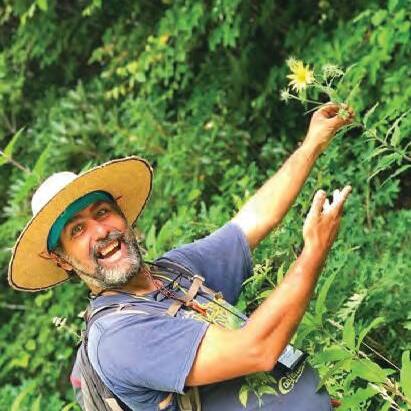
After COVID, a trio of tragedies visited upon Haywood County conspired to make an already difficult job — farming — even more so. But with a little creative thinking and determination, a dynamic husband-and-wife duo are redefining what it means to live, thrive and survive in the Great Smoky Mountains. (Page 24) Cory Vaillancourt photo
News
Commissioners want to remove Jackson libraries from FRL..................................4 Sensing opportunity, Dems lining up to run against Edwards................................6 NC-11 Dems elect new chair..........................................................................................7 JCPS budgets for change................................................................................................8 Canton, developer ink interim deal to maintain wastewater service..................11 Anna Woods named Jackson County Teacher of the Year..................................12
Opinion
Finding space for two emotions at once....................................................................14 Jackson leaders show their hand..................................................................................14
A&E
The Last Revel to headline Cold Mountain Music Festival..................................16 Folkmoot welcomes Las Montanitas............................................................................21
Outdoors
Hogs and Hammocks: Inside this resilient Smokies farm stay............................24 Up Moses Creek: Because it’s here............................................................................27
STAFF
E DITOR /PUBLISHER: Scott McLeod. .
ADVERTISING D IRECTOR: Greg Boothroyd.
ART D IRECTOR: Micah McClure.
D ESIGN & PRODUCTION: Jessica Murray.
info@smokymountainnews.com
greg@smokymountainnews.com
micah@smokymountainnews.com
jessica.m@smokymountainnews.com Jack Snyder.
D IGITAL MARKETING S PECIALIST Tyler Auffhammer.
ADVERTISING SALES: Amanda Bradley.
Maddie Woodard.
C LASSIFIEDS: Scott Collier.
N EWS E DITOR: Kyle Perrotti.
WRITING: Hannah McLeod.
Cory Vaillancourt.
Garret K. Woodward.
ACCOUNTING & O FFICE MANAGER: Jamie Cogdill.
D ISTRIBUTION: Scott Collier.
jack.s@smokymountainnews.com
tyler.a@mtnsouthmedia.com
amanda.b@smokymountainnews.com
maddie.w@smokymountainnews.com
classads@smokymountainnews.com
kyle.p@smokymountainnews.com
hannah@smokymountainnews.com
cory@smokymountainnews.com
garret@smokymountainnews.com
smnbooks@smokymountainnews.com
classads@smokymountainnews.com
C ONTRIBUTING: Jeff Minick (writing), Susanna Shetley (writing), Adam Bigelow (writing), Thomas Crowe (writing)
CONTACT
WAYNESVILLE | 144 Montgomery, Waynesville, NC 28786 SYLVA | 629 West Main Street, Sylva, NC 28779
Ingles Nutrition N
Notes
written by Ingles Dietitian Leah M
WHAAT T DOES “LOCAL” FOOD MEAN
Often, I hear terms like “buy local” and “eat local foods may depend on who is using this term and their person of what “local” means.
When it comes to food, “local” is a GEOGRAPHIC desi it has nothing to do with how that food is farmed or rai I’ve heard people consider “local” to be:
• their town
• their county
• within 100 miles of their home
• their state
• a region (like the Southeast)
AREA’S BEST BURGER
•theUnitedStates
• the United States
If you look at the above list, you realize how much varia n T NC, you are miles (and hours) closer to Easter Teennes Northeast Georgia and Upstate SC than you are to Eas Carolina...so does it make sense to consider a product anywhere in NC “local” when something has to be tran over 4 hours but to not consider something “local” whe from just 45 minutes away?
Bottom Line: When someone talks about “local food”
Leah McGrath, RDN Ingles Market Corporate
N, LDN e Dietitian
Leah McGrath
h - Dietitian lth N? s”. But what nal opinion ignation and sed. ability there ssee, stern North t from nsported en it comes be sure and McGrath
‘It’s got to go’
HANNAH MCLEOD STAFF W RITER
Anyone who thought that two years, dozens of meetings, thousands of dollars and hours of public comment to reach a new interlocal agreement between Jackson, Macon and Swain counties for the Fontana Regional Library would spell the end of the controversy over local libraries thought wrong.
Last week a majority of commissioners in Jackson County expressed their desire to withdraw from the Fontana Regional Library and either establish their own independent county libraries, or, as Commissioner Jenny Lynn Hooper advocated, close the libraries altogether.
“I continue to get hounded by people about the stuff they’re displaying in the libraries,” said Commissioner John Smith, who led the discussion about possible withdrawal. “They’re promoting the same ideology that most people in this county reject.”
At its May 6 meeting, commissioners asked County Manager Kevin King and County Attorney John Kubis what the board’s options were for oversight of the library, as well as its options if it were to move forward with exiting the Fontana Regional Library system.
King told the board that its most direct power over the library was through its appointments to the library boards, its appropriations to the library and its ability to exercise the right of withdrawal as permitted in the FRL interlocal agreement.
have to put up with it.”
“It seems like they’re really promoting certain agendas,” said Commissioner Michael Jennings.
Hooper accused library staff of lying about an incident involving an airsoft gun found in the bathroom and a teenager dying their hair in the bathroom. Hooper did not present evidence for her assertions.
“You ought to be able to go to the library and not have to be appalled by anything that’s there, no matter which side you’re on,” said Jennings, apparently referring to political affiliation. Jennings and all his fellow commissioners are Republicans.
“They put their displays right there in the front door when you walk in, nobody gets past it without looking at it,” said Smith.
But some commissioners did express hesitancy about scrapping an agreement after so much work went into arriving at it.
from the husband of FRL Board Member Leah Gaston using her account detailed a covert plan for counties to withdraw from the system.
Jim Gaston has been a vocal advocate for dissolving the Fontana Regional Library since discussions to do so began more than two years ago. He also advocated for cutting ties with the American Library Association.
“Leaving the FRL needs to be discussed by commissioners in Macon and Jackson behind the scenes with a ‘surprise’ decision to leave when the time comes just as Yancey voted unanimously to leave their regional system while the regional library director was conveniently out of town,” his email read. “If this possibility of exiting FRL is being discussed in the open, the lunatic left will mobilize and come out in full force with all their tired lies to create huge controversy. It must be kept behind the scenes until action.”
At the time the email was leaked, commissioners in both Macon and Jackson assured residents there was no secret plan to dismantle FRL, especially so soon after the new agreement was reached.
“The fourth option would be to close the library,” said Hooper, chortling audibly.
No other commissioners laughed at the statement and Smith said, “no we wouldn’t want to do that; that’s not an option.”
But simultaneously, King said, “I guess that’s an option.”
Commissioners seem to be upset by some of the displays that are put up in the library, and voiced their disapproval that the nature of the displays have not changed since the new FRL agreement was approved in November. Commissioners also made it clear they were not happy with library leadership.
“The whole library’s being misrun, mishandled,” said Hooper. “We’re putting our people in a bad place and it’s not what the people in the county want and I don’t know why we
“I had high hopes for the FRL agreement, and I’m still hopeful, because we had Mr. Kubis and [others] working on it for several close to a year, maybe over a year to get to a good agreement,” said Commissioner Todd Bryson.
Kubis and King did not respond by press time Tuesday to requests for information about exactly how much time or money was spent reaching the new agreement.
“We spent a lot of money getting that agreement,” said Smith.
In addition to the money spent to reach the new agreement, Jackson County spends a little over $1 million each year on library operations.
Commission Chairman Mark Letson later told The Smoky Mountain News that he is against Jackson County withdrawing from the Fontana Regional Library System. He expressed the same opinion earlier this year when an email
“Just for the record, I’d like to reiterate that we just signed a 10-year, bipartisan, good faith contract with Fontana Regional Library, and I don’t know where these emails are coming from; I hate to say I really don’t care,” Macon Chairman Josh Young said during a Feb. 11 Macon County Commission meeting. “We signed a 10-year good faith agreement, and I feel like that’s where we’re at with it, so I really don’t even put any merit to that email.”
“We worked really hard for a year to come to an agreement that all parties signed off on,” Letson told The Smoky Mountain News at the time. “For me, it just doesn’t seem to be very responsible to then back out of that agreement… Right now, we’re not looking to leave. I think it’d be a detriment to our citizens if we did.”
Letson also said that if those conversations ever did arise, “they’d be 100% public.”
When The Smoky Mountain News caught up with Letson this week, he said that nothing has changed.
“I still think it’s a horrible idea to withdraw,” said Letson. “When there’s a consensus, there’s really nothing I can do to slow the process, because that’s the will of the board. I can still vote no, which I will, because I don’t think that it’s in our county’s best interest, in our library’s best interest to withdraw.”
“If social media posts or displays or what not hurts your feelings, then you need to reach out to the regional director, you need to reach out to Tracy and talk about that,” Letson continued. “There’s got to be some communication, otherwise it’s pointless to have
Jackson County Public Library. File photo
an agreement.”
Letson said that his fellow commissioners were opposed to some of the LGBTQ items that are in the library and on display.
“They would prefer that there be a more neutral kind of basis,” said Letson. “A lot of our libraries focus on LGBTQ items … I don’t have a problem with that. I view myself as a parent who is going to go into the library with my child, and if there’s a conversation that needs to had, that’s what I have. I don’t think I should be the public’s parent. Everyone has different values. There are lots of different beliefs, not one, lots. And a library is a resource for those beliefs, not a stranglehold for those.”
“The majority of the board wants to pull out of Fontana Regional Library because they can’t find that peace, that there are other people out there,” Letson continued. “I have to kind of stand firm on this, that I’m opposed… there’s this small faction of people that want less LGBTQ+ stuff, well, let’s work to get that for more than eight months or however long it’s been signed, let’s work to direct our library staff to see if they can make those changes that those commissioners want.”
When the discussions about Fontana Regional Library and the merits of the system first began in Macon County in 2023, residents were objecting to certain books with LGBTQ themes and content.
“There’s not an indoctrination plan from what I can tell, like some of our commissioners think,” said Letson. “To me, it’s just a resource for people who maybe have questions or need to learn more.”
“I think they [the library] need to be told straight that’s their options,” said Jennings. “Make it neutral, or we’re out.”
“I hate that it has to come to that; I don’t want to ban any books, everybody’s got the right to read whatever they want to read whenever they want to read it,” said Smith. “Don’t throw everything in everybody’s face. If you’re going to throw this agenda in somebody’s face, you better be throwing the opposite side in their face as well. You got to have neutral or equal representation.”
Smith did not make it clear what sort of agenda he thought the library was throwing into people’s faces, nor what sort of agenda he would prefer the library be throwing in people’s faces in addition to the existing agenda. But he did suggest that he had made his preferences clear to the FRL director at some point.
“They’ve had since December; they knew, we had a whole, several-hour meeting with the other county board and the FRL director and they knew what we wanted,” said Smith. “They continue to go in a different direction. We have tried to coax them in a different direction.”
Also present at the meeting was Deborah Smith, appointed to the Fontana Regional Library Board of Trustees from Jackson County. She chimed in to mention that Macon County will soon be appointing another member to the FRL board.
“I continue to get hounded by people about the stuff they’re displaying in the libraries. They’re promoting the same ideology that most people in this county reject.”
John Smith, Jackson County Commissioner
“If that appointment goes in the direction which the last appointment did, I think that you will see that the board will then have the votes to make some of the changes that I think are going to make a lot of people happier,” Deborah Smith said.
Commissioners and the State Library of North Carolina. The withdrawal would then be effective on June 30 of the following year.
If the participating local government unit fully withdraws, all furniture and fixtures purchased by Friends of the Library in the withdrawing county will remain with their respective library; books and audiovisual materials will also remain with each library. Assets purchased by the Fontana Regional Library with FRL funds and intended for FRL regional support services will remain assets of FRL.
If two of the three participating local governments withdraw and the FRL is dissolved, FRL assets will be divided equally among the counties.
According to Tracy Fitzmaurice, Jackson County librarian and Fontana Regional Library director, she has not received any word from the commissioners or the county manager with regard to Jackson County withdrawing from the Fontana Regional Library system.
“The staff are all very anxious about the prospect of this happening, but we are continuing to operate normally,” Fitzmaurice said. “There is a June 30 deadline for the notification of the intent to withdraw.”
FLR’S HISTORY
Fontana Regional Library formed in 1944 when the Tennessee Valley Authority sponsored a regional bookmobile to visit the most remote areas of Jackson, Macon and Swain counties.
The document approved by Jackson and Swain ends the purpose statement with, “To this end, the FRL shall operate the county libraries and branches of the participating local government units in accordance with governing statutory authority, North Carolina law and this Agreement.”
The new agreement kept intact the change Macon Commissioners made last year to put the authority to appoint members to the Fontana Regional Library Board in the hands of county commissioners. The document does say that county commissioners “may” select from recommendations made by their respective County Library Board, though it is not required. This change was originally recommended by county managers in August 2023.
However, the new document did not contain a rule proposed by Macon County that said, “any time that a majority of the commissioners determine that a library trustee from their county has failed to abide by the library’s by-laws and policies, they may be removed by the commissioners from that county.”
While the new document did stipulate that the library board would hold 30-minute public comment sessions during its meeting with three minutes allowed per speaker, and more time permitted by the board’s discretion, it did not include the statement Macon County had proposed that said “the public shall be permitted to ask questions for clarification directly through the chair, who shall attempt to answer to the best of his or her ability.”
During the May 6 meeting, Letson questioned whether withdrawing from the library system would change any of the things that commissioners were concerned about, such as displays in the library or social media posts.
“I don’t care,” was Hooper’s response. “We don’t want to see it, our kids don’t want it, the community don’t, the majority of people in Jackson County do not want to see that crap in there.”
Commissioner Smith said he has already had discussions about withdrawal with commissioners from other counties. According to him, there is one commissioner in Macon who wants to withdraw. Smith said that the unnamed Macon commissioner told him that if one county exited the system, Macon would follow.
“I don’t know if that’s the right answer, but if we can’t change direction then I don’t think they’re leaving us much choice,” said Smith.
Commissioners kept coming back to the issue of neutrality, suggesting that if the library could keep itself politically neutral in the eyes of the commissioners, the county might remain in the FRL system.
County Attorney John Kubis said that in terms of the Jackson County Commission’s options for withdrawal, “the pathway is there, it’s just a matter of what the will of the board is.”
However, Manager King asked Kubis whether the board could “jump back in” if things changed after the board decided to pull out and gave notice to the FRL of their intent.
“I’d have to go back to the agreement; my recollection is that there’s nothing in the agreement that would prevent us changing our mind within that period,” Kubis told the board. “The whole unwinding process is a little bit messy just because of the different ownership of different things between FRL and individual county libraries and so on and so forth, so there’s lots to do with that. I am not aware of anything off the top of my head that would prevent us from changing our mind.”
According to the agreement’s provisions for withdrawal, a participating local government proposing to withdraw from the Fontana Regional Library has to give written notice on or before July 1 to the FRL Board of Trustees, the other counties Boards of
Today, the system offers full library services to rural counties that might not otherwise be able to fund them. By combining cataloging, human resources, finance departments and information technology services for libraries in the three counties, it is cheaper for each county than if they were to provide for each of those departments individually. The regional agreement is renewed every 10 years and can be dissolved or withdrawn from at any time.
In November 2023, Macon County Commissioners released a set of recommended changes to the FRL agreement.
Almost a year later, in August 2024, the Jackson County Commission approved a new version of the FRL interlocal agreement that contained some significant changes to the revision previously put forth by Macon County. Swain County approved the same version as Jackson.
In the FRL’s purpose statement, Macon County had proposed that the statement end with, “To this end, the FRL shall operate the county libraries and branches of the participating local government units in a socially and politically neutral manner.” This proved to be a sticking point for commissioners and attorneys.
“There’s been some discussion with the board and in public comment as to what this means,” Kubis told Jackson commissioners in January of 2024. “Certainly, whatever it does mean, it means that commissioners are now going to be in a position to determine whether or not libraries are acting in accordance with the socially and politically neutral manner language.”
That had been an important point for multiple Jackson commissioners at the time.
“In all my meetings and boards I’ve ever been on, that’s never happened,” said Jackson County Commissioner Mark Jones. “You can always go after a meeting and speak to a person one on one, the chair and any other member of any issue.”
“I don’t think any of the commissioners that showed up wanted to have response from the chairman,” said Smith. “Any time the board, especially the chairman responds to public comment, you’re likely to inflame and cause more problems and we spoke about that when we were there.”
The new agreement reinstates FRL as a party in resolving disagreements related to the document, alongside commissioners from each county. The Macon proposal had called for commissioners and their attorneys to address any issues without FRL.
While the Macon proposal stipulated that if a county were to withdraw from the FRL system, it would keep all the assets in the county library, the new proposal stipulates that “furniture and fixtures purchased by the Friends of the Library within the withdrawing county will remain with their respective library, and books and audiovisual materials will also remain with each library.”
However, “assets located in the local library facility that were purchased by Fontana Regional Library with Fontana Regional Library funds and intended for Fontana Regional Library regional support services will remain assets of Fontana Regional Library.”
Sensing opportunity, Dems lining up to run against Edwards
BY C ORY VAILLANCOURT
P OLITICS E DITOR
Henderson County Republican Congressman Chuck Edwards’ repeated failures on economic policy, entitlement programs and Hurricane Helene recovery have left him vulnerable, according to a slew of Democrats who are now competing for the right to run against him in 2026.
Last week, The Smoky Mountain News was first to report on the entry of retired Air Force Col. Moe Davis into the race. Since then, three more candidates have popped up, all of whom attended the North Carolina Democratic Party’s 11th Congressional District convention at Tuscola High School in Waynesville on May 10.
ZELDA BRIARWOOD
Briarwood lives just outside the Canton city limits and works in banking equipment service and maintenance — including ATMs and vaults — throughout Western North Carolina. She said her job gave her a front-row seat to the damage caused by Hurricane Helene, and to what she sees as a failure of political leadership in the region.
“After Helene, I was very, very busy for several months trying to make sure that the ATMs were up and running, because there were so many power surges and whatnot, and I saw a lot of the devastation,” she said.
Originally from just outside Philadelphia, Briarwood moved to North Carolina at age 18 and has split time between the two states since she was 13. Briarwood, who identifies as part of the LGBTQ+ community, currently serves as secretary of the Haywood County Young Democrats and is active in the 11th District’s youth outreach. She said she sees herself as part of a new generation of young, rural, working-class candidates touted by State Party Chair Anderson Clayton — originally from rural Person County and herself one of the youngest state party chairs in North Carolina history.
“It is older white males, and mostly people above the age of
40 — mostly 50, if I’m remembering my statistics correctly,” Briarwood said. “We don’t have enough young people to advocate and actually show up and represent.”
Briarwood said she was moved to run after watching Edwards’ performance during a recent town hall.
“I am currently watching — I think we all are — the fall of our democracy and an administration that actually does not care about the people,” she said. “What really solidified it for me was Chuck Edwards’ interactions with the public during the town hall [in Asheville on March 13]. It was frustrating to see someone not actually being authentic and not actually caring about the people, just kind of using buzzwords and not engaging with anyone in a human-to-human interaction, which I feel like is what’s missing from a lot of our political officials and public servants.”
Edwards’ biggest failure in Congress, Briarwood said, has been “not actually doing his job.”
“Especially when it comes to the legislative branch — [which is] supposed to be checks and balances for the executive branch — he straight up, with the continuing resolution, abdicated his responsibility, along with a bunch of other Republicans, on making sure that we can hold the executive branch accountable.”
Although she credited Edwards with advocating for Helene recovery efforts, Briarwood said his actions didn’t go far enough. In March, an investigation by The Smoky Mountain News revealed that six months after Helene, most local governments still haven’t seen a nickel of promised federal monies.
“At the end of the day, while he did start advocating for us in that disaster moment, we’re not really seeing much from it,” she said. “And it very much frustrates me that we need a disaster in order to see that behavior from legislators.”
She also criticized Edwards’ embrace of Trump’s political platform. At the recent North Carolina Republican Party Convention, also held at Tuscola High School on April 26, Edwards, in a speech, described the Trump agenda as “your agenda.”
“Absolutely not. It is not my agenda. I do not believe it is at all indicative of what the people want,” Briarwood said. “They
want legislators that are going to be accountable to them.”
As for funding, Briarwood said her campaign is fully grassroots.
“I know I’m fighting an uphill battle,” she said. “The people’s support is what needs to come first. I would rather have less money and be able to advocate for the people properly than take a bunch of money from lobbyists and super PACs.”
CHRIS HARJES
Harjes, a nurse practitioner, real estate investor and self-proclaimed “political nobody” from Asheville, has launched his own grassroots campaign for Congress in the 11th, joining an expanding field.
“I’m a husband, father, nurse practitioner, business owner, seasoned whitewater kayaker, struggling beginner guitarist and brand spanking new politician,” Harjes said.
Harjes said his motivation for entering politics came from frustration with the increasingly toxic national discourse.
“I am somewhat terrified by the partisan vitriol, the dark money, the billionaires who’ve teamed up to mislead America and tear our nation apart,” he said. “I want to see us working together. The edges of both parties are drowning out the middle. I want to see us working together as a nation, and I want to do it under the Democratic banner, because I have faith in the core ideals of the Democratic Party.”
Asked why voters should fire Edwards, Harjes didn’t mince words.
“He has either directly voted for or allowed to happen quite a few pieces of legislation and actions that have pulled billions of dollars out of the North Carolina economy in order to provide more tax breaks for billionaires,” he said.
Harjes called Edwards “a slave” to the current administration who can destroy his political career with a single tweet.
“His hands are tied. He can’t defend North Carolina. He can’t help us,” Harjes said. “I would step in, listen to the people of Western North Carolina F
Democrats from across Western North Carolina traveled to Haywood County for the 11th Congressional District convention on May 10. Cory Vaillancourt photo
NC-11 Dems elect new chair
BY C ORY VAILLANCOURT
Just two weeks after western Republicans elected a new 11th Congressional District chair, their Democratic counterparts have now done the same.
Bill Baugh, a microbiologist and political activist living in Buncombe County, was elected chair of the North Carolina 11th Congressional District Democratic Party on Saturday, pledging to rebuild unity across the district and to refocus messaging on kitchentable issues that resonate in rural Western North Carolina.
Baugh, who moved to Asheville from Palm Beach, Florida, during the COVID-19 pandemic, said his first call after settling in was to the Buncombe County Democratic Party.
“I told them, ‘I’m your guy. I’m sick of Trump — how can I help?’” Baugh recalled.
That call led to a volunteer position at the front desk, later growing into a larger role as the cluster leader for the Riceville and Swannanoa communities.
Now, as district chair, Baugh said his top priority is rebuilding relationships that suffered during the isolation of pandemic-era Zoom meetings.
“The most important thing we can do in District 11 is work together,” he said. “We need messaging that connects with people in the far west, not just Asheville.”
Baugh strongly supports state party chair Anderson Clayton’s strategy of investing in youth and rural voters, even in deeply red counties.
“The youth vote is our future. That’s what we’re doing this work for. People can’t vote Democratic if they don’t see a Democrat [on the ballot],” he said. “We need to be present
and represent us with practical policy that makes our country safer, wealthier and happier.”
He cited Edwards’ appearance alongside Donald Trump in Swannanoa after the devastating Hurricane Helene as the congressman’s biggest misstep.
“I think it was when he was standing next to Trump in Swannanoa while Trump lambasted the very agency that was stepping in trying to save us from the destruction of Helene,” he said.
At that event, Edwards also stood right behind Trump as Trump spread lies about what was happening in Western North Carolina — lies that Edwards had actually tried to debunk previously.
Again, Harjes hinted at Edwards walking a fine line, trying to do what he can for his district while also trying to avoid the ire of a finicky president with a mercurial temper.
“My only big objection to what he’s doing now is lying,” Harjes said. “He doesn’t need to lie to the American people. He doesn’t need to lie to Western North Carolina. He needs to just tell us that he’s between a rock and a hard place and that he can’t help us as long as Trump is his boss.”
Launching a competitive campaign in the district won’t come cheap. Moe Davis raised nearly $2.5 million in his first go-round with Madison Cawthorn in 2020, and said he expects it will take at least $3 million to run a competitive campaign against Edwards this time.
“I’ve started out by hitting up close friends and family, putting in some of my own money,” Harjes said. “I’m going to use that to get the campaign going right now — to run attack ads against Chuck within the next month and use that as leverage to start chipping away at his paradoxical popularity within the Republican Party. I’m also going to use that to leverage continued donations.”
A seasoned whitewater kayaker, Harjes will inevitably draw comparisons to 2022 Dem Congressional Primary Candidate Katie Dean, who pulled a respectable 26% of the vote in a field of six but finished well behind eventual nominee Jasmine BeachFerrara. Harjes, however, offered up one idea for a campaign stunt that Dean never did.
“If I have to scream about Chuck Edwards’ failures while swimming over a waterfall wearing an American flag swimsuit to get America’s attention and get our message across — I will do it,” he said.
But Harjes also acknowledged criticism about a potential land-mine in his own campaign — his work flipping homes in a region where some speculate that housing costs are driven up by corporate landlords and speculators.
“They’re not completely wrong,” he said. “Our industry is here to make money. However, the way we make money is by providing housing. When I buy a house that’s beat up and
and talk about what matters — Social Security, veterans benefits, Medicaid.”
On Rep. Chuck Edwards (R-Henderson), Baugh was blunt.
“He goes out of his way to run against most of us in Buncombe County. He’s divisive and doesn’t represent our values,” Baugh said, while also criticizing Edwards’ response to misinformation surrounding Hurricane Helene relief, saying the congressman failed to “speak truth to power” when President Trump repeated lies during a visit to Swannanoa.
Looking ahead to 2026, Baugh hinted at a robust slate of Democratic challengers for Western North Carolina’s state legislative seats, vowing that “we’re going to have a candidate run against every one of them” and citing Buncombe County Democratic Rep. Lindsey Prather’s upset win in a Trump-leaning district as proof that grassroots organizing still works.
“We need to get out and do the work,”
destroyed and then fix it and resell it, it’s because nobody wanted to buy it the way it was. So I am providing a service, a necessary service.”
Those experiences, he said, gave him more insight into the real reasons why housing is unaffordable across the region, the state and the country. Local regulations, Harjes said, drive up building costs and incentivize developers to build luxury homes instead of affordable units.
gumption and the strength of will to go out and fight for it.”
Conversely, Blankenship said that for the first time in history, Republicans are “pulling back” from what really made America exceptional — not a blind belief that America was always perfect, but rather that each generation has found a way to expand what it means to be an American.
“It’s not something I can change on the national level,” he said. “But the current tax system is far too [slanted] in our favor. In 2019, I had a great year. I had successful flips, successful builds. I worked 70 hours a week for the VA, serving veterans, and I made great money. I have a good accountant. I paid an 8% federal tax rate. I would change that. I would break down this system. We can take back this money, close these loopholes, simplify our tax system and lower your tax rates.”
MARCUS BLANKENSHIP
Blankenship, of Candler, isn’t officially in the race yet, but he’s clearly put a lot of thought into it already. A skilled trades program administrator at Asheville-Buncombe Technical Community College, Blankenship used to teach U.S. history in high school and has a clear vision of what Democrats are, were and one day could be again.
“I think of myself as an ‘old school’ Democrat,” he said. “Now, when I say old school Democrat, I want to clarify — we’re talking FDR, JFK, right? I’m not talking Strom Thurmond.”
His website labels him a New Deal Democrat, putting him in line to support Roosevelt-era policies like active federal intervention in the economy, extensive social safety net programs and a laser-focus on America’s working class.
Blankenship said he’s begun talking with Democratic voters across the district to gauge support and plans to make a final decision by the end of the summer.
“Right now, my goal is to get out to meet my fellow Democrats, talk about who I am, and ask them if they feel like they can get behind me as a candidate with the goal of making that official decision of really jumping into this race or saying, ‘You know what, I don’t think it’s my time,’” he said.
Originally from the far southern end of the Appalachian Mountains in northern Alabama, Blankenship noted that the values that define his political philosophy — “faith, fairness, dignity, and opportunity” — were passed down through his own family history.
“My great-grandfather had to drop out of school in the sixth grade to go work in the same mines that had disabled his father,” he said. “He was a Democrat because of the New Deal … the Democratic Party, with FDR, offered the people a bold vision that met the moment. And on top of that, they had the
Blankenship also took aim at Edwards’ support for stripping away health care protections, calling it hypocritical for a member of Congress — who enjoys premium taxpayer-funded health care — to oppose the Affordable Care Act, Medicaid expansion and Medicare protections.
“Everything that he says, he’s saying it to us, and then he’s going to D.C. and he’s doing the exact opposite,” he said. “Chuck Edwards acts like he is a part of our community, yet he’s gone to Congress to be a rubber stamp for corporate elites on Wall Street and in D.C., and I think that’s his biggest weakness — he’s not one of us.”
If launched, Blankenship’s campaign will focus not just on economics and policy but also on restoring a sense of unity and common purpose. The heart of his message, he said, is about building community across differences and remembering shared identities — especially that of the American worker.
If he could pick a campaign theme song, he said, it would be “Crowded table,” originally by Americana supergroup The Highwomen.
“All of us are united in an identity as a worker,” he said. “All of our identities matter, but we all share that common workingclass identity. And if we can start to remember the things that we share in common, we can start to re-knit the New Deal coalition back together, right here in the 11th District of North Carolina.”
MORE?
Although Briarwood, Davis and Harjes all appear to be in the race, with Blankenship still debating, the candidate filing period doesn’t begin until Dec. 1, leaving plenty of time for others to consider their own options.
Sources within the Democratic Party told SMN they expect more candidates, perhaps many more, indicating a level of enthusiasm that’s either naively optimistic or keenly intuitive.
A combination of factors could favor the latter theory — the president’s party often loses ground in midterm elections, the Cook Political Report rates the district R+5, and data from davesredistricting.org shows the 11th performed at 53.8% for Republicans between 2016 and 2022. Meanwhile, frequent protests have been targeting both Trump and Edwards, even in small, rural communities across the district.
Baugh ran unopposed and was elected by
Bill Baugh. NC-11 photo
JCPS budgets for change
HANNAH MCLEOD STAFF W RITER
With a new middle school on the horizon, Jackson County Public Schools is budgeting for a changing school system. On May 6, JCPS made its official request for local funding from the Jackson County Commission.
The total ask from Jackson County Public Schools is $14.1 million, up about $1 million dollars for the 2025-26 school year as compared the 2024-25 school year. Most of that increase is attributed to a higher price for covering free school lunches, a larger sum moving through the JCPS budget to charter schools, funding the new JROTC program and a new HVAC and fire alarm system at Jackson Community School.
“Those are our large asks,” Ayers told commissioners. For the first time last year commissioners funded JCPS to cover the cost of free breakfast and lunch for all students. Five schools in the district qualify for the Community Eligibility Provision, a non-pricing meal service option for schools in low-income areas, which means students at those schools already eat for free.
The CEP program through the United States Department of Agriculture allows schools to serve breakfast and lunch at no cost to all enrolled students without collecting household applications for free and reduced lunch. Instead, schools that adopt CEP are reimbursed using a formula based on the percentage of students categorically eligible for free meals based on their participation in other programs, such as the Supplemental Nutrition Assistance Program (SNAP), Temporary Assistance for Needy Family (TANF), or Medicaid benefits, as well as children who are certified for
free meals without an application because they are homeless, migrant, enrolled in Head Start or in foster care.
Any district, group of schools in a district or individual school with 25% or more students participating in these programs qualifies for CEP.
Once a certain school qualifies for the CEP program, thereby allowing all students at the school to access free breakfast and lunch, that school remains in the program and can continue offering no cost meals for a five-year period, after which the school is reassessed.
While those five schools in Jackson County currently qualify for the CEP program and students were set to receive no-cost meals, Ayers and her staff went to the commission last year to request funding to cover meal costs for students throughout the rest of the district. Commissioners agreed to cover the gap at a cost of $500,000.
This year, the price tag to cover free meals for all students in the district will be about $700,000, due to rising costs.
“If you’ve bought any groceries lately, or anything else, you will see that the cost is steadily rising for grocery items,” said Ayers. “I have to commend you as a county commission board that you did this for students. This is not happening across the state of North Carolina, so all students in JCPS and the Catamount School receive no cost breakfast and lunches every single day. You are the anomaly in our state and that is definitely something to be commended.”
2024-25 school year in providing free meals.
“We already had a pretty high participation rate before but implementing that has definitely helped,” Cabe said.
Jackson County Public Schools is also budgeting for an increase of up to 4% for all staff. This is based on what the state ultimately decides to do in its budget, which has not yet been passed.
“We don’t know what that will look like until they solidify their budget and pass it,” said Ayers. “We’ve heard 1.5% up to 4%.”
Last year JCPS received funds for a 2% increase for staff and then the state mandated a 3% raise for all non-certified
support staff. The school system used money from its fund balance to cover the difference.
According to Nutrition Director Laura Cabe, JCPS saw a 5% increase in meal participation over the course of the
“We cannot continue in that path of using our fund balance because we will exhaust all of our fund balance,” said Ayers. “I do hope that the state gives our folks 4%; they all deserve it.”
The HVAC and fire alarm system will cost F
about $500,000 and are needed for the Jackson Community School building after the school board voted to keep the school in its current location following discussions about possibly moving it onto the campus of Smoky Mountain High School.
“The site is an old site as you’re well aware of and it needs a lot of work,” said Ayers. “The HVAC systems for both heating and air are, for lack of a better word, limping along. It is bandaided together… the fire alarm system is functioning, but it is very, very old and doesn’t communicate well with all of our other systems.”
JCPS is requesting an increase for its local supplements, one tool that public schools use to retain and recruit teachers.
that’s going to continue to grow,” said Ayers.
Like other school systems in the region, JCPS has seen declining enrollment over the last several years. At the conclusion of 2024 the school system had an Average Daily Membership (ADM) of 3,473. For the upcoming year JCPS is projected to be around 3,338.
Jackson County Public Schools is also budgeting for an increase of up to 4% for all staff. This is based on what the state ultimately decides to do in its budget, which has not yet been passed.
“Us in the far west school districts don’t do a good job of offering supplements to our certified and non-certified employees,” said Ayers. “This is one way that we can retain staff over the long term.”
When Ayers first took over as superintendent, non-certified staff were not receiving any local supplement. That has steadily increased with one-time supplements of $200, $500 and $600 for the last two years in a row.
“We want to raise that to $1,500,” said Ayers.
Certified staff receive $2,000 supplements.
“Our neighboring counties, specifically two of them, are not offering anything, so we do see that as an advantage,” said Ayers. “Our team has talked recently over the last several weeks, we are getting more and more interest from our neighboring counties of staff that want to come and work here and I think that’s a testimony to what you all as a county commission and what we all do to
“We’ll be down about 80 kids compared to the current year we sit in right now,” said Ayers. Administration thinks that the decline in student population is due to students attending home school, charter schools and private schools.
As required by North Carolina law, JCPS pays charter schools a certain allotment for each student living in Jackson County who attends a charter school, regardless of whether that school is in Jackson County or not. For the coming school year that number is expected to be over $1 million, out of the $14.1 million-dollar local request.
“Any child that resides in Jackson County if they choose to go to a charter school, whether it’s in Jackson County or Buncombe County or Swain or Macon, they get the funds, that pass through to us,” said Ayers.
“When you look at how much money we pass through, I respect the right of any person to take their child where they choose to,” Ayers continued. “But I have also been a parent of a kid that went to other schools, and I paid for it out of my pocket. So, whether you believe or don’t believe, I think that me standing here and asking you for money every year that I then turn around and give to someone else, just doesn’t seem fair.”
Of the total budget request, about $8.2 million will go toward operations, $1.6 toward supplements, just under $600,000
Like other school systems in the region, JCPS has seen declining enrollment over the last several years. At the conclusion of 2024 the school system had an Average Daily Membership (ADM) of 3,473. For the upcoming year JCPS is projected to be around 3,338.
honor our employees.”
JCPS is budgeting for the JROTC program that just started in January at Smoky Mountain High School. The program currently has 29 participants and is set to have 60 enrolled in the fall. Students at both Smoky Mountain and Jackson County Early College are eligible to participate. The current salary for both of the current JROTC instructors is $14,826 per months and the United States Army reimburses the school system for half of that amount, about $7,589 per month.
“We definitely need funds to continue the process of that as a recurring program
toward counselor positions, $221,000 to JROTC personnel and equipment, just under $1 million for local supplements and costs that exceed state allotments, $700,000 to school nutrition for free school meals, up to $1.5 million for charter schools and $500,000 for repairs at Jackson Community School.
Over the coming year Jackson County Public Schools will continue planning for its new middle school. The county received a $52 million grant from the Department of Public Instruction for the project and the county recently purchased the parcel where the school will be built.
Going with the flow
Canton, developer ink interim deal to maintain wastewater service
BY C ORY VAILLANCOURT
P OLITICS E DITOR
Canton’s toilets will continue to flush thanks to an agreement born of urgency but put on paper with cooperation and cautious optimism.
After a closed session discussion on May 8, the Town of Canton Board of Aldermen/ Women approved an interim agreement with Two Banks Development to ensure the continued treatment of municipal wastewater, staving off a potential public utility crisis following the closure of the town’s long-time partner in sewage processing.
The agreement comes two months after Blue Ridge Paper Products, LLC, successor to Champion Papers, formally terminated a 60year-old wastewater treatment agreement with the town. That agreement, signed in February 1964, had allowed the town to send its sewage to the privately-owned wastewater treatment plant on the former paper mill property at almost no cost to the Town.
“We’ve benefited for over 60 years without having to pay for wastewater, and our customers have not had to pay for that either,” said Canton Mayor Zeb Smathers. “We’ve been talking about this for years now, since the mill closure, that it was not going to be the same much longer.”
Two Banks, the Missouri-based development firm owned by Eric Spirtas, officially acquired the treatment plant along with the 185-acre mill site in January 2025 and stepped in to continue providing uninterrupted service — based on little more than shared goals and a handshake.
“Eric has, on his own dime, been providing this service and working with us and negotiating,” Smathers said. “There’s things we’ve agreed on. There’s things that we’ve disagreed on. But we reached an agreement that is in line with what myself and my board has been saying, that the town of Canton realized that we have to now pay for wastewater services, but we have to pay a fair and reasonable rate for wastewater services. It was a good example of trusting one another and negotiating this with him and his team and reaching this fair and reasonable number.”
The newly signed agreement ensures that those services will continue at least through March 31, 2026, giving town officials and the developer critical time to chart a long-term path forward.
The shuttered paper mill property had long been a cornerstone of Canton’s economy and infrastructure — and even its blue-collar culture. While the mill’s closure in 2023 created an economic vacuum and eliminated hundreds of jobs, the wastewater plant remained a crucial asset — both for the town and for any future redevelopment plans on the sprawling mill site.
Under the agreement, the Town of Canton will pay Two Banks $140,000 per month for
wastewater treatment. Smathers credited Canton CFO Natalie Walker with doing an extensive amount of research to determine what, exactly, a fair and reasonable rate would be.
“I called a lot of different municipalities in the region, most similar to our size, and asked
declined to elaborate on what those developments might be. “Other things are being discussed about the future of our wastewater needs, but I think the first step was paying for the services [Spirtas] is providing, and establishing that relationship. I mean, this could have been a much different conversation with different entities, and this, I think, shows cooperation on both the town and Eric’s part, going back and forth.”
Given the high price tag and the small-
how they handled their waste treatment, if they did it in house, or if they contracted it out and what that cost,” Walker said. “I just put that into a spreadsheet and got an average.”
As part of the deal, the town will also issue a lump sum payment of $700,000 to cover services already rendered from January through May 2025. Walker said she’s confident the town can handle the payments, but that at least some of the lump sum payment would have to come from fund balance; the payments have already been priced into the town’s forthcoming annual budget, which includes no property tax increase but substantial water and sewer rate hikes.
“it’s important that if you’re going to ask to raise rates people know what it’s for,”
Smathers said. “Now we can complete that circle to say it’s $140,000, and that’s what it’s going to be paying for.”
The operational cost of the facility is estimated to exceed $140,000 per month, though Two Banks is still working to determine the exact figure. The agreement acknowledges that both the town and Two Banks are evaluating current wastewater flows and treatment requirements.
Indeed, the agreement explicitly states that both parties are “actively negotiating” a potential sale of the treatment facility to the town. If Canton were to assume ownership, it would not only be responsible for ongoing operational costs, but also for any future upgrades or environmental compliance requirements.
“I am confident that there’s going to be other developments,” said Smathers, who
town budget, Canton and Spirtas are also working to secure funding that would support the acquisition and long-term operation of the plant, possibly from state and federal sources. Two Banks has expressed a willingness to cooperate with the town in that pursuit.
According to the agreement, both parties have committed to working in good faith to carry out future agreements, secure that funding and ensure a smooth transition if the plant is eventually transferred to municipal control.
For Canton, the wastewater treatment plant is more than just a utility — it’s a strategic asset with significant implications for the town’s future. Without access to affordable and reliable wastewater treatment, the town’s ability to attract new businesses and develop housing or commercial projects would be severely limited.
“There are no free lunches, and there is no free wastewater treatment,” Smathers said.
Two Banks, for its part, appears interested in being part of that long-term vision. Though the company is headquartered in Missouri, it has invested heavily in the Canton area, and Spirtas has an interest in redeveloping the mill site into a mixed-use community that could include housing, retail and light industrial space.
Last week, North Carolina Department of Environmental Quality Secretary Reid Wilson visited Canton and the mill site, promising to keep environmental remediation and redevelopment as a top priority. During that meeting, which included both Spirtas and Smathers, Spirtas promised a site master plan in about six months.
The wastewater treatment facility at the former Pactiv Evergreen paper mill site in Canton has been a significant concern since the mill’s closing was announced in March 2023. Google Maps photo
Woods Named JCPS District Teacher of the Year
Fairview School kindergarten teacher Anna Woods was named the Jackson County Public Schools District Teacher of the Year during the Excellence in Education Awards Evening on May 8th, 2025.
Mrs. Woods graduated from Western Carolina University in 2007 and began her teaching career in fourth grade at Scotts Creek Elementary School. Previous to college, Mrs. Woods attended Cullowhee Valley Elementary School from fifth-eighth grade and graduated from Smoky Mountain High School in 2003. She has been at Fairview School since 2021, making this her fourth year in her current role.
Mrs. Woods states, “My favorite part of teaching kindergarten is getting to be one of the first teachers that the children have in school. I have the opportunity to create a wonderful experience for them and help to spark their interest in learning. Building relationships and making connections with the children and their families is also something that I enjoy. I am truly honored to be named Teacher of the Year
Two men plead guilty to drug trafficking
District Attorney Ashley Hornsby Welch announced that two men in two separate cases in Macon County pleaded guilty this week to trafficking illegal drugs.
In the first case, Franklin resident Joshua Charles Schooler, 36, was sentenced in Macon County Superior Court for trafficking in methamphetamine.
Superior Court Judge Nathan Poovey ordered Schooler to pay a mandatory $50,000 fine and
serve a minimum active prison sentence of 70 months up to a maximum active prison sentence of 93 months.
for Jackson County Public Schools. It is such a blessing to be able to work with the staff, students and families in our community.”
Fairview Elementary School Principal Eleanor Macaulay says, “Known for her nurturing approach and innovative teaching methods, Mrs. Woods fosters a classroom environment where young learners feel safe, valued, and inspired to explore. Her colleagues and students alike praise her for her patience, creativity, and unwavering dedication to student growth and development. Mrs. Woods' recognition is a testament to her tireless efforts and the positive influence she has within Jackson County Public Schools.”
Mrs. Woods will represent Jackson County Public Schools in the regional selection process which includes a portfolio review and interview.
For more information about the Burroughs Wellcome Fund North Carolina Teacher of the Year program, please visit dpi.nc.gov/educators/educator-recognition-programs/burroughs-wellcome-fund-north-carolina-teacher-year.
Schooler pleaded guilty to trafficking in methamphetamine in the amount of 53.7 grams.
On Nov. 17, 2023, with active warrants for property crimes in hand, detectives Robbie
Younce and Matt Breedlove went to a residence on John Teague Road.
They found Schooler at the rear of the property. In a black bag they’d earlier observed him wearing, the detectives discovered both the drugs and drug paraphernalia.
In the other case, Tyrice “Skin” Rochard Hutchins, 47, of Conyers, Georgia, was sen-
tenced in Macon County Superior Court on two counts of trafficking cocaine.
Superior Court Judge Tessa Sellers ordered Hutchins to pay a mandatory $100,000 fine and serve two consecutive sentences of 70 to 93 months.
Hutchins participated in controlled buys in Macon County in March 2023. Later, he was arrested on a traffic stop after entering North Carolina and charged with trafficking. His arrest was a joint effort by Macon County Sheriff’s Office, Franklin Police Department and U.S. Drug Enforcement Administration.
Charles Schooler
MCSO photo
Tyrice Rochard Hutchins
MCSO photo
Anna Woods (right) has been named teacher of the year.
Donated photo
Finding space for two emotions at once
Growing older isn’t all bad.
My grandparents once gave me nuggets of wisdom and I would look at them and think, "How do they know all of that?"
I also remember during a teeth cleaning, my dental hygienist, who was probably in her 60s, told me to let other people be my crystal ball so I don’t waste time making every mistake myself. I was in my early 20s and I never forgot it. Let other people be your crystal ball. Is that not such profound advice?
Now I’m in my mid-forties, tipping closer to 50 by the day. Each year I feel more and more wisdom seep into my heart, mind and soul. This truly hit me last Sunday as we celebrated Mother’s Day.
My mom passed in 2016 and for years after, I found it difficult to celebrate Mother’s Day. For me, the day had always been about her. Even when I had my own kids, I was never the focal point. It was her day because she was my mother. I stumbled through many Mother’s Days, trying to be grateful for my amazing boys but mostly paralyzed by sadness and also envious of my friends who were spending the day with their living, breathing mothers.
Until last year when something shifted, and this year it shifted further.
I finally realized how to hold space for two opposing emotions at once. I figured out how to hold space for the grief I feel over the loss of my mom and the joy I feel about being a mother to two incredible boys. And this, my friends, is wisdom. When I woke up this past Mother’s Day, I felt restless and a little disoriented. I knew this was grief churning in my soul.
Jackson leaders show their hand
To the Editor:
Have you noticed how quietly our basic freedoms can disappear? Right now in Jackson County, a small group of commissioners is on the verge of dismantling our entire library system — not because it’s failing us, but because it’s succeeding at something they fear: exposing people to ideas beyond a single worldview. “I continue to get hounded by people about the staff and their displays in the library,” Commissioner John Smith complained at Tuesday’s work session, revealing the two-year campaign he’s been leading against our Fontana Regional Library System.
Let’s be clear about what’s happening: despite appointing "good people from our side" (Smith’s own words), commissioners are frustrated that the library board refuses to limit information that “most people in this county reject” — according to Smith, at least. But who appointed him the arbiter of what our community believes?
County Manager Kevin King laid bare their arsenal of weapons against intellectual freedom:
• Stack the library board with ideological allies.
• Starve the library financially until it surrenders.
• Threaten to abandon the regional library system entirely.
Instead of fighting it, I allowed myself to cry and wrote my mom a handwritten card, a tradition I started last year and wish I would’ve started right after she passed. It would be special to have that collection of cards, but that’s OK. I’ve started it now and will continue.
Writing a card as if I was giving it to her in person is a cathartic experience and one I suggest to anyone in my situation. It’s more powerful than typing something or saying words aloud or imagining the deceased are with you. It’s tangible and methodical and gives the body time to process emotions.
I saw a number of cardinals on Mother’s Day, more than most days, and I knew it was my mom saying hello from afar. As has become our tradition, my boys and I planted tomatoes, zucchini and other plants, then we all got spiffed up and went to dinner at one of my favorite restaurants in Asheville called Zambra.
After a fancy meal we ended the night at Five Guys enjoying French fries and shakes. Everything about the day was fun. We laughed and ate good food and were fully present, but there were small moments here and there where memories of my mom wafted through like a breeze and a deep longing intermittently punched me in the gut. But then it would pass and I continued having fun, celebrating my own motherhood.
I am proud of myself for learning this skill of holding space for two opposing emotions at one time. This pertains to
LETTERS
But perhaps most chilling was Commissioner Jenny Hooper’s casual suggestion of “closing the library” entirely — followed by laughter. Is the complete elimination of our community’s primary source of information and internet access really a joking matter?
Think about what our library actually provides: For the family whose home lacks internet, free computer access that keeps them connected to the modern world. For the student during COVID shutdowns, a lifeline to continue learning when schools closed their doors. For the curious mind, windows into histories, cultures and perspectives they might never otherwise encounter. For everyone, the fundamental freedom to choose what information they consume.
When you walk into our library and see a display for Pride Month or Indigenous Peoples Day, remember, no one is forcing you to engage with those materials. But should you have the power to prevent your neighbor from accessing them?
Let’s call this what it is: a handful of officials trying to reshape our community’s access to information based on their personal comfort levels. They’re not protecting community values — they’re restricting your right to form your own values through exposure to diverse ideas.
In rural Western North Carolina, where
other aspects of life as well. For instance, we can be sad something is over while looking forward to what’s next. Currently, this concept makes me think of our political climate. It seems some people are allowing politics and policy change to take over their lives and destroy their joy.
I’m not talking to the folks whose lives are actually being destroyed by decisions made by the current administration. I’m referring to people like me who are frustrated and bewildered about many things, but I’m working to not let it squelch my happiness and ability to stay present in the moment, particularly when I’m with those I love.
We can hold space for both. Part of my being can be angered or perplexed by something going on politically while another part of me is content and grateful for everyday life — waking up to birdsongs, sipping coffee, cutting a juicy mango, watering plants, watching my kids play sports, reading good books, laughing at a meme someone sends, and the list goes on.
It’s OK to hold space for this and that. It’s OK to split our hearts and minds between two situations or frustrations. But this isn’t a skill I’ve always had. It’s developed with age and time. And it’s not that it makes things easier per se, it just makes them deeper, more beautiful.
For those of you who are young, let me be your crystal ball. When you’re struggling with something, allow it to move through you, hold space for it, while at the same time holding space for all the good in your life. Believe me — the earlier you learn this skill, the more fluid life will be.
(Susanna Barbee is a writer, editor and digital media specialist. susanna.b@smokymountainnews.com.)
our library serves as both information hub and internet provider, this isn’t just about books on shelves. It’s about whether we trust our neighbors to make their own decisions about what they read and learn.
When Commissioner Letson suggests using the library’s lease renewal in 2026 as leverage, he reveals how far they’re willing to go. This isn’t governance — it’s a hostage situation, with our shared cultural resources caught in the crossfire.
As citizens who value intellectual freedom, we face a critical choice: Remain silent while a cherished community institution is dismantledor speak up for a library system that respects every patron’s autonomy.
The commissioners are banking on your silence. They’re counting on the fact that while they organize, you’ll stay home. While they strategize, you’ll stay quiet. Will you prove them right?
Our library staff aren’t pushing an agenda — they’re doing what librarians have always done: providing access to the full spectrum of human knowledge and experience. They deserve our vocal support before it’s too late.
Attend the next commission meeting. Email these commissioners. Talk to your neighbors. Share this letter.
Because once we allow elected officials to decide which ideas are acceptable for public consumption, we’ve surrendered something precious that may prove impossible to recover: the freedom to think for ourselves.
The commissioners have made their move. What’s yours?
Time to defend our democracy
To the Editor:
When asked by NBC News correspondent Kristin Welker if he would protect, defend and uphold the U.S. Constitution, Donald Trump replied, “I don’t know.”
That’s a serious and troubling statement! Seeing an American president hesitate to affirm their commitment to our constitutional principles should alarm all of us. Trump’s response tells me that he’s willing to put personal goals above all else. He already exhibits authoritarian behavior by undermining our institutions, ignoring court orders and casting doubt on the legitimacy of our elections. He’s even selling caps and Tshirts emblazoned with ‘Rewrite the Rules,’ a message that suggests his willingness to upend America’s founding documents. There’s no doubt that Trump will continue to push boundaries and ignore the rules. How far will we allow him to go? It’s time for “We the People” to assert our authority and defend our democracy.
Annette Bell Macon County
Walter Cook Franklin
Susanna Shetley
The Last Revel will play the upcoming Cold Mountain Music Festival. Donated photo
“There’s no better feeling [when we’re singing together],” Acker said. “And it makes you understand something primal, these melodies and these harmonies. It’s internal and it’s really powerful to sing your heart out with the people you love and your best friends.”
The seeds for The Last Revel were initially planted when Acker and Henke met in college in Wisconsin and started jamming together. Following graduation, the duo eventually headed for Minnesota, crossed paths with Donatelle and started putting together a musical project. By 2011, the group was formed in Minneapolis.
“The name comes from the idea of saying, ‘One last go, one last celebration,’” Henke recalled. “It’s treating every show like it could be the last one kind of makes it extra special each time. It’s become a mantra through all the hardships we’ve been through — it’s crazy we get to do this, so let’s act like it might be the last one.”
“It feels like a miracle,” Acker added. “This is a career where, hell or high water, this is what I’m doing. This is something we feel genuine about creating and sharing with people — there’s no other option.”
Gone for good
Much like their sorrowful, purposeful melodies, the members of The Last Revel contain this thick thread of self, and of place, when it comes to the underlying trait in the sounds and scope of their intent, onstage and in the studio — survival mode.
“Honestly, I don’t know if we would’ve been able to do this career for as long as we have without persistence,” said guitarist Lee Henke. “By living in a challenging place, it’s definitely conditioned us to have a high tolerance for discomfort, a certain toughness to push ahead.”
That sentiment of tenacity and passion lies at the heart of The Last Revel’s latest album, “Gone for Good.” Produced by Trampled by Turtles lead singer Dave Simonett, the record is a multilayered ode to the life of an artist, life on the road and what it means to be a human being in uncertain times.
“This is a step in our careers that feels like there’s no going back,” said banjoist Ryan Acker. “There’s a level of commitment now that, just a couple of years ago, we didn’t fathom we could take on. The boat is off the shore and you can see land anymore — we’re in it now.”
Based in Minneapolis, Minnesota, the Americana/indie-folk
outfit harkens to the trials, tribulations and triumphs of what it means to pursue your dreams in real time. The foundation of which is conjured by a deep appreciation and genuine respect for the vast landscape and sometimes-harsh realities of what it
“We grew up in the Midwest and we’ve all kind of stayed in this region of the country,” Henke noted. “This place has imprinted itself on who we are, and that challenge of life here is part of who we are now.”
Alongside Henke and Acker is fiddler Vinnie Donatelle. And when the ensemble finds themselves behind the microphone, it’s the culmination of their vocal talents that truly showcases the mission of The Last Revel — harmony.
Want to go?
The annual Cold Mountain Music Festival will be held May 30-June 1 at the Lake Logan Retreat Center in Canton. Artists to appear onstage include The Last Revel, American Aquarium, Melissa Carper, Fireside Collective, Denitia, The Moon & You, Fancy & The Gentlemen and more. There will be an array of food and beverage vendors onsite. As well, there will be plenty of outdoor recreation activities offered at Lake Logan. Several lodging options are also available. For more information, a full schedule of performers and/or to purchases tickets, visit coldmountainmusic.org.
Early on in the band’s tenure, The Last Revel was clocking in around 200 shows each year and did so for several years. Burnout was real, with the act deciding to go on hiatus in 2019 to recalibrate and reenergize what it is within the group that remains steadfast.
“I tried to quit music. And then, the moment I accepted [I was done], I wrote five new songs the next day,” Henke shook his head in awe. “There’s always been a real therapeutic element to writing music for me. And it goes beyond that now, where if I don’t write for [a while], I feel pent up — there’s something that needs to come out.”
A couple years went by, with Henke and Acker eventually circling back to one another. The musical chemistry and unbreakable camaraderie was still intact, with each thinking the same thing — let’s give music another shot. To note, “Gone for Good” is The Last Revel’s second album since reuniting in 2021.
“We spent so much time together in our twenties and thirties where, even as friends, let’s just get back together and see how it feels,” Acker said. “Let’s just record some music and release it.”
“The first step was all about just reconnecting — to hell with anyone else giving a damn about the music,” Donatelle added. “The only important thing is playing some music together.”
When The Last Revel released “Dovetail” in 2023, the reunion album sparked wildfire, whether it was with longtime, loyal fans of the band or newcomers coming across the group by mere happenstance. Now back on the road on the stage, the bandmates were happily surprised by the unexpected response by sold-out gigs wherever they toured.
“It kind of took us off-guard,” Acker said of the fan response. “And it’s become this reciprocal, motivating thing now. People didn’t forget about us, and many more discovered our music over COVID than we had anticipated — the music we made is continuing to reach people.”
“That initial response was so powerful,” Donatelle added. “But, on the other end of things, [the music] was never about any of us individually. It’s about the way that people connected to our music and just the way the music had a life of its own outside of us.”
Reflecting on “Gone for Good,” Acker feels a real, tangible, more so positive shift in what it is The Last Revel aims to do moving forward. It’s this collective realm of collaboration, all in hopes of connectivity not only between the bandmates, but also the audience itself night in and night out — from coast-to-coast and back around to Minnesota.
“And I think that shows up more on this record than ever,” Acker said. “We’ve finally clicked on what the band’s purpose is, the ethos behind all of this — we’re figuring out how to be ourselves and be happy through the music.”
This must be the place
BY GARRET K. WOODWARD
‘I been livin’ like I ain’t alive, sleepin’ like the sun won’t rise’
There’s a quote that’s stuck with me since I first heard it recently. It’s actually in the story I wrote last week about the newlyopened Astro Record Store in Waynesville: “There’s enjoyment and there’s convenience. As things become more and more convenient, I think people look for ways to invest their time and find enjoyment.”
It’s a pretty powerful statement, and one I’ve been carrying with me and mulling over throughout this past weekend. Especially seeing as certain things I either came across or interacted with seemed to all fall in line with that quote. Such is life, eh? A simple dream we dream.
To preface, these past few weeks have felt like the first real clarity I’ve encountered in the last seven months since Hurricane Helene ravaged our region. This seemingly endless blur of sadness, destruction, chaos, uncertainty, etc. But, also of compassion, and the notion of finding balance in a modern world gone mad.
The haze of Helene floodwaters, of slick mud and rotting debris, of beloved businesses we’ll never get back, the beautiful fall we were robbed of, or the impending winter months where the holiday season was anything but joyful for us here in Western North Carolina. And yet, it seems with this rebirth of spring, so, too, is the rebirth of us.
Those immediate two months following Helene seemed to shake us out of some trance of pace and pursuit, whether it be from being knocked out of cell service for days and weeks or just refocusing on the real things that matter. Making genuine connections with your neighbors. Spending time with dear friends. Being present. Or just taking inventory of the things you’re grateful for in your life.
If you’ve read this column at all in these last seven months, you’ll know (probably too) well how my life was abruptly flipped upside down, drastically shifted left to right (and then some). Thus, I’ve made a deep, sincere effort to once again find balance in my daily existence, personally and professionally (and whatever else).
So, I’ve been actively trying to embrace a lot of what that quote about speaks to:
“There’s enjoyment and there’s convenience.” Beyond slowing down the gas pedal of life in my own dealings — purposely staying local for assignments, actually being home on the weekends — I want to eliminate avenues of stress, pushing instead towards things that radiate calmness, serenity, and a sense of true enjoyment.
Lately, I’ve realized a lot of things that truly make me happy in my life, I’ve let fall
pulled a book off my shelf and read the whole thing? The last time I went to Waffle House by myself to drink coffee and read said book? To go for an extended afternoon hike instead of only allotting myself an hour to do said activity? To eat dinner without feeling rushed? The list goes on.
And it’s been incredibly cathartic to wake up each day with a pure intent to do things that soothe my body, mind, heart and soul. Pull Larry McMurtry’s 1970 epic novel “Moving On” (847 pages) and set a goal of finishing it in the month of May. And to read the first few chapters over endless coffee at Waffle House, not a care in the world, and no place to be but in that counter seat, happily by myself.
Lace up the trail running shoes, throw the rusty, musty pickup truck into drive and head for the hills. Don’t compartmentalize your time so damn much. Say to yourself, “OK, I’m going to go hike and I don’t care how long it takes. I’m going to enjoy myself.” Later on, head to a local fine dining establishment, your shoes dusty, your soul vibrating from the joyously sweaty jaunt into the forest. Eat with gusto.
In truth, I’ve never forgotten to have fun and seek out the essence of life — adventure, friendship, discovery, good food/beverage, love, etc. — but, in doing so, I have completely forgotten the beauty and much-needed practice that is merely slowing down. Heck, what’s the problem with even being bored? We’re all so damn consumed with constantly filling our time with activities and distraction, but nobody seems content with just sitting around enjoying silence, solitude. Even the other day, I found myself in an in-depth conversation with my friend about the idea of boredom. We were sitting in a restaurant observing this family a couple tables over. Parents chatting away and drinking wine, with the kids all glued to their iPads. No judgment on our end about the scene itself. But, I wondered, have those kids ever been bored in their entire life? This is a
HOT PICKS
1
The annual PlottFest celebration will take place from 8 a.m. to 6 p.m. Saturday, May 17, Maggie Valley Festival Grounds.
2
“Junie B. Jones Kids!,” a brandnew adaptation of the beloved children’s book series, will hit the stage at 7:30 p.m. May 16 and 2 p.m. May 17-18 at Haywood Arts Regional Theatre in Waynesville.
3
The 23rd annual Strawberry Jam festival will be held May 17-18 at Darnell Farms in Bryson City.
4
Haywood Community Band will kick off its 2025 season with a special concert, a “Celebration of Song and Dance,” at 4 p.m. Sunday, May 18, at the Calvary Road Baptist Church in Maggie Valley.
5
A community jam will be held from 6-7:30 p.m. Thursday, May 15, on the front patio of the Marianna Black Library in Bryson City.
serious query.
As a kid growing up in the 1980s and 1990s, and along the desolate Canadian Border, I remember many-a-time just being bored out of my mind. But, when it got to that point, I’d just walk outside the door of our old farmhouse and find something to occupy my time. Make a tree-fort in the backfields. Play on the hay bales in the barn. Shoot hoops for hours in the driveway. Or just ride my bike around my small town, soon ending up at nearby Lake Champlain for a swim.
Or read a book in the backyard hammock, usually some World War II history or some music biography (yes, I was that kind of kid) from the local library. And, it just dawned on me, that I can’t even remember the last time I even walked into a library for something. Everything mentioned also applies to being an adult in a wild-n-out world of constant white noise, yelling and screaming from the TV, radio and online or just feeling lost in time of great confusion.
When’s the last time you cracked open a physical book and truthfully read the literary work to completion? When’s the last time you shot hoops in your driveway (or a local park/gymnasium)? When’s the last time you sauntered into your local library for something, anything worth consuming to expand your mind? When’s the last time you rode a bike and went for a swim in a nearby lake? Honestly, I’m as guilty as anyone else of not doing those things as much as I’d like to.
“Oh, I’m just too busy,” is the usual default excuse. Sure, we’re all running around this hectic world of ours. But, if you’ve got time to binge watch junk food reality TV or doom-scroll on social media as a matter of convenience and distraction from boredom, then you clearly have time to spend on things enjoyable and worthwhile.
Life is beautiful, grasp for it, y’all.
Waffle House reading session.
Garret K. Woodward photo
On the street
Ready for PlottFest?
The annual PlottFest celebration will take place from 8 a.m. to 6 p.m. Saturday, May 17, at the Maggie Valley Festival Grounds.
A weekend event celebrating the history and heritage of the Plott Hound, the official state dog of North Carolina — a breed originated by the Plott family that gained worldwide notoriety in the Great Smokies. Join Plott Hound owners and enthusiasts from across the nation as they come together to commemorate the breed with an officially sanctioned UKC Bench show and various other competition events.
As well, there will be live music, historical programs, art vendors, food trucks and more onsite. Admission is $15 for adults, free for kids age 12 and under. For more information, call 704.450.4157 or visit bobplott.net/plottfest.
On the stage
HART presents
Swain County Heritage Festival
The 29th annual Swain County Heritage Festival will be held May 23-24 at Riverfront Park in Bryson City.
Live music, clogging, heritage demonstrations, artisan vendors and much more. Bring a lawn chair to enjoy the festivities. There will also be sack races and kids’ activities. The event is free and open to the public.
For more information and/or a full schedule of events and activities, visit facebook.com/swaincountyheritagefestival or email swaincountyheritagefest@gmail.com.
Pigeon Community ‘Storytellers Series’
The Pigeon Community Multicultural Development Center in Waynesville has recently announced its 2025 “Pigeon Community Conversations with Storytellers Series.”
This curated series will showcase award-winning storytellers from Western North Carolina’s African American, Latino and Eastern Band of Cherokee Indian communities.
Plott Hounds are beloved hunting dogs in WNC.
• “Historic Homes Tour” will take place on Sunday, May 18, in Waynesville and surrounding areas. Presented by the Historic Shelton House. For more information, visit sheltonhouse.org.
ALSO:
• “Railfest” will be held May 16-18 at the Great Smoky Mountains Railroad in Bryson City. Watch the return of steam engine No. 1702, as well as historic programs, live music, vendors and more. 800.872.4681 / gsmr.com.
‘Junie B. Jones Kids!’
The world premiere of “Junie B. Jones Kids!,” a brand-new adaptation of the beloved children’s book series, will hit the stage at 7:30 p.m. May 16 and 2 p.m. May 17-18 at Haywood Arts Regional Theatre in
The production is brought to life through a partnership with Musical Theatre International (MTI). As part of MTI’s exclusive pilot program, HART is the first theatre in the country to debut this kid-friendly musical — and local audiences will be the very first to experience
Featuring a cast of young performers ages 6-12, “Junie B. Jones Kids!” is a quick-paced, heartwarming production that invites audiences into the colorful world of Junie B., a spirited first-grader navigating school, friendships and the little surprises of growing up.
Packed with catchy songs, big laughs and plenty of heart, this 30-minute musical is designed with families in mind — ideal for kids, grandkids or anyone who’s young at heart.
This production marks the HART directorial debut of Annie Dragoo, a recent Western North Carolina transplant and Tony-nominated educator, bringing her nationally recognized talent and passion for youth theatre to the HART stage.
Opening Mother’s Day weekend, moms will receive free concessions at the May 11 performance. Tickets are $15 for adults, $7 for students.
For more information and/or to purchase tickets, visit harttheatre.org or call the box office at 828.456.6322.
• Harrah’s Cherokee Casino Resort (Cherokee) will host semi-regular comedians on the weekends. For tickets, visit caesars.com/harrahscherokee.
• Haywood Arts Regional Theatre (Waynesville) will host semi-regular stage productions on the weekends. harttheatre.org / 828.456.6322.
• Highlands Performing Arts Center (Highlands) will host semi-regular stage productions on the weekends. mountaintheatre.com / 828.526.9047.
• Smoky Mountain Center for the Performing Arts (Franklin) will host semi-regular stage productions on the weekends. smokymountainarts.com / 866.273.4615.
• Peacock Performing Arts Center (Hayesville) will host semi-regular stage productions on the weekends. thepeacocknc.org / 828.389.ARTS.
Through live storytelling, readings, music and focused questions, the “Pigeon Community Conversations with Storytellers Series” examines the purpose and power of storytelling in underrepresented communities.
Types of storytelling to be explored are written, traditional, musical and spoken word poetry, which will reflect Western North Carolina’s diversity of talent. The series is appropriate for all community members. Everyone is welcome to attend.
PCMDC Program Director Tausha Forney will lead this series. The conversations are casual and will allow for audience participation. The events will be held at 6 p.m. at the PCMDC.
• June 12: Joseph Drew Lanham is an American author, poet, wildlife biologist and 2022 MacArthur Fellowshipwinner for his work “combining conservation science with personal, historical and cultural narratives of nature.”
• July 10: Kelle Jolly is an “Affrilachian-Georgia-lina-Peach,” embracing a rich blend of cultural influences. Through the art of storytelling and her mastery of the ukulele, she joyfully expresses her folk traditions.
• Aug. 14: Roy Harris belongs to three storytelling organizations: the Asheville Storytelling Circle (of which he is a former president), the North Carolina Association of Black Storytellers and, more recently, the National Association of Black Storytellers.
• Sept. 11: Glenis Redmond is the First Poet Laureate of Greenville, South Carolina, and is a Kennedy Center Teaching Artist.
Tickets are $10 for community members, $7 for seniors (ages 65 and over) and $5 for students. Children 12 and under may attend free of charge.
Tickets may be purchased in advance and can be purchased at the door of each performance. Reduced price series passes are also available. Refreshments are available for purchase. Please contact Tausha Forney for information about individual event sponsorships.
For more information and/or to purchase tickets, visit pcmdc.org.
‘Junie B. Jones Kids!’ will be at HART on select dates. Donated photo
File photo
On the beat
• Blue Ridge Beer Hub (Waynesville) will host Doug & Lisa May 31. All shows begin at 5 p.m. Free and open to the public. 828.246.9320 / blueridgebeerhub.com.
• Cataloochee Ranch (Maggie Valley) will host Helena Rose & Joey Brown (Americana/bluegrass) May 21. All shows begin at 5 p.m. unless otherwise noted. For tickets and reservations, visit cataloocheeranch.com/ranchevents/live-music.
• Calvary Road Baptist Church (Maggie Valley) will host the Haywood Community Band’s “Celebration of Song and Dance” concert 4 p.m. May 18. Free and open to the public. haywoodcommunityband.com.
• Concerts On The Creek (Sylva) will host Shane Meade & The Sound (rock/soul) May 23 and Natti Love Joys (reggae/roots) May 30. All shows begin at 7 p.m. Everyone is encouraged to bring a chair or blanket. These events are free, but donations are encouraged. 828.586.2155 / mountainlovers.com/concerts-on-the-creek.
• Cowee School Arts & Heritage Center (Franklin) will host Claire Hind “Falling Into” (live reading/music) 7 p.m. May 31. 828.369.4080 / coweeschool.org/music.
• Farm At Old Edwards (Highlands) will host the “Orchard Sessions” with Matt Rogers (singersongwriter) May 21. All shows begin at 6 p.m. Admission is $50 per person, with discounts rates available for hotel guests and members. 866.526.8008 / oldedwardshospitality.com/orchardsessions.
• Folkmoot Friendship Center (Waynesville) will host Las Montanitas (Latin/world) May 22. Tickets are “pay what you can” ($25, $15, $5). 828.452.2997 / folkmoot.org.
• Friday Night Live Concert Series (Highlands) will host Foxfire Boys (Americana/bluegrass) May 23. All shows begin at 6 p.m. Free and open to the public. highlandschamber.org.
• Frog Level Brewing (Waynesville) will host “Jazz On The Level” 5:30 p.m. on Tuesdays, Eirann’s Call May 15, Krave Amiko May 16, Asheville Junction 3 p.m. May 17, Justin Moyar (singersongwriter) 3 p.m. May 18, Alma Russ (Americana/folk) May 21, Fresh Buzz May 23, Crystal Foundations May 24 and Bryan Bielanski 3 p.m. May 25. All shows begin at 6 p.m. unless otherwise noted. Free and open to the public. 828.454.5664 / froglevelbrewing.com.
• Harrah’s Cherokee Casino Resort (Cherokee) will host Ryan Bingham and The Texas Gentlemen (Americana/country) 8 p.m. May 30 and The Righteous Brothers (pop/oldies) 7:30 p.m. May 31. For tickets, visit caesars.com/harrahs-cherokee.
• Highlander Mountain House (Highlands) will host “Blues & Brews” 6-9 p.m. Thursdays ($5 cover), Zorki (singer-songwriter) 1-3 p.m. Saturdays, “Bluegrass Brunch” 10 a.m. to 1:30 p.m. Sundays (free) and the “Salon Series” with Spencer Thomas (Americana/indie-folk) 8:30 p.m. May 15 (admission is $28.52 per person, tax included). 828.526.2590 / highlandermountainhouse.com.
• Innovation Brewing (Sylva) will host “Monday
Night Trivia” every week, “Open Mic with Phil” on Wednesdays, Shane Meade (indie/soul) May 17 and Shane Davis (singer-songwriter) May 24. All shows and events begin at 7 p.m. unless otherwise noted. Free and open to the public. 828.586.9678/ innovation-brewing.com.
• John C. Campbell Folk School (Brasstown) will host a “Community Jam” 7 p.m. on Thursdays (at the nearby Crown Restaurant) and semiregular live music throughout the week on its campus. folkschool.org.
• Lazy Hiker Brewing (Franklin) will host Lewendahl (R&B/soul) May 16, Blue Jazz (blues/jazz) May 17 and The V8s (rock/oldies) May 24. All shows begin at 7 p.m. unless otherwise noted. Free and open to the public. 828.349.2337 / lazyhikerbrewing.com.
• Lazy Hiker Brewing (Sylva) will host “Music Bingo” 6:30 p.m. Mondays, Blue Jazz (blues/ jazz) May 16 and Roscoe’s Road Show (zydeco/ Americana) May 23. All shows begin at 8 p.m. Free and open to the public unless otherwise noted. 828.349.2337 / lazyhikerbrewing.com.
• Listening Room (Franklin) will host Rod MacDonald (singer-songwriter) 2:30 p.m. June 7. Suggested donation $20. Located at the Unitarian Universalist Fellowship.
• Macon County Public Library (Franklin) will host The Vagabonds (Americana) at 2 p.m. the first and third Monday and a “Song Circle” open jam from 3-6 p.m. the first Tuesday each month. Free and open to the public. 828.524.3600 or fontanalib.org.
• Marianna Black Library (Bryson City) will host a “Community Music Jam” at 6 p.m. on the first and third Thursday of each month. Free and open to the public. All musicians and music lovers are welcome. 828.488.3030.
• Mountain Layers Brewing (Bryson City) will host “Open Mic Night” with Frank Lee every Thursday, Mountain Gypsy (Americana) May 16, Bird In Hand (Americana/indie) May 17, Singin’ & Sippin’ (Americana) 5 p.m. May 18, Woolybooger (blues/ folk) May 23, Granny’s Mason Jar (Americana) May 24, Terry Haughton (singer-songwriter) 5 p.m. May 25 and Bridget Gossett (Americana) May 26. All shows begin at 6 p.m. unless otherwise noted. Free and open to the public. 828.538.0115 / mountainlayersbrewingcompany.com.
• Old Edwards Inn (Highlands) will host live music in the Hummingbird Lounge at 5:30 p.m. every Friday and Saturday. Free and open to the public. 866.526.8008 / oldedwardshospitality.com.
• Otto Community Center (Otto) will host James Thompson (Americana) 5 p.m. May 16. Bring a beverage and snack of your choice. Free and open to the public. 770.335.0967 / go2ottonc.com.
• Peacock Performing Arts Center (Hayesville) will host “Peacock Rhythm & Arts Festival” May 24 (starting at noon). All shows begin at 7:30 p.m. For tickets, 828.389.ARTS / thepeacocknc.org.
• Saturdays On Pine Concert Series (Highlands)
will host Gotcha Groove May 17 and Mo Money May 24. All shows begin at 6 p.m. Free and open to the public. highlandschamber.org.
• Scotsman (Waynesville) will host Shane Meade (indie/soul) May 15, Celtic Road Jam (Celtic/ world) 4 p.m. May 17, Fancy & The Gentlemen (rock) May 17 and Bridget Gossett Trio (Americana/ rock) May 24. All shows begin at 8 p.m. unless otherwise noted. Free and open to the public. 828.246.6292 / scotsmanpublic.com.
• Smoky Mountain Center for the Performing Arts (Franklin) will host Brothers Of The Heart (country/gospel) 7 p.m. May 19 and The Chain (Fleetwood Mac tribute) 7:30 p.m. May 23. 866.273.4615 / smokymountainarts.com.
• Stecoah Valley Center (Robbinsville) will host a Community Jam 5:30-7:30 p.m. every third Thursday of the month and semi-regular live music on the weekends. Free and open to the public. 828.479.3364 / stecoahvalleycenter.com.
• Stubborn Bull (Highlands) will host semi-regular “Live Music Mondays” with local/regional singer-songwriters. All shows begin at 5:30 p.m. Free and open to the public. 828.200.0813 / the-stubborn-bull.com.
• Trailborn (Highlands) will host its “Carolina Concert Series” with Melissa McKinney (Americana/soul) May 15 and Remedy 58 (blues/soul) May 29. All shows begin at 6 p.m. Free and open to the public. 828.482.1581 or trailborn.com/highlands.
• Unplugged Pub (Bryson City) will host “Line Dancing Lessons” 7 p.m. May 14 (free), “Karaoke Night with Lori” May 15 (free), Topper May 16, Rock Holler May 17, Troy Underwood (singer-songwriter) May 22 (free), Mile High Band (classic rock/country gold) May 23 and Lori & The Freighshakers (classic rock/country gold) May 24. All shows are $5 at the door unless otherwise noted and begin at 8 p.m. 828.538.2488 / unpluggedpub.com.
• Valley Cigar & Wine Co. (Waynesville) will host Pat Sheridan & Friends (Americana/country) 2 p.m. May 17 and Amos Jackson (R&B/soul) 6 p.m. May 23. Free and open to the public. 828.944.0686 / valleycigarandwineco.com.
• Valley Tavern (Maggie Valley) will host “Karaoke with Jason” Tuesdays, “Tom’s Trivia” Wednesdays, Second Chance May 23 and The Lads 4 p.m. May 25. All shows and events begin at 6 p.m. unless otherwise noted. Free and open to the public. 828.926.7440 / valley-tavern.com.
• Vineyard At High Holly (Scaly Mountain) will host Breeze Cable May 18. All shows begin at 2 p.m. unless otherwise noted. Free and open to the public. 828.482.5573 / thevineyardathighholly.com.
• Yonder Community Market (Franklin) will host Will Kimbrough (singer-songwriter) 4 p.m. May 25. Family/dog friendly. 828.200.2169 / eatrealfoodinc.com.
• Find more at smokymountainnews.com/arts
Folkmoot welcomes
Appalachians. The music draws heavily from the Chicha Cumbia scene that emerged in Peru in the late 1960s, featuring psychedelic surf guitar tone, Afro-Colombian dance grooves and Andean inspired melodies.
Folkmoot USA is a premier cultural nonprofit organization dedicated to celebrating
closer together through the universal language of music and dance.
Doors open at 6 p.m. Gabby’s food truck will also be onsite. Tickets are “pay what you can” ($25, $15, $5). For more information and/or to purchase tickets, visit folkmoot.org or call 828.452.2997.
Americana, folk at Mountain Layers
Jackson County Americana/folk duo Bird in Hand will perform at 6 p.m. Saturday, May 17, at Mountain Layers Brewing Company in Bryson City.
The road less traveled has always been the way for husbandand-wife duo Bird in Hand. Bryan & Megan Thurman call the Great Smoky Mountains of Western North Carolina home, and the region is directly reflected in their music. Bird in Hand is upbeat and new while still rooted in the traditions of American folk.
The two have played all over the Appalachian region, as well as across the country, and share an onstage chemistry that demands attention. They need to be seen live to understand the meaning of “Appalachian Thunder Folk.”
The show is free and open to the public. For more information, visit mountainlayersbrewingcompany.com.
Bird in Hand will play Bryson City May 17. File photo
Do you like strawberries?
• Classic Wineseller (Waynesville) will have its wine bar open 4-8 p.m. Fridays and Saturdays. 828.452.6000 / classicwineseller.com.
• Blue Ridge Beer Hub (Waynesville) will host semi-regular tap-takeovers from local and regional breweries on the weekends. Free and open to the public. 828.246.9320 / blueridgebeerhub.com.
• “Flights & Bites” will be held starting at 4 p.m. on Thursdays and Fridays at Bosu’s Wine Shop in downtown Waynesville. 828.452.0120 / waynesvillewine.com.
The 23rd annual Strawberry Jam festival will be held May 17-18 at Darnell Farms in Bryson City.
The Darnell family celebrates their locally grown strawberry crop. Enjoy live music, local food, fresh fruits/vegetables, craft vendors, plow demonstrations, children’s play area, hayrides, fishing, camping and much more.
For more information, visit darnellfarms.com or call 828.488.2376.
• “Take A Flight” with four new wines every Friday and Saturdays at the Bryson City Wine Market. Select from a gourmet selection of charcuterie to enjoy with your wines. Educational classes and other events are also available. 828.538.0420.
• “Uncorked: Wine & Rail Pairing Experience” will be held from 11 a.m. to 3 p.m. on select dates at the Great Smoky Mountains Railroad in Bryson City. Full service all-adult first class car. Wine pairings with a meal, and more. There will also be a special “Beer Train” on select dates. 800.872.4681 / gsmr.com.
Haywood Arts presents ‘Quilted Expressions’
The Haywood County Arts Council (HCAC) will present “Quilted Expressions: A Celebration of Block-Based Art,” an innovative exhibit that reimagines the traditional quilt, through June 2 at HCAC’s Haywood Handmade Gallery in downtown Waynesville.
This unique showcase challenges conventional ideas of quilting and expands the definition of what a quilt can be. Artists working in all mediums have been invited to create pieces inspired by the structure and tradition of quilts, with each artwork limited to a maximum size of 12-by-12 inches.
From textiles and mixed media to painting and sculpture, the exhibit highlights the beauty of block-based design across various artistic disciplines.
“This show is an exploration of pattern, form, and storytelling,” said HCAC Executive Director Tonya Harwood “Quilting has long been a symbol of community, craftsmanship, and creativity. This exhibit
• “Historic Places Art Contest” is now underway through May 20 for area students. In honor of “National Historic Preservation Month,” the contest invites students to create a visual representation of a historic structure or place that is meaningful in your community. Submissions must be turned in by 4 p.m. May 20 at the Jackson County Planning Department in Sylva. For more information, call Ashley Clapsaddle at 828.631.2283 or email ashleyclapsaddle@jacksonnc.org.
• “Art After Dark” will be held from 6-9 p.m. each first Friday of the month (May-December) in downtown Waynesville. Main Street transforms into an evening of art, live music, finger foods, beverages and shopping as artisan studios and galleries keep their doors open later for local residents and visitors alike. The event is free and open to the public. downtownwaynesville.com.
• WNC Paint Events will host painting sessions throughout the region on select dates. For more information and/or to sign up, visit wncpaint.events.
• Marianna Black Library (Bryson City) will host “ArtWorks” at 1 p.m. every second Thursday of the month. Come create your own masterpiece. The materials for art works are supplied and participants are welcome to bring ideas and supplies to share with each other. Ages 16 and up. Space limited to 10 participants. Free and open to the public. 828.488.3030 / vroberson@fontanalib.org.
• CRE828 (Waynesville) will offer a selection of art classes and workshops at its studio located at 1283 Asheville Road. Workshops
honors that tradition while pushing boundaries in exciting new ways.”
“Quilted Expressions” is part of HCAC’s ongoing mission to celebrate artistic innovation and support both emerging and established artists. The Haywood Handmade Gallery, run entirely by dedicated volunteers, is a cornerstone of Waynesville’s growing arts scene.
The exhibit is free and open to the public. For more information, visit haywoodarts.org or email director@haywoodarts.org.
will include art journaling, watercoloring, mixed media, acrylic painting and more. 828.283.0523 / cre828.com.
• Gallery Zella (Bryson City) will be hosting an array of artist receptions, exhibits and show. 517.881.0959 / galleryzella.com.
• Waynesville Photography Club meets at 7 p.m. every third Monday each month on the second floor of the Haywood Regional Health & Fitness Center in Clyde. The club is a nonprofit organization that exists for the enjoyment of photography and the improvement of one’s skills. The club welcomes photographers of all skill levels to share ideas and images at the monthly meetings. waynesvillephotoclub@charter.net.
• Haywood County Arts Council (Waynesville) will offer a wide range of classes, events and activities for artisans, locals and visitors. 828.452.0593 / haywoodarts.org.
• Jackson County Green Energy Park (Dillsboro) will be offering a slew of classes, events and activities for artisans, locals and visitors. 828.631.0271 / jcgep.org.
• Southwestern Community College Swain Arts Center (Bryson City) will host an array of workshops for adults and kids. 828.339.4000 / southwesterncc.edu/scclocations/swain-center.
• Dogwood Crafters in Dillsboro will offer a selection of upcoming art classes and workshops. 828.586.2248 / dogwoodcrafters.com.
• Cowee School Arts & Heritage Center (Franklin) will host semi-regular arts and crafts workshops. 828.369.4080 / coweeschool.org.
The Strawberry Jam festival returns May 17-18. File photo
Donated photo
A riveting, true story out of China
Afriend of mine suggested “Wild Swans” (Simon & Schuster, Reprint Edition, 2003, 538 pages) and to say it did not disappoint would be an understatement. This family history is written by Jung Chang, who recounts the lives of her grandmother, mother and finally herself.
Taking place in 20th century China, this historical novel blends memoir and biography as it lays out the story of three generations during that turbulent time. The grandmother, Yu-Fang, lived during that last era of China before the onset of Communism. YuFang had bound feet and was one of several concubines to a warlord general, Xue Zhi-heng.
Chang explains how at that time, both would have been an advantageous move for YuFang’s social stability. The horrendous practice of feet-binding fortunately came to an end for subsequent generations; but during Yu-Fang’s childhood, it was a mother’s duty to bind her daughter’s feet, a continual process of tightly wrapping and ironing bandages on to keep the feet fashionably tiny. Sadly, if a woman were to grow up with normal feet, she would suffer harsh and extreme social consequences.
tices her mother suffered and the lack of dignity with which she was treated, simply for being a woman. Sadly, the CCP would ultimately not do any better.
Bao Qin would climb the ladder in the CCP due to her diligent work in the Communist Revolution and there she met a high-ranking official, Wang Yu. They fell in love, got married, and he became the father of Jung Chang and her four siblings. As is expected in a Communist regime, family life is drastically subordinate to the state and choice is mostly an illusion. Both of Chang’s parents chose to continue working in the
While being a concubine to our minds may sound miserable, for Yu-Fang it provided a boost in social status as well as a good quality of life. Although it was a decent move for a girl with a poor background, it was by no means a bed of roses. The lifestyle was fraught with loneliness, depression and fear of jealousy from the general’s wife and betrayal from the servants who wielded much power as the eyes and ears of the household.
Eventually Yu-Fang is able to make a home for herself and her daughter, Bao Qin. There her daughter grows up in a pivotal time, when the Chinese Civil War comes to an end with the Chinese Communist Party (CCP) victorious over the Kuomintang government. By the age of fifteen, Bao Qin is working for the CCP and is passionate for the changes they promise. This historical novel shows clearly how those promises would end up being empty and how the CCP would become an inflictor of horror and tragedy for its citizens. However, there is much sympathy for people, especially women like Bao Qin, who watched the injus-
intentions and goodness was a blasphemy and how it took time, and a lot of cruel bloodshed to witness, for her to do so.
Chang joined the Red Guards, a studentled, national movement encouraged by Mao to further the Revolution. All the “Kuomintang-traitors” must be hunted down and the capitalists eliminated from society. But in a Communist state where everyone is Communist, finding a new bourgeois was a wild goose chase. The Cultural Revolution was a horrific time, where much of Chinese art, literature and historical artifacts were destroyed and the owners were tortured and imprisoned.
CCP — though quitting or decreasing hours to devote to childrearing never would have been an option. Because of this, the children’s grandmother, Yu-Fang, became a primary caretaker when they were not in school.
When Chang was a teenager, Mao’s Cultural Revolution began. The personality cult around Mao was in full force for Chang and her peers. All of them were raised and brainwashed to consider him an omnipotent, benevolent, untouchable god-figure. Even in the secrecy of her ownvthoughts, Chang explains how questioning Mao’s
Renowned author to speak in Waynesville
In their search for “capitalist-roaders,” the Red Guards roamed with an iron fist, accusing neighbors, family and strangers of treason over the slightest comment or unfortunate distant bloodline. People lived in constant fear and would many times be beaten to death or abused for no reason.
The Cultural Revolution didn’t follow any logic and was filled with contradictions, since it never was for the people and only for the indulgence of Mao and his CCP cronies. Because of this, many of the CCP officials who had devoted their lives to the Communist Revolution came under fire and were tortured, executed or banished to work camps. Chang’s family experienced much of this, all under the guise of “re-education.”
Fortunately, Mao’s reign of terror would come to an end. Chang’s autobiographical portion of this novel gives fascinating insight into the miserable mental state Chinese people were in. Much of that is due to the fact that Chang had started in the Cultural Revolution as a well-favored Red Guard due to the highranking of both her parents, but ended up a victim who suffered greatly.
All in all, this story will have you on the edge of your seat. But more than just thrilling, this story provides priceless perspective and commentary on the realities of Communism and the resiliency of human nature.
(Anna Barren is a teacher and a lifelong lover of books. annab4376@gmail.com.)
The Friends of the Haywood County Public Library will host acclaimed novelist Jill McCorkle at their Annual Author event at 6:30 p.m. on Thursday, May 15, at the Wells Event Center in Waynesville. McCorkle, known for debuting two novels simultaneously in 1984, has since published ten books, including the
The evening includes drinks, appetizers, and a silent auction. Tickets are $25 in advance, $30 at the door. Open to all. For more information and/or to purchase tickets, visit folhaywoodcounty.org/events/author-talk.
Smokies farm stay
BY C ORY VAILLANCOURT STAFF W RITER
Tucked away in a gentle bend of a placid river near Iron Duff, Smoky Mountain River Ranch has weathered economic downturns, floods, hurricanes and silent, ceaseless development pressure — all while raising a very special animal those who know call a delicacy. With resilience and a little creative thinking, the farm’s Haywood County owners are once again welcoming curious campers and in turn helping to redefine what it means to farm, and to survive, in the mountains of Western North Carolina.
OINKONOMICS
Like many across the region in the days leading up to Hurricane Helene, Catherine and Rick Topel were busy preparing for the trouble everyone knew was coming. But that’s easier said than done when you own a 93-acre farm nestled along the Pigeon River and populated mostly by a rare breed of pig.
“Since we’re former yacht captains, we’re always looking at the weather, always planning for the worst-case scenario,” Catherine said. “I actually came across a post by Brad Panovich [chief meteorologist at WCNC in Charlotte] and he was talking about how this could all collide
and be somewhat of a perfect storm, so we pulled everything we could.”
Catherine and Rick had spent more than a decade in the ultra-exclusive world of private yachts, working for wealthy clients and crossing the globe whenever the owner of the boat wanted to weigh anchor. As they grew more experienced, Catherine and Rick longed for life on land they’d known before — Catherine was an equestrian and professional golfer, Rick had grown up on a farm in Washington state. In 2017, they purchased Joe Davis’ old dairy farm, on Joe Davis Road, which had become overgrown and was riddled with junk.
By the spring of 2018, they’d cleaned the place up and acquired their first animals — Mangalitsa pigs, which just 20 years prior had only numbered perhaps 200 across the world.
Mangalitsa, also spelled “Mangalitza” or “Mangalica” originated in the 1830s and is a crossbreed of the European wild boar with Hungarian, Romanian and Serbian species. They are one of only two varieties of pig known to sport a long, wooly coat. They grow quickly.
The breed became well-known in Hungary and through the 1950s was common, but fell out of favor in subsequent decades because they don’t produce enough of the lean meat customers sought out during the cholesterolobsessed 1980s.
“The difference is, the fat has not been bred
“We had over 100 animals. We had commitments from Sierra Nevada, Omni Grove Park Inn, other small grocers that wanted to specialize in niche proteins, and they didn’t buy a single pig,” Catherine said of the COVID-era downturn in sales. “The pig takes two years to raise. Pigs eat twice a day. It’s one of the only kinds of livestock that you can’t just turn out on grass and it will survive, so what was happening is I had a whole lot of inputs into about 20-something animals and no market.”
The Topels rely on Vandele Farms, near Lake Logan, for processing and still sell to the public and to higher-end establishments like the Swag and Cataloochee Ranch, but the stiff retail headwinds would result in their business model taking a different tack.
TENTS AND TENACITY
The Topels’ fight to keep their agricultural operation above water amid multiple challenges has been emblematic of the larger plight of the American farmer over the past several decades.
Last month, at a breakfast held by the Haywood County Farm Bureau, local officials and farmers, along with state and federal officials, gathered to talk about the twin challenges facing Western North Carolina’s agricultural sector — ongoing recovery from Hurricane Helene, and the accelerating loss of prime farmland.
A full 10% of the state’s workforce is employed in the $100 billion industry that is agriculture in North Carolina, but those workers won’t have anywhere to work — and Americans won’t have anything to eat — if there aren’t any farms.
out of the pig,” Catherine said. “Also, the musculature is different than any other large breed. It holds more water in the muscle and the fat is marbled through it. The meat is deep red, like beef, which is more appealing than white pork.”
The fat, called lard, is a unique commodity in its own right. Before lard became a dirty word in consumer circles and was eschewed in favor of seed oils, it had been used for centuries for its high smoke point and abundance of vitamins A, C, D and K. It’s also 10% higher in monounsaturated fat and remains mostly liquified at room temperature. In the refrigerator, it assumes a texture only slightly firmer than mayonnaise.
In many countries, especially in eastern Europe, it’s served as a spread where others may use butter, like on bread. It’s also said to provide a delicate, flaky texture when used by scratch bakers for pastries and pie crusts.
After a Spanish company became interested in reviving the breed in the 1990s, numbers grew and the world was reintroduced to the unique culinary properties of the Mangalitsa. In the early 2000s, the buzz was significant. Now called the “Kobe beef” of pork, Mangalitsa dishes began to appear on menus outside of Hungary, in places like Thomas Keller’s renowned Napa Valley eatery French Laundry. In 2022, the Topels shipped two Mangalitsas for use in a Michelin Guide gala at the Ritz Carlton Orlando.
Farm Bureau President Don Smart said at a 2023 event that 40 years ago, Haywood County had more than 80,000 acres of farmland, but now there’s only about 50,000. Development pressures remain, but once prime acreage is topped with homes or businesses, it’s difficult or impossible to reclaim. A 2022 study by the American Farmland Trust reported that North Carolina was the second most at-risk state for loss of farmland through 2040.
After COVID, the Topels probably could have chosen to parcel out their stunning, expansive property to luxury home development — but they didn’t.
Instead, they began setting up riverside campsites and built a small studio-style cabin perched high on a hill overlooking the farm, the river and the Mangalitsa paddocks while also offering a spectacular view of the lush, knobby mountains huddled around it all.
“Where we’re offering the camping, we’re not only treading more lightly than any animal would,” she said, “but it can also be reverted to farming in 15 minutes if you wanted because there’s no structures.”
The rejuvenation of the Pigeon River, long called “the dirty bird” due to a century of disruption by a paper mill upriver, has only added to the farm’s allure by allowing for more recreational uses like kayaking and fishing. Catherine said that in the two years since the mill closed, the transformation has been miraculous, creating clear, F
Mangalitsa pigs still lounge about in paddocks at Smoky Mountain River Ranch, but they’re only one component of the farm’s character. Cory Vaillancourt photo
turquoise pools where before there was only opaque brown muck. Native species have also been returning.
“We have rainbow and brown trout down here since they closed the mill,” she said.
The farm has also served as the location for a number of television commercials and once hosted a private, five-course outdoor dinner for 200 provided by an organization called Outstanding in the Field, a “roving restaurant without walls.”
“We have to stay open to these opportunities, because you have to have several enterprises to create resiliency on your farm,” Catherine said.
Travelers can book the cabin and the campsites through Airbnb, where the property is rated in the top 1% of the more than 9 million properties listed, or on Hipcamp — a sort of Airbnb for campers who prefer tents or RV sites to trendy urban lofts or quiet suburban homes. The property has a 98% rating on Hipcamp and was recently voted as the second most popular site in all of North Carolina.
“We don’t do big events. We don’t host weddings, anything like that,” Catherine said. “We have lots of elopements. They use an organization called Elope Outdoors, where they provide the stylist, the makeup, the officiant. That’s been super-popular. Mostly my guests are coming here for a farm experience.”
To give them that experience, the Topels offer a farm tour, where Catherine takes guests around the property and tells them about the pigs and how they’ve utilized the space without imperiling the rest of the farm.
“Parents want their kids to understand where their food comes from,” she said. “I’ve had so many children cry when they leave. They do. The parents trust that they’re safe and they can run around and explore.”
But with all the lip service paid to protecting farmland, conservation initiatives fall short of their stated goals in many cases because they’re inflexible.
“We are not in any easement, nor in farm preservation,” Catherine said. “If we had been in farm preservation, we would not have been able to pivot like we did, because farm preservation completely locks you in. We wouldn’t have been able to build our little short term rental cabin, which has been helped sustain this farm.”
complicated ongoing reservations at the farm; some guests traveling longer distances find the farm an idyllic midway respite on their journey because it’s only minutes from the interstate. As those travelers found detours, they also found other places to stay. Additionally, a message on GPS networks noted that roads to the farm were closed — but they weren’t. They were closed to tractortrailers, but few drivers bothered to read the fine print of the warnings.
On the farm itself, Catherine said they lost at least 25 feet of shoreline as the Pigeon River swelled to many times its original volume, felling 80-foot sycamore trees and leaving behind six to 12 feet of mud and silt.
Concerns about the loss of agricultural land were voiced in the immediate aftermath of the storm when state and federal agriculture officials visited Canton in November.
“You look at the Pigeon River here in
craziest thing she found, Catherine said, was the bed of a truck, but it was the litany of smaller personal items that prompted deep reflection.
“Sadly, you do see evidence of people’s lives, you know. Photographs, shoes, things like that. You worry that something horrible had to happen to make that stuff end up on our land,” she said.
Each of the six Mangalitsa paddocks were damaged or destroyed and more than a dozen rolls of hay were spirited away — with some hay still hanging from tree branches 12 to 15 feet above ground level, seven months later. All told, Catherine estimates the damage in the hundreds of thousands of dollars. Some money came from donations, but most came out of their pockets.
“The government’s not helped us at all,” Catherine said. “And I’ve asked. Trust me, I’ve asked.”
As a small business, Smoky Mountain River Ranch remains in the same situation as other small businesses in the wake of the destruction — essentially left alone. In the months after Helene, North Carolina’s General Assembly passed four relief bills — some of which actually contained hurricane relief funding — but direct grant support to small businesses that had suffered losses never came. While the state was eager to offer low-interest loans with generous terms, many small businesses weren’t in a position to take on additional debt.
TRICKLE-DOWN ECONOMICS OF DISASTER
Moving Mangalitsas from lower paddocks to higher ground in advance of Hurricane Helene wasn’t easy, however the Topels didn’t lose a single one— even the one who didn’t exactly want to follow directions.
“Pigs are actually excellent swimmers,” Catherine laughed.
But the Topels weren’t unscathed after Helene, now noted as one of the state’s costliest disasters with an estimated $60 billion in damage. Catherine called it “the trickle-down economics of disaster.”
First, they lost the entire month of October’s bookings during the busy leaf season — although Catherine did credit Airbnb and Hipcamp with managing the customers, freeing her up to deal with things on the farm. Guests, she said, were especially understanding, with some asking to rebook immediately and others just telling her to keep their money as a donation.
Although many guests stay at the farm for its convenient access to Asheville, the city didn’t have drinking water for weeks after the storm and most tourist-oriented businesses remained closed for quite some time.
The prolonged closure of Interstate 40, which was partially destroyed by Helene, also
After the reopening of Interstate 40 in March and another tough rebuild — the farm also sustained damage during flooding associated with Tropical Storm Fred in August 2021 — the Topels are again open for business, optimistic about contributing to the regional tourism economy and its extant farm-to-table movement. Despite the challenges over the majority of the time
Haywood County, there are fields that are a third the size that they were before the storm. It’s simply gone. It’s been washed away,” said Kaleb Rathbone, assistant commissioner of agriculture for Western North Carolina and a Haywood County native. “The other piece is production value. A lot of top soil has been washed away, and it’s going to take years to be able to rebuild the fertility of that ground.”
Then, there was the debris, piled against fences and strewn across the shoreline. The
“Never, never, never, never, never,” Catherine said. “We love it here. My family bought a home up here 100 years ago and my mom is still in it, so we know the area and we were always visiting. But we just love it here. We have so many friends and the campers keep us busy and engaged.”
The campers — and the Mangalitsas.
A small cabin sits perched in a meadow far above the Pigeon River. The Topels plan another, elsewhere, by winter. Cory Vaillancourt photo
Campsites on the banks of the rejuvenated Pigeon River have themselves been rejuvenated since Hurricane Helene. Cory Vaillancourt photo
Sage rubbed, thyme-encrusted Mangalitsa tomahawk pork chop, smoked over applewood and served with chimichurri. Cory Vaillancourt photo
Up Moses Creek
BY B URT KORNEGAY
Because it’s here
When April rains fall on Moses Creek and wake the dormant winter roots, and when the warm sun, following, fills the woods with wildflowers, bird songs and budding leaves, and suddenly the whole valley is on its way to spring’s green apogee, travelers from North Carolina and other states fly to Kathmandu, Nepal, where, breathing oxygen from tanks on their backs, and with their minds partly crazed with cold, they try to climb Mount Everest, the world’s tallest peak, “Because it’s there.” For mountain climbers, our spring coincides with the best of Everest’s bad seasons to attempt its frozen summit.
“Because it’s there” is, of course, what the famous alpinist George Mallory said in 1923 when asked why he wanted to climb Everest, 29,032 feet high. And Mallory died there in the attempt — a fact confirmed 75 years later when his mummified body was discovered on a rocky slope below the peak.
I think about those Everest climbers this morning while standing here on a ridge above our house with Moses Creek valley spread out around me in the good-smelling prime of spring, how they are probably queued up on an icy spine at the bottleneck called the Hillary Step waiting in a long line of aspirants to climb higher. They’ve gone through weeks of preparation to get there. They’ve spent thousands for equipment, permits, insurance, flights, outfitters and Sherpa guides. Everest, they say, is on their “bucket list.” And if successful, they will stand on that almost airless summit in exhausted
exultation. For some it might be an attempt to climb high above a life that’s begun to feel flat. If so, it’s got to be a quick high, because other hopefuls are struggling up to take their turns, while still others are already heading back down the perilous spine through “the Death Zone,” where
— a howling white-out.
Then I thank my lucky stars for the Everest we have here up Moses Creek, a nameless ridge near our house. It can be summited with a hiking stick and a hat. The trail rises 500 feet in elevation, and if walked daily in April and May, the ascents add up to 30,000 — that other mountain’s equivalent in feet. And warblers are singing along the way.
This isn’t to say there’s no adversity here on our backyard Everest. The trail can be slick after a rain. In winter, sharp winds can make your eyes stream. I’ve been
Polly Middleton Gap. If my mind and mood see right together, “as my two eyes make one in sight,” to draw on Robert Frost, it’s a prospect as beautiful and neverending as can be taken in from Qomolangma.
I’ve read that some Everest summiteers have a spiritual experience up there. I won’t argue with that. They stand next to others who have their iPhones raised to take a selfie. What better place than on a peak with the initials “ME!” But if spirit is by definition everywhere at all times, if it’s anything at all, it goes to say that a meeting of our little with that big is as likely to happen here in the Appalachians as there on that Himalayan peak. Here, at least, there will be no hallucinations due to O2 deprivation.
most fatalities happen. As they go, they pass “Rainbow Valley,” called that because it’s dotted with the brightly colored snowsuits on the corpses of many of the 340 climbers who, over the years, have passed there in another way and had to be left. All are praying inside their masks that Everest does not flip in a heartbeat from the moment’s clear sky to what’s common there even in spring
Puzzles can be found on page 30
chased back down in summer by lightning or yellow jackets. Otherwise, what a view!
That other Everest is surrounded by spectacular peaks with names like Lhotse, Nuptse and Makalu. Now stand here while slowly turning 360 and, behold! — there’s Snaggy Bald and Fern Mountain, Doubletop, Piney Ridge and Hooper Knob, the legendary Gunstock, sky-piercing Hornyhead Mountain, 4,318 feet high, and
If man is “the standing miracle,” as Thoreau writes in his journal one May morning in 1851, then surely a person does not have to stand at 29,032 feet to make the grade.
If Socrates speaks true when he says that he heard an inner voice as he was about to wade across the little Ilissos River near Athens one day 2,400 years ago, a voice that stopped him in his tracks and filled him “with a heaven-sent madness far superior to manmade sanity” — this from a man who was one of the sanest who’s ever lived — and who then says that all at once he found himself “standing on the back of the world” looking to the celestial region, where he saw the chariots of the gods ascending toward the sun-like “being that truly is,” immeasurably radiant and good, then surely a glimpse of that blessed and blessing light might be granted here this spring up Moses Creek, or up whatever creek or cove or ridge or road in Western North Carolina you live on.
(Burt and Becky Kornegay live in Jackson County. “Up Moses Creek” comes out the second week of each month.)
Hooded Warblers are one of the songbirds you might see and hear in the spring woods of Western North Carolina. Tim Carstens photo
Mill Town Farmers Market
More than two dozen vendors will take part in the fifth season of the Mill Town Farmers Market, which opens Thursday, May 15, and continues every Thursday through Oct. 30.
Since its inception in 2021, the market is held from 4-7 p.m., with food and craft vendors, live local music, children’s programming, special events and food trucks on the scene to create an enjoyable early evening event.
After the market moved to Sorrells Street Park in 2023, the nearby splash pad provided yet another attraction for families.
There are 30 confirmed vendors for this year’s market, with many established vendors returning for another season, food trucks and ample opportunities for day vendors to join through the season.
In addition to seasonal vegetables and value-added agricultural products, there will be crafts, soaps, arts, fresh flowers, beef, eggs, baked goods, mushrooms, wood products and lemonade.
Market guidelines stipulate that all items sold must be grown or produced in Haywood or a nearby county, so supporting the market is a way to support local entrepreneurs, Board President Aimee Sylvester told vendors in an early May meeting.
Earthquake rattles WNC
A magnitude 4.1 earthquake with an epicenter south of Knoxville was felt throughout the region last weekend.
The quake hit at 9:04 a.m. Saturday, May 10.
Although there may have been minor damage to some areas near the epicenter, there was no major damage or serious injuries reported.
farmers market is in its fifth season.
“The market is more than just a place to buy tomatoes or soap,” Sylvester said. “We’re here to support local farms and businesses and help people eat and live better while protecting farmland and backing sustainable communities. We want to be a place where neighbors gather, strangers become friends, and everyone feels welcome.”
This season, a variety of special events such as strawberries and cream day, a local dog contest, tomato sandwich day or grilled corn day are planned, and there will be monthly themes such as Celebrating Veterans, The Great Outdoors or Back to School to name a few. Special music will be featured weekly.
The Mill Town Farmers Market started out on Main Street behind the Smathers law offices but quickly outgrew the space, said Sylvester. After moving to Sorrells Street Park further down the street, there was more room to grow both vendor numbers and shoppers.
This season will feature plenty of fun at the market, with vendor “mystery bags” offered on the opening day as a way to support the market.
New this year will be a promotional program called “Market Bucks” that will be distributed to businesses and others in $5 increments to encourage new shoppers at the market. Those receiving the “bucks” will be able to spend them with market vendors who will be reimbursed by the market for items purchased.
Mill Town Farmers Market Manager Heather Bauer adds that “the market brings the best of Canton’s rich agricultural and craft history together with our small businesses, nonprofits and you. Whether you swing by the park for your essentials or plan to stay a while, this is your market. Let’s make it the best season yet.”
For more about our growing market, visit milltownfarmersmarket.com.
Climate speaker comes to Haywood
The Environmental Action Community of Western North Carolina (EAC) will host renowned speaker Andrew Jones, at the Terrace Hotel Auditorium (689 N. Lakeshore Drive, Lake Junaluska) from 6:30-8 p.m. May 15 in a free interactive presentation on climate, resilience and action.
Andrew Jones is the co-founder and Executive Director of Climate Interactive, an international organization that creates dynamic system models
to show policy makers, leaders and communities how they can best address climate impacts. He also teaches climate policy at MIT, UNC-Chapel Hill and other universities.
Jones will use his interactive models on a large screen to generate audience participation and show us how what we choose affects the larger outcomes.
This event promises to not only get the audience involved, it will also encourage people to consider new perspectives and surprise them along the way. Everyone is welcome, no need to pre-register.
Paddleboard with Jackson County Rec
Jackson County Recreation is offering opportunities for people to enjoy a stand-up paddleboarding session for anyone age 14 or older.
Sessions will be held May 20 and July 1 at Wolf Lake and June 5 and June 20 at Bear Lake.
Questions can be directed to trevorbrown@jacksonnc.com or 828.293.3053. Register at jcprd.recdesk.com.
Cosby Area reopened, park completes major culvert replacement
Visitors should plan for single lane closures on Cosby Entrance Road through June
Great Smoky Mountains National Park has reopened the Cosby Area following the construction of a new culvert under Cosby Entrance Road.
The road opened today as the park completed this stage of the Cosby Entrance Road rehabilitation. Single lane closures will be in place on the Cosby Entrance Road through June. Visitors should plan for potential delays.
that allows for aquatic species passage along the natural creek bottom.
The full road rehabilitation will include the following:
• Milling and paving of the road and the picnic area and trailhead parking lots.
• Addition of two new handicap accessible parking spaces.
• Ditch and shoulder improvements.
• New road signs.
• Replacement of the Rock Creek culvert.
The park replaced two 14-foot culverts at Rock Creek that were in poor condition with a new, 25-foot culvert. This will allow for better water flow and decrease any buildup of debris in an area that has seen significant floods. The culvert has an open bottom
The rehabilitation is expected to be completed in June. The project was funded by recreation fee revenue as well as funding from the Federal Lands Transportation Program.
The Cosby Campground and Picnic Area are currently closed and will open when operational capacity allows.
Please refer to the park’s Current Conditions webpage for the latest information on road conditions throughout the park.
Canton’s
Donated photo
File photo
File photo
MarketPlace information:
The Smoky Mountain News Marketplace has a distribution of 16,000 copies across 500 locations in Haywood, Jackson, Macon and Swain counties, including the Qualla Boundary and west Buncombe County. Visit www.wncmarketplace.com to place your ad!
Rates:
• $15 — Classified ads that are 25 words, 25¢ per word after.
• Free — Lost or found pet ads.
• $6 — Residential yard sale ads.*
• $1 — Yard Sale Rain Insurance Yard sale rained out? Call us by 10a.m. Monday for your ad to run again FREE
• $375 — Statewide classifieds run in 170 participating newspapers with 1.1+ million circulation. (Limit 25 words or less)
• Boost Online — Have your ad featured at top of category online $4
• Boost in Print
• Add Photo $6
• Bold ad $2
• Yellow, Green, Pink or Blue Highlight $4
• Border $4
Note: Highlighted ads automatically generate a border so if you’re placing an ad online and select a highlight color, the “add border” feature will not be available on the screen.
Note: Yard sale ads require an address. This location will be displayed on a map on www.wncmarketplace.com
Fiduciary 449 Little East Fork Rd Canton, NC 28716
NOTICE OF ADMINISTRATION
Case No.25E000124-430
Edna Jill B. Stroupe Jul 30 2025
Jul 23 2025
Elizabeth S. Cubbage, Ancillary Executor
130 Harbour Place Drive, Suite 270 Davidson, NC 28036 Announcements
WESLEY FINANCIAL GROUP, LLC TIMESHARE -
YOU MAY QUALIFYSTOP OVERPAYING FOR AUTO INSURANCE!GET A BREAK ON YOUR TAXES!-
GOT AN UNWANTED CAR??? DONATE IT TO
ANSWERS ON PAGE 26
SUDOKU
Here’s How It Works: Sudoku puzzles are formatted as a 9x9 grid, broken down into nine 3x3 boxes. To solve a sudoku, the numbers 1 through 9 must fill each row, column and box. Each number can appear only once in each row, column and box. You can figure out the order in which the numbers will appear by using the numeric clues already provided in the boxes. The more numbers you name, the easier it gets to solve the puzzle!