County tax office faces familiar test Page 6
Tips sought to identify Smokies assault suspect Page 25

County tax office faces familiar test Page 6
Tips sought to identify Smokies assault suspect Page 25
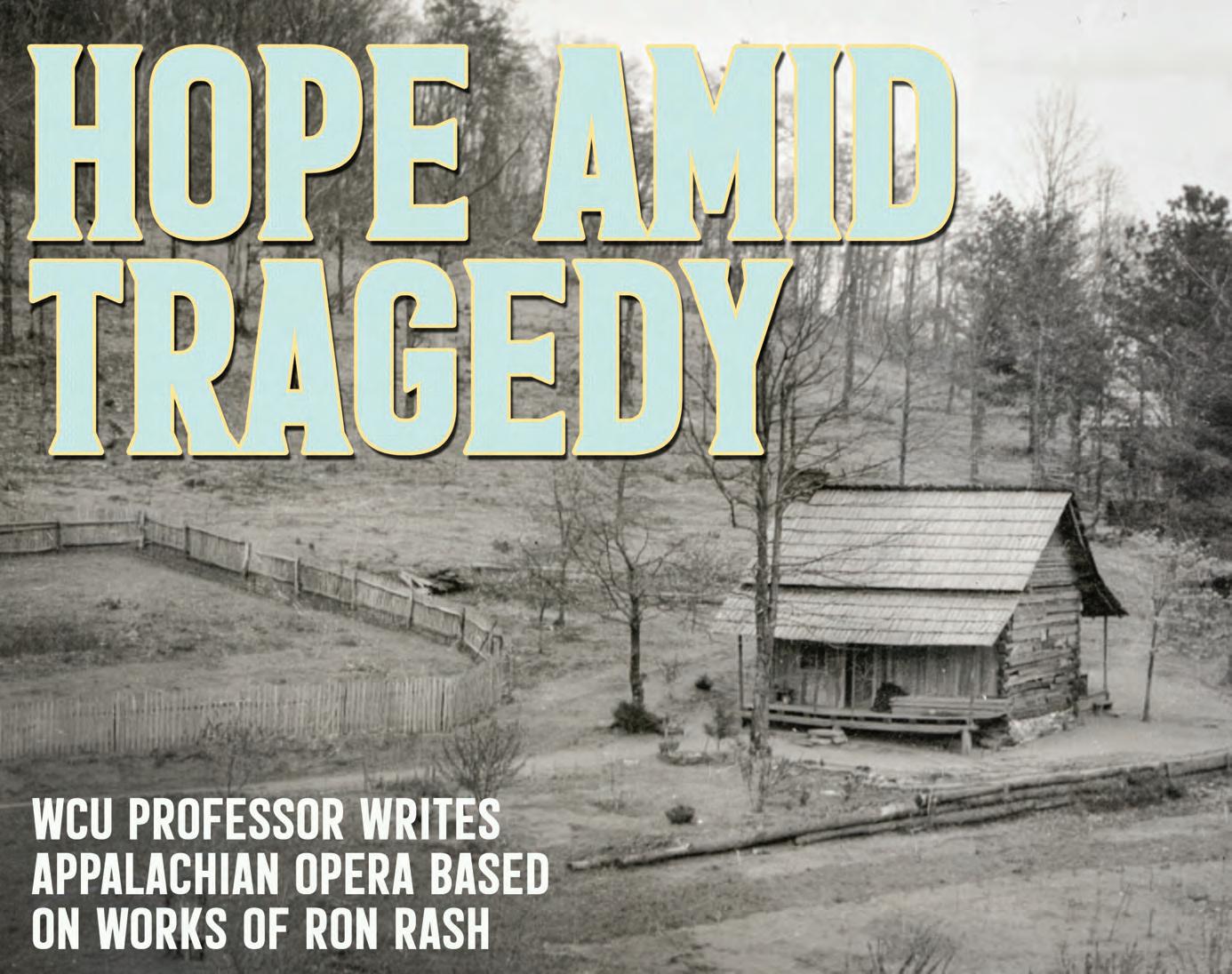
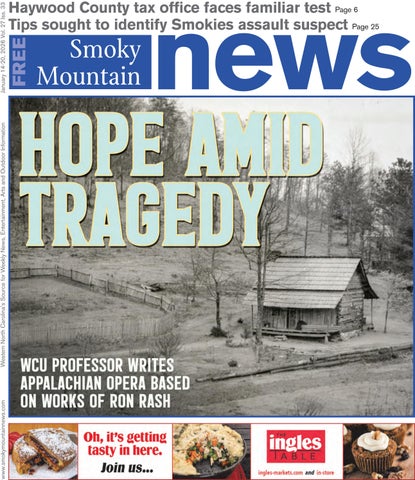
An Appalachian opera is an unknown, unpondered concept to most, but WCU School of Music Professor Damon Sink is hoping to put it on the map with his new work “Shelton Laurel,” based on the stories and poetry of local literary titan Ron Rash. Sink and Rash both spoke with The Smoky Mountain News to discuss how much work went into the project and what folks can expect. (Page 16) Courtesy of Hunter Library Special Collections, Western Carolina University
News
Haywood Innovative prepares for applicants..............................................................4
Haywood tax office faces familiar test............................................................................6
Swain Board of Education candidates talk issues ahead of primary................10 State board rubber-stamps Jackson early voting plan..........................................12
Opinion
Maybe what Americans need is a hot beverage......................................................14 Support human dignity in Venezuela............................................................................14
A&E
Catch Larry the Cable Guy in Cherokee....................................................................19 Voices in the Laurel spring registration......................................................................20
By the numbers: NCDEQ invests in WNC following Helene............................24 Tips sought to identify Smokies assault suspect....................................................25
micah@smokymountainnews.com D
D
ADVERTISING SALES: Amanda Bradley. . . . .
jack.s@smokymountainnews.com
tyler.a@mtnsouthmedia.com
amanda.b@smokymountainnews.com Maddie Woodard. .
C LASSIFIEDS: Jamie Cogdill. .
N EWS E DITOR: Kyle Perrotti. . . . . . .
WRITING: Lily Levin. . . . .
Cory Vaillancourt. .
Garret K. Woodward. .
ACCOUNTING & O FFICE MANAGER: Jamie Cogdill. .
maddie.w@smokymountainnews.com
classads@smokymountainnews.com
kyle.p@smokymountainnews.com
lily.l@smokymountainnews.com
cory@smokymountainnews.com
garret@smokymountainnews.com
smnbooks@smokymountainnews.com
C ONTRIBUTING: Jeff Minick (writing), Susanna Shetley (writing), Adam Bigelow (writing), Thomas Crowe (writing)
WAYNESVILLE | 144 Montgomery, Waynesville, NC 28786
SYLVA | 629 West Main Street, Sylva, NC 28779
P: 828.452.4251 | F: 828.452.3585
I NFO & B ILLING | P.O. Box 629, Waynesville, NC 28786



Copyright 2026 by The Smoky Mountain News.™ Advertising copyright 2026 by The Smoky Mountain News.™ All rights reserved. Reproduction in whole or in part without permission is prohibited. The Smoky Mountain News is available for free in Haywood, Jackson, Macon, Swain and parts of Buncombe counties. Limit one copy per person. Additional copies may be purchased for $1, payable at the Smoky Mountain News office in advance. No person may, without prior written permission of The Smoky Mountain News, take more than one copy of each issue.
SUBSCRIPTION: 1 YEAR $80 | 6 MONTHS $55 | 3 MONTHS $35


BY LILY LEVIN STAFF W RITER
Haywood County School Board at a Jan. 12 meeting officially gave the new Haywood Innovative middle school the green light to open its application to prospective students.
“We are looking for students who choose to be here, who are motivated to be here, who would benefit from a rigorous and accelerated middle school experience,” said Lori Fox, principal of Haywood Early College and Haywood Innovative.
Haywood County schools
Superintendent Trevor Putnam similarly described best-fit students — as “mature for their age” and “academically minded.”
These students will hail from inside and outside the county school system. Some might already have connections to the early college.
“Of our currently enrolled Haywood Early College students, many of them have siblings that are either private or homeschool, that if given the appropriate option, would take advantage of it,” Putnam said, referring to the middle school.
Haywood Innovative is designed to model HEC with respect to academic excellence. And ideally, students advance into the latter for high school.
With greater than 95% of the student body achieving grade level proficiency, and a similarly outstanding percentage reaching career and college readiness, it’s clear that HEC enrolls and cultivates high-achieving students.
But academics are not the sole metric of school success, nor the sole indicator of student growth, within each of North Carolina’s 138 early colleges.
Also known as Cooperative Innovative High Schools, these schools target at least one of three categories of student: those “at risk of dropping out of high school, firstgeneration college students and/or students who would benefit from accelerated learning opportunities.”
HEC’s application asks each candidate to indicate if they are a “first-generation college student (first person in family to attend 4-year university)” or “in need of a more rigorous and advanced curriculum and learning opportunities,” meaning that the school has chosen two of three student categories to target, although it seems that HEC caters more explicitly to the third one. Beyond asking for name and basic contact information, most of the form is dedicated to identifying courses said applicant has already taken.
portion — 30.4% — of economically disadvantaged students, especially when compared to neighboring public high schools. At Tuscola, Central Haywood, and Pisgah respectively, economically disadvantaged students make up 45.8%, 75.9% and 48.3% of those enrolled.
Yet UNC Chapel Hill Professor Douglass Lee Lauen pulled data from nearly all CIHS across North Carolina showing that, while these schools benefit all who attend them, “students from groups underrepresented in college, such as black and brown students
qualified for.
In the same vein, Doyle explains that low diversity isn’t caused by a lack of talented individuals from minority groups, but rather by the “multitude of ways in which we chase people away before they have even set foot in the door.”
“Public schools have entered a competitive market with the addition of charter schools and other things, and we want to have the best offerings so that kids and parents choose our schools,” Putnam said.
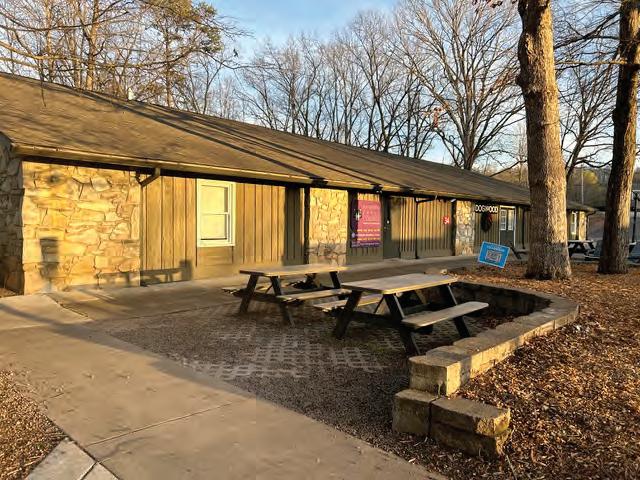

also strive “to address the equity gap” of over-representation of “white students from affluent, college-going backgrounds” in “traditional dual enrollment programs,” according to an EdNC article.
HEC, however, bucks the early college trend when it comes to this statement.
Its student body is 91% white, compared to Tuscola and Pisgah’s 82%, Central Haywood’s 79% and 85% of all students enrolled in Haywood County Schools.
Likewise, HEC has a relatively low pro-

taged families” stand to gain the most.
“It’s not that we don’t look at [identities of prospective students]. It’s just that it’s we’re not really separating based on that,” said Putnam of the application process.
Writing for Forbes, organizational psychology professor Nancy Doyle discussed how imposter syndrome — the feeling of being a fraud or that you don’t belong, more common among those with marginalized identities — can prevent candidates from seeking out opportunities they’re
Fox is excited by the challenge this new market brings to schools — and to her leadership.
“Competition makes all of us better, and I think it pushes us to provide more opportunities for students within our district. So, I think that’s my angle, is just trying to provide every opportunity we can for high schoolers in Haywood County and now middle schoolers,” she said.
Though some educators and academics question exactly for whom such “competition” provides more opportunities.
While in theory, school choice provides options to any parent dissatisfied with how the public system is serving their children, it doesn’t always go that way in practice.
Quite a few charter and private schools, lacking the elected leadership central to accountability and oversight of the public school system, have filed for bankruptcy or become embroiled in lawsuits.
Indeed, Haywood County’s Shining Rock Classical Academy lost a sweeping ruling in late June 2025 to parent and former board member Rebecca Fitzgibbon, who’d filed an original lawsuit to obtain public records about Head of School Josh Morgan’s alleged bullying of stu- F

dents. The school had filed a defamation countersuit.
SRCA receives government funding via taxpayer dollars — like all charter schools — a perk that’s extended rapidly to private school attendance through voucher programs in North Carolina.
The Opportunity Scholarship, passed in 2013, was originally a program for lowincome students to attend private schools.
“The premise was that poor students were trapped in public schools (often referred to as ‘failing’ public schools) and needed an ‘opportunity’ to attend a private school,” wrote Don Martin, former Superintendent of Wilson/Forsyth County schools.
There are hidden inequalities even within low-income student voucher programs. Private schools are not required to provide transportation and lunch to their students, which “can create a barrier for many lowincome families” attending those schools free of charge, reported EdNC in 2024.
The state disbursed a record-setting 32,549 vouchers in 2023-2024 and approximately $185 million worth of funds.
That was before the North Carolina General Assembly’s universal voucher program went into effect, allowing any family, regardless of socioeconomic status, to apply for government funding to attend private schools.
The Office of State Budget and Management estimated that this program would cut more than $22 million from public schools statewide due to changes in enrollment, while increasing private school spending by $115 million, resulting in a $93 million increase in the annual K-12 budget.
The 2024-2025 Department of Public Instruction report shows that approximately 8%, or 6,710 out of all 80,472 recipients, used the expanded program piloting that academic year to leave a public school. In other words — while a minority of vouchers were renewals of prior allotments, and 7,301 awardees were beginning kindergarten — most recipients had already been paying full private school tuition.
Meanwhile, the state disbursed just over $432 million for the annual program.
The 2025-2026 school year has seen the addition of over 24,000 vouchers and 36,046 new students. 75% of recipients are white, 11% are Hispanic, 11% are Black and 10% are two or more races, while 3% are Asian and 1% are American Indian and Alaskan Native.
By comparison, 43% of all students attending public school in North Carolina are white.
Public schools are funded through state, federal and local dollars. The state of North Carolina finances 61% of educational expenses, on average, for each of its districts. Though, it currently ranks 50th in the nation — above only Idaho — in funding level per student, and dead last in funding effort, according to the Education Law Center. The state’s cost-adjusted 2023 instructional expenses were $12,193 per
pupil — $5,660 less than the national average.
In addition to the General Assembly’s politically driven cuts to public schools in the face of rising capital expenses, part of the North Carolina’s poor funding record can be traced back to its highly complex formula. The state is part of a handful that do not allot a base amount of funding per student.
However, enrollment still matters. Average daily membership — the average number of students in a district on a given day — determines how many staffing positions the state will fund, among other items like supplemental money and classroom equipment.
District ADM formulas are dependent on grade level. For example, it takes 24 sixth graders leaving the system to lose one classroom teacher staffing position in 20252026, 26.5 in grade 9 and 29 students in grades 10-12, rounded to the nearest onehalf position.
“The issue that [Haywood County schools was] facing at the middle school level, where they were seeing enrollment loss during those years, or students’ parents choosing other options outside of Haywood County schools during that time for certain groups of students, and when they said, ‘Okay, [Haywood Innovative] may be an opportunity for us to retain enrollment by providing an option,’” said Shelley White, HCC President.
Putnam said one of the motivations for attracting some 75 family members of HEC students — currently at a charter or homeschool — to Haywood Innovative is to then “get them to the finish line in high school.”
Indeed, rural counties like Haywood, with lower district ADMs and thus fewer staffing positions, face harsher material and political consequences with migrating students. In addition to having to cut teachers, the school system and its budget could be more heavily scrutinized by county commissioners.
For Haywood County schools, with county-level per-pupil appropriations, any student loss correlates to a direct loss in funding, likely to be felt at the instructional level.
Indeed, Haywood’s relative funding effort — the county’s willingness to fund public schools, defined as the relative measure of how much it spends on education compared to its total local revenue — ranks 85th of the 100 counties in North Carolina.
So, Putnam is trying to attract students to the district, and Haywood Innovative is one piece of that puzzle.
“Our kids, we want them to be seen more favorably than any other district’s kids, because at the end of the day, that’s what colleges and scholarship committees are looking for — who has the most rigor in their school system and who has taken advantage of that rigor, and where do they rank,” said the Haywood superintendent.
“And if you look at that on an economic level, that’s money freed up for our parents, not having to pay for them to go to college, which is money reinvested in the local economy,” he added.





















































BY C ORY VAILLANCOURT
P OLITICS E DITOR
Despite an ever-changing cast of characters cycling through like a revolving door, the Haywood County Tax Collector’s office has come a long way since Maggie Valley Republican Mike Matthews defeated Democratic incumbent David Francis in 2014 by 1.26%. Now, after nearly four years of service, Republican incumbent Sebastian Cothran has decided to seek other opportunities, guaranteeing a fourth change in leadership over the past four elections.
taxes are levied based on valuation and by all accounts, 95% of property owners pay them on time, without issues. But when those collections amount to $40 or $50 million each year — about half the county’s annual budget — that 5% isn’t exactly small change.
Per statute, when county commissioners craft their annual budgets, they must base their revenue projections not on assuming a 100% collection rate, but rather on the previous year’s collection rate. If the collection rate
to his name.
Almost immediately, problems in Matthews’ office emerged as commissioners questioned both his performance and his personal life.
Ultimately, those issues were borne out in Haywood’s plummeting collections rate. In 2015, Matthews collected rate was just 96.97% of the total levy. In 2016, it increased slightly to 97.15%. In 2017, it decreased slightly to 97.12%.
just 21 at the time and still a senior at UNCAsheville double-majoring in accounting and political science, became one of the youngest elected officials in the state when he defeated West. Cothran had never even held a fulltime job at the time of his election.
Because the Haywood County tax collector is responsible for handling tens of millions of dollars in public funds each year, state law requires the position to be bonded as a financial safeguard in case of fraud, error

No Democrats have filed to run, so one of those Republicans will emerge from the March 3 Primary Election to lead an office many say shouldn’t even be on the ballot. In fact, Haywood County is the only county in North Carolina that still elects the position.
And as with many other elected countylevel positions like register of deeds, clerk of courts, even sheriff, the collector’s political affiliation shouldn’t affect how the office is run, but it’s still one of the most important factors in the minds of the voters — and the candidates.
Francis’ service was largely uneventful, which is exactly what residents demand from the office; like most local governments, Haywood County derives a substantial proportion of its revenue from the collection of real and personal property taxes. Each year,
undertaken by the tax collector; however, the staff time that goes into collecting delinquent taxes eats into the efficiency of the office.
Successful tax collectors need to be both number crunchers and people-friendly, gently nudging those who have not paid their fair share to set up payment plans and get current. A degree of sensitivity is involved, especially for those on fixed incomes during tough economic times.
That’s why quiet proficiency, like that of Francis, is especially valued; when stories get written about the tax collector’s office, they’re almost always bad.
As Haywood County’s transition from blue to red began to accelerate in the middle of the last decade, Francis was ousted by voters for little reason other than the letter next
the 28-year-old business manager of a family pharmacy, primaried Matthews in an attempt to dislodge him but retain the seat for Republicans; Matthews prevailed 1,011 to 877, or about 7.1%.
Voters ultimately corrected the issue with Matthews themselves, electing Democrat Greg West in 2018 with final results coming in at 12,878 to 11,808, or 4.34%.
West brought immediate improvement to a 97.69% collection rate that year, slipped to 97.33% in 2019, but then established an upward trend to 98.13% in 2020 and 98.35% — an all-time high — in 2021.
In 2022, voters once again ousted a highperforming Democrat for little reason other than the letter next to his name.
Republican Sebastian Cothran, who was
$100,000 bond — reflective of his experience Matthews was required to secure a $410,000 bond in 2014 after initially struggling to obtain coverage.
When Cothran was elected, commissioners initially discussed a bond as high as $1 million before settling on a $250,000 surety bond combined with additional internal controls and oversight during his first months in office.
A number of local and state media outlets piled on, all but guaranteeing Cothran’s spectacular failure — but that’s not what ended up happening.
The most recent figures from the tax collector’s office show Cothran logged respectable — if declining — rates over the three fiscal years he’s reported thus far. In 2022, he achieved F
98.26%, slightly down from West’s record high of 98.35% the previous year but still higher than three of West’s four years rebuilding the office. In 2023, Cothran’s collections again dipped to 98.15%. In 2024, they dropped again to 97.98%.
West, who’s remained in county government since his loss four years ago, is again seeking the job and again seeking to get things moving in the right direction after Republican underperformance — but this time, West’s a Republican. He’s also the only candidate in the race who has actually done the job.
Ferguson is running for Haywood County tax collector on a message of longterm commitment, public service and what he describes as a blend of business experience, people skills and generational roots in county government.
A lifelong Haywood County resident, Ferguson now lives in the Lake Junaluska community, where he is raising his daughter.
A product of Haywood County schools, he earned his bachelor’s degree from North Carolina State University’s Poole College of
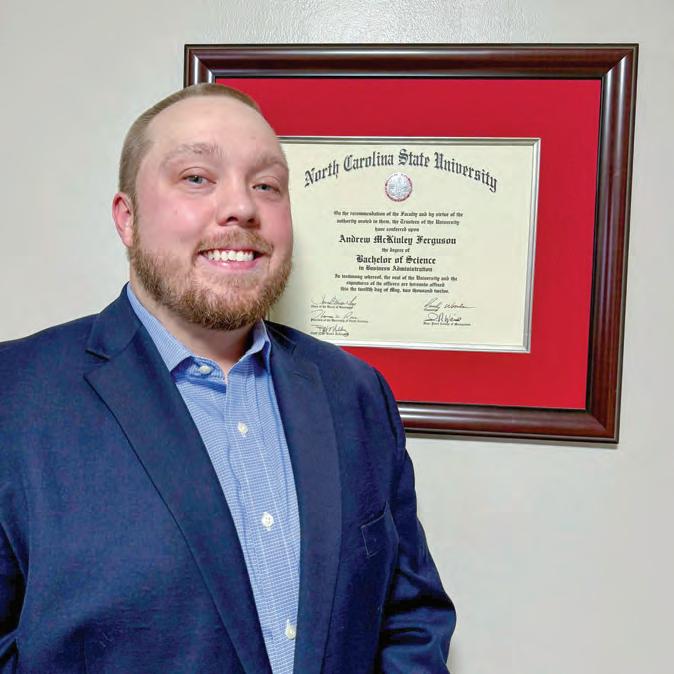
FedEx, still thinks he’s the best person for the job and claims to be the only Republican in the race. He’s looking forward to getting the matchup against West he wanted in 2016 but never expected it to be in the Republican Primary Election.
Emily Sapp, who came into the tax collector’s office under West after a year in the tax assessor’s office, said she along with staff share at least some of the credit for maintaining the integrity of the office and that she brings a handson, day-one readiness to run the office without on-the-job training while treating taxpayers with consistency, clarity and compassion.
“We can
when you’re working with people from all walks of life,” Ferguson said. “We treated everyone equally and fairly and without partiality.”
talk about experience, and we can talk about knowledge and life experiences and how all these things come together as qualifications and competency for being tax collector,
With the office’s recent history underscoring just how much experience, temperament and judgment matter in a job most voters only notice when something goes wrong, the three Republican candidates now vying for the seat offer sharply different answers to the same question — who should be trusted with Haywood County’s money?
but I’ll just be honest, in my opinion, I’m the only Republican in the Republican primary.”
After the pharmacy closed, Ferguson worked remotely as a consultant for Clear Result, a Houstonbased company that manages energy-efficiency programs for utilities including Duke Energy Carolinas and Duke Energy Progress. He later transitioned to his current job as a courier with FedEx Express in Fletcher. “I like people,” said Ferguson. “I like being with people and around people and helping people.”
— Andrew Ferguson
The structure and day-to-day variability of his current job, Ferguson said, reinforced his interest in public service and in the tax collector’s role specifically. He argues that repeated turnover in the office carries its own costs
and that voters should consider continuity beyond a single term, alleging that perhaps West isn’t in it for the long haul.
“Do we want to do this again in four years?” he said. “Why kick the can down the road? If I’m blessed to be the next tax collector, that is not something I’m going to do for a short time.”
Rejecting suggestions that he is using the race to position himself for other elected offices, Ferguson cited his family’s nine generations in the county and their legacy of public service. Ferguson’s aunt Helen once served as register of deeds, his uncle Carlyle was a commissioner and his cousin, Marla Ferguson Morris, is currently a member of the school board. Civic involvement, he said, is a core family value.
“We don’t talk about it,” Ferguson said. “We are about it.”
On the question of whether the tax collector’s office should remain elected and partisan, he believes voter choice remains important even if party affiliation carries limited relevance to daily operations.
“I believe that as many positions that are in leadership roles that are funded by the taxpayer [as possible] should be elected,” Ferguson said, adding that party labels can help voters understand a candidate’s general worldview but acknowledging that ideology plays little role in tax administration.
Despite that, Ferguson has blasted his opponents’ Republican credentials.
“We can talk about experience, and we can talk about knowledge and life experiences and how all these things come togeth-
er as qualifications and competency for being tax collector,” he said, “but I’ll just be honest, in my opinion, I’m the only Republican in the Republican primary.”
Ferguson emphasized that the tax collector’s performance directly affects county budgeting and the delivery of public services, arguing that reliability and effort matter as much as technical knowledge and that there is a real-life price for failure. He tied that responsibility to his role as a parent and lifelong resident.
“I take a lot of pride in what I get up and do every day,” Ferguson said. “I want to make sure the person that I am in my job and in my community is something my daughter can be proud of.”
Running on a platform centered on continuity, Sapp cited institutional knowledge and what she describes as day-one readiness for a job that, if she’s successful in her campaign, will only really require her to switch desks.
Sapp, 33, moved to Haywood County as a child from Florida in 2006 and now lives in the Lake Junaluska area with her family of five. She has worked in county tax administration since 2020, including one year in the assessor’s office followed by five years in the tax collections office — experience she says gives her a comprehensive understanding of how property values move from assessment




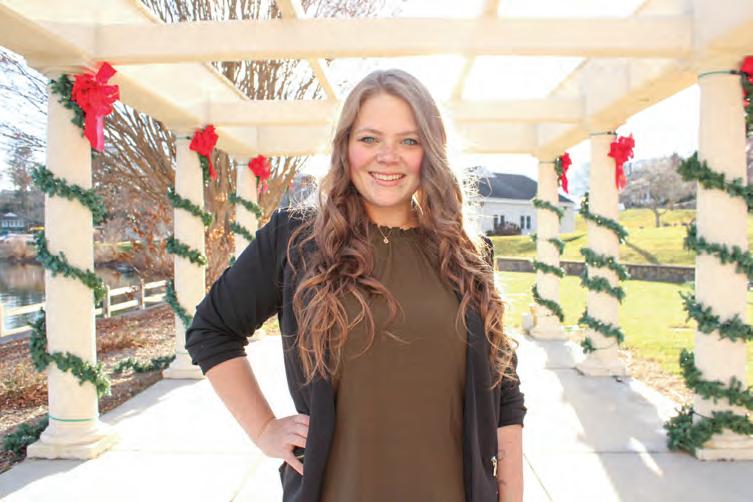
Emily Sapp. File photo
TAX COLLECTOR, CONTINUED FROM 7
to collection.
“During those five years, I’ve seen really how important this office is both to the county services and individuals,” she said.
Before entering county government, Sapp owned and operated her own cosmetology business. She earned a cosmetology certificate from Haywood Community College in 2011 and later returned to the college to continue her education, earning an associate’s degree. She said she plans to pursue a finance degree at a four-year university while serving as tax collector if elected and doesn’t think it will affect her work. Cothran earned a master’s degree during his service.


West is seeking a return to the Haywood County tax collector’s office with an argument rooted in familiarity, institutional memory and experience unmatched in the three-candidate field.
A lifelong Haywood County resident who rebuilt an office that had struggled in prior years and stabilized operations through natural disasters and the early stages of the COVID-19 pandemic, West, 58, does hold the highest collections rate in history — even if he was a Democrat when he did it.
“I am the most qualified candidate,” said West. “I have been the tax collector. Neither one of my opponents can state that.”
After earning a bachelor of science degree in business administration from Western Carolina University, West worked
During her service under West, he achieved his record-setting collection rate, but she doesn’t think West did it alone.
“You can enforce the law without losing compassion. Frustration usually comes from confusion or fear, and clear communication will go a long way.”
— Emily Sapp
“Well, we did,” she said, referring to staff members involved in the nitty-gritty of sorting out tax bills, collecting payments and servicing taxpayers. “I bring the hands-on experience where Greg sits idly by and watches the operations.”
She also suggests that Cothran’s relative success in the position is also at least partly attributable to West’s staff, including herself, bringing Cothran up to speed on office operations.
“We were a part of training him,” Sapp said, referring to Cothran.
dentials or connections.
“If it wasn’t an elected office, I probably wouldn’t have had the opportunity to run for it,” she said. “Do I think that it should be an elected position? Probably not. But this is what we’re faced with.”
Although she is a registered Republican and has never changed her party affiliation, Sapp said she did not become politically engaged until she began working in local government — the root of Ferguson’s claim of being “the only Republican” in the race. Despite turning 18 sometime around 2011, Sapp’s first votes were cast in the 2016 Primary and General Elections. She did not vote in 2018 or 2020, but did vote in General Elections in 2022 and 2024.
She acknowledged gaps in her voting history and attributed them to focusing on raising her children and nurturing a small business rather than following local elections, but Sapp rejected suggestions that her party credentials are in question, noting that she has been registered Republican since she first became eligible and voted for Donald Trump in both the 2016 and 2024 presidential elections.
In contrasting herself with the other candidates, Sapp believes that a frontline worker like herself is better qualified to run the office than a newcomer like Ferguson or an administrator like West.

“Voters can trust that I’ll be able to do everything that needs to be done on day one,” she said.
She also stressed the importance of communication and compassion in dealing with taxpayers, particularly those facing financial hardship, describing tax collection as a balance between policy and people.



On the question of whether the tax collector’s position should remain elected, Sapp offered a nuanced answer, acknowledging both the drawbacks of politicizing an administrative office and the opportunities elections create for candidates without elite cre-
“You can enforce the law without losing compassion,” Sapp said. “Frustration usually comes from confusion or fear, and clear communication will go a long way.”
“I can’t support open borders and sanctuary cities. I can’t support ‘defund the police’ or boys in girls’ sports, illegals getting all the free stuff when our own citizens are struggling to pay for their medicine,” West said. “We really didn’t seem to be taking care of our own people like we should.”
He added that he did vote for Trump in 2024, while still registered as a Democrat.
“I never asked anybody that came to the counter whether they F
were Democrat or Republican,” West said. “I always asked, ‘How can I help you?’ [Partisanship] has nothing to do with the job.”
West has been consistent over multiple election cycles in questioning whether the tax collector’s position should be elected at all.
“I do think sometimes by being elected, you get unqualified people there,” West said. “Having it as an appointed position, I think you would have a better chance of having someone experienced in that job.”
West attributes his prior success in the office to a management approach focused on communication, consistency and case-by-case problem solving. He said the majority of taxpayers pay their bills on time and that the real work happens with a small percentage of accounts that require time and attention.
was elected — and paid off all then-current delinquent taxes. Ramey, however, still owes roughly $2,000 in back taxes he hasn’t paid.
The tax office maintains records of the written-off bills. Interest continues to accrue at 1% per month. Voluntary payments may still be accepted.
Ramey has consistently denied that he now owes anything and has not attempted to make voluntary payments on the delinquencies since they were first revealed.
Ramey’s fellow Republican Cothran, the incumbent, has made no attempt to collect voluntary payments from Ramey, per public records.
“I never asked anybody that came to the counter whether they were Democrat or Republican. I always asked, ‘How can I help you?’ [Partisanship] has nothing to do with the job.”
— Greg West
“We worked with people,” West said. “I always had an open door. I would contact people and ask them to come in, sit down and talk about their situation and see if we could come up with a plan that worked for both parties.”
That approach, he said, helped the office achieve record-setting results while keeping residents in their homes and businesses operating.
“We don’t want to take anyone’s property,” West said. “We want to collect the money, but we want to be fair.”
West also emphasized public awareness of existing tax relief programs, including exemptions for seniors, disabled residents and disabled veterans, which he said are underutilized and need more exposure.
“A lot of people don’t know about them,” West said. “We always told people when they came in if we felt like they could qualify.”
Looking ahead, West framed the primary as a decision about readiness rather than ambition, arguing that the tax collector’s job rewards steady administration over learning on the fly.
“If I was interviewing someone to work for me,” he said, “I’d be looking for the most qualified, most experienced person.”
That, he said, is the standard voters should apply when casting ballots in March.
Despite their differences, all three candidates to become the next tax collector do agree on one thing — Haywood County Commissioner Terry Ramey still owes taxes, and for the good of other taxpayers, should pay them.
When Ramey was first elected in 2022, The Smoky Mountain News revealed exclusively that Ramey hadn’t paid his property taxes for many years. To his credit, Ramey did enter into a payment plan — after he
When challenged, Cothran attempted to misrepresent statute as the reason for his inaction.
“These are past my 10-year statute of limitations, per GS 105-378, so I haven’t been able to do anything about them,” he told SMN Jan. 8.
Under the statute, unpaid property taxes become “uncollectible” after 10 years, meaning the county loses the legal authority to garnish wages, seize property or attach bank accounts.
But those balances do not simply disappear, and the principle behind them — that all taxpayers must pay their fair share and be held accountable — is as basic to government as voting is.
The statute speaks only to the prohibition of maintaining an action or procedure to enforce a legal remedy.
West said the loss of enforcement authority does not absolve a taxpayer of responsibility.
“They’re still on the books,” West said. “You still try to speak to these people or send them letters asking for payment. You can’t use enforcement, but you can still communicate and try to get the money, because every penny counts.”
Ferguson framed the issue a matter of fairness.
“After 10 years, the teeth of enforcement goes away by statute, but it does not evaporate,” Ferguson said. “The levy of taxation on that real property does not evaporate.”
Sapp echoed that view, saying normalizing nonpayment — particularly by elected officials — threatens the county’s ability to deliver basic services.
“They are still owed, but we cannot enforce,” Sapp said.
All three candidates recognized that widespread nonpayment would undermine the county’s ability to function.
“Public services don’t get paid,” Sapp said. “It falls apart.”
“We go under, or belly up,” Ferguson said.
“The county would suffer,” West said. “More than likely, the commissioners would have to raise the tax rate to make up the difference, and nobody wants to see the tax rate increased.”





















BY LILY LEVIN STAFF WRITER
On March 3, incumbent Lisa Loftis and Republican challengers Jason Lambert and Josh Oliver will compete in the Republican primaries for the Swain County Board of Education. The candidates who receive the most votes will advance to the General Election, where they’ll face Democrats Brandy Monteith and Dannie Shuler in a bid for two seats currently held by Loftis and Republican Robert Taylor, who is not seeking reelection.
The Smoky Mountain News spoke to Loftis and Lambert about issues relevant to voters casting a March ballot. Oliver did not respond to multiple requests for comment.
project planning and capital project administration. He’s worked for the Eastern Band of Cherokee Indians’ tribal government and as dean of workforce, innovation and economic development for Southwestern Community College.
Lambert said these days, he works for himself, “doing professional consulting with focus on tribal governments and tribal communities across the country.”
SMN: What are the most pressing needs of Swain County schools? What would be your top priorities as a school board member?
Loftis: I think just continuing to build strong communication, bridging the gap from the district to the parents. Just making sure that people know how to be involved and just feeling connected and that every voice matters.
Loftis: I stand by a parent’s choice for sure. I think that obviously should be in the hands of a parent to decide where their student goes. I think sometimes what works in larger areas, bigger cities with private versus charter versus public, doesn’t necessarily always work in a smaller community … However, I do support anybody’s decision to go to any other school … And I think that there’s always room to bridge gaps and to work together with the charter school, or any other school, for that matter.
Lambert: I support a parent’s right to choose what is best for their child. I am also a product of public school, and we have Mountain Discovery Charter School … So, there is an aspect of school choice in our county. You’ve got Cherokee Central Schools that’s technically located in — the campus is in Swain County. There’s choices within the tribal community of, do you send your kid to Cherokee Central Schools, to Swain County Schools, to Jackson County Schools, or the Kituwah Academy for the language immersion program? Sometimes I don’t know that we think of it in that perspective.
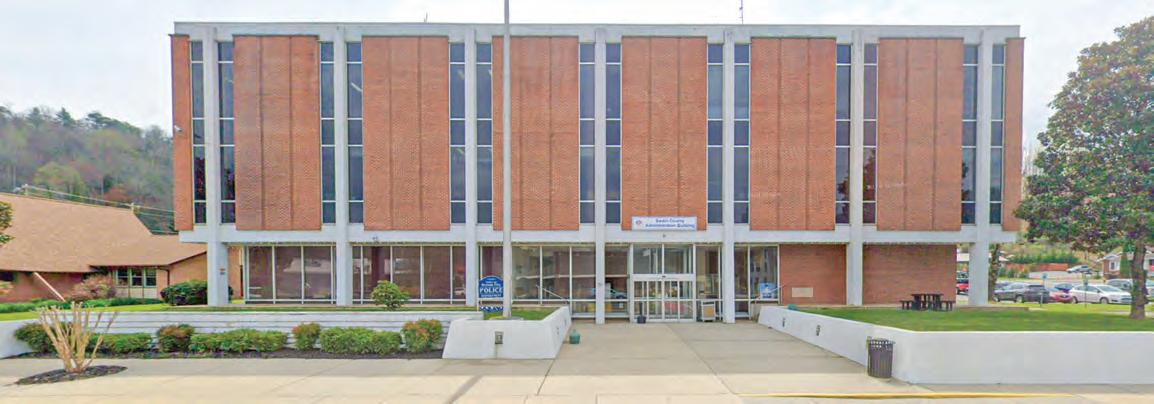
Incumbent Lisa Loftis moved to the county as a teenager and briefly attended Swain High School. She is the director of State of Franklin, a private nonprofit health planning agency, and describes herself as “a mom of five with a heart to be involved, serve the families of Swain County and allow Christ to guide me” on her Facebook campaign page.
She said she’s running for another term because she feels “deeply committed to our community and the future of our school.”
“And as a parent and a board member,” Loftis added, “I’m dedicated to just continuing to build on the progress that we’ve made — and to serve the community and just bridge the gap between families and the district.”
She told SMN that during her time in this capacity, she’s most proud of “when the board was able to pass the [Community Eligibility Provision] child nutrition, which gave the ability for all of Swain County schools to have free breakfast and lunch for every student, regardless of income or situation.”
Republican challenger Jason Lambert grew up in the Qualla Boundary community of Birdtown and came up through Swain County schools. His two sons — one, a sophomore at Western Carolina University, and the other, a sophomore in high school — are products of SCS as well. Though Lambert’s mother, a recently retired SCS administrative assistant, was the educational trendsetter. She’s also an alumna of the high school.
“So really, just being from the community and feeling that I have a background — with my professional experience and education and knowledge base — to contribute. That’s really the intention behind me running. The opportunity presented itself. I felt like, where I’m at in my life, that it made sense,” said Lambert.
While his background is in the public sector, not education, it has encompassed economic development, grants,

Lambert: We will have selected a new superintendent [before the school board election], and so the new board is going to have the opportunity to come in during that honeymoon phase and really set the tone and the strategy and the expectations for that.
I think that additionally, the planning and the upcoming construction of the new middle school will be something that the next board will be tasked with … I think funding — that’s a challenge. We are a rural community. If you look at the tax base for Swain County, I think it’s like 13% of the land is taxable. And so even though that’s not under the purview of the board of education, it has implications from student funding to potentially supplemental pay for teachers, recruitment and housing of staff.
SMN: What are your views on teacher pay in Swain County? How should the school system balance livable wages for educators with a limited budget?
Loftis: I feel that our teachers are very valued, and there is always room for growth when it comes to compensation. I know that we have restrictions on a district level, but I would love to see opportunities expand on a local level to supplement teachers … I think just finding practical ways to invest in our teachers that aids in recruitment but also in retention … That’s kind of a hard one to answer, because so much can be out of our hands.
Lambert: It’s my understanding that the local board of education can do some things, but there’s other things that are set from the state level. There’s some things that are in conjunction with the county commissioners and the county leadership.
You support and you want people to make good money and living wages and be able to not just survive but succeed in life. But there’s always that flip side of that coin, of ‘Where is the revenue going to come from?’ And I think that’s a challenge in some of these smaller areas.
SMN: What is your view of school choice the increasing popularity and support of schools operating outside the county public system? Why?

SMN: What is your opinion of the 2023 Parents’ Bill of Rights passed by the North Carolina General Assembly and how those policies have been implemented by the Swain County school system?
Loftis: I support the Parents’ Bill of Rights. I think as parents, they should be really involved in what’s happening with their students, with their kids in school. I never, as a parent myself of five kids, feel like I should be hands off on anything. I feel confident in the adjustments that we’ve made with some of our policies. When the Parents’ Bill of Rights came out, we worked really closely with administration, also with our lawyers, just making sure that what adjustments needed to be made in policies were made … Obviously, there’s always that openness for ebb and flow. Things can change, and we may have to revisit certain things, but I think that the place we’re in right now is really good.
Lambert: I think my take and my approach would probably draw upon some of the work that I’ve done with policies in general, which is, find which ones are working well, and let’s keep those or expand those. Find which ones are not working well, and determine, ‘How can we make those better?’ Or ‘How can we amend those or include those?’ … But in general, I would hope that my focus would be really on the students, and parents are an extension of those students.
SMN: Are Swain County Schools safe? Are the disciplinary policies generally effective? How should schools balance security measures with students’ right to privacy?
Loftis: I feel like we have a great team that works on safety. That is something that we talk about quite a bit on a board level. Just getting updates on things, but also always just keeping that conversation open about, ‘What we can do better? How can we learn from this experience?’
Lambert: I do feel that our schools are relatively safe … I think our resource officers, the ones that I’ve interacted with, they have really good relationships with the students and understand what their job is. There’s been an incident or two at East Elementary in which not only was it Swain County Sheriff’s Department, but it was also the Cherokee Indian Police Department, and there was great collaboration around that response.
SMN: Swain county has a chronic absenteeism rate of 41%, far above the average in North Carolina What is your approach to addressing that?
Loftis: That’s definitely something that has been brought up in conversation. I hate to always F
throw things back on COVID and pandemic, but I think that just shifted a lot of people’s mindset for all different reasons, on all different fronts … And so, I think it might be time that we start to get a little more creative — have some roundtable meetings and just be creative on how we address absenteeism.
Lambert: I think that you’ve got to approach that one looking at the whole child and the whole experience of the children … There’s a lot of students in our area that have grandparents as parents … And so, understanding what services may be needed there, again, understanding what that child is walking through your door with, and what they have faced. And then — “What are they going back to when they walk out the door?” — is really important.
I think [encouraging] afterschool enrichment programs — that’s not necessarily on the front end of the day, but definitely on the back end of the day. Swain County has been fairly successful with getting grant funding for that.
SMN: How might you gauge student success beyond test scores?
Loftis: We obviously just look at proficiency in reading and in math — just how they’re doing on benchmarks — checking in with our own kind of software that we use. But also, to that, I think our [Career and Technical Education] program is absolutely fantastic, and it’s really giving students, starting even at the middle school level, a chance to discover career paths.
Lambert: Part of me, with an economic development background, wants to look at it from an outcome basis, rather than an output basis, and say, “Okay, are we moving the needle? That’s great that we’re graduating kids, but then what? ... Can that individual student be successful in their terms and live the life that they want to live?” For some, that’s going to be, “Are you preparing them for college?” For some, it’s, “Are you providing them the skills to enter a trade school or something of that nature?”
SMN: Is there anything you’d like to add that I haven’t asked about, or that hasn’t been mentioned during this interview?
Loftis: I’m really excited for the next few years, because we’re going to be building this new middle school … And so, the groundbreaking is coming hopefully sometime later this year, and also just seeing that constructed, and just the excitement that’s going to be built around that.
Right after Hurricane Helene hit, I didn’t have cell phone service for a few days, and the first call that I got — knowing that my cell phone service had been restored — was from superintendent Mr. Sale, saying that we had got the grant for the [new] middle school. It was a cool little bright moment of Helene … Something good to hear after that.
Lambert: I feel that I have a good perspective of what the what an appropriate role of a board is. You’re going to get pushed for things that are outside the responsibility of the board, or that legally the board isn’t responsible for ... I think that there’s opportunity for some transparency around that. You have to say not just “We can’t do that,” but “Here’s why we can’t do that — because North Carolina General statute says that.”




















BY C ORY VAILLANCOURT P OLITICS E DITOR
The Republican-led North Carolina State Board of Elections voted 3-2 along party lines to allow the closure of a Democrat-leaning early voting site at Western Carolina University, against overwhelming opposition from the people the closure would affect.
“It’s a war on students,” board member Siobhan O’Duffy Millen, a retired attorney from Raleigh, said shortly after the board voted Jan. 13 to strip early voting sites from historically Black NCA&T University and UNC-Greensboro in Guilford County and shortly before doing the same thing to WCU.
After Republicans lost the 2024 governor’s race in North Carolina, the GOP-controlled General Assembly moved swiftly in a post-election lame-duck session to strip the incoming Democratic governor of key appointment powers over elections administration and transfer them to the Republican state auditor in a bill that was purportedly for Hurricane Helene relief — a move critics described as a retaliatory power grab.
Through changes folded into broader elections and governance legislation, lawmakers removed the governor’s longstanding authority to appoint a majority of members to the State Board of Elections and instead reassigned that power to the auditor, an office that had remained in Republican control.
board from gubernatorial influence and ensuring continued Republican leverage over election administration despite losing the executive branch, a maneuver Democrats warned at the time undermined democratic norms and voter confidence.
Supporters of the WCU site argued that eliminating the site, which has operated continuously since 2016 and has been credited with dramatically increasing participation among younger voters, would significantly reduce meaningful access for a large segment of eligible voters while producing minimal cost savings.

The shift fundamentally altered the balance of power over election oversight in North Carolina, insulating the
The Jackson County early voting plan reached the state board after the Republican-led Jackson County Board of Elections voted 3-2 in December to advance a plan that eliminates early voting on the WCU core campus and consolidates Cullowhee early voting at the county’s parks and recreation facility.



Since its establishment under a Republican governor, a Republican county election board and a Republican state elections board, the WCU early voting site has recorded more than 76,000 ballots cast across five general elections and four primaries. The WCU site votes solidly Democrat.
The majority countered that maintaining two early voting sites less than two miles apart was fiscally irresponsible and unnecessary and closing one would save around $20,000 in the context of a county budget that is well over $100 million.
The Cullowhee precinct is the largest in Jackson County, with more than 6,300 registered voters and two distinct populations: a geographically dispersed, older rural electorate and a densely concentrated, younger and more diverse campus population.
According to materials submitted by Jackson’s Democrat-minority board members, youth participation among Jackson County voters more than doubled compared to statewide rates, and the site consistently produced the highest proportion of same-day registrations in North Carolina. They also argued that same-day registration is one of the most effective tools for increasing youth participation and that the cam- F


pus site has been uniquely effective in that regard.
Supporting materials submitted by the majority emphasized ease of parking, simpler ingress and egress and clearer electioneering boundaries at the Parks and Recreation facility.
The majority also argued that the existing WCU Health and Human Sciences Building, proposed by minority members as an alternative campus-adjacent site, presents accessibility challenges due to walking distances, stairs and internal navigation.
Minority members disputed those claims and argued that the cost savings cited by the majority are overstated. Their analysis, based on staffing requirements and the high volume of same-day registrations typically handled at the campus site, estimates savings closer to $6,000 rather than $20,000. They also note that both the parks and recreation facility and WCU have offered suitable voting spaces at no cost to the county.
nently in the dispute. At the Jackson County Board of Elections meeting in December, 21 speakers addressed the board during public comment with all but two urging the board to retain an early voting site on or near the WCU campus.
Under state law, any non-unanimous county early voting plan must be reviewed and approved by the state board. According to NCSBE materials, 87 counties submitted unanimous plans.
During the hearing, Jackson County Board of Elections Chair Bill Thompson continued to push fiscal responsibility as the primary reason for closing the WCU site but misrepresented the true distance from campus to the Rec Center as six-tenths of a mile.
Betsy Swift, a member of the minority on the Jackson County Board of Elections, rebuffed each of Thompson’s claims and objected to his mischaracterization of the parking situation as well as access for people with disabilities.
“Eliminating this site would not mean-

A central point of disagreement concerns transportation and pedestrian access. Minority members contend that the parks and recreation facility is approximately 1.7 miles from the center of campus, lacks public or university-provided transportation and is effectively inaccessible on foot due to the design of U.S. 107, a busy four-lane highway with no sidewalks and narrow shoulders. They estimate that walking from campus to the Parks and Recreation site takes roughly 40 minutes one way and note that approximately 68% of WCU students do not have personal vehicles.
According to materials submitted to the state board, the HHS building offers reserved voter parking within 200 feet of the entrance, curbside voting access, ADA compliance, secure space dedicated to elections and familiarity to the broader community, having hosted public clinics and COVID-19 vaccination events serving thousands of county residents.
Minority members believed that the site resolves every constraint raised by the majority while preserving meaningful access for student voters.
Drive-time analyses included in the record show relatively small differences in average travel times between the majority plan and Minority Plan A, which includes a WCU-adjacent site, across nearly every demographic category.
Minority Plan B, which relocates the campus site to the HHS building without retaining the Parks and Recreation location, shows longer average drive times countywide but preserves direct access for campus voters.
Public input has also featured promi-
ingfully reduce costs, but the impact would be significantly reduced access for a predominantly young, rural population,” Swift told the board. “It begs the question; what is the money for, if not to serve the voters of Jackson County?”
Roy Osborn, the other Democrat on the Jackson board, reiterated many of Swift’s points and reemphasized that the proposed savings to Jackson taxpayers was “overstated.”
Jackson County Elections Director Amanda Allen said that although she’d like to think her agency could hold an election anywhere it’s directed to, she still had concerns about the Rec Center’s size.
Francis X. De Luca, former president of the conservative Civitas Institute in Raleigh and Republican Chair of the board, joined Republican board members Stacy Eggers, an attorney from Boone, and Bob Rucho, a former Republican senator from Catawba County, in approving the Jackson Republicans’ plan.
Democrats Millen and Jeff Carmon, a Snow Hill attorney and the board’s only Black member, voted against the closure.
“To the students — sorry,” Carmon said.
“Not to beat a dead horse, but we can see a pattern today, can’t we?” Millen said.
Patrick Gannon, the NCSBE’s public information officer, failed to respond to two email requests from The Smoky Mountain News for comment on the process and the timeline — one on Dec. 22, 2025. and one on Jan. 7 — and did not return a phone call on Jan. 9. A spokesperson who answered the phone said Gannon was indeed still with the agency but offered no other information on why he’d failed to respond.


Asteaming beverage and good conversation mend most worries and heartaches, or at the least, lighten the emotional burden. Every fall and winter, I move into the hot drink season where a plethora of soothing beverages in mugs accompanies me through the day. It begins with coffee then transitions to various teas and hot lemon water until the evening is met with my new favorite liquid consumable, adaptogenic mushroom cocoa — not the hallucinogenic variety. As I make my final cozy drink of the night, I always ask the rest of the family, “Would anyone else like a warm beverage?” To which, one or more always say yes.
For me, coffee, tea, hot lemon water and cocoa not only warm my hands but also my soul. They calm my nervous system the same as a fire or blanket. Our bodies respond well to heat — it’s a primal, deeply-engrained healing source.
The world of hot beverages is vast, but until one grows curious, the short list includes coffee and hot chocolate, especially in America where hot tea isn’t highly revered on a collective level. But for me personally, I'm fascinated by the scope of tea selections. When I venture into a new grocery store or market, I peruse the tea aisle, my mind ablaze with intrigue. Living in a small town, I’ve memorized the tea varieties in the local stores so anytime I find myself in nearby Asheville at Trader Joe’s, Whole Foods or The Spice & Tea Exchange, I stock my supply.
Dobra Tea in West Asheville is my favorite tea room. With a book for a menu, it would take months of visits to try each item. My go-to is Sweet Smell of Jerusalem. The description reads as follows: “A black Assam tea spiced with cinnamon is a traditional recipe from Eastern Europe inspired by the sights and smells of Jerusalem. This tea blend produces a mildly uplifting, calming brew. Cinnamon is thought to have
To the Editor:
I volunteered to serve during wartime. We had experienced the Cuban Missile Crisis and had military advisors training foreign nationals in Vietnam. Things escalated quickly and we found ourselves, “Neck deep in the big muddy ....” to quote the song by Pete Seeger. Our nation slowly slid into commitments that would cost thousands of young Americans their lives.
My training saved me from a battlefield experience. After a year of preparation, I was assigned to analyze intelligence information and create reports which were used to make military efforts more successful. It was disappointing to see the lack of accurate reporting to the general public about what was actually taking place in Vietnam. But I realized the media couldn't possibly have shared the correct information without undermining the national will to achieve the imagined victory: a victory always said to be just a little further along in our future — a future that failed to arrive.
Reality was much different than we imagined in the 1960's. After we left, a liberated Vietnam would become a relatively prosperous, friendly place. The Vietnamese became
spiritually protective qualities against negative energies.” It’s served with honey and your choice of milk. I prefer whole or oat.
I’m currently reading a book set in England and one of the characters jokes about an American, saying the “yank” is too intense, too worried about productivity and achievement. He resists playfulness and refuses long, languid lunches. While this is one character in a book, I can't help but apply the description to many Americans. Are we too worried about achievement and productivity? Are we resistant to being playful? Perhaps we need to kick back for a few, make a hot beverage and allow life to come to us instead of forcing, pushing and controlling. Let’s take a page from the British playbook and institute an afternoon tea ritual or at least some type of resting and regrouping between lunch and dinner. This daily routine began in the 1840s with Anna Maria Russell, the Duchess of Bedford. She would get hungry between lunch and the late Victorian dinner and began requesting tea with bread, butter, and cakes in her private room. She invited friends and family to join her. Her idea caught momentum and moved into other social classes until it became a beloved national pastime and a way for people to connect, celebrate and simply be together.

I’m a Sheldon Cooper fan, enjoying both “Young Sheldon” and “The Big Bang Theory,” the two shows where he’s the main character. In “Young Sheldon,” he’s a prodigal child scientist and in “The Big Bang Theory,” he’s a theoretical physi-
known for their ability to forgive the arrogance of Western outsiders who attempted to install a puppet government. Their formerly war-torn country is now a popular tourist destination.
I thought about our failure in Vietnam and how it may compare to what we are about to endure in South and Central America. Our president has taken it upon himself, without constitutionally required approval by the US Congress, to declare war on Venezuela and take down Maduro. The first excuse for military action was attacking alleged drug shipments headed to the U.S. Once the president pardoned the convicted drug kingpin and former president of Honduras, the hypocrisy must have been clear to most people. Finally, the real motivation to conduct war on Venezuela slithered into view: it was always about the oil. Of course, it also helps to push the Epstein files off the front page. President Trump thinks he can take the oil of a sovereign nation and give it to his donors, the oil industry. Many can remember our history with gunboat diplomacy. I hope we have learned enough of our history not to repeat the worst parts. South America remembers all
cist at the California Institute of Technology (Caltech). It was during a scene in Young Sheldon when a family member was struggling and Sheldon said, “You seem upset. Would you like a hot beverage?” This line struck a chord because while I’ve known for decades how comforting warm beverages can be, I’d never used the suggestion in an overt way to help people I care about. It was around this time that I started offering my family hot beverages.
There’s a Scottish term called hurkle-durkle which means “lingering in bed long after you should’ve gotten up.” A long while back, my husband and I found ourselves doing this on weekend mornings over a cup of coffee and found it so delightful that during the week, we wake up earlier than necessary, just so we can hurkle-durkle before the daily grind initiates. It’s often during these quiet mornings over a hot beverage that we discuss the things that truly matter. And now that our kids are older and drink hot beverages themselves, we often have a cup of coffee with them once they wake up to catch up on their lives.
There are innumerable opinion topics I could’ve written about in this week’s column, but when the political pendulum swings to a fever pitch, I’m compelled to come back to center and regroup, to focus on a single simple pleasure. If life is overwhelming, sit down with your favorite hot beverage and let everything unfold from there. I think you’ll see that it doesn’t have to be an occasional treat but should be a part of your everyday life. The warmth and steam hold a magic that’s hard to explain unless you experience it for yourself… and be prepared, if you accompany your drink with conversation or stillness, you’ll likely find the answers and peace you seek.
(Susanna Barbee is a writer and editor who lives in Haywood County. Susanna.b@smokymountainnews.com.)
too well.
A couple of years ago we celebrated the college graduation of our friend's grandson. He was an ROTC cadet in college and went directly into the military, where he was trained as an intelligence officer. He and I had a lot to talk about when I last saw him. I was not surprised a few months ago when his grandmother told me that he was so disappointed with the new leadership of the military he has resigned his commission. In light of recent events, I am even more impressed with that young man who wanted to serve his country, but also chose not to serve the naked ambition of unworthy leaders.
Jim Howe Cullowhee
To the Editor:
I write you as Western North Carolina's regional director for the Alliance for American Leadership. I am horrified by US actions undermining the autonomy of the Venezuelan people.
The United States should not be putting
its hands into Venezuela’s oil production or revenues. Our country should not be making military strikes with the goal of pillaging resources of sovereign nations.
Respect for self-determination and permanent sovereignty over natural resources is a core principle of international law, reflected in the UN Charter, UN General Assembly Resolution 1803, and the International Covenant on Economic, Social and Cultural Rights. It is also consistent with our Appalachian values of non-aggression.
Rather than extracting wealth from vulnerable countries, the United States should focus on strengthening alliances and providing humanitarian assistance to people in need. I urge Rep. Chuck Edwards, our senators and the Trump Administration to take immediate, concrete steps to halt efforts that would appropriate Venezuela’s oil revenues and instead pursue policies that address the country’s urgent humanitarian emergency.
By supporting recovery in Venezuela, the United States can help alleviate human suffering and reduce the drivers of illegal migration. American leadership should be defined by support for human dignity, not piracy.
Stone Marlowe Whittier

BY KYLE P ERROTTI
N EWS E DITOR
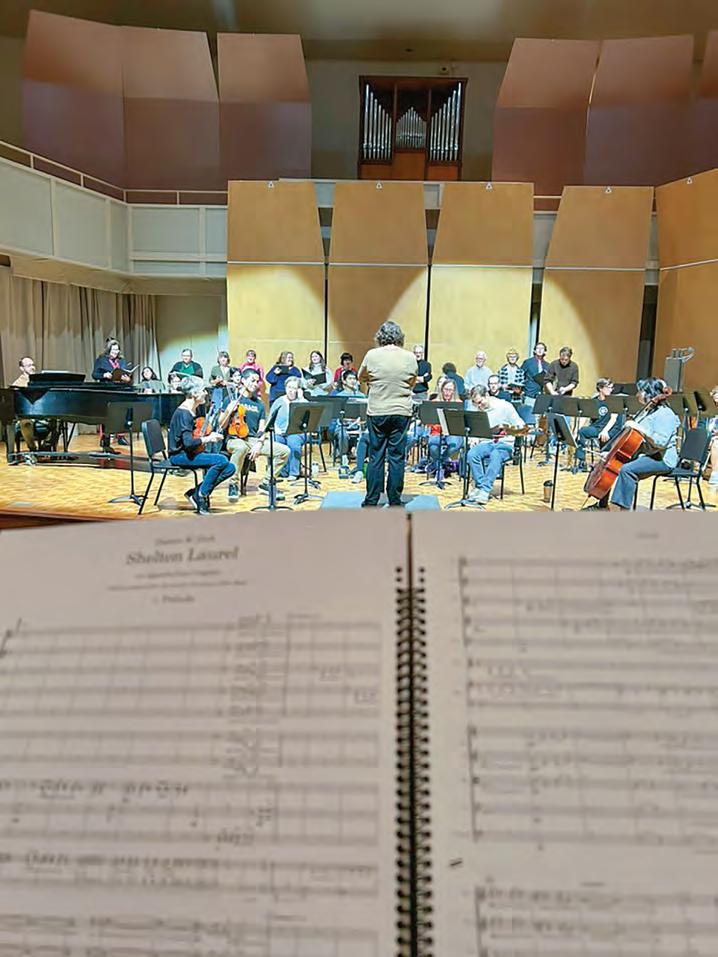
Ron Rash has never been to an opera. But later this month, he’ll sit down to enjoy an opus based on stories and poems he wrote about the Southern Appalachian mountains he calls home.
“Shelton Laurel: An Appalachian Opera” takes place over a few years around the Civil War. The opera, which will see its world premiere later this month, tells the tale of farmers in Madison County’s Shelton Laurel, not far from Western Carolina University’s Bardo Arts Center in Cullowhee where the work will be performed.
The farmers, in desperate need after having their salt — necessary for curing meat — confiscated, and a group of men and boys, went to retrieve what was theirs, the minerals so crucial to their survival during the harsh Appalachian winter. Things got out of hand, and with both the farmers and the soldiers feeling backed into a desperate corner, violence ensued.
“Shelton Laurel gives voice to an important and difficult reality of Appalachian Civil War history,” a press release promoting the
and stage productions.
“It’s a huge project,” Sink said. “It’s bigger than a symphony, certainly bigger than a sonata or a piece of chamber music.”
Sink, who has also written musicals, said Shelton Laurel will “straddle” American opera and contemporary music theatre, but where musicals typically have spoken dialogue, his work will be sung throughout. Like in other operas, some parts will be more subdued, and the aria solos will allow for crescendos that really highlight the most dramatic moments of the story.
“It’s really opera in the sense that there’s sort of an ebb and flow to the way the music works,” Sink said. “It seemed to me and still
the written works that Sink used, he was able to help him understand the time and place at the center of the opera on a deeper level.
“There were some suggestions, like small things. ‘That wouldn’t be a Western North Carolina name,’ and very little things like that, and he was always interested,” Rash told SMN.
When Rash was starting out, he was thrilled just to see a poem get published in a magazine or journal. But now that he’s a solidified literary success, he’s seen his plenty work adapted for other mediums. Most famously he’s had the novels “The World Made Straight” and “Serena” brought to life on the
opera reads. “Shelton Laurel is a haunting meditation on loyalty, survival and the brutal consequences of civil conflict.”
This tale, ripe with drama and deeply human themes, is a creation of WCU School of Music Professor Damon Sink. But before it was Sink’s opera, these stories were borne of the mind of Rash, one of Appalachia’s greatest modern writers.
Sink, originally from Pennsylvania, is a full-time professor in the School of Music and has been there since 2012. He’s also a classically trained composer and singer, having studied at the Cincinnati College-Conservatory of Music under teachers who have written operas of their own. He has also written a good deal of chamber music and has had pieces performed regionally, nationally and even internationally.
But this is the first opera Sink has ever written, an epic task for an epic story. Some of the greatest composers, names most people in the United States would recognize, never wrote an opera. And when it comes to opera, the logistical effort required to bring an idea to life is about as elaborate as it gets outside of the likes of Hollywood and New York screen
seems like this is the best way to deliver the emotional impact of the central stories that I’m adapting from Ron’s work.”
Every year, the Bardo Arts Center hosts a new production developed by one of its faculty. Sink has been involved in some of these as a performer or composer. Over a year and a half ago, university asked him if he had any ideas that he’d like to bring to life. At that point, he’d already chewed over the bones of an Appalachian opera for quite some time. He discussed the idea with Rash, who gave Sink some of his books to begin digging in, specifically recommending that Sink look at the story of the Shelton Laurel Massacre.
Sink got to work.
The composer ultimately drew from several of Rash’s stories and pieces of poetry to create a full narrative worthy of the stage, taking a few liberties along the way to maintain continuity in the story telling — liberties he discussed with Rash, who agreed that the two worked well together to create something that is both unique and honors the source material.
Sink said he was taken aback by Rash’s generosity with his own work as Sink embarked on his serious creative quest.
“Ron was just so generous,” Sink said. “I mean, as soon as we started talking about it, he started pulling books off the shelf, and he just said, ‘Yeah, use whatever you want.’”
Rash told The Smoky Mountain News that because he spent so much time researching

and Jennifer Lawrence to play the lead

ries and even graphic novels created from his work.
Just a few months ago, some of his stories were adapted for stage at the Z Space Theatre in San Francisco. The theatre is small, but that’s no matter. Rash said the show sold out for several weeks, and he thought it was “fantastic.”
But while Rash said it’s exciting to see his work adapted by others who feel drawn to it, he admits he hasn’t always loved every adaptation. There’s usually a key distinction between faithful adaptations and ones that feel hollow.
“Some people are just after some money, but when you get somebody is not really motivated by money, it feels good to see that somebody found something in your work,” Rash said.
While Rash admitted he’s never seen an opera live, he recognizes that because Sink has creative control, unlike with Hollywood films that have too many inputs from too many money-minded producers and can be focusgrouped to death, he thinks it’s a truer adaptation. While the opera may not follow the source material to a T, it can more importantly dive into key themes and hit the right emotional notes Rash wrote into his stories and poetry.


BY GARRET K. WOODWARD
‘Our lives begin to end the day we become silent about things that matter’
Editor’s Note: This is the transcript of a recent voice memo Garret left for a friend of his on Thursday, Jan. 8, in the aftermath of the incident in Minneapolis, Minnesota, between a protester and an ICE agent. To note, both Garret’s father (U.S. Immigration) and grandfather (U.S. Customs) were career officers for the federal government (now retired). In 2003, Immigration and Customs combined to form ICE due to the Homeland Security Act of 2002.
Gcollapse of [2008], [not to mention the Bush] and Trump administrations, and the pandemic.
It’s just nonstop. I don’t know what peace is anymore, you know? I don’t know if we’ve ever had peace, probably [just] postWorld War II, in essence, but it still wasn’t a peaceful country for a lot of people [back then]: minorities, Black people, gay community, women. I’m sorry, this is a tangent. I just realized that it’s really gone down the rabbit hole [in this message]. My mind’s just so full to the brim of thoughts and restlessness, which is why I’m going to dump it all on you. [Laughs].
1
Comedy legend “Larry the Cable Guy” will perform at 7:30 p.m. Saturday, Jan. 17, at Harrah’s Cherokee Casino Resort.
2
Highlander Mountain House (Highlands) will host the “Salon Series” with Thomas Johnson (of the Futurebirds) at 8:30 p.m. Thursday, Jan. 15.
3
Boojum Brewing (Waynesville) will host Falspring (Americana/soul) at 9 p.m. Saturday, Jan. 17.
4
Slanted Window Tasting Station (Franklin) will host Diana Nouveau (singer-songwriter) at 4 p.m. Sunday, Jan. 18.
5
Valley Tavern (Maggie Valley) will host Rich Manz Trio (acoustic/oldies) at 6 p.m. Friday, Jan. 16.


ood afternoon. You’re probably slaving away at your [office] desk doing your favorite thing, which is working inside under fluorescent lighting, I would assume. [Laughs]. Oh, man, I don’t know where this message is going to go, but I just was wanting to vent about…[well], it’s almost hard to vent anymore, because it’s like every day is just this chaotic frustration of things outside of my [front] door and things across the country and things around the world.
It’s almost like a constant state of venting or frustration or anger or confusion or just plain [being] dumbfounded. And you’re in the same boat as me, we’re [both] millennials, and I think about just a constant chaos in our lives. To be honest, I was trying to think, “What was the first moment in [our] generation that really kicked off this chaos? Was it [the] Bill Clinton [and] Monica Lewinsky [scandal in 1998]? Yeah, probably, but more likely, at least in my view, I think the real moment was [the] Columbine [school shooting in 1999]. We were in middle school when that was going on, and I remember watching it live on television. It was Easter break, and my family and I were down in Cape Cod [on vacation].

I went to school for journalism and history. I’ve always been a history freak since I was a little kid. That’s all I read was history books. So, I have a pretty good grasp of this country, just diving deep. Because I always felt you can’t understand history and you can’t be a good journalist and you can’t be a good citizen if you don’t have a frame of reference, in terms of historical context of why things happen or continue to happen or seem to always happen or seem like once in a million years happening, but it actually happened only 20 years ago. People forget very easily, especially in the social media age.
“Make America Great Again.” I always think about that statement. What is the word “great,” and who is the one that understands the definition? Clearly white men think that we used to be great.
The rest of the country? It’s been a hard, arduous battle, rolling the boulder up the hill.
But then, even as a country, we’ve had [other] chaotic [United States] presidents. I mean, Andrew Jackson alone [with] the way he ruled, with the Trail of Tears and killing [thousands] of indigenous people, [and from] right here in Western North Carolina [with the Cherokee], killing them or making them walk to Oklahoma.
[when it comes to] black people, women, anyone that’s not a white man. I always think about that as a journalist and as just a person, a very existentially thinking person, that [old adage], “Nothing’s the same, everything thing’s the same.”
You think about the Boston Massacre, where that was in the Revolutionary War [era], and they argued who shot first. Was it the British trying to invade Boston or was it some colonial rebel that shot first? And it kind of sparked the American Revolution in a lot of ways. That was at the beginning of the country, which celebrates 250 years this year, which is just nuts to think about [in] all this chaos.
This year is the 250th anniversary of the signing of the Declaration of Independence. And we are [now] in one of these powder keg, blitzkrieg, upside down, world broken, bull in a China shop moments. And here we are, a quarter of a millennia into our existence [as a country]. And it’s like we’re just as much of pieces of shit now as then. I’m not talking about the people fighting a good fight. I’m talking about the people at the top that just run everything and don’t give a shit about anybody, let alone the Constitution.
[I was 14 and] I remember we were checking into the hotel, and I’m sitting in the lobby watching the news, waiting for my parents to get done [at the front desk]. And there’s kids running for their lives across the [Columbine] school parking lot and falling out of broken glass windows. And then, two years later, we had 9/11, then Afghanistan and Iraq [wars], economic
And I’ve done those stories about the historical context of the Trail of Tears. Jackson booted them out of the South: “This is a white man’s land, get the f**k out.” It’s just so crazy. And you think about [Jackson’s] populism and how he was, in my opinion, bat shit crazy. And everybody loved it. It was anti-indigenous people, pro-America, probusiness, and slavery was still going on.
That was [in] the 1830s, and here we are, almost exactly 200 years later. And that’s the way the government [today] looks at it
And when I think about this woman yesterday [in Minneapolis], it’s so crazy that her last name is “Good.” Wow, what a symbolic thing there. I didn’t realize until I read more reports [about the shooting] that her partner and her dog were when she got shot. And you’ve probably seen the photos, all the stuffed animals for her kid that were in the glovebox right next to where her body lay. Like, what the actual f**k?
All this chaos is going on and all of us still have to go to work, still have to adhere to obligations. The country is burning right now, and [I’m] like, “Oh yeah, I have an assignment due.” I have an article due this afternoon and I have just no motivation to do it, and just out of sheer mental exhaustion. It’s just daily life in this country. That’s the absurdity we live in. I digress. Peace.








Rash has a copy of the libretto and has seen some samples of performances, and he’s genuinely impressed.
“In a way, this is kind of like writing literary fiction,” Rash said. “Now, you know you’re not going to make a lot of money, but way kind of gives you more freedom.”
This isn’t the first time a Smoky Mountain tale has been adapted into an opera. Charles Frasier’s bestseller “Cold Mountain” was adapted by Pulitzer-winning composer Jennifer Higdon into a 142minute opera in 2015. Like with Sink’s Shelton Laurel, that was Higdon’s first opera, and it received rave reviews from the likes of The Washington Post and The Philadelphia Inquirer.
What’s compelling about Rash’s work to Sink, and what he hopes is compelling about his opera, is the uniquely American nature of the story. It’s a history that local folks are likely familiar with, and it highlights the fact that the Civil War wasn’t necessarily just two
monolithic political groups fighting. Sink said he thinks there are themes in Rash’s work — themes he’s tried to nail down —
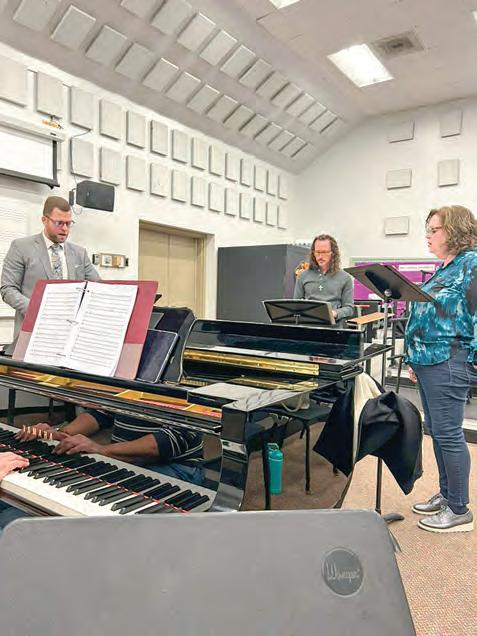
country in the last year and a half, and it has been really surprising and gratifying to me that Ron’s stories and this story in particular are kind of enmeshed in issues that we’re

talking about every day now, like the divisiveness of politics and things like that,” Sink said.
Sink said it’s been gratifying to enjoy the support he has from WCU, from the administration to his colleagues in the School of Music. Along with all the hours of work he’s put into writing the opera, dozens upon dozens of others have committed thousands of man hours to making sure their part in making the opus come to life is executed
— professionals from Pittsburgh, Detroit and Columbia, South Carolina.
About 60 people from all over the country auditioned for those three key roles, many of whom were former colleagues of Feken.
A former director of Drake University’s Opera Theatre, Feken said he’s been involved in several world premieres as a conductor or performer but that this is the biggest, most involved premier he’s worked on. He chuckled as he pondered how much work Sink must have put into the project but, like Sink, he also wanted to recognize how the university made the whole thing possible.
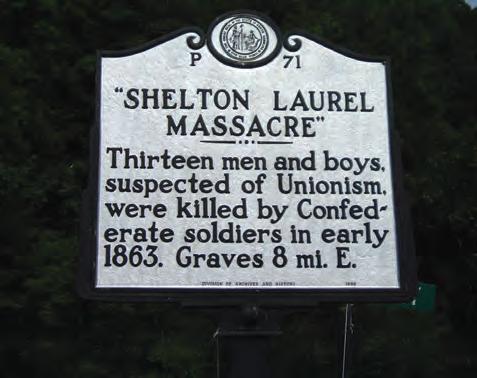
without a hitch.
“I couldn’t be more grateful,” he said.
Sink mentioned several people specifically but had special praise for his colleague at WCU, Isaiah Feken, who he said was “invaluable” in helping to pull the project together.
“He’s an opera guy,” Sink said of Feken. “He sang with Center City Opera in Denver and a lot of different places.”








Feken told SMN that he thinks Sink’s opera is “a very powerful work,” and that even people who aren’t sure whether opera is for them can still enjoy it. The performance is in English, and there will be supertitles provided so people can read the lyrics and follow along with the performance.
“The fact that we’re able to put this together in large part because of support of Bardo Center is truly a feat,” he said. “It’s a giant undertaking.”
Once performers for key roles were secured, Sink sent everyone the score so they could rehearse wherever they were with whatever piano accompaniment they preferred. In mid-November, the performers came together for a stage reading and full rehearsal. Sink said he was amazed how well-prepared and professional the performers were.
There will be about two weeks of in-person rehearsals before the show to tie everything together ahead of the performance.
“Shelton Laurel: An Appalachian Opera” will hit the stage at 7:30 p.m. Saturday, Jan. 24, in the Bardo Arts Center at Western Carolina University in Cullowhee.















“People think of ladies in horned hats and those kinds of things,” he said. “While the work is in the style of modern American opera in terms of compositional style and treatment of orchestra, it’s also definitively Appalachian in the subject matter and sensitivity in the subject matter.”
At 6:30 p.m., before the start of the show, the BAC will host Ron Rash for a book signing in collaboration with Sylva’s City Lights Bookstore. Concessions and the fine arts museum will also be open.
The box office is open from 10 a.m. to 4 p.m. Tuesday through Friday and 10 a.m. to 7 p.m. Thursday. Patrons can purchase tickets at arts.wcu.edu/tickets.




Along with playing a key role in the opera — as chief antagonist — Feken is also the artistic administrator and stage director, meaning he’s worked closely with set designers, the costumer and the stage manager to make sure all the logistics are nailed down when its showtime.
“Shelton Laurel” will hit the stage for a single performance on Saturday, Jan. 24. Some of Sink’s colleagues from the university’s communications department will do a multicamera shoot and professional audio recording, and Sink said the video should be available on YouTube at some point after the performance. In addition, he’s invited opera colleagues from around the country to come and see Shelton Laurel, and he plans on sending the production and score to opera companies around the country that may be interested in staging the performance at their venue.
As Sink makes his final preparations for the big night, Rash said he thinks it will be well-received.








Feken also provided invaluable assistance when casting, as he was able to leverage his connections in the industry to put Sink’s show on the radar for some heavy hitters. Although there is plenty of local and regional talent in Shelton Laurel, including WCU students and faculty, the school put forward some money to bring in out-of-town talent
“I think this is his work now, but he’s really tried to honor and be as true to my work as he can while still making it his own,” Rash said. “When I heard the music, it fits the mood of the story, the sense of tragedy and, at times, hope.”
“It’s going to be interesting to see how it works,” Rash added. “I’m just curious.”
Comedy legend “Larry the Cable Guy” will perform at 7:30 p.m. Saturday, Jan. 17, at Harrah’s Cherokee Casino Resort.
a multi-platinum recording artist, Grammy nominee, Billboard award-winner and one of the top comedians in the country. He continues to sell out theatres and arenas across the United States.
Git-R-Done Foundation.”
Named after his signature catchphrase, the organization has donated more than seven million dollars to various charities.
‘Larry the Cable Guy’ will be in Cherokee Jan. 17. File photo

Admission starts at $67.40 per person. For tickets, visit caesars.com/harrahs-cherokee.
• Smoky Mountain Center for the Performing Arts (Franklin) will host semiregular stage productions on the weekends. 866.273.4615 / smokymountainarts.com.
• Harrah’s Cherokee Casino Resort (Cherokee) will host “Larry the Cable Guy” 7:30 p.m. Saturday, Jan. 17. For tickets, visit caesars.com/harrahs-cherokee.
• Highlands Performing Arts Center (Highlands) will host semi-regular stage productions on the weekends.
the table
• Cataloochee Ranch (Maggie Valley) will host semi-regular culinary events and workshops throughout the week. For a full schedule of upcoming activities, tickets and reservations, visit cataloocheeranch.com/ranch-event.
• Balsam Mountain Inn (Balsam) will host “Wind Down Wine Flight” 6 p.m. Thursdays. 828.283.0145 / thebalsammountaininn.com.
• Classic Wineseller (Waynesville) will have its wine bar open 4-8 p.m. Fridays/Saturdays and semi-regular wine tastings on the weekends. 828.452.6000 / classicwineseller.com.
• Blue Ridge Beer Hub (Waynesville) will host semi-regular tap-takeovers from local and regional breweries on the weekends. Free and open to the public. 828.246.9320 / blueridgebeerhub.com.
828.526.9047 / mountaintheatre.com.
• Peacock Performing Arts Center (Hayesville) will host semi-regular stage productions on the weekends.
828.389.ARTS / thepeacocknc.org.
• Swain Arts Center (Bryson City) will host semi-regular stage productions on the weekends. 828.488.7843 / swainartscenter.com.

The exhibit is free and open to the public during regular library hours. The opening reception will also provide light refreshments. All work is juried by the Jackson County Arts Council. For more information, visit jacksoncountyarts.org.
• “Didanisisgi Gadagwatli: A Showcase of Pottery from the Mud Dauber Community Workshop” is now on display at the Museum of the Cherokee People in Cherokee. On view through May 2026, the exhibition features works by students of Tara McCoy (Eastern Band of Cherokee Indians) handcrafted during an intensive three-month workshop. For more information, visit motcp.org.
• “Flights & Bites” will be held starting at 4 p.m. on Thursdays and Fridays at Bosu’s Wine Shop in downtown Waynesville. 828.452.0120 / waynesvillewine.com.
• “Take A Flight” with four new wines every Friday and Saturdays at the Bryson City Wine Market. Select from a gourmet selection of charcuterie to enjoy with your wines. Educational classes and other events are also available. 828.538.0420.
• “Uncorked: Wine & Rail Pairing Experience” will be held from 11 a.m. to 3 p.m. on select dates at the Great Smoky Mountains Railroad in Bryson City. Full service all-adult first class car. Wine pairings with a meal and more. There will also be a special “Beer Train” on select dates. 800.872.4681 / gsmr.com.
• WNC Paint Events will host painting sessions throughout the region on select dates. For more information and/or to sign up, visit wncpaint.events.
• Marianna Black Library (Bryson City) will host “ArtWorks” at 1 p.m. every second Thursday of the month. Come create your own masterpiece. The materials for art works are supplied, and participants are welcome to bring ideas and supplies to share with each other. Ages 16 and up. Space limited to 10 participants. Free and open to the public. 828.488.3030 / vroberson@fontanalib.org.
• CRE828 (Waynesville) will offer a selection of art classes and workshops at its studio located at 1283 Asheville Road. Workshops will include art journaling, watercoloring, mixed media, acrylic painting and more. 828.283.0523 / cre828.com.
• Gallery Zella (Bryson City) will be hosting an array of artist receptions, exhibits and showcases. The gallery is open from noon to 5 p.m. Wednesday through Saturday. 517.881.0959 / galleryzella.com.
• Haywood County Arts Council (Waynesville) will offer a wide range of classes, events and activities for artisans, locals and visitors. The HCAC gallery is open seven days a week from 10 a.m. to 5 p.m. and 11 a.m. to 4 p.m. Sundays. 828.452.0593 / haywoodarts.org.
• Jackson County Green Energy Park (Dillsboro) will be offering a slew of classes, events and activities for artisans, locals and visitors. 828.631.0271 / jcgep.org.
• Southwestern Community College’s Swain Arts Center (Bryson City) will host an array of workshops for adults and kids. 828.339.4000 / southwesterncc.edu/scclocations/swain-center.
• Dogwood Crafters in Dillsboro will offer a selection of upcoming art classes and workshops. 828.586.2248 / dogwoodcrafters.com.
• Cowee School Arts & Heritage Center (Franklin) will host semi-regular arts and crafts workshops. 828.369.4080 / coweeschool.org.
• 4118 Kitchen & Bar (Highlands) will host live music 6-8 p.m. Thursdays. Free and open to the public 828.526.5002 or 4118kitchenbar.toast.site.
• Albert Carlton-Cashiers Community Library (Cashiers) will host “Community Jam Sessions” from 2-4 p.m. the second and fourth Sunday of each month. Informal jamming. All skill levels are welcome. Free and open to the public. 828.743.0215 / fontanalib.org/cashiers.
• American Legion Post 47 (Waynesville) will host an “Open Mic” 3 p.m. Tuesdays and semi-regular live music on the weekends. Free and open to the public. 828.456.8691.
bevelbar.com.
• Blue Ridge Beer Hub (Waynesville) will host The Blue Mountaineers (Americana/bluegrass) on Thursdays and semi-regular live music on the weekends. All music starts at 5 p.m. Free and open to the public. 828.246.9320 / facebook.com/brbeerhub.
• Boojum Brewing (Waynesville) will host “Karaoke Night” 9 p.m. Wednesdays, “Trivia” 7 p.m. Thursdays, “Open Jam” 10 p.m. Thursdays, Falspring (Americana/soul) Jan. 17 and Beer & Loathing (rock/jam) Jan. 24. All shows are located in The Gem downstairs taproom and begin at 9 p.m. unless otherwise noted. Free and open to the public.
• Cowee School Arts & Heritage Center (Franklin) will host “Open Mic” at 6 p.m. every second Friday of the month and semiregular live music on the weekends. 828.369.4080 / coweeschool.org/music.
• Currahee Brewing (Franklin) will host “Music Bingo” on Thursdays and semi-regular live music on the weekends. All shows begin at 7 p.m. unless otherwise noted. Free and open to the public. 828.634.0078 / curraheebrew.com.
• Farm At Old Edwards (Highlands) will host the “Fireside at the Farm” on select dates. All shows begin at 6 p.m. Admission is $40 per person, with discounts rates available for hotel guests and members. 866.526.8008 / oldedwardshospitality.com.
The Voices in the Laurel choirs have announced that spring registration is now open and the organization invites new/returning singers from Haywood, Buncombe, Jackson and Swain counties to be part of its 30th season.
This spring semester celebrates three decades of musicmaking, community and artistic growth. Singers will rehearse and perform highquality choral literature while building strong musical skills, lasting friendships and a lifelong love of the arts.

The choirs offer a welcoming, supportive environment, one where every singer is encouraged to grow in confidence, musicianship and joy through singing.
Upcoming events include two concerts this spring, a Bingo
• Angry Elk Brewing (Whittier) will host semiregular live music on the weekends. All shows are free and open to the public. 828.497.1015 / facebook.com/angryelkbrewingco.
• Assembly On Main (Waynesville) will host “Open Mic Night” 7-9 p.m. Mondays (sign-up at 6:30 p.m.). Food and drink specials. Free and open to the public. 828.246.0839 / assemblyonmain.com.
• Balsam Falls Brewing (Sylva) will host “Open Mic” 8-10 p.m. Thursdays. Free and open to the public. 828.631.1987 / balsamfallsbrewing.com.
• Balsam Mountain Inn (Balsam) will host “Picking on the Porch” (open community jam) 6 p.m. Tuesdays, “Trivia Night” 7 p.m. Wednesdays and semi-regular live music on the weekends. 828.283.0145 / thebalsammountaininn.com.
• Bevel Bar (Waynesville) will host semi-regular live music on the weekends. 828.246.0996 /
nessee.org.
• Happ’s Place (Glenville) will host semi-regular live music on the weekends. All shows begin at 6 p.m. Free and open to the public. 828.742.5700 / happsplace.com.
• Harrah’s Cherokee Casino Resort (Cherokee) will host semi-regular live music on the weekends. For tickets, visit caesars.com/harrahs-cherokee.
• High Country Wine & Provisions (Highlands) will host semi-regular live music on the weekends. Free and open to the public. 828.482.4502 / highcountrywineandprovisions.com.
• High Dive (Highlands) will host “Trivia” 7 p.m. on Thursdays and semi-regular live music on the weekends. 828.526.2200 / highlandsdive.com.
Voices in the Laurel. Donated photo
night, participation in the Elementary All-County Chorus and an optional performance tour opportunity for fourth grade through high school to Cincinnati, Ohio.
Register now for any of the four choirs:
• Treble Makers: K-3rd grade (no voice placement)
• Youth Choir: 3rd-7th grade (voice placement required)
• Advanced Youth Choir: 6th-12th grade (voice placement required)
• Adult Choir: 18 years old and up (voice placement required)
For more information and/or to register or sign up for a voice placement, visit voicesinthelaurel.org.
828.246.0350 / boojumbrewing.com.
• Breadheads Tiki Shak (Sylva) will host “Tiki Trivia” at 7 p.m. every other Thursday of the month and semi-regular live music on the weekends. 828.307.2160 / breadheadstikishak.com.
• Bryson City Brewing (Bryson City) will host semi-regular live music on the weekends. All shows begin at 7 p.m. unless otherwise noted. Free and open to the public. 828.538.0085 / brysoncitybrewing.com.
• Cataloochee Ranch (Maggie Valley) will host semi-regular live music throughout the week. All shows begin at 5 p.m. unless otherwise noted. For tickets and reservations, visit cataloocheeranch.com/ranch-event.
• Classic Wineseller (Waynesville) will host semi-regular live music on the weekends. Reservations highly recommended. The kitchen and wine bar open at 4 p.m. 828.452.6000 or classicwineseller.com.
• Folkmoot Friendship Center (Waynesville) will host “World Drum Classes” every Friday at 2:30 p.m. (adults, free) and 4 p.m. (family friendly, all ages, free), “Waynesville Acoustic Guitar Group” 2-4 p.m. every second and fourth Saturday of the month (free) and “Line Dancing Workshop” with the J. Creek Cloggers 6 p.m. Jan. 16 ($15 per person). 828.452.2997 / folkmoot.org.
• Frog Level Brewing (Waynesville) will host “Jazz On The Level” 5:30 p.m. Tuesdays, The Young Ones Jan. 16, Paul Edelman (singersongwriter) Jan. 17, Jim Cook (singer-songwriter) 3 p.m. Jan. 18, Alma Russ (Americana/folk) Jan. 23, Rich Manz Trio (acoustic/oldies) Jan. 24 and Bobby G. (Americana) 3 p.m. Jan. 25. All shows begin at 6 p.m. unless otherwise noted. Free and open to the public. 828.454.5664 / froglevelbrewing.com.
• Frog Quarters (Franklin) will host live music from 11 a.m. to 1 p.m. Saturdays. Free and open to the public. 828.369.8488 / littleten-
• Highlander Mountain House (Highlands) will host “Blues & Brews” with Scott Low 6-9 p.m. Thursdays ($5 cover), Zorki (singersongwriter) 1-3 p.m. Saturdays, “Bluegrass Brunch” 10 a.m. to 1:30 p.m. Sundays (free), the “Salon Series” with Thomas Johnson (of the Futurebirds) 8:30 p.m. Jan. 15 and Madi Diaz (singer-songwriter) 8:30 p.m. Jan. 22. 828.526.2590 / highlandermountainhouse.com.
• Highlands Performing Arts Center will host semi-regular live music on the weekends. 828.526.9047 / highlandsperformingarts.com.
• Highlands Smokehouse (Highlands) will host live music from 1-3 p.m. Sundays. 828.526.3554 / highlandsmokehouse.com.
• Innovation Brewing (Sylva) will host “Monday Night Trivia” every week, “Open Mic with Phil” on Wednesdays and semi-regular live music on the weekends. All shows and events begin at 7 p.m. unless otherwise noted. Free and open to the public. 828.586.9678 / innovation-brewing.com.
• Innovation Station (Dillsboro) will host semi-regular live music on the weekends. All events begin at 7 p.m. unless otherwise noted. Free and open to the public. 828.226.0262 / innovation-brewing.com.
• John C. Campbell Folk School (Brasstown) will host a “Community Jam” 7 p.m. Thursdays at the nearby Crown Restaurant and semi-regular live music on the weekends. folkschool.org.
• Las Barricas (Franklin) will host C-Square Band 11 a.m. on the fourth Friday of each month. Free and open to the public. 828.349.4484 / lasbarricasmexicanrestaurant.com.
• Lazy Hiker Brewing (Franklin) will host “Music Bingo” 7 p.m. Tuesdays, “Trivia Night” 6:30 p.m. Wednesdays, “Open Mic Night” 6:30 p.m. Thursdays and semi-regular live music on the weekends. All shows begin at 7 p.m. unless
Americana/folk duo Falspring will hit the stage at 9 p.m. Saturday, Jan. 17, at The Gem downstairs taproom at Boojum Brewing in Waynesville.
The Bryson City-based act is known to “create soulful music with infectious chemistry and buzzing harmonies.” The show is free and open to the public. For more information, call 828.246.0350 or visit boojumbrewing.com.
otherwise noted. Free and open to the public. 828.349.2337 / lazyhikerbrewing.com.
Falspring will play Waynesville Jan. 17. File photo

• Lazy Hiker Brewing (Sylva) will host “Music Bingo” 7 p.m. Mondays, “Trivia Night” 6:30 p.m. Tuesdays, “Old Time Jam” 6:30 p.m. Thursdays and semi-regular live music on the weekends. All shows begin at 8 p.m. Free and open to the public unless otherwise noted. 828.349.2337 / lazyhikerbrewing.com.
• Legends Sports Bar & Grill (Maggie Valley) will host Blue Mountaineers (Americana/bluegrass) 5-7 p.m. Mondays, “Open Mic Night” 6:30 p.m. Wednesdays, Karaoke Thursdays (6 p.m.) and Saturdays (7 p.m.), with live music each Friday (8 p.m.). Free and open to the public. 828.944.0403 / facebook.com/legendssportsgrillmaggievalley.
• Macon County Public Library (Franklin) will host The Vagabonds (Americana) at 2 p.m. the first and third Monday, a “Song Circle” open jam from 3-6 p.m. the first Tuesday each month and Tom Neilson (singer-songwriter) 5 p.m. Jan. 17. Free and open to the public. 828.524.3600 or fontanalib.org/franklin.
• Meadowlark Motel (Maggie Valley) will host Bridget Gossett (singer-songwriter) Jan. 24. All shows begin at 7 p.m. unless otherwise noted. Free and open to the public. 828.926.1717 / meadowlarkmotel.com.
• Mountain Layers Brewing (Bryson City) will host “Open Mic Night” with Frank Lee every Thursday and semi-regular live music on the weekends. All shows begin at 6 p.m. unless otherwise noted. Free and open to the public. 828.538.0115 / mountainlayersbrewingcompany.com.
• Orchard Coffee (Waynesville) will host “Open Mic Night” 6 p.m. on the first Friday of every month and semi-regular live music on the weekends. 828.246.9264 / orchardcoffeeroasters.com.
• Otto Community Center (Otto) will host “Music Nights” with James Thompson from 4-6 p.m. first and third Friday of the month. Free and open to the public. go2ottonc.com.
• Peacock Performing Arts Center (Hayesville) will host semi-regular live music on the weekends. All shows begin at 7:30
p.m. For tickets, 828.389.ARTS / thepeacock-
• Quirky Birds Treehouse & Bistro (Dillsboro) will host Open Mic Night at 7 p.m. Tuesdays and semi-regular live music on the weekends. Free and open to the public. 828.586.1717 / facebook.com/quirkybirdstreehouse.
• Rathskeller Coffee Haus & Pub (Franklin) will host “Karaoke” 7 p.m. Wednesdays, “Trivia Night” 6:30 p.m. Thursdays, “Open Mic” 6:30 p.m. Fridays, Scott Clark (singersongwriter) Jan. 16, Michael Kitchens (singer-songwriter) Jan. 17, Diana New (singer-songwriter) 6:30 p.m. Jan. 20 and R.A. Nightingale (singer-songwriter) Jan. 24. All shows begin at 7 p.m. unless otherwise noted. Free and open to the public. 828.369.6796 / facebook.com/rathskellercoffeebarandpub.
• Salty Dog’s Seafood & Grill (Maggie Valley) will host “Karaoke with Russell” on Mondays and Rene Russell (singer-songwriter) 6 p.m. Jan. 26. All shows begin at 7 p.m. unless otherwise noted. Free and open to the public. 828.926.9105 / facebook.com/saltydogs2005.
• Santé Wine Bar (Sylva) will host semi-regular live music on Sundays. All shows begin at 5 p.m. Free and open to the public. 828.631.3075 / facebook.com/thewinebarandcellar.
• Scotsman (Waynesville) will host “Open Mic” first Wednesday of every month, Alma Russ (Americana/folk) Jan. 15, Gavin Byrd (country/rock) Jan. 17, Jenny & The Weazels (Celtic/folk) 3 p.m. Jan. 18, Tim Atkins (singer-songwriter) Jan. 22, The Tall Boys (rock/reggae) Jan. 24 and Bratfolk (Celtic/world) 3 p.m. Jan. 25. All shows begin at 8 p.m. unless otherwise noted. Free and open to the public. 828.246.6292 / scotsmanpublic.com.
• Slanted Window Tasting Station (Franklin) will host Madison Owenby (singer-songwriter) 6 p.m. Jan. 16, Diana Nouveau (singer-songwriter) 4 p.m. Jan. 18 and Jamie Rasso (singer-songwriter) 6 p.m. Jan. 23. 828.276.9463 / slantedwindow.com.



S EE ON THE BEAT, PAGE 22


















CONTINUED FROM 21
• Smoky Mountain Center for the Performing Arts (Franklin) will host semi-regular live music on the weekends. Tickets now available, with seating upgrades offered. 866.273.4615 / smokymountainarts.com.
• Smoky Mountain Dog Bar (Waynesville) will host “Open Mic Night” 5-7 p.m. Fridays. Free and open to the public. 828.246.0726 / smokymountaindogbakery.com.
• Stubborn Bull (Highlands) will host “Live Music Mondays” with local/regional singersongwriters. All shows begin at 5:30 p.m. Free and open to the public. 828.200.0813 / the-stubborn-bull.com.
• Trailborn (Highlands) will host its
otherwise noted. Free and open to the public. 828.944.0686 / valleycigarandwineco.com.
• Valley Tavern (Maggie Valley) will host “Karaoke with Jason” Tuesdays, “Tom’s Trivia Night” Wednesdays, Rich Manz Trio (acoustic/oldies) Jan. 16 and Second Chance (Americana) Jan. 23. All shows and events begin at 6 p.m. unless otherwise noted. Free and open to the public. 828.926.7440 / valley-tavern.com.
• Veterans Of Foreign Wars Post 5202 (Waynesville) will host semi-regular live music on the weekends. 828.456.9356 / vfw5202.org.
• Vineyard At High Holly (Scaly Mountain) will host semi-regular live music on the weekends. All shows begin at 2 p.m. unless otherwise noted. Free and open to the public. 828.482.5573 / thevineyardathighholly.com.
Rising singer-songwriter and multiinstrumentalist Alma Russ will hit the stage at 8 p.m. Thursday, Jan. 15, at The Scotsman Public House in Waynesville.
Based out of Western North Carolina and with her unique brand of “patchwork music” (country, folk and Appalachian styles pieced together), Russ enjoys playing guitar, banjo and fiddle.
Russ was also a contestant on “American Idol” Season 16. Her most recent album, “Fool’s Gold,” was recorded in an abandoned church in the West Texas desert while Russ was on a national tour.
The event is free and open to the public. For more information on Russ, visit facebook.com/almarussmusic.
828.246.6292 or scotsmanpublic.com.

“Carolina Concert Series” on semi-regular dates on the weekends. All shows begin at 6 p.m. Free and open to the public. 828.482.1581 or trailborn.com/highlands.
• Twisted Spoke Food & Tap (Maggie Valley) will host semi-regular live music on the weekends. Free and open to the public. 828.926.1730 / facebook.com/twistedspokerestaurant.
• Ugly Dog Pub (Cashiers) will host semiregular live music on the weekends. 828.743.3000 / theuglydogpub.com.
• Ugly Dog Pub (Highlands) will host “Bluegrass Music” 6:30 p.m. Wednesdays, “Karaoke” 9:30 p.m. Fridays, “Music Bingo” 7 p.m. Sundays and semi-regular live music on the weekends. 828.526.8364 / theuglydogpub.com.
• Valley Cigar & Wine Company (Waynesville) will host semi-regular live music on the weekends. All shows begin at 2 p.m. unless
• Water’n Hole Bar & Grill (Waynesville) will host “Open Mic Night” 8 p.m. Mondays and Breakcutter (rock/jam) Jan. 23. All shows begin at 9 p.m. 828.456.4750 / facebook.com/waternhole.bar.
• Wells Events & Reception Center (Waynesville) will host semi-regular live music on the weekends. 828.476.5070 / wellseventcenter.simpletix.com.
• Whiteside Brewing (Cashiers) will host semi-regular live music on the weekends. All shows begin at 6 p.m. unless otherwise noted. Free and open to the public. 828.743.6000 / whitesidebrewing.com.
• Yonder Community Market (Franklin) will host “Country Thursdays” (Americana/country) 6 p.m. Thursdays and semi-regular live music on the weekends. Family/dog friendly. 828.200.2169 / eatrealfoodinc.com.
“Tell me where you’re from and I’ll tell you who you are.”
— Wallace Stegner
Ihave just finished reading a book that was like taking a class by an enlightened professor. In this case the “professor” is award-winning author Janisse Ray and her book is titled “Journey In Place: A Field Guide to Belonging” (Amazon, 2025, 231pgs). The book is like no other I have ever read in that it is organized in chapters and subheadings like a college course on the environment, community, literature and writing, with a little bit of Ray’s memoir thrown in to ground and personalize her messages and assigned activities. It is arranged in a way that has mirrored short sub-chapter sections in each chapter but with new and different comments, questions and projected results using the monikers of “Tiny Essay,” “Feet on the Ground,” “Writing Prompt” and “Further Study” in that order in each chapter; and with chapter headings such as “Claim Your Place,” “Boundaries and Bioregions,” “How We Bond With Place,” “Sense of Place,” “Placelings — Not Earthlings,” “Climate,” “Place Names,” “Be a Steward of the Land,” “Place Language,” “Scent of Place,” etc. You get the picture. In this sense, the book is a formalized outline or what she calls “explorations” of environmental activism — a carry-it-with-you assignment over the course of a potential year-long weekly timeline that will only be graded by your own perception, and personal revelations either brought to mind or written as part of the suggested writing topics at the end of each chapter.
practically a contemplative course in itself, a kind of eco-sophical meditation. So, generalities aside, let’s dive deeper into “Journey In Place.” In the chapter “Boundaries and Bioregions,” she sets the tone for the rest of the book, where she writes: “The boundaries of a place are often fluid, inexact, fuzzy, ever-changing. They change because the past informs the present,
place? When? Where did they come from?” Ray’s “Writing Prompts” for this chapter are twofold: 1) I can never go home again, and 2) Other people called this home. In the chapter, “Sense of Place” and the section, “Feet on the Ground,” Ray states: “I have a strong belief that where and how we place our attention is game-changing. Attention is healing. When you place your attention on the exact spot where you feel a longing for connection to land, you can heal.” I know what she is saying, here, is valid, as I have had this exact experience when returning, here, to my boyhood home in the Southern Appalachians after living in Pennsylvania, Indiana, California and France as a young adult.
Ray is someone who knows her place, having spent more time there than anywhere else — in this case in southeastern Georgia, where she has written several books on the subject of this part of the American landscape in relation to appreciation and preservation and is an original member of the Southern Nature Writers Group based in Athens, Georgia, that also includes Franklin Burroughs, Jim Kilgo, John Lane, Jan DeBlieu and Wendell Berry. What makes this particular book so inviting and promising is Ray’s personalized prose that is like a physical conversation, yet structured to make it formal enough to be coherently organized and to work while keeping you engaged and wanting more. From a literary and/or academic perspective, just taking in the quotes she offers by such well-known writer-teachers as henry David Thoreau, Rachael Carson, Charles Frazier, N. Scott Momaday, Joy Harjo, Gary Snyder, Robin Wall Kimmerer, John Muir and others is

the present informs the future, and in the end, everything affects everything else.” She then quotes the poet Rumi, who says “Wherever you stand, be the soul of that place.” Then, in the chapter “How We Bond With Place,” she writes: “I believe that part of being fully human and fully alive is to bond with our places, to develop a conscience so strong that we do our level best to prevent violence to Mother Earth. Disconnection from place is a soul wound.”
In the chapter on “Displacement,” about how our capitalistic society has removed us from our native places, she asks the reader to respond to the following questions: “*Who were the indigenous people in your home ground? *What do you know of their culture? *What artifactual evidence of them remains? *Are their descendants still present in the area? *Who else settled in your
Eventually, Janisse Ray delves deeper and deeper into the idea of “community” and in the text gives more and more attention to nature and natural history. In the chapter, “Scenery,” and her section on “Writing
Prompts,” she asks some pertinent questions of her participating reader/student: “What do you love about the scenery in your place? What attracts you to it? Write about that place.” This exercise is kind of a response to Edward Abbey’s quote at the beginning of the chapter: “There are some places so beautiful they can make a grown man break down and weep.” Finally, here, from the chapter on “Placelings, Not Earthlings,” Ray posits something of a final conclusion: “We are earth-dependent every minute of every hour of every day. I say we can’t survive without nature, but really we can’t survive without place.”
(Thomas Rain Crowe is aauthor of more than thirty books, including the award-winning nature memoir “Zoro’s Field: My Life in the Appalachian Woods,” and is a longtime resident of Jackson County.)









































In 2025, the North Carolina Department of Environmental Quality supported communities recovering from Hurricane Helene, took actions to address PFAS contamination and continued to protect the state’s natural resources for the health and prosperity of all North Carolinians, according to a lengthy DEQ press release.
The monumental task of helping communities recover from Helene, while rebuilding in a way that makes them more resilient to future storms, played a central role in the department’s actions last year.
DEQ also completed dozens more projects, tests, studies, grants, education programs and more in 2025 that protected North Carolinians’ health and welfare.
• In addition to the highlights below, DEQ focused during the past 18 months on helping North Carolinians recover from Helene through the following measures:
n Awarded $365 million in grants for water infrastructure repairs and resiliency.
n Mapped 4,000 landslides, helping North Carolinians stay safe from future slides. n Inspected 400 dams.
n Awarded $12 million to clean up debris in streams and rivers.
n Designated 177 debris collection sites.
• In 2025, DEQ received the first federal funding through EPA to improve flood resiliency to drinking water, wastewater and septic systems affected by Hurricane Helene. The Division of Water Infrastructure received $685 million in supplemental funds and has completed two funding rounds using these funds to date.
• The Dam Safety Program established the North Carolina Dam Safety Grant Fund, making $10 million in state funding available to dam owners for the rehabilitation and/or removal of Hurricane Helene-damaged highhazard dams.
• In August, EPA awarded DEQ a $61 million grant for Hurricane Helene State Program Support for Hazardous Waste Management. The grant will run through Sept. 30, 2030, and will assist North Carolina with emergency response and recovery from Hurricane Helene. It also will fund preparations for emergency recovery as related to DEQ’s hazardous and non-hazardous solid waste, recycling and materials management, emergency response programs and pesticide management.
• DEQ created the Western NC Recovery Grants Program that provides free, customized grant writing support to local governments and partner nonprofits in Western North Carolina impacted by Hurricane Helene. The program objective is to help impacted communities secure federal and state funding for long-term recovery projects.

has played a



emergency disaster recovery funding to DEQ’s Underground Storage Tank Section (UST) to assist owners and operators with testing and repairing tanks storing petroleum and hazardous substances that were damaged by Hurricane Helene. Loans are interest-free and mature upon the earlier of receiving federal disaster relief or other funding, or by June 30, 2030. As of November, DEQ had received 11 loan agreements for more than $1.2 million.
• DEQ received an EPA grant (with state matching funds) totaling more than $15.8 million to assess and cleanup spills of petroleum from UST damage by Hurricane Helene. The grant will run through March 31, 2030, and can be extended an additional two years. The UST section has identified more than 15 sites that may be eligible for funding. Assessment or corrective action is underway at nine facilities. Evaluation of additional sites is ongoing.
• The Division’s Solid Waste Section approved 177 sites for temporary management of debris caused by Hurricane Helene. The section also worked with regional officials and residents to manage the debris.
• In the aftermath of Helene, Division of Energy, Mineral, and Land Resources staff conducted more than 400 dam safety inspections.
• The State Energy Office launched a $5 million Clean Energy Microgrid Initiative to deploy small solar-powered microgrid systems in areas that lost power due to Hurricane Helene. As of December, five microgrid sites had been selected.
• DEQ received the first federal funding
until March 2, 2026, and funds replacement and repair of septic systems in a 39-county region of WNC.
• DEQ awarded a $10 million grant to MountainTrue, an Asheville-based nonprofit, to hire 80 staff members to clean up debris from 125 miles of streams over the next 18 months. Funding from DEQ has allowed the organization to employ 79 workers, who remove an average of 10,000 pounds of debris from Western NC waterways daily.
• In 2025, the State Water Infrastructure Authority awarded more than $877 million in loans and grants to update and harden drinking water, wastewater and septic systems, limit chemical pollution (PFAS), replace lead pipes and assist towns damaged by Hurricane Helene while improving resiliency for future storms.
• In 2025, the NC Flood Resiliency Blueprint program awarded $25.2 million to projects in 16 counties to build more resilient communities and protect lives, property and livelihoods across North Carolina.
• The program, through partnerships with agencies such as the NC Land and Water Fund, NC Emergency Management and the NC Department of Agriculture & Consumer Services, funded more than 73 projects valued at more than $78 million in total. The total investment from the Blueprint program for these initiatives amounted to over $34.4 mil-
that will permanently protect approximately 97 acres of wetlands along with nearly 20 miles of stream and 91 acres of riparian buffer. These projects represent an investment of approximately $59 million to restore and protect natural resources in North Carolina. DMS currently manages 206 active and ongoing mitigation projects.
• The State Energy Office’s Weatherization Assistance Program completed work in 1,380 households, including repairing or replacing 543 heating units and weatherizing 838 homes.
• The $208 million Energy Saver North Carolina program Homeowners Managing Efficiency Savings and Home Electrification and Appliance Rebates programs launched Jan. 16, 2025.
• The Utility Savings Initiative saved $159 million in avoided utility costs in fiscal 2024–2025 and a cumulative $2.26 billion in avoided costs since fiscal 2002–03 by using efficiency improvements across state facilities.
• The Division of Air Quality awarded $1.91 million for new public electric vehicle chargers across North Carolina, filling gaps in the state’s charging network along highways and in rural communities. The projects will prevent more than 657 tons of greenhouse gases from entering the atmosphere and will avoid 125 pounds of nitrogen oxide emissions and 1,191 pounds of volatile organic compound emissions.
• DAQ awarded $1.14 million in grants for clean vehicle projects, including more than $270,000 for new all-electric vehicles. These awards are projected to F
The National Park Service is seeking tips from the public to aid in the ongoing investigation of an assault that occurred in the Deep Creek area of Great Smoky Mountains National Park.
On Dec. 22, 2025, at approximately 5:40 p.m., an individual approached two vehicles believed to have been involved in a motor vehicle collision near the Deep Creek Picnic Area. As the individual approached, one of the vehicles — described as a white SUV — drove away. A second vehicle — described as a newer-model silver or gray four-door pickup truck equipped with a lift kit and bearing a weighted North Carolina registration — motioned for the individual to approach. When the individual approached, the driver of the vehicle pointed a handgun at them. The individual fled from the scene and heard multiple gunshots being fired from the area where the encounter occurred.
The suspect was described as a thin male in his late teens or early 20s with tan skin, a thin mustache, and wearing a hooded jacket. He and a group of approximately 10 individuals who are believed to be associated with the suspect, were observed in the Deep Creek area prior to the assault and are believed to have been there for most of the late afternoon.

Enjoy a full night of skiing or snowboarding at Cataloochee Ski Area with Jackson County Parks and Recreation on Thursdays
Open to ages 5 and up, skiing will be from 5-10 p.m., with everyone meeting upstairs in the main lodge at 5 p.m. to check in and receive tickets, which are purchased
Wear weather-appropriate clothing, and remember to bring snacks and extra money for personal use.
Rates vary based on age, day of the week and equipment rentals and lessons.
Visit jcprd.recdesk.com/community/program to register.
Balsam Mountain Preserve received its first platinum award from the Association of Golf Merchandisers.
The award recognizes clubs and facilities for their superior skills and innovative approaches in the golf retail sector. Entries were judged on various categories including creative ideas, revenue-generating initiatives, promotions and visual displays.

Both the SUV and pickup truck, as well as a grey sedan believed to be associated with the group, were seen fleeing the area toward Bryson City.
eliminate 3,483 tons of greenhouse gas emissions, 57 tons of nitrogen oxide emissions and 7,700 pounds of fine particle emissions.
• The Division of Environmental Assistance and Customer Service received $26 million in EPA funding in October for grants to local communities in western North Carolina to improve recycling operations damaged by Hurricane Helene and to conduct recycling and waste management workshops for disaster preparedness.
• DEACS awarded $1.17 million (plus $1.11 million in matching funds) in recycling grant funding to 19 businesses and 15 local governments for projects that are expected to create 31 jobs and divert 25,000 tons of material from landfills annually.
• The Division of Water Resources awarded more than $2.6 million in grants to support stream restoration, water-based recreation and water management projects across North Carolina. The total includes nearly $2.3 million awarded through two different grant cycles of the Water Resources Development Grant program state and local projects fund, and $350,880 to support two stream restoration projects on agricultural lands through a cost-sharing program with the U.S. Department of Agriculture’s Natural Resources Conservation Service Environmental Quality Incentives Program.
• DWR awarded more than $5.8 million in grants in funding from the Flood Resiliency Blueprint to support projects that provide flood reduction or flood resiliency benefits across the following six river basins across North Carolina: Cape Fear, French Broad, Lumber, Neuse, Tar
Although no additional details are available at this time, information from other visitors is often very helpful to investigators. If you were in the Deep Creek area during the late afternoon of Dec. 22 or if you have any information that could help, please contact the parks service.
Pamlico znd White Oak. The grants were awarded to 10 local governments through a one-time appropriation of flood resiliency funding received through the NC Flood Resiliency Blueprint administered through the Water Resources Development Grant program state and local projects program.
• The Blueprint Tool, posted in April, serves as a resource for communities, local governments and partners by providing accurate, data-driven flood- risk and vulnerability assessments. Users can explore, develop and define effective flood-resilience actions and evaluate and prioritize the most effective solutions.
• The State Resilience Office (SRO) joined DEQ in July 2025 to continue its mission to support resilience-building statewide. The SRO, previously at the NC Department of Public Safety, supports local governments and their partners to plan for and invest in resilience initiatives. The SRO also manages the NC Resilience Exchange, an online toolbox of resilience resources, and staffs the Interagency Resilience Team, a partnership of state agencies working to push resilience efforts forward across state government.
• SRO, in partnership with the State Climate Office, kicked off its second Planning for Extreme Heat Cohort Program. This year, nine local governments from the coast to the mountains are participating in the program, with the goal of developing a local heat action plan. Extreme heat is the deadliest weather-related impact, and local governments across the state are taking action.
To see a longer list of accomplishments, visit the DEQ website.
Balsam officials will receive the 2026 Platinum Award later this month at the AGM Annual Retail Conference in Orlando.
"We are thrilled the Association of Golf Merchandisers presented us with their Platinum Award for 2026," said Gayle Starke, general manager at Balsam Mountain Preserve. "Our staff is extremely proud of Allison for doing an incredible job of providing the top brands and merchandise in an attractive arrangement. We also commend Director of Golf Travis Wilson and Assistant Golf Professional Chad Lauze, whose support and leadership helped make this milestone possible." For information about Balsam Mountain Preserve, please visit balsammountainpreserve.com.




BY B URT KORNEGAY
It was 40 years ago this month that I first heard the name of the small creek in Jackson County that would eventually become our home, Moses Creek. Becky and I had been renting a house in Cullowhee in 1984 from a landlady who kept threatening to up the rent on us, even though we’d told her at the get-go that we, newlyweds from eastern North Carolina, had no more ”up” to give. But a year in, after still another monthly phone call from her, I turned to Becky and said, “Let’s see if there’s something we can afford to buy.”
So, we asked Cullowhee realtor Lucretia Bassett to help us. Taking a look at our finances, she said, “It might take a while.” And “a while” is what it took for her to show us several small run-down houses clinging for dear life to steep slopes. Then Lucretia remembered one more possibility in our financial range. It was on Caney Fork. We were drawn to it the moment we pulled up.
True, the house was another little fixerupper, “RUSTIC INSIDE AND OUT” as a realty ad put it. But we were a rustic-leaning, fixer-upper couple, and this house sat on an old farmhouse site at the base of Shelton Mountain. Lucretia said the owners had moved to Charlotte and the house had been on the market for over a year. They’d dropped the price to $38,000. After learning that we qualified for a FHA “First Time Home Buyer Loan,” which, in the mid1980s came with the unusually low interest rate of 9.5%, we offered the owners less. They said yes. We moved in and never looked back.
But we did look around. Up the road from us was an old house no bigger than ours, and we’d heard that it was the home of a widow named Zennie Coward. She was said to have raised ten children there. So, while taking a walk one January morning, I
decided to introduce myself.
Zennie came out to my knock. She was a slender woman in her 80s. We said hello, and, after an awkward moment, I asked her if she was from around here. Of course, I thought I already knew the answer to that. Her maiden name, I’d been told, was Stephens. That made her a descendant of one of the pioneer families in the area. And
could almost touch it. It was only a mile away. But to Zennie that mile was a significant distance. It separated Moses Creek, where she’d been born and raised, from Caney Fork valley, where in 1920 she’d moved to start a new life as a married woman of 17. The way she said it, she had traveled far.
I’d been reading in Horace Kephart’s “Our Southern Highlanders” about what he called the “isolation” of people living in the Appalachian hollers. It was a time and place where, as an old saying goes, “the ridgeline is your world.” And beyond that ridgeline stood other tall, steep, sharp-edged ridges as far as the eye could see — the Great Smokies, Snowbirds, Cowees, Balsams and
Fork valley as if toward Timbuktu: “I’m from Moses Creek.”
Our decision to buy the Caney Fork house marked the start of maturing growth for Becky and me. I started and grew my guiding business, Slickrock Expeditions, running it out of the house. And as the business grew, we expanded the house to accommodate it. Becky’s work and responsibilities as a librarian at Western Carolina University also grew. Then she grew in another way, with Henry. Then Henry grew from an acorn to an oak. And during these prime years for us, Zennie died, at 91. A few years later, her house burned down.
It took many winters of sunlight deprivation for Zennie’s “Moses Creek” to become more than just a name to us. We liked our house, but it was on a north slope. Shelton Mountain stood behind it, and the sun that peeked briefly over its shoulder in winter came in at a slant. We began to refer to our place as “Permafrost.” We’d look across the valley from nearly perpetual winter shade and see south-facing Coward Knob and Moses Creek warmed all day by golden light.

across the valley from us, lit up by the sun, stood Coward Knob, named after her husband’s family. Zennie was “from around here” as much as a person can be. My asking was just a way to break the January ice.
Zennie surprised me. “No,” she said, her arms folded in front of her, “I’m not from around here.” Then, pointing across the valley and to the left of Coward Knob, where a small tributary joined Caney Fork, she said, “I’m from Moses Creek.”
Now, to me, the little valley Zennie pointed out and named looked so close I


thwarting easy passage. There were no long, wide through-valleys, like Virginia’s Shenandoah, and no big navigable rivers. Men left home mainly to hunt and to drive livestock on dirt tracks called turnpikes down to the flat lands to be sold. As for the women, Kephart quotes another observer of mountain life “they are almost as rooted as the trees.” Kephart himself knew several women who’d never ventured more than a few miles from their cabin doors.
Now, there stood Zennie Stephens Coward at her door pointing across Caney
When I saw a sign posting land for sale up Moses Creek in 2001, we bought. And with teenage Henry helping, we built a new house there. Zennie Coward had moved from Moses Creek to Caney Fork for marriage. We went the other way for sun.
On New Year’s Day this January, now in our “golden years,” we hiked to the top of Coward Knob and sat on the warm rocks facing south. A hawk flew past in the blue sky. Far down in the valley, Caney Fork was flashing light. The mountains all around basked in the sun. But on the opposite side of the valley, our old house lay in deep shade. We could barely make it out. I thought about what Zennie had told me 40 years earlier. She knew the length of a mountain mile.
(Burt and Becky Kornegay live in Jackson County.)
The Carolina Mountain Club announced Karen Schultz as its next president, serving a two-year term from 2026 through 2028.
Schultz steps into the presidency following two years of service as vice president and after working closely with President Les Love and Past President Tom Weaver.
Originally from Chicago, Illinois, Schultz is a graduate of Michigan State University with a degree in Agricultural Economics and spent 25 years living in Northern Michigan. She brings extensive experience in organizational development, strategic planning and leadership development from her career with Whole Foods Market, where she led human resources and organizational Development for the midwest Region, overseeing eight states and Ontario, Canada. She retired five years ago after a distinguished career.



Schultz and her husband, Ken Scharmann — a fellow CMC member and hike leader — moved to Asheville during
North Carolinians continue to breathe the cleanest air in decades as emissions of harmful air pollutants like ozone and fine particles continue a long-running downward trend.
The North Carolina Department of Environmental Quality’s Division of Air Quality is publishing its latest update to the “Air Quality Trends in North Carolina” report. DEQ attributes the decline of air pollution emissions to efforts by state leaders, regulatory agencies, electric utilities, industry and the public to significantly address air quality concerns over the last 50 years. Statewide emissions of carbon monoxide and sulfur dioxide in particular reached all-time lows in 2022, the latest year for which data are available from the U.S. Environmental Protection Agency.
According to the report, statewide emissions of the air pollutants regulated under the federal Clean Air Act have declined sharply from 1990 through 2022. Specifically, emissions fell:
• 95% for sulfur dioxide (SO2)
• 74% for carbon monoxide (CO)
outdoors. They joined the CMC before relocating and credit the organization with helping them build community and deepen their connection to the trails and landscapes of Western North Carolina.
• 71% for nitrogen oxides (NOx)
• 48% for fine particles (PM5)
• 67% for volatile organic compounds (VOCs)
Not surprisingly, North Carolina’s outdoor air quality has improved as emissions have fallen.
Measured concentrations of those air pollutants have been below every federal health-based standard for more than a decade. Average concentrations of SO2, for example, are 95% below the federal standard; annual nitrogen dioxide concentrations are 89% below the standard.
North Carolina’s transition away from coal for power generation has been a major driver of these changes. More of the state’s power now comes from clean sources such as solar, wind and nuclear energy. Energy efficiency improvements in homes and buildings also reduced emissions from power plants.
Cars, trucks and other vehicles on North Carolina roads also emit far less pollution than older vehicles, thanks to improved engine and fuel standards and more advanced emissions controls. From 1990 through 2022, CO, NOx, and VOC emissions have declined by 81%, 72% and 85%, respectively, from these on-road sources of air pollution. The state expects to see further reductions from the transportation sector in the coming years due to the increasing adoption of electric vehicles.




















































ADMINISTER ASSETS
The Smoky Mountain News Marketplace has a distribution of 16,000 copies across 500 locations in Haywood, Jackson, Macon and Swain counties, including the Qualla Boundary and west Buncombe County. Visit www.wncmarketplace.com to place your ad!
• $15 — Classified ads that are 25 words, 25¢ per word after.
• Free — Lost or found pet ads.
• $6 — Residential yard sale ads.*
• $1 — Yard Sale Rain Insurance
Yard sale rained out? Call us by 10a.m. Monday for your ad to run again FREE
• $375 — Statewide classifieds run in 170 participating newspapers with 1.1+ million circulation. (Limit 25 words or less)
• Boost Online — Have your ad featured at top of category online $4
• Boost in Print
• Add Photo $6
• Bold ad $2
• Yellow, Green, Pink or Blue Highlight $4
• Border $4
Note: Highlighted ads automatically generate a border so if you’re placing an ad online and select a highlight color, the “add border” feature will not be available on the screen.
Note: Yard sale ads require an address. This location will be displayed on a map on www.wncmarketplace.com
p: 828.452.4251 · f:828.452.3585 classads@smokymountainnews.com www.wncmarketplace.com
Apr 07 2026
NOTICE OF ADMINISTRATION
Case No.25E000681-430
Cynthia A. Jackson,
Jimmie Lewis Jackson, Jr.Mar 24 2026
GWENDOLYN FAYE GEDDINGS NASH
Executor
4101 Lake Boone Trail, Suite 300 Raleigh, NC 27607
NOTICE OF ADMINISTRATION
Case No.26e000003-490
Tina Anne Leopard Apr 14 2026
Apr 14 2026
Administrator
705 W Main Street Sylva, NC 28779
NOTICE OF ADMINISTRATION
Case No.25E000725-430 -
RECEIVE AND ADMINISTER ASSETS OF ESTATE
3027 HIGHWAY 545 CONWAY, SC 29526
NOTICE OF ADMINISTRATION
Case No.25E000707-430
Joyce Hazel RiggsMar 31 2026
Executor PO Box 145 Candler, NC 28715
NOTICE OF ADMINISTRATION
Case No.26E000002-490
Sanford Preston Artman
Apr 14 2026
Ancillary Administrator
705 W Main Street Sylva, NC 28779
NOTICE OF ADMINISTRATION
Case No.25E000191-490
Steven W. Sunderland -
Ginger Lovelace, Executor
c/o Stone & Christy, P.A.
110 N Dougherty Street Black Mountain, NC 28711
NOTICE OF ADMINISTRATION
Case No.26E000003-430
Thresia Moody






































1 It turns litmus paper
7 Strip a disguise from 13 "- Baby" (#1 U2 album of 1991)
20 Arrive like the tide
21 Savage 22 Less dull 23 Rural lumberjack resting after chopping?
25 Lounged around
Dreamcast producer
27 Get as clear profit 28 100-yr. period
29 Heap (up)
30 Trough
ANSWERS ON PAGE 26

BEHIND ON YOUR -
DOJA Brown Tabby Cat. Petite 8-yr old female. Sassy, affectionate; loves petting. Prefers to be only cat in household. Asheville Humane Society (828) 761-2001 publicrelations@ashevillehumane.org
Mixed toy breed dog — tan & white. Gentle 8-yr old, 28lb, loving male; still occasionally playful! Prefer as only pet in household. Asheville Humane Society (828) 761-2001 adoptions@ ashevillehumane.org
Here’s How It Works: Sudoku puzzles are formatted as a 9x9 grid, broken down into nine 3x3 boxes. To solve a sudoku, the numbers 1 through 9 must fill each row, column and box. Each number can appear only once in each row, column and box. You can figure out the order in which the numbers will appear by using the numeric clues already provided in the boxes. The more numbers you name, the easier it gets to solve the puzzle!