

Into this month’s articles:
When MSJ students walked onto campus this August, they were met with several major changes to their daily school routines, from the elimination of Advisory days to an earlier end time to the school day. Behind these changes were months of negotiation and issues, ranging from o ce sta members’ working hours to safety and liability issues. While the new schedule has addressed and fixed many of these issues, sta and especially students are now voicing new concerns.
See more on pg. 2

How often do you think about how to pay for college? Whether you’re a senior applying to college or an underclassmen thinking ahead, the answer is probably very often. Tuition prices costs are at an all time high — rising almost 150% over the last 20 years — and student loan debt is increasing as well. When President Donald Trump signed the “One Big Beautiful Bill” on July 4, he passed drastic student loan cuts, causing the overhaul of the entire financial aid system for millions of current and future borrowers.
See more on pg. 5

Angry Chickz, the popular Nashville fried chicken chain, has landed in Fremont, opening a location in the Central District on August 15. Founded in Los Angeles in 2018, the chain is known for its vibrant and trendy in-store atmosphere, serving up fast-casual eats with a focus on spicy fried chicken.
See more on pg. 12





By Padma Balaji, Scarlett Huang, Trisha Parikh & Ekasha Sikka Editor-in-Chief, Web Editor, Feature Editor, & Web Editor
As of August 1, the City of Fremont made a 100% renewable energy plan the default plan for all residents. The energy is provided by Ava, which is a Community Choice Aggregate (CCA), a not-for-profit public agency providing renewable energy to local cities. Fremont, along with 10 other cities in Alameda County, founded Ava in 2016, and it became the area’s default electricity pro vider and sole renewable energy option for Alameda County in 2018. Ava has since expanded to unincorporated Alameda County, Stockton, and Lathrop as part of CA’s statewide e ort to transition to renewable energy. Ava o two renewable plans as an alternative to PG&E, the default energy provider for Fremont residents. In 2018, Fremont residents were enrolled in Ava’s Bright Choice Energy plan, which is sourced from 61.8% renewable energy and costs 5% below PG&E rates. In contrast, PG&E’s basic plan is made up of 23% renewable energy. Fremont residents are now automatically enrolled in Ava’s other plan, Renewable 100, which costs roughly $3-6 more than the Bright Choice Energy plan and $1-4 more than PG&E monthly. Although it’s now the default plan, residents can still choose to opt out to Ava’s Bright Choice Energy plan or PG&E. The switch to Renewable 100 does not apply to those who have already opted out from receiving Ava’s energy or those who are enrolled in California Alternate Rates for Energy (CARE) or Family Electric Rate Assistance Program (FERA) — both of which provide discounts on energy bills for qualifying low-income households. However, these are currently only available for PG&E clients, not those part of Ava Energy.

Aside from implementing a new renewable energy plan, Fremont is implementing a project to install microgrids with solar panels and battery storage, at six municipal facilities over the next two years. Microgrids are self-contained power systems that provide clean electricity to a local area, such as a campus or neighborhood. Fremont’s microgrids use solar panels to generate electricity and a battery storage system to store and distribute electricity. Microgrids can sell excess energy they generate to Fremont’s centralized electricity grid, increasing renewable energy access for other users and generating a profit. Currently, the City is installing microgrids at sites including the Age Well Center at Lake Elizabeth, Tri-City Volunteers Food Bank, and two Fremont fire stations. Although these will be installed at municipal sites, Gridscape Solutions, a local business that develops microgrids, will install, operate, and maintain equipment at no cost for the city. These microgrids are expected to save Fremont up to $900,000 over 25 years.


Alongside their infrastructure projects, Fremont has launched initiatives to raise city-wide awareness about climate issues and the city’s environmental action initiatives. This includes collaborations with environmental nonprofits such as Bright Action, who has worked with Fremont’s sustainability committee to launch MyClimateReady, a platform containing public resources with details of climate projects and their impact. The app details fiscal information, day-to-day changes to city environmental projects, and climate education in a global context. The City of Fremont has also partnered with Community Climate Solutions (CSS) — a similar climate advocacy and awareness nonprofit — to set up the Fremont Green Challenge, which aims to engage residents with climate change advocacy, education, and infrastructure changes. “We’re proud to be one of the pioneers in this area,” Former Mayor Lily Mei said.
Beyond energy infrastructure, Fremont has recently invested in natural resto ration projects. One of the city’s major undertakings is the Lake Elizabeth Water Quality Improvement Pilot Project, seeking to rejuvenate the lake ecosystem and prevent fish die-o s. Due to the extreme heat and low dissolved oxygen levels in the lake, a significant die-o during the summer of 2024, prompting the City to launch the initiative. The City Council approved the project’s $175,000 budget in March, utilizing it to install three fountains, nine floating islands, and three continuous monitoring probes. These fixtures are designed to circulate and oxygenate the water while regulating its temperatures. The City aims to prevent excess algae growth, which works to strengthen the lake’s flood control and stormwater management abilities and improve the lake’s ecosystem and water quality. The preventative measures were required in accordance with CA’s Municipal Regional Permit and Basin Plan, a regional water quality control plans that enforce the protection of aquatic life and stormwater runo regulations, among other things. The City of Fremont contracted Applied Mineral Sciences to test the lake’s quality and help determine appropriate action. A similar project launched this summer is the Stiver’s Lagoon Restoration Project. The lagoon has historically dried out over summers, damaging its native plants and wildlife. By redirecting water from Mission Creek into manually excavated pods, this project will improve the hydrology of the lagoon, strengthening its ecosystem.
County for the solar panels, which will reduce the greenhouse gas im pact of city infrastructure by 5%. Additionally, Fremont has worked to connect solar programs to a ordable housing developers like Habitat for Humanity East Bay/Silicon Valley. In recognition for its work in solar technology and electrification, Fremont was the first US city to be

Since 2021, Fremont Unified School District (FUSD) has been working to follow the city government’s lead by shifting its school bus system towards renewable energy, adding its eleventh electric bus in late 2022. The district aims to reach its goal of directing at least 85% of its energy consumption on electric sources, as opposed to natural gas or other less sustainable fuels, within the next five years, beginning with replacing its remaining diesel-reliant buses with the assistance of state and federal grants. Partnering with both PG&E and the Mobility House, a vehicle-to-grid technology company, and funded by the California Energy Commission, FUSD was able to launch a vehicle-to-grid project that features 14 new electric buses and 22 chargers. The buses are able to send stored energy back to the grid when needed most or during an electric outage, reducing both the risk of blackouts and the cost of charging by up to 70%. This initiative places FUSD as a national leader in sustainable school transportation, as the First in the Nation Project Blueprint, an achievement celebrated at the project’s ribbon-cutting ceremony. Although MSJ no longer utilizes a general school bus service, the student body can still benefit from this shift as FUSD school buses are still called upon for course field trips. AC Transit, which MSJ students use in place of school buses, is also working towards sustainable changes, aiming to have 100% zero-emission operations by 2040. Additionally, 10% of its buses run electrically or on hydrogen fuel cell technology.


Compiled by
Fiona Yang & Prisha Virmani Sta Writers

On August 21, Governor Gavin Newsom announced three Program Homekey+ awards in a statewide e ort to sustain and expand housing for people experiencing homelessness. ese awards, which total $75.5 million, has the goal of developing 200 permanent supportive homes with services for veterans as well. In partnership with Abode Housing Development, the County of Santa Clara will receive $20.5 million Homekey+ funding for the Algarve Community Apartments project in the city. e new project will create 90 permanent supportive housing units, and the Housing Authority of Santa Clara county has committed 60 project-based vouchers — rental assistance attached to those housing units.

Tensions at the CDC escalated on August 28 as four senior leaders resigned in protest after the Trump Administration abruptly red agency chief Susan Monarez. At a rally in Atlanta, the o%cials Debra Houry, Demetre Daskalakis, Daniel Jernigan, and Jennifer Layden accused the White House of spreading and politicizing vaccine research, urging Congress to get politics out of public health. eir departure comes amid reports that Health Secretary Robert F. Kennedy Jr. has restricted Covid vaccine use, removed scienti c advisers, and tapped Jim O’Neill, a longtime biotech investor, as interim CDC director. Sta ers applauded the resignations, framing them as defense of science over ideology, while the agency continues to recover from a recent mass shooting at its headquarters.


Controversial bell schedule change made earlier this year alters routines amid new concerns from students.
By Vikram Mahajan, Emily Zhang & Lucas Zhang Opinion Editor, Graphics Editor & Sta Writer
Continued from pg. 1:
Overview of the new schedule
When MSJ students walked onto campus this August, they were met with several major changes to their daily school routines, from the elimination of Advisory days to an earlier end time to the school day. is year’s new schedule no longer includes the weekly Advisory period or minimum days, has shorter assembly lunch periods, and now ends at 3:11 p.m. instead of 3:19 p.m. last year. e removal of all minimum days, which have been kept in other FUSD schools’ schedules, also means that nal exam days, which used to be minimum days with blocks for two classes per day, are now full days with blocks for three classes per day. All extended lunch periods, including on Homecoming performance days, are 45 minutes long, and all assemblies are now 45-55 minutes long instead of more than one hour.
Removal of Advisory
e removal of Advisory was one of the most controversial changes to the bell schedule. In April 2025, the administration gave teachers options for bell schedules to vote on, each a ecting Advisory and read periods in di erent ways. It was removed largely due to teacher sentiment that students were not using the weekly period for its intended purpose. According to Principal Amy Perez, 74% of MSJ teachers voted against keeping Advisory days. “We tried having Advisory periods to lower student stress, but stress levels actually continued to increase despite the change,” FUDTA Representative and Science Teacher Lane Melcic said.
Advisory was removed despite student backlash against the decision. In April, when the vote was taking place, Senior Ashwin Vaidyanathan created the @msjstudentrightsgroup Instagram page and started a Change.org petition to protest the changes and lack of student input. For many
students, Advisory was a time to unwind, do homework, or make up missed tests.. “Usually, Advisory is just a chill time every week if I’m getting too stressed out, need to take a break, catch up on some homework, or, even take tests,” Junior Roshan Annamalai said.
Removal of Minimum Days
Sta and administration made the decision to remove minimum days because of district-wide threats to teachers’ paychecks and con$icts with Regional Occupation Program (ROP) schedules. “ e removal of minimum days was a response to the school board, because they were threatening to force teachers to work for free on minimum days,” Melcic said. According to Melcic, the FUSD school board would require teachers to stay on campus until the end of a regular school day on minimum days. is would mean teachers would stay in school for several unpaid hours, even though those extra work hours were already accounted for across the rest of the school year. Accordingly, MSJ teachers opted to remove minimum days from the calendar altogether. “We said we’re not going to work for free,” Melcic said. e decision to remove minimum days was also in$uenced by schedule con$icts with ROP courses, career-training courses available to upperclassmen. ROP courses operate on the same schedule every day and are located near Kennedy High School, meaning ROP students would miss signi cant chunks of class on minimum days. Despite the district-wide con$icts with the school board and ROP schedules, other schools like American and Kennedy High School have retained minimum days in their schedule for this year. e removal of minimum days also modi ed MSJ’s nal exam schedule, which originally consisted of three minimum days. According to Melcic, in addition to the removal of minimum days, another reason teachers voted to change thenals schedule is because the last day of the 2025-26 school year falls on a Tuesday, which would spread nal exams over two sep-
By Ariel Duong, Luna Venturo & Aarav Vashisht Feature Editor & Sta Writers
In celebration of Indian Independence Day, the Festival of Globe (FOG) hosted its 33rd annual Festival of India Mela and Parade on August 16-17. e event charmingly portrayed India’s established cultural heritage, featuring various ornate cutlery and clothing booths, celebratory cultural parades, mesmerizing performances from regional dance teams, and united Fremont’s signi cant Indian community, in honor of India’s Independence.
Attendees purchased tickets at the front entrance to enter the Mela, which roughly translates to “fair” in Sanskrit. Upon entering the festival’s Mela, visitors were immediately entranced by the fresh aroma of a variety of traditional South Asian
foods provided by the collection of food trucks, scattered across the perimeters of the event.
After guests had visited the alluring food trucks, they were welcome to explore the booths selling Indian cultural products that lined each street. Moreover, several of the stalls had arrays of gold and silver cutlery, intricate jhumkas, traditional bellshaped Indian earrings, and Kasumalas, gold-coin necklaces. ey also sold colorful kurtas and beautifully woven sarees, both staples of traditional Indian clothing. However, some attendees were disappointed by the emphasis on commerce and not India’s culture itself. “I feel like there’s nothing related to how [India’s] independence occurred… I do like that there’s henna, a lot of cultural wear, but it is very… business heavy.” Attendee Veena Veluri

arate weeks. For many teachers, the gap of a weekend could easily jeopardize their tests’ integrity, as students could easily share answers with later periods. However, students have especially expressed backlash against the new nals schedule, anticipating a drop in grades as a result. “If people have to take three di%cult nals on two consecutive days, many of those who have to rely onnals to get or maintain an A may fail to do so,” Vaidyanathan said.
Homecoming Lunches
Along with cuts to Advisory and minimum days, MSJ administrators also shortened Homecoming lunches and assembly schedules, citing safety, equity, and liability concerns. e assemblies were cut by 15-25 minutes and now align more closely with 30-35 minute assemblies at other FUSD schools. According to Perez, the administration shortened extended lunches in part to minimize the number of o -campus incidents the administration is liable for. “I would say [fewer] than half of the students watch the Homecoming performances; they just leave the campus, so I just decided in favor of the majority and made sure that they do not get hurt o campus,” Perez said. Students were quick to voice concerns about the shortened Homecoming schedule as well, citing the negative e ect it would have on performances and school spirit. A 25% decrease in Homecoming performance time slots compared to previous years has led to class o%cers having to cut skit scenes and parts of airband performances to t new time constraints. “ e shortened Homecoming lunch also
causes a lot of con$ict between airband leaders who have to decide whether they should give the more popular airbands more time or take away certain performances, placing a great deal of unnecessary stress on us,” Doan said.
Despite student concerns, many teachers are happy with the bene ts the new schedule will provide. “A consistent schedule will make it easier for me to schedule longer tests; if the even day of a week fell on a ursday, the shorter class period prevented me from having enough time to administer it,” Social Studies Teacher Katherine Williams said. However, students remain discontent with the changes. “We want more student input, such as giving feedback on what we think is best, but ideally [we should] be able to vote on it, as it a ects us as much as the teachers,” Vaidyanathan said.
Corrections: A previous version of the article mistakenly reported that Science Department Chair Sailakshmi Kumar commented on instructional minutes needing to be in accordance with Ohlone’s 50-minute standard. is was misattributed to Kumar and has been formally retracted from the article. e previous version of the article also incorrectly reported that the FUSD School Board threatened to not pay teachers for minimum days, arguing a 4.5-hour workday was too short. is has been corrected to clarify that the board proposed to require teachers to stay on campus until the scheduled end of a regular day on minimum days.
said. “We should be teaching the next generation what [India’s] independence signi es and how it came about.”
e same day around 11 a.m. on August 17, the Saree Parade of the festival commenced. e parade hosted a variety of di erent attractions, with various vehicles and performances promenading through Paseo Padre Parkway, near its intersection with Walnut Avenue. After an opening speech from the festival’s announcer, bands and arrays of performers began to march down Paseo Padre Parkway, greeting the festival-goers. e rst band was composed of musicians playing the chenda, a traditional Indian drum originating from the South Indian state of Kerala. Subsequently, the FOG founder and chairman, Dr. Romesh Japra, waved from an ornate

horse drawn carriage, followed by a long line of vintage convertible cars. e cars hosted guests like Fremont Mayor Raj Salwan, Councilmember Yang Shao and even WNBA player Alexis Gray Lawson. Featured at the parade were also other traditional Indian percussion troupes, marching bands, $oats promoting local businesses. e Saree Parade brought joy to even the festival’s security, “A lot of people [were] dancing. ey’re just happy to see their
to see their culture represented,” Lt. Veronica
a police lieutenant stationed at the
e lively marketplace and Saree Parade will return in the coming year. “We plan to show up next year, and attendees can expect to immerse [themselves] in the cultural heritage and performances here,” Vendor Neha of e Vanity Bazaar, a handicraft brand, said.

By Cham Yu, Varun Madhavan, Prisha Virmani & Fiona Yang News Editor and Staf Writers
don’t know what they’re talking about,” Lanna Rain, the host of a performative male contest, said of the idea of performative men. “It’s just an aesthetic for them.”

From the gym bro to the performative male, there is always a new social media aesthetic for men to ascribe to. In recent weeks, the emerging, sometimes-satirical performative male has entered the social media limelight. The aesthetic features men insincerely adopting interests that are perceived as progressive: they sip matcha while buying Labubus, listen to Clairo, and proudly wear their painted nails. In other words, they perform a caricature of a “woke” or socially aware man, exaggerating certain habits and tastes to !t into a curated online persona rather than expressing genuine beliefs or individuality. Even though it’s meant to be a lighthearted joke, the performative male trend misrepresents actual feminism by undermining genuine feminists and reduces individualistic activities to curated tropes, demanding conformity and increasing pressure for men to conform to a speci!c social archetype.

In October 2021, TikTok user Justin Foster posted a video captioned “Spent All Night Crying About The Wage Gap (I’m 6’3’’ BTW),” gaining 1.3 million views in two days. The video sparked the popular trend where social media users satirically caption their videos with not so subtle references to feminism and their height, with captions like “I read feminist literature (6’5” btw)” or “I get so angry thinking about period cramps! (6’5” feminist btw).”
The trend satirized men who pretended to be feminists for the sake of appearing attractive to women, sparking the archetype of the “performative male feminist” that de!nes the performative male trend today.
The performative male was originally a parody of men who portray themselves as feminist or adopt qualities they think women will like, whether it be drinking matcha or listening to the indie artist Clairo, solely for the sake of landing a date. However, the trope has become so widespread and ubiquitous in social media trends that it no longer serves as witty satire. Instead, it normalizes the idea that men are only feminists when they have an ulterior motive to appeal to women, rather than when they have a genuine concern towards feminist issues. Additionally, when performative men discuss feminist issues such as period cramps and claim to “!ght period cramps” for women, they ignore actual concerns relating to menstrual inequity and treat women’s health as yet another easy way to calculatingly appeal to the female gaze. These videos often shifted the discourse away from women’s lived experiences and perspectives, instead championing the men who simply posted TikTok videos about period cramps. Ultimately, the trend embodies another form of woke!shing, which is a deceptive dating technique in which a person pretends to hold more progressive views to attract potential partners. The performative male masquerades as a person promoting and valuing feministic ideas to attract women, even though carrying around feminist literature books and claiming to hate period cramps online contributes little to the actual feminist movement. Additionally, in August, performative male lookalike contests popped up around the world in cities such as in Seattle, New York City, and San Francisco. As a community event, participants dressed up and acted with stereotypical performative male characteristics. Although the competitions themselves were intended to be a joke, they inadvertently made it more accessible and socially popular for people to be praised for engaging with feminism performatively instead of actually addressing feminist issues through advocacy and compassion. “A lot of the time, [the competitors]
Although it started mainly as a satire and critique of men whose entire identities were carefully curated, constructed, and performed, the performative male trend quickly blew up, blurring the lines between satire and reality. Its populari ty can be attributed to in uencers like @sexyishaan, the Bay Area based con tent creator known for his skit videos. He often roleplays as a performative male, posting a video in August eating matcha ice cream with a matcha drink in hand captioned “Performed too hard Now I’m in Japan drinking matcha.” Although these videos are often meant to parody the trend, the parodies themselves are the trend itself as non-satirical performative videos did not exist in the !rst place; this means that audiences of satiri cal videos of the trend actively normalize a confusion of satire and seriousness — where serious topics like feminism are confounded with patriarchal-tainted satire.
The same phenomenon occurs of San Francisco’s “performative male” contest in Alamo Square Park, where men competed by aunting tote bags, feminist books, and matcha lattes. Though the contest’s purpose was to parody the trend, its sheer popularity achieved the opposite of dismantling it, instead cementing it by disturbing the notion of performative males to thousands of people — normalizing the act in general. By presenting the trend as satire, the truth of the performative acts — like feminism — are lost and intertwined with jokes, proliferating the trend as a whole. Once these ideas enter the popular culture, they eventually lose their context and nuance behind the irony evaporates, leaving behind an obtuse stereotype.

In the satirical caricatures of the performative man, users commodify genuine interests like reading the “right” books, sipping matcha, carrying a plushie, and package them into a cultural shorthand that undermines the actual expression of one’s identity. Once personal preferences like reading certain literature become satirical meme templates, true individuality gets lost amid curated kitsch. With the profound use of social media, the performative personality highlights how curated appearances become popular. However, it doesn’t accurately represent genuine interest in these behaviors; rather, they are suppressed into yet another strange cultural microtrend. Core trends like the performative male trend tend to minimize the speci!c connotations of items, like the cultural signi!cance of matcha in Japan or the intellectual history of feminist literature, in favor of generalizing them into a standardized sentiment, which is then attached to a social trend. In the case of the performative trend, unrelated items like Labubus are arrogated into a mish-mash of feminist literature — both of which do not produce satisfying cohesion, yet get lumped together into a single trend. The result, unfortunately, is not just the loss of meaning behind Labubus and matcha, but also losing the true spirit of reading feminist literature to cringeness and satire. Ultimately, social media rewards conformity to meme archetypes — like that of the performative male — rather than supporting genuine selfhood. Although it may have started as an internet-wide inside joke, satirizing how ridiculous it is to listen to Laufey or drink matcha just for the aesthetics, it now simply mocks men who choose to engage in “soft” or “feminine” activities, whether genuinely or not.
The performative male represents a broader issue of how internet cultures de ate individuality. The trend has become less a playful critique and more of an expectation. This dynamic clearly demonstrates the suffocating nature of social media identities, where sincerity and performance collapse into one another and are dictated by viral jokes. In a video that garnered over 1.5 million views, TikTok user spamdy_ocampo blamed the trend for ruining matcha: “I can’t even drink matcha anymore without being called performative.” This is the danger of the performative pandemic, which suggests that everything — from music to beverages to feminist literature — is consumed with an ulterior motive. Rather than satirizing men who do consume with an ulterior motive, performing just for the sake of seeming attractive to women, the trend’s popularity has turned performance into the norm. Now, men are not only expected to perform, but are assumed to always be performing. Whether drinking matcha lattes or learning about Au dre Lorde, the expectation is not only that there is always an ulterior motive, but that it’s not possible for men to have a genuine motive in the !rst place.
The focus on performative behaviors disproportion ately targets men who engage in “softer” or aesthet ic-coded interests, things women continually embrace without judgment. Mocking men for liking indie music or matcha subtly reinforces traditional masculinity, sug gesting that emotional vulnerability or aesthetic tastes are suspect when embodied by men but acceptable by women. At the same time, it trivializes women’s inter ests by casting them as unserious or inherently fem inine, reducing their choices to stereotypes rather than genuine expression. In doing so, this humor polices identity on both sides, preserving outdated norms under the guise of satire and pressuring men and women alike to conform to narrower, more re strictive forms of authenticity. This is especially fatal to fenism as it prevents men from genuinely engaging in it.

Today, it feels as though people are living through a social media script, moving from trend to the next with little room for individuality. On platforms where likes or comments stand in for genuine conversation, honest opinions often collapse into silent agreement with the current popularity. The performative pandemic erases complexity, pushing people toward sameness rather than uniquity. Breaking the script is still possible: originality online can mean showcasing the full range of one’s personality instead of chasing aesthetics, resisting the urge to dismiss certain artists or interests as mere archetypes and treating personal tastes, whether mainstream or not, with respect. It also means shifting focus toward meaningful issues, such as engaging with real feminist conversations rather than surface-level satire.


Mission San Jose High School Est. 1964 Vol. 61, No.1 September 12, 2025
www.thesmokesignal.org
41717 Palm Ave. Fremont, CA 94539
510-657-3600, ext. 37088
MISSION STATEMENT The Smoke Signal’s mission is to represent the voices of the MSJ community and serve the public by providing accurate, meaningful, and engaging information presented through print and digital media.
SCHOOL POPULATION 1878 students
EDITORS-IN-CHIEF Padma Balaji, Alice Zhao
NEWS Jennifer Li, Cham Yu
OPINION Janet Guan, Vikram Mahajan
FEATURE Ariel Duong, Trisha Parikh
CENTERSPREAD Naisha Koppurapu, Ariana Yi
A&E Navya Chitlur, Brittany Lu
SPORTS Michael Qu, Ethan Yan
GRAPHICS Hannah Bi, Emily Zhang
WEB Scarlett Huang, Ekasha Sikka
PUBLICITY/TECH Aaqib Zishan
BUSINESS Gaurasundara Amarnani
CIRCULATION Alex Duan, Abigaile Lei
ADVERTISING Fiona Yang
EVENTS Dhaeshna Booma, Felicity He
ARCHIVAL Megha Vashisht
WRITERS & PHOTOGRAPHERS
Jessica Cao, Eleanor Chen, Cecilia Cheng, Kanupriya Goya, Amber Halvorsen, Amy Han, Kayla Li, Erika Liu, Varun Madhavan, Veer Mahajan, Finnegan McCarthy, Joseph Miao, Mansi Mundada, Kaiwei Parks, Saesha Prabhakar, Michael Qin, Kelly Shi, Warren Su, Kaylin Teo, Aarav Vashisht, Luna Venturo, Prisha Virmani, Leland Yu, Andy Zhang, Lucas Zhang, Matthew Zhang
ADVISER YC Low
The Smoke Signal‘s name originated from traditional forms of long-distance communication and honors cultures around the world, including China, Greece, and Rome.
To advertise in the Smoke Signal, email ads@thesmokesignal.org. Advertising that is included on the pages of, or carried within, the Smoke Signal, is paid advertising, and as such is independent of the news and feature content.
The Smoke Signal’s right to freedom of speech and press is protected by the First Amendment of the US Constitution and California Education Code Section 48907.
To stay updated with our online content, see our Facebook page at www.facebook.com/msjsmokesignal.
All policies on distribution, corrections, and bylines can be found at www.thesmokesignal.org/about

By Janet Guan Opinion Editor
When summer began back in June, alongside relief for the end of a tumultuous sophomore year, I was met with anticipation for what I expected to be two months of time just for myself. ! at was, until a 20-second WeChat clip of the Jiangsu countryside reminded my dad of home.
Weighing hefty plane ticket prices against the enticing vision of his parents’ cooking, my dad spent the rst week of summer contemplating a family trip to China. Caught in the net of his indecision, I found myself wavering too: two weeks in the sweltering heat of my dad’s hometown or a complete month of studying for the August SAT?
After a stretch of tentative decision making, we ended up not going at all. Jiangsu province, my dad was dismayed to learn from his weather app, would rain for an entire week. Part of me shared my dad’s disappointment — the last time I visited China was more than two years ago. Yet, I also saw summer as an opportunity to build myself. I had so many goals: ambitious study plans, long-winded reading lists, and even dormant hobbies to revisit. Family time just wasn’t one of them. It was only miles away from the Bay Area and any semblance of home that I began to change my mind. I spent the last seven weeks of my summer at a summer program in Santa Cruz, returning home only on the weekends — visits that quickly switched from being a nuisance to the comforting familiarity I needed at the end of each exhausting week.

On the Friday nights I returned home, my parents would take my brother and me to one of our favorite noodle shops. As I devoured tomato and beef soup noodles, my brother would update me on his ever-changing hobbies while my parents would chat about everything from the stock market to childhood memories. !ese evenings, I realized, were the most at home I had felt in a long time.
During the school year, wrapped in my own bubble of stressful classes, tiresome extracurriculars, and the classic pressures of MSJ, I had somehow convinced myself that time alone was the most worthwhile spent. Somewhere along the road, family time had disappeared from my list of priorities — including family vacations, monthly restaurant dinners, and the cornerstones of my childhood that I had once found mundane.
Yet, the summer I spent bouncing between two worlds reminded me that crafting a path for ourselves doesn’t mean letting go of all that is familiar. In a world riddled with impermanence and uncertainty, there’s nothing more valuable than the people willing to care and stand by us no matter what; these are the connections we’ve held on to all our lives and will continue to support us unconditionally in the future.
Even as life gets busy and we drift away from what once was, there will always be a place we can call home — whether it be a hometown, a favorite restaurant, or the smiles of the people we love the most. ▪
anks Trump!” one MSJ senior wrote on Instagram, reposting a news article about President Donald Trump’s foreign student visa restrictions. “Keep the ban on international student visas until next year!” Trump’s crackdown on student visas, the birth rate drop linked to the 2008 recession, and many elite colleges, such as Stanford University & Cornell University, reinstating their standardized testing requirements signify what college application in&uencers are dubbing the easiest year yet to get into a Top 20 school. !e idea that college admissions will be easier in any way for the 2025-26 application cycle has made its way to MSJ, and some students seem overjoyed at the allegedly easier chance at attaining that coveted acceptance letter from an Ivy League university. However, these developments not only undermine the equality of the college admissions process but also actively make it harder for lower-income and international students to access higher education.
International students account for 30% of applications for elite private colleges every year. However, that may soon change: since January, the government revoked more than 900 visas across 120 universities, complicated the process of attaining student visas, terminated visas for minor transgressions, and detained college students in public without giving any prior notice or reason. !e uncertainty and fear around students’ visa situations contributes to an unsafe environment
for international students, dissuading foreign applications.
Students should recognize the societal and economic repercussions of encouraging educational restrictions for both international and domestic students. Historically, higher education has meant opportunity — it was not only a reliable path for upwards social mobility but also an opportunity to start a life in America for international students. Today, a college degree is often required for well-paying jobs; according to the Association of Public & Land-Grant Universities, typical earnings for bachelor’s degree holders are 86% higher than those with only high school diplomas.
Standardized testing remains one of the greatest obstacles for disadvantaged high school students across the nation — the results of the SAT and ACT skew disproportionately in favor of high-income students, who typically have greater access to educational resources, such as tutors and preparatory classes. Only about 2.5% of the bottom 20% of the income distribution among SAT test-takers achieve a score of 1300 or higher. !ose in support of standardized testing requirements are largely part of communities, such as MSJ, that would bene t from these requirements because they have the materials to achieve competitive scores. We, as students, should recognize the privilege we hold as a part of the MSJ community and retain empathy for those without equal access to the resources or education. !e issue of educational inequal-

By Vikram Mahajan Opinion Editor
Adjusting to new sleep schedules, confronting an ever-growing pile of homework that seems impossible to keep up with, navigating old friendship dynamics and trying to create new ones — the start of a school year is always a struggle. And that’s only been all the more true in senior year, with the knowledge that this is my last year of high school — my last year before adulthood.
Since school started, I’ve been confronted with a duality of feelings, stressed about college applications in addition to my regular courseload — while su ering from the early stages of the dreaded a iction that is senioritis — and also experiencing the uncertain emotions that come with senior year: some strange combination of excitement and apprehension, of looking prospectively to my future and retrospectively to past memories.
!e latter evokes an easy escapism. I nd myself wishing I could just go back to the way things were last year, whether it be classes, friendships, or just my daily routine. Oddly, almost inconceivably, I nd myself missing the junior year classes I once slogged through, even (especially?) my AP Calculus class. What fascinates me is that these were the same classes I so dreaded at the start of last year, when I found myself desperately missing the familiar comfort of my sophomore year classes and teachers.
Starting the transition from one phase of life to another, even just adjusting from one school year to the next, is a di %cult and drawn-out process; that is simple tautology. But in looking at my before-and-after at
titudes toward junior year and nding parallels between that experience and so many others I’ve had, I’ve realized another truth: that we don’t see the value of a moment until it becomes a memory.
I know for a fact that, as much as I might dislike them now, I will eventually miss my senior year classes, too. I’ll even miss the grind of college applications, and the constant chiding by the parents whose presence I took for granted, particularly once the fruit of that labor (hopefully) ripens. I know that even next semester, I’ll feel a sense of preemptive nostalgia that clouds the simultaneous eagerness for the future to come.
But that knowledge doesn’t need to cause melancholy. Perhaps it’s time to change the way I think instead. ! is year, it’s not just the highlights that I’ll remember — almost every moment will be a soonto-be-treasured memory, becoming a snapshot of a past life. And, as my former-freelance-photographer mother has taught me, crucial to any good photo is having a smile on your face, in living in and enjoying that moment, rather than posing for the camera of life while sulking.
Perhaps that lesson can be applied more broadly, not only to my fellow seniors grappling with these same emotions and experiences, but also to other high school students: to live in the moment and appreciate the memory that it will become — or, to modify the iconic Dr. Seuss quote, to not cry because it’s over but to smile
ity has been framed only in the context of college admissions, but it should be interpreted as a call for all MSJ students to understand the educational privilege that we often ourselves overlook and the implications of decreasing the accessibility of education in America. A good SAT score or obtaining a student visa should not be barriers to higher education. Students should consider our own mindsets and the administration’s actions through the lens of our nation’s health and future instead of encouraging decisions that lessen accessibility to college education. MSJ students tend to dismiss global events — topics such as campus protests and climate change — as issues that don’t a ect them, failing to realize their own role in those crises. Instead of instinctively separating educational news from the politics of their everyday lives, students should consider the widespread negative impacts of these policies through a broader scope Within communities like MSJ, the emphasis on college applications can become so consuming that students forget there exists a world beyond their own lives. High school students are young adults — a generation capable of shaping the future. So, take a step back from the self-contained bubble of college applications and remember that what college you go to doesn’t de ne an entire lifetime, and to retain empathy for the many others who dream of having the resources, privileges, and choices that are readily available to us. ▪




Continued from page 1
“I felt like [the government would be able to provide] at least a little bit of [support], but now that net is gone, and I have to fend for myself,” Senior Kate Gerasimova said about the student loan cuts. Gerasimova is one of millions of students who are impacted by the loan cuts. She hopes to go to dental school, which is one of the most expensive graduate programs — one that she likely won’t be able to cover through loans anymore, forcing her to reconsider her dreams of becoming a dentist. The bill’s cuts cap loans for professional programs, such as medical and dental school, at $200,000. However, the average tuition for dental school in 2025 is anywhere from $230,000 to $400,000.
In 2020, about 30% of medical students and 60% of dentistry students graduated with more debt than the new limits will allow, according to calculations by financial aid expert Mark Kantrowitz. This is especially detrimental for low-income students, 95% of whom couldn’t reasonably afford college without federal aid, according to the National Association of Student Financial Aid Administrators. The student loan cuts eliminate most of the measures in place to help low-income students pay for college, such as Grad PLUS loans, which have helped cover shortfalls in university scholarships and aid. The cuts also end the Biden administration’s Saving on a Valuable Education (SAVE) Plan, which features low monthly payments and expedited loan forgiveness.
By Padma Balaji, Eleanor Chen & Alex Duan Editor-in-Chief & Staf Writers
The student loan cuts come at a time when college tuition and the cost of living is already at an all-time high, exacerbating the unaffordability of higher education. These cuts, many of them ambiguous and confusing amidst an already complicated student loan system, will only add additional barriers to affordable higher education and cause students to accumulate debt. “This is another pressure [on] students who not only have to face challenges about getting their work done [but] also have to worry about not [being] able to get a loan to continue [to follow] their dreams, and they may have to start to look for an alternate solution,” MSJ’s college counselor Yvonne Ng said. Some students are considering abandoning career paths they’re passionate about; others who are still pursuing their dreams for graduate studies have lost the stable interest rates, safety rates, and forgiveness programs that federal loans guarantee. Low-income students are therefore wading into uncharted territory with historically low amounts of support.
As federal student loans are now too low to cover graduate programs like medicine or dentistry, many students are debating whether they should pursue such a path at all.
“The cuts have kind of made me … wonder if I should pursue a … field other than medicine,” said Gerasimova.
The student loan cuts are likely to push other students like Gerasimova away from fields they’re passionate about. A US News & World Report survey found that 35% of college students are looking into reducing postsecondary education and 32% are

In July, American actress Sydney Sweeney, known for her role in popular HBO show Euphoria and frequent Internet attention, launched an ad campaign with the clothing retailer American Eagle that focused on a pun between the company’s “good jeans” and Sweeney’s “good genes.” Te company’s use of Sweeney — a blueeyed, blond caucasian — as their model to convey this double entendre drew polarized reactions and intense criticism online. Infuencers and individuals alike charged the the company with glamorizing white privilege, or even engaging in white supremacist dog whistles, in order to boost sales.

“I don’t really think that [the ad] meant good genes in the way that most people are seeing it … I think it just meant [good genes in regards to] Sydney Sweeney’s good looks … I do think that it was a poor marketing choice on their part; I don’t think that they were being deliberate. I think that it was de nitely a mistake to use that kind of wording, especially because Sydney Sweeney has blonde hair and blue eyes. [However], … I think that [the people online are] making something out of nothing … I really don’t think that it was [American Eagle’s] intention to portray Sydney Sweeney as having good genes just because she has blue eyes and blonde hair and white skin … I don’t know if I would say that this was political messaging. I think that it’s really [that] people are misconstruing the message that they were sending — they’re severely overcomplicating it. I really think [American Eagle] just intended to say that Sydney Sweeney has good genes because she kind of … ts the standard of [conventional] American beauty … But I think that their word choice was just very poor, and they set themselves up for a situation where their words would be easily turned against them.”
considering a different degree from the one they’re pursuing. This is especially true for fields like liberal arts, which are typically low earning and have already seen enrollment decline in previous years. These degrees offer insight to the human psyche that sciences could not offer. However, the National Student Clearinghouse reports a combined loss of student enrollment in English, liberal arts, social sciences, communications, and journalism-related majors of more than 230,000 students. If students are eligible for fewer loans and grants, the already declining interest for humanities may further plummet, negatively impacting critical workforces and devaluing the importance of ethical and philosophical understandings of the world. Additionally, experts worry the cuts will push students away from low-paying, highdemand careers such as healthcare and teaching, which require substantial education. The US is currently facing a medical professional shortage, according to the The Association of American Medical Colleges, as the demand for healthcare has increased while the workforce has continued to age. Although there’s a shortage of healthcare professionals, fields with low compensation and high rigor are facing the biggest shortfalls, including primary care doctors and pediatricians. As the cap on loans increases and debt relief options decrease, many students are incentivized to pursue degrees that have a high return on investment, exacerbating shortages for lowpaying degrees in and outside of healthcare. For many MSJ students going to college for their bachelors’ and beyond, the damage is done. The “One Big Beautiful Bill” axes many of the aid programs that post-second-

“The cuts come at a time when college tuition and the cost of living is already at an all-time high. These cuts will only add additional barriers to affordable higher education.”
ary students have long relied on. However, local leaders, charitable foundations, and schools could offset the damage to higher education by changing their budget priorities. California’s Development, Relief and Education for Alien Minors Act still provides a chance for higher education to students ineligible for federal programs like the Free Application for Federal Student Aid (FAFSA). Schools like New York University and Harvard University waive tuition fees for undergraduate students whose families earn under $100,000, while the UC system has its own scholarships that exceptional students in need can apply for. The Gates foundation, the Michael & Susan Dell Foundation, and Questbridge are all application-based scholarships that serve thousands of low-income high school seniors every year. In early February, MSJ’s College and Career Center will hold a financial workshop about paying for college for parents and students alike. Furthermore, students can involve themselves in the process. Student backlash and advocacy helped make loan forgiveness a core tenet of the Democratic platform, representing progress in the right direction. Ultimately, we cannot stand by and let the administration put education under lock and key, only accessible to those who can afford exorbitant tuition. ▪
“I think companies have dug themselves into a hole with online marketing — the only thing that really works is rage-baiting audiences. e backlash was intentional; the point of the ad was to get people talking about American Eagle. Also, Sydney Sweeney’s response to the whole situation (I believe it was more about the bathwater commercial) was just another rage-baiting tactic to keep the discourse around the ad alive for longer. It’s upsetting that our celebrities have no media literacy or empathy. e outrage ... was completely justi ed, especially in the context of our political climate ... I think whatever Gen-Z American Eagle marketing intern [created the ad] should be ashamed of themselves — to resort to pandering to white supremacists to garner attention instead of putting out a generally acceptable [ad] like the KATSEYE ad with Gap just proves you suck at your job.”

“I think that a lot of the reactions are very justied because it is very much a form of eugenics, and I think that American Eagle was very deliberate with this form of advertising because it is a big marketing tactic when big companies use controversies to get them either bad or good awareness. e corporations ... want to stay relevant to the younger population; they [knew] that this advertisement would spark controversy, and they still did it. I think that people should be aware of the controversy because the rst steps toward fascism and tyranny [are] when [people] use eugenics and decide that only a certain type of person is a good person they want in society. Usually, this results in a system when the company or group decides that the person must be white and they must be purely white, like they did with Germany in World War II ... I honestly think that there should be a stronger reaction to this.”

“I think the idea [behind the ad] was good, but how they represented it was really bad because they chose a person who does not represent the whole diversity of the world ... It deserved the whole backlash … [because] it’s representing ... white supremacy: Sydney Sweeney’s white, has blue eyes, she’s blonde, [so] it just didn’t represent everyone … How they did it, the people [they chose], and the way they [wrote] the script was really bad — was horrifying ... A good example of how companies should do better if they actually want to represent culture [is] the [Gap ad] with KATSEYE. at one’s really good because KATSEYE's a really multicultural group which actually represents everyone.”


By Ekasha Sikka Web Editor
Over the summer, I made a Spotify playlist, as I always do on long drives, to pass the time on the way to Yosemite. Looking through my saved songs, I remembered my old MP3 player — the little device I carried on every road trip and $ ight during middle school, lled with just a few dozen carefully selected tracks. ere was a sense of permanency to the device and its playlist, as each song was something I had committed to uploading and keeping with me. While I appreciate the wider selection of music at my ngertips with Spotify, I miss how personal the selection in my MP3 player felt to me. I still feel a pang of nostalgia when I come across it stored away in a drawer, whereas I could delete my road trip playlist instantaneously, without a second thought. e di erence can be attributed to a phenomenon that psychologists call the endowment e ect: we tend to value things more just because they are ours. In one well-known study by Richard aler, a theorist in behavioral economics, participants were given a mug, and when asked what price they would sell it for, demanded almost twice as much as those who were willing to buy it. ough the retail price of the mug was xed, ownership made it more valuable. is same princi-

ple can be applied to our everyday lives — it feels much harder to give away a paperback book you’ve owned for years than to delete an e-book le that is downloadable in seconds. Ownership builds attachment, and attachment builds memory and identity. If our identities are built around the things we hold onto and remember, what happens when we stop owning the things we consume? In the past, the media we consumed tended to physically own the media we consumed, but with the rise of subscription culture in the digital age, we now merely access it. Net $ ix subscriptions instead of box sets of DVDs. Kindle libraries instead of bookshelves. Countless Spotify playlists instead of stacks of custom-burned CDs. Subscriptions make things easier — more accessible and convenient — but they come with a cost: when media is so abundant and interchangeable, it also becomes insigni cant. A Deloitte survey found that many consumers actually feel “subscription fatigue,” overwhelmed by the sheer number of services they juggle. is highlights a broader issue: the more replaceable something becomes, the less we care about it. While we once had to go through the process of nding and buying items, taking time to
forge new connections to the physical objects, we can now hop between platforms instantaneously. If I delete my Spotify account, I can just switch to Apple Music; if I cancel my Net $ ix subscription, I can watch on Hulu instead. My MP3 player, however, wasn’t as disposable; it was a commitment that carried personal weight. I had chosen each song with care, going through the tedious a air of hunting them down online and dragging the les over to the device. e choices became tied to the trips and seasons of my life — memories that can’t be replicated by an easily replaceable Spotify playlist.
e consequences of this shift reach farther than just convenience — we are building a culture of disposability. e perceived value built from ownership and permanence is not applicable to the ever $owing stream of media in the current day. e abundant nature of the things we now consume has reshaped how they connect with us and impact our identity. One aspect of this is that objects we own act as memory cues and time-capsules. A box of childhood books found in the garage, for example, would instantly transport me back to the second grade, but a folder of downloaded ebooks rarely sparks that kind of memory and nostalgia. Media itself used to also act as personal landmarks to moments in our lives, and while we still have certain obsessions, comfort shows, and favorite movies, streaming makes them feel untethered, whereas a physical object pins the moment down. When everything is so $uid and accessible at the same time, each piece of media holds less personal value, losing the power to impact us as much.
e lack of commitment re$ected in subscription culture manifests itself in our recreations and relationships as well. Hobbies on social media often seem to be short-lived and abandoned as soon as they require commitment, not lasting long enough for people to build a real sense of attachment around them. e same pattern of a lack of commitment a ects how we view social connections, too. When friends are perpetually reachable through a text, interactions feel less intentional and meaningful. I frequently end up messaging or calling my friends as a convenient alternative for meeting in-person, but I nd much more value in the latter when it does happen. Because of the convenience of online interaction, however, real life meet-ups are far too often substituted. e sacri ce of commitment for convenience leads to an erosion of passion and meaning that seeps into every aspect of life.
I still make playlists for every trip I take, but none of them carry the weight of the MP3 player, as scu ed and outdated as it was. ough subscriptions aren’t inherently bad, they simply don’t build attachment and identity in the same way that tangible ownership does. Connection to something requires memories, e ort, and care, and in nite access removes those responsibilities. Perhaps we need to hold on to some inconvenient practices — whether it be hand-writing a journal instead of typing, or brewing your own co ee rather than stopping at Starbucks — they may not be the most e cient or aesthetic, but as the world around us continues to speed up, it’s all the more important to stay grounded.
The Smoke Signal’s Staff Writers have compiled a selection of upcoming Bay Area community events in October.
Compiled by Gaura Amarnani, Dhaeshna Booma, Eleanor Chen, Alex Duan, Fiona Yang, Lucas Zhang, Matthew Zhang & Aaqib Zishan Sta Writers
Saturday, October 4, 2025

e Fremont Community Church, located in 39700 Mission Blvd, is holding a festive event lled with games, food, and family fun. Established in 1973 by Pastor Sherman Williams, Fremont Community Church is an interdenominational church and seeks to support the Fremont community through events and sending missions worldwide. From a pickleball face-o to a volleyball tournament, this day is packed with energy, positivity, and community. Alongside the activities, there are face paintings and tasty treats which are all provided in support of Manna: Global Missions –– a student mentorship and scholarship program in Santiage that tutors children and empowers women through vocational training. e admission is $10, and the events act as a great way to enjoy the beautiful weather while contributing to meaningful work.
October 4-5,

At 11 a.m. to 7 p.m. on October 4 and 5, Oakland will host Oaktoberfest in Dimond District, bringing the popular German festival to the Bay Area. e event is free to enter and o ers fun activities for families, including live German music and traditional German food o erings. Hundreds of vendors will sell products at the two-day event while attendees can enjoy a fashion show, participate in screening for an animated lm, or join a polka dance. e event has a dedicated Kids’ Play Zone and Parents’ Chill Zone to keep the festivities accessible for people of all ages.
Editor’s Pick:

San Francisco’s Italian-American community will celebrate the annual Italian Heritage Festival & Parade on Sunday, October 12, 2025 — a free, daylong celebration that steps o at 12:30 p.m. at Je erson & Powell in Fisherman’s Wharf. ere will be $oats, marching bands, classic cars, bands, drill teams, equestrians, Italian and Italian-American dignitaries, and family activities. e parade, which has been held annually since 1915 as Columbus Day, contiues to attract thousands of attendees in their celebration that highlights the cultural achievement of Italian Americans in San Francisco. Various sponsors of the parade
include Bank of America, Grants for the Arts, and the Consulate General of Italy in San Francisco. Each parade hosts a new Court of Queen Isabella, an array of young Italian American women selected by a panel of judges based on their achievements and commitment to their Italian heritage. With 1.3 miles of tribute, organizers invite any applicants to register for the parade and celebrate the long-lasting history of Italian Americans in San Francisco.
Saturday, October 18, 2025 FOG Diwali - Festival of Lights

e Bay Area’s Festival of Globe (FOG) Diwali – Festival of Lights returns on Saturday, October 18, 2025, at Washington High School in Fremont, from 11:00 a.m. to 8:30 p.m. e event is organized annually in partnership with local community groups and businesses. is celebration features cultural performances, live music, Diwali shopping, and authentic Indian food. Families can enjoy fun activities, festive décor, and a vibrant atmosphere lled with lights and joy. Many vendors will o er clothing, crafts, and sweets perfect for gifts, and the organizers promise special performances and surprises for attendees — lled with a holiday spirit in the festival. It’s the perfect day to celebrate culture, tradition, and togetherness.

e Fremont Community Church, located in 39700 Mission Blvd, is holding a festive event lled with games, food, and family fun — hosting a pickleball face-o and a volleyball tournament. ere will also be face paintings and tasty treats which are all provided in support of Manna: Global Missions. e admission price will be $10.

On October 24, the City of Fremont will be hosting their annual trick-or-treat event. is family friendly event is held annually for parents to be at peace about questionable candy from neighborhood strangers. e event will also include other activities


By Jennifer Li, Emily Zhang, Aarav Vashisht & Matthew Zhang News Editor, Graphics Editor and Staf Writers



I’m about to put the “ate” in chocolate and eat up all my competition. Tat’s right, I plan on whipping up the most delicious and well-presented Dubai chocolate ever created. Ever since I saw the iconic dessert pop up on my social media feed months ago, I knew I would have to try it for myself. Aside from my huge sweet tooth and fervent love for all things chocolate, I also love getting creative in the kitchen. I’m ready to put my culinary skills to the test in this DHTH, and I can’t wait to show everyone what I have up my sleeve!
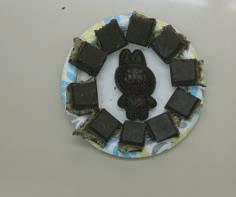

I came, I saw, I cooked, and I absolutely conquered. I blew away the competition with my masterful Dubai chocolate modeled after the viral plush toy Labubu surrounded by a bed of chocolate bites. My time spent melting, stirring, and mixing in the kitchen has paid of, and I’m thrilled to walk away with the frst place prize. I now feel one step closer in my journey to becoming a professional chocolatier, and I know my Labubu forefathers are proud of how far I’ve come. I promise to continue honoring them through more spectacular culinary creations, so until the next!


Heading into my frst attempt at making Dubai Chocolate, I’d be lying if I said I was bursting with culinary confdence and expertise. While I may be able to bake a batch of chocolate chip cookies and maybe even a nice cheesecake every once in a while, making something as exquisite as this worldwide celebrity of a chocolate seems a little out of my league. Even so, with some imagination and a little bit of artistic plating, I believe I can still create a chocolate that, while admittedly may not fool a real chocolatier, can still be worthy of a blue ribbon.

For me, eating chocolate always brings me happiness. Te simple act of unwrapping a creamy chocolate bar is enough to sweeten the day. At last, I fnally have the opportunity to bring my own vision of chocolate to life, as long as the chocolate and flling don’t somehow end up burning, it should be enough for me to experiment with! By melting my creativity and confectionery skills into the design, I hopefully won’t end up dead last. With that said … the cosmetic portion might just be the hardest challenge to crack.
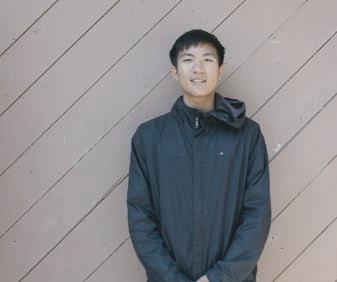
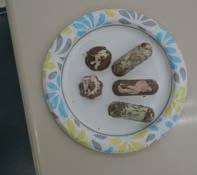
Whew, I was pumping out those chocolates like a machine! I knew that mini, bite-sized Dubai Chocolates would score well (I just couldn’t fnd other molds). It was so hard to use those tiny molds, but I managed to wrap things up just before the clock hit 3:22:56 a.m. When it comes to chocolate, sleep is secondary. Well, for me, at least. Te entire kitchen was a mess, and I was running on pure adrenaline, but hey, priorities. Te process wasn’t the most efcient or consistent, but the results defnitely look good! Hopefully, I’ll snag a beautiful gold medal next time.

Falling just short of the top, I ended up with second place, but considering how far I had to stray from the original recipe, I’m still calling it a success. Since I’m allergic to sesame seeds, and therefore tahini, I had to cut out this vital ingredient entirely, and when I couldn’t fnd kataif anywhere, I swapped to using toasted coconut shreds instead. Although my Dubai Chocolate had quickly become a very particular “Dubai-ish Chocolate” through improvisation and sacrifces, I still ended with a product that had at least awarded me with a sweet and satisfactory dessert.

Growing up watching Willy Wonka and the Chocolate Factory, it wasn’t the golden ticket winners exploring the factory that I envied, but Wonka himself. Ever since I visited the Ghirardelli Factory in San Francisco when I was seven, I’ve been interested in uncovering how my favorite chocolate treats were crafted. Now after years of waiting, my calling has come. Trough this DHTH, I hope to combine my insatiable chocolate addiction with years of experience as the family baker as I construct my ideal Dubai Chocolate and hopefully secure frst place in this hands-on baking challenge.

Although I thought I had concocted the perfect Dubai chocolate, it appears I choco-lost the challenge and received last place. However, considering the immense competition with Jennifer’s intricate Labubu-inspired Dubai chocolate and Matthew and Emily’s creatively presented sweet treats, I’m content with my results, as my chocolate design lacked creativity. Unfortunately, while I was far from having the “sweet” victory, rather than being discouraged, I am now determined to prove myself in the next DHTH, whatever that may be, and potentially secure my frst victory.

When Vanshika Goyal graduated from MSJ in 2018 she never imagined herself becoming a doctor. She had originally planned on pursuing dentistry, but her curiosity about science began to grow during her AP Biology class. Tat early spark eventually led her down an unexpected path — one where she discovered her passion for medicine and her future in healthcare.
Originally entering UC Davis as a pre-dental student, Goyal later shifted her focus to pre-med after shadowing an orthodontist and realizing that she wanted something more dynamic. Goyal graduated in three years with a BS in Neurobiology, Physiology, and Behavior. During her time at college, she performed Bollywood dance at talent shows throughout the Bay Area, joined the UC Davis dance team for cultural showcases, and volunteered in a pediatric ICU, which was her frst hands-on exposure to patient care.
After fnishing her degree in just three years, Goyal took two gap years to build her resume before applying to medical school. During that time, she worked as both a clinical research coordinator at the University of California San Francisco and an ophthalmic technician, a healthcare professional who supports ophthalmologists by assisting in the diagnosis and treatment of eye conditions. She was also dedicated to giving back to the community, volunteering as a crisis counselor, at the food bank, and as a fellow at Teach for America, tutoring children who had fallen behind during the pandemic.
Goyal emphasized that her gap years were actually busier than college itself.
By Dhaeshna Booma & Kanupriya Goyal Staf Writers
However, during that time, she wanted to make a genuine impact instead of just “checking boxes.” From publishing
said. “When you’re a perfectionist, it’s hard not to compare yourself and think, ‘If I’m not at the top, can I really do this?’” she said. Struggling in certain high school science classes also made her question her path.

“Do w you love, and do it for the right re It won't be difcult; it'l feel realy natural,”
—
Alumna Vanshika Goyal
hematology research to interning with the HEAL

Clinical Education Network, she sought out opportunities that genuinely excited her. “Do what you love, and do it for the right reasons. It won't be difcult; it'll feel really natural,”
Goyal said.
Refecting on her time at MSJ, Goyal admitted that the competitive environment was tough at times. “Our class had 26 valedictorians, and I wasn’t one of them,” she
“Everyone’s journey i so erent. It’s probably not going to go the ay you expect — in fact, I can guarantee you it’s not going to go the way you expect. But for me, I think it’s turned out exactly the way that it wa meant to be, and I ouldn’t change a thing,” she said. — Alumna Vanshika Goya
However, she came to realize that loving something doesn’t mean being perfect at it from the start. “Even if you love something, that doesn't mean you're automatically just born being an expert at it. You still have to learn and grow somewhere,” Goyal said. In hindsight, she sees high school as just the beginning, and as a foundation for the bigger challenges and growth that come later.
For Goyal, pursuing medicine is about passion and persistence, as there’s nothing else she can see herself doing. “It’s a difcult road, but if you love it, it’s rewarding,” she said. She encourages aspiring pre-medical students to focus less on rushing through requirements and more on gaining meaningful exposure to healthcare. She recommends exploring a variety of opportunities early on, from volunteering in hospitals to participating in research, to understand the realities of patient care and to fnd an apt specialty. Finally, she reminds students that the medical journey is rarely linear. “Everyone’s journey is so diferent. It’s probably not going to go the way you expect — in fact, I can guarantee you it’s not going to go the way you expect. But for me, I think it’s turned out exactly the way that it was meant to be, and I wouldn’t change a thing,” she said.
Currently, Goyal is a third-year medical student at California Northstate University College of Medicine in the Class of 2027. She’s extremely passionate about exploring elds of medicine to gure out what aligns with her interests the best. She holds leadership roles in multiple student interest groups focusing on geriatrics and ophthalmology and also co-founded a dance club at CNU. Balancing her interests inside and outside of medicine, she plans to continue embracing new opportunities while staying true to her passion for helping others. “Medicine is all about lifelong learning, and I think personally it’s very rewarding,” Goyal said.






By Ekasha Sikka Web Editor
Te Labubu has recently become a global craze. Tese collectibles were created in 2015 by Hong Kong artist Kaisung Lung and popularized as one of Pop Mart’s blind boxes. With their jagged smiles and fufy ears, these odd little creatures toe the line between creepy and cute, which is why the Internet can’t get enough. Tey dangle from backpacks, fll entire display shelves, and sell out within minutes. In this Dear Diary, one limited edition Labubu tells its own story through an exploration of consumerism, identity, and self-doubt.

Fresh of the factory line, I’m glowing. Hand-painted. Gorgeous. A masterpiece, even. My triumph lasts all of seconds before — WHACK — a barcode is slapped on my back. A foil bag swallows me whole and I tumble into a dark shipping box, piled high with dozens of Labubus. Excuse me? Te “Mona Lisa” never had to deal with this brutal treatment. I look around at the others around me. Tey’re fne, I guess, but no one else faunts my limited edition red nose and extra fufy fur. A last sliver of light illuminates my price tag: 600% markup. I’m the chosen one, I tell myself, as the tape seals my box shut.
I’ve landed in ... a Paris storefront? Times Square stand? Nope. I’m in an American mall! Tis must be true glamor. Fluorescent lights, sticky food courts, gawky teenagers goggling at me like I’m a celebrity sighting. I hear someone whisper “Investment piece,” and I nearly faint. I thought I was art, not a bitcoin with ears. Still, I feel my chest swell with pride as the cashier describes me as “limited edition.” Yes, darling, I’m special. Rare. One of ... well, one of a few thousand, but it’s all relative. Still, beneath the smile there’s a ficker of doubt — do they really adore me for my dazzling smile, or just for the price tag


Purchased at last! My new owner is a high schooler with glittery nails and a backpack that smells faintly of Bath & Body Works. Her mom had a priceless reaction to the receipt (don’t ask), while my new owner unclasped her camera with a smile, tilting me towards the light like I was a celebrity on the red carpet. A few fashes later, I was dangling proudly from the backpack’s zipper, clinking against a Snoopy keychain and clip-on hand sanitizer. It’s not exactly the pedestal I imagined, but I’ll take it.
Mid-math class, a teacher swooped in, plucking me of my owner’s desk like I was some sort of contraband. Now, I’m jammed in a supply drawer, shoved between stinky Expo markers and crusty tissue boxes. All this rough handling is going to give me le booboo! I don’t belong here. I should be in a museum right now, treated with care and fragility, not brutality like this. Is this really what I was made for?

Te unthinkable has happened. Tere is an imposter among us. An AliExpress knockof named ... Lafufu. Its ears are crooked and its paint job is a tragedy, yet somehow the kids still shriek like that thing is me. How preposterous! Tat wannabe doesn’t deserve the same attention. Someone of to the side scofs, “Tey’re all just voodoo Build-a-Bears anyway.” BUILD-A-BEAR? I’m hand-painted. Limited edition. Worth more than your Essentials hoodie and Macbook combined. But deep inside, my ego shrivels — how can they not recognize my splendor?


It was the frst day of school and I was an icon. Students gasping, phones fashing — “OMG, a Labubu!” Honestly, being this desirable can be exhausting, and my fame quickly backfred anyway.
Te phrase has been echoing through my head all day: Voodoo Build-a-Bear. Maybe they’re right. Do I look creepy? Am I ... average? I keep telling myself I’m special, rare, worth hundreds — but for the frst time, I’m not sure I believe it. Is this what they call an existential crisis? I may be smiling on the outside, but inside, I’m hardly staying sane. Deep breaths, Labubu. It’s not their opinion that matters. I just don’t even know what I think of myself at this point.
My owner scrolls on Depop, the screen casting an eerie glow on her face. Listing after listing of Labubus just like me appear — $250, $400, $600. She mutters, “It could pay for new AirPods,” and my stufng feels like it's been replaced with lead. Am I just a money grab? My jagged smile begins to feel like a facade — maybe my nose is not red because I am limited edition, but because of my clownish belief that I was genuinely liked. I thought I was irreplaceable.
Priceless. Yet here I sit, reduced to a trade-in for the latest Apple product.

I wake to the soft glow of morning light spilling across my fur. My owner scoops me up into her arms, hugging me tight. No cameras, no price tags, no Depop drama. All that stress about being rare, limited edition, better than a Lafufu? Gone in a second. As it turns out, my worth isn’t about the price or the fame — it’s in moments like this, when I get to make someone smile. I feel my grin grow bigger, my ears fufer than ever. Maybe this is what being a Labubu is truly about: ofering comfort, spreading cheer, and simply just being.



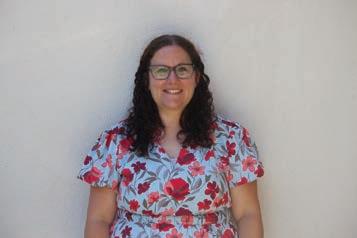
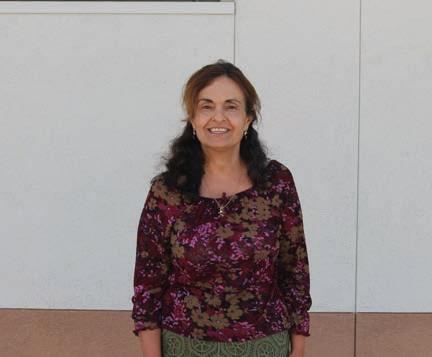
Resource Specialist Program Teacher Nicole Correa has always been passionate about helping others, especially students struggling with learning needs. “Just because somebody has some sort of learning difficulty … doesn’t make them any different than anyone else,” Correa said. After graduating from college, she taught young children with autism for six years, an experience that inspired her to pursue teaching as a profession. Now, as a teacher, Correa’s favorite part of her job is watching the hard work of her students pay off and celebrating their successes. For her first year at MSJ, Correa is most excited about experiencing the diversity of the school. Outside of teaching, she loves to play with her two year-old son and practice yoga.
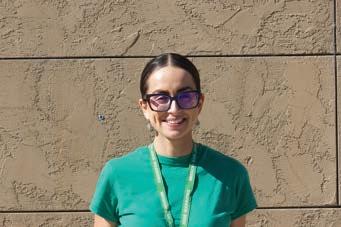
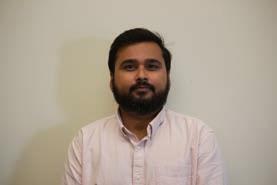


urged
to forget about
Yet, after pursuing a degree in communications, Sanchez chose to teach anyway, discovering a love for teaching Spanish in particular after assisting his professors in college.
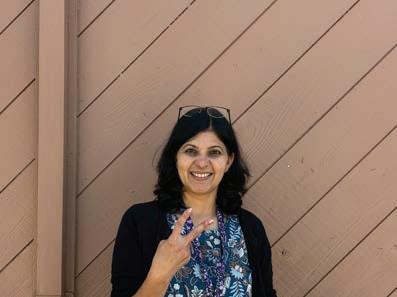
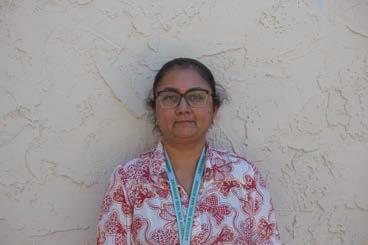
“It was a lot of fun when [saw] the students learning their first words and speaking phrases,” Sanchez said. Since then, Sanchez has taught Spanish at schools in East Palo Alto, Pittsburgh, and Hayward. For his first year at MSJ, Sanchez is looking forward to working with enthusiastic students and understanding their diverse cultures. Outside of teaching, Sanchez enjoys watching TV and traveling, his favorite destinations being Thailand and Brazil.
spanish teacher
Social Studies and PE Teacher Brian Soria attributes his teaching career to a stroke of luck. After running into a high school friend on maternity leave, Soria filled in for her PE class, with no credentials required. Previously, Soria explored the job field, not knowing what he wanted to do. However, at that point, he realized his joy for educating and obtained his teaching credentials in 2004. From there, he spent nine years teaching at elementary schools, one year at James Logan High School, eight years at MSJ, and three years at American High School as a PE and history teacher. With more than 20 years in the classroom and three years away from MSJ, Soria is now back teaching AP World History for the first time. He hopes to not only prepare students well for the exam but to also make his classes engaging and memorable. “When you walk in that door, you should be thinking, it’s story time,” Soria said.
social studies and pe teacher
spanish teacher math
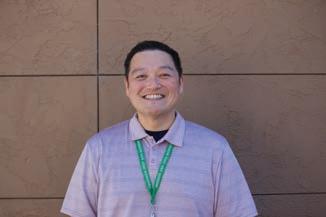

social studies teacher
With five years of teaching under his belt, English Teacher Beum-Ho Chung eagerly anticipates his first year at MSJ. Chung’s journey in teaching was anything but linear. “I wasn’t a very successful student myself. Back in the day, actually got kicked out of both high school and college at different times,” Chung said. But after working with video games on the East Coast and telecommunications, he realized his favorite part of every job was mentoring other employees. Tutoring solidified his interest in the field, so Chung pursued a master’s in education and began teaching in Arizona. Now, Chung aims to develop his students’ critical thinking skills and help them appreciate the applicability of the English subject.







By Scarlett Huang Web Editor
Singer-songwriter Ethel Cain has always disregarded genre constraints to create a unique, cinematic musical journey for her listeners. With her new album Willoughby Tucker, I’ll Always Love You, released on August 8, she crafts an unforgettable experience through her trademark unconventional album structure: long tracks, instrumental interludes, and impressive vocal expressions.
Cain writes albums as not just standalone tracks, but as stories with plots, depth, and characters. In her debut album, Preacher’s Daughter, Cain establishes a female protagonist refecting Cain’s experiences as a queer teen growing up in a heavily religious Southern Baptist community, and her traumatic, wrought path to self discovery and maturity. The album primarily explores Cain’s relationship with Willoughby Tucker, a character introduced in Preacher’s Daughter’s “A House In Nebraska,” introduced as Cain’s frst and deepest love, also as the one who left her with the most regrets and loneliness. The album opens with “Janie,” setting the themes in Cain’s relationship with Tucker, with lines like “I know she’s your girl now, but she was my girl frst / She was my girl frst.” Cain’s soft, sultry voice expresses the desire and youthful obsession that she once felt for Willoughby Tucker, and draws listeners in by foreshadowing the inevitable failure of her relationship. Interspersed with instrumental tracks like “Willoughby’s Interlude” and “Radio Towers,” Cain skillfully
By Kanupriya Goyal Staff Writer

London is overfowing with singers. Some belt in smoky pubs for pints while others croon in tube stations with their beloved guitars. However, pop singer-songwriter April Jai stands out, serenading her 210,000 monthly listeners on Spotify with a unique voice full of raw emotion and vulnerability. Her music, in her own words, is “depression with a hint of bad*ss.” Born in Scotland and raised in Belgium, Jai now calls London’s pop scene home. Jai frst drew attention in 2023 with her single “Morally Grey,” garnering signifcant traction on TikTok and Instagram. Jai, however, is not a one-and-done artist. Her latest work is Between the Pages, an extended play that is a love letter to literature itself. Bookish references are paired with diaristic pop to produce songs such as “Fakin’ It,” “Stop Fighting It,” “Love Letter,” and “GOD COMPLEX.” Each track is tethered to books and stories, stitched together with melodies that make even the dustiest characters feel alive again. Jai’s literary affection plays a prominent role in her music. She folds narratives into pop music like paper into cranes, proving that three-minute songs can carry as much emotion as 500-page epics, though with signifcantly catchier choruses. This year, she’s continued releasing sleek, hook-forward singles, signaling a steady cadence rather than a one-off viral moment. Clearly, Jai’s rise isn’t a fuke; it’s the product of a lane she’s carved, and one she’ll keep widening into the future.

I


utilizes experimental sounds to build her narrative world. “Willoughby’s Theme,” for example, captures the terrifying, life-changing feeling of falling in love for the frst time. These instrumentals are a token of Cain’s, as she uses sounds like beeping hospital machines to convey the characters’ real life experiences.
Her lead single, “F**k Me Eyes,” emulates a comparatively synth and pop vibe, in contrast to the slow and ambient songs in the album.
Still, “F**k Me Eyes” has its intentional place in Cain’s story: lines like “The boys can’t get enough of her, and her ‘honey, f**k me’ eyes” and “They never see her wiping her ‘f**k me’ eyes” explores her identity as a transgender woman in a religious community.
Finally, the shockingly long fnal track “Waco, Texas” takes listeners on a 15 minute musical tragedy that concludes Cain’s devastating youth. It illustrates the death of her childhood dreams and love for Willoughby Tucker, also touching on the myth of the American Dream. “I’ve
been picking names for our children / You’ve been wondering how we’re going to feed them,” comments on the classic doomed, American teenage love story, refected perfectly in the last line of the album: “But it’ll never be good enough like I / Want to believe it is.” The music builds to a crescendo, then closes with a mellow piano, illustrating Tucker leaving Cain lonely and broken — a situation Cain understands but can’t accept.
Willoughby Tucker, I’ll Always Love You puts to rest the character encapsulated since Preacher’s Daughter, ending a chapter of Cain’s life. It tells the story of intense love, loss, loneliness, and failure through the eyes of a growing woman with a rural American childhood. While some say the unfortunate endings to Cain’s stories do not make for a great story, this album proves the cinematic value of her work — blending harsh reality, the common American story, and artful arrangement to create a movie worth listening to.
Grade: A
By Gaura Amarnani Staff Writer
Conan Gray released his fourth studio album, Wishbone, on August 15 under Republic Records. Written over the last two years, the album features 12 deeply personal tracks full of Gray’s iconic cinematic storytelling and pop production, balancing out his intimate lyricism. While points lack cohesion, Wishbone is overall a compelling and mature album, adding greatly to Gray’s discography. Beginning with “Actor,” the album displays a quiet intensity of vulnerability and restraint. Serving as an emotional roadmap for the album, it incorporates elements like acoustic guitar, adding tension and setting the tone for an album rooted in heartbreak and intimacy. Segueing into lead single “This Song,” Gray dives into the album’s core: a mix of heartbreak and hope, with lyrics that reveal lingering attachment and channeling the yearning of closure. With breezy vocals and rising instrumentals, Gray establishes a bittersweet mood of release and moving forward.
Wishbone marks signifcant growth for Gray, as his use of layered production and complexity has come a long way since his debut as a YouTube artist singing in his bedroom. As his career has progressed, Gray has leaned into cinematic orchestration and theatrics such as in Wishbone’s “Caramel.” Heartful lyrics of open confession like “Promises spoken, all coming back as lies / But you with your soft sweet kiss is all I miss in the back of my mind” are complimented by changes in pace and oscillating background music. “Caramel” is full of bare, honest moments like these, evoking a sense of intimacy between Gray and the listener.
While Wishbone thrives in vulnerability and cinematic production, the album struggles at points with cohesion. Some tracks, such as “Sunset Tower,” lean too deeply into heavy orchestrals, overshadowing themat-

ic elements of heartbreak shown through lines like “Part of me just wanted some proof / It’s hurting you in the way it’s hurting me too.” Furthermore, tracks like “Care” and “Nauseous” almost blend together because of their similar tempos and synths. As a whole, Wishbone seems to prioritize aesthetics over lyric at times which, while showcasing growth in terms of soundtrack and undertone, limit Gray’s authenticity rather than pushing his music to higher levels of sophistication. Wishbone is a meaningful addition to Gray’s discography by showcasing his potential to raise his style instead of change it, portraying maturity and growth. The album’s new elements of production, such as his cinematicism and genre-blending, spotlight Gray’s future potential. The album thrives when its stripped-down lyricism, poetic imagery, and recurring motifs amplify Gray’s vulnerable words, transforming raw honesty into cinematic storytelling. Wishbone proves that Gray’s success lies in refning his honesty into theatrical storytelling rather than chasing reinvention.
Grade: B


By Felicity He Staff Writer
One night at the exact same time., every single student in Justine Gandy’s (Julia Garner) third-grade class runs off into the dark for seemingly no reason and completely vanishes — except one. Horror movie Weapons, directed by Zach Cregger, tells the story of a suburban community in distress as the events surrounding the disappearance grow increasingly supernatural.
The concept of a horror movie about a classroom of missing children, featuring themes of isolation, grief, and addiction, feels like it shouldn’t hash well, but Weapons makes it work, grossing $235.2 million as of September 1. Its strongest point is its ominous atmosphere: from the structure of the narrative to the cinematography to the music, all the elements contribute to the flm’s foreboding feeling.
The antagonist Gladys (Amy Madigan) contributes heavily to the atmosphere. Madigan’s off-putting acting, coupled with her evil Chap-
pell Roan killer clown aesthetic, makes her an interesting watch and adds both humor and horror to the flm. Although her backstory is never explained, recurring motifs and dialogue drop little hints to the audience. However, the rest of the characters, with the notable exception of Alex (Cary Christopher), the student who didn’t go missing, fall extremely fat. They are either stupid, boring, unlikeable, or all of the above. For instance, during the flm, Justine, the teacher, makes several decisions that leave audiences scratching their heads, such as following students home and conducting stakeouts without ensuring her safety beforehand. Her impulsive actions and lack of foresight, while they are stereotypical horror movie character attributes, make her annoying and hard to watch.
Similarly, Archer (Josh Brolin), the parent of a missing child, has an abrasive personality and evident emotional immaturity that shines as he harasses the police and Justine about the whereabouts of his son. Paul (Alden Ehrenreich), the cop,

and Marcus (Benedict Wong), the principal, are useless to the investigation, and at times, their perspectives don’t beneft the overall story.
The adult characters end up being so hopeless that Alex, the third grader, ultimately ends up being the person who saves the day.
The story is divided into chapters following six main characters, and interweaves their narratives seamlessly. Each chapter of the flm foreshadows future chapters and calls back to previous ones, helping audiences piece together the puzzle while simultaneously keeping them on their toes. The characters offer unique tidbits of information in their perspectives of the events, from Justine facing a witchhunt by the community, to Archer perpetrating the witchhunt, to Paul putting in little effort to locate the missing children, to the sympathetic inaction taken by Marcus to Alex’s suffering. Each of the characters’ roles within the community plays a part in the overall message about the isolation of American suburbia, as seen in how the abuse and neglect that Alex undergoes is
undetected by the adults in the flm. However, this narrative also makes Weapons feel structured as a comedy instead of a horror movie. Given director Zach Cregger’s background as a comedian, this makes sense. While the humor balances out with the jumpscares and lightens the atmosphere fairly well, the comedic structure doesn’t translate well to horror. The movie spends a huge amount of time on the build up, just for it to end abruptly after the climax, much like a comedy sketch or a stand-up set might end with a blackout joke. The sudden ending is unsatisfying and leaves many loose ends. The other horror elements, such as jump scares, averaged at passable, with some absolutely hair-raising scenes and some genuinely laughable, a statement that applies to the flm’s many ups and downs as a whole. Although Weapons has its fair share of problems and isn’t a traditional horror, its intricate story and ambiance make up for it.
Grade: B
By Ethan Yang & Janet Guan Web Editor & Feature Editor

For Seniors Navya Chitlur and Semi Jung, the arts are much more than just a personal hobby — they’re an opportunity for self-expression and community. Founded in July by the pair, the Echo Effect is one of the only teen-led open mics in Fremont and a rare stage for local teens to share their artistry and unique individual voices. ed over a mutual love for the arts. After attending two creative writing summer programs together where they participated in open mics, they were inspired to create their own in Fremont. “[Open mics were a way] for people to express themselves, and we wanted to bring that sort of environment to the Bay Area and connect more writers who are more isolated in this area,” Chitlur said.
perform wasn’t diffcult. “All the writers [here] are very tightknit, you kind of know everyone,” Chitlur said. For their frst open mic in to all the writers and artists they knew in the Bay Area, who in turn reached out to their friends. They also created an Instagram post under their account @echoeffec-topenmic to publicize the opportunity. Although performers, fnding ier. Chitlur and Jung originally hoped to host their frst event at

her frst open mic
that a lack of interest might capsize the whole idea,” Jung said. “The thing about an open mic is you really only need three things to start one: a space, any one, a mic, and people.” The two fnally settled on a backyard open mic as their frst event.
At the open mic, Chitlur and Jung broke the ice by sharing their poetry. “People don’t usually want to perform frst, but we just put a list up, and people signed up to perform pretty quickly,” Chitlur said. The event saw a variety of performances, including poetry, prose pieces, singing, and guitar. Two bands, including Oddity Music, an indie rock band formed by MSJ students, also shared music of their own. Though the open mic event was originally planned to be an hour long, it went overtime due to the passion of the performers. “Performing was really fun. [...] It was also really fun to listen to all the poetry and music by the other performers as well,” Senior Aravind Muralidharan, who performed violin at the event, said.
Given the limited number of open mic opportunities available to Bay Area teens, Chitlur and Jung hope that their frst event, and events to come, can encourage more teens to
speak up and express themselves — whether it be with the Echo Effect or other open mics. “I still remember how that typical teenage awkwardness gave way to a kind of camaraderie that only comes from shared interests,” Jung said. Especially for teen artists like Muralidharan, performing with friends and for the community can be an invaluable experience. “Try to perform as much as you can because it’s really good to get experience performing and build some musician skills,” Muralidharan said. With their frst open mic being a resounding success, Chitlur and Jung hope to expand their organization with more events before the end of fall. They also plan on collaborating with 2025 Alameda County Poet Laureate Anika Mangla. “We might open up applications to more people at the end of this year and expand our team,” Chitlur said. As an organization, the Echo Effect proves the value in sharing creativity with others with its small-scale but extraordinary opportunities. It serves as a beacon of hope and inspiration for teen artists across the Bay Area. ▪

According to the UN, illegal betting is the number one factor fueling corruption in sports. Up to $140 billion is cycled through sports betting annually, and the amount wagered on illegal gambling markets is between $340 billion and $1.7 trillion. Betting on sports can lead to the corruption of the coaches and referees behind the scenes, and big-name brand companies. Although this misconduct is most prominent in professional sports, a survey from the NCAA found that 58% of college athletes participated in at least one sports betting activity, which is strictly prohibited for student-athletes, coaches, and staff at the college level.
In a sports game, there are usually only three major parties: the athlete, the coach, and the referee. If one or more players are influenced by an outside factor to change the outcomes of the game, the promised integrity of a sports match collapses.
This is what happened in Operation Varsity Blue, a scandal in 2019 involving a scheme to secure spots at top colleges for wealthy individuals’ children through bribery and fraud. Key Worldwide, a charity organization started by Rick Singer, collected over $25 million from influential clients, using the funds to bribe proctors, coaches, and admissions offcials in order to secure a spot at top colleges for their non-athletic children. Along with his organization, Singer worked with Gordon Ernst, the former head coach of Georgetown University’s men’s and women’s tennis teams, in a scheme that lasted over 10 years. During this period, Ernst secured admission for at least 22 students in exchange for nearly $3.5 million in bribes from Singer, replacing talented athletes with some who didn’t play the sport at all. By creating fake athletic profles and funneling money through the foundation, they turned college admissions into a rigged scheme to favor the wealthy, undermining the fair structure of admissions that colleges claim to enforce. In the case of predetermined admissions, stu
By Abigaile Lei & Matthew Zhang
Staf Writers
dents who earned their spot through hard work and talent are unjustly rejected, their places taken by unft individuals.
Turning a process meant to favor dedication over personal gain into a corrupt system that rewards privilege and deceit, these bribery scandals expose how easily systems meant to favor talent and dedication can be corrupted when wealth and influence come before.
Behind the scenes of college sports, betting scandals shed light on how easily integrity can be replaced with personal gain. While these sports are meant to show off the talent and dedication of students, the actions of corrupt parties tarnish the reputation of these college games.

In 2023, NCAA investigators caught Brad Bohannon, the head baseball coach at the University of Alabama, telling his friend about his pitcher’s injury. Alabama was put at a huge disadvantage because of the information the coach gave. After hearing about the situation Alabama was in, his friend placed a $15,000 Singer pleading guilty to racketeering in March 2019.

bet on the opposing team, Louisiana State University. As the coach of the team, Bohannon had access to game-changing knowledge, which he misused, betraying the trust of his players and fans.
Student athletes themselves sometimes indulge in betting activities, which go against NCAA regulations. In 2025, leaked screenshots showed Oklahoma University’s quarterback John Mateer’s Venmo transactions, with labels such as “sports gambling,” a direct violation of the NCAA rules. Mateer denied having anything to do with such activities, calling it an “inside joke,” but as of August 2025, he remains under investigation by the NCAA. If Mateer did participate in prohibited betting, the consequences would go beyond just personal punishment, like jail or not being able to play on teams; it would show a collapse in team trust. More importantly, it raises doubt whether the actions on the feld are authentic or fabricated, and if students are able to prioritize their team over fnancial proft.
Betting changes the trust that teammates have in each other because they will never know whether a mistake was genuine or part of some secret plan to make money. What was once a group that shared the same goals can become a group that mistrusts and suspects each other. At schools like MSJ, college sports gambling might seem like a distant issue that has nothing to do with the students, but as
some students are aiming to play at a college level in the future, they must be aware of the pressures that lead to betting and the consequences of breaking rules. What starts off as just a bit of inside information can spiral rapidly into scandals that damage reputations, destroy careers, and discredit entire programs. College sports offer valuable academic and career opportunities for student-athletes. For many students, athletic scholarships provide access to education they otherwise could not afford. While college sports may provide opportunities, these opportunities lose their meaning when their access is tainted through bribes. Others may say that the NCAA and universities already have systems like keeping logs and data for scholarship offers to prevent misconduct and that college sports build school spirit and unite communities — but those systems are only as good as the people enforcing them. Recent scandals have shown that violations can go undetected for years, and at times are completely ignored. Sports betting is just one example of how integrity within teams is slowly diminishing. When corruption is revealed, it doesn’t just hurt the people involved; it ruins the reputation of entire teams, schools, and communities. The sense of belonging, pride, and honor for a school and team should be rightfully earned and built on integrity.
Many dedicated student-athletes lose their spots at colleges due to bribery and fraud from wealthy individuals. By raising awareness across the student body and advocating for greater transparency in sports scholarships, students can ensure fair opportunities for athletes and directly challenge the influence of corruption in sports. Only by holding all parties accountable and prioritizing merit over money can the integrity of college athletics and admissions be restored. ▪

The Aspiring Scholars Directed Research Program (ASDRP) is a 501(c)(3) private research institution in Fremont, CA. ASDRP is the Bay Area's premier precollegiate research & development institution, run by a consortium of highly skilled scientists, engineers, and researchers with years of academic and industry experience who collectively seek to push forward the current frontiers in biology, chemistry, physics, computer science, psychology, medicine, engineering, and more.
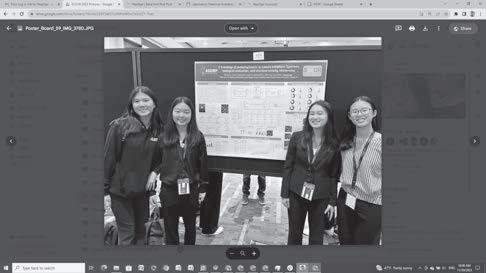
Spring 2026
Early Application Deadline: November, 2025
We mentor high school students - budding scientists in 9th through 12th grade - who come from every corner of the greater Bay Area, California, and across the United States. We seek student researchers who are passionate, who are unafraid of a steep learning curve, and who want to be involved in real science that has real impact on society
[Scan to read past student work]→
Final Applications Due: December 30, 2025
Summer 2026
Applications Open: October 2025 February 1, 2026

Final Applications Dues: April 15, 2026
Applications are competitive, and each term, ASDRP receives far more applicants than there are open research Apply online at



By Hannah Bi, Naisha Koppurapu, & Alex Duan Graphics Editor, Centerspread Editor, & Staf Writer
From roller skating to cycling and racing, wheel-based sports have taken the recreational and competitive world of sports by storm, packed with pure adrenaline and speed.
Racing automobiles for competition has existed since the birth of gasoline-powered cars, catering towards car fanatics and adrenaline junkies. Originally created in 1895, the sport was invented to showcase the reliability and practicality of cars, since many people weren’t completely open to the possibly unsafe technological advancement. As ancient as the sport itself, the oldest racing event still standing is the 24 Hour Le Mans, a 24-hour long endurance test entirely dependent on which car travels the farthest distance. From F1 to NASCAR, a variety of races have gained universal popularity, each specializing in their own type of automobile and testing different aspects of driving. Monster truck racing is a common form of entertainment across the US which focus- es on performances and car tricks. Demolition derby follows a similar, performance-based format, where multiple drivers crash their vehicles into each other aiming to be the last car standing.
Since it was brought to stores in 1999, the foldable kick scooter has quickly gained traction, attracting the attention of kids and teens around the world. Originally made to be light and foldable for easy transportation, scootering became a popular pastime and eventually morphed into a performance sport based on freestyle tricks. However, since the original structure of scooters makes performing tricks dif cult, they became sturdier over time, transforming from a simple pastime into a hardcore sport. The largest scooter company, Razor, eventually decided to form their own team of stunt scooter riders in the early 2000s, which fed into the scooter craze of the time. The International Scooter Association (ISA), today known as the International Scooter Federation (ISF), created the rst scootering world championship in 2012, a now-annual competition judging hundreds of competitors based culty, execution, style, variety, and use of the park.

Skateboarding was invented in California when people tried to emulate sur ng on land, and it quickly became embedded within Los Angeles’s youth street culture. However, it’s now a much more mainstream sport. With the spread of skateboarding throughout the world, skating has even found its way into the Summer Olympics. It’s divided into street and park divisions where the track emulates either a skate park or a street where skaters perform tricks in front of judges. Tricks include ollies where skaters pop the behind of the board, ip tricks where skaters are ipping their boards midair, and grinds on corners and railings. Out of the olympics, a young phenom from japan named Yuto Horigome is the only skater to defend a gold medal twice in Tokyo and in Paris and is expected to pull off the win again in the Summer Olympics in Los Angeles — where the sport was invented.

Inline skates have transcended the athletic community as well, and are often used by police and the military for law enforcement purposes. Originating in eighteenth century Europe, inline skating features footwear of two to ve wheels arranged in a straight line along the sole. Although the sport was soon overtaken in popularity by quad skating, they saw a re-emergence in the 1980s when Minnesota brothers Scott and Brennan Olsen founded Rollerblade, launching their improved skates that drove a surge in the activity. One discipline of the sport, aggressive inline skating, peaked in the 90s, showcasing tricks and stunts in skateparks. Another sport, alpine skating, requires athletes to navigate courses marked with gates, similar to the movements and techniques of alpine skiing. Roller soccer also features attributes of another sport, with two teams of ve playing on a handball court.

Roller skating covers a diverse arrangement of athletics like roller derby or jam skating. The activity features footwear with four wheels arranged side-by-side on the sole, offering speed and stability. Roller derby is a contact sport where two teams of ve circle around an oval ring. The team jammer, or point-scoring skater, races to pass all four of the opposing team’s blockers, who aim to physically obstruct the jammer, to secure victory. Jam skating, on the other hand, focuses on performance over physical competition, featuring intricate hip-hop footwork while blending gymnastics and breakdancing with rhythmic movements. Similarly, artistic roller skating also concentrates heavily on dance-like elements, incorporating elements of gure skating and acrobatics into graceful performances.
Motorcycles have come a long way since rst being a variation of the bicycle with a gasoline tank strapped on it. Now, sport motorcycles can go faster than the fastest sports cars and are deeply entwined within American street culture. Motorcycles were developed in the late 19th century when a German inventor decided to detach the pedal and replace it with a gasoline-run internal combustion engine. In today’s sport, MotoGP is the crown jewel of professional rave motorcycling. With a format of 11 teams with 22 drivers total, drivers compete in racetracks with strictly regulated equipment, making many races come down to a unique combination of driver skill and technical marvel. They travel through the world, visiting different tracks to greet millions of fans while going more than 200 miles per hour and turning tight corners.
The rst concept of a bicycle appeared in one of Leonardo Da Vinci’s sketches in the 16th century. However, bound by the material constraints of the time, the materials necessary for steel bicycle chains wouldn’t exist until the late 1880s when the safety bicycle was made with two equal-sized wheels, a chain, and a pedal. Now, pro cycling is a worldwide event, but it’s most popular in Europe. Europe’s three grand tours, where hundreds of contestants cover hundreds of miles across a European country in just days, are the most prestigious events in pro cycling. These major Grand Tour events include the Giro d’Italia, the Vuelta a Espana, and most famously, the Tour de France. These events are governed by the Unione Cycliste In ternationale (UCI), a Swiss body that runs the three events along with many other events on the European tour such as the Mountain Bike World Series.


From her frst game as a freshman starter to leading the court as co-captain, Senior Claribel Chen has been the driving force of MS irls Varsity Volleyball, showcasing her ath letic talent throughout high school.
Chen has been a star player on MS ’s Varsity irls Volleyball team since earning a spot as a freshman starter. She became one of the rare sophomores to serve as cap tain and has been leading the team ever since, while com peting at the national level for her volleyball club. Her love and passion for volleyball start ed at a young age, when she frst picked up volleyball in ffth grade and was drawn by the chance to try something new. What kept her coming back year after year though, wasn’t just the compe tition. “Playing with friends, having that rush of adren aline every game, and the constant positiv ity from my coach es over the years helped me stay to volleyball,” Chen’s enthu and athletic of growth seniors grad players joined, shifting the team’s dynamics, Chen embraced the challenge and grew into a versatile player, able to fll any position on the court from libero, setter, to outside hitter. “[Volleyball] taught me to be open-minded and to focus on the future rather than dwell on the past,” Chen said.
By Brittany Lu & Ariana Yi
A&E Editor and Centerspread Editor
“[Volleyball] taught me to be open-minded and to focus on the future rather than dwell on the
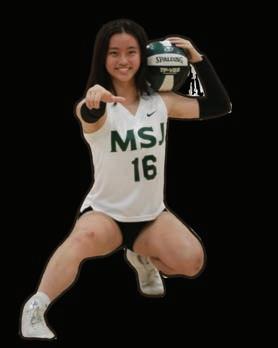
HEN, 12
That adaptability and drive quickly set her apart, and by her sophomore year she earned the role of team captain. After initially leaning on upperclassmen for guidance, Chen soon developed her own leadership style, leading warmups and timeout huddles by her second year as captain. “I’ve learned that sometimes it’s more effective to lead with action rather than words.
Being an example to my other teammates and putting in as much effort as I can myself is really effective and inspires them to also put their best work forward,”
school volleyball, and her time at UC Elite also heavily shaped time at UC Elite also heavily shaped Chen’s perspective on hard work and self discipline, with practice hours leading late nights studying. While club volleyball pushes her to grow individu ally against tougher competition, high school volleyball al lows her to channel that growth into team success, fghting for frst in MVALs and CS wins.
“I’ve learned that sometimes it’s more efective to lead with action rather than words. Being an example to my other teammates and putting in as much efort as I can myself is really efective and inspires them to also put their best work forward”
— CLARIBEL
CHEN, 12

three years. Regardless, Chen remains committed to staying involved with the team as much as she can. “Even though I can’t play this seathe all about me not being able to play, but I think they’ll be able to adapt and still make this season an unforgettable one,”

Outside of school, Chen played club volleyball alongside Senior Brittany Lu with UC Elite later rebranded to Union Volleyball Academy (UVA) an experience that contrasted with MS ’s team in pace and plays on court. In 0 , her team won frst place at Far Western’s, a national-level qualifer tournament that brings together the strongest youth volleyball teams across the country. The fast-paced, intense environment motivated Chen to work even harder and practice more to improve her own skills. Balancing school,
In early uly, Chen faced one of the hard moments of her volley career when she tore her ACL and meniscus MS irls Volleyball open gym. This injury not ended her senior season even began, but also challenged the current Varsity team, where Chen has been a constant presence on the court for the past




By Abigaile Lei & Aaqib Zishan Staff Writers
The smell of sweet egg waffes and the sounds of Cantonese pop flled the air at the Hong Kong Fair on August 16. Featuring more than 30 booths and a live band, the fair captivated visitors with unique food and sounds from the region. At the entrance, a comically tiny frefghting buggy, accompanied by two distinctive taxis, greeted guests. A whimsical opportunity for snapping a few photos, this touch of Hong Kong culture, as a detail unseen in the US, represented a nostalgic start to the event. Walking deeper into the fair, the smell of boiling curry fsh balls and frying egg waffes prompted many to buy a taste of the culture’s delicacies. With hands full of fshcakes and egg waffes, one visitor emphasized his enjoyment of Cantonese cuisine. “My favorite part about the fair is actually the community,” Visitor Michael Lee said. “It’s a rare sight to see so many Hong Kongers in one place at the same time.” A live band played both Cantonese and English pop, the sound echoing throughout the fair and sparking a sense of livelihood and energy in visitors. Beyond food and souvenirs, the booths provided small businesses an opportunity to connect with the community and share their mission. “I keep coming back [to the fair] because it’s so fun to be part of it and gather with Hong Kong folks and see our community grow,” Booth Owner Wendy Leung said.
Though her senior year did not unfold as imagined, Chen’s impact on the MS irls Volleyball program extends far beyond the court. Through her resilience, leadership, and unwavering commitment, Chen has set the standard for what it means to be both a leader and a teammate. Looking ahead, Chen hopes to pursue a pre-veterinary pathway in college, while continuing volleyball at her college’s club level. To Chen, volleyball is more than just a sport, and is a way to stay grounded and build new connections in college life. Chen’s journey shows that a true leader is not defned only by games played but by the persistent dedication and spirit regardless of any
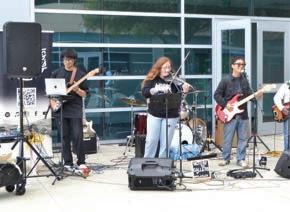

Hosted by the HongKonger Community Center (HKCC), the fair’s objective is to build a community of people interested in Hong Kong’s traditions. The organization also hosts workshops and opportunities for community service at their building on Osgood Road. “Our mission is to connect people within the Bay Area,” HKCC Head and Event Organizer Alex Woo said. “People from Hong Kong are interested in [this] culture, so [we] built a grassroots connection by organizing this fair.” Celebrating unique traditions and rich culture through singular culinary tastes, heartwarming music, and a tight-knit community, the festival offered attendees an immersive experience into the vibrant culture of Hong Kong. ▪